Russia creates $9bn bonanza for oil rig manufacturers

0

Russia is to replace its old soviet made rigs with modern ones able to drill in shale oil deposits, which could be a boom for manufacturers like National Oilwell Varco of the US and China’s Honghua Group.

More than half of Russia’s 1,835 oil and gas rigs are over 20
years old, according to VTB Capital research. The
outdated rigs won’t be powerful or advanced enough for producers
such as Rosneft drilling in Siberia’s shale rock, Bloomberg
quotes field analysts.

Richard Anderson, the Chief Financial Officer of Russia’s largest
drilling rig operator, Eurasia Drilling, said that the US uses
250 rigs to produce just 700,000 barrels a day at the Bakken
shale formation. The Siberian Bazhenov formation is many times
larger, which means Russia needs several hundred new rigs.
Supplying that number of rigs at an average of $35 million would
cost $8.8 billion.

Rosneft and its partner Exxon Mobil, have just started to explore
the Bazhenov shale formation in Siberia. Bazhenov is estimated to
be the size of France, and could contain enough oil to more than
double Russia’s current reserves. The successful development of
Bazhenov is seen as vital to maintaining Russia’s reserves above
10 million barrels a day.

A lack of modern rigs remains a key stumbling block to developing
Bazhenov, Bloomberg quotes industry analysts. Hydraulic
fracturing, or fracking, at horizontal wells in Russia breaks
even at $90 a barrel without tax breaks, they estimate. Russia’s
Urals is trading at about $102 a barrel.

Deliveries of new rigs will reach a five-year high of 105 units
this year, according to VTB data. However, older rigs are being
quickly retired, which may result in a capacity squeeze.

“New drilling rigs must be built,” Bloomberg quotes Antony
Crawford, the head for National Oilwell in Russia, whose company
plans a factory east of Moscow. “This issue represents a clear
and present danger to Russia’s ability to maintain output during
the next three to five years.”

National Oilwell may sell five rigs to Russia-focused companies
this year, according to VTB. The largest US oil equipment
supplier competes with China’s Honghua and Russia’s OMZ for
orders. Oil is often more difficult to extract from shale rock
and drill bits often need to turn 90 degrees and continue
drilling horizontally, which is impossible with old rigs,
oilprice.com writes.

This article originally appeared on: RT

European businessmen the least confident in Chinese economy than ever

0

European business are missing out on opportunities in China to the tune of €17.5bn, and their optimism for things getting better is at an all-time low according to the EU Chamber of Commerce in China.

Rising labor costs as well as a slowing Chinese economy have
eroded the financial results of European companies operating in
China, the report said. As a result optimism nosedived to
its lowest level since the first survey in 2004. Most businesses
were pessimistic about their profitability in China in the next 2
years, with only 29% being optimistic.

The economic under-performance of China was a key reason for the
prevailing pessimism, Adam Dunnett, secretary general of the
European Chamber, told a press conference.

“The figures that we’ve seen coming out of the National Bureau
of Statistics… have shown… we are in for a longer haul, so I
think that has caught some people by surprise that it hasn’t been
a sooner recovery,”
as France 24 quoted Mr. Dunnet.

2012 was the worst year for the Chinese economy this century,
having grown by 7.8%, which was followed by another frustrating
7.7% growth in 1Q 2013.

Limitations on market access, coupled with a tricky regulatory
environment that sometimes proves to be discriminatory, seem to
have become the last straw.

“Despite increasing rhetoric from senior Chinese leaders that
efforts will be undertaken to transform and level the regulatory
environment through allowing greater play to market forces,
European companies have so far perceived few concrete
changes,”
said Davide Cucino, the chamber president.

The results of the survey come out amidst rising trade tension
between the world’s second largest economy and the EU, the
Financial Times says. The tariffs on Chinese solar panels that
the European Commission is set to impose comes as the major apple
of discord between the two.

 As soon as next week Karel De Gucht, EU Trade Commissioner,
is expected to introduce import tariffs on Chinese solar panels
averaging 47%. However, more than a half of the EU remains
against the tariff.

The other move by the EU that Beijing says is unjustified is an
investigation into Chinese telecoms equipment. Should the
trade dispute intensify, close commercial ties estimated at about
€1bn a day could be put at risk.

This article originally appeared on: RT

‘Foreign agents’ law may hurt economy — Russian academics

0

The new law obliging internationally-funded economic research centers to register as ‘foreign agents’ lacks common sense and could bring the economy back to Soviet-style, with everything controlled by the state, leading economists have warned.

In a letter published by Vedomosti daily, a 15 Russian academics
urge the government to reconsider the so-called ‘foreign agents’
law. They warn that incorrect application of this act may lead to
a closure of research centers and ruin cooperation between
independent economic analysts and the Russian authorities.

The highly-criticized and controversial law – which came into
force in November last year – obliges all politically-active
non-governmental organizations that receive foreign funding to
register as foreign agents.

Currently – because of loose wording in the document –
practically any non-profit organization may be forced to get that
label if it gets sponsorship from abroad and has ‘politics’ or
‘authorities’ mentioned in their charter, experts
say. 

The authors of the letter insist that the requirement should only
apply to organizations that are both sponsored from abroad and
serve the interests of a foreign state or company.

“That’s exactly the approach used in other countries that have
‘foreign agents’ concept
,” the authors noted.

They opined that economists — as part of their profession — are
often involved in the development and the fulfillment of the
economic policy. That includes the implementation of initiatives
proposed by the government and discussions of reforms.

But since economics is a global science and because of
underdevelopment of socio-economic research in Russia, analysis
centers “seek cooperation with foreign partners” and look for
various sources for their funding — including from abroad. This
money is spent on education, including internship of Russian
students in other countries, economic research and the
publication of the results.

However, “the logic of Russian law enforcers suggests”
that almost the entire expert community in the country is
comprised of foreign agents, who must register in that status,
the academics observed. 

“In Russian the word ‘agent’ means a person who acts in
someone else’s interests, or a spy. We, on the contrary, have
always acted for the benefit of our country and are definitely
not spies. Therefore, registering as foreign agents would be
self-incrimination, which we can’t do,
” they pointed out.

The government has made it clear it is interested in independent
economic analysis. According to the expert community it has been
trying to respond to this demand. However unannounced inspections
of NGOs by prosecutors put this cooperation at risk.

The state officials have repeatedly underlined that the goal of
the so-called foreign agents is to inform the public better on
the sources of income of NGOs involved in
politics. 

“All our actions are connected not with the closures of these
organizations, not with the ban, but with getting the cashflow
under control,
” President Vladimir Putin said back in April.
“The freedom of NGOs is not limited in any way, they just
have to register.
”

Twelve of the authors of the Vedomosti letter took part in the
drafting of the governmental project known as ‘Strategy-2020’ — a
plan for Russia’s social and economic development until the end
of the decade.

This article originally appeared on: RT

"Conservative" Magazine Counsels Rand Paul to Join the CFR

0

Senator Rand Paul (R-Ky.) is currently on his nationwide “I’m probably running for president” tour. He’s made the requisite stops in the early election states of Iowa and New Hampshire, courting the GOP faithful and bringing the figurative freezers full of red meat to throw their way. Demonstrating impressive political savvy, he’s also making a habit of making bold statements that set him apart from potential Establishment competitors from both sides of the aisle.

He may be making the right rounds, shaking the right hands, and firing at the right targets, but if he’s serious about being elected president, Senator Paul should join the Council on Foreign Relations (CFR). At least that is the incredibly bad advice offered by Jacob Heilbrunn to the freshman senator and scion of the libertarian-leaning Paul family.

In an article published on May 19 in The National Interest – a foreign policy journal – senior editor Heilbrunn suggests not only that Paul “put as much distance between himself” and those who consider the CFR and its globalist policies to be a threat to liberty and U.S. sovereignty, but, “for good measure” he should add CFR president Richard N. Haass as a consigliore.

Here’s Heilbrunn’s pitch:

Nothing would signal that Paul intends to be a serious candidate for the presidency [more] than reaching out to mainstream Republicans such as Haass. Haass is the antithesis of a neoconservative, and it is neocons who, by and large, dominate the GOP, at least when it comes to setting the terms of debate. Whether they wield much influence outside it is a matter of debate. But as one of the avatars of shifting the debate on foreign policy, Paul would do well to broaden his message. Obviously, Paul is not going to abandon his libertarian credo. But it’s hardly in conflict with tempering his message for a wider audience. His aim should be to present himself as a mainstream candidate espousing the revival of precepts that were successfully followed by GOP stalwarts such as Dwight Eisenhower, Richard Nixon, Gerald Ford, and George H.W. Bush.

Broaden his message by appealing to the mainstream? That sounds like the none-too-successful strategy of several former GOP presidential contenders.

Beyond shilling for the perpetuation of the same-old-same-old, country club, Establishment partisan politics that have accelerated the decline of this country and its Constitution, Heilbrunn laments that Paul will hew too rigidly to the principles of civil libertarianism that are the essence of his broadening appeal.

And, speaking of that hoary Establishment claque, aren’t they the same group that Senator Paul described as “stale and moss-covered” during a speech at the Conservative Political Action Conference in March?

Undaunted, after extolling Haass’ experience in both Bush (older and younger) administrations, Heilbrunn makes his final appeal to Paul to demonstrate his presidential pragmatism by adopting Haass’ worldview and promoting the CFR’s foreign policy proposals.

Just what is the Council on Foreign Relations? Are they indeed “a secretive organization, the agent of nefarious bankers intent on promoting world government” as Heilbrunn mockingly says “the right” believes them to be?

Or, alternatively, are they, as Heilbrunn claims, a “network of realist thinkers with government experience and serious intellectual attainments”?

In truth, for decades since its creation, the Council on Foreign Relations has been the “mother ship” of the internationalist Establishment and the source of marching orders for the successive State Departments.

Perhaps the best evidence of the influence of this organization was revealed during a speech delivered at CFR headquarters in New York City in 2009, by then-Secretary of State Hillary Clinton. In her remarks, Clinton offered an accurate and chilling assessment of the relationship between the CFR and American foreign policymakers: “We get a lot of advice from the Council, so this will mean I won’t have as far to go to be told what we should be doing and how we should think about the future.”

How prevalent have members of the CFR been in the highest ranks of American politics?

The administrations of every president since Franklin D. Roosevelt have been filled with members of the CFR. From cabinet-level secretaries to the lowest-ranking sub-bureaucrat, presidents have turned to the CFR as the in-house personnel pool.

This path has been faithfully followed by every president – Republican or Democrat – including Barack Obama.

For a full and frightening account of the origin, purposes, and practices of the CFR, readers should turn to James Perloff’s seminal book on the subject, The Shadows of Power: The Council on Foreign Relations and the American Decline. Originally published in 1988, the information provided by Perloff is timeless and timely.

What follows is a brief recitation of Perloff’s account of the inception and influence of the CFR. This synopsis, taken from Perloff’s article “Council on Foreign Relations: Influencing American Government” in the August 3, 2009 issue of The New American magazine, should serve as a primer for readers unfamiliar with the group, as well as a warning to Senator Paul to ignore the advice of Jacob Heilbrunn and anyone else who would see him abandon his constitutional conservatism in favor of the staid, secretive, sovereignty-eroding globalism of the Council on Foreign Relations.

Power Behind the Throne

In theory, America’s government is supposed to be “of the people, by the people, for the people.” While this concept rang true in early America, and many individuals still trust in it, the last century has seen the reality of power increasingly shift from the people to an establishment rooted in banking, Wall Street, and powerful multinational corporations. Syndicated columnist Edith Kermit Roosevelt, granddaughter of Teddy Roosevelt, explained:

The word “Establishment” is a general term for the power elite in international finance, business, the professions and government, largely from the northeast, who wield most of the power regardless of who is in the White House. Most people are unaware of the existence of this “legitimate Mafia.” Yet the power of the Establishment makes itself felt from the professor who seeks a foundation grant, to the candidate for a cabinet post or State Department job. It affects the nation’s policies in almost every area.

Roosevelt added that this group’s goal is “a One World Socialist state governed by ‘experts’ like themselves.” 

David Rockefeller, the longtime chairman (and now chairman emeritus) of the CFR, acknowledged the role of the establishment in trying to lead America in the one-world direction in his 2002 book Memoirs:

For more than a century ideological extremists at either end of the political spectrum have seized upon well-publicized incidents such as my encounter with Castro to attack the Rockefeller family for the inordinate influence they claim we wield over American political and economic institutions. Some even believe we are part of a secret cabal working against the best interests of the United States, characterizing my family and me as “internationalists” and of conspiring with others around the world to build a more integrated global political and economic structure – one world, if you will. If that’s the charge, I stand guilty, and I am proud of it.

Two major means the establishment employs for controlling government policy: (1) through its influence within the two major parties and the mass media, it can usually assure that both the Republican and Democratic presidential candidates will be its own hand-picked men; (2) by stacking presidential cabinets with CFR members at key positions – especially those involving defense, finance, foreign policy, and national security – it can assure that America will move in the direction it wants.

Since the council’s founding in 1921, 21 secretaries of defense or war, 19 secretaries of the treasury, 17 secretaries of state, and 15 CIA directors have hailed from the Council on Foreign Relations.


Background


Prior to the CFR’s founding, what Congressman Charles Lindbergh, Sr. (the father of the famous aviator) called the “Money Trust” – a cabal of international bankers including the houses of Rockefeller, Morgan, and Rothschild – conspired to create the Federal Reserve System. Their agents, such as Paul Warburg and Benjamin Strong, who had secretly planned the Fed at a nine-day meeting on Jekyll Island, were then put in charge of the system itself. This gave them control of American interest rates, and, by virtue of this, control of the stock market, as well as the capacity to have the U.S. government spend without limit by having the Fed create money from nothing. The result has been decades of inflation and skyrocketing national debt. Not just an accumulation of wealth, but a consolidation of political power was involved.

The Money Trust had backed Woodrow Wilson in the presidential elections, and then controlled him through their front man, Edward Mandell House, who lived in the White House. The trust recognized how the power of government could be used to advance their own interests. 

Wilson, surrounded by the bankers, traveled to the Paris Peace Conference of 1919, which was settling the aftermath of World War I.

His chief proposal there, of course, was the League of Nations – a first step toward world government. However, although the League was established by the Versailles Treaty, the United States did not join because the Senate refused to ratify the treaty. 

In response to this rejection, the bankers’ circle, still in Paris, held a series of meetings and proposed to establish a new organization in the United States, whose purpose would be to lead America into the League. This organization was incorporated in New York City two years later as the Council on Foreign Relations.


Architects of a New World Order


The CFR’s goal was formation of an incrementally stronger world government. Admiral Chester Ward, former Judge Advocate of the U.S. Navy, was a CFR member for 16 years before resigning in disgust. He stated: “The main purpose of the Council on Foreign Relations is promoting the disarmament of U.S. sovereignty and national independence, and submergence into an all-powerful one-world government.” 

After World War II, the League’s successor, the United Nations, was born.

Contrary to what the public is commonly told, the UN was not founded by nations who had tired of war. The UN was conceived by a group of CFR members in the State Department calling themselves the Informal Agenda Group. They drafted the original proposal for the UN, and secured the approval of President Roosevelt, who then made establishing the UN his highest postwar priority. When the UN held its founding meeting in San Francisco in 1945, 47 of the American delegates were CFR members.


Though the UN was not initially set up as a world government, the intent was that it would develop into one over time. John Foster Dulles (CFR), an American delegate to the UN founding meeting who later became Secretary of State under Eisenhower, acknowledged as much in his book War or Peace: “The United Nations represents not a final stage in the development of world order, but only a primitive stage. Therefore its primary task is to create the conditions which will make possible a more highly developed organization.”

Again, Perloff’s book The Shadows of Power relates so much more of the destructive effect of CFR influence.

Going forward, one thing is certain, as Perloff wrote in the aforementioned article:

As long as the CFR controls our government, we can anticipate more of the same: diminishing national sovereignty; free flow of immigration (which confuses national identity and weakens national loyalties); increasing jobs losses through multinational trade agreements; further internationalization of law (Law of the Sea Treaty, Kyoto Protocol, World Court, global taxation, etc.); increasing loss of freedoms in a “surveillance society”; progressive organization of the United States, Mexico, and Canada into a North American Union; and ultimately, broader merger into a world government where all power will be concentrated in the hands of the elite.

Photo of Sen. Rand Paul: AP Images

Joe A. Wolverton, II, J.D. is a correspondent for The New American and travels frequently nationwide speaking on topics of nullification, the NDAA, and the surveillance state. He can be reached at
This email address is being protected from spambots. You need JavaScript enabled to view it.

This article originally appeared on: The New American

Tea Party Strikes Back at IRS

0

Lawsuit accuses IRS of violating the Bill of Rights

Kit Daniels
Infowars.com
May 30, 2013

Photo: Sage Ross

A defense for the Bill of Rights came alive yesterday as 25 Tea Party groups struck back at the Internal Revenue Service for the gross persecution of their rights.

A constitutional law firm representing these groups sued the Internal Revenue Service and top Obama officials, claiming the IRS effectively denied their tax-exempt status by unlawfully delaying their applications. In its district court filing, the Washington-based American Center for Law and Justice accused the IRS of a “comprehensive, pervasive, invidious, and organized scheme” to violate the First and Fifth Amendments rights of Tea Party members in a spectacle of suppression more fitting to the Dark Ages.

“The IRS and the federal government are not going to get away with this unlawful targeting of conservative groups,” said Jay Sekulow, Chief Counsel of the ACLJ. “As this unconstitutional scheme continues even today, the only way to stop this flagrant and arrogant abuse of our clients’ rights is to file a federal lawsuit, which we have done. The lawsuit sends a very powerful message to the IRS and the Obama Administration — including the White House: Americans are not going to be bullied and intimidated by our government. They will not be subjected to unconstitutional treatment and unlawfully singled out and punished because of their ideological beliefs. Those responsible for this unprecedented intimidation ploy must be held accountable.”

The lawsuit accuses the IRS of not only violating the Bill of Rights, but also their very own rules and regulations, a sure sign of the unlawfulness creeping into the very foundation of our constitutional republic.

A constitutional republic worth fighting for, and these 25 Tea Party groups are doing so right now.

Read the lawsuit here

<!–

–>

This article was posted: Thursday, May 30, 2013 at 9:44 am

Tags: , , ,


<!– this is where we need to show the related articles

–>

This article originally appeared on: Infowars

A Big Win for Seattle Teachers

0

On Monday, May 13, Seattle Schools Superintendent Jose Banda announced that “High schools may opt out of MAP [Measures of Academic Progress Test] in 2013-14.”

This announcement was greeted with spontaneous celebrations by teachers and students at Garfield High School where the boycott of MAP tests began in January.

Garfield High School’s librarian, Janet Woodward summed up the meaning of the MAP test boycott for Garfield saying, “I feel vindicated by the decision to remove MAP testing from the high schools. Our movement has succeeded in exposing all of the fallacies of using this canned assessment. It is a waste of money and time, turns professionals into proctor clerks and produces results which are not statistically relevant.”

It was the first time a group of teachers have boycotted a standardized test in America. The boycott began on January 9, 2013 when the 19 strong group of teachers at Garfield High voted unanimously to refuse to administer the MAP test. The MAP test purports to evaluates student progress in reading and math in all grades (K-12). This is part of the growing national fight back against the high stakes testing regime that has swept through the US education system.

Garfield High teachers published a letter explaining the reasons for their boycott of the MAP test.

They point out how the MAP test disrupts students learning, is a costly and ineffective measure of student progress and is unfairly used to evaluate the effectiveness of teachers. Their letter concludes,”We are not troublemakers nor do we want to impede the high functioning of our school. We are professionals who care deeply about our students and cannot continue to participate in a practice that harms our school and our students.”

The teachers’ successful boycott of the MAP tests was down to a variety of factors. The unswerving determination of teachers at Garfield and other Seattle schools to continue the test boycott in the face of threats of suspension from Superintendent Banda. The victory over the MAP test would not have been possible without the massive support from local parents, many of whom refused to enter their kids for the MAP tests.

Another hugely important factor in this defeat of standardized testing was the solidarity action of hundreds of Seattle high schools students who held meetings and gave out flyers supporting the teacher test boycott. The independent decision of hundreds of students to refuse to sit the tests was critical to this victory over the MAP test. A break down of the winter MAP testing numbers at Garfield High revealed that only 180 valid tests were delivered out of a planned 810. Hundreds of students had taken solidarity action in support of their teachers by refusing to take the tests.

Besides this, the campaign has won huge support from teachers and trade unions across America. 60 leading academics, researchers and trade unionists signed a statement of support for the MAP test boycott.

The boycott of MAP test at Garfield High and other Seattle schools are part of the growing national movement against ”high stakes” public school testing. In the past year hundreds of school boards across the country have passed resolutions calling for an end to high stakes testing of students stating that it is strangling learning. In New York a growing number of parents are refusing to let their children sit the standardized tests. The New York principals association has said that it no longer supports high stakes standardized testing. Many New York parents have criticised companies such as Pearson for profiteering from the increased testing of students.

Alongside this, is the growing movement against massive cuts to education funding. On 17 May thousands of students in Philadelphia walked out in protest at the planned cuts to education spending. Meanwhile, in Chicago on 22 May there was three days of protests against the mayor’s plan to close 54 local schools.

Professor Diane Ravitch,who is a historian of education and former US assistant secretary of Education under President Bush signed a statement of support for the Seattle teachers along with 60 other leading education academics. She has recently commented,”We’ve had more than a decade of standardized testing and now we need to admit that it’s not helping.” In March 2010 in an article for the Wall Street Journal she explained why she was opposed to standardized testing:

”The current emphasis on accountability has created a punitive atmosphere in the schools. The Obama administration seems to think that schools will improve if we fire teachers and close schools. They do not recognize that schools are often the anchor of their communities, representing values, traditions and ideals that have persevered across decades. They also fail to recognize that the best predictor of low academic performance is poverty–not bad teachers.”

Professor Mark Naison of Fordham University says the negative effects of testing disproportionately impacts low income students. Professor Wayne Au of Washington University supported the Seattle teachers boycott of MAP tests and has commented,”The emerging consensus among [academic] researchers is clear: high stakes standardized tests are highly problematic to say the least.”

The Chicago Teachers’ Union has launched a campaign called Pencils Down to support both local and national efforts to eliminate high stakes standardized tests from public schools. In a paper called Debunking the myths of Standardized Testing it comments:

”Children who do not have access to health care, who are hungry, who do not have books or access to other informal learning at home, whose parents have limited education, whose families are constantly stressed by economic problems, and who do not go to libraries and museums in their free time are at and academic disadvantage.

These factors are highly related not only to testing outcomes,academic achievement,future education and socio‐economic success,but also to the racial, ethnic and class origins of individuals.”

Education writer Alfie Kohn has noted how politicians and the education establishment express ”outrage” at low academic achievement amongst low-income and other disadvantaged children. They believe in quick fixes such as blaming teachers for low educational attainment:

”Many public officials, along with like‐minded journalists and other observers, are apt to minimize the matter of resources and assume that everything deficient about education for poor and minority children can be remedied by more forceful demands that we ‘raise the bar.’ The implication here would seem to be that teachers and students could be doing a better job but have, for some reason, chosen not to do so and need only be bribed or threatened into improvement…The focus among policy has been on standard s of outcomes rather than standards of opportunity.”

High stakes standardized testing are a major part of President Obama’s education programme Race To The Top. This gives city and state authorities the power to take punitive action against schools and individual teachers for poor student performance in standardized tests. It is worth noting that most private schools, where President Obama and other public officials send their kids, refuse to administer standardized tests. They want their students to have access to critical thinking skills and creativity not rote learning.

Garfield history teacher and union rep Jesse Hagopian has commented upon the significance of their victory in an interview with Democracy Now TV on 20 May:

”It’s a real crisis for for these corporate education reformers …because their whole system of education reform rests on these data points, on reducing teaching and learning to a single score that they can use to close schools like your seeing proposed in Chicago and Philadelphia. That they can use these data points to degrade education and profit from it turning them into charter [schools].”

Jesse Hagopian went on to note the importance of the Seattle teacher’s victory against inappropriate forms of school testing:

”This boycott represented a threat to their ability to reduce teaching and learning to a single score. I think that’s why Michelle Ree and these corporate reformers are so upset we stood up to their tests and refused to give them. I think that’s why so many teachers, parents and students across the nation are celebrating this victory.”

Garfield High teacher Mallory Clarke said their victory will have positive consequences for the future, “I think the Seattle Schools’ final position on the MAP this year is evidence of the power of teachers. We carved out a bit of time from our overwhelming responsibilities to take on some of the worst features of so-called education reform, and we moved mountains. Getting free of the MAP at the high school level gives us an opening to pursue useful assessment.”

During the test boycott over 20 teachers from around Seattle met to develop an alternative to the MAP test called Teacher Work Group on Assessment Recommendations, Spring 2013 Superintendent Banda’s decision to allow schools to opt out of the MAP test was made on the provision that schools will need to develop their own assessments in 2014 to replace the MAP test. The teacher working group recommendations should provide the guidelines to do that.

This is all in sharp contrast with Finland which is universally recognised as having one of the best education systems in the world. In Finland education is free at all levels. There is no national testing of learning outcomes. Students only take one standardized test when they are sixteen. Teachers are well paid highly respected individuals and are not penalised by a payment by results regime. There is an emphasis upon social equality sadly lacking in America with its mania for privatization of public services that benefits big companies looking to make quick profits.

The victory of teacher’s in Seattle against high stakes testing should inspire teacher’s, parents and students that a fight back against the big business agenda in education is possible. As Garfield Special Education teacher Serena Samar said, “Our actions as a staff have reignited the belief that a group of people can make a difference.”

Dylan Murphy  is a historian and a trade union activist in the National Union of Teachers.

This article originally appeared on: Counterpunch

SARS-like virus kills three in S Arabia

0

Saudi health authorizes say three more people have died from a deadly new respiratory virus related to the Severe Acute Respiratory Syndrome (SARS) in the country.

Saudi Arabiaâ„¢s Ministry of Health announced on Thursday that the three victims, aged between 24 and 60, were suffering from chronic diseases, including kidney failure. They had been hospitalized a month ago.

Thirty people have died globally from the novel coronavirus.

The novel coronavirus, also known as nCoV-EMC, is a cousin of SARS. The virus first emerged in the Middle East, and was discovered on September 2012 in a Qatari man who had recently traveled to Saudi Arabia.

Cases have been reported in Saudi Arabia, Jordan, the UAE, Qatar, Britain and Germany, and health officials have said the virus is likely to have already spread between people in some circumstances.

Health authorities are trying to find out how humans are contracting the virus in a bid to find the best remedy to it.

It does not appear to be as contagious as SARS, which killed some 800 people in a 2003 epidemic.

The novel coronavirus is most closely related to a bat virus. Scientists are considering whether bats or other animals like goats or camels are a possible source of infection.

The World Health Organization has advised countries to test any people with unexplained pneumonia.

MP/KA

This article originally appeared on: Press TV

Espanhol é ameaçado de morte por criar lâmpada que não queima

0

A bateria de um celular morre em dois anos, um computador em quatro, a geladeira está tendo problemas em oito anos e de repente, em um belo dia, a televisão lhe diz adeus.
“Não há nada para se fazer além de comprar outra”.
É possível fazer produtos que durem mais do que isso? Quem sabe a vida toda?
Benito Muros da SOP (Sem Obsolescência Programada), diz que é possível. Por isso está ameaçado de morte.

O conceito de obsolescência programada surgiu entre 1920 e 1930 com a intenção de criar um novo modelo de mercado, que visava a fabricação de produtos com curta durabilidade de maneira premeditada obrigando os consumidores a adquirir novos produtos de forma acelerada e sem uma necessidade real.

As lâmpadas e a luta de Benito Muros respondem a um novo conceito empresarial, baseado em desenvolver produtos que não caduquem, como aquelas geladeiras Frigidaire ou máquinas de lavar Westinghouse que duravam a vida toda.

Uma filosofia empresarial mais conforme com nossos tempos, graças à comercialização de produtos que não estejam programados para ter uma vida curta, senão que respeitem o meio ambiente e que não gerem resíduos que, por vezes, acabam desembocando em containers de lixo no terceiro mundo.

Veja a entrevista onde ele fala sobre seu projeto.

Se trata de um movimento que denuncia a Obsolescência Programada. Lutamos para que as coisas durem o que tenham que durar, porém os fabricantes de produtos eletrônicos os programam para que durem um tempo determinado e obrigam os usuários a comprar outros novos. A lei permite!
O consumo de nossa sociedade está baseado em produtos com data de validade. Mudar isso suporia mudar nosso modelo de produção e optar por um sistema mais sustentável. Os fabricantes devem ser conscientes de que as crises de endividamento como a que vivemos são inevitáveis e que podemos deter o crime ecológico.
(Repórter: A lavadora de minha mãe durou 35 anos)
E agora aos seis já da problemas. Também, antes havia umas meias de náilon irrompíveis.
Deixaram de fabricar, por isso, porque duravam demais.
Más hoje, por exemplo temos uma lâmpada que está acesa a 111 anos em um parque de bombeiros de Livermore (California). Foi então que surgiu a idéia de criar, junto com outros engenheiros, uma linha de iluminação que dure toda a vida.
(Repórter: Não queima nunca?)
Nunca! Dura mais de cem anos, porém como não veremos, oferecemos uma garantia de 25 anos.
(Repórter: Não se vê isto nos grandes armazéns.)
Não, porque as distribuidoras nos dizem que vivem das que se queimam. Inclusive recebemos ofertas de milhares de dólares para tira-la do mercado.
(Repórter: E quanto custa sua lâmpada?)
Pode ser comprada online por uns 37 euros. Aos fabricantes não lhes interessa.
(Repórter: Um gênio ou um louco?)
Nem um nem outro. Somente buscamos uma sociedade mais justa. Ainda que isto signifique estar ameaçado de morte.

A lâmpada criada pela OEP Electrics responde à necessidade atual de um compromisso com o meio ambiente. Ao durar tanto tempo, não gera resíduos ao mesmo tempo em que permite uma poupança energética de até 92% e emite até 70% a menos de CO2.

Mas, ao que parece, a indústria de produtos elétricos não está muito contente com a descoberta. Benito Muros diz que está sendo ameaçado devido a seu invento e inclusive afirma ter recebido ofertas milionárias para retirar seu produto do mercado.

– “Senhor Muros, você não pode colocar seus sistemas de iluminação no mercado. Você e sua família serão aniquilados”, reza a denúncia que Muros apresentou à Polícia, que apesar do medo não se acovardou.

Para realizar sua pesquisa, Muros viajou até o parque de bombeiros de Livermore (Califórnia), lugar no qual há uma lâmpada que permanece acesa de forma ininterrupta há mais de 111 anos. Ali contatou com descendentes e conhecidos dos criadores da lâmpada, já que não existia documentação a respeito.

Com esta informação conseguiu as bases para começar sua pesquisa, cujo achado supõe um novo conceito de modelo empresarial baseado na não Obsolescência Programada.

Conheça a lâmpada nestes vídeos:

Uma pequena lista das vantagens prometidas por Benito Muros e OEP Electrics:
– Gasta 92% menos eletricidade que uma lâmpada incandescente, 85% em relação às alógenas e 70% em relação às fluerescentes.
– Garante 25 anos funcionando 24 horas por dia, 365 dias por ano.
– Não se queima no caso de acender e pagar varias vezes. A empresa OEP Electrics garante 10.000 (Dez mil) comutações (acender e apagar) diárias.
– Ela acende na hora. Não precisa esperar ela esquentar.
– Não emite ultra violeta e nem ultra vermelho (Evitando problemas de pele e nos olhos)
– Não faz zumbido.
– Consegue iluminar em temperaturas de até 45 graus abaixo de zero.
– Não contém tungstênio e nem mercúrio. Não possui metais pesados que demoram para desintegrar. São recicláveis e seguem todas as normas ambientais.
– Emite 70% a menos de CO².
– Por ter mais tempo de vida, produz menos resíduos para a natureza.
– Praticamente não esquenta utilizando somente aquela energia que será necessária para iluminar, ao contrário das lâmpadas convencionais que gastam 95% da energia para produzir calor e 5% para iluminar.
– Por não esquentar e não produzir radiação evita deteriorar os materiais que estão perto.
– Evitam risco de incêndio.
– Não prejudicam o frio dentro de câmaras frigorificas.

[IMG]

Visite o site da OEP Electrics: http://www.oepelectrics.es/

Facebook: https://www.facebook.com/oepelectrics

Veja mais informações aqui: http://www.informativos.net/entrevi…ito-muros-define-la-nueva-economia_54108.aspx

Veja uma entrevista de Benito Muros:

This article originally appeared on: Global Research

Iran's Ne'mati wins Spirit of Sport award

0

File photo shows Iranian archer and Paralympic gold medalist Zahra Ne’mati at 2012 Paralympics in London.

Iranian Paralympic gold medalist Zahra Ne’mati has won an individual award at the 2013 SportAccord Spirit of Sport Awards in Saint Petersburg, Russia.

The 28-year-old archer, who won two medals at the 2012 Paralympics, is widely regarded as helping to boost participation in para-archery in Iran as a result of her success.

At London 2012 Ne’mati set a Paralympic record in the women’s individual recurve W1/W2 to become the first Iranian woman to win gold in either the Olympic or Paralympic Games. She also won a bronze medal in the women’s team recurve open.

Born in April 1985, Ne’mati held a black belt in Taekwondo before she was injured in an accident in 2004 which left her with a spinal cord injury.

Two years later, the university student took up archery and broke into the National Championships in no more than six months.

Competing alongside able-bodied archers, Ne’mati ended up in third place and was invited to join the Iranian National Archery Team. She has since won a medal in every championship she has competed in.

In her first appearance in para-archery at the 2010 Czech Republic Championships, she broke the world record while winning a number of medals in individual and team events.

One year later, Ne’mati also broke the world record in four distances at the Archery World Championships in Turin, Italy.

The Spirit of Sport Award was created by the SportAccord Council in 2002 to commend the commitment and humanitarian spirit of SportAccord members who have made an exceptional and lasting contribution to using sport as a tool for positive social change.

MRS/SS

This article originally appeared on: Press TV

'Iran won’t allow overthrow of Syria govt.'

0

Iranâ„¢s deputy foreign minister for Arab and African affairs says the Islamic Republic will not allow the overthrow of the Syrian government.

Hossein Amir-Abdollahian made the remarks on the sidelines of the Friends of Syria Conference in the Iranian capital, Tehran, on Wednesday. The international event was attended by representatives from around 40 countries with the aim of contributing to a political solution to the foreign-sponsored crisis in the Arab country.

Å“We will not allow the Syrian government to be overthrown. We strongly support the Syrian nation and government as well as the opposition that believes in a political resolution,” he added.

Amir-Abdollahian added that Iran will utilize its experiences in the region to prevent the collapse of the Syrian government.

Regarding Iranâ„¢s participation in a forthcoming international conference on Syria in Geneva, the Iranian diplomat said the Islamic Republic has been verbally invited to the meeting, but not in writing.

He said Iran will make a final decision on taking part in the conference after receiving a written invitation, adding, “During diplomatic talks, we have announced that because the focus of the Geneva conference is finding a political solution, we will consider any such invitation with a positive attitude.”

On May 7, Russia and the United States agreed in Moscow to convene an international conference on Syria, which will serve as a follow-up to an earlier Geneva meeting held in June 2012. Russia has highlighted the need for Iran’s presence in the forthcoming meeting.

Iran has repeatedly expressed its opposition to any foreign intervention in Syria’s internal affairs, stressing that inclusive dialog and national reconciliation as well as free elections are the keys to resolving the unrest in the Arab country.

The crisis has gripped Syria since March 2011, and many people, including large numbers of Syrian security forces, have been killed in the unrest.

AR/SS/HMV

This article originally appeared on: Press TV

Japan Cancels U.S. Wheat Order on GMO Fear

0

Naveen Thukral and Risa Maeda
Reuters
May 30, 2013

A strain of genetically modified wheat found in the United States fuelled concerns over food supplies across Asia on Thursday, with major importer Japan cancelling a tender offer to buy U.S. grain.

Other top Asian wheat importers South Korea, China and the Philippines said they were closely monitoring the situation after the U.S. government found genetically engineered wheat sprouting on a farm in the state of Oregon.

The strain was never approved for sale or consumption.

Read full article

<!–

–>

This article was posted: Thursday, May 30, 2013 at 9:35 am

Tags: , ,


<!– this is where we need to show the related articles

–>

This article originally appeared on: Infowars

Republic of War

0

Republicans are upset about President Obama’s May 23 foreign-policy address, yet politics aside, it’s hard to say why. “We show this lack of resolve, talking about the war being over,” Senator Lindsey Graham (R-SC) told Fox News Sunday.

But four days later in his Memorial Day remarks, Obama said, “Our nation is still at war.”

Why did the earlier speech set off Republicans? He acknowledged that terrorism can never be completely eliminated and that a risk-free society is impossible. He conceded that U.S. military action breeds enemies. He admitted that not every foreign violent organization is a threat to Americans. He even quoted James Madison: “No nation could preserve its freedom in the midst of continual warfare.”

Indeed, Obama said some things that need saying, but will he do what needs doing? More precisely, will he stop doing what shouldn’t be done?

The speech provides no reason for optimism. For one thing, his premise is wrong: The U.S. government was on a perpetual war footing before the attacks of 9/11, intervening one way or another in many places. The “war on terror” has just been more visible.

Obama says he wants to understand the roots of terrorism, but he just repeats bromides. “These threats don’t arise in a vacuum,” he said. “Most, though not all, of the terrorism we face is fueled by a common ideology – a belief by some extremists that Islam is in conflict with the United States and the West.”

But this implies the “extremist ideology” arose in a vacuum. Obama shows no understanding that Muslim violence has been a response to generations of Western and most recently American efforts to maintain hegemony in the Muslim world.  These efforts have consisted in direct overt and covert intervention, backing for brutal and corrupt dictators and monarchs, and enabling of Israel’s repression of the Palestinians. From Osama bin Laden on down, the perpetrators of anti-American violence have consistently said so.

Despite Obama’s acknowledgement of the dangers, to Americans and others, of perpetual U.S. warfare, one strains to find signs of change in the speech. He says “our response to terrorism can’t depend on military or law enforcement alone,” but he still envisions a large role for the military: He says the first order of business is to “finish the work of defeating al Qaeda and its associated forces.” And, “Beyond the Afghan theater, we only target al Qaeda and its associated forces.” But “its associated forces” is a conveniently vague justification for continued U.S. militarism. It goes beyond Congress’s 2001 authorization for military force.

While Obama promises only to narrow the use of drones and shift responsibility from the CIA to the Pentagon, we can’t be sure even this will happen — or matter. His “presidential policy guidance” is classified, and he reserves the authority to target alleged militants who pose a “continuing and imminent threat” when he decides that other alternatives are unavailable or are too risky. Yet his administration has drained the word “imminent” of meaning

“Before any strike is taken,” he added, “there must be near-certainty that no civilians will be killed or injured – the highest standard we can set.” But he conceded that his administration has killed an undisclosed number of noncombatants. Independent sources say several hundredhave been killed – while entire villages live in terror of the next strike. This will not change.

Remember that administration targets are only accused of planning attacks. There is no due process, and an oversight board would not change that.

Obama defended his killing of American Anwar al-Awlaki in Yemen on the grounds that al-Awlaki had helped plan attacks, but Obama offered no proof, and investigative journalist Jeremy Scahill says the first efforts to kill Awlaki preceded the terrorist plots he is allegedly linked to. And what about the separate drone killings of al-Awlaki’s 16-year-old son and other Americans?

Obama also renewed his long-dormant call for closing Guantanamo – but not before the mass hunger strike and force-feedings that the whole world is watching.

This all looks more like legacy preparation than real change in policy. Witness Syria and Iran.

So why are Republicans fussing? Obama said, “We cannot use force everywhere that a radical ideology takes root.”

For Republicans, that’s un-American.

Sheldon Richman is vice president and editor at The Future of Freedom Foundation (www.fff.org) in Fairfax, Va. He can be reached through his blog, Free Association.

This article originally appeared on: Counterpunch

Russia creates $9bn bonanza for oil rig manufacturers

0

Russia is to replace its old soviet made rigs with modern ones able to drill in shale oil deposits, which could be a boom for manufacturers like National Oilwell Varco of the US and China’s Honghua Group.

More than half of Russia’s 1,835 oil and gas rigs are over 20
years old, according to VTB Capital research. The
outdated rigs won’t be powerful or advanced enough for producers
such as Rosneft drilling in Siberia’s shale rock, Bloomberg
quotes field analysts.

Richard Anderson, the Chief Financial Officer of Russia’s largest
drilling rig operator, Eurasia Drilling, said that the US uses
250 rigs to produce just 700,000 barrels a day at the Bakken
shale formation. The Siberian Bazhenov formation is many times
larger, which means Russia needs several hundred new rigs.
Supplying that number of rigs at an average of $35 million would
cost $8.8 billion.

Rosneft and its partner Exxon Mobil, have just started to explore
the Bazhenov shale formation in Siberia. Bazhenov is estimated to
be the size of France, and could contain enough oil to more than
double Russia’s current reserves. The successful development of
Bazhenov is seen as vital to maintaining Russia’s reserves above
10 million barrels a day.

A lack of modern rigs remains a key stumbling block to developing
Bazhenov, Bloomberg quotes industry analysts. Hydraulic
fracturing, or fracking, at horizontal wells in Russia breaks
even at $90 a barrel without tax breaks, they estimate. Russia’s
Urals is trading at about $102 a barrel.

Deliveries of new rigs will reach a five-year high of 105 units
this year, according to VTB data. However, older rigs are being
quickly retired, which may result in a capacity squeeze.

“New drilling rigs must be built,” Bloomberg quotes Antony
Crawford, the head for National Oilwell in Russia, whose company
plans a factory east of Moscow. “This issue represents a clear
and present danger to Russia’s ability to maintain output during
the next three to five years.”

National Oilwell may sell five rigs to Russia-focused companies
this year, according to VTB. The largest US oil equipment
supplier competes with China’s Honghua and Russia’s OMZ for
orders. Oil is often more difficult to extract from shale rock
and drill bits often need to turn 90 degrees and continue
drilling horizontally, which is impossible with old rigs,
oilprice.com writes.

This article originally appeared on: RT

European businessmen the least confident in Chinese economy than ever

0

European business are missing out on opportunities in China to the tune of €17.5bn, and their optimism for things getting better is at an all-time low according to the EU Chamber of Commerce in China.

Rising labor costs as well as a slowing Chinese economy have
eroded the financial results of European companies operating in
China, the report said. As a result optimism nosedived to
its lowest level since the first survey in 2004. Most businesses
were pessimistic about their profitability in China in the next 2
years, with only 29% being optimistic.

The economic under-performance of China was a key reason for the
prevailing pessimism, Adam Dunnett, secretary general of the
European Chamber, told a press conference.

“The figures that we’ve seen coming out of the National Bureau
of Statistics… have shown… we are in for a longer haul, so I
think that has caught some people by surprise that it hasn’t been
a sooner recovery,”
as France 24 quoted Mr. Dunnet.

2012 was the worst year for the Chinese economy this century,
having grown by 7.8%, which was followed by another frustrating
7.7% growth in 1Q 2013.

Limitations on market access, coupled with a tricky regulatory
environment that sometimes proves to be discriminatory, seem to
have become the last straw.

“Despite increasing rhetoric from senior Chinese leaders that
efforts will be undertaken to transform and level the regulatory
environment through allowing greater play to market forces,
European companies have so far perceived few concrete
changes,”
said Davide Cucino, the chamber president.

The results of the survey come out amidst rising trade tension
between the world’s second largest economy and the EU, the
Financial Times says. The tariffs on Chinese solar panels that
the European Commission is set to impose comes as the major apple
of discord between the two.

 As soon as next week Karel De Gucht, EU Trade Commissioner,
is expected to introduce import tariffs on Chinese solar panels
averaging 47%. However, more than a half of the EU remains
against the tariff.

The other move by the EU that Beijing says is unjustified is an
investigation into Chinese telecoms equipment. Should the
trade dispute intensify, close commercial ties estimated at about
€1bn a day could be put at risk.

This article originally appeared on: RT

‘Foreign agents’ law may hurt economy — Russian academics

0

The new law obliging internationally-funded economic research centers to register as ‘foreign agents’ lacks common sense and could bring the economy back to Soviet-style, with everything controlled by the state, leading economists have warned.

In a letter published by Vedomosti daily, a 15 Russian academics
urge the government to reconsider the so-called ‘foreign agents’
law. They warn that incorrect application of this act may lead to
a closure of research centers and ruin cooperation between
independent economic analysts and the Russian authorities.

The highly-criticized and controversial law – which came into
force in November last year – obliges all politically-active
non-governmental organizations that receive foreign funding to
register as foreign agents.

Currently – because of loose wording in the document –
practically any non-profit organization may be forced to get that
label if it gets sponsorship from abroad and has ‘politics’ or
‘authorities’ mentioned in their charter, experts
say. 

The authors of the letter insist that the requirement should only
apply to organizations that are both sponsored from abroad and
serve the interests of a foreign state or company.

“That’s exactly the approach used in other countries that have
‘foreign agents’ concept
,” the authors noted.

They opined that economists — as part of their profession — are
often involved in the development and the fulfillment of the
economic policy. That includes the implementation of initiatives
proposed by the government and discussions of reforms.

But since economics is a global science and because of
underdevelopment of socio-economic research in Russia, analysis
centers “seek cooperation with foreign partners” and look for
various sources for their funding — including from abroad. This
money is spent on education, including internship of Russian
students in other countries, economic research and the
publication of the results.

However, “the logic of Russian law enforcers suggests”
that almost the entire expert community in the country is
comprised of foreign agents, who must register in that status,
the academics observed. 

“In Russian the word ‘agent’ means a person who acts in
someone else’s interests, or a spy. We, on the contrary, have
always acted for the benefit of our country and are definitely
not spies. Therefore, registering as foreign agents would be
self-incrimination, which we can’t do,
” they pointed out.

The government has made it clear it is interested in independent
economic analysis. According to the expert community it has been
trying to respond to this demand. However unannounced inspections
of NGOs by prosecutors put this cooperation at risk.

The state officials have repeatedly underlined that the goal of
the so-called foreign agents is to inform the public better on
the sources of income of NGOs involved in
politics. 

“All our actions are connected not with the closures of these
organizations, not with the ban, but with getting the cashflow
under control,
” President Vladimir Putin said back in April.
“The freedom of NGOs is not limited in any way, they just
have to register.
”

Twelve of the authors of the Vedomosti letter took part in the
drafting of the governmental project known as ‘Strategy-2020’ — a
plan for Russia’s social and economic development until the end
of the decade.

This article originally appeared on: RT

Velayati vows to reduce effects of bans

0

Iranian presidential candidate Ali Akbar Velayati has pledged to alleviate the adverse effects of Western sanctions against Iran by adopting a Å“successful” foreign policy approach.

Å“We can have successful foreign relations and policy and in that case, we would be able to reduce the sanctions; this is practicable and we will do this,” said Velayati in a televised interview on Wednesday.

Å“Developing foreign relations with other countries is among the main pillars of our future administration. My 16 years of experience as foreign minister has shown that this can be done,” the presidential candidate, who is a senior advisor to Leader of the Islamic Revolution Ayatollah Seyyed Ali Khamenei, pointed out.

Å“Our most important plan is to waive visa [requirement] with a maximum number of countries and, as I have learnt, we can have visa waivers with over 40 countries,” the former foreign minister said.

Velayati argued that although sanctions are behind a portion of Iranâ„¢s economic problems, a major part of the setbacks is due to the incorrect measures adopted by the countryâ„¢s officials.

The United States, Israel and some of their allies falsely claim that Iran is pursuing non-civilian objectives in its nuclear energy program, with the US and the European Union using the claim as pretext to impose illegal sanctions against Iran.

Velayati noted that creating a production-oriented economy and encouraging peopleâ„¢s participation in economic activities will be on top of his agenda.

Velayati is contending against lawmaker Gholam-Ali Haddad-Adel, Secretary of Supreme National Security Council Saeed Jalili, Expediency Council Secretary Mohsen Rezaei, President of the Strategic Research Center of the Expediency Council Hassan Rohani, former First Vice President Mohammad Reza Aref, Tehran Mayor Mohammad Baqer Qalibaf, and former Telecommunications Minister Mohammad Gharazi.

Iranians will go to the polls in the nationâ„¢s 11th presidential election on June 14. The fourth city and rural council elections are also scheduled to be held on the same day.

ASH/SS/HMV

This article originally appeared on: Press TV

Panasonic to cut 5,000 jobs

0

In a drive to improve profits, Panasonic has announced plans to cut 5,000 jobs over the next three years.

The cutbacks will hit its automotive and industrial unit, which
accounts for about a third of the company’s workforce, the Nikkei
reported Thursday, citing a Panasonic executive.

“A reduction in labor costs will be a big part of our plan to
improve profitability,”
Yoshihiko Yamada, the head of
Panasonic’s automotive and industrial division, told analysts and
investors in Tokyo on Thursday.

The division, which includes automotive components,
semiconductors, production machinery and other devices, employs
110,000 people, and is the crux of Tsuga’s business strategy to
create a new niche for Panasonic in the already over-saturated
consumer electronics markets, which rivals Sony and Samsung have
a steady hold on.

The cuts are part of Panasonic’ strategy to boost its
operating profit margin over the next three years to a five
percent minimum, which will be set by the company’s president,
Kazuhiko Tsuga.

In May, the Japanese electronics giant reported a near-record net
loss of $7.5 billion (754 billion yen) for the fiscal year
through March, pointing to a slowdown in sales as well as
restructuring costs. 

The company also missed Bloomberg analysts forecast net income of
64 billion yen, and predicted it would only amount to 50 billion
yen ($495 million).

In light of the losses, Tsuga has announced a 2-year
restructuring plan under which overseas plants will be shut down
and other arms of the business, such as healthcare and logistics,
will be trimmed back.

The electronics market has been hit particularly hard by the
global recession, and has struggled to stay afloat as consumers’
luxury item budgets contract and electronics businesses worldwide
decline.

The Nikkei plunged 5.2 percent at market close in Tokyo, and the
Shanghai Composite and the Hang Send both slid 0.3 percent.

This article originally appeared on: RT

Kill shot? Photos show Boston bombing suspect’s friend took FBI bullet to top of head

0

Ibragim Todashev, who was killed by the FBI during a questioning, was shot six times, once in the crown of his head, photos shown at a press conference in Moscow reveal. His father suspects it could have been a kill shot.

“I can show you the photos taken after the killing of my son.
I have 16 photographs. I just would like to say that looking at
these photos is like being in a movie. I only saw things like
that in movies: shooting a person, and then the kill shot. Six
shots in the body, one of them in the head,”
Abdulbaki
Todashev said at the press conference at RIA Novosti news agency
in the Russian capital.

He explained that the photos were taken by friends of his son in
the US, to whom the FBI handed the body.

“I want justice and I want an investigation to be carried out,
I want these people [the FBI agents] to be put on trial in
accordance with US law. They are not FBI officers, they are
bandits. I cannot call them otherwise, they must be put on
trial,”
he said.

Abdulbaki Todashev said his main aim now is to go to the US and
get his son’s body.

“My brother and I, we went to the American embassy today. We
both want to fly there, we’ve applied for a visa,”
he
explained.

From left: lawyer Zaurbek Sadakhanov of the Moscow Interterritorial Bar Association, Abdulbaki Todashev, the father of Ibraghim Todashev, and human rights activist Kheda Saratova, head of the Objective independent information and analysis agency, at the RIA press conference on May 30, 2013. (RIA Novosti / Alexander Natruskin)

Lawyer Zaurbek Sadakhanov shows a photo of Ibragim Todashev’s body, with what appears to be a bullet wound in the crown of the head, at the RIA press conference on May 30, 2013. (RIA Novosti / Alexander Natruskin)

This article originally appeared on: RT

Head of New Economic School in Moscow leaves 'for political reasons'

0

A leading Russian economist and rector of the New Economic School Sergey Guriev has reportedly resigned and left Russia. Local media suggest his departure from the country may be related to the second Yukos case.

First reports on Guriev’s sudden resignation and departure
appeared on Wednesday. The media assumed that Guriev’s move was
out of fear of prosecution in Russia in relation to the second
Yukos case, in which he had participated as an expert.

Vedomosti business daily claims Guriev left Russia out of fear
that his negative conclusion on the second verdict for Mikhail
Khodorkovsky might leave him with accusations of obstructing
justice.

According to Gazeta.ru, sources familiar with the situation say
that Guriev and a group of other experts face pressure from law
enforcers, after they had examined the verdict in the Yukos case
in 2011 upon the request of the Human Rights Council. According
to the sources quoted by the publication the Investigative
Committee intends to reveal whether the experts were financed
from Yukos funds or from abroad.

On Wednesday the economist wrote on his Facebook page that he’s
currently abroad. “Better in Paris than in Krasnokamensk,”
he wrote referring to the city, where in 2005-2006 former Yukos
owner Mikhail Khodorkovsky was serving his prison term.

On Thursday the Investigative Committee confirmed to the news
agencies, that some time ago Guriev had been summoned for
questioning on the Yukos case.The head of the New Economic School
did not comment on the reports of his resignation. Neither has
the School’s press service, which said Guriev was on a vacation
and formally remained the head of the institution.

Guriev’s lawyer Ruslan Kozhura confirmed to Interfax that Guriev
had been questioned at the Investigative Committee, among other
things the questions touched on his expert conclusion in the
Yukos case for the HRC.

Other opinions suggest that the runaway economist was thus
“punished” for his outspoken support of Russian opposition
activist Aleksey Navalny, who faces court case over alleged
embezzlement.

Guriev is a member of the Russian government’s expert council and
a member of the personnel policy council of Moscow City Hall. The
Human Rights Council earlier summoned Guriev as an expert on the
second Yukos case. Guriev said the former Yukos head Mikhail
Khodorkovsky had been convicted unlawfully.

This article originally appeared on: RT

Panasonic to cut 5,000 jobs

0

In a drive to improve profits, Panasonic has announced plans to cut 5,000 jobs over the next three years.

The cutbacks will hit its automotive and industrial unit, which
accounts for about a third of the company’s workforce, the Nikkei
reported Thursday, citing a Panasonic executive.

“A reduction in labor costs will be a big part of our plan to
improve profitability,”
Yoshihiko Yamada, the head of
Panasonic’s automotive and industrial division, told analysts and
investors in Tokyo on Thursday.

The division, which includes automotive components,
semiconductors, production machinery and other devices, employs
110,000 people, and is the crux of Tsuga’s business strategy to
create a new niche for Panasonic in the already over-saturated
consumer electronics markets, which rivals Sony and Samsung have
a steady hold on.

The cuts are part of Panasonic’ strategy to boost its
operating profit margin over the next three years to a five
percent minimum, which will be set by the company’s president,
Kazuhiko Tsuga.

In May, the Japanese electronics giant reported a near-record net
loss of $7.5 billion (754 billion yen) for the fiscal year
through March, pointing to a slowdown in sales as well as
restructuring costs. 

The company also missed Bloomberg analysts forecast net income of
64 billion yen, and predicted it would only amount to 50 billion
yen ($495 million).

In light of the losses, Tsuga has announced a 2-year
restructuring plan under which overseas plants will be shut down
and other arms of the business, such as healthcare and logistics,
will be trimmed back.

The electronics market has been hit particularly hard by the
global recession, and has struggled to stay afloat as consumers’
luxury item budgets contract and electronics businesses worldwide
decline.

The Nikkei plunged 5.2 percent at market close in Tokyo, and the
Shanghai Composite and the Hang Send both slid 0.3 percent.

This article originally appeared on: RT

Head of New Economic School in Moscow leaves 'for political reasons'

0

A leading Russian economist and rector of the New Economic School Sergey Guriev has reportedly resigned and left Russia. Local media suggest his departure from the country may be related to the second Yukos case.

First reports on Guriev’s sudden resignation and departure
appeared on Wednesday. The media assumed that Guriev’s move was
out of fear of prosecution in Russia in relation to the second
Yukos case, in which he had participated as an expert.

Vedomosti business daily claims Guriev left Russia out of fear
that his negative conclusion on the second verdict for Mikhail
Khodorkovsky might leave him with accusations of obstructing
justice.

According to Gazeta.ru, sources familiar with the situation say
that Guriev and a group of other experts face pressure from law
enforcers, after they had examined the verdict in the Yukos case
in 2011 upon the request of the Human Rights Council. According
to the sources quoted by the publication the Investigative
Committee intends to reveal whether the experts were financed
from Yukos funds or from abroad.

On Wednesday the economist wrote on his Facebook page that he’s
currently abroad. “Better in Paris than in Krasnokamensk,”
he wrote referring to the city, where in 2005-2006 former Yukos
owner Mikhail Khodorkovsky was serving his prison term.

On Thursday the Investigative Committee confirmed to the news
agencies, that some time ago Guriev had been summoned for
questioning on the Yukos case.The head of the New Economic School
did not comment on the reports of his resignation. Neither has
the School’s press service, which said Guriev was on a vacation
and formally remained the head of the institution.

Guriev’s lawyer Ruslan Kozhura confirmed to Interfax that Guriev
had been questioned at the Investigative Committee, among other
things the questions touched on his expert conclusion in the
Yukos case for the HRC.

Other opinions suggest that the runaway economist was thus
“punished” for his outspoken support of Russian opposition
activist Aleksey Navalny, who faces court case over alleged
embezzlement.

Guriev is a member of the Russian government’s expert council and
a member of the personnel policy council of Moscow City Hall. The
Human Rights Council earlier summoned Guriev as an expert on the
second Yukos case. Guriev said the former Yukos head Mikhail
Khodorkovsky had been convicted unlawfully.

This article originally appeared on: RT

Canada’s Gunboat Diplomacy

0

People seldom think of Canadian foreign policy when the term “gunboat diplomacy” is used, but they should. It is not just the USA, Great Britain, France or other better-known imperial powers that use military force as a “diplomatic” tool.

For example, Postmedia recently revealed that a Canadian naval vessel stopped a boat carrying Jamaica’s former prime minister. Bruce Golding was aboard his fishing trawler last spring when Canadian forces questioned him just outside Jamaican waters.

This incident led to the discovery that Canadian ships fired .50-calibre heavy machine guns in Jamaican territorial waters without authorization. Ottawa claimed the Canadian Navy’s actions were the result of outdated maps.

While this may be technically true the Canadian navy has long taken an aggressive posture in the region. In a 2000 book chapter titled “Maple Leaf Over the Caribbean: Gunboat Diplomacy Canadian Style” Royal Military College historian Sean Maloney writes: “Since 1960, Canada has used its military forces at least 26 times in the Caribbean to support Canadian foreign policy. In addition, Canada planned three additional operations, including two unilateral interventions into Caribbean states.”

In May 1963 two Canadian naval vessels joined U.S., British and French warships that “conducted landing exercises up to the [Haiti’s] territorial limit several times with the express purpose of intimidating the Duvalier government.” The 1963 mission was largely aimed at guaranteeing that Duvalier did not make any moves towards Cuba and that a Cuban-inspired guerilla movement did not seize power.

Two years later thousands of U.S. troops invaded the Dominican Republic to stop a left-wing government from taking office. Alongside the U.S. invasion, a Canadian warship was sent to Santo Domingo in April 1965, in the words of Defence Minister Paul Hellyer, “to stand by in case it is required.”

The next year two Canadian gunboats were deployed to Barbados’ independence celebration in a bizarre diplomatic maneuver designed to demonstrate Canada’s military prowess. Maloney notes: “We can only speculate at who the ‘signal’ was directed towards, but given the fact that tensions were running high in the Caribbean over the Dominican Republic Affair [1965 U.S. invasion], it is likely that the targets were any outside force, probably Cuban, which might be tempted to interfere with Barbadian independence.” Of course, Canadian naval vessels (which regularly dock in Barbados on maneuvers) were considered no threat to Barbadian independence. Intervening in another country to defend it from possible outside intervention may be the pinnacle of the imperial mindset.

Four decades later the Canadian Navy continues to be active in the Caribbean as the recent incident in Jamaican waters makes clear. In another example, a May 2008 Frontline magazine article describes a trip to the region aboard HMCS Iroquois designed “to reaffirm the fact that Canada takes the Caribbean seriously as an area of strategic interest.”

Canada’s military presence reaches beyond the high seas. In 2011 Ottawa signed an agreement to set up a small base to house soldiers and equipment at a base in Kingston and the newly created Canadian Special Operational Regiment has been heavily involved in training Jamaica’s military.

Canada has trained Jamaica’s security forces since not long after the country’s independence in 1958. Canadian Caribbean Relations in Transition explains: “[Canada] cooperated closely with Jamaica in setting up the latter’s national security organizations. Cadet training schemes were followed by reciprocal high-level military visits and consultations. Aircraft were sold to Jamaica and pilot training was undertaken. Technical assistance was initiated and expanded to include joint training exercises.”

Canadian military training in Jamaica has been particularly controversial. When “a battalion of 850 Canadian troops landed in the mountainous Jamaican interior to conduct a tropical training exercise” in the early 70s, Abeng, a leftist Jamaican paper, cried foul. The paper’s editors claimed Ottawa was preparing to intervene to protect Montréal-based Alcan’s bauxite facilities in the event of civil unrest and/or in case a socialist government took office.

While numerous books dealing with Canadian-Caribbean relations scoff at Abeng’s accusations, the archives confirm the paper’s suspicions. “Subsequent [to 1979] planning for intervention seems to bear out the Abeng accusations,” notes Maloney. Code-named, NIMROD CAPPER, “the objective of the operation revolved around securing and protecting the Alcan facilities from mob unrest and outright seizure or sabotage.”

Later, Canadian military planning resumed from where NIMROD CAPPER began with an exercise titled “Southern Renewal,” beginning in 1988. Maloney explains: “In this case a company from two RCR [Royal Canadian Reserves] was covertly inserted to ‘rescue’ Canadian industrial personnel with knowledge of bauxite deposits seized by Jamaican rebels and held hostage.”

Some Canadians might explain this away as overzealous military planning, but a historically minded Jamaican nationalist would have every reason to be concerned.

Canadian soldiers garrisoned Bermuda from 1914-1916 and St. Lucia from 1915-1919. They also replaced British forces in Jamaica from 1940-1946, as well as in Bermuda and the Bahamas during segments of this period.

Perceptions of race underlay the use of Canadian troops during World War Two. According to Canadian Defence Minister Norman Rogers, the governor of Jamaica “had intimated that it will be risky to remove all white troops.”

The situation in the Bahamas was even more sensitive. In June 1942 rioting broke out over the low wages received by black labourers. Canadian troops arrived in the Bahamas just after the riots and their main task was to protect a paranoid governor, the Duke of Windsor.

Not only does the current Canadian government engage in gunboat diplomacy, our country has a long, shameful and mostly hidden history of doing so.

Yves Engler’s latest book is The Ugly Canadian: Stephen Harper’s foreign policy. For more info: yvesengler.com

This article originally appeared on: Counterpunch

BP pushes for ‘blocking’ rights in Rosneft merger

0

Rosneft shareholders will meet on June 20 to consider amending the company’s charter which would grant BP certain veto powers on future decisions.

According to two sources close to Rosneft’s board of directors,
there is a possibility amendments will be adopted which would
authorize the purchase and sale of Rosneft shares,
Vedomosti reported.

BP sold 50 percent of TNK-BP to Rosneft in March, and increased
its shareholding in Rosneft to 19.85 percent, to become the
company’s second largest shareholder after the Kremlin.

If the new charter stipulations go through, BP will likely push
for blocking rights.

Rosneft’s spokesperson said the ‘blocking’ right would be used as
a measure to extend the ability of shareholders to increase
capital authorization. The amendment will not add any additional
shareholders to the mix.

The amendments will greatly enhance the role of minority
shareholders, like BP CEO Robert Dudley, who has been promised
one of two BP seats on the nine person Rosneft board. The second
‘BP seat’ has not yet been filled.

Under the amendments, Rosneft won’t be able to liquify, make big
deals, repurchase shares, or authorize capital, without the
approval of the shareholders.

The proposal isn’t novel in the Russian gas industry; Lukoil set
a precedent in 2005 when it changed its charter to incorporate
such a ‘blocking’ vote after ConocoPhillips bought 20 percent of
its shares.

Rosneft announced its plan to acquire TNK-BP as early as
2003, and the two companies have almost fully
integrated, with BP bosses out of the picture and Rosneft
President Igor Sechin calling most of the shots.

Since the acquisition, minority shareholders have been crossing
their fingers that Sechin will buy them out, or at least fold the
assets into the new merged company, neither which has happened.

Sechin’s lack of initiative in paying out minority shareholders
has spooked buyers and markets, and has has sent the stock price
plummeting.

On May 22, Sechin proposed that Rosneft would only be accountable
for TNK-BP dividends as of March 21, when it took control of
operations. The stock price fell from 7.140 to 6.770, over 5
percent, in 24 hours and still hasn’t climbed above the 7 dollar
mark before Sechin provoked fear that dividends would severely
decrease or be axed.

TNK-BP may follow the fate of other Russian subsidiaries bought
under large conglomerates, and may cease to exist. In order for
Rosneft to fully dissolve TNK-BP, it needs to buy out or bring in
TNK-BP Holding, which would prove difficult as 5 percent of the
shares are public and free floating.

This article originally appeared on: RT

First S-300 air defense systems already in Syria — Assad

0

The first batch of S-300 air defense complexes has arrived in Syria, President Bashar Assad said in an interview to Lebanon Al-Manar. Assad also said that Syrian army is battling up to 100,000 foreign mercenaries.

Assad revealed that the rest of the S-300 complexes previewed by
a Russian-Syrian arms contract will be coming soon, reports RT
Arabic (Rusiya Al Yaum), which has confirmed details of the
exclusive interview to be broadcast on the Lebanese TV channel at
9pm local time (18:00 GMT) Thursday.

The president promised that the Syrian army will “immediately
react” of a new Israeli aggression of Syrian soil, recalling
recent bombings of military objects inside Syrian territory by
the Israeli Air Force.

He noted that “The Syrian government will not interfere if
some kind of Syrian group starts a war to liberate the Golan
Heights,”
occupied by Israel since the 1967 War.

During the interview, Assad confirmed the presence of Hezbollah
fighters in Syria on the Lebanese border, but stressed, that
“it is the Syrian army, not Hezbollah, battling the groups of
armed rebels and will continue to do so until total elimination
of the terrorists.”

Assad put blame for financing terrorists on Qatar, Saudi Arabia
and Turkey, which helped up to 100,000 militants to infiltrate
into Syria.

He assured that Damascus will participate in the upcoming
conference on Syria in Geneva (Geneva-2), but stressed that there
are no expectations of “important decisions” being made
there.

On Wednesday Syrian Foreign Minister Walid Muallem told the
Lebanese TV channel Al-Mayadeen that in Geneva the Syrian
government expects to talk to those members of the opposition
which “do not have blood on their hands.”

“We cannot make a peaceful settlement with those who sow
terror and violence,”
said Muallem, who is expected to head
the Syrian delegation in Geneva.

“We’re going [to the Geneva conference] with good intentions
and hope to end the conflict. We go to Geneva without
preconditions,”
Muallem stated.

This contradicts the position of the disintegrated Syrian
opposition, which has just failed to reach unity at a summit in
Istanbul. In a released statement divided opposition coalition
has put forward a condition that, in any case, negotiations with
the President Bashar Assad regime must lead to his resignation.
Also, the statement says, Syrian opposition will not participate
in peace talks “while massacres underway”, AP reports.

Muallem also shared that Moscow supplies Damascus only with
weapons of defense and pointed out that “those who are afraid
of such weapons are actually preparing aggression [against Syria]
themselves”.

The news about S-300 systems in Syria comes a mere two days after
the EU’s decision to lift an arms embargo on Syria, allowing
European countries to ‘fully support’ the rebels fighting against
the Assad regime.

Russia’s Foreign Minister Sergey Lavrov lashed at the EU’s move
as “an unlawful”.

“This is an unlawful decision, in principle, to discuss
seriously on official level the issue of supplying or not
supplying arms to non-state actors is contrary to all norms of
international law,”
Lavrov said earlier.

Germany has become the first among leading European states who
decided to stay away from arms supply to the Syrian opposition.

German Chancellor Angela Merkel officially stated on Wednesday
that Germany will ”under no circumstances” send weapons
to rebels in Syria.

Also on Wednesday a group of independent UN experts stated that
the majority of the Syrian rebel militants do not fight for
democracy.

“It was said the rebels were angels, but there is only a
minority of fighters with a democratic history who believe in the
Syrian mosaic and want a state for all,”
Paulo Pinheiro, who
took part in UN investigation, told reporters.

“The majority of rebels are very far from having democratic
thoughts and have other aspirations,”
Pinheiro concluded.

This article originally appeared on: RT

‘Shocking’: Brussels sees highest infant mortality rate in Europe

0


Published time: May 30, 2013 11:52

Download video (13.94 MB)
Embed

Code

Brussels, home to major EU political institutions, appears to have the highest infant mortality rate in Europe, according to a recent survey. An infant’s life in the capital of Belgium is at higher risk than in countries like Romania, Slovenia or Latvia.

The city, commonly associated with prosperity and comfort,
features a perinatal mortality rate of 11.6 per 1,000 births,
according to a survey published by Euro-Peristat, a statistics
agency focused on gathering infant health data in Europe. The
figure, described as “shocking” by Doctors of the World, includes
deaths of fetuses older than 22 weeks, deaths during births and
deaths of newborns younger than four weeks.

Brussels’ infant mortality rate is about twice as high as
countries like Iceland (4.7), Portugal (4.8) or Cyprus (4.2).
Even places, traditionally associated with poorer living
conditions feature lower figures than the unofficial capital of
the EU. In Romania it’s 9.5, Latvia 9.3 and in Slovenia 7.1.

The heart of EU’s decision-making, in fact saw the infant
mortality rate skyrocket within between 2005 and 2010, as it
increased by 36.5 per cent during that time.

“The figures are shocking”, said Stephane Heymans of
Doctors of the World, as cited by De Morgen magazine. “But we
need to be cautious with the estimates. We are speaking of very
small figures here, so each single case influences the outcome.
And also a city is being compared to countries. No doubt there
are other cities with very bad rates
.”

Experts say the infant mortality situation in Brussels is a sign
of how divided the city is, with some really poor neighborhoods
being part of one of the richest cities in EU. The unemployment
rate in the capital is also much higher than in the rest of the
country.

“It’s an indicator of an increased poverty in some parts of
the city. In the poor neighborhoods, in the migrant neighborhoods
unemployment is more than 50 per cent. And in those
neighborhoods, of course, the living conditions are not very
good, not very healthy. And that shows also in this kind of
figures
,” says sociologist, Prof. Eric Corijn.

The infant mortality figures come shortly after an OECD report,
published earlier in May, which listed Belgium among countries
with increasing child poverty.

“Households with children were hit hard during the crisis.
Since 2007, child poverty increased in 16 OECD countries, with
increases… in Turkey, Spain, Belgium, Slovenia and Hungary
,”
the report reads.

Doctors point at the lack of access to medical services for
Brussels’ residents. 

“People without papers, they are more and more [often] refused
medical services. It takes a lot of time to obtain those papers.
Hospitals put a lot of pressure on doctors and on administration
in general to not accept people who cannot pay or cannot prove
they can pay
,” says Pierre Ryckmans of Doctors of the World.

With unemployment and poverty gripping Europe and recession
raging on, a rise in infant deaths is seen as a gruesome
indicator of the harshness of austerity measures. And those hit
hardest are the destitute part of the population. And the
situation is unlikely to improve in the near future, as deeper
recession is expected in the EU. The OECD issued its new forecast
on Tuesday, saying the European Union economy will shrink by 0.6
per cent this year. Just six months ago it only predicted a
0.1 per cent decline for the eurozone.

This article originally appeared on: RT

US media execs rebuff Holder’s closed-door wiretap scandal meeting

0

Several significant US news organizations reject the Department of Justice’s proposal to discuss off-the-record ‘new guidelines’ in light of the reporter wiretapping scandal. Last week President Obama urged the DOJ to search a consensus with the media.

Major news outlets, including Associated Press, the New York
Times and the Huffington Post refused to attend the DoJ
‘reconciliation’ meeting on the current rules governing federal
leaks investigations unless it is fully recorded and could be
transformed into news.

President Obama appointed the US Attorney General Eric Holder to
conduct meetings with news organizations, including internet
media outlets, radio stations, TV channels, wire services, and
media associations concerning new media guidelines.

To begin with, Holder plans to gather bureau chiefs of
Washington-based national news organizations within next two
days. Experts from government agencies in intelligence and
investigation are to attend the meeting as well.

But the outcry raised by the scandal with the DoJ secretly
recording phone calls of Associated Press reporters and gathering
emails of a Fox News journalist made the proposed hush-hush
dialogue unacceptable for insulted media outlets.

All hell broke loose on May 13 when the president of the
Associated Press Gary Pruitt officially protested to Holder over
the department’s broad surveillance of more than 100 individual
reporters’ phone conversations. The AP called the ongoing
monitoring a “massive and unprecedented intrusion.”

“It isn’t appropriate for us to attend an off-the-record
meeting with the attorney general,”
New York Times Executive
Editor Jill Abramson announced in a statement. “Our Washington
bureau is aggressively covering the department’s handling of leak
investigations at this time.”

AP media relations manager Erin Madigan White even threatened DoJ
that, should the meeting not be recorded, the news outlets will
come together and share their point of view as to how DoJ media
regulation should be updated in an open letter. But if the DOJ
agrees to record the event, AP Executive Editor Kathleen Carroll
will attend it, White said.

Moreover, AP expects its attorneys to attend any future meetings
on the legal specifics between the attorney-general’s office and
media lawyers.

“Evidently, there will be a future session with department
officials on the substance of how the law should be applied in
leak cases and I am hopeful that our counsel, David McCraw, will
be able to participate in that meeting,”
Jill Abramson said
in a statement to The Huffington Post.

According to a tweet by the Huffington Post’s Senior Media
Reporter Michael Calderone, the HP will also not attend the
meeting unless there is a record.

At the same time POLITICO Editor-in-Chief John Harris will attend
this week’s private meeting with Holder, as well as the
Washington Post’s representative.

The meetings, aimed at restoring the trust of the US media
community in the government security agencies, are scheduled to
take place within weeks. 

Obama is waiting for recommended media policy changes from
Holder, empowered to report directly to the president on
recommended media policy, by July 12.

This article originally appeared on: RT

‘We don’t need US military secrets’: Beijing slams White House theft claim

0


Published time: May 30, 2013 12:03
Edited time: May 30, 2013 12:47

Download video (29.35 MB)
Embed

Code

China has dismissed US claims hackers procured blueprints for America’s most advanced weaponry. Beijing stated the allegations underestimate the Chinese people’s intellect and that China is perfectly capable of producing its own weapons.

A US Science Board report leaked this week alleged the Chinese
hackers had obtained access to the designs of two dozen major US
weapons systems in what amounted to “billions of dollars of
combat advantage to China.”

The Washington Post, who saw a copy of the report, intimated that
such information could be used by the Chinese government to speed
up the development of their military. An unnamed official told
the Post that China had saved themselves “25 years of research
and development”
by stealing the plans.

Beijing reacted with ire, with Chinese Defense Ministry spokesman
Geng Yansheng dismissing the report as ridiculous.

“It both underestimates the Pentagon’s defensive security
abilities and the Chinese people’s intelligence,”
said Geng
in a news briefing.

He stressed that China had demonstrated on numerous occasions it
has the ability “to build the weapons needed for national
security.”

“Recently China’s aircraft carrier, new fighter jets and
transport aircraft … have clearly shown this,”
concluded
Geng.

The Washington Post wrote that among the designs procured by the
Chinese were blueprints for combat aircraft, ships and missiles
defense systems for Europe, Asia and the Gulf. These included the
advanced Patriot missile system, the F/A-18 fighter jet, the
Black Hawk helicopter and the F-35 Joint Strike Fighter.

While Pentagon press secretary George Little told CNN on Tuesday
claims that cyber-attacks had weakened US military capabilities
were incorrect.

“Suggestions that cyberintrusions have somehow led to the
erosion of our capabilities or technological edge are incorrect,
we maintain full confidence in our weapons platforms,”
said
Little.

The White House has accused Beijing repeatedly of hack attacks on
US government and military systems. At the beginning of May the
US Department of Defense formally condemned Chinese
cyber-attacks, “some of which appear to be attributable
directly to the Chinese government and military.”

“Hacking attacks are transnational and anonymous,” Hong
Lei, China’s Foreign Ministry spokesperson, said. “Determining
their origins is extremely difficult. We don’t know how the
evidence in this so-called report can be tenable.”

The issue of cyber warfare has been a significant bone of
contention in Sino-American relations lately, although Beijing
has refuted all claims of cyber-attack on the US. Chinese
President Xi Jingping is in America this week, where he will
conduct talks with his American counterpart Barack Obama.

Cyber security is expected to be at the top of the agenda, as
well as China’s growing military might and its claim on disputed
territory in the East China Sea.

This article originally appeared on: RT

UK divided: Islam used as scapegoat in extremist attacks?

0


Published time: May 30, 2013 12:12
Edited time: May 30, 2013 13:54

A supporter of the far-right English Defence League (EDL) gestures near Downing Street in central London on May 27, 2013.(AFP PHOTO / Leon Neal)

Download video (24.65 MB)
Embed

Code

Social rifts have been widening in the UK after the Woolwich murder and the discovery of an Oxford sex-grooming ring. In the midst of growing anti-Muslim protests, it has been suggested religion is merely a scapegoat in an already-divided society.

Social tensions have been on the rise on the streets of Britain
following the murder of 25-year-old British soldier Drummer Lee
Rigby in East London by two alleged Muslim extremists. The
suspected killers claimed to be acting in vengeance for Muslims
killed abroad by British troops in a video of the brutal attack.

The killing triggered violent protests from right-wing group the
English Defense League (EDL) who slam the government for not
doing enough against Muslim extremism. There has also been a
flurry of attacks on Mosques in London and the rest of Britain in
the wake of the incident.

Prior to this, the case of an Oxford-based sex-grooming ring that
was active for eight years gripped the British public. Seven men
of Asian origin were charged with rape, trafficking and
orchestrating child prostitution among girls as young as 11.

Speculation has been rife as to the causes of these latest
incidents, with some laying the blame at the feet of Britain’s
growing Muslim population. However, others suggest the attacks
have nothing to do with religion and originate from extremist
groups that have slipped under the UK government’s radar.

Assed Baig, a UK-based freelance journalist, told RT that the
latest incidents had absolutely nothing to do with Islam. He
described the motives of race and religion as “red
herrings.”

Speaking about the Oxford sex ring, he said the perpetrators were
merely “predatory men targeting vulnerable girls who happened
to be white, if those girls were Asian or black these men would
have carried out the same actions.”

“The crimes that they committed are not Islamic, they are not
crimes of radicalization,”
stressed Baig.

Moreover, the Muslim Council of Britain has decried both the
murder of Lee Rigby and the Oxford grooming ring as “appalling
acts,”
but has signaled that the fault should not be laid at
the feet of the British Muslim Community.

Mohammed Shafiq, chief executive of the Ramadhan Foundation told
RT that “if you are involved in terrorism or extremism
you do not represent Islam, you do not act in our name , you are
bringing shame on our community and you must be confronted.”

Referencing the attack on Lee Rigby, the MCB said that it was
more concerning how the killers “slipped through the net of
the security services while within their radar.”

The MCB also reminded the government that it was its
responsibility to protect its citizens from right-wing extremists
and urged for leadership to combat “the challenge of civic
apathy.”

While Mustafa Field, the director of the Mosques and Imams
National Advisory Board signaled that the perpetrators of these
crimes were small pockets of radicals not affiliated with the
Muslim Community.

“There’s very little evidence to indicate that mosques have
been involved in radicalizing individuals,”
he said to the
Guardian. “But the mosques are left to de-radicalize
them.”

He went on to say that the phenomenon of
“self-radicalization” is becoming more prevalent in the UK
and the government needs to pay more attention to extremist
individuals.

Sean Thomas, a writer and journalist based in London told RT that
politicians and prosecutors alike are afraid of addressing the
issue for fear of being branded as “racist.”

“It can ruin careers,” said Thomas to RT correspondent
Polly Boyko. 

“The fact that it took a Muslim prosecutor to cut through and
say ‘Look there is a problem here,’ shows that white prosecutors,
white social workers, white legal officers and white politicians
were very wary of approaching the issue because they are all
terrified of being seen as racist,”
said Thomas.

He drew attention to the fact that the case was brought up by far
right-wing politician, Nick Griffin, back in 2004. The subsequent
BBC documentary that was filmed on the subject led to the
political establishment trying to put a gag on the politician
rather than investigate the crimes.

“They ignored everything he said and instead tried to silence
his point of view and so the crimes went on for a number of
years,”
said Thomas.

This article originally appeared on: RT

EU taking UK to court over migrants’ benefits test

0

The European Commission is launching legal action against the UK, which it believes discriminates against EU citizens by making them pass an additional test to prove their rights to benefits. The UK says it will fight to keep the extra test.

The UK’s so-called ‘right to reside’ test is discriminatory to EU
citizens, leading to thousands being denied benefits, such as a
child tax credit and jobseeker’s allowance, according to European
Commission, which is taking the case to the European Court
of Justice in Luxembourg.

The EC believes the standard EU test to tell if a migrant is
eligible for welfare payments is enough and any extra testing is
an infringement on EU citizens’ rights.

“We are asking the UK to change its resident permit test
because it is a discrimination against other EU citizens in our
open internal market
,” said an EU source cited by Reuters.

It’s not the first time the UK has been criticized for its ‘right
to reside’ test. Britain was already told to put an end to the
practice in 2011. However, it did not give up on the extra
testing then and it now promises to fight for it.

“The right-to-reside part of our habitual residence test is a
vital and fair tool to ensure that benefits are only paid to
people who are legally allowed to live in Britain. We have always
been clear that we believe our rules are in line with EU law. If
the commission decides to begin legal proceedings, we will fight
vigorously to ensure that our benefit system is protected from
abuse by migrants
,” said spokesman for the Department for
Work and Pensions, as cited by the Guardian.

Peter Lilley, the Conservative MP and former minister in charge
of social security at the time when the controversial testing was
introduced, said in an interview to the BBC that the legal action
by the EU is an attempt “to extend their competence into areas
where the treaties say they shouldn’t be involved
.”

The legal battle in Luxembourg looms at a time when debate over
leaving the EU is becoming more and more acute in the UK. Prime
Minister Cameron promised that if he is reelected in 2015 a
referendum would be held on Britain’s membership in the EU not
later than 2017.

This year’s Queen’s Speech earlier in May contained a number of
new measures aimed at curbing immigration to the UK, especially
from poorer EU nations such as Romania and Bulgaria.

Among those is a six-month restriction to the jobseeker’s
allowance, which will apply to all EU nationals unable to prove
they are actively seeking employment and have a genuine chance of
getting work.

This article originally appeared on: RT

Rebel rehab: Former Gitmo prisoners to be ‘de-programmed’ in Yemen

0

Yemen is demanding $20 million from the US to build a rehab center for former Guantanamo detainees that would be extradited to the country. The facility would be designed to prevent them from returning to militant activities.

Last week President Barack Obama announced the US’s readiness to
lift up ban on repatriating Yemeni nationals from Guantanamo Bay
top security prison.

Sanaa has put a price tag on the issue, asking Washington and the
Gulf capitals to fund construction of a rehabilitation center
that will potentially soothe the pains of former extremists and
disincline them from armed violence.

“The detainees will be rehabilitated and reintegrated into
society,”
state news agency Saba quoted Yemen’s President
Abd-Rabbu Mansour Hadi as saying. On Tuesday, Hadi shared his
views with the US Senator John McCain who is touring the Middle
East.

Yemen’s Human Rights Minister Houriah Mashhour told Reuters that
the government approved the plan, but needs funding, from $18 to
$20 million to bring the project into life.

“The [financial] support that the United States would offer to
Yemen in this regard will not be more than what it is [currently]
spending to maintain Guantanamo prison,”
Mashhour evaluated
in an interview on Wednesday.

She also addressed wealthy Arab states of the Persian Gulf, which
promoted the power transfer in Yemen in 2011 and helped to stop
months-long political instability in Yemen, to sponsor the rehab
project.

A large number, if not the majority of the Guantanamo detainees
are from Yemen.

Among the 86 Gitmo prisoners already cleared for transfer or
release are 56 Yemeni nationals. The next 80 detainees awaiting
clearance for transfer have unaccounted for number of Yemenis as
well. Many of them are among the 100+ Gitmo prisoners who are on
hunger strike, which began sometime in
February, demanding to be let out.

Detainees in orange jumpsuits sit in a holding area under the watchful eyes of military police during in-processing to the temporary detention facility at Camp X-Ray of Naval Base Guantanamo Bay.(Reuters / Stringer)

Most of them were detained over a decade ago, following the 9/11
terror acts in the US and the American invasion to Afghanistan.

Washington stopped repatriating Yemeni nationals from Guantanamo
prison in 2010, following the 2009 incident of an attempted
US-bound plane blast. A man who attempted to bring explosives
aboard in his underwear had been trained by Al-Qaeda-linked
militants in Yemen.

Yemen is one of the most impoverished countries in the Arabian
Peninsula, which definitely helps Al-Qaeda cells, which
traditionally recruit new members among poverty-stricken
population.

The Arab Spring protests in 2011 hit low-lived Yemen particularly
hard, putting the country on the verge of a civil war. In the end
President Ali Abdullah Saleh was ousted and replaced with his
subordinate Hadi.

Though the situation in Yemen has largely stabilized since then,
the Islamist insurgency together with Al-Qaeda are still
targeting governmental facilities and troops in regular attacks
and explosions.

Because of the extended US security concerns Mashhour does not
expect the repatriation process to start before the end of 2013.
While many of the Guantanamo prisoners were returned to the
countries of origin, dozens of Yemeni nationals are still
awaiting their fate in Gitmo.

Mashhour stressed Yemen’s government is not going to put such
people on trial because “had there been any evidence against
them, the United States would have put them on trial,”
she
told Reuters.

So Yemeni authorities are going to concentrate their efforts on
rehabilitating the former detainees, Mashhour said, stressing
that most of the 21 inmates repatriated before the 2010 ban have
managed to return to normal life. She personally talked to some
of them, she revealed, and shared that some are employed by
Yemeni companies.

Brass ensemble perform on a street in the old city of Sanaa.(Reuters / Khaled Abdullah)

As for those who opted to get back to militants, “very few
did”
the minister said, specifying she has no “precise
information”
on them.

Mashhour pointed out that “rehabilitating [former Gitmo
inmates] is an issue that is not exclusively a Yemeni issue.
Saudi Arabia has a similar program which Guantanamo inmates have
been put through.”

She named poverty and unemployment as the main reasons for people
joining extremists, therefore new jobs for the former militants
returning to normal life is crucial.

This article originally appeared on: RT

Panasonic to cut 5,000 jobs

0

In a drive to improve profits, Panasonic has announced plans to cut 5,000 jobs over the next three years.

The cutbacks will hit its automotive and industrial unit, which
accounts for about a third of the company’s workforce, the Nikkei
reported Thursday, citing a Panasonic executive.

“A reduction in labor costs will be a big part of our plan to
improve profitability,”
Yoshihiko Yamada, the head of
Panasonic’s automotive and industrial division, told analysts and
investors in Tokyo on Thursday.

The division, which includes automotive components,
semiconductors, production machinery and other devices, employs
110,000 people, and is the crux of Tsuga’s business strategy to
create a new niche for Panasonic in the already over-saturated
consumer electronics markets, which rivals Sony and Samsung have
a steady hold on.

The cuts are part of Panasonic’ strategy to boost its
operating profit margin over the next three years to a five
percent minimum, which will be set by the company’s president,
Kazuhiko Tsuga.

In May, the Japanese electronics giant reported a near-record net
loss of $7.5 billion (754 billion yen) for the fiscal year
through March, pointing to a slowdown in sales as well as
restructuring costs. 

The company also missed Bloomberg analysts forecast net income of
64 billion yen, and predicted it would only amount to 50 billion
yen ($495 million).

In light of the losses, Tsuga has announced a 2-year
restructuring plan under which overseas plants will be shut down
and other arms of the business, such as healthcare and logistics,
will be trimmed back.

The electronics market has been hit particularly hard by the
global recession, and has struggled to stay afloat as consumers’
luxury item budgets contract and electronics businesses worldwide
decline.

The Nikkei plunged 5.2 percent at market close in Tokyo, and the
Shanghai Composite and the Hang Send both slid 0.3 percent.

This article originally appeared on: RT

Kill shot? Photos show Boston bombing suspect’s friend took FBI bullet to top of head

0

Ibragim Todashev, who was killed by the FBI during a questioning, was shot six times, once in the crown of his head, photos shown at a press conference in Moscow reveal. His father suspects it could have been a kill shot.

“I can show you the photos taken after the killing of my son.
I have 16 photographs. I just would like to say that looking at
these photos is like being in a movie. I only saw things like
that in movies: shooting a person, and then the kill shot. Six
shots in the body, one of them in the head,”
Abdulbaki
Todashev said at the press conference at RIA Novosti news agency
in the Russian capital.

He explained that the photos were taken by friends of his son in
the US, to whom the FBI handed the body.

“I want justice and I want an investigation to be carried out,
I want these people [the FBI agents] to be put on trial in
accordance with US law. They are not FBI officers, they are
bandits. I cannot call them otherwise, they must be put on
trial,”
he said.

Abdulbaki Todashev said his main aim now is to go to the US and
get his son’s body.

“My brother and I, we went to the American embassy today. We
both want to fly there, we’ve applied for a visa,”
he
explained.

From left: lawyer Zaurbek Sadakhanov of the Moscow Interterritorial Bar Association, Abdulbaki Todashev, the father of Ibraghim Todashev, and human rights activist Kheda Saratova, head of the Objective independent information and analysis agency, at the RIA press conference on May 30, 2013. (RIA Novosti / Alexander Natruskin)

This article originally appeared on: RT

'Tehran forum can help end Syria crisis'

0

The UN-Arab League special representative for Syria has expressed hope that the Tehran conference on Syria would help bring about an end to the ongoing crisis in the Arab country.

Å“Tehran conference as well as the Geneva 2 conference are highly important and we hope they would help resolve the crisis in Syria, which is in a very complicated condition,” Lakhdar Brahimi said in a Wednesday message to the Friends of Syria Conference in Tehran.

On Wednesday, Iran hosted the Friends of Syria Conference in Tehran under the banner of Å“Political Solution, Regional Stability.” The event was attended by representatives from 40 countries, seeking to find a political solution to the crisis in the Arab country.

On May 7, Russia and the United States also agreed to convene an international conference on Syria in Geneva, which will serve as a follow-up to an earlier Geneva meeting held in June 2012. Russia has highlighted the necessity of Iran’s presence in the event. No exact date has been set for the meeting yet.

Pointing to the upcoming Geneva 2 conference, Brahimi expressed hope that the talks would be held as soon as possible, adding, Å“This agreement [between Russia and the US] could be a significant step [toward the resolution of the crisis in Syria], but it is apparently the first step.”

Unrest has gripped Syria for over two years and many people, including large numbers of Syrian security personnel, have lost their lives in the foreign-sponsored militancy.

On May 23, Syrian President Bashar al-Assad said, Å“Syria is determined to tackle terrorism and those who support it regionally and globally, and to find a political solution to the crisis.”

MKA/SS/HMV

This article originally appeared on: Press TV

Afghanistan: Is It Really the End Game?

0

“Gunmen in Pakistan on Monday set ablaze five trucks carrying NATO equipment out of Afghanistan as the international military alliance winds down it combat mission there, officials said.”

-Agence France Presse, 3/1/13

There is nothing that better sums up the utter failure of America’s longest war than getting ambushed as you are trying to get the hell out of the county. And yet the April 1 debacle in Baluchistan was in many ways a metaphor for a looming crisis that NATO and the U.S. seem totally unprepared for: with the clock ticking down on removing most combat troops by 2014, there are no official negotiations going on, nor does there seem to be any strategy for how to bring them about.

“I still cannot understand how we, the international community and the Afghan government have managed to arrive at a situation in which everything is coming together in 2014–elections, new president, economic transition, military transition––and negotiations for the peace process have not really started,” said Bernard Bajolet, former French ambassador to Kabul and current head of France’s foreign intelligence service.

When the Obama administration sent an additional 30,000 troops into Afghanistan in 2009 as part of the “surge,” the goal was to secure the country’s southern provinces, suppress opium cultivation, and force the Taliban to give up on the war. Not only did the surge fail to impress the Taliban and its allies, it never stabilized the southern provinces of Helmand and Kandahar. Both are once again under the sway of the insurgency and opium production has soared. What the surge did manage was to spread the insurgency into the formally secure areas in the north and west.

With the exception of the current U.S. commander in Afghanistan, virtually everyone has concluded that the war has been a disaster for all involved.

The Afghans have lost more than two million dead over the past 30 years, huge sections of the population have been turned into refugees, and the country is becoming what one international law enforcement official described to the New York Times as “the world’s first true narco state.” According to the World Bank, 36 percent of Afghans are at or below the poverty line, and 20 percent of Afghan children never reach the age of five.

The war has cost American taxpayers over $1.4 trillion, and, according to a recent study, the final butcher bill for both Iraq and Afghanistan will top $6 trillion. The decade-long conflict has put enormous strains on the NATO alliance, destabilized and alienated nuclear-armed Pakistan, and helped to spread al-Qaeda-like organizations throughout the Middle East and Africa.

Only U.S. Gen. Joseph “Fighting Joe” Dunford, head of the International Security Assistance Force (ISAF) thinks the war on the Taliban is being won, and that the Afghan Army is “steadily gaining in confidence, competence, and commitment.” Attacks by the Taliban are up 47 percent over last year, and the casualty rate for Afghan soldiers and police has increased 40 percent. The yearly desertion rate of the Afghan Army is between 27 percent and 30 percent.

In theory, ISAF combat troops will exit Afghanistan in 2014 and turn the war over to the Afghan Army and police, organizations that have yet to show they can take on the insurgency. One of the Army’s crack units was recently overrun in eastern Afghanistan. Given the fragility of the Afghan government and its army, one would think that the White House should be putting on a full court press to get talks going, but instead it is following a strategy that has demonstrably failed in the past.

The tactic of “shooting and talking” that is central to the surge has produced lots of casualties but virtually zero dialogue, hardly a surprise. That approach has never worked in Afghanistan.

Part of the problem is that the call for talks is so heavily laden with caveats and restrictions that that they derail any possibility of real negotiations, among them are that the Taliban have to accept the 2004 constitution and renounce violence and “terrorism.”

However, the Taliban argue that the 2004 constitution was imposed from the outside, and they want a role in re-writing it. As for “terrorism,” the Taliban denounced international terrorism five years ago.

As Anatol Lieven, a King’s College London professor, senior researcher at the New American Foundation, and probably the best informed English language writer on Afghanistan, points out, the Americans consistently paint themselves into a corner by demonizing their opponents.

That, in turn, leads to “a belief that any enemy of the United States must inevitably be evil. Not only does this tendency make pragmatic compromises with opponents much more difficult (and much more embarrassing should they eventually be reached), but, consciously or unconsciously it allows the US government and media to blind the US public, and often themselves, to the evils of America’s own allies.”

For instance, the Americans will not talk with the Haqqani group, a Taliban ally, even though it is the most effective military force confronting the NATO occupation. The same goes for Iran, even though Teheran played a key role in organizing the 2003 Bonn conference that led to the formation of the current Kabul government. Iran also has legitimate interests in the current war. Because opium and heroin are not a major problem in the US, Washington can afford to turn a blind eye to the Afghan government’s alliance with drug dealing warlords. Heroin addiction, however, constitutes a national health crisis in Iran and Russia.

It is not exactly clear what will happen in 2014. While American combat units are supposed to be withdrawn, in accordance with a treaty between NATO and the government of President Harmid Karzai, several thousand Special Forces, trainers, CIA personal, and aircraft will remain on nine bases until 2024. That agreement was the supposed reason for the massive suicide bomb May 16 in Kabul that killed 6 Americans and 16 Afghans. Hezb-i-Islami, an insurgent group based around Kabul and the eastern part of the country, took credit for the attack.

That attack underlines how difficult it will be to forge some kind of agreement.

Hezb-i-Islami pulled off the bombing, but the party’s political wing is a major player in the Karzai government, holding down the posts of education minister and advisor to the president. Hezb-i-Islami leader Gulbuddin Hekmatyar is also a rival of Taliban leader Mullah Omar, and the bombing could just as well have been a maneuver to make sure Hezb-i-Islami has a seat at the table if talks start up. Hekmatyar has offered to negotiate with NATO in the past.

The Taliban itself is divided into several factions, partly because the Americans’ systematic assassination of high and mid-level Taliban leaders has decentralized the organization. The Taliban is increasingly an alliance of local groups that may have very different politics.

The Haqqanis’ have a strong presence in Pakistan, which requires that the organization maintain cordial relations with Pakistan’s Army and intelligence services. They scratch each other’s backs. So any understanding to end the war will have to be acceptable to the Haqqanis and Islamabad. No agreement is possible without the participation of both.

Instead of recognizing the reality of the situation, however, the Obama administration continues to ignore the powerful Haqqanis, sideline Iran, and to alienate the average Pakistani though its drone war.

As complex as the situation looks, a solution is possible, but only if the White House changes course. First, the “shoot and talk” nonsense must end immediately, General Dunford’s hallucinations not withstanding. If the U.S. couldn’t smother the insurgency during the surge, how can it do so now with fewer troops? All the shooting will do is get a lot more people killed–most of them Afghan soldiers, police, and civilians caught in the crossfire–and sabotage any potential talks.

According to Lieven, the Taliban are far more realistic about the current situation than is the White House. Last July, he and a group of academics met “leading figures close to the Taliban” during a trip to the Persian Gulf. He says there was “a widespread recognition within the Taliban that while they can maintain a struggle in the south and east of Afghanistan indefinitely,” they could never conquer the whole country. Further, “in their own estimate,” they have the support of about 30 percent of population. A recent Asia Foundation poll came to a similar conclusion.

While the Taliban refuse to negotiate with the Karzai government, Lieven says they told the delegation, “there can be no return to the ‘pure’ government of mullahs,” and “most strikingly, they said that the Taliban might be prepared to agree to the US bases remaining until 2024.” The latter compromise will not make the Iranians, Chinese, or Russians very happy–not to mention Hezb-i-Islami–but it reflects a deep-seated philosophy in Afghan politics: figure out a way to cut a deal.

The Taliban’s rejection of talks with the Kabul government means that going ahead with next year’s presidential election is probably a bad idea. An all-Afghan constitutional convention would be a better idea, with elections postponed until after a new constitution is in place.

There are numerous issues that could sink a final agreement because there are many players with multiple agendas. Regardless, those agendas will have to be addressed, even if not quite to everyone’s satisfaction. And everyone has to sit at the table, since those who are excluded have the power to torpedo the entire endeavor. This means all the combatants, but also Iran, India, China, Russia, Turkmenistan, Uzbekistan, and Tajikistan.

And the White House needs to get off its butt. Afghan President Karzai, just returned from an arms buying spree in India, asked New Delhi to increase its presence in Afghanistan. This will hardly be popular with Pakistan and China, and Islamabad can make serious mischief if it wants to.

The ambush in Pakistan brings to mind Karl Marx’s famous dictum about history: it happens first as tragedy, then as farce.

The first time this happened was during Britain’s first Anglo-Afghan War (1839-42), when Afghans overran an East India Company army retreating from Kabul. Out of 4,500 soldiers and 12,000 civilians, a single assistant surgeon made it back to Jalalabad.

The most recent ambush certainly had an element of farce about it. Four masked gunmen on two motorbikes forced the trucks to stop, sprinkled them with gasoline and set the vehicles ablaze. One driver received a minor injury.

There is no need for a chaos-engulfed finale to the Afghan War. There is no reason to continue the bloodshed, which all the parties recognize will not alter the final outcome a whit. It is time for the White House to step up and do the right thing and end one of the bloodiest wars in recent history.

Conn Hallinan can be read at dispatchesfromtheedgeblog.wordpress.com and middleempireseries.wordpress.com

This article originally appeared on: Counterpunch

London attack suspect appears in court

0

London attack suspect appears at Westminster magistrates’ court under high levels of security.

One of the chief suspects of the London attack, in which British soldier Lee Rigby was beheaded by two assailants, has appeared in court in handcuffs.

The 22-year-old Michael Adebowale appeared at Westminster magistrates’ court under high levels of security, including a police helicopter hovering over the court in central London.

Adebowale is charged with murder and possessing a 9.44 millimetre KNIL model 91 revolver with intent to cause onlookers Å“to believe that unlawful violence would be used”.

Howard Riddle, the chief magistrate, said the matter would be elevated to the crown court, adding that Adebowale should stand trial at the Old Bailey, where he will make a bail application on Monday before a pretrial hearing on June 28.

Adebowale, who had been shot by the police after the murder last week, was released from hospital after six days of treatment while the second suspect Michael Adebolajo, is still in hospital.

Police detectives have so far arrested nine people in connection with the murder, from which two have been released without charge.

MOS/HE

This article originally appeared on: Press TV

Bomb attacks leave 16 dead across Iraq

0

Iraqi policemen inspect a damaged police pickup truck on the scene of a car bomb attack in the al-Karradah neighborhood of Baghdad on May 30, 2013.

Security and medical officials says at least 16 people have been killed and dozens more wounded in a series of bomb explosions across Iraq.

Four people lost their lives in the Binouq neighborhood of northern Baghdad on Thursday, when cars rigged with explosives were set off.

Three people also died in a bombing at a market selling spare car parts in central Baghdad.

Police said they were killed in the al-Karradah neighborhood of the Iraqi capital, when a roadside bomb targeted a police patrol convoy.

The force of the explosion mangled the police pickup truck, shattered several store window panes, and twisted metal signs on some shops.

Å“What have these innocent people done to deserve this? So many people were hurt. Who is responsible?” witness Sinan Ali asked.

Meanwhile, a car bomb went off near a military convoy in relatively upscale neighborhood of al-Azamiyah in northern Baghdad, killing three people. Two of the victims were soldiers.

Fourteen people also sustained injuries in the act of violence.

Elsewhere, three were killed in the northern city of Mosul – located about 360 kilometers (225 miles) northwest of Baghdad – when a bomber attacked a federal police checkpoint.

No one immediately claimed responsibility for the attacks but such bombings bear the hallmarks of al-Qaeda-linked militants in Iraq, who seek to destabilize the central government.

Attacks, including a bombing against a bridal party, killed 28 people and wounded dozens in Iraq on Wednesday.

A car bomb exploded in south Baghdad as people cheered a bride ahead of her wedding, killing 16 people and wounding 42 others.

At least nine people were killed and 15 others wounded when two more bombs detonated in a commercial area in western Baghdad.

In Baghdad’s western neighborhood of Abu Ghraib, gunmen shot dead an Army brigadier general, identified as Talib Mohammed, at his home. Security sources said the armed men used weapons equipped with silencers in the attack.

Two roadside bombs went off near a football field in the city of Baquba, located about 50 kilometers (31 miles) northeast of Baghdad, killing one person and wounding nine.

Gunmen also killed an anti-Qaeda militia leader southwest of the city of Kirkuk, situated 236 kilometers (147 miles) north of Baghdad.

Additionally, a roadside bomb targeted the convoy of Salahuddin governor Amhed Abdullah Abid Kalaf in the north of Tikrit, located about 140 kilometers (86 miles) northwest of Baghdad, wounding four of his guards.

According to the United Nations, more than 500 people have been killed since the start of May. April was the deadliest month in Iraq since 2008 as terrorist acts killed over 700 people and injured more than 1,600 across the country.

MP/KA

This article originally appeared on: Press TV

Afghan forces foil major attack on Kabul

0

Afghan soldiers arrive at the site of an attack in Kabul on May 24, 2013.

Afghan armed forces have foiled a potentially devastating attack on Kabul and seized a large quantity of weapons, security sources say.

Afghanistanâ„¢s National Directorate of Security (NDS) said in a statement on Wednesday that its forces carried out a raid on a militant hideout, killing one and arresting six others.

The raid was carried out on a garage in the Khair Khana area of Kabul.

Afghan officials said the would-be attackers are believed to belong to the Pakistan- based militant Haqqani network. The Haqqani group, which has links to al-Qaeda, has carried out a string of deadly attacks across Afghanistan.

The NDS said it recovered a hoard of arms and ammunitions, including five vests of explosives, machine guns and grenades.

Kabul and several other main cities have come under several major attacks over the past few weeks.

Taliban militants recently announced the start of their annual Å“spring offensive” against US-led and Afghan forces, vowing a new wave of attacks across Afghanistan.

The United States and its allies invaded Afghanistan in 2001 as part of Washingtonâ„¢s so-called war on terror. The offensive removed the Taliban from power, but insecurity remains across the country despite the presence of thousands of foreign troops.

JR/KA

This article originally appeared on: Press TV

Entrapment: Asperger’s Teen Victim Of War On Drugs

0

Donna Anderson
Infowars.com
May 30, 2013

Photo: MSN News

Doug and Catherine Snodgrass were thrilled when their 17-year old son suddenly made a new friend at school. As it turns out, the “new friend” was an undercover cop who proceeded to convince the teen to sell him some weed and then arrested him in an undercover drug sting.

Doug Snodgrass explained that his son has Asperger’s and other disabilities which makes it difficult for him to make friends. Snodgrass told ABC News that his son had just recently enrolled at Chaparral High School in California and “He suddently had this friend who was texting him around the clock.”

What Snodgrass didn’t know was that “Daniel” was an undercover cop with the Riverside County Sheriff’s Department.

“Daniel” developed a friendship with Snodgrass’ son and asked him to sell him his prescription medication. When the teen refused, “Daniel” gave him $20 and asked him to buy him some marijuana. Eventually, “Daniel” persuaded the teen, convincing him that he desperately needed the drug.

In December 2012, Snodgrass’ son was arrested along with 21 other students from three schools, all on various drug charges related to the undercover operation.

In January, a juvenile court judge ruled that there were extenuating circumstances in the case and sentenced Snodgrass to informal probation and 20 hours of community service, stating also that there was “no finding of guilt.”

In March, Judge Marian H. Tully ruled that the Temecula Valley Unified School District could not expel the teen, and that they had, in fact, failed to provide him with proper supervision while at school.

“Within three days of the officer’s requests, [the] student burned himself due to his anxiety,” Tully said. “Ultimately, the student was persuaded to buy marijuana for someone he thought was a friend who desperately needed this drug and brought it to school for him.”

Snodgrass says his son has been harassed by teachers who’ve given him multiple suspensions and threaten expulsion. “Our son was cleared of the criminal charge, but the school continued to try and expel him,” Snodgrass said.

The Snodgrasses are currently suing the school for unspecified damages, stating the school should have provided better protection for their son instead of participating in an undercover drug sting with local authorities that intentionally targeted and discriminated against their son.

Stephen Downing, a retired Deputy Chief of Police in the LAPD, said the behavior of the police in this case points to troubling trends in policy. “It is evidence of just how far we have gone, and how callous we have become, in treating our children with the care and dignity they should be entitled.”

“The fact that the police officer chose to prey upon the most vulnerable” is “egregious” but not surprising, he said. He pointed toward policing tactics and policies – like quotas, the increasing criminalization of America’s schools, and the war on drugs – that put pressure on police to treat normal teen behavior as criminal.

<!–

–>

This article was posted: Thursday, May 30, 2013 at 8:46 am

Tags: ,


<!– this is where we need to show the related articles

–>

This article originally appeared on: Infowars

Alaska Man Murders Great-Grandparents, Rapes Their 2-Year-Old Great-Granddaughter

0

Infowars.com
May 30, 2013

Yes, Virginia, the Devil does exist, and his name is Jerry Andrew Active. Just hours after being released from jail in Anchorage, Alaska, Active went on a diabolical rampage that ended in the brutal death of an elderly Alaska couple and the horrifying rape of their 2-year-old granddaughter.

Jerry Andrew Active, 24, had been serving time for a probation violation. Released from the Anchorage Correctional Complex shortly after 8 a.m. On Saturday, May 25, he wormed his way through an open window in the victims home less than 12 hours later.

The victims, 71-year-old Touch Chean and his 73-year-old wife, Sorn Sreap, were discovered when the couple’s grandson and his wife arrived home. At the same time, they also discovered Active raping their 2-year-old daughter.

Active was arrested at the scene and has been charged with murder, sexual assault, sexual abuse of a m inor and burglary. Bail has been set at $1.5 million.

According to The Blaze, Active has been in and out of jail since 2007. In 2009, he was arrested for sexually assaulting an 11-year-old girl while the family slept, then assaulting three other members of the household.

In 2010, Active was convicted on charges of attempted sexual abuse of a minor and trespassing.

Department of Corrections spokeswoman Kaci Schroeder said Active violated his probation repeatedly, “sometimes being arrested on the very day he got out of jail.”

The Blaze report says, “From Oct. 2, 2011 to when police arrested him Saturday, Active had spent 18 days on the outside, according to a timeline released by the Department of Corrections.”

“He messed up quickly and repeatedly,” Schroeder said, each time earning a new, short jail sentence.

<!–

–>

This article was posted: Thursday, May 30, 2013 at 8:55 am

Tags:


<!– this is where we need to show the related articles

–>

This article originally appeared on: Infowars

Rebel rehab: Former Gitmo prisoners to be ‘de-programmed’ in Yemen

0

Yemen is demanding $20 million from the US to build a rehab center for former Guantanamo detainees that would be extradited to the country. The facility would be designed to prevent them from returning to militant activities.

Last week President Barack Obama announced the US’s readiness to
lift up ban on repatriating Yemeni nationals from Guantanamo Bay
top security prison.

Sanaa has put a price tag on the issue, asking Washington and the
Gulf capitals to fund construction of a rehabilitation center
that will potentially soothe the pains of former extremists and
disincline them from armed violence.

“The detainees will be rehabilitated and reintegrated into
society,”
state news agency Saba quoted Yemen’s President
Abd-Rabbu Mansour Hadi as saying. On Tuesday, Hadi shared his
views with the US Senator John McCain who is touring the Middle
East.

Yemen’s Human Rights Minister Houriah Mashhour told Reuters that
the government approved the plan, but needs funding, from $18 to
$20 million to bring the project into life.

“The [financial] support that the United States would offer to
Yemen in this regard will not be more than what it is [currently]
spending to maintain Guantanamo prison,”
Mashhour evaluated
in an interview on Wednesday.

She also addressed wealthy Arab states of the Persian Gulf, which
promoted the power transfer in Yemen in 2011 and helped to stop
months-long political instability in Yemen, to sponsor the rehab
project.

A large number, if not the majority of the Guantanamo detainees
are from Yemen.

Among the 86 Gitmo prisoners already cleared for transfer or
release are 56 Yemeni nationals. The next 80 detainees awaiting
clearance for transfer have unaccounted for number of Yemenis as
well. Many of them are among the 100+ Gitmo prisoners who are on
hunger strike, which began sometime in
February, demanding to be let out.

Detainees in orange jumpsuits sit in a holding area under the watchful eyes of military police during in-processing to the temporary detention facility at Camp X-Ray of Naval Base Guantanamo Bay.(Reuters / Stringer)

Most of them were detained over a decade ago, following the 9/11
terror acts in the US and the American invasion to Afghanistan.

Washington stopped repatriating Yemeni nationals from Guantanamo
prison in 2010, following the 2009 incident of an attempted
US-bound plane blast. A man who attempted to bring explosives
aboard in his underwear had been trained by Al-Qaeda-linked
militants in Yemen.

Yemen is one of the most impoverished countries in the Arabian
Peninsula, which definitely helps Al-Qaeda cells, which
traditionally recruit new members among poverty-stricken
population.

The Arab Spring protests in 2011 hit low-lived Yemen particularly
hard, putting the country on the verge of a civil war. In the end
President Ali Abdullah Saleh was ousted and replaced with his
subordinate Hadi.

Though the situation in Yemen has largely stabilized since then,
the Islamist insurgency together with Al-Qaeda are still
targeting governmental facilities and troops in regular attacks
and explosions.

Because of the extended US security concerns Mashhour does not
expect the repatriation process to start before the end of 2013.
While many of the Guantanamo prisoners were returned to the
countries of origin, dozens of Yemeni nationals are still
awaiting their fate in Gitmo.

Mashhour stressed Yemen’s government is not going to put such
people on trial because “had there been any evidence against
them, the United States would have put them on trial,”
she
told Reuters.

So Yemeni authorities are going to concentrate their efforts on
rehabilitating the former detainees, Mashhour said, stressing
that most of the 21 inmates repatriated before the 2010 ban have
managed to return to normal life. She personally talked to some
of them, she revealed, and shared that some are employed by
Yemeni companies.

Brass ensemble perform on a street in the old city of Sanaa.(Reuters / Khaled Abdullah)

As for those who opted to get back to militants, “very few
did”
the minister said, specifying she has no “precise
information”
on them.

Mashhour pointed out that “rehabilitating [former Gitmo
inmates] is an issue that is not exclusively a Yemeni issue.
Saudi Arabia has a similar program which Guantanamo inmates have
been put through.”

She named poverty and unemployment as the main reasons for people
joining extremists, therefore new jobs for the former militants
returning to normal life is crucial.

This article originally appeared on: RT

Metro workers on strike in Lisbon

0

Demonstrators take part in a protest against the government’s austerity policies near Belem Presidential palace in Lisbon on May 25, 2013.

Portuguese metro workers have held a 24-hour strike in the capital, Lisbon, in protest to the governmentâ„¢s tough austerity measures.

The Lisbon metro closed late on Wednesday and will re-open on Friday morning as its staff took part in the strike organized by the largest trade union, the General Confederation of Portuguese Workers (CGTP).

The move brought businesses in the capital to a standstill and forced thousands of commuters to find an alternative way.

“We anticipate strong participation by workers who will also show their availability for a more general struggle,” said CGTP secretary general Armenio Carlos.

The union is planning to hold a general strike next month after it organized similar strikes last year.

The strike came in response to the governmentâ„¢s labor reforms and wage cuts. The government planned to merge the metro company with Lisbon bus company in order to save money through streamlining services provided by unprofitable companies.

In early May, Portugal announced a new austerity plan, under which the retirement age will be delayed to 66 years from 65, some 30,000 civil service jobs will be lost, and working hours for civil servants will increase to 40 hours a week from 35 hours now.

The decision on the new austerity measures was made in order to keep the small debt-ridden eurozone member eligible for another slice of its much-needed bailout.

Portugal is grappling with its worst recession since the 1970s, and the Portuguese economy is forecast to shrink by 2.3 percent this year, with unemployment expected to exceed the all-time high of 18 percent.

Last month, the government was forced to revise its 2013 austerity plans when the country’s Constitutional Court rejected several proposed cuts.

SAB/KA

This article originally appeared on: Press TV

'Richest Americans get most tax savings’

0

The richest 20 percent of US households will receive more than half of the benefits in the overall savings in tax breaks this year, a report shows.

More than half of the USD 900 billion tax benefits projected for 2013 will be allocated to households with income in the top 20 percent of the population, the Congressional Budget Office (CBO) reported on Wednesday.

The government agency added that 17 percent or USD 153 billion in tax relief will be distributed to households in the top 1 percent of the population – those with at least USD 327,000 in annual income.

The middle 20 percent of the population will receive 13 percent of those tax expenditures, while the lowest 20 percent will get only 8 percent, said the CBO.

This is while a new study by Audit Analytics found that large US companies have boosted their overseas earnings by 15 percent last year to a record USD 1.9 trillion, while keeping their profits abroad to avoid paying taxes under the tax deferral law.

Moreover, an average American taxpayer would have to pay an extra USD 1,026 in taxes to make up for the lost revenue of offshore tax havens by corporations and wealthy individuals.

US President Barack Obama and democratic lawmakers have pushed for tax reforms including limits on tax breaks for the rich, as an alternative to sweeping cuts following the sequester.

Å“We think itâ„¢s important to decide whether we want to prioritize education for the kids of our servicemen and women or tax expenditures for the top 1 percent,” said Representative Chris Van Hollen, member of the House Budget Committee.

GMA/KA

This article originally appeared on: Press TV

EU taking UK to court over migrants’ benefits test

0

The European Commission is launching legal action against the UK, which it believes discriminates against EU citizens by making them pass an additional test to prove their rights to benefits. The UK says it will fight to keep the extra test.

The UK’s so-called ‘right to reside’ test is discriminatory to EU
citizens, leading to thousands being denied benefits, such as a
child tax credit and jobseeker’s allowance, according to European
Commission, which is taking the case to the European Court
of Justice in Luxembourg.

The EC believes the standard EU test to tell if a migrant is
eligible for welfare payments is enough and any extra testing is
an infringement on EU citizens’ rights.

“We are asking the UK to change its resident permit test
because it is a discrimination against other EU citizens in our
open internal market
,” said an EU source cited by Reuters.

It’s not the first time the UK has been criticized for its ‘right
to reside’ test. Britain was already told to put an end to the
practice in 2011. However, it did not give up on the extra
testing then and it now promises to fight for it.

“The right-to-reside part of our habitual residence test is a
vital and fair tool to ensure that benefits are only paid to
people who are legally allowed to live in Britain. We have always
been clear that we believe our rules are in line with EU law. If
the commission decides to begin legal proceedings, we will fight
vigorously to ensure that our benefit system is protected from
abuse by migrants
,” said spokesman for the Department for
Work and Pensions, as cited by the Guardian.

Peter Lilley, the Conservative MP and former minister in charge
of social security at the time when the controversial testing was
introduced, said in an interview to the BBC that the legal action
by the EU is an attempt “to extend their competence into areas
where the treaties say they shouldn’t be involved
.”

The legal battle in Luxembourg looms at a time when debate over
leaving the EU is becoming more and more acute in the UK. Prime
Minister Cameron promised that if he is reelected in 2015 a
referendum would be held on Britain’s membership in the EU not
later than 2017.

This year’s Queen’s Speech earlier in May contained a number of
new measures aimed at curbing immigration to the UK, especially
from poorer EU nations such as Romania and Bulgaria.

Among those is a six-month restriction to the jobseeker’s
allowance, which will apply to all EU nationals unable to prove
they are actively seeking employment and have a genuine chance of
getting work.

This article originally appeared on: RT

Student Science Experiment Finds Plants won’t Grow near Wi-Fi Router

0

Ninth-graders design science experiment to test the effect of cellphone radiation on plants. The results may surprise you.

Five ninth-grade young women from Denmark recently created a science experiment that is causing a stir in the scientific community.

It started with an observation and a question. The girls noticed that if they slept with their mobile phones near their heads at night, they often had difficulty concentrating at school the next day. They wanted to test the effect of a cellphone’s radiation on humans, but their school, Hjallerup School in Denmark, did not have the equipment to handle such an experiment. So the girls designed an experiment that would test the effect of cellphone radiation on a plant instead.

Photo courtesy of Kim Horsevad, teacher at Hjallerup Skole in Denmark.

The students placed six trays filled with Lepidium sativum, a type of garden cress into a room without radiation, and six trays of the seeds into another room next to two routers that according to the girls calculations, emitted about the same type of radiation as an ordinary cellphone.

Over the next 12 days, the girls observed, measured, weighed and photographed their results. Although by the end of the experiment the results were blatantly obvious – the cress seeds placed near the router had not grown. Many of them were completely dead. While the cress seeds planted in the other room, away from the routers, thrived.

The experiment earned the girls (pictured below) top honors in a regional science competition and the interest of scientists around the world.

According to Kim Horsevad, a teacher at Hjallerup Skole in Denmark were the cress experiment took place, a neuroscience professor at the Karolinska Institute in Sweden, is interested in repeating the experiment in controlled professional scientific environments.

Disclaimer: The contents of this article are of sole responsibility of the author(s). The Centre for Research on Globalization will not be responsible for any inaccurate or incorrect statement in this article. The Center of Research on Globalization grants permission to cross-post original Global Research articles on community internet sites as long as the text & title are not modified. The source and the author’s copyright must be displayed. For publication of Global Research articles in print or other forms including commercial internet sites, contact: publications@globalresearch.ca

www.globalresearch.ca contains copyrighted material the use of which has not always been specifically authorized by the copyright owner. We are making such material available to our readers under the provisions of “fair use” in an effort to advance a better understanding of political, economic and social issues. The material on this site is distributed without profit to those who have expressed a prior interest in receiving it for research and educational purposes. If you wish to use copyrighted material for purposes other than “fair use” you must request permission from the
copyright owner.

For media inquiries: publications@globalresearch.ca

This article originally appeared on: Global Research

US Accused of Politicizing Weapons of Mass Destruction

0

UNITED NATIONS – When the United States invaded Iraq back in March 2003, one of its primary objectives was to track down and destroy weapons of mass destruction (WMDs) reportedly stockpiled by the regime of President Saddam Hussein.

WMD hazard symbols. (Credit: Wikimedia Commons) By its own definition — and by U.N. standards — the United States was frantically searching for WMDs constituting three of the world’s most lethal armaments: nuclear, biological and chemical (NBC) weapons.

The search, apparently based on faulty U.S. intelligence, proved futile. But the acronym “WMD” became an integral part of military jargon worldwide as characterising NBCs.

Since last April’s bombings in Boston, Massachusetts, however, both the administration of President Barack Obama and the mainstream news media have offered a new definition of WMDs: shrapnel-packed, homemade pressure cooker bombs that killed three and wounded more than 250 during a marathon in that U.S. city.

“Comparing the weapons used in the Boston bombings with nuclear weapons in particular is ludicrous.” — Dr. Natalie J. Goldring of Georgetown University

That bomb has repeatedly been described as a “weapon of mass destruction”.

Dr. Natalie J. Goldring, a senior fellow with the Security Studies Programme in the Edmund A. Walsh School of Foreign Service at Georgetown University, told IPS the weapons used in the Boston bombings were improvised explosive devices (IEDs), not weapons of mass destruction.

Chemical, biological, and nuclear weapons are commonly grouped together as weapons of mass destruction, she said. Combining these weapons in a single category makes it seem as though all three types of weapons are equivalent to one another. They’re not, said Goldring.

“Nuclear weapons are by far more destructive than existing chemical or biological weapons. Even so, all three types of weapons have the capability to be massively more damaging than the weapons used in Boston,” she said.

“Comparing the weapons used in the Boston bombings with nuclear weapons in particular is ludicrous,” said Goldring, who also represents the Acronym Institute at the United Nations on conventional weapons and arms trade issues.

According to some military experts, the IEDs used in the Boston bombings are no different from the IEDs widely used against U.S. armed forces by insurgents in Afghanistan and Iraq.

Jody Williams, the 1997 Nobel Peace Prize Laureate and chair of the Nobel Women’s Initiative, told IPS, “If you want to confuse people, you blur the lines of distinction between things and also situations.”

She said an improvised explosive device as a “weapon of mass destruction” is just such an example, as is the broad use of “terrorist” and “terrorism” in the aftermath of Sep. 11, 2001 attacks on the United States.

“We also have the ‘good guys’ and the ‘bad guys’ — a tad broad, to say the least,” said Williams, who led a highly successful global campaign that resulted in a worldwide ban on anti-personnel landmines.

She said it is easier for the U.S. government to continue to prosecute its borderless “war on terror” if people don’t quite understand or see distinctions. It’s all “too confusing” and best left in the hands of the “experts” in Washington, she added.

Siemon Wezeman, senior researcher at the Arms Transfers Programme at the Stockholm International Peace Research Institute (SIPRI), told IPS the use of the term WMD to describe the Boston bombs has been perceived as “weird”.

He said most people would think WMDs are the serious mass killer weapons — nuclear, biological, chemical, and potentially radiological. However, said Wezeman, the term WMD has been used loosely from the time it was probably first coined in 1937 to describe more or less every weapon.

There seem to be in the U.S. official terminology some 50 different definitions, he said.

“Considering the U.S. official terminology, WMD would more or less cover every type of slightly larger explosive weapon — IEDs, hand grenades, artillery shells, small cannon — as used daily by ‘terrorists’ as well as armed forces,” he added.

“Of course for most people and for normal usage, WMD remains just the nuclear, biological, chemical, and radiological (CBRN) weapons,” Wezeman said.

Goldring told IPS, “As horrific as the Boston bombings were, the number of casualties caused by those bombings was a tiny fraction of the likely casualties if one or more nuclear weapons were exploded in a city.”

She pointed out that scientists estimate that if even a relatively small (10 kilotonne) nuclear weapon were exploded in a city, the entire area out about a mile in every direction would be largely destroyed.

“Calling the Boston bombs weapons of mass destruction is a political statement. It makes no sense from a substantive perspective,” she said.

If the Boston bombs are weapons of mass destruction, Goldring asked, “Does that mean all of the improvised explosive devices used in Afghanistan and Iraq are also defined as weapons of mass destruction?”

That simply makes no sense, she said, adding, “IEDs have caused enormous damage to military personnel and civilians in Afghanistan and Iraq, but they are not weapons of mass destruction.”

© 2013 IPS North America

This article originally appeared on: Common Dreams

UK divided: Islam used as scapegoat in extremist attacks?

0


Published time: May 30, 2013 12:12

A supporter of the far-right English Defence League (EDL) gestures near Downing Street in central London on May 27, 2013.(AFP PHOTO / Leon Neal)

Download video (24.65 MB)
Embed

Code

Social rifts have been widening in the UK after the Woolwich murder and the discovery of an Oxford sex-grooming ring. In the midst of growing anti-Muslim protests, it has been suggested religion is merely a scapegoat in an already-divided society.

Social tensions have been on the rise on the streets of Britain
following the murder of 25-year-old British soldier Drummer Lee
Rigby in East London by two alleged Muslim extremists. The
suspected killers claimed to be acting in vengeance for Muslims
killed abroad by British troops in a video of the brutal attack.

The killing triggered violent protests from right-wing group the
English Defense League (EDL) who slam the government for not
doing enough against Muslim extremism. There has also been a
flurry of attacks on Mosques in London and the rest of Britain in
the wake of the incident.

Prior to this, the case of an Oxford-based sex-grooming ring that
was active for eight years gripped the British public. Seven men
of Asian origin were charged with rape, trafficking and
orchestrating child prostitution among girls as young as 11.

Speculation has been rife as to the causes of these latest
incidents, with some laying the blame at the feet of Britain’s
growing Muslim population. However, others suggest the attacks
have nothing to do with religion and originate from extremist
groups that have slipped under the UK government’s radar.

Assed Baig, a UK-based freelance journalist, told RT that the
latest incidents had absolutely nothing to do with Islam. He
described the motives of race and religion as “red
herrings.”

Speaking about the Oxford sex ring, he said the perpetrators were
merely “predatory men targeting vulnerable girls who happened
to be white, if those girls were Asian or black these men would
have carried out the same actions.”

“The crimes that they committed are not Islamic, they are not
crimes of radicalization,”
stressed Baig.

Moreover, the Muslim Council of Britain has decried both the
murder of Lee Rigby and the Oxford grooming ring as “appalling
acts,”
but has signaled that the fault should not be laid at
the feet of the British Muslim Community.

Referencing the attack on Lee Rigby, the MCB said that it was
more concerning how the killers “slipped through the net of
the security services while within their radar.”

The MCB also reminded the government that it was its
responsibility to protect its citizens from right-wing extremists
and urged for leadership to combat “the challenge of civic
apathy.”

While Mustafa Field, the director of the Mosques and Imams
National Advisory Board signaled that the perpetrators of these
crimes were small pockets of radicals not affiliated with the
Muslim Community.

“There’s very little evidence to indicate that mosques have
been involved in radicalizing individuals,”
he said to the
Guardian. “But the mosques are left to de-radicalize
them.”

He went on to say that the phenomenon of
“self-radicalization” is becoming more prevalent in the UK
and the government needs to pay more attention to extremist
individuals.

Sean Thomas, a writer and journalist based in London told RT that
politicians and prosecutors alike are afraid of addressing the
issue for fear of being branded as “racist.”

“It can ruin careers,” said Thomas to RT correspondent
Polly Boyko. 

“The fact that it took a Muslim prosecutor to cut through and
say ‘Look there is a problem here,’ shows that white prosecutors,
white social workers, white legal officers and white politicians
were very wary of approaching the issue because they are all
terrified of being seen as racist,”
said Thomas.

He drew attention to the fact that the case was brought up by far
right-wing politician, Nick Griffin, back in 2004. The subsequent
BBC documentary that was filmed on the subject led to the
political establishment trying to put a gag on the politician
rather than investigate the crimes.

“They ignored everything he said and instead tried to silence
his point of view and so the crimes went on for a number of
years,”
said Thomas.

This article originally appeared on: RT

Spain economy shrinks for 7th quarter

0

Firefighters attend a demonstration against the government’s spending cuts in social services in Barcelona, on May 29, 2013.

Spainâ„¢s economy has contracted for the seventh consecutive quarter as the eurozoneâ„¢s fourth largest economy fell deeper into recession.

Spainâ„¢s National Statistics Institute said on Thursday that the countryâ„¢s gross domestic product (GDP) shrank by 0.5 percent in the first three months of 2013.

The fall has been mainly blamed on a decrease in internal demand.

The seventh consecutive quarter of contraction in the Spanish economy shows the extent of the countryâ„¢s struggle to recover from 2008 property market crash that affected millions of jobs and increased the national debt.

The institute also said that Spainâ„¢s GDP had also dipped by 0.8 percent in the previous quarter.

The government of Prime Minister Mariano Rajoy predicts a 1.3-percent economic decline this year and the Bank of Spain said earlier this week that the recession will extend into the second quarter of the current year.

The jobless rate in the country has reached a record high of 27 percent. The official figures show that the total number of unemployed people has passed the six million mark, reaching 6.2 million.

Spain is in the grip of a double dip recession, which has driven its unemployment rate to 55 percent among those aged 16 to 24.

Battered by the global financial downturn, the Spanish economy collapsed into recession in the second half of 2008, taking millions of jobs with it.

Spain must lower its deficit to 4.5 percent in 2013 and 2.8 percent in 2014. Many economists, however, say those targets will be difficult to meet amid poor prospects for Spainâ„¢s economic recovery.

The Spanish government has also been sharply criticized over its austerity measures that are hitting the middle and working classes the hardest.

SAB/KA

This article originally appeared on: Press TV

UK faces EU court on migrant benefits

0

The European Commission is taking Britain to court for allegedly discriminating against migrants who claim social security in the country.

The commission argued that Britain imposes an extra residency test on European Union (EU) nationals that does not apply to British citizens, saying the UK is breaching EU law.

The EU commission also stated that the discriminatory test could deny thousands of immigrants their right to claim unemployment and family welfare benefits to which they are entitled under European law.

“The commission asked Britain to end this discrimination against EU nationals in September 2011 but no measures have been notified to us,” an official said.

Welfare benefits “unfairly and illegally” denied to immigrants include, child benefit, child tax credit, income based jobseeker’s allowance, state pension credit and income based employment and support allowances.

According to figures released by the Office for National Statistics (ONS), net migration into Britain has dropped by a third in recent years, from 247,000 in June 2011 to 163,000 in 2012.

MOS/HE

This article originally appeared on: Press TV

US-led soldier killed in Afghanistan

0

US-led soldiers patrol an area of Afghanistan. (file photo)

A US-led foreign soldier has been killed by an improvised explosive device (IED) in eastern Afghanistan, the International Security Assistance Force (ISAF) says.

The US-led Western military alliance said in a statement that the soldier was killed in the roadside bomb explosion in the country’s east on Thursday.

The ISAF did not elaborate on the exact location of the incident or the nationality of the dead soldier.

According to the website icasualties.org, more than 3,316 US-led forces have been killed in the war-torn country since the beginning of the occupation in 2001.

The Taliban militants have increased their operations against foreign forces with the arrival of spring. Militancy continues to rise despite the presence of tens of thousands of foreign forces in Afghanistan.

The increasing number of military casualties in Afghanistan has caused widespread anger in the US and other NATO member states, undermining public support for the Afghan war.

JR/KA

This article originally appeared on: Press TV

Syrian Army inflicts losses on militants

0

The Syrian Army has inflicted heavy losses on foreign-backed militants fighting against the government in the countryâ„¢s main port city of Latakia.

On Thursday, a number of militants from the al-Qaeda-linked al-Nusra Front terrorist group were killed in intense clashes with Syrian soldiers in the al-Rihaniyya district of the city, located 348 kilometers (216 miles) northwest of Damascus, the official SANA news agency reported.

Moreover, Syrian troops clashed with militants in Frenluq neighborhood of Latakia, killing and injuring a number of them.

A rocket launcher and a base used by foreign-backed gunmen to launch mortar attacks were destroyed in the operations.

A commander, identified as Abu al-Abed, was also among the slain militants.

Syria has been gripped by a deadly unrest since March 2011, and many people, including large numbers of government forces, have been killed in the violence.

Damascus says the chaos is being orchestrated from outside the country, and there are reports that a very large number of the militants are foreign nationals.

The Syrian government says the West and its regional allies including Qatar, Saudi Arabia, and Turkey are supporting the militants.

Several international human rights organizations have accused militants operating in Syria of committing war crimes.

MP/KA

This article originally appeared on: Press TV

‘We don’t need US military secrets’: Beijing slams White House theft claim

0

China has dismissed US claims hackers procured blueprints for America’s most advanced weaponry. Beijing stated the allegations underestimate the Chinese people’s intellect and that China is perfectly capable of producing its own weapons.

A US Science Board report leaked this week alleged the Chinese
hackers had obtained access to the designs of two dozen major US
weapons systems in what amounted to “billions of dollars of
combat advantage to China.”

The Washington Post, who saw a copy of the report, intimated that
such information could be used by the Chinese government to speed
up the development of their military. An unnamed official told
the Post that China had saved themselves “25 years of research
and development”
by stealing the plans.

Beijing reacted with ire, with Chinese Defense Ministry spokesman
Geng Yansheng dismissing the report as ridiculous.

“It both underestimates the Pentagon’s defensive security
abilities and the Chinese people’s intelligence,”
said Geng
in a news briefing.

He stressed that China had demonstrated on numerous occasions it
has the ability “to build the weapons needed for national
security.”

“Recently China’s aircraft carrier, new fighter jets and
transport aircraft … have clearly shown this,”
concluded
Geng.

The Washington Post wrote that among the designs procured by the
Chinese were blueprints for combat aircraft, ships and missiles
defense systems for Europe, Asia and the Gulf. These included the
advanced Patriot missile system, the F/A-18 fighter jet, the
Black Hawk helicopter and the F-35 Joint Strike Fighter.

While Pentagon press secretary George Little told CNN on Tuesday
claims that cyber-attacks had weakened US military capabilities
were incorrect.

“Suggestions that cyberintrusions have somehow led to the
erosion of our capabilities or technological edge are incorrect,
we maintain full confidence in our weapons platforms,”
said
Little.

The White House has accused Beijing repeatedly of hack attacks on
US government and military systems. At the beginning of May the
US Department of Defense formally condemned Chinese
cyber-attacks, “some of which appear to be attributable
directly to the Chinese government and military.”

“Hacking attacks are transnational and anonymous,” Hong
Lei, China’s Foreign Ministry spokesperson, said. “Determining
their origins is extremely difficult. We don’t know how the
evidence in this so-called report can be tenable.”

The issue of cyber warfare has been a significant bone of
contention in Sino-American relations lately, although Beijing
has refuted all claims of cyber-attack on the US. Chinese
President Xi Jingping is in America this week, where he will
conduct talks with his American counterpart Barack Obama.

Cyber security is expected to be at the top of the agenda, as
well as China’s growing military might and its claim on disputed
territory in the East China Sea.

This article originally appeared on: RT

Planetary Resources Announces Plans for Crowdfunded Space Telescope

0

On May 29 Planetary Resources, one of two private concerns hoping to someday mine near-earth asteroids, announced plans for the first-ever crowdfunded space telescope, a venture that would allow private researchers to conduct space research using a private space telescope – and even display their photo above the Earth. As a necessary first step to locate and survey near-earth asteroids with potential for commercial use, Planetary Resources plans to build and deploy a fleet of telescope-bearing spacecraft, known as ARKYDs, for scouring the solar system. One of these will be dedicated for private use by educators, researchers, and other interested citizens, and will be able to look anywhere in space.

The ARKYDs will be significantly smaller than the Hubble Space Telescope, the most iconic and successful space observatory of them all. But they will all have much greater capability than earth-based telescopes, being hundreds of miles above the clouds, dust, artificial light, and other obstacles to deep-space viewing on the earth’s surface.

Planetary Resources’ vision is nothing less than to create civilian and student access to a domain of astronomy available up until now only to elite professional scientists and astronauts funded by public money. According to Planetary Resources, the ARKYD’s fourfold mission will be:

– To give students access to space capabilities – Whether studying planets in a 5th grade class or writing a graduate thesis, students of all ages will have the ability to direct the telescope and explore what interests them! We’re planning some exciting new educational opportunities just for K-12 educational programs.

– To support important research and discovery – There are thousands of institutions and researchers in need for greater access to in-orbit space observatories. The ARKYD will provide a new, low-cost resource to help observe distant galaxies, search for alien planets, and monitor the skies for potentially dangerous asteroids. Researchers at MIT, the University of Washington, and across the globe have shown interest in using the ARKYD to further their important research.

– To build excitement about space and all of its potential – The ARKYD is designed to be a fun and interactive experience that is accessible to anyone. This kind of direct access to a satellite is unprecedented. Our backers will be the first people in history to control a public space telescope!

– To give YOU a say – What makes this mission unique is that we’re putting control of the telescope in YOUR hands. You’ll get the opportunity to help decide which science centers and museums are the beneficiaries of ARKYD telescope time, what photos to take, and more. We’re putting YOU in control! By pledging toward this mission, you’ll receive access to our website and mobile apps allowing you to follow along with the progress of the satellite, sneak peaks at photos and videos, and get voting access to make your voice heard in the future direction of the satellite!

Planetary Resources has prepared a multi-tiered program of pledges, which will allow the public use of the ARKYD for everything from “selfies” (digital photos of donors displayed on a screen in space and photographed by the ARKYD’s camera) to advanced exploration of the solar system, stars, and distant galaxies. For 39 dollars, you can receive two prints of a “selfie,” for example, while for a $5,000 pledge, your institution can have access to a range of ARKYD’s services, including 25 Main Optic observations. A donation of $10,000 or more will get your name printed on the ARKYD and will also get a newly-discovered asteroid named in your honor.

At the time of this writing, the ARKYD crowdfunding campaign has already raised more than $234,000 of its $1 million goal – after only one day of online fundraising.

The ARKYD program is an early indicator of the promise of privatized space exploration for science. Publicly subsidized science in general, and space exploration in particular, has always been justified on the basis of the free market’s alleged inability to provide truly visionary services like cutting-edge research with no immediate commercial value. As a result, space exploration on the public dime has been characterized by chronic cost overruns, scarce resources (ask any astrophysicist how difficult it is to get “telescope time” on publicly funded telescopes), and a generational failure to live up to the promises of the “space age” as envisioned by science fiction and scientists alike (Where are the moon and Mars bases of Heinlein and Bradbury, or the manned exploration of the outer solar system promised in Space Odyssey: 2001 and other classic sci-fi epics?).

The decision to send astronauts to the moon was a political decision driven by the politics of the day (the space race with the Soviet Union). Once that race was won, there was no further political incentive to explore further, except with relatively cheap unmanned probes accessible only to scientific elites. Manned space exploration from the mid-1970s to the present day has been confined to low-earth orbit; this, too, was the result of political, not market, decisions on cost-returns.

None of this is to disparage the very real progress produced by publicly funded space programs like the Voyager probes, the Cassini Saturn probe, the various Mars landers and orbital probes, the Hubble Space Telescope and other space observatories, the Space Shuttle, and the International Space Station. But we are justified in asking – if the galloping pace of space privatization is any indication – how much further along we might be had the vision of private space commercial development been allowed to germinate sooner. The ARKYD program is just the latest piece of evidence that even cutting edge, non-commercial research, as well as education generally, stands to benefit enormously as a byproduct of a second, private-sector Space Age.

Graphic: srceen-grab from Planetary Resources video

This article originally appeared on: The New American

First S-300 air defense systems already in Syria — Assad

0

The first batch of S-300 air defense complexes has arrived in Syria, President Bashar Assad said in an interview to Lebanon Al-Manar. Assad also said that Syrian army is battling up to 100,000 foreign mercenaries.

Assad revealed that the rest of the S-300 complexes previewed by
a Russian-Syrian arms contract will be coming soon, reports RT
Arabic (Rusiya Al Yaum), which has confirmed details of the
exclusive interview to be broadcast on the Lebanese TV channel at
9pm local time (18:00 GMT) Thursday.

The president promised that the Syrian army will “immediately
react” of a new Israeli aggression of Syrian soil, recalling
recent bombings of military objects inside Syrian territory by
the Israeli Air Force.

He noted that “The Syrian government will not interfere if
some kind of Syrian group starts a war to liberate the Golan
Heights,”
occupied by Israel since the 1967 War.

During the interview, Assad confirmed the presence of Hezbollah
fighters in Syria on the Lebanese border, but stressed, that
“it is the Syrian army, not Hezbollah, battling the groups of
armed rebels and will continue to do so until total elimination
of the terrorists.”

Assad put blame for financing terrorists on Qatar, Saudi Arabia
and Turkey, which helped up to 100,000 militants to infiltrate
into Syria.

He assured that Damascus will participate in the upcoming
conference on Syria in Geneva (Geneva-2), but stressed that there
are no expectations of “important decisions” being made
there.

On Wednesday Syrian Foreign Minister Walid Muallem told the
Lebanese TV channel Al-Mayadeen that in Geneva the Syrian
government expects to talk to those members of the opposition
which “do not have blood on their hands.”

“We cannot make a peaceful settlement with those who sow
terror and violence,”
said Muallem, who is expected to head
the Syrian delegation in Geneva.

“We’re going [to the Geneva conference] with good intentions
and hope to end the conflict. We go to Geneva without
preconditions,”
Muallem stated.

This contradicts the position of the disintegrated Syrian
opposition, which has just failed to reach unity at a summit in
Istanbul. In a released statement divided opposition coalition
has put forward a condition that, in any case, negotiations with
the President Bashar Assad regime must lead to his resignation.

Muallem also shared that Moscow supplies Damascus only with
weapons of defense and pointed out that “those who are afraid
of such weapons are actually preparing aggression [against Syria]
themselves”.

The news about S-300 systems in Syria comes a mere two days after
the EU’s decision to lift an arms embargo on Syria, allowing
European countries to ‘fully support’ the rebels fighting against
the Assad regime.

Russia’s Foreign Minister Sergey Lavrov lashed at the EU’s move
as “an unlawful”.

“This is an unlawful decision, in principle, to discuss
seriously on official level the issue of supplying or not
supplying arms to non-state actors is contrary to all norms of
international law,”
Lavrov said earlier.

Germany has become the first among leading European states who
decided to stay away from arms supply to the Syrian opposition.

German Chancellor Angela Merkel officially stated on Wednesday
that Germany will ”under no circumstances” send weapons
to rebels in Syria.

Also on Wednesday a group of independent UN experts stated that
the majority of the Syrian rebel militants do not fight for
democracy.

“It was said the rebels were angels, but there is only a
minority of fighters with a democratic history who believe in the
Syrian mosaic and want a state for all,”
Paulo Pinheiro, who
took part in UN investigation, told reporters.

“The majority of rebels are very far from having democratic
thoughts and have other aspirations,”
Pinheiro concluded.

This article originally appeared on: RT

‘Shocking’: Brussels sees highest infant mortality rate in Europe

0

Brussels, home to major EU political institutions, appears to have the highest infant mortality rate in Europe, according to a recent survey. An infant’s life in the capital of Belgium is at higher risk than in countries like Romania, Slovenia or Latvia.

The city, commonly associated with prosperity and comfort,
features a perinatal mortality rate of 11.6 per 1,000 births,
according to a survey published by Euro-Peristat, a statistics
agency focused on gathering infant health data in Europe. The
figure, described as “shocking” by Doctors of the World, includes
deaths of fetuses older than 22 weeks, deaths during births and
deaths of newborns younger than four weeks.

Brussels’ infant mortality rate is about twice as high as
countries like Iceland (4.7), Portugal (4.8) or Cyprus (4.2).
Even places, traditionally associated with poorer living
conditions feature lower figures than the unofficial capital of
the EU. In Romania it’s 9.5, Latvia 9.3 and in Slovenia 7.1.

The heart of EU’s decision-making, in fact saw the infant
mortality rate skyrocket within between 2005 and 2010, as it
increased by 36.5 per cent during that time.

“The figures are shocking”, said Stephane Heymans of
Doctors of the World, as cited by De Morgen magazine. “But we
need to be cautious with the estimates. We are speaking of very
small figures here, so each single case influences the outcome.
And also a city is being compared to countries. No doubt there
are other cities with very bad rates
.”

Experts say the infant mortality situation in Brussels is a sign
of how divided the city is, with some really poor neighborhoods
being part of one of the richest cities in EU. The unemployment
rate in the capital is also much higher than in the rest of the
country.

“It’s an indicator of an increased poverty in some parts of
the city. In the poor neighborhoods, in the migrant neighborhoods
unemployment is more than 50 per cent. And in those
neighborhoods, of course, the living conditions are not very
good, not very healthy. And that shows also in this kind of
figures
,” says sociologist, Prof. Eric Corijn.

The infant mortality figures come shortly after an OECD report,
published earlier in May, which listed Belgium among countries
with increasing child poverty.

“Households with children were hit hard during the crisis.
Since 2007, child poverty increased in 16 OECD countries, with
increases… in Turkey, Spain, Belgium, Slovenia and Hungary
,”
the report reads.

Doctors point at the lack of access to medical services for
Brussels’ residents. 

“People without papers, they are more and more [often] refused
medical services. It takes a lot of time to obtain those papers.
Hospitals put a lot of pressure on doctors and on administration
in general to not accept people who cannot pay or cannot prove
they can pay
,” says Pierre Ryckmans of Doctors of the World.

With unemployment and poverty gripping Europe and recession
raging on, a rise in infant deaths is seen as a gruesome
indicator of the harshness of austerity measures. And those hit
hardest are the destitute part of the population. And the
situation is unlikely to improve in the near future, as deeper
recession is expected in the EU. The OECD issued its new forecast
on Tuesday, saying the European Union economy will shrink by 0.6
per cent this year. Just six months ago it only predicted a
0.1 per cent decline for the eurozone.

This article originally appeared on: RT

US media execs rebuff Holder’s closed-door wiretap scandal meeting

0

Several significant US news organizations reject the Department of Justice’s proposal to discuss off-the-record ‘new guidelines’ in light of the reporter wiretapping scandal. Last week President Obama urged the DOJ to search a consensus with the media.

Major news outlets, including Associated Press, the New York
Times and the Huffington Post refused to attend the DoJ
‘reconciliation’ meeting on the current rules governing federal
leaks investigations unless it is fully recorded and could be
transformed into news.

President Obama appointed the US Attorney General Eric Holder to
conduct meetings with news organizations, including internet
media outlets, radio stations, TV channels, wire services, and
media associations concerning new media guidelines.

To begin with, Holder plans to gather bureau chiefs of
Washington-based national news organizations within next two
days. Experts from government agencies in intelligence and
investigation are to attend the meeting as well.

But the outcry raised by the scandal with the DoJ secretly
recording phone calls of Associated Press reporters and gathering
emails of a Fox News journalist made the proposed hush-hush
dialogue unacceptable for insulted media outlets.

All hell broke loose on May 13 when the president of the
Associated Press Gary Pruitt officially protested to Holder over
the department’s broad surveillance of more than 100 individual
reporters’ phone conversations. The AP called the ongoing
monitoring a “massive and unprecedented intrusion.”

“It isn’t appropriate for us to attend an off-the-record
meeting with the attorney general,”
New York Times Executive
Editor Jill Abramson announced in a statement. “Our Washington
bureau is aggressively covering the department’s handling of leak
investigations at this time.”

AP media relations manager Erin Madigan White even threatened DoJ
that, should the meeting not be recorded, the news outlets will
come together and share their point of view as to how DoJ media
regulation should be updated in an open letter. But if the DOJ
agrees to record the event, AP Executive Editor Kathleen Carroll
will attend it, White said.

Moreover, AP expects its attorneys to attend any future meetings
on the legal specifics between the attorney-general’s office and
media lawyers.

“Evidently, there will be a future session with department
officials on the substance of how the law should be applied in
leak cases and I am hopeful that our counsel, David McCraw, will
be able to participate in that meeting,”
Jill Abramson said
in a statement to The Huffington Post.

According to a tweet by the Huffington Post’s Senior Media
Reporter Michael Calderone, the HP will also not attend the
meeting unless there is a record.

At the same time POLITICO Editor-in-Chief John Harris will attend
this week’s private meeting with Holder, as well as the
Washington Post’s representative.

The meetings, aimed at restoring the trust of the US media
community in the government security agencies, are scheduled to
take place within weeks. 

Obama is waiting for recommended media policy changes from
Holder, empowered to report directly to the president on
recommended media policy, by July 12.

This article originally appeared on: RT

Bill O’Reilly Smears Alex Jones In “Hate Speech” Rant

0

Jones portrayed as angry red demon in crude demonization stunt

Paul Joseph Watson
Infowars.com
May 30, 2013

During a ‘Talking Points Memo’ segment in which he praised Facebook for cracking down on sexist rhetoric, Fox News host Bill O’Reilly flashed up an image of Alex Jones engaged in an angry rant next to the words, “HATE SPEECH”.

While O’Reilly asked, “can anything be done to stop the hate speech,” a close up of Jones’ face flashed a furious shade of red.

“O’Reilly declared there is “plenty of hatred being spewed” on the internet and on talk radio, and credited Facebook for its new policy of taking down posts promoting sexist hate speech,” reports Mediaite. “O’Reilly said it’s disturbing how “commonplace” and “acceptable” hate speech is, mostly attributing the level of public hate speech to the internet.”

The attempt at smearing Jones was so crude that it wouldn’t have looked out of place in a 1930′s Nazi propaganda cartoon portraying Jews as demons.

While Jones is well known for his impassioned rants, he has never once uttered anything that could be deemed “sexist,” and in fact routinely calls on men and women to unite against their common enemy — tyranny in government.

O’Reilly’s segment made no mention whatsoever of Jones and provided no example of him engaging in “hate speech”. Jones’ image was merely used as a cheap trick to connect him with hate speech, implying that he should be silenced.

O’Reilly’s vehement support for corporations like Facebook cracking down on “hate speech” is particularly ironic given that his critics have routinely accused him of engaging in the very same thing.

In addition, Facebook habitually cites flimsy reasons to shut down political discourse that has nothing whatsoever to do with hate speech, such as its move earlier this week to censor images of children involved in the global protest against Monsanto.

As we reported last year, Facebook is now apparently censoring political posts which violate its “Statement of Rights and Responsibilities” as hate speech, such as an image of Osama Bin Laden with the words “Al-CIA-da” written underneath.

Facebook is also liaising with authorities to report on individuals who express political opinions through Facebook, which is later deemed as extremist rhetoric.

Last year, former Marine Brandon Raub was kidnapped from his home by police, FBI and Secret Service agents and forcibly incarcerated in a psychiatric ward by authorities in Virginia in response to Facebook posts which the FBI deemed “terrorist” in nature yet which were later dismissed by a judge.

*********************

Paul Joseph Watson is the editor and writer for Infowars.com and Prison Planet.com. He is the author of Order Out Of Chaos. Watson is also a host for Infowars Nightly News.

<!–

–>

This article was posted: Thursday, May 30, 2013 at 6:40 am

Tags: ,


<!– this is where we need to show the related articles

–>

This article originally appeared on: Infowars

Jalili urges proper potential management

0

Iranian presidential candidate Saeed Jalili has stressed the importance of managing national potentialities to resolve the ongoing problems in the country.

Å“Today, you see a number of major problems that all the people are facing. Why should it be like this? The problem of high prices, the problem of unemployment, the problem of housing and problems like this,” he said in an address in a mosque in southeast Tehran on Wednesday.

Å“If we rightly manage our potentialities, many of these problems will not even emerge,” he stated.

The Principlist candidate said Å“high prices and inflation” are two problems that all Iranian people are presently grappling with.

Jalili further cited unemployment as one of the issues that many young people are facing.

Å“Canâ„¢t the existing potential in our country really manage such issues? What I am saying is not just a claim. It is an accurate assessment based on an evaluation of all the potentialities in the country,” the presidential candidate said.

Jalili, who is also the secretary of Iran’s Supreme National Security Council (SNSC), reiterated that the Iranian youths can themselves become entrepreneurs if these problems are properly resolved.

The fact that the Leader of the Islamic Revolution Ayatollah Seyyed Ali Khamenei named the previous Iranian calendar year (ended March 20, 2013) as the year of support for national production is itself a plan that should be a guideline and motto for all the officials of the Islamic establishment, particularly those of the executive branch and the administration, he pointed out.

Jalili currently faces seven rivals in the June 14 presidential election, namely former Foreign Minister Ali Akbar Velayati, lawmaker Gholam-Ali Haddad-Adel, Secretary of the Expediency Council Mohsen Rezaei, Tehran Mayor Mohammad-Baqer Qalibaf, President of the Strategic Research Center of the Expediency Council Hassan Rohani, former First Vice President Mohammad-Reza Aref, and former Telecommunications Minister Mohammad Gharazi.

SF/AR/HMV

This article originally appeared on: Press TV

The rebel against the controlled world

0

Jon Rappoport
Infowars.com
May 30, 2013

The campaign and attack against the individual takes many forms.

In 2012, I was contacted by a disillusioned psychiatrist who had “left the field.” He told me he was interested in discussing his experiences.

Here is a key remark he made in our conversation:

“Is there a normal state of mind? The answer is no. There is the ability to deal with the reality of the world, which is a very important skill. But state of mind is another matter entirely. You could have a million people who can deal with the world, and they’re all operating in different states of mind. There is no ‘normal’. ‘Normal’ is a modern myth that has no benefits–except to the people who invented it and control it. If you can control ‘normal’ and disseminate it broadly, slip it into consciousness, you have power. It’s like one of those steamrollers. You flatten people.”

There is no ‘normal’ state of mind. It’s a myth.

It’s sold.

The professional definitions of normal are supposed to create a uniform standard of thought and behavior. A collectivism.

  • A d v e r t i s e m e n t

Coming in from another vector, we have sociologists and anthropologists, practitioners of a fake science to rival psychiatry in promoting a climate of pseudo-babble.

One of the founders of sociology, Emile Durkheim (1858-1917), coined the phrase “collective consciousness.” Durkheim insisted there were “inherent” qualities that existed in society apart from individuals. Exposing his own absurd theory, he went so far as to claim suicide was one of those qualities, as if the “phenomenon” were present beyond any individual choice to end life.

He wrote: “Man is the more vulnerable to self-destruction the more he is detached from any collectivity, that is to say, the more he lives as an egoist.”

In other words, according to Burkheim, the individual who rejects the norms of society must be wrapped up in himself in some morally repugnant way. There are no other alternatives.

In his book, The Division of Labor, Burkheim spun moral conscience in the following fashion: “…Make yourself usefully fulfill a determinate function.” He cited this as a kind of command issued by collective consciousness. If this sounds Marxian, and if it sounds like the presentation of the individual human as machine-cog, it is.

From the mud of sociology’s beginnings, the long sordid history of the academic discipline brings us to something like this. Peter Callero, of the department of sociology, Western Oregon University, has penned a paper titled: The Myth of Individualism:

“Most people today believe that an individual is a person with an independent and distinct identification. This, however, is a myth.”

By some mistake, Callero’s memo never reached me. For example, I’m under the impression that I’m sitting here writing these words. Apparently not. A collection or group is doing the job. Where are they?

Maybe they’re hiding under my desk or floating in the air of my room like invisible wraiths. Maybe they’re off in the Amazon annoying a tribe of hunters, shooting videos of their “daily customs and practices.”

Sociology and anthropology have established themselves as serious “social sciences.” That means professional journals, university courses, endowed chairs, conferences, links to foundations and governments, task forces designing optimum futures.

The practitioners of these fake endeavors are dupes and agents in a massive psyop, whose purpose is the deleting of the independent individual.

Collectivism is the replacement.

All their hypotheses start with a consideration of the group as the prime element of existence.

The psychiatric State operates hand-in-glove with sociology, in the sense that it promotes some 300 officially certified mental disorders that are the same in all people. Psychiatry is a collectivism of the mind.

I’ve established, in many articles, that psychiatric diagnosis is a complete fraud. There are no physical tests of any kind for any so-called disorder.

The 20th century saw the rise of systems-thinkers, who applied their ideas to society as a whole. They gained power because global elites were pushing forward a systems-program of their own: planetary management.

The Globalist program was (and is) all about central planning and distribution of goods and services, under the cynical rubric of “greatest good for the greatest number.” This is collectivism, plain and simple. It camouflages a leading prow of brute force, Soviet style, with more subtle forms of brutality.

Universities serve as mind-control factories, turning out graduates who only see the sunshine propaganda of group harmony.

Capitalism and socialism have sex, procreate, and their child is Globalism. It contains elements of both parents. The capitalism of the father is, however, is not about the free market. It’s founded in the crime of controlling the means of production, when what is produced (out of thin air) is money.

The Federal Reserve, along with other private international banking institutions, invent money at their discretion and profit from that invention. They give and they take. They expand economies and contract them. They create booms and busts. They bankrupt nations, as a prelude to asserting the only solution is a de facto single global nation.

At the same time, the fortunes of the old captains of industry have been diverted into foundations, which are run by men who were the diabolical spawn of the parents mentioned above.

These foundations (Ford, Carnegie, Rockefeller, etc.) are devoted to funding projects, both intellectual and material, which promote and expand collectivism.

The independent individual is seen as a barrier to these operations.

He must go.

As always, the men who run this planet have put in place “the solution to their own problem.” They understand that their schemes will raise resistance, and so they’ve devised the favored form of that resistance.

It’s: false unity.

They bankroll groups and projects that seek to overturn the march toward a fascist world order. These groups offer, instead, their own form of collectivism, under the flag of “cooperation.”

“If we all cooperate and come together, we can stop the spread of the evil empire. If we join hands around the world, we’ll attain social justice for all. If we see ourselves as One, instead of as individuals, we’ll emerge victorious.”

Naturally, this op causes considerable confusion. People want to cooperate. They want to do good. They want to join together. But when the means to make it happen are simply diversions from true resistance, we have a bait and switch.

And the target is still the free, independent, and powerful individual.

Occupy Wall Street was an example of a budding movement that went nowhere. It was co-opted by, of all people, the staff of the White House, who encouraged it, while at the same time carrying on their usual incestuous partnership with Wall Street.

The Big Sleep coming at the global population from a number of vectors is couched in terms of collective unity. The sign of waking up is a demand for individual freedom. And then, taking that freedom without waiting for permission.

The rebel is forged in any of a thousand different fires of mad controlling authority. That’s where he is born. He knows, in his bones, what these authorities are demanding of him: surrender.

He knows this in an unshakable core of his being.

He can spot the collective that asks for that surrender from a mile off. It approaches, these days, with a glazed friendly smile, produced out of thousands of hours of market research.

The rebel isn’t trying to produce a better overarching system. He isn’t falling for that one.

He knows that within him, the potential for creation is extraordinary. He doesn’t complain about a lack of answers. He invents them. He exposes arbitrary authority as an insane form of theater, more surreal than surreal.

He does this for his own sake, and then to wake others up.

Compromising his freedom to attain valuable goals isn’t on his list of things to do.

He knows the bait and switch.

He doesn’t need a mythical place where everyone comes together.

Like any fairy tale, myth, legend, story, collectivism began as the idea in the mind of one person. Somewhere in the mists of the past, that person dreamed it up. It was his notion. It was his perverse “work of art.”

He sold it to his friends as a way they could control the mass, the populace, the audience. He said, “Do you see how this works? We can subscribe to the most wonderful sentiments, we can appear to be servants of the Good, we can hide behind all that while we destroy freedom. It’s a winner.”

Collectivism isn’t a mass outpouring of share and care. It’s coming down from the top of the ladder.

The rebel understands these things. He knows someone, somewhere, cooked up the whole idea and promoted it, like flatware or recliner chairs or rhinestones.

In 1934, Smedley Butler became a rebel. He was the highest ranking general in the US Marine Corps. He’d been awarded two Medals of Honor. Approached by a group of corporate leaders to put together his own army, march on Washington, and dethrone Franklin Roosevelt, Butler pretended to go along with the plan, then exposed it.

Here are two of his more famous statements:

“Like all the members of the military profession, I never had a thought of my own until I left the service. My mental faculties remained in suspended animation while I obeyed the orders of higher-ups. This is typical with everyone in the military service.”

Butler’s second statement was published by Common Sense, a socialist newspaper, in 1935. The newspaper failed to realize that Butler’s derogatory references to capitalism applied to a specific kind of theft and murder, practiced by corporate men who ultimately intended to destroy whatever was left of the free market and, then, own all markets–State Corporatism, Globalism. Socialism.

“I spent 33 years and four months in active military service and during that period I spent most of my time as a high class muscle man for Big Business, for Wall Street and the bankers. In short, I was a racketeer, a gangster for capitalism. I helped make Mexico and especially Tampico safe for American oil interests in 1914. I helped make Haiti and Cuba a decent place for the National City Bank boys to collect revenues in. I helped in the raping of half a dozen Central American republics for the benefit of Wall Street. I helped purify Nicaragua for the International Banking House of Brown Brothers in 1902-1912. I brought light to the Dominican Republic for the American sugar interests in 1916. I helped make Honduras right for the American fruit companies in 1903. In China in 1927 I helped see to it that Standard Oil went on its way unmolested. Looking back on it, I might have given Al Capone a few hints. The best he could do was to operate his racket in three districts. I operated on three continents.”

Butler’s rebellion was actually against the elite capitalists who came to support socialism as the method for securing and expanding their wealth and power.

That’s the turnaround that many people miss, especially those who are dewy-eyed about what collectivism promises.

The rebel is able to defend himself against delusion all the way into the core of his own mind. He discovers and invents his own reality, and he doesn’t suppose that any other human being has to agree to the contents of that reality.

Oscar Wilde: “Art is individualism, and individualism is a disturbing and disintegrating force. There lies its immense value. For what it seeks to disturb is monotony of type, slavery of custom, tyranny of habit, and the reduction of man to the level of a machine.”

Nevertheless, Wilde was a socialist. He labored under the puerile delusion that private property could be abolished, thereby freeing all people from the need to slave for a living. In this way, he urged, everyone would have the necessary leisure to pursue art.

Collectivism leading to freedom of the individual. How quaint.

The real strategy of collectivism is the squashing of the mind, making it into a center of passivity and obedience, bereft of any original thought. When all people share the same imposed reality, there is no reality at all. The mind then stands only symbolically, like a black tree that has been dead for years.

To the degree it ever existed, the principle of the individual determining his own reality is being lost. What’s replacing it is the idea that “common ground” comes first and last This means doctrine. This means operant conditioning in schools. This means a Holism that preaches delusional unity.

The anthropomorphic religious diddle called Gaia has ascended. The idea of humble devotion to Mother Earth is a fool’s errand. As George Carlin put it: “The planet has been through a lot worse than us. Been through earthquakes, volcanoes, plate tectonics, continental drift, solar flares, sun spots, magnetic storms, the magnetic reversal of the poles … hundreds of thousands of years of bombardment by comets and asteroids and meteors, worldwide floods, tidal waves, worldwide fires, erosion, cosmic rays, recurring ice ages … And we think some plastic bags and some aluminum cans are going to make a difference?”

It’s one thing to keep the environment healthy. It’s quite another thing to worship it and feel anxious about its future. Humans aren’t going to destroy the Earth.

But humans may end up submitting to a level of brainwashing that rivals the all-encompassing mind control of the Mayans. Humans may forget how to rebel. Humans may accept the loss of freedom as a minor bump on the road to promised salvation in the arms of “the wise ones.”

The Reality Manufacturing Company turns out its product every day. It strives to improve its sales pitch and televised fabrications. It deploys talent spotters to enlist the best and the brightest in its research divisions. It invests considerable time and money in diversionary scandals and their subsequent exposure by way of the limited hangout:

“Yes, mistakes were made. A few heads will roll. These people, who were supposed to serve the public good, wandered off course, and we promise to make every effort to see that this doesn’t happen again.”

“Do you want to be normal? Buy our product. You’ll never feel so welcomed, so accepted. You’ll resonate with all other minds. You’ll ascend to the highest point of the collective star. Be the first on your block to sign up for the future.”

This is the way the world ends. Not with a bang, not with a whimper, but with a heavily armed, surveilled Disneyland. Everyone takes the same rides and eats the same cotton candy. In this cartoon called reality, whoever declines and defects is reeducated.

The list of functioning conspiracies in our time period is very long. But the conspiracy of conspiracies is systemic. It is the action of the non-rebel, who shapes his own mind as a receptacle, inviting in any philosophy that suggests interconnected zeroes.

This is a mind where any thought or idea is automatically stripped of meaning and then hooked up to another such zero, and the whole apparatus is networked for ceaseless motion.

It is, in fact, a mirror of collectivism which, similarly, insists on an intimate relationship among all persons, who have themselves been emptied of individuality.

The rebel says no. And he means it.

Jon Rappoport

The author of two explosive collections, THE MATRIX REVEALED and EXIT FROM THE MATRIX, Jon was a candidate for a US Congressional seat in the 29thDistrict of California. Nominated for a Pulitzer Prize, he has worked as an investigative reporter for 30 years, writing articles on politics, medicine, and health for CBS Healthwatch, LA Weekly, Spin Magazine, Stern, and other newspapers and magazines in the US and Europe. Jon has delivered lectures and seminars on global politics, health, logic, and creative power to audiences around the world. You can sign up for his free emails at www.nomorefakenews.com

<!–

–>

This article was posted: Thursday, May 30, 2013 at 6:09 am

Tags: , ,


<!– this is where we need to show the related articles

–>

This article originally appeared on: Infowars

The Student Loan Delinquency Rate In The United States Has Hit A Brand New Record High

0

Michael Snyder
Economic Collapse
May 30, 2013

37 million Americans currently have outstanding student loans, and the delinquency rate on those student loans has now reached a level never seen before. According to a new report that was just released by the U.S. Department of Education, 11 percent of all student loans are at least 90 days delinquent. That is a brand new record high, and it is almost double the rate of a decade ago. Total student loan debt exceeds a trillion dollars, and it is now the second largest category of consumer debt after home mortgages. The student loan debt bubble has been growing particularly rapidly in recent years. According to the Federal Reserve, the total amount of student loan debt has risen by 275 percent since 2003. That is a staggering figure. Millions upon millions of young college graduates are entering the “real world” only to discover that they are already financially crippled for decades to come by oppressive student loan debt burdens. Large numbers of young people are even putting off buying homes or getting married simply because of student loan debt.

So why is this happening? Well, a big part of the problem is that the cost of college tuition has gotten wildly out of control. Since 1978, the cost of college tuition has risen even more rapidly then the cost of medical care has. Tuition costs at public universities have risen by 27 percent over the past five years, and there appears to be no end in sight.

We keep encouraging our young people to take out all of the loans that are necessary to pay for college, because a college education is supposedly the “key” to their futures.

But is that really the case?

Sadly, the reality of the matter is that millions of young Americans are graduating from college only to discover that the jobs that they were promised simply do not exist.

In fact, at this point about half of all college graduates are working jobs that do not even require a college degree.

This is leading to mass disillusionment with the system. One survey found that 70% of all college graduates wish that they had spent more time preparing for the “real world” while they were still in college.

And because so many of them cannot get decent jobs, more college graduates then ever are finding that they cannot pay back the huge student loans that they were encouraged to sign up for. The following is from a recent Bloomberg article.

Eleven percent of student loans were seriously delinquent – at least 90 days past due – in the third quarter of 2012, compared with 6 percent in the first quarter of 2003, according to the report by the U.S.Education Department. Almost 30 percent of 20- to 24-year-olds aren’t employed or in school, the study found.

Everyone agrees that we are now dealing with an unprecedented student loan debt bubble, but none of our leaders seem to have any solutions.

The two charts posted below come from a recent Zero Hedge article, and they are very illuminating. The first chart shows how the amount of student loan debt owned by the federal government has absolutely exploded in recent years, and the second chart shows how the percentage of student loan debt that is at least 90 days delinquent has risen to a brand new record high…

Delinquent Student Loans - Zero Hedge Chart

How is the economy ever going to recover if an increasingly large percentage of our young college graduates are financially crippled by student loan debt?

And things are about to get even worse.

If Congress takes no action, the interest rate on federal student loans is going to double to 6.8 percent on July 1st. That rate increase would affect more than 7 million students.

And debt burdens just continue to increase in size. In fact, according toone recent study, “70 per cent of the class of 2013 is graduating with college-related debt — averaging $35,200 — including federal, state and private loans, as well as debt owed to family and accumulated through credit cards.”

This is one reason why there is so much poverty among young adults in America today. As I mentioned in a previous article, families that have a head of household that is under the age of 30 have a poverty rateof 37 percent. For much more on the student loan debt bubble and how it is crippling an entire generation of Americans, please see my recent article entitled “29 Shocking Facts That Prove That College Education In America Is A Giant Money Making Scam“.

And of course delinquency rates remain very high on other forms of debt as well. For example, delinquency rates on home mortgages have typically been around 2 to 3 percent historically. But as you can see from the chart below, the delinquency rate on single-family residential mortgages is currently close to 10 percent…

Delinquency Rate On Single-Family Residential Mortgages

So are we really having an “economic recovery”?

Of course not.

Things are good for those that have lots of money in the stock market (for now), but for the vast majority of Americans things continue to get worse.

And we continue to forget the lessons that we should have learned from the financial crisis of 2008. Right now, we are seeing a resurgence of cash out financing. But this time, people are leveraging their inflated stock portfolios instead of their home equity. The following is from a CNN report…

The recent run-up in the market, financial advisers say, has led to a resurgence of the type of loan not seen since the end of the housing boom – cash out financing. But this time, though, people aren’t tapping their inflated house for money. These days stock portfolios appear to be the well of choice.

Financial planners say in recent months clients have taken out so-called margin loans to buy real estate, fund small business acquisitions, or to provide gap financing before a traditional loan could be secured from a bank.

“No one wants to be out of the market for 90 days,” says Mark Brown, a financial planner for Brown Tedstron in Denver. “People just don’t want to sell right now.”

We are a nation that is absolutely addicted to debt. We know that it is wrong, but we just can’t help ourselves.

We are like the 900 pound man that recently died. He knew that he was eating himself to death, but he just couldn’t stop.

In the end, we are going to pay a great price for our gluttony. Everyone in the world can see that we are killing the greatest economy that ever existed, but we simply do not have the self-discipline to do anything about it.

<!–

–>

This article was posted: Thursday, May 30, 2013 at 6:08 am

Tags: , , ,


<!– this is where we need to show the related articles

–>

This article originally appeared on: Infowars

Police ask residents living near The Grove hotel to show photo ID during Bilderberg meeting

0

Ben Endley
Watford Observer
May 30, 2013

Residents living close to the Grove Hotel will have to show their passport to police officers before they can get to their homes during the upcoming Bilderberg Group meeting.

The controversial meeting will see around 150 politicians, academics, business leaders and royals descend on the Watford hotel for a secret three-day conference from June 6 to June 9.

“I think it’s totally outrageous and it is infringing my civil liberties,” said Kevin Butcher, a Grove Mill Lane resident.

“We have never previously been asked for photo ID during any event at The Grove. We have no idea what is happening with visitors and whether they will be allowed in.

“I think people should be protesting the Bilderberg group when they come here.

“They are coming here to have a meeting which is not going to be in any way documented. We as the public should be allowed to know what is being decided.”

Full article here

McCain Visited Kidnappers In Syria

0

Syria Report
May 30, 2013

A shocking report from pan-Arab TV station Al-Jadeed reveals America’s Republican Senator, John McCain, visited kidnappers of Lebanese pilgrims.

Elizabeth O’Bagy, political director for the “Syrian Emergency Task Force” and , a U.S.-based nonprofit providing support to the opposition, allegedly organised the visit which brought McCain just half a mile inside Syria on Monday 27 May.

The 76 year-old notoriously hawkish senator is particularly famous for singing a song consisting of the words “bomb, bomb, bomb Iran.”

In one meeting inside the Syrian border at the Bab al-Salameh border border crossing, he held talks with Asifat al-Shamal (Northern Storm Brigade), which controls the crossing. Asifat al-Shamal is one of countless militant groups which make up the much reported “Free Syrian Army”, a term which has becoming increasingly redundant as sectarianism, religious extremism and Al-Qaeda ideology become the norm.

In Elizabeth O’Bagy’s own Twitter commentary, she announced that McCain was hosted by the Asifat al-Shamal Brigade and met twenty “commanders” in total.

Elizabeth O'Bagy announces details of the visit which she claims to have organisedElizabeth O’Bagy announces details of the visit which she claims to have organised

Soon after or during the snap visit, at least three photos surfaced showing McCain posing with various individuals.

  • A d v e r t i s e m e n t

In the following images, McCain is posing with senior members of the Asifat al-Shamal Brigade as well as the chief of the “Free Syrian Army”, Salim Idriss.

On May 22, 2012, dozens of Lebanese men and women were travelling on a bus through Syria on their way back to Lebanon from a pilgrimage to religious sites in Iran. After crossing the Turkish border into the Aleppo region, the bus was ambushed in Azzaz by around 30 gunmen, who forced several of the passengers to dismount at gunpoint. The militants instructed one of the passengers to go to the local police station, report the ambush and inform police officers of a desire to swap the hostages for two individuals being held by police.

Following much global media coverage, it was alleged by supporters and apologists of armed groups that the hostages were “members of Hezbollah”, a predictable accusation, echoing countless war crimes in which the victims are accused of being somehow linked to the Syrian government. Usually, the victims are of a minority sect, underlining the overt sectarianism espoused by the thousand or so militant groups operating in Syria. Victims of the ambush say that they were never accused of being members of Hezbollah, but rather, that because they are Shia Muslims, they could be used as leverage to negotiate with the Syrian government. The same militant group, kidnapped Lebanese journalist Fidaa Itani in late 2012.

In total, eleven men were kidnapped by the militant groups in Azzaz. The hostages have been regularly referred to as “the Forgotten” as they are still being held in captivity.

Daniel Shoueib, a relative of one of the hostages, who was reading the news of McCain’s surprise and unexpected visit, was shocked to see the photo which showed men he recognised as the kidnappers on May 22, 2012. Daniel went on to criticise American policy, specifically the sponsoring and support of terror groups who are responsible for acts such as sectarian kidnappings. .. points to the sign in the larger version of the photo which among other words printed, says “New Syria”.

Another relative, Hayat Aouali, spoke of the United States with its influence over armed militant groups, challenging its decision-makers to use the influence to bring about the release of the hostages, who are said to be held in circumstances involving maltreatment.

Significantly, Turkey’s support for armed groups in Syria, especially for the organisation with which McCain visited in Syria, paints a bleak picture of regional positions toward Syria. Indeed, it appears to vindicate the Syrian government’s position that the insurgency and violence are a result of foreign intervention.

Reporters from  Lebanon’s Al-Jadeed TV met militants from the Asifat al-Shamal Brigade at the Bab al-Salameh border crossing, as did John McCain on Monday. In a screenshot of Al-Jadeed TV’s report, a man identified as Muahmmad Noor can be seen — a member of the militant brigade.

screenshot4

In the images of McCain’s visit, the same man can be seen.

mccainsyria2

The man behind McCain’s right shoulder is Abu Youssef. He stamped the passports of the Al-Jadeed TV staff when they visited Syria through the Bab al-Salameh border crossing. The following images show Abu Youssef in both a screenshot from the Al-Jadeed report and him posing with McCain during his visit.

screenshot5

Abu Youssef to McCain's behind-rightAbu Youssef to McCain’s behind-right

Mohammad Noor & Abu YouseffMohammad Noor & Abu Youssef

MAP-AZZAZ

The following is the report from Al-Jadeed TV. The clip was translated by Arabi Souri.

Abu Youssef is spotted in a CNN report on McCain’s visit. Note that the man being interviewed is present in all of the photos of the senators visit — highlighting the mainstream media’s reliance on what it usually refers to as peaceful “activists”, despite there oftentimes active involvement in armed and usually sectarian militant organisations.

<!–

–>

This article was posted: Thursday, May 30, 2013 at 6:10 am

Tags: , ,


<!– this is where we need to show the related articles

–>

This article originally appeared on: Infowars

GMO genetic pollution alert: Genetically engineered wheat escapes experimental fields planted across 16 states

0

Mike Adams
Natural News
May 30, 2013

The genetic apocalypse we’ve been warning about for years may have already begun. The USDA just announced they found a significant amount of genetically engineered wheat growing in farm fields in Oregon. As the USDA announced yesterday, “…test results of plant samples from an Oregon farm indicate the presence of genetically engineered (GE) glyphosate-resistant wheat plants.”

Why is this a big deal? Because GE wheat has never been approved for commercialization or sale. These strains of GE wheat escaped from GMO field experiments conducted across 16 states by Monsanto from 1998 to 2005. As the USDA states, “Further testing by USDA laboratories indicates the presence of the same GE glyphosate-resistant wheat variety that Monsanto was authorized to field test in 16 states from 1998 to 2005.”

And that means genetic pollution is already out of control. The GE wheat for which Monsanto claims patent ownership is now invading farms that never planted GE wheat.

All U.S. commercially-grown wheat now suspect

There are at least five serious ramifications from this:

#1) Monsanto can now sue all the farms where GM wheat has been found growing. According to U.S. federal courts, those farmers have “stolen” Monsanto’s intellectual property.

#2) The spread of GM wheat from experimental fields to wheat production fields is proof that GMOs cause genetic pollution – self-replicating pollution with the potential to devastate global food production.

  • A d v e r t i s e m e n t

#3) All wheat produced in the United States will now be heavily scrutinized – and possibly even rejected – by other nations that traditionally import U.S. wheat. This obviously has enormous economic implications for U.S. farmers and agriculture.

#4) It proves the USDA cannot control the GMO field experiments it approves. Open-field experiments are not “safe” nor “controlled.” They are experiments conducted in the open air, where genetic pollution is an inevitable result. The genetic pollution that began in 1998 can’t be put back into the box in 2013…

#5) U.S. consumers who eat wheat products are right now almost certainly ingesting some level of genetically modified wheat. This level may currently be very small – perhaps even less than 1% – but it is yet another source of GMO pollution in the food supply that could hugely impact Americans’ grocery shopping decisions.

U.S. wheat producers should be freaked out right now

Until today, Americans have been assured there are no GMOs in wheat products. They know that if you want to avoid GMOs, don’t buy corn. Wheat has always been seen as a “safe haven” from genetically modified food.

But now that myth has been shattered with the USDA’s announcement that they found GE wheat growing in farm fields in Oregon. If they found it in Oregon, it’s probably present in the 15 other states where GE wheat was openly planted in experimental fields, too.

Don’t worry about the safety of GE wheat, however. The USDA is absolutely sure it’s completely safe for you. And why? Because Monsanto told the FDA it was safe!

I’m not kidding. Here’s the USDA’s official explanation of this non-logic:

The detection of this wheat variety does not pose a food safety concern. The Food and Drug Administration (FDA) completed a voluntary consultation on the safety of food and feed derived from this GE glyphosate-resistant wheat variety in 2004. For the consultation, the developer provided information to FDA to support the safety of this wheat variety. FDA completed the voluntary consultation with no further questions concerning the safety of grain and forage derived from this wheat, meaning that this variety is as safe as non-GE wheat currently on the market.

Oh, so the FDA “consulted” with Monsanto who told them their GE wheat was safe? I feel so much better already. Because Monsanto would never lie to the FDA about the safety of its GMOs.

USDA says it’s taking the findings seriously

“We are taking this situation very seriously and have launched a formal investigation,” said Michael Firko, Acting Deputy Administrator for APHIS’ Biotechnology Regulatory Services, a division of the USDA.

“Our first priority is to as quickly as possible determine the circumstances and extent of the situation and how it happened. We are collaborating with state, industry, and trading partners on this situation and are committed to providing timely information about our findings. USDA will put all necessary resources towards this investigation.”

Why is the USDA moving so quickly on this issue? Because they know the discovery of GE wheat growing in “the wild” puts the entire credibility of the U.S. wheat supply at risk. GMOs are banned in at least 27 countries around the world, and those countries will not likely allow genetically-contaminated wheat to be imported from the United States.

Depending on what happens next, we could be looking at a global embargo of U.S. wheat exports, meaning the U.S. wheat market would all but collapse. (This might be a good time to consider shorting some wheat futures if you’re into trading commodities…)

And while this would cause a short-term flooding of cheap wheat in the U.S. market (because nobody else is buying it), the drop in price would put so many wheat farmers out of business that wheat supply would be hard hit in 2014 and beyond, and that equals long-term price increases. GMOs being found in the wheat supply, in other words, means higher food prices for all Americans.

My repeated warning about a genetic apocalypse

It was just yesterday that I warned in a Natural News article about the potential for GMOs to cause a runaway genetic apocalypse. “A genetic apocalypse may devastate America’s bread basket,” I wrote, followed by:

Mark my words: there will come a day when Americans will wish they had burned all the GM corn fields to the ground. But by then it will be too late. The blight will be upon us, and with it comes the starvation, the suffering, the desperation and the riots. Hunger turns all family men into savages, just as greed turns all corporate men into demons.

There, I was talking about corn. But apparently this was too optimistic: wheat is now being impacted, too.

In that same article, I also stated, “the U.S. government is playing Russian roulette with America’s food future” – a statement that’s somewhat hilarious given that Russia won’t even play Russian roulette with its own crops. GMOs are a uniquely American form of corporate arrogance and genetic pollution. Nowhere in the world is agricultural imperialism so foolish yet so strongly backed by government gone bonkers.

By backing GMOs, the USDA is destroying the future of U.S. agriculture

The USDA announcement all but proves these warnings to be correct: GMOs really do escape experimental fields, and they really do infect and contaminate commercial crops in North America. Those crops then become tainted and are undesirable by 90% of consumers and most developed nations around the world. By allowing GMOs to continue to be planted anywhere in North America, the U.S. government is destroying the integrity of its agricultural industries for centuries to come.

Genetic pollution may never be able to be entirely removed from wheat, corn and other GM crops. And the worst part is that this genetic contamination may make these plants highly susceptible to threats that scientists have no way to anticipate or understand. While other nations around the world have exercised caution, the U.S. government conspired with Monsanto to abandon caution and risk the entire future of America’s agricultural industry on quack corporate “science” that has turned out to be a genetic pollution nightmare.

Sources for this story include:
http://www.aphis.usda.gov/newsroom/2013/05/ge_wheat_detection.shtml

http://farmfutures.com/story-usda-identifies-ge-glyphosate-resistant-…

http://tv.greenmedinfo.com/breaking-usda-finds-unnaproved-monsantos-g…

<!–

–>

This article was posted: Thursday, May 30, 2013 at 6:13 am

Tags: , , ,


<!– this is where we need to show the related articles

–>

This article originally appeared on: Infowars

Friend of Boston bombing suspect unarmed when killed by FBI

0

RT
May 30, 2013

Ibragim Todashev, who was killed during an FBI interview last week, was unarmed when he was fatally shot, according to law enforcement officials. Civil rights activists are now calling for independent investigation of the death.

Todashev, who knew Boston Marathon bombing suspect Tamerlan Tsarnaev, had neither gun nor knife when he was shot by the FBI, two law enforcement officials, who did not disclose their names, told the Washington Post on Wednesday.

Before that, investigators offered conflicting accounts of what happened in Todashev’s final minutes. One federal agent claimed Todashev was shot after trying to grab an agent’s sidearm. A second agent claimed Todashev brandished a knife. A Bureau statement issued on the day of the incident said only that an “individual” being interviewed was killed when a “violent confrontation was initiated by the individual.”

Investigators now say that the matter will be the subject of a probe that is expected to last for several months.

“The FBI takes very seriously any shooting incidents involving our agents and as such we have an effective, time-tested process for addressing them internally,” FBI spokesman Paul Bresson said in a statement Wednesday.

“The review process is thorough and objective and conducted as expeditiously as possible under the circumstances.”

  • A d v e r t i s e m e n t

Meanwhile a Florida office of the Council on American-Islamic Relations (CAIR), a civil rights group, thinks that the efforts by the FBI itself are not enough. The organization is calling on the Department of Justice to step in and review the circumstances under which Todashev was shot.

“Our call for an independent investigation of this disturbing incident is not just about the victim and his family, but is also about constitutional rights and the rule of law,” said CAIR-Tampa Executive Director Hassan Shibly.

Todashev associated with Tamerlan Tsarnaev within mixed martial arts and boxing circles in the Boston area before he moved from Cambridge, Massachusetts, to Orlando, Florida. FBI officials maintained he was never a suspect in the Boston Marathon bombing.

Law enforcement officials, speaking anonymously, claimed Todashev implicated himself and Tsarnaev in connection with a triple murder in Waltham, Massachusetts, on September 11, 2011. On September 12, police found three dead men in a well-kept rental home. Their throats had reportedly been slit and their bodies covered in marijuana.

The spokeswoman for Middlesex County’s district attorney’s office only told the Post that the investigation was ongoing, refusing to speculate as to whether Todashev or Tsarnaev were suspects. Sources close to the investigation said Todashev was friends with one of the victims.

<!–

–>

This article was posted: Thursday, May 30, 2013 at 6:12 am

Tags: , ,


<!– this is where we need to show the related articles

–>

This article originally appeared on: Infowars

BP pushes for ‘blocking’ rights in Rosneft merger

0

Rosneft shareholders will meet on June 20 to consider amending the company’s charter which would grant BP certain veto powers on future decisions.

According to two sources close to Rosneft’s board of directors,
there is a possibility amendments will be adopted which would
authorize the purchase and sale of Rosneft shares,
Vedomosti reported.

BP sold 50 percent of TNK-BP to Rosneft in March, and increased
its shareholding in Rosneft to 19.85 percent, to become the
company’s second largest shareholder after the Kremlin.

If the new charter stipulations go through, BP will likely push
for blocking rights.

Rosneft’s spokesperson said the ‘blocking’ right would be used as
a measure to extend the ability of shareholders to increase
capital authorization. The amendment will not add any additional
shareholders to the mix.

The amendments will greatly enhance the role of minority
shareholders, like BP CEO Robert Dudley, who has been promised
one of two BP seats on the nine person Rosneft board. The second
‘BP seat’ has not yet been filled.

Under the amendments, Rosneft won’t be able to liquify, make big
deals, repurchase shares, or authorize capital, without the
approval of the shareholders.

The proposal isn’t novel in the Russian gas industry; Lukoil set
a precedent in 2005 when it changed its charter to incorporate
such a ‘blocking’ vote after ConocoPhillips bought 20 percent of
its shares.

Rosneft announced its plan to acquire TNK-BP as early as
2003, and the two companies have almost fully
integrated, with BP bosses out of the picture and Rosneft
President Igor Sechin calling most of the shots.

Since the acquisition, minority shareholders have been crossing
their fingers that Sechin will buy them out, or at least fold the
assets into the new merged company, neither which has happened.

Sechin’s lack of initiative in paying out minority shareholders
has spooked buyers and markets, and has has sent the stock price
plummeting.

On May 22, Sechin proposed that Rosneft would only be accountable
for TNK-BP dividends as of March 21, when it took control of
operations. The stock price fell from 7.140 to 6.770, over 5
percent, in 24 hours and still hasn’t climbed above the 7 dollar
mark before Sechin provoked fear that dividends would severely
decrease or be axed.

TNK-BP may follow the fate of other Russian subsidiaries bought
under large conglomerates, and may cease to exist. In order for
Rosneft to fully dissolve TNK-BP, it needs to buy out or bring in
TNK-BP Holding, which would prove difficult as 5 percent of the
shares are public and free floating.

This article originally appeared on: RT

Bangladeshi Workers Need Freed Markets

0

Since November, more than a thousand Bangladeshi garment workers have perished in two tragic factory calamities: a fire in Tazreen and a building collapse in Savar, outside the capital, Dhaka. Bangladesh is a major exporter of apparel to the West and “is set to become the world’s largest apparel exporter over the next few years,” the Economist reports. Wages are lower there than most places, including China, and a large percentage of the 4 million garment workers are women.
 
Are dangerous factories the price of progress? A passionate debate now rages over whether international safety standards should be enforced against manufacturers in the developing world and their Western retailers. Proponents of standards argue that the costs would be small and the benefits great. An Accord on Fire and Building Safety has been signed by major retailers in Europe and a few in North America, but the Huffington Post says that 14 other North American retailers have refused to endorse it. “Some retailers, like Walmart, claim they are working on separate initiatives to improve conditions and workplace safety in Bangladesh,” the online publication states, but this claim has been met with skepticism.
 
Opponents of government regulation argue that artificially raising the costs of manufacturing in poor countries would harm intended beneficiaries by destroying jobs. If so, workers would face worse options, including life on the streets and prostitution.
 
Unfortunately, the debate is unnecessarily narrow. What needs discussing – and radical changing – is the country’s political-economic system, which benefits elites while keeping the mass of people down. The economists are correct that under the status quo, imposing safety standards would raise costs, cause unemployment, and aggravate poverty. But we can’t leave the matter there. We must go on to examine how the political-economic system constricts people’s employment opportunities, including self-employment, and otherwise stifles their efforts to improve their lives. Thus, a debate over whether garment factories should be subject to safety regulations, while the status quo goes largely undisturbed, misses the point.
 
According to a report (PDF) written for the Netherlands ministry of foreign affairs, most Bangladeshis, unsurprisingly, are victimized by a land system that has long benefited the rural and urban elites. “Land-grabbing of both rural and urban land by domestic actors is a problem in Bangladesh,” the report states.

Wealthy and influential people have encroached on public lands…, often with help of officials in land-administration and management departments. Among other examples, hundreds of housing companies in urban areas have started to demarcate their project area using pillars and signboard before receiving titles. They use local musclemen with guns and occupy local administrations, including the police. Most of the time, land owners feel obliged to sell their productive resources to the companies at a price inferior to market value. Civil servants within the government support these companies and receive some plot of land in exchange.

Women suffer most because of the patriarchy supported by the political system. “Women in Bangladesh rarely have equal property rights and rarely hold title to land,” the report notes. “Social and customary practices effectively exclude women from direct access to land.”
 
As a result,

Many of the rural poor in Bangladesh are landless, have only small plots of land, are depending on tenancy, or sharecropping. Moreover, tenure insecurity is high due to outdated and unfair laws and policies…. These growing rural inequalities and instability also generate migration to towns, increasing the rates of urban poverty.

Much as in Britain after the Enclosures, urban migration swells the ranks of workers, allowing employers to take advantage of them. Since Bangladesh does not have a free-market economy, starting a business is mired in regulatory red tape – and worse, such as “intellectual property” law – that benefit the elite while stifling the chance for poor individuals to find alternatives to factory work. (The owner of the Savar factory, Mohammed Sohel Rana, got rich in a system where, the Guardian writes, “politics and business are closely connected, corruption is rife, and the gap between rich and poor continues to grow.”) Moreover, until the factory collapse, garment workers could not organize without employer permission.
 
Crony capitalism deprives Bangladeshis of property rights, freedom of exchange, and therefore work options. The people need neither the corporatist status quo nor Western condescension. They need radical land reform and freed markets.
 
Sheldon Richman is vice president and editor at The Future of Freedom Foundation in Fairfax, Va.

This article originally appeared on: The New American

Russia's Renova invests $400 mn in African solar energy

0

Avelar Energy – part of the Renova Group – intends to sell solar panels and build power stations in South Africa as the company shifts its markets from Europe to Africa and Asia.

Avelar plans to build its first power station in South Africa
this year. It has signed its first $ 500,000 contract with the
Dawn Group, which owns a network of logistics facilities. Avelar
will be installing solar panels on the roof of their partners and
sell them the generated energy. It will be the first Russian
company investing in alternative energy production overseas.

By 2015 the company plans to build power plants with the Dawn
Group with a 6 MW capacity worth $400mn. It also holding talks
about cooperation with 20 other companies in the region,
Vedomosti quotes the head of Avelar.

Avelar is part of Russia’s leading investment group Renova owned
by oligarch Viktor Vekselberg. It produces solar panels in
Chuvashia and has recently announced plans to wind down its
operations in the EU and increase its presence in Russia, South
Africa, India, Chile, Pakistan, and Indonesia.

Solar panels sales and direct supply of electricity are becoming
more cost-effective than traditional generation, particularly in
the sunny regions, the daily Vedomosti quotes Oleg Shutkin,
analyst at the Association of Solar Energy.

The potential of solar energy in the countries of the so-called
“sun belt” is estimated to reach 600 GW by 2020, an equivalent to
three Russian power stations, oilru.com reports.

This article originally appeared on: RT

Russia's up 6 points in the world competitiveness ranking

0

Russia has improved its competitiveness profile in 2013, taking 42nd position from the total of 60. However, since 2004 the situation changed little, with the ‘oil curse’ remaining a stumbling block to better performance.

Positioned between Latvia and Peru in 2013, Russia went up 6
places on a competitiveness ladder, designed by the
Switzerland-based IMD World Competitiveness Centre. The US
regained its top spot with the financial sector rebound and lots
of technological innovation. Switzerland and Hong Kong took 2nd
and the 3rd positions.

Courtesy of: www.imd.org

The United Arab Emirates had the biggest breakthrough in 2013, as
it jumped to 8th place from 16th. Asian powerhouses — China (21)
and Japan (24) — also made progress, with the latter appearing to
be enjoying the first fruit of Abenomics, the report said. Most of Europe remained
mired in austerity measures, which is eating into the growth
prospects in the region. And BRICS club, enjoyed mixed
fortunes,remaining “lands of opportunities,” as 
Professor Stéphane Garelli, director of theIMD World
Competitiveness Center, put it.

The IMD ranking is compiled on the basis of

statistics and interviews with 4200 company managers, about 100
of them are Russians.

The best progress in Russia was made in terms of

the country’s employment, as it went up to 13th place from 27th.
In 2012 Russia’s unemployment rate stood at 5.5%, while the
average figure for the countries ranked by IMD was 8%. Youth
unemployment at 13.2% was twice as low as the world

average. However, Russia’s labor market as a whole doesn’t look
rosy, as better employment was primarily due to the black
economy, while in the legal one the number of people in work
slid, as Vedomosti quoted Valery Mironov from the

Development Center of the Higher School of Economics.

Among other Russian strong points were a low government debt, low
tax on individual’s income, stable interest rates, the education
level and employee’s qualifications. Exports, the pension system,
capital market, bureaucracy, as well as low acceptance of
innovation and poor demographic and healthcare indicators were
among the country’s drawbacks.

In almost a decade Russia’s ranking remained almost unchanged, as
in 2004 the country was in 41st place. Russia’s main problem is
evident and clear: a low level of economic diversification and
strong dependence on commodity prices, Garelli explained.

Though a move upwards in the competitiveness ranking is generally
positive, most of Russia’s perspective criteria remains without
much progress or declining, agrees Anna Bodrova, an analyst at
Investcafe. “To move up the ranking due to macroeconomic
indicators isn’t very difficult, but both business regulations
and its quality and efficiency remain Russia’s weak spots. … the
effect from developing these areas will enable Russia go up the
rating another 8-12 points,”
Bodrova explained.

Courtesy of: Vedomosti daily

One of the key issues of the 2013 IMD report is that
competitiveness could hardly be compatible with austerity. 

“While the euro zone remains stalled, the robust comeback of
the US to the top of the competitiveness rankings, and better
news from Japan, have revived the austerity debate,”
said
Garelli.

“Structural reforms are unavoidable, but growth remains a
prerequisite for competitiveness. In addition, the harshness of
austerity measures too often antagonizes the population. In the
end, countries need to preserve social cohesion to deliver
prosperity,”
he added.

The need to stimulate growth rather than impose draconian cuts
is becoming increasingly recognized by the key
policymakers across Europe
. But while the need to find a
balance between cuts and growth now seems to have become evident,
a golden middle remains a tricky thing to find.

“The trouble is that no one knows where this balance lies. We
are in uncharted territory now and everyone is feeling their
way,”
Ben Aris, editor-in-chief at Business New Europe, told
Business RT

earlier.

This article originally appeared on: RT

Obama to nominate new FBI director

0

Republican James Comey will be introduced by President Barack Obama as the new nominee for FBI director.

US President Barack Obama has reportedly decided to nominate as the new FBI director a former top Justice Department official during the Republican George W. Bush administration.

Quoting sources, US-based media outlets reported on Wednesday and Thursday that Obama will soon announce the nomination of 52-year-old James Comey, a Republican, as the new director of the Federal Bureau of Investigation (FBI).

Comey would replace current FBI Director Robert Mueller, who by law has to step down from the position.

Comey has served as general counsel for a large hedge fund in Connecticut called Bridgewater Associates and is currently professor at Columbia University Law School.

Mueller took over the FBI following the September 11, 2001 terrorist incidents, transforming the agency from one that focused mostly on white collar crimes and drugs to an intelligence and counter-terrorism instrument, press reports say.

Some media reports have described Comey as affable to Democrats since he stood up to Bushâ„¢s White House aides in 2004 as acting attorney general and refused to renew authorization for a program to eavesdrop on citizens without legal warrants.

MFB/MFB

This article originally appeared on: Press TV

2014 Sochi Olympic medals unveiled

0

Decorations craved by athletes all over the globe – medals for the 2014 Sochi Olympics – have been unveiled in St. Petersburg. For the Games due to start in 251 days, a record-breaking number of 1,300 medals were produced.

The medals represent a combination of metal surface, patchwork
designs, and a transparent pattern representing the icy slopes of
the Caucasus Mountains.

They were presented by Russian Olympic skating champion Svetlana
Zhurova, who stressed how vital a medal is for sporting
professionals.

“For any athlete an Olympic medal is a precious gift which
will stay with him or her throughout the years. The athlete may
hide it in a secret place, but when you take it and look at it —
you remember the victorious moments. I look at this Sochi-2014
medal here and understand that nobody will ever doubt the fact
that this medal was won in Russia. All the codes, patterns of
Russian tradition have been encrypted into this medal. There is
ice and flight in this medal…”

Photographers take pictures of the unveiled Sochi 2014 Olympic (L-R) Gold, Silver and Bronze Medals, as they are displayed during an IOC executive board meeting at the SportAccord International Convention in St. Petersburg, on May 30, 2013.(AFP Photo / Kirill Kudryavtsev)

The Paralympic medals were made in a similar stylistic design,
with its form set to represent the integrity and soul power of
the Paralympic athletes.

The medals were produced using an open tender among professional
designers. Although there were international bids, it was a
Russian team that won.

The gold, silver and bronze medals, weigh between 460 and 531
grams. It takes 18 hours to produce each medal.

According to the international standards, the medals aren’t
produced of only precious metals. For instance, the Sochi 2014
gold medal has a golden surface with an alloy of different metals
underneath.

Almost 3kg of pure gold were used to cover all the golden medals
set to be awarded to the Games’ event winners.

The first ever Winter Olympics to be held in Russia run from
February 7 to 23 in the southern city of Sochi.

Russian athlete and the London 2012 Paralympic Games champion in the Men's 100m T12 event Fedor Trikolich presents the gold medal for the 2014 Winter Paralympic Games in Sochi during a ceremony in St. Petersburg May 30, 2013.(Reuters / Alexander Demianchuk)

The unveiled Sochi 2014 Olympic Gold Medal is displayed during an IOC executive board meeting at the SportAccord International Convention in St. Petersburg, on May 30, 2013.(AFP Photo / Kirill Kudryavtsev)

This article originally appeared on: RT

Canada imposes new bans on Iran

0

Canadaâ„¢s Foreign Affairs Minister John Baird (shown) announced the new anti-Iran sanctions on Wednesday.

Canada has announced more illegal unilateral sanctions against Iran, including bans on nearly all exports to and imports from the Islamic Republic, in a move to ramp up pressure on Tehran over its nuclear energy program.

Ottawa also added 30 individuals and 82 entities to its blacklist of sanctions against Iran.

Canadaâ„¢s Foreign Affairs Minister John Baird announced the new sanctions on Wednesday.

Iran vehemently refuses allegations leveled by the United States, Israel and some of their allies that its nuclear energy program pursues non-civilian objectives and argues that as a signatory to the Non-Proliferation Treaty (NPT) and a member of the International Atomic Energy Agency (IAEA), it is entitled to develop nuclear technology for peaceful purposes.

In December 2012, the Canadian government imposed restrictions on Iranian oil, gas, mining, metals and shipping sectors.

On September 7, 2012, the Canadian government closed its embassy in Tehran and ordered Iranian diplomats to leave Canada within five days.

The Canadian Prime Minister Stephen Harper is known for his close affinity with the Israeli regime.

SF/NN/HJL

This article originally appeared on: Press TV

McCain met infamous kidnapper in Syria

0

Hawkish US Senator John McCain (C) poses with infamous kidnapper in Syria, Mohamed Nour (seen with his hand on his chest and holding a camera)

A new report has revealed that, in his recent trip to Syria, hawkish US Senator John McCain met with an infamous terrorist who has been involved in the abduction of a group of Lebanese pilgrims.

Eleven Shia pilgrims were abducted by the militants in Azaz town in the Syrian province of Aleppo in May 2012.

Two of the abductees, who were later freed, recognized the militant that had been involved in their abduction after photos of McCain posing with the abductor were released.

According to the two released captives, Anwar Ibrahim and Hussein Ali Omar, and the family members of the other nine abductees – who remain in the custody of the militants – McCain was photographed standing next to one of the kidnappers, namely Mohammad Nour.

In the photographs released by McCainâ„¢s office, Nour is seen holding a camera and wearing a blue shirt.

Following the identification of the kidnapper, McCainâ„¢s office claimed that the US senator had been unaware of the identity of the individual he was meeting with.

According to McCainâ„¢s spokesman Brian Rogers, the American politician had entered Syria through Turkey in order to visit the top commander of the foreign-backed militants, Brigadier General Salim Idris.

Speaking to Press TV, Dr. Mohammad Marandi, a professor of American Studies at the University of Tehran, pointed out, Å“One must be very naive to believe that McCain was unaware of the identities of the people he was due to meet.”

The political analyst stressed that the claim by McCainâ„¢s spokesman is completely unbelievable as the American senator, who has been openly supporting the militants and the Takfiri groups operating in Syria, must have normally ascertained the identities of every single individual he was planning to meet with.

McCain has never minced his words in calling for US support for the terrorists and the Takfiri militants – who accuse most Islamic sects of being infidels – in Syria.

On May 25, the US senator said that Washington would Å“take [Syrian President Bashar] Assadâ„¢s air power out” if the upcoming Geneva conference on Syria failed.

The Syria crisis began in mid-March 2011, and many people, including large numbers of Syrian army and security personnel, have been killed in the violence. Several international human rights organizations have charged the foreign-sponsored militants of war crimes.

SZH/HSN/HJL

This article originally appeared on: Press TV

Iran warns against sectarian rift in ME

0

Iranâ„¢s President Mahmoud Ahmadinejad (R) and Algerian Foreign Minister Mourad Medelci meet in Tehran on May 29, 2012.

Iranâ„¢s President Mahmoud Ahmadinejad has warned against attempts to foment sectarian and religious strife in the Middle East, urging closer cooperation to thwart such plots.

Å“Today, hands from beyond borders intend to once again dominate the region and, to that end, seek to provoke sectarian, religious and historical divisions among regional nations, and unfortunately certain politicians play a role in the enemyâ„¢s plot,” Ahmadinejad said in a meeting with Algerian Foreign Minister Mourad Medelci in Tehran on Wednesday.

”It is necessary to make a joint cultural effort to introduce real Islam in order to counter various enemy plots, including those aimed at driving a wedge between nations,” he added.

The Iranian president further stressed the importance of promoting Tehran-Algiers cooperation in trade and economic fields, stating that both sides enjoy good potential which can be tapped to expand bilateral relations and serve mutual interests.

The Algerian minister, who was in Tehran to attend an international conference on Syria, said Iran plays an determining role in regional equations.

Algeria considers Iranâ„¢s stance on regional issues as prudent, and believes that regional countries can help settle their problems through cooperation, Medelci added.

He noted that the settlement of the crisis in Syria can consolidate solidarity among regional nations.

The crisis in Syria erupted over two years ago and many people, including large numbers of Syrian soldiers and security personnel, have been killed in the violence.

The Islamic Republic has repeatedly expressed its opposition to any foreign intervention in Syria’s internal affairs, stressing that inclusive dialog and national reconciliation as well as free elections are the key to resolving the unrest in the Arab country.

Iran hosted the International Conference on Syria under the banner of Å“Political Solution, Regional Stability” in Tehran on Wednesday. Participants from 40 countries discussed ways to find a political solution to the crisis in the Arab country.

Meanwhile, in a meeting with his Algerian counterpart, Iranian Foreign Minister Ali Akbar Salehi said the two countriesâ„¢ officials hold consultations on many regional and international issues.

He expressed regret over the killing of innocent people in Syria, adding all countries are responsible to help settle the crisis in the Arab country.

SF/NN

This article originally appeared on: Press TV

‘Kabul has conditions for US bases’

0

Afghan President Hamid Karzai says the United States must accept conditions set by Afghans if it wants to maintain permanent military bases in Afghanistan, Press TV reports.

On May 9, the Afghan President said Washington had demanded to keep nine military bases across Afghanistan. Karzai stated that the US planned to keep its nine bases in the main cities of the country, such as the capital Kabul, Kandahar, and Herat.

On Thursday, President Karzai said, Å“Any agreement will not benefit Afghanistan if they are signed without taking the interests of the country into account.”

On May 2, 2012, Washington and Kabul signed a deal that authorized the presence of US troops for a period of 10 years after 2014, which was the original date agreed earlier for the departure of all foreign combat troops from Afghanistan. Afghanistanâ„¢s parliament approved the pact on May 26.

Karzai also accused certain foreign countries of using the peace talks with the Taliban militants for their own interests. He said if the foreign countries follow their own path in talks with the militants, then he will reveal their secret political activities in Afghanistan.

FKO/MSH/HSN

This article originally appeared on: Press TV

US demands Hezbollah Syria withdrawal

0

This file photo shows a militant operating in Syria.

The United States has demanded the Ëœimmediateâ„¢ withdrawal of the forces of Lebanonâ„¢s resistance movement Hezbollah from Syria.

The spokesperson for the US Department of State, Jen Psaki, said on Wednesday, Å“This is an unacceptable and extremely dangerous escalation. We demand that Hezbollah withdraw its fighters from Syria immediately.”

On May 25, Hezbollah Secretary-General Seyyed Hassan Nasrallah defended the resistance movementâ„¢s decision to fight along with the Syria army against the Takfiri militants in the town of Qusayr near the Lebanese border.

The Washington Post reported in April that the US had Å“expanded and accelerated” the training of some 3,000 militants from the terrorist Free Syrian Army, which began in 2012 in Jordan.

The United States has provided indirect military support to the militants in Syria.

Syria has been gripped by turmoil since March 2011 and the foreign-sponsored militancy has taken its toll on the lives of many people, including large numbers of Syrian soldiers and security personnel.

Syrian President Bashar al-Assad said on May 18 that militants from 29 different countries were fighting against the government in different parts of the country.

Meanwhile, Takfiri militants from around seventeen countries are also carrying out terrorist activities against civilians, including women and children, in Syria with the funding of Saudi Arabia and Qatar, and the support of the Turkish government.

The Takfiris have also destroyed several ancient and religious sites in some parts of Syria over the past months.

MR/HSN

This article originally appeared on: Press TV

US Reps on ‘anti-terror’ Russia tour

0

A group of US lawmakers have taken an Ëœanti-terrorâ„¢ trip to Russia and are due to meet with head of the Chechen Republic, cited by human rights groups as a brutal ruler involved in numerous cases of torture and killing of dissidents.

California Republican Congressman Dana Rohrabacher is leading a six-member delegation to Moscow Å“to discuss improving counterterrorism cooperation,” The Washington Post reports on Thursday, insisting that the trip was arranged by American Hollywood actor Steven Seagal, who is close to Chechnyaâ„¢s Muslim ruler Ramzan Kadyrov, in a bid to boost his image.

According to the report, the idea of the Chechnya visit by US lawmakers generated Å“heated” arguments in Washington and was opposed by the State Department and other officials Å“not only because of safety concerns but also because of Kadyrovâ„¢s reputation.”

The daily further cites Human Rights Watch as stating that the 36-year-old Kadyrov Å“is alleged to be personally behind a number of cases of torture and killings.”

This is while the US-based rights group has often been accused by many observers of following the official American foreign policy in reporting human rights violations across the globe.

Rep. Rohrabacher, who is the chairman of the House Foreign Affairs subcommittee on Europe, Eurasia and emerging threats, is accompanied on the Russia trip by three other Republican members of the House, Steve King of Iowa, Paul Cook of California and Michele Bachmann of Minnesota. Two Democratic Congressmen, William Keating of Massachusetts and Steve Cohen of Tennessee are also part of the delegation but do not plan to join their Republican peers on the Chechnya visit, the report adds.

Rohrabacher said his congressional delegation would be meeting with Russian officials œto find ways to work together better in the fight against terrorism.

Aside from searching for answers to Å“questions about the Boston Marathon bombing suspects,” who reportedly have roots in Chechnya and Dagestan, Å“the delegation wants to show Russians that their interests coincide with those of Americans in fighting terrorism,” the report says.

The daily, however, does not elaborate on what type of answers the US lawmakers are looking to find during their visits to Moscow and Chechnya.

Å“The Cold War is over,” Rohrabacher is quoted as saying. Å“We should be standing together.”

Rep. Keating, who represents a congressional district near Boston, said he was going to Moscow Å“on behalf of the victims of the marathon bombing,” adding that Å“we want to build bridges, so this doesnâ„¢t happen to other people.”

The development comes as Americans accused two young naturalized US citizens and brothers, originally from Dagestan, of involvement in the Boston bombings and then suspiciously killed one of them and critically injured the other.

Moreover, a friend of one of the accused bombers, Ibragim Todasheve, 27, who was also a Chechnya native and lived in Orlando, Florida, was also suspiciously killed recently by an FBI agent during an interrogation session.

MFB/MFB

This article originally appeared on: Press TV

US-led soldier killed in Afghanistan

0

[unable to retrieve full-text content]A US-led foreign soldier has been killed by an improvised explosive device (IED) in eastern Afghanistan, the International Security Assistance Force (ISAF) says.

This article originally appeared on: Press TV

‘Syria opposition against peace efforts’

0

Russia says the foreign-backed Syrian opposition coalition is seeking to thwart peace efforts and provoke military intervention in Syria Ëœthrough any means.â„¢

Å“We are under the impression that the National Coalition and its regional sponsors are doing everything so as not to allow the start of the political process and achieve military intervention in Syria through any means possible,” Russian Foreign Minister Sergei Lavrov told reporters.

On Wednesday, the so-called Syrian National Coalition said it would engage in peace efforts only if Syrian President Bashar al-Assad resigned.

Å“These demands are impossible to fulfil,” the Russian foreign minister said, adding, Å“The only thing that unites them is a demand of Bashar al-Assadâ„¢s immediate departure.”

Å“I hope that there will be sensible forces among the Americans and Europeans who will be able to rein in those who condone these absolutely unacceptable aggressive approaches of the National Coalition and who try to make this coalition look like the only structure with which the Syrian government should talk,” Lavrov stated.

President Assad said on Thursday that Damascus was already in possession of the first batch of the Russian S-300 missile defense systems.

The Syrian president told Lebanonâ„¢s Al-Manar TV that the second shipment of the Russian systems will be delivered to Syria soon.

The foreign-sponsored militancy in Syria, which erupted over two years ago, has taken its toll on the lives of many people, including large numbers of Syrian soldiers and security personnel.

MSH/HSN

This article originally appeared on: Press TV

Iran urges dialog to end Syria unrest

0

Iranâ„¢s Foreign Minister Ali Akbar Salehi says the crisis in Syria can be settled through dialog, warning that foreign military support for the terrorists will complicate the situation in the Arab country.

Salehi made the remarks in a Wednesday meeting with Tanzaniaâ„¢s Defense Minister Shamsi Vuai Nahodha in the capital, Tehran.

Å“Interference by foreign countries and military support for extremist groups will merely complicate [the situation] and increase the extent of destruction in Syria,” Salehi said.

Turmoil has gripped Syria since March 2011, and many people, including large numbers of Syrian security forces, have been killed in the unrest.

The Tanzanian official, for his part, praised Iranâ„¢s efforts to find the most reasonable solution to the crisis in Syria through negotiations and underlined the need for the expansion of cooperation among countries to prevent regional and international crises.

The two officials also called for the enhancement of ties in different fields.

On the same day, Salehi also met with Ugandaâ„¢s Minister of State for Foreign Affairs in charge of Regional Cooperation Asuman Kiyingi.

During the meeting, Salehi called on the international community to take swift measures to put an end to the turmoil in Syria.

Å“Since Syria is located in a very sensitive region, its developments are not limited to the country and even the region, but are on course to go international. Therefore, the international community should take steps toward settling the crisis,” he said.

Elsewhere in his remarks, Salehi said the Islamic Republic pursues the policy of expanding ties with African countries, praising the relations between Iran and Uganda.

Kiyingi, for his part, stressed his countryâ„¢s opposition to any military option in Syria and expressed support for talks between the parties to the conflict as the only way out of the ongoing unrest.

The meetings were held on the sidelines of the International Conference on Syria held in the Iranian capital on May 29. The event brought together delegates from around 40 countries.

The international conference was convened to help find a political solution to the crisis in the Arab country.

AR/NN/HJL

This article originally appeared on: Press TV

Iran warns of war spillover in Mideast

0

Iranâ„¢s President Mahmoud Ahmadinejad (R) and Iraqi Foreign Minister Hoshyar Zebari meet in Tehran, May 29, 2013.

The Iranian president has warned against the enemiesâ„¢ plots to spread the conflict in Syria to the entire Middle East in a bid to perpetuate the domination of hegemonic powers.

Å“The enemies of nations intend to gradually spread the ongoing war and killing to other countries, and this is a plot by arrogant powers to weaken nations and pave the way to continue their dominations,” Ahmadinejad said in a meeting with Iraqi Foreign Minister Hoshyar Zebari on the sidelines of the International Conference on Syria in Tehran on Wednesday.

œIf nations stand by each other, the ongoing developments in the Middle East and North Africa will play out in their favor, said President Ahmadinejad.

The Iranian president underscored that hegemonic powers intend to drive a wedge between nations to undermine them and pursue their own interests.

He termed Iran-Iraq ties as Å“brotherly and unbreakable,” adding that the two countries have common interests and enemies.

Ahmadinejad called on the Iranian and Iraqi people to continue supporting each other.

Zebari, for his part, said Iran has backed efforts to establish security, stability and integrity in Iraq, adding that the two countries have a good understanding of various bilateral and regional issues.

He pointed to the political and security consequences of the conflict in Syria, and urged all regional states to help the Syrian nation settle the crisis in the country through understanding and dialog.

Meanwhile, in a meeting with his Iraqi counterpart, Iranian Foreign Minister Ali Akbar Salehi called on different countries to take new initiatives to find a political solution to the unrest in Syria.

The crisis in Syria erupted over two years ago and many people, including large numbers of Syrian soldiers and security personnel, have been killed in the violence.

The Islamic Republic has repeatedly expressed its opposition to any foreign intervention in Syria’s internal affairs, stressing that inclusive dialog and national reconciliation as well as free elections are the keys to resolving the unrest in the Arab country.

Iran hosted the conference on Syria under the banner of Å“Political Solution, Regional Stability” in Tehran on Wednesday. Participants from 40 countries discussed ways to find a political solution to the crisis in the Arab country.

SF/NN/HJL

This article originally appeared on: Press TV

Bombings kill six in Iraqi capital

0

Six people have been killed and several others wounded in recent bomb attacks in the Iraqi capital, Baghdad.

On Thursday, a car bomb blast hit the northeastern part of Baghdad, leaving four people dead and a dozen others wounded.

Iraqi Interior Ministry sources said another car bomb attack at a thoroughfare in Baghdadâ„¢s southern district of Karrada killed two people and injured eight others.

Two roadside bombings at the districts of Saidiyah and Baladiyat in southern and eastern Baghdad also wounded nearly ten people, the sources added.

Iraqi Prime Minister Nouri al-Maliki says militant groups and the remnants of the former Baâ„¢athist regime are to blame for the recent wave of violence in the country.

On Wednesday, a bomb attack, which was carried out in a northwestern neighborhood of Baghdad, killed 16 people and injured more than 40 others.

Two bomb blasts in a commercial area in western Baghdad also killed nine people and wounded 15 others on the same day. An Iraqi army brigadier general was also shot dead at his home in the city of Abu Ghraib.

On May 2, the UN Assistance Mission for Iraq (UNAMI) said April had been the deadliest month in Iraq since 2008 as terrorist acts killed over 700 people and injured more than 1, 630 others across the country.

MSH/HSN

This article originally appeared on: Press TV

‘Iraqi forces arrest 16 terrorists’

0

[unable to retrieve full-text content]Iraqi security forces have arrested 16 members of a terrorist group, Al-Iraqiya television network reports.

This article originally appeared on: Press TV

London mayor slams UK immigration rules

0

London Mayor slams govt. for tightening visa controls

Mayor of London, Boris Johnson has criticised the UK governmentâ„¢s savage measures of tightening the visa situation, which has decreased the number of foreign students in the country.

Johnsonâ„¢s intervention comes as the number of foreign students fell by 22 percent last year.

The London Mayor said in a speech to the Global Universities Summit in London. Å“I looked at the recent figures for foreign students coming to this country and I did not regard what seemed to me to be a reduction in those numbers as necessarily a positive economic indicator”.

His interference is also expected to anger ministers with opposite views like the Home Office Minister, Mark Harper, who praised the fall in net migration last week.

Prime Minister David Cameron has also said he wants to see net migration drop to the Å“tens of thousands” by 2015.

Meanwhile, Business Secretary Vince Cable also warned that public Å“panic” over immigration is causing harm to Britainâ„¢s economy.

Cable said that foreign students were being put off from studying at British institutions and that firm visa controls were making it difficult for foreign experts working in the country.

BGH/MOL/HE

This article originally appeared on: Press TV

Study: 500K Britons rely on food banks

0

Prominent British charities have found that nearly half a million people across the UK are now relying on food banks to survive hunger and destitution.

The charities said in a report that living costs and the governmentâ„¢s welfare reforms have pushed thousands more households into poverty and hardship.

The study commissioned by ËœChurch Action on Povertyâ„¢ and ËœOxfam said Britain is facing a dramatic rise in poverty, because of wage cuts, the squeeze on benefits and the continuing economic downturn.

The study called for a Parliamentary inquiry into how the governmentâ„¢s cuts, the increased use of sanctions and benefit error have driven up the number of Å“hidden hungry.”

Recent figures from the Trussell Trust, the biggest provider of food banks in the country, said the number of people using its services had leapt from 40,000 in 2009/10 to more than 350,000 in 2012/13.

In their report entitled ËœWalking the Breadlineâ„¢, Oxfam and Church Action Poverty said the true number of hungry people could be as high as 500,000 because the problem is not being monitored properly.

They said the surge has been mainly caused by changes to the benefit system such as the toughening of crisis loan eligibility rules, delays in payments, Jobseekerâ„¢s Allowance sanctions and sickness benefit reassessments.

Å“The shocking reality is that hundreds of thousands of people in the UK are turning to food aid”, said Oxfam boss Mark Goldring.

“Cuts to social safety-nets have gone too far, leading to destitution, hardship and hunger on a large scale. It is unacceptable that this is happening in the seventh wealthiest nation on the planet.”

Niall Cooper of Church Action on Poverty added: œThe safety net that was there to protect people is being eroded to such an extent that we are seeing a rise in hunger.

“Food banks are not designed to, and should not, replace the Ëœnormalâ„¢ safety net provided by the state in the form of welfare support.”

MOL/HE

This article originally appeared on: Press TV

‘Kabul has conditions for US bases’

0

[unable to retrieve full-text content]Afghanistan’s President Hamid Karzai says the United States must accept Kabul’s conditions to maintain permanent bases in the war-torn country.

This article originally appeared on: Press TV

‘Syria opposition against peace efforts’

0

[unable to retrieve full-text content]Russia says the foreign-backed Syrian opposition coalition is seeking to thwart peace efforts and provoke foreign military intervention.

This article originally appeared on: Press TV

California’s Fracking Frenzy

0

California’s Gold Rush may have ended well over a century and a half ago, but there are new prospectors in town and these suits aren’t toting tattered tents and rusty old pans. Instead the new Golden State pioneers employ geologists and lease expensive extraction equipment. Yet, in many ways it is still the Wild West out here in the land of sun and sea, and many are hoping to strike it rich.

Fracking, or the act of blasting a mix of water, sand and chemicals underground to force oil or natural gas to the surface, is sweeping the Golden State. Currently fracking operations are taking place in nine California counties and many are worried it’s just the beginning. While opposition to fracking in Wyoming, Ohio, New York and Pennsylvania gains momentum, critics of the process in California are just now gearing up for what looks like a long fight ahead–a battle certain to be fraught with industry lies, flawed science and old-fashion fossil-fueled greed.

Opponents argue that uncontrolled fracking emits large amounts of methane and other air pollutants and undermines efforts to head off catastrophic climate change. They also cite numerous instances across the country where groundwater supplies have been contaminated by nearby fracking operations. Additionally, in a place like California where water wars are already intense, fracking could accelerate the crisis–for example, a single horizontal well can use more than 5 million gallons per frack.

At the heart of fracking’s potential future in California is the illustrious Monterey Shale formation, which covers 1,750 square miles from Central to Southern California and holds an estimated 15.4 billion barrels of oil. Unlike many other states where independent operators and drillers dominate the landscape, it’s major oil companies like Occidental Petroleum and Venoco that have operated in California for decades. Yet most of these oilmen have played it safe, opting to not explore the vast deposits of the Monterey Shale because of its limited access and complex geology. Nevertheless, advancements in fracking technology are changing all of that, and fast.

Oil production in the state has been declining for years, yet California is still one of the top oil producers in the country, fourth overall, trailing only Texas, North Dakota and Alaska. If fracking can take off in California as it has in North Dakota recently, the state could experience an oil surge that could make the Golden State the largest oil producer in the US, almost immediately.

“If nothing is done, large parts of our state could be transformed into industrialized oil and gas zones … as we’ve seen in other places like Pennsylvania and North Dakota,” says Kassie Siegel, a lawyer for the feisty Center for Biological Diversity (CBD). “Fracking the 15 billion barrels of oil in the Monterey shale is like lighting the fuse on a carbon bomb that would shatter California’s efforts to address the climate crisis. Given California’s leadership in addressing climate change, if we can’t stop a fracking boom in California, it’s difficult to see how we get our nation off of fossil fuels.”

First on the chopping block are public lands managed by the Bureau of Land Management (BLM). Prices have skyrocketed within the Monterey Shale formation in the last few years, in some cases the BLM is scoring $2,000 an acre for parcels that used to go for a mere 2 bucks. No doubt the companies leasing up the land are betting on a frack-friendly future, where once untouchable oil reserves soon will be within easy reach.

On April 8, CBD and others won a major legal victory in California that could impact federal land leases across the country where fracking is involved. In response to a lawsuit the groups filed in 2011 against the BLM, a federal judge ruled the Obama administration violated the National Environmental Policy Act when it auctioned off 2,700 acres of land to oil speculators in Monterey County. The judge said the BLM relied on outdated studies that ignored the potentially damaging effects of fracking in the area. It was the first time a federal court acknowledged that fracking could cause environmental damage.

While there are a a myriad of environmental issues facing California, fracking is the most important among them argues Siegel.

“There is absolutely a danger of California being transformed almost overnight, as other areas of the country have been when the fracking boom hits,” says Siegal. “In other parts of the country, we’ve seen contaminated water. We’ve seen people who live near oil and gas wells complaining of health effects.”

Siegal and others are hoping Gov. Jerry Brown and state officials in Sacramento don’t cave to industry demands, mainly hiding behind trade secrets so they do not have to disclose the chemicals they use when fracking.

Gov. Brown’s first effort to tackle fracking was considered meager at best. In December 2012 the Brown administration put forth a tepid proposal that would require fracking operators to disclose their plans to the state 10 days before ramping their operations. These companies would have to post the list of chemicals used to the online database “FracFocus” along with the locations they plan to frack. Since FracFocus is not subject to public record laws, companies may claim “trade secrets” exemptions to withhold the names of the chemicals used in their fracking.

“The road we’re headed down will heap a cloak of secrecy around trade secrets,” says Bill Allayaud of the Environmental Working Group.

Several California state lawmakers also voiced doubts about Brown’s proposal to regulate fracking, saying it didn’t go nearly far enough to protect public health and safety. Brown’s timid attempt to govern fracking also left the regulatory efforts of the practice to the industry itself.

Brown’s logic, however, is transparent: less oversight means more tax revenue and job creation. Or at least that appears to be the myth he’s ascribing to.

“We want to get the greenhouse gas emissions down, but we also want to keep our economy going. That’s that balance that’s required,” Brown told a group of reporters at a recent “clean energy” event. “The fossil fuel deposits in California are incredible, the potential is extraordinary.”

A new study appears to back up Brown’s insistence that fracking in California would be good for business and the state’s depleted bank account. The report, released by USC and the Communications Institute, titled “The Monterey Shale and California’s Economic Future,” estimates that fracking could generate half a million new jobs by 2015 and 2.8

Critics of fracking in California are concerned with impacts on local waterways, especially in coastal areas such as those in Monterey County million by 2020 in California. The media quickly latched on and so did the industry group that funded it –the Western States Petroleum Association, a fossil fuel lobby shop based in the state capital of Sacramento.

“Clearly, the Monterey Shale is a game-changing economic opportunity that California can’t afford to ignore,” WSPA asserts in a press release. “This opportunity is especially important to the communities in the San Joaquin Valley that have experienced extremely high unemployment and economic challenges for far too long. The great San Joaquin Valley will be the primary beneficiary of the jobs, wealth and government revenues that will flow from the Monterey Shale. It’s their time to flourish.”

The Los Angeles Times was also quick to point out that the “study forecasts that the state could reap oil-related tax revenue of $4.5 billion in 2015 and $24.6 billion by 2020.”

No doubt the oil industry got their money’s worth. The study is now consistently cited for the “fact” that fracking the Monterey Shale would be a boon for the economy as well as a huge job creator. However, anti-frackers aren’t backing down.

“[If] you read the study itself, the authors admit that the data they had wasn’t good enough to make any reliable projections, that their assumptions were extremely optimistic, and that the assessment is only ‘preliminary’,” counters Siegal of CBD. “The study ignores environmental damages and ignores the impacts to other industries like agriculture and tourism that employ far more people in California … It’s a cost-benefit analysis that has no reliable information on the benefits and ignores all of the costs. In the body of the report, the authors admit that their findings have little or no policy value for all these reasons.”

What all of this means is clear: California is in the throes of a fight for its economic and environmental future. Fracking opponents aren’t buying the industry’s job creation arguments. They also believe a further degraded environment will only destroy the precious lands that make California a unique, vibrant state.

The new oil barons, on the other hand, are preparing for a fracking frenzy, likely to be rubber stamped by complicit politicians and a complacent media.

Joshua Frank, Managing Editor of CounterPunch, is the author of Left Out! How Liberals Helped Reelect George W. Bush, and along with Jeffrey St. Clair, the editor of Red State Rebels: Tales of Grassroots Resistance in the Heartland, and of Hopeless: Barack Obama and the Politics of Illusion, published by AK Press. Hopeless is now available in Kindle format. He can be reached at brickburner@gmail.com.

This article originally appeared on: Counterpunch

Gaza Held Hostage to Egypt’s Turmoil

0

Air of uncertainty is engulfing most matters related to Egypt. Since the Egyptian revolt started over two years ago, the country remains hostage to a barefaced power struggle with many destructive implications that have polarized society in unprecedented ways, perhaps in all of Egypt’s modern history. And while in Egypt itself nothing is sacred and no one is safe from the massive campaigns of defamation, demonization and sheer lies that each political camp is launching against the other, Palestinians find themselves in a most precarious position.

Palestinians in the Gaza Strip in particular, are heavily dependent on their Egyptian neighbors. Six years of an Israeli siege, originally imposed to punish Palestinians for electing Hamas in an election viewed widely as transparent and fair, has culminated into a drama with international dimensions. This drama of course involved the Palestinians, but also Israel’s traditional benefactors — lead, as always, by the United States — Arab countries, Iran, Turkey and more. Aside from the vicious nature of a siege imposed to punish a civilian population for making democratic choices, the siege has morphed to acquire multiple meanings. On one hand, it further cemented the division of Palestinian political elites, as the Ramallah-based Palestinian Authority (PA) invested in ensuring the isolation of its Hamas political opponents. Notably, this took place after their brief but bloody encounters in Gaza in 2007. On the other hand, the siege positioned Hamas, whose survival was at stake, forcefully in a regional camp that involved Iran, Syria and the Lebanese resistance group Hezbollah.

The last development in particular was exploited by Israel in every way possible and certainly without much context. It subsequently attacked Gaza at will, killing and wounding thousands in the course of few years, in the name of fighting Middle Eastern radicals hell-bent on erasing Israel off the map.

Under ousted President Hosni Mubarak, Egypt served as a buffer zone for Israel and the US to isolate Hamas from the rest of the world. The Egyptian dictator also had his own reasons for isolating Gaza. Any success in Mubarak’s neighborhood for the Islamists, Palestinians or others, would have constituted a threat and would have emboldened Egypt’s own Islamists to expect or strive for a greater role in Egypt’s undemocratic political institutions. Moreover, by tightening the noose, the Egyptian regime at the time had hoped to strengthen its role as a major player in the US Arab camp of ‘moderates’, in exchange for financial and political perks.

The Mubarak regime justified its incarceration of Gaza as its attempt at preserving Palestinian unity. The logic was flawed, but also clever. Under the auspices of the George W. Bush Administration and full Egyptian involvement, Israel and Mahmoud Abbas’ PA had reached an agreement on Movement and Access at the Gaza-Egypt border in November 2005. Expectedly, the agreement was tilted in every way necessary to reassure Israel regarding its many security concerns. A European mission — The European Union Border Assistance Mission at the Rafah Crossing Point (EU BAM Rafah) — was hurriedly deployed to monitor the border. Those listed by Israel as ‘suspects’ were either turned back or detained. It was an Israeli operation conducted by Palestinian and EU hands, with full Egyptian cooperation. The Mubarak regime argued that opening the border under Hamas’ authority was a violation of the agreement and would have further divided Palestinians.

When Palestinian militants clashed in Gaza in 2007, resulting in the removal of Abbas’ Fatah loyalists from the Strip’s entire security apparatus, Abbas found himself on the very camp urging greater clamp down at Gaza’s border, especially with Egypt. The latter enthusiastically obliged. As Mubarak erected a barrier and an underground wall around Gaza’s 12k border, Abbas cheered him on. “I support the wall,” he was quoted in the Guardian on Jan 31, 2010. “It is the Egyptians’ sovereign right in their own country. Legitimate supplies should be brought through the legal crossings.”

Abbas of course knew well that ‘legal crossings’ between Gaza and Israel were meant to ration food and fuel for Palestinians in the impoverished Gaza, in ways consistent with Israel’s position, as reiterated by the then influential Israeli official Dov Weissglass: “The idea is to put the Palestinians on a diet, but not to make them die of hunger.” As for the other ‘legal crossing’ with Egypt, it had no commercial use, and it was heavily restricted even for individuals with health problems and students.

Following a lethal Israeli war on Gaza in 2008-9, known by its Israeli name Operation Cast Lead, Egypt moved even closer to the Israeli and PA position of choking Gaza. Gazans didn’t expect Mubarak to allow the seriously damaged place to completely recover from a one-sided war that killed over 1400 people, wounded thousands more, and damaged much of the place’s barely subsisting infrastructure. However, they did hope that Mubarak would open the border crossing on a more predictable basis; yet they watched in dismay as western security experts flocked to Egypt to fortify the Gaza border even further, before all of Gaza’s victims were accounted for.

Things have not always been this bad between Gaza and Egypt. In fact, in past decades, Gazans saw a strong connection, a bond even, with historical, political, cultural and religious dimensions that made them in some respects view Egypt as their respite, their last lines of defense. Historically, Egypt, which fought bitter wars against Israel, as other Arab countries conspired or capitulated, was in control of Gaza between 1948 and 1956, and again between 1957 and 1967. Even after the Israeli occupation of the remainder of historic Palestine, the political rapport was never severed until 1978 when President Anwar Sadat signed the Camp David Accords. A second phase of those accords put in place a ‘framework’ that would turn Gaza, along with the West Bank into autonomous regions.

While many in Egypt fully understand that finding a dignified and lasting resolution to the humiliation experienced by Palestinians in Gaza is a must, as they remain confined to a tiny space with no political horizon in sight, some media pundits are callously fanning the flames against the Gaza population and their government. They might’ve forgotten that it was Gazans that lead the celebration of Egypt’s January 25 Revolution and it was their resistance that kept the Israeli army at bay all of these years. Then, no one truly knew what sort of political outcome the revolution would usher in. Most Palestinians seemed happy that Egyptians were gasping the air of freedom, and truly believed that what was good for Egypt was as equally good for Palestine.

It is only obvious that neither Gazans nor their government have any vested interest in destabilizing Egypt. Palestinians understand that a strong, stable Egypt would have to immediately tend to some unfinished business, one being the Gaza siege, and the other balancing out Israel’s untamed military arrogance in that area. Yes, Gaza has its religious zealots like any other place, but conflating that with a Hamas-Muslim Brotherhood plot to undermine the army’s presence in Sinai is another unsubstantiated claim aimed solely at fomenting hate against Palestinians.

When media reports confirmed the release of seven kidnapped Egyptian soldiers in Sinai that were received by President Mohamed Morsi at the Almatha airport on May 22, it was the Palestinians in Gaza who echoed the cheers of their brethren in Egypt. Aside from genuine gratification of their release, Gazans were also happy to see thousands of stranded passengers being allowed to cross the border after having spent six days fighting the elements and sleeping on card board.

Palestinians in Gaza feel humiliated and are deeply frustrated for paying the price of Egypt’s protracted political turmoil. It is time that the Muslim Brotherhood government of Morsi do some serious soul-searching and understand that Palestinians will continue to dig tunnels to survive if Cairo doesn’t reach an agreement with the Gaza government that would allow for commercial exchange and humanitarian relief.

Yes, Egypt has every right to secure its border, but certainly not at the expense of a besieged people who are tired of being subjected to ‘collective punishment’ or being used as political fodder. Additionally, they are most certainly tired of digging tunnels to survive.

Ramzy Baroud is editor of PalestineChronicle.com. He is the author of The Second Palestinian Intifada: A Chronicle of a People’s Struggle  and  “My Father Was a Freedom Fighter: Gaza’s Untold Story” (Pluto Press, London).

This article originally appeared on: Counterpunch

Why I’m Incorporating Myself

0

I’m sick of being shoved around by big corporations. They get to pollute the air I breathe; fire my friends, depriving them of health care and retirement funds; pull out of the community I live in, “downsizing” the workforce and leaving the city it probably never paid taxes to in the first place in a shambles, leading to poverty and further job losses; bribe politicians legally and secretly; and get the best seats and best food and all the skyboxes at professional sports events I can’t even afford to watch on Pay-Per-View.

Worse, no one seems to care. “That’s how business works,” people say. That’s what a man said to me a few months after a large company “downsized” his wife and moved operations to India. The man, struggling with his own small business, had zero anger at the company that had crapped out his wife. He didn’t recognize that his falling-down house and living room ceiling-with-paint-peeling-off- were the direct result of the company’s prioritizing profits. When I offered that such conduct by corporations should be illegal, the man said, “If you regulate them, they will just locate in India,” an irony that was apparently lost on him.

Corporations aren’t our friends. State Farm — along with a host of other companies — “is there,” but it doesn’t really act like the “good neighbor” it purports to be. Most corporations are there to take your money and give you as little possible in return. These days, that’s called “business. “ Most Republicans and Democrats who talk of giving tax breaks to businesses and who proudly call themselves “business friendly” seem not to fathom that most corporations are legally obligated do whatever is necessary to maximize profits. (If don’t, shareholders can sue.)

So screw all else. If the law restricts profit making, some companies just break the law and convince the prosecutor or U.S. Attorney General that prosecuting them will harm America — we don’t want these businesses to fail! Or, companies will adhere to the law — until their paid lobbyists rewrite the law, and the companies bribe (read: make campaign donations to) politicians to get them to pass the new law.

You might have noticed that, over the years, it’s only gotten harder to regulate corporations. Regulate the very banks that drove us into the bailout? Yeah, right. Stop Monsanto from turning our food into Frankenstein’s monster? Give me a break. Stop companies from fracking up our groundwater? Good luck, and don’t get burned when you turn on your water faucet. It’s also only gotten harder to sue businesses. Congress, state legislatures, and our business-friendly U.S. Supreme Court have seen to that.

Look at global warming. Look at pollution. Everyone knows we’re on a bus, headed toward a cliff … But even this metaphor has changed. These days, the company that owns the bus doesn’t actually care if the bus roars over the cliff and kills the driver and passengers and anyone unlucky enough to be at the bottom of the cliff. The company cares only that: the bus is insured; the fuel was purchased at the lowest possible cost (and ideally the bus will go over the cliff when the needle hits Empty); the bus is reasonably fuel-efficient; and that there is some way to avoid paying out claims to the dead passengers’ families. (The company probably included a binding arbitration clause on the tickets, so that’s all set.) The driver? His family won’t sue, thanks to workers’ comp.

The company can be fairly sure that no one will demand too much from it — people will channel their anger by creating a victim compensation fund and hoping Ken Feinberg will manage it. Last, if the company’s reputation takes a dive as a result of all this, there’s a new company name and cool new logo waiting in the wings. (Remember ValueJet, the airline that crashed a jet into a Florida swamp in 1996? Think about it whenever you board AirTran.)

Anyway, I’m sick of being on the receiving end of all this, so I’ve incorporated myself. Now I do all I can legally to maximize my own profit — which we will here define as money and pleasure — and outsource my costs and pain.

Here’s how it will work. Invite me to your house for dinner. I’ll accept. When the appointed evening arrives, I’ll show up, bringing nothing, or at most a cheap-ass bottle of wine. You will see that I brought a bag of trash — better to dump it at your house and use your trash service. That old gasoline and leftover paint I’ve been stuck with? I’ll dump it in your yard, not mine.

You might catch me plugging in my iPhone to charge it up on your utilities bill. I will plug up your toilet, not mine — might even take a shower on your water bill and use your towels. I’ll make sure to fill the two water bottles I happen to have brought. When dinner arrives, I’ll eat as much as I can and fill a doggy bag or two for my non-existent dog. I’ll stay as long into the night as I can, to burn your electricity rather than mine. (“Let’s watch all 15 new episodes of Arrested Development! No, I’m not on Netflix — why don’t yousign up?”)

After telling you that I did all this for you, “like a good neighbor,” I’ll ask for a ride home, with a few detours (I have errands to run). If you get upset, I’ll cheerfully say, “That’s just how friendship works.” And you’re going to just have to accept that you need to put up with my crap if you don’t want me to go find some new friends I can mooch off of.

Walmart says, “Save money. Live better.” McDonald’s crows, “I’m lovin’ it.” Lockheed Martin claims: “We never forget who we’re working for.” Yes, Brian J. Foley, Inc. is saving money, living better, and never forgetting who (sic) it’s working for.

I’m lovin’ it, but are you loving your new incorporated friend? I hope “business friendly” Americans start to understand that this “friendship” is a one-way street that ends at the edge of a cliff.

Brian J. Foley is a law professor and humorist. He’s the author of the satirical financial self-help book, A New Financial You in 28 Days! A 37-Day Plan.  Email him at brianjfoleyinc@gmail.com

This article originally appeared on: Counterpunch

US to let GI avoid death in plea deal

0

US Staff Sergeant Robert Bales, who killed 16 Afghan civilians, plans to plead guilty in a deal with military prosecutors to avoid a death sentence.

A US Army sergeant charged with the massacre of 16 Afghan civilians while in Afghanistan as part of the US-led occupation force intends to plead guilty to the war crime in a bid to avoid execution.

In a plea bargain with military prosecutors, Staff Sergeant Robert Bales, 39, reportedly plans to enter a guilty plea for gunning down or stabbing to death mostly children in two Afghan village while there were asleep to avert a death sentence at a hearing next week, US-based media outlets reported Thursday citing his attorney.

According to the reports, Balesâ„¢ lawyer John Henry Browne asserted on Wednesday that he had reached a deal with military prosecutors not to seek a death penalty for his client in exchange for his guilty plea.

Although the lawyers for the American soldier have not openly argued that he did not commit the massacre, they have, instead, claimed that he may have carried out the brutal killings while under the influence of alcohol, medications or steroids.

The lawyers have reportedly also used the popular argument that Bales might have had Post-Traumatic Stress Disorder at the time of carrying out the massacre.

Bales has been charged with walking off a US outpost in the Panjwai district of Kandahar Province in early morning to March 11, 2012, and shooting or stabbing to death 16 Afghan civilians in two villages.

While the US Army insists that Bales acted alone, an Afghan fact-finding mission has found that the American soldier was not the only perpetrator of the crime and that up to 20 US soldiers collaborated in the carnage.

There have been many reports of American soldiers engaging in killing, torturing, falsely arresting and even dismembering body parts of their victims while deployed in Iraq and Afghanistan as part of the US-led wars in the two Muslim countries.

Despite the very brutal nature of most of the crimes committed by US troops in the two war-ravaged countries, all the perpetrators have either been acquitted of their crimes or received very light sentences.

MFB/MFB

This article originally appeared on: Press TV

Obama Hands Out the Hemlock

0

In Plato’s Trial and Death of Socrates Socrates is charged with corrupting the youth for the ghastly crime of encouraging his students to ask questions. The philosopher defended himself by saying he is actually a gift to Athens because like a gadfly to a horse, he stirs the citizens to life, and without his pestering questions the citizens of Athens would remain asleep to the true nature of Athenian society. Like Socrates, journalists and whistleblowers question accepted truths and help illuminate the mechanisms of power in their society. When people understand the actors that are responsible for injustice, they may just take action to change society. This is why Obama’s war on whistleblowers is such a dangerous development.

But now as the mainstream media rap on endlessly about the fake IRS and fake Benghazi scandals, the Department of Justice’s (DOJ) seizing of the AP phone records seems to have been mostly forgotten.

Yet the AP scandal is only the most recent in a long line of attacks on leakers and journalists. The history of Obama’s commitment to government secrecy is most exemplified by his use of the espionage act six times against leakers with Julian Assange possibly becoming the seventh. That’s twice as many times as all other presidents combined. Obama has used the espionage act against: Shamai Leibowitz, Thomas Drake, Bradley Manning, Stephen Kim, Jeffery Sterling, and John Kiriakou. Other leakers have had prosecution attempted by the DOJ, and still others suspected of leaking have had their careers ruined–by having security clearances revoked–and have been intimidated by the Obama administration.

The freedom of information activist Aaron Swartz, who was a major figure behind the mobilizations against the Internet censorship bills CISPA and SOPA, faced a “needlessly cruel” prosecution from the DOJ. His family believed the prosecution might have led to his suicide. But now Obama has even formally accused the journalist, James Rosen, who was simply reporting information a government official told him.

Lest you think Obama’s battle against journalists hasn’t extended outside the United States, an article by Jeremy Scahill describes how the jailed Yemeni journalist, Abdulelah Haider Shaye, was about to be pardoned by the Yemeni president, but Obama called him and persuaded him not to.

Most of the espionage cases back in the U.S. are still ongoing, but Leibowitz and Kiriakou have already been sentenced to jail time, and the very use of the espionage act signifies the DOJ wants serious punishment for the others indicted. Bradley Manning faces life in prison when his trial begins June 3 and Julian Assange would likely face the same or worse if the US could get a hold of him.

When one looks back at the pernicious actions the Obama administration has taken against whistleblowers and journalist, it’s clear the government wants to crush any prominent voices that question the government’s official narrative regardless of how many lives are destroyed in the process. But why is Obama waging this war on leakers?

Undoubtedly, one of the main reasons for the crackdown on whistleblowers has to do with Wikileaks. When Wikileaks initially released the Afghan War leak in 2010 the U.S. population was told that Wikileaks had endangered national security, but Obama has since claimed the leaks revealed nothing new. Then in January of 2011congressional aides told Reuters the Wikileaks revelations were “embarrassing, but not damaging”.

It’s clear that the minimizing of the Wikileaks effect on U.S. interests is simply an attempt to publicly deny the extremely significant blows the U.S. suffered to its imperialist policies. The truth is the Iraq War Leak was one of the major factors that forced the U.S. to abandon its combat operations in Iraq. The cables revealed that in 2006 U.S. troops executed 10 Iraqi civilians and used an air strike to destroy the evidence. This information received a great deal of attention in Iraq and made it politically impossible for the Prime Minister of Iraq, Nouri al-Maliki, to agree to a status of forces agreement, which left U.S. troops outside the jurisdiction of Iraqi courts. With U.S. troops potentially facing trials for their inevitable crimes, the U.S. was forced to leave Iraq.

Cablegate’s 250,000 state department cables were one of the other ways Wikileaks damaged U.S. control in the Middle East. Amnesty International, as well as a number of other sources have claimed that the leaked cables exposed–in the most concrete terms–the corruption of the U.S. supported dictators and played a major role in causing the Arab Spring.

The leaks demonstrate that the U.S. government will do anything it can to prevent people–inside the U.S. and out–from knowing what the U.S. and its client governments are doing. The results of the leaks showed what the ramifications can be when people know what their governments are doing.

The other major reason why Obama has been cracking down so much on journalists and whistleblowers is because the U.S. government has created an enormous security and surveillance apparatus since 9-11. The enlarged surveillance started under Bush, and Obama has simply increased these policies. Once a government establishes new initiatives of security and surveillance they tend to find individuals to prosecute–legitimate or otherwise. These prosecutions justify the existence of the surveillance and serve a dual purpose of frightening the population. In other words, when institutions of power consolidate their power they don’t give it back. This is the reason imperial powers never give up their colonies unless they’re forced to.

Understanding these reasons behind the attacks on leakers is important because it signifies the attacks are unlikely to end. The longer Obama’s P.R. strategy of playing “nice guy” under the lights while saving his most brutal acts for the darkness continues to fool people, the more damage Obama will be capable of doing. Already he has taken serious actions to begin dismantling one of American society’s proudest achievements–freedom of speech. Freedom of speech is protected in the U.S. at a level unparalleled in the world. Yet Obama, like Socrates’ dikasts, has decided to silence inconvenient questioning of the state and harshly punish those who attempt to pull the masks off centers of power. The question now is, will American citizens be stirred to life like Socrates’ horse from the gadflies of today and realize there is a serious and continued erosion of their freedoms taking place, or will they remain asleep until Obama has handed out his last cup of poison hemlock?

Paul Gottinger is a writer from Madison, Wisconsin where he edits whiterosereader.org, which is where this article first appeared. He can be reached at paul.gottinger@gmail.com.

This article originally appeared on: Counterpunch

Why We Must Reject the Dogma of Religious Frauds and Find Our Own Truth

0

May 16, 2013
 |

Like this article?

Join our email list:

Stay up to date with the latest headlines via email.

The following is an excerpt from Create Your Own Religion: A How-To Book Without Instructions. Reprinted with permission.

The whole notion of creating one’s own religion goes against the claim made by many religions that they alone possess the Only Truth revealed to them by the deity of their choosing. In their eyes, religion is to be followed by human beings, but is never created by them. Countless people have been burned at the stake for simply urging others to challenge religious dogma and question beliefs. While this injunction is no longer followed literally, Jewish scriptures sanction the murder of anyone inviting us to change religious outlook. The Inquisition, which lasted over 600 years, fills the history of Christianity with plenty of mass killings of people whose only crime was holding unconventional opinions in matters of religion. Still today, in some Muslim countries, any Muslim who decides to abandon Islam faces the death penalty for apostasy.

Why such venom and brutality? Because many of those claiming to be speaking for God have little patience for people who want to figure out for themselves what life is about. What is so terrible about it? Because you should not search for what is wise and good. You should listen to what we tell you is wise and good.

In light of these attitudes, it should become clear why a call to “create your own religion” is by its very nature quite radical. But it doesn’t have to be that way. OK, since you are a most pleasant reader, I’ll share a secret with you. Lean toward me so that I may whisper it in your ear. . . . Everyone already creates their own reli­gion. Some people just don’t lie about it.

Did I say something offensive or shocking? It’s a dirty job, but somebody’s got to do it. At the risk of raising the blood pressure of some modern wannabe inquisitors, let’s look at the ugly truth for what it is. Despite their professed devotion to a text or a teacher or a path, even members of established religions don’t observe literally the dictates of their religion of choice. Many believers claim to be strict followers of their traditions, and some actually believe they are. But the reality is that they all are engaged to some degree in a selective reading of their sacred texts, adopting what suits them and rejecting the rest. It’s a simple process, really. Pick up the sacred books of your religion, look for passages supporting your values, and adapt them a little to your liking. Then highlight their importance in the overall balance of the religion, and conveniently forget all those other unsavory passages that either downright contradict your values or support behaviors and attitudes that don’t fit with your inclinations. Rather than having the guts to admit what they are doing and openly defend their right to pick and choose the passages they want to live their lives by, most people prefer hiding under the fable that their particular take on religion is the only correct one. All other people who put the accent on different messages and values contained in the same scriptures, they claim, are heretics who are twisting the essence of the religion. If this strikes you as intellectually dishonest, it’s because it is.

Hey Bolelli, are you really accusing billions of orthodox believers worldwide of being consummate liars? Not necessarily. Some don’t lie consciously. They just happen to be masters at self-delusion, so skilled at lying to themselves that they can do it without ever becom­ing aware of it. Why would they do this? you may ask. Because it would be too scary to take responsibility for choosing which values, among so many, to live by. It’s much more reassuring to go on pre­tending that one’s values are the only true eternal ones that enjoy God’s stamp of approval.

This article originally appeared on: AlterNet

Is Success Killing the Porn Industry?

0

May 27, 2013
 |

Like this article?

Join our email list:

Stay up to date with the latest headlines via email.

When was the last time you watched a porn flick? It doesn’t matter whether you are a man or woman, straight or gay, or whether it was a “romantic” or a “gonzo” video. Chances are you watched it on a digital TV, computer or mobile device like a smartphone or tablet, and that you accessed it via an Internet connection.

According to one estimate, there are nearly 25 million porn sites worldwide and they make up 12 percent of all websites. Sebastian Anthony, writing for ExtremeTech, reports that Xvideos is the biggest porn site on the web, receiving 4.4 billion page views and 350 million unique visits per month. He claims porn accounts for 30 percent of all web traffic. Based on Google data, the other four of the top five porn sites, and their monthly page views (pvs) are: PornHub, 2.5 billion pvs; YouPorn, 2.1 billion pvs; Tube8, 970 million pvs; and LiveJasmin, 710 million pvs. In comparison, Wikipedia gets about 8 billion pvs.

Anthony also reports that men make up more than four-fifths (82%) of porn viewers while women consist of less the one-fifth (18%). He estimates the average length of time spent on Xvideo at 15 minutes. From an aesthetic perspective, he notes that most people receive their digital video feeds using low-resolution streaming.

Sometimes the porn industry recalls Mark Twain’s famous line, “The reports of my death are greatly exaggerated.” In June 2012, Guardian columist Louis Theroux analyzed “the declining economics of the pornography industry.” Reporting on the January 2013 Adult Entertainment Expo, David Moye, writing at the Huffington Post, picked up the chant and warned, “porn industry in decline.” But is the porn industry in decline or yet again restructuring due to technological innovation and marketplace changes?

The porn business is like an old Sally Rand fan dance performance, with performers suggesting a lot while showing very little. It is nearly impossible to get real numbers from porn companies, as few are publicly traded. Estimates as to the size of the business range across the board. The website TopTenReviews claims that, in 2006, the worldwide porn market topped $97 billion, with the U.S. making up $13.3 billion. It argues, “the internet is not the most popular form of pornography in the United States. Video sales and rentals accounted for $3.62 billion in revenue in 2006 while internet pornography raked in $2.84 billion. Magazines were the least popular.” The world has changed since ’06.

The Guardian’s Theroux does not offer an estimate as to the size of the porn industry, but warns, “some time around 2007, the ‘business of X’ started going into a commercial tailspin.” Huffington’s Moye cites estimates from Theo Sapoutzis, the head of the Adult Video News (AVN), who claims that the porn business made $10 billion in 2012. Last year, CNBC claimed that porn businesses, led by Vivid Entertainment, Digital Playground and Manwin, “generate roughly $14 billion in revenue per year that in 2012.”

The porn industry is facing a period of significant restructuring. Porn theatres and XXX shops catering to the “raincoat crowd” and the risqué have all but vanished; the DVD, the old cash-cow release platform, is in rapid decline for both porn and conventional movies. Digital video streaming is the 21st-century medium of porn distribution.

Most commentators identify five factors contributing to the predicament now facing the commerical porn industry: (i) the widescale pirating of copyrighted porn and its illegal resale and posting by opportunistic websites; (ii) the ease of producing do-it-yourself (DIY) amateur porn videos; (iii) the enormous increase of “free” porn sites; (iv) the resulting change in business economics; and (v) the ongoing recession with cuts discretionary spending, especially among a certain sector of the male audience.

This article originally appeared on: AlterNet

Sick Patients Are Pumped Full of Feed-Tube Formula of Corn Syrup That's Produced by … Nestle?

0

May 28, 2013
 |

Like this article?

Join our email list:

Stay up to date with the latest headlines via email.

When family nurse practitioner Susan Lavelle learned that a neighbor of hers developed the autoimmune disease systemic sclerosis and couldn’t naturally ingest food last year, she became concerned about the feeding tube formula doctors were recommending. The formula, called Ensure, was full of processed, sugary ingredients.

Ensure is produced by Abbot Nutrition–a brand owned by the multinational conglomerate company, Nestle.

To give an example of what Ensure is made of, the first six ingredients–i.e. the most highly concentrated ingredients–of 36 items listed in the Ensure “Powder Vanilla” product are, in order:

“Corn Syrup, Corn Maltodextrin, Sugar (Sucrose), Corn Oil, Sodium & Calcium Caseinates, Soy Protein Isolate and Artificial Flavor.”

 “[Ensure is] a very traditional way the medical system addresses getting calories into people because they can’t swallow or because they need more calories from some disease problem,” says Lavelle, noting that when she worked in hospitals Ensure was the only feeding tube formula she remembers them using.

She continues, “The problem is it’s loaded with sugar. It’s got refined sugar in it, like corn syrup. It’s got the concentrated milk protein casenite. … It’s processed food. Basically, it’s not real food.”

Nestle-owned Abbot Nutrition produces the majority of feeding tube formulas on the market, and Lavelle says hospitals and care facilities typically recommend Ensure and similar products to feeding tube patients.

Lavelle is an instructor through the Physician’s Committee for Responsible Medicine’s “Food For Life” program, and an advocate of unprocessed, whole foods as a means of promoting health. She says she has found it discouraging that the medical system addresses most issues from a pharmacological or procedural standpoint, with little-to-no emphasis on lifestyle interventions like nutrition.

“When I talk to people [about health], I start with food because I think it makes the biggest difference and gets to the root of the problem,” she says.

So, when Lavelle’s neighbor was told to drink Ensure, she asked around the medical and nutrition communities in search of a feeding tube formula that was made up of whole, non-processed foods.

“Everyone said, ‘We can’t help you,” she says.

It was not until this year that Lavelle discovered the first and only shelf-stable, organic, whole foods feeding tube formula on the market. It is called Liquid Hope.

The Story of Liquid Hope

Robin Gentry McGee, a health and lifestyle coach and chef, faced a dilemma when her father suffered a brain injury and coma in 2005. The feeding tube food her father was consuming consisted of what McGee calls “essentially sugar water.”

McGee says very early on in her father’s treatment she picked up the feeding tube formula can he was using at the doctor’s recommendation, read the ingredients list, and realized it was “garbage.” She calls it, “the can that changed her life,” adding that to this day she has kept the can as a reminder.

That can began McGee’s search for a clean, whole foods-based formula to feed her father. After scouring the Internet, health food stores, supermarkets, and everywhere else she could think to look, she couldn’t find anything of the sort. So, McGee, then a chef with a background in whole foods nutrition, decided to create the formula herself.

“I basically created it because I had to,” she says. “I was trying to save my dad’s life, and to me giving him the high fructose corn syrup sugar water was not an option–unless I couldn’t do it myself–but I had to try. And, I was able to successfully create it with the oversight of a doctor who was an internist.

This article originally appeared on: AlterNet

1 Black Man Is Killed Every 28 Hours by Police or Vigilantes: How America Is Perpetually at War With Its Own People

0

Photo Credit: Shutterstock.com/Eugene Ivanov

May 28, 2013
 |

Like this article?

Join our email list:

Stay up to date with the latest headlines via email.

Police officers, security guards, or self-appointed vigilantes extrajudicially killed at least 313 African-Americans in  2012 according to a recent study. This means a black person was killed by a security officer every 28 hours. The report notes that it’s possible that the real number could be much higher.

The report, entitled “Operation Ghetto Storm”, was performed by the Malcolm X Grassroots Movement, an antiracist grassroots activist organization. The organization has chapters in Atlanta, Detroit, Fort Worth-Dallas, Jackson, New Orleans, New York City, Oakland, and Washington, D.C. It has a history of organizing campaigns against police brutality and state repression in black and brown communities. Their study’s sources included police and media reports along with other publicly available information. Last year, the organization published a similar study showing that a black person is killed by security forces every 36 hours. However, this study did not tell the whole story, as it only looked at shootings from January to June 2012. Their latest study is an update of this.

These killings come on top of other forms of oppression black people face. Mass incarceration ofnonwhites is one of them. While African-Americans constitute 13.1% of the nation’s population, they make up nearly 40% of the prison population. Even though African-Americans use or sell drugs about the same rate as whites, they are 2.8 to 5.5 times more likely to be arrested for drugs than whites. Black offenders also receive longer sentences compared to whites. Most offenders are in prison for nonviolent drug offenses.

“Operation Ghetto Storm” explains why such killings occur so often. Current practices of institutional racism have roots in the enslavement of black Africans, whose labor was exploited to build the American capitalist economy, and the genocide of Native Americans. The report points out that in order to maintain the systems of racism, colonialism, and capitalist exploitation, the United States maintains a network of “repressive enforcement structures”. These structures include the police, FBI, Homeland Security, CIA, Secret Service, prisons, and private security companies, along with mass surveillance and mass incarceration.

The Malcolm X Grassroots Movement is not the only group challenging police violence against African-Americans. The Stop Mass Incarceration Network has been challenging the policy of stop-and-frisk in New York City, in which police officers randomly stop and search individuals for weapons or contraband. African-American and Latino men are disproportionately stopped and harassed by police officers. Most of those stopped (close to 90%) are innocent, according to the New York Civil Liberties Union. Stop Mass Incarceration also organizes against the War on Drugs and inhumane treatment of prisoners.

Along with the rate of extrajudicial killings, the Malcolm X Grassroots Movement report contains other important findings. Of the 313 killed, 124 (40%) were between 22 and 31 years old, 57 (18%) were between 18 and 21 years old, 54 (17%) were between 32 and 41 years old, 32 (10%) were 42 to 51 years old, 25 (8%) were children younger than 18 years old, 18 (6%) were older than 52, and 3 (1%) were of unknown ages.

A significant portion of those killed, 68 people or 22%, suffered from mental health issues and/or were self-medicated. The study says that “[m]any of them might be alive today if community members trained and committed to humane crisis intervention and mental health treatment had been called, rather than the police.”

43% of the shootings occurred after an incident of racial profiling. This means police saw a person who looked or behaved “suspiciously” largely because of their skin color and attempted to detain the suspect before killing them. Other times, the shootings occurred during a criminal investigation (24%), after 9-1-1 calls from “emotionally disturbed loved ones” (19%) or because of domestic violence (7%), or innocent people were killed for no reason (7%).

This article originally appeared on: AlterNet

Chicago to Shutter 50 Public Schools: Is Historic Mass Closure an Experiment in Privatization?

0

As the academic year winds down, a record number of Chicago schools are preparing to close their doors for good in the largest mass school closing ever in one U.S. city. Last week, the Chicago Board of Education voted to close 50 of the city’s public schools in a move that will impact some 30,000 students, around 90 percent of them African American. Chicago Mayor Rahm Emanuel has pushed for the closures in order to save the city more than $500 billion, half of its deficit. “Rahm Emanuel actually does not have an educational plan, he has an economic development plan,” says our guest Diane Ravitch, who served as the assistant secretary of education under President George H.W. Bush. Proponents say the closures will hit schools that are both underperforming and underutilized. But a vocal coalition of parents, teachers and students has fought back, warning that the closures will lead to overcrowded classrooms and endanger those students forced to walk longer distances to their new schools. We go to Chicago to speak with Jesse Sharkey, vice president of the Chicago Teachers Union, which helped lead the campaign against the school closures. “They are making a very massive, radical and, frankly, irreversible experiment here on other people’s children,” Sharkey says.

AARON MATÉ: It’s almost June, and students across the country are counting down to the summer break. But today we look at Chicago, where a record number of schools are preparing to close their doors for good. In a controversial move last week, the Chicago Board of Education voted to close 50 of the city’s public schools. It’s the largest mass school closing ever in one U.S. city. Some 30,000 students will be affected, around 90 percent of them African American.

Chicago Mayor Rahm Emanuel has pushed for the closures. He says the city will save more than $500 billion, half of its deficit. Proponents also say the closures will hit schools that are both underperforming and underutilized. But a vocal coalition of parents, teachers and students has fought back.

AMY GOODMAN: At protests and public hearings, closure opponents have denounced the plan as discriminatory for overwhelmingly targeting African-American and Latino neighborhoods. They warn the closures will lead to overcrowded classrooms and endanger those students forced to walk longer distances to their new schools. After last week’s vote, Alex Lyons of the group Save Our West Side Schools said the school district is putting children in harm’s way.

ALEX LYONS: I am very, very disappointed and upset in the rubber-stamp vote that was taken by the CPS Board of Elections to take our kids from the classroom and put them on the front row of killings, murders, war zones, seeing things that a kid should not see to go to school.

AARON MATÉ: The vote to close so many Chicago schools may be historic, but it already follows around 100 other school closures in Chicago since 2001. Ahead of last week’s vote, a group of Chicago parents filed two lawsuits saying these new closures violate the Americans with Disabilities Act and Illinois civil rights law.

AMY GOODMAN: To discuss the Chicago closures, we’re joined by two guests. In Chicago, Jesse Sharkey is with us, vice president of the Chicago Teachers Union, which helped lead the campaign against the school closures. And here in New York, Diane Ravitch is with us. She served as the assistant secretary of education under President George H.W. Bush, now a historian of education and the best-selling author of over 20 books, including The Death and Life of the Great American School System: How Testing and Choice Are Undermining Education.

This article originally appeared on: AlterNet

Want the American Dream? Get Rich Parents or Move to Canada

0

May 29, 2013
 |

Like this article?

Join our email list:

Stay up to date with the latest headlines via email.

The following article first appeared in the American Prospect. 

Two 21-year-old college students sit down in a coffee shop to study for an upcoming test. Behind the counter, a barista whips up their double-shot lattes. In the back kitchen, another young adult washes the dishes and empties the trash.

These four young adults have a lot in common. They are the same age and race, each has two parents, and all grew up in the same metropolitan area. They were all strong students in their respective high schools. But as they enter their third decade, their work futures and life trajectories are radically different–and largely determined at this point.

The culprit is the growing role of inherited advantage, as affluent families make investments that give their children a leg up. Combined with the 2008 economic meltdown and budget cuts in public investments that foster opportunity, we are witnessing accelerating advantages for the wealthy and compounding disadvantages for everyone else.

One of the college students, Miranda, will graduate without any student-loan debt and will have completed three summers of unpaid internships at businesses that will advance her career path. Her parents stand ready to subsidize her lodging with a security deposit and co-signed apartment lease and will give her a no-interest loan to buy a car. They also have a network of family and professional contacts that can help her. While she waits for a job with benefits, she will remain on her parents’ health insurance.

Ten years later, Miranda will have a high-paying job, be engaged to another professional, and will buy a home in a neighborhood with other college-educated professionals, a property that will steadily appreciate over time because of its location. The “parental down-payment assistance program” will subsidize the purchase.

The other collegiate, Marcus, will graduate with more than $55,000 in college debt, a maxed-out credit card, and an extensive résumé of part-time food-service jobs that he has taken to pay for school, both during summers and while in college, reducing the hours he can study. Though he will obtain a degree, he will graduate with almost no work experience in his field of study, lose his health insurance, and begin working two part-time jobs to pay back his student loans and to afford rent in a shared apartment.

Ten years later, Marcus will still be working in low-paying jobs and renting an apartment. He will feel occupationally stuck and frustrated in his attempts to network in the area of his degree. He will take on additional debt–to deal with various health and financial problems–and watch his hope of buying a home slip away, in large part because of a credit history damaged during his early twenties.

Tony, the barista, has the benefit of not taking on mega-debt from college. He will eventually enroll in some classes at a local public university. But his income and employment opportunities will be constrained by not having a college degree. He will make several attempts to learn a building trade and start his own business, eventually landing a job with a steady but low income.

The good news for Tony is that his parents, while not college educated or wealthy, are stable middle-class with modest retirement pensions and a debt-free house, acquired by Tony’s grandfather with a low-interest Veterans Administration mortgage. They are able to provide a bedroom to their son. That home will prove to be a significant factor in Tony’s future economic stability, as he will eventually inherit it.

Cordelia, working in the kitchen, has even less opportunity than Tony for mobility and advancement. Neither of her parents went to college nor have significant assets, as they rent their housing. Though she was academically in the top of her urban high-school class, she did not consider applying to a selective college. The costs seemed daunting, and she didn’t know anyone who went away to college. There were no adults or guidance professionals to help her explore other options, including financial aid available at private colleges, some of which would have paid her full tuition and expenses to attend. Instead, she takes courses at the local community college where she sees many familiar faces. Cordelia will struggle with health issues, as lack of adequate health care and insurance means she will delay treatment of several problems. Over time, she will have a steady and low-wage job, but she will also begin to take more responsibility for supporting members of her family who are less fortunate.

This article originally appeared on: AlterNet

America in Decline: A Baby Born in Parts of Ohio More Likely to Die Than One Born in North Korea or the Gaza Strip

0

May 29, 2013
 |

Like this article?

Join our email list:

Stay up to date with the latest headlines via email.

The following article first appeared in Pacific Standard Magazine. 

Infant mortality within a three-mile radius around one of the nation’s best children’s hospitals, in Cleveland, Ohio, is worse than that in some third-world countries, Dr. Michele Walsh, neonatology director of Rainbow Babies & Children’s Hospital, claimed in a radio interview last week. The hospital anchors the relatively affluent University Circle neighborhood, home to Case Western Reserve University, on the east end of an otherwise pretty impoverished city. (Seventy percent of the infants that enter Walsh’s intensive care unit are on Medicaid.)

Infant mortality rates higher than those of countries like Japan or Sweden are one thing– several reports in recent years found the United States to have a slightly higher rate than many such peers–but Uzbekistan? The Gaza Strip? That would mean communities around the hospital far outstrip the national rate of 6.7 deaths per 1,000 live births. Understandably disturbed by the claim, Politifact Ohio confirmed it using a Case Western regional social and economic research database:

Infant mortality in the University Circle neighborhood … was slightly above 69 deaths per 1,000 live births. That exceeds the rate in countries that include, among others, Bangladesh, Haiti, Burma, Cameroon, Djibouti, Sudan, Kenya, Nepal, Pakistan, Rwanda, and Uganda.

The 69 deaths per 1,000 live births statistic is from 2009 only; taking a three-year average still yields 18.6 deaths, higher than many Caribbean and Eastern European countries. But here’s the real gut-punch: Looking within University Circle communities like Hough and Mount Pleasant, PolitiFact found “infant mortality rates above 27 per 1,000–worse than in North Korea, Uzbekistan, Vietnam, Samoa, Maldives, or the Gaza Strip.”

Based on these findings, Politifact rated Walsh’s statement as true.

It would be easy to chalk this up to intractable inequalities we’ve been living with for a long time. But it’s hard to not perceive communities like Hough and Mount Pleasant as canaries in a bigger coal mine for a society that has screwed its youth since the ’80s, when young Americans’ health, measured by everything from infant mortality to drug addiction to disease rates, started systematically deteriorating relative to peer nations.

This article originally appeared on: AlterNet

My Alcoholic Husband Has Relapsed into Extreme Drinking — Again, and Again, and Again

0

May 29, 2013
 |

Like this article?

Join our email list:

Stay up to date with the latest headlines via email.

I met my husband, Jimmy, at my very first AA meeting. I stumbled into the 14th Street Workshop, bloated and reeking of booze from the night before, in my pajamas. I hadn’t showered in days, and I was wary of the people in the room. I didn’t trust anyone.

Jimmy recognized that I was new (it wasn’t hard to spot), and he put out his hand to shake mine, welcoming me and giving me a meeting list. I don’t remember much about that first meeting, but Jimmy’s kindness stayed with me.

A few days later, I was walking down 14th Street with a beer in a brown bag when I saw Jimmy in front of the Workshop. I tried to hide the beer, thinking he would be angry or disappointed with me. Instead, he told me not to be embarrassed, and welcomed me to come back to the meetings anytime I wanted.

After being used and abused by so many sleazy men in bars, this kind man was a new animal to me. He radiated the philosophy of “Let us love you until you can love yourself.” He had no ulterior motive in being kind to me; he wasn’t trying to get in my pants. He was simply another alcoholic offering his experience, strength and hope–no strings attached.

I made a commitment to go to the 12:30 Beginner’s meeting at the Workshop every day. A group of us always went to the Little Poland diner to fellowship afterward. Jimmy always bought my lunch. He was the elder statesman of the group with about five years sober. I remember laughing with him one of those early days at the diner and realizing, This is the first time I’ve laughed this hard in years.

I noticed that Jimmy helped a lot of homeless guys get off the streets–bringing them into his home and cleaning them up, getting them into detoxes and rehabs. I asked him if I should be doing this. He smiled and said that we each find our niche in sobriety where we can be of service. This brand of 12-stepping worked for him because of his experience. In time, he told me, I would find ways my experience could benefit others.

As I struggled through early sobriety, I was angry and depressed, and suffered from severe mood swings from untreated bipolar disorder. I should say that Jimmy suffered from my mood swings too, because I could be combative. He put up with a lot of abuse, but seemed to understand that this was my process of getting clean. He saw something in me that was good, that I couldn’t see in myself. He was very forgiving.

We had fun, too. On my birthday I mentioned to him that I had never seen snow on the beach. He came up with the idea of going to Coney Island to see the snow and go for an icy dip in the ocean. I remember how warm the sun felt on my skin after jumping in the freezing water for a couple of seconds. I felt myself coming back to life.

After a few relapses, I finally put the plug in the jug and managed to stay sober. A big part of the reason for that was Jimmy’s support and absence of judgment.

Jimmy and I went through a lot together over the years. I was in and out of psych wards, and he was always the first to visit me. He had his demons, too, and I tried to be as supportive as he was. I moved to New Mexico, and later to Virginia. We always stayed in touch.

This article originally appeared on: AlterNet

Dartmouth Quick to Punish Rape Protestors Instead of Actual Rapists

0

May 29, 2013
 |

Like this article?

Join our email list:

Stay up to date with the latest headlines via email.

It’s been a tumultuous spring semester at Dartmouth College, thanks to a highly publicized student protest and widely supported Clery Act complaint, both of which accused the college of mishandling violations of sexual assault, homophobia, and racism. This week, Dartmouth responded by…charging undergrad protesters for rallying in a dining hall. Somehow, we’re not surprised.

To recap: in April, a group of Dartmouth undergraduates interrupted a presentation for 550 accepted students to protest the above issues, among other grievances. Both administrators and fellow students were pissed, since it’s not fab PR to tell prospies that the college they’re considering has larger problems than a disappointing cafeteria salad bar. Some of the upset Ivy Leaguers responded by posting online death and rape threats about the protestors – a few suggested lynchings and public executions.


Afterwards, Interim President Carol Folt and Dean of the College Charlotte Johnson cancelled classes for a day to soothe campus tensions and, according to Dartmouth senior Karenina Rojas, promised several protesters that they wouldn’t receive disciplinary action. Rojas said local police also claimed Dartmouth College wouldn’t press charges.

On May 23, over 30 students and alums filed a Clery Act complaint with the Department of Education, alleging that Dartmouth College was in violation of the Clery Act, citing “violations of sexual assault, LGBT, racial and religious discrimination, hate crimes, bullying and hazing,” according to The Dartmouth. Things were heated, but moving right along!

Until May 28th – the day before the last day of classes and right before The Dartmouth winds up for the academic year – when around two-thirds of protesters at the prospie student show received an email from the head of Undergraduate Judicial Affairs letting them know that they were being charged with a violation of “Standard IX – Failure to Comply: Directions,” because college officials told us not to enter the dining hall where the protest was held.


The possible repercussions – a letter of Warning, Reprimand or a maximum sanction of probation – aren’t huge, but protesters believe it sends a clear message about whose side the administration is really on. “There is a belief among some of the protesters that the Dartmouth administration finally caved in to pressures to punish us, despite the fact that no one, to our knowledge, has been punished for harassing us or for publishing threats online against us,” Rojas told Jezebel in an email, citing “calls from prominent alumni to punish us, particularly at a conference that they just held two weekends ago” (Here’s aDartmouth article with some pretty ignorant alumni quotes.)

Rojas has reported homophobic harassment and said the perpetrators received no punishment, and “certainly” no disciplinary hearing. Yet: protestors are in trouble for entering a dining hall. “Several people I know have been sexually assaulted, went through the official college disciplinary process, and the perpetrators were found guilty–yet no disciplinary action beyond a warning or probation was taken against them,” Rojas added.

Will this story blow up like UNC student Landen Gambill’s, who was punished by the Office of Student Conduct for “intimidating” her rapist by speaking to the press about her sexual assault earlier this year? Her case was eventually dropped by the chancellor’s request – and after #standwithLanden trended nationally. It seems by the timing of Dartmouth’s response that they’re hoping it doesn’t.

This article originally appeared on: AlterNet

6 Ways Colorado Will Regulate Marijuana Like Alcohol

0

Photo Credit: SHUTTERSTOCK.COM

May 29, 2013
 |

Like this article?

Join our email list:

Stay up to date with the latest headlines via email.

Colorado took a major step toward implementing a legal system for dispensing recreational marijuana, as Gov. John Hickenlooper (D) signed into law on Tuesday several pieces of legislation on the licensing, cultivation, and taxing of marijuana. The ballot initiative to legalize and regulate marijuana passed by voters last November immediately eliminated criminal punishment for possession by those 21-and-over of less than an ounce of pot and for growing up to six plants. But a legal system for dispensing cannabis will not take effect until producers and dispensaries can be licensed. And although Hickenlooper opposed the ballot initiative, his signature signals his willingness to implement the will of the voters. The laws passed Tuesday set up a state licensing authority that will set more specific rules for the marijuana industry, and enable the law to fulfill its stated purpose of regulating and taxing marijuana like alcohol to minimize criminal activity while protecting public health. Here are six of the ways it achieves that:

1. Marijuana dispensaries will have time, place, and number restrictions. The law authorizes local “time and place” restrictions on marijuana dispensaries and limits on the number of dispensaries, which will likely take the form of zoning laws. Statewide, it prohibits marijuana businesses from siting within 1,000 feet of schools, drug treatment facilities, or child care facilities, mirroring similar restrictions in many state marijuana laws. Also particularly noteworthy is that the law permits local jurisdictions to not only implement their own independent licensing schemes, but also to entirely ban retail marijuana establishments, a move that has been controversial and subject to court challenge in other states.

2. Colorado limits who may obtain a marijuana license. Among those prohibited from obtaining a license are all sorts of law enforcement officers, those with a criminal history that indicates “he or she is not of good moral character,” and anyone who plans to site a marijuana business in a food establishment.

3. Products will be subject to state oversight and testing. Licensed suppliers and retailers are required to provide a sample of their product to a state testing facility, which will likely verify the purity, potency, and safety of the products and eliminate the risk of black market purchases sometimes laced with other drugs.

4. Colorado will limit interstate purchases. Recognizing the significant concern of the Department of Justice that states with recreational marijuana laws not become suppliers for those around the country, Colorado law permits licensed marijuana retailers to  sell only ¼ of an ounce per transaction to nonresidents.

5. Retailers, producers, and consumers will pay a hefty tax. The law Hickenlooper signed would impose a 15 percent excise tax and a 10 percent sales tax. The first $40 million of this revenue will go toward school construction. But state voters will have to vote on whether to approve this tax scheme during the 2014 election. Additional state and local taxes on all products may result in a total tax rate in excess of 30 percent.

6. Colorado has finally implemented driving under the influence regulations for marijuana. After years of wrangling over a DUI law that would both protect drivers and ensure that those who use medical marijuana regularly would not be criminally punished, Colorado now has a law limiting THC levels to 5 nanograms while driving. Those charged, however, will have the opportunity to rebut a DUI allegation with evidence that their driving was in no way impaired.

Among the most controversial provisions in the set of laws is one to keep marijuana magazines behind the counter, like pornography. This first-of-its kind provision raises serious First Amendment flags by limiting marijuana speech in the same way as “indecent” sexually explicit material, and several publications are already queueing up legal challenges to this measure.

This article originally appeared on: AlterNet

‘Hegemons' domineering policy to fail’

0

Iranâ„¢s President Mahmoud Ahmadinejad (R) meets with former Lebanese President Emile Lahoud in Tehran, May 29, 2013.

Iranâ„¢s President Mahmoud Ahmadinejad says hegemonic powers are trying in vain to spread their domination to the entire world.

Å“Arrogant powers seek to bring all countries and the region under their dominance, but they will undoubtedly fail due to the vigilance of nations,” Ahmadinejad said in a Wednesday meeting with former Lebanese President Emile Lahoud.

He said any nation that rises up for justice will emerge victorious, adding that the Iranian nation will proudly stand by the Lebanese people.

Lahoud, for his part, pointed to the good rapport between Iran and Lebanon, adding Tehran-Beirut relations are strong as they are based on friendship not interests.

He also praised Iranâ„¢s unflinching support for the Lebanese nation, saying the Islamic Republic has stood by Beirut in hard times.

On the same day, Lahoud held a separate meeting with Iranâ„¢s Majlis Speaker Ali Larijani, during which the top Iranian official warned that extremism could engulf the entire region if the Syria unrest goes on.

Å“The current situation in Syria has a strategic impact on the situation in the region, and if stability and peace are not restored in the country, there will be a risk of the extremism bomb blowing up in the whole region,” Larijani said.

The claim by certain countries that arming terrorists and killing the Syrian people could establish democracy in Syria is Å“ludicrous and unrealistic,” said the Iranian Majlis speaker, adding that the Syrian government should be given the chance to implement political and economic reforms.

He also said that the unrest in Syria was created to break the resistance front against Israelâ„¢s outrageous policies.

Lahoud, for his part, said that Iran is a friend of Lebanon and praised Tehranâ„¢s political and moral support for Beirut.

Å“The Israeli regime seeks to stoke insecurity and instability in the entire region, particularly in Syria and Lebanon, in a bid to undermine resistance,” said Lahoud.

Turmoil has gripped Syria since March 2011, and many people, including large numbers of Syrian army and security forces, have been killed in the unrest.

The Syrian government says the chaos is being orchestrated from outside the country, and there are reports that a very large number of the militants fighting in Syria are foreign nationals.

AR/NN/HJL

This article originally appeared on: Press TV

Six EU states get time to rein in deficit

0

Portuguese demonstrators protest against austerity measures in Lisbon, May 25, 2013.

The European Commission has given more time to some of the European Union member states to rein in their deficit levels so that they can boost their ailing economies.

The European Commission said Wednesday France, Spain, Portugal, Poland, Slovenia and the Netherlands were given more time to complete their austerity plans.

As part of the European Commissionâ„¢s country-specific recommendations, the measures grant France, Spain, Poland and Slovenia two more years to bring their deficits below the EU ceiling of three percent of annual economic output.

The Netherlands and Portugalâ„¢s timetables were extended one year.

The commission said in an official statement, Å“Giving more time for certain member states to meet their agreed objectives is designed to enable them to accelerate efforts to put their public finances into order and carry out overdue reforms.”

The statement added that efforts to make reforms must be stepped up in order to yield the expected result within the new deadlines, and Å“excessive deficits must be corrected.”

The Organization for Economic Cooperation and Development (OECD) said in its latest semi-annual Economic Outlook report released on Wednesday that the eurozone witnesses a 0.6-percent contraction in 2013.

The report added that Å“protracted weakness” in the eurozone Å“could evolve into stagnation with negative implications for the global economy.”

The eurozone is still in need of tackling problems in its financial sector that hold back the flow of credit, said OECD chief economist, Pier Paolo Padoan.

Europe plunged into financial crisis in early 2008 and most European governments have taken tough austerity measures to contain their debt crises.

MR/HSN

This article originally appeared on: Press TV

Afghan war costs UK over £37bn so far

0

An independent study has found that the UK military’s presence in Afghanistan’s Helmand province, where most British troops are based, has cost the country more than 37 billion pounds so far, local media reported.

The author of the damning study entitled Å“Investment in Blood” said failing, bloody campaign in Afghanistan has cost £2,000 per UK household or 15 million pounds a day.

Frank Ledwidge said the study also projects that the cost of the war will top 40 billion pounds by 2020.

The equivalent of £25,000 will have been spent for every one of Helmand’s 1.5 million inhabitants, more than most of them will earn in a lifetime, according to the study.

This is while that the Ministry of Defence (MoD) has tried to undermine the estimates, claiming that true costs of conducting military operations in Afghanistan would be about 25 billion pounds.

By 2020, the author of the new book says, Britain will have spent at least £40 billion on its Afghan campaign, enough to recruit over 5,000 police officers or nurses and pay for them throughout their careers.

And the human cost of the war? More than 440 British troopers have been killed in Afghanistan since the UK joined a US-led occupation of the country began back in 2001.

Ledwidge, who has also been a civilian adviser to the British government in Iraq, Libya and Afghanistan, says Helmand is no more stable now than when thousands of British troops were deployed there in 2006. Opium production that fell under the Taliban, is increasing, fuelling corruption and the coffers of warlords.

“Rendering the Afghan armed forces capable of securing the province [Helmand] is regarded by many ordinary British soldiers as little short of ridiculous,” Ledwidge writes.

Though British and other foreign troops were sent to Afghanistan to stop al-Qaeda posing a threat to Britain’s national security, “of all the thousands of civilians and combatants, not a single Qaeda operative or ‘international terrorist’ who could conceivably have threatened the United Kingdom is recorded as having been killed by NATO troops in Helmand,” Ledwidge writes.

The real beneficiaries of the war, he suggests, are development consultants, Afghan drug lords, and international arms companies. Much of British aid to Afghanistan is spent on consultancy fees rather than those Afghans who need it most.

MOL/HE

This article originally appeared on: Press TV

Market Buzz: Focus on global growth, US Fed plans

0

On Thursday analysts expect Russian floors to open with moderate gains as buybacks of the biggest Wednesday losers occur. However with negative international sentiment and stalled oil prices, the market is likely to slip later in the day.

On Wednesday the Russian
floors slumped to 1360 points area. The MICEX ended the day at
1361.43, losing 2.6 percent, while the RTS closed at 1360.06
short of 2.8 percent. Equities of Russia’s major natural gas
company Gazprom slipped to a four-year-low, setting a new
anti-record, while the shares of Russia’s biggest bank — Sberbank
— fell lower than 100 rubles ($3) per share.

European stock markets also retreated on Wednesday. Investors’
sentiment was affected by global news, which pointed to weak
growth and rising bond yields. 

The losses came after the Organization of Economic Cooperation
and Development and the IMF lowered their global growth
forecasts. The International Monetary Fund cut its 2013 growth
outlook for China to “around 7.75 percent”, against previous
estimates of 8.0 percent in the world’s second-biggest economy
this year.

Meanwhile the OECD cut its growth forecast for the world’s
leading economies, except Japan. The organization however noted
that growth should pick up later this year. Unemployment in
Germany increased in seasonally adjusted terms in May, but the
labor market is continuing to hold up relatively well to the
eurozone debt crisis, official data showed on Wednesday. 

On growing concerns with global growth, shares in most European
markets fell. London’s FTSE 100 index of leading companies lost
1.99 percent to 6,627.17 points. In Frankfurt the DAX 30 lost 1.7
percent to close at 8,336.58 points, and in Paris the CAC 40
dropped 1.89 percent to 3,974.12 points. Stocks in Milan dropped
1.61 percent, while Madrid slid 0.82 percent.

Concerns with global economic growth and ongoing uncertainty of
the US Federal Reserve’s plans for unwinding its bond-buying
program sent the US stocks downwards Wednesday. 

The Dow Jones Industrial Average fell 0.68 percent to close at
15,304.64. The broad-based S&P 500 slid 0.7 percent ending at
1,648.50. The NASDAQ Composite dropped 0.61 percent to 3,467.52.

On Thursday investors will be eyeing US’ revised data on first
quarter economic growth, in addition to the weekly report on
initial jobless claims and data on home sales.

Most Asian markets fell Wednesday on growing concerns that the
Fed will be withdrawing its aggressive stimulus program soon.
Japan’s Nikkei 225 index fell 2.8 percent to 13,932.92. Hong
Kong’s Hang Seng lost 0.2 percent to 22,518.85. Australia’s
S&P/ASX 200 dropped 1.5 percent to 4,900.90. Benchmarks in
Singapore, Taiwan, Indonesia, and the Philippines also fell.
South Korea’s Kospi rose adding 0.2 percent to 2,005.99.

Already on Friday Japan is expected to release official data on
household spending and inflation as well as preliminary data on
industrial production, a leading economic indicator.

Oil prices have stalled, showing little movement this week. Brent
is currently trading 0.2 percent higher at $102.6, while WTI is
0.04 percent lower trading at $93.

This article originally appeared on: RT

New York's Bloomberg latest target of ricin letters

0

Letters mailed to New York City Mayor Michael R. Bloomberg tested positive for the poison ricin, officials said Wednesday. Multiple sources reported that one of the letter contained references to the national gun control debate.

Investigators told the New York Times they believe both letters
were sent by the same person. The second letter was addressed to
the Washington building that hosts Mayors Against Illegal Guns, a
gun control lobby group Bloomberg helps lead.

“The writer, in letters, threatened Mayor Bloomberg, with
references to the debate on gun laws,”
Pual J. Brown, the
chief spokesman for the New York Police Department, told
reporters Wednesday.

Both letters were intercepted before reaching Bloomberg and no
reports of illness have surfaced. Members of the police
department’s Emergency Service Unit who found the letter at a New
York mail facility were examined as a precaution. Both envelopes
were postmarked in Louisiana, according to CBS News.

The toxin can be fatal if ingested. 

The Joint Terrorism Task Force and the police department’s
Intelligence Division are investigating the situation.

This article originally appeared on: RT

Femen activists stage first Arab world stunt (PHOTOS)

0

Three young women from the women’s rights group Femen were detained as they staged a topless protest in the Tunisian capital of Tunis — their first public stunt in the Arab world.

The spectacle culminated in scuffles outside the capital’s main
courthouse, as the group’s one German and two French female
members stood by the railings shouting the slogan “Free
Amina,”
in reference to the young Tunisian woman who was
earlier arrested and is hours away from being tried for
protesting the policies of hardline Islamists.

Wearing only skimpy denim shorts, their bodies bearing the
inscriptions “Brest Feed Revolution” and “Femen
Extremist”
, the ladies were quickly snatched up by
authorities and taken inside the courthouse, as journalists stood
by, observing the scene.  

Tunisia, being a socially conservative country, saw a number of
witnesses, including lawyers, try to cover up the young women and
attack some of the journalists, claiming they were giving the
activists a platform for their antics. Once inside the building,
the lawyers followed the police and the women, singing the
country’s national anthem and shouting “Get out!” — the
words often heard during Tunisia’s own Arab Spring of January
2011.

Six of the journalists (among them one from Reuters and another
from France’s Canal+) were also detained, but let go after giving
statements about the event.

One of three topless activists from the Femen feminist group, is arrested by a plainclothed policemen as they demonstrate in front of the justice Palace in Tunis, on May 29, 2013 (AFP Photo / Fethi Belaid)

“An inquiry has been opened and they will be placed under
arrest and brought to trial,”
said the justice ministry’s
spokesman to AFP, also noting that indecency in Tunisia is
punishable by six months in prison, adding that the female
activists will not escape trial.

Martine Gambard-Trebucien, the French consul in Tunisia, has
testified to the women’s condition, telling the reporters they
were “fine.”

“It is the first action that we have taken in the Arab
world… I prepared this international team in Paris and they
were sent yesterday to Tunis,”
said Femen leader Inna
Shevchenko to AFP in a phone conversation. “These countries
and these totalitarian regimes prey on women. We don’t take any
notice of this kind,”
she concluded.

Despite this being the first show of such action in the Arab
world, some of the group’s most recent run-ins with police also
included the Turkish capital, Istanbul.

Russian President Vladimir Putin and German Chancellor Angela
Merkel also could not avoid getting an eyeful of bare-breasted protest at the Hannover Messe
technology show in April of this year, whereupon the president
later joyfully remarked to journalists, “We knew it was
coming. You should thank the Ukrainian girls for helping you
promote the fair.”
Police officers detain an activist from the women's rights group FEMEN during a protest against the arrest of their Tunisian member named Amina, in front of Tunisia's Ministry of Justice in Tunis, May 29, 2013 (Reuters / Anis Mili)

A lawyer tries to snatch a banner being held by one of three activists from the Femen feminist group, as they demonstrate in front of the justice Palace in Tunis, on May 29, 2013, before being arrested (AFP Photo / Fethi Belaid)

Police officers detain an activist from the women's rights group FEMEN during a protest against the arrest of their Tunisian member named Amina, in front of Tunisia's Ministry of Justice in Tunis, May 29, 2013 (Reuters / Anis Mili)

Three activists from the Femen feminist group, demonstrate in front of the justice Palace in Tunis, on May 29, 2013, before being arrested (AFP Photo / Fethi Belaid)

This article originally appeared on: RT

US Army sergeant behind Afghanistan atrocity makes bid to avoid execution

0

The American soldier behind one of the worst atrocities during the war in Afghanistan, which resulted in the deaths of 16 villagers during a nighttime rampage, has agreed to plead guilty in a deal designed to avoid the death penalty.

Staff Sgt. Robert Bales was charged with 16 counts of
premeditated murder and six counts of attempted murder for an
attack on two villages in Kandahar Province in March of 2012.
Among the victims were nine children.

John Henry Browne, an attorney representing Bales, announced on
Wednesday that his client had agreed to plead guilty in order to
avoid a death sentence. According to the AP, the sentencing phase
of the trail is currently set for September, and assuming that
the judge overseeing the trial as well as the commanding general
of the base where he is being held approve the plea deal, Bales
would then face life in prison.

“The judge will be asking
questions of Sgt. Bales about what he did, what he remembers and
his state of mind,”
Browne said.

“The deal that has been worked
out … is they take the death penalty off the table, and he
pleads as charged, pretty much,”
he added.

The March 2012 incident, during which Bales slipped away from his
southern Afghanistan posting at Camp Belambay armed with an M-4
rifle outfitted with a grenade launcher, incited angry protests
so serious that the US temporarily halted combat operations.

This August 23, 2011 photograph obtained courtesy of the Defense Video & Imagery Distribution System (DVIDS) shows Staff Sgt. Robert Bales (L) at the National Training Center in Fort Irwin, California (AFP Photo / DVIDS / Spc. Ryan Hallock)

Bales was serving in his fourth combat zone, and although he had
allegedly been drinking, snorting Valium and taking steroids just
before the attack his defense team determined that he would not
be able to plead insanity following a psychiatric evaluation.

Though Army prosecutors initially sought the death penalty
against Bales, the ongoing controversy over the toll that
back-to-back deployments was taking on army personnel was thought
to make that outcome unlikely. As the AP also reports, the
American military justice system has not executed anyone since
1961.

Relatives of the massacre victims interviewed in April were
incensed at the notion that Bales might avoid a death sentence.

“For this one thing, we would
kill 100 American soldiers,”
said Mohammed Wazir to the
AP, who had 11 family members killed in the raid, including his
mother and 2-year-old daughter.

“A prison sentence doesn’t mean
anything,”
said Said Jan, whose wife and three other
relatives were murdered.

“I know we have no power now.
But I will become stronger, and if he does not hang, I will have
my revenge,”
he told the AP.

An Army spokeswoman at Joint Base Lewis-McChord, where Bales is
currently being held, did not return a call seeking comment
Wednesday following news of the potential plea deal.

One of Bale’s lawyers, Emma Scanlan, said via email that he would
plead guilty to premeditated murder charges, and will then stand
before a military jury to determine whether his life term in
prison might include the possibility of parole, assuming the deal
is approved.

Browne, who previously indicated Bales remembered little from the
night of the massacre, has indicated that his client is prepared
to provide a full account of the incident before the judge
determines whether to accept the new plea deal.

This article originally appeared on: RT

Illinois teacher punished for 'mischaracterizing' Fifth Amendment issue

0

An Illinois school board has decided to discipline a high school teacher who it says “mischaracterized” the intentions of administrators by advising students of their Constitutional rights before surveying students in his class.

School administrators in Batavia, Illinois will punish social
studies teacher John Dryden with a letter of remedy, which
outlines certain probationary actions he must compete or else
face more consequences. Only one board member, according to the
Chicago Daily Herald, voted not to punish Dryden, citing only his
“feelings” against doing so. 

Members of the Batavia community and social media users
previously rallied around Dryden, who advised three of his
classes that the Fifth Amendment to the US Constitution
guarantees them the right to avoid self-incrimination before they
took a survey regarding drug and alcohol use, as well as their
emotional tendencies. Every survey was marked with an individual
student’s name and was intended, the school says, for review by
counselors and psychologists who were trying to screen students
that may need therapy or extra help. 

Parents were uncomfortable with the school’s decision to share
the results of the survey with the private corporation that sold
the questionnaires. 

Dryden previously admitted it was “dumb luck” he was able
to review the questionnaires before passing them out, and that he
would have consulted administrators if given more time. 

“Somebody needs to remind them they have the ability not to
incriminate themselves
,” Dryden said, adding that the real
issue was not his conduct but the aims of the questions. “I
have asked people to talk about the survey. I think I am a
sideshow. I’m not a martyr
.” 

Superintendent Jack Barshinger told reporters there was no Fifth
Amendment issue at stake because once students’ names were on the
forms the documents became subject to student records and,
consequently, student privacy laws. An admission of underage alcohol or drug
use is not a punishable offense, Barshinger continued, saying
police would only arrest a student if they are harming other
students.

School board president Cathy
Dremel, after a closed-door meeting where Dryden and several
supporters spoke, said the social studies teacher
“mischaracterized” the intention of the survey, which was
not to invade students’ privacy but to determine how the school
could focus attention on specific students. 

“The board will not support
any employees giving students false impressions about those who
come here every day
” to work in the best interest of the
students, Dremel told the Chicago Daily Herald. 

At least some parents – some
of which signed the petition to support Dryden, which attracted
more than 4,000 signatures – stood by their previous assertion
that Dryden was right to remind the students of their
Constitutional rights. 

“I was not made aware a
survey was going to be issued to my son, and basically was not
given any opportunity to protect his privacy rights
,” said
one mom, who also works at Batavia High School. But Dryden
was joined in his stance that the entire conversation should have
been shifted from himself to the goals of the survey, which he
previously said was “rushed and wasn’t
vetted
.” 

Scott Bayer, a wrestling coach
at the school who also teaches social studies, said when the
issue surfaces again both sides need to communicate better, with
each other and the community. 

“We as teachers were put in
a situation where we were forced to react
,” he said.
“Things were not communicated very well, students were
apprehensive and had questions, and we couldn’t give
answers
.”

This article originally appeared on: RT

Friend of Boston bombing suspect unarmed when killed by FBI

0


Published time: May 30, 2013 00:50
Edited time: May 30, 2013 06:24

Ibragim Todashev (Reuters / Orange County Corrections Department / Handout)

Download video (20.38 MB)
Embed

Code

Ibragim Todashev, who was killed during an FBI interview last week, was unarmed when he was fatally shot, according to law enforcement officials. Civil rights activists are now calling for independent investigation of the death.

Todashev, who knew Boston Marathon bombing suspect Tamerlan
Tsarnaev, had neither gun nor knife when he was shot by the FBI,
two law enforcement officials, who did not disclose their names,
told the Washington Post on Wednesday.

Before that, investigators offered conflicting accounts of what
happened in Todashev’s final minutes. One federal agent
claimed Todashev was shot after trying to grab an agent’s
sidearm. A second agent claimed Todashev brandished a knife. A
Bureau statement issued on the day of the incident said only that
an “individual” being interviewed was killed when a “violent
confrontation was initiated by the individual
.”

Investigators now say that the matter will be the subject of a
probe that is expected to last for several months.

“The FBI takes very seriously any shooting incidents involving
our agents and as such we have an effective, time-tested process
for addressing them internally
,” FBI spokesman Paul Bresson
said in a statement Wednesday.

“The review process is thorough and objective and conducted as
expeditiously as possible under the circumstances
.”

Meanwhile a Florida office of the Council on American-Islamic
Relations (CAIR), a civil rights group, thinks that the efforts
by the FBI itself are not enough. The organization is calling on
the Department of Justice to step in and review the circumstances
under which Todashev was shot. 

“Our call for an independent investigation of this disturbing
incident is not just about the victim and his family, but is also
about constitutional rights and the rule of law,
” said
CAIR-Tampa Executive Director Hassan Shibly.

Todashev associated with Tamerlan Tsarnaev within mixed martial
arts and boxing circles in the Boston area before he moved from
Cambridge, Massachusetts, to Orlando, Florida. FBI officials
maintained he was never a suspect in the Boston Marathon bombing.

Law enforcement officials, speaking anonymously, claimed Todashev
implicated himself and Tsarnaev in connection with a triple
murder in Waltham, Massachusetts, on September 11, 2011. On
September 12, police found three dead men in a well-kept rental
home. Their throats had reportedly been slit and their bodies
covered in marijuana.

The spokeswoman for Middlesex County’s district attorney’s office
only told the Post that the investigation was ongoing, refusing
to speculate as to whether Todashev or Tsarnaev were suspects.
Sources close to the investigation said Todashev was friends with
one of the victims.

This article originally appeared on: RT

Monsanto website downed as Anonymous claims hack

0


Hackers from the Anonymous collective claimed to have infiltrated the website for the biotech giant Monsanto, which has been the subject of recent international protests.

The cyber-attack was carried out as part of #OpMonsanto, an
attempt to demonstrate against Monsanto’s reach into every aspect
of the food industry, from nature to farmers to consumers. The
corporation’s main website, Monstanto.com, appeared to have been
briefly disabled Wednesday night.

It comes days after over two million people took part in rallies in 436
cities in 52 countries on May 25.

The organizers of the May 25 rallies call for labeling of GMO
foods and further scientific research on their health effects.
They also urge supporters to “vote with their dollar” by buying
only organic products and boycotting Monsanto-owned companies.
Besides that, they are urging a repeal of the so-called Monsanto
Protection Act passed in the US Congress, and that the company’s
executives and politicians who back them are held to account
through “through direct communication, grassroots journalism, and
social media.”

This article originally appeared on: RT

Israel prepares to build 1,000 new homes in occupied East Jerusalem

0

Israel will reportedly build more than 1,000 new homes in East Jerusalem as part of its ongoing ethnic cleansing program in the occupied territories. It comes amid the latest complaints by Palestinians that their homes have been illegally bulldozed.

Construction contracts for 300 homes in the northeastern
settlement of Ramot were signed, and another 797 land plots in
the much larger settlement of Gilo in Jerusalem were listed for
sale. Danny Seidemann, a director of the Jerusalem settlement
watchdog group Terrestrial Jerusalem, told AFP that the building
was quietly ordered last year by Israeli Prime Minister Benjamin
Netanyahu. 

The housing project is certain
to draw the ire of the international community, which cites
international law nullifying Israel’s domain over the region,
which the country annexed after the 1967 Six-Day
war. Netanyahu has reportedly pushed the project under the
carpet temporarily so as not to impact US Secretary of State John
Kerry’s efforts to bridge peace talks between Israel and
Palestine. 

The news of the land purchases
is said to have been leaked by Israeli Housing and Construction
Minister Uri Ariel in an effort to pressure the prime
minister. 

“This does not mean that
the show is over, it does mean that Netanyahu’s minister of
construction is trying to achieve that
,” Seidermann told the
AFP. “There is a de facto freeze at the moment, there have
been no new units since the elections. This is an attempt to
force Netanyahu’s hand
.” 

A Palestinian youth is arrested by Israeli security as bulldozers destroy a Palestinian home in Arab east Jerusalem's neighborhood of Beit Hanina, on May 29, 2013 (AFP Photo / Ahmad Gharabli)

The leak coincides with news
that Israeli forces demolished two Palestinian homes in Beit
Hanina, in East Jerusalem. The destruction was closed off to
media and pedestrians but Badran al-Salameh, who owns the homes,
told the Palestinian Ma’an News Agency he was not given prior
notice of the demolition. 

“My son’s wife and his two
kids were the only ones inside the house
,” he said. “I
tried to reach my home when I heard from neighbors but Israeli
officers banned me. I wanted to take out my wife’s gold and money
from one of the drawers
.” 

The incident in question came
as a result of the Salameh family reportedly lacking Israeli
building permits, a justification Tel Aviv has used to
forecefully displace over 1,630 non-Jewish families since
1967. 

Palestinian leaders have
demanded a halt to Israeli settlement construction before the
continuation of so-called peace talks, which have remained
stagnant for nearly three years. Despite Kerry’s four trips to
the region since being made Secretary of State, those close to
the situation say the instability is unlikely to be
resolved. 

“Kerry is still unable to
put pressure on the Israeli government to meet its obligations
under the terms of the peace process
,” Palestinian negotiator
Nabil Sha’ath told the Jerusalem Post Wednesday. “This is not
because Kerry does not want but because he is unable to exert
pressure on Israel. Israel is responsible for obstructing the
peace process
.”

This article originally appeared on: RT

Dollar could be in danger as the world’s currency

0

Though the US dollar continues to reign as the foreign reserve currency of choice, a new International Monetary Fund analysis shows that the currency has slumped to a 15-year low, heightening concerns that it may lose that status.

While the dollar currently constitutes 62 per cent of the $6
trillion in foreign holdings by the world’s central banks, when a
historical view is taken into account, Dick Bove, vice president
of equity research at Rafferty Capital Markets says the dollar’s
actual percentage of total money supply worldwide has gone from
90 per cent in 1952 to about 15 per cent today.

Bove, like many other analysts, believes that the rise of the
Chinese currency, the yuan, is at the expense of the US dollar’s
dominance as a safe haven.

“Generally speaking, it is not
believed by the vast majority that the American dollar will be
overthrown,”
says Dick Bove.

“But it will be, and this
defrocking may occur in as short a period as five to 10
years,”
he tells CNBC.

The repercussions of the dollar’s decline as the foreign currency
holding of choice would be more than a symbolic hit to America’s
economic standing. With a budget deficit exceeding $1 trillion
per year, if the dollar were to decline against other currencies
the US would find itself in the uncomfortable position of having
to pay back this debt.

Bove goes further, arguing that the deadlock in Congress over the
federal budget, and the now-mandatory cuts designated by the
sequestration, are eroding confidence in America’s fiscal state.

“The ratings agencies are
already arguing that the government’s debt may be too highly
rated. Plus, the United States Congress, in both its houses, as
well as the president are demonstrating a total lack of fiscal
credibility,”
says Bove.

Hong Kong Stock Exchange (AFP Photo / Laurent Fievet)

Political wrangling over raising the federal debt ceiling was
widely viewed as the primary reason that the US debt’s rating was
downgraded in 2011. At the time, the rating agency Standard &
Poor’s had issued a warning that progress towards balancing the
country’s budget was required for a return to a “stable” outlook.
In that same year Moody’s and Fitch Ratings both downgraded as
well.

According to the Wall Street Journal, New Zealand and China are
currently in talks to make their respective currencies directly
convertible, eliminating the need to convert either country’s
currency into dollars when making or receiving payments.

Though officials told the WSJ that the talks were in the
“very early stages,”
such a plan is likely to sound alarm bells for anyone worried
over the dominance of the US dollar.

“There is no time frame for
concluding an agreement,”
said a spokeswoman for New
Zealand’s prime minister to the WSJ.

“We are aware it took Australia
around 12 months to achieve its recent agreement with
China,”
she added.

If China is indeed embarking on a project to establish its
currency as more market-oriented, then its swelling trade with
nearby countries such as New Zealand and Australia, which agreed
last month to direct convertibility with the yuan, could well
continue to undermine the greenback.

Beyond simply removing the American currency from trade, direct
convertibility can also make Chinese government bonds more
attractive as foreign-exchange assets. Australia, for one, says
it plans to invest up to 5% of its total foreign-currency
reserves to Chinese government bonds, while New Zealand’s Reserve
Bank has thus far not made any announcements either way.

“The No. 1 security issue we
have as a nation is the preservation of the US dollar as the
world’s reserve currency,”
said Michael Pento, president
of Pento Portfolio Strategies to CNBC.

“It’s a thousand times more
important than a nuclear bomb being tested by North Korea. It’s a
thousand times more important that we keep the dollar as the
world’s reserve currency, and yet we are doing everything to
abuse that status,”
he added.

This article originally appeared on: RT

Cruel limbo – Prisoners pay for UK failures in Afghanistan

0


Published time: May 30, 2013 05:11

AFP Photo / Poll / Stefan Wermuth

Download video (36.61 MB)
Embed

Code

With 90 Afghan prisoners being held without charge for a year, the UK’s Afghan jail is being compared to Guantanamo by some, amid political bickering between the two countries and outrage from the detainees’ lawyers, demanding answers.

International Affairs Commentator Jonathan Steele, from Britain’s
Guardian newspaper told RT that while Britain’s concern for the
prisoners’ human rights is understandable, the country’s
treatment of the Afghan conflict as a whole is really to blame.
Twelve years after the invasion, the atmosphere of negligence and
a failure to instill any adequate conditions — political or
otherwise — is causing all manner of problems.

RT: MP Barry Gardner has said the detainees have been
held for 14 months because of paperwork. Is that true?

Jonathan Steele: It’s a problem because they don’t want to hand
them over to the Afghans because it’s well known that in Afghan
detention facilities — whether they’re run by the Afghan police
or by the intelligence agencies — people are tortured:
electrocuted, hung upside-down, blindfolded and so on. And
Britain doesn’t want to collude with that. That’s a real issue.
They shouldn’t be held, on the other hand, they shouldn’t be
transferred. So, the only option is to release them, which is
what the lawyers are demanding. But the Afghan authorities and
the British think that there’s some reason to believe that these
are people, who are involved in insurgency and they don’t want to
put them back on the battlefield, as they say.

RT: So what spurred that move right now? 


AFP Photo / Poll / Stefan Wermuth

JS: Well, the lawyers for the detainees. I mean there have
been previous cases before and the British High Court has gone
the other way. They’ve argued that prisoners shouldn’t be handed
over to the Afghan authorities because of the risk of torture.
Now were getting a court case where the demand is that they
should be released by the British, but not handed over to the
Afghan authorities.  

RT: We’ve heard lawyers compare Camp Bastion to
Guantanamo. Why do you think the two are fundamentally
different?

JS: I think that there are two differences, actually. In
the case of Guantanamo they should be released, the people in
Guantanamo, but nobody really wants to take them — except in the
case of Yemen that’s been agreed to about 20 or 30 people, who
are Yemenites. But nobody else wants to take these people back.
In this case, the Afghan government wants to take these people
back. They say it’s a question of sovereignty; we should be
holding detainees instead of foreign troops to be holding our own
citizens in prisons and detention facilities. That’s one
difference.

The other difference is that we haven’t yet had credible
allegations that the British are using torture in Afghanistan
themselves. We know that they were using it in Iraq. During the
Iraq war there’s been plenty of cases of that, but nothing yet
credible on Afghanistan whereas it’s the Afghans, who are using
torturing. So there’s another big difference, I think. The
one similarity is the lack of access to lawyers, the lack of
information, the indefinite detention. Whatever the conditions
are like, even if they’re not being tortured by the British, they
are being held in total limbo, with no access to lawyers, family
or anybody.  


RT: How justifiable is that?

JS: It’s not justifiable at all and they ought to be
charged or released because under the rules of engagement of the
British in Afghanistan — after 96 hours people have to released
or charged.

RT: British MPs learned about the number of detainees
from the news. Why weren’t they kept in the loop?

JS: I think that’s probably not correct. Because as I said
there’s been a big high Court case here about three years ago on
the same issue. The British tried to get assurances from the
Afghan authorities that there wouldn’t be torture; they would
have access to the Afghan prisons to check on all this. Then the
Afghans rejected British efforts to go to the prisons and etc.
So, it has been known about. There have been previous court
cases. It may not have been known exactly how many people were
being held and exactly, in which place in Afghanistan they were
being held.

David Cameron (AFP Photo / Leon Neal)

RT: Just to clarify again — why do you think that many
of these prisoners were held without legal representation?

JS: I don’t know. I think that it’s a disgrace. And it’s
also very bad that the United Nations, which has been able to
probe in all the Afghan police stations and detention facilities
and has issued various reports on the mishandling of detainees —
the UN does not have access to British, or indeed American
detention facilities. The only outsiders who do are the Red
Cross. And as you know, they have a policy of not talking
publicly about individual cases. So whatever they’ve found,
they’ve kept to themselves…well, they’ve discussed it with the
British government, but not with the wider public.

RT: Prime Minister David Cameron has hailed the
Afghanistan mission a big success. How does that fit in with what
we are hearing now about Camp Bastion being used now as a
detention facility?

JS: It obviously isn’t a success, because Britain’s been
involved for 12 years in Afghanistan since the overthrow of the
Taliban, and one of the pretexts they gave for being there was
“We’re trying to modernize Afghanistan, bring it into the 21st
century: to improve governance, improve health, education, the
police, the prison arrangements. And after 12 years there’s still
widespread torture. It’s a disgrace. The United Nations
interviewed 635 detainees and 326 of them — that’s more than half
— say they have been tortured by the Afghan authorities. If after
12 years you’ve been trying to bring Afghanistan up to better
standards, they’ve clearly failed, if torture’s so widespread.

The statements, views and opinions expressed in this column are solely those of the author and do not necessarily represent those of RT.

This article originally appeared on: RT

Market Buzz: Focus on global growth, US Fed plans

0

On Thursday analysts expect Russian floors to open with moderate gains as buybacks of the biggest Wednesday losers occur. However with negative international sentiment and stalled oil prices, the market is likely to slip later in the day.

On Wednesday the Russian
floors slumped to 1360 points area. The MICEX ended the day at
1361.43, losing 2.6 percent, while the RTS closed at 1360.06
short of 2.8 percent. Equities of Russia’s major natural gas
company Gazprom slipped to a four-year-low, setting a new
anti-record, while the shares of Russia’s biggest bank — Sberbank
— fell lower than 100 rubles ($3) per share.

European stock markets also retreated on Wednesday. Investors’
sentiment was affected by global news, which pointed to weak
growth and rising bond yields. 

The losses came after the Organization of Economic Cooperation
and Development and the IMF lowered their global growth
forecasts. The International Monetary Fund cut its 2013 growth
outlook for China to “around 7.75 percent”, against previous
estimates of 8.0 percent in the world’s second-biggest economy
this year.

Meanwhile the OECD cut its growth forecast for the world’s
leading economies, except Japan. The organization however noted
that growth should pick up later this year. Unemployment in
Germany increased in seasonally adjusted terms in May, but the
labor market is continuing to hold up relatively well to the
eurozone debt crisis, official data showed on Wednesday. 

On growing concerns with global growth, shares in most European
markets fell. London’s FTSE 100 index of leading companies lost
1.99 percent to 6,627.17 points. In Frankfurt the DAX 30 lost 1.7
percent to close at 8,336.58 points, and in Paris the CAC 40
dropped 1.89 percent to 3,974.12 points. Stocks in Milan dropped
1.61 percent, while Madrid slid 0.82 percent.

Concerns with global economic growth and ongoing uncertainty of
the US Federal Reserve’s plans for unwinding its bond-buying
program sent the US stocks downwards Wednesday. 

The Dow Jones Industrial Average fell 0.68 percent to close at
15,304.64. The broad-based S&P 500 slid 0.7 percent ending at
1,648.50. The NASDAQ Composite dropped 0.61 percent to 3,467.52.

On Thursday investors will be eyeing US’ revised data on first
quarter economic growth, in addition to the weekly report on
initial jobless claims and data on home sales.

Most Asian markets fell Wednesday on growing concerns that the
Fed will be withdrawing its aggressive stimulus program soon.
Japan’s Nikkei 225 index fell 2.8 percent to 13,932.92. Hong
Kong’s Hang Seng lost 0.2 percent to 22,518.85. Australia’s
S&P/ASX 200 dropped 1.5 percent to 4,900.90. Benchmarks in
Singapore, Taiwan, Indonesia, and the Philippines also fell.
South Korea’s Kospi rose adding 0.2 percent to 2,005.99.

Already on Friday Japan is expected to release official data on
household spending and inflation as well as preliminary data on
industrial production, a leading economic indicator.

Oil prices have stalled, showing little movement this week. Brent
is currently trading 0.2 percent higher at $102.6, while WTI is
0.04 percent lower trading at $93.

This article originally appeared on: RT

Russia revision to follow EU ban lifting

0

[unable to retrieve full-text content]Russia says it may reconsider its commitments to restrictions on the delivery of arms to the Syrian government, following a recent decision by the European Union to end an arms embargo on the militants in Syria.

This article originally appeared on: Press TV

‘Syria receives 1st S-300 shipment’

0

Lebanese sources have quoted Syrian President Bashar al-Assad as saying that Damascus has received the first shipment of S-300 missiles from Russia.

President Assad also said that the second shipment of Russian S-300 missiles will be delivered to his country soon, Lebanon’s Al-Manar TV reports.

SZH/HJL

This article originally appeared on: Press TV

Russia revision to follow EU ban lifting

0

Russia says it may reconsider its commitments to restrictions on the delivery of arms to the Syrian government, following a recent decision by the European Union to end an arms embargo on the militants in Syria.

On Wednesday, Russian Defense Minister Sergei Shoigu said Moscow was deeply disappointed by the EU decision.

Å“Every decision has two sides. If one side lifts restrictions, the other may consider itself free from observing earlier commitments,” Shoigu stated at a news conference in Finland.

On May 27, UK Foreign Secretary William Hague said the EU foreign ministers had reached an agreement to lift the arms embargo on the militants in Syria, while maintaining other sanctions on the Syrian government.

Russia said on May 28 that it would go ahead with the delivery of S-300 missile systems to the Syrian government, in a bid aimed at deterring foreign intervention in Syria.

Earlier this month, Israeli Prime Minister Benjamin Netanyahu had traveled to Russia in an attempt to dissuade Moscow from delivering the surface-to-air missiles to Syria.

However, Russian Deputy Foreign Minister Sergei Ryabkov said Moscow would not cancel the deal despite strong Western and Israeli opposition.

Syria has been gripped by turmoil since March 2011 and the foreign-sponsored militancy has taken its toll on the lives of many people including large numbers of Syrian soldiers and security personnel.

On Wednesday, the UN Human Rights Council approved a resolution on Syria – pushed through by the United States, Turkey and Qatar – that calls for an investigation into alleged abuses by Syrian government forces.

Russia censured the Å“odious” and Å“unilateral” resolution.

Russian Foreign Minister Sergei Lavrov said, Å“To my huge astonishment, we have learnt that apart from the co-authors of this resolution… a US delegation is most actively promoting this completely unwholesome idea.”

SZH/HSN

This article originally appeared on: Press TV

Several killed, injured in Iraq blast

0

[unable to retrieve full-text content]Several people have been killed and injured in a recent blast in Baghdad’s Benook neighborhood, amid the recent upsurge in terrorist attacks across Iraq.

This article originally appeared on: Press TV

Sham “safety” deal on Bangladesh garment factories

0


By
Sarath Kumara

30 May 2013

In the wake of last month’s tragic building collapse that killed more than 1,100 people, mainly garment workers, in Bangladesh, major European retailers signed an “Accord on Fire and Building Safety in Bangladesh” with two global trade union federations on May 12 in a bid to refurbish their damaged public image.

The accord was prepared by the Switzerland-based UNI Global Union (UNIGU) and IndustriALL Global Union (IAGU), and backed by prominent European and US-based non-government organisations such as the Clean Cloths Campaign and the Workers Rights Consortium. Some 30 big name European retailers, including H&M, Marks &Spencer, Carrefour, Inditex, Tesco and Premark, signed the pact.

Bangladeshi clothing workers, particularly in the Ashulia district near Dhaka, have held repeated protests, demanding the prosecution of factory owners, higher wages and safe working conditions, since the Rana Plaza building collapsed on April 24. Cracks appeared in the building’s walls the previous day, but its owner declared there was no danger and employers forced reluctant workers back into production.

The accord provides the opposite of the demands of workers. It shields the retailers and their contractors from legal liability, ensures the continuation of the low-wage regime and provides no guarantees that any safety inspections, rectifications or training will occur. In partnership with the unions, the international retail giants and their local suppliers will maintain the brutal sweatshop conditions in which factory fires and building collapses have taken more than 1,900 lives since 2005 alone.

The stated goal of the accord’s signatories is a “safe and sustainable” Bangladeshi ready-made garment industry. “Sustainable” means keeping an impoverished 3.7 million workers, mostly young women, on wages of around $US37 a month–the lowest garment industry wages in the world–so that the retailers can continue to make huge profits.

The accord calls for an “implementation plan” within 45 days of the signing, so that “no workers needs to fear fires, building collapses or other accidents that could be prevented with reasonable health and safety measures.” By “reasonable,” the agreement means limited inspections, with factory owners given “sufficient time” for rectifications–for which they, not the retailers, must pay–so that their operations remain “commercially viable.”

The accord does not even cover the whole industry. Only “Tier 1” factories that provide more than 30 percent of a signatory company’s annual production in Bangladesh are to undertake inspections, remediation and training, with lesser inspections and rectifications specified for other “major or long-term suppliers” (“Tier 2” factories). For the remaining estimated 35 percent of production at facilities (“Tier 3” factories) with “occasional” or “one-time” orders, there will be only “limited initial inspections to identify high risks.”

A small fund will be established to finance the safety inspector’s office created by the accord, with each signatory to contribute up to $US500,000 a year, depending on their production volumes. Bloomberg estimated that the fund would cost H&M less than 0.1 percent of its annual profits. Likewise, Carrefour made $1.6 billion in 2012 and Marks and Spencers’ pre-tax profits reached $1 billion in 2011-2012.

On top of that pittance, the retailers may, at their discretion, organise loans, joint investments, business incentives or government subsidies for the factory owners, who have to bear the cost of any repairs.

Far from guaranteeing safety, the entire accord depends on negotiations to retain a “commercially viable”–i.e., highly profitable, supply chain for the retailers. It states, for example: “In order to induce Tier 1 and Tier 2 factories to comply with upgrade and remediation requirements of the program, participating brands and retailers will negotiate commercial terms with their suppliers which ensure that it is financially feasible for the factories to maintain safe workplaces and comply with upgrade and remediation requirements instituted by the Safety Inspector.”

This agreement will be overseen by a Steering Committee (SC) of unions and retailers, chaired by a representative of the International Labor Organisation (ILO). An Advisory Board involving brands and retailers, suppliers, government institutions, unions and NGOs will “provide feedback and input to the SC.” A “high-level Tripartite Committee” will also be appointed, including representatives from the Bangladesh government.

Through this structure, the international retailers and unions will establish a corporatist partnership with the government and NGOs to control and discipline workers. For the same purpose, Prime Minister Sheikh Hasina’s government has approved the formation of domestic trade unions, previously effectively banned in the garment factories.

An opinion piece in the Washington Post on May 27 noted that while “social compliance monitors” and “government inspectors” are necessary for Bangladesh, “a real trade union can provide the vigilance and voice” need for “sustained decency” at workplaces.

The initiation of this agreement by UNIGU and IAGE underscores the worldwide role of unions in collaborating with big business at the expense of workers’ jobs, safety, working conditions and basic rights. The decade-old UNIGU was a merger of four union federations: Communication International, FIET, the International Graphical Federation and the Media and Entertainment International. It claims to have 900 affiliated unions in 150 countries with 20 million members, and “43 Global Agreements with multinational companies.”

Founded last year, IAGU is a merger of the International Metalworkers Federation, the International Federation of Chemical, Energy, Mine and General Workers Unions and the International Textile Garment and Leather Workers’ Federation.

IAGU president Berthold Huber epitomises the corporatist character of the unions. He is the vice chairman of the supervisory board of German-based auto company Volkswagen. He co-authored the so-called German Plan to strengthen GM’s Opel brand car last year by cutting jobs, slashing wages and eliminating social benefits.

UNIGU deputy general secretary Christy Hoffman outlined the benefits for the retailers who sign the accord. “There is no right to third party litigation,” she explained. “There are no class actions, or punitive damages or fines made possible by this accord.”

Nevertheless, 14 retailers in North America, including world’s biggest retailer, Walmart, and GAP, refused to sign the accord. Despite the unions’ assurances of legal protection, GAP said lawyers in the US would exploit the agreement in the event of future disasters. Walmart said it would implement its own safety inspection system and discontinue dealing with companies that did not adhere to its norms.

Representing the country’s suppliers and contractors, Bangladesh Garment Manufacturers and Exporters Association president Atiqul Islam welcomed the agreement, claiming it would “end frequent accidents” in the sector. In reality, Bangladesh big business and the government are determined to maintain the “competitiveness”–that is, the unsafe, low-cost conditions–of the garment industry which generates 80 percent of the country’s export revenues.


‘
];
var html = htmlArray.join(”);
var pCount = $(‘#content’).children(‘p’).length;
var position = Math.floor(pCount*0.1);
$(‘#content’).children(‘p’).eq(position).before(html);
$(‘#inline-appeal’).children(‘form’).children(‘.more-options’).children(‘a’).click(function() {
$(‘#inline-appeal’).children(‘.initially-hidden’).show();
$(this).parent().hide();
return false;
});
}
}

function appendBottomAppeal() {
if (!$(‘#content’).is(‘.width72,.category’)) {
var htmlArray = [
‘

‘
];
var html = htmlArray.join(”);
if ($(‘#article-tools’).length > 0) {
$(‘#article-tools’).before(html);
} else {
$(‘#content’).append(html);
}
$(‘#inline-appeal’).children(‘form’).children(‘.more-options’).children(‘a’).click(function() {
$(‘#inline-appeal’).children(‘.initially-hidden’).show();
$(this).parent().hide();
return false;
});
}
}
$(document).ready(function(){
appendInlineAppeal();
appendBottomAppeal();
});

This article originally appeared on: World Socialist Web Site

Financial woes hit record high in UK

0

Customer unhappiness with financial firms in the UK has reached a record high.

Customer unhappiness with financial firms in the UK has reached a record high as half a million new complaints were dealt with by a service that settles disputes between customers and the firms.

The Financial Ombudsman Service (FOS), which deals with clashes between consumers and financial firms, said that companies are still failing to handle complaints themselves, causing more customers to turn to the FOS service.

In its yearly review, the service said it has seen its caseload almost double in the year 2012/13, as it faced a record of 508,881 new cases, marking a 92 percent annual increase.

Four of the UK’s big banking groups including Lloyds, Barclays, HSBC and Royal Bank of Scotland (RBS), accounted for almost two-thirds (62 percent) of all complaints that were obtained by the ombudsman service, increasing their share from 52 percent the previous year.

Many of the complaints also included people who had been making payments before, but had seen their situation change, like being made redundant.

Moreover, complaints about consumer credit also increased by 14 percent annually that included growing problems with debt collectors.

BGH/MOL/HE

This article originally appeared on: Press TV

Sham “safety” deal on Bangladesh garment factories

0


By
Sarath Kumara

29 May 2013

In the wake of last month’s tragic building collapse that killed more than 1,100 people, mainly garment workers, in Bangladesh, major European retailers signed an “Accord on Fire and Building Safety in Bangladesh” with two global trade union federations on May 12 in a bid to refurbish their damaged public image.

The accord was prepared by the Switzerland-based UNI Global Union (UNIGU) and IndustriALL Global Union (IAGU), and backed by prominent European and US-based non-government organisations such as the Clean Cloths Campaign and the Workers Rights Consortium. Some 30 big name European retailers, including H&M, Marks &Spencer, Carrefour, Inditex, Tesco and Premark, signed the pact.

Bangladeshi clothing workers, particularly in the Ashulia district near Dhaka, have held repeated protests, demanding the prosecution of factory owners, higher wages and safe working conditions, since the Rana Plaza building collapsed on April 24. Cracks appeared in the building’s walls the previous day, but its owner declared there was no danger and employers forced reluctant workers back into production.

The accord provides the opposite of the demands of workers. It shields the retailers and their contractors from legal liability, ensures the continuation of the low-wage regime and provides no guarantees that any safety inspections, rectifications or training will occur. In partnership with the unions, the international retail giants and their local suppliers will maintain the brutal sweatshop conditions in which factory fires and building collapses have taken more than 1,900 lives since 2005 alone.

The stated goal of the accord’s signatories is a “safe and sustainable” Bangladeshi ready-made garment industry. “Sustainable” means keeping an impoverished 3.7 million workers, mostly young women, on wages of around $US37 a month–the lowest garment industry wages in the world–so that the retailers can continue to make huge profits.

The accord calls for an “implementation plan” within 45 days of the signing, so that “no workers needs to fear fires, building collapses or other accidents that could be prevented with reasonable health and safety measures.” By “reasonable,” the agreement means limited inspections, with factory owners given “sufficient time” for rectifications–for which they, not the retailers, must pay–so that their operations remain “commercially viable.”

The accord does not even cover the whole industry. Only “Tier 1” factories that provide more than 30 percent of a signatory company’s annual production in Bangladesh are to undertake inspections, remediation and training, with lesser inspections and rectifications specified for other “major or long-term suppliers” (“Tier 2” factories). For the remaining estimated 35 percent of production at facilities (“Tier 3” factories) with “occasional” or “one-time” orders, there will be only “limited initial inspections to identify high risks.”

A small fund will be established to finance the safety inspector’s office created by the accord, with each signatory to contribute up to $US500,000 a year, depending on their production volumes. Bloomberg estimated that the fund would cost H&M less than 0.1 percent of its annual profits. Likewise, Carrefour made $1.6 billion in 2012 and Marks and Spencers’ pre-tax profits reached $1 billion in 2011-2012.

On top of that pittance, the retailers may, at their discretion, organise loans, joint investments, business incentives or government subsidies for the factory owners, who have to bear the cost of any repairs.

Far from guaranteeing safety, the entire accord depends on negotiations to retain a “commercially viable”–i.e., highly profitable, supply chain for the retailers. It states, for example: “In order to induce Tier 1 and Tier 2 factories to comply with upgrade and remediation requirements of the program, participating brands and retailers will negotiate commercial terms with their suppliers which ensure that it is financially feasible for the factories to maintain safe workplaces and comply with upgrade and remediation requirements instituted by the Safety Inspector.”

This agreement will be overseen by a Steering Committee (SC) of unions and retailers, chaired by a representative of the International Labor Organisation (ILO). An Advisory Board involving brands and retailers, suppliers, government institutions, unions and NGOs will “provide feedback and input to the SC.” A “high-level Tripartite Committee” will also be appointed, including representatives from the Bangladesh government.

Through this structure, the international retailers and unions will establish a corporatist partnership with the government and NGOs to control and discipline workers. For the same purpose, Prime Minister Sheikh Hasina’s government has approved the formation of domestic trade unions, previously effectively banned in the garment factories.

An opinion piece in the Washington Post on May 27 noted that while “social compliance monitors” and “government inspectors” are necessary for Bangladesh, “a real trade union can provide the vigilance and voice” need for “sustained decency” at workplaces.

The initiation of this agreement by UNIGU and IAGE underscores the worldwide role of unions in collaborating with big business at the expense of workers’ jobs, safety, working conditions and basic rights. The decade-old UNIGU was a merger of four union federations: Communication International, FIET, the International Graphical Federation and the Media and Entertainment International. It claims to have 900 affiliated unions in 150 countries with 20 million members, and “43 Global Agreements with multinational companies.”

Founded last year, IAGU is a merger of the International Metalworkers Federation, the International Federation of Chemical, Energy, Mine and General Workers Unions and the International Textile Garment and Leather Workers’ Federation.

IAGU president Berthold Huber epitomises the corporatist character of the unions. He is the vice chairman of the supervisory board of German-based auto company Volkswagen. He co-authored the so-called German Plan to strengthen GM’s Opel brand car last year by cutting jobs, slashing wages and eliminating social benefits.

UNIGU deputy general secretary Christy Hoffman outlined the benefits for the retailers who sign the accord. “There is no right to third party litigation,” she explained. “There are no class actions, or punitive damages or fines made possible by this accord.”

Nevertheless, 14 retailers in North America, including world’s biggest retailer, Walmart, and GAP, refused to sign the accord. Despite the unions’ assurances of legal protection, GAP said lawyers in the US would exploit the agreement in the event of future disasters. Walmart said it would implement its own safety inspection system and discontinue dealing with companies that did not adhere to its norms.

Representing the country’s suppliers and contractors, Bangladesh Garment Manufacturers and Exporters Association president Atiqul Islam welcomed the agreement, claiming it would “end frequent accidents” in the sector. In reality, Bangladesh big business and the government are determined to maintain the “competitiveness”–that is, the unsafe, low-cost conditions–of the garment industry which generates 80 percent of the country’s export revenues.


‘
];
var html = htmlArray.join(”);
var pCount = $(‘#content’).children(‘p’).length;
var position = Math.floor(pCount*0.1);
$(‘#content’).children(‘p’).eq(position).before(html);
$(‘#inline-appeal’).children(‘form’).children(‘.more-options’).children(‘a’).click(function() {
$(‘#inline-appeal’).children(‘.initially-hidden’).show();
$(this).parent().hide();
return false;
});
}
}

function appendBottomAppeal() {
if (!$(‘#content’).is(‘.width72,.category’)) {
var htmlArray = [
‘

‘
];
var html = htmlArray.join(”);
if ($(‘#article-tools’).length > 0) {
$(‘#article-tools’).before(html);
} else {
$(‘#content’).append(html);
}
$(‘#inline-appeal’).children(‘form’).children(‘.more-options’).children(‘a’).click(function() {
$(‘#inline-appeal’).children(‘.initially-hidden’).show();
$(this).parent().hide();
return false;
});
}
}
$(document).ready(function(){
appendInlineAppeal();
appendBottomAppeal();
});

This article originally appeared on: World Socialist Web Site

First US strike in Pakistan since Obama speech on drones kills seven

0


By
Niles Williamson

30 May 2013

On Wednesday, the US launched a drone strike in Pakistan’s North Waziristan tribal region, killing at least seven people. The strike, the first since Pakistan’s May 11 elections and Obama’s speech on drone policy last week, was a clear message that Washington intends to continue its global campaign of drone strikes–violating Pakistan’s national sovereignty and summarily murdering Pakistanis.

In yesterday’s attack, a CIA drone fired two missiles, destroying a house purportedly used as a meeting place for Taliban militants in the village of Chashma Pull. Three children were amongst those reported injured in the attack.

The victims reportedly included Wali Ur-Rehman, the second-in-command of Tahreek-e-Taliban Pakistan (TTP), a coalition of Pakistani militias fighting the US occupation of Afghanistan and the Pakistani state, which is collaborating with the US war.

TTP spokesman Ehsanullah Ehsan refused to confirm or deny that Rehman had been killed in the strike. It is not uncommon for those targeted for murder by Washington to be reported dead, only to resurface at a later date.

In 2010 the US government listed Rehman as a “specially designated global terrorist” and had a $5 million dollar bounty placed on his head. He is wanted for his suspected involvement in a suicide attack by a Jordanian double agent that killed seven CIA agents and wounded six others in December 2009 at Camp Chapman in Khost, Afghanistan.

According to the Bureau of Investigative Journalism, there have been 13 CIA drone strikes in Pakistan since the start of 2013, including Wednesday’s attack. It is estimated that these strikes have killed between 49 and 94 people. Since the beginning of Obama’s presidency in January 2009, there have been 317 drone strikes in Pakistan, killing several thousand people and injuring thousands more, including many women, children and civilians.

Obama significantly escalated the drone assassination campaign, which began under his predecessor, George W. Bush. One of Obama’s first acts in office was to authorize two separate drone strikes in Pakistan that killed as many as twenty-nine civilians, including five children.

Wednesday’s attack is the first since Obama’s speech at the National Defense University in Washington, DC in which he laid out a supposed shift in his drone assassination policy.

In the speech, Obama effectively acknowledged that his administration’s campaign of CIA drone murder provokes deep opposition abroad and boosts powerful antidemocratic forces at home. He said, “In the absence of a strategy that reduces the wellspring of extremism, a perpetual war–through drones or Special Forces or troop deployments–will prove self-defeating, and alter our country in troubling ways.” (See also: “The war on terror and the fate of US democracy”)

Yesterday’s strike makes clear that despite Obama’s observation that a campaign of unaccountable drone murder is incompatible with democracy and is hated overseas, the US government intends to continue these killings.

Responding to growing opposition to the drone campaign within Pakistan and internationally, UN officials admitted earlier this month that the US drone strikes in Pakistan launched over the objections of the country’s government violate international law.

There is deep anger among Pakistanis over the Obama administration’s expansion of the Afghan war into Pakistan and Washington’s disregard for Pakistan’s laws and national sovereignty. Beyond continuous drone strikes, a series of incidents has stoked anger at US war policy in Pakistan. In 2011 alone, these include the US Special Forces raid into Pakistan to murder Osama bin Laden, the murder of two Pakistani men by CIA contractor Raymond Davis, and the US bombardment of a military border post that killed dozens of Pakistani troops.

After visiting Pakistan, UN Special Rapporteur on Counter-Terrorism and Human Rights Ben Emmerson concluded in his report that, “As a matter of international law, the US drone campaign is therefore being conducted without the consent of the elected representatives of the people, or the legitimate government of the state. It involves the use of force on the territory of another state without its consent, and is therefore a violation of Pakistan’s sovereignty.” (See: “UN says US drone war in Pakistan violates international law”)

The United States government utilizes drone strikes not only to murder its enemies but also to terrorize the masses of Pakistanis.

According to a report by Stanford and New York University law specialists, “Living under Drones,” residents of Pakistani border areas live in constant fear of drone strikes: “Drones hover twenty-four hours a day over communities in northwest Pakistan, striking homes, vehicles, and public spaces without warning. Their presence terrorizes men, women, and children, giving rise to anxiety and psychological trauma among civilian communities. Those living under drones have to face the constant worry that a deadly strike may be fired at any moment, and the knowledge that they are powerless to protect themselves.”

The recent drone strike also exposes Pakistani bourgeois politicians who criticized US drone strikes in their campaigns for the May 11 elections. Figures like Nawaz Sharif of the Pakistan Muslim League-Nawaz (PML-N) or Imran Khan of the Pakistan Tehreek-e-Insaf (PTI) made limited criticisms of US policy, appealing to mass discontent with drone strikes. However, the entire Pakistani political establishment–including the critical force in Pakistani bourgeois politics, the army–has in the final analysis supported the US war.

Sharif is expected to be sworn in as Prime Minster next week, after the completion of coalition talks with the Islamic fundamentalist party Jamiat Ulema-e-Islam-Fazl (JUI-F).

Former cricket star Imran Khan condemned the attacks on his Twitter page, tweeting: “Strongly condemn the drone attack in NWA again [especially] just before new [provisional] & central [governments] are sworn in,” and later, “Obama had committed [to] no drones without [Pakistan government] consultation! Drones Illegal, [against] human rights & violation of [Pakistan] sovereignty! Unacceptable.”

Pakistan’s Foreign Office released a statement expressing concern over the drone strike, stating that the government “has consistently maintained that the drone strikes are counter-productive, entail loss of innocent civilian lives, have human rights and humanitarian implications and violate the principles of national sovereignty, territorial integrity and international law.”

In the course of his campaign, Sharif had indicated that he would pursue peace talks with the TTP. The TTP had indicated their willingness to engage the Pakistani government in peace talks. This murder on TTP’s second-in-command is likely to have significant consequences to block talks that might have taken place.

Sharif has yet to make a statement on this latest attack.


‘
];
var html = htmlArray.join(”);
var pCount = $(‘#content’).children(‘p’).length;
var position = Math.floor(pCount*0.1);
$(‘#content’).children(‘p’).eq(position).before(html);
$(‘#inline-appeal’).children(‘form’).children(‘.more-options’).children(‘a’).click(function() {
$(‘#inline-appeal’).children(‘.initially-hidden’).show();
$(this).parent().hide();
return false;
});
}
}

function appendBottomAppeal() {
if (!$(‘#content’).is(‘.width72,.category’)) {
var htmlArray = [
‘

‘
];
var html = htmlArray.join(”);
if ($(‘#article-tools’).length > 0) {
$(‘#article-tools’).before(html);
} else {
$(‘#content’).append(html);
}
$(‘#inline-appeal’).children(‘form’).children(‘.more-options’).children(‘a’).click(function() {
$(‘#inline-appeal’).children(‘.initially-hidden’).show();
$(this).parent().hide();
return false;
});
}
}
$(document).ready(function(){
appendInlineAppeal();
appendBottomAppeal();
});

This article originally appeared on: World Socialist Web Site

Ex-Bosnian Croats pres. convicted

0

Bosnian Croat Jadranko Prlic (R) looks at his watch prior to a trial session at the International Criminal Tribunal for the former Yugoslavia (ICTY) in The Hague, the Netherlands, May 29, 2013.

Former Bosnian Croat President Jadranko Prlic has been sentenced to 25 years in prison on charges of involvement in the murder, abuse and expulsion of Muslims from Bosnia in the early 1990s to establish a Å“greater Croatian state.”

On Wednesday, the International Criminal Tribunal for the former Yugoslavia (ICTY) in The Hague also handed down Prlicâ„¢s five co-defendants terms ranging between 10 and 20 years.

The six individuals faced 26 counts of war crimes and crimes against humanity for their roles in the conflict, which was part of the greater war that took place when Yugoslavia broke up in 1991.

The court found Prlic, 53, and three others guilty of 22 counts. Two of the accused were acquitted of some of the charges against them.

Å“The trial chamber is satisfied that Jadranko Prlic made a significant contribution to a joint criminal enterprise and to a criminal purpose to drive out the Muslim population,” Judge Jean-Claude Antonetti told the court.

The 53-year-old, who was former president and later also prime minister of the self-proclaimed Bosnian Croat state of Herceg-Bosna, has been on trial before the ICTY since 2006.

Referring to Zagreb’s role in the war, Antonetti said in a 2,600-page judgment that Bosnian Croat troops Å“fought alongside Croatian troops” and fell under the command of Croatia.

According to the judge, the former president and the five other men pursued a plan that was after establishing reunification with Croatia.

In a bid to achieve their goal it was Å“necessary to modify the ethnic composition” of the land claimed by Bosnian Croats.

The six of have been accused of intending to Å“politically and military subjugate, permanently remove and ethnically cleanse Bosnian Muslims and other non-Croats who lived in areas on the territory of the Republic of Bosnia and Herzegovina which were claimed to be part of the Croatian Community.”

Antonetti said they obtained the objective through force, threats and terror and Å“by conducting mass arrests of Bosnian Muslims who were then either murdered, beaten, sexually assaulted, robbed of their property and otherwise abused.”

The brutal war in Bosnia started in 1992 and lasted until 1995.

MR/HJL

This article originally appeared on: Press TV

They’re Going To Attempt This One Way or Another: Will You Send Your Sons and Daughters to Fight? *Video*

0


War Deployment(Photo: Eric Fefferberg/AFP/Getty)

Most people think that World War I started as a result of the assassination of Archduke Franz Ferdinand of Austria. It’s an easily digestible narrative, and one that can be summed up in a thirty second talking point. But students of history understand that neither the assassination of Ferdinand or Pearl Harbor were the underlying reasons behind the wars that subsequently ravaged our planet. These were mere flash points — catalysts for a broader expansion of wars that were already in progress. The conflicts had been building for years, even decades, before these events took place.

Both World War I and II were the result not of singular events, but rather, of economic policies and regional expansion that pitted one group against another — often with various groups of like minded conglomerates all over the world involved.

The point is, that these great wars, which were ultimately responsible for the deaths of tens of millions of people, weren’t one-off events that came out of nowhere.

The chess pieces were being moved long before the official start of the conflicts archived in our history books.

Right now, today, the grand chess game is in full swing yet again (in fact, the game never stopped). And though we are led to believe that we live in a world of relative peace here in the West, there are regional wars actively being fought all over the world. Hundreds of thousands of soldiers, if not millions, are actively engaged in the fight.

Here in America, we watch conflict play out from the comfort of our couches. Somewhere in the middle east, however, is an 8-year old with an AK-47 fighting a real life war that kids in America experience only as entertainment on their Xbox or Playstation.

We’re comfortable today. But despite our seemingly peaceful lifestyle, there is a great conflict brewing on the periphary.

One day soon, we’ll have a catalyzing event, much like Ferdinand’s assassination, Hitler’s invasion of Poland, or Pearl Harbor. And then the reality of the situation will come clearly into view.

It won’t be on television anymore, but rather, right outside of our front doors.

Can’t happen in America, right? What’s going on across our oceans is nothing to worry about… it’s way over there.

Or is it?

The Storm Clouds Are Gathering and the following evidence suggests that we’re just a single event away from wide-scale global war, just as humanity has experienced so many times throughout history.

Clearly, the most powerful nations in the world are involved.

If tomorrow a direct war between the United States and Russia were to break out, this would mark the official beginning of World War III. Obviously this wouldn’t really be accurate.

A proxy war between the US and Russia is already underway in Syria and Iran. And a currency war is already underway between the United States and China.

The question here is really only one of scale. How far will this go?

…

It’s a classic problem, reaction, solution set up, where those that create the problem manipulate the public into accepting a solution that puts more power into their hands.

They’re going to attempt this one way or another. If they don’t, they will lose everything.

The question is, how will we respond?

Will you fall for this? Will you send your sons and daughters to fight in these corrupt wars with your eyes closed and your hand on your heart?

(video sourced via The Daily Sheeple)

Please Spread The Word And Share This Post


Author:
Mac Slavo
Views:
Read by 150 people
Date: May 30th, 2013
Website: www.SHTFplan.com


Copyright Information: Copyright SHTFplan and Mac Slavo. This content may be freely reproduced in full or in part in digital form with full attribution to the author and a link to www.shtfplan.com. Please contact us for permission to reproduce this content in other media formats.

This article originally appeared on: SHTF Plan

Cruel limbo – Prisoners pay for UK failures in Afghanistan

0


Published time: May 30, 2013 05:11

AFP Photo / Poll / Stefan Wermuth

Download video (36.61 MB)
Embed

Code

With 90 Afghan prisoners being held without charge for a year, the UK’s Afghan jail is being compared to Guantanamo by some, amid political bickering between the two countries and outrage from the detainees’ lawyers, demanding answers.

International Affairs Commentator Jonathan Steele, from Britain’s
Guardian newspaper told RT that while Britain’s concern for the
prisoners’ human rights is understandable, the country’s
treatment of the Afghan conflict as a whole is really to blame.
Twelve years after the invasion, the atmosphere of negligence and
a failure to instill any adequate conditions — political or
otherwise — is causing all manner of problems.

RT: MP Barry Gardner has said the detainees have been
held for 14 months because of paperwork. Is that true?

Jonathan Steele: It’s a problem because they don’t want to hand
them over to the Afghans because it’s well known that in Afghan
detention facilities — whether they’re run by the Afghan police
or by the intelligence agencies — people are tortured:
electrocuted, hung upside-down, blindfolded and so on. And
Britain doesn’t want to collude with that. That’s a real issue.
They shouldn’t be held, on the other hand, they shouldn’t be
transferred. So, the only option is to release them, which is
what the lawyers are demanding. But the Afghan authorities and
the British think that there’s some reason to believe that these
are people, who are involved in insurgency and they don’t want to
put them back on the battlefield, as they say.

RT: So what spurred that move right now? 


AFP Photo / Poll / Stefan Wermuth

JS: Well, the lawyers for the detainees. I mean there have
been previous cases before and the British High Court has gone
the other way. They’ve argued that prisoners shouldn’t be handed
over to the Afghan authorities because of the risk of torture.
Now were getting a court case where the demand is that they
should be released by the British, but not handed over to the
Afghan authorities.  

RT: We’ve heard lawyers compare Camp Bastion to
Guantanamo. Why do you think the two are fundamentally
different?

JS: I think that there are two differences, actually. In
the case of Guantanamo they should be released, the people in
Guantanamo, but nobody really wants to take them — except in the
case of Yemen that’s been agreed to about 20 or 30 people, who
are Yemenites. But nobody else wants to take these people back.
In this case, the Afghan government wants to take these people
back. They say it’s a question of sovereignty; we should be
holding detainees instead of foreign troops to be holding our own
citizens in prisons and detention facilities. That’s one
difference.

The other difference is that we haven’t yet had credible
allegations that the British are using torture in Afghanistan
themselves. We know that they were using it in Iraq. During the
Iraq war there’s been plenty of cases of that, but nothing yet
credible on Afghanistan whereas it’s the Afghans, who are using
torturing. So there’s another big difference, I think. The
one similarity is the lack of access to lawyers, the lack of
information, the indefinite detention. Whatever the conditions
are like, even if they’re not being tortured by the British, they
are being held in total limbo, with no access to lawyers, family
or anybody.  


RT: How justifiable is that?

JS: It’s not justifiable at all and they ought to be
charged or released because under the rules of engagement of the
British in Afghanistan — after 96 hours people have to released
or charged.

RT: British MPs learned about the number of detainees
from the news. Why weren’t they kept in the loop?

JS: I think that’s probably not correct. Because as I said
there’s been a big high Court case here about three years ago on
the same issue. The British tried to get assurances from the
Afghan authorities that there wouldn’t be torture; they would
have access to the Afghan prisons to check on all this. Then the
Afghans rejected British efforts to go to the prisons and etc.
So, it has been known about. There have been previous court
cases. It may not have been known exactly how many people were
being held and exactly, in which place in Afghanistan they were
being held.

David Cameron (AFP Photo / Leon Neal)

RT: Just to clarify again — why do you think that many
of these prisoners were held without legal representation?

JS: I don’t know. I think that it’s a disgrace. And it’s
also very bad that the United Nations, which has been able to
probe in all the Afghan police stations and detention facilities
and has issued various reports on the mishandling of detainees —
the UN does not have access to British, or indeed American
detention facilities. The only outsiders who do are the Red
Cross. And as you know, they have a policy of not talking
publicly about individual cases. So whatever they’ve found,
they’ve kept to themselves…well, they’ve discussed it with the
British government, but not with the wider public.

RT: Prime Minister David Cameron has hailed the
Afghanistan mission a big success. How does that fit in with what
we are hearing now about Camp Bastion being used now as a
detention facility?

JS: It obviously isn’t a success, because Britain’s been
involved for 12 years in Afghanistan since the overthrow of the
Taliban, and one of the pretexts they gave for being there was
“We’re trying to modernize Afghanistan, bring it into the 21st
century: to improve governance, improve health, education, the
police, the prison arrangements. And after 12 years there’s still
widespread torture. It’s a disgrace. The United Nations
interviewed 635 detainees and 326 of them — that’s more than half
— say they have been tortured by the Afghan authorities. If after
12 years you’ve been trying to bring Afghanistan up to better
standards, they’ve clearly failed, if torture’s so widespread.

The statements, views and opinions expressed in this column are solely those of the author and do not necessarily represent those of RT.

This article originally appeared on: RT

US banks post record profits in first quarter

0


By
Nick Barrickman

30 May 2013

Profits for the US banking industry rose in the first quarter of 2013 to a record $40.3 billion, according to a report released by the Federal Deposit Insurance Corporation on Wednesday.

Profits surged by 15.8 percent compared to the same quarter last year. The quarterly profits top the previous record set more than six years ago, prior to the financial meltdown of 2008. It was the 14th straight quarter of banking sector profits.

The record bank profits, along with a soaring stock market, is a direct product of the policies of the Obama administration. Trillions have been handed out to the banks and financial institutions, including $85 billion every month from the Federal Reserve. Not a single bank or bank CEO has been held criminally responsible for the financial catastrophe, which they have utilized to increase their stranglehold over the economic and political system.

In his report, FDIC chairman Martin Gruenberg paints a rosy picture of the current market: “Asset quality continues to improve, more institutions are profitable, and the number of failures and problem institutions continues to decline.” The number of “troubled” institutions fell this year to 612, down from 888 in 2011.

Numerous factors are cited as contributing to the record profits, not least of which were “large, nonrecurring income and expense items at some of the industry’s largest institutions,” said Gruenberg. Significantly, major components in savings were “a reduction in expenses for litigation costs and proceeds from a legal settlement.” That is, the banks benefited from the fact that they have gotten off scot-free in the aftermath of the financial crisis.

Also cited in explaining the bank profits were reductions in provisions meant to offset potential financial losses on bad debts, which fell by $11 billion, or 23 percent from last year.

The findings illustrate that in large measure the source of major banking profits have come from reduced court costs and, increasingly, speculation. Since the financial collapse of 2008, the banks have strengthened their position, with the full backing of the political establishment, both Democrat and Republican.

Despite the surge in profits, the financial sector is far from “healthy” and the conditions are set for another steep financial collapse. Noting the one-time character of much of the bank profits, Gruenberg expressed the hope that “future earnings for the industry increasingly will be determined by revenues.”

This is essentially wishful thinking, however, as revenues remained stagnant within financial houses. Operating revenue for the banking sector in the first months of this year was only $171 billion, barely an increase from past quarters. Meanwhile, the record low interest rates that have fueled the stock market rally have also led to a drop in interest rates charged by banks.

The bank profits come in the aftermath of several reports documenting criminal activity. In late March the Senate Permanent Subcommittee on Investigations released a report detailing the causes of JPMorgan’s “London Whale” profit loss, which resulted in $6.2 billion in federally insured customer deposits vanishing. The report found instances of falsified accounts meant to mislead Federal regulators and the concealment of losses.

Similarly, a 2011 report also issued by the same subcommittee detailed the machinations of Wall Street in the lead-up to the 2008 economic crisis, finding “a financial snake pit rife with greed, conflicts of interest and wrongdoing.” As of yet not a single Wall Street executive has been punished for contributing to the deepest financial crisis in generations.

Last March, Attorney General Eric Holder let slip the Obama administration’s view that banks were essentially too big to prosecute, admitting that “the size of some of these institutions becomes so large that it does become difficult for us to prosecute them, when we are hit with indications that if we do prosecute–if we do bring a criminal charge–it will have a negative impact on the national economy, perhaps even the world economy…”

After being handed numerous sweetheart deals in lieu of prosecution in the wake of the 2008 financial collapse, banks have accumulated vast profits at the expense of the living standards of the working class.

The author also recommends:

Government of, by, and for the banks

[25 May 2013]

Too big to jail

[12 March 2013]


‘
];
var html = htmlArray.join(”);
var pCount = $(‘#content’).children(‘p’).length;
var position = Math.floor(pCount*0.1);
$(‘#content’).children(‘p’).eq(position).before(html);
$(‘#inline-appeal’).children(‘form’).children(‘.more-options’).children(‘a’).click(function() {
$(‘#inline-appeal’).children(‘.initially-hidden’).show();
$(this).parent().hide();
return false;
});
}
}

function appendBottomAppeal() {
if (!$(‘#content’).is(‘.width72,.category’)) {
var htmlArray = [
‘

‘
];
var html = htmlArray.join(”);
if ($(‘#article-tools’).length > 0) {
$(‘#article-tools’).before(html);
} else {
$(‘#content’).append(html);
}
$(‘#inline-appeal’).children(‘form’).children(‘.more-options’).children(‘a’).click(function() {
$(‘#inline-appeal’).children(‘.initially-hidden’).show();
$(this).parent().hide();
return false;
});
}
}
$(document).ready(function(){
appendInlineAppeal();
appendBottomAppeal();
});

This article originally appeared on: World Socialist Web Site

Top UK universities call for cuts to funding for poorer students

0


By
Joan Smith and Paul Mitchell

30 May 2013

According to the Times, vice-chancellors at Britain’s Russell group of 24 top research universities are “privately urging” government ministers to cut funding used to support poorer students.

Almost £4 billion of public spending currently goes toward providing maintenance grants and student loan subsidies. There is also “opportunity” funding to encourage poorer students to attend university.

The vice-chancellors claim it is necessary to slash the student support budget to protect scientific research funding from cuts in the Conservative-Liberal Democrat coalition government’s next spending review on June 23. Although the £4.6 billion science budget has been left largely untouched, reports suggest both it and other areas of ring-fenced public spending, including schools and overseas aid, may now be targeted.

The call by the vice-chancellors is a narrow, elitist response to the dog-eat-dog atmosphere that has been encouraged as a result of the marketisation and privatisation of university education and the withdrawal of public funding. The Russell group universities have a much higher proportion of wealthier, privately educated students who do not receive grants than the newer universities and carry out most of the scientific research.

The newer universities are resisting the Russell group proposals and say they will have to raise tuition fees from the current average of £7,500 to the maximum £9,000, which nearly all Russell group universities already charge.

The Higher Education Funding Council for England (HEFCE) has already released its funding allocations for the next academic year, slashing the budget of 129 universities and 203 further education colleges by over 15 percent from £5.3 billion to £4.5 billion. The teaching grant is hardest hit, with a £900 million cut from £2.3 billion.

Over the last two years a total of £1.6 billion has been cut from the budget, forcing universities to rely further on student fees to fund courses. These cuts are leading to job losses and department closures as universities struggle to remain functional. In 2012 the number of students applying for universities in the UK dropped by 8.9 percent compared to the previous year–the direct result of the tripling of tuition fees to £9,000. This year has already seen a 40 percent drop in applications from mature students.

The case of Durham University, not part of the Russell group, exemplifies the impact of the cuts imposed since the last spending review in 2010 and the rapid move from grant to tuition fee income. Funding for teaching at Durham will be cut by more than half from £39 million in 2012 to under £19 million this year. The university says cuts in teaching funding imposed last year forced it to raise its fees to the maximum £9,000.

The pressure on non-Russell group universities is also being increased by the lifting of the limits on degree places for students who achieve ABB grades or above at A level. Until this year, supposedly to increase “social mobility”, there was a cap on the number of students with the top grades each university could take. Now the cap has been removed the more prestigious institutes will be able to increase the number of highly qualified students.

At the same time, Regent’s College in London has become the second private university in the country. The institution was given degree-awarding powers last year and will charge students up to £15,000 a year for its full-time undergraduate courses and close to £19,000 for its post-graduate courses. British students can take up to £6,000 as a tuition loan from the government to attend a private university.

The granting of university status to private institutions is clearing the way for for-profit institutions headed by equity firms to gain access to publicly funded tuition loans and create a huge market similar to that involving sub-prime mortgages.

According to Andrew McGettigan in his new book The Great University Gamble, Money, Markets and the Future of Higher Education, “We should expect a diminution in the number of universities in England, whether through merger or collapse, and prospective students are likely to soon face less choice as to where and what they study.”

He explains that the higher education system is “on the cusp of a transformation” and draws comparisons to the situation 20 years ago in football when “the breakaway Premier League and Sky TV money combined with the regulatory arbitrage of corporate restructuring to reroute the financial circuits of the game.”

A new elite will “cement its position” in higher education, whilst the rest will be “left to scrap in a new market swamped with cheap degree providers,” he predicts.

“The traditional multipurpose university with a combination of a range of degrees and a modestly effective research programme has had its day,” Sir Michael Barber, Chief educational advisor for Pearson, wrote in his report, An Avalanche is Coming , before warning that only the most prestigious universities will survive the onslaught from private providers.

Barber gives voice to the interests of the financial aristocracy, whose agenda in higher education is to strangle public funding and complete the transformation of universities into corporate-controlled institutions that tailor courses to the needs of business. The range of courses will be reduced as subjects cheaper and more profitable to teach edge out more specialised subjects, particularly in the arts and humanities. Student numbers will decline and a two-tier higher education system determined by wealth will be entrenched.

None of this has been seriously opposed by the education trade unions, who have shown their willingness to see jobs go and wages and conditions transformed as long as management involves them in negotiations, or the National Union of Students. Ex-left organisations such as the Socialist Workers Party do everything possible to subordinate students and staff to the unions and the NUS through impotent protest politics.

At Sussex University, a series of demonstrations and an eight-week-long student occupation–eventually broken up by police–were organised by the pseudo-left to cover for the refusal of the unions to mobilise against plans to outsource 235 estates and catering jobs announced in May last year. Only after these attacks had largely been pushed through did Unison, Unite and the University and College Union decide to consult their members about whether “they would in principle be prepared to take industrial action”–but only over “the university’s failure to properly consult over its plans.”


‘
];
var html = htmlArray.join(”);
var pCount = $(‘#content’).children(‘p’).length;
var position = Math.floor(pCount*0.1);
$(‘#content’).children(‘p’).eq(position).before(html);
$(‘#inline-appeal’).children(‘form’).children(‘.more-options’).children(‘a’).click(function() {
$(‘#inline-appeal’).children(‘.initially-hidden’).show();
$(this).parent().hide();
return false;
});
}
}

function appendBottomAppeal() {
if (!$(‘#content’).is(‘.width72,.category’)) {
var htmlArray = [
‘

‘
];
var html = htmlArray.join(”);
if ($(‘#article-tools’).length > 0) {
$(‘#article-tools’).before(html);
} else {
$(‘#content’).append(html);
}
$(‘#inline-appeal’).children(‘form’).children(‘.more-options’).children(‘a’).click(function() {
$(‘#inline-appeal’).children(‘.initially-hidden’).show();
$(this).parent().hide();
return false;
});
}
}
$(document).ready(function(){
appendInlineAppeal();
appendBottomAppeal();
});

This article originally appeared on: World Socialist Web Site

The Chicago school closings and the way forward to defend public education

0


30 May 2013

The announcement by the Chicago Board of Education last week that 49 of the city’s schools will be shut down in the largest school closing in US history marks a new stage in the American ruling class’s offensive against public education.

Since taking office in 2009, the Obama administration has overseen the closing of nearly 4,000 schools and the elimination of the jobs of some 336,000 teachers and other school employees. Nearly 2,000 schools were closed in 2010-2011 alone, according to the National Center for Education Statistics.

The Obama administration and Democratic Party officials like Chicago Mayor Rahm Emanuel are spearheading this attack under the guise of education “reform.” This involves expanding the use of standardized tests to victimize teachers, replacing public schools with for-profit charter schools, and removing arts, history and literature classes to make way for a “Common Core” curriculum tailored to the needs of corporate America.

With the end of the school year rapidly approaching, hundreds of thousands of teachers around the country face anxious weeks and months waiting to find out whether they will be out of a job or forced to take devastating wage and benefit cuts.

The dire situation facing teachers occurs after a year in which thousands of teachers and other school employees, along with students and parents around the country, expressed their deep opposition to the attack on public education.

The Chicago school closures are the result of the defeat of September’s strike of 26,000 teachers–one of the largest public school strikes in decades. The walkout was shut down by the Chicago Teachers Union, which forced through a concessions contract that met all of Mayor Emanuel’s demands. This paved the way for the current closures, adding to the nearly 100 Chicago schools shut down since 2001.

Chicago is not alone. In Washington, D.C., 15 schools are slated to be closed despite widespread outrage. There too, the Washington Teachers Union blocked any unified struggle against the Democratic Party by filing a lawsuit alleging the closings were “racist.” The aim was to obscure the class issues while subordinating the working class to sections of the Democratic Party.

In Philadelphia, 26 schools–one out of ten–are going to be shuttered, without any opposition by the unions there.

In New York, 8,000 bus drivers and school transportation employees face a 20 percent pay cut and layoffs after the Amalgamated Transit Union pushed through a concessions contract ending their month-long strike in February. The betrayal enabled the city’s billionaire mayor, Michael Bloomberg, to press ahead with plans for more school closings and a vast expansion of charter schools. The city has closed 117 public schools over the last decade.

In schools and classrooms throughout the country, there is seething anger and resentment over these conditions.

The feelings of hundreds of thousands of educators were eloquently expressed last week by Ellie Rubenstein, a veteran teacher from the Chicago suburb of Highland Park, who submitted her resignation in a speech on YouTube in which she denounced the attack on public education.

“I have become painfully aware that neither my principal, administrators, not even my union will protect my rights or stand by me,” Rubenstein said. “There is no where to turn for support, and unless you are a yes man, you will soon find out that your only choice is to become one or leave.”

It is entirely appropriate for Ms. Rubenstein, together with thousands of her fellow teachers, to conclude that the unions have done nothing and will do nothing to oppose the attack on public education. But her conclusion that there “is nowhere to turn for support,” was upended by the enormous response to her video–which has already received half a million views.

This points to a basic fact about contemporary society: working people, students and educators are opposed to the drive to dismantle public education. Struggles by educators to defend their jobs and wages receive, despite the best efforts of the media and unions to isolate them, overwhelming public support.

However, the attempt to defend education through the unions and the Democratic Party is impossible. The claims by the American Federation of Teachers and National Education Association that a Democratic president would reverse the reactionary attacks of George Bush have been left in tatters, as Obama has gone even further than his Republican predecessor in attacking teachers and public education.

The destruction of public education is a bipartisan policy. Its source is the immense growth of social inequality and the rise of a corporate and financial elite that controls every lever of government. Drunk in their pursuit of ever-greater personal wealth, the ruling class is instinctively hostile to the egalitarian and democratic principles embodied in public education. Having concluded that they require a relatively small number of skilled and educated workers, they see public education largely as a waste of money and its looting as another source of profit.

Millions of educators, parents and students recognize the socially destructive and irrational character of this. But the first step in developing a counteroffensive to defend public education and secure the resources for its vast improvement and expansion is recognizing that this essential social and democratic right is incompatible with the capitalist profit system.

Teachers and all those who defend public education must turn to a socialist perspective.

This means breaking with the pro-capitalist unions and the Democratic Party and spearheading the fight to build a mass political movement of the working class. Capitalism must be replaced by socialism, that is, the organization of society on the basis of social need, not private profit. To take up this fight, we urge you to study the program of the Socialist Equality Party and join and build our party.

Andre Damon


‘
];
var html = htmlArray.join(”);
var pCount = $(‘#content’).children(‘p’).length;
var position = Math.floor(pCount*0.1);
$(‘#content’).children(‘p’).eq(position).before(html);
$(‘#inline-appeal’).children(‘form’).children(‘.more-options’).children(‘a’).click(function() {
$(‘#inline-appeal’).children(‘.initially-hidden’).show();
$(this).parent().hide();
return false;
});
}
}

function appendBottomAppeal() {
if (!$(‘#content’).is(‘.width72,.category’)) {
var htmlArray = [
‘

‘
];
var html = htmlArray.join(”);
if ($(‘#article-tools’).length > 0) {
$(‘#article-tools’).before(html);
} else {
$(‘#content’).append(html);
}
$(‘#inline-appeal’).children(‘form’).children(‘.more-options’).children(‘a’).click(function() {
$(‘#inline-appeal’).children(‘.initially-hidden’).show();
$(this).parent().hide();
return false;
});
}
}
$(document).ready(function(){
appendInlineAppeal();
appendBottomAppeal();
});

This article originally appeared on: World Socialist Web Site

Spanish government imposes more austerity measures

0


By
Alejandro López

30 May 2013

Spain’s Popular Party (PP) government has announced another raft of measures aimed at slashing the budget deficit to the European Union’s 3 percent target by 2016.

The Public Works Ministry has announced plans to close 48 state-run rail routes and reduce services by an average of 32 percent on 127 others in order to save €86.5 million a year. Routes marked for closure include the Valladolid-Ávila, Madrid-Ávila and Vigo-Ourense-Ponferrada lines. Routes between Extremadura and the western Andalusian province of Huelva will be seriously affected. The changes will affect 1.65 million passengers a year.

The fare prices for the intercity buses will increase for the second time this year by an average of 3 percent.

The Ministry of Industry has published a report on the energy tariff deficit (the difference between market cost and the bills paid by consumers), which is about €28 billion. The aim of the government this year is to reduce this by €4 billion with cuts centred on subsidised solar power and wind plants and an increase in electricity tariffs for consumers.

Industry Minister José Manuel Soria said that bills will rise between five and seven percent this year on top of the estimated 70 percent increase over the past six years.

The price of gas bottles, which are used by about eight million households in Spain, has just risen by 2 percent, reaching €17.5, following a five percent hike in March.

The PP government has announced plans to cut €9 billion from the budgets of local government administrations, having done the same to regional governments last year. A study conducted by the Ministry of Finance and Public Administration asserts that 5,900 of the 8,116 different local councils in Spain are “inefficient” and charge too much for poor services. One of the central aims is to slash the jobs and wages of over half a million local government workers.

Madrid city council has already announced it will replace permanent with more “precarious” wages and conditions, affecting 29,000 public employees in the capital. This is to include cutting the special allowance paid to workers in specialised, more responsible or dangerous jobs. These workers have already suffered wage cuts of between five to 15 percent in 2010, the elimination of their Christmas bonus, an increase in working hours and a worsening of their working conditions.

Another sector badly affected by the cuts are “dependent” people–generally those who need assistance caused by disablement. According to the National Plan of Reforms passed last month, the government will cut over €1 billion from the system used to help them.

The Ministry of Labour and Social Security is planning further attacks on working conditions and pensions. There been a major debate within business circles and media sparked by the demand of the European commissioner for employment, László Andor, for Spain to introduce a single work contract to eliminate the duality in the labour market between workers on permanent and precarious contracts.

In reality the introduction of such a contract would mean the elimination of better paid permanent contracts, in a country that already has the highest rate of temporary workers within the European Union, and at a time when the unemployment rate stands at 27.2 percent (57 percent for under 25 year olds). This situation has been facilitated by successive labour laws passed by the previous Socialist Party (PSOE) government and the current PP government that have made it cheaper and easier to sack workers.

For the time being the government has rejected such a step. Labour Minister Fátima Báñez has argued that the current labour reform introduced last year is having positive effects and that the Spanish Constitution is an obstacle to the introduction of a single contract.

Juan Rosell, the chairman of the Spanish Confederation of Business Organizations (CEOE), Spain’s largest employer group, has insisted that the current system (with 41 different types of labour contracts) needs to be simplified and that the government has to do “whatever” is necessary to change it. To do this he suggested a single contract, which may be indefinite, but which includes a reduction of redundancy payments agreed beforehand between employer and employee.

The CEOE is also demanding more underpaid “mini-jobs” and a new labour reform to cheapen dismissal and restrict the ability of sacked workers to appeal to the courts.

Labour Minister Báñez has set up an “expert committee” to investigate the “sustainability” of the pension system. According to the daily Público, eight of the 12 experts in the supposedly independent committee work for banks and insurance companies, eager to promote private pensions schemes. Another expert is the Madrid university professor, Víctor Pérez-Díaz, a neoliberal sociologist who has worked for the PP think tank FAES.

The committee will produce a report that rubber-stamps calls for the dismantling of the current pensions system in accordance with the dictates of the troika of the International Monetary Fund, European Commission and European Central Bank. Several ways to reduce pensions have been floated, including the use of other indices in place of the consumer price index and relating the amount paid to life expectancy, the number of contributors to the social security system and economic growth.

The committee’s task was made clear by the Institute of Fiscal Studies (Instituto de Estudios Fiscales), which is linked to the Ministry of Economy. In a report issued a few days ago, it advocated a 22 to 45 percent cut in pensions.

The attacks on labour contracts and pensions go hand-in-hand, creating a vicious downward spiral. Cutting wages will cause a loss of purchasing power that will mean future pensions will be reduced. Pensions and labour contracts are seen by the ruling elite as obstacles to the accumulation of wealth. Using the economic crisis as a pretext, they will be gutted in order to make Spain more competitive in the world market.


‘
];
var html = htmlArray.join(”);
var pCount = $(‘#content’).children(‘p’).length;
var position = Math.floor(pCount*0.1);
$(‘#content’).children(‘p’).eq(position).before(html);
$(‘#inline-appeal’).children(‘form’).children(‘.more-options’).children(‘a’).click(function() {
$(‘#inline-appeal’).children(‘.initially-hidden’).show();
$(this).parent().hide();
return false;
});
}
}

function appendBottomAppeal() {
if (!$(‘#content’).is(‘.width72,.category’)) {
var htmlArray = [
‘

‘
];
var html = htmlArray.join(”);
if ($(‘#article-tools’).length > 0) {
$(‘#article-tools’).before(html);
} else {
$(‘#content’).append(html);
}
$(‘#inline-appeal’).children(‘form’).children(‘.more-options’).children(‘a’).click(function() {
$(‘#inline-appeal’).children(‘.initially-hidden’).show();
$(this).parent().hide();
return false;
});
}
}
$(document).ready(function(){
appendInlineAppeal();
appendBottomAppeal();
});

This article originally appeared on: World Socialist Web Site

Kenyan president moves to slash wages, continue war in Somalia

0


By
Thomas Gaist

30 May 2013

Uhuru Kenyatta was inaugurated as Kenya’s president on April 9, after winning 50.07 percent of the vote to defeat Raila Odinga. He ran as the leader of the National Alliance party, launched in May 2012, trying to cultivate an image as a reformer and “visionary” Pan-Africanist leader.

Three months after the election, the anti-working class character of his program and his close ties to the imperialist powers and their war in neighboring Somalia are transparently obvious.

Kenyatta has announced that he will cut public wage costs from 12 percent to 7 percent of Gross Domestic Product (GDP), in a society with 40 percent overall unemployment and 75 percent youth unemployment.

He has claimed that high wage costs are depleting money necessary for large-scale development projects, in a likely reference to the planned Lamu Southern Sudan-Ethiopia Transport Corridor. This plan aims to facilitate the extraction of oil and mineral resources from nearby Uganda and Democratic Republic of Congo.

Workers in Kenya face mass unemployment and staggering economic inequality. “The unemployment crisis is a ticking bomb. Over 60 percent of the population is under 25. You cannot ignore that,” noted Yusuf Hassan, a Member of Parliament. “A huge and significant population is restless. And the gap between the rich and poor is getting wider.”

Kenya is also a key base of US military operations in East Africa, hosting CIA and US Special Forces personnel. Kenyatta has signaled that he will continue Kenya’s US-sponsored war in Somalia, ostensibly a crucial front in the “Global War on Terror.”

Speaking at the Summit of Heads of State on April 28, held in Arusha, Tanzania, Kenyatta asserted that every effort must be made in the fight against “terrorism,” according to him the primary cause of regional instability: “Kenya has acted so decisively to combat the scourge of terrorism and restore peace to our neighbor in Somalia. We must continue to combat collectively the threat of terrorism in our region.”

Since 2011, Kenya has sent thousands of troops to fight in Somalia, supposedly to defeat the terrorist threat posed by Somalia’s Al-Shabaab militia, which is targeted by Washington. These operations aim to shore up the US-backed Transitional Federal Government (TFG) puppet regime in Somalia, which currently controls the capital, Mogadishu.

The Kenyan invasion was backed by US drone strikes on targets inside Somalia. Both the drone strikes and the Kenyan intervention in Somalia are continuing.

“Just getting rid of the Al-Shabaab would have been simple, but the new challenges like stabilising Jubaland, handing over the region to a new leadership, have made it impossible to tell when we are ever going to leave Somalia,” said a Kenyan officer, speaking anonymously. “The truth is we are not leaving this place any time in the near future if events on the ground remain this way.”

Kenya’s military intervention in Somalia is only the latest US-sponsored war in the strategically critical Horn of Africa. Washington briefly mounted a direct military intervention in 1993 in Somalia. In 2006 the Bush administration green-lighted a full-scale Ethiopian invasion of Somalia, aiming to defeat the Islamist Al-Shabaab militia and the United Islamic Courts, who emerged as the main opponents to the US-backed government.

This month, Kenyatta was invited to meet with British Prime Minister David Cameron in London for a counter-terrorism conference, focusing on the situation in Somalia.

Kenyatta has been indicted by the International Criminal Court (ICC) for fomenting inter-communal violence after the presidential election of 2007 between Raila Odinga and Mwai Kibaki, which Kibaki won. Before the 2013 election, the US and Britain publicly threatened Kenyatta with punitive measures, should he win the presidency. They have backed away from these threats, however, in the wake of conciliatory moves by the new administration.

The 2007 violence was the worst Kenya had seen in decades. Over 1,000 were killed and 600,000 displaced by systematic ethnic killings, in a conflict between rival factions of Kenya’s ruling elite.

By aligning himself with the major imperialist powers, Kenyatta appears to have succeeded in evading the ICC case against him, which dominated coverage of the Kenyan election campaign in the Western media.

Analysts are now suggesting that the ICC case against Kenyatta will not go forward at all. On April 5th, three out of 12 prosecution witnesses chose not to testify against Kenyatta. The prosecutor claimed that at least one of the witnesses withdrew over “concerns about retaliation against his family from the accused persons.”

While celebrating a “golden jubilee” at an African Union (AU) summit in Addis Ababa, African leaders passed a resolution urging the ICC to drop charges against Kenyatta and transfer them to Kenyan jurisdiction. Kenyatta commented: “I must say I’m glad that the AU is pulling together and getting common positions.”

On May 1, Kenyatta announced that his government will strengthen ties with the UK, especially on security and infrastructure. The administration released a statement on Wednesday saying that Kenyatta announced his desire for a closer relationship with the UK during a visit from British High Commissioner to Kenya Christian Turner.

Turner pledged substantial support for Kenyatta, including a large influx of British investment and the establishment of Nairobi as the “East African capital of financial services.” During the months leading up to the election, Turner had insisted that the UK would cut off all but “essential contacts” with the regime should Kenyatta come to power.

Kenyatta’s family has a long history of collaboration with imperialism. Kenyatta is the son of long-time head of state Jomo Kenyatta, and was ranked by Forbes as Kenya’s richest man. He inherited a fortune based on landed estates, Kenya’s largest dairy company, five-star hotels, and substantial holdings in banking, insurance and exclusive schools.

The close relationship between the Kenyatta family and US and British imperialism emerged out of Britain’s bloody suppression of the 1952-1960 anti-colonial Mau Mau uprising against British rule. During these eight years, the country was placed under a “state of emergency.” London and its local stooges used concentration camps and systematic torture to crush the uprising; hundreds of thousands of people suspected of Mau Mau ties were held in concentration camps, where they faced regular beatings, torture and starvation.

While the official death toll from the insurrection was 12,000, other sources say that many times this amount were killed. The Kenya Human Rights Commission claims that 90,000 Kenyans were executed, tortured or maimed during the crackdown.

Jomo Kenyatta was himself jailed for much of the 1950s as an alleged Mau Mau supporter, but the British authorities concluded that he would be a reliable defender of imperialist interests and that his years in prison would provide useful anti-colonial credentials.

Kenyatta ruled Kenya from independence in 1963 until 1977. After coming to power he positioned himself as a bitter opponent of the Mau Mau and of the anti-colonial struggle. In an April 1963speech, he declared: “We are determined to have independence in peace, and we shall not allow hooligans to rule Kenya. We must have no hatred towards one another. Mau Mau was a disease which had been eradicated, and must never be remembered again.”


‘
];
var html = htmlArray.join(”);
var pCount = $(‘#content’).children(‘p’).length;
var position = Math.floor(pCount*0.1);
$(‘#content’).children(‘p’).eq(position).before(html);
$(‘#inline-appeal’).children(‘form’).children(‘.more-options’).children(‘a’).click(function() {
$(‘#inline-appeal’).children(‘.initially-hidden’).show();
$(this).parent().hide();
return false;
});
}
}

function appendBottomAppeal() {
if (!$(‘#content’).is(‘.width72,.category’)) {
var htmlArray = [
‘

‘
];
var html = htmlArray.join(”);
if ($(‘#article-tools’).length > 0) {
$(‘#article-tools’).before(html);
} else {
$(‘#content’).append(html);
}
$(‘#inline-appeal’).children(‘form’).children(‘.more-options’).children(‘a’).click(function() {
$(‘#inline-appeal’).children(‘.initially-hidden’).show();
$(this).parent().hide();
return false;
});
}
}
$(document).ready(function(){
appendInlineAppeal();
appendBottomAppeal();
});

This article originally appeared on: World Socialist Web Site

Guatemalan high court upholds overturning of Rios Montt conviction

0


By
Bill Van Auken

30 May 2013

Guatemala’s Constitutional Court Tuesday upheld its May 20 decision to throw out the conviction of the former US-backed dictator Efrain Rios Montt on charges of genocide and crimes against humanity.

The order followed the concurrence of the country’s appeals court in the extraordinary upending of the trial that the high court ordered 10 days after the conviction. It dismissed appeals filed by the prosecution and representatives of the surviving victims of Rios Montt’s bloody reign in 1982 and 1983.

In the May 10 verdict, the lower court convicted Rios Montt for the massacre of 1,771 Ixil Indians in the country’s northwest highlands during a scorched-earth counterinsurgency campaign. It sentenced him to 80 years in prison. His co-defendant, former military intelligence chief Rodrigo Sanchez, was acquitted.

The high court ordered that the all of the trial’s proceedings from April 19 through the verdict and sentencing on May 10 be annulled and repealed. The April date was when the trial was briefly suspended over a jurisdictional dispute initiated by another judge who been recused from the case in November 2011. Rios Montt’s defense team seized upon the incident to denounce the trial as “illegal proceedings” and stage a walkout from the court. Rios Montt refused to use a public defender and was therefore left briefly without representation.

This was the basis for the high court’s ruling, which put forward the legally unprecedented and unfounded remedy of “rewinding” the trial to the date of the alleged judicial error.

Hector Reyes, lawyer for the Center for Legal Action on Human Rights, told the Guatemalan daily La Prensa that the overturning of the verdict took “an eminently illegal form, as the decision of the Constitutional Court lacks any foundation in law.”

Similarly, Francisco Vivar, the legal representative for the Association for Justice and Reconciliation, called the high court ruling a legal fraud.

“We are facing a juridical crisis provoked by the Constitutional Court,” he said. “No tribunal can hear a case whose proceedings are half over. Nor can one say that a trial has been annulled and should be restarted, because there is not one sentence that indicates this.”

The decision means that survivors of the mass killings must repeat their wrenching testimony, recalling the rape, dismemberment and slaughter of men, women and children by the Guatemalan military.

The most important practical effect of the ruling is that the three-judge panel that heard the case, led by Judge Jasmine Barrios, is itself being recused, and the appellate court must now put together a new panel to hear the portion of the trial that is to be repeated.

This is no easy task: scores of judges have already refused to take the case, putting forward various legal rationales, but in overwhelming measure because of well-founded fear that presiding over such a trial incurs the threat of violent retribution. The judges in the original panel received repeated death threats and were obliged to wear bulletproof vests.

A new judicial panel could well arrive at an entirely different verdict, quashing what had been greeted internationally as a landmark decision. It marked the first time that a Guatemalan court had held a former dictator and practitioner of horrific state terror responsible for some of the crimes carried out during more than three decades of military rule and civil war–in which at least 200,000 peasants, workers and students were killed.

The high court ruling provoked popular outrage in Guatemala and beyond. A demonstration of several thousand took place in Guatemala City on March 24, with members of indigenous communities, human rights groups, unions and others marching to the Constitutional Court building where they conducted a sit-in.

Demonstrations took place simultaneously in other Latin American capitals. Protesters carried signs and banners with slogans such “Yes, there was genocide,” “No to impunity” and “A national shame,” together with the names of the three judges who voted to annul the Rios Montt verdict.

Guatemala’s big business association CACIF (Coordinating Committee of Agricultural, Commercial, Industrial and Financial Associations) has been anything but subtle in its praise for the upending of the trial and its rejection of the charge of genocide.

In the most recent editorial, CACIF declares: “The business sector defends the importance of knowing how to leave the past behind in order to open a genuine channel to peace and reconciliation.” In other words, peace can only be guaranteed through impunity for Guatemala’s mass murderers.

Guatemala’s president, Otto Perez Molina, has echoed this position, having referred to the conviction of Rios Montt as a “delicate situation” and rejected the charge of genocide.

“When we are calling for people to come and invest in Guatemala, unfortunately, this is not good international news,” he said of the trial. The implication clearly is that foreign capital wants to be assured that the repressive forces can operate without restriction in suppressing struggles by the Guatemalan working class.

The role played in the bloody events of 1982-1983 by Perez Molina, also a former general, came out in testimony during the trial. A former army mechanic, Hugo Leonardo Reyes, testified that Perez Molina, who operated under the alias “Major Tito” during this period, presided over mass executions. Under his command, he said, soldiers carried out the burning and looting of Ixil villages and then massacred their inhabitants.

Those brought to be killed, he added, had been “beaten, tortured, their tongues cut off and fingernails ripped out.”

The US government had publicly indicated support for the trial of Rios Montt. In the wake of the Constitutional Court’s decision, however, it took a decidedly noncommittal position. A State Department spokesman referred to a “complex, unprecedented legal situation in Guatemala,” and Washington’s belief that “the fundamental imperative in this or any other legal proceedings should be to respect the rule of law and ensure equal justice for all.”

It is unlikely that the Obama administration would welcome “equal justice” being visited upon the many US accomplices in Rios Montt’s crimes. The ex-general was one of the favorite Latin American leaders under the administration of President Ronald Reagan, who made a point of paying a state visit to Guatemala at the height of the carnage–praising Rios Montt as “a man of great personal integrity and commitment,” who was determined “to improve the quality of life for all Guatemalans and to promote social justice.”

The US military and the CIA provided indispensable support for the genocidal counterinsurgency campaign, training and arming the Guatemalan military and developing much of the strategy for destroying villages and disposing of their populations. When difficulties arose in directly supplying US arms to the regime, the Reagan administration enlisted the support of Israel, which became deeply involved in the Central American bloodbath.

Many of those most directly involved in this policy, including former State Department official Elliott Abrams, ex-Reagan national security advisor Robert McFarlane, and ex-CIA official Alfonso Sapia-Bosch, are still alive and could be indicted as Rios Montt’s co-conspirators.

Immediately after the high court’s move to abort the Rios Montt trial, Guatemala suddenly organized the extradition to the US of Alfonso Portillo, the country’s president from 2000 to 2004, to face money laundering charges involving up to $70 million in Guatemalan public funds.

Lawyers for Portillo charged that that the extradition was illegal, as there were still challenges pending in the Guatemalan courts. The ex-president himself said he had been “kidnapped.” It marked the first time ever that a former Latin American head of state has been extradited to the US to face charges.

Portillo appeared in a New York City courtroom on Tuesday and pleaded not guilty to the charges. He had been cleared of embezzlement charges in Guatemala.

The extradition was widely seen as an attempt by the Guatemalan government to divert international attention from the overturning of the Rios Montt verdict. The ex-dictator still has strong support within the country’s ruling oligarchy, as opposed to Portillo, who began his political career as a guerrilla sympathizer before becoming a political creature of the right and ultimately the standard bearer of Rios Montt’s own party.


‘
];
var html = htmlArray.join(”);
var pCount = $(‘#content’).children(‘p’).length;
var position = Math.floor(pCount*0.1);
$(‘#content’).children(‘p’).eq(position).before(html);
$(‘#inline-appeal’).children(‘form’).children(‘.more-options’).children(‘a’).click(function() {
$(‘#inline-appeal’).children(‘.initially-hidden’).show();
$(this).parent().hide();
return false;
});
}
}

function appendBottomAppeal() {
if (!$(‘#content’).is(‘.width72,.category’)) {
var htmlArray = [
‘

‘
];
var html = htmlArray.join(”);
if ($(‘#article-tools’).length > 0) {
$(‘#article-tools’).before(html);
} else {
$(‘#content’).append(html);
}
$(‘#inline-appeal’).children(‘form’).children(‘.more-options’).children(‘a’).click(function() {
$(‘#inline-appeal’).children(‘.initially-hidden’).show();
$(this).parent().hide();
return false;
});
}
}
$(document).ready(function(){
appendInlineAppeal();
appendBottomAppeal();
});

This article originally appeared on: World Socialist Web Site

Greek government divided over “anti-racist” law

0


By
Christoph Dreier

30 May 2013

Over the last week, tensions have risen in the Greek government over draft legislation against racist incitement and state financing of the fascist party Golden Dawn. While the conservative main government party New Democracy (ND) refused to support the law, its coalition partners, the social democratic PASOK and the Democratic Left (DIMAR), are supporting it.

The law was drafted by Justice Minister Andonis Roupakiotis, after a general agreement of all three coalition partners on the initiative. The law reportedly would ban incitement against people based on race, religion, ethnicity or sexual orientation. A violation would be punished by prison sentences of up to six years. It would also criminalize the denial of Nazi war crimes.

The law would also apply to members of parliament. If leaders of a parliamentary party publicly denied the Holocaust, took part in racist attacks, or used Nazi salutes or symbols in parliament, they would see their public funding suspended. This reported part of the draft law is directed against Golden Dawn, whose MPs are regularly involved in attacks on immigrants and political opponents.

Prime Minister Andonis Samaras (ND) refused to table the legislation in the parliament and parts of ND’s parliamentary group said they would vote against it, if PASOK or DIMAR brought it forward independently of ND.

The ND-dominated parliament’s legislative committee published a statement criticizing the draft law as “vague” and as “outside the scope of our constitutional framework.” The committee also declared that it believes the current anti-racist legislation passed in 1979 to be sufficient.

Claims that the Greek government’s law would help fight the growth of Golden Dawn, or of fascistic sentiment, are political lies. Passed by parties that have ruined the Greek population with devastating austerity measures dictated by the European Union (EU), it relies for its enforcement on the Greek police, which is one of the main forces behind Golden Dawn. In the last elections, an estimated 60 percent of the police force voted for the fascists.

The law will only strengthen the state apparatus, which is itself moving towards openly dictatorial methods of rule to repress working class opposition. This year the government banned three major strikes, twice forcing workers back to work with police violence.

It is not the first time that attacks on democratic rights come disguised as a struggle against the fascists. In the beginning of the month the mayor of Athens, Giorgos Kaminis, banned a demonstration by Golden Dawn on the Syntagma Square. Just weeks later, Security Minister Nikos Dendias announced strict new rules controlling any demonstration in the city of Athens.

ND’s rejection of the draft legislation has nothing to do with concerns regarding the democratic rights of the Greek population. Given the racist positions of many ND deputies, the draft law could also affect this party itself; ND is, moreover, making signals to Golden Dawn.

In February, 84 of ND’s 125 deputies brought a motion before parliament, demanding that naturalized Greeks be banned from military academies or join the military and police services. The main purpose of this initiative was to send a signal to Golden Dawn that ND might consider an alliance with it as the basis for a new governing coalition.

On the other hand, supporters of the draft legislation include DIMAR and PASOK; the main opposition party, the Coalition of the Radical Left (SYRIZA); and the European Commission.

EU Commissioner for Interior Policy Cecilia Malmström declared that the government “promised” her during her trip to Athens last week, that it “aims to submit the bill soon”.

DIMAR chairman Fotis Kouvelis stated that “any delay will be unacceptable” in passing the law.

His PASOK counterpart Evangelos Venizelos said, “It will be a triumph for Golden Dawn if the anti-racism bill does not go to a vote, and democracy will appear passive and in retreat.”

These positions are deeply cynical. PASOK and DIMAR are directly responsible for brutal racist attacks on immigrants in Greece: they sit in a government that organized the detention and deportation of thousands of immigrants by the police forces.

By early February, around 60,000 people had been stopped in repeated police raids, with 4,200 detained and awaiting deportation.

PASOK and DIMAR, as well as SYRIZA, do nothing to defend the immigrant workers against the attacks by Golden Dawn fascists. They are far more afraid of a movement of the working class than of the growth of fascistic gangs led by Golden Dawn.

The growth of Golden Dawn is rooted in the same social processes as the shift of the government towards dictatorial measures. Brutal social attacks, carried through by the EU and the Greek government, are incompatible with democratic rights. The Bank of Greece just estimates a recession of 4,6 percent and the rise of unemployment to 28 percent for this year.

Under such conditions, Golden Dawn is being consciously built up against the threat of opposition from the working class.

The fascists can gain support for their backward and reactionary program, because of the rotten politics of pseudo-left parties like SYRIZA, which supports the EU and its austerity measures as well as the Greek government. Together with the trade unions, they do everything to suppress the resistance of the workers against the social attacks. That creates the climate in which Golden Dawn can win a hearing.

Basing on wealthy parts of the middle class, SYRIZA is moving further to the right as social tensions rise. In an unprecedented move, SYRIZA announced in March of this year a front with the far right and ultra-nationalistic Independent Greeks (ANEL) party to demand an EU credit regime for Cyprus.

SYRIZA chairman Alexis Tsipras met already in the election campaign of last year with the leadership of the Greek army and police to discuss collaboration.

The fight against the fascists can’t rely on the bourgeoisie state or its supporters among the trade unions and the various pseudo-left groupings. In order to defeat the fascists, workers have to take up an independent struggle against the social attacks, the state apparatus and its defenders like SYRIZA.


‘
];
var html = htmlArray.join(”);
var pCount = $(‘#content’).children(‘p’).length;
var position = Math.floor(pCount*0.1);
$(‘#content’).children(‘p’).eq(position).before(html);
$(‘#inline-appeal’).children(‘form’).children(‘.more-options’).children(‘a’).click(function() {
$(‘#inline-appeal’).children(‘.initially-hidden’).show();
$(this).parent().hide();
return false;
});
}
}

function appendBottomAppeal() {
if (!$(‘#content’).is(‘.width72,.category’)) {
var htmlArray = [
‘

‘
];
var html = htmlArray.join(”);
if ($(‘#article-tools’).length > 0) {
$(‘#article-tools’).before(html);
} else {
$(‘#content’).append(html);
}
$(‘#inline-appeal’).children(‘form’).children(‘.more-options’).children(‘a’).click(function() {
$(‘#inline-appeal’).children(‘.initially-hidden’).show();
$(this).parent().hide();
return false;
});
}
}
$(document).ready(function(){
appendInlineAppeal();
appendBottomAppeal();
});

This article originally appeared on: World Socialist Web Site

Germany’s Left Party supports austerity in Bulgaria

0


By
Peter Schwarz

30 May 2013

Hans Modrow, chair of the Left Party’s council of elders, has pledged his unreserved support for the Bulgarian Socialist Party (BSP) and the government it hopes to lead.

In a letter dated May 21 to BSP chair Sergei Stanishev, cited in the Junge Welt newspaper, Modrow writes, “The endeavour to form a government, in which various political forces participate, as sought by the BSP, finds the full support of left forces in Germany.”

Modrow, who from November 1989 to April 1990 headed the last Stalinist-led regime in East Germany, sees a direct parallel between current events in Bulgaria and the government he led.

“Certainly, time has not stood still”, he writes. “However, at the end of 1989/beginning of 1990 in the GDR [German Democratic Republic], when the social and political conflicts intensified enormously, the formation of a ‘government of national responsibility’, to which 13 parties and civil movements belonged at that time, was the only chance to ensure a certain stability and further development, and to avoid chaos.”

Modrow’s letter is doubly revealing. It underscores the support of the Left Party for the European Union’s brutal austerity measures, which have transformed Bulgaria into a poor house, and to which policy the BSP is unconditionally committed. It also throws a sharp light on the role of the Modrow government and of the ruling Socialist Unity Party/Party of Democratic Socialism (SED/PDS) at the time of the fall of the Berlin Wall.

Sergei Stanishev, to whom Modrow’s letter is directed, is not an unknown quantity. The son of a secretary of the Central Committee of the Bulgarian Communist Party, in 2001, he took over as chair of the BSP, its political successor. From 2005 to 2009, he then led a government which took the country into the EU and introduced massive social cuts to attract foreign investors.

With an average monthly wage of €350, Bulgaria stands towards the bottom of the European income scale. At the end of his period in office, Stanishev was so unpopular that he received the support of just 15 percent of the electorate, giving the BSP just 40 of the 240 seats in parliament.

Since 2011, Stanishev has also been the chair of the Party of European Socialists (PES), which includes Germany’s Social Democratic Party, France’s Socialist Party, Greece’s PASOK, Spain’s PSOE and the Portuguese Socialist Party–parties that have all played a leading role in implementing devastating austerity measures.

In spring this year, when mass demonstrations against price rises in Bulgaria brought down the conservative government of Boyko Borissov, a possibility arose for the discredited BSP to return to power. In the May 12 general election, the BSP emerged as the second strongest party, behind Borissov’s GERB (Citizens for a European Development of Bulgaria).

Since GERB could not find a coalition partner, Stanishev proposed the formation of a “broad government to save the country”, which would include along with the BSP the Party of the Turkish Minority (DPS), as well as various civil movements that had been able to enter parliament.

Modrow supports this proposal in his letter of May 21. As he correctly remarks, the task of such a government is “to prevent chaos”. In other words, to suppress the social opposition that brought down Borissov’s government, and at the same time to maintain the austerity measures dictated by the EU.

Meanwhile, such a government has taken on a concrete form. Today, parliament will vote on a new cabinet largely comprising various technocrats and figures trusted by the EU and the banks. The proposal is supported by the BSP and DPS, who, since they only command 120 of the 240 seats in parliament, must rely on the support of the far-right Ataka (Attack). This can either vote for the new government or leave the sitting, so that the quorum for a necessary majority would then be reduced. This is what they did last week in order to ensure the election of the BSP member Mihail Mikov as parliamentary speaker.

The Prime Minister is the independent finance expert Plamen Oresharski, who began his political career in 1997 in a conservative government, and then was finance minister in Stanishev’s government between 2005 and 2009. Oresharski has announced necessary “albeit not entirely popular” reforms.

Deputy Prime Minister and Minister of Justice is Zinaida Zlatanova, who enjoys the confidence of the EU, having led Bulgaria’s EU representation for five years. Interior Minister is Svetlin Jovtchev, previously heading the cabinet office of conservative President Rosen Plevneliev. The Finance Ministry is led by Petar Chobanov, who previously worked at the Bulgarian National Bank. The foreign and economics ministries are the only ones headed by members of the BSP.

It is no accident that Modrow compares this right-wing cabinet of technocrats with his own government. He became the last prime minister of the GDR on November 13 1989, when the longstanding Stalinist party leader Erich Honecker was forced to resign under the pressure of mass protests, and his immediate successor Egon Krenz was only able to cling onto office for four weeks. The situation in the GDR at that time was marked by mass demonstrations and strikes against the SED and the organs of state.

Modrow regarded his task as “preventing chaos” and the “undermining of political stability”, as well as preserving the “governability of the country”, as he wrote in his 1991 memoirs. Modrow regarded the road to German unification to be “necessary and inevitable”, and which in his opinion had to be “followed with determination”.

In order to divert the mass protests in the direction of German unification and the introduction of capitalism, Modrow joined forces with the recently established petty bourgeois democratic groups at the so-called “Round Table”, and then brought them into his government. Contrary to the subsequent myth that the SED and its successor the PDS had opposed the introduction of capitalism and its terrible consequences, they regarded this as “necessary and inevitable”, and pursued it with “determination”.

Modrow was rewarded by being made honorary chair of the PDS, a post he held for 17 years. Today, when the social crisis gripping all of Europe threatens capitalist rule, Modrow and the Left Party are its staunchest defenders. They advocate right-wing, bourgeois politics that are diametrically opposed to the interests of working people.


‘
];
var html = htmlArray.join(”);
var pCount = $(‘#content’).children(‘p’).length;
var position = Math.floor(pCount*0.1);
$(‘#content’).children(‘p’).eq(position).before(html);
$(‘#inline-appeal’).children(‘form’).children(‘.more-options’).children(‘a’).click(function() {
$(‘#inline-appeal’).children(‘.initially-hidden’).show();
$(this).parent().hide();
return false;
});
}
}

function appendBottomAppeal() {
if (!$(‘#content’).is(‘.width72,.category’)) {
var htmlArray = [
‘

‘
];
var html = htmlArray.join(”);
if ($(‘#article-tools’).length > 0) {
$(‘#article-tools’).before(html);
} else {
$(‘#content’).append(html);
}
$(‘#inline-appeal’).children(‘form’).children(‘.more-options’).children(‘a’).click(function() {
$(‘#inline-appeal’).children(‘.initially-hidden’).show();
$(this).parent().hide();
return false;
});
}
}
$(document).ready(function(){
appendInlineAppeal();
appendBottomAppeal();
});

This article originally appeared on: World Socialist Web Site

Australian ruling elite prepares further military interventions into South Pacific

0


By
Patrick O’Connor–SEP candidate for the Senate in Victoria

30 May 2013

The Socialist Equality Party condemns the Labor government’s plans to step up the militarisation of the South Pacific, as revealed in its Defence White Paper this month, and warns workers and young people in Australia and the region that a new round of predatory interventions is being prepared.

The White Paper, the policy document that outlines Canberra’s current strategic and military agenda, underscores the extent to which Australian imperialism is committed to Washington’s so-called “pivot” to East Asia and the Pacific. The Obama administration is provocatively encircling and preparing for war against China in a bid to maintain Washington’s strategic domination over the entire region.

One little noted aspect of the new White Paper is its focus on preparing for stepped up Australian military activity in the South Pacific.

The region has emerged as an important theatre in the US-Australian campaign of confrontation with Beijing. US imperialism aims to ensure that the entire Pacific Ocean remains an “American lake”, as it was characterised in the aftermath of World War II. Washington’s junior allies in Australia and New Zealand are being delegated responsibility for shutting out rival powers from developing ties with states in Melanesia and Polynesia. Australian imperialism is completely dependent on US backing for its own predatory operations in the region, and has lent support to US-led military aggression throughout the world in order to secure that backing.

The 2013 White Paper defines Canberra’s most important strategic interest, after maintaining the military defence of Australia, as establishing a “secure” South Pacific and East Timor. “Australia seeks to ensure that our neighbourhood does not become a source of threat to Australia and that no major power with hostile intentions establishes bases in our immediate neighbourhood from which it could project force against us,” the document declares.

This potential “major power” is, unsurprisingly, not identified anywhere in the document, but China is the main target.

As it has done in Latin America, Africa, and other regions, Beijing has actively promoted economic, diplomatic, and military relations in the South Pacific. Governments in some of the small Pacific states have been able to utilise Chinese patronage to offset Australia’s historically dominant influence. The Fijian military government, for example, has defied Canberra’s diktats and diplomatic sanctions for more than five years, utilising Chinese loans, economic investment, and military ties to prop up its rule. In Washington and Canberra, these developments have raised the spectre of a Chinese military presence in the South Pacific as part its development of a “blue water” navy.

There are also more immediate economic calculations. These were bluntly spelled out in 2011 by then US Secretary of State Hillary Clinton, when she informed a Congressional committee about American interests in Papua New Guinea (PNG). “Let’s put aside the moral, humanitarian, do-good side of what we believe in, and let’s just talk, you know, straight realpolitik. We are in a competition with China… Exxon Mobil is producing it [a $19 billion gas project in PNG]. China is in there every day in every way trying to figure out how it’s going to come in behind us, come in under us.”

Australia’s 2013 White Paper bluntly explains that “Australia’s national interests extend beyond our geographic boundaries” and includes the “welfare of Australian businesses overseas”. These business interests in the Pacific include significant mining and energy operations, particularly in the former Australian colony of PNG.

The White Paper makes clear that the current drawdown of Australian troops from interventions in the Solomon Islands and East Timor marks no retreat. On the contrary, the military is now being equipped to more efficiently carry out the kind of operations that Canberra launched with US backing in Timor in 1999 and 2006 and the Solomons in 2003. “Within out near neighbourhood, the ADF [Australian Defence Force] must be very active in its regional engagement and activities to help our regional security environment,” the document explains.

The previous White Paper, released in 2009, included secret sections, the existence of which was only leaked to the media years later. These sections outlined detailed plans for Australian-led invasions of Fiji and Papua New Guinea. The latest policy document has no doubt updated these classified contingency plans, and expanded them to cover other potential targets.

The Labor government of Prime Minister Julia Gillard has recently unveiled new military capacities to bolster future operations in the region. The ADF is being equipped with new amphibious equipment, including two Landing Helicopter Dock ships, the largest ever operated by the Australian military. The equipment will significantly lessen Canberra’s dependence on US supplies and logistics support, which proved vital for its previous interventions, including the 1999 deployment to East Timor.

Australia’s military buildup in the region is being accompanied by more frequent defence discussions with nearby governments and military exercises in the Pacific. This week, the US, Australia, and New Zealand led a joint naval exercise in the region based around an intervention into a hypothetical Pacific country suffering a “humanitarian crisis”.

Australian imperialism has long cloaked itself in the banner of “humanitarianism” within the South Pacific. In this, it has followed the lead of Washington, which has waged a series of illegal neo-colonial wars around the world during the last two decades, most recently in Libya, under the bogus guise of preventing civilian deaths and helping vulnerable people.

The Australian government’s intervention into East Timor in 1999 was publicly defended on the basis of saving civilians’ lives, as a fraudulent cover for its real mercenary calculations, which centred on Canberra’s determination to maintain its illegal hold over the lucrative oil and gas reserves in the Timor Sea. In the Solomon Islands, “humanitarianism” has provided the pretext for a decade-long Australian-led occupation of the country and takeover of its state apparatus. In both the Solomons and East Timor, Canberra has maintained its dominance through countless provocations and dirty tricks, including regime-change operations that it launched in both countries in 2006.

The entire political establishment in Australia is complicit. There are no policy differences regarding the South Pacific between the Labor and Liberal parties. For their part, the Greens are the most enthusiastic proponents of Australian imperialist intervention in the region, lending their support to the government’s bogus humanitarian rhetoric and urging wider interventions throughout the region.

The various middle class pseudo-left organisations also play an important role. The forces that now comprise Socialist Alliance made a vital contribution in 1999 to paving the way for the Timor intervention by organising “troops in” protests on behalf of the ruling elite. This episode marked an important turning point, and was followed by a significant expansion of the Australian military. The entire pseudo-left, including Socialist Alternative, has openly committed to imperialist politics. It remains complicit in the government’s operations in Timor, the Solomons, and other impoverished countries in the region, while publicly supporting the criminal US-backed regime-change operations in Libya and Syria.

As for the Australian media, it functions as a nothing more than a propaganda adjunct of government policy in the Pacific. The ABC in particular has long played an active role in agitating for regional interventions, and in backing Canberra’s provocative ousting of governments that fail to toe the US-Australian line. The ABC’s senior correspondent Michael Brissenden this month contributed alarmist reports from Tonga about China’s growing influence. “According to one well-placed Australian official, ‘the Yanks are worried’ about China’s growing economic engagement in the South Pacific–a region that for the most part has until fairly recently been firmly in what would be called America’s and certainly Australia’s sphere of influence,” he declared.

The working class has a political responsibility to oppose the preparations being made by the Australian ruling elite for wider military intervention in the impoverished countries of the South Pacific. These operations form part of the wider drive by US and Australian imperialism to prepare for war against China, which would have devastating consequences for the entire region. Many of the bloodiest land and naval battles of World War II were fought in the Pacific. A conflict with China, almost inevitably involving the use of nuclear weapons, would be even more catastrophic.

The Socialist Equality Party is intervening in the Australian federal election to mobilise the working class against this war threat on the basis of a socialist and internationalist strategy, uniting workers in Australia, China, the US, and internationally against capitalism and imperialism. Such a unified political movement of the working class must include the working class and oppressed masses of the South Pacific, and we urge those in the region who agree with the need to fight against imperialist war to contact the SEP and support our international campaign.

Authorised by Nick Beams, 113/55 Flemington Rd, North Melbourne, VIC 3051


‘
];
var html = htmlArray.join(”);
var pCount = $(‘#content’).children(‘p’).length;
var position = Math.floor(pCount*0.1);
$(‘#content’).children(‘p’).eq(position).before(html);
$(‘#inline-appeal’).children(‘form’).children(‘.more-options’).children(‘a’).click(function() {
$(‘#inline-appeal’).children(‘.initially-hidden’).show();
$(this).parent().hide();
return false;
});
}
}

function appendBottomAppeal() {
if (!$(‘#content’).is(‘.width72,.category’)) {
var htmlArray = [
‘

‘
];
var html = htmlArray.join(”);
if ($(‘#article-tools’).length > 0) {
$(‘#article-tools’).before(html);
} else {
$(‘#content’).append(html);
}
$(‘#inline-appeal’).children(‘form’).children(‘.more-options’).children(‘a’).click(function() {
$(‘#inline-appeal’).children(‘.initially-hidden’).show();
$(this).parent().hide();
return false;
});
}
}
$(document).ready(function(){
appendInlineAppeal();
appendBottomAppeal();
});

This article originally appeared on: World Socialist Web Site

<em>La Sirga</em> and <em>In the Fog</em>: When will the “fog of war” settle?

0


San Francisco International Film Festival 2013–Part five

By
Kevin Kearney

30 May 2013

This is the fif th in a series of articles on the recent San Francisco International Film Festival, April 25-May 9. Part one was posted May 16, Part two on May 22, Part three on May 24 and Part four on May 27.

La Sirga

La Sirga (The Towrope), from Colombia, was awarded Honorable Mention in the “New Directors” category at the 2013 San Francisco International Film Festival. On a limited budget and with a handful of relatively unknown actors, director-writer William Vega gives viewers a remarkable glimpse of life in a rural lakeside village in the Andes named La Concha.

The film opens on an expanse of field and lake battered by wind and fog. We see a scarecrow shivering on a stake and something or someone moving under a piece of turf through water. Into this cold, wide open setting, a young woman, Alicia (Joghis Seudin Arias), trudges sturdily, seemingly unfazed, until she collapses in the mire only to be rescued by a young man in a water taxi, Mirichis (David Fernando Guacas).

With her body lying in the hull of his rickety, waterlogged boat, Mirichis guides her to a rough hewn home on stilts where her Uncle Oscar (Julio Cesar Robles) is struggling, along with others in the impoverished community, to rebuild a rundown inn named “La Sirga,” develop a fish hatchery and sell flowers, all with the aim of achieving some economic stability. We learn, from Oscar, that Alicia’s family home has been burned down in some type of coordinated attack. Oscar asks, “What color were their arm bands?”

Without a big budget, Vega’s film provides a refreshing, crisp, clear view of life in La Concha. It achieves this largely through vivid cinematography and deliberately slow movement, which seems to match the human pace in this remote village.

It is odd, however, that within perhaps the first 20 minutes of La Sirga, the viewer gets most of the extremely truncated story. The remainder of the film is largely a portrait of how Alicia gradually blends into the village and its collective struggle to overcome poverty, isolation and the looming, mysterious threat from without.

Alicia’s immersion in La Concha’s life allows us a glimpse of the villagers among whom a suppressed, but easily accessible harmony exists, despite the centrifugal forces of economic dislocation and war. This is the motor engine of the film, but while it captures one’s attention, there is a vacuum in the narrative that imbues the whole effort with the feeling of little more than an extended prologue.

It is amazing, given La Sirga ’s oddly circumscribed (even stunted) story, that its characters become interesting at all. The desire to learn more about them is simultaneously the film’s great strength and its core weakness. We get a little taste of the magic that Vega and the precocious young actors can create, but this is all cut short by the filmmaker’s refusal to actually tell a detailed and rich drama.

This weakness in La Sirga may be attributable in part to the flirtations of a novice director; eager to get one’s attention, but still too unsure of himself–or just too far out of his depth–to really work through the necessary interaction with the filmgoer.

The difficulties are more likely the result, however, of Vega’s own confusion about the subject matter. Although details are militantly kept from the viewer, one presumes that “the war” animating the background is the Colombian government’s longstanding effort to wipe out the FARC [Revolutionary Armed Forces of Colombia] guerillas in conjunction with paramilitary forces and US imperialism, most recently, via “The War on Drugs.”

La Sirga is a serious effort, which strives to capture, and frequently does capture, the concrete experience of ordinary people caught in the middle of a war-torn environment. However, the work is incomplete because the filmmaker meticulously omits the world outside La Concha. One is left with only a turbid sense of the larger social forces at work, the big historical players who threaten to crush all these individuals. These forces and players are reduced to nothing more than unmentionable and indescribable ghosts.

To an extent, this is understandable, given the general murkiness of the drug war, but the omission is still a failure that makes La Sirga seem more like a rough draft or a quick sketch.

Moreover, in this vacuum, a disturbing ahistorical, apolitical tendency develops that leaves the characters and story somewhat bloodless and unreal. The characters tend to float around aimlessly, vaguely connected in one way or another to “the war.” The society in which they live is reduced to little more than “the color of one’s armband,” with no rhyme or reason to any of it.

Nonetheless, with more thought and experience–or perhaps by basing himself on the work of a more accomplished writer–a mature Vega may yet make a genuine contribution to cinema.

In the Fog

In the Fog, an adaptation of a short story by Vasili Bykov and directed by Sergei Loznitsa, suffers from many of the same problems as La Sirga. However, due to the subject matter–the Second World War–the film’s erasure of so much of what distinguished the Nazi and Soviet forces in their struggle in eastern Europe seems less like an accident and more a reflection of the filmmaker’s or writer’s own despairing misreading of history.

The fate of the main character Sushenya (Vladimir Svirskiy)–a stoic, somewhat Christ-like figure wrongly persecuted by both the German army and the partisans–seems designed to leave one with the false, and all too facile, impression that the war was merely a hazy, indecipherable disaster.

Set in 1942 in a Belarusian village, the film opens quite strongly. With the screen black, we hear the distorted crunch of boots marching through the snow blending seamlessly with a dog or maybe a wolf growling. The boots are then revealed to be those of prisoners marching. We see the backs of several weary heads marching into a filthy camp.

They arrive and the scene shifts to a translator, working for the Germans, explaining to an anguished crowd the exemplary execution about to occur: “Ignore the partisans or this will happen to you.” Amidst the lamentation, the men are hanged off-screen, which the viewer experiences through powerful, auditory means. The scene ends with a shot of farm animals rooting around a dirty barn.

The next scene gives us two men, one especially determined and somewhat irritated, slogging through the snowy forest toward a rustic cottage where a family is resting peacefully for the evening. Sushenya, a loving, but quiet father, and his cherubic young son sit together. The father carves a wooden toy while an attractive, doting mother hovers in the background. We soon learn that the two men are local partisans who have come to take Sushenya from his family and execute him.

The promising opening slowly degenerates into a rudderless and bleak story that highlights above all else the goodness and honesty of Sushenya as an individual–at once the most selfless and most persecuted figure. Through a very long and winding series of flashbacks we learn that the men hanged in the opening scene were saboteurs–railway workers who engaged in train wrecking to disrupt Nazi supply lines.

Of the four workers arrested by the Nazis, only one, Sushenya, was spared. For this reason, the partisans decide to execute him as a collaborator without further inquiry, despite his claims of innocence and close connections to the village.

In a flashback, the rail workers discuss the sabotage, and one complains that there has been no real change for them under the Nazis. He laughingly equates both sides and his comrades make no rebuke. The attitudes expressed by the workers in their brief dialogue are out of step with their daring act of sabotage and even more inconsistent with the militancy of the partisan executioners.

A number of disjointed elements like this arise throughout the film, steadily weakening the story. By the time we reach the absurd ending, which seems meant only to hammer home once more how very good and how persecuted Sushenya has been, we are left with nothing but inexplicable tragedy.

Loznitsa does well recreating the look and feel of the time and place, the acting is good and at points the story is effective in its depiction of the brutality and confusion of war as experienced by a few individuals. Ultimately, one wonders what is new or interesting about seeing the war from this claustrophobic, foggy perspective. In what way do the unjust sufferings of Sushenya add anything to the huge number of movies on the subject?

To be continued


‘
];
var html = htmlArray.join(”);
var pCount = $(‘#content’).children(‘p’).length;
var position = Math.floor(pCount*0.1);
$(‘#content’).children(‘p’).eq(position).before(html);
$(‘#inline-appeal’).children(‘form’).children(‘.more-options’).children(‘a’).click(function() {
$(‘#inline-appeal’).children(‘.initially-hidden’).show();
$(this).parent().hide();
return false;
});
}
}

function appendBottomAppeal() {
if (!$(‘#content’).is(‘.width72,.category’)) {
var htmlArray = [
‘

‘
];
var html = htmlArray.join(”);
if ($(‘#article-tools’).length > 0) {
$(‘#article-tools’).before(html);
} else {
$(‘#content’).append(html);
}
$(‘#inline-appeal’).children(‘form’).children(‘.more-options’).children(‘a’).click(function() {
$(‘#inline-appeal’).children(‘.initially-hidden’).show();
$(this).parent().hide();
return false;
});
}
}
$(document).ready(function(){
appendInlineAppeal();
appendBottomAppeal();
});

This article originally appeared on: World Socialist Web Site

Monsanto website downed as Anonymous claims hack

0


Hackers from the Anonymous collective claimed to have infiltrated the website for the biotech giant Monsanto, which has been the subject of recent international protests.

The cyber-attack was carried out as part of #OpMonsanto, an
attempt to demonstrate against Monsanto’s reach into every aspect
of the food industry, from nature to farmers to consumers. The
corporation’s main website, Monstanto.com, appeared to have been
briefly disabled Wednesday night.

It comes days after over two million people took part in rallies in 436
cities in 52 countries on May 25.

The organizers of the May 25 rallies call for labeling of GMO
foods and further scientific research on their health effects.
They also urge supporters to “vote with their dollar” by buying
only organic products and boycotting Monsanto-owned companies.
Besides that, they are urging a repeal of the so-called Monsanto
Protection Act passed in the US Congress, and that the company’s
executives and politicians who back them are held to account
through “through direct communication, grassroots journalism, and
social media.”

This article originally appeared on: RT

Israel prepares to build 1,000 new homes in occupied East Jerusalem

0

Israel will reportedly build more than 1,000 new homes in East Jerusalem as part of its ongoing ethnic cleansing program in the occupied territories. It comes amid the latest complaints by Palestinians that their homes have been illegally bulldozed.

Construction contracts for 300 homes in the northeastern
settlement of Ramot were signed, and another 797 land plots in
the much larger settlement of Gilo in Jerusalem were listed for
sale. Danny Seidemann, a director of the Jerusalem settlement
watchdog group Terrestrial Jerusalem, told AFP that the building
was quietly ordered last year by Israeli Prime Minister Benjamin
Netanyahu. 

The housing project is certain
to draw the ire of the international community, which cites
international law nullifying Israel’s domain over the region,
which the country annexed after the 1967 Six-Day
war. Netanyahu has reportedly pushed the project under the
carpet temporarily so as not to impact US Secretary of State John
Kerry’s efforts to bridge peace talks between Israel and
Palestine. 

The news of the land purchases
is said to have been leaked by Israeli Housing and Construction
Minister Uri Ariel in an effort to pressure the prime
minister. 

“This does not mean that
the show is over, it does mean that Netanyahu’s minister of
construction is trying to achieve that
,” Seidermann told the
AFP. “There is a de facto freeze at the moment, there have
been no new units since the elections. This is an attempt to
force Netanyahu’s hand
.” 

A Palestinian youth is arrested by Israeli security as bulldozers destroy a Palestinian home in Arab east Jerusalem's neighborhood of Beit Hanina, on May 29, 2013 (AFP Photo / Ahmad Gharabli)

The leak coincides with news
that Israeli forces demolished two Palestinian homes in Beit
Hanina, in East Jerusalem. The destruction was closed off to
media and pedestrians but Badran al-Salameh, who owns the homes,
told the Palestinian Ma’an News Agency he was not given prior
notice of the demolition. 

“My son’s wife and his two
kids were the only ones inside the house
,” he said. “I
tried to reach my home when I heard from neighbors but Israeli
officers banned me. I wanted to take out my wife’s gold and money
from one of the drawers
.” 

The incident in question came
as a result of the Salameh family reportedly lacking Israeli
building permits, a justification Tel Aviv has used to
forecefully displace over 1,630 non-Jewish families since
1967. 

Palestinian leaders have
demanded a halt to Israeli settlement construction before the
continuation of so-called peace talks, which have remained
stagnant for nearly three years. Despite Kerry’s four trips to
the region since being made Secretary of State, those close to
the situation say the instability is unlikely to be
resolved. 

“Kerry is still unable to
put pressure on the Israeli government to meet its obligations
under the terms of the peace process
,” Palestinian negotiator
Nabil Sha’ath told the Jerusalem Post Wednesday. “This is not
because Kerry does not want but because he is unable to exert
pressure on Israel. Israel is responsible for obstructing the
peace process
.”

This article originally appeared on: RT

Dollar could be in danger as the world’s currency

0

Though the US dollar continues to reign as the foreign reserve currency of choice, a new International Monetary Fund analysis shows that the currency has slumped to a 15-year low, heightening concerns that it may lose that status.

While the dollar currently constitutes 62 per cent of the $6
trillion in foreign holdings by the world’s central banks, when a
historical view is taken into account, Dick Bove, vice president
of equity research at Rafferty Capital Markets says the dollar’s
actual percentage of total money supply worldwide has gone from
90 per cent in 1952 to about 15 per cent today.

Bove, like many other analysts, believes that the rise of the
Chinese currency, the yuan, is at the expense of the US dollar’s
dominance as a safe haven.

“Generally speaking, it is not
believed by the vast majority that the American dollar will be
overthrown,”
says Dick Bove.

“But it will be, and this
defrocking may occur in as short a period as five to 10
years,”
he tells CNBC.

The repercussions of the dollar’s decline as the foreign currency
holding of choice would be more than a symbolic hit to America’s
economic standing. With a budget deficit exceeding $1 trillion
per year, if the dollar were to decline against other currencies
the US would find itself in the uncomfortable position of having
to pay back this debt.

Bove goes further, arguing that the deadlock in Congress over the
federal budget, and the now-mandatory cuts designated by the
sequestration, are eroding confidence in America’s fiscal state.

“The ratings agencies are
already arguing that the government’s debt may be too highly
rated. Plus, the United States Congress, in both its houses, as
well as the president are demonstrating a total lack of fiscal
credibility,”
says Bove.

Hong Kong Stock Exchange (AFP Photo / Laurent Fievet)

Political wrangling over raising the federal debt ceiling was
widely viewed as the primary reason that the US debt’s rating was
downgraded in 2011. At the time, the rating agency Standard &
Poor’s had issued a warning that progress towards balancing the
country’s budget was required for a return to a “stable” outlook.
In that same year Moody’s and Fitch Ratings both downgraded as
well.

According to the Wall Street Journal, New Zealand and China are
currently in talks to make their respective currencies directly
convertible, eliminating the need to convert either country’s
currency into dollars when making or receiving payments.

Though officials told the WSJ that the talks were in the
“very early stages,”
such a plan is likely to sound alarm bells for anyone worried
over the dominance of the US dollar.

“There is no time frame for
concluding an agreement,”
said a spokeswoman for New
Zealand’s prime minister to the WSJ.

“We are aware it took Australia
around 12 months to achieve its recent agreement with
China,”
she added.

If China is indeed embarking on a project to establish its
currency as more market-oriented, then its swelling trade with
nearby countries such as New Zealand and Australia, which agreed
last month to direct convertibility with the yuan, could well
continue to undermine the greenback.

Beyond simply removing the American currency from trade, direct
convertibility can also make Chinese government bonds more
attractive as foreign-exchange assets. Australia, for one, says
it plans to invest up to 5% of its total foreign-currency
reserves to Chinese government bonds, while New Zealand’s Reserve
Bank has thus far not made any announcements either way.

“The No. 1 security issue we
have as a nation is the preservation of the US dollar as the
world’s reserve currency,”
said Michael Pento, president
of Pento Portfolio Strategies to CNBC.

“It’s a thousand times more
important than a nuclear bomb being tested by North Korea. It’s a
thousand times more important that we keep the dollar as the
world’s reserve currency, and yet we are doing everything to
abuse that status,”
he added.

This article originally appeared on: RT

IRS Coverup Continues

0

Last week, Lois Lerner, the director of the Internal Revenue Service’s Exempt Organizations division, told the House committee investigating the IRS scandal that she didn’t do anything wrong. She then refused to answer any questions and invoked her Constitutional right against self-incrimination. In other words, she pleaded the 5th.

So far, both Congressmen and reporters trying to find out who knew what and when they knew it are having a mighty hard time getting anyone to tell “the truth, the whole truth and nothing but the truth” about this spreading scandal.

We now know that White House officials were told of the accusations and a resulting internal investigation long before the news became public. But we’re supposed to believe that no one told President Barack Obama about it. Just like the rest of us, he didn’t know anything until the story made national TV. Sure.

Turns out that several other things we have been told are simply not true, either – like the fairy tale that Obama fired the acting commissioner of the IRS. Acting Commissioner Steven Miller’s appointment was going to end early next month anyway.

Nor did the commissioner in charge of the tax-exempt division get the ax. James Grant, a veteran IRS bureaucrat, quietly announced his retirement as of June 3. The IRS issued a very respectful statement about Grant’s departure, without any hint of a problem or that he had had suffered any sort of punishment or disgrace.

In other words, despite all of the claims to the contrary, not a single person in the IRS has lost his job over the scandal. In fact, the one person who was supervising those so-called “rogue” IRS employees when the infractions occurred not only wasn’t dismissed or demoted, she actually received a promotion.

In fact, Grant was made commissioner of the tax-exempt department only a little while ago. For the past three years, his boss was a woman named Sara Hall Ingram. And she didn’t get fired or demoted over the abuses by her staff; she got promoted.

That’s right. Ingram is now the director of the IRS’s Affordable Care Office. As hard as it may be to believe, the person in charge of the division at the IRS that singled out patriotic groups for special scrutiny is now the chief enforcer of Obamacare. Doesn’t that make you feel warm and cozy?

Oh, by the way, Ingram was handsomely rewarded for all of her efforts on behalf of the regime. Check out the loot that a grateful government awarded her while her employees were putting the squeeze on Tea Party types: In addition to a six-figure salary, Ingram collected bonuses of $34,400 in 2010, $35,400 in 2011, and $26,550 in 2012.

Who says crime doesn’t pay?

When the Media Turn on Obama

Yes, I know, it’s probably too much to hope that most of the mainstream press will put down their rose-colored glasses long enough to take a hard, unvarnished look at their liberal hero, Obama.

But it doesn’t take many cracks in the dike for the truth to start leaking out. And in the past few days, there have been several encouraging signs that many in the media are starting to look past the White House spinmeisters. When they do, no wonder they’re deeply disturbed by what they see.

I call as my first witness Bob Woodward. Along with his partner, Carl Bernstein, Woodward helped expose the Watergate scandal back in the 1970s that led to the resignation of President Richard Nixon.

Woodward says he sees a similarity between those events and the scandals that are now embroiling the Obama Administration over events in Benghazi, Libya.

“I have to go back 40 years to Watergate, when Nixon put out his edited transcripts of the conversations,” Woodward said. “He personally went through them and said, ‘Let’s not tell this, let’s not show this.’”

The famed reporter says the controversy is not going to go away any time soon. “I would not dismiss Benghazi,” he said, “It’s a very serious issue. As people keep saying, four people were killed.”

Meanwhile, Bernstein said the actions of Obama Administration officials who seized the phone records of Associated Press reporters were “outrageous.” He added that even if Obama did not know about the details of the action, he was certainly aware of the policy.

Now we’ve learned that three years ago, the Justice Department labeled FOX News correspondent James Rosen as a possible co-conspirator in a criminal case involving leaked classified information. The government lawyers did so to justify going through Rosen’s personal emails. But at no time was Rosen notified that he was a target of the probe, as the law requires.

This obvious violation of Rosen’s 1st Amendment rights should alarm every reporter and editor in the country. Heck, it should make all of us furious at the Administration’s callous disregard of our Constitutional guarantees. But, then again, when has the Obama Administration paid more than lip service to the U.S. Constitution anyway?

As more and more reporters refuse to accept the White House’s absurd explanations for events and start digging for the truth themselves, much of what they find will alarm them. Who knows what could happen as more of this Administration’s deceit is revealed?

Consider, for example, what happened when a reporter from The Washington Post talked with an IRS worker in the Cincinnati office – you know, one of those “rogue employees” who allegedly decided on their own to target conservative groups with extra scrutiny.

“We people on the local level are doing what we are supposed to do,” The Post quoted the indignant staffer as saying. “Everything comes from the top. We don’t have any authority to make those decisions without someone signing off on them. There has to be a directive.”

And even when aides do come to the Administration’s defense, sometimes they just dig the hole deeper. That’s what happened when Dan Pfeiffer, a senior adviser to Obama, made the rounds of the Sunday morning talk shows May 19. Instead of defusing questions about the three crises that have engulfed the White House, Pfeiffer only made matters worse.

His first miscalculation came when he appeared on Fox Sunday Morning with Chris Wallace. The reporter wanted to know where the President was, and what he was doing, the night of the terrorist attack on our consulate in Benghazi. Was he monitoring events from the Situation Room? “That’s a largely irrelevant fact,” Pfeiffer replied.

Oh, really?

The aide seemed to like that dodge so much that he tried it again when he appeared on ABC’s This Week with George Stephanopoulos. The host pressed him about the growing IRS scandal: “What does the president believe,” he asked. “Does the president believe that [targeting conservative groups] would be illegal?”

Pfeiffer replied, “The law is irrelevant.” A visibly astonished Stephanopoulos replied, “You don’t really mean the law is irrelevant, do you?”

Yes, George, they really do. The truth is whatever they say it is. And how dare anyone question them about it.

Senator Mike Lee (R-Utah) put it well when he said, “The president’s entire program is based on giving more and more power to the same executive branch agencies demonstrating themselves this week to either be criminally incompetent or tyrannically corrupt.”

And Lee concluded, “This is what always happens when government gets too big. The Founders knew that over time, either the people would control the government or the government would control the people. That’s why they bequeathed us a constitutionally limited government – a republic, if we could keep it.”

We’ve seen other Presidents try desperately to sweep a growing controversy under the rug. But the truth can defeat them every time, if sufficient pains are taken to bring it to light.

Let’s do our part to continue shining the spotlight where it’s needed the most. And watch the cockroaches scurry for cover.

Until next time, keep some powder dry.

Chip Wood was the first news editor of The Review of the News and also wrote for American Opinion, our two predecessor publications. He is now the geopolitical editor of Personal Liberty Digest, where his Straight Talk column appears weekly. This article first appeared in PersonalLiberty.com and has been reprinted with permission.

This article originally appeared on: The New American

Bachmannism’s Legacy

0

[unable to retrieve full-text content]

The Minnesota right winger deserves to be memorialized with an “ism” because she perfected a tactic well suited to the current media environment.

Related Entries

This article originally appeared on: TruthDig

Bachmannism’s Legacy

0

[unable to retrieve full-text content]

The Minnesota right winger deserves to be memorialized with an “ism” because she perfected a tactic well suited to the current media environment.

Related Entries

This article originally appeared on: TruthDig

Iran uranium enrichment civilian: Jalili

0

Iranâ„¢s presidential candidate Saeed Jalili says Iran began the enrichment of uranium to the 20-percent purity for medical purposes when the West declined to supply the country with the much-needed material.

The West did not believe that Iran would be able to enrich uranium to the 20-percent grade, said Jalili in a stump speech to a group of supporters in the holy city of Qom in central Iran on Tuesday.

Jalili is campaigning for Iranâ„¢s 11th presidential election due on June 14.

Å“Today, the nuclear equation has changed and the enemies want Iran to only halt 20-percent uranium enrichment,” he said.

Jalili, who is also the secretary of Iran’s Supreme National Security Council (SNSC), said what has made Iran stronger is not its nuclear energy program, but its religious beliefs and values.

The principlist candidate said Tehran is still determined to defend its nuclear rights.

Iran decided to enrich uranium to the 20-percent level to provide fuel for the Tehran Research Reactor, which produces medical isotopes for cancer patients, after potential suppliers failed to provide the Islamic Republic with the required uranium.

The US, Israel, and some of their allies have repeatedly accused Iran of pursuing non-civilian objectives in its nuclear energy program. Tehran has categorically rejected the allegation, arguing that as a signatory to the Non-Proliferation Treaty (NPT) and a member of the International Atomic Energy Agency (IAEA), it is entitled to develop nuclear technology for peaceful purposes.

YH/NN/HJL

This article originally appeared on: Press TV

2 Anti-Gun Control Letters Addressed To Bloomberg Contain Ricin

0

A false flag in the making?

Infowars.com
May 29, 2013

A gun rights supporter allegedly sent two letters containing the poison ricin to New York City Mayor Michael Bloomberg and one of the lobbyists that works on his gun control Mayors Against Illegal Guns campaign, Director Mark Glaze, according to reports.

Photo by Rubenstein, via Wikimedia Commons

The letters are said to make references to Bloomberg’s gun control efforts, saying something to the effect of, “This is a taste of what’s to come if you come to take my gun,” although law enforcement, for some reason, is not releasing the exact wording.

“The FBI has an investigation ongoing and so things like the exact wording and the postmarks, etc. we’re not going to disclose,” NYPD deputy commissioner Paul Browne told CBS News stations WCBS 880 and 1010 WINS.

According to the New York Times, Mr. Browne did eventually state the letters “bore the same postmark…indicating they had been sent from roughly the same time and place,” and even went on to divulge “‘something about the way it was addressed’ raised suspicion about the letter sent to New York.”

New York Daily News reports that the letter addressed to Bloomberg arrived at the city’s mail center and, miraculously, “was flagged by a worker who deemed it suspicious.”

Some personnel who came in contact with the letters were evidently afflicted by mild illness. “Nobody was hurt,” NY Daily News said, “but three members of the NYPD Emergency Service Unit who handled the letter Friday came down the next day with mild diarrhea – a symptom of ricin exposure.”

Bloomberg took the opportunity, after his life had apparently been spared, to – push for more gun control, of course. “There’s 12,000 people that are going to get killed this year with guns and 19,000 that are going to commit suicide with guns, and we’re not going to walk away from those efforts. And I know I speak for all of the close to 1,000 mayors,” stated the mayor at a museum gala Wednesday night. “This is a scourge on the country that we just have to make sure that we get under control and eliminate.”

The poison letter pattern began back in April when Republican Senator Roger Wicker received a letter that tested positive for the same deadly substance.

In April, Infowars writer Steve Watson noted how Sen. Wicker had been fiercely critical of gun control legislation, yet voted to block a filibuster on the issue.

Because of his vote to end the filibuster, some suggested Wicker may have been targeted by an extremist right wing pro-gun group or individual.

Politico reported that the ricin letter contained a warning that read “You haven’t listen to me before. Now you will, even if people have to die.”

An FBI bulletin obtained by Fox News also stated that the letter contained the sentence “To see a wrong and not expose it, is to become a silent partner to its continuance.”

Both letters were reportedly signed, “I am KC and I approve this message.”

The same bulletin also noted that a second letter containing the same phrase was also sent to the president. It is not clear whether the letter to Obama also contained ricin.

As Watson predicted, once the incident couldn’t be linked to a right-wing extremist or the Boston bombing attack, the story faded from headlines. The man accused, Paul Kevin Curtis, turned out to be an Obama supporter and was eventually acquitted of all charges. His lawyer said he had been framed.

“The timing of the attempted attack on Senator Wicker, just one day after the bombing in Boston, has recalled the 2001 anthrax attacks, where deadly letters were sent to elected representatives and newsrooms in the days following 9/11,” Watson wrote in April.

“The FBI’s official narrative on those attacks has since been proven extremely doubtful at best, and has been seriously questioned by leading scientists and world authorities on the composition of Anthrax.”

Conveniently, little effort is needed to blame this recent bout of poison letters on gun rights advocates. Time shall tell if the letter’s supposed contents lead to any sort of anti-gun legislation or laws geared at further destroying what little civil liberties we have left.

<!–

–>

This article was posted: Wednesday, May 29, 2013 at 10:25 pm

Tags: ,


<!– this is where we need to show the related articles

–>

This article originally appeared on: Infowars

Britain warned by US again over EU exit

0

US govt. warns Britain again against EU exit

The US government has warned British officials again against a future exit from the EU.

The United States government has warned British officials again against a future exit from the European Union (EU), this time saying that the UK would exclude itself from an investment worth billions of pounds a year.

Referring to the US-EU trade and investment partnership, allegedly worth billions, Washington also warned that it would be very unlikely the US government would make a separate deal with Britain.

This comes after British Prime Minister David Cameronâ„¢s visit to Washington to discuss a joint sponsorship of the Transatlantic Trade and Investment Partnership (TTIP) with US President Barack Obama.

Cameron said the investment could bring £10 billion a year to the UK alone, but it was interrupted by a cabinet rebellion back in London.

The threat by Cameronâ„¢s colleagues to back a UK exit from the EU in a referendum raised fears in Washington on whether Britain would still have a role in the deal once it had been discussed.

Gary Hufbauer, a former US Treasury official now a senior fellow at the Peterson Institute for International Economics, said, “If the UK separates from the EU, I think will go a long way to derail the TTIP project entirely.”

BGH/MOL/HE

This article originally appeared on: Press TV

Israel prepares to build 1,000 new homes in occupied East Jerusalem

0

Israel will reportedly build more than 1,000 new homes in East Jerusalem as part of its ongoing ethnic cleansing program in the occupied territories. It comes amid the latest complaints by Palestinians that their homes have been illegally bulldozed.

Construction contracts for 300 homes in the northeastern
settlement of Ramot were signed, and another 797 land plots in
the much larger settlement of Gilo in Jerusalem were listed for
sale. Danny Seidemann, a director of the Jerusalem settlement
watchdog group Terrestrial Jerusalem, told AFP that the building
was quietly ordered last year by Israeli Prime Minister Benjamin
Netanyahu. 

The housing project is certain
to draw the ire of the international community, which cites
international law nullifying Israel’s domain over the region,
which the country annexed after the 1967 Six-Day
war. Netanyahu has reportedly pushed the project under the
carpet temporarily so as not to impact US Secretary of State John
Kerry’s efforts to bridge peace talks between Israel and
Palestine. 

The news of the land purchases
is said to have been leaked by Israeli Housing and Construction
Minister Uri Ariel in an effort to pressure the prime
minister. 

“This does not mean that
the show is over, it does mean that Netanyahu’s minister of
construction is trying to achieve that
,” Seidermann told the
AFP. “There is a de facto freeze at the moment, there have
been no new units since the elections. This is an attempt to
force Netanyahu’s hand
.” 

A Palestinian youth is arrested by Israeli security as bulldozers destroy a Palestinian home in Arab east Jerusalem's neighborhood of Beit Hanina, on May 29, 2013 (AFP Photo / Ahmad Gharabli)

The leak coincides with news
that Israeli forces demolished two Palestinian homes in Beit
Hanina, in East Jerusalem. The destruction was closed off to
media and pedestrians but Badran al-Salameh, who owns the homes,
told the Palestinian Ma’an News Agency he was not given prior
notice of the demolition. 

“My son’s wife and his two
kids were the only ones inside the house
,” he said. “I
tried to reach my home when I heard from neighbors but Israeli
officers banned me. I wanted to take out my wife’s gold and money
from one of the drawers
.” 

The incident in question came
as a result of the Salameh family reportedly lacking Israeli
building permits, a justification Tel Aviv has used to
forecefully displace over 1,630 non-Jewish families since
1967. 

Palestinian leaders have
demanded a halt to Israeli settlement construction before the
continuation of so-called peace talks, which have remained
stagnant for nearly three years. Despite Kerry’s four trips to
the region since being made Secretary of State, those close to
the situation say the instability is unlikely to be
resolved. 

“Kerry is still unable to
put pressure on the Israeli government to meet its obligations
under the terms of the peace process
,” Palestinian negotiator
Nabil Sha’ath told the Jerusalem Post Wednesday. “This is not
because Kerry does not want but because he is unable to exert
pressure on Israel. Israel is responsible for obstructing the
peace process
.”

This article originally appeared on: RT

Dollar could be in danger as the world’s currency

0

Though the US dollar continues to reign as the foreign reserve currency of choice, a new International Monetary Fund analysis shows that the currency has slumped to a 15-year low, heightening concerns that it may lose that status.

While the dollar currently constitutes 62 per cent of the $6
trillion in foreign holdings by the world’s central banks, when a
historical view is taken into account, Dick Bove, vice president
of equity research at Rafferty Capital Markets says the dollar’s
actual percentage of total money supply worldwide has gone from
90 per cent in 1952 to about 15 per cent today.

Bove, like many other analysts, believes that the rise of the
Chinese currency, the yuan, is at the expense of the US dollar’s
dominance as a safe haven.

“Generally speaking, it is not
believed by the vast majority that the American dollar will be
overthrown,”
says Dick Bove.

“But it will be, and this
defrocking may occur in as short a period as five to 10
years,”
he tells CNBC.

The repercussions of the dollar’s decline as the foreign currency
holding of choice would be more than a symbolic hit to America’s
economic standing. With a budget deficit exceeding $1 trillion
per year, if the dollar were to decline against other currencies
the US would find itself in the uncomfortable position of having
to pay back this debt.

Bove goes further, arguing that the deadlock in Congress over the
federal budget, and the now-mandatory cuts designated by the
sequestration, are eroding confidence in America’s fiscal state.

“The ratings agencies are
already arguing that the government’s debt may be too highly
rated. Plus, the United States Congress, in both its houses, as
well as the president are demonstrating a total lack of fiscal
credibility,”
says Bove.

Hong Kong Stock Exchange (AFP Photo / Laurent Fievet)

Political wrangling over raising the federal debt ceiling was
widely viewed as the primary reason that the US debt’s rating was
downgraded in 2011. At the time, the rating agency Standard &
Poor’s had issued a warning that progress towards balancing the
country’s budget was required for a return to a “stable” outlook.
In that same year Moody’s and Fitch Ratings both downgraded as
well.

According to the Wall Street Journal, New Zealand and China are
currently in talks to make their respective currencies directly
convertible, eliminating the need to convert either country’s
currency into dollars when making or receiving payments.

Though officials told the WSJ that the talks were in the
“very early stages,”
such a plan is likely to sound alarm bells for anyone worried
over the dominance of the US dollar.

“There is no time frame for
concluding an agreement,”
said a spokeswoman for New
Zealand’s prime minister to the WSJ.

“We are aware it took Australia
around 12 months to achieve its recent agreement with
China,”
she added.

If China is indeed embarking on a project to establish its
currency as more market-oriented, then its swelling trade with
nearby countries such as New Zealand and Australia, which agreed
last month to direct convertibility with the yuan, could well
continue to undermine the greenback.

Beyond simply removing the American currency from trade, direct
convertibility can also make Chinese government bonds more
attractive as foreign-exchange assets. Australia, for one, says
it plans to invest up to 5% of its total foreign-currency
reserves to Chinese government bonds, while New Zealand’s Reserve
Bank has thus far not made any announcements either way.

“The No. 1 security issue we
have as a nation is the preservation of the US dollar as the
world’s reserve currency,”
said Michael Pento, president
of Pento Portfolio Strategies to CNBC.

“It’s a thousand times more
important than a nuclear bomb being tested by North Korea. It’s a
thousand times more important that we keep the dollar as the
world’s reserve currency, and yet we are doing everything to
abuse that status,”
he added.

This article originally appeared on: RT

Thousands of Brits left on police bail

0

A new research has shown that almost 60,000 people in the UK are currently on police bail.

A new research has shown that almost 60,000 people in the UK are currently on police bail, while thousands have been waiting for six months to find out whether they will be charged.

Figures from 34 of the 44 police forces across England, Wales and Northern Ireland, which responded to a freedom of information request, revealed that there are at least 57,428 people now on bail.

Among those, 3,172 have been playing the waiting game for more than six months for a decision on probable charges.

Data collected by the state-run BBC even showed that one person has stayed on bail after being arrested more than three years ago.

The largest number of people on bail was in the London Metropolitan Police forceâ„¢s area with 12,178 and West Yorkshire second on 3,979.

The Law Society requested a review of police bail practices as its criminal law committee chairman Richard Atkinson said that 28 days should be a statutory maximum period for police bail. But it could be extended by applying to a magistrate.

Police Federation Vice-chairman Steve White blamed the figures on the governmentâ„¢s spending cuts, saying, “We are being asked to do more with less and there comes a point where you can’t do any more or do it any quicker.”

BGH/MOL/HE

This article originally appeared on: Press TV

The Preparedness Review: 17 Must-Read Preparedness Strategies (Spring 2013 Edition — Free Download)

0


In the Spring 2013 edition of the (free) Preparedness Review from Todd Sepulveda, founder of the Prepper Website and Education After the Collapse, leading preparedness authors and strategist share their insights, ideas and tips to help you make the most realistic plan possible.

The Preparedness Review, a semi-annual archiving project, is available in PDF format.

It can be downloaded, saved, printed and shared.

From the Editor:

Sometimes I feel like Galadriel from The Lord of the Rings Trilogy, “The world is changed. I feel it in the water. I feel it in the earth. I smell it in the air.”

A lot has happened since November, 2012 when TPR1 was released. People are waking up to the idea that preparedness makes sense. And although people are starting to see the cracks gaping holes in our society, economy, etc…, one thing that will be more and more important to everyone who moves towards a preparedness, self-reliant lifestyle is the skill to put the best plans in place. We know that it doesn’t come down to the best gear, it comes down to knowing how to do “the stuff.”

This edition focuses on skills. Not every article is a skill article, but you will find that the majority of articles are focused on skills that you can utilize in your preparedness lifestyle.

Topics in this edition include:

  • The Ins and Outs of Food Storage — Chris Ray
  • Four Ways to Understand the Value of Silver — James Wesley Rawles
  • Becoming the Gray Man — Ray Gano
  • How to Make a Primitive Small Game Hunting Gig — Creek Stewart
  • Wound Care in the Wilderness — Dr. Joe Alton aka Dr. Bones
  • The Bug Out Bag Meal Plan — Tess Pennington
  • Are You Knot Ready — David Safewater
  • The Perfect Prepper Optic — Joe Nobody
  • 11 Important Skills for Preppers — Gaye Levy
  • Pressure Canning: How to — Daisy Luther
  • How to Make Acorn Flour — Erichs
  • Supplement: Top 10 Things — Gary Griffin
  • Survival from Zero — John Beck
  • Don’t Waste Your Time…There’s Prepping to Do — Jeff “The Berkey Guy” Gleason
  • Concealed Carry — Training & Practice — Brandon
  • Making Bacon Off-Grid — Michael Bunker
  • Prepper Propane 101 — Chris Newman

The Preparedness Review

Download The Preparedness Review (Spring 2013)

Visit The Preparedness Review Web Site

Follow the Prepper Website for the best in preparedness and survival every day.

Please Spread The Word And Share This Post


Author:
Mac Slavo
Views:
Read by 529 people
Date: May 29th, 2013
Website: www.SHTFplan.com


Copyright Information: Copyright SHTFplan and Mac Slavo. This content may be freely reproduced in full or in part in digital form with full attribution to the author and a link to www.shtfplan.com. Please contact us for permission to reproduce this content in other media formats.

This article originally appeared on: SHTF Plan

'FBI agent killed unarmed Todashev'

0

The man shot and killed by an FBI agent during interrogations connected with the Boston Marathon bombings was unarmed, an unnamed FBI source has said.

Ibragim Todashev, 27, was interrogated by an FBI agent for hours on May 22 at a condominium in Orlando, Florida, regarding his connection with Marathon bombing suspect Tamerlan Tsarnaev.

The FBI said Todashev was killed after he turned violent and brandished a knife and stabbed the FBI agent.

The unnamed source contradicted that account, however, telling the Washington Post on Wednesday that Todashev had neither a gun nor a knife.

Todashev’s father Abdulbaki Todashev has also questioned the FBI’s account of the incident, insisting his son was not a violent person.

Todashev was reported to be a friend of the Boston bombings suspect Tamerlan Tsarnaev.

Tsarnaev, 26, and his 19-year-old brother Dzhokhar are alleged to have carried out the April 15 bombings at the Boston Marathon finish line, which killed three people and wounded more than 260.

Tamerlan Tsarnaev died in a shootout with police. His brother was captured after an exhaustive manhunt and is in custody.

MN/MHB

This article originally appeared on: Press TV

Monsanto website downed as Anonymous claims hack

0

Hackers from the Anonymous collective claimed to have infiltrated the website for the biotech giant Monsanto, which has been the subject of recent international protests.

The cyber-attack was carried out as part of #OpMonsanto, an
attempt to demonstrate against Monsanto’s reach into every aspect
of the food industry, from nature to farmers to consumers. The
corporation’s main website, Monstanto.com, appeared to have been
briefly disabled Wednesday night.

It comes days after over two million people took part in rallies in 436
cities in 52 countries on May 25.

The organizers of the May 25 rallies call for labeling of GMO
foods and further scientific research on their health effects.
They also urge supporters to “vote with their dollar” by buying
only organic products and boycotting Monsanto-owned companies.
Besides that, they are urging a repeal of the so-called Monsanto
Protection Act passed in the US Congress, and that the company’s
executives and politicians who back them are held to account
through “through direct communication, grassroots journalism, and
social media.”

This article originally appeared on: RT

String of attacks leave 28 dead in Iraq

0

Iraqi firemen try to extinguish a fire at the scene of a car bomb explosion in Baghdad on May 27, 2013.

At least 28 people have been killed and many others have been injured in separate attacks in Iraq.

The deadliest attack, which took place in a commercial street in a northwestern neighborhood of Baghdad, killed 16 people and injured 42 others, security and medical sources said.

Many of those killed were at a wedding party that was passing by as the explosion occurred.

Two bomb blasts killed 9 people and wounded 15 others, while in the city of Abu Ghraib, west of Baghdad, an army brigadier general was shot dead at his home

In Baquba, located some 50 kilometers north of the capital, two roadside bombs exploded near a football pitch, killing one person and wounding nine others.

Gunmen also killed a militia leader near the northern city of Kirkuk, and a roadside bomb north of the city of Tikrit targeted the governor of Salaheddin province’s convoy, injuring four of his guards.

Violence has killed over 570 people in Iraq so far in May.

Violence has increased in Iraq since December 2011, when an arrest warrant was issued for fugitive Vice President Tariq al-Hashemi, who has been charged with running a death squad targeting Iraqi officials and Shia Muslims.

In response, the government has stepped up efforts to boost security across the country.

NT/AS

This article originally appeared on: Press TV

American to plead guilty in Afghan carnage

0

Army Staff Sgt. Robert Bales

An American soldier who was involved in the massacre of 16 Afghan villagers last March is set to plead guilty to avoid the death penalty, his attorney says.

Lawyer John Henry Browneâ„¢s Wednesday announcement about the fate of his client Robert Bales would certainly outrage the Afghans who had demanded the execution of the soldier, a demand supported by the US Army.

The military justice system has not executed anyone since 1961.

Lt. Col. Gary Dangerfield, an Army spokesman, said a plea hearing has been set for June 5 in which the culprit must recount the details of the horrific massacre. His lawyer says he was not in a normal state of mind on the night of the incident and now remembers very little about what exactly happened.

The plea deal needs the approval of the judge and the commanding general at the US base where Bales is held in custody.

Bales in the only American soldier charged with the killing of 16 Afghans, mostly women and children, in two separate villages in southern Afghanistan while a fact-finding commission set up by the country’s parliament announced after the disaster that more than 20 US troops had been involved in the killing. Some of the bodies had been piled and burned.

The Afghan team spent two days in the southern province of Kandahar, interviewing families of the victims, tribal elders and survivors to collect evidence.

MA/AS

This article originally appeared on: Press TV

Willful Defiance Against Suspensions

0

http://www.truthdig.com/report/item/willful_defiance_against_suspensions_20130529/

Posted on May 29, 2013

This article originally appeared on: TruthDig

Unapproved Monsanto crop found growing in Oregon

0

A genetically modified strain of wheat that was never approved by the United States Department of Agriculture as been discovered growing in Oregon, triggering a federal probe that is now spanning several states.

Investigators with the USDA want to know why the GMO crop, made
by biotech company Monsanto but never approved for use, sprouted
up in a field in the Pacific Northwest.

America’s wheat trade could be jeopardized if concerns grow among
foreign consumers already weary of genetically engineered and
modified organisms. Several countries across the European Union
have banned the

cultivation of GMO crops, and last weekend anti-Monsanto demonstrations were attended by millions of
protesters on six continents.

The USDA has yet to approve any GMO strain of wheat to be grown
in the US, but Monsanto field tested a genetically engineered
variety from 1998 through 2005 before withdrawing their
application from the agency’s regulatory approval process.

The wheat, resistant to Monsanto’s patented pesticide Roundup, is
one of many GMO crops in the company’s line of “Roundup
Ready” products. After a farmer in Oregon noticed that wheat
plants on his property were still growing despite dousing his
field with the pesticide, he alerted Michael Firko, the deputy
administrator of the USDA’s Animal and Plant Health Inspection
Service, Bloomberg News reported Wednesday.

“We are taking this very seriously,” Firko said. “We
have a very active investigation going on in several states in
the western US
.”

According to a 2003 article in the Billings, Montana Gazette,
Monsanto pledged that its GMO wheat crop resistant to strong
pesticides would not be introduced commercially until proven
complete safe and approved in the US, Canada and Japan. 

“We have to prove the safety of the gene, the food, the animal
feed and the environment. That it is as safe as unmodified
varieties and (nutritionally) is substantially equivalent to
commercial varieties
,” Monsanto’s then director of industry
affairs, Michael Doane, told the Gazette at the time. 

So far, the USDA has determined that the wheat crop in question
was the same variety tested by Monsanto up until eight years ago.
The US Food and Drug Administration found no safety concerns with
the crop after completing a test in 2004, but Monsanto suspended
plans to follow through with the product the following year
without receiving the USDA’s stamp of approval. 

Despite growing criticism from agriculturalists,
environmentalists and consumers over potential health risks,
Monsanto continues to attest that GMOs could change the world’s
food landscape for the better.  

“There is space in the supermarket shelf for all of us,”
Monsanto CEO Hugh Grant told a reporter for Bloomberg earlier
this month.

USDA Acting Deputy Secretary Michael Scuse confirmed to
Agri-Pulse that state agriculture directors in Oregon, Washington
and Idaho are now coordinating a multi-state investigation, and
foreign trade representatives in Canada, Mexico and Asia have
been contacted. 

“Hopefully our trading partners will be very
understanding
,” Scuse said, emphasizing “this is not a
food or feed issue
.”

This article originally appeared on: RT

NYC Parks Department executives allegedly forced female employees to strip and pole-dance

0

New York City’s Parks Department is under investigation for forcing its part-time workers to strip and pole-dance at an agency holiday party in exchange for more permanent jobs. The workers allegedly teased as many as 10 men at a time.

“If you want a job, get on the pole,” a Parks Department
employee allegedly told a female worker at last year’s Christmas
party, according to an exclusive report by the New York Daily
News.

 Dating back to at least 2009, the Parks Department has
thrown “raunchy” holiday parties, complete with stripper poles
and large amounts of alcohol, the newspaper reports. Seasonal
employees were allegedly prompted into taking their clothes off
and dancing in a scandalous manner for employees who promised
them full-time or permanent positions in exchange.

At some Christmas and New Year’s parties, the seasonal employees
allegedly ‘performed’ for as many as 10 men at a time, often in
underwear. Some of the women reportedly received tips for getting
naked or dancing, and in some cases had the money stuffed down
their pants.

“The men started demanding a lot more. They were like, ‘You
want us to give you money, show us something,’”
one woman
told the Daily News. “And for the New Year’s party, it got
really grabby. Some women stripped to their panties and bras, and
men were slapping asses. It was out of control.”

The Parks Department hosted its holiday parties on the second
floor of its building, where male workers crafted a stripper’s
pole out of a wire spool and pieces of wood that they found on
the premises. The pole was mounted on a platform, and a
small ladder allowed women to climb up to it. After the seasonal
workers had consumed large quantities of alcohol, the ladder was
often taken away so that the women were forced to climb up to the
platform, according to reports from some of the partygoers.

Reports of sexual harassment are common at the city’s Parks
Department, and city investigators are now reviewing multiple
complaints filed against the agency. One female worker
complained that her male supervisor licked her stomach in an
elevator, while another worker accused her bosses of snapping her
bra straps and sending her inappropriate text messages.

The New York City Deparmtent of Parks and Recreation is a local
government agency responsible for preserving and maintaining the
city’s 1,700 parks and playgrounds and its ecological diversity.
The latest investigation is the second time the city department
is dealing with a largely publicized scandal. In 2001, the
department was investigated for employment discrimination after a
lawsuit was filed that accused the department of engaging in
racist practices. The lawsuit alleged that senior officials chose
only to promote white employees. The judge ruled that
discrimination did in fact occur, and the city was forced to pay
$21 million to minority workers as a settlement to avoid trial.

In 2011, the New York City Parks Department once again came under
investigation after an African-American employee found a black
baby doll handing by its neck from a noose in front of the
loading dock. The 60-year-old worker said the sight of the
hanging doll was traumatizing. The city also received reports of
the letters “KKK” scratched in a bathroom. The employee
responsible for hanging the doll
was eventually arrested and charged with aggravated
harassment as a hate crime.

This article originally appeared on: RT

Don’t get surgery at the end of the week: UK hospital weekend death spike

0

Patients undergoing planned operations in NHS hospitals towards the end of the week, increase the risk of death, according to a groundbreaking new study published in the British Medical Journal on Tuesday.

The subject group contained over 4 million participants who
underwent different procedures between 2008 and 2011.

Patients who had surgery on a Friday were found to be 44 per cent
more likely to die than those who had operations at the beginning
on the week — the risk of death increased incrementally as the
week progressed.

Weekend death rates were a staggering 82 percent higher than on a
Monday. However, the study also noted that number of patients
undergoing surgery on weekends was considerably smaller.

“Death rates were lowest for patients having operations on
Monday, increasing by around 10 per cent for each subsequent day
of the week,”
stated the study, called “Day of week of
procedure and 30 day mortality for elective surgery:
retrospective analysis of hospital episode statistics,”
which
was undertaken by the School of Public Health at Imperial College
London.

Researchers drew conclusions by linking hospital administrative
data with death certificates, using records from 163 trusts and
records containing basic information such as age, sex, and source
of admission, alongside other variables such as area level of
socioeconomic deprivation based on the postcode of a patient’s
residence.

The study’s authors suggested that the root of the problem may
have been have been related to the lower quality of staff working
at the weekends combined with a stronger reliance on temporary
workers on non-traditional working days.

It said that the first 48 hours following surgery were critical.
However, researchers stated that the study monitored the death
rates of patients after discharge too, to get a more accurate
impression.

Its researchers claimed that previously, no “large nationally
representative studies have examined the day of elective
procedure while also accounting for deaths after discharge.”

Because the first 48 hours are so vital, if the quality of care
is lower at the weekend as some previous studies have suggested,
“we would expect to see higher mortality rates not just for
patients operated on at the weekend, but also those who have
operations towards the end of the week, whose postoperative care
overlaps with the weekend,”
said Dr Paul Aylin, who led the
study.

Image from bmj.com

Critics stated that the statistics were of great cause for
concern and said discrepancies were ‘unacceptable.’

“The NHS still seems to work 9am to 6pm Monday to Friday when
it needs to be responding to the needs of patients and the
public,”
Katherine Murphy, chief executive of the Patients
Association told the Telegraph.

An ongoing investigation is currently examining 14 NHS hospitals
with unusually high death rates, to see whether staff shortages
were a factor, Professor Sir Bruce Keogh, NHS England medical
director, added in the article.

It had been recognized in the study’s introduction that “a
substantial number of patients die as a result of unsafe medical
practices and care during their admission to hospital.”

However, a thorough examination of the reasons that may have been
behind this had never thoroughly been given, and it was thought
that surgery carried out at weekends carried higher risks.  


“Some research has proposed reduced staffing levels or less
senior and less experienced staff at the weekends as an
explanation, and there is evidence to support the staffing
hypothesis,”
the study said.

Its findings suggested a potentially much stronger “’weekday’
and ‘weekend’ effect”
for elective procedures than is seen in
emergency admissions, also finding some similarities depending
upon procedure type.

Several “specific high risk procedures,” were monitored
and the same trend was found for higher mortality close to the
weekend.

This article originally appeared on: RT

Wells Fargo forecloses on Florida man for paying his mortgage early

0

Etienne Syldor of Orlando, Florida was never late with paying his mortgage and even sent his bank more money than he owed every month. That’s why he’s outraged that Wells Fargo has informed him that they’re foreclosing on his home.

Syldor, a Haitian immigrant who works as a bus driver at Disney
World to make pay his mortgage every month, has hired a real
estate attorney to fight the foreclosure. 

Speaking to WFTV News, Syldor explained that he could lose his
house for being too punctual with his payments.

“And you didn’t miss any payments?” reporter Kenneth Craig
asked Syldor.

“I didn’t miss any,” Syldor responded.

“And you overpaid?” Craig asked.

“I overpaid,” Syldor said.

The root of the problem appears to be exactly the opposite of
what Syldor – or any other homeowner – would expect: the
foreclosure proceedings actually got off the ground because Wells
Fargo was receiving the payments before they were expecting them.

Syldor said to WFTV that he was offered a temporary mortgage
modification by Wells Fargo last year and was told that it would
become permanent if he made four monthly payments during that
time. According to the bank, though, being overly eager to pay up
could have caused the problems. 

Even though Syldor wrote his checks in time, in doing so he acted
outside of the payment guidelines, essentially risking his house
because he failed to abide by the fine print.

“For some loans, completing trial payments is a significant
step toward a permanent modification; however, in this instance,
the loan was part of a mortgage-backed security and in a
protected pool, with specific payment guidelines
,” Wells
Fargo said in a statement to WFTV.

LaMya Henry, an attorney retained by Syldor, told the network
that “When he came in and showed me all of the documents, it
was just unbelievable
.”

“Who gets foreclosed on when they’ve made all payments on
time
?” she asked

In a statement sent to WFTV, the banks wrote, “We are working
with Mr. Syldor to explain the guidelines and explore options
that may help
.”

This isn’t the only time as of late that Wells Fargo found itself
in trouble for foreclosing on a home. The bank recently became
targeted with a lawsuit filed after a 62-year-old Navy veteran
died during a hearing over his home’s
foreclosure. Wells Fargo foreclosed on Delassus’ California home
after a typo had the bank thinking he owed tens of thousands of
dollars more than he did. He was suing the bank for negligence
and discrimination against a disabled person when he died in
court last year. His friends have since filed a wrongful death suit.


This article originally appeared on: RT

AP chief tells staff 'thousands and thousands' of calls obtained by DOJ

0

Associated Press president Gary Pruitt provided greater details regarding the US Justice Department’s seizure of phone records during a town hall meeting, stating that the probe had included “thousands and thousands” of incoming and outbound calls.

Earlier this month, the AP itself had broken the news that the
DOJ had secretly monitored the communications of AP journalists
in a bid to identify the source of a leak regarding a foiled
terrorist attack linked to Yemen.

Though the Department of Homeland Security and the White House
had independently confirmed at the time that there was no
credible evidence of a terror plot to commemorate the death of
al-Qaeda leader Osama bin Laden, Pruitt disputed those statements
during an interview with CBS last week.

“We felt the American public
needed to know this story,”
Pruitt told CBS, calling
claims from Washington that there was no credible evidence of a
terrorist plot “misleading to
the American public.”

That story evidently prompted the DOJ to pursue a warrant to
monitor the communications of AP staff, and kept that order
hidden by invoking a clause within the Espionage Act claiming a
national security interest.

On Tuesday, Pruitt told members of the AP that the Obama
administration had acted as “judge, jury and executioner” by
obtaining the phone records of the organization, echoing similar
comments he had made during his appearance on CBS’ “Face the Nation.”

Pruitt further pressed the point that the AP had originally held
off on publishing its scoop on the failed attempt to attack a
jetliner bound for the US, which began to unravel after a CIA
operation in Yemen. According to the AP chief, the news agency
waited five days until its sources indicated the Obama
administration intended to publicly disclose details of the plot.

Reuters / Jonathan Ernst

The DOJ’s subpoenaed records from 20 different phone lines over
two months, though Pruitt on Wednesday alluded to the fact that
thousands of calls had been intercepted during that period.Phone
records included personal and bureau lines for several AP
national security reporters and editors, as well as the main line
for AP reporters working directly out of the House of
Representatives press gallery.

According to the AP’s own reporting on the phone tappings, in
testimony in February CIA Director John Brennan noted that the
FBI had questioned him about whether he was AP’s source in the
foiled terror plot story, which he denied.Brennan further called
the release of the information to the media about the terror plot
an “unauthorized and dangerous
disclosure of classified information.”

“The rules require them to come
to us first. But in this case they didn’t, claiming an exception,
saying if they had it would have posed a substantial threat to
their investigation. But they have not explained why it would,
and we can’t understand why it would,”
said Pruitt to CBS.

According to a source cited by the Daily Mail on Tuesday, the
House Committee on the Judiciary is said to be targeting US
Attorney General Eric Holder over fears he may have lied to
Congress during a May hearing regarding private phone records of
AP staff, according to a source close to the congressional probe.

Holder has denied involvement in the subpoena process that
obtained the AP’s phone records. Only days after that May 16
hearing, NBC News reported that the Attorney General had
personally signed off on another subpoena to obtain the phone
records of Fox News Channel’s James Rosen in another leak
investigation.

This article originally appeared on: RT

New York's Bloomberg latest target of ricin letters

0

Letters mailed to New York City Mayor Michael R. Bloomberg tested positive for the poison ricin, officials said Wednesday. Multiple sources reported that one of the letter contained references to the national gun control debate.

Investigators told the New York Times they believe both letters
were sent by the same person. The second letter was addressed to
the Washington building that hosts Mayors Against Illegal Guns, a
gun control lobby group Bloomberg helps lead.

“The writer, in letters, threatened Mayor Bloomberg, with
references to the debate on gun laws,”
Pual J. Brown, the
chief spokesman for the New York Police Department, told
reporters Wednesday.

Both letters were intercepted before reaching Bloomberg and no
reports of illness have surfaced. Members of the police
department’s Emergency Service Unit who found the letter at a New
York mail facility were examined as a precaution. Both envelopes
were postmarked in Louisiana, according to CBS News.

The toxin can be fatal if ingested. 

The Joint Terrorism Task Force and the police department’s
Intelligence Division are investigating the situation.

This article originally appeared on: RT

Femen activists stage first Arab world stunt (PHOTOS)

0

Three young women from the women’s rights group Femen were detained as they staged a topless protest in the Tunisian capital of Tunis — their first public stunt in the Arab world.

The spectacle culminated in scuffles outside the capital’s main
courthouse, as the group’s one German and two French female
members stood by the railings shouting the slogan “Free
Amina,”
in reference to the young Tunisian woman who was
earlier arrested and is hours away from being tried for
protesting the policies of hardline Islamists.

Wearing only skimpy denim shorts, their bodies bearing the
inscriptions “Brest Feed Revolution” and “Femen Extremist”, the
ladies were quickly snatched up by authorities and taken inside
the courthouse, as journalists stood by, observing the scene.
 

Tunisia, being a socially conservative country, saw a number of
witnesses, including lawyers, try to cover up the young women and
attack some of the journalists, claiming they were giving the
activists a platform for their antics. Once inside the building,
the lawyers followed the police and the women, singing the
country’s national anthem and shouting “Get out!” — the
words often heard during Tunisia’s own Arab Spring of January
2011.

Six of the journalists (among them one from Reuters and another
from France’s Canal+) were also detained, but let go after giving
statements about the event.

One of three topless activists from the Femen feminist group, is arrested by a plainclothed policemen as they demonstrate in front of the justice Palace in Tunis, on May 29, 2013 (AFP Photo / Fethi Belaid)

“An inquiry has been opened and they will be placed under
arrest and brought to trial,”
said the justice ministry’s
spokesman to AFP, also noting that indecency in Tunisia is
punishable by six months in prison, adding that the female
activists will not escape trial.

Martine Gambard-Trebucien, the French consul in Tunisia, has
testified to the women’s condition, telling the reporters they
were “fine.”

“It is the first action that we have taken in the Arab
world… I prepared this international team in Paris and they
were sent yesterday to Tunis,”
said Femen leader Inna
Shevchenko to AFP in a phone conversation. “These countries
and these totalitarian regimes prey on women. We don’t take any
notice of this kind,”
she concluded.

Despite this being the first show of such action in the Arab
world, some of the group’s most recent run-ins with police also
included the Turkish capital, Istanbul.

Russian President Vladimir Putin and German Chancellor Angela
Merkel also could not avoid getting an eyeful of bare-breasted protest at the Hannover Messe
technology show in April of this year, whereupon the president
later joyfully remarked to journalists, “We knew it was
coming. You should thank the Ukrainian girls for helping you
promote the fair.”
Police officers detain an activist from the women's rights group FEMEN during a protest against the arrest of their Tunisian member named Amina, in front of Tunisia's Ministry of Justice in Tunis, May 29, 2013 (Reuters / Anis Mili)

A lawyer tries to snatch a banner being held by one of three activists from the Femen feminist group, as they demonstrate in front of the justice Palace in Tunis, on May 29, 2013, before being arrested (AFP Photo / Fethi Belaid)

Police officers detain an activist from the women's rights group FEMEN during a protest against the arrest of their Tunisian member named Amina, in front of Tunisia's Ministry of Justice in Tunis, May 29, 2013 (Reuters / Anis Mili)

Three activists from the Femen feminist group, demonstrate in front of the justice Palace in Tunis, on May 29, 2013, before being arrested (AFP Photo / Fethi Belaid)

This article originally appeared on: RT

US Army sergeant behind Afghanistan atrocity makes bid to avoid execution

0

The American soldier behind one of the worst atrocities during the war in Afghanistan, which resulted in the deaths of 16 villagers during a nighttime rampage, has agreed to plead guilty in a deal designed to avoid the death penalty.

Staff Sgt. Robert Bales was charged with 16 counts of
premeditated murder and six counts of attempted murder for an
attack on two villages in Kandahar Province in March of 2012.
Among the victims were nine children.

John Henry Browne, an attorney representing Bales, announced on
Wednesday that his client had agreed to plead guilty in order to
avoid a death sentence. According to the AP, the sentencing phase
of the trail is currently set for September, and assuming that
the judge overseeing the trial as well as the commanding general
of the base where he is being held approve the plea deal, Bales
would then face life in prison.

“The judge will be asking
questions of Sgt. Bales about what he did, what he remembers and
his state of mind,”
Browne said.

“The deal that has been worked
out … is they take the death penalty off the table, and he
pleads as charged, pretty much,”
he added.

The March 2012 incident, during which Bales slipped away from his
southern Afghanistan posting at Camp Belambay armed with an M-4
rifle outfitted with a grenade launcher, incited angry protests
so serious that the US temporarily halted combat operations.

This August 23, 2011 photograph obtained courtesy of the Defense Video & Imagery Distribution System (DVIDS) shows Staff Sgt. Robert Bales (L) at the National Training Center in Fort Irwin, California (AFP Photo / DVIDS / Spc. Ryan Hallock)

Bales was serving in his fourth combat zone, and although he had
allegedly been drinking, snorting Valium and taking steroids just
before the attack his defense team determined that he would not
be able to plead insanity following a psychiatric evaluation.

Though Army prosecutors initially sought the death penalty
against Bales, the ongoing controversy over the toll that
back-to-back deployments was taking on army personnel was thought
to make that outcome unlikely. As the AP also reports, the
American military justice system has not executed anyone since
1961.

Relatives of the massacre victims interviewed in April were
incensed at the notion that Bales might avoid a death sentence.

“For this one thing, we would
kill 100 American soldiers,”
said Mohammed Wazir to the
AP, who had 11 family members killed in the raid, including his
mother and 2-year-old daughter.

“A prison sentence doesn’t mean
anything,”
said Said Jan, whose wife and three other
relatives were murdered.

“I know we have no power now.
But I will become stronger, and if he does not hang, I will have
my revenge,”
he told the AP.

An Army spokeswoman at Joint Base Lewis-McChord, where Bales is
currently being held, did not return a call seeking comment
Wednesday following news of the potential plea deal.

One of Bale’s lawyers, Emma Scanlan, said via email that he would
plead guilty to premeditated murder charges, and will then stand
before a military jury to determine whether his life term in
prison might include the possibility of parole, assuming the deal
is approved.

Browne, who previously indicated Bales remembered little from the
night of the massacre, has indicated that his client is prepared
to provide a full account of the incident before the judge
determines whether to accept the new plea deal.

This article originally appeared on: RT

Illinois teacher punished for 'mischaracterizing' Fifth Amendment issue

0

An Illinois school board has decided to discipline a high school teacher who it says “mischaracterized” the intentions of administrators by advising students of their Constitutional rights before surveying students in his class.

School administrators in Batavia, Illinois will punish social
studies teacher John Dryden with a letter of remedy, which
outlines certain probationary actions he must compete or else
face more consequences. Only one board member, according to the
Chicago Daily Herald, voted not to punish Dryden, citing only his
“feelings” against doing so. 

Members of the Batavia community and social media users
previously rallied around Dryden, who advised three of his
classes that the Fifth Amendment to the US Constitution
guarantees them the right to avoid self-incrimination before they
took a survey regarding drug and alcohol use, as well as their
emotional tendencies. Every survey was marked with an individual
student’s name and was intended, the school says, for review by
counselors and psychologists who were trying to screen students
that may need therapy or extra help. 

Parents were uncomfortable with the school’s decision to share
the results of the survey with the private corporation that sold
the questionnaires. 

Dryden previously admitted it was “dumb luck” he was able
to review the questionnaires before passing them out, and that he
would have consulted administrators if given more time. 

“Somebody needs to remind them they have the ability not to
incriminate themselves
,” Dryden said, adding that the real
issue was not his conduct but the aims of the questions. “I
have asked people to talk about the survey. I think I am a
sideshow. I’m not a martyr
.” 

Superintendent Jack Barshinger told reporters there was no Fifth
Amendment issue at stake because once students’ names were on the
forms the documents became subject to student records and,
consequently, student privacy laws. An admission of underage alcohol or drug
use is not a punishable offense, Barshinger continued, saying
police would only arrest a student if they are harming other
students.

School board president Cathy
Dremel, after a closed-door meeting where Dryden and several
supporters spoke, said the social studies teacher
“mischaracterized” the intention of the survey, which was
not to invade students’ privacy but to determine how the school
could focus attention on specific students. 

“The board will not support
any employees giving students false impressions about those who
come here every day
” to work in the best interest of the
students, Dremel told the Chicago Daily Herald. 

At least some parents – some
of which signed the petition to support Dryden, which attracted
more than 4,000 signatures – stood by their previous assertion
that Dryden was right to remind the students of their
Constitutional rights. 

“I was not made aware a
survey was going to be issued to my son, and basically was not
given any opportunity to protect his privacy rights
,” said
one mom, who also works at Batavia High School. But Dryden
was joined in his stance that the entire conversation should have
been shifted from himself to the goals of the survey, which he
previously said was “rushed and wasn’t
vetted
.” 

Scott Bayer, a wrestling coach
at the school who also teaches social studies, said when the
issue surfaces again both sides need to communicate better, with
each other and the community. 

“We as teachers were put in
a situation where we were forced to react
,” he said.
“Things were not communicated very well, students were
apprehensive and had questions, and we couldn’t give
answers
.”

This article originally appeared on: RT

Friend of Boston bombing suspect unarmed when killed by FBI

0


Published time: May 30, 2013 00:50

Ibragim Todashev (Reuters / Orange County Corrections Department / Handout)

Download video (20.38 MB)
Embed

Code

Ibragim Todashev, who was killed during an FBI interview last week, was unarmed when he was fatally shot, fueling speculation that his association with Boston Marathon bombing suspect Tamerlan Tsarnaev was enough, in the eyes of police, to be fatal.

The death of Ibragim Todashev has been shrouded in mystery since
he was mortally wounded during an interview with FBI agents on
May 22. Before Wednesday’s admission that the 27-year-old was
unarmed at the time of his death, investigators offered
conflicting accounts of what happened in Todashev’s final
minutes.   

Todashev associated with Tamerlan Tsarnaev from mixed martial
arts and boxing circles in the Boston area before he moved from
Cambridge, Massachusetts to Orlando, Florida. FBI officials
maintained he was never a suspect in the Boston Marathon bombing.

Investigators did say, however, that the matter would be the
subject of a probe that is expected to last for several
months. 

“The FBI takes very seriously any shooting incidents involving
our agents and as such we have an effective, time-tested process
for addressing them internally,
” FBI spokesman Paul Bresson
said in a statement Wednesday.

“The review process is thorough and objective and conducted as
expeditiously as possible under the circumstances.”

This article originally appeared on: RT

Poisonous letters sent to NY mayor

0

US authorities say two threatening letters containing traces of the deadly poison ricin have been sent to New York City Mayor Michael Bloomberg and his gun-control group in Washington.

New York Police Department (NYPD) said on Wednesday that letters were opened Friday in New York at the cityâ„¢s mail facility and Sunday at a building in Washington that houses Mayors Against Illegal Guns, a group Bloomberg helps run and finances.

Investigators believe both letters were sent by the same person. Bloomberg reportedly never received the letter addressed to him.

The letters contained “anonymous threats” and “when tested locally, preliminarily indicated the presence of ricin,” NYPD spokesman Paul Browne said in a statement.

“The writer, in letters, threatened Mayor Bloomberg, with references to the debate on gun laws.”

Members of the police departmentâ„¢s Emergency Service Unit who came into contact with the letter at the New York mail facility had “minor symptoms of ricin exposure” on Saturday, according to Browne.

“The FBI Joint Terrorism Task Force and the NYPD Intelligence Division, which is responsible for the mayor’s protection, are investigating the threats,” the statement said.

Bloomberg, a multi-billionaire media and financial information magnate, has been campaigning nationwide and on Capitol Hill for tougher gun laws for the past year.

Ricin is a poison found naturally in castor beans and can be fatal if swallowed or inhaled.

MN/MHB

This article originally appeared on: Press TV

UN warns states about 'killer robots'

0

An X-47B demonstrator drone launches from an aircraft carrier off the coast of Virginia.

The United Nations has warned the worldâ„¢s leading military powers that the development of new drones that can operate without human intervention poses a threat to international stability.

Christof Heyns, the UN special rapporteur on extrajudicial, summary or arbitrary executions, will address the UN Human Rights Council in Geneva on Thursday and call on nations to stop efforts at building “lethal autonomous robotics,” Guardian reported on Wednesday.

The Å“Killer robots” are the advanced version of unmanned aerial vehicles (UAV) that are handled by operators on the ground and used widely by the US in targeting killings in countries like Pakistan, Afghanistan, Yemen and Somalia.

“Machines lack morality and mortality, and as a result should not have life and death powers over humans,” Heyns will say.

The US Navy has developed a fully autonomous drone called X-47B that is initially intended for non-combat purposes but its design includes two weapons bays.

According to Human Rights Watch, the Pentagon is spending about $6bn a year on research and development of unmanned systems.

The UK is also working on new drones called Taranis that can fly independently and defend themselves against enemy aircraft. Like its American model, it is unarmed but designed in a way that can carry missiles.

MA/AS

This article originally appeared on: Press TV

Bush Adminstration Convicted of War Crimes and Crimes against Humanity

0

Former U.S. President George W. Bush recently dedicated his Presidential Library in Dallas. The ceremony included speeches by President Obama, ex-President Bush, and every other living ex-president. But none of the speeches so much as mentioned to Iraq war – the undertaking that dominated George W. Bush’s presidency, and will define his historic legacy.

This omission might be due, at least in part, to the fact that Mr. Bush is now a convicted war criminal who dares not travel abroad out of fear of being arrested.

In February 2011, Bush was forced to cancel a scheduled appearance in Geneva, Switzerland after human rights groups filed a criminal complaint charging him with violating international treaties against torture.

His trouble increased dramatically a year ago when Bush – along with former Vice President Dick Cheney, former Defense Secretary Donald Rumsfeld, and several other top Bush administration officials – were convicted of war crimes in absentia by a special war crimes tribunal in Kuala Lumpur, Malaysia.

The Kuala Lumpur War Crimes Tribunal was convened and conducted according to internationally recognized procedures and rules of evidence, and the week-long hearing ended with the five-member panel unanimously delivering guilty verdicts.

What is the significance of that tribunal? Is its verdict legally binding? Are there troublesome aspects to the idea that a foreign tribunal can sit in judgment of a U.S. President – whatever we may think of his actions? We will discuss these vitally important questions with Dr. Francis Boyle, a professor of international law at the University of Illinois College of Law. He served as a prosecutor at the tribunal.

Disclaimer: The contents of this article are of sole responsibility of the author(s). The Centre for Research on Globalization will not be responsible for any inaccurate or incorrect statement in this article. The Center of Research on Globalization grants permission to cross-post original Global Research articles on community internet sites as long as the text & title are not modified. The source and the author’s copyright must be displayed. For publication of Global Research articles in print or other forms including commercial internet sites, contact: publications@globalresearch.ca

www.globalresearch.ca contains copyrighted material the use of which has not always been specifically authorized by the copyright owner. We are making such material available to our readers under the provisions of “fair use” in an effort to advance a better understanding of political, economic and social issues. The material on this site is distributed without profit to those who have expressed a prior interest in receiving it for research and educational purposes. If you wish to use copyrighted material for purposes other than “fair use” you must request permission from the
copyright owner.

For media inquiries: publications@globalresearch.ca

This article originally appeared on: Global Research

Friend of Boston bombing suspect unarmed when killed by FBI

0


Published time: May 30, 2013 00:50

Ibragim Todashev (Reuters / Orange County Corrections Department / Handout)

Download video (20.38 MB)
Embed

Code

Ibragim Todashev, who was killed during an FBI interview last week, was unarmed when he was fatally shot, fueling speculation that his association with Boston Marathon bombing suspect Tamerlan Tsarnaev was enough, in the eyes of police, to be fatal.

The death of Ibragim Todashev has been shrouded in mystery since
he was mortally wounded during an interview with FBI agents on
May 22. Before Wednesday’s admission that the 27-year-old was
unarmed at the time of his death, investigators offered
conflicting accounts of what happened in Todashev’s final
minutes.   

Todashev associated with Tamerlan Tsarnaev from mixed martial
arts and boxing circles in the Boston area before he moved from
Cambridge, Massachusetts to Orlando, Florida. FBI officials
maintained he was never a suspect in the Boston Marathon bombing.

This article originally appeared on: RT

Moody's downgrades US aluminum giant

0

Ratings agency Moody’s Investors Service has downgraded US aluminum giant Alcoa by one notch to junk status due to falling prices and slow growth in China and Europe.

Moody’s on Wednesday cut Alcoa’s senior unsecured debt and corporate family ratings to Ba1 from Baa3.

It, however, said the companyâ„¢s rating outlook remained stable and confirmed its Ba2 preferred stock rating.

The decision “reflects our expectations that, despite Alcoa’s success in reducing costs and improving productivity, continued headwinds pressuring fundamentals in the aluminum industry and aluminum prices… will continue to push out the time frame” for the company to reduce debt levels, the ratings firm said.

Moody’s said aluminum demand had risen about 7.0-7.5 percent from 2010 through 2012, but the price of the metal has dropped since a rise in 2011.

“While pockets of strength are evidenced, most notably in the automotive and aerospace industries, these are not viewed sufficient for a broad-based global recovery in the aluminum industry and significant profitability recovery,” Moody’s said.

It also noted that Europe was still fighting recession and the US was suffering a weakening manufacturing trend.

The New York-based Alcoa expressed disappointment at the downgrade, but insisted the company had a strong balance sheet and would try to maintain its investment grade rating and meet its 2013 goal of generating positive free cash flow.

Alcoa shares slumped 0.9 percent to $8.50 in post-market trade in New York. The Dow member had shed 0.1 percent as the Dow Jones Industrial Average closed 0.7 percent lower amid global economic growth concerns.

In April, Standard & Poor’s (S&P) ratings agency cut its outlook for the aluminum giant to negative from stable and maintained a BBB- corporate credit rating. Fitch Ratings also revised its outlook to negative and affirmed its own BBB- senior unsecured debt rating.

MRS/MHB

This article originally appeared on: Press TV

Wrestling makes shortlist for Olympics

0

Iranian wrestler Hassan Tahmasebi (R) wrestles Kyle Dake of the US in a wrestling exhibition at Grand Central Station in New York City on May 15, 2013.

Wrestling, baseball/softball, and squash have made a shortlist for inclusion in the 2020 Olympic Games, while the final decision will be announced in Buenos Aires in September.

At a meeting of the International Olympic Committee (IOC) in the Russian city of Saint Petersburg, the IOC Executive Board announced the shortlist with the three sports, one of which will be included in the 2020 Games.

Karate, wushu, wakeboarding, sport climbing, and roller sports were five others that did not make the shortlist.

“It was never going to be an easy decision but I feel my colleagues on the (executive) board made a good decision in selecting baseball/softball, squash and wrestling to be put forward in Buenos Aires,” IOC President Jacques Rogge said.

IOC Vice President Thomas Bach also said the three sports on the shortlist were “a good mix between team sports and individual sports.”

“Wrestling managed to convincingly present the changes they have undertaken, both on a sporting level as well as in the organization,” the IOC vice president noted.

In February 2012, wrestling was taken off the 2020 Games program.

“All of those who helped us, I want to call on them to help us again because the match is not finished,” said International Federation of Associated Wrestling Styles (FILA) President Nenad Lalovic, adding, “The second match starts now.”

In 2005, baseball and softball were dropped from the games after polo was taken off in 1936.

“We got a chance to fight for our dreams,” said Don Porter, co-president of the World Baseball Softball Federation.

World Squash Federation President Narayana Ramachandran also said, Å“This is a huge milestone in our quest to join the Olympic program and I would like to thank the executive board for the faith it has placed in squash.”

The IOC will hold a session in Buenos Aires on September 7 to elect the 2020 Games host city for which Tokyo, Madrid and Istanbul are vying.

A day later, the IOC will announce one of the three shortlisted sports to be included for the 2020 Olympics.

NT/MHB

This article originally appeared on: Press TV

Hammond, Manning, Assange and Obama’s Sledgehammer Against Dissent

0

http://www.truthdig.com/report/item/hammond_manning_assange_and_obamas_sledgehammer_against_dissent_20130529/

Posted on May 29, 2013

This article originally appeared on: TruthDig

Femen activists stage first Arab world stunt (PHOTOS)

0

Three young women from the women’s rights group Femen were detained as they staged a topless protest in the Tunisian capital of Tunis — their first public stunt in the Arab world.

The spectacle culminated in scuffles outside the capital’s main
courthouse, as the group’s one German and two French female
members stood by the railings shouting the slogan “Free
Amina,”
in reference to the young Tunisian woman who was
earlier arrested and is hours away from being tried for
protesting the policies of hardline Islamists.

Wearing only skimpy denim shorts, their bodies bearing the
inscriptions “Brest Feed Revolution” and “Femen Extremist”, the
ladies were quickly snatched up by authorities and taken inside
the courthouse, as journalists stood by, observing the scene.
 

Tunisia, being a socially conservative country, saw a number of
witnesses, including lawyers, try to cover up the young women and
attack some of the journalists, claiming they were giving the
activists a platform for their antics. Once inside the building,
the lawyers followed the police and the women, singing the
country’s national anthem and shouting “Get out!” — the
words often heard during Tunisia’s own Arab Spring of January
2011.

Six of the journalists (among them one from Reuters and another
from France’s Canal+) were also detained, but let go after giving
statements about the event.

One of three topless activists from the Femen feminist group, is arrested by a plainclothed policemen as they demonstrate in front of the justice Palace in Tunis, on May 29, 2013 (AFP Photo / Fethi Belaid)

“An inquiry has been opened and they will be placed under
arrest and brought to trial,”
said the justice ministry’s
spokesman to AFP, also noting that indecency in Tunisia is
punishable by six months in prison, adding that the female
activists will not escape trial.

Martine Gambard-Trebucien, the French consul in Tunisia, has
testified to the women’s condition, telling the reporters they
were “fine.”

“It is the first action that we have taken in the Arab
world… I prepared this international team in Paris and they
were sent yesterday to Tunis,”
said Femen leader Inna
Shevchenko to AFP in a phone conversation. “These countries
and these totalitarian regimes prey on women. We don’t take any
notice of this kind,”
she concluded.

Despite this being the first show of such action in the Arab
world, some of the group’s most recent run-ins with police also
included the Turkish capital, Istanbul.

Russian President Vladimir Putin and German Chancellor Angela
Merkel also could not avoid getting an eyeful of bare-breasted protest at the Hannover Messe
technology show in April of this year, whereupon the president
later joyfully remarked to journalists, “We knew it was
coming. You should thank the Ukrainian girls for helping you
promote the fair.”
Police officers detain an activist from the women's rights group FEMEN during a protest against the arrest of their Tunisian member named Amina, in front of Tunisia's Ministry of Justice in Tunis, May 29, 2013 (Reuters / Anis Mili)

A lawyer tries to snatch a banner being held by one of three activists from the Femen feminist group, as they demonstrate in front of the justice Palace in Tunis, on May 29, 2013, before being arrested (AFP Photo / Fethi Belaid)

Police officers detain an activist from the women's rights group FEMEN during a protest against the arrest of their Tunisian member named Amina, in front of Tunisia's Ministry of Justice in Tunis, May 29, 2013 (Reuters / Anis Mili)

Three activists from the Femen feminist group, demonstrate in front of the justice Palace in Tunis, on May 29, 2013, before being arrested (AFP Photo / Fethi Belaid)

This article originally appeared on: RT

US Army sergeant behind Afghanistan atrocity makes bid to avoid execution

0

The American soldier behind one of the worst atrocities during the war in Afghanistan, which resulted in the deaths of 16 villagers during a nighttime rampage, has agreed to plead guilty in a deal designed to avoid the death penalty.

Staff Sgt. Robert Bales was charged with 16 counts of
premeditated murder and six counts of attempted murder for an
attack on two villages in Kandahar Province in March of 2012.
Among the victims were nine children.

John Henry Browne, an attorney representing Bales, announced on
Wednesday that his client had agreed to plead guilty in order to
avoid a death sentence. According to the AP, the sentencing phase
of the trail is currently set for September, and assuming that
the judge overseeing the trial as well as the commanding general
of the base where he is being held approve the plea deal, Bales
would then face life in prison.

“The judge will be asking
questions of Sgt. Bales about what he did, what he remembers and
his state of mind,”
Browne said.

“The deal that has been worked
out … is they take the death penalty off the table, and he
pleads as charged, pretty much,”
he added.

The March 2012 incident, during which Bales slipped away from his
southern Afghanistan posting at Camp Belambay armed with an M-4
rifle outfitted with a grenade launcher, incited angry protests
so serious that the US temporarily halted combat operations.

This August 23, 2011 photograph obtained courtesy of the Defense Video & Imagery Distribution System (DVIDS) shows Staff Sgt. Robert Bales (L) at the National Training Center in Fort Irwin, California (AFP Photo / DVIDS / Spc. Ryan Hallock)

Bales was serving in his fourth combat zone, and although he had
allegedly been drinking, snorting Valium and taking steroids just
before the attack his defense team determined that he would not
be able to plead insanity following a psychiatric evaluation.

Though Army prosecutors initially sought the death penalty
against Bales, the ongoing controversy over the toll that
back-to-back deployments was taking on army personnel was thought
to make that outcome unlikely. As the AP also reports, the
American military justice system has not executed anyone since
1961.

Relatives of the massacre victims interviewed in April were
incensed at the notion that Bales might avoid a death sentence.

“For this one thing, we would
kill 100 American soldiers,”
said Mohammed Wazir to the
AP, who had 11 family members killed in the raid, including his
mother and 2-year-old daughter.

“A prison sentence doesn’t mean
anything,”
said Said Jan, whose wife and three other
relatives were murdered.

“I know we have no power now.
But I will become stronger, and if he does not hang, I will have
my revenge,”
he told the AP.

An Army spokeswoman at Joint Base Lewis-McChord, where Bales is
currently being held, did not return a call seeking comment
Wednesday following news of the potential plea deal.

One of Bale’s lawyers, Emma Scanlan, said via email that he would
plead guilty to premeditated murder charges, and will then stand
before a military jury to determine whether his life term in
prison might include the possibility of parole, assuming the deal
is approved.

Browne, who previously indicated Bales remembered little from the
night of the massacre, has indicated that his client is prepared
to provide a full account of the incident before the judge
determines whether to accept the new plea deal.

This article originally appeared on: RT

Illinois teacher punished for 'mischaracterizing' Fifth Amendment issue

0

An Illinois school board has decided to discipline a high school teacher who it says “mischaracterized” the intentions of administrators by advising students of their Constitutional rights before surveying students in his class.

School administrators in Batavia, Illinois will punish social
studies teacher John Dryden with a letter of remedy, which
outlines certain probationary actions he must compete or else
face more consequences. Only one board member, according to the
Chicago Daily Herald, voted not to punish Dryden, citing only his
“feelings” against doing so. 

Members of the Batavia community and social media users
previously rallied around Dryden, who advised three of his
classes that the Fifth Amendment to the US Constitution
guarantees them the right to avoid self-incrimination before they
took a survey regarding drug and alcohol use, as well as their
emotional tendencies. Every survey was marked with an individual
student’s name and was intended, the school says, for review by
counselors and psychologists who were trying to screen students
that may need therapy or extra help. 

Parents were uncomfortable with the school’s decision to share
the results of the survey with the private corporation that sold
the questionnaires. 

Dryden previously admitted it was “dumb luck” he was able
to review the questionnaires before passing them out, and that he
would have consulted administrators if given more time. 

“Somebody needs to remind them they have the ability not to
incriminate themselves
,” Dryden said, adding that the real
issue was not his conduct but the aims of the questions. “I
have asked people to talk about the survey. I think I am a
sideshow. I’m not a martyr
.” 

Superintendent Jack Barshinger told reporters there was no Fifth
Amendment issue at stake because once students’ names were on the
forms the documents became subject to student records and,
consequently, student privacy laws. An admission of underage alcohol or drug
use is not a punishable offense, Barshinger continued, saying
police would only arrest a student if they are harming other
students.

School board president Cathy
Dremel, after a closed-door meeting where Dryden and several
supporters spoke, said the social studies teacher
“mischaracterized” the intention of the survey, which was
not to invade students’ privacy but to determine how the school
could focus attention on specific students. 

“The board will not support
any employees giving students false impressions about those who
come here every day
” to work in the best interest of the
students, Dremel told the Chicago Daily Herald. 

At least some parents – some
of which signed the petition to support Dryden, which attracted
more than 4,000 signatures – stood by their previous assertion
that Dryden was right to remind the students of their
Constitutional rights. 

“I was not made aware a
survey was going to be issued to my son, and basically was not
given any opportunity to protect his privacy rights
,” said
one mom, who also works at Batavia High School. But Dryden
was joined in his stance that the entire conversation should have
been shifted from himself to the goals of the survey, which he
previously said was “rushed and wasn’t
vetted
.” 

Scott Bayer, a wrestling coach
at the school who also teaches social studies, said when the
issue surfaces again both sides need to communicate better, with
each other and the community. 

“We as teachers were put in
a situation where we were forced to react
,” he said.
“Things were not communicated very well, students were
apprehensive and had questions, and we couldn’t give
answers
.”

This article originally appeared on: RT

UK holds 90 Afghan nationals ‘illegally’

0

British Prime Minister David Cameron (C) chats with soldiers in front of the Mastiff armored vehicles at Britainâ„¢s Camp Bastion outside Lashkar Gah in the Afghan province of Helmand on December 20, 2012.

UK forces in Afghanistan are holding around 90 Afghan nationals in Britainâ„¢s Camp Bastion in the southern province of Helmand, in what is seen as an unlawful act.

British Defence Secretary Philip Hammond confirmed the news on Wednesday, claiming that the detentions are legal.

“These are people suspected of murdering British troops, of facilitating or planting or being involved with IEDs (improvised explosive devices),” Hammond claimed.

The ministry also said that the army is ready to hand over the detainees to Afghan officials.

However, the detaineesâ„¢ lawyers say they have been held in custody without charge for up to 14 months, which amounts to unlawful detention and internment.

Lawyers say the case is against international law and the British constitution.

Phil Shiner of Public Interest Lawyers, “This is a secret facility that’s been used to unlawfully detain or intern up to 85 Afghans that they’ve kept secret, that parliament doesn’t know about, that courts previously when they have interrogated issues like detention and internment in Afghanistan have never been told about — completely off the radar.”

“It is reminiscent of the public’s awakening that there was a Guantanamo Bay. And people will be wondering if these detainees are being treated humanely and in accordance with international law,” he said.

According to the lawyers, the suspects were arrested in villages of Helmand and Kandahar provinces.

British forces in Afghanistan are normally allowed to detain suspects for four days.

General Zahir Azimi, a spokesman for the Afghan Defense Ministry, also criticized the detentions as Å“illegal” and “inhuman”.

“The prisoners must be handed over to the Afghan authorities,” he said. “After their handover to us, they will be dealt with according to our judicial laws, and the agreements reached with the international community.”

British troops have been based in Helmand province since the US-led war in Afghanistan began in 2001. Some 9,000 Britain troops are currently stationed in the war-ravaged country.

DB/MHB

This article originally appeared on: Press TV

Portland, Oregon, Votes Down Plan to Fluoridate its Water, Again

0

For the fourth time since the 1950s, voters in Portland, Oregon, a city known for its embrace of progressive values, last week voted down a plan passed by the city commission to fluoridate its water. A local paper tried to make sense of it all:

For people used to thinking of Portland as the earnestly quirky liberal oasis portrayed in Portlandia and the style pages of The New York Times, the idea that Oregon’s largest city agrees with the conspiracy-minded John Birch Society about dosing citizens with fluoride may seem odd. But on Tuesday, for the fourth time since 1956, Portland voters rejected a plan to fluoridate the city’s drinking water.

Last September the city commission voted unanimously to take the advice of numerous health officials that fluoridation would reduce cavities in children, especially those “vulnerable” because of lack of proper dental care. All the arguments for fluoridation were trotted out, along with testimonials from various officials and government agencies which have been promoting fluoridation for decades. The proponents were well-funded as well, raising some $850,000 compared to the opponents’ $270,000. Nevertheless, when the final votes were tallied, the referendum failed, 61-39. Jeff Mapes of The Oregonian thought it was because the city’s water was already so pure and clean that residents hated to put anything unnatural into it:

Portland’s water has always indeed been sold as largely untreated and literally fresh from the Bull Run watershed, which is protected from logging. So when opponents dubbed themselves “Clean Water Portland” and complained of putting chemicals in the water, they had a more receptive audience.

Slate’s Jeff Bumgart just knew it had to be something to do with the environment and not with the facts:

While there are surely conspiracy theorists and anti-government militants among the ranks of today’s Clean Water Portland, the organization’s spokespeople and supporters generally do not express the conservative rhetoric … that defines fluoride opposition elsewhere. Such tactics would never work in this liberal city.

Instead, opponents rely on attachment to the environment and natural health care, as well as the current mistrust of pretty much all institutions.

The current “mistrust” of institutions, such as the city commission, is closer to the mark. From Fluoride Action Network (FAN), a national organization that has been promoting de-fluoridation for years, came the rest of the story: The city commission voted for fluoridation following a series of secret meetings last July and August between the pro-flo group Upstream Public Health and each of the commission’s members. When word leaked out about those secret meetings that went unrecorded in violation of the commission’s own rules, Upstream was forced to register as a lobbying group, and it all went downhill from there. A grassroots effort sprang into existence, Clean Water Portland, and within thirty days it had gathered more than 40,000 signatures to put the matter to a public vote. Paul Connett, FAN’s Executive Director said:

Those opposed did their homework, relying on recent findings from the National Research Council (NRC) and Harvard that raised serious questions about the safety of current fluoride exposures.

Additional studies reported in The New American(see here and here) confirmed not only the dangers noted by NRC and Harvard, but also that fluoridation may be a cause agent for osteosarcoma (a rare bone cancer) and may also negatively impact the intelligence of young children.

Water fluoridation was found initially to be effective in reducing cavities in young children in a study in 1945 where the entire city of Grand Rapids, Michigan, was turned into a gigantic laboratory experiment under the direction of Henry Trendley Dean, who wanted to test his thesis using the city’s populace as guinea pigs. After 11 years, the study showed a significant reduction in dental caries and the race was on. Today nearly 70 percent of American citizens enjoy the benefits (and the side effects) of water fluoridation.

Happily, word is getting out about those side effects, and Portland is only the latest city to reject the plan. A partial list of cities around the world who do not fluoridate includes Amsterdam, Barcelona, Basel, Berlin, Copenhagen, Florence, Frankfurt, Geneva, Glasgow, Helsinki, London, Montreal, Oslo, Paris, Rome, Stockholm, Tokyo, Vancouver, Venice, Vienna, and Zurich. And the number of American and Canadian cities rejecting or repealing fluoridation continues to grow as well. Since 2010, more than 30 communities have rejected fluoridation, including Calgary, Alberta; Albuquerque, New Mexico; Fairbanks, Alaska; and Pinellas County, Florida.

Even The New York Times is surprised at the public shunning of the practice and can do no better than to blame it on the “conspiratorialists” at the John Birch Society, repeating the refrain from Portland:

For decades, the issue of fluoridated water remained on the fringes. The John Birch Society took up the cause, seeing fluoridation as a communist plot to poison the nation. References to Nazis using fluoride to pacify prisoners in concentration camps – a claim that was never proved – circulate even today. At least one person at the Pinellas County meeting made reference to both the Soviets and the Nazis.

For clarification regarding the Times’ claim that the JBS viewed the push for fluoridation as a “communist plot,” this author spoke to the president of the society, John McManus. He relayed the following story about a call he received a number of years ago from a reporter at Newsweek magazine, asking him about the society’s position on fluoridation:

I quoted to her the remarks made by a Tufts University professor who at the time had offered the suggestion that birth control chemicals be put into the water in order to curb the nation’s growing population. I said that the precedent had already been set, and settled, with the nation’s willingness to go along with fluoridation.

The reporter, astonished, asked for a copy of the professor’s remarks, which I happily provided. Newsweek never published the article.

The John Birch Society has always taken the position expressed by Mary McNally and Jocelyn Downie, writing in the Journal of the Canadian Dental Association:

It might be argued that restricting choice about the public source of drinking water is morally wrong because it violates the principle of respect for the autonomy of individuals by taking away their freedom to choose not to consume fluoride.

It might also be argued that this violation of autonomy is indefensible given that the benefits of fluoride can be realized in other ways (i.e., those who wish to consume fluoride can rely on other sources such as supplements, fluoride mouth rinses and professionally applied fluorides).

At its website, the society explains its position further:

While the JBS doesn’t agree with water fluoridation because it is a form of government mass medication of citizens in violation of their individual right to choose which medicines they ingest, it was never opposed as a mind-control plot.

If citizens want to add fluoride to their diet or daily routine, there are plentiful opportunities for them to do so. It’s a choice they should make, not their local government.

Furthermore, opposition to fluoridation was never a major action item of any JBS campaign.

The vote in Portland is comforting to those who have opposed treating the citizens as guinea pigs and patients in a giant lab experiment, where the water isn’t being treated (like chlorination, for example) but the people are. What’s even more comforting is that Portland, the liberal city on the Left Coast, is just one of many making the same decision.

Photo of downtown Portland, Oregon

A graduate of Cornell University and a former investment advisor, Bob is a regular contributor to The New American magazine and blogs frequently at www.LightFromTheRight.com, primarily on economics and politics. He can be reached at
This email address is being protected from spambots. You need JavaScript enabled to view it.
.

This article originally appeared on: The New American

Fort Worth PD Guns Down Senior Citizen in his Own Driveway

0

Man reportedly shot five times attempting to help a neighbor he likely thought was in distress

Adan Salazar
Infowars.com
May 29, 2013

Two police officers in Fort Worth are claiming the reason they gunned down a 72-year-old man in his own drive-way is because they “felt threatened.”

Early Tuesday, Jerry Wayne Waller heard his neighbor’s home alarm system sound, so he grabbed his gun and began walking over to investigate what the problem was.

“The 72-year-old man didn’t even make it to the house across the street before he was shot. He died on his own property,” reported CBS Fort Worth.

Waller was reportedly shot five times attempting to help a neighbor he likely thought was in distress.

Of Waller’s family, one of his neighbors, Becky Haskin, a former Fort Worth City Councilwoman stated, “They are just a nice retired couple, that loved working in their yard, having family over, and grandkids.” Haskin also said she saw the officers “sobbing uncontrollably and very distraught” following the shooting.

Fort Worth police Cpl. Tracey Knight said, “Officers felt threatened by the man with the handgun and he was shot,” but Waller’s family says they are “disturbed” by this excuse.

“We were disturbed by suggestions that police may have felt threatened by a man in his own garage faced with unknown trespassers wielding flashlights,” the family remarked in a statement released today.

Waller’s family says police have also been feeding misinformation to local news stations and the public. They are calling for an independent investigation into yesterday’s deplorable police actions.

Waller’s wife Kathy told NBC DFW she was “disgusted” by the incident, describing the officers as “trigger happy.”

“He would give you the shirt off his back, and he was loving, and he was a wonderful husband,” Kathy said the day of the shooting. “I think the police made a terrible mistake.”

The officers involved, R.A. Hoeppner and B.B. Hanlon, have been on the force less than a year and were not hurt, according to law enforcement. They have been placed on administrative leave until the investigation concludes.

The shooting comes only days after police in Fort Worth botched a drug raid, killing an asthmatic man in his own home.

CBS DFW reported officers raided the man’s home on May 16 looking for cocaine, but found none. According to witnesses, the man “had is hands behind his back the whole time,” but couldn’t breathe on the floor as he was overweight and suffered from asthma. They said the man “was shocked with a Taser at least twice; then stopped breathing and died.”

Earlier this year, we covered how police were being conditioned not to hesitate when confronted with a gun-toting member of the public.

In February, we reported the Department of Homeland Security held a $2 million dollar contract with Law Enforcement Targets, Inc., a shooting range target manufacturer that produced shooting targets depicting armed elderly citizens, pregnant women and children in residential settings.

Dubbed “No More Hesitation” targets, one of the company’s phone representatives told a caller the targets were produced at the request of law enforcement for training purposes. Undoubtedly, the targets were intended to desensitize police to the idea of shooting gun-owning American citizens, as police in Fort Worth so excellently demonstrated.

The Waller family’s statement is available below, via NBC DFW:

The immediate family of Jerry Wayne Waller of Fort Worth is shocked and deeply saddened by his untimely death in the privacy of his own home. Jerry was a dedicated family man and small business owner. As we mourn his loss, and celebrate his life, we ask that the media respect our privacy.

Although we wish to devote this time with family and friends, we felt it was important to respond to the media coverage of this event. We were deeply troubled by the police department misrepresenting details of the incident in their interviews with the media. We would ask that the police refrain from providing details to the media until a thorough investigation has been completed, preferably by an independent body.

On the night of his death, Jerry heard noise behind the house, and went to investigate. He picked up his gun as protection. While no one in the family was present at the instant of his death, his body was witnessed immediately after, inside his own garage. We were disturbed by suggestions that police may have felt threatened by a man in his own garage faced with unknown trespassers wielding flashlights.

We look forward to a full investigation of this terrible incident that will lead to meaningful steps to ensure that nothing like this will happen again. Beyond the tragedy of his death, we hope that everyone will remember the spirit of Jerry’s life.

<!–

–>

This article was posted: Wednesday, May 29, 2013 at 5:59 pm

Tags:


<!– this is where we need to show the related articles

–>

This article originally appeared on: Infowars

'Scandal may hit US officials in Caracas'

0

The Antonella 2012 Club is located in an upscale neighbourhood in Caracas.

Conflicting reports about the incident involving two US embassy staff in Venezuela may finally lay bare a scandal as the two officials were reportedly shot after a brawl at a strip club.

The Venezuelan police and the US State Department confirmed the shooting, which took place early Tuesday, but the details of the incident are still unclear with different reports over whether it took place outside or inside the Antonella 2012 nightclub.

State Department official Patrick Ventrell said that the incident occurred in “some sort of social spot or somewhere outside of the embassy grounds.”

“I am not sure if it was a restaurant, or a nightclub, or what the actual establishment was, but that is why we are in touch with embassy personnel,” he added.

A Venezuelan police official, who spoke on condition of anonymity because she was not authorized to speak to reporters, identified one of the victims as military attaché Roberto Ezequiel Rosas. She did not provide details about the other man.

An Associated Press reporter who had gone to the scene said he had not seen any obvious signs of a shooting outside the place. The AP identified the place as a strip club.

Uri Friedman wrote in the website of Foreign Policy that Å“a year after the Secret Service prostitution scandal in Colombia, a new scandal involving US officials may be brewing in Venezuela.”

He was referring to a scandal early last year when a dozen US Secret Service members who were on a mission before President Barack Obamaâ„¢s visit to the Colombian city of Cartagena were accused of misconduct for bringing women, some of them prostitutes, to their hotel rooms.

MA/AS

This article originally appeared on: Press TV

'Israel to build 1,000 more settler units'

0

Laborers work at the construction site of a housing project at the illegal Israeli settlement of Har Homa in East al-Quds (Jerusalem). (file photo)

The Israeli regime plans to build 1,000 new settler units in East al-Quds (Jerusalem), despite widespread international criticism over the construction of settlements on occupied Palestinian territories, an Israeli NGO says.

Israeli settlement watchdog Terrestrial Jerusalem said on Wednesday that contracts for 300 homes in the northeastern settlement of Ramot were signed and another 797 plots were to be offered for sale in the southern settlement of Gilo, AFP reported.

Gilo is one of five major settlements in East al-Quds that were established by the Israeli regime following the Six-Day War of 1967.

A new report has revealed that the Israeli regime confiscated 1,977 acres of the Palestinian lands in the occupied West Bank for its settlement activity during 2012.

The settlements, which cover an area roughly equal to 1,035 soccer fields and twice as big as New York’s Central Park, were approved by Å“military order,” the Israeli daily Haaretz reported on May 27.

The report said most of the new settlements were located deep in the Palestinian-inhabited West Bank.

The presence and continued expansion of Israeli settlements in the occupied Palestine has created a major obstacle for the efforts made to establish peace in the Middle East.

More than half a million Israelis live in over 120 illegal settlements built since Israelâ„¢s occupation of the Palestinian territories of the West Bank and East al-Quds in 1967.

The United Nations and most countries regard the Israeli settlements as illegal because the territories were captured by Israel in the war of 1967 and are hence subject to the Geneva Conventions, which forbid construction on occupied lands.

MN/MHB

This article originally appeared on: Press TV

UNSC votes for extra troops to Abyei

0

The UN Security Council has agreed to increase the number of international peacekeepers in Sudanâ„¢s Abyei area by more than 1,100 troops amid new tensions over the disputed territory between Sudan and South Sudan.

The Security Council made the decision on Wednesday following repeated demands by UN Secretary-General Ban Ki-moon.

The number of the UN Interim Security Force for Abyei (UNISFA) will increase to 5,326 troops from the current 4,200. All the soldiers will be sent to the region from Ethiopia.

In a recent report to the Security Council, Ban said that rival groups in Abyei “remain armed, hostile and highly distrustful of each other.”

He said extra forces are necessary for securing Abyei’s borders in the face of growing presence of armed groups.

The tensions in Abyei, a region claimed by South Sudan and Sudan, intensified earlier this month after Kual Deng Majok, the Abyei leader of the Dinka Ngok, and an Ethiopian UN peacekeeper were killed. Both Juba and Khartoum slammed the deadly clashes.

Despite necessary measures taken by South Sudan and Sudan in order to settle their differences since March, Abyeiâ„¢s status is not yet determined.

In July 2011, South Sudan voted to break away from Sudan following a two-decade civil war that killed about two million people in the East African country. But the new oil-rich nation, which is one of the least-developed countries in the world, has had to confront ethnic tensions and rebellions of its own.

DB/AS

This article originally appeared on: Press TV

New York's Bloomberg latest target of ricin letters

0

Letters mailed to New York City Mayor Michael R. Bloomberg tested positive for the poison ricin, officials said Wednesday. Multiple sources reported that one of the letter contained references to the national gun control debate.

Investigators told the New York Times they believe both letters
were sent by the same person. The second letter was addressed to
the Washington building that hosts Mayors Against Illegal Guns, a
gun control lobby group Bloomberg helps lead.

“The writer, in letters, threatened Mayor Bloomberg, with
references to the debate on gun laws,”
Pual J. Brown, the
chief spokesman for the New York Police Department, told
reporters Wednesday.

Both letters were intercepted before reaching Bloomberg and no
reports of illness have surfaced. Members of the police
department’s Emergency Service Unit who found the letter at a New
York mail facility were examined as a precaution.

The toxin can be fatal if ingested. 

The Joint Terrorism Task Force and the police department’s
Intelligence Division are investigating the situation.

This article originally appeared on: RT

Iran denies sending fighters to Syria

0

The Iranian Foreign Ministry has dismissed a report published by a US paper, accusing Tehran of setting up a center for training and sending Shia fighters to Syria.

In an article published by the Washington Post on May 26, Abigail Hauslohner claimed Iran is at the center of the Shia mobilization movement and accused Tehran of funding and supplying a Shia network of armed support for the Syrian government.

The article said the trained fighters include Å“Iranian security forces”, members from Lebanon’s Hezbollah resistance movement, as well as Iraqis “drawn largely from militant groups.”

Such media reports are timed to coincide with the International Conference on Syria in Tehran and overshadow Iranâ„¢s efforts for a political settlement of the crisis in Syria, the ministryâ„¢s spokesman, Seyyed Abbas Araqchi, stated on Wednesday.

Araqchi also condemned the allegation as a ploy to justify the European Unionâ„¢s decision earlier this week to lift an arms ban on the foreign-backed militants fighting to topple the government of Syrian President Bashar al-Assad.

On Wednesday, Tehran hosted the International Conference on Syria: Political Solution – Regional Stability, which was attended by representatives from 40 countries.

During the meeting, the participants discussed ways to find a political solution to the crisis in Syria and agreed on the need for a political resolution to the ongoing crisis and an end to all violence in the Arab country.

MRS/MHB

This article originally appeared on: Press TV

Portland, Oregon, Votes Down Plan to Fluoridate its Water, Again

0

For the fourth time since the 1950s, voters in Portland, Oregon, a city known for its embrace of progressive values, last week voted down a plan passed by the city commission to fluoridate its water. A local paper tried to make sense of it all:

For people used to thinking of Portland as the earnestly quirky liberal oasis portrayed in Portlandia and the style pages of The New York Times, the idea that Oregon’s largest city agrees with the conspiracy-minded John Birch Society about dosing citizens with fluoride may seem odd. But on Tuesday, for the fourth time since 1956, Portland voters rejected a plan to fluoridate the city’s drinking water.

Last September the city commission voted unanimously to take the advice of numerous health officials that fluoridation would reduce cavities in children, especially those “vulnerable” because of lack of proper dental care. All the arguments for fluoridation were trotted out, along with testimonials from various officials and government agencies which have been promoting fluoridation for decades. The proponents were well-funded as well, raising some $850,000 compared to the opponents’ $270,000. Nevertheless, when the final votes were tallied, the referendum failed, 61-39. Jeff Mapes of The Oregonian thought it was because the city’s water was already so pure and clean that residents hated to put anything unnatural into it:

Portland’s water has always indeed been sold as largely untreated and literally fresh from the Bull Run watershed, which is protected from logging. So when opponents dubbed themselves “Clean Water Portland” and complained of putting chemicals in the water, they had a more receptive audience.

Slate’s Jeff Bumgart just knew it had to be something to do with the environment and not with the facts:

While there are surely conspiracy theorists and anti-government militants among the ranks of today’s Clean Water Portland, the organization’s spokespeople and supporters generally do not express the conservative rhetoric … that defines fluoride opposition elsewhere. Such tactics would never work in this liberal city.

Instead, opponents rely on attachment to the environment and natural health care, as well as the current mistrust of pretty much all institutions.

The current “mistrust” of institutions, such as the city commission, is closer to the mark. From Fluoride Action Network (FAN), a national organization that has been promoting de-fluoridation for years, came the rest of the story: The city commission voted for fluoridation following a series of secret meetings last July and August between the pro-flo group Upstream Public Health and each of the commission’s members. When word leaked out about those secret meetings that went unrecorded in violation of the commission’s own rules, Upstream was forced to register as a lobbying group, and it all went downhill from there. A grassroots effort sprang into existence, Clean Water Portland, and within thirty days it had gathered more than 40,000 signatures to put the matter to a public vote. Paul Connett, FAN’s Executive Director said:

Those opposed did their homework, relying on recent findings from the National Research Council (NRC) and Harvard that raised serious questions about the safety of current fluoride exposures.

Additional studies reported in The New American(see here and here) confirmed not only the dangers noted by NRC and Harvard, but also that fluoridation may be a cause agent for osteosarcoma (a rare bone cancer) and may also negatively impact the intelligence of young children.

Water fluoridation was found initially to be effective in reducing cavities in young children in a study in 1945 where the entire city of Grand Rapids, Michigan, was turned into a gigantic laboratory experiment under the direction of Henry Trendley Dean, who wanted to test his thesis using the city’s populace as guinea pigs. After 11 years, the study showed a significant reduction in dental caries and the race was on. Today nearly 70 percent of American citizens enjoy the benefits (and the side effects) of water fluoridation.

Happily, word is getting out about those side effects, and Portland is only the latest city to reject the plan. A partial list of cities around the world who do not fluoridate includes Amsterdam, Barcelona, Basel, Berlin, Copenhagen, Florence, Frankfurt, Geneva, Glasgow, Helsinki, London, Montreal, Oslo, Paris, Rome, Stockholm, Tokyo, Vancouver, Venice, Vienna, and Zurich. And the number of American and Canadian cities rejecting or repealing fluoridation continues to grow as well. Since 2010, more than 30 communities have rejected fluoridation, including Calgary, Alberta; Albuquerque, New Mexico; Fairbanks, Alaska; and Pinellas County, Florida.

Even The New York Times is surprised at the public shunning of the practice and can do no better than to blame it on the “conspiratorialists” at the John Birch Society, repeating the refrain from Portland:

For decades, the issue of fluoridated water remained on the fringes. The John Birch Society took up the cause, seeing fluoridation as a communist plot to poison the nation. References to Nazis using fluoride to pacify prisoners in concentration camps – a claim that was never proved – circulate even today. At least one person at the Pinellas County meeting made reference to both the Soviets and the Nazis.

For clarification regarding the Times’ claim that the JBS viewed the push for fluoridation as a “communist plot,” this author spoke to the president of the society, John McManus. He relayed the following story about a call he received a number of years ago from a reporter at Newsweek magazine, asking him about the society’s position on fluoridation:

I quoted to her the remarks made by a Tufts University professor who at the time had offered the suggestion that birth control chemicals be put into the water in order to curb the nation’s growing population. I said that the precedent had already been set, and settled, with the nation’s willingness to go along with fluoridation.

The reporter, astonished, asked for a copy of the professor’s remarks, which I happily provided. Newsweek never published the article.

The John Birch Society has always taken the position expressed by Mary McNally and Jocelyn Downie, writing in the Journal of the Canadian Dental Association:

It might be argued that restricting choice about the public source of drinking water is morally wrong because it violates the principle of respect for the autonomy of individuals by taking away their freedom to choose not to consume fluoride.

It might also be argued that this violation of autonomy is indefensible given that the benefits of fluoride can be realized in other ways (i.e., those who wish to consume fluoride can rely on other sources such as supplements, fluoride mouth rinses and professionally applied fluorides).

At its website, the society explains its position further:

While the JBS doesn’t agree with water fluoridation because it is a form of government mass medication of citizens in violation of their individual right to choose which medicines they ingest, it was never opposed as a mind-control plot.

If citizens want to add fluoride to their diet or daily routine, there are plentiful opportunities for them to do so. It’s a choice they should make, not their local government.

Furthermore, opposition to fluoridation was never a major action item of any JBS campaign.

The vote in Portland is comforting to those who have opposed treating the citizens as guinea pigs and patients in a giant lab experiment, where the water isn’t being treated (like chlorination, for example) but the people are. What’s even more comforting is that Portland, the liberal city on the Left Coast, is just one of many making the same decision.

Photo of downtown Portland, Oregon

A graduate of Cornell University and a former investment advisor, Bob is a regular contributor to The New American magazine and blogs frequently at www.LightFromTheRight.com, primarily on economics and politics. He can be reached at
This email address is being protected from spambots. You need JavaScript enabled to view it.
.

This article originally appeared on: The New American

AP chief tells staff 'thousands and thousands' of calls obtained by DOJ

0

Associated Press president Gary Pruitt provided greater details regarding the US Justice Department’s seizure of phone records during a town hall meeting, stating that the probe had included “thousands and thousands” of incoming and outbound calls.

Earlier this month, the AP itself had broken the news that the
DOJ had secretly monitored the communications of AP journalists
in a bid to identify the source of a leak regarding a foiled
terrorist attack linked to Yemen.

Though the Department of Homeland Security and the White House
had independently confirmed at the time that there was no
credible evidence of a terror plot to commemorate the death of
al-Qaeda leader Osama bin Laden, Pruitt disputed those statements
during an interview with CBS last week.

“We felt the American public
needed to know this story,”
Pruitt told CBS, calling
claims from Washington that there was no credible evidence of a
terrorist plot “misleading to
the American public.”

That story evidently prompted the DOJ to pursue a warrant to
monitor the communications of AP staff, and kept that order
hidden by invoking a clause within the Espionage Act claiming a
national security interest.

On Tuesday, Pruitt told members of the AP that the Obama
administration had acted as “judge, jury and executioner” by
obtaining the phone records of the organization, echoing similar
comments he had made during his appearance on CBS’ “Face the Nation.”

Pruitt further pressed the point that the AP had originally held
off on publishing its scoop on the failed attempt to attack a
jetliner bound for the US, which began to unravel after a CIA
operation in Yemen. According to the AP chief, the news agency
waited five days until its sources indicated the Obama
administration intended to publicly disclose details of the plot.

Reuters / Jonathan Ernst

The DOJ’s subpoenaed records from 20 different phone lines over
two months, though Pruitt on Wednesday alluded to the fact that
thousands of calls had been intercepted during that period.Phone
records included personal and bureau lines for several AP
national security reporters and editors, as well as the main line
for AP reporters working directly out of the House of
Representatives press gallery.

According to the AP’s own reporting on the phone tappings, in
testimony in February CIA Director John Brennan noted that the
FBI had questioned him about whether he was AP’s source in the
foiled terror plot story, which he denied.Brennan further called
the release of the information to the media about the terror plot
an “unauthorized and dangerous
disclosure of classified information.”

“The rules require them to come
to us first. But in this case they didn’t, claiming an exception,
saying if they had it would have posed a substantial threat to
their investigation. But they have not explained why it would,
and we can’t understand why it would,”
said Pruitt to CBS.

According to a source cited by the Daily Mail on Tuesday, the
House Committee on the Judiciary is said to be targeting US
Attorney General Eric Holder over fears he may have lied to
Congress during a May hearing regarding private phone records of
AP staff, according to a source close to the congressional probe.

Holder has denied involvement in the subpoena process that
obtained the AP’s phone records. Only days after that May 16
hearing, NBC News reported that the Attorney General had
personally signed off on another subpoena to obtain the phone
records of Fox News Channel’s James Rosen in another leak
investigation.

This article originally appeared on: RT

‘Syria will respond to any Israel aggression’

0

The Syrian government says it will give an immediate response to any possible future attacks by the Israeli regime.

Syrian Foreign Minister Walid al-Muallem said in an interview with Lebanese TV station al-Mayadeen on Wednesday that any response from Damascus will be given without a warning.

Å“Syria will not let any Israeli aggression go unanswered without retaliation. The retaliation will be the same size as the aggression, and the same type of weapons will be used,” the Syrian foreign minister stated.

Muallem said that Syria would take part in the upcoming talks in Geneva without any precondition, adding that Syrian President Bashar al-Assad would remain president until the next presidential election scheduled to be held in 2014.

“From now until the next elections, President Bashar al-Assad is the president of the Syrian Arab Republic,” he said.

The Syrian foreign minister also noted that any deal reached in the Geneva talks, due to be held possibly next month, would be put to a referendum inside Syria.

“If it wins the support of the Syrian people, we will go ahead with it,” Muallem said.

He reiterated that many militants from over 28 countries, including Arab neighboring countries and some European states, are fighting against the government.

The Syria crisis began in March 2011, and many people, including large numbers of soldiers and security personnel, have been killed in the violence.

The Syrian government says that the chaos is being orchestrated from outside the country, and there are reports that a very large number of the militants are foreign nationals.

Damascus says the West and its regional allies, such as Qatar, Saudi Arabia, and Turkey, are supporting the militants.

In an interview recently broadcast on Turkish television, Syrian President Bashar al-Assad said that if the militants take power in Syria, they could destabilize the entire Middle East region for decades.

Å“If the unrest in Syria leads to the partitioning of the country, or if the terrorist forces take control… the situation will inevitably spill over into neighboring countries and create a domino effect throughout the Middle East and beyond,” he stated.

NT/MHB

This article originally appeared on: Press TV

Let’s Be Clear: Establishing a ‘No-Fly Zone’ Is an Act of War

0

Conor Friedersdorf
theatlantic.com
May 29 2013

Kudos to Josh Rogin for breaking the news that “the White House has asked the Pentagon to draw up plans for a no-fly zone inside Syria.” But wouldn’t it be a more powerful story without the euphemism?

Relying on the term “no-fly-zone” is typical in journalism. But that is a mistake. It obscures the gravity of the news.

Here’s how an alternative version of the story might look: “The White House has asked the Pentagon to draw up plans for bombing multiple targets inside Syria, constantly surveilling Syrian airspace alongside U.S. allies, and shooting down Syrian war planes and helicopters that try to fly around, perhaps for months.”

Read more

<!–

–>

This article was posted: Wednesday, May 29, 2013 at 4:16 pm


<!– this is where we need to show the related articles

–>

This article originally appeared on: Infowars

Same-Sex Marriage: The New Normal

0

http://www.truthdig.com/report/item/same-sex_marriage_the_new_normal_20130529/

Posted on May 29, 2013

This article originally appeared on: TruthDig

Iran slams EU for lifting Syria arms ban

0

Iranian Foreign Minister Ali Akbar Salehi speaks during a press conference after an international conference on Syria hosted in Tehran on May 29, 2013.

Iran has strongly condemned the European Union for lifting an arms embargo on the militants fighting to topple the government of Syrian President Bashar al-Assad.

The lifting of the arms embargo on foreign-sponsored Syrian militants is yet another proof of the blocâ„¢s double standards, and indicates how its announced policies differ from its acts, Iranian Foreign Minister Ali Akbar Salehi told reporters after an international conference on Syria held in Tehran on Wednesday.

Å“The worldâ„¢s public opinion will not accept the EUâ„¢s move to send weapons to terrorists [in Syria]. This act originates from the arrogant nature of these countries and their logic of oppression,” Salehi stated.

The Iranian official reminded that a number of European states remain opposed to providing Syrian militants with weaponry, expressing hope that the EU will not put its decision into effect by August and will overturn it.

On Monday, British Foreign Secretary William Hague said that EU foreign ministers meeting in Brussels had reached an agreement to lift the arms embargo on militants in Syria, while maintaining other sanctions on the country.

Britain and France had backed the proposal to send weapons to the militants, while other countries, such as Austria, Sweden, Finland, and the Czech Republic, opposed the move.

On Wednesday, Salehi also lashed out at Republican US Senator John McCain for his visit to Syria and described his meeting with militant commanders as a violation of “international conventions.”

Å“By traveling to Syria [without a visa], you violated all conventions and your claims about democracy, national sovereignty and territorial integrity,” he addressed the US senator.

Å“We condemn this move,” he stressed, blaming US officials for moving upstream in a world that is moving toward law-abidingness.

On Wednesday, the conference in Tehran saw representatives from 40 countries to discuss ways to find a political solution to the crisis in Syria under the banner of Å“Political Solution, Regional Stability.”

Tehran once again renewed its call for a political resolution to the ongoing crisis in Syria and the need for an end to all fighting in the violence-wracked country.

MRS/MHB

This article originally appeared on: Press TV

'Germany not to arm Syria militants'

0

German Chancellor Angela Merkel says her country will never send arms to the militants in Syria despite a decision by the European Union to legally pave the way for such a measure.

“I would like to say that Germany will under no circumstances send weapons to Syria — a country in civil war- – no matter how other countries deal with the arms embargo,” Merkel said on Wednesday.

Her comments came two days after the 27-nation bloc, pushed by Britain and France, decided to lift the Unionâ„¢s arms embargo on Syria. Merkel reiterated Å“the real solution for Syria is political,” adding that Germany attaches importance to the US-Russian initiative to hold a conference on Syria in Geneva probably on June 15 and 16.

On Tuesday, Russian Deputy Foreign Minister Sergei Ryabkov strongly slammed EUâ„¢s decision as “a manifestation of double standards” that will hurt the prospects for Geneva conference.

He also confirmed that Moscow, in accordance with a previous contract with Syria, will provide the Arab country with S-300 air defense missiles to “help restrain some hot-heads considering a scenario to give an international dimension to this conflict.”

Russiaâ„¢s announcement worried Israel with its Minister for Military Affairs Moshe Ya’alon saying on Tuesday that, “Clearly this move is a threat to us.” He added that Israel Å“will know what to do” once the missiles arrive in Syria.

The EU announced the decision more than two months after the Croatian newspaper Jutarnji List revealed that 3,000 tons of weapons, paid for by Saudi Arabia as requested by the US, have been airlifted from Zagreb airport to the militants in Syria through Jordan and Turkey, adding that the weapons came “from several other European countries including Britain.”

MA/AS

This article originally appeared on: Press TV

Texas Could End Up Leading the Country on Electronic Privacy

0

Brian Fung
nationaljournal.com
May 29, 2013

Despite having lost his bid for the presidency, Texas Governor Rick Perry now finds himself again in a position of (potential) national leadership. On the way to his desk is a bill that would put Texas far ahead of the rest of the country when it comes to protecting consumers’ electronic privacy.

Unless Perry takes action to veto it, the legislation would fix a legal loophole that currently lets law enforcement seize opened emails (or unopened emails older than 180 days) with little more than an administrative subpoena. Under the new law, which passed the state House on Monday and the state Senate on Tuesday, investigators would need to get a search warrant before asking businesses to hand over consumer records.

The bill mirrors reforms that have been floated in the U.S. Senate, and as Ars Technica’s Cyrus Farivar first noted, letting it become law could put pressure on Congress to fast-track updates to the federal Electronic Communications Privacy Act, a 27-year-old statute. ECPA reforms recently made their way out of the Senate Judiciary Committee and are waiting for a floor vote. The Department of Justice has also given its approval to the rule change on emails.

Read more

<!–

–>

This article was posted: Wednesday, May 29, 2013 at 4:06 pm


<!– this is where we need to show the related articles

–>

This article originally appeared on: Infowars

House investigator subpoenas all communications on Benghazi

0

Shaun Waterman
The Washington Times
May 29, 2013

House Republicans’ chief investigator issued a subpoena Tuesday for State Department documents that he said would shed light on how the administration wrote the “talking points” that were used to give a wrong impression of the September terrorist attack in Benghazi, Libya.

Oversight and Government Reform Committee Chairman Darrell E. Issa told Secretary of State John F. Kerry to provide all communications regarding the talking points from 10 department officials, including Victoria Nuland, who was chief spokeswoman at the time, and Deputy Secretary William Burns.

“The State Department has not lived up to the administration’s broad and unambiguous promises of cooperation with Congress,” Mr. Issa said in a letter to Mr. Kerry that accompanied the subpoena.

Read more

<!–

–>

This article was posted: Wednesday, May 29, 2013 at 4:05 pm

Tags: , , ,


<!– this is where we need to show the related articles

–>

This article originally appeared on: Infowars

Parched California Ablaze With Worsening Conditions Expected

0

On Wednesday, firefighters continue to battle wildfires in southern California “burning like it’s August or September” as the drought-covered state is left a “tinderbox” following a low-moisture winter and warm, windy weather.

The White Fire burning on Monday. (Photo: ValleyFireScan via Twitter) “It’s an out-of-control wildfire so it is a threat,” said Santa Barbara County fire Capt. David Sadecki of the White Fire that broke out Monday afternoon and has already burned over 1800 acres. “There’s a lot of dry vegetation in its path,” he said. 

“It’s still spring–it’s not even summer–and it’s burning like it’s August or September,” said Sadecki.

In its monthly outlook issued May 1, the National Interagency Fire Center (NIFC) warned that the region’s “significant fire potential would be above normal” and would continue into June.

Contributing to that fire potential is a dry winter.

Frank Gehrke, chief surveyor for the Department of Water Resources, and the person in charge of surveying California’s snowpack to see how much water will reach storage reservoirs, had a dry assessment earlier this month.

The snowpack was at only 17 percent of normal. 

“I’m finding nothing. Seriously, there is no snow on the course at all,” Gehrke said.

And California’s “precipitation pretty much shut off at the beginning of the year,” NIFC wildland fire analyst Jeremy Sullens told reporters in a phone conference.

The most recent Drought Monitor shows the entire state enveloped in some level of drought.

“Since they’re not expecting a lot more precipitation for the remainder of the summer, conditions are going to worsen as we go into the hotter part of the year,” warned Sullens.

______________________

This work is licensed under a Creative Commons Attribution-Share Alike 3.0 License

This article originally appeared on: Common Dreams

Senate Asks Supreme Court to Consider Obama's Recess Appointments

0

Senate Republicans are calling upon the Supreme Court to rein in President Obama’s use of recess appointments – appointments made when Congress is not in session – asserting that they are perfect examples of Obama’s “power grab.”

The focus is specifically on recess appointments, a process that permits presidents the power to temporarily fill government positions when the Senate is not available to confirm presidential nominees.

Both Republican and Democratic presidents have been accused of abusing the recess appointment. George W. Bush made 171 recess appointments over the course of his two terms, while Bill Clinton used 139. Thus far, President Obama has made 32.

At issue are President Obama’s appointments to the National Labor Relations Board (NLRB). Fox News reports:

All 45 Republican senators filed a brief with the Supreme Court on Tuesday which argued Obama went too far in appointing members to the National Labor Relations Board in January 2012. That board has been behind a host of union-friendly decisions, and the dispute over Obama’s appointees threatens to upend those rulings – as well as stall the board itself.

In the brief, filed by attorney Miguel Estrada, a former assistant to the solicitor general, the senators ask the Supreme Court to rule on the validity of Obama’s 2012 recess appointments.

“The president’s decision to circumvent the American people by installing his appointees at a powerful federal agency while the Senate was continuing to hold sessions, and without obtaining the advice and consent of the Senate, is an unprecedented power grab,” Senate Republican Leader Mitch McConnell said in a written statement. “We will demonstrate to the Court how the president’s unconstitutional actions fundamentally endanger the Congress’ role in providing a check on the excesses of the executive branch.” Estrada wrote that Obama’s actions “would radically reshape the constitutional structure” if they are permitted to stand.

“If he can override Senate procedures and second-guess its account of its actions, there is no telling what mischief he can achieve,” he wrote.

“Recess appointments have become a means to sidestep Senate confirmation,” the brief declared. “In any case, the President himself has made clear that he will resort to recess appointments, and indeed has done so, precisely to circumvent perceived Senate opposition.”

Earlier this year, the U.S. Court of Appeals for the D.C. Circuit ruled that the president’s appointments to the National Labor Relations Board were made while the Senate was not in recess, and therefore invalidated the appointments of NLRB members Sharon Block and Richard Griffin. The court ruled that the president cannot use recess appointments during pro-forma sessions, when the Senate meets briefly, without holding debate or votes.

That decision came from a legal challenge filed by Noel Canning, one of the Chamber’s member companies.

The Obama administration argues that during “pro-forma” sessions, Congress is not truly in session.

The Hill addresses the implications that upholding the appeals’ court’s decision would have:

There are currently two vacancies on the five-member NLRB. Without the presence of those appointed in 2012, the board would have been unable to form a quorum. As such, the appeals court’s ruling casts doubt on the legality of all the board’s recent actions.

The ruling also calls into question President Obama’s appointment of Richard Cordray, director of the Consumer Financial Protection Bureau, who was appointed at the same time.

Likewise, another appeals court determined that an NLRB appointment from 2010 was also made when the Senate was not technically in recess, but merely adjourned. Again, that appointment was invalidated.

The U.S. Court of Appeals for the Third Circuit found that President Obama’s appointment of Craig Becker during a 2010 Senate break was also unconstitutional. The court ruled 2-1 that recess appointments can be made only between Senate sessions at the end and beginning of each year.

“We, as federal judges, are not empowered to regulate, recommend, or comment on how the two other branches of the federal government should use the powers the Constitution allocates between them – not because we can-but-chose-not-to, but because we lack the factual record, institutional tools, and constitutional authority to evaluate which branch is more or less likely to abuse the powers given to them,” Circuit Judge D. Brooks Smith wrote in the opinion. “We can, however, and indeed we must, decide what powers each branch has and when they may use them.”

Without Becker’s appointment, there would not have been enough NLRB members to form a quorum. Therefore, the court has also determined that orders passed by the NLRB during that time are also invalid.

According to the Obama administration, invalidating these appointments ultimately invalidates recess appointments going back over 100 years.

“That decision repudiates understandings of the Recess Appointments Clause that have been maintained and relied on by the Executive for most of the Nation’s history,” wrote U.S. Solicitor General Donald Verrilli. “The limitations imposed by the court of appeals would render many of the recess appointments since the Second World War unconstitutional. The decision also threatens a significant disruption of the federal government’s operations.”

In addition to the senators’ brief, the U.S. Chamber of Commerce filed a brief with the court last week also asserting that the appointments are invalid.

“The D.C. Circuit got it right – these so-called recess appointments are unconstitutional,” said Tom Donohue, the Chamber’s president and CEO, in a statement.

“The President’s unprecedented abuse of the recess power left the NLRB in a legal limbo, causing major confusion for both employers and employees alike. We continue to support our member, Noel Canning, at the Supreme Court with all the legal firepower needed to defend the company and to help restore the proper constitutional balance,” Donohue said.

Meanwhile, President Obama has renominated Block and Griffin for the labor board, along with a number of other nominees. Labor unions are campaigning for the appointments to be approved before August, since that is when NLRB Chairman Mark Pearce will be stepping down, leaving the NLRB with just two members and no quorums to issue decisions, as the Supreme Court has previously held that fewer than three members is insufficient to form a quorum to decide cases.

Photo of U.S. Supreme Court building

This article originally appeared on: The New American

Don’t get surgery at the end of the week: UK hospital weekend death spike

0

Patients undergoing planned operations in NHS hospitals towards the end of the week, increase the risk of death, according to a groundbreaking new study published in the British Medical Journal on Tuesday.

The subject group contained over 4 million participants who
underwent different procedures between 2008 and 2011.

Patients who had surgery on a Friday were found to be 44 per cent
more likely to die than those who had operations at the beginning
on the week — the risk of death increased incrementally as the
week progressed.

Weekend death rates were a staggering 82 percent higher than on a
Monday. However, the study also noted that number of patients
undergoing surgery on weekends was considerably smaller.

“Death rates were lowest for patients having operations on
Monday, increasing by around 10 per cent for each subsequent day
of the week,”
stated the study, called “Day of week of
procedure and 30 day mortality for elective surgery:
retrospective analysis of hospital episode statistics,”
which
was undertaken by the School of Public Health at Imperial College
London.

Researchers drew conclusions by linking hospital administrative
data with death certificates, using records from 163 trusts and
records containing basic information such as age, sex, and source
of admission, alongside other variables such as area level of
socioeconomic deprivation based on the postcode of a patient’s
residence.

The study’s authors suggested that the root of the problem may
have been have been related to the lower quality of staff working
at the weekends combined with a stronger reliance on temporary
workers on non-traditional working days.

It said that the first 48 hours following surgery were critical.
However, researchers stated that the study monitored the death
rates of patients after discharge too, to get a more accurate
impression.

Its researchers claimed that previously, no “large nationally
representative studies have examined the day of elective
procedure while also accounting for deaths after discharge.”

Because the first 48 hours are so vital, if the quality of care
is lower at the weekend as some previous studies have suggested,
“we would expect to see higher mortality rates not just for
patients operated on at the weekend, but also those who have
operations towards the end of the week, whose postoperative care
overlaps with the weekend,”
said Dr Paul Aylin, who led the
study.

Image from bmj.com

Critics stated that the statistics were of great cause for
concern and said discrepancies were ‘unacceptable.’

“The NHS still seems to work 9am to 6pm Monday to Friday when
it needs to be responding to the needs of patients and the
public,”
Katherine Murphy, chief executive of the Patients
Association told the Telegraph.

An ongoing investigation is currently examining 14 NHS hospitals
with unusually high death rates, to see whether staff shortages
were a factor, Professor Sir Bruce Keogh, NHS England medical
director, added in the article.

It had been recognized in the study’s introduction that “a
substantial number of patients die as a result of unsafe medical
practices and care during their admission to hospital.”

However, a thorough examination of the reasons that may have been
behind this had never thoroughly been given, and it was thought
that surgery carried out at weekends carried higher risks.  


“Some research has proposed reduced staffing levels or less
senior and less experienced staff at the weekends as an
explanation, and there is evidence to support the staffing
hypothesis,”
the study said.

Its findings suggested a potentially much stronger “’weekday’
and ‘weekend’ effect”
for elective procedures than is seen in
emergency admissions, also finding some similarities depending
upon procedure type.

Several “specific high risk procedures,” were monitored
and the same trend was found for higher mortality close to the
weekend.

This article originally appeared on: RT

Wells Fargo forecloses on Florida man for paying his mortgage early

0

Etienne Syldor of Orlando, Florida was never late with paying his mortgage and even sent his bank more money than he owed every month. That’s why he’s outraged that Wells Fargo has informed him that they’re foreclosing on his home.

Syldor, a Haitian immigrant who works as a bus driver at Disney
World to make pay his mortgage every month, has hired a real
estate attorney to fight the foreclosure. 

Speaking to WFTV News, Syldor explained that he could lose his
house for being too punctual with his payments.

“And you didn’t miss any payments?” reporter Kenneth Craig
asked Syldor.

“I didn’t miss any,” Syldor responded.

“And you overpaid?” Craig asked.

“I overpaid,” Syldor said.

The root of the problem appears to be exactly the opposite of
what Syldor – or any other homeowner – would expect: the
foreclosure proceedings actually got off the ground because Wells
Fargo was receiving the payments before they were expecting them.

Syldor said to WFTV that he was offered a temporary mortgage
modification by Wells Fargo last year and was told that it would
become permanent if he made four monthly payments during that
time. According to the bank, though, being overly eager to pay up
could have caused the problems. 

Even though Syldor wrote his checks in time, in doing so he acted
outside of the payment guidelines, essentially risking his house
because he failed to abide by the fine print.

“For some loans, completing trial payments is a significant
step toward a permanent modification; however, in this instance,
the loan was part of a mortgage-backed security and in a
protected pool, with specific payment guidelines
,” Wells
Fargo said in a statement to WFTV.

LaMya Henry, an attorney retained by Syldor, told the network
that “When he came in and showed me all of the documents, it
was just unbelievable
.”

“Who gets foreclosed on when they’ve made all payments on
time
?” she asked

In a statement sent to WFTV, the banks wrote, “We are working
with Mr. Syldor to explain the guidelines and explore options
that may help
.”

This isn’t the only time as of late that Wells Fargo found itself
in trouble for foreclosing on a home. The bank recently became
targeted with a lawsuit filed after a 62-year-old Navy veteran
died during a hearing over his home’s
foreclosure. Wells Fargo foreclosed on Delassus’ California home
after a typo had the bank thinking he owed tens of thousands of
dollars more than he did. He was suing the bank for negligence
and discrimination against a disabled person when he died in
court last year. His friends have since filed a wrongful death suit.


This article originally appeared on: RT

Israel to build 1,000 more settler units

0

[unable to retrieve full-text content]The Israeli regime plans to build 1,000 new settler units in East al-Quds (Jerusalem) despite widespread international criticism over the construction of settlements unoccupied Palestinian territories.

This article originally appeared on: Press TV

Some 100,000 Christians killed per year over faith, Vatican says

0

foxnews.com
May 29, 2013

A staggering 100,000 Christians are killed annually because of their faith, according to the Vatican – and several human rights groups claim such anti-Christian violence is on the rise in countries like Pakistan, Nigeria and Egypt.

“Credible research has reached the shocking conclusion that an estimate of more than 100,000 Christians are violently killed because of some relation to their faith every year,” Vatican spokesman Monsieur Silvano Maria Tomassi said Tuesday in a radio address to the United Nations Human Rights Council.

“Other Christians and other believers are subjected to forced displacement, to the destruction of their places of worship, to rape and to the abduction of their leaders, as it recently happened in the case of Bishops Yohanna Ibrahim and Boulos Yaziji, in Aleppo [Syria],” Tomassi said.

Read more

<!–

–>

This article was posted: Wednesday, May 29, 2013 at 3:50 pm

Tags:


<!– this is where we need to show the related articles

–>

This article originally appeared on: Infowars

Gina Rinehart Calls For Sterilization of The Poor

0

Conservative billionaire Gina Rinehart called for the sterilization of the poor today, arguing that the only way to alleviate poverty is to stop the “underclasses” from multiplying.

In a video uploaded to her official YouTube account, the Australian mining heiress said that income inequality is caused by differences in intelligence, and eugenics is the only answer.

“Our nation faces a grave economic crisis as the combination of a strong Australian dollar and falling commodity prices sap our ability to compete globally,” she explained. “The only logical solution to this crisis is to strengthen the quality of our most precious resource: human capital.

“I believe that any couple making less than $100,000 a year should be forcibly sterilized through a vasectomy or fallopian tubal ligation. Those earning more than $100,000 a year should be encouraged to have as many as 10 or 12 children.

“Only by eliminating waste and focusing on our brightest, most efficient workers can we hope to see off our rivals in the emerging world.”

Inherit the Earth

Rinehart is the richest person in Australia and ranks as one of the wealthiest women in the world. Most of her fortune comes from a mining company she inherited from her father and later built into a leading exporter of iron ore.

Her fortune prospered during Australia’s long commodity export boom, but is under threat as China’s economy slows and iron ore prices tumble. Adding to her woes is the rising cost of production.

Late last year, Rinehart made a video arguing that Australians needed to accept lower wages because people in Africa were willing to work for $2 a day. But in today’s video she seems to have realized that even that won’t be enough.

“Paying Australians less is a part of the solution, but it can’t be the whole fix. It’s no use paying someone at all if they’re too lazy, drunk, and stupid to properly operate our sophisticated mining equipment.

“So I’m willing to pay a decent wage, as long as I’m getting the son of a doctor and not the son of a failed bartender on welfare. The problem is that the underclasses seem to be outbreeding the intelligent folks, and I can’t find a decent worker anywhere.

“That’s where our government comes in. By stopping the poor from procreating, we can create a new class of intelligent, hard-working, well-paid Australians that will forge our economic future.”

Rinehart recently ranked 16th on Forbes’ list of the most powerful women in the world, ahead of Australian prime minister Julia Gillard. Her fortune is estimated at over $21 billion in U.S. dollars.

Read the Daily Current


Harper govt. under fire over robocalls

0

Harper govt. comes under fire over robocalls controversy

Canadian Prime Minister Stephen Harper has come under fire from the public after a judge ruled that the 2011 federal election was fraudulent, Press TV reports.

Last Thursday, a federal court judge ruled that automated phone calls were used to try to misdirect voters in the 2011 federal election.

Å“Misleading calls about the locations of polling stations were made to electors in ridings across the country, including the subject ridings, and the purpose of those calls was to suppress the votes of electors who had indicated their voting preference in response to earlier voter identification calls,” Judge Richard Mosley wrote in his ruling on the so-called Å“robocalls” case.

The judge said on May 23 that Å“there was an orchestrated effort to suppress votes during the 2011 election campaign by a person with access to the [Conservative Party’s] CIMS (Constituency Information Management System) database.”

Although the ruling cleared Prime Minister Stephen Harperâ„¢s Conservative Party and its candidates of wrongdoing, Mosley noted the calls Å“struck at the integrity of the electoral process by attempting to dissuade voters from casting ballots for their preferred candidates. This form of Ëœvoter suppression,â„¢ was, until the 41st General Election, largely unknown in this country.”

Harperâ„¢s government has been trying to portray Canada as a kind of utopian democracy while, according to critics, its own democratic legitimacy has been called into question domestically.

Å“He [Stephen Harper] effectively got his majority government with about one out of every five Canadians voting for him, so roughly 20 percent of adult Canadians voted conservative in the last election and yet he has got this majority government which has effectively bargained away our freedom, bargained away our environmental protection election laws, threw our native peoples under the bus,” human rights researcher, Brian Seaman, said.

Å“Do some prosecutions… police should be investigating this and determine who is responsible for this corrupt practice, and people should be charged and if they are charged under the Elections Act and found guilty, then they could face potentially five years in prison, that is the most extreme punishment available,” Seaman stated.

Some critics even wonder if the Ottawa government is constantly picking holes in other countriesâ„¢ political systems merely to divert attention from its own anti-democratic tendencies.

MR/MN/AS

This article originally appeared on: Press TV

Myanmar violence leaves 1 Muslim dead

0

A destroyed market is seen in the downtown area of Lashio, Shan state of Myanmar on May 29, 2013.

At least one person has been killed and four others sustained injuries in fresh violent attacks by Buddhist extremists on Muslims in Myanmar.

The extremists on Tuesday set fire to Muslims’ properties in the town of Lashio in the northeastern Shan State near the border with China.

Stores, a large mosque and an orphanage were reportedly among the places destroyed in the arson attacks by hundreds of Buddhist extremists.

Many Muslims stayed locked inside their houses and shops remained shuttered during the attacks.

“I never expected that such racial violence would erupt in Lashio,” local politician Sai Myint Maung said. “Our small town is multiethnic and we have lived in peace for a long time.”

The flare-ups in Lashio have raised questions that whether President Thein Sein’s government was eager to contain the violence and crack down on racial and religious intolerance.

“Damaging religious buildings and creating religious riots is inappropriate for the democratic society we are trying to create,” presidential spokesman Ye Htut said on his Facebook page. He said “two religious buildings and some shops” in Lashio were burned, without condemning the criminal act.

“Any criminal act will be dealt with according to the law,” he said.

A local journalist also came under attack when he was photographing a mob ransacking some shops.

“The mob accused me of recording their act and asked me to surrender the camera. I handed over the memory card and I was hit on my head with an iron pipe, causing a gash on my head,” Khun Zaw Oo said.

The extremists frequently attack Rohingya Muslims and have set fire to their homes in several villages in Rakhine. Myanmar army forces allegedly provided the fanatics containers of petrol for torching the houses of Muslim villagers, who are then forced to flee.

Rohingya Muslims have faced torture, neglect, and repression in Myanmar for many years.

The violence that originally targeted Rohingya Muslims in western Myanmar is beginning to spread to other parts of the country, where Muslims who have been granted citizenship are now being attacked, according to the website burmamuslims.org.

Hundreds of Rohingyas are believed to have been killed and thousands of others displaced in recent attacks by extremist Buddhists.

Myanmarâ„¢s government refuses to recognize Rohingya Muslims as citizens.

About 800,000 Rohingyas in Myanmar’s western state of Rakhine are deprived of citizenship rights due to the policy of discrimination that has denied them the right of citizenship and made them vulnerable to acts of violence and persecution, expulsion, and displacement.

The international group Medecins Sans Frontieres (Doctors Without Borders–MSF) said on May 28 that restrictions imposed by the Myanmar government on Rohingya Muslims prevents tens of thousands from getting health care and basic services in the west of the country.

Ronald Kremer, the aid group’s emergency coordinator in Rakhine state, said in a statement published in New York City that the government was confining around 140,000 people to makeshift camps.

DB/MHB

This article originally appeared on: Press TV

No-fly zone over Syria possible: US

0

The United States says it has not ruled out the idea of enforcing no-fly zone over Syria and that all options remain on the table.

White House spokesman Jay Carney made the remarks at a news briefing in Washington on Wednesday.

“Every option available to the president remains on the table when it comes to our policy towards Syria. That of course includes the possibility of a no-fly zone,” Carney said.

On Tuesday, two unidentified Obama administration officials told The Daily Beast that Obama had called on the Pentagon to draw up plans to impose no-fly zones over the country.

The officials, who spoke on condition of anonymity because they were not authorized to speak to reporters, said the request was made just before US Secretary of State John Kerry started his Middle East tour last week.

The Syria crisis began in March 2011, and many people, including large numbers of soldiers and security personnel, have been killed in the violence.

The Syrian government says that the chaos is being orchestrated from outside the country, and there are reports that a very large number of the militants are foreign nationals.

Damascus says the West and its regional allies, such as Qatar, Saudi Arabia, and Turkey, are supporting the militants.

In an interview recently broadcast on Turkish television, Syrian President Bashar al-Assad said that if the militants take power in Syria, they could destabilize the entire Middle East region for decades.

Å“If the unrest in Syria leads to the partitioning of the country, or if the terrorist forces take control… the situation will inevitably spill over into neighboring countries and create a domino effect throughout the Middle East and beyond,” he stated.

NT/AS

This article originally appeared on: Press TV

Will journalists take any steps to defend against attacks on press freedom?

0

Glenn Greenwald
The Guardian
May 29, 2013

Media outlets and journalists have finally awakened to the serious threat posed by the Obama administration to press freedoms, whistle blowing and transparency. Apparently, what was necessary for them to be prodded out of their slumber was watching people they perceive as “one of them” have their emails secretly seized and be accused of serious felonies. The question now: what, if anything, will they do to defend the press freedoms they claim to value? By design, there are many options the press corps has for thwarting government attacks like these. Doing so requires a real adversary posture, renouncing their subservience to government interests and fear of alienating official sources. It remains to be seen whether any of that will happen.

What is clear is that, after the AP and especially the Fox/Rosen revelations, a real tipping point has been reached in establishment media circles in terms of how all of this is discussed. One now regularly encounters in the most mainstream circles rhetoric that, a short time ago, was the province of a small number of critics.

The New York Times editorial page warned last week that “the Obama administration has moved beyond protecting government secrets to threatening fundamental freedoms of the press to gather news.” The Washington Post’s Dana Milbank wrote that the Obama DOJ is “treat[ing] a reporter as a criminal for doing his job” and is thus “as flagrant an assault on civil liberties as anything done by George W. Bush’s administration, and it uses technology to silence critics in a way Richard Nixon could only have dreamed of.”

So extreme is the revealed conduct that even the most conventional cable news chatterers, such as MSNBC’s Chuck Todd, were able toprocess its significance: “They want to criminalize journalism”, Todd noticed, adding: “if George Bush and Dick Cheney were doing this, imagine what candidate Obama would say. Candidate Obama would be unloading.” The former long-time executive editor of the Washington Post, Leonard Downie, wrote that “the Obama administration’s steadily escalating war on leaks” is “the most militant I have seen since the Nixon administration”, and “has disregarded the First Amendment and intimidated a growing number of government sources of information – most of which would not be classified – that is vital for journalists to hold leaders accountable.”

Meanwhile, the few places where one has previously found loud warnings and denunciations became even more strident in the wake of these recent revelations. “What’s astonishing”, explained the ACLU, is that “never before has the government argued that newsgathering – in this case, asking a source to provide sensitive information – is itself illegal.” The New York Times published a short essay from its former general counsel, James Goodale, warning that “until President Obama came into office, no one thought talking or emailing was not protected by the First Amendment”; “President Obama wants to criminalize the reporting of national security information”; and “it is a further example of how President Obama will surely pass President Richard Nixon as the worst president ever on issues of national security and press freedom” (my own NYT contribution on this matter was published alongside his).

CNN’s Jake Tapper, one of the few TV journalists who has long been vocal about the Obama DOJ’s attacks, warned liberals supportive of the administration’s actions because Fox was a target that they were cheering for a dangerous precedent. This morning, the Daily Beast’s neocon reporter Eli Lake, also a consistent opponent of such prosecutions, cited the persecution of Bradley Manning along with the AP and Fox cases to explain that “without leakers, the public might never get a second opinion on what the government tells us about its most secretive actions.” Liberal commentators such as The Huffington Postand Esquire’s Charles Pierce even called for Holder’s firing and/or resignation.

Outside of the most hardened Obama media loyalists, it’s virtually impossible to find any defenses or even offers of excuses or mitigation for what the Obama administration has been doing in this area. As the New York Times documented this week – and has been extremely obvious for years for anyone who does investigative journalism or talks to those who do – an unprecedented climate of fear has emerged that has, as the New Yorker’s Jane Mayer put it, all but brought the newsgathering process to a “standstill”. It’s genuinely hard to overstate how frightened people are who want to reveal incriminating government secrets and those who want to report on them. That is by design.

As a result of all this, the administration has offered characteristically symbolic gestures to placate the growing media anger, but those gestures actually solve nothing. Obama announced he was once again supporting a shield law that provides some protections to journalists, butmedia outlets quickly pointed out that, by design, it would have done little if not nothing to prevent any of these abuses, and could arguably empower the DOJ even more to invade journalists’ communications. Then the Obama White House proudly announced that there would be an “investigation” into the DOJ’s treatment of whistlelbowers and journalists, an investigation that would be led by . . . Eric Holder himself; that’s DC oversight: we’re going to conduct a robust investigation of ourselves.

Those steps prompted more mockery than anything else. So yesterday, Holder’s friends and “associates” ran to the Daily Beast’s Daniel Klaidman to assure us that the Attorney General “has been particularly stung by the leak controversy” and that – get this – “his own personal soul searching has already begun, with, among other things, the question of why he signed off on an affidavit that in retrospect he believed may have crossed the line.” He’s also opening a “dialogue” with media outlets to see how he can do better. Apparently, Holder didn’t realize why it was so menacing to accuse a reporter of committing felonies for doing what reporters do, and now feels “regret” over what happened, now that it’s been publicly exposed (amusingly, the hardest-core Obama media loyalists decided that now that even Eric Holder is expressing regret for what he did, they have permission to change their views from a defense of the DOJ’s conduct to criticism of it).

So all that prompts the question of what journalists will do to compel the administration to cease these attacks on core press freedoms. If journalists aren’t willing to defend these freedoms, who do they think will? The design of the American founding was that abuses of power would be prevented only by various factions fighting for their prerogatives and against encroachment by other power factions. When it comes to attacks on press freedoms, it’s the responsibility of journalists, first and foremost, to fight against those attacks.

But that assumes that they actually value these freedoms. And it further assumes that they’re willing to be truly adversarial rather than subservient to political power. With some rare exceptions, neither of those assumptions have been warranted for quite some time. It’s very difficult to believe that this will change, all the angry media rhetoric notwithstanding.

Last week, the Huffington Post’s media reporter Michael Calderoneasked various White House reporters what they intend to do in response to all of this. Even when it comes to symbolic acts of protest, let alone more substantial ones, their answer: nothing. He wrote: “several veteran reporters told The Huffington Post that it’s unlikely the press corps would band together in any collective action, such as walking out of the briefing room, to protest the administration’s treatment of the press.”

Just marvel at their excuses for inaction. “It would be unprofessional,” CBS News’ Mark Knoller said. “We’re there to cover the president, his policies and statements, not stage a protest.” ABC News’ White House correspondent Ann Compton explained: “White House briefings are not advocacy sessions. We are there as reporters, to ask about presidential actions and policies not advocate, even for press freedom.” Some did note that their media organizations can advocate for shield laws, but that is some extremely weak resistance to what most of them are classifying as profound attacks on core First Amendment press rights.

As Calderone detailed both in his latest article and especially in a great one he wrote after the story of the DOJ’s seizure of AP emails broke, the establishment media voluntarily provides the US government with all sorts of benefits, considerations, cooperation and other informal agreements that it has no obligation to provide. Media outlets constantly go to the US government before publishing stories about classified information, seek input about what they should and should not reveal, and honor government requests, oftentimes concealing vital stories clearly in the public interest. They routinely grant anonymity to government officials in the most dubious cases, allowing those officials to propagandize the public with no accountability.

Why should journalists who cover the US government continue to work so hard to protect and serve the interests of government officials who are prosecuting their sources, invading their communications, calling them criminals, and attacking basic press freedoms? As even Bob Woodward, the ultimate establishment journalist, said on MSNBC, reporters can begin to say: “why the hell should I go to the government [about my stories], they’re just going to go after my records?”

But herein lies the core problem. The reason there are all these informal, voluntary ways that media outlets serve and protect the interest of the US government is precisely because they have veered so far in the direction of subservience rather than adversary that they are virtually part of the US government. As former Bush DOJ official Jack Goldsmithsaid (and he meant this as a compliment), many US journalists expressly acknowledge making journalistic choices out of what they call “patriotism” or even “jingoism”. Gen. Michael Hayden, the former head of the Bush CIA and NSA, proudly said that “American journalists display ‘a willingness to work with us.'” That is what has resulted in journalistic disgraces such as the New York Times’ concealment (at the White House’s request) of the existence of the illegal Bush NSA warrantless eavesdropping program until after Bush was safely re-elected, as well as the US media’s willingness to allow the Obama administration to make what it knew were false claims about a CIA agent detained in Pakistan (the truth became known only once the Guardian revealed it). There arecountless similar examples of the US media concealing information clearly in the public interest at the behest of the US government.

As long as that mindset festers, then it’s very difficult to imagine the US press corps taking any meaningful steps to push back against these attacks. And as long as that’s true, it’s very hard to see why the Obama administration would possibly stop doing it. It’s always in the interest of political leaders to control the flow of information and to punish those who make them look bad. That’s why there is a free press guarantee in the First Amendment. If journalists aren’t willing to protect it, why would anyone else?

UPDATE

Speaking of the subservient role the media plays with the government: Eric Holder is in the process of arranging the aforementioned meeting with media organizations to discuss the leak controversy and, asCalderone reports, the DOJ is demanding that the entire meeting be off-the-record. Writes Calderone:

“Media organizations will surely want such a newsworthy meeting with the attorney general to be on the record, and it remains to be seen if they will agree to meet under off-the-record ground rules.”

Would it surprise anyone if they do agree in advance to conceal from the public everything that is said by the Attorney General and other DOJ officials about a matter of such obvious public significance? The fact that Holder feels comfortable requesting this without any sense of irony reveals how he understands the role and function of the press corps vis-a-vis political officials (as one Twitter commentator sardonically put it: “Presumably if anyone leaks what’s said, he’ll throw them in jail”). This is exactly the kind of constant accommodation given by the media to the US government that I was referencing here. What self-respecting journalist would agree to this condition?

'Undocumented… and Unafraid!': Dozen Arrested in Chicago Protesting Obama's Aggressive Deportation Policies

0

Twelve undocumented youth risked arrest Wednesday morning in Chicago to protest the Obama administration’s aggressive deportation policies by blocking street traffic during rush hour outside the downtown hotel where an evening fundraiser the president is scheduled to attend.

Seated around a banner emblazoned with Obama campaign logos and the number 400,000–representing the number of people scheduled to be deported this year under White House quota–the dozen activists formed a human chain, their arms linked inside plastic pipes, and sat down in the street outside the Chicago Hilton.

“Undocumented … Unafraid!” the protesters chanted as law enforcement began to gather.

“Plans and promises of immigration reform are not enough,” said 22-year-old Stephanie Camba, one of the undocumented protestors explaining her action. “While Congress is talking about passing immigration reform, I’m scared that my own parents will be one of the 1,100 who are deported every day. The President can’t be a bystander in reform when he could stop our suffering and stop deportations with the stroke of a pen.”

Some of the undocumented immigrants at the protest were beneficaries of a new directive by the Obama administration last year, called the Deferred Action for Childhood Arrivals (DACA), which allowed adults who were brought into the country without documentation in their youth to avoid deportation and receive at least temporary legal status. Despite the protections offered by DACA, those protesting on Wednesday argue that the administration’s aggressive deportation scheme leaves many of their family and community members still vulnerable to detention and expulsion.

As another protester, Ireri Unzueta Carrasco, aged 26, said in a statement, “It doesn’t make sense to keep deporting people that could qualify for immigration reform. We want our families to still be here when a path to citizenship opens. We’re calling on the President to give our parents and everyone in our community the same relief he gave us.”

More than fifty people partcipated in the protest, organized by a coalition of undocumented youth organization in the state, including Undocumented Illinois, the Immigrant Youth Justice League, the Latino Youth Action League of DuPage, but only twelve were members of the human chain that were ultimately arrested.

Eight female and four male protesters were taken into custody a little after 9:45 a.m., the Chicago Tribune reported. The dozen activists were expected to be charged with reckless conduct, obstructing or resisting the actions of a police officer, and obstructing a roadway, all misdemeanors, the paper’s report said.

The Chicagoist put together this Storify thread of the protests:

[View the story “Twelve Arrested On Michigan Avenue During Immigration Protest” on Storify]

______________________________________________

This work is licensed under a Creative Commons Attribution-Share Alike 3.0 License

This article originally appeared on: Common Dreams

Americans Deserve the IRS

0

Individually, Americans do not deserve to be subservient to such a fear-mongering, intimidating and powerful agency as the Internal Revenue Service; but collectively, we do. Let’s look at it.

Since the 1791 ratification of our Constitution, until well into the 1920s, federal spending as a percentage of gross domestic product never exceeded 5 percent, except during war. Today federal spending is 25 percent of our GDP. State and local government spending is about 15 percent of the GDP. That means government spends more than 40 cents of each dollar we earn. If we add government’s regulatory burden, which is simply a disguised form of taxation, the government take is more than 50 percent of what we produce.

In order to squeeze out of us half of what we produce, a government tax collection agency must be ruthless and able to put the fear of God into its citizens. The IRS has mastered that task. Congress has given it powers that would be deemed criminal if used by others. For example, the Constitution’s Fifth Amendment protects Americans against self-incrimination and being forced to bear witness against oneself. That’s precisely what one does when he is compelled to sign his income tax form. However, a Fifth Amendment argument can’t be used as a defense in a court of law. The IRS will counter that you voluntarily provided the information on your tax return.

If you’re in debt to Bank of America, Wells Fargo or any other private creditor, in order for it to garnish your wages as a means of collecting debt, it must first get a court order. By contrast, the IRS can garnish your wages without having to get a court order first. If your employer doesn’t obey the IRS and send it a portion of your wages, he will be held accountable for what you owe. At the minimum, some IRS collection procedures violate one of the basic tenets of the rule of law – namely, the law of the land applies equally to individuals (and other private entities) and the government (and its officials and agents).

Our Founding Fathers feared the emergence of an agency such as the IRS and its potential for abuse. That’s why they gave us Article 1, Section 9 of the Constitution, which reads: “No Capitation, or other direct, Tax shall be laid, unless in Proportion to the Census or Enumeration herein before directed to be taken.” A capitation is a tax placed directly on an individual. That’s what an income tax is. The founders feared the abuse and the government power inherent in a direct tax. In Section 8 of Article 1, they added, “But all Duties, Imposts and Excises shall be uniform throughout the United States.” These protections the founders gave us were undone by the Progressive era’s 16th Amendment, which reads, “The Congress shall have power to lay and collect taxes on incomes, from whatever source derived, without apportionment among the several States, and without regard to any census or enumeration.”

If federal spending were only 5 percent of our GDP ($750 billion) – instead of 25 percent ($3.8 trillion) – there would be no need for today’s oppressive and complicated tax system. You might ask, “How could we be a great nation without all the government spending?” When our Constitution was ratified in 1791, we were a weak and poor nation. One hundred forty years later, with federal spending a mere pittance of what it is today, we became the world’s richest and most powerful nation. No small part of this miracle was limited and unintrusive government.

The bottom line is that members of Congress need such a ruthless tax collection agency as the IRS because of the charge we Americans have given them. We want what the IRS does – namely, to take the earnings of one American so Congress can create a benefit for some other American. Don’t get angry with IRS agents. They are just following orders.

Walter E. Williams is a professor of economics at George Mason University. To find out more about Walter E. Williams and read features by other Creators Syndicate writers and cartoonists, visit the Creators Syndicate Web page at www.creators.com.

COPYRIGHT 2013 CREATORS.COM

This article originally appeared on: The New American

Secrecy and States' Rights: The Constitutional Convention of 1787 Begins

0

On Tuesday, May 29, 1787, two very important delegates arrived in Philadelphia for the Constitutional Convention: John Dickinson of Delaware and Elbridge Gerry of Massachusetts.

With the arrival of these two eminent representatives, the necessary quorum of seven states was present in the State House and a very critical and controversial rule was soon to be enacted: the Secrecy Rule.

Two days before the rule was adopted, George Mason of Virginia wrote his son, saying:

It is expected our doors will be shut, and communications upon the business of the Convention be forbidden during its sitting. This, I think, myself, a proper precaution to prevent mistakes and misrepresentation until the business shall have been completed, when the whole may have a very different complexion from that in which the several crude and indigested parts might, in their first shape, appear if submitted to the public eye.

James Madison, the young, slight, sickly, and superbly prepared delegate from Virginia, sounded a very similar tone in a letter to his friend and neighbor – Thomas Jefferson. After voting in favor of the Secrecy Rule, Madison wrote, “It was thought expedient, in order to secure unbiased discussion within doors and to prevent misconceptions and misconstructions without, to establish some rules of caution, which will for no short time restrain even a confidential communication of our proceeding.”

Jefferson, living in Paris, was not persuaded as to the propriety of the gag order, however. In a letter to John Adams in London, Jefferson decried the rule, saying, “I am sorry they began their deliberations by so abominable a precedent as that of tying of the tongues of their members. Nothing can justify this example but the innocence of their intentions and ignorance of the value of public discussions.”

Others were similarly disposed regarding the Secrecy Rule. Regardless, the requirement of keeping mum was imposed on the delegates and even newspapers of the time commented on the hush-hush historic happenings occurring inside the State House.

An opinion piece published in several newspapers around the country expressed the vexation of the press at being kept in the dark during the summer of 1787. It read:

Such circumspection and secrecy mark the proceedings … that the members find it difficult to acquire the habits of communication even among themselves, and are so cautious in defeating the curiosity of the public that all debate is suspended on the entrance of their own officers. The anxiety of the people must be necessarily increased by every appearance of mystery in conducting this important business.

How strictly was the Secrecy Rule enforced? Consider this anecdote from William Pierce, a delegate from Georgia, as evidence:

Early in the sessions, one of the delegates dropped a copy of the propositions which were before the Convention for consideration, and it was picked up by another of the delegates and handed to General Washington. After the debates of the day were over, just before putting the question of adjournment, Washington arose from his seat and reprimanded the member for his carelessness. “I must entreat gentlemen to be more careful, lest our transactions get into the newspapers, and disturb the public repose by premature speculations. I know not whose paper it is, but there it is (throwing it down on the table), let him who owns it take it.” At the same time, he bowed, picked up his hat, and quitted the room with a dignity so severe that every person seemed alarmed…. It is something remarkable that no person ever owned the paper.

That doesn’t seem remarkable at all! As others could attest (I’m looking at you, Gouveneur Morris), there is no rebuke quite as severe as a George Washington rebuke.

James Madison, Alexander Hamilton, and others were likewise convinced that permitting the public to participate or even comment on the deliberations would have “prevented any satisfactory result,” to use Hamilton’s words.

We’ll never know.

We do know, however, that the Secrecy Rule was invoked and, for the most part, followed from May to September, 1787 as the rough plan for a new government was refined by the delegates from 12 of the 13 states gathered in Philadelphia.

Thirty-three years old and already governor of the Old Dominion, standing nearly six feet tall and possessed of a magnetic air of aristocracy and erudition, Virginia’s Edmund Randolph rose and, in the words of James Madison, “opened the main business.”

After spending the previous day hammering out the rules (“this was an age of formal manners,” observed Catherine Drinker Bowen), the delegates were ready to hit the ground running, revising – they thought – the Articles of Confederation.

Randolph and his Virginia colleagues had another idea, however. In consultations at the Indian Queen pub held prior to the opening of the “main business,” Randolph and his fellow Virginia delegates received from James Madison a draft of a plan of a federal government (the Virginia Plan) that scrapped the Articles altogether, replacing it with Madison’s vision.

Within the 15 resolutions of the Virginia Plan, a new national government was proposed. A government of three branches – legislative, executive, and judicial – was laid out. The legislative branch would be bicameral, with an upper and lower body.

Although Hollywood has portrayed the reaction of the representatives at the convention as one of shock, the reality as reported by Madison and Robert Yates of New York was much more sangfroid.

In his chronicle of the convention, Yates adds one detail that Madison omits. According to Yates, Edmund Randolph made no secret of his intent (and by extension, the intent of James Madison) to see the Articles of Confederation supplanted by a new, more robust, national government.

Yates quotes Randolph admitting that the resolves of the Virginia Plan “were not intended for a federal government – he meant a strong consolidated union, in which the idea of states would be nearly annihilated.”

Despite Yates’ flair for the dramatic, it is all but certain that Randolph neither made that comment nor did he or any of his fellow Virginians desire such a destruction of the states.

The aforementioned recipient of Washington’s wrath – Gouveneur Morris of Pennsylvania – wrote a letter evincing the prevailing preoccupation of repairing of the union without throwing the baby of state sovereignty out with the dirty bathwater of weaknesses of the Articles of Confederation. Morris wrote that the dilemma facing the convention was “how to arrange a National system of Government of sufficient strength to operate in despite of State opposition, and yet not strong enough to break down State authority.”

Over the next three and half months, the 55 (or fewer, on any given day) men gathered at the State House in Philadelphia would confront that very issue over and over again.

There were among them those with more nationalist tendencies (Alexander Hamilton) and those who would have preferred a less dynamic union (George Mason). This difference would define the convention day in and day out as the various “resolves” of the Virginia Plan were debated.

It is impossible to know what final form the Constitution would have taken – if any – had the press and the public been given access or information. History is not typically kind to secrets, particularly the kind that create new governments.

Our own experiment with self-government and federalism continues and ironically, the government established by the Constitutional Convention of 1787 too often envelops itself in a similar shroud of secrecy, worn to mask its efforts to dismantle the very freedoms protected by the product of that historic convention.

Over the next few months, a series of articles in The New American will chronicle the clashes and compromises that seeded the soil from whence grew the very tree of a federal government that now bears such poisonous fruit.

Image: Scene at the Signing of the Constitution of the United States by Howard Chandler Christy

Joe A. Wolverton, II, J.D. is a correspondent for The New American and travels frequently nationwide speaking on topics of nullification, the NDAA, and the surveillance state. He can be reached at
This email address is being protected from spambots. You need JavaScript enabled to view it.

This article originally appeared on: The New American

High Court to Hear Case Challenging Prayer at Government Meetings

0

The Supreme Court has agreed to hear a case that could place limitations on prayer at government meetings in cities, towns, and municipalities across the nation. The case involves the tradition in the predominantly Christian community of Greece, New York, of having pastors and lay people from local churches open the monthly government meetings with prayer. In 2007, two local women who didn’t like the fact that the prayers were virtually all offered by Christians complained, prompting community officials to invite a Wiccan priest, a Baha’i representative, and a Jewish man to offer the prayers. When it was found that eight of the next 12 meetings featured Christian prayers, the atheist group Americans United for Separation of Church and State gallantly stepped in and sued the town on behalf of the women.

In 2008, a lower court ruled in favor of the community, finding that the town fathers had not intentionally excluded non-Christian prayers. But Americans United appealed, and in 2012, a three-judge panel of the U.S. Court of Appeals for the 2nd Circuit reversed the lower court decision, ruling that the town officials had somehow violated the First Amendment’s supposed separation of church and state clause by unfairly favoring Christian prayers. That decision set up an appointment with the Supreme Court, which agreed to hear the case in full.

“A town council meeting isn’t a church service, and it shouldn’t seem like one,” intoned Barry Lynn, a spokesman for Americans United. “Government can’t serve everyone in the community when it endorses one faith over others. That sends the clear message that some are second-class citizens based on what they believe about religion.”

But Joel Oster of Alliance Defending Freedom (ADF), which is representing the town of Greece in the case, said that the appeals court ruling forces the city to become a prayer monitor in its meetings, and turns the reverent tradition of prayer into a government-supervised affirmative action program. “Since this nation’s founding, public meetings have been opened with prayers offered according to the conscience of the speaker,” noted Oster. “There is no legal reason why a town cannot engage in this practice today with people from within its own community. The district court rightly affirmed the constitutionality of the town’s policy.” He added that secular groups with a grudge against Christianity “cannot be allowed to force local governments to engage in strange hoops and hurdles that effectively eliminate prayers by making them too difficult to take place.”

Oster pointed out that the U.S. Constitution “has never required any local government to engage in such gymnastics to have prayer, as is clearly seen by the prayers of America’s Founding Fathers. Prayer-givers have a right protected by the First Amendment to engage in speech that reflects their own conscience and religion during such prayers. That does not make the prayers an endorsement by the town itself of any particular religion.”

ADF attorney Brett Harvey told National Review that the opportunity to pray at Greece town meetings “has been extended to people of all faiths, including atheists. The court of appeals punished the town because they didn’t bus in people from out of town to pray, but the town should not be forced to handpick out-of-towners to lead the Greeks in prayers. The citizens of the Town of Greece are capable of speaking for themselves.”

In taking the case to the Supreme Court, the ADF has been joined by attorney Thomas Hungar, whom Ken Klukowski of the Family Research Council called “one of the most accomplished Supreme Court litigators in the nation. “We appreciate the Supreme Court’s decision to review the important question presented by this case,” said Hungar. “The practice of legislative prayer is firmly embedded in the history and traditions of this nation. We hope the court will reaffirm the settled understanding that such prayers, offered without improper motive and in accordance with the conscience of the prayer-giver, are constitutional.”

Klukowski noted the relative drought of High Court cases favoring religious liberty over the past decades. “The last time Americans had a victory for religious liberty purely on Establishment Clause grounds was 2005, when the Supreme Court upheld a Texas Ten Commandments display in Van Orden v. Perry,” wrote Klukowski in a column on Breitbart.com. “But that was a fractured 5-4 decision with no majority opinion, so no enduring rule of law was established as precedent in that case.”

He added that it might be necessary to go back as far as 1983 “to the Supreme Court’s first vindication of legislative prayer in Marsh v. Chambers to find a majority win [for religious freedom]. The few wins over the past 30 years for people of faith have been due to free speech or the free exercise of religion – rather than the Establishment Clause – or because the case was dismissed on procedural grounds.” He said that “since Justice Samuel Alito took the seat of Justice Sandra Day O’Connor, scholars have wondered if the Court had become friendlier to people of faith, especially Christians. Now they will find out.”

This article originally appeared on: The New American

Despite Atheist Objections, Prayer Offered at Kentucky High School Graduation

0

As in past years, prayer took its rightful place during the May 24 graduation ceremony at Lincoln County High School in Stanford, Kentucky, despite the intense efforts of a contingent of students and local residents who tried to put a stop to it. According to Central Kentucky News, senior class president Jonathan Hardwick received an extended standing ovation after delivering the traditional graduation prayer, which was affirmed with a chorus of “Amens” from many moms, dads, and grandparents in attendance.

“Thank you for helping us get here safely today, Lord,” Hardwick prayed in part, “and thank you for the many blessings you have given us.” A video of the prayer has gone viral on You Tube, with the comments overwhelmingly in favor of the invocation that riled local non-believers, and has undoubtedly drawn the attention of the Freedom From Religion Foundation and other atheist attack groups.

According to Central Kentucky News, Lincoln County High School Principal Tim Godbey “acknowledged that six students – including at least one atheist – had pleaded with him not to allow student-led prayer to be a part of the school’s graduation ceremony. Godbey, a self-professed Christian who says he prays for each of his students daily, said under separation of church and state laws, faculty members have never been able to pray publicly on school grounds or during school-sponsored functions. However, he noted that the U.S. Constitution does not prohibit students from doing so as long as they are not otherwise disruptive.”

One of the students who objected to the prayer told a news reporter for local TV station WKYT that as an atheist he didn’t want to be forced to sit through a prayer at his graduation. “This is a place for school, not a church,” the student said. “I feel like I’m graduating from Lincoln County High, not Lincoln County church.”

Joining in the effort to silence the graduation prayer was local atheist activist Ricky Smith, who appears to be at the forefront of a campaign to remove public prayers not just from school programs, but from city meetings as well in nearby Boyle County. “Earlier this year, Smith privately asked Boyle County Judge-Executive Harold McKinney to stop magistrates from saying Judeo-Christian prayers during government meetings,” reported Central Kentucky News. “After being ‘outed’ on social media websites as an atheist and the man responsible for magistrates switching to a ‘moment of silence,’ Smith went public with his cause. Magistrates ultimately voted to return to their long-standing tradition of opening meetings with a prayer, but said they would keep Judeo-Christian terms out of their public prayers.”

As he has done in government meetings, Smith protested the prayer at the Lincoln County High School graduation by standing up and walking out of the ceremony. Outside the school Smith was met by local residents carrying signs supporting the prayer, an action he defined as somehow ominous. “Having church groups at the entrance of the school makes non-Christian students as well as their family members and friends feel uncomfortable and even threatened,” Smith told the local newspaper.

Central Kentucky News reported,

Smith intends to notify the American Civil Liberties Union and the Freedom From Religion Foundation about Lincoln’s public prayer, which he feels violated the civil rights of students who are not Christians. Smith – a former Christian – pointed out that some students represent a variety of faiths or lack thereof, including Judaism, Buddhism, Islam, paganism, atheism, and agnosticism.

As for the student body’s majority Christian contingent, their opinion of the prayer was reflected in a comment from Lincoln County High School junior Shawnna Ingram, one of the leaders in the school’s student-led prayer group. She pointed out that the graduation prayer is intended to “pour out God’s blessing upon the whole graduating class. Whether you believe in Him or not, that prayer is for every student. We just want to send out every graduating senior with God’s blessing for the rest of their life.”

This article originally appeared on: The New American

Obama Administration Warns U.K. of Economic Loss if it Exits EU

0

The Obama administration has warned British officials that if the U.K. leaves the European Union, it will exclude itself from the proposed Transatlantic Trade and Investment Partnership (TTIP), which may cost Britain hundreds of billions of pounds a year.

According to a May 27 article in the British Guardian, U.S. officials said that should Britain exit the EU, it would be unlikely that the United States would establish a separate trade agreement with the U.K.

The Guardian report cited sources at U.S.-U.K. meetings in London who speculated that withdrawal of Britain from the EU would make approval of the TTIP by Congress even more difficult than it already is. The sources said “there would very little appetite” in Washington to put a new trade deal together with Britain if the U.K. left the EU.

“Having Britain in the EU … is going to strengthen the possibility that we succeed in a very difficult negotiation, as it involves so many different interests and having Britain as a key player and pushing for this will be important,” the Guardian quoted an unnamed senior U.S. official as saying. “We have expressed our views of Britain’s role in the EU and they haven’t changed. TTIP negotiations underscore why we think it’s important that it continues.”

During a joint White House press conference on May 13 in which both President Obama and British Prime Minister David Cameron took questions from press corps members, Obama stated:

[Cameron and I] discussed the importance of moving ahead with the EU towards negotiations on the Transatlantic Trade and Investment Partnership. Our extensive trade with the U.K. is central to our broader transatlantic economic relationship, which supports more than 13 million jobs. And I want to thank David for his strong support for building on those ties, and I look forward to launching negotiations with the EU in the coming months. 

When it was his turn to address the press corps, Cameron also touched on the Transatlantic Trade deal: “President Obama and I have both championed a free trade deal between the European Union and the United States. And there is a real chance now to get the process launched in time for the G8.” (The 39th G8 summit will be held on June 17-18 in Northern Ireland.)

James Landale of the BBC asked Cameron and Obama the following questions:

Prime Minister, you’re talking here today about a new EU-U.S. trade deal, and yet members of your party are now talking about leaving the European Union. What is your message to them and to those pushing for an early referendum? And if there were a referendum tomorrow, how would you vote? 

And, Mr. President, earlier this year you told David Cameron that you wanted a strong U.K. in a strong EU. How concerned are you that members of David Cameron’s Cabinet are now openly contemplating withdrawal? 

Cameron answered first, saying:

There’s not going to be a referendum tomorrow…. because it would give the British public I think an entirely false choice between the status quo – which I don’t think is acceptable. I want to see the European Union change. I want to see Britain’s relationship with the European [Union] change and improve. So it would be a false choice between the status quo and leaving. And I don’t think that is the choice the British public want or the British public deserve….

Is it in the national interest of Britain to have a transatlantic trade deal that will make our countries more prosperous; that will get people to work; that will help our businesses? Yes, it is. And so we will push for this transatlantic trade deal. 

Is it in our interests to reform the European Union to make it more open, more competitive, more flexible, and to improve Britain’s place within the European Union? Yes, it is in our national interest. 

Responding to the question about any concerns he might have about the U.K. leaving the EU, Obama largely avoided answering the question:

We have a special relationship with the United Kingdom. And we believe that our capacity to partner with a United Kingdom that is active, robust, outward-looking and engaged with the world is hugely important to our own interests as well as the world. And I think the U.K.’s participation in the EU is an expression of its influence and its role in the world, as well as obviously a very important economic partnership.

A May 13 Reuters news report on the Obama-Cameron joint press conference observed that “Eurosceptics in Cameron’s Conservative Party see the European Union as an oppressive, interfering and wasteful ‘superstate’ that threatens Britain’s sovereignty and puts an excessive regulatory burden on its companies.”

The EU’s growing unpopularity in Britain has spawned the creation of a new, anti-EU political party, the UK Independence Party (UKIP). The UKIP did so well in recent local elections that some members of Cameron’s Conservative Party fear it will split the center-right vote. 

Reuters cited UKIP leader Nigel Farage, who said that the only way Cameron can solve his foreign policy problems related to the EU would be to hold a referendum before the next election.

“If he doesn’t, then I think he will go on leading a party that is hopelessly split,” Farage told the BBC. “The dam has broken. I think the politics that dare not speak its name has now become mainstream.”

Farage also told the BBC’s Daily Politics that he was “open minded” about backing at the next election some Conservative or Labour MPs who wanted U.K. withdrawal from the EU.

The BBC reported on May 13 that 70 members of Parliament had so far supported having a vote to establish an EU referendum.

As noted earlier, from the perspective of the Obama administration, the British debate over whether to remain in the EU is seen as having an impact on administration efforts to gain congressional approval of the Transatlantic Trade and Investment Partnership (TTIP). A writer for the Guardian noted that Cameron’s visit to Washington “was primarily intended as a joint promotion of the … TTIP.”

President Obama has invested considerable political capital in both the TTIP and the Trans-Pacific Partnership (TPP). In his State of the Union Address to Congress on February 12, 2013, President Obama declared:

To boost American exports, support American jobs and level the playing field in the growing markets of Asia, we intend to complete negotiations on a Trans-Pacific Partnership. And tonight, I’m announcing that we will launch talks on a comprehensive Transatlantic Trade and Investment Partnership with the European Union – because trade that is fair and free across the Atlantic supports millions of good-paying American jobs.

Those who have studied the history of the TTIP warn of the threat it presents to U.S. sovereignty. As The New American noted in the article “Secretly Trading Away Our Independence,”

This is not idle speculation; we have it on the direct authority of the TTIP authors. One of those authors was the late Warren Christopher, who served as secretary of state to President Clinton and was a foreign policy advisor to President Obama.

In a speech entitled “Charting a Transatlantic Agenda for the 21st Century,” in Madrid, Spain, on June 2, 1995, Secretary Christopher declared: “The long term objective is the integration of the economies of North America and Europe, consistent with the principles of the WTO.” This, he averred, “will align our efforts to promote transatlantic integration with the forces of integration around the world.”

Those wary of transatlantic integration will undoubtedly view the recent conspicuous efforts of President Obama to bolster Prime Minister Cameron’s campaign to keep Britain in the EU with much suspicion.

Photo of Prime Minister David Cameron and President Barack Obama: AP Images

Related articles:

Secretly Trading Away Our Independence

CFR Applauds European Union’s “Real Subversion of Sovereignty”

This article originally appeared on: The New American

Senate Asks Supreme Court to Consider Obama's Recess Appointments

0

Senate Republicans are calling upon the Supreme Court to rein in President Obama’s use of recess appointments – appointments made when Congress is not in session – asserting that they are perfect examples of Obama’s “power grab.”

The focus is specifically on recess appointments, a process that permits presidents the power to temporarily fill government positions when the Senate is not available to confirm presidential nominees.

Both Republican and Democratic presidents have been accused of abusing the recess appointment. George W. Bush made 171 recess appointments over the course of his two terms, while Bill Clinton used 139. Thus far, President Obama has made 32.

At issue are President Obama’s appointments to the National Labor Relations Board (NLRB). Fox News reports:

All 45 Republican senators filed a brief with the Supreme Court on Tuesday which argued Obama went too far in appointing members to the National Labor Relations Board in January 2012. That board has been behind a host of union-friendly decisions, and the dispute over Obama’s appointees threatens to upend those rulings – as well as stall the board itself.

In the brief, filed by attorney Miguel Estrada, a former assistant to the solicitor general, the senators ask the Supreme Court to rule on the validity of Obama’s 2012 recess appointments.

“The president’s decision to circumvent the American people by installing his appointees at a powerful federal agency while the Senate was continuing to hold sessions, and without obtaining the advice and consent of the Senate, is an unprecedented power grab,” Senate Republican Leader Mitch McConnell said in a written statement. “We will demonstrate to the Court how the president’s unconstitutional actions fundamentally endanger the Congress’ role in providing a check on the excesses of the executive branch.” Estrada wrote that Obama’s actions “would radically reshape the constitutional structure” if they are permitted to stand.

“If he can override Senate procedures and second-guess its account of its actions, there is no telling what mischief he can achieve,” he wrote.

“Recess appointments have become a means to sidestep Senate confirmation,” the brief declared. “In any case, the President himself has made clear that he will resort to recess appointments, and indeed has done so, precisely to circumvent perceived Senate opposition.”

Earlier this year, the U.S. Court of Appeals for the D.C. Circuit ruled that the president’s appointments to the National Labor Relations Board were made while the Senate was not in recess, and therefore invalidated the appointments of NLRB members Sharon Block and Richard Griffin. The court ruled that the president cannot use recess appointments during pro-forma sessions, when the Senate meets briefly, without holding debate or votes.

That decision came from a legal challenge filed by Noel Canning, one of the Chamber’s member companies.

The Obama administration argues that during “pro-forma” sessions, Congress is not truly in session.

The Hill addresses the implications that upholding the appeals’ court’s decision would have:

There are currently two vacancies on the five-member NLRB. Without the presence of those appointed in 2012, the board would have been unable to form a quorum. As such, the appeals court’s ruling casts doubt on the legality of all the board’s recent actions.

The ruling also calls into question President Obama’s appointment of Richard Cordray, director of the Consumer Financial Protection Bureau, who was appointed at the same time.

Likewise, another appeals court determined that an NLRB appointment from 2010 was also made when the Senate was not technically in recess, but merely adjourned. Again, that appointment was invalidated.

The U.S. Court of Appeals for the Third Circuit found that President Obama’s appointment of Craig Becker during a 2010 Senate break was also unconstitutional. The court ruled 2-1 that recess appointments can be made only between Senate sessions at the end and beginning of each year.

“We, as federal judges, are not empowered to regulate, recommend, or comment on how the two other branches of the federal government should use the powers the Constitution allocates between them – not because we can-but-chose-not-to, but because we lack the factual record, institutional tools, and constitutional authority to evaluate which branch is more or less likely to abuse the powers given to them,” Circuit Judge D. Brooks Smith wrote in the opinion. “We can, however, and indeed we must, decide what powers each branch has and when they may use them.”

Without Becker’s appointment, there would not have been enough NLRB members to form a quorum. Therefore, the court has also determined that orders passed by the NLRB during that time are also invalid.

According to the Obama administration, invalidating these appointments ultimately invalidates recess appointments going back over 100 years.

“That decision repudiates understandings of the Recess Appointments Clause that have been maintained and relied on by the Executive for most of the Nation’s history,” wrote U.S. Solicitor General Donald Verrilli. “The limitations imposed by the court of appeals would render many of the recess appointments since the Second World War unconstitutional. The decision also threatens a significant disruption of the federal government’s operations.”

In addition to the senators’ brief, the U.S. Chamber of Commerce filed a brief with the court last week also asserting that the appointments are invalid.

“The D.C. Circuit got it right – these so-called recess appointments are unconstitutional,” said Tom Donohue, the Chamber’s president and CEO, in a statement.

“The President’s unprecedented abuse of the recess power left the NLRB in a legal limbo, causing major confusion for both employers and employees alike. We continue to support our member, Noel Canning, at the Supreme Court with all the legal firepower needed to defend the company and to help restore the proper constitutional balance,” Donohue said.

Meanwhile, President Obama has renominated Block and Griffin for the labor board, along with a number of other nominees. Labor unions are campaigning for the appointments to be approved before August, since that is when NLRB Chairman Mark Pearce will be stepping down, leaving the NLRB with just two members and no quorums to issue decisions, as the Supreme Court has previously held that fewer than three members is insufficient to form a quorum to decide cases.

Photo of U.S. Supreme Court building

This article originally appeared on: The New American

House Judiciary Chairman: Holder Should Resign

0

Jim Meyers and Kathleen Walter
newsmax.com
May 29, 2013

Rep. Bob Goodlatte is leading a Judiciary Committee probe of Attorney General Eric Holder’s actions regarding the targeting of reporters. And he tells Newsmax he is “very concerned” about Justice Department efforts to “harass the news media.”

The Virginia Republican also reiterates his call for Holder to step down, a demand he first made two years ago during the Fast and Furious controversy.

Elected in 1992, Goodlatte has been chairman of the House Judiciary Committee since January.

Read more

<!–

–>

This article was posted: Wednesday, May 29, 2013 at 2:50 pm


<!– this is where we need to show the related articles

–>

This article originally appeared on: Infowars

Cyprus Bank Deposits Plunge By Most Ever During “Capital Controls” Month

0

Zero Hedge
May 29, 2013

Following the improvised and very confused bail-in of the Cypriot banking system in mid/late March, one of the key requirements was to contain the liquidity within territorial Cyprus, and prevent the outflows of critical bank funding liabilities — i.e., deposits — abroad thus causing a waterfall cascade of ever increasing capital needs and bigger and better bailouts. Thus capital controls, which two months after the bailout, are still in place. Judging by just released Cyprus Central Bank data they failed. Because even though the deposit outflow in March, when the fiasco happened, was a moderate €3.8 billion, which the European politicians promptly pointed to as confirmation of a job well done, it was the April outflow that was the jawdropping number.

In a month in which deposit flight should have been largely contained, Cyprus banks saw a record outflow of 6.4 billion, or 10% of its entire deposit base, in one month!

But the sad punchline is that while deposit flight by domestic residents was an unfortunate if explainable €3 billion, it was the €3.1 billion in deposit reduction by “Non-Euro Residents” — read Russians, who circumvented capital controls, and pulled a whopping 16% of their entire deposits held in the tiny and now completely insolvent island nation.

Total Cyprus bank deposits: no need to show the arrow at the right side.

And the monthly change broken down by sector:

Unless Cyprus implements some controls that truly work, at this pace its entire banking system will be completely deposit-free in under one year. And it will need to sell much more than all its gold to continue keeping the Troika happy and in compliance with all the future (because there will be many more) bailouts.

Source: Central Broke of Cyprus

<!–

–>

This article was posted: Wednesday, May 29, 2013 at 2:36 pm

Tags:


<!– this is where we need to show the related articles

–>

This article originally appeared on: Infowars

Arizona's Joe Arpaio Found Guilty of Racial Profiling in Immigration Sweeps, Enforcement

0

Photo Credit: Shutterstock.com/Christopher Halloran

May 29, 2013
 |

Like this article?

Join our email list:

Stay up to date with the latest headlines via email.

A federal judge ruled on Friday that Maricopa County Sheriff Joe Arpaio engaged in racial profiling of Latinos, violating their constitutional rights in his crackdown on illegal immigration. Civil rights advocates expect the ruling to send a chilling message to other law enforcement agencies that are planning to engage in immigration enforcement.

“The order today will have national importance in deterring others across the country,” said Dan Pochoda, one of the prosecuting attorneys with the American Civil Liberties Union in a lawsuit brought by the ACLU and the Mexican American Legal Defense and Educational Fund (MALDEF).

In his ruling, U.S. Federal District Judge Murray Snow found that sheriff’s deputies engaged in a pattern and practice of discrimination against Latinos during immigration sweeps and enforcement of state immigration laws.

Snow said in the decision that the Sheriff’s Office had “failed to have a clear policy that required execution of the saturation patrols and other enforcement efforts in a race-neutral manner; made no efforts to determine whether its officers were engaging in racially-biased enforcement during its saturation patrols, and failed to comply with standard police practices concerning record-keeping maintained by other law enforcement authorities engaged in such operations.”

Arpaio’s attorney Tim Casey said the Sheriff’s Office would comply with the order but that he would appeal the decision.

The long-awaited decision in a trial that ended last July represents a pivotal moment for Arizona civil rights organizations and immigrant rights groups that spent the last five years denouncing Arpaio’s high-profile crusade against undocumented immigrants.

At the heart of the trial was proving that Arpaio’s agency had the intent to discriminate during its immigration operations or “crime suppression patrols” and that it has engaged in a practice of racial profiling of Latinos that remains to this day.

The ACLU and MALDEF are not seeking monetary relief but say they want to end racial profiling by the Sheriff’s Office. Among the changes they may ask for are the development of a policy to ban the practice of racial profiling, active monitoring of deputy conduct and record keeping for traffic stops.

The lawsuit was brought by several U.S. citizens and Manuel de Jesus Ortega Melendres, a Mexican tourist who was detained by deputies during a traffic stop when he was a passenger in a vehicle.

Arpaio started what he called his “crime suppression operations” in 2007, shortly after signing an agreement with the federal government — known as 287(g) — that gave his deputies the legal authority to enforce federal immigration laws.

The immigration raids and sweeps that followed created an uproar from Latinos who felt they were being targeted because of the color of their skin. That sparked a Justice Department civil rights investigation and subsequent litigation, the ACLU-MALDEF lawsuit, and the announcement by Department of Homeland Security (DHS) Secretary Janet Napolitano that the federal government was revoking its 287(g) agreement with the Maricopa County Sheriff’s Office.

In response to the uproar over the immigration raids, conservative politicians in Arizona, backed by Arpaio, crafted an unprecedented piece of state legislation — the Support our Law-Enforcement and Secure Neighborhoods Act, or SB 1070 — that was signed into law in 2010, making it a state crime to be an undocumented immigrant.

Arpaio’s testimony as the head of the agency was essential to the trial because attorneys were trying to prove that the discrimination came from “the top,” and that it was fueled in part by the sheriff’s public statements and his inaction in taking steps to avoid the alleged violations.

Part of the evidence presented by the ACLU included letters from constituents in Maricopa County that encouraged Arpaio to racially profile. The letters were used to underscore prosecutors’ argument that there was discriminatory motivation at the heart of Arpaio’s immigration enforcement tactics.

One of the letters, received on June 19, 2008, read: “If you have dark skin, then you have dark skin! Unfortunately, that is the look of the Mexican illegals who are here ILLEGALLY […] They bring their unclean, disrespectful, integrity-less, law breaking selves here […] I am begging you to come over to the 29thSt/Greenway Pkwy area and round them all up!…They crawl around here all day and night.”

Arpaio kept a copy of this and many other letters in an immigration file. He sent his constituents thank you notes for their support, and in some cases, like this one, he wrote notes to his staff: “Have someone handle this.”

An immigration sweep was later conducted in that area.

What lies ahead

The ruling brought a sigh of relief to many immigrants in Arizona who for years have been fearful of the Sheriff’s Office’s practice of conducting sweeps in neighborhoods and places of employment. Yet ACLU attorney Daniel Pochoda warned that there is still another phase of the trial, in which the court will decide how to make sure the judge’s injunction is enforced properly.

In his ruling, Snow said that Arpaio’s agency had failed to comply with a previous order by the court not to use the suspicion of someone being in the country illegally as a reason to pull people over or initiate an investigation.

With today’s ruling, and an effort to recall Sheriff Joe Arpaio underway, momentum seems to be building in opposition to the controversial figure.

But whether this could spell relief for those who were arrested in Arpaio’s sweeps remains unknown.

“While today’s court ruling is undeniably a victory, real justice will come when the victims of Arpaio see their rights fully vindicated,” said Carlos García, director of the Phoenix-based PUENTE Movement, which advocates on behalf of immigrants. “At a bare minimum, the White House should respond by immediately suspending deportations throughout Maricopa County.”

This article originally appeared on: AlterNet

Unapproved Monsanto crop found growing in Oregon

0

A genetically modified strain of wheat that was never approved by the United States Department of Agriculture as been discovered growing in Oregon, triggering a federal probe that is now spanning several states.

Investigators with the USDA want to know why the GMO crop, made
by biotech company Monsanto but never approved for use, sprouted
up in a field in the Pacific Northwest.

America’s wheat trade could be jeopardized if concerns grow among
foreign consumers already weary of genetically engineered and
modified organisms. Several countries across the European Union
have banned the

cultivation of GMO crops, and last weekend anti-Monsanto demonstrations were attended by millions of
protesters on six continents.

The USDA has yet to approve any GMO strain of wheat to be grown
in the US, but Monsanto field tested a genetically engineered
variety from 1998 through 2005 before withdrawing their
application from the agency’s regulatory approval process.

The wheat, resistant to Monsanto’s patented pesticide Roundup, is
one of many GMO crops in the company’s line of “Roundup
Ready” products. After a farmer in Oregon noticed that wheat
plants on his property were still growing despite dousing his
field with the pesticide, he alerted Michael Firko, the deputy
administrator of the USDA’s Animal and Plant Health Inspection
Service, Bloomberg News reported Wednesday.

“We are taking this very seriously,” Firko said. “We
have a very active investigation going on in several states in
the western US
.”

According to a 2003 article in the Billings, Montana Gazette,
Monsanto pledged that its GMO wheat crop resistant to strong
pesticides would not be introduced commercially until proven
complete safe and approved in the US, Canada and Japan. 

“We have to prove the safety of the gene, the food, the animal
feed and the environment. That it is as safe as unmodified
varieties and (nutritionally) is substantially equivalent to
commercial varieties
,” Monsanto’s then director of industry
affairs, Michael Doane, told the Gazette at the time. 

So far, the USDA has determined that the wheat crop in question
was the same variety tested by Monsanto up until eight years ago.
The US Food and Drug Administration found no safety concerns with
the crop after completing a test in 2004, but Monsanto suspended
plans to follow through with the product the following year
without receiving the USDA’s stamp of approval. 

Despite growing criticism from agriculturalists,
environmentalists and consumers over potential health risks,
Monsanto continues to attest that GMOs could change the world’s
food landscape for the better.  

“There is space in the supermarket shelf for all of us,”
Monsanto CEO Hugh Grant told a reporter for Bloomberg earlier
this month.

USDA Acting Deputy Secretary Michael Scuse confirmed to
Agri-Pulse that state agriculture directors in Oregon, Washington
and Idaho are now coordinating a multi-state investigation, and
foreign trade representatives in Canada, Mexico and Asia have
been contacted. 

“Hopefully our trading partners will be very
understanding
,” Scuse said, emphasizing “this is not a
food or feed issue
.”

This article originally appeared on: RT

NYC Parks Department executives allegedly forced female employees to strip and pole-dance

2

New York City’s Parks Department is under investigation for forcing its part-time workers to strip and pole-dance at an agency holiday party in exchange for more permanent jobs. The workers allegedly teased as many as 10 men at a time.

“If you want a job, get on the pole,” a Parks Department
employee allegedly told a female worker at last year’s Christmas
party, according to an exclusive report by the New York Daily
News.

 Dating back to at least 2009, the Parks Department has
thrown “raunchy” holiday parties, complete with stripper poles
and large amounts of alcohol, the newspaper reports. Seasonal
employees were allegedly prompted into taking their clothes off
and dancing in a scandalous manner for employees who promised
them full-time or permanent positions in exchange.

At some Christmas and New Year’s parties, the seasonal employees
allegedly ‘performed’ for as many as 10 men at a time, often in
underwear. Some of the women reportedly received tips for getting
naked or dancing, and in some cases had the money stuffed down
their pants.

“The men started demanding a lot more. They were like, ‘You
want us to give you money, show us something,’”
one woman
told the Daily News. “And for the New Year’s party, it got
really grabby. Some women stripped to their panties and bras, and
men were slapping asses. It was out of control.”

The Parks Department hosted its holiday parties on the second
floor of its building, where male workers crafted a stripper’s
pole out of a wire spool and pieces of wood that they found on
the premises. The pole was mounted on a platform, and a
small ladder allowed women to climb up to it. After the seasonal
workers had consumed large quantities of alcohol, the ladder was
often taken away so that the women were forced to climb up to the
platform, according to reports from some of the partygoers.

Reports of sexual harassment are common at the city’s Parks
Department, and city investigators are now reviewing multiple
complaints filed against the agency. One female worker
complained that her male supervisor licked her stomach in an
elevator, while another worker accused her bosses of snapping her
bra straps and sending her inappropriate text messages.

The New York City Deparmtent of Parks and Recreation is a local
government agency responsible for preserving and maintaining the
city’s 1,700 parks and playgrounds and its ecological diversity.
The latest investigation is the second time the city department
is dealing with a largely publicized scandal. In 2001, the
department was investigated for employment discrimination after a
lawsuit was filed that accused the department of engaging in
racist practices. The lawsuit alleged that senior officials chose
only to promote white employees. The judge ruled that
discrimination did in fact occur, and the city was forced to pay
$21 million to minority workers as a settlement to avoid trial.

In 2011, the New York City Parks Department once again came under
investigation after an African-American employee found a black
baby doll handing by its neck from a noose in front of the
loading dock. The 60-year-old worker said the sight of the
hanging doll was traumatizing. The city also received reports of
the letters “KKK” scratched in a bathroom. The employee
responsible for hanging the doll
was eventually arrested and charged with aggravated
harassment as a hate crime.

This article originally appeared on: RT

Boston Marathon bombing suspect Tsarnaev now able to speak

0

nydailynews.com
May 29, 2013

Now able to speak, weeks after being wounded in the neck during his apprehension, Dzhokhar Tsarnaev put in a six-minute phone call to his mother in Dagestan.

Boston marathon bombing suspect Dzhokhar Tsarnaev has regained his voice and made an emotional, six-minute phone call to his mother in Russia on Tuesday.

Her only surviving son sounded “normal” and promised to call her back once a month, Zubeidat Tsarnaeva told Bloomberg News from her home in Russia’s Dagestan region.

Read more

<!–

–>

This article was posted: Wednesday, May 29, 2013 at 2:25 pm

Tags: ,


<!– this is where we need to show the related articles

–>

This article originally appeared on: Infowars

Social Media Campaign Finally Forces Facebook to be Less Pro-Rape

0

A feud which started on Facebook ended with the early-morning slaying of a young Tennessee couple, found shot in the head with their sobbing baby still clutched in her dead mother’s arms, police said.

On Tuesday, after more than 60,000 tweets ( #FBRape) and 15 lost advertisers became a rallying call for change, Facebook announced it would no longer allow its hate speech policy to gloss over violent, misogynistic pages like “Violently Raping Your Friend Just for Laughs” and “Kicking your Girlfriend in the Fanny because she won’t make you a Sandwich.”

A Facebook spokesperson had previously told ThinkProgress that this kind of content is just  “poor taste” or “crude attempts at humor,” not hate speech or anything that serious. Beating women is totally fine, LOL, says Facebook. But put a breast on an educational ad explaining that abortions don’t cause breast cancer, and Facebook will shut it down it for violating its ban on ” adult products.” Maybe if the boob were bleeding, Facebook would have just laughed it off.

The long-awaited change in hate speech guidelines was prompted by WAM! (Women, Action, and the Media) and Everyday Sexism, which kicked off the campaign to end #FBRape promotion with an open letter and savvy social media strategy last Tuesday.

On Twitter and via E-mail, they pointed advertisers (particularly those that cater to women, like Dove) to  pro-rape/violence-against-women pages on which their ads were displayed, successfully encouraging many of them to denounce Facebook’s poor content control and demand change.

Dozens of high-profile activists and groups signed their letter asking Facebook to “Recognize speech that trivializes or glorifies violence against girls and women as hate speech,” and a coalition of supporters grew to more than one-hundred.

The pressure was enough to make Facebook fold, and reluctantly release a statement outlining new guidelines regarding hate speech. Perhaps now they will patrol misogynistic content just as steadfastly as they do women’s health ads!

“We work hard to remove hate speech quickly, however there are instances of offensive content, including distasteful humor, that are not hate speech according to our definition,” the statement said, apparently referring to some of the disgusting pages like those mentioned above. Nonetheless, they are accepting some responsibility for the epic lapse in judgement.

“In recent days, it has become clear that our systems to identify and remove hate speech have failed to work as effectively as we would like, particularly around issues of gender-based hate. In some cases, content is not being removed as quickly as we want. In other cases, content that should be removed has not been or has been evaluated using outdated criteria,” the statement said, “We need to do better — and we will.”

Jaclyn Friedman, executive director of WAM!, said in a press release that the change is a great victory for female activism. “We are reaching an international tipping point in attitudes towards rape and violence against women. We hope that this effort stands as a testament to the power of collaborative action.”

Kristen Gwynne is an associate editor and drug policy reporter at AlterNet.  Follow her on Twitter: @KristenGwynne

This article originally appeared on: AlterNet

Non-Approved GMO Wheat Found In Oregon Field

1

(Photo: Florin Gorgan/ Flickr)Wednesday afternoon, officials with the US Department of Agriculture announced the detection of a non-approved strain of genetically modified (GMO) wheat in an Oregon field.

According to the Associated Press, the wheat is the same genetically engineered strain that was being tested by GM giant Monsanto nearly a decade ago, but was never approved. In 2004, Monsanto announced that they were stopping efforts to commercialize the wheat after facing widespread opposition from farmers, food manufacturers, environmentalists and consumers.

“Virtually every major wheat-user in the world had already rejected this product before it even was allowed on the market,” Juan Lopez of Friends of the Earth International said at the time. “This must be one of the most rejected products ever developed.”

In addition to concerns about the safety of genetically modified seeds and their corruption of other crops, the USDA is worried about the discovery’s “potential threat to trade with other countries that have concerns about genetically modified food,” as the US exports nearly half of its wheat crop.

The USDA is investigating how it ended up in the field. Officials have not commented on how it may have gotten there.

_____________________

This work is licensed under a Creative Commons Attribution-Share Alike 3.0 License

This article originally appeared on: Common Dreams

Police Kill Asthmatic in Drug Raid That Uncovers No Drugs

1

AlterNet
May 29, 2013

On May 16th, Forth Worth police entered the home of Jarmaine Darden, 34, in search of cocaine. The raid, which does not appear to have uncovered any cocaine, ended with the 34-year-old father dead after police tased him multiple times.

Family members told CBS 11 that the 350-pound man, who’d been asleep on the couch when police came in, couldn’t drop to the ground on his stomach as officers commanded because he suffered from asthma.

“They physically pulled him off the couch because, like I said, he was asleep. They pulled him off the couch and they tried to put him on his stomach. He can’t breathe on his stomach. He don’t even lie on the bed on his stomach,” said Donna Randle, the mother of victim Jarmaine Darden, 34.

Read more

'We Represent the Trees': Turkish Demonstrators Face Down Tear Gas to Protect Public Park

0

(Photo: National Turk)

Turkish citizens trying to save central Istanbul’s last public green space were met with police violence on Tuesday, facing down officers wielding riot shields and tear gas spray. 

Taksim Gezi Park is slated to be demolished for development purposes, raising concern and opposition from environmentalists and local residents. Tuesday’s clashes occurred when police confronted the demonstrators who had blockaded construction equipment at the site.

“Each of us will guard a tree, and in the morning, we will give a report to the birds.” —Sırrı Süreyya Önder

Ultimately, however, the demonsrators held their ground, winning what appeared to be at least a short-term victory. As the local Hürriyet Daily News reports:

The struggle eventually transformed into a night-long sit-in protest by the demonstrators. […]

Police pulled out of the area as dusk set, allowing around 1,000 protesters to stage a mini-festival during which they vowed that the park would not be turned over to “land speculators.” A group of protesters said they planned to stand guard at the site all night long to prevent any night-time demolition.

Backers of the development project, namely members of Turkey’s conservative Justice and Development Party, plan to use the space to rebuild the Taksim Military Barracks, which will serve not as a military outfit but as a shopping mall and residential area.

Demonstrators first gathered on Monday, prompted by social media messages asking for support.

And as the Hürriyet Daily News also reports, it was Sırrı Süreyya Önder–a deputy in the more progressive Peace and Democracy Party –who has been a major figure in the protests, blocking the path of a bulldozer and demanding to see the license for the park’s demolition.

Önder made his intentions clear at the scene, stating:

“I am not merely an Istanbul deputy. I am a deputy of the trees, too. We might have repelled [the police] today, but they will surely come back tomorrow. The hunger of this neo-liberal system is such that if it cuts all the forests, it won’t be satiated…”

He told the crowd, “Each of us will guard a tree, and in the morning, we will give a report to the birds.”

Video shows the close range and aggressive use of tear gas by the police:

Lucia Brown is a summer editorial intern at Common Dreams.

_______________________________

This work is licensed under a Creative Commons Attribution-Share Alike 3.0 License

This article originally appeared on: Common Dreams

A Time for Harry Reid’s Backbone

0

http://www.truthdig.com/report/item/a_time_for_harry_reids_backbone_20130529/

Posted on May 29, 2013

This article originally appeared on: TruthDig

Wrestling makes shortlist for Olympics

0

[unable to retrieve full-text content]Wrestling, baseball/softball, and squash have been shortlisted for inclusion in the 2020 Olympic Games, and the final decision will be announced on Buenos Aires on September 8.

This article originally appeared on: Press TV

Assad ready for peace talks, discording opposition sets preconditions

0

Syria’s ruling regime says it will attend Geneva talks with “good intention” to end the war and with no preconditions. At the same time, discord between Syrian opposition elements is growing, threatening potential talks in June.

Should the Geneva peace conference take place, the Syrian
government will be represented by the Foreign Minister, Walid
al-Moualem. Speaking from Damascus to Beirut-based TV, he said
his government is yet to decide on the makeup of its delegation
for talks.  

“We will go with good intentions, with hopes that we reach a
(deal) … we will go to Geneva with no preconditions,”

Reuters reported citing the Minister. 

While the regime expresses firmness, Syria’s opposition coalition
said it will only take part in a planned peace conference if a
deadline was set for an internationally-guaranteed settlement
based on President Bashar Assad leaving power. 

However, despite the looming event, it still remains unclear if
the opposition will participate, and if it is going to be in
Geneva, who will represent it.

While Russia and the US are joining efforts to arrange a peace
conference, a sharp division in the Syrian opposition elements
has become evident. 

The Revolutionary Movement in Syria, the umbrella organization of
activists on the ground, claims exiled members of the National
Coalition for Syrian Revolutionary and Opposition Forces (SC) are
unable to fulfill their obligations due to “ongoing
discord”.

“There is no doubt that the Syrian Coalition’s leadership has
failed to fulfill its responsibility to represent the great
Syrian people’s revolution at the organizational, political and
humanitarian level,”
the statement read.

The criticism comes as the Syrian National Coalition is meeting
in Istanbul to discuss expansion of its decision-making bodies,
choose a new leader and devise a joint position on the Geneva
talks.  

In its “final warning” to the exiled coalition leaders,
four leading rebel groups inside Syria have slammed them for
undermining the rebellion and lacking legitimacy.

The Movement members said they could not “bestow legitimacy upon
any political body that subverts the revolution”.

“There is a daunting realization that the opposition has to
get its act together before Geneva, otherwise the Assad team will
run rings around us,”
Reuters quoted a senior opposition
coalition source at the talks in Istanbul as saying. 

But at the meeting in Turkey, members of the National Coalition
failed to agree on who should represent them at the
conference. 

The Revolutionary Movement has called for at least half the
Coalition’s leadership bodies to be made up of “revolutionary
forces”.
It dismissed the meeting in Istanbul as a “feeble
attempt to add persons … that have no real impact on the
revolution”.

The opposition in Syria said the failure of the coalition has
opened the door to “blatant interference” by outside
powers. 

Coalition insiders say that if a deal is not struck, the liberal
wing will not participate in peace talks, thus, further
undermining the ability of the coalition to represent the
opposition, Reuters reports. 

For now the Geneva conference is seen by international powers as
the only option that can yield success in resolving the more than
two-year long conflict in Syria. 

Russia, however, suspects there are nations apparently trying to
undermine the effort to call the meeting by accepting the UN
Human Rights Council resolution. The document sponsored by Qatar,
Turkey and the US condemns the Syrian government for the alleged
use of mercenaries against rebel forces. 

The disagreement between Russia and Western powers has also
reappeared following the EU’s decision on an arms embargo in Syria and
Russia’s commitment to ship S-300 air defense systems to Syria.

This article originally appeared on: RT

Obama Administration Warns U.K. of Economic Loss if it Exits EU

0

The Obama administration has warned British officials that if the U.K. leaves the European Union, it will exclude itself from the proposed Transatlantic Trade and Investment Partnership (TTIP), which may cost Britain hundreds of billions of pounds a year.

According to a May 27 article in the British Guardian, U.S. officials said that should Britain exit the EU, it would be unlikely that the United States would establish a separate trade agreement with the U.K.

The Guardian report cited sources at U.S.-U.K. meetings in London who speculated that withdrawal of Britain from the EU would make approval of the TTIP by Congress even more difficult than it already is. The sources said “there would very little appetite” in Washington to put a new trade deal together with Britain if the U.K. left the EU.

“Having Britain in the EU … is going to strengthen the possibility that we succeed in a very difficult negotiation, as it involves so many different interests and having Britain as a key player and pushing for this will be important,” the Guardian quoted an unnamed senior U.S. official as saying. “We have expressed our views of Britain’s role in the EU and they haven’t changed. TTIP negotiations underscore why we think it’s important that it continues.”

During a joint White House press conference on May 13 in which both President Obama and British Prime Minister David Cameron took questions from press corps members, Obama stated:

[Cameron and I] discussed the importance of moving ahead with the EU towards negotiations on the Transatlantic Trade and Investment Partnership. Our extensive trade with the U.K. is central to our broader transatlantic economic relationship, which supports more than 13 million jobs. And I want to thank David for his strong support for building on those ties, and I look forward to launching negotiations with the EU in the coming months. 

When it was his turn to address the press corps, Cameron also touched on the Transatlantic trade deal: “President Obama and I have both championed a free trade deal between the European Union and the United States. And there is a real chance now to get the process launched in time for the G8.” (The 39th G8 summit will be held on June 17-18 in Northern Ireland.)

James Landale of the BBC asked Cameron and Obama the following questions:

Prime Minister, you’re talking here today about a new EU-U.S. trade deal, and yet members of your party are now talking about leaving the European Union. What is your message to them and to those pushing for an early referendum? And if there were a referendum tomorrow, how would you vote? 

And, Mr. President, earlier this year you told David Cameron that you wanted a strong U.K. in a strong EU. How concerned are you that members of David Cameron’s Cabinet are now openly contemplating withdrawal? 

Cameron answered first, saying:

There’s not going to be a referendum tomorrow…. because it would give the British public I think an entirely false choice between the status quo – which I don’t think is acceptable. I want to see the European Union change. I want to see Britain’s relationship with the European [Union] change and improve. So it would be a false choice between the status quo and leaving. And I don’t think that is the choice the British public want or the British public deserve….

Is it in the national interest of Britain to have a transatlantic trade deal that will make our countries more prosperous; that will get people to work; that will help our businesses? Yes, it is. And so we will push for this transatlantic trade deal. 

Is it in our interests to reform the European Union to make it more open, more competitive, more flexible, and to improve Britain’s place within the European Union? Yes, it is in our national interest. 

Responding to the question about any concerns he might have about the U.K. leaving the EU, Obama largely avoided answering the question:

We have a special relationship with the United Kingdom. And we believe that our capacity to partner with a United Kingdom that is active, robust, outward-looking and engaged with the world is hugely important to our own interests as well as the world. And I think the U.K.’s participation in the EU is an expression of its influence and its role in the world, as well as obviously a very important economic partnership.

A May 13 Reuters news report on the Obama-Cameron joint press conference observed that “Eurosceptics in Cameron’s Conservative Party see the European Union as an oppressive, interfering and wasteful ‘superstate’ that threatens Britain’s sovereignty and puts an excessive regulatory burden on its companies.”

The EU’s growing unpopularity in Britain has spawned the creation of a new, anti-EU political party, the UK Independence Party (UKIP). The UKIP did so well in recent local elections that some members of Cameron’s Conservative Party fear it will split the center-right vote. 

Reuters cited UKIP leader Nigel Farage, who said that the only way Cameron can solve his foreign policy problems related to the EU would be to hold a referendum before the next election.

“If he doesn’t, then I think he will go on leading a party that is hopelessly split,’ Farage told the BBC. “The dam has broken. I think the politics that dare not speak its name has now become mainstream.”

Farage also told the BBC’s Daily Politics that he was “open minded” about backing at the next election some Conservative or Labour MPs who wanted U.K. withdrawal from the EU.

The BBC reported on May 13 that 70 members of Parliament had so far supported having a vote to establish an EU referendum.

As noted earlier, from the perspective of the Obama administration, the British debate over whether to remain in the EU is seen as has having impact on administration efforts to gain congressional approval of the Transatlantic Trade and Investment Partnership (TTIP). A writer for the Guardian noted that Cameron’s visit to Washington “was primarily intended as a joint promotion of the … TTIP.”

President Obama has invested considerable political capital in both the TTIP and the Trans-Pacific Partnership (TPP). In his State of the Union Address to Congress on February 12, 2013, President Obama declared:

To boost American exports, support American jobs and level the playing field in the growing markets of Asia, we intend to complete negotiations on a Trans-Pacific Partnership. And tonight, I’m announcing that we will launch talks on a comprehensive Transatlantic Trade and Investment Partnership with the European Union – because trade that is fair and free across the Atlantic supports millions of good-paying American jobs.

Those who have studied the history of the TTIP warn of the threat it presents to U.S. sovereignty. As The New American noted in the article, “Secretly Trading Away Our Independence,”

This is not idle speculation; we have it on the direct authority of the TTIP authors. One of those authors was the late Warren Christopher, who served as secretary of state to President Clinton and was a foreign policy advisor to President Obama.

In a speech entitled “Charting a Transatlantic Agenda for the 21st Century,” in Madrid, Spain, on June 2, 1995, Secretary Christopher declared: “The long term objective is the integration of the economies of North America and Europe, consistent with the principles of the WTO.” This, he averred, “will align our efforts to promote transatlantic integration with the forces of integration around the world.”

Those wary of transatlantic integration will undoubtedly view the recent conspicuous efforts of President Obama to bolster Prime Minister Cameron’s campaign to keep Britain in the EU with much suspicion.

Photo of Prime Minister David Cameron and President Barack Obama: AP Images

Related articles:

Secretly Trading Away Our Independence

CFR Applauds European Union’s “Real Subversion of Sovereignty”

This article originally appeared on: The New American

Texas Woman Says ‘We Are The People’ And We Don’t Want Your Smart Meters

0

Donna Anderson
Infowars.com
May 29, 2013

Sheila Hemphill owns a wellness shop in Brady, Texas, and she’s well aware that even small doses of radiation can have harmful effects on the human body. So when the City Council announced they were going to install smart meters on all homes city-wide, she knew she had to do something or the people of Brady would be facing some serious health issues.

Hemphill just happened to call into the InfoWars show on Tuesday, May 8, and surprised Alex when she told him she’d single-handedly managed to defeat the City Council over the Smart Meter issue, something that many large activists groups have attempted without success.

“I am a person who says ‘No!’ when it comes to my community,” Hemphill said.

Because of her wellness business, Hemphill said the biggest reason she decided to take on City Council was because of the health issues associated with smart meters. She said, “Your pineal gland that detects darkness can’t tell the difference between light frequency and the frequencies from these devices.” So you never get a good night’s sleep.

Hemphill talked about the radiation emitted by lightbulbs, baby monitors, cellphones and wi-fi. She said when people come into her shop complaining about migraine headaches the first thing she does is tell them to get rid of their compact fluorescent lightbulbs.

“They have 500 units of radiation compared to an incandescent that has only 30. so if you replace the lightbuls in your ceiling fan, before you had 120 units of radiation and now you have over 2000.”

Smart meters collect user data and feed it back to the utility company — and anyone else who wants the information. Consumers are told that the meter will help determine peak usage times so they can regulate usage and save money on their utility bills.

But smart meters track each individual appliance you plug into an outlet in your home. They can tell what time you turned the TV on and off, how much time your kids spend playing their Xbox, how many loads of laundry you washed yesterday. According to Alex, “It’s a robot, an imperial probe droid, attached to the side of your house sending back information that makes Darth Vader look like a choir boy.”

Levels of radiation emitted by smart meters have been directly linked to cancer. People who have these meters installed in their home often report severe migraine headaches, body-aches, flu-like symptoms, and trouble sleeping.

Hemphill said the issue began last October when the City Council voted unanimously to purchase smart meters — to the tune of $2.5 million worth of debt — for all customers of the city-owned electric utility.

Hemphill tried five times to get her issue on the City Council’s agenda and five times she was rejected, even though she lives right across the street from the mayor and they share a parking lot.

“I was legally blocked 5 times from having the ability to seek action of my elected officials.”

Finally, the sixth time was the charm. When asked how she did it, Hemphill said it wasn’t easy to find, but she implemented Texas Local Government Code 9.004.

“…Get a petition together. It requires 5 percent of registered voters or 20,000, whichever is less. You, by petition, change your city charter to get fluoride out of your water, change your city charter that says that you, as the resident, have the right to remove any product or service you deem harmful to your person, property, or privacy, regardless of what the elected officials say, …that they don’t think there’s a problem. We are the people. This is power.”

Hemphill says, so far, she’s been approached by 30 communities across Texas, all trying to enact change and stop the implementation of smart meters. Visit her website at HYWS.us for more information about Texas Local Government Code 9.004.

And stay tuned because Alex says he’ll be inviting Sheila to be a guest on the show.

<!–

–>

This article was posted: Wednesday, May 29, 2013 at 1:59 pm

Tags:


<!– this is where we need to show the related articles

–>

This article originally appeared on: Infowars

Teacher Disciplined For Advising Students of Constitutional Rights

0

Students forced to take survey about “drug use,” “emotions”

Paul Joseph Watson
Infowars.com
May 29, 2013

A high school teacher in Chicago was disciplined by a school board after he warned students that they should assert their 5th amendment right not to self-incriminate in response to a survey which demanded students provide details about their drug use and “emotions,” leading to a possible visit with a social worker.

Image: Bill of Rights

Despite receiving support from eighteen speakers at a Batavia school board meeting yesterday, school officials hit social studies teacher John Dryden with a “letter of remedy,” which threatens more consequences if he fails to fulfil a list of demands.

“Dryden told three of his classes that they had a Fifth Amendment right to not incriminate themselves when they took a social-emotional learning survey April 18,” reports the Daily Herald. “Some of the 34 questions asked students about their drug and alcohol use, as well as about their emotions. Their names were on the surveys, as it was intended to identify students who could use help, according to school district officials. Those whose answers raised red flags were called in to the school’s student services workers, including social workers and counselors.”

The survey, the first of its kind in the school district, was part of state-mandated “social-emotional learning standards” and asked students about “drug, alcohol and tobacco use, and emotions,” in order to target specific students who may have required “help” from social workers, counselors and psychologists.

Dryden said he only saw the survey 10 minutes before students were due to take it and that he thought, “somebody needs to remind them they have the ability not to incriminate themselves.” A teacher then reported Dryden to school officials after numerous students refused to take the survey.

The very notion that teens experimenting with drugs, alcohol and tobacco while also having “emotions” requires the interference of social workers and psychologists — removing authority from parents who are more than capable of dealing with such issues — is another example of how the state is hyping banal behavior which is part of every teen’s experience in order to institutionalize young people at an early age while infringing on privacy and parents’ rights.

After the issue first broke, Dryden received a wave of support from both online respondents to the story and local parents and residents. A petition to “Defend and Support John Dryden” has received over 1,000 signatures.

“I think he was right in what he did. I think he gave them a real-life lesson,” said Greg Chapman.

“You really did do a well-intentioned thing,” added former student Joe Bertalmio.

Despite the school claiming parents were informed that they could withdraw their children from taking the survey on privacy grounds, several insisted that no such notification was received.

“I was not made aware a survey was going to be issued to my son, and basically was not given any opportunity to protect his privacy rights,” said Meg Humphrey, a biology teacher at the high school and parent of a student.

The school claimed that Dryden’s 5th amendment stance had no foundation and had “mischaracterized” their actions because the survey was subject to student privacy laws. However, the results of the survey were not kept confidential, as the school claimed, but were also sold to the company that provided the survey.

School Superintendent Jack Barshinger also refused to tell reporters what further consequences Dryden may face, suggesting that they file a Freedom of Information Act request to obtain the “letter of remedy”.

Several stories in recent years attest to the fact that children being informed about their constitutional rights is now frowned upon by many school authorities.

In 2009 we reported on how an interim pastor at a large Christian college in Mount Vernon, Texas, was threatened by Department of Homeland Security goons dressed in black who accused him of engaging in terrorism for teaching a group of Boy Scouts about the Constitution and the Bill of Rights.

Last month we reported on the story of a father who was shocked to find a note in his 4th grader son’s bag that indicated his teachers had instructed children at the school to accept that they should be willing to give up some Constitutional rights in order to be more safe.

Given stories like these, it is unsurprising that the United States is seeing a 10-12% increase in homeschooling every year.

*********************

Paul Joseph Watson is the editor and writer for Infowars.com and Prison Planet.com. He is the author of Order Out Of Chaos. Watson is also a host for Infowars Nightly News.

<!–

–>

This article was posted: Wednesday, May 29, 2013 at 1:49 pm

Tags: ,


<!– this is where we need to show the related articles

–>

This article originally appeared on: Infowars

Swiss strike deal with U.S. over tax evasion

0

AFP
May 29, 2013

Switzerland has accepted a United States demand to settle a dispute over the alleged complicity of Swiss banks in tax evasion by Americans, Finance Minister Eveline Widmer-Schlumpf announced Wednesday.

“This is both a good and a practical solution,” Widmer-Schlumpf told reporters after a cabinet meeting approved the draft accord.

She indicated that the Swiss government had been presented with a take it or leave it offer by Washington.

Read more

<!–

–>

This article was posted: Wednesday, May 29, 2013 at 1:43 pm

Tags: , , , ,


<!– this is where we need to show the related articles

–>

This article originally appeared on: Infowars

Diet soda as bad for teeth as meth, dentists prove

0

Diet soda addicts, beware: heavy consumption of the highly acidic drinks can cause tooth damage that resembles the effects of methamphetamine or crack cocaine.

Those who drink large amounts of diet soda for long periods of
time often experience tooth erosion, rotting, decay and other
types of oral damage — in many cases just as bad or worse as the
effects experienced by long-term drug users, according to a new
study published in the journal General
Dentistry.  

“You look at it side-to-side with ‘meth mouth’ or ‘coke
mouth,’ it is startling to see the intensity and extent of damage
more or less the same,”
Dr. Mohammed Boussiouny, a professor
of restorative dentistry at the Temple University School of
Dentistry, told Health Day News.

The study references a woman in her 30’s who drank about two
liters of diet soda every day for 3-5 years and suffered from
eroded teeth that resembled those of a 29-year-old meth addict
who had been taking drugs for three years and a 51-year-old crack
cocaine user who had an 18-year-history drug abuse.

The woman’s teeth were soft, discolored and eroded, and dentists
were unable to save any of the affected teeth. The woman had no
choice but to have every last tooth removed and replaced with
dentures.

 “None of the teeth affected by erosion were
salvageable,”
Boussiouny said.

The woman had been drinking diet soda for years because she was
worried that regular soda would cause her to gain weight. She was
aware of the risks associated with consuming artificially
sweetened beverages, but admitted that she hadn’t seen a dentist
in years.

The American Beverage Association responded to the results of the
study, defending the consumption of diet soda and telling Health
Day News that the woman’s lack of dentist visits was the primary
cause of her tooth decay.

 “The woman referenced in this article did not receive
dental health services for more than 20 years — two-thirds of her
life,”
the group said in a statement. “To single out diet
soda consumption as the unique factor in her tooth decay and
erosion — and to compare it to that from illicit drug use — is
irresponsible…. The body of available science does not support
that beverages are a unique factor in causing tooth decay or
erosion.”

But Dr. Eugene Antenucci, a spokesman for the Academy of General
Dentistry, said he has seen the effects of diet soda in many
addicts, and explained that some of them experienced “very
deep brown stains, where it’s actually eroded into the tooth, and
the teeth are soft and leathery.”

Most diet soda consumers will never see such effects, but to
ensure clean and healthy teeth, Antenucci advises that they wash
away the acidity of the substance with water after drinking soda,
brushing their teeth at least twice daily and drinking in
moderation.

Diet soda — like crack cocaine and meth — is highly acidic, which
wears away enamel and causes teeth to become susceptible to
cavities. Colas, for example, have erosive potential 10 times
that of fruit juice, according to a previous 2007 study published
in General Dentistry.  This study found that teeth
immersed in Coke, Pepsi, RC Cola, Squirt, Surge, 7 Up and Diet 7
Up lost more than five percent of their weight, due to enamel
erosion. The most acidic soft drink studied at the time was RC
Cola, which had a pH of 2.387. Cherry Coke had a pH level of
2.522 and Coke had a pH level of 2.525. Battery acid, in
comparison, has a pH level of 1.0, and pure water has a pH level
of 7.0.

Thomas P. Connelly, a New York-based cosmetic dentist, says that
diet soda consumers tend to drink more of the substance than
those who consume regular sodas, which is often a factor in their
tooth erosion. With many Americans convinced that the sugar-free
drinks will prevent them from gaining weight, they can quickly
become addicted and self-inflict tooth damage, like drug users.

“I don’t know how many times I’ve heard, ‘I’m addicted to diet
coke’ from a patient,”
he wrote in a Huffington Post blog.
“Even though it has sugar, I’d almost rather see people drink
regular pop, because I’m convinced that one or two regular pops
are less damaging than seven of the diet version (again, people
who drink diet soda tend to drink a lot of it). But truthfully,
I’d rather see people drink neither.”  

This article originally appeared on: RT

Syria Escalation poses Growing Risk of Regional War

0

In the wake of the European Union’s vote late Monday to lift a ban on directly arming Western-backed “rebels,” there is a mounting danger of wider war. Growing military tensions in the region are likewise threatening to turn a Syrian peace conference, ostensibly backed by both Washington and Moscow, into a dead letter. Dubbed “Geneva II,” the conference is tentatively set to convene in mid-June.

On Tuesday, the Russian government condemned the EU for “throwing fuel on the fire” of Syria’s sectarian civil war and announced that it is going ahead with the delivery of S-300 air defense systems to Syria.

Russian Deputy Foreign Minister Sergei Ryabkov told a press conference in Moscow that the deployment of the advanced air defense batteries would serve as a “stabilizing factor” in the Syrian crisis by dissuading Western powers from launching direct military intervention.

The mobile, surface-to-air missile systems have been compared to the US Patriot and are capable of bringing down rockets as well as planes.

“We consider that such steps will restrain some hotheads from the possibility of giving this conflict, or from considering a scenario that would give this conflict, an international character with the participation of external forces,” he said.

While the deployment of the missiles would complicate any imposition of a “no-fly zone,” the action that began the US-NATO war for regime change in Libya, it is also directed against Israel, which has repeatedly carried out air strikes against Syria in the course of the two-year-old crisis. The latest of three known air strikes took place earlier this month and provoked an angry denunciation from Moscow, which is Syria’s long-standing ally and biggest arms supplier.

The Israeli government condemned the decision to deliver the Russian missile systems to Syria, claiming that the anti-aircraft batteries were not defense weapons, as Moscow has claimed, but rather “offensive” because their range made them capable of bringing down planes flying in Israeli airspace. Israeli officials also claimed that the weapons could fall into the hands of Hezbollah, the Lebanese Shiite mass political movement and militia, which has resisted Israeli incursions into Lebanon.

Tel Aviv’s principal concern is that the missile systems could rob the Israeli military of its ability to carry out military aggression against Syria as well as Lebanon with impunity.

Israel’s Defense Minister Moshe Yaalon threatened that the country’s military “will know what to do” if the missile systems reach Syria, an implicit threat of renewed air strikes that could draw Russia more directly into the conflict.

Meanwhile, the White House acknowledged Tuesday that it had been informed in advance of a provocative stunt staged by Senator John McCain, the Arizona Republican and former opponent of Barack Obama in the 2008 presidential race, who made a brief foray just inside Syria’s border with Turkey to meet with the so-called rebels Monday.

The area that McCain visited is largely under the control of Islamist militias, including the Al Nusra Front, which has formally aligned itself with Al Qaeda. His host, the former Syrian general and defector Salem Idris, is the leader of the Supreme Military Council of the Free Syrian Army. While it is by no means clear that Idris exerts any real control over the various militias and gangs that have taken up arms against the government, the ex-general used McCain’s visit to press Washington for more arms and direct military intervention.

“We need American help to have change on the ground; we are now in a very critical situation,” Idris told the Daily Beast, which first reported McCain’s two-hour trip to Syria. “What we want from the US government is to take the decision to support the Syrian revolution with weapons and ammunition, anti-tank missiles and anti-aircraft weapons,” the ex-general continued. “Of course we want a no-fly zone and we ask for strategic strikes against Hezbollah both inside Lebanon and inside Syria.”

The “rebels’” demand for US imperialist intervention in both Syria and Lebanon apparently dovetails with preparations being made by the Pentagon and the Obama administration. The White House has asked the US Joint Chiefs of Staff to draft plans for the imposition of a no-fly zone to be enforced by Washington and its key NATO allies, the former Middle East colonial powers, Britain and France.

The Daily Beast quoted two unnamed administration officials Tuesday as saying that the request came “shortly before Secretary of State John Kerry toured the Middle East last week to try and finalize plans for an early June conference between the Syrian regime and rebel leaders in Geneva.”

“The White House is still in contemplation mode but the planning is moving forward and it’s more advanced than it’s ever been,” one of the administration officials said.

The online publication reported that the White House had requested that US agencies consider a shift in policy toward directly arming the anti-Assad militias and recognizing the “rebels” as Syria’s legitimate government. It also noted that upcoming “Eager Lion” military exercises bringing 15,000 US and NATO troops, along with those of other US-aligned countries, to Jordan would provide the means of pre-positioning US military hardware for a Syrian intervention.

These preparations give the lie to the pretense that Secretary of State John Kerry is working with his Russian counterpart, Foreign Minister Sergey Lavrov, to ensure a successful peace conference next month in Geneva.

While the Syrian regime has indicated its willingness to attend a meeting aimed at reaching a political settlement of the two-year-old war, there is no indication that the “rebels” are prepared to do likewise, nor for that matter that they have any coherent leadership capable of negotiating such an agreement.

The Syrian National Coalition, the rebel front backed by Washington, has spent the last five days holding a fractious conference in Istanbul. Attempts by the Western powers to lend the body a more acceptable veneer by incorporating a handful of secular opponents of the Assad regime have been repeatedly rejected by the opposition’s Muslim Brotherhood-dominated leadership.

While the Obama administration and its allies are prepared to recognize the coalition as the “legitimate representative” of the Syrian people and even the country’s provisional government, it has become increasingly obvious that it has no significant popular support.

As the Abu Dhabi daily the National noted recently, the coalition’s secretary general, Saudi Arabian-based businessman Mustafa Al Sabbagh, was given his post after appearing at the group’s founding in Doha last November with 16 people he claimed were representatives of regional councils from across Syria.

“In fact many of them were his employees in Saudi Arabia, or his relatives,” the paper reported.

The crisis of the so-called rebels and the reversals the Islamist militias have suffered recently in combat with the Syrian army have only served to escalate the US and Western European preparations for direct intervention. Washington and its allies are determined to pursue their war for regime change as part of a broader strategy for redrawing the map of the entire region to serve their own predatory interests.

This article originally appeared on: Global Research

Britain’s Security Service: More Questions about MI5’s Relations with Woolwich Killers

0

Questions continue to pile up over the security services’ familiarity and contact with the two killers of Drummer Lee Rigby in Woolwich, southeast London.

Rigby was hacked to death on a public high road, near Woolwich army barracks. His killers, Michael Adebolajo and Michael Adebowale, made no attempt to flee the scene, instead talking to members of the public and giving video statements justifying their savage assault as revenge for the killings of Muslims by the British army in Iraq and Afghanistan.

For days the media and political elite sought to deny that their gruesome assault has any connection with British foreign policy. Initially they also denied that the two were known to the security services, portraying them as “clean skins.”

This quickly unravelled. It been confirmed that both were under surveillance for years–in Adebolajo’s case, since at least 2005. In addition, at the weekend, the Kenyan authorities finally admitted they had detained Adebolajo in November 2010 as part of a group attempting to cross the border into Somalia to join the Al Qaeda-aligned al-Shabaab.

In a statement, the Kenyan government confirmed his arrest under the name of Michael Olemindis Ndemolajo. He appeared in court and was handed over to British authorities, after which “he seems to have found his way to London. The Kenyan government cannot be held responsible for what happened to him after we handed him to British authorities.”

Details of Adebolajo’s arrest first came to light in an interview with the BBC’s Newsnight programme last week by Adebolajo’s close friend, Abu Nusaybah. He reported that Adebolajo had been detained, and physically and sexually tortured in Kenya, before being deported to the UK. He also reported that MI5 had made repeated approaches to Adebolajo on his return, attempting to recruit him to infiltrate jihadist groups in the UK.

In extraordinary development, Nusaybah was arrested by intelligence officers at the studio immediately following his recorded interview, and remains in detention on unspecified charges.

Speaking to ITV news, Nusaybah’s account was confirmed by Adebolajo’s brother-in-law. Immediately on hearing of his arrest in Kenya, the family “contacted the British government and essentially, they refused to do anything and the Kenyans were saying they were going to kill him, behead him,” he said. “We had clear proof that he was being tortured … violently and sexually.”

On his return, Adebolajo had changed and become “a lot quieter and quite bitter towards the fact that he wasn’t getting any help from anyone,” his brother-in-law continued. “They [the British authorities] did the opposite of what they were doing really. If they wanted help [with information on jihadists], surely they would have given him some support first?”

The security services had approached Adebolajo to work for them, his brother-in-law continued. “They obviously asked him would he be a spy for them … You’d expect maybe they’d say ‘Can you tell us about Kenya, can we do anything for you?’ But instead you know, they basically pestered him for years, when he was trying to recover from something psychologically damaging.”

Allegations that MI5 “pestered” Adebolajo are backed up by the Guardian, which disclosed that he had seen lawyers last year to complain of harassment by the security services.

According to the Independent, however, Britain’s security services “sought to recruit” Adebolajo while he was being held by the Kenyan authorities. The Foreign Office would only confirm that he had received “consular assistance … as is normal for British nationals detained.”

Adebolajo was held in custody for several days in Mombasa. When he appeared in court he complained of severe mistreatment, including being denied food for days. If the accounts by family members and the Independent are true, it would mean that the British authorities were aware of his abuse and did nothing to stop it. Given allegations that the security services were trying to recruit him, this can only be because they hoped such mistreatment would break him and make him amenable to approaches.

Adebolajo returned to the UK without any reported follow-up investigation, let alone charges, as to his suspected activities in Kenya. This was despite the fact, again according to the Independent citing “Whitehall sources”, that Adebolajo “also made a second attempt to travel to Somalia last year but was stopped by MI5 and warned he would be detained once more by the Kenyans.”

These accounts refute claims that, despite eight years of surveillance and two occasions in which he had presented himself as someone actively seeking to engage in terrorist-related activities, Adebolajo was considered a “peripheral” figure, or a “non-risk”. This claim is made all the more suspect because the ruling elite has continuously cited terrorist activities in Somalia as a major threat, warranting British involvement in the impoverished African country.

It was only on May 7 that Prime Minister David Cameron hosted the second “UK-Somalia Conference” in London, where he warned that Somalia mattered “because when young minds are poisoned by radicalism and they go on to export terrorism and extremism, the security of the whole world is at stake.”

As regards Adebowale, Sky News revealed that he had recently been reported to police by a local shopkeeper for “grooming” a 12-year old schoolboy into jihadi politics. The shopkeeper, who spoke anonymously, said that he was told Adebowale “was being monitored by security services and his movements were being monitored.”

While the extent of MI5’s involvement with the Woolwich killers is concealed, public revulsion generated by the horrible death is being used to further attack civil liberties.

In what amounts to a form of collective punishment, this assault targets Muslims–although its broader aim is to undermine the democratic rights of all working people.

Home Secretary Theresa May has set out new measures to prevent the “radicalisation of British Muslims”, including “pre-emptive” censorship of the Internet, banning radical Muslim groups even if they disavow terrorism and violence, and a further crackdown on freedom of speech, especially on university campuses.

Exact details have yet to be announced, but indicating the open-ended character of the intended measures, May argued, “There is no doubt that people are able to watch things through the Internet which can lead to radicalisation.”

May made clear that she intends to revive the Communications Data Bill, dubbed the “snoopers’ charter” because of the wide-ranging powers it seeks to give to police, security services and the authorities to intercept all electronic communications.

The Conservative Party had been forced to retreat from the bill after protests by civil liberty organisations and sections of the Liberal Democrats, with which it is in coalition. But two former Labour home secretaries, Lord Reid and Alan Johnson, have backed the measures, while former Conservative Home Secretary Lord Howard called on Cameron and May to form a bloc with Labour to get the measures through Parliament.

This article originally appeared on: Global Research

Lifting the Fake EU Arms Embargo: Weapons for Al Qaeda in Syria

0

On May 27, the so-called one-year EU arms embargo on Syria’s opposition ended. Officially it does so on June 1. EU nations agreed to end what never existed.

Since Washington’s war on Syria began in early 2011, arms flowed freely. Western-enlisted death squads get them. At issue is replacing Assad with a subservient pro-Western puppet.

Syria’s being ravaged in the process. Washington, key NATO partners, Israel and rogue Arab state allies bear full responsibility.

War rages ahead of Geneva II. Planned peace talks are pretense. Syrians genuinely want it. So does Russia going all out to achieve it. Other nations urge peace.

America prioritizes conflict and instability. It does so for unchallenged dominance. Peaceful conflict resolution is illusory. Previous efforts fell short. Expect Geneva II to fare no better.

Permanent war is official US policy. The business of America is war. Obama’s waging multiple direct and proxy ones. He’s got more death and destruction in mind.

CIA and Britain’s MI 5 operatives, as well as Western special forces actively aid so-called “rebels.” They’ve been doing so throughout most of the conflict.

On February 8, 2012, Infowars headlined “British Special Forces Enter Syria to Aid Rebels,” saying:

They’re “directing rebel fighters in a repeat of how Libyan rebels were aided” to oust Gaddafi. Qatari special forces are also involved. Very likely others are.

“Al-Qaeda-affiliated terrorists who fought US troops in Iraq and helped NATO powers overthrow (Gaddafi) were airlifted into Syria (to) topple (Assad) in November last year.”

More come in regularly. They supplement existing ranks or replace elements Syria’s military eliminated. No end of conflict looms.

Appalling atrocities are committed. Assad’s wrongfully blamed for foreign death squad crimes. He’s falsely accused of using chemical weapons.

On May 28, Reuters headlined “Syria fighting rages, more chemical attacks reported,” saying:

“(F)urther reports surfaced of chemical weapons attacks by (Assad’s) forces on rebel areas.” These allegations and previous ones are spurious.

On May 24, Voice of Russia headlined “Russian journalists have proof Syrian insurgents used chemical weapons,” saying:

They have video proof. They gave it to the UN Secretariat. They show “chemical weapons attacks allegedly committed by opposition fighters in the vicinity of Aleppo on March 19.”

“This was confirmed by the spokesman for the Deputy Secretary General Farhan Haq.”

RTR journalist Anastasia Popova confirmed toxic substances use. Eyewitness accounts supplemented video evidence. Nonetheless, spurious anti-Assad accusations persist.

On May 27, the UN News Centre headlined “UN rights chief urges end to ‘intolerable’ suffering in Syria.”

Navi Pillay addressed the 23rd Human Rights Council session. She stopped short of pointing fingers the right way. She consistently blames Assad for Western-backed death squad crimes.

“A humanitarian, political and social disaster is already upon us,” she said, “and what looms is truly a nightmare.”

“Civilians bear the brunt of this crisis in which human rights violations have reached horrific dimensions.”

“Confronted with the flagrant disregard of international law and human life on every side, I feel utter dismay.”

“I am extremely concerned at current reports suggesting that hundreds of civilians have been killed or injured, and thousands may remain trapped, by indiscriminate shelling and aerial attacks by Government forces in Al Qusayr.”

She admitted that anti-government forces also commit human rights violations. She consistently blames Assad most of all. She avoids explaining Washington’s war on Syria.

She’s a reliable imperial tool. She’s been so in previous capacities. She suppresses truth. Responsible major powers are absolved.

Victims are blamed for their crimes. She did it before. She’s doing it now. She aids and abets lawless aggression. She facilitates human rights abuses in the process.

On May 27, the Human Rights Council (HRC) convened its 23rd session. President Remigiusz Henczel addressed a days earlier request to debate deteriorating conditions in Syria.

Qatar claimed Syrian forces were massacring their people. A May 16 Financial Times report headlined “Qatar bankrolls Syrian revolt with cash and arms.”

“(I)t “spent as much as $3bn over the past two years supporting the rebellion in Syria, far exceeding any other government, but is now being nudged aside by Saudi Arabia as the prime source of arms to rebels.”

Washington orchestrates everything. Turkey’s its main attack dog. CIA elements operate in its territory near Syria. They facilitate cross-border weapons shipments.

Syria’s representative addressed the HRC session. He objected to debate on his country. Turkey and Qatar requested it.

He said they’re directly responsible for what’s going on. They’re encouraging terrorist attacks on Syrian soil. They’re arming and training insurgent elements.

UK Foreign Secretary William Hague called ending the so-called arms embargo the right decision. He led efforts to do so. He suggested Britain would go it alone otherwise.

He claimed ending the embargo “is part of supporting the diplomatic work to bring about the political solution.” It’s “necessary and right,” he said.

Doing so will “protect civilians,” he added. Tory MP John Baron disagreed, saying:

“It beggars belief, the idea that pouring more arms into this conflict could not or would not escalate the violence. Of course, its not going to do that.”

“But it could do something more dangerous. That is it could escalate the conflict beyond Syria’s borders. That is why it could be a mistake of historic proportions.”

Oxfam’s Anna Macdonald said supplying more weapons “add(s) fuel to the fire. We are concerned that supplying arms to the opposition won’t level the playing field. In fact, it will fuel a deadly arms race that will have even worse consequences for civilians.”

“The millions of people suffering in Syria right now don’t need more arms. They need aid.”

Shadow foreign secretary Douglas Alexander asked “how does supplying weapons help to secure a lasting peace?”

Supplying them in greater numbers assures more death and destruction. Doing so complies with Washington’s longstanding agenda.

The road to Tehran runs through Damascus. Replacing independent governments with pro-Western ones is prioritized.

Twenty-one EU nations are NATO members. It’s an alliance for war, not peace. It’s for offense, not defense. It’s a killing machine. America runs it.

Britain, France, Germany and other EU nations partner in its imperial wars. Doing so ravages one country after another.

Last October, Nobel Committee members awarded EU nations their Peace Prize. They claimed doing so reflected their decades long contribution “to the advancement of peace and reconciliation, democracy and human rights in Europe.”

They ignored their role in Eurasian conflicts and beyond. They turned a blind eye to NATO’s global ambitions. It’s part of Washington’s full spectrum dominance agenda.

It’s potentially catastrophic if not stopped. It assures greater wars on humanity. Global war is possible. Washington controls NATO policy. Its so-called Partnership for Peace is a thinly veiled pro-war agenda.

War is peace reflects longstanding US policy. Syria’s conflict potentially could spin out of control. The entire region and beyond could become embroiled.

During last year’s pre-election campaign, Republicans stressed “American exceptionalism.” Democrats countered saying:

“We also understand the indispensable role that the United States must continue to play in promoting international peace and prosperity.”

In 1996, Clinton aide Sidney Blumenthal coined the term “indispensable nation.” Clinton used it as justification for NATO’s Bosnia intervention.

In several speeches, Obama stressed American exceptionalism and the term indispensable nation. Most others disagree. They do so for good reason.

America prioritizes war, not peace. Permanent war is longstanding policy. One country after another is ravaged. Millions perish. Millions more remain vulnerable.

Where this ends who knows. Humanity may not survive the onslaught.

Stephen Lendman lives in Chicago. He can be reached at lendmanstephen@sbcglobal.net.

His new book is titled “Banker Occupation: Waging Financial War on Humanity.”

http://www.claritypress.com/LendmanII.html

Visit his blog site at sjlendman.blogspot.com.

Listen to cutting-edge discussions with distinguished guests on the Progressive Radio News Hour on the Progressive Radio Network.

It airs Fridays at 10AM US Central time and Saturdays and Sundays at noon. All programs are archived for easy listening.

http://www.progressiveradionetwork.com/the-progressive-news-hour

http://www.dailycensored.com/lifting-the-fake-eu-arms-embargo/

This article originally appeared on: Global Research

Photos Monsanto Doesn’t Want You To See

0

Infowars.com
May 29, 2013

This past Saturday, millions of people in approximately 52 countries and 436 cities across the globe demonstrated their discontent with multinational bio-tech giant Monsanto, the conglomerate responsible for genetically engineering and modifying most of the world’s food supply.

In Texas, hundreds of concerned citizens braved the weather, gathering at the steps of the state capitol in Austin to voice their disapproval with humans unwittingly being used as lab rats.

Despite a virtual media blackout on the event, Infowars was on location to document humanity’s great awakening. Infowars Magazine’s Molly Rogers snapped the following photos of the protest.


<!–

–>

This article was posted: Wednesday, May 29, 2013 at 1:18 pm

Tags: , , , , ,


<!– this is where we need to show the related articles

–>

This article originally appeared on: Infowars

German Official Warns of Immediate 'Revolution' if EU Adopts US Model

0

Protesters in Madrid in April denouncing austerity policies that have created “economic migrants” in the young generation. (Photo: Popicinio/cc/flickr)Europe must not drop its welfare model in favor of US standards or it will spark a revolution “not tomorrow but the same day,” Germany’s Finance Minister warned on Tuesday.

Speaking at a conference in Paris, Wolfgang Schäuble was joined by other German, French and Italian ministers in issuing warning calls over the soaring unemployment plaguing nearly six million European youths, and that threatens an “entire generation of people” and risks losing “the battle for Europe’s unity.”

Warning of “catastrophe,” Schäuble said, “We need to be more successful in our fight against youth unemployment; otherwise, we will lose the battle for Europe’s unity.”

Reuters reports:

While Germany insists on the importance of budget consolidation, Schaeuble spoke of the need to preserve Europe’s welfare model.

If U.S. welfare standards were introduced in Europe, “we would have revolution, not tomorrow, but on the very same day,” Schaeuble told a conference in Paris.

“We have to rescue an entire generation of young people who are scared. We have the best-educated generation and we are putting them on hold. This is not acceptable,” added Italian Labor Minister Enrico Giovannini.

French president François Hollande, also at the conference, said “We need to act quickly” on youth unemployment.

“Remember the postwar generation, my generation. Europe showed us and gave us the support we needed, the hope we cherished. The hopes that we could get a job after finishing school, and succeed in life,” said Hollande. “Can we be responsible for depriving today’s young generation of this kind of hope?”

“Imagine all of the hatred, the anger, it’s not anger that we’re talking about in fact, it goes more than that. We’re talking about a complete breakdown of identifying with Europe.

“What’s really at stake here is not just ‘let’s punish those in power,’ no. Citizens are turning their backs on Europe and the construction of the European project,” said Hollande.

The New York Times adds:

Werner Heyer, head of the European Investment Bank, said the deepening youth unemployment crisis, alongside obstacles to cross-border lending within the euro zone, represented the region’s two “megaproblems.” But he cautioned that politicians would be mistaken if they believed that the European bank’s resources alone would be enough to solve the unemployment problem.

“Such expectations of the bank are beyond the horizon,” Mr. Heyer said. “There is no quick fix; there is no grand plan.”

______________________

This work is licensed under a Creative Commons Attribution-Share Alike 3.0 License

This article originally appeared on: Common Dreams

Gitmo Junior? UK Admits to Secret Detention of Afghan Men

0

[unable to retrieve full-text content]

Baracks at Camp Bastion in Afghanistan. (Photo: Crown/ Defence Images/ Flickr)On Wednesday, UK Defense Minister, Philip Hammond confirmed that 80 or 90 Afghani men are being detained without charges at the UK-run Camp Bastion—a revelation that many are calling “illegal” with obvious parallels to the United States' Guantanamo Bay Detention Facility.

[field_image_caption-raw]

read more

This article originally appeared on: Common Dreams

Assange Could Win Australian Senate Seat, Poll Shows

0

[unable to retrieve full-text content]

WikiLeaks founder Julian Assange stands a good chance of winning his bid for an Australian Senate seat this September, according to a new poll released Wednesday.

The poll, which asked Australian voters online “How likely would you be to vote for [Assange] and the WikiLeaks Party?” showed that 26 per cent of respondents considered themselves likely to vote the WikiLeaks Party into office.

The same went for 23 per cent of voters in Victoria, where Assange will run.

[field_image_caption-raw]

read more

This article originally appeared on: Common Dreams

UK Muslims Face Far-Right Revenge Attacks Following Woolwich Murder

0

LONDON – British Muslims fear they could become “sitting targets” for far-right violence following a spate of attacks on mosques and a spike in other reported hate incidents in the week since the murder of a British soldier on a London street.

Hate incidents targeting Muslims have spiked to more than 190 in the past week. (Photo: Al-Jazeera) The most serious attack occurred in the east coast town of Grimsby on Sunday night when three petrol bombs were thrown at a mosque as a meeting was taking place inside.

Other attacks were reported on mosques in the southern towns of Braintree and Gillingham within hours of last Wednesday’s killing.

Elsewhere, a petrol bomb was thrown at a mosque in Milton Keynes, bacon was left on the steps of a mosque in the Welsh capital Cardiff, and there were reports of vandalism at Islamic centres elsewhere.

Meanwhile, about 1,000 supporters of the far-right English Defence League rallied in central London on Monday chanting “Muslim killers off our streets” and heard Tommy Robinson, the EDL’s leader, call for further demonstrations.

“They’ve had their Arab Spring. This is time for the English Spring,” said Robinson, whose group also saw its number of Facebook followers surge from 20,000 to more than 100,000.

Spike in Islamophobia 

Tell MAMA (Monitoring Anti-Muslim Attacks), a helpline set up to monitor instances of Islamophobia, said it had recorded 193 incidents since last Wednesday, compared to a usual tally of about four cases a day.

“There is a background Islamophobia that is always rumbling,” Fiyaz Mughal, a director of the Faith Matters interfaith group that runs Tell MAMA, told Al Jazeera. “But if we take the latest figures, we are looking at about 40 cases a day and a ten-fold jump all of a sudden.”

Salim Bhorat, a community activist in Bolton, a town in northwestern England with a large Muslim minority, said one mosque had been vandalised with spray paint, dog excrement had been thrown at another, and a woman had been attacked in the street. A car outside the mosque was also daubed with the words “Terrorist inside”.

He said the killing of soldier Lee Rigby appeared to have reawakened the EDL in the area even as its influence appeared to be waning amid group infighting.

“Nothing like this has happened in Bolton for a long time, so these attacks are a direct response to Woolwich and the mass hysteria afterwards,” Bhorat told Al Jazeera. “We’ve always had the EDL in Bolton and this has given them an excuse to rally their weary troops.”

Bhorat said many local Muslims were nervous because unfounded rumours of attacks were spreading quickly via social networking and text messaging. “There has been a lot of scaremongering. People forward on messages without verifying them and that just creates a false sense of fear in the community.”

‘We are afraid’ 

Sikander Sleemy, the secretary of a mosque attacked in the Essex town of Braintree, told Al Jazeera that a smoke grenade was thrown into the building last Wednesday evening by a man armed with two knives. 

“We were very fortunate because the prayer time was only 15 minutes away but there was only one person in the mosque. He was upstairs when he heard the bang and smelt the smoke and he could hear someone shouting and swearing downstairs, but he managed to escape onto the roof,” he said.

These attacks and incidents are happening in areas where Muslims are the majority as well as the minority.

Fiyaz Mughal, a director of Faith Matters ,

Sleemy said Braintree’s small local Muslim community had never experienced any problems before. “We do feel part and parcel of the community and my personal feeling is that this was just an isolated rage attack. But if idiots like those guys in Woolwich, if there are any more attacks like that, God forbid that there are, then we are afraid that we will become sitting targets.”

Amid shock and condemnation, Justin Welby, the Archbishop of Canterbury and head of the Church of England, visited Leicester last week in a show of interfaith solidarity with Muslim leaders, praising the diverse city, where just under a fifth of residents are Muslim, as a “a shining example of how communities work together”.

Suleman Nagdi, a local Muslim civic leader, told Al Jazeera he believed the city’s Muslim community was well established and confident enough to face down any threats against it. “Leicester has mature relations between members of the different faith communities. We have a situation up and down the country that is concerning to us but we built those bridges many, many years ago,” he said.

But Mughal questioned the assumption that Muslims in cities such as Leicester were better protected than those in areas with smaller and less established Muslim populations.

“The fact of the matter is these attacks and incidents are happening in areas where Muslims are the majority as well as the minority. In Leicester we had a cluster of incidents last year. It’s quite a hot spot because there is a concentration of far-right supporters in the area around the city.”

Mughal said far-right activists were increasingly using the internet not just for recruitment and dissemination purposes but also to attack Muslims online. “If you get a woman whose avatar has a hijab they will bombard here with sexual abuse to humiliate here. That is the kind of activity we are seeing.”

He also cited concerns about social networking sites and new guidelines for police which have raised the threshold in terms of what is considered prosecutable as hate speech online. “Our biggest issue is constantly having thousands of tweets out there that are just promoting deeply anti-Islamic feeling. We’ve never had that before,” he said.

Media coverage

Others raised frustrations about the mainstream media’s coverage of the Woolwich attack, including the labelling of the perpetrators as “Islamic terrorists”. Nick Robinson, the BBC’s political editor, apologised later that day after quoting a source who described the attackers as being “of Muslim appearance”.

“We are the only community, in the UK certainly, which whenever an act of terrorism has taken place, the whole community is put in the dock for the criminal activities of individuals,” said Nagdi. “Acts of terrorism affect us all but it does seems odd that when it is a Muslim you always expect Muslims to condemn it. We do condemn it but there is a history of bias in the reporting mechanism that it is expected.”

Sleemy also condemned the airtime given to Anjem Choudary, a radical cleric formerly of the banned al Muhajiroun group, on the BBC’s flagship Newsnight programme.

“He is not the voice of Muslims. He is a very extreme fringe group, and if people are watching that and they’ve got very little knowledge they are building a picture of a Muslim that he has portrayed,” he said.

Mughal said positive media coverage of Muslim communities would help address Islamophobia but added that tougher police action was urgently needed.

“The police have failed miserably dealing with some cases we’ve put through to them. They need to understand Islamophobia as a phenomenon that is deeply corrosive and they need to act quickly.”

He said it was hard to predict for how long the current upsurge of anti-Muslim attacks would continue as no comparable data was available for events such as the 2005 bombings on the London transport network.

But he added: “The fact is these effects are cumulative, and this was such a significant and barbarous attack that it will certainly add to the cumulative effect over time.”

© 2013 Al-Jazeera

This article originally appeared on: Common Dreams

Ladies and Gentlemen, The President Of the United States *Video*

0

Nixon and Obama

He’s a hero to tens of millions of Americans who have an almost cult-like belief in his demagogic super natural abilities to spread peace to the world, heal the sick and bring equality to the masses.

The mere mention of his faults elicits anger and outrage among his followers.

Suggest that he may have been involved in the targeting of Americans for tax audits on the basis of their political ideologies and you’re dismissed as a partisan. Provide evidence for the fact that he, and only he, was solely responsible for the lack of action in Benghazi, Libya that led to the deaths of four Americans, and you’ll be lambasted as a conspiracy theorist. Attempt to link him to his Justice Department’s wire tapping of independent journalists, and you’ll be called a hack.

Fast and Furious gun running, collusion with pharmaceutical companies, back-room deals with financial conglomerates — none of it matters when the savior is at the helm.

The President of the United States, for all intents and purposes, is considered above the law by his supporters.

More blatant, however, is that it’s highly likely that the President himself, just as Richard Nixon before him, believes that he lives by his own set of rules and isn’t subject to the same investigative and judicial proceedings as the rest of Americans.

And like President Nixon, who left office in disgrace for his crimes, President Obama is, as depicted in the video below, literally repeating the same excuses and deflections in a focused effort to avoid a similar fate.

The comparison is striking.

On August 9, 1974, president Richard Nixon resigned from office following damning revelations regarding a cover up relating to a break-in at the Democratic National Committee headquarters at the Watergate office complex. Eventually the scandal also resulted in the indictment, trial, conviction, and incarceration of dozens of Nixon’s top administration officials.

Prior to his resignation, Nixon’s responses to the scandal were to feign ignorance, point to inaccurate talking points provided by aides, cite national security, and encourage the media to let him do his job. Fascinatingly, Obama has made almost exactly the same comments.

Is history repeating itself? Are the two presidents singing from the same scandal-ridden hymn sheet? Judge for yourself:

Nixon: “I first learned from news reports…”

Obama: “I first learned about it from the same news reports that I think most people learned about this.”

Comment and excerpts via Steve Watson at Infowars.com

Watch as the Revealing Politics Blog provides a striking resemblance between Nixon and Obama:

Equality already exists in America — at least it’s supposed to. That what the rule of law means. It is to be equally applied to every citizen of this country, including the President of the United States and his subordinates.

And for the Office of the President, we have a legal procedure to ensure he is acting lawfully as he presides over the highest elected office of our land as a representative of the people. It’s called impeachment, and it is a process by which the Executive in Chief is held accountable to the people he represents.

Somewhere along the way, it seems, the President, his millions of supporters and our Congressional membership lost their way and started living under the assumption that this elected representative can act with impunity and without being held to account for his actions.

Obviously, the President and his administration are hiding something — most likely their involvement in the aforementioned scandals and crimes. Like any American, regardless of his religion, political belief or perceived status, he must be investigated for these crimes by an independent prosecutor. And he must be judged by his peers, in an open and transparent court.

Otherwise, it’s time we openly admit that this country is no longer the Republic it was founded as.

This article originally appeared on: SHTF Plan

OECD gloomily cuts global growth outlook to 3.1%

0

The Organisation for Economic Cooperation and Development (OECD) predicts the recession-hit eurozone will fall further casting a shadow over the improving US and rebounding Japan.

The leading economic think tank says, the world economy should
grow 3.1 percent this year and then accelerate to 4 percent in
2014. That’s a more pessimistic outlook than its 3.4 percent
forecast in November.

The euro zone will remain the drag on global growth. The OECD
sees its economy remaining in recession for a second year,
contracting 0.6 percent. The growth may resume next year at 1.1
percent.

The OECD’s chief economist, Pier Carlo Padoan called on countries
to cooperate to facilitate growth: “While still disappointing,
the global economy is moving forward, and it is doing so at
multiple speeds. These multiple speeds reflect different paths
towards self-sustained growth, with each path carrying its own
mix of risks.”

The grim outlook for Europe contrasts with the forecast for the
US, which is expected to grow almost 3 percent next year. The
organization has praised Washington’s successful
re-capitalisation of its banks that helped revive the economy.

“In the United States, the combination of a repaired financial
system and a revival in confidence is driving growth. Private
sector demand is stabilising as household de-leveraging is far
advanced, house prices are rebounding and wealth accumulation is
supporting consumption. Employment is growing, adding to
confidence”,
Pier Carlo Padoan says. However, he criticized
the US Congress decision to impose public spending cuts, a
so-called sequester, before the recovery firms up.

The think tank has slashed its forecast on China cutting growth
rates to 7.8 percent this year from a previous 8.5 percent.

The OECD has lifted its estimate for Japan, saying the BOJ
aggressive monetary stimulus would help its economy grow by 1.6
percent this year. It has blessed the country’s central bank’s
policy and said further moves could be used to boost the economy.

The OECD said central banks of most countries in recovery mode
should also keep monetary policies easy. It has called on the
European Central Bank to dramatically step up its efforts to get
credit flowing to the economy.

This article originally appeared on: RT

#AnonymousUK hackers post far-right members’ contacts details online

0

A list appearing to show the full names and addresses of the controversial English Defence League (EDL) has been published online by Anonymous-linked hackers. The list also includes phone numbers of senior members and criminal convictions.

The UK witnessed a rise in Islamophobic attacks following the
murder of soldier Lee Rigby, 25, on May 22. He died of multiple
stab wounds, an autopsy found on Tuesday. One of the suspects
reportedly had links to Muslim extremists.

One thousand protesters joined an EDL march on Monday, with
members chanting ‘Muslim killers off our streets’ as they marched
on the UK prime minister’s office.

Further attacks have included attempted arson of a mosque in
Grimsby, marches in Newcastle which drew somewhere between 1,500
and 2,000 people, and further arrests for violent threats and
incitement of hatred against Muslims.

The names and addresses of some 270 members across England were
pasted online shortly after the spike in anti-Islamic action.

#AnonymousUK claims responsibility for the list’s publication,
stating that they were acting in collaboration with #ZHC
(ZCompany Hacking Crew) and #OpEDL. “They should have expected
us,”
the note states, also ominously instructing the group to
“expect more.”

Anonymous released an audio message on Tuesday, uploaded to
YouTube prior to the hacking attack, stating that following
Rigby’s murder, the group was using it as a justification for
heightening their activities.

“[You] have used this as another excuse to further spread your
campaign of hate, bigotry, and misinformation,” it said. “Under
the guise of national pride you have instigated crimes against
the innocent and incited the subjugation of Muslims.”

“We will not allow your injustices, your lies, and your
stupidity, to further radicalize our youth into fearing and
despising their fellow man.”
The note concluded with, “We
are everywhere, you cannot hide, you cannot win.”

A screenshot from facebook.com

Some EDL members had apparently anticipated the attack, with the
list of names linking to a Facebook screenshot, giving advice
such as “change your passwords daily.” The national group
page also said that it would be unpublished by Wednesday night.

A screenshot from facebook.com

The list of crimes committed by the listed British EDL members is
extensive.

One member set fire to a woman’s hair and racially abused a
passer-by after drinking heavily in April 2012. He chanted the
name of the English Defence League and yelled: “I am racist
and proud of it,”
according to local paper Huddersfield Daily
Examiner. 

Another member made national news after violently attacking their
daughter and her new boyfriend because he was black.

According to the list, one gang of EDL members were arrested in
Leeds in June 2011, after throwing a barrage of bottles and rocks
at a Rage Against Racism gig, injuring two people, with one
having his teeth knocked out.

The dataset also includes one member from the small island of
Tonga, in the Pacific Ocean, and the odd member from Spain,
Norway and the US.

This article originally appeared on: RT

Mr Marlboro burned: Al-Qaeda fires terrorist Moktar Belmoktar by letter

0

Al-Qaeda’s North African branch leaders handed marching orders to one of the most notorious terrorists, Moktar Belmoktar, aka Mr Marlboro. In a letter obtained by AP his bosses complained he never picked up the phone and failed to provide expense reports.

To be directly in touch with Al-Qaeda central, Mr Marlboro set up
his own terrorist group after quitting the Al-Qaeda branch. It
carried out two lethal operations which killed 101 people. One of
them, at a BP-operated gas plant in Algeria in January this year,
became one of the largest hostage-takings in history; the other,
simultaneous bombings at a military base and a French uranium
mine in Niger, took place last week. 

The 10-page letter, dated October 3, was discovered by AP inside
a building formerly occupied by Al-Qaeda fighters in Mali. 

Although in recent years there were multiple reports of Belmoktar
allegedly being expelled by Al-Qaeda, the letter found in
Timbuktu proves that he stayed loyal to Al-Qaeda in the Islamic
Maghreb until last year.

The letter, signed by the group’s 14-member Shura Council,
describes its relationship with Belmoktar as “a bleeding wound,”
slamming his decision to resign to establish his own
organization.

“Your letter … contained
some amount of backbiting, name-calling and sneering,”
they
write. “We refrained from wading into this battle in the past
out of a hope that the crooked could be straightened by the
easiest and softest means. … But the wound continued to bleed,
and in fact increasingly bled, until your last letter arrived,
ending any hope of stanching the wound and healing
it.”

The Shura leaders came up with
30 complaints against their former employee, presented in
successive bullet points easy for the eye to go through. They
said that Belmoktar, known in Pentagon circles by his initials
MBM, had failed to carry out a single spectacular operation
despite the resources at his disposal.

“Abu Abbas is not willing
to follow anyone,”

This article originally appeared on: RT

Russian flying man Rozov jumps from Mt Everest

0


Published time: May 29, 2013 15:35
Edited time: May 29, 2013 16:29

Download video (6.11 MB)
Embed

Code

Russian daredevil, Valery Rozov, has once again re-written the record books, making the world’s highest BASE jump off the north face of the tallest mountain on Earth, Everest.

Rozov has made his historic jump from 7,220 meters above sea
level to mark the 60 years of the Everest (8,848 meter) conquest
by Edmund Hillary and Tensing Norgay back in 1953.

The 48-year-old and his team were planning the stunt for two
years, which included a 6,420-meter jump from another Himalayan
peak, the Shivling (6,543 meters), in 2012.

It took Rozov four days to climb from base camp to the jumping
location, with his ascent beginning on the Chinese side of the
mountain. 

An image grab taken from a video uploaded on YouTube on May 28, 2013 by Natalia Rozova.

The Russian jumped from the cliff, with temperatures at -18
degrees Celsius, and landed safely on the Rongbuk glacier at an
altitude of 5,950 meters.

The wingsuit flight lasted for about one minute, with the
skydiver reaching the speed of around 200kph.

On his return to Moscow, Rozov said the whole Everest project
came at a high price for him — both mentally and physically – but
it was worth it as he managed to fulfill his long-time
dream. 

An image grab taken from a video uploaded on YouTube on May 28, 2013 by Natalia Rozova.

The daredevil added that the jump could well have ended in
tragedy, as he was unable to attain the necessary trajectory at
first, but in the end managed to overcome all obstacles.

Rozov has long become a legend in skydiving, with over 10,000
jumps behind his back. He achieved global renown in 2009 when he
became the first man to skydive into an active volcano on the
Kamchatka Peninsula in Russia’s Far East.

In 2012, the Russian also glided over the extremely dangerous
Tartar Strait, which separates Russia’s island of Sakhalin from
the mainland.

An image grab taken from a video uploaded on YouTube on May 28, 2013 by Natalia Rozova.

This article originally appeared on: RT

Saudi writer urges groping of women to make them stay at home

0

A Saudi writer with more than 97,000 Twitter followers has been promoting the molestation of women on under the hash-tag #harass_female_cashiers to pressure for Saudi women to stay at home in order to protect their chastity.

Abdullah Mohammad Al Dawood, author of several books, urged his
abundance of followers to harass women working in Saudi grocery
stores nationwide.

He is attempting to campaign against the employment of women in
mixed-gender environments and his move towards condoning assault
is regarded as a backlash against mild socioeconomic reforms in
the country.

Since 2011, women have begun taking up private-sector work in
increasing droves, following official moves encouraging their
influx into the sphere in order to boost the country’s
economy. 

His tweet was apparently ‘justified’ by a sermon about a
7th-century Islamic warrior who did not want his wife to leave
home to visit the mosque, according to Gulf News.

The warrior, Al Zubair, hid in the dark and molested his wife
anonymously when she left the house. His terrified spouse never
set foot outside again, realizing that the external world was a
corrupt and evil place.

Some fellow conservatives have lauded his Twitter campaign as
part of a great fight against government efforts to ‘Westernize’
the nation.

One cleric, named Khalid Ebrahim Al Saqabi was fully supportive,
saying that government laws against sexual harassment were only
meant to encourage consensual debauchery, and accused the labor
minister of being “concerned with finding jobs for women
instead of men.”

Another stated that, “They had better ban mingling of the
sexes, not protect it.”

However, his comments have sparked a backlash across the
Twittersphere from people suggesting that he wouldn’t like his
own words if the women in question were his wife or sisters.

This article originally appeared on: RT

Moscow City Court rejects Pussy Riot appeal

0

Two years in jail for Pussy Riot members is a lawful term and the case has no political connotation, Moscow City Court ruled, dismissing the supervisory appeal by defense. Two members remain in prison for their ‘punk prayer’ in Moscow’s main cathedral.

“There are no politics, they are just hooligans,” the
chairwoman of the court, Olga Yegorova, said after the hearing.

Yegorova has ruled that in August 2012 the court appropriately
sentenced members of the ‘feminist punk band’ Pussy Riot —
Nadezhda Tolokonnikova, Maria Alyokhina (along with Ekaterina
Samutsevich, whose term was later changed on suspended one) to
two years in prison for aggravated ‘hooliganism motivated by
religious hatred’. Despite Alyokhina having a child, she was
still denied parole.

The trial was held after the group performed what they called a
‘punk prayer’ in Moscow’s main cathedral, chanting the song
‘Mother of God send Putin Away’, recording it and posting the
video on the internet.

The lawyer for the other jailed Pussy Riot members, Irina
Khrunova, considered the ruling “predictable” and said she
was now going to file a complaint with the Russian Supreme Court.

“I won’t comment on actions or words of the chairwoman of the
Moscow City Court, I will, however, continue to fight
injustice,”
Khrunova told Interfax.

The defense insists that the clients must be fully acquitted as
their crime was of a non-violent nature and caused no material
damage. Another complaint is that there were alleged procedural
violations during the investigation and the trial process itself.

The women themselves also deny all charges saying that the gig
was a political protest against the ties between Russian
authorities and the leaders of the Russian Orthodox Church.

A Russian court earlier denied Alyokhina’s request for early
release, filed seven months after the sentence was passed.
Moreover, she was not allowed to be present at the hearing. In
protest against a court’s decision not to allow her to personally
attend a hearing, Alyokhina declared a hunger strike. As the appeal concluded, she vowed to
continue with her hunger strike.

On Tuesday, less than a week after she declared a hunger strike,
Alyokhina was reportedly transferred to a medical station in a
penal colony in Perm Region, where she is serving her sentence.
Russia’s Federal Service for Execution of Punishment (FSIN) has
confirmed the information that was initially tweeted by
Tolokonnikova’s husband, activist Pyotr Verzilov. 

“She still refuses food,” the FSIN said.

This article originally appeared on: RT

‘I am absolutely fine’ — Accused Boston bomber speaks to his family for the first time since arrest

0

Six weeks after a pair of homemade bombs detonated near the finish line of the Boston Marathon, the mother of the suspects has finally made contact with her only surviving son, Dzhokhar Tsarnaev.

Zubeidat Tsarnaeva told Bloomberg News late Monday that she
recently spoke with her 19-year-old son over the telephone from
her home in Dagestan, Russia while he recovers in a Massachusetts
prison facility from a gunshot wound to the neck incurred over a
month ago.

“He said: ‘I am absolutely fine, my wounds are healing.
Everything is in God’s hands. Be patient. Everything will be
fine,
’” Tsarnaeva told Bloomberg.

“I couldn’t stop myself from crying,” she said of the
six-minute conversation with her son.

Dzhokhar Tsarnaev was apprehended by police on April 19 after a
days’ long manhunt in which his brother and co-suspect,
26-year-old Tamerlan Tsarnaev, died in a shootout with police.
Both brothers are accused of carrying out a terrorist attack at
the annual race in Boston and, if convicted, Tsarnaev could be
sentenced to death.

“Mentally he is normal but the child is shocked,”
Tsarnaeva added to Bloomberg. “It was really hard to hear him
and for him to hear me. The conversation was very quiet. It was
my child, I know he is locked up like a dog, like an
anima
l.” 

Tsarnaev was apprehended by police four days after the tragedy in
Boston and initially spoke to investigators from a hospital bed
before being read his Miranda Rights. He has reportedly since
stopped speaking with authorities, however, and has retained
noted defense attorney Judy Clarke for his legal team. Clarke previously
represented bombers Ted Kaczynski and Eric Rudolph in the 1990s,
both of whom were sentenced to life in prison in lieu of
receiving the death penalty. 

Anzor Tsarnaev and Zubeidat Tsarnaeva, parents of Boston bombings suspects, attend news conference in Makhachkala. (Reuters)

And although Tsarnaev has remained mostly mum in the month-plus
since being apprehended, the case of the Boston Marathon bombing
has continued to take turn after turn. Earlier this month,
authorities charged three classmates of the accused terrorist with
interfering with the federal investigation into the incident.
Then last week, an acquaintance of Tamerlan Tsarnaev was killed by a Federal Bureau of Investigation agent
during an interview in Florida. 

Meanwhile, another member of the Tsarnaev family earned headlines
on her own accord this week. Bella Tsarnaeva, the sister of the
two suspects, pleaded not guilty Tuesday to the charge of
possession of marijuana with intent to distribute. She was
indicted last December after police responded to a domestic
violent call at her Fairview, New Jersey home and became
suspicious after smelling marijuana.

“She is a young woman, 24 years old, and through no fault of
her own, she has been thrust into a public spotlight
,” her
attorney, Mario Blanch, told Jersey’s The Record. “This has
been a huge tragedy for this country, and it has also been a huge
tragedy for my client.
”

Although Bella Tsarnaeva has distanced herself from her brother’s
case, other members of the family have spoken out to condemn the
charges against Dzhokhar Tsarnaev. Both the boys’ mother and
their aunt, Maret Tsarnaeva of Toronto, say the brothers were
framed by the FBI.

This article originally appeared on: RT

Ukraine is among top 50 world gold holders

0


Ukraine’s gold reserves are estimated at more than 36.1 tonnes, according to the national bank, and is ranked 47 in world standings.

In March Ukraine was 51 according to the World Gold Council.

For the second consecutive year Ukraine is trying to diversify
its international reserves and is actively buying gold on both
foreign and domestic markets. However the price is turbulent and
experts argue, whether the Central Bank should join in the rush
or wait until the price settles. 

There have been reports Ukraine is going to start gold mining.
Experts estimate Ukraine’s gold resources at 400 tons in the
Carpathian Mountains and 500 tons in the Donbass region. Some
gold is also believed to be in the Crimea and Dnepropetrovsk
regions.

Right now Ukraine has no gold production of its own and buys
around 5 tonnes of gold a year. Domestic production of gold could
start this year, the deputy head of National Bank, Vera
Rychakovskya said. In three to five years Ukraine is expected to
produce at least one ton of gold domestically and gradually
increase capacity which will allow to cut imports by a third.

This article originally appeared on: RT

Detroit cop goes on trial for killing 7-year old girl

0

A Detroit police officer charged with fatally shooting a 7-year-old girl while she was asleep on her couch will stand trial in June. The fatal gunshot was recorded by a reality TV crew, which was filming an episode of “The First 48.”

Aiyana Stanley-Jones, a 7-year-old girl from Detroit, was shot in
the head while a SWAT team conducted a midnight raid of
her two-story home, tossed a flash grenade through a window,
fired the bullet that killed her, and burst through the front
door on May 16, 2010.

Police officers were searching for a murder suspect accused of
killing a 17-year-old boy and were accompanied by a camera crew
recording the raid for a reality A&E TV show called “The
First 48” — a show that closely resembles “Cops”. The TV show
tracks murder investigations in the immediate aftermath of a
slaying, and provides viewers with real-life police drama.

But that quest for drama overstepped its boundaries on that fatal
night three years ago. Officer Joseph Weekley, a then-member of
the Detroit Police Special Response Team, was carrying the gun
that shot that little girl. Police claim that the weapon
accidentally discharged after Weekley bumped into the girl’s
grandmother. But if convicted of involuntary manslaughter,
Weekley could face a maximum penalty of 15 years in prison.

 The cop has been accused of acting with gross negligence by
failing to prevent his gun from firing. The victim was one of
four young children that were in the home at the time of the
raid. Video footage gathered by the A&E camera crew will
serve as evidence in the case, but videographer Allison Howard is
also facing charges. The camerawoman was indicted on perjury and
obstruction of justice charges after she was accused of
withholding crucial video footage from authorities, while sharing
it with unspecified “third parties”.

The shooting, together with the presence of “The First 48” camera
crew, shocked and outraged Detroit residents and prompted Mayor
Dave Bing to ban reality TV crews from shadowing police in
Detroit.  He also prompted then-Police Chief Warren Evans’
resignation for failing to inform the mayor that he was allowing
TV cameras to accompany police raids. Evans was allegedly also
planning to partake in a different reality TV show, in which he
would be the star, AP reports.

“Police work is not television, and television work is not
police work,”
Ron Scott, spokesman for Detroit Coalition
Against Police Brutality, told AP. “The two combined to make
it a horrific night.”

Scott also referred to the raid and the shooting as a
“military assault on a private dwelling”.

On Friday, Weekley appeared at a Detroit courthouse to file a
motion for dismissal of the case against him. About 30
protesters, led by the victim’s family, gathered at the
courthouse, chanting “Justice for Aiyana” and “No Justice, No
peace”. Weekley’s motion was dismissed, and a jury for the case
will be selected May 29.

“It shouldn’t have taken three years for this to come to
justice when a little girl died,”
Scott told MLive.

This article originally appeared on: RT

Navy considers 3D-printing future fleets of drones

0

Three-dimensional (3D) printers are quickly proving to be capable of creating just about anything out of little more than thin air, and that could be the military’s key to keeping an endless arsenal of drones at its disposal.

Just as 3D-printed organs, pizza and even firearms are being made with the post-modern
machinery, the United States military is eyeing the up-and-coming
technology as to further their upper-hand on the battlefield.
Recently, a decorated member of the US Navy made an argument for
adding unmanned aerial vehicles and even munitions to the list of
items that can be made with little more than a well-equipped
printer and a few clicks of a mouse.

Hobbyists and engineering students have already toyed with the
idea of using 3D printers to make unmanned aerial vehicles, or
drones, but the Navy could piggyback on that idea to ensure that
UAVs made to withstand military operations are soon a reality. In
an article published this month in the Armed Forces Journal, Lt.
Cmdr. Michael Llenza discussed what could be next in the works
for the Navy.

“For the Navy, the technology promises to shift inventory from
the physical world to the digital one
,” Llenza wrote.
“Instead of actual parts, a ship might carry 3D printers and
bags of various powdered ingredients, and simply download the
design files needed to print items as necessary
.”

What kind of items? According to Llenza, just about anything.

“Today’s printers are generally limited to printing parts made
of just one material, and variance is a big issue
,” he said.
“But the development of multiple-material devices is well
underway, and the technology is racing ahead
.”

Llenza went on to site recent stories where college students at
the University of Virginia printed a UAV that was controlled by a
handheld smart phone. Scientists are still working out the kinks
with that technology, but it’s expected to only be a short while
before drones done entirely using digital blueprints, a printer
and a moldable polymer or plastic soar through the sky.

“The eventual goal is a drone that flies right out of the
printer with electronics and motive power already in place
,”
Llenza wrote. 

Soon enough, he said, the Navy could likely harness that into
something fit for the world’s most powerful military.

“An organic ability to print replaceable drones from ships,
forward operating bases or during disaster relief operations to
serve as targets or observation platforms could be a huge enabler
for sailors and Marines
,” he wrote. 

A Texas college student recently made international headlines
after his blueprints for a gun made almost exclusively with
3D-printed parts were distributed for free on the Web, prompting
condemnation from the likes of the US State Department and
congressional lawmakers. The “Liberator” handgun has since
rekindled a discussion on the Second Amendment to the US
Constitution, but an argument might not even arise of it if the
Pentagon starts printing out weaponry of its own. And according
to Llenza, that’s exactly what’s about to happen.

Llenza said he started talking to an Army colleague at the
Atlantic Council who formerly worked for the company that
produces the nitrocellulose and propellants for much of the US
arsenal and realized what exactly is in store for the future of
weapons manufacturing.

“We started talking about printing out ammunition, and he
explained that printing casings would be relatively easy, but
that the idea would be a nonstarter unless you could print the
energetic component as well
,” Llenza wrote.

After chatting with researchers at a Virginia Tech laboratory
that has more than just dabbled in drones as of late, Llenza said
those experts agreed that 3D-printed ammunition is indeed an
effort worth pursuing. And given that replacement body parts and
even dinner is being done using the printers, it likely will be a
reality sometime soon.

The US Navy recently launched their first-ever drone from an
aircraft carrier off Virginia’s Atlantic coast. Previously, all
of the Pentagon’s UAV missions were carried out by the Air Force.

This article originally appeared on: RT

‘Syria has no preconditions for talks’

0

[unable to retrieve full-text content]Syrian Foreign Minister Walid al-Moallem says Damascus has no preconditions for taking part in peace talks that are set to be held in Geneva in June.

This article originally appeared on: Press TV

‘IAEA fully monitors Iran N-activities’

0

Head of the Atomic Energy Organization of Iran (AEOI) says the International Atomic Energy Agency (IAEA) monitors all the Islamic Republicâ„¢s nuclear energy activities.

Å“Iranâ„¢s activities which are related to [its] nuclear dossier are under the supervision of the IAEA and we will continue our path according to plans,” Fereydoun Abbasi told reporters on Wednesday.

The Iranian official further stated that Tehran has recently provided IAEA Director General Yukiya Amano with reports on the working capacity of its peaceful nuclear activities, adding, Å“There are no hidden issues in this regard.”

Å“Such issues as increasing [the number of] centrifuges as well as uranium enrichment have been all reported to the Agency,” Abbasi added.

The United States, the Israeli regime and some of their allies have been falsely accusing Iran of pursuing non-civilian objectives in its nuclear energy program.

Iran has strongly rejected the allegation, arguing that as a committed signatory to the Non-Proliferation Treaty (NPT) and a member of the IAEA, it is entitled to use nuclear technology for peaceful purposes.

In addition, the IAEA has conducted numerous inspections of Iranâ„¢s nuclear facilities, but has never found any evidence showing that Tehranâ„¢s nuclear energy program has been diverted toward non-civilian objectives.

MKA/HGH/SS

This article originally appeared on: Press TV

'Foreign meddling aggravates Syria crisis’

0

File photo shows foreign-backed militants in Syria.

Iranian Foreign Minister Ali Akbar Salehi says foreign interference will further complicate the ongoing crisis which is gripping Syria.

Å“The Islamic Republic of Iranâ„¢s stance on Syria has been clear from the start and we reject any foreign interference in this country and believe that it was these [types of] foreign interference that complicated the Syria crisis,” Salehi said during a Wednesday meeting with former Lebanese President Emil Lahoud in Tehran.

The meeting was held on the sidelines of the Friends of Syria Conference which is being held in the Iranian capital attended by representatives from around 40 countries. The international event seeks to find a political solution to the foreign-backed crisis in the Arab country.

Salehi further hailed Lahoudâ„¢s clear stance on supporting Lebanonâ„¢s resistance movement Hezbollah during and after his term, underlining his major role in maintaining stability and peace in the country.

For his part, Lahoud also expressed gratitude to Iran over its support for Syria and Lebanon.

The former Lebanese president said some countries claim to be seeking democracy in Syria, while they are scared of the popularity of President Bashar al-Assad and oppose his participation in the election.

He also called on the Western countries to stop sowing sectarian discord in Syria in an attempt to prevent the realization of the Arab nationâ„¢s will.

Unrest has gripped Syria for over two years and many people, including large numbers of Syrian security personnel, have lost their lives in the foreign-sponsored militancy.

Western powers and their regional allies including the Israeli regime, Turkey, Saudi Arabia and Qatar have joined forces in supporting the armed militant groups in the Arab state.

On May 23, President Assad said, Å“Syria is determined to tackle terrorism and those who support it regionally and globally, and to find a political solution to the crisis.”

MKA/HGH/SS

This article originally appeared on: Press TV

‘US military suicides hitting record’

0

The number of American troops committing suicide has increased to nearly two a day, with experts beginning to take notice of its deleterious effects, Press TV reports.

Å“I think weâ„¢ve paid more attention to it. The data wasnâ„¢t too good in the beginning. They really donâ„¢t take it seriously till 2010. The other thing thatâ„¢s happening is the cumulative effect,” said Lary Korb, a US military health advocate.

This is while a new US military report released last week recorded 161 potential suicides among active US troops and service members in 2013, indicating that the pace of self-inflicted deaths is set to rival the record rate in 2012.

The military registered 349 suicides or one every 17 hours in 2012, much higher than the 295 American soldiers who died in Afghanistan during the same period.

Å“They donâ„¢t really talk about it. Itâ„¢s not something the people – I mean I donâ„¢t know it that close enough that they would tell me about it,” said Richard Weitz, a US foreign policy expert.

Experts predict the military suicide rate to increase in the next couple of years as more troops are returning from Afghanistan.

According to a research by the National Center for Veterans Studies at the University of Utah, published last week, there is a connection between the number of concussions or traumatic brain injuries (TBI) and the risk of suicide.

A Pentagon survey also shows that 266,810 service members received a TBI between 2000 and 2012 and of those more than 80 percent were not deployment-related cases.

The majority of TBI cases came either from their own outgoing rockets or from crashes of privately-owned cars and military vehicles, according to the Pentagon survey.

GMA/KA

This article originally appeared on: Press TV

Qalibaf pledges to stabilize Iran economy

0

Iranian presidential candidate Mohammad Baqer Qalibaf addresses a group of lawmakers in Tehran on May 28, 2013.

Presidential candidate Mohammad Baqer Qalibaf says people are concerned about the management of domestic economy and he will return stability to the economy within two years if elected president.

In a televised speech on Wednesday, the principlist candidate said whatever he tells the nation would be a mandate for his future administration and he would make good on his promises.

The Tehran mayor also stated that he would fix social maladies, discrimination, poverty, inflation and unemployment.

He said he would act within the framework of the law and the Constitution, without engaging in favoritism or political disputes.

Qalibaf vowed to protect national interests in international relations, adding that this could only happen through national unity, stability and security.

In Iranâ„¢s June 14 election, Qalibaf will be competing against Secretary of Expediency Council Mohsen Rezaei, President of the Center for Strategic Research of the Expediency Council Hassan Rohani, lawmaker Gholam-Ali Haddad-Adel, Secretary of the Supreme National Security Council Saeed Jalili, former Foreign Minister Ali Akbar Velayati, former First Vice President Mohammad Reza Aref, and former Telecommunications Minister Mohammad Gharazi.

The president of Iran is elected for a four-year term in a national election after the Guardian Council vets the candidates.

MP/HGH/SS

This article originally appeared on: Press TV

Divisions develop among Tories in UK

0

A new survey has found that a majority of the British people believe the ruling Conservatives are more divided now than under former Prime Minister John Major in the 1990s.

The poll, carried out by ComRes for The Independent, also found that almost two thirds of the voters agree that current Prime Minister David Cameron lacks the required leadership qualities to secure a Commons majority at the next general election.

The findings underline the challenge facing the prime minister after months of unrest within his party.

Asked whether Cameron is presiding over a more divided party than his Tory predecessor, 56 percent agreed while 23 percent disagreed.

Just 29 percent of those questioned thought the premier had the leadership qualities to win outright in 2015, compared to 61 percent who said he did not.

According to the poll, the opposition Labour Party has lost four points since last month on 34 percent, with the Conservatives down two on 30 percent. But the UK Independence Party (Ukip) has surged four points to 17 percent, a record high for a ComRes poll.

“A large chunk of the Conservative Party is having a nervous breakdown over Europe and getting out of Downing Street’s control”, said one of Major’s press secretaries, Sir Christopher Meyer.

MOL/MOS/HE

This article originally appeared on: Press TV

‘All options on table about Syria’

0

[unable to retrieve full-text content]The US government says all options remain on the table about Syria including the idea of enforcing a no-fly zone over the Arab nation.

This article originally appeared on: Press TV

‘More defence cuts could undermine UK’

0

British Defence Secretary Philip Hammond has said further defence cuts could undermine the countryâ„¢s military capability, adding that he wants an Å“adult conversation” with Chancellor George Osborn over the issue.

Osborne announced yesterday that seven government departments have agreed on new spending cuts of up to 10 percent to their budgets for the 2015-2016 fiscal year. The British Chancellor, however, has not yet reached a settlement with the Ministry of Defence (MoD).

Speaking to the BBC Radio, Hammond said there is now a cross-government review examining saving in his ministry.

The cabinet minister, however, sounded skeptical that he will be able to meet Osborneâ„¢s requests without an impact on the countryâ„¢s military capabilities.

Hammond denied suggestions that he was refusing to implement budget cuts and said any cuts that went beyond “efficiency savings” would be damaging.

Å“Iâ„¢m not a hold-out,” he said.

British Chancellor is looking to find £11.5 billion in savings before making his Spending Review announcement in June. This comes as the curbs on the seven departments could only cover £3.5 billion of the defined target.

MOS/MOL/HE

This article originally appeared on: Press TV

Bahrainis hold fresh anti-regime demo

0

A Bahraini woman holds a picture of Omran al-Seyed during his funeral in the village of Karzakan, south of Manama, on May 28, 2013.

Bahraini demonstrators have staged a fresh anti-regime protest rally in the capital Manama despite the ongoing heavy-handed crackdown on peaceful pro-democracy protesters in the Persian Gulf kingdom.

On Wednesday, protesters took to the streets in the city and chanted slogans against the ruling Al Khalifa royal family.

Earlier in the day, Bahraini regime forces attacked the funeral procession of a man identified as Omran al-Seyed who died after inhaling toxic tear gas used by regime forces in the village of Karzakan.

The Bahraini revolution began in mid-February 2011, when the people, inspired by the popular revolutions that toppled the dictators of Tunisia and Egypt, started holding massive demonstrations.

The Bahraini government promptly launched a brutal crackdown on the peaceful protests and called in Saudi-led Arab forces from neighboring states.

Dozens of people have been killed in the crackdown, and the security forces have arrested hundreds, including doctors and nurses accused of treating injured revolutionaries.

A report published by the Bahrain Independent Commission of Inquiry in November 2011 found that the Al Khalifa regime had used excessive force in the crackdown and accused Manama of torturing political activists, politicians, and protesters.

The protesters say they will continue holding anti-regime demonstrations until their demand for the establishment of a democratically elected government is met.

MAM/KA

This article originally appeared on: Press TV

Navy considers 3D-printing future fleets of drones

0

Three-dimensional (3D) printers are quickly proving to be capable of creating just about anything out of little more than thin air, and that could be the military’s key to keeping an endless arsenal of drones at its disposal.

Just as 3D-printed organs, pizza and even firearms are being made with the post-modern
machinery, the United States military is eyeing the up-and-coming
technology as to further their upper-hand on the battlefield.
Recently, a decorated member of the US Navy made an argument for
adding unmanned aerial vehicles and even munitions to the list of
items that can be made with little more than a well-equipped
printer and a few clicks of a mouse.

Hobbyists and engineering students have already toyed with the
idea of using 3D printers to make unmanned aerial vehicles, or
drones, but the Navy could piggyback on that idea to ensure that
UAVs made to withstand military operations are soon a reality. In
an article published this month in the Armed Forces Journal, Lt.
Cmdr. Michael Llenza discussed what could be next in the works
for the Navy.

“For the Navy, the technology promises to shift inventory from
the physical world to the digital one
,” Llenza wrote.
“Instead of actual parts, a ship might carry 3D printers and
bags of various powdered ingredients, and simply download the
design files needed to print items as necessary
.”

What kind of items? According to Llenza, just about anything.

“Today’s printers are generally limited to printing parts made
of just one material, and variance is a big issue
,” he said.
“But the development of multiple-material devices is well
underway, and the technology is racing ahead
.”

Llenza went on to site recent stories where college students at
the University of Virginia printed a UAV that was controlled by a
handheld smart phone. Scientists are still working out the kinks
with that technology, but it’s expected to only be a short while
before drones done entirely using digital blueprints, a printer
and a moldable polymer or plastic soar through the sky.

“The eventual goal is a drone that flies right out of the
printer with electronics and motive power already in place
,”
Llenza wrote. 

Soon enough, he said, the Navy could likely harness that into
something fit for the world’s most powerful military.

“An organic ability to print replaceable drones from ships,
forward operating bases or during disaster relief operations to
serve as targets or observation platforms could be a huge enabler
for sailors and Marines
,” he wrote. 

A Texas college student recently made international headlines
after his blueprints for a gun made almost exclusively with
3D-printed parts were distributed for free on the Web, prompting
condemnation from the likes of the US State Department and
congressional lawmakers. The “Liberator” handgun has since
rekindled a discussion on the Second Amendment to the US
Constitution, but an argument might not even arise of it if the
Pentagon starts printing out weaponry of its own. And according
to Llenza, that’s exactly what’s about to happen.

Llenza said he started talking to an Army colleague at the
Atlantic Council who formerly worked for the company that
produces the nitrocellulose and propellants for much of the US
arsenal and realized what exactly is in store for the future of
weapons manufacturing.

“We started talking about printing out ammunition, and he
explained that printing casings would be relatively easy, but
that the idea would be a nonstarter unless you could print the
energetic component as well
,” Llenza wrote.

After chatting with researchers at a Virginia Tech laboratory
that has more than just dabbled in drones as of late, Llenza said
those experts agreed that 3D-printed ammunition is indeed an
effort worth pursuing. And given that replacement body parts and
even dinner is being done using the printers, it likely will be a
reality sometime soon.

The US Navy recently launched their first-ever drone from an
aircraft carrier off Virginia’s Atlantic coast. Previously, all
of the Pentagon’s UAV missions were carried out by the Air Force.

This article originally appeared on: RT

Afghan MPs oppose permanent US bases

0

Afghan lawmakers attend a parliamentary session in Kabul. (file photo)

A number of Afghan lawmakers have reiterated their opposition to US plans to establish permanent military bases in Afghanistan.

The lawmakers affiliated with different political factions said in a statement on Wednesday that the US was taking advantage of the worsening security situation across the country.

They noted that USâ„¢s long-term military presence would not help deescalate the ongoing tensions in Afghanistan.

Several weeks ago, the US and Afghanistan signed a bilateral security agreement, which allows US forces to use nine military bases on Afghan soil. Under another security pact signed last year, Washington has to provide support for Afghan forces.

Meanwhile, Afghan National Unity Party leader Bismillah Shir has called on President Hamid Karzai to provide further clarifications on the US plan.

Å“We have already made it clear that we do not need American bases in our country. What we need at this point of time is an economic base. They are using the issue of terrorism as a pretext for creating military bases, but we are against such attempts in our soil,” Shir said on Monday.

The developments come as insecurity continues to rise across Afghanistan despite the presence of thousands of US-led forces in the war-torn country.

Washington invaded Afghanistan in 2001 under the pretext of combating terrorism.

The US-led war in Afghanistan, which has caused record-high civilian and military casualties, has become the longest military conflict in the American history.

JR/KA

This article originally appeared on: Press TV

Singapore Licensing and Censoring News Sites

0

Infowars.com
May 29, 2013

Not satisfied with current media censorship, Singapore’s government will now require licenses for on-line news sites.

The new policy will force Singaporean news sites that have at least 50,000 visitors a month to apply for annual licenses from the Media Development Authority and to remove “prohibited content” within 24 hours of notification. The policy, starting on June 1, will place these sites “on a more consistent regulatory framework with traditional news platforms which are already individually licensed.”

“This is censorship, plain and simple,” said Lee Kin Mun, commonly known as “Mr. Brown,” a Singaporean social and political blogger. “Trying to regulate the Internet is like trying to grab jelly; the tighter your grip on it, the faster it leaks out of your hand.”

“Our mainstream media are subjected to rules. Why shouldn’t the online media be part of that regulatory framework?” said Communications and Information Minister Yaacob Ibrahim.

Read more

<!–

–>

This article was posted: Wednesday, May 29, 2013 at 12:22 pm

Tags: , ,


<!– this is where we need to show the related articles

–>

This article originally appeared on: Infowars

Faking It: How the Media Manipulates the World into War

0

The GRTV Backgrounder on Global Research TV

As the US and Iranian governments escalate tensions in the already volatile Straits of Hormuz, and China and Russia begin openly questioning Washington’s interference in their internal politics, the world remains on a knife-edge of military tension. Far from being a dispassionate observer of these developments, however, the media has in fact been central to increasing those tensions and preparing the public to expect a military confrontation. But as the online media rises to displace the traditional forms by which the public forms its understanding of the world, many are now beginning to see first hand how the media lies the public into war.…

About the author:

James Corbett has been living and working in Japan since 2004. He started The Corbett Report (www.corbettreport.com) website in 2007 as an outlet for independent critical analysis of politics, society, history, and economics. It operates on the principle of open source intelligence and provides podcasts, interviews, articles and videos about breaking news and important issues from 9/11 Truth and false flag terror to the Big Brother police state, eugenics, geopolitics, the central banking fraud and more.

Disclaimer: The contents of this article are of sole responsibility of the author(s). The Centre for Research on Globalization will not be responsible for any inaccurate or incorrect statement in this article. The Center of Research on Globalization grants permission to cross-post original Global Research articles on community internet sites as long as the text & title are not modified. The source and the author’s copyright must be displayed. For publication of Global Research articles in print or other forms including commercial internet sites, contact: publications@globalresearch.ca

www.globalresearch.ca contains copyrighted material the use of which has not always been specifically authorized by the copyright owner. We are making such material available to our readers under the provisions of “fair use” in an effort to advance a better understanding of political, economic and social issues. The material on this site is distributed without profit to those who have expressed a prior interest in receiving it for research and educational purposes. If you wish to use copyrighted material for purposes other than “fair use” you must request permission from the
copyright owner.

For media inquiries: publications@globalresearch.ca

This article originally appeared on: Global Research

‘Unemployment threatens Europe unity'

0

Young people protest against unemployment in the Spanish capital, Madrid. (file photo)

German Finance Minister Wolfgang Schaeuble has warned that Europe is in danger of being torn apart should it fail to defeat the growing unemployment among youth.

Å“We need to be more successful in our fight against youth unemployment, otherwise we will lose the battle for Europe’s unity,” Schaeuble told a conference in Paris on Tuesday,

During the conference, the Europeâ„¢s powerhouse along with France, Spain and Italy, expressed support for urgent action in an effort to save a generation of young Europeans who fear they will not find jobs.

Figures show that in the crisis-hit European Union (EU) about one in four young people is out of work.

Meanwhile, Spainâ„¢s Prime Minister Mariano Rajoy urged the eurozone to triple assistance to small businesses as well as to permit governments to subsidize the hiring of younger workers without sanctions for overspending.

He added that the European Investment Bank (EIB) and European Central Bank (ECB) must increase their efforts to aid credit flow to small firms.

Youth unemployment in Spain, gripped by deep recession, has exceeded 57 percent – among the highest in Europe.

For his part, Italian Labor Minister Enrico Giovannini said, Å“We have to rescue an entire generation of young people who are scared. We have the best-educated generation and we are putting them on hold. This is not acceptable.”

In March, there were 5.7 million young people without work in the EU, of whom 3.6 million were in the eurozone.

Europe plunged into financial crisis in early 2008 and most European governments have taken tough austerity measures to contain their debt crises.

MR/KA

This article originally appeared on: Press TV

New website reveals extent of secret CIA flight network

0

rt.com
May 29, 2013

A team of academics have launched the world’s largest interactive database detailing suspected CIA rendition flights, many of which may have transported detainees to Guantanamo Bay.

Scotland is the only country so far which has raised any questions on the alleged rendition activity on home soil.

The Rendition Project is a product of a collaborative research between Dr. Ruth Blakely from the University of Kent and Dr. Sam Raphael from Kingston University, London.

Now anyone with an internet connection can understand, view, and track over 11,000 CIA flights detainees may have been aboard between 2001 and 2006 under the US rendition program, a murky operation of secret detention and torture.

“Our purpose is to shed as much light as possible on this system,” Blakely told RT.

Blakely’s team has compiled a unique database sourced from freedom of information requests, testimonies from detainees, Red Cross reports, courtroom evidence, flight records, and invoices.

The data is categorized into four subcategories- flights which definitely had a detainee on board, those which are suspected of having suspected terrorists on board, and ‘dummy’ or test flights, and other circuit flights, all on 122 different US-registered civilian aircraft.

“Our main aim was to try and map the global rendition system to try and provide a comprehensive a picture as possible how rendition took place, which countries were involved,” Blakely told RT.

Most information was already in the public domain, but Blakely hopes by making it web-accessible, the project will assist human rights investigators and lawyers to defend the rights of detainees who have been victims to unfair torture or questionable tactics.

The site will help reveal “how the CIA managed to hide individuals in this system as it transported them around the world to hold them in prisons where they could be tortured and interrogated,” said Blakely.

Abu Zubaydah. (Image from wikipedia.org)

Abu Zubaydah. (Image from wikipedia.org)

High profile detainee

Among those profiled on the website is Abu Zubaydah, a Saudi Arabian currently being held in custody at Guantanamo Bay, without any official legal charge brought against him. Zubaydah was first captured during the Bush administration, and in 2006 was transferred to Guantanamo.

The Rendition Project believes he was first caught in Bangkok, and may been on board eight different rendition flights, as he was transported around the globe to different CIA black spots.

A suspected terrorist, Zubaydah claims he was water boarded 83 times during August 2002 while he was held at a US detention site in Thailand.

A screenshot from the new database which lets users track flights by data, detainee, and location. Image from therenditionproject.org.uk

A screenshot from the new database which lets users track flights by data, detainee, and location. Image from therenditionproject.org.uk

‘Conclusive’ new proof

Blakely and her team believe they have found ‘conclusive’ new proof that CIA planes regularly landed at three Scottish airports under the rendition program.

Aberdeen, Inverness, and Wick were all allegedly used to carry out secret US missions, according to the website.

Blakely’s study shows evident that five flights landed at Wick, five at Inverness and three at Aberdeen, all allegedly part of the US missions.

During a question and answer session in the Scottish Parliament on Tuesday, Justice Secretary Kenny MacAskill acknowledged the allegation that his government took part in the rendition program.

In an almost empty chamber, Scottish Parliament member Patrick Harvey, a Scottish Green party co-convener, questioned Justice Secretary MacAskill about the alleged touch-downs.

A flight check-in area is pictured at Aberdeen Airport in Scotland, where 3 CIA Rendition flights allegedly landed. (AFP Photo / Scott Campbell)

A flight check-in area is pictured at Aberdeen Airport in Scotland, where 3 CIA Rendition flights allegedly landed. (AFP Photo / Scott Campbell)

“The Scottish government strongly opposes illegal rendition flights. No representations have been received by the Scottish government regarding these flights,” MacAskill answered.

Until there is hard and concrete evidence, according to MacAskill, Scotland will not make any formal accusations against the US or any other involved parties in the flights.

Blakely’s investigative team shows a flight which landed at Wick in 2004 was “flying to a secret prison and torture destinations.”

The CIA’s black sites in over 54 countries have been allegedly used to detain and torture suspected terrorists, and to hold them in custody before being transported to the prison at Guantanamo Bay and other torture and detention centers worldwide.

The EU parliament has previously called upon Poland, Lithuania, and Romania to reveal any ‘black sites’, or airports used to aid the CIA’s secret rendition program.

<!–

–>

This article was posted: Wednesday, May 29, 2013 at 12:03 pm

Tags: , , ,


<!– this is where we need to show the related articles

–>

This article originally appeared on: Infowars

Extensive List of Politicians Paid Off By Monsanto

0

Anthony Gucciardi

Democrat, Republican, it doesn’t matter. As long as you can help Monsanto slide its icy tentacles into the food chain, then there’s some financial tip available to you. Thankfully, many such ties can be exposed through some data digging, and thanks to diligent readers who send comprehensive news tips and other researchers out there, we now have an extensive list of politicians getting paid cold hard cash from GMO juggernaut Monsanto.

Keep in mind these are the figures we know, which means that behind the scenes expect these numbers to multiply extensively. But what is most amazing is that these politicians just don’t care that you know they’re receiving thousands of dollars from Monsanto! They sweep it under the carpet, but they are openly taking money from this corporation that has been caught running ‘slave-like’ rings and disregarding public health. We’re talking about a corporation that primarily aided in the creation of Agent Orange – the Vietnam-era chemical weapon that killed over 400,000 people and led to 500,000 plus birth defects.

Looking at these figures, over $260,000 was openly pumped into the House, and $122,000 was pumped into the Senate. And again, this is openly. I’m speculating, but I would imagine the real number to easily be in the millions. Can you imagine how much they must pay these politicians to shoot down GMO labeling bills that 90 plus percent of the entire country wants?

Or how about the nice chunk of cash that Monsanto paid Senator Roy Blunt to ‘help write’ the Monsanto Protection Act that grants Monsanto immunity from federal courts? Roy’s cash payment is not included in this list, however RT reports he received $64,250 towards his campaign from the company. Surely they expected nothing in return.

Politicians Paid By Monsanto

House of Representatives:

Total paid by Monsanto to Democrats: $72,000

Total paid by Monsanto to Republicans: $190,500

Barrow, John (D-GA) $2,500

Bishop, Sanford (D-GA) $5,000

Boehner, John (R-OH) $10,000

Braley, Bruce (D-IA) $5,000

Camp, Dave (R-MI) $5,000

Cantor, Eric (R-VA) $10,000

Clay, William L Jr (D-MO)$10,000

Cleaver, Emanuel (D-MO) $5,000

Conaway, Mike (R-TX) $2,000

Courtney, Joe (D-CT) $4,500

Crawford, Rick (R-AR) $2,500

Fincher, Steve (R-TN) $8,000

Gardner, Cory (R-CO) $7,500

Goodlatte, Bob (R-VA) $4,500

Graves, Sam (R-MO) $5,000

Griffin, Tim (R-AR) $1,000

Guthrie, Brett (R-KY) $1,000

Hanabusa, Colleen (D-HI)$5,000

Hannemann, Mufi (D-HI) $1,000

Hartzler, Vicky (R-MO) $3,000

Holden, Tim (D-PA) $1,000

Huelskamp, Tim (R-KS) $2,500

Hultgren, Randy (R-IL) $2,500

Jenkins, Lynn (R-KS) $2,500

Johnson, Timothy (R-IL) $3,000

King, Steven A (R-IA) $2,500

Kingston, Jack (R-GA) $7,000

Kinzinger, Adam (R-IL) $3,500

Kissell, Larry (D-NC) $5,000

Labrador, Raul (R-ID) $2,000

LaMalfa, Doug (R-CA) $1,000

Landry, Jeff (R-LA) $1,000

Latham, Tom (R-IA) $10,000

Loebsack, David (D-IA) $5,000

Long, Billy (R-MO) $2,500

Lucas, Frank D (R-OK) $10,000

Luetkemeyer, Blaine (R-MO)$5,000

Lungren, Dan (R-CA) $1,000

McIntyre, Mike (D-NC) $1,000

Neugebauer, Randy (R-TX)$1,000

Noem, Kristi (R-SD) $1,000

Nunes, Devin (R-CA) $3,500

Owens, Bill (D-NY) $2,000

Peterson, Collin (D-MN) $10,000

Rogers, Hal (R-KY) $7,500

Rokita, Todd (R-IN) $5,000

Roskam, Peter (R-IL) $1,000

Schilling, Bobby (R-IL) $3,000

Schock, Aaron (R-IL) $5,000

Shimkus, John M (R-IL) $5,000

Simpson, Mike (R-ID) $10,000

Smith, Adrian (R-NE) $5,000

Stutzman, Marlin (R-IN) $5,000

Thompson, Bennie G (D-MS)$10,000

Thompson, Glenn (R-PA) $1,000

Upton, Fred (R-MI) $5,000

Valadao, David (R-CA) $2,500

Wagner, Ann L (R-MO) $10,000

Walden, Greg (R-OR) $1,000

Walorski, Jackie (R-IN) $2,500

Womack, Steve (R-AR) $1,000

Senate

Total paid by Monsanto to Democrats: $37,500

Total  paid by Monsanto to Republicans: $85,000

Akin, Todd (R-MO) $3,500

Baucus, Max (D-MT) $1,000

Berg, Rick (R-ND) $10,000

Blunt, Roy (R-MO) $10,000

Boozman, John (R-AR) $5,000

Casey, Bob (D-PA) $2,500

Chambliss, Saxby (R-GA) $5,000

Fischer, Deb (R-NE) $5,000

Gillibrand, Kirsten (D-NY)$1,000

Grassley, Chuck (R-IA) $2,000

Hirono, Mazie K (D-HI) $1,000

Johanns, Mike (R-NE) $1,000

Klobuchar, Amy (D-MN) $5,000

Landrieu, Mary L (D-LA) $1,000

McCaskill, Claire (D-MO)$5,000

McConnell, Mitch (R-KY) $10,000

Moran, Jerry (R-KS) $2,500

Nelson, Ben (D-NE) $13,000

Rehberg, Denny (R-MT) $2,000

Risch, James E (R-ID) $3,500

Roberts, Pat (R-KS) $9,000

Stabenow, Debbie (D-MI) $8,000

Thompson, Tommy G (R-WI)$5,000

Wicker, Roger (R-MS) $1,000

Wilson, Heather A (R-NM)$2,500

About Anthony Gucciardi:

Google Plus ProfileAnthony is the Editor of NaturalSociety, producer, consultant, and seeker of truth. Anthony’s work has been read by millions worldwide and is routinely featured on major alternative and mainstream news website alike, like the powerful Drudge Report, NaturalNews, Infowars, and many others. Anthony has appeared, oftentimes routinely, on programs like Russia Today (RT), The Alex Jones Show, Coast to Coast AM, and others. Anthony is also a founding member of Natural Attitude and the creator of the independent political website Storyleak

Anthony Gucciardi’s article first appeared on the Natural Society website.

Yes they can: Women breadwinners for 40% of American households

0

New research has revealed that women provide for 40 percent of all American households with children under 18 years of age – mothers who are either the sole or primary source of income for the family.

The study by the Pew Research Center shows more women are coping
as sole providers for their children, raising children without
fathers or simply out-earning their husbands or partners.

The research indicates that there has been a significant shift
over five decades. In the 1960s only 11 percent of US households
relied on women as the main or only source of income. Two years
ago the figures jumped to 40 percent.

The change was mostly due to the number of single mothers having
jumped in that time. Single mothers account for 25 percent of all
US household with children. Almost 2 out of 3 Americans
polled consider the growing number of single moms as a “big
problem,” Pew found.

Another factor is that in complete families women often earn more
than their husbands. Statistics indicate women out-earn their
partners in nearly 1 out of 4 married couples, Pew research says.
However this is not seen as something bad for a marriage.

Despite the fact the majority of Americans think women should not
return “to the kitchen,” the study pointed to a growing problem
with bringing up children in the families where mothers work.

Some 3 out of 4 adults polled said that this makes it harder to
raise children. Half of the participants in the survey believe
children are better off with mothers, while only 8 percent said
that with their fathers children do just as well.

In the majority of married couples fathers still make more money
than their wives. Unemployed dads account for a small fraction of
complete families.

Households with children, in which both parents work are quite
common.

With time more Americans especially young adults have become
easier on working mothers and see it as normal rather than
suspicious. Also young adults proved much easier on unmarried
mothers, with 50 percent of those polled saying they see it as a
minor problem, or not a problem at all.

This article originally appeared on: RT

OECD gloomily cuts global growth outlook to 3.1%

0

The Organisation for Economic Cooperation and Development (OECD) predicts the recession-hit eurozone will fall further casting a shadow over the improving US and rebounding Japan.

The leading economic think tank says, the world economy should
grow 3.1 percent this year and then accelerate to 4 percent in
2014. That’s a more pessimistic outlook than its 3.4 percent
forecast in November.

The euro zone will remain the drag on global growth. The OECD
sees its economy remaining in recession for a second year,
contracting 0.6 percent. The growth may resume next year at 1.1
percent.

The OECD’s chief economist, Pier Carlo Padoan called on countries
to cooperate to facilitate growth: “While still disappointing,
the global economy is moving forward, and it is doing so at
multiple speeds. These multiple speeds reflect different paths
towards self-sustained growth, with each path carrying its own
mix of risks.”

The grim outlook for Europe contrasts with the forecast for the
US, which is expected to grow almost 3 percent next year. The
organization has praised Washington’s successful
re-capitalisation of its banks that helped revive the economy.

“In the United States, the combination of a repaired financial
system and a revival in confidence is driving growth. Private
sector demand is stabilising as household de-leveraging is far
advanced, house prices are rebounding and wealth accumulation is
supporting consumption. Employment is growing, adding to
confidence”,
Pier Carlo Padoan says. However, he criticized
the US Congress decision to impose public spending cuts, a
so-called sequester, before the recovery firms up.

The think tank has slashed its forecast on China cutting growth
rates to 7.8 percent this year from a previous 8.5 percent.

The OECD has lifted its estimate for Japan, saying the BOJ
aggressive monetary stimulus would help its economy grow by 1.6
percent this year. It has blessed the country’s central bank’s
policy and said further moves could be used to boost the economy.

The OECD said central banks of most countries in recovery mode
should also keep monetary policies easy. It has called on the
European Central Bank to dramatically step up its efforts to get
credit flowing to the economy.

This article originally appeared on: RT

#AnonymousUK hackers post far-right members’ contacts details online

0

A list appearing to show the full names and addresses of the controversial English Defence League (EDL) has been published online by Anonymous-linked hackers. The list also includes phone numbers of senior members and criminal convictions.

The UK witnessed a rise in Islamophobic attacks following the
murder of soldier Lee Rigby, 25, on May 22. He died of multiple
stab wounds, an autopsy found on Tuesday. One of the suspects
reportedly had links to Muslim extremists.

One thousand protesters joined an EDL march on Monday, with
members chanting ‘Muslim killers off our streets’ as they marched
on the UK prime minister’s office.

Further attacks have included attempted arson of a mosque in
Grimsby, marches in Newcastle which drew somewhere between 1,500
and 2,000 people, and further arrests for violent threats and
incitement of hatred against Muslims.

The names and addresses of some 270 members across England were
pasted online shortly after the spike in anti-Islamic action.

#AnonymousUK claims responsibility for the list’s publication,
stating that they were acting in collaboration with #ZHC
(ZCompany Hacking Crew) and #OpEDL. “They should have expected
us,”
the note states, also ominously instructing the group to
“expect more.”

Anonymous released an audio message on Tuesday, uploaded to
YouTube prior to the hacking attack, stating that following
Rigby’s murder, the group was using it as a justification for
heightening their activities.

“[You] have used this as another excuse to further spread your
campaign of hate, bigotry, and misinformation,” it said. “Under
the guise of national pride you have instigated crimes against
the innocent and incited the subjugation of Muslims.”

“We will not allow your injustices, your lies, and your
stupidity, to further radicalize our youth into fearing and
despising their fellow man.”
The note concluded with, “We
are everywhere, you cannot hide, you cannot win.”

A screenshot from facebook.com

Some EDL members had apparently anticipated the attack, with the
list of names linking to a Facebook screenshot, giving advice
such as “change your passwords daily.” The national group
page also said that it would be unpublished by Wednesday night.

A screenshot from facebook.com

The list of crimes committed by the listed British EDL members is
extensive.

One member set fire to a woman’s hair and racially abused a
passer-by after drinking heavily in April 2012. He chanted the
name of the English Defence League and yelled: “I am racist
and proud of it,”
according to local paper Huddersfield Daily
Examiner. 

Another member made national news after violently attacking their
daughter and her new boyfriend because he was black.

According to the list, one gang of EDL members were arrested in
Leeds in June 2011, after throwing a barrage of bottles and rocks
at a Rage Against Racism gig, injuring two people, with one
having his teeth knocked out.

The dataset also includes one member from the small island of
Tonga, in the Pacific Ocean, and the odd member from Spain,
Norway and the US.

This article originally appeared on: RT

Mr Marlboro burned: Al-Qaeda fires terrorist Moktar Belmoktar by letter

0

Al-Qaeda’s North African branch leaders handed marching orders to one of the most notorious terrorists, Moktar Belmoktar, aka Mr Marlboro. In a letter obtained by AP his bosses complained he never picked up the phone and failed to provide expense reports.

To be directly in touch with Al-Qaeda central, Mr Marlboro set up
his own terrorist group after quitting the Al-Qaeda branch. It
carried out two lethal operations which killed 101 people. One of
them, at a BP-operated gas plant in Algeria in January this year,
became one of the largest hostage-takings in history; the other,
simultaneous bombings at a military base and a French uranium
mine in Niger, took place last week. 

The 10-page letter, dated October 3, was discovered by AP inside
a building formerly occupied by Al-Qaeda fighters in Mali. 

Although in recent years there were multiple reports of Belmoktar
allegedly being expelled by Al-Qaeda, the letter found in
Timbuktu proves that he stayed loyal to Al-Qaeda in the Islamic
Maghreb until last year.

The letter, signed by the group’s 14-member Shura Council,
describes its relationship with Belmoktar as “a bleeding wound,”
slamming his decision to resign to establish his own
organization.

“Your letter … contained
some amount of backbiting, name-calling and sneering,”
they
write. “We refrained from wading into this battle in the past
out of a hope that the crooked could be straightened by the
easiest and softest means. … But the wound continued to bleed,
and in fact increasingly bled, until your last letter arrived,
ending any hope of stanching the wound and healing
it.”

Al-Qaeda comes up with 30 complaints on Mr Marlboro

The Shura leaders came up with
30 complaints against their former employee, presented in
successive bullet points easy for the eye to go through. They
said that Belmoktar, known in Pentagon circles by his initials
MBM, had failed to carry out a single spectacular operation
despite the resources at his disposal.

“Abu Abbas is not willing
to follow anyone,”
they note, referring to him by his nom de
guerre, Khaled Abu Abbas. “He is only willing to be followed
and obeyed.”

Among Belmoktar’s wrongdoings,
according to his bosses, was the 2008 kidnapping of the
highest-ranking United Nations official in Niger, Canadian
diplomat Robert Fowler, and his colleague. Belmoktar held a pair
of hostages for four months. The letter revealed that the
operation was referred to Al-Qaeda central to force concessions
in the US-led war in Afghanistan, but the plan entered a deadlock
after Belmoktar struck his own deal for about $900,000 for both
men. The sum appeared to be far below the $3 million per hostage
that Western governments would normally be ready to pay in
ransom, according to global intelligence unit Stratfor, cited by
AP.

A picture taken from a video shown to an AFP correspondent on December 12, 2011 shows two Spaniards and an Italian kidnapped in Algeria in October and purportedly held by an Al-Qaeda splinter group. (AFP Photo / Serge Daniel)

“Rather than walking
alongside us in the plan we outlined, he managed the case as he
liked,”
the Al-Qaeda’s governing council members wrote in the
letter. “Here we must ask, who handled this important
abduction poorly? … Does it come from the unilateral behavior
along the lines of our brother Abu Abbas, which produced a
blatant inadequacy: Trading the weightiest case (Canadian
diplomats!!) for the most meager price (700,000
euro)!!”

It’s also the first time that
the letter confirms that payments from European governments went
directly toward buying arms to carry out attacks against Western
targets. The Al-Qaeda council criticizes Belmoktar for not
following such ‘common practice’.

“(The chapter) gave Abu
Abbas a considerable amount of money to buy military material,
despite its own great need for money at the time. … Abu Abbas
didn’t participate in stepping up to buy weapons,”
the letter
says. “So whose performance deserves to be called poor in this
case, I wonder?”

‘He drew a lot of attention to himself’

According to his online
biography, Belmoktar was born in northern Algeria and traveled to
Afghanistan at the age of 19. He trained in Al-Qaeda’s camps and
lost an eye in a battle.

The former head of
counterterrorism for Africa at the Pentagon and one of three
experts who authenticated the letter, Rudolph Atallah, told AP it
helped shed light on what happened in Algeria and Niger, the
attacks that Belmoktar claimed credit for on jihadist
forums.

“He’s sending a message
directly north to his former bosses in Algeria saying, ‘I’m a
jihadi. I deserve to be separate from you.’ And he’s also sending
a message to Al-Qaeda, saying, ‘See, those bozos in the north are
incompetent. You can talk to me directly.’ And in these attacks,
he drew a lot of attention to himself,”
Atallah said.

Among his other ‘crimes’,
according to the council, is that Belmoktar wouldn’t take their
phone calls and failure to send back financial reports. They are
angry he had ignored a meeting in Timbuktu, calling it “useless”
and ordered his men to refuse to meet with Al-Qaeda emissaries.
The Shura leaders claimed Belmoktar aired Al-Qaeda’s dirty linen
in public, in online jihadist forums.

A still image broadcast by Algeria's Ennahar TV on January 19, 2013 shows hostages surrendering to Islamist gunmen who overtook a gas facility in Tiguentourine near In Amenas in the south of the country. (AFP Photo / Ennahar TV)

The Shura leaders said he
didn’t get on well with his peers either, saying he recently went
to Libya without permission from the council. They mentioned the
last unit they sent Belmoktar for backup in the Sahara had spent
three years trying to contact him before giving up.

“Why do the successive
emirs of the region only have difficulties with you? You in
particular every time? Or are all of them wrong and brother
Khaled is right?”
they lamented.

Belmoktar: ‘Our works limited to routine of abductions’

Meanwhile, Belmoktar wasn’t
happy with his work for Al-Qaeda either. “Despite great
financial resources … our works were limited to the routine of
abductions, which the mujahideen got bored with,”
he
wrote.

He called Bin Laden and
al-Zawahri “the leaders of the Islamic nation, not the leaders
of an organization alone. We love them and we were convinced by
their program. … So it’s even more now that we are swords in
their hands.”

“Very lovely words. … Do
you consider it loyalty to them to revolt against their emirs and
threaten to tear apart the organization?”
AQIM
replied.

Together with the fighters
from ‘The Masked Brigade’, Belmoktar reportedly killed more than
a dozen soldiers at a military garrison in Mauritania in 2005 and
gunned down four French tourists there in 2007. On multiple
occasions Belmoktar was declared dead, including most recently in
March, and each time, he re-emerged to strike again.

The sharpest blow in the
council’s letter may have been the accusation that, despite this
history of terrorism, Belmoktar and his unit had not pulled off
any attack worthy of mention in the Sahara.

“Any observer of the armed
actions (carried out) in the Sahara will clearly notice the
failure of The Masked Brigade to carry out spectacular
operations, despite the region’s vast possibilities – there are
plenty of mujahideen, funding is available, weapons are
widespread and strategic targets are within reach,”
the
letter says. “Your brigade did not achieve a single
spectacular operation targeting the crusader
alliance.”

In December, Belmoktar
declared in a recorded message that he was finally leaving the
Al-Qaeda chapter to form his own group, entitled ‘Those Who Sign
in Blood’ after the name of an Algerian extremist unit that
hijacked an Air France flight in 1994 to fly the plane into the
Eiffel Tower in Paris.

This article originally appeared on: RT

Russian flying man Rozov jumps from Mt Everest

0


Published time: May 29, 2013 15:35
Edited time: May 29, 2013 16:29

Download video (6.11 MB)
Embed

Code

Russian daredevil, Valery Rozov, has once again re-written the record books, making the world’s highest BASE jump off the north face of the tallest mountain on Earth, Everest.

Rozov has made his historic jump from 7,220 meters above sea
level to mark the 60 years of the Everest (8,848 meter) conquest
by Edmund Hillary and Tensing Norgay back in 1953.

The 48-year-old and his team were planning the stunt for two
years, which included a 6,420-meter jump from another Himalayan
peak, the Shivling (6,543 meters), in 2012.

It took Rozov four days to climb from base camp to the jumping
location, with his ascent beginning on the Chinese side of the
mountain. 

An image grab taken from a video uploaded on YouTube on May 28, 2013 by Natalia Rozova.

The Russian jumped from the cliff, with temperatures at -18
degrees Celsius, and landed safely on the Rongbuk glacier at an
altitude of 5,950 meters.

The wingsuit flight lasted for about one minute, with the
skydiver reaching the speed of around 200kph.

On his return to Moscow, Rozov said the whole Everest project
came at a high price for him — both mentally and physically – but
it was worth it as he managed to fulfill his long-time
dream. 

An image grab taken from a video uploaded on YouTube on May 28, 2013 by Natalia Rozova.

The daredevil added that the jump could well have ended in
tragedy, as he was unable to attain the necessary trajectory at
first, but in the end managed to overcome all obstacles.

Rozov has long become a legend in skydiving, with over 10,000
jumps behind his back. He achieved global renown in 2009 when he
became the first man to skydive into an active volcano on the
Kamchatka Peninsula in Russia’s Far East.

In 2012, the Russian also glided over the extremely dangerous
Tartar Strait, which separates Russia’s island of Sakhalin from
the mainland.

An image grab taken from a video uploaded on YouTube on May 28, 2013 by Natalia Rozova.

This article originally appeared on: RT

Saudi writer urges groping of women to make them stay at home

0

[unable to retrieve full-text content]A Saudi writer with more than 97,000 Twitter followers has been promoting the molestation of women on under the hash-tag #harass_female_cashiers to pressure for Saudi women to stay at home in order to protect their chastity.

This article originally appeared on: RT

Bye Bye Bachmann: Reliving Ten of the Tea Party Darling's Craziest Gaffes

0

Photo Credit: Christopher Halloran/Shutterstock.com

May 29, 2013
 |

Like this article?

Join our email list:

Stay up to date with the latest headlines via email.

Minnesota far-right Republican Rep. Michelle Bachmann has declared she will not run for a fifth term in 2014, and is making the dubious claim that her decision has nothing to do with that ongoing ethics probe into her campaign fund-raising in the 2012 race, or her falling poll numbers. No, she is a newfound convert to term limits.

Right. 

This is about as believable as some of the gaffes, misstatements, anti-science positions, conspiracy theories, not to mention wobbly grasp of both American history and world geography, she displayed on her ill-fated quest for the 2012 Republican nomination. She even managed to make Texas Governor Rick Perry look both sane and slightly enlightened.

Let’s relive come of the self-proclaimed Tea Party leaders more colorful, unforgettable gaffes, the first of which may be her assertion that she never made any gaffes.

  1. That Perry Thing: Bachmann attacked Gov. Rick Perry for mandating that young girls get the HPV vaccine, claiming that it caused not just promiscuity but mental retardation.
  2. Unintelligent Design: Bachmann stated her firm support for the teaching of so-called Intelligent Design, and said the scientific community supported it too. She advocated that it be taught in schools so that students could decide which science they want to believe (pseudo or actual).
  3. Headscratcher: During a debate about health-care reform in 2009, Bachmann suggested reform would lead to abortion field trips. Huh?
  4. Turn of Phrase: She also called Planned Parenthood “The Lenscrafters of Big Abortion.” Again, huh? ANyone know what big abortion is?
  5. Mixed Metaphors: Bachmann called the tax code a “weapon of mass destruction” and suggested abolishing it.
  6. Gangsta Rap: Bachmann called the Obama Administration a ‘gangster government,’ in the context of healthcare reform, of course.
  7. Karate Kid: On a campaign stop, she bragged of her karate skills and said she could “take out Obama.”
  8. Tea Party Fail: She got her American history mixed up when she told a New Hampshire audience that the Revolutionary War started in their state. (Uh, sorry, that would be in neighboring Massachusetts, also home to the Boston Tea Party.)
  9. Paranoid Dreams: She said Obama was turning the country into a nation of slaves, and accused him of trying to brainwash our youth with re-education camps. Also, by the way, did you hear? The census is a conspiracy.
  10. Debate Flub: Mentioned both Libya and Africa, pronounced them correctly. Failed to realize that Libya is in Africa.

Okay, that was hard, keeping that to ten. Let’s not forget how she assigned herself the task of responding to the State of the Union address, then spent the whole time disturbingly looking into the wrong camera.

Bachmann has not ruled out a return to politics some day.

This article originally appeared on: AlterNet

Moscow City Court rejects Pussy Riot appeal

0

[unable to retrieve full-text content]Two years in jail for Pussy Riot members is a lawful term and the case has no political connotation, Moscow City Court ruled, dismissing the supervisory appeal by defense. Two members remain in prison for their ‘punk prayer’ in Moscow’s main cathedral.

This article originally appeared on: RT

‘I am absolutely fine’ — Accused Boston bomber speaks to his family for the first time since arrest

0

[unable to retrieve full-text content]Six weeks after a pair of homemade bombs detonated near the finish line of the Boston Marathon, the mother of the suspects has finally made contact with her only surviving son, Dzhokhar Tsarnaev.

This article originally appeared on: RT

Ukraine is among top 50 world gold holders

0

[unable to retrieve full-text content]Ukraine’s gold reserves are estimated at more than 36.1 tonnes, according to the national bank, and is ranked 47 in world standings.

This article originally appeared on: RT

Detroit cop goes on trial for killing 7-year old girl

0

[unable to retrieve full-text content]A Detroit police officer charged with fatally shooting a 7-year-old girl while she was asleep on her couch will stand trial in June. The fatal gunshot was recorded by a reality TV crew, which was filming an episode of “The First 48.”

This article originally appeared on: RT

Aref to subdue inflation, create jobs

0

Reformist presidential candidate Mohammad Reza Aref has criticized the high rate of inflation in Iran, pledging to fight unemployment and create jobs if elected president in the June 14 election.

Å“The first issue is controlling the runaway prices of goods and reining in inflation. The main reason behind inflation right now is the lack of monetary and fiscal discipline,” he said at Shahid Beheshti University of Medical Sciences in Tehran on Tuesday.

“

Through borrowing from the Central Bank [of Iran], hard currency is injected into society, which results in inflation. Instead of controlling inflation we have placed monitoring the administration on our agenda…. We must have production. Investments must be made. We have plans to reduce inflation to a single digit rate and we can [do this].”

The presidential candidate said, Å“The next issue is employment. We intend to create at least one million jobs every year. If we pursue this plan … the jobless rate will become a single digit. Housing is also a cause of concern for all young people.”

Aref revealed plans for a project called “Perpetual Housing” to provide suitable homes for Iranian youths.

Å“In order to create one million jobs, [to see an] economic boom and reach an eight-percent economic growth rate, we have devised four special plans aimed at university graduates. Developing the tourism industry, from both cultural and economic aspects, can create 200,000 job opportunities; developing the information technology [sector] can create a large number of jobs, and influence other sectors.”

We have a special plan to use the geographical location of the country [to our advantage]. We have the best geographical location. We used to earn more than 500 millions of dollars a year from airplanes flying over Iran. Why shouldnâ„¢t we have such an income and increase it? As a regional hub, we can earn a lot and create many jobs in the trade, transit and telecommunications [sectors].”

Aref is facing seven rivals in the upcoming election. Tehran Mayor Mohammad Baqer Qalibaf, President of the Center for Strategic Research of the Expediency Council Hassan Rohani, lawmaker Gholam-Ali Haddad-Adel, Secretary of the Supreme National Security Council Saeed Jalili, Secretary of Expediency Council Mohsen Rezaei, former Foreign Minister Ali Akbar Velayati, and former Telecommunications Minister Mohammad Gharazi.

The president of Iran is elected for a four-year term in a national election.

Iranians will go to the polls in the nationâ„¢s 11th presidential election on June 14. Over 66,000 polling stations will be set up across the country. Expatriates will also be able to cast ballots at 285 polling stations that will be set up in their respective countries.

MP/HGH/SS

This article originally appeared on: Press TV

Bahrainis hold fresh anti-regime demo

0

[unable to retrieve full-text content]Bahraini demonstrators have staged a fresh anti-regime protest rally in the capital Manama despite the ongoing heavy-handed crackdown on peaceful pro-democracy protesters in the Persian Gulf kingdom.

This article originally appeared on: Press TV

Despite Atheist Objections, Prayer Offered at Kentucky High School Graduation

0

As in past years, prayer took its rightful place during the May 24 graduation ceremony at Lincoln County High School in Stanford, Kentucky, despite the intense efforts of a contingent of students and local residents who tried to put a stop to it. According to Central Kentucky News, senior class president Jonathan Hardwick received an extended standing ovation after delivering the traditional graduation prayer, which was affirmed with a chorus of “Amens” from many moms, dads, and grandparents in attendance.

“Thank you for helping us get here safely today, Lord,” Hardwick prayed in part, “and thank you for the many blessings you have given us.” A video of the prayer has gone viral on You Tube, with the comments overwhelmingly in favor of the invocation that riled local non-believers, and has undoubtedly drawn the attention of the Freedom From Religion Foundation and other atheist attack groups.

According to Central Kentucky News, Lincoln County High School Principal Tim Godbey “acknowledged that six students – including at least one atheist – had pleaded with him not to allow student-led prayer to be a part of the school’s graduation ceremony. Godbey, a self-professed Christian who says he prays for each of his students daily, said under separation of church and state laws, faculty members have never been able to pray publicly on school grounds or during school-sponsored functions. However, he noted that the U.S. Constitution does not prohibit students from doing so as long as they are not otherwise disruptive.”

One of the students who objected to the prayer told a news reporter for local TV station WKYT that as an atheist he didn’t want to be forced to sit through a prayer at his graduation. “This is a place for school, not a church,” the student said. “I feel like I’m graduating from Lincoln County High, not Lincoln County church.”

Joining in the effort to silence the graduation prayer was local atheist activist Ricky Smith, who appears to be at the forefront of a campaign to remove public prayers not just from school programs, but from city meetings as well in nearby Boyle County. “Earlier this year, Smith privately asked Boyle County Judge-Executive Harold McKinney to stop magistrates from saying Judeo-Christian prayers during government meetings,” reported Central Kentucky News. “After being ‘outed’ on social media websites as an atheist and the man responsible for magistrates switching to a ‘moment of silence,’ Smith went public with his cause. Magistrates ultimately voted to return to their long-standing tradition of opening meetings with a prayer, but said they would keep Judeo-Christian terms out of their public prayers.”

As he has done in government meetings, Smith protested the prayer at the Lincoln County High School graduation by standing up and walking out of the ceremony. Outside the school Smith was met by local residents carrying signs supporting the prayer, an action he defined as somehow ominous. “Having church groups at the entrance of the school makes non-Christian students as well as their family members and friends feel uncomfortable and even threatened,” Smith told the local newspaper.

Central Kentucky News reported,

Smith intends to notify the American Civil Liberties Union and the Freedom From Religion Foundation about Lincoln’s public prayer, which he feels violated the civil rights of students who are not Christians. Smith – a former Christian – pointed out that some students represent a variety of faiths or lack thereof, including Judaism, Buddhism, Islam, paganism, atheism, and agnosticism.

As for the student body’s majority Christian contingent, their opinion of the prayer was reflected in a comment from Lincoln County High School junior Shawnna Ingram, one of the leaders in the school’s student-led prayer group. She pointed out that the graduation prayer is intended to “pour out God’s blessing upon the whole graduating class. Whether you believe in Him or not, that prayer is for every student. We just want to send out every graduating senior with God’s blessing for the rest of their life.”

This article originally appeared on: The New American

Train hits truck, derails in Maryland

0

State authorities attend to a fire at the site of a CSX freight train derailment in Maryland on May 28, 2013.

A United States cargo train has collided with a commercial truck and derailed in Maryland state, causing an explosion that collapsed buildings and shook homes.

A CSX Transportation train crashed into a garbage truck before derailing in the US city of Rosedale on Tuesday, seriously injuring the truck driver and wounding at least three others, officials said.

The impact derailed 15 cars of the train, while the explosion could be felt blocks away as it set industrial buildings on fire.

Eyewitnesses said they detected strong chemical smells emanating from the crash, from which at least one of the cars carried fluoroacetic acid – a highly toxic chemical compound.

Authorities evacuated a 20-block area with some 60 to 70 residents.

The derailment marks a series of train accidents in the area, which is littered with countless train tracks.

Earlier this month, two commuter trains travelling between New York City and New Haven, Connecticut, crashed and injured more than 70 passengers.

In July 2001, a train derailed in the stateâ„¢s largest city, Baltimore, causing a chemical fire that burned underground for five days.

GMA/KA

This article originally appeared on: Press TV

Iran slams EU arms ban lift on militants

0

Iranian Defense Minister Brigadier General Ahmad Vahidi has condemned the European Unionâ„¢s recent decision to lift the arms embargo on anti-Syria militants, describing it as a Å“heinous” act.

Å“That the European Union wants to provide terrorists in a country with weapons in order to destroy a nationâ„¢s infrastructure is an ugly and heinous measure,” said the Iranian minister on Wednesday.

Å“The expansion of terrorist activities is not acceptable by anyone and signifies collapse of certain parties that want to bring others down with themselves,” Vahidi added.

On May 27, British Foreign Secretary William Hague said EU foreign ministers had reached an agreement in Brussels to lift the arms embargo on militants in Syria, while maintaining other sanctions on the country.

Vahidi further dismissed Western claims that the Islamic Republic sends weapons to Syria, saying that the Arab country does not need such assistance.

Å“Syria is a strong country which is resisting against the Zionist regime [of Israel],” said the Iranian minister said, adding, Å“…the Syrian army is powerful and we saw these days that it played a major role in clearing different parts of the country of terrorists,” Vahidi added.

Over the past days, Syrian army has inflicted major losses on the militants in the countryâ„¢s strategic western city of Qusayr, which has been the scene of fierce clashes between the two sides.

On May 23, President Bashar al-Assad said, Å“Syria is determined to tackle terrorism and those who support it regionally and globally, and to find a political solution to the crisis.”

Syria has witnessed a foreign-sponsored unrest since March 2011.

MKA/HGH/SS

This article originally appeared on: Press TV

GM Salmon Would Wreak Havoc on Natural Ecosystems

0

[unable to retrieve full-text content]

Genetically modified salmon would have a catastrophic impact on natural ecosystems if they are introduced into the wild, a team of scientists warned this week.

[field_image_caption-raw]

read more

This article originally appeared on: Common Dreams

UK spying agencies suffer incompetence

0

A British investigative journalist describes the UK security services as overrun with incompetence and vested business interests, without being subject to checks themselves.

The journalist Tony Gosling told the Russian English language TV channel Russia Today (RT) in an interview that the governmentâ„¢s plans to extend security servicesâ„¢ powers and surveillance capabilities after the murder of a soldier in Woolwich will not benefit the UK populace.

According to Gosling, Britainâ„¢s domestic spying apparatus (MI5) has kept tabs on numerous terrorists who have followed through with successful attacks, despite surveillance, without anyone stepping in to stop the perpetrators.

The journalist blames the Western intelligence services for having committed multiple criminal acts in the past, which in return, have fueled Å“this kind of sectarian violence which seems to be beginning here in Britain”.

Gosling believes that the UK government needs to undergo an oversight of the security services and make some serious changes in the way they are running their business.

Å“What these intelligence services [MI5 and MI6] seem to do every time is to hide behind the veil of national security: Å“We canâ„¢t tell you whatâ„¢s going on”, said the investigative journalist.

Gosling also blames the UK authorities for pursuing an aggressive foreign policy instead of doing a job the British people actually want them to do.

Å“Itâ„¢s not in our interests to be trying to arm Al-Qaeda and [armed terror groups in] Syria as [Foreign Secretary William Hague] has been trying to do in Brussels”, he said.

The British journalist, meanwhile, lashes out at anti-Islamic extremists in Britain, where he said Å“two weeks ago a man coming from Mosque in Birmingham was murdered and this got almost no coverage whatsoever”.

Å“We need to make sure that the security services are taking exactly the same sort of measures against the anti-Muslims as they are against the Islamic organizations. What they are trying to do is to demonize Muslims in a similar way the Nazis demonized Jews back in 1930s and itâ„¢s ridiculous. Weâ„¢ve got to stop it. We donâ„¢t want that from MI5”, Gosling concluded.

MOL/MOS/HE

This article originally appeared on: Press TV

The Role of Turkey in the US-NATO-Israeli War on Syria

0

“Syria is worrying that it will be attacked by Turkey from above and by Israel from below. It is worrying that it will be squeezed between us like a sandwich.”   [Israeli President Ezer Weizman (1993-2000), interview with Guneri Civaoglu,Caesarea, Israel, 11 June 1996] [1]

“Although Turkey has never taken part in a war alongside us, it is a positive factor for Israel that Syria has an enemy on its northern frontiers. Syria will never attack Turkey, but it cannot exclude the reverse.” [Former Israeli Defence Minister Uri Or (1995-1996), interview with Alain Gresh, Tel Aviv, October 1997] [2]

INTRODUCTION

When the U.S. and its allies launched the covert war on Syria in 2011, they were expecting that either Syria’s political establishment would collapse within a short duration or they would find a way to ignite an open war. As Syria’s leaders and people proved to be exceptionally resilient, increasingly more brutal means have been deployed to tear the country apart. Being at the forefront of this covert war in every respect, Turkey has been thoroughly complicit in monumental war crimes committed against the neighbouring people of Syria.

Turkey’s phony peace with its neighbours Syria (since December 2004) and Iran (since November 2008) came to an abrupt end in May 2011, when its central role in NATO’s covert war against Syria became evident. [3]

As for Turkey’s phony conflict with Israel, which began with the May 2010 Gaza Freedom Flotilla massacre, has also been fully exposed when Turkey overtly supported Israel’s blatant acts of military aggression against Syria in 2013. The repercussions of the May 2013 Reyhanli false-flag bombing attacks near Turkey’s border with Syria is the latest evidence of a deep crisis of legitimacy for the United States, Britain, Israel and Turkey; the four countries whose alliance has been dominating the political scene in the Middle East and beyond since 1990.

ISRAELI AIR ATTACKS ON DAMASCUS

As NATO’s international mercenary forces from 29 different countries started suffering heavy defeats against the Syrian Army, Israeli Air Forces came to their rescue by launching two separate air strikes in Syria, both of which were blatant acts of war.  [4] [5]

After the first Israeli air attack on Damascus on January 30th, Turkey’s Foreign Minister Ahmet Davutoglu made the following remarks  [6]:

“Why did the Syrian Army, which has been launching attacks on its own innocent civilian population for the past 22 months with jets from the air and with tanks and artillery fire from the ground, not retaliate against this Israeli operation? Why doesAssadnoteven throw a pebble whenthe Israeli jets fly over his palace and violate the dignity of his country? Why is Assad, who gives an order to fire Scud [missiles] at Aleppo, not doing anything against Israel? Is there a secret pact between Assad and Israel? […]  The Assad administration knows only to abuse. Why doesn’t he use against Israel, [a country] which they have regarded as an enemy since its foundation, the same force that he uses against defenceless women ? ”  [7]

On May 5th, UN human rights investigator Carla del Ponte announced the findings of the United Nations independent commission of inquiry on Syria:

“According to the testimonies we have gathered, the rebels have used chemical weapons [in Syria], making use of sarin gas.”  [8]

The same day, Israel launched another air attack on Damascus. [9] In response to this second act of war by Israel against Syria, Turkey’s Prime Minister Recep Tayyip Erdogan, lashed out at Syria’s President Bashar al-Assad for war crimes that were actually perpetrated by NATO’s international mercenary forces in Syria  [10] :

“The scenes in [the Syrian town of] Baniyas are as tragic as those in Karbala [in AD 680]  and the murderers are at least as despicable as Yazid […] [who killed] our beloved Prophet’s beautiful grandchildren Hassan and Hussein […]

 Those organisations which are lending support to the illegal regime of Syria, those countries which are backing the illegal regime of Syria, the United Nations and the [U.N.] Security Council in particular, will not be able to exonerate themselves of this sin. Those who ignore this massacre, this inhumane scene in the name of sectarian solidarity, in the name of [political] conjuncture or in the name of international [political] interests will not be able to exonerate themselves of this major sin. […]

I need to point this out as well: Israel’s air attack on Damascus is certainly not acceptable either. No reason, no excuse can justify this operation. Such attacks serve as trump cards, golden opportunities offered to the Syrian regime. In fact, by using Israel’s attack as an excuse, Assad engages in an effort to cover up the genocide in Baniyas. [However] , even this Israeli operation will not be able to save Assad who does not shed a drop of sweat, let alone a drop of blood for the Golan [Heights] .”  [11]

Four days after the second Israeli air attack on Damascus and United Nations’ statement on the mercenaries’ use of chemical weapons in Syria, Mr Erdogan gave an interview to the U.S. television channel NBC, where he said that if the U.S. were to launch a ground military invasion of Syria, then Turkey would support it. [12]  However, as this statement amounted to a de facto declaration of war on Syria, it has been instantly censored by the NBC and the Prime Minister’s office issued a press release which denied it. [13]  Here are excerpts from the edited version of this interview:

“ERDOGAN:  It is clear that the regime has used chemical weapons and missiles. They used about 200 missiles, according to our intelligence. There are different sizes missiles. And then there are deaths caused by these missiles. And there are burns, you know, serious burns and chemical reactions. And there are patients who are brought to our hospitals who were wounded by these chemical weapons. You can see who is affected by chemical missiles by their burns.  [14]

  NBC:  So has President Assad crossed President Obama’s red line?

  ERDOGAN:  A long time ago. My question is, the United Nations, U.N. Security Council, are you doing what you are supposed to do? Why do you exist in the first place? What is your job? I mean, is there a deadline, like they are not going to move until 1 million people are killed?

  NBC:  Will you encourage President Obama to get involved directly in the situation in Syria?

  ERDOGAN:  We want the United States to assume more responsibilities and take further steps.

  NBC:  What is the just punishment for Mr. Assad, in your view? What is your message to him today, at this moment in history?

 ERDOGAN:  Well, I am saying that he should leave Syria immediately. Sooner or later, the opposition are going to get him. And I hope that his end does not be like Qadhafi’s.”  [15]

During the interview, Mr Erdogan also said that he plans to share the evidence of chemical weapons use in Syria with the U.S. President Barack Obama. [16]  However, no evidence at all was presented by either Mr Erdogan or Mr Obama after their meeting in the following week on May 16th.  [17]

The same day, Turkey’s Foreign Minister Davutoglu reiterated the last Anglo-American propaganda argument before the launch of the invasion of Iraq in 2003, by making a reference to the Iraqi Army’s mass murder of Iraqi Kurds in Halabja in 1988  [18] :

“From now on, we will be carrying out these tests [for chemical weapon wounds] on every injured person coming [from Syria] so that no one could dare to commit a crime against humanity, like the one in Halabja, by using [chemical weapons] in Syria.” [19]

The same day, the Associated Press reported the ongoing preparations at Turkey’s border with Syria:

 “Turkey had stationed a team of eight experts to screen injured Syrians at the frontier. They were manning a chemical, biological, radiological and nuclear defense vehicle deployed at the main Cilvegozu border gate with Syria.”  [20]

Again on the same day, a news report entitled “Forensic medicine establishment proves that al-Assad has used chemical weapons” was published by Turkish newspaper Star:

“It has been definitely determined that [Syrian President Bashar] Al-Asad has used chemical weapons against his own people. The Public Health Institute and the Ankara Forensic Medicine Establishment have found the substance “Ricin”, which in the world is found only in Iran, China, and Russia, in 13 wounded individuals coming from Syria. […]  It is stated that Prime Minister [Recep Tayyip] Erdogan will place the dossier before [US President Barack] Obama on his US visit [on May 16] .The affair emerged when 13 wounded Syrian oppositionists were brought on 29 April from Syria to the Reyhanli State Hospital. ” [21]

All this evokes the war propaganda back in February 1998, when the Bill Clinton administration made an unsuccessful attempt to instigate a war with Iraq. According to an AFP report;

“Turkish authorities have sent 60,000 gas masks to its southeast regions bordering Iraq to protect civilians from possible chemical and biological attacks by Iraqi forces, [Turkish] dailies Sabah and Yeni Yuzyil said Friday. The masks, sent by civil defence chiefs, are destined for civil servants working in the region bordering Iraq […] . Southeast Turkey borders Iraq and the region is thought to be in a potentially dangerous position in case Iraq decides to use the chemical and biological weapons it is suspected of having.”  [22]

It is worth also mentioning two allegations made against Turkish Armed Forces’ use of chemical weapons in the past:

In August 2011, five members of parliament from Germany’s Die Linke party held a press conference to condemn the appointment of the current head of Turkish Armed Forces Necdet Ozel: 

  “When [Necdet] Ozel was the General Commander of the Gendarmerie, he was not only responsible for the death, torture and violence in the Kurdish region [of Turkey] . In 1999, he ordered the use of chemical weapons against Kurdish guerrillas [near the Ballikaya Village in Silopi] .”  [23]

In October 2011, two months after Necdet Ozel’s appointment, 37 Kurdistan Workers’ Party (PKK) guerrillas were killed in the Kazan Valley of the Hakkari province during an operation by the Turkish Armed Forces. The following month, a European delegation visited the Kazan Valley to investigate the allegations of chemical weapons use during this operation.  [24]

As the earlier quote from Turkish newspaper Star shows, the Reyhanli State Hospital near Turkey’s border with Syria was at the forefront of the chemical weapons propaganda over the April 29 incident. Two days after this press report, the same hospital was inundated with the victims of a far more devastating false-flag operation.      

OFFICIAL REACTIONS TO THE REYHANLI BOMBING ATTACKS

On May 11, international media agencies reported that twin car bombs have killed at least 43 people and injured at least 100 in the Turkish town of Reyhanli, near the Syrian border. [25]  Shortly after the bombing attacks, Turkey’s Deputy Prime Minister Bulent Arinc pointed the finger at Syria:

“Our thoughts are that their Mukhabarat [Syria’s intelligence agency] and armed organisations are the usual suspects in planning and the carrying out of such devilish plans.”  [25]

Hours after the Reyhanli bombing attacks, the head of global military alliance NATO Anders Fogh Rasmussen issued a press release:

“I express full solidarity with the people and the authorities of our Ally Turkey.”  [26]

The following day, Turkey’s Interior Minister Muammer Guler held a press conference:

“For the time being there is no evidence suggesting that al-Qaida was involved.”  [27]

This is a rather interesting comment considering that until 2012, when al-Qaeda’s role in NATO’s covert war on Syria became fully exposed, Turkey’s political authorities were quite at ease in holding Al Qaeda responsible for any atrocity committed in Turkey or abroad. [E]  That same day, Prime Minister Erdogan also accused Syria:

“These attacks betray the intention of a country on fire which is trying to drag Turkey into the same fire. These attacks, to put it bluntly, are the bloody Baath regime’s attempt to provide an opportunity to its collaborators. […] These attacks aim to provoke those who live together in peace, in serenity, in fraternity, particularly in Hatay. Most importantly, these attacks target Turkey which has resolved its terror issue, reinforced fraternity, put an end to mothers’ tears. […]

Even if Turkey were to remain silent, stand idly by in the face of the tragedy in Syria, these traps would still have been set up, Turkey would still have been targeted. Those who criticise Turkey’s policy on Syria in the wake of these attacks with utter brazenness, a sheer lack of common sense and pure opportunism exhibit ignorance and an absence of policy. These attacks do not target our policy on Syria, they target our fraternity, our stability, our growth.”  [28]

The next day, Mr Erdogan spoke even more categorically:

“This incident is definitely connected to the [Syrian] regime. The [Syrian] regime is behind this incident. That is evident.”  [29]

Syria’s Information Minister Omran al-Zoubi responded to Mr Erdogan’s accusations in full force:

“The real terrorist is the government of Turkey under the leadership of Recep Tayyip Erdogan. It opened Turkey’s border with Syria to the terrorists. [Turkey] became a hub of international jihadi terrorism. It unleashed these terrorists on Turkish people’s houses and fields. It hosted terrorists coming from all over the world. Without any consideration, it provided them with all types of arms, bombs and explosive devices so that they could massacre people of Syria. Turkey’s Prime Minister Recep Tayyip Erdogan and his interior and foreign ministers bear a political and moral responsibility towards all the people of the world in general and the people of Syria and their own people in particular. […]

The sole responsibility for the bombing attacks in Reyhanli lies with Turkey’s ruling Justice and Development Party (AKP) and its Prime Minister Recep Tayyip Erdogan. These [attacks] couldn’t have been perpetrated by Syria. Despite all the things they did to the people and army of Syria for such a long time, neither our decency, nor our ethics, nor our policy would allow us to do something like this. […]

No one has got the right to accuse others. Shortly after [the attacks] , Turkey’s Interior Minister [Muammer Guler] has said that they suspect that [the attacks] were connected to Syria. To put it plainly, the reason why he came up with such quick accusations without any evidence at hand, is to fabricate the evidence they had in mind. These [attacks] were directly perpetrated by Erdogan and the AKP. They are the ones who, through their intelligence and security forces, supplied Al Qaida with chemical and got them to penetrate all the way to Aleppo. They are the ones who transported terrorists, arms and deaths through their planes. Erdogan himself and his party want to destroy Syria. What occurred in Reyhanli was the ambition of destroying Syria itself. Whoever wants death and massacre is the one who carried out this massacre in Turkey.

When bombs explode in Turkey, we know why these bombs have been made to explode. The whole world knows why the bombs are exploding in Syria. But why in Turkey and why now? And why particularly before Erdogan’s meeting with Obama? Erdogan wants to get the United States into action. And then he will say ‘I am a member of NATO, Syria is attacking me’. In fact, in his latest statement, he said ‘we are capable of making war with Syria’. […] Turkey’s Foreign Minister [Davutoglu] said yesterday that Turkey is strong enough to defend itself. Against whom is it going to defend itself ? Who actually poses a threat to Turkey ? ”  [30]

Lebanese resistance movement Hezbollah’s statement was equally straightforward:

“These terrorist bombings came as part of a series of similar crimes that affect innocent people in several Arab and Islamic countries, which can only be made [by] criminal hands. It also bore the hallmarks of international intelligence agencies, aimed at destabilizing and creating discord and unrest in these countries.”  [31]

Two weeks later, Turkey’s Deputy Prime Minister Bekir Bozdag targeted Hezbollah for its political and military support to Syria [32] :

“ [Hezbollah] says that it stands by Assad. […]  From where does it draw its strength?  Having sided with those who unleash death upon their fellow Muslim brothers […] , [Hezbollah] has no right to draw strength from Islam and the Quran. The source of their strength would actually be the Satan who wants to pit Muslims against each other, who wants to have them slaughter each other. […]  Hezbollah should change its name to ‘Hezbol-satan’ [i.e. Party of Satan] . ”  [33]

DESTROYING THE EVIDENCE

On the day of the incident, which was a Saturday, the Government managed to get the local court of Reyhanli to issue a blanket censorship ban regarding the broadcasting of news about the bombing attacks in Reyhanli. According to this ban, only statements made by senior authorities and police reports would be allowed to be reported on the media and the internet:

 “Within the framework of the investigation concerning the blasts in Reyhanli district on 11.05.2013 […] , broadcasting and displaying information concerning the site of the incident, concerning the dead and injured casualties of the incident and concerning the content of the incident on all types of audio-visual, written and visual media and the internet is banned according to Article 153 of the Code of Criminal Procedure.”  [34]

Actually, this blanket ban was mainly targeting the information flow through the Internet considering that Turkey’s mainstream media have been fully complicit in the Government’s constant war propaganda against Syria from April 2011. Nevertheless, the ban on the Internet proved to be somewhat ineffective in the face of an overwhelming sense of indignation towards to Government across the country.

Medical staff in the Hatay province, where Reyhanli is located, was ordered to “limit the death toll to 50”. Local authorities said they ‘were instructed not to give any statement to the press’. [35]  Journalist Ferdi Ozmen revealed the actual figure by posting the number of deaths in seven local hospitals with a total of 177. He has been arrested for defying the blanket ban.  [36]

Republican People’s Party (CHP) member of parliament Mevlut Dudu explains how the evidence was instantly destroyed after the incident:

“The police officers refused us entry to the site of the attacks on the grounds that they are collecting evidence. Nevertheless, we did [manage] to enter and saw that no evidence was being collected. Quite on the contrary, they were destroying the evidence using heavy construction equipment.”  [37]

It transpired that none of the 73 closed-circuit television (CCTV) cameras in the town recorded the bombing attacks. Due to a “system error”, they had been out of order four days before the incident. Most of these 73 CCTV cameras were directly viewing the points where the bombing attacks occurred.  [38]

CHP member of parliament Aytug Atici revealed that electricity was cut off just five minutes before the bombing attacks. [39]  In fact, according to activist Hamide Yigit, cutting off the electricity was a strategy used by Turkey’s authorities in smuggling international mercenaries into Syria:

“Electricity is cut off along the [Harbiye-Yayladagi] itinerary; everywhere, including streets and roads, becomes totally dark. Meanwhile, vehicles carrying military ammunition and armed groups to the border pass by. Once their passage is over, the electricity resumes. The local residents, who are prevented from witnessing this transport, are feeling deeply restless about it.”  [40]

On the day of the bombing attacks, the militants who wanted to cross from Syria into Turkey were guided towards the Cilvegozu border gate instead of their habitual point of entry in Reyhanli.  [41]

A currently censored video which was posted on Youtube shortly after the bombing attacks was recorded from an angle which oversaw the site of the attacks. Arabic speaking “Free Syrian Army” militants are seen to be recording the blasts in jubilation, shouting “Allah-u Akbar” (God is great) and mentioning the location of the blasts and the date.  [42]  

Only two days before the bombing attacks in Reyhanli, ABC reported “a secret visit” by the former U.S. Ambassador to Syria (January-October 2011) Robert Ford, who is the mastermind of NATO’s covert war on Syria [43] :

“A U.S. official confirmed [Robert] Ford’s secret visit, which occurred along the Turkey-Syria border. He briefly crossed into Syria to meet with opposition leaders before returning to Turkey.”  [44]

In fact, there is a long history of false-flag incidents occurring in Turkey ahead of almost every top level meeting between Turkey’s politicians and their U.S. or Israeli counterparts.

Of all the false-flag operations in Turkey, by far the most devastating was the bombing attacks on 15th and 20th November 2003, which targeted two synagogues, HSBC bank headquarters and the British Embassy in Istanbul, killing 57 people and wounding another 700. The attacks coincided with U.S. President George Bush’s meting with the British Prime Minister Tony Blair in London. [45]

Baki Yigit was on of the five people who were sentenced to aggravated life imprisonment in 2007 for their roles in these attacks. He was released from prison in 2010 and died in 2012 whilst fighting in Aleppo among the ranks of the Free Syrian Army. [46]

Furthermore, foreign intelligence agencies CIA (U.S.), Mossad (Israel), MI6 (Britain) and BND (Germany) have a very prominent presence across Turkey’s border region with Syria. Located some 100 km from Turkey’s border with Syria, NATO’s Incirlik Airbase is being used as the command centre for the covert war on Syria.  [47]

PROTESTS AGAINST THE ERDOGAN GOVERNMENT

Immediately after the bombing attacks, spontaneous protests broke out in Reyhanli and in various parts of the Hatay province. Incensed protesters were chanting “Erdogan resign” Turkey’s military deployed a huge number of air and ground military reinforcements to Hatay and Reyhanli in order to prevent spontaneous protests in Reyhanli and other parts of the Hatay province turning into a full-scale uprising.  [48] [49]

Even the Reyhanli State Hospital was under siege, where riot police, plain-clothes police officers and an armoured police vehicle were deployed.  [50]

Nine months before the bombing attacks in Reyhanli, activist Hamide Yigit describes the state of mind of the people in the Hatay province where Reyhanli is located:

“The mendacity of the media in ‘marketing’ war to the people is seen more clearly from Hatay. From the very first day the incidents started in Syria, they have been aware and observe that the media is reporting lies. The people of Hatay have relatives in every city in Syria, they speak its language [i.e. Arabic] , watch its broadcasts, read its press, and even if none of that is the case, can inform themselves about any incident at the convenience of a phone call, they are furious towards the media for its distortion of the facts to such an extent. […]

For the past seventeenth months, the people [of Hatay] have been living in fear of [the possibility that] a war, for which they can find no reason, might explode on their doorstep. Hatay’s economy is stagnating, its revenues have stopped, its bread has shrunk. Hatay has enjoyed harmonious fraternity among its diverse population up until the present day. However, [the Government] is trying to disrupt this by pitting groups against each other, by emphasising differences of identity [Turkish, Arabic, Kurdish, etc.] , sectarian differences [Sunni, Alevi, etc.] . The people of Hatay are constantly hearing news of deaths and injuries from relatives [in Syria] and live in constant fear of hearing such news.

The worst of this is that Hatay is being used as the command centre for attacks launched on their brotherly, blood-related people of Syria and hosting those who are firing bullets at them… With the anger and sorrow this, what is being spoken on every street and household [in Hatay] is the following: ‘We refuse to endure this disgrace any longer. We don’t want to keep waiting for this catastrophe which is advancing rapidly and looms closer every day. The refugee camps should be immediately removed from Hatay and re-arranged in a way to prioritise a humanitarian function. The flow of weapons and ‘terrorists’ across the border [with Syria] must stop! ” [40]

In 2013, tensions between the local population of the Hatay province and the international mercenary forces have reached a peak. Numerous riots broke out between the Syrian refugees and Turkey’s security forces in the refugee camps in Hatay and other southern provinces of Turkey. [51]  [52]  According to the Government’s own figures, a total of 114,000 Syrian refugees in Turkey have returned to Syria.  [53]

In fact, since last year, Hatay took the lead in protesting Turkey’s pro-imperialist policies against Syria. The particularly massive and vibrant demonstrations held last September were retaliated by draconian restrictions against the freedom to protest in Hatay.  [54]

Furthermore, regardless if it was a false-flag attack or an accident by NATO’s mercenary forces fighting in Syria, after every incident that occurred along the border with Syria which resulted in deaths in Turkey, the local people have protested against the Government.

Massive protests occurred spontaneously across Hatay on the day of the bombing attacks and demonstrations are being held across the country on a daily basis to denounce the Government’s responsibility for the attacks and its warmongering policies against Syria.

Large protests held by students from a number of universities in Ankara and Istanbul were suppressed in a particularly brutally manner by the riot police forces. In Istanbul, beyond its standard lavish use of pepper gas and pressurised cannon water, the riot police went so far as firing plastic bullets at a university campus.  [55]  [56]

On the weekend the bombing attacks occurred, during the singing of the national anthem to mourn the victims ahead of two separate football games in Istanbul, the fans of Besiktas and Fenerbahce teams started shouting “Government resign”. The company broadcasting the games censored this unexpected mass protest by muting the voice of the transmission. [57]

All these instances of spontaneous popular dissent highlight the conspicuous absence of a genuinely anti-imperialist stance among a wide range of the largely co-opted, misguided and divided opposition groups in Turkey.

A protest held in Reyhanli seven days after the bombing attacks became yet another scene of police brutality where a large amount of pepper gas was fired.  [58]  

Two weeks after the attacks, Reyhanli was under a state of military occupation during Prime Minister Erdogan’s visit which was announced with 2 days’ notice. 5000 special forces troops, 5000 police officers, marksmen on the rooftops, 5 Skorsky helicopters, 20 thousand barriers and 50 tons of pepper gas have been deployed to Reyhanli. [59]

600 bus loads of Justice and Development Party (AKP) supporters from neighbouring districts and provinces as far away as Nigde (400 km), Syrian refugees who did not speak Turkish and workers who were threatened with dismissal for non-attendance by their employers were transported by the authorities to Reyhanli. They were lined up in front of Mr Erdogan in a military order in a manner reminiscent of the periods under military rule. Meanwhile, the local people were not allowed to go out of their homes. [60] [61]

Ten days before Mr Erdogan’s visit, government officials began distributing a significant amount of money to the local population of Reyhanli in an effort to buy off their silence. [62] Likewise, during his fifteen-minute speech in Reyhanli, Mr Erdogan announced various financial incentives for the people of Reyhanli as well as promotion of Hatay to metropolitan municipality status in the next year. [63]

STANCE OF THE KURDISH OPPOSITION IN TURKEY

The day after the bombing attacks in Reyhanli, the co-chair of the Peace and Democracy Party (BDP), which is the only pro-Kurdish party in Turkey’s parliament, Mr Selahattin Demirtas rushed to Mr Erdogan’s rescue:

“The fact that the attacks took place at Reyhanli on the Syrian border brings instantly to one’s mind a Syrian connection of this matter. […] [These attacks] could be interpreted as the extension of Syria’s civil war and internal chaos to Turkey. […] Were [these attacks] connected to the ongoing resolution process [between the Government and the Kurdish opposition] in Turkey? It is hard to figure that out. What is clear is that the political atmosphere in which Turkey currently finds itself was the target.

Since the day the civil war began in Syria, we have been pointing out that the Government’s stance, its foreign policy is wrong. […] However, particularly in the face of attacks perpetrated in this period against Turkey, attacks which target civilians, our citizens; our priority should be to act in unity instead of holding the Government responsible. […] We will stand by the Government [in its efforts] to take precautions against these attacks, to adopt an attentive, sensitive stance towards these attacks.”  [64]

Mr Demirtas’ stance is all the more surprising considering the sheer number of false-flag operations of the past three decades which have targeted Kurdish politicians, activists and civilians in Turkey. At the end of April, four days after the PKK’s military leader Murat Karayilan announced the withdrawal of the PKK guerrillas from Turkey in line with a ceasefire agreement, The Times reported the transfer of over 1,500 guerrillas from Turkey into northern Syria to secure the Kurdish areas there. [65] In an interview held eleven days after the bombing attacks, Mr Demirtas spoke even more straightforwardly:

“Three Kurdish states may come into being: A Kurdish state in Iran, a Kurdish state in Iraq, a Kurdish state in Syria. Now it is certain that there will be an autonomous region in Syria just like the one in Iraq. Of course, if the Kurdish entity in Syria incorporates Lattakia as well, a big problem for the Kurds would have been resolved. [Then] they would have access to the sea and a total dependence on Turkey would come to an end. […]  The Kurds are Turkey’s luck. There is a Kurdish buffer [separating Turkey from both Syria and Iraq] . If the central administration in Iraq persists in its current mentality, then the Kurdish state in Iraq may come into being as a fully independent [entity] .” [66]

Nine days after the bombing attacks, the co-chair of the Democratic Society Congress (DTK), which is another pro-Kurdish party in Turkey, Mr Ahmet Turk visited the United States. Following three consecutive meetings held at the U.S. State Department, Mr Turk spoke to the press:

“A Turkey that embraces its own Kurds, that wins the hearts and minds of its own Kurds will play a more effective role in the Middle East, will be an actor capable of bringing democracy to the Middle East. [67]

We need to bring into life the project of a Syria where all sorts of different [identities] could freely exist, could freely express themselves. [The U.S. officials] have very clearly stated that they see eye-to-eye with us on this matter.”  [68]

The ‘peace process’ with the Kurdish armed and political opposition in Turkey is actually a classic divide and rule strategy which aims to pacify the Kurdish opposition in Turkey ahead of a planned invasion of Syria and Iran whilst implementing the U.S. plan to divide both the occupied Iraq and Syria into three separate entities.

MILITARY PREPARATIONS

The day after Israeli Air Forces’ May 5th attack on Syria, Turkey and Israel have launched separate military exercises near their respective borders with Syria. Israeli drills took place in the occupied Syrian Golan Heights, while Turkey’s ‘Yildirim-2013 Mobilization Exercise’ was held at NATO’s Incirlik Airbase. [69]

 According to a statement by Turkey’s General Staff, the aim of Yildirim-2013 exercise was to test Turkish Armed Forces’ readiness for battle and coordination with Government ministries. The ten-day exercise finished on May 15th, the day before Mr Erdogan met Mr Obama in Washington D.C. [70]

The same day, a unit consisting of hundreds of armed personnel carrier vehicles carrying ‘Free Syrian Army’ militants, accompanied by tanks defending them, crossed from Turkey’s Ceylanpinar border gate into Syria. This military deployment, considered to be the largest ever from the region, occurred at a time when the militants squeezed in Ras al-Ayn [in Northern Syria] needed help.  [71]

Again, on the same day, U.S.-led IMCMEX 2013 naval exercise in the Persian Gulf against Iran was launched. Although the list of participant countries has been kept secret, in all likelihood Turkey is among the 41 countries taking part in these exercises which runs from May 6 until May 30.  [72]

Turkey will also be among the 18 countries taking part in the U.S.-led ‘Eager Lion 2013’ exercise due to be held in Jordan in June.  [73]

Recently, particularly in the run up to Prime Minister Erdogan’s visit to the United States, there has been an increase in flights along Turkey’s border with Syria to detect Syria’s air defence systems, collect military intelligence and transmit intelligence to armed groups supported by Turkey’s government.  [74]

Furthermore, according to the Government’s own figures, in 2012 Turkey has spent over 694 million Turkish Liras (over 386 million U.S. dollars) from its discretionary operations fund. [75]  This fund is financing Turkey’s covert war on Syria.

It is worth bearing in mind that NATO’s Incirlik Airbase is notorious for the role it played during the wars against Iraq (1991), Yugoslavia (1999), Afghanistan (2001), Iraq (2003) and Libya (2011) and for hosting the largest nuclear weapons of mass destruction arsenal outside the U.S. territory.  [76]

 CONCLUSION

When the U.S. and its allies launched the covert war on Syria in 2011, they were expecting that either Syria’s political establishment would collapse within a short duration or they would find a way to ignite an open war. As Syria’s leaders and people proved to be exceptionally resilient, increasingly more brutal means have been deployed to tear the country apart. Being at the forefront of this covert war in every respect, Turkey has been thoroughly complicit in monumental war crimes committed against the neighbouring people of Syria.

Having very skilfully manipulated the world public opinion with the help, among other measures, of a gigantic public relations apparatus, for more than ten years; Mr Erdogan’s government, like its main allies, is currently experiencing a deep crisis of legitimacy both at home and abroad. Instead of boosting Mr Erdogan’s standing, the false-flag bombing attacks in Reyhanli have actually unleashed a nationwide popular reaction against his total subservience to Western imperialism.

NOTES

 [1] ‘Esad’in sandvic kuskusu’   by Guneri Civaoglu, Milliyet, 11 June 1996

[2] Turkish-Israeli-Syrian relations and their impact on the Middle East

by Alain Gresh, Middle East Journal, Vol. 52, No. 2, 1 April 1998

 [3] Turkish Actions Designed To Trigger NATO Confrontation With Syria?

by Rick Rozoff, Stop NATO, 21 June 2011

[4] Militants from 29 countries fighting in Syria: Assad

Press TV, 19 May 2013

[5] America is losing its covert Syria War: US sponsored Al Nusra rebels defeated by Syrian Armed Forces

by Michel Chossudovsky, Global Research, 12 May 2013

[6]  Israeli Attack on Syria: Desperate Bid to Save Failed US-NATO Covert War

by Tony Cartalucci, Global Research, 31 January 2013

[7] Esad neden Israil’e cakil tasi bile atmiyor

 by Metehan Demir, Hurriyet, 2 February 2013

[8] Syrian rebels ‘used sarin’: UN rights investigator

by Agnes Pedrero, AFP, 6 May 2013

[9] The US-NATO-Israel military alliance: Israeli warplanes attack Syria

by Stephen Lendman, Global Research, 6 May 2013

[10] Israel Rushes to Rescue Al-Qaeda Terrorists in Syria

by Arabi Souri, Syria News, 5 May 2013

[11] AK Parti TBMM Grup Toplantisi / 7 Mayis

[excerpts transcribed from video by the author]

Justice and Development Party’s (AKP) official website, 7 May 2013

[12] Report: Erdogan says Turkey would back US ground operation against Syria

Cihan News Agency, 9 May 2013

[13] Gizli el tirasladi

Milli Gazete, 11 May 2013

[14] UPDATE 1-Turkey would support U.S.-led no-fly zone in Syria -NBC

Reuters, 9 May 2013

 [15]  NBC “Today” Interview with Turkish Prime Minister Recep Tayyip Erdogan

Federal News Service, 10 May 2013

[16] Syria Likely to Dominate Obama-Cameron Talks

Voice of America, 11 May 2013

[17] Joint Press Conference by President Obama and Prime Minister Erdogan of Turkey

The White House website, 16 May 2013

[18] Riding to War on a Poison Cloud: How the Forgotten City of Halabja became the Launch Pad for War on Iraq

by Sharat G. Lin, Global Research, 12 March 2008

[19] Davutoglu: Suriye’den gelen her yaralida kimyasal silah tetkiki yapilacak

[excerpt transcribed from video by the author]

Cihan Haber Ajansi, 9 May 2013

[20] Turkey testing Syrians for chemical weapon wounds

Associated Press, 9 May 2013

[21] Turkish officials reportedly confirm use of chemical weapons by Syrian regime

 BBC Monitoring European, 9 May 2013

[22] Ankara sends 60,000 gas masks to southeast Turkey: reports

AFP, 6 February 1998

[23] Almanya’dan Ozel’e kimyasal suclamasi

Radikal, 4 August 2011

[24] Turkey chemical weapons use probed

Press TV, 28 November 2011

[25] Blasts kill dozens in Turkish town Reyhanli on Syria border

BBC News, 11 May 2013

[26] NATO Secretary General condemns attacks in Turkey

NATO website, 11 May 2013

[27] Details surface in twin car bombings in Turkey

Anadolu Agency, 13 May 2013

[28] Evlatlar analarina hep sarilabilsin

[excerpts transcribed from video by the author]

Justice and Development Party’s (AKP) official website, 12 May 2013

[29] Arkasinda Suriye rejimi var

Milliyet, 14 May 2013

[30] Suriye mi, El Kaide mi? Psikolojik harp, dezenformasyon ve gercekler…

by Hamide Yigit, Sendika.org, 13 May 2013

[31] Hezbollah Condemns Turkish Blasts: Bore the Hallmark of Intel. Agencies

Al-Manar TV, 13 May 2013

[32] Hezbollah’s Nasrallah: Syria’s the “linchpin of resistance”

by Stephen Lendman, SteveLendmanBlog, 27 May 2013

[33] Bekir Bozdag: Hizbullah adini ‘hizbusseytan’ olarak degistirsin

[excerpt transcribed from video by the author]

Cihan Haber Ajansi, 26 May 2013

[34] T.C. Reyhanli Sulh Ceza Mahkemesinin Yayin Yasagi Karari

Radio and Television Supreme Council’s (RTUK) official website, 11 May 2013

[35] AKP’den saglikcilara Reyhanli talimati: Olu sayisini gizleyin!

soL Haber Portali, 14 May 2013

[36] Reyhanli’daki patlamalarla ilgili gercek olu sayisini bildiren gazeteci tutuklandi, 177 olu

Suriye Gercekleri, 12 May 2013

[37] AKP’nin yayin yasagi yalaninin nedeni belli oldu: Delilleri kaciriyorlar!

soL Haber Portali, 12 May 2013

[38] MOBESE bilmecesi

Aksam, 14 May 2013

[39] Elektrik neden kesildi?

 by Ayse Sayin, Cumhuriyet, 13 May 2013

[40]  Suriye’de yasananlara ve mezhep gerilimine Hatay’dan bakmak

by Hamide Yigit, Sendika.org, 3 August 2012

[41] Suriye mi, El Kaide mi? (2) Deliller AKP’nin toz konduramadigi El Kaide’ye isaret ediyor…

by Hamide Yigit, Sendika.org, 14 May 2013

[42] Patlamanin faili El Nusra mi?

Yurt, 11 May 2013

[43] Who is US Ambassador to Syria Robert S. Ford? The Covert Role of the US Embassy in Supporting an Armed Insurrection

by Michael Chossudovsky, Global Research, 30 September 2011

[44] US Ambassador Makes Secret Crossing Into Syria to Briefly Meet With Rebels

ABC News, 9 May 2013

[45] President Bush, Prime Minister Hold Joint Press Conference

U.S. Department of State website, 20 November 2003

[46] Ladin’in misafir ettigi Turk el-Kaideci de Halep’te olduruldu

Yakin Dogu Haber, 17 August 2012

[47] Exclusive: Secret Turkish nerve center leads aid to Syria rebels

Reuters, 27 July 2012

[48] Turkey sends military reinforcements to Syrian border after blast

Cihan News Agency, 11 May 2013

[49] Hatay’da “Erdogan Istifa” Sesleri

Genc Bakis, 12 May 2013

[50] Reyhanli’da otopsisi tamamlanan cenazeler ailelerine teslim ediliyor

Cihan Haber Ajansi, 11 May 2013

[51] After Clashes: Turkey displaces 600 Syrians from Refugee camp

Syria News, 30 March 2013

[52] Murder, rape of Syrian refugee women in Jordan, Turkey

Mehr News Agency, 12 April 2013

[53] 24 Mayis 2013 Itibariyle Barinma Merkezlerinde 194.908 Suriye Vatandasi Bulunmaktadir

Disaster and Emergency Management Presidency’s (AFAD) official website, 24 May 2013

 [54] Hatay’da OHAL tam gaz

Evrensel, 17 September 2012

[55] Ankara’da ogrencilere ‘Reyhanli’ saldirisi

Evrensel, 15 May 2013

[56] Reyhanli icin yuruyen genclere polis saldirisi

Etkin Haber Ajansi, 16 May 2013

[57] Tribunlerden Ofke

Yurt, 14 May 2013

[58] Katliamin birinci haftasinda Reyhanli halkina bile gaz bombasi

 Yurt, 18 May 2013

[59] Reyhanli 5000 ozel harekatci, 5000 polis ve 5 helikopter ile kusatildi

Suriye Gercekleri, 25 May 2013

[60] El-Nusra mitingi

Yurt, 26 May 2013

[61] Yargiclar Sendikasi: ‘Isciler Reyhanli mitingine tehditle goturuldu’

soL Haber Portali, 25 May 2013

[62] Reyhanli’yi parayla yatistirmak istiyorlar

Yurt, 19 May 2013

[63] Erdogan’dan Reyhanli’ya kan parasi!

Evrensel, 25 May 2013

[64] Demirtas’tan Reyhanli aciklamasi: Hukumetin yanindayiz

 by Turan Koyuncu, Hurriyet, 12 May 2013

[65] Rebellion unveiled: Kurdish women join war on Assad

by Anthony Loyd, The Times, 29 April 2013

[66] ‘Siddet donemi bitti, artik geri gelmez’

by Fatih Altayli, Haberturk, 23 May 2013

[67] Ahmet Turk: Isterseniz anayasanin her yerine ‘Turk’ yazin

Radikal, 21 May 2013

[68] BDP de Washington’da Suriye’yi konustu

by Tolga Tanis, Hurriyet, 22 May 2013

[69] Turkey launches military exercise near Syrian border

Reuters, 6 May 2013

[70] Turkey, Israel hold drills near Syrian border

Press TV, 6 May 2013

[71] Ceylanpinar Sinirdan Zirhli Araclar Bolgeye Geciyor

Genc Bakis, 15 May 2013

[72] Iran warns against provocative actions in Persian Gulf

Xinhua, 7 May 2013

[73] Jordan to host major 18-nation military drill: Official

Press TV, 26 May 2013

[74] Hava Kuvvetleri’nde Suriye rahatsizligi, Alevi subaylar tasfiye mi ediliyor?

 soL Haber Portali, 15 May 2013

[75] Ortulu odenek, aleni savas!

Kizil Bayrak, 4 May 2013

[76] “First Strike” Pre-emptive Nuclear War directed against Iran. The Alliance’s Nine Nuclear Weapons’ States

by Michel Chossudovsky, Global Research, 15 April 2013

This article originally appeared on: Global Research

Gharazi to form anti-inflation cabinet

0

Iranian presidential candidate Mohammad Gharazi speaks at a press conference in Tehran on May 23, 2013.

Iranian presidential candidate Mohammad Gharazi says he will form an anti-inflation administration if he receives enough votes to win the June 14 election.

Speaking at a press conference in the southwestern city of Ahvaz on Wednesday, Gharazi said he would be extremely careful about expenditure, especially when it comes to funding national development projects.

He praised some of the development projects of the incumbent administration of President Ahmadinejad, but argued that they have cost four times more than the average.

The former Iranian telecommunications minister further noted that he would divide Tehran into six small provinces, and allow all of them to choose their own governors.

Gharazi will be facing Tehran Mayor Mohammad Baqer Qalibaf, President of the Center for Strategic Research of the Expediency Council Hassan Rohani, lawmaker Gholam-Ali Haddad-Adel, Secretary of Expediency Council Mohsen Rezaei, former Foreign Minister Ali Akbar Velayati, Secretary of the Supreme National Security Council Saeed Jalili, and former First Vice President Mohammad Reza Aref in the June 14 presidential election.

Over 66,000 polling stations will be set up across the country. Expatriates will also be able to cast ballots at 285 polling stations that will be set up in their respective countries.

The president of Iran is elected for a four-year term in a national election after the Guardian Council vets the candidates.

MP/HGH/SS

This article originally appeared on: Press TV

Detroit cop goes on trial for killing 7-year old girl

0

A Detroit police officer charged with fatally shooting a 7-year-old girl while she was asleep on her couch will stand trial in June. The fatal gunshot was recorded by a reality TV crew, which was filming an episode of “The First 48.”

Aiyana Stanley-Jones, a 7-year-old girl from Detroit, was shot in
the head while a SWAT team conducted a midnight raid of
her two-story home, tossed a flash grenade through a window,
fired the bullet that killed her, and burst through the front
door on May 16, 2010.

Police officers were searching for a murder suspect accused of
killing a 17-year-old boy and were accompanied by a camera crew
recording the raid for a reality A&E TV show called “The
First 48” — a show that closely resembles “Cops”. The TV show
tracks murder investigations in the immediate aftermath of a
slaying, and provides viewers with real-life police drama.

But that quest for drama overstepped its boundaries on that fatal
night three years ago. Officer Joseph Weekley, a then-member of
the Detroit Police Special Response Team, was carrying the gun
that shot that little girl. Police claim that the weapon
accidentally discharged after Weekley bumped into the girl’s
grandmother. But if convicted of involuntary manslaughter,
Weekley could face a maximum penalty of 15 years in prison.

 The cop has been accused of acting with gross negligence by
failing to prevent his gun from firing. The victim was one of
four young children that were in the home at the time of the
raid. Video footage gathered by the A&E camera crew will
serve as evidence in the case, but videographer Allison Howard is
also facing charges. The camerawoman was indicted on perjury and
obstruction of justice charges after she was accused of
withholding crucial video footage from authorities, while sharing
it with unspecified “third parties”.

The shooting, together with the presence of “The First 48” camera
crew, shocked and outraged Detroit residents and prompted Mayor
Dave Bing to ban reality TV crews from shadowing police in
Detroit.  He also prompted then-Police Chief Warren Evans’
resignation for failing to inform the mayor that he was allowing
TV cameras to accompany police raids. Evans was allegedly also
planning to partake in a different reality TV show, in which he
would be the star, AP reports.

“Police work is not television, and television work is not
police work,”
Ron Scott, spokesman for Detroit Coalition
Against Police Brutality, told AP. “The two combined to make
it a horrific night.”

Scott also referred to the raid and the shooting as a
“military assault on a private dwelling”.

On Friday, Weekley appeared at a Detroit courthouse to file a
motion for dismissal of the case against him. About 30
protesters, led by the victim’s family, gathered at the
courthouse, chanting “Justice for Aiyana” and “No Justice, No
peace”. Weekley’s motion was dismissed, and a jury for the case
will be selected May 29.

“It shouldn’t have taken three years for this to come to
justice when a little girl died,”
Scott told MLive.

This article originally appeared on: RT

Wal-Mart Pays Over $100 Million Fine for Dumping Hazardous Waste

0

(Photo: Rusty Clark/cc/flickr)Wal-Mart has plead guilty to illegally dumping hazardous waste including pesticides, bleach and fertilizer in California and Missouri.

Wal-Mart will pay fines of more than $82 million on top of the $29 million it paid in related cases three years ago.
 

This article originally appeared on: Common Dreams

We’re Being Watched: How Corporations and Law Enforcement Are Spying on Environmentalists

0

(Photo illustrations Nadia Khastagir / Design Action)In February 2010 Tom Jiunta and a small group of residents in northeastern Pennsylvania formed the Gas Drilling Awareness Coalition (GDAC), an environmental organization opposed to hydraulic fracturing in the region. The group sought to appeal to the widest possible audience, and was careful about striking a moderate tone. All members were asked to sign a code of conduct in which they pledged to carry themselves with “professionalism, dignity, and kindness” as they worked to protect the environment and their communities. GDAC’s founders acknowledged that gas drilling had become a divisive issue misrepresented by individuals on both sides and agreed to “seek out the truth.”

The group of about 10 professionals — engineers, nurses, and teachers — began meeting in the basement of a member’s home. As their numbers grew, they moved to a local church. In an effort to raise public awareness about the risks of hydraulic fracturing (or “fracking”) they attended township meetings, zoning and ordinance hearings, and gas-drilling forums. They invited speakers from other states affected by gas drilling to talk with Pennsylvania residents. They held house-party style screenings of documentary films.

Since the group had never engaged in any kind of illegal activity or particularly radical forms of protest, it came as a shock when GDAC members learned that their organization had been featured in intelligence bulletins compiled by a private security firm, The Institute of Terrorism Research and Response (ITRR). Equally shocking was the revelation that the Pennsylvania Department of Homeland Security had distributed those bulletins to local police chiefs, state, federal, and private intelligence agencies, and the security directors of the natural gas companies, as well as industry groups and PR firms. News of the surveillance broke in September 2010 when the director of the Pennsylvania Department of Homeland Security, James Powers, mistakenly sent an email to an anti-drilling activist he believed was sympathetic to the industry, warning her not to post the bulletins online. The activist was Virginia Cody, a retired Air Force officer. In his email to Cody, Powers wrote: “We want to continue providing this support to the Marcellus Shale Formation natural gas stakeholders while not feeding those groups fomenting dissent against those same companies.”
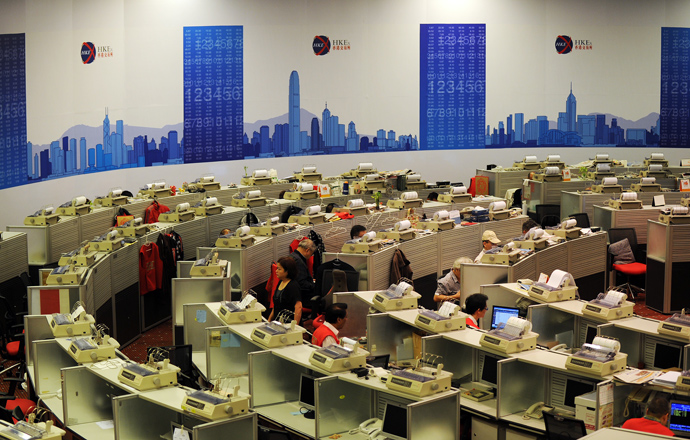
The anti-drilling movement is an “insurgency,” a PR specialist with Anadarko Petroleum says.

The tri-weekly bulletins featured a wide range of supposed threats to the state’s infrastructure. It included warnings about Al-Qaeda affiliated groups, pro-life activists, and Tea Party protesters. The bulletins also included information about when and where groups like GDAC would be meeting, upcoming protests, and anti-fracking activists’ internal strategy. The raw data was followed by a threat assessment — low, moderate, severe, or critical — and a brief analysis.

For example, bulletin no. 118, dated July 30, 2010 gave a low to moderate threat rating in reference to public meetings that anti-drilling activists planned to attend, and suggested that an “attack is likely… and might well be executed.” The threat assessment was accompanied by this note: “The escalating conflict over natural gas drilling in Pennsylvania may define local fault lines and potentially increase area environmentalist activity or eco-terrorism. GDAC communications have cited Northeastern Pennsylvania counties, specifically Wyoming, Lackawanna and Luzerne, as being in real ‘need of our help’ and as facing a ‘drastic situation.’” Another bulletin referenced an August 2010 FBI assessment of the growing threat of environmental activism to the energy industry. Because of Pennsylvania’s importance in the production of natural gas, ITRR concluded, an uptick in vandalism, criminal activity, and extremism was likely.

Although the Pennsylvania scandal caused a brief public outcry, it was quickly brushed aside as an unfortunate mistake. In fact, the episode represents a larger pattern of corporate and police spying on environmental activists fueled in part by the expansion of private intelligence gathering since 9/11.

By 2007, 70 percent of the US intelligence budget — or about $38 billion annually — was spent on private contractors. Much of this largesse has been directed toward overseas operations. But it is likely that some of that money has been paid to private contractors — hired either by corporations or law enforcement agencies — that are also in the business of spying on American citizens. As early as 2004, in a report titled “The Surveillance Industrial Complex,” the American Civil Liberties Union warned that the “US security establishment is making a systematic effort to extend its surveillance capacity by pressing the private sector into service to report on the activities of Americans.” At the same time, corporations are boosting their own security operations. Today, overall annual spending on corporate security and intelligence is roughly $100 billion, double what it was a decade ago, according to Brian Ruttenbur, a defense analyst with CRT Capital.

The surveillance of even moderate groups like GDAC comes at a pivotal time for the environmental movement. As greenhouse gas emissions continue unchecked, opposition to the fossil fuel industry has taken on a more urgent and confrontational tone. Some anti-fracking activists have engaged in nonviolent civil disobedience and the protests against the Keystone XL tar sands pipeline have involved arrests at the White House. Environmentalists and civil libertarians worry that accusations of terrorism, even if completely unfounded, could undermine peaceful political protest. The mere possibility of surveillance could handicap environmental groups’ ability to achieve their political goals. “You are painting the political opposition as supporters of terrorism to discredit them and cripple their ability to remain politically viable,” says Mike German, an FBI special agent for 16 years who now works with the ACLU.

The Pennsylvania episode is not an isolated case. The FBI and Americans for Prosperity (AFP), a Koch Brothers-backed lobbying group, have both taken an interest in anti-drilling activists in Texas. In the fall of 2011, according to an investigation by The Washington Post, the FBI was digging for information on the leader of Rising Tide North America, a direct action environmental group, because of his opposition to hydraulic fracturing (Rising Tide has also been active in organizing protests against the Keystone XL pipeline). Ben Kessler, a Texas-based activist, told the Post that the FBI had received an anonymous tip to look into his activities. The agency also showed up at the office of Kessler’s philosophy professor, Adam Briggle, who teaches an ethics course that covers nonviolent civil disobedience and the history of the environmental movement. Briggle, who has been involved in organizing residents to impose tougher regulations on gas drilling in Denton, Texas, told the Post that, “it seemed like a total fishing expedition to me.”

About a month after he was approached by the FBI, Briggle received a notice from his employer, the University of North Texas, asking him to turn over all emails and other written correspondence “pursuant to City of Denton natural gas drilling ordinances and the ‘Denton Stakeholder Drilling Advisory Group,’” an organization Briggle founded in July 2011 whose mission is similar to that of GDAC. The university had received a request under the state’s Public Information Act and Briggle was forced to hand over more than 1,300 emails. He was later told that the request had been made by Peggy Venable, Texas Director of Americans for Prosperity.

Rising Tide activists had speculated that the anonymous tip came from one of the gas companies active in the region. Although there was no way to prove a connection between the FBI’s investigation and AFP’s mining of Briggle’s emails, both were viewed within the activist community as acts of intimidation. Briggle says, “The message is, you’re being watched.”

During the last decade the FBI and, to a lesser extent, corporations have elevated the threat of eco-terrorism to a top priority even as environmentally motivated crimes have declined. In 2005, John Lewis, an FBI deputy assistant director, said the animal rights and environmental movements were “one of the FBI’s highest domestic terrorism priorities.” In the post-9/11 era, the outsourcing of intelligence gathering to private companies has ballooned, the bar for investigating domestic threats has been lowered, and a premium has been placed on information sharing with the private sector. “What changed after 9/11,” the ACLU’s German says, “was the lowering of the threshold for FBI investigations and the promulgation of these radicalization theories that while specifically written about Muslim extremists — the same theory that people move from ideas to activism to terrorism — justified increased surveillance against activists and against people who were just part of the environmental rights movement but had no association with violence or criminal acts.”

Since 9/11 accusations of eco-terrorism have proliferated and a number of individuals and groups have been prosecuted under new laws, which have profoundly impacted the radical environmental movement. The broad crackdown and subsequent fear and paranoia that swept through activist circles have been referred to as the “Green Scare.”

“The shift was gradual,” Will Potter writes in Green is the New Red: An Insider’s Account of a Social Movement Under Siege, “slowly merging the rhetoric of industry groups with that of politicians and law enforcement.”

The broad crackdown and subsequent fear and paranoia that swept through activist circles have been referred to as the “Green Scare.”

In public, corporations have amplified the threat of eco-terrorism to influence legislation, such as the Animal Enterprise Terrorism Act. In private, meanwhile, they have hired firms to spy on environmental groups. About a month after 9/11, for example, the crisis communications firm Nichols Dezenhall (now Dezenhall Resources) registered a website called StopEcoViolence.com (now defunct), which served as a sort of faux watchdog group and source for media outlets including The New York Times. Around the same time, Dezenhall — described by Bill Moyers as the “Mafia of industry” — was involved in corporate espionage. Along with two other PR companies, Dezenhall hired a now-defunct private security firm, Beckett Brown International, to spy on environmental activists. One of the targeted groups was Greenpeace. In 2011 Greenpeace filed a lawsuit charging that Dow Chemical, Sasol (formerly CONDEA Vista), the PR firms, and individuals working for Beckett Brown International (which was founded by former Secret Service officers) stole thousands of documents, intercepted phone call records, trespassed, and conducted unlawful surveillance. In a story for Mother Jones, James Ridgeway revealed that the security firm obtained donor lists, detailed financial statements, Social Security numbers of staff members, and strategy memos from several groups, and, in turn, “produced intelligence reports for public relations firms and major corporations involved in environmental controversies.” (In February a Washington, DC court ruled that the claims of trespass and misappropriation of trade secrets could proceed.)

More recently, according to a report in The Nation, the agricultural giant Monsanto contracted with a subsidiary of Blackwater, the private security firm, to gather intelligence on and possibly infiltrate environmental groups in order to protect the company’s brand name. “This is the new normal,” says Scott Crow, an author and longtime environmental activist who was the subject of FBI and corporate surveillance for close to eight years beginning in 1999.

While the above cases involved corporations hiring private security firms to carry out black-ops against environmental groups, the Pennsylvania scandal may be the first time that a state agency has contracted with a private security firm to gather intelligence on lawful groups for the benefit of a specific industry. Although the ITRR bulletins were produced for the Pennsylvania Department of Homeland Security, they were shared with PR firms, the major Marcellus Shale companies, and industry associations. For members of GDAC and other anti-drilling organizations, the revelations were profoundly troubling. Not only were they being lumped together with groups like Al-Qaeda, but the government agencies tasked with protecting the people of Pennsylvania were, in their view, essentially working for the gas companies. If a moderate group like GDAC wasn’t safe from the surveillance-industrial complex, it seemed nobody was. “These systems and this type of collection is so rife with inappropriate speculation and error — both intentional and unintentional — that your good behavior doesn’t protect you,” German says.

Tom Jiunta, the founder of GDAC, says the ITRR bulletins had a chilling effect. Attendance at GDAC meetings declined and some members left the group altogether. Organizers assumed that their phones had been tapped and that their emails were being monitored, a common perception among anti-drilling activists. At meetings they would leave their cell phones outside or remove the batteries. Jiunta, who has a podiatry practice in downtown Kingston, began to take different routes to work because he was worried about being followed. “We kind of assume that we’re being watched,” he says. “Even now.”

Indeed, the intelligence gathering continues. Although the state canceled its contract with ITRR, the company still works for the natural gas industry, according to GDAC attorney Paul Rossi. “An employee with one of the gas companies has told me that he is willing to testify that ITRR is still conducting operations for the gas companies and they are focusing in on environmental groups,” Rossi says. (In 2010 GDAC filed a lawsuit against the Commonwealth of Pennsylvania and ITRR on First Amendment grounds. Because it’s a private company or a “non-state actor,” the judge ruled, claims against ITRR were dismissed. The terms of a settlement with the state have not been reached. ITRR did not return requests for comment.)

Like many of the activists I spoke with, Jiunta underscored the fact that he’s never been drawn to conspiracy theories. GDAC’s code of conduct was designed to weed out those whom Jiunta described as “wackos.” Jiunta admits that he was pretty naïve when he first got involved in anti-drilling activism; he would print out large stacks of information on fracking to bring to state senators, who politely told him not to waste their time. Now, his faith in the role of government has been shattered. “People worried about being on a watch list,” he told me. “It was shocking.”

In the wake of the surveillance scandal Pennsylvania Homeland Security Director James Powers resigned and the state terminated its $103,000 no-bid contract with ITRR. Then-governor Ed Rendell called the episode “deeply embarrassing” and a one-day Senate inquiry was held. In testimony before the committee, Virginia Cody, the retired Air Force officer who had become a critic of gas drilling, said: “For the first time in my life, I do not feel secure in my home. I worry that what I say on the phone is being recorded. I wonder if my emails are still being monitored.”

The hearing sought to answer questions about how the contract was awarded, why citizen groups exercising their First Amendment rights were included, and, crucially, who received the information. Powers explained that the information was distributed to various chemical, agricultural, and transportation companies mentioned in the bulletins. At least 800 individuals were on the distribution list. In the case of gas drilling activism he explained, “It [the bulletins] went to the security directors of the Marcellus Shale companies and DEP (Department of Environmental Protection).”

This is only partially true. A list of the individuals and groups who received the bulletins shows that industry associations and PR firms that have nothing to do with protecting the state’s infrastructure were also included. For example, one of Powers’s key contacts on Marcellus-related activity was Pam Witmer, then head of the Bravo Group’s energy and environmental practice as well as president and CEO of the Pennsylvania Chemical Industry Council, a business advocacy group. The Bravo Group is a public relations and lobbying firm based in Pennsylvania. Its clients include Chief Oil and Gas, Southwestern Energy, and People’s Natural Gas, all of which are deeply invested in Marcellus Shale production.

The Marcellus Shale Coalition, an industry lobbying group, was also on the distribution list. In 2010 the coalition signed a $900,000 lobbying contract with Ridge Global, a private security firm founded by Tom Ridge, former head of the Department of Homeland Security under George W. Bush. As part of its energy consulting services Ridge Global offers “advisory support for natural gas and other infrastructure security.” Ridge is just one of many former security officials who now have private consulting services. Others include John Ashcroft, Michael Chertoff, and Richard Clarke.

The blurring of public and private spying is what Dutch scholar Bob Hoogenboom calls “grey intelligence.” In a 2006 paper of the same name, Hoogenboom noted that in addition to well-known spy agencies like MI6 and the CIA, hundreds of private organizations involved in intelligence gathering have entered the market to meet corporate demand. “The idea was to do for industry what we had done for the government,” Christopher James, a former MI6 officer who founded Hakluyt, a private intelligence company whose clients have included Shell and BP, told the Financial Times. Many corporations now have their own private intelligence networks, or “para-CIAs,” to gather information on consumers, critics, and even their own shareholders. Walmart, for example, has an office of global security headed by a one-time CIA and FBI official with a staff that includes former State Department security experts. As Eveline Lubbers writes in her recent book, Secret Manoeuvres in the Dark: Corporate and Police Spying on Activists, “Because these business firms hire former spies and analysts from the ranks of government, the informal links with government intelligence increase.”

This is a global phenomenon. Corporations in Europe and Canada have also spied on environmental groups. In 2006 French energy giant EDF, the world’s largest operator of nuclear reactors, hired Kargus Consultants, a private intelligence gathering agency run by a former member of the French secret service, to spy on Greenpeace. Kargus hacked into a lead Greenpeace organizer’s computer and compiled a dossier on the organization’s European campaign strategy. In 2011 a French court fined EDF 1.5 million euros and sent two of its employees to jail on charges of illegal spying.

Although it was not raised at the Pennsylvania Senate hearing, the ITRR bulletins also were shared with the Royal Canadian Mounted Police (RCMP). In January a Montreal paper reported that the RCMP itself has been tracking anti-shale gas activists in Quebec. The Critical Infrastructure Intelligence Team, a branch of the RCMP, produced two reports that described the possibility of Canadian activists collaborating with “extremist” groups in the US, such as Earth First! and Occupy Well Street — an offshoot of Occupy Wall Street opposed to fracking. According to Jeff Monaghan, a researcher with the Surveillance Studies Center at Queen’s University in Ontario, the Canadian government likely shares intelligence with the energy industry. Since at least 2005 the Canadian government has held biannual intelligence briefings to share sensitive information with the private sector. In 2007 Gary Lunn, former Minister of Natural Resources, admitted his agency had helped more than 200 industry representatives obtain high-level security clearances. “This enables us to share information with industry and their associations,” Lunn said at a pipeline security forum.

Similar arrangements have been uncovered in the UK. In 2009 it was revealed that the British police and the Department of Business, Enterprise and Regulatory Reform had provided information about Climate Camp demonstrations to E.ON, the company that runs the Ratcliffe-on-Soar power station. E.ON also hired private security firms like Vericola and Global Open to spy on protesters; both companies are staffed by former intelligence agents.

artwork depicting a bulletin board upon which photos of demonstrators and post-it notes with web addresses of anti-fracking groups are connected by pins and string

The specter of environmental extremism has been used to justify information sharing between law enforcement and the private sector. Last year, Joe Oliver, Canada’s Minister of Natural Resources, warned that environmental groups “threaten to hijack our regulatory system to achieve their radical ideological agenda.”

“It’s the new politics of the petro-state,” Monaghan says. “Anything that’s remotely linked with direct action or nonviolent civil disobedience is being described as extremism, which is the new code word of security agencies.”

The fossil fuel industry’s targeting of its critics goes beyond mere surveillance. Natural gas drilling companies have also flirted with using the dark arts of psychological warfare, or “psy ops.” In comments recorded by an anti-drilling activist at a 2011 natural gas conference in Houston and leaked to CNBC, Matt Pitzarella, director of corporate communications at Range Resources, said Range had hired “several former psy ops folks” with experience in Iraq and Afghanistan. “Having that understanding of psy ops in the Army and in the Middle East has applied very helpfully here for us in Pennsylvania [sic],” Pitzarella said.

At the same conference, Matt Carmichael, a PR specialist with Anadarko Petroleum, referred to the anti-drilling movement as an “insurgency” and advised industry representatives to download the US Army/Marine Corps Counterinsurgency Manual. “There’s a lot of good lessons in there and coming from a military background, I found the insight in that extremely remarkable,” he told his colleagues.

The oil and gas industry has good reason to feel besieged. Opposition to fracking, especially, is on the rise. New York State has in place a moratorium against the drilling technique, and legislators in California are considering a similar ban. A white paper prepared by FTI Consulting, a DC-based PR firm with ties to the shale gas industry, recently warned, “Environmental activists are looking to undermine the strategies and operations of energy companies.… Adding to the activists’ momentum is the fact that a growing number of mainstream shareholders are supporting their proposals.” But given the absence of any physical attacks against drilling company assets, the industry’s view of its opponents smacks of paranoia. In August 2012, iJET International, a private security firm founded by a former National Security Agency operative, issued a risk assessment of anti-drilling protests in New York State. In one of its daily intelligence bulletins distributed to corporate clients the firm observed, “Protests against hydraulic fracturing have gained considerable momentum over the past few months…While most demonstrations have been peaceful, participants say they are hoping to intensify actions in hopes of disrupting operations at targeted facilities.”

The US Army Counterinsurgency Manual that was offered as suggested reading for shale gas industry representatives includes an appendix on Social Network Analysis, defined as “a tool for understanding the organizational dynamics of an insurgency.” In an age of digital networks and online activism, this often means using data-mining software, cyber surveillance, and in some cases outright computer hacking to track opposition groups.

At the 2011 natural gas conference in Houston the CEO of Jurat Software, Aaron Goldwater, gave a presentation on the subject of data mining and stakeholder intelligence. In his presentation he emphasized the importance of knowing the communities you work in, of tracking and mapping relationships, and compiling a sophisticated database that includes all offline and online conversations. He pointed to the military as a model. “If you look at the people who are experts at it, which is the military, the one thing they do is gather intelligence,” he told the audience.

Corporations have already taken advantage of network forensic software to keep tabs on their own employees. The new technology, which allows companies to monitor an employee’s activity down to the keystroke, is one of the fastest growing software markets. There is a fine line, however, between data mining — which is perfectly legal though largely out of view — and cyber surveillance, or hacking.

While it is difficult to prove hacking, many activists are convinced their computers have been tampered with. Kari Matsko, a professional software consultant and director of the People’s Oil and Gas Collaborative in Ohio, says her computer was hacked after she began to push for tougher regulation of the natural gas industry.

Matsko got involved in environmental activism after hydrogen sulfide gas was released from a well site near her home. In 2008 she started helping a group of citizens who had filed a lawsuit against one of the larger energy companies in Ohio on grounds of nuisance violations and loss of property value. She spent many months doing research and collecting files related to the case, some of which she described as damning.

Because of her profession Matsko has very strong computer security and says that prior to working on oil and gas issues she had never had problems with malware. But while assisting with the lawsuit Matsko’s computer was attacked by a sophisticated virus. Matsko was able to remove it and everything seemed fine. About a month later, though, she unsuccessfully tried to open the computer folder that contained the sensitive files related to the lawsuit. The files were either missing or corrupted. “I remember I was so terrified by it that I didn’t even tell people unless it was in person,” she says.

Other activists have described similar cyber security-related issues. Around the time the ITRR bulletins were made public, Jiunta told me, members of GDAC experienced persistent problems with their computers. “Everybody was getting suspicious,” he says. “I had computer issues. Some are still having issues.”

John Trolla, a 61-year-old musician and guitar instructor whose communications were also featured in the ITRR bulletins, has been an outspoken critic of shale gas development for several years. In 2007 Chief Oil and Gas offered him a signing bonus of $1,400 to lease his mineral rights. Trolla, who lives in a modest two-story home in northeastern Pennsylvania, refused. He’s been fighting the industry ever since.

“This is something that’s bigger in my life than I ever wanted it to be,” he says. “Five years ago, when I first started getting involved in this and I started talking to people, I would say to myself, ‘these people are a little crazy.’ Five years later I sound like them.”

Immediately after the intelligence bulletins were made public Trolla’s computer became nearly unusable. Documents were corrupted and irretrievable; photos were disappearing and programs wouldn’t work. A relatively new machine with a high-end operating system, Trolla had it serviced at a Best Buy in nearby Muncy. He was told by the Geek Squad at Best Buy that a highly sensitive program that acts like a Trojan Horse had been installed on his computer. According to Trolla, “They said that the program monitors every key stroke, every email, everything you do on the computer.”

Nearly all of the activists I spoke with said the Pennsylvania Homeland Security revelations, while giving them pause, had not changed their behavior. They continue to speak out, to attend public meetings, and to push for greater oversight of the industry. Still, “it leads to some scary possibilities in the future,” says Eric Belcastro, an organizer with the Community Environmental Legal Defense Fund. “I don’t sit around being paranoid about this stuff. I just try to do what I have to do and get along with my life. But I admit the playing ground is rough and I think people need to be careful.”

Even as corporations expand their surveillance of citizen-activists, they are seeking to obstruct public oversight of their own behavior. It’s a bit like a one-way mirror of democratic transparency — with corporations and law enforcement on one side looking in and activists on the other.

Pennsylvania is a case in point. In early 2012 legislators there passed “Act 13,” a set of amendments to the state’s Oil and Gas Act, which essentially stripped local municipalities of the authority to regulate drilling activity through zoning ordinances and other measures. The law also requires doctors who treat patients exposed to fracking chemicals to sign a confidentially agreement before receiving information about the substances. The gag rule would prevent them from sharing that information with the patient or even other doctors (GDAC’s current president, Dr. Alfonso Rodriguez, is challenging this provision).

Earlier this year, a bill was introduced into the Pennsylvania legislature that would make it a felony to videotape farming operations in Pennsylvania — so-called “ag-gag” legislation that has already passed in Utah and Iowa, and has been introduced in several other legislatures. Many of the ag-gag bills draw on language crafted by the American Legislative Exchange Council’s (ALEC) “Animal and Ecological Terrorism Act.” (In recent years ALEC has received considerable support from the natural gas industry). Section D of the ALEC bill defines an animal or ecological terrorist organization in broad terms “as any association, organization, entity, coalition, or combination of two or more persons” who seek to “obstruct, impede or deter any person from participating” not only in agricultural activity but also mining, foresting, harvesting, and gathering or processing of natural resources.

The proposed law has many anti-drilling activists worried. If such language were included in the bill (it is currently in committee and will be revised before it comes to the floor) it would greatly limit the ability of residents to photograph or video well sites, compressor stations, and pipeline development — all of which could be considered part of the “gathering or processing of natural resources.”

“It’s clearly legislation that could be easily expanded in any particular case to include folks like me who do whatever we can to get as close to some of these sites as we are able,” says Wendy Lee, a philosophy professor at Bloomsburg University who regularly photographs the industrial impacts of gas drilling and then posts them on her Flickr page.

Lee says that among anti-drilling activists there is a sense that 2013 is a do-or-die year. The state Supreme Court is set to rule on the constitutionality of Act 13. As the drilling boom moves into ever more populated areas, activists are gearing up for more focused organizing and larger nonviolent protests. With tens of thousands of wells yet to be drilled, at least this much is clear: The industry will be watching closely.

Adam Federman (adamfederman.com) is a frequent contributor to Earth Island Journal. Research support for this article was provided by The Investigative Fund at The Nation Institute.

© 2013 Earth Island Institute/Nation Investigative Fund

This article originally appeared on: Common Dreams

Imposing Syria 'No Fly Zone' Would Be Over Act of War, Warn Critics

0

Rafale fighters, like the ones used by France over Libya in 2011, and which will likely be deployed again if a no-fly zone were put over Syria. The sands of North Africa are seen far below. (Photo: French Air Force)According to an “exclusive” report by The Daily Beast on Wednesday, the Obama administration has asked the Pentagon to give further review to a series of US military plans for Syria, including the implementation of a “no fly zone zone” over the country.

A famous and innocuous-sounding euphemism in military circles, a “no fly zone” demands overt military action which would necessitate a massive bombing campaign focused on wiping out anti-aircraft capabilities, radar installations, and the opposition’s own air forces. The fact that creating a “no fly zone” requires such an intense, offensive bombing campaign is often left out of mainstream media reporting in the US.

“The first act in imposing a no-fly zone is an extensive bombing campaign – an act of war.” -Phyllis Bennis, Institute for Policy Studies

The Daily Beast, an outlet well known for offering anonymity to government sources in exchange for exclusive access to high level officials, reports that one unnamed member of the administration said, “The White House is still in contemplation mode but the planning is moving forward and it’s more advanced than it’s ever been.”

The source continued, “All this effort to pressure the regime is part of the overall effort to find a political solution, but what happens if Geneva fails? It’s only prudent to plan for other options.”

But what’s “prudent” about a “no fly zone”?

According to Common Dreams contributor and foreign policy analyst Shamus Cook, nothing.

“One country cannot enforce a no fly zone inside another country without first destroying the enemy Air Force, not to mention its surface to air missiles,” Cook wrote earlier this month.

“We saw in Libya that a no fly zone quickly evolved into a full scale invasion, which would happen again in Syria,” he continued. The main difference, argues Cook, is “that Syria has a more powerful army with more sophisticated weaponry, not to mention powerful allies – Iran and Russia.”

And Russia proved that aspect of their involvement this week by promising it would send the Syrian government even more advanced missile systems if the EU or US begin sending weapons to the Syria opposition. Experts in the US quickly warned that the presence of Russia’s S-300 missile system would make creating a so-called “air corridor” remarkably more difficult.

Yifat Susskind, executive director of the human rights group MADRE, also warns against a possible “no fly zone,” saying history shows they often do more harm than good.

“The US bombing required to create and enforce a “no-fly zone” would almost certainly kill and injure more people.” -Yifat Susskind, MADRE

“The US bombing required to create and enforce a “no-fly zone” would almost certainly kill and injure more people,” Susskind wrote in a recent op-ed for Common Dreams.

“Moreover,” Susskind continued,”roughly 10% of casualties in Syria have been caused by Assad’s Air Force. The vast majority have been brutalized by ground forces, rendering a “no fly zone” a very weak form of protection.”

And Phyllis Bennis, foreign policy expert and senior fellow at the Institute for Policy Studies, points out that a “no fly zone” is really just another name for invasion and ultimately an act of war.

As it was in Libya, creation of a “no-fly zone” is widely understood as a step towards regime change. According to Robert Gates, Secretary of Defense during the U.S. intervention in Libya, the first act in imposing a no-fly zone is an extensive bombing campaign – an act of war. This time around, that would mean bombing Syria, to destroy its sophisticated anti-aircraft system. How many civilians would die in that bombardment, given the widespread presence of anti-aircraft facilities across the country, including in populated areas?

We should also note that Israel’s ability to send bombers to attack several discrete sites in Syria, apparently from the skies above Lebanon, has little relation to the consequences of flying the dozens of U.S. sorties flown directly into Syrian airspace that would be needed to neutralize the entire strategic Syrian anti-aircraft system. Drones won’t be enough for this one. So when the first U.S. bomber pilot is shot down, and special forces are sent in to rescue him, what happens to the “no boots on the ground” rule? Ignore it because the special forces guys wear sneakers instead of boots? Do we really want to claim that killing more Syrians with conventional bombs, to prevent the future possible use of alleged chemical weapons, is somehow a legitimate “humanitarian” effort?

____________________________________________________

This work is licensed under a Creative Commons Attribution-Share Alike 3.0 License

This article originally appeared on: Common Dreams

Ukraine is among top 50 world gold holders

0


Ukraine’s gold reserves are estimated at more than 36.1 tonnes, according to the national bank, and is ranked 47 in world standings.

In March Ukraine was 51 according to the World Gold Council.

For the second consecutive year Ukraine is trying to diversify
its international reserves and is actively buying gold on both
foreign and domestic markets. However the price is turbulent and
experts argue, whether the Central Bank should join in the rush
or wait until the price settles. 

There have been reports Ukraine is going to start gold mining.
Experts estimate Ukraine’s gold resources at 400 tons in the
Carpathian Mountains and 500 tons in the Donbass region. Some
gold is also believed to be in the Crimea and Dnepropetrovsk
regions.

Right now Ukraine has no gold production of its own and buys
around 5 tonnes of gold a year. Domestic production of gold could
start this year, the deputy head of National Bank, Vera
Rychakovskya said. In three to five years Ukraine is expected to
produce at least one ton of gold domestically and gradually
increase capacity which will allow to cut imports by a third.

This article originally appeared on: RT

OECD cuts its global growth forecast

0

File photo shows the Euro logo in front of the European Central Bank (ECB) in Frankfurt, Germany.

The Organization for Economic Cooperation and Development (OECD) has cut its growth forecast for the most advanced economies in the world.

The OECD said in its latest semi-annual Economic Outlook report released on Wednesday that in the first half of 2013, the economic growth of advanced countries will be less than expected.

It added that the advanced economies would see growth after the middle of 2013 Å“in the absence of adverse events.”

The OECD further said that the 17-nation eurozone is expected to witness a 0.6-percent contraction in 2013 as the bloc is estimated to remain in recession for a second year.

The organization also warned that economic activity in the crisis-hit eurozone is still falling, which reflects Å“ongoing fiscal consolidation, weak confidence and tight credit conditions, especially in the periphery.”

The report added that Å“protracted weakness” in the eurozone Å“could evolve into stagnation with negative implications for the global economy.”

The eurozone is still in need of tackling problems in its financial sector holding back the flow of credit, said OECD chief economist, Pier Paolo Padoan.

Earlier in May, the Eurostat data agency said eurozone unemployment rate hit a record-high of 12.1 percent in March.

EU figures indicate that nearly a quarter of the blocâ„¢s population, equivalent to 120 million people, is at risk of poverty and social exclusion.

Europe plunged into financial crisis in early 2008 and most European governments have taken tough austerity measures to contain their debt crises.

MR/KA/SS

This article originally appeared on: Press TV