Tweet by Russian lawmaker on Snowden asylum in Venezuela deleted

0

Chicago Tribune
July 9, 2013

A tweet in which a senior Russian lawmaker said former U.S. spy agency contractor Edward Snowden had accepted Venezuela’s offer of asylum was deleted from his Twitter feed shortly after it was posted on Tuesday.

The lawmaker, Alexei Pushkov, later tweeted that he had seen the news on state-run Russian television channel Rossiya-24, but a representative of Rossiya-24 said it had been referring to Pushkov’s initial tweet.

Pushkov, the pro-Kremlin chairman of the international affairs committee in the lower parliament house, could not immediately be reached for comment.

Read more

<!–

–>

This article was posted: Tuesday, July 9, 2013 at 11:18 am

Tags: , ,


<!– this is where we need to show the related articles

–>

Republished with permission from: Infowars

Recovery woes: America’s second-largest employer is a temp agency

0

Ashe Schow
Washington Examiner
July 9, 2013

Behind Wal-Mart, the second-largest employer in America is Kelly Services, a temporary work provider.

Friday’s disappointing jobs report showed that part-time jobs are at an all-time high, with 28 million Americans now working part-time. The report also showed another disturbing fact: There are now a record number of Americans with temporary jobs.

Approximately 2.7 million, in fact. And the trend has been growing.

Read More

<!–

–>

This article was posted: Tuesday, July 9, 2013 at 11:21 am

Tags: ,


<!– this is where we need to show the related articles

–>

Republished with permission from: Infowars

Patient Wakes Up as Doctors Prepare to Remove Organs

0

scienceworldreport.com
July 9, 2013

It might seem like the beginning of a horror movie: A woman, about to be cut open, wakes up. She is not knocked out by anesthesia nor is she dead.

Unfortunately, this is not fiction. It’s a true story, and it happened to Caroline Burns.

Reports say it was exactly midnight when Burns opened her eyes, looking around to see doctors who believed she had died preparing to remove her organs and donate them to patients on the transplant waiting list.

According to a report released by the U.S. Department of Health and Human Services, doctors had inaccurately diagnosed Burns with irreversible brain damage and ignored clues that her condition was improving, including her toes curling when she was touched, flared nostrils and moving her mouth and tongue. She had also began to breathe on her own even though she was on a respirator.

Read more

<!–

–>

This article was posted: Tuesday, July 9, 2013 at 11:21 am

Tags:


<!– this is where we need to show the related articles

–>

Republished with permission from: Infowars

Snowden Agrees to Asylum in Venezuela

0


Fugitive US intelligence leaker Edward Snowden, who has been holed up in a Moscow airport for more than two weeks, has agreed to an offer of asylum from Venezuela, a top Russian lawmaker said on Twitter on Tuesday before removing the post.

“As was expected, Snowden agreed to (Venezuelan President Nicolas) Maduro’s offer of political asylum,” tweeted Alexei Pushkov, head of the Russian lower house of parliament’s international affairs committee.

“Apparently this option looked like the most reliable one to Snowden.”

The announcement remained on his Twitter feed for around half an hour before it was removed.

Russian President Vladimir Putin’s spokesman declined to comment, saying all questions should be directed to Pushkov.

“Turn to them for all the questions,” Dmitry Peskov said tersely.

After removing his original post, Pushkov said in a separate message that he had learnt of the most recent development around Snowden from a news report on Russian state television channel Vesti 24.

He later rephrased his original message, saying Snowden had agreed to asylum in Venezula, according to a Vesti 24 report.

“Venezuela finally received an answer from the CIA former agent,” a news report on the channel’s website said earlier Tuesday.

“The President of the Latin American country, Nicolas Maduro, received an official political asylum request from Edward Snowden,” said the channel.

On Monday, Maduro called on Snowden to decide if he wanted to fly to Caracas.

“We have received the asylum request letter,” Maduro told reporters in Caracas after he offered the 30-year-old former National Security Agency contractor asylum along with the leaders of Bolivia and Nicaragua.

“He will have to decide when he flies, if he finally wants to fly here,” Maduro said. He called the offers from the three Latin American nations “collective humanitarian political asylum.”

It remains unclear how the world’s most famous refugee would be able to leave the transit zone of Sheremetyevo Airport, where he has been marooned without valid documents since he arrived from Hong Kong on June 23.

There are no direct flights between Moscow and Caracas. The quickest way to get to Venezuela would be to fly via Havana.

A spokeswoman for Russian national carrier Aeroflot, Irina Danenberg, said she was not aware if Snowden had been on the flight to Havana that left Moscow earlier Tuesday. “I have no clue,” she said.

There are no direct flights to Havana from Moscow on Wednesday.

Pushkov has been a vocal commentator of the Snowden affair, saying earlier that Venezuela was “possibly his last chance to receive political asylum.”

Republished with permission from: AlterNet

Saudi Arabia, Qatar and the Struggle for Influence in Syria

0

This week’s resignation of Ghassan Hitto, the so-called “Prime Minister in waiting” of the Syrian Opposition Coalition, coupled with the July 6th election of Ahmed Assi al-Jarba to head the umbrella coalition of US-supported proxy groups attempting to topple the Assad government, has revealed further cracks in the edifice of the imperialist assault on Syria.

Qatar’s Man in the Middle

Ghassan Hitto, the Syrian expatriate and technocrat from Texas, was seen by most informed observers as the darling of the Muslim Brotherhood and Qatar. As noted by AFP shortly after Hitto’s election:

Some coalition members described Hitto as a consensus candidate pleasing both the opposition’s Islamist and liberal factions. But some of the 70-odd Coalition members withdrew from the consultations before the vote could take place, accusing opposition heavyweight Muslim Brotherhood of imposing Hitto as a candidate.

Indeed, the imposition of Hitto as the political face of the foreign-backed opposition was seen by many inside the opposition and around the world as a power-play by Qatar to control the direction of the conflict in Syria and establish Doha as the real center of power in a post-Assad Syria.

This connection between Hitto, the Muslim Brotherhood and Qatar was the source of much tension within the opposition. The NY Times reported that:

[Hitto] faced several challenges: he was seen by some rebels and activists as out of touch with the country, and some members of the often-squabbling coalition complained that he was a favorite of the Syrian Muslim Brotherhood and of its main foreign backer Qatar. Many in the opposition say Qatar wields too much influence in the movement.

What became clear during the course of Hitto’s short tenure as the public face of the foreign-backed opposition was that he was less a political leader than a proxy of Qatar and the United States. This despite what can only be called competition between its allies in Doha and Riyadh who at times collaborate and at other times compete for power and influence among the extremist jihadi elements throughout the Middle East and North Africa. Essentially then, Hitto must be understood as a placeholder, a man whose responsibility was not to lead, but simply to act as a foothold for the al-Thani regime and the Muslim Brotherhood within the leadership of the opposition. The goal was of course to have Hitto in place for the potential fall of Assad, so that Qatar could immediately secure its control over the country in a post-Assad scenario.

Saudis Reclaiming Dominant Role?

Hitto’s resignation places even more significance on last week’s election of Ahmed Assi al-Jarba as head of the Syrian Opposition Coalition. Whereas Hitto was understood to be a proxy of Qatar, Jarba can be correctly characterized as a proxy of Saudi Arabia. As McClatchy News explains:

Jarba is a chief of the Shammar tribe, one of the Arab world’s most powerful clans with members stretching from southern Turkey to Saudi Arabia…He was jailed early in the revolt against Assad…After being released from prison in August 2012, he fled to Saudi Arabia where his tribal connections put him into close touch with senior members of the Saudi intelligence services.

It should be noted that the innocuous-sounding phrase “close touch with senior members of Saudi intelligence” is a euphemism for Saudi agent, which is precisely what Jarba is. Note the fact that, like Hitto, Jarba has already stated publicly his opposition to peace talks with the Assad government, thereby perpetuating the cycle of violence that benefits Riyadh and Doha and costs more innocent Syrians their lives.

Jarba has said that “Geneva in these circumstances is impossible.” However, one must consider precisely which “circumstances” he was referring to. Keen political observers who have been following events in Syria for some time understand the “circumstances” to be the continued military defeats of the foreign-backed rebels and jihadis by the forces of the Assad government. Jarba and his Saudi handlers understand quite clearly that they must first achieve substantive military victories on the ground before they can even pay lip service to peace talks.

It is precisely this desperate need for tactical victories by the rebels that has driven Saudi Arabia to become even more involved in fomenting this war. Using Jarba as their proxy, the Saudis have attempted to launch a new and perhaps even deadlier phase of the war against Syria. In his first two days as head of the coalition, Jarba has already announced that the rebels will soon receive “a new shipment of sophisticated weapons from Saudi Arabia” as well as proposing a truce during Ramadan.

However, these announcements should be interpreted as cynical ploys designed to buy time for Saudi arms to reach their destination and for the rebels to train in their use. Jarba said as much when he proclaimed to Reuters, “I will not rest until I procure the advanced weapons needed to hit back at Assad and his allies. I give myself one month to achieve what I am intent to do.” So, while proposing a one-month truce under the cover of religious piety in the observance of Ramadan, Jarba gives himself exactly that same one month window to procure advanced weapons. The hypocrisy and duplicity needs no further explanation.

Saudi Arabia and Qatar have a complicated relationship, at times friendly and at other times acrimonious. Throughout the course of the destabilization and subversion of Syria, the two countries have collaborated in the funding, arming, and importation of jihadi elements from throughout the Muslim world. They have both been linked to intelligence agencies of the imperial Western powers while maintaining close contact with terror networks foreign and domestic. As such, both countries have played the indispensable role of intermediary between these disparate forces. However, now that the threat to their terrorist proxies in Syria is an existential one, and Assad victories become ever more decisive, it seems the bond between the monarchies is fraying. The recent changes in the political leadership of the so-called opposition merely reflect this.

Eric Draitser is the founder of StopImperialism.com. He is an independent geopolitical analyst based in New York City. You can email him at ericdraitser@gmail.com.

Republished with permission from: Global Research

Iran condemns terrorist attack in Beirut

0

A large bomb explosion hits southern suburb of the Lebanese capital, Beirut, on July 9, 2013.

Iran has strongly condemned the terrorist bombing in the southern suburbs of the Lebanese capital, Beirut.

At least 53 people were injured in a powerful explosion that rocked the southern Bir al-Abed suburb of Beirut on Tuesday, causing heavy damage. Several cars and buildings were on fire in the wake of the blast.

Iran Foreign Ministry Spokesman Abbas Araqchi said the move was an Å“ominous conspiracy” plotted by the Israeli regime and its allies in the region.

He expressed hope that the Lebanese officials would identify the perpetrators of the terrorist act to prevent those who seek to provoke insecurity and instability and cause sectarian strife in the country from achieving their goals.

Å“Such terrorist measures will fail to deter the resistance movement and Lebanese people from … fighting against the occupying regime [of Israel],” the Iranian spokesperson pointed out.

In January, two people were injured after a bomb went off in the suburb of al-Selloum, south of Beirut. The bomb was planted underneath a car belonging to a member of the Lebanese resistance movement, Hezbollah.

Back in May, two rockets hit the area. Lebanese security forces have also disarmed several rockets near Beirut in recent months.

In December 2012, a car bomb attack in the capital claimed the life of the intelligence chief of Lebanon’s Internal Security Forces, General Wissam al-Hassan.

SF/KA/SS

Republished with permission from: Press TV

Dry Cleaner Drone Delivers Clothes to Customers

0

NBC Philadelphia
July 9, 2013

A freshly laundered shirt, covered in plastic, flaps in the wind as it takes flight from in front of Manayunk Cleaners.

It wasn’t picked up by a breeze, though, rather a remote-controlled drone, which ferries the shirt across the sky on a delivery run to a nearby customer.

“I’m all about technology and I see a lot of these cleaners, it’s so old school. You come in…and you just pick it up. I needed to spice things up,” says Manayunk Cleaners owner Harout Vartanian.

Read More

<!–

–>

This article was posted: Tuesday, July 9, 2013 at 11:08 am

Tags: , , ,


<!– this is where we need to show the related articles

–>

Republished with permission from: Infowars

Egypt army gives warning over transition

0

[unable to retrieve full-text content]The Egyptian army has issued a statement warning all parties against disrupting the country’s transition, shortly after liberal economist Hazem al-Beblawi was named the country’s interim prime minister.

Republished with permission from: Press TV

Exxon Funding? Nope, Never Got The Check!

0

It’s almost funny to watch. The radical left “Progressives” see our victories over their well-orchestrated plans to restructure America via Agenda 21 and Global Warming legislation, and they just can’t understand how it’s happening. Their only theory is that there must be some massive source of secret money driving us. We couldn’t possibly be a true grassroots movement, doing this on our own.

So, the Progressives are using all of their impressive resources in government, the news media, and the Internet to publish articles and plant their attempts to ridicule, cast doubt, and spread their own creative conspiracy theories about our unexplained successes.

Here are just a very few samples. The New York Times launched a front-page, Sunday edition attack entitled “Activists Fight Green Projects, Seeing UN Plot.” Mother Jones magazine offered its version of the anti-Agenda 21 battle with this headline: “We don’t need none of that Smart-growth Communism.” Then came The Atlantic magazine’s offering under the title of “Is the UN Using Bike Paths to Achieve World Domination?” And then The Atlantic Cities publication decried “How the Tea Party is Upending Urban Planning.” And that, of course, is the center of the matter. Anti-Agenda 21 activists are scoring victories in community after community, seriously curtailing or even stopping the “urban planning” that has damaged citizen’s rights to use their own bought-and-paid-for private property. How outrageous.

In addition to the articles in main stream media, they have dedicated whole websites and blogs to the task of “exposing” the leaders of this unexplained movement, digging deep to find our hidden funding, and searching for “suspicious” links to others guilty of the “conspiracy.” The witch hunt is searching for the roots of Hillary Clinton’s proclaimed “Vast Right Wing Conspiracy.”

The websites and blogs include Wing Nut Watch, through which they breathlessly alert readers to the latest right-wing threat; Desmogblog.com, which declares its purpose to “Clearing the PR Pollution That Clouds Climate Science”; meaning, of course, that anyone who questions the “science” of global-warming theories is nothing more than a public relations huckster bought and paid for by evil big oil.

Exxon Secrets and Greenpeace

Along those same lines is Exxonsecrets.org, created by Greenpeace. The site claims that most of the vast right-wing conspiracy is funded by Exxon. Which, so the theory goes, is the reason why the poor Greens just can’t get any respect or traction for their dire warnings that Global Warming is about to destroy the Earth. And so, they claim, as the Earthen pot boils, Exxon funds the “deniers” so it can continue to make obscene profits.

According to the site, Exxon is supposed to have accomplished this feat by funneling $22,123,436 to more than 100 groups since 1998. That would average out to about 1,474, 895 per year, meaning each group would receive about $14,700 per year. Now the real mystery is how that tiny amount could influence anything. But the site presses on, including an elaborate mapping system designed like a spider web to show the direct ties between all of the right-wing groups, their leaders, their funding and their ties to Exxon. Amazing stuff. Even more amazing is how utterly inaccurate are the charges from such sources.

Lazy Reporters and Inaccurate Claims

Yet, the real danger in such postings is that lazy, uneducated reporters use such websites and blogs as sources for stories. For example, the Washington Post used Desmogblog.com as a source for an attack on the Heartland Institute. Heartland is one of the leading organizations attempting to bring balance and scientific accuracy into the global-warming debate. It has sponsored several international conferences featuring scientists who have dared to disagree with the Chicken Little scare tactics making the Institute the alarmist’s favorite target.

The Post claimed that Heartland received more than $7.3 million from Exxon Mobil between 1998 and 2010, and nearly $14.4 million between 1986 and 2010 from foundations affiliated with Charles and David Koch. In fact, during that time period, Heartland received only $700,000 from Exxon Mobil (not $7.3 million as the Post claimed). Worse, the Institute received only $25,000 from the Kochs, and that wasn’t for the global-warming issue, but for work concerning healthcare issues.

Greenpeace has charged that Exxon Mobil was funding respected scientist Dr. Willie Soon. He is a research scientist who earned notoriety by exposing the fallacies of Michael Mann’s so-called “Hockey Stick” graph of warming temperatures in 2003. Dr. Soon also wrote that polar bears were not threatened by a decline in Arctic sea ice in 2007. Recently Greenpeace was forced to admit that Exxon Mobil was not financing Dr. Soon. Nor was Exxon Mobil sending checks to such global-warming truth warriors as the Committee for a Constructive Tomorrow (CFACT) and the Frontiers of Freedom. Yet all are listed on Exxonsecrets.org as receiving such funding. As Joe Bast of Heartland Institute puts it, such false reports are designed to “add to the false narrative that the only persons and organizations that question the dogma of man-made global warming are shills for the oil industry.”

Only Paid Shills Would Support Global-warming Denials

Of course, my favorite use of such misinformation concerning the funding of the Vast Right Wing Conspiracy deals with the funding of my American Policy Center. On more than one occasion, as I appear on radio interviews to discuss the issue of global warming or Sustainable Development, the host charges that I am a paid shill of Exxon Mobil. They try to make the claim that it’s the only reason I could possibly take such a position. Such charges have also appeared in several letters to the editor in newspapers in cities where I was invited to speak and in opinion articles all over the Internet.

Most recently the charge was made by the mayor of Whitney Point, New York, David Downs. When anti-Agenda 21 activists presented American Policy Center materials as part of their presentation, the mayor answered by saying, “I am aware that the American Policy Center is funded by super-rich individuals (like the Kochs) and large corporations with vested interests (like Exxon).” And the mayor went on about me, saying, “Tom Deweese (sic) has had fundraising schemes going back many years. He is a very experienced and highly skilled PR man. It is even likely that he believes much of this stuff that he is being paid to promote.”

Now, where did a mayor, who has never met me, never spoken to me, get such ideas? Obviously it wasn’t first-hand knowledge. Here’s one clue. In an article appearing on www.treehugger.com, entitled “Exposing the Influence Behind the Anti- Agenda 21 Anti-Sustainability Agenda,” author Lloyd Alter did his best to paint me as “the loudest mouthpiece of the anti-Agenda 21 crowd.” He believes (as he quotes Robin Rather of something called Collective Strength) that the only way such an “innocuous 20 year old document” has become such a nationwide battle is because “the Agenda 21 phenomenon is highly manufactured.” Says Rather, “It’s not out there in the mainstream.” “Yet, the scale of the Agenda 21 campaign is enormous. Who is manufacturing it?” asks Rather.

Alter builds on his conspiracy theory, saying, “Usually when you listen to complaints of Tea Party members, they are different inflections, a much wider variation. But this isn’t organic and local, the same talking points come up everywhere. They are being played and used. The whole campaign serves no interest to anyone who isn’t trying to ensure that we keep burning as much fossil fuel as we can for as long as possible.”

There it is again. The only possible explanation they are able to consider is that Big Oil is funding such a conspiracy in order to stuff their pockets with big bucks. Of course they would believe that, because that’s exactly how the Left operates in most cases. There is very little leftist grassroots movement. They usually find a big funder to create the image of citizen involvement, such as the bogus Occupy Wall Street movement.

So who is driving the Anti-Agenda 21 bandwagon, according to Alter? The John Birch Society and Tom DeWeese!

And how am I and the American Policy Center funded? Well, since he can’t find any direct link between me and Big Oil (because there isn’t any) he goes into great detail about the connections that members of the APC board of directors have with other groups. My directors, including Dr. Bonner Cohen and John Meredith, each have dealings with other groups, like CFACT and the National Center for Public Policy Research. Hey, I don’t have the money to pay these guys, so they have to work with other groups which can. And where did Alter get these links? Exxon Secrets, of course.

Alter also goes into great detail about how Dr. Cohen and I once published a newsletter called “EPA Watch.” And for two years in 1993 and 1994, we did receive two grants from the Phillip Morris company ($50,000 each). Those were the last and only grants ever received by APC for any reason. And just to note, EPA Watch was positively received by many members of Congress who were greatly relieved to finally have information to counter Green lies on environmental issues. Until then it had all been a very one-sided argument. APC and EPA Watch began to change that and have continued that effort for the past 25 years.

Tom DeWeese Is Everywhere!

Alter digs even deeper to tie me to the Koch Brother’s “evil” coal money. It seems that on a few occasions I was paid to speak at anti-Agenda 21 meetings by Americans for Prosperity – a group that receives funds from the Kochs. Says Alter, “AFP branches from Kansas to Oregon appear to have Tom Deweese (I wish he could at least spell my name right) consistently on the rubber chicken circuit, he is everywhere.” That makes it sound like I covered a vast part of the nation on AFP’s behalf. No, it was just Kansas and Oregon, period. And so, the conspiracy grows. The fact that I have no other ties to AFP other than making a couple of speeches isn’t noted. Guilt by association is the crime.

For the record, the American Policy Center has never received a dime from Exxon Mobil, the Koch Brothers, or any other major (or minor) corporation (except from Phillip Morris 19 years ago). However, after being accused time and time again for being a paid shill for Big Oil, I did write a letter in 2009 to the Chairman of the Board of Exxon Mobil and told them I was taking their heat – so where was my check? I never received a reply. That’s funny treatment, don’t you think, for one so important in the vast anti-green propaganda battle! In truth, APC has approximately 25,000 individual donors who give an average, occasional contribution of $25. We live and operate on a shoe string.

However, here is the real tactic that’s being played against us: Alter’s last few paragraphs let the real conspiracy out of the bag. He points to the Green’s successful efforts to stop California’s Proposition 23, which would have cut back on over-reaching air pollution controls that were strangling the state’s economy. The Greens used a common tactic – that big corporations were funding the Prop 23 effort. So, says Alter, “to counter efforts against Agenda 21, the same tactics need to be employed.” “Big Oil is paying…” “The Kochs are promoting it like mad…” Alter sums it up by saying, “And that is how we have to paint them: not concerned citizens worried about the United Nations, but representatives of big oil out to preserve their turf.”

Like scared little children hiding under their blankets with a flashlight, telling each other ghost stories, they frighten each other with tales of the boogie man – Tom DeWeese – who is coming to destroy their well-laid plans. Like I said, it’s pretty funny to watch.

Tom DeWeese is one of the nation’s leading advocates of individual liberty, free enterprise, private property rights, personal privacy, back-to-basics education and American sovereignty and independence. Go to americanpolicy.org for more information.

Republished with permission from: The New American

Who Is Racist?

0

I am so old that I can remember when most of the people promoting race hate were white.

Apparently other Americans also recognize that the sources of racism are different today from what they were in the past. According to a recent Rasmussen poll, 31 percent of blacks think that most blacks are racists, while 24 percent of blacks think that most whites are racist.

The difference between these percentages is not great, but it is remarkable nevertheless. After all, generations of blacks fought the white racism from which they suffered for so long. If many blacks themselves now think that most other blacks are racist, that is startling.

The moral claims advanced by generations of black leaders – claims that eventually touched the conscience of the nation and turned the tide toward civil rights for all – have now been cheapened by today’s generation of black “leaders,” who act as if it is all just a matter of whose ox is gored.

Even in legal cases involving terrible crimes – the O.J. Simpson murder trial or the charges of gang rape against Duke University students – many black “leaders” and their followers have not waited for facts about who was guilty and who was not, but have immediately taken sides, based on who was black and who was white.

Among whites, according to the same Rasmussen poll, 38 percent consider most blacks racist and 10 percent consider most whites racist.

Broken down by politics, the same poll showed that 49 percent of Republicans consider most blacks racist, as do 36 percent of independents and 29 percent of Democrats.

Perhaps most disturbing of all, just 29 percent of Americans as a whole think race relations are getting better, while 32 percent think race relations are getting worse. The difference is too close to call, but the fact that it is so close is itself painful – and perhaps a warning sign for where we are heading.

Is this what so many Americans, both black and white, struggled for, over the decades and generations, to try to put the curse of racism behind us – only to reach a point where retrogression in race relations now seems at least equally likely as progress?

What went wrong? Perhaps no single factor can be blamed for all the things that went wrong. Insurgent movements of all sorts, in countries around the world, have for centuries soured in the aftermath of their own success. “The revolution betrayed” is a theme that goes back at least as far as 18th century France.

The civil rights movement in 20th century America attracted many people who put everything on the line for the sake of fighting against racial oppression. But the eventual success of that movement attracted opportunists, and even turned some idealists into opportunists.

Over the generations, black leaders have ranged from noble souls to shameless charlatans. After the success of the civil rights insurgency, the latter have come into their own, gaining money, power and fame by promoting racial attitudes and actions that are counterproductive to the interests of those they lead.

None of this is unique to blacks or to the United States. In various countries and times, leaders of groups that lagged behind, economically and educationally, have taught their followers to blame all their problems on other people – and to hate those other people.

This was the history of anti-Semitic movements in Eastern Europe between the two World Wars, anti-Ibo movements in Nigeria in the 1960s, and anti-Tamil movements that turned Sri Lanka from a peaceful nation into a scene of lethal mob violence and then decades-long civil war, both marked by unspeakable atrocities.

Groups that rose from poverty to prosperity seldom did so by having racial or ethnic leaders. While most Americans can easily name a number of black leaders, current or past, how many can name Asian American ethnic leaders or Jewish ethnic leaders?

The time is long overdue to stop looking for progress through racial or ethnic leaders. Such leaders have too many incentives to promote polarizing attitudes and actions that are counterproductive for minorities and disastrous for the country.

Thomas Sowell is a senior fellow at the Hoover Institution, Stanford University, Stanford, CA 94305. His website is www.tsowell.com. To find out more about Thomas Sowell and read features by other Creators Syndicate columnists and cartoonists, visit the Creators Syndicate Web page at www.creators.com.

COPYRIGHT 2013 CREATORS.COM

Republished with permission from: The New American

Sheriff’s office to pay $1 million for Inmate Death

0

Doug Smith & Josh Cascio
My Fox Tampa Bay
July 9, 2013

A mistake at the Orient Road Jail in Hillsborough County proved costly: $1 million. That’s how much the sheriff’s office and the private company that provides medical care for inmates will pay to the family of 51-year-old Allen Hicks.

The popular baseball coach died last year after suffering a stroke and spending 36 hours in the jail without treatment.

“It was really sad for me the situation and how it was handled,” said close friend and fellow baseball coach Vernon Slater.

Read more

<!–

–>

This article was posted: Tuesday, July 9, 2013 at 10:39 am

Tags: ,


<!– this is where we need to show the related articles

–>

Republished with permission from: Infowars

Morsi fans stage mass rally in Cairo

0

Supporters of Mohamed Morsi demand the reinstatement of the ousted president during a mass rally in Cairo’s Nasr City on July 9, 2013.

Supporters of Mohamed Morsi have taken to the streets of the Egyptian capital, Cairo, to demand the reinstatement of the deposed president.

Tens of thousands of Morsi supporters on Tuesday joined a rally called by the Muslim Brotherhood in Cairoâ„¢s Nasr City, to denounce what they call a military coup against democracy.

After days of nationwide anti-government protests, Morsi was ousted by the military on July 3 and the chief justice of Egyptâ„¢s Supreme Constitutional Court, Adly Mansour, was sworn in the next day as the interim president of Egypt.

Over 130 protesters have lost their lives and hundreds of others have been detained in protests that broke out two weeks ago and turned violent following the army’s intervention.

On Monday, at least 51 people, mostly Morsi supporters, were killed in clashes with the security forces outside the Republican Guard barracks in Cairo. Officials say at least 650 people were arrested in the incident.

The development came after the army opened fire on the supporters of the Muslim Brotherhood in the capital, prompting the Brotherhood to call for an uprising against the military.

There seems no end in sight to tensions in Egypt as a timetable laid out by Mansour for new elections is faced with growing opposition.

Essam al-Erian, a senior member of the Muslim Brotherhood, said on Tuesday that the plan for constitutional changes and a vote next year Å“brings the country back to square one.”

Egypt’s opposition Tamarod movement also dismissed the interim charter as “dictatorial” and a “setback to the revolution.”

MRS/PR/SS

Republished with permission from: Press TV

Iowa teen takes keys of driver in fatal Council Bluffs wreck

0

Des Moines Register
July 9, 2013

A Council Bluffs teenager who survived a highway collision that killed one of her friends and injured two others said she took the other driver’s keys to prevent him from trying to drive away.

Jessilyn Eisman, 16, said that after a van driving the wrong way on Veterans Memorial Highway struck her friend’s car early Friday, she crawled from the wreckage and yelled at the driver to call 911, but he refused.

Read More

<!–

–>

This article was posted: Tuesday, July 9, 2013 at 10:26 am

Tags:


<!– this is where we need to show the related articles

–>

Republished with permission from: Infowars

CO2 Storage ‘Needs Tailoring to Geology’

0

http://www.truthdig.com/report/item/co2_storage_needs_tailoring_to_geology_20130709/

Posted on Jul 9, 2013

Republished with permission from: TruthDig

Iran welcomes truce offer in Syria

0

Iran has welcomed as Å“appropriate” an offer by foreign-backed opposition in Syria to declare a ceasefire in the crisis-hit country during the Muslim holy fasting month of Ramadan.

Addressing reporters at his weekly press conference on Tuesday, Iranian Foreign Ministry Spokesman Abbas Araqchi called on all parties involved in the ongoing conflict in Syria to put down arms and pursue a solution Å“based on dialog and political approach.”

Å“If all sides in Syria want the establishment of ceasefire that will be appropriate and we hope that weapons would be laid down on the auspicious occasion of the holy month of Ramadan and that all sides would move towards national dialogue,” he added.

The new president of Syria opposition, the so-called Syrian National Coalition (SNC), Ahmad Assi Jarba, offered President Bashar al-Assad a truce for the besieged city of Homs during the month of Ramadan which begins on Wednesday.

In a statement on Monday, UN Secretary-General Ban Ki-moon called on all parties in the Syria conflict to put down arms during Ramadan.

“For the sake of the Syrian people, therefore, I would like to call on all parties in Syria to respect this religious obligation for at least, at a minimum, one month,” Ban said.

Araqchi further expressed concern over the spread of the Syrian crisis across the Middle East and reiterated Iranâ„¢s position on the need to find a political solution to Syria crisis.

Å“We have announced since the very first day [of the crisis in Syria] that if a political approach desired by the countryâ„¢s people is not found and there is a tendency towards terrorists, the crisis will be likely to spill over into other countries,” the spokesman stated.

He expressed hope that the regional leaders would find a Å“wise political solution” to the unrest in Syria.

Unrest has gripped Syria for over two years, and many people, including large numbers of Syrian soldiers and security personnel, have been killed in the foreign-sponsored militancy.

SF/KA/SS

Republished with permission from: Press TV

‘Unemployment, top worry for Europeans’

0

A jobless man wears a sandwich board advertising his search for employment as he walks in central London in September, 2009.

Europeans say fear of unemployment, more than any other social or economic difficulty such as crime or inflation, is their greatest worry for the future, a poll reveals.

The study conducted by the non-profit research group GfK , published in Germany on Tuesday, was based on interviews with 13,300 people spanning across 12 countries including Austria, Belgium, Britain, France, Germany, Italy, the Netherlands, Poland, Russia, Spain, Sweden and Ireland.

According to the census, the fear of becoming unemployed ranked highest for citizens in seven European states. It was considered the top concern for 72 percent of Spanish respondents, 69 percent of French and 32 percent of Germans.

This is while in May the Eurozone jobless rate edged up to its highest point in nearly 20 years, with about 19.22 million people or 12.2 percent being out of work, said the OECD (Organization for Economic Co-operation and Development).

Overall, 13.8 million people have joined the jobless ranks since July 2008 when the financial crisis began, the OECD said.

Europe plunged into financial crisis in early 2008. Insolvency now threatens heavily debt-ridden countries such as Greece, Portugal, Italy, Ireland and Spain.

The worsening debt crisis has forced EU governments to adopt harsh austerity measures and tough economic reforms, which have triggered incidents of social unrest and massive protests in many European countries.

GMA/PR

Republished with permission from: Press TV

The People’s Revolution in Egypt

0

Cairo.

Every revolution in history has had its counter-revolution. Internal and external forces ally, as they did in Egypt to abort the  January 2011  revolution. In this  revolution  on 30 June  2013  they failed and they will continue to fail because the Egyptian youth  both men and women who are rebelling against  the Muslim Brothers , have learned the lessons of the past. Their consciousness has deepened with organization and unity.

Thirty four millions   men and women went out into the streets and squares. They were determined to topple the religious government under the control of the Muslim Brothers as well as all who support them at home and abroad. They wanted to expel all who use religion for economic and political gain and to oust Morsi. The will of the people is more powerful than military, police, religious or economic weapons. Here is the lesson of human history. There is no principle higher than truth and sincerity in the quest for freedom, justice and dignity.

The Muslim Brothers’ rule tried to divide the people into believers and heretics, but it failed. It tried to encourage its supporters to attack the demonstrators, but it failed. The power of the millions was like the sea that protects itself with its own strength and its tremendous waves that sweep away the jinn and the ghosts. The age of jinn, spirits and nonsense has ended. The light of knowledge, truth, love and creativity are increasing day by day.

Muslim Brothers militias killed young men and women, but the multitudes in the streets, in the neighborhoods and in the countryside kept growing. They were not afraid of the bullets, they did not retreat one step but kept advancing until they toppled the regime.

And yet, the imperialists and the Americans claim that this was not a revolution that demands a new legitimate regime but merely a crisis.

We need a new constitution that will realize the principles of the revolution: equality for all without distinction of sex, religion or class. We should not rush to presidential and parliamentary elections. We should not put the cart before the horse. We must not repeat mistakes.

Democracy is more than elections. Legitimacy means the power of the  peoples   more than the ballot box.

We need a communal, revolutionary leadership and not a single leader. The Muslim Brothers armed militias fired on the people and the revolution turned to the national army and the army responded. The police served the people and not the regime. This is a historical revolution and not a coup d’etat or protest movement or outraged uprising. It is a revolution that will continue until all of its goals are realized.

On July 5, I watched a group of American men on CNN threatening to cut off aid to the revolutionary Egyptian people. And I laughed out loud. I hope that they cut off this aid! Since the time of Anwar Sadat in the 1970s, this aid has destroyed our political and economic life. This aid helps the U.S. more than anyone else. This aid that goes directly into the pockets of the ruling class and corrupts it. This aid has strengthened American-Israeli colonial rule in our lands. All that the Egyptian people have gained from this aid is more poverty and humiliation.

NAWAL EL SAADAWI  is the author of Women and Sex, Woman at Point Zero, The Fall of the Imam, Memoirs From the Women’s Prison and A Daughter of Isis.

Republished with permission from: Counterpunch

KSA plans to kill fugitive Iraqi VP

0

Iraq’s fugitive Vice President Tariq al-Hashemi (file photo).

The Saudi regime is reportedly planning to assassinate fugitive Iraqi Vice President Tariq al-Hashemi over fears that he might disclose Saudi Arabia’s role in cooperation with al-Qaeda militants in Iraq.

According to a report published by Al-Medina which was cited by Al-Awamiyah website, Saudi Arabiaâ„¢s King Abdullah bin Abdulaziz has ordered the countryâ„¢s spy chief Prince Bandar bin Sultan Al Saud to assassinate Tariq al-Hashemi.

Saudi authorities fear that Hashemi will reveal ties between the Riyadh regime, Baath party elements and Iraqi terrorist groups if he is arrested and put on trial in Baghdad.

Hashemi is accused of being involved in bomb attacks against the government and security officials over the past years, including a November 2011 car bombing in the capital Baghdad that apparently targeted Prime Minister Nouri al-Maliki. The fugitive vice president and his bodyguards also face accusations of killing six judges.

On December 19, 2011, an investigative committee within the Iraqi Interior Ministry issued an arrest warrant for Hashemi after three of his bodyguards confessed to having taken orders from him to carry out the terrorist attacks.

Hashemi fled to the Kurdistan Region after the arrest warrant was issued, and is currently in Turkey.

In May 2012, Interpol also issued an international Red Notice alert for the arrest of Hashemi Å“on suspicion of guiding and financing terrorist attacks.”

MAM/PR

Republished with permission from: Press TV

Beblawi appointed Egypt interim PM

0

[unable to retrieve full-text content]Egypt’s interim President Adly Mansour has appointed liberal economist and former finance minister, Hazem al-Beblawi, as the country’s interim prime minister and Mohamed ElBaradei as vice president, state media report.

Republished with permission from: Press TV

Sustainable Development Park Violates Atlanta Artist’s First Amendment Rights

0

Julie Wilson
Infowars.com
July 9, 2013

Respected artist and business owner Chris Hobe has had his artwork yanked from an art gallery showing in Atlanta, Georgia, after the property manager accused his work of being “violent in nature.”
TaxedD
Hobe’s company, Artistic Revolt, creates and produces original art and clothing that represents the “history of our great nation.” Hobe says he “utilizes the cycles of history to create art that makes people think a little deeper than just a piece of art.”

“My art is intended to make people think outside the box and not just go with the mainstream; to inspire people to be pioneers like the people before us and not just be content or complacent.”

Chris Hobe has long displayed his work in the area, but just recently joined forces with a large property corporation called Atlantic Station.

Atlantic Station offers shopping, dining, movies in the park and festivals featuring art galleries. According to the park’s website, they are the “National Model for Smart Growth and Sustainable Development.” Their motto is “live, work and play in the same community.”

Hobe previously had a successful showing at the new venue and received positive feedback from both the customers and the property management.

Per the lease agreement Artistic Revolt had with Atlantic Station, he set up shop preparing for his monthly showing at the park.

When the General Manager (GM) of Atlantic Station walked by Hobe’s display booth, he began questioning Hobe’s work and the name of his company. The GM asked him if his work was “political” and “which political party he was associated with.”

Hobe told the GM that he wasn’t associated with any political party and he didn’t consider his art to be political in nature. The GM complimented the artwork and drove off on his golf cart.

The next thing he knew, Hobe was being told by the leasing agents that the GM had ordered his booth to be shut down and did not provide a reason.
STRUGGLE

Hobe and his team were told that they needed to vacate the premises, and if they did not do so immediately they would be escorted off the property.

Creative Loafing, a local newspaper, snapped photographs while the artist removed his work and asked why he was leaving. Hobe told them he was being shut down and was ordered to vacate the premises.

The story didn’t end there.

Soon after the incident, Hobe received a phone call from Creative Loafing. The newspaper informed him that there was a mass email circulating to all the stores and businesses around Atlantic Station badmouthing Chris Hobe and his company.

The email stated that Chris Hobe and his company Artistic Revolt was shutdown due to the “violent and political nature of their art and that they were not allowed anywhere on the property for purposes of a gallery or shop.”

Hobe says he’s shown his work at an outdoor mall in the same area for seven years and never had any issues. He has even received many accolades in his community for his work.
DORThumb

Art Nouveau Magazine, “the proven voice of the contemporary independent artist,” showcased Hobe’s work in 2011 and said the “artist gives 70′s and 80′s pin up and commercial art a fresh take.”

Last year Hobe’s artwork was featured by Mindzai Creative at a monthly art gathering and social affair in West Midtown, Atlanta.

In just one festival, Hobe has gone from popular to scrutinized. In addition to having his first amendment rights violated, Hobe has been blacklisted and badmouthed by a company that brags of being the National Model for Smart Growth.

<!–

–>

This article was posted: Tuesday, July 9, 2013 at 9:54 am

Tags: ,


<!– this is where we need to show the related articles

–>

Republished with permission from: Infowars

Indiana: 45,000 CHL Applicants Still Waiting Approval

0

Rachel Martin
Indiana News Center
July 9, 2013

Indiana State Police say they’re seeing an influx of handgun carry permit applications, statewide.

Sgt. Ron Galaviz with the Indiana State Police (ISP) says handgun carry permit applications have gone from approximately 62,000 in 2012, to approximately 92,000 as of June 2013. Approximately 23,000 of those applications were received in January 2013, alone.

Sgt. Galaviz says there could be many reasons for the increase in gun carry applications. Perhaps it’s a reaction to the Sandy Hook shooting and President Barack Obama threatening to restrict gun laws. Sgt. Galaviz also credits their new online, electronic application system, which was set up in March, and makes easier for Hoosiers to apply.

Read more

<!–

–>

This article was posted: Tuesday, July 9, 2013 at 9:50 am

Tags: , ,


<!– this is where we need to show the related articles

–>

Republished with permission from: Infowars

Gun seizures trigger fear of massive police power

0

Drew Zahn
WND
July 9, 2013

A flurry of recent stories about police knocking on — and sometimes knocking in — people’s front doors have raised alarms in both the U.S. and Canada about whether the home is still constitutionally protected from increasing police power.

As WND reported, High River, Alberta, has become a recent focal point of the controversy, when it was revealed Royal Canadian Mounted Police entered the flooded town after a mandatory evacuation, broke down doors and began confiscating “several hundred” firearms.

Read More

<!–

–>

This article was posted: Tuesday, July 9, 2013 at 9:57 am

Tags: , ,


<!– this is where we need to show the related articles

–>

Republished with permission from: Infowars

Syrian War Hits Beirut

0

Dahiyeh, Beirut.

This observer’s neighbors seemed to believe, especially over the past year, as most of us did, that the war in Syria would, in one form or another, spill into our neighborhood, Dahiyeh, the Hezbollah stronghold in south Beirut near the Shatila and Burj el Barajeh Palestinian refugee camps.

And now it has with a vengeance.

As this observer left his flat this morning and walked toward his motorbike on Abbas Mousawi street en route to Shatila Palestinian Camp for a 10:30 a.m.  appointment, at precisely 10:15 a.m. there was a tremendously loud  blast. It seemed to shake our massive 12 story apartment building which had been rebuilt by the WAAD (“promise”) Hezbollah construction enterprise, from the mountain of rubble it was turned into in July of 2006. Leveled as most in the neighborhood were, by American weapons in the service of the Zionist regime still occupying Palestine.

Contrary to media reports, the blast was not on my street, Abass Mousawi, behind Bahman Hospital, but rather down a side street one block over and two east toward the Hezbollah media office near  the Hezbollah sponsored Islamic Cooperation Center in the area of Bir al-Abed. The explosion occurred close to the Coop supermarket and Salah Ghandour Square.

Jumping on my motorbike I was one of the first to arrive on the scene face to face with an inferno that initially seemed to engulf ten or so cars in a parking lot surrounded by eight or nine Waad built highrise apartment buildings, being a few of the more than 250 residential buildings in our neighborhood leveled during the 33 day July 2006 war.

Finally, it seemed like an eternity, two fire trucks arrived and made their way thru the rapidly expanding chaos as nearby residential buildings with windows blown out started to empty of their inhabitants amidst fears that another blast may be triggered.  A few men joined this observer in pulling the very long hoses close to the inferno as medics arrived and searched for injured.  At press time, 38 neighbors were treated, including several children, at nearby Bahman Hospital and others rushed to Rasoul al-Alham hospital and Cardiac Care Center, ten minutes away on airport road.

I observed a six feet by six feet by around eight foot deep crater at the blast site. As I watched the Red Crescent and Hezbollah emergency services staff care for the injured and the many who were traumatized, the crowd quickly grew to a few thousand, with fear, shock and anger spreading.  Many elderly slumped against walls and curbs dazed while neighbor helped neighbor, especially the young to cope with the effects of the blast which shattered windows and caused serious damage to several nearby residential buildings, including cracks in their walls. There was much panic and shouting, with crying turning to anger and with people caring for the elderly and children with apartment building entrances set up as emergency treatment areas and neighbors helping neighboring reassure one another.

The Hezbollah neighborhood of Dahiyeh has been for years considered the safest residential area of Beirut due to strong Hezbollah security measures which over the past year have been intensified including the use of packs of explosive sniffing dogs moving up and across the streets and alleys, usually around three in the morning I have noticed since I often work during the night when its cooler and more quiet, and hearing a barking dog is very rare around here.  More scrutiny-security cameras have been placed on utility poles and on rooftopss, with security personnel frequently stopping and questioning new arrivals or visitors to the area and at time residents told not to go to their roofs.

Yet, as Syria’s President Bashar Assad noted several months ago, despite intensive security measures taken in Damascus, it is still very difficult to prevent car bombings.

The speculation has already started concerning who committed this act of terrorism,  one day before the start of the Holy Month of Ramadan. Whoever is was, cause the carnage by booby trapping a 1998  Renault Rapid. No one has yet claimed credit and likely will not.  Hezbollah’s International Relations official Hizbullah MP Ali Ammar told al-Manar that the blast was carried out by the supporters of the so-called American-Israeli project. “There are clear Israeli fingerprints,” Ammar said as he inspected the damage.

The Bir  al-Abed bombing , not far the William Casey ordered 1985 CIA bombing  that targeted Sayed Mohammad Hussein Fadlallah, in which 80 citizens were murdered and more than 200 wounded,   is  interpreted but some of the residents in my building, two families so far telling me they will move,  as simply a message for Hezbollah to leave Syria.  Because if it was a typical  al Qaeda operation aiming at maximum civilian deaths, detonating the blast a  few hundred yards in any direction would have left many more victims, according to a Hezbollah bomb specialist.

This observer counted 15 destroyed vehicles and more than 20 damaged.  A fierce fire erupted among some of the vehicles sending thick black smoke billowing high into the sky. I also saw gentlemen who I assumed was the parking lot attendant badly wounded.  Another wounded man near him seemed also to be in serious condition.

Reuters has reported five were killed but Hezbollah is denying this report and I met the Hezbollah Media director on the scene and his job was to get the facts straight before the Party of God made any announcements.

For many in my neighborhood, a major concern is that Syria’s troubles will reopen the wounds of Lebanon’s long civil war but this time with the Sunnis community, which by and large supports the Syrian opposition, being pitted against Hezbollah, the powerful Shite led Resistance organization which supports Syria President Bashar Assad.

A reliable Hezbollah source has just advised this observer that 53 have been wounded but so far no confirmed fatalities stood at 53. This is the second time this year that the Hezbollah stronghold has come under attack following threats of retaliation by Syrian rebels.

The concierge of my building just reported that as of 4 p.m. Beirut time on 7/9/2013, two suspects have been arrested following the blast.

Franklin Lamb is doing research in Lebanon and Syria and is reachable c/o fplamb@gmail.com

Republished with permission from: Counterpunch

Roadside bomb kills 17 in Afghanistan

0

[unable to retrieve full-text content]A powerful roadside bomb explosion has claimed the lives of at least 17 people in the troubled Western Afghanistan, security sources say.

Republished with permission from: Press TV

Afghan soldier kills US-led trooper

0

[unable to retrieve full-text content]At least one US-led Czech soldier has been killed and five others injured when an Afghan soldier turned his gun on US-led troops in the troubled southern province of Kandahar, the International Security Assistance Force (ISAF) says.

Republished with permission from: Press TV

TSA Sniffing Bags in Texas Shopping Mall?

0

Texas shopper films TSA K9 agent in San Antonio mall

Infowars.com
July 8, 2013

If more proof was needed that the DHS’s Transportation Security Administration is actively engaged expanding beyond airport turnstiles and into the normal everyday lives of unsuspecting citizens, look no further than the Ingram Park Mall in San Antonio.

Yesterday, a reader sent us a somewhat startling video depicting a TSA agent handling a dog inside of your typical neighborhood shopping mall, where terrorists may be looking to sack illustrious symbols of American freedom such as the Disney Store, T-Mobile or Verizon kiosks, or the always-patriotic FootAction.

In his email, the reader explained that mall management expressed they were merely providing the DHS and TSA “a place to train,” a disturbing affirmation in and of itself.

The brief video was shot two months ago and shows an agent dressed in a black getup with the words, “TSA K9,” emblazoned across the back of her shirt.

While the clip is extremely brief, it speaks volumes to the proliferation of the federal agency beyond the borders of transportation, a trend that became noticeably prevalent last year and the year before when the TSA began providing security at Paul Ryan and Mitt Romney speaking engagements, as well as at the 2012 Olympic Games in London.

We’ve also written extensively on how the TSA has predictably spread to highways, train stations, public buses and even high school prom nights throughout the country, and have conducted road and highway checkpoints in the form of VIPR teams.

Although one can argue the mall agent was merely inspecting the mobile transportation hubs where parents can lease strollers for their children (visible in the clip), it’s far more likely the TSA is easing into the everyday lives of citizens by gradually dissolving its affiliation with transportation and evolving into an ever-present domestic police force by dipping its toes into mundane facets of our lives, such as shopping malls.

Even though TSA workers are little more than federalized rent-a-cops who don’t even go through the training of real police officers, citizens are obliged to honor their requests to submit to invasive pat-downs, bizarre drink testing or whatever silly drill a particular agent is in the mood for that day.

Of course, given the results of a recent poll commissioned by Infowars indicating that a third of Americans would submit to a “TSA body cavity search,” it is likely the agency will face little to no public backlash for what amounts to basically treating citizens like they’re guilty until proven innocent.


Republished with permission from: Infowars

Progressives and NSA Spying

0

Ever since the Edward Snowden story about the NSA spying program erupted, there has been a disturbingly eerie silence from progressives. Yes, perfunctory articles have been written, the usual pundits have spoken, and the ACLU has filed a much needed lawsuit, but progressive action groups have scarcely eked out a handful of petitions. As we are facing what is arguably one of the greatest historic struggles of our time, there is barely a ripple in the progressive universe.

Many progressives believe they do not have much to worry about because they ‘haven’t done anything wrong,’ and ‘have nothing to hide.’ However, knowledge of the vast surveillance program should raise critical questions about what is actually being done with this information. Heidi Boghosian, executive director of the National Lawyer’s Guild, explains that one of the first things the government does is target the individuals who are challenging either its policies or the corporate power structure. Evidence of such targets is mounting. Environmental activists and animal rights activists were labeled the top domestic terrorism threat in 2005. The brutal tactics used to suppress the Occupy movement should have given serious pause to activists on all fronts.

Boghosian points out that the spying program also has serious implications for client/attorney communications. When people know that their conversations are being listened in on, it inevitably alters the way they communicate with their attorney, just as it can stifle what a source reveals to a journalist.

This affront to our right to privacy goes to the heart of what it means to have a democracy. With so much at stake, who among progressive groups is taking action to protect our civil liberties?

During a recent interview on KPFA, Norman Solomon, former congressional candidate and co-founder of RootsAction, questioned why MoveOn, the largest online progressive group, has not taken action asking, “Where are their clarion calls to defend and support Edward Snowden? Or for that matter Bradley Manning? They’re not happening….Can you imagine if these revelations had come out under Bush? What would the MoveOn national blasts have been like then?”

Some of this inaction is undoubtedly because we have a Democratic administration. With Obama in the White House, it is easier for progressives to ignore overreaches of power, including the fact that the current administration has prosecuted more whistleblowers under the Espionage Act than have all other administrations combined. Is the relative apathy we are witnessing an all-too-common deference to the existing power structure?

During the Bush administration, a Pew Research Center poll of public attitudes towards the warrantless-wiretap program found that about twice as many Republicans as Democrats supported the program. Now those numbers have largely reversed. It appears that while Democrats did not support an NSA spying program under a Republican administration, it is acceptable under Democratic leadership.

Guardian reporter Glenn Greenwald, who broke the NSA story, observes, “I can tell you that by far the most vehement and vicious attacks on our reporting…come not from Republicans but from Democratic partisans both in politics and in the media.”

One impassioned MoveOn member, Mitchell Simpson, echoed these sentiments in a comment section on the Moveon site, ”Why doesn’t MOVE ON get some guts and start addressing the soft tyranny that is growing into something harder in Washington, D.C., under Obama? Enough of the cheerleading, start doing something…. If it was Bush in office now, you’d be calling for impeachment. Shape up MOVE ON!”.

According to MoveOn communications director Nick Berning, the reason the organization’s leaders have not launched a national blast about the NSA program is because they have replaced their top-down decision-making process with a member-based decision-making model. The new system asks members to start their own campaigns by creating a petition on the MoveOn site. Only if the signatures continue to grow will MoveOn leaders eventually join in on the campaign.

So for those wondering why they have not received an email from MoveOn founders Wes Boyd and Joan Blades urging members to take action against the NSA program, it is because none the member-based petitions have gained enough signatures to prompt leaders to launch a national campaign. Berning notes that, while many petitions have caused leaders to support a campaign, few have been successful enough to warrant a national blast to the full 8-9 million membership.

This new system raises a question: while this “bottom-up” approach seemingly puts the power to act in the hands of the members, does it not also provide a way for MoveOn leaders to avoid addressing controversial issues that would be at odds with the current administration?

Solomon points out that when MoveOn began 15 years ago, it was largely around an anti-war platform, but if one were to look at what has happened on a policy level since, there has been a tremendous avoidance of not only anti-war efforts but almost any issue that does not function in tandem with the agendas of the Democratic National Committee. For example, MoveOn’s most recent successful campaigns centered around an 11 year old who went up against an anti-gay state legislator and on a revision to an English-only language policy at Whole Foods.

While MoveOn has not launched a national campaign of their own around the NSA program, they have joined a large umbrella coalition, Stop Watching Us, that was formed to take action against the vast expansion of the NSA’s surveillance program. This coalition is sponsored by over 100 groups and internet companies such as Mozilla, Progressive Change Campaign Committee (PCCC), and ColorOfChange. Although MoveOn has added their name to the coalition, they have not sent out a national blast informing members about it. So while joining the coalition isn’t overtly ignoring the issue, they’re not really doing much to address it either.

Despite MoveOn’s lack of action, many of the other groups within the coalition are moving quickly to spearhead a national campaign around this issue. Stop Watching Us has started a petition that currently has over 550,000 signatures demanding that Congress take action. They also helped promote a “Restore the Fourth” rally that took place on the 4th of July in more than 90 cities around the country.

The coalition is quite unique because it is the first time that this many groups have come together to fight for a progressive cause, creating an unusually powerful advocacy force. Some of the groups under the coalition’s umbrella had previously banded together for other causes over the past 4-5 years so it is not only building on past efforts but has also grown considerably larger and become better organized. With such a broad range of groups, there are many different skills to draw upon, ranging from journalists, to environmentalists, to Tea Party members, to organizers from Occupy Wall Street. [personal communications with Craig Aaron, president of Free Press]

While the collective actions of these groups is encouraging, one must wonder whether progressives as a whole are willing to mobilize and push a civil liberties issue that could damage the credibility of “their guy.” Although concerns about hurting their sitting president are understandable, progressives need to do some real soul searching and ask themselves what kind of legacy they want to leave at the end of Obama’s term. For if we want a truly democratic government of the people, by the people, and for the people, we need to ensure that there is real oversight of those in power who are supposed to be representing and protecting us.

We, as progressives, need to work–both together and with those across the aisle who share our concerns–to bring scrutiny to the invisible surveillance program that so thoroughly scrutinizes us — at our own expense and to unknown ends. It is time for progressives to step up and support actions aimed at restoring civil liberties and the right to privacy for all Americans.

Jessica Bernstein, Psy.D. is a doctor of psychology who advocates for healthcare reform. She was prompted to write this article out of concern for the future of our nation’s democracy and to support all the other activists at risk around the country
Sign the Stop Watching Us petition:
Find a Restore the Fourth rally near you:
Sign the White House petition:
Sign an existing MoveOn petition:
MoveOn.org launches national campaigns based on petitions as well as member interest. Let them know that you want them to take action:
Join the fight with other progressive groups:
CREDO is currently urging their activists to call their representatives & senators and demand they hold an investigation into the NSA’s secret spying programs. CREDO Mobile’s CEO, Michael Kieschnick, also urged companies to take steps to protect their customers’ rights to privacy. See Michael’s call to action:
CREDO also urged President Obama to explain his legal justification for the secret spying programs:
Petition to the House Oversight Committee and Senate Judiciary Committee to demand an immediate investigation of this spying:
Progressive Change Campaign Committee (PCCC):
Contribute to the defense fund for Snowden:
Petition demanding that congress investigate spying and reform the law:
“Mr. President, Hands Off Edward Snowden!” petition:

Republished with permission from: Counterpunch

'Gunmen kill top Yemeni army officer'

0

File photo shows an al-Qaeda militant in Yemen.

Unknown gunmen have shot and killed a senior Yemeni army officer in the country’s southeastern Hadramawt province, officials say.

According to a Yemeni official, who spoke on condition of anonymity, on Monday, unknown gunmen killed Colonel Ahmed al-Suhaili while he was heading to work in the city of Seiyun.

Following the attack, the countryâ„¢s Defense Ministry issued a statement saying that al-Suhaili responded by shooting at the gunmen, injuring one of them before he lost his life.

Yemeni security services have on numerous occasions blamed al-Qaeda militants for deadly attacks, mostly carried out in the southern parts of the country.

In April, five soldiers and a senior local army intelligence officer known as Brigadier General Ali Ahmed Abdelrazzaq were killed in two separate attacks carried out by suspected al-Qaeda militants in Radda district in the southwestern province of al-Bayda and the southern city of Mukalla.

On May 9, unknown gunmen killed a Yemeni military intelligence officer, Mohammed al-Kuby, in his car while he was driving to work in the southern province of Lahj.

On May 8, three senior Yemeni air force pilots were killed after their vehicle was intercepted by two suspected al-Qaeda militants outside the al-Annad base. Two of the pilots were reportedly trainers.

Al-Qaeda militants have carried out a spate of deadly attacks against Yemeni security forces since Dictator Ali Abdullah Salehâ„¢s successor, President Abdrabuh Mansur Hadi, came to power in February 2012.

In May 2012, the Yemeni military launched an all-out offensive and retook a string of towns in the southern province of Abyan, where al-Qaeda militants had established a stronghold.

MAM/PR

Republished with permission from: Press TV

‘NSA leaker accepts asylum in Venezuela’

0

[unable to retrieve full-text content]US whistleblower Edward Snowden has accepted an offer of political asylum from Venezuela, a top Russian lawmaker confirms.

Republished with permission from: Press TV

Heart-Eating Cannibal Demands Obama Send Weapons

0

“If we don’t get help, a no-fly zone, heavy weapons, we will do worse [than I did]. You’ve seen nothing yet.”

Paul Joseph Watson
Infowars.com
July 9, 2013

The Syrian rebel fighter who infamously cut out and bit into the heart of a dead soldier has threatened to commit even worse atrocities if the Obama administration doesn’t send the FSA heavy weaponry and impose a no fly zone over Syria.

In an interview with the BBC, FSA fighter Abu Sakkar, who prompted international condemnation back in May when video emerged of him cutting off and eating the internal organ of a Syrian Army soldier as his comrades chanted “Allahu Akbar,” is unrepentant and actually threatens to commit more gruesome acts unless the Obama administration sends the rebels heavy weapons.

Pillorying the west for doing nothing to help the rebels, Sakkar complains, “If we don’t get help, a no-fly zone, heavy weapons, we will do worse [than I did]. You’ve seen nothing yet.”

Sakkar’s act of cannibalism served to confirm that both Obama and Prime Minister David Cameron were seeking to arm some of the most violent and extreme jihadists in the region, prompting Vladimir Putin to remark, “These are people who don’t just kill their enemies, they open up their bodies, and eat their intestines in front of the public and the cameras. Are these the people you want to… supply with weapons?”

Despite FSA leaders promising to bring him to justice, Sakkar is still a free man months later giving interviews with major international media organizations, again illustrating how rebel promises to expunge their ranks of extremists are nothing more than hot air. The BBC’s Paul Wood goes a long way to pardoning Sakkar for his heart-eating antics, fixating on unproven claims that the victim was a rapist and that Sakkar had a tough life.

The comments of the heart-eating cannibal again underscores the lunacy of the policy recently embarked upon by the Obama administration — sending heavy weaponry to militant jihadists who commit atrocities in Syria on a routine basis.

Last week we reported on the FSA fighter who vowed to attack the US and Europe once he is finished in Syria, expressing his desire to kill all Jews and Christians.

As we have exhaustively documented, the western-backed FSA rebels have now firmly joined forces with Al-Qaeda terrorists who killed U.S. troops in Iraq and who continue to commit vile acts of barbarity — the latest example being the serial rape and slaughter of a 15-year-old Christian girlnamed Mariam.

– Immediately after the State Department declared Jabhat al-Nusra (the primary fighting force in Syria attempting to topple Assad) a terrorist organization, 29 different FSA rebel outfits pledged allegiance to the Al-Qaeda group, which previously killed U.S. troops in Iraq.

– A top FSA General recently told Al-Jazeera that the FSA is co-operating with Al-Nusra.

– FSA rebels are defecting to Jabhat al-Nusra in droves.

– FSA rebels have vowed to “fight the U.S.” once they finish with Bashar Al-Assad.

– FSA rebels have been filmed burning US and Israeli flags on more than one occasion.

– FSA rebels have been filmed on previous occasions singing songs that glorify Osama Bin Laden and the 9/11 attacks.

– One FSA group even calls its fighting unit the “Osama Bin Laden” brigade.

– Another video shows FSA rebels chanting, “We are all with Osama bin Laden!”

– FSA rebels have voiced their desire to see the Al-Qaeda flag fly over the White House once the rebels are victorious across the region.

*********************

Paul Joseph Watson is the editor and writer for Infowars.com and Prison Planet.com. He is the author of Order Out Of Chaos. Watson is also a host for Infowars Nightly News.


Republished with permission from: Infowars

ATF settles with landlord for damages after flawed sting

0

John Diedrich
JSOnline
July 9, 2013

The ATF has settled a claim from the landlord of the building where the agency ran a troubled undercover sting in Milwaukee last year, leaving behind broken doors and walls, unpaid utility bills and damaged carpeting from an overflowing toilet.

The U.S. Bureau of Alcohol, Tobacco, Firearms and Explosives closed its phony store, called Fearless Distributing, in October after an agent’s guns, including an automatic machine gun, were stolen from his vehicle. Then, the storefront was burglarized of $40,000 in merchandise. The stolen machine gun remains missing.

The landlord, David Salkin, asked the ATF to pay to cover damage to the building and unpaid utility bills. ATF supervisors in Milwaukee and regional headquarters in St. Paul refused.

Read more

<!–

–>

This article was posted: Tuesday, July 9, 2013 at 9:29 am

Tags: , ,


<!– this is where we need to show the related articles

–>

Republished with permission from: Infowars

Eurozone joblessness exceeds OECD

0

Europe plunged into financial crisis in early 2008.

The Eurozone jobless rate has edged up to its highest point in nearly 20 years, marking a higher level of unemployment than the OECD average.

The unemployment rate for the 17 countries that use the euro hit about 19.22 million people or 12.2 percent in May, the OECD (Organization for Economic Co-operation and Development) said on Tuesday.

The data marks a notable difference compared to the 48.5 million people or 8.0 percent unemployed reported in the rest of the 34 countries in the OECD.

Overall, 13.8 million people have joined the jobless ranks since July 2008 when the financial crisis began, the OECD said.

Experts believe Italy has largely been behind the increase as the countryâ„¢s jobless rate hit a new record high of 12.2 percent in May.

On May 31, Italyâ„¢s national statistics agency, Istat, revealed that the jobless rate for those aged between 15 and 24 rose to 40.5 percent in April, the highest since the institute started collecting data on Italy in 1977.

Moreover, the annual inflation reached 1.6 percent in June, up from 1.4 percent in the previous month.

Europe plunged into financial crisis in early 2008. Insolvency now threatens heavily debt-ridden countries such as Greece, Portugal, Italy, Ireland and Spain.

The worsening debt crisis has forced the EU governments to adopt harsh austerity measures and tough economic reforms, which have triggered incidents of social unrest and massive protests in many European countries.

GMA/PR

Republished with permission from: Press TV

Syria militants suffer losses in Homs

0

Foreign-backed militants clash with Syrian Army forces in the northern city of Aleppo. (File photo)

Syrian Army Forces have managed to eliminate a number of foreign-backed militants and some of their ringleaders in and around the western province of Homs.

Syrian troops killed several militants, including wanted terrorists from the so-called al-Tawhid Brigade, in al-Khalidieh neighborhood of the provincial capital, also called Homs.

Another Army unit clashed with a number of militants near a sports club in al-Rastan city, killing a number of terrorists, among them militant leader Obeid Hassan Obeid, nicknamed Abi Allaith, SANA reported.

More insurgents were killed and injured in northwestern Syria, east of Talkalakh, as they were heading towards the Lebanese border.

The Army also confronted a group of militants between al-Na’mieh and Saddad villages in east of Homs, killing two terrorists and arresting a third.

A number of militants were killed and injured in al-Hula area when their hideouts were targeted in the villages of al-Hosn and al-Taybieh al-Gharbieh.

Meanwhile, units of the Syrian armed forces inflicted heavy losses upon al-Nusra Front terrorists in Hama countryside.

The Syria crisis began in March 2011, and many people, including large numbers of soldiers and security personnel, have been killed in the violence.

The Syrian government says the chaos is being orchestrated from outside the country, and there are reports that a very large number of the militants are foreign nationals.

Damascus says the West and its regional allies, such as Qatar, Saudi Arabia, and Turkey, are supporting the militants.

MRS/PR

Republished with permission from: Press TV

10 Worst Things About Rick Perry

0

Texas Governor Rick Perry speaks during an address to the 39th Conservative Political Action Committee February 9, 2012 in Washington, DC. Perry announced Monday he will not seek re-election next year, while leaving open the prospect of launching a second

July 9, 2013
 |

Like this article?

Join our email list:

Stay up to date with the latest headlines via email.

With his announcement Monday that he will not seek an unprecedented fourth full term as Governor of Texas, Rick Perry (R) will retire from the office in January 2015. Sadly, he will leave behind a record of right-wing extremism that few could match.

Here are ten of the worst moments from his 13 years as governor and his “ oops” 2012 presidential campaign:

1. He allowed Texas to become the nation’s worst polluter. Texas under Perry has led the nation in carbon dioxide emissions and is home to five of the ten worst mercury emitting power plants in the country. Rather than try to do something about this, Perry sued the federal government to try to avoid complying an EPA ruling that the state was in violation of the Clean Air Act. A proud climate change denier, Perry called the 2010 BP oil spill an “ act of God” while speaking at a trade association funded by BP. And his solution to the nation’s economic ills in 2011: more oil drilling.

2. He executed a likely innocent man and impeded an investigation into the matter. In 2004, Cameron Todd Willingham was executed in Huntsville, Texas after being convicted of arson and the murder of his three children. Despite significant evidence that arson had not caused the fire (thus exonerating Willingham), Perry refused to grant a stay of execution. Five years after Willingham was executed, a report from a Texas Forensic Science Commission investigator found that the fire could not have been arson. As the commission prepared to hear testimony from the investigator in October 2009, Perry fired and replaced three of its members, forcing an indefinite delay in the process. With a record of executing juveniles and mentally disabled, Perry said in a 2011 GOP presidential debate that he had “ never struggled” at all with his decisions to administer the death penalty to more than 230 people.

3. He actively sought to dismantle Social Security, Medicare, and Medicaid. Perry argued that Texas and other states should be able to opt out of federal entitlements like Medicaid and Social Security – even though such a move would actually cost his own state’s economy billions of dollars. Despite their popularity and success, he called these programs and Medicare “ Ponzi schemes,” and suggested they are actually unconstitutional.

4. He consistently backed legislation to restrict women’s reproductive rights. Perry has made news in recent weeks for his embarrassing attacks on State Senator Wendy Davis (D) and his efforts to ram through a likely unconstitutional bill to shut down the vast majority of Texas clinics that provide abortion. But his attacks on women’s reproductive choice are nothing new; in 2011 he pushed for and signed “emergency legislation” to require women to have unnecessary sonograms prior to abortions.

5. He demonized LGBT Texans and worked to increase legal discrimination against them. Perry was staunch defender of Texas’ unconstitutional anti-sodomy law which criminalized the private consensual sexual behavior of adults. After the U.S. Supreme Court’s 2003 ruling in Lawrence v. Texas, Perry called ban “appropriate,” and blasted the Court decision as the result of “nine oligarchs in robes.” As a presidential candidate, he ran a shockingly anti-gay ad, blasting open service by gay and lesbian members of the Armed Services as part of President Obama’s “war on religion.” He vocally opposed the Boy Scouts of America’s half-measure allowing openly gay Scouts but not leaders, claiming the tiny step “contradicts generations of tradition in the name of political correctness.” Even in his speech Monday, he proudly boasted that Texas had defended “the sanctity of marriage” by writing discrimination into the state’s constitution.

Republished with permission from: AlterNet

Why Don't the Feds Target White, Southern Christians Like They Do Muslims?

0

A crest of the Federal Bureau of Investigation is seen inside the J. Edgar Hoover FBI Building in Washington, DC, on August 3, 2007.

July 9, 2013
 |

Like this article?

Join our email list:

Stay up to date with the latest headlines via email.

To stay on top of important articles like these, sign up to receive the latest updates from TomDispatch.com here.

The evangelical Christians of Greenville County, South Carolina, are afraid.

There has been talk of informants and undercover agents luring young, conservative evangelicals across the South into sham terrorist plots. The feds and the area’s police want to eliminate a particularly extreme strain of evangelical Christianity opposed to abortion, homosexuality, and secularism, whose adherents sometimes use violent imagery and speech. They fear such extreme talk could convince lone wolves or small groups of Christian extremists to target abortion clinics, gay bars, or shopping malls for attack. As a result, law enforcement has flooded these communities with informants meant to provide an early warning system for any signs of such “radicalization.”

Converts, so important to the evangelical movement, are now looked upon with suspicion — the more fervent, the more suspicious. In local barbecue joints, diners, and watering holes, the proprietors are careful not to let FOX News linger onscreen too long, fearing political discussions that could be misconstrued. After all, you can never be too sure who’s listening.

Come Sunday, the ministers who once railed against abortion, gay marriage, and Hollywood as sure signs that the U.S. is descending into godlessness will mute their messages. They will peer out at their congregations and fear that some faces aren’t interested in the Gospel, or maybe are a little too interested in every word. The once vibrant political clubs at Bob Jones University have become lifeless as students whisper about informants and fear a few misplaced words could leave them in a government database or worse.

Naturally, none of this is actually happening to evangelical Christians in South Carolina, across the South, or anywhere else. It would never be tolerated. Yet the equivalents of everything cited above did happen in and around the New York metropolitan area — just not to white, conservative, Christian Americans. But replace them with American Muslims in the New York area and you have a perfect fit, as documented by the recent report Mapping Muslims. And New York is hardly alone.

Since 9/11, American law enforcement has taken a disproportionate interest in American Muslims across the country, seeing a whole community as a national security threat, particularly in California and New York City. But here’s the thing: the facts that have been piling up ever since that date don’t support such suspicion. Not at all.

The numbers couldn’t be clearer: right-wing extremists have committed far more acts of political violence since 1990 than American Muslims. That law enforcement across the country hasn’t felt similarly compelled to infiltrate and watch over conservative Christian communities in the hopes of disrupting violent right-wing extremism confirms what American Muslims know in their bones: to be different is to be suspect.

Conducting Suspicionless Surveillance

In the aftermath of 9/11, law enforcement has infiltrated Muslim American communities and spied on them in ways that would have outraged Americans, had such tactics been used against Christian communities after the Oklahoma City bombing in 1995, or after any of the other hate crimes or anti-abortion-based acts of violence committed since then by right-wing extremists.

Documents obtained through Freedom of Information Act requests by the American Civil Liberties Union make clear that FBI agents in California usedcommunity outreach programs to gather intelligence at mosques and other local events, recording the opinions and associations of people not suspected of any crime. In 2008, the FBI loosened its internal guidelines further, allowing agents to collect demographic information on ethnically concentrated communities and map them for intelligence and investigative purposes.

Republished with permission from: AlterNet

Eurozone joblessness exceeds OECD

0

Europe plunged into financial crisis in early 2008.

The Eurozone jobless rate has edged up to its highest point in nearly 20 years, marking a higher level of unemployment than the OECD average.

The unemployment rate for the 17 countries that use the euro hit about 19.22 million people or 12.2 percent in May, the OECD (Organization for Economic Co-operation and Development) said on Tuesday.

The data marks a notable difference compared to the 48.5 million people or 8.0 percent unemployed reported in the rest of the 34 countries in the OECD.

Overall, 13.8 million people have joined the jobless ranks since July 2008 when the financial crisis began, the OECD said.

Experts believe Italy has largely been behind the increase as the countryâ„¢s jobless rate hit a new record high of 12.2 percent in May.

On May 31, Italyâ„¢s national statistics agency, Istat, revealed that the jobless rate for those aged between 15 and 24 rose to 40.5 percent in April, the highest since the institute started collecting data on Italy in 1977.

Moreover, the annual inflation reached 1.6 percent in June, up from 1.4 percent in the previous month.

Europe plunged into financial crisis in early 2008. Insolvency now threatens heavily debt-ridden countries such as Greece, Portugal, Italy, Ireland and Spain.

The worsening debt crisis has forced the EU governments to adopt harsh austerity measures and tough economic reforms, which have triggered incidents of social unrest and massive protests in many European countries.

GMA/PR

Republished with permission from: Press TV

Energy Costs To Be Added Directly To Chicago Home Listings

0

Donna Anderson
Infowars.com
July 9, 2013

rahmbulbThinking about selling your Chicago home? Better get your energy costs under control, first. Chicago is about to become the first city in the nation to include real-time energy costs on home listings so buyers can see exactly what they’re getting.

Beginning Wednesday, when a homeowner lists his house for sale in the multiple listing service, operated by Midwest Rel Estate Data LLC, he’ll be required to provide account numbers for his gas and electric suppliers. A computer program will then automatically pull monthly and annual energy cost information and include it in the MLS listing.

The information will only be available to Real Estate agents in the beginning and they’ll legally be allowed to share the data with any and all potential home buyers.

“It’s a great idea,” said Russ Bergeron, Midwest Real Estate Data’s chief executive officer. “It’s factual data. You don’t know if the seller is just blowing smoke when they tell you what their utility costs are. This is right from the source.”

The Chicago Tribune quotes Bergeron, “Depending on demand, the additional information could be expanded to listings outside the city of Chicago and potentially made available directly to consumers as well.”

Chicago Mayor Rahm Emanual calls it a “win-win” situation “that will create a better marketplace and opportunity in our neighborhoods.”

Anne Evens, executive director of CNT Energy says including the energy usage and cost information in home listings “will help accelerate energy efficiency efforts in Chicago.”

But for home owners who are trying to sell there homes, including this information in the MLS listings could be disastrous. Energy needs vary from home to home and family to family. One family may do 15 loads of laundry a week while the family next door only does 5. Another family may have special needs requiring medical equipment that jacks up the electric bill while the family next door is rarely even home to turn on a light.

Home sellers aren’t required to include their homes in the multiple listing service, but inclusion greatly increases the sales potential. But, in an already tight housing market, having that energy usage information made public — for all the world to see — makes one more area where homeowners are going to have to compete for buyers. And since many homeowners are already underwater on their mortgages, who’s going to have the money to upgrade systems to reduce energy consumption?

<!–

–>

This article was posted: Tuesday, July 9, 2013 at 9:25 am

Tags:


<!– this is where we need to show the related articles

–>

Republished with permission from: Infowars

Why Do Charities Want to “Normalize” Israeli Apartheid?

2

Calls to hold Israel accountable for its crimes against the Palestinian people are gathering momentum. Words such as “boycott” and “apartheid” are no longer taboo and fast becoming mainstream.

Why, then, are well-respected charities such as IKV Pax Christi, a Dutch civil society organization in the Netherlands, and Oxfam working against efforts to hold Israel, and complicit corporations, accountable for serious human rights violations and war crimes?

On 17 June, IKV Pax Christi organized a seminar titled “Playing and Paying: EU responsibility and the two state-solution for Israel and Palestine.” The event kicked off with a stirring and principled speech by Nikolaos Van Dam, a co-author of a recent report on Palestine that had been commissioned by the Dutch Senate (“Between words and deeds: Prospects for a sustainable peace in the Middle East,” Advisory Council on International Affairs, March 2013 [PDF]).

Van Dam argued it was “naïve” to expect Israel to withdraw from the West Bank and Gaza“without enormous pressure from the outside.”

Under international law, he added, the Netherlands and the European Union were obliged to take action against Israel for its behavior. He stated that this obligation ought to mean that trade restrictions are introduced not only on products emanating from Israel’s settlements in the West Bank, but also on products from Israel itself.

“Sanctions should be imposed on those who are responsible for Israel’s policies, and that is the Israeli state, not just the Jewish settlers illegally residing on land forcefully expropriated from Palestinians,” he said. “We should finally put our political positions into practice” (“What should the European Union do to save the two-state solution,” 17 June 2013 [PDF]).

“More love”

Van Dam’s contribution received enthusiastic applause from the audience. But then the event took a strange and unexpected turn.

Without exception, all of the panellists invited by IKV Pax Christi to respond to the report launched strong and sometimes personal attacks against Van Dam.

Ilan Baruch, a former Israeli diplomat and military commander, argued that Van Dam’s report would “wash away support” for Israelis who criticized the government.

Walid Salem, director of a Palestinian organization called Panorama, remarked that a two-state solution would not be accomplished by “harming Israel.” Han Ten Broeke, a member of parliament (MP), claimed that “finger-pointing doesn’t work” and that Israel doesn’t need “tough love” but “more love.”

Another MP, Sjoerd Sjoerdsma, was less caustic in his response. He said that both “carrots” and “sticks” were needed in order to break the current impasse in negotiations, but also maintained that the “time was not right for sticks” at this stage and that “Israel should be given an opportunity to show its commitment” to a two-state solution.

Both Baruch and Salem have been engaged in so-called dialogue projects between Israelis and Palestinians, some of which IKV Pax Christi has funded. Such projects are widely opposed by Palestinian political activists, who believe that they “normalize” Israel’s decidedly abnormal occupation and its apartheid policies.

In an email message which he sent me during an exchange of views about the organizing of this seminar, Matthieu Hermans of IKV Pax Christi defended Salem’s work. “Mr. Walid Salem is one of our esteemed Palestinian partners, whose openness towards constructive, solution-oriented dialogue with ‘the other side’ have gained him vicious anonymous threats from the so-called anti-normalization camp; threats from people whom – I would hope – you would not want to be associated with,” he wrote.

Counterproductive

Hermans’ stance was ill-informed. Far from promoting a sinister agenda, opponents of normalization insist that Israel be held accountable for its violations of human rights and advocate that Israel be subject to boycott, divestment and sanctions (BDS) until this is achieved.

During a recent national BDS conference in Bethlehem, numerous Palestinian campaigners denounced such normalization projects (“Report on the fourth national BDS conference,” Palestinian BDS National Committee).

Unlike the conference in Bethlehem, the seminar organized by IKV Pax Christi was not about justice or peace. It was not about serious, critical, open debate of issues that concern Palestinians and Israelis, and indeed all of us. It was about how Europe should play a role both in order to maintain Israel as an exclusive “Jewish state” and to continue its support to the discredited Palestinian Authority.

IKV Pax Christi is not alone in pursuing a counterproductive strategy.

Oxfam International has been campaigning in Britain, the Netherlands and elsewhere that products emanating from Israeli settlements ought simply to be labeled as such. Oxfam has refused to argue that Israel and companies profiting from the occupation face sanctions.

Barbara Stocking, the chief executive of Oxfam in the UK, has said: “We support the right of consumers to know the origin of the products they purchase. Trade with Israeli settlements – which are illegal under international law – contributes to their economic viability and serves to legitimize them. It is also clear from our development work in West Bank communities that settlements have led to the denial of rights and create poverty for many Palestinians” (“UK issues new guidance on labelling of food from illegal West Bank settlements,” Guardian, 10 December 2009).

While Oxfam clearly acknowledges that the settlements are illegal, it doesn’t appear to regard products from the settlements as illegal. It has not called for a ban on these products.

When faced by accusations that labeling amounts to a singling out of Israeli products and may lead to a boycott, Oxfam has quickly stepped in to emphasize that it is not in favor of boycotting Israeli goods (“Oxfam agrees to conditions on Israel set by UK Jewry,” The Times of Israel, 12 January 2013).

Incomprehensible

Oxfam’s argument is not only self-defeating, it is contrary to international law. The Fourth Geneva Convention provides that any exploitation of resources from occupied territories – beyond the immediate needs of the occupying army, and that is not in the interests of the local population – is illegal and could amount to the crime of pillage.

In February 2009, IKV Pax Christi director Jan Gruiters argued that trade privileges granted to Israel by the EU should be suspended (“Nioscoop,” 1 February 2009 [Video, in Dutch]).

It is therefore incomprehensible, both in light of Gruiters’ earlier statements and the stated mission of IKV Pax Christi, that the organization has seemingly dropped this position and now supports normalization.

The broad-based Palestinian-led BDS movement is striving towards a lasting and just peace for both Israelis and Palestinians. Through nonviolent critical engagement and insisting on Israel and companies’ compliance with international law, the BDS movement explicitly rejects the perpetuation of the international crime of apartheid. Why then are groups that claim to champion the dispossessed opposed to this movement?

Unless Oxfam and IKV Pax Christi seriously engage with the movement and reconsider their counter-productive positions, they risk being perceived as irrelevant to the realization of a just peace.

Jeff Handmaker is a senior lecturer in law, human rights and development at the International Institute of Social Studies (ISS) of Erasmus University, Rotterdam. He has worked closely with both IKV Pax Christi and Oxfam in the past.

Republished with permission from: Global Research

Class Warfare in Egypt

0

Egypt is at war. More accurately, Egypt is experiencing yet another battle in its ongoing class war. The battle is so fierce because the primary combatants are the two most powerful social forces in Egypt, both factions of the capitalist class — the military as the state capitalist class and the Ikhwan (the Muslim Brotherhood) representing the competitive capitalist class.

The military’s most recent explicit intervention into the political domain is assuredly not revolutionary. Nor is it cause for optimism. It is also not the ahistorical coup of liberal commentary. As a battle between two different kinds of property in Egypt, this is a further descent along the retrogressive trajectory set by the events of 25 January 2011. Egyptian politics are increasingly counter-revolutionary.

This battle marks the beginning of the fourth phase of the so-called Egyptian “revolution.” It is the new low point. The first phase was 25 January 2011 to 6 February 2011. This exceedingly brief period was revolutionary as the proletariat threatened the military’s proprietorship of the Egyptian state. The second phase lasted from 6 February 2011 until 18 February 2011. During this period the radical potential of the proletariat was curtailed and the revolution reduced, to borrow Marx’s phrase, to the bourgeois scale — witness the discursive shift in demands from “Bread, Freedom and Social Justice” to “the people demand the fall of the regime.” The Ikhwan’s involvement reduced the revolution and, in turn, made it possible for the military to safely, and to its benefit, depose Mubarak. The third phase extended from 18 February until 1 July 2013. It was during this period that the material interests of the military and the Ikhwan colluded to further drive the proletariat from the political field. This, the fourth phase, was necessitated and made possible by the preceding phase. The collusion of the state and competitive capitalist classes was successful; so successful in fact, that the working class was immiserated and disempowered past even the point of 25 January 2011. The immiseration produced economic, and then political, grievances. The disempowerment meant the predominance of populist identities over class consciousness and cohesion. The state capitalist class seized on the grievances articulated from populist positions and protected its interests, at the expense of the interests of the competitive capitalist class, through blatant manipulation of nationalist ideology. Of course, all of this was interpenetrated with dominant interests in the global political economy.

Such a materialist reading of recent Egyptian politics gets away from superficial, asubstantive notions of “youth,” “deep state” and “Islamist” and offers a number of critical insights into the essence of the contemporary moment:

First, a contradiction lies at the heart of Ikhwan discourse, at the heart of all vulgar “analysis” of recent Egyptian politics in fact. The military’s actions in 2013 are the same as they were in 2011, and that is because they follow from the same motivation. Sisi’s supposed recognition of the legitimacy of the protestors’ demands and ultimatum to Morsi on 1 July 2013 was essentially identical to Tantawi’s recognition and ultimatum to Mubarak on 31 January 2011. In both instances, the military protected its vast material interests by sacrificing the class wielding political power. Either 25 January 2011 was a revolution, and now so too are these political machinations, or 25 January 2011 was a coup, and now so too is this. It is rhetorical drivel to contend that in 2011 the military helped execute a revolution, but now is committing a coup. It is the extension of this contradiction that produces such paradoxical realities as reactionary Islamists, and they are always reactionary, claiming to be revolutionary while supposedly progressive liberals desire a military coup.

Apologists rationalizing the military’s intervention on the grounds that this supposed revolution is a corrective for the last one have different problems. They clearly do not understand that militaries are reactionary, not revolutionary; and no national exceptionalism, real or imagined, changes that. State militaries never make revolutions. They only ever commit coups. The apologists also obviously fail to appreciate that when the “people” have to turn to the military to realize their politics, it is the military, and not the people, that is powerful. If the “people” truly had the power they claim and/or is ascribed to them, there would have been no need for military intervention.

Second, it was under the cover of the last two years of social peace and the contrived harmony of national interests that class warfare was waged against Egyptian working people. The military and the Ikhwan colluded in this struggle against the social force that originally birthed 25 January 2011. The battles in this phase were less fierce and ignored by the corporate collaborationist media because the contest was so one-sided — two factions of capital united against a dominated and increasingly policed and surveilled labour; because they were blunted by institutions — the Political Parties Law, drafted with the assistance of the Ikhwan, prohibited the formation of class-based parties and imposed prohibitive organizational and material hurdles on workers’ mobilization; and because the victors were clients of dominant power in the global order — ostensibly Qatari capital backing the Ikhwan and American capital backing the Egyptian military.

This exposes two additional contradictions. The Ikhwan is objecting to the military’s rifles dislodging its president when it was those same rifles that installed the Ikhwan as the junior partner in the governing coalition and allowed it to conduct elections and fashion its constitution. Now, it is only political that the Ikhwan tried to institutionalize its post-2011 political dominance. All social forces attempt to “lock in,” as it were, power relations at their moment of victory. But what did it expect?; that after using its rifles against one social force the military would mothball them and not use them again against another, even more powerful social force? In not demolishing the state, but instead agreeing to turn its apparatuses against other interests in society, the Ikhwan ensured that it could be disempowered by the very rifles by which it had been empowered. Those cheering in sheeplike fashion the military’s intervention would do well to remember this for next time.

At the moment the collusion between the different forms of property in Egypt is ended and they come to blows, working people are too weak to successfully contest it as a tripartite struggle. In state capital’s moment of relative weakness, if only due to its battle with another capitalist faction, labor is even weaker. The peace between the tahirmcmahoncapitalist factions was broken precisely because the dominant class did not have to worry about another productive force successfully engaging it. The tragedy of this moment is that labor cannot exploit the irreconcilability of some capitalist interests. It shows just how much more work, particularly ideological labor, the working class has to do.

Third, power in the global order is permitting this counter-revolutionary intervention because the form of state the Ikhwan was constituting was not permissible to the order. This was not because of the group’s religious ideology. The global order tolerates theocracies, see Israel and Saudi Arabia. It was not because of the group’s economic policies. The Ikhwan is neoliberal; they, like Republicans and Tories, are market fundamentalists. The Ikhwan is being marginalized because it was not reforming the state along neoliberal lines fast enough. Because of the group’s material interests in the Egyptian political economy it was slow to accept the conditionalities of the long-negotiated International Monetary Fund loan. Global capital wanted access to Egyptian labor and resources and when financial coercion in the form of a capital strike proved unsuccessful, military coercion was exerted by an American client mechanism in the country. In a move that evidences that the global order wants a different form of Egyptian state faster, Mohammed ElBaradei, a former functionary of that very order, is now the anointed representative of acceptable change.

This intervention, too, will have contradictory consequences. Most notably, the military’s retrogressive maneuver now will result in a further neoliberalization of the Egyptian political economy in the longer term which will, as it has done in the past, threaten the military’s material interests.

It is imperative to ignore American and European diplomatic hand-wringing and recognize that the Egyptian military’s counter-revolutionary measures are very much in keeping with the practices of dominant power in the regional and global order. Politicization and mobilization of the citizenry, of any kind, makes other reactionary states in the region nervous. This is precisely why the kings of Saudi Arabia and the United Arab Emirates have already sent messages of congratulations to the military’s new president (anything lauded by Saudi Arabia is never revolutionary). The US, too, needed this disciplined. The last thing its ruling financial oligarchy wants is people getting it in their heads that a node in the global network of accumulation, particularly a subservient one, can be challenged or worse yet changed from within, regardless of its orientation.

Ultimately, the events of early July 2013 have moved Egyptians further away from revolutionary emancipation. As the counter-revolution of 25 January did, so too will these events erode the limited liberal concessions won through previous struggles within the Egyptian polity; just as the workers’ and farmers’ quotas were written out of the constitution and women’s rights laws overturned in the third phase, already in the fourth phase segments of the media are being quashed. Given extant material circumstances, specifically the political economy’s ongoing dependent location in the global structure of accumulation, little better history could have been made. It is profoundly unfortunate, because Egyptians deserve so much better, but today’s euphoria will be tomorrow’s regret.

Sean F. McMahon is Assistant Professor of Political Science at the American University in Cairo and editor, with Dan Tschirgi and Walid Kazziha, of Egypt’s Tahrir Revolution (Lynne Rienner Publishers, 2013). He can be reached at: smcmahon@aucegypt.edu

Republished with permission from: Counterpunch

The Devil and Daniel Ellsberg

0

Even liberals are calling for Edward Snowden to “do an Ellsberg” i.e. demonstrate his patriotic lovingkindness by surrendering to US authorities.

In his memoir Secrets, Ellsberg details the dirty tricks projects the Nixon administration initiated against him and speculates their purpose was to blackmail him into shutting up, or drive him into exile or even suicide.

Ellsberg writes, “I feel sure, knowing myself at that time, that nothing could have induced me to do any of those things.” (pg. 443)

Nevertheless, as my recent piece in Asia Times points out, Ellsberg feels that Snowden is in a different situation:

But meanwhile, the treatment of him, and the pronouncements by everybody here, like — I’m talking about Snowden now — have convinced Snowden, and I think very realistically, that if he wanted to be able to tell the public what he had done and why he had done it and what his motives were and what the patterns of criminality were in the material that he was releasing, it had to be outside the United States. Otherwise he would be in perhaps the same cell that Bradley Manning was, and that’s a military cell.

Ellsberg returned to this issue on July 7 in an opinion piece for the Washington Post.  He pointed out that he had, like Snowden, gone into hiding and accepted fugitive status in order to complete his distribution of the Pentagon Papers before surrendering.

Ellsberg also noted that while under indictment he was able to stay out of jail for two years to agitate for the end of the Vietnam War and, in the process, make the case for himself in the court of public opinion, on the strength of a less than backbreaking $50,000 bond–a luxury that Edward Snowden would be unlikely to enjoy:

I hope Snowden’s revelations will spark a movement to rescue our democracy, but he could not be part of that movement had he stayed here. There is zero chance that he would be allowed out on bail if he returned now and close to no chance that, had he not left the country, he would have been granted bail. Instead, he would be in a prison cell like Bradley Manning, incommunicado.

Secrets also describes Ellsberg’s spiritual journey from parfait knight of the US foreign policy round table to anguished and increasingly indignant whistleblower.  His privileged access to the government, think tank, and media elites is worlds away from Edward Snowden and his anonymous grubbing in the data mines of the post-9/11 security state.

While working on the Nixon transition in late 1968, Henry Kissinger asked RAND to review the Vietnam situation.  RAND nominates Daniel Ellsberg:

Kissinger approved, though with one reservation…Kissinger was happy to have me do the study, but he had one worry about me, my “discretion.”

I was astonished…My whole career was based on a well-founded trust in my discretion. (Secrets, pg. 230).

A few pages later, Ellsberg completes a document framing the crucial Vietnam issues for comment by the various US executive branch stakeholders; it is circulated as “NSSM-1” i.e. National Security Study Memorandum 1, the first document of its series put out by Nixon’s National Security Administration.  The various stakeholders provide 500 pages of extremely revealing responses.

Fast forward to pg. 241-2:

[Mort Halperin, the DoD staffer responsible for assembling the Pentagon Papers] took me aside…one morning and said, “I’m going to ask you not to show any of this material to anybody at Rand or take any copies back with you.”…I took it for granted from Mort’s unemphatic, secrets_coverpro forma tone that what he meant was simply to go on record as telling me not to do this, thereby signaling that it should not get back to the White House that Rand had his material…if Mort had really been serious about keeping me from sending this back to Rand, he could have conveyed that very reliably…

So having registered Mort’s warning and agreeing with him, I took care to copy all the documents myself in the copying alcove of the NSCD, rather than hand them to a secretary to copy, as I would otherwise have done.  When I took them back to Rand, I convened a rather large meeting…Having made and passed out a number of copies, I repeated the warning that Halperin had given to me…I said that this was presumably so he could disclaim responsibility…

“Discrete” indeed.  Not to worry:

…Some months later…I asked [Halperin] if I had been right…Halperin said, “Of course.”

In Daniel Ellsberg’s estimation his leak of the Pentagon Papers in 1971 did little, if anything to end the Vietnam War as conducted by Richard Nixon. The U.S. war only ended because of Nixon’s downfall soon after his re-election in 1972, thanks to the antics of his plumbers, the team of extra-legal leak-plugging zealots that Nixon’s coterie unleashed on his enemies.

The wonderful, ironic element is the role of Henry Kissinger–and Daniel Ellsberg—in Nixon’s fall.

According to Ellsberg, Kissinger had a low opinion of Nixon; on the occasion of RMN’s election, he told an audience at MIT that Nixon was “not fit to be president”.  That was not the Kissinger line once Nixon appointed him as his National Security Advisor, but one can speculate that Kissinger’s doubts precluded a comfortable atmosphere of trust and understanding between Nixon and his national security Richelieu.

Nixon was not too disturbed by the leak of the Pentagon Papers at first.

The Papers concluded their narrative with the Johnson administration and painted a pleasing picture of Democratic duplicity and cluelessness under Kennedy and LBJ.

Nixon, eager to undercut the stature of Edward Kennedy, his expected Democratic challenger in the next election, instructed his minions to push out the Pentagon Papers story of the US role in the deposition and liquidation of South Vietnam’s President Ngo Dinh Diem in 1963.

Diem, in addition to being an incapable president, was also an ardent Catholic who lived a virtually cloistered existence.  Nixon felt that highlighting Kennedy betrayal of a fellow Catholic would weaken Edward Kennedy’s appeal to his core religious base.

Doubt and anxiety pervaded Nixon’s mind, however, when a key document from his own administration, NSSM-1 , the memorandum referenced above, made its way into the hands of a Senatorial critic, Mark Mathias, and Mathias revealed some of its pessimistic conclusions.

The prospect of a leak in his own national security apparatus appalled Nixon, because he had hid the details of the secret bombing of Cambodia even from his own secretaries of state (William Smith) and defense (Melvin Laird).

The irony is that NSSM-1 leaked, not because the current denizens of the Nixon White House couldn’t keep a secret, but because Daniel Ellsberg had copied the document while he was working for Henry Kissinger.

Kissinger, the dissembling courtier (or, if you prefer, the terrified capo secretly writhing before Nixon’s Don Corleone) dared not short circuit the leak investigation by admitting that he had nourished the Ellsberg viper in the bosom of the new administration:

…there was no awareness throughout that period that what I had given Mathias was (simply) NSSM-1.  Moreover, it’s clear from numerous taped discussions that Kissinger never did reveal to Nixon the embarrassing information that I had worked directly for him in February and March of 1969…Since no one knew both those pieces of data, [Attorney General John] Mitchell’s conclusion…that there must be a conspiracy was inescapable…[Secrets, pg. 435]

And so the operation to find the anti-war movement’s non-existent co-conspirators inside Nixon’s NSC–the march of folly of the plumbers who blundered through the Watergate operation and eventually brought down the Ellsberg case and the Nixon presidency–was born.

Peter Lee edits China Matters. His ground-breaking story on North Korea’s nuclear program, Japan’s Resurgent Militarism, appears in the March issue of CounterPunch magazine. He can be reached at: chinamatters (at) prlee. org.

Republished with permission from: Counterpunch

Rohani vows broaden ties with UNESCO

0

Iranian president-elect Hassan Rohani has called for the expansion of ties with the United Nations Educational, Scientific and Cultural Organization (UNESCO), noting that enhancement of cooperation with the world body will top his foreign policy agenda.

Å“Since the Islamic Republic of Iran has its roots in original Islamic teachings and rich Persian culture, close and constructive cooperation with UNESCO is among the top foreign policy priorities of Iran in the cultural sector,” Rohani said on Tuesday.

He made the remarks in response to a message by Director General of UNESCO Irina Bokova congratulating him on his victory in Iranâ„¢s June 14 election.

Rohani also noted that cultural interaction among world states together with the discovery of commonalties will help consolidate cultural bonds and friendship among nations, and will serve global peace.

Rohani expressed hope that Tehran and UNESCO will witness more cooperation during his four-year term in office.

In a message to Rohani on July 6, Bokova felicitated him on his landslide victory in Iranâ„¢s presidential polls and stressed that UNESCO would spare no efforts to expand relations with Iran.

Rohani won 50.7 percent of the vote to secure an outright victory in the June 14 presidential election. Nearly 50.5 million Iranians, including more than 1.6 million first-time voters, were eligible to participate. The Interior Ministry put the voter turnout at 72.7 percent.

MP/KA/SS

Republished with permission from: Press TV

Report assails Pakistan over Bin Laden

0

The compound in Abbottabad, Pakistan, where Osama bin Laden lived for several years (file photo)

A recent leaked Pakistani government report has blasted the country’s civilian and military leadership for failing to detect the presence of slain al-Qaeda chief Osama bin Laden for years.

The fact-finding report, never released publicly, was ordered after the May 1, 2011 raid by US Special Forces on bin Laden’s compound in Abbottabad near Islamabad.

The 336-page report found the Pakistani government has been negligent, inefficient, and incompetent in the bin Laden affair. The long-suppressed report also detailed bin Laden’s secret life and called the handling of bin Laden affair a ‘national disgrace.’

The report said Pakistan’s intelligence establishment had “closed the book” on bin Laden in 2005, and had been no longer actively pursuing intelligence that could have led to his capture.

The report also chastised Pakistan’s leadership for failing to detect the US Central Intelligence Agency (CIA) activities on its soil.

“The US acted like a criminal thug,” the report said.

“But above all, the tragedy refers to the comprehensive failure of Pakistan to detect the presence of OBL (Osama bin Laden) on its territory for almost a decade or to discern the direction of US policy towards Pakistan that culminated in the avoidable humiliation of the people of Pakistan.” added the report by the Abbottabad Commission.

It also called on the leadership to apologize to the people of Pakistan for their “dereliction of duty.”

US President Barack Obama claimed that Osama bin Laden was killed by US forces on May 1, 2011 in a hiding compound in Pakistan.

A US official later announced that bin Laden’s body was abruptly buried at sea, adding that their decision for a sea burial was made because no country would accept bin Laden’s remains, without elaborating on which countries were actually contacted on the matter.

Media reports, however, have raised serious questions as to why US officials did not allow for the application of a DNA test to officially confirm the identity of the corpse before its hasty burial.

JR/PR

Republished with permission from: Press TV

Ten FBI Abuses Since 9/11

0

Infowars.com
July 9, 2013

The American Civil Liberties Union released a list entitled The Ten Most Disturbing Things You Should Know About the FBI Since 9/11.

<!–

–>

This article was posted: Tuesday, July 9, 2013 at 9:06 am

Tags: , ,


<!– this is where we need to show the related articles

–>

Republished with permission from: Infowars

Revealed: NSA Put Latin American Countries in Cyber-Spying Crosshairs

0

Hugo Chavez’s Venezuela was among only one of the countries across Latin America in which the NSA deployed its vast internet and telephone surveillance programs. (Photo: Reuters)Spying by the US National Security Agency has been rampant across Latin America in recent years, according to the latest revelations made possible by documents released by Edward Snowden, with the powerful agency looking not only into military affairs but also into trade secrets” of its southern neighbors.

In a new expose in the Brazilian newspaper Jornal O Globo, journalists Glenn Greenwald, Robert Kaz, and Jose Casado show that after Brazil and Mexico, Colombia was the country most watched by the NSA, but that the the agency employed the now familiar “Prism” and “Boundless Informant” programs across the continent in order to look at the internet and telephone communications of people in Venezuela, Argentina, Ecuador, Panama, Costa Rica, Nicaragua, Honduras, Paraguay, Chile, Peru and El Salvador.

According to the report (roughly translated into English from the original Portuguese here):

One aspect that stands out in the documents is that, according to them, the United States does not seem to be interested only in military affairs but also in trade secrets – “oil” in Venezuela and “energy” in Mexico, according to a listing produced NSA in the first half of this year […].

Colombia was the second priority target in Latin America over the past five years – after Brazil and Mexico – in spying activity of the National Security Agency. Agency documents, to which O GLOBO had access, show a collection of information in Colombia expressive and constantly in flux, although variable, in the period between 2008 and the first quarter of this year until March.

The revelations about spying in Latin America come as the NSA whistleblower responsible for leaking the documents to the press, Edward Snowden, continues his attempts to gain political asylum. Still stranded in the transit area of a Moscow airport, it appears that the 30-year-old former intelligence contractor’s best hope for refuge is now in one of these Latin American countries, with Venezuela, Bolivia, and Nicaragua now offering him the possibility of protection.

According to the documents, Hugo Chavez, Venezuela’s former president who died earlier this year, was a cause for the US’ close monitoring of that country. It is now Chavez’s successor, Nicholas Maduro, who has stepped forward with the most bold offer for Snowden’s asylum bid.

For its part, Brazil has already expressed concern and anger over revelations that the NSA had turned its digital surveillance powers against its digital infrastructure and it seems likely that as other nations learn of the scope of the programs, that ire will spread across the continent.

_____________________________________________

This work is licensed under a Creative Commons Attribution-Share Alike 3.0 License

Republished with permission from: Common Dreams

Humanitarian Nightmare in Gaza as Egypt Shuts Rafah Border

0

[unable to retrieve full-text content]

Egyptian border patrol blocks Rafah crossing (Photo: Rafah Today)The unrest gripping Egypt threatens humanitarian catastrophe in Palestine, with Egyptian authorities moving quickly to toughen the siege of Gaza as the densely populated area spirals into fuel and water crises.

[field_image_caption-raw]

read more

Republished with permission from: Common Dreams

Iran censures terrorist act in Beirut

0

[unable to retrieve full-text content]The Islamic Republic of Iran has condemned the terrorist act in the southern suburbs of the Lebanese capital, Beirut, which left at least 53 people injured.

Republished with permission from: Press TV

DTH

0

Institutions that carry out the death penalty in the United States tend to be very punctilious about it. Although condemned prisoners spend years, sometimes decades, in vile carceral limbo, often (as in Texas) under the most abominable conditions, when it comes to the actual killing, everything is neat and clean and proper and documented. All of them: Texas, Florida, Virginia, and the rest. On the killing day, things are orderly and recorded for posterity.

Texas even used to publish what the condemned requested for their last meal and whether or not they actually ate it. Then, a few years ago, as a cost-cutting measure Texas cut out the requested last meal and started giving the about-to-be-dead-men that day’s ordinary prison fare. Who cares what’s in the belly of a man or woman who will be dead before dinnertime?

Most states that kill have on-line sites with information about those waiting to die and those who have been put to death. Nebraska’s site, maintained by the Nebraska Department of Correctional Services, has a page for each prisoner formatted in red, white and blue. Each page begins, after the header (white letters on a blue field), with the condemned prisoner’s number and name (white letters on a red field).

That is followed by four boxes, all white letters on a blue field: Demographics (name, gender, race, date of birth), Sentence information (Sentence Dates, Parole Information, Release information), Offense information, and Alias Names.

The first man put to death by Nebraska in its current execution sequence was Harold Lamont Otey, whose DCS ID number was 31840. His gender was “Male,” and his race was “Black.” He was born August 1, 1951.

His offense was “Murder 1st Degree.” His Alias, according to the form, was “Walkin’ Willie,” though that looks far more like a nickname to me. There is no field on the form for nicknames, so I assume they fudged on that one.

His sentence began June 20, 1978. His “Projected Release Date” in the Sentence Information block was “DTH.” His total sentence in that same block was “DTH Years Months Days.”

Harold Lamont Otey, according to the friend who brought his case to my attention, entered Death Row illiterate, but while he waited for Nebraska to kill him, he learned to read and write in four languages and published three books of poetry. The NDoCS form notes none of that. There are no fields for such items, and no fields like “Alias” you can slip them into even though that’s not where they really belong.

There are five fields in the “Parole Information” sub-block, but only two of Harold Lamont Otey’s are filled in: the “Next Parole Board Review Date” is “05/1997,” and the “Parole Eligibility Date” is “DTH.”

There are two fields in the “Release Information” sub-block: “Release Date” and “Reason for Release.” Harold Lamont Otey’s release date was “09/02/1994.” The reason for release was “Execution.”

I find many things curious about this document, starting with the fact that it is designed in patriotic red, white and blue. But that’s just design. There are also two curious matters of substance.

The first is, Harold Lamont Otey’s “Next Parole Board Review Date” is set for two years and eight months after the State of Nebraska killed him. What, I wonder, did the Parole Board have in mind for that session? A coffee break? A séance?

The second is, the only word in the entire document that is not spelled out in full is “Death”: it appears four times as “DTH.” In all four, there is plenty of room for the two missing vowels. Why not spell it out in all four instances: Death, Death, Death, Death?

The form spells out “Execution” as the “Reason for Release.” “Execution” has lots more letters than “Death” and three more vowels.

So it’s not the two vowels that engendered the bizarre spelling.

Perhaps it’s this: “execution” is abstract, and it means lots of things. Wills are executed, orders from a drill sergeant are executed, obligations are executed. It is, as in the three examples I just gave, nearly always passive.

“Death” does not mean lots of things.  It is unambiguous and it isn’t in the passive voice. It is something that happens, either because one’s own body can’t hang on any more, because of accident or villainy, or because someone deliberately, consciously, and with forethought brings it about. Death is real and it is specific. Before it happens you are alive; after it happens you are not. It is irreversible and absolute.

That’s is the state Harold Lamont Otey entered when he was in the custody of the State of Nebraska on the second day of September 1994: death.  He entered it because they killed him.

And the consequence of that active verb–kill–is the word that the official agents of the State of Nebraska refused or could not bear to spell. Four times on a single page they spelled it DTH DTH DTH DTC. That’s not how you spell it. You spell it Death, Death, Death, Death.

But we know what those missing vowels are. And we know what they did.

Bruce Jackson’s most recent books are Inside the Wire: Photographs from Texas and Arkansas Prison (University of Texas Press, 2013) and In This Timeless Time Living and Dying on Death Row in America (with Diane Christian, University of North Carolina Press, 2012). The Nebraska Department of Correctional Services page on Harold Lamont Otey is online at http://dcs-inmatesearch.ne.gov/Corrections/InmateDisplayServlet?DcsId=31840

Republished with permission from: Counterpunch

Afghan soldiers kill US-led trooper

0

[unable to retrieve full-text content]At least one US-led soldier has been killed and several others injured in a gun battle with Afghan troops in the troubled southern province of Kandahar, the International Security Assistance Force (ISAF) says.

Republished with permission from: Press TV

Fast and Furious Claims Two More Victims

0

Chalk up two more victims for the Obama administration’s Operation Fast and Furious. According to the Los Angeles Times, Justice Department records show that a high-powered rifle sold to a straw buyer as part of the “gunwalking” program was used to kill a Mexican police chief and his bodyguard earlier this year.

“Luis Lucio Rosales Astorga, the police chief in the city of Hostotipaquillo, was shot to death Jan. 29 when gunmen intercepted his patrol car and opened fire,” the Times reported. “Also killed was one of his bodyguards. His wife and a second bodyguard were wounded.”

Eight suspects, members of drug cartels in the area, were arrested after police found them nearby with a cache of weapons. Some of the suspects have confessed to other shootouts in the area, according to local officials.

Among the weapons found in their possession was the semi-automatic WASR rifle that was used to kill the police chief. That rifle was traced back to the Lone Wolf Trading Company, a gun shop in Glendale, Arizona, that the Bureau of Alcohol, Tobacco, Firearms, and Explosives (ATF) used in Fast and Furious, deliberately permitting illegal purchasers to obtain guns there allegedly so that the bureau could trace the guns to Mexican drug cartel leaders.

“The notation on the Department of Justice trace records,” wrote the Times, “said the WASR was used in a ‘HOMICIDE — WILLFUL — KILL — PUB OFF — GUN’ – ATF code for ‘Homicide, Willful Killing of a Public Official, Gun.’”

The murder weapon “was purchased on Feb. 22, 2010, about three months into the Fast and Furious operation, by 26-year-old Jacob A. Montelongo of Phoenix,” said the newspaper. Montelongo ended up buying “at least 109 firearms during Fast and Furious,” and “later pleaded guilty to conspiracy, making false statements and smuggling goods from the United States and was sentenced to 41 months in prison.”

Mexican authorities claim that 211 people have been killed by Fast and Furious weapons thus far in Mexico. Most of those murders have taken place near the U.S.-Mexico border. But Hostotipaquillo, in the state of Jalisco, is nearly 1,000 miles from Phoenix, “suggesting that weapons from the failed gun-tracking operation have now made it into the hands of violent drug cartels deep inside Mexico,” the Times observed, noting that it is “unclear” how the rifle ended up there.

While Mexicans have suffered the most because of Fast and Furious, at least one American, U.S. Border Patrol Agent Brian Terry, is also a probable victim: A gun sold illegally through the operation was found at the scene of Terry’s December 2010 homicide.

The fact that, as the Times pointed out, “almost all the weapons [sold in Fast and Furious] were lost as they flooded across the border into Mexico” suggests to some that the operation had little to do with capturing Mexican drug lords. As Examiner.com’s Kurt Hofmann put it, “We are being asked to believe that the [ATF]’s grand strategy for bringing down the drug cartels … [went] something like this:”

Phase 1: Encourage gun dealers (and sometimes pay them, as confidential informants) to sell guns to known traffickers

Phase 2: ?

Phase 3: Humbly accept plaudits as Mexican drug cartel comes crashing down

Might the purpose of Fast and Furious instead have been to make the case for gun control in the United States? Certainly the Obama administration has not been shy about taking advantage of domestic firearms tragedies to push for greater restrictions on gun rights. In fact, on the second anniversary of Terry’s death, Attorney General Eric Holder said, “As a nation I think we have to ask ourselves some hard questions. We gather too often to talk about these kinds of incidents. We need to discuss who we are as a nation, talk about the freedoms that we have, the rights that we have and how those might be used in a responsible way.”

Holder was talking about the shootings at Sandy Hook Elementary School in Newtown, Connecticut. However, his department, through Fast and Furious, is directly responsible for the deaths of vastly more people than died at Sandy Hook, yet no federal officials have been prosecuted for their participation in the program, and the administration has repeatedly stonewalled requests for relevant documents. Holder’s recalcitrance proved so great that the House of Representatives actually held him in both civil and criminal contempt of Congress – the latter charge requiring prosecution that the U.S. attorney for the District of Columbia has thus far refused to undertake.

While the administration circles the wagons around Holder and the ATF and continues to call for restrictions on Americans’ right to keep and bear arms, Fast and Furious, which officially ended two years ago, is still claiming new victims. Is it any wonder, then, that many Americans suspect that the administration is far more concerned about disarming law-abiding Americans than about capturing drug lords?

Republished with permission from: The New American

‘Egypt militarism harmful to democracy’

0

Supporters of Egyptâ„¢s ousted president, Mohamed Morsi, hold demonstration on July 8, 2013.

An Iranian lawmaker has warned against the consequences of Egyptian Armyâ„¢s intervention in the North African countryâ„¢s ongoing democratization process, saying militarism will be detrimental to democracy.

Å“Militarism does not favor democracy…. The Army must defend the great Egyptian people against foreign threats,” Mansour Haqiqatpour, member of the Majlis National Security and Foreign Policy Committee, said on Tuesday.

He added that continuation of tensions and conflict in Egypt is Å“worrisome” and will only serve the interests of the US and the Israeli regime.

The Iranian legislator called on influential figures and grand clerics in Egypt to intervene and help resolve the conflict within the country’s geographical borders.

Å“The Egyptian people must practice democracy in order to avoid being exploited by the US and the usurping Zionist regime [of Israel],” Haqiqatpour stated.

On Monday, Iran’s Foreign Ministry Spokesman Abbas Araqchi dismissed as Å“unacceptable” the Egyptian armyâ„¢s intervention in the political affairs of the North African country, saying foreign hands are at work in Egypt.

Egypt has been the scene of rival rallies and clashes between thousands of supporters and opponents of the ousted president, Mohamed Morsi, as political turmoil escalates in the North African country.

Morsi was unseated on July 3, and the Chief Justice of Egyptâ„¢s Supreme Constitutional Court, Adly Mansour, was sworn in as interim president of Egypt on July 4.

Morsi is reportedly being held Å“preventively” by the military. Senior army officials say he might face formal charges over accusations made by his opponents.

SF/KA/SS

Republished with permission from: Press TV

Letter to a Wound

0

The days are longer now, which means that sleep is hard to come by. A combination of the heat, the mosquitoes and the sunlight — to set aside the aches of an older body — make it so much more difficult to dream. But this also means nightmares are in short supply, those terrors of the dark that haunted me so many years ago when I understood so little even when I could remember so much more. It is evening now, and the day winds to a close. I shall soon shut down my computer, pick up the book I am reading, make my way to bed and read till it becomes impossible to concentrate. That never takes long. What takes longer is the falling asleep.

Sitting in a plastic chair in a lonely transit lounge, an orphan of nation-states, carrier of the worst kind of secrets, magnet for the worst kind of slurs — I can see you sitting there. You are only twenty-nine. You are full of fear. “I could be rendered by the CIA,” you told Glenn Greenwald. “And that’s a fear I’ll live under for the rest of my life, however long that happens to be.” This is an enormous burden to carry. The choice was simple: “you can get up every day, go to work, you can collect your large pay check for relatively little work against the public interest, and go to sleep at night after watching your shows” or you can make a ruckus. The first sounds a lot like the lives some lead, whether as financial wizards whose alchemy makes our labour into their wealth, or else as technomancers whose guile changes the shape of world events to suit the interests of the few against the many. Even though these bureaucrats of the world disorder are not allowed into the inner reaches of Richistan, the rewards are enough to cultivate habits of disdain for the introspection and outrages of morality. You had the bad luck to fall prey to that inner voice. It can bring grief, but also relief.

Those who hire people like you are tempted by the genius of youth — your facility with computers and your devotion to long hours are something that the Acronyms of Power cannot avoid. Thousands such as yourself are sucked into the system, promised free dinners and expensive houses, afforded the electric proximity to power as an elixir against ethics. What they did not understand is that people like you who have such capability in your fingertips are also afforded a brain, and that the brain is an 15125371unreliable servant. Inside those thousands such as yourself lurk lineages of thought — deep commitments to the Internet as Nirvana, and wide reaching linkages to friends whose own lives have been catapulted by the financial downturn. The Morse code of Anonymous and Occupy drilled an ethical migraine into your brilliant heads. You are not alone. There are many like you who are equally unmoored from the work that you have been doing for the world disorder.

Others before you had alerted the world to NSA espionage, people such as NSA employee Russell Tice (as early as May 2005) and AT&T employee Mark Klein. Several others blew the whistle on racial profiling and on unethical treatment of prisoners in the post-911 period, people such as Lieutenant Colonel Darrel Vandeveld as well as former FBI agents Bassem Youssef and Sibel Edmonds. Then, of course, there is Bradley Manning, who is facing a court martial in Maryland, where you once lived. Manning’s release through Wikileaks lifted the lid from under sleazy diplomatic manoeuvres and provided compelling evidence of war crimes (notably through video of the 2007 Apache Gunship murder of Iraqi civilians). People like Bradley Manning and you have no other avenue to remain true to your conscience than to come out to the public. The Whistleblower Protection Act excludes people who work in the intelligence community. In 2006, Thomas Gimble, Inspector General for the Department of Defense, told the US Congress that the name Intelligence Community Whistleblower Act of 1998 “is a misnomer.” The Act actually protects classified information that comes to Congress from the Executive branch. Smoke and mirrors. “If living unfreely but comfortably is something you’re willing to accept,” you told Greenwald, then so be it. People like Manning and Tice, and of course you, have no other option — what you did is what you must do.

In television stations across the United States, liberal commentators shrug off the calming presence of their café lattes to hyperventilate about your treasonous behaviour. You should have turned yourself in, they say, as Daniel Ellsberg did (although Ellsberg himself says that the times have changed, and he too would have fled, sitting with you in a Moscow airport, watching the time slip by with too hot coffee in too badly insulated cups). You have taken refuge with totalitarian regimes, they say, as if your revelations have not shown the totalitarian nature of the government that tore up your passport. You have secrets in your computers that you have sold to the enemy, they say, when you had already told them, “If I had just wanted to harm the US? You could shut down the surveillance system in an afternoon. But that’s not my intention.” Those who spy on the world accuse you of being a spy, a logical train of thought that does not interfere with the blather that slips so easily from a liberalism entombed in the aspic of imperial arrogance.

Events in Egypt — the enormous energy of the population that has taken to the streets on several occasions to defend their vision for the future combined with the tragedy that their hopes might be narrowed to a two horse race between the Army and the Muslim Brotherhood — help focus my mind. So does the news that the North Atlantic states put the life of the Bolivian president Evo Morales in peril because they thought that you might be on that aircraft. Bombs went off in the Mahabodhi temple in India, where the Buddha gained Enlightenment. On Twitter, a friend writes, “Gautam Buddha would just smile and go back to his meditation. Mere mortals fighting for power in this life of maya.” But Buddha was a canny observer of the world of maya. “The King, although he may be the ruler of all land this side of the sea, up to the ocean’s shore, would, still insatiate, covet that which is beyond the sea.” That is the King of Profit and Power whose will is omnipotence and, as you know better than us, omniscience.

Beneath these colossal tragedies, this “ocean of misery,” as the Buddha put it, lies an alternative. The Buddha could not establish it. “I have gained coolness,” he said, “and have attained nirvana.” It was his task to “go out” of the social world and to “arrive at” his preferred community of the monks. The exit and re-entry is no longer as it was then — now it is to “go out” of the clutches of the Washington Consensus and to “arrive at” a new dispensation that suits the people. Latin America is closer to its objective, which is why it has the courage to welcome you, as it did Julian Assange. I hope you will find a way to get there — a UN laissez-passer to ease the passage to Caracas, to Managua or to Quito. Perhaps someday we can meet in Plaza Bolívar at Café Venezuela, drink a café bombon and watch Egypt’s revolution consolidate into the kind of catalyst for Latin America that Venezuela has become.

Better burn this.

Vijay Prashad will be in conversation with his editor Andy Hsiao (Verso Books) at the Brecht Forum on July 24 in New York City on his new book, The Poorer Nations: A Possible History of the Global South.

Republished with permission from: Counterpunch

Egypt's Tamarod rejects interim charter

0

[unable to retrieve full-text content]Egypt’s opposition Tamarod movement has dismissed the country’s interim charter as “dictatorial.”

Republished with permission from: Press TV

EU jobless rate exceeds OECD figure

0

[unable to retrieve full-text content]The Eurozone jobless rate has edged up to its highest point in nearly 20 years, marking a higher level of unemployment than the OECD average.

Republished with permission from: Press TV

‘Most Canadians disapprove Harper govt.’

0

A recent poll shows that a wide majority of Canadians disapprove of the way their government has handled the Senate expenses scandal.

According to an Ipsos poll released on Sunday, around 70 percent of the Canadians disapprove of the way Prime Minister Stephen Harperâ„¢s government has handled the Senate scandal involving hundreds of thousands of dollars worth of fraudulent expenses.

Å“To me, the senate scandal is only one of a number of signs that this is a corrupt government, a government that has constantly manipulated information that has not told the truth. We now see the prime minister himself lying about the degree of knowledge that he had,” said Patrick Barnard, an instructor at Dawson College.

The poll also showed a 38 percent disapproval rate within the members of the conservative party, of which the prime ministers calls his own.

Å“The conservatives…have been very adept at talking the talk of good management, balancing the books, running a moral tight ship and so on and so forth, but have been very successful at doing the total opposite,” said attorney Ken Fernandez.

Another Canadian poll showed that only 13 percent of the Canadians believe Harper was honest in saying that he had no knowledge of the recent scandal involving his Chief of Staff Nigel Wrightâ„¢s 90,000-dollar bailout of Senator Mike Duffy.

This is while a Royal Canadian Mounted Police (RCMP) criminal investigation showed conflicting statements in the story told by the prime minister that Wright had told at least three senior people in Harperâ„¢s office about the transaction.

The recent poll also revealed that just 30 percent of those polled believe the Harper government deserves re-election in 2015.

Å“This is a very, very bad government. It is taking Canadians a very long time to wake up to it,” Barnard concluded.

GMA/PR

Republished with permission from: Press TV

Japan warns of China ‘coercive’ acts

0

The Japanese government has warned that Chinaâ„¢s Å“coercive” behavior in waters around the disputed islands in the East China Sea was dangerous and could increase the risk of clashes.

The remarks were made on Tuesday in Japanâ„¢s annual defense white paper adopted by Prime Minister Shinzo Abe and his cabinet ministers.

“China … has taken action described as coercive, which includes risky behavior,” Tokyo said in a 450-page report.

“China’s activities include its intrusion into Japan’s territorial waters, its violation of Japan’s territorial airspace and even dangerous actions that could cause a contingency,” it added.

Japan and China have long been competing over the sovereignty of the uninhabited islands, known as Senkaku in Japan and Diaoyus in China.

The report also pointed to a Chinese frigate that had locked weapons-targeting radar on a Japanese destroyer in January, the claim that was denied by China.

“These acts are extremely regrettable and China should accept and stick to the international norms,” it added.

The islands are located near a crucial shipping lane and would give the owner exclusive oil, mineral and fishing rights in the surrounding waters.

On September 11, 2012, Tokyo signed a deal to buy three of the islands from their private Japanese owner in line with plans to nationalize the archipelago.

SAB/PR

Republished with permission from: Press TV

Islamabad urged to complete IP pipeline

0

File photo shows technicians welding the Iranian end of the Iran-Pakistan (IP) gas pipeline to its Pakistani section during the inauguration ceremony of the final construction phase of the project.

Pakistan Industrial and Traders Associations Front (PIAF) has called on the Islamabad government to ensure the completion of the multi-billion-dollar gas pipeline under construction from Iran to Pakistan.

In a statement on Monday, PIAF Chairman Malik Tahir Javed said implementation of the project before 2014 would greatly help Pakistan overcome its energy shortages.

It would also supply natural gas to the Pakistani manufacturing and industrial sectors, which would in turn, improve the countryâ„¢s industrial competitiveness in the international market, he further noted.

PIAF chairman also stated that serious energy crisis has severely affected Pakistanâ„¢s industrial units, forcing many to shut down and leaving millions of workers jobless.

Tahir Javed stated that the Iran-Pakistan (IP) gas pipeline would also save huge sums currently spent on the import of fuel oil for power generation.

He called on Pakistani Prime Minister Nawaz Sharif to withstand any pressure on the project, and adopt proper measures to ensure the completion of the pipeline.

The final construction phase of the pipeline was inaugurated by Iranâ„¢s President Mahmoud Ahmadinejad and his Pakistani counterpart, Asif Ali Zardari, on March 11.

Iran-Pakistan gas pipeline will enable the export of 21.5 million cubic meters (mcm) per day of Iranian natural gas to Pakistan.

Iran has already built 900 kilometers of the pipeline on its soil and is helping to build the 700-kilometer part of the pipeline on the Pakistani side.

The IP pipeline is designed to help Pakistan to overcome its growing energy needs at a time when the country of over 180 million people is grappling with serious energy shortages.

MP/KA/SS

Republished with permission from: Press TV

Genetic Engineering, Biotechnology and the Future Of Humanity

0

Last year, the then British Agriculture Minister Jim Paice told the Cereals 2012 conference that the public is softening its views towards GM crops (1). He said more work needed to be done to communicate the ‘full facts’ about GM crops. He stated:

“GM is not the panacea and it isn’t going to produce all the food on its own, but it has a role to play as long as it is applied safely and all the tests on its application are properly carried out… But yes… I do believe that the famous tanker is beginning to turn.”

Reality check for Jim Paice: the public is not ‘softening’ its views, no matter how hard the GM sector tries to soften us up. Moreover, just whose version of the ‘full facts’ are we to be subjected to? Those of the GM sector?

As if Paice’s words were not worrying enough, even more alarming were the comments last year from the British Environment Secretary, Owen Paterson. He called concerns over the use of GM foods “complete nonsense” in an attack on public concerns about GMOs (2):

“Emphatically we should be looking at GM … I’m very clear it would be a good thing… The trouble is all this stuff about Frankenstein foods and putting poisons in foods. There are real benefits, and what you’ve got to do is sell the real environmental benefits. Those benefits include a reduction in the use of pesticides because some GM crops are pest-resistant.”

Paterson also said that consumers were already unwittingly eating GM food on a regular basis, so concerns about human health are misplaced:

 “There’s about 160 million hectares of GM being grown around the world. There isn’t a single piece of meat being served [in a typicalLondon restaurant] where a bullock hasn’t eaten some GM feed. So it’s a complete nonsense. But, the humbug! You know, large amounts of GM products are used across Europe.”

 So there you have it, straight from the horse’s mouth, or more aptly, from a minister acting as a front for the pro-GM lobby — GM foods are safe simply because people do not know they are eating it, have no say in eating it and have not dropped dead from eating it. Perhaps Patterson would like to consult the mounting research that contradicts his assertions pertaining to the health impacts.

 Such playground logic may wash well in certain quarters, but should we expect such inanity from a senior politician? You do not have to necessarily be a dyed in the wool sceptic to conclude that Paterson’s knowledge of the issues is limited at best and that his words have all the subtlety of a glossy pro-GM brochure.

 In a June 2013 speech, Paterson was still peddling the same line and stated that “seven million children” had gone blind or died over the past 15 years because “every attempt” to introduce a GM rice fortified with sight-saving vitamin A had “been thwarted.” Very emotive and simplistic stuff, which conveniently overlooks wider more complex issues related to food poverty.

Surpringly, however, one of the most damning indictments of Paterson’s recent speech came not from expected anti-GM sources, but from millionaire MP Zac Goldsmith, who is a member of the Conservative Party to which Paterson also belongs. Goldsmith accused his fellow party member of making “nonsensical” claims about the benefits of GM technology, claiming that Paterson is a puppet of the industry and does not understand the dangers genetically modified crops pose to the ecosystem.

Speaking to The Independent newspaper on 3 July, Mr Goldsmith said:

“Any half-way decent GM enthusiast with a scientific background would have blushed during much of the speech Owen Paterson made. You have to wonder about the government’s gung-ho attitude to GM… It undermines his credibility on this issue and makes the government look very silly… I think he’s falling into a trap over GM and I don’t think he understands the issue. He’s swallowed the industry line hook, line and sinker without talking to anyone with a different view. When designing policy that’s a dangerous thing, and I’m concerned big business is framing the debate for the government… The story so far suggests that GM is predominantly about the industry getting greater control over the food chain, rather than alleviating poverty or environmental concerns.” (3)

Is Paterson unaware of the issues related to the hijack of food and agriculture by powerful agribusiness, the lax regulations concerning its activities and the seed patenting and monopolies and resultant difficulties faced by farmers in places like India (4,5)?

Is he also unaware of the documented health risks or the actual efficacy or lack of agricultural benefits derived from GMOs (6,7,8,9,10)?

 Or is he content to become part of the problem by kowtowing to the massive well-documented GMO industry pressures and its global PR machine, which receives full and active support from the US State Department (11,12)?

 Based on the overwhelming evidence, it is Paterson who is talking complete nonsense. In response to Patterson, Peter Melchett, policy director at the Soil Association, said:

“GM crops are not cheaper, they use more pesticides in America not less, and they haven’t increased yields — so Mr Paterson has got most of his facts wrong. He talks about embracing new technology, but there are better ways of breeding crops now that do produce bigger yields, are resistant to drought and salinity. They are helping produce high yields in Africa right now. The minister’s obsession with GM really is backward-looking.” (13)

Melchett also says:

“Owen Patterson is wrong to claim that GM crops are good for the environment. The UK Government’s own farm scale experiment showed that overall the GM crops were worse for British wildlife. US Government figures show that overall pesticide use has increased since GM crops have been grown there because, as scientists opposed to GM predicted, superweeds and resistant insects have multiplied. The recent British Science Association survey showed public concern has not changed, and the number of people saying that GM food should be encouraged dropped from 46 per cent in 2002 to 27 per cent in 2012. Owen Patterson says that people are eating meat from animals fed of GM feed without realising it. That is because the British Government has consistently opposed moves to label to give consumers accurate information, and he should put that right by immediately introducing compulsory labelling of meat and milk from animals fed on GM feed.” (2)

Friends of the Earth’s senior food and farming campaigner Clare Oxborrow has said:

“Owen Paterson’s claims that we need GM crops simply don’t stack up. The industrial farming system, which GM aggravates, has been instrumental in causing the global food crisis we currently face. A fresh approach to agriculture is urgently needed to serve up sustainable diets globally, including reduced meat-consumption in wealthy nations and an end to food crops being used for biofuels.” (14)

Eight European countries have banned the production of GM crops: Poland, Austria, France, Germany, Hungary, Luxembourg, Greece, and Bulgaria. In nearly 50 countries around the world, including Australia, Japan, and most of the countries in Europe have either banned GM crop production outright, or have put in place extremely tight restrictions on the production and use of GM products.

Even though GM crops are prevalent in the US, there was significant concern from scientists at the Food and Drug Administration (FDA) prior to the FDA allowing GM products into the food chain. The concerns of the scientists were ignored, and by the time the public became aware, the GM products were firmly embedded into the US food production chain (15).

FDA scientists had continually warned regulators that GM crops could create unpredictable and hard to detect side effects, including allergies, toxin production, nutritional problems, and new diseases. They recommended that long-term studies were needed to fully assess the effect of GM foods on other crops, the ecosystem, and animal and human health, but these warnings were ignored.

In India, continued use of GM modified cotton has reduced yields, and the cotton bollworm has developed a resistance to the GM crops which contain the Bt (Bacillus thuringiensis) toxin (16).

The claims that the use of GM crops reduce the use of pesticides do not hold up in either. Research by a Washington State University team found that the use of herbicides and insecticides has increased dramatically since GM crops were introduced in the US in 1996 (17).

Researchers at the University of Arizona found that multi-toxin GM crops (which are the most technologically advanced crops in use) quickly lose their ability to fend off pests, which is likely to lead to a complete failure of the GMO (18).

Moreover, there has been no proper research or monitoring by the companies producing GM crops of the effects on humans consuming products made with GM crops. Scientists like Professor Seralini in France who have published studies critical of GM crops and food have suffered a wave of designed to undermine their work by supporters of the technology.

Minister Patterson’s pro-GM attitudes come as little surprise, though. The cosy relationship between governments and the biotech companies is well known, especially in the US (19), where there has been legislation passed that allows biotech companies to be totally free of any legal ramifications if their products cause harm (20).

In the UK, Genewatch UK has revealed how Monsanto, Syngenta, Bayer, and BASF (all biotech companies) under the guise of the ‘Agricultural Biotechnology Council’ held a meeting in June 2012 with government ministers and academics to formulate a ‘strategy’ to promote GMO in schools, to ‘educate’ the public, to ‘improve’ the regulatory framework favouring GMOs, and encouraging farmers to change their farming methods to fully accommodate the GMO products the companies produce.

Dr Helen Wallace, Director of GeneWatch UK said:

“This dodgy deal shows breath-taking arrogance by Monsanto and its friends, who seem to think that British farming must be destroyed to suit their own commercial interest and British children should be brainwashed to support their business strategies. It is shocking that the Government has done a secret deal to promote GM in Britain and abroad when US farmers are struggling to tackle superweeds and superpests caused by growing GM crops. Ministers should not prop up this failing industry by pushing Monsanto’s propaganda in British schools at taxpayers’ expense.” (21)

Despite recent euphoric claims by some quarters that Monsanto has been placed on the back foot, this is far from the truth. The biotech sector continues to try to hijack legislation for its own gain, as evidenced by the 2013 Biotechnology Regulatory Authority of India bill 2013 (22), and is determined to continue to push it global agenda (23).

Maybe politicians such as Owen Paterson are content to be willing servants for the wider military-industrial complex agenda that GMOs (and big dam, oil-dependent chemical agriculture) are tied to. And that agenda encompasses an integrated strategy that involves the (near) monopoly ownership and control of all water, seeds, food and food retail, land and energy, which in turn both fuels and is fuelled by conflict, debt and dependency (24,25,26,27). From Syria and Pakistan, to Egypt, India and Europe, we see this agenda being played out via conflict or war, trade agreements (28,29) and the molding of political agendas (30).

For the big corporations and the families and individuals behind them, profit and ‘full spectrum global dominance’ of resources, nations and people is the ultimate aim.

 Notes

1) http://www.farmersguardian.com/home/arable/britain-beginning-to-accept-gm-technology-%E2%80%93-paice%C2%A0/47649.article

2) http://www.telegraph.co.uk/news/politics/9733589/Food-minister-Owen-Paterson-backs-GM-crops.html

3) http://www.independent.co.uk/news/uk/politics/tory-mp-says-progm-environment-secretary-owen-paterson-is-industry-puppet-8686133.html

4) http://www.corpwatch.org/article.php?id=573

5) http://www.youtube.com/watch?v=LJ9vAULNFzc

6) http://www.greenmedinfo.com/blog/new-study-confirms-wheat-autism-link-0

7) http://www.greenmedinfo.com/blog/it-time-acknowledge-roundup-herbicide-contraceptive

8) http://www.responsibletechnology.org/gmo-dangers

9) http://vidarbhatimes.blogspot.co.uk/2012/11/maharashtra-reports-btcotton-failure-in.html?m=1

10) http://www.globalresearch.ca/india-genetically-modified-seeds-agricultural-productivity-and-political-fraud/5328227

11) http://www.guardian.co.uk/environment/2013/may/15/diplomatic-cables-gm-lobbying-us

12) http://documents.foodandwaterwatch.org/doc/Biotech_Report_US.pdf

13) http://www.naturalproductsonline.co.uk/melchett-slams-patersons-backward-looking-patronizing-obsession-with-gm/

14) http://www.tbfreeengland.uk.com/index.php/patterson-says-gm-crops-are-a-good-thing/

15)  http://www.nongmoreport.com/articles/october2011/FDAignoredscientistswarningsGMfoods.php

16) http://www.globalresearch.ca/harvest-of-hypocrisy-farmers-being-blamed-for-gmo-crop-failures/5322807

17) http://www.motherjones.com/tom-philpott/2012/10/how-gmos-ramped-us-pesticide-use

18)http://www.naturalnews.com/040120_gm_crops_monsanto_chemical_resistance.html

19) http://www.globalresearch.ca/monsanto-controls-both-the-white-house-and-the-us-congress/5336422

20) http://www.globalresearch.ca/monsanto-protection-act-signed-by-obama-gmo-bill-written-by-monsanto-signed-into-law/5329388

21) http://orderoftruth.wordpress.com/2013/06/20/uk-government-patterson-calls-gm-food-concerns-complete-nonsense-and-humbug-we-take-a-closer-look-at-his-lies-monsanto-gm/

22) http://www.greenpeace.org/india/en/Press/Controversial-BRAI-Bill-introduced-in-Lok-Sabha/

23) http://rt.com/op-edge/monsanto-deception-game-europe-gmo-261/

24) http://www.outlookindia.com/article.aspx?280234

25) http://www.globalresearch.ca/sowing-the-seeds-of-famine-in-ethiopia/366

26) http://www.globalresearch.ca/the-eu-india-free-trade-agreement-india-up-for-sale-to-western-corporate-capital/5332214

27) http://www.globalresearch.ca/genetic-engineering-and-the-gmo-industry-corporate-hijacking-of-food-and-agriiculture/5317339

28) http://www.globalresearch.ca/us-eu-free-trade-agreement-a-corporate-stitch-up-by-any-other-name/5339789

29) http://www.globalresearch.ca/us-eu-free-trade-agreement-a-corporate-stitch-up-by-any-other-name/5339789

30) http://www.countercurrents.org/todhunter100213.htm

Republished with permission from: Global Research

The Egyptian Military Massacre.The Role of the U.S. Government in the Egyptian Crisis

0

Political crisis deepens amid failure of neo-colonial state to address people’s needs

At least 54 people have been reported killed outside the Republican Guard headquarters in Cairo on the morning of July 8. Witnesses from the ongoing sit-in organized by the Muslim Brotherhood demanding the return of President Mohamed Morsi to office say that the shooting was unprovoked and resulted in the deaths of innocent men, women and children.

The Supreme Council of the Armed Forces (SCAF) which seized power on July 3 immediately denied responsibility for the massacre and claimed that their soldiers were attacked by armed people within the crowd. Military spokespersons say that their forces were merely acting in self-defense against purported “terrorists.”

Medical witnesses on the scene of the shooting said that a field hospital had been established prior to the massacre. During the early morning hours, tear gas had been fired in an effort to prevent additional people from joining the sit-in.

President Morsi is rumored to be held in the Republican Guard building and the protesters are demanding his immediate release and restoration to office. Participants were conducting morning prayers when the tear gas and firing of live ammunition began.

According to a report published by the state-run Ahram Online, “At first, around dawn, we had live ammunition wounds coming in; one guy was shot in the neck. We had over 40 dead, including a ten-month-old child and a 65-year-old woman,” said Dr Hassan Ahmed, an emergency medic at Cairo’s Qasr Al-Aini hospital, who had been manning the field hospital at the sit-in. (July 8)

“We had many birdshot wounds to the face, seven to the eyes. Ambulances were getting in but only a handful, we had hundreds who needed proper medical assistance, so we had to deal with the patients here and make priorities.”

Developments on July 8 have taken the political and class conflicts in Egypt to new levels. With the military removing the Freedom and Justice Party (FJP) government of President Mohamed Morsi from office on July 3, the polarization between the political forces opposed to the ousted administration and its supporters has risen substantially.

Not only is the struggle being waged between the supporters and opponents of the FJP government but Islamist parties outside the Muslim Brotherhood have also broken with Morsi. The Al Nour Party, a Salafist group, appeared at the press conference where Gen. Abdul Fatah al-Sisi announced the formation of an interim governing council on July 3.

The military had given the FJP government a 48-hour ultimatum on July 1 to either form a broader government moving towards new elections within six months or face removal. The Tamarod or Rebel movement has been credited with launching a petition campaign and mass demonstrations which demanded the resignation of the president.

Although millions were reported to have demonstrated in support of the demand that Morsi be forced to call early elections, it was the SCAF that acted decisively in taking control of the presidential office, refusing to take orders from the president, closing down media outlets that support the Muslim Brotherhood, arresting key political leaders including the president and announcing to the people of Egypt and the internationally community that the government of the FJP was no longer in charge of the state.

Since the developments of July 3 various parties and coalitions in opposition to President Morsi have supported the military actions and characterized these developments as part of the ongoing revolutionary process in Egypt which began on January 25, 2011. On February 11, 2011, after weeks of strikes, rebellions and mass demonstrations, the SCAF took control and forced the regime of former President Hosni Mubarak out of office, jailing the former leader, members of his family and other key figures in the government.

Although on both occasions the military and other political forces inside the country have said that the army was acting on behalf of the people in an effort to preserve the Egyptian state, these scenarios reveal a key weakness in the democratic movement and that is the question of the seizure of power. One element missing from the uprisings of 2011 and 2013 is the inability of the workers, youth, farmers, intellectuals and other democratic forces to seize power in their own names.

Impact of the July 8 Incident on the Current Crisis

Since the July 3 coup by the military, new problems have surfaced in the attempt to form the proposed interim governing council. Later in the aftermath of the installation of interim President Adly Mansour, chief of the Constitutional Court, another announcement was made on July 6 by the SCAF that former head of the International Atomic Energy Agency (IAEA), Mohamed ElBaradei, had been appointed as prime minister of the purported transitional body.

Yet there were problems associated with this appointment of ElBaradei when leaders from the Al Nour Party objected. Later it was reported that Ziad Bahaa of the Social Democratic Party had agreed to take the position of premier.

Nonetheless, after the massacre on July 8, the Al Nour Party withdrew from talks on the formation of the interim government and national reconciliation. Two other Islamist parties, the Strong Egypt and Al Wasat have also condemned the killings.

ElBaradei condemned the shooting at the Republican Guard headquarters ahead of the announcement by the SCAF of a military-appointed commission to investigate the killings. However, the military continued to justify its actions by releasing a video that claimed to show a gunman outside the building attacking the military.

Internationally throughout the region there have been statements of condemnation against the massacre. The governments of Turkey, Gaza, Qatar, the European Union and Iran deplored the killings and called for restraint by all political forces inside the country including the military.

Although there have been differences of opinion over whether to characterize the military actions of July 3 as a “coup”, the massacre on July 8 will inevitability change the course of the debate. In whose interests would the military be acting by unleashing such violence on the people when in fact the FJP government had already been overthrown?

The Role of the U.S. Government in the Egyptian Crisis

Since the late 1970s, successive U.S. administrations have poured tens of billions of dollars into the Egyptian military and economy. The defense forces have played a dominant role within the Egyptian state since the seizure of power by the Free Officers Movement headed by Gamel Abdel Nasser and Mohamed Naguib in 1952.

Later a split between the nationalist forces headed by Nasser and the Muslim Brotherhood which supported Naguib resulted in the banning of the Islamist group by the Revolutionary Command Council then headed by Nasser. The Muslim Brotherhood was accused of attempting to assassinate Nasser on more than one occasion.

The struggle between the Soviet Union and the U.S. was also played out within the framework of developments in Egypt after 1954. Nasser nationalized the Suez Canal which was built and owned by Britain and France in 1956 prompting an invasion by London, Paris and Tel Aviv.

The war ended soon when the U.S. demanded the withdrawal of British troops. The U.S. viewed the French and British actions against Egypt as an effort to reclaim Europe’s supremacy within world imperialism after being supplanted by Washington in the aftermath of World War II.

Nonetheless, under Anwar Sadat, who took over after the death of President Nasser in 1970, Egypt moved further towards the U.S. position. By 1977-78, Egypt had negotiated a separate peace treaty with the State of Israel becoming isolated for years within Africa, the Arab world and the Islamic community in general.

In exchange for this separate peace treaty, known as the Camp David Accords, Egypt became the second largest recipient of U.S. foreign assistance only second to Tel Aviv. The Pentagon and the CIA still welds tremendous influence within the Egyptian military which maintains business interests that converge with capitalist corporations based in North America.

Consequently, the U.S. does not want a genuine revolution in Egypt. The implications of the seizure of power by workers, youth, revolutionary intellectuals and farmers would reverberate throughout the continent and the entire region.

In response to the coup, the Obama administration has refused to characterize the military overthrow of the elected government of the FJP as a putsch. Nonetheless, various media reports indicated that there were close consultations between the Pentagon and the Egyptian top military brass in the days leading up to their taking control of the government.

On July 8, the White House through its spokesman, refused to make a political assessment of the situation in Egypt. It had already been stated by a leading member of the U.S. Congress that Washington would not suspend aid to the government in Egypt despite the overthrow of an elected government.

Contrasting this approach was that of the African Union (AU), the continental organization that represents 54 states. The AU took immediate action to suspend Egypt from this regional body pending the holding of elections and the return to civilian government.

In all probability, as within the tradition of the U.S. and other imperialist-allied states, Washington and its partners in North Africa and the Middle East will not follow the political direction of the AU. Although some political forces opposed to the administration of Morsi have welcomed the coup by the SCAF, it remains to be seen how long this alliance will continue.

During 2011 and 2012, most of the principled forces within the democratic movement worked to expedite the rule of the military. The problems associated with the candidacy of former Air Force Commander Ahmed Shafik during the June 2012 run-off elections was that Shafik had been a leading official in the Egyptian military under the National Democratic Party government of the deposed leader Hosni Mubarak.

Military rule during such a profound economic and political crisis may not be capable of maintaining the confidence and support of the Egyptian people. New alliances may soon emerge in efforts to foster national reconciliation and the realization of genuine democracy.

The Class Character of the Military in Africa

As mentioned above, the leadership of the Egyptian military has been closely allied with the Pentagon, the CIA and the State of Israel for three decades. The top echelons of the army constitute a major and dominate element within the national bourgeoisie of the country.

Perhaps the most accurate and profound analysis of the class position and role of the military in Africa was advanced by the former President of the First Republic of Ghana, Dr. Kwame Nkrumah. In his book entitled “Class Struggle in Africa”, published in 1970, a chapter in this work, “Reactionary Cliques Among Armed Forces and Police,” Nkrumah draws a direct link between the military leadership and the imperialist bourgeoisie.

According to Nkrumah, “The majority of Africa’s armed forces and police came into existence as part of the colonial coercive apparatus. Few of their members joined national liberation struggles. For the most part, they were employed to perform police operations against it.” (p. 41)

This same chapter continues pointing out that “A large number were men who had held educational positions in the army, and were drawn from among the educated petty bourgeoisie. These and other older officials at present serving in Africa’s armies were trained by colonialists or in military colleges of the West, and are therefore oriented towards Western norms and ideals. They may be said to form, because of their rank, part of the bureaucratic bourgeoisie, with a stake in the capitalist path of development.”

Nkrumah goes on to observe also “When neocolonialist coups take place, members of the armed forces, the police and the bureaucracy work together….Bureaucrats alone cannot overthrow a government; and the military and police have not the expertise to administer a country. Therefore they combine, and bring about a state of affairs strikingly similar to that which operated in colonial times, when the colonial government depended on the civil service, on the army and police, and on the support of traditional rulers.” (p. 42)

Therefore under capitalism and imperialism the military works against the interests of the people. When the capitalist state is overthrown and the people under the leadership of the workers and farmers take political control of the revolution, the military leadership must either act against its own class interests or be swept aside. Elements within the lower ranks of the army may join the revolution but they must be aligned with the interests of the workers and other democratic forces inside the country.

Nkrumah stresses that “The solution to the problem lies in the politicizing of the army and police. Both must be firmly under the control of the socialist revolutionary party, and commissions entrusted only to those who are fully committed to revolutionary socialist principles. ..When the army intervenes in politics it does so as part of the class forces and the struggle between imperialism and socialist revolution.” (p. 43)

Moreover, Nkrumah points out “The army, after it seizes power, gives its weight to one or the other side. In this respect, the army is not merely an instrument in the struggle, but becomes itself part of the class struggle, thus tearing down the artificial wall separating it from the socio-economic and political transformations in society. The theory of the ‘neutrality’ of the armed forces, consistently propagated by the exploiting classes, is thereby proved to be false. (pp. 43-44)

If Egypt is to overcome its political crisis the national democratic forces must forge alliances that place the interests of the workers and farmers at the center of the revolutionary movement. As the military was eventually opposed by the democratic forces in 2011 and 2012, this same set of circumstances in 2013 has illustrated even clearer the need for independent revolutionary political organizing and mass mobilization.

The military leadership realizes that the question of legitimacy, as has been raised by the FJP and its allies in reference to the SCAF, will be a major source of debate and struggle in the aftermath of the events of both July 3 and July 8. Revolutionary legitimacy can only be guaranteed by the leadership of the workers and the national patriotic forces organized into a political party or alliance that is principled in its objectives and organizational practice.

Of course the Egyptian people have the right to reach their own solutions based upon the concrete conditions inside the country. Anti-imperialists and anti-war forces must insist upon the non-interference in the internal affairs of the country and the region.

A rapid diminishing of imperialist influence in Egypt will provide the political space for the masses to reach their own solutions to the problems of the state and society. The character of these solutions will have a profound impact on the people’s struggles throughout the region and indeed within the imperialist states themselves.

Abayomi Azikiwe Editor, Pan-African News Wire

Republished with permission from: Global Research

Obama, Mandela and Dangerous Mythology

0

The Obamas’ visit to South Africa, for people of color on both sides of the Atlantic, is heavy on symbolism and photo-ops, but devoid of any substance for those who hunger and thirst for justice. The ANC won the flag at the end of apartheid, but South Africa’s white elite kept the land and the money, after allowing a few well-connected black faces into high places.

Centuries of oppression have made black people particularly susceptible to the tempting siren song which comes with the image of black success. It is harmless to want a black person to win some coveted acclaim like a Pulitzer prize or even an Oscar, but quite another to be rendered stupid by the sight. Our history teaches us that we must be wary lest we be carried away by emotion that is without substance.

Barack Obama is the most obvious example of this phenomenon and its pernicious influence. A black man being elected as president of the United States was long hoped for but seemingly impossible. The realization of what had long been imagined and the often racist attacks against this dream create common cause with Obama and intense personal happiness on his behalf. Yet what seems inspirational is in fact anything but. The feelings of affection for Obama have been a negative force which impede rational thought and political common sense. The people who most epitomized the American search for true democracy have given it up completely because they love seeing a black man wearing a POTUS jacket and get angry when white people don’t like seeing it.

That history of struggle and the group identity it creates have not been limited to the American experience. The decades long fight against the racist apartheid system in South Africa was supported by millions of people in this country too. Jim Crow was America’s own apartheid. It is only logical that the sight of black people being treated cruelly in the name of white supremacy would elicit feelings of affinity in this country and around the world.

Nelson Mandela’s release from 27 years of imprisonment and his subsequent election as president created a surge of pride and joy among black people everywhere. Unfortunately we did not truly understand what we were witnessing. These events came about as a result of forces unacknowledged in America and they also came with a very high price.

The name of the Angolan town Cuito Cuanavale means little to all but a handful of Americans but it lies at the heart of the story of apartheid’s end. At Cuito Cuanavale in 1988 Cuban troops defeated the South African army and in so doing sealed apartheid’s fate.

It is important to know how apartheid ended, lest useless stories about a miraculously changed system and a peaceful grandfatherly figure confuse us and warp our consciousness. Mandela was freed because of armed struggle and not out of benevolence. He was also freed because the African National Congress miscalculated and made concessions which have since resulted in terrible poverty and powerlessness for black people in South Africa. By their own admission, some of his comrades concede that they were unprepared for the determination of the white majority to hold the purse strings even as they gave up political power.

Now the masses of black South Africans are as poor as they were during the time of political terror. The Sharpeville massacre of 1960 which galvanized the world against South Africa was repeated in 2012 when 34 striking miners were killed by police at Marikana. The Marikana massacre made a mockery of the hope which millions of people had for the ANC and its political success.

Obama’s recent visit to South Africa when the 94 year old Mandela was hospitalized created a golden opportunity for analysis and a questioning of long held assumptions about both men but the irrefutable fact is this. The personal triumphs of these two individuals have not translated into success for black people in either of their countries.

The victory of international finance capital wreaks havoc on both sides of the Atlantic ocean. In the U.S. black people have reached their political and economic low point during the Obama years. The gains won 50 years ago have been reversed while unemployment, mass incarceration, and Obama supported austerity measures have all conspired to undo the progress which was so dearly paid for.

Obama’s visit to Africa as Mandela lay critically ill brought very sincere but very deeply misled people to remember all of the wrong things. It isn’t true that black people benefit from the political success of certain individuals. It isn’t true that role models undo systemic cruelty or that racism ends because of their presence or that white people see or treat the masses of black people any differently when one black person reaches a high office.

The maudlin sentiment was all built on lies. Mandela fought the good fight for many years and is worthy of respect for that reason alone. But his passing should be a moment to reflect on his mistakes and on how they can be avoided by people struggling to break free from injustice. Obama’s career is a story of ambition and high cynicism which met opportunity. There is little to learn from his story except how to spot the next evil doer following in his footsteps.

It is high time that myths were called what they are. They are stories which may help explain our feelings but they are stories nonetheless and they do us no good.

Margaret Kimberley‘s Freedom Rider column appears weekly in BAR, and is widely reprinted elsewhere. She maintains a frequently updated blog as well as at http://freedomrider.blogspot.com.

Ms. Kimberley lives in New York City, and can be reached via e-Mail at Margaret.Kimberley(at)BlackAgendaReport.com.

Republished with permission from: Global Research

“Environmental Deception”: The Exact Route of Keystone XL Tar Sands Pipeline is “Unknown”

0

The State Department’s decision to hand over control to the oil industry to evaluate its own environmental performance on the proposed Keystone XL tar sands pipeline has led to a colossal oversight.

Neither Secretary of State John Kerry nor President Barack Obama could tell you the exact route that the pipeline would travel through countless neighborhoods, farms, waterways and scenic areas between Alberta’s tar sands and oil refineries on the U.S. Gulf Coast.

A letter from the State Department denying an information request to a California man confirms that the exact route of the Keystone XL export pipeline remains a mystery, as DeSmog recently revealed.

Generic maps exist on both the State Department and TransCanada websites, but maps with precise GIS data remain the proprietary information of TransCanada and its chosen oil industry contractors. 

Thomas Bachand, a San Francisco-based photographer, author, and web developer discovered this the hard way. A year and a half after he first filed a Freedom of Information Act (FOIA) request seeking the GIS data for his Keystone Mapping Project, Mr. Bachand received a troubling response from the State Department denying his request.

In the letter, the State Department admits that it doesn’t have any idea about the exact pipeline route — and that it never asked for the basic mapping data to evaluate the potential impacts of the pipeline.

Where will KXL intersect rivers or cross ponds that provide drinking water? What prized hunting grounds and fishing holes might be ruined by a spill? How can communities prepare for possible incidents? 

The U.S. State Department seems confident in letting the tar sands industry — led in this instance by TransCanada, whose notorious track record with Keystone 1 includes more than a dozen spills in its first year of operation – place its pipeline wherever it wishes.

“[State] does not have copies of records responsive to your request because the Environmental Impact Statement for the Keystone pipeline project was created by Cardno ENTRIX under a contract financed by TransCanada Keystone Pipeline LP, and not the U.S. government,” reads the State Department’s letter denying Bachand’s information request.

“Neither Cardno ENTRIX nor TransCanada ever submitted GIS information to the Department of State, nor was either corporation required to do so. The information that you request, if it exists, is therefore neither physically nor constructively under the control of the Department of State and we are therefore unable to comply with your FOIA request.”

As Mr. Bachand pointed out in a July 3 blog post: ”Without this digital mapping information, the Keystone XL’s Final Environmental Impact Statement (FEIS) and Supplemental Environmental Impact Statement (SEIS) are incomplete and cannot be evaluated for environmental impacts.”

When Mr. Bachand asked TransCanada for GIS data, the company said it couldn’t supply it due to “national security” concerns.

Mr. Bachand’s failed attempt to obtain basic information on the pipeline route exemplifies the recurring problems with the Obama State Department’s botched review of the environmental and climate impacts of the Keystone XL pipeline: huge information gaps, conflicts of interest, industry lobbying muscle and bureaucratic bungling of the process.

As it turns out, TransCanada and its contractors have complete control over critical aspects of the review process, calling into question what else we don’t know thanks to the Obama administration’s poor handling of the most controversial pipeline decision in recent history.

API Dues-Paying Member Did Latest SEIS

The State Department handed over responsibility for preparing the Supplemental Environmental Impact Statement (SEIS) to an American Petroleum Institute (API) dues-paying member, Environmental Resources Management, Inc. (ERM Group) — a firm with historic ties to Big Tobacco, as well as two other Big Oil-tied contractors.

State originally redacted the biography of one of the co-authors of the environmental study, Andrew Bielakowski, who had worked on three previous TransCanada-sponsored studies for ERM Group. Adding to the scandal, ERM has a history of rubber-stamping ecologically hazardous pipelines, including two high-profile projects in the Caspian Sea and in Peru.

Since TransCanada’s June 2008 Keystone XL proposal, API has spent over $22 million lobbying at the federal level for the pipeline and tar sands expansion. Furthermore, two of API’s lobbyists tasked to do KXL influence peddling also have close ties to the Obama Administration.

Marty Durbin, the nephew of U.S. Sen. Dick Durbin (D-IL), formerly lobbied for API on behalf of Keystone XL. Durbin was President Obama’s former U.S. Senate colleague from Illinois before Obama won the presidency in 2008.

API also hired Ogilvy Government Relations to lobby for Keystone XL in 2012, and one of Ogilvy’s key hired guns lobbying on behalf of API on KXL is Moses Mercado. In addition to serving as a key aide to Obama’s 2008 presidential campaign and as a super delegate representing Texas for the 2008 Democratic National Convention, Mercado also served as campaign director in New Mexico for Secretary of State John Kerry’s 2004 presidential campaign.

Unresolved Questions Plague State Department Review

Thomas Bachand asked all the right questions in his blog post reacting to the denial of his FOIA requesting the GIS route data.

“Did the DOS, TransCanada, and Cardno ENTRIX all fail to perform due diligence in this case only — or is this standard operating procedure?,” he asked. “Why hasn’t TransCanada supplied, Cardno ENTRIX seen fit to include, or the DOS requested, electronic data of such national importance? How does the DOS evaluate such national security, economic, and environmental interests without the electronic data?”

These are important questions that Secretary Kerry, and ultimately President Obama, must answer. The fact that neither man has any clue where TransCanada intends to place the Keystone XL pipeline is a troubling revelation that demands immediate and thorough scrutiny.

Without this basic information on where the pipeline would be located, how can the State Department and the White House form an educated analysis of the potential impacts of a tar sands dilbit spill in a neighborhood like Mayflower, Arkansas?

How many schools, backyards, drinking water sources and treasured fishing and hunting spots might be in danger of being ruined by a spill? The answer is, nobody knows, except the oil industry.

Imagine that concerned citizens in northern states hadn’t raised their voices to question TransCanada’s intention to run the pipeline across the heart of the Ogallala Aquifer, their drinking water supply and the spigot for huge swaths of American agriculture. What else wouldn’t we learn about the potentially devastating impacts of the Keystone XL pipeline?

Keystone XL is not only a dangerous gamble with our health and climate, it is also turning out to be a great example of the oil industry’s iron grip on our democracy.

Republished with permission from: Global Research

The Privatisation of War: “Private Security Companies” on Contract with UN “Humanitarian” and “Peace Keeping” Operations

0

In order to discuss the use of armed private military and security companies to protect UN personnel and UN premises in the field as well as the use of such companies in United Nations peace and humanitarian operations, the UN is convening an Expert Panel Event in its New York Headquarters, on 31 July 2013.

 In other words, the privatization of UN peace and humanitarian operations to the private sector: an objective of several billion dollars annually the cartel of private military and security companies have coveted for many years.

Since Gregory Starr became United Nations Under-Secretary General for Safety and Security in 2009 and started to outsource UN security to the private sector, the UN Department of Safety and Security has been elaborating guidelines and criteria to legitimize the use private military and security companies since the use of such companies has had a negative image due to their implication in human rights violations.

In 2012, the Department published a United Nations Policy on Armed Private Security Companies and Guidelines on the Use of Armed Security Services from Private Security Companies. One of the main objectives of the July Expert Panel will be to present and endorse such UN Guidelines.

It is interesting to note that Gregory Starr before joining the United Nations was Former Director of the U.S. Diplomatic Security Service (DSS) in the State Department. He was one of the prime movers to outsource the security of USA diplomats to private companies such as Blackwater.

Within this context one should remember that two former UN Secretary-Generals, have made proposals to provide the World Organization with a small group of permanent forces that could be at the disposal of the Organization in accordance with the UN Charter spirit.

Indeed, UN Member States have yet to implement a standing UN army or standing UN police force as originally envisioned in the UN Charter. As a result, UN peace operations have been based on ad hoc coalitions of willing states with a number of dysfunctions of UN peace and security operations such as the lack by UN Member States to make available standing peace operations personnel and resources[1].

The UN Department of Safety and Security seems to have opted for privatizing UN security.

However, one should not forget that Private Military and Security Companies (PMSC) are the modern reincarnation of a long lineage of private providers of physical force, including corsairs, privateers, and mercenaries[2].

In the XIX and beginning of the XXth. century, nations adopted international instruments to regulate the activities of corsairs, privateers, and buccaneers[3]. Mercenaries, which had practically disappeared during the nineteenth and twentieth centuries, reappeared in the 1960s during the decolonization period operating mainly in Africa and Asia. Under UN auspices, a Convention was adopted which outlawed and criminalized their activities[4].

In order to avoid the stigma of the labeling name “mercenaries”, these non-state entities of free-lance fighters have changed it from “dogs of war” to “private military companies” in the 90s, when Executive Outcomes and Sandline were created, to “private contractors” and “private security companies” with the intervention of United States in Afghanistan and Iraq and the development of the security industry at the beginning of the XXIst century and more recently to “private security service providers” with the development of a security industry cartel.

The widespread outsourcing of military and security functions to private military and security companies (PMSCs) by governments, intergovernmental and non-governmental organizations, and multinational companies in situations of low-intensity conflict, armed conflict, post conflict, international relief, and contingency operations has been a major phenomenon in recent years. In many instances private companies are contracted in order to avoid direct responsibility. The use of these private contractors to support operations in Iraq and Afghanistan, and the human rights violations in which they have been involved have been the focus of international attention. It has generated debate about the roles of PMSCs, the norms under which they should operate, and how to monitor their activities.

The United Nations Commission of Human Rights, the predecessor the UN Human Rights Council, alerted by such trends established in 2005 the UN Working Group on the use of mercenaries with the mandate to analyze these modern trends of mercenarism.

In 2010, the UN Working Group, after having completed its six-year mandate, submitted to the United Nations a draft convention it had elaborated to regulate and monitor private military and security companies.

There have been a number of cases in Afghanistan and elsewhere of collusion of international security companies in government corruption and illegal businesses. Such activities included creating insecurity with the objective of securing their business and expanding contracts by providing anti-government groups with bribes to ensure the movement of military and humanitarian convoys, as well as providing havens for suspects or alleged perpetrators of human rights violations and crimes against humanity and recruitment facilities of security companies. There is also information indicating that a number of PMSCs, contracted by the US government, have a privileged relationship with the Talibans.

The draft convention contains a series of procedures to regulate these companies at the national and international levels. It also envisages measures of control for intergovernmental organizations such as United Nations and NATO as well as the prohibition to outsource to the private sector a number of inherently state functions relating to the sovereignty of states.

In many countries the number of private security personnel per 100,000 inhabitants is much larger than the active police. Among these countries are; Angola, Argentina, Australia, Bulgaria, Chile, China, Colombia, Costa Rica, Cote d’Ivoire, Czech Republic, Dominican Republic, El Salvador, Guatemala, Honduras, Hungary, India, Ireland, Jamaica, Japan, Kenya, Luxembourg, Panama, Poland, Romania, Russian Federation, Slovenia, South Africa, Turkey and the U.S.A.[5]

Following the UN Working Group’ proposal of an international instrument to regulate and monitor the activities of private military and security companies, the United Nations Human Rights Council established an Intergovernmental open ended working group to discuss and negotiate a possible convention.

However, parallel to the creation of the UN Working Group on the use of mercenaries and in order to avoid any international or state regulation as well as criticism for committing human rights violations, backed by the governments of United Kingdom, United States and Switzerland the security industry with groups such as the Stability Operation Association (ISOA) of United States and the British Association of Private Security Companies (BAPSC) launched in 2006 the Swiss Initiative.

 It comprises a number of self-regulating agreements including the Montreux Document and the International Code of Conduct which has already been signed by almost 700 private military and security companies.

Among the almost 700 PMSC signatories of the Code one can find companies such as Blackwater,United Resources Group, G4S and its affiliate ArmorGroup or Triple Canopy, all involved in grave human rights all violations; companies such as DynCorp, Blackwater, and Aegis, all with a troubled past; the Ugandan company Saracen Uganda Ltd. allegedly involved in training paramilitaries in Puntland, Somalia.

All signatories of the International Code of Conduct have done it without yet any control whatsoever. Oversight mechanisms, such as: (i) certification; (ii) auditing and monitoring; and (iii) and reporting will only be applied once the International Code of Conduct Association is established.

The position of Western countries in the UN has been a rejection of regulation and oversight mechanisms. Their position is understandable since the new booming and flourishing security industry is located in Western countries and particularly in the UK and the USA where seventy percent of PMSCs are found.

Since the private military and security industry is not controlled by governments but regulates itself, and has generally been operating in a vacuum without respecting international humanitarian and human rights instruments, the latest development under the Swiss Initiative has been the establishment of an international association -cartel- in Geneva to provide the legitimacy it needs in order to obtain contracts from United Nations and intergovernmental organizations for peace and humanitarian operations.

 A conference is scheduled to take place in Geneva on 19-20 September 2013 at which the Association will be formally established under Swiss Law and the first Board of Directors will be selected.

The Swiss Government, as the host state for the ICoCA, has pledged $467,500 p.a. for the first two years, and indicated the possibility of further funding after that period. The UK Government has committed GBP 300,000 as its initial contribution. The United States and Australia also have indicated their intention to contribute to the Association. This is in addition of the funding by the security industry, namely the subscription due for joining the Association and their annual fee in accordance with the company’s level of revenue.

The timing for convening the United Nations Expert Panel Event in its New York Headquarters, on 31 July 2013 to discuss the use of armed private military and security companies by the United Nations and its Specialized Agencies appears to be excellent unless it has all been unintelligibly coordinated.

Notes

[1] Report of the Panel on United Nations Peace Operations, UN document A/55/305 — S/2000/809.  

[2]Hin-Yan Liu, Leashing the Corporate Dogs of War: The Legal Implications of the Modern Private Military Company, 15 J. CONFLICT &SEC. L., 141—168 (2010).

[3]The 1856 Paris Declaration Respecting Maritime Law states in Article 1: “Privateering is, and remains, abolished.” Declaration of Paris (Apr. 16, 1856), in CONVENTIONS AND DECLARATIONS BETWEEN THE POWERS CONCERNING WAR, ARBITRATION AND NEUTRALITY 10 (1915) available at http://www.icrc.org/ihl.nsf/FULL/105?OpenDocument.

The 1907 Hague Convention Relating to the Conversion of Merchant Ships into Warships further expands on this rule. Article 1 of the Convention stipulates, “A merchant ship converted into a war-ship cannot have the rights and duties accruing to such vessels unless it is placed under the direct authority, immediate control, and responsibility of the Power whose flag it flies.” Convention Relative to the Conversion of Merchant Ships into War Ships (1907) in JAMES BROWN SCOTT, 2 THE HAGUE PEACE CONFERENCES OF 1899 AND 1907 423 (1909), available at http://www.icrc.org/ihl.nsf/FULL/210?OpenDocument.

[4]International Convention against the Recruitment, Use, Financing and Training of Mercenaries art. 1, December 4, 1989, 2163 U.N.T.S. 75

[5]See Nicolas Florquin, Small Arms Survey 2011: States of Security, Geneva.

Republished with permission from: Global Research

State Department Admits It Doesn't Know Keystone XL's Exact Route

0

The State Department’s decision to hand over control to the oil industry to evaluate its own environmental performance on the proposed Keystone XL tar sands pipeline has led to a colossal oversight.

Neither Secretary of State John Kerry nor President Barack Obama could tell you the exact route that the pipeline would travel through countless neighborhoods, farms, waterways and scenic areas between Alberta’s tar sands and oil refineries on the U.S. Gulf Coast.

A letter from the State Department denying an information request to a California man confirms that the exact route of the Keystone XL export pipeline remains a mystery, as DeSmog recently revealed.

Generic maps exist on both the State Department and TransCanada websites, but maps with precise GIS data remain the proprietary information of TransCanada and its chosen oil industry contractors. 

Thomas Bachand, a San Francisco-based photographer, author, and web developer discovered this the hard way. A year and a half after he first filed a Freedom of Information Act (FOIA) request seeking the GIS data for his Keystone Mapping Project, Mr. Bachand received a troubling response from the State Department denying his request.

In the letter, the State Department admits that it doesn’t have any idea about the exact pipeline route – and that it never asked for the basic mapping data to evaluate the potential impacts of the pipeline. 

Where will KXL intersect rivers or cross ponds that provide drinking water? What prized hunting grounds and fishing holes might be ruined by a spill? How can communities prepare for possible incidents? 

The U.S. State Department seems confident in letting the tar sands industry – led in this instance by TransCanada, whose notorious track record with Keystone 1 includes more than a dozen spills in its first year of operation – place its pipeline wherever it wishes.

“[State] does not have copies of records responsive to your request because the Environmental Impact Statement for the Keystone pipeline project was created by Cardno ENTRIX under a contract financed by TransCanada Keystone Pipeline LP, and not the U.S. government,” reads the State Department’s letter denying Bachand’s information request.

“Neither Cardno ENTRIX nor TransCanada ever submitted GIS information to the Department of State, nor was either corporation required to do so. The information that you request, if it exists, is therefore neither physically nor constructively under the control of the Department of State and we are therefore unable to comply with your FOIA request.”

As Mr. Bachand pointed out in a July 3 blog post: “Without this digital mapping information, the Keystone XL’s Final Environmental Impact Statement (FEIS) and Supplemental Environmental Impact Statement (SEIS) are incomplete and cannot be evaluated for environmental impacts.”

When Mr. Bachand asked TransCanada for GIS data, the company said it couldn’t supply it due to “national security” concerns.

Mr. Bachand’s failed attempt to obtain basic information on the pipeline route exemplifies the recurring problems with the Obama State Department’s botched review of the environmental and climate impacts of the Keystone XL pipeline: huge information gaps, conflicts of interest, industry lobbying muscle and bureaucratic bungling of the process.

As it turns out, TransCanada and its contractors have complete control over critical aspects of the review process, calling into question what else we don’t know thanks to the Obama administration’s poor handling of the most controversial pipeline decision in recent history. 

API Dues-Paying Member Did Latest SEIS

The State Department handed over responsibility for preparing the Supplemental Environmental Impact Statement (SEIS) to an American Petroleum Institute (API) dues-paying member, Environmental Resources Management, Inc. (ERM Group) – a firm with historic ties to Big Tobacco, as well as two other Big Oil-tied contractors.

State originally redacted the biography of one of the co-authors of the environmental study, Andrew Bielakowski, who had worked on three previous TransCanada-sponsored studies for ERM Group. Adding to the scandal, ERM has a history of rubber-stamping ecologically hazardous pipelines, including two high-profile projects in the Caspian Sea and in Peru. 

Since TransCanada’s June 2008 Keystone XL proposal, API has spent over $22 million lobbying at the federal level for the pipeline and tar sands expansion. Furthermore, two of API’s lobbyists tasked to do KXL influence peddling also have close ties to the Obama Administration.

Marty Durbin, the nephew of U.S. Sen. Dick Durbin (D-IL), formerly lobbied for API on behalf of Keystone XL. Durbin was President Obama’s former U.S. Senate colleague from Illinois before Obama won the presidency in 2008.

API also hired Ogilvy Government Relations to lobby for Keystone XL in 2012, and one of Ogilvy’s key hired guns lobbying on behalf of API on KXL is Moses Mercado. In addition to serving as a key aide to Obama’s 2008 presidential campaign and as a super delegate representing Texas for the 2008 Democratic National Convention, Mercado also served as campaign director in New Mexico for Secretary of State John Kerry’s 2004 presidential campaign.

Unresolved Questions Plague State Department Review

Thomas Bachand asked all the right questions in his blog post reacting to the denial of his FOIA requesting the GIS route data. 

“Did the DOS, TransCanada, and Cardno ENTRIX all fail to perform due diligence in this case only — or is this standard operating procedure?,” he asked. “Why hasn’t TransCanada supplied, Cardno ENTRIX seen fit to include, or the DOS requested, electronic data of such national importance? How does the DOS evaluate such national security, economic, and environmental interests without the electronic data?”

These are important questions that Secretary Kerry, and ultimately President Obama, must answer. The fact that neither man has any clue where TransCanada intends to place the Keystone XL pipeline is a troubling revelation that demands immediate and thorough scrutiny.

Without this basic information on where the pipeline would be located, how can the State Department and the White House form an educated analysis of the potential impacts of a tar sands dilbit spill in a neighborhood like Mayflower, Arkansas?

How many schools, backyards, drinking water sources and treasured fishing and hunting spots might be in danger of being ruined by a spill? The answer is, nobody knows, except the oil industry. 

Imagine that concerned citizens in northern states hadn’t raised their voices to question TransCanada’s intention to run the pipeline across the heart of the Ogallala Aquifer, their drinking water supply and the spigot for huge swaths of American agriculture. What else wouldn’t we learn about the potentially devastating impacts of the Keystone XL pipeline?

Keystone XL is not only a dangerous gamble with our health and climate, it is also turning out to be a great example of the oil industry’s iron grip on our democracy.

© 2013 DeSmog Blog

Republished with permission from: Common Dreams

US not trustworthy: Jalili

0

Secretary of Iran Supreme National Security Council Saeed Jalili (R) holds talks with visiting Afghan Deputy Foreign Minister Ershad Ahmadi in Tehran on July 9, 2013.

Secretary of Iran Supreme National Security Council (SNSC) Saeed Jalili has held talks with Afghan Deputy Foreign Minister Ershad Ahmadi on bilateral ties, insisting that the US is not a trustworthy partner.

Å“The nature of US policies in the region indicates that it (US) is opposed to unity, stability and progress in the Muslim world,” Jalili further said in a meeting with the visiting Afghan official in Tehran on Tuesday.

Å“For the international community, particularly the people of the region [stretching] from Afghanistan to Egypt, the US claims of opposing terrorism and favoring democracy have more than ever been proven to be false,” added Jalili, who represents Leader of the Islamic Revolution Ayatollah Seyyed Ali Khamenei in SNSC.

He noted that Å“supporting terrorism and opposing democracy” form the foundation of US policy in the region.

Jalili also pointed to deep-rooted cultural commonalities between Iran and Afghanistan and underlined the need for broader mutual ties in various sectors.

The Afghan official, for his part, heaped praise on the Iranian government and nation for their sincere support for the Afghan people throughout years of hardship.

He further expressed optimism that cooperation between the Islamic Republic of Iran and Afghanistan would further expand following the complete withdrawal of Western forces from the region.

The United States and its allies invaded Afghanistan in October 2001 as part of the so-called war on terror.

MFB/KA/SS

Republished with permission from: Press TV

Media Disinformation: Mass Resignations at Al Jazeera over “biased” Egypt coverage

1

Reports suggest that 22 member of staff have resigned from the Egyptian arm of Al Jazeera after complaining of pro-Muslim Brotherhood bias within the organisation

Al Jazeera Mubasher Misr, the Egyptian arm of the Qatari-funded broadcaster has suffered major embarrassment today after 22 staff members walked out over accusations of bias.

The 22 staff resigned on Monday over what they alleged was coverage that was out of sync with real events in Egypt, according to a report by the Gulf News website.

Anchor Karem Mahmoud announced that the staff resigned in protest against “biased coverage” of the recent events in Egypt. He explained that there was a lack of commitment and Al Jazeera professionalism in media coverage, stating, “the management in Doha provokes sedition among the Egyptian people and has an agenda against Egypt and other Arab countries.”

Mahmoud added that the management used to instruct each staff member to favour the Muslim Brotherhood.

He said that “there are instructions to us to telecast certain news”.

In February of this year, Ghaffar Hussain, contributing editor to The Commentator wrote, “Since the Muslim Brotherhood has come to power in Egypt, Al Jazeera has done all in its power to portray the group in a favourable light. Protests against the Brotherhood-dominated regime are presented as being led by violent thugs with no political grievances, while Morsi’s poorly constructed and shallow speeches are given positive coverage.”

Haggag Salama, a correspondent of the network in Luxor, had resigned on Sunday accusing it of “airing lies and misleading viewers”. He announced his resignation in a phone-in interview with Dream 2 channel.

Meanwhile, four Egyptian members of editorial staff at Al Jazeera’s headquarters in Doha resigned in protest against what they termed a “biased editorial policy” pertaining to the events in Egypt, Ala’a Al Aioti, a news producer, told Gulf News by phone.

Original reporting by Ayman Sharif for Gulf News

Copyright Gulf News, 2013

Republished with permission from: Global Research

Egypt’s chief prosecutor resigns

0

[unable to retrieve full-text content]Egypt’s Chief Prosecutor Abdul Majid Mahmoud has officially resigned shortly after his reinstatement, asking to return to the Judiciary and serve as a judge.

Republished with permission from: Press TV

Beirut bomb blast injures 53

0

[unable to retrieve full-text content]At least 53 people have been injured after a bomb blast rocked a civilian suburb of the Lebanese capital Beirut.

Republished with permission from: Press TV

Syrian Government Claims Massive Seizure of Toxic Chemicals “Controlled by Anti-government Forces”

0

UNITED NATIONS, July 8 (RIA Novosti) — The Syrian government’s ambassador to the United Nations on Monday told reporters in New York that a cache of toxic chemicals, “enough to destroy a city” and presumably left by opposition forces, was discovered in northwestern Syria.

Ambassador Bashar Ja’afari said the cache included about 280 containers filled with various toxic substances, such as ethylene glycol, ethanolamine, diethanolamine and triethanolamine.

“This is enough to destroy a whole city, if not the whole country,” Ja’afari said, without mentioning the date when the discovery was made. “At the moment, an investigation is underway with regard to this batch of chemical weapons.”

The Syrian flag flies over Damascus

All the substances mentioned by Ja’afari are indeed harmful for humans, but are extensively used in various industrial and consumer products. None of them is considered a chemical weapon.

The Syrian ambassador said the cache was “controlled and supervised by armed anti-government groups.”

Both sides in the ongoing Syrian civil war have traded allegations regarding chemical weapons in recent months, with government officials accusing opposition forces of using chemical weapons against Assad’s military in a March attack outside of the northern city of Aleppo.

The Syrian diplomat invited a UN commission investigating the use of chemical weapons in Syria and the organization’s high representative for disarmament affairs, Angela Kane, to visit his country with another inspection.

However, he said, inspections would only be possible in Aleppo, but not in other Syrian regions as previously proposed by UN Secretary General Ban Ki-moon.

Some 93,000 people are believed to have died since fighting broke out between Syrian government forces and rebels in March 2011, according to the latest UN figures.

Republished with permission from: Global Research

Police, Firefighters Ordered Not To Speak About Michael Hastings Crash

0

LAPD refuses to release police report to journalists

Paul Joseph Watson
Infowars.com
July 9, 2013

Police and firefighters in Los Angeles have been ordered not to speak to the media about the deadly crash involving Rolling Stone journalist Michael Hastings, fueling speculation that some form of cover-up could be underway.

San Diego 6 journalist Kimberly Dvorak says she was unable to obtain the police report concerning the crash despite the fact that the LAPD already ruled out “foul play” days after the incident.

A gag order has also been placed on cops and firefighters who both responded to and investigated the crash, which occurred in the early hours of June 18 in the Hancock Park neighborhood of Los Angeles.

“When you go to the LA police department and you go to the fire department….they all said they couldn’t comment and some of them said they were told not to comment on this story,” said Dvorak.

The journalist added that she talked to “military personnel” who commented that the inferno which consumed Hastings’ Mercedes was an extremely hot fire that “is not something you normally see with a car like this,” and that Mercedes itself was waiting to hear from the LAPD but has not been contacted.

Dvorak also noted that the engine from Hastings’ vehicle was found 150 feet behind the car, contradicting testimony from two university physics professors who said that “the engine would go with the forward velocity of the (vehicle).”

HIghlighting the absence of skid marks on the road, Dvorak said she was inclined to surmise that the car either malfunctioned or “there was something on the car that allowed that to trigger and blow up,” noting that Mercedes denied their vehicle could have exploded in the manner seen in the incident that killed Hastings.

Dvorak also mentioned two separate academic studies out of the University of Washington and the University of California, San Diego which both detail how modern cars can easily be hacked and remote controlled, a premise also raised by former counter-terror czar Richard Clarke, who told the Huffington Post that the fatal crash of Hastings’ Mercedes C250 Coupe was “consistent with a car cyber attack.”

As we previously reported, questions surrounding Hastings’ untimely death have emerged primarily because the journalist was working on “the biggest story yet” about the CIA before he was killed.

The writer also sent out an email 15 hours before his car crash stating he was “onto a big story” and needed “to go off the rada[r] for a bit.”

According to colleagues, Hastings was “incredibly tense and very worried, and was concerned that the government was looking in on his material,” and also a “nervous wreck” in response to the surveillance of journalists revealed by the AP phone tapping scandal and the NSA PRISM scandal.

After Wikileaks reported that Hastings had contacted them a few hours before his death complaining that he was under FBI investigation, other friends confirmed that the journalist was “very paranoid” about the feds watching him.

Another close friend of Hastings, Staff Sergeant Joseph Biggs, told Fox News that Hastings “drove like a grandma” and that it was totally out of character for him to be speeding in the early hours of the morning.

Hastings had made numerous powerful enemies as a result of his exposure of Gen. Stanley A. McChrystal in 2010, receiving several death threats in the process.

*********************

Paul Joseph Watson is the editor and writer for Infowars.com and Prison Planet.com. He is the author of Order Out Of Chaos. Watson is also a host for Infowars Nightly News.

<!–

–>

This article was posted: Tuesday, July 9, 2013 at 5:49 am

Tags:


<!– this is where we need to show the related articles

–>

Republished with permission from: Infowars

U.S. Government’s Secret Move to Hide Files on the Osama Bin Laden Raid

0

A Lightning War for Liberty
July 9, 2013

The Osama Bin Laden raid was suspect from the very beginning.  Not only were key initial descriptions of the assault completely incorrect (such as him being armed and his wife being killed), but the manner in which his body was rapidly tossed into the ocean was beyond bizarre.  I mean, Tony Soprano keeps a body longer than that.

Well it seems the “most transparent administration ever” has made sure that the American public never receives any information beyond the propaganda of Zero Dark Thirty. From the Associated Press:

WASHINGTON (AP) – The nation’s top special operations commander ordered military files about the Navy SEAL raid on Osama bin Laden’s hideout to be purged from Defense Department computers and sent to the CIA, where they could be more easily shielded from ever being made public.

[…]

But secretly moving the records allowed the Pentagon to tell The Associated Press that it couldn’t find any documents inside the Defense Department that AP had requested more than two years ago, and could represent a new strategy for the U.S. government to shield even its most sensitive activities from public scrutiny.

Yep, just trust them…

Full article here.

In Liberty,
Mike

<!–

–>

This article was posted: Tuesday, July 9, 2013 at 5:21 am

Tags: , , ,


<!– this is where we need to show the related articles

–>

Republished with permission from: Infowars

Fox News Panel Laughs At The Idea That Government Should Fear The People

0

Anthony Gucciardi

After labeling NSA leaker Edward Snowden a traitor and a terrorist, the Fox News Watch panel exploded with laughter at the very notion that the government should fear the people.

Right after one panelist devilishly referenced the concept that the government should fear the people as a joke, even referencing the concept as tracing back to Thomas Jefferson, the crew couldn’t stop from laughing at the very idea that the people are meant to keep the government in check. And of course it is an idea that is fundamental to not only upholding the Constitution itself (the fabric of our nation), but to keep the continuous threat of absolute corruption and tyranny in check.

SHOULD GOVERNMENT HAVE ABSOLUTE POWER?

But apparently Fox News thinks the government should be able to reign throughout the People’s Republic of America without any form of checks and balances, all while arresting all whistleblowers like Edward Snowden in the process. An amazing declaration for a news channel that at least pretends it is on the side of the conservative America population that actually considers the Constitution to be highly important.

But once again, it is revealed that all mainstream media networks are in fact running off of scripted theater – at least when it comes to the big issues.

In fact, notice how the female panelist begins to laugh when he even mentions Thomas Jefferson and the First Amendment. The Constitution and our fundamental rights truly are a joke today to the media, especially given the fact that they virtually do not exist when it comes to legislation. And amazingly, that is how the debate over our rapidly diminishing rights is circumvented and diminished further into Big Brother corruption.

One such example is the ultimate acceptance of the Patriot Act. Instead of discussing ways to fight it and how we can reclaim our liberties, the mainstream media accepts the Patriot Act/FISA as an absolute that should never be debated. Instead, they ‘debate’ something stupid like whether or not we need to do something even more extreme like hire the TSA for all sporting events to ‘fight terrorists’ and ‘keep us safe’.

Meanwhile, we have the DHS Constitution-free zone ‘border’ that engulfs 100 miles of the US along every single border (including oceans). And in this ‘border’, your belongings can be searched at any time without a warrant – because hey, it’s within the outlandish 100 mile ‘border’. Instead of actually discussing this and trying to do something about it, it’s ignored for more worthless news.

You even see this repeated with the recent NSA leak that reveals the agency tracks everything you do, and how the information was covered by the mainstream media as an absolute – something that we must live with for our safety.  And more importantly, the debate is now whether or not Snowden is a ‘hero or traitor’, a completely moronic distraction that has somehow become the question of the year repeated by every radio and television host on the face of the Earth. This is now the debate, not ‘why is the NSA spying on us’ or let alone ‘should they’ be in the first place.

The answer, of course, is absolutely not. At least not in any nation that is not submerged into the deepest depths of corrupt takeover.

There’s a reason that 71% of Americans say that the Founding Fathers of this nation would be ashamed of our country today, and the mainstream media script readers are very much to thank for this fact.

This post originally appeared at Story Leak

Bizarre Video Shows Cloud Instantly Changing Shape

0

Live Leak
July 9, 2013

Unknown Source of light in the sky. Acting as if something is controlling it.

Abortion activists caught on camera, possessed by spooky ‘Hail Satan’ chant at Texas State Capitol

0

Mike Adams
Natural News
July 9, 2013

You may have heard that Texas is seeking to outlaw late-term abortions – the kind of abortions that kill a nearly full-grown baby who has eyes, ears, hands, a beating heart and can experience pain. The idea that such pre-born human beings cannot be murdered at will infuriates “pro-choice” abortion activists, and the true inspiration for their desire to kill babies has finally emerged.

A truly bizarre, almost “creepy” video has just surfaced, revealing pro-abortion activists chanting “Hail Satan” in unison at the Texas State Capitol building. As you can hear for yourself in the video below, people in the background begin chanting, “Hail Satan!” during the speech of a woman who opposes late-term abortions. It appears at 5:12 in the video and continues for many seconds.

The woman giving the speech is saying, “We have doctors down in Houston who are butchering women, butchering children…” and the pro-abortion people raise their voices, singing and chanting, “Hail Satan! Hail Satan!” over and over again.

Later, pro-life advocates sang, “Amazing Grace,” completing the contrast between the abortion foes and the abortion advocates (who literally worship Satan).

Even the Church of Satan was offended

The chanting of “Hail Satan” garnered the attention of the UK Church of Satan which was offended by it. The church actually tweeted, “Unfortunate to see Satan’s name used in such a diabolical manner.”

Apparently the butchering of 20-week old children is too diabolical for even Satan! But it’s considered a “right” by U.S. abortion advocates.

  • A d v e r t i s e m e n t

Obviously, not all abortion activists are Satan worshippers, but you’ll notice that none of them have denounced the Satanists, either. By failing to denounce it, they effectively embrace and welcome Satan worship as part of their cause.

Note that Texas is not trying to ban all abortions; it’s only banning abortions after 20 weeks. You truly have to wonder what kind of woman keeps a baby for 20 weeks and then changes her mind and decides to kill it. This isn’t abortion; it’s the murder of a viable, conscious human being that’s more than 50% of the way toward birth (babies are typically born at 38 weeks).

It is very difficult for any rational argument to be made that aborting a baby that’s 20, 25 or 30 weeks old isn’t the killing of a human being.

Post-birth abortions: kill your baby up to age three

But killing babies just before they’re born isn’t quite enough for these Satan worshippers. As has already been revealed, abortion activists want babies to be aborted even after they are born. The practice is called “post-birth abortion” (or simply “infanticide”) and abortion activists want women to have the “right” to kill their children up to age three!

In support of the practice of murdering infants, two bioethicists, Alberto Giubilini and Francesca Minerva, recently authored a paper that was published in the Journal of Medical Ethics entitled, “After-birth abortion: why should the baby live?”

The “scientific” paper actually argues for the killing of babies as follows:

[W]hen circumstances occur after birth such that they would have justified abortion, what we call after-birth abortion should be permissible. … [W]e propose to call this practice ‘after-birth abortion’, rather than ‘infanticide,’ to emphasize that the moral status of the individual killed is comparable with that of a fetus … rather than to that of a child. Therefore, we claim that killing a newborn could be ethically permissible in all the circumstances where abortion would be.

It also states that, “newborns do not have the same moral status as actual persons” and “the fact that both are potential persons is morally irrelevant.”

The conclusion of the paper states, “…if a disease has not been detected during the pregnancy, if something went wrong during the delivery, or if economical, social or psychological circumstances change such that taking care of the offspring becomes an unbearable burden on someone, then [killing the baby is morally justified.]”

In other words, if the parents simply decide they no longer want the baby after it’s born, it is completely justified to kill it. This is the actual position of these abortion advocates.

To make it all easier to understand, the paper should have simply concluded with “Hail Satan.”

Listen at the 5:12 mark in the video below to hear the “Hail Satan” chants

<!–

–>

This article was posted: Tuesday, July 9, 2013 at 5:24 am

Tags: ,


<!– this is where we need to show the related articles

–>

Republished with permission from: Infowars

Afghan soldiers injure 3 US troopers

0

[unable to retrieve full-text content]Three US soldiers have been injured in a gun battle with Afghan troops in Kandahar airfield, Press TV reports.

Republished with permission from: Press TV

The Hidden (And Not So Hidden) Messages in Stanley Kubrick’s “Eyes Wide Shut” (pt. I)

0

Vigilant Citizen
July 9, 2013

“Eyes Wide Shut” was promoted as a steamy, suspenseful movie starring the “It” couple of the day: Tom Cruise and Nicole Kidman. While the actors were prominently featured in the movie, it is everything around them that told the true story of “Eyes Wide Shut”. Stanley Kubrick’s attention to detail and symbolism gave the movie an entire other dimension — one that cannot be seen by those who have their eyes wide shut. This multiple-part series will look at the hidden symbolism of Kubrick’s final film.

leadeyes1

I remember when I first watched Eyes Wide Shut, back in 1999. Boy, did I hate it. I hated how slow everything was, I hated how Nicole Kidman tried to sound drunk or high and I hated seeing Tom Cruise walk around New York looking concerned. I guess I reacted the same way critics did at the time the movie came out and thought: “This movie is boring and there is nothing hot about it.” More than a decade later, equipped with a little more knowledge and patience, I re-watched the movie … and it blew my mind. In fact, like most Stanley Kubrick films, an entire book could be written about the movie and the concepts it addresses. Eyes Wide Shut is indeed not simply about a relationship, it is about all of the outside forces and influences that define that relationship. It is about the eternal back-and-forth between the male and female principles in a confused and decadent modern world. Also, more importantly, it is about the group that rules this modern world — a secret elite that channels this struggle between the male and female principles in a specific and esoteric matter. The movie however does not spell out anything. Like all great art, messages are communicated through subtle symbols and mysterious riddles.

Stanley Kubrick unexpectedly died only five days after submitting the final cut of the movie to Warner Bros, making Eyes Wide Shut his swan song. Considering the fact that Eyes Wide Shut is about an occult secret society that eliminates those who cross its path, some theories arose about Kubrick’s death and its suspicious nature. Did he reveal to the public too much, too soon? Maybe.

Let’s look at the main themes of Kubrick’s last creation.

The Modern Couple

The stars of Eyes Wide Shut were the “It” couple of 1999: Tom Cruise and Nicole Kidman. Those who were expecting the movie to be a sort of voyeuristic experience showing hot scenes of the couple were probably very disappointed. The audience rather got a cold, egoistic and profoundly unsatisfied couple, one that seems to be tied together not by pure love, but by other factors, like convenience and appearances. While the couple is very “modern” and “upper-class”, the forces that keep it together are the result of basic, primal and almost animalistic behavior. If we look at the instinctive behavior of humans and animals, males primarily look for females that have good child-bearing qualities while females look for a strong provider. Remnants of this behavior still exist today as males tend to display wealth and power to attract females while females showcase their beauty to attract males. In Eyes Wide Shut, the couple perfectly follows that instinctive script.

Tom Cruise’s character is called Dr. Bill … as in dollar bill. Several times during the movie, Dr. Bill either waves his money or his “doctor badge” at people to get them to do what he wants. Bill is part of the upper class and his dealings with people of the lower class are often resolved with money.

In order to get this taxi driver to wait for him in front of the elite mansion, Dr. Bill tears up a hundred dollar bill and promises him to give him the other half when he comes back. Dr. Bill’s motto is probably “Everybody has a price”. Does his own wife have a price?

Played by Nicole Kidman, Alice lost her job in the art world and is now fully supported by her husband’s salary. While she lives very comfortably, Alice appears to be extremely bored with her life as a stay at home mother. The name Alice is most likely a reference to the main character ofAlice in Wonderland — a fairy tale about a privileged girl who is bored with her life and who goes “through the looking glass” to end up in Wonderland. In Eyes Wide Shut, Alice is often shown staring at the looking glass — grooming herself or … maybe looking for something more to life.

Alice is often shown in front of the mirror and making herself pretty. At the beginning of the movie, almost everyone who talk to her mention her appearance. Her daughter Helena (maybe named after Helena of Troy, the most beautiful woman in the world) follows in her footsteps.

Promotional images for the movies feature Alice kissing Bill but looking at herself in the mirror, almost as if she was living in an alternate reality.

Promotional images for the movie feature Alice kissing Bill but looking at herself in the mirror, almost as if she was seeing an alternate reality.

While the couple shows signs of fatigue, Bill and Alice put on their “happy masks” when it is time to attend social events. Like the elite people they socialize with, there is a big difference between the facade they put on and reality.

Brushing With the Elite

Bill and Alice go to a classy party given by Victor Ziegler, one of Bill’s wealthy patients. Judging from Victor’s house, he is not simply rich, he is part of the ultra-elite. While his party is very elegant and is attended by highly cultured people, it doesn’t take long for the viewers to realize that this facade hides a disgusting dark side. Also, small details inserted by Kubrick hint to a link between the party and the occult ritual that occurs later in the movie.

When entering the party, the first thing  we see is this odd star-shaped Christmas decoration. This particular decoration is found throughout the house.

When entering the party, the first thing we see is this peculiar Christmas decoration. This eight-pointed star is found throughout the house.

The eight-pointed star is nearly identical to the star of Ishtar.

The star at Zeigler’s house is nearly identical to the ancient symbol of the star of Ishtar.

Knowing Kubrick’s attention to detail, the inclusion of the star of Ishtar in this party is not an accident. Ishtar is the Babylonian goddess of fertility, love, war and, mostly, sexuality. Her cult involved sacred prostitution and ritual acts — two elements we clearly see later in the movie.

“Babylonians gave Ishtar offerings of food and drink on Saturday. They then joined in ritual acts of lovemaking, which in turn invoked Ishtar’s favor on the region and its people to promote continued health and fruitfulness.”
– Goddess Ishtar, Anita Revel

Ishtar herself was considered to be the “courtesan of the gods” and had many lovers. While inspired in bed, she was also cruel to the men that got attached to her. These concepts will constantly reappear in the movie, especially with Alice.

During the party, Bill and Alice go their separate ways and are both faced with temptation. Alice meets a man named Sandor Szavost who asks her about Ovid’s Art of Love. This series of books, written during the times of Ancient Rome, was essentially a “How to Cheat on Your Partner” guide, and was popular with the elite of the time. The first book opens with an invocation to Venus — the planet esoterically associated with lust. Interestingly enough, Ishtar (and her equivalents in other Semetic cultures) was considered to be the personification of Venus.

  • A d v e r t i s e m e n t

Sandor drinks from Alice's glass. This trick is taken right out of The Art of Love - maybe because its a subtle way of telling Alice that he wants to exchange fluids with her.

Sandor drinks from Alice’s glass. This trick is taken right out of Ovid’s The Art of Love. It sends Alice a message that is not very subliminal: “I want to exchange fluids with you”.

Sandor’s name might be a reference to the founder of the Church of Satan: Anton Szandor Lavey. Is this Kubrick’s way of saying that this man, who urges Alice to cheat on her husband, is a part of the occult elite and its decadent ways? The Hungarian man is apparently skilled in neuro-linguistic programming (NLP) as he nearly hypnotizes Alice with well calculated phrases about the futility of married life and the necessity of pursuing pleasure.

Meanwhile, Bill is discussing with two flirtatious models who tell him that they want to take him to “where the rainbow ends”. While the meaning of this enigmatic phrase is never explicitly explained in the movie, symbols talk for themselves.

Rainbows Everywhere

Rainbows and multicolored lights appear throughout the movie, from the beginning to the end.

The name of the store where Bill rents his costume is called “Rainbow”. The name of the store under it: “Under the Rainbow”. Kubrick is trying to tell us something…Something involving rainbows.

As if to emphasize the theme of multicolored rainbows, almost every scene in the movie contains multicolored Christmas lights, giving most sets a hazy, dreamy glow.

Almost every time Bill enters a room, the first thing we see a multicolored Christmas decoration.

Almost every time Bill enters a room, the first things we see are multicolored Christmas lights.

Sometimes Christmas lights are the often source of light on set.

Sometimes Christmas lights are the focal point of attention.

These lights tie together most scenes of the movie, making them part of the same reality. There are however a few select scenes where there are absolutely no Christmas lights. The main one is Somerton palace — the place where the secret society ritual takes place.

Sharply contrasting with the rest of the movie, the Sommerton palace is completely devoid of multicolored lights. Everything there looks sharp and crisp, contrarily to the hazy feel of the outside world.

Sharply contrasting with the rest of the movie, Sommerton is completely devoid of multicolored lights. Everything about this place is in sharp opposition with the “outside world”.

In Eyes Wide Shut, there are therefore two worlds: The Christmas lights-filled “rainbow world”, where the masses wander around, trying to make ends meet and the other world… “where the rainbow ends”- where the elite gathers and performs its rituals. The contrast between the two world give a sense of an almost insurmountable divide between them. Later, the movie will clearly show us how those from the “rainbow world” cannot enter the other world.

So, when the models ask Bill the go “where the rainbow ends”, they probably refer to going “where the elite gathers and performs rituals”. It might also be about them being dissociated Beta Programming slaves. There are several references to Monarch mind control (read this article for more information) in the movie. Women who take part in elite rituals are often products of Illuminati mind control. In MK Ultra vocabulary, “going over the rainbow” means dissociating from reality and entering another persona (more on this in the next article).

The models ask Bill to leave the “rainbow world” (there’s a Christmas tree right behind them) to indulge in the debaucherous rituals of the occult elite.

Behind the Curtain

Bill’s flirting with the models is interrupted when Ziegler calls him to his bathroom. There, we get a first glance of “where the rainbow ends” — the dark truth about the elite.

Bill finds Ziegler in his gigantic bathroom dressing up and an almost unconscious woman.

Bill meets Ziegler in his gigantic bathroom. The man is dressing up and is with a naked unconscious woman…who is not his wife.

If we rewind a little, when Bill and Alice first entered the party, they were welcomed by Ziegler and his wife in a room filled with Christmas lights. We saw two respectable couples talking about respectable things in room full of enchanting lights. But when Bill goes “where the rainbow ends” (notice there are no Christmas lights in the bathroom) we see reality: Ziegler with a Beta programming slave who overdosed on goofballs. When the woman gains consciousness, Ziegler talks to her in an odd, paternal matter, highlighting the fact that he’s the master and she’s the slave. The luxurious setting of this scene is Kubrick’s way of saying that extreme wealth does not necessary equal high morals.

Ziegler then urges Bill to keep everything he just saw a secret. The world “where the rainbow ends” must never be revealed to the outside world. It operates in its own space, has its own rules and depends on the masses’ ignorance.

Questioning Marriage

While Alice ultimately rejected Sandor’s advances, she was nevertheless enticed by them. The next day, Alice tells Bill that she could have cheated on him at the party. When Bill tells his wife that he loves and trusts her, she completely loses it. She then proceeds to tell him a story about how she was once ready to cheat on him with a naval officer she met in a hotel. This cruel story highlights the “Ishtar” side of Alice as she brings up in her husband feelings of jealousy, insecurity, betrayal and even humiliation. In short, Alice purposely summoned everything that is negative in relationships to pop Bill’s “love bubble”. This wake-up call prompts Bill to embark in a strange journey around New-York city, one that has multiple level of meanings. That strange night will ultimately lead him to the exact opposite of a monogamous relationship: Anonymous, masked copulation with strangers in a ritual setting. Bill’s journey will be further analyzed in the second part of this series of articles.

Conclusion of Part One

The first part of this series about Eyes Wide Shut took a broad look at Bill and Alice, a modern couple that has the “privilege” of brushing with the upper-echelon of New York. While everything appears great on the surface, Kubrick quickly tells the viewers to not be deceived by appearances and to not be impressed by exhibitions of wealth. Because, behind the “rainbow world”, exists a dark and disturbing reality, one that Kubrick exposes in many subtle ways throughout the movie.

While Bill and Alice are simply “guests” in the elite circle, they are nevertheless fascinated and attracted by it. They see in this lifestyle a way of fulfilling their dark and secret needs. In the next part of this series, we’ll look at the occult meaning of Bill’s journey — a story told by subtle symbols peppered throughout the movie.

Stay tuned for part II of this series on “Eyes Wide Shut”.

<!–

–>

This article was posted: Tuesday, July 9, 2013 at 5:20 am

Tags:


<!– this is where we need to show the related articles

–>

Republished with permission from: Infowars

The Fact that Mass Surveillance Doesn’t Keep Us Safe Goes Mainstream

0

Washington’s Blog
July 9, 2013

The fact that mass spying on Americans isn’t necessary to keep us safe is finally going mainstream.

The top counter-terrorism czar under Presidents Clinton and Bush — Richard Clarke — says:

The argument that this sweeping search must be kept secret from the terrorists is laughable. Terrorists already assume this sort of thing is being done. Only law-abiding American citizens were blissfully ignorant of what their government was doing.

***

If the government wanted a particular set of records, it could tell the Foreign Intelligence Surveillance Court why – and then be granted permission to access those records directly from specially maintained company servers. The telephone companies would not have to know what data were being accessed. There are no technical disadvantages to doing it that way, although it might be more expensive.

Would we, as a nation, be willing to pay a little more for a program designed this way, to avoid a situation in which the government keeps on its own computers a record of every time anyone picks up a telephone? That is a question that should have been openly asked and answered in Congress.

William Binney — the head of NSA’s digital communications program — says that he set up the NSA’s system so that all of the information would automatically be encrypted, so that the government had to obtain a search warrant based upon probably cause before a particular suspect’s communications could be decrypted. But the NSA now collects all data in an unencrypted form, so that no probable cause is needed to view any citizen’s information. He says that it is actually cheaper and easier to store the data in an encrypted format: so the government’s current system is being done for political — not practical — purposes. Binney’s statements have been  confirmed by other high-level NSA whistleblowers.

Binney also says:

NSA whistleblower J. Kirk Wiebe has long said that such intrusions on Americans’ privacy were never necessary to protect national security. NSA whistleblower Thomas Drake agrees. So does NSA whistleblower Russell Tice.

Israeli-American terrorism expert Barry Rubins points out:

What is most important to understand about the revelations of massive message interception by the U.S. government is this:

In counterterrorist terms, it is a farce. Basically the NSA, as one of my readers suggested, is the digital equivalent of the TSA strip-searching an 80 year-old Minnesota grandmothers rather than profiling and focusing on the likely terrorists.

***

And isn’t it absurd that the United States can’t … stop a would-be terrorist in the U.S. army who gives a power point presentation on why he is about to shoot people (Major Nadal Hassan), can’t follow up on Russian intelligence warnings about Chechen terrorist contacts (the Boston bombing), or a dozen similar incidents must now collect every telephone call in the country? A system in which a photo shop clerk has to stop an attack on Fort Dix by overcoming his fear of appearing “racist” to report a cell of terrorists or brave passengers must jump a would-be “underpants bomber” from Nigeria because his own father’s warning that he was a terrorist was insufficient?

And how about a country where terrorists and terrorist supporters visit the White House, hang out with the FBI, advise the U.S. government on counter-terrorist policy (even while, like CAIR) advising Muslims not to cooperate with law enforcement….

***

Or how about the time when the U.S. Consulate in Jerusalem had a (previously jailed) Hamas agent working in their motor pool with direct access to the vehicles and itineraries of all visiting US dignitaries and senior officials.

***

Suppose the U.S. ambassador to Libya warns that the American compound there may be attacked. No response. Then he tells the deputy chief of mission that he is under attack. No response. Then the U.S. military is not allowed to respond. Then the president goes to sleep without making a decision about doing anything because communications break down between the secretaries of defense and state and the president, who goes to sleep because he has a very important fund-raiser the next day. But don’t worry because three billion telephone calls by Americans are daily being intercepted and supposedly analyzed.

In other words, you have a massive counterterrorist project costing $1 trillion but when it comes down to it the thing repeatedly fails. In that case, to quote the former secretary of state, “”What difference does it make?”

If one looks at the great intelligence failures of the past, these two points quickly become obvious. Take for example the Japanese surprise attack on Pearl Harbor on December 7, 1941. U.S. naval intelligence had broken Japanese codes. They had the information needed to conclude the attack would take place. [Background.] Yet a focus on the key to the problem was not achieved. The important messages were not read and interpreted; the strategic mindset of the leadership was not in place.

***

And remember that the number of terrorists caught by the TSA hovers around the zero level. The shoe, underpants, and Times Square bombers weren’t even caught by security at all and many other such cases can be listed. In addition to this, the U.S.-Mexico border is practically open.

**

The war on al-Qaida has not really been won, since its continued campaigning is undeniable and it has even grown in Syria, partly thanks to U.S. policy.

***

So the problem of growing government spying is three-fold.

—First, it is against the American system and reduces liberty.

—Second, it is a misapplication of resources, in other words money is being spent and liberty sacrificed for no real gain.

—Third, since government decisionmaking and policy about international terrorism is very bad the threat is increasing.

Senators Wyden and Udall — both on the Senate Intelligence Committee, with access to all of the top-secret information about the government’s spying programs — write:

“We are quite familiar with the bulk email records collection program that operated under the USA Patriot Act and has now been confirmed by senior intelligence officials. We were very concerned about this program’s impact on Americans’ civil liberties and privacy rights, and we spent a significant portion of 2011 pressing intelligence officials to provide evidence of its effectiveness. They were unable to do so ….

***

In our judgment it is also important to note that intelligence agencies made statements to both Congress and the Court that significantly exaggerated this program’s effectiveness. This experience demonstrates to us that intelligence agencies’ assessments of the usefulness of particular collection programs — even significant ones — are not always accurate. This experience has also led us to be skeptical of claims about the value of the bulk phone records collection program in particular.

***

Assertions from intelligence agencies about the value and effectiveness of particular programs should not simply be accepted at face value by policymakers or oversight bodies any more than statements about the usefulness of other government programs should be taken at face value when they are made by other government officials. It is up to Congress, the courts and the public to ask the tough questions and press even experienced intelligence officials to back their assertions up with actual evidence, rather than simply deferring to these officials’ conclusions without challenging them.

NBC News reported 2 days ago:

“I’ve never liked the idea of security vs. privacy, because no one feels more secure in a surveillance state,” said Bruce Schneier, security expert and author of Beyond Fear: Thinking Sensibly About Security in an Insecure World. “There’s plenty of examples of security that doesn’t infringe on privacy. They are all around. Door locks. Fences … Firewalls. People are forgetting that quite a lot of security doesn’t affect privacy. The real dichotomy is liberty vs. control.”

Dan Solove, a privacy law expert at George Washington University Law School, said the privacy vs. security framing has interfered with what could be a healthy national debate about using high-tech tools to fight terror.

“You have pollsters and pundits and (National Intelligence Director James) Clapper saying, ‘Do you want us to catch the terrorists or do you want privacy?’ But that’s a false choice. It’s like asking, ‘Do you want the police to exist or not?’” he said. “We already have the most invasive investigative techniques permissible with the right oversight. With probable cause you can search my home. … People want limitations and transparency, so they can make a choice about how much surveillance (they) are willing to tolerate.”

By creating an either/or tension between privacy and security, government officials have invented a heavy weapon to wield against those who raise civil liberties concerns, he said. It’s easy to cast the choice in stark terms: Who wouldn’t trade a little personal data to save even one American life?

An honest, open examination of surveillance programs might show the choice is not so simple, says Ashkan Soltani, an independent security researcher.

“The government feels like they need all this information in order to do its job, that there can’t be security without them having access to everything. Well, that’s a lazy or shortsighted way of seeing things,” he says. “The idea I reject is that you need to violate everyone’s privacy rather than be better at your job of identifying specific (targets).’”

An article on Bloomberg notes that real terrorists don’t even use the normal phone service or publicly-visible portions of the web that we innocent Americans use:

The debate over the U.S. government’s monitoring of digital communications suggests that Americans are willing to allow it as long as it is genuinely targeted at terrorists. What they fail to realize is that the surveillance systems are best suited for gathering information on law-abiding citizens.

***

The infrastructure set up by the National Security Agency, however, may only be good for gathering information on the stupidest, lowest-ranking of terrorists. The Prism surveillance program focuses on access to the servers of America’s largest Internet companies, which support such popular services as Skype, Gmail and iCloud. These are not the services that truly dangerous elements typically use.

In a January 2012 report titled “Jihadism on the Web: A Breeding Ground for Jihad in the Modern Age,” the Dutch General Intelligence and Security Service drew a convincing picture of an Islamist Web underground centered around “core forums.” These websites are part of the Deep Web, or Undernet, the multitude of online resources not indexed by commonly used search engines.

The Netherlands’ security service, which couldn’t find recent data on the size of the Undernet, cited a 2003 study from the University of California at Berkeley as the “latest available scientific assessment.” The study found that just 0.2 percent of the Internet could be searched. The rest remained inscrutable and has probably grown since. In 2010, Google Inc. said it had indexed just 0.004 percent of the information on the Internet.

Websites aimed at attracting traffic do their best to get noticed, paying to tailor their content to the real or perceived requirements of search engines such as Google. Terrorists have no such ambitions. They prefer to lurk in the dark recesses of the Undernet.

“People who radicalise under the influence of jihadist websites often go through a number of stages,” the Dutch report said. “Their virtual activities increasingly shift to the invisible Web, their security awareness increases and their activities become more conspiratorial.”

***

Communication on the core forums is often encrypted. In 2012, a French court found nuclear physicist Adlene Hicheur guilty of, among other things, conspiring to commit an act of terror for distributing and using software called Asrar al-Mujahideen, or Mujahideen Secrets. The program employed various cutting-edge encryption methods, including variable stealth ciphers and RSA 2,048-bit keys.

***

Even complete access to these servers brings U.S. authorities no closer to the core forums. These must be infiltrated by more traditional intelligence means, such as using agents posing as jihadists or by informants within terrorist organizations.

Similarly, monitoring phone calls is hardly the way to catch terrorists. They’re generally not dumb enough to use Verizon.

***

At best, the recent revelations concerning Prism and telephone surveillance might deter potential recruits to terrorist causes from using the most visible parts of the Internet. Beyond that, the government’s efforts are much more dangerous to civil liberties than they are to al-Qaeda and other organizations like it.

(And see this.)

Mass Spying Actually HURTS — Rather than Helps — Anti-Terror Efforts

Not yet convinced?

Former NSA executive William Binney — who was the head of the NSA’s entire digital spying program —told Daily Caller that the spying dragnet being carried out by the government is less than useless:

Daily Caller: So it seems logical to ask: Why do we need all of this new data collection when they’re not following up obvious leads, such as an intelligence agency calling and saying you need to be aware of this particular terrorist?

Binney: It’s sensible to ask, but that’s exactly what they’re doing. They’re making themselves dysfunctional by collecting all of this data. They’ve got so much collection capability but they can’t do everything.

***

[All this data gathered is] putting an extra burden on all of their analysts. It’s not something that’s going to help them; it’s something that’s burdensome. There are ways to do the analysis properly, but they don’t really want the solution because if they got it, they wouldn’t be able to keep demanding the money to solve it. I call it their business statement, “Keep the problems going so the money keeps flowing.” It’s all about contracts and money.

***

The issue is, can you figure out what’s important in it? And figure out the intentions and capabilities of the people you’re monitoring? And they are in no way prepared to do that, because that takes analysis. That’s what the big data initiative was all about out of the White House last year. It was to try to get algorithms and figure out what’s important and tell the people what’s important so that they can find things. The probability of them finding what’s really there is low.

Indeed, even before 9/11 — when Binney was building the precursor to the NSA’s current digital collection system — there weren’t enough analysts to look through the more modest amount of data being collected at the time:

The danger of the mass collection of data by the NSA is that it “buries” analysts in data, said Binney, who developed a surveillance program called ThinThread intended to allow the NSA to look at data but not collect it. The NSA dumped that program in favor of more extensive data collection.

“The biggest problem was getting data to a manageable level,” he said. “We didn’t have enough people, we couldn’t hire enough people east of the Mississippi to manage all the data we were getting.”

Terrorism expert Barry Rubins writes:

There is a fallacy behind the current intelligence strategy of the United States, the collection of massive amounts of phone calls, emails, and even credit card expenditures, up to 3 billion phone calls a day alone, not to mention the government spying on the mass media. It is this:

The more quantity of intelligence, the better it is for preventing terrorism.

In the real, practical world this is–though it might seem counterintuitive–untrue. You don’t need—to put it in an exaggerated way—an atomic bomb against a flea. The intelligence budget is not unlimited, is it? Where should hiring priorities be put?

***

It is not the quantity of material that counts but the need to locate and correctly understand the most vital material. This requires your security forces to understand the ideological, psychological, and organizational nature of the threat.

***

If the U.S. government can’t even figure out what the Muslim Brotherhood is like or the dangers of supporting Islamists to take over Syria, or the fact that the Turkish regime is an American enemy, or can’t even teach military officers who the enemy is, what’s it going to do with scores of billions of telephone call traffic to overcome terrorism? It isn’t even using the intelligence material it already has!

If, however, the material is almost limitless, that actually weakens a focus on the most needed intelligence regarding the most likely terrorist threats. Imagine, for example, going through billions of telephone calls even with high-speed computers rather than, say, following up a tip from Russian intelligence on a young Chechen man in Boston who is in contact with terrorists or, for instance, the communications between a Yemeni al-Qaida leader and a U.S. army major who is assigned as a psychiatrist to Fort Hood.

That is why the old system of getting warrants, focusing on individual email addresses, or sites, or telephones makes sense, at least if it is only used properly. Then those people who are communicating with known terrorists can be traced further. There are no technological magic spells. If analysts are incompetent … and leaders unwilling to take proper action, who cares how much data was collected?

***

Decision-makers and intelligence analysts only have so many hours in the day. There can only be so many meetings; only so many priorities. And the policymaking pyramid narrows rapidly toward the top. There is a point of diminishing returns for the size of an intelligence bureaucracy. Lower-priority tasks proliferate; too much paper is generated and meetings are held; the system clogs when it has too much data.

PC World reports:

“In knowing a lot about a lot of different people [the data collection] is great for that,” said Mike German, a former Federal Bureau of Investigation special agent whose policy counsel for national security at the American Civil Liberties Union. “In actually finding the very few bad actors that are out there, not so good.”

The mass collection of data from innocent people “won’t tell you how guilty people act,” German added. The problem with catching terrorism suspects has never been the inability to collect information, but to analyze the “oceans” of information collected, he said.

Mass data collection is “like trying to look for needles by building bigger haystacks,” added Wendy Grossman, a freelance technology writer who helped organize the conference.

New Republic notes:

This kind of dragnet-style data capture simply doesn’t keep us safe.

First, intelligence and law enforcement agencies are increasingly drowning in data; the more that comes in, the harder it is to stay afloat. Most recently, the failure of the intelligence community to intercept the 2009 “underwear bomber” was blamed in large part on a surfeit of information: according to an official White House review, a significant amount of critical information was “embedded in a large volume of other data.” Similarly, the independent investigation of the alleged shootings by U.S. Army Major Nidal Hasan at Fort Hood concluded that the “crushing volume” of information was one of the factors that hampered the FBI’s analysis before the attack.

Multiple security officials have echoed this assessment. As one veteran CIA agenttold The Washington Post in 2010, “The problem is that the system is clogged with information. Most of it isn’t of interest, but people are afraid not to put it in.” A former Department of Homeland Security official told a Senate subcommittee that there was “a lot of data clogging the system with no value.” Even former Defense Secretary Robert Gates acknowledged that “we’ve built tremendous capability, but do we have more than we need?” And the NSA itself was brought to a grinding halt before 9/11 by the “torrent of data” pouring into the system, leaving the agency “brain-dead” for half a week and “[unable] to process information,” as its then-director Gen. Michael Hayden publiclyacknowledged.

National security hawks say there’s a simple answer to this glut: data mining. The NSA has apparently described its computer systems as having the ability to “manipulate and analyze huge volumes of data at mind-boggling speeds.” Could those systems pore through this information trove to come up with unassailable patterns of terrorist activity? The Department of Defense and security experts have concluded that the answer is no: There is simply no known way to effectively anticipate terrorist threats.

***

The FBI’s and NSA’s scheme is an affront to democratic values. Let’s also not pretend it’s an effective and efficient way of keeping us safe.

Fortune writes that the NSA’s “big data” strategy is ineffective:

The evidence for big data is scant at best. To date, large fields of data have generated meaningful insights at times, but not on the scale many have promised. This disappointment has been documented in the Wall Street Journal, Information Week, andSmartData Collective.

***

According to my firm’s research, local farmers in India with tiny fields frequently outperform – in productivity and sustainability – a predictive global model developed by one of the world’s leading agrochemical companies. Why? Because they develop unique planting, fertilizing, or harvesting practices linked to the uniqueness of their soil, their weather pattern, or the rare utilization of some compost. There is more to learn from a local Indian outlier than from building a giant multivariate yield prediction model of all farms in the world. The same is true for terrorism. Don’t look for a needle in a giant haystack. Find one needle in a small clump of hay and see whether similar clumps of hay also contain needles.

You need local knowledge to glean insights from any data. I once ran a data-mining project with Wal-Mart (WMT) where we tried to figure out sales patterns in New England. One of the questions was, “Why are our gun sales lower in Massachusetts than in other states, even accounting for the liberal bias of the state?” The answer: There were city ordinances prohibiting the sale of guns in many towns. I still remember the disappointed look of my client when he realized the answer had come from a few phone calls to store managers rather than from a multivariate regression model.

So, please, Mr. President, stop building your giant database in the sky and quit hoping that algorithm experts will generate a terrorist prevention strategy from that data. Instead, rely on your people in the field to detect suspicious local patterns of behavior, communication, or spending, then aggregate data for the folks involved and let your data hounds loose on these focused samples. You and I will both sleep better. And I won’t have to worry about who is lurking in the shadows of my business or bedroom.

Security expert Bruce Schneier explained in 2005:

Many believe data mining is the crystal ball that will enable us to uncover future terrorist plots. But even in the most wildly optimistic projections, data mining isn’t tenable for that purpose. We’re not trading privacy for security; we’re giving up privacy and getting no security in return.

***

The promise of data mining is compelling, and convinces many. But it’s wrong. We’re not going to find terrorist plots through systems like this, and we’re going to waste valuable resources chasing down false alarms.

***

Data-mining systems won’t uncover any terrorist plots until they are very accurate, and that even very accurate systems will be so flooded with false alarms that they will be useless.

All data-mining systems fail in two different ways: false positives and false negatives.

***

Data mining for terrorist plots will be sloppy, and it’ll be hard to find anything useful.

***

When it comes to terrorism, however, trillions of connections exist between people and events – things that the data-mining system will have to “look at” – and very few plots. This rarity makes even accurate identification systems useless.

Let’s look at some numbers. We’ll be optimistic – we’ll assume the system has a one in 100 false-positive rate (99 percent accurate), and a one in 1,000 false-negative rate (99.9 percent accurate). Assume 1 trillion possible indicators to sift through: that’s about 10 events – e-mails, phone calls, purchases, web destinations, whatever – per person in the United States per day. Also assume that 10 of them are actually terrorists plotting.

This unrealistically accurate system will generate 1 billion false alarms for every real terrorist plot it uncovers. Every day of every year, the police will have to investigate 27 million potential plots in order to find the one real terrorist plot per month. Raise that false-positive accuracy to an absurd 99.9999 percent and you’re still chasing 2,750 false alarms per day – but that will inevitably raise your false negatives, and you’re going to miss some of those 10 real plots.

This isn’t anything new. In statistics, it’s called the “base rate fallacy,” and it applies in other domains as well. For example, even highly accurate medical tests are useless as diagnostic tools if the incidence of the disease is rare in the general population. Terrorist attacks are also rare, any “test” is going to result in an endless stream of false alarms.

This is exactly the sort of thing we saw with the NSA’s eavesdropping program: the New York Times reported that the computers spat out thousands of tips per month. Every one of them turned out to be a false alarm.

And the cost was enormous – not just for the FBI agents running around chasing dead-end leads instead of doing things that might actually make us safer, but also the cost in civil liberties.

***

Finding terrorism plots is not a problem that lends itself to data mining. It’s a needle-in-a-haystack problem, and throwing more hay on the pile doesn’t make that problem any easier. We’d be far better off putting people in charge of investigating potential plots and letting them direct the computers, instead of putting the computers in charge and letting them decide who should be investigated.

Schneier noted in 2008:

According to a massive report from the National Research Council, data mining for terrorists doesn’t work.

NBC News reports:

Casting such wide nets is also ineffective, [security researcher Ashkan Soltani] argues. Collecting mountains and mountains of data simply means that when the time comes to find that proverbial needle in a haystack, you’ve simply created a bigger haystack.”Law enforcement is being sold bill of goods that the more data you get, the better your security is. We find that is not true,” Soltani said.

Collecting data is a hard habit to break, as many U.S. corporations have discovered after years of expensive data breaches. The NSA’s data hoard may be useful in future investigations, helping agents in the future in unpredictable ways, some argue. Schneier doesn’t buy it.

“The NSA has this fetish for data, and will get it any way they can, and get as much as they can,” he said. “But old ladies who hoard newspapers say the same thing, that someday, this might be useful.”

Even worse, an overreliance on Big Data surveillance will shift focus from other security techniques that are both less invasive and potentially more effective, like old-fashioned “spycraft,” Soltani says.

Nassim Taleb writes:

Big data may mean more information, but it also means more false information.

***

Because of excess data as compared to real signals, someone looking at history from the vantage point of a library will necessarily find many more spurious relationships than one who sees matters in the making; he will be duped by more epiphenomena. Even experiments can be marred with bias, especially when researchers hide failed attempts or formulate a hypothesis after the results – thus fitting the hypothesis to the experiment (though the bias is smaller there).

If big data leads to more false correlations, then mass surveillance may lead to more false accusations of terrorism.

(Just what we need …)

<!–

–>

This article was posted: Tuesday, July 9, 2013 at 5:18 am

Tags: , , , ,


<!– this is where we need to show the related articles

–>

Republished with permission from: Infowars

Iran defense minister meets with Rohani

0

Iranâ„¢s Defense Minister Brigadier General Ahmad Vahidi has met with President-elect Hassan Rohani to submit a report on his ministryâ„¢s performance and achievements in various fields.

During the Tuesday meeting, which took place at the Expediency Councilâ„¢s Center for Strategic Research, Brigadier General Vahidi discussed with the president-elect the current and future plans of the Iranian Defense Ministry.

Vahidi, who was accompanied during the talks with Defense Ministry deputies, said that in the meeting he submitted a report on the activities, infrastructure, and production capabilities of the ministry and Iranâ„¢s defense industry in various sectors.

The defense minister added that he further offered the details of the programs that are already underway in the defense industry to President-elect Rohani.

Noting that Rohani has a good experience in and knowledge of the defense sector, Vahidi said he and his staff tried to present to him a clear picture of the Defense Ministryâ„¢s operations.

Rohani won Iran’s presidential election of June 14, garnering 50.7 percent of a total of 36,704,156 ballots.

The Iranian president-elect currently represents Leader of the Islamic Revolution Ayatollah Seyyed Ali Khamenei in the Supreme National Security Council and is also a member of the Expediency Council and the Assembly of Experts. He is the director of the Expediency Councilâ„¢s Center for Strategic Research as well.

MFB/HSN/HJL

Republished with permission from: Press TV

MB officials reject elections plan

0

Senior Muslim Brotherhood officials in Egypt have rejected a plan by Interim President Adli Mansour to hold new presidential elections.

Leading Muslim Brotherhood figure Essam al-Erain said on Tuesday the plan for constitutional changes and new elections in the following year, Å“brings the country back to square one.”

Egyptâ„¢s Interim President Adly Mansour issued the decree on Monday, shortly after more than 50 people had been killed during the clashes between the army and Morsi supporters outside the Republican Guard barracks in Cairo.

The army says it confronted a group of armed men who were trying to enter the building. An army spokesman also noted that a soldier and a police officer have been shot dead in the attack.

The Brotherhood leaders and field doctors, however, reject the claim, saying that troops tried to break a sit-in by supporters of ousted president, Mohamed Morsi, while they were preparing for prayers.

The African countryâ„¢s Muslim Brotherhood has called for a nationwide protest on Tuesday, a day after the deadly incident.

Since last week, Egypt has been the scene of rival rallies and clashes between thousands of supporters and opponents of the ousted president.

Morsi was unseated by the military on July 3, and the Chief Justice of Egyptâ„¢s Supreme Constitutional Court, Adly Mansour, was sworn in as interim president of Egypt on July 4.

The Brotherhood censured the ouster of Mohamed Morsi as a Å“Military Coup.”

MM/HN

Republished with permission from: Press TV

‘Beirut blast bears Israel fingerprints’

0

The large blast that has rocked the southern suburbs of the Lebanese capital, Beirut, bears the fingerprints of the Israeli regime, says Hezbollah MP Ali Ammar.

Meanwhile, Lebanonâ„¢s caretaker Prime Minister Najib Miqati has condemned the attack.

SAB/HJL

Republished with permission from: Press TV

Beirut explosion injures 38 people

0

A massive explosion hit Bir Al-Abed region in the Southern Suburb of Beirut on Tuesday.

A loud explosion has been heard in the southern suburbs of the Lebanese capital Beirut, leaving at least 38 people injured.

The blast occurred in the suburb of Bir al-Abed on Tuesday, sending black smoke billowing into the sky and causing reportedly heavy damage.

Several cars and buildings were on fire in the wake of the blast.

The bomb attack is the second strike to hit southern Beirut this year.

In January, two people were injured after a bomb went off in the suburb of al-Selloum, south of Beirut. The bomb was planted underneath a car belonging to a member of the Lebanese resistance movement of Hezbollah.

Back in May, two rockets hit the area. Also, Lebanese security forces have disarmed several rockets near Beirut in recent months.

In December 2012, a car bomb attack in the capital claimed the life of the intelligence chief of Lebanon’s Internal Security Forces, General Wissam al-Hassan.

MSH/HN

Republished with permission from: Press TV

Egypt crisis worrisome: Iran official

0

This file photo shows a demonstration held by the supporters of Egyptâ„¢s ousted President Mohamed Morsi.

Iranâ„¢s deputy foreign minister for Arab and African affairs says the crisis in Egypt is worrisome, calling on Egyptian officials to exercise prudence to resolve the situation.

Å“We have already voiced our concern about any conflict that pushes Egypt toward violence,” Hossein Amir-Abdollahian said on Tuesday.

Å“The continuation of the massacre of the Egyptian people by any group is unacceptable,” the Iranian deputy foreign minister added.

The Iranian official called for Egyptian officials to prudently meet the demands of the Egyptian people in order to achieve national unity and consensus.

Egypt has been the scene of rival rallies and clashes between the supporters and opponents of ousted President Mohamed Morsi.

Egyptâ„¢s Health Ministry and emergency services said on Monday that more than 50 people had been killed during the clashes between the army and Morsiâ„¢s supporters outside the Republican Guard barracks in the capital, Cairo.

On July 3, General Abdel Fattah al-Sisi, the head of Egyptâ„¢s army, announced that President Morsi was no longer in office. Sisi also dissolved the Egyptian constitution.

The chief justice of Egyptâ„¢s Supreme Constitutional Court, Adli Mansour, was sworn in as interim president on July 4.

Morsi is reportedly being held Å“preventively” by the military. Senior army officials say he might face formal charges over accusations made by his opponents.

In addition, several arrest warrants have been issued for the members of the Muslim Brotherhood. Egyptian troops and security forces have recently expanded their roundup of top Brotherhood figures.

MYA/HSN/HJL

Republished with permission from: Press TV

Greek workers stage 2nd day of strike

0

Greek civil workers march through Athens in protest of massive layoffs on July 8, 2013.

Greek municipal workers have staged a second day of strike to protest against government plans to cut jobs, a criteria by international lenders for the country to receive more bailout funds.

The Tuesday strike by Greek civil servants comes a day after Greeceâ„¢s creditors approved the payout of 6.8 billion euros (USD 5.3 billion) from the rescue package to the country.

The protesters are angered by foreign lendersâ„¢ requirement that Greece must redeploy and fire thousands of civil workers in order to receive payouts.

Eurozone finance ministers decided on Monday to agree on the recommendations by the so-called troika of international lenders — the European Union (EU), the European Central Bank (ECB), and the International Monetary Fund (IMF) — to release the rescue loans for Greece.

However, in order to receive the approved rescue funds, Greece must stick to the agenda of either transferring or laying off 12,500 civil servants, including Athens municipal police, teachers and school security personnel, by the end of this year.

The latest disbursement is a part of a 110-billion-euro (USD 145-billion) bailout granted by the so-called troika in May 2010.

Another 130-billion euro (USD 170-billion) rescue package was approved in February 2012.

The country has been at the epicenter of the eurozone debt crisis and is experiencing its fifth year of recession, while harsh austerity measures have left about half a million people without jobs.

CAH/HN

Republished with permission from: Press TV

Car bomb explodes in Mogadishu market

0

Somalia government soldiers secure the scene of a bomb attack. (file photo)

A car bomb has exploded in a market in the center of the Somali capital Mogadishu, with reports of gunfire having been heard following the blast.

Local residents said the blast took place in a main market in the capital on Tuesday, leaving at least five government soldiers wounded.

A police official said that the bomb was concealed inside a Somali military pick-up truck in Mogadishu’s sprawling Bakara market.

No group has yet claimed responsibility for the explosion. But the government usually blames al-Shabab fighters for similar violence.

Somalia has been gripped by a civil war since 1991 which has killed and displaced a large number of people.

MSH/HN

Republished with permission from: Press TV

Did UK face mil. coups in 1960’s-70’s?

Did UK face mil. coups in 1960’s-70’s?

Coups d’état are generally headline grabbers and considered peculiarities of the less developed nations in the west, including in Britain, yet western media and governments do not refer to some of them as coups and choose complete silence about others. That is what happened about the alleged 1960â„¢s and 1970â„¢s coups in the UK, which is touted as the mother of all parliamentary democracies in the world.

BBC examined parts of the evidence related to plots to overthrow former British Labour Prime Minister Harold Wilson in military coups exactly thirty years after his shock resignation on March 16, 1976, in a documentary named Å“Plot Against Harold Wilson”.

The documentary presented evidence in the form of interview with other senior figures of the time that Wilson was right to fear military coups by MI5 and senior military officers though it followed the line of legitimate concerns that Wilson was a Soviet spy to justify the spy agencyâ„¢ plan.

Barrie Penrose, one of the journalists, whose evidence was used to make the documentary, wrote in an article for a Radio Times March 2006 edition that “Wilson spoke darkly of two military coups which he said had been planned to overthrow his government in the late 1960s and in the mid 1970s.”

Penrose, who conducted interviews with Wilson after his resignation in 1976 and secretly recorded them with the help of a colleague Roger Courtiour, added that “both were said to involve high-ranking elements in the British army, eager to see the back of Labour governments. Both involved a member of the Royal Family – Prince Louis Mountbatten”.

Among the interviews in the documentary the one by Lord Hunt, who was Cabinet Secretary between 1973 and 1979 and conducted an inquiry into Wilsonâ„¢s concerns that MI5 was bugging the Prime Ministerâ„¢s office, was especially revealing.

Hunt confirmed to the producers of the program that the secret service was indeed taking steps against Wilsonâ„¢s government.

Hunt, however, refused to accept the idea of a coup claiming the MI5 were acting under the suspicion that Wilson is a Soviet spy.

But the documentary tabled a web of interconnected conspiracies to remove Wilson from government using military power to counter his claim.

According to the coup feature, the Earl of Cromartie and a group of Scottish aristocrats with SAS connections planned to set up a government under Lord Mountbatten in 1965.

The following year, Mountbatten was involved in discussion with another group of conspirators who wanted to replace Wilson. Daily Mirror press baron Lord Cecil King planned what he called an emergency government or national government.

Mountbatten, who was the last viceroy of India and chief of defense staff from 1959 to 1965, was also involved with the private armies that various ex-military men, including General Sir Walter Walker, NATO Commander of Northern Europe in 1969-72, and Major Alexander Greenwood, were setting up in the mid-1970s.

Meanwhile, MI5 was leading an operation codenamed Å“Clockwork Orange” to defame Wilson as a Soviet spy and facilitate a military coup.

Collin Wallace, a Ministry of Defense press officer at the time, was framed and imprisoned for manslaughter when he tried to expose the operation while the British government banned the publication of memoirs by Peter Wright, the former assistant director of MI5, in 1986 apparently over fears that he could expose the coup attempts.

The plots to remove Wilson in military coups especially in the mid 1970â„¢s was also confirmed to the producers of the documentary by Lord Chalfont, who was a Labour defense minister and Foreign Office minister.

Å“If youâ„¢re talking about people who had a serious idea of a military coup, yes, they would be fairly senior people,” he said.

However, the documentary did not answer questions on what happened after Wilson resigned in 1976 and whether all those plotting coups suddenly changed minds after his colleague James Callaghan took over as Prime Minister.

It only left one speculating that Margaret Thatcher and her top aides were the real force behind the conspiracies as what she later described as the Å“enemy within” in reference to rebellious workers was identical to view of coup plotter of the 1970â„¢s.

Meanwhile, at least one of the people admitting to discussing a coup with senior officers, former intelligence officer Brian Crozier, was among her advisers.

Later it emerged that Crozier, who drafted a new constitution for former Chilean dictator Augusto Pinochet, was invited several times by different members of the Armyâ„¢s top brass to lecture them on current problems where he identified a kind of Å“malaise” within the armed forces.

He later was glad to lecture the Army Staff College at Camberley about the possibility of a military intervention against Å“the enemy” – by which he meant the government.

He later got a letter from the then head of the college General Sir Hugh Beach telling him that Å“action which armed forces might be justified in taking, in certain circumstances, is in the forefront of my mind at the moment ‘and I do hope we may have the chance of carrying the debate a stage further”.

Back in 2006, Penrose concluded his Radio Times article saying that his interviews with Wilson convinced him that Britain was closer to a Å“military government” at the time Å“than weâ„¢d ever be content to think”.

His conclusion is especially revealing for the UK where the government pretends the parliamentary democracy is the inevitable form of an establishment purged from sliding into a military or authoritarian rule in its DNA.

AMR/HE

Republished with permission from: Press TV

Muslim prayers held for Egypt victims

0

Supporters of the ousted President Mohammed Morsi pray in Nasr City, suburb of Cairo, Monday, July 8, 2013.

Thousands of people have gathered in Cairoâ„¢s Nasr city to hold the Muslim prayers for the dead, to bid farewell to the victims of Monday clashes.

On Monday, at least 51 people, mostly supporters of deposed Egyptian President Mohamed Morsi, were killed in clashes with the security forces outside the Republican Guard barracks in Cairo.

The development came after the army opened fire on supporters of the Muslim Brotherhood in Cairo, prompting the Brotherhood to call for an uprising against the military.

The army says it confronted a group of armed men who were trying to enter the building. An army spokesman also noted that a soldier and a police officer have been shot dead in the attack.

The Brotherhood leaders and field doctors, however, reject the claim, saying that troops tried to break a sit-in by supporters of ousted president, Mohamed Morsi, while they were preparing for prayers.

Egyptâ„¢s Muslim Brotherhood has called for a nationwide protest on Tuesday, a day after the deadly incident.

United Nations Secretary-General Ban Ki-moo, earlier today, condemned what was described by Morsi’s supporters as a “massacre” and ordered an independent probe into the incident.

The Egyptian interim president also expressed Å“deep regret” for the victims of Monday violence in a TV statement, saying it has forged a judicial panel to investigate the incident.

Since last week, Egypt has been the scene of rival rallies and clashes between thousands of supporters and opponents of the ousted president.

Morsi was unseated on July 3, and the Chief Justice of Egyptâ„¢s Supreme Constitutional Court, Adly Mansour, was sworn in as interim president of Egypt on July 4.

Army officials said Morsi was being held Å“preventively” by the military and might face formal charges over accusations made by his opponents.

MM/HN

Republished with permission from: Press TV

'Israel warns US against Egypt aid cut'

0

Egyptian supporters of deposed president Mohamed Morsi shout slogans as they rally outside Cairo’s Rabaa al-Adawiya mosque on July 8, 2013.

The Israeli regime has reportedly warned Washington against cutting military aid to Egypt in response to the ouster of President Mohamed Morsi by the African countryâ„¢s army.

Israeli officials repeatedly asked senior American officials not to halt the USD 1.3 million in aid, the US administration gives to Egypt every year, Israeli daily Haaretz said on Tuesday, citing an unnamed American official.

The paper said that marathon phone calls about the recent development in Egypt took place between Israeli and American officials over the weekend.

Israeli Prime Minister Benjamin Netanyahu had a telephone conversation with US Secretary of State John Kerry, while Minister of Military Affairs Moshe Yaâ„¢alon spoke with US Defense Secretary Chuck Hagel.

The calls were aimed at coordinating US and Israel position on Egypt following the overthrow of Morsiâ„¢s government, the American official said. The Tel Aviv regime warned that the US aid cut would likely have negative impacts on Israelâ„¢s security, particularly its peace treaty with Egypt.

The American official also told the daily that the Israeli officials expressed their satisfaction at the crisis in Egypt.

On July 4, Israeli daily Globes also said that the Tel Aviv regime was worried that the US government would suspend the annual military aid. The paper added that Israel might ask the US administration to find a way to continue supplying aid to Egypt.

Under the US law, the government has to suspend foreign aid to any country whose elected leader is toppled in a coup. Obama has so far stopped short of describing the events in Egypt as a coup.

White House spokesman Jay Carney said on Monday that the US administration would not stop providing military aid to Egypt as it was still reviewing whether or not to label Morsiâ„¢s ouster a coup.

Morsi was unseated on July 3, and the Chief Justice of Egyptâ„¢s Supreme Constitutional Court, Adly Mansour, was sworn in as interim president of Egypt on July 4.

Egypt has been the scene of rival rallies and clashes between thousands of supporters and opponents of the ousted president as political turmoil escalates in the North African country.

SAB/HN

Republished with permission from: Press TV

US sanctions irrational: Iran's Salehi

0

Iranâ„¢s Foreign Minister Ali Akbar Salehi has dismissed the latest US unilateral sanctions against the Islamic Republic as the continuation of the previous Å“irrational” approach adopted by Washington.

Å“Our recommendation is that the Americans learn a lesson from history and try dealing with the Iranian nation through interaction,” Salehi said Monday in an interview with Tehran-based Fars News Agency.

The Iranian foreign minister made the remarks in response to a question on the newly-implemented US sanctions against Iran, which had been ratified by the US Congress in December 2012 and signed by President Barack Obama in January 2013.

The sanctions, which target the Iranian energy sector, maritime transportation, ship-building industry and oil trade, were to be enforced six month after their enactment.

Å“The imposition of such sanctions is merely the implementation of the same old approach of intimidation [by the US],” Salehi reiterated.

He further added that this American approach has persisted for the past 34 years Å“and of course has so far not gotten anywhere.”

The illegal US-engineered sanctions against the Islamic Republic have been imposed based on the unfounded accusation that Iran is pursuing non-civilian objectives in its nuclear energy program.

Iran has strongly rejected the allegation, arguing that as a committed signatory to the nuclear Non-Proliferation Treaty (NPT) and a member of the International Atomic Energy Agency (IAEA), it has the right to use nuclear technology for peaceful purposes.

In addition, the IAEA has conducted numerous inspections of Iran’s nuclear facilities but has never found any evidence showing that Iran’s civilian nuclear program has been diverted to non-civilian aspects.

MFB/HSN/HJL

Republished with permission from: Press TV

Egypt MB rejects poll plan by Mansour

0

[unable to retrieve full-text content]Senior Muslim Brotherhood officials in Egypt have rejected a plan by Interim President Adli Mansour to hold new presidential elections.

Republished with permission from: Press TV

‘Global corruption worsened in past 2 yrs’

More than half of respondents think bribery has worsened over the past two years, according to a global survey.

A global corruption survey has shown that more than half of respondents think that graft has worsened over the past two years and that police, the courts and political parties are the least trusted institutions.

German-based non-profit group Transparency International published on Tuesday the study titled Global Corruption Barometer 2013.

The group conducted the international survey by asking 114,000 people in 107 countries.

Respondents believed official anti-corruption efforts have weakened since 2008 when the world financial and economic crisis erupted.

The report also showed that 27 percent of those questioned admitted to have paid a bribe to an official in the past 12 months.

However, the study said there is a growing will to fight back against bribery as two-thirds of those who were asked to pay a bribe said they had refused.

When asked about specific institutions, political parties were seen as the most corrupt in 51 countries, including France, Germany, the United States and the United Kingdom.

In 36 countries, police was regarded as the most corrupt while 20 countries viewed the judiciary as the most graft-ridden.

“Bribe paying levels remain very high worldwide, but people believe they have the power to stop corruption and the number of those willing to combat the abuse of power, secret dealings and bribery is significant,” said chair of Transparency International, Huguette Labelle.

She added “governments need to make sure that there are strong, independent and well-resourced institutions to prevent and redress corruption. Too many people are harmed when these core institutions and basic services are undermined by the scourge of corruption.”

CAH/HN

Republished with permission from: Press TV

Iran urges restraint in Egypt

0

A military helicopter flies near the presidential palace in Cairo, Egypt, July 5, 2013.

Iranâ„¢s Foreign Ministry Spokesman Abbas Araqchi says national dialogue is the only solution to the recent crisis in Egypt, urging all sides of the conflict to exercise restraint.

During his weekly press conference on Tuesday, Araqchi condemned the recent deadly incidents in Egypt and expressed regret over the death of a large number of Egyptian people over the past few days.

The Iranian official called on all the concerned parties in Egypt to avoid further violence.

Egypt has been the scene of rival rallies and clashes between the supporters and opponents of ousted President Mohamed Morsi, as political turmoil escalates in the country.

Egyptâ„¢s Health Ministry and emergency services said on Monday that more than 50 people had been killed during the clashes between the army and Morsi supporters outside the Republican Guard barracks in the capital, Cairo.

Å“The continuation of tension and conflict in Egypt has caused deep concern in all countries particularly regional states, and we are worried about the consequences of the violence and bloodshed inside Egypt and its outcome for the region,” Araqchi added.

Araqchi also urged respect for human rights, democratic principles and the legitimate demands of the people, as well as finding a solution based on national consensus and unity among the different groups in Egypt in order to maintain solidarity in the country.

On July 3, General Abdel Fattah al-Sisi, the head of Egyptâ„¢s army, announced that President Morsi was no longer in office. Sisi also dissolved the Egyptian constitution.

The chief justice of Egyptâ„¢s Supreme Constitutional Court, Adli Mansour, was sworn in as interim president on July 4.

Morsi is reportedly being held Å“preventively” by the military. Senior army officials say he might face formal charges over accusations made by his opponents.

MYA/HSN/HJL

Republished with permission from: Press TV

‘Global corruption worsened in past 2 yrs’

0

More than half of respondents think bribery has worsened over the past two years, according to a global survey.

A global corruption survey has shown that more than half of respondents think that graft has worsened over the past two years and that police, the courts and political parties are the least trusted institutions.

German-based non-profit group Transparency International published on Tuesday the study titled Global Corruption Barometer 2013.

The group conducted the international survey by asking 114,000 people in 107 countries.

Respondents believed official anti-corruption efforts have weakened since 2008 when the world financial and economic crisis erupted.

The report also showed that 27 percent of those questioned admitted to have paid a bribe to an official in the past 12 months.

However, the study said there is a growing will to fight back against bribery as two-thirds of those who were asked to pay a bribe said they had refused.

When asked about specific institutions, political parties were seen as the most corrupt in 51 countries, including France, Germany, the United States and the United Kingdom.

In 36 countries, police was regarded as the most corrupt while 20 countries viewed the judiciary as the most graft-ridden.

“Bribe paying levels remain very high worldwide, but people believe they have the power to stop corruption and the number of those willing to combat the abuse of power, secret dealings and bribery is significant,” said chair of Transparency International, Huguette Labelle.

She added “governments need to make sure that there are strong, independent and well-resourced institutions to prevent and redress corruption. Too many people are harmed when these core institutions and basic services are undermined by the scourge of corruption.”

CAH/HN

Republished with permission from: Press TV

Iran urges restraint in Egypt

0

A military helicopter flies near the presidential palace in Cairo, Egypt, July 5, 2013.

Iranâ„¢s Foreign Ministry Spokesman Abbas Araqchi says national dialogue is the only solution to the recent crisis in Egypt, urging all sides of the conflict to exercise restraint.

During his weekly press conference on Tuesday, Araqchi condemned the recent deadly incidents in Egypt and expressed regret over the death of a large number of Egyptian people over the past few days.

The Iranian official called on all the concerned parties in Egypt to avoid further violence.

Egypt has been the scene of rival rallies and clashes between the supporters and opponents of ousted President Mohamed Morsi, as political turmoil escalates in the country.

Egyptâ„¢s Health Ministry and emergency services said on Monday that more than 50 people had been killed during the clashes between the army and Morsi supporters outside the Republican Guard barracks in the capital, Cairo.

Å“The continuation of tension and conflict in Egypt has caused deep concern in all countries particularly regional states, and we are worried about the consequences of the violence and bloodshed inside Egypt and its outcome for the region,” Araqchi added.

Araqchi also urged respect for human rights, democratic principles and the legitimate demands of the people, as well as finding a solution based on national consensus and unity among the different groups in Egypt in order to maintain solidarity in the country.

On July 3, General Abdel Fattah al-Sisi, the head of Egyptâ„¢s army, announced that President Morsi was no longer in office. Sisi also dissolved the Egyptian constitution.

The chief justice of Egyptâ„¢s Supreme Constitutional Court, Adli Mansour, was sworn in as interim president on July 4.

Morsi is reportedly being held Å“preventively” by the military. Senior army officials say he might face formal charges over accusations made by his opponents.

MYA/HSN/HJL

Republished with permission from: Press TV

‘Obama considering total Afghan pullout’

0

Afghan President Hamid Karzai (L) and his American counterpart Barack Obama.(File photo)

US President Barack Obama is considering prompt and total pullout of US-led NATO soldiers from Afghanistan after the planned 2014 withdrawal date, US officials claim.

According to the officials, Obama is committed to ending US military intervention in the war-torn country by the end of 2014, though US officials have been negotiating with Afghan officials over leaving a small Å“residual force” of about 8,000 behind, The New York Times reported on Monday.

Obamaâ„¢s recent decision came as the relations with his Afghan counterpart Hamid Karzai has been deteriorating over the US last month attempts to begin peace talks with the Taliban in Qatar.

Karzai, earlier in June, accused the Obama administration of duplicity and Å“contradiction.” Following the objection, the US cancelled the talks, which were originally set to be held in Doha on Jun 27.

The Afghan government also insisted the Talibanâ„¢s office in the Persian Gulf state must only be used for direct talks with Karzai’s appointed negotiators.

In March, Karzai accused the Taliban and the US of working in concert to convince Afghans that violence will worsen if foreign troops leave as planned by the end of 2014.

The United States and its allies invaded Afghanistan in October 2001 as part of the so-called war on terror.

The US-led war in Afghanistan removed the Taliban from power, but insecurity remains across Afghanistan, despite the presence of about 100,000 US-led troops.

MM/HN

Republished with permission from: Press TV

S Koreans visit joint industrial complex

0

Lights are off at South Korea’s border checkpoint in Paju on May 3, 2013 after the South withdrew its last remaining workers from the joint industrial zone in North Korea.

Officials and workers from South Korea have visited the jointly-run Kaesong industrial complex in North Korea, only days after the neighboring states agreed to open the zone suspended for three months.

Some two dozens of South Korean visitors went to the site on Tuesday in order to restart power supplies, the Southâ„¢s Unification Ministry said.

The visit of the southerners to the site is aimed at preparing for a visit on Wednesday by South Korean officials and dozens of business owners who run the factories in Kaesong.

The visit came after Seoul and Pyongyang agreed on Sunday to reopen the complex, which was closed in May amid tensions on the Korean peninsula.

The 15-hour talks were held in the village of Panmunjom, a traditional point of contact on the border, where the ceasefire that ended the 1950-53 Korean War was signed.

The agreement was regarded as a positive step in easing months of tensions and military threats between the two Koreas.

The two sides have also agreed to hold another meeting at the complex on July 10 to discuss ways to prevent another shutdown.

Kaesong is located on the North Korean side of the fortified border and houses the operations of over 120 South Korean companies, employing both South and North Korean workers.

The industrial zone was launched in 2003 in an effort to boost ties between the two states.

Pyongyang blocked access to the site and withdrew its 53,000 employees in May. South Korea also pulled out the last of its workers on May 3.

SAB/HN

Republished with permission from: Press TV

Ireland’s reactionary abortion laws largely upheld

0


By
Steve James

9 July 2013

The Irish parliament voted July 2 to alter the country’s fiercely anti-abortion legislation to allow for termination in circumstances where the woman is considered to be a suicide risk.

The vote followed months of controversy following the death of Savita Halappanavar, and has been presented as a significant liberalisation of Irish law. It is not.

In the days before she died Savita, 17 weeks pregnant and suffering severe back pain, repeatedly requested an abortion. The 31-year-old Indian born dentist was advised by staff at University Hospital Galway, Ireland, that a termination was not possible, despite the unviability of the fetus, on the grounds that “this is a Catholic country.” Savita died five days later from septicaemia.

The avoidable death triggered immense anger in Ireland and internationally following its exposure in the Irish Times. Demonstrations and vigils were held in Dublin, Galway, Limerick and many small towns across Ireland, as well as outside the Irish embassies in Delhi, London, Berlin and Brussels. “Profound concern” was expressed by the Indian ambassador in Dublin.

The protests drew attention once again to Ireland’s reactionary abortion laws, the most restrictive in Europe, and the continuing influence of the Catholic Church in every area of social and private life. Currently, around 4,000 women visit Britain from Ireland every year for abortions.

The protests alarmed the government, raising fears of yet more damning revelations against the Catholic Church, which has been implicated in a succession of scandals over brutal children’s homes, orphanages and sexual abuse by clergy.

All the main political parties responded to the tragedy by sidestepping criticism of the church. The government insisted on awaiting the outcome of a number of inquiries into the death, including one by the Irish Health Service Executive (HSE).

Calls for a full public inquiry made by Praveen Halappanavar, Savita’s husband, were ignored. An inquiry would call into question the abortion ban in Ireland’s 1937 Constitution, drawn up in consultation with the church, and the anti-abortion 1983 Eighth Amendment. The grieving husband was pressured by Irish premier Enda Kenny to support the HSE inquiry.

When the HSE inquiry was finally published in May this year, it went into great detail on the medical circumstances of Savita’s death and made a number of serious criticisms of the procedures employed at the Galway hospital. The report complained of “inadequate monitoring,” a “failure of offer all management options” and “non adherence to clinical guidelines related to… sepsis, severe sepsis and septic shock.”

The report also commented on a “lack of recognition of the gravity of the situation” facing Savita.

However, with regard to the legal and constitutional framework, the report restricted itself to recommending constitutional change solely “in relation to the management of inevitable miscarriage.”

The words “Catholic” or “church” did not appear in the report at all. But the chair of the inquiry, Sir Sabaratnam Arulkumaran from St Georges University London, admitted the basic point that had the patient been in the UK, he would have performed a termination earlier.

The government also sought to divert international criticism by suggesting it was time for a minimal legislative easing on an unrelated aspect of the abortion ban.

Currently abortion is covered by the Offences against the Person Act of 1861, passed when Ireland was a British colony. Termination is only legal where the mother’s life, and not her health or well-being, is in danger. The 1983 Eighth Amendment upholds the “right to life of the unborn and, with due regard to the equal right to life of the mother”.

On this basis abortion carries a maximum sentence of life imprisonment, even in cases of rape.

The government proposed to legislate on “Case X”, a 1992 case of a fourteen-year-old girl who had been raped. The Irish Supreme Court at the time ruled that abortion could be authorised because the young woman was suicidal. Despite the verdict, successive governments avoided legislation legalizing abortion in such cases. Even this marginal change was immediately made the target of a campaign by the church and right wing anti-abortion groups.

Just weeks after Savita’s death, and despite opinion polls showing that 85 percent of respondents supported new legislation, a joint statement of Irish bishops complained of “the careful balance between the equal right to life of a mother and her unborn child” being fundamentally changed.

The bishops mobilised 25,000 people for a Vigil for Life demonstration in Dublin this January and subsequently held smaller rallies in Knock, County Mayo. In May, the Irish Bishops’ Conference stated that Catholic members of the Dáil who voted for the change could be excommunicated.

The Fine Gael/Labour government’s “Protection of Life During Pregnancy” legislation essentially upholds the status quo with regard to abortion. The bill allowed for abortion under circumstances when suicide was considered a risk, but this could only be authorised following unanimous agreement between three doctors, two psychiatrists and one obstetrician.

The proposed legislation made clear that, outside of a medical risk to life or a danger of suicide, abortion would remain illegal and both doctor and patient would be subject to a sentence tariff of up to fourteen years imprisonment. At no point in legislative deliberations was the suggestion raised, by any of the parties, that a woman’s welfare, opinions or life plan should have any weight in the decision.

Parliamentary members of Fine Gael, Fianna Fail, Sinn Fein indicated they would vote against the proposed change. Comments from independent TD Mattie McGrath were typical. He fulminated during a parliamentary debate that the state had a “litany of historical failures regarding unborn children.”

Kenny reported that he was being “branded a murderer” and had been sent “medals, scapulars, plastic foetuses, letters written in blood.”

In the face of this Kenny was, he insisted, “a public representative who happens to be a Catholic”. He was, he insisted “a Taoiseach for all the people and that’s my job.”

When the first parliamentary vote was held on July 2, the government won by 138 votes to 24. Of the 24, four were from Fine Gael, one from Sinn Fein and nineteen from Fianna Fail. The legislation will now move through committee stages where it will surely continue to be the focus of repeated assaults.

Kenny’s claim to be a defender of “all the people” is fraudulent. Rather, as in 2011 when he denounced Vatican obfuscation in the face of child abuse allegations contained in the Cloyne report of that year, he is seeking to obscure the worst excesses of the church while maintaining the increasingly shaky constitutional grip of the church over social affairs and political life.


‘
];
var html = htmlArray.join(”);
var pCount = $(‘#content’).children(‘p’).length;
var position = Math.floor(pCount*0.1);
$(‘#content’).children(‘p’).eq(position).before(html);
$(‘#inline-appeal’).children(‘form’).children(‘.more-options’).children(‘a’).click(function() {
$(‘#inline-appeal’).children(‘.initially-hidden’).show();
$(this).parent().hide();
return false;
});
}
}

function appendBottomAppeal() {
if (!$(‘#content’).is(‘.width72,.category’)) {
var htmlArray = [
‘

‘
];
var html = htmlArray.join(”);
if ($(‘#article-tools’).length > 0) {
$(‘#article-tools’).before(html);
} else {
$(‘#content’).append(html);
}
$(‘#inline-appeal’).children(‘form’).children(‘.more-options’).children(‘a’).click(function() {
$(‘#inline-appeal’).children(‘.initially-hidden’).show();
$(this).parent().hide();
return false;
});
}
}
$(document).ready(function(){
appendInlineAppeal();
appendBottomAppeal();
});

Republished with permission from: World Socialist Web Site

Blast heard in Beirut southern suburbs

0

[unable to retrieve full-text content]A loud explosion has been heard in the southern suburbs of the Lebanese capital, Beirut, reports say.

Republished with permission from: Press TV

A Gift From the United States to Mideast Zealots

0

http://www.truthdig.com/report/item/a_gift_from_the_united_states_to_mideast_zealots_20130709/

Posted on Jul 9, 2013

Republished with permission from: TruthDig

Seeking Peace in Dadaab

0

Many people living outside Africa, most perhaps, have never heard of the Ogaden (or Somali) region of Ethiopia, they know nothing of the murders rapes and destruction that the ethnic Somali’s allege are taking place there. We all have our problems and what can I do anyway, these governments are corrupt, we — meaning western governments shouldn’t be sending them money, especially now with all the public sector cuts taking place. So runs the uninformed, albeit understandable response.

I like it here in Dadaab, “it’s peaceful”, seven year-old, Khandra Abdi told me. Do you have lots of friends? “No, what would I do with a friend…. I have an imaginary friend called Roho, she is also seven years old.” Khandra had seen her mother and other women tortured, when, as an innocent child, of an innocent mother, she was imprisoned in the regional capital Jijiga, in the infamous Jail Ogaden, with its torture rooms and underground cells. Whilst in prison, Sahro received no medical treatment for the “wounds” sustained when she was violently arrested, and was detained without charge “for three years with my daughter”. Throughout that time she says, soldiers repeatedly gang raped, beat and tortured her. The soldiers “kept a record of the girls and women they want to rape. Women that resist or refuse are beaten, then raped and then raped again and again.” Resistance then, is futile in a world devoid of common humanity and the rule of law.

In the end “they let me go because my wounds had become infected and I could not be used [raped] by the soldiers anymore”. The military get rid of the women Saro says, when they are no more use to them. The arrests are arbitrary, so too the release.

After her release, in fear of her life and of her daughter’s safety, she set off, with no funds on the arduous journey to Kenya, aiming for Dadaab. With Khandra, she “firstly travelled by camel — given to me by my brother, to Danod in Wardheer. This took approximately 15 days. My brother gave me food to cook on the way and some money. Then I got a lift in a lorry to the Kenyan border.”

It’s an arid land inhabited by around five million people. Mainly pastoralists, they live simple lives tending their cattle and moving along ancestral pathways. Most have never been to school, cannot read or write and live hard but honest lives in tune with the land and the past.

There is natural gas and oil under the Ogaden or is it Ethiopian soil, first discovered when the Italians, under the dictator Benito Mussolini occupied Ethiopia for nine years.in the 1930’s.

Sahro, emotionally scarred and looking older than her 36 years, uneducated and desperately poor, she earned “some little money by making and selling tea to the villagers and pastoralists who came to the village”. The Ethiopian military and their paramilitary partners, the Liyuu police patrol the region, not all of it just the five targeted states. They move from base to village recruiting young men often at gunpoint, raping women, looting and burning homes, local people tell us. They work in five-day cycles, five on, five off, time is needed to recover I suppose, from the activities of the working week.

One evening the Ethiopian military descended upon Danod, a settlement in the district of Wardheer, where Sahro lived “in a tent… with two sisters and my daughter. I was divorced from the children’s father.” The military accused her of the heinous crime of making tea for the Ogaden National Liberation Front (ONLF). Rebel group, or freedom fighters, depending on your viewpoint, that since their inauguration in 1984 have been calling for self-determination, politically, when they made up 60% of the regional government, and post 1994, militarily and politically.

The night Sahro was arrested they took her, “with Khandra into the forest and they tried to rape me. I fought them and ran from them, the soldiers shot at me, hitting me in the leg [shows me her scar] and hand [missing finger on right hand] and I fell to the ground. There were four soldiers chasing me, and many more in the village.” It’s hard for a woman with a child to fight off four soldiers and “many more in the village”. Bundled into a car she was driven to Jijiga and incarcerated.

People from the region fleeing government persecution, are not automatically granted refugee status, instead they are required to pass through an assessment process, undertaken by The United Nations High Commissioner for Refugees (UNHCR) ‘Refugee determination Unit’. An official position that, given the level of state criminality, in my view, warrants re-evaluating. UNHCR have limited resources and filling forms often takes months, adding up to years in some cases. Three separate sites make up the Dadaab refugee camp in Kenya, with a total population of close to 500,000 — a small city, it is the largest refugee camp in the world. UNHCR manages it and gives basic support — shelter, blankets food and water rations to the people seeking refuge that knock on their door.

Many that arrive in Dadaab make the journey to the Kenyan border on foot, often walking in intense heat over harsh landscape for months: 40 year old Fadumu Siyad, arrived in Dadaab in August 2012 after walking for two months ”from Saga to Ceelbarda. It is a very long way; we used to walk all day and all night. At first we cooked food we carried with us, but after a month the food was finished, then we looked for pastoralists who helped us by giving us food and milk. I was walking with my three young children”, — a girl aged 14 and two boys aged 10 and 7 yrs. Another woman I met, walked with her two small children, she would carry one for 20 meters, put her down then go back for the other one. She did this for three months, until she reached the Kenya. The physical and indeed mental strength of such women is to be admired.

The inculcation of fear lies at the heart of the military methodology, “the first mission for all the military and the Liyuu is to make the people of the Ogaden region afraid of us”, said Dahhir, a divisional commander in the Liyuu force. In keeping with acts of (state) terrorism, he was told and dutifully carried out his orders, “to rape and kill, to loot, to burn their homes, and capture their animals — we used to slaughter some of the animals we captured, eat some and some we sold back to their owners.”

Rape, a weapon of war for centuries, is (allegedly) a favourite tool used by the Ethiopian forces to terrify and intimidate the people of the Ogaden, and we are told other parts of the country, Gambella and Oromo for example. In the safety of the UNHCR compound, a huge enclosure reminiscent of a French campsite, I met 18-year old Hoden on my first day in Dadaab. Dressed in a long black headscarf, she looked fragile and shy. We sat with Ahmed the translator, in a small portakabin the air conditioning on, surrounded by desks and she slowly began to answer my awkward questions.

She cried a lot as she told me her upsetting story. Brought up in Fiqq town, her family of pastoralists moved to Gode after her mother was arrested when she was 16. It was in Gode that she too was imprisoned, held for six months, caned, tortured and “raped every night by gangs of soldiers”. She was a frightened, innocent 17-year old child then, today she is a wounded, lonely mother with a one-year old baby girl — the result of one of the rapes.

Notions of Identity and freedom lie at the heart of the political and military struggle for autonomy from Ethiopia, who many regard as a foreign occupying force. The view from Addis Ababa is, unsurprisingly, somewhat different. The Government and most Ethiopians see the Ogaden as part of the federal state of Ethiopia, albeit a part given to them by the British. A detail, that whilst historically correct, is for the time being at least, largely irrelevant. The ONLF, heroes to the ethnic Somali’s, are seen by the Ethiopian regime as a band of unlawful terrorists, causing mayhem in the region, that the brave soldiers of the military, serving their country well, are trying to capture.

As the T word has now surfaced, perhaps at this point it’s worth repeating the definition of terrorism found in The US Department of Defense Dictionary of Military Terms. It is, they say “The calculated use of unlawful violence or threat of unlawful violence to inculcate fear; intended to coerce or to intimidate governments or societies in the pursuit of goals that are generally political, religious, or ideological”. So that would cover the rape and murder of civilians, the destruction of residential property, torture, false arrests and arbitrary executions, all of which are — we must say ‘it is alleged’, being carried out by the Ethiopian military, actions that (if true) earn the EPRDF government the international accolade of ‘State Terrorist’. An appropriate title that sits uncomfortably with the EPRDF’s democratic pretensions and the cozy relationship enjoyed with their western allies and principle donors. Western governments, who we must assume know well the level of state criminality being committed, and, to their utter shame, say nothing in support of the human rights of the people of Ethiopia.

Distressingly Hoden, is now “stigmatized amongst her own people” within Dadaab, for “having a child from an Ethiopian soldier“. Such are the narrow minded, judgmental attitudes that pervade such communities and destroy the lives of countless women, young and old. At the end of our time together, Hoden said, her “future has been ruined”. She lowered her head as she gently wept, and we sat together in silence.

Graham Peebles is director of the Create Trust. He can be reached at: graham@thecreatetrust.org

Republished with permission from: Counterpunch

The Struggle for Influence in Syria

0

This week’s resignation of Ghassan Hitto, the so-called “Prime Minister in waiting” of the Syrian Opposition Coalition, coupled with the July 6th election of Ahmed Assi al-Jarba to head the umbrella coalition of US-supported proxy groups attempting to topple the Assad government, has revealed further cracks in the edifice of the imperialist assault on Syria.

Qatar’s Man in the Middle

Ghassan Hitto, the Syrian expatriate and technocrat from Texas, was seen by most informed observers as the darling of the Muslim Brotherhood and Qatar. As noted by AFP shortly after Hitto’s election:

Some coalition members described Hitto as a consensus candidate pleasing both the opposition’s Islamist and liberal factions. But some of the 70-odd Coalition members withdrew from the consultations before the vote could take place, accusing opposition heavyweight Muslim Brotherhood of imposing Hitto as a candidate.

Indeed, the imposition of Hitto as the political face of the foreign-backed opposition was seen by many inside the opposition and around the world as a power-play by Qatar to control the direction of the conflict in Syria and establish Doha as the real center of power in a post-Assad Syria.

This connection between Hitto, the Muslim Brotherhood and Qatar was the source of much tension within the opposition. The NY Times reported that:

[Hitto] faced several challenges: he was seen by some rebels and activists as out of touch with the country, and some members of the often-squabbling coalition complained that he was a favorite of the Syrian Muslim Brotherhood and of its main foreign backer Qatar. Many in the opposition say Qatar wields too much influence in the movement.

What became clear during the course of Hitto’s short tenure as the public face of the foreign-backed opposition was that he was less a political leader than a proxy of Qatar and the United States. This despite what can only be called competition between its allies in Doha and Riyadh who at times collaborate and at other times compete for power and influence among the extremist jihadi elements throughout the Middle East and North Africa. Essentially then, Hitto must be understood as a placeholder, a man whose responsibility was not to lead, but simply to act as a foothold for the al-Thani regime and the Muslim Brotherhood within the leadership of the opposition. The goal was of course to have Hitto in place for the potential fall of Assad, so that Qatar could immediately secure its control over the country in a post-Assad scenario.

Saudis Reclaiming Dominant Role?

Hitto’s resignation places even more significance on last week’s election of Ahmed Assi al-Jarba as head of the Syrian Opposition Coalition. Whereas Hitto was understood to be a proxy of Qatar, Jarba can be correctly characterized as a proxy of Saudi Arabia. As McClatchy News explains:

Jarba is a chief of the Shammar tribe, one of the Arab world’s most powerful clans with members stretching from southern Turkey to Saudi Arabia…He was jailed early in the revolt against Assad…After being released from prison in August 2012, he fled to Saudi Arabia where his tribal connections put him into close touch with senior members of the Saudi intelligence services.

It should be noted that the innocuous-sounding phrase “close touch with senior members of Saudi intelligence” is a euphemism for Saudi agent, which is precisely what Jarba is. Note the fact that, like Hitto, Jarba has already stated publicly his opposition to peace talks with the Assad government, thereby perpetuating the cycle of violence that benefits Riyadh and Doha and costs more innocent Syrians their lives.

Jarba has said that “Geneva in these circumstances is impossible.” However, one must consider precisely which “circumstances” he was referring to. Keen political observers who have been following events in Syria for some time understand the “circumstances” to be the continued military defeats of the foreign-backed rebels and jihadis by the forces of the Assad government. Jarba and his Saudi handlers understand quite clearly that they must first achieve substantive military victories on the ground before they can even pay lip service to peace talks.

It is precisely this desperate need for tactical victories by the rebels that has driven Saudi Arabia to become even more involved in fomenting this war. Using Jarba as their proxy, the Saudis have attempted to launch a new and perhaps even deadlier phase of the war against Syria. In his first two days as head of the coalition, Jarba has already announced that the rebels will soon receive “a new shipment of sophisticated weapons from Saudi Arabia” as well as proposing a truce during Ramadan.

However, these announcements should be interpreted as cynical ploys designed to buy time for Saudi arms to reach their destination and for the rebels to train in their use. Jarba said as much when he proclaimed to Reuters, “I will not rest until I procure the advanced weapons needed to hit back at Assad and his allies. I give myself one month to achieve what I am intent to do.” So, while proposing a one-month truce under the cover of religious piety in the observance of Ramadan, Jarba gives himself exactly that same one month window to procure advanced weapons. The hypocrisy and duplicity needs no further explanation.

Saudi Arabia and Qatar have a complicated relationship, at times friendly and at other times acrimonious. Throughout the course of the destabilization and subversion of Syria, the two countries have collaborated in the funding, arming, and importation of jihadi elements from throughout the Muslim world. They have both been linked to intelligence agencies of the imperial Western powers while maintaining close contact with terror networks foreign and domestic. As such, both countries have played the indispensable role of intermediary between these disparate forces. However, now that the threat to their terrorist proxies in Syria is an existential one, and Assad victories become ever more decisive, it seems the bond between the monarchies is fraying. The recent changes in the political leadership of the so-called opposition merely reflect this.

Eric Draitser is the founder of StopImperialism.com. He is an independent geopolitical analyst based in New York City. You can reach him at ericdraitser@gmail.com.

Republished with permission from: Counterpunch

Middle East Continues to Boil

0

Middle East Continues to Boil
by Stephen Lendman
A previous article called it the curse of oil and gas. Independent countries are targeted. Washington’s war on Syria rages. 
It’s been ongoing for 28 months and counting. It continues because America, key NATO allies, Israel, and rogue Arab states pour arms into Syria. They do so lawlessly. They’re responsible for tens of thousands of deaths.
Dozens more die daily. Conflict persists. Obama bears full responsibility. Imported death squads serve US interests. Media scoundrels don’t explain.
Mercenary killers are called freedom fighters. Syrian defenders are called terrorists. Truth is turned on its head. It’s done so irresponsibly. Media scoundrels support Washington’s imperium. They betray their readers and viewers in the process.
Egypt’s on the boil. Washington’s very much involved. So is Israel. Both countries have important issues at stake. 
Egyptians have legitimate grievances. They’re longstanding. They’ve been unaddressed for decades. Political and socioeconomic ones are key.
Things are worse now than ever. Bread and butter issues matter most. Widespread poverty, unemployment and extreme deprivation persist. Conditions are intolerable. 
Ousting Morsi doesn’t matter. Neoliberal harshness is policy. So is police state repression. Junta power rules. It does so brutally.
Democracy’s an illusion. It exists in name only. It’s fiction, not fact. Street protests won’t work unless sustained. Days and weeks won’t help. Months and years are needed. 
Whether Egyptians are up to the challenge remains to be seen. Mubarak’s ouster accomplished nothing. Nor does changing the guard now.
Entrenched power rules Egypt. Washington exerts enormous influence. It’s waning but still important. Change won’t come easily or quickly. Lots more blood may be spilled.
It’s true across the region. Breaking free takes commitment. It requires longterm struggle. Palestinians have been at it on and off for decades. Civil and labor rights in America took years of painful struggles.
Street protests raged. So did work stoppages, battling police, and paying with blood and lives before real gains were won. 
Doing so’s half the battle. Lost energy turns triumphs into tragedies. It happens more often than not. Odds for success in Egypt short-term are nil. Longer term’s far from sure. Eventually perhaps is possible. 
It’s true everywhere. Palestinians one day will be free. They’ve struggled too long to quit. They’re on their own. They’ll get no help from America. They never did. They won’t now. Washington sustains Israel’s killing machine.
Kerry’s heading back for more peace talks. He’ll arrive sometime this week. It’s his sixth visit since February. He represents US/ Israeli interests. He spurns what Palestinians most want.
He’ll shuttle between Jerusalem and Ramallah. His diplomacy is thin-veiled. It’s one-sided. It’s duplicitous. It demands, bullies and threatens. Decades of so-called peace talks accomplished nothing. 
Netanyahu calls them a waste of time. Israel’s government is its most hardline ever. It’s vicious. It’s fascist. It’s no democracy. It’s all take and no give.
Since Kerry’s late June visit, Frank Lowenstein stayed behind. He’s Kerry’s senior regional peace talks advisor. He’s been shuttling between Jerusalem and Ramallah.
He held daily talks with Justice Minister Tzipi Livni and Netanyahu’s envoy Isaac Molho. He met with Palestinian chief negotiator Saeb Erekat.
Nothing he proposed washes. Reports suggest a reformulated plan. It’s old wine in new bottles. It’s duplicitous. It’s meaningless. It says one thing. It means another. It calls for:
  • freezing construction outside major settlement blocs; words belie longstanding policy; Netanyahu prioritizes expanded development; so do most Knesset members;
  • releasing 103 Palestinian prisoners within six months; multiples more will be arrested; freed ones are rearrested;  
  • advancing Palestinian economic projects; ones planned benefit Israel and Western interests alone; and
  • talks based on 1967 borders.
Netanyahu prioritizes permanent occupation, settlement expansions, expanded development; exploiting Palestinian resources, and militarized rule. 
He refuses final status talks. He wants all valued Judea and Sumaria areas Judaized. He wants Jerusalem as Israel’s exclusive capital. 
He wants unchallenged Israeli domination. He prioritizes Israel’s Greater Middle East agenda. Divide, conquer and control define it. 
Israel’s the only country without fixed borders. It wants them expanded. It wants parts of Egypt, Lebanon, Syria and Jordan.
It wants Palestinian recognition of Israel as a Jewish state. Arabs comprise one-fifth of its population. They’re marginalized, denied and persecuted. They’re persona non grata. They’re virtual non-people. 
Peace talks were stillborn from inception. Israel deplores it. Subverting it is prioritized. Longstanding policy prioritizes:
  • permanent militarized occupation;
  • “maximum land with minimum Arabs;”
  • dispossessing Palestinians from areas Israel wants exclusively for Jews;
  • annexing all valued parts of Judea and Sumaria;
  • controlling Greater Jerusalem;
  • claiming it as Israel’s exclusive capital;
  • establishing settlements, military bases, free-firing zones, commercial locations, tourist sites, nature reserves; no-go areas, Jews-only roads, checkpoints, other barriers, and other exclusively Jewish areas;
  • stealing Palestinian resources; and
  • cracking down hard on resisters.
So-called “territorial compromise” and “land for peace” are code terms. They’re meaningless. Equity, justice, and Palestinian liberation are non-starters.
From 1967 to today, Israel rejected the PLO as a legitimate peace partner. Negotiations were rigged to fail. Israel took full advantage. It still does.
Peace process deception is policy. It’s a charade. It’s always been that way. It’s no different now. Oslo was a spectacular failure. Israel planned it that way. Arafat went along. He betrayed his own people. He did so disgracefully.
Abbas was chief Palestinian negotiator. He’s a longtime Israeli collaborator. He sold out for benefits he derives. He amassed enormous wealth. He stole it. He secreted it safely offshore.
He’s Israel’s man in Palestine. He’s Palestine’s illegitimate president. Israel rigged his election. His term expired in January 2009. 
In January 2006, Palestinians elected Hamas to govern. Israel prevents their parliamentarians from doing so. 
They’re isolated in Gaza. They’re treated like criminals. They’re arrested and imprisoned. They’re excluded from peace talks. Doing so alone dooms them.
Lowenstein represents Kerry. He does so in his absence. He’s been pressuring Abbas to go along. Washington wants unconditional surrender. Don’t bet it won’t happen. It did before. It may now.
Israel concedes nothing. Promises made are broken. Israeli deals aren’t worth the paper they’re written on. Israel’s a rogue state. So is America. They’re no peace partners. They never were. They aren’t now.
The prophet Mohammed once said “Deeds are examined by the intentions behind them.” Israeli ones were never good. They’re one- way. They’re duplicitous. They’re unbending. They’re hardline. They’re unforgiving. They’re ruthless.
Palestinian liberation depends on them alone. It’s always been that way. It’s no different now. Their longterm struggle continues. Hopefully one day they’ll succeed.
Stephen Lendman lives in Chicago. He can be reached at lendmanstephen@sbcglobal.net. 
His new book is titled “Banker Occupation: Waging Financial War on Humanity.”
http://www.claritypress.com/LendmanII.html
Visit his blog site at sjlendman.blogspot.com. 
Listen to cutting-edge discussions with distinguished guests on the Progressive Radio News Hour on the Progressive Radio Network.
It airs Fridays at 10AM US Central time and Saturdays and Sundays at noon. All programs are archived for easy listening.
http://www.progressiveradionetwork.com/the-progressive-news-hour 
http://www.dailycensored.com/middle-east-continues-to-boil/

Republished with permission from: Stephen Lendman

NAM slams EU states over Morales

0

The Non-Aligned Movement (NAM) has strongly condemned the recent move by some European countries to refuse their airspace to the plane carrying Bolivian President Evo Morales as a grave violation of his diplomatic immunity.

In a Monday statement, the NAM Coordination Center in New York further expressed the organizationâ„¢s Å“deep concern” over the incident on July 2, when France, Spain, Portugal and Italy refused to allow the Bolivian presidential plane, which was en route to Bolivia from Moscow, to cross their airspace over Å“suspicions” that the US National Security Agency (NSA) whistleblower Edward Snowden may be on board.

Calling the forced-landing in Vienna of the aircraft Å“a serious incident,” the 120-member state movement expressed outrage over Å“endangering the life of the president of a developing country and his entourage despite the fact that government leaders and the aircraft carrying them are under immunity based on international law.”

The statement further censured the action of the Western European countries as Å“an insult on a sovereign country” and an offense against the rights of an official that is protected by diplomatic immunity.

At the time of the incident, President Morales was returning home after attending the Summit of Gas Exporting Countries Forum (GECF) in Moscow, where the American leaker of NSAâ„¢s massive surveillance operations reportedly resides following intense US efforts to have him captured or extradited.

Following the forced rerouting and emergency landing of the presidential plane in Vienna, Austria, Bolivian Foreign Minister David Choquehuanca said that the life of President Morales had been put in danger by the action.

Meanwhile, NAM member states, according to its statement, further expressed Å“firm solidarity” with fellow member state Bolivia and its president, calling on all countries to respect the sovereignty of other states, international law and the regulations governing peaceful coexistence of all nations.

Leaders and officials of Argentina, Ecuador, Suriname, Venezuela, Brazil and Uruguay joined President Morales in the Bolivian city of Cochabamba on July 4 to condemn the illegal European action against Morales, demanding a formal apology from France, Italy, Portugal and Spain.

The Latin American leaders expressed outrage over the incident, dismissing it as a violation of national sovereignty.

Following the meeting, Morales said, Å“United, we will defeat American imperialism. We met with the leaders of my party and they asked us for several measures and if necessary, we will close the embassy of the United States.”

Å“We do not need the embassy of the United States.”

In a joint statement read after the gathering, the Latin American leaders also said they would back Boliviaâ„¢s official complaint with the UN Human Rights Commission.

MFB/HSN/HJL

Republished with permission from: Press TV

Middle East Continues to Boil

0

Middle East Continues to Boil
by Stephen Lendman
A previous article called it the curse of oil and gas. Independent countries are targeted. Washington’s war on Syria rages. 
It’s been ongoing for 28 months and counting. It continues because America, key NATO allies, Israel, and rogue Arab states pour arms into Syria. They do so lawlessly. They’re responsible for tens of thousands of deaths.
Dozens more die daily. Conflict persists. Obama bears full responsibility. Imported death squads serve US interests. Media scoundrels don’t explain.
Mercenary killers are called freedom fighters. Syrian defenders are called terrorists. Truth is turned on its head. It’s done so irresponsibly. Media scoundrels support Washington’s imperium. They betray their readers and viewers in the process.
Egypt’s on the boil. Washington’s very much involved. So is Israel. Both countries have important issues at stake. 
Egyptians have legitimate grievances. They’re longstanding. They’ve been unaddressed for decades. Political and socioeconomic ones are key.
Things are worse now than ever. Bread and butter issues matter most. Widespread poverty, unemployment and extreme deprivation persist. Conditions are intolerable. 
Ousting Morsi doesn’t matter. Neoliberal harshness is policy. So is police state repression. Junta power rules. It does so brutally.
Democracy’s an illusion. It exists in name only. It’s fiction, not fact. Street protests won’t work unless sustained. Days and weeks won’t help. Months and years are needed. 
Whether Egyptians are up to the challenge remains to be seen. Mubarak’s ouster accomplished nothing. Nor does changing the guard now.
Entrenched power rules Egypt. Washington exerts enormous influence. It’s waning but still important. Change won’t come easily or quickly. Lots more blood may be spilled.
It’s true across the region. Breaking free takes commitment. It requires longterm struggle. Palestinians have been at it on and off for decades. Civil and labor rights in America took years of painful struggles.
Street protests raged. So did work stoppages, battling police, and paying with blood and lives before real gains were won. 
Doing so’s half the battle. Lost energy turns triumphs into tragedies. It happens more often than not. Odds for success in Egypt short-term are nil. Longer term’s far from sure. Eventually perhaps is possible. 
It’s true everywhere. Palestinians one day will be free. They’ve struggled too long to quit. They’re on their own. They’ll get no help from America. They never did. They won’t now. Washington sustains Israel’s killing machine.
Kerry’s heading back for more peace talks. He’ll arrive sometime this week. It’s his sixth visit since February. He represents US/ Israeli interests. He spurns what Palestinians most want.
He’ll shuttle between Jerusalem and Ramallah. His diplomacy is thin-veiled. It’s one-sided. It’s duplicitous. It demands, bullies and threatens. Decades of so-called peace talks accomplished nothing. 
Netanyahu calls them a waste of time. Israel’s government is its most hardline ever. It’s vicious. It’s fascist. It’s no democracy. It’s all take and no give.
Since Kerry’s late June visit, Frank Lowenstein stayed behind. He’s Kerry’s senior regional peace talks advisor. He’s been shuttling between Jerusalem and Ramallah.
He held daily talks with Justice Minister Tzipi Livni and Netanyahu’s envoy Isaac Molho. He met with Palestinian chief negotiator Saeb Erekat.
Nothing he proposed washes. Reports suggest a reformulated plan. It’s old wine in new bottles. It’s duplicitous. It’s meaningless. It says one thing. It means another. It calls for:
  • freezing construction outside major settlement blocs; words belie longstanding policy; Netanyahu prioritizes expanded development; so do most Knesset members;
  • releasing 103 Palestinian prisoners within six months; multiples more will be arrested; freed ones are rearrested;  
  • advancing Palestinian economic projects; ones planned benefit Israel and Western interests alone; and
  • talks based on 1967 borders.
Netanyahu prioritizes permanent occupation, settlement expansions, expanded development; exploiting Palestinian resources, and militarized rule. 
He refuses final status talks. He wants all valued Judea and Sumaria areas Judaized. He wants Jerusalem as Israel’s exclusive capital. 
He wants unchallenged Israeli domination. He prioritizes Israel’s Greater Middle East agenda. Divide, conquer and control define it. 
Israel’s the only country without fixed borders. It wants them expanded. It wants parts of Egypt, Lebanon, Syria and Jordan.
It wants Palestinian recognition of Israel as a Jewish state. Arabs comprise one-fifth of its population. They’re marginalized, denied and persecuted. They’re persona non grata. They’re virtual non-people. 
Peace talks were stillborn from inception. Israel deplores it. Subverting it is prioritized. Longstanding policy prioritizes:
  • permanent militarized occupation;
  • “maximum land with minimum Arabs;”
  • dispossessing Palestinians from areas Israel wants exclusively for Jews;
  • annexing all valued parts of Judea and Sumaria;
  • controlling Greater Jerusalem;
  • claiming it as Israel’s exclusive capital;
  • establishing settlements, military bases, free-firing zones, commercial locations, tourist sites, nature reserves; no-go areas, Jews-only roads, checkpoints, other barriers, and other exclusively Jewish areas;
  • stealing Palestinian resources; and
  • cracking down hard on resisters.
So-called “territorial compromise” and “land for peace” are code terms. They’re meaningless. Equity, justice, and Palestinian liberation are non-starters.
From 1967 to today, Israel rejected the PLO as a legitimate peace partner. Negotiations were rigged to fail. Israel took full advantage. It still does.
Peace process deception is policy. It’s a charade. It’s always been that way. It’s no different now. Oslo was a spectacular failure. Israel planned it that way. Arafat went along. He betrayed his own people. He did so disgracefully.
Abbas was chief Palestinian negotiator. He’s a longtime Israeli collaborator. He sold out for benefits he derives. He amassed enormous wealth. He stole it. He secreted it safely offshore.
He’s Israel’s man in Palestine. He’s Palestine’s illegitimate president. Israel rigged his election. His term expired in January 2009. 
In January 2006, Palestinians elected Hamas to govern. Israel prevents their parliamentarians from doing so. 
They’re isolated in Gaza. They’re treated like criminals. They’re arrested and imprisoned. They’re excluded from peace talks. Doing so alone dooms them.
Lowenstein represents Kerry. He does so in his absence. He’s been pressuring Abbas to go along. Washington wants unconditional surrender. Don’t bet it won’t happen. It did before. It may now.
Israel concedes nothing. Promises made are broken. Israeli deals aren’t worth the paper they’re written on. Israel’s a rogue state. So is America. They’re no peace partners. They never were. They aren’t now.
The prophet Mohammed once said “Deeds are examined by the intentions behind them.” Israeli ones were never good. They’re one- way. They’re duplicitous. They’re unbending. They’re hardline. They’re unforgiving. They’re ruthless.
Palestinian liberation depends on them alone. It’s always been that way. It’s no different now. Their longterm struggle continues. Hopefully one day they’ll succeed.
Stephen Lendman lives in Chicago. He can be reached at lendmanstephen@sbcglobal.net. 
His new book is titled “Banker Occupation: Waging Financial War on Humanity.”
http://www.claritypress.com/LendmanII.html
Visit his blog site at sjlendman.blogspot.com. 
Listen to cutting-edge discussions with distinguished guests on the Progressive Radio News Hour on the Progressive Radio Network.
It airs Fridays at 10AM US Central time and Saturdays and Sundays at noon. All programs are archived for easy listening.
http://www.progressiveradionetwork.com/the-progressive-news-hour 
http://www.dailycensored.com/middle-east-continues-to-boil/

Republished with permission from: Stephen Lendman

Stasi's New Incarnation

0

Stasi’s New Incarnation
by Stephen Lendman
Stasi was East Germany’s secret police. It suppressed opposition to Stalinist power. It was one of the most repressive state apparatuses in modern times.
When East Germany collapsed in 1989, Stasi had over 90,000 full-time employees. Another 300,000 were paid informants. They spied on East German citizens. Thousands of West German collaborators did so on theirs. 
Stasi infiltrated NATO headquarters. Legendary spymaster Markus (Mischa) Wolf ran things. He did so for 34 years. He had Jewish roots. In the early 1930s, his family fled Germany. It did so to escape nazi persecution.
Wolf was educated at Moscow’s Comintern Academy. He worked as a journalist. He observed Nuremberg trial proceedings. Post-WW II, he returned to Germany. He was part of a communist Berlin delegation.
He showed leadership qualities. He rose rapidly in the ranks. Stalinists trusted him. In 1953, he was among others in charge of foreign intelligence. 
He and Erich Mielke ran East Germany’s Ministry of State Security (Stasi). It was justifiably feared. Historian John Koehler called it “an instrument for the ruthless oppression of East Germany’s population as well as one of the world’s most effective intelligence services.”
Wolf became known as “the man without a face.” For years, Western intelligence agencies had no photos. He was lucky. In November 2006, he died peacefully in his sleep. 
Mielke was convicted of murder in absentia. After reunification, he was arrested. In 1993, he was convicted. He was sentenced to six years imprisonment. After less than two, he was paroled. 
In May 2000, he died in a Berlin nursing home. He was aged 92. He’s buried in an unmarked grave. Stasi’s infamous history represents the worst of police state repression.
Its modern-day incarnation lives. On July 7, Der Spiegel headlined “Snowden claims: NSA Ties Put German Intelligence in Tight Spot.” 
“They’re in bed together,” said Snowden. NSA partners with foreign intelligence in other countries. Its “Foreign Affairs Directorate (BND)” does so.
It’s done in ways to “insulate their political leaders from the backlash.” It’s precautionary in case people learn “how grievously they’re violating global privacy.” 
BND/NSA cooperation is far greater than previously known. According to Der Spiegel, NSA provides “analysis tools.”
They’re for “BND’s signals monitoring of foreign data streams that travel through Germany.”
Besides other areas, BND focuses on “the Middle East route through which data packets from crisis regions travel.”  
Der Spiegel said “BND pulls data from five different nodes that are then analyzed at the foreign intelligence service’s headquarters in Pullach near Munich.” 
Gerhard Schindler heads it. He “confirmed the partnership during a meeting with members of the German parliament’s control committee for intelligence issues.”
Germany’s Federal Office for the Protection of the Constitution is responsible for counterintelligence. It’s investigating whether NSA “gained access to Internet traffic traveling through Germany.”
Berlin approved construction of a new US army base in Germany. NSA plans operations there when completed.
A new Wiesbaden-based Consolidated Intelligence center is being built. US contractors are doing so. Supposedly it’ll be bug-proof. It may not turn out that way.
Snowden told Der Spiegel that German outrage over NSA spying was pretense. Both countries work closely together. Relations are longstanding.
Current operations far exceed Stasi’s. They’re conducted with technological ease. Decades earlier spying was crude compared to today’s.
Modern methods operate in unprecedented ways. Virtually everyone can be monitored everywhere at all times. Nearly everything about targets is known.
Almost nothing’s too secret to escape scrutiny. There’s no way to hide. There’s no place to do it.
More than BND is involved. Snowden provided “new details about Britain’s Government Communications Headquarters (GCHQ).” 
Its Tempora system “is the signal intelligence community’s first ‘full-take Internet buffer.’ ” It accumulates and saves all data passing through Britain.
“The scope of this ‘full take’ system is vast.” According to Snowden:
“It snarfs everything in a rolling buffer to allow retroactive investigation without missing a single bit.”
“As a general rule, so long as you have any choice at all, you should never route through or peer with the UK under any circumstances,” he stressed.
German Internet experts said doing so’s nearly impossible.
Snowden stressed the importance of meta-data collection and retention. Authorities having it know who communicated with whom, when and about what.
They can sift through information for what’s most important.
Meta-data, said Snowden, “tells (them) what (they) actually want.” It provides “tips on which communications and content might be” most relevant.
Simple pointing and clicking lets them “retrieve or permanently collect the full content of communications that have already been stored for a specific person or group, or they can collect future communications.”
Anyone can be “selected for targeting based on, for example, your Facebook or webmail content.”
Britain, Germany and most other Western countries are longstanding NSA partners, said Snowden. 
Angela Merkel alluding to Cold War tactics doesn’t wash. Der Spiegel said NSA monitors about 20 – 60 million German phone calls daily. On average, it collects information on 10 million Internet data sets.
Der Spiegel interviewed Snowden earlier. He was in Hawaii. He hadn’t left for Hong Kong. He communicated by encrypted emails. 
It was done with documentary filmmaker Laura Poitras and computer security researcher/hacker Jacob Applebaum.
Information Snowden provided showed some allies exceed NSA’s “zeal for gathering data.”
Britain’s GCHQ spying is notorious. Intelligence sources call it a “full take” operation.
“It sucks up all information, no matter where it comes from and which laws are broken,” said Snowden. 
“If you send a data packet through Britain, we’ll get it. If you download anything, and the server is in Britain, we’ll get it.”
“If the NSA is ordered to target an individual, it virtually take over that person’s data “so the target’s computer no longer belongs to him, it more or less belongs to the US government.”
Der Spiegel’s Interview with Snowden
As explained above, it was conducted from Hawaii. It was before Snowden revealed Germany’s longstanding cooperation with NSA.
Question: What is the mission of the National Security Agency (NSA) – and how is their job in accordance with the law?
Snowden: It is the mission of the NSA, to be aware of anything of importance going on outside of the United States. 
This is a considerable task, and the people there are convinced that not knowing everything about everyone could lead to some existential crisis. 
So, at some point, you believe it’s all right to bend the rules a little. Then, if people hate it that you can bend the rules, it suddenly becomes vital even to break them.
Question: Are German authorities or politicians involved in the monitoring system?
Snowden: Yes, of course. (NSA officials) are in cahoots with the Germans, as well as with the most other Western countries. 
US intelligence operatives “warn the others, when someone we want to catch, uses one of their airports – and they then deliver them to us. 
The information on this, we can for example pull off of the monitored mobile phone of a suspected hacker’s girlfriend – who used it in an entirely different country which has nothing to do with the case. 
The other authorities do not ask us where we got the leads, and we do not ask them anything either. That way, they can protect their political staff from any backlash if it came out how massive the global violation of people’s privacy is.
Question: But now as details of this system are revealed, who will be brought before a court over this?
Snowden: Before US courts? You’re not serious, are you? 
When the last large wiretapping scandal was investigated – the interception without a court order, which concerned millions of communications – that should really have led to the longest prison sentences in world history. 
However, then our highest representatives simply stopped the investigation. The question, who is to be accused, is theoretical, if the laws themselves are not respected. Laws are meant for people like you or me – but not for them.
Question: Does the NSA cooperate with other states like Israel?
Snowden: Yes, all the time. The NSA has a large section for that, called the FAD – Foreign Affairs Directorate.
Question: Did the NSA help to write the Stuxnet program? (It’s malware contamination used to infect Iran’s Bushehr nuclear facility.)
Snowden: The NSA and Israel wrote Stuxnet together.
Question: What are the major monitoring programs active today, and how do international partners help the NSA?
Snowden: The partners in the “Five Eyes” (meaning other US intelligence operations, UK, Australian, New Zealand and Canadian spying) sometimes go even further than the NSA people themselves. 
Take the Tempora program of the British intelligence GCHQ for instance. Tempora is the first (“Full take”) “I save everything” approach in the intelligence world. 
It sucks in all data, no matter what it is, and which rights are violated by it. This buffered storage allows for subsequent monitoring; not a single bit escapes. 
Right now, the system is capable of saving three days’ worth of traffic, but that will be optimized. Three days may perhaps not sound like a lot, but it’s not just about connection metadata. 
“Full take” means that the system saves everything. If you send a data packet and if makes its way through the UK, we will get it. If you download anything, and the server is in the UK, then we get it. 
And if the data about your sick daughter is processed through a London call center, then. Oh, I think you have understood.
Question: Can anyone escape?
Snowden: Well, if you had the choice, you should never send information over British lines or British servers. 
Even the Queen’s selfies with her lifeguards would be recorded, if they existed.
Question: Do the NSA and its partners apply some kind of wide dragnet method to intercept phone calls, texts and data?
Snowden: Yes, but how much they can record, depends on the capabilities of the respective taps. Some data is held to be more worthwhile, and can therefore be recorded more frequently. 
But all this is rather a problem with foreign tapping nodes, less with those of the US. This makes the monitoring in their own territory so terrifying. The NSA’s options are practically limitless – in terms of computing power, space or cooling capacity for the computers.
Question: The NSA is building a new data center in Utah. What is it for?
Snowden: These are the new mass data storage facilities.
Question: For how long will the information there be stored?
Snowden: Right now it is still so, that the full text of collected material ages very quickly, within a few days, especially given its enormous amount. 
Unless an analyst marked a target or a particular communication. In that case the communication is saved for all eternity, one always get an authorization for that anyway. 
The metadata ages less quickly. The NSA at least wants all metadata to be stored forever. Often the metadata is more valuable than the contents of the communication, because in most cases, one can retrieve the content, if there is metadata. 
And if not, you mark all future communications that fits this metadata and is of interest, so that henceforth it will be recorded completely. The metadata tells you what you actually want from the broader stream.
Question: Do private companies help the NSA?
Snowden: Yes. But it’s hard to prove that. The names of the cooperating telecom companies are the crown jewels of the NSA. 
Generally you can say that multinationals with headquarters in the USA should not be trusted until they prove otherwise. This is unfortunate, because these companies have the ability to deliver the world’s best and most reliable services – if they wanted to. 
To facilitate this, civil rights movements should now use these revelations as a driving force. The companies should write enforceable clauses into their terms, guaranteeing their clients that they are not being spied on. 
And they should include technical guarantees. If you could move even a single company to do such a thing, it would improve the security of global communications. 
And when this appears to not be feasible, you should consider starting one such company yourself.
Question: Are there companies that refuse to cooperate with the NSA?
Snowden: Yes, but I know nothing of a corresponding list that would prove this. However, there would surely be fewer companies of this type if the companies working with the NSA would be punished by the customer. That should be the highest priority of all computer users who believe in the freedom of thoughts.
Question: What are the sites you should beware, if you do not want to become targeted by the NSA?
Snowden: Normally one is marked as a target because of a Facebook profile or because of your emails. The only place which I personally know where you can become a target without this specific labeling, are jihadist forums.
Question: What happens if the NSA has a user in its sights?
Snowden: The target person is completely monitored. An analyst will get a daily report about what has changed in the computer system of the targeted person. 
There will also be…packages with certain data which the automatic analysis systems have not understood, and so on. 
The analyst can then decide what he wants to do – the computer of the target person does not belong to them anymore, it then more or less belongs to the US government.
A Final Comment
Venezuela granted Snowden asylum. Bolivia and Nicaragua suggest doing so. His time in Moscow’s Sheremetyevo Airport’s transit area may be near ending.
Venezuela awaits word on his plans. It’s offer remains firm. Perhaps Snowden prefers communicating privately. His safety depends on doing so. He’ll explain when and if it’s wise.
Hopefully he’ll relocate safely quickly. Millions support his courage. He risked everything to expose lawless US spying. He deserves his just reward.
Stephen Lendman lives in Chicago. He can be reached at lendmanstephen@sbcglobal.net. 
His new book is titled “Banker Occupation: Waging Financial War on Humanity.”
http://www.claritypress.com/LendmanII.html
Visit his blog site at sjlendman.blogspot.com. 
Listen to cutting-edge discussions with distinguished guests on the Progressive Radio News Hour on the Progressive Radio Network.
It airs Fridays at 10AM US Central time and Saturdays and Sundays at noon. All programs are archived for easy listening.
http://www.progressiveradionetwork.com/the-progressive-news-hour 
http://www.dailycensored.com/stasis-new-incarnation/

Republished with permission from: Stephen Lendman

For Future Reactor Meltdowns, EPA Means “Extra Pollution Allowed”

0

As the nuclear power industry struggles against collapse from skyrocketing costs, bankrupting repair bills and investor flight (four operating reactors were permanently closed this year, more than in any previous 12 month period), the government seems to have capitulated to political pressure to weaken radiation exposure standards and save nuclear utilities billions. On April 15, the EPA issued new Protective Action Guides (PAGs) for dealing with large scale radiation releases – like the catastrophic triple reactor meltdowns at Fukushima, Japan that spread cesium and radio-iodine worldwide. The new PAGs are like a government bailout, saving reactor owners the gargantuan costs of comprehensive cleanup. And eerily, the new PAGs seem to presume the inevitability of radiation disasters that the industry – with its fleet of 100 rickety 40-year-old units – can’t currently afford to withstand.

According to Daniel Hirsch, President of Committee to Bridge the Gap, the latest PAGs took effect in April but can be amended – and EPA is taking comments. Hirsch says that the National Council on Radiation Protection’s plans for implementing the new PAGs “would allow the public to be exposed to extraordinarily higher levels of radiation than previously permitted” during reactor accident emergencies. The new PAGs also allow extremely high contamination of food, he says. “In essence,” Hirsch reports, the PAGs say “nuclear power accidents could be so widespread and produce such immense radiation levels that the government would abandon cleanup obligations” forcing people to absorb and live with far more cancers.

To cut costs, industry has long pushed for weakening radiation exposure rules. In 2002, Roger Clarke president of the International Commission on Radiological Protection (ICRP) warned in the Bulletin of the Atomic Scientists, “Some people think that too much money is being spent to achieve low levels of residual contamination.” The ICRP recommends exposure standards to governments for nuclear industry workers and the public.

Permissible radiation doses established by polluters

There is no exposure to ionizing radiation that’s safe. Even the smallest exposures have cellular-level effects that can lead to immune dysfunction, birth defects, cancer and other diseases. The National Academy of Sciences’ 7th book-length on the biological effects of ionizing radiation, BEIR-VII, declared that any exposure, regardless of how small, may cause the induction of cancer. BEIR-VII also explicitly refuted and repudiated the pop culture “hormesus” theory, promoted by industry boosters, that a little radiation is good for us and acts like a vaccination.

Today, the nuclear industry – military, industrial and medical – is required to keep radiation exposures only “as low as reasonably achievable.” This tragicomic standard is neither a medical nor scientific concept. It’s not based on health physics or biology. It’s merely the formal admission that radiation producers cannot keep worker or public exposures to a level that is safe – that is zero.

Exposure limits have been established at the convenience of the military and industrial producers of radioactive pollution, not by medical doctors of health physicists. The late Dr. Rosalie Bertell made clear 36 years ago in Robert Del Tredici’s book At Work In the Fields of the Bomb, “The people with the highest vested interest are the ones that are making the nuclear bombs. And it turns out they have complete control over setting the permissible [radiation exposure] levels.” Since then, little has changed in the regulatory world (although scientists have found that far more damage is caused by low dose radiation than was earlier thought possible): the ICRP’s 1990 recommendations to reduce worker and public exposures by three-fifths has yet to be adopted by the United States.

We can thank industrial and political roadblocks for that, yet in spite of them the government’s permissible dose (lazy reporters often write “safe” dose) of radiation has dramatically decreased over the years – as we’ve come to better understand the toxic, carcinogenic and mutagenic properties of low-level exposures. In the 1920s the permissible dose was 75 rem (radiation equivalent man) per year for nuclear industry workers. In 1936, the limit was reduced to 50 rem per year; then 20-25 in 1948; 15 in 1954; and down to 5 rem per year in 1958. The general public is officially allowed to be exposed to one-tenth the workers’ dose, or 0.5 rem per year. The ICRP’s 1990 suggestion was to cut this to 2 and 0.2 respectively.

With cancer rates at pandemic proportions, adding higher radiation exposures to the effects of 80,000 chemicals that contaminate our air, water and food only makes our chance of avoiding the dread disease slimmer. Rather than permitting increased doses of dangerous and sometimes deadly radiation, especially following reactor disasters, the government should be acting to prevent them – like Germany, Italy and Japan – by preparing the phase-out of the country’s accident-prone nukes.

John LaForge is a co-director of Nukewatch, a nuclear watchdog and environmental justice group in Wisconsin, edits its Quarterly, and writes for PeaceVoice.

Republished with permission from: Counterpunch

Meet the Next Country That Might Explode into Protests Against Corporate Plunder and Slave Labor Working Conditions

0

Indonesia — a Southeast Asian archipelago that is home to the largest Muslim population on Earth — is a key global hot spot for corporate plundering, worker exploitation, land grabs and environmental devastation. Simultaneously, the country is becoming a tinderbox for militant labour unrest, peasant rebellion and indigenous resistance. After 500 years of domination by imperial powers, the population of Indonesia is organizing and resisting the ‘new order’ of global corporate colonization. Much like Brazil and Turkey, Indonesia has been praised by the imperial powers as a “model democracy” and the IMF hails its progress as an “emerging economy.” The illusions of Turkish and Brazilian state-capitalist ‘democracy’ have been revealed by massive urban uprisings. The conditions are present for Indonesia to become home to its own national uprising, the only question may be: what will be the spark?

Indonesia: A “Model Democracy” and “Emerging Economy”

Indonesia has been roundly praised by the major imperial powers as a “model democracy” — assuming they have any legitimacy to judge what that may be, with former World Bank president and Pentagon official in the Bush administration, Paul Wolfowitz, having written that Indonesia was “an example for other aspiring democracies,” having shown a “remarkable” achievement in “ building democratic institutions.” Then-Secretary of State Hillary Clinton praised the “great transformation” of Indonesia since the dictatorship of Suharto, stating: “If you want to know if Islam, democracy, modernity and women’s rights can coexist, go to Indonesia.”

President Obama even praised Indonesia’s “extraordinary democratic transformation” which demonstrated “that democracy and development reinforce one another.” British Prime Minister David Cameron proclaimed that Indonesia could “inspire” young Muslims around the world “ to choose democracy as their future.” German Chancellor Angela Merkel said that Germans “view Indonesia as a model of peaceful and tolerant development,” and even suggested that the way in which Indonesia tackled its debt was “an example of what can be achieved and what Europe has to achieve.” Perhaps, Greece and Spain — in time — could become what Merkel views as “model democracies” along the lines of Indonesia.

Indonesia is the largest economy in Southeast Asia and one of the top 20 economies in the world — listed among the major “emerging economies” — with one of the cheapest labour forces in Asia, which the New York Times explained was “ a main reason [corporations] are attracted to Indonesia.” In 2013, Indonesia was listed as the world’s 12th largest exporter of textile products, with the minimum wage averaging $80-160 per month (as determined by local governments), compared with $75 in Cambodia and $37 in Bangladesh.

In a country of 240 million people, roughly 120 million live on less than $2 per day, though the government maintains that only 12% of the population — 30 million — live in poverty (which it defines as less than 86 cents U.S. per day), while 40% of children under the age of five suffer from moderate to severe ‘stunting’ due to malnutrition.

Despite the mass poverty and increasing growth of slums, a small section of Indonesian society has witnessed a remarkable growth in wealth, with the explosion of shopping malls, luxury cars and goods, and high-rise buildings. For Indonesia, “wealth and poverty are both on the rise.” The combined wealth of the country’s 40 richest individuals equaled that of its 60 million poorest citizens. Standard Chartered Bank noted that, “despite the rhetoric about middle classes contributing to growth in Indonesia, 82 percent of the population is living on less than four dollars a day.” Further, most of the economic ‘growth’ was experienced only by the consumer elite within the country.

Republished with permission from: AlterNet

Shocker: Only 1% of So Called Terrorists Nabbed by the FBI Were Real

0

In the dozen years since the 9/11 attacks, we’ve watched as a classified new legal regime for government surveillance has been hashed out, local police forces have become heavily armed military-type units and a whole new layer of bureaucracy has hatched to provide us with an abundance of “homeland security.”

Proponents of this build-up argue that it’s made us safer. They point to hundreds of foiled plots to make their case. But Trevor Aaronson, author of The Terror Factory: Inside the FBI’s Manufactured War on Terrorism, dug into these supposedly dastardly plots and found that they are much less than meets the eye.

Aaronson recently appeared on the AlterNet Radio Hour. Below is a lightly edited transcript of the discussion.

Joshua Holland: Trevor, the raw statistical data say that Americans have a significantly better chance of being struck dead by lightning than of being killed in a terrorist attack here at home. It’s obviously different for people in some other countries.

I got that from the official terrorism statistics put out by the FBI and other related agencies. And they also track foiled attacks. These law enforcement agencies say that these foiled attacks prove that they are saving American lives. How would you respond to that?

Trevor Aaronson: I’d say that the majority of the foiled attacks that they cite are really only foiled attacks because the FBI made the attack possible, and most of the people who are caught in these so-called foiled attacks are caught through sting operations that use either an undercover FBI agent or informant posing as some sort of Al-Qaeda operative.

In all of these cases, the defendants, or the would-be terrorists, are people who at best have a vague idea that they want to commit some sort of violent act or some sort of act of terrorism but have no means on their own. They don’t have weapons. They don’t have connections with any international terrorist groups.

In many cases they’re mentally ill or they’re economically desperate. An undercover informant or agent posing as an Al-Qaeda operative gives them everything they need… gives them the transportation, gives them the money if they need it, and then gives them the bomb and even the idea for the terrorist attack. And then when that person pushes a button to detonate the bomb that they believe will explode–a bomb that was provided to them in whole by the FBI–agents rush in, arrest them and charge them with conspiracy to use a weapon of mass destruction and then parade that person out to the public saying, “Look at us. We caught a terrorist. This is us keeping you safe.”

If you look at the record of prosecutions in the decade after 911, there has yet to be a case of some Al-Qaeda operative providing the means for a wannabe terrorist to do an act of terrorism. It’s only the FBI that’s providing the means through these sting operations. What this has done is really inflate the threat of terrorism within the United States–particularly from Muslim terrorists–because in almost all of these cases sting operations target men on the fringes of Muslim communities who might be mentally ill, economically desperate or otherwise very easily manipulated by an informant who can make a lot of money in these sting operations.

JH: The thing that I find eye-opening about this is–I’ve certainly known that many of these supposed plots were basically inventions of the FBI, but I didn’t know it was that consistent. You’re saying that this is the case with all of the suspects we’ve heard of in the post-911 era?

Republished with permission from: AlterNet

Why Was Michelle Shocked Shell-Shocked?

0

“Please do not understand me too quickly.” -Andre Gide

Which of the following ten denials are true and which are false? Richard Nixon: “I’m not a crook.” Vladimir Putin: “I’m not a thief.” Bill Clinton: “I did not have sexual relations with that woman.” Edward Snowden: “I’m not a traitor.” Paula Deen: “I’m not a racist.” George Zimmerman: “I’m not a murderer.” The New York Times (In a crossword puzzle, “Shylock” was a clue, and “Jew” was the answer): “We’re not anti-Semitic.” Lance Armstrong: “I’m not a doper.” Donald Trump: “I’m not a total asshole.” And Michelle Shocked: “I’m not a homophobe.”

In March, singer-songwriter Michelle had spouted between musical numbers what appeared to be a fanatical Christian anti-gay rant at Yoshi’s in San Francisco:

“But I was in a prayer meeting yesterday, and you gotta appreciate how scared, how scared, folks on that side of the equation are. I mean, from their vantage point–and I really shouldn’t say ‘their,’ because it’s mine, too–we are nearly at the end of time, and from our vantage point, we’re gonna be, uh [facetiously], I think maybe Chinese water torture is gonna be the means, the method–[off-handed, flippantly] once Prop 8 gets instated, and once preachers are held at gunpoint, and forced to marry [in a character voice] the homosexuals. I’m pretty sure that will be the signal for Jesus to come on back.”

Audience: [laughter] “Whaaat?”

“You just said you wanted reality [laughs]. If someone would be so gracious as to please tweet out, ‘Michelle Shocked just said, from stage, ‘God hates faggots [laughter]. Would you do it now?’” [laughter]

Disappointed fans walked out. Yoshi’s gay manager shut off her microphone, insisted that she leave the stage, and banned her from performing there for life. At least fourteen gigs at other venues were annulled, and her career swirled its way down the drain. So she decided to issue this statement:

I believe in a God who loves everyone, and my faith tells me to do my best to also love everyone. Everyone: gay or straight, stridently gay, self-righteously faithful; left or right, far left, far right; good, bad, or indifferent. That’s the law: everyone. I may disagree with someone’s most fervently held belief, but I will not hate them. And in this controversy, that means speaking for Christians with opinions I in no way share about homosexuality. Will I endorse them? Never. Will I disavow them? Never. I stand accused of forsaking the LGBT community for a Christianity which is–hear me now–anathema to my understanding of faith. I will no doubt take future flack for saying so. I’m accused of believing that “God hates fags” and that the repeal of Prop 8 will usher in the End Times. Well, if I caused such an absurdity, I am damn sorry.

To be clear: I am not now, nor have I ever been, a member of any so-called faith, preaching intolerance of anyone. Again, anyone: straight or gay, believers or not: that’s the law. That means upholding my punk rock values in the most evangelical enclaves and, in this case, speaking up for the most fearful of fundamentalists in, well, a San Francisco music hall full of Michelle Shocked fans. As an artist in this time of unbearable culture wars, I understand: this means trouble, and this is neither the first nor last time trouble has come my way. And that’s fine by me. I know the fear many in the evangelical community feel about homosexual marriage, as I understand the fear many in the gay community feel toward the self-appointed faithful. I have and will continue speaking to both. Everything else — Facebook, Twitter, whatever — is commentary.

Republished with permission from: AlterNet

The Sneaky Game Banking Giants Are Playing to Suck More Money From the Foreclosure Crisis

It’s conventional to deem local journalism to be dead, but Josh Salman at the Sarasota Herald-Tribune has written well-researched investigative story on bank bidding at foreclosures in his neck of the woods, Big lenders bidding to keep homes, that has national implications.

Here’s the overview:

Banking giants from Wells Fargo to Fannie Mae are routinely paying top dollar on the auction steps to hold onto their own distressed properties, outbidding cash offers and paying well above assessed value, according to a review of thousands of Southwest Florida auction purchases.

They are speculating that the properties will appreciate even more in the next couple of years.

The article does not indicate whether the “banking giants” like Wells Fargo are only bidding on properties where the bank owns the loan or serviced loan for private label (non-Fannie and Freddie investors). We’ll assume only the former.

The degree of outbidding is not modest, at least in Southwest Florida (emphasis ours):

In some cases, lenders this year have bid up to 600 percent more than a property’s worth to retain foreclosures – one of the primary reasons the acquisition costs for competing real estate investors also has spiked in recent months.

In the 12 months ending June 1, 4,865 foreclosures were auctioned in Sarasota and Manatee counties. Lenders outbid third-parties to keep 3,754, or 77 percent.

Banks paid $259.2 million for the properties, an increase of 34 percent from the amount they spent in the same 12-month period a year ago…

“The banks seem to be offering more than they usually would – going for market value and above,” said Shannon Moore, broker and owner of Green Lion Realty in North Port. “I don’t quite understand the logic. It’s a vast shift from the last few years when would take any reasonable amount just to get rid of them.”

Now it’s worth keeping in mind that in the good old fashioned days, when homeowners had equity in the home at the time of purchase and prevailing home prices went down only at most on a regional basis, and then usually not too much, the bank would put in a bid for the home at the courthouse for the value of the mortgage so it would take it into “real estate owned” inventory and dispose of it later if no one was willing to snap it up on the courthouse steps for a high enough price. But analysts would probe banks about their REO inventories, particularly in a weak economy.

But the “paid” is a misnomer unless the bank bid above the mortgage balance to win at the auction, which the article says doesn’t happen that often. So from an accounting standpoint if the mortgage was $160,000 and the highest third party bid was $90,000, the bank could take the offer at $90,000 and recognize a loss of $70,000 plus foreclosure costs. Or it can bid $110,000 and move the property into REO. If I read the OCC guidance correctly, the bank has to value the REO at the lower of the “recorded investment in the loan satisfied” which I assume is the mortgage balance PLUS the foreclosure costs OR fair market value as determined by an appraiser. Gee, we know how independent those appraisers are!

And with appraisers relying on recent sales for valuations….you can see the logic of the bank overbidding on such a grand scale. They can bid up to the mortgage balance and not increase their loss exposure. Overbidding systematically increases the comparable sale prices appraisers will look at to prepare their valuations. And with the banks accounting for 77% of purchases out of foreclosure sales (and foreclosure sales representing 20% to 30% of all sales in these counties), the bank activity can influence appraisals, particularly since one might expect foreclosure sales to be concentrated in certain neighborhoods. And it’s even great enough at 15% to 23% of all sales to move overall price averages and trends.

Republished with permission from: AlterNet

Were Paleolithic Cave Painters High on Psychedelic Drugs? Scientists Propose Ingenious Theory for Why They Might Have Been

Prehistoric cave paintings across the continents have similar geometric patterns not because early humans were learning to draw like Paleolithic pre-schoolers, but because they were high on drugs, and their brains–like ours–have a biological predisposition to “see” certain patterns, especially during consciousness altering states.

This thesis–that humanity’s earliest artists were not just reeling due to mind-altering activities, but deliberately sought those elevated states and gave greater meaning to those common visions–is the contention of a new paper by an international research team.

Their thesis intriguingly explores the “biologically embodied mind,” which they contend gave rise to similarities in Paleolithic art across the continents dating back 40,000 years, and can also be seen in the body painting patterns dating back even further, according to recent archelogical discoveries.

At its core, this theory challenges the long-held notion that the earliest art and atrists were merely trying to draw the external world. Instead, it sees cave art as a deliberate mix of rituals inducing altered states for participants, coupled with brain chemistry that elicits certain visual patterns for humanity’s early chroniclers.

Put another way, if Jackson Pollock could get drunk and make his splatter paintings while his his head was spinning, primitive men and women could eat pyschedelic plants and commence painting on cave walls–in part, presenting the patterns prompted by brain biochemistry but seen as having super-sensory significance.

“The prevalence of certain geometric patterns in the symbolic material culture of many prehistoric cultures, starting shortly after the emergence of our biological species and continuing in some indigenous cultures until today, is explained in terms of the characteristic contents of biologically determined hallucinatory experience,” the researchers hypothesize.

Of course, you can’t just posit that cave painters were doing prehistoric drugs without raising a few questions, such as why they gravitated–and kept gravitating–to the same kinds of shapes? The scientists start by citing decades-old research exploring drug use in indigenous cultures that suggest some hallucinations are induced by the brain seeing “neural” patterns–literally the cellular structure of brains.

“Researchers also generally claim that the geometric hallucinations experienced by the subject are mental representations of these neural patterns,” they write. “However, while these neural models are capable of reproducing some of the geometric patterns that are found in prehistoric art and non-ordinary visual experiences, their range remains severely limited.”

So brain biology plays a role, but it’s not enough to account for ancient pop art taste and trends! The brain might be generating the same kinds of patterns, but the early artist-shamans went further. Like many consciousness-exploring humans today, apparently they not only liked what they saw and created rituals to inspire their art, but they also believed that what they saw was more special than than the grind of their daily lives.

“We speculate that the self-sustaining dynamics may account for why these geometric hallucinations were experienced as more significant than other phenomena, and that at the same time their underlying neural dynamics may have served to mediate and facilitate a form of imaginary sense-making that is not bound to immediate surroundings,” the scientists say.

Translated, that knotty sentence comes down to this: The cave painters had rituals that involved taking drugs (undoubtedly plants) that they consumed in a frenzy to get to this creative state. This behavior and the same results were noted by 1960s-era academics studying the effects of peyote, a hallucinogenic cactus found in North America.

“The non-ordinary visual experiences were often characterized by similar kinds of abstract geometric patterns, which he classified into four categories of form constants: (1) gratings, lattices, fretworks, filigrees, honeycombs, and checkerboards; (2) cobwebs; (3) tunnels and funnels, alleys, cones, vessels; and (4) spirals,” they write, citing peyote research. “Intriguingly, these form constants turned out to resemble many of the abstract motifs that are often associated with prehistoric art from around the world, including Paleolithic cave art in Europe.”

Republished with permission from: AlterNet

Republicans Trying to Be as Unpopular as Humanly Possible

0

July 8, 2013
 |

Like this article?

Join our email list:

Stay up to date with the latest headlines via email.

With the July 4 holiday behind them, House members might be expected to take up work on the immigration reform bill passed by the Senate. But they won’t. They’re looking at piecemeal reforms that will be heavier on border enforcement than the Senate bill — which doubled the number of border control agents, after the border control budget already doubled in size in the last decade – and even nuttier ideas.

Instead the House GOP is apparently making big plans for another debt ceiling hostage-taking, and this time they’ve got a strategy to demand big budget cuts from President Obama and the Democrats. According to the National Journal, House leaders are working on a “menu” of budget-slashing offers to Obama in exchange for lifting the debt ceiling for a short, medium or long period of time. Their template is Rep. Paul Ryan’s budget — the budget so unjust and biased against the poor that the U.S. Conference of Catholic Bishops took time out from restricting women’s rights to criticize the Ryan plan.

House members reluctantly voted to raise the debt ceiling in January promising to come back with a strengthened hand on behalf of budget cuts next time around (which will probably be the end of this year). So House Speaker John Boehner is reportedly meeting with Ryan and other conservatives like Louisiana Rep. Steve Scalise, who boasted about their talks to the National Journal. The key points:

For a long-term deal, one that gives Treasury borrowing authority for three-and-a-half years, Obama would have to agree to premium support. The plan to privatize Medicare, perhaps the most controversial aspect of the Ryan budget, is the holy grail for conservatives who say major deficit-reduction can only be achieved by making this type of cut to mandatory spending. “If the president wants to go big, there’s a big idea,” said Rep. Steve Scalise, chairman of the Republican Study Committee.

For a medium-sized increase in the debt-limit, Republicans want Obama to agree to cut spending in the SNAP food stamp program, block-grant Medicaid, or tinker with chained CPI.

For a smaller increase, there is talk of means-testing Social Security, for example, or ending certain agricultural subsidies.

…Even at the smallest end of the spectrum – another months-long extension of debt-limit – there is talk of pushing back the eligibility age for Social Security by an equal number of months.

Are these people on drugs? These are wildly unpopular ideas that have no chance of passing the Senate. (“Republicans are eager to look like they are giving the White House plenty of options, convinced that it is in their interest to appear engaged and flexible at the negotiating table,” the NJ’s Tim Alberta reports, apparently unironically.) Unfortunately, the president himself has come out behind the chained CPI, but given the enormity of House GOP demands and delusion, he’s unlikely to get much for that concession. So one cheer for House GOP delusion.

Scalise seems to be the main source for the National Journal story, and you can imagine other members wincing at his clueless bluster. Not surprisingly, Scalise starred in another story today about the Obama team’s belief it will see some congressional movement on both immigration reform and the economy this summer. Not so fast, Scalise told the Washington Post: “We’re going to continue to be very aggressive in serving as a check and balance against the Obama administration. That’s what the country said in November. We’re very far apart.”

It’s interesting to note that Paul Ryan is key to these debt-ceiling strategy talks, according to the National Journal, when he’s also supposed to be key to comprehensive immigration reform. To his credit, Ryan has come out for something along the lines of the Senate bill, but the question is whether he’ll expend any political capital getting other members to join him. So far, he hasn’t. It looks like another round of debt-ceiling hostage taking is a higher priority for him.

Republished with permission from: AlterNet

Concept of "Limited Government" Is Right-Wing Bunk: Try to Find Anything Remotely Like It in the Constitution

0

July 8, 2013
 |

Like this article?

Join our email list:

Stay up to date with the latest headlines via email.

The Cato Institute’s Handbook for Policy Makers says, “The American system was established to provide limited government.” The American Enterprise Institute states its purpose to “defend the principles” of “limited government.” The Heritage Foundation claims its mission is to promote “principles of … limited government.” A multitude of Tea Party associations follow suit.

At first glance the concept of “limited government” seems like a no-brainer. Everybody believes the power of government should be limited somehow. All those who think totalitarianism is a good idea raise your hand. But there is one problem with the ultra-conservatives’ “limited government” program: it is wrong. It is not just a little bit wrong, but demonstrably false.

The Constitution was never intended to “provide limited government,” and furthermore it did not do so. The U.S. government possessed the same constitutional power at the moment of its inception as it did yesterday afternoon.

This is not a matter of opinion, but of literacy. If we want to discover the truth about the scope of power granted to federal government by the Constitution, all we have to do is read what it says.

The Constitution’s grant of essentially unlimited power springs forth in its opening phrases: “We the People  of the United States, in Order to form a more perfect Union, establish Justice, insure domestic Tranquility, provide for the common defence, promote the general Welfare, and secure the Blessings of Liberty to ourselves and our Posterity, do ordain and establish this Constitution for the United States of America.”

As might be expected in a preamble to a founding document, especially one written under supervision of arch-aristocrat Gouverneur Morris, the terms are sweeping and rather grandiose. But the point is crystal clear: “to form a more perfect Union.” If the object of the Constitution were to establish “limited government,” its own Preamble must be considered a misstatement.

Enumerated Powers

Article I establishes Congress, and Section 8 enumerates its powers. The first clause of Article I, Section 8 repeats the sweeping rhetoric of the Preamble verbatim. While it provides for a measure of uniformity, it does not so much as hint at a limit on the federal government’s power to legislate as it sees fit:

“The Congress shall have Power To lay and collect Taxes, Duties, Imposts and Excises, to pay the Debts and provide for the common Defence and general Welfare of the United States; but all Duties, Imposts and Excises shall be uniform throughout the United States…”

No attempt is made here, or at any other place in the Constitution, to define “general Welfare.” This oversight (if that is what it was) is crucial. The ambiguous nature of the phrase “provide for the…general Welfare” leaves it open to widely divergent interpretations.

Making matters worse for federal government power-deniers is the wording of the last clause of Article I, the so-called “Elastic Clause”: Congress shall have power “To make all Laws which shall be necessary and proper for carrying into Execution the foregoing Powers, and all other Powers vested by this Constitution in the Government of the United States, or in any Department or Officer thereof.”

Thus the type, breadth and scope of federal legislation became unchained. When viewed in light of the ambiguous authorization of the Article’s first clause, the importance of the “necessary and proper” clause truly is astonishing. Taken together, these clauses — restated in the vernacular — flatly announce that “Congress can make any law it feels is necessary to provide for whatever it considers the general welfare of the country.”

Republished with permission from: AlterNet

Saggy Pants Legislation — The Latest in Racial Profiling Laws

0

July 8, 2013
 |

Like this article?

Join our email list:

Stay up to date with the latest headlines via email.

 Saggers are everywhere, from London to Paris, Barcelona to Port Au Prince, New Orleans to Steubenville, Ohio, and even Terrebonne Parish. Saggers are people, mostly young men who choose to wear their trousers particularly low on the hips, usually exposing about three to five inches of boxer shorts. While donning saggy pants isn’t exclusive to the United States, it is widely accepted that the “fashion” phenomenon was incubated in America’s prisons. But many local officials in cities across the U.S. don’t consider it fashion at all and have had enough of the trend that some call ridiculous and thuggish.

Others go further calling it indecent or even immoral. An official with the Black Mental Health Alliance of Massachusetts (BMHAM), a group that promotes parity in mental health services, thinks that wearing your jeans below your waist is a “behavioral health issue in our neighborhoods and communities that must be addressed.” And still others claim health reasons for banning saggy pants, citing potential future problems with hips and joints because of the “penguin” type walk saggers adopt in order to keep their pants up.

Fed up, cities from Cocoa Beach, Florida and Lynwood, Illinois to Boston, New York, Shreveport, and other communities around Louisiana are telling saggers to pull their pants up or face fines, community service and even prison time. The terms of the laws vary — some ban showing any underwear at all, some ban pants below the waist, some measure the number of inches that may show before violating the law. And the legal bases for the prohibitions aren’t clear, usually couched in terms of “obscenity” or “indecency,” although Louisiana law prohibits local communities from regulating obscenity more strictly than state law which defines obscenity in terms of the exposure of specific body parts. Underwear isn’t included in that list. Regardless of the justification, the result is the same: law enforcement professionals, in effect, become “fashion police” when their duties include monitoring clothing styles. This seems an inefficient use of their time, not to mention the cost, both which could be better spent managing more serious and violent crime and issues of real public safety.

Saggy-Pants Laws Target Minorities

Saggy-pants laws violate a ba­sic First Amendment right to free speech and the liberty interest in expression. Clothing style is one of the most personal forms of expression. An individual’s liberty interest is a basic right that falls under the same category as the other liberties guaranteed under the U.S. Constitution. Like stop and frisk and other so-called crime-fighting initiatives, saggy-pants laws invite trouble. Based on “a look,” police target certain communities, usually the Afri­can-American community, even though people of all races wear pants that might fall under the legal prohibitions. This racially based profiling leads to a disproportionate number of African Americans being stopped and searched unnecessarily, which in turn leads to unnecessary arrests for questionable minor offenses. The fact is that no link has been found between wearing saggy pants and increased crime or threat to public safety–but clothing has become a pretext to stop and search people for other things.

Many people, especially older, find the saggy pants trend objectionable, but does it qualify as a criminal act? It only becomes criminal when we make it so by passing laws that vilify what amounts to innocent behavior that in no way affects public safety. Benjamin Chavis, former executive director of the NAACP stated in a New York Times article, “I think to criminalize how a person wears their clothing is more offensive than what the remedy is trying to do.”

Waste of Public Resources at the Expense of Public Safety

There are those who argue that wearing saggy pants is modeled after prison behavior and that is reason enough to ban it. Others complain that it’s unsightly and impolite. Terrebonne Parish Council member Russell Hornsby said, “The problem is our young men are emulating prisoners. It sends a sign that you’re available for sex. It’s a bad example to set.”

But regardless of its genesis, the law is clear that people have the right to wear clothing that others may dislike — as long as prohibited portions of the anatomy remain covered. Crimi­nalizing saggy pants, or any other fashion statement, sends the message that law enforcement must uphold a majoritarian view of aesthetics at the expense of public safety.

Consequently, law enforcement professionals devote time and resources monitoring fashion while many communities face serious public-safety issues and stretched budgets. Our police and courts would serve our communities better by focusing on violent individuals who pose a threat to their neighbors. We increase the risk to ourselves by using scarce resources targeting people who have done no harm other than to dress in a way that others don’t like.

This generational disconnect about clothing styles is nothing new. And even the most well-meaning adults haven’t always adhered to the same clothing styles. It’s tough to argue that sagging pants are inherently dangerous or violent; or that by itself, the height of a waistband puts others in the community at risk. In a state with the highest incarceration rate in the world, lawmakers would be well advised to consider the cost, both human and fiscal, of criminalizing harmless behavior at the public’s expense and the risk of public safety.

Republished with permission from: AlterNet

Explosion Rocks Natural Gas Drilling Well in Marcellus Shale, Workers Seriously Injured

0

The view from the Pitcocks’ yard of the well flaring gas from the well pad where the explosion occurred on July 7, 2013.
Photo Credit: Tara Lohan/Meghan Nesbit

July 8, 2013
 |

Like this article?

Join our email list:

Stay up to date with the latest headlines via email.

Editor’s Note: Tara Lohan is traveling across North America documenting communities impacted by energy development for a new AlterNet project, Hitting Home. Follow the trip on Facebook or follow Tara on Twitter.

An explosion at a nearby gas drilling well pad jostled John Pitcock awake around 4 a.m. on Sunday morning. Pitcock and his wife Diane moved with their sons from the Baltimore, Maryland area to rural New Milton, West Virginia in Doddridge County nearly a decade ago to enjoy a quiet country life. But when drilling companies began tapping the underlying Marcellus Shale in the area for natural gas reserves using high-volume horizontal hydraulic fracturing (or fracking), their peaceful country life disappeared.

The Pitcocks have been plagued by noise, lights, dust, emissions and truck traffic after a neighbor leased his land to a drilling company, which has erected several well pads on the land adjacent to their property. Over the last year trees have been clear cut, miles roads built through their rural neighborhood, and drilling begun. On Friday, July 5 I visited their home and witnessed gas being flared from a well through the night – the light illuminated their front yard from a ridge top about 2,000 feet away.

John Pitcock reported that the well continued to flare through the next day and night and another well beside it was loudly venting gas on and off. What became a nuisance turned to a real fright during the early morning hours of Sunday as John describes:

The Pitcocks were initially told (after driving off their property to find employees working nearby and emergency response officials) that they needed to evacuate, but were later told it was optional and they could remain.

Since then conflicting reports have emerged about the number of workers injured and the severity of their injuries at the well pad, which is officially called the Hinterer 2H well on the Ruddy Alt pad and is operated by Antero Resources. The West Virginia Gazette-Mail reported at least seven injured and at four or five workers were flown to West Penn Burn Center in Pittsburgh.

The West Virginia Department of Environmental Protection and the Doddridge County director of emergency services did not return phone calls as of publication. While the cause of the fire hasn’t been determined, writing for the Gazette-Mail, David Gutman explained that this is not the first safety issue that Antero has had recently:

Last August a spark at an Antero-owned well in Harrison County ignited methane gas several hundred feet underground, causing a fireball and a fire that burned for about an hour. Three workers were injured in that fire.

DEP cited Antero for failure to maintain well control for that incident.

DEP has cited Antero for 17 violations of state code in the past three years. Those have been primarily environmental violations — for things like failing to prevent waste runoff, failure to report discharges and contaminating waterways.

One violation, from January 4, 2013, warned, “Imminent danger water supplys [sic] threatened by allowing pollutants to escape and flow into the waters of the state.”

In June of last year Antero was drilling using water in Harrison County when they accidentally repressurized some old water wells, causing several geysers, one about 10 feet high, that flooded one nearby home and several garages.

In March 2011, state regulators shut down an Antero gas well in Harrison County after mud contaminated with drilling chemicals spilled into a nearby stream.

John Pitcock says that he doesn’t think companies should be drilling in this manner in proximity to people’s homes.

Republished with permission from: AlterNet

It’s Time the Justice Dept. Got Serious About Hacking Allegations by Rupert Murdoch’s Media Empire

The following article first appeared on the Nation.com. For more great content from The Nation, sign up for their email newsletters here.

So it turns out that when Rupert Murdoch told MPs here looking into the phone hacking scandal that it was “the most humble day of my life,” he didn’t really mean it. Had his fingers crossed behind his back. If the revelation that the man behind Fox News, the New York Post and The Wall Street Journal might not always tell the truth doesn’t strike you as “hold the front page” stuff, it’s still well worth listening to the tape of Murdoch’s March meeting atThe Sun here that surfaced last week on the investigative journalism website Exaro and was later broadcast on Channel Four television.

In it the billionaire tyrant faces a group of about twenty-five journalists, some of whom face charges either because of their role in phone hacking or for making illegal payments to police officers and public officials–the focus of Operation Elveden, which saw two more Sun reporters arrested last month. Only last April, Murdoch told the Leveson Inquiry that “paying police officers for information is wrong.” But on the tape Murdoch can be clearly heard saying, “Payments for news tips from cops: that’s been going on a hundred years, absolutely.”

He continues: “When I first bought the News of the World, the first day I went to the office…and there was a big wall safe.… And I said, ‘What’s that for?’ And they said, ‘We keep some cash in there.’ And I said, ‘What for?’ They said, ‘Well, sometimes the editor needs some on a Saturday night for powerful friends.”

When some of the journalists complain that they have been hung out to dry by the company’s Management and Standards Committee–which reports to former New York City schools chancellor Joel Klein–who turned over millions of internal e-mails to prosecutors, Murdoch assures them the company “haven’t given them anything for months.”

Far from the contrite figure he presented at the Leveson Inquiry, Murdoch is defiant, dismissing the scandal–which has so far seen more than twenty of his current or former employees arrested–as “next to nothing.” Nowadays when the police ask for information company lawyers are no longer cooperative, responding “No, no, no–get a court order. Deal with that,” Murdoch tells them. And should any of those arrested be convicted, he assures them “I’m not allowed to promise you–I will promise you continued health support–but your jobs–I’ve got to be careful what comes out–but frankly, I won’t say it, but just trust me.”

Murdoch’s first problem is that they don’t trust him–at least not all of them, since at least one of them secretly taped this meeting and then leaked the tape. That matters because of Murdoch’s second problem–namely that the tape, while probably not admissible in court, is compelling prima facie evidence that Murdoch knew his employees made a regular practice of paying “ bungs” (bribes) to police officers and other public officials. Which puts him personally right in the crosshairs of the US Justice Department for multiple violations of the Foreign Corrupt Practices Act.

Only a few weeks ago Murdoch biographer Michael Wolff speculated that one aim of the move, finalized last week, to split Murdoch’s empire into a publishing arm containing his British and American newspapers and the 21st Century Fox entertainment business, was to facilitate a settlement with the Justice Department–paid for out of the $2.6 billion cash hoard assigned to the publishing arm. In order to be politically acceptable, any such settlement would need to be accompanied by exactly the kind of gestures of contrition which the leaked tape have now shown to be completely worthless.

Over the Water of the Nile

0

Last week, Africa took another step towards what could become a terribly bloody war. The government of Ethiopia announced its plans to increase defense spending by 15 percent, claiming that the increase matches economic growth. The militarization, however, comes at a time of rising tensions between Egypt and Ethiopia over the water of the Nile.

The origin of the Blue Nile lies in Lake Tana, which sits among the mountains of the Ethiopian Highlands–the so-called Roof of Africa. The Blue Nile descends through the Misraq Gojjam and into the embattled grasslands of southern Sudan, before meeting the White Nile at Khartoum and flowing through the Nubian Desert, Lake Nasser, and Lower Egypt into the Mediterranean Sea. Beyond the crocodiles and impalas, millions of people have, throughout history, lived off the bountiful flood plains of the Nile. However, the river simply cannot sustain development in East Africa.

Due to shocks of famine caused by climate change-induced drought along with land speculation, the entire region has seen widespread revolt. In spite of the revolt, the government of Ethiopia seeking capital investment over popular consent is driving people from house and home throughout the countryside to make room for vast infrastructure projects to become Africa’s number one energy producer. One of these projects is called the Renaissance Dam, which would divert the flow of the Nile in order to provide hydroelectric power and the irrigation necessary to enhance agricultural development in Ethiopia.

The Renaissance Dam would serve the GDP, but not the people of Ethiopia. The dam would provide electricity to Ethiopians while also enabling Ethiopia to sell excess electricity to Egypt and Sudan (a promise that rings tinny in the ears of Egyptians who have always relied on the steady flow of the Nile). At the same time, Ethiopia’s agricultural development calls for greater irrigation as part and parcel to the New Alliance forged between the US, multinational corporations such as Monsanto and Yarra, and several other African countries. The plan may wind up sourcing water for monocrop plantations dedicated strictly to food commodities for export, while also generating a huge amount of electricity.

Still, the government of Ethiopia has held fast against threats from downstream Egypt, which worries that it may lose valuable water to the Renaissance Dam. Relying on accords from the colonial era and beyond (1929, 1959), 90 percent of the Nile’s water is siphoned off for use in Sudan and Egypt. The latter country receives over 90 percent of its water from the Nile. In 2011, however, upstream Nile countries such as Tanzania, Uganda, Sudan and Kenya signed a Cooperative Framework Agreement to enfranchise a Nile Commission that will divvy up the water more democratically. Egypt not only refused to sign on to the agreement, but has even threatened war should a drop of water be taken without its consent.

In 2010, a diplomatic cable uncovered by Wikileaks suggested that Egypt intends to put a military base in Darfur, Sudan, so that it can strike Ethiopian dams at will, if need be. Egypt vehemently denied the report, but major Egyptian politicians were caught on tape shortly thereafter discussing the possibility of air strikes and even proxy war using Ethiopian rebels as saboteurs.

Morsi would admit in early June that Egypt did not want war, but “would keep all options open.” He warned, “Our blood will replace any decrease of the flow of the river waters, even a single drop.” Within three weeks, it was Morsi himself who would be replaced. That the Egyptian military remains in power does not necessarily bode well, however.

As minister of water and irrigation Mohamed Nasr El Din Allam explained “The dam would lead to political, economic, and social instability. Millions of people would go hungry. There would be water shortages everywhere. It’s huge.” The major concern is not only that the dam would “regulate” the flow of the Nile, but that the water withheld from the natural stream would evaporate rapidly due to climate change (and may also be utilized for irrigation purposes if Ethiopia’s government so desires).

It was Mubarak’s military that in 2010 had already raised the ire of Ethiopia. Although Sudan has come out in favor of the Renaissance Dam, since it will inhibit siltation from compromising its own dams, Egypt’s bellicosity will likely not subside with Morsi’s decline.

The Nile is a large part of Egyptian nationalism. In 1979, the putatively peaceable Anwar Sadat exclaimed, “We depend upon the Nile 100 percent in our life, so if anyone, at any moment, thinks of depriving us of our life we shall never hesitate to go to war.” Even Boutros Boutros Gahali, as the Egyptian Foreign State Minister, prophesized that “the next war in our region will be over the water of the Nile, not politics.”

The Deputy Defense Minister of Saudi Arabia, Prince Khalid Bin Sultan, joined in the fray in March, declaring that “There are fingers messing with water resources of Sudan and Egypt which are rooted in the mind and body of Ethiopia. They do not forsake an opportunity to harm Arabs without taking advantage of it.” While it is not clear exactly whose fingers the Prince sees messing around with Ethiopia’s water (even the World Bank refuses to finance the dam), the Saudi ambassador to Ethiopia disavowed the Prince’s words, opening up a kind of empty rhetorical space of international hegemony.

On June 12, 2013, the Chairperson of the African Union Commission, Dr Nkosazana Dlamini Zuma, tried to even out the situation: “Both countries need to use the Nile and I think it is important to just have discussions that are open… not in the context of colonial power, but in context of pan-Africanism and African renaissance.” Yet the notion of sharing the Nile may completely alter the Egyptian water plans, requiring vast bureaucratic adjustments that will prove all but impossible in the interim years between revolution and the brass ring of stability.

According to a Cairo University study written by the Group of Nile Basin, Ethiopia’s Renaissance Dam project “in the eyes of the majority of Egyptians amounts to a flagrant assault on all the basic fundamental laws and the international norms.”

Given popular animus against the Renaissance Dam, as well as Ethiopia’s steadfast pursuit of the project, there is worry that the current military government of Egypt will see a fight as a chance to rally a politically tumultuous climate. It is in fact very possible that Eastern Africa is on the brink of war over the same resource that brought life to the first humans–the water of the Nile.

Sasha Ross is a moderator of the Earth First! Newswire, the coordinator of the Earth First! Journal–Cascadia Field Office, and an activist with Bark. His recent writings can be found in continent., The Singapore Review of Books, and Life During Wartime (AK Press 2013). He is also the editor of the forthcoming anthology, Grabbing Back: Resistance Against the Global Land Grab (AK Press 2014). This article is also being published at newswire.earthfirstjournal.org.

Republished with permission from: Counterpunch

Car bomb, shootings hit Mogadishu

0

[unable to retrieve full-text content]A car bomb has exploded in a market in the center of the Somali capital, Mogadishu, with reports of gunfire having been heard following the blast.

Republished with permission from: Press TV

State Department Doesn’t Know Keystone XL’s Route

0

The State Department’s decision to hand over control to the oil industry to evaluate its own environmental performance on the proposed Keystone XL tar sands pipeline has led to a colossal oversight.

Neither Secretary of State John Kerry nor President Barack Obama could tell you the exact route that the pipeline would travel through countless neighborhoods, farms, waterways and scenic areas between Alberta’s tar sands and oil refineries on the U.S. Gulf Coast.

A letter from the State Department denying an information request to a California man confirms that the exact route of the Keystone XL export pipeline remains a mystery, as DeSmog recently revealed.

Generic maps exist on both the State Department and TransCanada websites, but maps with precise GIS data remain the proprietary information of TransCanada and its chosen oil industry contractors.

Thomas Bachand, a San Francisco-based photographer, author, and web developer discovered this the hard way. A year and a half after he first filed a Freedom of Information Act (FOIA) request seeking the GIS data for his Keystone Mapping Project, Mr. Bachand received a troubling response from the State Department denying his request.

In the letter, the State Department admits that it doesn’t have any idea about the exact pipeline route — and that it never asked for the basic mapping data to evaluate the potential impacts of the pipeline.

Where will KXL intersect rivers or cross ponds that provide drinking water? What prized hunting grounds and fishing holes might be ruined by a spill? How can communities prepare for possible incidents?

The U.S. State Department seems confident in letting the tar sands industry — led in this instance by TransCanada, whose notorious track record with Keystone 1 includes more than a dozen spills in its first year of operation – place its pipeline wherever it wishes.

“[State] does not have copies of records responsive to your request because the Environmental Impact Statement for the Keystone pipeline project was created by Cardno ENTRIX under a contract financed by TransCanada Keystone Pipeline LP, and not the U.S. government,” reads the State Department’s letter denying Bachand’s information request.

“Neither Cardno ENTRIX nor TransCanada ever submitted GIS information to the Department of State, nor was either corporation required to do so. The information that you request, if it exists, is therefore neither physically nor constructively under the control of the Department of State and we are therefore unable to comply with your FOIA request.”

As Mr. Bachand pointed out in a July 3 blog post: ”Without this digital mapping information, the Keystone XL’s Final Environmental Impact Statement (FEIS) and Supplemental Environmental Impact Statement (SEIS) are incomplete and cannot be evaluated for environmental impacts.”

When Mr. Bachand asked TransCanada for GIS data, the company said it couldn’t supply it due to “national security” concerns.

Mr. Bachand’s failed attempt to obtain basic information on the pipeline route exemplifies the recurring problems with the Obama State Department’s botched review of the environmental and climate impacts of the Keystone XL pipeline: huge information gaps, conflicts of interest, industry lobbying muscle and bureaucratic bungling of the process.

As it turns out, TransCanada and its contractors have complete control over critical aspects of the review process, calling into question what else we don’t know thanks to the Obama administration’s poor handling of the most controversial pipeline decision in recent history.

API Dues-Paying Member Did Latest SEIS

The State Department handed over responsibility for preparing the Supplemental Environmental Impact Statement (SEIS) to an American Petroleum Institute (API) dues-paying member, Environmental Resources Management, Inc. (ERM Group) — a firm with historic ties to Big Tobacco, as well as two other Big Oil-tied contractors.

State originally redacted the biography of one of the co-authors of the environmental study, Andrew Bielakowski, who had worked on three previous TransCanada-sponsored studies for ERM Group. Adding to the scandal, ERM has a history of rubber-stamping ecologically hazardous pipelines, including two high-profile projects in the Caspian Sea and in Peru.

Since TransCanada’s June 2008 Keystone XL proposal, API has spent over $22 million lobbying at the federal level for the pipeline and tar sands expansion. Furthermore, two of API’s lobbyists tasked to do KXL influence peddling also have close ties to the Obama Administration.

Marty Durbin, the nephew of U.S. Sen. Dick Durbin (D-IL), formerly lobbied for API on behalf of Keystone XL. Durbin was President Obama’s former U.S. Senate colleague from Illinois before Obama won the presidency in 2008.

API also hired Ogilvy Government Relations to lobby for Keystone XL in 2012, andone of Ogilvy’s key hired guns lobbying on behalf of API on KXL is Moses Mercado. In addition to serving as a key aide to Obama’s 2008 presidential campaign and as a super delegate representing Texas for the 2008 Democratic National Convention, Mercado also served as campaign director in New Mexico for Secretary of State John Kerry’s 2004 presidential campaign.

Unresolved Questions Plague State Department Review

Thomas Bachand asked all the right questions in his blog post reacting to the denial of his FOIA requesting the GIS route data.

“Did the DOS, TransCanada, and Cardno ENTRIX all fail to perform due diligence in this case only — or is this standard operating procedure?,” he asked. “Why hasn’t TransCanada supplied, Cardno ENTRIX seen fit to include, or the DOS requested, electronic data of such national importance? How does the DOS evaluate such national security, economic, and environmental interests without the electronic data?”

These are important questions that Secretary Kerry, and ultimately President Obama, must answer. The fact that neither man has any clue where TransCanada intends to place the Keystone XL pipeline is a troubling revelation that demands immediate and thorough scrutiny.

Without this basic information on where the pipeline would be located, how can the State Department and the White House form an educated analysis of the potential impacts of a tar sands dilbit spill in a neighborhood like Mayflower, Arkansas?

How many schools, backyards, drinking water sources and treasured fishing and hunting spots might be in danger of being ruined by a spill? The answer is, nobody knows, except the oil industry.

Imagine that concerned citizens in northern states hadn’t raised their voices to question TransCanada’s intention to run the pipeline across the heart of the Ogallala Aquifer, their drinking water supply and the spigot for huge swaths of American agriculture. What else wouldn’t we learn about the potentially devastating impacts of the Keystone XL pipeline?

Keystone XL is not only a dangerous gamble with our health and climate, it is also turning out to be a great example of the oil industry’s iron grip on our democracy.

Steve Horn is a Madison, WI-based freelance investigative journalist and Research Fellow at DeSmogBlog, where this piece originally appeared.

Republished with permission from: Counterpunch

Argentina truckers stage 24-hr strike

0

Argentinean trucker drivers march through Buenos Aires on July 8, 2013.

Argentinaâ„¢s truckers have staged a 24-hour strike to protest taxes, posing a challenge to President Cristina Kirchner, who is facing flagging support in the run-up to October congressional elections.

The Monday strike, called on by union leader Hugo Moyano, gathered about 2,000 truck drivers in the capital Buenos Aires demanding income-tax relief and social programs for workers as the country is struggling with double-digit inflation.

Å“The strike is not against President Cristina but against her policies, we are demanding the elimination of income tax which with inflation and rigid percentage levels is most unfair for workers,” said Moyano.

The strike halted the transport of key supplies like gasoline, cash for bank machines as well as garbage collection.

Kirchnerâ„¢s approval rating has plummet in 2013 amid public anger over a weak economy, rampant inflation and high crime.

A recent poll by Management & Fit showed just 29.1 percent of those questioned said they approved of Kirchnerâ„¢s way of running the government, down from 64.1 percent in October 2011 when she won reelection.

Another poll showed that the opposition has a higher approval rating than the president ahead of the October congressional election.

The upcoming vote would determine the presidentâ„¢s power in Congress for the last two years of her term.

CAH/HN

Republished with permission from: Press TV

‘Syria militants weakened by infighting’

0

A political analyst tells Press TV that infighting has weakened the militants in Syria who have been suffering serious setbacks over the past few weeks during operations by the Syrian army.

Å“Letâ„¢s face it. The rebels have been beset with a number of setbacks in the last few weeks not least of course military setbacks,” Charles Shoebridge said on Monday.

Shoebridge said that according to reports by the so-called Syrian Observatory for Human Right, foreign-backed Takfiri militants in Syria Å“are now in many instances fighting amongst each other.”

On Monday, Ghassan Hitto, who had been proclaimed by the divided Syrian National Coalition (SNC) as Ëœprime ministerâ„¢ and tasked to form an interim government, resigned.

Hitto said the reason he resigned was his inability to form the interim government amid divisions within the SNC.

The foreign-backed opposition formed the SNC in November 2012 with Moaz al-Khatib as its head. Khatib announced his resignation a few months after his appointment.

Shoebridge also said that the fall of the Muslim Brotherhood in Egypt was another major setback for the militants in Syria.

On July 3, General Abdel Fattah al-Sisi, the head of Egyptâ„¢s army, announced that President Morsi was no longer in office. Sisi also dissolved the Egyptian constitution.

Last month, Morsi said Egypt must cut off all diplomatic relations with Syria, ordering the closure of the Syrian embassy in Cairo. He also called on Western states to enforce a no-fly zone over Syria.

The foreign-sponsored militancy in Syria has taken its toll on the lives of many people, including large numbers of Syrian soldiers and security personnel, since March 2011.

In an interview with Syrian daily Al-Thawra published on July 4, President Bashar al-Assad said the opposition and their foreign supporters have Å“exhausted all their tools” in a conspiracy against Syria.

MYA/HSN

Republished with permission from: Press TV

Ankara slammed for rights violation

0

A Turkish politician has slammed the government for violating the rights of millions of women who prefer to observe the Islamic dress code.

Fatma Bostan Unsal, who’s one of the founders of the ruling Justice and Development Party back in 2001, said over 13 million hijab-wearing women are barred from contesting the parliamentary elections.

She said any talk about Turkeyâ„¢s progressive democracy would be futile while millions of women cannot be elected as parliament members.

Last week, 57 female journalists, academicians, politicians and artists issued a letter, calling for all restrictions on the Islamic dress code to be lifted.

In Turkey, women with headscarves are banned from working in the public sector, including schools, universities, courtrooms and other public buildings.

The governmentâ„¢s ban on hijab has outraged Muslims who constitute over 90 percent of the countryâ„¢s population.

Several protests have been held across the country to force the government to lift the controversial ban. Turkish citizens believe the majority of the population is not allowed religious freedoms.

MSH/HN

Republished with permission from: Press TV

Propaganda And Puppets: The GM Sector And The Battle For The Future Of Humanity

Global Research and Countercurrents 9/7/2013

Last year, the then British Agriculture Minister Jim Paice told the Cereals 2012 conference that the public is softening its views towards GM crops (1). He said more work needed to be done to communicate the ‘full facts’ about GM crops. He stated:

“GM is not the panacea and it isn’t going to produce all the food on its own, but it has a role to play as long as it is applied safely and all the tests on its application are properly carried out… But yes… I do believe that the famous tanker is beginning to turn.”
Reality check for Jim Paice: the public is not ‘softening’ its views, no matter how hard the GM sector tries to soften us up. Moreover, just whose version of the ‘full facts’ are we to be subjected to? Those of the GM sector?
As if Paice’s words were not worrying enough, even more alarming were the comments last year from the British Environment Secretary, Owen Paterson. He called concerns over the use of GM foods “complete nonsense” in an attack on public concerns about GMOs (2):

“Emphatically we should be looking at GM … I’m very clear it would be a good thing… The trouble is all this stuff about Frankenstein foods and putting poisons in foods. There are real benefits, and what you’ve got to do is sell the real environmental benefits. Those benefits include a reduction in the use of pesticides because some GM crops are pest-resistant.”

Paterson also said that consumers were already unwittingly eating GM food on a regular basis, so concerns about human health are misplaced:

“There’s about 160 million hectares of GM being grown around the world. There isn’t a single piece of meat being served [in a typicalLondon restaurant] where a bullock hasn’t eaten some GM feed. So it’s a complete nonsense. But, the humbug! You know, large amounts of GM products are used across Europe.”

So there you have it, straight from the horse’s mouth, or more aptly, from a minister acting as a front for the pro-GM lobby — GM food is safe simply because people do not know they are eating it, have no say in eating it and have not dropped dead from eating it. Perhaps Patterson would like to consult the mounting research that contradicts his assertions pertaining to the health impacts.
Such playground logic may wash well in certain quarters, but should we expect such inanity from a senior politician? You do not have to necessarily be a dyed in the wool sceptic to conclude that Paterson’s knowledge of the issues is limited at best and that his words have all the subtlety of a glossy pro-GM brochure.
In a June 2013 speech, Paterson was still peddling the same line and stated that “seven million children” had gone blind or died over the past 15 years because “every attempt” to introduce a GM rice fortified with sight-saving vitamin A had “been thwarted.” Very emotive and simplistic stuff, which conveniently overlooks wider more complex issues related to food poverty.

Surprisingly, however, one of the most damning indictments of Paterson’s recent speech came not from expected anti-GM sources, but from millionaire MP Zac Goldsmith, who is a member of the Conservative Party to which Paterson also belongs. Goldsmith accused his fellow party member of making “nonsensical” claims about the benefits of GM technology, claiming that Paterson is a puppet of the industry and does not understand the dangers genetically modified crops pose to the ecosystem.

Speaking to The Independent newspaper on 3 July, Mr Goldsmith said:

“Any half-way decent GM enthusiast with a scientific background would have blushed during much of the speech Owen Paterson made. You have to wonder about the government’s gung-ho attitude to GM… It undermines his credibility on this issue and makes the government look very silly… I think he’s falling into a trap over GM and I don’t think he understands the issue. He’s swallowed the industry line hook, line and sinker without talking to anyone with a different view. When designing policy that’s a dangerous thing, and I’m concerned big business is framing the debate for the government… The story so far suggests that GM is predominantly about the industry getting greater control over the food chain, rather than alleviating poverty or environmental concerns.” (3)

Is Paterson unaware of the issues related to the hijack of food and agriculture by powerful agribusiness, the lax regulations concerning its activities and the seed patenting and monopolies and resultant difficulties faced by farmers in places like India (4,5)?
Is he also unaware of the documented health risks or the actual efficacy or lack of agricultural benefits derived from GMOs (6,7,8,9,10)?
Or is he content to become part of the problem by kowtowing to the massive well-documented GMO industry pressures and its global PR machine, which receives full and active support from the US State Department (11,12)?  
Based on the overwhelming evidence, it is Paterson who is talking complete nonsense. In response to Patterson, Peter Melchett, policy director at the Soil Association, said:
“GM crops are not cheaper, they use more pesticides in America not less, and they haven’t increased yields — so Mr Paterson has got most of his facts wrong. He talks about embracing new technology, but there are better ways of breeding crops now that do produce bigger yields, are resistant to drought and salinity. They are helping produce high yields in Africa right now. The minister’s obsession with GM really is backward-looking.” (13)
Melchett also says:
“Owen Patterson is wrong to claim that GM crops are good for the environment.  The UK Government’s own farm scale experiment showed that overall the GM crops were worse for British wildlife. US Government figures show that overall pesticide use has increased since GM crops have been grown there because, as scientists opposed to GM predicted, superweeds and resistant insects have multiplied. The recent British Science Association survey showed public concern has not changed, and the number of people saying that GM food should be encouraged dropped from 46 per cent in 2002 to 27 per cent in 2012. Owen Patterson says that people are eating meat from animals fed of GM feed without realising it. That is because the British Government has consistently opposed moves to label to give consumers accurate information, and he should put that right by immediately introducing compulsory labelling of meat and milk from animals fed on GM feed.” (2)
Friends of the Earth’s senior food and farming campaigner Clare Oxborrow has said:
“Owen Paterson’s claims that we need GM crops simply don’t stack up. The industrial farming system, which GM aggravates, has been instrumental in causing the global food crisis we currently face. A fresh approach to agriculture is urgently needed to serve up sustainable diets globally, including reduced meat-consumption in wealthy nations and an end to food crops being used for biofuels.” (14)
Eight European countries have banned the production of GM crops: Poland, Austria, France, Germany, Hungary, Luxembourg, Greece, and Bulgaria. In nearly 50 countries around the world, including Australia, Japan, and most of the countries in Europehave either banned GM crop production outright, or have put in place extremely tight restrictions on the production and use of GM products.
Even though GM crops are prevalent in the US, there was significant concern from scientists at the Food and Drug Administration (FDA) prior to the FDA allowing GM products into the food chain. The concerns of the scientists were ignored, and by the time the public became aware, the GM products were firmly embedded into the US food production chain (15).
FDA scientists had continually warned regulators that GM crops could create unpredictable and hard to detect side effects, including allergies, toxin production, nutritional problems, and new diseases. They recommended that long-term studies were needed to fully assess the effect of GM foods on other crops, the ecosystem, and animal and human health, but these warnings were ignored.
In India, continued use of GM modified cotton has reduced yields, and the cotton bollworm has developed a resistance to the GM crops which contain the Bt (Bacillus thuringiensis) toxin (16).
The claims that the use of GM crops reduce the use of pesticides do not hold up in either. Research by a Washington State University team found that the use of herbicides and insecticides has increased dramatically since GM crops were introduced in the US in 1996 (17).
Researchers at the University of Arizona found that multi-toxin GM crops (which are the most technologically advanced crops in use) quickly lose their ability to fend off pests, which is likely to lead to a complete failure of the GMO (18).
Moreover, there has been no proper research or monitoring by the companies producing GM crops of the effects on humans consuming products made with GM crops. Scientists like Professor Seralini in France who have published studies critical of GM crops and food have suffered a wave of designed to undermine their work by supporters of the technology.
Minister Patterson’s pro-GM attitudes come as little surprise, though. The cosy relationship between governments and the biotech companies is well known, especially in the US (19), where there has been legislation passed that allows biotech companies to be totally free of any legal ramifications if their products cause harm (20).
In the UK, Genewatch UK has revealed how Monsanto, Syngenta, Bayer, and BASF (all biotech companies) under the guise of the ‘Agricultural Biotechnology Council’ held a meeting in June 2012 with government ministers and academics to formulate a ‘strategy’ to promote GMO in schools, to ‘educate’ the public and to ‘improve’ the regulatory framework favouring GMOs, while encouraging farmers to change their farming methods to fully accommodate the GMO products the companies produce.
Dr Helen Wallace, Director of GeneWatch UK said:
“This dodgy deal shows breath-taking arrogance by Monsanto and its friends, who seem to think that British farming must be destroyed to suit their own commercial interest and British children should be brainwashed to support their business strategies. It is shocking that the Government has done a secret deal to promote GM in Britain and abroad when US farmers are struggling to tackle superweeds and superpests caused by growing GM crops. Ministers should not prop up this failing industry by pushing Monsanto’s propaganda in British schools at taxpayers’ expense.” (21)
Despite recent euphoric claims by some quarters that Monsanto has been placed on the back foot, this is far from the truth. The biotech sector continues to try to hijack legislation for its own gain, as evidenced by the 2013 Biotechnology Regulatory Authority of India bill 2013 (22), and is determined to continue to push its global agenda (23).
Maybe politicians such as Owen Paterson are content to be willing servants for the wider military-industrial complex agenda that GMOs (and big dam, oil-dependent chemical agriculture) are tied to. And that agenda encompasses an integrated strategy that involves the (near) monopoly ownership and control of all water, seeds, food and food retail, land and energy, which in turn both fuels and is fuelled by conflict, debt and dependency (24,25,26,27). From Syria and Pakistan, to Egypt, India and Europe, we see this agenda being played out via conflict or war, trade agreements (28) and the molding of political agendas (29).
For the big corporations and the families and individuals behind them, profit and ‘full spectrum global dominance’ of resources, nations and people is the ultimate aim.
 Notes

Bolivia summons envoys over plane ban

0

Bolivia has summoned the ambassadors of Spain, France, Italy and Portugal, demanding an explanation why they banned a plane carrying President Evo Morales to cross their airspace.

Bolivian Communications Minister Amanda Davila said Monday that Morales government called for explanations and apologies from the summoned European countriesâ„¢ ambassadors and described the incident as Å“state terror.”

The Bolivian government had decided to “initiate all necessary actions until it has a clear explanation and a direct and unambiguous apology by those countries,” said Davila.

Also on Monday, about 3,000 protesters rallied outside of the US embassy in La Paz, demanding that the diplomatic mission to be closed along with the embassies of Spain, France, Italy and Portugal.

The diplomatic incident occurred on July 2 when Morales’s plane, flying from Moscow, was forced to make an unplanned landing in Vienna, Austria after his flight path home was blocked on rumors that the Bolivian Air Force jet was carrying US intelligence whistleblower Edward Snowden.

Morales has said he would not hesitate to close the US embassy in La Paz if Washington proved to have ordered the flight ban.

In addition, Morales has discussed the incident with the United Nations high commissioner for human rights and Interior Minister Carlos Romero is to raise the issue on Tuesday at a special session of the Organization of American States.

Since the flight ban incident, Bolivia joined Venezuela and Nicaragua in offering Snowden asylum.

Snowden is currently holed up in a transit hall at Moscowâ„¢s Sheremetyevo Airport since June 23, when he traveled from Hong Kong to avoid extradition to the United States.

After arriving in Russia, US authorities revoked his passport to stop him from traveling further.

Snowden admitted on June 9 his role in leaking two top-secret US government spying programs, under which the National Security Agency (NSA) and the Federal Bureau of Investigation (FBI) have been eavesdropping on millions of American and European phone records and the Internet data.

CAH/HN

Republished with permission from: Press TV

Ban calls for ceasefire in Syria

0

UN Secretary-General Ban Ki-moon has called on all parties in the Syria conflict to put down arms during the Muslim holy month of Ramadan.

Ban said in a statement on Monday that Ramadan is among four months during which fighting is supposed to stop. The holy month will start in Syria on Wednesday.

“For the sake of the Syrian people, therefore, I would like to call on all parties in Syria to respect this religious obligation for at least, at a minimum, one month,” Ban said.

“I am calling for every military unit of the regular army and the Free Syrian Army, for every person holding a gun, to stop fighting and offer this month of peace as a collective present to their people – and to do so across Syria,” he also said.

This came as the foreign-backed Syria opposition, the so-called Syrian National Coalition (SNC), said on Sunday that it was going to receive advanced weapons from the Saudi Arabia in their fight against the Syrian government.

At a joint press conference in Moscow, on May 7, the Russian foreign minister and US Secretary of State John Kerry agreed to encourage the Syrian government and the foreign-backed militants to find a political solution to the crisis.

Moscow and Washington also agreed to hold an international Ëœpeace conferenceâ„¢ on Syria in Geneva, which will serve as a follow-up to an earlier Geneva meeting in June 2012.

Unrest has gripped Syria for over two years, and many people, including large numbers of Syrian soldiers and security personnel, have been killed in the foreign-sponsored militancy.

SAB/HN

Republished with permission from: Press TV

Pro-Morsi rally held in Sana’a

0

[unable to retrieve full-text content]Thousands of Morsi’s supporters have taken to the streets of Yemeni capital Sana’a in support of the ousted Egyptian president, Press TV reports.

Republished with permission from: Press TV

Japanese PM seeks election win to advance his right-wing agenda

0


By
Peter Symonds

9 July 2013

The campaign for Japan’s upper house election on July 21 formally began last week with the ruling right-wing Liberal Democratic Party (LDP) expected to win enough seats to gain a majority. Last December, the LDP won control of the lower house and formed government following the landslide defeat of the Democratic Party of Japan.

Prime Minister Shinzo Abe is seeking control of both parliamentary houses to press ahead with his militarist, pro-market agenda. He plans to free the Japanese military from the constraints of the so-called pacifist constitution and implement economic restructuring measures that will impose new burdens on working people.

None of these policies is being openly discussed in the campaign. Instead Abe has focussed on ending Japan’s “twisted parliament”–in which opposition control of the upper house has delayed or blocked government policies or appointments. Speaking last week, he blamed the so-called twisted parliament for the lack of speedy economic recovery and disaster relief after the 2011 tsunami and nuclear crisis. “Please help us get out of this gridlock,” he declared.

The LDP has also capitalised on initial signs of economic growth following its introduction of “Abenomics”–a combination of stimulus measures, pumping money into the financial system via the Bank of Japan (BoJ) and pro-market “reforms.” Under Abe, the central bank has been purchasing around $US70 billion in government bonds each month, driving down the value of the yen, boosting exports at the expense of Japan’s rivals, and pushing up share prices.

Economic growth for the January-March quarter hit an annualised rate of 4.1 percent and industrial production was up 2 percent in May compared to the previous month. The BoJ has set itself a target of 2 percent annual inflation, ending the persistent deflation that has plagued the economy for much of the past two decades. To date, the policy has not worked. While retailers have noted increased sales of luxury items, overall household spending fell in May and the core consumer price index remained flat.

The main reason for the LDP’s lead in the campaign is the collapse of support for the opposition Democratic Party of Japan (DPJ), which came to office for the first time in 2009 promising “change,” but reneged on all its major election promises. Amid growing corporate demands for austerity, it dumped its modest pledges on social spending and pressed ahead with increases to the country’s unpopular sales tax, despite vowing not to do so.

The DPJ government also abandoned plans for better relations with China and lined up behind the Obama administration’s “pivot” to Asia, aimed against Beijing. After the resignation of Prime Minister Yukio Hatoyama in June 2010, under pressure from Washington, the DJP took an aggressive stance over the disputed Senkaku/Diaoyu islets, provoking sharp tensions with China. In doing so, the DPJ opened the door for Abe, who is known for his nationalist and militarist views, to campaign for even tougher military measures.

Recent opinion polls put the LDP well ahead of any rival party, with its support ranging from 31 to 45 percent, as compared to 7 to 9 percent for the DPJ and less for others, including the extreme right-wing Japan Restoration Party, co-led by Osaka mayor Toru Hashimoto.

At the same time, voter turn-out is likely to be low, with broad layers of the population, especially young people, alienated from the political establishment as a whole. A Nikkei survey found that only 64 percent of people intended to vote, down from 69 percent in 2010 and 74 percent in 2007. Actual voting was only 58 percent in 2010 and 59 percent in 2007.

In Tokyo city elections last month, the LDP, with its coalition partner New Komeito, won back control of the city’s assembly that it lost four years ago. Voter turnout, however, was at a near record low of just 43.5 percent. According to one estimate, the LDP took nearly half the seats, but won the support of just 15 percent of all those eligible to vote.

In the upper house, the LDP needs to win 63 of the 121 seats up for election in order to hold a majority with New Komeito, or 72 seats to win outright control. In either case, Abe will rapidly press ahead with his agenda of militarism and austerity.

The government has been preparing legislation to circumvent the “pacifist” clause of the constitution to enable Japan’s already substantial military to engage in “collective self-defence” with the US and other allies. Abe is seeking to remove the obstacles that limited the dispatch of Japanese forces in the US-led wars in Afghanistan and Iraq.

Just months after assuming office, Abe set up an expert task force in February to advise on the legal basis for the Japanese military. While the LDP is not raising the issue of collective self-defence in the election campaign, Abe has, according to the Asahi Shimbun, instructed the task force to discuss the issue, paving the way for a security bill next year.

The LDP is further planning to make significant changes to the constitution, including to the “pacifist” clause and the status of the emperor. As a first step, the government is proposing an amendment to make changes to the constitution far easier. At present, a change requires a two-thirds majority in both houses of parliament before it is taken to a national referendum. The LDP is seeking to reduce the requirement to a simple parliamentary majority.

In the economic sphere, the LDP has held back on the “third arrow” of “Abenomics”–drastic pro-market restructuring, including austerity measures to slash the government deficit and further labour market “flexibility” to increase the pool of low-paid, casual workers. The government is under pressure to reduce the mountain of public debt, which stands at more than 200 percent of gross domestic product. Berenberg Bank economist Rob Wood commented: “Abe needs to make sure the third arrow–structural reform–flies straight and true.”

Pressing ahead with the “third arrow,” however, will undermine the limited economic growth that is underway and lead to social conflict. Abe is already under pressure from sections of his party to postpone an increase in the sales tax from 5 to 8 percent, due next April, amid a prediction by the Cabinet Office that a 1 percent rise would cut growth by 0.5 percent.

Above all, the government is deeply concerned over popular opposition to tax rises and cutbacks to essential social services. While economic growth is up, there has been no decrease in unemployment and the social gulf between rich and poor has continued to widen.


‘
];
var html = htmlArray.join(”);
var pCount = $(‘#content’).children(‘p’).length;
var position = Math.floor(pCount*0.1);
$(‘#content’).children(‘p’).eq(position).before(html);
$(‘#inline-appeal’).children(‘form’).children(‘.more-options’).children(‘a’).click(function() {
$(‘#inline-appeal’).children(‘.initially-hidden’).show();
$(this).parent().hide();
return false;
});
}
}

function appendBottomAppeal() {
if (!$(‘#content’).is(‘.width72,.category’)) {
var htmlArray = [
‘

‘
];
var html = htmlArray.join(”);
if ($(‘#article-tools’).length > 0) {
$(‘#article-tools’).before(html);
} else {
$(‘#content’).append(html);
}
$(‘#inline-appeal’).children(‘form’).children(‘.more-options’).children(‘a’).click(function() {
$(‘#inline-appeal’).children(‘.initially-hidden’).show();
$(this).parent().hide();
return false;
});
}
}
$(document).ready(function(){
appendInlineAppeal();
appendBottomAppeal();
});

Republished with permission from: World Socialist Web Site

Australian prime minister seeks Indonesian support for anti-refugee policies

0


By
Patrick O’Connor

9 July 2013

In his first overseas trip since being reinstalled as prime minister on June 27, Kevin Rudd went to Indonesia late last week, to seek Jakarta’s support for harsh new measures to prevent asylum seekers from reaching Australia by boat. The Labor and Liberal parties are both making the issue central to their 2013 election campaigns as a diversion from their plans for stepped up austerity against the working class at home, and the promotion of war and militarism abroad.

The major parties are in full agreement on the need to prevent people exercising their democratic right under international law to flee persecution and claim asylum in a country of their choice. Rudd and opposition leader Tony Abbott are of one mind on the need to punish those who do arrive in Australia–including by indefinite detention, and barring asylum seekers from working–as a “deterrent” to other refugees applying for asylum.

Only minor tactical differences exist between the Rudd government and the opposition. One of the prime minister’s aims in meeting with President Susilo Bambang Yudhoyono was to bolster his case against a proposal by the opposition Liberal-National coalition to use the navy to forcibly send refugee vessels back to Indonesia. Rudd disagrees with the plan, not because it is unlawful and likely to lead to mass drownings, but because it risks triggering a diplomatic crisis, and even military conflict, between Canberra and Jakarta. In his first press conference as prime minister, Rudd had pointedly referred to Konfrontasi, the military “confrontation” in the early 1960s between Indonesia and a British imperialist-led coalition in Borneo that also involved Australian troops.

In a joint communiqué issued after Rudd and Yudhoyono met on Friday, the two leaders “reaffirmed their commitment to continue to develop a regional solution [for asylum seekers], involving countries of origin, transit and destination” and “stressed the importance of avoiding unilateral actions which might jeopardise such a comprehensive regional approach and which might cause operational or other difficulties to any party.”

This reference to “unilateral actions” amounted to a diplomatically coded rebuff to opposition leader Tony Abbott and his plan to return asylum boats back to Indonesian waters.

The opposition’s immigration spokesman Scott Morrison dismissed the diplomatic statement, bluntly insisting, “you have got to have unilateral action on our side that works.” Yesterday he added that that the opposition would be ready to deploy SAS elite military forces to prevent asylum seeker vessels gaining entry to Australia. Morrison and other Liberal Party figures boasted of the “success” of the former government of John Howard, when in 2001 it sent SAS forces on board the Norwegian freighter MV Tampa to prevent it carrying hundreds of refugees rescued at sea from landing on Australian territory.

These remarks came after another merchant vessel this week aborted an attempt to return rescued asylum seekers to Indonesia after they allegedly threatened suicide. The incident underscored the desperate plight of the vulnerable families who embark on the voyage to Australia, which is made all the more dangerous by the government’s reactionary “border protection” regime.

Under successive Labor and Liberal governments, refugee vessel disasters have been permitted to occur by military and border protection personnel, and then welcomed by politicians as a means of deterring others from attempting the voyage. The Liberal Party, backed by the Murdoch media, has repeatedly insisted that the Howard government’s policy of towing refugee vessels back to Indonesia “stopped the boats.” The truth is that the October 2001 sinking of “SIEV X”–in which 353 men, women, and children drowned as Australian authorities deliberately did nothing–marked the turning point. Then immigration minister, Phillip Ruddock, declared at the time that the incident “may have an upside” in serving as a warning to other would-be asylum seekers. The number of arrivals was sharply lower in subsequent years.

There have drownings comparable to the SIEV X disaster under the Labor government, with no less compelling evidence that authorities knew of, and permitted the deaths of refugees at sea (see: “Australian government’s culpability in refugee boat disaster”). The number of arrivals has nevertheless increased, reflecting the higher number of refugees around the world, largely due the deepening global economic crisis, political upheavals and wars such as US-led regime change operation in Syria that is backed by Australia.

Since returning as prime minister, Rudd has indicated he is preparing further blatantly illegal crackdowns on asylum seekers, including by arbitrarily redefining the already strict criteria people must meet to be officially recognised as refugees.

When he first came to office, in 2007, Rudd made an appeal to the widespread disgust and hostility among ordinary people towards the former Howard government’s brutal “Pacific Solution”, which provoked numerous mental health breakdowns and self-harm incidents among the men, women, and children detained in concentration camps on Nauru and Papua New Guinea. Six years later, this sentiment has not gone away. There has been a sharp shift, however, among an upper middle-class layer–including erstwhile liberal intellectuals and journalists such as Professor Robert Manne and philosopher Tim Soutphommasane–who repudiated their previous criticisms of Howard’s policies. They seized on Gillard’s “humanitarian” rationale for her anti-asylum policies, which went far beyond Howard’s “Pacific Solution”, most notably with the “no advantage” test imposing arbitrary detention for refugees for as many years as they would otherwise have been forced to wait in overseas camps. The most brutal and unlawful policies have been embraced by this milieu, under the banner of “saving lives” through the creation of sufficient “deterrents” to refugees considering travelling to Australia by sea. They will now line up behind Rudd as he prepares even more draconian measures.

The major parties’ and media’s preoccupation with refugees is consciously aimed at creating a reactionary diversion at the centre of the official election campaign. The sudden collapse of the China-fuelled mining export boom has brought the Australian economy to the brink of a major recession, with layoffs and corporate-imposed wage cuts already accelerating across the country. The economic crisis will intensify after the election, with whichever party is elected implementing ruthless European-style austerity spending cuts aimed at lowering working class living standards. At the same time, the US preparations for a military confrontation against China will continue, with Canberra squarely aligned with the Obama administration’s reckless “pivot” to the Asia-Pacific that is aimed at forcibly maintaining Washington’s strategic dominance.

None of these issues confronting ordinary working people are being openly discussed.

Rudd’s trip to Indonesia pointed to the diversionary character of the refugee issue. The media was preoccupied with this aspect of the prime minister’s talks with Yudhoyono, while almost entirely ignoring the other items on the agenda. These included Rudd’s promotion of Australian corporate interests in the region. He announced new measures promoting Australian beef exports and agricultural ties, attempting to resolve tensions generated when the Gillard government suspended live cattle exports to Indonesia in 2011.

In a speech to a business breakfast, Rudd emphasised that Indonesia was a central aspect of the so-called emerging “Asian Century”, the concept used by the Labor government to advance its demand for greater productivity measures aimed at boosting Australian capitalism’s “international competitiveness.” The prime minister told the assembled CEOs and officials: “Indonesia is poised to take its place as one of the world’s largest economies… Australian businesses in particular should take note of this. Everywhere we turn, there are remarkable statistics. Today Indonesia has more billionaires than Japan–and more per capita than India or China.”

Rudd also boasted of developing strategic and military ties between Canberra and Jakarta. In late November, when Gillard and US President Barack Obama announced a new US Marine base in the Northern Territory, as part of the anti-China “pivot”, Indonesian Foreign Minister Marty Natalegawa expressed concern that this would create a “vicious circle of tension and mistrust” in the region. Indonesia has long standing diplomatic ties with Washington–going back to the 1965—66 military coup, when the CIA assisted the junta’s slaughter of more than 500,000 Communist Party members and supporters–but has developed close economic relations with China that it feared could be disrupted by Obama’s stoking of regional tensions.

Washington and Canberra have since expended considerable efforts to keep Jakarta on side, and prevent the Indonesian government from aligning itself with Beijing. Indonesia recently participated in joint US-Australian military exercises, and in September last year signed a “Defence Cooperation Arrangement.” The joint communiqué issued by Rudd and Yudhoyono “reiterated their commitment to strengthening defence and security cooperation” and “welcomed expanding cooperation, including in strategic policy and planning.”

In the federal election campaign, the Socialist Equality Party is alone raising the need for the working class to intervene in defence of its independent interests and against the drive towards war and imposition of austerity. This requires working people to unify internationally on the basis of the common class interests. The defence of refugees and immigrants is a vital part of this internationalist perspective. Everyone who arrives in Australia, regardless of whether they are fleeing oppression or seeking to escape poverty and unemployment, ought to be able to live and work in the country with full rights.

Authorised by Nick Beams, 113/55 Flemington Rd, North Melbourne VIC 3051


‘
];
var html = htmlArray.join(”);
var pCount = $(‘#content’).children(‘p’).length;
var position = Math.floor(pCount*0.1);
$(‘#content’).children(‘p’).eq(position).before(html);
$(‘#inline-appeal’).children(‘form’).children(‘.more-options’).children(‘a’).click(function() {
$(‘#inline-appeal’).children(‘.initially-hidden’).show();
$(this).parent().hide();
return false;
});
}
}

function appendBottomAppeal() {
if (!$(‘#content’).is(‘.width72,.category’)) {
var htmlArray = [
‘

‘
];
var html = htmlArray.join(”);
if ($(‘#article-tools’).length > 0) {
$(‘#article-tools’).before(html);
} else {
$(‘#content’).append(html);
}
$(‘#inline-appeal’).children(‘form’).children(‘.more-options’).children(‘a’).click(function() {
$(‘#inline-appeal’).children(‘.initially-hidden’).show();
$(this).parent().hide();
return false;
});
}
}
$(document).ready(function(){
appendInlineAppeal();
appendBottomAppeal();
});

Republished with permission from: World Socialist Web Site

The Egyptian coup and the counterrevolutionary role of the Revolutionary Socialists

0


By
Johannes Stern and Alex Lantier

9 July 2013

The Egyptian army’s bloody massacre of Muslim Brotherhood (MB) protesters outside the Republican Guard barracks yesterday morning in Cairo has shattered all claims that the army is carrying out a new revolution in Egypt. It is imposing a crackdown on opposition to Egypt’s military dictatorship, which will ultimately be directed against the working class–the main force behind all the mass uprisings in Egypt since 2011.

During morning prayers yesterday, army units first fired tear gas at pro-MB protesters and then, escorted by armored vehicles, marched towards them, firing into the crowd. The massacre left at least 51 civilians dead and 435 injured, according to Egyptian Health Ministry figures, though the death toll could still rise considerably.

The purpose of such a massacre is to terrorize all opposition to Wednesday’s coup and to the new military junta.

In order to understand the convulsive events now unfolding in Egypt and prepare the working class for the coming struggles, it is critical to grasp two different conflicts in Egypt. There are the conflicts inside the bourgeoisie itself–first and foremost over economic policy, but also on foreign policy issues and even questions of lifestyle–that have been inflamed since Mubarak’s ouster.

In the past weeks, this conflict took mainly the form of an intensifying power struggle between the MB, led by former President Mohamed Mursi, and more secular-leaning elements of the ruling class. The military also has financial and economic interests that it is determined to protect. Both factions have given their support to IMF-dictated austerity and restricting measures demanded by international capital.

The more decisive conflict, however, is the basic class struggle between the working class and the urban poor on the one hand, and the entire Egyptian ruling class on the other. This conflict has been further exacerbated by rising poverty and social discontent under Mursi’s rule.

Recent months have seen waves of factory closures and strikes in Egypt. The military takeover was preceded by enormous mass protests, involving tens of millions of workers and youth, against the MB government. The intervention of the military, however, was not an expression of this movement, but a preemptive strike directed against the working class.

The action of the military in the first days of the military coup expose not only the nature of the new regime, but also the reactionary role of the Tamarod (rebel) coalition, which has been supported by pseudo-left groups like Egypt’s Revolutionary Socialists (RS), which is allied to the International Socialist Organization (ISO) in the United States and the Socialist Workers Party (SWP) in Britain.

If the junta is currently concentrating on crushing the MB, it is because it has, with the help of Tamarod and the RS, at least temporarily sidelined opposition from workers and youth who participated in last week’s mass protests. This has given the army room to maneuver and to consolidate its rule, as it prepares for a more decisive trial of strength with the working class.

Tamarod was the brainchild of a coalition of liberal, Islamist and pseudo-left opposition parties. Besides the RS, its supporters included Mohamed ElBaradei’s National Salvation Front (NSF), the Islamist Strong Egypt Party of former MB member Abdel Moneim Aboul Fotouh, the April 6 Youth Movement, and even former Mubarak regime officials such as General Ahmed Shafiq.

Tamarod was never anything other than a platform for the bourgeois opposition, representing sections of the ruling class. However, in the absence of any force mobilizing the working class in struggle against the entire capitalist class–that is, against both the MB and the corrupt forces inside Tamarod–it could tap into broad opposition to Mursi, gathering millions of signatures.

Tamarod’s key demands–the dissolution of the Islamist-dominated upper house of parliament; the appointment of the chief of the judiciary as president; and the appointment of a free-market technocratic government–have been adopted by the junta wholesale as the basis of its rule.

In May, the RS threw their support behind Tamarod, promoting it as a “way to complete the revolution.” RS members collected signatures for Tamarod, organized meetings to promote it–on May 28 the RS cheered Tamarod leaders Mahmoud Badr and Mohamed Abdel-Aziz at their headquarters in Giza–and issued joint statements supporting Tamarod’s program.

Immediately after the military takeover, leading RS member Sameh Naguib hailed the coup as a “second revolution” in a statement on the British Socialist Workers Party’s (SWP) Socialist Worker web site. He declared that “this is not the end of democracy, nor a simple military coup,” writing that “people feel empowered and entitled by the events of the last few days.”

The RS have also sought to mobilize protesters to defend the junta. In a statement published on June 6 on their Arabic web site, the RS write that “the stubbornness, stupidity and criminality of the US-backed Muslim Brotherhood and Mohamed Badie, its General Guide, open the terrifying horizons of civil war. This can only be stopped by millions coming into the squares and streets to protect their revolution. They must abort the US-Brotherhood plan to portray the Egyptian Revolution as a military coup.”

The RS then ask the junta to take “immediate steps to achieve social justice…and write a civil, democratic constitution which entrenches the values of freedom and social justice.” Such friendly advice to a junta backed by US imperialism brands the RS as a counterrevolutionary organization, whose hands are drenched in blood.

The suggestion that it is American imperialism, in league with the MB, that is seeking to slander the military seizure of power as a coup is absurd, given the fact that the US government has deliberately not used the term in order to avoid certain legal consequences of doing so, including the cutting off of aid to the Egyptian military.

In fact, Tamarod also maintained close contact with Washington and the European Union (EU) throughout the coup. ElBaradei entered into discussions with the US State Department and EU foreign policy officials, urging them to support a coup, as ElBaradei himself revealed in an interview with David D. Kirkpatrick in the New York Times last Friday.

In an article titled “Prominent Egyptian liberal says he sought West’s support for uprising,” Kirkpatrick writes that ElBaradei declared that “he had worked hard to convince Western powers [of] the necessity of forcibly ousting President Mohamed Morsi.”

Kirkpatrick writes that “on the days of takeover, Mr. ElBaradei said, he had spoken at length with Secretary of State John Kerry and Catherine Ashton, the European Union’s top foreign policy official, to help convince them of the necessity of removing Mr. Morsi.” According to Kirkpatrick, ElBaradei argued that “with so many millions in the street demanding Mr. Morsi’s exit…a military takeover was the ‘least painful option.’”

A revolution mercilessly exposes political charlatanry. The RS’ reactionary attempts to present the Tamarod operation and the US-backed coup as a “second revolution” are being refuted by mass murder in the streets of Cairo.

The RS’ current support for the military junta is the latest maneuver in a series of sordid operations since the beginning of protests against Hosni Mubarak in 2011. In response to the eruption of opposition in January 2011, the RS joined with ElBaradei and other factions of the bourgeois establishment in calling, not for the downfall of the regime, but for the government to institute “democracy, civil liberties and free and fair elections,” according to a joint statement issued on January 21.

After the January 25 protests developed into a mass revolutionary movement of the working class that forced out Mubarak, the RS threw their support behind the US-backed junta that came to power. On May 31, leading RS member Mustafa Omar penned an article for Socialist Worker claiming that the Supreme Council of the Armed Forces junta “aims to reform the political and economic system, allowing it to become more democratic and less oppressive.”

When renewed mass protests erupted against military rule, the RS openly opposed a “second revolution,” shifting rapidly to support Mursi and the MB. In the presidential elections, they campaigned for Mursi, producing countless statements promoting the MB as “the right wing of the revolution” and Mursi as a “revolutionary candidate.” When Mursi finally became president, they celebrated his victory.

At the ISO’s Socialism 2012 conference, Sameh Naguib declared that “the victory of Mursi, the Muslim Brotherhood candidate, is a great achievement in pushing back the counterrevolution and pushing back this coup d’état… Whenever there is the threat of counterrevolution, the Islamists will run toward the masses―will mobilize in the hundreds of thousands against the military regime.”

Naguib’s promotion of the MB as a revolutionary force was grotesque. As it turned out, however, it is the RS that again shifted, now backing a coup d’état against the MB.

The RS never give any explanation for these extraordinary twists and turns. They simply assert that the removal of the MB (which they suddenly denounce as counterrevolutionary) by the US-backed junta (which they suddenly praise as progressive) constitutes a second revolution.

Such wild, inconsistent political oscillations are the hallmark of a group representing corrupt sections of the middle class, closely tied to the bourgeois state and to world imperialism.

The RS’ latest maneuvers support the attempt by the Egyptian bourgeoisie and its imperialist backers to enforce policies demanded by finance capital even more ruthlessly than Mubarak and Mursi before it. ElBaradei has long been one of the most aggressive advocates for a new loan of the International Monetary Fund (IMF). In exchange, the IMF will demand savage cuts to subsidies for basic goods such as grain and fuel, upon which masses of Egyptians rely.

The army is cobbling together a government committed solely to carrying out the policies demanded by international finance capital. Besides ElBaradei, the candidates for the post of new Egyptian prime minister include Farouq El-Oqda, a former head of Egypt’s central bank, and Adel El-Labban, a former Morgan Stanley banker who is currently a leading executive at Bahrain-based Ahli United Bank.

A ruthless military junta dedicated to enforcing austerity will inevitably come into bitter social conflict with the working class. The critical task now is building a leadership in the working class, basing itself on a struggle for socialism against all factions of the capitalist class.

By providing support for a bloody US-backed military coup seeking to create conditions for a more violent crackdown on the working class, the RS have put themselves yet again in the camp of reaction. Socialist-minded workers and youth in Egypt should treat this organization with contempt. In the revolutionary struggle of the Egyptian workers and youth for democracy and social equality, it stands on the other side of the barricades.


‘
];
var html = htmlArray.join(”);
var pCount = $(‘#content’).children(‘p’).length;
var position = Math.floor(pCount*0.1);
$(‘#content’).children(‘p’).eq(position).before(html);
$(‘#inline-appeal’).children(‘form’).children(‘.more-options’).children(‘a’).click(function() {
$(‘#inline-appeal’).children(‘.initially-hidden’).show();
$(this).parent().hide();
return false;
});
}
}

function appendBottomAppeal() {
if (!$(‘#content’).is(‘.width72,.category’)) {
var htmlArray = [
‘

‘
];
var html = htmlArray.join(”);
if ($(‘#article-tools’).length > 0) {
$(‘#article-tools’).before(html);
} else {
$(‘#content’).append(html);
}
$(‘#inline-appeal’).children(‘form’).children(‘.more-options’).children(‘a’).click(function() {
$(‘#inline-appeal’).children(‘.initially-hidden’).show();
$(this).parent().hide();
return false;
});
}
}
$(document).ready(function(){
appendInlineAppeal();
appendBottomAppeal();
});

Republished with permission from: World Socialist Web Site

South African platinum miners launch wildcat strikes at Amplats sites

0


By
Thomas Gaist

9 July 2013

Nearly 5,600 platinum miners initiated wildcat strikes at Anglo American Platinum Ltd. (Amplat) sites Themblelani and Khuseleka late Sunday evening, disrupting production through this morning and into the afternoon. The immediate cause of the strike appears to have been the firing of 19 union shop stewards by the company in retaliation for their involvement in an earlier sit-in action. Amplats is currently engaged in negotiations with the unions over a plan to cut 6,000 jobs, a move that has provoked ferocious anger among the miners.

The strikes come as part of an ongoing wave of workers struggles in South Africa. Last year’s massacre of 34 miners at the Marikana mine by state security forces–carried out with the full support of the African National Congress (ANC) and the Congress of South African Trade Unions (COSATU) bureaucracy–poured fuel on the already simmering class tensions in the country, producing a massive upsurge of strike actions.

With the collaboration of the unions, the government was able to contain last year’s militancy, but a new round of strikes has been building throughout the spring and early summer of 2013.

Wildcat strikes hit Amplat and Lonmin mines in mid-May, and the breakaway Association of Mineworkers and Construction Union (AMCU) was instrumental in ending the strikes. “There are channels to be followed,” AMCU president Joseph Mathunjwa told the miners at the time, urging an end to the strike.

In mid-June, clashes erupted between 12,000 miners and security forces at the Amplats Rustenburg site, after the company delivered an ultimatum demanding that the miners return to work or be fired. Facing a barrage of rubber bullets, stun grenades, tear gas and water cannons, the miners set up barricades and engaged in running battles with the police.

Now tension is rising again across the mining sector, with a fresh round of wage negotiations set for next month. In response, the ANC-led government is erecting a political, military and legal framework for mass repression against the working class. In early June, Labour Minister Mildred Oliphant raised the possibility of military forces being deployed throughout “the mining sector as a whole.”

In tandem with the deployment of police and military violence against the workers, South Africa’s elite is preparing measures to channel working-class resistance behind the unions, which share common class interests with the mining companies and the state. Last week, ANC Deputy President Kgalema Motlanthe brokered a “peace and stability framework” between the mining companies, government departments, and the unions.

Motlanthe made clear the purpose of the framework, which is to defend the profit interests of South African and foreign capitalists, saying, “Investors really want to be sure. They want predictability, and so to the extent that through the framework we will be able to restore industrial peace and [provide] very clear channels for dealing with problems, that should give comfort to investors.”

Amplats has issued a statement calling on the miners to embrace the peace and stability framework. “Anglo American Platinum would like to urge all employees and their union representatives to live by the spirit of the deputy president’s peace and stability framework and to promote the peaceful co-existence of all the recognized unions at our operations.”

Indeed, President Jacob Zuma’s government has worked tirelessly in coordination with the employers and the unions to repress the miners’ struggles and maintain poverty-level wages to attract foreign investment. At the same time, the mining companies continue to reap huge profits, with Lonmin announcing a half-yearly surplus of $54 million in early May.

According to National Union of Mineworkers (NUM) spokesman Lesiba Seshoka, Amplats currently pays its workers a wage of between 4,000 and 4,500 rand per month (less than $500). The miners perform life-threatening, backbreaking labor, for which they receive a poverty wage, and are housed in squalid conditions.

The corporate-backed press is promoting the lie that the mining unrest in South Africa is “rooted in a union turf war.” This analysis is intended to cover up the underlying class conflict that is driving the upheavals.

While there is friction between the NUM and the AMCU, who compete over dues-paying members, the real root of the unrest is the struggle between South Africa’s working class on the one hand, and the ruling elites who control the mining companies, the state and the union bureaucracies on the other.

Despite the squabbles over turf, the union bureaucrats understand perfectly well that the threat to their privileges comes not from competing unions but from the working class itself. Their greatest fear is that the South African working class will organize independently for an all-out struggle against the capitalist system and the ANC government and unions, which defend it.


‘
];
var html = htmlArray.join(”);
var pCount = $(‘#content’).children(‘p’).length;
var position = Math.floor(pCount*0.1);
$(‘#content’).children(‘p’).eq(position).before(html);
$(‘#inline-appeal’).children(‘form’).children(‘.more-options’).children(‘a’).click(function() {
$(‘#inline-appeal’).children(‘.initially-hidden’).show();
$(this).parent().hide();
return false;
});
}
}

function appendBottomAppeal() {
if (!$(‘#content’).is(‘.width72,.category’)) {
var htmlArray = [
‘

‘
];
var html = htmlArray.join(”);
if ($(‘#article-tools’).length > 0) {
$(‘#article-tools’).before(html);
} else {
$(‘#content’).append(html);
}
$(‘#inline-appeal’).children(‘form’).children(‘.more-options’).children(‘a’).click(function() {
$(‘#inline-appeal’).children(‘.initially-hidden’).show();
$(this).parent().hide();
return false;
});
}
}
$(document).ready(function(){
appendInlineAppeal();
appendBottomAppeal();
});

Republished with permission from: World Socialist Web Site

Secret FISA Court redefines law to justify illegal spying operations

By
Eric London

9 July 2013

The first details surrounding the secret body of law created by the Foreign Intelligence Surveillance Court (FISC) as part of the US government’s massive surveillance operations were made public yesterday in the Wall Street Journal. The information, which was leaked by “current and former administration and congressional officials,” gives a partial indication of the depth of FISC’s unprecedented secret powers.

The leaked material shows how FISC has employed an Orwellian re-working of the meaning of a “relevancy” standard to justify the creation of a separate body of law aimed at justifying government actions that violate the Bill of Rights.

Following the passage in 2006 of a series of amendments to the USA PATRIOT Act, the standard for approving FISA surveillance orders under the “business records” provision of §215 was updated so as to require “a statement of facts showing that there are reasonable grounds to believe that the tangible things sought are relevant to an authorized investigation.”

Though “relevancy” has historically required a showing that there is a “reasonable possibility” that a FISA surveillance order will lead to information related to a pending investigation, FISC has been given the power to establish its own clandestine standard that overrides the former, public standard.

Instead, FISC’s interpretation of “relevant” has nothing in common with the actual meaning of the word. According to The Wall Street Journal: “In classified orders starting in the mid-2000s, the court accepted that ‘relevant’ could be broadened to permit an entire database of records on millions of people…”

According to the Journal, the specific program that this change was designed to justify is one that allows the government to collect the phone records (“metadata”) on hundreds of millions of Americans, which can allow it to contract detailed social and political networks for almost everyone in the United States. This is only one part of a much larger spying operation carried out by the government, including the storage of the content of all phone calls, emails, text messages and Internet communications and activity.

The creation of an upside-down meaning of “relevance” highlights the deeply authoritarian nature of FISC, which has developed into a star chamber that operates entirely outside of the bounds of traditional bourgeois legality. Under the guise of the “special needs” doctrine, FISC claims that the overriding public danger of the “war on terror” gives it the power to abrogate basic democratic rights provided by the Constitution.

Though the recent leaks point toward the content of the series of clandestine decisions made public over the weekend in an article published by the New York Times, the decisions themselves remain under lock and key. (See: “Secret laws, secret government”)

The courts with the support of the Obama administration have struck down lawsuits challenging the constitutionality and secretiveness of FISC decisions.

In a 2013 case, Clapper, Director of National Intelligence, et al. v. Amnesty International USA et al., the Supreme Court struck down a Fourth Amendment challenge to the Foreign Intelligence Surveillance Act (FISA), which created FISC. The Court ruled that the civil rights groups that challenged the law did not have standing because they could not prove they were actually being spied on. The decision was reached less than four months before the Snowden revelations were first made public.

Additionally, a request made by the Electronic Frontier Foundation in August 2012 to force the release of FISC opinions under the Freedom of Information Act (FOIA) was denied by the Obama administration’s Department of Justice.

Last month, the Department of Justice responded to the EFF’s FOIA request by saying that “[a]ny such release would be incomplete and quite possibly misleading to the public about the role of this [FISC] Court and the issues discussed in the opinion.”

In March 2013, FISC Presiding Judge Reggie B. Wilson responded to Congressional requests for written summaries of FISC opinions by explaining that there are “serious obstacles that must be considered” regarding making summaries of the opinions public.

Wilson added that he feared releasing the summaries would be “much more likely to result in misunderstanding or confusion regarding the court’s decision or reasoning,” ostensibly because “[s]ummarizing a judicial opinion of any length or complexity entails losing more nuanced or technical points of a court’s analysis.”

This reasoning is a hollow excuse for keeping the programs secret. What the courts, the Obama administration and Congress all fear is that the publication of the decisions would generate mass opposition to their doubtlessly authoritarian content.

This is made all the more clear when considering the questionable nature of the recent release of information to the Wall Street Journal, as well as the earlier article in the New York Times It is entirely possible that the information was revealed intentionally by the Obama administration in an attempt to preempt the anticipated leak of the full court decisions by Snowden.

The fact that multiple administration and congressional figures both past and present were apparently part of the “leaks,” and that the details provided were vague and minimal, indicates a level of state planning.

Regardless of the immediate source, the leaks make clear that the material contained in the decisions is deeply anti-democratic, involving decisions made by an unaccountable court, entirely behind the backs of the population.

Republished with permission from: World Socialist Web Site

NSA, European intelligence agencies work closely together

0

By
Peter Schwarz

9 July 2013

The claim by European governments that they were unaware of the extensive wiretapping undertaken by the US intelligence agency NSA is simply a lie. In fact, various European intelligence agencies, and in particular Germany’s Federal Intelligence Service (BND), work closely with the National Security Agency (NSA) in the surveillance of electronic communications.

This is clear from an interview with former NSA sub-contractor Edward Snowden published in the latest issue of the news magazine Der Spiegel .

To the question: “Are the German authorities and German politicians involved in the monitoring system”, Snowden answered: “Yes, of course. They [NSA people—Ed.] are in cahoots with the Germans, as with most other Western countries.”

The interview is based on written questions submitted by encryption specialist Jacob Appelbaum and documentary filmmaker Laura Poitras in mid-May to Snowden, before he went to Hong Kong and began revealing the comprehensive monitoring activities of the NSA and Britain’s GCHQ (Government Communications Headquarters).

In the responses from Snowden, now published for the first time, he suggests that such international intelligence cooperation also serves to bypass national legal restrictions and shield political leaders.

Intelligence agencies that exchange information never ask where it originates, he explains. “In this way, they can protect their political leaders from the backlash, if it should come out how massively people’s privacy is being violated worldwide.”

According to Snowden, the NSA has its own department for managing the collaboration with foreign intelligence agencies, the Foreign Affairs Directorate. Among others things, the NSA developed the Stuxnet Internet virus together with Israeli intelligence, which was then used to sabotage Iranian nuclear facilities.

The NSA collaborates particularly intensively with Germany’s BND. Der Spiegel lists a variety of already known and new information, exposing claims by the German government that it had been surprised and outraged by Snowden’s revelations as sheer hypocrisy.

As early as 2001, the European Parliament published a 200-page report on the “Echelon” surveillance programme, which was jointly run by the US, Britain, Australia, New Zealand and Canada. The report came to the conclusion that “within Europe, all communications, such as emails, phone and fax traffic, are regularly monitored by the NSA.”

As long as the system was used “solely for intelligence purposes,” this was not a breach of EU law, the parliamentary committee found at the time. If, however, it was abused for economic espionage and to gain competitive advantages, “this stands in stark contrast to the obligation of member states to loyalty to the concept of free competition in the common market.”

In 2004, an important part of the Echelon programme, the wireless monitoring system in the Bavarian town of Bad Aibling, was officially closed down on the recommendation of the parliamentary committee, because it was mainly used for industrial espionage.

As Der Spiegel now writes, the site where the listening devices were housed was never released for civilian use. Instead, signals traffic was intercepted and routed via a cable to the Mangfall barracks, just a few hundred metres away. There, the BND, “in close cooperation with a handful of NSA wire-tapping specialists” analysed “telephone calls, faxes, and everything else transmitted via satellite”.

According to Der Spiegel, the banking metropolis of Frankfurt is “something like a nerve centre” for spying on data that travels via fibre optic cable. It is here that fibre optic cables from Eastern Europe and Central Asia meet the data lines from Western Europe. International providers such as the US company Level 3 and Germany’s Deutsche Telekom maintain their digital hubs.

As Snowden has revealed, in Frankfurt and at other German hubs, the NSA captures half a billion communications every month. The BND also eagerly helps itself to data here, working closely with the American secret services. In this way, the BND circumvents the so-called G-10 law, which governs the constitutionally protected privacy of post and telecommunications secrecy.

Foreign intelligence agencies, on the other hand, work “largely uncontrolled on German soil”, Der Spiegel notes.

The NSA provides the BND with special tools to analyse data from the Middle East, the news magazine reports, asking: “Does the US service receive access to the data in return?”

Given this close collaboration, it is totally implausible that the German secret services and government knew nothing about the NSA’s wiretapping activities, as they repeatedly claim.

Just last week, the French newspaper Le Monde had also revealed that the French foreign intelligence service DGSE (General Directorate of External Security) was systematically spying on data traffic.

“The whole of our communications traffic is being spied upon,” the newspaper wrote. The DGSE collects the metadata of millions of telephone calls, emails, SMS, faxes and all Internet activities on Google, Facebook, Microsoft, Apple and Yahoo, thus building up a huge database.

When it comes to the protection of privacy and the defence of basic democratic rights, the European governments have no more scruples than their counterparts in the United States. They only become nervous when the collected data is used for industrial espionage or political blackmail against them.

Faced with growing social tensions European governments regard their respective populations as potential enemies which must be monitored. This is why not a single European government is prepared to grant Edward Snowden asylum, despite their feigned outrage.

Republished with permission from: World Socialist Web Site

Immigrants to be charged for non-emergency health care in Britain

0

By
Jordan Shilton

9 July 2013

The Conservative-Liberal Democrat coalition has revealed plans that would compel general practitioners (GPs) to refuse to treat “ineligible” immigrants on the National Health Service (NHS) unless the immigrants have paid a £200 annual charge.

Behind the proposal to charge immigrants to access the NHS is the drive to completely eliminate free access to public health care, which has been systematically undermined by successive governments. A precedent is being set that could easily be applied to other sections of the population.

These proposals are inseparable from the cuts being imposed across all areas of public spending.

According to the plans, immigrants from non-EU countries who apply for a visa would have to pay an annual “healthcare levy” of £200. Doctors will be given the task of policing a system in which non-emergency treatment would not be performed unless the individual has paid for it. Health Minister Jeremy Hunt bluntly declared, “It is the national health service, not the international health service.”

Along with the intention to charge the health care levy, an alternative plan brought forward to the consultation stage was for an increase in the use of private health insurance. To enforce the stringent measures, the government is considering issuing biometric residency cards for all of those who move to the UK. Discussions will take place over the next six weeks before legislation is introduced later this year.

Hunt sought to argue that the proposal was not supposed to turn doctors into “border guards.” This was directly contradicted when it was revealed that the government intends to use a database of NHS patients to check their immigration status and to ask GPs to verify the immigration status of their patients before offering treatment.

Coming in the wake of legislation to strengthen the powers of education institutions to monitor international students and plans to ban non-English-speaking immigrants from claiming welfare benefits, this measure is part of a wider witch-hunt. On the same day as the intention to charge immigrants for health care was unveiled, Home Secretary Theresa May announced plans to force landlords to collect information on the immigrant status of everyone to whom they lease a property. Failure to do so could result in the landlord being fined up to £3,000.

Official claims that the measures are necessary to save money in the health service are disproved by the government’s own figures. Only £33 million was spent last year on treating people on the NHS who are now being deemed “ineligible,” and two thirds of this was recovered. The £11 million shortfall is equivalent to what the NHS spends overall in just 40 minutes.

This has not stopped government and media attempts to whip up a fever of hostility towards migrants as “health tourists” who are a drain on resources and who threaten to cause the NHS to collapse.

A report ostensibly based on “research” commissioned by the home office and released the day after the unveiling of the new measures blamed migrants for putting “pressure” on the health care system and other public services because they were more likely to suffer from depression and mental illness.

The report went on to complain that due to poor English language skills, appointments with a doctor took “appreciably longer,” and that since migrants have more children, they caused “additional demands for midwifery, maternity and health visiting services.” The report then added for good measure that “destitute migrants and asylum seekers” were “disproportionately involved in crimes like shoplifting and disorderly behaviour.”

One tragic result of this campaign emerged in March, when news broke of an eight-month-old baby, Sanika Ahmed, being denied treatment that could have prevented lifelong paralysis. According to the Royal College of Midwives, charging for primary care services could prevent women from receiving maternity treatment and block access to health care for asylum seekers and victims of sex trafficking.

Severe public health risks could also result. Organisations representing GPs warned that those who cannot pay the charge would avoid seeking treatment even if they were seriously unwell, leading to an increased threat of the spread of infectious diseases.

The real source of the crisis in the NHS is the determination of the ruling class to do away with public health care and turn it into a source of huge profits for the financial elite. The government has imposed cuts to the NHS budget of 20 percent through attacks on jobs and working conditions, the closure of hospitals and vital health care services, and an increasing use of the private sector. Specialist facilities that offer critical treatments for patients with serious and complex illnesses have either been amalgamated or shut down altogether.

Since the passage of the Health and Social Care Act in 2012, the previous duty that the government had to provide health care has been done away with and replaced with a “duty to arrange”–opening the door to private tendering for specific services and the full-scale takeover of entire hospitals by private health corporations.

Given this record, the attempt by Hunt to pose as a defender of “fairness” for the taxpayer was grotesque. He told the broadcaster ITV that he intended the new system of charges to be “fair to hard-working British taxpayers,” adding that the average family pays £5,000 per year in taxes to fund the health service. Hunt did not care to explain precisely how it is “fair” that a growing percentage of these funds are being used to boost the profits of private health care providers, in opposition to the interests of the vast majority.

Press coverage has pointed out that the new initiative was launched by the government in response to the strong performance of the nationalist and anti-immigrant UK Independence Party (UKIP) in recent local elections.

The right-wing xenophobia espoused by the UKIP is being embraced across the political establishment. Labour accepted the government proposals without any opposition, including the premise that those deemed “ineligible” to receive treatment should be barred or charged a fee. Shadow Health Minister Liz Kendall’s only concern was that the measures were implemented efficiently: “We will have many questions to ask about the details when they are published but the key tests for their proposals are: can they be properly enforced and will they save more money than they cost to put in place?”

Republished with permission from: World Socialist Web Site

Hands off Edward Snowden!

0


9 July 2013

The Obama administration and the US military and intelligence apparatus are waging an ever more aggressive worldwide campaign to capture Edward Snowden. At the same time, and undoubtedly in response to intensifying pressure from Washington, Russian authorities are sending increasingly blunt signals that they want the departure of the former National Security Agency contractor from the Moscow international airport where he has been trapped for the last two weeks.

The life of Snowden is in imminent danger. The vindictive character of Washington’s international manhunt has intensified with the mounting series of disclosures exposing massive unconstitutional and illegal spying on not only American citizens, but peoples and governments all over the world, from Western Europe to Brazil.

The international bullying and gangsterism of the Obama administration have only made more convincing the case for Edward Snowden’s unconditional right to asylum against the persecution that he faces at the hands of the US government.

This was made abundantly clear with the forcing down last week of the airplane carrying Bolivia’s President Evo Morales by several European powers acting at the behest of the US Central Intelligence Agency. The rationale for this extraordinary action–tantamount to an act of war–was supposedly the suspicion that Snowden was aboard the aircraft.

It is not clear whether such suspicions actually existed, or whether Washington decided to make an example of Morales for saying that Snowden deserved asylum and Bolivia was prepared to give it, and thereby send a message to any head of state contemplating such action.

One thing is certain, if the US government was willing to risk the life of the Bolivian president by aborting his flight plan as his plane was in midair and running low on fuel, it is obviously prepared to murder Snowden himself to stop his disclosures.

The US political establishment has followed up on the outrage against Morales with a campaign of threats and intimidation against other governments over the Snowden case.

In a show of bipartisan unity on the persecution of Snowden, leading members of both parties used Sunday television news interviews to wave a big stick in the direction of Latin America, echoing the long and criminal history of imperialist aggression in the region.

Congressman Mike Rogers, the Republican chairman of the House Intelligence Committee, declared: “This is serious business. Those Latin American countries that enjoy certain trade benefits with the United States, we ought to look at all of that, to send a very clear message that we will not put up with this kind of behavior.”

Similarly, Senator Robert Menendez, the Democratic chair of the Senate Foreign Relations Committee, threatened that the granting of asylum to Snowden by any country “is going to put them directly against the US, and they need to know that.”

The gangsterism of the American government contrasts sharply with the principled actions of Snowden himself. In the second installment of an interview recorded with Snowden last month and released by the Guardian newspaper, the former NSA contractor explained his actions from the standpoint of his own political evolution, from believing in the “nobility” of US pretensions that it was acting to “free oppressed people overseas” to recognizing that “we were actually involved in misleading the public … in order to create a mindset in the global consciousness.”

Snowden spoke for millions of people around the world in saying: “I don’t want to live in a world where everything that I say, everything that I do, everyone I talk to, every expression of creativity or love or friendship is recorded. And that’s not something I’m willing to build and it’s not something I’m willing to live under.”

He further explained that he had waited for “our leadership” to “correct the excesses of government” but had “seen that that’s not occurring, in fact we’re compounding the excesses of prior governments and making it worse and more invasive and no one is really standing to stop it.”

Expressed here are not just the thoughts of a single individual but rather the life experiences of an entire generation that came of age politically in the context of Washington’s “global war on terror” and saw the launching of wars of aggression in Iraq and Afghanistan, whose victims numbered in the millions, and the orchestration of torture and criminality from the White House.

The crimes carried out under the Bush administration have only deepened under Obama, the supposed champion of hope and change, who has overseen a global drone assassination program, the vast expansion of illegal spying and the launching of fresh wars of aggression in Libya and Syria.

The result is that millions of young people are disillusioned with and actively hostile to both big business parties and the entire political and economic setup in the US, which is dedicated to defending the interests of a financial oligarchy against those of working people, the vast majority of the population.

The hysteria and vindictiveness of the manhunt against Snowden reflects a deep fear within the ruling establishment not just of Snowden, but of ever larger numbers of workers, youth and students who share his outlook.

It is within these broad layers of the population, where Snowden enjoys powerful popular support, that his only real defense lies. It cannot be left in the hands of the bourgeois nationalist governments in Latin America, which seek their own means of accommodating US imperialism and furthering the interests of their own ruling classes, nor in those of Vladimir Putin’s corrupt regime of the Russian oligarchy in Moscow.

The working class in the US and every other country constitutes the only genuine constituency for the defense of democratic rights. It alone can mount a viable opposition to the police-state measures that are embraced by wealthy ruling layers in the US and around the world to defend a system characterized by vast social inequality, economic exploitation and political oppression.

Mass support must be mobilized in workplaces, schools and neighborhoods in the US and around the world around the demand of “Hands off Edward Snowden!” His defense must be coupled with that of Private Bradley Mannning and Julian Assange, who are like him facing state persecution for exposing the crimes of US imperialism, and turned into the spearhead for a struggle in defense of democratic rights and against the capitalist profit system that gives rise to war and the threat of dictatorship.

Bill Van Auken


‘
];
var html = htmlArray.join(”);
var pCount = $(‘#content’).children(‘p’).length;
var position = Math.floor(pCount*0.1);
$(‘#content’).children(‘p’).eq(position).before(html);
$(‘#inline-appeal’).children(‘form’).children(‘.more-options’).children(‘a’).click(function() {
$(‘#inline-appeal’).children(‘.initially-hidden’).show();
$(this).parent().hide();
return false;
});
}
}

function appendBottomAppeal() {
if (!$(‘#content’).is(‘.width72,.category’)) {
var htmlArray = [
‘

‘
];
var html = htmlArray.join(”);
if ($(‘#article-tools’).length > 0) {
$(‘#article-tools’).before(html);
} else {
$(‘#content’).append(html);
}
$(‘#inline-appeal’).children(‘form’).children(‘.more-options’).children(‘a’).click(function() {
$(‘#inline-appeal’).children(‘.initially-hidden’).show();
$(this).parent().hide();
return false;
});
}
}
$(document).ready(function(){
appendInlineAppeal();
appendBottomAppeal();
});

Republished with permission from: World Socialist Web Site

European Central Bank promises banks long-term cheap credit

0


By
Stefan Steinberg

9 July 2013

In a major break with its previous policy, the European Central Bank (ECB) promised last week to provide long-term cheap credit to European banks. The move was coupled with assurances given in the same week by the new governor of the Bank of England, Mark Carney, that British interests rates would remain at record low levels.

The statements by the heads of the ECB and the Bank of England mean that the international finance markets can continue to rely on virtually free credit to expand their speculative activities. The announcements came as direct response to hints from the US Federal Reserve that it would soon cut back on its own program of funding the banks with such credit. The declaration from the Federal Reserve led to an immediate increase in interest rates in Europe and the US, and a sharp drop in share prices.

In response to pressure from the markets, the head of the ECB, Mario Draghi, declared last Thursday that the ECB board had unanimously agreed to keep its key rate at which banks can lend money at 0.5 percent. Draghi went further and made clear there would be no about-turn on cheap credit in the medium term. Responding to the question of a journalist on the time frame of the ECB’s lending policy Draghi replied: “It’s not six months, it’s not 12 months–it’s an extended period of time”.

As financial commentators have pointed out, this is the first time in history the head of the ECB has given an indication of the future direction of interest rate policy. Draghi’s statement is a further concession to the banks and finance markets against the background of a renewed and deepening economic and political crisis in Europe.

One year ago the growing financial crises in a number of European states threatened the very existence of the euro. Draghi responded at the time by promising “to do everything necessary” to stabilise the euro.

Since then the ECB has provided European banks with a virtually limitless credit line, enabling them to buy up the bad debts of their respective national governments. Draghi’s latest comments, however, confirm that the ECB’s massive expansion of credit to the banks has done nothing to relieve the fundamental problems confronting European economies. In fact, the situation is getting worse.

The continent is spiralling into recession as the austerity policies demanded by the International Monetary Fund, European Union leaders in Brussels and the German government bite deep into national economies. The savage cuts already enforced in Greece, Spain, Italy and Portugal have led to a massive decline in government revenues as businesses close and unemployment assumes record levels. As a result, the debt burden of all of these countries has actually worsened over the course of the past two years. At the same time, the popular resistance to austerity measures has led to political turmoil in a number of European countries.

In Portugal the finance and foreign ministers resigned last week, plunging the coalition government led by Prime Minister Pedro Passos Coelho, a Social Democrat, into chaos. In his letter of resignation, the Portuguese finance minister Vítor Gaspar cited as reasons for his decision increasing public opposition to austerity and a lack of support within the government for his policies.

The finance markets responded to the government crisis by driving up the interest rates for Portuguese government bonds. Coelho immediately responded by nominating a new finance minister pledged to press ahead with further austerity measures. Immediately after the appointment of the new finance chief, the ECB’s Draghi was obliged to intervene and declare that Portugal was now “in safe hands”.

The German business newspaper Handelsblatt noted that the political crisis in Portugal, which prompted a 7 percent fall on the Lisbon stock exchange and a two percent loss on the German DAX, comes at the same time “the Greek government is struggling with the troika [the European Commission, European Central Bank and International Monetary Fund] to obtain payment of a further €8.1 billion tranche of aid and Cyprus still needs billions”.

Previously, continued the newspaper, “the fires in Greece, Cyprus and Portugal had flared up at different times. Today the fact that all of these problems have re-emerged at the same moment is very troubling”.

In addition to the three countries listed above, the economic woes of Europe’s third and fourth biggest economies, Italy and Spain, continue to intensify. Italy is plagued by deepening recession, and the EU and Germany agreed to a further €800 million loan just last week to prop up Spain’s ailing banking sector.

Summing up the response by European leaders last week, one chief economist admitted that the moves by the ECB and German government are a sign they are “back in crisis mode”.

Despite the devastating consequences of their policies for tens of millions of Europeans, the ECB and the German government are intent on intensifying their program of social counterrevolution. An internal document from the German finance ministry cited a few days ago in Der Spiegel declares: “The weak economic situation in the euro zone is no reason to deviate from the dual strategy of ongoing fiscal consolidation (read: austerity) combined with structural reforms (read: destruction of social and employment gains)”.

The latest policy announcement from Draghi of the ECB promising indefinite cheap credit is an expression of the increasingly reckless policy being pursued by central banks across the globe. In its most recent edition of quantitative easing, the US Federal Reserve has been providing American banks with infusions of $85 billion a month. This largesse to the finance markets has been trumped by the actions of the Japanese government, which, earlier this year, announced its own “shock and awe” money-printing program.

The world’s major central banks have pumped an estimated $7 trillion into financial markets over the past five years. Far from achieving the proclaimed aim of stimulating economic recovery, the policy of the central banks is fuelling increasingly aggressive currency wars between the major powers and encouraging the growth of speculative bubbles with repercussions potentially far exceeding the crisis of 2008.


‘
];
var html = htmlArray.join(”);
var pCount = $(‘#content’).children(‘p’).length;
var position = Math.floor(pCount*0.1);
$(‘#content’).children(‘p’).eq(position).before(html);
$(‘#inline-appeal’).children(‘form’).children(‘.more-options’).children(‘a’).click(function() {
$(‘#inline-appeal’).children(‘.initially-hidden’).show();
$(this).parent().hide();
return false;
});
}
}

function appendBottomAppeal() {
if (!$(‘#content’).is(‘.width72,.category’)) {
var htmlArray = [
‘

‘
];
var html = htmlArray.join(”);
if ($(‘#article-tools’).length > 0) {
$(‘#article-tools’).before(html);
} else {
$(‘#content’).append(html);
}
$(‘#inline-appeal’).children(‘form’).children(‘.more-options’).children(‘a’).click(function() {
$(‘#inline-appeal’).children(‘.initially-hidden’).show();
$(this).parent().hide();
return false;
});
}
}
$(document).ready(function(){
appendInlineAppeal();
appendBottomAppeal();
});

Republished with permission from: World Socialist Web Site

Young workers and students voice concerns at Redfern meeting

0

[unable to retrieve full-text content]The WSWS spoke with members of the audience after the SEP’s inner-Sydney election meeting.

Republished with permission from: World Socialist Web Site

Scientific study confirms groundwater contamination by hydraulic fracturing

0


By
Philip Guelpa

9 July 2013

For years companies engaged in high-volume, horizontal hydraulic fracturing, also known as hydrofracking or simply fracking, used for the extraction of natural gas and oil from shale deposits, have claimed that this process is safe for the environment and for people. The results of new research published in the online edition of the Proceedings of the National Academy of Sciences (PNAS, 24 June 2013) lend strong support to the conclusion that toxic chemicals associated with hydrofracking are leaking from gas wells into surrounding ground water.

This finding corroborates what has long been obvious based on numerous documented instances of contamination in the drinking water wells of homes near hydrofracking drill sites, including the famous video of a homeowner igniting the water pouring from a tap, due to the high concentration of dissolved natural gas. Despite this evidence, the energy companies have asserted that their methods preclude leakage into the near-surface ground water. The new research blows this claim apart.

Fracking involves drilling a vertical well many thousands of feet below the surface to reach deeply buried bedrock deposits of shale, which contain trapped natural gas or oil (petroleum). Once the formation has been reached, the drill turns horizontal and extends out along the shale deposit. So-called “fracking fluid”, a witch’s brew of water laced with a range of toxic chemicals, including known carcinogens, and sand, is injected down the well under high pressure. This fluid then spreads out along the horizontal bore and fractures the shale, releasing the trapped natural gas or oil. The resulting mixture is then returned to the surface via the vertical shaft. The gas or oil is separated out, leaving millions of gallons of contaminated water for each well.

Disposal of the contaminated wastewater is a significant problem in its own right, since most municipal wastewater treatment facilities are not equipped to handle the toxic chemicals, which sometimes even include radioactive elements drawn out of the bedrock. This aside, however, the industry has consistently claimed that a combination of metal pipes and cement casings for the vertical portion of the well prevents any leakage of toxic materials as they traverse the near-surface deposits that contain ground water. Hence, according to the companies, all claims that contamination of ground water is due to hydrofracking must be false.

The newly released study demonstrates that, with a very high degree of statistical confidence, the location of ground water contamination by gases associated with hydrofracking is correlated with the locations of fracking wells. The researchers analyzed samples from 141 drinking water wells located in northeastern Pennsylvania, an area of extensive hydrofracking activity. For those located close to natural gas wells (defined as less than one kilometer away), concentrations of methane, ethane, and propane were found to be significantly higher than for those water wells located farther away.

“Methane was detected in 82% of drinking water samples, with average concentrations six times higher for homes <1 km from natural gas wells (P = 0.0006). Ethane was 23 times higher in homes <1 km from gas wells … propane was detected in 10 water wells, all within approximately 1 km distance.”

The researchers compared three proposed explanations for high concentrations of these chemicals in ground water–distance to gas wells and two alternatives, locations in valley bottoms and proximity to certain geologic formations (Appalachian Structural Front), both of which could be the sources of naturally occurring gases. Of these three factors, distance to gas wells was the only one that reached statistical significance, using two different analytical methods.

Chemical signatures of the gases also indicate that they are likely the product of hydrofracking rather than of alternate sources. In other words, the industry claim that hydrofracking does not cause contamination of groundwater has been refuted.

The implications for human health and the environment are substantial. Many of the hydrofracking chemicals are known carcinogens. It must be kept in mind that the study published in PNAS targeted only three chemicals, gases that are likely the product of the fracking process. Some previous studies have purported to show no leakage of fracking fluid chemicals from gas wells. However, the current finding that these three gases are escaping into the groundwater throws these earlier studies into question.

As the authors of the PNAS article point out, very little research regarding ground water contamination associated with hydrofracking has been carried out. The federal Environmental Protection Agency (EPA) has recently dropped a study of probable water contamination due to hydrofracking in Wyoming, passing it on to the state, which is even less likely to conduct an objective investigation due to pressure from the energy companies. Furthermore, the fracking fluid formulas are considered proprietary information by the drilling companies. Release of this information has been highly restricted, so researchers may not even know what chemicals to look for.

Studies of the health effects on people who live near gas wells have been limited as well, due to industry pressure and government suppression. In Pennsylvania, a law was passed that allows the contents of fracking fluid to be divulged to individual doctors treating their own patients, but prohibits them from sharing that information even with other doctors. This effectively prevents any epidemiological studies that might reveal broader correlations between the distributions of toxic chemicals and illness.

The authors of the PNAS study conclude that the contamination they document is likely the result of “… poor well construction.” This is hardly comforting, however. Given the substantial drop in natural gas prices over the last few years, at least at the wholesale level, due to the glut on the market caused by the massive increase in fracking, profit margins have declined significantly. Some companies have cut back production or switched capacity to the extraction of other hydrocarbons. Therefore, the pressure to keep production costs as low as possible is extreme. This inevitably leads to cutting corners. Even supposedly safe procedures can be compromised when profit is placed above safety. As seen in the BP disaster in the Gulf, the consequences can be severe.

In the case of hydrofracking, the probability of a single, highly visible accident may be less than it is in deep-water oil drilling, but the cumulative effect of leakage from thousands upon thousands of wells, unacknowledged by the industry, and ignored or covered up by the government, would be equally if not more devastating. The insidious contamination of ground water is less visible than a massive oil spill in the ocean. Nevertheless, the long-term effects could potentially impact even greater numbers of people given the large portions of the country where hydrocarbon-containing shale deposits suitable for fracking are found.

In order to overcome the depressed domestic price of natural gas, the industry is now pushing to develop an export market. Natural gas prices in Europe and Asia are higher than in the United States. Export, in the form of liquefied natural gas (LNG), would provide huge profit opportunities for the giant energy companies. Proposals are already being made for the retrofitting of existing LNG import facilities so they can be used for export. At least one such project is already in progress. Large-scale export would lead to an even greater expansion of hydrofracking in the US than already exists. The result would be the despoiling of large sections of the environment and the sickening of potentially millions of people in order for the energy companies to make super-profits.


‘
];
var html = htmlArray.join(”);
var pCount = $(‘#content’).children(‘p’).length;
var position = Math.floor(pCount*0.1);
$(‘#content’).children(‘p’).eq(position).before(html);
$(‘#inline-appeal’).children(‘form’).children(‘.more-options’).children(‘a’).click(function() {
$(‘#inline-appeal’).children(‘.initially-hidden’).show();
$(this).parent().hide();
return false;
});
}
}

function appendBottomAppeal() {
if (!$(‘#content’).is(‘.width72,.category’)) {
var htmlArray = [
‘

‘
];
var html = htmlArray.join(”);
if ($(‘#article-tools’).length > 0) {
$(‘#article-tools’).before(html);
} else {
$(‘#content’).append(html);
}
$(‘#inline-appeal’).children(‘form’).children(‘.more-options’).children(‘a’).click(function() {
$(‘#inline-appeal’).children(‘.initially-hidden’).show();
$(this).parent().hide();
return false;
});
}
}
$(document).ready(function(){
appendInlineAppeal();
appendBottomAppeal();
});

Republished with permission from: World Socialist Web Site

SEP meetings discuss the political crisis in Australia and internationally

0

[unable to retrieve full-text content]The meetings focused on the implications of the new revolutionary upsurge in Egypt and the crisis of the Labor government.

Republished with permission from: World Socialist Web Site

SEP mayoral campaign wins support in Detroit

0

[unable to retrieve full-text content]Supporters of Socialist Equality Party mayoral candidate D’Artagnan Collier won support from workers and youth over the weekend in downtown Detroit.

Republished with permission from: World Socialist Web Site

French Socialist Party government denies Snowden asylum, backs Internet spying

0

[unable to retrieve full-text content]Since denying over-flight rights to Bolivian President Evo Morales, France has defended its own massive Internet spying program.

Republished with permission from: World Socialist Web Site

Defying unions, Daimler Trucks strikers oppose years of wage givebacks

0

[unable to retrieve full-text content]Over 600 workers are on strike against concession demands by the largest truck manufacturer in the US.

Republished with permission from: World Socialist Web Site

‘Rohani to review Iran foreign ties’

0

Iranâ„¢s Foreign Minister Ali Akbar Salehi says the administration of Iranian President-elect Hassan Rohani will review the countryâ„¢s diplomatic relations within the broader framework of Tehranâ„¢s policies, which will remain unchanged.

Å“The principles and framework of policies will be maintained but the approaches may change just as the [Iranian] president-elect (Hassan Rohani) had stated, during the election campaign, that he will reconsider Iran’s diplomatic relations with other countries; and that he will do,” Salehi told reporters in Namibia on Monday.

The Iranian foreign minister arrived in Namibia on Monday on the last leg of his tour of African nations. He previously visited Zimbabwe and Comoros.

Evaluating the political relations between Iran and Namibia as positive, Salehi added, however, that unfortunately the economic and trade ties between the two countries were not satisfactory.

Salehi expressed hope that private Iranian companies use the vast economic opportunities in Africa.

The Islamic Republic of Iran reopened its embassy in the Namibian capital, Windhoek, after 16 years in a special ceremony on Monday with Salehiâ„¢s presence.

Salehiâ„¢s Africa tour is in line with a central plank of Iranâ„¢s policy, which is to enhance relations with African nations on all political, economic and cultural fronts.

MYA/HSN/HJL

Republished with permission from: Press TV

Israeli troops abduct Lebanese shepherd

0

United Nations peacekeepers stand next to their armored vehicles on the Lebanese side of the border with Israel on May 27, 2013.

Israeli troops have abducted a Lebanese shepherd from the occupied Shebaa farms in southern Lebanon.

An Israeli commando force of 15 soldiers crossed the border of the Shebaa farms on Monday, abducting Lebanese shepherd Youssef Hussein Rhayyel.

Rhayyel was taken to an Israeli military post in the occupied farms.

The Israeli regime forces informed the United Nations Interim Force in Lebanon (UNIFIL) of the abduction.

“UNIFIL duly informed the Lebanese army about the kidnap operation, whilst UNIFIL General Commander, Paolo Serra is holding necessary contacts to ensure the release of the shepherd,” said UNIFIL spokesperson, Andrea Tinenti.

Lebanese army reportedly said in a statement that Rhayyel was kidnapped inside the liberated part of Shebaa region.

On July 2, Israeli soldiers abducted two other shepherds from an area near the town of Shebaa. The men were freed a day later.

The Israeli military frequently violates Lebanon’s airspace, territorial waters and border.

The violations contravene United Nations Security Council Resolution 1701, which ended the Israeli war on Lebanon in 2006.

UN Security Council Resolution 1701, which brokered a ceasefire in the war of aggression Israel launched on Lebanon in 2006, calls on Tel Aviv to respect Lebanonâ„¢s sovereignty and territorial integrity.

SAB/HN

Republished with permission from: Press TV

Ron Paul announces own media venture

0

Former US congressman Ron Paul has announced the launch of a new media network this summer, adding that to a growing list of projects announced since his retirement, including an upcoming book on American education.

According to a video posted to Facebook last weekend, the
imminent launch of The Ron Paul Channel is in response to the
coordination between news outlets and government sources.

“The lying and conniving and collusion between those that give
us our news and information and the government, this is going to
change
,” states Paul in the promotional video.

“FINALLY a media network dedicated to liberty, peace,
prosperity, and the celebration of all the values that you and I
share
,” reads the announcement. 

The new channel aims to provide “breaking news stories,
interviews with influential headliners and hard hitting
reporting
.”

Paul, himself a regular fixture on the media circuit during his
decades in congress, appears to be capitalizing on his following
as an outspoken libertarian in the launch of the new channel.

“This is exciting. This project provides us with a wonderful
opportunity to spread the message of liberty, but we need to come
together to make sure our voices are heard
,” Paul states in
the video.

Currently The Ron Paul’s page offers initial supporters, or
“founding subscribers,” a chance to be included in the
channel’s first broadcast.

Paul’s upcoming book New School Manifesto: A Libertarian Look at
American Education, is slated for release in September. According
to his website, it will delve into the former Texas
representative’s support of home schooling, as well as how
“free market principles can be applied to education.”

Republished with permission from: RT

‘Ex-US forces interpreter arrested’

0

Pictures of nine men who disappeared near the US military base in Wardak province in November 2012.(File photo)

Afghan officials have announced the arrest of former chief interpreter for the US Army Special Forces, who was linked to the mysterious murder of at least nine missing civilians.

Afghan National Directorate said Monday Afghan-American Zakaria Kandahari was arrested in the southern city of Kandahar on charges of torturing and killing Afghan civilians, last seen being taken by the US-led soldiers in Wardak province.

Nine Afghans mysteriously disappeared last year in November, whose bodies were later found near the US military base in Nerkh District on June 2.

On May 21, the footless corpse of an Afghan man missing since November was found near the former US Special Forces base, seen in a video being tortured by Zakaria Kandahari.

Afghan officials accused the US military of killing the missing men and shielding Kandahari from being captured. The US officials, however, denied the allegations.

Protests erupted earlier this year following claims that US-backed Ëœdeath squadsâ„¢ were operating in Afghanistanâ„¢s troubled province of Wardak.

Since then demonstrators have protested against the continued presence of US soldiers in Wardak.

The United States and its allies invaded Afghanistan in October 2001 as part of the so-called war on terror.

The US-led war in Afghanistan removed the Taliban from power, but insecurity remains across Afghanistan, despite the presence of about 100,000 US-led troops.

MM/HN

Republished with permission from: Press TV

Egyptians hold pro-Morsi rally in London

0

Hundreds of supporters of ousted Egyptian President Mohamed Morsi have rallied outside Egyptâ„¢s embassy in London in protest against the recent military coup that removed him from power.

The protesters called for reinstatement of Morsi and restoration of democracy to the North African country.

On Wednesday, Egypt army chief general Abdel Fattah al-Sisi ousted Morsi in a military coup, just one year after he was elected as president.

Al-Sisi has tried to pretend his move has not been a military coup, claiming he acted to realize the wish of the people.

However, the Egyptians shouted pro-Morsi slogans during the rally in London on Sunday and held up placards featuring his pictures and reading Å“Freedom, Justice, Democracy – We Love Egypt”.

They also expressed their outrage against the military intervention in the political process in their country carrying placards reading Å“Egyptians Against Coup”, Å“Free Egypt”, Å“The Egyptians Will Protect Their Free Will” and Å“No to CC, We Want More C” in reference to general al-Sisi and Morsi names.

Egypt was beset with unrest and violence in the weeks leading to Morsiâ„¢s ouster.

However, things have worsened after the coup with Mosriâ„¢s Muslims Brotherhood saying the army has killed 53 of his supporters, including five children, in an attack on a pro-Morsi sit-in outside the Republican Guards barracks, apparently using snipers.

Egyptian Health Ministry has confirmed at least 40 of the deaths.

Morsiâ„¢s ouster has also sparked new massive rallies by his supporters and opponents.

AMR/HE

Republished with permission from: Press TV

Egypt’s Dark Future

0

http://www.truthdig.com/report/item/_20130708/

Posted on Jul 8, 2013

Republished with permission from: TruthDig

Syria opp. figure resigns amid divisions

0

Foreign-backed Syrian opposition-assigned ‘prime minister’ resigns amid divisions

Ghassan Hitto speaks during a press conference in Istanbul, Turkey, March 19, 2013.

A foreign-backed Syrian opposition figure, Ghassan Hitto, who had been proclaimed by the fractious Syrian National Coalition (SNC) as Å“prime minister” and tasked to form an Å“interim government,” has resigned.

On Monday, Hitto announced his resignation in a statement only four months after his appointment, citing his inability to form the Å“interim government,” amid the escalating divisions and the infighting within the SNC.

The foreign-backed opposition formed the SNC back in November 2012 with Moaz al-Khatib as its head.

Khatib also announced his resignation a few months after his appointment.

George Sabra became acting president of the SNC in April 2013, shortly after Khatib had resigned.

On Saturday, the SNC elected a Saudi-linked member, Ahmad Assi Jarba, as its new president during its latest meeting in the Turkish city of Istanbul.

Jarba received 55 votes, defeating Mustafa al-Sabbagh, Qatarâ„¢s point man in the opposition, in the second round of the election at the groupâ„¢s meeting in Istanbul, where the foreign-backed Syrian opposition group is based.

Jarba is a tribal figure from the eastern Hasaka Province with connections to Saudi Arabia, which has been supporting the militants in Syria.

The divisions within the foreign-backed opposition comes as the Syrian army has been gaining further ground against the militants. Syrian forces drove out militants from Ghouta, Zamalka and Irbin neighborhoods, inflicting heavy losses on the armed groups.

On July 6, Syrian army restored security to the industrial area of al-Qaboun, east of the capital. The army also retook control of the northwestern part of the Sayyida Zeinab camp near Damascus.

The foreign-sponsored militancy in Syria has taken its toll on the lives of many people, including large numbers of Syrian soldiers and security personnel, since March 2011.

In an interview with Syrian daily Al-Thawra published on July 4, Syrian President Bashar al-Assad said the opposition and their foreign supporters have Å“exhausted all their tools” in a conspiracy against Syria.

IA/SAB/HJL

Republished with permission from: Press TV

Judge throws out ‘state secrets’ claim, allowing lawsuit against NSA to continue

1

The Obama administration will not be allowed to terminate a lawsuit by asserting that a civil argument would risk exposing national secrets, a federal judge ruled Monday in what has already been called an important advance for civil liberties advocates.

The suit, known as Jewel vs. National Security Agency, was
originally filed in 2008 by the Electronic Frontier Foundation
(EFF) and a group of AT&T customers who claimed Bush
administration officials had conducted an “illegal and
unconstitutional program of dragnet communications
surveillance
” by operating warrantless surveillance on US
citizens. 

Attention has re-focused on the case in recent weeks after
fugitive whistleblower Edward Snowden leaked NSA documents
revealing the government’s widespread domestic and foreign
monitoring of telephone and Internet activity. 

US District Judge Jeffrey White in San Francisco, California
refused to allow the Obama administration to end the lawsuit by
citing the ‘state secrets’ privilege. By invoking that privilege,
the EFF argued, the federal government hoped to prove widespread
warrantless surveillance is not subject to judicial review. 

“The government has unlawfully solicited and obtained from
telecommunications companies such as AT&T the complete and
ongoing disclosure of the private telephone and Internet
transactional records of those companies’ millions of customers,
communications records indicating who the customers communicated
with, when and for long, among other sensitive information
,”
the technology and civil rights group wrote on its website. 

“This transactional information is analyzed by computers in
conjunction with the vast quantity of communications content
acquired by government’s network of surveillance devices, in what
has been described as a vast data-mining operation
.” 

AFP Photo / Paul J. Richards

While Judge White did not explicitly discontinue the lawsuit,
Reuters noted, he may have introduced limitations strict enough
to only delay the end of the case or tie it up in court
indefinitely. He ordered the NSA to provide more data on how the
“recent disclosure of the government’s continuing surveillance
activities
” could impact national security. 

White requested “further briefing” from both sides,
writing that certain information from the Foreign Intelligence
Surveillance Court, which authorizes the NSA requests, “should
be declassified and immediately released to the
public
.” 

White’s decision is
regarded as the first step in what could be a long process, but
one Cindy Cohn, the legal director of the EFF, said was “a
huge victory and a very courageous decision
.”

Republished with permission from: RT

Curcumin and Boswellia serrata are safe and tolerable and helped to improvethe levels of an inflammatory cytokine (IL-6).

0

Abstract Title:

The use of an anti-inflammatory supplement in patients with chronic kidney disease.

Abstract Source:

J Complement Integr Med. 2013 ;10(1):1-10. Epub 2013 Jul 1. PMID: 23828329

Abstract Author(s):

Rodney G Bowden, Jennifer J Moreillon, Erika Deike, Jackson Griggs, Ron Wilson, Brian Shelmadine, Matt Cooke, Alexander Beaujean

Abstract:

Abstract Chronic kidney disease (CKD) is characterized by a continuous reduction in kidney function, increased inflammation, and reduced antioxidant capacity. The objective of this study was to assess the effects of a herbal supplement on systemic inflammation and antioxidant status in non-dialysis CKD patients. Sixteen patients with CKD (56.0±16.0 yrs, 171.4±11.9 cm, 99.3±20.2 kg) were randomly chosen to receive a herbal supplement composed of Curcuma longa and Boswellia serrata, or placebo. Plasma levels of interleukin-6 (IL-6), tumor necrosis factor-α (TNF-α), glutathione peroxidase (GPx), and serum C-reactive protein (CRP) weremeasured at baseline and 8 weeks. Baseline data demonstrated elevated inflammation and low antioxidant levels. A significant time effect (p=0.03) and time x compliance interaction effect (p=0.04) were observed for IL-6. No significant differences were observed for any other variables. This study demonstrates that mild and moderate CKD is associated with chronic inflammation and low antioxidant activity. Systemic inflammation and impaired antioxidant status may be greater in CKD populations with multiple comorbidities. Curcumin and Boswellia serrata are safe and tolerable and helped to improvethe levels of an inflammatory cytokine.

Article Published Date : Dec 31, 2012

Study Type : Human Study


Republished with permission from: Green Med Info

UN chief condemns Egypt killings

0

United Nations Secretary-General Ban Ki-moon has condemned the killing of dozens of people at a mass protest site in Cairo and called for an independent investigation into the incident.

On Monday, 51 people, mostly supporters of deposed Egyptian President Mohamed Morsi, were killed in clashes with the security forces outside the Republican Guard barracks in Cairo.

Ban’s spokesman Martin Nesirky said the UN chief was “deeply disturbed” by the killings, which have been described by Morsi’s supporters as a “massacre.”

“The Secretary-General condemns these killings and calls for them to be thoroughly investigated by independent and competent national bodies, and those responsible need to be brought to justice,” Nesirky said.

Ban “calls on all Egyptians to be mindful of the precarious path the country is now on and to do everything possible to avoid further escalation,” Nesirky added.

Ban urged all sides in the violence to exercise “maximum restraint.”

“Protests must remain peaceful and the security forces must abide strictly by international standards,” Nesirky added.

Ban called on Egyptians and political parties “to work constructively to forge a consensus on the way forward through peaceful means.”

“The United Nations stands ready to assist as necessary,” Nesirky added.

Egypt has been the scene of rival rallies and clashes between thousands of supporters and opponents of the ousted president as political turmoil escalates in the North African country.

Morsi was unseated on July 3, and the Chief Justice of Egyptâ„¢s Supreme Constitutional Court, Adly Mansour, was sworn in as interim president of Egypt on July 4.

Morsi is reportedly being held Å“preventively” by the military. Senior army officials say he might face formal charges over accusations made by his opponents.

Several arrest warrants have been issued for the members of Muslim Brotherhood. Egyptian troops and security forces have recently expanded their roundup of top political figures from Muslim Brotherhood that had fielded Morsi for office.

MN/HN

Republished with permission from: Press TV

Syria invites UN officials for talks

0

The Syrian government has invited two senior UN officials to discuss allegations of using chemical weapons.

On Monday, Syrian Ambassador to the UN Bashar Jaâ„¢afari said Swedish scientist Ake Sellstrom, the UN official to investigate the claims, and UN High Representative for Disarmament Angela Kane had been invited for talks.

Å“We are sure that Ms Kane and Dr. Sellstrom will have constructive negotiations with the Syrian officials in order to reach an agreement, a mutual agreement on the terms of reference, mechanism and time frame of the mission,” Jaâ„¢afari said.

The Syrian envoy also made reference to the storing of toxic chemicals by the foreign-sponsored militants, saying, Å“The Syrian authorities have discovered yesterday in the city of Banias 281 barrels filled with dangerous, hazardous chemical materials.”

He added that the chemicals were Å“capable of destroying a whole city, if not the whole country.”

UN spokesman Martin Nesirky called the offer by the Syrian government as Å“a move in the right direction.” Nesirky, however, didnâ„¢t make any remarks regarding the acceptance or refusal of the invitation.

On June 13, US Deputy National Security Adviser Ben Rhodes claimed in a White House statement that the Syrian government Å“has used chemical weapons, including the nerve agent sarin, on a small scale” against the foreign-backed Takfiri militants Å“multiple times in the last year.”

Damascus dismissed the US allegations and the Syrian Foreign Ministry stated, Å“The White House published a statement full of lies about the use of chemical weapons in Syria, based on fabricated information, through which it is trying to hold the Syrian government responsible for such use.”

On June 15, Russian Foreign Minister Sergei Lavrov said the materials collected by the Obama administration regarding the use of chemical weapons by Syrian troops would not meet the requirements of the Hague-based Organization for the Prohibition of Chemical Weapons (OPCW).

Syria says the militants have used chemical weapons on several occasions, including an attack in the region of Khan al-Assal in the northwestern province of Aleppo on March 19, where over two dozen people died.

The unrest in Syria erupted over two years ago and many people, including large numbers of Syrian soldiers and security personnel, have been killed in the violence.

IA/HSN

Republished with permission from: Press TV

Manning defense begins arguments in WikiLeaks case

0

Lawyers for the soldier at the center of the largest intelligence leak in United States history asked the government to acquit their client on the most serious of charges as the defense began its turn at arguing in favor of the WikiLeaks source Monday.

Six weeks after the military trial of Private first class Bradley
Manning began in Ft. Meade, Maryland, attorneys for the Army
intelligence analyst opened their case by playing a 39-minute
video shared by the soldier with WikiLeaks showing a US Apache
helicopter opening fire on civilians and journalists outside
Baghdad.

That footage, published by the whistleblower website in April
2010 under the name “Collateral Murder” and considered by many to
be a turning point in the Iraq War, is one document among many
that government prosecutors say Manning leaked with intent to aid
to international Islamist terror group al-Qaeda. The 25-year-old
soldier’s attorneys have long attested otherwise, however, and in
the wake of the prosecution calling their final witness to
testify last week, Manning’s counsel requested Monday that the
government drop charges of aiding the enemy and other counts
among the two-dozen-plus that have left the Army private looking
at potentially a life in prison.

Col. Denise Lind, the presiding judge in the court-martial that’s
been more than three years in the making, has until later this
week to decide if the court will honor the defense’s request to
acquit Pfc. Manning on aiding the enemy, a Computer Fraud and
Abuse Act charge, a charge relating to federal larceny and
another that has left the soldier accused of stealing the contact
info of US forces in Iraq. Meanwhile, the defense began calling
their first witness in the courtroom Monday morning, then spent
nearly ten hours blowing through a list of other individuals they
hope will help their case.

Following weeks of testimony from the likes of roughly 80
witnesses called by the prosecution, the defense opened Monday’s
hearing by requesting those acquittals, then calling soldiers who
worked alongside Manning during his deployment in Iraq to speak
to the conditions in the military unit where the WikiLeaks source
surrounded himself in classified intelligence that he quickly
accumulated and then dissipated to the anti-secrecy website.

A woman shows her support for Bradley Manning during the Independence Day parade in Takoma Park, Maryland on July 4, 2013. (AFP Photo / Mandel Ngan)

Chief Warrant Officer 2 Joshua Ehresman was the first witness
called by Manning’s attorneys, and within the course of an hour
he attested that the accused soldier was among the best in his
rank, even while working in what was painted as a highly
disorganized workplace where it seemed far from impossible for
classified intelligence to end up in the wrong hands. Manning has
previously already admitted guilt in an array of the charges
lobbed against him, but Ehresman did not add to the prosecution’s
case that the WikiLeaks source went out of his way to share
intelligence with the intent to harm his fellow soldiers.

“He was our best analyst by far when it came to developing
products
,” Ehresman said, going as far as to describe Manning
as “our go-to guy” for intelligence analysis, working
relentlessly to assist his Army peers even during the time frame
when he volunteered intelligence to WikiLeaks.

Elsewhere Monday morning, the defense relied on Captain Steven
Lim, Sgt. David Sadtler and Capt. Barclay Keay to detail the
circumstances in which Pfc. Manning handled classified
intelligence while deployed overseas, then called a one-time
Internet pal of the soldier to speak to his character.

Lauren McNamara told the court how beginning February 2009 she
spoke over an instant messaging client with Manning and said the
soldier often spoke about his desire to run for elected office
after his deployment was over.

“He often had interesting things to say about his job and what
that entailed and his interest in politics, world affairs and
things like that,
” she said.

“He seemed to have some very well-informed and complex
opinions
,” McNamara added, speculating that Manning wanted to
“enter the political sphere to effect the change he was
interested in
.”

McNamara’s testimony came just more than a month after another
Internet confidant, Adrian Lamo, testified on behalf of the
prosecution. Manning admitted to Lamo in 2010 that he was the
source for a handful of WikiLeaks releases, only for Lamo to
alert the authorities who ultimately arrested Manning that April
near Baghdad. During cross examination at the time, Lamo admitted
to defense attorney David Coombs that he considered Manning
“desperate and isolated” with the desire to impact the
world for the better by taking documents to WikiLeaks.

When the court-martial resumes on Tuesday, the defense will ask
Retired Air Force Col. Morris Davis, a former chief prosecutor
for the Guantanamo Bay military commissions, to weigh in on
whether Gitmo Detainee Assessment Briefs, or DABS, released by
Manning to WikiLeaks caused significant damage. Davis was on the
stand for 90 minutes on Monday before Col. Lind determined that
he could be considered an expert witness on the DABs, but not as
a specialist on national security.

Republished with permission from: RT

Tunisia extends state of emergency

0

A woman walks past a water cannon truck in downtown Tunis in September 2012. (file photo)

The office of the Tunisian president says it will extend by three months the state of emergency declared at the height of the protests that toppled former dictator Zine El Abidine Ben Ali in 2011.

“The president of the republic Moncef Marzouki decided to extend the state of emergency by three months,” AFP reported on Monday, citing the official TAP news agency.

The three-month period will start retroactively from July 3.

On June 3, the Tunisian government prolonged the state of emergency until July 3.

The “decision was taken following a proposal by security leaders and after meetings with the prime minister and the president of the Constituent National Assembly,” the office of the Tunisian president said.

Tunisia has been under a state of emergency since January 14, 2011, when Ben Ali fled the country to Saudi Arabia after days of street protests brought an end to his 23-year rule.

Since then, stability has been gradually returning to the country, though there are still flare-ups of violence and protests.

MN/HGL

Republished with permission from: Press TV

13 die in Canada train derailment

0

The photo shows a major fire which broke out after an oil-laden freight train derailed and exploded in Canadaâ„¢s Quebec province on July 6, 2013.

The death toll from a train derailment in Canadaâ„¢s Quebec province has surpassed a dozen, police say.

In a statement released on Monday, Benoit Richard with the Quebec provincial police said that eight more bodies had been recovered bringing the total to 13.

A total of 50 people were also missing, the statement added.

The derailment occurred July 6 in the town of Lac-Megantic, around 250 kilometers (155 miles) east of Montreal, near the US border and the state of Maine.

It sparked thunderous explosions that destroyed dozens of buildings in the center of the town including historical structures.

Å“We lost the biblioteque [library] which had all the memories of people here – itâ„¢s a mess,” said Lac-Megantic Fire Chief Denis Lauzon.

The dreadful incident created a spectacular fireball, said witnesses, who reported as many as six major explosions during the night.

According to the trainâ„¢s owners, brake failure was the cause of the deadly incident.

Å“Somehow those brakes were released, and thatâ„¢s what is going to be investigated,” said Joe McGonigle, vice president of marketing at Montreal, Maine & Atlantic Railway, on Sunday.

Following the deadly incident, Canadian Prime Minister Stephen Harper issued a statement saying that Å“This is an unbelievable disaster… Thereâ„¢ll be investigations to ascertain whatâ„¢s occurred and make sure it canâ„¢t happen again.”

MAM/HSN

Republished with permission from: Press TV

‘Riyadh must rescind diplomat’s immunity’

0

Iran urges Saudi Arabia to rescind diplomatic immunity of embassy staffer involved in deadly drunk driving accident

This file photo shows the car of the drunken staffer of the Saudi Embassy after his deadly accident in Tehran.

An Iranian lawmaker says the Islamic Republic is pursuing the case of the deadly car crash caused by a drunken Saudi Arabian diplomat in Tehran and has asked Riyadh to rescind the manâ„¢s diplomatic immunity.

MP Mehdi Davatgari, who is a member of the Majlis National Security and Foreign Policy Committee, said on Monday that the Iranian Judiciary initially wrote a letter about the case to the Iranian Foreign Ministry, which later posted another letter to the Saudi Arabian Foreign Ministry demanding that the diplomatâ„¢s immunity be rescinded.

Given the diplomatic immunity of the Saudi diplomat, of course the case is facing some difficulties, the Iranian legislator said, adding that there are two solutions to the problem: either the Iranian Judiciary takes up the case itself, or the Saudi Judiciary commits itself to the prosecution of the diplomat and the rescission of his diplomatic immunity.

Davatgari said Iran adheres to international conventions to which Saudi Arabia is also a member.

Thus, Riyadh is expected to follow up the case, in which its diplomat has been charged with consumption of alcohol, possession of alcohol, and second-degree murder, he stated.

He went on to say that the Iranian Foreign Ministry and Majlis are trying to safeguard the rights of the children and relatives of the deceased Iranian citizen to receive legal damages.

On March 18, a drunken Saudi Embassy staffer killed an Iranian driver and injured a passerby in a car accident in a neighborhood of northeastern Tehran.

The Saudi staffer rammed his vehicle into the Iranian car before veering off the road. The Iranian driver was killed on the spot.

Four bottles of alcoholic beverages were found in the Saudi Embassy employeeâ„¢s car. The police quickly arrived at the scene and started an investigation into the case.

On March 19, former Iranian Foreign Ministry Spokesman Ramin Mehmanparast said, Å“The Foreign Ministry immediately began pursuing the issue through judicial and diplomatic channels after being informed [of the accident] and has taken the necessary measures in this regard.”

Mehmanparast stated that excessive speed and the driverâ„¢s intoxication were the causes of the deadly accident, adding that Iran has made a formal complaint to the Saudi Arabian Embassy in Tehran over the diplomat’s actions.

MP/HGL

Republished with permission from: Press TV

Pentagon Orders Purge of Osama Bin Laden’s Death Files from Data Bank

0

A new wave of camouflage is underway at the Pentagon and the CIA. The bin Laden “death files” contained in the Pentagon’s  data bank have become the object of controversy.

Navy Vice Admiral William McRaven has been entrusted in removing these secret military files concerning the May 2011 Navy SEAL raid on Osama bin Laden’s alleged hideout in Abbotabad, Pakistan from the Pentagon’s data banks.

The files of the bin Laden SEAL operation had to be removed to sustain the Big Lie. Osama was allegedly killed on the orders of the US government, despite ample evidence that he was already dead at the time of the attack:

… the US government pulled off one of the most audacious stunts of the 21st century, when on May 2nd 2011 they claimed to have killed Osama bin Laden during a Navy SEAL operation in Abbottabad, Pakistan. The contemptuously sloppy story spun by the US government, parroted without question by the controlled corporate media, and obligingly swallowed by a largely gullible Western public, was dubious in the extreme. (Brit Dee, Global Research, May 03, 2012)

Who was killed? Was it Obama or someone else?

“Rest in Peace”, “‘Truth” will prevail. The files are no longer at the Pentagon, they have now been sent to the CIA, in violation of the Freedom of Information Act. The white House also acknowledges that the procedure of moving government records was in violation of federal norms:

A draft report by the Pentagon’s inspector-general briefly described the secret move, which was directed by the top US special operations commander, Admiral William McRaven.

The transfer did not set off alarms within the Obama administration even though it appears to have sidestepped rules governing federal records and circumvented the Freedom of Information Act.

President Barack Obama has pledged to make his administration the most transparent in US history.

The CIA said the documents were handled in a manner consistent with the fact that the operation was conducted under the CIA’s direction. (Belfast Telegraph, July 8, 2013)

The Pentagon spokesperson denied the fact that the removal of these files was to avoid the legal requirements of the Freedom of Information Act.

But secretly moving the records allowed the Pentagon to tell The Associated Press that it couldn’t find any documents inside the Defense Department that AP had requested more than two years ago, and could represent a new strategy for the U.S. government to shield even its most sensitive activities from public scrutiny. New York Daily News

Who was killed in the SEAL’s Abottabad raid ? Was it Obama or someone else?

According to the official statement, the record transfer from the Pentagon to the CIA has nothing to do with Freedom of Information. Its objective was “to protect the names of the personnel involved in the raid, according to the inspector general’s draft report.”

Protect whom? Several members of the SEAL raid are now dead, allegedly “due to combat and training accidents”:

According to the New York Times, “79 commandos and a dog” were involved in the raid that killed Osama bin Laden – though other reports peg the number at approximately 24. Since the raid, SEAL Team Six – the team that conducted the Bin Laden raid – has lost several members due to combat and training accidents, though none of them have been confirmed as being specifically part of the Bin Laden raid.

The largest loss to the team took place in April of 2011 when Taliban fighters shot down a U.S. helicopter and killed 22 members of SEAL Team Six, along with 16 other U.S. troops. None of those SEALs, however, were reported to have worked on the Bin Laden raid. Separately, the BeforeItsNews piece references Cmdr. Job W. Price, who committed suicide in December of 2012, as being another person connected to the Bin Laden raid who has died. This accusation doesn’t hold up because Price was reportedly part of SEAL Team Four, not Six, and was not part of the Bin Laden raid.

The most recent death tied to SEAL Team Six took place on March 28, when Special Warfare Operator Chief Brett D. Shadle was killed in a parachute training accident when he collided in midair with another SEAL over the Arizona desert. He was later identified as being a part of Team Six, though it’s unclear if he was actually assigned to the Bin Laden mission.

The problem with completely confirming or disproving the accusation that so many SEAL Team Six members have died is that the U.S. military typically does not disclose which units special forces members work on, even after their deaths. In interviews with MSN News, spokespeople at the U.S. Navy, Pentagon and Special Operations Command (SOCOM) each refused to comment on the BeforeItsNews article or the claim that 25 members of the Bin Laden raid team have died. (MSN News, April 9, 2013)

The members of SEAL Team Six know the untold truth. And they are forbidden to reveal it.

“Many credible commentators, including respected intelligence analysts and heads of state, had claimed years before 2011 that bin Laden was dead.” (Brit Dee, op cit)

Several members of SEAL Team Six which carried out the attack are now dead.

The Osama Legend is now classified, buried in the Osama Death files stored in the archives of the CIA.

Only the CIA knows the names of the surviving members of the SEAL team involved in the May 2011 Osama Abbotabad raid.

Republished with permission from: Global Research

Eurozone grants Greece bailout funds

0

EU ministers grant Greece 6.8 billion euros in financial aid on July 8, 2013.

Eurozone finance ministers have agreed to grant 6.8 billion euros ($8.7 billion) in financial aid to Greece, which is experiencing its sixth year of recession.

On Monday, eurozone finance ministers agreed on the recommendations by the so-called troika of international lenders — the European Union (EU), the European Central Bank (ECB), and the International Monetary Fund (IMF) — to release the rescue loans for Greece.

According to the Belgian Finance Minister Koen Geens, the loans would be cut into three parts and paid out in July, August, and October.

“The mission and the authorities agreed that the macroeconomic outlook remains broadly in line with program projections, with prospects for a gradual return to growth in 2014. The outlook remains uncertain, however,” the troika said.

“In short, it is time to step up the momentum of reform in Greece, support the return of confidence for the sake of sustainable growth and job creation,” said the EU’s monetary affairs commissioner, Olli Rehn.

Athens was granted a 110-billion-euro ($145-billion) bailout by the troika in May 2010.

Another 130-billion euro ($170-billion) rescue package was approved in February 2012.

The country has been at the epicenter of the eurozone debt crisis, while harsh austerity measures have left about half a million people without jobs.

The record high unemployment level stands at 27, banks are in a shaky position, and pensions and salaries have been slashed by up to 40 percent.

In April, the Greek parliament passed a bill to cut 15,000 state jobs by the end of 2014. The law was a condition for debt-stricken Greece to receive rescue loans from its European partners.

IA/AS

Republished with permission from: Press TV

Insurance companies to drop Kansas schools allowing firearms on campuses

0

An insurance company currently providing coverage for the vast majority of Kansas school districts is refusing to renew coverage for schools permitting teachers and custodians to carry concealed firearms.

The EMC Insurance Cos., which presently insures 85 to 90 per cent
of Kansas school districts, along with the smaller Continental
Western Group, has found that a new state law allowing holders of
concealed carry permits to bring concealed weapons into public
buildings, conflicts with standing policy that only qualified
personnel be armed on school premises.

“We’ve been writing school
business for almost 40 years, and one of the underwriting
guidelines we follow for schools is that any on-site armed
security should be provided by uniformed, qualified law
enforcement officers,”
said Mick Lovell, EMC’s vice
president for business development speaking to the Des Moines
Register.

“Our guidelines have not
recently changed,”
he adds.

The state’s new gun law took effect on July 1, and is similar to
another law in the state of Utah. Such regulations have been
touted by firearms groups including the National Rifle
Association in response to mass shooting events, such as 2012’s
massacre at Sandy Hook Elementary in Connecticut.

Though Connecticut’s legislature moved to enact stricter gun
ownership laws in the wake of that tragedy, other states around
the country have followed a different route, with at least 30
states evaluating proposed laws allowing teachers and school
staff to carry firearms on the campuses of primary and secondary
schools.

Since Sandy Hook the states of South Dakota, Alabama, Arizona and
Kansas have all since enacted laws allowing staff to carry guns
on school premises, while Texas, which already allowed staff to
carry firearms with prior school approval, passed additional laws
creating a “school
marshal”
program. Similar bills have failed in other
states.

While some states have ratified new gun carry provisions in
schools requiring only a concealed-firearm permit, others, such
as South Dakota, require law enforcement-approved training.

Still, the response by Kansas insurers to the change in the law
could well be a harbinger of things to come elsewhere in the
country.

Bob Skow, chief executive officer of the Independent Insurance
Agents of Iowa, tells the Des Moines Register that he’s not
surprised by the insurers’ decisions.

“It’s one thing to have a
trained peace officer with a gun in school; it’s a completely
different situation when you have a custodian or a teacher with a
gun,”
Skow said.

“That changes the risk of
insuring a school and magnifies it considerably,”
he adds.

Only days following the Sandy Hook school shooting, NRA Executive
Vice President Wayne LaPierre suggested that schools around the
US should have armed security personnel, as well as arming school
staff.

“Will you at least admit it’s
possible that 26 innocent lives might have been spared?”

LaPierre asked during a press appearance.

“The only thing that stops a
bad guy with a gun is a good guy with a gun,”
he added.

According to The New York Times, school district administrators
in the state of Oregon are reeling after the state School Boards
Association, which manages liability coverage for the majority of
school districts, enacted an additional premium totaling $2,500
for each faculty member with a firearm on campus.

“Pretty much every last bit of
our money is budgeted,”
Jackson County official Scott
Whitman told the Times. “To me,
that could be quite an impediment to putting this
forward.”
Oregon’s Jackson County currently has a
committee evaluating whether to allow school staff members to
carry firearms by next year.

Kansas state senator Forrest Knox, the chief advocate of the
state’s new gun law, remains convinced that having more guns in
schools and public buildings can prevent injuries and deaths.

“I’m not an insurance expert,
but it’s hard for me to believe that if schools and other public
buildings allow law-abiding citizens to carry that that increases
risk – it’s news to me,
” Knox tells the Register.

“Law enforcement responds
better (to school shootings now), but it still takes a few
minutes, and a lot of damage can be done in a few
minutes,”
he adds.

According to David Shriver, director of the Kansas school board
association’s insurance program, as of Saturday no school
district had yet opted to allow holders of concealed carry
permits on school grounds with a firearm.

Republished with permission from: RT

Venezuela receives Snowden’s asylum letter

0
Venezuelan President Nicolas Maduro says his government has received an asylum application from US surveillance whistleblower Edward Snowden.

“We have received the asylum request letter,” AFP quoted Maduro as saying on Monday.

“He (Snowden) will have to decide when he flies, if he finally wants to fly here,” the president noted.

“We told this young man, ‘you are being persecuted by the empire, come here,'” Maduro said, referring to the United States.

Snowden, a former CIA employee, has sought political asylum in 27 countries, including several in Latin America.

Snowden has been holed up at Moscow’s Sheremetyevo Airport since June 23 when he travelled from Hong Kong to avoid US extradition.

The US has revoked Snowden’s passport, with State Department spokesperson Jen Psaki saying the fugitive “should not be allowed to proceed in any further international travel, other than is necessary to return him to the US.”

Snowden leaked two top secret US government spying programs under which the National Security Agency (NSA) and the Federal Bureau of Investigation (FBI) are eavesdropping on millions of American and European phone records and the Internet data from major Internet companies such as Facebook, Yahoo, Google, Apple, and Microsoft.

On June 9, Snowden admitted his role in the leaks in a 12-minute video recorded interview published by The Guardian.

In the interview, he denounced what he described as systematic surveillance of innocent US citizens, saying his “sole motive is to inform the public as to that which is done in their name and that which is done against them.”

The NSA scandal took even broader dimensions when Snowden revealed information about its espionage activities targeting friendly countries.

Republished with permission from: Press TV

Egypt says Syrians now require visas

0

Haitham al-Maleh, a key Syrian opposition leader, was denied entry into Egypt on Monday. (file photo)

The Egyptian authorities have started imposing travel restrictions on Syrian citizens, and they are now required to obtain visas before arriving in the country.

On Monday, Egyptian airport officials began enforcing the new measure, which they said was taken after reports that a large number of the Syrians living in the country were supporting the Muslim Brotherhood and ousted Egyptian President Mohamed Morsi and were involved in the deadly unrest rocking the nation.

Egypt is the headquarters of the foreign-backed Syrian National Coalition (SNC), which is opposed to the government of Syrian President Bashar al-Assad, and the move will cause difficulties for the group.

On the same day, a key Syrian opposition leader, Haitham al-Maleh, issued a statement saying that he was also denied entry into Egypt.

On Monday, at least 51 people were killed in clashes between the security forces and Morsi supporters.

On July 5, tens of thousands of Muslim Brotherhood activists and their supporters took to the streets across the country to protest against the coup that deposed Morsi, and clashes broke out between pro-Morsi and opposition protesters and security forces that left 36 people dead and more than 1,000 injured.

Earlier in the day, Muslim Brotherhood supreme leader Mohammed Badie said the military coup against Egyptâ„¢s first democratically elected president was illegal and millions would remain on the street until Morsi was reinstated as president.

In a televised speech on the night of July 3, Egyptian army chief General Abdel Fattah al-Sisi announced that Morsi was no longer in office and declared that the head of the Supreme Constitutional Court, Adly Mansour, had been appointed as the new interim president of Egypt.

The army also suspended the constitution.

Army officials said Morsi was being held Å“preventively” by the military and might face formal charges over accusations made by his opponents.

Mansour was sworn in as interim president in a ceremony in Cairo on July 4 and vowed to Å“preserve the system of the republic, and respect the constitution and law, and guard the peopleâ„¢s interests.”

MAM/HGL

Republished with permission from: Press TV

CEO Salary Justification Season Is Open

0

Proxy season is over. Then comes the annual compilation of executive compensation data. Equilar and the Times, for example, reported that the compensation of the median CEO at a large public company was more than $15 million in 2012.

This means that now we are into the season of justifying these stratospheric numbers–and particularly the high rate of growth of those numbers. (2012 median compensation was 16 percent higher than in 2012.) For example, there was Steven Kaplan’s unconvincing attempt to justify high CEO pay by comparing it to . . . high pay among the top 0.1% (see Brad DeLong for a summary).

This ground has been trodden over a million times, and there’s little new that anyone can say about the issue. The common defense of high CEO pay is that it’s a justifiable investment given the market for talent. This is how Robert Shiller put it in Finance and the Good Society (p. 22):

“So it is plausible in turn that the board of Corporation B would offer a really attractive package to lure the CEO–a package that might, say, offer options on the company’s stock potentially worth $30—50 million if he is successful. That amount is not enormous relative to the earnings of a large company. A diligent board . . . might consider a highly qualified, proven CEO worth all of this.”

Let’s pause for a moment to note that “$30—50 million if he is successful” is actually a pretty miserly compensation package by today’s standards. The 2012 median compensation of $15 million reflects the current value of stock and option grants, not their value “if he is successful,” which is much higher. And $15 million is the median annual compensation, not the total for the CEO’s tenure.

Moreover, the standard argument that the market forces you to pay people what they are worth to your company is simply wrong. A very good developer can be worth millions of dollars a year to a software company. But she can’t command that much in salary because there are plenty of almost-just-as-good developers (and probably some just-as-good developers) who will work for, say, $150,000 per year. When you buy anything, you compare its value to that of the next best available alternative. Or, at least, that’s what you’re supposed to do.

How does this work for CEOs? Let’s assume for the moment that there is some potential CEO who, on an expected basis, can make the company worth $100 million more than it is worth under the current CEO. Should you be willing to pay her up to $99 million to work for you? No–because there are probably lots of other people out there who can also make the company worth $100 million more, or at least some large fraction thereof. It’s not the $100 million that matters–it’s $100 million minus the value of the next best available alternative.

Now, you might think that only one person in the whole world–let’s call him Ron Johnson–can increase the value of your company by $100 million, and no one else can come close. But unless Ron already has some deep connection to your company (e.g., Steve Jobs returning to Apple–and even in that case, his success was hard to foresee), you are almost certainly wrong. The marginal impact of a CEO is extremely hard to estimate in advance, and any expected value you come up with will be swamped by the standard deviation. The only honest answer is to say that there are a bunch of people who could probably help your company a lot, and that implies that you should hire the one who will do the job for the least money.

Instead, however, the directors manage to convince themselves that Ron is the only person who can save their company, and saving the company is worth $100 million, so he should get $99 million. They do this by making all sorts of basic errors of thinking, like converting their vague, irrational intuitions into certainties. Then they justify a specific transaction–overpaying Ron–by referring to a conceptual possibility.

Sure, CEOs are important, and some are highly valuable to their companies. But we’re not talking about LeBron James or Leo Messi here–there are a lot of people who can do the same job roughly as well as each other. There’s no reason the rules of ordinary labor markets should be suspended for them.

Republished with permission from: Truth Out

Bolivians Indignant at European Treatment of President Morales

0

South American bloc UNASUR holds emergency meeting condemning European and U.S. actions

TRANSCRIPT:

DAVID DOUGHERTY, PRODUCER: President Evo Morales has returned to the Plurinational State of Bolivia after being held in Austria for more than 13 hours after his presidential plane was denied passage through the airspace of France, Spain, Portugal, and Italy. Morales was returning from a trip to Russia, where he participated in energy talks with President Vladimir Putin. While in Moscow, Morales mentioned that Bolivia would be willing to debate and review an asylum request by NSA leaker Edward Snowden, who is suspected to remain holed up in Moscow’s international airport. It is suspected that the Bolivian President’s comments raised suspicions in the United States that Snowden could possibly have been aboard the presidential plane when it departed, prompting the U.S. to call upon European allies to deny the President and his staff passage through their airspace, forcing them to land in Vienna. The U.S. has refused to comment on the incident involving President Morales’s plane, but has admitted to contacting European countries over potential flights that Edward Snowden could be traveling on.

EVO MORALES, BOLIVIAN PRESIDENT(SUBTITLED TRANSL.): It’s true that this is an open provocation against the continent, not just against the president. North American imperialism uses its agents to frighten us and intimidate us. I just want to say that they are never going to intimidate us and they are never going to scare us because we are a dignified and sovereign people.

DOUGHERTY: Bolivia has filed a complaint with the United Nations, alleging that the actions constitute the diplomatic kidnapping of a democratically elected head of state, violating a number of international treaties. In the international airport of El Alto, which serves the administrative capital of Bolivia, La Paz, a crowd of supporters gathered to welcome the president as he arrived on Wednesday night.

PATRICIA CASILDA ALANOCA, CENTRAL OBRERA REGIONAL, EL ALTO (SUBTITLED TRANSL.): We are outraged with these neoliberal countries that have always enslaved us, and now they have humiliated our president, Evo Morales. You can see how the social organizations and the city of El Alto are truly angered. And so, as women, men, and children we are here to receive and give our full support to our president, Evo Morales.

DOUGHERTY: A number of South American heads of state have condemned the actions of the European countries and the United States. The South American bloc UNASUR held an emergency meeting on Thursday in the Bolivian city of Cochabamba to discuss the issue. Bolivian Congresswoman Segunda Flores echoed calls around the continent that the actions constitute an open act of aggression.

SEGUNDA FLORES, BOLIVIAN CONGRESS REPRESENTATIVE, SANTA CRUZ (SUBTITLED TRANSL.): We feel this is an act of aggression against the Bolivian people, not just against the president, Evo Morales, but all of the country. We have felt very humiliated and discriminated against.

DOUGHERTY: Austrian officials have stated that Edward Snowden was not on board President Morales’s plane. On Tuesday and Wednesday, protests were reported at several European embassies in La Paz.Reporting from La Paz, Bolivia, this is David Dougherty with The Real News Network.

Republished with permission from: Truth Out

Wisconsin Budget Includes $1 Million Taxpayer Giveaway for Well-Funded Teach for America

0

Wisconsin’s 2013-2015 biennial budget sits on Governor Walker’s desk awaiting his signature. Included in the budget is a provision allocating $1 million in taxpayer funds over the next two years to the controversial education organization Teach for America.

Teach for America is a non-profit whose stated mission is to “eliminate educational inequity by enlisting high-achieving recent college graduates and professionals to teach,” but the organization is backed by a number of right-wing interests that have bankrolled the conservative push to privatize, voucherize, and generally dismantle free and universal public education in America.

The program places young college graduates in two-year teaching positions at underserved schools in mostly poor, urban communities. What is not to love? Quite a few things, say education experts. The program’s teachers go through a five-week summer training program, which critics say is inadequate preparation for teaching particularly for the poverty-stricken and underperforming classrooms in which they are usually placed. Others consider it a thinly disguised effort to chip away at teacher training requirements, family supporting wages and unionization.

“Teach for America is a wealthy organization that sends ill-trained recruits to teach in under-resourced districts,” explains Diane Ravitch, a prominent education policy analyst, who wrote about the Wisconsin budget provision on her blog. “These poorly trained young people, with no experience as teachers and no commitment to stay beyond two years, are expected to work wonders. They don’t.”

Teach for America Bankrolled by Foundations Pushing Anti-Union, For-Profit Education Model

Teach for America receives money from a slew of corporations and foundations, active in the conservative “school reform” movement. In 2011 the Walton Family Foundation (founders of the anti-union, low-wage, few-benefits Wal-Mart model of doing business) announced a massive $49.5 million grant to Teach for America, “half of the Walton Family Foundation grant will go towards growing that teaching corps to 15,000 by 2015.”

The Walton Family Foundation focuses its giving on education, supporting efforts that promote school privatization and attack teachers’ unions. The Walton Family Foundation has been involved in promoting the American Legislative Exchange Council’s education agenda, which some have dubbed a “Cash for Kids” model. The Foundation was a “Chairman” level sponsor of the 2011 ALEC Annual Conference.

According to Diane Ravitch, the goal of the Walton Foundation has little to do with education, “everything they do has the singular goal of dismantling public education and opening the schools to untrained, uncertified teachers.”

Teach for America additionally receives funding from the Doris and Donald Fisher Fund, which also funds the Kipp Foundation, a massive charter school network. Other funders of Teach for America include the Bill and Melinda Gates Foundation, the Anschutz Family Foundation, the investment firm Goldman Sachs, and corporations including Amgen, Cisco, Visa, and Coca-Cola.

Educators Question Funding, Effectiveness of Teach for America

Teach for America has had teachers in Milwaukee for four years now, and money from the state budget will help Teach for America expand its program there from 50 to 70 teachers. Milwaukee is currently the only school district in Wisconsin with teachers from Teach for America, and they work in public, charter, and voucher schools.

The $1 million taxpayer subsidy for Teach for America has Milwaukee’s education community worried. Bob Peterson, the President of the Milwaukee Teacher’s Education Association, disapproves of the provision. “Wisconsin taxpayers should not have to subsidize a national organization with net assets of over $350 million that is essentially a job training program for privileged college students mostly from out of state,” he told the Milwaukee Journal Sentinel.

Minnesota’s Governor Dayton Vetoes Teach for America Funds

Governor Walker is not expected to veto the Teach for America giveaway since it was included in his original budget bill, but the tables are turned in Wisconsin’s neighbor to the West.

Minnesota Governor Mark Dayton has vetoed an appropriation of $1.5 million for Teach for America in his state. In a letter explaining his veto, Governor Dayton focused on the manner in which Teach for America was awarded the funds, questioning the lack of a competitive grant process.

Governor Dayton also pointed out Teach for America’s deep pockets. “[Teach for America] is a well-established, national program with revenues totaling $270 million for fiscal year 2011 … with those financial resources available, it is not clear why a $1.5 million grant from the State of Minnesota is required to continue or expand the organization’s work here.”

CMD’s Mary Bottari and Nick Surgey contributed to this article.

Republished with permission from: Truth Out

The Far Reaching Tentacles of Border Militarization

0

Central American Migrants feel brunt of increasing border security in Mexico.

TRANSCRIPT:

ANDALUSIA KNOLL, PRODUCER: Last week, the U.S. Senate passed an immigration reform bill that will provide a lengthy pathway to citizenship for a significant percent of the 11 million undocumented immigrants in the United States. The amendment introduced by Republican senators Bob Corker and Senator John Hoeven will double the number of border patrols from 20,000 to 40,000 agents over the next decade and allow the construction of 700 miles of new walls and fences on the border.

BOB CORKER, U.S. SENATOR (R-TN): But I do think the American people have asked us, if we pass an immigration bill off the Senate floor, to do everything that we can to ensure that we have secured the border. That’s what people in Tennessee have asked for. That’s what people in North Dakota have asked for. That’s what people in Arizona have asked for.

KNOLL: The amendment has evoked outrage from immigrant rights groups on both sides of the border who say that this militarization will violate people’s human rights.

Since the U.S. increased border security in 1994, over 6,000 people have been found dead along the border. It is estimated that over 500,000 migrants cross the border illegally every year.

Roxanna Rodriguez is a researcher at the Autonomous University of Mexico City and believes that reform will not impact people’s motivation to cross into the United States.

ROXANNA RODRIGUEZ, RESEARCHER, AUTONOMOUS UNIVERSITY OF MEXICO CITY (SUBTITLED TRANSL.): Migrants will continue to cross the border as many times as it is necessary. The migrants have a necessity to leave their home countries, an economic need or a personal motivation or in search of a dreams. What we cannot allow is for human mobility be punished. Human mobility is a right independent of one’s reasons.

KNOLL: Rodriguez helped coordinate a food and clothing drive for the San Jose Huehuetoca migrant refuge house located 50 miles outside of Mexico City, situated along one of the common migrant routes.

Migrant activists in Mexico have stated that security has not just increased on the northern border, but also the southern border with Guatemala. The U.S. has been pressuring the Mexican government to beef up security and target Central American migrants on their journey north.

This small refuge house was raided by Mexican migration forces and municipal police on June 17. Andrea Gonzales is a coordinator with the migrant house and says the governments actions were completely illegal.

ANDREAR GONZALES, MIGRANT HOUSE COORDINATOR (SUBTITLED TRANSL.): There was a raid by the National Institute of Migration here in the dining hall. They raided the train tracks and also entered the dining hall. They detained people who were here eating breakfast.

The law of migration says you can’t do this within migrant refuge houses. Also, municipal police are not allowed tot assist in these raids, and it was them who were assisting the Institute of Migration. They beat people, they pulled them out, and they grabbed them on the tracks, all the way to the other migrant house, where they grabbed 40 people. They broke their own laws and regulations.

KNOLL: Alberto Velasquez traveled from Honduras and had just finished eating at the dining hall when migration arrived.

ALBERTO VELASQUEZ, HONDURAN MIGRANT (SUBTITLED TRANSL.): We were here eating in the dining hall and we had just finished. We were waiting for the train to come. And then all of a sudden, then I saw some of my fellow countrymen starting to run, but we never imagined that it was migration. Migration stayed at that intersection back there, and then those who arrived were the police. They grabbed my countrymen and aggressively yanked them, cursing at them, and then entered the dining hall. I ran to the right and a policeman told me that if I took another step further he would shoot.

It’s not fair that they do this and that they do this to others on this journey.

KNOLL: The migrant house in Huehuetoca had previously been shut down by local authorities, who claimed it was linked to organized crime. It had only been reopened a few months before the raid.

Eduardo Barragan, who is the secretary of the city council of HueHuetoca, spoke in a press conference about the raid.

EDUARDO BARRAGAN, HUEHUETOCA GOV. SECRETARY (SUBTITLED TRANSL.): We are trying to mitigate the presence of migrants in situations that we have seen like that of San Jose, or waiting at the speed bumps on street corners, or asking for money in the market, or drinking in public.

KNOLL: Numerous immigrants interviewed at the migrant house recounted stories of abuse by authorities, from train engineers to local police.

Luis Fernando Martinez traveled from Honduras with his girlfriend and said that as they crossed the southern Mexican states of Chiapas and Veracruz, they not only faced torrential rains and robbery, but also confronted kidnappers, who he believes are in cahoots with the police.

LUIS FERNANDO MARTINEZ, HONDURAN MIGRANT (SUBTITLED TRANSL.): We arrived at Medios Aguas and we started to see many things there, things to deceive the people, things related to extortion or kidnapping. They say they want to bring you to a house for a shower. But those of us who are a little more astute than others started to realize that they want to bring you to their house to give you a bath, to give you something to eat, but with the intention of kidnapping us. I ask of Mexico, why do they not even have a police command? During the day at minimum we see one police officer. Come night time you won’t see a single cop. The bad people buy off the police there. They know that they can get 4,000 or 5,000 dollars from one migrant, and they know to buy off the policeman it is just 10,000 dollars.

KNOLL: Martinez lived in the United States before but said he wasn’t even going to try to enter this time because of the prevalence of violence in the north. An estimated 10,000 migrants are kidnapped or disappeared in Mexico each year, according to Mexico’s National Commission on Human Rights. The bolstering of the wall and border security also entered the conversation with Martinez.

An article recently published in Forbes magazine stated that “the Immigration Modernization Act reads like a shopping list of high-tech and high-cost military surveillance and sensor systems, mandating the purchase of everything from helicopters to night vision goggles to drones.” It will dedicate over $30 million to increased border security, much of which will go to defense contractors.

Rodriguez questioned why migration politics are so focused on preventing human transit while simultaneously there is a strong demand for labor. She said there’s an urgency for the U.S. to enter into agreements with Mexican and Central American countries to create more work-related visas.

Velasquez echoed this sentiment. He lived in the United States for many years, but was forced to return to Honduras following his deportation.

VELASQUEZ: The United States, thanks to us, has grown and keeps growing. We are also dependent on them, at times too much. Thanks to them our families have survived.

KNOLL: In the coming weeks, the House of Representatives will vote on immigration reform and the attached security measures.

Humanitarian activists in Mexico say they will continue to provide food and shelter to migrants and demand that their right to freedom of movement not be criminalized.

Andalusia Knoll, The Real News Network, Mexico City.

Republished with permission from: Truth Out

Is Greece's Child Labor Crisis Getting Out of Hand?

0

About 100,000 children may be working illegally in Greece, according to an estimate from child protection groups and the Greek ombudsman, reports the Greek daily Ekathimerini. The speculation is yet another sign of how Greece’s economic crisis  (Greece is in its sixth year of recession and almost 10 percent of children live in a household in which not even one family member has a job) continues to take a huge toll on all sectors of Greek society.

The actual number of children working illegally – whose parents are unemployed and/or who are Roma or migrants and often without any health coverage – can only be estimated. Most of the work child laborers do is undocumented and therefore very likely to consist of low pay, unsafe and substandard conditions. For example, children working on farms in rural areas are being exposed to agricultural chemicals. Child victims of trafficking or forced labor typically work illegally, so they are not included in labor statistics.

The rise in illegal child labor is occurring at a time when Greeks have faced record-high levels of unemployment. For Greeks under age 25, the unemployment rate is 59.2 percent. The country’s overall unemployment rate was 26.8 percent in March. “Unprecedented” numbers of younger Greeks – more than 120,000 recently qualified doctors, engineers, IT professionals and scientists, half with graduate degrees — have been emigrating to Germany, Australia and other countries in search of work. Those who have chosen to stay in Greece face huge obstacles to find employment of any sort.

Information about the number of children dropping out of school in Greece is equally alarming. Eurostat, the European Statistical Authority, says that 11.4 percent of the student population — some 70,000 students – dropped out of school in 2012. According to Ekathimerini, Greece’s own Ministry of Education “could not provide official data regarding children who leave secondary education.” The ministry did note that around 3,500 primary school students had withdrawn from school in 2011-12.

According to the the United Nation’s Convention on the Rights of the Child, ”every kind of labor that puts a child’s physical or intellectual development at risk is prohibited.” Ilias Lyberis, the director of Unicef Hellas, comments that in at least half of child labor cases, it is the child’s own family who has them work. The economic crisis has more than clearly “given rise to new challenges that the state must address.”

But so far, the Greek state has not exactly risen to the challenge of looking out for the needs of its future citizens. Greece has “one of the poorest records in the European Union in terms of policies for the protection of children” regarding tax breaks and other benefits, Ekathimerini points out. In May, Unicef reported that nearly a half a million Greek children are now living in poverty; almost half don’t even have their basic nutritional needs met.

The U.N. and Unicef have called on Greece to adopt a national action plan to address the negative impact of the crisis on children. To address the rising problem of underage workers, Unicef has called for Greece to train labor inspectors to address issues such as trafficking and child labor. The goal is to create a centralized body focusing specifically on these issues and to redesign policy regarding how benefits are paid to minors.

European leaders pledged to spend 6 billion euros over two years on job creation, training and apprenticeships for young people with struggling economies in places like Greece, Spain and Portugal. As the reports of illegal underage workers in Greece make clear, the very youngest Greek citizens are terribly in need of help. The economic crisis is not the only one that Greece faces.

Republished with permission from: Truth Out

Why We Have a Do-Nothing Congress

1

Sen. Charles Schumer (D-NY), third from left, and other Gang of Eight senators during a news conference after a Senate vote on immigration legislation, in Washington, June 27, 2013. The Senate approved the most significant overhaul of the nation’s immigration laws in a generation with broad bipartisan support, sending the bill to the Republican-controlled House. (Christopher Gregory / The New York Times).Sen. Charles Schumer (D-NY), third from left, and other Gang of Eight senators during a news conference after a Senate vote on immigration legislation, in Washington, June 27, 2013. The Senate approved the most significant overhaul of the nation’s immigration laws in a generation with broad bipartisan support, sending the bill to the Republican-controlled House. (Christopher Gregory / The New York Times).

Every two years a new Congress is sworn in, and the current Congress is the 113th that’s been sworn in since the George Washington presidency, and it’s well on its way to setting a very undesirable record.

The current do-nothing Congress is on track to pass fewer bills than the 112th do-nothing Congress, which passed the fewest number of bills signed into law since record keeping began back in the 1940’s.

Right now, the 113th Congress has a pile of legislation yet to be considered, including everything from student loans, to immigration reform, post office reform, and looming fiscal deadlines for the debt limit.

But don’t expect this latest and greatest rendition of the do-nothing Congress to get around to any of that any time soon.

Since the 113th Congress took over Capitol Hill in January, lawmakers have only managed to pass 15 bills that were signed into law by President Obama.

To put that number into perspective, it’s 8 fewer bills than in the first sixth months of the 112th Congress, and a whopping 19 fewer bills than in the first six months of the 111th Congress.

And of those 15 bills that were passed and signed into law, very few contained legislation addressing the most serious issues affecting America today.

That is of course unless you count specifying “the size of the precious-metal blank that will be used in the production of the National Baseball Hall of Fame commemorative coins” as an issue of urgent national importance.

So, how did we get to the point in Washington where Congress can’t manage to pass legislation of urgent importance, but passes a bill addressing coinage just like that?

The stunning inaction and backlog in the 113th Congress can be traced back to January 20, 2009.

On a night when most of us were out celebrating the start of the Obama presidency, and attending galas and balls, a group of Republican lawmakers was plotting the end of the Obama Presidency, before it had really begun.

On that night at the Caucus Room restaurant in Washington, Republican leaders on Capitol Hill plotted to intentionally sabotage and undermine the Obama presidency at every chance possible.

As Robert Draper notes in his book, “Do Not Ask What Good We Do: Inside the U.S. House of Representatives,” the list of attendees at the Caucus Room dinner was a virtual who’s-who of Republican power players in Washington.

On the guest list for the four hour, “invitation only” meeting were Republican Congressmen Eric Cantor, Paul Ryan, Kevin McCarthy, Pete Sessions, Jeb Hensarling, Pete Hoekstra and Dan Lungren. Republican Senators Jim DeMint, Jon Kyl, Tom Coburn, John Ensign and Bob Corker were also in attendance. The whole thing was orchestrated by Republican propaganda mastermind Frank Luntz.

Newt Gingrich was also in attendance, and on my radio show a few months back, he flat out admitted that the purpose of the dinner meeting was to come up with a plan to sabotage the Obama presidency.

During the dinner, the Republican lawmakers vowed to bring Congress to an absolute standstill, regardless of how badly Congressional inaction would hurt the already hurting American economy and people, by pledging to obstruct, filibuster and block any legislation that President Obama approved of.

And while the meeting at the Caucus Room was top-secret, Republican attendees at that meeting were very frank, just a couple months later, about what had transpired.

Congressman Pete Sessions told the National Journal in March of 2009 that the Republican sabotage plan was all about following the tactics of the Taliban, a terrorist organization.

Sessions said that, “Taliban Insurgency, we understand perhaps a little bit more because of the Taliban. Insurgency is the way they went about systematically understanding how to disrupt and change a person’s entire processes. And these Taliban — is an example of how you go about to change a person from their messaging to their operations to their frontline message. And we need to understand that Insurgency may be required when [dealing with] the other side.”

The Texas Congressman went on to say that, “If they [democrats] do not give us those options or opportunities then we will then become Insurgency … I think Insurgency is a mindset and an attitude that we’re going to have to search for and find ways to get our message out and to be prepared to see things for what they are, rather than trying to do something about them.”

And this “Taliban-like insurgency” is working.

Every one of the lawmakers that attended the Caucus Room dinner has since threatened a government shutdown.

During the 2011 debt ceiling negotiations, Caucus Room attendees Congressman Eric Cantor and Senator Jon Kyl walked out of negotiations, and refused to re-start discussions with their Democratic counterparts. As a result of this intentional negotiation collapse, America’s credit rating was lowered.

Since that January 2009 dinner, Senators Jim DeMint, Jon Kyl, Tom Coburn, John Ensign and Bob Corker have helped to filibuster more bills than during any other Congress combined in history.

And, the group of Senators has voted “No” to widely bipartisan legislation, including Senator Al Franken’s anti-rape amendment, the Lilly Ledbetter Fair Pay Act, and even an anti-outsourcing bill in 2010 that would have protected millions of American jobs.

Republicans are so intent on sabotaging the Obama presidency that they’re unwilling to say no to rape.

Unfortunately, despite this appalling behavior by Republican lawmakers in Congress, the media has completely failed to tell Americans about the Republican plan that was hatched at the Caucus Room in January of 2009. The media has failed to report on the real reason why the 113th Congress could be the worst in history.

And it’s time for that to change.

It’s time for everyone to wake up, and realize that Republicans are intentionally trying to destroy this country to sabotage the Obama presidency, and they’re doing it with absolutely no regard for any damage done to the American people and economy in the process.

Every time the media reports on Republican obstructionism, they should also point out that this has been a very methodical, well-planned, and, so far, effective conspiracy to destroy the Obama presidency. Nothing more, nothing less.

And nothing could be more anti-American than what these Republicans are doing.

Republished with permission from: Truth Out

Snowden Honored by Ex-Intel Officials

1

Sam Adams Associates for Integrity in Intelligence, an organization of former national security officials, has honored NSA whistleblower Edward Snowden, praising his decision to reveal the extent of U.S. government electronic surveillance of people in the United States and around the world.

Edward Snowden, an ex-contractor for the National Security Agency, has been named recipient of this year’s award for truth-telling given by Sam Adams Associates for Integrity in Intelligence, the group announced Monday.

Most of the Sam Adams Associates are former senior national security officials who, with the other members, understand fully the need to keep legitimate secrets. Each of the U.S. members took a solemn oath “to support and defend the Constitution of the United States against all enemies, foreign and domestic.”

When secrecy is misused to hide unconstitutional activities, fealty to that oath — and higher duty as citizens of conscience — dictate support for truth-tellers who summon the courage to blow the whistle. Edward Snowden’s disclosures fit the classic definition of whistle-blowing.

Former senior NSA executive Thomas Drake, who won the Sam Adams award in 2011, has called what Snowden did “an amazingly brave act of civil disobedience.” Drake knows whereof he speaks. As a whistleblower he reported waste, fraud, and abuse — as well as serious violations of the Fourth Amendment — through official channels and, subsequently, to a reporter. He wound up indicted under the Espionage Act.

After a lengthy, grueling pre-trial proceeding, he was exonerated of all ten felony charges and pleaded out to the misdemeanor of “exceeding authorized use of a government computer.” The presiding judge branded the four years of prosecutorial conduct against Drake “unconscionable.”

The invective hurled at Snowden by the corporate and government-influenced media reflects understandable embarrassment that he would dare expose the collusion of all three branches of the U.S. government in perpetrating and then covering up their abuse of the Constitution. This same collusion has thwarted all attempts to pass laws that would protect genuine truth-tellers like Snowden who see and wish to stop unconstitutional activities.

“These are the times that try men’s souls,” warned Thomas Paine in 1776, adding that “The summer soldier and the sunshine patriot will, in this crisis, shrink from the service of their country; but he that stands it now deserves the love and thanks of man and woman.”

It is in this spirit that Sam Adams Associates for Integrity in Intelligence are proud to confer on Edward Snowden the Sam Adams Award for 2013.

The Sam Adams Award, named in honor of the late CIA analyst Sam Adams, has been given in previous years to truth-tellers Coleen Rowley of the FBI; Katharine Gun of British Intelligence; Sibel Edmonds of the FBI; Craig Murray, former UK ambassador to Uzbekistan; Sam Provance; former U.S. Army Sergeant at Abu Ghraib; Maj. Frank Grevil of Danish Army Intelligence; Larry Wilkerson, Colonel, U.S. Army (ret.), former chief of staff to Colin Powell at State; Julian Assange of WikiLeaks; Thomas Drake, former senior NSA official; Jesselyn Radack, Director of National Security and Human Rights, Government Accountability Project; and Thomas Fingar, former Assistant Secretary of State and Director, National Intelligence Council.

Editor’s Note: Further helping to explain why Snowden should be honored for his brave actions — and responding to some of the criticism of his decisions from the mainstream news media — are: Daniel Ellsberg’s op-ed in The Washington Post, “Snowden Made the Right Call When He Fled the US” and Ray McGovern’s “Obama Needs to Take Charge on NSA Spying Scandal.”

Sam Adams Associates for Integrity in Intelligence was established in 2002 by colleagues and admirers of the late CIA intelligence analyst Sam Adams to recognize those who uphold his example as a model for those in intelligence who would aspire to the courage to speak truth to power. In honoring Adams’s memory, SAAII confers an award each year to someone in intelligence or related work who exemplifies Sam Adam’s courage, persistence, and devotion to truth – no matter the consequences.

It was Adams who discovered in 1967 that there were more than a half-million Vietnamese Communists under arms. This was roughly twice the number that the U.S. command in Saigon would admit to, lest Americans learn that claims of “progress” were bogus.

Republished with permission from: Truth Out

The Snags, Snares and Snafus of Covering the US Military

0

<img src="http://www.truth-out.org/images/2013_June_Images/2013.7.8.TomDispatch.main.jpg" alt="(Image: Jared Rodriguez / t r u t h o u t; Adapted: Tech. Sgt. Molly Dzitko / U.S. Army, Master Sgt. Andy Dunaway / U.S. Army)” width=”308″ height=”355″ />(Image: Jared Rodriguez / t r u t h o u t; Adapted: Tech. Sgt. Molly Dzitko / U.S. Army, Master Sgt. Andy Dunaway / U.S. Army)There are hundreds, possibly thousands of U.S. personnel — the military refuses to say how many — stationed in the ochre-tinted country of Qatar. Out in the searing heat of the desert, they fly fighter jets or fix them. They equip and arm troops headed to war. Some work in a high-tech command-and-control center overseeing U.S. air operations in Afghanistan, Pakistan, and elsewhere in the Greater Middle East. Yet I found myself sitting in a hotel room in Doha, Qatar’s capital, about 30 miles east of al-Udeid Air Base, the main U.S. installation in the country, unable to see, let alone talk, to any of them.

In mid-May, weeks before my arrival in Qatar, I sent a request to the public affairs office at the base to arrange a visit with the 379th Air Expeditionary Wing, the unit that, according to the military, carries out a “criti­cal combat mission that spans nearly 6,000 miles from the Horn of Africa to Northern Afghanistan.” Or at least I tried to. Day or night, weekday or weekend, the website refused to deliver my message. Finally, I dug up an alternate email address and sent in my request. Days passed with no word, without even an acknowledgement. I followed up yet again and finally received a reply — and then it began.

The initial response came on May 28th from the Media Operations Chief at Air Forces Central Command Public Affairs. She told me that I needed to contact the 379th Air Expeditionary Wing’s Public Affairs liaison, Captain Angela Webb, directly. So I repeatedly wrote to Captain Webb. No response. On June 10th, I received an email from Susan Harrington. She was, she told me, “taking over” for Captain Webb. Unfortunately, she added, it was now far too close to my arrival in Qatar to arrange a visit. “Due to time constraints,” she wrote me, “I do not think it will be possible to support this request since we are likely already within that 30 day window.”

Don’t think I was surprised. By now, I’m used to it. Whether I’m trying to figure out what the U.S. military is doing in Latin America or Africa, Afghanistan or Qatar, the response is remarkably uniform  — obstruction and obfuscation, hurdles and hindrances. In short, the good old-fashioned military runaround. I had hoped to take a walk around al-Udeid Air Base, perhaps get a glimpse of the jumbotron-sized screens and rows of computers in its Combined Air and Space Operations Center. I wanted to learn how the drawdown in Afghanistan was affecting life on the base.

Instead, I ended up sitting in the climate-controlled comfort of my hotel room, staring at a cloudless sky, typing these words behind double-paned glass that shielded me from the 106 degree heat outside. For my trouble, on my return to the United States, I was detained at Kennedy Airport in New York by agents of the Department of Homeland Security. Their question for me: Was I planning to fight against U.S. forces in Afghanistan?

Base Desires in Africa

If you are an American citizen, you’re really not supposed to know about operations at al-Udeid Air Base. The men and women there on your dime can’t even “mention the base name or host nation name in any unsecured communications.” Instead, they’re instructed to say that they are at an “undisclosed location in Southwest Asia” instead of “the Deid,” as they call it.

It isn’t the only base that the Pentagon wants to keep in the shadows. You’re also not supposed to know how many bases the U.S. military currently has in Africa. I learned that the hard way. As a start, let me say that, officially speaking, there is only a single U.S. facility on the entire continent that the military formally calls a “base”: Camp Lemonnier in Djibouti, a tiny nation in the Horn of Africa. U.S. Africa Command (AFRICOM) is adamant about this and takes great pains to emphasize it. Internally, however, they do admit that they also have forward operating sites (aka “enduring locations”), contingency security locations (which troops periodically rotate in and out of), and contingency locations (which are used only during ongoing operations). But don’t try to get an official list of these or even a simple count — unless you’re ready for the old-fashioned runaround.

In May 2012, I made the mistake of requesting a list of all facilities used by the U.S. military in Africa broken down by country. Nicole Dalrymple of AFRICOM’s Public Affairs Office told me the command would look into it and would be in touch. I never heard from her again. In June, Pat Barnes, AFRICOM’s Public Affairs liaison at the Pentagon, shot down my request, admitting only that the U.S. military had a “a small and temporary presence of personnel” at “several locations in Africa.” Due to “force protection” issues, he assured me, he could not tell me “where our folks are located and what facilities they use.”

That July, with sparing assistance from AFRICOM, I published an article on “Secret Wars, Secret Bases, and the Pentagon’s ‘New Spice Route’ in Africa,” in which I attempted to shed light on a growing U.S. military presence on that continent. This included a previously ignored logistics network set up to service U.S. military operations, with critical nodes in Manda Bay, Garissa, and Mombasa in Kenya; Kampala and Entebbe in Uganda; Bangui and Djema in the Central African Republic; Nzara in South Sudan; and Dire Dawa in Ethiopia.  I also drew attention to posts, airports, and other facilities used by Americans in Arba Minch in Ethiopia, Ouagadougou in Burkina Faso, and the Seychelles Islands in the Indian Ocean.

U.S. Africa Command took great exception to this. Colonel Tom Davis, their director of public affairs, wrote a detailed, irritated response. I replied to him and once the dust had settled, I asked him for, among other information, a full listing of what he called “temporary facilities” as well as all other outposts, camps, warehouses, supply depots, and anything else that might be used by U.S. personnel in Africa. He ignored my request. I followed up. Four days later, AFRICOM spokesman Eric Elliott emailed to say Colonel Davis was on leave, but added, “Let me see what I can give you in response to your request for a complete list of facilities. There will [be] some limits on the details we can provide because of the scope of the request.”

Were there ever!

That was August 2012. For months, I heard nothing. Not an apology for the wait, not a request for more time. A follow-up in late October was ignored. A note in early November was finally answered by still another AFRICOM spokesman, Lieutenant Commander Dave Hecht, who said he was now on the case and would get back to me with an update by the end of the week. You won’t be shocked to learn that the weekend came and went without a word. I sent another follow up. On November 16th, Hecht finally responded: “All questions now have answers. I just need the boss to review before I can release. I hope to have them to you by mid next week.”

Take a guess what happened next. Nada. Further emails went unanswered. It was December before Hecht replied: “All questions have been answered but are still being reviewed for release. Hopefully this week I can send everything your way.”

He didn’t.

In January 2013, answers to some other questions of mine finally arrived, but nothing on my request for information on U.S. bases. By now, Hecht, too, had disappeared and I was passed off to AFRICOM’s chief of media engagement, Benjamin Benson. When I asked about the ignored questions, he responded that my request “exceed[ed] the scope of this command’s activities, and of what we are resourced to research and provide under the Public Affairs program.” I should instead file a request under the Freedom of Information Act (FOIA). In other words, I should begin what was guaranteed to be another endlessly drawn-out process.

I was, shall we say, irritated. Somehow, it had taken six months to get me nothing and send me elsewhere — and somehow neither Colonel Davis, nor Eric Elliott, nor Dave Hecht had realized this. I said as much to Benson. He wrote back: “Lastly, you state, ‘I’ve been led astray for the better part of a year and intend to write about it’, which of course is your right to do in our free society. We expect that as a professional, you convey the correct facts, and ask that you note that we did research, and provide answers to the questions you posed.”

Well, here you go, Ben. Duly noted. But of course, the “correct facts” are that neither Benson nor anyone else at AFRICOM ever provided answers to the crucial basing questions I posed. And Benson continues not to provide them to this very day.

When we last spoke by telephone, several weeks ago, I reiterated that I understood he couldn’t offer me a list of the locations of American bases in Africa due to “security of operations,” so all I now wanted was a simple count of facilities in Africa. “That’s tricky. We have teams coming in and out of Africa to different locations all the time,” he replied. “Places that they might be, the range of possible locations can get really big, but can provide a really skewed image of where we are… versus other places where we have ongoing operations. So, in terms of providing number, I’d be at a loss of how to quantify this.”

It seemed easy enough to me: just count them and include the necessary disclaimers. So I asked if AFRICOM kept a count of where its troops were located. They did. So what was the problem? He launched into a monologue about the difficulty of ascertaining just what truly constituted “a location” and then told me: “We don’t have a way that we really count locations.”

It couldn’t have been clearer by then. They had a count of all locations, but couldn’t count them. They had lists of where all U.S. troops in Africa were based, but not a list of bases. It was a classic runaround in action. 

The First Casualty

And don’t think that was the worst of it. The most dismissive response I’ve gotten recently from anyone whose salary we pay to keep us (nominally) informed about the U.S. military came from Marco Villalobos, the FOIA manager of U.S. Southern Command (SOUTHCOM), responsible for Central America and South America. 

Last year, reports surfaced of civilians killed during operations conducted or overseen by U.S. personnel in Honduras. In at least one instance, the Honduran Air Force shot down a civilian plane thanks in part, it seems, to intelligence provided by SOUTHCOM. Since the U.S. military is heavily involved in operations across Latin America, I requested records relating to civilian casualties resulting from all operations in the region. 

That was in July 2012. In February 2013, I got a peculiar response from Villalobos, one I’ve never seen otherwise in hundreds of replies to FOIA requests that I’ve ever received from various government agencies. He didn’t say there were no such records. He didn’t tell me that I had contacted the wrong agency or bureau. Instead, he directed me to the United Nations Statistics Division for the relevant data.

The trouble is, the U.N. Statistics Division (UNSD) doesn’t collate U.S. military data nor is it devoted to tracking civilian casualties. Instead it provides breakdowns of big datasets, like the Food and Agriculture Organization’s figures on how many hectares of apricots were harvested in Afghanistan in 2007 (3,400) or the prevalence rate of contraceptive use for women ages 15 to 49 in Uganda in 2005 (19.7%). 

I was surprised to say the least. And I wasn’t alone. When I checked in with the U.N., the Statistics Division wrote back: “could you please forward us the email you received from SOUTHCOM in which they suggest UNSD as a source, so we can contact them if they continue to give our address out in response to such inquiries which don’t pertain to our work.”

So I called Villalobos to complain. It wasn’t his fault, he quickly assured me. The decision had been made, he claimed, by the director of personnel. I asked for his name, but Villalobos refused to give it: “He’s not a public person.” 

That’s the nature of the runaround. Months later, you find yourself back in the same informational cul-de-sac. And when it comes to the U.S. military, it happens again and again and again. I had a similar experience trying to embed with U.S. units in Afghanistan. I was rebuffed repeatedly for reasons that seemed spurious to me. As a result, however, a never-used Afghan visa for that trip sits unstamped in my passport — which brings me back to my recent trip to Qatar.

The American Taliban?

In the airport upon returning to the United States, I was singled out by a Customs and Border Protection (CBP) agent. He directed me to a “girl” at a far counter. When I got there, I was admonished by her for being in the wrong place. Finally, I was sent to see a third CBP officer at a different workstation. Think of it as the runaround before the runaround.

This agent proceeded to question me about the contents of my bag, pulled out my papers and began reading them. She also wanted to know about my profession. I said I was a writer. What did I write about? National security issues, I told her. She asked what I thought about national security and the role of the U.S. military in the world. In my estimation, I said, it tended to result in unforeseen consequences. “Like what?” she asked. So I described my most recent article on blowback from U.S. military efforts in Africa. 

Did I write books? 

“I do,” I replied. 

“What are the titles?” 

“The latest one is called Kill Anything That Moves.” 

“Kill what?”  

“Kill Anything That Moves.” 

She turned to her computer, promptly Googled the book, went to the Amazon page, and began scrolling through the customer reviews. She asked if my book was, as the page said, a New York Times bestseller. I assured her it was. After a short while, she told me to stay put and disappeared into a back room with my personal papers — writings, notes, reading materials. When she returned, she told me that she couldn’t conduct the rest of my “examination” in public. She would have to bring me “back.” I asked if there was a problem. No. Could I have my papers back? The answer was again no.

I was soon deposited in “Area 23” of New York’s John F. Kennedy International Airport and I was definitely the odd one out. Not that there weren’t plenty of other people there. The Muslim man in the taqiyah. Three women in head scarves. Another wearing a niqab. Everyone’s skin color was at least several shades darker than mine.

I waited for a while, taking notes, before my name was called by an Officer Mott. The badge on his shirt made that clear, but he spelled it out for me anyway. “It seems like you’re taking notes on everything, so I might as well get that out of the way,” Mott said visibly perturbed, especially when I asked for his full name. “I’m not giving you my first name,” he said with palpable disgust.

Like the previous CBP agent, he also asked about my writing interests. I told him it mostly centered on U.S. foreign policy. 

“Are you for or against it?” 

“Am I for foreign policy?” I asked. 

“Well, I’m reading that your last book is Kill Anything That Moves.  That was about what?” 

“The Vietnam War.”  

“What about the Vietnam War?” 

“Civilian casualties.” 

“Sensitive topic,” he said. 

“Especially for the Vietnamese,” I replied.

“Well, in this day and age with the whole war going on, that’s a sensitive issue you’re writing about… Do you get any heat or problems writing about war and civilian casualties?” 

“It comes with the territory,” I told him.

As he typed away at his computer, I asked why I was singled out. “I think because some of the material you have is of interest… What you’re writing, traveling with.” I asked how they would know what was in my bag before I was detained. “Why the officer stopped you is beyond me, but what the officer discovered is something of interest, especially for national security… It’s not every day you see someone traveling with information like this.” 

It was probably true. The contents of my bag were splayed out before us. The most prominent and substantive document was “Qatar: Background and U.S. Relations,” a report prepared last year by the U.S. Congressional Research Service. 

Agent Mott rifled through my papers, tapped at his keyboard some more, breathed in deeply and then launched into a series of questions designed to make sure, he told me, that nothing “jeopardizes our national security.”   

“How long have you been writing about wars and things like that?” 

“About 10 years.” 

He did a double take, looked at my passport, and typed feverishly. “I thought you were younger,” he told me. I took it as a compliment. He wanted to know if I’d traveled anywhere in the last five years as he flipped through my passport, filled as it is with visas and entry and exit stamps from around the world. The answer was obviously yes. “Pakistan? Afghanistan?” he asked. 

Immediately, I thought of the unused Afghan visa in my passport and started to explain. After instructing me to get a visa, the U.S. military had strung me along for months before deciding I couldn’t embed with certain units I requested, I told him. 

“Doing journalistic stuff, not fighting with them or anything like that?” 

Fighting? Was I really being accused of heading to Afghanistan to join the Taliban? Or maybe plotting to launch an insider attack? Was I really being questioned about this on the basis of having an Afghan visa and writing about national security issues? “Nope. I’m a writer,” I told him. “I cover the U.S. military, so I was going to cover the U.S. military.” 

Agent Mott seemed satisfied enough. He finished his questions and sent me on my way. 

The next morning, I checked my email, and found a message waiting for me. It was from the Media Embed Chief in Afghanistan. “You are receiving this email because in the past you have been an embed with ISAF [International Security Assistance Force in Afghanistan] or requested an embed,” it read. “Your opinion and satisfaction are important to us.” 

“You can’t make this shit up,” an old editor of mine was fond of saying when truth — as it so often does — proves stranger than fiction. This sequence of events certainly qualified. I could hardly believe my eyes, but there it was: a link to a questionnaire about how well served I was by my (nonexistent) 2012 embed in Afghanistan. Question number six asked: “During your embed(s) did you get the information and stories you require? If no please state why.”

Let me count the ways.

Republished with permission from: Truth Out

On the News With Thom Hartmann: 20,000 Protested Government Spying Programs on July 4, and More

0

In today’s On the News segment: Violent protests following Egyptian coup have killed dozens and injured over 1,000, and more.

Thom Hartmann here — on the news…

You need to know this. In the days since the Egyptian military removed Mohamed Morsi from his presidency, violent protests have continued in that nation. Dozens have been killed and more than one thousand people have been injured as pro-Morsi protesters clashed with those cheering the military’s actions. Last week, the head of Egypt’s constitutional court, Adly Mahmud Mansour, was sworn in as that nation’s interim leader. Mansour has promised to hold elections soon, but it has done little to calm the massive protests in Cairo and other cities. And his first attempt at appointing an interim prime minister — Mohamed Elbaradei — was unsuccessful, as ultraconservative groups objected to the pro-reform leader. The intense, ongoing fighting paints a clear picture of the need for a political solution, and it has leaders in the U.S. and the E.U. looking on with increasing alarm. Here at home, lawmakers disagree on whether or not the Egyptian military staged a coup in ousting President Morsi, and whether financial aid should be suspended to that nation. In an interview on CBS’s “Face The Nation,” Senator John McCain declared that the Egyptian military had, in fact, staged a coup, and said, “Reluctantly, I believe that we have to suspend aid, until such time as there is a new constitution and a free and fair election.” However, on NBC’s “Meet The Press”, Senate Foreign Relations Chair Robert Menendez said that aid should be used as leverage to push for a swift transition to civilian government. He said, “This is an opportunity to have a pause, and say to the Egyptians, you have an opportunity to come together.” The road ahead for Egypt is far from certain, and there is intense pressure on interim leaders to reign in the violent protests, which appear to be intensifying. Regardless of international pressure, it appears that Egyptians are not ready to end this fight yet. Stay tuned.

In screwed news… Republicans are planning to hold our nation hostage again. In an interview with the National Journal, Representative Rob Woodall said the GOP will demand even more spending cuts to prevent our nation from defaulting on its debts. The House Republicans have moved away from their previous “dollar-for-dollar” debt ceiling strategy, and will instead force President Obama to choose which vital programs will be slashed. According to the Journal, President Obama will have to cut big for a long-term debt ceiling deal — like turning Medicare into a voucher program. For a medium-range plan, Republicans say they will make the President agree to cut food stamps or Medicaid. Even for another short-term solution, the GOP will try to force President Obama to increase the eligibility age for Social Security. The Treasury Department has not yet announced when our nation will reach the current debt ceiling, but Republicans have already laid out their plan. The GOP will hold our nation hostage, and then blame the President for the pain and suffering Americans feel as a result.

In the best of the rest of the news…

Over the holiday, tens of thousands of protesters joined rallies in cities all over our nation to speak out against government surveillance. About 20,000 people participated in “Restore the Fourth” events nationwide, in cities like Boston, D.C., New York, San Francisco, and Portland. People gathered, marched, and chanted against the NSA surveillance programs, and the violation of our Fourth Amendment rights. Protestors carried signs saying things like, “Who’s watching the watchers?” and “1984 was not an instruction manual.” Despite the turnout, there was little coverage by the mainstream media. While more than 250 local TV and radio stations reported on the events, the Restore the Fourth movement was mentioned only eight times on major networks. But, regardless of the coverage, organizers called the day a success, and vowed to keep pushing to protect our privacy. Nationally, and internationally, citizens and lawmakers have spoken out against government spying programs, and it appears this movement is just getting started.

While millions of Americans remain out of work, there is one corner of the U.S. economy that’s experiencing rapid growth — temp work. According to the Associated Press, nearly 17 million people in our nation can’t find full time work — that represents 12 percent of our entire working population. Increasingly, corporations like Wal-Mart, General Motors, and PepsiCo are turning to part-timers to staff their organizations. In addition to keeping people from earning full-time pay, these temporary arrangements deny workers access to health insurance, fair wages, and other benefits. However, with so many Americans out of work, corporations are finding it easier to hire people willing to submit to these unfair conditions. Workers and labor advocates hope that as the economy has improved, companies will begin shifting back to full-time staffing, but many are doubtful. Three decades of Reaganomics has given rise to this era of corporate power, and workers are only now beginning the fight to take some of that power back.

And finally… Most parents encourage their children to follow their dreams and be successful. However, it turns out that fewer parents want to see their kids grow up to be president. A Gallop poll released last Friday shows that by a 2-to-1 margin, parents no longer want to see their kids grow up to be politicians. Apparently, the margin is slightly higher when respondents were asked about a daughter going into politics, as opposed to a son. Thirty-seven percent of parents said they would like to see their little girl grow up to be a lawmaker, while only 25 percent hope the same when asked about their son. Researches suggest that the 12-point gap is about gender equality, and parents of girls were more inclined to see their child as a future leader. Regardless of gender however, it appears that most parents have little desire to see their child as the next John Boehner or Mitch McConnell. Go figure.

And that’s the way it is today — Monday, July 8, 2013. I’m Thom Hartmann — on the news.

Republished with permission from: Truth Out

In a Nation in Decline, a Lust for Hatred

0

<img src="http://www.truth-out.org/images/2013_June_Images/2013.7.8.Hedges.Main.jpg" alt="Moby Dick book cover illustration. (Image: Pete Simon / Flickr)” width=”308″ height=”487″ />Moby Dick book cover illustration. (Image: Pete Simon / Flickr)The most prescient portrait of the American character and our ultimate fate as a species is found in Herman Melville’s “Moby Dick.” Melville makes our murderous obsessions, our hubris, violent impulses, moral weakness and inevitable self-destruction visible in his chronicle of a whaling voyage. He is our foremost oracle. He is to us what William Shakespeare was to Elizabethan England or Fyodor Dostoyevsky to czarist Russia.

Our country is given shape in the form of the ship, the Pequod, named after the Indian tribe exterminated in 1638 by the Puritans and their Native American allies. The ship’s 30-man crew–there were 30 states in the Union when Melville wrote the novel–is a mixture of races and creeds. The object of the hunt is a massive white whale, Moby Dick, which, in a previous encounter, maimed the ship’s captain, Ahab, by biting off one of his legs. The self-destructive fury of the quest, much like that of the one we are on, assures the Pequod’s destruction. And those on the ship, on some level, know they are doomed–just as many of us know that a consumer culture based on corporate profit, limitless exploitation and the continued extraction of fossil fuels is doomed.

“If I had been downright honest with myself,” Ishmael admits, “I would have seen very plainly in my heart that I did but half fancy being committed this way to so long a voyage, without once laying my eyes on the man who was to be the absolute dictator of it, so soon as the ship sailed out upon the open sea. But when a man suspects any wrong, it sometimes happens that if he be already involved in the matter, he insensibly strives to cover up his suspicions even from himself. And much this way it was with me. I said nothing, and tried to think nothing.”

We, like Ahab and his crew, rationalize madness. All calls for prudence, for halting the march toward environmental catastrophe, for sane limits on carbon emissions, are ignored or ridiculed. Even with the flashing red lights before us, the increased droughts, rapid melting of glaciers and Arctic ice, monster tornadoes, vast hurricanes, crop failures, floods, raging wildfires and soaring temperatures, we bow slavishly before hedonism and greed and the enticing illusion of limitless power, intelligence and prowess. We believe in the eternal wellspring of material progress. We are our own idols. Nothing will halt our voyage; it seems to us to have been decreed by natural law. “The path to my fixed purpose is laid with iron rails, whereon my soul is grooved to run,” Ahab declares. We have surrendered our lives to corporate forces that ultimately serve systems of death. Microbes will inherit the earth.

In our decline, hatred becomes our primary lust, our highest form of patriotism and a form of eroticism. We are made supine by hatred and fear. We deploy vast resources to hunt down jihadists and terrorists, real and phantom. We destroy our civil society in the name of a war on terror. We persecute those, from Julian Assange to Bradley Manning to Edward Snowden, who expose the dark machinations of power. We believe, because we have externalized evil, that we can purify the earth. We are blind to the evil within us. Melville’s description of Ahab is a description of the bankers, corporate boards, politicians, television personalities and generals who through the power of propaganda fill our heads with seductive images of glory and lust for wealth and power. We are consumed with self-induced obsessions that spur us toward self-annihilation.

After the attacks of 9/11, Edward Said saw the parallel with “Moby Dick” and wrote in the London newspaper The Observer:

Osama bin Laden’s name and face have become so numbingly familiar to Americans as in effect to obliterate any history he and his shadowy followers might have had before they became stock symbols of everything loathsome and hateful to the collective imagination. Inevitably, then, collective passions are being funneled into a drive for war that uncannily resembles Captain Ahab in pursuit of Moby Dick, rather than what is going on, an imperial power injured for the first time, pursuing its interests systematically in what has become a suddenly reconfigured geography of conflict.

Ahab, as the historian Richard Slotkin points out in his book “Regeneration Through Violence,” is “the true American hero, worthy to be captain of a ship whose ‘wood could only be American.’ ” Melville offers us a vision, one that D.H. Lawrence later understood, of the inevitable fatality of white civilization brought about by our ceaseless lust for material progress, imperial expansion, white supremacy and exploitation of nature.

Melville, who had been a sailor on clipper ships and whalers, was keenly aware that the wealth of industrialized societies came from the exploited of the earth. “Yes; all these brave houses and flowery gardens came from the Atlantic, Pacific and Indian oceans,” Ishmael says of New England’s prosperity. “One and all, they were harpooned and dragged up hither from the bottom of the sea.” All the authority figures on the ship are white men–Ahab, Starbuck, Flask and Stubb. The hard, dirty work, from harpooning to gutting the carcasses of the whales, is the task of the poor, mostly men of color.

Ahab, when he first appears on the quarterdeck after being in his cabin for the first few days of the voyage, holds up a doubloon, an extravagant gold coin, and promises it to the crew member who first spots the white whale. He knows that “the permanent constitutional condition of the manufactured man … is sordidness.” And he plays to this sordidness. The whale becomes a commodity, a source of personal profit. A murderous greed, one that Starbuck denounces as “blasphemous,” grips the crew. Ahab’s obsession infects the ship.

“I see in him [Moby Dick] outrageous strength, with an inscrutable malice sinewing it,” Ahab tells Starbuck. “That inscrutable thing is chiefly what I hate; and be the white whale agent, or be the white whale principal, I will wreak that hate upon him. Talk not to me of blasphemy, man; I’d strike the sun if it insulted me.”

Ahab conducts a dark Mass, a Eucharist of violence and blood, on the deck with the crew. He orders the men to circle around him. He makes them drink from a flagon that is passed from man to man, filled with draughts “hot as Satan’s hoof.” Ahab tells the harpooners to cross their lances before him. The captain grasps the harpoons and anoints the ships’ harpooners–Queequeg, Tashtego and Daggoo–his “three pagan kinsmen.” He orders them to detach the iron sections of their harpoons and fills the sockets “with the fiery waters from the pewter.” “Drink, ye harpooneers! Drink and swear, ye men that man the deathful whaleboat’s bow–Death to Moby Dick! God hunt us all, if we do not hunt Moby Dick to his death!” And with the crew bonded to him in his infernal quest he knows that Starbuck is helpless “amid the general hurricane.” “Starbuck now is mine,” Ahab says, “cannot oppose me now, without rebellion.” “The honest eye of Starbuck,” Melville writes, “fell downright.”

The ship, described by Melville as a hearse, was painted black. It was adorned with gruesome trophies of the hunt, festooned with the huge teeth and bones of sperm whales. It was, Melville writes, a “cannibal of a craft, tricking herself forth in the chased bones of her enemies.” The fires used to melt the whale blubber at night turned the Pequod into a “red hell.” Our own raging fires, leaping up from our oil refineries and the explosions of our ordinance across the Middle East, bespeak our Stygian heart. And in our mad pursuit we ignore the suffering of others, just as Ahab does when he refuses to help the captain of a passing ship who is frantically searching for his son who has fallen overboard.

Ahab is described by Melville’s biographer Andrew Delbanco as “a suicidal charismatic who denounced as a blasphemer anyone who would deflect him from his purpose–an invention that shows no sign of becoming obsolete anytime soon.” Ahab has not only the heated rhetoric of persuasion; he is master of a terrifying internal security force on the ship, the five “dusky phantoms that seemed fresh formed out of air.” Ahab’s secret, private whale boat crew, which has a feral lust for blood, keeps the rest of the ship in abject submission. The art of propaganda and the use of brutal coercion, the mark of tyranny, define our lives just as they mark those on Melville’s ship. C.L.R. James, for this reason, describes “Moby Dick” as “the biography of the last days of Adolf Hitler.”

And yet Ahab is no simple tyrant. Melville toward the end of the novel gives us two glimpses into the internal battle between Ahab’s maniacal hubris and his humanity. Ahab, too, has a yearning for love. He harbors regrets over his deformed life. The black cabin boy Pip is the only crew member who evokes any tenderness in the captain. Ahab is aware of this tenderness. He fears its power. Pip functions as the Fool did in Shakespeare’s “King Lear.” Ahab warns Pip of Ahab. “Lad, lad,” says Ahab, “I tell thee thou must not follow Ahab now. The hour is coming when Ahab would not scare thee from him, yet would not have thee by him. There is that in thee, poor lad, which I feel too curing to my malady. Like cures like; and for this hunt, my malady becomes my most desired health. … If thou speakest thus to me much more, Ahab’s purpose keels up in him. I tell thee no; it cannot be.” A few pages later, “untottering Ahab stood forth in the clearness of the morn; lifting his splintered helmet of a brow to the fair girl’s forehead of heaven. … From beneath his slouched hat Ahab dropped a tear into the sea; nor did all the Pacific contain such wealth as that one wee drop.” Starbuck approaches him. Ahab, for the only time in the book, is vulnerable. He speaks to Starbuck of his “forty years on the pitiless sea! … the desolation of solitude it has been. … Why this strife of the chase? why weary, and palsy the arm at the oar, and the iron, and the lance? How the richer or better is Ahab now?” He thinks of his young wife–“I widowed that poor girl when I married her, Starbuck”–and of his little boy: “About this time–yes, it is his noon nap now–the boy vivaciously wakes; sits up in bed; and his mother tells him of me, of cannibal old me; how I am abroad upon the deep, but will yet come back to dance him again.”

Ahab’s thirst for dominance, vengeance and destruction, however, overpowers these faint regrets of lost love and thwarted compassion. Hatred wins. “What is it,” Ahab finally asks, “what nameless, inscrutable, unearthly thing is it; what cozening, hidden lord and master, and cruel, remorseless emperor commands me; that against all natural lovings and longings, I so keep pushing, and crowding, and jamming myself on all the time. …” 

Melville knew that physical courage and moral courage are distinct. One can be brave on a whaling ship or a battlefield, yet a coward when called on to stand up to human evil. Starbuck elucidates this peculiar division. The first mate is tormented by his complicity in what he foresees as Ahab’s “impious end.” Starbuck, “while generally abiding firm in the conflict with seas, or winds, or whales, or any of the ordinary irrational horrors of the world, yet cannot withstand those more terrific, because spiritual terrors, which sometimes menace you from the concentrating brow of an enraged and mighty man.”

And so we plunge forward in our doomed quest to master the forces that will finally smite us. Those who see where we are going lack the fortitude to rebel. Mutiny was the only salvation for the Pequod’s crew. It is our only salvation. But moral cowardice turns us into hostages.

Moby Dick rams and sinks the Pequod. The waves swallow up Ahab and all who followed him, except one. A vortex formed by the ship’s descent collapses, “and the great shroud of the sea rolled on as it rolled five thousand years ago.”

Republished with permission from: Truth Out

America’s Lowest Class

1

http://www.truthdig.com/report/item/americas_lowest_class_20130708/

Posted on Jul 8, 2013

Republished with permission from: TruthDig

‘Private US entity can’t govern Internet’

0

Brazil has called for the establishment of a multilateral agency to control the global Internet, following reports of spying by the US National Security Agency (NSA) on its citizens.

On Sunday, the O Globo newspaper published reports that NSA and the American Central Intelligence Agency monitored and collected telephone and email data in Brazil.

Following the reports, Brazilâ„¢s Communications Minister Paulo Bernardo said on Monday, “We need a change in the governance of the Internet. It cannot be governed by a private US entity when we know that this entity is controlled by the US government.”

Bernardo said, “I have absolutely no doubt” about the accuracy of the reports and added, “Now the circumstances in which this was carried out, the exact form and date, this we must verify.”

In addition, Brazilian President Dilma Rousseff said, Å“We don’t agree with interference of that type, not just in Brazil, but in any other country.”

Meanwhile, State Department Spokesman Jen Psaki said that the US had “spoken with Brazilian officials regarding these allegations.”

“we plan to continue our dialogue with the Brazilians through normal diplomatic channels, but those are conversations that of course we would keep private,” she added.

On June 6, the UKâ„¢s Guardian newspaper revealed that a top secret US court order allowed the US National Security Agency (NSA) to collect data on the millions of Americans who are customers of major US phone company Verizon.

On the same day, the Washington Post also reported that the NSA had direct access to internet servers, saying their source, a career intelligence officer, was horrified of the capabilities of the systems used by the top US spy agency.

On June 9, 29-year-old Edward Snowden, a former NSA contractor, admitted his role in the leaks in a 12-minute video published by the British daily.

The NSA scandal found even broader dimensions when Snowden revealed more information about the American agencyâ„¢s espionage against other countries.

IA/AS

Republished with permission from: Press TV

Are Honey Bees Our Proverbial Canaries in the Coal Mine?

1

Are Honey Bees Our Proverbial Canaries in the Coal Mine?

Recent reports of mass bee deaths at single locations have raised alarm among environmentalists, entomologist and concerned citizens around the world.

The June 17th Wilsonville Oregon incident resulted in over 50,000 dead bumble bees, honey bees and other pollinators. The bees literally dropped dead while feeding on the blooms of flowering Linden trees in a Target parking lot, after the pesticide “Safari” was sprayed on the blooming trees. This catastrophic event was a grim reminder of the devastating consequences of the use of deadly poisons by humans in their attempts to control nature.

Then, on June 26th, it was reported in the Ontario, Canada Post that local beekeeper David Schuit had lost nearly 40 million bees at his family’s bee yard and hives in Elmwood, Ontario. A local organic farmer and apiarist, Schuit raises and breeds buckfast honeybees for pollination and honey production. This was the second year a massive sudden death of his bees had occurred; both times within weeks of the planting of chemically treated seed corn crops in his region.

Shortly after the first incident in 2012 an article in the Toronto Sun quoted, Schuit describing the condition of the bees:

“It killed the queens, it killed my drones, it killed my worker bees,” Schuit said.

“The workers, when they’re exposed to this chemical, it paralyzes the bees. They’re still living but they’re dying, and they’re in agony. The legs kicking, the tongue sticking out. Even the stinger sticks out and venom drops out. They just can’t control their bodies.”

This disturbing description of bees dying has been observed around the world from France to the U.S. Over the last decade beekeepers have faced accelerated losses of their bees in the wake of the expanding of the use and popularity of the class of pesticides introduced in the 1990’s known as neonicotinoids.

These pesticides, which manufacturers continue to claim are ‘not the culprit’ in the massive bee die offs, have now been linked to additional, even more serious effects from the Netherlands to California and throughout Canada and the Midwest United States.

The evidence is in and it’s far more condemning than anyone had imagined. Studies around the world have clear and distinct findings directly linking the persistent presence of neonicotinoids to serious environmental consequences. It turns out the bees are not the only ones in serious trouble.

A report published in January of 2013 issued by the American Bird Conservancy chronicles massive bird die offs in North America over the last decade, as well as a long list of failures in the permitting processes of these toxins. Co-authored by internationally renowned bird toxicologist Pierre Mineau and Cynthia Palmer, the Editor in Chief of the news service ‘Environmental Health News’, the report details specific findings of the toxicity of these chemicals to fish, invertebrates and birds. Here are just a few of the findings from the report:

“A single corn kernel coated with a neonicotinoid can kill a songbird.”

“Even a tiny grain of wheat or canola treated with the oldest neonicotinoid, Imidacloprid, can poison a bird.”

“As little as 1/10th of a corn seed per day during egg-laying season is all that is needed to affect reproduction with any of the neonicotinoids registered to date.”

The report, which addresses the issue of neonicotinoids in aquatic environments and their effects on bird species, notes in its synopsis: “This report reviews the effects on avian species and concludes that neonicotinoids are lethal to birds as well as to the aquatic systems on which they depend.”

In the alarming, specific and highly detailed report, the authors chronicle a complete failure on the part of the U.S. EPA to accurately or effectively assess the risks of these new chemicals. Providing evidence that not only did the EPA fail in their regulation and safety analysis of the chemicals, they also ignored their own scientists recommendations, and continued to allow expansion of the approved uses and production of these chemicals.

Chemicals which were originally approved for specific applications in agriculture have now expanded to become retail products available to homeowners and lay-persons across the U.S. and around the world.

In its condemnation of this regulatory failure, the report cites two scientific studies documenting severely declining bird populations in North America.

“The North American regulatory system needs to act rather than continue to ignore evidence of widespread environmental damage. There is evidence that US regulators waited far too long to impose needed restrictions on the toxic insecticides responsible for millions of bird deaths per year (Mineau 2004) and that this is one of the more plausible reasons for the decline of grassland/farmland birds in North America (Mineau and Whiteside, 2013).”

The American Bird Conservancy report comes two years after Dutch toxicologist Dr. Henk Tennekes published the findings of his studies chronicling the long term persistent and lethal effects of Imidacloprid to insects and birds in the Netherlands.

A systemic and persistent neonicotinoid, Imidacloprid has been found by Dr. Tennekes to build up in waterways and natural aquatic environments, to persist in those areas and to spread throughout natural habitats connected by waterways.

According to his studies, all of the waterways of the Netherlands are now contaminated and the cumulative effects of this long term toxicity are decimating bird populations. It is persistent, cumulative and lethal in these environments over time resulting in mass die offs within these eco-systems.

The Rachel Carson Council review of Dr. Tennekes’ book, A Disaster in the Making states:

“Dr. Tennekes’ findings indicate that Imidacloprid (and possibly other neonicotinoid-type insecticides) can bind irreversibly to critical receptors in an insect’s nervous system. If these receptors are permanently blocked, the insecticide would not follow a typical dose-response curve. He provides evidence that long term low-level Imidacloprid exposure can lead to neurological problems and eventual death of insects.”

He has also found that this persistence has led to a drastic reduction of insect biomass in the Netherlands, affecting the food chain.

Clearly, the toxic effects of the chemicals on birds are a major issue and must be addressed. However, this new development of massive losses of native insect populations in the estuaries and waterways where all other creatures depend on them as a food source is a frightening result never before contemplated.

It is not hard to imagine then that any chemical which is introduced to an environment and becomes persistent in that environment, with lethal doses accumulating over time in insects, invertebrates, fish and birds, could also be responsible for the massive deaths of honey bees and other bee populations.

In fact, European studies have come to the conclusion that these chemicals impact the honeybees’ ability to forage and survive.

A Purdue University study published in the journal PLoS One in January of 2012 directly linked honeybee deaths to seed insecticide exposure (http://www.purdue.edu/newsroom/research/2012/120111KrupkeBees.html):

“Analyses of bees found dead in and around hives from several apiaries over two years in Indiana showed the presence of neonicotinoid insecticides, which are commonly used to coat corn and soybean seeds before planting. The research showed that those insecticides were present at high concentrations in waste talc that is exhausted from farm machinery during planting.

“The insecticides clothianiodin and thiamethoxam were also consistently found at low levels in soil – up to two years after treated seed was planted – on nearby dandelion flowers and in corn pollen gathered by the bees.”

Because these chemicals bind to receptors in the nervous systems of insects, birds and mammals, and because the manufacturers and scientists developing these chemicals were convinced that they could actually map them and ‘match them’ to specific insects, there has been a great expansion in their production.

In light of the current evidence, and massive environmental impact being seen as a result of their use, the questions now become, “How quickly can we assess what we have unleashed upon the earth, and can we undo the damage it has already caused? And, how can we prevent the damage it is continuing to cause and save these natural regions, watersheds and environments?”

The answers are not easily found when most of the world has not yet even admitted there is a problem, and the people in control are profiting so vastly from the production and application of these toxins that they are not interested in the deadly consequences of their products.

But it gets worse.

Another recent study conducted by Japanese researchers sought to “determine the effects of two distinct neonicotinoids, Acetamiprid (ACE) and Imidacloprid (IMI) on specific receptor sites, (nicotinic acetylcholine receptors (nAChRs)) in mammalians”.

The study was designed to shed light on the effects of these systemic toxins on mammals, as their impact on insects is established, “but the question of their effects on mammals has never been studied”.

This statement alone should raise major alarm. When combined with the knowledge that neonicotinoid insecticides are now the most widely used chemicals in the world for insect control, and have moved from fields and farms into homes and gardens across the U.S. it becomes more than frightening.

The findings: The study is the first to show that “ACE, IMI, and nicotine exert similar excitatory effects on mammalian nAChRs at concentrations greater than 1 µM. Therefore, the neonicotinoids may adversely affect human health, especially the developing brain.”

So it looks as though these chemicals are not quite as species specific, or safe, as we were led to believe.

The method of action of neonicotinoids causes disruption of the communication transmission between neurons. Massive short term, or cumulative lower level long term exposure appears to cause a permanent blocking of the neuron receptors to acetylcholine. This means the function of the transmission and reception is tricked into a permanent ‘on’ signal.

The description by David Schuit of the condition of his dying bees correlates with such a situation. The nervous system is unable to ‘shut off’ the signaling leading to a kind of massive seizuring, paralysis and death.  

To contemplate such a horrific result in insects is unpleasant at best. To consider the potential that this condition can be spread inter-species to invertebrates, fish and birds is worse. The idea that this can also occur in mammals and that the toxins are now prevalent throughout many regions of the world is almost unthinkable.

In Belgium, a review of research conducted from 1985 to 2011 from Belgium’s Catholic University of Louvain determined that Parkinson’s disease was linked to occupational exposure to pesticides in farmworkers.

While these chemicals are not all identical, and their actions may vary; the clear indications are that long term exposure, whether by insects, amphibians, birds or people can be lethal.

Suddenly these neonicotinoids don’t sound like “the safest insecticides in the world,” as they were touted to be over two decades ago when they were introduced.
 
The pattern of discovering, by way of terrible consequences, the true lethal nature of chemical toxic insecticides and pesticides is not new.

After being promoted as the greatest safest new weapon in the war on bugs, the chemicals have turned out to be what they started as: poisons.

Perhaps it is time for us to wake up and realize that using the services of those companies who excelled at chemical weaponry and warfare to provide the tools for raising our food is just a bad idea.

It is time to stop trying to solve our problems by poisoning the earth. Hopefully, it is not too late to make that choice.
###

Additional Sources:

OregonLive
Bee Deaths a Result of Pesticide ‘Safari’ Count upped to 50,000 Insects
http://www.oregonlive.com/environment/index.ssf/2013/06/pesticide_confirmed_in_bee_dea.html

Post, Ontario Canada
Bees dying by the millions
http://www.thepost.on.ca/2013/06/19/bees-dying-by-the-millions

Toronto Sun Article 2012:
http://www.torontosun.com/2012/06/08/beekeepers-blame-pesticides-for-bee-deaths

June 20th 2010 letter to the President requesting suspension of neonicotinoids.
Northwest Center for Alternatives to Pesticides
http://www.pesticide.org/the-buzz/letter-to-the-white-house-urging-suspension-of-neonicotinoid-pesticides

American Bird Conservancy Report on Neonicotinoids
http://www.abcbirds.org/abcprograms/policy/toxins/Neonic_FINAL.pdf

The Systemic Insecticides: A Disaster in the Making
Dr. Henk Tennekes
Swiss Society of Toxicology
Annual Meeting
22 November 2012

http://www.boerenlandvogels.nl/sites/default/files/Tennekes_Presentation_Annual%20Meeting_Swiss%20Toxicology%20Society_%2022112012_1.pdf

Disclaimer: This article is not intended to provide medical advice, diagnosis or treatment. Views expressed here do not necessarily reflect those of GreenMedInfo or its staff.

Republished with permission from: Green Med Info

‘Iran to unveil new missiles, drones’

0

Iran to unveil domestically manufactured missiles, drones in near future: defense minister

Iranian Defense Minister Ahmad Vahidi says the Islamic Republic will be unveiling a number of domestically designed and manufactured missiles and unmanned aerial vehicles in the near future.

Speaking on the sidelines of the 4th Festival of Defense Studies in Tehran on Monday, the brigadier general stated that Iran has made great strides in the production of military equipment.

“We have also made achievements in other areas that will be announced gradually,” Vahidi said.

The commander of the Iranian Navy, Rear Admiral Habibollah Sayyari, said on June 11 that the domestically designed and built Fateh (Conqueror) submarine would be unveiled by the end of the current Iranian calendar year, which winds down on March 20, 2014.

Sayyari made the remarks one day after the commander of the Khatam al-Anbiya Air Defense Base, Brigadier General Farzad Esmaili, said Iran would be putting a new drone, named the Haazem-3 (Farsighted-3), on display on September 1 on the occasion of Iranâ„¢s Air Defense Day.

In early February, Iran unveiled upgraded versions of its Zolfaqar and Samsam tanks as part of the Ten-Day Dawn celebrations commemorating the 34th anniversary of the victory of Iranâ„¢s Islamic Revolution.

Iranâ„¢s Zolfaqar tank has a distinctive box-shaped, steel-welded turret and is operated by a crew of three.

The tank is armed with a 125mm smoothbore 2A46 gun, which is fitted with a fume extractor. Its secondary armament consists of a 7.62mm coaxial machine gun and a 12.7mm machine gun.

The Samsam tank is said to be an upgrade of the M-60A1 battle tank.

On February 2, Iran unveiled its latest fighter jet, the Qaher-313 (Conqueror-313). The single-seat stealth fighter aircraft can take off and land on short runways.

In recent years, Iran has made great achievements in its defense sector and attained self-sufficiency in producing essential military equipment and systems.

Tehran has repeatedly assured other nations that its military might poses no threat to other countries, saying that the Islamic Republicâ„¢s defense doctrine is entirely based on deterrence.

MP/HGL

Republished with permission from: Press TV

Egyptian Army Massacres Protesters, U.S. Continues Foreign Aid

0

The Egyptian Army massacred scores of pro-Morsi protesters in front of the Cairo National Guard headquarters July 8, where the former elected president is presumed to be under house arrest. However, more than a week after the military coup against Muslim Brotherhood-aligned President Morsi, the U.S. government has yet to call it a “coup” or suspend foreign aid payments to Egypt.

The Washington Post reported: “State-run television said that 51 people were killed and 435 were wounded in the shooting. Mahmoud Zaqzooq, a Muslim Brotherhood spokesman, said 53 were shot dead, including five children.” But the Muslim Brotherhood website, Ikwhanweb, set the total wounded at more than 1,000.

Military government spokesmen blamed the protesters for the violence, according to the Washington Post, quoting military spokesman Ahmed Mohamed Ali as claiming that “Any law in the world allows soldiers to defend Egyptian security when confronted with live fire. We are no longer talking about peaceful protests.” The military spokesman stressed that pictures distributed by the military to the media indicated that the Muslim Brotherhood supporters came into the courtyard prepared for violence: “You saw the video where they have guns, spears, grenades,” The spokesman told the Post,  “When the opponents of Morsi gather, do you have violence? No. When the supporters of Morsi rally, people get killed. They’re the ones who carry guns.”

However, it has become clear the Egyptian military incurred minimal losses in the threat. According to the New York Times, “At least 51 civilians were killed, all or most of them shot, and more than 300 wounded, doctors and health officials said. Security officials said at least one police officer died as well.” The police officer in question may have been hit by friendly fire, according to eyewitness accounts that place him in a car near where protesters had fled from military gunfire. Additionally, the New York Times account suggested that “Some of the blood and bullet holes were hundreds of yards from the walls of the facility’s guard house, suggesting that the soldiers continued firing as the demonstrators fled.”

Despite the violence, President Obama has yet to announce a cut-off in foreign aid payments to the new military junta in charge of Egypt, as required by federal law. Up until the massacre, the Obama administration has refused to call the removal of the elected president a “coup,” admitting in a July 1 press conference that 

They went through an election process that, by all accounts, were [sic] legitimate. And Mr. Morsi was elected. And the U.S. government’s attitude has been we would deal with a democratically elected government. What we’ve also said is that democracy is not just about elections, it’s also about how are you work with an opposition; how do you treat dissenting voices; how do you treat minority groups…. We have some regular assistance that we provide Egypt. We have some dollars that have been held up and have to be approved by Congress. But the way we make decisions about assistance to Egypt is based on are they in fact following rule of law and democratic procedures. And we don’t make those decisions just by counting the number of heads in a protest march, but we do make decisions based on whether or not a government is listening to the opposition, maintaining a free press, maintaining freedom of assembly, not using violence or intimidation, conducting fair and free elections. And those are the kinds of things that we’re examining, and we press the Egyptian government very hard on those issues.

Secretary of State John Kerry said essentially the same thing in a July 6 press statement calling for an end to the already escalating violence in the streets.

Of course, the military coup involved not only the removal of Morsi as president, but also the overturning of the constitution adopted by the nation by a 64-percent popular vote. (The constitution was inferior, however, with an overwhelmingly powerful presidency, weak bill of rights, and massive social welfare commitments.) In essence, Egypt was transformed from a state with an elected president, elected legislature, and a constitution to a government without laws being ruled by military decree.

The Obama administration’s delay in cutting off U.S. foreign aid payments – currently about $1.6 billion per year – has caused a wave of bipartisan congressional backlash. Democratic Senator Patrick Leahy has posted the relevant sections of foreign aid law on his senatorial website, stating that “our law is clear: U.S. aid is cut off when a democratically elected government is deposed by military coup or decree.” Republican Senator Rand Paul, who offered an amendment on the floor of the Senate to cut off aid to Egypt back on January 31, came out swinging:

Before America supported the Muslim Brotherhood, we supported Morsi’s predecessor, Hosni Mubarak. For decades, we aided the Mubarak regime to the tune of about $60 billion in total…. But what kind of example do we set when we side with the enemies of freedom? How can we have influence in troubled parts of the world when we cuddle up to regimes responsible for much of the trouble?

Senator Paul’s amendment to end aid to military aid to Egypt failed by a vote of 79-19.

In those statements, Senator Rand Paul echoed the views of his father, retired Congressman Ron Paul, who blamed the crisis on decades of U.S. intervention in Egypt’s internal political affairs with its foreign aid money: “The United States has at one point or another supported each side, which means also that at some point the US has also opposed each side. It is the constant meddling in Egyptian affairs that has turned Egyptians against us, as we would resent foreign intervention in our own affairs.”

Senator Paul tweeted just before the violence that: “In Egypt, democratic authoritarianism is replaced with military junta. American neocons say send them more of your money.” But even some of the Republican neoconservatives have voiced new-found opposition to aid to the military government. “It was a coup,” Senator John McCain said on CBS’ Face the Nation July 7, “and, reluctantly, I believe that we have to suspend aid until such time as there is a new constitution and a free and fair election.” McCain had been among the 79 senators who voted to table (kill) the Paul amendment back in January.

The massacre by military forces also forced the Islamist Al Nour Party from the military’s coalition, one that may make the military junta less stable. The Al Nour Party was the only Islamic party to back the coup, but described the July 8 attacks as a “massacre.” It also received the most votes in the 2011-12 parliamentary elections, after the Muslim Brotherhood’s Peace and Freedom Party. The Al Nour Party is salafist in ideology, which the New York Times describes as “ultraconservative Islamists.” Salafists generally support a more rigorous adherence to Islamic Sharia law than the more moderate Muslim Brotherhood. The defection of the salafists means that all of Egypt’s Islamic parties have abandoned the military, and the military – against which the Muslim Brotherhood has called for an “uprising” – can be depicted as anti-Muslim in this majority-Muslim country.

Photo of protesters in Cairo: AP Images

Republished with permission from: The New American

Egypt army’s man gets lawmaking power

0

[unable to retrieve full-text content]Egypt’s interim president, Adly Mansour, has issued a decree giving himself power to make laws after consulting with the new government.

Republished with permission from: Press TV

Manning Defense Commences with Move to Drop 'Aiding the Enemy' Charge

0

Bradley Manning with his defense team. (Image: C. Stoeckley)As lawyers working on behalf of Pfc. Bradley Manning commenced their case Monday, lead attorney David Coombs requested to drop a number of charges against the whistleblower–including the most serious charge of ‘aiding the enemy’–because of a lack of evidence on the part of the prosecution.

The Guardian’s Ed Pilkington, reporting from the trial in Fort Meade, Maryland, writes that Coombs filed four motions for a finding of “not guilty” on specific charges:

In addition to aiding the enemy, the relevant counts include the allegation that Manning stole or purloined US property in the form of unauthorized intelligence drawn from Afghan and Iraq warlogs, Guantánamo detainee files and hundreds of thousands of US diplomatic cables from embassies around the world.

Coombs has also filed a motion to dismiss the allegation that Manning violated section 1030 of the federal Computer Fraud and Abuse Act by “knowingly exceeding authorised access” on a secret military network and transmitting documents to WikiLeaks, “with reason to believe that such information so obtained could be used to the injury of the United States, or to the advantage of any foreign nation.”

The request to drop charges is based on a determination by the defense that the government failed to present evidence on an individual element or “specification.”

During the prosecution’s turn, which wrapped up last Wednesday, there were a number of holes in their argument including the “embarrassing admission” that the Army had misplaced Manning’s military contract, the Acceptable Use Policy (AUP).

The presiding judge, Army Col. Denise Lind, is expected to rule on the request to drop charges in a few days.

According to live reporting from Kevin Gosztola of FireDogLake, the infamous “Collateral Murder” video depicting a 2007 Apache helicopter attack on a group of unarmed civilians in Baghdad–which Manning leaked to WikiLeaks–was played during the hearing today, despite objections from the prosecution that the video was “not relevant.”

The first witness called by the defense Monday was chief warrant officer Joshua Ehresman, who worked alongside Manning in the intelligence unit of Forward Operating Base Hammer outside Baghdad between November 2009 and May 2010.

“Ehresman described the culture of the unit as one in which intelligence analysts such as Manning regularly downloaded classified information onto CDs, as well playing music and movies on their secret government computers,” Pilkington reports. “There were no rules on what an analyst could or could not burn onto a CD or download from the secret Siprnet database to which they had access.”

According to Pilkington, Ehresman described Manning as the best intelligence analyst of the group. “He was the best; that’s why he was our go-to guy for that stuff,” he told the court.

Among the other defense witnesses expected to testify later this week are Colonel Morris Davis, former chief prosecutor at the Guantanamo detention camp, and Professor Yochai Benkler, a Harvard law professor. He will likely focus on the role of WikiLeaks as a “modern digital organization” in an effort to combat the argument that Manning intentionally sought to assist enemy groups by leaking the material. 

You can follow live updates on Twitter as the defense continues to present their case this week:

_____________________

This work is licensed under a Creative Commons Attribution-Share Alike 3.0 License

Republished with permission from: Common Dreams

Prisoners' Hunger Strike Blasts 'Decades of Indefinite State-Sanctioned Torture'

0

A SHU corridor at Pelican Bay State Prison (Photo via Twitter / Lisa Dawson)Prisoners across California’s state prison system launched a hunger strike on Monday in protest of their conditions, which include long-term solitary confinement, a practice considered by many to be an act of torture.

The strike was initiated by prisoners within the Security Housing Unit (SHU) in Pelican Bay State Prison, but news quickly spread and is now said to include prisoners in facilities across California. Thousands are expected to participate in the hunger strike, which also includes a work stoppage.

On June 20 prisoners from Pelican Bay’s SHU released a statement describing their actions and intentions:

The principal prisoner representatives from the PBSP SHU Short Corridor Collective Human Rights Movement do hereby present public notice that our nonviolent peaceful protest of our subjection to decades of indefinite state-sanctioned torture, via long term solitary confinement will resume today, consisting of a hunger strike/work stoppage of indefinite duration until [the California Department of Corrections and Rehabilitation] signs a legally binding agreement meeting our demands, the heart of which mandates an end to long-term solitary confinement (as well as additional major reforms).

According to Prisoner Hunger Strike Solidarity, the California prison system currently holds over 10,000 prisoners in solitary confinement units, “with dozens having spent more than 20 years each in isolation.”

The hunger strike is not the first of its kind in Pelican Bay. In 2011, prisoners in the SHU sparked a massive statewide hunger strike that grew to include 12,000 prisoners in a third of California’s 33 prisons.

Monday’s action represents a renewal of that strike, the prisoners say, as neither California Governor Jerry Brown nor the CDCR have lived up to promises made in the resulting 2011 negotiations.

“We are certain that we will prevail…. the only questions being: How many will die starvation-related deaths before state officials sign the agreement?” the prisoners’ statement reads, referring to their list of demands.

In response to the hunger strike, the Center for Constitutional Rights, who filed a lawsuit in 2012 on behalf of prisoners at Pelican Bay, stated today:

We wholeheartedly support the prisoners’ peaceful protest against their long-term isolation in physically and psychologically devastating conditions. As our lawsuit notes, the United Nations Special Rapporteur for Torture has found that more than 15 days of solitary confinement violates human rights standards, yet hundreds of prisoners have been trapped in the Pelican Bay SHU for decades, denied physical contact and social interaction, with effectively no way out. This is undeniably cruel and unusual punishment. As we continue to litigate these issues in court, we applaud the empowering protest undertaken by the prisoners and urge the California Department of Corrections to act swiftly to meet the prisoners’ demands and bring an end to this torture.

Additionally several groups in Palestine have launched “days of action in support of the US hunger strikers in California,” in a show of solidarity between Palestinian hunger strikers who have performed ongoing hunger strikes in Israeli prisons–calling for an end to “the similar methods of mass incarceration, abuse and torture inflicted upon them.”

____________________

This work is licensed under a Creative Commons Attribution-Share Alike 3.0 License

Republished with permission from: Common Dreams

29 militants killed in Afghanistan

0

Twenty-nine Taliban militants have been killed in joint military operations by Afghan forces and US-led soldiers in Afghanistan.

According to a statement released by the country’s Interior Ministry on Monday, Å“Afghan National Police (ANP) in coordination with the Afghan army, intelligence agency and the NATO-led coalition forces conducted several cleanup operations in Nangarhar, Baghlan, Kunduz, Faryab, Uruzgan, Logar, Ghazni, Farah and Helmand provinces over the last 24 hours. As a result 29 armed Taliban were killed.”

The statement also added that 15 Taliban militants were wounded while seven others were arrested during the operations.

Afghan security forces confiscated weapons and ammunition from the militants, the statement noted.

On the same day, Taliban militants claimed they had killed 19 US soldiers in an attack on a military convoy in Afghanistanâ„¢s eastern province of Ghazni.

In late April, the Taliban announced the start of their annual Å“offensive” against US-led and Afghan forces, vowing a new wave of attacks across Afghanistan.

The militant group said it would use “every possible tactic” to inflict casualties on Afghan and US-led forces. They specifically mentioned insider attacks, and bomb attacks.

The announcement prompted the Afghan authorities to beef up security in major cities across the country, including the capital city of Kabul.

The increasing number of casualties in Afghanistan has caused widespread anger against the United States and other NATO member states, undermining public support for the Afghan war, which began in 2001.

The US-led war in Afghanistan removed the Taliban from power, but insecurity continues to rise across Afghanistan, despite the presence of about 100,000 US-led troops.

MAM/AS

Republished with permission from: Press TV

Lose Weight To Boost Your Vitamin D Levels?

0

Lose Weight To Boost Your Vitamin D Levels?

It might sound strange, but taking higher doses of vitamin D or sitting in the sun may not always be the best way to boost your vitamin D levels. For some people losing weight might do the trick.   

In fact, overweight or obese women who lose more than 15 percent of their body weight significantly increase their circulating levels of vitamin D.

Researchers at Fred Hutchinson Cancer Research Center followed 439 overweight-to-obese, sedentary, postmenopausal women, ages 50 to 75, for one year. The women were randomly assigned to one of four groups: exercise only, diet only, exercise plus diet and no intervention.

Those who lost 5 percent to 10 percent of their body weight through diet and/or exercise saw a relatively small increase in blood levels of vitamin D (about 2.7 nanograms per milliliter, or ng/mL). But women who lost more than 15 percent of their weight almost tripled their vitamin D levels (about 7.7 ng/mL).

How did this happen? The authors theorized that obese and overweight people have lower levels of vitamin D because the nutrient is stored in fat deposits. They believe that during weight loss vitamin D trapped in fat tissue is released into the blood and becomes available for use throughout the body.

In their paper published online in the American Journal of Clinical Nutrition, the researchers noted that vitamin D is generally lower in obese people. The lead author suggested that low vitamin D levels could account, in part, for the link between obesity and diseases such as cancer, heart disease and diabetes.

The researchers were surprised at the effect of weight loss on blood vitamin D levels. They noted that the relationship between weight loss and blood vitamin D is not linear. It goes up dramatically with more weight loss. 

They noted that weight loss of 5 percent to 10 percent is generally recommended to improve risk factors such as blood pressure, cholesterol and blood sugars. But they believed their findings suggest that more weight loss might be necessary to meaningfully raise blood vitamin D levels.

According to the National Institutes of Health, vitamin D plays many important roles in the body. It promotes calcium absorption and is needed for bone growth and bone healing and helps protect older adults from osteoporosis.  It also influences cell growth, neuromuscular and immune function, and reduces inflammation.

To read more about vitamin D, its benefits and recommended amounts, click here: Vitamin D: How Much and What Are Its Benefits?

Disclaimer: This article is not intended to provide medical advice, diagnosis or treatment. Views expressed here do not necessarily reflect those of GreenMedInfo or its staff.

Republished with permission from: Green Med Info

Gunmen torch NATO tankers in Pakistan

0

File photo shows a NATO supply oil tanker attacked by gunmen in Quetta, Pakistan.

Unknown gunmen in the troubled southwestern Pakistan have torched three NATO tankers carrying supplies to US-led forces in neighboring Afghanistan.

Pakistan police officials said that the attack was carried out on Monday in a region near Quetta in the southwestern province of Balochistan.

Four assailants on two motorcycles fired at the tankers and set them ablaze before fleeing the scene, police officials added.

The incident happened a day after two gunmen on a motorcycle opened fire at a NATO tanker in Dhadar area of Bolan district in the same province.

Å“The container was forced to stop after gun fire, at which point the armed assailants set it on fire,” Dawn newspaper quoted a senior security official as saying on Sunday.

Hundreds of NATO tankers and containers have been destroyed in different parts of Pakistan during the past three years.

Pro-Taliban militants often claim responsibility for such attacks, saying that the assaults are in retaliation for the US killer drone strikes on the tribal regions of Pakistan.

Despite frequent attacks on NATO supply convoys, the US military has not stopped its drone strikes on the Pakistani territory.

Washington claims the airstrikes target militants but local sources say the attacks have led to the deaths of hundreds of civilians in Pakistan since 2008.

The Bureau of Investigative Journalism said in a report in February that the United States had carried out more than 360 assassination drone attacks in Pakistan since 2004, killing nearly 3,500 people.

The slaughter of Pakistani civilians, including women and children, in US drone strikes has strained relations between Islamabad and Washington, and Pakistani officials have complained to the US administration on numerous occasions.

Meanwhile, thousands of Pakistanis have lost their lives in bombings and other militant attacks since 2001 when Pakistan entered an alliance with the US in its so-called war against terrorism.

MAM/AS

Republished with permission from: Press TV

Iran designing 150-seat indigenous jet

0

A senior Iranian aviation official says the country is designing an indigenous twin-engine turbojet aircraft, which can seat 150 passengers.

Head of Iranâ„¢s Civil Aviation Organization Hamid Reza Pahlevani said on Monday that researchers from Iran Aviation Industries Organization of the Armed Forces, Iran Aircraft Manufacturing Industries Company (HESA), Sharif University of Technology, Amirkabir University of Technology, Iran University of Science and Technology, and Isfahan University of Technology are working on the project.

In January, Pahlevani said Iran plans to manufacture three domestically-designed passenger planes by 2026.

He stated that the country will build planes capable of carrying 80, 100 and 150 passengers as part of efforts to meet its increasing air transportation demands.

On December 11, 2012, Manouchehr Manteqi, the managing director of Iran Aviation Industries Organization, said the countryâ„¢s 40-year-old aviation industry has made great achievements in designing aircraft and overhauling the existing aviation fleet.

Iran has several private and public airline companies in operation. The oldest is the state-run Iran Air.

The expansion of Iran’s civil aircraft fleet comes despite the US-led sanctions against the country’s civil aviation industry since the victory of the Islamic Revolution in 1979.

According to the sanctions, international companies are banned from selling aircraft or their spare parts to Iran.

Iran is currently cooperating with Ukraine and Russia in the production and operation of the Antonov An-140 airliner, which can carry 52 passengers.

After purchasing the production license for the An-140 from Ukraine in 2000, Iran built its first Iran-140 passenger plane in 2003.

MP/AS

Republished with permission from: Press TV

Senate Plan to Militarize Border Draws Backlash

0

Alex Altman
swampland.time.com
July 8, 2013

Just two weeks ago, Republican Senators were boasting about big plans to spend $46 billion over the next 10 years to enhance security on the southern border. “Almost overkill,” Tennessee Republican Bob Corker said of the plan. “Well oversufficient,” added Arizona Republican John McCain. “We’ll be the most militarized border since the fall of the Berlin Wall.” The Senators meant this as a good thing.

But as the bill moves to the House, the excess is beginning to look like a liability. The deal, which helped pass the Senate rewrite of U.S. immigration laws, is unlikely to sway House Republicans who insist on securing the border before some 11 million undocumented immigrants can begin the naturalization process. And it is alienating allies who are vital to immigration reform’s chances in the House, including a prominent Latino advocacy group and at least one Democratic Representative.

In an unexpected wrinkle, even authorities on the border are balking, saying the influx of agents could create more problems than it would solve. “The majority of the sheriffs I’ve talked to are not in favor of an additional 19,000 border-patrol agents,” says Donald Reay, executive director of the Texas Border Sheriff’s Coalition, whose members are still weighing the Senate bill. Reay has concerns about where the agents would be stationed and the time it could take to perform background checks on so many new hires.

Read more

<!–

–>

This article was posted: Monday, July 8, 2013 at 4:23 pm

Tags:


<!– this is where we need to show the related articles

–>

Republished with permission from: Infowars

9/11 TRUTH graffiti — Building Seven?

5

Jim
Planet Infowars
July 8, 2013

Prepare to have your mind blown:

This post appeared in the Street Art category.


Republished with permission from: Infowars

Urban Homestead Marvel: 6,000 lbs of Organic Food on 1/10th Acre

0

Lou!
Planet Infowars
July 8, 2013

Over 6,000 pounds of food per year, on 1/10 acre located just 15 minutes from downtown Los Angeles. The Dervaes family grows over 400 species of plants, 4,300 pounds of vegetable food, 900 chicken and 1,000 duck eggs, 25 lbs of honey, plus seasonal fruits throughout the year.  

Read more: http://tv.greenmedinfo.com/urban-homestead-marvel-6000-lbs-of-organic-food-on-110th-acre/

related groups:

Wildcrafting — http://planet.infowars.com/groups/wildcrafting-ediblemedinal-plants/

Farm Food Freedom Coalition – http://planet.infowars.com/groups/farm-food-freedom-coalition/

Self Reliance (Victory Gardens) — http://planet.infowars.com/groups/self-preparedness-gardening-etc/

Gardening for Food — http://planet.infowars.com/groups/gardening-for-food/

Gardening – http://planet.infowars.com/groups/gardening/

Victory Gardens — http://planet.infowars.com/groups/victory-gardens/

Organic farming — http://planet.infowars.com/groups/organic-farming/

<!–

–>

This article was posted: Monday, July 8, 2013 at 3:56 pm

Tags: , , ,


<!– this is where we need to show the related articles

–>

Republished with permission from: Infowars

First Time “Caller” Asks, “Why?…” :

0

Otterwalks
Planet Infowars
July 8, 2013

Geo-Engineering 6th July, 2013 — At The Start: Oak Bluffs, MA:

jesuschem

“WHY ? …”

Otter Walks on Two Feet… Image by “Crew”… No manipulation, leadened skies after 36 visualized passes, by which time the GeoEngineering engaged…

<!–

–>

This article was posted: Monday, July 8, 2013 at 4:09 pm

Tags:


<!– this is where we need to show the related articles

–>

Republished with permission from: Infowars

Congressman: Obama ‘jamming’ amnesty on House

0

wnd.com
July 8, 2013

Rep. Steve King, R-Iowa, is warning that the House of Representatives should pass no immigration bill at all rather than risk a terrible bill coming out of conference.

King told WND pro-amnesty Republicans are operating under a false premise, and he wants House Speaker John Boehner to be more clear on what he would allow to move forward on the House floor.
Ads by Google

He joins other conservative House members who believe they could never support a bill that is embraced by Senate Democrats, so trying to find common ground now is fruitless.

Read more

<!–

–>

This article was posted: Monday, July 8, 2013 at 3:58 pm

Tags:


<!– this is where we need to show the related articles

–>

Republished with permission from: Infowars

DC police want real time monitoring for hundreds of surveillance cams

0

Police in Washington, DC currently have hundreds of surveillance cameras deployed across the nation’s capital, but law enforcement is looking to get real time access in order to put the entire city on constant watch.

The District of Columbia’s vast surveillance system currently
allows officers of the law to look at recorded footage from over
150 speed cameras, 50 red light lenses and more than 120 other
closed-circuit television cams, with feeds relatively easy for
the Metropolitan Police Department to both request and receive. A
recent report in the Washington Post revealed that those appeals
are being made more often than ever, with requests for footage
surging 15 percent more in 2012 than the year prior. Officers
with the MPD are looking for more, though, and are asking for
unfettered, real-time access to that footage, putting the city’s
half-a-million residents under the all-seeing eye of Big Brother.

Cops in DC currently aren’t allowed to access real-time footage
from surveillance cameras at a drop of the hat, but city leaders
are asking for that ability in order to curb violent crime.
That’s their excuse, at least, and it’s already worked in locales
including Chicago, Illinois and Baltimore, Maryland. There law
enforcement already can watch hundreds of surveillance camera
feeds at any given time, a tool that police say puts them ahead
of the criminals they are looking to track. But while studies
haven’t been able to conclude that real-time monitoring is all
that useful, the MPD is eyeing the opportunity to observe every
inch of the city at any time nonetheless.

According to the Post article from this week, police requested
surveillance cam data last year a total of 931 times,
accumulating sometimes dozens of hours’ worth of intelligence
from a single source. At the current rate, MPD officers are posed
to put in more than 1,200 requests by the end of the calendar
year, but creating a way to watch any intersection at any time
may bring that number down, and with it the rate of crime. Civil
libertarians, however, have an argument as well.

Councilmember Tommy Wells, a Democrat in DC’s Ward 6 district who
intends to run for mayor in 2014, told the Post that he wants
cops across the city to have instant access to the hundreds of
cameras owned by both the MPD and the local Department of Motor
Vehicles and their 200-plus traffic monitoring units. Citing a
recent drive-by shooting in the city, Wells said, “If they had
been able to use the camera in real time, they would have been
able to catch them right off the bat
.”

Currently, police in DC can view cameras in real time, but are
limited to the capacity they can do as much. “Active
monitoring can only take place in a single location, the control
center that is employed to monitor cameras and other alert
technology
,” the Urban Institute’s Justice Policy Center
determined with a study published in September 2011. “Those
engaged in active monitoring are all sworn personnel and they,
along with other officers working in the control center
monitoring room, must sign a statement acknowledging the rules
regarding the privacy rights of those being monitored
.”

That same study determined that that technique was ineffective,
though, concluding, “Cameras alone did not appear to have an
impact on crime in DC
.” The institute suggested that two
reasons are responsible for those unwelcomed results, and
predicted that repositioning cameras and actively monitoring them
on a routine basis could bring crime numbers down. That’s exactly
what Congressman Wells wants to do, and the city is already
discovering other options for increasing the scope of its
surveillance. Wells told the Post he wants to maneuver mobile
“hot spot” cameras to any part of the city at a given time, which
if all goes as planned will let someday-Mayor Wells make sure
every inch of the city is monitored in real-time, just like in
Chicago and Baltimore.

Arthur Spitzer, legal director of the American Civil Liberties
Union of the Nation’s Capital, sees a problem with this. “As
cameras become more and more ubiquitous, the government will be
able to use this data flow to sort of keep tabs on where
everybody is all the time
,” he told the Post.

Speaking to DC’s Fox affiliate earlier this year, Wells also said
he wishes the city will scrap its current practice of requiring
two officers at a time to monitor live footage. And while that
might have some civil libertarians up in arms, the ACLU’s Spitzer
told DC’s Fox 5, “For a particular amount of time, for a
reason, I think that would probably make sense
.”

As far back as 2008, DC Police Chief Cathy Lanier said she didn’t
have a problem with putting those feeds before a real set of
eyes, either. “I thought, ‘Why the heck aren’t we watching
them?
‘” she told the Post back then.

Meanwhile, those working for the federal government don’t have to
worry about the obstacles in place for city officials: DC’s
branch of the federal Homeland Security and Emergency Management
Agency pulls in feds from 4,500 cameras at any given moment, and
that’s just from lenses affixed in the school and mass transit
systems. Since at least 2011, the HSEMA has been hoping to add
private cameras owned by shop owners and others into that system.
So far the city’s been unable to wire its entire surveillance
infrastructure to one single hub, though, but that likely is
being made much easier thanks to the revenue some of those
cameras collect. In 2012, traffic cameras owned by the DMV and
fed to the local police netted $13 million for the city.

Republished with permission from: RT

South Dakota Becomes One of the First States to Allow Armed Teachers

3

On July 1 South Dakota’s “School Sentinel” law became effective, making that state one of the first in the nation to allow teachers and other school officials to carry a sidearm in the classroom. Signed into law in March by Gov. Dennis Daugaard, the law provides that teachers wishing to carry must first obtain permission from the school district and then undergo rigorous training. Supporters said that such a law will make schools more safe by allowing teachers to become “first responders,” while those opposed were concerned about the risks involved in allowing loaded weapons on school grounds. At this writing no school district has adopted the policy.

South Dakota’s law verges on being groundbreaking because it specifically affirms the ability of teachers to carry guns, but Texas, according to the Star-Telegram, has previously allowed any person to carry a gun in schools with district permission. And a handful of states do not specifically ban guns from campuses, leaving the decision to allow guns on campus up to universities.

Philip Hodges celebrated the event, even though no teachers have applied for permission to carry, yet. It will only take a few to protect the entire school, wrote Hodges at GodFatherPolitics.com. Those teachers who suffer from hoplophobia will sort themselves out of the process, while a few are likely to request permission. Those few, however, will be able to protect both teachers and students, as a potential murderer would face the “element of surprise,” not knowing who is armed and who isn’t. It would also likely reduce the risk of an armed security guard being the primary, if not the only, target for an attacker.

One of the reasons given for allowing armed teachers is the the police’s slow response time. The timeline from a 9-1-1 call to the arrival of an armed official first responder is about 11 minutes, according to Massad Ayoob, a 39-year veteran of police work and training:

The call has to come in to 9-1-1. The message then has to be relayed from the dispatchers to the field. Those officers have to GET THERE, and none of them can suspend the time/space continuum and freeze the situation until they arrive.

It took Israel less than a year to implement a similar plan following an attack on a school in 1974. On May 15, three armed members of the Democratic Front for the Liberation of Palestine entered the Netiv Meir Elementary School in Ma’alot in northern Israel, where some students were staying overnight, at 4 a.m. and took 115 people hostage, including 105 children. The attackers demanded the release of Palestinian militants, with a deadline of 6 p.m. At 5:32 p.m., an Israeli elite special forces team entered the school and ended the threat but not before the terrorists had killed 31 hostages and wounded another 70.

The Israeli policy allows volunteer school personnel, as well as parents and grandparents, to be “seeded” throughout the schools after intensive training. Training lasts a minimum of 40 hours, which includes pro-active measures, legal issues, trauma training, and post-attack issues. Since implementation, there have no successful mass murders at any Israeli school, while those few attacks that were attempted have been quickly defused without loss of innocents’ lives.

Oren Shemtov, CEO of Israel’s Academy of Security and Investigations, explained that attacks only last a matter of minutes, but trained teachers could “buy time for the kids to escape” while police race to the scene. Dov Zwerling, an Israeli police veteran, said that since most attacks in the United States wind up with the shooter killing himself when the police arrive, “Why not challenge him earlier?”

As Ayoob reflected on the Newtown shooting during a training session of the International Law Enforcement Educators and Trainers Association:

Every cop in that large classroom empathized [with] the horror those first officers faced when they got there [at Sandy Hook Elementary School], to discover that the killer had already killed himself and that there was absolutely nothing they could do to bring 20 innocent little children and their 6 helplessly slain protectors back to life.

And each of them knew something else: it would have been far better to have been the first to find a school resource officer, a private security guard, or even a schoolteacher with a smoking gun in her hand standing over the corpse of a dead would-be murderer, the only casualty of the day.

The worst school massacre in the United States occurred in Bath, Michigan, already in 1927. Forty-five people were killed, including 38 children. On July 1, 86 years later, South Dakota is among the first states to pass a law that could improve school safety. Why did it take 86 years? For example, following 9/11 the Federal Flight Deck Officer program (FFDO) was implemented within months, allowing volunteer pilots on commercial airline flights to carry firearms for defensive purposes. Are students any less precious than passengers?

It is hoped that South Dakota’s initiative is quickly imitated by other states, allowing volunteers to arm themselves and reduce the threat of more Columbines, Sandy Hooks, and Virginia Techs.

A graduate of Cornell University and a former investment advisor, Bob is a regular contributor to The New American magazine and blogs frequently at www.LightFromTheRight.com, primarily on economics and politics. He can be reached at
This email address is being protected from spambots. You need JavaScript enabled to view it.
.

Republished with permission from: The New American

GOP Questions Legality of ObamaCare Provision Delay

0

An announcement last week by Treasury Department Assistant Secretary Mark Mazur that his department would delay for one year a key component of the healthcare law – penalizing companies that fail to provide insurance coverage for their employees – has prompted House Republicans to question whether federal officials have the authority for such action.

Mazur had explained the reason for the delay: “We have heard concerns about the complexity of the requirements and the need for more time to implement them effectively. We have listened to your feedback. And we are taking action.”

Rep. Phil Roe (R-Tenn.) responded in a statement, “This action raises a lot of questions about whether the Obama administration can simply ignore the law when it’s convenient for them,” adding that he’s asked the Congressional Research Service to “investigate” the issue “because I don’t think any president has the authority to pick and choose what parts of law to follow.”

An official at the Treasury Department asserted that the delay is well within the administration’s rights as “an exercise of the administrative authority” under the IRS code. The official told Fox News that the department has the authority to “grant transition relief when implementing new legislation” such as the healthcare law.

The Daily Caller notes that the administration may be able to defend its decision to delay the employer mandate because the law allows it the authority to schedule reporting requirements.

However, the law does not allow the administration to stop collecting tax penalties.

In a blog post, University of Michigan assistant professor Nicholas Bagley wrote,

[The law] is blunt that it “hereby impose[s] on the employer an assessable payment for failing to adhere to the employer mandate.”

The natural inference is that the penalty comes into force on January 1, 2014, whether or not the agency has the reporting machinery in place to administer it.

However, the administration may claim that its ability to adjust reporting requirements implies the tax penalty can also be adjusted, Bagley added, explaining that the administration could potentially conclude that because Congress gave the treasury secretary the authority to specify when the returns are filed, it also enabled him to delay the imposition of tax penalties.

Republicans are taking this issue to the House Ways and Means subcommittee; a hearing has been set for July 10.

“This is another in a string of extra-legal actions taken by [Obama’s] administration to mask the horrible impact his law will have on the economy and healthcare in the United States,” declared Rep. Darrell Issa (R-Calif.).

Iowa Republican Steve King asserted that the only way for the Obama administration to appropriately prohibit provisions of the law from taking effect as scheduled is through Congress.

Republicans are not just focused on whether the administration abused its power in announcing the delay; they are questioning why the individual mandate was not delayed as well.

Likewise, they are questioning whether more delays are in store before the January 1 launch of the law’s significant provisions.

“It’s clear we have no idea the full scope of delays and disarray that may be coming. The American public deserves answers,” Rep. Fred Upton (R-Mich.), chairman of the House Energy and Commerce Committee, said in a statement.

Republicans on the House Energy and Commerce Committee sent letters to both the Treasury Department and Department of Health and Human Services last week demanding records detailing the deliberations that resulted in the delay. In the letters, they inquired about the “individual mandate” as well as the expansion of Medicaid, insurance exchanges, and other fees connected to the law.

Senate Democratic Leader Harry Reid defended the delay, saying it merely demonstrated a “willingness to be flexible” and work with businesses. “Flexibility is a good thing,” he said. “It is better to do this right than fast.”

Republicans contend that they have long heard complaints regarding the employer mandate, but that the Obama administration has refused to admit to any problems until last week.

“The acknowledgement that a delay in the law’s implementation is needed is completely at odds with previous public statements made by administration officials,” they wrote.

Despite all reasons given by the administration for the delay, Republicans believe it was a political move to push some of the more unwelcome provisions of the healthcare behemoth past the 2014 elections.

Senator Orrin Hatch (R-Utah) observed, “[This] delay – conveniently past the 2014 elections – only adds to the uncertainty these job-creators face because of Obamacare. The only reasonable recourse is to fully repeal this law.”

Critics say the delay demonstrates the administration’s tacit admission that the healthcare law will ultimately fail.

Tim Phillips, president of Americans for Prosperity, noted,

It is increasingly obvious that the Obama administration is nowhere near ready to deal with the countless negative consequences their own law creates. This delay amounts to an admission that forcing small businesses to comply with more onerous regulations only hurts jobs and slows the economy.

Republished with permission from: The New American

Islamists Attack School in Nigeria, Killing 42

0

Gunmen believed to be part of Nigeria’s Boko Haram Islamic terrorist group attacked a government boarding school in northern Nigeria July 6, killing an estimated 42 people, mostly students, witnesses said. The attack appears to be the latest assault in the Islamist group’s self-declared war against Western values – a terrorist campaign that has destabilized the largely Muslim northern portion of the nation. Since the Nigerian military instituted a crackdown earlier this year on Boko Haram, the group – whose name translates roughly “Western education is sin” – has taken to targeting mostly defenseless schools throughout the north, particularly in Nigeria’s Yobe state, where the latest incident occurred.

In the latest attack, AFP News quoted Haliru Aliyu, a spokesman for General Hospital in the city of Potiskum, as saying that the Islamist attackers entered the government boarding school early in the morning, rounded up sleeping staff and students into a dormitory building, and then threw in grenades and opened fire. “We received 42 dead bodies of students and other staff of Government Secondary School in Mamudo last night,” Aliuyu told AFP. “Some of them had gunshot wounds,” he added, but many were also burned, with reports that the attackers doused the building with fuel prior to the armed assault.

Boko Haram has claimed to be to blame for killing hundreds of students in attacks on schools in northern Nigeria in the past several months. According to news reports, on June 17 members of the terrorist group shot nine students dead as they were taking an exam in a private school in Maiduguri, considered one of the group’s strongholds. The day before, gunmen fired on a secondary school in Damaturu, the capital of Yobe state, killing seven students and two teachers.

And on July 4, reported the Associated Press, Boko Haram gunmen went to the home of a primary school headmaster in a town 100 miles from Maiduguri, a city held by Boko Haram, and gunned down the man and his entire family.

According to news reports, since 2009 violence linked to Boko Haram attacks have left at least 3,600 people dead in Nigeria. Some local residents said the latest attack was a reprisal by Boho Haram for the killings of 22 of its members during a July 4 military raid on one of the group’s strongholds.

Following the latest attack, Yobe state governor Ibrahim Gaidam “directed that all secondary schools in the state be closed down from Monday 8th July 2013 until a new academic session begins in September,” according to a government statement.

The U.K.’s Independent newspaper reported that in mid-May Nigeria’s president, Goodluck Jonathan, declared a state of emergency in Borno, Yobe, and Adamawa, the three Nigerian states most impacted by the Boko Haram violence. As part of its action, the government cut off cellphone service in those states in an attempt to prevent Boko Haram groups from communicating with one another. Landline phone service is mostly non-existent in the area. But Governor Gaidam said that had cell service been available to residents in Yobe, they could have alerted the military to the attack before it happened.

Christian groups have noted that Christians and churches have borne much of the brunt of Boko Haram terror. Todd Nettleton of the American group Voice of the Martyrs pointed out to The New American that Nigeria is somewhat evenly divided both geographically and in population between Muslims and Christians, with the southern half of the country having many churches and enjoying a stability that does not exist in the north.

Nettleton said that in the eyes of the Boko Haram, Christianity equates into Western mindset, and so Christians are often attacked because the Western values they embrace represent a threat to Islamic ways.

Voice of the Martyrs recently quoted one of its workers stationed in northern Nigeria as saying that Christians are targeted and “butchered like animals” on nearly a daily basis in northern Nigerian cities. “These Christians are imprisoned – though there may not be physical walls barricading them – but they are confined to one fate which is death by bombing, bullet, fire, cutlasses, machetes and economic hardship,” the VOM worker said. He added that these believers “live as if every day were their last. Someone told me in one of the cities, ‘We are just but walking corpses on the street waiting for our burial days.’”

Another Christian group that monitors persecution, Morning Star News, noted that while enduring other injustices, members of the Christian minority in northern Nigeria “are consistently and blatantly faced with pressure to convert to Islam. Christians are regularly and publicly humiliated for their religious identity, and anything that can be construed as disrespectful or contradictory to Islam is met with immediate violence.”

While the Boko Haram campaign may not specifically target Christians, the result of the murderous siege is still telling. In 2012, 900 Christians were killed in Nigeria, 70 percent of the listed total of all Christians martyred throughout the world that year. This year the number so far is inching toward 200 Christians killed, making Nigeria – specifically the northern half of the country – statistically the most dangerous place on Earth to be a confessing Christian.

Image of flag of Islamic groups with links to al-Qaeda

Republished with permission from: The New American

Only Obama can stop Gitmo force-feeding – US judge

0


 Keep up with the news by installing RT’s extension for . Never miss a story with this clean and simple app that delivers the latest headlines to you.


A US district judge has ruled that she would be overstepping her authority by issuing an injunction against force-feeding prisoners at Guantanamo Bay, saying that only President Obama has the necessary authority to stop the practice.

Judge Gladys Kessler issued the ruling in response to an
injunction request made on behalf of inmate Abu Wa’el Dhiab, a
Syrian national who was cleared for transfer out of Guantanamo by
the Obama administration in 2009 who has been held at the
detention center for over a decade without charge or trial; he
remains at the camp.

DETAILS TO FOLLOW

Republished with permission from: RT

Rohani vows to deepen ties with India

0

Iranian President-elect Hassan Rohani has stressed the need for the expansion of bilateral ties between Tehran and New Delhi, noting that Iranian and Indian nations share unique historical and cultural affinities.

Å“Expansion of all-out relations with India will be a foreign policy priority for the next Iranian administration,” Rohani said on Monday.

He made the remarks in response to a message by Indian Prime Minister Manmohan Singh congratulating him on his victory in Iranâ„¢s June 14 presidential election.

Rohani also expressed hope that Tehran and New Delhi will witness more cooperation in the future.

He further noted that affinities and mutual trust between Iran and India has prepared the ground for the expansion of bilateral ties between the two Asian states, and the establishment of peace and tranquility in the region.

In a letter to Rohani on June 18, Singh noted that Iran and India enjoy historical bonds, which have laid the foundation for a broad-based and mutually beneficial relationship.

He expressed hope for the further enhancement of ties between Tehran and New Delhi.

Rohani won 50.7 percent of the vote to secure an outright victory. In the Iranian system, if no presidential candidate receives 50 percent of the vote, the two top candidates must face off in a run-off election.

Nearly 50.5 million Iranians, including more than 1.6 million first-time voters, were eligible to participate in the June 14 presidential election. The Interior Ministry put the voter turnout at 72.7 percent.

Rohani currently represents Leader of the Islamic Revolution Ayatollah Seyyed Ali Khamenei in the Supreme National Security Council and is also a member of the Expediency Council and the Assembly of Experts. He is also the director of the Expediency Council’s Center for Strategic Research.

MP/AS

Republished with permission from: Press TV

Bilderberg 2013 Wrap-up: Ripping Off the Mask of Secrecy

0

Bilderberg 2013 has come and gone in Hertfordshire, England, and Dan Dicks of PressForTruth.ca joins us to talk about his coverage of the event.

We discuss the record-setting protest that took place outside the conference and the unprecedented mainstream media coverage that this protest generated.

http://www.youtube.com/watch?feature=player_embedded&v=jvk6n1s0-Tc

Republished with permission from: Global Research

Jon Corzine will not face criminal charges over MF Global

1

theburningplatform.com
July 8, 2013

If you are a billionaire former Goldman Sachs CEO, ex-governor, and one of Obama’s biggest donors and steal $1.2 billion directly from the accounts of your customers and cover-up that theft, then you are not a criminal. If you reveal the un-Constitutional spying on all American citizens by the government, you are a traitor and face life imprisonment. This is your American Republic in a nutshell. Anyone that doesn’t believe we are a corporate fascist oligarchy run by the ultra-wealthy for the benefit of the ultra-wealthy, just isn’t thinking. And the beat goes on.

There will be no criminal charges for former New Jersey Governor Jon Corzine over the use of customer funds leading up to collapse of MF Global.

The criminal probe into whether there was wrongdoing on the part of Corzine by the Department of Justice will now be dropped due to lack of evidence, said a report in The New York Post, citing a person with knowledge of the matter.

But the former CEO of Goldman Sachs is not out of the woods.

Corzine is facing civil charges by the Commodities Futures Trading Commission for illegally using customer funds in the last few days of MF Global to help keep the company afloat. The firm’s former assistant treasurer Edith O’Brien is also caught up in the scandal and charged by the CFTC for making the transfers.

Ultimately Corzine was charged by the regulator for failure to segregate and misuse of customer funds and failure to supervise diligently. O’Brien was charged with one count failure to segregate and misuse of customer funds.

To support the allegations, the CFTC used a recorded telephone conversations to support their charges that Corzine was fully aware of the transfers.

Both Corzine and O’Brien have denied any wrongdoing.

Bin Laden dodged traffic ticket, capture in Pakistan in years just after 9/11: report

0

Joseph Straw
nydailynews.com
July 8, 2013

A Pakistani traffic cop had Osama bin Laden all but cuffed months after 9/11, but sent the world’s most wanted man on his way and back into the shadows.

The too-hackneyed-for-Hollywood scenario was shared to Pakistani authorities by a bin Laden bodyguard’s wife, and revealed in that government’s official report on the case, obtained exclusively by Qatar-based news network Al Jazeera.

A wife of Al Qaeda bodyguard and courier Ibrahim al-Kuwaiti, named Maryam told investigators that she did not know the identity of the tall man she and her husband lived with in 2002 and 2003 in the country’s Swat Valley.

The “clean-shaven Arab” did not mingle with subordinates’ families, she claimed.

During their time in Swat, al-Kuwaiti drove a group including his wife and bin Laden to a local bazaar and was pulled over for speeding.

The bodyguard, however “quickly settled the matter” and the cop sent the group on its way, the woman told investigators.

The report does not indicate what transpired between the cop and the bin Laden aide.

The investigative commission found that bin Laden lived in six places in Pakistan between December 2001, when he evaded the U.S. military at Tora Bora, Afghanistan, and his death nearly a decade later.

Bin Laden spent the final years of his life in a walled compound in the Pakistani Army garrison town of Abbottabad, which U.S. Navy SEALs raided on May 2, 2011, killing him in his residence.

The Associated Press reported Monday that the man who oversaw the raid, Navy Adm. William McRaven, moved documents about the operation from the Pentagon and into the CIA’s possession citing a draft report by the Pentagon’s inspector general.

McRaven moved the documents to protect the identities of those involved in the raid, according to the report, but the CIA denied the move was made to skirt federal freedom of information law.

Press leaks that followed the raid, and the Obama Administration’s cooperation with an Oscar-winning film about the raid, “Zero Dark Thirty,” spawned a pair of IG investigations pushed by Rep. Pete King (R-L.I.)

The Pakistani commission laid blame for bin Laden’s life on the lam with the Pakistani government, but also labeled the U.S. raid that killed him an “act of war,” according to the report.

Unauthorized GM Rice Threatens World Supply

1

(Photo: VAYardley/ cc/ Flickr)Strains of unauthorized, genetically modified (GM) rice have been found in United States’ exports in over 30 countries, threatening ‘widespread contamination’ to the world’s rice supply.

According to a recent report by the GM Contamination Register, which is a project of Greenpeace and GeneWatch UK, during 2006 and 2007 the USDA detected traces of three varieties of unapproved GM rice owned by pesticide giant Bayer CropScience (or one of its earlier derivations–Aventis CropScience or AgrEvo) in the general rice supply.

This news follows the recent discovery of a strain of non-approved GM wheat on a farm in Oregon.

“Scientific studies confirm that GM contamination is unavoidable once GM crops are grown in a region,” writes Earth Open Source in their report GMO Myths and Truths (pdf). “‘Coexistence’ rapidly results in widespread contamination of non-GM crops,” they continue, “through cross-pollination, spread of GM seed by farm machinery, and inadvertent mixing during storage.”

According to the official USDA report into the incident identified the Bayer field trials as the source of contamination but was unable to determine whether cross pollination or mechanical mixing was the mechanism responsible.

Further, they note that the contamination “has had a major impact on US rice exports” as US rice has been pulled off the shelves in numerous countries and banned outright in Russia and Bulgaria.

_____________________

This work is licensed under a Creative Commons Attribution-Share Alike 3.0 License

Republished with permission from: Common Dreams

ObamaCare's Central Control Equals "Independence"?

0

Whether due to arrogance or stupidity – or a combination of both operating simultaneously in the same haughty and mind-numbing individual (Nancy Pelosi comes to mind as the perfect archetype) – it’s rare for politicians to admit failure and fix what they’ve messed up.

One of those rare occurrences of self-correction happened on July 2 when the Obama administration announced it had decided to delay the scheduled implementation of ObamaCare’s employer mandate for a year, until 2015.

The mandate requires all firms with 50 or more employees – regardless of the company’s profitability or ability to pay – to provide health coverage or pay steep fines.

It doesn’t take a Ph.D in economics to see how this mandate delivers a clear disincentive for job creation among firms with fewer than 50 employees – exactly the wrong prescription for recovery in an economy with doggedly high levels of unemployment and low levels of economic growth.

Nevertheless, Nancy Pelosi, displaying not even a smidgen of political smarts or common sense, declared at the 2010 Legislative Conference for the National Association of Counties that good things were coming our way, even if most of the population was too dumb to see it, once the feds started calling the shots in the nation’s health system, one-sixth of the U.S. economy.

Just trust that the Obama-Pelosi-Reid supercilious crew knew what they were doing and join them in the feverish push for a fast-track enactment of ObamaCare, Pelosi told the delegates, even if no politician had read the bill’s thousands of pages.

“We have to pass the bill so that you can find out what is in it,” she explained, “away from the fog of controversy.”

Still in a fog last month and seemingly unaware that the White House was ready to announce a roll back of ObamaCare’s employer mandate, Pelosi declared that Americans should celebrate Independence Day this year by also celebrating their new-found “health independence,” courtesy of ObamaCare.

The federal takeover of health care “captures the spirit of our Founders, the spirit they wrote in the Declaration of Independence – life, liberty, and the pursuit of happiness,” Pelosi proclaimed.

ObamaCare might not be delivering on the key goals of “bending down the cost curve,” allowing people to “keep their own doctor,” or helping businesses to control costs and create jobs, but a pumped-up Pelosi for July 4 gleefully pronounced that the new health law, new mandates, and new fines on noncompliant employees and employers gives Americans “the liberty to pursue a person’s happiness.”

Similarly in May, Pelosi joined the craziness on MSNBC and explained how ObamaCare “honors the vows of our Founders” by creating more liberty for people to jump out of boring jobs and become essayists, camerapersons, and small-business owners.

“If you want to be a cameraman, a writer, if you want to be self-employed, start a business, change jobs, whatever you want to do, you can do that,” she said, because of ObamaCare.

Her pie-in-the-sky analysis painted a picture that overlooked the employees who had already been cut from full-time to part-time, or not hired at all, as companies tried to keep below the 50-employee mandate level.

And Pelosi’s view of the Founders? She might want to do a bit of brushing up.

“The powers delegated by the proposed Constitution to the federal government are few and defined,” explained James Madison.

Or from Thomas Paine: “Government, even in its best state, is but a necessary evil; in its worst state, an intolerable one.”

Ralph R. Reiland is an associate professor of economics and the B. Kenneth Simon professor of free enterprise at Robert Morris University in Pittsburgh.

Republished with permission from: The New American

IRS published online thousands of Social Security numbers

0

The Internal Revenue Service mistakenly exposed as many as 2,319 Social Security numbers by posting them on the Internet, which a California-based archivist discovered last week.

The IRS has already come under scrutiny for targeting
conservative political groups more frequently for audits and
wasting
millions of dollars on luxury hotels, alcohol, parody videos and
tickets to sports games. The latest allegations against the IRS
serve as further embarrassment to an agency that has been under
fire for months.

Archivist Carl Malamud of Bulk Resource has long requested that
the IRS publicly release transaction documents of nonprofit
political groups, which are known as 527s, to allow the public to
monitor the spending of charities and other such organizations.
The tax forms that these nonprofit groups are required to file
are then added to a database, which the IRS has often sent to
Malamud for release on his website, Public.Resource.org.

But the IRS told Malamud to disregard the Form 990-Ts, which it
had including in its January release. This update contained more
than 3,000 tax returns, about 319 of which contained sensitive
data, including Social Security numbers.

Once Public.Resource.org noticed
that the files contained sensitive information on July 2, they
were immediately removed from the site and replaced with a new
version. Bulk Resource contacted senior White House officials to
notify them of the privacy violations, but the administration did
not remove the files from public view until July 3, leaving them
available for nearly a full day.

“The IRS has a policy that even in an emergency, their staff
are not allowed to use e-mail to communicate with organizations
such as ours, a policy that makes it much harder to respond to
incidents quickly,”
Malamud wrote in a press release. “The
IRS has recklessly violated the privacy of Americans and
deliberately tried to keep scrutiny away from our worst
charities.”

He noted that IRS data security efforts are “unprofessional
and amateur,”
and is now urging the agency to shut down
access to its 527 database to prevent the potential release of
any more private information that may be in the documents.

In a report filed to the inspector general’s office, Malamud said
that four unique IP addresses had clicked on the documents a
total of eight times, but that no privacy complaints had been
made. It remains unclear whether or not any identity thieves took
advantage of the information before it was taken off the
Internet.

“It is time now for the administration to send a tiger team
over to the I.R.S. to help fix their information management
practices,”
Malamud wrote. “The I.R.S. has indulged too
often in bad Information Technology and this habit has become
ingrained in the culture and procedures of the Service. It is
time now for the I.R.S. to admit that it needs help. That is the
first step towards recovery.”

Public.Resource.org has
long worked to make nonprofit tax returns more accessible, and
launched its effort at the request of Internet activist and
computer programmer Aaron Swartz, who committed suicide in
January. But the group believes that by mistakenly releasing
Social Security numbers, the IRS has proven its unprofessional
manner and conducted a “serious violation of federal law.”

Republished with permission from: RT

Iran reopens embassy in Namibia

0

The Islamic Republic of Iran has reopened its embassy in the Namibian capital Windhoek after 16 years in a bid to strengthen Tehranâ„¢s cooperation with African countries.

The embassy was reopened by Iranian Foreign Minister Ali Akbar Salehi during a special ceremony on Monday after Kiomars Fotouhi Moqaddam started diplomatic activities as the Iranian ambassador to Windhoek.

Å“The reopening of Iranâ„¢s embassy [in Namibia], which took place after a 16-year suspension due to economic problems, in the first look indicates the determination of the two countriesâ„¢ officials to expand mutual relations and in the second look shows part of Iranâ„¢s macro policies to expand cooperation with the African continent,” Salehi said.

He expressed confidence that the reopening of the embassy would play an effective role in strengthening cooperation between Iran and Namibia based on mutual respect and in line with the two nationsâ„¢ interests.

Å“We have no limitation in ties with Africa and relations are based on principles of brotherhood, justice, and equality,” the Iranian minister pointed out.

He noted that Tehran would make efforts to prepare the ground for boosting economic and commercial ties with African countries.

Salehi expressed Iranâ„¢s readiness to participate in Namibiaâ„¢s development and industrial projects and plans on the basis of common interests.

He hoped Namibia would also open its embassy in Tehran in the near future.

Salehi arrived in Namibia on Monday on the last leg of his tour of African nations. He previously visited Zimbabwe and Comoros.

SF/AS

Republished with permission from: Press TV

The al Qaeda threat in Turkey

0

Karen Hodgson
longwarjournal.org
July 8, 2013

The threat of al Qaeda in Turkey is significantly understudied, considering the nature and number of targets against which the terror group has plotted attacks, including many targets affiliated with the United States. Perhaps this is because the Turkish police are successful in thwarting such attacks; foiled plots are not as sensational as those that are carried out and cause tragedy. Or it could be because terror in Turkey has historically been synonymous with the terrorism of the Kurdistan Workers’ Party (PKK), which distracts from the al Qaeda threat. It is also easy to dismiss Turkey as an unlikely target for al Qaeda, given its 99 percent Muslim population and currently Islamic-rooted government.

A look at al Qaeda’s targets, which appear to be concentrated on US, Turkish, British, Jewish, and Christian facilities, demonstrates the point. Plots involving American targets include a plan to attack the İncirlik Base in Adana in 2003; a foiled attack on the NATO summit in Istanbul in May 2004 that was to be attended by then-President George W. Bush; and an attack on the US Consulate in Istanbul in July 2008, which killed three policemen. In July 2011, an attack on the US Embassy in Ankara was thwarted just before Secretary of State Clinton’s visit. In April 2013, Turkish police found evidence of a new plot linked to al Qaeda to bomb the US Embassy in Ankara. As recently as May 2013, Turkish police uncovered a plot by the al Qaeda-linked Al Nusra Front to conduct sarin gas attacks against Turkish and American targets, a relatively new phenomenon which appears to be a result of the spillover effects of the Syrian war into Turkey.

Other targets include suicide attacks on the British Consulate, the headquarters of British HSBC international bank, and two big synagogues in Istanbul in November 2003, which killed some 60 people and injured at least 700; a possible attack on the Pope during his visit to Turkey in November 2006; and a plot to attack the Bilderberg Summit in Istanbul in June 2007. Turkish authorities have also intercepted al Qaeda plans to conduct attacks on churches and clergy in Ankara, Turkish soldiers in Afghanistan after their takeover of the Kabul Regional Command in November 2009, the Turkish parliament building, and an Israeli cruise ship to Turkey.

Read more

<!–

–>

This article was posted: Monday, July 8, 2013 at 2:25 pm

Tags: , ,


<!– this is where we need to show the related articles

–>

Republished with permission from: Infowars

Euro crisis returns

1

Martin Walker
UPI
July 8, 2013

For the beleaguered small countries of Europe, the euro crisis has become a form of torture, a death by a thousand cuts.

The Portuguese government stumbles on but was weakened by the resignation of the finance minister and the foreign minister.

The former admitted that he had underestimated how deeply his spending cuts would bite into overall economic output and therefore of tax revenues. The latter leads one of the parties in the governing coalition and in his departing speech said that the austerity imposed by Portugal’s eurozone partners couldn’t go on.

The next tranche of Greece’s bailout money has been held up because the Greek government wasn’t meeting its pledges to cut the number of state employees and to privatize state assets.

Ironically, some of the same European governments that insist on the cuts were also those that complained when the government announced the closure of its state broadcasting service to save money. Greece’s Supreme Court then said the government had no powers to close it, which simply makes the funding gap all the wider.

The Irish economy is back in recession after a brief period of hope. New car registrations in May were down 11 percent on the previous year and the bad loans ratio is 25 percent, the same as in Greece.

The release of tape recordings of Irish bankers, boasting to each other of the way they had tricked the government into bailing them out, has soured the public mood, already depressed after five years of crisis.

The country’s budget deficit this year looks to be 7.5 percent of gross domestic product, the worst in the European Union, and public debt is forecast to reach 123 percent of GDP by the end of the year.

This level of debt is dismaying since interest rates are creeping up, after the Federal Reserve in the United States hinted that the days of cheap money could be drawing to a close, with its monthly bond purchases under review.

If interest rates climb, business in the European countries still in recession will cut back in investment. And governments like Ireland will find the burden of debt all the more onerous. Portugal, for example, looks to be reaching a public debt level of 134 percent of GDP.

At least these countries have become more competitive. Unit labor costs in Spain, Ireland and Portugal have fallen more than 5 percent since the crisis began but at a cost of achingly high unemployment. But in Italy, unit labor costs have risen 5 percent, even as the economy stagnates.

And now a new challenge has arisen. Interpol, the international bureau that coordinates crime fighting efforts, says organized crime has expanded dramatically since the recession with 3,600 criminal syndicates active across Europe. As well as narcotics and human trafficking, the new crime boom covers money laundering, counterfeit medicines, online and credit card fraud. Fraud in value-added tax alone is estimated at $128 billion a year in Europe.

“[Organized crime] is having a particularly negative effect on government’s attempts to recover from the economic recession by draining away these resources in taxpayer’s revenue,” Europol Director Rob Wainwright said.

Interpol recently concluded a 2-year study of organized crime in Italy, where the Calabrian Ndrangheta are estimated to generate illicit revenues of up to $56 billion a year.

“The Italian Mafia-style groups are among the most threatening in Europe and in order to fight them, a pan-European approach is needed. Those of us in the law enforcement community need to step up our cooperation in tackling the most dangerous criminal groups,” adds Wainwright.

The euro crisis isn’t as desperate as it was when the interest rates that Spain and Greece had to pay to borrow money were spiking into double-digits, thanks to the pledge of European Central Bank President Mario Draghi to buy as many sovereign bonds as required. But his ability to continue doing so could be limited by the verdict expected from the German constitutional court, which has been asked to rule whether the bank has the legal right to land Germany with the resulting debt and possible losses.

And the bill is mounting. Adding together the direct bailouts of Greece and the packages issued to Ireland and Portugal, plus purchases of Spanish and Italian bonds and bank support package for Spain, the total is now $870 billion.

And there is no end in sight.

Another ‘War on Terror’ Casualty

0

William Boardman
consortiumnews.com
July 8, 2013

Attorney Lynne Stewart aggressively defended alleged terrorists, making her a target of President George W. Bush’s “war on terror.”

After 9/11, she was prosecuted for violating special security rules for dealing with a client — and is now dying of cancer in federal prison, denied compassionate release, reports William Boardman.

In the American justice system, even when a prisoner is not sentenced to be executed, the bureaucrats of the U.S. Justice Department’s Federal Bureau of Prisons still have extrajudicial ways of making sure a politically targeted prisoner will die in jail.

A recent example: Kathleen Kenney, general counsel for the Bureau of Prisons, informed the husband of Lynne Stewart, a 73-year old woman who is dying of cancer, that her request for “compassionate release” was denied because her “health is improving … she does not present circumstances considered extraordinary and compelling … at this time.”

Imprisoned attorney Lynne Stewart, photographed in June 2013. (Credit: lynnestewart.org)

From her office in Washington D.C., Kenney countermanded the April 26 recommendation of the prison warden at the Carswell Federal Medical Center at the Naval Air Station in Fort Worth, Texas, that Stewart be released.

Read more

Jim Marrs: Global Elite Suppresses New Discoveries in Alternative Energy

0

Infowars.com
July 8, 2013

New York Times best-seller and former award-winning journalist Jim Marrs talks to Alex about alternative energy — including anti-grav technology — being suppressed by the elite controllers.

http://www.youtube.com/watch?v=–l8DkrGr2s

Republished with permission from: Infowars

What the Obama Administration's Standard Operating Procedure for Force-Feeding Gitmo Prisoners Looks Like

0

A new video further exposes the brutality of the force-feedings of prisoners on hunger strike at Guantanamo.

Yasiin Bey writhes in pain as he undergoes Standard Operating Procedure for force-feeding at Guantanamo Twice a day, every day at the prison, over 40 of the more than 100 hunger strikers who are protesting their indefinite detention are strapped down and force-fed in a procedure widely denounced as torture.

The video by human rights charity Reprieve and director Asif Kapadia captures the horrifying cruelty of the Standard Operating Procedure for the force-feeding.

Yasiin Bey–the actor and rapper formerly known as Mos Def–undergoes the procedure in the video. He is shackled, strapped into chair, his head and hands belted back in restraints. A plastic tube is forced down his nostril, visibly causing pain. He is held down.

Bey begs for the force-feeding to stop and weeps.

Over 40 Guantanamo prisoners are subjected to this twice a day, an experience Reprieve reports can last two hours.

Warning: Viewers may find the video very disturbing.

Guantanamo prisoner Tariq Ba Odah–who’s been held at the prison for 11 years without trial–has been force-fed like this since 2007, says the Center for Constitutional Rights, which represents him.

The video marks the launch of a campaign encouraging justice supporters to embark on a hunger strike in solidarity with the prisoners.

“President Obama could take the steps needed to release cleared prisoners from Guantanamo any time he likes, but so far has lacked the political courage to do so,” stated Clive Stafford Smith, Reprieve’s Director and attorney for Guantanamo prisoners. “We hope that public solidarity with the hunger-strikers in Guantanamo will persuade him to change his mind.”

Also, the Obama administration refused on Monday to give legally binding assurances that the Guantanamo prisoners would not be force-fed during daylight hours of the Muslim holiday of Ramandan, during which observers fast during the day. Reprieve reports that the U.S. Department of Justice said that the force-feeding at night is “an accommodation, not a right.” They merely have “plans” to execute the torturous procedure “absent any…operational issues” after sunset and before sunrise.

And if the prison officials do carry out the force-feedings of the dozens of prisoners in the limited hours between sunset and sunrise, lawyers with Reprieve have explained it would necessitate a “force-feeding factory.”

Scoffing at President Obama’s lawyers’ position that the detainees are “‘non-resident aliens [and] are not protected ‘persons’ within the meaning of the Religious Freedom Restoration Act,” lawyers for the prisoners noted that “it hardly advances international respect for American democracy when the Supreme Court treats corporations as ‘persons’ but the President insists that the Guantánamo Bay detainees are not.” 

“If the Obama Administration is so sure they can feed these prisoners overnight, why won’t they agree to give it legal weight?” added Cori Crider, Guantanamo Counsel and Strategic Director at Reprieve. “The worrying conclusion is that prisoners’ rights during Ramadan will depend on the government’s largesse.”

“There is an easier way: Obama could stop this strike if he started freeing those prisoners who have been cleared for release by his own government,” said Crider.

______________________________

This work is licensed under a Creative Commons Attribution-Share Alike 3.0 License

Republished with permission from: Common Dreams

In Chilling Nod to Eugenics, CA Prisons Caught Illegally Sterilizing Inmates

0

[unable to retrieve full-text content]

Doctors at California prisons illegally performed permanent sterilization operations on at least 150 inmates between 2006 and 2010, the Center for Investigative Reporting exposed Sunday.

[field_image_caption-raw]

read more

Republished with permission from: Common Dreams

Criticizing Venezuela's Maduro Irresponsibly

0

Criticizing Venezuela’s Maduro Irresponsibly
by Stephen Lendman
A previous article explained. President Nicolas Maduro granted Snowden asylum. He did so responsibly. He did it courageously. He wants him protected from unjustifiable US persecution.
“Who is the guilty one,” he asked? “A young man who denounces war plans, or the US government which launches bombs and arms the terrorist Syrian opposition against the people and legitimate president, Bashar al-Assad?” 
Venezuela, Bolivia, Ecuador, Uruguay, Brazil, Argentina and other Latin American countries adopted the Cochabamba Declaration. 
It denounced France, Portugal, Italy and Spain for denying Evo Morales’ plane airspace and landing rights. Doing so risked his life.
On July 7, Wall Street Journal columnist Mary O’Grady criticized Maduro. She did so irresponsibly. She twisted truth, headlining “Why Venezuela Offers Asylum to Snowden,” saying:
He’s “attempting to distract Venezuelans from the increasingly difficult daily economic grind and get them to rally around the flag by putting a thumb in Uncle Sam’s eye.”
He “has reason to fear increasing irrelevance as North America becomes more energy independent. This makes Iran crucial.”
He’s “trying to establish himself as a leader as committed to the anti-American cause as was his predecessor, Hugo Chavez, who had a strong personal bond with former Iranian President Mahmoud Ahmadinejad.”
He’s telling Washington he “has no intention of changing the course of the Bolivarian revolution.”
Fact check
O’Grady’s paid to lie. She’s a reliable imperial tool. She represents monied interests. She deplores populist ones. Responsible editors wouldn’t touch her rubbish. Journal ones embrace it. 
Venezuela has the world largest proved oil reserves. They’re highly valued. China and many other countries have longstanding contractual relations. They buy substantial amounts.
Venezuela’s in no danger of running out of customers. It sells all the oil it produces. 
Maduro isn’t anti-American. He’s anti-imperial harshness. He’s pro-government of, by and for everyone. He’s for equity and justice for all. He champions Bolivarian fairness. It’s polar opposite what O’Grady supports.
She claims Venezuela’s economy is deteriorating. She lied saying so. In 2011, growth was 4.8%. In 2012, it was 5.6%. In 2013, around 6% is forecast. These numbers shame America’s stagnating condition. It reflects a nation in decline. O’Grady didn’t explain.
She said “reaching out to Snowden (tells) the world that” John Kerry’s “rapprochement with Caracas last month (won’t) chang(e) the course of the Bolivarian revolution.”
Kerry’s approach reflects longstanding US duplicity. On July 5, he congratulated Venezuela on its Day of Independence. He did so disingenuously.
Independent governments aren’t tolerated. They’re targeted for regime change. Democratic ones are deplored. Washington wants subservient pro-Western vassal states.
Doing the right thing is its own reward. O’Grady berated Maduro for “want(ing) to become (even more) geopolitical(ly) all(ied) and strategic(ally) partner(ed with) Russia and Iran.”
Maduro seek equitable relations with all nations. He criticizes ones targeting Venezuela unfairly.
O’Grady falsely calls Maduro “illegitimate.” She claims “half of the Venezuelan electorate” believe it. She does based on close election results.
Maduro triumphed democratically. Voting was independently monitored. Results were carefully audited. He won fair and square. Venezuela’s process is scrupulously legitimate. It’s the world’s best.
Venezuelans are enfranchised at birth. It’s constitutionally mandated. They alone decide who’ll rule. Americans have no say whatever. Duopoly power rules. Monied interests run things. 
Venezuelans have real democracy. They enjoy Bolivarian fairness. They benefit in ways Americans can’t imagine. 
O’Grady claims “Venezuela needs liberalization.” She means US-style force-fed neoliberal harshness. She mischaracterized Venezuela other ways. 
She’s done so numerous times before. She’s paid to do so. She claimed granting Snowden asylum gives aid and comfort “to the enemies of (America’s) enemies.”
It gives it to supporters of equity and justice. Don’t expect O’Grady to explain.
A separate Journal article criticized Maduro unfairly. It said he rejects Washington’s extradition request.
“The government of the United States presented to our foreign ministry….a scrap of paper requesting the extradition of the young (Edward) Snowden,” Maduro said.
“They do not have the moral right to request the extradition of a young man who is only warning of the illegalities committed by the Pentagon and the CIA and the United States.” 
“As head of state, I reject any request for extradition. (Washington’s) simply disregarding bilateral agreements.”
A previous article said Maduro wants Luis Posada Carriles extradited. He conspired with Orlando Bosch. They’re responsible for downing Cubana flight 455. In 1976, all 78 passengers aboard died. 
Bosch died in April 2011. Carriles remains free in Miami. He’s a wanted man. He’s a former CIA operative. He admitted responsibility for numerous terrorist attacks. Washington protects him. It rejects Venezuela’s request for justice.
The Journal article included denigrating remarks made by Political Science Professor Javier Corrales. He’s a former Woodrow Wilson International Center for Scholars fellow. 
He performed World Bank, UN and Center for Global Development (CGD) consulting services.
GDC board of director members include notorious past Western government and corporate officials. They include Larry Summers, John Lipsky, Mark Malloch-Brown, C. Boyden Grey, Nancy Birdsall, Robert Mosbacher, Jr., C. Fred Bergsten, David Gergen, and Sheryl Sandberg among others.
Corrales wrongfully accused Venezuela of violating press freedom and other human rights abuses. He assailed Ecuador’s Rafael Correa the same way.
Inter-American Dialogue president Michael Shifter was cited saying “Maduro founded it irresistible (to) ratchet things up” based on “(w)hat happened in Europe.”
He blamed Washington. “It touched a nerve, and it was seen as such an insult that it required a very strong response.”
Shifter omitted explaining that Maduro said Snowden deserved asylum. He did so before Evo Morales was targeted. He’s welcome in Venezuela, he said. His official announcement confirmed earlier comments. He surprised no one.
The Journal expanded on Shifter’s comments. Maduro’s facing increasing criticism, it said. He hasn’t yet consolidated power. He’s been in office less than three months. Journal contributors didn’t explain.
Washington Post editors claim Maduro, like Chavez, has “deep antipathy” toward America. He’s not anti-American. He’s anti US imperialism.
The Los Angeles Times called Snowden “a pawn in Venezuelan politics.” Maduro’s less concerned about protecting Snowden, it said. He’s more focused on “trying to annoy the United States while invoking the fiery rhetoric of his predecessor, Hugo Chavez.”
The Chicago Tribune disparaged Maduro. It did so by calling him a “Latin American leftist leader.” Bolivarian democratic fairness wasn’t explained.
Reuters and other media sources denigrated him. Their way was calling him a former “bus driver.” He’s a highly respected leader. 
He’s a former union official, National Assembly speaker, Foreign Minister and vice president. Don’t expect media scoundrels explain. 
If Snowden finds safe haven in Venezuela, expect lots more flack targeting him and supportive host government officials. It’s the American way.
A Final Comment
Mark Weisbrot wants Snowden able to tell more. What began as a 21st century Pentagon Papers expose, he said, became “the citizens and residents of the United States (against) an abusive, unaccountable government violating our rights and our constitution in secret.”
Media scoundrels shifted the narrative. ” ‘Us’ now means ‘America,’ ” said Weisbrot. Lawless NSA and administration officials are called national security protectors. Wrongdoers are considered aggrieved victims. Real ones are called terrorists.
Snowden’s a “fugitive leaker.” Others call him a “traitorous spy.” He’s a wanted man. He and Julian Assange are best known.
They’re important. They’re able to reach millions of people globally. Obama hasn’t commented on Maduro’s asylum offer. Snowden needs freedom to tell more.
“He needs to speak,” said Weisbrot – not only to save himself, but also future whistleblowers whom the Obama administration wants to silence by punishing him.” 
“What is at stake is the whole cause of human rights, especially the right to asylum.” 
“The citizens of the world need to see that triumph over the intimidation from those who believe that raw power is all that counts.”
Hopefully Snowden’s able to stay free. Hopefully Maduro and/or other responsible leaders will protect him. Hopefully he’ll tell more. Everyone needs to know what he’s able to explain. He’s committed to do so.
Stephen Lendman lives in Chicago. He can be reached at lendmanstephen@sbcglobal.net. 
His new book is titled “Banker Occupation: Waging Financial War on Humanity.”
http://www.claritypress.com/LendmanII.html
Visit his blog site at sjlendman.blogspot.com. 
Listen to cutting-edge discussions with distinguished guests on the Progressive Radio News Hour on the Progressive Radio Network.
It airs Fridays at 10AM US Central time and Saturdays and Sundays at noon. All programs are archived for easy listening.
http://www.progressiveradionetwork.com/the-progressive-news-hour 
http://www.dailycensored.com/criticizing-venezuelas-maduro-irresponsibly/

Republished with permission from: Stephen Lendman

With 'inexperienced’ pilots at the helm, Boeing came in ‘below-speed’ before SF crash

4

The Boeing 777 that crashed at San Francisco airport on Saturday likely flew in too slowly, and tried to abort the landing seconds before the crash. Operator Asiana admits the pilot and his trainer both had little experience in their respective roles.

After studying flight recorder telemetry and pilot radio
conversations U.S. National Transportation Safety Board
Chairwoman Deborah Hersman said Flight 214 approached the tarmac
at “significantly below the target air speed” of 157 mph.

“We are not just talking about a few knots here or there,”
Hershan told the media. “We are certainly looking at pilot
performance, and we’re looking at communication between the two
crew members. But everything is still on the table.”

Lee Gang-guk, the flight captain, is an experienced pilot with
nearly 10,000 hours logged in flight. But he had completed only
43 hours and nine training flights on the 300-plus capacity
Boeing 777, although he had landed at the airport nearly 30 times
before in other aircraft.

Asiana has defended on-the-job training of pilots as “standard
practice”
in the industry.

But Lee Jung-min, the senior trainer on the flight, who was
supposed to guide his colleague during the most difficult part of
any aerial journey, himself only received his training
certificate last month. This was his first flight as a trainer.

Asiana, South Korea’s second biggest airline, says it is not
aware of any technical difficulties on the 7-year-old plane, but
said it was “not appropriate” to blame the pilots until
the investigation is completed.

“For now, we acknowledge that there were no problems caused by
the 777-200 plane or engines,”
company president Yoon
Young-doo said during a press briefing in Seoul.

On a clear afternoon, it appears as if the pilots have misjudged
the descent, disabling the throttle too early or at too low an
altitude to reach the landing strip of SFO, which is located on
the edge of water.

Recordings indicate no distress signals from the pilots until it
was too late.

U.S. National Transportation Safety Board (NTSB) investigators attend to the scene of the Asiana Airlines Flight 214 crash site at San Francisco International Airport in San Francisco, California in this handout photo released on July 7, 2013 (Reuters / NTSB / Handout via Reuters)

Seven seconds before the crash, one of the cockpit crew called
for an increase in throttle, and three seconds later, the control
yoke began to shake violently — warning the pilots the plane was
about to stall

Less than two seconds before the crash, the pilot called to abort
the landing, vainly trying to pull the plane back up.

“The pilots were very slow in this critical phase of
flight,”
said Hersman.

“Right before touchdown, I felt like the plane was trying to
take off. I was thinking ‘What’s happening?’ and then I felt a
bang,”
cabin manager Lee Yoon-hye told San Fracisco media.

The plane then snagged the sea barrier at the edge of the landing
strip, flipped and hit the tarmac.

Due to what investigators have called the “structural
integrity”
of the plane, the fact that the fuel tanks were
nearly empty, and fast actions of the crew, the vast majority of
the 305 people on-board escaped unscathed.

Two Chinese teenage girls on their way to a summer school — Wang
Linjia, aged 16, and Ye Mengyuan, 17 — died after being thrown
from the disintegrating fuselage. It is likely one of the two
victims was killed by one of the firefighting vehicles speeding
towards the crash site.

“One of the deceased did have injuries consistent with those
of having been run over by a vehicle,”
said a spokesperson
for the San Francisco Fire Department.

Less than 20 people remain in hospital, but six of them are
critically injured, including a child, and two are likely to be
paralyzed.

Saturday’s botched landing is the second accident and the first
fatal crash in the 18-year service history of the Boeing 777 (a
BA plane also crash landed at Heathrow due to engine failure in
2008, but no one died). The US-made plane has logged more than 5
million successful flights.

Republished with permission from: RT

State Department's Watergate? Office of high-profile whistleblower lawyer burglarized

0

The Dallas law office representing a State Department whistleblower was broken into and robbed during the first weekend of July. Three computers were stolen and the firm’s file cabinets had been searched, but valuables were left untouched.

“It’s a crazy, strange and suspicious situation,” attorney
Cary Schulman of the Schulman & Mathias law office told
Foreign Policy Magazine’s The Cable.

The burglars left behind silver bars, video equipment and other
valuables, causing Schulman to believe that they were looking to
find information on the case of former State Department inspector
general investigator Aurelia Fedenisn, who leaked government
documents last month. Fedenisn provided CBS News with documents that accuse the
State Department of covering up criminal investigations involving
its diplomats and employees, including offenses such as illicit
drug use, sexual solicitation of minors and prostitutes, and
sexual harassment.

The documents state that US Ambassador to Belgium Howard Gutman
“was suspected of patronizing prostitutes in a public
park.”

Schulman believes that the perpetrators of the burglary may have
been politically motivated supporters of the Obama
administration, but the suspects have not yet been identified.

“It’s clear to me that it was somebody looking for information
and not money. My most high-profile case right now is the Aurelia
Fedenisn case, and I can’t think of any other case where someone
would go to these great lengths to get our information,”

Schulman told The Cable.

Last month, lawyers representing Fedenisn told The Cable that the
State Department tried to silence her by threatening her and her
family. Law enforcement officers allegedly camped in front of her
house, harassed her children, and tried to make Fedenisn
incriminate herself.

Schulman believes that officials are trying to force Fedenisn to
sign papers admitting that she stole the documents — a crime that
the former investigator denies.

The law office does not believe the State Department authorized a
break-in, but suspects that supporters of the administration may
be to blame.

“It wasn’t professional enough,” he said. “It is
possible that an Obama or Hillary supporter feels that I am
unfairly going after them. And the timing of this is right after
several weeks of very public media attention so it seems to me
most likely that the information sought is related to that case.
I don’t know for sure and I want the police to do their
work.”

Local Fox affiliate KDFW aired a surveillance video of the two
suspected burglars, who can be seen walking out of the office
carrying computers.

State Department spokesperson Jen Psaki claims the agency had no
involvement in the break-in.

“Any allegation that the Department of State authorized
someone to break into Mr. Schulman’s law firm is false and
baseless,”
she said.

Republished with permission from: RT

Rohani to be sworn in on Aug. 4: Iran MP

0

Iranian Majlis Vice Speaker Mohammad-Reza Bahonar says the swearing in ceremony of president-elect Hassan Rohani will be held on August 4, one day after his endorsement ceremony by the Leader of the Islamic Revolution.

Bahonar added that Majlis is prepared to work with the 11th administration to see the affairs of the country advance.

The senior lawmaker described Rohani as a moderate figure and said there were many figures the president-elect could consider to include in his cabinet.

He urged Rohani to spend the remaining time before his inauguration to pick competent individuals for his cabinet.

Bahonar said Majlis would take 10 days to examine the background and past experiences of nominated ministers so as to be prepared for the days-long vote of confidence process.

Rohani emerged victorious in Iran’s June 14 presidential election, which was marked by a high voter turnout. He won 50.7 percent of a total of 36, 704, 156 ballots counted.

The Interior Ministry put voter turnout at 72.7 percent.

The Iranian president-elect currently represents Leader of the Islamic Revolution Ayatollah Seyyed Ali Khamenei in the Supreme National Security Council and is also a member of the Expediency Council and the Assembly of Experts. He is the president of the Expediency Council’s Center for Strategic Research as well.

MFB/HGH

Republished with permission from: Press TV

Rapper Mos Def force fed under standard Guantanamo Bay procedure

0

Infowars.com
July 8, 2013

Rapper, actor and activist Yasiin Bey, better known as Mos Def, stars in a short film produced by Human Rights organization Reprieve and Bafta award-winning director Asif Kapadia depicting the brutal Standard Operating Procedure conducted at prisons across America such as Guantanamo Bay, where prisoners are not only coerced into sterilization, but are also subjected to force feeding against their wills, a practice many detainees see as a cruel and unusual form of punishment in line with torture.

Earlier this year, it was reported that at least 100 prisoners at the U.S. prison camp located in Cuba were conducting hunger strike protests meant to convey frustration with their indefinite detainment status.

The closure of Guantanamo Bay was one of the campaign platforms then-junior Senator Obama ran on. In June 2007 he told a crowd in Texas, “We’re going to close Guantanamo. And we’re going to restore habeas corpus… We’re going to lead by example–not just by word but by deed. That’s our vision for the future.”

<!–

–>

This article was posted: Monday, July 8, 2013 at 1:20 pm

Tags:


<!– this is where we need to show the related articles

–>

Republished with permission from: Infowars

IVF ‘Designer Babies’ And “Three-Parent Babies” Raise Serious Ethical Questions

0

Infowars.com
July 8, 2013

The first baby born in the US using in vitro fertilization (IVF) combined with a new procedure for next-generation gene sequencing means physicians can now help parents pick and choose genetically superior embryos. But a new controversial procedure called a mitochondrial transfer will allow parents to not only choose, but also create genetically superior embryos. Both procedures raise serious ethical questions.

On May 18, 2013, Connor Levy was the first baby born in the US as a result of IVF and NGS (Next- Generation Gene Sequencing). His parents, Marybeth Scheidts, 36, and David Levy, 41, had previously tried other fertility treatments three times without success.

The couple were offered NGS to see if their IVF embryos might have abnormal chromosomes, which accounts for half of all miscarriages.

After standard treatment at their fertility clinic the couple ended up with 13 IVF embryos to choose from. Physicians removed a few cells from each of the 13 embryos and they were sent to Oxford where they were genetically screened. Testing revealed that while most of the embryos looked healthy only 3 had the right number of chromosomes. An embryo with the correct number of chromosomes has a higher chance of developing into a healthy baby.

“It can’t make embryos better than they were in the beginning, but it can guide us to the best ones,” said Dagan Wells, a fertility expert at Oxford University.

It’s important to understand that embryos are, in this case, human beings at their earliest stages of development. They’re consist of only a few cells but, if permitted to implant in the womb they would continue to develop into a baby.

Of the three ‘acceptable’ embryos, the Scheidts chose to implant one and put the rest in cold storage. Nine months later, Connor was born and the couple is expecting their second child next month, also one of the ‘acceptable’ embryos.

“It is hard to overstate how revolutionary this is,” said Michael Glassner, who treated the couple at the Main Line Fertility clinic. “This increases pregnancy rates by 50% across the board and reduces miscarriages by a similar margin. It will be much less expensive. In five years, this will be state of the art and everyone who comes for IVF will have it.”

While it’s a happy ending for the Scheidts, what about that third embryo sitting in cold storage? Do the Scheidts plan to have a third child? Because that’s what an embryo is — it’s a child waiting to happen. Life has been conceived and then frozen in time. Where do we draw the line between “forever frozen in time” and “aborted?”

And what about the 10 other embryos that weren’t ‘acceptable?” They may not have the correct number of chromosomes to ensure long life and ideal health but that doesn’t make them any less viable or any less human. Where they flushed down the drain?

But wait, because it gets even scarier.

Scientists in Britain are now able to engineer genetically superior embryos by removing unacceptable mitochondrial DNA from the embryo and replacing it with acceptable mitochondrial DNA from a different mother. Thus, three parents and a roomful of scientists are involved in the creation of one super-child.

As Zoe Williams of The Guardian says, there are moral and ethical implications here that go way beyond the abortion vs. frozen-for-life debate. “Is it defensible to make alterations at a genetic level whose impact on future children we simply don’t know? Is there any fundamental difference between screening out diseases and screening out undesirable traits?”

But who determines what’s “acceptable”? Where will the ‘acceptable’ DNA come from? How will it be harvested, who will pay for it and how much will it cost?

And finally, once the first generation of super-babies starts growing up, what’s to become of the not-so-super babies whose parents couldn’t afford the super-baby-DNA?


Republished with permission from: Infowars

Widow: Gun Control Killed My Husband

1

Inquisitr
July 8, 2013

Nikki Goeser had a life most people only dream about. She was married to a great guy named Ben, and they were deeply and genuinely in love. Attractive, intelligent, and determined, Nikki graduated from university with a degree in psychology, she worked at a local college by day, and, at night, Nikki and Ben ran a professional Karaoke company that provided entertainment for several of Nashville’s clubs and bars. Then, in one terrible moment on April 2, 2009, her life was changed forever.

Nikki first began to legally carry a gun after the kidnapping and murder of two University of Tennessee students in 2007, but, on that rainy April night two years later, she was forced to lock her gun in the glove compartment of her car due to the Tennessee law that forbade citizens with a carry permit from bringing their weapon into a restaurant or bar. Nikki was forced to watch in horror as a man who had been stalking her pumped six bullets from a .45 caliber pistol into Ben Goeser, ending his life and shattering Nikki’s existence.

Since that terrible day, Nikki has worked tirelessly to eliminate the dangerous no carry zones that protect no one and make it easier for criminals to victimize law abiding citizens. After a prolonged political battle, she was finally successful is getting the law changed in Tennessee, but the victory came with potentially fatal flaw. Restaurant and bar owners have the option of posting a sign making their premises a no carry zone; a move Nikki considers an open, public announcement to criminals that they have free reign to rob and pillage an establishment full of unarmed citizens.

As she did her best to rebuild her life, Nikki found the motivation she needed to face each new day by writing a brave and unforgettable book about her marriage, the murder of her husband and her struggle to honor his memory by campaigning against Tennessee’s ill-conceived gun laws. ‘Denied A Chance” is the heart breaking and inspiring true story of Nikki Goeser’s tragic loss and her remarkable triumph over powerful political figures who seem determined to shred the Constitution and deny us all our god given rights to defend our loved one’s from harm.

We would like to welcome Nikki Goeser to The Inquisitr and we will begin the interview with questions from my esteemed colleague, Melissa Stusinski.

Read more

11-Year-Old Pregnant Rape Victim Banned from Getting Abortion

0

A young girl in Chile is facing health complications after getting pregnant from a rape–and her ordeal has ignited a debate over the country’s total abortion ban.

Think Progress’ Tara Culp-Ressler notes that doctors are saying that the 11-year-old girl’s pregnancy is bad for her health and the health of the fetus.

The 11-year-old is now 14-weeks pregnant. Her mother’s boyfriend confessed to abusing the fifth-grader. The girl was raped numerous times over the past two years.

But abortion is not an option. In 1973, Chilean dictator Augusto Pinochet outlawed the medical procedure. And while Pinochet is no longer in power, the Catholic country’s conservative government has opposed lifting the ban on abortion. The Chilean Senate has rejected three different bills that would have loosened the ban.

But the case has outraged some Chileans, who are now demanding change to their country’s abortion law. “When I heard about this little girl my first reaction was to support abortion because I think it’s the best option in this case,” 30-year-old Eduardo Hernandez told the Associated Press. “It’s the first online petition I’ve signed in my life, but I think this case really deserves it. We should have a law. I hope this case serves as precedent to have a serious discussion about abortion.”

Chile is the latest country to come under the international spotlight for strict abortion bans. International outrage has erupted over cases around the world that lead to the death of pregnant women. In Ireland, a 31-year-old died after being denied an abortion in that country. In the Dominican Republic, a teenager died because doctors refused to give her chemotherapy because the treatment would hurt her pregnancy.

Republished with permission from: AlterNet

Wisconsin Joins 'Campaign to Outlaw Abortion' in Eleventh Hour Attack

0

[unable to retrieve full-text content]

(Photo: via Southern Ohio Progressive)In yet another GOP-lead “campaign to outlaw abortion,” Wisconsin Governor Scott Walker launched an eleventh hour attack on reproductive rights on Friday when he signed an anti-choice bill into law with two restrictions set to severely limit abortions within the state.

[field_image_caption-raw]

read more

Republished with permission from: Common Dreams

Bank of America Wants My Family Homeless — You Wouldn’t Believe the Dirty Tricks They’ve Used to Take Our Home

1

Warning:  While completely horrifying, the story of how the Mata family had its lives turned upside down is not harrowing just because of what happened to them – but also for how it represents the quiet story of so many other Americans, as well.

Gisele Mata, her husband and three children have lived in the same home in Whittier, Calif., for 10 years. They fell victim to the Great Recession in late 2009, when she and her husband were both laid off within six months of one another; Gisele had been at her retail job for 23 years before the dismissal. Determined to stay current on their home loan, both she and her husband cashed in their 401K plans.

What follows is a story of how seemingly illegal, but very common, bank machinations affect ordinary homeowners – who, after bad luck or an accident of timing, turn to their bank for help, only to get caught up in a nightmare. There’s a tremendous amount of shame put upon homeowners, who are unaware of the institutional forces working against them, and who think they somehow deserve this treatment. And there’s a risk that others will fall prey to the same scheme.

Within a year or so of floating between temporary jobs and a home-based business, none of which earned the same wages as before the layoffs, the money had run out for the Matas. They could no longer afford the mortgage payment. So Gisele contacted Bank of America in January of 2012, seeking a loan modification.

Eighteen months later, she has applied and reapplied six different times for modifications, without success. And many of the tactics she has had to deal with match perfectly with what bombshell Bank of America whistle-blowers have revealed was standard practice inside the loan modification unit. “They claimed I didn’t send in paperwork after I did, then they claimed I didn’t send in the right paperwork, and then they claimed I had a tax lien on the house which didn’t exist,” said Mata, 43.

I’ve heard lots and lots of these stories over the years, but making up a tax lien out of whole cloth is actually a delaying tactic I’d never heard before. Mata had to go through the city of Whittier to prove to Bank of America that the claimed tax lien was imaginary.

Part of the problem for Mata was that changes in her family’s income situation would habitually kick them back to the beginning of the loan modification process. Her husband found permanent work inspecting aircraft equipment (making an entry-level wage of $12 an hour) and over time received a couple of raises and promotions, and each time, Gisele had to inform the bank of the change in income, which would prompt Bank of America to restart her application, delaying the final decision even further. This also happened when one of her daughters entered the workforce as a massage therapist. “And we’d have to send in new forms, new financial documents, the whole thing,” Gisele told Salon. The Mata family still couldn’t secure a modification, despite three incomes.

Every time Gisele would reapply for a loan, she would get a new single point of contact (SPOC). She would receive letters from different people inside the bank with contradictory information, some from an old SPOC saying she was denied a modification (without explanation), others from a new SPOC saying that her paperwork was in the underwriting process. This matches what Bank of America whistle-blowers have stated, that customer service representatives would facilitate delay by claiming that applications were “under review,” when they weren’t.

Republished with permission from: AlterNet

10 Most Shocking Things the FBI Has Done Since 9/11

0

As Congress considers the nomination of James B. Comey to lead the FBI for the next ten years, lawmakers should examine measures to rein in a bureau that has undermined civil liberties in the name of fighting terrorism. This is a false trade off: we can be both safe and free.

1. USA Patriot Act Abuse

The recent revelation about the FBI using the Patriot Act’s “business records provision” to track all U.S. telephone calls is only the latest in a long line of abuse. Five Justice Department Inspector General audits documented widespread FBI misuse of Patriot Act authorities ( 1,2,3,4,5), and a federal district court recently struck down the National Security Letter (NSL) statute because of its unconstitutional gag orders. The IG also revealed the FBI’s unlawful use of ” exigent letters” that claimed false emergencies to get private information without NSLs, but in 2009 the Justice Department secretly re-interpreted the law to allow the FBI to get this information without emergencies or legal process. Congress and the American public need to know the full scope of the FBI’s spying on Americans under the Patriot Act and all other surveillance authorities enacted since 9/11, like the FISA Amendments Act that underlies the PRISM program.

2. 2008 Amendments to the Attorney General’s Guidelines

Attorney General Michael Mukasey re-wrote the FBI’s rulebook in the final months of the Bush administration, giving FBI agents unfettered authority to investigate people without any factual basis for suspecting wrongdoing. The 2008 Attorney General’s Guidelines created a new kind of intrusive investigation called an “assessment,” which required no “factual predicate” before FBI agents could search through government or commercial databases, conduct overt or covert FBI interviews, and task informants to gather information about people or infiltrate lawful organizations. In a two-year period from 2009 to 2011, the FBI opened over 82,000 “assessments” of individuals or organizations, less than 3,500 of which discovered information justifying further investigation.

3. Racial and Ethnic Mapping

The 2008 Attorney General’s Guidelines also authorized “domain management assessments” which allow the FBI to map American communities by race and ethnicity based on crass stereotypes about the crimes they are likely to commit. FBI documents obtained by the ACLU show the FBI mapped entire Chinese and Russian communities in San Francisco on the theory that they might commit organized crime, all Latino communities in New Jersey and Alabama because a street gang has Latino members, African Americans in Georgia to find “Black separatists,” and Middle-Eastern communities in Detroit for terrorism investigations. The FBI’s racial and ethnic mapping program is simply racial and religious profiling of entire communities.

4. Unrestrained Data Collection and Data Mining

The FBI has claimed the authority to secretly sweep up voluminous amounts of private information from data aggregators for data mining purposes. In 2007 the FBI said it amassed databases containing 1.5 billion records, which were predicted to grow to 6 billion records by 2012, or equal to “20 separate ‘records’ for each man, woman and child in the United States.” When Congress sought information about one of these programs, the FBI refused to give the Government Accountability Office access. That program was temporarily defunded, but its successor, the FBI Foreign Terrorist Tracking Task Force, currently has 360 staff members running 40 separate projects. Records show analysts are allowed to use data mining tools to establish “risk scores” for U.S. persons. A 2013 IG audit questioned the task force’s effectiveness, concluding it “did not always provide FBI field offices with timely and relevant information.”

Republished with permission from: AlterNet

Egyptian Military Kills Dozens of Muslim Brotherhood Supporters

0

An injured man is carried into a makeshift hospital where victims are being brought following clashes between Egyptian police and Muslim Brotherhood supporters.
Photo Credit: AFP

July 8, 2013
 |

Like this article?

Join our email list:

Stay up to date with the latest headlines via email.

At least 51 protesters in Cairo were killed today by the Egyptian army and police after supporters of ousted President Mohamed Morsi gathered outside a building where demonstrators believe Morsi is being held. The violence was the worst single incident since the military deposed Morsi in a coup that was strongly backed by many Egyptians fed up with Morsi’s rule. More than 300 people were reportedly wounded during the violence.

The violence occurred outside the Republican Guard building in Egypt’s capital city. The Muslim Brotherhood held a sit-in outside the building to protest the July 3 removal of Morsi by the military. Morsi, who was elected in the country’s first democratic, post-revolution contest, was arrested by the Egyptian military after he refused to step down from power.

The Islamist party says that as demonstrators were about to finish praying, the military opened fire on them with tear gas, birdshot and live ammunition. But the military denies this, and says that “terrorists” tried to attack the Republican Guard building and that the demonstrators were armed. Witnesses on both sides likewise gave differing accounts. Morsi supporters say they were unarmed and the military opened fire on them without provocation, while opponents of the Muslim Brotherhood say that the demonstrators were armed and opened fire on security forces. The conflicting reports underscore the depth of polarization in Egypt between supporters of Morsi and his opponents.

In response to what the Muslim Brotherhood called a “massacre,” the Salafi Islamist party al-Nour said they were withdrawing from participating in forming the new government.

Today’s killings punctuate a week of violence between opposing sides in Egypt. Cairo has seen dueling protests that have erupted into clashes between supporters of the Muslim Brotherhood and opponents of the party.

The violence also come as political forces who supported the coup struggle to form a consensus interim government until new elections are held, as the army’s post-Morsi plan stipulates. Over the weekend, reports that the liberal politician Mohamed El Baradei was to be named prime minister were shot down after ultra conservative Islamists protested the decision–underscoring the tenuous nature of the coalition which brought down Morsi.

Republished with permission from: AlterNet

Blair upholds military coup in Egypt

0

Britainâ„¢s ex-PM sides with Egyptian army in ousting Pres. Morsi

Former British Prime Minister Tony Blair believes the Egyptian army was left with no choice but to oust President Mohamed Morsi from power to prevent widespread chaos.

In an article published in the Observer, Blair wrote that the army had to intervene or allow chaos, given the strength of opposition on the streets.

The former prime minister’s comments come as Egypt faces prolonged civil conflict after the removal from power of Morsi, who came to office with 51% of the popular vote at the country’s first democratic presidential election, held last year.

This is while that the regionâ„¢s Muslim population considers recent dramatic events in Egypt as an indefensible military coup, and therefore Tony Blairâ„¢s intervention as the Middle East envoy representing the US, Russia, the EU and UN, will be seen as provocative.

Given the current situation in Egypt, Blair says: “We should engage with the new de facto power and help make the new government make the changes necessary, especially on the economy, so they can deliver for the people.”

“The events that led to the Egyptian army’s removal of President Mohamed Morsi confronted the military with a simple choice: intervention or chaos.

Seventeen million people on the streets are not the same as an election. But it as an awesome manifestation of power”, he added.

“I am a strong supporter of democracy. But democratic government doesn’t on its own mean effective government. Today efficacy is the challenge”, Blair said, defending the coup as a right move.

Blair also argued that the west needs to remain fully engaged in the region, including in Syria, Iran and Palestine. “This struggle matters to us. The good news is that there are millions of modern and open-minded people out there. They need to know we are on their side, their allies, prepared to pay the price to be there with them.”

MOL/HE

Republished with permission from: Press TV

Ron Paul Set To Launch New Freedom Media Network

0

Steve Watson
Infowars.com
July 8, 2013

Image: The Ron Paul Channel

“Turn Off Your TV. Turn On the Truth.”

That’s the strap line that former Congressman Ron Paul is using for a brand new media network he is launching this summer.

A promotional video posted to Facebook over the weekend announced the imminent launch of The Ron Paul Channel.

“FINALLY a media network dedicated to liberty, peace, prosperity, and the celebration of all the values that you and I share.” a post accompanying the announcement reads.

“The lying and conniving and collusion between those that give us our news and information and the government, this is going to change.” states the former Congressman states in the promo video for the channel.

Currently visitors to the page are welcomed and invited to sign up for exclusive discounts, sneak peaks at content and more. Those who do sign up can become “Founding Subscribers” and have their names included in the Channel’s first video broadcast.

The Channel promises to provide innovative and interactive material including “breaking news stories, interviews with influential headliners and hard hitting reporting.”

“This is exciting. This project provides us with a wonderful opportunity to spread the message of liberty, but we need to come together to make sure our voices are heard.” Paul states in the promo.

The Ron Paul Channel is just the latest huge project that the Paul has announced since retiring from Congress.

Back in April Paul announced that he was launching his own home schooling program via  www.ronpaulcurriculum.com in order to provide an alternative to “government-controlled education.”

“Dictators recognize the danger that free thought poses to their rule, and few things promote the thinking of “unapproved” thoughts like an education controlled by parents instead of the state. ” the former Congressman stated, noting that “…Children do better when their education is controlled by those who know their unique needs best, rather than by a federal bureaucrat.”

For Ron Paul, the program represents the fulfillment of a promise he made during his farewell speech to Congress last November when he suggested that the home schooling movement would play a “revolutionary” role in restoring limited government.

The former Congressman will also release a book later this year on education and the liberty movement.

–––––––––––––––––––––-

Steve Watson is the London based writer and editor for Alex Jones’ Infowars.com, and Prisonplanet.com. He has a Masters Degree in International Relations from the School of Politics at The University of Nottingham, and a Bachelor Of Arts Degree in Literature and Creative Writing from Nottingham Trent University.

<!–

–>

This article was posted: Monday, July 8, 2013 at 12:50 pm

Tags:


<!– this is where we need to show the related articles

–>

Republished with permission from: Infowars

Missouri AG Asks Judges To Allow Execution Of Death Row Inmates Before Lethal Injection Drugs Expire

0

Infowars.com
July 8, 2013

Due to a shortage of the drugs needed to execute death row inmates by lethal injection, the state of Missouri is considering the constitutional legalities of returning to using the gas chamber. The state’s Attorney General is trying to expedite the execution of two inmates before the last three doses of the lethal cocktail expire.

Missouri has enough propofol on hand for three executions. However, one dose will expire in October of this year and the others will expire in 2015. Currently, Missouri’s executions are on hold while the state supreme court determines whether the propofol execution protocol violates the US Constitution’s prohibition on cruel and unusual punishment.

Missouri is the only state that requires a single drug be used for lethal injections instead of the mixture of drugs used by other states. The new protocol calls for a single dose of propofol that’s 15 times the normal surgical dosage and 21 death row inmates have challenged its use on the grounds that it would cause excruciating pain before the inmate dies.

Missouri Attorney General Chris Koster (D) is asking judges to allow the state to execute two prisoners before the supply of propofol expires, Allen L. Nicklasson and Joseph Paul Franklin.

Joseph Paul Franklin is a racially-motivated serial killer. Arrested in 1980, he provided detailed confessions to eight murders and received six life sentences in several states and a death sentence in Missouri. All told he was linked either by indictment or confession to 20 murders, six aggravated assaults, 16 bank robberies and two bombings.

Allan Nicklasson was sentenced to death for first-degree murder. When the car the Nicklasson and two friends were using broke down by the side of the road, a Good Samaritan, Richard Drummond, stopped and offered them a ride to the nearest gas station. The three men forced Nicklasson to drive to a secluded area where Nicklasson walked him into the woods, ordered him to kneel, and shot him twice in the back of the head. Drummond’s body was found eight days later.

The shortage of lethal injection chemicals is being felt by prisons across the nation. Pharmaceutical companies in the U.S., Europe, and Asia have refused to sell drugs to US prisons on ethical grounds. Additionally, the European Commission has imposed strict restrictions preventing the importation of most potentially lethal anaesthetics, including pentobarbital and sodium thiopental to the United States.

  • A d v e r t i s e m e n t

Koster is also asking for a discussion on restoring the gas chamber, the only other form of execution constitutionally allowed by the state of Missouri.

According to Wikipedia: As of 2010, the last person to be executed in the gas chamber was German national Walter LaGrand, sentenced to death before 1992, who was executed in Arizona on March 3, 1999. The 9th U.S. Circuit Court of Appeals had ruled that he could not be executed by gas chamber, but the decision was overturned by the U.S. Supreme Court. The gas chamber was formerly used in Colorado, Nevada,New Mexico, North Carolina and Oregon. Six states, Arizona, California, Maryland, Mississippi, Missouri and Wyoming, authorize lethal gas if lethal injection cannot be administered, the condemned committed their crime before a certain date, or the condemned chooses to die in the gas chamber.

<!–

–>

This article was posted: Monday, July 8, 2013 at 12:51 pm

Tags:


<!– this is where we need to show the related articles

–>

Republished with permission from: Infowars

Introduce Your Children To ‘SheZow’ The Transgender Super Hero

0

Donna Anderson
Infowars.com
July 8, 2013

The kids cable channel, The Hub, has a new cartoon superhero they’d like to introduce to your kids. His name is Guy and he’s a 12-year-old boy — most of the time. When it’s time to save the world from evil, Guy dons a magical ring, utters the phrase, “You go girl!” and turns into SheZow, the female crime fighter.

Targeting the 11- and 12-year-olds in the audience, “SheZow” doesn’t specifically address the issue of transgenderism. (For example, there’s no mention of body parts appearing and disappearing.) But, the show does play up the discomfort that male character, Guy, feels when he changes into a female.

In an age where new toy companies like GoldieBlox are designing toys for girls that help teach engineering, construction and design concepts and build self-confidence, SheZow is loaded with some astonishingly blatant gender stereotypes. SheZow wears a purple skirt and cape, ‘her’ gloves and shirt are pink and ‘she’ wears white thigh-high boots. SheZow’s powers wane if ‘her’ hair is messy and the beauty products ‘she’ carries double as weapons.

“When I first heard about the show, my reaction was ‘Are you out of your minds?’” said Margaret Loesch, chief executive of the Hub. “Then I looked at it and I thought, ‘This is just funny.’”

SheZow pretends to teach children lessons about values, like why you shouldn’t steal and how to deal with jealousy, but the comments on IMDB.com tell the real underlying story: Progressive parents agree that SheZows transgenderism is a good thing for their children to experience.

“I think the gender angle of the show will be good for kids if left alone.”

“It’s quirky, genuinely funny and has good messages for kids.”

“I think it’s progressive and quite funny. The fact that a 12 year boy cannot save the world unless he’s in a pink costume meant for a female superhero is quite hilarious. And the fact that he will have to learn to embrace this embarrassing side-effect might actually be something good for kids to see. Maybe this is a cartoon who’s time has come.”

“I really like Shezow. What’s not to like. Lets remember who the target audience is, first of all; it is my daughter and her friends, not me. And She loves it. The colors are catchy and the jokes are cute. But what I really like about it is that I think ideally, it teaches tolerance and embraces the fact that there are no absolutes.”

“Initially wary of the position, Guy quickly adapts and becomes an incredibly competent hero, learning lessons and turning situations around in his favor. Furthermore, his distaste for all things ‘feminine’ and ‘girly’ fades away as he realizes how strong and capable he is with the added help of said items.”

“It is not until “Glamageddon”, an episode that explicitly deconstructs the socially constructed gender barrier concerning the concept of glamor, that both SheZow the show and Guy the character take a significant leap towards progress and greatness. From this point on, Guy embraces his role as a superhero with immense pride. He takes care to perform the actions required of him, including those society deems ‘weak’.”

The Hub kids’ channel is co-owned by Hasbro and cable programming giant Discovery Communications. It targets children between the ages of 2 to 11. The channel averages 56,000 viewers per day, compared to 934,000 viewer per day for Disney and Nickelodeon, but ratings are up 45 percent from last year and 75 percent from launch in 2010.

“We’re making a lot of progress,” said Discovery Communications Chief Executive David Zaslav. “Launching a cable channel in America is never a sprint.”

Perhaps if donned a sparkly skirt and purple cape and embraced his inner female he’d be able to knock out his competition with his lipstick.

<!–

–>

This article was posted: Monday, July 8, 2013 at 12:42 pm

Tags:


<!– this is where we need to show the related articles

–>

Republished with permission from: Infowars

Secret Surveillance Court Bends Rules of Language and Law

0

Report reveals the 11-judge panel, the ‘ultimate arbiter’ of the surveillance state, hand-selected by Justice John Roberts

– Lauren McCauley, staff writer

The secret court which authorizes the phone and internet surveillance of millions of individuals worldwide is bending the rules of language and law–according to a series of recent reports–as the 11 hand-picked judges ascend to “ultimate arbiter” on all surveillance issues shaping intelligence practices “for years to come.”

In a Wall Street Journal piece published Monday, reporters Jennifer Valentino-DeVries and Siobhan Gorman detail how the secret Foreign Intelligence Surveillance Court, known as the FISA court, has legally manipulated the definition of the word “relevant” to include “an entire database of records on millions of people,” recently revealed by National Security Agency whistleblower Edward Snowden.

According to Section 215 of the Patriot Act, the government is permitted to seek secret court orders for the handing over of “any tangible thing” including records, “relevant to an authorized investigation” regarding a foreign-intelligence or terrorism investigation.

“The history of the word ‘relevant’ is key to understanding that passage,” write Valentino-DeVries and Gorman. They explain:

The Supreme Court in 1991 said things are “relevant” if there is a “reasonable possibility” that they will produce information related to the subject of the investigation. In criminal cases, courts previously have found that very large sets of information didn’t meet the relevance standard because significant portions–innocent people’s information–wouldn’t be pertinent.

But the Foreign Intelligence Surveillance Court, FISC, has developed separate precedents, centered on the idea that investigations to prevent national-security threats are different from ordinary criminal cases.

[…] According to the court, the special nature of national-security and terrorism-prevention cases means “relevant” can have a broader meaning for those investigations, say people familiar with the rulings.

“Relevance is a very broad standard that could arguably justify the collection of all kinds of information about law-abiding Americans,” said former Sen. Russ Feingold, arguing for stricter wording during the 2006 re-authorization of the Patriot Act when Congress added this term to the law.

Senators Ron Wyden (D-Ore.) and Mark Udall (D-Colo.) have long sounded the alarm over this issue, described by them previously as a “secret interpretation” of the Patriot Act. However, because the secret court’s rulings are considered classified, they are thus “almost impossible to challenge.”

The New York Times, which on Saturday published a story also reporting on the covert expansion of these laws, details some of the “nearly 100 pages of rulings” which have expanded the FISA court’s role “by regularly assessing broad constitutional questions and establishing important judicial precedents, with almost no public scrutiny.”

“It has quietly become almost a parallel Supreme Court,” writes the Times’ Eric Lichtblau, “serving as the ultimate arbiter on surveillance issues and delivering opinions that will most likely shape intelligence practices for years to come.”

Further, the 11-judge panel charged with these broad, classified interpretations (and subsequent information sweeps) are not an elected body but are rather hand-selected by Chief Justice of the Supreme Court John Roberts.

Referred to by MSNBC’s Alex Wagner as “the other John Roberts court,” these 11 justices–10 of which are Republican appointees–are the sole jurors for the entire US surveillance state.

As the Washington Post’s Ezra Klein points out, no other part of US law works this way. “[W]hen it comes to surveillance,” he writes, “the composition of the bench is entirely in [Roberts’] hands, and, as a result, so is the extent to which the National Security Agency and the Federal Bureau of Investigation can spy on citizens.”

Republished with permission from: Common Dreams

‘Unity, pressing need of Muslim world’

0

Iranâ„¢s Majlis Speaker Ali Larijani says Muslim nations should strengthen unity and solidarity as the most Å“important and pressing” need of the Muslim world.

Larijani made the remark on Monday in a congratulatory message to parliament speakers of Muslim countries on the occasion of the beginning of the fasting month of Ramadan.

”Ramadan is a valuable opportunity to deeply think about important issues of Muslim nations. A glance at the current events in the Muslim world clearly shows the role of the enemies of Muslim nations in hatching plots and sowing discord among the followers of Islamic traditions,” Larijani said.

He added that the enemies of Muslims hatch plots to serve the Israeli regimeâ„¢s interests.

Frustrated by the wave of Islam and justice-seeking and the awakening of Muslim nations, the enemies seek to pit Muslims against each other and sow sectarian discord to distract from main issue in the Muslim world which is the usurpation of the Palestinian territories, the Majlis speaker stated.

Muslims around the world are preparing to welcome, the ninth month of the Islamic calendar, Ramadan during which they fast from dawn to dusk.

SF/HGH

Republished with permission from: Press TV

Egypt puts entry restrictions on Syrians

0

[unable to retrieve full-text content]Egyptian authorities have started imposing travel restrictions on Syrians, requiring Syrian nationals to get visas before arriving in the North African country.

Republished with permission from: Press TV

NSA controls global Internet traffic via private fiber-optic cables

1

Deals brokered between federal agents and foreign corporations have allowed the United States government to easily intercept and interpret a vast swath of communication data sent around the world, new documents reveal.

In a National Security Agency slideshow obtained by The
Washington Post and attributed to NSA leaker Edward Snowden, the
US government encouraged analysts to tap into an array of
underwater, fiber-optic cables that serve as conduits for around
99 percent of the world’s Internet and phone traffic.

The report, published by the Post’s Craig Timberg and Ellen
Nakashima, explains how NSA slides leaked by Snowden reveal yet
another surveillance program undertaken as an alleged
counterterrorism measure but at the cost of putting the privacy
of millions, if not billions, of people at risk.

According to that report, the US government sent a team of
attorneys from a number of alphabet soup agencies – including the
Federal Bureau of Investigation and the Departments of Defense,
Justice and Homeland Security – to oversee post-9/11 efforts that
would ensure most intelligence sent throughout the world could be
collected by American agents.

“Among their jobs, documents show, was ensuring that
surveillance requests got fulfilled quickly and
confidentially
,” the journalists wrote.

That much, the Post alleges, was accomplished by maintaining
“an internal corporate cell of American citizens with
government clearances
” within the ranks of the foreign
companies that control the fiber-optic cables carrying most
telecommunications data around the world. One of those entities
was Asia’s Global Crossing, and the US moved quickly to
infiltrate its roster of employees shortly after 9/11.

The post writes that the “Network Security Agreement” signed
between Global Crossing and the US in 2003 was one of the first
major contractors giving the US the power to tap into these major
telecom pipes, and in the decade since countless others have been
authorized. In that instance and others, federal attorneys
cooperating under the name “Team Telecom” compelled foreign
owners of these cables to comply with American requests for
information.

In the case of the Global Crossing contract, the US had the firm
sign off on a deal that assured American intelligence agents
could call up the company and be at a US-based “Network
Operations Center” in only 30 minutes time to monitor and collect
data. And while laws exist in order to allegedly provide
safeguards to protect the privacy of Americans, the Post says
that doesn’t stop American agencies from being able to collect
that data nonetheless.

“As people worldwide chat, browse and post images through
online services, much of the information flows within the
technological reach of US surveillance. Though laws, procedural
rules and internal policies limit how that information can be
collected and used, the data from billions of devices worldwide
flow through Internet choke points that the United States and its
allies are capable of monitoring
,” the Post writes. Along
with the PRISM program disclosed by Snowden last month, tapping
into these cables gives the US the ability to monitor essentially
any communication that passes near the US.

The Post notes that both PRISM and the “Upstream” program that
pulls from underwater cables intend to only target communications
in which one part is believed to be outside of the US, but
government agencies are unwilling to say how many Americans have
incidentally or inadvertently entered the radar of the NSA.
Previously, though, members of the United States Senate have used
phrases like “profoundly appalled” to predict how
Americans would likely react if they knew the full extent and
scope of their country’s surveillance programs.

In the wake of Mr. Snowden’s disclosures that first began
surfacing last month, the NSA, President Barack Obama and his
administration have all celebrated the surveillance programs as
necessary implements in the war against terror. The White House
maintains that the practices are legally authorized through both
the Foreign Intelligence Surveillance Act and the post-9/11
PATRIOT Act, but continue to draw criticism from the public and
politicians alike. Snowden, 30, is seeking asylum to avoid
prosecution in the US where he is accused under the Espionage
Act.

Republished with permission from: RT

Afghans hold protest against US firm

0

[unable to retrieve full-text content]Dozens of the employees of an Afghan logistics company have staged a protest after an American firm refused to pay their salaries, Press TV reports.

Republished with permission from: Press TV

101 Million Americans Get Food Aid from Federal Gov’t

0

Elizabeth Harrington
CNS News
July 8, 2013

The number of Americans receiving subsidized food assistance from the federal government has risen to 101 million, representing roughly a third of the U.S. population.

The U.S. Department of Agriculture estimates that a total of 101,000,000 people currently participate in at least one of the 15 food programs offered by the agency, at a cost of $114 billion in fiscal year 2012.

That means the number of Americans receiving food assistance has surpassed the number of private sector workers in the U.S.

According to the Bureau of Labor Statistics (BLS), there were 97,180,000 full-time private sector workers in 2012.

The population of the U.S. is 316.2 million people, meaning nearly a third of Americans receive food aid from the government.

Of the 101 million receiving food benefits, a record 47 million Americans participated in the Supplemental Nutrition Assistance Program (SNAP), commonly known as food stamps. The USDA describes SNAP as the “largest program in the domestic hunger safety net.”

The USDA says the number of Americans on food stamps is a “historically high figure that has risen with the economic downturn.”

SNAP has a monthly average of 46.7 million participants, or 22.5 million households. Food stamps alone had a budget of $88.6 billion in FY 2012.

The USDA also offers nutrition assistance for pregnant women, school children and seniors.

The National School Lunch program provides 32 million students with low-cost or no-cost meals daily; 10.6 million participate in the School Breakfast Program; and 8.9 million receive benefits from the Woman, Infants and Children (WIC) program each month, the latter designed for low-income pregnant, breastfeeding, and postpartum women, as well as children younger than 5 years old.

In addition, 3.3 million children at day care centers receive snacks through the Child and Adult Care Food Program.

There’s also a Special Milk Program for schools and a Summer Food Service Program, through which 2.3 million children received aid in July 2011 during summer vacation.

At farmer’s markets, 864,000 seniors receive benefits to purchase food and 1.9 million women and children use coupons from the program.

A “potential for overlap” exists with the many food programs offered by the USDA, allowing participants to have more than their daily food needs subsidized completely by the federal government.

According to a July 3 audit by the Inspector General, the USDA’s Food Nutrition Service (FNS) “may be duplicating its efforts by providing participants total benefits in excess of 100 percent of daily nutritional needs when households and/or individuals participate in more than one FNS program simultaneously.”

Food assistance programs are designed to be a “safety net,” the IG said.

“With the growing rate of food insecurity among U.S. households and significant pressures on the Federal budget, it is important to understand how food assistance programs complement one another as a safety net, and how services from these 15 individual programs may be inefficient, due to overlap and duplication,” the audit said.

– See more at: http://www.cnsnews.com/news/article/101m-americans-get-food-aid-federal-gov-t-more-number-private-sector-workers#sthash.1AvVC1VB.dpuf

In New Video, Snowden Predicted US Reaction to Disclosure of Spy Programs

0

Nearly one month to the day after Edward Snowden revealed himself as the NSA whistleblower behind a series of explosive news stories that have shown the depth and detailed workings of the spy agency’s vast global surveillance network, the Guardian on Monday released a second video interview–recorded while he was still in Hong Kong–in which he makes surpisingly prescient predictions about how his actions would be interpreted and how the US government would try to paint him as “an enemy” for making these disclosures.

Though the Guardian never made indications it possessed additional footage of Snowden answering questions in Hong Kong, today’s video shows that the 30-year-old employee of Booz Allen Hamilton had thought long and hard about the implications of his actions.

In the interview, Snowden specifically addresses the reason why he thinks he was doing a public service–not only for Americans but for the global “public”–by revealing the extent to which the NSA has been spying on the world in recent years.

“America is fundamentall a good country,” Snowden says in the interview with the Guardian’s Glenn Greenwald and independent journalist Laura Poitras. “We have good people, with good values who want to do the right thing. But the structures of power that exist are working to their own ends to extend their capabilities at the expense of the freedoom of all publics.”

Watch the video:

__________________________________________________________

This work is licensed under a Creative Commons Attribution-Share Alike 3.0 License

Republished with permission from: Common Dreams

Russian industrial accident kills 2

0

File photo of Russia’s Krasnoyarsk hydropower plant in the Siberian city of Krasnoyarsk.

Two people have died and another person injured in an industrial accident in Russia’s southern Siberian city of Krasnoyarsk, authorities say.

Å“At about 18:00 local time (1000 GMT) a small explosion happened at the Krasnoyarsk hydropower plant (HPP) during painting works,” Russian Interior Ministry spokesperson, Vladimir Yurchenko, told reporters on Monday.

The accident did not have an impact on the hydro plantâ„¢s operational functions including power generation, factory representative Inessa Itigmeneva said, though she failed to say what caused the explosion.

The Krasnoyarsk hydropower plant is located on the Yenisei River in northern Russia and its construction finished in 1972, reigning in as the world’s eighth largest HPP and the most powerful in Russia.

The plant supplies 6,000 MW of power mostly to supply neighboring factories.

In 2009, an accident at Russia’s largest hydro-electric plant, the Sayano-Shushenskaya plant in eastern Siberia, killed 75 people and injured 85 others after water swept through the engine room.

GMA/SS

Republished with permission from: Press TV

'Myanmar kills Muslims with impunity'

0

Rohingyas are seen at a camp for displaced people in Myanmar’s western Rakhine State (file photo).

Several human rights groups and activists have strongly criticized the Myanmar government for its silence over growing violence against the Rohingya Muslims across the Southeast Asian country.

Several international rights groups and activists warned in a joint statement on Monday that impunity for the Buddhist assailants will further embolden them to commit more crimes against the Muslim minority, and will turn Myanmar into a breeding ground for extremism.

The statement comes more than three months after authorities failed to charge any suspect in connection with an attack on an Islamic school that claimed dozens of lives in central Myanmar.

The school on the outskirts of Meiktila town was razed during the bloodshed in March that triggered an outbreak of violence against the Muslim across the southeast Asian country. Hundreds of thugs used steel chains, sticks and knives to attack the students and teachers.

According to official figures, nearly 50 people were killed and thousands were left homeless across the troubled region.

The rights group, Physicians for Human Rights, has put together information and eyewitness testimonies to show the scale of violence and horrors at the massacre site.

Last year western Myanmar’s Rakhine State saw a wave of violence against the Muslim community that left more than 200 people dead.

Scores of Rohingya Muslims have been killed and thousands of others displaced as a result of attacks by Buddhist extremists in Myanmar in recent months.

International bodies accuse the government of turning a blind eye to the attacks.

Rohingya Muslims in Myanmar account for about five percent of the countryâ„¢s population of nearly 60 million. They have been persecuted and faced torture, neglect, and repression since the country’s independence in 1948.

Myanmarâ„¢s government has been repeatedly criticized for failing to protect the Rohingya Muslims.

JR/SS

Republished with permission from: Press TV

Leukemia Causing Chemical Is Lurking In Your Pantry

0

Whole Food. Real Food. Good Food.
July 8, 2013

I have a challenge for all of you today! That challenge is to rid your pantry and refrigerator of Sodium Benzoate. This chemical preservative is used to help inhibit the growth of bacteria and fungus in acidic products. It’s the cheapest mold inhibitor on the market, which is why it is so often used. Acidic foods tend to grow bacteria, mold and yeast more easily than non-acidic foods, so the Sodium Benzoate extends the shelf life. It is widely used in foods, beverages, cosmetics, dental care products, and pharmaceuticals. I even found it in Hyland’s Homeopathic Cough syrup. It is also found in a lot of food in restaurants. For example, Subway’s jalapeños, pickles, banana peppers and teriyaki glaze use Sodium Benzoate as a preservative.

Sodium benzoate is considerably more toxic than either processed sugar or high fructose corn syrup. It may exacerbate asthma, hyperactive behavior (when consumed in products with certain food colorings), and cause skin rash upon contact. A study in 2007 indicated that it may cause serious cell damage associated with cirrhosis of the liver, aging, and Parkinson’s disease. In animal studies, there are reports of possible weight gain, liver and kidney issues, and birth defects. (Source)

This ingredient has been linked with creating free radicals in the body, destorying mitochondrial DNA, and thus adding to the body’s aging process. Readily absorbed by the skin, Sodium Benzoate’s presence in anti-aging products may, ironically, actually age you faster, by damaging your DNA.

Sodium benzoate has been linked to cancer, but is not known to be carcinogenic on its own. There have been concerns by the FDA that when both vitamin C (ascorbic acid) and sodium benzoate are mixed, they form benzene, a known human carcinogen and DNA damager. This creates a serious concern, because sodium benzoate is commonly used in acidic foods with vitamin C, such as juices, sodas and salad dressings. The FDA says it’s safe because the amount used to preserve foods is very low, but don’t ever combine it with vitamin C, as this causes benzene to be formed.

Outside of our foods, benzene is the main ingredient in various paint stripper products, rubber cements, and spot removers, due it its highly destructive and solvent qualities. It was discontinued in rubber manufacture in the U.S. because it caused large percentages of workers to get leukemia. (Source)

When reading your labels to confirm if Vitamin C is in the product, look for any of these names: Ascorbic Acid, Acide Ascorbique, Acide Cévitamique, Acide Iso-Ascorbique, Acide L-Ascorbique, Acido Ascorbico, Antiscorbutic Vitamin, Ascorbate, Ascorbate de Calcium, Ascorbate de Sodium, Ascorbyl Palmitate, Calcium Ascorbate, Cevitamic Acid, Iso-Ascorbic Acid, L-Ascorbic Acid, Magnesium Ascorbate, Palmitate d’Ascorbyl, Selenium Ascorbate, Sodium Ascorbate, Vitamina C, Vitamine Antiscorbutique, Vitamine C.

Cancer is all about the cumulative effect. When the human body is exposed repeatedly to any level of this carcinogen, which is found in thousands of products, the immune system, over time, is depleted to the point that one acquires an immune deficiency. Then the body does not have enough essential nutrients to detoxify, and this occurs at the cellular level. Parkinson’s, neuro-degenerative diseases, and premature aging have all been attributed to this infamous preservative. — Natural News

When going through your pantry look closely at the labels for:

  • Vinegar (salad dressings, pickled foods)
  • Carbonic acid (carbonated drinks)
  • Citric acid (jams, fruit juices, cough syrups, baby wipes, liquid hand soaps)
  • Alcohol (alcohol-based mouthwash)
  • Other high acids (soy sauce, Chinese food sauces)

We found replacements for many of the products in our pantry/refrigerator that contained Sodium Benzoate. Read about them here.

“Once again, the FDA has sided with big food companies and misled consumers about the problem of benzene in beverages, withholding data and issuing public reassurances that are contradicted by their own test results.”

— Richard Wiles, E.W.G.’s (Environmental Working Groups) senior vice president

Greek workers go on strike over layoffs

0

Protesters attend a demonstration in Athens, Greece, July 8, 2013.

Tens of thousands of Greek municipal workers have staged a strike to protest against the massive public sector layoffs enacted by the government in order to secure promised loans.

Greek civil servants including policemen and schoolteachers took to the streets outside the Administrative Reform Ministry in Athens on Monday, as the government prepared to justify layoffs to meet bailout conditions set by the troika of international creditors — the European Commission, European Central Bank (ECB) and International Monetary Fund (IMF).

Athens agreed last week to transfer some 4,000 municipal officers to the police force, a cost-cutting move which unionists fear will lead to massive layoffs.

By the end of this year, some 25,000 civil servants overall must be redeployed and an additional 4,000 fired in order for the country to receive access to further payout of approximately 8.1 billion euros (USD 10.4 billion) in bailout rescue loans.

Meanwhile, eurozone finance ministers along with IMF chief Christine Lagarde met in the Belgium capital of Brussels on Monday, to decide whether Greece has fulfilled its conditions.

Greece has already missed a reform deadline that would allow it to access the next tranche of bailout funds.

Athens was granted a 110-billion-euro (USD 145-billion) bailout by the so-called troika in May 2010.

Another 130-billion euro (USD 170-billion) rescue package was approved in February 2012.

GMA/SS

Republished with permission from: Press TV

Israeli settlers beat Palestinian farmers

0

Israeli settlers have beaten several Palestinian farmers in the town of Huwara in occupied West Bank, Press TV reports.

They were attacked while. Our correspondent Nel Burdon went to the scene to see what exactly happened.

The Monday assault came after over 50 Israeli settlers entered the Palestinian farmers lands in the town located in the Nablus Governorate of the northern West Bank.

The Israeli settlers also stole 300 sheep from the farmers and attempted to bring them back to their illegal settlements, according to a Press TV correspondent in Huwara.

Hours after the attack Israeli forces prevented several Palestinian farmers from working on their fields and ordered them to get Israeli permits before they could re-enter their land.

Farmers from Nablus say they have permits to harvest their olive gardens only two days in a week during olive harvesting season which remains their main source of annual income.

In recent years, Israeli settlers in the West Bank have often assaulted Palestinians and vandalized their property. However, the Tel Aviv regime rarely detains the assailants.

The Israeli regime maintains a defiant stand on the issue of its illegal settlements on Palestinian land as it refuses to freeze settlement expansion. Tel Aviv has come under repeated and widespread international condemnation over the issue.

More than half a million Israelis live in over 120 illegal settlements built since the 1967 Israeli occupation of the Palestinian territories of the West Bank and East al-Quds (Jerusalem).

Human rights groups accuse Tel Aviv of ignoring complaints by the victims of settler attacks.

PG/SS

Republished with permission from: Press TV

Obama Supporters Sign Petition to Repeal Bill of Rights

0

Shock video underscores mindlessness of public

Paul Joseph Watson
Infowars.com
July 8, 2013

A video clip shows numerous Obama supporters in California signing a petition to repeal the bill of rights in another shocking reminder of how many Americans will mindlessly give up their liberties in the name of supporting the President.

Social commentator Mark Dice invited citizens to sign the petition to “support Obama repealing the bill of rights, taking things further than the Patriot Act” and replacing it with “new NDAA-type legislation.”

Dice labeled the Constitution “old fashioned” and “ancient” in “today’s new world order” as Americans willingly put pen to paper.

“He’s done everything he can to repeal the bill of rights but we’re just showing the citizenry is right behind him repealing the bill of rights,” Dice stressed as signatories nodded in agreement.

People signing the petition still failed to react when Dice repeated that they had “just helped repeal the bill of rights.”

The video proves that many Americans will agree to virtually anything if it is qualified with the question, “Will you help us support Obama?”

Only at the end of the clip does one individual refuse to sign the petition, remarking that he swore an oath to uphold the bill of rights when he was in the military.

This is merely the latest example of how mind-numbingly slavish many Americans are to signing away their inherent freedoms, so long as the reason for doing so is pitched with the right rhetoric.

Previous petitions crafted by Dice and signed by a plethora of Obama supporters called for banning the First and Second Amendments, as well as throwing gun owners in prison.

Dice also conducted mock ‘Obama Security Force’ bag searches on the campus of San Diego State University as he trashed the 4th amendment. A number of students complied with having their belongings searched when they were told that carrying a bag was a sign of terrorism.

*********************

Paul Joseph Watson is the editor and writer for Infowars.com and Prison Planet.com. He is the author of Order Out Of Chaos. Watson is also a host for Infowars Nightly News.

<!–

–>

This article was posted: Monday, July 8, 2013 at 12:13 pm

Tags:


<!– this is where we need to show the related articles

–>

Republished with permission from: Infowars

Buffett Makes $2 Billion Donation to Gates Foundation

0

Kathleen Chaykowski
Bloomberg
July 8, 2013

Warren Buffett, the billionaire investor whose fortune swelled this year with a surge in Berkshire Hathaway Inc. (BRK/A)’s share price, contributed about $2 billion in stock to the foundation created by Microsoft Corp. co-founder Bill Gates.

Buffett, Berkshire’s chairman and chief executive officer, donated about 17.5 million of his company’s Class B shares in his annual gift to the Bill and Melinda Gates Foundation, the Omaha, Nebraska-based firm said today in a statement. The stock has climbed 29 percent this year to $115.46 at 11:36 a.m. in New York.

Buffett is a trustee of the foundation and the world’s third-richest man with a net worth of about $61 billion, according to the Bloomberg Billionaires Index, a daily ranking of the wealthiest people. He has campaigned to promote charitable giving among the wealthy through the Giving Pledge initiative.

Read full article

<!–

–>

This article was posted: Monday, July 8, 2013 at 12:12 pm

Tags: , ,


<!– this is where we need to show the related articles

–>

Republished with permission from: Infowars

Britain’s big brother approach slammed

0

Terror experts say that a Å“big brother” approach will never solve terrorism in Britain.

Following the eighth anniversary of the July 7 bombings in London, terror experts are saying that a Å“big brother” approach will never be the answer to tackling extremism in Britain.

Security specialists told The Huffington Post UK that terrorism would never stop and only Å“better ideas” could put a stop to further incidents like the 7/7 London bombings.

The latest anniversary came as disputes soar over the extent of the British governmentâ„¢s controversial spying activities, which has been fuelled by the disclosure of US espionage via whistleblower and former Central Intelligence Agency (CIA) analyst Edward Snowden.

Meanwhile, Associate Fellow at the Chatham House think tank David Livingstone warned that people would lose faith if the UK government began to take away their liberties.

On 7 July 2005, multiple bombs exploded on the London tube (subway) and a double-decker bus, which killed at least 52 people and injured more than 770.

Around the attacks, conspiracy theorists accuse the then UK Prime Minister Tony Blair, the government, the police and British and Israeli Secret Services of murdering the innocent London commuters, to stir up Islamophobia and create public support for the so-called Å“war on terror” and the controversial invasion of Iraq.

BGH/MOL/HE

Republished with permission from: Press TV

NSA Spied on Millions of Brazilians 'For Years': Report

0

[unable to retrieve full-text content]

The National Security Administration headquarters in Fort Meade, Maryland (DPA)In the latest development from the ongoing NSA spying revelations, reporter Glenn Greenwald revealed this weekend that the surveillance agency has “for years” been indiscriminately collecting the internet and telephone communications of millions of citizens in B

[field_image_caption-raw]

read more

Republished with permission from: Common Dreams

Obama: El Más efectivo entre dos males

0

Primera parte:  “Democracia cubana” versus “democracia estadounidense”

Arnold August es politólogo, autor y conferencista, residente en Montreal. Es autor del libro “Democracy in Cuba and the 1997—98 Elections” (La democracia en Cuba y las elecciones de 1997-98) publicado por la editorial José Martí.  Además aportó el capítulo “Socialism and Elections” (Socialismo y Elecciones) para el volumen titulado “Cuban Socialism in a New Century:  Adversity, Survival and Renewal” (El socialismo cubano en un nuevo siglo: adversidad, supervivencia y renovación) de la University Press of Florida. Su más reciente libro se titula “Cuba and Its Neighbours: Democracy in Motion” (Cuba y sus vecinos: Democracia en movimiento).

Julie Lévesque: Con respecto a la democracia en los EE.UU., en su libro “Cuba and Its Neighbours: Democracy in Motion”, usted se refiere al menor de los dos males y a la ilusión sobre el cambio. ¿Podría ofrecernos un breve comentario sobre su análisis de Barack Obama?

Arnold August: En este libro se describe de manera detallada lo que yo llamo “el estudio de caso Obama” porque uno de mis principales temores y preocupaciones no está tan relacionado con la llamada “derecha”, sino más bien con las ilusiones que existen entre los liberales y entre algunos partidarios de izquierda con respecto a Obama. Por ende, realicé un análisis pormenorizado de todo lo que escribió Obama en sus dos primeros libros; el que escribió en 2004 durante su campaña para senador y el de 2008, justo antes de ser nominado. Ahora, volviendo al caso, ahí se revela claramente que Obama, con el apoyo de otros que fueron los responsables de diseñar la imagen del cambio, envió una señal clara a la oligarquía de que él no estaba a favor de cambiar el estatus quo; y a la vez, dio indicios de que la gente podría verlo como la fuente de un cambio.

Pero, si uno lee cuidadosamente sus libros, particularmente los aspectos esenciales, como es el tema de Vietnam, vemos que mantiene una posición firme a favor de la agresión estadounidense contra ese país. Ridiculiza a los partidarios de la izquierda, a los liberales que rechazaron la guerra contra Vietnam.

JL: Como el Doctor Martin Luther King.

AA: Exacto. Obama asumió una posición contra Vietnam. No ridiculizó a Martin Luther King pero sí a los miembros de la izquierda que se opusieron. Por ejemplo, sobre el caso de Chile, Obama se proyecta en su libro contra los partidarios de izquierda, o los liberales, porque proclamaban la necesidad de apoyar la lucha del pueblo chileno contra Pinochet, cuando a la vez, afirma que esas personas ignoraban que existía una dictadura en la Unión Soviética y en otros países del bloque Socialista de Europa oriental. Y por tanto, sugiere muy claramente a los círculos de poder, que en lo concerniente a los fundamentos básicos de la política exterior y doméstica de los EE.UU., él es su hombre. Paralelamente, da la impresión de estar a favor del cambio. Y para presentarse como una persona que favorece el cambio, cuenta con un asistente muy particular, David Axelrod, que mantiene vínculos muy estrechos con los círculos de poder. Axelrod está especializado en lograr que los Afro-norteamericanos sean electos a posiciones de poder. Lo logró con el alcalde de Washington D.C. y su próximo cliente fue Obama.

JL: Usted explica en su libro que Barack Obama trataba de reducir el vacío de credibilidad con respecto a los afro-norteamericanos. ¿Podría comentar como lo hacía?

AA: Este es un aspecto realmente importante. Por ejemplo, Brzezinski, que fue asesor de Bill Clinton, muy hábilmente apuntó–y estaba en lo cierto–que existía una considerable brecha de credibilidad entre los círculos pudientes en los Estados Unidos y América Latina, particularmente con respecto a países como Venezuela y el movimiento que allí se desarrollaba, así como con respecto al Medio Oriente antes de la rebelión que tuvo lugar en Egipto, y también con respecto a otras partes del mundo. Entonces tenían que vestir a la política exterior de los EE.UU. con un nuevo rostro para recuperar esa credibilidad y es por eso es que Brzezinski dijo “Estoy proponiendo a Obama; él puede lograrlo.”

Lo mismo sucede en a la política doméstica. Creo que uno de los factores principales era que los Estados Unidos siempre temieron, y con mucha razón, una rebelión por parte de los afro-norteamericanos contra los círculos de poder. Ahora, cuando Obama hizo su famoso discurso, creo que fue cuando su campaña para senador, apuntó que no existía una tierra de afro-americanos, ni de latinoamericanos, sino tan solo los Estados Unidos de América. En otras palabras, olvidemos el racismo, especialmente si soy electo a la Casa Blanca. Y de esta forma, aparece el más efectivo entre dos males, es un factor importante.

JL: Usted dice esto porque cuando uno critica a Obama, muchos dicen: “bueno, él es mejor que Bush”. Pero esto no es realmente un argumento, sino una manera de evadir cualquier crítica.

AA: Correcto. Este es precisamente el problema, particularmente entre los que se autodenominan liberales y, desafortunadamente, muchas personas de izquierda dicen: “bueno, él es mejor que Bush; es el menor de dos males”. Mire, yo soy de Montreal; no soy estadounidense, y para analizar la crítica que se hace a Obama y esa manera en que normalmente se ven las cosas, he investigado cuidadosamente a escritores estadounidenses, así como  por ejemplo el Black Agenda Report (Informe de la Agenda Negra) en los Estados Unidos, que se encuentra en California. Esta gente representa lo mejor entre los africanos-norteamericanos, la tradición progresista y revolucionaria que data de los tiempos de la lucha contra la esclavitud, allá en las décadas de 1960 y 1970.

JL: Y ellos son muy críticos con respecto de Barack Obama.

AA: Si, porque existe una fuerte presión por parte de los círculos de poder para que se diga: “Nosotros, los de izquierda, liberales o progresistas, no debemos criticar a Obama porque está bajo la crítica de la derecha.” Quiere decir, que me uno, si así lo quiere ver, al Black Agenda Report y otros intelectuales estadounidenses ocupados con las libertades civiles, abogados africanos-norteamericanos como Michelle Alexander, que escribió un excelente libro sobre la situación actual de los africanos-norteamericanos. Y estoy de acuerdo con Black Agenda Report en que Obama, lejos de ser el menor entre dos males, es el más efectivo de los dos males. Uno de los temas principales en el capítulo de mi libro es que Obama no representa en realidad la continuidad de las políticas de Bush. Más bien es lo contrario; Obama representa una ofensiva, una nueva ofensiva en nombre de los círculos de poder estadounidenses, tanto en el ámbito doméstico como en la arena internacional.

JL: Todo eso y ¿a la vez promueve la ilusión sobre un cambio positivo?

AA: Así es, y aun les da resultado, porque por segunda vez, muchos aún decían: “bueno, él es mejor que Romney”. Sin embargo, representa una ofensiva, solo si recordamos por ejemplo el surgimiento del Movimiento Wall Street, no mucho después de los acontecimientos en Egipto, Madison, Wisconsin y España, tres países, uno detrás del otro, que siguieron los pasos de la revolución egipcia. Hubo muchas cosas positivas sobre el movimiento Occupy Wall Street, y por cierto, no es un movimiento homogéneo, ni lo era entonces, ni lo es ahora; algunos de ellos se manifiestan abiertamente contra el sistema bipartidista, otros no, otros inconscientemente se convierten en presas fáciles para la administración Obama. Pero el movimiento principalmente se nutre de la clase media blanca o de miembros de la clase media-baja en los EE.UU. Por lo que podrá imaginarse que si la población africana norteamericana hubiera dejado atrás la ilusión de que Obama, estando en la Casa Blanca, significaba la salvación para los africanos-norteamericanos y se hubieran unido al Movimiento Occupy Wall Street, habría sido un gran problema para los círculos de poder estadounidenses. Esto es lo que Brzenzinski tenía en mente, la brecha de credibilidad tanto en lo doméstico como en lo internacional.

La reforma del sistema de salud es otro ejemplo. No fue nada más que otra manera de incrementar los beneficios a las compañías de seguro–no era otra cosa, más que otra ofensiva por parte de los círculos de poder. Y mientras dan la imagen que él está a favor del cambio, Obama es quien juega la carta africana-norteamericana cada día. Cada vez que sucede algo, digamos que estén rindiendo tributo a Martin Luther King o a Rosa Parks, él aparece diciendo “si no hubiera sido por Marti Luther King” o por “Rosa Park, yo no estaría aquí”. Nunca pierde la oportunidad de realzar el hecho de que él es un africano-norteamericano. Y a la vez, cuando los africanos-norteamericanos son asesinados en la calle, no tiene nada que decir. Por tanto en realidad, y cito a algunas personas, intelectuales estadounidenses y otros dedicados a los derechos legales y civiles, Obama contribuye al asesinato de africanos-norteamericanos, por un lado, dando la impresión de que ellos gozan de seguridad porque un africano-norteamericano vive en la Casa Blanca, y por otro al no decir nada cuando los asesinan.

Tomemos como ejemplo el famoso asunto del llamado control de armas. En mi libro, que se publicó antes del ataque de Newton, escribí que esos actos de violencia continuarían porque en los círculos de poder nadie dice que la segunda enmienda es un gran problema. Ahora están inmersos en este falso debate a favor o en contra del control de armas, más la controversia entre las fuerzas de Obama por un lado, y las llamadas “fuerzas de derecha” por el otro, sólo gira alrededor del tema de cuál de estas dos fuerzas es más fiel a la segunda enmienda. Ninguna de las dos ni siquiera piensa o da el menor de los indicios sobre la necesidad de cuestionar la segunda enmienda porque, en mi opinión, la pregunta que debería hacerse al respecto del control de armas es “¿Cómo es posible que en los Estados Unidos podamos tener una industria que produce armas de todos tipos, las más devastadoras armas, y que se vendan en el mercado?” Pero ni Obama, ni las otras fuerzas son capaces de cuestionar este asunto.

Obama sigue diciendo: “nuestra Constitución es la constitución democrática más antigua del mundo”. Es cierto que es una constitución antigua, pero es algo negativo. ¿Acaso no es hora ya de actualizar esa constitución?; que la gente tenga el derecho de decir cómo debe ser la constitución de los Estados Unidos de América?, y que las cláusulas básicas, como el derecho a poseer armas, sean reconsideradas para eliminar esta plaga de la sociedad estadounidense?

JL: Usted también se refirió al hecho de que el complejo militar industrial tampoco enfrenta cuestionamientos  de ninguno de los dos partidos.

AA: Ahora, por ejemplo, si usted ve la CNN u otro canal estadounidense, verá que siempre repiten que en los Estados Unidos tenemos demócratas y republicanos, la izquierda y la derecha, los liberales y los conservadores. Siguen dando la impresión de que existen dos fuerzas opuestas en los Estados Unidos de América. Más no es el caso. Básicamente es la misma fuerza que cambia su apariencia de tiempo en tiempo. Cuando una fuerza es desacreditada, ponen la otra en su lugar.

JL: ¿Quiere decir que detrás de los dos partidos existe un único interés económico?

AA: Exacto. Ha habido muchos debates sobre el tema del presupuesto en los últimos tiempos, cantidades de dinero que son necesarias; sin embargo, varios académicos estadounidenses, a quienes menciono en mi libro, dicen que uno puede emitir cualquier criterio sobre el presupuesto del país, o sobre los gastos del mismo, pero ni siquiera puede tocar el asunto de los gastos militares. Yo creo que una de las debilidades del movimiento Occupy Wall Street es que ellos hablan de los bancos de manera general sin tratar o sin enfatizar en la proporción de los gastos militares debido al hecho de que los Estados Unidos son una potencia imperial. Como resultado de la existencia de este imperialismo, los EE.UU. necesariamente invierten dinero en armamentos, con la fusión del poder militar, la industria y los bancos, dando lugar al gasto militar. Toda la economía de los EE.UU. se construye sobre la base del gasto militar, pero nadie lo cuestiona, y esto incluye a Obama. Pueden hacer algunos ajustes, unos cuantos dólares menos aquí, otros dólares menos allá, pero no se permite la discusión sobre las razones por las que una parte importante del gasto de los EE.UU. está vinculado a las esfera militar.

JL: Y si ambos partidos concuerdan en ese aspecto, ¿ello no significa que cuando se trata de la política exterior, coinciden también en que los EE.UU. necesitan mantener e incrementar su poderío militar en todas partes del planeta?

AA: Exactamente. En realidad, Obama desde los primeros momentos dijo que los Estados Unidos, herederos de los puritanos de finales del siglo XVIII, son una luz para el mundo; es el país más poderoso del planeta, la mejor nación del mundo; incluso después de que los soldados estadounidenses cometieran atrocidades contra ciudadanos en Iraq o en Afganistán, o en cualquier otro lugar, dijo: “poseemos el mejor ejército del mundo’’–la mejor nación del mundo”. Y en algunas ocasiones ha sido acusado de estar en contra del “excepcionalismo estadounidense”, la noción de que los EE.UU. son un país excepcional. Pero no es cierto que Obama sea contrario a este concepto. Incluso dijo que está de acuerdo con el excepcionalismo estadounidense; y que este nació al final del siglo XVII con los puritanos. Dijo además: “somos una nación excepcional y tenemos un papel especial que desempeñar en el mundo para traer la democracia, la civilización y la cultura a los pueblos del mundo.”

Por tanto, no existe diferencia alguna entre él y personas como Palin, Romney or McCain. La única diferencia es que el enfoque de Obama, diseñado por Axelrod y otros, es mucho más efectivo a la hora de engañar a mucha gente; y mi principal conclusión es que la democracia en los EE.UU. ahora funciona muy bien, no está en crisis. Ha podido recuperarse después de Bush y ponerle un rostro totalmente nuevo a una política que incrementa los ataques a escala mundial en el nombre de Obama. Solamente tenemos que ver lo que ha hecho Obama en los últimos cinco años con sus ataques contra Iraq, Afganistán, y otros países. Poco después de haber sido electo para su primer mandato, ocurrió un golpe de estado en Honduras.

Bush, McCain, Palin no habrían podido salirse con la suya, pero Obama sí lo logró en el caso de Honduras porque existía y aun existe en algunos países Latinoamericanos, en círculos progresistas, cierto grado de ilusión con respecto a Obama, sobre que él es diferente a los republicanos o a la derecha. Sin embargo, él se puso en función del golpe de estado en Honduras al utilizar el mejor lenguaje de la Ivy League o altamente académico, y corporal para dar la impresión de que no estaba detrás de ese acontecimiento. Pero ¿qué dijo Obama cuando ocurrió el golpe de estado en Honduras? Una vez que el presidente Manuel Zelaya fue secuestrado y forzosamente sacado de Honduras, y que el pueblo tomara las calles durante más de cien días arriesgando sus vidas mientras protestaban contra el golpe y la presencia militar apoyada por los EE.UU., Obama continuó insistiendo (así como Clinton y otros) en la distención de las partes. Es algo muy interesante. Por un lado tenemos allí a los militares en el poder, por otra Zelaya fuera del país, la gente tratando de resistir a manos limpias, y aún así Obama pone a las dos partes al mismo nivel–ambas partes deben recurrir a la distención.

JL: ¿Trató de aparecer como neutral?

AA: Correcto. Pero en realidad, Obama nunca estuvo de acuerdo con que Zelaya regresara a Honduras como presidente. Dijo: “estoy en contra del golpe, no es bueno, estoy en contra de los militares, no es bueno”, pero siempre se opuso al regreso de Zelaya a Honduras, que era un presidente democráticamente electo. Es de esta manera en que operan; así es como los Estados Unidos se salieron con la suya en este caso.

Traductor: Luis Chirino, La Habana, Cuba

Texto original en inglès: Obama: The Most Effective of Two Evils

Republished with permission from: Global Research

UK spying agency faces legal challenge

1

Campaigners legally challenge UK & U.S. spying on own citizens

Privacy campaigners have filed complaints against the UK governmentâ„¢s spying programmes, saying that the government is abusing laws to justify data trawling, local media reported.

London-based advocacy group, Privacy International on Monday filed a complaint with the Investigatory Powers Tribunal, Britain’s interception watchdog, legally challenging the British and U.S. spy programmes that allow spying agencies to gather, store and share data on millions of people.

The complaint is the latest in a growing number of lawsuits and legal actions relating to the sweeping surveillance programme.

The complaint reads that the U.S.â„¢s National Security Agency (NSA) and its British counterpart GCHQ are spying on one another’s citizens and sharing the information without adequate legal oversight.

It also calls for an immediate suspension of Britainâ„¢s use of material from the NSA-run Prism programme.

Itâ„¢s demanded by the complaint that the GCHQ-run Tempora programme be temporarily suspended. The programme allows Britain’s spy centre GCHQ to harvest millions of emails, phone calls and Skype conversations from the undersea cables that carry Internet traffic in and out of the UK.

Lawyers acting for the UK charity Privacy International say the laws being used to justify mass data trawling are being abused by intelligence officials and ministers, and need to be urgently reviewed.

The group was prompted into legal action by the US whistleblower Edward Snowden and the leak of top secret papers he gave to the Guardian.

This led to a series of stories about the extent of modern-day surveillance and the disclosure of activities that have provoked a worldwide debate about the behaviour of western spying agencies.

“The contents of an individual’s phone calls and emails and the websites they visit can be information of an obviously private nature,” the claim says.

“If UK authorities are to be permitted to access such information in relation to those located in the UK in secret and without their knowledge or consent, the European convention on human rights (ECHR) requires there to be a legal regime in place which contains sufficient safeguards against abuse of power and arbitrary use. There is no such regime.”

Carly Nyst, the head of international advocacy at Privacy International, said the group had wanted to bring the legal challenge through a normal court so the arguments could be heard in public.

But the British government had insisted the group go through the IPT, which has only ever upheld 10 complaints against any of the agencies from more than 1,000 cases.

“We have been forced to take our concerns to a secret tribunal, the IPT,” she said. “It shouldn’t be a surprise. Why would the government want their dirty laundry aired in public when it can be handled by a quasi-judicial body that meets and deliberates in secret, the decisions of which are neither public nor appealable to any higher authority?”

She added: “In one of the world’s most respected and stable democracies, there exists a system of ‘oversight’ that would be at home in any authoritarian regime. A public debate about the covert activities of British intelligence services is drastically needed and long overdue.”

Eric King, head of research at Privacy International, added: “One of the underlying tenets of law in a democratic society is the accessibility and foreseeability of a law. If there is no way for citizens to know of the existence, interpretation, or execution of a law, then the law is effectively secret. And secret law is not law. It is a fundamental breach of the social contract if the government can operate with unrestrained power in such an arbitrary fashion.”

MOL/HE

Republished with permission from: Press TV

IRS publishes tens of thousands of SSNs online

0

Kevin Morris
The Daily Dot
July 8, 2013

It turns out you can’t even trust the Internal Revenue Service with your social security number. Some bungling IT staffer at every Americans’ favorite government agency forgot to redact tens of thousands of SSNs when uploading a new online database on the $1.5 trillion nonprofit industry.

Thanks to the keen eyes of PublicResource.org, a nonprofit that specializes in publishing government archives, the IRS has already shut down the database, so criminals looking for easy identity theft victims will have to search elsewhere for the time being.

But the publication of the SSNs alone is a huge and embarrassing oversight for the IRS, which, prior to a sustained campaign by PublicResource, had previously mailed out the database in the form of DVDs, on a subscription basis for $2,580 a month. PublicResource’s Carl Mahmud told BoingBoing:

This is only one of several exempt organization databases that the IRS has totally bungled. They’ve become addicted to bad Internet hygiene and it is time now for the Service to admit it needs help.

Chicago: 10 dead, dozens wounded over holiday weekend

0

A series of deadly shootings resulted in at least 10 deaths and 55 injuries during the Fourth of July weekend in Chicago, many of which are suspected to be the result of gang violence.

The 72 victims were shot over the course of four days in what
proved to be an especially violent holiday. The youngest victim
was 5-year-old Jaden Donald, who was watching celebratory
fireworks at a park when he was shot. The oldest victim was
72-year-old woman who was shot in the ankle, police told NBC
Chicago.

Authorities have arrested and charged 24-year-old Darrell
Chambers with attempted murder and aggravated battery involving
three of the 72 shootings. Chambers has been accused of shooting
the 5-year-old and two other men at the South Side Chicago park
on July 4. During a press conference, prosecutors said the
violence was the result of a gang war between two different
circles of a group called the Gangster Disciples.

The bullet that struck the 5-year-old was meant for rival gang
members, but accidentally struck a family celebrating the Fourth
of July, shooting survivor Adonis Hewlett told CBS. He recalled
how he himself was struck by a bullet that burned through his
right hand, while his best friend and Donald were also struck.

“I hit the wall and fell to the floor,” he said. “I
just laid there. I knew I was hit one time.”

The youngest victim was hospitalized and had his kidney, pancreas
and spleen removed during an emergency surgery. Jasmine Donald,
the mother of the 5-year-old, told ABC that deadly shootings can
quickly occur in parks and playgrounds, where the victims are
sometimes innocent children.

“It don’t take but a second, being at the wrong place these
times at a wrong time, such as a park where kids are playing,
shouldn’t be,”
she said. “The wrong place for a child to
enjoy themselves. You never think for a moment that being in a
park playing with your kids, you’ve got to worry about them being
shot.”

Throughout Chicago, at least 10 people lost their lives over the
holiday, and 55 were wounded. Authorities suspect that most of
the victims were shot as a result of gang warfare, but police
also killed one 17-year-old boy on Friday after he pointed a gun
at officers, AP reports.

A shooting that occurred on Saturday night was
particularly violent, resulting in the death of one man and
wounding six other people.

Rev. Robin Hood, program manager for the CeaseFire anti-violence
group, told CBS that members of his organization have noticed an
increase in gang warfare in recent weeks, especially among
haphazard groups.

“The structure of gangs has been demolished,” he said.
“The average 14-year-old has his hands on a gun now.”

Illinois Gov. Pat Quinn on Sunday referenced the
shootings, arguing that the violence is a reason why state
lawmakers should approve a gun bill that would end a ban on
carrying concealed firearms.

“That ought to be an alarm bell to all of us that we need
strong laws that protect the public safety, especially when it
comes to guns,”
he told reporters outside a church on
Chicago’s West Side. “It’s time to end the violence.”

Chicago’s murder rate is lower than that of last year, but the
violent weekend serves as a set-back for America’s deadliest
city. Chicago police announced last week that during the first
six months of 2013, there have been 184 homicides in Chicago,
which is 29 percent fewer than during the same period in 2012.

But Police Superintendent Garry McCarthy has released a
statement, admitting that parts of Chicago remain dangerous.

“While to date we’ve had significantly fewer shootings and
significantly fewer murders this year, there’s more work to be
done and we won’t rest until everyone in Chicago enjoys the same
sense of safety,”
he said. 

Republished with permission from: RT

Suspicions Growing Over Death of Journalist Probing NSA and CIA Abuses

3

Weeks after the fiery death of investigative journalist Michael Hastings, who was probing abuses by the CIA and NSA and had recently informed others that he was being investigated by federal authorities, suspicions about his mysterious car crash are still swirling around the Internet. While police officially ruled the death an “accident,” serious questions are still surfacing – even in the establishment media and among prominent officials. Based on e-mails Hastings sent out shortly before he died about working on a “big story” and needing to go “off the radar,” it has become clear that he was worried, too.

Hastings, who wrote for Rolling Stone, BuzzFeed, Gawker, and other publications, was probably best known for his award-winning 2010 article “The Runaway General.” The piece helped bring down U.S. Gen. Stanley McChrystal, commander of American and NATO forces in Afghanistan. Despite his establishment credentials and what analysts called his “Democrat-friendly” reporting, Hastings had become extremely alarmed about the “surveillance state” and other troubling developments in recent months. His last published story: “Why Democrats Love To Spy On Americans.”

When the Obama administration was exposed spying on journalists earlier this year, the investigative reporter blasted what he referred to as the president’s “war” on journalism. “The Obama administration has clearly declared war on the press. It has declared war on investigative journalists – our sources,” he said during a recent TV interview, blasting the administration’s lawless behavior, obsession with secrecy, and vicious persecution of whistleblowers. Beyond simple criticism, though, Hastings openly said it was time for journalists to fight back.

“I think the only recourse to this kind of behavior by the government is to say back to the government, ‘we declare war on you,’ and from this point forward, we should no longer – the media as a whole – cooperate in any manner with the government,” he continued. “We should withdraw all our cooperation and we should publish everything we know, because it’s a free press, it’s not a free-except-for-when-the-government-tells-me-to-do-it press, and we’ve been way too easygoing with these guys.”

Less than 24 hours before his death, Hastings made it crystal clear that he was concerned about his own well-being. In an e-mail sent to numerous contacts and his employer, for example, Hastings noted: “The Feds are interviewing my ‘close friends and associates.’” He also said that if authorities show up, it “may be wise to immediately request legal counsel before any conversations or interviews about our news-gathering practices or related journalism issues.” The subject line read: “FBI investigation re: NSA.” Perhaps most alarming of all, the e-mail concluded with this: “Also: I’m onto a big story, and need to go off the rada[r] for a bit.”

While some friends and family members are reportedly too frightened to speak out, at least one recipient of the e-mail has gone public. Staff Sgt. Joseph Biggs, who became friends with Hastings while the journalist was embedded with his unit in Afghanistan in 2008, told KTLA that the “very panicked” message “alarmed me very much.” According to Biggs, “I just said it doesn’t seem like him. I don’t know, I just had this gut feeling and it just really bothered me.”

Biggs has spoken to Fox News and other major media outlets as well, saying Hastings was working on “the biggest story yet” about the CIA and that Hastings’ wife vowed to “take down whoever did this.” Apparently Hastings “drove like a grandma.” In an extended interview with radio host Alex Jones, Biggs also said he knew Hastings was receiving “death threats” from military brass. The retired staff sergeant added that he was extremely suspicious about his friend’s death and vowed to do everything in his power to find out what happened.

Heavy-hitters from the government sector have expressed concerns, too. Former U.S. National Coordinator for Security, Infrastructure Protection, and Counter-terrorism Richard Clarke, for example, told The Huffington Post in late June that the deadly car crash was “consistent with a car cyber-attack.” Intelligence agencies for major powers – including the U.S. government – almost certainly know how to remotely seize control of a car, he added.

“What has been revealed as a result of some research at universities is that it’s relatively easy to hack your way into the control system of a car, and to do such things as cause acceleration when the driver doesn’t want acceleration, to throw on the brakes when the driver doesn’t want the brakes on, to launch an air bag,” Clarke continued. “You can do some really highly destructive things now, through hacking a car, and it’s not that hard…. So if there were a cyber-attack on the car – and I’m not saying there was – I think whoever did it would probably get away with it.”

So far, the FBI has denied that it was investigating Hastings. However, on June 19, the day after the mysterious crash, WikiLeaks released what has been interpreted as a bomb-shell to some analysts monitoring the investigation. “Michael Hastings contacted WikiLeaks lawyer Jennifer Robinson just a few hours before he died, saying that the FBI was investigating him,” the whistleblowing organization said through its official Twitter account, sparking worldwide press coverage. The allegation has not been independently confirmed.

According to the official investigation of the crash, Hastings ran a red light and was driving over 100 miles per hour in his brand-new Mercedes in the early morning when he suddenly crashed into a tree, causing his car to burst into a bizarre fiery inferno. The engine was found more than 150 feet from the wreck. Local news outlets in California, meanwhile, are reporting that the police report is still not publicly available and that officials have been ordered not to comment on the case. The crash itself has also been ringing alarm bells among experts and analysts.

A TV reporter for San Diego 6, for example, recently took to the air and talked about her conversations with sources surrounding the crash after spending a day in Los Angeles investigating. Noting that the police report was not available, she said law enforcement and fire department officials refused to comment, with some saying they had been instructed not to say anything. “That kind of stands out; we look at the NSA, the government says if you have nothing to hide, don’t worry,” she said.

Military officials, meanwhile, told the news outlet that the fire was “extremely hot” and “not something we normally see,” the reporter continued. The fact that the engine was between 150 and 250 feet behind the car was also strange, according to university physics professors she spoke with – it should have been in front, if anything. Another interesting fact highlighted in the report: There were no skid marks at the accident scene.

Mercedes, she added, insists that their cars do not blow up. In fact, the company has a reputation for building some of the safest cars in the world, but Mercedes has not yet been contacted by authorities, according to a statement. Citing a 2010 study from a California university, the San Diego 6 reporter also noted that it is possible to “hack into the car system and operate the accelerator, the brakes, windshield wipers, light, steering,” and more using a simple iPad.

Car experts have also expressed skepticism about the official narrative. “I’m here to state that I’ve seen dozens of cars hit walls and stuff at high speeds and the number of them that I have observed to eject their powertrains and immediately catch massive fire is, um, ah, zero,” noted Jack Baruth, editor of The Truth About Cars. “Modern cars are very good at not catching fire in accidents. The Mercedes-Benz C-Class, which is an evolutionary design from a company known for sweating the safety details over and above the Euro NCAP requirements, should be leading the pack in the not-catching-on-fire category.”

“Nor is the C-Class known for sudden veering out of control into trees and whatnot,” continued Baruth, who has a professional racing license as well. “Mr. Hastings’ aggressively Democrat-friendly storytelling has the Internet already considering the idea that his death was engineered somehow. I can’t say it’s totally unlikely. As noted above, the reported (and videotaped) behavior of the C250 was not in line with what we’d expect.”   

It would not be the first time that a prominent journalist taking on the establishment has died under suspicious circumstances. Conservative-leaning alternative-media giant Andrew Breitbart, for example, promised to reveal information that would destroy the Obama machine. Shortly before the highly anticipated release, the 43-year-old died of “heart failure.” Two months later, the county coroner who conducted Breitbart’s autopsy was poisoned. Before that, investigative journalist Gary Webb, who exposed CIA cocaine trafficking, supposedly “committed suicide” with two bullets to the head after publicly expressing his concerns that he would be killed. The list could go on.

Of course, it is now common knowledge that the administration believes it can extra-judicially murder anyone – including Americans – whom Obama claims is a threat to the “Homeland.” No charges or trial are required, and indeed, the president has already openly murdered Americans like Anwar al Awlaki and his young son without even charging them with a crime – let alone securing a conviction by a jury in a court of law. Whether Hastings was murdered remains uncertain, but there is little doubt that the circumstances of his death were extremely suspicious.

Alex Newman is a correspondent for The New American, covering economics, politics, and more. He can be reached at
This email address is being protected from spambots. You need JavaScript enabled to view it.
.

Republished with permission from: The New American

Female inmates sterilized in California

0

Press TV
July 8, 2013

Doctors under contract with the California Department of Corrections and Rehabilitation sterilized nearly 150 female inmates from 2006 to 2010 without required state approvals, the Center for Investigative Reporting has found.

At least 148 women received tubal ligations in violation of prison rules during those five years — and there are perhaps 100 more dating back to the late 1990s, according to state documents and interviews.

From 1997 to 2010, the state paid doctors $147,460 to perform the procedure, according to a database of contracted medical services for state prisoners.

The women were signed up for the surgery while they were pregnant and housed at either the California Institution for Women in Corona or Valley State Prison for Women in Chowchilla, which is now a men’s prison.

Former inmates and prisoner advocates maintain that prison medical staff coerced the women, targeting those deemed likely to return to prison in the future.

Crystal Nguyen, a former Valley State Prison inmate who worked in the prison’s infirmary during 2007, said she often overheard medical staff asking inmates who had served multiple prison terms to agree to be sterilized.

“I was like, ‘Oh my God, that’s not right,’ ” said Nguyen, 28. “Do they think they’re animals, and they don’t want them to breed anymore?”

One former Valley State inmate who gave birth to a son in October 2006 said the institution’s OB-GYN, Dr. James Heinrich, repeatedly pressured her to agree to a tubal ligation.

“As soon as he found out that I had five kids, he suggested that I look into getting it done. The closer I got to my due date, the more he talked about it,” said Christina Cordero, 34, who spent two years in prison for auto theft. “He made me feel like a bad mother if I didn’t do it.”

Cordero, released in 2008 and now living in Upland, agreed to the procedure. “Today,” she said, “I wish I would have never had it done.”

The allegations echo those made nearly a half-century ago, when forced sterilizations of prisoners, the mentally ill and the poor were commonplace in California. State lawmakers officially banned such practices in 1979.

In an interview with CIR, Heinrich said he provided an important service to poor women who faced health risks in future pregnancies because of past Caesarean sections. The 69-year-old Bay Area physician denied pressuring anyone and expressed surprise that local contract doctors had charged for the surgeries. He described the $147,460 total as minimal.

“Over a 10-year period, that isn’t a huge amount of money,” Heinrich said, “compared to what you save in welfare paying for these unwanted children — as they procreated more.”

The top medical manager at Valley State Prison from 2005 to 2008 characterized the surgeries as an empowerment issue for female inmates, providing them the same options as women on the outside. Daun Martin, a licensed psychologist, also claimed that some pregnant women, particularly those on drugs or who were homeless, would commit crimes so they could return to prison for better health care.

“Do I criticize those women for manipulating the system because they’re pregnant? Absolutely not,” said Martin, 73. “But I don’t think it should happen. And I’d like to find ways to decrease that.”

Martin denied approving the surgeries, but at least 60 tubal ligations were done at Valley State while Martin was in charge, according to the state contracts database.

Federal and state laws ban inmate sterilizations if federal funds are used, reflecting concerns that prisoners might feel pressured to comply. California used state funds instead, but since 1994 the procedure has required approval from top medical officials in Sacramento on a case-by-case basis.

Yet no tubal ligation requests have come before the health care committee responsible for approving such restricted surgeries, said Dr. Ricki Barnett, who tracks medical services and costs for the California Prison Health Care Receivership Corp.

The receiver has overseen medical care in all 33 of the state’s prisons since 2006, when U.S. District Judge Thelton Henderson ruled that the system’s health care violated the constitutional ban on cruel and unusual punishment.

The receiver’s office was aware that sterilizations were happening, records show.

In September 2008, the prisoner rights group Justice Now received a written response to questions about the treatment of pregnant inmates from Tim Rougeux, then the receiver’s chief operating officer. The letter acknowledged that the two prisons offered sterilization surgery to women.

But nothing changed until 2010, after the Oakland-based organization filed a public records request and complained to the office of state Sen. Carol Liu, D-La Ca?ada Flintridge. Liu was the chairwoman of the Select Committee on Women and Children in the Criminal Justice System.

Prompted by a phone call from Liu’s staff, Barnett said the receiver’s top medical officer asked her to research the matter. After analyzing medical and cost records, Barnett met in 2010 with officials at both women’s prisons and contract health professionals affiliated with nearby hospitals.

The 16-year-old restriction on tubal ligations seemed to be news to them, Barnett recalled. And, she said, none of the doctors thought they needed permission to perform the surgery on inmates.

“Everybody was operating on the fact that this was a perfectly reasonable thing to do,” she said.

Martin, the Valley State Prison medical manager, said she and her staff had discovered the procedure was restricted five years earlier. Someone had complained about the sterilization of an inmate, Martin recalled. That prompted Martin to research the prison’s medical rules.

Martin told CIR that she and Heinrich began to look for ways around the restrictions. Both believed the rules were unfair to women, she said.

“I’m sure that on a couple of occasions, (Heinrich) brought an issue to me saying, ‘Mary Smith is having a medical emergency’ kind of thing, “and we ought to have a tubal ligation. She’s got six kids. Can we do it?’” Martin said. “And I said, ‘Well, if you document it as a medical emergency, perhaps.’ “

Heinrich said he offered tubal ligations only to pregnant inmates with a history of at least three C-sections. Additional pregnancies would be dangerous for these women, Heinrich said, because scar tissue inside the uterus could tear.

Former inmates tell a different story.

Michelle Anderson, who gave birth in December 2006 while at Valley State, said she’d had one prior C-section. Anderson, 44, repeatedly was asked to agree to be sterilized, she said, and was not told what risk factors led to the requests. She refused.

Nikki Montano also had had one C-section before she landed at Valley State in 2008, pregnant and battling drug addiction.

Montano, 42, was serving time after pleading guilty to burglary, forgery and receiving stolen property. The mother of seven children, she said neither Heinrich nor the medical staff told her why she needed a tubal ligation.

“I figured that’s just what happens in prison — that that’s the best kind of doctor you’re going get,” Montano said. “He never told me nothing about nothing.”

Montano eagerly agreed to the surgery and said she still considers it a positive in her life.

Dr. Carolyn Sufrin, an OB-GYN at San Francisco General Hospital who teaches at UC San Francisco, said it is not common practice to offer tubal ligations to women who have had one C-section. She confirmed that having multiple C-sections increases the risk of complications, but even then, she said, it’s more appropriate to offer women reversible means of birth control.

Lawsuits, a U.S. Supreme Court ruling and public outrage over eugenics and similar sterilization abuses in Alabama and New York spawned new requirements in the 1970s for doctors to fully inform patients.

Since then, it’s been illegal to pressure anyone to be sterilized or ask for consent during labor or childbirth.

Yet Kimberly Jeffrey says she was pressured by a doctor while sedated and strapped to a surgical table for a C-section in 2010, during a stint at Valley State. She had failed a drug test while out on parole for a previous series of thefts.

Jeffrey, 43, was horrified, she said, and resisted.

“He said, ‘So we’re going to be doing this tubal ligation, right?’ ” Jeffrey said. “I’m like, ‘Tubal ligation? What are you talking about? I don’t want any procedure. I just want to have my baby.’ I went into a straight panic.”

Jeffrey provided copies of her official prison and hospital medical files to CIR. Those records show Jeffrey rejected a tubal ligation offer during a December 2009 prenatal checkup at Heinrich’s office. A medical report from Jeffrey’s C-section a month later noted that she again refused a tubal ligation request made after she arrived at Madera Community Hospital.

At no time did anyone explain to her any medical justifications for tubal ligation, Jeffrey said.

That experience still haunts Jeffrey, who lives in San Francisco with her 3-year-old son, Noel. She speaks to groups seeking to improve conditions for female prisoners and has lobbied legislators in Sacramento.

State prison officials “are the real repeat offenders,” Jeffrey added. “They repeatedly offended me by denying me my right to dignity and humanity.” Sacbee

<!–

–>

This article was posted: Monday, July 8, 2013 at 11:17 am

Tags: , , ,


<!– this is where we need to show the related articles

–>

Republished with permission from: Infowars

EU ministers discuss fate of Greece

0

Eurozone finance ministers have met to decide whether to release billions of euros in financial aid for Greece who is experiencing its fifth year of recession.

Eurozone finance ministers along with International Monetary Fund (IMF) chief, Christine Lagarde, gathered in the Belgium capital, Brussels, on Monday, to determine if Greece has fulfilled its conditions in order to receive approximately 8.1 billion euros (USD 10.4 billion) in additional bailout funds.

Å“While important progress continues to be made, policy implementation is behind in some areas,” warned the troika of international lenders — the European Union (EU), the European Central Bank (ECB), and the IMF.

German Finance Minister Wolfgang Schaeuble added that Greece is faced with a difficult road ahead, where Å“not all problems have been solved.”

Greece has already missed a reform deadline that would allow it to access the next tranche of bailout funds.

Athens was granted a 110-billion-euro (USD 145-billion) bailout by the so-called troika in May 2010.

Another 130-billion euro (USD 170-billion) rescue package was approved in February 2012.

The country has been at the epicenter of the eurozone debt crisis and is experiencing its fifth year of recession, while harsh austerity measures have left about half a million people without jobs.

GMA/SS

Republished with permission from: Press TV

Google reportedly paid Adblock Plus not to block its ads

0

Nathan Olivarez-Giles
The Verge
July 5, 2013

Google has reportedly paid the makers of Adblock Plus, the single most popular browser extension on Chrome and Firefox, to look the other way when it comes to its web advertisements. According to the German news site Horizont, Google and other unnamed companies are paying to be included on a “whitelist” that prevents their pop-ups, banners, and display ads from being blocked by the free service.

Horizont said in a report that it’s unclear how much Google has paid Eyeo, the company behind Adblock Plus, to whitelist its ads, and that it doesn’t know which other companies are doing the same. Both Eyeo and Google didn’t respond to email requests for comment on Friday afternoon – but if we hear back, we’ll update this post.

In an FAQ page on the Adblock Plus website, Eyeo notes that it offers whitelisting under its Acceptable Ads initiative for free to smaller websites. The Acceptable Ads whitelist, which has been in place since at least 2011, argues that unobtrusive ads should remain viewable as long as they aren’t annoying.

Eyeo also argues that it has a reason for charging others for the special treatment. “Managing this list requires significant effort on our side and this task cannot be completely taken over by volunteers,” the FAQ says. “That’s why we are being paid by some larger properties that serve nonintrusive advertisements.”

Bin Laden raid files secretly moved to CIA to avoid public disclosure

0

Military files detailing the Navy SEAL raid which killed Osama bin Laden in 2011 were removed from Defense Department computers and sent to the CIA, in an effort to make the documents harder for the general public to access.

The secret move, ordered by Adm. William McRaven, was mentioned
in a draft report by the Pentagon’s inspector general, which was
acquired by AP.  

McRaven, who oversaw the bin Laden raid, expressed his concerns
in the report about possible disclosure of the identities of the
SEALs. He ordered that names and photographs associated with
Operation Neptune Spear not be released.

“This effort included purging the combatant command’s systems
of all records related to the operation and providing these
records to another government agency,”
the draft report said.

But that sentence was removed from the final version of the
document, which was released several weeks ago. Unnamed current
and former Defense Department officials confirmed to AP that
“another government agency” mentioned in the report was code for
the CIA.

McRaven’s spokesman declined to comment on the issue when he was
approached by AP. Meanwhile, the CIA explained that the SEALs
involved in the bin Laden raid were effectively assigned to work
temporarily for the CIA, which has presidential authority to
conduct covert operations.

“Documents related to the raid were handled in a manner
consistent with the fact that the operation was conducted under
the direction of the CIA director (Leon Panetta),”
agency
spokesman Preston Golson said in an emailed statement.

Admiral William McRaven (Chip Somodevilla / Getty Images / AFP)

“Records of a CIA operation such as the (bin Laden) raid,
which were created during the conduct of the operation by persons
acting under the authority of the CIA Director, are CIA
records,”
he added.

Golson said that it is “absolutely false” that records
were moved to the CIA to avoid the legal requirements of the
Freedom of Information Act.

Under US federal rules, transferring government records from one
executive agency to another must be approved in writing by the
National Archives and Records Administration. But according to
AP, the respective authorities weren’t notified that the bin
Laden raid files were being moved.  

The Pentagon told AP that it couldn’t find any documents on bin
Laden’s killing inside the Defense Department. The response came
after the news agency requested to see the documents in 20
separate applications — most of which were submitted in May 2011.

The CIA has special authority to prevent the release of
“operational files” in ways that can’t effectively be challenged
in federal court, while a judge has the power compel the Pentagon
to turn over non-sensitive portions of their military records.
 

AP expressed concern that the relocation of Operation Neptune
Spear files “could represent a new strategy for the US
government to shield even its most sensitive activities from
public scrutiny.”

This means the only official accounts on the mission, which saw
al-Qaeda leader Osama bin Laden killed in his Pakistani hideout
on May 2, 2011, come from US officials – who provided conflicting
versions of events.

In the days following the operation, the White House falsely
claimed that bin Laden was armed and firing at the SEALs,
misidentified which of bin Laden’s sons was killed, and
incorrectly stated that bin Laden’s wife died in the shootout.

Obama’s press secretary attributed the large number of errors to
the “fog of combat.”

Two participants of the bin Laden raid have come out to the
public since the operation. One of the SEALs published a book
about the raid under a pseudonym, but was later identified by his
actual name.

Earlier this year, the SEAL credited with shooting bin Laden gave
Esquire magazine an anonymous interview about the mission. He
also disclosed the details and challenges of retiring from the
military without a pension after 16 years of service.

Republished with permission from: RT

‘Majlis pursues lifting Iran media ban’

0

Several international satellite providers, including Eutelsat and Intelsat, stopped the broadcast of a number of Iranian channels on July 1, 2013.

A senior Iranian lawmaker has censured certain European satellite service providers for pulling the plug on Iranian channels, expressing Majlis readiness to take necessary measures to remedy the situation.

In an effort to support the Islamic Republic of Iran Broadcastingâ„¢s (IRIB) channels, Majlis is ready to take necessary measures to lift the broadcast ban on these channels, member of the Majlis Education and Research Committee Gholam-Ali Haddad-Adel said Monday.

”Iranian lawmakers will fulfill their duties in this regard,” Haddad-Adel pointed out.

He added that the ban on IRIB channels exposes the Å“power and strength of the logical views of the Islamic establishment” in the media.

The legislator said that sanctions on Iranian media prove that the West does not believe in freedom of speech and is afraid of the truth.

His comments came after several international satellite providers, including Eutelsat and Intelsat, stopped the broadcast of a number of Iranian channels on July 1, the latest in a string of similar attacks.

Press TV, Iran’s Spanish-language satellite channel Hispan TV and other Iranian channels have come under an unprecedented attacks by European governments and satellite companies since January 2012.

They have been taken off air in several Western countries, including Britain, France, Germany and Spain.

European companies say they are abiding by anti-Iran sanctions. However, Michael Mann, the EU foreign policy chief’s spokesman, has told Press TV that sanctions do not apply to media.

SF/HGH

Republished with permission from: Press TV

Major Newspapers Reject Pro-Life Ad

0

Three major U.S. newspapers are being criticized for rejecting a paid ad (shown at right) submitted by a national pro-life group. The Los Angeles Times, the Chicago Tribune, and USA Today all refused to run a sensitive and compelling ad, created by the national pro-life group Heroic Media, which shows a hand holding a tiny 24-week-old pre-born baby, and includes the tagline: “This child has no voice, which is why it depends on yours. Speak Up.”

Joe Young, executive director of Heroic Media, told Live Action News he was shocked that the newspapers, which have all published stories biased toward a “pro-choice” viewpoint, would reject a paid ad showing the reality of life at 20 weeks. “I am disturbed that these papers would run article after article promoting the notion that abortion is a victimless act without consequences,” Young said. “The fact remains, children who are unique individuals – never again to be duplicated – are being killed in the most violent way imaginable and they feel the excruciating pain of that death.”

The ad campaign was launched just one week after the U.S. House of Representatives passed the “Pain-Capable Unborn Child Protection Act,” which would ban abortions after 20 weeks of pregnancy. The legislation, which has already been passed in several states, is based on scientific evidence that pre-born babies can feel pain by at least the twentieth week of pregnancy. “Science shows that at eight weeks after fertilization, the unborn child reacts to touch, and at 20 weeks, the unborn baby responds to what would be felt as pain,” noted Live Action News.

Pro-life observers pointed out that the image of the 20-week-old pre-born baby featured in the Heroic Media ad is in no way sensational or meant to depict the horrors implicit when such a baby is aborted. Nonetheless, noted Young, the newspapers all rejected the ad as too controversial. “It seems as though it is okay to talk about the issue in general, but when you actually put a face to the discussion, then it becomes controversial,” Young challenged.

After the initial rejection the pro-life group reworked the ad, submitting a less “controversial” version that includes an image of a twenty-week-old pre-born baby in utero instead of being held in a hand. Thus far the Chicago Tribune is the only one of the three papers which has agreed to run the updated ad, with the stipulation that the pro-life group clearly indicate that it is an advertisement.

The ad includes a request that Americans contact their U.S. Senators to urge them to pass the federal Pain-Capable Unborn Child Protection Act. Pro-life leaders say that appears unlikely, since the Senate is controlled by a largely pro-abortion Democrat majority.

Young said the point of the ad campaign is simple: “Americans deserve to know the truth about the children sentenced to die for no fault of their own and that we have a chance to spare some of them through this legislation.”

On its website Heroic Media explains: “It is vital for individuals to understand that contrary to what some believe, a 20-week-old fetus is not a blob of tissue, but a fully formed person with no voice, no vote, and no rights. We must recognize this issue is not a war on women, but a war on children, and we will be working toward educating individuals about this through a nationwide media campaign.”

Young said his group hopes that through the ad, “the American public will begin to advance this debate with both the mother and child in mind.”

Republished with permission from: The New American

Possible Egyptian Interim Prime Minister is a Globalist Operative

0

Kurt Nimmo
Infowars.com
July 8, 2013

A spokesman for Egyptian interim President Adly Mansour said on Saturday Mohamed Elbaradei may be the country’s next prime minister.

Elbaradei’s appointment is less than certain, however, because the “ultraconservative” Salafi al-Nour party opposes it.

The Egyptian military responsible for deposing Mohamed Morsi and the Muslim Brotherhood last week favor his appointment. “ElBaradei is our first choice,” a military source said. “He’s an international figure, popular with young people and believes in a democracy that would include all political forces. He is also popular among some Islamist groups.”

Elbaradei is the former director general of the UNited Nations’ International Atomic Energy Agency. He currently serves as the Egyptian vice president under Mansour.

He is also a dedicated globalist in cahoots with George Soros, who is usually described as a liberal billionaire philanthropist by the establishment media.

Prior to his direct involvement in Egyptian politics during the fall of long time globalist client Hosni Mubarak, Elbaradei sat on the Board of Trustees of the International Crisis Group (ICG). The organization is rife with a number of key globalist players, including former Treasury Secretary Larry Summers, former NATO Supreme Allied Commander Wesley Clark, former National Security Advisor Zbigniew Brzezinski, and a sprinkling of neocons, including Kenneth Adelman and the CFR connected Richard Armitage, George Bush’s former Deputy Secretary of State.

It should be noted, writes Tony Cartalucci, “that ICG members such as Richard Armitage and Kenneth Adelman are also signatories of the extreme right-winged Project for a New American Century, the literal architects of the extremely fake ‘War on Terror,‘ and now some of the most vocal fear mongers regarding the unrest they themselves have not only planned by have funded and organized as well via the National Endowment for Democracy (NED) and Freedom House.”

Cartalucci notes that Soros’ ICG funded organizations submitted drafts for Egypt’s new constitution and added “insult to injury to the evisceration of Egypt’s national sovereignty.”

“To connect the dots, the Western press has, since the protests in Egypt began, pushed Mohamed El Baradei as the uniting figure,” Salem Muhammod wrote in February, 2011, as the globalist contrived “Arab Spring” unfolded in Egypt, “One more dot should connect who this man really is working for: The International Crisis Group. This organization is heavily funded by George Soros, a man experienced in funding revolutions and placing leaders he wants and believes will push for globalization in that country.”

Aaron Klein, writing for WorldNetDaily, documents Soros’ connection to other Arab Spring opposition groups in the Middle East. “His Open Society Institute’s Middle East and North Africa Initiative has provided numerous grants to a wide range of projects that promote so-called democratic issues across the region, including in Egypt,” writes Klein. “Soros himself in February 2011 made public statements in support of the anti-Mubarak protests in Egypt in which he cited ElBaradei.”

Now that the Muslim Brotherhood has failed to deliver, it will up to Elbaradei to bring about the sort of outcome in Egypt envisioned by the globalists. The military will assist this transition as rival groups of secularists and Islamists wage war in the streets of Cairo.

“Now ElBaradei could possibly land deep inside Egypt’s power structure, in the nation’s capital where he was born 71 years ago,” CNN reported on Saturday.

“I hope I’ll be the éminence grise,” ElBaradei said last week. “I’m getting on with the years… and I think I’ll be much more effective.”

In short, he will be more effective for the financial elite as they take down governments and societies with an IMF wrecking ball.


Republished with permission from: Infowars

Japan withdraws support for HPV vaccines due to infertility side effects

0

Lance Devon
Natural News
July 8, 2013

Photo by Jan Christian, via Wikimedia Commons

Photo by Jan Christian, via Wikimedia Commons

The government of Japan’s Ministry of Health, Labor and Welfare is speaking out about the destructive side effects coming from popular, worldwide-promoted HPV vaccines Gardasil and Cervarix. Gardasil is Merck’s opus and Cervarix is manufactured by GlaxoSmithKline.

As of today, an estimated 3.28 million Japanese people alone have been inoculated with these HPV vaccinations. So far, 1,968 adverse cases have been presented to the Japanese government, detailing severe medical side effects.

The Japanese people are reporting side effects ranging from “long-term pain and numbness to infertility and paralysis.” In the wake of these complaints, the Japanese government has decided to withdraw its support for these widely pushed and controversial HPV inoculations.

Global organizations push vaccinations at all costs

Regardless, the World Health Organization stands by the HPV vaccinations efficacy, believing them to be useful tools for “preventing” cervical cancer.

Global pharmaceutical giant Merck isn’t listening to the ground reports of the vaccination’s awful side effects either, stating in a public decision, “While direct causal relationship between the vaccines and serious symptoms observed after inoculation has not been established at this time…We will continue to collaborate with all stakeholders, including (the health ministry), to monitor and verify safety data toward resumption of active promotion for HPV vaccination as soon as possible.”

The government of Japan looking into nearly 2,000 adverse HPV vaccine reactions

  • A d v e r t i s e m e n t

The HPV vaccinations have not been stalled or suspended in Japan. The government is just not actively promoting the use of them anymore. These HPV vaccines are still available for free to girls provided through subsidies, mandated by law. The only difference now is that Japanese medical institutions must now inform the young girls the government health ministry does not recommend the vaccines any longer.

In hopes of appealing to everybody, VP of the Health Ministry, Mariko Momoi, commented, “The decision (not to recommend the vaccination) does not mean that the vaccine itself is problematic from the viewpoint of safety. By implementing investigations, we want to offer information that can make the people feel more at ease.”

Momoi is one of five men on the government task force leading the investigation of the HPV vaccinations. The task force has heard 1,968 adverse effects and are further investigating 43 of the cases. In the months ahead, the government will be forced to decide to continue withdrawing their support or to go ahead and reinstate their recommendation for the vaccines.

The U.S. uses taxpayer dollars to pay for dangerous Gardasil vaccinations

Despite mounting evidence of Gardasil dangers, other countries remain under the thumb of Merck’s vaccinations spell. For instance, the Unites States avidly recommends that teenage girls be HPV vaccinated, as they promote industry-backed studies that tout the vaccination’s “effectiveness.” The United States actively uses tax payer dollars to fund federal Vaccines for Children programs, which include the use of Gardasil, provided by the Centers for Disease Control. In fact, 20 states have passed laws that set aside funds for Gardasil education programs and implementation. As governments believe they are promoting general health and wellness, it’s important to look at the documented statistics of people experiencing dangerous side effects.

Here is a list of US hospitalization incidences due to HPV vaccinations, provided by SaneVax.org:
http://www.thehealthyhomeeconomist.com

Merck has a history of corruption

A Candadian medical study, conducted by the University of British Columbia’s Neural Dynamics Research Group, first reported by the Washington Examiner, included a list of Gardasil side effects that entailed, death, convulsions, paraesthesia, paralysis, Guillain-Barre syndrome, transverse myelitis, facial palsy, chronic fatigue syndrome, anaphylaxis, autoimmune disorders, and deep vein thrombosis,” among others.

This isn’t the first wave of medical corruption Merck has promoted. Merck is known for falsifying test results for their own mumps vaccines. Two former employees filed a lawsuit in 2010 alleging the company convinced the federal government to purchase hundreds of millions of dollars worth of worthless vaccines. Merck is also known for their drugging of cattle with a recycled anti-partitioning drug called Zilmax. They are most infamously known for their Vioxx scandal from 1999 to 2004, which yielded 38,000 deaths and a massive recall.

So why does anyone, any government, any sane person trust pharmaceutical giants like Merck?

Why is this organization of murderers and thieves still in business?

Why aren’t all government withdrawing their support from these dangerous HPV vaccinations like Gardasil?

Why are the true alternatives to preventing cervical and other cancers not discussed?

Why is anything that threatens human fertility widely promoted?

Sources for this article include:

http://www.thehealthyhomeeconomist.com

http://www.judicialwatch.org

http://www.tokyotimes.com

http://www.drugwatch.com/vioxx/recall/

<!–

–>

This article was posted: Monday, July 8, 2013 at 10:37 am

Tags: , , , ,


<!– this is where we need to show the related articles

–>

Republished with permission from: Infowars

Iran starts naval drill in Caspian Sea

0

An Iranian navy commander says the countryâ„¢s naval forces are conducting a five-day exercise in the Caspian Sea.

The naval maneuver, dubbed Å“Sustainable Security 92,” began on Sunday in Iranâ„¢s territorial waters, commander of the northern military fleet Khordad Hakimi said Monday.

The drill aims to improve the readiness of Iranian naval forces, he added.

The Iranian commander said the drills would be staged across the port cities of Astara, Noshahr, Bandar Anzali, and Amir Abad.

The maneuver is designed to protect naval routes, provide security for merchant ships and tankers, and prepare military and port facilities against possible threats.

Iranian naval commanders have stressed that the exercise is aimed at conveying the message of peace and friendship to other countries and is being carried out in cooperation with the naval forces of Gilan and Mazandaran Provinces.

The Caspian Sea is the largest enclosed body of water by area, and is variously classed as the world’s largest lake or a full-fledged sea.

SF/HGH

Republished with permission from: Press TV

Iran to up Hamgam offshore field output

0

A crude carrier is loading oil at Hangam oil field in southern Iran. (file photo)

Iranâ„¢s outgoing President Mahmoud Ahmadinejad is set to inaugurate a project aimed at enhancing the daily production of Hangam offshore oil field by 30,000 barrels.

The enhanced recovery project in Hangam oil field which Iran shares with Oman will be inaugurated on Thursday.

The field can also produce 80 million cubic feet (mcf) per day of gas, which could double.

Hangam is estimated to hold more than 700 million barrels of oil and 2 tcf of natural gas in place. Located in the strategic Strait of Hormuz, the field is 80 percent owned by Iran.

The field is administered by Iranian Offshore Oil Company (IOOC).

Iran shares oil and gas fields with most of its neighbors, including Iraq, Kuwait, Qatar as well as Oman and Turkmenistan.

With 137.6 billion barrels of proven reserves, Iran has the world’s fourth largest oil reserves, and the second largest gas reserves, estimated at 29.61 tcm.

KA/HGH

Republished with permission from: Press TV

Amazon Jungle sees rise in deforestation

0

File photo showing an illegal deforestation project for soy production, in Brazil’s State of Mato Grosso.

New data show an increase in the rate of deforestation of the Amazon Jungle, a trend nearing a full yearâ„¢s reversal of progress in the fight against the destruction of the world’s largest rainforest.

Satellite images showed 465 square kilometers (180 square miles) of deforestation taking place in May, an almost five-fold increase in forest loss relative to May 2012, Brazil’s National Space Research Institute, INPE, stated in a report on Friday.

Brazil accounted for most of the clearing, with 59 percent of the loss in the southern state of Mato Grosso known for its industrial-sized farms and cattle ranching.

The study also revealed a 14-percent increase in deforestation compared to last year.

Scientists and environmentalists said the trend marks a reversal in gains against deforestation in Brazil, though other Amazon countries also witnessed a rise in deforestation since 2011.

The reason is unknown, but experts attribute the deforestation to government infrastructure projects, environmental policy, and a rise in demand for soybeans and other Brazilian farm exports, which encourage ranchers to clear private land in the Amazon.

The Amazon rainforest covers territory belonging to nine nations, with more than 60 percent located in Brazil, followed by Peru with 13 percent, Columbia with 10 percent, and minor amounts in Venezuela, Ecuador, Bolivia, Guyana, Suriname and French Guiana.

GMA/SS

Republished with permission from: Press TV

Threats to Riot, Loot if Zimmerman Found Innocent Intensify

0

Groups using social media to organize chaos

Paul Joseph Watson
Infowars.com
July 8, 2013

Despite national media attention, threats to riot and loot made by Trayvon Martin supporters if George Zimmerman is found innocent continue to dominate Twitter.

Image: Wikimedia Commons

A search of Twitter over the last 24 hours for the words “riot Zimmerman” brings up a plethora of tweets from individuals who are openly signaling their intention to stage disorder in cities across America if Zimmerman walks free.

The messages are clearly illegal under 18 USCS § 2102 which states that “to incite a riot”, or “to organize, promote, encourage, participate in, or carry on a riot”, includes, but is not limited to, urging or instigating other persons to riot, but shall not be deemed to mean the mere oral or written (1) advocacy of ideas or (2) expression of belief, not involving advocacy of any act or acts of violence or assertion of the rightness of, or the right to commit, any such act or acts.”

Not only have social media users threatened to cause chaos and unrest on American streets in response to a “not guilty” verdict, they are also advocating that George Zimmerman be murdered if he walks.

Facebook initially refused to remove pages such as “Riot for Trayvon” and “Kill Zimmerman,” and only scrubbed them after sustained media pressure last week.

Compare the lack of action on behalf of authorities in response to the threats to riot and loot if Zimmerman is acquitted to the treatment of 19-year-old Justin Carter, who has been locked up since March for Facebook comments in which he made a violent joke with his friend. Whereas Carter made his remarks in jest, no matter how distasteful, the vast majority of people advocating riots and theft in response to a Zimmerman acquittal are deadly serious.

With legal experts now forecasting that Zimmerman will not be convicted with either murder or manslaughter in a verdict that could arrive before the end of the week, preparations on behalf of authorities in Sanford, Florida are also intensifying.

As we reported last week, Sanford Police Chief Cecil Smith and other city officials are worried that the outcome of the trial could spark “violence” and have crafted a “secret law enforcement” plan to deal with potential social disorder.

Numerous prominent voices, including former Chicago cop Paul Huebl have also warned that the outcome of the trial will lead to riots that could surpass those seen in the aftermath of the Rodney King beating.

Dismissing the Twitter threats as holding no weight would be naive given the fact that Trayvon Martin supporters looted a Walgreens last year as part of a “demonstration” against the fact that Zimmerman had not been arrested. Video surveillance footage showed teens ransacking a store in North Miami, damaging property and shoplifting goods.

View a selection of tweets below that were made over the last 24 hours alone.

*********************

Paul Joseph Watson is the editor and writer for Infowars.com and Prison Planet.com. He is the author of Order Out Of Chaos. Watson is also a host for Infowars Nightly News.

<!–

–>

This article was posted: Monday, July 8, 2013 at 10:18 am

Tags: ,


<!– this is where we need to show the related articles

–>

Republished with permission from: Infowars

Gallup: Most Still Proud to Be an American, 71% think Declaration signers would be disappointed

0

Frank Newport
Gallup Politics
July 8, 2013

As the United States celebrates Independence Day, most of its adult residents continue to say they are proud to be an American, including 57% who are extremely proud and 28% who are very proud. This high level of pride in being an American has varied only moderately over the past 12 years since the question was first asked, but has been lower since 2005 than it was in the years prior.

americanspoll

The latest results are from a June 1-4 Gallup survey. An additional 10% say they are moderately proud to be an American, leaving 3% who say they are “only a little proud” and 1% who say they are “not at all proud.”

[…]

Americans Believe Signers of the Declaration Would Be Disappointed

Despite their widespread national pride, Americans evince a much more negative response when asked if the signers of the Declaration of Independence would be pleased or disappointed by the way the United States has turned out. Seventy-one percent of Americans say the signers would be disappointed, while 27% say they would be pleased…

americanspoll2

Read full article

<!–

–>

This article was posted: Monday, July 8, 2013 at 10:18 am

Tags:


<!– this is where we need to show the related articles

–>

Republished with permission from: Infowars

Eliot Spitzer to Run for New York City Comptroller, Will Collect Petition Signatures at Midday at Union Square

0

July 8, 2013
 |

Like this article?

Join our email list:

Stay up to date with the latest headlines via email.

Wall Street is not popping the champagne today, but many in the 99 percent are cheering.

Eliot Spitzer, the man who has offered Wall Street titans some of their most formidable challenges in recent decades, is throwing his hat once more into the political arena. Spitzer, known for having transformed the office of New York state attorney general into a platform for taking on corporate abuse and criminality, will run for New York City comptroller, a powerful position whose occupant manages the city’s fiscal affairs.

Spitzer, as we all know, resigned as governor of New York amid a prostitution scandal back in 2008. In the interim five years, he has kept busy teaching political science and doing two TV stints, one on CNN and another on Current TV. He has never lost his appetite for politics, and the bristling energy he brings to issues of Wall Street malfeasance, consumer rights, and corporate responsibility have never subsided. If anything, they’ve grown stronger.

He has announced that he intends to collect the necessary 3,750 signatures by Thursday in order to make it on to the ballot. Spitzer will appear at Union Square at midday to connect with voters and gather signatures.

“I’m hopeful there will be forgiveness, I am asking for it,” the Spitzer told the New York Times.

With Anthony Weiner running for mayor of New York – and perceived to be the frontrunner – anything is possible. And Spitzer, after all, is much more formidable, both as a mind and a political force, than Weiner. He also has very powerful enemies who may stop at nothing to sabotage his race.

Manhattan Borough President Scott Stringer is probably Spitzer’s biggest rival for the office, and he has a war chest of $3.5 million.

Politics in NYC sure got a whole lot more interesting.

Lynn Parramore is an AlterNet senior editor. She is cofounder of Recessionwire, founding editor of New Deal 2.0, and author of ‘Reading the Sphinx: Ancient Egypt in Nineteenth-Century Literary Culture.’ She received her Ph.d in English and Cultural Theory from NYU, where she has taught essay writing and semiotics. She is the Director of AlterNet’s New Economic Dialogue Project. Follow her on Twitter @LynnParramore.

Republished with permission from: AlterNet

Student Charged With Honor Code Violation for Speaking About Her Rape

0

The University of North Carolina-Chapel Hill is now facing a third federal investigation into its sexual assault policies. This time, the U.S. Department of Education’s Office for Civil Rights is investigating allegations that UNC inappropriately retaliated against Landen Gambill, a sophomore at the university, after she publicly came forward about her rape.

Gambill was one of several students who filed a federal complaint against the university at the beginning of the year, alleging UNC has created a “hostile environment” for rape victims attempting to report sexual crimes. In February, the sophomore faced an honor code violation that claimed she “intimidated” her alleged rapist by publicly sharing the story of her sexual assault – even though she never named him, simply referring to him as an “ex-boyfriend.” Later that year, even after the male student in question had been found guilty of sexually harassing Gambill, he was reassigned to a dorm building “ in close proximity” to hers.

The new investigation will attempt to determine whether those two actions – subjecting Gambill to UNC’s honor court and moving Gambill’s assailant closer to her – constitute inappropriate retaliation. The honor code charge against Gambill, which could have resulted in her expulsion, has since been dropped.

At the end of April, after students on several different college campuses filed formal complaints against their administrations, federal officials reminded universities that they’re not allowed to retaliate against students who speak up about sexual assault. “Individuals should be commended when they raise concerns about compliance with the federal civil rights laws, not punished for doing so,” the U.S. Department of Education reiterated in a “ Dear Colleague” letter distributed to universities.

UNC has repeatedly denied that it took any actions to target Gambill after she began speaking up about the university’s sexual assault policy. University officials confirmthey will cooperate with the third federal investigation.

Over the past year, UNC has faced significant backlash from its student body about its mistreatment of rape survivors. In May, the university formed a task force to review and reform the current sexual assault policy. Since Gambill and her fellow activists have gone on to support a network of student advocates working to combat rape culture on their own campuses, similar slow progress is being made at other universities as well.

Republished with permission from: AlterNet

US-EU Spy Scandal Challenges Transatlantic Trade Talks

1

Photo: Protest in Germany against PRISM. Banner: “Against state surveillance”.

Snowden’s revelations have put a deep freeze on US-EU relations. Diplomats in Europe are searching for (and finding) bugs in their embassies. Influential politicians speak about this unprecedented betrayal of the transatlantic partnership. The popular German magazine SPIEGEL has published its bitter conclusion: «Berlin is a third-class ally». Can this super-scandal doom the trade talks with the US?

The Transatlantic Trade and Investment Partnership (TTIP) may be the first victim of this colossal spy scandal. The TIPP talks were scheduled to begin in Washington next week. Now they face a serious challenge from the spy scandal that is heating up in Europe — French Minister of Foreign Trade Nicole Bricq said the talks could be jeopardized. The PRISM surveillance program disclosed to the US all European industrial, commercial, and banking secrets. This type of overwhelming advantage is a real plot twist in any possible future agreement between these «partners». Washington has clearly shown its «third-class ally» who is in control, and now it is attempting to downplay the scandalous revelations and the extent of disclosure.

In fact, American corporations have direct access to all the business intelligence of any EU company that carelessly relied on «convenient», proprietary software solutions from Microsoft, Apple, Google, and other NSAconfidants. Boeing may have obtained insider details about Airbus. The problems in the European agricultural sector are no secret to the state of Iowa. In foreign trade and disputes over WTO rules and procedures Washington is well informed about EU protectionism and indirect subsidies to lame-duck industries. The US government sees French filmmakers, German industrialists, and Italian designers as a potential threat. In light of this information, for the European Union, the transatlantic negotiations will be like playing poker with an open hand. «It may be that American citizens can defend themselves under the US Constitution. But that doesn’t apply to foreigners», concludes «Die Süddeutsche Zeitung».

The EU justice commissioner, Viviane Reding, has been talking about privacy violations in business since 2011 but no one was interested. Who opposed Ms. Reding in her quest for privacy and stonewalled the issue in the European Parliament two years ago? Naturally, they were the UK representatives. Sometimes «special relations» with Washington are very useful: Snowden claims that British officials have illegally used PRISM surveillance on over 200 occasions.

Germany, Europe’s largest economy, chided the US ambassador about these issues. Unfortunately, diplomacy always lags behind the harsh reality of economic competition. German innovations are target no. 1 for US spying, believes Lode Vanoost, the former deputy speaker of the Belgian parliament. Recently published data proves it: the NSA obtained data on more than 60 million telephone calls made daily in Germany (the US government registered only two million calls made each day in France). Although transatlantic relations cannot break down entirely for many reasons, European officials should at least insist on a set of clear rules and new UN-approved digital certificates about data protection and control. For example, the victims of this blatanteavesdropping may support the UN initiative to create an International Code of Conduct for Information Security. The scope of this human-rights violation committed by the United States government proves that national solutions will most certainly not solve the problem. This case will be a clear benchmark of the real economic sovereignty of the European Union on a global scale. Will Berlin once again believe in such lofty «transatlantic» assurances and promises?

The TTPI talks would provide an excellent opportunity to introduce a new model for positioning Europe in its relations with the US, a model that would eventually benefit both sides as they strive to regain their leadership in the global economy. It would also help European leaders to regain their political and economic sovereignty, which has been fading away since the Internet became the dominant technology in business and governance.

Republished with permission from: Global Research

World Leaders Denounce Monsanto Exec Winning World Food Prize

2

Elizabeth Renter
Natural Society
July 8, 2013

Last month, Monsanto executive Robert Fraley received the World Food Prize. This highly esteemed prize, considered among many to be the “Nobel Prize” of food, was given to the chief technology officer of the chemical company who is ironically working to diabolically destroy agriculture as we know it. As Anthony Gucciardi puts it, the “blatant act of transgression” isn’t only obvious to those of us in the natural health world, but to scientists, and food and agricultural advocates around the world as well.

In response to the award (and two other highly questionable World Food Prize awards), 81 Councillors of the World Future Council penned a statement blasting the World Food Prize. These dignitaries are described as “a network of global luminaries who ‘form a voice for the rights of future generations’.” The statement also included names of Laureates of the Right Livelihood Award, or the “Alternative Nobel”. In other words, the statement was written by some esteemed and globally recognized folks–people you don’t necessarily want on your bad side.

In their statement, published in its entirety on Huffington Post, the Council says this year’s World Food Prize recipient “betrays the award’s own mandate to emphasize ‘the importance of a nutritious and sustainable food supply for all people’.” They call out Monsanto Exec Fraley and say he and the other two award recipients played crucial parts in the development of genetically modified organisms which threaten the global food system.

“Almost twenty years after commercialization of the first GMO seeds, by far the most widely used are not engineered to enhance nutrient content, but to produce a specific pesticide or to resist a proprietary herbicide, or a combination of these traits. Even in reducing weeds, the technology is failing, for it has led to herbicide-resistant “super weeds” now appearing on nearly half of American farms,” the Huffington Post reports.

The statement goes on to blast GMOs for perpetuating an unhealthy dependence on fossil fuels and minerals as well as water waste. They point out that although the award is designed to commend those behind nutritious and sustainable food practices, Monsanto’s GMOs actually do the opposite, taxing the environment far more than organically grown crops.

The claims by Monsanto and others who support GMOs are that these franken-seeds can help solve world hunger. But, as the Council points out, these seeds are largely used to produce crops for livestock feed, processed foods, and fuel, not to feed the hungry.

In addition, they write that the practices by these companies in getting farmers to subscribe to their devastating philosophy is making it even more difficult for such farmers to make a living. In India, for example, 270,000 farmers committed suicide between 1995 and 2012 to get out from under debt accumulated by purchasing these high-dollar seeds and chemicals.

In closing, they write:

The choice of the 2013 World Food Prize is an affront to the growing international consensus on safe, ecological farming practices that have been scientifically proven to promote nutrition and sustainability. Many governments have rejected GMOs, and as many as two million citizens in 52 countries recently marched in opposition to GMOs and Monsanto. In living democracies, discounting this knowledge and these many voices is not acceptable.


California prisons sterilized female inmates without permission

0

Prison doctors in California sterilized nearly 150 female inmates during the course of four years without ever obtaining proper approval from the state, a new investigation reveals.

According to The Center for Investigative Reporting, at least 148
women at a pair of state penitentiaries received tubal
litigations during the period of 2006 through 2010, yet officials
in charge of authorizing those surgeries neglected to sign off in
approval.

Since 1994, the sterilization surgery has required the signature
of a medical official from the state capital for each and every
instance. According to documents obtained by journalists,
however, no such records exist.

Dr. Ricki Barnett, the physician who tracks medical services and
costs for the California Prison Health Care Receivership Corp,
told the Center that the health care committee responsible for
authorizing those surgeries have not seen a single request.

The papers obtained by the investigators suggest something much
to the contrary, though, with records indicating that physicians
contracted by the state earned $147,460 in local funds to perform
those surgeries between 1997 and 2010.

Dr. Daun Martin, the top medical manager in charge of Chowchilla,
California’s Valley State Prison from 2005 through 2008, added
that she never authorized a single tubal litigation during her
tenure at the penitentiary. State contracts suggest at least 60
of those surgeries were performed during that span, though, with
state procedures apparently sidestepped in order to sterilize
women without the proper paperwork ever being filed at both
Valley State and the California Institution for Women in Corona.

Martin said she and OB-GYN Dr. James Heinrich began looking for
ways around the restrictions after researching state procedures,
and often relied on recommending inmates go under the knife by
way of citing the surgery a “medical emergency.” According to
both doctors, they believed that the restrictions that kept
inmates from undergoing tubal litigation procedures were unfair,
and that finding a way around was at the best interest of the
inmates.

“I’m sure that on a couple of occasions, (Heinrich) brought an
issue to me saying, ‘Mary Smith is having a medical emergency’
kind of thing, ‘and we ought to have a tubal ligation. She’s got
six kids. Can we do it
?'” Martin said. “And I said, ‘Well,
if you document it as a medical emergency, perhaps.
‘ ”

Corey G. Johnson, a journalist with The Center for Investigative
Reporting, notes in the report that “since 1994 the procedure
has required approval from top medical officials in Sacramento on
a case-by-case basis
.” Records obtained by Johnson show that
the California Prison Health Care Receivership Corp was aware of
the sterilizations, although they were not authorized.

“Everybody was operating on the fact that this was a perfectly
reasonable thing to do
,” added the CPHCRC’s Barnett.

In addition to the 148 inmates identified by the journalists,
“perhaps 100 more” may have received tubal litigations
since the late 90s without prison officials and contracted
doctors following the proper procedures.

Christina Cordero, a 34-year-old former inmate who spent two
years in prison for auto robbery, told investigators that the
OB-GYN at Valley State Prison in Chowchilla, CA pressured her
several times to have her tubes tied.

“As soon as he found out that I had five kids, he suggested
that I look into getting it done. The closer I got to my due
date, the more he talked about it
,” she told the center.
“He made me feel like a bad mother if I didn’t do it.”

Other witnesses say the prison seemed to single out women who
have experienced multiple pregnancies.

“I was like, ‘Oh my God, that’s not right,'” fellow former
Valley State inmate Crystal Nguyen, 28, told investigators.
“Do they think they’re animals, and they don’t want them to
breed anymore
?”

Heinrich, the former Valley State OB-GYN, told The Center for
Investigative Journalism that the state likely saved money in the
long run by recommending the surgeries, and disputes claims that
doctors ever coerced inmates into getting the procedure.

“Over a 10-year period, that isn’t a huge amount of
money
,” Heinrich said, “compared to what you save in
welfare paying for these unwanted children — as they procreated
more
.”

Republished with permission from: RT

UK renews assay to blacklist Hezbollah

0

British govt. renews desperate attempt to put Hezbollah on EU terror list

The UK government has renewed a desperate attempt to put the Lebanese resistance movement Hezbollah on the European Union (EU) terror list.

Britainâ„¢s first attempt to blacklist Hezbollah ended in failure several weeks ago, when its drive to reach a unanimous decision against the popular resistance failed after the EU voiced concern that such a move would lead to instability in Lebanon and the Middle East.

The failed attempt was triggered by Austria and the Czech Republicâ„¢s opposition. The EU terror list includes several groups such as the Palestinian resistance movement Hamas and Colombia’s FARC rebels, who are subject to an asset freeze.

The fresh attempt launched by Britain and backed by France, Germany and the Netherlands, calls for the issue to be put on the agenda of the next meeting of EU foreign ministers on July 22. The anti-Hezbollah alliance believes the issue needs to be debated at a more senior Å“political” level to achieve a breakthrough.

However, a spokeswoman for EU foreign policy chief Catherine Ashton said that the agenda for the meeting has not yet been finalized.

British authorities claim that Hezbollahâ„¢s involvement in the war in Syria has led to some skeptics in the European Union to soften their stance against blacklisting the popular resistance, thus paving the way to the UK to re-launch a failed attempt to put it on the EU terror list.

This comes as EU counter-terror specialists met on the issue but failed to reach unanimity on blacklisting the group after objections from several countries.

A Foreign Office spokesman in London said Britain believed the evidence that the military wing of Hezbollah was a terrorist organization was Å“compelling” and strong enough to warrant adding it to the blacklist.

Meanwhile, a Czech diplomat said his government remained opposed to blacklisting Hezbollahâ„¢s armed wing because of the difficulty of distinguishing between its political and military wings.

MOL/HE

Republished with permission from: Press TV

Airbrushing Barbarity

0

“As the base rhetorician uses language to increase his own power, to produce converts to his own cause, and to create loyal followers of his own person — so the noble rhetorician uses language to wean men away from their inclination to depend on authority, to encourage them to think and speak clearly, and to teach them to be their own masters.”

—Thomas Szasz, Karl Kraus and the Soul-Doctors (1977)

Statism – in the sense that government can do good things for people – depends on lies, or base rhetoric, that is, language that conceals the truth in order to persuade. Proponents of statism cannot easily win others to their cause if they fail to obscure the fact that, in its essence, the state is physical violence and that ultimately its rule consists in intimidation.

You need only listen to the most prominent politicians and pundits to see what I mean. Politics is inherently value-laden. That should be obvious: Among other things it concerns what human conduct the government should require, proscribe, and ignore. Yet discussions of political methods are usually not expressed in value-laden language. The purported objectives of policies are expressed in such language, but the methods of achieving them are not. So, for example, a politician or pundit will proclaim the moral desirability and even the justice of universal medical coverage. But when it comes to discussing the means to that end, the language turns technical and seemingly value-free. Speeches, op-ed columns, and news-talk programs overflow with wonkish deceptive jargon. Terms like “mandate” and “penalty” are thrown around, all the better to hide the fact that if you refuse to follow some bureaucrat’s orders, armed agents will turn up on your doorstep to force you to obey. And if you resist, those agents are legally authorized to subdue and, if they think it necessary, kill you. No penalty will befall them. You don’t often hear such matters talked about that way — and there’s no mystery in that. (“Penalty” perhaps sounds unvarnished, but that word is closely associated with games like football.)

Think of common political terms and how they obfuscate: Social Security, national security, border security, zoning, licensing, intellectual property, deficit spending, quantitative easing, civil forfeiture, civil commitment, taxation, subsidy, free elections, public schooling, farm policy, foreign policy, free coverage, drug war, and many more. All entail forcing individuals to do or not do something against their wishes. These euphemisms are intended to diminish our awareness of that truth. Couching moral/political matters in technocratic language helps us forget the unpleasantness of the underlying incivility and brutality of political measures. The base rhetoricians who traffic in this lingo aid and abet injustice.

One of my favorite examples is Ezra Klein of the Washington Post, a frequent guest on news-talk programs. No one is better at speaking of political aggression in the policy maker’s value-free jargon as he facilely suggests ways to dispose of other people’s money and preclude voluntary cooperation (markets) – oblivious of any consequence except the one he pronounces desirable. (Too bad if you disagree.) In writing about government management of medical insurance, for instance, Klein says, “Ending discrimination against sick people raises premiums for the healthy but lowers them for the sick.” He relieves his readers of the responsibility of focusing on the fact that “ending discrimination against sick people” is a misleading way of proposing to force innocent people to behave in ways that would convert insurance, which is a means of grappling with risk, into pure political subsidy. (How could proper medical insurance not take account of the fact that some people are already sick?)

Another favorite of mine is Thomas Friedman of the New York Times. It’s typical of him to write, “We need to keep investing in the engines of our growth – infrastructure, government-financed research, education, immigration and regulations that incentivize risk-taking but prevent recklessness.” By we he means the state, which is the machinery that forcibly overrides innocent people’s judgments about the best thing to do. By investing he means that government agents seize your money and spend it according to the politicians’ whims.

Political discourse is fundamentally dishonest in that it airbrushes barbarity. (In this connection, see George Orwell’s classic essay “Politics and the English Language.”) What Thomas Szasz wrote about the language of the mental-health industry and mainstream social sciences is true of the language of public policy: “Indeed, one could go so far as to say that the specialized languages of these disciplines serve virtually no other purposes than to conceal valuation behind an ostensibly scientific and therefore nonvaluational semantic screen.”

Thus, he added, that type of language “is, necessarily, anti-individualistic, and hence a threat to human freedom and dignity.”

Sheldon Richman is vice president and editor at The Future of Freedom Foundation (www.fff.org) in Fairfax, Va. He can be reached through his blog, Free Association.

Republished with permission from: Counterpunch

What the Snowden Affair Reveals About US Journalism

0

It’s little wonder that despite his disclosure of an unprecedented KBG-like or Stasi-like spying program targeting all Americans, fully half of all Americans polled are saying that National Security Agency whistleblower Edward Snowden is a “spy” or “traitor” who should be brought to justice.

Why would this be, when a solid majority also say they oppose the spying program?

A major reason would be that the politicians and other Washington leaders like Armed Forces Chief of Staff Gen. Martin Dempsey are lying, claiming that Snowden has damaged US national security. Another would be that the corporate media are pushing the line that Snowden is not a civil-liberties motivated whistle-blowing patriot, but rather a traitor or a spy.

Take the Philadelphia Inquirer. A couple of days ago, this once-respected paper in one of America’s major cities ran a piece about Snowden, calling him a “spy” in the headline, though there was no mention of the word spy in the article itself. Without any sense of irony, the paper ran another article that day on the same page about the anger in Europe over the NSA’s spying on Europeans and their governments – supposedly America’s allies – and while that article was about spying by the US government, the headline eschewed using the word “spy.”

I called the paper’s city desk to complain and was told by a seemingly sympathetic editor on the desk that the head of the copy desk would call me, but of course, he never did. Nor did the paper deign to publish a letter I sent in criticizing the decision to use the word “spy” to describe Snowden.

Then today, the Inquirer did it again. This time it was an AP article on page two of the paper reporting on comments made by Gen. Dempsey on CNN’s “State of the Union” program. Again, the Inquirer’sheadline was “Dempsey: Spy has harmed relations.” But the piece, which refers to Snowden as a “leaker,” never does call Snowden a “spy.” Nor does Gen. Dempsey, at least as quoted in the article. The “spy” terminology is purely the work of the paper’s editors.

That’s not to say Gen. Dempsey isn’t also messing with the truth in this case. He stated on the CNN program that Snowden’s disclosure about global surveillance programs targeting allies in Europe and elsewhere had “undermined US relationships with other countries” and affected what he called “the importance of trust.” As Dempsey put it, “the US will have to work its way back. but it (the disclosure by Snowden) will set us back temporarily.”

Think about that a minute – something the writer of the article clearly didn’t bother to do, and which, sadly, most CNN viewers and newspaper readers probably won’t do either: Was it Snowden’s revelations of the NSA’s spying on friendly countries and millions of their citizens that undermined trust in the US, or was it the spying itself?

The article goes on to quote a couple of congressional blowhards calling for tough sanctions against countries in Latin America that might offer asylum to Snowden (currently Venezuela, Bolivia and Nicaragua have offered to help him with sanctuary). House Intelligence (sic) Committee Chair Mike Rogers (R-MI), told the same CNN program that if Snowden is issued travel documents to allow him to fly to one of those countries (the US has revoked his passport, making it hard for him to get a flight out of Moscow), the US should “look at” trade agreements with the nations offering asylum “to send a very clear message that we won’t put up with this kind of behavior.” He was joined by Sen. Robert Menendez (D-NJ), who said, “Clearly, such acceptance of Snowden to any country is going to put them directly against the United States, and they need to know that.”

Again, no context is offered. We’re not told that Venezuela only a few years ago experienced a failed coup against its late democratically elected leader Hugo Chavez (who was captured and taken hostage), which the Bush administration almost immediately endorsed and recognized (it failed when the army and people massively stood by Chavez). Nor are we told that the Obama administration refused to accept the last internationally monitored and certified election of Chavez successor Nicolas Maduro. No wonder Venezuela would want to offer asylum to Snowden, whom Maduro has said, correctly, of Snowden, “He is a young man who has told the truth, in the spirit of rebellion, about the United States spying on the whole world.”

As for Nicaragua, its president, Daniel Ortega Saavedra, was a leader of the Sandinista popular front which ousted hereditary dictator Anastasia Somosa Debayle, only to have to endure years of military assault by the US and the brutal “Contra” forces it illegally armed and organized from neighboring Honduras. Returned to the presidency by popular election, Ortega understandably is sympathetic to an American citizen on the run from the great imperialist aggressor to the north that so tormented his nation.

Finally, there’s Bolivia, whose popular elected president Evo Morales had his plane barred from flying home from a summit meeting in Russia by conniving US officials who convinced French, Portuguese and Spanish governments to deny him access to their air space, and who was then forced to suffer the indignity of an illegal search of his plane in Austria, where he was forced to land when fuel ran low on the plane.

This blatant violation of the long-recognized and legally accepted standard of absolute diplomatic immunity of national leaders, under US pressure, prompted a group of angry Latin American leaders to rush to La Paz to stand in solidarity with Morales when he finally made it home. Morales was quick to offer Snowden asylum “in retaliation” for the US aggression against his country—a stance that, if Americans were informed about it honestly, most would agree was totally understandable.

One searches in vain in the US media to find an explanation that under the Vienna Convention, and under the terms of a US law signed by President Gerald Ford in 1976, heads of state have absolute immunity when they travel outside their country. One searches in vain too for an explanation that even if Morales had been transporting Snowden on his presidential jet back to Bolivia (he was not on the plane), he would have been entirely within his rights as a head of state to do so.

The failure of the US corporate media, and specifically of articles like those cited in the Philadelphia Inquirer or CNN’s “State of the Union,” to make all this clear, and to simply parrot the self-serving and misleading statements of US officials, is nothing short of journalistic malpractice.

It shows the national corporate media to be little more than unofficial propaganda arms of the US government.

DAVE LINDORFF is a founding member of ThisCantBeHappening!, an online newspaper collective, and is a contributor to Hopeless: Barack Obama and the Politics of Illusion (AK Press).

Republished with permission from: Counterpunch

Turkey reopens Istanbul Gezi Park

0

Police clash with demonstrators at Istanbul’s Taksim Square on June 11, 2013.

Turkish authorities have reopened Istanbulâ„¢s Gezi Park, which has been at the heart of weeks of anti-government protests.

Istanbul’s governor announced the reopening of Gezi Park on Monday but warned he would not allow it to become a point for more demonstrations or occupation.

The park is no place “for forums, occupation or marches.” Governor Huseyin Avni Mutlu said.

However, protest leaders have called a rally at the park in defiance of the governor to hold a “forum” or discussions on Turkey’s future.

Gezi Park, at Istanbul’s landmark Taksim Square, had been cordoned off since June 15, when police routed thousands of environmentalists who occupied it in protest against a redevelopment plan which involved the demolition of the Park.

The Turkish protesters said Gezi Park, which is a traditional gathering point for rallies and demonstrations as well as a popular tourist destination, is one of Istanbulâ„¢s last public green spaces.

The protests soon spread to other cities across the country and turned into calls for the resignation of the Prime Minister Recep Tayyip Erdogan, who had strongly backed the project.

Erdogan opponents say he has become increasingly authoritarian since coming to power a decade ago.

Several people have been killed in the violent crackdown on peaceful protesters, who Erdogan has described as foreign-backed extremists and terrorists.

On June 24, Erdogan praised the Å“legendary heroism” of police forces in quelling anti-government protests.

PG/SS

Republished with permission from: Press TV

Why MSNBC Defends NSA Surveillance

0

President Obama seems more willing to alienate his base of young supporters who object to the growing Surveillance State than to offend the national security apparatchiks who run it. But Obama’s crackdown on leakers also has found apologists among MSNBC’s “liberal” talkers.

I was a young person when I first heard the quip: “How do you know when the President is lying? His lips are moving.” At the time, President Richard Nixon was expanding the war in Vietnam to other countries and deploying the White House “plumbers” to commit crimes against antiwar leakers.

Forty years have passed. Sadly, these days, often when I see President Barack Obama moving his lips, I assume he’s lying. Like Nixon, our current president is prolonging an endless, borderless and counter-productive war (“on terror”) and waging a parallel war against “national security” leakers that makes the plumbers’ burglary of Daniel Ellsberg’s psychiatrist’s office look almost quaint.

Photo: Radio and TV host Ed Schultz.

The World War I vintage Espionage Act, originally used to imprison socialists for making antiwar speeches, has been used by the administration against whistleblowers with a vengeance unprecedented in history: eight leakers have been charged with Espionage under Obama, compared to three under all previous presidents.

The Obama administration has prosecuted not a single CIA torturer, but has imprisoned a CIA officer who talked about torture with a journalist. National Security Agency official Thomas Drake, who was unable to get abuses fixed internally, now has a criminal record for communicating with a reporter years ago about sweeping domestic surveillance.

So there I was watching Obama’s lips move about NSA whistleblower Edward Snowden at a June 27 press conference. Saying he wouldn’t be “scrambling military jets to go after a 29-year-old hacker,” Obama added that he would not “start wheeling and dealing and trading on a whole host of other issues, simply to get a guy extradited.” I didn’t believe a word of it.

Given Obama’s war on whistleblowers and journalists who utilize them, and given the Army’s abusive treatment of military whistleblower Bradley Manning (apparently aimed at getting him to implicate WikiLeaks), it’s inconceivable that Obama was truly blasé about Snowden. To deter future whistleblowers, Snowden would have to be caught and made an example of — and probably mistreated (like Manning, in hopes of getting him to turn against WikiLeaks and even journalist Glenn Greenwald).

As his lips were moving, Obama knew well that he would go to extreme lengths to prevent this articulate young man from securing asylum in some Latin American country, where he could continue to inform the world’s media about the Surveillance State that has blossomed alongside the Warfare State under the Bush and Obama administrations.

That Obama wasn’t truthful became clear when the U.S. campaign of “wheeling and dealing” led to possible asylum countries retreating in fear one after another (Vice President Biden was deployed to pressure Ecuador’s president by phone). And even clearer with last week’s outrageous, international law-breaking that effectively forced down the presidential plane of Bolivian President Evo Morales.

And if Obama eventually does scramble jets to force down a plane with Snowden on board, the commander-in-chief will be applauded for taking bold and decisive action by mainstream TV talking heads, “national security” experts and the opposition he seems most intent on pleasing: conservatives. Criticism from civil libertarian and peace voices (or unions and environmentalists, for that matter) has rarely daunted Obama.

The bipartisan consensus in support of our bloated Military/Surveillance State — which so undermines our society as a whole — is reflected in Congress and both the Bush and Obama administrations, as well as mainstream media.

When it comes to issues of U.S. militarism and spying, the allegedly “progressive” MSNBC often seems closer to the “official network of the Obama White House” than anything resembling an independent channel. With a few exceptions (especially Chris Hayes), MSNBC has usually reacted to expanded militarism and surveillance by downplaying the abuses or defending them.

Had John McCain or Mitt Romney defeated Obama and implemented the exact same policies, treating whistleblowers like Manning and Snowden as foreign espionage agents, one would expect MSNBC hosts to be loudly denouncing the Republican abuses of authority.

But with Obama in power, a number of MSNBC talking heads have reacted to the Snowden disclosures like Fox News hosts did when they were in hysterical damage control mode for Bush — complete with ridiculously fact-free claims andnational chauvinism that we’ve long come to expect from the “fair & balanced” channel.

As Snowden arrived in Russia from Hong Kong, MSNBC host Ed Schultz blustered on about Snowden as a “punk” and “coward.” Railing about the “security of the country” in tones Sean Hannity would approve of, Schultz questioned Snowden’s patriotism and credibility, asking: “If the United States of America is doing something so egregiously wrong in its surveillance program, how come he’s the only one speaking up?”

In Bill O’Reilly-like blissful ignorance, Schultz seemed unaware of the three NSA whistleblowers who’d loudly spoken up way earlier than Snowden — and gathered for an illuminating USA Today interview a week before his tirade.

I watched one MSNBC host function as an auxiliary prosecutor in Obama’s Justice Department, going after Snowden — while trying to link WikiLeaks and journalist Glenn Greenwald to criminal flight.

MSNBC’s Melissa Harris-Perry has been condemning Snowden by contrasting him with civil disobedients who “love their country” and submit to arrest — while Snowden just wants to “save his own skin.” She proclaimed: “This is different. This is dangerous to our nation.”

Should we similarly dismiss Dan Ellsberg, who leaked the top secret Pentagon Papers to a dozen newspapers in 1971 by going on the lam from the FBI. Or Watergate’s “Deep Throat,” who saved his own skin by hiding his identity for 30 years after leaking secrets that helped crash the Nixon presidency? [See, for instance, Ellsberg’s op-ed in The Washington Post, “Snowden Made the Right Call When He Fled the US”]

In a bizarre monologue attacking Snowden (who’s risked plenty, in my view), Harris-Perry hailed those who engage in civil disobedience for being willing “to risk your own freedom, your own body in order to bring attention to something that needs to be known. Martin Luther King Jr. was arrested, attacked, smeared. Nelson Mandela went to prison for 27 years.” (My emphasis.)

Nelson Mandela? He wasn’t a civil disobedient who gave himself up. He was a fugitive, fleeing the apartheid police. He was on the lam domestically, like Snowden is now internationally. And some reports indicate that South African authorities were able to nab Mandela thanks to the U.S. CIA (one of the agencies now working to apprehend Snowden).

MSNBC’s Rachel Maddow has also disappointed. After doing a typically thorough presentation on the force-down of President’s Morales’s plane, she ended her report by expressing displeasure only that Washington had apparently gotten allies to go out on the limb “for nothing.” Her objection to the harassment seemed to be: it hadn’t succeeded. I didn’t hear opposition to the action had Snowden actually been on board and apprehended.

The Snowden/NSA story proves once again that — especially on so-called “national security” issues — we need strong, independent media not enmeshed with the corporate/political power structure and not allied with one of the two corporate parties.

We can’t count on MSNBC to heed the lesson taught by legendary independent journalist I.F. “Izzy” Stone, after years reporting from Washington: “All governments lie and nothing they say should be believed.”

Jeff Cohen was an MSNBC pundit and senior producer in 2002-3 until being terminated for political reasons, along with Phil Donahue, on the eve of the Iraq invasion. He is director of the Park Center for Independent Media at Ithaca College, founder of the media watch group FAIR, and author of Cable News Confidential: My Misadventures in Corporate Media. He cofounded the online action group RootsAction.org, which has petitioned for Snowden.

Republished with permission from: Global Research

National Security Porn

0

Sad it is to see a superpower recoil in paranoia at the perceived threats posed by its smaller enemies. The quality of a foe determines the quality of the character who responds. In the mad mash of suppositions and fantasies compiled in Antoine Fuqua’s Olympus Has Fallen, North Korea — or at the very least North Korean turncoats in the South Korean regime riding on the wings of nationalist vengefulness — become their American mirrors. Their technology is supreme; their stamina and means to take control of such a structure as the White House is demonstrated. They can even keep the President in a bunker under threat of execution.

These wicked Koreans also boast a few American defectors (believe it or not this is a war for fluffy minds and confused hearts) — one of the President’s secret service staff finds himself at some point in the film speaking of the ills of globalisation and the starvation of the DPRK. Yes, apparently they talk like that.

Gerard Butler, who professed on British television that he has a toilet named after him in Michigan, has muscled in on the action as the patriotic hard man Michael Banning who ultimately rescues President Benjamin Asher, played by Aaron Eckhart in a severely trimmed role. Banning so happens to be walking through the front door of the White House when the Korean terror cell launches its audacious strike in the capital. He was, after all, a former secret agent shadowing the President.

What is troubling about the film is not the nonsensical violence, that great staple of the mindless macho. It is, rather, the mammoth insecurity it seemingly bases itself upon, a screaming inner voice that the republic is brittle and up for grabs. It is the terrorist fantasy made real, a sickly projection of what might happen to the “leader” of the free world if Brutus and Cassius, albeit of the oriental persuasion, got together to do a bit of killing. It is not a film about strength so much as celebrated weakness, a psychotic pageantry of what might happen if the enemy within releases its poison. Trust no one, though if you did, best make sure he or she is draped in the stars and stripes.

Interestingly enough, the North Korean mastermind (the distinction is never clear) in this case is played by Rick Yune, an actor who made an effort most unconvincing in the Bond film Die Another Day as the villain Zao. The North Koreans were not particularly convincing there either, but then again, nor are the opponents Butler faces. Might this be an unconscious exposure of bumbling ineptitude on the part of Washington, typified by failed calculations of such magnitude as those of the Pentagon general played by Robert Forster? These people are not only fantasists fearing internal insurrection. They are also stumblers into the chasm of careless oblivion.

Other reviewers have their theories on how to read the film, though reading might be stretching the term. The film, for The Guardian’s Philip French, satisfied “the American audience’s rampant masochism and the foreign fans’ sadism” (Apr 21). French has a point. Such films do well even in countries with populations keen to mock the American brute. After all, we all know when the cavalry shall arrive. This is well shown by a review such as Peter Osteried at gamona.de, who goes to far as to claim that Bruce Willis might have taken a few tips from the film. Dare we ask?

Then there is the issue of where audiences will watch such a “brainless, brawny action thriller” in the words of Elizabeth Weitzman (New York Daily News, Mar 21). Such films tend to thrive in air-conditioning. Evidently, Weitzman had herself been affected by the air conditioning, claiming the siege to be “frighteningly real”. To be fair, reason is restored by the end of the review, in which she notes that “every generation gets the move stars it deserves.”

The current crop of Hollywood films finds solace in a pressing condition of superhero masturbation in the face of improbable threat. Enemies are hard to find, so they need a singular streak of gifted villainy. GI Joe troops launch interventionist missions as physically taut and moral policemen (and women). Bruce Willis persists in not dying harder than ever, a permanently indestructible celluloid presence. Even his on screen offspring are heading for the Kleenex in the name of president and country.

As for the North Koreans, they also re-appear as the incorrigible invaders in the recently released Red Dawn (2012), a shameless remake of the 1984 film by the same name. The Soviets have long left the psyche, but their protoplasmic traces find their way into desperate American moviemaking. The ultranationalist Slav provides the ideal counter to the well-meaning American altruist who drinks the fluids of democracy for breakfast. Let us ignore how the starved state, a terrified brutal regime in Pyongyang can keen to keep the motor running even as it takes US leaders hostage.

If enemies are to be invented, or found, let them at least be vaguely credible. What audiences are instead seeing is an Uncle Sam on the couch nursing masochistic nightmares and indignant insecurity. What follows is surely, like the quality of acting, to be deserved, a vile sort of national security and terrorism porn, to use an apt expression coined by critic Till Kadritzke.

Binoy Kampmark was a Commonwealth Scholar at Selwyn College, Cambridge. He lectures at RMIT University, Melbourne. Email: bkampmark@gmail.com

Republished with permission from: Counterpunch

Iran blasts army intervention in Egypt

0

File photo shows Egyptians rally at Tahrir Square in downtown Cairo.

Iran has dismissed as Å“unacceptable” the Egyptian armyâ„¢s intervention in the political affairs the North African country, saying foreign hands are at work in Egypt.

“The interference of military forces in the political scene is unacceptable and concerning,” Iran Foreign Ministry Spokesman Abbas said Monday.

He added that developments in Egypt are multifaceted and whatâ„¢s important is putting significance on the Å“legitimate demands of the Egyptian people.”

”Driving the Egyptian society towards disagreement and division, and polarizing the society are [all] dangerous [issues]. All developments are occurring simultaneously and this has complicated the situation,” Araqchi stated.

The Iranian spokesperson said that Egypt is a great country in the Muslim world which has been a pioneer of many intellectual movements in the Arab and Muslim worlds.

”Definitely there are foreign hands at work and this issue cannot be denied…. Without a doubt a strong Egypt will not be desired by Westerners and the Zionist regime [of Israel]. Therefore, it is natural to consider their meddling in Egypt a possibility,” Araqchi added.

He strongly condemned the killing of innocents and the spread of violence in Egypt, saying unrest in African state and the Muslim world does not benefit anyone.

The Iranian spokesman expressed hope that unity and solidarity would be restored in Egypt and peace and stability would return to the country.

Araqchiâ„¢s remarks came after the Egyptian Muslim Brotherhood said the death toll from the armyâ„¢s Monday attack on supporters of ousted President Mohamed Morsi in the capital, Cairo, had risen to 53 with five children among the dead.

The Brotherhood said its supporters were killed when the army attacked a sit-in outside the Republican Guardâ„¢s barracks, adding that snipers targeted protesters attending the sit-in.

The countryâ„¢s Health Ministry has confirmed the death of at least 40 people.

Egypt has been the scene of fresh rallies by thousands of the supporters and opponents of Morsi as political turmoil escalates in the North African country.

Morsi was unseated on July 3, and the chief justice of Egyptâ„¢s Supreme Constitutional Court, Adly Mansour, was sworn in as interim president of Egypt on July 4.

SF/HGH

Republished with permission from: Press TV

Egypt army holds press conference

0

The Egyptian army has held a press conference amid rising tensions across the country, with Egypt Interior Ministry spokesman maintaining that the police protect freedom and peaceful demonstrators in the North African country.

The spokesman added 12 policemen have been already killed in Egypt.

MR/SS

Republished with permission from: Press TV

Seven killed in Pennsylvania house fire

0


By
Tom Eley

8 July 2013

A July 4 house fire resulted in the deaths of seven members of a Lancaster, Pennsylvania household. Four children under the age of nine died in the blaze that consumed a three-story duplex.

The dead are David and Crystal Kuhns, ages 51 and 41, and their children Skylar, 8; Shawn, 6; Mickey, 4; and Cordail, 2. The homeowner, Jimmie Moore, 65, also died in the fire. Moore had invited the family to share his home, neighbors say, when the Kuhns could no longer make ends meet.

David Kuhns and his sons Skylar and Shawn died in the house together with Moore. Crystal, Mickey, and Cordail died subsequently from severe burns.

Martha Moore, 22, escaped the fire by climbing out of a second story window and crossing over to a neighbouring roof. Seven months pregnant, she subsequently gave birth to 4-pound, 5-ounce daughter, Zaliah, through cesarean section Thursday morning.

Fourteen people lived in the house. Several survivors were treated for injuries and released from the hospital.

Moore’s son, Jimmie Brock, 35, said his father met the Kuhns at a local veteran’s club, and was assisting them through financial difficulties. The Kuhns family was reportedly days away from moving into their own home.

Jimmie Moore escaped the fire but returned to assist those still trapped inside. His body was found in a bathroom. “His instincts kicked in to go in and save people,” his son said. “His thing was always to help people.”

Media accounts say that the fire was started by frozen potatoes left in a heated oven, but this has yet to be officially established. Local fire chief Timothy Gregg has said that the home was without functioning fire detectors.

Brock disputes these allegations and said his family will offer more information at a Monday press conference.

Those who escaped the flames by breaking out of second floor windows, besides Martha Moore, are Shakisha Moore, Krista Conlin, Maria Colon, Travis Talton and his son, Travis Jr.

Brock said of his father, “We just had a conversation Wednesday. We were all planning to cook out for the Fourth. He was going to come over. We ended our conversation with ‘I love you.’”

Lancaster, with a population of nearly 60,000, is a former industrial center. Median household income in the city is estimated at just over $33,000, more than $26,000 less than the Pennsylvania state average. The official unemployment rate is 8.8 percent.

The southeastern Pennsylvania city grew in the 19th century with the US iron industry. It is about one hour from Gettysburg, the town where the sesquicentennial for the famous Union victory in the Civil War was just celebrated. Lancaster was the home of leading abolitionist congressman Thaddeus Stevens.


‘
];
var html = htmlArray.join(”);
var pCount = $(‘#content’).children(‘p’).length;
var position = Math.floor(pCount*0.1);
$(‘#content’).children(‘p’).eq(position).before(html);
$(‘#inline-appeal’).children(‘form’).children(‘.more-options’).children(‘a’).click(function() {
$(‘#inline-appeal’).children(‘.initially-hidden’).show();
$(this).parent().hide();
return false;
});
}
}

function appendBottomAppeal() {
if (!$(‘#content’).is(‘.width72,.category’)) {
var htmlArray = [
‘

‘
];
var html = htmlArray.join(”);
if ($(‘#article-tools’).length > 0) {
$(‘#article-tools’).before(html);
} else {
$(‘#content’).append(html);
}
$(‘#inline-appeal’).children(‘form’).children(‘.more-options’).children(‘a’).click(function() {
$(‘#inline-appeal’).children(‘.initially-hidden’).show();
$(this).parent().hide();
return false;
});
}
}
$(document).ready(function(){
appendInlineAppeal();
appendBottomAppeal();
});

Republished with permission from: World Socialist Web Site

Mursi’s downfall impacts on US campaign for regime change in Syria

0


By
Chris Marsden

8 July 2013

The July 3 army coup that brought down Egyptian President Mohamed Mursi and his Muslim Brotherhood-backed government has significant ramifications for US imperialism’s campaign to depose Syria’s Bashar al-Assad.

The US cultivation of the Muslim Brotherhood and other Islamist forces as the basis for securing its interest throughout the Middle East now threatens to spread civil war conditions to Egypt itself.

In both Egypt and Tunisia, Washington had pinned its hopes upon Islamist forces to stabilise the situation after the fall of Hosni Mubarak and Zine El Abidine Ben Ali. The Syrian Brotherhood was one of the “moderate” Islamist tendencies that the Obama administration held up as a means of checking the influence of the Al-Qaeda-linked Al Nusra Front and other Salafist groups.

Thus, on May 15, the influential Carnegie Endowment think-tank ran a piece by Raphaël Lefèvre, declaring the Brotherhood to be “Syria’s best organized opposition group… The Brotherhood will be the center of gravity of any broad Islamist coalition, and its rising profile inside the country is shifting the Islamic spectrum back to the center.”

Egypt is now engulfed in a factional conflict between the military junta and supporters of the Brotherhood, playing amid mass mobilisations of the working class that threaten the very foundations of Egyptian capitalism.

The Egyptian military has stood fully behind US efforts at regime change–first in Libya and now Syria–reliant as it is upon Washington for its existence. However, the military was concerned with the Brotherhood openly casting the Syrian war as a jihad, particularly amid rising popular opposition to Mursi’s pro-US stance in Egypt, where the Islamists and the army leadership represent powerful rival sections of the capitalist class.

The Brotherhood’s spiritual leader, Yusuf al-Qaradawi, was the first to call for Sunnis to wage jihad in Syria against Alawites and Shia. Then on June 15, Mursi took part in a 20,000-strong rally called by Sunni clerics in Cairo, during which he said he had cut all diplomatic ties with Syria. He added that he backed imposing a no-fly zone that would be the beginning of direct intervention in Syria by Washington and its allies in Europe and the Middle East.

He clearly surmised that this stance would please the US, which had publicly shifted to a policy of arming the insurgency. However, the speech was reported to have been a “tipping point” and a “national security red line” for many generals, according to military sources. “The armed forces were very alarmed by the Syrian conference at a time the state was going through a major political crisis,” said one officer.

Yasser El-Shimy, an analyst with the International Crisis Group, said that Mursi’s call risked creating a new generation of jihadists in Egypt, the homeland of al-Qaeda leader Ayman al-Zawahri.

Faced with the eruption of potentially revolutionary struggles in Egypt, the Obama administration had to choose whether to remain loyal to Mursi and the Brotherhood or to rely on its historic ties to Egypt’s long-time rulers, the army. It sided with the army.

Assad himself has concluded from this that the US-led efforts to depose him are unravelling. Speaking July 4 to the pro-government Al Thawra newspaper, he went so far as to proclaim the downfall of “political Islam” as a model and predicted victory in the civil war.

His Islamist opponents had sought to destroy Syria and create “a failed state,” he said, but had failed to do so. Now, only direct foreign intervention would change the situation, “But there is hesitation and rejection from most countries so if we can overcome this stage with resoluteness and awareness, we have nothing more to fear.”

The US certainly faces mounting difficulties, but Assad’s claims that the US offensive in Syria has been all but defeated are a delusion. Regime change in Syria and Iran remains Washington’s strategic goal, and it maintains its alliance with numerous Islamist regimes, whatever the immediate fate of Mursi and the problems besetting the Muslim Brotherhood in the region.

The attitude among US allies to Mursi’s downfall is by no means universal. Some are openly hostile, while others are less so–depending upon how they believe their domestic and foreign policy interests are best served.

Turkey’s Prime Minister Recep Tayyip Erdogan condemned the toppling of Mursi. “Coups are clearly enemies of democracy”, he told parliament, attacking the West for having “failed the sincerity test” for failing to describe Mursi’s ouster as a coup.

Erdogan, who heads the Justice and Development Party (AKP), has been in a constant struggle with his country’s secular-nationalist military since coming to power in 2002. He has arrested hundreds of army officers accused of coup plots. He faces mass popular opposition in recent weeks which, though nowhere near the scale of Egypt, also opposed the Islamisation of Turkey’s hitherto secular society.

Saudi Arabia and Qatar are generally seen as supportive of the Brotherhood, but the actual situation is more complex.

In Syria, Saudi Arabia has backed carefully selected groups in consultation with Washington so as not to help those, such as the Brotherhood, that are deemed a possible threat to its security. Like Bahrain, it must also contend with a large, oppressed Shia population inside its border.

Qatar has, until now, openly supported the Brotherhood, as well as many others including the Al Nusra Front. Its satellite station Al Jazeera regularly broadcast the sermons of al-Qaradawi and was closed down by Egypt’s generals.

However, Riyadh and Doha both made a point of congratulating interim Prime Minister Adly Mansour after he was installed by the SCAF.

On July 2, two days before Mursi’s ouster, the United Arab Emirates imprisoned 68 members of the Brotherhood-linked al-Islah, accused of a plot to overthrow the government–most for between seven and ten years. Another 26, including 13 women, were acquitted. Eight defendants no longer in the country were sentenced to 15 years. The defendants were part of a growing oppositional movement in the country.

Meanwhile, the Syrian opposition continues to court Western support amid efforts by the contending regional powers to secure their own dominance. The Syrian National Coalition meeting in Turkey this week elected Ahmad Jarba, a tribal leader from north-eastern Syria, as its new president.

Jarba is allied to Saudi Arabia and therefore hostile to the Brotherhood. He narrowly defeated Mustafa Sabbagh, a businessman and ally of Qatar. Mohammed Farouk Tayfour of the Brotherhood was elected one of three vice presidents. The SNC once again appealed to the Western powers and the United Nations “to intervene immediately” to aid the besieged city of Homs, the key opposition stronghold.


‘
];
var html = htmlArray.join(”);
var pCount = $(‘#content’).children(‘p’).length;
var position = Math.floor(pCount*0.1);
$(‘#content’).children(‘p’).eq(position).before(html);
$(‘#inline-appeal’).children(‘form’).children(‘.more-options’).children(‘a’).click(function() {
$(‘#inline-appeal’).children(‘.initially-hidden’).show();
$(this).parent().hide();
return false;
});
}
}

function appendBottomAppeal() {
if (!$(‘#content’).is(‘.width72,.category’)) {
var htmlArray = [
‘

‘
];
var html = htmlArray.join(”);
if ($(‘#article-tools’).length > 0) {
$(‘#article-tools’).before(html);
} else {
$(‘#content’).append(html);
}
$(‘#inline-appeal’).children(‘form’).children(‘.more-options’).children(‘a’).click(function() {
$(‘#inline-appeal’).children(‘.initially-hidden’).show();
$(this).parent().hide();
return false;
});
}
}
$(document).ready(function(){
appendInlineAppeal();
appendBottomAppeal();
});

Republished with permission from: World Socialist Web Site

By Rail or Pipeline: Can Tar Sands be Safely Transported at All?

0

My last years working as a railroad machinist were spent working on locomotive air brakes. In

most situations, the system is fail safe. I always chuckle when I see a movie where a train separates, as it did in the latest James Bond thriller, and both ends of the train keep going. This is close to impossible in real life, the air brake system automatically will go into emergency braking if there is a break in two. When a locomotive engineer applies the brakes to a train, he or she makes a “reduction”

of the equalizing or control air, which then triggers a brake application. This reduction of equalizing air, in the case of a break is the key to emergency brake applications. There is much more to the system, of course as it was refined over time, but its all based on this concept.

What we know so far in Quebec, is that the oil train was parked on a grade. The brakes were set by the crew, at some point the brakes came off, and the train rolled into the little town of Lac-Megantic, derailed and exploded, leaving many dead and the town devastated.

Why would the brakes come off? After all, I seriously question that this was the first train parked on this grade, it must have been a routine practice for a crew, they must have felt that this was not a big risk. And most of the time it probably wasn’t.

But where you have compressed air running through valves and pipes you have the possibility of leaks. On my job, the locomotive generally was considered OK for service if it had a leak of less than three pounds per minute. As I remember, the passing score for an entire train, which is tested before departure, is eight pounds per minute. Hopefully of course it will be much less than that. When I was working, I always tried to achieve no leaks on the locomotive itself before it left the shop.

An entire train, however, is another matter. You have train line hoses linked between every car, and piping from the small reservoir on each car, all potential leak sites. Given this I have to wonder why it was routine to park a heavy oil train on a grade. You just have to do some simple math to figure out how long it would take for a leaking pipe to drain the air from the system. Air is stored in the locomotive reservoirs at 130 psi, the train line is 90 psi. And remember, you are allowed 3lbs per minute for the locomotive and a bit more for the train.

So this train, part of the massively growing “pipeline on rails”, which takes advantage of the lack of sufficient pipeline capacity, was pulling more than 70 cars, loaded with crude oil. If it was only crude oil, you would have to wonder why the explosion? Crude is more like tar than the gasoline we put in our cars. In order to ship crude by rail or pipeline however, it has to be diluted for it to flow easily. Dilbit, which I guess must be short hand for “diluted bitumen”, is the standard substance used. According to Wikipedia, dilbit is made up of bitumen diluted with “natural gas condensate.” And guess what, this condensate is sometimes called “natural gasoline.” Gasoline?  No wonder the town of Lac-Megantic blew up.

So there you have it, whether its being transported by the “pipeline on rails” or the Keystone pipeline, you have not only the possibility of spills, but also massive explosions as in Quebec.

The debate needs to move from mode of transport to whether this tar sands muck can be safely transported at all.

Jonathan Flanders can be reached at: jonathan.flanders@verizon.net.

Republished with permission from: Counterpunch

The Human Cost of DeIndustrialization

0

“Laughing or crying; it’s the same release.”

— Joni Mitchell

I was sitting under a sheltering fir on a bench I made years ago of recycled wood at the edge of a 70-acre wildflower-filled meadow. Thunderheads formed over the 6500′ peaks of Washington’s ancient Kettle River Range which dominate the view to the east. The 100-square-mile/360-degree vista spreads from the National Forest in the mountains down across forested valleys and open south-facing slopes and towards a sun about to set behind a chorus line of ridges to the west. Once it sets and the stars come out, there won’t be a single light marring the extensive view. A light breeze wafted up the tree-lined creek canyon and up over the plateau with its meadows filled with tall wind-swept grasses, blooming lupine, asters, yellow columbine, wild roses, paintbrush, larkspur, mullein, salsify…and yarrow, lots and lots of white-blossomed yarrow. Calls of a dozen species of songbirds floated on the breeze. A flock of nighthawks began their acrobatic patrol.

Here visiting the Yarrow Land Trust, a 165-acre remote non-profit paradise I’ve been associated with since 1974, I was light years away from my 1950/60s childhood in Flint’s inner north side. But Flint, MI was as close as it has been for years; for while I was sitting in the shade there in the sudden 90-degree heat-wave waiting for the cool-down that comes with sunset in the Northwest mountains, I finished reading a book about Flint. I made it all the way to the last chapter of Flint native/now San Franciscan Gordon Young’s book Teardown: Memoir of a Vanishing City before I finally broke down and cried.

Young’s wonderfully-written, humorous, yet heart-wrenching account of his quixotic quest to purchase a home in the ashes of our, General Motors (GM) and the United Auto Workers (UAW) hometown is a very important addition to the books about Flint’s decline that are written by Flint natives; it’s right up there with Ben Hamper’s brilliant Rivethead.

After Gordon and his partner Traci scraped together enough for an over-priced San Francisco 700-squre foot “mansion,” his thoughts ran to Flint and what he could possibly do to help in its time of dire need…the idea of buying, rehabbing and selling, renting or giving away a Flint home manifested in Young’s mission. Teardown is ultimately about much more than the underlying quest. Young’s real estate search in due course becomes cover for his personal quest to come to terms with what has befallen the once proud, once thriving home to what was the world’s top corporation.

Young finds an array of people in Flint who are committed to Flint; people who refuse to leave their crime-ridden, impoverished neighborhoods, regardless of the fact they never leave home unarmed; people who are attempting to bring back one of Flint’s oldest, most artistic neighborhoods; politicians who are faced with the downsizing of a major industrial city (Flint went from a population around 200,000 in 1968 when GM employment peaked at 77,000; to around 102,000 citizens today with a murder rate higher than Baghdad’s! GM, though still large in the overall scheme of Flint employment, is a shadow of its former self with only 7000 local jobs remaining — many in design, administration, etc. and most factories simply gone); to a wonderful minister and his flock; who, in the face of poverty, stupendous misery and grief, still look for and work tirelessly for the greater good. (If there ever was a worthy cause to donate to: it is the Rev. Sherman McCathern’s Joy Tabernacle.)

Young presents unvarnished overviews of Flint, the people he meets along the way and the many varied attempts (with wildly varied outcomes) to bring the city back from those ashes — an unbiased synopsis that’s very much a Flint way of looking at things and presenting one’s conclusions. You can’t help but come away admiring the “Flintoids” Young comes to know; those who still persist, who know Flint has been given a crappy deal, yet work to salvage — against great odds — as decent and equitable a life as they can for the citizens of America’s most dangerous city.

Most people know of the “crime against humanity” that befell Flint from the marvelous documentary Roger & Me. As Young points out, every conversation a Flint native has about the place eventually comes down to a question of “What do you think of Michael Moore?” (For the record, I think highly of him; teardownmany in my family do not.) Moore told the bleak story with a huge dollop of gallows humor and his story stops with GM skipping town — though Moore also did do a great follow-up: Pets or Meat.

Gordon Young’s story, while also full of good humor, gets down to the nitty-gritty of current life in the dangerous, post-industrial, shrinking city; with affiliated shrinking public services and a population in dire need of more, not less police and fire protection — a city with over 750 arsons a year; a city with over 60 murders a year.

The Hesitant Visionaries

Entire Flint blocks are empty, some with but one occupied house. We are introduced to Genesee County Treasurer Dan Kildee who pioneered the Land Bank “Shrinking Cities” idea of just salvaging what one can and then tearing down abandoned, unfixable houses and buildings in the city. The Land Bank also renovates buildings that can find a useful second life. And, the end goal is to get people living in that one remaining home to move to a more consolidated neighborhood, so the city can save on dwindling services.

The amount of heat Kildee garnered from people who are, understandably emotional about it and not willing to move and those (also understandable) unwilling to even acknowledge the problem — those who dream of unicorns, GM’s return or some other, usually cockamamie, savior scheme — did not prevent him from being elected to Congress in MI 5th District in 2012, replacing his retiring uncle Dale Kildee, who held the position for 36 years.

Current mayor Dayne Walling has had to walk a fine line on the “shrinking city/teardown” idea. Flint’s first Rhodes Scholar has pushed a downtown redevelopment plan with a heavy emphasis on Flint as a college town, given its 28,000 college students at Mott Community College, the Flint campus of the University of Michigan, Kettering University (General Motors Institute) and Baker College. Ann Arbor it definitely is not.

And, indeed, downtown has seen a slight renaissance. The Land Bank has renovated some important downtown buildings; the close-in Carriage Town neighborhood has seen a number of beautiful Victorian homes restored and Young introduces us to the visionaries behind Carriage Town’s (shaky) renewal. New shops have sprung up around the UofM campus.

But Walling’s time is mostly spent dealing with how to provide public services and avoid more lay-offs of police, firefighters, sewer and water workers, garbage collectors…on down to basically non-existent Code Enforcement officers.

Young calls the Flint Mayor’s job “The Toughest Job in Politics.” My former classmate Woodrow Stanley was the mayor when GM pulled the plug. My brother-in-law Gary Bates was Flint City Administrator at that time — the “toughest” job imaginable under Flint’s then-City Manager governance style. (Gary and family can be seen in Roger & Me at an event burning copies of Money Magazine, which had put Flint, as it does annually, at #300 out of their “Best Places to Live” in America list of the top 300 largest cities in America.)

African-American Stanley was rewarded for his tireless, yet ultimately impossible efforts to hold back the tide with a Recall. He was replaced by a wealthy, white former felon, Don Williamson, who resigned while under scrutiny for a raft of alleged malfeasances and costly city settlements he brought on. Walling was defeated by Williamson on his first attempt and then succeeded him in what well may still be an impossible task, no matter how good a face the ever optimistic, nerdy, now-reelected Walling reflexively puts forth.

The Vultures

Many know of Flint’s idiotic boondoggle AutoWorld theme park from Moore’s documentaries. The 1984 $80 million dollar white elephant closed after being open less than a year. It was razed and the land along the river is now part of the University of Michigan downtown campus. And there have been other desperate efforts thru the years.

The Land Bank gets most of its abandoned buildings after slumlords run them into the ground and fail to pay taxes. Even Flint’s tallest building was condemned after large pieces of concrete started falling to the (now-closed) sidewalks below and faces the wrecking ball after numerous never-corrected major code violations.

Many Flint empty homes have sold on E-Bay for a pittance. Few are ever rehabilitated; just flipped over and over again. Some have sold for less than $1000. A package deal was offered on E-Bay for 58 houses for $92,800. With few code officers, as long as the owners pay their taxes, it matters little what condition the house is in. “Scrappers” — many are addicts, but also many are young parents desperate for any way to raise funds — strip anything of value from the abandoned houses — wiring, pipes, water heaters, furnaces…even the aluminum siding.

We also meet some good-hearted Flint ex-pats who have unrealistically invested in Flint housing for the right reasons — wanting to do good and provide affordable housing, hoping to see Flint rebound.

The Neighbors

The last third of the book focuses on Young’s childhood neighborhood (and mine from birth until I was eight-years-old). Civic Park was built by GM for worker housing. 4,600 workers built 950 houses in nine months in 1919-20. A school, a couple parks and more housing followed. It was a once-thriving working class enclave described by Ben Hamper in Rivethead as, “Our neighborhood was strictly blue-collar and predominantly Catholic. The men lumbered back and forth to the factories while their wives raised large families, packed lunch boxes and marched the kids off to the nuns.”

Now Civic Park has entire blocks of abandoned homes. We are introduced to the Milbourne Avenue Block Club, the sole block left with “actual people visible on the street.” They keep things up and hold social gatherings, though they never leave home unarmed. (Shooting ranges are one of Flint’s few growth sectors.) The street isn’t dead yet, but the Milbourne Avenue Block Club is like the boy with the finger in the crumbling dike holding back decline. My good buddy Tim Burton, whom I’ve known since I was five, grew up on Milbourne Avenue.

The final, incredible chapter is about Civic Park’s Joy Tabernacle and its dedicated pastor — Incredible; in that it is somewhat astounding to hear of people with hope in such a disaster zone. One cannot help to be uplifted and I say this as one who is a former Catholic, like the author. This former altar boy/seminarian still finds the Sermon on the Mount to be excellent how-to-live advice and has little use for what passes for Christianity these days. These Christians walk their talk under the most extreme circumstances.

Race and its Implications

“You do not fight racism with racism…you fight racism with solidarity.” – Bobby Seale

Young doesn’t shy-away from addressing race and how that plays into Flint’s decline. What Hamper’s quote implies is that Civic Park was also an ethnic white enclave. But, now, it is almost entirely black and poor.

My closer-to-downtown Flint neighborhood around now-shuttered Cook Elementary School was one of the first to succumb to White Flight and shift in a matter of years from white to mostly black back in the 60s. Like its larger shrinking city neighbor Detroit, America’s most segregated city, Flint had been and still is one of the most segregated communities in the land. As the Cook School environs changed overnight, it became a very dangerous place for a teenage male — black or white. I, my siblings and friends — black and white — all carry scars — physical and internal — from the many ever-escalating brawls, assaults and attacks that were based solely on the color of our skins.

The first African-American family to move in down the block was the Johnson’s. Jimmy and his brother Anthony (Cleo) were the same age (11 and 8) as me and my brother Mark. We became quick friends, sharing interests in sports, music and, not-so-oddly really, injustices towards Native Americans. Jimmy and I played on a very good basketball team that had five white guys and five black guys from the neighborhood. It was so unusual that someone from the city did a slideshow documentary on us. Cleo is a family hero as he single-handedly saved my sister from a serious assault.

I, like Young, had a family that believed/believes in Integration and the collective prosperity that would come from it. My uncle Dr. William Donnelly was instrumental in the Open Housing movement which outlawed “redlining” in Michigan — the segregationist practice of providing or denying mortgages in areas solely based on race. Uncle Bill lost a lot of his suburban pediatric clientele over it. He responded by opening an Inner City office and becoming the head of pediatrics at Pontiac’s public hospital. He helped many young black students, many he attended the births of, to get into his Alma mater: University of Michigan.

The family’s views were undoubtedly influenced by the tale of how the Indiana Ku Klux Klan had come across the Michigan border near the Donnelly homestead and burned a cross in my hated-by-the-Klan Irish Catholic great-grandparents’ barnyard when my grandfather was a child in the late 1800s. The Donnellys recognized discrimination when they saw it and actively worked to combat it.

One time it really hit home when I and Jimmy went to St. Mike’s to pick up my youngest sister from kindergarten. I had just graduated from the school. A nun I did not know saw us approach, locked the door and disappeared. I saw another nun I knew approaching and she opened the door, but made us wait outside for Kate. It wasn’t fear of teen males; it was racism. I left the Church shortly thereafter.

Civic Park’s turn came later, after Urban Renewal — i.e. “negro removal” — displaced hundreds from the African-American St. John neighborhood for the building of a freeway. Local black pastors — a political force never to be underestimated in Flint — naively went along with the scheme; thinking it would lead to integration of the city as a whole. It led to more white flight and increasingly poor, predominantly black neighborhoods. Young chronicles the end result.

My 45th Flint St. Michael’s High School Reunion was last year. We are an illustration of this dynamic. I received a list of 95 classmates. Out of 95 of us, none are black; one is Latino, most are of Irish, French, Polish or Italian descent. Only 9 still live in Flint proper. 58 live in nearby Michigan communities, 15 of us live out-of-state and 13 are deceased…Flint also has had an inordinate number of cancer deaths.

I know a number of white Flint ex-pats who feel they could help and would like to help, but the danger holds them back. I give Young a lot of credit for actually doing it.

Charles Stewart Mott, Charles Donnelly and Flint’s Pioneering Community Schools

While the surreal scenes in Roger & Me dominate what most people visualize when they hear the word “Flint,” you really can’t talk about Flint without looking at the life of C. S. Mott, perhaps America’s least known civic booster/benefactor. The author is even-handed in illustrations of Mr. Mott and his examples of Mott’s “power and influence.” (All Flint kids my age grew up knowing him as Mr. Mott; often he could be seen walking around town, stopping to talk with people he met — talk about a different era! “What do you think of Mr. Mott’s latest?” was the pre-Moore Flint question for decades.)

Young writes about how Flint is in some people’s blood, regardless of how long they’ve been away. Some people catch the bug after only a short time in Flint. Mott came to Flint in 1907 and stayed until his death in 1973…at age 97. Throughout, he was intimately involved. He was on the board of General Motors and its largest shareholder. He served as Mayor twice. Without the efforts of his Mott Foundation, Flint would be in even direr straits. It’s hard to imagine how bad. To this day, Mott’s $2 billion dollar-endowed foundation mostly funds efforts in Flint. Young notes that many of today’s better-paying jobs in Flint are held by employees of the Mott Foundation.

Mott and his top lieutenant/buddy Frank Manley are credited with starting the Community Schools movement. At one time anyone wanting to get into school Administration sought to get a post in Flint on their Resume. All of us growing up benefited from Mott Foundation-sponsored sports leagues, a summer residential camp, after-school programs of all kinds and summer day camps for visual arts, music, movies, guest experts and, of course, wood and metal shops and car design workshops…not to mention, year-round activities in the ground-breaking Community Schools.

The Community College that bears Mott’s name is built on land Mott donated from his farm/estate. My father, Dr. Charles R. Donnelly, was the first president of the Community College — one of the nation’s first — having shepherded it from K-12 School Board control to an independent entity with its own tax millage, an effort he repeated throughout his lifetime across the US. Dad got the president job largely because of Mott’s influence.

Years earlier, after World War II, my Depression-era farm boy father used the G.I. Bill to get a Master’s Degree in English at the University of Michigan and soon got a job as a young instructor/first baseball coach for Flint Junior College which was in the process of moving from an old Sanitarium to new buildings on the nearby land Mott donated. Dad got the job partly because he had been a good baseball player at Hillsdale College and was charged with creating and monitoring a sports program for German POWs during the war.

Mott donated his sheep pasture along Gilkey Creek to the school; and coach and team — some members, also WWII vets, were older than their coach — built their own diamond. Mott’s yellow barn became their field-house. Mott sometimes used to watch the games with his two Dobermans out behind the left-field fence between the field and his estate…when not puttering around his collection of exotic apple trees.

Starting when I was around ten, if a ball was hit over the fence, I would, as batboy, go out and one of the dogs would deposit the ball in a dip under the fence for retrieval. I always got a lecture on thrift from the famously miserly, Corvair-driving (when not walking) multi-millionaire. A few times, when older, I was sent to get something from Mott and Manley in their small office in the Art Deco Mott Foundation Building downtown. They had back-to-back desks, no air conditioner, a fan in the open window and one single light bulb on a cord hanging down from the ceiling.

Years later, Mott and I walked around the campus and commiserated — not long, as Mott was, if anything, practical — over the impending loss of the ball diamond, as the area was needed to build parking ramps for the ever-increasing commuter college student body — now around 12,000. A new state-of-the-art diamond was built a few miles away.

Mott was a genius at getting his industrialist cronies to pony up money for the college and connected Cultural Center buildings. Flint has had a very fine Planetarium since the 60s. It has a very nice Art Center and a superb Performing Arts Auditorium among other results of Mott’s arm-twisting. The college has an array of classroom buildings, library, indoor pool, laboratories, a basketball field house for Mott CC’s many National Championship basketball teams, an excellent Student Union building, beautiful courtyards…

When the Junior College Dean (president’s) job came up in the 60s and my dad had already gotten a doctorate after years of night and summer school and commuting to Ann Arbor and had already shifted to administration, Mott interceded on his behalf; telling the K-12 School Board to “give the local boy a chance.”

Like Mott, Chuck Donnelly was also one of those who never gave up on Flint. He first left in 1970 to successfully establish a network of five Community Colleges in Nevada (Howard Hughes asked Mott who would be best suited and Hughes provided $250,000 in seed money). In 1977, Donnelly went back to Michigan as president of Alpena CC. He also served as president of the Association of Community College presidents and helped accredit Community Colleges across the country. After he retired from Alpena, he went back to Mott College as interim president for a year, as they searched for a new president. He stayed on longer as vice-president to help deal with the large fiscal issues the college, like all Flint institutions faced. He died at age 80 from a car accident while on his way to a Mott CC fund-raiser. He is enshrined as a “Distinguished Nevadan.” Mott CC has a courtyard dedicated to him. Alpena CC has a building named after him.

Donnelly was in on one of the earliest Flint downsizings: he was on the Diocesan School Board that closed the numerous dwindling enrollment parish-connected parochial high schools in the late 60s and built the consolidated Powers Memorial Catholic High School that Young attended. Dad and his many allies saw Community Colleges as one of America’s best efforts at leveling the playing field — “it’s where the action is” in education was his motivation. A die-hard Roosevelt/Kennedy Democrat he had no problem allying with Republican civic boosters like Mott (or even the reclusive Hughes). Throughout their collaboration, any worthy project my father could raise funds for, Mott would match dollar for dollar; a deal Mott would make with others who cared about the city and had good ideas to make it better.

Mott saw to it that health clinics were built in GM plants for the workers and families. He oversaw the creation of stores that gave out winter clothing to workers’ children. As a top, and obviously paternalistic, industrialist, C.S. Mott may not have liked the seminal 1936-37 Sit-Down Strike (and Young includes an especially nasty quote about the striker’s deserving to be shot that Mott gave Studs Terkel about the heroic strikers); but Mott (and GM) learned to live with Collective Bargaining and even saw it as a “good thing” in the end…after all, GM was the top corporation in the world for 40 years after the strike’s settlement and his beloved Flint profited greatly, as well.

Mott Community College has been, and continues to be, one of Flint’s brightest spots…and Community Colleges and Community Schools across the country have benefited enormously from Mott and his allies’ efforts. And that’s just a couple of Flint-centered innovations that contributed mightily to American culture. Some even say the now-endangered American Middle Class was born in Flint. Certainly, Collective Bargaining led to those secure jobs that allowed for those single-wage-earner families Hamper wrote of. The victories of the UAW and the Union Movement, in general, led to a 40-hour week, overtime pay, health care, pensions… and intangibles like a sense of ownership of one’s work. And Flint’s contribution to the defeat of the Axis Powers in WWII cannot be understated. For four years GM didn’t produce any cars from the company’s extensive network of Flint factories. The iron that would have gone into vehicles was forged in Flint into the tanks, trucks and plane engines that fueled the Allies’ victory.

The Ecological Cost

Obviously, I can’t even write a review of another’s book (sorry, Gordie) about Flint without interjecting my own and my family and friends’ stories, so I can’t let another major aspect go unremarked upon. Of course, as a Gaian, I know that automobiles/internal combustion engines are likely the most deadly environmental scourge of all. So how can I bemoan the fate of Flint and GM? Downsized, automated GM is rebounding quite well with its government bailout. GM was incorporated in 1908 and went bankrupt in 2008 — the quintessential 20th Century corporation. It remains to be seen how the bailed-out 21st century version works out.

How can I, someone who has dedicated his life to preserving wildlands and spends as much time as he can in them, ignore the huge eco-costs? I can’t. Yes, I recall how the air in Flint in the morning when I was delivering newspapers tasted metallic. I recall when Cleo and Jimmy’s cousin Wally slipped and one foot went into the industrial sewer called the Flint River and a couple of days later his Chuck Taylor high—top disintegrated. We were bored and checking out trying to cross the river on the girders under a downtown Grand Trunk Railroad trestle. (Yes, it’s where Flint rockers, Grand Funk Railroad, got their name. Come on, Rock Hall of Fame…vote them in!)

Sometimes we’d hang out by a cement trough behind one of the Chevy plants. It dumped diluted acids down a slope right into the river. We’d take sticks and poke them through the mesh cover and marvel when the sticks disappeared as the only part left was what we were left holding on to. We’ve exported those toxins elsewhere, along with the jobs. The nation’s largest Brownfields are former GM factory complexes in Flint.

In 1988, when I was the vice-president of the grassroots conservationist group Oregon Natural Resources Council (ONRC), I and James Montieth, the ONRC executive director, were in Michigan at my parents’ place for a meeting with representatives of the DC Big Green groups. We were pleading our case for help in our Ancient Forest Protection efforts. In fact, Montieth had just recently coined the very term “Ancient Forest.”

After the somewhat grueling meeting, before James and I headed to D.C. to testify on former Rep. Mike Kopetski’s Opal Creek Wilderness Bill (Kopetski is the unsung hero who finally got Nuclear Testing stopped!), I drove Montieth on a tour of my childhood haunts in Flint. We looked very out of place — two 40-year-old white guys and one of them sporting a cowboy hat, sports coat, boots and jeans with a huge buckle. The woman behind the bullet-proof glass at the station where we stopped for gas couldn’t stop staring at the aliens.

I kept getting more and more depressed; fighting back tears about it all. Homes of many of my childhood friends were gone, boarded-up or torched and sitting scorched and empty. Whole blocks were overrun with head-high weeds. Trees were growing up through the now-abandoned Johnson family home’s front porch. Meanwhile Montieth, who grew up on an Oregon ranch, was getting excited and happier; “Don’t you see! This proves it! Mother Nature will take it back!”

There are now fishing derbies on the Flint River! Canoe regattas! Sad as all the rest makes me over what has happened to Flint, this is the one silver lining to America’s Deindustrialization.

Canary on the Assembly Line

Ultimately the fate of Flint awaits all industrial-based cities. It’s not really that unique, other than timing and scale. Blue-collar family-wage jobs are disappearing across the landscape. The lumber mills I worked at in the Northwest in the 70s are all gone (rightly so for the ancient forest-devouring ones) — just vacant cracked-cement brownfields, like the enormous former Buick City complex and Chevy-in-the-Hole — the site of the Sit-Down Strike — where I joined the now gravely diminished UAW and worked for the now gravely ethically diminished GM when I was in Community College. There are ghost towns of all kinds — various resource-extraction-based towns — all over the West…and impending ones all over the Midwest Rust Belt.

Gordon Young’s book does a great service by showing straightforward what the shift from an Industrial Economy to a Service Economy means in human terms. When the impact hits more communities, they can always look to the intrepid, pioneering efforts of those who are already dealing with deindustrialization’s aftermath in Flint. Whether they will have succeeded or not against such stiff odds is still a question.

Gordon ended up helping restore none other than Ben Hamper’s childhood Civic Park home. The stripped house was given to Rev. McCathern who passed it on to a young couple with three young daughters who are doing the sweat equity to restore the place and live in it. Young has said he’ll donate some proceeds from the book (hopefully, not another Flint pipedream) to similar projects.

The people Gordon Young interacts with in this book are as real as it gets. Flint is as real as it gets. Buy this book. Read this book. It’s meaningful.

MICHAEL DONNELLY is who he is because of Flint. Part of him has never left. He has life-long friends dating back to their Flint childhoods together. He believes that Industrial Collapse is the only hope for reversing Terracide. He can be reached at:pahtoo@aol.com

Republished with permission from: Counterpunch

Lac-Megantic: Ecological Tragedy Unfolds Amid Human Loss

0

The downtown core lays in ruins as fire fighters continue to water smoldering rubble Sunday, July 7, 2013 in Lac-Mégantic,, Quebec after a train derailed ignited tanker cars carrying crude oil. (Photo: Ryan Remiorz/The Canadian Press)In addition to the human deathtoll from the disaster in the town of Lac-Megantic, Quebec–which local officials say is almost sure to rise–fears over the ecological destruction caused by Saturday’s oil train derailment and explosion are also beginning to emerge.

While Quebec’s emergency management agency has confirmed that both Lac-Megantic itself and the Chaudière River have both been contaminated by the spill, Canadian environmental groups are warning that the impact on the region’s water and air quality could be impacted for years to come.

The spilled oil and other toxins contained within it, says Greenpeace Canada’s Keith Stewart, will create lasting pain for the region.

“It gets into the ecosystem, it gets into the water, it gets into the soil,” he told the Montreal Gazette. “Depending on the amount of oil spilled, the effects can be big, and they can mitigate the damage but not get rid of them entirely.”

In this case, because of the fires and amount of fuel that was burned, a large concern is the air pollutants that were created.

In fact, it is the fires that have delayed the cleanup so far, making the long-term impacts possibly much worse.

“The longer term impacts are effects on water and on soil, which are hard to clean up, and normally you want to clean them up as soon as possible to reduce damage,” Stewart explained.

One of the lingering unknowns, says Stewart, is exactly what kind of oil the train cars were carrying.

“If it’s (heavy oil) bitumen, it sinks so you actually have to go down to the riverbed, but if it’s light crude, it will float and you can [try to] skim it off the top,” Stewart said.

“We suspect that the oil is coming from North Dakota, and that would means it’s shale oil,” said Steven Guilbeault, co-founder and deputy director of the Quebec-based group Équiterre. “It’s not the oil people are used to. Beyond that, (it’s a question of whether) it’s light crude or heavy crude. … Depending on the type of crude oil, the environmental impacts, safety issues, decontamination issues are very different because of what’s in the oil.”

As was the case regarding recent oil spills in Kalamazoo, Michigan and Mayflower, Arkansas–both of which involved Canadian tar sands oil–these heavier crudes prove much more difficult to clean up, especially when they enter bodies of water.

“Typically what they have to do is try to scoop it up out of the water and dig up the soil that’s been contaminated and they can never get all of it,” said Guibeault. “It gets into the ecosystem, it gets into the water, it gets into the soil. Depending on the amount of oil spilled, the effects can be big, and they can mitigate the damage but not get rid of them entirely.”

________________________________

This work is licensed under a Creative Commons Attribution-Share Alike 3.0 License

Republished with permission from: Common Dreams

Court Secretly Loosens Surveillance Rules and Expands NSA Power

0

J.D. Tuccille
reason.com
July 8, 2013

I have, oh-so-cynically, referred to the court set up under the Foreign Intelligence Surveillance Act as a “phony baloney” court that grants rubber-stamp approval to virtually every snooping request that comes its way. Of course, I base that subjective assessment on the fact that, in 11 years, the court has denied only 10 applications, and modified a few dozen, and approved more than 15,000. The president says if people share my jaded take on such judicial review, then “we’re going to have some problems here.” But, as noted at Reason 24/7, we already have a problem, in that this rubber-stamp body is secretly transforming the laws governing surveillance, and enormously expanding the powers available to the National Security Agency,

Read more

<!–

–>

This article was posted: Monday, July 8, 2013 at 9:08 am

Tags: , ,


<!– this is where we need to show the related articles

–>

Republished with permission from: Infowars

‘19 US soldiers killed in E Afghanistan’

0

[unable to retrieve full-text content]Nineteen US soldiers have been killed in an attack in Afghanistan’s eastern province of Ghazni, the Taliban militants say.

Republished with permission from: Press TV

'Cairo clashes death toll rises to 51'

0

[unable to retrieve full-text content]Egypt’s emergency services say the death toll from the army’s Monday attack on supporters of the ousted President, Mohamed Morsi, in in the capital, Cairo, has risen to 51.

Republished with permission from: Press TV

Surveillance Society: If You Drive, You Get Tracked

0

Wolf Richter
testosteronepit.com
July 8, 2013

We’ve been teased for weeks with tantalizing leaks about the NSA, its cohorts in corporate America, and their programs and technologies that capture, store, and mine vast amounts of our personal data obtained from the internet and telecommunications. Data is power. And money. It’s for our own good, we’re told incessantly.

There are also physical aspects, like video surveillance with facial-recognition technologies and smartphone detectors to let your favorite retail store know when you — in true name — are looking at their display. Then there’s a technology that surreptitiously captures practically everyone out on the street, combines that data with other data, and makes it available to government agencies.

Palantir Technologies is the quintessential Silicon Valley startup. Its website is graced with photos of purposefully goofy but smart-looking young people: a guy in shorts and flips flops, feet propped against the conference-room table; a guy cradling a pooch; a guy holding a fixed-gear bike; a girl resting a saddle on a fence…. “We’re all engineers,” it says. Theyhosted the Girl Geek Dinner #32. The kind of company that makes Silicon Valley great.

Its mantra: “to radically change how groups analyze information.” Okay, it’s a slightly hackneyed mantra in Silicon Valley, but hey. More concretely:

We currently offer a suite of software applications for integrating, visualizing and analyzing the world’s information. We support many kinds of data including structured, unstructured, relational, temporal and geospatial…. They are broadly deployed in the intelligence, defense, law enforcement and financial communities.

The company sent its engineers to Oklahoma to help out after the tornado disaster, and one of its people testified at the House Subcommittee hearing on Emergency Preparedness, Response and Communications “to discuss the importance of open data portals and information sharing in disaster scenarios.” Their business is Big Data — and they’re putting their expertise to work for the public good. Awesome!

One of its early investors was In-Q-Tel (IQT), the venture-capital branch of the CIA, which put $2 million into it in 2005. “Palantir was developed to address the most complex information analysis and security challenges faced by the U.S. intelligence, military, and law enforcement communities,” IQT explained.

A year ago, the company signed a contract with the Northern California Regional Intelligence Center, “one of dozens of law enforcement intelligence-sharing centers set up after the terrorist attacks of Sept. 11, 2001,” according to a report just published by the Center for Investigative Reporting. Goal: to build a database for information captured by license-plate scanners deployed by police agencies in 14 counties that “stretch from Monterey County to the Oregon border.” Local and state law enforcement agencies along with federal authorities can mine that database.

In the Bay Area alone, at least 32 agencies use the technologies. Some systems are mounted on vehicles. Others are fixed, such as red-light cameras at major intersections. One town, Tiburon, a wealthy enclave in Marin County with gorgeous views of San Francisco across the Bay, placed scanners and cameras on the only two roads leading into and out of town. And they all operate automatically.

So just how intrusive are they?

Computer security consultant Michael Katz-Lacabe found out when he filed a California Public Records Act request in 2010 in San Leandro, a town of 80,000 souls just south of Oakland, for all records that the town’s license-plate scanners had captured of his cars. He received a report with images of his two cars that had been captured on 112 occasions, dating back to 2008. The report didn’t include the countless times scanners and cameras had captured his cars in other parts of the Bay Area.

“I was surprised there were some pictures where I could actually identify people,” he told theWall Street Journal. “Here’s one where I’m driving,” he said as he was looking through the report. “Here’s me in my Cal shirt.” One image from 2009 showed him and his daughters getting out of his car in their driveway. With the technology, “you can tell who your friends are, who you hang out with, where you go to church, whether you’ve been to a political meeting,” he said. He was under surveillance, and yet, as he noted, he hadn’t done anything wrong.

Government and law enforcement agencies love it. “It’s new technology, we’re learning as we go, but it works 100 times better than driving around looking for license plates with our eyes,” said Lt. Randall Brandt of the San Leandro police. Stories abound of law-enforcement successes: locating stolen cars, identifying suspected murders as they’re driving through town, or pinpointing cars of people who haven’t paid a parking ticket.

There are over 9 million residents in the Bay Area, and millions of tourists flow through it, and wherever they drive or park their car (or rental car!), the tag and location data may be captured, along with an image of the car, whoever is in it or near it, and whatever is behind it. Ever more devices are being deployed for a denser network of surveillance.

Granted, some of them actually make life easier: all-electronic tolling at the Golden Gate Bridge, for example. You no longer need to stop to pay, even if you don’t have FasTrak. As you drive through, the system captures your tag, and you’ll get the bill in the mail. On Sunday evening, traffic no longer gets backed up for eight miles just to get across the bridge.

What is new is the sheer sophistication of database and data-mining applications, such as those developed by Palantir. And as part of its agreement with In-Q-Tel, the company shares these technologies with the CIA and other agencies in the Intelligence Community.

In Southern California, it’s the same thing. “In San Diego, 13 federal and local law enforcement agencies have compiled more than 36 million license-plate scans in a regional database since 2010 with the help of federal homeland security grants,” found the Center for Investigative Reporting.

There were efforts to limit it. In 2012, before he was term-limited out of office, state Senator Joe Simitian, a Democrat, introduced a bill that would have required law enforcement agencies and companies that collect license-plate data to delete it after 60 days. But the bill died under heavy fire from law enforcement and corporations.

“Do we really want to maintain a database that tracks personal movements of law-abiding citizens in perpetuity? That’s the fundamental question here,” wondered Simitian. “Larger and larger amounts of data collected over longer periods of time provide a very detailed look at the personal movements of private citizens,” he warned.

The scanners are also used by companies, including two, as the Wall Street Journal reported, that were “founded by ‘repo men’ — specialists in repossessing cars or property from deadbeats.” Their camera-equipped cars drive around nationwide to capture license plates, location data, and images, a less conspicuous version of Google Street View cars (Google blurs license plates and faces on Street View, but retains the data in its database).

“What would the 1950s Soviet Union have done with the technology we have now?”wondered Col. Lisa Shay, electrical engineering professor and tracking specialist at the US Military Academy at West Point. “We don’t have a police state in this country, but we have the technology.”

Scary thought. As these technologies are getting ever more sophisticated and cheaper, they spread. Unlike the near-flawless surveillance of our online lives, or of our purchasing habits [my take… Perfecting The Surveillance Society — One Payment At A Time], these systems cover us still imperfectly, but in real-life situations, out on the street, and leave behind a permanent record of each incident.

This data is then combined into the larger data set on us. It’s Big Data — the era when data has become an asset class. A whole industry of the most creative companies is chasing after this asset class, and startups are getting funded — by the Intelligence Community, no less — based on its promise, and they’re all working hand in glove with their respective governments to maximize their returns. Getting shafted: the people on the street.

But, these technologies can be used to do cool things. Hashima, a speck of an island off the coast of Nagasaki, Japan, used to serve as a coal mine where 5,000 people lived and toiled. But in the 1970s, it was abandoned and the concrete structures left to decay, only to resurface in the last James Bond flick, Skyfall. Now Google captured it for Street View — and made an awesome brief video of this eerie industrial wasteland. Check it out…. Eerie Abandoned Japanese Island Comes Alive On Google (video)

How “Mad Men” Brought Back the Paterfamilias

0

It was a dramatic season 6 finale, but hardly the one that so many loyal “Mad Men” viewers had expected.  Don Draper, the charismatic but troubled alpha male around which the entire hit TV series revolves, didn’t take his life under pressure from the raging demons of his dark and troubled past. But he did take a huge fall.  His once-loyal senior partners at the Sterling Cooper ad agency all but fired him.  The final straw?  Draper’s remarkable over-the-top sales presentation to the agency’s new client, Hershey’s chocolate.  Initially in fine form despite a bad case of the shakes, Draper brilliantly conveyed the magic and joy of a son entering a candy store and receiving a Hershey’s bar from his father as a reward for good behavior.  But then a remarkable thing happened: inexplicably, Draper proceeded to deconstruct his Norman Rockwell-style sales pitch by telling the story of his own real-life relationship with the Hershey brand growing up the fatherless son to a prostitute in a Pennsylvania whorehouse.  Apparently, the hookers who raised him after his mother died used to reward him with a Hershey bar
if he managed to steal enough money out of their John’s pockets while they were busy having sex with the men. Oh yes, he loved the iconic Hershey bar, Draper confessed, as Hershey’s stunned executives looked on, but not in the way most tender young boys his age typically did.

For Don, this was a different form of public “suicide”:  the deliberate sabotage of his carefully crafted persona as a cock-sure captain of industry striding through life clutching the world by its
balls.  Over 13 often harrowing episodes this season, viewers learned for the first time in
lurid detail just what life was like for young Draper growing up in that brothel, including his initiation into sex by a female prostitute that a feminist writer for Atlantic magazine recently described as a case of “female rape.”  The extended flashbacks from Draper’s bruised and traumatic adolescence have seemed calculated to give viewers a strong – and highly sympathetic – psychological explanation for his sometimes beastly character: on the one hand suggesting that he’s simply too damaged to sustain “normal” love but also pointing to the reasons for his surprisingly deep affection for many of the women he encounters, and beds down promiscuously, including the spouse of a neighbor with whom he carried on an intense and reckless affair.

It was his young daughter’s discovery of that affair in Episode 11 – she  actually catches her father in flagrante derelicto — and Draper’s dawning sense of guilt that appears to have been a catalyst for his sudden and unexpected turn away from his carefully concocted lie of a life. Another was an emotional plea from his chief corporate rival, Ted, whom Don typically does his best to suborn and humiliate. Ted wanted to take Don’s place at a new office in California so that he could save his own marriage from the same kind of reckless behavior that’s destroying Don’s.  Don initially refuses, but after Ted tells him “I know there’s a decent man in there somewhere,” Don relents, knowing that his own desire for the slot in California was just another one of his patented, and increasingly desperate, escapes.

This is the beginning of a new theme in Mad Men that not only points the way forward for the series in its 7th and concluding season, but could well take it into new and uncharted waters.  Most popular cable series wind down in uneventful ways – the characters rarely develop further and the writers strive for an emotionally satisfying ending that will leave die-hard fans happy. Mad Men to date has managed to have it both ways with two different kinds of audiences: on the one hand, those who long nostalgically for the American glory days of the 1960s, when gender roles were clearer, simpler, and more circumscribed, especially for women, and on the other hand, viewers who interpret the show as testimony to the collapse of corporate patriarchy and the dawning of the modern feminist era.  For the latter group, Draper’s travails, and seeming collapse this season, was a kind of sweet vindication, and they’re anticipating the series to begin focusing more intently on the female characters, all of whom seem ready to come into their own in one fashion or another.

But fortunately, Mad Men creator Matthew Weiner – who previously wrote the hit series The Sopranos (whose own alpha male star James Gandolfini coincidentally died last month) –  seems to have something far more nuanced and interesting in mind.  Rather than simply have Don & Co. fade into the background, he seems intent on shifting the show’s gender drama away from the workplace towards the family and allowing his charming but beleaguered patriarchs to shine proudly once again – but this time as parental role models.  Not only Don, who in the final scene is shown reaching out powerfully to his three children especially his distraught daughter Sally, but two other leading Mad Men, Roger and Ted, two of the senior partners who provisionally canned Don, are renewing relationships with their own children and preparing to show a side of their character that the show has largely neglected.  It turns out that these ego-driven men have real emotional needs, and rather than heartlessly abandon their families when they need them most, are willing to step up to the challenge – and lead.

If that sounds like a striking departure from so many contemporary television dramas, that’s because it is. In the family world of the 1960s, a mere 5% of children were born outside of a setting that included a father and mother living at home.  By 1980 it was 18 percent, and by 2000 it had risen to 33 percent. Today, the number is 41 percent.  The rise of the single Mom is part of the social landscape of our times, and men, it seems, are so far out of the family picture that writers like Maureen Dowd can write a book entitled, “Are Men Even Necessary?” and no oneeven bats an eyelash.  Father’s Day, once a proud counterpart to Mother’s Day, is not even considered a serious marketing opportunity any more.  And yet the culture, amid all the celebration of the “Super Mom,” is still starved for a stronger male presence, just as the nation’s children are.

In this context, Mad Men’s disturbing retro drama now has an opportunity to say something of lasting social and cultural value about shifting gender roles that have accompanied the massive entry of women into workforce over the past several decades.  Many of the women in the show, while seemingly victimized by male figures like Don, have their own abiding pathologies, and, some like Peggy, the gold-digging copy girl who seems desperate for personal recognition and power, and who gave up her love child on a whim, have suspect credentials as mothers. Feminist critics may rejoice that the Don Draper they perceive as a nasty borderline sociopath is finally “off the streets,” and that the show’s women will be freer to rise up the ranks of Don’s firm.  But that same role shift could end up casting a more favorable light on Draper & Co. as they eagerly step back into the role of “Daddy.”

The corporate patriarch, it seems, is dying a quiet death. But for some happy viewers, the era of the pater familias is far from over.

Stewart J. Lawrence can be reached at stewartlawrence81147@gmail.com

Republished with permission from: Counterpunch
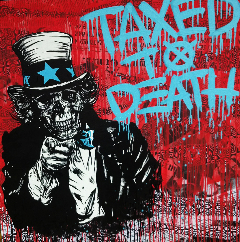
Sprawl in the Fire Zone

0

Although there has generally been silence about the potent roles they play, the banking, construction, and real estate industries have excelled at placing human homes and lives in the path of forest fires. At the same time, they have excelled at placing the same homes and people in the backyards of wildlife including, among many others, the grizzly bear. The consequences have been increasingly obvious, but the industries’ role still remains under the radar of many observers.

It would be easy to argue that, at least until recently, these three key industries didn’t know what they were doing, or were at least oblivious to its consequences. But as fires become more fierce and frequent, conflicts with wildlife become more apparent, and officials at all levels of government issuing repeated warnings of risk, it’s getting harder and harder to think that these industries can claim the kind of innocence that comes with ignorance.

It’s also pretty easy to understand that this trio of influential industries can claim, with some justification, that people make their own choices where to live. But it’s just as true that most of the people who move into these fire-prone and wildlife-occupied areas would have a hard time doing it without at least some help from bankers, builders, and the real estate industry.

It seems time for these industries to accept a more positive role. For example, bankers evaluating loans could and should consider whether they are putting money into real estate at risk of burning. This need becomes more pressing if, as seems possible, fire insurance becomes hard to get or costs an arm and a leg to buy. Realtors could also disclose that the land or home a person contemplates buying is in fire-prone terrain. Not doing so leaves unsuspecting customers vulnerable to surprises that they may not want.

Bankers and realtors could and should also advise borrowers that they are buying land in the backyards of, say, mountain lions and bears, or are buying a home already placed in the lions’ and bears’ backyard, and may end up finding the likes of lion and bear continuing to use that land. Here too, not doing so leaves customers vulnerable to problems that they may not expect and certainly don’t want.

These problems clearly leave governments and taxpayers with unwanted costs, most prominently including the increasing cost of defending homes and lives from forest fire. If the banking, building, and real estate industry were held responsible for picking up a fair share of these costs, the Forest Service budget wouldn’t be so badly busted by firefighting expenses.

As things stand now, however, increasing responsibility is being put on homeowners as governments step back. Former Montana governor Brian Schweitzer made it plain that the state budget can’t meet all demand for protecting housing from fire, and that homeowners will have to bear some of the cost themselves. Trouble is, nobody was telling that to the people who populated the fire-prone forests until after the fires drove the point home.

The home-destroying consequence of forest fires, as a recent Rocky Barker column in the Idaho Statesman makes plain, are “not natural disasters.” They are the product of human choices. These choices have been made not only in Idaho, but all up and down the Rockies, and beyond. In Washington, for example, a Forest Service study found that housing development is occupying lands at the rate of a football field every 18 minutes. And fire is just one of many concerns this trend is raising. An author of the Forest Service report said that “People are concerned about losing capacity to grow local food crops and wood products, and about how patterns of development are impacting water quality, wildfire risk, and wildlife.”

The people concerned include the multiple agencies of the Interagency Grizzly Bear Committee. In IGBC’s recent draft conservation strategy for grizzlies in the Northern Continental Divide Ecosystem, agency biologists identify development as the top source of human-caused mortality in “management removals,” accounting for almost a third of grizzly deaths in the area.

Although they do not explicitly identify the banking, building, or real estate industries per se, biologists do conclude that “The majority of management removals result from conflicts at sites associated with frequent or permanent human presence,” and that grizzlies can be killed for “seeking natural sources of food in areas near human structures.”

Now, it’s plain as can be that a house placed in grizzly habitat can be pretty harmless in and of itself. But when the house is now made home to the likes of chickens, pet food, bird feeders, goats, or anything else a bear will see as something good to eat, and the new homeowner registers a complaint that a bear is showing up, that’s when management removals begin to kick in.

Biologists who prepared the recent grizzly conservation strategy describe sprawl and its consequences as “manageable.” But the management comes at a cost. According to the agencies’ conservation strategy for grizzlies, agencies spend “considerable time and money on outreach actions and materials teaching the public how to prevent conflicts before they occur.”

Ultimately, these costs can be traced back to the sprawl of housing, and can plausibly be calculated as another subsidy for sprawl. If the three industries were held responsible for some share of these costs, state budgets could get some relief from the cost of responding to complaints from the people who move into the backyards of bears, lions, and other wildlife.

Moreover, the effects of such subsidy spill over into streams and rivers. As sprawl brings impermeable surfaces including rooftops, roads, and driveways into natural areas, the denizens of streams and rivers take hits too. And the hits start coming early. In 2012, a USGS study found that streams are more sensitive to development than generally understood, and that the loss of sensitive species in streams begins to occur at the initial stages of development.

A 2010 study in Ecology found that “The loss of natural land to urbanization is one of the most prevalent drivers of novel environments in freshwaters,” and that “Approximately 80% of the declining taxa did so between 0.5% and 2% impervious cover, whereas the last 20% declined sporadically from 2% to 25% impervious cover.”

But of course sprawl brings more than hard, rain-diverting surfaces. It also brings new use of pesticides used by people who want the perfect lawn, or the perfect garden of flowers not native to the landscape. A July 2013 study of pesticides’ impact published in the Proceedings of the National Academy of Sciences found that they can have radical effect on nearby streams, reducing life forms in streams by as much as 42%.

What we may be seeing is that runoff from hard surfaces hastens the pesticides’ progress into streams. But, so far as I know, nobody in banking, building, or real estate is disclosing these impacts to customers who crave a life beside some pretty stream. Likely of even more interest to many customers, though, streamside home construction has direct implications for people, too. Here, think flood, which is becoming much more likely as warming oceans pour more water to the skies. But few if any bankers, builders, and realtors ponder the risks they so willingly create for customers when streamside homes turn into costly nightmare every time a stream or river jumps the banks and brings mud to carpet and flooring.

In fairness, bankers, builders and realtors haven’t been acting alone in delivering unwanted and widely unsuspected consequences to fish, wildlife, and homeowners. Congress and successive Presidents have thrown considerable support to these varied and damaging trends in the form of a Mortgage Interest Deduction which grants homebuyers tax cuts of up to a million dollars in interest payments alone.

This federal largesse is not granted just for primary residences. It is also granted for second homes, even when those homes have been built in our increasingly fire-prone forests, even when those homes are built in the backyards of threatened species such as the grizzly, and, yes, even when they’re built on the permeable soils of important stream and river drainages.

While the banking, building, and real estate industries have prospered in the boon this tax break brings, it would be hard to find a fish or bear that would cheer. For that matter, it would be hard to find much cheer in the hearts of people whose forest homes have gone up in fire, the families and friends of people killed in fire, or any of the victims of pesticide and flood.

Human death has finally forced at least some state governments to act on the risk to life and home brought on by fire. Colorado, for example has set up a task force which, according to a recent article in the Denver Post, may actually suggest “disclosure of wildfire risk before home sales” as a step toward stemming “risks and costs” that have become “too great.”

The Post quotes one Colorado official saying that the homes and lives lost in the Black Forest fire have been “ ‘ a cruel illustration’ of need for a smarter approach.”

Many will be watching to see how much support or opposition bankers, builders, and realtors give to Colorado’s requirement for disclosure of risk from fire. Together, these intimately related industries have high potential to be important allies, or foes, of a smarter approach.

A recent U.S. Supreme Court decision has added some interesting legal intrigue to these issues. At its heart, the Court’s decision was that developers’ rights trump public interest, and that local governments can’t inhibit land development unless they pay developers for any loss thus caused. Given the increasing budget constraints affecting government at every level, the consequence is that developers now enjoy greater freedom from regulation, whether that regulation would protect fish and wildlife from development or people from wildfire. And with this new freedom comes an added dose of responsibility for whatever blood this trio of industries has —and will have – on its hands.

Lance Olsen, a Montana native, was president of the Missoula, Montana-based Great Bear Foundation from 1982-1992. He has also served on the governing council of the Montana Wilderness Association and the advisory council of the Alliance for the Wild Rockies. He was previously a college teacher and associate of the American Psychological Association and its Division on Population and Environmental Psychology, and the Society for the Psychological Study of Social Issues. Now retired, he runs a restricted listserv of global scope for climate researchers, wildlife researchers, agency staff, graduate students, and NGOs concerned about the consequences of a changing climate. He can be contacted at lancolsn@gmail.com

Republished with permission from: Counterpunch

Child Poverty in New Mexico

0

Ojo Sarco, New Mexico.

The child poverty “news” in New Mexico is so old, why even pretend to call it news! Once a year when the Kids Count data is released by the Annie E. Casey Foundation, a couple of days’ attention is paid to the criminal and immoral level of poverty grinding down New Mexico families. And then nothing happens except children and their families continue to suffer.

The number of children living in poverty in the United States is staggering, more than 16 million children. Since 2000 the number of poor children in the U.S. has increased by more than 5 million. Nearly half of these children live in extreme poverty, including two and a half million children under the age of five. “Extreme poverty” is defined as half the official federal poverty line or $11,511 per year for a family of four.

In sparsely populated New Mexico, at least 150,000 children live in poverty and nearly 80,000 in extreme poverty. This is using census data and, due to under-counting in the state, the real numbers are sure to be even greater.

Almost all of New Mexico is categorized as an area of “persistent poverty” by the federal Department of Agriculture (USDA). This designation means that an area has a poverty rate higher than one out of every five people and that this extreme degree of poverty extends all the way back 43 years to the 1970 Census. Across the nation, 82 percent of the persistent poverty counties are rural, especially the isolated rural areas commonly known as frontier. How is this not a national shame and the number one priority of government?

These are not abstract numbers — each number is a person. Think of all the children growing up with so little. As federal cuts are enacted, the crumbs to the poor became the crumbs of the crumbs. And now? Not even enough support for people to feed their children. Children in New Mexico are starving, having their mental and physical futures threatened by inadequate nutrition. And this situation grew during the biggest boom and flow of money to the top in recent history. When the financial system’s Ponzi scheme bubble burst a few years back, poor people and poor communities were thrown overboard while Wall Street got a bailout.

It took years of neglect — of people putting personal enrichment over community improvement — to push our children into such an unresourced situation.

There are a lot of ways to look at how New Mexico children ended up statistically on the bottom of national comparisons of child well-being. I say “statistically on the bottom” because the reality of our strong, resilient communities — even under economic siege — paints a very different picture.

For nearly 40 years, I have been number crunching this awful data and trying to change it by working on state and national policy trying to wrangle money for rural and frontier communities. What I have learned is that poverty in New Mexico is boring and of little interest to our federal elected officials. They are too busy continuously raising campaign cash; choosing to fund border security instead of food security and nuclear weapons instead of nuclear (and all other) families; protecting the minimum wage instead of fighting for a living wage; and too many other examples to name right now. It feels as if the state slogan should be changed to Women and Children Last.

But, it is state elected officials who are primarily responsible for the crushing poverty in the state. Despite denials from state legislators, the only way to explain the range of poverty levels among the states is legislative action — or inaction. Otherwise how is it possible for New Hampshire to have a poverty rate of 9 percent and New Mexico and seven other states to have rates above 20 percent? In my opinion, the worst eight states have legislators who are child abusers, quite content to let poor children and their families try to fend for themselves in the interest of the misnamed “free market.”

A mom and a child in New Mexico receive a maximum of $304 per month as cash assistance, Temporary Assistance for Needy Families (TANF). This level is set by the state government and ranges from a high of $923 in Alaska to a low of $204 in Arkansas. In New Mexico, a family needs to have five members to get over $500 per month.

Because of the Richardson tax cuts for the rich, which contributed to a significant loss of state revenues, the state Human Services Department was one of those in six states in 2011 that cut income support benefits to try to balance state budgets on the backs of the very poor. When adjusted for inflation, New Mexico “benefits” have declined 31 percent in real dollars since President Clinton signed welfare reform in 1996.

In the face of the bad policy choices made by their elected representatives, the communities of New Mexico persevere and demonstrate a strength and resilience that is remarkable. Traditions ranging in age from millennia to centuries to yesterday and tomorrow help communities endure. Water courses that were hand dug hundreds of years ago still flow and irrigate crops.

Many New Mexico children grow up in tightly knit multi-generational families that work together to buffer the effects of the poverty. Visit any pre-school or Headstart and you will see that most of our children begin their lives as artists, musicians, athletes and academic whiz-kids. It is sad to watch an economic system designed to impose failure, debt and a struggle for daily existence drain families of their potential.

It is time for all New Mexicans to stand up and say basta ya, enough! We must demand that the elected officials act like representatives of the people and develop policies backed up with enough funding to let New Mexico children and families reach their full potential. Our communities deserve more than just crumbs, they also need a share of the cake.

It is time to create jobs that pay a living wage and provide health care. Jobs that build capacity and infrastructure throughout the state, like libraries, recycling centers, environmental clean-up, forest thinning and fuel use instead of controlled burns, sewer line construction and wastewater management, playgrounds — the list can go on and on.

We can learn from programs of the 1980s when young people learned construction skills by building greenhouses on community facilities and the homes of seniors.

Poor and low income New Mexicans want to work. We must challenge our policy makers to create those jobs. That is the only way to turn around the statistics and begin New Mexico’s climb up from the bottom.

Carol Miller is a community organizer from Ojo Sarco, New Mexico (population 300) and an advocate for “geographic democracy,” the belief that the United States must guarantee equal
rights and opportunities to participate in the national life, no matter where someone lives.

Republished with permission from: Counterpunch

Child Poverty in New Mexico

0

Ojo Sarco, New Mexico.

The child poverty “news” in New Mexico is so old, why even pretend to call it news! Once a year when the Kids Count data is released by the Annie E. Casey Foundation, a couple of days’ attention is paid to the criminal and immoral level of poverty grinding down New Mexico families. And then nothing happens except children and their families continue to suffer.

The number of children living in poverty in the United States is staggering, more than 16 million children. Since 2000 the number of poor children in the U.S. has increased by more than 5 million. Nearly half of these children live in extreme poverty, including two and a half million children under the age of five. “Extreme poverty” is defined as half the official federal poverty line or $11,511 per year for a family of four.

In sparsely populated New Mexico, at least 150,000 children live in poverty and nearly 80,000 in extreme poverty. This is using census data and, due to under-counting in the state, the real numbers are sure to be even greater.

Almost all of New Mexico is categorized as an area of “persistent poverty” by the federal Department of Agriculture (USDA). This designation means that an area has a poverty rate higher than one out of every five people and that this extreme degree of poverty extends all the way back 43 years to the 1970 Census. Across the nation, 82 percent of the persistent poverty counties are rural, especially the isolated rural areas commonly known as frontier. How is this not a national shame and the number one priority of government?

These are not abstract numbers — each number is a person. Think of all the children growing up with so little. As federal cuts are enacted, the crumbs to the poor became the crumbs of the crumbs. And now? Not even enough support for people to feed their children. Children in New Mexico are starving, having their mental and physical futures threatened by inadequate nutrition. And this situation grew during the biggest boom and flow of money to the top in recent history. When the financial system’s Ponzi scheme bubble burst a few years back, poor people and poor communities were thrown overboard while Wall Street got a bailout.

It took years of neglect — of people putting personal enrichment over community improvement — to push our children into such an unresourced situation.

There are a lot of ways to look at how New Mexico children ended up statistically on the bottom of national comparisons of child well-being. I say “statistically on the bottom” because the reality of our strong, resilient communities — even under economic siege — paints a very different picture.

For nearly 40 years, I have been number crunching this awful data and trying to change it by working on state and national policy trying to wrangle money for rural and frontier communities. What I have learned is that poverty in New Mexico is boring and of little interest to our federal elected officials. They are too busy continuously raising campaign cash; choosing to fund border security instead of food security and nuclear weapons instead of nuclear (and all other) families; protecting the minimum wage instead of fighting for a living wage; and too many other examples to name right now. It feels as if the state slogan should be changed to Women and Children Last.

But, it is state elected officials who are primarily responsible for the crushing poverty in the state. Despite denials from state legislators, the only way to explain the range of poverty levels among the states is legislative action — or inaction. Otherwise how is it possible for New Hampshire to have a poverty rate of 9 percent and New Mexico and seven other states to have rates above 20 percent? In my opinion, the worst eight states have legislators who are child abusers, quite content to let poor children and their families try to fend for themselves in the interest of the misnamed “free market.”

A mom and a child in New Mexico receive a maximum of $304 per month as cash assistance, Temporary Assistance for Needy Families (TANF). This level is set by the state government and ranges from a high of $923 in Alaska to a low of $204 in Arkansas. In New Mexico, a family needs to have five members to get over $500 per month.

Because of the Richardson tax cuts for the rich, which contributed to a significant loss of state revenues, the state Human Services Department was one of those in six states in 2011 that cut income support benefits to try to balance state budgets on the backs of the very poor. When adjusted for inflation, New Mexico “benefits” have declined 31 percent in real dollars since President Clinton signed welfare reform in 1996.

In the face of the bad policy choices made by their elected representatives, the communities of New Mexico persevere and demonstrate a strength and resilience that is remarkable. Traditions ranging in age from millennia to centuries to yesterday and tomorrow help communities endure. Water courses that were hand dug hundreds of years ago still flow and irrigate crops.

Many New Mexico children grow up in tightly knit multi-generational families that work together to buffer the effects of the poverty. Visit any pre-school or Headstart and you will see that most of our children begin their lives as artists, musicians, athletes and academic whiz-kids. It is sad to watch an economic system designed to impose failure, debt and a struggle for daily existence drain families of their potential.

It is time for all New Mexicans to stand up and say basta ya, enough! We must demand that the elected officials act like representatives of the people and develop policies backed up with enough funding to let New Mexico children and families reach their full potential. Our communities deserve more than just crumbs, they also need a share of the cake.

It is time to create jobs that pay a living wage and provide health care. Jobs that build capacity and infrastructure throughout the state, like libraries, recycling centers, environmental clean-up, forest thinning and fuel use instead of controlled burns, sewer line construction and wastewater management, playgrounds — the list can go on and on.

We can learn from programs of the 1980s when young people learned construction skills by building greenhouses on community facilities and the homes of seniors.

Poor and low income New Mexicans want to work. We must challenge our policy makers to create those jobs. That is the only way to turn around the statistics and begin New Mexico’s climb up from the bottom.

Carol Miller is a community organizer from Ojo Sarco, New Mexico (population 300) and an advocate for “geographic democracy,” the belief that the United States must guarantee equal
rights and opportunities to participate in the national life, no matter where someone lives.

Republished with permission from: Counterpunch

Fair Shares of Food

0

With anxiety building over how humanity will feed itself in coming decades, we have two routes open to us. We can eliminate waste, stop producing crops for destructive uses (in factory farms, for biofuels, in sugary drinks, etc.), stop degrading the soil, water, and atmosphere that undergird our food production, and ensure fair access to nutritious food for all. Or we can keep running with our current global food system, but just run faster, hoping for dramatic increases in crop yields–regardless of how that extra production is achieved or used.

The former, sufficiency-oriented approach offers a lot of “low-hanging” fruit for strengthening food security. Conventional wisdom, on the other hand, has a strong preference for the supply-side approach, because it increases sales of industrial inputs to farmers, while it holds down prices of food- and feed-grains, thereby saving food processors and marketers a lot of money.

But studies like one just published by researchers at the University of Minnesota’s Institute for the Environment show that going all-in on increased production, while good for profits, is looking far from adequate for keeping our species fed.

Concern over lagging production has prompted a search for technological tricks that might revolutionize food production. Thus, we have a report published in June by the Institute of Electrical and Electronics Engineers, entitled “The Age of Plenty.” It featured more than twenty articles whose authors attempted to argue that, in IEEE’s somewhat crude language, “Smart technology and better management policies will let us feed the hungry hordes to midcentury and beyond.”

The age of plenty–of technology

Prominently featured in “The Age of Plenty” is a discussion of genetic engineering entitled “GM Foods Grow Up.” After more or less conceding that such techniques have never achieved much beyond a modifying a handful of single-gene traits that do not affect yield potential (which results from large, complex networks of genes interacting with the environment), the article veers sharply toward a discussion of genomic analysis. But this set of techniques can never substitute for the long, hard process of field-testing large plant populations that is necessary in breeding crops for higher yield.

Then, after acknowledging the US Corn Belt’s continuing rapid loss of topsoil, another article goes on to describe a whole set of “precision agriculture” techniques made possible by global positioning system (GPS) technology: satellite-guided row- and seed-spacing; fertilizer application that gets seed and 1861.coverfertilizer into the same groove; tractor autosteering; and others. The actual causes of soil degradation–growing the wrong crops for the wrong uses, clearcutting of the soil every year to sow feed grains, sowing fencerow to fencerow, flooding the environment with biologically active nitrogen compounds; substituting “oil for soil” as the soil resource continues to degrade–remain largely untouched.

Elsewhere in the report, Africa–home to some of the world’s most badly degraded soils and lowest yields of staple crops–is celebrated as the “Continent of Plenty.” All that’s needed, according to IEEE, are big doses of high technology and a strong export market. And, it is noted, that’s already happening, as “global prices for African cocoa, cotton, and even green beans are at or near historic highs.” The biggest bright spot in this area, according to IEEE, is accelerating production of roses. Yes, roses.

Like many such reports, “The Age of Plenty” is little more than a celebration of techno-capitalism. Nowhere is there an adequate examination of approaches that can improve food security on every continent while, just as importantly, using ecological principles to keep soils, waters, and ecosystems intact and healthy–a direly needed alternative to current agricultural systems that are eating away at their own foundations.

Effective alternatives

The United Nations’ Food and Agriculture Organization (FAO) estimates that one-third of the world’s food-producing soils are highly degraded or are being degraded at an unacceptable rate. But many farmers around the world, especially in the Global South, are pushing back against erosion and loss of fertility. Using resources at hand, they’ve built terraces; planted rows of trees and shrubs; built water-breaks with crop residues or brush; interplanted nitrogen-fixing legume crops with cereals, root crops or perennial forage grasses; returned manure or nitrogen-rich leaves and stems to the soil and built field-scale rainwater-harvesting systems.

Often, what farm communities lack in the form of money and labor power they can make up for with “social capital” — their capacity to act collectively to protect their common life-support system, the soil. That has enabled communities to take on even more ambitious soil-conserving projects that bring long-lived, deep-rooted trees and shrubs into agricultural plots — a group of techniques known as agroforestry. Examples can be seen on every continent, including North America.

But the biggest hindrance to creating agricultural systems that maintain or improve soil, water, and biodiversity is humanity’s dependence on weak-rooted annual crop plants and clearcutting of the soil. Given that dependence, even the best strategies of nutrient recycling, agroforestry and agroecology will not be sufficient. That is why groups of plant breeders in several countries are now working to develop soil-conserving perennial cereal and grain-legume crops.

All of those efforts are needed, and more. If we are to have a global soil base that can sustain human civilization over the long term, we will have to create entirely new farm landscapes that are as resilient and productive as natural ecosystems, and we’ll have to ensure fair shares of food for all. And that is the standard by which we should judge any new agricultural technology.

Stan Cox is a senior plant breeder at The Land Institute in Salina, Kansas. His book Any Way You Slice It: The Past, Present, and Future of Rationing was published by The New Press this month. Write to him at t.sta@cox.net. 

Republished with permission from: Counterpunch

Fair Shares of Food

0

With anxiety building over how humanity will feed itself in coming decades, we have two routes open to us. We can eliminate waste, stop producing crops for destructive uses (in factory farms, for biofuels, in sugary drinks, etc.), stop degrading the soil, water, and atmosphere that undergird our food production, and ensure fair access to nutritious food for all. Or we can keep running with our current global food system, but just run faster, hoping for dramatic increases in crop yields–regardless of how that extra production is achieved or used.

The former, sufficiency-oriented approach offers a lot of “low-hanging” fruit for strengthening food security. Conventional wisdom, on the other hand, has a strong preference for the supply-side approach, because it increases sales of industrial inputs to farmers, while it holds down prices of food- and feed-grains, thereby saving food processors and marketers a lot of money.

But studies like one just published by researchers at the University of Minnesota’s Institute for the Environment show that going all-in on increased production, while good for profits, is looking far from adequate for keeping our species fed.

Concern over lagging production has prompted a search for technological tricks that might revolutionize food production. Thus, we have a report published in June by the Institute of Electrical and Electronics Engineers, entitled “The Age of Plenty.” It featured more than twenty articles whose authors attempted to argue that, in IEEE’s somewhat crude language, “Smart technology and better management policies will let us feed the hungry hordes to midcentury and beyond.”

The age of plenty–of technology

Prominently featured in “The Age of Plenty” is a discussion of genetic engineering entitled “GM Foods Grow Up.” After more or less conceding that such techniques have never achieved much beyond a modifying a handful of single-gene traits that do not affect yield potential (which results from large, complex networks of genes interacting with the environment), the article veers sharply toward a discussion of genomic analysis. But this set of techniques can never substitute for the long, hard process of field-testing large plant populations that is necessary in breeding crops for higher yield.

Then, after acknowledging the US Corn Belt’s continuing rapid loss of topsoil, another article goes on to describe a whole set of “precision agriculture” techniques made possible by global positioning system (GPS) technology: satellite-guided row- and seed-spacing; fertilizer application that gets seed and 1861.coverfertilizer into the same groove; tractor autosteering; and others. The actual causes of soil degradation–growing the wrong crops for the wrong uses, clearcutting of the soil every year to sow feed grains, sowing fencerow to fencerow, flooding the environment with biologically active nitrogen compounds; substituting “oil for soil” as the soil resource continues to degrade–remain largely untouched.

Elsewhere in the report, Africa–home to some of the world’s most badly degraded soils and lowest yields of staple crops–is celebrated as the “Continent of Plenty.” All that’s needed, according to IEEE, are big doses of high technology and a strong export market. And, it is noted, that’s already happening, as “global prices for African cocoa, cotton, and even green beans are at or near historic highs.” The biggest bright spot in this area, according to IEEE, is accelerating production of roses. Yes, roses.

Like many such reports, “The Age of Plenty” is little more than a celebration of techno-capitalism. Nowhere is there an adequate examination of approaches that can improve food security on every continent while, just as importantly, using ecological principles to keep soils, waters, and ecosystems intact and healthy–a direly needed alternative to current agricultural systems that are eating away at their own foundations.

Effective alternatives

The United Nations’ Food and Agriculture Organization (FAO) estimates that one-third of the world’s food-producing soils are highly degraded or are being degraded at an unacceptable rate. But many farmers around the world, especially in the Global South, are pushing back against erosion and loss of fertility. Using resources at hand, they’ve built terraces; planted rows of trees and shrubs; built water-breaks with crop residues or brush; interplanted nitrogen-fixing legume crops with cereals, root crops or perennial forage grasses; returned manure or nitrogen-rich leaves and stems to the soil and built field-scale rainwater-harvesting systems.

Often, what farm communities lack in the form of money and labor power they can make up for with “social capital” — their capacity to act collectively to protect their common life-support system, the soil. That has enabled communities to take on even more ambitious soil-conserving projects that bring long-lived, deep-rooted trees and shrubs into agricultural plots — a group of techniques known as agroforestry. Examples can be seen on every continent, including North America.

But the biggest hindrance to creating agricultural systems that maintain or improve soil, water, and biodiversity is humanity’s dependence on weak-rooted annual crop plants and clearcutting of the soil. Given that dependence, even the best strategies of nutrient recycling, agroforestry and agroecology will not be sufficient. That is why groups of plant breeders in several countries are now working to develop soil-conserving perennial cereal and grain-legume crops.

All of those efforts are needed, and more. If we are to have a global soil base that can sustain human civilization over the long term, we will have to create entirely new farm landscapes that are as resilient and productive as natural ecosystems, and we’ll have to ensure fair shares of food for all. And that is the standard by which we should judge any new agricultural technology.

Stan Cox is a senior plant breeder at The Land Institute in Salina, Kansas. His book Any Way You Slice It: The Past, Present, and Future of Rationing was published by The New Press this month. Write to him at t.sta@cox.net. 

Republished with permission from: Counterpunch

Two car bomb attacks hit Syria Homs

0

[unable to retrieve full-text content]An unknown number of people are feared dead after two car bombs explode in Syria’s Homs Province.

Republished with permission from: Press TV

One More Defeat for US Military Policy

0

The current crisis in Egypt and the inability of the United States to formulate a policy and to have any influence in Cairo marks another setback for U.S. foreign policy, which relies too heavily on military assistance. Too many pundits and analysts believe that U.S. military aid to Egypt, which amounts to $1.3 billion annually, is a source of leverage in the Egyptian domestic crisis. Well, it isn’t…and the same could be said for the lack of U.S. influence, let alone leverage, with any of the top recipients of U.S. military assistance.

The top six recipients of U.S. military aid (Israel, Egypt, Afghanistan, Iraq, Pakistan, and Turkey) provide very little return on our investment. Israel has overwhelming military dominance in the Middle East and doesn’t require military aid. In fact, the United States is constantly and deliberately embarrassed by the Israeli government despite the huge amounts of military assistance that Israel has received over past decades.

Egypt has received more than $60 billion in military and economic aid over the past three decades with no indication that Egyptian policy was susceptible to U.S. influence. Cairo doesn’t violate its peace treaty with Israel because of U.S. assistance; it adheres to the treaty because it is in Egypt’s interest to do so. Pentagon officials believe that close ties between U.S. and Egyptian armed forces helped the Egyptian military council become a force for social cohesion rather than repression. A retired commandant of the U.S. Army War College, Major General Robert Scales, has argued that “they learn our way of war…but they also learn our philosophies of civil-military relations.” If only this were true.

The most futile example of U.S. military aid programs is the case of Pakistan. The Bush and Obama administrations have sent billions of dollars in aid to Islamabad, but Pakistan has never stopped its double dealing on pledges to fight the Afghan Taliban. At the same time, the United States has never
used its assistance to promote democracy in Pakistan. The U.S. military presence in Pakistan, including its efforts at so-called assistance, merely contribute to militant anti-Americanism.

Military assistance to Iraq and Afghanistan does not contribute to U.S. goals and objectives in the region. No sooner had U.S. forces withdrawn from Iraq than the Obama administration announced multibillion-dollar arms sales to Iraq, including advanced fighter aircraft, tanks, and helicopters. This deal was announced as the government of Prime Minister Nuri Kamal al-Maliki worked to consolidate his authority, create a one-party Shiite-dominated state, and abandon the U.S.-backed power-sharing arrangement. Meanwhile, Iraq has improved its bilateral relations with Iran, raising the prospect that U.S. forces in the Persian Gulf could encounter U.S. weaponry in a future conflict.

With the United States winding down its combat role in Afghanistan, the government of Hamid Karzai is already demanding $4 billion annually for its military and policy forces over the next decade. Afghanistan is unable to use effectively the assistance that it receives, and thus far has been unable to create a military force that can counter the Taliban threat. The surge in recent years in incidents of Afghan soldiers killing U.S. and European military personnel, and the increased corruption in Afghanistan that is fueled by U.S. dollars argue for very limited assistance.

Turkey is the sole case where huge amounts of military assistance provide some influence in getting Turkish support for U.S. diplomatic initiatives in the Middle East. But the recent violence in Istanbul’s Taksim Square could one day match the combustion in Cairo’s Tahrir Square, and Prime Minister Recep Erdogan—Turkey’s most important leader since Ataturk—doesn’t appear receptive to demands for a genuine, pluralistic democracy. For the first time since he came to power, Erdogan appears politically vulnerable. At this particular time, Turkey needs more genuine political debate, not U.S. military assistance.

The United States gives military assistance to numerous countries that do not need it or do not deserve it because of serious human rights violations. The recent sale of $30 billion in arms to Saudi Arabia was ill-timed because it is more likely that such aid would be used to suppress demonstrations for reform in Bahrain than in any other scenario. Eastern European countries need economic and political stability, not modern military technology. Indonesia, a country with numerous human rights violations, receives $20 million annually in military aid.

While the Obama administration was conducting a feckless debate over whether a military coup had taken place in Cairo, the Egyptian military rapidly emerged as the dominant political force in the country. It is also the richest (and most corrupt) institution in the country, and hardly needs U.S. largesse. There is no external security threat to Egypt that requires the huge weapons platforms that its military forces demand. The United States was slow to criticize the authoritarian actions of former presidents Hosni Mubarak and Mohamed Morsi, and we still have no strategy for fostering political and economic reform in Cairo.

At the very least, the Obama administration needs to call a coup a coup, and begin to suspend military assistance to the interim Egyptian government. U.S. policy should be based on getting Egypt to establish a coalition government and to begin a consensus-based transition process. Cutting future military aid to Egypt would give the United States an opportunity to reduce military assistance to Israel as well. Such measures would send a necessary signal to U.S. allies and clients that military aid will not dominate the implementation of U.S. foreign policy.

Melvin A. Goodman, a senior fellow at the Center for International Policy. He is the author of the recently published National Insecurity: The Cost of American Militarism (City Lights Publishers)and the forthcoming “The Path to Dissent: The Story of a CIA Whistleblower” (City Lights Publisher). Goodman is a former CIA analyst and a professor of international relations at the National War College.

Republished with permission from: Counterpunch

Secret Meeting to Plan Renewed Rebel Offensive against Syria: Senior Intelligence Officials Meet behind Closed Doors at British Embassy in Ankara

0

According to a Fars News Agency report, senior intelligence officials from US-NATO and allied countries including the US, Britain, France, Turkey, Saudi Arabia, Jordan and Qatar met on June 7, behind closed door at the residence of the British Ambassador in Ankara.

The topic for discussion was the defeat of the US-NATO sponsored Al Nusrah rebels following the battle of Al Qusseir which led to the victory of Syrian forces. The planning of a renewed rebel offensive was envisaged:

“Top intelligence officials of the US, Britain, France, Turkey, Saudi Arabia, Qatar and Jordan convened in an urgent meeting at the British ambassador’s residence in Ankara on June 7 to discuss an immediate rebel attack on the Syrian government and army positions in reprisal for the Syrian army’s recent victory in Al-Qusseir,” a liaison officer coordinating the meeting told FNA.

According to the report, the participants of this Ankara secret meeting included (with the exception of Jordan) the regional intelligence directors of the seven countries directly involved in supporting the insurrection.

 The source, who asked to remain anonymous due to the sensitivity of his information and for fear of his life, said, “All the aforesaid countries sent their regional directors to the meeting, except for Jordan which was represented at a lower level.”

The meeting acknowledged the lack of morale among rebel forces and the need “to assess the psychological impacts of the Syrian army’s victory in Al-Qusseir on rebel groups and work out a morale-boost response to Damascus.”

The formulation of a renewed and coordinated rebel offensive was outlined, including the channeling of additional sources of financing, the delivery of weapons to the Al Qaeda affiliated “opposition” rebels (in defiance of international law and US anti-terrorist legislation):

“Given the defeat and withdrawal of the rebel groups from Al-Qusseir, the meeting studied possible geopolitical replacements for delivering arms shipments to the rebels,” the source added and continued, “Also participants discussed the focal points and methods that need to be dealt with by the western and Arab media to boost the morale of the rebels.”

 The source said participants also “decided to increase financial aids to the rebels through Saudi Arabia and Qatar”.

 ”They also discussed several plans to retaliate the rebels’ crushing defeat in Al-Qusseir,” he concluded.

 (Fars News, July 6, 2013)

Two weeks following the Ankara intelligence meeting on June 7, The Friends of Syria gathered in Qatar (June 22, 2013). France’s President Francois Hollande and US Secretary of State John Kerry were present.

The representatives from the “11 core members” of the Friends of Syria group agreed in a final statement “to provide urgently all the necessary materiel and equipment to the opposition on the ground”. The aid to the rebels was to be channeled through the Syrian opposition’s Supreme Military Council.

In addition to the funds channeled by the 11 core member states of the Friends of Syria, large and undisclosed amounts of financial aid is also being channeled through private foundations based in the Gulf States.

In recent developments, the Syrian opposition has chosen a new Saudi backed leader, Ahmad al-Jarba:

“Jarba belongs to the large al-Shammar tribe, whose members extend into Iraq and Saudi Arabia, and he is related by marriage to one of Saudi King Abdullah’s wives.”

Republished with permission from: Global Research

Al-Azhar calls for release of detainees

0

[unable to retrieve full-text content]Egypt’s Al-Azhar has called for national reconciliation and release of those prisoners who were arrested during the ongoing bloody rallies across the north African country, as Germany calls for independent inquiry into killings in Egypt.

Republished with permission from: Press TV

15 dead in single day of Iraq violence

0

At least 15 people have been killed and many more injured in a wave of violence, including car bomb attacks and shooting incidents across Iraq.

One of the deadliest incidents took place in the city of Madain, south of Baghdad, where a bomb exploded near a football field inside a sports club on Monday, killing at least six people.

In the northern city of Mosul three people including a police officer were killed in separate incidents.

In another development, gunmen opened fire on the family of a policeman killing the officer along with his wife, parents and two young children, who were returning from a wedding in the town of Musayyib.

There has been recently an upsurge in violence across Iraq whose authorities say Qatar and Saudi Arabia have had a hand in some of the deadly incidents.

The United Nations says a total of 1,045 people were killed and nearly 2,400 were injured in violent incidents across Iraq in May while a total of 761 Iraqis lost their lives and 1,771 others were wounded in terrorist attacks across the country in June.

Earlier this month, UN Secretary-General Ban Ki-moonâ„¢s Special Representative for Iraq Martin Kobler called on the Iraqi leaders to Å“sit together” and address the countryâ„¢s problems, including car bomb attacks throughout Iraq.

Iraqi Prime Minister Nouri al-Maliki has said that militant groups and the remnants of the former Baâ„¢athist regime are responsible for the latest wave of violence in the country.

PG/SS

Republished with permission from: Press TV

‘Foreign spy services support Takfiris’

0

Iran Majlis Speaker Ali Larijani says foreign intelligence services are supporting Takfiri militants fighting in Muslim countries including Egypt.

Å“This presence [of foreign intelligence services] has been seen in different countries including Iraq, Afghanistan and Egypt,” Larijani said.

He added that extremist Takfiri groups have always been a Å“big tragedy” for Islam.

Å“

The Takfiris claim …that [what] they are [doing] is jihad. But one should ask what kind of jihad is this that Muslims are killed… in it,” Larijani stated.

He said some Western governments have met with Å“extremist groups in Iraq” and promised to support them in their fight against Shias and the Islamic Republic.

The long-drawn-out violence in Syria, which has been in crisis for more than two years, is blamed on Takfiri groups.

In the words of senior analyst Kevin Barrett, Å“Takfiris and Zionists simply shout out their own views. They have no interest in the views of others. Their motto is: Å“But I know best.” They think that if they shoot you dead or cut off your head, they won’t have to acknowledge your ideas.”

KA/HGH

Republished with permission from: Press TV

Twelve die in India building collapse

0

Indian rescue workers remove bodies from the rubble at the site of the City Light Hotel building collapse in Secunderabad on July 8, 2013.

At least 12 people have been killed and 16 others wounded after a two-story hotel collapsed in Indiaâ„¢s southern city of Secunderabad, police say.

The fatal incident took place on Monday in Andhra Pradesh State, prompting rescue workers to rush to the scene to save those who were still trapped under the rubble.

Å“Twelve people have been found dead so far after City Light Hotel collapsed early this morning. We are still trying to clear the rubble and rescue anyone alive,” local police official K. Satyanarayana said.

At least five people are said to have suffered serious injuries in the collapse.

Local police official B. Surender said some 25 people were working at the hotel, when a kitchen wall came crashing down and caused a bigger collapse.

Å“The building was very old and the walls showed cracks, according to people working nearby,” Surender added.

The incident was the latest in a series of deadly building collapses in India in recent months.

On June 21, at least 10 people, including a newborn and a small boy, were killed when an apartment block collapsed on the outskirts of the Indian city of Mumbai.

On June 10, the collapse of a four-story building in central Mumbai claimed the lives of at least five people. Six people were also injured.

Building collapses are common in India due to substandard materials and inadequate supervision in constructing multistory structures.

In April, collapse of an eight-story building constructed illegally on the Mumbai suburb of Thane killed 74 people.

MR/SS

Republished with permission from: Press TV

The Mindset of the Left: Part IV

0

At the heart of the left’s vision of the world is the implicit assumption that high-minded third parties like themselves can make better decisions for other people than those people can make for themselves.

That arbitrary and unsubstantiated assumption underlies a wide spectrum of laws and policies over the years, ranging from urban renewal to ObamaCare.

One of the many international crusades by busybodies on the left is the drive to limit the hours of work by people in other countries – especially poorer countries – in businesses operated by multinational corporations. One international monitoring group has taken on the task of making sure that people in China do not work more than the legally prescribed 49 hours per week.

Why international monitoring groups, led by affluent Americans or Europeans, would imagine that they know what is best for people who are far poorer than they are, and with far fewer options, is one of the many mysteries of the busybody elite.

As someone who left home at the age of 17, with no high school diploma, no job experience and no skills, I spent several years learning the hard way what poverty is like. One of the happier times during those years was a brief period when I worked 60 hours a week – 40 hours delivering telegrams during the day and 20 hours working part-time in a machine shop at night.

Why was I happy? Because, before finding these jobs, I had spent weeks desperately looking for any job, while my meager savings dwindled down to literally my last dollar, before finally finding the part-time job at night in a machine shop.

I had to walk several miles from the rooming house where I lived in Harlem to the machine shop located just below the Brooklyn Bridge, in order to save that last dollar to buy bread until I got a payday.

When I then found a full-time job delivering telegrams during the day, the money from the two jobs combined was more than I had ever made before. I could pay the back rent I owed on my room and both eat and ride the subways back and forth to work.

I could even put aside some money for a rainy day. It was the closest thing to nirvana for me.

Thank heaven there were no busybodies to prevent me from working more hours than they thought I should.

There was a minimum wage law, but this was 1949 and the wages set by the Fair Labor Standards Act of 1938 had been rendered meaningless by years of inflation. In the absence of an effective minimum wage law, unemployment among black teenagers in the recession year of 1949 was a fraction of what it would be in even the most prosperous years of the 1960s and beyond.

As the morally anointed busybodies raised the minimum wage rate, beginning in the 1950s, black teenage unemployment skyrocketed. We have now become so used to tragically high rates of unemployment among this group that many people have no idea that things were not always like that, much less that policies of the busybody left had such catastrophic consequences.

I don’t know what I would have done if such busybody policies had been in effect back in 1949, and prevented me from finding a job before my last dollar ran out.

My personal experience is just one small example of what it is like when your options are very limited. The prosperous busybodies of the left are constantly promoting policies which reduce the existing options of poor people even more.

It would never occur to the busybodies that multinational corporations are expanding the options of the poor in third world countries, while busybody policies are contracting their options.

Wages paid by multinational corporations in poor countries are typically much higher than wages paid by local employers. Moreover, the experience that employees get working in modern companies make them more valuable workers and have led in China, for example, to wages rising by double-digit percentages annually.

Nothing is easier for people with degrees to imagine that they know better than the poor and uneducated. But, as someone once said, “A fool can put on his coat better than a wise man can put it on for him.”

Thomas Sowell is a senior fellow at the Hoover Institution, Stanford University, Stanford, CA 94305. His website is www.tsowell.com. To find out more about Thomas Sowell and read features by other Creators Syndicate columnists and cartoonists, visit the Creators Syndicate Web page at www.creators.com.

COPYRIGHT 2013 CREATORS.COM

Related articles:

The Mindset of the Left: Part I

The Mindset of the Left: Part II

The Mindset of the Left: Part III

Republished with permission from: The New American

"Massacre" in Egypt Destroys Hope for Peaceful Transition

0

Morsi backers carried the body of a fellow supporter killed during Monday’s clash, which left dozens dead and hundreds injured. (Photo: Reuters)More than 40 people are reported dead and hundreds wounded in Cairo on Monday following pre-dawn violence in which supporters of Mohammed Morsi and the Muslim Brotherhood were fired upon by Egyptian military and security personnel outside the military barracks where the ousted president is being held.

Witnesses at the scene describe differing accounts of what led to the shootings, but the violence is a troubling sign that tensions are likely to increase as the country seeks to negotiate its way out of a complex political crisis.

The military removed Morsi from power last week following the largest popular protests in Egypt’s modern history. While many welcomed his ouster, including members of Egypt’s pro-democracy left, the fear of deepening violence and instability has left many on edge as the country’s military council has reasserted its authority.

Egypt’s political crisis has deepened significantly now, warn observers, following what many–including opposition leader Mohammed ElBaradei–are calling a “massacre” by the army and security forces.

Following news of the bloodshed, ElBaradei tweeted:

Agence France-Presse reports that the National Salvation Front, headed by ElBaradei, issued a statement of its own in which it condemned the violence and demanded a full investigation into the incident.

Al-Jazeera reports:

The Egyptian health ministry said at least 42 people had been killed and more than 300 injured in the incident early on Monday morning.

Mohamed Mohamed Ibrahim El-Beltagy, a Brotherhood MP, described the incident during dawn prayers after police had stormed the site, as a “massacre”.

About 500 people were also reportedly injured.

A doctor told Al Jazeera that “the majority of injured had gunshot wounds to the head”.

Meanwhile, Egypt’s military also shuttered the headquarters of the Muslim Brotherhood’s Freedom and Justice Party in another move that political observers say reflects poorly on the hope that political reconciliation and inclusiveness will find a place in the transition period that is now taking place.

________________________________

This work is licensed under a Creative Commons Attribution-Share Alike 3.0 License

Republished with permission from: Common Dreams

Egypt pres. orders probe into clashes

0

Egypt presidency says violence in the country will not stop efforts to establish a new Egyptian government as interim president Adly Mansour orders an inquiry into deadly clashes in the capital Cairo that killed more than 40 people.

Meanwhile, the Nour Party suggests holding a referendum on continuation of the Mohamed Morsi’s presidency.

MR/SS

Republished with permission from: Press TV

Blast kills 6 in northwest Pakistan

0

[unable to retrieve full-text content]A powerful bomb explosion has killed at least six people and injured 10 others in Pakistan’s troubled northwest tribal region, security sources say.

Republished with permission from: Press TV

Iran rejects army intervention in Egypt

0

[unable to retrieve full-text content]The Islamic Republic of Iran has dismissed as “unacceptable” army intervention in political affairs of Egypt, saying foreign intervention is at work in the ongoing developments in the North African country.

Republished with permission from: Press TV

Regime Change in Egypt: Mass Protests Continue as Egyptian Army fails to Name Government

0

Mass protests continue across Egypt in the wake of Wednesday’s US-backed military coup against Islamist President Mohamed Mursi. While it persists in the crackdown on Mursi’s Muslim Brotherhood (MB), the military junta has failed to assemble a civilian puppet government amid conflicts over posts with those Islamist parties that back the coup.

Weekend protests followed on from the violent clashes that took place throughout Egypt on Friday, in which at least 36 people were killed and over 1,400 wounded. On Sunday, hundreds of thousands of anti-Mursi protesters poured into downtown Cairo’s Tahrir Square, while several thousand MB supporters blocked the Salah Salem Road in Heliopolis, a Cairo suburb, to protest the coup.

Protests and clashes also continued in Alexandria, Egypt’s second-largest city. A widely circulated YouTube video posted on Saturday showed what were believed to be Islamist supporters throwing two young men off a building in Alexandria. Clashes also occurred in Mansoura and Tanta, Egypt’s eighth and tenth largest cities, between pro-and anti-Mursi protesters.

There were mounting signs of armed resistance to the coup by Islamist forces, threatening to tip Egypt into civil war. Gama’a Islamiyah, a far-right Islamist party that has carried out terrorist attacks inside Egypt, yesterday called for the removal of newly-installed President Adly Mansour.

Egyptian Islamists are reportedly founding a domestic branch of Ansar al-Sharia, a militia in neighboring Libya, to organize armed resistance to the Egyptian junta. Ansar al-Sharia fought against Colonel Muammar Gaddafi in the 2011 NATO-led war in Libya; it subsequently was suspected of organizing the September 2012 attacks on the US consulate in Benghazi.

Fighting also continued in Egypt’s Sinai Peninsula, a center of Islamist support. Four army checkpoints were attacked and a pipeline carrying gas to Jordan was bombed on Saturday, and fears of sectarian bloodshed intensified after Coptic Christian priest Mina Aboud Sharween was shot dead.

Yesterday the Sinai-based Salafi Jihadi group issued a statement saying that the Sinai was affected by “current events ravaging the country.” It threatened attacks on “repressive practices” by Egyptian army and police forces.

The ongoing protests and the toppling of Mursi are the outcome in large measure of a powerful wave of working class struggles that has grown and shaken Egypt over the last year, reprising the powerful strike wave that led to the ouster of US-backed dictator Hosni Mubarak in February 2011.

Last year saw 3,817 labor strikes and protests over economic demands, the vast majority (71 percent) of which occurred after Mursi’s election at the end of June 2012, according to recent studies by Egypt’s International Development Center.

The trend accelerated this year: in the first five months of 2013 alone Egypt experienced 5,544 strikes and related demonstrations. While some were briefly noted in major Western media–like the February Sokhna port workers’ strike for permanent jobs, or the April railway strike–the vast majority of these struggles go completely unreported.

As opposition to Mursi built up in the working class, powerful sections of the US foreign policy establishment and the Egyptian ruling class concluded that the Islamist president had to go. The Egyptian army–working in close coordination with the Pentagon, which funds the country’s military to the tune of $1.3 billion per year–ousted Mursi, placing him under house arrest and issuing arrest warrants for hundreds of MB leaders.

While the ouster of Mursi was broadly popular in Egypt, the junta that has taken its place is an army-run regime aligned with US foreign policy and the interest of the banks. While the coup organizers’ initial target is the MB, their aim is to end the ferment in the working class, slash state subsidies that keep fuel and grain prices affordable for Egypt’s impoverished population, and crush popular opposition to Washington’s Middle East wars.

The goals that drove the population into struggle against Mursi cannot be achieved by supporting this regime, but only by unifying workers in struggle against US imperialism and its capitalist allies in the Middle East.

The clearest sign of the reactionary character of the army coup is that it has Washington’s support. The Obama administration has refrained from labeling it a coup, which might trigger a cut-off in US financial aid to the Egyptian military. On Saturday, US Defense Secretary Chuck Hagel spoke to Egyptian Defense Minister General Abdul Fattah al-Sisi, the leader of the junta, calling for al-Sisi to arrange a peaceful political “transition” in Egypt.

This appeal was echoed by Sen. Robert Menendez, Democrat from New Jersey and the chairman of the Senate Foreign Relations Committee, who called for the junta to organize elections: “We have to make sure the military gets a very clear message that we want to see a transition to civilian government as quickly as possible. I think we have to get a process in which we urge all the parties to participate together, that we come to an election as soon as possible.”

After repeated announcements that the army would name National Salvation Front (NSF) leader Mohamed ElBaradei prime minister, Egypt’s state-run daily Al Ahram reported that there had been no successful conclusion to talks on forming a government. Instead, General Authority for Investment official Ziad Bahaa El Din had been offered the position. ElBaradei is now being considered for the vice presidency instead.

El Din, a founding member of the Egyptian Social Democratic Party, said the decision was “neither final nor official.”

ElBaradei’s decision to seek a position with the junta itself has exposed the cynicism of his political maneuvers. During last year’s Egyptian presidential election, ElBaradei declared he would not run after seeing his poor projected poll results and criticized the army for not carrying out the election under better conditions: “My conscience does not permit me to run for the presidency or any other official position unless it is within a democratic framework.”

Now, ElBaradei’s “conscience” is encouraging him to seek various positions in a government assembled on the basis of a naked military coup. His role would be to draw on his experience as a former UN official to secure recognition for the army regime and loans from the International Monetary Fund, which would be used to boost investment in Egypt in exchange for deep cuts to social spending to balance that nation’s budget.

Israeli daily Ha’aretz noted that “his [ElBaradei’s] high international profile and diplomatic experience will be very helpful to the new regime in its attempts to convince the world that deposing President Mohamed Mursi and the Muslim Brotherhood was a popular revolution and not a coup. This recognition is crucial if Egypt wants to maintain American military assistance and re-apply for loans from the International Monetary Fund.”

Resistance to ElBaradei’s nomination came primarily from the Salafist Nour Party, which the army has sought to maintain as part of its coalition in order to prevent Salafist groups from moving into armed struggle against the junta. The party’s presence in the army coalition is further evidence of the reactionary character of the coup.

Nour Party vice-chairman Bassem El Zaraka announced his party’s opposition to ElBaradei on Al-Hayat TV: “ElBaradei has a vision of a secular state that does not go along with the Nour Party.”

Republished with permission from: Global Research

Everything You Wanted to Know about Spying … But Were Afraid to Ask

0

A Free, Quick and Easy Way to Protest Government Spying

While it’s obvious to everyone that the government is spying on virtually all of the digital communications of Americans — phone, email, Internet, credit card, etc. — the government is pretending that it only spies on foreigners and collecting our …

Republished with permission from: Global Research

“Regime Replacement” in Egypt: Washington’s Role

0

Washington’s dirty hands are involved. Controlling what’s ongoing continues. Doing so reflects iron fist imperialism. A White House statement claims otherwise. It’s typical US-style disinformation. In full it states:

“Readout of the President’s Meeting with the National Security Council Regarding the Situation in Egypt”

“President Obama convened a secure conference call with the National Security Council today to review the very fluid situation in Egypt.”

“The President condemned the ongoing violence across Egypt and expressed concern over the continued political polarization.”

“He reiterated that the United States is not aligned with, and does not support, any particular Egyptian political party or group.

In line with that position, the United States categorically rejects the false claims propagated by some in Egypt that we are working with specific political parties or movements to dictate how Egypt’s transition should proceed.”

“We remain committed to the Egyptian people and their aspirations for democracy, economy opportunity, and dignity. But the future path of Egypt can only be determined by the Egyptian people.”

“During this transitional period, we call on all Egyptians to come together in an inclusive process that allows for the participation of all groups and political parties.”

“Throughout that process, the United States will continue to engage the Egyptian people in a spirit of partnership, consistent with our longstanding friendship and shared interests — including our interest in a transition to sustainable democracy.”

“We urge all Egyptian leaders to condemn the use of force and to prevent further violence among their supporters, just as we urge all those demonstrating to do so peacefully.”

“As Egyptians look forward, we call on all sides to bridge Egypt’s divisions, reject reprisals, and join together to restore stability and Egypt’s democracy.”

Fact check

America deplores democracy. It tolerates none at home or abroad. A coup is a coup is a coup. It’s illegitimate, brutal and disruptive.

Violence and instability serve US interests. Peace and stability defeat them.

So do the “aspirations” of the Egyptian people “for democracy, economy opportunity, and dignity.”

Washington systematically denies them. Don’t expect Obama to explain. Straight talk’s not his style. Lies, damn lies, and ObamaSpeak substitute. He’s a con man. He reflects the worst of rogue leadership. Humanity’s threatened on his watch.

During Egypt’s coup, John Kerry was AWOL. The Washington Post, CBS, and other news reports said he was on his yacht in Nantucket. A CBS producer photographed him there.

The Boston Herald tracked his whereabouts. On July 4, it photographed him walking down Nantucket’s Federal Street. It took pictures of him aboard his yacht.

During blood on Egypt’s streets, he was enjoying the holiday weekend. He was relaxing. Affairs of state could wait.

America’s Senate is a millionaires club. Kerry’s its richest member. Including his wife’s wealth, their net worth exceeds $1 billion. She’s heir to the Heinz fortune. They own five homes. They’re all valued well over $1 million.

On Friday, State Department spokeswoman Jennifer Psaki called reports about him on his yacht “completely inaccurate.” Evidence to the contrary forced a retraction.

While he was “briefly” on board “Wednesday,” Psaki said, he “worked around the clock all day, including participating in the president’s meeting with his National Security Council and calls with Norwegian Foreign Minister Eade, Qatari Foreign Minister al-Attiyah, Turkish Foreign Minister Davutoglu, Egyptian Constitution Party President ElBaradei and five calls to Ambassador Patterson on that day alone.”

One lie makes follow-up comments suspect. On Wednesday afternoon, a White House situation room national security meeting photo excluded Kerry. He was elsewhere. He was nowhere in sight.

Conditions in Egypt remain fluid. They’re unsettled. They’re unsafe. The Supreme Council of the Armed Forces (SCAF) took control of state media. It shut down three Islamist-run TV stations.

It raided Al Jazeera’s offices. Five staff members were detained. Four were later released. Controlling the message is prioritized. Televising pro-Morsi rallies is prohibited.

Muslim Brotherhood Egypt25 channel was targeted. Its managers were arrested. Junta power usurped full control. On Saturday, Mohamed ElBaradei was named interim prime minister. State television announced it.

On Sunday, it reported otherwise. Political transition hit a speed bump. Egypt’s Salafist Nour party rejected ElBaradei’s appointment. It’s against interim president Adly Mansour’s decree.

On Friday, he dissolved Egypt’s upper house Shura Council. He sacked Morsi’s intelligence chief Mohammed Raafat Shehata. Mohammed Ahmed Farid al-Tohami replaced him.

On Saturday, the Nour party said “the activities and stances of our party, which was against pro-Mursi demonstrations and called for early presidential elections, were aimed at sparing Egyptians from bloodshed and preserving national unity.”

“But in the follow-up of what was happening on the ground in the past two days, we totally reject many things taking place in Egypt now.”

Following Morsi’s ouster, SCAF arrested Salafist presidential candidate Hazem Salah Abu Ismail. He’s imprisoned. Reports interim political transition completion depends on resolving Nour party’s concerns.

According to Infowars Kurt Nimmo, Morsi’s ouster “set the stage for the (Nour party’s) ascension.” It’s “an Islamic sect more radical than the Muslim Brotherhood.”

It’s “ultraconservative.” Islamic Heritage Research Foundation executive director Irfan Al-Alawi said it “embodies Wahhabism, the fanatical interpretation of Islam that is the sole official religious doctrine in the Kingdom of Saudi Arabia.”

“The media have tiptoed around the authentic character of the Nour Party, with leading sources noting only that the Nour Party’s program is derived from or influenced by Saudi Wahhabism.”

“But the Nour Party reproduces Wahhabism — the ideology that inspired Osama Bin Laden — in its entirety.”

It follows strict Sharia law. “It is fanatically and murderously opposed to Shia Muslims and Christians.”

It’s comfortable with Western-style business dealings. In April, its representatives met with an IMF delegation.

On Saturday, the Syrian Arab News Agency (SANA) headlined “Scores injured in fresh wave of clashes in Egypt,” saying:

Incidents occurred in al-Bahira province. Others erupted “near al-Tawba Mosque in Damanhour city.” Locals clashed with Muslim Brotherhood members.

Alexandria had the most deadly violence. Fourteen deaths and 263 injuries were reported. Dozens were arrested. Seventeen policemen were hurt.

On Saturday, Coptic Christian priest Min Aboud Sharween was killed in northern Sinai. The community’s spiritual leader Pope Tawadros approved Morsi’s ouster.

Egypt has eight million Copts. Killing Sharween may spark more violence. Morsi supporters vow to remain on streets. They’ll do so, they say, until he’s reinstated.

They called for more mass rallies. Tension remains high. Things are far from resolved. Muslim Brotherhood spiritual leader/Freedom and Justice party general secretary Mohamed Beltagy was reported arrested. It was premature.

On Friday, he addressed a Cairo rally. He told Morsi supporters to remain on the streets. He expected arrest any time. Asked who’d succeed him, a Muslim Brotherhood guidance officer said “whoever remains in the Guidance Office.”

Perhaps none will. They’re all targeted. Beltagy said whatever happens, MB will survive. “Attempts to destroy (us) have been going on for 80 years and have never succeeded.”

According to senior MB official Salah Sultan, “(w)e will go underground if we have to.” Most MB officials did so. Warrants for their arrests were issued. Expect turmoil to affect Egypt for some time. Things are far from resolved.

Stephen Lendman lives in Chicago. He can be reached at lendmanstephen@sbcglobal.net.

His new book is titled “Banker Occupation: Waging Financial War on Humanity.”

http://www.claritypress.com/LendmanII.html

Visit his blog site at sjlendman.blogspot.com.

Listen to cutting-edge discussions with distinguished guests on the Progressive Radio News Hour on the Progressive Radio Network.

It airs Fridays at 10AM US Central time and Saturdays and Sundays at noon. All programs are archived for easy listening.

http://www.progressiveradionetwork.com/the-progressive-news-hour

http://www.dailycensored.com/unrest-continues-in-egypt/

Republished with permission from: Global Research

TSA Conducted Pat Downs On Family Members of Plane Crash Victims

0

Federal agency made life “more difficult” for both victims and loved ones

Paul Joseph Watson
Infowars.com
July 8, 2013

Instead of helping both victims and their loved ones who were involved in the tragic Asiana Airlines plane crash at San Francisco International Airport, the TSA made life “more difficult” for both by delaying victims for hours and conducting pat downs on grief-stricken family members who were still unaware of whether their loved ones were dead or alive.

Image: NTSB

The L.A. Times reports:

“Some passengers were found wandering, dazed, near the wreckage. Others made a beeline for the international terminal, where they waited for as long as five hours to be reunited with panicked friends and family.”

The process was made more difficult, and slower, by a series of screenings conducted by the Transportation Security Administration, police said. Officials spent hours interviewing passengers inside the international departure gates.

To get into the boarding area to meet up with them, loved ones were interviewed, searched and vetted by TSA officials. The vetting included checking that family names matched up and that the passengers knew the people trying to get through the security area.

One by one, relatives walked through the glass doors that separate the terminal from the gates, hoping the children or spouses they had not heard from would be waiting inside.”

In many ways this represents the worst example of TSA abuse ever recorded, underscoring the depth to which the federal agency’s regulations are mindlessly enforced with no consideration for circumstances whatsoever.

Even the incredibly rare event of a plane crashing at an airport is not enough for the TSA to employ some semblence of common sense and basic human compassion.

Hundreds of family members in the throes of emotional trauma unlike anything they have ever experienced before rush to the airport not knowing whether their loved ones are dead, alive or critically injured, and the TSA’s first thought is to carry out grope downs on all of them, despite the fact that they are not even boarding a plane.

“Imagine your spouse, parent, child or sibling was on that plane but you had no idea whether your beloved was dead or alive, in one piece or several. And the TSA’s always tenderhearted, sensitive goons are standing between you and finding out,” writes Becky Akers.

Why not just let the passengers who were on the plane back through to the other side of the security area? This would have negated the need to screen anyone and saved hours of pointless harassment for those already laboring under emotional turmoil. It would also have eliminated any security concerns.

Unfortunately, the TSA has proven itself to be an agency that is immune to common sense, even under such extreme circumstances as a Boeing 777 crash landing at a major airport.

*********************

Paul Joseph Watson is the editor and writer for Infowars.com and Prison Planet.com. He is the author of Order Out Of Chaos. Watson is also a host for Infowars Nightly News.

<!–

–>

This article was posted: Monday, July 8, 2013 at 5:45 am

Tags: ,


<!– this is where we need to show the related articles

–>

Republished with permission from: Infowars