States Scramble to Find New Ways to Kill People

0

Brian Resnick
nationaljournal.com
August 16, 2013

It’s a really odd problem to have. Ohio is running out of the drug it uses to kill convicts on death row, the sedative pentobarbital. Combined with a cocktail of muscle paralyzers, and heart-stopping drugs, pentobarbital is the first step in a series of injection that state’ consider to be an ethical way of killing a person.

Reuters reports that Ohio has filed with a federal court its intentions to find a replacement for pentobarbital by October 4, so that the new death cocktail will be ready for a scheduled November 14 execution.

Ohio is not alone in the death-drug scramble. Texas, too, is running out of the drug, and reportedly has only enough to last through August. Missouri is also in a scramble and plans to replace its stock with propofol–the drug that is most famous for killing Michael Jackson. (The Missouri Supreme Court just days ago gave the go ahead to start using it.)

Read more

This article was posted: Friday, August 16, 2013 at 1:00 pm

Tags:


<!– this is where we need to show the related articles

–> …read more

Republished from: Infowars

Community Uprising Puts Fracking Company on Its Heels in the UK

0

Anti-fracking protest in Balcombe, August 14, 2013 (Source: The Independent / Rex) What does it take to drive an unwanted gas drilling operation out a town?

Whether its ultimately successful or not, campaigners and residents in at least one town in the UK are coursing a path towards victory and what it looks like.

On Friday, over 1,000 anti-fracking campaigners are expected to join a protest camp near one of the U.K.’s most hotly-contested proposed fracking sites, promising more direct actions in an ongoing battle in a small West Sussex town.

These campaigners are cautiously celebrating a recent announcement by energy firm Cuadrilla that they have suspended exploratory drilling operations in the town of Balcombe due to the loud public backlash against the operation.

Cuadrilla said it had paused its operations following the advice of Sussex police who cited local outrage as a growing concern. Protesters, however, say their campiagn against Cuadrilla’s drillling efforts in the area will continue.

Thursday was not the first time Cuadrilla has been forced to halt operations in the town of Balcombe. The site has seen ongoing protests since its first day of exploratory operations earlier this summer, when over 200 anti-fracking activists and community members in Balcombe blockaded the company’s trucks containing the initial fracking equipment from entering the town.

Cuadrilla recently took several of the activists to court over the protests. Those charged in the suit have pleaded not guilty to charges of “disruption.” Roughly 40 people have been arrested since the protests began.

No Dash for Gas, the group organizing this week’s six-day “Reclaim the Power” camp, promised there be would “direct actions” in the coming days. In addition the camp will host other activities, including skills-sharing, campaign-building and direct action workshops.

“Cuadrilla’s announcement that they’ll halt drilling is already a victory for us,” said activist Luke Johnson, but added that there was still more to be done. “We would like to make sure they don’t frack in Balcombe, or anywhere else at all.”

A protest march is also expected on Sunday.

“We are expecting quite a few more people to arrive from London,” said campaigner James Basin, “and obviously we will be visiting the site to see what a mess Cuadrilla has made of it.”

What seems to be clear, at least so far, is that the stream of community and activist opposition has taken its toll on the gas company.

“The public pressure is clearly getting to Cuadrilla,” said Leila Deen, an energy campaigner for Greenpeace Energy Campaigner who said the residents of Balcombe and surrounding communities deserve clarity about the drilling plans. “If the company is not going to extract shale there,” she said, “it owes local residents an assurance and should give details of when it will leave the village, where it’s clearly not wanted.”

Follow tweets from the protest camp below:

_______________________

This work is licensed under a Creative Commons Attribution-Share Alike 3.0 License

Republished from: Common Dreams

Brotherhood calls for end to demos

0

Egypt’s Muslim Brotherhood has called for an end to Friday rallies, vowing for a week of daily nationwide marches across the North African country.

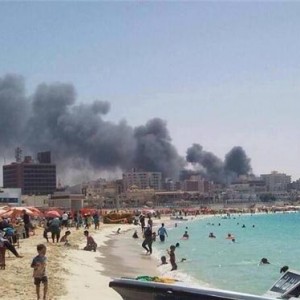
Meanwhile, a huge fire breaks out in Cairoâ„¢s Ramses Square amid clashes between supporters of ousted Egyptian president, Mohamed Morsi, and security forces.

MAM/SS

…read more

Republished from: Press TV

Takfiris behind Beirut attack: Nasrallah

0

Hezbollah Secretary-General Seyyed Hassan Nasrallah has blamed Takfiri groups for a car bomb attack which left 24 people dead in southern Beirut.

Addressing thousands of Hezbollah supporters on the occasion of the end of the groupâ„¢s 33-day 2006 war with Israel in the southern village of Aita al-Shaab, Nasrallah said on Friday that according to investigations carried out by the resistance movement, Takfiri groups are behind the recent deadly attacks in Lebanon.

He added that those carrying out the attacks were not Israeli spies, but stressed that it is clear that US and Israeli intelligence agencies have infiltrated into these Takfiri groups and are using them to achieve their own goals.

He also told the Lebanese that anyone who thinks that the Takfiri groups only target Shias is wrong, adding that they kill Sunnis, Shias and Christians the same because they “are killers who do not belong to any religion or sect.”

Nasrallah also rejected allegations that the Thursday attack was a punishment and a response to Hezbollah’s support for the Syrian government, adding that Takfiri groups are trying to destroy Lebanon and push the country into a civil war.

He addressed those behind recent wave of attacks in Lebanon, saying that nothing can change Hezbollah’s path and the resistance group will continue its support for the Syrian government. He said such attacks would only reinforce Hezbollah’s determination to fight Takfiri groups in Syria.

“Our response to any such bombing is that we will double our fighters in Syria. If before the attacks we had 100 fighters in Syria after these attacks we will make it 200 ….,” Nasrallah said.

Nasrallah added that if necessary he and all the group’s members are ready to go to Syria to fight against Takfiri groups.

“I will go myself to Syria if it is so necessary in the battle against the Takfiris,” Hezbollah leader noted.

He told Takfiri groups that “if you want to start a war with us, we are ready, and as we achieved victory in all our wars with Israel, we will defeat you, we have the final say.”

HM/SS

…read more

Republished from: Press TV

Assange: 'I am a big admirer of Ron Paul'

0

WikiLeaks founder Julian Assange praised United States Senator Rand Paul (R-Kentucky) and his father, Dr. Ron Paul, during an interview Friday in which he said the family has been among the biggest supporters his whistleblowing group has in Congress.

Speaking from the Ecuadorian Embassy in London, Assange said
during a live-streamed question-and-answer session that he is
“a big admirer of Ron Paul and Rand Paul for their very
principled positions in the US Congress on a number of
issues
.”

The Paul family, added Assange, have been “the strongest
supporters of the fight against the US attack on WikiLeaks and on
me
.”

Sen. Paul, a devout libertarian and a rumored candidate among the
Republican Party’s likely picks for presidential nominees for the
2016 election, has represented Kentucky in the
Democrat-controlled Senate since early 2011. His father, a
longtime congressman with strong libertarian leaning himself,
served as a Republican member of the US House of Representatives
on behalf of Texas until his retirement in January of this year.

“The Republican Party in so far as how it has coupled together
with the war industry is not a conservative party at all and the
Libertarian aspect of the Republican Party is presently the only
useful political voice in the US Congress
,” said Assange.

Speaking of the rift between the majority of Republican lawmakers
and the libertarians more closely aligned in ethos of the Pauls,
Assange said, “It will be the driver that shifts the United
States around
.”

“It’s not going to come from the Democrats, it’s not going to
come from Ralph Nader, it’s not going to come from the co-opted
parts of the Republican Party
,” Assange said. “The only
hope as far as electoral politics… presently, is the libertarian
section of the Republican Party
.”

Before Rep. Paul retired from Congress, he campaigned
unsuccessfully in the 2012 US presidential contest. During that
race to the White House, Rep. Paul spoke in support of WikiLeaks
and their most well-known source, Army Private Bradley Manning,
even though the soldier’s admitted actions had led other members
of the GOP to call for the prosecution of both Assange and his
source.

“I’d have him protected under the whistleblowers act,”
Rep. Paul said at a campaign stop in San Antonio, Texas last
April.

“I imagine people ought to think it through, but from what I
can do see from my viewpoint, is that his motivation had nothing
to do with helping the enemy
,” he said. “You know that if
anybody had ever suffered a consequence because of the release of
those thousands and thousands of pages, we would have heard about
it by now
.”

Prosecutors in the court-martial of Private first class Manning
said his leaks to Assange’s website violated the Espionage Act
and also equated to aiding the enemy. Last month, Col. Denise
Lind acquitted Manning of aiding the enemy, and is expected to
sentence the soldier in the coming days for the 20 counts he was
found guilty of.

And although Sen. Paul hasn’t been as outspoken about his support
of Pfc. Manning or WikiLeaks as his father, he’s recently thrown
his weight behind endorsing Edward Snowden, the National Security
Agency leaker who has also been charged with espionage for
sharing secret documents with the media.

“Snowden told the truth in the name of privacy,” Sen. Paul
said earlier this month.

Sen. Paul has also advocated strongly against the military
industrial complex and the use of unmanned aerial vehicles, or
drones, in America’s wars overseas.

Pfc. Manning was convicted last month of leaking a trove of field
reports from the Afghan and Iraq wars to WikiLeaks in which the
truth behind the lengthy military operations were for the first
time ever published with accuracy previously unseen. Meanwhile,
Assange has been at the Ecuadorian Embassy for over a year
awaiting safe passage to South America. He has been granted
asylum to avoid extradition to Sweden to answer questions about
rape allegations, where he fears he will then be shipped to the
US to be tried for facilitating Manning’s leaks.

Republished from: RT

NSA violations creates great outrage

0

An American political writer says that revelations about the National Security Agency surveillance programs have caused great outrage among the public.

Å“The NSA revelations that every phone call anyone made, every internet communication, every text was being monitored and stored somewhere has created great outrage,” said Sara Flounders, co-director of the International Action Center (IAC)in an interview with Press TVâ„¢s US desk.

The IAC is an activist group founded by former United States Attorney General Ramsey Clark. It supports anti-imperialist movements around the world, and opposes US military intervention in all circumstances.

Å“People feel that their own privacy has been violated,” Flounders said. Å“Many countries now are aware of how much information the Pentagon has on their every financial dealing, on scientific information, on patents.”

Å“This is a big problem for the US, because they have anger, rage, large and small, coming from their monitoring.”

A new report by the Washington Post shows the NSA has conducted unauthorized surveillance of thousands of times on Americans soil since 2008.

An internal audit in 2012 found 2,776 incidents of “unauthorized collection, storage, access to or distribution of legally protected communications” by the NSA in the preceding 12 months, according to documents provided by American whistleblower Edward Snowden to the Washington Post.

AHT/DT

…read more

Republished from: Press TV

Pelosi: NSA report extremely disturbing

0

House Democratic Leader Nancy Pelosi (Calif.) said on Friday that a report that the National Security Agency broke privacy rules thousands of times per year is “extremely disturbing.”

She argued that under the law, the NSA should have reported the violations to Congress and the Foreign Intelligence Surveillance Act Court.

“Congress must conduct rigorous oversight to ensure that all incidents of non-compliance are reported to the oversight committees and the FISA court in a timely and comprehensive manner, and that appropriate steps are taken to ensure violations are not repeated,” she said in the statement.

Pelosi’s comment represents some of her harshest criticism of the NSA since leaks earlier this summer publicized the scope of the agency’s surveillance.

She voted against a House measure last month that would have curbed the NSA’s phone data collection program.

Late on Thursday, The Washington Post published an internal NSA audit showing that the agency repeatedly overstepped its legal authority in recent years.

Most of the infractions involved unauthorized spying on people in the United States.

In one incident, the NSA intercepted a “large number” of calls from Washington because of a Å“programming error” that confused the 202 area code for 20, the international code for Egypt.

The Washington Post reported that the NSA did not always reveal the violations to the FISA court, which is supposed to oversee the secret surveillance and enforce legal safeguards. The Hill

AHT/DT

…read more

Republished from: Press TV

Bulgaria MPs overturns pres. veto

0

Bulgarians protest in front of the country’s parliament building. (File photo)

Bulgarian parliamentarians have voted to overturn a presidential veto on the revised 2013 budget, allowing an increase of public debt in an attempt to ease two months of protest.

Of the 223 lawmakers present in parliament on Friday, a total of 130 were in favor of overriding the veto imposed by President Rosen Plevneliev last week.

Plevneliev opposed the cabinetâ„¢s plans to increase public debt, saying more details are needed on how the government plans to use 1 billion lev (USD 682 million) of new borrowing.

The president must now sign the unchanged bill into law since he does not have the right to use a second veto.

The vote was held while about 1,000 people protested and shouted Å“Mafia” and Å“Resign” outside of the parliament building in the capital Sofia, where a police barricade had been set up to prevent any clashes between demonstrators and government supporters.

This comes as the countryâ„¢s political leaders are struggling, as a growing number of Bulgarians are demanding the Socialist-backed administration of technocrats to resign, accusing it of being corrupt.

The protests erupted on June 14 after the appointment of controversial and inexperienced media mogul, Delyan Peevski, as chief of Bulgariaâ„¢s National Security Agency (DANS).

Prime Minister Plamen Oresharski withdrew Peevskiâ„¢s nomination immediately after the protests erupted.

However, the protests spread and turned into anti-government demonstrations.

During one rally on July 24, Bulgaria riot police was deployed to end a blockade of the countryâ„¢s parliament building, which was set up by anti-government protesters.

The demonstrators prevented over 100 ministers, lawmakers, and journalists from leaving the building for several hours.

The current Bulgarian government came to power in May, two months after the previous government fell following massive protests over low living standards and high utility bills in the poorest EU member state.

CAH/SS

…read more

Republished from: Press TV

Saudi King Abdullah expresses support for Egypt crackdown

0

presstv.ir
August 16, 2013

Saudi Arabia’s King Abdullah has said his country supports Egypt’s fight on terrorism, describing the brutal crackdown on supporters of Morsi as the military-backed government’s “legitimate right.”

This article was posted: Friday, August 16, 2013 at 12:45 pm

Tags:


<!– this is where we need to show the related articles

–> …read more

Republished from: Infowars

‘Arab leaders back Egypt crackdown’

0

Supporters of the Muslim Brotherhood and Egypt’s ousted president, Mohamed Morsi, gather in Cairo’s Abbassiya neighborhood on August 16, 2013.

Political analysts say Arab leaders tacitly support army crackdown on supporters of the ousted Egyptian president, Mohamed Morsi, in the North African country.

Å“All the [Persian] Gulf monarchies, except for Qatar and Jordan, fear that the Muslim Brotherhood revolution will be exported to them,” said Khattar Abou Diab, a professor at University of Paris-Sud, on Friday.

“For that reason, they are hoping for a return to the classic situation of a strong power in Egypt,” he added.

According to Middle East expert at the Brookings Doha Center, Shadi Hamid, what is going on in Egypt Å“is a product of a big regional issue … and it is clear what side … is winning.”

Referring to the recent military coup that toppled Morsi, Hamid went on to say that for Saudi Arabia and the United Arab Emirates (UAE), the coup delivered a Å“blow to their major regional opponent, the Muslim Brotherhood, so it would not make much sense for them to turn around now and say ‘Well, we don’t like what you are doing anymore’.”

The analyst also slammed Riyadh and Abu Dhabi for supporting Egyptian army’s coup d’état against the government of Morsi, saying, Å“Saudi Arabia and the UAE are now the primary patrons of this new military government and they are very supportive. It is unlikely they would offer much criticism.”

On Friday, Saudi Arabiaâ„¢s King Abdullah said his country supports Egypt’s fight on terrorism, describing the brutal crackdown on supporters of Morsi as the military-backed government’s “legitimate right.”

Å“(Saudi Arabia) has stood and stands with its Egyptian brothers against terrorism, deviance and sedition, and against those who try to interfere in Egypt’s internal affairs … and its legitimate right in deterring those tampering with and misleading … (its people)”, King Abdullah said.

Å“Those who have interfered in its affairs must know that they are causing sedition and backing terrorism, which they claim to fight,” he added.

On the same day, over 50 pro-Morsi protesters were killed in clashes with security forces at Ramses Square in the Egyptian capital, Cairo.

Dozens of others have also been killed in other cities across Egypt as the country is rocked by nationwide protests against the violent crackdown.

The deadly police crackdown on Rabaa and Nahda protest camps in Cairo left at least 638 people dead and injured over 4,000 others on Wednesday.

Tension has intensified in Egypt since July 3, when the Egyptian army removed Morsi from office. The army also suspended the constitution and dissolved the parliament.

MAM/SS

…read more

Republished from: Press TV

Turks protest Egypt fatal crackdown

0

Turkish protesters in Istanbul shout slogans against a deadly crackdown in Egypt on August 16, 2013.

Thousands of people in Turkey have protested the bloody crackdown in Egypt on the supporters of ousted President Mohamed Morsi, which has left hundreds dead.

On Friday, approximately 3,000 Turks prayed for the dead in Egypt at an Ankara mosque and then rallied to the US and Egyptian embassies in the Turkish capital, chanting Å“Infidels are killing Muslims!”

The protesters carried some portraits of Morsi, saying, “Those who spill Muslim blood will drown in their own blood!”

“The Islamist movement cannot be stopped!” they shouted.

Meanwhile, in Istanbul, more than 1,000 protesters convened in front of a mosque, chanting slogans against Egyptian army chief Abdel Fattah al-Sisi.

The deadly violence in the North African country erupted on August 14 in the capital Cairo when security forces attacked supporters of Morsi.

The police crackdown on Rabaa and Nahda protest camps left at least 638 people dead and over 4,000 others injured.

However, the Muslim Brotherhood put the death toll far higher, saying more than 2,000 people had died. It has vowed to peacefully defeat the military coup that led to Morsiâ„¢s ouster last month.

Egypt has plunged into an unrelenting string of violence since the July 3 military ouster of Morsi.

Egypt is currently locked down under a month-long curfew and the police have been authorized to use live ammunitions in case of attacks against state buildings.

IA/KA

…read more

Republished from: Press TV

Obama condemns Egypt over violence, cancels joint military exercise

0

Ayman Mohyeldin and Alastair Jamieson
worldnews.nbcnews.com
August 6, 2013

The death toll topped 600 Thursday in Egypt in the wake of a violent crackdown on supporters of deposed Islamist President Mohammed Morsi that has drawn widespread condemnation from world leaders, including a call from President Obama to cancel a month-long state of emergency.

Obama strongly condemned Egypt’s interim government, saying the United States was canceling a planned joint military operation in protest over bloody clashes that left at least 638 dead and thousands injured.

Responding to Obama’s statements, Egypt’s presidency said in a statement the president’s words were not based on “facts” and will strengthen and encourage violent groups.

Read more

This article was posted: Friday, August 16, 2013 at 12:33 pm

Tags: ,


<!– this is where we need to show the related articles

–> …read more

Republished from: Infowars

War Criminal Blair dragged into Thai expenses row

1

Thai govt. denies paying ex-British PM any fees as speaker

Former British prime minister Tony Blair has been paid a £410,000 fee by the Thailand government to attend as speaker in a reconciliation forum next month in Bangkok, local media reported.

The news broke after Deputy Prime Minister and Foreign Minister Surapong Tovichakchaikul came forward to deny the reports that his government paid ˜20 million baht™ to hire the former British prime minister, according to media reports.

It followed a local report which said having Blair as speaker in the forum entitled “Uniting for the Future: Learning from Each Other’s Experience” to be held on Sept. 2 would cost hundreds of thousands of pounds.

The minister said that the Foreign Ministry’s International Organisation Department was ordered to invite prominent world leaders to share their experiences about peace talks to Thailand.

Surapong added that the ministry will pay only for air tickets, accommodation, reception and security as well as public relations and other costs required to organize the event.

Tony Blairâ„¢s spokesman, meanwhile, said he was attending the event “in support of the Thai government’s ongoing peace and reconciliation initiatives.”

“This is an important time for Thailand’s economic, social and democratic development and Tony Blair is very happy to help in whatever way he can.”

The spokesman claimed the event is being done on an “entirely pro bono basis; there is no fee and there never was.”

This comes as it was reported earlier this year that Tony Blair receives £400,000 for two half-hour speeches everywhere he is invited to attend as speaker.

MOL/HE

…read more

Republished from: Press TV

Soccer Kuhn

0
large_938_soccervsstate3

Republished from: Counterpunch

In the 'Wild West' of Water, Nestlé Gets Free Pass to Bottle the Commons

0

Nestle withdrawing millions of litres of water without payment. WaterWealth Project director Sheila Muxlos stands outside their bottling plant in Hope, British Columbia.(Photo: Wayne Leidenfrost / PNG)International food giant Nestlé is striking gold in British Columbia–dubbed the ‘Wild West’ of water regulation–extracting hundreds of millions of liters of fresh groundwater each year without paying a cent.

As the only province in Canada that doesn’t regulate groundwater use, B.C. residents are calling on the provincial government to update the century-old Water Act saying that, without doing so, B.C. is ripe for such abuse. “The province does not license groundwater, charge a rental for groundwater withdrawals or track how much bottled water companies are taking from wells,” said a Ministry of Environment spokesperson.

“It’s really the Wild West out here in terms of groundwater,” added Linda Nowlan, conservation director from World Wildlife Fund Canada.

Any measurements or documentation of groundwater extraction are undergone on a “voluntary” basis by the corporation. According to Canadian paper The Province, Nestlé is extracting 265 million liters (or roughly 70 million gallons) of water each year from one well alone.

“It’s unsettling,” said WaterWealth Project campaign director Sheila Muxlow. “What’s going to happen in the long term if Nestlé keeps taking and taking and taking?”

“We have water that’s so clean and so pure, it’s amazing. And then they take it and sell it back to us in plastic bottles,” adds Sharlene Harrison-Hinds, a resident of Hope, B.C. which relies on the same aquifer being tapped by Nestlé.

Though Nestlé is the largest bottled water seller in B.C., others, including Whistler Water and Mountain Spring Water, are also tapping into the free flow of groundwater in this region.

“Outside of the fact that they are draining the size of a small lake on an annual basis without any sort of accountability,” Muxlow adds, “this is a microcosm of a larger failure with the way B.C.’s water is managed.”

Facing mounting environmental cuts and a government effort led by Prime Minister Stephen Harper to privatize all of Canada’s drinking water, citizen advocacy group the Council of Canadians is leading a movement to protect the country’s freshwater sources. Arguing that water is part of a “shared commons,” they write, “water is a human right and as such, must be protected from privatization, pollution and bulk exports.”

_____________________

This work is licensed under a Creative Commons Attribution-Share Alike 3.0 License

Republished from: Common Dreams

Global Fail: Dropping 'Oil in the Soil' Plan, Ecuador Opens Biodiversity Hotspot to Oil Drilling

0

A view from the Yasuní national park. (Photo: sara y tzunky/cc/flickr) Ecuador announced it is opening an Amazonian nature preserve to oil drilling, abandoning a conservation plan of using international funds to leave the oil in the soil.

The preserve, the Yasuní national park, has been described as the most biodiverse place on Earth and is home to several indigenous tribes, as well as some 900 million barrels of heavy crude.

“The world has failed us,” President Rafael Correa said in a televised speech on Thursday. “It was not charity that we sought from the international community, but co-responsibility in the face of climate change.”

The conservation plan, known as the ITT initiative, “was widely seen as one of the boldest and most innovative approaches to conservation in the world,” the Guardian‘s Jonathan Watts writes, and would have prevented “more than 400m tonnes of carbon dioxide from going into the atmosphere, if half the $7.2bn value of the reserve could be raised by the international community by 2023.

Since the initiative was introduced in 2007, only $13.3 million has been raised. Because of this, Correa said he had to make “one of the hardest decisions of my government.”

Correa has attempted to placate those furious with the plans for fossil fuel exploitation of the area saying that the oil operations will affect just 1% of the Yasuní.

Matt Finer, a scientist at the U.S.-based Center for International Environmental Law, told the Associated Press, “The Yasuní-ITT Initiative was the lone exception to the relentless expansion of hydrocarbon projects deeper into the most remote tracts of the western Amazon. Now there is really no viable alternative to stop the wave of drilling slated for the most biodiverse region of the world.”

About half of Ecuador’s oil goes to the United States.

Hundreds of protesters gathered in front of the presidential palace following Correa’s decision.

One of the protesters was biologist Adrian Soria, who told Reuters, “Yasuní is important for humanity and as Ecuadorians, we can make the difference … Yasuní must be preserved and that is more important than the oil,” he said.

Critics of the decision took to Twitter with the hashtag #notoquenelyasuni (Don’t touch the Yasuní), saying that while Correa has abandoned the Yasuní, the people of Ecuador have not.

The decision to abandon the conservation scheme “is disappointing to all of us but it is necessary,” Correa said. “Not to do it would be to the detriment of our people. History will judge us.”

Indeed.

* * *

To see some of the beauty and biodiversity of this area, watch the Guardian video below:

______________________

This work is licensed under a Creative Commons Attribution-Share Alike 3.0 License

Republished from: Common Dreams

Florida pain patients become collateral damage during war on drugs

0

To crack down on Florida’s prescription drug black market, regulators have limited supplies and made opioids difficult to obtain. But patients with painful medical conditions are suffering from the crackdown too, often left without the drugs they need.

For years, Florida’s relaxed regulations on prescription drugs
turned the state into a black market for synthetic opioids, which
caused 16,625 deaths and 420,000 emergency department visits in
2010. The Sunshine State was home to 90 of the country’s 100 top
pharmacies buying oxycodone in 2010, which often made their way
into the hands of prescription drug dealers.

To combat prescription drug abuse, the state has tightened drug
regulations, limiting the supply of pain medication that
pharmacies and drug distributors are allowed to have in their
inventory and making it more difficult for patients to obtain
them.

Meredith Diaz, a 35-year-old mother who suffers from lupus, told
Bloomberg News that she has trouble obtaining OxyContin,
roxycodone and Xanax, which her doctors regularly prescribe to
help control her pain and anxiety. The Tampa resident has
herniated discs in her back, a knee that will soon need to be
replaced and clinical anxiety. She fears the day that her drug
supply will be cut off and said her life is much more difficult
without her medicine.

“Regulation is fine, but truly making the pharmacists not able
to get the medication can’t be the answer
,” Diaz said.
“There shouldn’t be this apprehension about how I’m going to
get my medicine
.”

Colleen Sullivan, a 29-year-old muscular dystrophy patient, said
she lives in Marathon — a small town in the Florida Keys that
only has a few pharmacies. When these drug suppliers run out of
the medicine she needs, she is forced to travel across the state
to find a pharmacy that will fill her prescription. Pharmacies
refuse to tell her over the phone whether or not they have a
supply on hand.

Paul Doering, a professor emeritus at the University of Florida
College of Pharmacy, told Bloomberg that pharmacists often judge
patients based on their appearances, which affects whether or not
they will fill their prescriptions.

Federal officials first began cracking down on the black market
in 2009. Since then, 59 Florida doctors have been charged for
illegally prescribing painkillers, and a joint federal and state
task force has made 2,150 arrests related to prescription drug
sales.

In June, Walgreen Co., the nation’s largest pharmacy operator,
paid the Drug Enforcement Agency an $80 million settlement to
resolves charges that it failed to control its sales of narcotic
painkillers. As a result of its efforts, the amount of oxycodone
sold in the state of Florida decreased by 97 percent from 2009 to
2010. Deaths related to oxycodone decreased by more than 17
percent, and the number of “doctor shoppers” has decreased by 58
percent since authorities began cracking down on “pill mills” in
2011, AP reported in June.

Although the regulations are effectively curbing prescription
drug abuse, they are also taking a toll on the well-being of
patients with painful medical conditions and valid prescriptions.

“It’s a very unhappy existence, but as a mother of three kids
you don’t want to look unhappy
,” Diaz said. “So you put on
a façade. If I don’t have that medicine my life gets even
harder
.”

Republished from: RT

Zarif invited to trilateral Turkey talks

0

Ankara has officially invited Iranian Foreign Minister Mohammad Javad Zarif to attend a tripartite conference between Iran, Azerbaijan and Turkey to be held in the eastern Turkish city of Erzurum.

Turkish Foreign Minister Ahmet Davutoglu offered the invitation in a telephone conversation on Friday, in which he congratulated Zarif on his endorsement as Iranâ„¢s foreign minister.

Davutoglu called for sustained cooperation and an expansion of bilateral ties between Tehran and Ankara.

Zarif, for his part, stressed the significance of the strategic Iran-Turkey relations and welcomed broader cooperation, particularly on regional issues.

The ministers also touched on the crisis in Egypt and called on regional countries to hold talks to help end the deadly unrest in the North African country through a peaceful solution.

Separately, Zarif held talks with his Swedish counterpart, Carl Bildt, who also invited the Iranian official to visit his country.

Bildt said Stockholm was willing to hold serious talks with Tehran.

The two sides also urged the need for peaceful solutions to the crises in the Middle East.

MRS/KA

…read more

Republished from: Press TV

Ecuador approves oil drilling in reserve

0

Ecuador has decided to go ahead with a major oil exploration in an Amazon nature reserve, following a failed conservation plan to persuade foreign countries to pay the country not to drill for oil.

The countryâ„¢s President Rafael Correa said Thursday he came to his decision after the international community had only donated USD 13.3 million of the 3.6 billion sought for the country not to exploit an area within the Yasuni National Park.

“The world has failed us,” Correa said, blaming “the great hypocrisy” of nations who emit most of the world’s greenhouse gases.

“It was not charity that we sought from the international community, but co-responsibility in the face of climate change.”

Correa continued by saying it was a difficult decision to make, however, it was necessary since not allowing the drilling would be to the detriment of the Ecuadoran people.

“With deep sadness but also with absolute responsibility to our people and history, I have had to take one of the hardest decisions of my government,” said Correa.

After the announcement, indigenous and environmental groups protested against Correa’s decision and called for the country’s government to hold a national referendum on the fate of Yasuni reserve.

The national park is the home to several nomadic Indian tribes and holds an estimated 920 million barrels of oil in three wells.

The conservation plan initiated in 2007 aimed at stopping oil exploitation to take place in the area and would reportedly prevent 410 million metric tons of carbon dioxide from being released into the atmosphere.

Oil is Ecuador’s main export product, as it produces 538,000 barrels of crude oil each day, of which half is delivered to the United States.

CAH/SS

…read more

Republished from: Press TV

NSA Violated Surveillance Rules Thousands Of Times, Audit Finds

0

Photo Credit: U.S. Government/Wikimedia Commons

August 16, 2013
 |

Like this article?

Join our email list:

Stay up to date with the latest headlines via email.

The Washington Post has revealed the National Security Agency has broken privacy rules or overstepped its legal authority thousands of times each year since Congress granted the agency broad new powers in 2008. According to an NSA audit from May 2012 leaked by Edward Snowden, there were 2,776 incidents in the preceding 12 months of unauthorized collection, storage, access to or distribution of legally protected communications. In one case, the NSA intercepted a “large number” of calls placed from Washington when a programming error confused the U.S. area code 202 for 20, the international dialing code for Egypt. The audit only counted violations committed at the NSA’s Fort Meade headquarters and other facilities in the Washington area. We speak to Alex Abdo of the American Civil Liberties Union.

TRANSCRIPT

JUAN GONZÁLEZ: The Washington Post has revealed the National Security Agency has broken privacy rules or overstepped its legal authority thousands of times each year since Congress granted the agency broad new powers in 2008. According to an NSA audit from May 2012 leaked by Edward Snowden, there were 2,776 incidents in the preceding 12 months of unauthorized collection, storage, access to or distribution of legally protected communications. The audit only counted violations committed at the NSA’s Fort Meade headquarters and other facilities in the Washington area.

Most of the infractions involve unauthorized surveillance of Americans or foreign intelligence targets in the United States. In one case, the NSA intercepted a, quote, “large number” of calls placed from Washington when a programming error confused the U.S. area code 202 for 20, the international dialing code for Egypt.

The report comes out less than a week after President Obama told reporters abuses have not been committed at the NSA.

PRESIDENT BARACK OBAMA: If you look at the reports, even the disclosures that Mr. Snowden has put forward, all the stories that have been written, what you’re not reading about is the government actually abusing these programs and, you know, listening in on people’s phone calls or inappropriately reading people’s emails. What you’re hearing about is the prospect that these could be abused. Now, part of the reason they’re not abused is because these checks are in place, and those abuses would be against the law and would be against the orders of the FISC.

AMY GOODMAN: That’s the Foreign Intelligence Surveillance Court. Well, meanwhile, The Washington Post has also published a rare public comment from the chief judge of the Foreign Intelligence Surveillance Court, U.S. District Judge Reggie B. Walton. He said the court lacks the tools to independently verify how often government surveillance breaks rules that protect Americans’ privacy. The NSA responded in a statement that read in part, quote, “We’re a human-run agency operating in a complex environment with a number of different regulatory regimes, so at times we find ourselves on the wrong side of the line.”

For more, we’re joined by Alex Abdo, staff attorney at the National Security Project at the American Civil Liberties Union.

The response of the NSA?

ALEX ABDO: It’s truly shocking that the NSA is violating these surveillance laws thousands of times every year–effectively, about seven times a day–in part because these laws are extraordinarily permissive. These aren’t laws that impose meaningful constrictions on the NSA. They essentially allow the NSA to collect vast quantities of information about Americans’ communications inside the United States and as we communicate internationally. So the fact that they’re violating these very permissive laws is truly shocking.

But I think, even more fundamentally, the disclosures really undermine the intelligence community’s primary defense of these programs, which is that they are heavily regulated and overseen. We now know that that’s simply not true. Congress has not been able to effectively oversee the NSA’s surveillance machinery. Now we know that the FISA court, the secret court that’s charged with overseeing the NSA, is not able to and, in its own words, doesn’t think it has the capacity to effectively oversee the NSA. So, for all of these years, the government has been claiming this is a regulated surveillance complex, and in fact the fox has been guarding the hen house for far too long, and it needs to stop.

Republished from: AlterNet

McDonald’s Chicken McNuggets found to contain mysterious fibers, hair-like structures

0

Natural News Forensic Food Lab posts research photos, video

Mike Adams
Natural News
August 16, 2013

Today we announce the first investigation conducted at the Natural News Forensic Food Laboratory, the new science-based research branch of Natural News where we put foods under the microscope and find out what’s really there.

Earlier today I purchased a 10-piece Chicken McNuggets from a McDonald’s restaurant in Austin, Texas. Under carefully controlled conditions, I then examined the Chicken McNuggets under a high-powered digital microscope, expecting to see only processed chicken bits and a fried outer coating.

But what I found instead shocked even me. I’ve seen a lot of weird stuff in my decade of investigating foods and nutrition, but I never expected to find this…

Strange fibers found embedded inside Chicken McNuggets

As the following photos show, the Chicken McNuggets were found to contain strange fibers that some people might say even resemble so-called “Morgellon’s.”

We found dark black hair-like structures sticking out of the nugget mass, as well as light blue egg-shaped structures with attached tail-like hairs or fibers.

These are shown in extreme detail in the photos below, taken on August 15, 2013 at the Natural News Forensic Food Lab. The actual Chicken McNugget samples used in these photos have been frozen for storage of forensic evidence.

We also found odd red coloring splotches in several locations, as well as a spherical green object that resembles algae.

We are not claiming or implying that these objects in any way make McDonald’s Chicken McNuggets unsafe to consume. We do, however, believe that this visual evidence may warrant an FDA investigation into the ingredient composition of Chicken McNuggets.

In particular, where are the hair-like structures coming from? This is especially important to answer, given that chickens do not have hair. Is there cross-species contamination in the processing of Chicken McNuggets? This question needs to be answered.

Share this story with everyone you know.

See my video at:
http://www.youtube.com/watch?v=-fuL-E2hPlc

Or if YouTube censors the video, watch it at our free-speech video site, TV.naturalnews.com:
http://tv.naturalnews.com/v.asp?v=151BC31144DF47CE1D85FB664CCC2A65

Microscopic photos reveal an alien-like landscape with weird shapes and fibers

Here are some of the photos from the Natural News Forensic Food Lab:

Letter signed by 32 members of congress opposing financial regulations written by lobbyist

0

Startling evidence has been revealed that a June letter signed by 32 House Democrats opposing new regulations on retirement advisors was written by an employee of a financial-industry lobby group working to stop that legislation.

According to the metadata of a Microsoft Word document, which
indicates who first created the letter and subsequently edited
the file, it was drafted by Robert Lewis, a lobbyist working for
the Financial Services Institute (FSI), an investment industry
trade group. Mother Jones published its findings on Thursday
after it obtained the document.

The June 14th correspondence sent to the Department of Labor
opposes new regulations on retirement advisers. Twenty eight out
of 43 members of the Congressional Black Caucus (CBC) signed onto
the letter, along with Democratic congress members Pedro
Pierluisi of Puerto Rico, Tulsi Gabbard of Hawaii, Ed Pastor of
Arizona, and Jim Costa of California.

Though influence by lobbyist and special interests are often
inferred through campaign contribution records, the publication
of evidence showing that a letter sent by congress to a federal
regulatory body was literally

penned by a lobbyist is in itself remarkable.

“This rule is about protecting people from conflicts of
interest,”
said Phyllis Borzi, the Department of Labor’s
assistant secretary for employee benefits security, who is behind
a regulatory push for stronger investment adviser rules.

The new legislation is aimed at protecting low-income workers
from predatory investment counselors, who may be acting in their
own best interest rather than that of their customers.

Even those earning comparatively little in the US can end up
seeking the advice of investment counselors when moving their
retirement nest eggs from employee-sponsored 401k plans into
other forms of retirement accounts.

As Mother Jones reports and has been widely investigated by other
publications, financial advisers often stand to profit by leading
investors into unnecessary high-fee investments. Ten million
people in the US change jobs and must handle their retirement
funds each year, according to data provided by the Congressional
Research Service.

Accordingly, it has been a main concern of the lobbying group
Robert Lewis works for,  the Financial Services Institute,
to oppose new regulations on behalf of the financial investment
industry.

FSI has spent $196,000 so far lobbying in the first quarter of
this year, nearly half the total it spent in all of 2012.
According to disclosure forms filed by the group the proposed new
investment adviser rule is at the top of its lobbying issues.

The liberal lawmakers who signed onto the letter drafted by Lewis
have received tens of thousands in campaign contributions from
the securities and investment industry.

According to a copy of the document, it cautions the US Labor
Department against enacting new regulations on retirement
advisors, warning that strict new rules could push them to
abandon the market and severely limit access to low-cost
investment advice” for “the minority communities we
represent.”

FSI has so far not responded to requests for comment on the
ghostwritten letter.

Republished from: RT

California jail strike hits 40th day

0

Corcoran State Prison, where inmate Billy Sell died under disputed circumstances.

The hunger strike campaign by inmates in California prisons to protest against the stateâ„¢s solitary confinement policies enters its 40th day.

Dozens of prisoners have so far been hospitalized due to starvation-related illnesses and authorities are bracing for more ailments, according to NBC News.

30,000 prisoners in two-thirds of the Californiaâ„¢s prisons officially launched the campaign on July 8th by refusing to eat their ninth consecutive meal. Prisoners say the move is aimed at demanding an end to what they call their inhumane conditions including keeping them in solitary confinement for 10 to 40 years.

Prisoners have also demanded quality health care, nutritional food and “regular meaningful contact and freedom from extreme physical deprivations that are known to cause lasting harm.”

At least 300 inmates are still refusing to eat since the campaign began several weeks ago. Activists have warned that the continued hunger strike could result in organ failure or death for many of the hunger striking prisoners.

Officials have also been struggling to deal with serious medical conditions of many prisoners who have decided to begin eating again but their body systems have been severely weakened.

State prison officials have so far refused to meet the demands, describing the strike as an effort meant to empower gang leaders in prisons.

Liz Gransee, a spokeswoman for the federal receiver overseeing care in the state’s prisons said inmates are being sent to hospital due to a number of complaints including dehydration, cramping, vomiting, diarrhea, dizziness and lightheadedness.

Å“It can have long-term effects on your internal organs as your body is pretty much eating itself from the inside out,” said Gransee while trying to explain the negative consequences of hunger strike.

At least one prisoner has so far lost his life due to the hunger strike. On July 22nd, 32-years old Billy Sell, who was reportedly on solitary confinement for five years, was found dead in his Security Housing Unit cell. Authorities initially denied Sell died as a result of hunger strike but later admitted that he lost his life just a day after deciding to break his fast.

DT/DT

…read more

Republished from: Press TV

Harris County deputy resigns amid allegations of sexual misconduct

0

Rekha Muddaraj
KHOU
August 16, 2013

A Harris County Sheriff’s deputy has resigned, amidst allegations of sexual misconduct made by a woman who lives in Cloverleaf.

Lisa Rodriguez said the deputy sexually assaulted her Tuesday while she was being questioned inside her East Harris County apartment. Normally, KHOU 11 News would conceal the identity of victims in these types of crimes but Rodriguez wanted everyone to hear her story.

The deputy looked up Rodriguez’s information and found there was a warrant out for her arrest on an assault charge. Rodriguez admitted she knew about the warrant, but while speaking with the deputy outside, she said he reached over and grabbed her necklace, fondling her breast. She said he then suggested they speak inside her apartment.

Read full article

This article was posted: Friday, August 16, 2013 at 11:22 am

Tags:


<!– this is where we need to show the related articles

–> …read more

Republished from: Infowars

FBI Admits It Has Documents On Michael Hastings

0

Federal agency initially denied it had investigated Rolling Stone journalist

Paul Joseph Watson

The FBI has tacitly admitted that it possesses documents pertaining to Michael Hastings despite initially claiming that it had never investigated the Rolling Stone journalist, who complained of being under scrutiny by the federal agency in the hours before his death.

“The Department of Justice (DOJ) has indicated that the FBI has likely located responsive records pertaining to investigative journalist Michael Hastings, who died in a tragic car accident in Los Angeles in June, and the agency expects to finish processing the records in about three weeks,” reports Jason Leopold, who along with Ryan Shapiro filed a Freedom of Information Act request with the FBI in an attempt to obtain a any records the federal agency held on the reporter.

When the FBI failed to respond to the initial request, Leopold and Shapiro filed a lawsuit.

“The FBI has completed its search for potentially responsive records and expects to finish processing the records by September 9,” the DOJ response states (PDF), confirming that the FBI does indeed have documents pertaining to Hastings.

However, the government’s attempt to delay the release of the documents prompted lawyer Jeffrey Light to argue that there is an “urgent need to inform the public regarding records maintained by the FBI about Mr. Michael Hastings.”

The revelation goes a long way to confounding claims made by the FBI shortly after Hastings’ death that, “At no time was journalist Michael Hastings under investigation by the FBI.”

Hastings sent an email hours before his death stating he was “onto a big story” and needed “to go off the rada[r] for a bit.” Friends and colleagues confirmed that the journalist was “very paranoid” about the feds watching him.

According to whistleblower organization WIkileaks, Hastings contacted a Wikileaks attorney “just a few hours before he died, saying that the FBI was investigating him.”

A separate close friend of Hastings also told Infowars that the journalist’s home was visited by agents from an unnamed federal agency the day before his death.

Hastings was killed in the early hours of June 18 in the Hancock Park neighborhood of Los Angeles.when his Mercedes crashed into a tree at high speed and exploded into flames, sparking theories that the journalist, who was working on a major exposé of the CIA and had received death threats, could have been assassinated.

Republished from: Infowars

Bahrain guards attack inmates,40 injured

0

File photo shows an anti-regime demonstration in Bahrain to demand the release of political prisoners.

At least 40 Bahraini prisoners have been injured after security forces attacked inmates protesting against their conditions, an activist says.

Sayed al Muhafada of the Bahrain Center for Human Rights (BCHR) said on Friday that he had received a call from inside the prison telling him that security forces used batons, tear gas, pepper spray and stun grenades against around 100 prisoners who were protesting over being deprived of family visits and other grievances, Reuters reported.

The inmates are reported to be political prisoners.

“They humiliated, tortured and abused political detainees by cursing, severely beating with batons, using pepper sprays and threatening them,” BCHR said.

“Some of the prisoners defended themselves [which] resulted in the security forces using more violence. The BCHR received confirmed information from sources that the prison guards and security forces used stun grenades and tear gas inside closed cells that resulted in at least 40 injuries.”

Some reports, however, suggest that the clashes erupted when prison guards began a sudden search of the prison cells.

The Interior Ministry said security forces have restored order, describing the protest as a riot.

“They tried to break the doors, the police interfered and restored order,” a tweet by the ministry said.

Most of the anti-regime protesters arrested by the Manama government are charged with terrorism offences and face harsh conditions at prisons.

Bahrainis have been staging demonstrations since mid-February 2011, demanding political reform and a constitutional monarchy, a demand that later changed to an outright call for the ouster of the ruling Al Khalifa family following its brutal crackdown on popular protests.

Scores have been killed, many of them under torture while in custody, and thousands more detained since the popular uprising in Bahrain began.

Protesters say they will continue holding anti-regime demonstrations until their demand for the establishment of a democratically-elected government and an end to rights violations are met.

HM/SS

…read more

Republished from: Press TV

Harris County deputy resigns amid allegations of sexual misconduct

0

Rekha Muddaraj
KHOU
August 16, 2013

A Harris County Sheriff’s deputy has resigned, amidst allegations of sexual misconduct made by a woman who lives in Cloverleaf.

Lisa Rodriguez said the deputy sexually assaulted her Tuesday while she was being questioned inside her East Harris County apartment. Normally, KHOU 11 News would conceal the identity of victims in these types of crimes but Rodriguez wanted everyone to hear her story.

The deputy looked up Rodriguez’s information and found there was a warrant out for her arrest on an assault charge. Rodriguez admitted she knew about the warrant, but while speaking with the deputy outside, she said he reached over and grabbed her necklace, fondling her breast. She said he then suggested they speak inside her apartment.

Read full article

This article was posted: Friday, August 16, 2013 at 11:22 am

Tags:


<!– this is where we need to show the related articles

–> …read more

Republished from: Infowars

FBI Admits It Has Documents On Michael Hastings

0

Federal agency initially denied it had investigated Rolling Stone journalist

Paul Joseph Watson
Infowars.com
August 16, 2013

The FBI has tacitly admitted that it possesses documents pertaining to Michael Hastings despite initially claiming that it had never investigated the Rolling Stone journalist, who complained of being under scrutiny by the federal agency in the hours before his death.

Image: Michael Hastings

“The Department of Justice (DOJ) has indicated that the FBI has likely located responsive records pertaining to investigative journalist Michael Hastings, who died in a tragic car accident in Los Angeles in June, and the agency expects to finish processing the records in about three weeks,” reports Jason Leopold, who along with Ryan Shapiro filed a Freedom of Information Act request with the FBI in an attempt to obtain a any records the federal agency held on the reporter.

When the FBI failed to respond to the initial request, Leopold and Shapiro filed a lawsuit

“The FBI has completed its search for potentially responsive records and expects to finish processing the records by September 9,” the DOJ response states (PDF), confirming that the FBI does indeed have documents pertaining to Hastings.

However, the government’s attempt to delay the release of the documents prompted lawyer Jeffrey Light to argue that there is an “urgent need to inform the public regarding records maintained by the FBI about Mr. Michael Hastings.”

The revelation goes a long way to confounding claims made by the FBI shortly after Hastings’ death that, “At no time was journalist Michael Hastings under investigation by the FBI.”

Hastings sent an email hours before his death stating he was “onto a big story” and needed “to go off the rada[r] for a bit.” Friends and colleagues confirmed that the journalist was “very paranoid” about the feds watching him.

According to whistleblower organization WIkileaks, Hastings contacted a Wikileaks attorney “just a few hours before he died, saying that the FBI was investigating him.”

A separate close friend of Hastings also told Infowars that the journalist’s home was visited by agents from an unnamed federal agency the day before his death.

Hastings was killed in the early hours of June 18 in the Hancock Park neighborhood of Los Angeles.when his Mercedes crashed into a tree at high speed and exploded into flames, sparking theories that the journalist, who was working on a major exposé of the CIA and had received death threats, could have been assassinated.

Facebook @ https://www.facebook.com/paul.j.watson.71
FOLLOW Paul Joseph Watson @ https://twitter.com/PrisonPlanet

*********************

Paul Joseph Watson is the editor and writer for Infowars.com and Prison Planet.com. He is the author of Order Out Of Chaos. Watson is also a host for Infowars Nightly News.

This article was posted: Friday, August 16, 2013 at 11:09 am

Tags:


<!– this is where we need to show the related articles

–>

Republished from: Infowars

Teenagers in Space

0

http://www.truthdig.com/report/item/teenagers_in_space_20130816/

Posted on Aug 16, 2013

Republished from: TruthDig

India finds 4 bodies on damaged vessel

0

Fire trucks and ambulances are seen parked inside the Naval Dockyard in Mumbai on August 14, 2013.

Indian naval forces have recovered four severely burned bodies of sailors who had been trapped inside a submarine damaged by twin explosions in a Mumbai dockyard.

“Four bodies have been located and extricated… They are severely disfigured and not identifiable due to severe burns,” media outlets quoted a navy spokesman as saying.

The spokesman also said there was no hope of finding any survivors from the damaged submarine. “A search is on for more but finding any survivors is unlikely.”

The developments come a day after the Indian navy submarine with eighteen sailors onboard caught fire and sunk in the port city of Mumbai. The sailors were trapped after an explosion onboard the diesel-electric INS Sindhurakshak.

Rescue teams and fire engines have been deployed to the scene to save the trapped sailors and contain the blaze.

The cause of the explosion is still being investigated. The 16-year-old Russian-made submarine was overhauled in Russia last year.

JR/KA

…read more

Republished from: Press TV

Bahrain guards attack inmates,40 injured

0

File photo shows an anti-regime demonstration in Bahrain to demand the release of political prisoners.

At least 40 Bahraini prisoners have been injured after security forces attacked inmates protesting against their conditions, an activist says.

Sayed al Muhafada of the Bahrain Center for Human Rights (BCHR) said on Friday that he had received a call from inside the prison telling him that security forces used batons, tear gas, pepper spray and stun grenades against around 100 prisoners who were protesting over being deprived of family visits and other grievances, Reuters reported.

The inmates are reported to be political prisoners.

“They humiliated, tortured and abused political detainees by cursing, severely beating with batons, using pepper sprays and threatening them,” BCHR said.

“Some of the prisoners defended themselves [which] resulted in the security forces using more violence. The BCHR received confirmed information from sources that the prison guards and security forces used stun grenades and tear gas inside closed cells that resulted in at least 40 injuries.”

Some reports, however, suggest that the clashes erupted when prison guards began a sudden search of the prison cells.

The Interior Ministry said security forces have restored order, describing the protest as a riot.

“They tried to break the doors, the police interfered and restored order,” a tweet by the ministry said.

Most of the anti-regime protesters arrested by the Manama government are charged with terrorism offences and face harsh conditions at prisons.

Bahrainis have been staging demonstrations since mid-February 2011, demanding political reform and a constitutional monarchy, a demand that later changed to an outright call for the ouster of the ruling Al Khalifa family following its brutal crackdown on popular protests.

Scores have been killed, many of them under torture while in custody, and thousands more detained since the popular uprising in Bahrain began.

Protesters say they will continue holding anti-regime demonstrations until their demand for the establishment of a democratically-elected government and an end to rights violations are met.

HM/SS

…read more

Republished from: Press TV

Snowden began downloading NSA files a year earlier than previously reported

0

National Security Agency leaker Edward Snowden began mining for sensitive documents about the United States government’s surveillance programs more than a year before going to the media, sources now report.

According to Reuters, the 30-year-old former intelligence
contractor first collected documents detailing the NSA’s
electronic spying programs in April 2012 while employed at Dell
Inc., the computer company Mr. Snowden worked at from 2009 until
earlier this year.

Speaking on condition of anonymity, Reuters’ sources said that
Snowden started scouring networks for information about
eavesdropping programs run by both the NSA and Britain’s
Government Communications Headquarters while at Dell, and he left
a digital footprint in his path to mark his territory.

When asked for comment by Reuters, Dell spokesman David Frink
said, “We are honoring our customer’s request that we not
comment on this matter
.” Mark Hosenball, a reporter with the
news agency, wrote that company’s response left him to presume
that Dell was also contracted to work for the NSA.

Snowden left Dell earlier this year to take a job at Booz Allen
Hamilton, an intelligence contractor whose relationship with the
US government has been well documented for decades. It was there,
earlier news reports claimed, that Snowden began accumulating
troves of data about the government’s spy apparatus which were
later leaked to the media and published beginning with articles
in the Guardian and Washington Post on June 5.

“My position with Booz Allen Hamilton granted me access to
lists of machines all over the world the NSA hacked
,” Snowden
told the South China Morning Post one week after the first leaks
were published. “That is why I accepted that position about
three months ago
.”

When the South China Post asked Snowden if he took any job
specifically to gather evidence of
surveillance, he replied, “Correct on Booz.” Now
allegations made to Reuters suggest that while Snowden didn’t
necessarily sign on to work with Dell three years earlier for the
sake of scooping up confidential files, he used his access there
to accumulate material during his tenure.

In Thursday’s report, Hosenball recalled how an Internet alias
used by Snowden authored an Internet post in February 2010 on the
technology site Ars Technica in which the role of private
corporations with regards to working alongside the federal
government was critiqued.

“It really concerns me how little this sort of corporate
behavior bothers those outside of technology circles
,” the
account linked to Snowden wrote. “Society really seems to have
developed an unquestioning obedience towards spooky types
.”

Since the first leaked documents attributed to Snowden more than
two months ago, discussions over the role of not just those
contractors but the government itself have been rampant in the
United States and abroad. Despite criticism from civil
libertarians, however, the White House and select members of
Congress have defended the surveillance programs time and time
again, touting strict oversight procedures that have been put in
place specifically to prevent abuses.

Also on Thursday, though, the Washington Post published NSA
documents handed over by Mr. Snowden in which it was revealed
that the NSA violated those oversight rules
upwards of thousands of times in just the year 2012.

On Friday, Sen. Patrick Leahy (D-Vermont) said, “The American
people rely on the intelligence community to provide forthright
and complete information so that Congress and the courts can
properly conduct oversight
,” and added, “I remain
concerned that we are still not getting straightforward answers
from the NSA
.”

“I plan to hold another hearing on these matters in the
Judiciary Committee and will continue to demand honest and
forthright answers from the intelligence community. Using
advanced surveillance technologies in secret demands close
oversight and appropriate checks and balances, and the American
people deserve no less than that
,” he said in a statement.

Republished from: RT

Iran FM condemns Egypt crackdown

0

Iranian Foreign Minister Mohammad Javad Zarif has condemned the deadly crackdown in Egypt, calling for the cessation of violence in the North African country.

Zarif made the remarks in a telephone conversation with Secretary General of the Organization of Islamic Cooperation (OIC) Ekmeleddin Ihsanoglu on Friday.

The Iranian minister, who described the situation in Egypt as Å“precarious”, called on the OIC to immediately intervene and find peaceful solutions to stop internal conflicts and curb the crisis in Egypt.

The OIC secretary general, for his part, expressed deep concerns over the spiraling violence in Egypt.

He noted that OIC will do its utmost in view of helping the peaceful resolution of the Egyptian crisis, which was triggered following the July 3 military ouster of President Mohamed Morsi.

On Wednesday, the deadly police crackdown on two protest camps in Cairo left at least 638 people dead.

Egypt is currently locked down under a month-long curfew and the police have been authorized to use live ammunitions in case of attacks against state buildings.

IA/KA

…read more

Republished from: Press TV

'50 Morsi fans killed at Ramses Sq.'

0

Egyptian Muslim Brotherhood supporters carry a wounded protestor at Cairo’s Ramses Square on August 16, 2013.

Egyptâ„¢s Muslim Brotherhood says 50 pro-Morsi protesters have been killed in clashes between supporters of ousted president, Mohamed Morsi, and security forces at Ramses Square in the capital Cairo, alone.

In a statement released on Friday, the group also said gunships opened fire on Morsi supporters at the square.

The statement added that dozens of people were killed in northern cities of the North African country.

However, government authorities say that twenty people have so far been killed in Egypt as the country is rocked by nationwide protests against the violent crackdown. Several policemen are also among the dead.

However, government authorities say twenty people have been so far killed in Egypt as the country is rocked by nationwide protests against the violent crackdown. Several policemen are also among the dead.

The protests have turned violent in Cairo and several more cities including Alexandria, Ismailia and Fayoum.

According to manager of the Fayoum public hospital, Gamal Shuaib, 70 people were injured in clashes in the town.

Meanwhile, interim authorities have allowed police to use live rounds in case of attacks against state buildings.

The deadly police crackdown on Rabaa and Nahda protest camps in Cairo left at least 638 people dead and injured over 4,000 others on Wednesday.

Egypt has plunged into an unrelenting string of violence since General Abdel Fattah al-Sisi, the head of the Egyptian armed forces, announced on July 3 that Morsi was no longer in office.

The country is currently locked down under a month-long curfew and the police have been authorized to use live ammunitions in case of attacks against state buildings.

MAM/SS

…read more

Republished from: Press TV

The Ever Shrinking Conservative Base of the GOP

0

George W. Bush left the White House with an approval rating hovering around 30 percent. Courtesy of his tenure, and his second term specifically, by 2008 large numbers of conservatives ceased to identify themselves as “Republican,” such was their shame. At least one million of them refused to vote for John McCain. But two years before this, their enthusiasm had already begun to wane considerably, for the Democrats hammered Bush’s party, regaining control once more of both chambers of Congress. By 2012, even fewer conservatives showed up at the polls to pull the lever for Mitt Romney.

If all of this fails to convince the GOP that it is hemorrhaging its base, the party’s leaders would be well advised to look carefully at the comments sections of any number of “conservative” leaning publications – including those that are most friendly to the Republican Party. 

The Internet has been a great equalizer, the one outlet – the only outlet (sorry Fox News and talk radio) – for conservative-minded Americans to give uninhibited expression to their views. To judge from these views on race relations, immigration, economics, and everything in between, it would seem that perhaps a revolution of sorts is beginning to brew among those whose voice has been marginalized and suppressed by the self-appointed guardians of Political Correctness – both Democrat and Republican.

Yet whether this is a real revolution or not, this much is clear: From the perspective of the great unwashed conservative masses, things are not looking too good for the Republican Party.

In the court of public, online opinion, Marco Rubio, for example, has been tried and convicted of traitorous conduct toward both his party and his country for his tireless support of amnesty. McCain and Lindsay Graham long ago had this verdict visited upon them, but their latest attempt to secure Democrat Party rule in perpetuity via amnesty has renewed with vigor the contempt in which legions of conservatives hold them.

But everyone knows that McCain and Graham are has-beens who’ve gone as far as they are going to go. Most troubling for the GOP is that its newest line of “conservative” stars is fizzling fast.

Paul Ryan and Chris Christie are as unpopular among the conservative base as is Rubio – and for essentially the same reason: They are viewed as “RINOs.” What this really means, though, is that they are regarded as fake conservatives who talk the talk when they need the base of their party but dance with the Democrats at all other times.

Even Rand Paul and Ted Cruz are not above suspicion. The former has made it clear that he supports amnesty – “a pathway to citizenship” – in principle, even if he eventually refused to endorse the specifics of the Gang of Eight’s bill. As for Cruz, that he was once one of the architects of Bush II’s immigration reform plan back in 2000 is enough to raise concerns. That he hasn’t done more to lead the charge against the Gang of Eight’s bill compounds those concerns. Lip service is one thing. Going to the mat against amnesty in the manner in which Rubio and his gang have gone to the mat in favor of it is something else entirely.

The point is this: Unless the Republican Party poses a genuine alternative to what the Democrats are offering, its base will continue to erode. The formalities of its platform aside, it has shown itself time and time again to be, at best, but a lighter version – and only a slightly lighter version at that – of its rival.

Amnesty is guaranteed to consign the Republican Party to oblivion. It also promises to expedite the Left’s agenda to “fundamentally transform” America. Far from being just one more policy among others, nothing less than the fate of our country depends upon it. Why, then, should any conservative vote for a party that wants amnesty? 

Yet it isn’t just amnesty that is dampening conservatives’ spirits. While championing “limited government” out of one side of their mouths, Republicans actively encourage anything but the “humble” foreign policy that Bush II claimed to want back in 2000. But Big Military is Big Government. Moreover, Americans of all stripes believe that the American soldier, being an American soldier, and not a soldier of Planet Earth, shouldn’t be deployed around the globe to fight for the sake of some abstract ideal like freedom, equality, or Democracy. 

If the party of “limited government” wants to be treated seriously by both their one-time friends and foes, it has got to radically revise its stance on Big Military.

The GOP has some major soul-searching to do. Unless it does so soon, its base will continue to shrink. Anyone with any doubts on this score will have them dispelled quickly enough by the most casual perusal of what conservatives are saying at any number of places online.

Republished from: The New American

U.S. Army Buys Nearly 600,000 Soviet AK-47 Magazines

0
All the magazines combined weight more than the operating weight of a C-5 Galaxy. Credit: USAF

Each fully loaded, magazines combined hold almost 18,000,000 rounds.

Kit Daniels
Infowars.com
August 16, 2013

The U.S. Army is buying almost 600,000 Soviet AK-47 magazines, enough to hold nearly 18,000,000 rounds of 7.62x39mm ammo which is not standard-issue in either the U.S. military or NATO.

All the magazines combined weigh more than the operating weight of a C-5 Galaxy. Credit: USAF

A U.S. Army solicitation on the Federal Business Opportunities site asks for approximately 592,825 new AK 30-round magazines.

The solicitation even refers to the magazines as being for “non-standard weapons.”

More specifically, they are for the AK-47 designed by the Soviet Union at the start of the Cold War, which is now commonly used by opposition forces in proxy wars around the world.

This magazine order is an astronomical amount.

Assuming an individual, unloaded magazine weight of 0.95 pounds, all of these magazines combined weigh more than the operating weight of a Lockheed Martin C-5 Galaxy, one of the largest aircraft in the world.

The C-5 Galaxy wouldn’t even be able to carry all of these magazines. Two trips would be necessary.

To put it in another prospective, all these magazines combined weigh more than seven 18-wheelers each carrying the maximum legal load of 8,000 pounds.

The U.S. Army Armament Research, Development and Engineering Center (ARDEC) made the request for the immense amount of magazines, which seems excessive for only research and development purposes.

Chances are these magazines will end up in one of the numerous conflicts around the world.

Ad
Show your support for the Second Amendment with the Second Amendment shirt featuring an AK-47.

This isn’t the first time that the federal government has made massive bulk purchases of guns, gun parts, and ammunition which are extremely popular with private gun owners but not in NATO use.

Last month, we reported that the army bought 2,550,000 live rounds of 7.62x39mm ammo.

The army is storing a portion of the ammo at Camp Stanley in Boerne, Texas, which is also supposedly a CIA outpost.

The Obama-backed Syria rebels could definitely use the 7.62x39mm for their AKs, especially considering that Congress has already cleared the CIA to openly ship munitions to them.

In 2012, ARDEC looked for a vendor who could “reach around the world at any given moment to gather and provide multiple types of weapons and weapon parts.”

The weapons requested included both foreign non-standard and obsolete U.S. military weapons, such as the aforementioned AK-47, 1911s and M1903 Springfields.

Expect to see even more large orders for “non-standard” ammunition in the future.

Below is a video on AK-47 magazines:

This article was posted: Friday, August 16, 2013 at 10:57 am

Tags: ,


<!– this is where we need to show the related articles

–>

Republished from: Infowars

Britain in talks to develop nuke tech

0

The British government is mulling to buy nuclear reactors from Russian state nuclear company Rosatom, which is considering applying for a UK nuclear licence, said a top Rosatom executive.

This comes as the British and their allies in Europe and the U.S. have long been attempting to prevent developing countries, the Islamic Republic of Iran in particular, from mastering nuclear technology for peaceful purposes including electricity generation.

The British statesmen also stress resolve to develop atomic capacity irrespective of the fact that some countries in Europe such as Germany are no longer expanding nuclear energy ambitions in the wake of Japanâ„¢s Fukushima disaster in 2011.

Å“Britainâ„¢s nuclear programme is interesting for the entire world because it is a highly developed European country with quite high electricity prices that currently doesnâ„¢t have its own (nuclear) technologies,” said Rosatom Deputy Chief Executive Kirill Komarov.

Although the Chernobyl disaster caused the popularity of Russian nuclear technology to collapse in western Europe, but Britain should upgrade its ageing nuke fleet and it direly needs foreign investors to carry out the repair.

Before entering the UK market, Komarov said, Rosatom would wait to see whether EDF reaches a deal with the UK on a guaranteed minimum power price for its proposed Hinkley Point project, Britainâ„¢s first new nuclear plant in almost 20 years.

Å“We are waiting to see what agreements EDF reaches,” Komarov said. Å“If we see that we can get a return on our investments, we will enter the project with great desire. I think today we have reasons to be optimistic that this might happen.”

He did not say which type of reactor Rosatom hoped to license and sell in Britain.

MOL/HE

…read more

Republished from: Press TV

NSA Spying: The Three Pillars of Government Trust Have Fallen

Photo: Bernard Goldbach and the ACLU

Cindy Cohn and Mark M. Jaycox
eff.org
August 16, 2013

Photo: Bernard Goldbach and the ACLU

With each recent revelation about the NSA’s spying programs government officials have tried to reassure the American people that all three branches of government–the Executive branch, the Judiciary branch, and the Congress–knowingly approved these programs and exercised rigorous oversight over them. President Obama recited this talking point just last week, saying: “as President, I’ve taken steps to make sure they have strong oversight by all three branches of government and clear safeguards to prevent abuse and protect the rights of the American people.” With these three pillars of oversight in place, the argument goes, how could the activities possibly be illegal or invasive of our privacy?

Today, the Washington Post confirmed that two of those oversight pillars–the Executive branch and the court overseeing the spying, the Foreign Intelligence Surveillance Court (FISA court)–don’t really exist. The third pillar came down slowly over the last few weeks, with Congressional revelations about the limitations on its oversight, including what Representative Sensennbrenner called “rope a dope” classified briefings. With this, the house of government trust has fallen, and it’s time to act. Join the over 500,000 people demanding an end to the unconstitutional NSA spying.

First, the Executive. After a review of internal NSA audits of the spying programs provided by Edward Snowden, the Post lays out–in stark detail–that the claims of oversight inside the Executive Branch are empty. The article reveals that an internal NSA audit not shown to Congress, the President, or the FISA Court detailed thousands of violations where the NSA collected, stored, and accessed American’s communications content and other information. In one story, NSA analysts searched for all communications containing the Swedish manufacturer Ericsson and “radio” or “radar.” What’s worse: the thousands of violations only include the NSA’s main office in Maryland–not the other–potentially hundreds–of other NSA offices across the country. And even more importantly, the documents published by the Post reveal violations increasing every year. The news reports and documents are in direct contrast to the repeated assertions by President Obama (video), General James Clapper (video), and General Keith Alexander (video) that the US government does not listen to or look at Americans’ phone calls or emails. So much for official pronouncements that oversight by the Executive was “extensive” and “robust.”

Second, the FISA Court. The Post presents a second article in which the Chief Judge of the FISA Court admits that the court is unable to act as a watchdog or stop the NSA’s abuses: “The FISC is forced to rely upon the accuracy of the information that is provided to the Court,” its chief, US District Judge Reggie B. Walton, said in a written statement. “The FISC does not have the capacity to investigate issues of noncompliance.” Civil liberties and privacy advocates have long said that the FISA Court is a rubber stamp when it comes to the spying, but this is worse–this is the Court admitting that it cannot conduct the oversight the President and others have claimed it is doing. So much for claims by officials from the White House (video), NSA, DOJ, and Intelligence Committee members of Congress that the FISA Court is another strong pillar of oversight.

Third, the Congress. Last week, Representative Sensenbrenner complained that “the practice of classified briefings are a ‘rope-a-dope operation’ in which lawmakers are given information and then forbidden from speaking out about it.” Members of Congress who do not serve on the Intelligence Committees in the both the House and Senate have had difficulty in obtaining documents about the NSA spying. Last week, it was even uncovered that the Chairman of the House Intelligence Committee, Rep. Mike Rogers, failed to provide freshmen members of Congress vital documents about the NSA’s activities during a key vote to reapprove the spying. Senators Wyden and Udall have been desperately trying to tell the American people what is going on, but this year the House Intelligence committee’s Subcommittee on Oversight has not met once and the Senate Intelligence committee has met publicly only twice.

One, two, three pillars of government, all cited repeatedly as the justification for our trust and all now obviously nonexistent or failing miserably. It’s no surprise Americans are turning against the government’s explanations.

The pattern is now clear and it’s getting old. With each new revelation the government comes out with a new story for why things are really just fine, only to have that assertion demolished by the next revelation. It’s time for those in government who want to rebuild the trust of the American people and others all over the world to come clean and take some actual steps to rein in the NSA. And if they don’t, the American people and the public, adversarial courts, must force change upon it.

We still think the first step ought to be a truly independent investigatory body that is assigned to look into the unconstitutional spying. It must be empowered to search, read and compel documents and testimony, must be required to give a public report that only redacts sensitive operational details, and must suggest specific legislation and regulatory changes to fix the problem–something like the Church Committee or maybe even the 9/11 Commission. The President made a mockery of this idea recently, by initially handing control of the “independent” investigation he announced in his press conference to the man who most famously lied to Congress and the American people about the spying, the Director of National Intelligence James Clapper.

The three pillars of American trust have fallen. It’s time to get a full reckoning and build a new house from the wreckage, but it has to start with some honesty.

Australia's Abbott gets tough on refugees

0

Australiaâ„¢s conservative opposition leader Tony Abbott has pledged tougher immigration policies in dealing with refugees and asylum seekers.

“This is our country and we determine who comes here,” Abbott told reporters on Friday.

Abbottâ„¢s comments came ahead of the national elections due in September 2013.

He said he would appoint a military commander to deal with asylum boats if he wins the upcoming vote.

Abbotâ„¢s policies would also include giving only temporary visas to refugees, and blocking appeal rights for failed asylum claims.

Asylum is set to be a significant issue for the upcoming polls. The debate comes especially after a sharp rise in the number of people arriving there by boat in recent months.

Last month, the government announced a controversial plan to send the country’s asylum seekers to Papua New Guinea. On July 19, Australiaâ„¢s Prime Minister Kevin Rudd and his Papua New Guinea counterpart, Peter Oâ„¢Neill, signed the Regional Settlement Arrangement in the Australian city of Brisbane in connection with the hardline policy.

Under the new policy, those who pay human smugglers to take them to Australia on illegal boats will be sent to Papua New Guinea.

The radical immigration policy, however, does not seem to be working. Hundreds of refugees have arrived since the directive was issued.

Australia has become a desired destination for Asian immigrants who are seeking a better life. But over the years, hundreds of them have lost their lives because their overcrowded boats were capsized in rough waters.

The UN High Commissioner for Refugees has also expressed concern about Australiaâ„¢s decision to send asylum-seekers arriving by boat to Papua New Guinea.

Hundreds of activists have held several mass rallies in Sydney and other major cities to protest at the Australian government’s new harsh measures and opposition’s hard stance against asylum seekers.

Opinion polls suggest Prime Minister Ruddâ„¢s Labor Party could lose the election to Abbott. Economy, asylum seekers and climate change are among key issues expected to dominate Australiaâ„¢s election campaigns.

JR/KA

…read more

Republished from: Press TV

Zanganeh: Iran eyes 4mn bpd oil output

0

This file photo shows a view of installations at Iranâ„¢s Doroud oil field.

Iranâ„¢s new oil minister says the countryâ„¢s oil production must exceed four million barrels per day for the OPEC member to tackle US-engineered sanctions.

Å“An increase in Iranâ„¢s oil output will boost [Iranâ„¢s] bargaining power in international bodies, including OPEC, thus the oil production capacity must immediately increase to above four million bpd through enhanced oil recovery techniques,” Bijan Namdar Zanganeh said on Friday.

The minister stressed the need for the development of all phases of the South Pars gas field so that extraction from the massive offshore reservoir Iran shares with neighboring Qatar could start by the end of the current Iranian calendar year (ending on March 20, 2014).

Zanganeh said an ad hoc committee will also be formed to study the sanctions imposed on the Islamic Republic and find ways to increase Iranâ„¢s oil exports.

He expressed hope that specialized manpower and veteran diplomats would help Iran’s oil sector blunt the impact of Western sanctions.

Zanganeh acknowledged that the rounds of sanctions slapped on Iran by the United States and its European allies in the past years could not be lifted overnight; however, pledged emergency plans to help enhance oil sales.

Iran sits atop more than 96 billion barrels of in-place oil in the Persian Gulf.

With 137.6 billion barrels of proven reserves, Iran has the world’s fourth largest crude deposits, and the second largest gas reserves, estimated at 29.61 trillion cubic meters (tcm).

On January 23, 2012, under pressure from the United States, the EU foreign ministers approved a round of sanctions against Iran’s oil and financial sectors. The sanctions, which prevent EU member states from purchasing Iran’s oil or extending insurance coverage for tankers carrying Iranian crude, came into effect on July 1, 2012.

The illegal US-engineered sanctions were imposed based on the unfounded accusation that Iran is pursuing non-civilian objectives in its nuclear energy program.

Iran rejects the allegation, arguing that as a committed signatory to the Non-Proliferation Treaty (NPT) and a member of the International Atomic Energy Agency, it has the right to use nuclear technology for peaceful purposes.

MRS/KA

…read more

Republished from: Press TV

Houston Deputy Sues Woman Who Dialed 9-1-1

0

Houston deputy sues 9-1-1 caller for $200,000

Julie Wilson
Infowars.com
August 16, 2013

According to a report by KTRK, Harris County Deputy Brady Pullen has filed a civil lawsuit against a woman who called 9-1-1 last December.

The defendant, Camina Figueroa, dialed 9-1-1 due to an emergency at her home in Katy, Texas. When Deputy Pullen responded to the call, he claims he was viciously attacked by a man who had been on “bath salts for days.”

“Pullen alleges Figueroa failed to ”adequately warn others that her resident or guest Kemal Yazar posed a violent threat to others,” reported the Houston Chronicle.

When Yazar allegedly confronted police and EMS workers, deputies “fired shots at him, killing him.”

Deptuy Pullen said he suffered from a “broken nose, concussion, lacerations and bruises.” Pulled is seeking $200,000 in damages from Figeuroa.

Advertisement
Modifilan is a natural dietary supplement that not only detoxifies the body from heavy metals and radioactive elements, it also provides natural iodine that nourishes the thyroid.

The Houston Chronicle reported that the lawsuit filed by Austin attorney Mark W. Long states, “Yazar had been either smoking or ingesting a drug commonly known as ‘bath salts’ or some other mind-altering substance for days.”

Pullen’s Austin attorney said, “If someone is injured due to a homeowner or renter’s failure to warn of dangerous circumstances, then you have a right to sue.”

KTRK’s legal analyst Joel Androphy argues the deputy should know the situation could potentially be dangerous when responding to a 9-1-1 call.

Harris County Sheriff Adrian Garcia calls his deputy’s lawsuit “unprecedented.”

“We’re allowing our legal staff to manage this case and we’ll see where it takes us,” said Garcia.

KTRK’s legal analyst said, “It sends a bad message out there. And if this lawsuit succeeds, it basically shuts down 9-1-1 calls to some degree, because people will be afraid if they make the call they are going to get sued. And the sheriff should not condone this type of action.”

This article was posted: Friday, August 16, 2013 at 10:25 am

Tags: , ,


<!– this is where we need to show the related articles

–> …read more

Republished from: Infowars

Rachel Maddow Slams North Carolina for Stripping Citizens of Right to Vote

0

<!–

MailChimp RSS-Email Widget

–>

North Carolina’s controversial new voting restrictions are the “worst voter suppression bill in the country.”

August 16, 2013
 |

Like this article?

Join our email list:

Stay up to date with the latest headlines via email.

Rachel Maddows has denounced a harsh voter suppression bill signed into law in North Carolina by unpopular North Carolina Governor. Pat McCrory this week which affects the voting rights of minorities, the elderly, students and low-income earners.

Much of the criticism of the bill has been on the Republican efforts to find ways to prevent students from voting by proposing stricter voter ID laws and prohibiting certain kinds of voter registration drives which are associated with low-income and minority voters.

Liked this article? Join our email list
Stay up to date with the latest headlines via email

Like Alternet on Facebook

‘;
jQuery(‘#root_subfooter’).before( html );

var slide_top_offset = calculate_slide_div_top_offset();
var slide_left_offset = calculate_slide_div_left_offset();

jQuery(‘#like_alternet_on_fb’)
.css(‘position’,’fixed’)
.css(‘top’,’-150px’)
.css(‘width’,’450px’)
.css(‘height’,’105px’)
.css(‘background’,’#E8E8FB’)
.css(‘border’,’10px solid #223BBE’)
.css(‘border-right’,’0px’);

toggle();

}

function resize_slide_div(){

var slide_top_offset = calculate_slide_div_top_offset();
var slide_left_offset = calculate_slide_div_left_offset();

jQuery(‘#like_alternet_on_fb’)
.css(‘top’,slide_top_offset)
.css(‘left’,slide_left_offset);

}

/* HOOK SCRIPT INTO EVENTS */

var paging = String( getUrlVars()[“page”] );

if( paging == ‘off’ ){
var is_paging_off = true;
} else {
var is_paging_off = false;
}

//console.log( ‘Is paging off ? [‘ + is_paging_off + ‘] ‘ + getUrlVars()[“paging”] );

var page = String( getUrlVars()[“page”] );

if( page == ‘undefined’ ){
var is_first_page = true;
} else {
var is_first_page = false;
}

//console.log( ‘Is first page ? [‘ + is_first_page + ‘] ‘ + page );

jQuery(window).scroll(function() {

var scrollYpos = jQuery(document).scrollTop();

if( scrollYpos >= pop_in_yPos && on_off_toggle == ‘off’ ){
toggle();
}

if( scrollYpos

‘;
jQuery(‘div.media-image’).each( function(index){
src = String(jQuery(this).children(‘img.media-image’).attr(‘src’));
if( src != ” && src != ‘undefined’ ){
parts = src.split(‘/’);
if( parts[parts.length-2] == ‘slideshow’ ){ new_src = ‘/files/slideshow/’+parts[parts.length-1]; }
else if( parts[parts.length-2] == ‘AFP’ ){ new_src = ‘/files/images/AFP/’+parts[parts.length-1]; }
else if( parts[parts.length-2] == ‘public’ ){ new_src = ‘/files/’+parts[parts.length-1]; }
else if( parts[parts.length-3] == ‘public’ ){ new_src = ‘/files/’+parts[parts.length-2]+’/’+parts[parts.length-1]; }
else { new_src = false; }
if( new_src ){ jQuery(this).html(‘‘+jQuery(this).html()+enlarge_html+’‘); }
}
});

var slideshowdiv; var new_html; var img_obj; var sourcediv; var titlediv; var captiondiv; var title; var caption;

jQuery(‘div.slideshow-body div.slideshow div.field-item’).each( function(index){

slideshowdiv = jQuery(this).find(‘div.altslideshow-embedded-gallery’);
img_obj = slideshowdiv.find(‘img’);
src = img_obj.attr(‘src’);

title = slideshowdiv.children(‘div.altslideshow-title’).html();
if( title == null ){ title = ”; }

caption = slideshowdiv.children(‘div.altslideshow-caption’).html();
if( caption == null ){ caption = ”; }

if( src != ” && src != ‘undefined’ ){
// alert( ‘SRC: ‘+src );
parts = src.split(‘/’);
if( parts[parts.length-2] == ‘slideshow’ ){ new_src = ‘/files/slideshow/’+parts[parts.length-1]; }
else if( parts[parts.length-2] == ‘AFP’ ){ new_src = ‘/files/images/AFP/’+parts[parts.length-1]; }
else if( parts[parts.length-2] == ‘public’ ){ new_src = ‘/files/’+parts[parts.length-1]; }
else if( parts[parts.length-3] == ‘public’ ){ new_src = ‘/files/’+parts[parts.length-2]+’/’+parts[parts.length-1]; }
else { new_src = false; }
// alert( ‘New SRC: ‘+new_src );
if( new_src ){
img_obj.parent().attr(‘href’,new_src).attr(‘rel’,’lightbox[slides]’).attr(‘title’,title+’
‘+caption).append(‘

Click to enlarge.

‘);
}
}

//sourcediv = jQuery(this).find(‘div.altslideshow-source’);
//titlediv = jQuery(this).find(‘div.altslideshow-title’);
//captiondiv = jQuery(this).find(‘div.altslideshow-caption’);
//sourcediv.after( titlediv ).after( captiondiv );

});


Republished from: AlterNet

African Woman Enslaved for Years in Georgia

0

Photo Credit: Shutterstock.com/Andrea Danti

August 16, 2013
 |

Like this article?

Join our email list:

Stay up to date with the latest headlines via email.

ATLANTA (CN) – An American couple enslaved an African woman for two years after luring her here with an offer of a two-week job catering, the woman from Swaziland claims in court.

Thembi Dlamini sued Juna Babb and her husband Michael Babb in Federal Court.  She claims the Babbs seized her passport when she arrived in Atlanta and forced her to work for two years for nothing.  According to the federal lawsuit, Juna Babb told Dlamini, 37, an aspiring cook, that she needed a caterer for her son’s wedding in the United States. Dlamini says a mutual acquaintance told her the Babbs were ministers in America.
 

“Ms. Babb told plaintiff that defendants were looking to provide African people with positive opportunities and that it would be an especially good opportunity for plaintiff to come to the United States to work for defendants, because she could earn money to provide to her family,” Dlamini states in her complaint.

But Babb stole her passport and her return ticket and told her there never was a wedding, that it was just a trick to get her to work for the Babbs, according to the complaint.  Dlamini claims says the Babbs kept her in their basement and told her not to leave the house because it was dangerous. Juna Babb told her she could not contact her family without tipping off the police, who would arrest and deport her, according to the complaint.

“In addition to forcing plaintiff to take care of their grandson every day, defendants ordered plaintiff to clean their home, cook their meals, and perform outdoor manual labor at their home, including digging soil, pulling weeds, and planting vegetables and flowers,” the complaint states.

Dlamini says she also was forced to clean other houses and work for Michael Babb’s construction company: “This work included cleaning, removing and installing carpet, removing and installing tiles, painting, and moving furniture and other heavy objects.”
 

Dlamini claims she received little or no pay for her work, though the Babbs were paid for the work she did.  Dlamini claims her enslavement lasted for two years, until a couple for whom she worked at the behest of the Babbs were made aware of her situation and helped her escape.

Dlamini claims the FBI and Immigration and Customs Enforcement investigated the Babbs, who were sentenced to prison after being convicted of forced labor.  A judge ordered the Babbs to pay $25,000 in restitution to Dlamini, but she says in the lawsuit that she’s seen only a fraction of that amount.

“Plaintiff is a 37-year old citizen of Mbabane, Swaziland,” the complaint states. “She currently resides in Decatur, Georgia, under a ‘T Visa,’ which is a type of visa reserved for victims of human trafficking. Plaintiff’s application for a permanent T-Visa was approved on October 12, 2012.

The lawsuit continues: “Defendant Juna G. Babb is a citizen of Georgia. At all times relevant to this complaint, Ms. Babb resided in Ellenwood, Georgia, with her husband, defendant Michael J. Babb. Upon information and belief, Ms. Babb (Inmate No. 61545-019) currently is an inmate at the Federal Correctional Institution (‘FCI’) in Marianna, Florida, wherein she is serving a 24-month sentence for actions upon which this complaint is based. Upon information and belief, Ms. Babb’s projected release date from federal custody is January 6, 2014.

“Defendant Michael J. Babb is a citizen of Georgia. At all times relevant to this complaint, Mr. Babb resided in Ellenwood, Georgia, with his wife, Ms. Babb. Upon information and belief, Mr. Babb was an inmate (Inmate No. 61546-019) at McRae Correctional Institution in McRae, Georgia, wherein he served a 6-month sentence for actions upon which this complaint is based. Upon information and belief, Mr. Babb was released from federal custody on October 2, 2012. Upon information and belief, Mr. Babb currently resides in McDonough, Georgia.”

Republished from: AlterNet

Prisoners for Peace

0

Ramallah

On Tuesday August 13th,  26 “low risk” Palestinian prisoners were released to their families by the Israeli government, a  “gesture of good faith” made by Israeli Primer Minster Netanyahu to President Abbas amidst the peace talks that are set to resume in Jerusalem on Wednesday. These kinds of prisoner releases have been commonplace in the years preceding the landmark Oslo agreement-each event garnering massive media attention and the reiteration of a narrative of Israeli benevolence and victimization.

And while many in the media have questioned the sincerity of this gesture in brokering peace, little has been said about the flaws inherent to the peace process in Israel and Palestine regarding the prisoner issue.

In the history of this conflict the release of political prisoners has consistently been presented as a concession by Israel, not an obligation- seen through the lens of Israel security needs and an assumed symmetry between apposing sides. Conspicuously absent is any acknowledgement of the now 46 year long colonial occupation which criminalizes all forms of Palestinian resistance, and has led to the imprisonment of more than 750,000 Palestinians since 1967.

As former non-violent political prisoner Mahmoud told me:

“In the eyes of the media, internationals and especially the Israelis Palestinian’s are criminals, guilty until proven innocent…in other places I hear it goes the other way.”

Israeli Prisoner Policy and the Peace Process

Since Oslo there have been numerous high profile prisoner releases, most notably the Gilad Shalit swap that saw the return of over 1000 Palestinians for a single Israeli hostage. The massive inequity of the exchange notwithstanding, the history of prisoner releases has questionable credentials in facilitating any kind of peace in Palestine, even though prisoner releases and amnesty guarantees have been a foundation to attaining peace in other colonial conflicts  (South Africa and Ireland). As prisoner and human rights association Addameer sates: “Historically speaking this policy of prisoner’s releases has proven that it is not truly a “goodwill gesture” to build trust during negotiations, but rather is used as a tool by the Israeli Government to manipulate the prisoners issues and distract from their cores issues and demands.”

104 total prisoners will be freed in the coming months  “depending on progress in the talks.” These types of “gestures” have, since 1993, seen the release of over 23,000 Palestinian prisoners, a seemingly large number until you compare it to the 80,000 that have been arrested during the same period.  During the Annapolis peace process 1199 prisoner were released between 2007 and 2008.  Yet during the same period the IDF arrested nearly 5000 prisoners, more than tripling the number originally released. It is highly questionable whether the release of these 26 will do anything to halt Israel’s policy of mass detention and arbitrary arrest, or guarantee the release of the nearly 5000 prisoners that currently reside in Military prisons inside Israel, their transfer out of Palestine illegal under international law. As a Fatah official in Ramallah said: “While we welcome this decision, we do not see how it could help the peace process, particularly in light of the fact that there are more than 5,000 Palestinians who are still in prison.”

According to Addameer’s report Reaching the ‘No-Peace’ Agreement: The Role of Palestinian Prisoner Releases in Permanent Status Negotiations “Since the onset of the occupation in 1967 more than 750,000 Palestinian have been detained under military orders, nearly 40% of the male population.”

Administrative Detention and State Sponsored Hostage Taking

Mahmoud’s earlier comment about guilty until proven innocent is codified is Israeli law in the occupied Palestinian territories. Since 1979 Israel has used military orders that enable the military to detain individuals without charge or trail. From 1979 to 2000 this was done through the Emergency Power (detention) Law. Amongst other things the law was used to detain hostages that were seen as valuable bargaining chips in the future (with Hezbollah in particular). The Supreme Court finally overturned the law in 2000. Following the decision Chief Justice Barak was quoted as saying  “there is probably no State in the Western world that permits an administrative detention of someone who does not himself pose any danger to State Security. Holding persons as bargaining cards, actually means holding them as hostages.”

Yet only two years later Israeli Knesset approved the controversial Incarceration of Unlawful Combatants law, which according to Addameer is “a means of legalizing the hostage taking policies that had been disavowed in 2000 by the Israeli Supreme Court.” As the organizations director Sahar told me in a phone interview “there release of only 26 or the 104 is telling. Israel uses these prisoners are bargaining chips, conditional on the PA’s good behavior.”

This coupled with Israel longstanding use of Administrative detention (renewable 6 month period of detention without charge/trail) highlights a legal system that denies Palestinian’s their fundament right to due process. The rational of security, which legitimizes Administrative attention, also contributes to the criminalization of all forms of resistance in Palestine, expressed through the continued incarcerating of non-violent activists, scholars, children, and Palestinian athletes.   “Administrative detention is used regularly by the Israeli authorities as a form of political detention, enabling the authorities to arbitrarily detain political prisoners, including prisoners of conscience, and that the practice is used to punish them for their views and suspected political affiliations when they have not committed any crime”,  statement from Amnesty International.

The Peace Talks

If the prisoner release has been viewed as a figurative  “pat on the back” from Netanyahu to Abbass, then the announcement of 3000 new settlement units since last Thursday can only be described as slap in the face. This dichotomous action is entirely consistent with Israeli policy since the Oslo agreement whereby prison releases are coupled with continued settlement construction and mass imprisonment of the occupied population. Since the Oslo Accords some 23000 Palestine prisoners have been released as goodwill gestures to facilitate peace. Yet during the same period 80,000 Palestinian were arrested, while the settler population in East Jerusalem and the West Bank has more than doubled since 1993, standing at 500,000 today. Considering settlements are physically undermining the viability of a future Palestinian state, and 5000 still languish in Israeli jails, the importance of Netanyahu’s goodwill gesture to release 26 prisoners is questionable.

As Addameer director said “Prisoner releases are of central importance toward a lasting peace, yet Israel continued to treat the issues a public relations opportunity and a means to achieve political gains.”

The Essential Terrorist

In Ramallah, Palestine a jubilant crowd greeted the 14 West Bank prisoners freed on Tuesday. On the opposite side of the wall Israelis gathered to protest the release of the prisoners described by the media as murderers, Arab terrorists,” and men with “Jewish blood on their hands.”  And while the violence perpetrated by these men is lamentable even horrific, it is stripped of its context- obfuscated from its origins-occupation and the Israeli settler project that continues unhindered today.  The condemnation of these crimes is accurate, but they need to be contextualized, as the violence in in other Settler colonial states (South Africa, Algeria, or Ireland) has been.  And in a conflict that has lasted nearly half a century and taken the lives of 8000 Palestinian and 1500 Israelis since 1988, it is hard to imagine what the release of 26 men might do for peace.

Sam Gilbert is a journalist based in Ramallah.

…read more

Republished from: Counterpunch

More Heatwaves by 2020 ‘Almost Certain’

0

http://www.truthdig.com/report/item/more_heatwaves_by_2020_almost_certain_20130816/

Posted on Aug 16, 2013

Republished from: TruthDig

Yemenis rally against Egypt crackdown

0

Yemenis gather in solidarity with the Muslim Brotherhood and ousted Egyptian president, Mohammed Morsi, in a protest rally in Sanaâ„¢a on August 16, 2013.

Thousands of Yemenis have rallied in the capital, Sanaâ„¢a, to protest against Egyptâ„¢s violent crackdown on supporters of ousted president, Mohamed Morsi.

They also expressed support for Egyptâ„¢s Muslim Brotherhood and condemned the military’s removal of Morsi on July 3.

The demonstrators also called Egyptâ„¢s military chief General Abdel-Fattah al-Sisi a criminal and held him responsible for the death of hundreds of protesters.

A similar pro-Morsi protest was held outside the Egyptian Embassy in Sana’a on Thursday, a day after Egyptian security forces broke up two protest camps set up by Morsi’s supporters in Cairo.

At least 638 people were killed in Wednesday violence, which draw international criticism.

Meanwhile, thousands of people have taken to the streets in Cairo and several other Egyptian cities in response to a call by the Muslim Brotherhood, which urged its supporters to demonstrate after Friday Prayers in a “Friday of anger.”

Scores of people are reported to be killed in the latest protests.

According to Muslim Brotherhood, 25 supporters of Morsi were killed after security forces opened fire on protesters at Cairo’s Ramses Square. Eight protesters were also killed in city of Damietta while ten were killed in clashes in Ismailia. Clashes were also reported in the Nile Delta city of Tanta.

Egypt has been scene of massive protests since July 3, when the military removed Morsi from office, suspended the constitution and dissolved the parliament. The army also declared the head of the Supreme Constitutional Court, Adly Mansour, as interim president.

The army-installed government has imposed a state of emergency and night-time curfews and has recently authorized the police to use live ammunition in self-defense and in case of attacks against state buildings.

HM/SS

…read more

Republished from: Press TV

5 killed, 70 injured in Egypt's Fayoum

0

At least five people have been killed and 70 others injured in clashes between supporters of ousted president, Mohamed Morsi, and security forces in the in the town of Fayoum.

Meanwhile, Muslim Brotherhood says gunships have opened fire on Morsi supporters in Ramses Square in central Cairo.

MAM/SS

…read more

Republished from: Press TV

Egypt forces fire at pro-Morsi demos

0

Egyptian Muslim Brotherhood supporters carry a wounded man in Cairo’s Ramses Square on August 16, 2013.

Egyptian security forces have opened fire on supporters of the ousted president, Mohamed Morsi, on the 6th October and May 15 bridges in the capital, Cairo.

On Friday, demonstrators marched on May 15 Bridge, in Zamalek neighborhood, after bypassing roadblocks to condemn Egyptian police’s violent crackdown on protesters.

Reports say seventeen people have so far been killed in Egypt as the country is rocked by nationwide protests against the violent crackdown.

However, Egyptâ„¢s Muslim Brotherhood says 28 pro-Morsi protesters have been killed in clashes at Ramses Square in the capital alone.

The group also announced that Egyptian security forces have killed 10 Morsi supporters in the Suez Canal city of Ismailia.

Casualties have been also reported in the northern part of Egyptâ„¢s Sinai Peninsula.

The deadly police crackdown on Rabaa and Nahda protest camps in Cairo left at least 638 people dead and injured over 4,000 others on Wednesday.

Egypt has plunged into an unrelenting string of violence after the Egyptian army announced on July 3 that Morsi was no longer in office and declared chief Justice of Egyptâ„¢s Supreme Constitutional Court, Adly Mansour, as the interim president.

Egypt is currently locked down under a month-long curfew and the police have been authorized to use live ammunitions in case of attacks against state buildings.

MAM/SS

…read more

Republished from: Press TV

Obama Tries Using FCC to Raise Taxes to Fund School Broadband Initiative

0

In yet another attempt to change the law in a manner of dubious constitutionality, President Barack Obama is pressuring the Federal Communications Commission (FCC) to hike a telecommunications fee to help pay for high-speed Internet access in schools.

Obama’ s proposal, known as ConnectEd, was announced in June but went largely unnoticed because the story of the National Security Agency’s widespread surveillance of Americans was breaking at the time.

In a June 6 speech at Mooresville Middle School in Mooresville, North Carolina, Obama said, “Today, I am directing the Federal Communications Commission … to begin a process that will connect 99 percent of America’s students to high-speed broadband Internet within five years.”

Obama claimed that about 20 percent of American students have access to high-speed Internet in the classroom while 100 percent of South Korean students have such access.

“In a country where we expect free Wi-Fi with our coffee,” he asked, “why shouldn’t we have it in schools?”

There is, of course, a big difference between free Wi-Fi at Starbucks and “free” Wi-Fi in schools under Obama’s plan: Starbucks pays for the network itself out of the proceeds of its sales to willing consumers; Obama would pay for school networks by forcibly extracting the money from cellphone users.

According to the Washington Post, the White House estimates the program will cost $4 billion to $6 billion, which “could work out to about $12 in fees for every cellphone user over three years,” after which the fee hike is supposed to end. But considering how many other supposedly temporary taxes have become more or less permanent – a telephone tax instituted to pay for the Spanish-American War remained in effect, with occasional respites, for the next 104 years and still has not been fully repealed – there is good reason to fear that the Obama phone tax would not go quietly into the night.

White House Deputy Press Secretary Josh Earnest told reporters that the president believes the extra dollars taken from cellphone users are “a pretty worthy trade-off” for getting faster Internet access to classrooms. That’s easy for Obama to say because it’s not his money. And while it’s true that a four- or five-dollar-per-year charge by itself isn’t likely to be a great burden to most people, all those fees and taxes do add up. “In New York City, the ubiquitous mobile devices already carry 10 separate city, state and federal fees and charges – and that doesn’t include sales taxes,” noted the New York Post.

Obama is asking the FCC to increase the E-Rate fee, a component of the Universal Service Fund directed at bringing Internet access to public schools and libraries, and to use that to fund broadband upgrades. “None of this,” he told the Mooresville students, “requires an act of Congress”; and that’s just the way Obama likes it.

“You would think that connecting schools to the information superhighway would be a pretty noncontroversial topic, particularly when it’s something that could be accomplished through a relatively modest investment,” Earnest said during his Wednesday press conference. “Unfortunately, we haven’t seen a lot of action in Congress, so the president has advocated and administrated the unilateral action to get this done. We’re not going to wait for Congress to act.” (Earnest denied that this amounted to an “end-run” around Congress, eliciting chuckles from the assembled journalists.)

Not everyone agrees with this approach.

“Most consumers would balk at higher costs, higher phone bills, and I sure hope that this is not part of the equation that ultimately comes out,” said Rep. Fred Upton (R-Mich.), chairman of the House Energy and Commerce Committee. “If they pursue that course, there’s going to be pushback, absolutely.”

“Using the FCC as a way to get around Congress to spend money that Congress doesn’t have the political will to spend – I think that’s very scary,” Harold Furchtgott-Roth, a Republican former FCC commissioner, told the Washington Post. “Constitutionally, it’s Congress that decides how federal funds should be spent.”

In fact, the political pitfalls of the policy are so great that Obama didn’t dare mention it until he was safely reelected, reported the Post. “A senior administration official said that if the idea had come up during the presidential campaign, it probably would have been abandoned because of the political risk,” especially the danger that Obama would be (correctly) viewed as raising taxes on the middle class in direct contrast to his 2008 campaign vow not to do so.

There was also concern among some White House officials “about the perception that they would try to unduly influence the” nominally independent FCC, wrote the paper. But when the president says he’s “directing” the FCC to implement his plan and when two of the three sitting FCC commissioners, both appointed by Obama, issue statements in favor of ConnectEd, that perception is hard to avoid. Obama has nominated two more people to fill the remaining vacancies on the commission, so it is likely he will get what he wants.

Even assuming Congress were to agree to the fee increase and there were no moral or constitutional qualms about robbing cellphone users to pay for school Wi-Fi, ConnectEd would still be a bad idea for the simple reason that E-Rate itself is a bad idea.

The fact that the FCC “set[s] the levels of taxes on telecommunications, then hand[s] out the money it produced by taxing,” argued the Cato Institute’s Jim Harper, amounts to “taxation without representation.” Moreover, he observed, “the program has grown over the years, and it has been plagued by allegations of corruption and misuse.”

These sentiments were echoed by the lone dissenting FCC commissioner, Ajit Pai, who told an American Enterprise Institute audience in July that “the E-Rate program has a waste, fraud, and abuse problem.” E-Rate, he said, is a typical government program: slow, plodding, tangled in red tape, and abounding in “misplaced funding priorities” and “bad incentives.” The FCC can’t even dole out all the revenue the program currently takes in “because of missed deadlines and bureaucratic missteps,” he averred.

Pai, nominated to a Republican position on the FCC by Obama, said a 2010 FCC survey found that 80 percent of responding schools were either “completely” or “mostly” satisfied with the speed of their Internet connections. Giving them free money to upgrade to faster connections would “force schools to skew their spending decisions in order to help us meet an arbitrary national target,” he maintained. Where a school might, under current conditions, choose to spend its money getting all its classrooms connected to the Internet, it might instead decide to pour all that money into upgrading a single classroom to a high-speed connection in order to secure funding under Obama’s initiative, Pai suggested.

None of this is likely to sway Obama, whose senior advisors told the Post that ConnectEd is “one of the biggest potential achievements of Obama’s second term.” That it can be implemented unilaterally only makes it that much more appealing. “We are here to do big things,” he told his staff, “and we can do this without Congress.”

Unfortunately, he’s probably right.

…read more

Republished from: The New American

Establishment Control of GOP Challenged at RNC Summer Meeting

0

The battle lines in the war over the future direction of the Republican Party are being drawn and the fighting will likely be fierce.

Yesterday (Wednesday, August 15) the Republican National Committee kicked off its summer meeting at the Westin Waterfront Hotel in Boston and many party faithful are attempting to roll back rule changes effected by attorney and GOP power broker, Ben Ginsberg.

Ginsberg has the reputation of being a “brusque, hard-driving lawyer” with as many detractors as admirers in the Republican Party.

A report in the Washington Times reminds readers of some of Ginsberg’s GOP bona fides:

He helped lead George W. Bush’s legal team that won the Florida recount battle in 2000, defended the Swift Boat veterans whose 2004 ads attacked John F. Kerry’s Vietnam War record and was among the first to predict that the Supreme Court’s landmark Citizens United ruling would create a campaign finance free-for-all.

Even President Obama grudgingly turned to Mr. Ginsberg this year to serve as co-chairman of a bipartisan effort to protect voting rights – to the alarm of some liberals.

Constitutionalists – particularly those who supported former Congressman Ron Paul in the 2012 presidential campaign – remember Ginsberg for something much more notorious, however.

In 2012, as the Republican National Committee Convention Rules Committee met in Tampa for the party’s quadrennial convention, Ginsberg, at the time Mitt Romney’s campaign lawyer, showed up and pressured members to accept radical changes to the party’s rules governing the binding of delegates and the way rules are to be revised in the future.

According to one of the rules as revised by Ginsberg, every state must amend its nominating process to ensure that their delegations are bound to vote in accordance with the winner of the popular vote as cast at state caucuses or primaries.

Ginsberg’s version of another rule empowers the RNC to bend its own rules to suit their needs at any time without submitting the changes to party members gathered at the quadrennial convention. This unprecedented revision places the control of the GOP in the hands of the establishment candidate without suffering the inconvenience of listening to dissenting voices. In the future, the nomination of an incumbent Republican president is guaranteed and upon leaving office, he will be able to name his chosen successor through manipulation of the party rules.

Put simply, the passage of a radical new rulebook rewritten by Ben Ginsberg was predetermined and a sham voice vote was taken at the convention, sound and fury signifying nothing.

The story in the Washington Times reports that the bitter taste left by Ginsberg’s treachery has not left the mouth of many in the GOP.

“Ginsberg’s work has left a bad taste in the mouths of not just newly active Republicans, but in many GOP conservatives who have been fighting these battles for a very long time,” said Carolyn McLarty of Oklahoma, chairwoman of the Republican National Committee’s Resolutions Committee.

Virginia RNC member Morton Blackwell, founder of the Conservative Leadership Forum, added that “these Ginsberg power grabs were unprecedented.”

Mr. Blackwell, who served in the Reagan White House, personally wrote RNC Chairman Reince Priebus, urging him to dig in at the RNC summer meeting Wednesday through Aug. 17 in Boston. Mr. Blackwell and his supporters want the word “shall” restored to rules that mandate states choose their delegates, displacing the word “may” that Mr. Ginsberg successfully inserted last year.

“In living memory, no candidate about to become the Republican presidential nominee had ever used his power to generate wholesale changes in the rules of the Republican party at the convention which was about to nominate him,” the veteran Virginia Republican National Committee member wrote in 1,890-word letter to Mr. Priebus that was obtained by The Washington Times.

For an establishment Republican like Mitt Romney, Ginsberg’s machinations guarantee that dissident voices will be forever squelched and thus Ginsberg’s contribution to the party is invaluable. One of Romney’s campaign insiders elevated Ginsberg’s contribution to the Republican Party to legendary status, comparing the politico to Michael Jordan.

“It’s hard to put into words what Ben Ginsberg means to the Republican Party,” said Rich Beeson, Romney’s presidential campaign political director, as quoted in the Washington Times. “It’s like asking what Michael Jordan did for basketball.”

There are those among the Republican Party grassroots determined not to let Ginsberg’s rule changes make the nomination of establishment candidates a slam-dunk, however.

Liberty Roll, a blog maintained by grassroots activists reports:

Maine Republican Committeeman and Liberty Roll charter member, Mark Willis, is the chief sponsor of the “Resolution to Maintain the Integrity of Procedural Practice at the National Convention.” Mr. Willis will be urging the Republican National Committee to take action on the resolution, which seeks to revert the RNC to operation under a pre-Ginsburg-power-grab version of the rules.

“The Maine delegation, in accordance with their standing resolution passed in early 2013, will continue to call for the 2012 rules to be considered null and void.” Stated Willis, “To do otherwise would legitimize these improperly passed rules and cut the grassroots out of the 2016 election completely.”

Specifically, Willis’ proposal declares “that the Republican National Committee rejects the legitimacy of the method of passage of the 2012 Rules of the Republican Party,” and would require that the RNC “revert to operation under the Rules adopted by the 2008 Republican National Convention.”

A similar, though significantly watered down, amendment was submitted by Virginia RNC member Morton Blackwell. Liberty Roll summarized the intended effect of the Blackwell amendment:

Blackwell’s submitted amendment makes a change to one word within the entire set of 2012 rules – changing the word may to shall in rule 16(c)(2). If the amendment passes, here is how rule 16(c)(2) would read before and after the fact (change to the rule is in bold to emphasize the difference):

Current Form: 16(c)(2) Any presidential primary, caucus, convention, or other process to elect, select, allocate, or bind delegates to the national convention that occurs prior to April 1 in the year in which the national convention is held may provide for the allocation of delegates on a proportional basis.

Proposed Amended Form: 16(c)(2) Any presidential primary, caucus, convention, or other process to elect, select, allocate, or bind delegates to the national convention that occurs prior to April 1 in the year in which the national convention is held shall provide for the allocation of delegates on a proportional basis.

At meetings held on Thursday, the RNC rules committee voted 40-10 to refer both the Blackwell and Willis proposals to a newly appointed subcommittee that will review all primary process rules.

Joe A. Wolverton, II, J.D. is a correspondent for The New American and travels frequently nationwide speaking on topics of nullification, the NDAA, and the surveillance state. He can be reached at
This email address is being protected from spambots. You need JavaScript enabled to view it.
.

…read more

Republished from: The New American

Ron Paul Dismantles the Corporate Known as Boondoggle Obamacare

Obamacare is the brainchild of the insurance and pharmaceutical industries

Kurt Nimmo

Retired Congressman Ron Paul went on CNN and pointed out something rarely mentioned by the establishment media — Obamacare is the brainchild of the insurance and pharmaceutical industries.

Last December, ace investigative journalist Glenn Greenwald posted a piece at The Guardian giving the low-down on Obama’s healthcare law. Greenwald pointed to senior Democrat Senator Max Baucus and his aide, Elizabeth Fowler, as the driving force behind Obamacare, the government-enforced boondoggle minus a public option salivated over by blindsided socialists far and wide.

“As Baucus himself repeatedly boasted, the architect of that legislation was Elizabeth Folwer, his chief health policy counsel,” writes Greenwald, “indeed, as Marcy Wheeler discovered, it was Fowler who actually drafted it.”

Back in 2009, when Obamacare first began coagulating in the halls of government, Bill Moyers described Fowler as follows: “She used to work for WellPoint, the largest health insurer in the country. She was Vice President of Public Policy. And now she’s working for the very committee with the most power to give her old company and the entire industry exactly what they want: higher profits, and no competition from alternative non-profit coverage that could lower costs and premiums.”

“Competition is a sin,” quipped John D. Rockefeller, a maxim as relevant to corporate mammoths like Wellpoint — the largest managed health care, for-profit company in the Blue Cross and Blue Shield Association — as it was in Rockefeller’s day.

The so-called public option, the idea that the government will create its own health insurance agency to compete with corporate leviathans, was never a serious consideration and was indeed anathema. It was a ploy crafted to trick persistently gullible Democrats into supporting yet another corporate swindle, this time enforced by the most violent and ruthless player on the block, the federal government.

After Obamacare was rammed through Congress, Baucus, one of the biggest recipients in Congress of campaign cash from the healthcare industry, boasted about the architect of the legislation, Liz Fowler.

“I want to single out one person,” Baucus said, “Liz Fowler is my chief health counsel. Liz Fowler has put my health care team together… She put together the White Paper last November 2008, [the] 87-page document which became the basis, the foundation, the blueprint from which almost all health care measures in all bills on both sides of the aisle came. She is an amazing person. She is a lawyer; she is a Ph.D. She is just so decent. She is always smiling, she is always working, always available to help any Senator, any staff. I just thank Liz from the bottom of my heart.”

Finally, Baucus admitted earlier this year that Obamacare will result in a train wreck. Not because it is a corporate boondoggle enforced at gunpoint, but because, thanks to opponents of the legislation (which Baucus never bothered to read) and widespread criticism, primarily in the alternative media, millions of Americans oppose the scheme.

“The American public is left to ponder if this would be happening if Senator Baucus didn’t consider reading the bill he was adamantly advocating as a waste of time,” writes Shoshana Weissmann.

In fact, it wouldn’t have made a lick of difference because Baucus, and the rest of Congress, are in the pocket of the bankers and corporations. They are grocery clerks for the corporate state, that is to say the fascist state, as Mussolini characterized all such arrangements.

Republished from: Infowars

EU to hold meeting on Egypt violence

0

Egyptian security forces stand guard in front of a blaze in Cairo on August 14, 2013.

The European Union (EU) says it will hold a meeting next week to discuss the situation in Egypt in the wake of a bloody military crackdown which has left hundreds dead.

The office of the EU foreign policy chief, Catherine Ashton, said on Friday that top officials from 28 members of the bloc will meet on Monday ahead of a possible meeting of EU foreign ministers.

The talks “will coordinate member states and EU position & possible actions,” her office said on Twitter.

The next scheduled meeting of EU foreign ministers are scheduled to meet in the Lithuanian capital, Vilnius, on September 6 and 7.

Lithuaniaâ„¢s capital, Vilnius, is to host the next scheduled meeting of foreign ministers of EU.

On Wednesday, Ashton offered her condolences to the victims of the violence in the North African country, saying, Å“I strongly condemn the violence that has erupted in Cairo and throughout Egypt.”

On Thursday, the UN Security Council called for Å“maximum restraint” and an end to violence in Egypt.

Egypt has become the scene of a rising tide of violence since the military ouster of President Mohamed Morsi early last month. Mass rallies are under way at several mosques in Cairo in addition to other cities including Alexandria, Ismailia, Assiut and Tanta.

Egyptâ„¢s Muslim Brotherhood has called massive demonstrations across the country on Å“the Friday of anger” to denounce the massacre of pro-Morsi protesters on Wednesday.

The deadly police crackdown on Rabaa and Nahda protest camps left at least 640 people dead and injured over 4,000 others.

The violence has drawn international criticism and triggered protest rallies in several countries.

Egypt is currently locked down under a month-long curfew and the police have been authorized to use live ammunitions in case of attacks against state buildings.

IA/KA

…read more

Republished from: Press TV

China overtakes US as No 1 consumer

0

Even with the ongoing slowdown of China’s economic growth, the world’s No 2 economy is expected to overtake the US to become the world’s largest consumer market in the next five years, according to a new report by Standard & Poor’s (S&P).

The report – entitled Financial Risks Are Rising as Retail and Consumer Product Companies Step up their Spending Spree – pointed out that in 2012, total retail sales of consumer goods in China grew 14.3 percent to about $3.29 trillion, compared with $4.35 trillion in the more mature market of the US.

China’s retail and consumer product industries are refining their growth strategies by looking outside of the domestic market for growth opportunities. Overseas acquisitions, says the report, are attractive options for Chinese consumer companies to improve product quality, increase differentiation, and acquire better brands.

The most recent example is the offer by China’s largest meat producer, Shuanghui International Holdings Ltd, to purchase Virginia-based Smithfield Foods Inc, the world’s largest pork processor, for $7.1 billion, including a mix of debt and $4.7 billion in cash.

The Shuanghui-Smithfield deal is currently being reviewed – for a second time – by the Committee on Foreign Investment in the United States. If it gets approved, it will become the largest takeover of a US firm by a Chinese buyer.

“For many Western companies we rate – Yum Brands, Gap, General Motors, the German luxury automakers – Chinese consumer demand is already an important part of their business strategies,” said Robert E. Schulz, managing director of S&P’s Ratings Services in New York.

Part of that strategy incorporates the interest of Chinese consumers in foreign brands, said Schulz, who manages the US retail team.

“So the ability of the domestic Chinese retailers to sell to the local consumer and compete with foreign brands is already a major factor in the competitive landscape,” he said. “As the Chinese economy grows and the base of consumers with disposable income increases, selling locally should remain an attractive but competitive proposition for Chinese retailers.” China Daily

AHT/DT

…read more

Republished from: Press TV

CVS thinks $50 is enough reward for giving up healthcare privacy

0

David Lazarus
L.A. Times
August 16, 2013

Since February, CVS Caremark has been pushing its pharmacists to enroll customers in a prescription-drug rewards program.

The benefit to customers is the opportunity to earn up to $50 a year in store credits that can be used to buy shampoo, toothpaste or other products.

The benefit to CVS is persuading pharmacy customers, through questionable means, to give up federal privacy safeguards for their medical information and permitting the company to share people’s drug purchases with others.

Read More

This article was posted: Friday, August 16, 2013 at 9:18 am

Tags: , , , ,


<!– this is where we need to show the related articles

–> …read more

Republished from: Infowars

CIA declassifies Area 51, no mention of UFOs, extraterrestrials

0

The US government has admitted to the existence of a top-secret site in the Nevada desert, but the declassification will probably do little to calm ‘conspiracy theories’ over UFOs and other rumors involving the place.

George Washington University’s National Security Archive obtained
a CIA history of the U-2 spy plane, a high-altitude surveillance
aircraft, through a freedom of information request, and released
it Thursday.

National Security Archive senior fellow Jeffrey Richelson says he
requested the information back in 2005 and received a version a
few weeks ago.

According to the Archive’s website, the new information “is notable for the
significant amount of newly declassified material with respect to
the U-2 (spy plane project),”
which provides the names of
pilots, codenames and cryptonyms, as well as a map of the secret
site where the jet was tested in the 1950s.

The story of Area 51 begins with the CIA searching for a reliable
place to test the U-2 reconnaissance aircraft at a time when the
military showdown between the United States and the Soviet Union
was in high gear.

US pilots found what they were looking for at Groom Lake, a
desert salt flat, on April 12, 1955, according to “The Central
Intelligence Agency and Overhead Reconnaissance,”
an internal
CIA history of the U-2, written by Gregory W. Pedlow and Donald
E. Welzenbach. 

“President Eisenhower also approved the addition of this strip
of wasteland, known by its map designation as Area 51, to the
Nevada Test Site,”
the authors wrote.

The U-2 spy plane flew at an altitude of 70,000 feet, which made
some believe UFOs were buzzing Earth.

“High-altitude testing of the U-2 soon led to an unexpected
side effect — a tremendous increase in reports of unidentified
flying objects (UFOs),”
the report states.

Richelson says the new document shows the CIA is becoming less
secretive about Area 51’s existence, and the activities that took
place there.

“It marks an end of official secrecy about the facts of Area
51,”
he told The Las Vegas Sun. “It opens up the
possibility that future accounts of this and other aerial
projects will be less redacted, more fully explained in terms of
their presence in Area 51.”

However, judging by the number of conspiracy theories involving
Area 51, the release of the information may only serve to
intensify rumors as to what else may have taken place on this
lonely stretch of wasteland in the Nevada desert, which remains
off-limits to this day.

Area 51 has come to be associated with a number of so-called
urban legends, perhaps most famously the Roswell UFO incident
that occurred on July 7, 1947 when an airborne object crashed on
a ranch near Roswell, New Mexico.

The US government said the crash involved a military surveillance
balloon, but other reports said the object was a spacecraft
containing extraterrestrial life.

Ever since the 1970s, speculation has been rife as to what really
crashed in Roswell.

Republished from: RT

Germany strongly slams Egypt violence

0

Germany has condemned in the strongest terms the escalating deadly violence in Egypt, as the country along with France call for an immediate halt to clashes.

The two countries also called an EU meeting to be held next week to discuss the blocâ„¢s cooperation with Egypt.

CAH/SS

…read more

Republished from: Press TV

Egypt protest march on ‘Friday of anger’: live

0

Barney Henderson
The Telegraph
August 16, 2013

Egypt’s Muslim Brotherhood to stage “Friday of anger” mass march, with the government warning it would not shy away from using violence again. Follow live updates.

Latest

14.53 At Fateh mosque on edge of Ramses Square, Ruth Sherlock has counted 20 dead.

14.49 French President Francois Hollande and German Chancellor Angela Merkel have called for urgent European consultations on the escalating crisis in Egypt.

Read More

This article was posted: Friday, August 16, 2013 at 9:09 am

Tags: , , ,


<!– this is where we need to show the related articles

–> …read more

Republished from: Infowars

US judge tried to frame romantic rival

0

A judge in the US state of West Virginia was arrested Thursday for using false evidence against a romantic rival and having him arrested for a crime he did not commit.

Michael Thornsbury, 57, Mingo Countyâ„¢s only circuit judge since 1997, was federally indicted for his alleged plots to arrest and imprison the husband of his secretary, with whom he had an affair in 2008.

Thornsbury was charged with two counts of conspiring to violate the constitutional rights of the victim in regard to unreasonable arrest and right to due process.

“He corrupted the system of justice in Mingo County for his own nefarious purposes,” Booth Goodwin, US Attorney for the Southern District of West Virginia, said at a news conference in Charleston.

The indictment alleges that Judge Thornsbury unsuccessfully tried to hire a man to plant illegal drugs under the car of the secretary’s husband.

When that plan failed, prosecutors say the judge got a state trooper to file a false complaint against the man for theft.

Judge Thornsbury also tried to use his position to have his secretary’s husband imprisoned for six months for a fight initiated by two other men, the indictment alleges.

Legal experts say West Virginia has a history of political corruption. In the 1908â„¢s, many government officials were convicted of crimes from theft of public funds and bribery to jury tampering.

AHT/DT

…read more

Republished from: Press TV

The President's Approval Ratings Continue to Drop

0

On Wednesday, August 7, Fox News reported that President Obama’s approval rating was “in a summer swoon,” with just 42 percent of Americans approving of his performance. This was down four percentage points from July and seven points from his 2013 high.

One week later, Gallup echoed those findings with its comprehensive rating of the president on the economy, which had dropped another seven points from the week earlier, to just 35 percent approval. When Gallup quizzed 2,059 adults on the president’s performance since the first week in June on the question of taxes, they found that he had lost five points, on the federal budget deficit he had lost five points, on terrorism he had lost three points, on foreign affairs he had lost three points, and he even slipped a little on immigration, by one point. By all measures, then, the president has not had a good summer.

Said Gallup:

Between the June and August surveys, Obama’s overall approval rating dipped three points, from 47% to 44%. This is consistent with the four-point-decline shown separately in Gallup Daily tracking….

Hence, it seems clear that Obama’s approval rating has sagged….

Until the economy makes more impressive gains … Americans may not reward him with higher approval.

Gallup is not alone. The Ipsos poll conducted for Reuters and published on Tuesday, showed his core approval rating dropping as well. When asked, “Would you say things in this country are heading in the right direction, or are they off on the wrong track?” just one-quarter of respondents said “right direction” while nearly 60 percent said “wrong direction.” When those who identified themselves as Independents responded, just 12 percent said “right direction” while 73 percent said “wrong direction.”

And when respondents were asked, “Do you approve or disapprove about the way Barack Obama is handling his job as President?” just 21 percent strongly approved, while 33 percent strongly disapproved. And when those identified as Independents were asked that same question, just four percent strongly approved, while 40 percent strongly disapproved.

The Economist magazine hired YouGov to ask the same question of its sample of respondents, with nearly identical results. In June, those strongly approving of Obama’s performance as president was 20 percent, but by August that number had dropped to 14 percent. In June, 35 percent of those polled by YouGov strongly disapproved, but by August that had increased to 39 percent.

Rasmussen’s “approval index” – the difference between those strongly approving and those strongly disapproving – rose to 19 on August 15, up from 11 just one week earlier.

Does any of this matter? Jonathan Bernstein of the Washington Post thinks so. First, there is the history of midterm elections. When a president’s approval ratings are high, his party’s strength in congress improves, i.e., Bill Clinton in 1998 and George W. Bush in 2002. But when the president’s ratings are low, as Obama’s are now, his party suffers greatly in the midterms, i.e., Obama in 2010, Bush in 2006, and Clinton in 1994.

Secondly there is the “bureaucrat factor,” where an agency employee, perceiving that the president’s approval will carry over into the next term, will continue to press for policies receptive to the current administration. On the contrary, when that perception reverses, that employee will likely hunker down and stall and dither, assuming the “job protection” mode.

Over the past 30 days, the president’s overall job approval rating, according to the average of six pollsters provided at Realclearpolitics.comhas fallen by 7.5 points, and the trend south is accelerating. The stock market apparently has noticed as well, having lost nearly 400 points in just the last three days. If trends like these continue, it’s going to be a long, hot, and dry summer for the president.

Photo of President Barack Obama: AP Images

A graduate of Cornell University and a former investment advisor, Bob is a regular contributor to The New American magazine and blogs frequently at www.LightFromTheRight.com, primarily on economics and politics. He can be reached at
This email address is being protected from spambots. You need JavaScript enabled to view it.
.

…read more

Republished from: The New American

Obama "Will Not" Appoint DNI Clapper to Head NSA Transparency Board

0

Under pressure from the public and media, it appears that President Obama has decided not to appoint Director of National Intelligence James Clapper to head an “independent” group tasked with reviewing practices at the National Security Agency (NSA).

In a statement to The Hill, White House spokeswoman Caitlin Hayden said, “Director Clapper will not be a part of the group, and is not leading or directing the group’s efforts.” “The White House is selecting the members of the Review Group, consulting appropriately with the Intelligence Community,” she added.

The memo issued by President Obama on Monday claims he wants to bring greater transparency to the NSA’s surveillance activities and thus “maintain the public trust” in the federal government.

Although it now appears that he has changed his mind, it is telling that the president’s purported first step toward transparency was originally to hire the man (Clapper) who lied to Congress about the scope of the surveillance to shine the light of disclosure into the shadowy recesses of NSA record collection and monitoring.

During a March 2013 hearing, for example, Clapper told Senator Ron Wyden (D-Ore.) that the NSA does not “wittingly” collect data on the electronic communications of “millions or hundreds of millions of Americans.”

Two months later, however, revelations resulting from the documents leaked by former NSA contractor Edward Snowden proved that Clapper lied. When confronted about his potential perjury, Clapper said he gave the “least untruthful” answer he could think of at the time and later apologized to Senator Dianne Feinstein (D-Calif.) for his “clear erroneous” statement in his testimony.

One can imagine the chaos that would be created if the “least untruthful” standard was adopted in courtrooms around the country. Unlike common criminals, however, Clapper will not be held accountable for his crimes.

Clapper’s mealy-mouthed mea culpa, calling an outright lie an “erroneous” statement, is typical of the confused babble that is the lingua franca of Washington, D.C. That said, there is no reason that Americans should sit idly by while their federal representatives let Clapper skate.

And, in truth, apart from the statement made to The Hill, there is no hard evidence that the president has repented of naming Clapper as the fibbing fox asked to guard the constitutional henhouse.

In the memo calling for the creation of the review panel, President Obama wrote:

The Review Group will assess whether, in light of advancements in communications technologies, the United States employs its technical collection capabilities in a manner that optimally protects our national security and advances our foreign policy while appropriately accounting for other policy considerations, such as the risk of unauthorized disclosure and our need to maintain the public trust. Within 60 days of its establishment, the Review Group will brief their interim findings to me through the Director of National Intelligence (DNI), and the Review Group will provide a final report and recommendations to me through the DNI no later than December 15, 2013.

In a press conference held last Friday, President Obama told reporters that he would work to reform Section 215 of the Patriot Act, a primary legislative justification for the NSA’s warrantless wiretapping and surveillance of Americans’ phone calls.

Very little is likely to be done to reform this process, however.

In July, the House of Representatives narrowly defeated an amendment to the defense appropriations sponsored by Republican Congressman Justin Amash of Michigan and Democratic Congressman John Conyers, also of Michigan.

The Amash Amendment would have revoked authority “for the blanket collection of records under the Patriot Act. It would also bar the NSA and other agencies from using Section 215 of the Patriot Act to collect records, including telephone call records, that pertain to persons who are not subject to an investigation under Section 215” of the Patriot Act.

Despite the threat to the establishment (or perhaps because of it), Amash’s measure failed by a vote of 205-217.

At his press conference, rather than address the critical issue of his overseeing of a rapid and reprehensible expansion of the unconstitutional surveillance of Americans not suspected of committing any crime, the president took time to continue the persecution of Edward Snowden.

“No, I don’t think Mr. Snowden was a patriot,” President Obama said. “I called for a thorough review of our surveillance operations before Mr. Snowden made these leaks. My preference, and I think the American people’s preference, would have been for a lawful, orderly examination of these laws. A thoughtful, fact-based debate that would then lead us to a better place.”

“So the fact is that Mr. Snowden has been charged with three felonies,” he added. “If in fact he believes that what he did was right, then like every American citizen he can come here, appear before a court with a lawyer and make his case. If the concern was that somehow this was the only way to get this information out to the public, I signed an executive order well before Mr. Snowden leaked this information that provided whistleblower protection to the intelligence community for the first time. So there were other avenues available for someone whose conscious was stirred.”

By focusing on Snowden, President Obama demonstrates the typical trope employed by all clever magicians: misdirection.

Snowden isn’t the story, however.

The story is the indisputable fact that the Obama administration unapologetically carries on unconstitutional surveillance of millions of Americans in open and hostile violation of the Fourth Amendment to the Constitution.

The Fourth Amendment states that the “right of the people to be secure in their persons, houses, papers, and effects, against unreasonable searches and seizures, shall not be violated, and no warrants shall issue, but upon probable cause, supported by oath or affirmation, and particularly describing the place to be searched, and the persons or things to be seized.”

Speaking of the threat to the Constitution and to the fundamental liberties it protects, on June 12, Senator Rand Paul (R-Ky.) wrote:

In the United States, we are supposed to have a government that is limited with its parameters established by our Constitution. This notion that the federal government can monitor everyone’s phone data is a major departure from how Americans have traditionally viewed the role of government.

If this is acceptable practice, as the White House and many in both parties now say it is, then there are literally no constitutional protections that can be guaranteed anymore to citizens.

In the name of security, say our leaders, the Constitution has become negotiable.

He continues:

But those who continue to defend the National Security Agency’s actions are essentially saying that something that would be controversial even as an exception – blanket phone trolling by the government – is now the new rule. They are saying it’s OK to spy on citizens’ phone data without a warrant, not just one time or a few times, but all the time.

They are saying that suspending the Bill of Rights is now the new normal.

In my world, the Constitution still applies.

If the Constitution is to continue to apply, citizens must maintain their close watch on the eyes of government whose sleight of hand is making our rights no more than an illusion.

Regardless of whether Clapper is held accountable for his lies to Congress or whether the president withdraws his appointment of him to head the NSA surveillance “Review Board,” the fact is that in the memo he issued on August 12, President Obama made clear that he considers the Bill of Rights and the Constitution to be nothing more than one of many “policy considerations” that must be dealt with in the course of converting this constitutional republic into a gulag and converting citizens into suspects.

Photo of Director of National Intelligence James Clapper: AP Images

Joe A. Wolverton, II, J.D. is a correspondent for The New American and travels frequently nationwide speaking on topics of nullification, the NDAA, and the surveillance state. He can be reached at
This email address is being protected from spambots. You need JavaScript enabled to view it.
.

…read more

Republished from: The New American

Google Claims Right to Rifle Through All Gmail Messages

0

“If you care about your email correspondents’ privacy don’t use Gmail.” That’s the advice given by Consumer Watchdog’s Privacy Project director, John M. Simpson.

On August 12, Simpson’s organization released a court document filed by Google in a federal case in Northern California District Court.

In the “Motion to Dismiss” obtained by Consumer Watchdog, Google’s attorneys argue:

Just as a sender of a letter to a business colleague cannot be surprised that the recipient’s assistant opens the letter, people who use web-based email today cannot be surprised if their emails are processed by the recipient’s [email provider] in the course of delivery. Indeed, “a person has no legitimate expectation of privacy in information he voluntarily turns over to third parties.”

The tech giant whose very name has become a verb admits to the court, but tellingly not to its millions of users, that there is nothing private in any electronic communication facilitated by its Gmail service.

Regarding the bizarre sender/assistant analogy employed by the white-stocking law firm hired by Google to protect its interests, John Simpson writes, “Google’s brief uses a wrong-headed analogy; sending an email is like giving a letter to the Post Office,” said Simpson. “I expect the Post Office to deliver the letter based on the address written on the envelope. I don’t expect the mail carrier to open my letter and read it. Similarly when I send an email, I expect it to be delivered to the intended recipient with a Gmail account based on the email address; why would I expect its content will be intercepted by Google and read?”

Although Google’s admission may be something of an unexpected revelation to the millions of people who rely on Gmail for their electronic communication, there is precedent for the denial of privacy in the third-party transmission of information.

In the case of Smith v. Maryland (1979), the court held that “a person has no legitimate expectation of privacy in information he voluntarily turns over to third parties.”

The court in that case ruled that if someone is talking to another person by way of a medium provided by a third-party (in the Smith case it was a telephone company), both parties must expect that the “intermediary” will have access to the content of the communication.

Regarding the telephone company – analogous to Google in the present case – the court explained that when a person uses a telephone, he “voluntarily convey[s] numerical information to the telephone company and ‘expose[s]’ that information to its equipment in the ordinary course of business.”

In a more recent case, however, the Supreme Court ruled that Internet and telephone communications are not a priori devoid of constitutional protection.

“I for one doubt that people would accept without complaint the warrantless disclosure to the Government of a list of every Web site they had visited in the last week, or month, or year,” Justice Sonia Sotomayor wrote in the U.S. v. Jones opinion handed down in January 2012.

Although the case in which Google admitted that it rifles through users’ e-mails deals with a complaint regarding Google ads, in an interview with CNBC in 2009, Google Chairman Eric Schmidt referenced the mandates of the Patriot Act as justification for his company’s monitoring of customers’ e-mail.

“If you have something that you don’t want anyone to know, maybe you shouldn’t be doing it in the first place,” Schmidt said. “But if you really need that kind of privacy, the reality is that search engines, including Google, do retain this information for some time. And … we’re all subject, in the United States, to the Patriot Act, and it is possible that that information could be made available to the authorities.”

Not only could that information be made available, that information is funneled directly to the desktops of federal snoops.

The New American has reported about the leaked PowerPoint presentation explaining PRISM – the National Security Agency’s (NSA) program monitoring the Internet activity of millions of Americans.

Under PRISM, the NSA and the FBI are “tapping directly into the central servers of nine leading U.S. Internet companies, extracting audio, video, photographs, e-mails, documents, and connection logs that enable analysts to track a person’s movements and contacts over time,” as reported by the Washington Post.

As the investigation proceeds, it is becoming apparent that the level of collusion between the surveillance agency and the country’s largest tech companies appears much higher than representatives of those corporations would have customers believe.

As if that unconscionable cooperation wasn’t enough, stories in other outlets report that the federal government’s corporate partners in the construction of the surveillance state are handing over more private customer data than has been revealed so far.

Take, for example, this information contained in a story published by BusinessWeek online:

Through its open-source Android project, Google has agreed to incorporate code, first developed by the agency [the NSA] in 2011, into future versions of its mobile operating system, which according to market researcher IDC runs on three-quarters of the smartphones shipped globally in the first quarter. NSA officials say their code, known as Security Enhancements for Android, isolates apps to prevent hackers and marketers from gaining access to personal or corporate data stored on a device. Eventually all new phones, tablets, televisions, cars, and other devices that rely on Android will include NSA code, agency spokeswoman Vanee’ Vines said in an e-mailed statement.

In a 2011 presentation obtained by Bloomberg Businessweek, Smalley listed among the benefits of the program that it’s “normally invisible to users.” The program’s top goal, according to that presentation: “Improve our understanding of Android security.”

Vines wouldn’t say whether the agency’s work on Android and other software is part of or helps with Prism.

The military-industrial-surveillance-technology complex is massive and the threat it poses to the Fourth Amendment can be neither overstated nor overlooked, if liberty is to be preserved.

The aggregate message of these separate accounts is that the federal government, in cooperation with several of the country’s largest corporate entities, treats every American citizen as a suspect.

Moreover, the scope of the surveillance is being expanded to gather every word, every movement, every text, every conversation, every e-mail, and every social media post under the never-blinking eye of the federal domestic spying apparatus.

The hour is now late if this Republic is to remain a land under the rule of law. To that end, it is critical that Americans recognize that the sweeping surveillance dragnet thrown by the NSA, FBI, and other federal agencies is in direct, open, and hostile opposition of the fundamental freedoms protected by the Constitution. The Fourth Amendment to the Constitution clearly states:

The right of the people to be secure in their persons, houses, papers, and effects, against unreasonable searches and seizures, shall not be violated, and no warrants shall issue, but upon probable cause, supported by oath or affirmation, and particularly describing the place to be searched, and the persons or things to be seized.

Despite the black-and-white admissions made by Google attorneys in the brief disclosed by Consumer Watchdog, a Google spokesperson told Business Insider in an e-mail statement: “We take our users’ privacy and security very seriously; recent reports claiming otherwise are simply untrue. We have built industry-leading security and privacy features into Gmail – and no matter who sends an email to a Gmail user, those protections apply.”

It appears that Google has one face for its federal co-conspirators and one for the millions of Americans who send millions of monitored messages through its servers.

Joe A. Wolverton, II, J.D. is a correspondent for The New American and travels frequently nationwide speaking on topics of nullification, the NDAA, and the surveillance state. He can be reached at
This email address is being protected from spambots. You need JavaScript enabled to view it.
.

…read more

Republished from: The New American

Barack Obama and the Neo-Liberal Coup

0

Defenders of the policies of President Barack Obama have correctly pointed to the difficult circumstances he and ‘the nation’ faced when he entered office and the dim intransigence of Congressional Republicans while they fail to address that his actual policies have derived almost exclusively from the political-economic theories of neo-liberalism–the economics of the radical right. And as Mr. Obama moves his policy proposals for his second term forward what is once again apparent is that both the policies and his articulation of them are from the radical right. His proposals to shutter Federal housing agency stalwarts Fannie Mae and Freddie Mac, his use of dubious legal opinions to consolidate the power of ‘the Executive’ and to justify the murder of citizens and non-citizens without due process, his support for trade agreements that effectively hand domestic governance over to multi-national corporations, his growth of an intrusive surveillance state and pompous dismissal of criticism of it and his stuffing his cabinet and likely the Federal Reserve Chairmanship with neo-liberal ideologues all confirm that the policies of his first term were not a product of circumstance, but rather the coherent implementation of a radical-right agenda.

Apparently unbeknownst to many, when promoting these policies Mr. Obama has in each case used coded talking points of the radical right to sell them. That these talking points come from the grim bourgeois banker and ‘national security’ ghettoes, company towns if you will, where the fantasies and rank hallucinations of executives and Boards of Directors go unchallenged by ‘subordinates’ goes some distance toward explaining Mr. Obama’s own dismissive tone and condescension during those exceedingly rare moments when inconvenient truths are raised in his presence. Whereas in a democracy leaders respond to the concerns of the citizenry, in a corporate-state ‘leaders’ decide both the questions and the answers. Were there not fundamentally different visions of political economy and society behind the left-right divide–actual content rather than the inane banter of paid Party hacks that passes for ‘debate’ in the U.S., circling Mr. Obama’s policies with the charge ‘radical right’ might seem hyperbole. So the charge here conveys that these policies promote / reflect political capture by neo-liberalism and the restructuring of government Mr. Obama has undertaken is a reflection of the architecture of this economic order.

While not necessarily the most momentous, one of the most telling policies that ties Mr. Obama’s undying support for Wall Street in his first term to his current policies is the decision to shutter Fannie Mae and Freddie Mac (GSEs). These quasi-government agencies arose from the economic catastrophe of the Great Depression to insure home mortgages away from the predations of private mortgage lenders–the same ‘system’ of private mortgage lending that led once again to financial catastrophe in 2008. To add insult to injury, Mr. Obama’s talking points for the closures come straight from the Wall Street ghetto of Manhattan (my current home), including the well-refuted contention that Fannie Mae and Freddie Mac were responsible for the housing / mortgage catastrophe of recent vintage caused by Wall Street. The facts are that the catastrophe was caused entirely by mortgages that were underwritten by private mortgage underwriters and packaged into toxic garbage by Wall Street according to neo-liberal principles of ‘market’ economics. At this point in history Mr. Obama still has the audacity to repeat the Wall Street / radical right lie that the Federal government that ‘saved’ Wall Street at public expense was responsible for the financial and economic catastrophes Wall Street alone caused.

It is important to understand the genesis of the alternate reality that so dissociates official Washington and Wall Street from the facts as they apply to this world. After a (very) brief opening for self-reflection in the depths of economic catastrophe in 2008 the narrative developed that through the CRA (Community Reinvestment Act) the Federal government forced Wall Street banks to make the fraudulent mortgage loans that were major contributors to the crisis. The facts are that the mortgages made under CRA guidelines experienced no higher defaults than high quality mortgages made under similar lending guidelines. CRA loans played no role in the crisis. The second charge was that the GSEs–Fannie Mae and Freddie Mac, predominated sub-prime lending when they were both late to the game and bit players. To any who have taken an honest look at the circumstances leading to the crisis, it was looting by Wall Street using related or captive private mortgage underwriters who knowingly underwrote fraudulent mortgages to feed their ‘securitization’ (toxic waste) pipelines that created the debacle. However, within days of the start of the bank bailouts the narrative was put forward by neo-liberal ideologues that the Federal government was entirely responsible for Wall Street’s murder of the global economy.

For a number of reasons this claim has more dimensions to it when put forward by Mr. Obama than when it is put forward by Wall Street apologists and / or Rush Limbaugh and John Boehner. In the first place, Mr. Obama’s same first term staff that engineered the phenomenally corrupt bailouts of Wall Street, including Timothy Geithner and likely soon to be new Fed Chair Larry Summers, were the Clinton Administration point-persons who led the deregulation of the banks to their near demise. Messrs. Geithner and Summers were subsequently given free rein by Mr. Obama to bury the consequences of their monumental corruption and ineptitude, trillions of dollars of garbage bank assets, in these government and quasi-government agencies through the bank bailouts. What Mr. Obama is now doing is ‘proving’ the canard of the radical right that government destroys everything it touches by pointing to the devastation he and his colleagues in misdirection created as evidence of its validity–the GSEs (Government Sponsored Enterprises) were corrupted by the corporate-state nexus of the Clinton, Bush and Obama administrations, not by ‘government.’ And in practical terms, Mr. Obama is hiding evidence of his administration’s crimes in the bailouts while simultaneously continuing to put public resources into the hands of the same corrupt bankers who killed the global economy.

Two other related issues come together to suggest Mr. Obama is acting in bad-faith in nearly all his public pronouncements. According to still classified documents even the FISA Court, the kangaroo court that renders secret decisions on national security issues, found NSA surveillance under the Obama administration to be illegal. Ongoing ‘top secret’ classification of the court’s findings hides the administration’s criminality that ties in intent to its super-secrecy over the latest extension of the corporate-state coup, the TPP (Trans-Pacific Partnership) agreement that by reports hands law-making authority to a coalition of multi-national corporations. This is more than simply shady dealing taking place behind closed doors. Through the public-private partnerships tied to illegal NSA surveillance and the accedence of law-making authority to ‘private’ corporate interests Mr. Obama is engineering what appears to be a full-blown corporate-state coup. Lest this read as hyperbole, using secret interpretations of secret laws passed by a secret court to subvert the public will and cover up crimes is police-state practice. To use private corporations to subvert privacy laws and Constitutionally determined lawmaking authority is a political coup. Those unfamiliar with these and their relation to European history in the first half of the twentieth century may wish to bone up on their history.

What is missing from most political analysis around these policies is their trajectory–Mr. Obama’s time in office comes several decades into the ascendance of neo-liberalism. While many on ‘the left’ object to neo-liberal policies such as ‘free trade’ and ‘deregulation,’ what is usually left unsaid is that it is a fundamentally totalitarian form of political economy that is well into being used to restructure most of the Western world. Few if any of the hundreds of millions of people whose lives have been re-arranged by neo-liberal policies were asked if they favored them. And the super-secrecy around TPP negotiations is designed to assure the voices of those affected by it are excluded. The only plausible reason for the exclusion is that enough is known by the negotiators about the views of the public for them to assume we would object en masse if the details of the agreement became public. When viewed in conjunction with the surveillance state Mr. Obama and NSA officials continue to aggressively cover-up and lie about and the consolidation and subsequent dissemination of the data collected by it across government agencies the precise point in the trajectory toward corporate-state coup becomes clearer. Tie in the public-private partnerships used by the surveillance state to circumvent domestic laws and the relation of neo-liberalism to totalitarian strategies and tactics is evident.

The historical trajectory from the mid 1970s to today places the instantiation of neo-liberal ideology into public perceptions several generations deep. And the build-out of totalitarian infrastructure–public-private lawmaking through ALEC (American Legislative Exchange Council), public-private policing, public-private incarceration (‘private’ prisons) and the public-private surveillance state has taken place gradually enough to be missed by those not looking very hard. And ironically, neo-liberalism has been better sold to the public by well known political liberal icons in Ivy League universities than by the conspicuous purveyors of right-wing ideology. Princeton University economist Paul Krugman is a self-described ‘free trader’ in the older ‘Washington Consensus’ incarnation of neo-liberalism. But his trade economics call for a top-down restructuring of the global economy that is fundamentally anti-democratic. And none other than economist John Maynard Keynes, of whom Mr. Krugman is an acolyte, identified the totalitarian tendencies of Western economics toward making policy prescriptions in profoundly anti-democratic ways. As an ideology reified in global economic architecture, neo-liberalism forces its view of both what it is human beings want–wealth as capitalist production, and how to get it–through reorganizing economic relations according to its dogma.

However, as the social power evidenced in the bailout of Wall Street demonstrated, neo-liberal dogma is never forced on those with the power to resist it. Several decades of neo-liberal policies were implemented by the IMF (International Monetary Fund) on the citizens of nations too politically powerless to resist them. Closing corrupt, extractive banks was one of the absolute musts of IMF (neo-liberal) policy because they misallocate resources across entire economies if left intact. The point here is that neo-liberalism is purported by its proponents to create / produce an economic infrastructure conducive to ‘free markets’ but existing asymmetry in political-economic power assures it is only used to restructure the economic relations of those too powerless to resist it. The increasing crises of capitalism, and that of 2008 in particular, should have put an end to neo-liberalism–in the depths of the crisis even the IMF offered a mea culpa apologizing for decades of inflicting its policies on ‘other countries’ that ‘the West’ wouldn’t inflict on itself. The difference in treatment–in terms of both the hypocrisy of differentiated treatment and the theoretical incoherence of acting against principles in the face of the power to resist them, illustrated neo-liberalism to be a pernicious form of neo-imperialism hiding behind bogus economic theories. And in fact, the major points of disagreement amongst Western economists have been over responses to the crisis, not its causes. (To his credit Paul Krugman has taken the ‘the GSEs caused the crisis’ argument to task quite effectively several times).

The tendency of we in ‘the West’ has been to draw a circle around the visible political-economic relations–those close at hand, and to exclude from our realm of concern the broader impact of Western policies. However, neo-liberalism as both ideology and imposed political economy is now fact in the West. With quiet acceptance any pretense of ‘democracy’ has been replaced with the admonition that if we behave ourselves we can remain on the ‘winning’ side of political economic restructuring according to neo-liberal dogma. Left unsaid is that rapidly declining circumstance, in terms of both the increasing economic marginalization of most citizens and the imposition of the technologies of totalitarianism, is wholly the product of four decades of near-silent neo-liberal coup. What Mr. Obama’s insistence on continuing to push neo-liberal policies indicates is that no economic debacle will cause neo-liberalism to be re-thought by its proponents. What historical trajectory suggests is that the imposed political economies and failed policies of neo-liberalism will only result in their greater imposition until the world says ‘no more.’

Rob Urie is an artist and political economist in New York. His book Zen Economics will be published by Counterpunch / CK Press in Spring 2014.

…read more

Republished from: Counterpunch

Obama's Egypt address: A license to kill

0

President Obama’s pallid audio address this morning from Martha’s Vineyard made it sound as though he regarded the events in Egypt as a rude imposition on his vacation. Instead of enunciating a firm and clear policy, he moved from banality to platitude before veering off-course with a disquisition about the struggles America had before it came a full democracy.

The only listeners who derived satisfaction from Obama’s talk must be the Egyptian generals whom Obama mostly referred to in elliptical terms. Ending a biannual military exercise is supposed to cow the junta in Cairo into refraining from massacring Egyptians? No word about a coup in Cairo? Obama said continued “engagement” with Egypt will help create a democracy, but he himself barely appears engaged with the upheaval taking place. The most he could do was announce that his “national security staff” will…study the problem some more.

If he was ever apprehensive, Gen. Abdel Fattah al-Sisi can relax. Obama spoke but he did not speak a language that the generals will interpret as anything but a license to kill. So much for Obama’s lofty expressions about a new beginning in his address to the Muslim world in Cairo in June 2009.

Obama was vague about the history of what has taken place in Egypt over the past year. He referred to the “complexity of the situation.” But it isn’t really all that complex. A power struggle betwen two sides, neither of which is particularly appealing, has been taking place. The longer it continues, the more radicalized the Muslim Brotherhood will become. This is neither in Egypt’s nor America’s interest.

Obama began by referring to the several decades of ties between American and Egypt, but this was not based on true friendship. Instead, it amounted to Washington bankrolling an authoritarian regime that was easily toppled during the Arab spring. It is unlikely that many Egyptians regard those decades of eleemosynary aid to the Mubarak regime with particular pleasure. Obama further tried to console Egyptians by making it clear that the “United States strongly condemns” what is taking place. Big deal. It is Obama’s passivity that deserves condemnation. A forceful move would have been to suspend aid to Egypt’s military. So far, Washington appears to have derived zero leverage from continuing aid. Until Obama acts, Egypt’s military will interpret his inaction as acquiescence to its brutal measures.

What Obama’s foreign policy appears to amount to is abdication, a passive surrender to events. Egypt is not Syria. America has long been directly, intimately engaged in its affairs. But Obama is acting as though he’s an innocent bystander, wringing his hands over the terrible things he’s witnessing but incapable of actually trying to influence events. No doubt Obama was right to state “America cannot determine the future of Egypt.” But this is a straw man. Who said America could determine its future? What it could have attempted to do was nudge Egypt toward compromise. Now it may be too late. Obama may have acted like he was putting Egypt on notice, but the only thing the generals will end up noticing is his passivity.

DT/DT

…read more

Republished from: Press TV

Egypt violence tops Iran FM’s agenda

0

New Iranian Foreign Minister Mohammad Javad Zarif says the issue of deadly violence in Egypt will be high on his agenda.

Å“…The tragedy in Egypt must top the agenda, and as many consultations as possible must be held to stop this situation in Egypt, to protect the lives of innocent people from these conditions, and [to help] different groups [involved in the unrest] reach agreement peacefully,” Zarif on Friday.

Zarif was approved by the Iranian parliament as foreign minister on Thursday.

Egypt has recently been the scene of a rising tide of violence, and mass rallies are underway at several mosques in Cairo in addition to other cities including Alexandria, Ismailia, Assiut and Tanta.

The protests come in reaction to the Wednesday massacre, which according to Egyptian health officials left at least 638 people dead.

On Wednesday, Egyptian security forces moved in to clear out thousands of supporters of the ousted president Mohamed Morsi from two camps – one near the Rabaâ„¢a al-Adawiya Mosque in Cairoâ„¢s Nasr City and a smaller one in Nahda Square in Giza.

However, the Muslim Brotherhood put the death toll far higher, saying more than 2,000 people had died. It has vowed to peacefully defeat the military coup that led to Morsiâ„¢s ouster last month.

Egypt is currently under a month-long curfew and the interior minister has ordered police to use live ammunition in case of attacks against state buildings.

Tension has intensified in Egypt since July 3, when army chief Abdel Fattah al-Sisi removed Morsi from office, declared the head of the Supreme Constitutional Court, Adly Mansour, as interim president, suspended the constitution and dissolved the parliament.

IA/KA

…read more

Republished from: Press TV

Two dozen Taliban killed in Afghanistan

0

Afghan security forces have killed two dozen Taliban militants across the war-ravaged country over the past 24 hours.

Authorities said 17 Taliban militants were killed, five wounded and nine arrested in a joint army and police sting operation in the Baghlan Province.

Two militants were killed in their ambush against a police checkpoint in the northern Badakhshan Province.

In another incident, Afghan army commandos killed five Taliban militants in Herat Province.

Also on Friday, a convoy of US-led forces came under attack in the southern city of Kandahar. The attack occurred near Kandahar Airport, when a militant blew up his explosive jacket as the convoy was moving toward the airport.

Over a dozen people have been wounded, but the exact number of casualties is not yet known.

The Taliban militant group has claimed responsibility for the latest attack.

In late April, the Taliban announced the start of their annual “spring offensive” against US-led and Afghan forces, vowing a new wave of attacks across Afghanistan.

The militant group said it would use “every possible tactic” to inflict casualties on Afghan and US-led forces. They specifically mentioned insider attacks, and bomb attacks.

The announcement prompted the Afghan authorities to beef up security in major cities across the country, including the capital city of Kabul.

In addition to that, the US-led foreign forces have killed thousands of people, including many civilians, in airstrikes and night raids since they invaded the country in 2001.

Washington claims it targets Taliban militants, but civilians are often the victims of such attacks.

The United States and its allies invaded Afghanistan as part of Washingtonâ„¢s so-called war on terror. The offensive removed the Taliban from power, but the country is still gripped by insecurity.

JR/KA

…read more

Republished from: Press TV

Haiti “Reconstruction”: Luxury Hotels, Sweat Shops and Deregulation for the Foreign Corporate Elite

0

Picture: Girl in a displacement camp, January 2013. REUTERS, Swoan Parker

“The international community is so screwed up they’re letting Haitians run Haiti.” —Luigi R. Einaudi, US career diplomat, member of the Council on Foreign Relations and former Assistant Secretary General at the Organization of American States

Haitian author and human rights attorney Ezili Dantò heard Luigi R. Einaudi make this shocking comment in 2004, as Haiti was about to celebrate its 200 years of independence with its first democratically elected President, Jean-Bertrand Aristide. Apart from his efforts to raise the minimum wage and other social measures for the majority of Haitians living in extreme poverty, Aristide planned to nationalize his country’s resources, a move which meant more money for Haitians and less for multinationals. One month later, in the name of the “international community”, Aristide was overthrown in a coup d’état orchestrated by the U.S., France and Canada.

Today, the “international community” is running Haiti again, colonial style.

One can easily tell by comparing the very slow construction of shelters and basic infrastructure for the Haitian majority with the rapid rise of luxury hotels for foreigners, sometimes with the help of aid funds which, we were told, were going to provide Haitians with basic necessities.

Most of the aid money went to donor countries’ businesses, government agencies and NGOs, as usual. International “aid” is a well-known capitalist scheme aimed at developing markets in the global south for businesses from the North. Of course this “aid” will benefit Haitians. But only the very few elite ones: those in power and the rich corporate elite. “Haiti’s open for business” and deluxe hotels will be welcoming businessmen so they can set up their sweat shops in a cool and luxurious environment.


Picture (left): Original caption “Back in 2011, the U.N. and Oxfam promised that a new system of cisterns and kiosks would soon provide residents with water from the state water agency. Two years later, the faucets remain dry [see photo]. Residents buy water at 5 gourdes (about US$0.12 cents) a bucket from private vendors or from the committees that manage the few still-functioning water “bladders” left over from the camp’s early days when water and food were free and when agencies provided “cash for work” jobs and start-up funds for would-be entrepreneurs.” (Reconstruction’s Massive Slum Will Cost “Hundreds Of Millions” Reconstruction’s Massive Slum Will Cost “Hundreds Of Millions” Haiti Grassroots Watch, June 17, 2013)

“Several new luxury hotels in Haiti”

A year ago the Clinton-Bush Haiti Fund invested humanitarian aid money in a five star hotel, as some 500,000 Haitians were still in displaced camps:

Picture (right): Oasis Hotel, Petionville Haiti

As part of the country’s “Reconstruction”, The Clinton-Bush Haiti Fund recently invested $2 million in the Royal Oasis Hotel, a deluxe structure to be built in a poverty-stricken metropolitan area “filled with displaced-persons camps housing hundreds of thousands”. (Julie Lévesque, HAITI: Humanitarian Aid for Earthquake Victims Used to Build Five Star Hotels, Global Research, June 28, 2012)

Now, as 300,000 Haitians are still living in camps, a “new Marriott hotel rising from the rubble in Haiti is getting a $26.5 million financial boost” from the International Financial Corporation (IFC), member of the World Bank Group:

Marriott International and telecom giant Digicel broke ground on the hotel last year, and it is expected to open in 2015. It will be among several new luxury hotels in Haiti after the devastating Jan. 12, 2010 earthquake. Spain’s Occidental Hotels & Resort and U.S.-based Best Western have both opened hotels in the last six months in Petionville, a Port-au-Prince suburb. Spanish hotel chain NH Hotels also will open a new El Rancho in Petionville over the next few months.

IFC officials say the Marriott’s construction is expected to create about 300 jobs. The hotel itself will offer 200 permanent jobs. Marriott Hotels & Resorts will operate the hotel under a long-term management agreement.

The IFC currently has about $78.5 million worth of investments in Haiti, which continues to limp toward recovery more than three years after the quake nearly wiped out its economy. The investments are aimed at creating jobs, access to basic infrastructure, and income opportunities for Haitians, the IFC said.

“Haiti has the fundamental conditions for sustainable economic growth, including a competitive workforce, proximity to major markets, and unique cultural and tourist attractions,” said Ary Naim, IFC Representative for Haiti. “With our long-term financing support for this new and important piece of business infrastructure, we are confirming our commitment and confidence in Haiti’s future.” (Jacqueline Charles New Marriott under construction in Haiti getting financial boost, Miami Herald, July 3, 2013)

Picture: Best Western Petionville, Haiti.

How a luxury hotel in a rich suburban area helps give the 300,000 displaced and most impoverished Haitians “access to basic infrastructure” has yet to be demonstrated. Moreover, it won’t create jobs for those who need it the most. It is very unlikely that a deluxe hotel in the plush suburb of Petionville will hire many poor, needy, often illiterate Haitians who only speak Creole to work for rich foreigners. These people are the “competitive work force” and end up in sweat shops and mines. What “competitive workforce” and “proximity to major markets” actually mean is “cheap labor for the U.S.”

On its web site the IFC says its investments are “focused on helping rebuild Haiti and reactivate growth through investment and advisory services, in priority sectors such as garment, infrastructure, telecom, tourism, and finance.” In addition to the $26.5 million for the Marriott, the IFC has invested $7.7 million to the aforementioned Oasis hotel, also located in Petionville. (IFC Investment Generation in Haiti)

In total, almost half of IFC investments have helped the construction of deluxe hotels in a rich suburb, home to the Haitian elite.

The World Bank: An Imperial Tool

The IFC is part of the World Bank Group. The World Bank has been criticized for previous initiatives like the Project for Participatory Community Development (PRODEP). An eight month investigation by Haiti Grassroots Watch found that PRODEP “helped undermine an already weak state, damaged Haiti’s ‘social tissue,’ carried out what could be called ‘social and political reengineering,’… raised questions of waste and corruption… contributed to Haiti’s growing status as an ‘NGO Republic’… damaged traditional solidarity systems and in some cases even strengthened the power of local elites.” (World Bank “success” undermines Haitian democracy, Haiti Grassroots Watch, December 20, 2012)

Recently, in May 2013, Alexandre Abrantes, the World Bank special envoy to Haiti announced that the “World Bank is supporting the Haitian government in improving the frameworks for mining, including legal provisions which are largely considered inadequate for current requirements,” Daniel Trenton, (World Bank says its helping Haiti draft mining legislation, The Gazette, May 17, 2013)

For Ezili Dantò, the U.S. and the World Bank are simply rewriting Haiti’s constitution to benefit mining companies:

Oxfam, [the] World Bank and the other fake philanthropic folks [are] involved in protecting the interests of the one percenters, re-writing Haiti mining laws…

ARTICLE 36-5 of the Haitian Constitution, states:

“The right to own property does not extend to the coasts, springs, rivers, water courses, mines and quarries. They are part of the State’s public domain.”

Haiti’s current law doesn’t allow drilling without a signed mining convention. But US Newmont mining got a “waiver” to the current Haiti law without the approval of even the puppet Haiti legislature. Martelly signed it in violation of the Haiti Constitution. (Ezili Dantò, Haiti: US to Re-Write Haiti Constitution to Better Service the One Percent, Black Agenda Report July 2, 2013)

Haitian mineral resources alone have been estimated at $20 billion. “U.S. and Canadian investors have spent more than $30 million in recent years on exploratory drilling and other mining-related activities in Haiti.” (Trenton, op. cit.)

Slow Reconstruction, Slave Labor and the International Aid Deception

Picture left: Jean-Marie Vincent camp, January 2013. AP/Dieu Nalio Chery

Unlike the fast-growing luxury hotel industry, the reconstruction efforts face many delays and various financial hurdles. Last June, a U.S. Government Accountability Office (GAO) report criticised USAID for its lack of transparency, multiple delays, cost overruns and reduced goals. The report points to a striking paradox: although the sums allocated to sheltering have almost doubled, the number of houses to be built has been reduced by an astonishing 80 percent:

In 2010, just months after Haiti was struck by a devastating earthquake, the United States passed legislation allocating $651 million to USAID to support relief and reconstruction efforts. Three years later, just 31 percent of these funds have been spent as delays mount and goals are scaled back… The report also criticizes USAID for a lack of transparency…

The GAO found that inaccurate cost estimates and delays led to an increase in the amount dedicated to providing shelter from $59 million to $97 million while at the same time “decreased the projected number of houses to be built by over 80 percent, from 15,000 to 2,649.” Originally estimated to cost less than $10,000 for a completed house, actual costs have been greater than $33,000. USAID has awarded over $46 million to contractors for housing. Meanwhile, some 300,000 people remain in camps over three years after the earthquake. Overall, the humanitarian community has constructed just 7,000 new homes, about 40 percent of what is currently planned…

Further, the GAO report is critical of U.S. investments supporting the Caracol Industrial Park.  Randal C. Archibold of the New York Times reports:

A big portion of Agency for International Development money, $170.3 million, went toward a power plant and port for an industrial park in northern Haiti that was the centerpiece of United States reconstruction efforts and had been heavily promoted by the State Department and former President Bill Clinton…

Although the aid agency completed the power plant under budget, the port, crucial to the industrial park’s long-term success, is two years behind schedule “due in part to a lack of U.S.A.I.D. expertise in port planning in Haiti,” the report said, and is now vulnerable to cost overruns. (GAO Report Critical of USAID in Haiti, Bolsters Calls for Increased Oversight, Center for Economic and Policy Research, June 26, 2013)

The delays and potential cost overruns related to the construction of Caracol’s essential port are easily explained by the fact that USAID received $72 million for its planning and construction, despite its cruel lack of expertise. Indeed USAID has not built such a structure in the past 40 years:

Despite having “not constructed a port anywhere in the world since the 1970s”, USAID allocated $72 million dollars to build one, according to [the] GAO report released last week. The port is meant to help support the Caracol Industrial Park (CIP) which was constructed with funding from the Inter-American Development Bank (IDB) and $170 million in funding from the U.S. for related infrastructure.  The CIP has been held up as the flagship reconstruction project undertaken by the international community in Haiti. Even after putting aside criticisms of the location, types of jobs and the environmental impact of the CIP, the “success” of the entire project hinges on the new port…

Without any in-house expertise in port construction at USAID, the mission turned to private contractors. HRRW reported in January 2012 that MWH Americas was awarded a “$2.8 million contract to conduct a feasibility study for port infrastructure in northern Haiti.” The expected completion date was May 2012. MWH Americas had previously been criticized for their work in New Orleans, with the Times-Picayune reporting that MWH had “been operating for more than two years under a dubiously awarded contract that has allowed it to overbill the city repeatedly even as the bricks-and-mortar recovery work it oversees has lagged.” (USAID’s Lack of Expertise, Reliance on Contractors Puts Sustainability of Caracol in Doubt, Center for Economic and Policy Research, July 2, 2013)

These examples illustrate perfectly what “international aid” is all about. Ezili Dantò explains:

The NGOs carry out US imperial policies in Haiti in exchange for “charity funding” — which means, they money launder US tax payer and donor dollars and put it in their pockets. US imperial policies is about destroying Haiti manufacturing and local economy, expropriating Haiti natural resources and making a larger Haiti market for their subsidized Wall Street monopolies.

The economic elites made billions upon billions before the $9-billion the US “big-hearted humanitarians” would add to their coffers from laundering earthquake relief dollars largely back to US groups.

But the NGOs and their Hollywood, media and academic cohorts play firemen to the US government’s arsonist role in Haiti and the global south. The professional posers — the white industrial charitable complex — play an underhanded game. For instance “The Center for Economic and Policy Research (CEPR) analyzed the $1.15 billion pledged after the January 2010 quake to Haiti and found that the “vast majority” of the money it could follow went straight to U.S. companies or organizations, more than half in the Washington area alone.” (Ezili Dantò, op. cit.).

“Haitians earn less today than they did under the Duvalier dictatorship”

The giant Caracol Industrial Park was inaugurated in March 2013 in the presence of President Martelly, as well as “Haitian and foreign diplomats, the Clinton power couple, millionaires and actors, all present to celebrate the government’s clarion call: ‘Haiti is open for business.’” (The Caracol Industrial Park: Worth the risk? Haiti Grassroots Watch, March 7, 2013)

Caracol was promoted as a way to decentralize the country and potentially create between 20,000 and 65,000 jobs. The results one year later are far from expectations:

One year after it started operations, only 1,388 people work in the park… Also, HGW research amongst a sampling of workers found that at the end of the day, most have only 57 gourdes, or US$1.36, in hand after paying for transportation and food out of their minimum wage 200-gourde (US$4.75) salary.

HGW also learned that most of the farmers kicked off their plots to make way for the park are still without land.

“Before, Caracol was the breadbasket of the Northeast department,” said Breüs Wilcien, one of the farmers expelled from the 250-hectare zone. “Right now there is a shortage of some products in the local markets. We are just sitting here in misery.” (Ibid.)

Destroying food sovereignty in the global south is a common practice used by the global north through international bodies like the World Bank and the IMF. The goal is to keep the South dependent on the North and create a market for exportation, deceptively labelled “food aid” for photo ops and to conceal the real intent: dumping.

Clearly, in addition to providing slave labor for U.S. and other foreign garment companies, the Caracol Industrial Park has contributed to reduce even more what remains of the local farming in Haiti, eradicated over the years by a barbaric U.S. foreign policy. A 2010 report from the Council on Hemispheric Affairs found that Haiti’s “savior” “President Clinton and other recent White House tenants [condemned] Haiti to a future of endemic poverty through a self-serving U.S. rice export policy.” (Leah Chavla, Bill Clinton’s heavy hand on Haiti’s vulnerable agricultural economy: The American rice scandal, Council on Hemispheric Affairs, April 13, 2010)

9587543

Picture: Notice workers who earn less than $5 a day do not smile. Clinton is the only one smiling. Original caption: “Former U.S. President and U.N. Special Envoy to Haiti, Bill Clinton, smiles as he is greeted by garment workers at the Caracol Industrial Park Monday, Oct. 22, 2012, in Caracol, Haiti. The industrial park in northern Haiti is expected to create up to 65, 000 new jobs. It is a $300 million initiative by the governments of Haiti, the U.S. and the Inter-American Development Bank.” (Clintons visit Haiti to inaugurate new industrial park, The Bee. Picture: Carl Juste, Miami Herald) 

Haiti expert Isabeau Doucet notes:

In the 1950s, agriculture made up 90 per cent of Haiti’s exports; today, 90 per cent of exports are from the apparel sector, while more than half the country’s food is imported…

Preferential free-trade deals signed between Haiti and the United States–named HOPE (Haitian Hemispheric Opportunity through Partnership Encouragement Act, 2006), HOPE II (2008) and HELP (Haiti Economic Lift Program, 2008)–have been part of a push to expand Haiti’s apparel industry by branding “Made in Haiti” garments as somehow humanitarian, socially responsible, and good for Haiti’s “development,” while also giving duty-free access to US markets.

According to a 2011 study by the American Federation of Labor and Congress of Industrial Organizations (AFL-CIO), the estimated cost of living in Port-au-Prince is $29 a day. Two hundred gourdes for an eight-hour work shift is one-sixth the AFL-CIO’s estimated living wage. Transport to and from work and a modest lunch could easily cost a worker 120 gourdes. Indeed, Haitians earn less today than they did under the Duvalier dictatorship; wages have barely increased and are worth half their 1984 purchasing power. (Isabeau Doucet, Made in Haiti, Dumped in Haiti: Slave Labor and the Garment Industry, The Dominion 10 July 2013)

Displaced people dumped on a wasteland

While the tourism industry is rapidly growing, people have been evicted from the city and dumped on a wasteland in a camp called Corail-Cesselesse, also known as “Canaan,” “Jerusalem” and “ONAville”. The camp on the outskirts of Port-au-Prince could “become the country’s most expansive — and most expensive — slum” where there are no jobs and water is hard to find.

Picture: City Hall annex in Croix-des-Bouquets, Canaan.

Today, all of the big agencies have abandoned the Corail camp and its 10,000 residents. Trumpeting their success and claiming to have prepared a “transition” to the local authorities, [International Organization of Migration] IOM, [American Refugee Committee] ARC and World Vision all pulled out (although World Vision still supports the Corail School, which it built). (Reconstruction’s Massive Slum Will Cost “Hundreds Of Millions” Reconstruction’s Massive Slum Will Cost “Hundreds Of Millions” Haiti Grassroots Watch, June 17, 2013)

The international community is not helping rebuild Haiti. It is improving colonialism in Haiti with its companies, using the country’s population as slave labor to boost profits. The startling difference between the slow reconstruction efforts for Haitians as opposed to the rapid rise of the luxury hotel industry shows that in Haiti, the foreigners come first. Sadly white supremacy and slavery are still alive and well in the “pearl of the Antilles”.

Republished from: Global Research

“Spy bins” scandal exposed in Britain

0

When you visit Britain, beware of trash cans on streets, they might be spying on you.

An advertising company in the UK has been conducting spying on commuters using a network of high-tech trash cans installed in Londonâ„¢s financial district.

The ad company entitled ËœRenew Londonâ„¢ installed almost 200 of the rubbish bins equipped with technology to measure Wi-Fi signaled emitted by smartphones.

The bins were capable of capturing smartphonesâ„¢ serial numbers and analyse signals to send and receive data and therefore provide the firm with the potential to carry out surveillance and/or spying on the public.

The companyâ„¢s spying tools were also equipped with Orb tracking devices in June. The tracking devices enjoy capability to record passing smartphones’ MAC addresses, which the firm claimed this was aimed at sending the owners targeted advertising.

However, the disclosure of the spying project at the heart of the City of London, where most of Europeâ„¢s economic exchanges happen, could not have been worse since it coincided with U.S. whistleblower Edward Snowdenâ„¢s revelation of broad-scale

clandestine data-gathering programmes being conducted by the British and U.S. spying apparatuses.

After it was revealed that there are bomb-proof rubbish bins in the Cityâ„¢s streets which are networked together and contain Wi-Fi modules and high-definition display screens, the Cityâ„¢s authorities interfered immediately and demanded an end to the project.

“We have already asked the firm concerned to stop this data collection immediately,” a City of London spokesman said Monday.

“Irrespective of what’s technically possible, anything that happens like this on the streets needs to be done carefully, with the backing of an informed public”, he added.

The company’s chief executive said afterwards that the information-gathering had stopped.

“We are no longer conducting the tests and the specific sites installed with the Orb technology have no data capturing hardware currently operational,” Kaveh Memari said.

Meanwhile, the privacy advocacy group Big Brother Watch condemned the Å“spy bins” scandal, demanding answers from the authorities.

Nick Pickles of Big Brother Watch said Å“questions need to be asked about how such a blatant attack on people’s privacy was able to occur.”

MOL/HE

…read more

Republished from: Press TV

Egypt forces open fire at Morsi fans

0

Egyptian security forces have opened fire at supporters of the ousted president, Mohamed Morsi, on 6th October and May 15 bridges in the capital, Cairo.

The army and security forces have blocked roads to mains Cairo squares.

Meanwhile, casualties have been reported as security forces open fire at protesters in northern part of Egyptâ„¢s Sinai Peninsula.

MAM/SS

…read more

Republished from: Press TV

13 killed on 'Friday of anger' in Egypt

0

Egyptians condemn the deadly crackdown on supporters of deposed president Mohamed Morsi during a rally in Alexandria on August 16, 2013.

Thirteen people have so far been killed in Egypt as the country is rocked by nationwide protests against the violent crackdown on supporters of the ousted president, Mohamed Morsi.

One Egyptian policeman was killed and three others injured on Friday in an armed attack on a military checkpoint in the capital, Cairo.

Demonstrators took to the streets across Cairo and marched on May 15 Bridge, in Zamalek neighborhood, after bypassing roadblocks.

Clashes erupted between supporters of Morsi and security forces in the northern city of al-Mansoura, while eight protesters were killed in city of Damietta.

In the Suez Canal city of Ismailia, Egyptian security forces killed four pro-Morsi protesters. Clashes were also reported in the Nile Delta city of Tanta.

Protests are being held after Friday prayers in Egyptâ„¢s second largest city, Alexandria.

Egyptâ„¢s Muslim Brotherhood has called massive demonstrations across the country on Å“the Friday of anger” to denounce the massacre of pro-Morsi protesters on Wednesday.

The deadly police on Rabaa and Nahda protest camps left at least 640 people dead and injured over 4,000 others.

The violence drew international criticism and triggered protest rallies in several countries.

Tension has intensified in Egypt since July 3, when army chief Abdel Fattah al-Sisi removed Morsi from office, suspended the constitution and dissolved the parliament. The army also declared the head of the Supreme Constitutional Court, Adly Mansour, as interim president.

Egypt is currently locked down under a month-long curfew and the police have been authorized to use live ammunitions in case of attacks against state buildings.

MRS/KA

…read more

Republished from: Press TV

'Day of Rage' Marches in Egypt Despite Threats of 'Live Fire'

0

Egyptian Army soldiers stand guard outside the Rabaah al-Adawiya mosque, in the center of the largest protest camp of supporters of ousted President Mohammed Morsi, that was cleared by security forces on Wednesday, leaving hundreds dead. (AP Photo/Hassan Ammar)Anger, sectarian tensions, and fear of continued violence all seem palpable in city streets across Egypt on Friday as “day of rage” marches were called against the military-backed government just two days after a massacre that left over 600 people dead in Cairo.

Reports indicate tightened security nationwide by the army and security forces, but backers of ousted president Mohamed Morsi vowed to march regardless of threats that “live ammunition” would be used by security forces against protesters.

As Friday prayers let out and the marches began, witnesses and journalists near a main bridge in Cairo report the sound of repeated gunfire already underway.

Live coverage via Twitter:

Al-Jazeera reports:

the military forces closed off entrances and exits and roads leading to Cairo’s Tahrir Square with armoured personnel carriers and barbed wire.

The Anwar Sadat metro station in Tahrir Square was shut down as a precautionary measure.

Security forces also closed off all streets leading to Rabaa al-Adawiya mosque.

Armoured personnel carriers had been deployed in several places in central Cairo.

Egyptian state TV reported that the military had deployed troops to guard what it described as vital installations.

Army commanders gave warning that troops would fire at anyone who attacked government buildings.

____________________________________

This work is licensed under a Creative Commons Attribution-Share Alike 3.0 License

Republished from: Common Dreams

Assange: Rand Paul Libertarians “Only Hope” For Future of America

0

Wikileaks founder also praises Matt Drudge for ‘breaking media censorship’

Paul Joseph Watson
Infowars.com
August 16, 2013

Image: Wikimedia Commons

During a live question and answer conference call held at Deakin University in Melbourne earlier today, Wikileaks founder Julian Assange praised Matt Drudge for breaking establishment media censorship in the United States, while heralding Rand Paul and the libertarian wing of the Republican Party as the “only hope” for the future of America.

Asked what he thought of the political commentator, Assange labeled Matt Drudge a “news media innovator,” noting that he came to prominence by “publishing information that the establishment press in the United States would not.”

“It is a result of the self-censorship of the establishment press in the United States that gave Matt Drudge such a platform and of course he should be applauded for breaking a lot of that censorship,” said Assange, adding that he agreed with some of Drudge’s political positions and disagreed with others.

Assange went on to note that Drudge is now primarily a collector of “interesting rumors” and that social media has mirrored his model of news gathering.

The Wikileaks founder then addressed a follow-up question about former Congressman Ron Paul and current Senator Rand Paul, remarking, “I’m a big admirer of Ron Paul and Rand Paul for their very principled positions in the US Congress on a number of issues,” noting that they have been “the strongest supporters of the fight against the US attack on Wikileaks and on me.”

Assange also hailed the Pauls for their opposition to drone strikes and extrajudicial assassinations, noting how they came from the libertarian intellectual tradition of “non-violence,” in relation not just to offensive war but also tax collection and abortion.

Asked what he thought of the groundswell of support from young people for Ron and Rand Paul, Assange noted that virtually every Democrat in Congress had been “co-opted by the Obama administration” or co-opted by DC social networks,” while the establishment wing of the Republican Party was “completely in bed with the war industry”.

Assange said that both major parties had joined forces to adopt an approach that “compromises the future of US democracy,” noting that such a method had nothing to do with conservatism.

“The Republican Party in so far as how it has coupled together with the war industry is not a conservative party at all and the Libertarian aspect of the Republican Party is presently the only useful political voice in the US Congress,” said Assange, adding, “It will be the driver that shifts the United States around — it’s not going to come from the Democrats, it’s not going to come from Ralph Nader, it’s not going to come from the co-opted parts of the Republican Party.”

“The only hope as far as electoral politics is concerned in the United States presently is the Libertarian section of the Republican Party,” Assange concluded.

The five questions put to Assange were chosen as a result of an online voting system. The questions about Matt Drudge and Ron & Rand Paul came third in the poll.

Facebook @ https://www.facebook.com/paul.j.watson.71
FOLLOW Paul Joseph Watson @ https://twitter.com/PrisonPlanet

*********************

Paul Joseph Watson is the editor and writer for Infowars.com and Prison Planet.com. He is the author of Order Out Of Chaos. Watson is also a host for Infowars Nightly News.

This article was posted: Friday, August 16, 2013 at 7:59 am

Tags:


<!– this is where we need to show the related articles

–>

Republished from: Infowars

Thousands hold demos in Egypt

0

Supporters of ousted Egyptian president, Mohamed Morsi, shout slogans during a march in Alexandria on August 16, 2013.

Thousands of Muslim Brotherhood supporters have taken to the streets of Egyptian capital Cairo and other cities to hold a rally dubbed Å“Friday of Anger.”

Mass rallies are underway at several mosques in Cairo in addition to other cities including Alexandria, Ismailia, Assiut and Tanta.

Security forces fired bird shot and tear gas at supporters of Muslim Brotherhood in Assiut.

In the Nile Delta city of Tanta, Egyptian security forces clashed with supporters of Morsi, who were chanting Å“down with military rule.”

The protests come in reaction to the Wednesday massacre, which according to Egyptian health officials left at least 638 people dead.

However, the Muslim Brotherhood put the death toll far higher, saying more than 2,000 people had died. It has vowed to peacefully defeat the military coup that led to Morsiâ„¢s ouster last month.

On Friday, Brotherhood spokesman Gehad al-Haddad wrote in a message posted on Twitter, Å“Anti-coup rallies … will depart from all mosques of Cairo and head towards Ramsis Square after prayer in ËœFriday of Anger.â„¢”

On the same day, Muslim Brotherhoodâ„¢s Freedom and Justice Party issued a statement saying the group Å“will continue to mobilize people to take to the streets without resorting to violence and without vandalism.”

Å“The struggle to overthrow this illegitimate regime is an obligation, an Islamic, national, moral, and human obligation which we will not steer away from until justice and freedom prevail, and until repression is conquered,” the statement added.

Meanwhile, dozens of army vehicles have closed off the streets in northeastern Cairo were Brotherhood headquarters are located.

Egypt is currently under a month-long curfew and the interior minister has ordered police to use live ammunition in case of attacks against state buildings.

Tension has intensified in Egypt since July 3, when army chief Abdel Fattah al-Sisi removed Morsi from office, declared the head of the Supreme Constitutional Court, Adly Mansour, as interim president, suspended the constitution and dissolved the parliament.

MAM/SS

…read more

Republished from: Press TV

Morsi fans march on May 15 Bridge

0

Supporters of ousted Egyptian president, Mohamed Morsi, have marched on May 15 Bridge in the capital Cairo after bypassing roadblocks.

Protesters also have gathered elsewhere in the capital after Rabaa and Nahda camps were cleared by the army.

Meanwhile, clashes have erupted between supporters of Morsi and security forces in the northern city of al-Mansoura, as eight protesters are killed in Egyptian city of Damietta.

MAM/SS

…read more

Republished from: Press TV

German FM welcomes Zarif endorsement

0

German Foreign Minister Guido Westerwelle has welcomed the endorsement of Mohammad Javad Zarif as Iranâ„¢s new foreign minister, hoping to meet with him on the sidelines of the forthcoming gathering of the United Nations General Assembly in New York in September.

In a telephone conversation on Friday, the German minister offered his congratulations to Zarif on his success to win the vote of confidence from the Iranian parliament, the German Foreign Ministry spokesman said.

Berlin hopes that constructive and substantial talks will be held for resolving Iranâ„¢s nuclear issue following the formation of the new Iranian administration, the German spokesman said.

On Thursday evening, the Iranian parliament (Majlis) concluded a vote of confidence on President Hassan Rouhaniâ„¢s cabinet picks after four days of debates about the qualification of the ministerial nominees and approved 15 ministers.

President Rouhaniâ„¢s choice of foreign minister, Mohammad Javad Zarif, was approved by the Majlis with 232 votes in favor, out of 284 votes cast.

Germany is a member of the P5+1 group of world powers, which also includes Britain, China, France, Russia and the US. The group and Iran have held several rounds of talks on a range of issues, with the main focus being on Tehranâ„¢s nuclear energy program.

The US, Israel, and some of their allies have repeatedly accused Iran of potentially pursuing non-civilian objectives in its nuclear energy program.

Tehran has categorically rejected the accusation, arguing that as a signatory to the Non-Proliferation Treaty (NPT) and a member of the International Atomic Energy Agency (IAEA), it is entitled to develop nuclear technology for peaceful purposes.

IA/KA

…read more

Republished from: Press TV

Iran cleric urges end to Egypt violence

0

Tehranâ„¢s Friday Prayers Leader Ayatollah Mohammad Ali Movahedi Kermani addresses worshippers in the Iranian capital on August 16, 2013.

A senior Iranian cleric has expressed deep sorrow over the recent massacre of protesters in Egypt, calling on the Egyptian elite to help end the bloodletting in the crisis-hit country.

Å“What has happened in Egypt has deeply grieved us. Thus, the countryâ„¢s political, scientific and religious elite should immediately find a solution to end this disastrous carnage,” Ayatollah Mohammad Ali Movahedi Kermani told worshippers at weekly Friday Prayers in Tehran.

He criticized the Egyptian Army for using lethal force against their fellow Egyptians, expressing regret over the engagement of rival groups in violent clashes.

The cleric condemned the intervention of foreign powers as the main source of insecurity in other countries. He warned against a foreign military presence in Egypt under the pretext of restoring security to the country.

The remarks come days after hundreds of people were killed in a police crackdown on protesters holding a sit-in to demand the reinstatement of President Mohamed Morsi, who was toppled by the army in early July.

The Egyptian Health Ministry says at least 640 people were killed in the Wednesday attack and 4,000 injured in the violence.

But Egyptâ„¢s Muslim Brotherhood put the death toll far higher, saying more than 2,000 people had died in the police crackdown on Morsi supporters.

Muslim Brotherhood has called for ËœFriday of angerâ„¢ rallies in the capital, Cairo, to condemn the deadly crackdown on Morsi supporters.

MRS/KA

…read more

Republished from: Press TV

14 killed in Damascus mortar attack

0

Civilians and security officials at the scene of a bombing in Damascus (file photo)

At least 14 Syrian civilians have been killed in a mortar attack near the capital, Damascus, an opposition watchdog says.

Four children are reported to be among those killed in the attack in Mleha district, southeast of Damascus, on Thursday evening, AFP reported.

The source has blamed Syrian army for the attack, saying that the mortar fire came as government troops were trying to clear the region of militants.

The Syrian government has yet to comment on the attack.

There are also reports of clashes between Syrian troops and foreign-backed militants in several other suburbs of Damascus, including Muadamiya al-Sham, southwest of the capital, and Yabrud and Rankus to its north.

Meanwhile, the Syrian army has managed to recapture a number of villages from militants fighting against the Syrian government in the western city of Latakia. According to Press TV’s correspondent in Syria, Tallet Habs al-Dam, Tallet al-Khudur, Karm Aramo village, Obeen and Abo Mekkeh are now under the control of the Syrian army.

Foreign nationals, including a Qatari and a Tunisian, are reported to be among the militants killed by Syrian troops in Latakia.

Syria has been gripped by deadly unrest since 2011. According to reports, the Western powers and their regional allies — especially Qatar, Saudi Arabia, and Turkey — are supporting the militants operating inside Syria.

According to the United Nations, more than 100,000 people have been killed and a total of 7.8 million of others displaced due to the violence.

HM/SS

…read more

Republished from: Press TV

'Jaw-Dropping' Record of Violations Reveals Perils of NSA Self-Policing

0

Jameel Jaffer, deputy legal director for the ACLU, called the scale of the NSA violations, which often included unwarranted spying on Americans, “jaw-droppping.” (AP Photo)An internal National Intelligence Agency audit and other documents leaked to the Washington Post by whistleblower Edward Snowden show that despite official claims to the contrary, the spy agency broke its own guidelines, breaking “privacy rules” and overstepping “its legal authority” thousands of times each year as it collected online and phone data on Americans without a warrant or due process.

As the Post’s Barton Gellman reports:

Most of the infractions involve unauthorized surveillance of Americans or foreign intelligence targets in the United States, both of which are restricted by statute and executive order. They range from significant violations of law to typographical errors that resulted in unintended interception of U.S. e-mails and telephone calls.

The documents, provided earlier this summer to The Washington Post by former NSA contractor Edward Snowden, include a level of detail and analysis that is not routinely shared with Congress or the special court that oversees surveillance. In one of the documents, agency personnel are instructed to remove details and substitute more generic language in reports to the Justice Department and the Office of the Director of National Intelligence.

In one instance, the NSA decided that it need not report the unintended surveillance of Americans. A notable example in 2008 was the interception of a “large number” of calls placed from Washington when a programming error confused the U.S. area code 202 for 20, the international dialing code for Egypt, according to a “quality assurance” review that was not distributed to the NSA’s oversight staff.

In another case, the Foreign Intelligence Surveillance Court, which has authority over some NSA operations, did not learn about a new collection method until it had been in operation for many months. The court ruled it unconstitutional.

Jameel Jaffer, deputy legal director for the ACLU, called the scale of the violations “jaw-droppping.”

“The rules around government surveillance are so permissive that it is difficult to comprehend how the intelligence community could possibly have managed to violate them so often,” said Jaffer in a statement. “Obviously it’s important to know what precisely these compliance incidents involved, and some are more troubling than others. But at least some of these incidents seem to have implicated the privacy of thousands or millions of innocent people.”

One aspect that the ACLU finds particularly worrying is the degree to which the FISA Court, designed to oversee these surveillance programs, is at the mercy of the spy agency itself when it comes to garnering information.

“That the FISA court is so reliant on the representations of intelligence officials is a real problem. In recent months, intelligence officials have made misleading and even false statements about the government’s surveillance activities,” Jaffer said. “It makes no sense at all to let the intelligence community police itself.”

In addition to foreign news outlets, including the UK’s Guardian, Germany’s Der Speigel, and Brazil’s O Globo–the Washington Post has been the only large US news outlet given access to the trove of NSA documents obtained by Snowden.

The latest revelations only deepen the tension generated by public statements made by government officials and the contents of classified documents regarding the NSA’s surveillance apparatus.

One important thing about the NSA audit revealed by the post, tweeted the Guardian’s Glenn Greenwald, is that “the reports are internal, NSA audits, which means high likelihood of both under-counting & white-washing.”

Among those seemingly unaware of the the number of annual violations by the NSA was chair of the Senate Intelligence Committee Sen. Diane Feinstein (D-CA), who only became aware of the internal report when asked about it by Gellman at the Post. In numerous public statements, Feinstein has sought to defend the NSA’s record and practices.

This graphic shows a breakdown of the NSA violations by number and type:

According to the Post:

In what appears to be one of the most serious violations, the NSA diverted large volumes of international data passing through fiber-optic cables in the United States into a repository where the material could be stored temporarily for processing and selection.

The operation to obtain what the agency called “multiple communications transactions” collected and commingled U.S. and foreign e-mails, according to an article in SSO News, a top-secret internal newsletter of the NSA’s Special Source Operations unit. NSA lawyers told the court that the agency could not practicably filter out the communications of Americans.

In October 2011, months after the program got underway, the Foreign Intelligence Surveillance Court ruled that the collection effort was unconstitutional. The court said that the methods used were “deficient on statutory and constitutional grounds,” according to a top-secret summary of the opinion, and it ordered the NSA to comply with standard privacy protections or stop the program.

James R. Clapper Jr., the director of national intelligence, has acknowledged that the court found the NSA in breach of the Fourth Amendment, which prohibits unreasonable searches and seizures, but the Obama administration has fought a Freedom of Information lawsuit that seeks the opinion.

In another interesting twist related to the Washington Post’s reporting on the NSA, an on-the-record interview conducted by Gellman was later targeted for retraction by the White House, who demanded that the reporter substitute a prepared statement instead. The Post refused and Gellman cataloged the events in a series of tweets:

He also posted the White House statements and an explanation here.

_________________________________________________

This work is licensed under a Creative Commons Attribution-Share Alike 3.0 License

Republished from: Common Dreams

Attack on train kills two in SW Pakistan

0

Heavily-armed gunmen attack a train in Pakistan’s restive southwestern Balochistan Province on Aug 16.

At least two passengers have been killed in an attack on a train in the restive Balochistan Province in southwest Pakistan, security sources say.

The incident took place on Friday when the train was traveling from the provincial capital Quetta to the city of Rawalpindi, near the capital Islamabad.

Pakistani security officials said heavily-armed militants fired rockets at the train in the mountainous Mach area of Balochistan’s Bolan district.

Å“We have taken two dead bodies and 24 injured to the hospital, the condition of most of the injured was critical because of excessive bleeding,” media outlets quoted a local security official as saying.

Security sources said the attackers managed to flee the scene before policemen cordoned off the area.

Police authorities and Pakistan Railways officials have launched an investigation into the deadly incident.

The attack comes at a time when the country is grappling with a growing wave of violence and militancy.

No group has yet claimed responsibility, but the Pakistani government often blames the pro-Taliban militants for similar attacks in the violence-wracked country.

Pro-Taliban militants and some Baloch insurgent groups have often carried out numerous attacks against security forces as well as civilians and managed to spread their influence in various regions of the country, despite frequent offensives by the Pakistani army.

Some Baloch militant groups say they want greater political autonomy and a share of the province’s natural resources.

Thousands of Pakistanis have lost their lives in bombings and other militant attacks since 2001, when Pakistan entered an alliance with the US in the so-called war on terror.

Thousands more have been displaced by the wave of violence and militancy sweeping across the country.

JR/KA

…read more

Republished from: Press TV

S Africans mark police killing of miners

0

South Africans have marked the first anniversary of a deadly crackdown on miners during a wage strike last year.

On Friday, thousands gathered in the South African mining town of Marikana, some 112 kilometers northwest of Johannesburg, to commemorate dozens of victims killed in the police crackdown .

During last year’s incident, the workers staged a strike for higher wages from a British-based mining firm, Lonmin platinum mine which is reportedly the world’s third-largest platinum producer, but were met with a volley of bullets.

With tensions still simmering there, the South African police commissioner has called for calm and restraint.

An investigation into last yearâ„¢s incident is still underway, but critics say no progress has yet been made in determining those responsible.

Since August, 2012, South Africa’s mining sector has been paralyzed by a series of wildcat strikes over miners’ low pay.

In February 2013, South African security guards shot dead mineworkers outside Amplats Siphumelele mine in the northwestern city of Rustenburg following a clash between rival union factions.

In June, South African President Jacob Zuma called for dialogue among all stakeholders in the mining sector saying, Å“All stakeholders, government, management in the mining sector, trade union movement in particular should talk and find a way to deal with this matter.”

The South African president went on to say that the stakeholders have the capacity to discuss and agree about the problems including strikes and deadly clashes faced by the mining industry.

MAM/SS/

…read more

Republished from: Press TV

Egypt policeman killed in attack

0

One Egyptian policeman has been killed in an armed attack on a military checkpoint in the capital, Cairo amid nationwide protests over Egyptian police’s violent crackdown on supporters of ousted president, Mohamed Morsi.

Meanwhile Egyptian security forces have killed four pro-Morsi protesters during clashes in Ismailia, north of the capital.

MAM/SS

…read more

Republished from: Press TV

Egypt forces clash with Morsi fans

0

Egyptian security forces have clashed with supporters of ousted president, Mohamed Morsi, in Egyptâ„¢s Nile Delta city of Tanta.

Meanwhile, thousands of Morsi supporters begin march in the capital Cairo, chanting Å“down with military rule.”

Security forces have fired bird shot and tear gas at supporters of Muslim Brotherhood in the city.

Protests are being held across the North African country to denounce Egyptian police’s violent crackdown on supporters of Morsi.

MAM/SS

…read more

Republished from: Press TV

Uncontrolled by FISA court, NSA commits ‘thousands of privacy violations per year’

0

RT
August 16, 2013

The National Security Agency broke the law and ignored privacy protections thousands of times in each of the years since Congressional leaders expanded the agency’s power in 2008, according to a new report citing documents leaked by Edward Snowden.

The majority of the violations are related to unauthorized surveillance on Americans or foreigners inside the United States, conditions deemed illegal by executive order, according to a new report from the Washington Post.

The account is based on top-secret documents and a May 2012 internal NSA audit that found 2,776 infractions — including unauthorized collection, storage, access to or distribution of legally protected communications — in the preceding 12 months alone. The audit, originally only meant to be seen by top NSA leaders, only accounted for violations at NSA headquarters at Fort Meade, Virginia, and other locations in the Washington DC region.

Three government sources told the Post that the 2,776 infractions would in fact be much higher had the audit included all NSA data collection centers. Each of the 2,776 violations could have potentially encompassed thousands of communications.

“One key to the Washington Post story,” tweeted journalist Glenn Greenwald, who first published Snowden’s disclosures in June, “the reports are internal, NSA audits, which means high likelihood of both under-counting and white-washing.”

One of the most flagrant examples is a 2008 incident when a “large number” of telephone calls were inadvertently intercepted because a programmer erroneously typed “202” instead of “20,” Egypt’s national calling code, according to a “quality assurance” memorandum never seen by NSA oversight staff.

Another time, the NSA kept 3,032 files they were ordered to destroy by the Foreign Intelligence Surveillance Act (FISA) court. Each individual file included an undisclosed number of telephone call records, according to the Post.

In separate incident, the NSA failed to notify the FISA court about a new collection method the agency was using for months, at which point the court deemed the method unconstitutional. The agency reportedly “diverted large volumes of international data passing through fiber-optic cables in the United States into a repository where the material could be stored temporarily for processing and selection.”

This finding, and others like it, refutes claims made by NSA chief Keith Alexander and other brass that the government does not store or process the information it collects. As per NSA policy, the number of Americans affected was not disclosed in the top-secret documents.

NSA officials also failed to explain why, with the number of violation lower in 2008 and 2009 than in later years, violations only increased as time went on.

US District Judge Reggie Walton, the chief judge of the FISA court, admitted that the court’s rulings are based only on information provided by the government. Consequently, judges entrusted with determining what the NSA may and may not do are forced to rely on the NSA to prove the government has not and will not overstep its legal bounds.

“The [FISA court] is forced to rely upon the accuracy of the information that is provided to the Court,” Walton wrote to The Washington Post. “The [FISA court] does not have the capacity to investigate issues of noncompliance, and in that respect the [FISA court] is in the same position as any other court when it comes to enforcing [government] compliance with its orders.”

Privacy advocates have previously expressed concern that the court is never informed of many of the violations. Even when the court is informed of the agency’s intentions, however, the judges are sometimes ignored.

A recently declassified Justice Department review from 2009 discovered a “major operational glitch that had led to a series of significant violations of the court’s order and notified the court.” While specifics of the error were not disclosed, problems including the so-called “over-collection” of phone call metadata were reported.

“The problems generally involved the implementation of highly sophisticated technology in a complex and ever-changing communications environment which, in some instances, results in the automated tools operating in a manner that was not completely consistent with the specific terms of the Court’s orders,” a December 2009 memo to the Senate and House intelligence committees stated.

The Washington Post notified the NSA of Thursday’s report before it was published, at which point the agency said it stops mistakes “at the earliest possible moment, implement mitigation measures wherever possible, and drive them down.”

“We’re a human-run agency operating in a complex environment with a number of different regulatory regimes, so at times we find ourselves on the wrong side of the line,” said one senior official who spoke on the condition of anonymity. “You can look at a number in absolute terms that looks big, and you look at it in relative terms, it looks a little different.”

The documents also described a tutorial that NSA collectors and analysts are required to complete. Titled the “Target Analysts Rationale Instructions,” the training instructs employees on how to complete oversight requirements without revealing “extraneous information” to “our FAA overseers,” a reference to the FISA Amendments Act of 2008.

California Senator Dianne Feinstein said she did not receive a copy of the audit until questioned by the Post, despite her position as Senate Intelligence Committee Chairman. She said the committee “can and should do more to independently verify that NSA’s operations are appropriate, and its reports of compliance incidents are accurate.”

The timing of the report comes just after US President Barack Obama defended the NSA’s widespread domestic and foreign surveillance. Obama said the programs were necessary to protect national security and legitimate partly because of comprehensive oversight.

“If you look at the reports — even the disclosures that Mr. Snowden has put forward — all the stories that have been written, what you’re not reading about is the government actually abusing these programs and listening in on people’s phone calls or inappropriately reading people’s emails,” Obama said.

“What you’re hearing about is the prospect that these could be abused. Now, part of the reason they’re not abused is because these checks are in place, and those abuses would be against the law and would be against the orders of the Foreign Intelligence Surveillance Court.”

After the initial report was published Thursday night the Washington Post issued an appendix revealing that after reporters spoke with NSA leadership, the Obama administration refused allow the Post to publish their names or official titles. The explanation from the newspaper is reproduced in full below:

“The Obama administration referred all questions for this article to John DeLong, the NSA’s director of compliance, who answered questions freely in a 90-minute interview. DeLong and members of the NSA communications staff said he could be quoted “by name and title” on some of his answers after an unspecified internal review. The Post said it would not permit the editing of quotes. Two days later, White House and NSA spokesmen said that none of DeLong’s comments could be quoted on the record and sent instead a prepared statement in his name. The Post declines to accept the substitute language as quotations from DeLong. The statement is below.

“We want people to report if they have made a mistake or even if they believe that an NSA activity is not consistent with the rules. NSA, like other regulated organizations, also has a “hotline” for people to report – and no adverse action or reprisal can be taken for the simple act of reporting. We take each report seriously, investigate the matter, address the issue, constantly look for trends, and address them as well – all as a part of NSA’s internal oversight and compliance efforts. What’s more, we keep our overseers informed through both immediate reporting and periodic reporting. Our internal privacy compliance program has more than 300 personnel assigned to it: a fourfold increase since 2009. They manage NSA’s rules, train personnel, develop and implement technical safeguards, and set up systems to continually monitor and guide NSA’s activities. We take this work very seriously.”

Republished from: Infowars

Top Security Expert: Treating EVERYONE Like a Potential Terrorist Weakens Our Ability to Protect America

0

Washington’s Blog
August 16, 2013

Bruce Schneier is an internationally-recognized security expert who regularly writes for CNN, Wiredand other publications. Schneier’s blog was just listed by Time as one of the 25 best blogs in the world. Schneier trounced the former head of the TSA (87% to 13%) in a recent debate on airport security hosted by the Economist.

Washington’s Blog asked Schneier 3 questions today by email.

[Q] Many top experts (including you) have said that mass surveillance on Americans is harmful to national security, as it makes the haystack too big to search meaningfully for bad guys.

As a layperson, it seems to me that the same is true with many of our counter-terrorism efforts since 9/11.

[A] Yes.

[Q] For example, Nobel prize winning economist Joseph Stiglitz calculates that the U.S. will end up spending $3-5 trillion dollars in the Iraq war [a Brown University study actually concluded that the Iraq war could end up costing $6 trillion dollars]. Yet the 9/11 Commission found that Iraq had no connection to 9/11.

[A] Right.

[Q] Similarly, “mission creep” has resulted in numerous activities — including protesting or being a privacy advocate — being labelled as “potential terrorism”.

Putting aside the fact that this is trashing our Constitutional liberties, is this counterproductive from a counter-terror perspective because it “creates a bigger haystack” and distracts our intelligence, defense and law enforcement services from focusing on actually finding and stopping the real terrorists who want to kill people on U.S. soil?

[A] I certainly think so.

NSA Funds New “Top Secret” $60 Million Dollar Data Lab

0

Center will analyze information from private emails, cell phone calls, Google searches

Paul Joseph Watson

The National Security Agency is funding a “top secret” $60 million dollar data analysis lab at North Carolina State University which will scrutinize information collected from private emails, phone calls and Google searches.

“The Laboratory for Analytic Sciences will be launched in a Centennial Campus building that will be renovated with money from the federal agency, but details about the facility are top secret. Those who work in the lab will be required to have security clearance from the U.S. government,” reports the News & Observer.

The project was initially supposed to be revealed in June, but the scandal surrounding the NSA’s PRISM surveillance program prompted the university to delay the announcement, with faculty staff citing, “that bit out of The Guardian (newspaper) on NSA collecting phone records of Verizon customers.”

According to NCSU Chancellor Randy Woodson, the program will revolve around “making sense out of the deluge of data that we’re all swimming in every day,” although the university denies that it will be involved in “mass surveillance”.

However, according to an Associated Press report, the data lab will analyze information collected by the NSA’s new $2 billion dollar in Bluffdale, Utah, which is set to collect ”complete contents of private emails, cell phone calls, and Google searches, as well as all sorts of personal data trails–parking receipts, travel itineraries, bookstore purchases, and other digital “pocket litter.”

According to the AP report, the new data lab will help perfect technology that will “analyze that data for patterns identifying terrorists and other security threats.”

The announcement of the new data center coincides with a Washington Post report which reveals that the NSA “has broken privacy rules or overstepped its legal authority thousands of times each year since Congress granted the agency broad new powers in 2008.”

During a press conference last week, President Obama claimed that the agency was not “actually abusing these programs and, you know, listening in on people’s phone calls or inappropriately reading people’s e-mails.”

Republished from: Infowars

Mother Threatened for Feeding Baby Goat’s Milk Instead of GMO-Soy Formula

0

Christina Sarich
Infowars.com
August 16, 2013

Alorah Gellerson, a bold young mother in Maine, wasn’t able to breast feed her child, but she decided that the next best thing was to refuse to give her baby GMO-soy formula, and to feed her goat’s milk that included celery juice, instead. Though her child was said to ‘love it and grow like a weed’ the Department of Health and Human Services isthreatening to take her child and put the infant in foster care.

After Gellerson told her personal doctor about her decision not to feed her infant GMO-soy formula, that pediatrician turned her into the DHHS. What ensued is simply Orwellian. She had to stay overnight in the hospital, was told what ‘approved’ commercial formula she could feed her baby (mostly containing GMO soy, and are probably DHA/ARA-enhanced), and was threatened that if she did not follow the strong advice of the DHHS that she could face losing her child to a foster family.

Another family doctor was interviewed in Maine, and he said that the practice of feeding infants goat’s milk was quite prevalent and that he didn’t see any problem with it because those children, whom he often sees in his practice, were developing just fine. When the local media in Maine tried to interview DHHS to help the public understand their decision, reporters were refused and instead sent to government websites, which stated that goat’s milk was not good for infants. Similar ‘warnings’ have recently been issued in the UK as well.

Hopefully Gellerson has told everyone she knows about the pediatrician who turned her into DHHS and other mothers in the area who have fed their infants on goat’s milk instead of GMO soy formula can rush to her aid. If nothing else they can offer moral support of her brave decision, and to document their success should Gellerson decide to continue to eschew GMO poisoned baby formula.

Originally appeared at Natural Society.

This article was posted: Friday, August 16, 2013 at 5:48 am

Tags:


<!– this is where we need to show the related articles

–> …read more

Republished from: Infowars

Holland Criminalizes Marijuana, Violent Drug Dealers Take Over the Streets

0

WeAreChange.org
August 16, 2013

Members of local government in Holland decided to implement stricter marijuana laws which then gave more power to violent street dealers that began to take over the market. When the governments realized this was happening, they eased up on some of the laws again. When the coffee shops were allowed to sell cannabis to tourists again, members of these gangs threatened coffee shop owners because their business was being taken away from them, This video shows footage of one of the street dealers threatening a coffeshop owner and the experience of the person who was filming the confrontation.

Betrayal & Cover-Up: The Murder Of Seal Team 6

0

Infowars.com
August 16, 2013

Charlie Strange, father of late SEAL Team Six member Michael Strange, talks to David Knight.

This article was posted: Friday, August 16, 2013 at 5:44 am

Tags:


<!– this is where we need to show the related articles

–> …read more

Republished from: Infowars

Israel recruiting secret propaganda army

0

Israeli PM recruiting university students to engage in publicity war for Tel Aviv

The Israeli regime plans recruiting students to engage in an online propaganda war on its behalf.

The Israeli regime has undertaken a new bid to recruit students to work at universities as “covert units,” posting messages on social networking websites on behalf of Tel Aviv.

The recruited students taking part in the clandestine propaganda project for the Zionist regime will be part of the Å“public diplomacy” arm of Israeli Prime Minister Benjamin Netanyahuâ„¢s office, with leaders of the Å“covert units” receive full scholarships as compensation for their online pro-Israel publicity campaign, Israeli daily Haaretz reported .

Å“The main subjects that the campus-based [secretive]units will deal with are diplomatic- and security-related issues, efforts to combat boycotts of Israel, anti-Semitism and the de-legitimization of Israel,” the daily reports, citing sources in Netanyahuâ„¢s office.

The students, the report adds, will focus on the Zionist regimeâ„¢s purported Å“democratic values, freedom of religion, pluralism and other subjects that give expression to the Israeli governmentâ„¢s public diplomacy policy.”

The undercover student units will post messages on Facebook, Twitter and YouTube on behalf of the Israeli regime without identifying themselves as Zionist agents, according to the report.

The Israeli PM office is further planning to have the regime’s Å“student union” recruit up to 550 students with foreign language skills from Israelâ„¢s seven universities.

The student union, the report adds, will then publicize the secret publicity project among Å“tens of thousands of students,” and will provide computers and work space for a project headquarters at all university campuses.

Å“With social media, you canâ„¢t wait,” said another unidentified Israeli official about the propaganda project as cited in a Jerusalem Post report.

Å“We will get authoritative information out and make sure it goes viral,” the official further added. Å“We wonâ„¢t leave negative stories out there online without a response, and we will spread positive messages. What we are doing is revolutionary. We are putting public diplomacy in the hands of the public.”

According to the reports, the Å“covert units” will be set up and structured in Ëœa semi-military fashionâ„¢ at each university.

Å“The national public diplomacy unit in the PMO (Prime Ministerâ„¢s Office) places an emphasis on social network activity,” Netanyahuâ„¢s office said in a statement. Å“As part of this, a new pro-Israel public diplomacy infrastructure of students on Israeli campuses is being established that will assist in advancing and disseminating content on the social networks, particularly to international audiences.”

Moreover, according to details published in the Israeli media, a liaison officer for the Zionist regime will oversee the dissemination of Å“rapid responses” from Israeli officials to respond to news events, and coordinate with the regimeâ„¢s other official bodies that deal with public diplomacy, including the Israeli military forces.

The Israeli publicity project, according to these reports, is the outcome of the regimeâ„¢s eight-day ËœOperation Pillar of Defense,â„¢ a military aggression launched against the besieged, Hamas-controlled Gaza Strip, in which the Palestinian Islamic resistance group was widely regarded as victorious in the Å“war of words on online media.”

Haaretz further reported that following the Israeli military operation, the hashtag #GazaUnderAttack with 170,000 mentions easily surpassed Israelâ„¢s own #IsraelUnderFire, with a comparably meager 25,000 mentions.

“The perception dominating the online discourse was that the IDF had embarked on an unjustified attack,” said Israeli researcher Tomer Simon, who studied social networking activity during the eight-day aggression against Gaza.

The Israeli prime ministerâ„¢s office plans to invest nearly 850,000 dollars Å“to recruit, organize and fund the activities of hundreds of university students” for the propaganda effort, the reports also state.

MFB/MFB

…read more

Republished from: Press TV

'No political side to Indian ship detention'

0

Iran says its interception of an Indian oil tanker in the Persian Gulf had no political dimensions, adding that the move was due to pollution concerns.

Å“The ship has been detained by Iranian naval forces for causing widespread contamination in the Persian Gulf,” Iranâ„¢s Foreign Ministry Spokesman Abbas Araqchi told ISNA on Friday.

The move is in accordance with international regulations, the spokesman noted.

Å“This ship has caused widespread pollution in the Persian Gulf, and under international regulations we were obliged to stop the ship for investigation,” the Iranian spokesperson stated.

Iran must be indemnified in accordance with the law if it is proved that the vessel has caused pollution, the spokesman stressed.

Araqchi added that Iran and all other Persian Gulf littoral states attach great significance to the environment.

Iranâ„¢s Navy intercepted an Indian oil tanker, MT Desh Shanti, carrying Iraqi oil through the Persian Gulf on its way to India on Tuesday.

The vessel was carrying 140,000 tons of Basrah crude from Iraq to India.

“It was a Shipping Corp of India (SCI) vessel carrying Iraqi crude for us … it was detained by Iran authorities to check pollution,” Chairman of Hindustan Petroleum Corp Ltd (HPCL) S. Roy Choudhury said.

The Director General for maritime pollution affairs at the Iranian Department of the Environment, Nima Pourang, told Fars news agency on Friday that the tanker had been detained because it discharged its oily ballast water 30 miles away from Iran’s Lavan Island in the Persian Gulf which caused a 10-mile-long oil slick on the sea.

He added that experts from Iranian ports were inspecting the tanker.

SF/NN/HMV

…read more

Republished from: Press TV

Nasrallah to speak on Lebanon bombing

0

Hezbollah Secretary General Seyyed Hassan Nasrallah will give a speech on the recent bombing in a southern suburb of the Lebanese capital, Beirut, which led to the death of over 20 people.

Nasrallah will address the public later on Friday, a day after a powerful car bomb explosion rocked the Shia neighborhood of Zahiyeh, where the Lebanese resistance movement Hezbollah has a huge following.

A militant group operating in neighboring Syria calling itself the Brigades of Aiysha took credit for the deadly bomb attack, which killed at least 21 people and wounded around 200 others.

The blast took place after Hezbollah claimed responsibility for the August 7 explosions that injured four Israeli soldiers who had infiltrated into southern Lebanon.

The Lebanese government has declared Friday as a national day of mourning.

Lebanese President Michel Sleiman has censured the bombing, saying the attack Å“bears the fingerprints of terrorism and Israel, and is aimed to destabilize Lebanon and deal a blow to the resilience of the Lebanese.”

UN Secretary General Ban Ki-moon also condemned the incident as Å“completely unacceptable.”

In addition, the Turkish Foreign Ministry reacted to the bomb attack, saying Ankara Å“hopes that the perpetrators of this heinous attack will be identified and brought to justice as soon as possible.”

MKA/HSN

…read more

Republished from: Press TV

US nuclear plants vulnerable to 9/11-style terrorist attacks: report

0

The more than 100 nuclear reactors across the United States are inadequately prepared to repulse terrorist attacks, a new report warns.

The US Nuclear Regulatory Commission, or NRC, presently requires
that energy plants are capable of preventing attacks carried out
by five or six people, according to the report, entitled
“Protecting US Nuclear Facilities from Terrorist Attack.”


The report, prepared by the Nuclear Proliferation
Prevention Project at the University of Texas, focuses on the
terrorist attacks of 2001, and warns the NRC to prepare for
something much bigger down the road.

The combined public and private security provided at the US’s 104
commercial nuclear reactors and three research reactors “is
inadequate to defend against a maximum, credible, non-state
adversary,”
the researchers said, adding that private-sector
nuclear facilities remain “less protected than government
facilities that face similar risks of theft of fissile material
or radiological sabotage, which makes no sense.”

There also remains the risk of attacks from “high-powered
sniper rifles and rocket-propelled grenades,”
the researchers
said.

The report also draws particular attention to security at three
research reactors, including one in Maryland that is situated 24
miles from the White House. These facilities are powered by
highly-enriched uranium, which could be used to make nuclear
weapons if the supplies fell into the hands of terrorists.

The US government has made some progress since September 11,
2001, when nuclear plants only had to protect against attacks by
three people, according to Alan Kuperman, the project coordinator
and a co-author of the report.

“That is a good sign of progress, but that does not address
the concern we have about nuclear reactors,”
Kuperman said.

Since 2001, the US nuclear industry has spent over $2 billion on
enhanced security, the report said, adding “it is difficult to
know if those enhancements have been adequate.”

A spokesman for the nuclear energy sector’s trade agency, the
Nuclear Energy Institute, told Reuters that security at US
nuclear facilities had improved markedly since 9/11, with a total
of 9,000 armed officers guarding them.

But according to the report’s authors, even that seemingly robust
number of officers would not be enough to fight off a
well-coordinated terrorist attack.

Prior to the revisions following the 9/11 attacks, “the
numbers (of anticipated terrorists attacking a nuclear site) were
kept relatively low because intelligence agencies generally
assumed that they themselves were capable of detecting
conspiracies of more than a few members.”

That assumption, the report says, was proven wrong by the events
of 9/11 when 19 hijackers, using commercial jets as weapons of
mass destruction, successfully staged terrorist attacks on New
York City and Washington, DC.

The NRC slammed the report, which was requested by the Pentagon,
as a “rehash of arguments from a decade ago,” when the
country was on high alert following the deadliest attacks on
American soil.

“The report contains no new information or insight,” David
McIntyre, an NRC spokesman, told Reuters. He said the nuclear
watchdog had bolstered security requirements for commercial
nuclear power plants and was confident that these were adequately
protected.

The question now is how the US government, which has been forced
to trim back on federal programs in the aftermath of the economic
crisis, will be able to foot the bill for more security at
America’s nuclear energy plants.

Republished from: RT

US, Israel, KSA: Axis of Evil world lepers

1

A political commentator says the United States, the Israeli regime and Saudi Arabia constitute the real Axis of Evil in the Middle East but one that is increasingly becoming a Ëœpariah,â„¢ Press TV reports.

In an article published on Press TV website on Friday, Rodney Shakespeare described Washington, Tel Aviv and Riyadh as the Å“Evil Incarnate,” which is behind the upheavals plaguing the region.

Referring to the grisly crimes of the foreign-baked militants in Syria, Shakespeare said, Å“These three – USA, Israel and Saudi Arabia – who are Evil Incarnate, are behind the heart-eaters, the throat-slitters, the gas chokers and head-choppers of the Jabhat al Nusra, Wahhabi, Salafists and Takfiri in Syria.”

Å“They are behind the Egyptian military which, in one day, has slaughtered well over six hundred people … They are behind the destruction and creeping genocide of Palestine and they are behind yesterdayâ„¢s bombing in Beirut,” he added.

Shakespeare was pointing to Thursdayâ„¢s bomb blast in Beirut, which killed at least 21 people and injured over 200; and the Egyptian armyâ„¢s violent clampdown on supporters of ousted President Mohamed Morsi a day earlier, which according to officials, claimed 638 lives and injured 4,200.

Shakespeare said the agenda of the trio goes beyond torturing, assassinations, bombings, and Å“smashing of countries.”

Å“Itâ„¢s worse than that,” he said, Å“They are trying to ignite world-wide war.”

Shakespeareâ„¢s comments came after the Israeli Minister for Military Affairs Moshe Yaâ„¢alon in a meeting with Chairman of the US Joint Chiefs of Staff General Martin Dempsey on August 14 branded Iran, Syria and Lebanon as the new Å“Axis of evil” in the region.

The term was first used by former US President George W. Bush in January 2002 to refer to Iran, North Korea and the former Iraqi regime of Saddam Hussein.

Shakespeare further pointed to the comments by US General Wesley Clark, former supreme commander of NATO forces in Europe, who revealed just days after the 9/11, Å“Weâ„¢re going to take out seven countries in five years, starting with Iraq, and then Syria, Lebanon, Libya, Somalia, Sudan and, finishing off, Iran.”

Å“9/11 was done by the USA, Israel and Saudi Arabia. Iraq was done, and is being done, by the USA, Israel and Saudi Arabia. And Libya and Somalia and Sudan have been, or are being done, as is Lebanon. Furthermore, when the opportunity arises, another country gets done by the Axis and thatâ„¢s whatâ„¢s happening with Egypt.” wrote Shakespeare.

Shakespeare went on to say, Å“They are not just the Axis of Evil. They are becoming something else as well – pariahs, as theyâ„¢ll find out one day when even their best friends will buck up the courage to tell them.”

He also said the recent remarks by former US Ambassador to Baghdad Christopher Hill that Saudi Arabia is sponsoring violence in Iraq only partially reflects the reality and was meant as a diversionary tactic.

Å“Yes, Saudi Arabia was fomenting violence but he said that to hide the fact that the USA and Israel were also fomenting the violence in Iraq,” Shakespeare said, adding, Å“And itâ„¢s the same with Egypt.”

MKA/HMV

…read more

Republished from: Press TV

Explosion rips through Afghan capital

0

Afghan security personnel inspect the wreckage of vehicles at the site of a roadside bomb explosion in Jalalabad. (File photo)

A bomb explosion has rocked Afghanistanâ„¢s capital, Kabul, with no immediate reports on the number of casualties, Press TV reports.

The bomb, which had been placed inside a vehicle in a crowded area, went off on Friday, with reports saying that a local businessman was the main target of the blast.

No group has claimed responsibility for the attack.

Despite the presence of thousands of US-led foreign forces in Afghanistan, insecurity remains across the country.

On August 13, two separate attacks left at least ten people dead and several others injured in the provinces of Ghazni and Kandahar.

Afghanistan was invaded by the United States and its allies in 2001 as part of Washingtonâ„¢s so-called war on terror.

FKO/MR/HSN

…read more

Republished from: Press TV

‘No way US will leave Afghanistan’

0

A political analyst says Å“there is no way” the US Å“will leave Afghanistan”, calling the US governmentâ„¢s claims of leaving Afghanistan Å“a laughable proposition”.

Å“The US governmentâ„¢s plan was to stay in Afghanistan with a presence forever, almost like Korea,” Michael Burns told Press TV in a phone interview on Thursday.

Å“Thereâ„¢s no way this government will leave Afghanistan. Theyâ„¢ll look for every excuse. Theyâ„¢ll deny having a strategic plan that calls for this,” said Burns

Burns also pointed out that Washingtonâ„¢s refusal to leave Afghanistan is Å“part of a greater attempt to surround Iran as well as to maintain hegemonic presence and control over the Middle East.”

Gen. Joseph Dunford, the current U.S. commander in occupied Afghanistan, has insisted that the future of Afghanistan depends on keeping US forces in the country beyond 2014, saying that a deal with the Afghan government on a Å“sustained” presence would come soon.

Meanwhile, former NATO supreme commander Admiral James Stavridis wrote Wednesday in a commentary that 15,000 US and allied forces should remain in Afghanistan after the bulk of foreign troops withdraw as planned in 2014.

“I believe the correct number is about 9,000 US and 6,000 allied troops, for a total of about 15,000 allied trainers who would focus on mentoring, training, and advising the 350,000 strong Afghan National Security Forces,” Stavridis wrote in Foreign Policy.

The Pentagon told Congress last month in its biannual Å“Progress Toward Security and Stability in Afghanistan” report that Afghans will need considerable training and foreign aid beyond 2014 in order to fight the Taliban militants.

Afghan President Hamid Karzai has accused the Taliban and the US of working in concert to convince Afghans that violence will worsen if foreign troops leave as planned by the end of 2014.

Washington and Kabul have been locked in negotiations over a strategic partnership agreement, which aims to pave the way for US forces to remain in Afghanistan after 2014.

In June, Karzai suspended talks with Washington on a long-term security agreement in response to the opening of a Taliban office in the Qatari capital, Doha, for planned negotiations between the US and the Afghan militant group.

The US led the invasion of Afghanistan in 2001 as part of Washingtonâ„¢s so-called war on terror. The offensive removed the Taliban from power, but insecurity remains high in the country despite the current presence of 66,000 US forces there.

AN/ISH

…read more

Republished from: Press TV

Fracking firm halts work amid protests

0

British fracking company halts drilling activities amid protest fears.

A British fracking company has stopped its activities at a drilling site in Sussex, amid protest threats from local residents and anti-fracking campaigners.

Energy company Cuadrilla said it is stopping drilling operations at Balcombe village in West Sussex on police advice after anti-fracking campaigners threatened to stage a larger demonstration at the end of this week.

Around a thousand demonstrators are expected to take part in the protest organized by ËœNo Dash For Gasâ„¢ campaign group.

Å“During this time, our main concern is the safety of our staff, Balcombeâ„¢s residents and the protesters following threats of direct action against the exploration site,” Cuadrilla said in a statement.

Earlier in July, sixteen anti-fracking activists, including two teenagers, were arrested by the British police as they attempted to block the delivery of machinery by Cuadrilla to Balcombe drilling site.

The arrests were reported after the campaigners blocked a truck from entering the site by using a human chain and tree trunks.

Fracking, which is a technique to produce gas and oil, could cause serious risks of earthquake and water pollution.

SSM/MOS/HE

…read more

Republished from: Press TV

Empire State of Mind

0

“half of y’all won’t make it”

—Jay-Z and Alicia Keys, “Empire State of Mind”

In the face of creeping disfranchisement, unbridled corporate power, growing poverty, an expanding police state, 2.3 million people in cages, vigilantes and cops taking our children’s lives, a presidential policy of assassination-by-drone, global environmental disaster, attacks on reproductive rights, a war on trade unions, a tidal wave of foreclosures, and entrenched racism camouflaged beneath a post-racial myth, why do we care if Harry Belafonte and Shawn “Jay-Z” Carter have “beef”? Do social movements need Mr. Carter’s money or power or influence? Is justice a matter of charity or wealth? So what if Carter believes–as he retorted in response to Belafonte’s skewering of navel-gazing black celebrities–“my presence is charity”?

Let me say at the outset that I am not interested in spats between celebrities or on expending precious energy on conflict-resolution for the Negro one-percent.  Anyone familiar with the dictionary definition of “charity” will find the statement ridiculous, just as anyone familiar with Jay-Z’s philanthropic work will wonder why he would say such a thing. He has been a high-profile giver: he and his mother started the John Carter Foundation ten years ago to help fund college-bound at-risk youth; he tossed a million dollars into the Red Cross’s coffers after Hurricane Katrina; he is a partner in the Global Citizen Tickets Initiative–the brainchild of the Global Poverty Project meant to hip pop music fans to world poverty and compel them to act (via sharing on social media, writing elected officials, donating money) while dropping big bucks on concert tickets. And there was “The Diary of Jay-Z: Water For Life,” the 2006 MTV documentary that raised awareness of Africa’s water crisis. Carter met with policy makers, advocates, and poor, water-starved families in Angola and South Africa, and committed to building 1,000 clean water pumps in Africa. Two years later, the United Nations honored his work with a special humanitarian award.

Does this mean Belafonte was wrong? Or Jay misspoke? Or that we need to place ‘Hova’s’ philanthropy and activism on a ledger against Bruce Springsteen’s, the celebrity Belafonte deemed more socially responsible? What does any of this do to advance a truly progressive agenda?

Focusing on the personal obscures what is really at stake: ideas, ideology, the nature of change, the realities of power, and the evisceration of our critical faculties under the veil of corporate celebrity culture. I use corporate here not as an epithet but as an expression of the structural dimensions of how celebrity is made and its ideological function. Celebrities endorse products; like any commodity, they have become “brands.” They may say and do very nice, uplifting, philanthropic things, but rarely do celebrities stand against the policies and ideas of neoliberalism and U. S. Empire.  More often than not, they embody the ideology of neoliberalism (valuing wealth, free markets, privatization over human needs) and Empire (U.S. military and economic dominance over the world).

Words and deeds of high-profile individuals do matter, but too often we pay attention to the wrong words and the wrong deeds. Returning to Mr. Carter’s reply, it is what he says immediately after his charity line that should concern us. Applying his claim–that greatness alone is in-and-of itself a magnanimous gift–to the President, he adds: “Whether [Obama] does anything, the hope that he provides for a nation, and outside of America is enough. Just being who he is. You’re the first black president. If he speaks on any issue or anything he should be left alone.”

That Mr. Carter believes this is less important than the fact that his “brand” promotes it, and I’d venture to say that most African-Americans fundamentally accept its logic. The mere fact that Obama is the first black president, so the argument goes, should grant him immunity from criticism. The relentless attacks on Cornel West, Tavis Smiley, and others for their relentless critique of the Obama administration conform to this logic. Rather than address their specific criticisms on their own terms, detractors dismiss West and Smiley by repeating the well-worn claim that they are motivated by personal slights or potential monetary gain, blame an intransigent right-wing Congress for Obama’s worst policies (foreign and domestic), respond to criticisms with a laundry list of accomplishments, or simply assert that critics of the president are “haters,” race traitors, who fail to appreciate the historic significance of a black man in the White House.

The idea that the President transcends all worldly criticism corresponds with a different sort of “Empire State of Mind.”  Empires dating back to Egypt, Rome, Ancient China and Japan have depended on an “imperial cult,” the notion that an emperor is to be worshipped as a messiah or a demigod. Even modern empires, like the U.S., often fall back on hero worship, adoration of strength and might over the rule of law and justice. This is why cops and soldiers are “heroes” and dissenters and the civil disobedient are troublemakers or enemies of the state. The cult of Obama has the added dimension of being the tale of a singular black man overcoming historic obstacles, breaking the color line and achieving the highest office in the land. Such representation masks the fact that it wasn’t his achievements but our achievements, our tireless mobilization on his behalf, the work of nameless millions who elected him to office to serve the people. We have an obligation in a democracy to hold government accountable to the rule of law (that includes international law) and to protect the interests of the whole of the people.

And what about deeds? I find it remarkable that Jay-Z’s four little words could set off global outrage, but revelations that Rocawear, the Hip Hop apparel company he co-founded with producer Damon Dash, employed sweatshop labor barely registered a blip in the black blogosphere. Ten years ago, anti-sweatshop activists revealed that Rocawear, along with Sean Combs’s “Sean John” label, contracted with Southeast Textiles International S. A. (SETISA) in Choloma, Honduras, to manufacture their very expensive clothing lines. SETISA sewers earned between 75 and 98 cents an hour, worked 11 to 12 hour shifts with no overtime, and had excessive production goals (T-shirt makers, for example, had to complete a little over 18 shirts per hour, and they could not leave until they met their quota). Talking was prohibited. Permission from a supervisor was required for bathroom breaks. Drinking water (found to be contaminated with fecal matter) was rationed. All employees were subjected to body searches, and female employees were required to take pregnancy tests. Those who attempted to unionize were fired.  After refuting reports, Combs was ultimately pressured into making some improvements in factory conditions, but Carter had little to say and never issued a public apology. In 2007, Carter sold the rights to Rocawear to Iconix Brand Group for the princely sum of $204 million, while retaining his stake in the company and overseeing marketing, licensing, and product development.

If we praise celebrities for wealth accumulation, then Rocawear is an unmitigated success. Jay-Z has done what most successful entrepreneurs do in the age of neoliberalism–seized upon the massively oppressive labor conditions produced by free trade policies, the creation of U.S.-backed free trade zones, deregulation, and the weakening of international labor standards.

And why not?  Capitalists want to “live life colossal.” Milton Friedman Baby! Then again, who wants to tweet that their favorite celebrity made millions off of sweated labor, thereby perpetuating global poverty?  Knowing fans tend to look the other way; the vast majority of acolytes are kept blissfully ignorant by the corporate image machine.

Enter MTV and the release of “The Diary of Jay-Z: Water For Life,” following on the heels of Rocawear’s sweatshop revelations. I doubt it was a cynical ploy to defuse the controversy, mainly because for the Jay-Z consumer there was no controversy. His brand escaped pretty much unscathed. And yet, while Carter’s concern for the 1.2 billion people without access to clean water is genuine, the film’s explanation of the crisis is problematic.  “Water for Life” blames civil war and the disruptions of military violence, urbanization, and poverty, and suggests that philanthropy and visionary entrepreneurs can solve the problem by providing clean water pumps and digging wells. How so many Africans became “poor” in the first place, the legacy of colonialism, not to mention water privatization, don’t really figure in the story.  When asked about privatization at a U.N. press conference upon the film’s release, Carter appeared oblivious: “that’s just bureaucracy, I don’t have any expertise in that.” He didn’t know if water was being privatized, but he did notice that in the houses he visited, the families “paid fifty cents a bucket for [water].” He then went on to praise his long-time sponsor Coca-Cola for providing money for play pumps in Southern Africa (small manual merry-go-rounds that pump water as children play). At the time, Coke was targeted by protestors in India and Colombia for depleting scarce local water sources for its bottling plants, and releasing toxic waste water into the ground, damaging farm land and leaving residents with a variety of skin and stomach ailments.

To be clear, I am in no way criticizing Shawn Carter for lacking a sophisticated critique of the ravages of privatization. To expect as much is unfair, unrealistic, and beside the point. Most Americans share his view; neoliberal logic normalizing Empire and its exploitative practices is today’s common sense. However, it is the use of his brand to sell this new common sense, to promote corporate interests and obscure the real sources of inequality, that matter.

Alicia Keys — Home Wrecker?

Ironically, it has been the Alicia Keys brand—the angelic half of the Empire State duo–that has shown a particularly egregious disregard for human rights. On July 4th of this year, Keys performed in Tel Aviv, Israel, in spite of urgent pleas by Palestinian and Israeli activists, human rights advocates, and nearly 16,000 petitioners from around the world, to respect the global boycott of Israel for its illegal occupation of the West Bank and apartheid policies toward Palestinians. Personal appeals from writer Alice Walker and Archbishop Desmond Tutu did nothing to dissuade Keys or her handlers from accepting the invitation. In response, she issued the following statement: “I look forward to my first visit to Israel. Music is a universal language that is meant to unify audiences in peace and love, and that is the spirit of our show.”

The statement is as ridiculous and ingenuous as “My presence is charity.” How can music unify an audience when policies of occupation and apartheid exclude the vast majority of Palestinians? What good are homilies about love and peace in a land where Palestinians in the Occupied Territories are prohibited from even entering Israel, contained by a massive concrete wall, economically starved, and living under military occupation? Where thousands of Palestinians are locked away in Israeli prisons–including hundreds of minors convicted of throwing rocks at tanks and well-armed soldiers and settlers?  Where Israel continues to build Jewish settlements in the West Bank, displacing Palestinians, demolishing their homes, uprooting their olive trees–all in violation of international law. Where, on more than one occasion, Palestinian mothers were forced to give birth on the side of the road or watch their severely ill children die in their arms for want of emergency care because they were held up at an Israeli checkpoint. Where the apartheid wall has turned a fifteen-minute walk to school into a two-hour ordeal for thousands of young children.  For young Palestinians living in Israel who are not incarcerated, few could afford the $62.00 ticket to hear Keys. Nearly half of all Palestinians in Israel live in poverty. Most are legally excluded from residing in non-Arab communities based on their “social unsuitability,” attend severely underfunded schools, and are denied government employment.

The point of the non-violent global boycott, of course, is to apply economic pressure on Israel to change these policies: to end the occupation, dismantle the “apartheid” wall which violates international law; recognize the fundamental rights of all Palestinian-Arab citizens of Israel and other non-Jews for full equality, and grant the right to return, as stipulated by United Nations resolution 194. The boycott is an act of tough love to achieve justice through peaceful means. Alicia Keys’ concert, on the other hand, served to legitimize and normalize Israeli policies of violence, occupation, incarceration, segregation, and settlement. Keys and her handlers knew this, as they were inundated with materials from organizations supporting the Boycott, Divestment, and Sanctions movement (BDS)—including the U.S. Campaign to End the Israeli Occupation, Jewish Voice for Peace, and Boycott from Within. Activists hoped that Keys’ role as lead supporter of “Keep a Child Alive,” an NGO dedicated to helping HIV-infected children in Africa and India, would make her more sensitive to the lives of Palestinian children. The organization’s Chief Executive Officer, Peter Twyman, and co-founder Leigh Blake received pages upon pages of material documenting the daily abuses of children at the hands of the Israeli military and settlers.

Rifat Kassis of Defence for Children International Palestine, and Shatha Odeh of the Health Work Committees, submitted a powerful letter appealing to Keys to cancel, outlining in devastating detail how the occupation and Israeli policies have affected Palestinian children.  They reveal that since 2003, some 8,000 Palestinian children as young as 12 have been arrested, interrogated (often without access to parents and legal counsel), and detained by the Israeli army and prosecuted in military courts–some held in solitary confinement. (With a 98% conviction rate, it is no surprise that confessions obtained by coercion are rarely thrown out by military judges.) They discuss how military checkpoints and the apartheid wall have become barriers to basic and emergency medical care. And they point out that the blockade of Gaza “is the single greatest contributor to the endemic and long-lasting poverty, deterioration of health care, infant mortality, disease, chronic malnutrition and preventable deaths of children. Palestinian children in Gaza lack access to clean water, health care and are scarred by repeated Israeli military offensives and the constant fear of impending attacks.”

Keys’s decision to perform was made not out of ignorance or an abiding love for Israel or a personal mission to jump-start the peace process. It was about getting paid. The Alicia Keys brand stood to lose financially and likely feared retaliation from pro-Zionist forces. Indeed, her decision to violate the boycott earned her kudos from the American Israel Public Affairs Committee (AIPAC) and its allies, who in turn placed a flurry of publicity pieces praising her “courage” in the face of BDS “bullies.” But as with Shawn Carter, I don’t blame Keys personally, nor do I question her humanitarian commitments. Alicia Keys is a corporate entity driven by profits and propelled by shareholders (backers and fans). Just as Jay-Z lovers ignored Rocawear’s callous use of sweated labor, Keys’s followers have quietly supported her Israel foray. The sad truth is that 16,000 signatures is nothing against the Keys-AIPAC alliance, and most Americans see Palestine through the official lens of the Israeli government and U.S. policy.

Had Keys paid a visit to Atta Muhammad Atta Sabah, the 12-year-old Palestinian boy shot by an Israeli soldier in Jalazoun refugee camp in the West Bank just six weeks prior to her concert, perhaps she might have changed her mind. She would have met a small, bright-eyed boy paralyzed from the waist down with holes in his liver, lungs, pancreas and spleen, and angry parents resigned to the reality that their son will never see justice. He was shot while attempting to retrieve his school bag. What if she had driven to Southern Israel to the Naqab desert and met a few of the 40,000 Bedouin whom the government plans to forcibly remove from their ancestral homeland to make way for Jewish settlements? And what if she decided to spend a few days in the West Bank after her Tel Aviv performance, meeting and playing for kids in Ramallah, Hebron, Nablus, Bethlehem, East Jerusalem, touring the refugee camps, listening to their stories? She might have been passing through Hebron on July 9th, the day Israeli soldiers detained five-year-old Wadi’ Maswadeh for allegedly throwing a stone at a settler’s car. When Wadi’s father, Karam, complained about the arrest and treatment of his son, he was handcuffed and blindfolded and taken, along with his terrified, crying son, to the Palestinian Authority police. They were both eventually released.

Keys never met Atta Muhammad Atta Sabah or Wadi’ Maswadeh or any of the Palestinian children growing up in a world of refugee camps, home demolitions, settler and military violence, displacement, economic deprivation, and educational policies designed to literally deny their existence. The Keys brand could ill afford to expose their star to such “negativity,” lest she walk away from the machine.  But here is the real tragedy: the Keys machine was never compelled to apologize or even mildly acknowledge that something is rotten in the state of Israel.

The sad truth is that Keys’s romantic involvement with producer Swizz Beatz, apparently while he was still married, was considered infinitely more scandalous than playing Tel Aviv. Twitter and Facebook and gossip columns were abuzz with accusations that Alicia Keys is a home wrecker. By contrast, neither her fan base nor the Alicia Keys “haters” had much to say about the wrecking of Palestinian homes. (This year alone, Israel announced plans to build another 2,000+ settlement houses in the West Bank.)  Equally disheartening is the Black Entertainment Television (BET) poll that 59% of its on-line readers support Keys’s decision to violate the boycott. Of course, it is likely that AIPAC operatives posing as BET on-line readers skewed the results, but not by much. Most African-Americans simply don’t know a lot about Palestine, and many devout Christians among us tend to buy the argument that defending the State of Israel is tantamount to defending the Holy Land. Few vocal critics of New York’s “stop and frisk” policy, for example, know that the Israeli military version of “stop and frisk” in the West Bank means entering Palestinian homes in the middle of the night, forcing families out of bed, photographing all the boys and young men and taking their information. These routine acts are not part of ongoing investigations or require probable cause, but an official policy of surveillance and intimidation.  Such outrageous policies should have generated some 1.6 million signatures rather than 16,000.

Let me repeat: I am not arguing that Jay-Z or Alicia Keys or any corporate mega-star is personally responsible for the kind of political and ethical blinders endemic to what has become a national corporate consciousness, an Empire State of Mind. Corporate celebrities, or rather their brands, are merely the messengers. The responsibility for shedding those blinders and developing an informed, global, ethical critique of materialism, militarism, exploitation and dispossession, rests with us. The absence of a broad-based, progressive black movement has not only opened the floodgates for the spread of neoliberalism as the new common sense, but it has severely hampered the ability of too many African Americans to think critically and globally about oppression and inequality–though, to be sure, this problem is not unique to the black community. Our romance with corporate celebrity culture merely fuels a persistent belief that the black one percent are our natural allies, our role models, our hope for the future. Many of us embrace black millionaires and billionaires–the P-Diddy’s, Russell Simmons’s, Jay-Z’s, and Oprah’s of the world–as embodiments of “our” wealth, without ever questioning the source of their wealth, the limits of philanthropy, or the persistence of poverty among the remaining 99%.

In the end, the difference between, say, Harry Belafonte, Danny Glover, and Alice Walker and the Jay-Z’s and Alicia Keys’s of the world is not generational. It is not a simple-minded division between Old School Civil Rights and the Hip Hop Generation. Before Belafonte, Glover, and Walker became “celebrities,” they were activists first. They joined social movements and risked their bodies and futures before they even had careers. And in this respect, they have more in common with Hip Hop artists/activists such as Yasiin Bey, Talib Kweli, Boots Riley, Rebel Diaz, Chuck D, Rosa Clemente, Immortal Technique, Twice Thou, Lupe Fiasco, Keny Arkana, and others. Their movement work was never about achieving wealth or success, but a commitment to fighting for a world where power rests with the people, not an oligarchy; a world where oppression, exploitation, dispossession, and caging of all people–irrespective of color, gender, nationality, sexual identity–is a thing of the past; a world where such corporate-backed philanthropy is unnecessary, and one need not buy high-priced concert tickets to fight oppression.

Robin D. G. Kelley, who teaches at UCLA, is the author of  Thelonious Monk: The Life and Times of an American Original (2009) and most recently Africa Speaks, America Answers: Modern Jazz in Revolutionary Times (2012).

Republished from: Counterpunch

UK NHS waiting list at 5-year high

0

The number of patients on a waiting list at NHS hospitals is at a five-year high, new figures show.

The number of patients on a waiting list for treatment at Britainâ„¢s National Health Service (NHS) hospitals is at a five-year high, official figures have revealed.

According to the statistics, released on Thursday by NHS England, nearly 2.9 million people are waiting to enter hospitals for treatment, showing an increase by over 300,000 since the start of 2013.

The UKâ„¢s Labour party blamed overflowing accident and emergency (A&E) departments on the Coalition governmentâ„¢s health policies.

“Thousands of extra patients are facing the agony of a long-awaited operation being cancelled as overflowing A&E departments need more and more hospital beds,” said Labour’s health spokesman Andrew Gwynne.

Britainâ„¢s health service has been failing patients and losing public trust after a scandal that involved the deaths of 16 babies and mothers due to poor care.

It is also subject to change by the UK government, which sparked a massive protest in London earlier in June.

MOS/SSM/HE

…read more

Republished from: Press TV

Colombia: the Aftermath of Counterinsurgency

0
gillsoa

“Gentlemen of the oil port,” the threat began, “we have come to stay.” Directed at the defenders of “faggots …guerrillas, … trade unionists…militant students puppies of the guerrilla, and presidents of neighborhood committees,” the note warned that “we are where you least expect, we know what you do, we have found the guerrilla cave where you meet, with whom, and when.” The author named individuals and organizations in Barrancabermeja, an oil-refining town in Colombia’s mineral-rich Middle Magdalena River Valley, and claimed that they were “scandalizing the city.” The statement ended with the ominous warning: “Don’t waste time with denuncias [denouncements] or going to the police, because this sentence is definitive and for death. The intelligent one will flee.” It was dated July 15, 2013, and recipients were given three weeks, until August 4th, to leave town or be murdered.

On three occasions between late June and mid-July, manila envelopes that contained warnings of imminent annihilation were delivered to various social justice organizations in Barrancabermeja from groups calling themselves the “Anti-Restitution Army of the Middle Magdalena,” “Los Rastrojos,” and “Los Urabeños.” And two people received telephone calls in which a muffled voice warned them that they would be killed if they stayed in town. Who was making the threats, how serious were they, and what should be done about them? Were different groups responsible, or was one group using several names? These were some of the urgent questions that preoccupied Barrancabermeja’s social justice advocates during the two weeks in July 2013 that I spent in Colombia, completing anthropological research for a book on the urban counterinsurgency war that had torn the city apart.

For U.S. citizens who have never visited Colombia or moved far from the defended, suburban precincts of the middle class, the thuggish language sounds almost comical, evoking less an invisible, terrifying menace than a cartoonish, B-grade television drama; but it is not an entertaining diversion in Barrancabermeja. There, death threats are an intermittent source of fear and anxiety for anyone who questions the status quo, even though the right-wing paramilitary groups that unleashed a reign of counterinsurgent terror on working class neighborhoods and controlled the city for many years allegedly demobilized in 2006. Nowadays, as the government negotiates peace accords with Colombia’s largest left-wing guerrilla organization—the Revolutionary Armed Forces of Colombia (FARC)—, it claims that paramilitaries linked to politicians, regional entrepreneurs, and state security forces no longer exist, although officials acknowledge that so-called “criminal bands” have filled the void created by the demobilization. This Orwellian shift in government discourse erases the enduring political nature of reactionary violence in contemporary Colombia by equating it with common criminality. The linguistic sleight-of-hand obscures how regionally based mafias of drug traffickers, traditional politicians, cattle ranchers, neoliberal entrepreneurs, and sectors of the security forces have used and continue to use privatized terror to decimate the opposition and accumulate wealth and power.

Violence retains a political edge in “Barranca,” as locals refer to their city. Established in the early 20th century as an oil-export enclave of the Standard Oil Corporation of New Jersey, Barranca gave birth to a militant, working class political culture that united oil workers, peasants, merchants, and poor urban residents who fought for land and labor rights in the 1920s and 1930s, better public services in the 1970s, and human rights in the 1980s and 1990s. Barranca is unlike other river ports and small towns in the region, where counterinsurgent political violence decimated a broad-based Left between 1980 and the early years of the 21st century. An independent, radical tradition of working class activism survives as a more influential minority political current than in other parts of Colombia, despite a relentless state and paramilitary campaign of terror that produced the death and displacement of thousands of civilians, expelled guerrilla insurgents, and installed the now-defunct United Self-Defense Forces of Colombia—a nationwide federation of paramilitary armies— as the de facto ruler of the city. The wave of violence that crashed over the city swept in neoliberalism on a river of blood.

Concerns about social justice, labor rights, public services, and human rights that animated struggles in the 1920s, 1970s, and 1980s remain key issues for working people. Yet this radical tradition totters on weak legs. Unlike many Latin American countries, where left-leaning governments have come to power with the support of robust social movements, a far-right alliance of drug traffickers, neoliberal entrepreneurs, cattle ranchers, paramilitaries and sectors of the security forces has consolidated power in Colombia. The toxic mix of unbridled politics, organized crime and free-market economics has deepened neoliberalism through the fragmentation of sovereignty and the formation of unstable regional power blocks, or “parastates,” in which privatized terror has merged with the state itself. Through fraudulent elections, it has also elected politicians to national office who are tied to the emergent class of violent narco-entrepreneurs. The new public order has arisen on the graves of opposition political leaders, trade unionists, peasants, journalists, neighborhood activists and human rights defenders, and it is continually regenerated through the production of fear.

“Anybody who tries to organize people or work with the community is threatened,” Ramón Menéndez, a soft-spoken LGBTI activist, told me, as we chatted beneath an ancient ceiling fan that chopped through the sweltering air of his living room. The temperature hovered around 100 degrees, but the front door and the darkened windows of his home were shuttered, sealing us off from the prying eyes of unwanted visitors; a bodyguard hovered outside. Once an up-and-coming evangelical preacher, Menéndez had turned to human rights activism after being outed to church elders by his lover, a fellow preacher, and then banned from the congregation. Ever since, he had challenged Barranca’s deep-seated homophobia by denouncing the murder and abuse of gay men and women, organizing gay pride parades, providing support to HIV-infected individuals, and supporting young men as they came to terms with their sexuality. His work routinely led to anonymous allegations of immoral behavior and guerrilla sympathies, even though nowadays most residents of Barranca do not see Colombia’s discredited insurgencies—the FARC and the smaller National Liberation Army— as viable political alternatives. On multiple occasions, death threats had temporarily forced him out of the city, and he narrowly escaped an attempted kidnapping in 2010. Years of stress had taken a toll on his health: a month prior to my visit, Menéndez underwent an operation to treat a long-ignored ulcer. Although the surgery was successful, he confessed that our conversation was unsettling his stomach.

As I talked with people about the recent wave of intimidation, considerable disagreement emerged about who was responsible. Some members of the Catholic Church hierarchy had a ready answer: the threats, they asserted, were coming from the activists themselves. According to this argument, political violence had declined in Barrancabermeja, after reaching a bloody crescendo between 2000 and 2004, but human rights defenders and trade union leaders were manufacturing the threats to amplify a non-existent danger and forestall cuts to a state-sponsored protection program that had for many years provided some of them with bodyguards, automobiles, a monthly gasoline allowance and other benefits Not surprisingly, those individuals who found themselves in the line of fire did not share this analysis.

Jaime Guerrero, a burly Coca-Cola worker who lifts weights to relieve stress, had a different assessment. “Someone is trying to immobilize us,” he commented. Over the last fifteen years, Guerrero’s outspoken leadership of the local branch of the National Food and Beverage Workers’ Union repeatedly placed him in the cross-hairs of the paramilitaries, who once tried, and failed, to kidnap his 4-year old daughter when she was walking through a park with her mother. He now traveled in the company of an armed bodyguard and was labeled one of the most “revoltosos,” or unmanageable ones, in the July 15th threat. Schooled in the Christian humanism of Catholic liberation theology as a teenager, Guerrero believed that contemporary Catholic clerics had lost touch with the lives of ordinary people.

We met in the San Silvestre mall, a glass-encased palace of consumption that epitomized the new geography of exclusion that has arisen in Barranca. Clothing stores that hawk up-scale brands surrounded us as we ate Cuban sandwiches in the pseudo-public space of the mall’s over-priced food court. The steamy neighborhoods of the northeastern district, where Guerrero spent much of his life until the paramilitaries arrived, were only a ten-minute drive away. The irony of meeting in this air-conditioned citadel, disconnected from the popular matrix of urban life, was hard to escape. Forty-eight year old Guerrero had spent most of his adult life fighting for a vision of democracy that included living wages and benefits for Coca-Cola workers, public services in working class districts, agrarian reform, and, more recently, human rights Although he could not afford the clothes and the techno-gadgetry on display around us, he felt safe within the closely monitored, authoritarian space of the mall, where private security guards prowled the passageways and guarded the entrances, and throngs of gawking shoppers calmed his feelings of vulnerability.

Guerrero believed that the current spate of harassment was meant to generate a climate of fear and squelch political dissent. The brutal paramilitary dismantling of the organized Left had created the conditions for business to flourish. The assassination of over one hundred leaders of the once powerful oil workers’ union had brought the Unión Sindical Obrera (USO) to its knees, and the dense infrastructure of popular solidarity that connected the USO to other unions, political movements, peasant organizations and neighborhood associations did not bear the weight of the forces that descended upon it. Between 1998 and 2004, the overwhelming violence of state security forces and allied paramilitaries reshaped the city around the needs of foreign investors, especially in the oil industry, and eviscerated the ability of working people to collectively express their concerns. The city fathers wanted to keep it that way. Guerrero recounted a city council meeting, convened in late 2012, to discuss the crisis of urban security. “The mayor told us that we shouldn’t denounce all the assassinations, robberies, threats, and disappearances,” he said, “because it will scare away foreign investment. I was the first one to speak against his position, and then some other compañeros supported me. That’s how all this shit [with the death threats] got started.”

Simmering violence lay just below the surface of an apparent calm, but municipal officials were reticent to talk about it. They preferred to explain urban insecurity as the settling of scores between rival groups of street-level drug traffickers and ignore, downplay or discredit the threats and harassment that routinely dogged labor leaders and human rights defenders. Meanwhile, business was booming, but wealth was not trickling down. Condominiums and office buildings were sprouting up in the center of town, anticipating the planned expansion of the oil refinery, but Barranca’s overcrowded, working-class neighborhoods decayed. Chronically high unemployment rates refused to budge because oil industry contractors shunned skilled, local workers with a reputation for militancy, and imported cheaper, foreign laborers to conduct routine maintenance and repair operations. Rents were expensive, and the quality of basic services poor. Anyone fortunate enough to own an air-conditioner had to ration its use or face sky-high electricity bills, and tap water was consumed at considerable personal risk, as decades of oil-industry pollution had contaminated rivers and springs. The economic bonanza remained concentrated on the other side of the railroad tracks that divided working class Barranca from the mall and the condominiums of the city center. According to Guerrero, the city’s gilded veneer rested on a foundation of fear that compelled people to remain silent and endure chronic insecurity, personal and economic.

In contrast to Guerrero’s broad political-economic analysis of deep-rooted precariousness, Camilo Páez, the long-time president of a junta comunal, or neighborhood committee, blamed the intimidation squarely on city hall. Páez had demanded the resignation of a municipal official for allegedly embezzling community development funds, and shortly thereafter a death threat had appeared under his front door. Paez grew morose in the days that followed. It was clear, he insisted, that someone didn’t want him talking about the missing funds, and he implied that the shadow powers who had long pulled the strings of local politics were likely involved. Normally hilarious enough to crack up a crowd, he became subdued and anxious. Paez lived alone with his elderly mother in a small house on a street corner that exposed him to danger from multiple directions. Because of his mother’s fragile health, he ruled out leaving town, even temporarily, but he shouldered a heavy burden of guilt piled on by two siblings who warned him, in no uncertain terms, that if anything happened to their mother, they would hold him personally responsible.

As Páez and others assessed their options, panic gripped their bodies like a vise. Some people complained of sleeplessness and an inability to concentrate; others mentioned stiff necks, back pains, and headaches that started soon after the letters arrived. Everyone varied their daily routines, and, if possible, left the city on weekends, when the pace of social life ebbed, the police paid little attention, and Barranca grew more dangerous. In a gesture to optimism, one man noted that killing everyone mentioned in the threats would be difficult; there were just too many people.

August 4th dawned hot and sunny but then passed without a major disturbance; but nobody relaxed. If the invisible perpetrators aimed to terrify people into silence, their efforts were paying off, at least for the short term. Camilo Páez resigned his position as neighborhood committee president and hunkered down at home. Menéndez stopped reporting human rights violations against the LGBTI community and sought a temporary safe haven in another city. A school teacher fled to Bogotá, and the coordinator of the Workers’ Space—a network of social justice organizations— spent as much time away from Barranca as possible. Efforts to hold Workers’ Space meetings in the poor northeastern district were put on hold after a group of nuns, who had initially agreed to host the first gathering, withdrew their offer; they, too, had been threatened. The parents of a high school student, targeted for leading a protest against the misuse of municipal education funds, pulled their child out of school and asked around about how to change their names.

The student’s mother fretted about her family becoming associated with the USO, which had supported the student protest. “What’s wrong with the USO,” I asked, as we talked on a street corner. “Oh, nothing,” she replied, looking away from me and changing the subject. “We just sell tamales. We have never been involved with anything.” She quickly mounted her motorcycle and started the engine. Realizing that my question had made her uncomfortable, and already knowing the answer, I did not pursue the matter and waved good-bye as she sped off. Our brief interchange spoke loudly about the deep divisions that had fragmented a once powerful, organized working class. The USO no longer represented a source of community support or a champion of the rights of working people for her terrified family. It had become part of the problem. After years of government and media slander that portrayed it as a nest of subversives, even the appearance of affiliation with the USO could be dangerous and expose one to threats. She and her family had turned instead to their evangelical faith for emotional sustenance.

“I am afraid that we are becoming more isolated,” commented Jaime Guerrero, as he and I finished our meal and headed out of the mall into the humid night air. “The Right has won in Barranca.” It was hard to disagree. Decades of unrestrained political terror had converted Barrancabermeja and its surrounding hinterland into a Mecca for capitalist investment that was secured by the continual use of violence against anyone who questioned the new order, and the fusion of politics and organized crime appeared little affected by the paramilitary demobilization and the election of new, supposedly untainted municipal officials. The once formidable opposition had been truncated and disorganized, and working people had to find their way through the violent netherworld of capitalist modernization alone.

On my last day in the city, I met with the archivist of the USO to review a collection of striking photographs and select some of them for my book. One dramatic image showed a large crowd of protesters outside the oil refinery, in 1986, carrying a sign that read “the people speak, the people decide.” Another photograph captured a group of young men defending a street barricade during a 1977 civic strike. And still another caught oil workers in broad-brimmed straw hats marching on the mayor’s office, during one of the first labor strikes in the 1920s. I asked the archivist what made Barranca special. “People in this city always fight back,” he said.

Some of the names in this article have been changed.

Lesley Gill is a professor of Anthropology at Vanderbilt University. She is the author of  The School of the Americas: Military Training and Political Violence in the Americas.

Republished from: Counterpunch

The FBI and the Myth of the Fingerprint

0

Few law enforcement institutions have been so thoroughly discredited as the FBI’s forensic lab. In 1997 the Bureau’s inspector general of the time issued a devastating report, stigmatizing one instance after another of mishandled and contaminated evidence, inept technicians, and outright fabrication. The IG concluded that there were “serious and credible allegations of incompetence” and perjured courtroom testimony.

Our view is that taken as a whole, forensic evidence as used by prosecutors is inherently untrustworthy. For example, for years many people went to prison on the basis of the claims of a North Carolina anthropologist, Louise Robbins. She helped send people to prison or to Death Row with her self-proclaimed power to identify criminals through shoe prints. As an excellent recent Chicago Tribune series on forensic humbug recalled, on occasion she even said she could use the method to determine a person’s height, sex and race. Robbins died in 1987, her legacy compromised by the conclusion of many Appeals Courts that her methodology was bosh. There have been similarly hollow claims for lip prints and ear prints, all of them invoked by their supporters as “100 per cent reliable” and believed by juries too easily impressed by passionate invocations to 100 percent reliable scientific data.

Of course the apex forensic hero of prosecutors, long promoted as the bottom line in reliability—at least until the arrival of DNA matching—has been the fingerprint.

Fingerprints entered the arsenal of police and prosecutors in the late nineteenth century, touted as “scientific” in the manner of other fashionable methods of that time in the identification of supposed criminals, such as phrenology. A prime salesman was Francis Galton, Charles Darwin’s cousin and a founding huckster for the bogus “science” of eugenics. Actually fingerprints, at least in modern times, found their original use in the efforts of a British colonial administrator to intimidate his Indian laborers (whose faces he could not distinguish) from turning up more than once to get paid. He’d make a great show of scrutinizing the fingerprints he insisted they daub on his ledger book.

Then, as now, the use of the so-called “unique fingerprint” has been histrionic, not exactly scientific. In 1995, so the Chicago Tribune series discovered, “one of the only independent proficiency tests of fingerprint examiners in U.S. crime labs found that nearly a quarter reported false positives, meaning they declared prints identical even though they were not—the sort of mistakes that can lead to wrongful convictions or arrests.”

Decade after decade people have been sent to prison for years or dispatched to the death cell, solely on the basis of a single, even a partial print. So great is the resonance of the phrase “a perfect match” that defense lawyers throw in the towel, as judge and jury listen to the assured conclusions of the FBI’s analysts who virtually monopolize the fingerprint industry in the U.S.A. Overseas, in London’s Scotland Yard for example, the same mesmerizing “certainty” held sway, and still does.

In the U.S.A., part of the mystique stems from the “one discrepancy rule” which has supposedly governed the FBI’s fingerprint analysis. The rule says that identifications are subject to a standard of “100 per cent certainty” where a single difference in appearance is supposed to preclude identification.

The 1997 lab scandals threw a shadow over the FBI’s forensic procedures as a whole and the criminal defense bar began to raise protests against prosecutorial use of latent fingerprint identification evidence, as produced by FBI procedures. In 2002 Judge Louis Pollak, presiding over in a case in Pennsylvania, initially ruled that the FBI’s fingerprint matching criteria fell below new standards of forensic reliability (the Daubert Standards) stipulated by the  Supreme Court. Ultimately the judge was persuaded that the FBI’s fingerprint lab had never made a mistake. In 2004, in U.S. v. Mitchell, the Third Circuit Court of Appeals upheld these same questionable procedures.

But in 2006, the FBI’s new inspector general, Glenn Fine, grudgingly administered what should properly be regarded as the deathblow to fingerprint evidence as used by the FBI and indeed by law enforcement generally.

The case reviewed by Inspector General Fine, at the request of U.S. Rep John Conyers and U.S. Senator Russell Feingold, concerns the false arrest by the FBI of Brandon Mayfield, a lawyer from Beaverton, Oregon.

On March 11, 2004, several bombs exploded in Madrid’s subway system with 191 killed and 1,460 injured. Shortly thereafter the Spanish police discovered a blue plastic bag filled with detonators in a van parked near the Acala de Heres train station in Madrid, whence all of the trains involved in the bombing had originated on the fatal day.

The Spanish police were able to lift a number of latent prints off the bag. On March 17 they transmitted digital images of these fingerprints to the FBI’s crime lab in Virginia. The lab ran the images through its prized IAFIS, otherwise known as the Integrated, Automated, Fingerprint Identification System, containing a database of some 20 million fingerprints.

The IAFIS computer spat out twenty “candidate prints”, with the warning that these 20 candidates were “close non-match”. Then the FBI examiners went to work with their magnifying glasses, assessing ridges and forks between the sample of 20 and the images from Spain. In a trice, the doubts of the IAFIS computer were thrust aside, and senior fingerprint examiner Terry Green determined that he had found “a 100 per cent match” with one of the Spanish prints of the fourth-ranked print in the IAFIS batch of 20 close non-matches. Green said this fourth ranked print came from the left index finger of Brandon Mayfield. Mayfield’s prints were in the FBI’s master file, not because he had been arrested or charged with any crime, but because he was a former U.S. Army lieutenant.

Green submitted his conclusions to two other FBI examiners who duly confirmed his conclusions. But as the Inspector General later noted, these examiners were not directed to inspect a set of prints without knowing that a match had already asserted by one of their colleagues. They were simply given the pair of supposedly matched prints and asked to confirm the finding. (These two examiners later refused to talk to the FBI’s inspector general.)

The FBI lost no time in alerting the Federal Prosecutor’s office in Portland, which initiated surveillance of Mayfield with a request to the secret FISA court, which issued a warrant for Mayfield’s phone to be tapped on the grounds, laid out in the Patriot Act, that he was a terrorist, and therefore by definition a foreign agent.

Surreptitious tapping and surveillance of Mayfield began. On April 2, 2004, the FBI sent a letter to the Spanish police informing them that they had developed a big break in the case, with a positive identification of a print on the bag of detonators.

Ten days later the forensic science division of the Spanish national police sent the FBI its own analysis. It held that the purported match of Mayfield’s print was “conclusively negative”. (The inspector general refered to this as the “Negativo Report”.)

The next day, April 14, the Federal Prosecutor in Portland became aware of the fact that the Spanish authorities were vigorously disputing the match with Mayfield’s left forefinger. But by now the Prosecutor and his team were scenting blood. Through covert surveillance they had learned that Mayfield was married to an Egyptian woman, had recently converted to Islam, was a regular attendee at the Bailal mosque in Portland, and had as one of his clients in a child custody dispute an American Muslim called Jeffrey Battle. Battle, a black man, had just been convicted of trying to go to Afghanistan to fight for the Taliban.

Armed, so they thought, with this arsenal of compromising detail, the Federal Prosecutor and the FBI had no patience with the pettifogging negativism of the Spanish police. So confident were the Americans of the guilt of their prey that they never went back to take another look at the supposedly matching prints. Instead, on April 21, they flew a member of the FBI’s latent print unit to Spain for on-the-spot refutation of the impertinent Madrid constabulary.

The Inspector General’s report makes it clear that the FBI man returned from Spain with a false account of his reception, alleging that the Spanish fingerprint team had bowed to his superior analytic skills. The head of the Spanish team, Pedro Luis Melida-Weda, insists that his team remained entirely unconvinced. “At no time did we give our approval. We refused to validate the FBI’s conclusions. We kept working on the identification.”

By now either the U.S. Attorney’s office or, more likely, the FBI was leaking to the press news of the pursuit of a U.S. suspect in the Madrid bombing. But they knew that the actual evidence they had on Mayfield was virtually non-existent, aside from the fingerprint. On May 6, the Federal Prosecutor in Portland told U.S. District Court Judge Robert Jones that the Spanish police had ultimately accepted the FBI’s match, that Mayfield, alerted by the stories in the press about an unnamed suspect, might start destroying evidence, and that, therefore, they wanted to seize Mayfield, using the now favored charge du jour of the war on terror, claiming him to be a “material witness”. Judge Jones approved an arrest warrant.

Mayfield had no idea that the FBI had been tapping his phones and secretly rummaging through his office. The first time he became aware that he was a citizen under suspicion was on the afternoon of May 6. On that day eight FBI agents showed up at his law office, seized him, cuffed his hands behind his back, ridiculed his protestations. As they approached the door, Mayfield implored them to take the handcuffs off, saying he didn’t want his clients or staff to see him in this condition. The FBI agents said derisively, “Don’t worry about it. The media is right behind us.”

Mayfield ended up with two federal public defenders, Steven Wax and Christopher Schatz. Like many such, these two were dedicated to their interest of their client, tireless and resourceful. Their first concern was to get Mayfield out of the Multnomah Federal Detention Center in downtown Portland. Though jailed under an alias chosen for him by the Federal Prosecutor, the feds had immediately leaked this alias—Randy Barker—to The Oregonian newspaper, and a guard at the jail had promptly roughed up Mayfield.

The two public defenders went before Judge Jones and asked that as a material witness he be kept under house arrest, there being scant apparent evidence against him. Judge Jones finally compelled the U.S. Prosecutor to say what evidence he had against Mayfield. A fingerprint, said the Federal Prosecutor, withholding from the court the fact that this fingerprint was highly controversial and had been explicitly disqualified by the Spanish police.

The federal defenders questioned the imprisonment of their client, faced penalties of the utmost gravity, on the basis of a fingerprint. Judge Jones allowed as how he had sent people to prison for life on the basis of a single fingerprint. Mayfield’s attorneys asked to see a copy of the allegedly matched fingerprints and have them evaluated by their own expert witness. Knowing he was on thin ice the Federal Prosecutor refused, claiming it was an issue of national security. Under pressure from Judge Jones, himself pressured by the assiduous federal defenders, the U.S. Prosecutor finally agreed he would give the prints to an independent evaluator selected by Judge Jones.

The prints were given to Kenneth R. Moses of San Francisco, an SFPD veteran who runs a company called Forensic Identification Services, which, among other things, proclaims its skills in “computer enhancement of fingerprints”. It was “quite difficult”, Moses said, because of “blurring and some blotting out”, but yes, the FBI had it right, and there was “100 per cent certainty” that one of the prints on the blue bag in Madrid derived from the left index finger of Brandon Mayfield.

Moses transmitted this confident opinion by phone to Judge Jones on the morning of May 19. Immediately following Moses’ assertion, the U.S. attorney stepped forward to confide to Judge Jones dismaying news from Madrid from the Spanish police that very morning. The news “cast some doubt on the identification”. This information, he added, “was classified or potentially classified”.

The prosecutors then huddled with the judge in his chambers. After 20 minutes, Judge Jones stormed back out and announced that the prosecutors needed to tell the defense lawyers what they had just told him. The prosecutor duly informed the courtroom that the Spanish police had identified the fingerprint as belonging to the right middle finger of Ouhnane Daoud, an Algerian national living in Spain. Daoud was under arrest as a suspect in the bombing. Judge Jones ordered Mayfield to be freed. The U.S. prosecutor said he should be placed under electronic monitoring, a request which the judge turned down.

Four days later, on May 24, the warrant for his detention was dismissed.

The FBI sent two of their senor fingerprint analysts to Spain on a mission to salvage the Bureau from humiliation. The two analysts did their best, returning with the claim that the fingerprint sent to the FBI by the Spanish police was of “no value for identification purposes”, a claim which the inspector general later shot down by pointing that only a few weeks thereafter the FBI’s latent fingerprint unit concurred with the Spanish national police lab’s determination that the print on the bag matched the right middle finger of Ouhnane Daoud.

The FBI lab fought an increasingly desperate rearguard battle, eventually claiming that it had been the victim of an excessive reliance on technology. The inspector general points out that the only investigator in the FBI’s lab to emerge with any credit is in fact the IAFIS computer that had stated clearly, “close, no match”.

The Inspector General wrote the bottom line on the “science” of fingerprint matching. He got the FBI’s top examiner to admit that if Mayfield had “been like the Maytag repair man” and not a Muslim convert married to an Egyptian, “the laboratory might have revisited the identification with more skepticism.”

And Daoud’s fingerprint match? We don’t know, but if he was convicted on the basis of fingerprints alone, we would say there is grounds for an appeal.

This essay is adapted from End Times: the Death of the Fourth Estate by Alexander Cockburn and Jeffrey St. Clair.

JEFFREY ST. CLAIR is the author of Been Brown So Long It Looked Like Green to Me: the Politics of Nature, Grand Theft Pentagon and Born Under a Bad Sky. His latest book is Hopeless: Barack Obama and the Politics of Illusion. He can be reached at: sitka@comcast.net. 

Alexander Cockburn’s memoir A Colossal Wreck (Verso) is now available from CounterPunch.

…read more

Republished from: Counterpunch

'Israel seeks to divide Muslim nations'

0

At least 21 people were killed and 200 injured in a massive car explosion which hit the Shia-populated Zahiyeh area in Beirut, August 15, 2013.

Iranâ„¢s Majlis Speaker Ali Larijani has warned against plots by the Tel Aviv regime and bullying Western powers to create divisions among the Muslim nations.

Å“Muslims should not allow the occupying regime [of Israel] and other enemies of Islam to create discord and rifts in the Muslim world to serve their own interests,” Larijani said on Thursday.

Condemning the recent blast in Beirut, Larijani further described the anti-Israeli resistance movement Hezbollah as a strong power and major asset to the world of Islam.

At least 21 people were killed and 200 injured in a massive car explosion which hit the Shia-populated Zahiyeh area between Bir el-Abed and Roueiss neighborhoods in the Lebanese capital, Beirut, on Thursday. The area is a stronghold of the Lebanese resistance movement Hezbollah.

Iranian Foreign Ministry Spokesman Abbas Araqchi also on Thursday strongly condemned the terrorist bomb blast and said the resilient Lebanese people, particularly the Islamic resistance, will definitely thwart the wicked plot by the Zionists and their allies to destabilize Lebanon and provoke divisions among its ethnic groups.

Larijani further cited the recent killing of the Egyptian people as a clear example of the plots aimed at creating rifts in the Islamic Ummah.

Å“The massacre of [the Egyptian] people has inflicted irreparable damage on Egypt which has a high position in the Muslim world, and this has fueled concerns about the Egyptian people and the country,” he added, urging the Egyptian intellectuals and political elite to engage in dialog.

Å“The global hegemony does not seek to resolve the Egyptian problem, and negotiations are the only solution to the problems which have emerged in this important country.”

Egypt was the scene of a deadly crackdown on protesters on Wednesday who demanded the reinstatement of ousted Egyptian President Mohamed Morsi.

Egyptian security forces moved in to clear out thousands of supporters of the ousted president from two camps – one near the Rabaah al-Adawiya Mosque in Cairoâ„¢s Nasr City and a smaller one in Nahda Square in Giza.

Egyptâ„¢s Health Ministry said on Thursday that 638 people were killed and 4,200 others injured in the crackdown.

The interim Egyptian government imposed a month-long state of emergency on Wednesday in the wake of the sweeping unrest across the country.

Tension has intensified in Egypt since July 3, when the Egyptian army removed Morsi from office. The army also suspended the constitution and dissolved the parliament.

Egyptian authorities say the interim government forces will stand firm against any more protests. The Muslim Brotherhood, meanwhile, say they will continue with protests until they Å“bring down this military coup.”

SF/NN/HMV

…read more

Republished from: Press TV

The Draconian Calculus of Immigration Reform

0

The United States has always had mixed feelings about its immigrants.

The country and its people take pride in their history as a “nation of immigrants”, and celebrate the diversity and bold spirits of pioneers who came from other countries in search of freedom and prosperity.

But many of those immigrants, in fact, faced bitter discrimination and violence in the new land. Africans forced over as slaves, the 19-century waves of poor Irish and Italians, Japanese during World War II and Muslims after 9-11–all suffered the sting of anti-immigrant sentiment.

That ambivalence has surfaced again as Congress grapples with how to fix the “broken” immigration system. The idea was to create a path to citizenship for the estimated eleven million migrants living in the United States without authorization. This population has no political rights, and goes to work or school every day in fear of arrest.

That seems to be fine with employers—who seek out cheap immigrant labor—but it’s a terrible way to have to live. The Obama administration’s massive deportations, more than one and a half million in his first term alone, mean that people who’ve been in the U.S. for nearly their whole lives are being stripped from their U.S.-born spouses and children, and sent back to a land they hardly know.

What started as comprehensive immigration reform has transformed into something very different. In jumping through the hoops of a Congress sharply divided along party lines, Republicans and Democrats have loaded immigration reform with so-called border security measures, supposedly to win over the votes of reluctant conservatives.

In their peculiar political calculus, any effort to regulate the immigration status of mostly Mexican migrants in U.S. society must be accompanied by almost insurmountable conditions and draconian measures to close the border off to future migrants. The bill passed by the Senate would add a “surge”–the military language is no accident–of 20,000 Border Patrol agents to the US-Mexico border, more than doubling the force there. Even the union of Border Patrol agents has come out against the plan, saying that there is no need for the surge and that training and equipment for the current number of agents is insufficient.

Washington policy-makers are speaking out of both sides of their mouths. To Latino voters and their undocumented family and community members, they seek to send a message that their rights are finally being recognized in Congress. Then in the same breath, they build up the hate-filled and entirely unfounded image of immigrants as a threat to U.S. society by piling on expensive border militarization measures that, not coincidentally, translate into juicy government contracts for the U.S. defense and intelligence industry and pander to a very vocal racist minority.

“Disappointed” doesn’t even begin to express how many migrant organizations and immigrants’ rights groups are feeling about the process. Oscar Chacón of the National Alliance of Latino and Caribbean Communities writes,

“In the service of achieving ‘Comprehensive Immigration Reform’ at all costs, our policy makers continue to feed into the erroneous notion that building more walls and essentially turning the U.S. southern border into a permanent war zone is the “solution” to our broken immigration policy. This is both bad public policy and obscenely wasteful; estimates are in excess of $40 billion over the next 10 years…

“Washington pundits, particularly the architects and main promoters of the legislative and policy strategy dubbed “Comprehensive Immigration Reform (CIR),” argue that these measures are part of the political compromise that will finally bring immigration policy reform to the finish line. From the perspective of folks living outside the Washington, DC bubble, this logic is hard to follow. As we see it, the goal of good public policy is taking a back seat to concessions to racist, xenophobic and corporate interests that have converged to take advantage of the immigration policy reform debate to push their own agendas. If we end up with a policy that effectively shuts out many of the people it purports to help, while siphoning large amounts of public funds into private pockets, we run the risk of ending up in a worse situation than the one we are in now. Our country, including all its immigrant communities, deserves better.”

The National Network for Immigrant and Refugee Rights (NNIRR) released a statement titled unambiguously “Senate Immigration Bill Dashes Hope for Fair, Just Reform”. NNIRR board chair Eduardo Canales of Corpus Christi, Texas, stated that the bill “perpetuates and enhances failed policies of increased enforcement on the border and will continue to increase migrant deaths”, and warned of “further discrimination and racial profiling of immigrants and other workers of color” under the bill’s workplace verification plan. The organization’s members from immigrant communities across the country angrily criticized the bill.

Mexican migrants’ rights organizations added to the call for a more humane immigration reform in the United States in a joint statement issued July 11. They noted the death from dehydration of three indigenous migrant brothers:

“Inocencio, Macario y Humberto Plutarco de Jesús— 24, 18 and 15 years old— died in the desert last June 19, 2013, near Phoenix. The deaths of the young migrants from Cuanacaxtitlán, Guerrero, are the perfectly predictable and thereby preventable result of the militarization of this same borderline over the past 20 years, which has forced migrant flows from traditional routes, now inaccessible, to the most dangerous routes and encouraged bands of human traffickers and their accomplices among officials of both countries on all levels—federal, state and local; civilians, police and military.

“In spite of that, all this will intensify with the additional infusion of at least 46 billion dollars, the extension of the wall, 40 thousand members of the Border Patrol and deployment of the most sophisticated means of land and air interception, including drones as used to hunt terrorist suspects in Pakistan or Yemen…”

U.S. migrant organizations vowed to keep up the fight, no matter what happens with the reform. As many see the possibility of a Pyrrhic victory in Congress, they are preparing for a new state of tighter, more broad-based organization for migrant rights.

NNIR Director Catherin Tactaquin stated, “We will push back on the mean-spirited, xenophobic and punitive proposals that have already begun to emerge there.” She added, “The Obama Administration also needs to shoulder greater responsibility for the well-being and safety of immigrant communities, and break this downward spiral in the direction of immigration reform. We call on the Administration to start by suspending detentions and deportations and keeping families together as we continue on this difficult road to immigration reform.”

NALACC concluded, “… there will be a lot of work ahead of us, with or without legislative action this year. In particular, immigrant communities across the nation will have to find the wisdom and the courage to address the dual challenges of getting the most benefit of any changes to the immigration law that may be enacted this year, while at the same time becoming much better organized to right all the wrongs that the current proposed changes will leave unaddressed. Furthermore, we will need to develop our capacity to address the host of new problems that will be engendered by such a reform.”

We know that as long as there’s a demand for labor, desperately poor Mexicans and Central Americans will continue to fill it. We know that any solution to undocumented migration must take into account the U.S. and home country policies that are forcing people to migrate–free trade agreements that eliminate livelihoods for the poor, violence fueled by an insane drug war, and megaproject development that causes displacement, among others. Policies that work at cross purposes and then blame the victim for their own contradictions.

We know that costly border militarization measures don’t work and that they increase border-crosser deaths.

But Congress has so far turned a deaf ear to these concerns. Unless members of Congress have the courage to stand up for fair and effective legislation, what began as immigration reform will very likely end up looking more like the creation of a war zone on the southern border and a bureaucratic graveyard for the hopes of many at home.

And migrants’ struggle for basic rights will continue on to the next battle.

Laura Carlsen is Director of the CIP Americas Program at www.cipamericas.org

…read more

Republished from: Counterpunch

Egypt is Bleeding, Thanks to US Dollars for Military Thugs

0

Do I single out the New York Times? No, it is a microcosm of the thinking, planning, and assumptions of US Imperialism, itself having invariably a Janus-faced position, looking and acting simultaneously outward and inward, mounting a global framework of political-economic-ideological hegemony abroad, unimpeded capitalism and widening class-differentials at home. One cannot, and this includes The Times, compartment the two, being “progressive” in one sphere of government activity, reactionary in the other–and the same goes for those who write about or otherwise analyze it. US policy making is an integrated whole, possessing a capitalist core and militaristic tentacles.

What has this to do with current events in Egypt, the massacre of the unarmed carried out by those with arms supplied by the United States? I have answered my own question, the enormous military subvention of dictators carried on over many years, for reasons as complex as geopolitical strategy in the advancement of American capitalist commercial and financial penetration of global markets, to those quite simple: love of militarism for its own sake, and seeking out militaries both as ideal companions and those willing to do US bidding. Think School of the Americas at Fort Benning, Ga., as consummating a marriage of the like-minded, trained to kill in cold blood. (Obama missed that education, yet seems perfectly capable of vaporizing civilian populations through armed drones for targeted assassination.) So, it hardly surprises that with news of the ongoing massacre in Egypt, America dawdles, “threatening” (deserving quote marks because a slap on the knuckles, accompanied by the usual wink) suspension of a program which directly ensured democratic life would find inhospitable ground.

Will American foreign military aid ever be scrutinized, let alone stopped? We sit on our hands as a nation, while the slaughter continues–yet unctuously proclaim to the world our adherence to democratic principles, obviously coded to stand for market fundamentalism and global counterrevolution–a bipartisan consensus, whatever the differences bruited about (largely to conceal that consensus) by the major parties.

Let’s look more closely, Egypt in the last 48 hours (Aug. 14-15), as of this writing. The assault begins. We owe much to the reporting of David Kirkpatrick, light-years away from the response of the Editorial Board (my point, such frontline accounts of Times investigative reporters makes the more inexcusable the gap that exists between the editorials and the news-gathering, especially that coming from its own people). Kirkpatrick writes, in this early account: “Egyptian security officers stormed two encampments packed with supporters of the ousted president, Mohamed Morsi, on Wednesday in a scorched-earth assault that killed hundreds, set off a violent backlash across Egypt and underscored the new government’s determination to crush the Islamists who dominated two years of free elections. (Italics, mine) He reminds us this was “the third mass killing of Islamist demonstrators” since Morsi’s ouster by the military. “But the scale–lasting more than 12 hours, with armored vehicles, bulldozers, tear gas, birdshot, live ammunition and snipers–and the ferocity far exceeded the Interior Ministry’s promises of gradual and measured dispersal.” One does not have to elaborate on his writing. What stands out is the sustained nature of the heavy assault. “At least one protester was incinerated in his tent. Many others were shot in the head and chest [location of wounds is always telling, here no intention to disperse, but to kill, reminding me of accounts of our own Great Railway Strikes of 1877], including some who appeared to be in their teens, including the 17-year-old daughter of a prominent Islamist leader, Mohamed el-Beltagy.” The assault on peaceful sits-ins was undertaken in the full knowledge that whole families would be encamped.

Still, Aug. 14, we read from another vantage point, Kareem Fahim and Mayy El Sheikh’s account in The Times, where again it was clear that this was disciplined, methodical mass murder, now seen through the eyes of a young mother: “Hayam Hussein had gone to sleep, with her infant daughter by her side, after early-morning prayers. One moment, silence. Then, the sound of war.” The writers continue: “Tear gas canisters fell from the sky. Sirens announced the arrival of armored cars. There were screams of panic and pain, and frantic warnings of snipers roaming on rooftops and bullets raining down on the encampment in Rabaa al-Adawiya Square. She ran for cover with her daughter, toward a mosque in the center of the protest camp.” She and the other Morsi supporters expected an attack, and “they built barricades of bricks, sandbags and steel,” and “gathered sticks and rocks.” Yet, when the attack came, “shortly after sunrise on Wednesday, they appeared stunned by its fury. The army and police, with “heavy armor and deadly weapons,” swept into their encampment, “the third mass killing of civilians since the military took power on July 3.” The initial warnings included safe passage for women and children, to which the reporters write: “This was nothing like that.” Like the earlier killings, “the government gunmen appeared to strike their victims with terrible accuracy, the head and chest.” Snipers attacked the few yards of open space before hospitals–more deaths, more heart-wrenching scenes at the makeshift morgues.

At home, still the 14th, we find Mark Landler and Michael Gordon’s coverage of the President’s vacation, under the heading, “U.S. Condemns Crackdown but Announces No Policy Shift,” the latter speaking volumes about Obama’s cold-hearted cynicism and cunning, and Washington’s general commitment to favorable militaristic solutions. Edgartown is far removed from Cairo and Egypt generally (as repression continues to spread throughout the country). This is before suspension is announced, although certainly the massacre already evident should have warranted the cut-off at the very least (one cannot expect this or any administration to order a full-scale critical review of foreign military spending with a view to termination–for otherwise America would not be America, given its historical-structural-ideological policy framework of hegemonic demiurgic monopoly-capital). The reporters: “The Obama administration on Wednesday condemned the Egyptian military’s bloody crackdown on Muslim Brotherhood protesters, but showed no signs of taking any tough steps, like suspending American aid, in response.” That they did, finally, after the article was published, suggests their hand was forced or, as usual, damage control when the rest of the world was outraged. Kerry was point man, while Obama, “vacationing here on Martha’s Vineyard, had no public reaction. As his chief diplomat was speaking of a ‘pivotal moment for Egypt,’ the president was playing golf at a private club.” It seems like his Martha Vineyard vacations “put Mr. Obama in an awkward but familiar place”–last time, in 2011, it was Libya. This time, on Wednesday morning, he was briefed by Susan Rice, “[b]ut he appeared determined not to allow events in Egypt to interrupt a day that, besides golf, included cocktails at the home of a major political donor, Brian Roberts.” We were assured, however, that POTUS was keeping tabs of the situation. (As of this writing, even the joint military exercise with Egypt, Bright Star, scheduled for next month, has not been cancelled.)

With this background, The Times Editorial Board, fully mindful of the preceding day’s dispatches from the front (and the Vineyard), we see its editorial, “Military Madness in Cairo,” appreciating the military violence yet unwilling to condemn future military support–suspension, not termination. Nor does The Times question foreign military aid as such. The editorial begins on a somewhat promising note: “With yet another blood bath in the streets of Cairo Wednesday, Egypt’s ruling generals have demonstrated beyond any lingering doubt that they have no aptitude for, and apparently little interest in, guiding their country back to democracy. I say “somewhat” because, despite conducting a “blood bath,” the generals far from being butchers are instead tone deaf, lacking aptitude and interest. The result, it warns, could be “a murderous civil war, and itself “a foreign policy disaster for the United States, because “Egypt is the most populace and influential country in the Arab world,” and also, “Israel’s most strategically important neighbors.” Although The Times doesn’t say so, it has put its finger on why the US must go slow in criticizing the generals—no matter how bloody the situation gets. As usual, the paper lectures Obama on what he should do (making demands, of course, is bad form, coming out in opposition, worse still): He “must make clear his unequivocal opposition to the Egyptian military’s conduct,” via suspension of military aid and canceling the military exercises. Sounds good, except that it adds, “these steps can be reversed if the generals change their ways,” at best, an irresolute gesture, which generals the world over, in response, may or may not make cosmetic changes to fundamental repression whenever caught in the act. (Egypt, by The Times’s admission, has been receiving such aid, implementing military rule, “for decades,” although with hardly a murmur on its part, or more generally, wherever generals govern, as in several fascist settings, silence remains golden.) In one breath, the editorial acknowledges that “[h]undreds of peaceful demonstrators were killed Wednesday when military and police units used helicopters, snipers, bulldozers and tear gas to evict” them, and “a monthlong nationwide state of emergency” was proclaimed, while in another, Obama is left off the hook, also as usual, on the grounds that “Washington’s influence on Egyptian public opinion generally is limited.” Essentially, take the money and run.

Then, the same day as the editorial appeared (Aug. 15), we see the article by Kirkpatrick, still in Cairo, and Alan Cowell, from London, entitled “Death Toll in Egypt Clashes Climbs to 525,” repeating the charge of a “scorched-earth assault by security forces to raze two pro-Morsi protest camps in Cairo” on Wednesday. Now Thursday, the Brotherhood urged followers “to take to the streets,” the “violent backlash across Egypt,” because of the assault, expected to generate “the new government’s determination to crush the Islamists who dominated the free elections over the past two years.” What was added to the earlier account was a scene of devastation and anguish: “At one landmark mosque, relatives stood over the bodies of up to 240 dead, shrouded in white and laid out in neat rows. The ice keeping the bodies chilled was melting as household fans played over the makeshift morgue. Many of the bodies seemed to be badly burned. One man slumped against a pillar, his face contorted in grief. By Muslim tradition, the deceased are usually buried within 24 hours of dying.” In addition, we see the wider response: “The violence was almost universally criticized by Western governments. Obama, not among the critical voices, merely, his spokesperson saying, the violence contradicts pledges made by the interim government, and the US “would continue to remind Egypt’s leaders of their promises and urges them ‘to get back on track.’” Prime Minister Erdogan, of Turkey, wanted an early Security Council meeting “to discuss what he labeled a ‘massacre.’” President Hollande, of France, called in the Egyptian ambassador to condemn the violence and “demand an end to the repression,” language neither Obama nor The Times would use. General Sisi–scorched earth assaults; Obama–targeted assassinations, to which can be added, the scorched earth assaults on privacy, dissent, truth-in-government, due process of law, through a maniacal policy of surveillance.

Late footnote: Mark Handler, “In Rebuke to Egypt, Obama Cancels Joint Military Exercises,” (NYT, Aug. 15), the self-evident happens, a skillful display of disapproval at the murderous binge of the Egyptian military, largely financed by the US, while, on close reading, Obama does everything to minimize the import and effect of the decision. Obama: “While we want to sustain our relationship with Egypt, our traditional cooperation cannot continue as usual while civilians are being killed in the streets.” No, indeed–as he takes a-pox-on-both-your-houses attitude, in order to exonerate the military, saying, “the cycle of violence and escalation needs to stop,” presumably implicating the Muslim Brotherhood as equally culpable. He did not cancel the usual military aid. Landler shrewdly observes: “But while Mr. Obama condemned the violence, which has left more than 500 demonstrators dead and thousands wounded, he emphasized that the United States did not intend to abandon its broader partnership with the Egyptian military, which has spanned three decades.” (Italics, mine) His Defense Secretary, Hagel, also seems adept at mouthing the right words, as in speaking to Sisi that the Egyptian government (aka, military) “must refrain from violence, respect freedom of assembly, and move toward an inclusive political transition”–failure to do any of which is hardly likely to rupture the military friendship and collaboration between the two countries. And Obama, for his part, refused to say whether or not Morsi’s ouster by the military was a coup, which by the terms of the legislation would terminate military aid. Four little letters, c-o-u-p, would be an excellent test of Obama’s integrity and US intentions. Have no fear, Bright Star, an ambitious plan to integrate the Egyptian military into the so-called coalition forces, is not in a state of eclipse.

My New York Times Comment (Aug. 15) on the editorial about military repression follows:

“Suspending assistance to Egypt’s antidemocratic military”: Why suspension? Why not unconditional termination? Why military aid in the first place? NYT cannot make a clean break with dictatorship. Period. If this were Tienamen Square, we’d never hear the end of it. But brutality and repression receive a “temporary suspension” only, when the military works with us, and frankly, Israel. This ugly bloodshed is tolerated because of the fundamental animus toward all things Islamic—Morsi was not the authoritarian monster portrayed. Yet democratically-elected leadership, no matter how self-serving the theme in US foreign policy when it is the good guys who get elected, is tossed in the garbage can when we don’t agree with the results AND when we have a military to work with. Call it the militarization of American consciousness, or whatever; for aid will be resumed the moment a face-saving device is found.

Meanwhile, Egypt is bleeding, thanks to US dollars to the thugs.

Norman Pollack is the author of “The Populist Response to Industrial America” (Harvard) and “The Just Polity” (Illinois), Guggenheim Fellow, and professor of history emeritus, Michigan State University. His new book, Eichmann on the Potomac, will be published by CounterPunch/AK Press in the fall of 2013.

…read more

Republished from: Counterpunch

Libertarianism in the Age of Obama

0

In national politics these days, the most ardent opponents of the Bush-Obama surveillance state are libertarians in the GOP.

In the aftermath of the Snowden revelations, a few Democrats have taken leading positions too, but they equivocate, emphasizing the importance of “balancing” Constitutional protections with the imperatives of national security.  Libertarians equivocate less.

Libertarians were also conspicuous among opponents of the Iraq War, and they were better than most Democrats on Obama’s revving up (before revving down) the war in Afghanistan. They have been better too on the quasi-wars Obama has been waging with drones and assassins. How many of those wars there are and where they are being waged is, of course, “classified.”

This strange turn of events is at least partly explained by the fact that, like all Tea Party Republicans, they hate Obama viscerally and oppose everything he does.

But Obamaphobia alone does not explain why in these two areas only — civil liberties and war and peace – libertarians, some of them anyway, are fighting the good fight.

The question arises because the Tea Party runs on right-wing billionaire money and because many of its most prominent spokespeople are certifiable whack jobs.

The Tea Party base includes its share of whack jobs too. But because it has struck a populist chord, all kinds of people have been drawn in under the Tea Party tent.

No doubt, many of them are sane and no more ill informed than anyone else in the Fox News/talk radio demographic. Neither are they significantly more manipulated than ordinary citizens in the marketing campaigns that our elections have become.

No doubt too that what draws them into the Tea Party fold are legitimate grievances. These are, for the most part, the grievances of every other card-carrying member of the ninety-nine percent.

It would be interesting to examine the social and cultural reasons that led them, and not the others, to take the Tea Party route. Admittedly, it is hard to see how anyone could think that Tea Party nostrums would even begin to make life better. But then it is also hard to see how Democratic or establishment Republican policies would be any less unhelpful.

Tea Partiers are a risible lot, and their views on economic and social policies veer towards the horrendous. But at least they have the good sense to resist the Republican Party establishment. “Progressive” Democrats seldom exhibit similar courage.

And if Tea Partiers wavered before, if they were tempted, like Democrats, to be more “reasonable” or
“pragmatic,” by now they surely know better. Wavering got them Mitt Romney and therefore Barack Obama.

On the other hand, they could hardly have failed to notice that when they are obdurate to the point of ludicrousness they prevail. House Republicans figured this out a long time ago. This is why, despite serious losses in the 2012 elections, they are now more than ever set in their ways.

One of William Blake’s “Proverbs of Hell” goes: “if the Fool would persist in his follies, He would become wise.”  The Tea Party is full of fools, and they have indeed become wise, though not quite in the ennobling sense that Blake envisioned.  They are wise at getting their way.

This is not necessarily good news for the Koch Brothers and their ilk because populist movements, whether of the left or the right, are dedicated enemies of real (or perceived) elites.

Tea Partiers haven’t yet figured out who their real enemies are. But the plain fact that it is not do-gooder liberals but economic grandeees like the Koch Brothers who cause their miseries cannot be evaded indefinitely.

All “mainstream media” dumb down public discourse; the right flank of the mainstream, epitomized by Fox News, also misinform and disinform egregiously.   But even they cannot keep populists on the wrong track forever — not when the views they inculcate fly so blatantly in the face of reality.

It may just be wishful thinking, but who knows: in these anxious and turbulent times, erstwhile Tea Partiers, some of them anyway, might just turn on the billionaires who got them riled up, and who still, for the most part, pay their way.

That would be likely in a possible world very much like our own — if, for example, socialist theory and politics had managed somehow to remain alive even to the extent that was the case before the onset of the Reagan era.

Of course, that is not what happened in the actual world. But nowadays, in America and elsewhere, in more than a few progressive circles, discussions of the evils of contemporary capitalism have become Topic A. This is very much to the good. What is missing, though, is a political practice built on a sustained critique of capitalism itself, not just its corruptions.

This is why ours is a world in which the Left has become a shadow of its former self. It will likely remain so unless and until socialist theory and practice revive.

That the traditional Left has gone missing has moved the political spectrum rightward everywhere. The  spectrum in the United States is especially skewed towards the right — not just by world standards, but even by those of our not very distant past.

Even so, libertarians who promote privacy and due process rights, and who fight against the Bush-Obama perpetual war regime, fall, with respect to everything else, on the far right fringe of the political spectrum.

How can people with such awful politics be so good on issues of such paramount importance?

* * *

Who are these libertarians?  In addition to the ones on the national stage who have spoken out against Obama’s national security and military policies, there are ordinary Tea Partiers and there are academics. The distance between them is considerable if only because rank-and-file Tea Partiers are generally mindless, while the academics emphatically are not.

Those academics are, for the most part, politically inactive. However, they do influence the national politicians at least nominally. By most accounts, pseudo-intellectual frauds like the stroke book author Ayn Rand influence them more.

However that may be, academic libertarianism does play at least an indirect role in the politics of our time.  The phenomenon therefore warrants scrutiny even apart from the inherent interest of libertarian ideas.

In the sense in question here, libertarians are people who, to borrow a phrase from Robert Nozick, one of their foremost defenders, accord the highest moral priority to “capitalist acts between consenting adults.”

Libertarianism is not just pro-liberty. All modern political philosophies are that; they all maintain that, when there are no compelling reasons to the contrary, individuals should be unhindered in the pursuit of their ends.  That is what the “liberty” in question is.

There are, of course, philosophical disagreements about what compelling reasons for restricting liberty are. But there is no disagreement about the importance of liberty itself. Everyone agrees that the default position, as it were, is the absence of (coercive) restraints; and therefore that, if liberty is to be restricted, a case must be made for doing so.

Neither is it enough just to be pro-capitalist to count as a libertarian — all liberals these days are pro-capitalist. Even those who want to regulate capitalism severely do not want to replace it.

But not all pro-capitalist liberal positions are the same. For mainstream liberals, capitalist social relations follow from or are at least consistent with more fundamental political principles; for libertarians, they come first — and everything else must accommodate to them.

What distinguishes libertarians from other liberals, then, is the idea that there is a basic right to own things privately, provided individuals have obtained their holdings without violating anyone else’s rights.

In the libertarian view, this right is indefeasible; it cannot be traded off for anything else. And it is absolute; it cannot be restricted in any way.

Ordinary liberals support private ownership, but they do not regard property rights as fundamental requirements of justice.  Private ownership and market exchange are, at best, features of a just society. For libertarians, they are its founding principle.

Libertarians also think that justice requires that individuals be free to do what they want with what they own, provided no one is involuntarily harmed and provided, again, that no one else’s rights are infringed.

In short, libertarianism is an up-dated version of the classical liberalism of John Locke and like-minded eighteenth and nineteenth century political philosophers.

In societies like ours, where market relations organize most human interactions and where almost everything can be bought and sold, most people are, to some extent, spontaneous libertarians, people with libertarian intuitions.

They are inclined to assume that they have a basic right to what they have “earned,” overlooking how utterly dependent market-generated holdings — and, of course, inheritances – are on the past and current contributions of countless others.

To some extent, this shortsightedness explains why it is comparatively easy to mobilize the disgruntled against Big Government, and to make taxes (government “takings”) issue number one.

The visible hand of the government is easy to demonize, while the invisible hand of the market feels like it is part of the natural order of things.

This position has been refuted countless times. Still, for academic philosophers, it has a certain fascination, and not just because it offers a welcome alternative to more defensible ways of thinking about justice that have become boring if only by being predominant for so long.

What is mainly appealing is the classical liberal notion of self-ownership; the idea that persons own themselves absolutely, and that they therefore have unlimited rights to control and to benefit from their own bodies and powers — provided, again, that no harm is done to others and that no one else’s rights are infringed.

The self-ownership thesis appeals across the (academic) spectrum. Thus, in addition to the familiar right-wing kind, there are left libertarians who argue, ingeniously if not compellingly, for egalitarian redistribution on broadly Lockean grounds.

There were even Marxists who, without quite endorsing the self-ownership thesis, nevertheless insisted that it be taken seriously, and that some popular understandings of core Marxist doctrines — for example, Marx’s account of exploitation — implicitly assume it.

In short, within the insular world of academic philosophy, the case for the Lockean strain of libertarian thinking operates much like case for the existence of God.

No matter how often, and how decisively, arguments that purport to establish the rationality of belief in God are refuted, new, more ingenious arguments somehow emerge. Libertarianism is similarly resilient.

Both are untenable positions, but both attract defenders who want those positions to prevail. In both cases, it is the cleverness of their defenders, not the cogency of the positions they defend, that keeps the “debates” alive.

Libertarianism’s most ingenious academic defenders are philosophers, but they are not nearly as influential as libertarian economists or economist-minded political scientists.

In philosophy, libertarians were nothing until just a few decades ago, and they are still out there somewhere in right field. In the economics profession, they don’t quite run the  show, but their role in it is central.

Part of the reason for this has to do with how modern day economists have effectively replaced the traditional concerns of political economy with investigations of the formal properties of market economies with private ownership.

Those investigations are anchored on results that vindicate Adam Smith’s celebrated conjecture that unconstrained market exchanges produce the best possible outcomes as if through the workings of “an invisible hand.”

Then it might seem that libertarianism would follow on utilitarian grounds — not because justice requires it but because it produces better outcomes than any feasible alternative.

It is easy to see how this conclusion would appeal to libertarians. But it is so misleading that only a dedicated ideologue could take it at its word.

For one thing, “best” doesn’t mean best; it means most “efficient,” where that term does not mean what it does in ordinary speech. “Efficiency,” in the sense in question, denotes a structural property that economists make much of but that has little to do with things working well, as one might suppose given how the word is used in ordinary speech. An outcome is efficient, in the economist’s sense, if any change would make someone worse off.

Therefore a world in which one person has everything and everyone else nothing would count as efficient provided only that taking something away from the person who has everything would make that person worse off. This is a long way from “the best of all possible worlds.”

Then, the formal argument works only if a host of background conditions that are unrealizable in practice obtain. Among many others, there must be perfect competition, no monopoly control over prices, no “externalities” (consequences of trade that affect persons who are not parties to the exchange), no “economies of scale” (savings in the cost of production from increasing production levels), and on and on.

And as if that weren’t enough to establish the policy irrelevance of the invisible hand, the old “paradigm” within which Smith’s conjecture was vindicated, nearly two centuries after he proposed it, has now been modified beyond recognition — because economists have learned to model and therefore to take into account some of the background assumptions that the old “neo-classical” paradigm never could.

But even before anyone had figured out how to deal, for example, with information asymmetries, most economists already understood that the invisible hand’s policy implications were tenuous at best.

There is also ample empirical evidence of how markets make outcomes worse — markets in health care provision provide particularly conspicuous examples.

Nevertheless libertarian ideologues continue to insist that if only the government would let capitalist markets alone, the best possible outcomes would automatically emerge.

Somehow it does not even occur to them that the very possibility of market institutions depends on the existence of government enforced legal frameworks and other institutional supports.

It is telling that even the economists libertarians love to cite, the titans of the so-called Chicago School and their epigones, seldom try to make a utilitarian case for capitalist market arrangements. Their main focus is and always has been a rather different debate.

Their target has always been the Keynesian consensus that took hold, for obvious reasons, in the aftermath of the Great Depression and World War II and that continued to rule the economics profession until the late 1970s.

Theirs was not exactly a case for untrammeled markets: if it were, they would also have argued that money itself, along with labor and every other economic factor, should be subject to unregulated market discipline, as it was in the perilous days when the gold standard was still in effect.

But Chicago School economists were not quite that retrograde. Instead of unregulated markets in currency, they championed state run monetary policies intended to substitute for the fiscal policies they opposed. In other words they were willing, even eager, to set free market ideology aside when its precepts were likely to work to the detriment of capitalists’ interests.

For them, then, sophisticated economic modeling is all well and good; it is their stock-in-trade.    But, in the end, what it is really all about is making sure that capitalists and their interests are served.

When government “interference” is proscribed, private capital is all that remains. Then the only hope for prosperity trickling down — or for alleviating gross and unnecessary misery – is assuring that the private power of capitalists flourishes as best it can.

The New Deal too was about saving capitalism — but then, with the Great Depression at full throttle, it was obvious that capitalists needed to be saved from themselves; from the unintended consequences of their own greed.

Now, with the balance of forces changed and with capitalists more empowered than before, all they want is to be left alone to enrich themselves as much as they can.

And that is precisely what libertarian theory purports to justify.

Even if the politicians who espouse it understand little of it, they do understand that they gain prestige by identifying with it; and that, they think, is not to be despised.

But this only explains libertarian political and economic philosophy’s appeal to the politicians who mediate between the Tea Party base and libertarianism’s academic defenders.

It does not address the more vexing question: how from such dark quarters, where capitalists’ interests reign supreme, do we get opposition to President Drone’s surveillance state and to his endless wars?

* * *

It is a mystery, about which we can only conjecture.

In the case of the surveillance state, the extent of which everyone now knows thanks to Edward Snowden’s revelations, one would expect all politicians of good will to rise up in fierce opposition.

But politicians of good will are rare indeed.

With few exceptions, they are missing from Democratic Party ranks.  Even “progressive” Democrats are loathe to buck their leadership and their President. And so, they pull their punches.

Meanwhile, establishment Republicans along with Democrats who might as well be Republicans live in mortal fear of being thought “soft on defense.”  And so they too keep mum.

This leaves only the libertarians

One would also expect widespread opposition to the murder and mayhem Obama lets loose upon the world — if only because of how self-defeating and wasteful it is.  But similar considerations lead mainstream Democrats and Republicans to go along with varying degrees of enthusiasm. Like the dutiful Babbitts they are, they “boost” and seldom “knock.”

In this case too, because they have a loyal base, libertarians are less disabled than the others from taking a decent and reasonable stand. But there is also another factor at work.

This becomes evident if we take them at their word. Libertarians oppose Obama’s wars because they oppose Big Government.

Since the dawn of the Progressive era more than a century ago, Big Government has been identified with militarism and imperialism.

The politicians of a century ago who opposed government efforts to keep the grandees of the Gilded Age from calling all the shots were as aware as anyone of the connection.  Today’s libertarians are their political and intellectual heirs.

Then and now, principled opposition to imperialism and militarism was not the moving force. Those who opposed foreign wars in the days when “isolationism” flourished did so because, as capitalism’s ardent defenders, they felt, with good reason, that there is a slippery slope out there that class-conscious capitalists would do well to avoid. This is what libertarians today think as well.

A massive juggernaut, the military-industrial complex President Eisenhower warned against, is indispensable for projecting American power abroad.

Libertarians understand that a precondition for anything like such a worldwide force is a large and powerful state, and they fear that a state of such size and power cannot be kept out of the economic sphere. This, above all, is what they want to avoid.

Because isolationism has had a bad press for at least the past seventy years, the political heirs of the old rear guard used to have no choice but to accept America’s imperial role. They were therefore reduced to hoping, in vain, that Big Government could be confined just to the military-diplomatic sphere.

Now, however, with the Cold War long over and with post-9/11 America drowning in its own bellicosity, the decades old “bipartisan” consensus around giving the military-industrial-national security state complex whatever it wants is beginning to crumble. Libertarians are therefore freer than they used to be to resume an isolationist stance.

Ralph Waldo Emerson famously declared “a foolish consistency…the hobgoblin of little minds.” The libertarian Tea Party vanguard is full of little minds, and their consistency is indeed foolish.

However, it is also very welcome — since, no matter how dubious their reasons, civil liberties and peace need all the defenders they can get.

Unless and until a genuine Left revives, libertarians may be our best hope for keeping our freedoms intact and our empire restrained. It is a sorry pass to which we have come.

ANDREW LEVINE is a Senior Scholar at the Institute for Policy Studies, the author most recently of THE AMERICAN IDEOLOGY (Routledge) and POLITICAL KEY WORDS (Blackwell) as well as of many other books and articles in political philosophy. His most recent book is In Bad Faith: What’s Wrong With the Opium of the People. He was a Professor (philosophy) at the University of Wisconsin-Madison and a Research Professor (philosophy) at the University of Maryland-College Park.  He is a contributor to Hopeless: Barack Obama and the Politics of Illusion (AK Press).

Republished from: Counterpunch

Extreme Justice in America

0

Extreme justice is extreme injustice.

— Legal maxim cited by Cicero in De Officiis 

The August 12, 2013 verdict against Whitey Bulger offered some reassurance that the legal system in the United States does not always produce wrong results.   That counteracted the impression left by (a) the August 12, 2013 findings of the New York federal judge that New York city’s widely touted “stop and frisk” law violates the constitutional prohibition against unreasonable search and seizure and the guarantee of equal protection and (b) three pieces in the August 11, 2013 New York Times.

With respect to Mr. Bulger, on August 12 a Boston jury found that Whitey Bulger was guilty of, among other things, murdering 11 people. Of course the trial also showed that Mr. Bulger had corrupt minders in the FBI who were upholding the criminal conduct of one of their charges rather than upholding the law. Nonetheless, good news must be taken where it can be found.

Disheartening news was offered by the three pieces in the New York Times. The first, by Nicholas Kristof, captioned “Help Thy Neighbor and Go Straight to Prison,” shows what damage a mindless, but powerful U.S. attorney can do in the name of making sure his singular idea of justice is done. Many years ago Edward Young was convicted of several burglaries, none of which involved the use of any weapons. When he was released in 1996 he turned his life around, got married, had four children and got a good job until physical problems forced him to quit working and become a stay at home dad for his four children. Then a neighbor died and with his death Mr. Young’s problems were born.  The neighbor’s wife asked Mr. Young to help him dispose of her husband’s personal stuff. He helped her clean out, sell and otherwise dispose of her husband’s belongings. Among items Mr. Young cleaned out but neglected to sell were seven shotgun shells that he put aside so his children wouldn’t find them.  Sometime later he became a suspect in a burglary case and his home was searched and the shells were discovered. Mr. Young was prosecuted under a federal law that bars ex-felons from possessing guns or ammunition and is accompanied by a mandatory 15-year prison sentence.  When Mr. Kristof asked the prosecuting U.S. attorney, William Killian, why he’d want to put Mr. Young behind bars for 15 years Mr. Killian had what Mr. Killian thought was a perfectly good explanation. He was quoted by Mr. Kristof as saying that: “The case raised serious public safety concerns.”  Mr. Killian knows something the rest of us don’t or, maybe he doesn’t know anything. The latter is more probable than the former.

The next piece was by Frank Bruni entitled “Fatal Mercies.” Barbara Mancini’s father, Joseph Yourshaw, aged 93, was receiving hospice care and wanted his life to end. He asked his daughter to give him the bottle containing his painkiller medicine which she did. He drank its contents and died. Barbara has been charged in Pennsylvania with a violation of the Pennsylvania criminal law dealing with “Causing or Aiding Suicide,” a felony punishable by 10 years in prison.  Mr. Bruni says that in his investigation of the events he can find no evidence that Barbara did anything more than hand her father the bottle.

The last piece by John Grisham  entitled “After Guantanamo, Another Injustice” takes us back to Guantanamo, a place we have visited before, to examine the inhumane practices engaged in by the administration for reasons that are best known to the administration since no one else seems able to explain them. In Mr. Grisham’s piece he describes the treatment accorded Nabil Hadjarab, an Algerian man who grew up in France. Mr. Grisham describes the circumstances leading to his arrest in Afghanistan. None of what Mr. Grisham describes suggests that Mr. Hadjarab’s arrest was warranted or justified the treatment to which he was subsequently subjected. That treatment included being placed in an underground prison and tortured, being forced to sleep in bitter cold on cement floor without any covers, etc.  When he finally got to Guantanamo his abusive treatment continued. In the 11 years he has been at Guantanamo Mr.Hadjarab “has been subject to sleep deprivation, sensory deprivation, temperature extremes, prolonged isolation, lack of access to sunlight, almost no recreation and limited medical care.” He has never been charged with any terrorist activity.

In 2007 a review board recommended he be released. He was not. In 2009 another review board recommended he be transferred. He was not. He joined other prisoners in a hunger strike that resulted in his being force-fed, a form of torture that the administration believes is preferable to having prisoners starve to death while in U.S. custody, an outcome that would reflect badly on the country’s well-known humanitarian instincts.

Mr. Grisham fears that Mr. Hadjarab may now be transferred to Algeria where he has no contacts, rather than to France where he grew up and has family.  Only time will tell whether his fears are justified. What we don’t need time to learn is that enforcement of laws in the hands of the wrong people produce results as bad as the results authorities hope to prevent.

Christopher Brauchli is a lawyer living in Boulder, Colorado. He can be emailed at brauchli.56@post.harvard.edu.

…read more

Republished from: Counterpunch

Russia, China and Anti-Gay Bigotry

0

For readers seeking insight into the atavistic creepiness of the institutionalized anti-LGBT bigotry of the Russian state–which is eliciting calls to boycott the Sochi Winter Olympics—I refer readers to an article I wrote in 2011 and updated in 2012 on Vladimir Putin’s efforts to position himself as the champion of Russian Orthodox religious conservatives (thereby provoking the Pussy Riot provocation in a Moscow church).

Putin, therefore, can rely on his ability to summon up mobs of religious reactionaries as well as rabid nationalists to defend his regime against the West-backed opposition.

In the compare-and-contrast field, the Chinese Communist Party has been rather successful in playing the nationalist card against Japan and the United States. However, in the religion arena, its woes are rather well documented, including the long-standing adversarial relationship between the Christian house church movement and the regime.

And gay-bashing is not on the official agenda.

In striking contrast to the Russian faux pas, the Chinese state media had rolled out a gay-supportive official initiative in 2007 prior to its Olympics to promote a “smiling China” vibe and blunt U.S. criticisms of the PRC’s human rights transgressions.

As Lily Kuo reported at Quartz, the effort continues today:

Yesterday (Aug. 13) marked Chinese Valentine’s Day, also known as the Qixi Festival. Though it’s a traditional holiday that celebrates romance dating back to the Han dynasty, it’s now becoming a rallying point for China’s small but growing gay-rights movement.  Yesterday, a gay couple kissing in Beijing was greeted by cheers.  A video of a 90-year-old grandmother (paywall) in Fuzhou province explaining her support of her gay 28-year-old grandson has been circulating the internet. State media Xinhua declared in a headline, “Chinese Valentine’s, our gay day!” (Xinhua’s Chinese edition led with a more toned down headline: “More Chinese guys [sic] openly celebrate Qixi“)

A  pro-gay stance has helped the PRC in dealing with the overseas manifestation of one of its most pressing religious headaches, Falun Gong, the esoteric syncretic qigong “spiritual practice” (to its entry-level devotees) or, according to critic Rick Ross, a cult demanding on absolute loyalty to its charismatic founder, Li Hongzhi, by its upper-level leaders.

In 1999, Jiang Zemin ordered the suppression of the Falun Gong spiritual practice movement after it displayed its ability and willingness to organize in defense of its beliefs by mustering 10,000 followers in Tiananmen Square to object to the arrest of 45 practitioners in Tianjin publically protesting negative portrayals of FLG in the official media, thereby raising the possibility that the group could serve as a Solidarity-type vehicle for political protest with a religious gloss.

The US has played a discrete and limited role in keeping this obscurantist cult chugging along outside the PRC. Li Hongzhi has resided in the United States safely and apolitically since 1996 and Interpol has ignored a red notice the Chinese government put out requesting his detention. In 2006, under somewhat suspicious circumstances the lead investigator for FLG’s allegations of human vivisection abuses by the Chinese government received press credentials for Hu Jintao’s official visit to the U.S. by the Bush White House and screamed imprecations at Hu during his press conference on the South Lawn. And the FLG-affiliated Global Internet Freedom Consortium received a controversial $1.5 million grant in 2010 (the most confrontational year in many confrontational years of relations between the Obama administration and the PRC) to support its development of its Great Firewall evasion technologies Ultrasurf and Freegate.

While we are on the subject of anti-gay bigotry, Li Hongzhi, whose universe-penetrating wisdom allegedly gives him powers of invisibility and levitation and the ability to telekinetically install the “Wheel of Law” or “Dharma Wheel”—the “Falun” of “Falun Gong”— into the abdomen of his followers, is no fan of teh gay, as the cautiously pro-FLG Wikipedia entry tells us:

As part of its emphasis on ethical behavior, Falun Gong’s teachings prescribe a strict personal morality for practitioners, which includes abstention from smoking, drugs, gambling, premarital or extramarital sex, and homosexuality.

This stance cost Li his unlikely nomination for the Nobel Peace Prize, which was withdrawn by San Francisco legislators after his views were aired.

The PRC government and its allies have exploited the FLG’s anti-gay position to marginalize the group overseas. In 2006, the Chinese Chamber of Commerce of San Francisco, as part of its battle to exclude FLG waist-drum dancers from the annual Chinese New Year parade, took out a full-page ad in the San Francisco Chronicle asking why the “Chinese community” was being asked to support a “homophobic cult”.

The PRC’s determinedly secularist-materialist bent (most recently reaffirmed by its decision to vilify and investigate Wang Lin, a purported qigong master who peddled his nostrums to China’s wealthy, connected, and famous, as part of Xi Jingping’s anti-corruption drive) and, for that matter, its gay-friendly official stance butter few parsnips for its Western liberal critics.

However, it is an interesting irony that China’s progressive LGBT policies and with its anti-religious policies make it more likely that conservative and homophobic religious groups will become assets of the progressive and secular West in its ongoing rivalry with the PRC.

Peter Lee edits China Matters. His ground-breaking story on North Korea’s nuclear program, Japan’s Resurgent Militarism, appears in the March issue of CounterPunch magazine. He can be reached at: chinamatters (at) prlee. org.

…read more

Republished from: Counterpunch

Reinventing New Orleans as the “Happy Plantation?”

0
the-fight-for-home

The plan to create green space along the riverfront in New Orleans needs a new name. Its supporters have called it Reinventing the Crescent and describe the project as being “first and foremost about connection – reconnecting our city and our communities to our riverfront.” [their emphasis]

According to the project’s website, “New Orleans is emerging from the shadows of Katrina as a burgeoning entrepreneurial community… Reinventing the Crescent harnesses the creative power of design to express what this ‘new New Orleans’ is all about.”

So, maybe it should be called Reinvesting the Crescent?

The recovery of New Orleans is of national importance. That’s why I helped Jonathan Demme make his documentary film, “I’m Carolyn Parker,” (one of what we hope are five features on the subject of New Orleans recovery), and why I wrote the book “The Fight for Home: How (Parts of) New Orleans Came Back.”

The people we talked to and have become friends with over the past eight years don’t tend to talk about burgeoning entrepreneurial communities. They’re more interested in what to do about junkies moving into abandoned buildings – and why calling the police only seems to make things worse. They’re less concerned about “creative power” than decent health care and schools. And while they might like to connect with the river, their first priority is to make sure it doesn’t end up back in their living rooms.

Reinventing the Crescent isn’t about the people we met in Gentilly, St. Bernard Parish, the Upper and Lower Ninth wards. Quoting again from the official website, the aim is to create a “new economy” based on a new “creative class … of dynamic workers such as engineers, architects, musicians, educators, scientists and artist ….” That’s what the six miles of parks and riverfront amenities are designed to attract – though over 90 percent of the almost $300 million cost will fall on the average, apparently non-creative, tax-payer. This is, we’re assured, “a prudent, acceptable and essential public investment.”

Maybe it should be called Reinventing the Creative Class?

Why use limited public money to build “architectural icons” along the river? Because it will make the city a “more desirable place [where] profit-seeking individuals will naturally seek new opportunities….” And because it’s projected to create some 24,000 new jobs. The catch is that fewer than 900 of these will be for engineers, architects, etc. The remaining 23,000 will be in the field of tourism. That sounds suspiciously like the old New Orleans: a city of service jobs paying just enough to cover the rent but not enough to ever get ahead. One Gentilly resident described that economic model to us as the Happy Plantation.

What’s being called Reinventing the Crescent in New Orleans is known as the Inner Harbor project in Baltimore, Riverfront Park in Passaic, N.J., the Renaissance Center and International Riverfront in Detroit, Waterfront Greening in Manhattan. In each case, an industrial waterfront, abandoned as American manufacturing has faded, gets reinvented as a way of drawing the creative class back into the central city.

Maybe it should be called Remagnetizing the Crescent?

Baltimore’s one of the earliest examples, providing a chance to see how the model plays out. From the late Sixties through the Seventies, public money paid for a rebuilt Inner Harbor that was soon attracting millions of visitors. Tax breaks encouraged private developers to build in the area, including condominiums for the creative class. (Reinventing the Crescent features two new neighborhoods, “like two bookends” – one at the old power plant just upriver from the Convention Center, the other the former Department of Defense facility along the Industrial Canal in Bywater.)

Like New Orleans and many other cities, Baltimore had begun losing population in the Sixties; the Inner Harbor was advertised as a way to stop that. It didn’t. In the two decades after the Inner Harbor was completed, in 1965, Baltimore’s population dropped by nearly one fifth, with continuing losses right through the 2010 census – even as crime and unemployment rose. The city ended up with nearly 40 percent of its families living in poverty and 40,000 abandoned homes (compared to about 48,000 in New Orleans today). The tourist-based economy helped increase the gap between rich and poor, between entrepreneur and dishwasher. As one study of the Inner Harbor puts it, “Baltimore is today two cities, separate and unequal, not in spite of its extravagant and interventionist redevelopment program, but because of it.” [their emphasis]

I called my book “The Fight for Home” because New Orleanians kept saying that was the central issue: not just returning but making a home in the broadest sense. The fight was over what the new New Orleans would look like and who it would be for. That’s why so many people rejected the proposal by urban planners working with Mayor Ray Nagin’s Bring New Orleans Back Commission  to green dot certain parts of the city as unsuitable for immediate resettlement: because when you looked at a map, it was the low-lying neighborhoods that were slated to be mothballed, most – but not all of them – poor and black. The city’s higher ground would be targeted for government investment and accelerated recovery.

Reinventing the Crescent (which enjoyed Nagin’s endorsement) aligns with that approach: taking Community Development Block grants from their intended application in low-income neighborhoods and instead pouring them into what Tulane geographer and author Richard Campanella calls ” ‘the white teapot’ … a relatively wealthy and well-educated majority area” along the river.

Maybe the project should be called Regilding the Teapot?

New Orleans has made a remarkable recovery from a major disaster. The huge influx of federal dollars worked like stimulus money to shield it from the hard times that came with the 2007 market crash and global recession. The recovery also attracted an influx of generally young and well-educated transplants, eager to help the city rebuild. So while the nation lost over 4 percent of its jobs between the end of 2007 and the end of 2011, New Orleans held about even.

Eight years after the floods, the effects of that stimulus have just about ended, and the city again faces the national problem: how to re-vitalize the economy. Over the past half century, urban center after urban center has looked to the tourist potential of its waterfront for salvation. By now it’s clear that reconnecting “our” communities to “our” riverfront can only succeed if it benefits the majority of the citizens.

People haven’t rebuilt their homes, their blocks, their neighborhoods to reinvent the Happy Plantation. The tough questions remain. How does the city (and the country) create jobs that offer a creative future for all? How can we look beyond the crescent to the whole?

Daniel Wolff’s “The Fight for Home: How (Parts of) New Orleans Came Back” is out in paperback this month.

This column originally appeared in The Lens.

Republished from: Counterpunch

Bradley Manning’s Plea and the Fight to be Human

0

Two points about Bradley Manning’s mitigation plea, which, the Guardian tells us, “will disappoint Manning’s thousands of supporters around the world, who believe he undertook a courageous act of whistleblowing because his conscience demanded it.”

First point: as Arthur Silber has noted, the importance of these ‘whistleblower’ cases has nothing to do with the personalities involved. Julian Assange, Bradley Manning, Edward Snowden: it doesn’t matter what kind of people they are, if you think they are ‘heroes’ or ‘bad people,’ if you’d ‘like to have a beer with them’ or would run a mile if you saw them coming. What matters is what they have done; what matters are the fragments of truth they have made available. If the sexual charges against Assange turned out to be true, it would have no bearing whatsoever on the importance of what Wikileaks has accomplished, the fissures it has made in the bristling walls of deceit that our brutal, stupid and venal elites around the world have erected to hide their misdeeds. The same goes for Snowden, Manning, or anyone else whose actions have made similar fissures.

It’s always a great temptation to succumb to the cult of celebrity, of course, to live vicariously through the snippets we happen to read here and there about some famous person, to see them as “heroes” who live out the courage or accomplishments or glamor that we can only dream of. And that’s fine for a flip-through of People magazine in the check-out line. But this is serious business. The actions of these whistleblowers involve taking on the power of corrupt and murderous state structures that can and will destroy individual lives and entire nations – structures that are wildly out of control and are devouring the very substance of human society. Actions that put a spoke of truth in the wheels of this monstrous machine are of incalculable importance. The ‘character’ of those who put in the spokes is of vastly minor importance.

Second point: I invite any critic of Bradley Manning’s mitigation plea to stand in his shoes for two seconds and show us how ‘tough’ they would be. Manning is facing a lifetime of penal servitude in a system that has already tortured him, battered him, humiliated him, abused him. He is facing the prospect of spending decades – decades – in a system run by people who demonstrably despise him. He will be housed with people – and more importantly, guarded by people – who hate ‘traitors’ and ‘queers’ and ‘weirdos’ and ‘sissies’ with a violent, virulent hatred. This is what he faces: years and years and years of it. What are you facing?

If I were Bradley Manning and facing a life like that, I’m sure I’d proclaim my ‘repentance’ too. I’d apologize, I’d weep, I’d throw myself on the mercy of the court, if it meant I had the chance to cut some time from my sentence in hell. Does anyone really believe — even for a moment — that a blazing statement of political principle would have somehow moved the judge: the same judge who has made a relentless series of rulings cramping Manning’s defense at every turn, and ensuring that the trial was a ludicrous, sinister sham which never addressed — and was designed not to address — the substance of Manning’s action and the crimes that he revealed? What good, then, would be an empty effusion whose only purpose would be to make all of us sitting safely behind our keyboards feel wiggly for a moment or two?

In his statement, Manning didn’t name any names, sell anyone out, implicate anyone else. He tried to mitigate his own further torture – but he didn’t betray anyone. A plea for mercy, an apology – however sincere or feigned – is an entirely different thing from betrayal. I’m sure that at almost any point in his long, torturous captivity, Manning could have turned ‘state’s evidence’ against Julian Assange and cut the sweetest of deals, perhaps even get a pardon or total immunity. He didn’t do that. He took the entire burden on himself, went through the entire ordeal by himself – and now he is standing there, by himself, waiting to feel the full draconian force of military law. No one else is there but him. No one else is at risk but him.

As far as I’m concerned, he can say whatever he has to say in that situation to try to mitigate the horror that is about to descend upon him. If the apologies and regrets and explanations that he is offering the court “disappoint” you, then that’s just too bad. Again I say: go stand in his shoes, face what he’s facing, and see what you’d do. Manning brought these truths to light; he has endured torture and captivity without betraying another living soul. If that’s not ‘heroic’ enough for some people, if he is now to be abandoned because he’s “let us down” – like a pop star who’s put out a bad record after a string of hits – then their “dissent” must be shallow indeed.

The “disappointment” also bespeaks an historical ignorance of what life is really like in brutal systems bent on crushing all effective opposition to the ruling elite. Anna Akhmatova – who displayed more moral courage in her lifetime than a whole stadium full of keyboard ‘dissidents’ – submitted to the humiliation of writing odes to Stalin in an attempt to save her son from the ravages of the Gulag. Osip Mandelshtam – another bold truth-teller, an ardent upholder of the “supreme value of a single human life” (Silber) against the implacable, inhuman brutality of the state – was forced to do likewise, in an attempt, like Manning, to mitigate a punishment he knew he could not survive. And like Manning, they did this without betraying anyone else, taking the pain and ignominy upon themselves alone. Yet the work of both helped give hope and sustenance and meaning to the lives of multitudes of people, over many decades.

Reality in such systems – systems that have openly demonstrated their willingness to torture people, lock them up for years without trial or kill them outright at the arbitrary order of the leader and his minions – is not a TV show, not a movie with well-marked ‘character arcs’ ending in triumph for the bruised but unbowed hero. It’s a dirty, ugly, degrading business, an uneven fight, pitting unarmed truth against vast, implacable, dehumanizing forces of violent domination. It is a war with many bitter defeats, both outwardly and in the souls of those caught up in it. It involves loss, destruction, humiliation, torment, ruin and doubt. There are no “heroes” in it, only human beings: some of them fighting to hang on to their humanity as best they can – and others who have surrendered their humanity to the forces of domination.

Bradley Manning doesn’t have to be a “hero.” He doesn’t have to make a stirring speech to give people a vicarious thrill for a moment before they click over to check their Facebook page or pop in another box set. He has shown clearly that he stands on the side of humanity. He has done something for humanity – and now he is paying the price for it. The very fact of his case has revealed the true nature of the system arrayed against him, and against us.

If you can do better, go do it.

Chris Floyd is a columnist for CounterPunch. His blog, Empire Burlesque, can be found at www.chris-floyd.com.

…read more

Republished from: Counterpunch

Study: US has worst income inequality

0

Hey, who says America is in decline? The U.S. is still more awesome than the rest of the world at making at least one thing. And that thing is income inequality.

A new paper by economists Facundo Alvaredo, Anthony B. Atkinson, Thomas Piketty, and Emmanuel Saez lays out just how much better at making inequality the U.S. is than everybody else and tries to explain how it got that way.

Since the 1970s, the top 1 percent of earners in the U.S. has roughly doubled its share of the total American income pie to nearly 20 percent from about 10 percent, according to the paper. This gain is easily the biggest among other developed countries, the researchers note. You can see this in the above chart, taken from the paper, which maps the income gains of the top 1 percent in several countries against the massive tax breaks most of them have gotten in the past several decades.

The higher the dot, the more income inequality has grown in that country. See the red dot waaaay up in the left-hand corner, far away from everybody else? That is the United States, where the top earners have made more while getting their taxes slashed by over 40 percent.

This echoes an OECD study from earlier this year that found the U.S. had the highest income inequality in the developed world. It followed only Chile, Mexico and Turkey among all nations.

So how did America get so darn great at ratcheting open the chasm between the haves and have-nots? Thank the dynamic duo of Wall Street and Washington, which have been working so well together for the past few decades to make laws that favor banks. Turns out this Axis Of Making It Rain has also been making laws that favor the exorbitantly wealthy. Win-win. Unless you are poor, in which case: Sorry, be born to richer parents next time, maybe?

One thing you’ll notice in this chart is that, typically, the bigger the tax cuts given to the 1 percent (the horizontal scale on the chart), the bigger the income inequality. This is consistent with other studies that have shown the tax code has a big effect on income distribution. That’s one way Washington has boosted inequality: By slashing taxes on the rich, for freedom and growth and trickling down on the poor. Unfortunately, the paper points out, contrary to what you will hear from conservatives, lower tax rates on the wealthy offer no obvious benefits to growth, or to the poor.

One other thing you’ll notice from the chart is that the United Kingdom has slashed taxes on the top 1 percent almost as aggressively the U.S. has, and yet the share of income going to the top 1 percent is not nearly as big. So there’s something else going on here besides just tax breaks.

That something is Wall Street, more or less, as Matthew O’Brien of The Atlantic points out. The same politicians that have busily been slashing taxes on the wealthy have also been loosening fetters on banking, allowing the financial sector to swell to bloated size and mop up ever-more income while contributing ever-less back to the economy. Again, this is consistent with other studies that have attributed much of the rise in inequality to the pay being sucked up by bankers and overpaid CEOs.

At the same time, U.S. lawmakers have also made it easier and more tax-friendly for the wealthy to pile up more capital gains on their investments. As O’Brien puts it, “The top 1 percent leveraged itself to the market, and haven’t looked back.”

One nifty benefit to having nine metric craptons of money is that you can use it to buy politicians to help you craft the laws you like, particularly those that will help you end up with 10 metric craptons of money. The poor and middle class, meanwhile, just get ever more discouraged about the political system and stop bothering to fight it, increasingly turning the whole process over to the wealthy and the politicians they own, according to a recent paper by Frederick Solt at Southern Illinois University. Sound familiar?

AN/ISH

…read more

Republished from: Press TV

Tunisia party slams Egypt violence

0

The leader of Tunisiaâ„¢s ruling party has condemned the recent fatal crackdown in Egypt,Press TV reports.

Å“Our message to our brothers and sisters in Egypt: you will defeat dictatorship and your peaceful struggle will defeat blood and bullets. Democracy and liberty will bloom from your blood, if God wills. Do not fall into the trap of violence as a reaction to the brutal crackdown and human loss,” said Rached Ghannouchi, leader of the Ennahda Islamic party in Tunisia.

The Tunisian politician called on peace-loving nations to Å“support the Egyptian people against a bloody dictatorship and the coup that has crushed all principles, values and laws.”

Egyptâ„¢s Muslim Brotherhood called for ËœFriday of angerâ„¢ rallies in the capital city of Cairo, following the deadly crackdown that killed at least 640 people and injured over 4,000 others on Wednesday.

Thousands of people in several countries have staged rallies to support the Egyptian people, as well as to condemn the crackdown.

The deadly event in Egypt also triggered a series of condemnations among the political class in Tunisia, with experts warning against the spillover of violence from Egypt.

Å“The lesson for Tunisia is to strengthen our unity and our commitment to reach a consensus. We are committed to national unity, reconciliation and consensus, and to the aims of the revolution. We will not allow the division of our country and we will not submit to those who impose their cruel plans. Dialogue and sitting around the negotiating table is a key to resolving the crisis,” Ghannouchi stated.

Egypt has plunged into unrelenting string of violence since General Abdel Fattah el-Sisi, the head of the Egyptian armed forces, announced on July 3 that Morsi was no longer in office, declaring chief Justice of Egyptâ„¢s Supreme Constitutional Court Adly Mansour as the interim president.

GMA/HSN

…read more

Republished from: Press TV

The Day After the March on Washington for Jobs and Freedom

0

August 28, 1963 was a high-water mark for the civil rights movement: the massive March on Washington for Jobs and Freedom.

Two goals of the march were to end segregation laws and secure voting rights for all regardless of race, as promised by the fourteenth and fifteenth amendments of the U.S. Constitution. The March on Washington highlighted ongoing protest activities carried on throughout the South to make these promises a reality. These demands of the March, thanks to ongoing massive protests forcing through Civil Rights and Voting Rights Acts, were to a significant degree achieved. Of course, there are attempts to whittle away at these gains, including by a majority of today’s Supreme Court.

The fact remains, however, that one of the primary goals of the March–jobs for all–has yet to be achieved. In fact, we are further away from this now than we were then, fifty years ago.

Fear, Smears, and the Kernel of Truth

Given its now iconic place in the history of the twentieth century, it is all too easy to forget the intense hostility and fear that powerful forces felt in regard to the 1963 March of Washington. Many conservatives and even some liberals perceived it as dangerous radicalism.

The prestigious Herald Tribune voiced the view of many of these forces when it editorialized: “If Negro leaders persist in their announced plans to march 100,000-strong on the capital . . . they will be jeopardizing their cause. . . . The ugly part of this particular mass protest is its implication of uncontained violence if Congress doesn’t deliver. This is the kind of threat that can make men of pride, which most Congressmen are, turn stubborn.”

Considerable hostility emanated from J. Edgar Hoover and his Federal Bureau of Investigation (FBI). A Justice Department lawyer of the time later commented: “Everything you have read about the FBI, how it was determined to destroy the movement, is true.” As Pulitzer-Prize journalist Russell Baker has commented, Hoover was “a terrifying old tyrant whose eyes and ears were everywhere.” Since its emergence in the 1950s, Hoover had been warning that “the Negro situation is being exploited fully and continuously by Communists on a national scale.” Hoover did what he could to discredit the 1963 March with fears of violence and Communist infiltration. Supplied with FBI reports, Attorney General Robert F. Kennedy saw the upcoming March as “very, very badly organized,” with “many groups of Communists trying to get in.”

The March was brilliantly organized, and participation was incredibly broad and “respectable.” Yet it is also true that the leader of the March, A. Philip Randolph, the country’s most venerable African American trade unionist, was also a life-long socialist.  For Randolph, the “S” word meant a democratic economy, controlled not by the richest 1%, but by the 99%.  He saw racial justice as inseparable from economic justice. The key organizers of the March, headed by Randolph’s capable lieutenant Bayard Rustin, shared his convictions. So did the March’s most famous speaker, Rev. Martin Luther King, Jr.


Radicalism and/or Moderation

The link that Randolph, Rustin, and King saw between racial and economic justice was documented by Michael Harrington’s 1962 bestseller, The Other America. Harrington stunned readers by describing “the other America” in which one-fourth of the people in the United States lived in poverty. Although a majority of the poor were white, poverty and unemployment historically afflicted a much higher percentage of blacks than whites.

“If all the discriminatory laws in the United States were immediately repealed,” Harrington noted, “race would still remain as one of the most pressing moral and political problems in the nation.” Randolph, Rustin, and King agreed that racial inequality could only be fully overcome by providing decent jobs for all, with the consequent elimination of poverty.

It was now an entirely new situation, and the thinking of King and his advisors shifted dramatically. “We are on a breakthrough,” King insisted. “We need a mass protest.” A decision was made to work out a common perspective with Randolph and Rustin. Civil rights would be co-equal with economic justice. The name of the March was now “for Jobs and Freedom.”

Key forces from the radical-activist wing of the movement rallied to the project:  the Congress of Racial Equality (CORE), the Southern Christian Leadership Congress (SCLC), and the Student Nonviolent Coordinating Committee (SNCC).   Cleveland Sellers, one of a number of leading SNCC activists drawn into helping to organize the action, recalls the way Rustin outlined it to them:

The march, which was [to be] sponsored by SNCC, CORE, SCLC, the NAACP and the Urban League, was being conducted to emphasize the problems of poor blacks. It was to be a confrontation between black people and the federal bureaucracy. Rustin told us that some people were talking about disrupting Congress, picketing the White House, stopping service at bus and train stations, and lying down on the runways at the airports.

Things turned out somewhat differently. The less militant National Association for the Advancement of Colored People (NAACP) and National Urban League insisted on a far more moderate and controlled scenario as a price for their participation. It would now be a one-day action, on August 28, 1963, with the civil disobedience, the confrontations, and most of the explicit radicalism combed out.

As the central organizer of the March, Rustin argued: “The march will succeed if it gets a hundred thousand people–or one hundred fifty thousand or two hundred thousand more–to show up in Washington.” One of his key aides, Norman Hill, commented later: “Bayard always knew we would have to trade in militancy for numbers. . . . Four things mattered–numbers, the coalition, militancy of action, and militancy of words. He was willing to give up militant action for the other three.”

To what extent did the March live up to the revolutionary hopes and expectations that animated its key organizers? To what extent had that been compromised away? The most unrelenting criticism came from Malcolm X, in his “Message to the Grass Roots”:

The same white element that put Kennedy into power–labor, the Catholics, the Jews, and liberal Protestants–the same clique that put Kennedy in power, joined the march.

It’s just like when you’ve got some coffee that’s too black, which means it’s too strong. You integrate it with cream, you make it weak. But if you pour too much cream in it, you won’t even know you ever had coffee. It used to be hot, it becomes cool. It used to be strong, it becomes weak. It used to wake you up, now it puts you to sleep. This is what they did with the march on Washington. They joined it. They didn’t integrate it. They infiltrated it. They joined it, became part of it, took it over. And as they took it over, it lost its militancy. It ceased to be angry, it ceased to be hot, it ceased to be uncompromising. Why it even ceased to be a march. It became a picnic, a circus. Nothing but a circus, with . . . clowns leading it, white clowns and black clowns. . . .

No, it was a sellout. It was a takeover. . . .

SNCC’s Stokley Carmichael voiced the disappointment of many militant activists about the dilution of the March’s militancy to fit the demands of the White House. “Which is not to say that Bayard and Mr. Randolph do not deserve credit,” he added. “They surely did. For their initiative and persistence had forged that alliance that made the march possible. And the march itself? It was a spectacular media event . . . a ‘political’ event choreographed entirely for the television audience.” Yet, the fact that millions of people throughout the United States and the world were watching an unabashedly pro-civil rights spectacle in 1963, when powerful legal and extra-legal forces were fighting to save the racist Jim Crow system by any means necessary, had a profound impact on the course of events.

Cleveland Sellers shared much of Carmichael’s sourness over the de-radicalization of the March. But there was another aspect to the event. “The people who got the most out of the march were the poor farmers and sharecroppers whom SNCC organizers brought from Mississippi, Alabama, and Southwest Georgia,” Sellers concluded. “The march was a tremendous inspiration to them. It helped them believe that they were not alone, that there really were people in the nation who cared what happened to them.”

The great novelist and essayist James Baldwin caught the challenge posed by the March: “The day was important in itself, and what we do with this day is even more important.” The fact is that Randolph, Rustin, and their socialist comrades were concerned, precisely, was what to do with the day. Their plan all along had been to utilize the momentum of the March, the coalition it represented, and the militant grassroots struggles against Jim Crow that it reflected, to move forward on what they saw as a revolutionary path.

Under the auspices of a Socialist Party conference, held for two days after the March and drawing 400 activists, Randolph, Rustin, and their co-thinkers projected a campaign that would link the struggles for civil rights and economic justice. The independent journalist I. F. Stone was powerfully impressed:

Far superior to anything I heard at the monument [i.e., the Lincoln Memorial where the March’s speeches were given] were the discussions I heard the next day at a civil rights conference organized by the Socialist Party. . . . The direction in which full emancipation lies was indicated when Mr. Randolph spoke of the need to extend the public sector of the economy. His brilliant assistant on the March, Bayard Rustin, urged an economic Master Plan to deal with the technological unemployment that weighs so heavily on the Negro and threatens to create a permanently depressed class of whites and blacks living precariously on the edges of an otherwise affluent society.

Randolph was determined to push for the achievement of “the full goals of the 1963 March.” A detailed plan, unveiled three years later, christened a “Freedom Budget” for All Americans, was designed to eliminate poverty and unemployment within a ten-year period.

Hope and Defeat

The plan was endorsed by over 200 prominent figures from the civil rights movement, the labor movement, academia, and the religious community. Randolph saw the success of this effort as depending on “a mighty coalition among the civil rights and labor movements, liberal and religious forces, students and intellectuals–the coalition expressed in the historic 1963 March on Washington for Jobs and Justice.” A leading proponent was Martin Luther King, Jr., who explained:

The journey ahead requires that we emphasize the needs of all America’s poor, for there is no way merely to find work, or adequate housing, or quality-integrated schools for Negroes alone. We shall eliminate slums for Negroes when we destroy ghettoes and build new cities for all. We shall eliminate unemployment for Negroes when we demand full and fair employment for all. This human rights emphasis is an integral part of the Freedom Budget and sets, I believe, a new and creative tone for the great challenge we yet face.

According to the AFL-CIO News, those supporting the plan included “people in the civil rights, trade union, social welfare, education, and religious organizations.” It summarized the program in this way

Restore and maintain full employment.

Guarantee a minimum adequate income to all who cannot be so employed.

Assure adequate income for all employed.

Wipe out slum ghettoes and provide a decent home for every American family.

Provide modern medical care for all Americans.

Provide educational opportunities for all within the limits of their ambition, ability, and means.

Wipe out other examples of neglect, including air and water pollution, transportation snarls, and inadequate use of our great natural resources.

Correlate full employment with sustained production and economic growth.

Yet, to a large extent, Freedom Budget supporters were tied in with the liberal wing of the Democratic Party under whose leadership the Vietnam War was dramatically escalating. Some, such as AFL-CIO President George Meany. were pro-war hawks, and many, such as leaders of the NAACP and Urban League, decided to “go along” with the war in order to safeguard political alliances with the White House. Such considerations caused even Randolph and Rustin to mute their own disagreements on the war. Many other Freedom Budget partisans,  most dramatically Martin Luther King, Jr., felt compelled to oppose the war openly and help mobilize mass opposition to it. They saw this as the most effective, as well as the most moral, way of standing up for the vision projected by the Freedom Budget. King was struck down while struggling for the Freedom Budget’s principles, through the Poor People’s Campaign and the sanitation workers’ strike in Memphis, Tennessee.

As it turned out, however, most politicians, Democrats and Republicans alike, saw the Freedom Budget’s vision and goals as too radical. And with the Vietnam War raging, it was argued that it was not possible to increase government spending on both “guns and butter.”

Renewing the Struggle for the Full Goals–Jobs and Freedom

Some years after the 1966 launch of the Freedom Budget, and after his old mentor’s death, Bayard Rustin lamented:

In Randolph’s view, perhaps the most important contribution he attempted was a failure. That was his introduction of the Freedom Budget for all Americans. While he got the signatures of many, many liberals in all walks of life and civil rights leaders to endorse the Freedom Budget, they never considered it a priority. Randolph foresaw the further decline of the black family–and all the consequent pathology, including drugs, crime, illegitimacy, etc.–and the creation of economic “untouchables” in the black, Hispanic, and white communities, and general decline of the working class should the Freedom Budget not be accepted.

A dramatic decline in the quality of life afflicts our communities and families fifty years after the March on Washington, and this holds true for a majority of the 99%, regardless of race.

Barring radical changes, the masses of poor and working class men and women will be condemned to lives of disappearing hope. Austerity is everywhere the watchword of our economic and political rulers.

It is time for a new version of the Freedom Budget, and the development of a mass action strategy that would be capable of making it a reality. For us, this means that it is long past time to put forward the kinds of demands that the mainstream political parties are unlikely to embrace, just as neither the Democratic nor the Republican party was inclined to accept labor rights or racial justice before the labor movement and civil rights movement were able to mobilize massive and militant activity to force the issue.

A New Freedom Budget must emerge from a broad discussion among the forces whose strength and commitment would be required to bring about the necessary change. As a contribution to that discussion, we want to conclude with some thoughts on the kinds of principles and objectives without which our freedom will never be achieved.

Our conception of the New Freedom Budget is grounded in five fundamental principles.

1. Liberty and justice for all: equal rights, equal opportunities–no exceptions. These are among the highest ideals that are articulated probably by the overwhelming majority of people in our society. The New Freedom Budget must allow for and help to nourish the free development of each and every individual–with no exceptions in relation to race, ethnicity, national origin, religion, gender, age, sexual preference, political orientation, physical characteristics, and the like.

2. Deepening democracy–politically, socially, economically. Democracy, rule by the people, must be the keystone of the New Freedom Budget. There is a growing conviction throughout the world that the political, social, and economic institutions of society must not be subordinated to tyrants or privileged minorities. The resources on which all of us are dependent, the resources that make our society possible, should be overseen democratically for the benefit of all. The notion that our country’s economy should develop as an integral part of a democratic commonwealth is sometimes labeled socialism–which is why the authors of this book consider themselves to be socialists. Regardless of such labels, we are convinced that a thoroughgoing democracy must be a defining principle of the New Freedom Budget.

3. Commitment to future generations. We do not conceive of the New Freedom Budget as some kind of a “quick fix”–its principles and objectives are meant to be durable, providing for the freedom and well-being of people in the here-and-now, but also their children and their children’s children, and beyond. This has obvious implications for the manner in which our resources must be utilized as we seek to provide for the needs of all.

4. Comprehensive solution–a rejection of  tokenism and fragmented “remedies.” We are persuaded by the insight of A. Philip Randolph, who commented on the fact that in efforts for racial and economic justice “we encounter the pessimists and the tokenists, those who counsel ‘gradualism’ and those who urge piecemeal and haphazard remedies for deep-rooted and persistence evils.” Randolph’s response to this holds true for the New Freedom Budget–that such a limited approach  “becomes an excuse for not beginning or for beginning on a base too small to support the task, and for not setting goals; and the scattered, fragmented remedies, lacking priorities and coordination, often work at cross purposes.”

5. Harmony with global neighbors. This principle addresses what we see as one of the most serious limitations of the earlier Freedom Budget, highlighted by its “neutrality” in regard to the U.S. war in Vietnam. The United States cannot resolve its own problems if it is guided by a foreign policy designed to establish or maintain something like “the American Century,” which meant domination of the global political economy by the United States. The well-being of the people of the United States cannot be secured at the expense of other peoples. There must be harmony between U.S. foreign policy and the domestic policies associated with the New Freedom Budget. As Martin Luther King insisted, policies of violence and exploitation must be replaced with those of mutual respect, cooperation, and economic justice.

The New Freedom Budget will need a specific list of objectives to reflect the economic and social changes we want to see. We believe we must struggle to win:

1. Full employment

2. Adequate income for all who are employed

3. A guaranteed minimum adequacy level of income for those who cannot or should not work

4. Adequate and safe housing for all

5. Health care for all

6. Educational opportunity for all

7. Secure and expanded transportation infrastructure

8. Secure and expanded social security

9. Food security for all

10. A sustainable environment

11. Cultural freedom and enrichment for all (arts, parks, sports, recreation)

12. Reduction in the inequality of income and wealth, to ensure realization of objectives

There is much to be learned from the history of the 1963 March on Washington and its Freedom Budget aftermath,  an inspiring history with both positive and negative lessons. We are certain of one thing. Unless radical change occurs, unless the power of the 1 percent is broken and the power of the 99% is asserted, the people of the United States–and nearly every other country in the world–are soon going to inhabit a world in which most of us will experience declining economic and political security, rising workplace exploitation, and a rapidly deteriorating environment. The time to think, to act, to make the world we want, is now.

Paul Le Blanc and Michael Yates are the authors of A Freedom Budget for All Americans: Recapturing the Promise of the Civil Rights Movement in the Struggle for Economic Justice Today.  

…read more

Republished from: Counterpunch

Indonesia urges religious tolerance

0

Indonesian police escort a group of Muslims in the Sampang district of East Java Province, August 27, 2012.

Indonesiaâ„¢s President Susilo Bambang Yudhoyono has called on Indonesian citizens to boost religious tolerance and respect diversity.

The Friday call comes as Yudhoyonoâ„¢s government has been accused of not doing enough to stem growing religious intolerance in the country.

Å“I call on all of us to realize that our country is diverse,” Yudhoyono said in a speech to parliament, adding, Å“Under the spirit of unity in diversity, we need to continue to strengthen tolerance.”

The Indonesian president highlighted that Jakarta guarantees the rights of minorities and does not discriminate based on race, religion or social status.

However, human rights groups say Indonesia has faced a rise in intolerance against several religious minorities.

According to the Setara Institute, which is a non-governmental group, from January to June 2013 more than 120 acts of intolerance have been committed against religious minorities in Indonesia by extremist groups and state institutions.

The institute added that the acts of intolerance include forcible closures of places of worship, discrimination and inflammatory public statements by officials about religious minorities.

In February, the New York-based Human Rights Watch said in a report that there had been a steady rise in attacks on religious minorities in Indonesia.

The report recommended the establishment of an Å“independent national task force” with a powerful mandate and the resources to apply a religious tolerance and freedoms strategy for the country.

In November 2012, United Nations High Commissioner for Human Rights Navi Pillay censured violence and discrimination against religious minorities including Shia Muslims in Indonesia.

MR/HSN

…read more

Republished from: Press TV

In the Matter of Hedges v. Obama

0

Back in January of 2012 former war correspondent Christ Hedges and others, including Noam Chomsky and Daniel Ellsberg, filed a lawsuit in federal court challenging the constitutionality of the 2012 National Defense Authorization Act (NDAA) and specifically the Act’s Section 1021(b)(2), which allows for indefinite detention by the U.S. military of people “who are part of or substantially support Al Qaeda, the Taliban or associated forces engaged in hostilities against the United States.” This detention denies those held of the ability to “contest the allegations against them because they have no right to be notified of the specific charges against them.” In this suit filed by Hedges et al., the issue in question was the vagueness of the terms “substantially support” and “associated forces.” For instance, could this vagueness lead to apprehension and detention of journalists who publish interviews with members of Al Qaeda or the Taliban? Could it lead to the same treatment against political activists protesting U.S. policies against these or “associated” groups?

The case, now designated Hedges v. Obama, was initially heard in New York District Court by Judge Katherine Forrest. The plaintiffs claimed that the NDAA violated the 1st (free speech), 5th (due process as well as the stipulation that people must be able to understand what actions break the law) and 14th (equal protection) Amendments to the Constitution. To address the question Judge Forrest asked the government lawyers if they could assure the court that the activities of the plaintiffs would not result in indefinite detention under the act. If they could give such assurances it would, as far as the judge was concerned, eliminate the plaintiff’s “standing” to challenge the law.

The government lawyers refused to give those assurances, and as a result, the judge concluded, “The definitions of ‘substantially supported’ and ‘associated forces’ were so vague that a reporter or activist could not be sure they would not be covered under the provision.” This, in turn, would result in what the plaintiffs considered a “chilling effect on free speech and freedom of the press.” Therefore, in September 2012, the Judge granted a permanent injunction against the practice of indefinite detention as put forth in NDAA.

There is no evidence that the U.S. government ever complied with this injunction, and its lawyers immediately appealed the ruling to the U.S. Second Circuit Court of Appeals. When the case was heard in this court, the U.S. Justice Department suddenly came up with the assurances it refused to give only weeks before. In part it was because of these assurances that the appeals court decided to overturn Forrest’s ruling and grant a permanent stay of her injunction. In one of its interim rulings, the appeals court observed, “Since the U.S. government has promised that citizens, journalists, and activists were not in danger of being detained as a result of NDAA, it was unnecessary to block the enforcement of 102 (b)(2) of the NDAA.” However, as Carl Mayer, the lawyer for Christopher Hedges, had noted earlier, “The government has not put in any evidence. They just keep making these broad assurances. It’s all a ‘trust us’ proceeding.” And trust them is exactly what the appellate judges did. The appeals court’s final ruling in favor of the government was given on 17 July 2013.

One can seriously ask, is any government that trustworthy? Particularly those governments that see themselves at endless war with shadowy enemies and which claim the need for “broad executive war powers” to wage the struggle. One of the reasons that the rule of law is so important is just because there must be limits to behavior for everyone, including the rule makers. Usually the rules that hold governments in check are set forth in constitutions. Laws formulated by branches of U.S. government should explicitly comply with the U.S. Constitution, not just promise to do so.

Despite the naive faith of the Second Circuit judges in the verbal assurances of government lawyers that the NDAA will be enforced in a constitutional manner, there is evidence that such assurances cannot be trusted. Government personnel seem not to have enough objectivity and simple common sense for trust to be placed in them. For example, consider the 2010 case of Holder v. Humanitarian Law Project.

This case was argued before the Supreme Court in January 2010 and challenged that part of the USA Patriot Act, which prohibits “material support” to groups designated terrorist organizations by the U.S. government. Just as “substantially support” and “associated forces” are too vague for Hedges and his fellow plaintiffs, so was “material support” too vague for the Humanitarian Law Project. The HLP was seeking to interact with alleged terrorist groups such as the Kurdistan Workers Party of Turkey so as to “help the group enter into peace negotiations and United Nations processes.” In other words, the HLP wanted to help lead such organizations away from violence and toward nonviolent strategies. Could this be construed as giving “material support” to terrorists? The Obama Justice Department, in striking disregard of common sense, argued that it was indeed material support and thus a criminal venture. And, as it turned out, in its June 2010 decision, the Supreme Court agreed.

This was not just an intellectual exercise in front of the highest court of the land. The resulting Supreme Court decision quickly assumed real life significance. Within three months of its decision, the FBI was raiding homes in Chicago and Minneapolis, confiscating computers and files, because they suspected some undefined connection between the residents and various alleged Colombian and Palestinian terrorist groups. The FBI cited Holder v. Humanitarian Law Project as legal justification for their actions.

In addition, enforcement of this law turned out  to be blatantly selective. In January 2011 civil rights lawyer David Cole, who represented the HLP before the Supreme Court, noted that well-known political figures, such as former New York City mayor Rudolph Giuliani and former head of homeland security Tom Ridge, had committed felonies when they publicly spoke in support of the Mujahedeen Khalq, an Iranian designated terrorist group that happened also to be in opposition to the current Islamic government of Iran. The FBI has not, nor will it, raid their homes.

Under these circumstances, anyone who accepts at face value the assurance of government lawyers that laws such as the Patriot Act and NDAA will conform to the Constitution and not walk all over one’s civil rights should, as the old saying goes, have their head examined.

What we have in the Hedges v. Obama case is yet another very bad precedent. As Judge Forrest had pointed out, “Courts must safeguard core constitutional rights.” The 2nd Circuit Appeals Court, clearly not applying the principle of caveat emptor (let the buyer beware) to this situation, has sold out that obligation for a handful of dubious promises. Recent history provides no confidence that such promises are given in good faith. No, it is bad faith we are witnessing here. The government lawyers should hang their heads in shame for obviously undermining the Constitution they are sworn to uphold. It just goes to show there are always those, be they soldiers, police, or lawyers who will simply follow orders no matter what the consequences.

Toward the end of this whole unseemly process someone pointed out that President Obama has consistently asserted that he is against the indefinite detention of U.S. citizens even though his Justice Department has always supported keeping the detention clause of NDAA in place and operative. Maybe the president is simply playing a double game and lying to the voters. Lying is certainly part of the politician’s toolbox. On the other hand, maybe Obama is conflicted but dwells in an environment where it is politically “necessary” to be seen as a tough guy, lest the Republican warmongers gain an edge. How much difference does it really make? As it stands now, in terms of civil liberties there is not much “daylight” between Obama’s practice and the past behavior of neoconservative vulgarians such as George W. Bush. “If it swims like a duck, then it probably is a duck.”

Lawrence Davidson is professor of history at West Chester University in West Chester, PA.

…read more

Republished from: Counterpunch

Paraguay’s president vows war on poverty

0

Paraguay has sworn in multi-millionaire businessman Horacio Cartes as the next president in one of the poorest nations of South America.

In his inaugural speech in the Paraguayan capital of Asuncion, however, the wealthy president vowed to wage war on poverty, local media outlets reported Thursday.

“I’m not in politics to make a career of it or become wealthier,” claimed the new president, who is one of his nation’s richest individuals.

“I’m in politics to serve my people, improve the future of new generations and treasure our identity as a free, independent and sovereign people,” pledged the newly-elected President Cartes of the center-right Colorado Party.

He further vowed to “put the fatherland first” and to “create opportunities for all” to combat his nation’s extensive inequity.

Cartes defeated his closest rival, the Liberal Efrain Alegre, by a nine-percent margin in April, securing 45.8 percent of the cast vote.

Cartes had reportedly campaigned on a platform of fighting poverty and generating job opportunities.

His Colorado Party dominated power in the impoverished country for 60 years and played a key part in backing the military rule of Gen Alfredo Stroessner from 1954 to 1989.

In 2008, however, Cartesâ„¢s party was beaten by a left-wing coalition led by Fernando Lugo.

In a politically controversial move, Lugo was impeached by the nationâ„¢s congress over his handling of a land eviction effort that left 17 people dead.

The contentious impeachment process took less than 48 hours and was widely regarded as unfair by many of Paraguay’s neighboring states, leading to the country’s exclusion from the Mercosur trading bloc.

The presidents of the Mercosur nations (Argentina, Brazil, Uruguay and Venezuela) announced in July that they would lift the suspension of Paraguay following Cartes’ inauguration.

MFB/MFB

…read more

Republished from: Press TV

John Kerry, Organization Man

0

Lots of people have lots of complaints about the Internet, and some of those complaints are based in fact. One that I hadn’t heard before, until US Secretary of State John Kerry brought it up in recent remarks to embassy personnel in Brazil, is that the Internet makes it “much harder to govern, much harder to organize people, much harder to find the common interest …”

Sounds kind of backward, doesn’t it? From protests to petitions, publicity campaigns to meetup schedules, the Internet has become the preeminent tool of political organization in the two decades since the World Wide Web debuted. The advance of technology has involved more people in political action, and more effectively, than anything before it. It substantially enables us to govern ourselves in far more effective – and far more consensual – ways than Kerry and the gang he works for could ever hope to.

But, of course, that’s not what Kerry means by “organization” or “government.” As a foot soldier of the political class, he uses those terms to mean putting the people he rules into lockstep motion in physical, mental and financial support of goals set by and for the state (the only “common interest” he recognizes). He’s happy to let us color the picture, but only so long as he gets to draw the lines we color within. And he takes comfort in the knowledge that other states will manage similar feats among their own subjects, reducing the number of real players in global polity and economy to a few political class representatives and simplifying the task of shearing billions of sheep.

The Internet is, from that perspective, his worst nightmare. It erases political borders and lets people living under the rule of different states mingle, discuss, debate … and agree … and organize … and act … with no need for approval or permission from the world’s John Kerrys or Barack Obamas or Vladimir Putins or Adly Mansours.

Kerry’s lamentation isn’t the first such, nor will it be the last: The American and global political classes recognize fast, cheap communication between their subjects as the death knell for their own tenuous grip on power. The bloated, bureaucratic, hierarchal, snail-paced organizations on which states rely are no match for the distributed, networked, ad hoc organizations that the world’s masses can put together in hours and adapt to changing circumstances in minutes.

That’s why the worm has turned in terms of state-to-state tutelage.

Back in the 1980s, the politicians of comparatively liberal states like the US encouraged “constructive engagement” with more oppressive states like South Africa and the People’s Republic of China. More talk, more trade, we were told, would encourage those states to “liberalize.”

These days, it’s the alleged “liberals” who envy – and increasingly attempt to emulate – things like the Great Firewall of China and Mubarak’s ability to shut down the Internet in Egypt.

Given the choice between a totalitarian state and no state at all, people like Kerry will choose the former every time. And that is always the ultimate choice – not just for him, but for us as well.

Thomas L. Knapp is Senior News Analyst at the Center for a Stateless Society (c4ss.org).

…read more

Republished from: Counterpunch

NSA Lies

0

James Clapper, Director of National Intelligence, evoked Monet when, in fine impressionistic form, he said under oath that the NSA does “not wittingly” collect any kind of data on millions of Americans. As with 19th century Impressionism, the idea is not to portray the details of the subject, but its essence. Details include cumbersome specifics like facts and figures, which would only aggravate the public’s inexplicable mistrust of government; the essence, on the other hand, is much safer for consumption by the masses.

Not content to rest on his laurels, Clapper would try to push the boundaries of Impressionism when he later hedged that he’d answered in the “least most untruthful manner”. Incorporating elements of dark surrealism, he also said that Senator Wyden’s question–whether or not the NSA collects data on millions of Americans–was similar to asking, “are you going to stop beating your wife”? This is a “kind of question which is…not answerable necessarily, by a simple yes or no.”

Unfortunately, Clapper’s work has not aged well: 26 senators sent him a letter objecting to the use of what they called a “body of secret law”. Congresspeople have also called for his prosecution for criminal perjury. Yet, as with so many artists, Clapper is perhaps his own worst critic, having conceded that his statement that the NSA does “not wittingly” collect data on Americans was “clearly erroneous.”

Clapper has always refused to endorse any specific interpretation of his work, as evidenced by his defense of his “not wittingly” comment: “there are honest differences on the semantics…when someone says ‘collection’ to me, that has a specific meaning, which may have a different meaning to him.”

In the modern art wing, we have Obama’s brilliantly nonsensical, Dadaist argument that Snowden isn’t a patriot because, among other equally schizophrenic reasons, “he is convicted of three felonies.” This is a leitmotif pervading Obama’s work: equating illegal with immoral. He notably employed this technique when asked about Bradley Manning, saying that “He broke the law.” (Scholars are trying to reconcile this technique with Obama’s professed admiration of MLK, Jr., who famously remarked that “I disobeyed an unjust law.”)

And then there’s chairman of the Senate Select Committee on Intelligence, Dianne Feinstein. Prominent among Dianne Feinstein’s work is her thunderingly indignant defense of the NSA: “It’s called protecting America.” This piece recalls the German Romanticism movement; in particular, the movement’s recurring invocation of importance of The Volk and the need to protect them. Just weeks after Snowden’s leak, Dianne Feinstein unveiled her magnum opus: a call for legislation that would narrow the definition of what a journalist is. One criterion would be that only salaried journalists could enjoy the legal privileges conferred on the press. Her motivation for this piece arose from concern that “those who are not reporters at all” are enjoying “special privilege”. Feinstein’s performance is being widely hailed by critics as an epochal moment in German Romanticism, reminiscent of the spine tingling, ultranationalist ballads of the Third Reich.

Ken Klippenstein lives in Madison, Wisconsin, USA, where he co-edits the left issues journal, whiterosereader.org He can be reached at Reader246@gmail.com

…read more

Republished from: Counterpunch

Finally, Some Good News for Organized Labor

0

A couple of good things happened on the labor front recently. Granted, thirty-five years ago, neither of these events would have merited more than a casual footnote, let alone be considered “good.” But that was back in 1978, when there was still hope. Considering how toxic and treacherous the labor climate has become in the ensuing thirty-five years–and how rare anything remotely resembling “good news” is–both are worth mentioning.

The Senate finally approved all five NLRB (National Labor Relations Board) nominees. As modest as it seems, this was no small feat. Given all the game-playing, stone-walling and obstructionism that animate the confirmation process, it’s been years since the NLRB has had its full, statutory complement of five Senate-approved members.

Moreover, if the Senate hadn’t confirmed at least one of these nominees before Congress adjourned for summer vacation (incumbent Mark Pearce’s five-year term was set to expire in late August), the Board would’ve been left with only two members, one short of a quorum, meaning it wouldn’t have the authority to function as intended (i.e. to conduct union elections and investigate Unfair Labor Practices, among other things).

Of course, an NLRB that’s unable to function as intended is exactly what the Republican Party prays for. Labor aficionados will never forget what happened in November, 2011, when one of the sorriest individuals ever to sit on the NLRB–Republican shill Brian E. Hayes–threatened to resign from what was then a three-member Board (again, the result of congressional gridlock), rather than let the two Democrats form a majority bloc.

Hayes announced that he would resign his prestigious appointment and deprive the Board of its necessary quorum rather than allow the two, Senate-approved Democrats to have their way. (Well done, Mr. Hayes. Spoken like a true “team player.”) Fortunately, the blowback in response to these asinine remarks (even congressional Republicans cringed in embarrassment) forced him to run away and hide. But the “Hayes gambit” (as it came to be known) is emblematic of the extreme polarization that still exists.

In any event, the five-person Board (originally three members, but expanded to five in 1947, under the Taft-Hartley Act) now consists of three Democrats (Nancy Shiffer, Kent Hirozawa, and Chairman Mark Pearce) and two Republicans (Philip Miscimarra and Harry I. Johnson III).

The respected Ms. Shiffer had previously served as general counsel for both the AFL-CIO and the UAW. She’s a graduate of Michigan State Law School, coincidentally the alma mater of Jimmy Hoffa’s son, James P. Hoffa, president of the IBT (International Brotherhood of Teamsters) since 1999. Fun fact: Jimmy’s other kid, a daughter, Barbara, was a judge.

The other bit of “good news” concerns reconciliation.  After having broken away from the AFL-CIO eight years ago (along with six other unions, including the Teamsters, Farm Workers and SEIU) to form a labor federation of their own (named “Change to Win,” which, unhappily, sounds like the title of a self-help book), the 1.3 million-member UFCW (United Food and Commercial Workers) announced that it would be rejoining the House of Labor. All’s well that ends well.

Clearly, there those who see this reconciliation with the AFL-CIO as failure.  That’s because there are two schools of thought on break-aways: those who embrace any union that has the courage to set out on its own; and those who place a premium on solidarity, who view break-aways as the kind of self-indulgent showmanship that plays directly into the hands of management. I more or less fall into the latter school.

As frustrating as belonging to a large, bureaucratic union can be, “splintering” rarely works. Corny as it sounds, there is strength in numbers. Splintering didn’t help the IWW (Industrial Workers of the World), one of the noblest unions ever conceived. The “Wobblies” were formed in 1905 and, for ideological reasons, split apart in 1908. The split didn’t ruin them. But it didn’t do them any good either.

As a wise man once said, you win a track meet by finding one guy who can jump 7-feet, not seven guys who can jump one-foot.

David Macaray, an LA playwright and author (“It’s Never Been Easy: Essays on Modern Labor”), was a former union rep. He can be reached at dmacaray@earthlink.net

…read more

Republished from: Counterpunch

Snowden downloaded NSA docs at Dell

0

Leaker Edward Snowden downloaded National Security Agency (NSA) documents while he was a contractor for Dell Inc. in April of 2012, almost a year before he downloaded the documents while at Booz Allen Hamilton that turned into The Guardianâ„¢s explosive reports on government surveillance.

According to a Reuters report released on Thursday, Dell has confirmed that Snowden left an electronic footprint that proves he accessed classified NSA documents while a contractor for the company from 2009 until earlier this year.

Reuters is reporting that while at Dell, Snowden downloaded NSA documents related to Å“NSA collection from fiber-optic cables, including transoceanic cables, of large quantities of internet traffic and other communications.”

After Dell, Snowden worked for Booz Allen from March 2013 until June, when the stories, based on the documents he obtained, broke.

Snowdenâ„¢s time at Booz Allen has received the bulk of the media attention. He has said he went to work for Booz Allen with the specific intent of gaining access to the NSA information he sought.

Lawmakers have since pledged to review how agencies with federal contracts conduct background checks and extend offers of employment to individuals.

Earlier this month, the Russian government granted Snowden temporary asylum. The U.S. government wants the NSA leaker sent back to face trial on espionage charges. The Hill

AN/ISH

…read more

Republished from: Press TV

'Cabinet debates proved Iran democracy'

0

Iranâ„¢s Majlis Speaker Ali Larijani says the heated and solemn parliamentary debates on the credentials of proposed ministers proved the democratic nature of the political system in the Islamic Republic.

Addressing reporters on Thursday after the conclusion of four days of debate in the Majlis on the qualifications of President Hassan Rouhaniâ„¢s Cabinet picks, Larijani said the legislators raised decisive issues for the country with meticulousness, seriousness and transparency.

Å“Such discussions in Majlis are proof of the high position of democracy [in Iran] and show the [three] branches [of government] are independent from each other,” the speaker said.

However, Larijani said, the lawmakers showed utmost cooperation with the new administration during the debates, which he hoped would prove Å“fruitful and effective” for the new Cabinet.

The parliamentarians would like to see the new Cabinet begin work as soon as possible, said the speaker.

On Thursday, the MPs wrapped up four days of debate on the credentials of President Rouhaniâ„¢s 18 ministerial nominees, approving 15 of them.

President Rouhani now has up to three months to name replacements for the three nominees who failed to receive a vote of confidence from the lawmakers.

The Iranian president submitted the list of his Cabinet nominees during his swearing-in ceremony in Majlis on August 4.

SF/NN/HMV

…read more

Republished from: Press TV

An Interview with Bill Tremblay on Radical Poetry and the Art and Life of David Siqueiros

0

I’m beginning the “Political Poetry” series with an interview with poet Bill Tremblay and an overview of his new book, Magician’s Hat: Poems on the Life and Art of David Alfaro Siqueiros.

Bill Tremblay was born in Southbridge, Massachusetts. His poems have been published in literary magazines and seven prior books in the United States and Canada. He has received numerous awards and fellowships, including the National Endowment for the Arts, the National Endowment for the Humanities, a Fulbright, a Pushcart Prize, and inclusion in Best American Poetry. He is a John F. Stern Distinguished Professor for his thirty-three years teaching in and directing the MFA in Creative Writing Program at Colorado State University. He co-founded the literary magazine, Colorado Review.

Tremblay’s latest work, Magician’s Hat, consists of thirty-four beautifully constructed poems about the Mexican muralist, José Alfaro Siqueiros, whose life is a story of war, revolutionary politics, passionate love, persecution, and artistic innovation.

The poems focus on the period 1936-40, but with flashbacks and flash-forwards we see the arc of his life. He was born in Chihuahua in 1896. In 1914, he joined the Mexican Revolution to free the campesinos from the cruelty of the peonage system. He was posted to Europe, studied art, and returned to Mexico to work first on public mural projects with Diego Rivera and José Clemente Orozco, then as a labor organizer, resulting in his imprisonment. He was sent into internal exile and began painting revolutionary art. After a conversation with Stalin in Moscow arranged by the poet Vladimir Mayakovsky, he turned to modern methods to reflect modern struggle.

Siqueiros was a lifelong communist who, after receiving the Lenin Peace Prize in 1967, sent the prize money to Ho Chi Minh.

Tremblay’s book of poems captures the soul of Siqueiros as honestly, eloquently and passionately as Siqueiros in his epic murals depicts the struggle of the Mexican people. The strength of Magicians Hat is exactly that–the honest, eloquent and compelling way Tremblay presents Siqueiros’s conflicts and suffering, along with his triumphs, unbounded courage, and zest for living life large.

I’ve never read a book of poems like Magician’s Hat. It’s hard to put a label on it, although unique and ambitious and daring come to mind. So do the words pleasurable, highly entertaining, educational and worthy of emulation. Tremblay calls his poetry “concrete expressionism.” As theorized by Mark Edmundson in his recent article “Poetry Slam: Or, The decline of American verse” (Harpers, July 2013), poetry today has little relevance to social and political issues and prefers to reside in the inner lives of individual poets.

I promise you, Magicians Hat is relevant.

Tremblay refers to the style as “lyrical narrative,” as illustrated in the following lines from the poem “Killing Time” in Magician’s Hat:

… as he turned onto Vienna Street

what came to him was the music of bed creak,

love moan, bird cry, war dance, seed time,

struggle-in-the-street song, his hands

beautiful as lilacs over stretch-marked canvas …

The imagery, with its jazzy rhythms, is meant to evoke a woman’s belly-skin stretched from giving birth. Tremblay calls his innovative form “poetic montage.”

The poetry is first rate. There is not a wasted word, not a word out of place.  Lots of verbs and, as in the murals they often depict, people in movement. Each line is worth savoring, reflecting upon.

The dialogue is especially insightful and exciting. In the poem “Café Barcelona,” Tremblay describes Siqueiros drinking with Ernest Hemingway and a Mexican military officer. They’re taking a break from fighting the fascists and talking about women. Hemingway says: “strong women are impossible, but who cares about the other kind”. The three men then walk outside into a firefight between anti-fascist Loyalist troops and a brigade under the banner of Leon Trotsky’s P.O.U.M.

Siqueiros fought all his life–fought the oppression that comes at us in endless waves–and there are wonderfully descriptive battle scenes, not the stuff you find in expository biographies. There are also unforgettable love scenes, including one of Siqueiros and Angelica Arenal in bed:

They kissed like drunken poets singing

on a Madrid rooftop, poets who promise to bring

each other in the small things of life

peace enough to go on with the struggle,

As if war were fireworks and only

spilled wine covered the cobblestone streets.

In capturing the spirit of Mexico, Tremblay, like Siqueiros, contrasts the ancient Aztec gods with Christian symbols. In one poem he tells of “Spelling the Virgin’s outline/Like flaming ink from a pen, glittering/On the Archbishop’s gold embroidered robe.” We see a “the sky full of black crucifixes.”

In another poem Siqueiros says: “I spit in death’s face. It’s a Mexican thing.”

Much of Magician’s Hat focuses on Siqueiros’s anger with Leon Trotsky, which began in Spain, where he saw many comrades die in battles with Trotskyist forces. This section climaxes with a paramilitary raid Siqueiros led on Trotsky’s Mexican fortress in 1940. It begins in President Cardenas’ office. Cardenas has granted asylum to Trotsky. Cardenas expresses his disdain for Stalin and his shock that Siqueiros supports him. He mentions Stalin’s purges and plots, and the fact that Trotsky helped Cardenas learn to use union strikes to oust Rockefeller. Tremblay deals with this confrontation by interspersing ironic bits of a tourist guide’s spiel overheard from the street.

And he dramatizes Siqueiros’ dilemmas. In “Dream of the Permanent Inward Gaze” he opens a space into the soldier’s PTSD and his guilt. Siqueiros is a giant, but he’s also a man with doubts, confused by politics. His tireless fight means sleep deprivation and bad dreams.

Siqueiros paid a heavy price for his defiance, including constant surveillance, intimidation, and years in prison. The FBI shadowed him from the time he got back from Spain. The CIA kept tabs on him too, after World War II.

In the poem “The Colonel Comes Calling,” “The unmarked Buick carved the rotary.” The secret police Colonel tells Siqueiros his work of liberating poor people is fantasy. They sit inside the colonel’s limo while outside, “traders were taking profits from teachers’ pensions.”

Tremblay effectively contrasts Siqueiros’ idealism with the colonel’s cynicism. They fought in the revolution together but, the colonel says, “We fought for pocket change.”

The colonel warns Siqueiros not to march against Trotsky. He tries to bribe him: “You could write your own ticket if you’d just….” At that point Siqueiros jumps out of car and flicks his cigarette against the Colonel’s windshield. And I cheered.

Authority constantly reminds Siqueiros that his efforts are futile. It’s the message we receive every day in every way on the modern landscape, a mural painted by advertisers agitating for corporations, bribing us with the prospect of material happiness. You have only to sell your soul and who knows, if you get a high enough price, they might put you on the Jay Leno show.

I recently asked Bill Tremblay some questions about Magicians Hat.

DV: Tell us why you decided to write about DS in this fashion.

BT: In 1998 I was in Mexico researching for my just-previous book, Shooting Script: Door of Fire [2003], about the last years of Leon Trotsky’s life, when I saw Siqueiros’ mural “The Torment of Cuauhtemoc” in the Palacio de Belles Artes. In my notebook I wrote: “Rivera paints with a brush, Siqueiros with a blow-torch.” Later, I saw a billboard advertising Siqueiros’ “March of Humanity” at the Polyforum, showing him with a crown of thorns made of bayonets. It’s typical of Mexican folk-art that one thing will be fashioned out of another, for example a little church cut from a tin can with shears. Something similar can be done with words, I thought. If not, there would be no figures of speech.

A graphic artist had suggested that Siqueiros was a Christ-figure. How could that be? What I read about him indicated he was not one for “turning the other cheek.” He had seen as a teen-ager that the Mexican people rose up against the tyranny of Porfirio Diaz and had won. He decided that to defend oneself is better than letting one’s life waste away suffering in resentment. Some of his comrades-in-arms who greatly admired his courage on the battlefield became important figures in the revolutionary government, even Presidents. They funded his public arts projects. And even when he accused them of selling out the revolution, they couldn’t bring themselves to have him killed.

When I mentioned Siqueiros back in the States, the response was, “Who?” I wondered why some educated people did not know his work. From what I was learning about the Mexican Muralist Movement, Siqueiros was the driving spirit. Who was this complicated man, at once an artist and a fighter? From my research on Trotsky I knew he led a paramilitary assault on Trotsky’s house on May 24, 1940. The more I read the more amazed I was at his toughness, his defiance. “Apathy is collaboration with oppression,” he told the people he worked with on mural projects.

Like a lot of people who have a liberal arts education in the United States, I was warned by my professors that to take sides between oppressors and oppressed, to struggle toward that place where art and politics stand together, is to invite attack, controversy, dismissal, or worse. I remember asking Andrei Voznesenky after hearing him read “Goya” how he got along with the two burly men in suits standing in the corner. “Oh, you mean the cultural attaches?” he answered with a smile. “I will tell you this,” he said. “I would rather be considered a dangerous character because I am a poet in Russia where there is still an audience for poetry in the millions than be an American poet who drops his book into a bottomless well and waits for a splash that never comes.” I put that together with the American saying that “There’s no such thing as bad press.” If that is true, then the literary establishment knows better than to attack a poem or book of poetry. The strategy is to ignore it.

The inspiration for the style used in Magician’s Hat came when I was invited to CINETEC, the Mexican film archives where I was given a showing of Sergei Eisenstein’s Que Viva Mexico! I got a copy of Eisenstein’s Notes of a Film Director and learned about montage and its relation to dialectics and to Pushkin’s poetry. “Image by image” became for Eisenstein “shot by shot,” the connections between sometimes highly contrasting images to be inferred. To understand Eisenstein’s theory and practice better, I began to study screenwriting, which meant studying plot as a way of seeing assemblages in murals as the equivalent of a visual grammar of shot composition. I began asking of my drafts of poems, “Have you shown what’s at stake here?”

Magician’s Hat is a sequel to Shooting Script: Door of Fire which is about the last years of Leon Trotsky’s life. It participates in that style, a lyrical narrative cinematically structured, rather than most poems today which are lyrical meditations. I found myself thinking in filmic terms, not the glossary of poetics, not in terms of epiphanies but “set-ups and pay-offs.” I was thinking of scenes instead of poems, of plot and character arcs. I realized I could go into Siqueiros’ Mexico with Eisenstein’s way of framing and animating a scene which would be completed in the audience’s mind. Indeed, Eisenstein had raised the rhetorical question, “What is film but an animated mural?”

DV: How did you find Siqueiros’ voice?

BT:   Siqueiros’ voice only appears when he speaks in dialogue. I use a narrator who learned his sensibility by studying his paintings more than anything he said or wrote. I think also that everything I’ve said up to this point answers the question, “Can poets write the equivalent of mural poetry.” (Laughs.) But I’m not starting a movement called “Mural poetry.”

I set still images in motion, bring them to life, repeat images and generate ironies, moments of recognition, moments when a reader could say, “Oh, that’s why.” The imagery was everywhere in Mexico, and I could advance down the page showing the world through narration that renders Siqueiros’ sensibilities. Read the first few stanzas of the first poem, “George’s Apartment,” on the first page that way. Siqueiros is observing a dozen or so people at an unveiling party for his portrait of Gershwin:

 … women in gowns

like clouds of daffodils, and men in black-tie

tuxedos bloomed on polar bear carpets,

magnified through cigarette smoke

coiled above silver fingernails

sharp as chipped obsidian …


When they leaned

back laughing he saw them as chrome

hood ornaments.

DV: Is Magician’s Hat an attempt to bring revolutionary art to the masses?

BT:  I don’t think of the American people–any people in any country–as “the masses.” But, yes. I think art should delight and encourage. I’m not recommending that people go shoot up the houses of the billionaire monopolists who are choking off their opportunities in a way that’s practically medieval. But I am suggesting that they not stand for it anymore.

When Siqueiros says to his dying father, “My politics is what you might call ‘audience development,’” he’s talking about revolutionary art for the people. His view was that people are so bullied by bosses who believe they have the right to exploit them that they have no energy left to lift up their eyes and see an artwork that might liberate them. In effect, then, to organize a union is to create working conditions that allow workers enough spare energy to receive the vision of a more fulfilled life. Maybe that’s why today in the US art education is considered a non-fundable “frill.”

DV:    Have you always written this way?

BT: I started in this cinematic style during the writing of Shooting Script after I shifted from writing autobiographically. Siqueiros said, “The only bad painting is the one dominated by the individual ego.” I’m not fool enough to say I have no ego. But in 1983 when I started work on Duhamel: Ideas of Order in Little Canada [1985] I got the idea that I wanted to project myself beyond what I knew into other lives and into what I didn’t know I knew. In my novel, The June Rise: the Apocryphal Letters of Joseph Antoine Janis [1994], I extended that idea into a real historical “mountain man” who married Red Cloud’s sister, First Elk Woman, and who in trying to raise his children during the Indian wars found himself subverting “Manifest Destiny” and thus became a forgotten man because he resisted the removal of the native tribes.

 DV: What makes his spray paint on cement work dramatic and effective?

BT: In a painting like “Portrait of the Bourgeosie” acrylics lend an inner illumination to the figures. To some extent, you could say that Siqueiros subscribed to the tenets of Futurism. Industrialism was seen by Marx as an irony in that working people could use their wages, even though they were kept low by their factory bosses, to free themselves. Machinery was good. Mechanics were artists. Note that we are living in a post-industrial age, a post-modernist age, even a post-capitalist age in that Adam Smith must be spinning in his grave saying, “Monopolism isn’t what I meant in The Wealth of Nations.”

DV: Why start with Gershwin’s apartment?

BT: Because that’s where the love story starts. The book rests on a triangle: Siqueiros’ love for Angelica Arenal, Siqueiros’ painting, and Siqueiros’ anger toward Leon Trotsky. In the next poem, the title poem, Siqueiros realizes that he’s met Angelica before … and instead of exposition I tell the story, through dialogue, of how they met in Los Angeles when he was making a community project out of painting “America Tropical”. Much better dramatically. In that painting he had the irreverence to suggest that the United States was crucifying Latin America. The State Department wanted to deport him on the grounds that he was an ingrate. No manners. How wonderful!

DV: Is the dialogue between David and Angelica (and others) your creation?

BT: Some is taken from Me Llamaban el Coronelazo. At their wedding he says “We will travel the immense road of life … “ [p. 21] That was from a letter he wrote to her. Pretty much the rest of the dialogue I made up. That’s my job.

DV: Tell us about composing the passage that includes the lines, “the foreman must do as the owner says/the owner must do as the North Americans say.”

BT: There’s a famous saying, “Poor Mexico. So far from heaven, so close to the United States.” That’s what the woman is referring to. She knows who pulls the strings. It isn’t the “Foreman,” it isn’t even Don Reynaldo, the hacendado. The decisions are coming from New York and Washington. Now it’s from the World Bank or some other agency of globalization.

DV:    Is it necessary for people to take up arms and fight for what they believe in?

BT: Hopefully not. The US Constitution is set up so that people don’t have to “take up arms.” The Civil war is a tragic exception. There are other ways to fight, including embodying a new consciousness. Our problem is that we live inside a world-wide web which enables oppression to operate globally. We haven’t figured out quite how we are spied on, how we are deprived of the truth of what’s going on. We still think that what the US is doing at home and abroad is connected to our prosperity, our well-being. The more informed we are the more we feel surrounded. But it is the self-alienation that’s more lethal than external forces. How can you stick up for yourself if you don’t know you have an inherent dignity that must not be trampled?

DV: Last but not least, tell us where you get the words.

BT: From the murals like “Portrait of the Bourgeoisie.” The blind tragedy of the bourgeoisie is that we are trained up to serve corporations instead of life. In the painting, endless lines of people wait for their turn to be stamped, to be, in Marx’s term, “commodified” into gold. There are men in gas masks, but they aren’t armed. Nobody is actually forcing the people into the machine. They go willingly because they’ve never been exposed to other possibilities.

That’s why I relied on Diane DiPrima’s poem, “A Rant,” for one of my epigrams: “the war is the war against the imagination.” A world without imagination is a world of spiritual poverty, a diminished world, a world where the sun never shines. As I look back today, I can speculate on what it was in me that was so moved by Trotsky’s dwindling world. In a poem in Shooting Script called “Diego Drives Leon to Cuernavaca,” there’s a moment when Leon is obviously in pain. Diego asks him about it. Leon says, “Somebody is out there planning to kill me, Diego/and all I can do is live each day/as an act of faith …” He started out such a charismatic figure. Even Lenin was afraid of his rhetorical genius. Emma Goldman commented about a speech he gave in Brooklyn. She disagreed with him yet she applauded like everyone else. He was outmaneuvered by Josef Stalin and was exiled, driven from Turkey to Paris to Norway and finally Mexico.

I had a feeling at the end of the 20th century, the millennium, of living on a smaller and smaller planet, and not in the “flat earth” context Thomas Friedman writes about. What was only a vague and disturbing intuition then came crashing into clear consciousness with September, 2008. Many Americans then realized that the sense they had of time and space becoming denser, more pressurized reached a conscious state. It’s still going on. Humanity is being choked by its elites. This is an anti-culture which limits the possibilities so that men like David Siqueiros and Leon Trotsky, each a genius, find themselves set against one another in a tangle of ghastly and ironic loyalties. You know the old saying about the left, that it always at last forms itself into a circular firing-squad. It is also true about the right.

You ask, in effect, how I do it. Look at “A Square in Valencia.” There’s a hellacious war going on, artillery fire constantly, but there’s this tender moment when he renders the two girls as refugees of war. Another example is in the lines where Siqueiros has just arrived at the battlefield and is sent to warn Lt. Modesto of an advancing column of Franco’s men, Siqueiros goes into an orange orchard. He is “crouching through orange tree boughs,/taking green globes in hand, sniffing them,/careful not to knock them off their stems.” See also “Panic Breathing” where I render his painting, “Our Current Image.” In it a man’s head is encased in mud. I see a parallel with today. Some of us don’t want to know. Why did we go to college? To get a good job. But there are no jobs, only a lifetime’s worth of debt. Your employer wants you to complete a task, not ask whether it’s worth doing. Where is the meaning? Will we tear the blinders off? The therapeutic question is: “What are you going to do about it?” What I did about it was write Magician’s Hat. Something amazing does still exist in us if we would just pull it out; something inside us that Albert Camus talks about in The Rebel keeps telling us to resist. We do. Sometimes we don’t know it, but we do. It’s there, even if we don’t consciously acknowledge it, the sense of the dignity and worth of our lives and thus of other lives, for which we find a sudden compassion.

DV: Thank you, Bill Tremblay

Doug Valentine is the author of five books, including The Phoenix Program. See www.douglasvalentine.com or write to him at dougvalentine77@gmail.com

To purchase a copy of Magician’s Hat please contact his publisher Lynx House Press at lynxhousepress@gmail.com. Bill has adapted the book into a radio play. For Magician’s Hat, A Radio Play, go to CDBaby and type in “Magician’s Hat” or visit the Amazon book site an click on the red line that says “Results for ‘Magician’s Hat’ Bill Tremblay” in All Departments.” See his website at http://www.tremblayscript.com/.

One of Tremblay’s poems from Magician’s Hat will appear in the forthcoming anthology With Our Eyes Wide Open: Poems of the New American Century, published by West End Press, edited by Doug Valentine. To pre-order the anthology, please contact John Franklin Crawford at jcrawfor@unm.edu.


…read more

Republished from: Counterpunch

Keystone XL Influence Peddling Web

0

Pennsylvania Democratic Party gubernatorial candidate and former head of the PA Department of Environmental Protection, Kathleen “Katie” McGinty, has hired powerful PR firm SKDKnickerbocker for her campaign’s communications efforts.

SKDKnickerbocker — once known as Squier Knapp Dunn – is co-owned by President Barack Obama’s former Communications Director Anita Dunn and a member of Obama’s national media team for his 2008 run for President, Bill Knapp. Both Dunn and Knapp previously did PR for U.S. Secretary of State John Kerry’s 2004 run for President, as well.

One of SKDKnickerbocker’s key clients is TransCanada, owner of the Keystone XL tar sands export pipeline.

Another key SKDKnickerbocker client: Association of American Railroads, that industry’s version of the American Petroleum Institute. Rail is an increasingly viable alternative to pipelines for bringing tar sands – and fracked oil – to market.

Both McGinty and Dunn also have key marital connections with skin in the game for the looming decision over the prospective northern half of Keystone XL: Karl Hausker and Robert “Bob” Bauer, respectively.

Like Husband, Like Wife

Hausker is the former Vice President of ICF International, one of the three contractors chosen by TransCanada to do the now hotly contested U.S. State Department Keystone XL environmental review.

ICF and the more-publicized Environmental Resources Management, Inc. (ERM Group) concluded that Keystone XL’s northern half would have negligible climate change impacts. Keystone XL’s southern half – TransCanada’s Gulf Coast Pipeline – is 95-percent built and ready to send700,000 barrels a day of tar sands from Cushing, Oklahoma to Port Arthur, Texas by year’s end.

A previous DeSmog investigation also revealed Hausker and McGinty have myriad ties to the controversial horizontal drilling process known ashydraulic fracturing (“fracking”), both at the federal and state level.

Bauer is President Obama’s personal attorney, former White House Counsel and Obama’s election law attorney for the 2008 and 2012 elections, as well as John Kerry’s 2004 election law attorney. Best known for bending election law to help corporations flood electoral races with more and more money, the private law firm he works at — Perkins Coie — has an attorney-client relationship with TransCanada in Alaska.

Pennsylvania’s Fracked!

The top three front-runners for governor in Pennsylvania’s gubernatorial campaign are all fracking cheerleaders: McGinty; DEP head after McGinty, Democrat John Hanger; and the incumbent, Republican Tom Corbett.

McGinty currently works for the shale gas industry as a business partner of Ed Rendell’s at Element Partners, which provides investment capital to shale gas industry start-ups.

She also sat on the industry-stacked U.S. Department of Energy Fracking Subcommittee, which penned the fracking chemical disclosure standards that would eventually become an American Legislative Exchange Council (ALEC) model bill and part of President Obama’s Department of Interior’s rules for fracking on public lands.

John Hanger — a key character in “Gasland” — has increasingly become a fracking apologist since leaving the DEP when Corbett won the 2010 election. So much so, in fact, he was interviewed for the Energy In Depth-produced propaganda film, “Truthland.”

Steve Horn is a Madison, WI-based freelance investigative journalist and Research Fellow at DeSmogBlog, where this piece originally appeared.

…read more

Republished from: Counterpunch

Newtown gun permit requests to double

0

Requests for gun permits in the small town of Newtown, Connecticut, are expected to double in 2013, after 28 people were killed in a Sandy Hook Elementary School shooting.

Having already received 211 gun permit requests this year, authorities have seen a sharp rise in gun permit requests as they believe this yearâ„¢s requests will be much more than last yearâ„¢s. The total number of requests police received in 2012 was 171. In 2011, the number was only 99, according to RT.

Å“People think [officials] are trying to take their guns away from them,” Mike DeLuca, co-owner at a gun shop called MD Shooting Sports, told the New York Daily News, Å“They want to have a right to own a gun and protect themselves.”

Democratic and White House officials have been calling for stricter gun laws after the Sandy Hook shooting, at one point trying to ban military assault weapons. The push for gun control has prompted gun activists who fear losing their Second Amendment rights to stock up on weapons.

Weapons and ammunition sales surge following the Dec.14 shooting has been reported all across the US. A week after the Newtown shooting last year, prices of some ammunition and firearms increased two or three times in comparison with the previous month. Attendees at a gun show in Virginia witnessed a price hike not seen over Å“the past 34 years.”

As gun control advocates have been calling for stricter gun laws, experts believe loopholes in gun control laws make gun violence almost unstoppable in the US. A new Third Way study suggested that online gun sales are a greater threat than gun shows in the United States.

Thousands of Americans choose the Internet to buy their guns, including so-called assault weapons, to avoid background checks, which were designed to keep guns out of the hands of convicted felons, domestic violence perpetrators or the severely mentally ill.

According to an interactive project between slate.com and the anonymous creator of the Twitter feed @GunDeaths, the US media have reported over 7,220 people have been killed across the US with guns since the deadly shooting in Newtown on December 14, 2012.

However, slate.com says the actual number of deaths as of 8/16/2013, is roughly 21,382, almost three times more than the numbers reported in media.

Many critics have blamed the notoriously liberal gun control laws in the US for the high rate of gun murders in the country.

According to the Brady Campaign to Prevent Gun Violence, 32 people are murdered with guns in the US every day and 140 Americans are treated for gun-related injuries in an emergency room.

AN/ISH

…read more

Republished from: Press TV

Postcard from Cherry Hill

0

If the American Dream can be reduced to a single object, it is the suburban home, with its front yard, back yard and two car garage. This residence must not share a wall, ceiling or floor with any neighbor, a living arrangement highly unusual worldwide, but that’s why it’s called the American Dream, dummy, not the Cambodian or Italian Fantasy. If you want to dwell in a hive, go back to your country! Any country. The American Dream cannot perch over a coffee house, boulangerie or taqueria. To live apart is a core wish of the American Dream, with having everything private, including a separate wash basin and toilet from your children, or even spouse, and neighbors are nuisances, of course. Though you may occasionally invite them into your fenced off American Dream, it’s best that you hardly see them, with an occasional wave or quick banter a sufficient acknowledgement of their annoying presence. The American Dream, then, is basically an escape from other people, be they blacks, immigrants or other whites, the wrong types, or even the right kinds. Whoever. Just stay away from me, OK?

Nearly all Americans have immigrant roots, but what is an immigrant, really, but one who has escaped from his gazillion-year-old community and history, so that he can remake himself anew in a place with few enduring landmarks and scant memory? Granted, many of these newcomers were bombed or free traded into arriving here, and many were even shackled en route, but the end result is a nation of uprooted beings, with most quite giddy to be liberated from themselves. They can’t wait to put on any outlandish costume and keep it on forever, or change it often, as desired, for America will be a never ending Halloween or cosplay party, but soon enough, many will be pigeonholed or caricatured into something quite ridiculous, if not appalling, like a terrorist, say, or a Speedy Gonzalez. You may end up but a mocked, or even locked up, shadow of yourself.

Much of America looks and feels like it was built just yesterday, with anything half a century old deemed ancient and a drive-by occasion for dewy eyed nostalgia. Here is our borough’s historic Dairy Queen, and here a plaque commemorating that such and such once lived somewhere around here, though the original building has long been demolished to make room for a 7-Eleven. History is a drag, dude, since it bogs you down with standards and responsibilities, so it’s better, as Americans, that we forget everything, including yesterday’s political outrage, be it of the NSA, CIA, FBI or Homeland Security variety. What scandal? I’ve already forgotten it, see, just as I’ve forgotten who I slept with last night. It’s deleted from my memory folder. See how liberating that is?

With its detached homes and no central square, park or even downtown, Cherry Hill is your quintessential American Dreamscape. Its Main Street is barely 500 yard-long, with no stores. To shop, one drives to the Cherry Hill Mall, which is the slick, gleaming and sanitized heart of this community, even its raison d’etre. Opened in 1961, it was the first fully-enclosed, air-conditioned mall in the Eastern US, and the largest shopping center in the world. After several renovations, it’s still kickin’ 52 years later, though with a smattering of Potemkin store fronts to disguise its empties.

With its sporadic sidewalks, Cherry Hill is barely jay walkable. During a couple of multi-mile hikes, I was often on grass, dirt and asphalt. No foot traffic means no real neighborhoods, hence no neighborhood bars, save the Red Eagle, the last place where, after work, a Cherry Hill doofus can still shoot drunken shit with his goofball neighbors. Local taverns are essential for the mental health of a community. Like a traditional square, it’s where you can see, at last, who you live among, as in Joe, Jose, Hung or Shermaine. Instead of ogling endless come-ons on TV, why not get groggy at your local dive? Though there, you’ll also be bombarded by television, not just one but perhaps a dozen, but at least you’ll be among flesh, blood and body aroma. (Yes, it is pitiful we can’t be sociable without getting trashed on Pabst Blue Ribbon or another, equally deflating brew, unless you’re still solvent enough, somehow, to afford better.)

Two blocks from the Red Eagle, I passed a sign, “Cash Buyer ONLY. 5BD / 2BTH ON 3 ACRES. 105K CASH,” then noticed another just before I hit its empty parking lot, “Must Sell House. 3 Bed / $25K Cash. Move In Condition.” I walked in to find myself the only customer. It was late afternoon and Derrick, the bartender was watching Predator, a sci-fi war flick featuring Schwarzenegger. Biceps tumescent, Arnold clutched his bromantic subject, “What’s the matter? The CIA got you pushing too many pencils?” I’ll let Freud diddle with that. Settling in, I ordered a Yuengling as some televised clown announced, “Bunch of slack-jawed faggots around here. This stuff will make you a god damned sexual Tyrannosaurus, just like me.” Crowding the screen, helicopters hunted someone not unlike me, but in the here and now, there wasn’t much to look at, so I inspected a poster, “IRISH BOXING. Harrowgate Boxing Club, Philadelphia vs. Holy Family Boxing Club, Belfast, Northern Ireland.” There was also this sign, “IF THE BARTENDER TELLS YOU TO LEAVE YOU HAVE 60 SECONDS OR 60 DAYS.”

Just 21, Derrick hails from nearby Glassboro, where “You don’t see anybody, and the people you do see don’t have anything to say, so I do like Cherry Hill better. I haven’t been too many places, though.” He smiled, shrugged. Glassboro has a High Street, nice English touch, of mostly dying businesses. The entrance to its long shuttered theater is draped with a photo montage showing classical musicians, folk dancers and a giddy shopper. The houses there are mostly well kept, which may lull one into thinking everything is fine, until one sees: “KITCHEN OF HOPE. FREE FOOD GIVEAWAY. SAT. 10AM-1PM IN THE PARISH HALL.” And, “THE BETTYE BELL SAMARITAN CENTER. COMMUNITY FOOD PANTRY AND CLOTHES CLOSET.” Seeing a photo of Glassboro on my blog, a reader also writes, “What is extremely sad is that in the reflection on the right of this window is my broken dream of my own salon..all my savings, sweat, tears…the town which I grew up in loved believed in…lied…and they do not care.. I now have to leave and start over.. They really don’t care either..I’m not the first nor will I be the last.. Let down..Turning Heads Salon….”

With Rowan University in Glassboro, one’d expect a perked up drinking scene, but the only tavern I found near campus was a chain, Landmark Americana, which was predictably lame, like an airport pub. In Cherry Hill, locals also prefer to get stupid at impersonal joints like T.G.I. Friday’s, Houlihan’s or Bobby Burger’s Palace, etc. Compared to these, Red Eagle is a real landmark, though it would be nothing special anywhere else. Open since 1950, it had been watched over each day by Kay Labricciosa, until she died 1 ½ year ago at age 96. Kay could have sold her liquor license for a million bucks, easy, but this former line worker at Campbell Soup, in nearby Camden, simply loved her bar too much. Atlantic City and Snooki’s Jersey Shore may give outsiders the impression that New Jersey is a wildly partying state, but it actually has 35 dry towns. Quakers and Methodists settled here.

Chatting with Derrick further, I found out he was thinking of becoming a registered nurse or union electrician, “They make pretty good money, their benefits are good and they have a good retirement plan.” Everywhere, union labor is being squeezed by free lancers, and this situation will only get worse as the economy deteriorates further, as more folks are willing to work for broken, unsalted and rancid peanuts, or even bits of acorns. You wouldn’t know it from the daily propaganda, however. Today’s headline, “America Leads the Way as Emerging Nations Like China Fade.” Judging by the many contemptuous or howling comments, this brainwashing is becoming less convincing, “1.5% growth is ‘leading’? Wow, I was feeling okay before I read this. Now I want to throw up,” “America’s propaganda machine would make even Hitler jealous!” “America leads the way in national debt in dollars. Also probably leads the nation in the amount of people in jail and homicides too,” “I hate this economy. Quite frankly things really suck for me right now” and on and on, and on.

Just starting out in life, though, Derrick has to stay positive, but he knows full well how messed up everything is, “I know the economy is bad.”

“And you know it’s not going to get better, right?” I asked.

“Yeah, I know that too.”

“There are still people who don’t know that!”

“I know it, and my dad knows it.”

By this time, several people had come in, including three roofer types who joked about a huge black man on Cops, the reality show. Though not visibly injured, he was sitting on the curb and sobbing like baby. To great laughter, they then incorporated “penis penetration” into various sentences, but I was too far away to figure out the context. It was also hard to hear because Cake was singing “I Will Survive.” After Devo flatlined the Stones’ “Satisfaction,” bands have gotten lots of mileage out of this joke strategy, with the Butthole Surfer’s “American Woman” perhaps the most sublime. Before the roofers left, one said, “By the time the Phillies come on, I’ll be at home, on my couch, eating my girlfriend.”

Derrick’s squeeze had also appeared. She was in charge of the Red Eagle’s kitchen. I never got a chance to meet her, but Derrick told me she was planning on becoming a farrier. With grants, her training would only cost around $2,000, he said, then she could earn up to 90,000 bucks a year, which sounded awfully high to me, but since I knew zilch about horse matters, I said nothing. Later, another of my blog readers, Richard, informed me, “Regarding the cook wanting to be a farrier. That is one of the most physically demanding jobs to be had. Period. I applaud wanting to work with animals and I’ve owned horses for years… but I’ve never seen a farrier like her. Shoeing a horse is tough work and not even remotely close to the physicality of cooking in a bar. Not saying she can’t cut it, but it takes strength. A lot of it. Never, ever met a female farrier.” Also, “$90k is way optimistic. More like 30k–maybe–if you get a decent customer base going. My current farrier is 6’ 3” and weighs a rock solid 250. Big guy. Very strong and even he has bad days with horses. Plus the injuries to the farrier that will happen, and they WILL happen. If you talk to her again, mention the travel required. My guy does 3 states: Idaho, Montana and Washington. Expenses add up.”

So it looks like she’s being duped by whoever is offering the course. Feeding her horse manure, they’ll pocket her life saving and grant, then kick her out the fragrant stable door. In this, they’re behaving just like, well, any American university, for it’s less concerned about teaching than luring as many students in as possible, no matter how unqualified or redundant to their profession. Its main goal is to reassure and flatter these hopeful naifs so it can enrich itself with the suicidal loans they’re taking out. Like much else in our society, higher education has become mostly a ponzi scheme, with countless aging failures covering their losses by teaching, i.e. hustling, the next generation, but the main benefactors are not these sad professors but university administrators and, no surprise here, banks with their life wrecking loans.

So much ado over horse shoes! Relieving Derrick, Kay’s great grandson got behind the bar. It was now 7 o’clock, but there were still only six customers. I talked to a man with a stiff, two-foot pony tail growing downward from his beard. Born here, 54-year-old Barry now lives in North Carolina’s Outer Banks, and for the last year, he’s been trying to sell his Cherry Hill home, at $250,000, without success. He has only gotten one offer, of 200K, from some developer. At the peak of the housing bubble, this spacious home, with a lovely, kidney shaped pool, was valued at $500,000. Built in the 70′s, it was originally owned by his grandma. “Man, I don’t even want to come back here, it’s so depressing.” He then showed me photos of a spider, a crab and a sunset, to show how idyllic his new home was. He also showed me his fourteen-year-old daughter, who looked about 18. “She looks a lot more mature,” I said. “That’s how they are these days,” Barry replied.

Young people may look older these days, but we’ve made it extremely tough for them to grow up. With the economy tanking, thirty-six percent of Americans between 18 and 31 are still living with their parents, and Americans are also getting married later than ever. Part of this is a shift in cultural attitudes, but many of us are simply too broke to start a family.

Leaving the Red Eagle, I walked nearly a mile to the Cherry Hill Mall to catch a bus back to Philly. The 404 took me past Pennsauken, site of the world’s very first drive-in movie theater. It is yet another instance of a communal activity becoming private, with the audience here confined to steel boxes as they silently watch projected fantasies. Its first movie was Two White Arms. Numb with married life, a schmuck faked amnesia so he could screw around. Here was also the Pennsauken Mart, a proto-mall housing a hodgepodge of tiny businesses peddling cheap clothing, framed kitsch and fatty chow. With its pell-mell and tacky clientele, it unashamedly evoked the Third World. Both drive-in and Mart have since been razed, the latter after 50 years in business. Unlike sterile Cherry Hill Mall, Pennsauken Mart was a charming destination because it was less regulated and more confusing. It was surprising, in short. Unlike corporate shopping centers filled with chain outlets, a traditional market place allows merchants to reveal their personalities or idiosyncrasies, and it doesn’t mind some chaos, for too much order, like a perfectly straight street, is boring and even stifling. In Edinburgh, there’s Cockburn Street that curves left, then right, all within five hundred feet. This is terribly exciting, I tell you, almost too much so, for I’m getting all hot and bothered just writing about it. Though you may know all of its buildings and shops by heart, you can’t see each until you’re practically on top of it, and this suspense is good for the mind, heart and soul, I tell you. Maybe Mama Said has a new paint job, or there’s a donnybrook outside the Malt Shovel Inn, but you wouldn’t know it, would you, until you’re there. Though ideal for surveillance and business, an overly rational street becomes an imperative that forces you, on your own volition, no less, to lunge straight ahead, but a more organic, maze like lane merely seduces and entices. By not allowing you to see your goal immediately, it becomes an agreeable flirtation or striptease, unlike the brutally straight boulevard that announces, from miles away, your inevitable end.

After Pennsauken, the 404 entered Camden along Westfield Avenue. This stretch has been revived by an influx of immigrants, mostly Mexicans and other Hispanics, but also some Vietnamese. They move to this blighted city because it’s all they can afford, but soon enough, some will trickle into Cherry Hill, Collingswood or Westmont. One immigrant family, however, is no doubt cursing its decision to come to the US, period, much less Cherry Hill, for three of their sons are in maximum security prisons. In 2007, as the US occupied or bombed several Islamic countries, and as Israel slaughtered thousands of Muslims in Gaza, the US convicted five Muslim men of plotting to kill US soldiers at Fort Dix. If you need to massacre Muslims indefinitely, you have to demonize them continually, obviously. Three of the convicted, the Duka brothers, lived in Cherry Hill. As usual, this terror plot was concocted entirely by the FBI, who used two secret agents to befriend, lure and coach their scapegoats each step of the way, until they could be entrapped with bogus evidence. The framed Muslims came on the FBI’s radar after they had filmed themselves shooting rifles at public range while shouting, “Allah Akbar!” One of them then took this video to Circuit City so it could be converted to a DVD. Notice that everything so far had been done publicly, and legally, but then the FBI agents, with their tortured plot, entered the picture. Halfway through this entrapment, one of the targeted men even contacted the Philly Police to report the unfolding terror scheme, as in “See Something, Say Something,” but he never suspected the authorities themselves had set up this trap, so that he and his buddies could be snagged in a hysterically amplified publicity stunt, so that his adopted country could go on mass murdering Muslims for the love of oil, natural gas and Zion. Dritan Duka, Shain Duka, Eljvir Duka and Mohamad Shnewer were but 28, 26, 23 and 22-years-old, respectively, when they were locked up for life. Shnewer’s dad still runs his pizza joint in Cookstown, New Jersey, just outside the McGuire Air Force Base and Fort Dix.

Those who don’t live in the US may be surprised to find out that Americans are regularly treated to a TV show called, “Inside Israeli Basketball.” Now, there are basketball leagues all over the world, with the ones in Spain, Italy, France, Greece, Turkey, Argentina, Lithuania and China all good or excellent, so why is Israeli basketball singled out for scrutiny? But it’s just a pretext to feature Israel in a normalized light, as this is more of a state-sponsored travelogue than a sport show. The camera regularly wanders out of the gym or arena to inspect a lively street scene, a pleasant beach or a comfortable apartment. See, see, everything is very normal here, and peaceful. By showing such, its producers want you to forget the images of tanks, fighter planes and bombed Palestinians. TV is also used to maintain the appearance that things are fine in the US, for even as we kill and imprison countless innocents, and as we unravel economically, politically and socially, everything is still reassuringly frivolous and stupid on American television. How can we be sinking if we’re still fixated on Justin, Taylor and Honey Boo Boo?

We’re so chilled, yo, we’re brain dead.

Linh Dinh is the author of two books of stories, five of poems, and a novel, Love Like Hate. He’s tracking our deteriorating socialscape through his frequently updated photo blog, State of the Union.

…read more

Republished from: Counterpunch

The Only Certainty is the Hype and Death

0
9781595588746_p0_v2_s260x420

The only certainty in war is that people kill and people die. Everything else is just hype. It is hype designed to convince soldiers to kill and die. It is hype meant to convince officers to send soldiers off to perform such obviously foolish tasks. Last but not least, it is hype designed to convince the general population that their side is winning. Despite this, and the fact that most people understand this dynamic on some level, men and women keep going off to fight and die; and society keeps giving them their blessing.

US Army Colonel Gian Gentile repeats the facts above often in his recently published book

Gentile takes apart the counterinsurgency doctrine, or COIN as it is known in military parlance, piece by piece. He examines the previous experiences of imperial war the doctrine is based on; the British experience in Malaya and the US experience in Vietnam, and explains why these do not apply to the situation the US created/found itself in Iraq and Afghanistan. Not only are the differences too great for these different operations to be compared, argues Gentile, but by doing so the US military is deceiving itself and the people that sent them into those countries.

The overriding point made in Wrong Turn is that there is nothing new, different or even effective about the COIN doctrine described in FM 3-24. In fact, states the author, the COIN narrative is just that: a narrative and nothing more. Unfortunately for the US public, however, it is a narrative that has been bought hook, line and sinker by the Pentagon, certain powerful politicians who like war, and the mainstream media. The underlying aspect of the narrative that is probably most harmful to the public is that this doctrine refuses to understand that the best way to end these wars is to simply end them. COIN doctrine takes the exact opposite tactic, believing that it can succeed in recreating the country under occupation into something the US can control. Gentile explains why this latter belief is just not true. In fact, he writes, the only way it could be true would be by expanding any such counterinsurgency operation with tens of thousands more troops and even more attacks on civilians then already occur. That is what the surges in Iraq and Afghanistan were really about, and that is what the US was doing in Vietnam up until 1968, when popular sentiment turned against the war.

Colonel Gentile convincingly puts to rest the myth that counterinsurgency warmaking is soft power. The bottom line of any counterinsurgency operation, writes the colonel, is killing. He explains this statement further by telling the reader that there is no enlightened way to fight an insurgency. The bottom line to any such operation is to kill as many insurgents as you can and to neutralize their civilian support. This is what the US attempted in Vietnam, in Iraq and is continuing to do in Afghanistan.

Wrong Turn is not an antiwar book. Gentile is not a soldier turned against war. He does not question the practice of war to achieve US strategic goals. However, he does consider the current policy of the US military wrongheaded and deceitful. He decries the media obsession with “savior” generals like McChrystal and Petraeus, writing that there is no such thing and that no matter what the media and these generals tell the public, warmaking never really changed when these men took over operations in Iraq and Afghanistan. If the situation on the ground did change it was due to other factors having very little to do with who was leading the occupation forces. Indeed, according to Gentile, it had very little to do with the US forces at all. It is because Gentile’s text is not an expressly antiwar book that it might be most effective in convincing the public that the US policy overseas is wrong. It’s certainly worth recommending it.

Ron Jacobs is the author of the just released novel All the Sinners, Saints. He is also the author of  The Way the Wind Blew: a History of the Weather Underground and Short Order Frame Up and The Co-Conspirator’s Tale. Jacobs’ essay on Big Bill Broonzy is featured in CounterPunch’s collection on music, art and sex, Serpents in the Garden. His third novel All the Sinners Saints is a companion to the previous two and is due out in April 2013.  He is a contributor to Hopeless: Barack Obama and the Politics of Illusion, published by AK Press. He can be reached at: ronj1955@gmail.com.

Republished from: Counterpunch

Pervasive Surveillance, Total Exposure and The End of Privacy

0

At the time, even the conservative Lincoln Legal Foundation labeled the cure “worse than the disease,” arguing that such threats didn’t warrant a suspension of constitutional rights. Most people barely noticed the dispute, however, and even if they had, it’s unlikely that many would have expressed concern about the implications of more wiretapping or spying on people accused of no crimes. The problem was terrorism, after all.

Since then, despite the American preoccupation with individual privacy, surveillance of everyday life has become so pervasive that it’s difficult to resist the mounting intrusions. Video cameras perch around banks, airports, hospitals, ATMs, stores, freeways, and building lobbies and elevators. The Transportation Security Agency recently announced that it will expand its own “stop and frisk” domain to cover trains, buses and concerts.

People often feel safer with cameras observing local streets and parking lots. There are complaints about Facebook’s collection of data, and some consumers do object to the collection of information on their shopping preferences by websites and stores. Still, most accept it as an acceptable and relatively harmless trade-off.

According to Bill Gates (who should know), computers will soon be able to inexpensively scan massive video records to find a particular person or activity. In his 1995 book, The Road Ahead, Gates already envisioned (but didn’t directly recommend) a camera on every streetlight. “What today seems like digital Big Brother might one day become the norm if the alternative is being left to the mercy of terrorists or criminals,” he wrote. Millions will choose to lead “a documented life,” Gates predicted, keeping an audio, written, or video record of their everyday activities.

Once considered a threatening intrusion, surveillance has also become a form of entertainment. Using the Internet, millions proudly put their images and private lives online. Thousands line up to be watched 24/7 by cameras and TV audiences. On “reality” TV shows the contestants willingly surrender their privacy in the hope of winning fame or fortune. Although those shows occasionally provide insights into group behavior, they primarily promote voyeurism while indirectly undermining objections to other forms of surveillance.

In the past, concerns about privacy centered on the government’s activities. The Fourth Amendment to the US Constitution provided protection against “unreasonable searches and seizures” by the State, and US Supreme Court rulings have suggested that there may be a constitutional right to privacy from government invasions. But there is little protection from the new technologies, and the dramatic expansion of private surveillance, along with a public embrace of “big brother” to guard against crime or provide amusement, make it harder to establish meaningful restrictions.

The largest problem may not be conventional surveillance – a bugging device installed with a warrant, or a cop with a camera – but rather the indiscriminate use of video and other tools, along with the implications for manipulation of human behavior. People who know they are, or may be, watched end up acting differently. Through a combination of design and commercial accident, businesses are grafting surveillance to Skinnerian theory to create a powerful new form of conditioning.

In the name of efficiency, employers use cameras and tracking programs to monitor and mold employees. In the name of entertainment, TV puts people in a competitive goldfish bowl, promoting the idea that being totally exposed is a privilege and, with “winning” – not necessarily good – behavior, can lead to financial reward or at least celebrity.

For people already suffering from narcissism  — a growing social epidemic with symptoms including addiction to vicarious, mediated experiences, fear of dependence and aging, and unsatisfied cravings – a life of total exposure can become a prescription for more alienation and a cynical detachment from reality. Traditionally, the narcissist has been defined narrowly as someone who relates only to his or her own image. However, a more contemporary definition would also incorporate the characteristics mentioned above, as well as dependence on the warmth provided by others, a sense of inner emptiness, and boundless repressed rage.

Narcissists can be pseudo-intellectuals or calculating seducers. Often, they are also fascinated with celebrities. Yet, even though such frustrated climbers tend to seek out the famous, they are frequently compelled to destroy their fantasy figures. 

If this was merely a description of a few “sick” individuals we might find some comfort. But patterns of narcissism affect millions and are reinforced daily. Perhaps most disquieting, the narcissistic personality is ideally suited for positions of power.

Selling oneself has become a major form of work in our mediated world, and success often rests on the ability to project “personality” and/or an attractive image. Self-promotion also meshes neatly with an idealization of powerful personalities who represent what the narcissist seeks. Narcissists identify with winners out of their fear of being losers. Objects of hero worship tend to give meaning to the otherwise unanchored lives of society’s many emotional casualties. 

Yet mixed with idealization is an urge to degrade the object of admiration, sparked when the narcissist’s hero ultimately disappoints. This desperate urge, intensified by the machinery of mass promotion, can turn even assassination into a form of spectacle.

Until very recently, the fact that the intelligence agencies of the US, England, Canada, Australia, and New Zealand operate a system of satellites and computers that can monitor almost all of the world’s electronic communications barely registered as a problem. After all, we’re all being watched anyway. The more “spying” we learn about, or participate in, the less unusual it seems to become. 

Being watched almost constantly may provide a superficial sense of security, and watching others may be titillating and fun. The trouble is that it also undermines the impulse to act authentically, while numbing both the watcher and watched to the hidden threats posed to freedom and healthy development.

…read more

Republished from: Global Research

Manning “Apologizes”

0

Perhaps the most stunning aspect of the Bradley Manning trial was his apology yesterday to the court that, “I am sorry that my actions hurt people…(and) the United States” when, in fact, there is no proof they did either. This show of repentance and contrition offered during the sentencing phase of his trial for feeding WikiLeaks 700,000 military and diplomatic documents is pardonable given that Manning faces 90 years in prison and the price he’s paid for his past honesty and courage has been three years behind bars, during which time he was tortured, humiliated, and hectored as any captive of the medieval Inquisition.

So here is Manning, pleading for forgiveness, confessing the errors of his way, every word out of his mouth undercutting the true reasons for his action, which was that he prayed his leaks would spark “worldwide discussions, debates and reforms.” Yet, who is this idealistic young man from Crescent, Okla., to stand against the likes, say, of a Hillary Clinton, the former Secretary of State who charged Manning’s action “threatens our national security.”

Ms. Clinton, of course, by supporting America’s criminal wars in Iraq and Afghanistan, (for which she will never be asked to apologize in a court of law,) did damage to America that would be unimaginable to PFC Manning, in that the wars she supported have drained the pockets of American taxpayers more effectively than a thousand Las Vegas casinos, and filled the morgues of the Middle East with the remains of a million innocent human beings gunned down by American firepower of the sort that emanated in 2007 from a U.S. Apache helicopter over Baghdad that we would not know about today if PFC Manning had not sent gunsight videotapes of the massacre to WikiLeaks. “There is no evidence that a single US soldier or civilian has been harmed as a result of his leaks,” writes Chase Madar in the August 19-26 issue of The Nation magazine.

Forensic psychiatrist Navy Reserve Captain David Moulton testified, “Manning was under the impression that the information he was giving was going to change the way the world saw the wars in Iraq and Afghanistan, and future wars, actually,” according to a Reuters account of the trial. As Manning is discovering to his sorrow, that kind of idealism has no place in America today, when the country Abraham Lincoln called “the last, best hope of Earth” has degenerated into a common imperial war machine.

“Defense lawyers seeking a milder sentence rested their case on Wednesday after Manning’s statement,” Reuters reported. “With about a dozen witnesses including Army superiors, mental health professionals and Manning’s own sister, they sought to show Judge Colonel Denise Lind that commanders ignored signs of mental stress.”

In fact, the defense has put forward arguments the judge may well dismiss out of hand, such as Manning’s troubled upbringing, the alcoholism of his parents, his desire to be a member of the opposite sex, the unraveling of a romantic relationship, etc., etc. Pardon me, but that ain’t gonna wash.

No, Bradley Manning is going to do hard time for America’s sins guided by a defense that had no chance from the start of obtaining a fair trial, especially after President Obama prejudicially declared two years ago that Manning “broke the law” when he “dumped” those documents. Obama claimed, “We’re a nation of laws. We don’t let individuals make their own decisions about how the laws operate.” (!!) This from Global Terrorist Number One, a man who has gutted the Constitution by signing the National Defense Authorization Act into law and has empowered himself to kill people in the Middle East, Africa, and elsewhere, without legal warrants or trials.

Obama’s assassinations are based on “suspicions” of a CIA Gestapo that has betrayed democracy at every turn while compiling an ugly record of Ku Klux Klan-style kidnapping, torture and murder Obama chooses to ignore. Sadly, the prosecution of Bradley Manning has come to symbolize the new fascism that has taken over America. When Judge Lind sentences Manning, the nation’s prison population will increase at one stroke from two million to 300 million.

Sherwood Ross is former administrative assistant to the Chicago Department of Water & Sewers and served as public relations director for the Illinois Section of the American Water Works Assn. His views do not necessarily represent those of AWWA. Reach him at sherwoodross10@gmail.com.

…read more

Republished from: Counterpunch

Afghan interpreters plea given to UK PM

0

Afghan interpretersâ„¢ petition with more than 55,000 signatures is handed to UK PM.

A petition with more than 55,000 signatures has been delivered to British Prime Minister David Cameron, demanding action to protect Afghan interpreters, who worked for British forces in the Helmand province of Afghanistan.

The petition, handed by former soldier Alexander Perkins, called on the British government to offer asylum to all Afghan interpreters and treat them equally.

Perkins said Britain owed the translators a “huge debt” and that they would be “sent to their deaths” if they were not offered resettlement.

Å“There’s a fair chance that a large number of these guys are going to be persecuted by the Taliban, and some of them probably will end up being killed,” Perkins said.

According to the reports, the UK visas will be granted to about half of the 1,200 interpreters who are currently employed by Britainâ„¢s Foreign Office and Armed Forces.

Afghan interpreters now fear retaliation from Taliban militants as foreign forces prepare to withdraw from the war-torn country.

The United States invaded Afghanistan in 2001 under the pretext of combating terrorism. The invasion removed the Taliban from power, but Afghanistan remains insecure despite the presence of tens of thousands of US-led forces there.

SSM/MOS/HE

…read more

Republished from: Press TV

Newspapers as Philanthropic Enterprises

0

Dear Jeff,

By now you must have heard that old joke at least 20 times:

Mr. Bones: “Do you know how you can make a small fortune in the newspaper business?”

Eager Buyer: “No, Mr. Bones, how can I make a small fortune in the newspaper business?”

Mr. Bones: “Why, start with a large fortune, of course!”

Luckily for you, you seem to be starting with a large enough fortune that you might be able to afford to run the Washington Post. And you seem to be smart enough to realize that this venture will not be a sure-fire money-maker like your current business, Amazon Inc.

Like you, we bought a failing newspaper once upon a time. We also used earnings from a previous successful business to do so, though on a much different scale: several orders of magnitude, perhaps several dozen orders of magnitude less than the one you’re operating in.

You’re reported to have paid $270 million dollars for a paper estimated by Brad DeLong, a Berkeley economist neighbor of ours, to be worth just $100 million.

We paid only $15,000 for the Berkeley Daily Planet, for which we got a bunch of obsolete Macs, some ugly furniture and the tail end of a commercial lease in the bargain, plus whatever rights the founders had to the Daily Planet name. And that was more that it was worth. Like you, we overpaid in our enthusiasm for becoming newspaper owners.

Both your paper and ours had a consistent recent record of losing money. Though we did not expect that publishing was going to be as profitable as software development had been, we naively believed that with good management and quality improvement we’d eventually be able break even.

Didn’t happen. In fact, over eight years we lost a considerable percentage of what we’d made in our previous high tech enterprise, hoping for much too long that things would turn around.

So, what advice can we give you?

Well, the first thing you need to know is that it’s not about distribution. Your signature venture is all about optimizing distribution–the product sold by Amazon Inc. is created by someone else. But now, like it or don’t, you’ve entered the production end of the news business.

And that doesn’t mean printing newspapers. We optimized printing and delivering papers to a fare-thee-well: cheap paper stock, boxes where readers could pick up their own copies so we didn’t need delivery, all that stuff. But it’s been decades since selling printed copies of newspapers has been a way to make money.

Then, advertising, the way newspapers had supported themselves for close to a century, collapsed out from under us and many other publications. Rightly or wrongly, retail merchants everywhere no longer believe that advertising in a news publication is the way to increase their sales.

You know something about how that happened, don’t you? For the whole eight years we were supporting the Planet, the big local-but-world-famous Berkeley bookstore, Cody’s, consistently refused to advertise with us. By the time we threw in the towel, Cody’s had gone under. Some blamed the vagrants who sat on the sidewalk in front of the store on Telegraph Avenue, some blamed the last owner who’d acquired it from the founding Cody family, but most people, probably including the last proprietor, blamed–you–or at least Amazon Inc.

And in truth no one, even us, really thought advertising in the Planet or any other publication would have helped book sales much. The same kind of thing has happened with other local retailers, once the main support of newspapers. Classified ads experienced a similar downward trajectory, accelerated by Craig’s List online.

So you won’t be able to make money by selling ads in the Washington Post.

Your product these days is not copies of newspapers or subscriptions or ads–it’s information. This week Paul Krugman (the main reason we still read the New York Times at our house, on paper or online) summed it up nicely:

“It’s true that information technology makes it increasingly easy to carve out your own brand; I’ve done some of that myself. But it also makes monetizing information harder; I believe that Arcade Fire makes a lot of its money from live performances rather than record sales, and in any case they have not become wealthy. This is OK for music – great music can be made without super-profitable record companies – but not so OK for journalism, which relies on a substantial infrastructure of non-superstar reporters.

…[T]he Times, or any news organization, depends on the services of many reporters, staff, etc. who actually have to live on their salaries.”

”Somehow the economics of this new world have to be worked out; but they are definitely problematic. Someone like Nate [Silver] can become a celebrity and cut free of the middleman; but the people reporting on City Hall can’t, and we need those people too.”

There’s the rub. News doesn’t just happen–someone actually has to turn events into stories. And that certain someone needs to be paid to create the product which the publisher sells.

When we were publishing the printed Planet, because of the Berkeley cachet we were able to attract excellent reporters like Richard Brenneman while paying very modest salaries, yet we still lost money hand over fist. That’s the problem, Jeff: You’ll continue to incur the cost of reporting without the advertising revenue which paid for it in the old days.

And as for monetizing (don’t you love that word!) news by selling online ads or putting up pay walls–well, good luck. No one’s been able to succeed at either one of those so far.

It’s tempting to think that running a lot of opinions might be an inexpensive way of creating marketable content. We tried that at the Planet. Our open-to-all commentary section was probably the best-read part of the paper, but eventually some op-ed writers ran afoul of a powerful interest group.

We printed some pieces from readers who were supportive of Palestine and critical of Israel at a time when other publications considered Israel to be journalism’s third rail, never to be touched. This caused a very small but energetic minority of wacko Israel supporters to launch a campaign to persuade our advertisers to boycott us. Sinister visitors dropped in at local places of business and loudly denounced the Planet as anti-Semitic, sometimes in front of customers.

Despite affirmations of support from many members of the Jewish community, a substantial number of advertisers (including even our own insurance company) were scared into dropping their ads. And we were already way short of ad revenue….

After we gave up on newsprint, we tried for a while to publish online with a print-on-demand option in conjunction with a copy shop, but their upper management was scared off by more threats from the usual suspects.

These days there’s much more open discussion of Israel/Palestine in the press, but you can be sure that some other third rail issue will bite you if the Post runs controversial opinion content.

Already, my leftist pals are on the warpath because Amazon’s cloud computing capacity has been offered to U.S. intelligence people–even though I realize the WaPo is your personal investment, not Amazon’s. On the other hand, your support of liberal/libertarian social policy on gay marriage can be expected to incur the wrath of the other team. You can be sure that some group will organize a boycott for some reason before you’re through.

We’ve ended up these days at the bloggish end of the spectrum, relying most of the time on pro bono pieces written by members of Berkeley’s extensive literati who are willing to work without pay. We’ve learned, sadly but not surprisingly, that many such people eventually get bored and wander off, no matter how good their intentions, though some have persisted, which we appreciate. It’s nice enough, but it’s not really a newspaper.

My conclusion, Jeff, which I’m happy to pass along to you pro bono with no consulting fee, is that running a newspaper isn’t a business any more, but a philanthropic enterprise. Your role model should be Andrew Carnegie, who made his fortune in the steel industry and then put his profits into the wildly successful project of setting up free public libraries across the country and founded organizations devoted to world peace, racial justice and other worthwhile causes.

As long as you’ve given up the idea of making money from owning the Washington Post, you’ve embarked on a worthy task. You’ve made your mark in business, and now you can secure your place in history if you do it sensitively.

And while you’re at it, by the way, you should enjoy it too. Now that you’re really rich, you should be able to have a bit of fun for a while. At least, I’m here to tell you, it won’t be boring.

Best of luck,

Becky

Becky O’Malley is Editor of the Berkeley Daily Planet.

…read more

Republished from: Counterpunch

The Unwitting Agents of the Imperial Order: “The Wishful Thinking Left”

0

Once upon a time, in the early 1970′s, many people, including myself, thought that all the “struggles” of that period were linked: the Cultural Revolution in China, the guerrillas in Latin America, the Prague Spring and the East European “dissidents”, May 68, the civil rights movement, the opposition to the Vietnam war, and the nominally socialist anti-colonial movements in Africa and Asia.

We also thought that the “fascist” regimes in Spain, Portugal and Greece, by analogy with WWII, could only be overthrown through armed struggle, very likely protracted.

None of these assumptions were correct. The Cultural Revolution had nothing to do with the anti-authoritarian movements in the West, the Eastern European dissidents were, in general, pro-capitalist and pro-imperialist, and often fanatically so, the Latin American guerrillas were a pipe dream (except in Central America) and the national liberation movements were just that: they (quite rightly) aimed at national liberation and called themselves socialist or communist only because of the support offered to them by the Soviet Union or China. The southern European “fascist” regimes transformed themselves without offering a serious resistance, let alone an armed struggle. Many other authoritarian regimes followed suit: in Eastern Europe, in Latin America, in Indonesia, Africa and now in part of the Arab world. Some collapsed from inside, other crumbled after a few demonstrations.

I was reminded of these youthful illusions when I read a petition “in solidarity with the millions of Syrians who have been struggling for dignity and freedom since March 2011”, whose list of signatories includes a veritable who’s who of the Western Left. The petition claims that “The revolution in Syria is a fundamental part of the North African revolutions, yet it is also an extension of the Zapatista revolt in Mexico, the landless movement in Brazil, the European and North American revolts against neoliberal exploitation, and an echo of Iranian, Russian and Chinese movements for freedom.”

The signatories of course demand the immediate departure from power of Bashar al-Assad, which is supposed to be the only “hope for a free, unified, and independent Syria”.

They also characterize Russia, China and Iran as standing “in support of the slaughter of people”, although they are “allegedly friends of the Arabs”; they acknowledge that “the U.S. and its Gulf allies have intervened in support of the revolutionaries”, but blame them for “having done so with a clear cynical self-interest” and trying to “crush and subvert the uprising”. It is not clear how this squares with the next line of the text, which claims that “regional and world powers have left the Syrian people alone”.

The upshot of the petition consists in grandiose claims of “solidarity” from “intellectuals, academics, activists, artists, concerned citizens and social movements”, “with the Syrian people to emphasize the revolutionary dimension of their struggle and to prevent the geopolitical battles and proxy wars taking place in their country.” Nothing less!

This petition is worth analyzing in detail, because it nicely summarizes everything that is wrong in today’s mainstream leftist thinking and it both illustrates and explains why there is no Left left in the West. The same sort of thinking dominated the Western Left’s thinking during the Kosovo and the Libyan wars, and to some extent during the wars in Afghanistan (“solidarity with Afghan women”) and Iraq (“they will be better off without Saddam”).

First of all, the presentation of the facts about Syria is very doubtful. I am no expert on Syria, but if the people are so united against the regime, how come that it has resisted for so long? There have been relatively few defections in the army or in the diplomatic and political personnel. Given that the majority of Syrians are Sunnis and that the regime is constantly depicted as relying on the support of the “Alawi sect”, something must be wanting in that narrative about Syria.

Next, like it or not, the actions of “Russia, China and Iran” in Syria have been in accordance with international law, unlike those of the “U.S. and its Gulf allies”. From the viewpoint of international law, the current government of Syria is legitimate and responding to its request for help is perfectly legal, while arming rebels is not. Of course, the leftists who sign the petition would probably object to that aspect of international law, because it favors governments over insurgents. But just imagine the chaos that would be created if every Great Power was arming the rebels of its choice all over the world. One could deplore the selling of arms to “dictatorships”, but the U.S. is hardly in a position to lecture the world on that topic.

Moreover, it is “Russia and China” who have, by their vote at the UN prevented another U.S. intervention, like the one in Libya, which the Western Left, opposed very lukewarmly, if at all. In fact, given that U.S. used the U.N. Resolution on Libya to carry out a regime change that the resolution did not authorize, isn’t it natural that Russia and China feel that they were taken for a ride in Libya and say: “never again!”?

The petition sees the events in Syria as an “extension of the Zapatista revolt in Mexico, the landless movement in Brazil, the European and North American revolts against neoliberal exploitation, and an echo of Iranian, Russian and Chinese movements for freedom.”, but they are careful not to link them to the anti-imperialist governments in Latin America, since the latter stand squarely against foreign interventions and for the respect of national sovereignty.

Finally, what should make anybody think that the “immediate” departure of Bashar al-Assad would lead to a “free, unified and independent Syria”? Aren’t the examples of Iraq and Libya enough to cast some doubts on such optimistic pronouncements?

That brings us to a second problem with the petition, which is its tendency towards revolutionary romanticism. The present-day Western Left is the first to denounce the “Stalinist” regimes of the past, including those of Mao, Kim Il Sung or Pol Pot. But do they forget that Lenin fought against tsarism, Stalin against Hitler, Mao against the Kuomintang, Kim Il Sung against the Japanese and that the last two ones, as well as Pol Pot, fought against the U.S.? If history should have thought us anything, it is that struggling against oppression does not necessarily turn you into a saint. And given that so many violent revolutions of the past have turned sour, what reason is there to believe that the “revolution” in Syria, increasingly taken over by religious fanatics, will emerge as a shining example of freedom and democracy?

There have been repeated offers of negotiations by “Russia, China and Iran”, as well as from the “Assad regime” with the opposition as well as with its sponsors (the “U.S. and its Gulf allies”). Shouldn’t one give peace and diplomacy a chance? The “Syrian regime” has modified its constitution; why be so certain that this cannot lead a “democratic future”, while a violent revolution can? Shouldn’t one give reform a chance?

However, the main defect of this petition, as well as with similar appeals from the humanitarian interventionist Left in the past, is: to whom are they talking? The rebels in Syria want as many sophisticated weapons as possible- no signatory of the petition can deliver them, and it is hard to see how the “global civil society, not ineffective and manipulative governments” can do it. Those rebels want Western governments to provide them with such weapons-they couldn’t care less what the Western Left thinks. And those Western government hardly know that the wishful thinking Left even exists.

And if they did, why would they listen to people with no serious popular support, and so no means of pressuring governments? The best proof of that is given by the cause to which so many signatories have devoted a good part of their lives: Palestine. Which Western government pays any attention to the demands of the “Palestine solidarity movement”?

Just because the petition has no effect in Syria does not mean that it has no effect tout court. It weakens and confuses what is left of antiwar sentiments, by stressing that “our” priority must be empty gestures of solidarity with a rebellion that is already militarily supported by the West. Once this mindset is acquired, it becomes psychologically difficult to oppose U.S. intervention in the internal affairs of Syria, since intervention is precisely what the revolutionaries that we must “support” want (apparently, they have not noticed, unlike the petitioners, that the West wants to “crush and subvert the uprising”). Of course, defenders of the petition will say that they don’t “support” the more violent extremists in Syria, but who exactly are they supporting then, and how? Moreover, the false impression that the “world powers have left the Syrian people alone” (while, in fact, there is a constant flood of arms and jihadists into Syria) comes partly from the fact that the U.S. is not foolish enough to risk a World War, given that Russia seems to mean what it says in this affair. The thought that we might be on the brink of a World War never seems to occur to the petitioners.

Defenders of the petition will probably say that “we” must denounce both U.S. imperialism and the oppressive regimes against which the “people” revolt. But that only shows the depth of their delusions: why claim doing two things at once, when one is not capable of doing either, even partly?

If such petitions are worse than doing nothing, what should the Left do? First of all, mind its own business, which means struggling at home. This is a lot harder than expressing a meaningless solidarity with people in faraway lands. And struggling for what? Peace through demilitarization of the West, a non-interventionist policy, and putting diplomacy, not military threats, at the center of international relations. Incidentally, a non-interventionist policy is advocated by the libertarians and by the paleoconservative Right. This fact, plus invocation of pre-World War II history (the Spanish civil war, the Munich agreements), is constantly used by the Left to give anti-interventionism a bad name. But this is silly: Hitler is not really being constantly resurrected, and there are no serious military threats faced by the West. In the present situation, it is a perfectly legitimate concern of American citizens to cut back the costs of Empire.

In fact, it would be perfectly possible to set up a broad Left-Right coalition of people opposed to militarism and interventionism. Of course, within that coalition, people might still disagree on Gay marriage but, important as this issue may be, it should perhaps not prevent us from working together on issues that might also seem important to some people, such as World peace, the defense of the U.N. and of international law, and the dismantling of the U.S. empire of bases. Besides, it is not unlikely that a majority of the American public could be gained to such positions if sustained and well organized campaigns were set up to persuade them.

But of course, the spirit of the petition goes exactly in the opposite direction, towards more U.S. involvement and interventions. Many signatories certainly think of themselves as anti-imperialists and pro-peace, and some of them have had an important role in opposing previous U.S. wars. But they do not seem to have noticed that the tactics of imperialism have changed since the days of the national liberation movements. Now, that decolonization is complete (with the exception of Palestine), the U.S. is attacking governments, not revolutionary movements, that are considered to be too independent. And, in order to do that, they use a variety of means that are similar in their tactics to the revolutionary or progressive movements of the past: armed struggle, civil disobedience, government funded “N”GO’s, colored revolutions, etc.

The latest example of these tactics is the attempt by Western governments to use the LGBT community as ideological storm troopers against Russia and the Winter Olympics, in a transparent effort to deflect public attention from the embarrassing fact that, in the Snowden affair, it is Russia and not the U.S. that is on the side of freedom. It is to be feared that the humanitarian interventionist Left will jump on the bandwagon of this new crusade.

Yet, as Gilad Atzmon has pointed out, with his usual slightly provocative style, it is unlikely that this will do any good to the LGBT community in Russia, since this sort of support allows their opponents to brand them as bearers of foreign influence.

It is not a good idea for any minority, anywhere in the world, to be seen as agents of a foreign power, and least of all, of a government so hated for its arrogance and its interventionism as the present U.S. administration. And incidentally, the people who call for boycott of the Winter games in Russia had no objection to holding the Olympic games in London, which implies that, in their eyes, taking anti-gay measures is a serious crime, whereas wars in Afghanistan and Iraq are mere peccadillos.

People who succumb to the illusions of revolutionary romanticism or who side with the apparent underdog, regardless of the underdog’s agenda, are being taken in by the tactics of present-day imperialism.

But those who aspire to a more peaceful and more just world order, and who think that a precondition of this order is the weakening of U.S. imperialism, easily see through this camouflage. These two different world views divide both the Left and the Right: liberal interventionists and neoconservatives on one side, libertarians, paleoconservatives and traditional leftists on the other, and it may call for new and heterodox alliances.

…read more

Republished from: Global Research

Rouhani names Salehi as nuclear chief

0

Ali Akbar Salehi, the newly-appointed head of the Atomic Energy Organization of Iran (AEOI)

Iranâ„¢s President Hassan Rouhani has appointed former Foreign Minister Ali Akbar Salehi as vice-president and head of the Atomic Energy Organization of Iran (AEOI).

Salehi – who will be replacing Fereydoun Abbasi – on Thursday expressed hope that he would be able to successfully continue the path of his predecessors and fulfill the Å“heavy responsibility” of serving the countryâ„¢s national interests by further boosting the achievements of the AEOI.

The organizationâ„¢s main task will be to construct commercial nuclear plants to generate electricity and to build research reactors to produce radio medicines, Salehi said.

Å“The activities of this organization [AEOI] are completely peaceful and in line with the interests of the Iranian nation,” Salehi stated.

Salehi served as foreign minister under former President Mahmoud Ahmadinejad from December 2010 to August 2013. He was also Iranâ„¢s ambassador to the International Atomic Energy Agency (IAEA) between 1997 and 2005.

Moreover, he served as deputy secretary-general of the Organization of Islamic Cooperation (OIC) between 2007 and 2009 and head of the AEOI from 2009 to 2010.

Born in 1949, Salehi earned his Ph.D. degree in nuclear engineering from the Massachusetts Institute of Technology in 1977.

SF/NN/HMV

…read more

Republished from: Press TV

Egypt reportedly recalls envoy to Turkey

0

A tractor clears the debris at Rabaa al-Adawiya square in Cairo on August 15, 2013.

Egypt is recalling its ambassador to Turkey in a move that mirrors a step announced by Ankara following a crackdown on peaceful Egyptian protesters demanding the reinstatement of ousted President Mohamed Morsi.

Å“Nabil Fahmy, the foreign minister, decided to recall Egyptâ„¢s ambassador in Ankara, Abdel Rahman Salah, for consultations,” Egyptâ„¢s state media reported on Thursday. No further details were provided.

Earlier in the day, a Turkish Foreign Ministry spokesman said that Turkeyâ„¢s ambassador has been recalled Å“to discuss the latest developments unfolding in Egypt.”

Turkish Prime Minister Recep Tayyip Erdogan had also called for an urgent UN Security Council meeting to discuss Wednesdayâ„¢s killings in Cairo.

Å“This is a very serious massacre… against the Egyptian people who were only protesting peacefully,” Erdogan said and further condemned Å“the silence” of the international community over the Å“massacre.”

On Wednesday, Egyptian security forces moved in to clear out thousands of supporters of the ousted president from two camps – one near the Rabaâ„¢a al-Adawiya Mosque in Cairoâ„¢s Nasr City and a smaller one in Nahda Square in Giza.

On Thursday, the Egyptian Health Ministry said 638 people were confirmed dead in Wednesdayâ„¢s clashes between security forces and supporters of Morsi. However, the Muslim Brotherhood put the death toll far higher, saying more than 2,000 people had died in the police crackdown.

Also on Thursday, the UN Security Council called for Å“maximum restraint” and an end to violence in Egypt following brutal killings of pro-Morsi protesters.

Egypt has plunged into unrelenting string of violence since General Abdel Fattah el-Sisi, the head of the Egyptian armed forces, announced on July 3 that Morsi was no longer in office, declaring chief Justice of Egyptâ„¢s Supreme Constitutional Court Adly Mansour as the interim president.

MR/HSN

…read more

Republished from: Press TV

Russia: Syria confab unlikely before Oct.

0

Russia says the proposed Geneva 2 conference on the crisis in Syria is unlikely to be held before October due to a busy diplomatic schedule ahead of the talks.

Å“It (the peace conference) is unlikely to happen in September because there are different events, including the Ëœministerial weekâ„¢ at the UN General Assembly,” Russian Deputy Foreign Minister Gennady Gatilov said earlier this week.

The Russian diplomat added that more negotiations are expected to be held on the preparations for the international event, saying, Å“We are for it happening as soon as possible, but we need to be realistic about circumstances which could affect the forum.”

Gatilov once again underlined the necessity for the participation of Iran in the upcoming conference.

On May 7, Russia and the United States agreed in the Russian capital, Moscow, to convene an international conference on Syria, which will serve as a follow-up to an earlier Geneva meeting held in June 2012.

The Syrian government has already announced that it is ready to take part in the peace conference without any preconditions in an effort to help end over two years of deadly turmoil in the country.

However, the date of the long-delayed event keeps slipping as Syriaâ„¢s foreign-backed opposition coalition remains divided over taking part in the second Geneva talks.

Syria has been gripped by deadly unrest since 2011. The United Nations says more than 100,000 people have been killed and a total of 7.8 million others displaced since the outbreak of the violence.

MKA/HSN

…read more

Republished from: Press TV

Egypt's Bloody Wednesday

0

Egypt’s Bloody Wednesday
by Stephen Lendman
On January 30, 1972, Northern Ireland’s Bogside Massacre was called Bloody Sunday. UK soldiers shot 26 unarmed civilian protesters and bystanders. They did so in cold blood.
Fourteen deaths resulted. So did numerous injuries. Reports said five civilians were shot in the back of the head.
The incident occurred during a nonviolent Northern Ireland Civil Rights Association march. Critics called what happened reckless. 
Authorities largely cleared participating soldiers of blame. Controversy still resonates today. Everyone shot was unarmed. A belated 2010 Saville Inquiry said killings were “unjustified and unjustifiable.”
Bloody Sunday paled by comparison to Wednesday’s Egypt. Hundreds were massacred in cold blood. Some estimates say thousands. 
No one’s sure how many. Bodies are stashed in makeshift morgues. Thousands perhaps were injured. 
Egypt’s a rogue police state. State-sponsored repression is longstanding. Generals run things. What they say goes.
Opposition isn’t tolerated. Wednesday proved it writ large. A state of siege exists. Martial law’s imposed. 
Russia Today headlined “Bloody reckoning: Crisis-torn Egypt’s future on a knife edge after crackdown on Islamists.” 
Doing so “plunged the world’s most populous Arab nation into its worst violence for decades. The country is teetering between a return to Mubarak-era autocracy and civil war.”
Militarized ruthlessness bears full responsibility. State-sponsored repression targeted pro-Morsi supporters. They did so nationwide.
Muslim Brotherhood (MB) spokesman Gehad El-Haddad twittered “(w)e will always be non-violent & peaceful.”
“We will push fwd until we bring down this Military Coup.”
Egypt’s interim Prime Minister Hazem el-Beblawi defended lawlessness. He did so unjustifiably. He called nonviolent sit-ins “anarchy.”
He said “no self-respecting state” can accept them. A state of emergency exists. Over night curfews were imposed in major cities. Sit-ins were banned.
On Thursday, MB officials announced protest marches. A statement said they’re planned “from Al-Iman mosque to protest (Wednesday’s) deaths.”
Four journalists were killed. Russia Today correspondent Bel Trew reports from Cairo. She’s been in the line of fire. She twittered:
“I’ve never seen such a bloody fight in Egypt. The security forces kept us ducking behind cars, under a barrage of bullets for 8 hours straight.”
Ruling generals and interim officials are hardline. Interior Minister Mohamed Ibrahim vowed to restore Mubarak-era security.
Mubarakism’s the last thing Egyptians want. He’s gone. They reject reinstating what they reject.
Ibrahim “promise(d) that as soon as conditions stabilize and the Egyptian street stabilizes, as soon as possible, security will be restored to this nation as if it was before January 25, and more.”
He means January 25, 2011. Huge anti-Mubarak protests began. They continued for 18 days. They ended with his February 11 departure.
Ibrahim, other interim officials, and junta leaders are playing with fire. They risk further bloody confrontations. They risk potential civil war.
Egypt’s already a war zone. Reinstating Mubarakism ignores popular sentiment. Egyptians want real change. They want democracy. They want longstanding grievances addressed. 
They oppose reinstating despotic rule. Mubarak represented it. He manipulated elections. He enforced police state harshness. 
He violated personal freedoms. He targeted activists and regime opponents. He ordered arrests, imprisonments, torture and assassinations.
Popular anger simmered for years. In 2011, it erupted. Mubarak’s gone. Egyptians won’t tolerate resurrecting his policies. Thirty years of dictatorship were enough.
Egyptians want same old, same old ended. They want freedoms they never had. They want living wages. They want respect.
They want government repression and corruption ended. They want leaders serving everyone equitably. They’re willing to die for what they want.
They face ruthless state repression. Washington supports it. So do other Western countries. They pretend otherwise.
John Kerry claims ousting Morsi reflects restoring democracy. He said Egypt’s a strategic ally. Saying it assures business as usual. Official statements ring hollow.
On July 3, a hollow White House press release headlined “Statement by President Barack Obama on Egypt,” saying:
“As I have said since the Egyptian Revolution, the United States supports a set of core principles, including opposition to violence, protection of universal human rights, and reform that meets the legitimate aspirations of the people.”
“The United States does not support particular individuals or political parties, but we are committed to the democratic process and respect for the rule of law.”  
“Since the current unrest in Egypt began, we have called on all parties to work together to address the legitimate grievances of the Egyptian people, in accordance with the democratic process, and without recourse to violence or the use of force.” 
“The United States is monitoring the very fluid situation in Egypt, and we believe that ultimately the future of Egypt can only be determined by the Egyptian people.” 
“Nevertheless, we are deeply concerned by the decision of the Egyptian Armed Forces to remove President Morsy and suspend the Egyptian constitution.” 
“I now call on the Egyptian military to move quickly and responsibly to return full authority back to a democratically elected civilian government as soon as possible through an inclusive and transparent process, and to avoid any arbitrary arrests of President Morsy and his supporters.” 
“Given today’s developments, I have also directed the relevant departments and agencies to review the implications under US law for our assistance to the Government of Egypt.” 
“The United States continues to believe firmly that the best foundation for lasting stability in Egypt is a democratic political order with participation from all sides and all political parties – secular and religious, civilian and military.” 
“During this uncertain period, we expect the military to ensure that the rights of all Egyptian men and women are protected, including the right to peaceful assembly, due process, and free and fair trials in civilian courts.”  
“Moreover, the goal of any political process should be a government that respects the rights of all people, majority and minority; that institutionalizes the checks and balances upon which democracy depends; and that places the interests of the people above party or faction.” 
“The voices of all those who have protested peacefully must be heard – including those who welcomed today’s developments, and those who have supported President Morsy. In the interim, I urge all sides to avoid violence and come together to ensure the lasting restoration of Egypt’s democracy.” 
“No transition to democracy comes without difficulty, but in the end it must stay true to the will of the people. An honest, capable and representative government is what ordinary Egyptians seek and what they deserve.” 
“The longstanding partnership between the United States and Egypt is based on shared interests and values, and we will continue to work with the Egyptian people to ensure that Egypt’s transition to democracy succeeds.”
On August 14, a follow-up White House press release headlined “Statement by Principal Deputy Press Secretary Josh Earnest on Egypt
“The United States strongly condemns the use of violence against protesters in Egypt. We extend our condolences to the families of those who have been killed, and to the injured.” 
“We have repeatedly called on the Egyptian military and security forces to show restraint, and for the government to respect the universal rights of its citizens, just as we have urged protesters to demonstrate peacefully.” 
“Violence will only make it more difficult to move Egypt forward on a path to lasting stability and democracy, and runs directly counter to the pledges by the interim government to pursue reconciliation.” 
“We also strongly oppose a return to a State of Emergency law, and call on the government to respect basic human rights such as freedom of peaceful assembly, and due process under the law.” 
“The world is watching what is happening in Cairo. We urge the government of Egypt – and all parties in Egypt – to refrain from violence and resolve their differences peacefully.”
A previous article said Washington doesn’t give a damn about junta ruthlessness. It cares plenty about it making world headlines.
It wants reports of state-sponsored violence suppressed. It wants business as usual continued. It wants it out of sight and mind.
Egypt’s a strategic US ally. Longstanding support continues. Calls to suspend US aid won’t happen.
On Thursday, Obama said joint September military exercises were cancelled. Doing so alters nothing in longstanding US/Egyptian relations. 
“Given the depths of our partnership with Egypt,” Obama said, 
“our national security interest in this pivotal part of the world and our belief that engagement can support a transition back to a democratically elected civilian government, we’ve sustained our commitment to Egypt and its people.”
“America cannot determine the future of Egypt. That’s a task for the Egyptian people. We don’t take sides with any particular party or political figure.” 
“We want a peaceful, democratic, prosperous Egypt. That’s our interest. But to achieve that, the Egyptians are going to have to do the work. We recognize that change takes time and that a process like this is never guaranteed.”
“America wants to partner in Egyptian people’s pursuit of a better future. And we are guided by our national interest in this long-standing relationship.”
“So America will work with all those in Egypt and around the world who support a future of stability that rests on a foundation of justice and peace and dignity.”
Obama deplores what he claims to support. He wants America’s imperium advanced. It’s waging multiple direct and proxy wars to achieve it. He’s mindless of Egyptian suffering. Buckets of blood on his hands prove it.
On August 14, Washington Post editors acted out of character. It doesn’t happen often. Exceptions prove the rule. They headlined “Egypt erupts as security forces attack Morsi supporters,” saying:
“(T)he Obama administration is complicit in the new and horrifyingly bloody crackdown launched Wednesday by the de facto regime against tens of thousands of protesters who had camped out in two Cairo squares.”
Egypt’s military reinstituted Mubarakism. “The Obama administration duly protested.” It did so disingenuously.
“…as police were still gunning down unarmed civilians in the streets of Cairo Wednesday, a White House spokesman was reiterating to reporters the administration’s determination not to make a judgement about whether the terms of the anti-coup legislation had been met.
Refusing to denounce “massive violations of human rights is as self-defeating for the United States as it is unconscionable.” 
“Continued US support for the Egyptian military is helping to push the country toward a new dictatorship rather than a restored democracy.”
Post editors urge suspending “all aid and cooperation.” They want a strong message sent. They want generals told normalized relations won’t resume until repression stops.
They want what they won’t get. Bloody Wednesday may repeat. Things may get worse, not better. Civil war may erupt.
On Thursday, Egypt’s Health Ministry reported 638 deaths. Another 3,994 were injured, it said. Likely numbers are least double official claims. They’re always way understated.
New York Times editors called Wednesday clashes “military madness.” They say virtually nothing about longstanding Israeli repression against Palestinian civilians.
They report little on Bahraini despots. They’re silent about repressive Saudi Arabia and other rogue Gulf states. 
They’re concerned about possible Egyptian civil war. Reasons given largely ignored what’s most important.
They’re troubled about how it would affect US and Israeli interests. They’re silent on a potential devastating death and injury toll. 
They ignored longstanding US support for regional despots. Urging responsible actions now rings hollow.
Events in Egypt affect the region. What’s ahead bears close scrutiny. US imperial interests and junta power square off against popular sentiment.
Egypt holds its breath. A potential clash of civilizations looms.
Stephen Lendman lives in Chicago. He can be reached at lendmanstephen@sbcglobal.net. 
His new book is titled “Banker Occupation: Waging Financial War on Humanity.”
http://www.claritypress.com/LendmanII.html
Visit his blog site at sjlendman.blogspot.com. 
Listen to cutting-edge discussions with distinguished guests on the Progressive Radio News Hour on the Progressive Radio Network.
It airs Fridays at 10AM US Central time and Saturdays and Sundays at noon. All programs are archived for easy listening.
http://www.progressiveradionetwork.com/the-progressive-news-hour 
http://www.dailycensored.com/egypts-bloody-wednesday/

…read more

Republished from: Stephen Lendman

Bradley Manning Addresses Sentencing Hearing

0

Bradley Manning Addresses Sentencing Hearing
by Stephen Lendman
He’s an American hero. He’s no spy. He committed no crimes. He acted responsibly. He did the right thing. He deserves praise, not prosecution.
He exposed US war crimes. He fulfilled his legal obligation to do so. He’s victimized unjustly. Police state injustice wants him imprisoned longterm. Systemic unfairness defines US policy.
Manning was convicted on 20 of 22 charges. They include six espionage counts. He potentially faces 90 years imprisonment. On August 14, he addressed his sentencing hearing. More on that below.
Manning’s a 2013 Nobel Peace Prize nominee. Over 100,000 people worldwide support him. On August 12, RootsAction co-founder Norman Solomon delivered thousands of pages to Oslo’s Nobel Committee.
They urge awarding this year’s prize to a worthy nominee. A petition on his behalf says “(n)o individual has done more to push back against what Martin Luther King, Jr. called ‘the madness of militarism’ than Bradley Manning.”
He acted above and beyond the call of duty. Earlier he said:
“If there’s one thing to learn from the last ten years, it’s that government secrecy and lies come at a very high price in blood and money.”
His biographer Chase Madar wrote:
“And though information is powerless on its own, it is still a necessary precondition for any democratic state to function.”
Solomon acknowledged Manning has little chance to win. He called doing so a “very long longshot.” He said the award’s “in dire need of rehabilitation. (I)n truth,” (it) needs Bradley Manning much more than the other way around.”
Obama deplores peace. He won while waging war. He’s waging them without end. He’s got new targets in mind. 
“No one can doubt” Manning’s dedication “to human rights and peace,” said Solomon. On Oslo’s Henrik Ibsen Street, “the office of the Nobel Committee is under a war cloud of its own making.”
Nobel Committee research director Asle Toje said receiving a “large volume of supporting material for a candidate” isn’t unprecedented. It’ll “neither help nor hinder (Manning’s) candidacy.”
In other words, he doesn’t have a chance. Obama supporters might have been counted on fingers of both hands. Maybe one hand. Maybe a single nomination with no additional support. A deplorable one for sure.
Peacemakers are automatically disqualified. Waging war’s considered a Nobel attribute. Enough to make it worth honoring. 
It’s what Committee members most prefer. It shows in numerous past honorees chosen.
On October 11, this year’s winner will be announced. According to Reuters, 259 individuals and groups were nominated. Likely none have Manning’s stature. Peacemakers aren’t welcome. They’re systematically rejected. It’s longstanding Nobel policy.
On August 14, Manning made a three-minute statement. He did so unsworn. He did it to avoid prosecutorial cross-examination. 
He apologized for the “unintended consequences of (his) actions.” He “believed (he) was going to help people. (He’s) sorry (his) actions hurt (them).”
He’s “sorry (he) hurt the United States.” He said he was dealing with personal problems. More on that below. He knows he has “to pay a price for (his) decisions and actions.”
“How on Earth could I, a junior analyst, possibly believe I could change the world for the better over those with the proper authority,” he said.
“I know that I can and will be a better person. I hope that you can give me the opportunity to prove, not through words but through conduct, that I can return to a productive place in society.”
WikiLeaks issued a statement saying “(t)he only currency this military court will take is Bradley Manning’s humiliation.”
“In light of this, (his) forced decision to apologize to the US government in the hope of shaving a decade or more off of his sentence must be regarded with compassion and understanding.” 
His “apology is a statement extorted from him under the overbearing weight of the US military justice system.” 
“It took three years and millions of dollars to extract two minutes of tactical remorse from this brave soldier.”
Doing so isn’t Manning’s shame. He’s been through hell and then some. He knows US ruthlessness first hand.
He revealed what he knew honorably. He exposed unprincipled crimes of war and against humanity. America belongs in the dock, not him.
Prosecuting him turns justice on its head. It mocks judicial fairness. It perpetuates the lie about American humanitarian intervention. It masks its dark side.
It defends the indefensible. It permits perpetual war. It makes peace impossible. It assures millions more will die. It risks humanity’s annihilation.
Bradley Manning Support Network director Jeff Paterson said:
His “brief statement today to Judge Lind apologizing for what happened in no way alters the fact that he took heroic action in the midst of an illegal war.” 
Perhaps he “didn’t blow the whistle on the wrongs he saw in the correct military manner, but he did something while most did nothing.” 
“That is why millions have been moved to support him, and why we will not relent until he is free.” 
Dr. David Moulton testified as Manning’s forensic psychiatric expert. He called him “true to his principles.”
Clinical psychologist Dr. Michael Worsely diagnosed him with Gender-Identity Dysphoria (GID). He added unspecified anxiety-related personality disorder.
Manning’s gay. He felt isolated under great stress. He endured the effects of Don’t Ask Don’t Tell (DADT).
According to Worsely, he worked in an “almost openly hostile environment.” Doing so made life “extremely difficult.”
Admitting homosexually potentially risks court-martial. Administrative military separation may follow revealing a desire to be the opposite gender.
Concealing profound inner feelings subjects many people to great stress. Some handle it better than others. No one finds it easy. 
Military life makes it harder. Pentagon policy’s openly hostile to gays. Manning lived under what Worsely called a “hyper-masculine environment.” Doing so made pressure “incredible,” he added.
He believed he should have been chaptered out of Army service. GID is longterm. It’s better handled outside military life.
Following Manning’s statement, the defense rested its sentencing case. Court resumes Friday. Government prosecutors may rebuttal. Sentencing may be next week.
Stephen Lendman lives in Chicago. He can be reached at lendmanstephen@sbcglobal.net. 
His new book is titled “Banker Occupation: Waging Financial War on Humanity.”
http://www.claritypress.com/LendmanII.html
Visit his blog site at sjlendman.blogspot.com. 
Listen to cutting-edge discussions with distinguished guests on the Progressive Radio News Hour on the Progressive Radio Network.
It airs Fridays at 10AM US Central time and Saturdays and Sundays at noon. All programs are archived for easy listening.
http://www.progressiveradionetwork.com/the-progressive-news-hour 
http://www.dailycensored.com/bradley-manning-addresses-sentencing-hearing/

…read more

Republished from: Stephen Lendman

Monsanto’s GMO Feed Creates Horrific Physical Ailments in Animals

0

Photo Credit: Michael Zysman

August 9, 2013
 |

Like this article?

Join our email list:

Stay up to date with the latest headlines via email.

“A culture that views pigs as inanimate piles of protoplasmic structure to be manipulated however cleverly the human mind can conceive will view its citizens the same way — and other cultures.” — Joe Salatin, Restoring Health, Wealth and Respect to Food and Farming

We associate food with at most, pleasure, at the very least, survival. It’s not too different for animals. Lambs turned out on new grass move “quickly over certain grasses to get to others — to nosh on clover and mustard grass, avoiding horse nettle and fescue along the way,” writes Dan Barber in A Chef Speaks Out. Wild pigs, capable of seeking out the nutrients they need, “enjoy eating nuts, roots, fruits, mushrooms, bugs, rabbits, and, occasionally, dead animals.”

But what happens when animals are confined in cramped, filthy environments and force-fed monoculture diets of genetically modified corn and soy?

A lot can happen. Calves are born too weak to walk, with enlarged joints and limb deformities. Piglets experience rapidly deteriorating health, a “failure to thrive” so severe that they start breaking down their own tissues and organs — self-cannibalizing — to survive. Many animals suffer from weak, brittle bones that easily fracture. Dairy cows develop mastitis, a painful udder infection. Beef cattle develop liver abscesses and an excruciating condition referred to as “twisted gut.”

It all adds up to a lot of misery for animals unfortunate enough to be on the receiving end of industrial agriculture’s Big GMO Experiment.

The spotlight on animal rights in CAFOs (Concentrated Animal Feeding Operations) is typically focused on cramped spaces and blatantly inhumane treatment. But some scientists, farmers and veterinarians are talking about another form of animal abuse: stuffing animals with feed grown from genetically engineered crops drenched in glyphosate, the key ingredient in Monsanto’s RoundUp.

What they’ve uncovered should give us all pause. Because the symptoms veterinarians and researchers have observed in animals are not unlike many of the chronic, and increasingly prevalent, health problems plaguing humans today. Digestive disorders. Damaged organs. Infertility. Weak immune systems. Chronic depression.

“We’ve got a real mess,” says Dr. Art Dunham, an Iowa veterinarian who has treated farm animals for several decades. Dunham is a staunch believer that GMO crops are wreaking havoc with the health of animals and humans. His daughter, Leah Dunham, who tagged along with her father on many a farm visit over the years, recently wrote America’s Two-Headed Pig. Drawing on her father’s clinical notes, and the work of scientists like Dr. Don Huber, professor emeritus in plant pathology at Purdue University, Leah Dunham outlines some of the ways in which humans are adding to the suffering of farm animals by feeding them a glyphosate-tainted, GMO diet.

Leah Dunham would like to see the CAFO model drastically overhauled or abandoned. Her father believes it’s more realistic to tackle the issue of GMO feed without attacking CAFOs. But father and daughter agree that the problems associated with today’s industrial agriculture model extend beyond the health and well-being of animals. Leah Dunham wrote:

My father has pored over thousands of research papers in attempts to remedy the underlying causes of the illnesses described in this book. His work has embodied a commitment to healthy lands, creatures, and farms, as well as the hard work necessary to sustain them. After years of listening to him talk about his attempts to solve reoccurring health problems, I realized that most people don’t have a clue as to how modern disease complexities affect farm animals. We both hope that this book will help all medical professionals, farmers, and consumers better address the true roots of various medical conditions, including nutrient deficiencies, clostridial infections, diabetes, and Parkinsons disease.

Republished from: AlterNet

McDuped: Why Fast Food Chains Are Inhumane

0

August 14, 2013
 |

Like this article?

Join our email list:

Stay up to date with the latest headlines via email.

Around the United States, fast food workers have been striking and picketing, demanding a raise from $7.25 to $15 an hour, and the right to organise a union.

Many people are asking whether the companies can afford to do this. But the more urgent question is, can the workers afford the status quo?

No.

Human beings in major cities simply can’t survive and raise families on $7.25 an hour, especially when employers can – and do – reduce workers’ hours whenever they choose, to save payroll costs or health insurance. Babies must have formula, children must have shoes, everyone must pay rent, buy food, and take medicine when they get sick. Many fast food workers families find that none of that is possible on their current wages.

Inside Story Americas – Fast food: High profits and low wages

By every measure, low wage workers are paid less nowthan they were from the 1950s-1970s. As economists at Center for Economic and Policy Research have shown, if the minimum wage had, since 1968, increased to keep pace with to the Consumer Price Index – the best measure of purchasing power – it would now be be $10.57, $3.50 higher than it is. The minumum wage is also disgracefully low compared to productivity levels; that means that workers are making money, they just aren’t being allowed to keep much of it.

So the question of whether fast food companies can afford to pay workers more is like asking whether slaveholders could afford to give up slavery – yes, it’s a pain to go from paying workers less to paying them a living wage. Bosses don’t like making that change. Some will go out of business, just as some plantations did after the Civil War. The same can be said of factories at the end of last century who were forced to give up child labor and observe safety laws: those were sometime expensive changes. But for the rest of society, such changes are good.

Some people have argued about where a raise to $15 could come from. Judging from McDonald’s annual report, a raise would minimally affect the company’s massive profits. Some commentators worry about struggling franchises, but the raise could also come out of the considerable (and fixed) royalty they pay to McDonald’s headquarters – not out of franchise owners’ take-home pay.

And some of the raise for the workers could come out of increases in the price of fast food.

Much has been made of the downside of raising prices on fast food meals, and it’s an obvious one: many fast food consumers are poor, and would feel even a small increase acutely.

But in the long run, increasing the pay of fast food workers raises the floor of the low-wage labour market. Other employers might have to pay more in order to compete with fast food companies and attract better workers, but in any case, the raise for fast food workers should be accompanied by policy measures to increase pay in all currently low-wage industries. This would givethe poorest workers in our economy more purchasing power, allowing them to pay more for a Big Mac – or for anything else.

That’s what happens in high-wage countries, where fast food workers earn much more. Rather than go out of business, McDonald’s finds ways to pay the workers. But also, patterns of consumption change when all workers are prospering. As The Atlantic reports , customers who make more expect more, so in Australia, where fast food workers do make $15/hour, consumers got espresso and McCafe way back in 1993.

Republished from: AlterNet

Why Is Toxic Lead In Lipstick?

0

Photo Credit: Shutterstock.com/Little Moon

August 14, 2013
 |

Like this article?

Join our email list:

Stay up to date with the latest headlines via email.

Sharron Camaratta bites her lips. She never thought of this as a major problem until 2007. That’s when she read that certain brands of lipsticks contain lead, a substance that can cause brain and nervous system damage.

So she stopped wearing the problematic brands – which a 2007 test by the Campaign for Safe Cosmetics identified as including L’Oreal, CoverGirl, and Dior – until a year or two ago. Lulled into a sense of safety, she once again started making lipstick purchases based on personal preference and little else.

But that changed when Camaratta discovered a May 2013 study by the University of California, Berkeley, in which researchers found lead in lipstick. Again.

The researchers tested 32 lipstick brands commonly found in drugstores and department stores and found lead in 24 of them, as well as other toxic heavy metals. The study’s authors note that some occurred “at levels that could possibly have an effect in the long term.”

Specifically, they found that 68 percent of the lipsticks exceeded the acceptable daily levels for chromium, a suspected carcinogen, and 22 percent exceeded recommended levels for manganese, linked to nervous system damage. While the lead exposure from the lipsticks wouldn’t exceed recommended exposure levels for adults, no amount of lead exposure is considered safe for children, who often play with makeup.

If you think that the government is keeping us safe, you’re wrong – and you’re not alone.

“I had figured the government would have cracked down on companies putting lead in lipstick after that first came to light in 2007,” says Camaratta. “I mean, come on! Lead can cause brain damage, and it could be on my face every day? Something is obviously broken when it comes to keeping us safe from potential harm.”

That “something” is the ability of the FDA and EPA to meaningfully regulate chemicals that are in the cleaners we use in our homes, the toys our children play with, or the body care products we use daily.

The problem dates back to 1976, when the Toxic Substances Control Act went into effect. It gave the federal government the right to track the nearly 85,000 chemicals in use in this country – and little else.

Under this law, the EPA, which oversees the use individual chemicals in the United States, can’t take action to protect the public from a potentially harmful chemical until after it’s been introduced to the market and after it’s been found to cause “serious harm.”

Proving that harm has been notoriously difficult. The government has issued bans on only five chemicals since 1976, and four of those, including the one on asbestos, are partial bans.

While the EPA regulates individual chemicals, it’s the FDA that oversees body care products like deodorant, soap, shaving cream, makeup, and more. The agency doesn’t review ingredient lists on body care items. Therefore, the majority of the products we’re slathering on our bodies every day have never been independently tested for safety.

If you, like many people, think that should change, call your legislators today and ask them to support the Safe Cosmetics and Personal Care Products Act of 2013. This bill would do much to strengthen current chemical safety laws, making companies prove that a given chemical is safe before it could be used in toys, shampoo, and makeup.

While the Berkeley study didn’t identify the lipstick brands that contained toxins, consumers can avoid the worst brands of any body care product by taking a cue from Camaratta.

“I now look every bit of makeup I buy up on CosmeticDatabase.org,” she says. It’s a database containing safety data on over 66,000 products and ingredients.

Republished from: AlterNet

The 9 Weirdest Facts About Boobs

0

August 14, 2013
 |

Like this article?

Join our email list:

Stay up to date with the latest headlines via email.

Boobs…we can never quite seem to get enough of them or stop talking about their appearance. Indeed, there are countless studies dedicated to unearthing the mystery of their enchanting allure, with some research providing particularly comical insight into our perception of breasts and personal preferences. While the legitimacy of many of these so-called “scientific findings” is questionable, here is a list of the weirdest boob studies out there worthy of mention:

1.        Poor men like big breasts while financially secure men prefer smaller breasts.

Busty women beware: your cleavage may be attracting gold diggers. According to Psychology Today, the amount of money a man earns has a lot to do with the size of breasts he prefers. The study, conducted by two psychologists, set out to explore the link between financial security and men’s breast size preferences. Men from different socio-economic backgrounds — 266 to be exact — were asked which breast size they found more sexually attractive based on a series of animated female figures with various breast sizes.

The study determined that poorer men or men experiencing “resource insecurity” preferred larger breasts while those who were financially well off preferred smaller boobs. Moreover, it suggests that one view on women’s breast size is that it acts as a “signal of fat reserves, which in turn advertises access to resources”.

2.        Hungry men desire big breasts while satiated men prefer a smaller chest.

In a second experiment following on from the previous study, the aim was to determine whether “food security” played a role in preferences of breast size. Researchers found that hungry men preferred larger breasts to those whose stomachs were full. The results were compiled by comparing the breast size ratings of 66 hungry men vs. 58 satiated men — all white British men from a male university dining hall during dinner.

Only white British men were invited to participate in the experiment because of the fact that ethnicity is known to influence breast size preferences and the study wanted to eliminate any additional factors, which may affect the outcome. The study resulted in a finding that hungry men substantially preferred fuller-breasted women. Bon appétit indeed!

3.        Men not interested in fatherhood find large breasts less attractive

According to Psychology Today, researchers Christopher Burris and Armand Munteanu conducted a study based on an “evolutionary perspective on breast size,” by asking 67 college men about their desire to become a father. Their answers were measured on a scale. Thereafter, the men were asked to adjust women’s’ breasts, hips and proportions on a computer-animated program according to their “ideal sexual partner”. The results revealed that men who wished to remain childless preferred smaller breasts, while men who preferred larger breasts had a desire to become a dad.

The study maintains that large breasts are innately a signal of woman’s capacity and ability to bear and nurture children. Key findings suggest there is an association between a particular fertility-related hormone and larger breast tissue. Furthermore, a link was found between larger breasts and a smaller waste-to-hip ratio with regards to the greater likelihood of conceiving children.

4.        Squeezing breasts may prevent cancer

Good news for men – you may actually be saving the life of your significant other by continuously grabbing her breasts. According to the UC Berkeley and Lawrence Berkeley National Laboratory, squeezing breasts can prevent cancer. Apparently mechanical forces and applying physical pressure on the breasts can stop the rapid growth of cancer and prevent out of control cells from turning malignant.

Republished from: AlterNet

5 Ways States Are Screwing the Poor By Making Welfare Almost Impossible to Get

0

Photo Credit: Shutterstock.com

August 14, 2013
 |

Like this article?

Join our email list:

Stay up to date with the latest headlines via email.

When President Clinton signed welfare reform into law 17 years ago this month, he said, “[W]e are ending welfare as we know it, but I hope this day will be remembered not for what it ended but for what it began.”

One of the most critical “beginnings” welfare reform ignited was an increase in power among states in allocating welfare cash assistance. Welfare cash assistance — also known as Temporary Assistance to Needy Families (TANF) — has been heavily criticized by progressives in part because it is structured as a block grant, allowing states broad freedom to allocate the federal funds they receive as they see fit. (By contrast, the welfare cash assistance program that came before TANF was a federal-state partnership.)

As a result, conservative state leaders have long tried to place stringent guidelines on TANF recipients or to divert TANF dollars to programs wholly unrelated to poverty alleviation. This has continued even after the Great Recession, and even while those who qualify for TANF generally do not have more than a maximum of $2,000 in total assets. As Elizabeth Lower-Basch, policy coordinator for CLASP (Center For Law and Social Policy) told AlterNet, “Some states’ TANF policies are driven by this ideology that people are poor because they’re making bad choices, that they’re bad people, and thus we need to force them to shape up. It doesn’t recognize the real world people live in.”

This 17th year of TANF has brought in a wave of states bills hoping to establish tougher guidelines for welfare recipients as well as plans to divert welfare funds to agencies that do not help struggling families — as well as a handful of states that are trying to do better.

1. Tennessee: Welfare Checks Contingent on Poor Students’ Grades

In April, Tennessee state Sen. Stacey Campfield (R-Knoxville) proposed “reducing TANF payments for parents or caretakers of TANF recipients whose children fail to maintain satisfactory progress in school.” Currently Sen. Campfield’s bill, HB 261, is still making its way through Tennessee’s legislature, having recently been assigned to the Ways and Means Subcommittee on July 11. Even though Tennessee’s legislative session ended April 19, Sen. Campfield told AlterNet the Tennessee legislature would have a special committee to review his proposal this summer.

The problem with a bill like this is that it is only concerned with academically struggling children whose parents are poor. As Melissa Harris-Perry noted in April, “How about a $1,500 tax penalty for middle- and upper-income parents who shirk their responsibilities? Little Billy brings home a C and Daddy the Doctor has to pay more on his tax bill?” Campfield’s legislation could subject poor parents on welfare — many of whom are mothers — to the added scrutiny and shame already heaped on the poor. Meanwhile, the state’s welfare benefit is $186 per month, and has remained at this level since 1996.

2. Texas and Kansas: Drug Testing

This year, Kansas and Texas enacted suspicion-based drug testing for welfare recipients.

Texas’ bill, SB11, requires adults applying for financial assistance benefits for themself or their child to submit to a controlled substance use screening assessment to establish the applicant’s or the child’s eligibility for the benefits”

Kansas’s bill is similar. These bills persist despite evidence that such testing is ineffective and stigmatizes the poor. CLASP has found that such policy assumes that applicants for public benefits are poor because of their bad choices, such as substance abuse. CLASP also notes that such testing can cost states more money than they would save by denying people benefits.

Republished from: AlterNet

The Massacres in Egypt Are a Precursor to a Wider Global Conflict Between the Elites and the World’s Poor

0

August 15, 2013
 |

Like this article?

Join our email list:

Stay up to date with the latest headlines via email.

Radical Islam is the last refuge of the Muslim poor. The mandated five prayers a day give the only real structure to the lives of impoverished believers. The careful rituals of washing before prayers in the mosque, the strict moral code that prohibits alcohol, along with the understanding that life has an ultimate purpose and meaning, keep hundreds of millions of destitute Muslims from despair. The fundamentalist ideology that rises from oppression is rigid and unforgiving. It radically splits the world into black and white, good and evil, apostates and believers. It is bigoted and cruel to women, Jews, Christians and secularists along with gays and lesbians. But at the same time it offers to those on the very bottom of society a final refuge and hope. The massacres of hundreds of believers in the streets of Cairo signal not only an assault against a religious ideology, not only a return to the brutal police state of Hosni Mubarak, but the start of a holy war that will turn Egypt and other poor regions of the globe into a cauldron of blood and suffering.

The only way to break the hold of radical Islam is to give followers of the movement a stake in the wider economy, the possibility of a life where the future is not dominated by grinding poverty, repression and hopelessness. If you live in the sprawling slums of Cairo or the refugee camps in Gaza or the concrete hovels in New Delhi, every avenue of escape is closed. You cannot get an education. You cannot get a job. You cannot get married. You cannot challenge the domination of the economy by the oligarchs and the generals. The only way left for you to affirm yourself is to become a martyr or shahid. Then you will get what you cannot get in life–a brief moment of fame and glory. And while what will take place in Egypt will be defined as a religious war, and the acts of violence by the insurgents who will rise from the bloodied squares of Cairo will be defined as terrorism, the engine for this chaos is not religion but the collapsing global economy, a world where the wretched of the Earth are to be subjugated and starved or shot. The lines of battle are being drawn in Egypt and across the globe. Adli Mansour, the titular president appointed by the military dictator of Egypt, Gen. Abdul-Fattah el-Sisi, has imposed a military-led government, a curfew and a state of emergency. It will not be lifted soon.

The lifeblood of radical movements is martyrdom. The Egyptian military has provided an ample supply. The faces and the names of the sanctified dead will be used by enraged clerics to call for holy vengeance. And as violence grows and the lists of martyrs expand it will ignite a war that will tear Egypt apart. Police, Coptic Christians, secularists, westerners, businesses, banks, the tourism industry and the military will become targets. Those radical Islamists who were convinced by the Muslim Brotherhood that electoral politics could work and brought into the system will go back underground, and many of the rank-and-file of the Muslim Brotherhood will join them. Crude bombs and explosive devices will be set off. Random attacks and assassinations by gunmen will puncture daily life in Egypt as it did in the 1990s when I was in Cairo for the New York Times, although this time the scale of the attacks will become fiercer and wider, far harder to control or ultimately crush.

What is happening in Egypt is a precursor to a wider global war between the world’s elites and the world’s poor, a war caused by diminishing resources, chronic unemployment and underemployment, declining crop yields caused by climate change, overpopulation and rising food prices. Nearly half of Egypt’s 80 million people–33 percent–are 14 or younger and live under or just above the poverty line, which the World Bank sets at $2.00 a day. The poor in Egypt spend more than half their income on food, and often food that has little nutritional value. An estimated 13.7 million Egyptians or 17 percent of the population suffered from food insecurity in 2011, compared to 14 percent in 2009, according to the report by U.N. World Food Program (WFP) and the Egyptian Central Agency for Public Mobilization and Statistics (CAPMAS). Malnutrition is endemic among poor children with 31 percent of children under 5 being stunted in growth. Illiteracy runs at over 70 percent.

Republished from: AlterNet

NY Mayoral Candidate Bill de Blasio SHOCKS Media by Talking About Inequality

0

<!–

MailChimp RSS-Email Widget

–>

In the nation’s finance capital, a candidate talks about fighting inequality–voters are flocking to him.

NYC Mayoral candidate Bill De Blasio, from his website.

August 15, 2013
 |

Like this article?

Join our email list:

Stay up to date with the latest headlines via email.

In the same week that has seen Wall Street aristocrats and Silicon Valley tycoons collude to buy the New Jersey U.S. Senate race, there has been the opposite kind of political news just across the Hudson River. In of all places New York City — aka the world capital of international finance — the former no-chance-in-hell candidate Bill de Blasio has leaped to the top of mayoral polls through a campaign advocating activist government initiatives to address economic inequality.

Much of the media commentary about this development has expressed the kind of surprise that suffused the recent New York Times’ piece on de Blasio. Labeling his strategy “risky,” the Times seemed astonished that de Blasio is “surging into the top tier of the field by talking about decidedly unglamorous topics: neglected hospitals, a swelling poverty rate and a broken prekindergarten system.”

An enraged political class seems to be wondering how — how, dear god! — is this is all happening? But the two more pressing questions are 1) Why is anyone at all surprised that this kind of positioning can work? and 2) Why hasn’t the critique of economic inequality that de Blasio is evincing been far more prevalent and equally successful in other campaigns throughout the country?

The first question is particularly relevant to the Big Apple. More than any other city, New York epitomizes the truth of Warren Buffett’s famous declaration that “There’s class warfare, all right — but it’s my class, the rich class, that’s making war, and we’re winning.”

The scope of that victory in New York City is breathtaking. According to Census data, New York is America’s most economically stratified state and New York City its most economically stratified city. It is a place where the top 1 percent of income earners make an eye-popping 44 percent of the city’s total income. That means, as journalist Christopher Ketchum reports, if the city was its own nation, “it would come in as the fifteenth worst among 134 countries ranked by extremes of wealth and poverty.”

To achieve those kind of horrifying results, New York City’s class war has been a notably intense affair — one marked by “shock and awe” contrasts.

For instance, the Big Apple is a place where the elite media publicly complain that it is tough to get by on $500,000 a year and where the rich have elevated apartments for their cars — all while 46 percent of city residents are below or near the poverty line. It is a place where a billionaire mayor who has overseen a spike in poverty nonetheless defends Wall Streeters, justifies police actions disproportionately aimed at the poor and issues one-way tickets designed to permanently exile homeless people. It is a place where that same mayor fights initiatives to mandate paid sick leave and to force city-subsidized companies to pay better wages — and then jets off to his estate in Bermuda where, according to the Times, “he is a fixture, dining out with lawmakers, cruising its streets in his golf cart and hosting small parties at his house.”

As this Dickensian tragedy has unfolded, New York City’s aristocracy has — predictably — marshaled its power to try to suppress any kind of class-based politics from emerging.

In the electoral arena, that aristocracy has responded to the down-ballot success of the Working Families Party with an effort to bury the party in expensive lawsuits. At City Hall, Bloomberg boasted of having “my own army” in the New York Police Department — and he has deployed that army to forcibly crush protests against wealth inequality. Meanwhile, in the press, local media barons like Mort Zuckerman and Rupert Murdoch used their papers to cheer those police actions on — all while devoting column inches to downplaying the very existence of poverty and railing on even the most modest initiatives to address inequality.

Liked this article? Join our email list
Stay up to date with the latest headlines via email

Like Alternet on Facebook

‘;
jQuery(‘#root_subfooter’).before( html );

var slide_top_offset = calculate_slide_div_top_offset();
var slide_left_offset = calculate_slide_div_left_offset();

jQuery(‘#like_alternet_on_fb’)
.css(‘position’,’fixed’)
.css(‘top’,’-150px’)
.css(‘width’,’450px’)
.css(‘height’,’105px’)
.css(‘background’,’#E8E8FB’)
.css(‘border’,’10px solid #223BBE’)
.css(‘border-right’,’0px’);

toggle();

}

function resize_slide_div(){

var slide_top_offset = calculate_slide_div_top_offset();
var slide_left_offset = calculate_slide_div_left_offset();

jQuery(‘#like_alternet_on_fb’)
.css(‘top’,slide_top_offset)
.css(‘left’,slide_left_offset);

}

/* HOOK SCRIPT INTO EVENTS */

var paging = String( getUrlVars()[“page”] );

if( paging == ‘off’ ){
var is_paging_off = true;
} else {
var is_paging_off = false;
}

//console.log( ‘Is paging off ? [‘ + is_paging_off + ‘] ‘ + getUrlVars()[“paging”] );

var page = String( getUrlVars()[“page”] );

if( page == ‘undefined’ ){
var is_first_page = true;
} else {
var is_first_page = false;
}

//console.log( ‘Is first page ? [‘ + is_first_page + ‘] ‘ + page );

jQuery(window).scroll(function() {

var scrollYpos = jQuery(document).scrollTop();

if( scrollYpos >= pop_in_yPos && on_off_toggle == ‘off’ ){
toggle();
}

if( scrollYpos

‘;
jQuery(‘div.media-image’).each( function(index){
src = String(jQuery(this).children(‘img.media-image’).attr(‘src’));
if( src != ” && src != ‘undefined’ ){
parts = src.split(‘/’);
if( parts[parts.length-2] == ‘slideshow’ ){ new_src = ‘/files/slideshow/’+parts[parts.length-1]; }
else if( parts[parts.length-2] == ‘AFP’ ){ new_src = ‘/files/images/AFP/’+parts[parts.length-1]; }
else if( parts[parts.length-2] == ‘public’ ){ new_src = ‘/files/’+parts[parts.length-1]; }
else if( parts[parts.length-3] == ‘public’ ){ new_src = ‘/files/’+parts[parts.length-2]+’/’+parts[parts.length-1]; }
else { new_src = false; }
if( new_src ){ jQuery(this).html(‘‘+jQuery(this).html()+enlarge_html+’‘); }
}
});

var slideshowdiv; var new_html; var img_obj; var sourcediv; var titlediv; var captiondiv; var title; var caption;

jQuery(‘div.slideshow-body div.slideshow div.field-item’).each( function(index){

slideshowdiv = jQuery(this).find(‘div.altslideshow-embedded-gallery’);
img_obj = slideshowdiv.find(‘img’);
src = img_obj.attr(‘src’);

title = slideshowdiv.children(‘div.altslideshow-title’).html();
if( title == null ){ title = ”; }

caption = slideshowdiv.children(‘div.altslideshow-caption’).html();
if( caption == null ){ caption = ”; }

if( src != ” && src != ‘undefined’ ){
// alert( ‘SRC: ‘+src );
parts = src.split(‘/’);
if( parts[parts.length-2] == ‘slideshow’ ){ new_src = ‘/files/slideshow/’+parts[parts.length-1]; }
else if( parts[parts.length-2] == ‘AFP’ ){ new_src = ‘/files/images/AFP/’+parts[parts.length-1]; }
else if( parts[parts.length-2] == ‘public’ ){ new_src = ‘/files/’+parts[parts.length-1]; }
else if( parts[parts.length-3] == ‘public’ ){ new_src = ‘/files/’+parts[parts.length-2]+’/’+parts[parts.length-1]; }
else { new_src = false; }
// alert( ‘New SRC: ‘+new_src );
if( new_src ){
img_obj.parent().attr(‘href’,new_src).attr(‘rel’,’lightbox[slides]’).attr(‘title’,title+’
‘+caption).append(‘

Click to enlarge.

‘);
}
}

//sourcediv = jQuery(this).find(‘div.altslideshow-source’);
//titlediv = jQuery(this).find(‘div.altslideshow-title’);
//captiondiv = jQuery(this).find(‘div.altslideshow-caption’);
//sourcediv.after( titlediv ).after( captiondiv );

});


Republished from: AlterNet

Chomsky: The U.S. Behaves Nothing Like a Democracy, But You'll Never Hear About It in Our 'Free Press'

0

August 15, 2013
 |

Like this article?

Join our email list:

Stay up to date with the latest headlines via email.

The following is a transcript of a recent speech delivered Noam Chomsky in Bonn, Germany, at DW Global Media Forum, Bonn, Germany. You can read more speeches by Chomsky here.

I’d like to comment on topics that I think should regularly be on the front pages but are not – and in many crucial cases are scarcely mentioned at all or are presented in ways that seem to me deceptive because they’re framed almost reflexively in terms of doctrines of the powerful.

In these comments I’ll focus primarily on the United States for several reasons: One, it’s the most important country in terms of its power and influence. Second, it’s the most advanced – not in its inherent character, but in the sense that because of its power, other societies tend to move in that direction. The third reason is just that I know it better. But I think what I say generalizes much more widely – at least to my knowledge, obviously there are some variations. So I’ll be concerned then with tendencies in American society and what they portend for the world, given American power.

American power is diminishing, as it has been in fact since its peak in 1945, but it’s still incomparable. And it’s dangerous. Obama’s remarkable global terror campaign and the limited, pathetic reaction to it in the West is one shocking example. And it is a campaign of international terrorism – by far the most extreme in the world. Those who harbor any doubts on that should read the report issued by Stanford University and New York University, and actually I’ll return to even more serious examples than international terrorism.

According to received doctrine, we live in capitalist democracies, which are the best possible system, despite some flaws. There’s been an interesting debate over the years about the relation between capitalism and democracy, for example, are they even compatible? I won’t be pursuing this because I’d like to discuss a different system – what we could call the “really existing capitalist democracy”, RECD for short, pronounced “wrecked” by accident. To begin with, how does RECD compare with democracy? Well that depends on what we mean by “democracy”. There are several versions of this. One, there is a kind of received version. It’s soaring rhetoric of the Obama variety, patriotic speeches, what children are taught in school, and so on. In the U.S. version, it’s government “of, by and for the people”. And it’s quite easy to compare that with RECD.

In the United States, one of the main topics of academic political science is the study of attitudes and policy and their correlation. The study of attitudes is reasonably easy in the United States: heavily-polled society, pretty serious and accurate polls, and policy you can see, and you can compare them. And the results are interesting. In the work that’s essentially the gold standard in the field, it’s concluded that for roughly 70% of the population – the lower 70% on the wealth/income scale – they have no influence on policy whatsoever. They’re effectively disenfranchised. As you move up the wealth/income ladder, you get a little bit more influence on policy. When you get to the top, which is maybe a tenth of one percent, people essentially get what they want, i.e. they determine the policy. So the proper term for that is not democracy; it’s plutocracy.

Inquiries of this kind turn out to be dangerous stuff because they can tell people too much about the nature of the society in which they live. So fortunately, Congress has banned funding for them, so we won’t have to worry about them in the future.

Republished from: AlterNet

Panama may fine N Korea freighter $1mn

0

North Korea-flagged Chong Chon Gang cargo ship was seized at Panama Canal on July 10, 2013.

The Panama Canal authority has announced that it may impose a fine of up to a million dollars on a North Korean cargo ship seized at the canal in July on the suspicion of transporting illegal arms.

Panama Canal administrator Jorge Quijano threatened to impose the fine on Thursday while describing the alleged Å“illegal arms-trafficking” incident as a Å“very serious” incident, Latin American media outlets reported Thursday.

Å“It is a flagrant violation of safe passage through the Panama Canal and we have no tolerance for this kind of activity,” said Quijano as quoted in the press reports.

The reports, however, indicate that while Quijano asserted that the fine against North Korea may be Å“up to USD1 million,” the US-backed Panamanian officials are Å“still discussing” the actual size of the fine.

Authorities at Panama Canal boarded North Korea-flagged Chong Chon Gang cargo ship on July 10 as it entered the strategic waterway on the suspicion that it was carrying illicit drugs. However, they found that it was hauling 25 undeclared containers of military hardware covered with sacks of brown sugar from Cuba.

Following the discovery, Panamanian authorities further charged the shipâ„¢s captain and its 35 crew members with “attempts against Panama’s security” and “illegally transporting undeclared military equipment.”

After the seizure, Havana and Pyongyang both disclosed that the ship was carrying outdated weaponry for repairs in North Korea and shipment back to Cuba as part of a legitimate contract that was paid by the shipâ„¢s Cuban sugar cargo.

According to Cuban Foreign Ministry officials, the North Korean freighter was carrying two anti-aircraft missile complexes, nine missile parts and spares, two Mig-21s and 15 engines for the aircraft, all of which were manufactured in the mid-20th century.

Meanwhile, a group of experts from the UN Security Council committee that monitors sanctions against North Korea has reportedly arrived in Panama to determine whether the cargo vessel has violated a UN arms embargo against Pyongyang over its nuclear and ballistic missile programs.

MFB/MFB

…read more

Republished from: Press TV

US court: Oversight of spying limited

0

US District Judge Reggie B. Walton

The leader of the secret court in the US which is supposedly responsible to oversee the US governmentâ„¢s spying programs has said it has limited ability to police US spying.

The chief judge of the Foreign Intelligence Surveillance Court has told the Washington Post that the FISA court lacks the ability to establish whether and how often the US governmentâ„¢s spying practices violate privacy rules.

Å“The FISC is forced to rely upon the accuracy of the information that is provided to the Court,” US District Judge Reggie B. Walton told the Post in a written statement.

Å“The FISC does not have the capacity to investigate issues of noncompliance, and in that respect the FISC is in the same position as any other court when it comes to enforcing [government] compliance with its orders,” he added.

Waltonâ„¢s statement was in response to a report published by the American paper which showed the US National Security Agency has broken privacy rules or overstepped its legal authority thousands of times each year since 2008 when it was granted broad surveillance powers by US lawmakers.

The Washington Postâ„¢s report was based on an internal audit and other top-secret documents provided by former NSA contractor turned whistleblower Edward Snowden.

The internal audit, which only covers incidents at the NSAâ„¢s Fort Meade headquarters and other facilities in the Washington area, shows there have been nearly 3,000 cases of unauthorized collection, storage, access to, or distribution of legally protected communications over the 12 months preceding May 2012.

Judge Waltonâ„¢s acknowledgement that the FISA Court has limited ability to oversee the governmentâ„¢s spying programs comes as President Obama implied on Monday that James Clapper, the US spy master who created controversy by lying to Congress about domestic surveillance, is to head an Å“independent group” of Å“outside experts” to oversee US spying.

The implied placement of the Director of National Intelligence (DNI) in charge of a high-level group of outside experts was part of Obamaâ„¢s four-point reform package to increase the NSAâ„¢s transparency.

ISH/ISH

…read more

Republished from: Press TV

UK condemns deadly bombing in Lebanon

0

Britain’s Foreign Office condemns deadly bombing in Lebanese capital of Beirut.

Britainâ„¢s Foreign & Commonwealth Office (FCO) has condemned a deadly bombing in Lebanonâ„¢s capital city of Beirut which left more than 20 people dead and over one hundred injured.

FCO Minister for the Middle East Alistair Burt censured the attack in a southern suburb of Beirut, saying, “Terrorism and extremism have no place in Lebanon”.

He also urged the Lebanese officials to probe the incident, which led to at least 21 people killed and 120 injured in a powerful car bomb on Thursday, August 15.

Å“I condemn this eveningâ„¢s bombing in Beirut and extend my thoughts and condolences to those injured and those that have lost friends or family in this senseless attack,” Burt said.

Lebanese President Michel Sleiman also condemned the bombing, saying the attack Å“bears the fingerprints of terrorism and Israel” and is intended to destabilize Lebanon.

A militant group operating in neighboring Syria calling itself the Brigades of Aiysha has claimed responsibility for the blast.

MOS/SSM/HE

…read more

Republished from: Press TV

Turkey slams ‘heinous’ Lebanon bombing

0

Lebanese civilians and emergency personnel gather at the site of a car bomb blast in the southern suburb of Beirut on August 15, 2013.

Turkey has condemned the recent bomb attack in a southern suburb of the Lebanese capital, Beirut, which led to the death of over 20 people.

Å“We strongly condemn the attack that took place in Beirut leaving several killed and injured,” said the Turkish Foreign Ministry in a statement on Thursday.

More than 20 people died and 200 others were injured in a powerful car bomb explosion that rocked the Zahiyeh suburb, between Bir el-Abed and Rweiss neighborhoods, south of Beirut, on Thursday.

The explosion took place in an area where the Lebanese resistance movement Hezbollah has a huge following. Some 60 kilograms of TNT were reportedly used in the car bombing.

The Turkish Foreign Ministry also offered condolences to the Lebanese nation and the families of the victims, saying Ankara Å“hopes that the perpetrators of this heinous attack will be identified and brought to justice as soon as possible.”

Å“We fully believe that the Lebanese people will react with sense without falling for provocations or allowing social harmony to be disrupted by this heinous attack targeting Lebanonâ„¢s security and stability,” the statement read.

UN Secretary General Ban Ki-moon has also condemned the deadly incident, stressing, Å“Such acts of violence are completely unacceptable.”

In this regard, Lebanese President Michel Sleiman said the bombing Å“bears the fingerprints of terrorism and Israel, and is aimed to destabilize Lebanon and deal a blow to the resilience of the Lebanese.”

The Lebanese government has declared Friday as a national day of mourning.

A militant group operating in neighboring Syria calling itself the Brigades of Aiysha has claimed responsibility for the bomb attack.

MKA/HSN

…read more

Republished from: Press TV

‘Libya could use force against guards’

0

Libyan Prime Minister Ali Zeidan has warned of using military force against security guards at the countryâ„¢s main ports if they sell crude oil independently.

The prime minister said at a press conference in Tripoli on Thursday that Ibrahim al-Jathran, regional head of the Petroleum Facilities Guard and leader of the protesters, wants to sell the oil independently of Libyaâ„¢s state oil company National Oil Corp.

Å“The head of the protesters wants to export oil for their own group, they do not want to make concessions,” said Zeidan, adding that Å“If any tanker comes to the port to pick up oil then we will use any means to stop it [including the army, navy or air force].”

The opposition group initiated strikes at Libyaâ„¢s two largest ports for nearly three weeks, with armed security guards asking for higher pay.

Libyan Oil Minister Abdelbari al-Arusi said the country has lost USD 1.6 billion in oil sales since July 25, spurned by the closure of all ports except for Zawiya in the west.

Production and exports have reached their lowest levels since the fall of former dictator Muammar Gaddafi in 2011.

The shortfall from Libya has been a major factor in pushing up world oil prices, with a four-month high of around USD 111 a barrel.

GMA/HSN

…read more

Republished from: Press TV

Mahmoud Abbas comments on Israel talks

0

Acting Palestinian Authority Chief Mahmoud Abbas says Ëœall issues on the tableâ„¢ with the Tel Aviv regime has been discussed in the latest round of Palestinian-Israeli talks.

Å“We discussed the issues which are always on the table; borders, Jerusalem (al-Quds), settlements,” Abbas said during a Thursday press conference with UN Secretary General Ban Ki-moon in the occupied West Bank city of Ramallah.

Abbas made the remarks a day after Palestinian Authority officials held another round of US-sponsored negotiations with the Israeli regime in East al-Quds (Jerusalem) amid a strict official news blackout.

He refused to provide more details about the talks, saying, Å“We canâ„¢t speak now about what happened.”

Å“Until now we didnâ„¢t speak about what happened (in the talks) and when there is something we shall tell you,” Abbas added.

During the news conference, Ban criticized the Israeli regime for its illegal settlement activities in the occupied Palestinian lands.

Å“I am deeply troubled by Israelâ„¢s continuing settlement activity in the (occupied) West Bank, including East Jerusalem (al-Quds),” said the UN secretary general.

In late July, the Palestinian Authority and the Israeli regime resumed their talks in Washington. Last Palestinian-Israeli talks had broken down in September 2010 after Tel Aviv refused to freeze its settlement activities in the occupied West Bank.

On August 13, Tel Aviv announced that another 900 new illegal settlements would be constructed in Gilo in East al-Quds in addition to 1,200 settler homes approved by the regime a few days earlier.

MKA/HSN

…read more

Republished from: Press TV

Iran decries terrorist attack in Beirut

0

People shout for help after a huge car bomb blast rocks south of Beirut, Lebanon, August 15, 2013.

The Islamic Republic of Iran has strongly condemned the recent terrorist bomb blast in the south of the Lebanese capital, Beirut, which left many dead or wounded.

Å“The resilient Lebanese people, particularly the Islamic resistance, will definitely thwart the wicked plot by the Zionists and their allies to destabilize Lebanon and sow discord among its ethnic groups upon the anniversary of the glorious victories in the 33-day war,” Iranian Foreign Ministry Spokesman Abbas Araqchi said on Thursday.

At least 21 people were killed and 200 injured in a massive car explosion which hit the Shia-populated Zahiyeh area between Bir el-Abed and Roueiss neighborhoods in Beirut on Thursday. The area is a stronghold of the Lebanese resistance movement Hezbollah.

The Iranian spokesperson expressed sympathy with the bereaved families of the victims of the criminal act, saying the Islamic resistance front and Hezbollah are Å“enduring and fundamental” in defending Lebanonâ„¢s territorial integrity and national sovereignty.

Å“The resilient Lebanese people will never allow foreigners and aggressors to violate their inalienable right to legitimate defense, and will cut off the hands of aggressors targeting Lebanonâ„¢s national unity and sovereignty by maintaining their unity and vigilance,” Araqchi stated.

Lebanese President Michel Sleiman said on Thursday night that the deadly bombing bears the hallmarks of an Israeli attack.

Å“This is a criminal act that bears the fingerprints of terrorism and Israel, and is aimed to destabilize Lebanon and deal a blow to the resilience of the Lebanese,” Sleiman said.

Lebanese caretaker Prime Minister Najib Mikati announced that Friday would be a national day of mourning.

The bombing occurred only one day after Hezbollah leader Hassan Nasrallah claimed responsibility for a defensive action in which several Israeli soldiers were wounded upon entering the Lebanese territory.

SF/NN/HMV

…read more

Republished from: Press TV

A Civics Lesson From America’s Education Debate

0

http://www.truthdig.com/report/item/a_civics_lesson_from_americas_education_debate_20130815/

Posted on Aug 15, 2013

…read more

Republished from: TruthDig

A Lack of Spine on Egypt

0

http://www.truthdig.com/report/item/a_lack_of_spine_on_egypt_20130815/

Posted on Aug 15, 2013

…read more

Republished from: TruthDig

US states running out of execution drug

0

A number of US states are running out of lethal injection drugs used for executing prisoners as manufacturers refuse to sell them such drugs on moral grounds.

A recent court filing shows Ohioâ„¢s supply of the sedative pentobarbital will run out after an execution scheduled for September 25, requiring the state to seek alternative methods of execution, the Associated Press reported.

Ohio is one of the USâ„¢s 16 states with active death chambers, all of which are experiencing the same problem in finding lethal drugs. Most of these states have been searching in vain for a new drug for the last two years.

Earlier this month, Texas, which has the highest rate of execution in the US, also announced that its remaining supply of pentobarbital would expire in September. Other states such as Missouri also face the same problem.

Europe and manufacturers of pentobarbital refuse to sell the drugs to US since they know the sedative will be used for executing prisoners.

One alternative is combining three small batches of pentobarbital drugs to make a so-called cocktail injection. Hospira Inc., a US manufacturer that made one of the components, sodium thiopental, pulled it off the market in 2011. The company which claims to be committed to Advancing Wellness decided its collaboration in capital punishment was a PR disaster and not financially profitable.

The next pentobarbital to use is the expensive Nembutal, which Texas has adopted, raising the cost of a lethal injection from $83.55 to $1,286.86.

In 1976, the Supreme Court lifted a ban on capital punishment in the US.

According to the American Civil Liberties Union (ACLU), the racial ratio of the victims of the death penalty in the US has been striking since the revival of the practice in 1976, with the penalty being disproportionately imposed on ethnic minorities.

AN/ISH

…read more

Republished from: Press TV

Britain to reopen embassy in Yemen

0

British ambassador to Yemen has said the UK embassy in the capital city of Sanaâ„¢a is expected to reopen “in the next couple of days”.

Jane Marriot, who arrived back in the country after being evacuated amid security concerns, used her Twitter account to announce she returned to the Yemeni capital on Thursday, August 15.

Å“Hello Yemen. It’s great to be back… Looking to reopen the embassy in the next couple of days. Watch this space,” Marriotâ„¢s message read.

The British embassy in Yemen was closed temporarily on August 4 and 5 after violence escalated in Sana’a, where Yemeni presidential guards clashed with hundreds of soldiers protesting in front of the president’s palace.

Britainâ„¢s Foreign Office also issued a new advice warning against all travel to the country, and said Britons who stay in Yemen are unlikely to be evacuated if the tension escalates.

The Foreign Officeâ„¢s warning comes after the US State Department issued a global travel alert over a threat of possible al-Qaeda attack during August.

SSM/MOS/HE

…read more

Republished from: Press TV

‘Friday of anger’ rally called in Egypt

0

Egyptâ„¢s Muslim Brotherhood has called for ËœFriday of angerâ„¢ rallies in the capital, Cairo, following the deadly crackdown on supporters of ousted President Mohamed Morsi.

Brotherhood spokesman Gehad al-Haddad wrote in a message posted on Twitter, Å“Anti-coup rallies… will depart from all mosques of Cairo and head towards Ramsis square after prayer in ËœFriday of Anger.â„¢”

In response, the anti-Morsi Tamarod protest group has called for counter demonstrations on Friday.

The call for fresh rallies in Egypt comes after Wednesdayâ„¢s bloodshed when Egyptian security forces moved in to clear out thousands of supporters of the ousted president from two camps — one near the Rabaa al-Adawiya Mosque in Cairoâ„¢s Nasr City and a another one in Nahda Square in Giza.

According to the Egyptian Health Ministry, nearly 640 people were killed and over 4,000 others injured in the crackdown.

However, the Muslim Brotherhood put the death toll far higher, saying more than 2,000 people had died in the police crackdown.

On Thursday, the United Nations Security Council held a meeting on the Egyptian crisis at the request of France, Britain and Australia.

Å“The view of council members is that it is important to end violence in Egypt and that the parties exercise maximum restraint,” said Argentinaâ„¢s Ambassador to the UN Maria Cristina Perceval, whose country currently presides over the 15-country body.

Perceval added that member states regretted the loss of life in Cairo, noting, Å“There was a common desire on the need to stop violence and to advance national reconciliation.”

Several European countries have summoned Egyptian envoys to express their concern over the situation in the country.

Meanwhile, UN High Commissioner for Human Rights Navi Pillay has called for a thorough investigation of Å“the conduct of the security forces.”

Å“The number of people killed or injured, even according to the government’s figures, point to an excessive, even extreme use of force against demonstrators,” she said.

Tension has intensified in Egypt since July 3, when the Egyptian army removed Morsi from office. The army also suspended the constitution and dissolved the parliament.

MR/HSN/HMV

…read more

Republished from: Press TV

UK govt. urged to halt US arms to Egypt

0

UK govt. urged to press US to halt arms supply to Egypt

Britainâ„¢s shadow Foreign Secretary urges the UK to press the US to halt arms supply to Egypt

Britainâ„¢s shadow Foreign Secretary has called on the UK government to press the US to halt its arms supply to Egypt amid growing violence in the Arab country.

Å“The time has now come for the UK government to urge the US administration to suspend its $1.3bn military aid to Egypt,” Douglas Alexander said.

He also said that the crackdown on the supporters of ousted President Mohamed Morsi has turned into a “horrific bloodshed”, which cost hundreds of lives.

Alexanderâ„¢s comments come after US President Barack Obama announced the cancelation of US-Egypt military exercises following the latest killings in the country.

However, he made no reference to suspension of Washingtonâ„¢s annual military aid to Cairo.

Egyptâ„¢s Health Ministry announced that 638 people have been killed in Wednesdayâ„¢s clashes between security forces and Morsi supporters.

Tension has intensified in Egypt since July 3, when the Egyptian army removed Morsi from office. The army also suspended the constitution and dissolved the parliament.

MOS/SSM/HE

…read more

Republished from: Press TV

6.8-magnitude quake hits New Zealand

0

Children huddle after an earthquake hit near the New Zealand capital city of Wellington on August 16, 2013.

A strong earthquake measuring 6.8 on the Richter scale has jolted New Zealandâ„¢s capital, halting air and rail services, but there have been no immediate reports of damage or injuries.

According to the US Geological Survey (USGS), the tremor occurred at 2:30 p.m. local time (0230 GMT) on Friday, centered near the South Island town of Seddon, 94 kilometers (58 miles) west of the capital Wellington, at a depth of ten kilometers (six miles).

The quake was followed later by several aftershocks, but no tsunami alert has been issued.

Authorities said it is too early to assess the impact, though there have been reports of superficial damage to buildings. There have been no reports of casualties as of yet.

All air and train services were suspended after the quakes, and TranzMetro said delays can be expected.

New Zealand is part of an area known as the Å“Ring of Fire” – where a large number of earthquakes and volcanic eruptions occur.

In 2011, a 6.3-magnitude quake killed 185 people and destroyed much of New Zealandâ„¢s second largest city, Christchurch.

Recent quakes have been centered about 200 kilometers north of New Zealandâ„¢s second largest city Christchurch, where a 6.3-magnitude quake on February 22, 2011 struck the cathedral city on South Island.

GMA/HSN

…read more

Republished from: Press TV

UN condemns bombing in Lebanon

0

Lebanese emergency personnel gather at the site of a car bomb in the southern areas of Beirut on August 15, 2013.

UN Secretary General Ban Ki-moon has strongly condemned a deadly bomb attack in a southern suburb of the Lebanese capital, Beirut, which led to the death of over 20 people.

Å“Such acts of violence are completely unacceptable and only reinforce the determination of the international community to continue supporting Lebanonâ„¢s security and stability at a time of severe regional turbulence,” said Ban in a statement issued on Thursday.

On Thursday, at least 21 people were killed and 120 injured in a powerful car bomb explosion that rocked the Zahiyeh suburb, between Bir el-Abed and Rweiss neighborhoods, south of Beirut.

The blast occurred in an area where the Lebanese resistance movement Hezbollah has a huge following. Some 60 kilograms of TNT were reportedly used in the car bombing.

The UN chief further called on Å“all Lebanese to remain united, to rally around their State institutions and to focus on safeguarding Lebanonâ„¢s security and stability.”

Ban expressed hope that the perpetrators of the criminal act will be brought to justice as soon as possible, offering condolences to the families of the victims.

Lebanese President Michel Sleiman also censured the bombing, saying the incident Å“bears the fingerprints of terrorism and Israel, and is aimed to destabilize Lebanon and deal a blow to the resilience of the Lebanese.”

In addition, Lebanonâ„¢s former Prime Minister Saad Hariri denounced the attack as a Å“horrific crime,” which is aimed at sowing strife across the country.

The Lebanese government has declared Friday as a national day of mourning.

A militant group operating in neighboring Syria calling itself the Brigades of Aiysha has claimed responsibility for the bomb attack.

MKA/HSN

…read more

Republished from: Press TV

If the Rest of Us Followed What President Barack Hussein Obama Said and Did…

0


SHTFplan Editor’s Note: When Joe ‘The Plumber’ Wurzelbacher challenged then candidate Barrack Obama face-to-face on his plans for “spreading the wealth around” ahead of the 2008 Presidential election, it should have been a wake up call to America. Unfortunately, more than half of our voting population ignored the warnings. Now, many of those who supported the President’s policies and ideas are waking up, but the damage has already been done. The hope he promised is quickly fading away. In the following article, graciously contributed by Joe For America, Joe outlines the sheer hypocrisy of this President, who ran on a platform of transparency and change. Yeah, things have definitely changed, and it’s clear that the changes have been for the worse — at least for those of us living on Main Street. 

mmm mmm mmm Barack Hussein Obama
By Joe Wurzelbacher

If the rest of us followed what President Barack Hussein Obama said and did, we would…

Take vacations at the expense of others, and those vacations would take place at the most inopportune times.

We’d stick our nose into other people’s business, make wild accusations and then invite that person over for a beer.

We would tell everybody else how to run their business, what product and how much of that product they should sell, at what price and then if, god forbid, they manage to make a profit, tax them out of business.

We would try to appease everyone, especially people who did not have our best interests in mind.

We would split our friends and family up into groups according to their income, race, sexual preference, country of origin, gender, age, body type, religion, creed and then do everything we can to get each group to despise one another.

We’d spy on the neighbors without any guilt, and if caught would defend our actions by claiming we were only trying to protect our neighbors.

We would spend everyone else’s money, then take expensive trips to Africa, bringing their family, bodyguards and friends with us.

We would blame others for our own mistakes.

We would blame others for our own mistakes. (bears repeating twice)

We’d all be selfish, unethical, deceptive, and just bad for us.

We would disrespect our military, using them as props or have them do menial task (like holding an umbrella)

We would help terrorist destroy our country.

We would fundamentally transform the greatest country there ever was into a failed social experiment.

We would destroy America.

Follow Joe’s unique insights at his web site JoeForAmerica.com. You can also visit his Facebook page and watch his video commentary at Youtube.

You can also sign up for Joe’s newsletter and be entered for a chance to win a brand new Core 15 M4 semi-automatic rifle and other awesome gear. The contest entry deadline is August 31, 2013, so make sure you sign up today!

Please Spread The Word And Share This Post


Author:
Joe Wurzelbacher
Views:
Read by 215 people
Date: August 15th, 2013
Website: http://joeforamerica.com/


Copyright Information: This content has been contributed to SHTFplan by a third-party or has been republished with permission from the author. Please contact the author directly for republishing information.

…read more

Republished from: SHTF Plan

West Australian budget highlights end of mining boom

0


By
Joe Lopez

16 August 2013

The 2013-14 budget handed down by the Liberal Party state government in Western Australia last week underscores the dramatic reversal that has taken place in what was previously called Australia’s “mining boom” state and “engine of growth.”

Western Australia recorded economic growth of 14 percent in 2011-12, before a sharp fall to 6 percent for 2012-13. It is now expected to drop to 3.25 percent for 2013-14 before further contracting to around 2.5 percent for 2014-15–the worst result since the recessionary period of 1990-91.

The slowdown of growth in China–Western Australia’s main export destination for mineral resources such as iron ore–coupled with the slump in both Europe and North America and falling commodity prices will send the state budget into deficit next year.

Despite deep spending cuts, totalling $6.8 billion over four years, state net debt is expected to climb 30 percent over the next four years from its current level of $21.9 billion. Debt servicing costs are set to soar from $46.6 million last financial year to $201.4 million in 2015-16. Credit rating agency Standard and Poor’s placed the state’s AAA credit rating on a negative outlook.

Throughout the so-called mining boom, the transnational mining corporations, such as BHP Billiton and Rio Tinto, enjoyed super profits, and mining magnates like Gina Reinhart amassed vast fortunes, while working people confronted sky-rocketing costs of living and chronic shortages of infrastructure and basic services.

Now, as with other governments in Australia and internationally, Premier Colin Barnett’s administration is seeking to make the working class and young people pay for the deepening fallout from the post-2008 breakdown of the global capitalist system.

In the lead up to the budget, the government announced it would axe 1,200 public sector jobs. As in other states and federally, annual public sector wage rises will be capped at 2.5 percent–a real wage cut because of the state’s high cost of living.

A further $150 million is to be slashed from social programs, on top of another across-the-board cut–labelled an “efficiency dividend”–of 2 percent per year. This will compound the problems caused by already under-staffed and under-resourced public services and infrastructure, including public health, education, childcare and housing.

Official unemployment is expected to rise to 5.5 percent in 2013-14 from the current 4.4 percent. Some 5,000 jobs have been eliminated in the mining and resources sector, mainly in the iron ore and gold mining areas as mining companies downsize, drive up productivity and postpone or cancel projects.

Migrant workers on 457 skilled work visas will be charged $4,000 per year for each child attending public schools. This regressive measure is a warning of the imposts being prepared against the working class as a whole as the economic crisis intensifies.

Already, there are increases in electricity prices and public transport fares, and new and unprecedented parking fees at railway and bus stations.

Electricity charges rose by 4 percent on July 1, breaking Barnett’s election promise that utility costs would be tied to the inflation rate. The average yearly family power bill has risen from $960 to $1,998 in just four years, and is set to rise by 7 percent per year from 2014. In July, gas prices rose by 6.4 percent, adding to the 45 percent increase over the past four years, and water and sewerage costs rose by 6 percent, following a 29 percent increase over four years.

Public transport users will face higher costs as a result of the government reducing fare subsidies from 69 percent to 60 percent over the next four years and imposing a $2 per day parking fee at railway and bus stations.

Mounting public anger and the threat of a class action lawsuit forced the government to drop a plan, also announced in the budget, to cut payments to households with solar panels for electricity fed back into the power grid.

To try to revive struggling construction companies and boost their profits, the budget cut the first home buyers grant from $7,000 to $3,000 for people buying established homes, and raised the grant for new home buyers from $7,000 to $10,000.

The only significant funding increase was for the recruitment of 550 extra police and auxiliary police officers, an indication of preparations to deal with social unrest.

Corporate representatives described the budget as a “good start,” but demanded even deeper cuts. West Australian political editor Gareth Parker wrote: “The treasurer called the budget responsible but it is not. The cuts are not deep enough and the spending restraint is not tough enough.”

Labor Party opposition leader Mark MacGowan said Barnett appeared to show “no remorse” for making West Australians “pay off” the ballooning state debt. Yet if Labor were still in office it would be implementing a similar austerity program on behalf of big business, as are the Labor governments in South Australia and Tasmania. In fact, the federal Labor government has been driving such measures nationally for the past three years.

Likewise the trade unions feigned concern. Carolyn Smith of United Voice said: “Colin Barnett has wasted the boom and we are now left with cuts that are going to affect essential public services such as health and education.” In reality, the unions have helped enforce Barnett’s cuts since he was first elected in 2008, and insist that workers must restrain their opposition in order to secure the reelection of Labor governments, federal and state, as supposed “lesser evils” to the Liberals. The Unions WA web site informs workers that the “only way” to save services will be to vote the Liberals out at the next state election, due in 2017, and volunteer to help the Labor campaign for the September 7 federal election.

The truth is that the austerity agenda being imposed across the country will be intensified by whichever major party forms the next federal government, with the unions playing the central role in suppressing opposition in the working class.


‘
];
var html = htmlArray.join(”);
var pCount = $(‘#content’).children(‘p’).length;
var position = Math.floor(pCount*0.1);
$(‘#content’).children(‘p’).eq(position).before(html);
$(‘#inline-appeal’).children(‘form’).children(‘.more-options’).children(‘a’).click(function() {
$(‘#inline-appeal’).children(‘.initially-hidden’).show();
$(this).parent().hide();
return false;
});
}
}

function appendBottomAppeal() {
if (!$(‘#content’).is(‘.width72,.category’)) {
var htmlArray = [
‘

‘
];
var html = htmlArray.join(”);
if ($(‘#article-tools’).length > 0) {
$(‘#article-tools’).before(html);
} else {
$(‘#content’).append(html);
}
$(‘#inline-appeal’).children(‘form’).children(‘.more-options’).children(‘a’).click(function() {
$(‘#inline-appeal’).children(‘.initially-hidden’).show();
$(this).parent().hide();
return false;
});
}
}
$(document).ready(function(){
appendInlineAppeal();
appendBottomAppeal();
});

…read more

Republished from: World Socialist Web Site

Virginia universities cut staff hours due to Obama health law

0


By
Leon Gutierrez and Nick Barrickman

16 August 2013

Since the US Supreme Court upheld the Affordable Care Act (ACA) last June, universities and colleges throughout the commonwealth of Virginia have been preparing for the requirement in the law that large employers provide health insurance to their full-time employees. Universities in Virginia have moved to reduce hours for all adjunct staff, resulting not only in barring many instructors from receiving health insurance, but reducing their pay as well.

As signed into law in 2010 by President Obama, the ACA requires businesses with more than 50 employees to provide health insurance to employees working 30 or more hours per week or pay a penalty. But just last month, in the latest cave-in to business, the White House announced that it would delay until 2015 this employer mandate, which had been touted as one of the central components of the law.

However, this has not stopped large employers, including universities and state and local governments, from taking action to cut their employees’ working hours. In an attempt to dodge the mandate, many institutes of higher education have resorting to placing a 29-hour cap on their adjunct teaching staffs in advance. Virginia is one of the first states to implement these measures at universities, with other states sure to follow suit.

Over recent decades, both private and public universities have come to rely on the use of adjunct, or contracted or temporary staff, as a means of cutting down on faculty costs. Adjunct faculty members are generally paid per course and have few benefits or job protections, and are allotted many administrative duties as well. The result of this process has been to slowly replace higher-paid professors with less-protected, adjunct faculty. Since the 1960s, adjunct usage within universities has tripled, from less than a quarter to nearly 75 percent of all faculty as of 2011.

In deciding to cap teaching hours at fewer than 30, universities have also come down on course-preparation time. The American Council on Education (ACE) has determined that for every credit hour there are two additional hours involved in preparation for a class. Therefore, one course of three credits would involve nine hours worth of labor, effectively limiting the number of courses a teacher may be paid for to three, in order to come in below the 30-hour limit.

In a particularly cruel move, Virginia will not allow its adjuncts to split their work amongst two or more colleges within the state in an effort to obtain more work, and has prepared the means of tracking the total amount of coursework taken on by each adjunct. As a result, many educators will be forced into taking additional employment in the service industry or other forms of low-paying work in order to make ends meet. Similarly, the ACE has pressed for universities not to count student faculty on campuses as full-time, leaving them without health care coverage as well.

A recent survey by the US Chamber of Commerce found that half of small business owners polled said they would either cut employee hours or employ fewer full-time workers to avoid the requirement of providing health insurance. Nearly a quarter said they would hold back on hiring plans to avoid going over the 50-worker threshold to dodge the employee mandate.

As with Barack Obama’s policy on education “reform,” the administration’s efforts in the sphere of health area are being increasingly exposed as a means of cutting costs for corporations and the government while foisting the burden of the economic crisis onto the backs of workers. Last week, Obama signed into law a bill pegging government student loan interest rates to the market. The bill will allow student loan rates to rise in proportion to 10-year Treasury notes, which are expected to increase as the US Federal Reserve phases out its policy of cheap rates over the next few months.

Along with this increase in student loans rates, the price of tuition at public and private institutions is skyrocketing. A College Board survey found that tuition costs for students at in-state institutions had risen by nearly 25 percent beyond inflation in the past five years. For public four-year institutions, the increase was more than 27 percent.


‘
];
var html = htmlArray.join(”);
var pCount = $(‘#content’).children(‘p’).length;
var position = Math.floor(pCount*0.1);
$(‘#content’).children(‘p’).eq(position).before(html);
$(‘#inline-appeal’).children(‘form’).children(‘.more-options’).children(‘a’).click(function() {
$(‘#inline-appeal’).children(‘.initially-hidden’).show();
$(this).parent().hide();
return false;
});
}
}

function appendBottomAppeal() {
if (!$(‘#content’).is(‘.width72,.category’)) {
var htmlArray = [
‘

‘
];
var html = htmlArray.join(”);
if ($(‘#article-tools’).length > 0) {
$(‘#article-tools’).before(html);
} else {
$(‘#content’).append(html);
}
$(‘#inline-appeal’).children(‘form’).children(‘.more-options’).children(‘a’).click(function() {
$(‘#inline-appeal’).children(‘.initially-hidden’).show();
$(this).parent().hide();
return false;
});
}
}
$(document).ready(function(){
appendInlineAppeal();
appendBottomAppeal();
});

…read more

Republished from: World Socialist Web Site

Renewed clashes between India and Pakistan in disputed Kashmir

0


By
Sampath Perera

16 August 2013

Relations between India and Pakistan have again been plunged into crisis, with intensifying tensions along the Line of Control (LoC), which divides disputed Kashmir between Indian and Pakistani-controlled sectors, following the killing of five Indian soldiers last week.

The renewed tensions place in jeopardy proposed talks between Indian Prime Minister Manmohan Singh and his Pakistani counterpart, Nawaz Sharif, slated to be held on the sidelines of the UN General Assembly meeting in New York next month.

Sharif, in a statement Wednesday, said that he is seeking UN mediation to resolve the Kashmir dispute, although India has long expressed vehement opposition to any third-party intervention. India and Pakistan have fought three wars over Kashmir, including in the immediate aftermath of the communal division of the subcontinent in 1947, in 1965, and an undeclared war in 1999.

Taking an aggressive stance, the Indian military issued its own statement Wednesday accusing the Pakistani army of violating the 2003 ceasefire agreement nine times in the preceding four days. It charged that the Pakistani military fired at 16 Indian army posts and also into civilian areas. Pakistan has rejected these charges, accusing India of initiating any cross-border firing and charging that the Indian military killed one civilian and badly injured another in shelling Tuesday.

India’s two houses of parliament, for their part, unanimously passed identical resolutions Wednesday rejecting a Pakistan National Assembly motion that accused India of “unprovoked aggression” and pledged “diplomatic, political and moral support for the just and legitimate struggle of the Kashmiri people for the realisation of their right to self-determination.”

The Pakistani military and intelligence apparatus long provided pivotal assistance to an anti-Indian insurgency in Jammu and Kashmir, India’s only Muslim-majority state, but sharply curtailed such aid under the 2003 ceasefire agreement and the now stalled “comprehensive peace process.” India, however, has demanded Pakistan go much further, including actively suppressing Kashmiri insurgent groups. Indian Prime Minister Manmohan Singh reiterated this in his Independence Day address to the nation Thursday. “For relations with Pakistan to improve,” declared Singh, “it is essential they prevent the use of their territory and territory under their control for any anti-India activity.”

The Congress Party-led United Progressive Alliance (UPA) government’s initial reaction to the deaths of five Indian soldiers ambushed near the Line of Control on August 7 was cautious, with Defence Minister Antony refraining from accusing the Pakistani military of participating in or directly organizing the attack. But under pressure from the military, the Hindu supremacist Bharatiya Janata Party (BJP, the official opposition), and a bellicose corporate media, the Congress led-government quickly changed its tune.

Antony told parliament, “It is now clear that Specialist Forces of the Pakistan Army were involved in the [August 7] attack.” He then warned, “Our restraint should not be taken for granted,” adding, “We all know that nothing happens from the Pakistan side of the LoC without the support, assistance, facilitation and often, direct involvement of the Pakistan Army.”

Under conditions where the Indian and Pakistani governments confront grave economic problems–both countries face an imminent threat of a current accounts crisis–and the balance of power in the region has been destabilized by the U.S.’s aggressive courting of India as part of its anti-China “pivot to Asia,” tensions between the rival nuclear-armed states have the potential to spin out of control, triggering a major conflagration.

India has been involved in three border clashes in the past eight months. For two weeks in January its military was involved in cross-border exchanges with Pakistan, after it accused Pakistani forces of mounting a raid in Indian-held Kashmir. And for three weeks in the spring there was a standoff with China, after India accused Chinese troops of setting up a camp on the Indian side of the “Line of Actual Control.” Longtime close allies, China and Pakistan both accused India of precipitating these earlier border clashes, by establishing new fortifications along their respective disputed borders.

Predictably, the BJP has seized on the most recent border dispute with Pakistan to intensify its attacks on a Congress-led government that has been seriously weakened by the rapidly deteriorating economic situation. In a major address last weekend, Narendra Modi, the Gujarat Chief Minister and BJP’s presumptive prime ministerial candidate for the 2014 national elections, denounced the Congress government for “appeasing” both Islamabad and Beijing.

The National Conference, a UPA ally and the governing party in Jammu and Kashmir, has accused the BJP of inciting the communal rioting that erupted in Kishtwar last week in the wake of the border clash. The communal fighting left three people dead and more than a score injured. To restore order, authorities placed much of the Jammu region under curfew and deployed Indian army troops in Kishtwar.

A significant section of India’s military-intelligence establishment has also seized upon the border clashes to pressure the UPA government not to respond favourably to Sharif’s appeals for a renewed push to normalize Indo-Pakistani relations.

A group of about 40 retired senior retired military, intelligence and civilian officials held a press conference in New Delhi on August 9 and issued the following hawkish statement:

“At a time when Pakistan is day in and day out using terrorism against us, it would be ill-advised for Prime Minister Manmohan Singh to meet with Nawaz Sharif as it would signal that relations between the two countries are in a business-as-usual mode.

“We, therefore, strongly recommend that we do not rush into a dialogue with Pakistan, and the proposed meeting between the Prime Ministers of the two countries be cancelled.”

While the geopolitical rivalry between India and Pakistan is rooted in the 1947 communal partition of the subcontinent, the U.S.’s promotion of India as a “counter-weight” to China has disrupted the balance of power in South Asia. Pakistan, which served as a U.S. Cold War proxy, now finds itself reduced to playing second fiddle to the Indo-U.S. strategic partnership. This is taking place even as the Pakistani regime provides pivotal assistance to Washington in securing its interests in Afghanistan–at the cost of turning much of Pakistan’s tribal regions into a killing field.

Indeed, a major complaint of the Pakistani elite is that the U.S. has encouraged India to play a major and growing role in Afghanistan, including in the training of Afghan security forces.

Questioned by an Indian journalist about the latest crisis in Indo-Pakistani relations, an Obama administration spokesman urged both sides to ratchet down tensions and to work toward resolving the Kashmir dispute through bilateral talks, blithely ignoring how Washington’s predatory foreign policy makes this ever more an empty, pious hope.


‘
];
var html = htmlArray.join(”);
var pCount = $(‘#content’).children(‘p’).length;
var position = Math.floor(pCount*0.1);
$(‘#content’).children(‘p’).eq(position).before(html);
$(‘#inline-appeal’).children(‘form’).children(‘.more-options’).children(‘a’).click(function() {
$(‘#inline-appeal’).children(‘.initially-hidden’).show();
$(this).parent().hide();
return false;
});
}
}

function appendBottomAppeal() {
if (!$(‘#content’).is(‘.width72,.category’)) {
var htmlArray = [
‘

‘
];
var html = htmlArray.join(”);
if ($(‘#article-tools’).length > 0) {
$(‘#article-tools’).before(html);
} else {
$(‘#content’).append(html);
}
$(‘#inline-appeal’).children(‘form’).children(‘.more-options’).children(‘a’).click(function() {
$(‘#inline-appeal’).children(‘.initially-hidden’).show();
$(this).parent().hide();
return false;
});
}
}
$(document).ready(function(){
appendInlineAppeal();
appendBottomAppeal();
});

…read more

Republished from: World Socialist Web Site

Obama and the Egyptian massacre

0


16 August 2013

Wednesday’s massacre of hundreds of unarmed protesters by the US-backed Egyptian military junta shatters Washington’s hypocritical claims that its Middle East policy is based on democracy and human rights.

Obama faced a dilemma as he spoke on Egypt yesterday, from his vacation spot in the multi-million-dollar mansion of a corporate finance manager on Martha’s Vineyard. Washington would have preferred to arrange a compromise between the army and the Muslim Brotherhood (MB) of deposed President Mohamed Mursi. However, amid rising mass protests in July, it ultimately gave its blessing to a military coup, removing Mursi in order to preempt renewed revolutionary struggles by the working class.

Washington apparently failed to fully foresee the implications of allowing the military and its supporters in the liberal bourgeoisie to settle accounts with the MB. It now fears that with the latest massacre, the army has overreached itself, irretrievably destabilizing Egypt and undermining US Middle East policy.

This accounts for Obama’s mealy-mouthed response, attempting to distance his administration from the massacre while indicating that it will continue supporting the army. He said that his administration “strongly condemns the steps that have been taken.” The centerpiece of his chastisement of the junta, however, was to postpone “our biannual joint military exercise, which was scheduled for next month.”

This was simply window dressing for continuing US support for the junta, as it attempts to consolidate a dictatorship and drown the Egyptian revolution in blood. The White House still declines to recognize the July 3 toppling of Mursi as a coup, so it can continue its decades-long policy of funding the Egyptian army to the tune of billions of dollars per year.

Obama tried to cover up his administration’s record in Egypt, claiming that “just over two years ago, America was inspired by the Egyptian people’s desire for change, as millions of Egyptians took to the streets to defend their dignity and demand a government that was responsive to their aspirations for political freedom and economic opportunity.”

While the Egyptian revolution inspired American workers, including mass protests against austerity in Wisconsin, Washington viewed it with fear and dismay. Obama backed the Mubarak regime to the bitter end, even as it murdered hundreds of protesters. His special envoy to Mubarak, Frank Wisner, stressed that Mubarak should “stay in office in order to steer those changes through.”

A striking difference of tone separated Obama’s speech on Martha’s Vineyard from the bellicose rhetoric his administration directed against Libya or Syria. In those countries–long targeted by Washington for regime change–the Obama administration and its accomplices in the petty-bourgeois “human rights” community declared that the risk that protesters might be killed by itself justified decisive action, including war.

In 2011 in Libya, Washington, London, Paris, and a horde of human rights activists insisted that everything had to be done to “prevent a massacre in Benghazi,” where opponents of Colonel Muammar al-Gaddafi had revolted. On this basis, they supported setting up “humanitarian corridors” and a no-fly zone in Libya. This led to a NATO war in which tens of thousands of people were killed, cities carpet-bombed, and Libya’s oil revenues seized by Western banks.

In Syria, reports that President Bashar al-Assad’s regime was “killing its own people” were used to justify a US policy of arming Islamist forces, including Al Qaeda and Syria’s MB, for a campaign to topple Assad.

The same political double-bookkeeping can be observed among the academic supporters of “humanitarian” war. Despite the Egyptian junta’s documented massacre in Cairo against its “own people,” they are not producing outraged newspaper columns, blog posts, or demands for war to oust the junta and impose a no-fly zone to ground its helicopters over Cairo.

The massacre of protesters in Cairo confirms again that US policy is not set by moral abstractions, but by a ruthless calculation of US imperialism’s geopolitical interests. Various “human rights” arguments served to manipulate public opinion and, with the assistance of a corrupt media establishment, secure the support of layers of the middle class for imperialist policies.

Masses of workers and youth must come to recognize the moral sermons of Obama for what they are: propaganda in the pursuit of imperialism’s geostrategic interests.

Johannes Stern


‘
];
var html = htmlArray.join(”);
var pCount = $(‘#content’).children(‘p’).length;
var position = Math.floor(pCount*0.1);
$(‘#content’).children(‘p’).eq(position).before(html);
$(‘#inline-appeal’).children(‘form’).children(‘.more-options’).children(‘a’).click(function() {
$(‘#inline-appeal’).children(‘.initially-hidden’).show();
$(this).parent().hide();
return false;
});
}
}

function appendBottomAppeal() {
if (!$(‘#content’).is(‘.width72,.category’)) {
var htmlArray = [
‘

‘
];
var html = htmlArray.join(”);
if ($(‘#article-tools’).length > 0) {
$(‘#article-tools’).before(html);
} else {
$(‘#content’).append(html);
}
$(‘#inline-appeal’).children(‘form’).children(‘.more-options’).children(‘a’).click(function() {
$(‘#inline-appeal’).children(‘.initially-hidden’).show();
$(this).parent().hide();
return false;
});
}
}
$(document).ready(function(){
appendInlineAppeal();
appendBottomAppeal();
});

…read more

Republished from: World Socialist Web Site

Journalist Michael Hastings was investigating CIA director at time of deadly crash

0


By
Matthew MacEgan

16 August 2013

The widow of Michael Hastings confirmed that the investigative journalist was working on a story on CIA Director John Brennan when he was killed in a fiery car crash in June.

In an interview with CNN’s Piers Morgan on August 5, Elise Jordan said that the story on Brennan will appear in an upcoming issue of Rolling Stone. The story apparently relates to Brennan’s role in targeting journalists who were working on government secrets.

In its report on Hasting’s investigations, San Diego 6 News cited an email from obtained by WikiLeaks, which alleges that “Brennan is behind the witch hunts of investigative journalists” who reveal government secrets. It was an internal communication within Stratfor, a global intelligence company with connections to the US state, with a subject line stating that the message was for internal use only and should not be forwarded.

The email went on: “There is a specific tasker from the [White House] to go after anyone printing materials negative to the Obama agenda (oh my). Even the FBI is shocked. The Wonder Boys must be in meltdown mode.”

Hastings died in the early hours of the morning on June 19, when his Mercedes exploded after apparently crashing into a palm tree in Hollywood, California. The vehicle burst into flames and the engine was launched 100 feet down the street. One witness compared the sound coming from the blast to a bomb explosion that shook nearby houses.

While initial eyewitness testimony indicated that Hastings had been speeding, new evidence is surfacing that questions such statements. According to the same San Diego 6 News report, a surveillance video taken from a nearby restaurant has been studied and shows that Hastings may have only been traveling as slowly as 35 mph when the collision took place.

According to San Diego 6 News: “That revelation is important because Jose, an employee of ALSCO, a nearby business, and a witness to the accident, told KTLA/Loud Labs (Scott Lane) the car was traveling at a high rate of speed and he saw sparks coming from the car and saw it explode BEFORE hitting the tree.”

Hastings, who was 33-years-old when he died, had received threats from government officials in response to his work. In one of his books, he revealed that a staffer of General Stanley McCrystal, whose career was ended in part by an exposé written by Hastings, had told him, “We’ll hunt you down and kill you if we don’t like what you write.”

In response to recent attention to Hastings’ death, a CIA spokesperson told reporters that, “any suggestion that Director Brennan has ever attempted to infringe on Constitutionally-protected press freedoms is offensive and baseless.”

However, the connection between the death of Hastings and the leaked CIA email raises serious questions about the death. Los Angeles Police Department officials have declared that there is no evidence of foul play.

Hastings was best known for his Rolling Stone exposé that led to the removal of McCrystal as chief of command in Afghanistan.

Following his death, friends of Hastings explained that the journalist had been in a particularly agitated state following the revelations of NSA spying by Edward Snowden in early June. Hastings was meeting with a WikiLeaks lawyer just hours before the crash.

Another San Diego 6 News report from July included an interview with Staff Sergeant Joe Biggs, a close friend of Hastings, who explained that journalist’s body was returned to family members in an urn, which was not in line with their wishes. The fact that his body was returned in this fashion raises even more suspicion regarding his death.

Biggs also released an email sent out by Hastings prior to his death with the following subject line: “FBI Investigation, re: NSA.” He suggested that his associates at BuzzFeed request legal counsel before speaking to “the Feds,” before adding, “I’m onto a big story and need to go off the rada[r] for a bit.” Reportedly, Hastings, who frequently posted to social media web sites, made no such posts during the final week of his life.

In reference to this email, Biggs told reporters, “This wasn’t an accident, and I will continue to investigate his death.”


‘
];
var html = htmlArray.join(”);
var pCount = $(‘#content’).children(‘p’).length;
var position = Math.floor(pCount*0.1);
$(‘#content’).children(‘p’).eq(position).before(html);
$(‘#inline-appeal’).children(‘form’).children(‘.more-options’).children(‘a’).click(function() {
$(‘#inline-appeal’).children(‘.initially-hidden’).show();
$(this).parent().hide();
return false;
});
}
}

function appendBottomAppeal() {
if (!$(‘#content’).is(‘.width72,.category’)) {
var htmlArray = [
‘

‘
];
var html = htmlArray.join(”);
if ($(‘#article-tools’).length > 0) {
$(‘#article-tools’).before(html);
} else {
$(‘#content’).append(html);
}
$(‘#inline-appeal’).children(‘form’).children(‘.more-options’).children(‘a’).click(function() {
$(‘#inline-appeal’).children(‘.initially-hidden’).show();
$(this).parent().hide();
return false;
});
}
}
$(document).ready(function(){
appendInlineAppeal();
appendBottomAppeal();
});

…read more

Republished from: World Socialist Web Site

German politicians, media defend the Egyptian army

0


By
Peter Schwarz

16 August 2013

The reaction of German politicians and the media to the massacre carried out by the Egyptian army against supporters of ousted President Mohamed Mursi ranges from subdued criticism to outright support.

All comments, including those critical of the army, refrain from calling for the resignation or overthrow of the military-controlled regime. Instead, they call on the Muslim Brotherhood to reconcile itself with the military and work with them. Their aim is to maintain the power of the military as the Egyptian bourgeoisie’s main instrument of class rule.

This stance is common to all the commentaries–from the conservative to the liberal press, from the ruling coalition parties to the opposition Social Democratic Party, the Greens and the Left Party. Not a single commentary defends the democratic rights of the Egyptian masses, which are the ultimate victim of the army’s brutal intervention and the government’s declared state of emergency.

Instead, the media and political pundits fear that the violent repression by the military, the return of old Mubarak loyalists to leading government posts, and an open civil war between the military and the Muslim Brotherhood could reignite the revolution and undermine imperialist influence over the country.

German Foreign Minister Guido Westerwelle (Free Democratic Party) responded to the massacre by calling upon “all sides” to “immediately return to a political process involving all political forces.” This demand is based on the recognition that the military and the Muslim Brotherhood represent different wings of the Egyptian bourgeoisie, which are both profoundly hostile to the working class.

The German Foreign Ministry summoned the Egyptian ambassador after the security forces killed hundreds of mostly unarmed protesters, with thousands injured. A spokeswoman for the ministry announced subsequently that they had put forward the attitude of the German government “in no uncertain terms” and given notice of consequences that would be coordinated with Germany’s European partners. This is far from a clear condemnation of the massacre, however.

In fact, Westerwelle is poorly placed to do so, as he was one of the most consistent defenders of longtime dictator Hosni Mubarak, whose followers are now back in power. In a visit to Cairo in May 2010, nine months before Mubarak’s overthrow, Westerwelle praised the incumbent president as “an anchor of stability in the region” and a “man of enormous experience and great wisdom”, who had “the future firmly in sight”.

After Mubarak’s ouster, Westerwelle backed the military junta that replaced him, and after Mursi’s election he supported the new president. In July 2012, he was the first European politician to travel to Cairo, where he welcomed the “clear commitment by the first democratically elected president to democracy, the rule of law, pluralism and religious tolerance.”

After mass protests erupted against Mursi, and the military took power in a coup aimed at forestalling a new revolution, the new rulers treated Westerwelle with barely concealed contempt. When he visited Cairo again on August 1 this year, he had to take a bus from the plane to the airport terminal because his limousine was denied entry to the airfield. During his entire trip, he was received with marked coolness.

Westerwelle reacted by refraining from any criticism of the military coup and dropping his original call for Mursi’s release. “At the present time we are not entitled to make a legal qualification of what has taken place in Egypt,” he said of the coup.

Westerwell’s stance is shared by all parties in the Bundestag. Their priority is to preserve the stability of bourgeois rule in Egypt and maintain imperialist influence in the country. This requires, firstly, that the military remain a factor of power, secondly, that civil war between the military and the Muslim Brotherhood is avoided if possible, and, thirdly that the Egyptian working class, the driving force of the revolution, be held in check.

The foreign policy spokesman of the SPD parliamentary group, Rolf Mützenich, called for joint action by European governments. Berlin should give a mandate for intervention to EU High Representative Lady Ashton, who “still has the confidence of all the Egyptian players,” he said. Mützenich tried hard to award equal responsibility for the massacre to “representatives of the old Mubarak system” and the Muslim Brotherhood. The Muslim Brotherhood “must not further incite and exploit its followers,” he said.

Similar arguments were put forward by the foreign policy spokesperson for the Greens in the European Parliament, Franziska Brantner. Speaking to German radio, she declared that the military and the Muslim Brotherhood were equally responsible for the massacre and called for international intervention to reconcile both sides. “I think it is now really time for the various international players to bring together the various sides,” she said.

The Left Party’s Rosa Luxemburg Foundation had already presented a document calling for reconciliation with the rule of the military and to relinquish the call for early elections. “Our aim is rather to find a way to introduce social justice in a manner the military leadership can accept,” wrote Peter Schäfer and Mai Choucri, of the RL Foundation in Tunis.

Most press commentaries also call for reconciliation between the Brotherhood and the army to stabilize the Egyptian state. Die Welt advises the Muslim Brotherhood to comply with the military and seek a compromise: “Under military rule the struggle against current conditions can only end in defeat. It would be wise to seek talks.”

The Frankfurter Allgemeine Zeitung complains that “the basis for a consensus has crumbled” in Egypt.

The taz favors public condemnation of the massacre, because otherwise “there will no longer be an argument for Islamists in favor of engaging in democratic processes.” Then every Islamist would “feel that going underground is the only choice. It is in the interest of the whole world to prevent this.”

The Handelsblatt criticizes Western politicians for being too passive in Cairo. “Genuine commitment looks very different.”

For its part, the Stuttgarter Nachrichten dismisses talk of compromise between the warring bourgeois camps and recommends full support for the military to suppress every manifestation of social opposition.

“Instead of quoting moralistic clichés, the West needs to make a sober analysis of its own interests,” the newspaper writes. “Civil war creates poverty and a power vacuum, i.e. the best breeding ground for fundamentalists, terrorists and an expansion of the sphere of influence of the Iranian mullahs.”

“The only real concern of the West is stability in Egypt,” the paper concludes. “At the most the US and its allies have influence over the military. They are perhaps no better than the other side, but are possibly susceptible to pressure and arguments. Morality has nothing to do with this, it is rather a question of sober political interests.”

The defense of the Egyptian military by politicians and the media is a warning to the German and European population. In future social conflicts they are prepared to respond just as ruthlessly as the army in Egypt.


‘
];
var html = htmlArray.join(”);
var pCount = $(‘#content’).children(‘p’).length;
var position = Math.floor(pCount*0.1);
$(‘#content’).children(‘p’).eq(position).before(html);
$(‘#inline-appeal’).children(‘form’).children(‘.more-options’).children(‘a’).click(function() {
$(‘#inline-appeal’).children(‘.initially-hidden’).show();
$(this).parent().hide();
return false;
});
}
}

function appendBottomAppeal() {
if (!$(‘#content’).is(‘.width72,.category’)) {
var htmlArray = [
‘

‘
];
var html = htmlArray.join(”);
if ($(‘#article-tools’).length > 0) {
$(‘#article-tools’).before(html);
} else {
$(‘#content’).append(html);
}
$(‘#inline-appeal’).children(‘form’).children(‘.more-options’).children(‘a’).click(function() {
$(‘#inline-appeal’).children(‘.initially-hidden’).show();
$(this).parent().hide();
return false;
});
}
}
$(document).ready(function(){
appendInlineAppeal();
appendBottomAppeal();
});

…read more

Republished from: World Socialist Web Site

Former Congressman Jesse Jackson Jr. sentenced to federal prison for corruption

0


By
Kristina Betinis

16 August 2013

Former US Congressman Jesse Jackson Jr. was sentenced to 30 months in prison by a circuit court in Washington, DC on Thursday. Jackson’s wife, Sandi Jackson, was sentenced to 12 months to be served at a different time. The judge ruled that the couple must also pay back $750,000 to the government and perform hundreds of hours of community service.

On February 20, the Jacksons pleaded guilty to criminal charges stemming from more than 3,000 instances of using campaign funds for the personal purchase of luxury goods. “For years I lived off my campaign,” Jesse Jackson Jr. admitted in February. The plea was in part aimed at ending any further probing of their finances, which could have implicated other politicians.

Jackson, the son of Democratic Party operative Jesse Jackson, was once considered a rising star in the Democratic Party. He was selected to be among the first speakers at the 2008 Democratic National Convention, which named Barack Obama its candidate for president. Jackson Jr. was also a leader of his father’s Rainbow/PUSH coalition and a fixture on Democratic Party campaigns. He was the congressman for Illinois’s 2nd district since 1995, before resigning after his reelection in 2012, citing mental health problems.

The felony conviction does not necessarily spell the end for Jackson’s prospects in business or politics. “I still believe in the power of forgiveness,” Jackson said. “I believe in the power of redemption. Today I manned up and tried to accept responsibility for the errors of my ways, and I still believe in the resurrection.”

Jackson has expressed interest in being incarcerated at a facility in Birmingham, Alabama, where Wall Street investor Bernie Madoff is currently held. Federal prosecutors pressed for a four-year prison sentence, while Jackson’s attorney argued for a shorter sentence, claiming he “was not Bernie Madoff.”

The investigation into Jackson’s use of campaign funds came on the heels of an investigation of the sale of Barack Obama’s former US Senate seat by Illinois Governor Rod Blagojevich. Jesse Jackson Jr. was considered by the governor as a potential buyer. Blagojevich, who was impeached and jailed on corruption charges, tried to convert his power to appoint a replacement for Obama into a cash payment or sinecure.

Jackson Jr. represents a certain social and political type. His crimes, in comparison to those carried out on a daily basis by the corporate and financial elite, were in fact relatively minor. They are part of a process, steeped in corruption, in which the ruling class has implemented historic attacks on the working class, while carrying out a historic transfer of wealth from the poor to the rich.

In Chicago, the Democratic Party is struggling to contain the social opposition to its destruction of the social position of the working class in the city and beyond, through dismantling public housing, privatizing of city services, closing public schools, and slashing public transit.

The unprecedented polarization of Chicago, and cities across the US, along class lines that has taken place over the last three decades has revealed the reactionary character of identity politics, a crucial element of the bourgeois political order in the United States.

The Jacksons’ corruption is part of a broader process of degeneration that has seen former “civil rights” figures (like Jackson’s father) transformed into wealthy businessmen assigned the role by the political establishment and the media as leaders of the African-American “community.” In fact, they have absolutely nothing in common with the workers and poor people they claim to represent.

The median income in Jackson’s district is just under $45,000. The 2nd District also includes some of the poorest areas in the United States, like Ford Heights, where the median household income is just under $22,000 and more than 20 percent of households make less than $10,000 per year.

Sandi Jackson was alderman for Chicago’s 7th Ward, representing some of the same communities as her husband. In her ward is South Shore, a neighborhood of about 50,000 residents, where the median household income is just under $28,000. The neighborhood of South Chicago, the former location of US Steel South Works, has a median income of $31,164. Both neighborhoods have been devastated by deindustrialization and population flight, having lost about 20 percent of their residents over the last 10 years, who left in search of work and affordable housing.


‘
];
var html = htmlArray.join(”);
var pCount = $(‘#content’).children(‘p’).length;
var position = Math.floor(pCount*0.1);
$(‘#content’).children(‘p’).eq(position).before(html);
$(‘#inline-appeal’).children(‘form’).children(‘.more-options’).children(‘a’).click(function() {
$(‘#inline-appeal’).children(‘.initially-hidden’).show();
$(this).parent().hide();
return false;
});
}
}

function appendBottomAppeal() {
if (!$(‘#content’).is(‘.width72,.category’)) {
var htmlArray = [
‘

‘
];
var html = htmlArray.join(”);
if ($(‘#article-tools’).length > 0) {
$(‘#article-tools’).before(html);
} else {
$(‘#content’).append(html);
}
$(‘#inline-appeal’).children(‘form’).children(‘.more-options’).children(‘a’).click(function() {
$(‘#inline-appeal’).children(‘.initially-hidden’).show();
$(this).parent().hide();
return false;
});
}
}
$(document).ready(function(){
appendInlineAppeal();
appendBottomAppeal();
});

…read more

Republished from: World Socialist Web Site

Deadly bombings rock Baghdad

0


By
Thomas Gaist

16 August 2013

At least 34 were killed and more than 100 wounded in a series of car bomb attacks across Baghdad on Thursday. Bombs struck Baladiyat, al Shurta al-Rabaa, Kadhimiyah, and Husseiniya, among other districts. One attack struck near the US Green Zone “diplomatic complex.”

Iraq’s current monthly death toll is at its highest since 2008 and the country has seen intensified spasms of sectarian violence in recent months. July 2013 was the bloodiest single month in Iraq since 2008, with over 1,000 killed and 2,326 wounded. So far, 300 have died in August. Sectarian violence has killed over 3,400 Iraqis since the beginning of 2013. Coordinated attacks involving several car bombs take place regularly.

At least 80 died on Saturday when bombs exploded at several markets, street shops, and parks. Monday saw a series of attacks killing at least 22. The Islamic State of Iraq and Syria (ISIS), an umbrella group composed of Al Qaeda in Iraq and other Islamist militias, claimed responsibility for the bombings.

Iraq’s government, led by Prime Minister Nouri al Maliki, is carrying out repression on a massive scale. In response to this week’s bombings, the Shia-majority government announced that it will continue its policy of mass arrests of oppositionists, mostly Sunnis. The regime has been executing oppositionists and imprisoning hundreds of thousands of Sunnis, often without charges, in prisons controlled by sectarian militias. By inflaming sectarian tensions through attacks against Sunnis, the Maliki regime maintains the division and subordination of the Iraqi working class.

The ISIS was formed in April of 2013, choosing its name to indicate its ties to Islamists fighting against the Assad regime, including the al Nusra Front. In an audio statement released at the time, the leader of ISIS referred to al Nusra as the organization’s branch in Syria. A faction within al Nusra has since designated itself the Islamic State of Iraq and the Levant to confirm its fealty to the ISIS.

The al Nusra Front is the best-trained and most effective force among the US-backed militias fighting to bring down the Assad regime in Syria. While US officials may publicly denounce al Nusra, the effect of US policy is to channel arms and financial support to the group and other extremist groups serving as proxy forces for US imperialism. If the Iraqi leadership fails to toe the US line, it may face a similar fate at the hands of al Nusra’s allies, the ISIS.

US Secretary of State John Kerry delivered a message to the Maliki government Thursday, saying that the Iraqi regime must halt the flow of Iranian arms across its territory en route to Assad.

The Shia-majority Maliki government has close ties to Iran, and has been accused by the US of allowing shipments of Iranian weapons bound for the Syrian government to pass through its airspace. The US clearly intends to take advantage of the wave of bombings to pressure Maliki to abandon his alliance with Iran, the main US adversary in the region. Having devastated Iraq and turned Iraqi politics into a cauldron of sectarian slaughter, the US is now creating conditions for a region-wide conflagration by waging a proxy war in Syria and preparing to attack Iran.

The US strategy for the Middle East as a whole is based on dividing populations along communal lines, thereby blocking a unified movement of the working class and oppressed masses against imperialism. During the occupation, the US cultivated elements of the Sunni tribal population in the west of the country as a basis for its counterinsurgency strategy know as the “Sunni Awakening,” while simultaneously helping the Maliki regime organize Shi’ite death squads. For the US ruling class, increased sectarian bloodshed across the Middle East is a main policy objective.

Social conditions in Iraq are ruinous. The population endures a severe lack of basic necessities including electricity, sanitation and clean drinking water. The country’s infrastructure, which was utterly demolished by years of US sanctions, invasion and occupation, remains in a desperate condition.

Estimates of total Iraqi death resulting from the 2003 US invasion range between 700,000 and 1.4 million, with 4.5 million more forced to flee their homes and become refugees. Millions of women have become widows and/or been forced into prostitution as a result of the US invasion. The rate of birth defects in Fallujah, where the US deployed large quantities of white phosphorous and depleted uranium, exceeds that seen in Nagasaki and Hiroshima after the atomic bomb attacks on those cities.

The bombings in Iraq are paralleled by new outbursts of sectarian violence in Lebanon. A large car bomb exploded in southern Beirut on Thursday, killing as many as 20 and wounding at least 120 more. Reports have suggested that the bombing, which struck a major Hezbollah stronghold, was the worst attack in Lebanon since the civil war of 1975-1990. A group called Battalions of Ayesha claimed responsibility for the attack and denounced Hezbollah areas in Lebanon as “colonies of Iran.” The US-engineered war in Syria is, slowly but surely, igniting another war within Lebanon.

Elias Hanna, a retired Lebanese general, told the BBC that the intervention of Lebanon-based Hezbollah fighters in the war in Syria raises the likelihood of civil war.

“You cannot go as Hezbollah, a part of the Iranian axis and, as a Shia go to Syria and kill the Sunnis and come back and live in Lebanon surrounded by the Sunnis. It will create what we call internal strife in Lebanon …maybe we are heading toward a civil war; it’s going to be maybe the bloodiest civil war in Lebanon,” Hanna said.


‘
];
var html = htmlArray.join(”);
var pCount = $(‘#content’).children(‘p’).length;
var position = Math.floor(pCount*0.1);
$(‘#content’).children(‘p’).eq(position).before(html);
$(‘#inline-appeal’).children(‘form’).children(‘.more-options’).children(‘a’).click(function() {
$(‘#inline-appeal’).children(‘.initially-hidden’).show();
$(this).parent().hide();
return false;
});
}
}

function appendBottomAppeal() {
if (!$(‘#content’).is(‘.width72,.category’)) {
var htmlArray = [
‘

‘
];
var html = htmlArray.join(”);
if ($(‘#article-tools’).length > 0) {
$(‘#article-tools’).before(html);
} else {
$(‘#content’).append(html);
}
$(‘#inline-appeal’).children(‘form’).children(‘.more-options’).children(‘a’).click(function() {
$(‘#inline-appeal’).children(‘.initially-hidden’).show();
$(this).parent().hide();
return false;
});
}
}
$(document).ready(function(){
appendInlineAppeal();
appendBottomAppeal();
});

…read more

Republished from: World Socialist Web Site

Clashes spread in Egypt amid rising death toll from army massacre

0


By
Alex Lantier

16 August 2013

Clashes erupted across Egypt yesterday in the wake of efforts by the Egyptian military junta to drown protests in blood. Following Wednesday’s massacre, supporters of deposed Islamist President Mohamed Mursi protested and attacked government buildings throughout the country.

The army ousted Mursi in a July 3 coup aimed at pre-empting developing mass working class protests against Mursi’s reactionary policies and moving back to the type of military-backed dictatorship that existed before the 2011 uprising against Hosni Mubarak. As casualties from Wednesday’s bloodbath mount into the thousands and fighting spreads, the coup is placing Egypt on a path towards civil war and mass upheavals.

Thousands of relatives of the victims of Wednesday’s massacres flocked to morgues and mosques where the bodies of victims are being held, chanting: “The army and police are one dirty hand!”

Health Ministry sources reported yesterday that the death toll from Wednesday’s crackdown had risen to 638, with at least 4,200 injured–more than double the initial official figures. These figures, which do not include the bodies of protesters at facilities controlled by Mursi’s Muslim Brotherhood (MB), are still substantial underestimates. Reuters reporters counted a further 228 bodies at northeast Cairo’s Al-Imam mosque alone, and the MB has issued estimates that over 2,000 were killed and 10,000 wounded in Wednesday’s crackdown.

As the death toll rose, Egyptian Prime Minister Hazem El-Beblawi issued a statement praising police for their “self-restraint” and justifying the massacre: “The state had to intervene to restore security and peace for Egyptians.”

Groups of Mursi supporters attacked police stations in Giza, Port Said, Assuit, Helwan, Minya, and Fayoum. They also stormed and torched the Giza governor’s office yesterday afternoon and blocked Cairo’s major Ring Road in both directions, bringing traffic in the capital to a halt.

Police also broke up a protest by several thousand Mursi supporters on the Corniche in Alexandria, killing three and wounding dozens.

Speaking to Reuters via Skype, MB spokesman Gehad El-Haddad said Wednesday’s crackdown was a “very strong blow” to his organization, estimating the death toll at eight times the official figure. He added that several MB leaders had gone missing: “We can’t confirm the whereabouts of all of them yet. Two of the top leaders have been shot but are not yet dead, as far as I know. About six of them have lost their sons and daughters.”

El-Haddad made clear that the MB’s central concern is that protests against the junta might escalate and escape their control. He said that the arrests and killings of MB leaders meant that the MB had lost “central coordination,” adding: “After the blows and arrests and killings that we are facing, emotions are too high to be guided by anyone.”

“It’s beyond control now. There was always that worry. With every massacre that increases,” Haddad said about anger among opponents of the junta. “The real danger comes when groups of people, angry by the loss of loved ones, start mobilizing on the ground.”

The central danger feared by the MB, the junta and its imperialist backers is that rising violence and protests might trigger a movement in the working class, directed against the reactionary policies which both the MB and the junta support. All the factions of the Egyptian capitalist class and their allies in the US and Europe are determined to impose unpopular austerity measures, including cuts to vital fuel and food subsidies, to attack the workers and crush the revolution.

Governments worldwide, fearing the explosive fallout from the massacre are cynically trying to downplay their ties to the junta. US President Barack Obama issued a brief statement yesterday canceling joint Egyptian-US military exercises, but made no shift in US support for the junta. Washington still refuses to label the army’s July 3 toppling of Mursi a “coup,” so it can continue providing $1.3 billion in yearly subsidies to the Egyptian army. (See: “Obama and the Egyptian massacre”)

The office of French President François Hollande also issued a statement, declaring that “everything must be done to avoid civil war,” after Hollande summoned Egypt’s ambassador in the wake of the crackdown.

Turkey’s Islamist premier Recep Tayyip Erdogan–who brutally suppressed mass protests against his own regime in June and fears a coup like the one that ousted Mursi–criticized the massacre in Egypt and US backing for the Egyptian army.

“Those who ignore the coup and don’t even display the honorable behavior of calling a ‘coup’ a ‘coup’ share in the guilt of the massacre of those children,” Erdogan said. “At this stage, what right do you have to speak of democracy, of universal values, of human rights and freedoms?”

Inside Egypt, however, the liberal bourgeoisie and in sections of the affluent middle class closest to it are overwhelmingly supporting the coup and the massacre.

As if oblivious to the fact that supporting the junta’s persecution of the MB strengthens the MB in the longer term–by allowing it to posture as the sole opponent of the junta’s policies–they are backing the junta’s moves to fully restore a military dictatorship in Egypt. This is because, after the emergence of mass strikes and protests earlier this year, they do not see the MB as their main enemy. Rather, they are terrified of the emergence of revolutionary struggles in the working class, directed against the entire ruling elite.

This is reflected above all in the denunciations of Vice President Mohamed ElBaradei’s decision to resign after Wednesday’s massacre, in an attempt to distance himself from the crackdown he had supported.

This was a cynical maneuver to salvage what little remains of his political reputation: ElBaradei helped plan the July 3 coup and supported repeated bloody crackdowns against pro-MB protesters. His maneuver was also exposed by recent revelations that, during the junta’s internal discussions preparing Wednesday’s bloodbath, he called for a resort to the “use of force within the limits of the law.”

ElBaradei’s cynical maneuvers were too much, however, for the coup supporters in the Tamarod (“Rebel”) alliance–a grouping through which ElBaradei’s supporters, various youth groups, and the pseudo-left Revolutionary Socialists collaborated to promote the July 3 coup. They denounced him for not remaining steadfastly loyal to the coup and to the crackdown.

“We were hoping that ElBaradei would do his role in explaining the situation to global public opinion and the international community, and clarify that Egypt is facing organized terrorism, which highly endangers Egyptian national security,” Tamarod declared in a Facebook statement.

In a statement to ElBaradei, Tamarod spokesman Mahmoud Badr said, “Unfortunately, sir … you have chosen to beautify your international image in front of your friends around the world at the expense of your image in front of the Egyptian people and your role [as vice-president].”

ElBaradei’s maneuver was attacked even by officials of his own Constitution Party and of the National Salvation Front (NSF) umbrella group that it leads. Constitution Party Ahmed Darrag called ElBaradei’s decision “an abandonment of his country at a time when Egypt needs him most to pass the current situation … ElBaradei’s stance does not represent me or the Constitution Party.”


‘
];
var html = htmlArray.join(”);
var pCount = $(‘#content’).children(‘p’).length;
var position = Math.floor(pCount*0.1);
$(‘#content’).children(‘p’).eq(position).before(html);
$(‘#inline-appeal’).children(‘form’).children(‘.more-options’).children(‘a’).click(function() {
$(‘#inline-appeal’).children(‘.initially-hidden’).show();
$(this).parent().hide();
return false;
});
}
}

function appendBottomAppeal() {
if (!$(‘#content’).is(‘.width72,.category’)) {
var htmlArray = [
‘

‘
];
var html = htmlArray.join(”);
if ($(‘#article-tools’).length > 0) {
$(‘#article-tools’).before(html);
} else {
$(‘#content’).append(html);
}
$(‘#inline-appeal’).children(‘form’).children(‘.more-options’).children(‘a’).click(function() {
$(‘#inline-appeal’).children(‘.initially-hidden’).show();
$(this).parent().hide();
return false;
});
}
}
$(document).ready(function(){
appendInlineAppeal();
appendBottomAppeal();
});

…read more

Republished from: World Socialist Web Site

Australian SEP election candidate addresses Colombo meeting

0


By
our correspondents

16 August 2013

More than 100 workers, youth and housewives gathered at Colombo’s New Town Hall yesterday to hear Socialist Equality Party (SEP) assistant national secretary James Cogan, one of ten SEP Senate candidates contesting the forthcoming Australian federal elections. SEP members and supporters from Jaffna and tea plantations in the central hills district also attended the meeting.

Cogan is visiting Sri Lanka to address public meetings organised by the SEP in Sri Lanka and the International Youth and Students for Social Equality (IYSSE). He will participate in a press conference in Colombo today and another SEP public meeting in Galle tomorrow.

SEP political committee member Vilani Peiris chaired yesterday’s meeting, which was also addressed by IYSSE convener Kapila Fernando and SEP political committee member K. Ratnayake. Cogan’s speech was simultaneously translated into the Tamil and Sinhala languages.

Peiris welcomed Cogan on behalf of the SEP. She explained that the Australian SEP’s election campaign was based on socialist internationalism and building an international movement of workers and youth against US preparations for war on China. She said the global protests that had erupted against the US war on Iraq in 2003 were derailed by the pseudo-lefts and ex-radical groups, which helped to tie the antiwar movement to the various bourgeois parties.

IYSSE convenor Kapila Fernando referred to the imperialist slaughter of millions in World Wars I and II and said a new world war would produce a far greater catastrophe for humanity. “Young people, who face increasing levels of unemployment, have no future under capitalism. Any future war will be a disaster for them,” he said. World war could only be prevented, he explained, by a movement of the international working class to overthrow capitalism and establish socialism.

Cogan, the main speaker, highlighted the significance of the principled, decades-long struggle for genuine Marxism by the Sri Lankan SEP and its predecessor, the Revolutionary Communist League. “Its history and principles stand as an example for workers and young people around the world as to what it means to fight for the international unity of the working class and to uphold its independent interests,” he told the meeting.

Elaborating on the world political and economic context in which the SEP’s election campaign is being carried out, Cogan said: “After three decades of steadily growing contradictions within the world capitalist system, we are now living in the midst of a complete breakdown and a new period of profound economic and political instability.”

The speaker explained that the SEP’s intervention in the Australian elections was in order to “warn the working class of the dangers of war arising from the Obama administration’s ‘pivot’ to Asia” and to puncture “the conspiracy of silence in the political establishment and the media” over the issue.

Cogan said the “historical decline in the economic position of American imperialism” was at the centre of the processes driving it toward war. Washington’s war preparations against China and its mobilisation of support from its Asia-Pacific allies, he continued, was posing an enormous dilemma for them, particularly Australia, which has to choose between economic relations with China and strategic relations with the US.

Cogan explained that Kevin Rudd had been removed in June 2010 by an inner-Labor Party coup during his first term as Australian prime minister. He was replaced by his deputy, Julia Gillard, because Washington opposed Rudd’s suggestions of a diplomatic compromise with China to defuse growing tensions between China and the US. Under Gillard, Australia’s armed forces were more closely integrated with the US military’s war preparations against China.

“The Australian continent has been selected as a US base because of its proximity to the key sea lanes in South East Asia and where trade passes between the Indian and Pacific Oceans,” Cogan said.

Explaining that military conflict between the major powers was the outcome of the irresolvable contradictions of capitalism, the speaker insisted that war was “not inevitable.” He emphasised: “It can, and must, be prevented. The only social force that can prevent war, one which is more powerful than imperialism, is a unified revolutionary movement of the international working class.”

Cogan concluded by thanking the Sri Lankan SEP for the opportunity to address the meeting and urging those in the audience to join the world party, the International Committee of the Fourth International.

SEP political committee member K. Ratnayake told the meeting that US imperialism’s drive for global hegemony was the most destabilising factor in world politics, and he reviewed its impact on the Indian sub-continent. The Obama administration, he said, was seeking close relations with India as a counterweight to China. India, with Washington’s backing, was now more assertive. Border tensions have again erupted between India and Pakistan, which could degenerate into a war with far-reaching consequences.

“The US is also exploiting war crimes carried out during the Sri Lankan military’s offensive against the separatist Liberation Tigers of Tamil Eelam. The Obama administration is demanding that Colombo distance itself from China,” Ratnayake said. Washington had fully backed the war in Sri Lanka, he continued, but it was not ready to tolerate President Mahinda Rajapakse’s balancing between China and US.

The speaker explained that the Rajapakse government was using the military methods developed during the war to suppress the emerging struggles of working people, in order to impose the burden of the economic crisis on the masses.

“A section of the Sri Lankan bourgeoisie, including the right-wing United National Party (UNP), is siding with the bogus US campaign on human rights,” he said. Ratnayake pointed out that “the pseudo-left Nava Sama Samaja Party and the United Socialist Party have lined up with the UNP and turned to the US imperialism.”

A number of youth and workers remained behind after the meeting to meet Cogan and have further discussion about the issues raised by the speakers. Audience members donated 8,150 rupees for the SEP’s provincial council election fund. The Sri Lankan SEP is running a slate of candidates in the northern provincial election to be held in September.


‘
];
var html = htmlArray.join(”);
var pCount = $(‘#content’).children(‘p’).length;
var position = Math.floor(pCount*0.1);
$(‘#content’).children(‘p’).eq(position).before(html);
$(‘#inline-appeal’).children(‘form’).children(‘.more-options’).children(‘a’).click(function() {
$(‘#inline-appeal’).children(‘.initially-hidden’).show();
$(this).parent().hide();
return false;
});
}
}

function appendBottomAppeal() {
if (!$(‘#content’).is(‘.width72,.category’)) {
var htmlArray = [
‘

‘
];
var html = htmlArray.join(”);
if ($(‘#article-tools’).length > 0) {
$(‘#article-tools’).before(html);
} else {
$(‘#content’).append(html);
}
$(‘#inline-appeal’).children(‘form’).children(‘.more-options’).children(‘a’).click(function() {
$(‘#inline-appeal’).children(‘.initially-hidden’).show();
$(this).parent().hide();
return false;
});
}
}
$(document).ready(function(){
appendInlineAppeal();
appendBottomAppeal();
});

…read more

Republished from: World Socialist Web Site

NSA spying broke privacy rules: Report

0

The NSA has overstepped its legal authority thousands of times each year.

The US National Security Agency has broken privacy rules or overstepped its legal authority thousands of times each year since 2008 when it was granted broad surveillance powers by US lawmakers.

An internal audit and other top-secret documents provided by American whistleblower Edward Snowden to the Washington Post show the NSA has conducted unauthorized surveillance of Americans or foreign intelligence targets in the US, both restricted by law and executive order.

The documents include details that are normally not shared with American lawmakers or the Foreign Intelligence Surveillance Court which oversees surveillance.

One of the documents seen by the Washington Post shows NSA agents are instructed to remove details and include general information in reports to the Department of Justice and the Office of Director of National Intelligence.

According to the Post, the NSAâ„¢s unauthorized surveillance ranged from significant violations of law to typographical errors which led to the interception of Americansâ„¢ emails and phone calls.

In one of the cases, the US spy agency did not inform the FISA Court about a new spying method for several months. The court ruled that the method had been unconstitutional after it learned about it.

The internal audit seen by the Washington Post, which is dated May 2012, shows there have been nearly 3,000 cases of unauthorized collection, storage, access to or distribution of legally protected communications over the preceding 12 months.

Å“Weâ„¢re a human-run agency operating in a complex environment with a number of different regulatory regimes, so at times we find ourselves on the wrong side of the line,” the Post quoted an unnamed senior NSA official as saying.

The internal audit covers only incidents at the NSAâ„¢s Fort Meade headquarters and other facilities in the Washington area as some officials suggest that the number of NSA violations including other operating units could be substantially higher.

Meanwhile, former NSA director Gen. Michael Hayden has indicated that the US spying practices will get worse as the NSA would want to use its databases in more aggressive ways.

According to Hayden, the US spy agency would want to use an advanced algorithm to sieve through the vast amount of data it had collected on the American people. Such an algorithm would enable NSA operatives, for example, to read the email of every American citizen.

ISH/ISH

…read more

Republished from: Press TV

President’s intel advisory board virtually empty amidst rampant surveillance

0

A White House panel charged with assessing U.S. intelligence operations was stripped of its members this year just before leaker Edward Snowden revealed the extent U.S. global spying.

The President’s Intelligence Advisory Board (PIAB) has gone from
14 members to four since the end of 2012, according to a
recently-updated White House webpage. Seven members were asked to
step down, while 3 voluntarily left.

Included among the members asked to leave by the White House was
9/11 Commission Vice Chairman (and former Indiana congressman)
Lee Hamilton, and Philip Zelikow, formerly the executive director
of the 9/11 Commission and a top aide to Secretary of State
Condoleezza Rice.

“I don’t know anything about whether they’ve brought in new
members. They thanked me and that’s about all I know,”

Hamilton told Washington news site Politico of his departure. He
added, “I was on it a long time under Bush and under Obama.
They wanted to make some changes.”

Former members’ biographies point to early May as the time the
departures took place, Politico reported.

“A number of PIAB members have recently departed their
positions and in staffing the Board, we look carefully at the
President’s needs and ensure that the group is comprised of
individuals with the skills and expertise to meet those
needs,”
National Security Council spokeswoman Caitlin Hayden
told Politico.

The panel is without a chair, as former heads Chuck Hagel and
David Boren, both former U.S. senators, voluntarily left earlier
this year due to other obligations. Hagel took the position of
Secretary of Defense, and Boren is the president of the
University of Oklahoma. Former lobbyist Tom Wheeler left the
board early this year as well, when asked to head the Federal
Communications Commission.

This news comes on the heels of an announcement last week by
President Obama of a new outside “review group” to assess NSA
surveillance and other technology issues in the wake of Snowden’s
leaks.

Obama initially said Friday the group would be an independent
body. A backlash ensued when the White House released a statement
on Monday saying Director of National Intelligence James Clapper,
who has admitted lying to Congress about the surveillance
operations of the NSA following the leaks, would “establish a
review group on intelligence and communications
technologies”
and report its conclusions.

The White House said Tuesday the president’s initial promise of a
panel consisting of independent, outside experts remains true.

“The review group will brief its interim findings to the
president within 60 days of its establishment, and provide a
final report with recommendations no later than December 15
2013,”
a National Security Council spokesperson told The
Guardian. The DNI’s office will facilitate “security
clearances and access to classified information”
for the
board, according to the White House.

In addition to the newly-announced outside panel and PIAB, the
president only recently filled out the Privacy and Civil
Liberties Oversight Board after it was mandated by Congress in
2008.

Remaining PIAB members have close ties to Obama, possibly
explaining the establishment of a new group to review the recent
NSA disclosures. Former Deputy Director of the CIA Michael Morell
is expected to be added to PIAB in the near future.

PIAB “exists exclusively to assist the President by providing
the President with an independent source of advice on the
effectiveness with which the Intelligence Community is meeting
the nation’s intelligence needs, and the vigor and insight with
which the community plans for the future,”
according to the
White House.

In a report released in secret last year, PIAB warned the White
House that U.S. intelligence agencies were not focusing proper
attention on China, the Middle East and other national security
hot spots, positing they had become too involved with
counterterrorism and military operations, including drone
strikes. The clandestine report was first reported by The
Washington Post in March.

After Wikileaks released hundreds of thousands of classified
documents in 2010, the White House asked the board to “take
an independent look at the means by which the Executive Branch as
a whole shares and protects classified information.”


Republished from: RT

NSA committed thousands of privacy violations each year since 2008 – report

0

The National Security Agency broke the law and ignored privacy protections thousands of times in each of the years since Congressional leaders expanded the agency’s power in 2008, according to a new report citing documents leaked by Edward Snowden.

The majority of the violations
are related to unauthorized surveillance on Americans or
foreigners inside the United States, conditions deemed illegal by
executive order, according to a new report from the Washington
Post. 

The account is based on top-secret documents and a May 2012
internal NSA audit that found 2,776 infractions — including
unauthorized collection, storage, access to or distribution of
legally protected communications — in the preceding 12 months
alone. The audit, originally only meant to be seen by top NSA
leaders, only accounted for violations at NSA headquarters at
Fort Meade, Virginia, and other locations in the Washington DC
region. 

Three government sources told the Post that the 2,776 infractions
would in fact be much higher had the audit included all NSA data
collection centers. Each of the 2,776 violations could have
potentially encompassed thousands of communications. 

“One key to the Washington Post story,” tweeted journalist
Glenn Greenwald, who first published Snowden’s disclosures in
June, “the reports are internal, NSA audits, which means high
likelihood of both under-counting and white-washing
.” 

One of the most flagrant examples is a 2008 incident when a
“large number” of telephone calls were inadvertently
intercepted because a programmer erroneously typed “202” instead
of “20,” Egypt’s national calling code, according to a
“quality assurance” memorandum never seen by NSA oversight
staff. 

Another time, the NSA kept 3,032 files they were ordered to
destroy by the Foreign Intelligence Surveillance Court (FISC).
Each individual file included an undisclosed number of telephone
call records, according to the Post.  

In separate incident, the NSA failed to notify the FISC about a
new collection method the agency was using for months, at which
point the court deemed the method unconstitutional. The agency
reportedly “diverted large volumes of international data
passing through fiber-optic cables in the United States into a
repository where the material could be stored temporarily for
processing and selection
.” 

This finding, and others like it, refutes claims made by NSA
chief Keith Alexander and other brass that the government does
not store or process the information it collects. As per NSA
policy, the number of Americans affected was not disclosed in the
top-secret documents. 

NSA officials also failed to explain why, with the number of
violation lower in 2008 and 2009 than in later years, violations
only increased as time went on.

US District Judge Reggie Walton, the chief judge of the FISC,
admitted that the court’s rulings are based only on information
provided by the government. Consequently, judges entrusted with
determining what the NSA may and may not do are forced to rely on
the NSA to prove the government has not and will not overstep its
legal bounds. 

“The FISC is forced to rely upon the accuracy of the
information that is provided to the Court
,” Walton wrote to
The Washington Post. “The FISC does not have the capacity to
investigate issues of noncompliance, and in that respect the FISC
is in the same position as any other court when it comes to
enforcing [government] compliance with its orders
.”  

Privacy advocates have previously expressed concern that the
court is never informed of many of the violations. Even when the
court is informed of the agency’s intentions, however, the judges
are sometimes ignored. 

A recently declassified Justice Department review from 2009
discovered a “major operational glitch that had led to a
series of significant violations of the court’s order and
notified the court
.” While specifics of the error were not
disclosed, problems including the so-called
“over-collection” of phone call metadata were
reported. 

“The problems generally involved the implementation of highly
sophisticated technology in a complex and ever-changing
communications environment which, in some instances, results in
the automated tools operating in a manner that was not completely
consistent with the specific terms of the Court’s orders
,” a
December 2009 memo to the Senate and House intelligence
committees stated. 

The Washington Post notified the NSA of Thursday’s report before
it was published, at which point the agency said it stops
mistakes “at the earliest possible moment, implement
mitigation measures wherever possible, and drive them
down
.” 

“We’re a human-run agency operating in a complex environment
with a number of different regulatory regimes, so at times we
find ourselves on the wrong side of the line
,” said one
senior official who spoke on the condition of
anonymity. “You can
look at a number in absolute terms that looks big, and you look
at it in relative terms, it looks a little
different
.” 

The documents also described a tutorial that NSA collectors and
analysts are required to complete. Titled the “Target Analysts
Rationale Instructions,” the training instructs employees on how
to complete oversight requirements without revealing
“extraneous information” to “our FAA overseers,” a
reference to the FISA Amendments Act of 2008. 

California Senator Dianne Feinstein said she did not receive a
copy of the audit until questioned by the Post, despite her
position as Senate Intelligence Committee Chairman. She said the
committee “can and should do more to independently verify that
NSA’s operations are appropriate, and its reports of compliance
incidents are accurate
.” 

The timing of the report comes just after US President Barack
Obama defended the NSA’s widespread domestic and foreign
surveillance. Obama said the programs were necessary to protect
national security and legitimate partly because of comprehensive
oversight. 

“If you look at the reports — even the disclosures that Mr.
Snowden has put forward — all the stories that have been written,
what you’re not reading about is the government actually abusing
these programs and listening in on people’s phone calls or
inappropriately reading people’s emails
,” Obama said. 

“What you’re hearing about is the prospect that these could be
abused. Now, part of the reason they’re not abused is because
these checks are in place, and those abuses would be against the
law and would be against the orders of the Foreign Intelligence
Surveillance Court
.” 

After the initial report was published Thursday night the
Washington Post issued an appendix revealing that after reporters
spoke with NSA leadership, the Obama administration refused allow
the Post to publish their names or official titles. The
explanation from the newspaper is reproduced in full below:

“The Obama administration referred all questions for this
article to John DeLong, the NSA’s director of compliance, who
answered questions freely in a 90-minute interview. DeLong and
members of the NSA communications staff said he could be quoted
“by name and title” on some of his answers after an unspecified
internal review. The Post said it would not permit the editing of
quotes. Two days later, White House and NSA spokesmen said that
none of DeLong’s comments could be quoted on the record and sent
instead a prepared statement in his name. The Post declines to
accept the substitute language as quotations from DeLong. The
statement is below.

“We want people to report if they have made a mistake or even
if they believe that an NSA activity is not consistent with the
rules. NSA, like other regulated organizations, also has a
“hotline” for people to report – and no adverse action or
reprisal can be taken for the simple act of reporting. We take
each report seriously, investigate the matter, address the issue,
constantly look for trends, and address them as well – all as a
part of NSA’s internal oversight and compliance efforts. What’s
more, we keep our overseers informed through both immediate
reporting and periodic reporting. Our internal privacy compliance
program has more than 300 personnel assigned to it: a fourfold
increase since 2009. They manage NSA’s rules, train personnel,
develop and implement technical safeguards, and set up systems to
continually monitor and guide NSA’s activities. We take this work
very seriously.”

Republished from: RT

Record High Demand For Physical Gold Threatens To Break The Back Of The Paper Gold Market

0
Crushed Car By UCFFool

The demand for physical gold is exploding all over the world, and bullion banks are now experiencing a supply crunch that is absolutely unprecedented. As physical demand continues to rise, the massive Ponzi scheme that the bullion banks have been engaged in is going to become increasingly obvious, and at some point the lack of physical gold is going to break the back of the paper gold market and we are going to see the price of gold go to levels that we have never seen before. You see, the truth is that the central banks of the world and the bullion banks have made “paper promises” that vastly exceed the amount of actual physical gold in existence. This kind of scheme works fine if everyone does not come asking for their gold at the same time. Unfortunately for the ones running this scheme, people are now starting to ask for their gold back and it is causing huge problems.

It started earlier this year when Germany asked for 300 metric tons of their gold which was supposedly being held at the New York Fed. If the New York Fed really did have as much physical gold as they claim that they do, that request should have been no problem. Instead, the Germans were told that it would take seven years to fulfill the request.

At that point, alarm bells started to go off in financial circles all over the planet. People all over the globe began asking for their gold back, and now this is causing serious stress for the bullion banks. The following is what Hong Kong hedge fund manager William Kaye told King World News the other day…

There are serious strains in the (gold) system. I’ve never witnessed such a serious strain in my lifetime in terms of the backwardation of gold, and in terms of the lease rates being negative for such an extended period of time. This suggests that there are two forces at work: One is that there are serious strains in the system – that the bullion banks are struggling to come up with the physical gold for spot delivery that the market demands.

Right now the bullion banks are experiencing unprecedented difficulties coming up with the physical gold and physical silver that they are supposed to have. Evidence of this supply squeeze is starting to pop up all over the place. Some of this evidence was summarized in a recent article by Jim Willie…

It’s so ugly that in the silver market, JPMorgan has not yet satisfied and delivered on the June silver futures contracts! It’s so ugly that using hidden entities that Andrew Maguire has detected in London, JPM is using hidden entities to hog 90% of the July silver deliveries!  It appears that JPM doesn’t have the silver to meet June delivery, and is trying to replenish their own vaults by taking delivery in London, secretly, to replenish their inventory!  Where are they getting it from? Maybe the SLV!

The JPM clients have removed between December and June- close to 40,000 kg of gold- thats 40 metric tons. While JPM’s house account has removed over 40 tons in the same period! What’s the lesson there? It appears JPM’s best friends and clients don’t trust them anymore!

My best source (originally a trader with Scotia Mocatta) tells me that the allocated gold account raids have resulted in 40-60,000 tons of gold!  (The US likely doesn’t have any of its reported 8,500 tons left at all!).  Rubin and Clinton might have made $2-$3 trillion leasing and selling the US gold. Someday the US may have to replenish its gold.

We’ve had other things like ABN Amro’s default, and another small Dutch bank just made the same statement that they’re not going to redeem on gold accounts.  Morgan Stanley is stalling on every single metals transfer request. When it is finally transferred the serial numbers and weights are different than what was documented. Clearly the broker dealers are going into the market to find the gold, to find supply just in order to meet their daily requirements.

The Brinks’ accounts are going bare and are almost down to zero — these are all problems on the supply side!

At some point the lack of physical gold and the lack of physical silver are going to become glaringly apparent to the general public, and at that point we could see a fundamental shift in the marketplace. Keith Barron speculated on what the “trigger” for this shift might be during a recent interview with King World News…

All I know is that this ‘trigger’ which is going to ignite this move is coming, and it will involve substantial repricing of both gold and silver. One possible trigger may turn out to be a failure of the COMEX. We do know that there is a shortage of physical gold for delivery, and that’s because so much gold is going to Asia right now.

You can see by the price action in the U.S. dollar right now that the Asians are dumping their dollars. But, interestingly, they are also paying a premium to get physical gold right now with no delay in shipment. So there is a loss of faith in the paper gold and silver markets by major participants. It’s almost as if they expect a failure.

Barron is fully convinced that we will eventually see a “breaking” of the COMEX which will shock the world…

I firmly believe there will be a point in the future when this sort of event triggers a run on the COMEX, and more and more entities are going to ask for physical delivery. This will have the effect of breaking the COMEX and creating a failure. When that takes place you will see an explosion in the prices of gold and silver that will literally shock market participants around the world.

And the truth is that this has been a long time in coming. The bullion banks should never have made so many empty paper promises.

There is only so much physical gold out there. Warren Buffett once estimated that if all of the gold in the entire world was gathered into one place, it could be formed into a cube that would only be 69 feet long by 69 feet high by 69 feet wide.

That isn’t a whole lot of physical gold.

But there is a massive amount of “paper gold” out there today. In fact, as I noted recently, the Reserve Bank of India says that “the traded amount of ‘paper linked to gold’ exceeds by far the actual supply of physical gold: the volume on the London Bullion Market Association (LBMA) OTC market and the major Futures and Options Exchanges was OVER 92 TIMES that of the underlying Physical Market.”

Did you grasp that?

The reserve bank of India says that there is more than 92 times as much “paper gold” as there is physical gold.

This is why you want to own physical gold.

And right now the global appetite for physical gold is absolutely voracious.

According to CNN, consumer demand for physical gold is now at an all-time record high…

Bargain-hunters are snapping up gold jewelry and coins as investors desert the metal and world prices plunge.

Global consumer demand for gold hit its highest level ever in the second quarter, spiking to 1,083 tons, up 53% compared to the same time last year.

Most of that demand came from China and India, where consumers rushed to buy jewelry, coins and gold bars.

In fact, according to the latest World Gold Council Gold Demand Trends report, demand for gold bars and gold coins in the second quarter was up 78 percent over the same quarter last year…

Globally, jewellery demand was up 37% in Q2 2013 to 576 tonnes (t) from 421t in the same quarter last year, reaching its highest level since Q3 2008. In China, demand was up 54% compared to a year ago; while in India demand increased by 51%. There were also significant increases in demand for gold jewellery in other parts of the world: the Middle East region was up by 33%, and in Turkey demand grew by 38%.

Bar and coin investment grew by 78% globally compared to the same quarter last year, topping 500t in a quarter for the first time. In China, demand for gold bars and coins surged 157% compared with the same quarter last year, while in India it jumped 116% to a record 122t. Taking jewellery demand and bar and coin investment together, global consumer demand totalled 1,083t in the quarter, 53% higher than a year ago.

For the tenth consecutive quarter, central banks were net buyers of gold, purchasing 71t, which reinforces the trend that began in Q1 2011.

All of this physical demand is putting a tremendous amount of pressure on the paper market.

At some point the paper market is going to break.

When that happens, the price of gold is going to go absolutely skyrocketing.

Republished from: The American Dream

Intolerance inverted: Is rodeo clown satire now banned under Obama?

0
obmask

Robert Bridge
rt.com
August 15, 2013

State fairs are a great American institution. They’re so wild, so rural, so hillbilly country that one may even find a rodeo clown donning a mask of the President of the United States. That is, until now.

Over the weekend, at the Missouri State Fair, a now-unemployed rodeo clown climbed into the bull pit wearing a rubber Barack Obama mask. Yes, these are clearly crazy times, and it is safe to say that more than one buffoon has been shot dead for less.

But first, what exactly is a rodeo clown? Rodeo clowns, also known as bullfighters, are athletes employed to protect riders who get tossed from bulls during rodeo competitions. In other words, it’s incredibly dangerous work since most bulls have one goal, and that’s to gore the nearest person to death with their massive horns.

Rodeo clowns, when not running for the lives of others, also provide an increasingly rare art form, known in less-stressed circles today as comic relief. And if there is any place on earth that needs some comic relief, it’s the United States.

So now this particular rodeo clown, who is trying to raise a family by distracting agitated bulls, has lost his job for mimicking Barack Obama at a state fair. Admittedly, the bullfighter’s employment outlook took a kick in the pants when the announcer asked the predominantly white crowd if “anybody wanted to see Obama get run over by a bull.”

But it seems like a fair question since — surprise, surprise — it really wasn’t President Obama behind the rubber mask. Apparently such things need tediously explained in these days of virtual reality. Furthermore, 99 percent of Americans recently got “run over” in the parking lot of Obama’s too-big-to-fail-banker’s ball. In these days of intense fear and loathing, is not the little guy entitled to gently mock Caesar — regardless of his or her skin color — without fear of being smacked down by the establishment with unemployment? Apparently not.

Even the president of the Missouri Rodeo Cowboy Association, Mark Ficken, was compelled to hang up his spurs as the political outcry over the two-minute clowning act piled up higher than horse manure in Missouri, all but comparing the performance to a criminal act.

Here is Lacy Clay, Democrat from Missouri, who practically makes the rodeo incident look like a Klu Klux Klan rally: “I am amazed that in 2013, such hatred, intolerance and disrespect towards the President of the United States could take place at the Missouri State Fair. Our fair is supposed to showcase the best of Missouri. Instead, it showed an ugly face of intolerance and ignorance to the world.”

Incidentally, the above comment regarding the Klu Klux Klan is not as far-fetched as one may think. The Daily Kos quoted one spectator, Perry Beam, a self-proclaimed country boy, who said he had never seen anything “so blatantly racist in his life,” and that the scene was like “an effigy at a Klan rally.” Having watched the video of the performance myself, I fail to see how Mr. Beam could have arrived at such a dramatic conclusion.

Not to be outdone was the NAACP, who actually called for the Secret Service to get involved: “The activities at the Missouri State Fair targeting and inciting violence against our President are serious and warrant a full review by both the Secret Service and the Justice Department,” railed Missouri State NAACP president Mary Ratliff. “Incidents involving individuals acting out with extreme violent behavior… speaks volume to the irresponsible behavior of all the parties involved with the incendiary events at the Missouri State Fair.”

And of course, the main motivation behind all of this burlesque behavior was pure, unadulterated racism.

“These racist demonstrations pose much larger questions about the state of racism in a country that has elected and reelected its first black president,” chirped Alex Wagner, a commentator with MSNBC. Wagner went on to quote an article in The Atlantic, which discussed “the fear of a black president, something that isn’t just present in the rodeo ring, but lives in the halls of Congress.”

Thus, any attempt by a Republican Congressman, for example, to check the behavior of Washington will be condemned as yet another incident of racism, as opposed to a sober reflection of the current realities.

For example, when Republican Senator Rand Paul filibustered for nearly 13 hours in July in an effort to ensure that the United States would never carry out drone attacks against Americans on American soil, could his stance be viewed as “racist.”? Yes, it could, but only by the most politically motivated individuals.

Although there have certainly been racially motivated incidences against Barack Obama in the past, it is dangerous to the spirit of democracy to demand draconian measures against tolerant, non-racist voters who simply wish to criticize — occasionally through comical methods — the President of the United States.

After all, should every individual who has a beef with Washington sound like a starched talking head from the mainstream media? Are we going to patrol all state fair grounds for clowns wearing rubber masks bearing the image of the almighty Commander-in-Chief? Has the racial divide in the United States become so wide that it precludes our natural right to criticize the president (It should not be forgotten, incidentally, that millions of white Americans support Obama’s policies, while an equal number of black Americans do not)?

Fortunately, a number of US commentators have weighed in on the subject, injecting some sanity into the world’s great institution.

“Satirizing presidents has a long tradition in America,” Kurt Nimmo wrote in infowars.com. “From cartoons and caricatures early on to Chevy Chase and Dana Carvey more recently poking fun at Gerald Ford and George W. Bush, presidents, presidential candidates and the establishment political class at large has constituted fair game for newspaper editorialists, commentators, and comedians — until now.”

Peter Roff, commenting in US News & World Report, argued that the art of political satire, where it is acceptable to laugh at our imperfect leaders, has fallen by the wayside under Obama. “From Mark Twain to Will Rodgers, from Fred Allen to Mort Sahl, Johnny Carson and Jay Leno, humorists, clowns and comedians have made taking shots at politicians their bread and butter,” Roff writes. “Until Barack Obama, that is.” 

This high level of political sensitivity from increasingly diversified camps in the United States is a worrisome trend, and may eventually prove not only the futility of democracy inside of multicultural societies, it may lead to the political irrelevancy of the Democrats and Republicans — unless they can muster the courage to not only laugh at themselves, but allow others to laugh at them as well. Laughter is nothing more than the freedom of expression, and should not be treated as anything more or less. It’s a travesty that so many Americans need to be reminded of such a thing.

Robert Bridge is the author of the book, Midnight in the American Empire, which discusses the dangerous consequences of runaway corporate power in the United States.

This article was posted: Thursday, August 15, 2013 at 9:21 pm


<!– this is where we need to show the related articles

–>

Republished from: Infowars

UNSC calls for end to violence in Egypt

0

Egyptians mourn at a mosque in Cairo where lines of bodies wrapped in shrouds are laid out on August 15, 2013, following a crackdown on the protest camps of Morsi supporters the previous day.

The United Nations Security Council (UNSC) has called for Å“maximum restraint” and an end to violence in Egypt following brutal killings of protesters by security forces in the North African country.

“The view of council members is that it is important to end violence in Egypt and that the parties exercise maximum restraint,” Argentine UN Ambassador Maria Cristina Perceval said on Thursday.

France, Australia, and Britain — three of the 15 members of the Security Council — reportedly called for the meeting earlier in the day.

“The members first of all expressed their sympathy to the victims and regretted the loss of lives,” Perceval said, adding, Å“There was a common desire on the need to stop violence and to advance national reconciliation.”

In a Thursday statement, Egyptian Health Ministry said that 638 people were confirmed dead in Wednesdayâ„¢s clashes between security forces and supporters of ousted President Mohamed Morsi in Cairo.

This came after Egyptian security forces moved in to clear out thousands of supporters of the ousted president from two camps – one near the Rabaâ„¢a al-Adawiya Mosque in Cairoâ„¢s Nasr City and a smaller one in Nahda Square in Giza.

Egypt has plunged into unrelenting string of violence since General al-Sisi, the head of the Egyptian army pushed aside Morsi, the country’s first democratically-elected president, and declared chief Justice of Egyptâ„¢s Supreme Constitutional Court, Adly Mansour as the interim president.

IA/HN

…read more

Republished from: Press TV

Obama hapless in face of Egypt crisis

0

Egyptian security forces inspect the sit-in camp set up by supporters of former President Morsi in Nasr City district, Cairo, on August 14, 2013.

The scenes out of Cairo were hard to read about, and harder to watch.

We havenâ„¢t seen this kind of government-led slaughter since Tiananmen Square.

And much as I despise the Muslim Brotherhood, this is what happens when you throw your hopes for democracy into the hands of the military.

They are trained to kill, not to hold fair elections or to preside over a peaceful transition of power.

They do not respect dissent, and civil disobedience rankles them.

And so the Egyptian military, along with murdering more than 500 people, has shanghaied the revolution.

Meanwhile, President Obama looks more hapless by the day.

He says he Å“strongly condemns” the crackdown, and he cancels a joint military exercise with Egypt. But he still refuses to call what happened there a coup, which is what it clearly was.

Because he doesnâ„¢t want to have to follow through and cut off the more than $1 billion in military aid that the US gives the Egyptian military.

And so heâ„¢s slapping the military with one hand and paying it with the other.

Talk about a mixed message.

And there were a lot of them in Obamaâ„¢s brief remarks.

He talked about the US Å“ties to the Egyptian people, forged through a longstanding partnership.” But those ties and that partnership werenâ„¢t actually with the people of Egypt, but with the very same military.

And did Obama really need to say, after expressing condolences for the victims, that what Egypt needs now, on top of political reconciliation, is to attract Å“investment”?

He couldnâ„¢t hold off the idea of Egypt as an investment opportunity even in a moment of horror.

Thatâ„¢s a neoliberal for you.

AGB/AGB

…read more

Republished from: Press TV

Snowden letter decries media for 'false claims' about his 'situation'

0

Edward Snowden, the National Security Agency whistleblower currently living under political asylum in Russia, has spoken out against the media for incorrectly portraying, whether intentionally or by accident, his current legal status.

Snowden is known to have been in contact with his father, Lon
Snowden, whose own legal team consists of attorney Bruce Fein and
Fein’s wife and spokeswoman, Mattie Fein. The public’s thirst for
the story, combined with Snowden’s dubious whereabouts in Russia,
has unleashed the media on Mr. Snowden and the Feins. 

“It has come to my attention that news organizations seeking
information regarding my current situation have, due to the
difficulty in contacting me directly, been misled by individuals
associated with my father into printing false claims about my
situation
,” Edward Snowden wrote in an email to the
Huffington Post. 

Mattie Fein told the Wall Street Journal on Thursday that Lon
Snowden’s legal team did not trust the anti-government secrecy
group WikiLeaks or Glenn Greenwald, the Guardian journalist who
first published the classified NSA documents leaked by Snowden.
She claimed Greenwald has been trying to woo major media outlets
into paying over one million dollars for an exclusive interview
with the NSA leaker, an assertion Greenwald called
“defamatory.” 

“I would like to correct the record,” Edward Snowden
wrote. “I’ve been fortunate to have legal advice from an
international team of some of the finest lawyers in the world,
and to work with journalists whose integrity and courage are
beyond question. There is no conflict amongst myself and any of
the individuals or organizations with whom I have been
involved
.” 

“Neither my father, his lawyer Bruce Fein, nor his wife Mattie
Fein represent me in any way
,” Snowden’s letter continued.
“None of them have been or are involved in my current
situation, and this will not change in the future. I ask
journalists to understand that they do not possess any special
knowledge regarding my situation or future plans, and not to
exploit the tragic vacuum of my father’s emotional compromise for
the sake of tabloid news
.” 

The American Civil Liberties Union (ACLU) confirmed to the
Huffington Post that the email is from Snowden. The ACLU is also
coordinating Snowden’s legal defense should he eventually return
to the US, according to the Wall Street Journal. 

Snowden spoke directly to his father earlier this week for the
first time since fleeing the US. The relatives exchanged messages
via an encrypted Internet chat despite warnings from legal
counsel about the possibility the messages would be intercepted.
The elder Snowden has also received a Russian visa, saying he
plan on visiting his son soon.

Republished from: RT

‘Israel fingerprints on Beirut bombing’

0

Lebanese fire fighters extinguish fire at the site of a car bomb in the southern suburb of Beirut on August 15, 2013.

Lebanese President Michel Sleiman says Thursdayâ„¢s deadly bombing in the southern suburb of Beirut bears the fingerprints of the Israeli regime.

The car bomb attack killed at least 21 people and injured more than 250 in the Shia neighborhood of Ruwaiss in Beirut. The area is a stronghold of the Lebanese resistance movement Hezbollah.

Å“This is a criminal act that bears the fingerprints of terrorism and Israel, and is aimed to destabilize Lebanon and deal a blow to the resilience of the Lebanese,” Sleiman said on Thursday night.

Lebanese caretaker Prime Minister Najib Mikati announced that Friday would be a national day of mourning.

Prime Minister-designate Tammam Salam also censured the attack and called for support for the security forces.

In addition, former Lebanese Prime Minister Saad Hariri condemned the attack, describing it a Å“horrific crime”.

Å“The blast is part of a terrorist scheme that aims to sow strife and evil across Lebanon,” Hariri said in a statement released by his media office.

UN Secretary General Ban Ki-moon, Turkey, and Iran also condemned the attack. Iranian Foreign Ministry Spokesman Abbas Araghchi said the Zionists and their allies are plotting to destabilize Lebanon but the Lebanese people and the Islamic resistance will neutralize the plots.

In an interview with Press TV on July 24, an international human rights lawyer said that foreign powers are attempting to fabricate and benefit from Shia-Sunni discord in the Middle East, seeking to see the Muslim world weakened in the wake of such rifts.

Å“Who benefits is of course the key issue. Itâ„¢s really not the people of Iraq, itâ„¢s not the Sunnis, itâ„¢s not the Shias. It is external powers that want to exploit and create division. Those are the parties that benefit,” said Canada-based attorney Edward Corrigan.

Å“Itâ„¢s certainly not the people in the region [that benefit from sectarian conflicts]; itâ„¢s not Iran; itâ„¢s not Iraq; itâ„¢s not the people of Syria, which are now witnessing the destruction of their state and where there has been attempts to provoke similar sectarian conflict in Lebanon,” he added.

GJH/HN

…read more

Republished from: Press TV

Gunmen kill 7 soldiers in Egypt Sinai

0

Unknown gunmen have shot and killed seven Egyptian soldiers during an attack in Egyptâ„¢s Sinai Peninsula.

According to security and medical sources, who spoke on condition of anonymity, on Thursday, the attack took place near the city of El-Arish, situated some 344 kilometers northeast of the capital Cairo.

Separately, unknown assailants opened fire on an army tent near a police station in the area, injuring at least five soldiers.

The Sinai Peninsula has been witnessing a surge in deadly violence since the ouster of President Mohamed Morsi by the army in early June.

On August 7, unknown attackers shot and killed an Egyptian politician identified as Abdel Hamid Selmi in Sinaiâ„¢s El-Arish.

On August 5, an Egyptian soldier was killed and two others injured in two separate attacks in the restive peninsula.

Meanwhile, the state news agency, MENA, said in a report on August 4 that unknown militants carried out bomb attacks against two Islamic shrines near the North Sinai town of Bir el-Abd and the area of el-Maghara farther south.

In another incident on the same day, one police officer was injured in a militant attack on a police club in El-Arish.

In July, there were reports of attacks on military checkpoints in Sinai.

MAM/HN

…read more

Republished from: Press TV

Germany calls in Egypt envoy over violence

0

Egyptian security forces arrest supporters of ousted President Mohamed Morsi at Nahda Square in Giza on August 14, 2013.

The German Foreign Ministry has summoned Egyptâ„¢s ambassador to Berlin following a fatal crackdown on the supporters of ousted Egyptian President Mohamed Morsi.

“On the orders of Foreign Minister (Guido) Westerwelle, the ambassador was told the position of the German government in no uncertain terms,” a ministry spokeswoman said on Thursday.

“I condemn the use of force in the evacuation of the squares yesterday in Egypt with great emphasis,” said Westerwelle, who is currently on a visit to Tunisia, adding, Å“There must be no spiral in the escalation of violence.”

Other countries like Italy and France have also summoned Egyptâ„¢s envoys.

On Wednesday, Egyptian security forces moved in to clear out thousands of supporters of the ousted president from two camps — one near the Rabaah al-Adawiya Mosque in Cairoâ„¢s Nasr City and a smaller one in Nahda Square in Giza.

Egyptâ„¢s Health Ministry said on Thursday that 638 people were killed and 4,200 others injured in the crackdown, which has sparked international condemnation.

The United Nations Security Council organized an emergency meeting behind closed doors to discuss the situation in Egypt later in the day.

On the same day, UN High Commissioner for Human Rights Navi Pillay called for a thorough investigation into the fatal crackdown by the Egyptian security forces on pro-Morsi supporters.

“There must be an independent, impartial, effective and credible investigation of the conduct of the security forces. Anyone found guilty of wrongdoing should be held to account,” Pillay said in a statement.

On Wednesday, European Union foreign policy chief Catherine Ashton also Å“strongly” condemned the violence and called on the Egyptian interim government to end the state of emergency as soon as possible Å“to allow the resumption of normal life.”

The interim government imposed a month-long state of emergency on Wednesday in the wake of the sweeping unrest across the country.

Egyptian authorities say interim government forces will stand firm against any more protests.

Tension has intensified in Egypt since July 3, when the Egyptian army removed Morsi from office. The army also suspended the constitution and dissolved the parliament.

IA/MHB

…read more

Republished from: Press TV

Government Agents Gave Cover for Roundup’s Birth Defects

0

by Heidi Stevenson

Part 1, Industry Studies Prove Roundup Causes Birth Defects, told about the general types of games played in the coverup of Roundup’s ability to cause birth defects. Here in Part 2, we discuss the specifics. It’s stunning how blatant they are. Most things should be obvious to anyone with a 7th grade education.

We’d like to believe that government agencies tasked with assuring that our health and the environment are protected would do that. But as we can see in a scientific review by Germany’s Federal Office for Consumer Protection and Food Safety (German acronym of BVL), which was tasked by the European Union’s Commission to review research on glyphosate (brand name Roundup), that’s far from reality.

First, here is a table, produced by the reviewers referenced here[1], that shows the results of selected industry-financed studies that are discussed below:

Study author and date Submitter company Experimental animal/exposure route Doses used
mg/kg bw/d
Effects found Dose-related effects/Statistical significance
Suresh, 1993 Feinchemie Rabbits/gavage 0, 20, 100, 500 Dilated heart Linear dose-response relationship. Significantly elevated at all doses, including low dose
        Unspecified “major visceral malformations” Linear dose-response relationship. Increased in all treatment groups, significantly increased at highest dose
        Extra 13th rib Linear dose-response relationship. Statistically significant increase at highest dose
Brooker et al., 1991 Monsanto/Cheminova Rabbits/gavage 0, 50, 150, 450 Heart malformations (only type specified is interventricular septal defect) Effect found at highest dose. No information provided by Germany on statistical significance
        Embryonic deaths Significant at all doses, though no clear dose/response relationship
Bhide and Patil, 1989 Barclay/Luxan Rabbits/route unstated 0, 125, 250, 500 Heart malformation (ventricular septal defect) Linear dose-response relationship. No statistical analysis provided by authors. Increased heart malformations found in all treatment groups
        Lungs: postcaval lobe absent Linear dose-response relationship. No statistical analysis provided by authors. Dose-dependent increases found in all treatment groups
        Kidneys absent Linear dose-response relationship. No statistical analysis provided by authors. Dose-dependent increases found in all treatment groups
        Rudimentary 14th rib, unilateral No statistical analysis provided by authors. Dose-dependent increases found in mid- and high-dose groups
        Number of viable foetuses per litter decreased and number of non-viable implants increased Linear dose-response relationship in case of non-viable implants. No statistical analysis provided by authors. Effects found at high dose level.
Tasker et al., 1980 Monsanto/Cheminova Rabbits/gavage 0, 75, 175, 350 Increased number of deaths in dams Linear dose-response relationship. 1, 2, and 10 deaths in low, mid- and high-dose treatment groups respectively (no. of rabbits per group: 16 or 17). 75 mg/kg stated by Germany to be NOAEL
Anon., 1981 Alkaloida Rats and rabbits/oral feeding 0, 10.5, 50.7, 255.3 Increased number of foetal deaths Effect seen at two upper dose levels
Zhu et al., 1984 Barclay Mice/gavage 80, 420, 1050 Germany comments that there is “No evidence of dose-related toxic effects” and “no … structural malformations” but that description of experiment was “poor” Data not provided by Germany
Brooker et al., 1991 Monsanto/Cheminova Rats/gavage 0, 300, 1000, 3500 Distortions affecting thoracic ribs Dose-dependent increases found in mid- and high-dose groups. Statistically significant at high dose
        Reduced ossification of one or more cranial centres Dose-dependent increases found in mid- and high-dose groups.
        Reduced ossification of sacro-caudal vertebral arches Dose-dependent increases found in mid- and high-dose groups
        Unossified sternebrae Increases found in all treated groups, statistically significant at high dose
        Skeletal variations Dose-dependent increases found in all treated groups, statistically significant in mid-dose and high-dose groups.
Tasker and Rodwell, 1980 Monsanto/Cheminova Rats/gavage 0, 300, 1000, 3500 Unossified sternebrae Increase found at highest dose level
        Unspecified malformations Increase at highest dose level
        No. of viable foetuses per litter and mean foetal weight decreased Effects found at highest dose level
        Early resorption of embryos Data not provided by Germany
Suresh, 1991 Feinchemie Rats/gavage 0, 1000 Increase in delayed ossification (caudal vertebral arch, forelimb proximal and hindlimb distal phalanges) found in treatment group, but increase in delayed ossification of skull found in control group Conflicting data led Germany to conclude that the NOAEL for developmental toxicity was 1000 mg/kg
Bhide, 1986 Barclay/Luxan Rats/gavage 0, 100, 500 No effects found but Germany commented that “serious reporting deficiencies” and lack of statistical analysis led it to consider the study as supplementary information only In spite of lack of reliable data, Germany derived a NOAEL for developmental toxicity of 500 mg/kg
Anon., 1981 Alkaloida Rats and rabbits/oral feeding 22, 103, 544 Germany commented that description of study is so “poor” that it only considered the study as supplementary information. There were “no malformations recorded” and effects on foetuses were “not observed” but it is unclear from Germany’s summary whether this was due to poor reporting by the study’s authors or if there was an actual absence of effects In spite of lack of reliable data, Germany derived a NOAEL for developmental toxicity of 544 mg/kg

Now we’ll look into specific industry-sponsored studies that the BVL reviewed, focusing on their particular findings:

Increased Skeletal, Visceral, and Heart Malformations

A study on rabbits by Suresh found that the number of fetuses with “major visceral anomalies was high in all treated groups”. They also found that the percentage of fetuses with dilated hearts was increased at all dosage levels and that skeletal variations, anomalies, and malformations were found, though without a definitive dose-response pattern.

The Germans dismissed this finding by claiming that the actual number of fetuses with dilated hearts was small, that there was no increase at the mid-dose range, that no other soft organ malformations occurred, and that “the supposed consequences of this heart malformation were ‘equivocal'”.  They also found that the study showed No Observable Adverse Effect Levels (NOAELs).

The reviewers of that paper agree that NOAEL should have been found, but rather than state that it means there is no indication of a problem, they said it means that more studies, and more appropriately-designed ones, need to be done. As they state:

Their comment that the number of foetuses with abnormalities was small merely identifies a shortcoming of the standardised industry studies performed for regulatory purposes. Larger numbers of animals are preferable. If the number of animals used is small, any effect will only be seen in a few animals and statistical significance will be difficult to obtain. This is especially true at lower doses, where observable effects will be smaller and/or less frequent.

They also consider the claim that a lack of other soft organ malformations negates the finding of heart problems is “scientifically and clinically indefensible”. There is no doubt that toxic agents can have effects only on specific organs.

Increased Heart Malformations and Embryonic Deaths

An industry-funded study done on rabbits by Brooker et al found a significant increase in embryo deaths in all treatment groups. The German regulators again argued that applying “historical control data” gives different results. As explained in the previous article, using historical data as controls is nonsense. Clearly, they’re grasping at straws.

They also claimed that an increase in heart malformations in the high dose groups was within the range of “historical control data”. Can you see a pattern emerging?

Decrease in Viable Fetsuses, Increase in Malformations

In another industry-funded rabbit study done by Bhide and Patil, results showed a decreased number of viable fetuses per litter and an increase in embryo deaths. In the high-dose group, visceral and skeletal malformations were increased.

In this instance, the German regulators acknowledged that harm was shown. However, they set the level that can cause birth defects at an absurdly high 250 mg/kg, in spite of the fact that the study demonstrated increases in most defects at 125 mg/kg doses.

The study’s authors did not provide an analysis of statistical significance and used only 15 animals. The small number of trial subjects means that, most likely, there was no statistical significance at lower doses. Therefore, it would have been more appropriate to define a Lower Observed Adverse Effect Level (LOAEL) at 250 mg/kg, possibly even 125 mg/kg, instead of declaring NOAEL. There was simply no evidence provided for that rating.

Increased Fetal Deaths

A study done on rats and rabbits in which the researchers remained anonymous recorded no malformations, but did find more fetal deaths at the upper dose levels of 50.7 and 255.3 mg/kg. The German regulators said that the findings were not meaningful because the feedings were not done by gavage, forced feeding, usually done to assure equivalent doses.

Our reviewers state:

The German regulators’ assumption that low-dose findings were non-treatment-related because oral feeding resulted in different effects than gavage is not defensible. As was pointed out by the UK’s PSD [Pesticide Safety Directorate], another study supported this study’s findings.

Increased Unossified Sternebrae

A study on rats by Tasker and Rodwell found more fetuses with unossiffied sternebrae, that is, the breastbones had not converted cartilage to bone, at the highest dose level of 3500 mg/kg. The German regulators said that this was within the range of “historical data” and wasn’t related to the glyphosate. They called it “rather a developmental variation than a malformation”.

Again, the undocumented, undefined, and unrelated “historical data” was called into play. Our reviewers stated that, considering the findings of other studies, this is “not justified”. Further, they said that calling unossified sternebrae merely a “developmental variation” is “scientifically unjustified” since, “Unossified sternebrae in the rat are clearly defined as a skeletal deformity in ‘The Handbook of Pesticide Toxicology'”.

The point comes when one must wonder what the Germans were imbibing!

Increased Skeletal Malformations

This study on rats by Brooker et al found an increased incidence of skeletal malformations and reduction in ossification at both the middle and high level doses. It won’t surprise you that the German regulators said this was “within the range of historical control data”. They also claimed that “maternal toxicity was a confounding factor and described the significance of the malformations as ‘equivocal'”.

Again, they referenced “historical control data” with no further explanation of what it was or where it came from. They also ignored that Paganelli found the same kinds of malformations and was able to associate them with disturbance in the retinoic acid signalling pathway.

EU Commission’s Response to the German Regulators

The EU Commission practically rubber-stamped Germany’s commentary. They considered the possibility of heart malformations, but:

… dismissed them on the grounds that they were “within the range of the historical control data” . Again, it is unclear from the panel’s statement whether it saw the historical control data and, if so, whether it systematically assessed the validity of that data set. Subsequently, in 2002, the EU Commission authorised glyphosate.

That’s all. Could there have been any question that the German regulators and the EU Commission set out with their conclusion predetermined?

Our reviewers also noted that the issue is worldwide, with the World Health Organization (WHO) also captured by Agribusiness money. The WHO routinely relies on industry-created pseudo science to make its decisions on chemicals and pesticides.

The blatancy of it all can be seen in a BVL claim that no craniosacral deformities were found in  the 2003 Dallegrave study[2]. They stated, “The most frequent skeletal alterations observed were incomplete skull ossification and enlarged fontanel[le].” But skull ossification and an enlarged fontanelle are both craniosacral deformities! One gets the distinct impression that Hitler’s technique of lying big and lying often is being used. Yet that obviously false claim was accepted by the EU Commission in its decision to allow the use of glyphosate.

The management of Monsanto’s Roundup demonstrates that there is truly no limit to the depths that our own governments will go when they’re in bed with international corporations.And that’s the definition of fascism, isn’t it?

Sources:

  1. Teratogenic Effects of Glyphosate-Based Herbicides: Divergence of Regulatory Decisions from Scientific Evidence, Environmental & Analytical Toxicology, M Antoniou, MEM Habib, CV Howard, RC Jennings, C Leifert, RO Nodari, CJ Robinson* and J Fagan
  2. The teratogenic potential of the herbicide glyphosate Roundup in Wistar rats, Toxicology Letters, Eliane Dallegrave, Fabiana DiGiorgio Mantese, Ricardo Soares Coelho, Janaı´na Drawans Pereira, Paulo Roberto Dalsenter, Augusto Langeloh

Disclaimer: This article is not intended to provide medical advice, diagnosis or treatment. Views expressed here do not necessarily reflect those of GreenMedInfo or its staff.

Republished from: Green Med Info

Is The Epidemic of Thyroid Nodule 'Cancers' A Medical Illusion?

0
Is The Epidemic of Thyroid Nodule 'Cancers' A Medical Illusion?


By Jeffrey Dach, MD

Originally published as “The Thyroid Nodule Epidemic by Jeffrey Dach, MD”

A 36 Year Old Female With Hypothyroidism After Thyroidectomy For Thyroid Cancer

Lisa, a 36-year-old model and actress, arrived in my office and told me her story. Ever since her thyroidectomy for cancer, she has had symptoms of severe fatigue, muscle pain, hair loss, and dry skin. The small dose of Synthroid prescribed by her endocrinologist didn’t seem to be helping.

Four years ago, her family doctor palpated her thyroid gland, thought he felt a nodule and sent her for thyroid ultrasound,  “just to be sure”. The thyroid ultrasound images showed a small nodule about 9 mm in size, and the doctors recommended ultrasound guided needle biopsy, “just to be sure”. About a week after the biopsy, the pathology report came back with a diagnosis of “papillary carcinoma of the thyroid.”  

Lisa is Told She Has Thyroid Cancer

As you can imagine, Lisa was very upset when the doctor informed her she had cancer. “Not to worry”, said her doctor,”You have an excellent prognosis and a high likelihood for cure after surgery followed by radioactive iodine treatment.”  

Description: ideo assisted thyroidectomy

Image: Video Assisted Thyroidectomy, courtesy of Wikimedia commons.

Lisa Undergoes Surgery and Radiation – Complete Thyroidectomy

Grateful that she had a treatable cancer with a good prognosis, Lisa underwent the surgery and radiation.  Since the surgery completely removed her thyroid gland, she required thyroid medication every day. She also needed periodic screening tests to check for cancer recurrence. 

Adverse Effects of Treatment

Unfortunately, Lisa was not spared the adverse effects of her treatment. The surgery had disturbed her recurrent laryngeal nerve leaving her with a chronic hoarseness, cough and voice change. The surgery also removed the parathyroid glands leaving her at risk for osteoporosis. The radioactive iodine treatment caused salivary gland damage, leaving her with a chronic dry mouth and bad taste. The radioactive iodine also carried an increased generalized cancer risk over her lifetime, and of course, a detrimental effect on fertility in the future when Lisa decides to have a family.

Switching from Synthroid to Natural Thyroid

I explained to Lisa that her symptoms of hypothyroidism were due to the small dose of Synthroid, which was not enough to relieve her symptoms. In addition, Synthroid, which contains only T4, does not completely replace the function of her missing thyroid gland. A natural thyroid medication from made from desiccated porcine thyroid gland containing T3, T4 and Calcitonin is a far better alternative. Lisa was switched over to her natural thyroid medication, called NatureThroid from RLC labs, along with iodine supplementation, and 3 weeks later called the office to report a dramatic improvement with relief of chronic fatigue and improved energy levels.

A Cancer with No Biological Significance

For twenty years as an interventional radiologist, my job was to perform ultrasound needle biopsies of small thyroid nodules sent into the hospital by primary care doctors. The vast majority of thyroid cancers found with ultrasound scanning and needle biopsy are the small papillary carcinoma, a relatively benign tumor with excellent prognosis (30 year survival rate 95% ). 

Description: hyroid sonogram jeffrey dach md

image: Thyroid sonogram transverse image. 1=right carotid artery, 2=right thyroid gland, 3=trachea, 4=left thyroid gland, 5=left carotid artery. Courtesy of Wikimedia Commons. 

A Frustrated Radiologist Says : Turn Off the Ultrasound Machines

An exasperated radiologist, John J. Cronan, MD says in the June 2008 issue of Radiology we should “turn off the ultrasound machines”.  Cronan questions this entire medical enterprise of detecting thyroid nodules, and small cancers with ultrasound guided biopsy. “From the patient perspective, we have hung the psychologic stigma of cancer on these patients and the dependency for daily thyroid supplementation…We accept all these consequences to control a cancer with a 99% 10-year survival.”  

A Normal Finding 

Dr Harach says occult papillary carcinoma of the thyroid is a “normal” finding in Finland, and does not cause biologically significant disease.  Dr. Louise Davies agrees with Dr Harach, and says in JAMA, “papillary cancers smaller than 1 cm could be classified as a normal finding” 

Our Quixotic Approach to Thyroid Nodules

Keith Heller, MD,  a neck surgeon who operated on 1,000 cases of thyroid cancer over a 28 year career, addressed his colleagues in a medical meeting saying:

“I do not believe that this epidemic of (thyroid cancer) is real. It is due to …the increasing use of ultrasound-guided needle biopsy of thyroid nodules. We may be diagnosing and treating cancers that have no clinical significance…We have embarked on a quixotic quest to rid our patients of microscopic and probably clinically unimportant thyroid cancer…. We are performing far too many unnecessary thyroidectomies.” [emphasis added]

Japan to the Rescue – Watchful Waiting – Just like the PSA Test

Since the invention of the PSA test for early detection of prostate cancer, we have seen evolution from aggressive medical treatment to “watchful waiting”, with men with elevated PSA levels who have declined treatment with surgery and radiation, instead opting for “watchful waiting”.

A thyroid cancer expert, Dr. Yasuhiro Ito of Kobe, Japan, has come up with a similar approach for papillary thyroid cancer, and has a number of studies to back up his statements.  

Dr Ito published this in the 2003 Thyroid Journal:

“Our preliminary data suggest that papillary microcarcinomas do not frequently become clinically apparent, and that patients can choose observation while their tumors are not progressing, although they are pathologically multifocal and involve lymph nodes in high incidence.”  

Dr. Ito observed 162 patients with papillary thyroid microcarcinoma (< 10 mm) over 8 years.  70% of tumors either remained stable or decreased in size. Only 10% enlarged by more than 10 mm. Only 1.2% of patients developed neck node metastasis over the 8 years observation.   Because of this study, Dr. Ito says the patient can opt for watchful waiting with serial ultrasound follow up studies. Dr. Ito says that if follow up ultrasound shows enlarging tumor, or enlarging metastatic neck nodes, then more aggressive surgical treatment is indicated with an excellent prognosis.
 
In another study of 52 cases, Dr Ito found when the papillary thyroid cancer is resected as a benign nodule (by mistake), even this is sufficient treatment and no further immediate surgery is needed. 

It’s the Pathologist’s Fault – Just Stop Calling It Cancer

Description: apillary thyroid cancer in lymph node

Left Image: Lymph node with metastasis of papillary thyroid carcinoma (middle/bottom of image). The papillary thyroid carcinoma (thyroid cancer) shown here has the classically described appearance (papillary architecture — papillae with fibrovascular cores). The lymph node has several germinal centers (left, top/right of image). Adipose tissue (fat) is seen at the edge of the image (bottom and left). Courtesy of Wikimedia Commons

Perhaps this whole problem is caused by incorrect terminology used by the pathologist who reviews the biopsy slide and uses the word “cancer”, a word that strikes fear and creates undue stress. Once a pathology report with the word “cancer” is placed on the desk, rationality gets thrown out the window, and the patient demands aggressive treatment, usually out of proportion to the actual pathology.

In the 2003 issue of the International Journal of Surgical Pathology, Dr Rosai presented the Porto Proposal , in which he proposed a change in terminology. Instead of CANCER, he suggested the terminology, papillary microtumor.   Others (Hazard et al.) proposed “nonencapsulated thyroid tumor” because “the surgeon may become unduly alarmed when the pathologist reports the presence of carcinoma.” Harach et al. proposed the term occult papillary tumor, “in order to avoid unnecessary operations and serious psychologic effects on patients.”

Is Treatment of Papillary Micro-Carcinoma Overly Aggressive?

Over the years, we have seen surgical treatment for breast cancer evolve from the overly aggressive and debilitating radical mastectomy procedure, to the current day simple lumpectomy for many small breast cancers. Perhaps treatment for thyroid cancer is going in this same direction, and is playing “catch-up” with the more limited breast cancer treatments.

Dr Ian Hay’s 2008 study published in Endocrine Abstracts followed 900 patients with papillary thyroid microcarcinoma over 54 years. Dr Ian Hay, “neither total thyroidectomy, nor Postoperative Radioactive Iodine Ablation, improved long term outcome during 40 years, in terms of either tumor recurrence or cause-specific mortality.” Dr Hay advocates removal of the tumor with unilateral lobectomy, saying that it was unnecessary to perform total thyroidectomy or radioactive iodine treatment, since they did not improve prognosis compared to unilateral thyroid lobectomy alone.

The Role of Iodine Supplementation

You might ask the obvious question, “Thyroid nodules are found in 67% of the population. What is causing this?”  I would suggest that the most likely explanation is subclinical iodine deficiency in the population. Iodine deficiency causes thyroid enlargement (goiter), thyroid nodules, and thyroid cancer.

Thyroid cancer appears linked to Iodine deficiency in both animal models and humans. Studies have shown that iodine deficiency is associated with increased anaplastic thyroid cancer, the aggressive type unresponsive to treatment and associated with high mortality rate.  Population studies in which iodine supplementation was given showed reduced mortality from thyroid cancer. Incidentally, this reduced mortality was also associated with an increase in well differentiated papillary cancers, again suggesting the papillary type to be associated with a better outcome.  Make sure to take Iodine supplements to reduce the risk of dangerous types of thyroid cancer. For more on Iodine and cancer prevention, click here.


References can be found at the original source for this article. 

Articles with related content:

Iodine Supplementation and Cancer Prevention

The Unreliable TSH Lab Test by Jeffrey Dach MD

Hypothyroidism Type Two and Thyroflex

Jeffrey Dach MD
4700 Sheridan Suite T
Hollywood Fl 33021
954-983-1443
http://www.jeffreydach.com/  
http://www.drdach.com/  
http://www.naturalmedicine101.com/  
http://www.truemedmd.com/  

Disclaimer: This article is not intended to provide medical advice, diagnosis or treatment. Views expressed here do not necessarily reflect those of GreenMedInfo or its staff.

Republished from: Green Med Info

Ban raps Israel for settlement activities

0

United Nations Secretary General Ban Ki-moon has criticized Israel for its continued illegitimate settlement activities in the occupied Palestinian territories.

The UN chief made the remarks during a joint news conference with acting Palestinian Authority (PA) chief Mahmoud Abbas in Ramallah on Thursday, a day after PA officials, under pressure from the United States, agreed to begin negotiations with Israeli officials over the terms of a Palestinian state.

“I am deeply troubled by Israelâ„¢s continuing settlement activity in the (occupied) West Bank, including East Jerusalem (al-Quds),” Ban said

“The settlement activity is deepening the Palestinian people’s mistrust in the seriousness on the Israeli side toward achieving peace. It will ultimately render a two-state solution impossible,” he added.

During an interview with Press TV on August 2, Iranian political analyst Hamid Golpira said that Israelis want neither a one-state solution nor a two-state solution for Palestine, rather they want a no-state solution.

Å“The two-state solution, if it could happen in a proper way, could even be an acceptable thing for the people who want a one-state solution in the future. They could see it… as one step toward a one-state solution,” Golpira said.

He added that what Å“some of the Israelis, especially people like Mr. Netanyahu, are presenting… neither is the one-state solution nor is the two-state solution. It is more of a no-state solution, meaning, they want no state for Palestine, or no viable state.

Å“If they want to say this piece is separated and that piece is separated; certain sovereignty does not exist; this country cannot have an army, East Jerusalem (al-Quds) does not belong there, you could say that this proposal is a no-state solution, which is totally not acceptable in every way. The no-state solution is not acceptable.”

Israel has announced plans to build more than 3,000 new settlement units on the occupied Palestinian land.

The presence and continued expansion of Israeli settlements in occupied Palestine has created a major obstacle for the efforts to establish peace in the Middle East.

More than half a million Israelis live in over 120 illegal settlements built since Israelâ„¢s occupation of the Palestinian territories of the West Bank and East al-Quds in 1967.

The UN and most countries regard the Israeli settlements as illegal because the territories were captured by Israel in a war in 1967 and are hence subject to the Geneva Conventions, which forbids construction on occupied lands.

GJH/MHB

…read more

Republished from: Press TV

Egypt Is Descending Into Civil War, But Don’t Expect Obama To Cancel His Golf Vacation

1
Cairo Violence - Posted by Mosaaberizing on Twitter

The largest Islamic nation in the Middle East is on the verge of descending into civil war, the Syrian civil war is starting to spill over into Lebanon, and the worst violence in five years has just hit Iraq, but Barack Obama is way too busy to be bothered with any of that. Right now, Obama is enjoying one of the true loves of his life – golf. According to the Washington Post, Obama has “played 18 holes of golf every day but one this week”, and without a doubt he appears to really be enjoying his time up in Martha’s Vineyard. I hear that it is absolutely beautiful up there this time of the year. And apparently he needs the rest. After all, prior to this vacation he has only had time to play 133 rounds of golf since becoming president. Between snubbing world leaders and getting the U.S. economy going again, it must be really tough for Obama to find enough time to sharpen his game.

Of course I am being facetious. It is absolutely ridiculous how much time Obama takes off, and Congress is even worse. Congress is taking a five week vacation right now. Most Americans don’t get that much vacation in an entire year.

Meanwhile, as our leaders enjoy their rest, the Middle East is coming apart at the seams.

In Egypt, authorities say that 638 people are now confirmed dead and another 3,994 people were wounded in the nightmarish violence that erupted in Cairo this week. Hundreds of bodies remain uncounted by the authorities, and it appears very likely that Egypt is rapidly heading down the path to full-blown civil war…

Angry supporters of ousted president Mohammed Morsi staged protests and burned buildings Thursday as President Obama condemned the violence on both sides and canceled next month’s joint military operations.

The unrest came a day after at least 638 people were killed in violence nationwide, including 43 police officers, the Health Ministry said. Most of the deaths occurred when security forces smashed two pro-Morsi sit-in camps in the capital. In the Nasr City district, 288 people were killed.

The Health Ministry said 3,994 people were injured.

After the police moved on the camps, street battles broke out across Egypt. Government buildings and police stations were attacked, roads were blocked, and Christian churches were torched, Interior Minister Mohammed Ibrahim said.

Sadly, some of the supporters of the Muslim Brotherhood have chosen to express their fury with the government by setting Christian homes, businesses and churches on fire. According to one report, 18 churches have been torched so far…

Now, with the crackdown on Muslim Brotherhood members by the Egyptian army, Islamist fanatics are taking out their frustrations on Coptic Christians. In the past few days, there has been a spate of attacks on Christian businesses, homes, and churches. As of Wednesday morning, according to local witnesses, at least 18 churches had been destroyed, and fires and riots were continuing to spread in Christian areas, the witnesses said.

This is absolutely despicable, and it is turning out to be one of the worst disasters for Coptic Christians ever recorded. Over the past few days, Twitter has been absolutely flooded with reports about what has been happening to Christians in Egypt…

Using the hashtag #EgyChurch, Egyptian users of Twitter and other social networks broadcast messages like “Can’t keep up with the number of churches, Christian businesses, and affiliates being attacked by ‘peaceful’ Muslim Brotherhood,” “It’s clear the Copts are having their churches burnt,” and “This is quickly becoming the worst sectarian catastrophe we’ve seen in our lifetimes.”

Meanwhile, the violence in Iraq continues to escalate. The following is how Reuters described what happened in Baghdad on Thursday…

Car bomb attacks killed at least 34 people in Baghdad on Thursday but the Interior Ministry said it would not allow al Qaeda, which it blames for a surge in sectarian violence, to turn Iraq into another Syria.

More than 100 people were wounded in at least eight blasts, one of which was near the “Green Zone” diplomatic complex, part of a wave of bloodshed that has taken the monthly death toll in Iraq to the highest levels in five years.

“Iraq’s streets have become a battleground for sectarian people who are motivated by hatred and religious edicts and daring to kill innocent people,” the Interior Ministry said in an unusually frank statement.

“It is our destiny to win this battle which is aimed at destroying the country and turning it into another Syria,” the ministry said.

And the absolutely brutal civil war in Syria is now spilling over into Lebanon. On Thursday, a Shiite stronghold in Beirut was hit by the worst car bomb attack that Lebanon has witnessed in decades…

A powerful car bomb tore through a bustling south Beirut neighborhood that is a stronghold of Hezbollah on Thursday, killing at least 18 and trapping dozens of others in an inferno of burning cars and buildings in the bloodiest attack yet on Lebanese civilians linked to Syria’s civil war.

The blast is the second in just over a month to hit one of the Shiite militant group’s bastions of support, and the deadliest in decades. It raises the specter of a sharply divided Lebanon being pulled further into the conflict next door, which is being fought on increasingly sectarian lines pitting Sunnis against Shiites.

And of course we shouldn’t forget about the war in Yemen either. Sadly, as Ron Paul recently noted, most Americans don’t even realize what is going on in Yemen…

Most Americans are probably unaware that over the past two weeks the US has launched at least eight drone attacks in Yemen, in which dozens have been killed. It is the largest US escalation of attacks on Yemen in more than a decade. The US claims that everyone killed was a “suspected militant,” but Yemeni citizens have for a long time been outraged over the number of civilians killed in such strikes. The media has reported that of all those killed in these recent US strikes, only one of the dead was on the terrorist “most wanted” list.

This significant escalation of US attacks on Yemen coincides with Yemeni President Hadi’s meeting with President Obama in Washington earlier this month. Hadi was installed into power with the help of the US government after a 2011 coup against its long-time ruler, President Saleh. It is in his interest to have the US behind him, as his popularity is very low in Yemen and he faces the constant threat of another coup.

Unfortunately, this is probably only just the beginning.

The violence in the Middle East is probably going to get much worse, and at some point I expect a major regional war to erupt in the years ahead.

But instead of going back to the White House and at least giving the appearance of being on top of things, Obama plans to continue his golf vacation.

This is so negligent that even the Washington Post is ripping him to shreds…

In a sense, then, Obama might as well play golf. He’s dropped the ball on Egypt and the entire region, leaving the United States with few options and the Egyptian people to a bloody future in the short run and a repressive authoritarian junta in the longer run. This is a policy failure of the highest order.

But this is just par for the course for Obama.

As we learned this week, this is the guy that was actually playing cards during the bin Laden raid…

Despite the picture the White House released showing President Obama intently watching the raid that killed Osama bin Laden, his former “body man” says the president spent most of the raid playing a card game.

“Most people were like down in the Situation Room and [the president] was like, ‘I’m not going to be down there, I can’t watch this entire thing.’ So he, myself, Pete Souza, the White House photographer, Marvin [Nicholson], we must have played 15 games of spades,” former Obama aide Reggie Love said at an event in Los Angeles sponsored by The Artists & Athletes Alliance in July.

Love, who played college basketball and football at Duke University, left the White House in 2011 to attend business school.

You can see video of Obama’s former “body man”, Reggie Love, making these remarks right here.

When it comes to foreign policy, Obama seems to be totally clueless.

So what would happen someday if a major foreign policy crisis erupted that actually seriously threatened our national security?

Would Obama be up to the task?

Let’s hope that we don’t have to find out.

Republished from: The Economic Collapse

Turkey recalls envoy after Cairo massacre

0

Lines of bodies wrapped in shrouds are laid out at a mosque in Cairo’s Rabaah al-Adawiya district on August 15, 2013.

Turkey has recalled its ambassador to Egypt following a bloody crackdown on peaceful protesters demanding the reinstatement of ousted Egyptian President Mohamed Morsi, the country’s first democratically-elected leader.

“Our ambassador has been recalled to discuss the latest developments unfolding in Egypt,” a foreign ministry spokesman said on Thursday.

Earlier in the day, Turkish Prime Minister Recep Tayyip Erdogan called for an urgent UN Security Council meeting to discuss Wednesdayâ„¢s killings in Cairo.

“This is a very serious massacre… against the Egyptian people who were only protesting peacefully,” he said.

Edogan condemned “the silence” of the international community over the Å“massacre”.

On Wednesday, Egyptian security forces moved in to clear out thousands of supporters of the ousted president from two camps — one near the Rabaah al-Adawiya Mosque in Cairoâ„¢s Nasr City and a another one in Nahda Square in Giza.

According to the Egyptian Health Ministry, 638 people were killed and 4,200 others injured in the crackdown.

However, the Muslim Brotherhood put the death toll far higher, saying more than 2,000 people had died in the police crackdown on Morsi supporters.

The interim Egyptian government has imposed a month-long state of emergency.

On Thursday, UN High Commissioner for Human Rights Navi Pillay called for a thorough investigation into the killings by Egyptian security forces.

“There must be an independent, impartial, effective and credible investigation of the conduct of the security forces. Anyone found guilty of wrongdoing should be held to account,” Pillay said in a statement.

Pillay also demanded that all sides Å“engage in urgent dialogue to avoid further violence and hate speech, with the aim of restoring constitutional order through free and democratic elections.”

Tension has intensified in Egypt since July 3, when the Egyptian army removed Morsi from office. The army also suspended the constitution and dissolved the parliament.

GJH/HN

…read more

Republished from: Press TV

Police seize mosque with dead bodies: MB

0

Egyptians mourn over the bodies of their relatives in the Iman mosque in Cairo on August 15, 2013.

Egyptâ„¢s Muslim Brotherhood says the countryâ„¢s police have taken over a mosque containing the bodies of Mohamed Morsiâ„¢s supporters, who were killed in recent violence in the capital Cairo.

Å“Police forces are surrounding the Iman mosque in Makram Obeid, which is full of the martyr’s bodies and their families,” the Brotherhood said in a statement posted on its website on Thursday.

A field medic who was inside the mosque also said that the security forces fired tear gas to disperse some 3,000 of the ousted presidentâ„¢s supporters who had gathered outside the mosque.

On Wednesday, Egyptian security forces moved in to clear out thousands of pro-Morsi supporters from two camps — one near the Rabaah al-Adawiya Mosque in Cairoâ„¢s Nasr City and another one in Nahda Square in Giza.

On Thursday, the Egyptian Health Ministry said 638 people were confirmed dead in Wednesdayâ„¢s clashes between security forces and supporters of Morsi.

Meanwhile, members of the Muslim Brotherhood staged fresh rallies in the cities of Alexandria and Assiut to protest the violent police crackdown. Thousands of supporters of Brotherhood also stormed the Giza governorate headquarters in the capital.

The Anti-Coup National Alliance — pro-Morsi group — said the only way out of the crisis is a dialog based on the constitutional legitimacy of the ousted president.

Tension has intensified in Egypt since July 3, when army chief Abdel Fattah al-Sisi removed Morsi from office, declared the head of the Supreme Constitutional Court, Adly Mansour, interim president, suspended the constitution and dissolved the parliament.

MAM/MHB

…read more

Republished from: Press TV

The News on China

0

http://www.truthdig.com/report/item/the_news_on_china_20130815/

Posted on Aug 15, 2013

Republished from: TruthDig

Hagel: Ignore Obama on sexual assault

0

Defense Secretary Chuck Hagel has issued a directive ordering the military to ignore a May statement made by President Obama in which he said that service members who commit sexual assault should be Å“prosecuted, stripped of their positions, court-martialed, fired, dishonorably discharged.”

As the New York Times reports, since the president made the comment, lawyers in dozens of sexual assault cases have used his words as a justification to prevent the prosecution of service members accused of sexual assault. Hagelâ„¢s memo – instructing the military that Å“there are no expected or required dispositions, outcomes or sentences in any military justice case, other than what result from the individual facts and merits of a case and the application to the case of the fundamentals of due process of law” – is an attempt to counteract this trend.

Hagel unleashed an array of new regulations Thursday aimed at stemming sexual assaults in the ranks but the directives will not remove rape-case investigations from the chain of command.

“Sexual assault is a stain on the honor of our men and women who honorably serve our country, as well as a threat to the discipline and the cohesion of our force. It must be stamped out,” Hagel said in a statement.

Since May, when Mr. Obama said at the White House that sexual offenders in the military ought to be Å“prosecuted, stripped of their positions, court-martialed, fired, dishonorably discharged,” lawyers in dozens of assault cases have argued that Mr. Obamaâ„¢s words as commander in chief amounted to Å“unlawful command influence,” tainting trials and creating unfair circumstances for clients as a result.

Their motions have had some success. At Shaw Air Force Base in South Carolina in June, a judge dismissed charges of sexual assault against an Army officer, noting the command influence issue. In Hawaii, a Navy judge ruled last month that two defendants in sexual assault cases, if found guilty, could not be punitively discharged because of Mr. Obamaâ„¢s remarks.

Experts in military law said it was unusual for a memorandum like Mr. Hagelâ„¢s to come from the secretary of defense, who directed recipients to Å“ensure this message is widely and immediately disseminated throughout your organizations.”

Å“It is a remarkable document,” said Eugene R. Fidell, who teaches military justice at Yale Law School. Å“I canâ„¢t remember a document quite like this coming from an official at this senior a level. It has been said that Ëœunlawful command influenceâ„¢ is the mortal enemy of military justice.”

But this directive, Mr. Fidell said, Å“is a kind of anti-venom to try to counteract the unfortunate statements that have given rise to the current wave of unlawful command influence motions.” Salon.com

AGB/AGB

…read more

Republished from: Press TV

Several countries see demos over Egypt

0

Yemenis hold demo in Sanaâ„¢a to condemn Egyptian police’s violent crackdown on protesters, on August15, 2013.

Thousands of people in Libya, Pakistan, and Yemen have staged rallies to condemn Egyptian police’s violent crackdown on supporters of ousted President Mohamed Morsi.

On Thursday, Libyan protesters held a demonstration in front of the Egyptian embassy in the capital Tripoli.

Å“We came here in a protest and to stand in front of the Egyptian embassy expressing our outrage over the falling innocents; their only fault was they expressed an opinion,” said a protester during the rally.

Another one said Å“I came today as a human. What happened in Raba’a and in Egypt in general is not acceptable by any human.”

Similar protests took place outside the Egyptian consulate in Libyaâ„¢s eastern city of Benghazi.

Protesters carried banners reading Å“Revenge, revenge on killers of children and women.”

On the same day, member of Muslim Brotherhood in Libya, Sa’ad al- Jazwi, issued a statement saying Å“What made us stand in solidarity with our brothers in Egypt is because it’s a humanitarian case the whole world reacted to, the destruction of a peaceful sit-in … We condemn it.”

In Pakistan, thousands of Pakistanis took to the streets in the southern port city of Karachi and the northwestern city of Peshawar to condemn recent violence in the North African country.

General Secretary of Islami Jamiat Talaba, who organized the rally, Umair Saeed said in a statement that Å“It is tyranny that the government of Morsi and the Muslim Brotherhood has been deposed in Egypt. Above it, it is the height of tyranny that thousands of innocent citizens are being martyred there. We strongly condemn it. We demand our government to raise this issue with the United Nations.”

Moreover, thousands of Yemenis gathered near the Egyptian embassy in Sanaâ„¢a to express their anger over the brutal killings of pro-Morsi protesters in Egypt.

Yemeni Nobel Peace Prize laureate Tawakul Karman also condemned the attack saying in a statement that Å“What we see now is an actual massacre that effects the freedom and rights (of the people), a real massacre of democratic norms, … They (Egyptian Army) did not only target Morsi, they targeted the emerging democracy in Egypt.”

Å“Al-Sisi (Egypt’s Armed Forces Chief General) and the authorities which came to power though the coup imagine that they will crack down the peaceful protest. They now turn Egypt’s streets and areas into Rabaâ„¢a al-Adawiya square,” the statement added.

Also, Iranian university students and nongovernmental organizations (NGOs) staged a rally to condemn Egyptian police’s violent crackdown on demonstrators.

Hundreds of students coupled with members of various NGOs gathered outside Egyptâ„¢s interests section in Tehran on Thursday, chanting slogans in condemnation of Egyptian police brutality against civilians.

They also demanded an immediate cessation of the violence in Egypt, and called for a probe into Egyptian security forces’ deadly clampdown on demonstrators.

In a Thursday statement, Egyptian Health Ministry said that 638 people were confirmed dead in Wednesdayâ„¢s clashes between security forces and supporters of ousted president in Cairo.

This came after Egyptian security forces moved in to clear out thousands of supporters of the ousted president from two camps – one near the Rabaâ„¢a al-Adawiya Mosque in Cairoâ„¢s Nasr City and a smaller one in Nahda Square in Giza.

Egypt has plunged into unrelenting string of violence since General al-Sisi, the head of the Egyptian army pushed aside Morsi, the country’s first democratically elected president, and declared chief Justice of Egyptâ„¢s Supreme Constitutional Court, Adly Mansour as the interim president.

MAM/HN

…read more

Republished from: Press TV

Brazil condemns rising violence in Egypt

0

An Egyptian woman mourns dead protesters in Rabaa Al-Adawiya sit-in camp in Cairoâ„¢s Nasr City, August 14, 2013.

Brazil has condemned the rising tide of violence in Egypt following the crackdown by Egyptian security forces on the supporters of ousted President Mohamed Morsi.

On Thursday, Brazilâ„¢s Foreign Ministry said that the crackdown represents a “serious degradation of the security situation in a key country for the stability in the region.”

On Wednesday, Egyptian security forces moved in to clear out thousands of supporters of the ousted president from two camps – one near the Rabaah al-Adawiya Mosque in Cairoâ„¢s Nasr City and a smaller one in Nahda Square in Giza.

Egyptâ„¢s Health Ministry said on Thursday that 638 people were killed and 4,200 others injured in the crackdown.

The bloody crackdown has sparked international condemnation, and countries like Germany, Italy as well as France have summoned Egyptian envoys over brutal killings of supporters of Morsi.

The United Nations Security Council also organized an emergency meeting behind closed doors to discuss the situation in Egypt on Thursday.

On the same day, UN High Commissioner for Human Rights Navi Pillay called for a thorough investigation into the fatal crackdown by Egyptian security forces on the supporters of Morsi.

“There must be an independent, impartial, effective and credible investigation of the conduct of the security forces. Anyone found guilty of wrongdoing should be held to account,” Pillay said in a statement.

The interim Egyptian government imposed a month-long state of emergency on Wednesday in the wake of the sweeping unrest across the country.

Egyptian authorities say the interim government forces will stand firm against any more protests.

Tension has intensified in Egypt since July 3, when the Egyptian army removed Morsi from office. The army also suspended the constitution and dissolved the parliament.

IA/HN

…read more

Republished from: Press TV

Lethal drug shortage has states scrambling for new execution methods

0

Ohio state officials have announced they are running out of the drug used in lethal injections, a problem that is becoming increasingly common throughout the US, and potentially forcing authorities to consider new methods of executing prisoners.

A recent court filing indicated that Ohio’s supply of the
sedative pentobarbital will be gone by the end of September. The
filing does not specify what drug Ohio plans to use to replace
pentobarbital with but a change is expected by October 4,
according to the Associated Press. 

It is unlikely state
authorities will resort to a more brutal form of execution after
eliminating use of the electric chair in 2001. 

Experts attribute the cause of the shortage to Europe’s
unwillingness to ship the drug to the US, knowing it will be
employed for capital punishment. Pentobarbital manufacturers have
also expressed a moral hesitancy to produce the sedative for the
16 states with active death chambers, two-thirds of which began
searching for a new drug two years ago. 

Britain banned the export of pentobarbital, pancuronium bromide
and potassium chloride in 2011, citing a parliamentary inquiry
that found British wholesalers were the source of drugs used in
100 executions.

“We oppose the death penalty in all circumstances and are
clear that British drugs should not be used to carry out lethal
injections
,” Vince Cable told The Guardian. “Because of
the importance and urgency of the situation this is an issue on
which we felt we had to take the lead
.” 

One option under consideration is combining small batches of
pentobarbital — which is often used to euthanize animals- after
acquiring it from pharmacies, which are permitted to compound the
drug and administer it to individual patients. 

Texas first started using pentobarbital last year after one of
the drugs it used in its three-dose execution process, sodium
thiopental, expired and became difficult to obtain. The
manufacturer, an Illinois-based pharmaceutical company called
Hospira Inc., had planned to move its drug production to Italy.
The Italian government objected, stating that it does not approve
of the production of thiopental because of its use in executions.
Hospira Inc. proceeded to cut off its supply.

Texas was forced to switch to pentobarbital — also known as
Nembutal — which raised the cost of lethal injection drugs for
each execution from $83.55 to $1,286.86.

The single-dose lethal injection drug is also used by patients
seeking doctor-assisted suicide in Europe.

Richard Dieter, the executive director of the Death Penalty
Information Center in Washington DC, told The Guardian that the
so-called compound drugs from pharmacies may pose its own set of
problems. 

“They have their own ethics,” he said. “I’m not sure
that will be a fruitful way to go
.” 

The Missouri Supreme Court was met with a backlash this week
after ruling that prison officials may use the anesthetic
propofol, a drug unproven in such circumstances, when carrying
out the death penalty. 

Propofol is generally injected by a medical professional because,
if administered incorrectly, the drug could lead to serious and
painful muscle contractions. Missouri state law, however, no
longer requires a physician to be on hand for an execution. The
drug first made headlines when international pop star Michael
Jackson died from an overdose in 2009. 

“This is an experiment with a human subject,” Dieter told
the Associated Press. “This will be sort of a brute force
approach where you give them enough and they die
.” 

Dieter went on to say that general confusion around which drug to
use has led to some states abolishing the death penalty, while
others have reduced the number of people they kill. Executions in
the US peaked in 1999 with 98, he said, with 43 in 2011 and 2012,
and 23 so far in 2013. 

Jeff Stack, a legislative consultant with Missourians for
Alternatives to the Death Penalty, told the AP Missouri’s
propofol experiment “is a shocking wakeup call to remind
people in our state that we are part of this barbaric
tradition
.

“Whether we do it by lethal injection or behead them or use
poison gas, it’s all murder
,” he said.

Republished from: RT

Gunman shot, Islamabad standoff ends

0

A senior police official negotiates with a gunman in Islamabad on August 15, 2013.

Pakistani police have shot and critically injured a heavily armed man in the capital Islamabad after a long standoff broadcast live on television.

Police shot the man, inedited as Mohammad Sikandar, in the leg and stomach on Thursday night after a nearly six-hour armed standoff in the heart of Islamabad.

Sikandar, who was armed with a pair of assault rifles and was accompanied by his wife and two minor children, appeared to have mental problems.

The standoff began when traffic police stopped the man as he was driving his black Toyota car the wrong way down Jinnah Avenue, a central thoroughfare leading to the parliament, Islamabad police official Ahmad Naeem said.

He smashed his car into a security barrier, argued with police officers and started firing in the air, Naeem added.

According to Islamabad police chief Sikandar Hayat, the gunman, who was from the town of Hafizabad in Punjab province, seemed mentally deranged.

The police chief said the gunman was confused in his demands.

He demanded the government resign and new elections be held under Islamic law, said Hayat.

“I am against vulgarity and immorality. My associates have taken up positions in the whole of Pakistan,” the gunman told a local TV channel. He also made various other incoherent demands.

Finally, former Pakistani MP Zamurd Khan went out to negotiate with the gunman. As Khan was introducing himself to Sikandar’s children, he assaulted the gunman to try to overpower him. Sikandar jumped back and fired shots. Khan threw himself between the gunman and his children to protect them from the fire. Khan was injured but his condition is out of danger.

Police shooters fired at the gunman and he fell face first onto the street. Sikandar was rushed to hospital where he is in critical condition.

GJH/MHB

…read more

Republished from: Press TV

Egypt’s Transition Has Failed: New Age of Military Dictatorship in Wake of Massacre

0

http://www.truthdig.com/report/item/egypts_transition_has_failed_new_age_of_military_dictatorship_in_wake_of_ma/

Posted on Aug 15, 2013

…read more

Republished from: TruthDig

Death toll from Egypt violence hits 638

0

Egyptians mourn at a mosque in Cairo where lines of bodies wrapped in shrouds are laid out on August 15, 2013, following a crackdown on the protest camps of Morsi supporters the previous day.

Egyptian Health Ministry says 638 people have so far been confirmed dead in Wednesdayâ„¢s clashes between security forces and supporters of ousted President Mohamed Morsi in the capital Cairo.

In a Thursday statement, the ministry also said that 288 of the dead were killed during clashes in Cairoâ„¢s Nasr City.

This came after Egyptian security forces moved in to clear out thousands of supporters of the ousted president from two camps — one near the Rabaah al-Adawiya Mosque in Cairoâ„¢s Nasr City and a another one in Nahda Square in Giza.

Reports say that 45 security personnel, including a number of generals and colonels, were among the dead.

Meanwhile, members of the Muslim Brotherhood staged fresh rallies in the cities of Alexandria and Assiut to protest the violent breakup of their sit-ins in the capital.

The demonstrators expressed their outrage at the militaryâ„¢s deadly crackdown on the supporters of Morsi.

Brotherhood supporters also stormed the Giza governorate headquarters in Cairo.

The group has called for protests after Friday prayers in response to the bloody crackdown.

Egypt’s Tamarod opposition movement or anti-Morsi camp has also called for rival rallies on Friday.

Tension has intensified in Egypt since July 3, when the Egyptian army removed Morsi from office, declared the head of the Supreme Constitutional Court, Adly Mansour, interim president, suspended the constitution and dissolved the parliament.

MAM/MHB

…read more

Republished from: Press TV

Obamacare preview: Black teen denied life-saving heart transplant for ‘non-compliance’

0

21st Century Wire says…

We’ve outlined the collusion between Obamacare and the abortion industrial complexthis week, but a more obvious outcome to centralized command-and-control government care rationing will surely feature a social profiling mechanism.

We also showed the institutional eugenics policies present within Planned Parenthood’s abortion business.

Imagine being struck off of the transplant list and sentenced to death at 15 years old — for poor grades in school and ‘prior issues’ with the law.

So doesn’t this situation, above any other, smack of racial, or class profiling? Where is the ACLU? Where is Eric Holder and the DOJ? Where is Al Sharpton and Jesse Jackson? Where are MSNBC’s race mobs who looted and smashed windows, and marched with their bags of Skittles and cans of Arizona Wild?

Why isn’t President Obama willing to adopt this young boy as his son also?

Why not? Because their is no political capital for Washington to extract from this story — only political problems, because it represents the future under Obamacare. Of course, this issue is not actually about race. It could be anyone in this young boy’s shoes — as a victim of health care rationing by a heartless and cruel, centrally managed institutional machine.

After initial denial for a spot on a heart transplant list, hospital officials buckled under media pressure and reversed their decision.

We expect the media to come to everyone’s rescue in future, when this is happening hundreds of times per day all over America. The only anser is to take the power out of the hands of federal agencies and their ‘preferred contractor’ corporate monopolies.

The story of black teenager Anthony Stokes is real, and should give minorities in America who still think the federal government a dose of Obama reality waiting over the horizon for them. Below

RT reports how the situation came to be…

Read more

US cancels military exercises with Egypt

0

Obama makes a statement to the media regarding events in Egypt on Aug. 15 in Chilmark Mass.

President Barack Obama has announced the cancelation of US-Egypt military exercises following the latest killings in the country, without talking about suspending Washingtonâ„¢s annual military aid to Cairo.

Å“While we want to sustain our relationship with Egypt, our traditional cooperation cannot continue as usual when civilians are being killed in the streets and rights are being rolled back,” Obama said on Thursday.

Å“As a result, this morning, we notified the Egyptian government that we are canceling our biannual joint military exercise, which was scheduled for next month,” he added.

A joint military exercise, called Operation Bright Star, had been due to take place in the Sinai region next month.

Isobel Coleman, senior fellow at the Council on Foreign Relations, said the cancellation of military exercises is only “an incremental step that’s really too little, too late at this point.”

More than 600 people were killed during clashes between Egyptian security forces and supporters of ousted President Mohamed Morsi on Wednesday.

The US president also said that his government “strongly condemns” the violence in Egypt.

“We deplore violence against civilians,” he said. Å“Let me say that the Egyptian people deserve better than what we’ve seen over the last several days.”

Meanwhile, the US State Department issued a travel warning on Thursday, warning American citizens not to travel to Egypt and urging those already there to leave the country.

Obama, however, did not announce suspension of $1.3 billion annual military aid to Egypt.

Obama refused to describe the military’s removal of Morsi as “a coup,” a declaration that would require ending US aid to Egypt.Some American lawmakers called on the Obama administration to cut off aid to Egypt.

“While President Obama condemns the violence in Egypt, his administration continues to send billions of taxpayer dollars to help pay for it,” Republican Sen. Rand Paul said.

“Mr. President, stop skirting the issue, follow the law, and cancel all foreign aid to Egypt,” Paul said.

AGB/AGB

…read more

Republished from: Press TV

Security Council to meet on Egypt crisis

0

The United Nations Security council is scheduled to organize an emergency meeting on the rising tide of violence in Egypt.

France, Australia and Britain reportedly called for the meeting on Thursday and submitted their request to Argentina, which currently presides over the council.

Reports say that the meeting was set to take place at 5:30 p.m. in New York (2130 GMT) behind closed doors.

France, Australia and Britain are three of the 15 members of the Security Council.

On the same day, UN High Commissioner for Human Rights Navi Pillay called for a thorough investigation into the fatal crackdown by Egyptian security forces on the supporters of ousted President Mohamed Morsi.

“There must be an independent, impartial, effective and credible investigation of the conduct of the security forces. Anyone found guilty of wrongdoing should be held to account,” Pillay said in a statement.

Pillay also demanded that all sides Å“engage in urgent dialogue to avoid further violence and hate speech, with the aim of restoring constitutional order through free and democratic elections.”

On Wednesday, European Union foreign policy chief Catherine Ashton also Å“strongly” condemned the violence and called on the Egyptian interim government to end the state of emergency as soon as possible Å“to allow the resumption of normal life.”

The interim Egyptian government imposed a month-long state of emergency on Wednesday in the wake of the sweeping unrest across the country.

The calls for urgent consideration of the crisis in Egypt came after Egyptian security forces on Wednesday moved in to clear out thousands of supporters of Morsi from two camps — one near the Rabaah al-Adawiya Mosque in Nasr City and a smaller one in Nahda Square in Giza.

Egyptâ„¢s Health Ministry said on Thursday that 638 people were killed and 4,200 others injured in the crackdown.

Egyptian authorities say the interim government forces will stand firm against any more protests.

Tension has intensified in Egypt since July 3, when the Egyptian army removed Morsi from office. The army also suspended the constitution and dissolved the parliament.

IA/MHB

…read more

Republished from: Press TV

Obama On Egypt: ‘We Don’t Take Sides’

0

CBS D.C.
August 15, 2013

President Barack Obama is calling for an end to the violence in Egypt a day after 525 people were killed in protests across the country.

Speaking from Martha’s Vineyard Thursday, the president strongly condemned security forces going after supporters of ousted Egyptian President Mohammed Morsi.

“America cannot determine the future of Egypt, that’s a task for the Egyptian people,” Obama said. “We don’t take sides.”

Read More

This article was posted: Thursday, August 15, 2013 at 4:44 pm

Tags: , ,


<!– this is where we need to show the related articles

–> …read more

Republished from: Infowars

Mexico objects to lack of charges in Arizona border shooting

0

Perla Trevizo
Arizona Daily Star
August 15, 2013

The Mexican government objects to the Justice Department’s decision to not charge the Border Patrol agent who shot and killed Ramsés Barrón Torres at the border with Nogales, Sonora in 2011, the Ministry of Foreign Affairs says in a written statement.

On Friday, the Justice Department said it wasn’t prosecuting the Border Patrol agents who shot and killed Barrón Torres and another teen – Carlos LaMadrid – in separate incidents along the Arizona border. The Justice Department said there wasn’t enough evidence to file federal civil-rights charges or to prove the agents weren’t acting in self-defense.

Through the Mexican Consulate in Nogales, it condemned cross-border shootings and restated “its disapproval of the use of lethal force in immigration control.”

Read More

This article was posted: Thursday, August 15, 2013 at 4:51 pm

Tags: ,


<!– this is where we need to show the related articles

–> …read more

Republished from: Infowars

Bloodbath on the Nile

0
esam

In June 1967, it took Israeli forces only six hours to rout the Egyptian military and devastate its air force, inflicting the most humiliating defeat on the Arab world in the last half century. In the 1973 October war, the Egyptian army killed 2600 Israeli soldiers in 20 days of combat. Nearly forty years later, the Egyptian military turned its guns on its own citizens to much devastation: on August 14, it took the combined forces of Egypt’s army and police twelve hours to disperse tense of thousands of unarmed peaceful protesters in two sit-in camps in the eastern and western suburbs of Cairo. It was a determined effort by the July 3 coup leaders to not only defeat their political opponents, but also to strike a decisive blow to democracy and the rule of law in Egypt and across the Arab world.

Since June 28, Islamists led by the Muslim Brotherhood (MB) have been camped out at these two sites, initially as a show of support to President Mohammad Morsi as he was being challenged by the opposition. But since he was deposed on July 3, the protesters have been demanding his return, the restoration of the suspended constitution, and the reinstatement of the dissolved parliament. For 48 days, the sit-ins and demonstrations across Egypt attracted millions of Morsi supporters as well as pro-democracy groups, who protested the coup’s nullification of their presidential and parliamentary votes and their ratification of the referendum on the new constitution.

An Obstinate Military Enabled by Liberal and Secular Forces and Western Powers

Throughout the six-week standoff, the country’s military rulers, led by coup leader Gen. Abdelfattah Sisi, insisted on the MB’s complete recognition of the status quo and their submission to the political roadmap as determined by him on July 3. On several occasions, Sisi declared that he would not budge an inch on a future course that was certain to impede the country’s path towards democracy and constitutional legitimacy by ignoring the will of the electorate expressed at the ballot box more than five times in eighteen months. While Egyptians elected Morsi as president with a clear majority in June 2012 in free and fair elections, they also affirmed that vote nearly two to one when they ratified the new constitution six months later. Article 226 of the constitution stated that the term of the current president (Morsi) would “end four years after his elections” or in June 2016.

In fact, one month after the coup, the Egyptian public opinion has sharply turned against it. On August 6, the respectable Egyptian Center for Media Studies and Public Opinion published a poll showing that 69 percent of the Egyptian public rejects the military coup, while 25 percent supports it, with 6 percent refusing to give their opinion. Of those who reject it, only 19 percent identify themselves with the MB, 39 percent with other Islamist parties, while 35 percent are unaffiliated but feel that their votes were invalidated by the coup. Of those who support it, 55 percent in the poll consider themselves former Mubarak regime loyalists, while 17 percent identify themselves as Coptic Christians opposed to Islamists’ rule. Moreover, 91 percent of those who refused to give an answer belong to the pro-Saudi Salafist Al-Noor Party, which initially supported the coup before it pulled back and withdrew from Sisi’s roadmap.

As I explained in a previous article, shortly after the coup, the military and their largely liberal and secular enablers set the stage for excluding the Islamist groups, particularly the MB and its political-affiliate, the Freedom and Justice Party, by arresting or issuing arrest warrants for their leaders, freezing their accounts, seizing their assets, banning their media outlets, and orchestrating an elaborate demonization campaign against them. This discourse was reminiscent of the Mubarak-era tactics employed against the group for decades by the notorious state security apparatus, which was reconstituted shortly after the coup.

By the last week of July, the military’s offer to the MB was simply to accept the coup and all its consequences in return for joining a managed political process. The MB summarily rejected the offer, which would have denied them all their gains and restricted them to winning no more than twenty percent of parliamentary seats, while excluding them from all executive positions.

Initially, most Western powers overlooked the conditions surrounding the military coup and simply consented to its consequences. But as the pro-Morsi demonstrations persisted and expanded for days and weeks, it became evident that the political state of affairs could not be ignored. The stakes were too high, not only for Egypt’s stability but also for the entire region. Therefore, political negotiations between the antagonist parties led by the U.S. and the E.U. began in earnest. While the MB and their supporters wanted to negotiate on the basis of the constitution and democratic legitimacy, the military and its allies wanted the MB to accept a political solution based on the coup and the new reality.

For over a week, EU envoy Bernardino Leon and U.S. Deputy Secretary of State William Burns tried to negotiate a settlement. Initially, the interlocutors insisted that the MB join the new political process in return for the release of their leaders. Eventually, the negotiators agreed to incorporate elements of an initiative announced by over fifty Egyptian intellectuals, academics, and public figures.

The plan allowed for a constitutional mechanism that would have reinstated President Morsi for a very short period of time, after which he would appoint a consensus prime minister and a technocrat cabinet. He would then submit his resignation. The new cabinet would then supervise the parliamentary elections within sixty days. The Western mediators further extracted an agreement from the MB to accept this political outcome and obtained a huge concession from the MB: keeping the same prime minister appointed by the coup. According to Envoy Leon, there was “a political plan that was on the table, that had been accepted by the other side (the MB),” but was eventually rejected by the military.

As negotiations were underway, the media campaign led by Mubarak loyalists, corrupt oligarchs, and “the deep state” reached fever pitch levels. Jehan Soliman, a presenter on state television, and is by no means a MB supporter, was outraged at the demonization campaign led by state officials, prompting her to eventually expose the campaign to the public. Moreover, the main liberal and secular forces urged the military not to negotiate or reach an accommodation with the MB but to crack down hard on the protesters instead. Meanwhile, according to interior minister Gen. Mohammad Ibrahim, while the negotiations were underway the security forces were setting plans in motion to attack the protesters, clear the campsites, and arrest the leaders. It was evident that the coup leaders were determined to bring the MB and their Islamist allies to their knees, either politically or by force.

In order to justify the eventual brutal crackdown on the peaceful protesters, the army and the police demanded an order from the compliant general prosecutor to use as legal cover. Even though peaceful protests are constitutionally-protected, the prosecutor readily issued the order under a phony pretense, namely that the protesters were armed (false), or had become a nuisance to the residents (rejected overwhelmingly by the locals). In contrast, no orders were ever issued to clear dozens of secular groups from Tahrir Square during much of the last year, though their protests shut down government agencies for days, and in some cases, weeks.

Neo-Fascism in Action: Coldblooded Murders, Boldfaced Lies and Ugly Deception

There are moments in a nation’s history that become etched in stone. Such was the Palestinian Nakba, the atomic bombs dropped over Hiroshima and Nagasaki, and the September 11 attacks. The horrors unfolded on August 14 will go down in Egypt’s history as such a momentous event. Hundreds of thousands of people had been camped out for 48 days at the Nahda Square near Cairo University in the western side of the capital, and around Rabaa Al-Adawiyya Mosque on the eastern side. The congregants had just finished celebrating the end of the holy month of Ramadan a few days earlier. They were determined to peacefully assert their will, as well as to stand firmly to defend the constitution and the democratic process expressed at the ballot box. They rejected the coup and loathed the return of the security state. They sought to restore democracy and President Morsi, who has been illegally detained and isolated for weeks.

Just as they finished their morning prayers, the people stood in both squares listening to spiritual invocations while reaffirming their commitment to stay the course peacefully. But at 6:30 AM on that fateful day, army tanks, armored vehicles, and bulldozers descended on the protesters from different directions. They were followed by the army’s special forces, the police, and thugs dressed in civilian clothes and protected by their state security handlers. The scene was eerily similar to the early days of the January 2011 uprising that overthrew Mubarak. Snipers were on rooftops, especially those of military buildings, including the Military Intelligence headquarters.

According to the official account given by Gen. Ibrahim in a press conference, the police first started by warning people to disperse through loud speakers. He said the police then offered the protesters safe passage to leave, with a promise that they would not be arrested. Shortly thereafter, the police sprayed the protesters with water cannons. When the protesters refused, the police then used tear gas, at which point, he claimed, protesters used automatic weapons against the police. Gen. Ibrahim charged that the MB had snipers on rooftops and were targeting the police, resulting in the killing of 43 police officers. However, no evidence of their deaths such as names, pictures, or footages was ever produced. Only then, the Minister claimed, did the police use live ammunition, resulting in the killing of 149 people across Egypt. He also stated that the protesters were not peaceful and that caches of weapons were seized, including nine automatic guns and thousands of rounds of ammunition. Needless to say, none of this woven tale is remotely true.

According to many international dispatches including a report by CNN, the protesters were peaceful and unarmed. A Guardian report stated, “The protesters were peaceful, and included many women and children.” The pro-coup Egyptian television media, embedded with the army, broadcast several caches of arms to show that the protesters were not peaceful, only to be exposed that such arms were brought by the police to be “discovered.”

Contrary to Gen. Ibrahim’s claims, the police never used loud speakers or water cannons. They immediately started shooting the unarmed protesters with live bullets. European human rights observer Ahmad Mufreh, offered his vivid testimony on live television, asserting that the police started shooting at people with the intent to kill. In fact, the police never meant to provide safe passage; those who chose to leave through it were brutally beaten and immediately arrested.

By noon, the army and the police had breached the defenses of the Nahda Square and brutally cleared its protesters. However, it was not until 6 PM that they were able to assert full control over the Rabaa Al-Adawiyya mosque. The security officers then took down protesters’ signs and banners and burned down their tents, even though many corpses were still inside. Dr. Ahmad Muhammad, a surgeon operating at Rabaa’s field hospital, told Al-Jazeera Mubasher Misr that he and other doctors were ordered to immediately leave or they would be shot, forcing him to abandon the patient he had been operating on and leaving him to die.

Another witness, Sameh Al-Barghy, an MB opponent and a graduate of American University in Cairo, told Al-Jazeera that although he had not been at the protest and was opposed to it in principle, he had gone to help shortly after he heard about the security crackdown. As his voice cracked, he said that he had witnessed a horrific massacre, when a group of protesters hiding in a building under construction was chased down by the security forces. He said that the police had entered the building and shot at point blank those who were hiding in the first two floors, before arresting the rest. Another witness said that he had seen two bystanders being shot in front of his eyes by the police without any provocation.

Another doctor at the field over three thousand people had been killed on that day across Egypt, and that as many as ten thousand were injured, many seriously. The brutality and viciousness of the military crackdown is plain to see in the images captured in the links above and disseminated around the world. At least half a dozen journalists were also killed, including Sky News cameraman Mick Deane, and Gulf News reporter Habiba Abdelaziz. According to multiple witnesses, once in control, the security forces burned down the field hospital, the media center, and tents where the protesters’ corpses were laid to hide the military’s crimes.

To add insult to injury, the government has refused to hand over the bodies of the killed until their families sign a document that stated that the cause of death was “natural.” In many cases the coroner left the cause of death blank. Many families refused to comply with such immoral request leaving many corpses unclaimed  and in danger of decomposition. As human rights and civil liberties organizations around the world such as Amnesty International and Human Rights Watch strongly condemned the massacre in Egypt, the Arab Organization for Human Rights, dominated by secular and liberal elites strangely enough blamed the MB for the bloodbath.

What next? Back to Revolution 101

It is inconceivable that Gen. Sisi, Gen. Ibrahim, their civilian enablers, Western backers, and the perpetrators of these war crimes and crimes against humanity did not know or anticipate the degree of the carnage. Upon embarking on the coup, its leaders were determined to strike a fatal blow to the Islamists, particularly the MB. Each had its own motives. The secular liberals recognized that they could not win in free and fair elections against the Islamists in future elections after their successive defeats at the ballot box during the past two years. Thus, excluding or weakening the Islamists would allow the liberal and nationalist parties the space needed to occupy the political landscape for the foreseeable future.

Mubarak loyalists and elements of the deep state were eager to exact revenge against the MB, their staunch historical foes for the past three decades, for ousting them from power in the 2011 uprising. They were not only able to marginalize and subdue their opponents, but also made a successful comeback in their own right. Ironically, within 30 months, the counterrevolutionaries have now become the face of the revolution. They hope that June 30, the day of their comeback, will now replace January 25, the day of their ouster.

The army considers itself the defender of the nation and its institutions and wants to retain its economic and social privileges. It does not want to subject itself to any meaningful civilian oversight. The precedent set by the January 2011 uprising, they reasoned, might one day weaken the military or even compel it to give up its privileged status in society, as their counterparts in Turkey eventually had to do. The generals waited for the right moment to strike and end the public’s dalliance with democracy in order to delay, if not altogether end, the coming of that dreadful day when they become accountable to the people.

Many youth groups were disillusioned and frustrated with all parties. They were able to throw out the face of Mubarak’s repressive and corrupt regime. But given their disappointment and impatience with the slow progress, they thought they could just as easily get rid of what they perceived as the arrogance or incompetence of the MB. In the process, they naively not only handed back control to the military, but also made the dream of establishing a genuine democratic system based on the rule of law ever more distant. The army appointed a 77-year-old puppet prime minister, and a cabinet largely composed of Mubarak loyalists. Out of 25 governors, the military appointed 19 generals including many Mubarak-era officials. To the military, taming and controlling the population was its top priority. So much for the promise of empowering the youth.

Liberals such as Mohammad ElBaradei convinced themselves that they could ally with the military at the expense of their ideological foes, the Islamists, instead of democratically competing at the ballot box. Soon, ElBaradei awoke to the hard reality that brute force and violence is the military’s preferred tool to settle disputes, not the messy compromises of democracy. The Nobel peace laureate then had to resign in disgrace. His fellow peace laureate Barack Obama did not fare better. He also failed the democracy litmus test by not condemning the coup when it was announced or standing up firmly for democracy and the rule of law. However, the day after the bloodshed, Obama condemned the violence, which he said the interim government and security forces were responsible for. The statement was a step in the right direction, even though it was not strong enough, since it equivocated on its support for the restoration of the constitution and the democratically-elected deposed president.

Foreign powers care very little for Egypt or its people. Time and again, the West has proven that its rhetoric of lofty ideals and values are sacrificed at the altar of short-term interests. Historically, the U.S. has often been more concerned about the security of Israel than serving its own long-term interests. Israel had considered Mubarak a strategic asset for three decades. It was the main reason the U.S. had to prop him up at the expense of supporting and building democratic institutions in the country. If Israel or its supporters in the U.S. favored Sisi and feared the ascendance of the Islamists, the U.S. would most likely then favor the military over the democratic will of the Egyptian people regardless of the consequences, which would actually put the long-term U.S. national security interests in the region in peril.

Both Secretary of State John Kerry and EU Foreign Chief Catherine Ashton had expressed reservations about the intervention by the Egyptian military chief. But when it mattered most, they accepted its aftermath. When the government cracked down using bloody tactics comparable to Libya’s Gadhafi or Syria’s Assad, Western governments were restrained in their criticism. When the pro-coup government declared a state of emergency after the crackdown, instead of rejecting it outright, the West shamefully accepted it hoping that “it would be lifted soon.” To be credible, the call for the UN Security Council by several Western countries must include the referral of Egypt’s coup leaders to the International Criminal Court (ICC) to face charge of crimes against humanity. There is a ample evidence already assembled on the Internet and through live witnesses to prove this heinous crime.

The ruthlessness of the coup and the brutality of the crackdown have solidified in the eyes of the Islamists and many pro-democracy Egyptians the immense challenges they face. The January 25 uprising was not a complete revolution. The revolutionary partners handed it over to the military, which was eventually able to assemble the political building blocks needed to restore the old coalition of the military and the deep state at the expense of the real objectives of the revolution.

Undoubtedly, the military coup has veered Egypt off the democracy track. The most effective way to get back on it is for ordinary Egyptians from all political strands to once again descend to the streets by the millions to challenge the authoritarianism and brutality of the state. Egyptians must reclaim their revolutionary zeal. They must also aspire to regain their unity: Muslims and Christians, men and women, young and old. The defining factor should be a true and genuine commitment to democratic principles and the rule of law. That means an absolute rejection of the military coup and the army’s intervention in politics, as well the purging of all corrupt elements of the deep state. That entails an absolute repudiation of any sectarian conflict. The burning of Coptic churches must not only be condemned, but the churches should be protected by Muslims like any revered mosque. Suffice it to remember that it was Mubarak’s security apparatus and interior minister Habib Al-Adly that were actually responsible for bombing the Church of the Saints in Alexandria one month before the 2011 revolution in order to accuse Islamists and spread suspicion and acrimony. Similarly, the identity and nature of Egyptian society should not be subject to sectarian debate; Egypt has demonstrated for centuries that it can have an Islamic-based culture that is tolerant and harmonious.

As if the pro-coup regime was not already illegitimate, the bloody massacre has completely stripped it from any semblance of legitimacy. An international BDS (Boycott-Divestment-Sanctions) campaign and a global protest movement should immediately be put in place while a massive civil disobedience effort at home is mobilized until the criminal regime is overthrown and its murderous elements are brought to justice. According to international jurist and human rights legal expert, Professor Cherif Bassiouni it is possible for the UN Human Rights Commission to initiate a process to investigate the bloody massacre and to eventually file charges with the ICC.

As Egyptians take to the streets in the coming days, weeks, and months, three factors will singlehandedly or collectively influence the future course of Egypt’s unfinished revolution: the break up and defeat of the security state, the exit of the military from Egypt’s political life and to be subjected to civilian oversight, and a principled and uncompromising stand by the international community against the coup in support of democracy and the rule of law.

Max Weber reasoned that a necessary condition for an entity to be a state is that it retains its claim on the monopoly of violence in the enforcement of its order. But when this monopoly of violence is used against the citizens of a civilized state to thwart their will, it could never be legitimate. That is a state ruled by the law of the jungle.

Esam Al-Amin is the author of  The Arab Awakening Unveiled: Understanding Transformations and Revolutions in the Middle East. He can be contacted at alamin1919@gmail.com.

Republished from: Counterpunch

Bradley Manning did not hurt the US

1

In his sentencing hearing yesterday, Bradley Manning took the stand and apologized for the “hurt” he inflicted on the United States.

While the legal strategy of Manningâ„¢s attorney at this point-as it would be for any attorney-is to convince the judge to reduce Manning’s sentence as much as possible, the public should know: Bradley Manning didn’t actually hurt the United States.

For years now, the government may have attempted to paint a dire picture of WikiLeaksâ„¢ potential impact, but theyâ„¢ve also admitted, quietly but repeatedly, that the results have been more embarrassing than harmful.

Even when the WikiLeaks hysteria was in full swing, government officials from the State Department have briefed Congress on the impact of the WikiLeaks revelations, and have said that the leaks were “embarrassing but not damaging.” US Vice President Joe Biden said that, while some of the information may have been embarrassing, Å“I donâ„¢t think there is any substantive damage.”

Former Defense Secretary Robert Gates has admitted the leaks caused no serious damage, telling Congress that the reactions to the leaks were “significantly overwrought.” He went on to say: Å“Is this embarrassing? Yes. Is it awkward? Yes. Consequences for US foreign policy? I think fairly modest.™™

At the same time, Reuters reported that other officials were admitting in private that they were exaggerating the damage that resulted from the leaks in order to bolster the legal efforts against WikiLeaks and Manning.

This has born out in Manningâ„¢s trial and sentencing hearing. Itâ„¢s why the government fought so hard to keep its official WikiLeaks Å“damage assessments” from being revealed in court. Itâ„¢s why, despite all the governmentâ„¢s overwrought pronouncements early on of Å“blood on the hands” of those responsible, a US official was forced to admit under oath in Manningâ„¢s sentencing hearing that not a single person died as a result of the releases.

The truth is, the public has benefited tremendously as a result of Manningâ„¢s disclosures to WikiLeaks. Over the least three years, the disclosures have helped shape an international discussion about America’s foreign policy. They showed Americans the true face of our wars in Iraq and Afghanistan — from accurate body counts in Iraq to journalists killed by American soldiers to the government blocking investigations of CIA extraordinary rendition to US turning a blind eye to torture in violation of the Geneva conventions. Theyâ„¢ve exposed corruption and lawbreaking in dozens of countries around the world. They contributed to democratic movements in the Middle East, and helped spur a movement in defense of free speech online. One State Department cable was even instrumental in helping precipitate the end to the Iraq war.

And to be honest, Manningâ„¢s disclosures were one of the inspirations in forming this organization.

To this day and no doubt for many years to come, journalists, scholars, and the public are benefiting from new insights into the US government that are a direct result of Manningâ„¢s leaks. As Foreign Policy reported earlier this year, the WikiLeaks cables Manning leaked Å“have become one of the vital tools of international journalism. Nearly every day, newspaper, wire service, and magazine dispatches from around the world feature the remarkable but no longer unusual phrase, Ëœaccording to classified State Department cables released by WikiLeaks.â„¢”

Vanity Fair reporter Sarah Ellison may have summed it up best when she wrote the State Department documents Manning leaked Å“are as revealing as the Pentagon Papers, but their quantity and range are incomparably greater.”

The disturbing truths about our own nation’s manipulations and abuses around the world may have been uncomfortable, sobering, and embarrassing. But many times itâ„¢s important for Americans to see the truth about our country – from the shocking horror of an Apache helicopter gunning down Reuters journalists to the clinical descriptions of low-level detainees held for over a decade in Guantanamo. We should know, on the most intimate terms, how our own country is conducting affairs in our name. We should know these things even — perhaps especially — if that knowledge is deeply disturbing.

Bradley Manning didn’t hurt us any more than a dentist hurts a patient when removing an abscessed tooth. The brief discomfort that resulted from the WikiLeaks disclosures was necessary to begin the process of healing and reform. It is a process that we do not yet know will be successful, but which began with Manning’s decision to leak vital documents to WikiLeaks. And for that, we owe Manning thanks; no apologies necessary.

AGB/AGB

…read more

Republished from: Press TV

Majlis concludes ministerial picks debate

0

The Iranian parliament (Majlis) has concluded a vote of confidence on the proposed ministers of President Hassan Rouhani at the end of the final day of debate on the qualification of the individuals nominated for ministerial posts.

On Thursday evening, the lawmakers approved 15 ministers nominated by Rouhani for his cabinet.

The Majlis approved Mahmoud Vaezi as the minister of communication and information technology with 218 votes in favor, 45 against, and 20 abstentions from the 284 MPs who were present in the Majlis.

Seyyed Mahmoud Alavi won the vote of confidence with 227 votes in favor, 38 votes against, and 18 abstentions to become the intelligence minister.

The parliament voted 274-7, with three abstentions, to approve Ali Tayebnia as the minister of economic affairs and finance.

President Rouhaniâ„¢s choice of foreign minister, Mohammad Javad Zarif, was approved by the Majlis with 232 votes in favor, 36 against, and 13 abstentions.

Ali Rabiei collected 163 votes in favor, 100 votes against and 21 abstentions, and was chosen as the minister of cooperatives, labor and social welfare.

Mahmoud Hojjati — Rouhaniâ„¢s nominee for the agricultural jihad minister — won the parliamentary confidence vote with 177 MPs voting in favor, 81 against, and 26 abstentions.

Mostafa Pour-Mohammadi received 201 votes in favor, 64 votes against and 19 abstentions, and became the justice minister.

The Majlis voted 269-10, with five abstentions to approve Hossein Dehghan as the defense minister.

Hassan Qazizadeh Hashemi gathered 260 votes in favor, 18 votes against and six abstentions, and was named the minister of health, treatment and medical education.

Abbas Akhoundi won the vote of confidence with 159 votes in favor, 107 votes against and 18 abstentions, and was chosen the minister of roads and urban development.

Mohammad-Reza Nematzadeh became the minister of industry, mining and trade with 199 votes in favor, 60 against, and 24 abstentions.

Abdolreza Rahmani Fazli was named interior minister after receiving 256 votes in favor, 19 votes against and nine abstentions.

The Majlis approved Bijan Namdar Zanganeh for the ministry of oil in a vote of 166 to 104, with 13 abstentions.

Hamid Chitchian got 272 votes in favor, seven votes against and five abstentions, and was named the minister of energy.

Ali Jannati also won the confidence vote with 234 votes in favor, 36 against and 12 abstentions, and was chosen the minister of culture and Islamic guidance.

The nominees for the Ministry of Education, the Ministry of Science, Research and Technology, as well as the Ministry of Sports and Youth failed to receive a vote of confidence from the Majlis.

Mohammad-Ali Najafi nominated as Iranâ„¢s next education minister could not get a vote of confidence in the open session of the Majlis on Thursday. He received 142 votes in favor, 133 against, and nine abstentions.

Jafar Mili-Monfared also failed to win a vote of confidence in the Majlis to head the Ministry of Science, Research and Technology. He received 105 votes in his favor, 162 against and 15 abstentions.

Moreover, Masoud Soltanifar — the nominee to head the Ministry of Sports and Youth — lost confidence vote on Wednesday with 117 votes in favor, 148 votes against, and 18 abstentions.

The legislators had started reviewing the qualifications of the nominees on Monday.

President Rouhani has now up to three months to name a replacement for the ministerial nominees that failed to receive a vote of confidence from the Majlis.

MP/MHB

…read more

Republished from: Press TV

Million-Muslim March on 9/11 anniversary planned in DC

0

On the anniversary of the September 11 terrorist attacks, the American Muslim Political Action Committee will host a gathering of one million people in Washington, DC, denouncing “FBI traps” and urging the government to reveal “the truth” about 9/11.

With an event initially coined the “Million Muslim March” and
later changed to the “Million American March Against Fear,” the
committee hopes to generate awareness about civil rights
violations that Muslims have endured after the September 11
attacks that occurred nearly 12 years ago. 

Protesters will condemn “FBI traps” and the “illegal tapping and
surveilling of Muslim Americans,” as well as “media propaganda
making the word terrorist synonymous with Muslim,” Isa Hodge,
organizer of the march, told US News & World Report last
month. 

“Our government either sits idly by and does nothing to
protect our freedoms or it exacerbates the problem with its
constant war on terrorism in Islamic countries, congressional
hearings on Islam in America, and its changes to the [National
Defense Authorization Act
],” he said in a press release, in
which he notes that Muslims have faced constant oppression and
discrimination over the past decade.

Protesters will also urge the government to reveal “the truth”
about 9/11, which Hodge claims has been partially covered up by
the US government. 

“We want to hold President Obama accountable for his empty
promises of creating a transparent government
” Hodge said.
“What exactly have we spent all our money, lost lives and
taken lives for? The entire record of the 9/11 Commission
[Report] has never been released
.”

In the press release about the event, Hodge did not specify what
sort of “truths” remain hidden, but groups that’s aren’t
predominantly Muslim but adhere to 9/11 conspiracy theories —
including some Tea Party groups — have already pledged to
join the March. The Pennsylvania-based Williamsport Tea Party is
one of the groups that have already put the march on its
schedule.

Minister Louis Farrakhan of the National of Islam has not yet
responded to a request to join the march, but Hodge said that
lower-level ministers are interested in getting involved. The
AMPAC has also extended an invitation to former Texas Rep. Ron
Paul.

In response to critics who condemn Hodge for choosing 9/11 as the
date of the march, the AMPAC member said Muslims were also among
those who were victimized in the attacks.

“There were Muslim firefighters, police officers, first
responders
,” he told US News. “That day was not only an
attack on Americans but a deeper attack on Muslim Americans… we
were not only victims but made villains
.”

The AMPAC hopes to repeat the success of the 1995 Million Man
March, another a large gathering on the National Mall, in which
an estimated 1.5-2 million protesters stood up for
African-American civil rights to “convey to the world a vastly
different picture of the Black male
.”

The AMPAC also hopes to make the march an annual event in
Washington, D.C.

“We American Muslims reject violence and terrorism, and defend
the Constitutional rights of all Americans
,” MD Alam, founder
of AMPAC, said in a separate press release. “Every year on
September 11th, beginning in 2012, we will be marching in
Washington, DC as we build toward our goal of bringing one
million American Muslims to march in our nation’s capital
.”

Republished from: RT

Corporate media traitors to Constitution

0

A political analyst says that most of the corporate media in the United States are traitors to the Constitution of the country.

Å“Most of the corporate media are themselves traitors to the spirit of the Constitution of the United States or at least whatâ„¢s written there,” Charles Young told Press TV on Thursday.

He made the remarks after National Security Agency leaker Edward Snowden said in a recent interview that he did not provide the mainstream media in the US with his leaks because the US media have failed their audiences for fear of being Å“punished.”

Snowden said the US media have not engaged in discussing the excesses of US governmentâ„¢s behavior since the 9/11 events.

Å“I agreed completely with what Snowden is saying and his act of putting real information in the hands of the American people is viewed as the act of a traitor,” Young said.

Å“I admire Snowden very much for his courage. You know heâ„¢s going to have a tough life for his time on earth as well as Bradley Manning,” he added.

Snowden has revealed the US governmentâ„¢s secret surveillance programs under which the US spy agencies collect massive amounts of data on peopleâ„¢s communications via telephone and the Internet.

AGB/AGB

…read more

Republished from: Press TV

Drone industry thinks ‘drone’ is a dirty word

0

There’s an entire convention happening in Washington, DC this week for those in the drone business, but the unmanned aerial enthusiasts with close ties to the industry are going out of their way to keep the “d-word” from dropping by.

At the annual Association of Unmanned Vehicle Systems
International conference in DC, there are UAVs and other robotic
systems aplenty. But at a time when the autonomous aircraft are
most well-known for executing lethal strikes overseas, often ones
killing civilians, those involved in the drone-biz are trying to
drop that dastardly reputation, beginning first with ditching the
word “drone.”

“The average person on the street, and even intelligent and
informed people, when they think of the word ‘drone,’ they think
of the military, they think hostile, they think weaponized, they
think large and they think autonomous
,” Michael Toscano,
president of the Association for Unmanned Vehicle Systems, told
Breaking Defense.

“If you say the word ‘drone,’ 80 percent will pick the picture
of a Predator — that’s what’s wrong
,” Toscano told the
magazine.

Now as America prepares to enter a new age of drones where UAVs
are expected to soar in United States airspace soon by the tens
of thousands, Toscano and company are trying to change their
livelihood from being associated with lethal strikes.

The Federal Aviation Administration recently approved the first
two commercial UAV applications, and those drones are expected to
start flying later this month. But even those ones will be used
for environmental purposes, they are still not breaking the
stigma that comes with ones that are weaponized or used for
high-tech surveillance. Although it’s not the goal of the
conference, the AUVS wants “drone” to go away.

Talking to the Washington Times, Toscano acknowledged that the
“d-word,” and hopefully the negative connotation that comes with
it, aren’t used to demonize what some say could be a very crucial
tool for the future.

“If you look around here today, you don’t see that,” he
said. “Drones” is not a word he wants to be associated with.

“The key word is the word ‘systems.’ That’s the word we hope
the public will understand
,” he said. “There is a human
being in the system. The human being is what makes the system.
When you say the word ‘drone,’ you don’t think of a human being
in control. That’s the real reason why” not to use the word
“drone
,” he said.

Earlier this month at the annual DefCon hacker conference in Las
Vegas, Nevada, robotics scientist and drone enthusiast Dr. Andrew
“Zoz” Brooks told RT, “I [feel] like now we are on the cusp of
shared use acceptance of driverless vehicles on the road, shared
airspace with UAVs, and so it’s time to think about adversarial
relationships and how we make these systems bulletproof
.”

But even if others are still learning that living alongside
autonomous vehicles will soon be unavoidable, Toscano and company
don’t want every UAV to be pigeonholed into the same category as
those nasty drones.

Want further proof? The WiFi password at this year’s convention,
the Times reported, is “DontSayDrones.”

Republished from: RT

Xbox Nixes Kinect Device Requirement

0
kinect2

Platform’s second major revision this year

Adan Salazar
Infowars.com
August 15, 2013

Privacy-minded gamers concerned over the new Xbox One console’s Orwellian surveillance powers can set their minds at ease, says Xbox Corporate Vice President Marc Whitten.

Xbox sparked outrage from the gamer community earlier this year when it was revealed that their 3rd generation console wouldn’t operate unless their new Kinect motion-sensing device, an advanced piece of spy tech eerily capable of reading your heartbeat, was attached.

Now Microsoft says the new Xbox won’t necessarily need Kinect to function.

Whitten nonchalantly disclosed the major revision in a recent interview with gamer website IGN. The soft announcement was hidden amid a lengthy defense of the Kinect’s so-called “abilities.”

Whitten said gaming and other console features would be greatly improved if the Kinect were to be attached at all times. “That said, like online, the console will still function if Kinect isn’t plugged in, although you won’t be able to use any feature or experience that explicitly uses the sensor.”

This is the platform’s second major alteration in response to heavy criticism this year.

In mid June, Xbox declared it was scaling back its original requirement of a constant Internet connection after gamers said they would opt out of purchasing the console if this feature remained.

For instance, the poorly thought out design would have adversely affected soldiers fighting overseas wishing to quickly hook up and play on-the-go, as well as gamers in rural parts of the world where Internet connections are sketchy or not readily available — sales which, if absent, would leave a huge dent in Microsoft’s bottom line.

Since March, we’ve also reported that the Xbox One’s features, when combined with the Kinect, would be dangerously on par with “telescreens” out of George Orwell’s 1984.

Describing the next-gen Kinect as “rocket science-level stuff,” Whitten told gamers at the 2013 E3 conference that the device would boast a 1080p high definition camera capable of capturing 30 frames per second.

Its high-definition camera creates a model of your human skeleton and can track you moving about in your home, leading many to infer that it will be able to know when you’re in the shower.

A chart, submitted in Microsoft's patent application, shows how its TV awards and achievements system could work / via Daily Mail. Click to enlarge.

A chart, submitted in Microsoft’s patent application, shows how its TV awards and achievements system could work / via Daily Mail. Click to enlarge.

A chart, submitted in Microsoft’s patent application, shows how its TV awards and achievements system could work / via Daily Mail. Click to enlarge.[/caption]The new Kinect also possesses far more startling features, like its ability to monitor your heart rate by detecting your face’s skin color and transparency, its ability to track your eye movements to ensure you’re “engaged” in your entertainment experience, its ability to see in the dark, and its sensors that can examine details of your face, to see whether you’re frowning, smiling or indifferent.

By monitoring and recording these different nuances, the new Kinect would also assist Xbox in building databases and profiles of individuals’ likes and dislikes, allowing it to serve up customized ads, services, or shows it thinks users might like.

In fact, Microsoft has applied for patents that would allow it to “reward” viewers who attentively watch advertisements or TV shows with meaningless “virtual awards” that other gamers would see “thus creating an incentive for each user to increase his or her score,” according to the patent published in May.

Speculation still looms as to whether or not the features described in patents will only be available to users who choose to opt-in, or if they’ll even actually be incorporated. As of yet, Microsoft has not given a confirmation or otherwise.

When plugged in, Kinect would also have the “ability” to listen to what’s going on in your home. It will always be waiting to hear verbal commands like “Xbox on” to turn on the console, or “Xbox open tray” to open the disk tray.

It can also distinguish individual users’ voices. “Kinect Real Voice technology focuses on the sounds that matter, thanks to an all-new multi-microphone array,” Microsoft states on their Xbox One product page. “Advanced noise isolation lets Kinect know who to listen to, even in a crowded room.”

All of these invasive features will still be active when Kinect is plugged in.

This latest revision moves potential console owners and their home privacy back into a relatively safe zone, free from Microsoft’s prying eyes and ears, and should have a positive impact on sales, but anxieties over Microsoft’s participation in setting up backdoors for the recently unveiled NSA PRISM spy grid will still undoubtedly leave some gamers weary of their promises.

This article was posted: Thursday, August 15, 2013 at 3:21 pm

Tags: ,


<!– this is where we need to show the related articles

–>

Republished from: Infowars

After more than 40 years of mounting guilt, aging Chinese apologise for Cultural Revolution ‘evil’

0

artdaily.com
August 15, 2013

As a teenager radicalised by China’s Cultural Revolution, Zhang Hongbing denounced his mother to the authorities. Two months later a firing squad shot her dead.

Now after more than 40 years of mounting guilt, Zhang has ruffled the silence that cloaks China’s decade of turmoil with a public confession.

Such rare apologies have been welcomed as a potential gateway to the collective soul-searching that could bring healing – but is blocked by a ruling Communist Party whose critics say is unwilling to confront its own responsibility.

“Back then everyone was swept up and you couldn’t escape even if you wanted to. Any kindness or beauty in me was thoroughly, irretrievably ‘formatted’,” Zhang told the Beijing News last week.

Read more

This article was posted: Thursday, August 15, 2013 at 2:53 pm

Tags:


<!– this is where we need to show the related articles

–> …read more

Republished from: Infowars

SWAT Ties Up Students, Blows Out Tires During Bus Hijacking Drill

4

“Then he started tying everybody down and it just got really scary”

Julie Wilson WJRT

Just when you think you’ve become numb to terror drills, a drill emulating a school bus hijacking leaves you shocked and speechless.

Officials in the small town of Rossford, Ohio, with a population of 6,293 as 2011, felt the need to run a school bus hijacking drill on students who were en route to an event.

School teachers, administrators and transportation directors set up chairs in an empty parking lot as if they were at a social gathering about to watch some sort of entertainment. The “entertainment” that they were about to witness, was a live feed of their town’s schoolchildren being held hostage during a school bus hijacking.

In the drill a strange man armed with a large weapon hijacks the school bus and ties up the frightened teenagers with what appears to be electrical tape.

The hijacking occurred on the other side of town, but the school bus made its way to the parking lot where the crowd was waiting. The audience watched calmly as SWAT moved towards the bus blowing out the tires and “rescuing” the tied up children one by one.

Advertisement
An emotional roller coaster from start to finish, American Drug War 2 follows the unimaginable story of a young boy battling cancer.

“I didn’t know what was going on, because at the start he was just a normal person and then he pulled out a gun and a mask, and put it all on. Then he started tying everybody down and it just got really scary,” said teenage passenger Justin Klocko.

WJRT reports that “organizers began planning for the drill in May, focusing on every detail.”

“Students say it’s an experience they’ll never forget, and one they hope they never to have to relive,” reported WJRT.

One female passenger said, “It’s good to know that when this does happen, there’s people there to stop it.”

A recent Infowars report described how “multifarious ‘terror threats’ have managed to spread into nearly every city and state across the country preparing first responders and conditioning citizens for any kind of ‘emergency’ you can think of.”

Cities and states continue to expend money and resources on terror drills with the small town of Rossford being no exception.

Republished from: Infowars

Cyber Attack Against Establishment Media Next Phase in Never Ending War On Terror

0

Kurt Nimmo

Back in May, 2010, before Edward Snowden and the unmasking of the NSA, we announced the Pentagon’s preparation for a cyber war against the American people.

“Bush retread Def. Sec. Robert Gates ordered the creation of the Cyber Command in June of 2009 specifically in response to the ‘already significant and growing digital threat’ from ‘foreign actors, terrorists, criminal groups and individual hackers,’ according to the Air Force Times,” we reported.

Now, according to Politico, the aforementioned “foreign actors” — in the guise of the establishment’s latest crop of terrorist bad guys operating out of countries sorely in need of invasion (after a round of CIA sponsored terrorism) — have struck.

On Wednesday, Mackenzie Weinger wrote:

The Washington Post announced that its website had been hacked, “with readers on certain stories being redirected to the site” of a group supporting Syrian President Bashar al-Assad. And the New York Post on Tuesday became another victim as several reporters’ Twitter accounts were apparently hacked by the same group, the Syrian Electronic Army.

It is interesting Bashar al-Assad would oblige the United States with yet another excuse to militarily attack his country, especially now that the CIA has deemed Syria its top threat because of the risk of the government there falling (with the help of the CIA “rebels”) and al-Qaeda grabbing up all of al-Assad’s weapons that will naturally be turned against the United States because they hate us for our freedoms.

CIA second-in-command Michael Morell gave his “assessment” on the al-Qaeda threat to the Wall Street Journal on August 6. Fulfilling its role as one of the establishment’s premier Operation Mockingbird assets, the Journal’s scribes wrote:

Mr. Morell’s stark assessment shows how much the U.S. has at stake as it reluctantly prepares to arm Syrian rebels in the coming weeks while continuing to confront an al Qaeda that has dispersed across the globe. His forecast is all the more worrisome because it comes from a top official who other officials say is skeptical of current administration plans to arm the rebels.

The supposed threat posed by al-Assad, al-Qaeda, “lone wolves,” pesky hacktivists, and other villains conjured up weekly in lurid if not cartoonish detail by the establishment media represent a propaganda vanguard ahead of a probable staged attack.

The engineered targeting of the establishment press — The Associated Press, The New York Times, Reuters and NPR, among others, Politico reports — indicates “it’s high time journalists recognize their vulnerability and adopt more safeguards to protect themselves and the information they have.” Information, incidentally, privy to the Justice Department.

It is important to note what remains unstated in the above argument — namely, that we desperately require NSA surveillance, even if it is uncomfortable (as Obama admits). If we protest too loudly about PRISM and other NSA technologies, the bad guys will shut down not only our trusted official venues of news and entertainment, but also the electrical grid and civilian infrastructure.

Over the past few years, we have reported that the real enemy of the CIA and the government is not al-Assad and al-Qaeda, but the American people. The federal government has expended an extraordinary amount of resources and piles of money shifting the terror emphasis from remote Medieval terrorists in far-flung caves to the Chechen-American kid next door.

It’s crucial, as we reported yesterday and today, that the bomber next door be portrayed as an Alex Jones listener and an avid reader of unofficial conspiracy theories.

Republished from: Infowars

Uphill Battle for Republican Challenger in New Jersey Senate Race

0

With substantial wins over their opponents in Tuesday’s primary, the victorious Republican and Democrat candidates will face each other in a special October 16 election to fill the seat held by New Jersey Senator Frank Lautenberg, who died in June. Polls show that the Democrat, Cory Booker, should win in a walk. But to hear Republican candidate Steve Lonegan (shown) tell about it, the race could be close. Lonegan is taking no prisoners.

In his victory speech, Lonegan called Booker the candidate “anointed by Hollywood” in direct reference to funding that Booker is receiving from Hollywood types including Oprah Winfrey and “Desperate Housewives” star Eva Longoria. Booker is, according to Lonegan, the top choice of “Silicon Valley moguls” like Mark Zuckerberg who just promised to give $100 million to set up a foundation to help Newark’s public schools. Lonegan said that they want to make him “California’s third U.S. senator.”

Lonegan has a lot of baggage going into the sprint: He built a modest record as a tax-cutter while mayor of Bogota, New Jersey, a town of just 8,000, during his 12 years there. He ran for Congress in 1998 but came up short, and ran for governor in 2005 and then again in 2009, falling short both times then as well. He’s had his share of controversies, including asking an outdoor advertising company to remove a McDonald’s ad in Spanish from a local billboard. He was arrested while protesting at a town hall meeting scheduled by Governor Jon Corzine in 2008. He dissembled when he failed to disclose fully his compensation in his campaign filings that he received from Americans for Prosperity while serving as state director.

None of this appeared to matter as Lonegan opened with his broadside against Booker:

[My campaign is] absolutely going to be different. This is going to be the clearest line-in-the-sand election between a conservative and left-wing liberal the state has ever seen.

He added:

It’s going to look like a conservative versus a far-left liberal who’s going to paint a picture of a utopia where government can meet all of our needs.

I think government [is] the problem.

Lonegan got a running start in his campaign against Booker. In mid-July he kicked off an “Expose Cory Booker” tour in front of a school that had been closed, using it as a backdrop to criticize Booker for breaking his promises on public education. From there he went to a horrific crime scene using that as evidence that Booker has failed to reign in crime while Newark’s mayor. He reiterated those charges in his victory speech:

With unemployment up from 7.5 to 14.5 percent – the highest of any city in the state – since he became mayor, taxes up 47 percent since he took office, and violent crimes, murders and robberies all increasing in the last three years, you’ll hear a lot from me about Booker’s failed performance.

He’s turning Newark into another Detroit.

Former Democratic Senator Robert Torricelli warned that Lonegan could do some substantial damage to Booker during the short campaign even if he loses:

The good news about being opposed by Lonegan is that he’s ideologically unacceptable to most New Jersey voters. The bad news is that [Lonegan is] prone to say or do anything, and it can cause lasting damage….

If I were Cory Booker I’d be less concerned about Lonegan defeating me that I would about doing damage to my … reputation.

All Lonegan needs to do is pick up the August 6 issue of the New York Times to obtain all the ammunition he’d need to do just that. The three contributing writers of a long and detailed article about how Booker is being funded through a phony Internet start-up company – Waywire – goes into excruciating detail. All the top names are involved: Sean Parker, the founder of Napster and the first president of Facebook, Gina Bianchini, co-founder of Ning, Eric Schmidt, chairman of Google, Jeff Weiner, CEO of LinkedIn, Reid Hoffman, a co-founder of LinkedIn, and John Ham, co-founder of Ustream.

When Booker was approached to front the startup because of his name recognition, he was given a larger share of the company than either of the two directors running the company. Booker said it was easy to raise the $1.75 million from his friends “because of the power of the idea.” As the Times pointed out:

The bonds between Mr. Booker and the tech industry are likely to be fruitful. The industry, which is seeking to expand its influence in Washington, can use more friends in Congress.

And Mr. Booker, who is viewed within the Democratic Party as a future national contender, can benefit from the fund-raising muscle and new media platform that Silicon Valley provides.

In case the point made by the Times isn’t clear — that Silicon Valley wants a “voice in Washington” and is willing to bet that Booker can provide it once he is New Jersey’s newest senator – Stuart Stevens, writing at the Daily Beast, should help:

The Internet startup, called Waywire, is basically a joke, with fewer than 3,000 visits in June. Starting a company that doesn’t really do anything so that “investors,” most of whom are donors, can make a New Jersey politician rich seems more like a story line of a Sopranos episode….

There is an irreconcilable difference between the guy who cares so much [Booker] that he lives in public housing and the guy who uses his connections to become a millionaire while working a full-time, highly paid government job.

Using donors to enrich oneself is an old and tawdry practice that is about getting rich, not famous….

Public officials should not trade on connections to get rich. It’s a basic violation of the public trust.

Even a weak, quasi-conservative candidate like Lonegan should be able to take this story and run with it. It may not make him New Jersey’s next senator, but it will ensure that the voters who vote for Booker will know what they’re getting: just another liberal suit that has been bought off by the powers-that-be.

Photo of Steve Lonegan: AP Images

A graduate of Cornell University and a former investment advisor, Bob is a regular contributor to The New American magazine and blogs frequently at www.LightFromTheRight.com, primarily on economics and politics. He can be reached at badelmann@thenewamerican.com.

…read more

Republished from: The New American

The Egyptian Military That's Killing Civilians Right Now Is American-Trained, American-Equipped

0

August 15, 2013
 |

Like this article?

Join our email list:

Stay up to date with the latest headlines via email.

As the situation escalates into a full-fledged confrontation between the Egyptian military and supporters of the Muslim Brotherhood, Washington is once again playing catch-up with its own clients.

Happy to see the back of the Islamists, the US administration refrained from referring to the military overthrow of President Morsi as a coup even when influential members of Congress recognised it as such.

The Obama administration wanted the coup to work; it did not want blood on its hands. But if they hoped to appease and influence the military, they were wrong.

The generals adamant on containing, if not breaking the Brotherhood, saw the political challenges facing Egypt as security problems that require the use of force.

They imposed emergency laws that allows more control, but in reality it led to more escalation.

As they prepared to publicly crackdown on Morsi’s supporters through force, Washington remained largely silent.

US calls for restraint, dialogue, and a return to the ballot box seemed more rhetorical than practical or effective.

America’s eagerness to maintain a close relationship with the military and remain relevant in the country has prevented it from taking a clear stand.

Investing in the Egyptian military

Egypt is a “major non-NATO ally” with the military to military liaisons at its core. Egypt’s military relationship with the West took off after the 1979 Peace Treaty between Israel and Egypt, rendering Egypt the second-largest recipient of its bilateral assistance after Israel.

This required, among others, a major military and financial investment that totalled $66bn since the peace treaty. The American wooing of the Egyptian generals has cost the US $1.3bn a year since 1987.

Heavy-duty gifts like 1,000 tanks and 221 fighter jets worth billions signified the US’s commitment to Egypt.

In 2011 – the year of the revolution – Egypt received almost a quarter of all of America’s Foreign Military Financing funds.

The American-Egyptian courtship has resulted in, among many things, an Americanised Egyptian defence force.

Over 500 Egyptian officers benefit from the American military education system every year. These include top Egyptian officers, including the country’s defense chief, Abdel Fattah al-Sisi, who went to the US Army War College in Pennsylvania, as well as the commander of the Air Force, Reda Mahmoud. 

The education stints of the Egyptian officers in US military colleges, the training programs, and the joint military exercises have led to enduring ties between the establishments of both countries.

Two positions add to one

The question then is, with the Egyptian military having been an acutely embarrassing partner of late – what was Washington supposed to do?

Should it have presented it with an ultimatum? Cut aid, after years of lavishing the military with significant funds?

The conventional wisdom among the Middle East policy establishment, especially those allied with Israel is that Washington needs to maintain a close relationship with the military at all times.

Some claim that the Egyptian military is an indispensable and reliable ally in a sea of turmoil, and supporting it serves US national security interests. For them, the emerging civilian forces – popular as they may be- whether Islamists or secular – are neither reliable nor friendly.

Others argue that refraining from criticising the generals allows Washington to exercise some degree of influence over their decision-making.

Washington’s newly appointed Middle East “peace envoy”, Martin Indyk, argues that the US should be communicating with the military of the Arab world’s “largest, militarily most-powerful, culturally most-influential, and geostrategically most-important country” through private channels, and not work against it.

Reversing roles

Some within the minority of the Washington establishment advocate severing relations with the Egyptian military if it doesn’t refrain from violence. They see any perceived complicity between the US and the authoritarian Egyptian military to be harmful for US interests in the long-term, especially since it allows for a backlash among Islamists in the region.

Republished from: AlterNet

Greece: Depression or Recession? Are the Troika Bailing Out or Forcing Under?

0

Six years of recession, an impressive drop in GDP from €231 billion in 2009 to €193 billion in 2012, unemployment at 26.9% in April 2013 from 7.5% in 2008, 57% for the under 25s, and an explosion of suicide cases… This overview of Greece is catastrophic and alarming for the rest of Europe. As in Argentina in 2001, children are fainting in schools through lack of food. While seropositivity is on the increase, medical spending has dropped by 20% in two years, from 7.1% of GDP in 2010 to 5.8% in 2012. Meanwhile, the Nazi party, Golden Dawn, that sits in Parliament knows very well how to make the most of this social ruin to spread its hatred. The creditors have transformed recession into depression and the Troika (EU — IMF — ECB) darkens the picture all the time.

The IMF’s attempts to maintain the credibility of its plan

All the Troika’s efforts are now focused on a public debt target of 124% of GDP in 2020. This fanciful objective is turning all the heads, so much so that the IMF (International Monetary Fund) adjusts its positions to keep this target in its sights. Should the Greek people accept a macro-economic objective that takes their well-being so little into consideration?

Beyond the infatuation with balance of payments deficit reduction, the IMF report on Greece, published at the end of July 2013, confirms that the Greek population is still writhing in the stranglehold of increasing public debt. The 2012 reduction to “only” 156.9% of GDP, from 170.3% the previous year, has been completely wiped out by a rise to close to 176% in 2013 |1|.

Although it quietly recognises its resounding defeat in Greece, the Washington institution claims to have a new solution, based on growth previsions that are continually adjusted downwards. This “optimistic” scenario is founded on imaginary upturns in exports, investments and consumption that would, if realised, permit the attainment of the obsessional IMF goal of reducing public debt to 124% in 2020 and 110% in 2022. Yet this level of public debt will be no more than slightly inferior to 129.7% of GDP, the level of 2009: a comparatively small change over eleven years.

It is common knowledge that the economic policies applied by the Troika over the last three years have resulted in utter failure and tighter strangling of the population. The IMF is seeking new financial resources (privatisation receipts, reduction of costs by hacking away at social benefits, etc.) for the country so that it may continue to repay its creditors. The IMF estimates Greek public finance needs for the period 2014 — 2015 to be around €11 billion. More precisely, €4.4 billion at the end of 2014 and €6.5 billion for the whole of 2015. The creditors are insisting that the State repay them phenomenal sums whatever the consequences.

What is more: the IMF says that a new write-down of Greek public debt will be necessary within the next two years in order to bring it in line with the forecast drop to 124% of GDP by 2020. This easing will be about 4% of GDP, about €7 billion, to the cost of its European partners, without any guarantee of the success of the bail-out. Anyway, apart from the Troika and the Greek government, who still has any faith in the IMF?

Surprise twist and call to order

On 29 July 2013, the IMF Executive Committee approved a new advance to Greece of €1.72 billion. One of the loan conditions is a plan to lay off 4,200 public employees |2|. The Brazilian delegate to IMF, who also represents eleven other south and central American countries, abstained. “Given the negative effects of the policies imposed on Greece and its population, the program ends up bringing risks to the integrity of the IMF,” he said. “It is important that the Fund prepare a new program for Greece, with better conditions, so as to allow the country to emerge from the crisis”, he insisted |3|.

Even if the eleven south and central American countries are of insignificant weight in the IMF, having collectively only 2.61% of the voting rights, compared to the US which alone has a blocking minority of 16.75%, the incident kicks over a few tin cans.

The Brazilian Minister of Finance, Guido Mantega, reassured Christine Lagarde that this would not happen again; Brazil supports the IMF action and its delegate was not mandated to abstain |4|. The minister “immediately” recalled his representative to ask for an explanation.

Rather than having a submissive posture, and going beyond this diplomatic incident, Brazil could, if it had the political will, and especially as it has no current debt to the IMF, challenge the IMF’s policies. However the Brazilian delegate’s abstention was from lack of confidence in Greece’s ability to reimburse rather than a supportive gesture in defence of social justice.

Will the bail-outs force Greece under?

It must be well understood that the objective of the Troika’s bail-out of Greece is to impose a radical neoliberal programme while at the same time pushing the State into debt so as to definitively stifle any reaction by the government.

So this new IMF disbursement involves a vast programme to increase Greek debt towards the Troika. In fact Greece has just received a disbursement of €4 billion, on the 31 July 2013, from the European Union: €2.5 billion were paid by the Eurozone through the European Financial Stability Facility (EFSF), and a loan of €1.5 billion, to be repaid by 2048, was granted by the European Stability Mechanism (ESM), which is destined to replace the EFSF. This loan is generated by the central banks of the European countries who return to Greece the interest it has paid on its previously existing debt within the framework of the 2010 Memorandum. Is European liberalism going to push its cynicism as far as requesting interest on the interest paid by Greece? These are odious debts because not only are they linked to violations of human rights, but they also carry very high interest rates (about 5%). France and Germany find finance at 2% and enrich themselves on the backs of the Greeks to whom they lend at 5%.

In the wake of the closing of the Greek public television service |5|, we find, in the conditionalities linked to loans, a new law concerning public employees, adopted on 18 July 2013 a few hours before German finance minister, Wolfgang Schaüble, visited Athens. For the duration of this visit Athens was transformed into a No Man’s Land under strict police surveillance. This law institutes massive redundancies among civil servants, in complete contradiction with the Greek constitution, and the sacrifice of thousands of employees who must work for eight months at reduced pay before being offered new “take it or leave it” employment contracts. In all, 4,200 persons are concerned: local police, teachers, school wardens and many others. A fiscal reform law voted on 25 July 2013 completes that of 18 July. In meagre compensation, the government obtained from the Troika a reduction of restaurant VAT to 13%, down from the 23% in force for over a year.

Among other measures, the Troika is intent on the privatisation of long-distance bus transport services, the Athens and Thessaloniki water distribution services, the DEPA gas company, the biggest oil refinery and distribution service (ELPE, Hellenic Petroleum S.A.), the national lottery, the football result prediction organisation (OPAP) and many more.

After its successive failures in turning around crises in Asia in 1997 (Thailand, Indonesia and South Korea) and elsewhere, the IMF continues its crusade against the sovereignty of the peoples of Europe using Greece as its guinea-pig. The latest declarations of the IMF claiming to want to review the harshness of austerity policies are worthless, while under cover of debt reduction it is prepared to do its worst as the Greek Nazi party looks on avidly. For an outcome favourable to the Greek people the debt to the Troika must be abolished, as it is odious |6|. Other illegitimate debts must also be abolished and the anti-social measures imposed since 2010 must be repealed. The Troika which is pushing Greece into a deadly humanitarian crisis must “clear off” and fast.

Translated by Mike Krolikowski and Vicki Briault.

Notes

|1| IMF report, July 2013 : http://www.imf.org/external/pubs/ft…

|2| Brazil Summons IMF Rep Home After Abstention on Greece Debt Vote. David Biller, Sandrine Rastello, Bloomberg, 1 August 2013. http://www.bloomberg.com/news/2013-…

|3| This group, presided by Brazil, contains the Cape Verde Islands, the Dominican Republic, Ecuador, Guyana, Haiti, Nicaragua, Panama, Surinam, East Timor and Trinidad & Tobago.

|4| “[Mr Nogueira Batista] did not consult the government, nor was he authorised by us to vote in this manner and the finance minister has ordered him to return to Brazil immediately to explain himself” Brazil’s finance ministry said.

|5| CADTM press release, 14 June 2013, Greece, brutal takeover by the government and the Troika.http://cadtm.org/Greece-brutal-take…

|6| Renaud Vivien, Éric Toussaint, Greece, Ireland and Portugal: why agreements with the Troika are odious. http://cadtm.org/Greece-Ireland-and…

…read more

Republished from: Global Research

Profits Trump Blood as US Aid Undeterred by Egypt Massacre

0

The bodies of protesters who died Wednesday in Cairo. (Khaled Elfiqi/EPA)Following the unprecedented crackdown that left more than 500 protesters dead at the hands of the U.S.-funded Egyptian military on Wednesday, President Obama made an official statement condemning the interim government’s actions but made no mention of cutting U.S. military aid to the increasingly violent security forces in the country.

Obama’s single concession was to cancel an upcoming joint military exercise with Egypt–a move critics are calling superficial and inconsequential in light of the significant financial backing the U.S. government continues to give the Egyptian military.

Obama stated:

While we want to sustain our traditional relationship with Egypt, our traditional cooperation cannot continue as usual when civilians are being killed in the streets and rights are being rolled back. As a result we’ve notified the Egyptian government that we are cancelling our joint biannula military exercise which was scheduled for next month. Going forward I have asked my national security team to assess the implications of the actions taken by the interim government and further steps that we make take as necessary with respect to the US-Egyptian relationship.

The U.S. provides roughly 1.6 billion dollars, including 1.3 billion dollars in sophisticated weaponry, in annual aid to Egypt, an agreement backed with powerful lobbying by the Israeli government and U.S. weapons manufacturers.

“Presidents in Cairo and Washington may come and go, but both the Egyptian military and the contractors that supply them, know that their bond is stronger than democracy.”

The flow of money, weapons, and political capital will go unaffected, according to Obama’s omission, despite the climbing death toll–525 at last count, with thousands more injured.

Preempting Obama’s statement, Pratap Chatterjee wrote Wednesday at CorpWatch Blog that the Obama administration’s continued support for the Egyptian military should come as no surprise, considering the decades of military support and the billions of dollars in military contracts involved.

Chatterjee writes:

U.S. president Barack Obama has diplomatically chosen to do nothing despite the fact that today’s crackdown on protestors from the Muslim Brotherhood marks the third time that the military government has used deadly force to disperse opposition to the junta. […]

A large chunk [of aid to Egypt] is conditional on buying U.S. made fighter jets and tanks — Lockheed Martin signed an agreement in 2010 to sell 20 F-16 fighter jets to Egypt by December 2014, under a $2.5 billion deal. Boeing and Sikorsky Aircraft sell Egypt CH-47 Chinook and Black Hawk helicopters respectively, while General Dynamics got $395 million in 2011 to assemble Abrams tanks in suburban Cairo. […]

Presidents in Cairo and Washington may come and go, but both the Egyptian military and the contractors that supply them, know that their bond is stronger than democracy.

On that same note, NPR reported last week:

Every year, the U.S. Congress appropriates more than $1 billion in military aid to Egypt. But that money never gets to Egypt. It goes to the Federal Reserve Bank of New York, then to a trust fund at the Treasury and, finally, out to U.S. military contractors that make the tanks and fighter jets that ultimately get sent to Egypt.

After Obama’s comments on Thursday, journalist Spencer Ackerman tweeted:

And with a similar sentiment:

Following Obama’s statement, the Egyptian government announced that the Egyptian police are authorized to use live ammunition on protesters going forward.

_______________________

This work is licensed under a Creative Commons Attribution-Share Alike 3.0 License

Republished from: Common Dreams

Requests for gun permits set to double in Newtown after massacre

0

Requests for gun permits in Newtown, Connecticut are set to double this year, as residents fear for a loss of their Second Amendment rights in wake of the massacre there last December that killed 28 people, mostly children.

Local police have already received more than 200 gun permit
requests in 2013, and applications aren’t expected to stop
anytime soon even as last year’s tragedy at Newtown’s Sandy Hook
Elementary School remains fresh in the minds of many.

Authorities in Newtown have reported a spike in gun permit
requests, and announced that at the current rate these requests
will far surpass last year’s. Newtown police have already
received 211 gun permit requests this year, and there are more
than four months left for this number to increase. Last year,
police received 171 requests from January through December. In
2011, they only received 99.

“People think [officials] are trying to take their guns away
from them
,” Mike DeLuca, co-owner at a gun shop called MD
Shooting Sports, told the New York Daily News, sharing the fears
expressed by customers seeking gun permit applications. “They
want to have a right to own a gun and protect themselves
.”

Ever since a gunman killed 26 children at Sandy Hook Elementary
School last December, Democratic lawmakers and White House
officials have emphasized the importance of stricter gun control
laws, and even tried to ban military-grade assault weapons. But
gun activists have long expressed fear that their Second
Amendment rights will be violated, and the response to the
Newtown massacre prompted many of them to stock up on weapons.

Nancy Ellis, a grandmother and resident of Newtown, said she is
about to make her first gun purchase at age 66.

“Our rights are being slowly infringed upon. In other words,
there may be a time when I may never be able to get a
firearm
,” she told CNN. The grandmother said she is
responsible and has taken shooting lessons. She said she wants to
purchase a gun so she has the option to protect herself.

“The fact that they were reeling in and squeezing more laws
made me think, ‘You know what? I want my gun permit.’ I want to
exercise my right
,” Ellis told the Daily News. “…What am I
going to [when faced with an intruder]? What am I going to do?
Throw water at him? Get a knife? Go get a pair of scissors? When
he has a gun potentially
?”

A spike in gun permit requests is not unique to Newtown. Across
the nation, gun and ammunition sales have surged and background
check applications have increased after the Dec. 14 massacre. But
the spike in gun sales is particularly surprising in a town like
Newtown, where the tragedy is still fresh in the minds of
residents — particularly those whose children were killed last
year.

A 55-year-old customer identified only as “Russ” told the Daily
News that the Newtown massacre was tragic, but that he does not
believe stronger gun laws would have prevented it. Michael
Capozzielo, who teachers a basic pistol permit course in Newtown,
described the mentality of permit applicants.

“People started thinking, you know what, some crazy person can
do that, at the supermarket, anywhere and I won’t have anything
to defend myself
,” he said. “They were also afraid they
were going to enact stricter laws and thought they had a small
window of opportunity
.”

Republished from: RT

Snowden: US media ‘fear’ being punished

0

American whistleblower Edward Snowden says he did not provide the mainstream media in the US with his leaks because the US media have failed their audiences for fear of being Å“punished.”

In an encrypted email correspondence with journalist Peter Maass, Snowden said the US media have not engaged in discussing the excesses of US governmentâ„¢s behavior since the 9/11 events.

Å“After 9/11, many of the most important news outlets in America abdicated their role as a check to power – the journalistic responsibility to challenge the excesses of government – for fear of being seen as unpatriotic and punished in the market during a period of heightened nationalism,” the New York Times quoted Snowden as saying.

Å“From a business perspective, this was the obvious strategy, but what benefited the institutions ended up costing the public dearly,” Snowden added.

Snowden then explained how he decided to leak the information he possessed to American documentary film maker Laura Poitras who acted as an intermediary between him and Glenn Greenwald, a prominent American journalist working with Britain’s Guardian newspaper.

Å“Laura and Glenn are among the few who reported fearlessly on controversial topics throughout this period, even in the face of withering personal criticism,” said Snowden.

Documents leaked by Snowden have blown the lid on top-secret spying programs run by the US government including a program codenamed PRISM for tracking the use of US-based web servers by people around the world.

US officials, including President Barack Obama, have repeatedly defended the governmentâ„¢s massive surveillance, claiming it protects Americans against what they call Å“terrorist attacks.”

ISH/ISH

…read more

Republished from: Press TV

Following Massacre, US Continues Billions in Aid to Egypt's Military

0

The bodies of protesters who died Wednesday in Cairo. (Khaled Elfiqi/EPA)Following the unprecedented crackdown that left more than 500 protesters dead at the hands of the U.S.-funded Egyptian military on Wednesday, President Obama made an official statement condemning the interim government’s actions but made no mention of cutting U.S. military aid to the increasingly violent security forces in the country.

Obama’s single concession was to cancel an upcoming joint military exercise with Egypt–a move critics are calling superficial and inconsequential in light of the significant financial backing the U.S. government continues to give the Egyptian military.

Obama stated:

While we want to sustain our traditional relationship with Egypt, our traditional cooperation cannot continue as usual when civilians are being killed int he streets and rights are being rolled back. As a result we’ve notified the Egyptian government that we are cancelling our joint biannula military exercise which was scheduled for next month. Going forward I have asked my national security team to assess the implications of the actions taken by the interim government and further steps that we make take as necessary with respect to the US-Egyptian relationship.

The U.S. provides roughly 1.6 billion dollars, including 1.3 billion dollars in sophisticated weaponry, in annual aid to Egypt, an agreement backed with powerful lobbying by the Israeli government and U.S. weapons manufacturers.

“Presidents in Cairo and Washington may come and go, but both the Egyptian military and the contractors that supply them, know that their bond is stronger than democracy.”

The flow of money, weapons, and political capital will go unaffected, according to Obama’s omission, despite the climbing death toll–525 at last count, with thousands more injured.

Preempting Obama’s statement, Pratap Chatterjee wrote Wednesday at CorpWatch Blog that the Obama administration’s continued support for the Egyptian military should come as no surprise, considering the decades of military support and the billions of dollars in military contracts involved.

Chatterjee writes:

U.S. president Barack Obama has diplomatically chosen to do nothing despite the fact that today’s crackdown on protestors from the Muslim Brotherhood marks the third time that the military government has used deadly force to disperse opposition to the junta[…]

A large chunk [of aid to Egypt] is conditional on buying U.S. made fighter jets and tanks — Lockheed Martin signed an agreement in 2010 to sell 20 F-16 fighter jets to Egypt by December 2014, under a $2.5 billion deal. Boeing and Sikorsky Aircraft sell Egypt CH-47 Chinook and Black Hawk helicopters respectively, while General Dynamics got $395 million in 2011 to assemble Abrams tanks in suburban Cairo. […]

Presidents in Cairo and Washington may come and go, but both the Egyptian military and the contractors that supply them, know that their bond is stronger than democracy.

On that same note, NPR reported last week:

Every year, the U.S. Congress appropriates more than $1 billion in military aid to Egypt. But that money never gets to Egypt. It goes to the Federal Reserve Bank of New York, then to a trust fund at the Treasury and, finally, out to U.S. military contractors that make the tanks and fighter jets that ultimately get sent to Egypt.

After Obama’s comments on Thursday, journalist Spencer Ackerman tweeted:

And with a similar sentiment:

Following Obama’s statement, the Egyptian government announced that the Egyptian police are authorized to use live ammunition on protesters going forward.

_______________________

This work is licensed under a Creative Commons Attribution-Share Alike 3.0 License

Republished from: Common Dreams

Google Submits Patent For Minority Report Style Eye Tracking Device

0

“Head mounted” technology will relay “emotional analytics” to advertisers

Steve Watson

While the current incarnation of Google Glass continues to prompt worry and debate as far as privacy concerns go, the company is working behind the scenes on potentially much more disturbing technology, as revealed by a recently underreported patent application.

The patent filing describes a “head mounted device”, for example hi-tech glasses, that would have the ability to track eye movement, effectively monitoring reactions to external stimuli, including changes in emotion.

The patent indicates that Google would use the technology to analyze reactions to advertisements that the user is watching on a television, computer, or other viewing device.

The application notes that miniscule inward facing cameras would track pupil dilation and feed back the information to a web connected server.

The patent states:

A gaze tracking technique is implemented with a head mounted gaze tracking device that communicates with a server. The server receives scene images from the head mounted gaze tracking device which captures external scenes viewed by a user wearing the head mounted device. The server also receives gaze direction information from the head mounted gaze tracking device.

The gaze direction information indicates where in the external scenes the user was gazing when viewing the external scenes. An image recognition algorithm is executed on the scene images to identify items within the external scenes viewed by the user. A gazing log tracking the identified items viewed by the user is generated.

The patent filing also notes that the technology would have the capability of monitoring what the user was watching and how long they watched it for. This would effectively allow Google to generate the relevant analytics to charge advertisers based on how long a user looks at an advertisement.

“The inferred emotional state information can be provided to an advertiser so that the advertiser can gauge the success of their advertising campaign.” the patent states.

The application also states that users would be able to access a “gazing log” that would track everything they had previously looked at, much like a web browser history log.

Advertisement
State Of Mind: The Psychology Of Control, from the creators of A Noble Lie. A film that reveals much of what we believe to be truth is actually deliberate deception.

While the application states that personal data would be removed from any data provided to advertisers, the idea of literally having one’s memories and experiences “captured” by such a device will be enough to spur opposition among anyone who values privacy.

“It’s shocking to think that people who will be buying Google Glass may end up having their own eyeballs monitored by Google. This is the kind of monitoring you would expect in a science fiction film. It’s Minority Report for profit.” Nick Pickles of Big Brother Watch said.

Those concerns are well founded given that this week alone, Google admitted that it uses computer programmes to read emails sent by Gmail for advertising purposes.

In a court filing, Google said: “All users of email must necessarily expect that their emails will be subject to automated processing.”

Google’s intimate relationship with the NSA and other spy US agencies should also set alarm bells ringing. The intelligence agencies’ desire to have an internet of things spying on everything anyone does is facilitated perfectly by the technology Google describes.

Google’s long term obsession with monitoring users for advertising purposes has seen the company apply to patent all manner of bizarre technologies, including software and devices that use the ambient background noise of a person’s environment to spy on their activities in order to direct targeted advertising at them.

The tech giant has led the way, with rivals such as Verizon and Microsoft (both also embroiled in the NSA PRISM scandal) now also looking to implement technology that effectively turns TV’s, gaming devices, phones and all manner of technological gadgets into wiretaps.

Microsoft has also recently submitted a patent for a wearable device that tracks eye movement and gestures.

Republished from: Infowars

Watch: Marine Colonel Warns: “Homeland Security is Pre-Staging Gear and Equipment”

0
Boston-Manhunt-0413-de


We live in a seemingly free country, so we’re told. But that may be because the majority of us have never spent time in a war zone or highly secured police state-like environment.

Few of us understand what it looks like when military and state intelligence assets take over.

Those who do understand, and have themselves implemented such plans in other countries, see exactly what’s going on and they are sounding the alarm (often falling on deaf ears).

In Concord, New Hampshire the local police chief has filed a requisition with the Department of Homeland Security to beef up his police force with a Ballistic Engineered Armored Response Counter Attack Truck to quell any disturbances initiated by activists or other potential domestic terrorists. In response, the residents held a city council meeting, prompting a retired Marine Colonel to weigh in.

He was formerly a coordinator tasked with manning, training and equipping the Iraqi Army throughout the northern provinces, and he candidly shares his insights and compares the nationwide lock-down in Iraq to what’s happening right here at home.

This is coming from someone who knows — someone who has seen exactly how a population is put under control by means of surveillance and force — and he suggests that what they did in Iraq is child’s play compared to what’s happening in the Land of the Free today.

My job was to man, train and equip the Iraqi Army in Al Anbar, Najaf, Karbala and the northern provinces… We did everything we could to make it as strong as possible.

I’ll tell you right now, homeland security would kick their butts in a week.

What’s happening here is we’re building a domestic military, because it’s unlawful…unconstitutional to use American troops on American soil. So, what we’re doing is we’re building a military.

…

The way we do things in the military is called task organization. You take a command and then you attach units to it in order to accomplish the mission.

What’s happening is Homeland Security is pre-staging gear and equipment… what they’re trying to do is use standardized vehicles, standardized equipment. 

I saw a picture of the Marathon bombing and there were two officers — they both had identical helmets, flack jackets, weapons… everything I wore in Iraq.

(Pictured: Domestic Police Force sweeps the streets of Boston after Marathon Bombing)

What we’re doing here — let’s not kid about it — we’re building a domestic army and we’re shrinking the military because the government is afraid of its own citizens.

…

I don’t know where we’re going to use this many vehicles and this many troops.

I can’t believe people aren’t seeing it. Is everybody blind?

(Video via Activist Post / Daily Sheeple)
(Watch at Youtube)

While Americans go about their daily activities- sipping their $4 morning coffees, sharing their pictures on social media sites, talking about the latest draft prospects at the water cooler, and focusing their efforts on acquiring the latest and greatest mobile devices — a sinister government is hard at work behind the scenes to ensure complete access to every detail of our lives, as well as the heavy-handed means to control us should we step out of line.

America, according to Janet Napolitano’s Department of Homeland Security and the various forms of  ”secret” legislation passed by Congress, is now a domestic war zone, so it only makes sense that local police forces, in an effort to sidestep the restrictions set forth by the U.S. Constitution, are being heavily militarized to fight the new threat.

As noted by one DHS Insider, “it has already begun — you’re seeing it now.”

You are the target and millions of government personnel have been tasked with making sure you don’t step out of line by using any means necessary.

Please Spread The Word And Share This Post


Author:
Mac Slavo
Views:
Read by 2,293 people
Date: August 15th, 2013
Website: www.SHTFplan.com


Copyright Information: Copyright SHTFplan and Mac Slavo. This content may be freely reproduced in full or in part in digital form with full attribution to the author and a link to www.shtfplan.com. Please contact us for permission to reproduce this content in other media formats.

Republished from: SHTF Plan

Spain can’t trust UK on Gibraltar

0

Spain canâ„¢t trust UK on Gibraltar, official says.

Spanish director general for foreign affairs has said Spain cannot trust Britain amid escalating tension between London and Madrid over Gibraltar.

Speaking to the BBC’s Tom Burridge, Ignacio Ibanez said the row between the two countries would continue until a new artificial reef was removed from waters off the British-ruled territory.

Moreover, he declared that Spainâ„¢s border controls have not been tightened as retaliation for the reef.

“We are ready to discuss but to discuss we need an environment where you trust each other and, with what happened over the fisheries, it is difficult to trust the UK,” Ibanez said.

Tensions between Spain and Britain over the tiny territory flared up last month when boats from Gibraltar dumped concrete blocks into the sea to create an artificial reef.

Gibraltar was occupied by Britain in 1713 and has been since a bone of contention between Madrid and London.

The United Nations lists the strategic 6.8-kilometer area that overlooks the entrance to the Mediterranean Sea from the Atlantic Ocean as a territory waiting to be decolonized.

MOS/SSM/HE

…read more

Republished from: Press TV

Dawson Consumer

0
dawsonconsumer

Republished from: Counterpunch

Florida wants to deploy drone fleet to help kill mosquitoes

0

The good news is that modern technology may have finally helped find a new way to eliminate mosquitoes. The bad news is that it’s going to require more drones.

No, robotic Predator and Reaper drones like what’s seen overseas
aren’t going to be deployed to section of America to shoot down
skeeters with microscopic missiles. Officials in Florida are
looking towards using unmanned aerial vehicles to deal with their
mosquito problem though, and their solution isn’t as scary as you
might think.

According to Phys.org, the Florida Keys Mosquito Control District
is evaluating the use of a small, battery-powered UAV to help
fight their war against the stinging insects.

By equipping tiny drones that weigh barely two pounds with small,
infrared cameras, the Florida Keys mosquito squad hopes they can
explore areas using the aircraft’s surveillance capabilities that
humans may have a hard time accessing, such as swamps and
shallow-water pools. Once the drones navigate over those areas
and can alert those watching where the mosquitoes are socializing
and breeding, and then a ground team can be ordered to target
that specific region with the appropriate pesticides.

“If we can find the water, we can kill the mosquitoes. The
real challenge is finding the water quickly enough
,” District
Director Michael Doyle told Phys.org.

Although it’s not exactly a challenge to find swarms of
mosquitoes in the swampy Florida Keys, Doyle and company hope
that the UAVs can find hubs earlier than what other tactics
allows, thereby eliminating the insects before they can spawn en
masse and spread disease.

“Finding the water quickly means the district could move
quickly to treat the areas with larvicide
,” Nancy Owano
reported for the website.

And while agencies across the country are searching for ways to
get the most out of UAVs, Florida is already one of the drone
leaders within the United States. Space Florida President Frank
DiBello said last year that he wants the state government to
invest $1.4 million towards a possible drone program, giving the
Sunshine State a leg-up on other locales when the Federal
Aviation Administration allows the first UAVs to sore later this
year.

“We’re positioning Florida with a foothold in a new
industry
,” DiBello told his board of directors, according to
Florida Today. “This is a thing that’s good for the evolution
of the aerospace industry in the state and we need to take that
action and move on it.”

Meanwhile, others down south are opposed to letting drones fly
freely in the Florida sky. Earlier this year, a Florida State
Senate panel voted to ban local cops from using drones for
surveillance purposes, a sentiment that has since been echoed in
jurisdictions across the country.

In June, the FAA confirmed that it had issued it’s first-ever
certificates of approval for the use of unmanned aircraft for
commercial drone use. Those UAVs, the Scan Eagle X200 and Aero
Vironment’s PUMA, will be used to monitor wildlife and
environmental conditions off the Alaskan coast, where manned
surveillance is often impossible.

Republished from: RT

California Becomes First State to Pass Dangerous “Transgender” Law

3

California has become the first state to implement a law giving special privileges to “transgender” individuals – those who supposedly identify with the gender opposite to the one they were born with. On August 12, Governor Jerry Brown signed a law giving transgender students in public schools the right to use whichever restroom or locker facilities they desire, and to decide whether they will participate in boys or girls sports activities. The new law will impact an estimated 6.2 million students in the state’s k-12 public schools.

Homosexual activists insist the law is necessary to protect transgender students from confusion, bullying, and discrimination. The Associated Press reported that the measure comes “as the families of transgender students have been waging local battles with school districts across the country over what restrooms and locker rooms their children can use, disagreements that have sometimes landed in court.”

In July The New American reported that the school district of Arcadia, California, was pressured by the federal Department of Education and the Department of Justice (DOJ) to change its policy so that a female student “transitioning” to the male gender would be able to use the boy’s restrooms and locker rooms at her school. The school district signed on to an “agreement” written up by the DOJ ensuring that the girl who supposedly identifies as a boy “will be treated like other male students while attending school in the district,” according to a DOJ statement.

Masen Davis of California’s Transgender Law Center, which advocates for such measures nationwide, said that under the new California law, “every transgender student in California will be able to get up in the morning knowing that when they go to school as their authentic self they will have the same fair chance at success as their classmates.”

The group quoted Calen Valencia, an 18-year-old transgender student, as saying: “I’m so excited that California is making sure transgender students have a fair chance to graduate and succeed. I should have graduated this year, but my school refused to give me the same opportunity to succeed as other boys. Now other transgender youth won’t have to choose between being themselves and graduating high school.”

The homosexual group said in a press release that the measure “builds on a national movement” aimed at implementing similar restroom-use laws nationwide. “Massachusetts and Colorado have statewide policies in line with [the California law],” the group said, “and the Colorado and Maine state human rights commissions have held that state law requires schools to respect students’ gender identity.”

Pro-family and conservative groups fought diligently to block the bill, and warned of the consequences of the new measure. “This radical bill warps the gender expectations of children by forcing all California public schools to permit biological boys in girls restrooms, showers, clubs, and on girls sports teams and biological girls in boys restrooms, showers, clubs and sports teams,” said Randy Thomasson of the group savecalifornia.com. “This is insanity.”

Karen England of the pro-family Capitol Resource Institute accused the state’s homosexual lobby of “forcing San Francisco values on all California public schools at the expense of the most vulnerable, our children.” She charged that the bill “was never about helping a few children that experience gender dysphoria. It is about furthering the radical lesbian, gay, bisexual, and transgender [LGBT] agenda by utilizing the public school system to force acceptance of the lifestyle on our children.”

England noted that the law does not require a student to prove that he or she has gender identity issues, “so school administrators will have to take the child on his or her word when they want to use the facilities of the opposite sex.”

Wondered England: “What about the right to privacy of a junior high school girl wanting to go to the bathroom and having some privacy, or after PE showering and having to worry about being in the locker room with a boy?” She warned that the law “does not provide safety measures to prevent abuses of this policy,” and predicted that school districts will ultimately face lawsuits “from both sides, because schools have no authority to fully protect the majority of students.”

The Virginia-based Liberty Counsel, which has monitored the issue over the past few years, noted a number of troubling “transgender” incidents around the nation:

– In 2006 “a teacher at Batavia High School in New York was a male one year and returned to school a female the next,” recalled Liberty Counsel.

– In 2007 Dr. Norman Spack, a pediatric endocrinologist at Boston’s Children’s Hospital, “was administering hormone-blocking drugs to children as young as seven years of age who self-identify as the opposite sex,” the group noted.

– In 2012, recalled Liberty Counsel, a prosecutor in Thurston County, Washington, “ignored indecent exposure incidents to young girls when a cross-dressing man exposed his genitals to women and under-age girls in the Evergreen State College women’s locker room.”

– “Just this week, the Maine Supreme Court heard arguments in a case where a 15-year-old identical twin boy, who identifies himself as a girl, is suing for access to the girls’ restrooms,” reported the Liberty Counsel.

In June The New American reported that Colorado’s civil rights bureaucracy ruled that the Fountain-Fort Carson School District discriminated against a six-year-old boy who identifies as a girl because officials at the elementary school he attends refused to allow him to use the girls’ restroom at the school.

Speaking about the new California measure, Matt Staver, founder and director of the Liberty Counsel, said that Governor Brown’s signature allowing “students the right to use dressing rooms, locker rooms, and restrooms based on their subjective self-perceived sex, regardless of their birth gender, is unconscionable and extremely dangerous to children. Now, girls in elementary and high school will be forced to shower and change in locker rooms with boys masquerading as a girl. When an incident happens – and no question, it will – Governor Brown will have the innocence of that abused girl on his hands. This is not about intolerance or hatred or bigotry: it is about biology, which you cannot change, and common sense, which seems rare today.”

Staver warned that “until there is a public outcry and people stand up and say, ‘Enough is enough,’ our children will be in jeopardy!”

Savecalifornia.com’s Randy Thomasson recommended that California parents “protect their children from the insanity of biological boys in girls’ restrooms and girls’ showers and biological girls in boys’ restrooms and boys’ showers by exiting the dysfunctional, immoral public schools for homeschooling and solid church schools.”

…read more

Republished from: The New American

3 of Rouhani's picks fail confidence vote

0

Three out of the 18 Cabinet nominations by Iranian President Hassan Rouhani -namely those proposed to head the ministries of Education; Science, Research and Technology; and Sports and Youth – fail to win the vote of confidence from the Majlis.

MP/HMV

…read more

Republished from: Press TV

US to ‘maintain’ military ties with Egypt

0

US Defense Secretary Chuck Hagel has said the US will Å“maintain a military relationship with Egypt” as the recent fatal crackdown on supporters of ousted President Mohamed Morsi left over 500 people dead.

Å“The Department of Defense will continue to maintain a military relationship with Egypt,” said Hagel in a statement on Thursday.

The US assurance of maintaining a relationship to the Egyptian military comes as more than 500 people were killed in Wednesdayâ„¢s clashes between Egyptâ„¢s security forces and Morsiâ„¢s supporters.

The US provides the Egyptian military with $1.3 billion in annual aid.

ISH/ISH

…read more

Republished from: Press TV

'Saudis targeting Iraq after Syria failure'

0

A political commentator says Saudi Arabia and Qatar are wreaking Ëœall-out havocâ„¢ on Iraq to Ëœsaveâ„¢ themselves from their failures in Syria, Press TV reports.

In a Thursday interview with Press TV, Hussein Dabsh, an Iraq affairs expert, said Riyadh and Doha are Å“supporting the same types of militant groups with the same types of ideologies” both in Iraq and Syria.

According to the analyst, such countries are attempting to destabilize Iraq Å“because their venture in Syria is not going the way they like.”

Dabsh further stressed, Å“Many of these neighboring countries, such as Saudi Arabia are actually, sponsoring the terrorism in Iraq.”

The Iraqi government has said on numerous occasions that Saudi Arabia, along with other countries, is providing huge financial support to the terrorists and militants operating inside the violence-hit country, said Dabsh.

Earlier this month, former US Ambassador to Baghdad Christopher Hill said Saudi Arabia is sponsoring violence in Iraq and represents the biggest challenge to the Iraqi government.

Iraq has seen a surge in violence since the beginning of this year.

The United Nations said on August 1 that a total of 1,057 Iraqis were killed and another 2,326 were wounded in acts of terrorism and violence in the month of July, making it the country’s deadliest month since 2008.

More than 4,000 people have died in terrorist attacks in Iraq so far in 2013, with Baghdad Province being the worst hit.

Iraqi Prime Minister Nouri al-Maliki said on Wednesday that Baghdad will continue fighting the violence across the country, stressing, Å“We won’t stop until we protect our people from all the means used for killing, crime and terrorism.”

MKA/SS/HMV

…read more

Republished from: Press TV

Afghanistan slams killing of Egyptians

0

Egyptian security forces walk amidst the remains of a protest camp that had been set up by the supporters of ousted president Mohamed Morsi near Cairo’s Rabaah al-Adawiya Mosque, August 14, 2013.

The Afghan government has strongly condemned the massacre of supporters of Egypt’s ousted president, Mohamed Morsi, in the capital Cairo and other cities across the North African country.

Å“The Government of Afghanistan condemns the killing of civilian protesters in different cities across Egypt during the past two days,” the Afghan Ministry of Foreign Affairs said in a statement on Thursday.

Å“The Afghan government expresses its deepest sympathies to the families of those killed and those injured,” it added.

On Wednesday, Egyptian riot police moved in on two large protest camps erected by pro-Morsi demonstrators in the capital, launching a deadly operation against them.

Egyptâ„¢s Health Ministry says at least 525 people were killed and 3,600 injured in Wednesdayâ„¢s violence. Over 43 security personnel, including a number of generals and colonels, were among the dead.

However, the Muslim Brotherhood put the death toll far higher, saying more than 2,000 people died. It has vowed to peacefully defeat the military coup that led to Morsiâ„¢s ouster last month.

Tension has intensified in Egypt since July 3 when the Egyptian army removed Morsi from office. The army also suspended the constitution and dissolved the parliament.

JR/KA

…read more

Republished from: Press TV

Top U.S. Nuclear Weapons Facility to Be Powered by the Wind

0

File this one away under Poetic Justice: the largest ever federally owned wind power project just broke ground at the Pantex Plant in Amarillo, Texas, which happens to be the nation’s #1 facility for maintaining its nuclear weapons arsenal. The project, which consists of five Siemens 2.3 series turbines with a combined capacity of 11.5 megawatts, is expected to provide more than 65 percent of the facility’s power by next summer. The wind farm project is also significant because of its location in Texas, which despite its long history as the heart of the U.S. oil and gas industry also happens to be the largest, fastest-growing wind power market in the U.S. by a wide, wide margin.

The Pantex Plant Wind Power Project

The new Pantex Plant wind farm was announced last January and just broke ground this week. Occupying about 1,500 acres, it will generate about 47 million kWh of electricity annually under a power purchase agreement with Siemens Government Technologies. Savings from the low price of wind power will go toward paying off the cost of the wind farm, so there is no up-front cost to taxpayers.

We’re looking at an average savings of $2.9 million per year for wind power over the 20-year life of the contract. The project will also double as a research site for Texas Tech University, which is already partners with the Department of Energy in a wind farm research project in Lubbock.

Siemens 2.3 Series Wind Turbines

We’ve spent some time talking about GE’s next-generation “brilliant” wind turbines, so it’s only fair to check into the tinkering that Siemens has done with its turbine tech.

Aside from the use of a “smart” wind farm management system the company calls Siemens NetConverter®, one key thing to note is the emphasis on reducing the need for routine maintenance. which makes a lot of sense when you consider the work hazards involved in the“turbine cowboy” field. The company’s SWT-2.3-93 wind turbine, for example, features automatic lubrication and a simplified generator system engineered without slip rings, along with internal climate control.

Siemens must be doing something right because even without all the up-to-date bells and whistles, the company notes that its first commercial wind turbine was installed in 1980 and is still operational. It also installed more than 1,100 turbines in California in a seven-year period ending in 1990, and 97 percent of those are still cranking out power.

Go, Texas Wind Power

As for that aforementioned Texas wind market, according to DOE by the end of last year Texas boasted a total installed wind capacity of 12,214 megawatts, which is double that of the next-highest state. If Texas was its own country (wait…it isn’t?), it would have more installed wind capacity than all but five other countries in the world.

It’s not just generating capacity, either. Texas is also the site of the largest wind energy storage facility in the U.S., a new, 36 megawatt behemoth at Duke Energy’s Notrees Windpower wind farm in the western part of the state engineered by the Texas-based company Xtreme Power.

The project is a partnership with DOE under a matching grant of $22 million under the federal Recovery Act of 2009, so go ahead, say it…We built this!

But wait, there’s more. Xtreme Power is also collaborating on a new utility scale smart grid projectwith Samsung SDI, which completes the trifecta of clean energy generation, storage and transmission. If you think Texas is a hot wind power market now, you ain’t seen nothing yet.

Follow me on Twitter and Google+.

Republished from: Global Research

Video: Obama Backed Militants Execute Teenage Boys

0

Another grisly reminder that the White House is supporting jihadist extremists in Syria

Paul Joseph Watson

A shocking new video out of Syria shows Obama-backed militants executing two teenage boys whom they accused of supporting the Assad regime, yet another reminder that the White House is supporting jihadist extremists.

The clip shows two blindfolded teenage boys being forced to kneel on the floor as a masked man standing over them reads out a statement in which he accuses the boys of being regime gunmen and that, “It is our duty to execute them.”

The man then walks away as a crowd screams “Allahu Akbar!” and the two boys are horrifically shot to death.

http://www.youtube.com/watch?v=0zSBKq4BxNU

The execution took place in northern Syria and was carried out by the Islamic State of Iraq and the Levant, an Al-Qaeda affiliate group. The two boys came from the Shiite-majority towns of Nubul and Zahra in Aleppo province.

An Associated Press report citing the Syrian Observatory for Human Rights still manages to partly blame the Assad regime for the boys’ deaths, claiming that attempts to exchange them for rebel prisoners were rejected.

The Obama administration announced its intention to arm the Syrian opposition back in June despite a plethora of evidence confirming that FSA rebels have joined forces with Al-Qaeda terrorists and are committing atrocities on a routine basis.

Last month we reported on how an entire town of Christians in Syria’s Western province of Homs were massacred by FSA rebels.

It recently emerged that the CIA had been using an annexe near the US Consulate in Benghazi that was attacked last year as an outpost tosmuggle weapons to FSA rebels. The federal agency attempted to cover-up the scandal by subjecting its agents to regular polygraph tests in an effort to prevent leaks.

Republished from: Infowars

Public Transportation Price-Rigging Ignites Thousands of Brazilians

0

Public transportation protest in Sao Paulo. (Photo: Rafael Stedile via brasildefato1/cc/flickr)Thousands of people hit the streets of Brazil’s largest city of São Paulo on Wednesday following news of a public transportation price rigging cartel, adding fuel to a grassroots uprising that began in June.

On Tuesday the Brazilian state of São Paulo announced that it was suing Germany-based engineering behemoth Siemens to recover money lost during years of alleged price fixing of the city’s public transportation construction and maintenance.

Agence France-Presse reports that

The daily Estado de Sao Paulo Wednesday alleged that Siemens paid $10.3 million to two Brazilian officials as part of a vast corruption scheme in public contracts with the CPTM [São Paulo Metropolitan Train Company].

Brazilian paper Folha de Sao Paulo reported that in addition to Siemens, the lawsuit alleges that CAF of Spain, Mitsui of Japan, Bombardier of Canada and Alstom of France were also involved in the cartel, according to the Associated Press.

Euronews has video of Wednesday’s protests:

Reuters adds this background:

São Paulo, Brazil’s most populous and economically developed state, has been spending billions of dollars a year to expand overcrowded roads, transit links and other public infrastructure.

But rising subway and bus fares combined with poor service for the 20 million people of greater Sao Paulo city, the state’s capital, sparked nationwide protests in June and July against political corruption and inadequate public services.

“This is not just about bus fares any more. We pay high taxes and we are a rich country, but we can’t see this in our schools, hospitals and roads,” charged Jamaime Schmitt, a Brazilian engineer, as the wave of protests was getting underway in June.

In her post “From Lower Bus Fares to a Fair Society,” Laura Carlsen of the Americas Policy Program highlighted how the public transportation system is symbolic of the country’s inequality:

Brazil has among the most expensive public transportation systems in the world, as well as being aggravatingly inefficient. Privatized years ago, the buses get stuck in traffic and take up inordinate amounts of people’s time and money.

Demonstrations started in Sao Paulo, the financial center of the country. There the contrast between the majority of the population and the elite shows in their way of getting around. The rich fly in private helicopters that buzz through the airways over the congested streets below.

That sense of being stuck below, with the wealthy few above, has played a huge role in igniting protests. The PT government, beginning with former President Lula da Silva, initiated social programs that greatly reduced poverty and hunger throughout the nation. But Brazil’s strict adherence to neoliberal growth places a priority on maintaining the privileges of the wealthy, and widely publicized corruption scandals have created an image of at least part of the political elite partaking of those privileges–all at the expense of the majority. Inequality continues to plague Brazil, and recent increases in the cost of living have gouged the middle class.

Flickr user brasildefato1 has more photos from Wednesday’s protest:

___________________

This work is licensed under a Creative Commons Attribution-Share Alike 3.0 License

Republished from: Common Dreams

Lavabit owner lashes at US surveillance and explains decision to shut down encrypted email service

0

“Our government can order us to do things that are morally and ethically wrong, order us to spy on other Americans and then order us – using the threat of imprisonment – to keep it all secret.”

Ladar Levison has more to say about Uncle Sam nowadays than what
you can fit in your inbox. The 32-year-old owner and operator
behind the email service Lavabit has spent practically a decade
putting together a product so highly encrypted and secure that
its customers included privacy-minded clientele like human rights
workers and NSA leaker Edward Snowden. At least it did up until
last week.

Levison never quite made a name for himself over Lavabit, or
anything else in the realm of tech for that matter. All of that
changed on Thursday, however, when he announced abruptly on Lavabit.com that he had shut
down the site without notice, sending around 410,000 customers
scrambling to create new accounts elsewhere.

“I have been forced to make a difficult decision: to become
complicit in crimes against the American people or walk away from
nearly ten years of hard work by shutting down Lavabit
,” he
wrote on the website.

And just like that, Levison turned the lights off and walked away
from the homegrown business that has been his brainchild since he
drafted up an idea for a super-encrypted email provider in the
wake of the post-9/11 PATRIOT Act. Nine years ago, Levison
launched Lavabit to help keep the government from encroaching on
the communications of concerned Americans. Almost a decade down
the road, though, Uncle Sam has stepped down on Levison’s throat
so hard that now he can’t speak at all.


“Let’s be clear,” Levison told RT’s Andrew Blake in a
phone interview this week. “I would love to tell you
everything that’s happened to me over the last six weeks. I’m
just legally prevented from doing so
.”

Levison may have likely violated that rule already, and said he’s
gotten into hot water with his lawyer over last week’s public
statement. The very predicament he has found himself in is so
peculiar, though, that watching his words with that regard is
likely the least of his worries.

Although he can’t comment on it – not to confirm, deny or admit
anything – Levison is likely involved in what could be the
biggest privacy case of a generation. Nowhere has he officially
said that he’s entwined in any sort of litigation, but on his
Lavabit statement last week he wrote, “We’ve already
started preparing the paperwork needed to continue to fight for
the Constitution in the Fourth Circuit Court of
Appeals
.” That sentence, he said, was likely more than
he was supposed to admit.

“Contrary to popular belief, I am not trying to go to
jail
,” he told RT. “I’m trying to make a difference, but
I’m not trying to do it from behind laws
.”

* * * * * * * * * * * * * * * * * *

Levison can’t admit he’s received a gag-order preventing him from
discussing why he voluntarily shut down his site, because doing
so what admit such a gag-order – and the legal justification
behind it – even exists.

What is known, however, is that Levison and anyone with a secure
email account is in the midst of what has been called
the New Crypto Wars. The Federal Bureau of Investigation and
other agencies have insisted that encrypted communications are
increasingly keeping them from solving crimes and catching
terrorists, and the recent disclosures attributed by Edward
Snowden made it clear that Uncle Sam isn’t unopposed to
learning more about Americans. In fact, one recently leaked NSA
document attributed to Snowden revealed that the federal
government has given itself the power to legally intercept and
indefinitely hold onto emails solely because they are encrypted.
In recent weeks privacy advocates have increasingly made calls
for email users to start using encryption to evade surveillance,
meanwhile a just unearthed legal brief filed by Google gives the
indication that anything ever sent to or from a Gmail account
isn’t private.

Those same Snowden disclosures helped spark a domestic, then
worldwide debate about online privacy, and Levison said his site
saw a huge surge in traffic after a leaked email tied the former
NSA contractor to a Lavabit account. After a mysterious six
weeks he can only allude to, however, Levison pulled the plug
last Thursday and is now insisting everyone reconsider where they
go for email.

Levison won’t admit that the government can decrypt even highly
secure emails. He doesn’t rule out the possibility that the
National Security Agency has developed the technology necessary
to do such, though, and has made repeated pleas for American
email users to take their accounts of the US.

“I think the amount of information that they’re collecting on
people that they have no right to collect information on is the
most alarming thing
,” he told RT. “I mean, the Fourth
Amendment is supposed to guarantee that our government will only
conduct surveillance on people in which it has a probable
suspicion or evidence that they are committing some crime, and
that that evidence has been reviewed by a judge and signed off by
a judge before that surveillance begins. And if there’s anything
alarming, it’s that now that’s all being done after the fact.
Everything’s being recorded, and then a judge can after the fact
say it’s okay to go look at the information
.”

“What people want is to know that the government isn’t
snooping on their email
,” Levison told RT.

* * * * * * * * * * * * * * * * * *

Within eight hours of Lavabit’s shut-down, competing encryption
providers Silent Circle announced it was closing its email service effective
almost immediately. In Silent Circle’s case, its administrators
say it didn’t receive a subpoena or a National Security Letter
and its often-attached gag-orders. “We saw the writing in the
wall
,” they announced Thursday night on their own website.

“We made a deliberate decision. It was a difficult one, but
with the threats that are out there towards email, the process
itself is just inherently not as secure as our standards
require
,” Silent Circle COO Vic Hyder told RT earlier this
week.

Lavabit “are the ones who got the knock on the door,”
Hyder said, but Silent Circle decided to cease operations
“before that knock came to us.”

“We decided to do it before that knock came to us. Before we
received a letter and were forced to either be complicit in what
we say is an invasion of privacy or shut-down. So we did it
preemptively
.”

National Security Letters like what Levison is rumored to have
received compel third-party companies such as banks, telephone
companies and Internet Service Providers to give the government
the private data of its customers while mandating that they never
one speak of the matter to the very parties involved. The PATRIOT
Act expanded the ability for the FBI to hand these letters out,
and just in recent time has only a few high-level recipients have
even revealed vague statistics about NSLs. Last year the FBI
issued 15,229 NSLs, and Google admitted they received anywhere
from zero to 999 of them.

“You’ll notice that we’re reporting numerical ranges rather
than exact numbers
,” Google legal director Richard Salgado
wrote in a blog post when the info came out in April.
“This is to address concerns raised by the FBI, Justice
Department and other agencies that releasing exact numbers might
reveal information about investigations
.”

Earlier this year the US District Court of Northern California
said the FBI must stop issuing NSLs, but that’s not the
only way personal emails can wind up on a server in Washington
and not a warehouse owned by Google or, say, Lavabit. The Foreign
Intelligence Surveillance Court can also sign off on letters
compelling third-parties to hand over information, and like NSLs
there is little oversight in how those decisions are made.
Snowden’s disclosures have helped rekindle a conversation about
that judiciary panel that has previously been more of a fringe
debate held only by civil libertarians. Even as information about
these policies go mainstream, though, Levison said they’re still
largely secretive.

“No protections in our current body of law to keep the
government from compelling us to provide the information
necessary to decrypt
,” Levison told CNET shortly before
speaking to RT. When asked by Andrew Blake if he’d like to
elaborate, he suggested any further comment could be crossing the
line of what he legally can and can’t say.

“I don’t think Obama’s administration has admitted the whole
and complete truth about its surveilling methods to the American
public or Congress
,” Levison told RT, “and i think any
sort of oversight by a kangaroo court is exactly that: a rubber
stamp
.”

* * * * * * * * * * * * * * * * * *

In the wake of Lavabit’s shut-down and the shuttering of Silent
Circle, other encryption services have already suggested they’d
call it quits too if the government gives them no other ethical
option. The Riseup.net email service issued a statement saying,
“We would rather pull the plug than submit to repressive
surveillance by our government, or any government
,” and
encrypted chat client Cryptocat said, “If we receive a
surveillance or backdoor order that we are unable to legally
fight, we will shut down Cryptocat rather than implement it
.”

Now as options begin to dry up and the New Crypto Wars intensify,
Levison said there aren’t many routes to take. In fact, with
regards to protecting against email interference, he said the
best solution would be that everyone “use an email provider
that isn’t in the US and knows what they’re doing.”

“I no longer feel like I’m in an ethically compromising
position, but yet at the same time, you know, my biggest fear in
shutting down the service would be that no good would come of
it
,” he said. “I’ve effectively walked away from my
livelihood here. I’ve given up my business; I walked away from
ten years of hard labor and nothing to show for it. It’s
unfortunate, but like I said many times, I felt like that was the
lesser of two evils.”

For now, Levison is gearing up for what could be a long legal
fight, but technically can’t say what it exactly involves or even
if it exists. Meanwhile, others are already looking to find a way
to fill the void of encrypted email providers when companies are
being pressured to comply with the US government’s requests or
keep from expanding.

Smári McCarthy is part of the team behind Mailpile, an
in-progress web-mail client that says it providers
“user-friendly encryption and privacy features” while
still keeping other perks like an API-based search interface and
the ability to tag emails under a specific taxonomy, similar to
what Google offers with Gmail. Unlike other services, though,
Mailpile doesn’t run on any centralized server and instead
operates off of whatever device its user operates it from.

“Hosting any data with any US-registered company means
subjecting that data to the whims of the US government
,”
McCarthy told RT. “More generally, hosting data in any country
means subjecting it to the legal framework of that country. The
US is clearly the greatest offender in terms of surveillance at
the moment, but by no means the only offender. Hosting data
outside the US is a good idea. Picking small democratic countries
with modern legal environments, functional courts and low
corruption levels helps. If they have a good human rights record,
all the better. All of that is good, but it’s not going to be
enough, as most email passes through large countries that don’t
respect fundamental rights at one point or another
.”

McCarthy said Mailpile isn’t aiming to be just “another
Hotmail or Gmail
,” and says the Lavabit experience shows that
“secure hosting,” even one with ultra-encryption, is never
quite secure. With other options few and far between, though, for
many people that’s seemingly the way to go.

Silent Circle is now working on a new project too, and Hyder told
RT it’s because no email is truly safe in the way it’s processed
right now. Right now, he said, the metadata – or basic header
information included in emails – is never encrypted. And although
that data is limited in scope, in nonetheless can give any
peering eye a rather precise perspective into who they’re trying
to surveill.

“The peripheral information that’s coming across in the
subject line and the IP addresses, the date, the geolocation –
those kinds of things. But if you put all of that together, it
really tells a story. So that is the piece that encrypted mail
doesn’t cover. It encrypts the message but not that peripheral
data. So we wanted to extricate ourselves from that conversation.
Allow ourselves to honestly tell our members of Silent Circle
that we don’t hold our data. We’re not able to give anything
because we don’t have it
.”

“The perception of encryption has completely changed in the
last 15 years
,” added Hyder. In the early 90s, he said,
“the perception was that if you have encryption and you
weren’t a nation state, that you were hiding something; that you
were some sort of criminal. These days, with all the information
that you have on your phone, on your devices, on your computer,
if you’re not protecting yourself you’re being maybe a little bit
ignorant about the threats. And if you are, you’re seeing maybe a
more responsible user
.”

To the government, though, that user relying on encryption is now
considered fair game for surveillance, and companies like
Lavabit, Silent Circle and Mailpile want to provide a way for
anyone wanting to stay private to do just that. According to
Levison, though, it’s about much more than just one court case,
and he is urging people around the globe to ensure they don’t
lose the latest round of battles in the newest incarnation of the
Crypto Wars.

“I’m going to keep fighting and doing everything that i can to
try and get some positive to come from this. And by positive, i
mean perhaps a judicial victory; perhaps a legislative victory.
But the ultimate goal is to win the war, and ensure that once
again Americans have a right to privacy when it comes to their
online communications
,” he said.

Within hours of announcing Lavabit’s shut-down, a defense fund
set-up by Levison raised over $40,000. By the next day, he told
RT, that number had climbed to $100,000. He has since hopped on a
plane to Washington, DC to meet with his attorney in an effort to
begin fighting in a battle that could very well pave the way for
the future of communication.

Republished from: RT

Hot Century Ahead: Study Finds Onslaught of Heat Waves Now Inevitable

0

People take shelter from the heat in a government meeting center in Shaoxing, China, on Saturday, August 10 (Photo: STR/AFP/Getty Images)A new study dishes out some very bad news about the global warming crisis.

It is too late to stop a “several folds” increase of deadly heat waves caused by greenhouse gases–and the floods, fires, and storms they bring.

The report comes as a record heat wave hits North Asia, killing dozens and sickening far more, flooding hospitals with heatstroke victims amid power shortages that are cutting off air conditioning in some areas.Heat wave aerial view (Photo: severe-wx)

Published Thursday in the Environmental Research Letters, the study tracks trends in heat increases, finding that “3-sigma” heat wave events, in which climates are warmed to 3 times their normal temperature for over 3 weeks in a row, have been on the rise since the 1950s and today cover approximately 5 percent of the earth’s land surface.

No amount of emissions mitigation can stop this frequency from doubling by the year 2020 and quadrupling by 2040, and by the latter year, extreme heat events will cover 20 percent of the globe. Furthermore, 5-sigma events, which do not occur presently, are expected to ravage 3 percent of the world’s surface by 2040.

Study scientists claim that humanity’s best hope is to stabilize heatwaves in the second half of the 21st century through an aggressive curb on greenhouse gases.

“[An] important message from this study is that a further increase during the second half of the 21st century can be stopped if we reduce CO2 emissions fairly soon,” Dim Coumou, a climate scientist with the Potsdam Institute for Climate Impact Research in Germany and first author of the study, told NBC.

However, if greenhouse emissions are not curbed, deadly climate disaster will spiral further. If carbon levels in the atmosphere are still high after 2040, 3-sigma heat events will be common occurrences in 85 percent of the world, and 5-sigma heat events will occur in 60 percent of the world by 2100.

It is well documented that the deadly effects of global warming are felt most by the global south, yet the global north holds more responsibility. Nonetheless, the effects are felt everywhere. A National Resources Defense Council Report predicts that, by the end of the century, 150,000 people in the U.S. could die as a direct result of climate change.

_____________________

This work is licensed under a Creative Commons Attribution-Share Alike 3.0 License

Republished from: Common Dreams

Revealed: Carcinogens in Lac-Mégantic Waters 400,000 Times Govt Limit

0

An aerial photograph of the Chaudiere River taken days after the devastating train derailment spilled 5.7 million liters of crude oil into the surrounding soil and water systems. (Photo: Maxime Landry/ TVA Nouvelles/ Agence QMI)Frustrated by the Canadian government’s failure to disclose the environmental impact of the July 6 train derailment and explosion in the town of Lac-Mégantic, Quebec, an independent environmental group took it upon themselves to undergo a survey of the devastation.

(Photo: SVP) “Confirm[ing] the fears” of the groups, the review revealed Tuesday the presence of carcinogens in nearby surface waters were nearly 400,000 times the prescribed limit, denoting a “severe impact” on water quality and soil where roughly 5.7 million liters (about 48,000 fluid barrels) of crude oil spilled from the derailed train.

Undertaken by the Quebec environmental group Société pour Vaincre la Pollution (SVP) in collaboration with Greenpeace, the study tested surface samples drawn from the Chaudière River, which runs through town, a week after the train derailment.

According to the Canadian Press, which reviewed the analysis, the rate of carcinogenic polycyclic aromatic hydrocarbons in the region is 394,444 times the acceptable amount for surface waters mandated by the provincial government.

Further, the study found the concentration of arsenic detected on the water’s surface is said to exceed the government’s acceptable standard by 28 times.

“The toxicity of this oil is quite high,” said Daniel Green, co-president of the SVP, adding that the ecosystem could face long-term consequences.

There was no hiding the devastating human toll of the oil train accident which killed 47 people and leveled the small downtown. However, critics are charging the Canadian government with downplaying the environmental cost and being suspiciously guarded about the extent of the damage.

“I was surprised to see them minimize the spill,” said Greenpeace coordinator Keith Stewart in a telephone interview. “This is one of the largest spills in Canadian history. It will take considerable effort to clean up.”

And CBC added in their reporting on the study results:

So far, information about the exact chemical makeup of the oil has not been made public.

The Transportation Safety Board and the Environment Ministry have yet to release the results of their tests.

CBC News contacted the office of Environment Minister Yves-François Blanchet, but the ministry was not willing to comment on the findings.

“They’ve done extensive sampling – air, water and soil, and we’ve yet to see any results from the government on this environmental catastrophe,” added SVP’s Daniel Green.

Reports last week revealed that the Montreal, Maine and Atlantic Railway (MM&A), the company behind the disaster, had an insurance policy that would only cover $25 million of the hundreds of millions of dollars in anticipated damage and clean up costs.

These videos by SVP of the environmental group taking samples reveal evidence of oil slicks and contaminated mud following the spill.

_____________________

This work is licensed under a Creative Commons Attribution-Share Alike 3.0 License

Republished from: Common Dreams

Massive Explosion Rocks Beirut Streets

0

A massive car bomb exploded in Beirut, Lebanon Thursday killing at least three and injuring scores more. (Photo: @thearabdigest/ Twitter)Developing….

A massive explosion has torn through a heavily populated area of southern Beirut, Lebanon on Thursday.

Television footage showed crowds in the streets, flames engulfing cars and buildings and large plumes of black smoke.

The National Lebanese Agency Media and medical sources are reporting at least 10 were killed and 120 injured as a result of the explosion in the “Mahfouz Stores” area of Beirut’s Southern Suburb region.

Authorities said a car bomb was the cause of the blast.

The explosion occurred on a bustling commercial and residential street in the Rweiss district, a heavily Shiite area and one of Hezbollah’s bastions of support, the Associated Press reports.

Last month, a car bomb exploded in the nearby Beir al-Abed district, wounding more than 50 people.

_____________________

This work is licensed under a Creative Commons Attribution-Share Alike 3.0 License

Republished from: Common Dreams

Egypt accepts ElBaradei's resignation

0

Egypt’s interim President Adly Mansour has accepted the country’s vice president Mohamed ElBaradei’s resignation in protest to the violent crackdown on supporters of the ousted president Mohamed Morsi.

ElBaradei – himself an outspoken critic of Morsi – had tendered his resignation on Wednesday.

In his resignation letter to Mansour, ElBaradei wrote, Å“It has become difficult for me to continue bearing responsibility for decisions that I do not agree with and whose consequences I fear. I cannot bear the responsibility for one drop of blood.”

Å“Unfortunately those who gain from what happened today are those who call for violence and terror, the extremist groups,” he wrote.

Egyptâ„¢s Health Ministry says at least 525 people were killed and 3,600 injured in Wednesdayâ„¢s violence.

Over 43 security personnel, including a number of generals and colonels, were among the dead.

However, the Muslim Brotherhood put the death toll far higher, saying more than 2,000 people died. It has vowed to peacefully defeat the military coup that led to Morsiâ„¢s ouster last month.

Meanwhile, members of Muslim Brotherhood staged fresh rallies in the cities of Alexandria and Assiut to protest the violent breakup of their sit-ins in the capital, Cairo. Thousands of supporters of Brotherhood also stormed the Giza governorate headquarters in the Egyptian capital.

A pro-Morsi group, called anti-Coup Alliance, said the only way out of the crisis is a dialog based on the constitutional legitimacy of the ousted president.

Egypt has plunged into unrelenting string of violence since General Abdel Fattah al-Sisi, the head of the Egyptian army pushed aside Morsi, the country’s first democratically elected president, and declared chief Justice of Egyptâ„¢s Supreme Constitutional Court, Adly Mansour as the interim president.

JR/KA

…read more

Republished from: Press TV

Extreme Heat Waves to Quadruple by 2040, According to New Study

0

Hello everyone, hope you’re doing well. Just wanted to quickly check in and remind you that we are literally destroying this planet and making it into hell on earth.

According to a new study designed to both inform and ruin your day a little bit, severe heat waves–the kind that make it impossible to grow crops or have, like, forests–are expected to become increasingly and horrifically frequent over the course of the next 30 years (and here’s the worst part, so sit down if you haven’t already died of heat stroke): this will happen regardless of whether humans curb greenhouse gas emissions.

Much of the effects that we’ll be seeing come from steady momentum started by the constant carbon dioxide emissions of the 21st century, but decreasing emissions for the second half is, according to the study, imperative–even though we may not see the impact of such reductions for another several decades.

Additionally, the frequency with which we’ve begun seen heat waves has strongly increased since about the 1950s, and “right now they cover about 5% of the global land area,” said Dim Coumou, a climate scientist for the Potsdam Institute for Climate Impact Research in Germany (or PICID, for those tallying up some of the world’s most heinous sounding acronyms). As of now, if levels of carbon dioxide continue to increase in the atmosphere as they are today, researchers believe that heat extremes might cover 85% of the Earth’s land by 2100. And worse (worse!) five-stigma event, an even hotter and currently nonexistent heat wave–would affect 60% of the globe’s land area.

In the meantime, scientists have began explaining the kind of changes we will be seeing to the culture at large, including the need to breed crops that are more resilient to heat and drought, or preparing the healthcare system for the wave of heat-stressed patients that will surely be cropping up (also, phrases like “cropping up” will surely become obselete once it is revealed that we are no lonsger able to grow crops).

“We know that such events can have strong impacts on society as well as ecosystems, ” Coumou said. “Our study shows that in the near-term such events will become more regular, but it doesn’t mean that we cannot adapt.” And while Coumou’s insistence that we can adapt to substantial climate changes pretty much entirely undoes the sense of urgency that flows through the study’s insistence that we need to change our ways at the risk of destroying this floating rock for good, it’s good to know that there is a light at the end of the tunnel should human beings continue their love of not changing anything other than cell phone carriers.

Rod Bastanmehr is a freelance writer in New York City with a passion for music, film and culture. Follow him on Twitter @rodb.

Republished from: AlterNet

Brazil to sue German giant Siemens AG

0

Brazil has announced that it plans to file a lawsuit against the German company Siemens AG, in a bid to recover money lost due to the involvement of a price-fixing cartel in a subway project, Press TV reports.

The Brazilian state of Sao Paulo posted on its website Tuesday that it plans to pursue charges against the German multinational company, in connection with the construction and maintenance of the subway and train systems of the cities of Sao Paulo and Brasilia.

Å“Twice the company was asked to collaborate with the investigation and twice it refused to do so…This is why we are taking legal action against the company to get total reimbursement,” said Sao Paulo State Governor Gerald Alckmin.

On Wednesday, workers and activists clashed with police on the streets of Sao Paulo, calling on officials to launch an inquiry into allegations of fraud among politicians and multinationals.

Å“This movementâ„¢s organized by many groups that are concerned about our city. We want a deep investigation to know how much money was stolen from those multi-national companies by those politicians connected to the state government that ultimately affected our pockets,” said Antonio Vesper, counselor with the City of Sao Paulo.

The protesters expressed particular frustration with Governor Alckmin, whose party is accused of participating in the formation of fake corporations during the bidding for the subway construction.

Å“Weâ„¢re against the entire government structure that exists in Brazil. We are against corruption that is rampant in different segments of our government,” said Helio Augusto, with the Youth Movement.

In May, German engineering giant Siemens AG told Brazilâ„¢s antitrust agency, CADE, of the existence of the cartel.

Last week, Siemens revealed a case of corruption which saw the diversion of nearly 200 million dollars of public money from Brazilâ„¢s richest state, Sao Paulo, to large politicians and multinationals.

GMA/KA

…read more

Republished from: Press TV

America’s Upside-Down Morality: Manning Apologizes for Doing the Right Thing

0

Pvt. Bradley Manning has prostrated himself before his court-martial judge, apologizing for leaking documents on U.S. government wrongdoing and referencing his psychological problems as reasons for mercy. The sad spectacle underscores how upside-down American morality now is.

Having covered the U.S. government for nearly 36 years, I am not so naïve as to expect perfection or even anything close. But there are times when the immoral dimensions of Official Washington stand out in the starkest shades, not in variations of gray but in black and white.

Such was the gut-wrenching moment on Wednesday when Pvt. Bradley Manning, who exposed U.S. government war crimes and other wrongdoing, made a groveling apology for doing the right thing — when there has been next to no accountability for the officials and their media collaborators who did innumerable wrong things.

Photo: A scene from the “Collateral Murder” video in which an Iraqi man stops his van to aid those wounded in a lethal U.S. helicopter attack in Baghdad on July 12, 2007, only to be killed by the American gunners.

While no one in power seems to expect even an apology from — let alone punishment of — former President George W. Bush, Vice President Dick Cheney and their subordinates who facilitated acts of torture and who deceived the American people into an unprovoked invasion of Iraq, 25-year-old Bradley Manning finds himself having to beg for mercy to avoid what could be a 90-year prison sentence.

At his court-martial sentencing hearing, Manning’s attorneys presented the brave whistleblower as a psychologically confused young man who mistakenly thought he was doing something good when he was really doing something bad. They even released a photo of him dressed as a woman, setting the stage for Manning’s apology.

“I’m sorry that my actions hurt people,” Manning told the court martial judge. “I’m sorry that they hurt the United States. At the time of my decision, as you know, I was dealing with a lot of issues, issues that are ongoing and continue to affect me.”

But there has been no serious evidence that Manning’s disclosure of hundreds of thousands of classified U.S. government records “hurt people” — and they only “hurt the United States” in the sense that many of Official Washington’s misdeeds and manipulations were exposed for the world to see. Some of Manning’s critics say U.S. diplomats now won’t be so forthcoming in describing these realities out of fear that some future Manning might do more leaking, but there’s no evidence of that either.

In contrast to the lack of evidence regarding harm, there were undeniable benefits to democracy and human rights from what Manning did reveal.  Manning’s documents provided the detailed “ground truth” that has enabled Americans to better understand what their government did in Iraq and Afghanistan — and how grotesque many of those crimes were.

For instance, because Manning disclosed a classified videotape, we know that the much-heralded “successful surge” in Iraq in 2007 included the slaughter of innocent Iraqis walking down the streets of Baghdad as well as the slaying of a Good Samaritan who stopped his van, carrying his own children, in a vain attempt to help the wounded. The trigger-happy helicopter gunners killed the man and wounded his kids, too.

Manning’s leaks also revealed the U.S. government’s awareness of gross corruption in “allied” countries, such as Tunisia where the revelations helped spark an uprising that drove out a longtime dictator and gave Tunisians a chance at democracy.

Iran’s Nuclear Program

Another important Manning disclosure, which may have deterred another catastrophic war in the Middle East, was how the U.S. government had manipulated the election of the new director general to the International Atomic Energy Agency. U.S. Embassy cables, exposed by Manning, showed that Japanese diplomat Yukiya Amano had been installed in 2009 as something of a U.S.-Israeli puppet.

The significance of this information was that, without it, Amano’s IAEA could have advanced the goal of Israeli leaders and U.S. neoconservatives for war with Iran over its nuclear program by exaggerating the danger. That propaganda strategy was undercut by Manning’s revelation that Amano was not only installed by the U.S. government but was meeting secretly with Israeli officials, ironically with Amano raising no complaints about Israel’s own rogue nuclear arsenal.

When the cables about Amano came out a year after his appointment, Amano’s IAEA was busy feeding the hysteria over Iran’s nuclear program with reports that were trumpeted by major U.S. news outlets. IAEA’s alarm undercut Iran’s denial about building a bomb and a 2007 U.S. intelligence estimate which concluded that Iran had stopped work on a bomb in 2003.

So, I found it useful to examine the detailed documents regarding Amano’s election. What those classified State Department cables showed was that Amano credited his election largely to U.S. government support and then stuck his hand out for more U.S. money. Further, Amano left little doubt that he would side with the United States in its confrontation with Iran.

According to U.S. embassy cables from Vienna, Austria, the site of IAEA’s headquarters, American diplomats in 2009 were cheering the prospect that Amano would advance U.S. interests in ways that outgoing IAEA Director General Mohamed ElBaradei wouldn’t.

In a July 9, 2009, cable, American chargé Geoffrey Pyatt said Amano was thankful for U.S. support of his election. “Amano attributed his election to support from the U.S., Australia and France, and cited U.S. intervention with Argentina as particularly decisive,” the cable said.

The appreciative Amano informed Pyatt that as IAEA director general, he would take a different “approach on Iran from that of ElBaradei” and he “saw his primary role as implementing safeguards and UNSC [United Nations Security Council]/Board resolutions,” i.e. U.S.-driven sanctions and demands against Iran.

Amano also discussed how to restructure the senior ranks of the IAEA, including elimination of one top official and the retention of another. “We wholly agree with Amano’s assessment of these two advisors and see these decisions as positive first signs,” Pyatt commented.

A Hand-Out

In return, Pyatt made clear that Amano could expect strong U.S. financial support, stating that “the United States would do everything possible to support his successful tenure as Director General and, to that end, anticipated that continued U.S. voluntary contributions to the IAEA would be forthcoming. … Amano offered that a ‘reasonable increase’ in the regular budget would be helpful.”

Pyatt learned, too, that Amano had consulted with Israeli Ambassador Israel Michaeli “immediately after his appointment” and that Michaeli “was fully confident of the priority Amano accords verification issues.” Michaeli added that he discounted some of Amano’s public remarks about there being “no evidence of Iran pursuing a nuclear weapons capability” as just words that Amano felt he had to say “to persuade those who did not support him about his ‘impartiality.’”

In private, Amano agreed to “consultations” with the head of the Israeli Atomic Energy Commission, Pyatt reported. (It is ironic indeed that Amano would have secret contacts with Israeli officials about Iran’s alleged nuclear weapons program, which has yet to yield a single bomb, when Israel possesses a large and undeclared nuclear arsenal.)

In a subsequent cable dated Oct. 16, 2009, the U.S. mission in Vienna said Amano “took pains to emphasize his support for U.S. strategic objectives for the Agency. Amano reminded ambassador [Glyn Davies] on several occasions that … he was solidly in the U.S. court on every key strategic decision, from high-level personnel appointments to the handling of Iran’s alleged nuclear weapons program.

“More candidly, Amano noted the importance of maintaining a certain ‘constructive ambiguity’ about his plans, at least until he took over for DG ElBaradei in December” 2009.

In other words, Amano was a bureaucrat eager to bend in directions favored by the United States and Israel, especially regarding Iran’s nuclear program. Amano’s behavior surely contrasts with how the more independent-minded ElBaradei resisted some of Bush’s key claims about Iraq’s supposed nuclear weapons program, correctly denouncing some documents as forgeries.

The Amano cables, which Manning supplied to WikiLeaks, were first spotlighted by the U.K. Guardian in 2010. However, because the full cables were posted on the Internet, I was later able to dig through them to find additional details, such as Amano asking for more U.S. money.

Without this level of “ground truth,” Americans would be at the mercy of the major U.S. news media, which seemed as much on board for a war with Iran as it was for war with Iraq. The major U.S. news outlets have ignored the cables about Amano and continue to present him and his IAEA as honest brokers regarding Iran’s nuclear program. But millions of Americans know better because of Pvt. Manning’s selfless disclosures.

Thus, the depth of gratitude for Manning’s actions should run deep. Indeed, it is hard to calculate how many lives his disclosures may have saved and how many mistakes he has helped the United States avoid. In a moral society, he would be hailed as a national hero, rather than face prosecution and be forced to humiliate himself in a desperate bid to avoid spending the rest of his life in prison.

This injustice becomes even starker when you watch the choreographers of George W. Bush’s torture policies and the architects of his Iraq War go free. Or when you see the key “journalists” who facilitated the Bush-Cheney crimes remain in high-paying and high-profile jobs.

After taking office, President Barack Obama let these war criminals and their accomplices evade accountability with his infamous dictum about “looking forward, not backward.” Yet, the ultimate hypocrisy in the case of Bradley Manning is that Obama’s leniency only seems to apply to the war criminals, not to the truth-tellers who expose the war criminals.

Investigative reporter Robert Parry broke many of the Iran-Contra stories for The Associated Press and Newsweek in the 1980s. You can buy his new book, America’s Stolen Narrative, either in print here or as an e-book (from Amazon and barnesandnoble.com). For a limited time, you also can order Robert Parry’s trilogy on the Bush Family and its connections to various right-wing operatives for only $34. The trilogy includesAmerica’s Stolen Narrative. For details on this offer, click here.

Republished from: Global Research

All Journalism Is ‘Advocacy Journalism’

0

Writing for the Washington Post in June, Paul Farhi wondered if, in breaking the story of the US National Security Agency’s spying programme, the Guardian’s Glenn Greenwald had ‘become something other than a journalist in the activist role he has taken’.

Farhi paraphrased comments from Edward Wasserman, dean of the University of California at Berkeley’s journalism school, who said that having a ‘social commitment’ did not disqualify anyone from being a journalist: ‘But the public should remain skeptical of reporters who are also advocates’.

Farhi concluded that ‘the line between journalism – traditionally, the dispassionate reporting of facts – and outright involvement in the news seems blurrier than ever’.

Interestingly, the claim that journalism ‘traditionally’ involves ‘the dispassionate reporting of facts’, that journalists are typicallynot ‘advocates’, was advocated by a paid employee of a media corporation, the Washington Post. A few weeks later, Farhireported that his newspaper had been quite literally bought by retail billionaire Jeffrey Bezos, a story to which we will return below.

Writing in Rolling Stone magazine, Matt Taibbi supplied a rare and refreshing challenge to this standard claim for the media’s role:

‘All journalism is advocacy journalism. No matter how it’s presented, every report by every reporter advances someone’s point of view. The advocacy can be hidden, as it is in the monotone narration of a news anchor for a big network like CBS or NBC (where the biases of advertisers and corporate backers like GE are disguised in a thousand subtle ways), or it can be out in the open…’

Taibbi offered a striking example of the bias in ostensibly neutral reporting:

‘Try as hard as you want, a point of view will come forward in your story. Open any newspaper from the Thirties or Forties, check the sports page; the guy who wrote up the box score, did he have a political point of view? He probably didn’t think so. But viewed with 70 or 80 years of hindsight, covering a baseball game where blacks weren’t allowed to play without mentioning the fact, that’s apology and advocacy. Any journalist with half a brain knows that the biases of our time are always buried in our coverage.’

Like ‘terrorism’, it turns out that ‘advocacy journalism’ is a sin committed only by opponents of established power. The atomic bombing of Hiroshima and Nagasaki — quintessential terrorist acts — are not described as ‘US nuclear terror’. Similarly, reporters and commentators who endlessly obscure and even celebrate their government’s crimes are not described as ‘advocacy journalists’.

Mark Weisbrot provided a nice example of award-winning bias in his analysis of an episode of the US radio show, ‘This American Life’, which won the prestigious Peabody Award ‘for distinguished achievement in electronic journalism’.

The episode described a horrific massacre in 1982 by Guatemalan government forces of 200 people, almost the entire village of Dos Erres. The episode was courageous and impressive in many ways, Weisbrot noted:

‘But there is one striking omission — the U.S. role in what the UN Truth commission in 1999 later determined to be genocide. The UN specifically noted Washington’s role and President Clinton publicly apologized for it — the first and to my knowledge the only apology from an American president for U.S. involvement in genocide.’

It is clear that the programme’s host, Ira Glass, was well aware of the US role in the Guatemalan genocide — he travelled to Central America and protested US war crimes in the region. And yet Glass chose not to mention his own country’s deep involvement in the crimes. Weisbrot concluded:

‘That’s what makes this such a compelling illustration of how censorship and self-censorship operate in the U.S. media. It demonstrates, at the micro level, something that I have seen countless times in the past 15 years of talking with journalists about these issues. They have a good idea what the boundaries are and how much truth they can get away with. I have met many good journalists who try to cross these boundaries, and some succeed — but they often don’t last very long.’

Bezos — Benevolent Billionaire

Similarly, on the BBC website, Tara McKelvey’s ostensibly ‘objective’ journalism reported that Jeffrey Bezos, the founder of online retail giant Amazon, had bought the newspaper Washington Post, the employer of Paul Farhi, cited above. What is Bezos’ motive? ‘Is it vanity, philanthropy — or good business sense?’ The possibility that Bezos might be driven by greed for influence, power and profit did not appear on McKelvey’s list. Instead, she gave credence to the benevolent explanation:

‘Jeff Jarvis, author of What Would Google Do?, says he hopes Bezos will shake things up at the Post and help it adapt to a post-print world.

‘”In some ways it has to be a philanthropic act,” says Jarvis of the purchase. “Bezos is trying to protect an American institution.”‘

McKelvey had nothing to say about the implications for democracy and truth-telling of the fact that a major ‘free press’ newspaper can be bought by a billionaire worth $25.2bn as though it were a car or a football club. She did not question whether media corporations owned by tycoons and oligarchs can report honestly on a world dominated by tycoons and oligarchs. But even a mainstream stalwart like former CBS Evening News anchor Dan Rather understands the problem:

‘We have few princes and earls today, but we surely have their modern-day equivalents in the very wealthy who seek to manage the news, make unsavoury facts disappear and elect representatives who are in service to their own economic and social agenda… The “free press” is no longer a check on power. It has instead become part of the power apparatus itself. And this is dangerous.’ (Dan Rather, Rather Outspoken — My Life In The News, Grand Central Publishing, 2013, pp.291-292)

Like covering US baseball in the 1930s or 1940s without mentioning racism, McKelvey insulted common sense by pretending that what matters a great deal does not matter at all, indeed does not even exist. Her ‘objective’ conclusion:

‘In the end, the story of the sale is about the future of the industry. Former Washington Post editors, journalists — and just about everyone who is interested in the news — are hoping things will work out for Bezos.’

So we should all keep everything crossed for Bezos, the philanthropic billionaire! No journalist, of course, condemned this as an example of ‘advocacy journalism’.

The Daily Telegraph also cheered Bezos on:

‘All of this bodes well for the Washington Post, and the chances that it will continue to attract the levels of investment required to break important stories. But it also bodes well for the wider newspaper industry.’

Again, no problems for democracy, truth-telling or freedom of speech were identified.

Matthew Norman wrote along similar lines under the title, ‘Hail the saviour of the press — if it’s not too late; Jeff Bezos,’ in theoligarch-owned Independent:

‘Anyone who loves and values newspapers, and comprehends that for all their failings, conceits and occasional misdemeanours, they are essential defenders of democracy, should rejoice at this startling turn of events.’

If that reads like a spoof, none of it was intended ironically.

Roy Greenslade commented in the Guardian: ‘

If we put commercial considerations to one side, it’s plausible to see Bezos’s purchase as an act of philanthropy.’ (Greenslade, ‘The future: Does mogul have solution to old media’s woes?,’ Guardian, August 7, 2013)

Greenslade supported this bizarre comment by referring to an expert source:

‘As Emily Bell of the Tow centre for digital journalism at Columbia Journalism School has argued, there are wealthy men who, fearing the demise of old media, believe journalism “still constitutes a benefit to society”.’

In fact, Bell is Greenslade’s former colleague, someone cut from very similar corporate cloth. She set up Media Guardian in 2000, where Greenslade publishes his work.

Scouring the media for some sign of rational dissent, we managed to discover this from Richard Saintvilus on CNBC:

‘The most popular opinion is that Bezos, by the kindness of his heart, somehow “wants to save journalism.”‘

In reality, the purchase ‘is about power and influence’:

‘Bezos sees how rivals like Wal-Mart get killed in the press for a host of issues from disputes over low wages and killing off “mom and pop shops,” to sourcing products from China. Wal-Mart, despite all the good the company does, has never been able to catch a break. Amazon, meanwhile, has always gotten “pass” from the media. This is even though Amazon has employed similar sales tactics as Wal-Mart… I don’t believe for a second that there is any “humanitarian cause” to Bezos buying the Washington Post. Rather, this move has everything to do with preserving Amazon’s retail and media empire.’

Saintvilus concluded acerbically:

‘I don’t expect that we’ll see many “Amazon should pay taxes” articles from the Post anytime soon.

‘ Bezos has form. He donated money to oppose an initiative to institute an income tax on the top one per cent of earners in the state of Washington. In 2010, under heavy political pressure, Amazon refused to continue hosting the WikiLeaks website. As a result, the WikiLeaks main site and a sub-site were inaccessible from the US and Europe as Amazon servers refused to acknowledge requests for data. Earlier this year, Amazon also agreed a $600 million cloud-computing deal with the CIA. <

In 2007, Dominic Lawson, former editor of The Sunday Telegraph, no radical, said on editorial control:

‘Essentially I think that what happens is that newspaper proprietors/owners… will appoint an editor and that will be informed possibly by their world view or what they want.’

And ownership is only one of a series of extremely powerful internal and external pressures shaping media conformity to elite interests. Others include the profit-orientation of corporate media, their dependence on corporate advertisers, their reliance on subsidised, cheap news supplied by government and business, their vulnerability to political and economic flak, and the pressure to endorse ‘patriotic’ causes.

Ironically, the myth of ‘professional’, ‘objective’ journalism was born out of corporate greed about 100 years ago. Edward Herman, co-author with Noam Chomsky of Manufacturing Consent, explains:

‘Professionalism arose in journalism in the years when the newspaper business was becoming less competitive and more dependent on advertising. Professionalism was not an antagonistic movement by the workers against the press owners, but was actively encouraged by many of the latter. It gave a badge of legitimacy to [corporate] journalism, ostensibly assuring readers that the news would not be influenced by the biases of owners, advertisers, or the journalists themselves.’ (Edward S. Herman, ‘The Propaganda Model Revisited,’ Monthly Review, July 1996)

Herman notes that ‘professionalism has made journalists oblivious to the compromises with authority they are constantly making’.

It has also ensured that many readers remain oblivious to the same compromises.

…read more

Republished from: Global Research

Obama’s Economic Approval Slips to 35%

0

Lydia Saad
Gallup
August 15, 2013

Despite President Barack Obama’s renewed focus on the nation’s economy this summer, he scores worse with Americans on the economy than he did in June. His approval rating on the issue, now 35%, is down seven percentage points, and his ratings on taxes and the federal budget deficit are each down five points. During the same period, his overall approval rating is down three points.

In fact, out of seven issues for which Obama’s job performance was rated in the new poll and in June, only the three economy-related ones fell significantly. These are also his lowest issue approval ratings of the nine total issues measured this month. Notably, these declines somewhat parallel the slide Gallup has seen in Americans’ economic confidence over the same period, although confidence picked up slightly this past week.

Obama’s approval ratings on race relations, terrorism, and education remain positive on balance, with each changing little since Gallup last measured them. His approval ratings on foreign affairs, immigration, and healthcare policy are all moderately negative but little changed.

Read more

This article was posted: Thursday, August 15, 2013 at 11:35 am

Tags:


<!– this is where we need to show the related articles

–> …read more

Republished from: Infowars

Cops will hand-out Doritos at Washington’s first post-legalization Hempfest

1

Rather than arresting marijuana users, police officers will be giving them Doritos at this year’s “Hempfest,” an annual celebration that takes place in Washington state, where pot is now legalized for use by adults over the age of 21.

Police will distribute information about the state’s new
legalization attached to a bag of chips, thereby satisfying pot
smokers’ “munchies” while also explaining the law. The labels,
which are attached to about 1,000 bags of Doritos, encourage pot
users to check out a guide on the police department’s website,
titled “Marijwhatnow? A Guide to Legal Marijuana Use in Seattle.”

“Distributing salty snacks at a festival celebrating hemp, I
think, is deliberately ironic enough that people will accept them
in good humor
,” police spokesman Sergeant Sean Whitcomb told
The Stranger. “We want to make sure people learn the rules and
that they respect the vote
.”

Tens of thousands of people are expected to show up at this
summer’s “protestival” in Seattle, which has advocated for the
decriminalization of marijuana for 22 years. The first Hempfest,
held in 1991, was a one-day gathering of approximately 500
stoners. In recent years, the event has turned into a weekend
gathering featuring concerts, rallies and a fair with more than
250,000 attendees, some of which are high-profile celebrities and
politicians. Seattle’s Hempfest is currently the largest protest
of cannabis laws in the world.

Having won legalization at the state level, this year’s speakers
will focus on the reform of federal marijuana laws instead.
Celebrating with police instead of running from them, attendance
at this year’s Hempfest, which kicks off Aug. 16, could reach an
all-time high. Organizers expect as many as 85,000 people to show
up each day at the three-day event.

”I think it’s going to be a lot of fun,” Sgt. Whitcomb
told the Associated Press. “It’s meant to be ironic. The idea
of police passing out Doritos at a festival that celebrates pot,
we’re sure, is going to generate some buzz
.”

Hempfest executive director Vivian McPeak told AP that this
year’s Hempfest will partially be a victory celebration. There
will be more than 100 speakers, 117 musical acts and 400 vendors
offering information, multi-colored glassware, artwork and food.
Sgt Whitcomb is one of the scheduled speakers at the three-day
event.

The police sergeant wants smokers to be aware that adults can
possess up to an ounce of marijuana, but can’t sell or give it
away. Driving under the influence of marijuana and public use of
the drug is still illegal. Although police can issue citations
for public use of marijuana, officers have instead been warning
people about the rules and asked violators to extinguish their
pot.

“We’re there to let people know what the rules are,”
Whitcomb told NBC. “Not everybody will get a bag [of chips],
but hopefully people will talk about what’s allowed and what’s
not
.”

Admission to Hempfest is free, but organizers are asking for $10
donations to offset the $800,000 cost of running the festival.

Republished from: RT

Rouhani defends proposed Cabinet

0

Iranian President Hassan Rouhani addresses the Majlis ahead of a vote of confidence on his proposed Cabinet on August 15, 2013.

Iranian President Hassan Rouhani has defended his proposed Cabinet lineup, stressing that the individuals nominated for ministerial posts have been picked after long consultations and consideration of all relevant issues.

Addressing the Majlis ahead of a vote of confidence for his proposed Cabinet on Thursday, Rouhani said the ministerial nominees have a long experience of serving the interests of the country over the past three decades.

Urging the MPs to promote tolerance and moderation in the country, Rouhani called on the lawmakers to back his nominees by voting for them.

The legislators have been reviewing the qualifications of the nominees since Monday.

Meanwhile, if any of the 18 proposed ministers fails to win a vote of confidence, Rouhani will have up to three months to name a replacement.

Vice-Speaker of Iran Majlis Mohammad Reza Bahonar said earlier that the Iranian Legislature will remain in session on Thursday until debates on all Cabinet picks are concluded and confirmation votes are cast.

Rouhani submitted his proposed Cabinet lineup during his swearing-in ceremony in Majlis on August 4.

MP/SS/HMV

…read more

Republished from: Press TV

Stopped and frisked by occupying army

0

Stopping crime before it happens is a great idea, but stopping young men for Å“walking while black” – touted by true believers as the same thing – is a game played by an occupying army.

The tactic is called stop-and-frisk. As practiced by many police departments, including New Yorkâ„¢s, it amounts to blatant racial profiling. Stop-and-frisk makes it impossible for young men of color to lead normal lives, to walk outside without fear of preemptive police harassment. The long-term hatred and tension it engenders does far more harm to a community than all the questionable good that proponents ascribe to it. Security based on racism is a sham.

So I join in the celebration of Judge Shira A. Scheindlinâ„¢s ruling Monday in Manhattanâ„¢s Federal District Court, declaring the New York Police Departmentâ„¢s stop-and-frisk policy unconstitutional. She accused the city of Å“checkpoint-style policing” in minority communities and wrote in her decision, according to the New York Times: Å“Blacks are likely targeted for stops based on a lesser degree of objectively founded suspicion than whites.”

That is, blacks will be stopped for carrying a wallet or cellphone in their pocket, because the bulge could be a gun. The same thing happens in Chicago, where I live, and throughout the country. A young man out walking changes direction; heâ„¢s stopped and frisked. A young man parks his bike; heâ„¢s stopped and frisked, accused of riding his bike on the sidewalk. A young man is wearing a hoodie . . .

Å“No one should live in fear of being stopped whenever he leaves his home to go about the activities of daily life,” the judge wrote, according to the Times article, which added:

œDuring police stops, she found, blacks and Hispanics ˜were more likely to be subjected to the use of force than whites, despite the fact that whites are more likely to be found with weapons or contraband.™ . . .

Å“She emphasized what she called the Ëœhuman toll of unconstitutional stops,â„¢ noting that some of the plaintiffs testified that their encounters with the police left them feeling that they did not belong in certain areas of the cities. She characterized each stop as Ëœa demeaning and humiliating experience.â„¢”

Judge Scheindlinâ„¢s ruling in the case, Floyd, et al. v. City of New York, called for outside oversight of the police departmentâ„¢s stop-and-frisk practices rather than outright elimination, along with a series of community meetings to get public input and the establishment of a pilot program in which officers in at least five city precincts wear cameras that will record street encounters. This seems reasonable, though I share the skepticism of those who feel racism is structured into the system and real change is unlikely.

What makes the ruling remarkable is that it requires the police and city to incorporate holistic thinking into crime prevention and control.

The point of stop-and-frisk tactics is to stop crime before it happens, as in, whoa, that guy looks suspicious, weâ„¢d better pull him over. The logic in the concept is obvious. Some of the people caught in this net, especially in poor and crime-plagued neighborhoods, will be carrying incriminating evidence, such as a gun or drugs, and get arrested. Even though the arrest rate is low – about 6 percent of those stopped, according to former federal prosecutor I. Bennett Capers, and mostly for petty offenses such as marijuana possession – defenders of stop-and-frisk tactics give it total credit for New Yorkâ„¢s drop in homicides and other crimes in recent years.

The link is faith-based. Capers also notes, for instance, that one gun is found for every thousand stops, no better a haul than completely random stops would elicit. But what do I know? Maybe the policy really has managed to reduce crime. Even if thatâ„¢s the case, the damage it does remains enormous.

Stop-and-frisk policing leaves serious collateral damage in its wake. These arenâ„¢t neutral encounters; theyâ„¢re emotionally charged. If 6 percent of those stopped are arrested, that means 94 percent are merely harassed and humiliated, reminded that they live in occupied territory and left to nurture bitterness toward the police. Like buzzing drones overhead or the presence of armed checkpoints in a community, stop-and-frisk policing is a tactic of occupation. The police impose order on a community and remain separate from it, answerable only to a distant government entity, not the locals.

This is a costly, inefficient and ultimately self-defeating way to keep order, especially when racism is part of the power imbalance. Eighty-four percent of the 4.43 million people stopped in New York since 2004 were black or Hispanic. This is a dangerous statistic, further evidence of an American caste system in operation. Even if it occasionally stops crime, it doesnâ„¢t bring security. As James Forman Jr. and Trevor Stutz wrote last April in the Times, Å“stop-and-frisk practices are harming the community in order to protect it.”

The District Court ruling hasnâ„¢t outlawed stop-and-frisk, just required outside oversight of it. Thatâ„¢s kind of the same thing as requiring accountability, but it was intolerable to Mayor Michael Bloomberg and Police Commissioner Raymond Kelly, who will likely appeal the decision.

What a waste of energy. How can there be order without accountability? Crime prevention requires every facet of the community working together, not an army of occupation.

ISH/ISH

…read more

Republished from: Press TV

Sham Peace Talks Continue

0

Sham Peace Talks Resume
by Stephen Lendman
Why bother. Talks are doomed to fail. So did multiple previous rounds. Israel wants things its way. Demands masquerade as give and take.
According to one PLO official, “Israel will dodge, evade and propose unachievable demands to promote a conclusion that negotiations are futile, and so Israel will continue to steal lands as they are doing now.”
It’s hard imagining Palestinian officials agreeing to talks rigged to fail. Longtime Israeli collaborators do it willingly. It’s for generous benefits they derive. Crime pays well. So does betrayal.
On August 14, US/Israeli orchestrators met with PA’s Saeb Erekat and Fatah official Mohammed Shtayyeh. 
He’s a technocrat. He’s managing director of the Palestinian Economic Council for Development and Reconstruction (PECDAR). 
He’s founding member of the Palestinian Development Fund. He’s a former Palestinian public works and housing minister.
He’s a founding Palestinian Institute for Regional Studies member. He’s collaborating with Israel for personal self-interest.
Talks discussed guidelines and agenda issues. They did so despite Israel bombing Gaza. Warplanes fired missiles at multiple targets. Similar attacks happen often. Israel invents pretexts to do so. Innocent civilians die.
Talks continued despite Palestinian fishermen attacked at sea. They’re at the same time as outrage over accelerated settlement construction.
Stealing Palestinian land’s no olive branch. Nor is releasing 26 long held political prisoners. Their freedom’s subject to restrictions. 
Some weren’t allowed to go home. They’re vulnerable to rearrest. In 2004, Yasser Arafat said “(t)here will be no peace until all Palestinian prisoners are released.” Palestinian supporters today feel the same way.
Thousands of Bedouins await dispossession. Israeli courts spurned them. Israel wants land they own. It wants it for exclusive Jewish development.
In July, a Beersheba court rejected Bedouins’ appeal. They urged delaying another court-ordered property demolition and dispossession ruling. 
It’s their land. It doesn’t matter. On August 15, efforts to displace them began. They’re losing everything. Rogue states operate that way. Israel’s one of the worst. 
One Sawah village resident spoke for others, saying:
“We requested that Israeli authorities give us a delay until we arrange to move into a neighborhood in the nearby village of Hurah which is being expanded, but they refused.”
Jewish rights alone matter. Palestinians ones don’t. Sham peace talks won’t change things. Decades of occupation harshness continue.
Expecting this time’s different reflects Einstein’s definition of insanity. Expecting success after decades of failure explains it. Israel’s worst government in history assures it.
Hardliners are all take and no give. US orchestrator John Kerry’s two-faced. He’s Israel’s man at State. 
Publicly he’s concerned about settlement expansions. At the same time, he doesn’t think proceeding hampers talks.
Privately he’s comfortable with build, build, built. He’s been that way all along. In the Senate, he supported them for years. 
He said we knew “there was going to be a continuation of some building in certain places, and I think the Palestinians understand that.”
Israel announced accelerated construction. Doing so reflects land grabbing writ large. It spurns equitable conflict resolution. 
It reveals longstanding Israeli business as usual. It shows contempt for rule of law principles. It makes justice a four-letter word.
It exposes Washington’s true face. It’s in lockstep with whatever Israel does. Palestinian rights don’t matter. Talks won’t change things.
It bears repeating. Kerry is Israel’s man at State. He’s in lockstep with its worst policies. His pro-Israel voting record is second to none. He’s committed to maintaining a longstanding special relationship. Whatever Israel wants he’s for.
He’s always been that way. For sure he is now. He favors moving America’s embassy from Tel Aviv to Jerusalem.
Doing so is illegal. In 1947, the UN declared it an international city. It remains so today.
Kerry calls Jerusalem “Israel’s indisputable capital.” In 1999, he signed a letter criticizing Clinton for not moving America’s embassy there. 
He ignored international law doing so. He’s throwing Palestinians under the bus. He pretends otherwise. He supports continued occupation harshness.
On August 13, Robert Fisk headlined “Any other ‘statesman’ who negotiated peace like John Kerry would be treated as a thief.”
“Has (he) no shame,” he asked? “First he cuddles up to both Palestinians and Israelis and announces the renewal of a ‘peace process which the Palestinians don’t trust and the Israelis don’t want.”
“Then Israel announces that it will build 1,200 new homes for Jews – and Jews only – on occupied Palestinian land.” 
“And now Kerry tells the Palestinians – the weak and occupied Palestinians – that they are running out of time if they want a state of their own.”
“Then came the ultimate lie: that the ‘question of settlements’ is ‘best resolved by solving the problem of security and borders.’ “
Doing so justifies lawless land grabbing. Millions worldwide condemn it. So do many Israelis.
Kerry “go(es) all out for ‘peace.’ ” He does so on Israeli terms. “Cabined, cribbed (and) confined” Palestinians have to “shut up” and accept them.
Kerry insists “hurry, hurry, hurry. Book your seats now, or it will be a full house,” said Fisk. ‘What price ‘Palestine?’ “
Over decades, Washington vetoed 39 Security Council resolutions criticizing Israel. In 2011, it blocked one condemning continued settlement construction. All other SC members supported it. So do over 90% of world community members.
At the time, US officials claimed resolution backing harmed peace prospects. How wasn’t explained. Arab street reaction expressed outrage. It did so justifiably. America’s position is untenable.
Palestinian political prisoner Marwan Barghouti calls Washington’s one-sided Israeli support a crime against humanity. Bouthaina Shaaban condemned America’s veto, saying:
“The importance of what is happening today in the Arab world is the fall of the colonial dimension of the official regime, which has ignored the crimes against humanity in Palestine…”
America’s veto reflects “eternal shame for western ‘democracies…’ (L)ike tens of other(s), (it) contributed to the perpetuation of Israeli suppression of the Palestinian people, colonizing their land, expelling and condemning them to life in refugee camps.”
MJ Rosenberg said:
“It is not hard to explain the Obama administration’s decision to veto a resolution embodying positions that we support.” 
“It is the power of the American Israel Public Affairs Committee (AIPAC), which (lobbied) furiously for a US veto.”
One-sided Israeli support is “why US standing in the Middle East will continue to deteriorate.”
Akiva Eldar thanked Obama. He did so for showing “his true colors.” He’s “two-faced.”
“The lame excuse that denunciation of construction in the settlements would harm ‘the peace process’ constitutes a victory of opportunism over morality,” he said.
Yaron London said Israel’s “relying on a sinking superpower that is abandoning its pretenses to lead the world…”
Haaretz editors said “Palestinians lost the vote, (but) achieved their goal: They exposed for all to see the international isolation of Prime Minister Benjamin Netanyahu’s administration and embarrassed the US.”
“The world’s patience over continued construction in the settlements is wearing thin.” Other observers agree. In time, it’ll be entirely gone.
Peace prospects remain distant. One day Palestinians will be free. Occupation harshness can’t last forever. What can’t go on forever, won’t. 
Hopefully time will resolve injustice. Some things are worth waiting for. Peace, equity and justice matter most. Patience brings its own reward. 
Edmond Burke said it “achieve(s) more than force.” Rousseau called it “bitter, but its fruit is sweet.” 
Stephen Lendman lives in Chicago. He can be reached at lendmanstephen@sbcglobal.net. 
His new book is titled “Banker Occupation: Waging Financial War on Humanity.”
http://www.claritypress.com/LendmanII.html
Visit his blog site at sjlendman.blogspot.com. 
Listen to cutting-edge discussions with distinguished guests on the Progressive Radio News Hour on the Progressive Radio Network.
It airs Fridays at 10AM US Central time and Saturdays and Sundays at noon. All programs are archived for easy listening.
http://www.progressiveradionetwork.com/the-progressive-news-hour 
http://www.dailycensored.com/sham-peace-talks-resume/

…read more

Republished from: Stephen Lendman

The Habeas Corpus Myth

0
Habeas corpus is a government program, a fact from which all of habeas’s problems arise. Image: the Magna Carta.

Anthony Gregory
Mises.org
August 15, 2013

Habeas corpus is a government program. Image: the Magna Carta.

We know many things about habeas corpus. We know that it goes back to the Magna Carta and that the U.S. Constitution affirmed this bulwark of Anglo-American liberty. We know that habeas prohibits jailing people without cause, and that it remained healthy throughout U.S. history, except during wartime, until George W. Bush’s 2006 Military Commissions Act. And we also know that in 2008, the Supreme Court guaranteed basic due process rights for Guantánamo’s inmates.

The trouble is that none of these things are true. Five years ago, I believed the conventional civil libertarian narrative and began writing a paper to criticize the Bush administration and its nearly unprecedented violation of this sacred right.

My research revealed that much of what I knew about habeas corpus was wrong, and that many well-intentioned people had a romanticized view of the great writ. I published my findings in my Independent Institute book The Power of Habeas Corpus in America: From the King’s Prerogative to the War on Terror, and I found that as with other idealized state functions, habeas corpus has an uneven history.

Indeed, habeas is a government power – specifically a judge’s power to summon and question a case involving detention – and judges have used it to centralize their own authority. About a century ago, legal scholar Edward Jenks controversially wrote: “the most embarrassing discovery [is that] the more one studies the ancient writs of Habeas corpus … the more clear grows the conviction, that, whatever may have been its ultimate use, the writ of Habeas corpus was originally intended not to get people out of prison, but to put them in it” [emphasis in the original]. Jenks oversimplifies, but his point certainly complicates the popular understanding.

The writ’s English origins are ambiguous, depending on whether we focus on the functional aspect – the power to oversee detention processes – or the linguistic. Habeas corpus means, “have the body,” and thirteenth century judges used such language to call forth witnesses and juries as well as prisoners. The Magna Carta guarantees against unjust detention, but does not contain the words “habeas corpus.” The common use of such words to defend a prisoner’s liberty came later. Even then, judges utilized the writ to monopolize power over lower jurisdictions.

When members of Parliament fought the king over despotic detentions, they championed an idealized writ, but this was wishful thinking, even disingenuous. Soon after Parliament beheaded King Charles in 1649, it proved itself just as tyrannical as the monarch, and jailed the opposition. The celebrated Habeas Corpus Act of 1679 was more administrative than revolutionary and contained loopholes.

In colonial America, habeas corpus arose from the bottom up. The legal community was informal. The common law that developed on this side of the Atlantic had a more organic development than in England, where it arose in the royal court system. In myth, Queen Anne gifted habeas corpus to Virginia in 1719, but Virginians had long observed it by then. The colonists, like their counterparts in Parliament, began romanticizing the Magna Carta and the Common Law for their libertarian elements.

American habeas corpus was originally decentralized. The Constitution of 1787 ruined this arrangement, centralizing the suspension authority, and its celebrated Suspension Clause allowed the central state to override state habeas corpus. Thomas Jefferson objected, although as president he tried to suspend habeas in his struggle with Aaron Burr’s conspirators.

In antebellum America, however, state habeas corpus remained prominent. State courts usedhabeas corpus against the federal government, although this fact has tragically gone missing in most literature on federalism. States even used habeas to challenge military enlistments, and they also used habeas to enforce as well as undermine slavery. The great writ’s usage to seize blacks in northern states with personal liberty laws, and return them to bondage, is a most shameful and neglected episode in U.S. legal history.

Prior to the mid-nineteenth century, the federal government had very little habeas authority over the states. A major shift came in the 1833 Force Act, where, to stop nullification of the tariff, the feds claimed the power to shield tax collectors from state imprisonment. In practice, the true expansion of federal habeas over states accompanied the Fugitive Slave Law, to protect federally-approved slave catchers from state obstruction. In the 1859 case Ableman v. Booth, the Supreme Court, in a pro-slavery decision, ruled against the state power to question federal detentions.

During the War Between the States, both the Union and Confederacy seriously violated habeas corpus rights. Lincoln delegated to a military authority the unilateral power to suspend habeaswithout congressional approval. In 1871, the Supreme Court finalized its revolutionary claim over the states in Tarble’s Case.

Libertarians should favor strong due process protections, but the nationalization of due process has had limits. Although the feds have expanded their scope over habeas, in less than 1 percent of the cases do prisoners get relief. Most convicts don’t file because the review process takes longer than their sentence. Once championed as a way to guarantee a speedy trial, habeas is now a bureaucratic process that takes half a decade.

In modern times, the federal detention state has exploded in the name of fighting drugs, crime, and terrorism despite the great writ.

Bush and Obama have locked up thousands of detainees in the war on terror. Most have been innocent, or often soldiers defending their country against U.S. invasions. The Bush administration rounded up hundreds of innocent immigrants after 9/11 and detained them for months without due process. Detainees like U.S. citizen John Walker Lindh remain in prison, having faced a civil procedure but no semblance of true justice. In Iraq, thousands of war captives were abused or tortured. Many have suffered at Bagram Air Force Base. Habeas corpus either does not apply to these cases, or formally applies but has no power to protect anyone’s rights.

The Supreme Court reprimanded the Bush administration over Guantánamo, and decided in Boumediene v. Bush (2008) that these inmates have constitutional habeas corpus rights. For most of them it has not mattered. Initially, a fair number were released by federal habeas, but far more were freed under military procedure. Obama, like England’s despotic kings, has circumvented the writ’s libertarian spirit. The Supreme Court’s formalistic boundaries are too vague and too deferential to executive power to effectively guarantee liberty. Even as both administrations have declared many remaining Guantánamo inmates totally innocent or unworthy of imprisonment, they remain in prison. Meanwhile, despite all the innovations of federal due process, America houses the world’s largest formal prison state.

The fact remains that habeas corpus is a government program, a fact from which all of habeas’s problems arise. It is a power that does some good, and we must cheer for anyone freed from a government cage thanks to this archaic writ. So long as the state detains people, robust protections are important. But habeas corpus presents libertarians with a paradox. It is the simultaneous affirmation of, and check on, state power. It strongly suggests that a government legal system can never deliver true justice. Judges have used habeas to empower central states, to capture slaves, and to create a false sense of security.

Jeremy Bentham wrote:

As for the habeas corpus act, better the statute books were rid of it. Standing or lying as it does, up one day, down another, it serves but to swell the list of sham securities, with which, to keep up the delusion, the pages of our law books are defiled. When no man has need of it, then it is that it stands; comes a time when it might be of use, and then it is suspended.

I’m not sure we’d be better off without habeas corpus. I’m also not sure we’re much better off with it. We need due process because we need to constrain the state, and because of the importance of individual liberty. That should be our focus: promoting a culture opposing despotism and the prison state. Perhaps the ambiguous record of the most revered legal institution in the English-speaking world will surprise many readers, but it shouldn’t surprise those of us who understand the true nature of state power.

This article was posted: Thursday, August 15, 2013 at 11:26 am

Tags: ,


<!– this is where we need to show the related articles

–>

Republished from: Infowars

Stocks and Bonds Are Plunging

0

Kaitlyn Kiernan and Min Zeng
Wall Street Journal
August 15, 2013

Stock and bond prices tumbled after stronger-than-expected economic data raised investor anxiety about a pullback next month in central-bank support for financial markets and two blue-chip U.S. companies offered disappointing profit outlooks.

The Dow Jones Industrial Average shed 205 points, or 1.3%, to 15134 in recent trade, on pace for its biggest point and percentage decline since June 20, when stocks fell 2.3%.

U.S. Treasury bond yields rose to their highest level in two years, amid a broad pullback in rich-country government bond prices.

Read more

This article was posted: Thursday, August 15, 2013 at 11:17 am

Tags: ,


<!– this is where we need to show the related articles

–> …read more

Republished from: Infowars

MSNBC Connects Hate Groups to Alex Jones

0

Hate groups rise because whites are no longer “geographically dominating”

Julie Wilson
Infowars.com
August 15, 2013

Progressive talk show host and strong supporter of repealing the Second Amendment, Alex Wagner, devoted an 11-minute segment to bashing documentary filmmaker Alex Jones Wednesday afternoon on her MSNBC show Now with Alex Wagner. Wagner opens the segment reminding the public how many people were killed and wounded in the Boston marathon bombing.

She quickly leads into deceased Boston bomber suspect Tamerlane Tsarnaev’s interest in “far right-wing conspiracy theories.” Despite there being no evidence whatsoever, Wagner alleges that he was a fan of Alex Jones. She even accuses Alex of “influencing” the behavior of the Boston bomb suspects Dzhokhar and Tamerlan Tsarnaev.

Wagner says, “The bombing suspects may not have been the radical jihadists that they were initially believed to be. Older brother Tamerlane Tsarnaev was reportedly a fan of far right-wing conspiracy theories.”

Wagner attempts to segue the defamatory segment by airing a clip of Alex confronting Bilderberg member Ed Balls prior to a live BBC broadcast, as means to discredit him. MSNBC then shows a clip of Balls making the “you’re crazy” gesture as the show comes to an end, hoping to set the stage for some justified Alex Jones disparagement.

Wagner starts off by acknowledging Jones’ 300 million Youtube views and Tamerlane’s interest in “white supremacist” publications, all in the same sentence.

The host proceeds to quote Salon writer Alex Seitz-Wald saying, “Tsarnaev illustrates how 21st century anti-government conspiracism melts down typical ideological barriers in a postmodern stew of various radicalisms, united by a common deep distrust of the government.”

Wagner alleges that Tamerlane may have been “influenced” and even “motivated” by domestic movements within the US in terms of “far right conservative fringe movements,” referring to it as “fairly shocking.”

Soon Southern Poverty Law Center’s Mark Potok joins the conversation to discuss the “rise of hate speech,” and its relation to tea party and militia groups.

According to Potok, the nation has seen an incredible rise in the number of patriot groups, which he believes began with Obama’s arrival on the political scene. Potok also attributes the rise in “hate groups” (also known as patriot groups, according to him) to an increase in diversity, or “less whites” as he refers to it. He asininely alleges that hate groups are growing because the United States is becoming “less white” and whites are no longer “geographically dominating.”

Potok describes Tamerlane as being far more “Americanized” than people originally thought. He follows suit with Wagner singling out the “right-wing” books Tamerlane read as a tactic to explain why he had “gone down the rabbit hole in regards to conspiracy thinking,” and believed the world was not as it seemed.

Wagner picks up where Potok left off to “dovetail,” as she puts it, the “radical-libertarian agenda” as sort of a “southern racist post neo-Confederate attitude towards governance.”

Advertisement
An emotional roller coaster from start to finish, American Drug War 2 follows the unimaginable story of a young boy battling cancer.

She drives her accusations home by asking Potok again if the “post neo-confederate” mentality is “recent.” Potok again connects the new racist mentality to the election of President Obama calling him a black man that represents real change.

He accuses conservative media networks of stirring racial hate by saying Obama is “fostering the genocide of white people” and specifically singles out World Net Daily alleging their reporting accuses Obama of promoting “black mobs to attack white people.”

Wagner adds, “The racial piece of this isn’t going anywhere. Alex Jones may sound crazy, but he still has 300 million YouTube viewers and that sort of fringe-arch conservative and I think racist strain, is being tapped into at crazy profit by people in the media.”

MSNBC’s political analyst and former Republican National Committee chairman, Michael Steele, joins the conversation and coincides with Wagner accusing Jones’ of being “deeply racist,” alleging that Jones’ gets paid to be “publicly ignorant and racist.”

Once again the day time political opinion show flashes proof of Alex’s popularity, but only to discredit it a second time when Steele points out that it’s really just a “small percentage” of the population that entertains these ideas.

That “small percentage” however trumps MSNBC’s viewer ratings by a landslide.

The political pundits continue making unsubstantiated claims blatantly defaming Alex, who was just voted for the number three slot on Talker’s Magazine’s “Frontier Fifty,” which is described as “a selection of outstanding talk media webcasters.”

Wagner says, “While there may be only ten people that take Alex Jones seriously, there is still ten people that take Alex Jones seriously,” alluding that his follower’s could become like the alleged Boston bombers.

Huffington Post’s Ryan Grim joins the conversation offering nothing really except to call water fluoridation and chemtrails a “conspiracy,” immediately dismissing his credibility.

Grim says if you search the internet long enough, you can find validation in whatever you’re looking for, alluding to the idea that if you believe something to be a conspiracy, you can find “facts” to confirm it, regardless of whether or not it’s true.

Potok again attempts to demonize patriot groups calling them racist, claiming they hate government for offering handouts to black people,”people who are not like the rest of us.”

This certainly isn’t the first time the main stream media has dedicated segments to bashing Alex Jones, however the segments seem to be getting longer.

This illustrates the growing fear the establishment media is experiencing, knowing they’re losing the information war.

As Alex’s popularity continues to grow waking up millions around the world, the media establishment predictably moves to fulfill their role as the gatekeepers of the New World Order.

This article was posted: Thursday, August 15, 2013 at 10:39 am

Tags: ,


<!– this is where we need to show the related articles

–> …read more

Republished from: Infowars

Parents of 2-year-old to Chris Christie: ‘Don’t Let Our Daughter Die–Legalize Medical Marijuana’

0

During the same week that Chris Christie’s nationwide popularity remains at a high (among Republicans and Democrats alike), the New Jersey Governor is getting heat regarding the use of medical marijuana for children after a campaign visit to Scotch Plains brought Christie head to head with a father who had something heartrending to say.

The parents of Vivian Wilson–the two-year-old New Jersey native who suffers from seizures, and whose story became national news earlier this month when it relaunched the eon-long debate regarding medical marijuana–wrote a letter to Christie in early August urging him to sign a measure that would make medical marijuana accessible to children.

As reported by CBS Local News, the exchange between father Brian Wilson and the Governor became heated, culminating in Wilson pleading, “please don’t let me daughter die, Governor. Don’t let my daughter die.”

The exchange continued when Wilson asked the Governor what the hold up has been with the bill, leading the Christie to state that the medical marijuana bill is a “complicated issue.”

“Very simple issue,” the father snapped back.

“No, I know you think it’s simple…and it’s not,” Christie retorted.

The Wilsons’ daughter is said to have multiple seizures a day, and has been forced to wear special glasses at the age of two because light is said to trigger her attacks. Her parents have stated that a strain of marijuana that doesn’t give users a high, has the potential to help their daughter significantly, but the state’s law prevents them from access.

The Willsons and other parents have been fighting for a bill that would allow children with certain medical conditions to take marijuana in the form of pills or oils, and have made a point of noting that the strain they would require more of something called CBD, as opposed to THC, the component that tends to get users high.

The bill has already been passed, and is simply awaiting Christie’s signature. But the presidential hopeful is surely thinking more about his future prospects than saving children. How would it play to the Republican base is, in all likelihood, foremost on his mind.

“Every day, she’s dying more and more and he keeps wanting to think about this bill,” Wilson said. Should Christie veto the bill, the Wilsons will have no choice, they say, but to move to Colorado where marijuana was recently legalized.

The Governor concluded the tense back-and-forth by stating that he would have a decision by Friday.

Rod Bastanmehr is a freelance writer in New York City with a passion for music, film and culture. Follow him on Twitter @rodb.

Republished from: AlterNet

Win for Equality: California's Prop 8 'Gone for Good'

0

A gay rights flag flies high above San Francisco’s Castro neighborhood. (Photo: caribb/ cc/ Flickr)In a major triumph for same-sex marriage in California, the state’s Supreme Court struck the final blow against Proposition 8 Wednesday when a bid to revive the state’s marriage ban was unanimously rejected by the court.

The court order follows the federal Supreme Court’s June 26 decision in Hollingsworth v. Perry to defer to rule on a challenge to California’s Proposition 8, the initiative defining marriage as a union of a man and a woman, saying those who proposed the ban had no legal standing to do so.

As the San Francisco Chronicle reports:

The first weddings took place June 28, after Gov. Jerry Brown ordered all 58 county clerks to issue marriage licenses to same-sex couples. But because the nation’s high court did not rule on Prop. 8’s constitutionality, sponsors of the 2008 measure urged the California court to step in and declare that only the two same-sex couples who sued to overturn the law should be allowed to marry.

State officials replied that the federal court ruling was binding statewide, and the state’s high court went along – in a July 15 order refusing to halt the weddings, and in Wednesday’s final order dismissing the case.

“Gay and lesbian couples will continue to marry throughout California, and families will continue to be strengthened. Prop. 8 is gone for good,” declared Adam Umhoefer, executive director of the American Foundation for Equal Rights–which represented the four now-married plaintiffs in the Supreme Court trial, Kris Perry and Sandy Stier, and Paul Katami and Jeff Zarrillo.

_____________________

This work is licensed under a Creative Commons Attribution-Share Alike 3.0 License

Republished from: Common Dreams

Rouhani urges Egypt to end crackdown

0

Iranian President Hassan Rouhani has sympathized with Egyptians over the military’s brutality against protesters, urging the army to stop its heavy-handed crackdown on the Egyptian people.

Å“I have to offer my condolences to the great Egyptian nation over brutalities they have suffered, and sympathize with them,” Rouhani said on Thursday, during an address to the Iranian Majlis ahead of a vote of confidence to his proposed Cabinet members.

Rouhani further noted that the Egyptian nation is treading the path of democracy and Islam and Å“the entire world should respect the path of the Egyptian people.”

Å“I also need to remind the Egyptian army that the great Egyptian nation is a freedom-seeking nation; do not repress them,” he urged.

Tension has intensified in Egypt since July 3, when the Egyptian army removed democratically elected president, Mohamed Morsi, from office, suspended the constitution and dissolved the parliament.

On Wednesday, the Egyptian security forces moved in to clear out two camps set up by Morsi supporters – one near the Rabaah al-Adawiya Mosque in Nasr City and a smaller one in al-Nahda Square in Giza.

Egyptâ„¢s Health Ministry says at least 525 people were killed and 3,600 injured in the violence. The Egyptian Interior Ministry also said 43 policemen were among the dead.

However, the Muslim Brotherhood put the death toll far higher, saying more than 2,000 people had died in the police crackdown.

MRS/SS/HMV

…read more

Republished from: Press TV

Egyptian PM Defends Crackdown as Death Toll Rises–More than 525 Dead

0

August 15, 2013
 |

Like this article?

Join our email list:

Stay up to date with the latest headlines via email.

Egypt’s interim government and its backers remain defiant amid a rising death toll and widespread international condemnation of Wednesday’s massacre of Islamist supporters of the ousted president Mohamed Morsi — the country’s third mass killing in six weeks.

The prime minister, Hazem Beblawi, said the crackdown was essential to create stability, and praised security forces for what he characterised as maximum restraint — despite Egypt’s health ministry on Thursday saying 525 had died in the violence that ensued when pro-Morsi camps on either side of Cairo were cleared.

“Egypt cannot move forward, especially economically, in the absence of security,” Beblawi said in a televised statement. In 2011 Beblawi resigned from a previous government after a massacre of Coptic Christians.

The interior minister, Mohamed Ibrahim, said the protesters had “threatened national security, incited violence and tortured and killed people”. Protesters at both camps had been largely peaceful.

The vice-president, Mohamed ElBaradei, appointed last month in an attempt to give the new military regime a respectable face, resigned in protest at Wednesday’s events.

But in an indication that public sentiment remains strongly behind the military, even the liberal coalition he once led, the National Salvation Front, distanced itself from his decision and saluted the police’s actions. A television host later called for ElBaradei to be placed under house arrest.

Dissenting voices were few and far between. But Egypt’s Revolutionary Socialists, active during the 2011 uprising against the Mubarak regime, said the day’s events were counter-revolutionary; “part of a plan to liquidate the Egyptian revolution and restore the military-police state of the Mubarak regime”.

The first night of a dusk-till-dawn curfew — enacted under Mubarak-era laws — achieved mixed results. The usually bustling streets of central Cairo were largely empty on Wednesday night and Thursday morning. Military roadblocks restricted access between parts of the city.

Elsewhere Islamists vowed to defy the curfew, and there were reports of clashes outside the finance ministry and other parts of Cairo. Fighting spread to several provinces.

On Wednesday, several Christian churches were reported to have been attacked. Christians, who make up 10% of Egypt’s population, are blamed by some Islamists for Morsi’s downfall.

The United States has led a chorus of international concern about the crackdown, publicly condemning the violence that resulted in the worst loss of life on a single day since the overthrow of Morsi.

The White House said “the world is watching”, but there was still no sign that the US was prepared to characterise Morsi’s removal by the army as a coup — which would trigger an automatic congressional ban on $1.3bn (£834m) in annual aid to the Egyptian military.

Britain’s foreign secretary, William Hague, said he was “deeply concerned” at the escalating violence and unrest. “I am disappointed that compromise has not been possible. I condemn the use of force in clearing protests and call on the security forces to act with restraint,” he said.

Lady Ashton, the EU’s foreign policy chief, who met Morsi in his place of detention this month, said in a statement: “Confrontation and violence is not the way forward to resolve key political issues. I deplore the loss of lives, injuries and destruction in Cairo and other places in Egypt.”

The UN secretary general, Ban Ki-moon, condemned the violence and urged an effort at “inclusive reconciliation”. France and Germany also called for dialogue.

The strongest language came from Turkey, whose government has been a firm supporter of Egypt’s Muslim Brotherhood. It urged the Arab League to act quickly to stop a “massacre” and the prime minister, Tayyip Erdogan, called for the UN security council to meet.

Republished from: AlterNet

Huge blast rocks south Beirut, kills 10

0

A huge car bomb has rocked the Zahiyeh neighborhood in the southern parts of the Lebanese capital, Beirut.

Early reports suggest at least 10 people have been killed in the massive explosion which hit the area between Bir el-Abed and Roueiss neighborhoods on Thursday.

Civilians are still reported to be trapped in the buildings adjacent to the site of the blast.

SAB/HMV

…read more

Republished from: Press TV

Oregon Expands “Death Panel” Healthcare System

0

The state of Oregon is rationing healthcare to Medicaid recipients, says Gayle Atteberry, the executive director of Oregon Right to Life, following a trend largely encouraged by President Obama’s Affordable Care Act. Atteberry recently attended a meeting of the Health Evidence Review Commission (HERC), a committee affiliated with the Oregon Health Authority, and concluded that Oregon’s healthcare system is encouraging the denial of medical care.

During the meeting, a new death-panel type guideline was approved. “Death panel” is a term referring to ObamaCare’s panel of bureaucrats who decide whether or not certain Americans should receive medical care, through deciding which treatments to cover or not.

The guideline virtually summarizes the description of a death panel, stating, “Treatment with intent to prolong survival is not a covered service for patients who have progressive metastatic cancer.”

According to HERC, “In no instance can it be justified to spend $100,000 in public resources to increase an individual’s expected survival by three months when hundreds of thousands of Oregonians are without any form of health insurance.” In effect, the only option for these terminal patients is palliative care, an end-of-life alternative that provides relief from pain, symptoms, and stress of a serious illness. HERC explains:

The new guideline allows payment for curative treatment for nearly all cancer patients. Those patients with very serious, metastatic cancer who have such severe health issues (such as kidney failure or heart failure) that curative chemotherapy would be too toxic for them should not get this type of treatment. Patients who have been given many types of current curative chemotherapy but continue to decline in health and have a very limited ability to care for themselves, should also not get more curative chemotherapy.

The new guideline REQUIRES patients and doctors to have a frank and open discussion about the patient’s goals of care and what can really be expected from various care options, including chemotherapy. This conversation needs to cover the harms and side effects of treatments, and allow the patient to make choices about what treatments he or she wants based on his or her values, in shared decision making with his or her doctor. This type of discussion has been shown in scientific studies to improve cancer patients’ lives and allows these patients to spend more time with their families instead of in hospitals.

Commenting on the rule, Atteberry conceded that the Oregon Health Plan already has a guideline such as this implemented, but claims that the old provision affected a much smaller group. The new, broader guideline will likely be enforced more rigorously – which will transform a more isolated rationing system into a broader, death panel-guided system.

Meanwhile, the Oregon Medicaid system is happy to subsidize assisted suicide, offered to terminal cancer patients as an alternative to life-extending treatments. In 1997, Oregon passed the Death with Dignity Act, which permitted terminally ill residents to terminate their lives through the administration of lethal medications, prescribed by a doctor for that purpose.

Following a steady, upward trend, the number of assisted suicide prescriptions and deaths broke yet another record in 2012, with a 30-percent increase since 2009. That law, too, has come under fire. It is not set up to prevent elder abuse, says Margaret Dore, a lawyer from Seattle and the president of Choice Is an Illusion. In fact, Dore notes, assisted suicide statistics in Oregon are consistent with elder abuse.

“Oregon’s assisted suicide law, itself, allows the lethal dose to be administered without oversight,” Dore noted in a blog post earlier this year. “This creates the opportunity for an heir, or someone else who will benefit from the patient’s death, to administer the lethal dose to the patient without the patient’s consent. Even if he struggled, who would know?”

Even more disturbing, typically persons who take this route of “treatment” are seniors who are middle class or above, a group disproportionately at risk of being financially exploited. “Oregon’s law is written so as to allow such abuse to occur without anyone knowing,” Dore continued, adding that statistics on the rate of assisted suicides fall in line with elder abuse.

Coinciding with Oregon’s healthcare rationing system, there have been cases where patients have been refused medical treatment and instead offered assisted suicide options. The U.K. Telegraph reported on two Oregon cancer patients where this scenario occurred:

Barbara Wagner had recurrent lung cancer and Randy Stroup had prostate cancer. Both were on Medicaid, the state’s health insurance plan for the poor that, like some NHS services, is rationed. The state denied both treatment, but told them it would pay for their assisted suicide. “It dropped my chin to the floor,” Stroup told the media. “[How could they] not pay for medication that would help my life, and yet offer to pay to end my life?” (Wagner eventually received free medication from the drug manufacturer. She has since died. The denial of chemotherapy to Stroup was reversed on appeal after his story hit the media.)

Still, ObamaCare proponents and other critics relentlessly attack conservatives and libertarians for painting government-intrusive healthcare laws as a pathway to “death panel” medical care.

Photo of lung cancer

…read more

Republished from: The New American

Is God is an estate agent?

1

21st Century Wire says…

More than any other previous performance, this latest edition of political threatre called the peace process has not inspired the sort of confidence one might expect from such a grand diplomatic effort.

One of the main reasons for such low expectations for this latest round of peace talks between Israelis and Palestinians is Washington’s place in the middle of all this. The current American administration is juggling a number of scandals, and has lost most of its international credibility through its mishandling of the NSA scandal, supporting terrorist militants in Syria, and also for its support of the unpopular Muslim Brotherhood in Egypt.

There is a deeper issue which few in America dare face, let alone speak out on. At the root of this long-running saga of failure is the idea that biblical boundaries actually apply in the 21stcentury. Is God an estate agent?

Some critics of Israel believe that the Jewish state’s Zionist aspirations of a homogenous homeland as religious fundamentalism. If another religious or ethnic group made similar claims, would they too be recognised?

21st Century Wire’s Patrick Henningsen raises some interesting questions in this piece below for RT…

Read more

UK summons envoy over Egypt crisis

0

Britain summons Egyptian ambassador over Cairo crisis.

The Egyptian ambassador to London has been summoned to a meeting in Britainâ„¢s Foreign Office over a fatal crackdown on the supporters of ousted President Mohamed Morsi.

Ashraf El Kholy has been warned of Britain’s “deep concern” after Egyptian security forces moved in to clear out thousands of supporters of the ousted president from two camps in Cairoâ„¢s Nasr City and in Nahda Square in Giza.

At the meeting, the Foreign Office political director Simon Gass, “condemned the use of force to clear the protests and urged the Egyptian authorities to act with the greatest restraint.”

Egyptâ„¢s Health Ministry announced earlier today that 525 people have been killed in the police crackdown on Morsi supporters.

The Muslim Brotherhood, however, put the death toll far higher, saying more than 2,000 people had died in the deadly clashes in the Arab country.

Tension has intensified in Egypt since July 3, when the Egyptian army removed Morsi from office. The army also suspended the constitution and dissolved the parliament.

SSM/MOS/HE

…read more

Republished from: Press TV

UN calls for probe into Egypt crackdown

0

Egyptians search through the debris at Rabaa al-Adawiya square in Cairo on August 15, 2013, following a crackdown on the protest camps of supporters of Mohamed Morsi.

UN High Commissioner for Human Rights Navi Pillay has called for a thorough investigation into the fatal crackdown by Egyptian security forces on the supporters of the ousted president Mohamed Morsi.

“There must be an independent, impartial, effective and credible investigation of the conduct of the security forces. Anyone found guilty of wrongdoing should be held to account,” Pillay said in a statement on Thursday.

Egyptian security forces moved in to clear out thousands of Morsi supporters from two camps – one near the Rabaah al-Adawiya Mosque in Nasr City and a smaller one in Nahda Square in Giza – on Wednesday.

Egyptâ„¢s Health Ministry said on Thursday that 525 people were killed in the crackdown and 3,717 others injured.

Morsiâ„¢s Muslim Brotherhood party, however, put the death toll far higher, saying more than 2,000 people had died in the deadly crackdown.

“The number of people killed or injured, even according to the government’s figures, point to an excessive, even extreme use of force against demonstrators,” the UN rights chief said.

Pillay also urged all sides in the country Å“to step back from the brink of disaster.”

She said she deplored the death of people in Egypt, calling on the countryâ„¢s authorities to find a way out of the current crisis.

Pillay urged the Egyptian authorities and security forces “to act with the utmost restraint,” saying they Å“are bound by the rule of law and must act with full respect for human rights.”

She expressed worries about reports of anti-government groups attacking religious places and public buildings.

“Wednesday’s tragic events highlight the degree to which Egypt is becoming dangerously polarized,” Pillay said, demanding all sides Å“to engage in urgent dialogue to avoid further violence and hate speech, with the aim of restoring constitutional order through free and democratic elections.”

Egyptian authorities say the interim government forces will stand firm against any more protests.

Tension has intensified in Egypt since July 3, when the Egyptian army removed Morsi from office. The army also suspended the constitution and dissolved the parliament.

SAB/KA

…read more

Republished from: Press TV

Iran students condemn Egypt crackdown

0

Iranian university students and nongovernmental organizations (NGOs) have staged a rally to condemn Egyptian police’s violent crackdown on protesters.

Hundreds of students coupled with members of various NGOs gathered outside Egyptâ„¢s interests section in Tehran on Thursday, chanting slogans in condemnation of Egyptian police brutality against Egyptian civilians.

They also demanded an immediate cessation of the violence in Egypt, and called for a probe into Egyptian security forces’ deadly clampdown on demonstrators.

Tensions have intensified in Egypt since July 3, when the countryâ„¢s powerful military deposed former president, Mohamed Morsi, suspended the constitution, and dissolved the parliament.

On Wednesday, Egyptian security forces moved in to clear out thousands of supporters of the ousted president from two camps – one near the Rabaah al-Adawiya Mosque in Cairoâ„¢s Nasr City and a smaller one in Nahda Square in Giza.

Egyptâ„¢s Health Ministry says at least 525 people were killed and 3,600 injured in Wednesdayâ„¢s violence.

Over 43 security personnel, including a number of generals and colonels, were among the dead. A funeral was reportedly held for the military personnel killed in the unrest.

However, the Muslim Brotherhood put the death toll far higher, saying more than 2,000 people had died. It has vowed to peacefully defeat the military coup that led to Morsiâ„¢s ouster last month.

MP/SS/HMV

…read more

Republished from: Press TV

US needs Egypt to maintain its ‘empire’

0

The United States needs Egypt to maintain Å“its empire” which is Å“built on the market system and the American dollar”, says Eric Walberg, author of Postmodern Imperialism.

Å“[The US] is trying to portray itself as the benevolent hegemon in the world promoting democracy. At the same time, it is maintaining its empire which is not a benevolent empire,” said Walberg in a phone interview with Press TV on Thursday.

Å“Its interests are to maintain its position especially in Egypt because Egypt lies at the heart of its Eurasian empire. It needs the Suez Canal, it needs peace with Israel to maintain this empire that it has built up over the past 70 years since World War II,” he added.

There has been no sign that Washington would stop its $1.3 billion in annual aid to the Egyptian military as the latest figures show over 500 people have been killed in the recent crackdown on supporters of ousted President Mohamed Morsi.

On Thursday, Egyptâ„¢s Health Ministry raised the death toll from the previous dayâ„¢s clashes between security forces and Morsiâ„¢s supporters to 525, putting the number of those injured on Wednesday at 3,717.

Meanwhile, the administration of President Obama still does not show any sign that it would call the July 3 military-led ouster of Morsi a coup as such acknowledgement would trigger an automatic congressional ban on the US aid to the Egyptian military.

Å“[The US] has built up the [Egyptian] military since the 70s and all of these people performing the coup are working with their US counterparts on a very intimate level. They are in contact every day,” said Walberg.

Å“The US will not characterize this as a coup. It will just hold its nose and continue to support the secular establishment in Egypt,” he pointed out.

ISH/ISH

…read more

Republished from: Press TV

Workers stage strike at mine in Chile

0

Workers at the worldâ„¢s largest copper mine – situated in Chile – have initiated a 24-hour general strike over poor work conditions and wages, trade union officials say.

Some 4,800 workers walked off the job at the Escondida mine in the northern region of Chile, threatening to extend the strike if conditions have not improved, union leader Marcelo Tapia said Wednesday.

Å“Weâ„¢re not ruling out other scenarios that weâ„¢ll be analyzing…This could turn into an indefinite stoppage,” warned Tapia, in reference to calls for an annual bonus and better working conditions.

The union head said workers were complaining of shifts that extend beyond 12 hours, as well as privacy violations with the use of surveillance cameras.

In 2011, Escondidaâ„¢s union staged a two-week work stoppage that severely hit production.

Chile remains the worldâ„¢s top copper producing country, bringing in about a third of government revenue.

The Australian mining company BHP Billiton Ltd. holds a majority stake in the Escondida mine.

More than 100,000 students, teachers, dockworkers and copper miners held a nationwide protest in June, demanding reforms ranging from state control of the mostly privatized public colleges and universities, to a wider distribution of Chileâ„¢s copper wealth.

However, after two years of protests that often paralyzed the countryâ„¢s major cities and stoked expectations of change, activists say they have noticed few benefits.

GMA/KA

…read more

Republished from: Press TV

NSA Targets T-Shirt Makers Over Parody Designs

2

Federal agency launches aggressive copyright claims to shut down free speech

Paul Joseph Watson

The NSA is targeting t-shirt makers who produce designs parodying the federal agency’s involvement in the spying scandal, shutting down free speech by means of intimidating threats of copyright infringement.

“The NSA is using copyright claims to actually shut down t-shirt makers who are making fun of the NSA and they’re squashing that freedom of speech claiming copyright infringement,” award winning reporter Ben Swann told the Alex Jones Show.

Swann, who formerly worked with Fox 19 before launching his own media operation, said the case represented an “amazing story” and stressed that intimidation was at the center of the copyright claims, which had little to do with the actual law.

“They simply make the claims and use muscle to force their way to control the narrative,” added Swann, noting that parody is a clear form of fair use.

Swann said that the federal agency began contacting all the websites on which the design was hosted and made them pull it down claiming copyright infringement. the t-shirt in question merely used the NSA logo as a template for the design.

“The NSA, the DHS don’t have to go to court and fight for that and that’s the issue….the judge would look at it and say that’s a parody, you don’t have a case,” said Swann, pointing out that the threatening nature of the claims alone are causing not just small businesses but also media outlets to back down and have their First Amendment censored.

The Obama administration is increasingly characterizing copyright infringement as terrorism, with SWAT teams now being sent out to deal with alleged copyright infringers.

“This isn’t about a t-shirt company, this is about testing the waters to say how are we going to make sure that we don’t even have to prove anything under rule of law, we’re simply gonna go in, we’re gonna hammer the small guy, we’re gonna take away his right to talk about us, we’re gonna take away everyone’s right to talk about us — that’s what the issue is here,” said Swann.

Swann also highlighted the fact that the process was about creating a history of case law to establish the precedent of stamping out free speech via copyright claims.

The full story about the NSA targeting t-shirt makers over parody designs will appear at BenSwann.com on Monday.

Republished from: Infowars

Mayor Bloomberg Loves Cameras Watching Everyone… Except His Cops

1

techdirt.com

August 15, 20q13

One of the directives ordered by Judge Scheindlin in her decision declaring New York City’s stop and frisk program unconstitutional was to equip NYPD officers with body cameras. Mayor Bloomberg treated this suggestion derisively during his post-decision press conference apoplexy, as he sarcastically channeled the “common man’s” complaints about cop-operated cameras.

A camera on the lapel or hat of a police officer… He didn’t turn the right way. My god, he DELIBERATELY did it. It’s a solution that’s not a solution…

For a guy who really seems to love aiming cameras at civilians, Bloomberg sure isn’t much for aiming any at his “personal army.” I’m sure it galls him that his NYPD (and that’s how he thinks of it – his) might have to be subjected to extra scrutiny and accountability, like some sort of common police force in Podunksville, USA (read: anywhere other than NYC).

The thing is, the evidence (what exists of it) shows body cameras are a net gain, both for cops and civilians. As Hephaestus pointed out in his comment on another cops-and-cameras story, Rialto’s (CA) police department saw significant improvements in a couple of problem areas as a result of department-issued body cams.

When cops in a Rialto, California were forced to wear cameras, their use of force dropped by over two-thirds. Additionally, the officers who were not made to wear the cameras used force twice as much as those who did. This strongly suggests the majority of the time police use force is unnecessary. In other words, the majority of the time these officers used force they were simply committing acts of violence which they don’t feel comfortable committing if it’s captured on film…

The Rialto study began in February 2012 and will run until this July. The results from the first 12 months are striking. Even with only half of the 54 uniformed patrol officers wearing cameras at any given time, the department over all had an 88 percent decline in the number of complaints filed against officers, compared with the 12 months before the study, to 3 from 24.

A better behaved police force is a more effective police force, one that’s not bogged down in departmental paperwork, internal investigations and court battles that the deployment of excessive force tends to bring with it.

Out in Florida, police departments are seeing similar results.

Officer Rininger says one of the goals of using these [cameras] is to hold cops more accountable, and keep them from crossing the line.

“You have the video actually from the time of the incident and not just the officer’s hearsay,” says Officer Rininger. “Officers who are equipped with cameras, their use of forces are lower.”

The statistics back that up. According to a new study by Cambridge University, agencies who used these cameras cut their excessive force complaints in half over the course of a year.

But it’s not just cops being better behaved. Police officers using these cameras have discovered the citizens they interact with are also better behaved.

“They are great tools for not only recording what you would expect, but they also seem to have great impact in ensuring civility during police interactions,” said John DeCarlo, a University of New Haven associate professor of criminal justice and former Branford police chief.

Hamden Police Chief Thomas Wydra said law enforcement agencies using the technology across the country have seen improvement in the behavior of both parties, police and public.

“People behave more professionally, and they simply are more professional with each other,” Wydra said.

No cop wants to show up at a call and have to deal with nothing but assholes. Likewise for civilians. With a camera recording everything being said, the dialog tends to be lower key. Every encounter has a chance to be part of someone’s (cop or member of the public) permanent record, so to speak. Being an asshole may not be a crime, but it’s seldom helpful when one party insists on being antagonistic.

The presence of a body camera also levels the playing field somewhat, especially for cops who still are uncomfortable with citizens recording their actions. With every citizen carrying a cell phone, a cop’s body camera puts a second set of “eyes” on the situation.

[I]n a world where 90 percent of adults have a recording device in their pocket – a cellphone or smartphone – perceptions are changing.

Some New Haven officers have purchased body cameras on their own, Esserman said. It’s a stark contrast from a time when many officers were highly skeptical of dashboard cameras.

“Years ago it was imposed on officers; now it seems many officers think it’s in their best interest,” he said. “I think the world has changed and people are much more comfortable with cameras than they used to be.”

In Branford, Halloran said body cameras have been embraced by his officers.

“Now the attitude of the officers are, if there’s a camera broken down, ‘Well, I want a camera. I’m not going on the road without a camera,’” Halloran said.

Mesa, AZ’s police department has experienced a similar drop in uses of excessive force and citizen complaints.

The Mesa Police Department is currently in the eighth month of its own year-long trial program with body cameras. Sergeant Tony Landato said the cameras “really have been an assist.” He added that “obviously we have mixed emotions among some of our members, there are people who don’t want that 24-hour scrutiny. But overall it’s been a very positive thing.”

Taser International, the company that manufactures the eponymous stun gun, also makes body-worn cameras. Steve Tuttle, a Taser vice president, said the cameras can be a hard sell – until police officers discover the video can be used to back them up. And then, Tuttle mirrored Sergeant Landato’s experience. “Once they’ve had a complaint, and realize ‘Oh my gosh, there is a video of this,’ that changes their feelings very quickly.” Tuttle said the cameras reduced complaints against police by “a dramatic number.”

With all these positives comes the negative aspects. Obviously, there’s a privacy concern. Collected video can be considered a public record, but interactions with people inside their homes or places of business might still be subject to an expectation of privacy. There’s also a concern about stored footage of people who happen to be at the scene but are not involved with the criminal activity or interaction being recorded.

Sergeant Robert Drager is the technical manager of the body camera program in Albuquerque. He says once you’re crossed the logistical hurdles of the program – is the camera recording? is the battery going to last longer than an hour? – officers still have to deal with the massive amounts of data produced by the videos. An example: Drager says that in Albuquerque, in four months just 70 police officers have recorded 30,000 videos. And there’s more.

“Officers a lot of times are seeing people on the worst day of their lives, and we’re capturing that on video that’s now a public record,” he said. “We’re in the process of trying to create an entire unit to deal with all the media requests and public records requests.”

Another concern is that cop-controlled cameras will be abused in order to cover up wrongdoing. To that end, most camera systems have built-in safeguards to minimize any post-recording manipulation or gaps in coverage.

Rialto’s camera system attacks this problem by running a constant 30-second “pre-event” buffer. This way the event that prompts the officer to turn on the camera is more likely to be caught on tape. This won’t do much for officers who leave their cameras off, but its assumed that video reviews of the day’s events will expose any glaring gaps or omissions.

Branford, CT’s system auto-uploads all footage into cloud storage maintained by Amazon the moment the camera hits the charger. Bellvue, NE’s system prevents video editing on the camera itself and uses a proprietary cord to download the video from the camera.

None of these systems are completely immune to abuse, but as the systems become more common, improvements in these areas will follow.

Even with limited evidence, Bloomberg’s resistance to outfitting the NYPD with body cameras feels more like an authoritarian kneejerk reaction than one borne out of any serious thought. (Much like most of the press conference…) He and Ray Kelly’s love for CCTV is similarly wrongheaded. The full report on Rialto’s body camera experiment points out the limitations of surveillance cameras in terms of reducing certain kinds of criminal activity.

CCTV cameras were found to be weak behavior modifiers not because of a flaw in the self-awareness paradigm or the deterrence theory. Rather, the level of certainty of being apprehended necessary for the self-awareness mechanism, which would lead to socially-desirable behavior, is not high enough in CCTV. If cameras are expected to influence behavior and to serve as cues that social norms or legal rules must be followed, then the cue “dosage” of awareness must be intense. Mobile cameras are likely to have this effect.

Whoever ends up running the city will be faced with the possibility of outfitting the NYPD with body cameras. Let’s hope it’s someone who recognizes that the benefits to both the police department and the public will far outweigh any potential downsides. With Kelly possibly leaving his post as well, the new mayor may have an easier time implementing this should the NYPD’s appeal of the decision fail. New Yorkers should hope this is done sooner rather than later as this tactic, more than any other order issued by the judge, has the greatest possibility of improving the NYPD’s civil rights record.

More Fast and Furious guns surface at crimes in Mexico

0

Sharyl Attkisson
CBS News
August 15, 2013

Three more weapons from Fast and Furious have turned up at crime scenes in Mexico, CBS News has learned, as the toll from the controversial federal operation grows.

According to Justice Department tracing documents obtained by CBS News, all three guns are WASR-10 762-caliber Romanian rifles. Two were purchased by Fast and Furious suspect Uriel Patino in May and July of 2010. Sean Steward, who was convicted on gun charges in July 2012, purchased a third. The rifles were traced yesterday to the Lone Wolf gun shop in Glendale, Ariz.

During Fast and Furious and similar operations, federal agents from the Bureau of Alcohol, Tobacco and Firearms (ATF) encouraged the Lone Wolf and other gun stores to sell massive amounts of weapons to questionable purchasers who allegedly trafficked them Mexican drug cartels.

Read full article

This article was posted: Thursday, August 15, 2013 at 9:54 am

Tags: , , ,


<!– this is where we need to show the related articles

–> …read more

Republished from: Infowars

German Bomber Base Shut Down By Ambitious ‘Rhythm Beats Bombs’ Blockaders

0
1jens-volle-1961

BÜCHEL AIR FORCE BASE, Germany.

Over 750 people converged here at the country’s largest air base — although U.S. bases at Spangdahlem and Ramstein are far bigger – to condemn the retention of 20 U.S. nuclear weapons, in open violation of the Nuclear Non-Proliferation Treaty, and in a show of popular rebellion 150 hearty war resisters blockaded all nine base entrances for 24 hours. It was the first time in 16 years of resistance to the base’s use of U.S. H-bombs by Germany’s Tornado jet bombers that the compound had been completely closed to traffic by a protest.

In spite of the civilian lockdown of a large military complex, no arrests were made by any of the hundreds of civil and military police who were turned out. The action began Sunday with a large ‘Happening’ at the base’s main gate, after which eight independent teams carrrying overnight camping gear drove off to separate gates for the overnight blockades. The protest ended at noon Monday without injury to either the resisters or the shut-ins. The complicated blockade was named ‘Instruments for Disarmament: Rhythm Beats Bombs’ after the politically radical chamber orchestra and choir ‘Lebenslaute’ (life sounds) offered to join in the annual protest of the U.S. nukes.

The only leak in the ambitious base-wide blockade was through a previously undiscovered entry, or ‘Tor’ in German, which was found by protesters for the first time late on Sunday. The rough, remote, dirt track access was instantly dubbed ‘gate No. 7′, and after two ad hoc cellphone conferences among small-group representatives, 12 volunteers from other blockades gathered their gear and hurried to stop the leak. Organizers reported that truck tracks in the dirt road indicated that the air force had been using the secret entry to dodge the lockout for several hours.

After gate 7 was blocked by the activists, another small break in the nearly total shut-down took place at 6:40 a.m. Monday when about 150 camoflaged troops were rushed through a small door-sized opening in the high fence that surrounds the base. Known as ‘gate 6′ by anti-nuke campaingers, the mostly unused garden path-sized wire door was itself obstructed by the heavy coils of razor wire that had been placed inside all nine gates in advance of the weekend confrontation. Eye witnesses blocking gate No. 5 only 50 meters away reported that the troops ran from four large cargo transports and down a steep, wooded and uncleared embankment toward the fence, some of them falling down, and had to struggle to slash away the razor-wire before squeezing through the ‘kittie door.’ The occupiers at gates 5 and 6 were initially unable to call for help in blocking the troop movement when their cell phone coverage was suddenly cut off. After flashing her press credentials, Gina Willrich of Bikes Against Bombs was able to snap photos of the scene of soldiers embarrassingly sneaking into their own base.

Because of the action’s comprehensive planning, each of the separate occupation sites were supplied in advance with gear tents, toilets, tables and water. Two hot meals were delivered over the course of the day-long encampments where blockaders slept in sleeping bags set out like sardines across the access roads directly in front of the high steel gates.

Organized teams of like-minded and international campaigners — including representatives of Germany’s major peace organizations — took responsibility for the eight, and ultimately nine entrances. The unnumbered main gate or ‘Haupttor’ was successfully closed over night by up to 80 resisters self-named ‘Rhythm Beats Bombs’ who made use of the large stage and rock concert-style speaker system erected for the weekend events. ‘Tor’ No. 1, the ‘Women’s Resistance gate’, was overtaken by women from both Germany and England, and the British visitors used some of the long hours of the occupation to report on their own development of unprecedented blocking actions against the United States’s nuclear-armed Cruise missile bases built in England in the 1980s.

Gate 2, the ‘Inter-religious gate,’ was successfully cosed by over 15 ethicists of various demoninational stripes; gate 3 belonged to members of International Physicians for the Prevention of Nuclear War (IPPNW), winners of the 1985 Pobel Peace Prize, who spent time explaining the ironclad industrial and political connection between nuclear power and nuclear weapons; No. 4 was ‘Poetry gate’ and featured dramatic readings of anti-nuclear verse and classic appeals from the nuclear abolition movement. ‘Lutzerather Tor’, the other unnumbered gate (named for a nearby village) which is second in size and traffic load only to the main entrance, was overwhelmed by 58 members of Lebenslaute (28 all night) which entertained the visibly amused guards on the other side with hours of classic compositions.

Gate 5, and the adjoining previously mentioned tiny gate 6, only 50 meters away, was noisily occupied by Bikes Beat Bombs, Germany’s anti-nuclear motorcycle group which brought a touch of Marlon Brando and ‘The Wild Ones’ to the mostly organic, vegan and vegitarian rigor of Germany’s anti-war Left.

The mass action was aimed at reminding the German public just prior to an upcoming general election that although the major political parties have all promised to see the U.S. nukes withdrawn, none have yet to follow through. The current governing coalition led by Angela Merkel has even reversed course and acquiesced in a Pentagon proposal to replace the 40-year-old B-61 bombs with a new model set to be built in the U.S.

Nuclear Weapons-Free Now Campaign Council member Marion Küepker of Hamburg noted one disappointment Aug. 13, saying, ‘The national media’s complete black-out of the unprecedented base shutdown came in spite of, or perhaps because of the first-time participation of office-holding members of well-establshed NGOs in a partly ”illegal” anti-nuclear action.’ Only local and regional news organizations have so far reported on the event. ‘The presence of high-profile individuals explains the hands-off position taken by the police authorities, who will now avoid the publicity of politicized trials,’ Küepker said.

The shutdown also put Germany’s Air Force on notice that public resistance to the government’s embrace of the Bomb is bold enough to put it in its place, restricted to base, at least for the weekend.

John LaForge is a co-director of Nukewatch, a nuclear watchdog and environmental justice group in Wisconsin, and was welcomed to play second chair cornet in the Lebenslaute blockade.

Republished from: Counterpunch

Who Is a "Racist?" An Original Analysis

0

If, as Eric Holder claims to want, we have ourselves an honest discussion of race, then we should determine, or at least try to determine, what it means for one to be a “racist.”   

Is a “Racist” One Who Has Certain Types of Thoughts?    

“Thoughts” aren’t necessarily beliefs. Fantasies, sensations, emotions – in short, perceptions of all types, are thoughts. To experience thoughts isn’t automatically to believe in those thoughts.

That a person’s thoughts are an insufficient basis for judging his character can easily be gotten from an infinite number of examples from everyday life. A person who fantasizes about being a hero is no hero until he actually acts heroically – and even then, as Aristotle would be quick to note, the true hero isn’t just one who acts heroically; the hero is he who habitually acts heroically. In any case, there is all of the difference between imagining oneself a hero and acting like one. Conversely, one who only thinks about ripping off the head of the person who cuts him off on the highway, or, say, imagines himself killing the lowlife who raped and murdered one of his loved ones is no killer until he actually kills.

Similarly, whatever a “racist” thought might be, he who has such thoughts is no more a “racist” than is the person a killer who merely has thoughts of killing another.

Is a “Racist” One Who Holds Certain Types of Beliefs?

For the same reason that thoughts generally can’t establish character, neither can thoughts that are beliefs do so. A person is what he does. The familiar objection that beliefs are the basis of actions can be met by one very simple reply: It simply ain’t so.

First, it is not at all uncommon for the average person to have any number of beliefs that he never acts upon. As even his star pupil Plato recognized, Socrates was wide of the mark when he sought to account for wrongdoing in terms of ignorance of the good. All too frequently, we act wrongly in spite of knowing that we are acting wrongly. We act contrary to our beliefs, for the old Enlightenment fiction notwithstanding, human beings are not logic-chopping machines.

Second, even if it was true that our beliefs are always the basis of our actions, any belief can lead to more than one possible kind of action.

For instance, the belief that animals are inferior to humans need not motivate its holder to treat animals unkindly. It could – and, as we know from experience, it more frequently than not does – drive the believer to go to great lengths to make sure that animals are protected. The believer in animal inferiority could be an “animal lover” or an “animal hater.” For that matter, his belief could lead him to be altogether indifferent toward animals.

Similarly, a white person who believes in, say, the inferiority of blacks could support or oppose “affirmative action,” Jim Crow, slavery, reparations for slavery and Jim Crow, “historically” black colleges and universities, etc. Such a person could believe that while blacks are inferior to whites, it is precisely because of this that whites have a responsibility to care for blacks, to provide them with opportunities that they otherwise wouldn’t have left to their own resources.

Or a white person who believes in, for instance, the moral superiority of blacks may be moved to either a murderous envy or an admiration that propels him to seek out the company of blacks for instruction (or redemption).

But notice, in all of these examples, it is the actions that follow from the beliefs, not the beliefs themselves, that elicit opprobrium or approval. Actions are praiseworthy or blameworthy, while beliefs are true or false. If one is immoral for holding a false belief, then all of us are immoral, for there isn’t one among us who hasn’t entertained false beliefs. But if all of us are immoral for holding false beliefs, then we are still left wondering what is so distinctively objectionable about false beliefs that are “racist.”

Of course, one may contend that only some false beliefs – say, those beliefs of a moral nature – are immoral. “Racist” beliefs could fall into this category. And one could further argue that such false beliefs are the function of a corrupt character.

This, sadly, will not do.

In fact, it even proves the point that it is not beliefs, but actions, that are moral or immoral, for a corrupt character is nothing other than a vicious character, i.e., a character that is the product of acting viciously.

Is a “Racist” One Who Acts in Certain Ways?

If anyone can be said to be a “racist,” then, it is he who acts in certain ways. The question that remains, however, is in what ways can we expect for the “racist” to behave?

To judge from the popular manner in which the “racist” is spoken of, it would seem that the “racist” is he who treats, or aspires to treat, the members of other races cruelly, or at least more cruelly, than he treats those of his own race.

Now, is the “racist” despicable because he acts cruelly and it is always despicable to treat others cruelly, or is the “racist” despicable because he acts cruelly toward the members of other races and it is always despicable to treat the members of other races cruelly?

If the first, then it is cruelty that is objectionable and the cruel person’s reasons for acting cruelly are logically and morally irrelevant. If the latter, then we’re left wondering why cruelty grounded in racial animus is somehow more egregious than cruelty springing from other considerations. Is the man who beats his wife to death because of his possessiveness somehow less despicable than one who hurls racial epithets at a stranger? 

Presumably, the “racist” is despicable because his cruelty is wildly irrational. Race, so goes the conventional wisdom, is as trivial a characteristic as is a birthmark. But if this is what makes the “racist” so despicable, then it isn’t the racial, but the irrational, character of his cruelty that offends our sensibilities. 

This, though, can’t account for our revulsion to the “racist,” for it is far from obvious that the moral and the rational are one. And even if they were, why is the “racist’s” irrationality supposed to be so much worse than that of anyone else?

If One Is a “Racist” Due to One’s Actions, Then Must These Actions Be Habitual?

During the Bill Clinton impeachment proceedings, Dan Rather was asked if he thought Clinton was a “liar.” He replied that he did not. Rather explained that a lie on this or that occasion does not a liar make, for the liar is he who lies as a matter of course, as a matter of habit.

One of the oldest ethical traditions of the West is the same tradition that, in some form or other, informed as well the ethical thought of other civilizations. It is called “virtue ethics.” Confucius is among its most notable proponents in the East, Aristotle in the West. The idea here is that morality is a matter not primarily of observing rules, but of developing one’s character, developing virtuous habits: We are what we (habitually) do.

With this in mind, we can revisit Rather’s general point. If a person who lies only once or only on the rarest and most extraordinary of occasions cannot properly be judged a liar, then is it so that a person who acts cruelly toward the members of other races only once or on the rarest and most extraordinary of occasions cannot properly be judged a “racist?” In other words, is it not more accurate to say of such a person that while his actions in this or that circumstance are “racist,” he is not a “racist?”

Now, suppose that a person does habitually act cruelly toward the members of other races. Does this establish that he is a “racist?” Not necessarily. 

“Racism” is an “ism.” Like every other “ism,” it is, ostensibly, a creed or doctrine that tolerates no competitors. For the “racist,” his race trumps all other considerations; his loyalty is first and foremost to his race.

Suppose, for example, a white man dislikes blacks and goes out of his way to treat individual blacks cruelly (whatever this might entail) but has no problems with any other race. Maybe he is even in awe of, say, some Asian groups. While this makes such a man a cruel man, and perhaps even a “racial” man, does it make him a “racist” if it is only one other racial group that he dislikes? 

Think of it this way. The true individualist is one who elevates his creed, his individualism, above all else, including his family. As such, the individualist, if there is any such thing, is a most unenviable figure. The lover of individuality, on the other hand, is a different sort of figure altogether, one who recognizes that his individuality need not and does not conflict with his other attachments and, in fact, is constituted by them. 

Similarly, maybe the white person who acts on his dislike for blacks while showing respect and even reverence for other races is not a “racist” but, say, an affirmer of “raciality.” 

Even this analogy, however, may not be sound, for while the proponent of individuality loves his individuality, the person in our example who dislikes blacks but respects other races may not have any special affection at all for his own race. He may not even be a lover of his own “raciality.”

Toward that honest discussion of race that Eric Holder says he wants, I pose these questions. To my knowledge they have never been raised. Sadly, I don’t expect that the Holders of the world will pay them any mind.

Republished from: The New American

The Secret History of G.I. Joe

0

http://www.truthdig.com/report/item/the_secret_history_of_gi_joe_20130815/

Posted on Aug 15, 2013

Republished from: TruthDig

Manning’s Apologia

0

I sat in the courtroom all day on Wednesday as Bradley Manning’s trial wound its way to a tragic and demoralizing conclusion. I wanted to hear Eugene Debs, and instead I was trapped there, watching Socrates reach for the hemlock and gulp it down. Just a few minutes in and I wanted to scream or shout.

I don’t blame Bradley Manning for apologizing for his actions and effectively begging for the court’s mercy. He’s on trial in a system rigged against him. The commander in chief declared him guilty long ago. He’s been convicted. The judge has been offered a promotion. The prosecution has been given a playing field slanted steeply in its favor. Why should Manning not follow the only advice anyone’s ever given him and seek to minimize his sentence? Maybe he actually believes that what he did was wrong. But – wow – does it make for some perverse palaver in the courtroom.

This was the sentencing phase of the trial, but there was no discussion of what good or harm might come of a greater or lesser sentence, in terms of deterrence or restitution or prevention or any other goal. That’s one thing I wanted to scream at various points in the proceedings.

This was the trial of the most significant whistleblower in U.S. history, but there was no mention of anything he’d blown the whistle on, any of the crimes exposed or prevented, wars ended, nonviolent democratic movements catalyzed. Nothing on why he’s a four-time Nobel Peace Prize nominee. Nothing. Every time that the wars went unmentioned, I wanted to scream. War was like air in this courtroom, everybody on all sides militarized – and it went unnoticed and unmentioned.

What was discussed on Wednesday was as disturbing as what wasn’t. Psycho-therapists, and relatives, and Bradley Manning himself – defense witnesses all – testified that he had been wrong to do what he’d done, that he’d not been in his right mind, and that he is a likable person to whom the judge should be kind.

Should likable people get lesser sentences?

The prosecution focused, with much less success I think, on depicting Manning as an unlikable person. Should unlikable people get heavier sentences?

What, I wanted to scream, about the likability of blowing the whistle on major crimes? Shouldn’t that be rewarded, rather than being less severely punished?

There were some 30 of us observing the trial on Wednesday in the courtroom, many with “TRUTH” on our t-shirts, plus six members of the news media. Another 40 some people were watching a video feed in a trailer outside, and another 40 media folks were watching a video in a separate room. The defense and prosecution lawyers sat a few feet apart from each other, and I suppose the politeness of the operation was preferable to the violence that had led to it. But the gravity of threatening Manning with 90 years in prison seemed belied by the occasional joking with witnesses.

Before he’d become a criminal suspect, Manning had written in an online chat:

“If you had free reign over classified networks for long periods of time… say, 8-9 months… and you saw incredible things, awful things… things that belonged in the public domain, and not on some server stored in a dark room in Washington DC… what would you do? . . . or Guantanamo, Bagram, Bucca, Taji, VBC for that matter . . . things that would have an impact on 6.7 billion people . . . say… a database of half a million events during the iraq war… from 2004 to 2009… with reports, date time groups, lat-lon locations, casualty figures… ? or 260,000 state department cables from embassies and consulates all over the world, explaining how the first world exploits the third, in detail, from an internal perspective?”

Manning made clear what his concern and motivation were:

“i think the thing that got me the most… that made me rethink the world more than anything . . . was watching 15 detainees taken by the Iraqi Federal Police… for printing ‘anti-Iraqi literature’… the iraqi federal police wouldn’t cooperate with US forces, so i was instructed to investigate the matter, find out who the ‘bad guys’ were, and how significant this was for the FPs… it turned out, they had printed a scholarly critique against PM Maliki… i had an interpreter read it for me… and when i found out that it was a benign political critique titled ‘Where did the money go?’ and following the corruption trail within the PM’s cabinet… i immediately took that information and *ran* to the officer to explain what was going on… he didn’t want to hear any of it… he told me to shut up and explain how we could assist the FPs in finding *MORE* detainees…”

Manning wanted the public informed:

“its important that it gets out… i feel, for some bizarre reason . . . it might actually change something . . .  i just… dont wish to be a part of it… at least not now… im not ready…”

In other words, Manning didn’t want his name to be known, but he wanted the information to be known. This was, again, what Manning said during a pre-trial hearing:

” [W]e became obsessed with capturing and killing human targets on lists and not being suspicious of and avoiding cooperation with our Host Nation partners, and ignoring the second and third order effects of accomplishing short-term goals and missions. I believe that if the general public, especially the American public, had access to the information contained within the CIDNE-I and CIDNE-A tables this could spark a domestic debate on the role of the military and our foreign policy in general as [missed word] as it related to Iraq and Afghanistan. I also believed the detailed analysis of the data over a long period of time by different sectors of society might cause society to reevaluate the need or even the desire to even to engage in counterterrorism and counterinsurgency operations that ignore the complex dynamics of the people living in the effected environment everyday.”

Manning wanted to end wars that the majority of Americans think were wrong ever to have begun, and he helped to end them – at least in the case of Iraq. He’d had clearly thought out intentions, and they led to the sort of success he’d hoped for, at least to some degree. A full-blown public debate on abolishing the institution of war is yet to come.

The first witness on Wednesday was a therapist who had consulted with Manning while he was in the Army and in Iraq. This man noted that Manning had problems with his occupation, but gave no indication of what that occupation was. Manning was under stress, but the moral crisis discussed in the chat logs was never mentioned. Instead, Manning’s lawyer directed the witness to discuss “gender issues.” The witness said that Manning had informed him that he was gay, that being openly gay in the military was a violation of the UCMJ (Uniform Code of Military Justice), and that such violations were an exception to doctor-patient confidentiality. Neither defense nor prosecution followed up on that. Nor did they ask whether Manning had mentioned any concerns over other violations of the UCMJ of which he had become aware in the course of his duties. Perhaps not turning Manning in for being gay was simply the decent thing to do. But, then, wasn’t Manning’s effectively turning others in for their more serious abuses also the decent thing to do?

While I might have liked to see Manning choose a jury rather than a judge, hire a different lawyer, and argue for protection as a whistleblower, the defense’s case – on its own terms – was well done. The prosecution did not manage to respond effectively or even competently. A prosecutor, referring to comments in a chat log, asked the therapist what it would mean if a soldier called other soldiers ignorant rednecks. The witness replied that he couldn’t say that he’d never said such a thing himself. The whole room laughed. I clapped. I forgot for a moment about wanting to scream.

The next witness was a therapist hired to work for the defense. He said that Manning suffered fits of rage in the military. Shouldn’t he have? If you’d been dropped into the war on Iraq and seen what it was, how would you have most healthily reacted? This therapist believed Manning suffered from gender dysphoria, or gender identity disorder. The whole room seemed to suffer from basic human decency dysphoria. Manning also suffered, the therapist believed, from fetal alcohol syndrome and Asperger’s. Manning also, we were told, suffered from narcissism and obsessive-compulsive disorder. These were related, apparently, to his post-adolescent idealism, a state this therapist considered wide-spread and normal, yet not quite acceptable, as it explained Manning’s so-called misdeeds. Manning, we heard, had been stressed out over his boyfriend, and as a result of his alcoholic parents. The notion that war could cause stress didn’t enter the courtroom.

Was Manning too stressed to appreciate the wrongness of his actions, his own lawyer asked.

The witness took that question and actually turned the discussion toward Manning’s whistleblowing in his answer, suggesting that Manning had found injustices and believed he had an oath to uphold by exposing them.  This therapist, however, believed that if Manning had had a friend to talk to, he might not have blown the whistle on anything.

How did stress impact his thought process, asked Manning’s lawyer. It impaired it, the therapist explained. Manning suffered from Post-Adolescent Idealism (if only that were contagious! I wanted to scream). Manning underestimated how much trouble he’d be in. The worst he believed could happen to him would be separation from the Army, this expert informed us.

Back in the real world in which Manning had written the messages in the published chat logs that exposed him, Manning had had this to say:

“i wouldn’t mind going to prison for the rest of my life, or being executed so much, if it wasn’t for the possibility of having pictures of me… plastered all over the world press… as boy . . . i think im in more potential heat than you ever were [speaking to the snitch who turned him in] . . .  Hilary Clinton, and several thousand diplomats around the world are going to have a heart attack when they wake up one morning, and finds an entire repository of classified foreign policy is available, in searchable format to the public.”

What other impressions did the therapist have of Bradley Manning? Well, Manning had a very consistent system of beliefs.

I wonder if the witness knew what Bradley was going to say on the stand in just a few hours.

The prosecution’s cross-examination of the first therapist had been so incompetent that even the judge grew fed-up. This second one was no better. The prosecutor managed to get the witness to talk about Manning’s supposed narcissism, grandiosity, arrogance, and haughtiness, but the witness described Post-Adolescent Idealism as so widespread as to be considered normal. (Wouldn’t that be nice!)

Did Manning know that what he was doing was illegal, the prosecutor asked. Yes, the therapist said. There was no objection from the defense, of course.

Was personal recognition a motive? No.

Would Manning commit the misconduct again? (This was the only moment that bordered on President Obama’s much-beloved looking forward.) I don’t know, was the answer.

If in the future he saw something that violated his sense of morality would he take action again? Well, he’s been pretty consistent with his principles.

Before Manning reversed his principles on the stand, there was one other witness to testify: Manning’s older sister. Her testimony was stunning. I nearly cried. A number of people did openly cry. She described a family in which both parents were alcoholics. Her and Bradley’s mother was drunk every day, and a mean drunk at that. Their father was nearly as bad. Manning’s sister, 11 years older than he, raised him more than anyone else. Their mother drank through her pregnancy with Bradley. He was tiny and underfed. And things got worse as the parents split up, the mother became suicidal, the sister fled. If this testimony were aired on television, people would discuss it – in tears – for many months. There would be endless discussions of each tangential topic, including alcohol, fetal alcohol syndrome, child abuse, rural isolation, divorce, older sisters, and – of course – whether traitors can be excused because they had bad childhoods.

And yet, I wanted to scream out: Why aren’t we analyzing the people who had better or worse childhoods than Manning and all failed to do what he did? What about their mental health? What about their Blind Obedience Disorder?

Manning’s sister said that he had calmed down and matured during the past three years. No mention of his naked isolation cell. No mention of the existential threat hanging over him. No mention of how clear-minded and principled he appears to have been back when he was supposedly immature.

Then, Manning made his sworn statement. He said he was sorry his actions had hurt people, despite no evidence having shown that they did. He said he was sorry his actions hurt the United States, whereas clearly his actions benefitted the United States, allowing us much greater access into what our secretive government is doing in our name. Manning questioned how he could have possibly believed he knew better than his superiors.

It’s an interesting question. Manning went into the Army in hopes of receiving money for college. He was entering a hostile world. Loyalty to buddies did not overpower loyalty to humanity, in Manning’s case, because the Army wasn’t his buddies. So, Manning looked at the horrors of war and said to himself: I can shine a light, and that light can fix this. We can, Bradley Manning believed, have a peaceful government of, by, and for the people.

The next and last witness was Bradley’s aunt, who told a very sympathetic tale paralleling Bradley’s sister’s. She concluded by asking the judge to consider Manning’s difficult start in life, and the fact that Bradley thought he was doing the right thing when he was not thinking clearly at all.

I never screamed.

I took off my “TRUTH” shirt.

David Swanson is author of War is a Lie. He lives in Virginia.

…read more

Republished from: Counterpunch

Merkel backs UK Tory on EU reform

0

German Chancellor Angela Merkel has supported British eurosceptic Tory MPsâ„¢ plans to give back European Union (EU) powers to member states.

Speaking ahead of the German elections next month, Merkel called for a return of powers from Brussels as part of negotiations on the future of the 28-nation bloc.

Å“I believe in Europe at the moment we have to take care that we coordinate our competitiveness more closely, and for that, we donâ„¢t have to give everything to Brussels,” she said.

Tory MP Douglas Carswell said Merkelâ„¢s comments could be explained as she is Å“terrified of losing votes to Alternative For Germany” in the upcoming election on September 22.

British Prime Minister David Cameron has demanded automatic opt-out right for new EU laws.

The premier has also been under pressure from the eurosceptic wing of his party, who have begun a tour of European capitals to try and explain the Conservative stances on EU membership.

MOS/SSM/HE

…read more

Republished from: Press TV

Live: Obama Speaks on Egypt

0

Infowars.com
August 15, 2013

Obama speaks about Egypt’s ongoing military battle against pro-Morsi protesters.

This article was posted: Thursday, August 15, 2013 at 9:19 am


<!– this is where we need to show the related articles

–> …read more

Republished from: Infowars

The Cairo Junta and Its Washington Paymasters

0

As we watch the Egyptian military and police forces kill and maim their fellow Egyptians we can wonder if Washington will cut off all aid to the Egyptian junta. That’s what it is, a junta. Even if it was a progressive military coup (which it is not), it would still be in power because of a coup. Therefore, it is a junta.

Democracy in the modern world is deceptive. In a true expression of its origins in the bourgeois revolutions of the 18th century, modern day democracy represents one class in every society where it exists. That class is the current version of the bourgeoisie. In the United States, this means the government represents the wealthy and the middle class. In other nations that are nominal democracies, the class makeup of the represented is essentially the same. Naturally, this represented class makes certain its military and police forces are on the same side as they are, even though the rank and file in these agencies are often from the working and lumpen classes.

Morsi’s election in 2012 was relatively fraud-free. As any observer knows, completely clean elections rarely ever happen, especially in countries where powerful forces are competing for complete control. This is certainly the case in revolutionary Egypt. In part because the left and liberal forces of the revolution were divided and split the non-Muslim Brotherhood/Salafist vote, he was elected about as democratically as can be expected; certainly as democratically as George Bush was elected to the White House in 2000. However because of where the true interests of the Muslim Brotherhood lie, Morsi began to accede to the demands of Washington and the international capitalist system. Still, he failed to move quickly enough for the real powerbrokers and continued to represent a threat to them. The negotiations for an IMF loan dragged because of popular and left opposition to the implementation of austerity regimens demanded by the IMF. As the economy dragged down, the military continued conspiring to regain power while the liberals, the left and some religious parties organized larger and larger protests. These protests culminated in the massive demonstrations of June 30, 2013 that brought millions into the streets across the country.

When it was all over, the military had arrested Morsi and several members of his government. Morsi supporters and others opposed to the coup set up protest camps in cities around the country. The military was now running the country and Washington’s response was a typical mishmash of semantics, lies and denial, with the end result being that US military and other aid would continue to flow to the generals. As part of the requirement for that aid, Morsi would be charged with aiding a terrorist organization (Hamas). Some elements of the Morsi opposition would come out in support of the military junta. This allowed the generals to find some sycophantic power hungry stooge to serve as their president and provide a façade of legitimacy to their rule. In the days that followed, the president began appointing ministers. Eleven of the eighteen appointments are former military officials and two are ex-police generals. The results of these and other appointments are being shown on television and computer screens around the world as I write. The video is of people burned to death in their tents and bloodied protesters; corpses stacked in makeshift hospitals in Cairo and elsewhere; a government official praising the restraint of the police and military; and members of various leftist organizations decrying the violence and the junta.

The revolution in Egypt is at a crossroads. The forces of reaction have laid another of their cards on the table. It is one of the bloodiest cards every played in Egypt’s recent history. Once the Muslim Brotherhood is crushed, the opposition forces secular and religious, leftist and liberal may be once again under the boot of the Egyptian generals, wondering how they could have supported the coup in the first place.  Only those who have refused to support the Morsi regime at any time can claim revolutionary foresight. The junta’s paymasters in Washington, Cairo and beyond have much to answer for. It’s time we demand the answers.

Ron Jacobs is the author of the just released novel All the Sinners, Saints. He is also the author of  The Way the Wind Blew: a History of the Weather Underground and Short Order Frame Up and The Co-Conspirator’s Tale. Jacobs’ essay on Big Bill Broonzy is featured in CounterPunch’s collection on music, art and sex, Serpents in the Garden. His third novel All the Sinners Saints is a companion to the previous two and is due out in April 2013.  He is a contributor to Hopeless: Barack Obama and the Politics of Illusion, published by AK Press. He can be reached at: ronj1955@gmail.com.

…read more

Republished from: Counterpunch

Woman opens fire on group of robbers at Denny’s

0

Camille Williams
KPRC
August 15, 2013

A woman opened fire on a group of robbers at a local Denny’s restaurant.

At around 4 a.m. Thursday, a man who does not want to be identified, said his brother was robbed by six men with guns at a Denny’s off the Gulf Freeway in southeast Houston.

“I don’t know if it was random or someone set him up. Because he got his own label,” said the victim’s brother.

Read More

This article was posted: Thursday, August 15, 2013 at 9:08 am

Tags: , ,


<!– this is where we need to show the related articles

–> …read more

Republished from: Infowars

Citizens Alarmed as Militarized Cops Invade Missouri Neighborhood

1

“The army’s here,” frantic woman tells her husband

Kurt Nimmo

In order to justify the use of heavily armed and militarized cops in routine police work, police now say they must rely on SWAT teams to serve felony arrest warrants. In South County, Missouri, police rolled out their SWAT force on Tuesday evening, alarming citizens.

“An unidentified man pulled up around 8:15 p.m. was frisked by police and then detained for questioning, but what got neighbors here very upset happened a few minutes earlier,” reports FOX2Now in St. Louis. “It was the presence of a SWAT team, complete with officers wearing armor and carrying assault rifles surrounding the man’s home as police went to the door. One woman frantically told her husband, the army’s here.”

Police shrugged off the urgent concern of residents who thought their neighborhood had been invaded. “Police say that it was the service of an administrative warrant by their special investigations unit. Officers will not go into any greater detail, though SWAT team members were downplaying it again saying that their presence on any felony warrant search is standard practice,” the FOX news station reports.

In response to a large number of high-profile, lethal-force incidents involving SWAT cops, the American Civil Liberties Union announced earlier this year a nationwide investigation of the militarization of police departments and simultaneously filed 255 public records requests in 24 states on March 6. According to the Standard-Examiner, agencies have been asked to provide information on SWAT team deployments, injuries during the operations, weapons used, and the level of funding for military equipment from the Pentagon and the Department of Homeland Security.

“I’m very concerned that, on a national basis, police organizations are looking more and more like combat troops and less and less like community police officers,” Robert Wadman, a former police officer and emeritus Weber State University criminal justice professor told the newspaper. “If Osama bin Laden killed and captured anything, it was community policing,” he added.

Prior to the war on terror, the government ramped up the militarization of police under the drug war. “The drug war is what got us to a crisis point and Sept. 11 just kind of blew it out of the water,” Radley Balko, author of “Rise of the Warrior Cop,” told Salon in July. “A Pentagon program hit its record in 2011 by giving away about $500 million of equipment. [Department of Homeland Security] grants in the last 10 years have given away $35 billion. DHS has accelerated the trend.”

While the Pentagon and the Department of Homeland Security have exploited the war on terror as an excuse to militarize Officer Friendly, there is a more logical explanation for this disturbing trend — the state considers the American people an existential threat and is reacting accordingly.

Republished from: Infowars

Playing Politics With the Drug War

0

Two recent law-enforcement decisions illustrate yet again that when government sets out to solve a problem it created, things get much worse.

This week, Attorney General Eric Holder announced that the Justice Department will keep nonviolent small-scale drug sellers who have no links to criminal organizations from getting caught in the mandatory-minimum-sentence trap. Under current law, judges must impose a mandatory minimum prison term for defendants convicted of selling more than a specified quantity of illegal drugs.

With prison populations and costs mushrooming – America has more people behind bars than any other country in the world – Holder has instructed U.S. attorneys to evade the mandatory-minimum law by not specifying drug quantities when they charge qualifying suspects. He also wants alternatives to prison pursued where possible. While it’s good news that some people who would have faced long prison sentences now will not, we nevertheless should be concerned whenever the executive branch unilaterally declares it will write its own law.

The other decision, this one from a court, criticized New York City’s stop-and-frisk policy, under which the police can stop, pat down, and question anyone on the street who arouses suspicion, a highly subjective criterion indeed. Federal District Judge Shira Scheindlin ruled that the New York Police Department carries out the policy in a manner that violates the Fourth Amendment rights of blacks and Hispanics. The judge specified the ways that the city could fix the policy and appointed a monitor to keep an eye on the police.

In both matters, horrendous policies are to be tweaked to make them less egregious. But this won’t be satisfactory. New York police will still have the arbitrary power to stop people walking down the street, and the federal judges will still put some people away with long mandatory prison terms regardless of the particulars of their cases.

In other words, deeply flawed policies can’t be tweaked enough to make them acceptable. Stop-and-frisk and mandatory minimums should be abolished.

Yet even this would fall short of what’s needed. The problems purportedly addressed by stop-and-frisk and mandatory minimums are of the government’s own making. Thus, if we got to the root, the “need” for these bad policies would disappear.

Stop-and-frisk is largely aimed at finding youths who are carrying guns and drugs. Mandatory minimums are directed at drug sellers. It’s not hard to see what is at the root: drug prohibition. When government declares (certain) drugs illegal, those drugs don’t disappear; instead they move to the black market, which tends to be dominated by people skilled in the use of violence. Because the trade is illegal and the courts are off-limits for dispute resolution, contracts and turf will be protected by force. Those who operate on the street will find it wise to be armed.

So, as a result of prohibition and its attendant violence-prone black market, in some parts of town a percentage of young men will likely be walking around with guns and drugs. Seeing this, politicians and law-enforcement bureaucrats turn to stop-and-frisk and mandatory minimum sentences. But the only real solution is to repeal prohibition. There’s no need for intrusive police tactics or prison terms.

In a free society, government has no business telling us what we can and can’t ingest or inject. Before drug prohibition, America had no drug problem. It’s prohibition that created the problem, just as alcohol prohibition gave America organized crime on a large scale. As we’ve seen, when government tries to ban drugs, it creates bigger problems by putting drugs in the streets and gangs in control.

Ask yourself why after so many decades of apparent failure – drugs are plentiful, accessible, and inexpensive – prohibition persists, as if spending more taxpayer dollars or coming up with some new law-enforcement gimmick will bring success. Maybe prohibition has not failed at all. Maybe the purpose is simply to spend the money and expand law enforcement. Maybe all the moralizing is simply a ruse.

And maybe what Thomas Paine said about wars also applies to the war on drugs: “a bystander, not blinded by prejudice nor warped by interest, would declare that taxes were not raised to carry on wars, but that wars were raised to carry on taxes.”

Sheldon Richman is vice president and editor at The Future of Freedom Foundation (www.fff.org) in Fairfax, Va. He can be reached through his blog, Free Association.

…read more

Republished from: Counterpunch

Syria says to cooperate with UN team

0

Rubble and debris litter the street following an explosion in the northern Syrian city of Raqqa, early on August 7, 2013.

The Syrian government says it is ready to cooperate with a UN team of chemical weapons inspectors in its mission to investigate allegations of use of chemical weapons.

A Syrian Foreign Ministry official made the remarks on Thursday, a day after UN Secretary General Ban Ki-moon said the UN team would soon travel to Syria to probe the sites of alleged use of weapons.

Å“The negotiations between Syria and the UN ended positively and the team is expected in Syria in the coming days,” the Syrian official said.

Å“There were no difficulties in the negotiations and Syria said it is ready to give the team all the facilities it needs to carry out its mission,” the official added.

The UN team is to be led by arms expert Ake Sellstrom of Sweden and UN disarmament chief Angela Kane.

“The government of Syria has formally accepted the modalities essential for co-operation to ensure the proper, safe and efficient conduct of the mission,” Banâ„¢s spokesman Eduardo del Buey said.

“The departure of the team is now imminent,” he added.

Under an agreement reached with the Syrian government, the UN team will visit three sites in the country over two weeks.

The first site on the UN list is the town of Khan al-Assal, located near the northern city of Aleppo. The Syrian government reported a chemical attack carried out by foreign-backed militants on March 19 that killed 26 people.

The other two sites are Ataybah near the capital, where a suspected attack took place in March and Homs, where chemical weapons were reportedly used in December last year.

The Syrian government and foreign-backed militants fighting to topple President Bashar al-Assad accuse each other of using chemical weapons.

A Russian-led inquiry recently revealed that militants carried out a chemical attack in Khan al-Assal in March.

The United States and its allies, such as the UK and France, have accused Damascus of using chemical weapons.

Syria has categorically denied the allegations, saying that Takfiris have used chemical weapons on several occasions, including an attack in the region of Khan al-Assal in Aleppo Province on March 19, where over two dozen people died.

Syria has been gripped by a deadly unrest since March 2011, and many people, including large numbers of government forces, have been killed in the violence.

SAB/KA

…read more

Republished from: Press TV

What Muslim Will Ever Trust the Ballot Box Again?

0

The Egyptian crucible has broken. The “unity” of Egypt — that all-embracing, patriotic, essential glue that has bound the nation together since the overthrow of the monarchy in 1952 and the rule of Nasser — has melted amid the massacres, gun battles and fury of yesterday’s suppression of the Muslim Brotherhood. A hundred dead — 200, 300 “martyrs” — makes no difference to the outcome: for millions of Egyptians, the path of democracy has been torn up amid live fire and brutality. What Muslim seeking a state based on his or her religion will ever trust the ballot box again?

This is the real story of yesterday’s bloodbath. Who can be surprised that some Muslim Brotherhood supporters were wielding Kalashnikovs on the streets of Cairo? Or that supporters of the army and its “interim government” — in middle-class areas of the capital, no less — have seized their weapons or produced their own and started shooting back. This is not Brotherhood vs army, though that is how our Western statesmen will mendaciously try to portray this tragedy. Today’s violence has created a cruel division within Egyptian society that will take years to heal; between leftists and secularists and Christian Copts and Sunni Muslim villagers, between people and police, between Brotherhood and army. That is why Mohamed el-Baradei resigned tonight. The burning of churches was an inevitable corollary of this terrible business.

In Algeria in 1992, in Cairo in 2013 — and who knows what happens in Tunisia in the coming weeks and months? — Muslims who won power, fairly and democratically through the common vote, have been hurled from power. And who can forget our vicious siege of Gaza when Palestinians voted — again democratically — for Hamas? No matter how many mistakes the Brotherhood made in Egypt — no matter how promiscuous or fatuous their rule — the democratically elected president Mohamed Morsi was overthrown by the army. It was a coup, and John McCain was right to use that word.

The Brotherhood, of course, should long ago have curbed its amour propre and tried to keep within the shell of the pseudo-democracy that the army permitted in Egypt — not because it was fair or acceptable or just, but because the alternative was bound to be a return to clandestinity, to midnight arrests and torture and martyrdom. This has been the historical role of the Brotherhood — with periods of shameful collaboration with British occupiers and Egyptian military dictators — and a return to the darkness suggests only two outcomes: that the Brotherhood will be extinguished in violence, or will succeed at some far distant date — heaven spare Egypt such a fate — in creating an Islamist autocracy.

The pundits went about their poisonous work today before the first corpse was in its grave. Can Egypt avoid a civil war? Will the “terrorist” Brotherhood be wiped out by the loyal army? What about those who demonstrated before Morsi’s overthrow? Tony Blair was only one of those who talked of impending “chaos” in bestowing their support on General Abdul-Fattah al-Sisi. Every violent incident in Sinai, every gun in the hands of the Muslim Brotherhood will now be used to persuade the world that the organisation — far from being a poorly armed but well-organised Islamist movement — was the right arm of al-Qa’ida.

History may take a different view. It will certainly be hard to explain how many thousands — yes, perhaps millions — of educated, liberal Egyptians continued to give their wholehearted support to the general who spent much time after the overthrow of Mubarak justifying the army’s virginity tests of female protesters in Tahrir Square. Al-Sisi will come under much scrutiny in the coming days; he was always reputedly sympathetic to the Brotherhood, although this idea may have been provoked by his wife’s wearing of the niqab. And many of the middle-class intellectuals who have thrown their support behind the army will have to squeeze their consciences into a bottle to accommodate future events.

Could Nobel Prize-holder and nuclear expert Mohamed el-Baradei, the most famous personality — in Western eyes, but not in Egyptian — in the ‘interim government’, whose social outlook and integrity looked frighteningly at odds with ‘his’ government’s actions today, have stayed in power? Of course not. He had to go, for he never intended such an outcome to his political power gamble when he agreed to prop up the army’s choice of ministers after last month’s coup. But the coterie of writers and artists who insisted on regarding the coup as just another stage in the revolution of 2011 will — after the blood and el-Baradei’s resignation — have to use some pretty anguished linguistics to escape moral blame for these events.

Stand by, of course, for the usual jargon questions. Does this mean the end of political Islam? For the moment, certainly; the Brotherhood is in no mood to try any more experiments in democracy — a refusal which is the immediate danger in Egypt. For without freedom, there is violence. Will Egypt turn into another Syria? Unlikely. Egypt is neither a sectarian state — it never has been, even with 10 per cent of its people Christian — nor an inherently violent one. It never experienced the savagery of Algerian uprisings against the French, or Syrian, Lebanese and Palestinian insurgencies against both the British and the French. But ghosts aplenty will hang their heads in shame today; that great revolutionary lawyer of the 1919 rising, for example, Saad Zaghloul. And General Muhammad Neguib whose 1952 revolutionary tracts read so much like the demands of the people of Tahrir in 2011.

But yes, something died in Egypt today. Not the revolution, for across the Arab world the integrity of ownership — of people demanding that they, not their leaders, own their own country — remains, however bloodstained. Innocence died, of course, as it does after every revolution. No, what expired today was the idea that Egypt was the everlasting mother of the Arab nation, the nationalist ideal, the purity of history in which Egypt regarded all her people as her children. For the Brotherhood victims today — along with the police and pro-government supporters — were also children of Egypt. And no one said so. They had become the “terrorists”, the enemy of the people. That is Egypt’s new heritage.

Robert Fisk writes for the Independent, where this column originally appeared. 

…read more

Republished from: Counterpunch

Obama’s Middle Class Problem

0

Obama is scandalized that the American dream — the mythical notion that hard work gets you ahead — is not panning out for a lot of people. He is incensed that America is currently not in the position to create jobs that are both globally competitive and provide a decent wage. Something has obviously gone wrong in the world. He does not put the blame for low wages on the businesses that pay these wages — to the contrary, he praises “job creators” like Amazon in a recent appearance at a fulfillment center in Chattanooga. The pauperization of so many Americans is a public problem, no matter how beneficial it may be for successful businesses like Amazon or the revived American auto industry. Obama sees the “long erosion of middle class security” as a sign that new policies are needed to promote growth and enable workers to carry out the duties that a successful nation can expect of them. Correctly interpreted, this can only be seen as a threat.

Who is the “Middle Class”?

“Middle class” does not designate any specific group with identifiable interests. It means those who fall anywhere within the middle of the income range. They stand between two other classes: the lazy poor and the idle rich. It is not an economic category, but a moral one: they are the hard working Americans who have a right to earn something. They pay into the government’s coffers rather than burdening it with their need to be kept alive. That’s why they deserve the respect of the society: they contribute by working hard and getting by. They are living symbols of a successful way of life. That’s also why “middle class” is such a popular self-description: one is not in the bottom layer, but a good, decent individual who makes a modest income, pays taxes and gets what he or she deserves. It is the fulfillment of the working class dream of social mobility. Obama sees this disappearing:

“In the period after World War II, a growing middle class was the engine of our prosperity. Whether you owned a company, or swept its floors, or worked anywhere in between, this country offered you a basic bargain — a sense that your hard work would be rewarded with fair wages and decent benefits, the chance to buy a home, to save for retirement, and most of all, a chance to hand down a better life for your kids.” (Galesburg, Ill., 7/24/13)

“Middle class” is broadly inclusive: both workers and capitalists fit in it comfortably. Or to be more precise: it demarcates the good capitalists, those ones who seek to enrich themselves not for their own selfish interest but for the benefit of the nation, from the greedy, parasitical capitalists who ruin it. Obama is fed up with the latter, who shirk their (imaginary) duty to create jobs and “stash their money abroad and pay little or nothing at all” in taxes. The same distinction applies to workers: a worker who works for his own wage is productive for the whole society because he makes a contribution with his hard work. Those who do not see working for the enrichment of others as an opportunity are un-American. But fortunately for the Commander in Chief, he is not faced with such elements in the form of a fighting labor movement, and he intends to keep it that way.

Obama’s discontent

Obama presents himself as the spokesman for the discontent in the country:

“Nearly all the income gains of the past 10 years have continued to flow to the top 1 percent. The average CEO has gotten a raise of nearly 40 percent since 2009. The average American earns less than he or she did in 1999. And companies continue to hold back on hiring those who’ve been out of work for some time.” (ibid.)

In denouncing inequality, Obama’s concern is not that there are poorer and poorer people in America. Rather, their poverty is economically useless and a potential danger to the state. Something is wrong if a worker has to work three or four jobs and still can’t survive without public assistance. His minimum requirement is that a worker should be able to support him or herself on a paycheck without being a burden on the state, financial or otherwise. More importantly, a worker should contribute to national economic growth: hard work, and spending the income that it earns, is essential for a strong economy. This is what Obama means by “a growing middle class is the engine of our prosperity.”

What Obama is interested in is not people working per se, but working profitably. Furthermore, this work should pay off not only for the companies, but for the state. By calling for “good jobs that pay decent wages,” he aims to set a profitability standard for companies doing business on American soil. Those that can only compete on the basis of third world wages are free to relocate elsewhere. From the state’s point of view, no matter how profitable these companies may be, they are not creating the incomes and tax base that will restore America’s undisputed leadership of the world economy. By contrast, profitable companies that combine higher wages with higher capital productivity, advanced technologies and innovative products broaden the base of America’s power and reach. These companies have a monopolistic status on the world market — which doesn’t mean they also don’t keep wages as low as possible — and undergird the value of the dollar.

Obama’s concern for the “the disappearing middle class” is really code for the international position of the U.S. His message to his crisis-battered citizens is that these two things — their need to make a living and the global supremacy of American power — are really one and the same.

Ends and means

Because he is in power, Obama sees America as basically on the right track, but a lot of work remains to be done. He goes through a check-list of items in his program which follow the sequence: some jobs, then more jobs; first profit, then better incomes — as if these were items in a communal pot that simply need to be procured one after the other. It erases their real relationship by acting as if high profits and low wages are a contradiction, when in fact the one is predicated on the other. However, he leaves no confusion about the order of priority.

What Obama wants from the middle class and what the people who consider themselves middle class — or aspire to be — are two different things. The middle class is interested in improving their own standard of living through earning an income. The state wants the middle class to contribute to the wealth of the nation — that is, to the private enrichment of those who make profits. This reflects the fundamentally different meaning of “jobs” for capitalists and workers, both of whom are dependent on work as their source of income. For workers, the fact that they are dependent on wages doesn’t mean they are guaranteed a job; their need for work is economically meaningless unless they can find someone who is willing to pay them. The criteria for job creation is profitability; that means workers can only earn wages and maintain themselves when their work increases someone else’s wealth. This has consequences for wages: for employers, wages are always too high; the lowest wage possible is best for them. That’s why workers are neither guaranteed work even though they need it, or are able to live on their wages if they find work. They are always are a cost factor on the employer’s balance sheet and a deduction from their goal of making a profit. The source of income for the one (workers) is a cost factor for the source of income for the other (capitalists).

Obama’s fundamental lie is that his strategy is meant to help people who are struggling. Rather, their hardships are his lever for making demands: if you want to meet your needs, there are conditions that have to be fulfilled. First, sufficient growth and then — maybe, just maybe — you will be useful again to business and the state. The worker is interested in a better life, but in order to get a better life he or she must first accept all kinds of hardships. The worker sacrifices the end for the means. This is nothing less than his and her patriotic duty.

The art of politics

All presidents follow the same logic: they equate the problems of the people with the problems of the nation. They frame their concern with the state of the nation as a concern about the problems of the people. This equation is clear in the one direction. Obama says that by addressing the state’s concerns, he is also — at the same time, with the same programs — solving the people’s problems. Creating jobs, facilitating economic growth, investing in education, etc., is not only a way forward for the US, but is also supposed to be good for the people. Their individual concerns are subsumed under national issues. This way of talking about national problems is not only readily accepted by the people as a way to think about what is making their lives so difficult — “yes, we do need to reduce the deficit, don´t we?” — but it also really does become their problem in practice, in the sense that they have to step up and carry out the solutions for these national problems that are imposed on them.

This equation works in the other direction, too: Obama addresses the concerns of the impoverished population and transforms them into national problems. The difference, however, is that the troubles of the disappearing middle class are solely their own — as Obama puts it: “we expect people to be self-reliant. Nobody is going to do something for you.” The problems of ordinary people are in and of themselves not problems for the state, but serve as indicators that things in America aren’t going the way they should. Unemployment, high debt, low income, and all the other problems of hard working Americans are evidence of a problem on a different level: with the state of the nation in its global ambitions.

What’s in it for you?

When the president talks about inequality, low wages and unemployment, this is not an official interest in people’s well-being. Obama sees low wages as a hindrance to the working class functioning as it should for the wealth of the nation. It’s the same criteria when business lays off workers: an unemployed person signals an unused resource, a missed opportunity for profit-making. If too many people are out of work, that represents a deficit in growth. For the state, it’s a gap in tax revenue and a liability in foreign competition. More and more poor people, a working class in poverty and distress — that’s hardly a reliable basis for renewing America’s power. So Obama pitches his program as a “grand bargain for the middle class”: a productive collaboration between the poor and the rich on a whole new level. One side gets a life full of hard work and insecurity, the other profit. One thing is clear: he won’t accept “no” for an answer.

Geoffrey McDonald is an editor of  Ruthless Criticism.

…read more

Republished from: Counterpunch

A Tale of Two Planets

0

http://www.truthdig.com/report/item/a_tale_of_two_planets_20130815/

Posted on Aug 15, 2013

Republished from: TruthDig

Majlis reviews Zanganeh qualifications

0

Iranian legislators have discussed the qualifications of President Hassan Rouhaniâ„¢s proposed oil minister, Bijan Namdar Zanganeh, in a heated debate.

On the fourth and last day of parliamentary deliberations on Rouhaniâ„¢s proposed ministers on Thursday, Zanganeh took the podium and defended his credentials and plans in response to his critics.

Iranian lawmaker Ahmad Tavakkoli, who spoke against Zanganeh, accused the proposed oil minister of not being serious in fighting corruption during his previous tenure in office.

However, Zanganeh rejected the accusation, pledging to adopt a zero-tolerance approach in dealing with corruption if approved as Iranâ„¢s next oil minister.

The proposed oil minister further said he plans to reinvigorate the countryâ„¢s oil industry with the help of foreign diplomacy in order to pass through the current sensitive juncture.

Å“I believe that all specialized potentials and collective wisdom should be used to manage the oil industry so that this sector will not turn into anyoneâ„¢s backyard,” said Zanganeh.

Reza Abdollahi, a lawmaker speaking in favor of Zanganeh, described him as highly respected at the Organization of the Petroleum Exporting Countries (OPEC).

Å“In the current sensitive conditions when sanctions have targeted Iranâ„¢s oil [sector], the Oil Ministry needs Bijan Zanganeh,” he said.

Zanganeh served as Iran’s oil minister under former president, Seyyed Mohammad Khatami, from 1997 to 2005.

Rouhani submitted the list of his Cabinet nominees during his swearing-in ceremony at Majlis on August 4.

The MPs have been reviewing the qualifications of the nominees since Monday.

Meanwhile, if any of the 18 proposed ministers fails to win a vote of confidence, Rouhani will have up to three months to name a replacement.

Vice-Speaker of Iran Majlis Mohammad Reza Bahonar said earlier that the Iranian Legislature will remain in session on Thursday until debates on all Cabinet picks are concluded and confirmation votes are cast.

MKA/SS/HMV

…read more

Republished from: Press TV

Beating Stalin’s Corpse in Spain

0

One of the main reasons today’s left is so impotent is that during the eighties and nineties many of its more important figures began to accept the premise—pushed ceaselessly by the right’s media and think-tank apparatus—that the movements of liberation they participated in during the 60s and 70s,  and which changed the world in profound  ways,  were little  more than  exercises in excess and irresponsibility.

There were, of course, numerous instances of excess and   irresponsibility   in the sixties and early seventies.

But the larger question is this.  What  era of sweeping ideological and social change does not generate such things?

Can anyone who lived through the eighties—with its abundant lines of coke, silly shoulder pads, rampant herpes and general celebration of mindless hedonism—say otherwise?  And that’s without even touching the civic devastation carried out by the era’s cruel and short-sighted social policies.

But the last time I checked there was no army of writers and media figures rolling around on the ground begging forgiveness for all the stupid and irresponsible things they did during this latter period.

But when it comes to the sixties and early seventies, it is a very different story. For some time now admitting to having been duped by the ideological and lifestyle excesses of this era, and apologizing for it, has been a veritable rite of passage for anyone wanting to be taken seriously as an opinion maker the US, and sad to say, an increasingly large part of Europe.

This all came to mind as I read Antonio Muñoz Molina’s column in last Saturday’s El Pais,  Spain’s leading “liberal” newspaper.

Muñoz Molina made his name as a young novelist in the eighties by writing some innovative   and timely books. In more recent years, he has settled   into the role of  the globe-trotting public intellectual, writing a weekly column in Babelia, the aforementioned paper’s Saturday cultural supplement.

There is much to like about Muñoz Molina in this role, his deep curiosity and unstinting sincerity—not inconsiderable traits—being the first among them.  He is at his best when he tenderly shares his encounters with exceptional, if often relatively unknown, people, or when meditating on how contemporary culture may be changing us in ways we may not yet fully understand

He is much less impressive, however, when he tries to play the role of the “Spaniard in New York”, interpreting the Big Apple (where he lived for a number of years) and its culture for the rubes back home. There was a time in the not so recent past, when very few Spaniards could afford to travel to the US, when he and others could adopt this conceit and get away it.

Now, after twenty years of relative prosperity, in which armies of middle-class Spaniards have made the pilgrimage to Manhattan, and many thousands of their younger compatriots have studied in US high schools and universities,  adopting  this pose is no longer tenable.

He is similarly unimpressive when he tries to talk about the issue of the so-called “nationalities problem” within Spain. Like so many US liberals who claim to love peace but don’t think twice about snapping to attention when told to salute our “heroes in uniform”, Muñoz Molina frequently trumpets his love of the non-dominant cultures of the peninsula, but doesn’t think twice about portraying elements within these circles of culture as extreme or unreasonable when they talk about changing the subaltern role they have been assigned by the juridical and bureaucratic organs of the Spanish state.

And he is much less impressive still when he does what he did last  Saturday: 1) apologize like a shamed Boy Scout for having thought, in the Franco-dominated 60s and 70s, that Soviet Communism might have something to offer humanity 2) suggest that there was a sort of moral equivalence between the life-trajectories of Spain’s long-time dictator, Francisco Franco, and the recently departed long-time leader of Spain’s Communist party, Santiago Carrillo.

Muñoz begins his exposition by saying something very true: “One of the 20th century’s most enduring and inexplicable mysteries is the mixture of willing credulity and overwhelming propaganda that turned a regime as tyrannical and incompetent as the Soviet Union into a universal model of human emancipation, social justice and economic development”.

After reading this passage, my heart leapt with anticipation. Surely, I thought, he will now challenge the reader to look around and see which of the things that are promoted today as universal models “human emancipation, social justice, and economic development” like say, the US military machine, consumer culture and so-called free market capitalism, might not be all that they seem.

But I soon realized that this would be too much to expect from an intellectual star within Spain’s most powerful media conglomerate.

Why ask hard questions about today that might implicate the magnates that pay you when you can sound superficially profound asking questions that have been raised thousands of times before (Are there really any educated Europeans or American that have not pondered the monstrous nature of Stalinism?) and, perhaps more importantly, that place the problem of evil safely in the past?

Why try and sift out the grains of noble human aspiration within the largely disastrous social experiment that was Soviet Communism —in the same way we regularly celebrate the fine wheat derived from the readily abundant chaff of so-called free market capitalism— when you can reassure powerful people by confessing—with the appropriate amount of head-bowed shame—to how you worshiped the false God of the USSR as a youth?

Finally, and perhaps most importantly, why antagonize the many unrepentant authoritarians within Spanish political life when you can slyly insinuate (he is to clever enough  to not  say it bluntly) the essential verity of one of their most cherished talking points: that the horrors carried out by Franco and the Spanish Left of his time were essentially equivalent, and this being the case, there is really no purpose to talking any more about past injustices.

Let’s be clear. Santiago Carrillo was a Stalinist. And as a Stalinist, he gave his passive, and also probably active, assent–as an exile who attended important international meetings of the Party—to numerous atrocities.  There is also some evidence that he ordered the elimination of rivals within the “family” of Spanish Communists.  But for better or worse, Santiago Carrillo never had his hands on the apparatus of state control anywhere at any time.

Franco, in turn, controlled Spain with an iron grip for 36 years and ordered the assassination of hundreds of thousands of his perceived political enemies in the first decade of his regime alone.

Muñoz Molina knows this perfectly well.  So why is he playing footsie with one of   the most cherished tropes of the Spanish right?

Because he knows, like so many other ambitions “liberal” writers and politicians, that If you want to get ahead, you need to send constant signals which tell the powerful that you are embarrassed by the utopian dreams of justice you once had as a youth and that —beyond a few small matters of style and tone—you now share all the major presumptions of their “mature” way of looking at the world.

Call it the “The Lucrative Industry of Begging Forgiveness from Daddy”.

Thomas S. Harrington teaches in the Department of Hispanic Studies at Trinity College.

…read more

Republished from: Counterpunch

Iran MPs urge end to Egypt unrest

0

Iranian legislators have denounced the unrelenting violence in Egypt, calling on Egyptian elites, scholars, intellectuals and religious figures to take measures to end the turmoil in the Arab country.

Some 272 Iranian lawmakers issued a statement on Thursday, pointing to the historical background and ancient civilization of Egypt and describing Egyptians as a prudent nation.

The MPs also lauded Egypt as an influential country in the region with a remarkable revolution rooted in the Egyptian people’s desire to promote justice and struggle against arrogance and Zionism.

The country has become the target of outsiderâ„¢s jealousy now that it is about to achieve independence and establish religious democracy, the Iranian lawmakers pointed out.

The lawmakers noted that mistakes made by Egyptian statesmen combined with ongoing domestic disputes in the country have provided an opportunity for ill-wishers of the Muslim world, arrogant powers as well as their reactionary regional allies to stoke violence in Egypt and fan the flames of civil war and fratricide in order to distract attention from the issue of Palestine and their arch-enemy, Israel.

Å“The continuation of this deplorable situation in Egypt has rang the alarm that it will have no result but to weaken Egypt and the power of Muslim nations,” the statement read.

The Iranian legislators also called on Egyptian political, social and religious figures to intervene to stop the bloodshed in the country, and resolve their internal differences within themselves and without dependence on outsiders.

Tension has intensified in Egypt since July 3 when the Egyptian army removed former president, Mohamed Morsi, from office, suspended the constitution and dissolved the parliament.

Hundreds of protesters, mostly Morsiâ„¢s supporters, have been killed or wounded during the unrelenting violence that erupted since the removal of Morsi.

MP/SS/HMV

…read more

Republished from: Press TV

Capitalism, Genocide & Colombia

0
image006

I just returned from Catatumbo, Colombia where thousands of peasants are waging a life-and-death struggle against the U.S.-backed Colombian military and its paramilitary allies.  For over 60 days, the peasants have been demonstrating against the deplorable living conditions and economic circumstances in which they live, and in support of their proposal for a Peasant Farmer Reserve Zone of 10 million hectares.

Such a zone, which is provided for under the law, would allow the peasants to engage in subsistence farming free of the threat of encroachment by extractive companies desiring to mine or drill on their land.  This demand, along with the concomitant demand of the peasants for all mining and oil exploration and extraction in their region to be suspended, is critical to the peasants who are being driven to the verge of extinction.

According to the Luis Carlos Pérez Lawyers’ Collective (CALCP), 11,000 peasants have been killed in this region by state and para-state forces, most of them during the 2002-2010 term of President of Alvaro Uribe, and over 100,000 peasants, out of a total of around 300,000, have been forcibly displaced.  At least 32 mass graves containing the bodies of murdered peasant activists have been found in this region in recent years.

And, this mass murder and displacement is being carried out to make way for more oil drilling, African palm cultivation (for biodiesel) and for coal mining by North American companies.

I say that this mayhem is being carried out, in part, in order to make way for more oil drilling because, in fact, much oil drilling has been taking place there for the past 70 years.  And, the peasants of this region have nothing to show for this many years of drilling. As we were told a few times during out trip, after 70 years of oil exploration, the rural parts of this region do not even have a paved road.   (Our delegation — led by Justice for Colombia and including participants from the USW and Unite the Union UK — found this out the hard way during our 3.5 hour drive over a dirt road from Cucuta to a village outside Tibu near the Venezuelan border).

Peasants greet us along the highway.

In addition, there is no sewage system, no running water and no health services.  Indeed, peasants injured in their confrontations with the military and police during the two months of demonstrations — with the peasants defending themselves with sticks against the guns, tanks and other U.S.-supplied hardware of the military and police — have been forced to flee into Venezuela for refuge and medical services.

In short, the oil and other extractive companies, beginning with Texaco in the 1930’s, have taken and taken, and left the people with nothing. Now, the companies want even more, and it is the very existence and presence of the peasants which stands in their way. And so, quite logically, the companies, with the help of the U.S.-backed military and paramilitaries, are aiming to literally wipe the peasants off the map. In other words, these forces are engaged in a calculated act of genocide.  Indeed, when a number of us remarked upon how almost everyone we saw and met with in our visit to Catatumbo were no more than teenagers, we were told that this was the result of the fact that their parents had either been murdered or displaced.  Left behind are villages populated almost entirely by children.

Young Peasants of Catatumbo In Rebellion

The calculated mass killing and displacement that is taking place in Catatumbo is a good example of the phenomenon discussed in the new book, Capitalism: A Structural Genocide by Garry Leech.  In that book, Leech argues, and quite forcefully, that capitalism, left to its own devices, will inevitably destroy (1) those who stand in the way of the exploitation of natural resources; and (2) those individuals, such as peasants and subsistent farmers, who are engaged in pursuits which neither contribute towards economic “growth” nor produce surplus value or profit. Of course, the peasants of Catatumbo fall into both of these categories simultaneously, and are therefore a double threat.

Citing Indian physicist and philosopher Vandana Shiva, Leech explains that, under capitalism, “nothing has value until it enters the market.  Shiva points out that under capitalism ‘if you consume what you produce, you do not really produce, at least not economically speaking. If I grow my own food, and do not sell it, then this does not contribute to GDP, and so does not contribute towards growth.’”   Rather, for such subsistence farmers, “’nature exists as a commons.’”  The commons, moreover, and those who work on it, are simply not permitted under capitalism.

Young peasants of Catatumbo in rebellion.

As Leech and Shiva explain, those working the commons must either “be incorporated — often through coercion — into the ever-widening spheres of production and circulation,” or they must be simply be destroyed.  This process, as Leech explains, is what Karl Marx termed, “primitive accumulation,” and it is quite a nasty process, wherever it is carried out.

Leech explains that, as capitalism was beginning to get into full swing in Britain in the late 1700’s and early 1800’s, the British Parliament passed a series of Enclosure Acts which privatized commonly held lands and “prevented much of the generations-old practice of grazing their animals and cultivating their crops on commonly held lands, thereby forcing them to move to the cities in search of jobs.”

More recently, as Leech astutely points out, Mexico outlawed communal land titles for indigenous peoples in order to make way for NAFTA.  As Leech explains, and as many of us have argued for years, a major raison d’être of NAFTA was in fact the primitive accumulation of the commons of millions of small farmers in Mexico.  This primitive accumulation was carried out by NAFTA’s provisions which allowed heavily-subsidized, and therefore cheap, agricultural products from North America to flood the Mexican markets tariff-free.  Meanwhile, the IMF rules governing Mexico forbid that country from subsidizing its own agricultural producers.

As Leech explains, the results for 2 million small farmers in Mexico, who could not compete with the subsidized food from the North, was devastating, with these small farmers losing their livelihood and their land and fleeing into the cities, or illegally into the U.S.  Finding themselves displaced from their land, many were left with no jobs at all, found themselves exploited in low paying jobs with poor safety and health practices, or turned to the drug trade for employment. The result for Mexico as a whole has been the destruction of the social fabric of the nation and increased violence, with cities like Juarez suffering violence levels comparable to nations at war.

While Leech does not focus on Colombia in his book, he does mention that Colombia itself “has become Latin America’s poster child over the past decade and its economic growth has been driven by the exploitation of the country’s natural resources, particularly oil, coal and gold, by foreign companies.”  Colombia now has the largest internally displaced population in the world at over 5 million.  As Leech explains, “[m]any have been forced from their lands by direct physical violence related to the country’s armed conflict — often by the Colombian military and right-wing paramilitary groups serving the interests of multinational corporations. However, many others have become economic refugees due to the structural violence inherent in neoliberal policies that has dispossessed them of their lands in order to facilitate capital accumulation for foreign companies.”

Peasants Greet Us Along The Highway

The peasants of Catatumbo have long been the victims of such direct as well as structural violence, but now they are fighting back to defend their land.  For 53 days, these peasants, armed only with sticks, blocked the main highway linking the cities of Cucuta and Tibu. Shortly after our visit, the government agreed to negotiate with them directly, and the peasants ended this blockade for now. However, they will begin it anew if talks fail.

image002-2
Young Luchador in Catatumbo.

While the Colombian Minister of Defense warned us not to travel this highway because of these protests, the peasants freely allowed us to pass. Of course, as all of us understood, what the Colombian government was truly afraid of was that we would witness that it is in fact the peasants who are on the side of right; that it is they who are defending the land, the water and the rainforests for all of us.  And, this is why their struggle, and the struggles of others like them, must succeed.  In truth, our very lives and future depend on them.

Daniel Kovalik is a labor and human rights lawyer and teaches International Human Rights at the University of Pittsburgh School of Law.

Republished from: Counterpunch

True The Vote Releases Evidence of 173 Cases of Alleged Interstate Voter Fraud

True the Vote announced research findings of evidence of 173 instances of alleged voter fraud by simultaneous voting in multiple states in the same elections on August 13. True the Vote compared data from voter registration databases plus voting history in Florida and Maryland. The criteria used to identify the individuals was full name, address, and date of birth and included a check of voting history to see if they voted in the same federal elections between 2006 and 2012.

States typically allow a voter to have more than one address, even in another state, associated with a voter registration. The voter might be a college student or be serving in the military. Some people have vacation homes and add them to their voter registrations because they might be on vacation during an election. Florida has large universities, numerous military bases, and many vacation homes owned by out-of-state property owners.

Even when an individual is registered to vote multiple times, it’s not necessarily wrongdoing by that person. It is possible the person moved and notified his local elections office and the local elections office accidentally failed to delete his registration from their database. It is also possible that a failure to delete the voter registration was deliberate and the obsolete voter registration will be kept on the books and secretly passed to a repeater to cast fraudulent ballots using the assumed name in future elections. It requires investigation by voting officials to make a determination in these cases.

In its press release True the Vote President Catherine Engelbrecht noted: “Last year Pew Research found that 2.75 million Americans were registered to vote in more than one state. We are unfortunately continuing to see the consequences of that startling statistic.” Of course, the vast majority of these do not have alternate addresses pointing directly to the duplicate registrations, but state governments have the computing power to find them without the pointers. All they need is the will to run the computerized comparisons. With most voter registration database systems getting peak workloads around election times and relatively quiet most of the year, the computers have ample idle time to run these comparisons.

This recent research by True the Vote has raised the bar by adding voting history, something that is not easily accomplished in many states. This research by True the Vote shows the problem is not just multiple voter registrations, but also multiple votes being cast. It will require investigations by voting officials, who have access to considerably more information in the voter registration databases and other resources, to determine which of these are false positives, which are accidental and which are evidence of electoral fraud. Only an investigation can make such determinations.

True the Vote has informed the U.S. Department of Justice, as well as state election authorities in Florida and Maryland of their findings and has requested investigations. The New American has contacted the Florida Secretary of State’s Office and the Maryland State Board of Elections. As of press time, the Florida Secretary of State’s Office has not yet responded. A spokeswoman for the Maryland State Board of Elections told The New American: “We have received the information and it’s under review.”

Republished from: The New American

Lithuania to extradite Russian to US

0

A Lithuanian court has ordered the extradition of a Russian man to the United States, despite objections by Russian officials who called the move Å“unacceptable”.

The Vilnius Court of Appeals ordered the extradition of 47-year-old Dmitry Ustinov to the United States on Wednesday, over allegations of money laundering and moving items illegal for export from the US to Russia.

The court said the decision cannot be appealed and that Ustinov must be handed over to American officials within 10 days.

Ustinov faces criminal charges that could send him to prison for up to 20 years, after he admitted to buying night-vision goggles – which are not restricted in Russia – for resale in his shop in Moscow.

Russia has demanded that Ustinov not be extradited to the United States, where its law enforcement agencies are accused of routinely getting Russians detained under false pretexts in third-party countries.

Å“We do not intend to accept this lawlessness in relation to our citizens, who have become victims of this specific form of American Ëœjusticeâ„¢. We hope that Washington will think about the consequences of its actions,” said Konstantin Dolgov, the Russian Foreign Ministry’s envoy on human rights and legal matter.

The extradition comes amid heightened tension between Russia and the US, after Moscow agreed to grant temporary asylum for one year to the former CIA contractor Edward Snowden.

The 30-year-old NSA leaker is wanted in the United States, where he faces charges of espionage and theft of government property.

In June, Snowden revealed his identity as the principal source behind leaked top secret US government spying programs, under which the NSA and the Federal Bureau of Investigation (FBI) are eavesdropping on millions of American and European phone records and the Internet data from major Internet companies such as Facebook, Yahoo, Google, Apple, and Microsoft.

GMA/KA

…read more

Republished from: Press TV

Brotherhood calls for mass Cairo march

0

Egyptâ„¢s Muslim Brotherhood has called for a mass protest march in Cairo as the death toll from the militaryâ„¢s deadly clampdown on supporters of the ousted president, Mohamed Morsi, surpasses 500.

Senior Brotherhood officials said on Thursday the planned march is to be held in protest to the massacre of people after security forces stormed two protest camps in Cairo.

Meanwhile, people in the city of Alexandria took to the streets to protest against the recent fatal crackdown in the capital.

Egyptâ„¢s Health Ministry says at least 525 people were killed and 3,600 injured in Wednesdayâ„¢s violence.

Over 43 security personnel, including a number of generals and colonels, were among the dead. A funeral was reportedly held for the military personnel killed in the unrest.

However, the Muslim Brotherhood put the death toll far higher, saying more than 2,000 people had died. It has vowed to peacefully defeat the military coup that led to Morsiâ„¢s ouster last month.

In a separate development, Egyptian authorities extended Morsiâ„¢s detention for another 30 days.

Egyptian authorities have also referred 84 people, including Brotherhood members and supporters, from the city of Suez to military prosecutors. They have been charged with murder and setting churches alight.

The Egyptian army had earlier warned of taking action against the supporters of the ousted president.

JR/KA/HMV

…read more

Republished from: Press TV

BBC’s news coverage branded ‘naive’

0

BBCâ„¢s news coverage is naive, former head of Sky News says.

British state-run broadcaster BBCâ„¢s news coverage is Å“naive”, former head of Sky News has said.

Nick Pollard, who carried out an investigation into the BBC’s decision to drop an inquiry on former presenter Jimmy Savile, said the corporationâ„¢s coverage of the world news is Å“committee-driven” and often swayed by pressure groups.

Å“There is a slight tendency to naivety to some of the coverage, particularly home news stories,” he said.

“I get the impression as a viewer watching some BBC output that they are slightly too keen on latching on to pressure groups, special interest groups”, said Pollard, adding that his review had supported the case.

An earlier study by the Centre for Policy Studies, found that the BBC is twice likely to cover leftwing policies than the rightwing ones.

The corporation has also been criticized for pro-monarchy bias by ignoring or underplaying news stories that have the potential to embarrass the British royal family.

SSM/MOS/HE

…read more

Republished from: Press TV

Kerry: Internet makes governing hard

0

US Secretary of State John Kerry has said Å“the Internet” and the ability of people to Å“communicate instantaneously” make Å“it much harder to govern.”

Speaking at a gathering of Sate Department employees at the US embassy in Brasilia, Brazil, Kerry said Tuesday that Å“this little thing called the internet and the ability of people everywhere to communicate instantaneously” have made it difficult to govern.

The remarks were made by Kerry as the US government has recently been the target of a barrage of criticisms from civil liberties advocates for its spying on Internet communications of people around the world.

Documents leaked by former National Security Agency contractor turned whistleblower Edward Snowden show the US spy agency has been tracking the use of US-based web servers by all people across the globe.

Several other documents revealed by Snowden blew the lid on other spying programs run by the US government including one for gathering US phone records.

Last week, the New York Times shed more light on the extent of US spying programs, reporting that the NSA is sieving through the contents of Americansâ„¢ e-mail and text communications into and out of the country in search for citizens who mention information about foreigners under surveillance.

Moreover, former NSA director Gen. Michael Hayden indicated on Sunday that the US spying practices will get worse as the NSA would want to use its databases in more aggressive ways.

Hayden told CBS News that the NSA would want to use an advanced algorithm to sieve through the vast amount of data it had collected on the American people. Such an algorithm would enable NSA operatives, for example, to read the email of every American citizen.

ISH/ISH

…read more

Republished from: Press TV

Did Congressional Intel Committee Withhold Vital Spy Info from Colleagues?

0

A key question raised amid the ongoing controversy ignited by NSA documents leaked by Edward Snowden is the manner in which US intelligence and law enforcement agencies have interpreted laws put in place by Congress.

Justin Amash said: ‘It is not acceptable for the intelligence committee, or any other committee, to withhold critically important information.’ (Photo: J Scott Applewhite/AP) Within that debate, a secondary issue has been centered around the manner in which intelligence officials share information with Congress and now–following reporting by The Guardian’s Spencer Ackerman–new questions have surfaced about the way some members of Congress, specifically those privileged to sit on the select intelligence committees, share their knowledge about secretive programs and legal interpretations with their own congressional colleagues.

Two separate stories written by Ackerman this week (here and here) tell the story and beg questions about a key vote in the House of Representatives in 2011 when a renewal of the post-9/11 Patriot Act was up for debate in Congress.

According to that reporting, concerns have arisen that the intelligence committee failed to provide a key document with non-committee members, the content of which could have seriously impacted the law’s ability to pass.

Republican Congressman Justin Amash of Michigan, a leading critic of the NSA following disclosures made possible by Snowden, has driven speculation that the intelligence committee’s failure to share the key information with the full House before that Patriot Act vote in 2011 was not an accident.

As Ackerman reports:

The accusations broaden the focus of the surveillance controversy from the National Security Agency to one of the congressional committees charged with exercising oversight of it — and the panel’s closeness to the NSA it is supposed to oversee.

Amash told the Guardian on Monday that he had confirmed with the House intelligence committee that the committee did not make non-committee members aware of the classified overview from 2011 of the bulk phone records collection program first revealed by the Guardian thanks to whistleblower Edward Snowden. The document was expressly designed to be shared with legislators who did not serve on the panel; it appears that a corresponding document for the Senate in 2011 was made available to all senators.

“Nobody I’ve spoken to in my legislative class remembers seeing any such document,” Amash said.

Amash speculated that the House intelligence committee withheld the document in order to ensure the Patriot Act would win congressional reauthorization, as it ultimately did.

As experts who spoke with Ackerman confirm, the revolving door between the intelligence agencies and the powerful intelligence committee only deepen suspicion about the way disclosures are handled at the congressional level.

“The congressional committees charged with oversight of the intelligence community have long been captive to, and protective of, the intelligence agencies,” said Danielle Brian, executive director of the Project on Government Oversight.

“Many of the congressional staff, in fact, come from those agencies. This latest revelation demonstrates the harm caused by that conflict of interest. When the congressional oversight committee is more loyal to the agency it oversees than to the legislative chamber its members were elected to serve in, the public’s interest is seriously compromised.”

______________________________________________

This work is licensed under a Creative Commons Attribution-Share Alike 3.0 License

Republished from: Common Dreams

City Reduces Police Force By Placing Public Under Constant Surveillance

In 40-foot high watch towers, police officers are practically prison guards over population.

Kit Daniels
Infowars.com
August 15, 2013

A New Jersey police department is replacing their beat cops with “virtual patrols” that can spy on you.

The Camden County Police Department recently created the Real Time Tactical Operation Intelligence Center in order to “help a reduced police force” by installing 120 cameras across the city, according to My9NJ.

The cameras can record in real-time and save footage for future use.

The police department also monitors the public with a mobile 40-foot high sky booth called the “Sky Patrol,” which is practically a prison guard tower.

The booth is high enough for police to intimidate the population below while scanning a wide area of the city with cameras, thermal-imaging, and other sophisticated spy tech.

Citizens have already resisted the Sky Patrol, which costs $135,000.

“When there’s that expectation that you are alone, and someone’s looking in a window or a fenced-in backyard, that’s a real problem,” Jeffrey Zucker, a criminal attorney, said to the to the Courier-Post of Cherry Hill. “If you’re on the street or your porch, it’s a different matter.”

He further stated that the Sky Patrol can test the limits on current police searches.

Another attorney, Kenneth D. Aita, said that the Sky Patrol is in a “very grey area” of the Fourth Amendment.

“Every ruling from the court will be based on specific facts of each case,” Aita said. “There is no precedent.”

Advertisement
Be sure to check out the latest Infowars magazine.

The Camden County police have already covered one-third of the city with microphones, calling them “gunshot detectors” as the cover story.

These “gunshot detectors” are capable of remotely eavesdropping on your conversations.

In fact, they are likely better at recording conversations than detecting gunshots, which are hard to distinguish from car backfires, firecrackers and other loud noises.

In New Bedford, Mass., one of these detectors recorded a street argument without a warrant.

The district attorney told the New York Times that he thought that this warrantless recording was admissible in court, claiming that “what is said and picked up” by the microphone in public “does not have the expectation of privacy.”

His office even gave the city of New Bedford $50,000 to keep the microphones.

Local police departments aren’t the only agencies using “gunshot detectors” for surveillance.

Back in January, Paul Joseph Watson reported that the Department of Homeland Security would install them throughout Washington, D.C.

The DHS wanted “gunshot detectors” that could communicate with “other detection systems.”

Nationwide, police departments and federal agencies will continue to introduce Stasi-style surveillance under the guise of “pro-active law enforcement.”

Republished from: Infowars

UAE, Bahrain support Egypt crackdown

0

A general view shows the deserted protest camp in Rabaa al-Adawiya Square in Cairo on August 15, 2013, following a bloody crackdown on supporters of the Egypt’s ousted Islamist leader Mohamed Morsi.

The United Arab Emirates (UAE) and Bahrain have expressed support for Egyptâ„¢s recent fatal crackdown on the supporters of the ousted president, Mohamed Morsi.

The UAE Foreign Ministry endorsed the security forcesâ„¢ crackdown in a statement carried by official news agency WAM late on Wednesday.

“The UAE … re-affirms its understanding of the sovereign measures taken by the Egyptian government after having exercised maximum self-control,” the statement said.

The Persian Gulf state, where dozens of anti-regime activists are incarcerated, criticized what it described as the “insistence of political extremism groups to make speeches of violence and incitement… that led to (Wednesday’s) sad events.”

On Wednesday, Egyptian security forces moved in to clear out thousands of Morsi supporters from two camps – one near the Rabaah al-Adawiya Mosque in Nasr City and a smaller one in Nahda Square in Giza.

According to Health Ministry, some 525 people were killed in the crackdown and 3,717 others injured, making Wednesday the deadliest day since the African countryâ„¢s popular uprising in 2011 that ousted Hosni Mubarak.

Bahrain also voiced support for the violent crackdown on Morsiâ„¢s supporters, saying the “measures taken by Egyptian authorities to restore peace and stability were to protect the rights of the Egyptian citizen, which the state is obliged to do.”

Bahrain has been the scene of uprising since mid-February 2011. The Al Khalifa regime launched a brutal crackdown on the peaceful protests and called in Saudi-led Arab forces from neighboring states.

The two Persian Gulf states, together with Saudi Arabia and Kuwait, had welcomed the ouster of Morsi by the Egyptian army on July 3.

After the ouster of Egyptâ„¢s first elected president, Saudi Arabia, the UAE and Kuwait pledged a total of USD 12 million in aid to help Egyptâ„¢s weakening economy.

Egyptian authorities say the interim government forces will stand firm against any more protests.

Morsiâ„¢s Muslim Brotherhood party, however, put the death toll far higher, saying more than 2,000 people had died in the police crackdown on Morsi supporters.

SAB/KA

…read more

Republished from: Press TV

'Egypt crisis West's plot against Muslims'

0

Bodies wrapped in shrouds are laid out at a mosque in Cairo following a bloody clampdown on supporters of ousted president, Mohamed Morsi, August 14, 2013.

An Iranian lawmaker says the crisis and unrelenting wave of violence in Egypt is a Western plot aimed at hampering the wave of Islamic Awakening in the Arab world.

Å“What has happened in Egypt and the massacre of Muslims are signs of a string of coordinated measures by the United States and [other] Western countries against the wave of Islamic Awakening in the region,” Davoud Mohammadi said on Thursday.

Å“Unfortunately, the intervention of foreign powers in Egyptâ„¢s internal affairs has pushed the country to the brink of civil war,” Mohammadi added, noting that the crisis has been intensified by the massacre of thousands of innocent people.

The Iranian legislator highlighted the involvement of the West, the US in particular, in the turmoil, saying the White House seeks to prepare the ground for further interference in Egyptian affairs.

Mohammadi called on the Egyptian people to counter the Westâ„¢s divisive scheme and urged political and religious figures of Egypt to help the country move toward national reconciliation.

Tension has intensified in Egypt since July 3, when the countryâ„¢s powerful military deposed former president, Mohamed Morsi, suspended the constitution, and dissolved the parliament.

On Wednesday, Egyptian security forces moved in to clear out thousands of supporters of the ousted president from two camps – one near the Rabaah al-Adawiya Mosque in Cairoâ„¢s Nasr City and a smaller one in Nahda Square in Giza.

According to Egyptian officials, over 520 people, including 43 policemen, were killed and nearly 3,000 more injured in the violence.

However, the Muslim Brotherhood put the death toll far higher, saying more than 2,000 people had died in the police crackdown on Morsi supporters.

MRS/SS/HMV

…read more

Republished from: Press TV

Policeman jailed over sexual assault

0

A British police officer has been sentenced to three years in jail for sexually assaulting two domestic violence victims.

South Wales police detective Jeffrey Howard Davies was convicted of two sexual assaults in 2010 at Swansea Crown Court.

Judge Paul Thomas told the 42-year-old former officer branded the 42-year-old former officerâ„¢s behaviour as Å“a gross betrayal” of his position.

“When a serving police officer behaves in the way you did, it has a huge impact on the way the public view the police. It makes the task the police face even harder than it already is,” he said.

Davies was in charge of helping victims of domestic violence as a family liaison officer with South Wales Police since 2000.

Earlier this month, senior British police officers held a high-level meeting in Chester to discuss corruption by officers, who commit sexual assaults on members of the public, including vulnerable women, young people and victims of crime.

The offences, ranged from rape to voyeurism, were among priorities addressed in the meeting and forces have been told to consider the issue as a matter of urgency.

MOS/SSM/HE

…read more

Republished from: Press TV

Police clash with poor in Brazil slum

0

Police apprehend a man during a protest against the governor of Rio de Janeiro state, Brazil, on August 12, 2013.

Brazilian investigators have clashed with residents of a Rio de Janeiro slum, as demonstrators staged protests over the unexplained disappearance of a local youth.

Police officers engaged in violent confrontations with local residents in the Penha slum of Rio de Janeiro on Tuesday, leaving three buses and a police car burned in the aftermath, authorities said Wednesday.

Residents of the impoverished neighborhood accused authorities in the mysterious death of a 17-year-old boy after confrontation between him and the police took place on Monday.

Police killings are not unusual in Rio, where officers are occasionally linked to armed gangs.

On Wednesday, demonstrators protested in the Rocinha slum of Rio, calling for an investigation into the disappearance of a local bricklayer who was last seen in police custody.

On July 14, 42-year-old father of six Amarildo de Souza was last seen taken by police into a Rocinha station for questioning. Family and supporters accused police of dumping his body in a clandestine graveyard after surveillance videos failed to trace Souzaâ„¢s exit from the police station.

The events come as the Brazilian government is trying to retake control of some of Rioâ„¢s most crime-stricken areas before hosting next yearâ„¢s World Cup and the 2016 Summer Olympics.

Protesters opposed to the spending of more than USD 26 billion of public funds on next yearâ„¢s FIFA World Cup and the 2016 Olympic Games.

Residents of Sao Paulo and Rio de Janeiro have demanded Rio de Janeiro Governor Sergio Cabral and his Sao Paulo counterpart, Geraldo Alckmin, to step down, accusing them of corruption.

GMA/KA

…read more

Republished from: Press TV

'Deadly crackdown in Egypt unacceptable'

0

Iranian deputy foreign minister for Arab and African affairs has slammed the ongoing deadly clampdown on the supporters of Egyptâ„¢s ousted president, Mohamed Morsi, as Å“unacceptable.”

Reacting to the latest developments in Egypt on Thursday, Hossein Amir-Abdollahian said, Å“The massacre and widespread crackdown in Egypt is unacceptable.”

Å“The Islamic Republic of Iran supports the immediate restoration of democracy and national dialogue in this country,” he added.

The Iranian diplomat further noted that enemies of Egypt seek to ignite a civil war in the Arab country, saying, Å“The Egyptian army should remain strong against the Zionist regime [of Israel].”

Amir-Abdollahian rejected any foreign interference in Egyptâ„¢s internal affairs, saying this runs counter to the goals of the country’s revolution.

He also called on Egyptâ„¢s religious scholars as well as political and state-run institutions and the elite to help end the violence in the North African country.

On Wednesday, Egyptian riot police reportedly moved in on two protest camps erected by pro-Morsi demonstrators in Cairo, launching a deadly operation against them.

Egyptâ„¢s Muslim Brotherhood said at least 2,200 people were killed and 10,000 others injured during fierce clashes with police forces in the capital.

The camps are considered the main flashpoints in the confrontation between the Egyptian military and pro-Morsi protesters.

Tension has intensified in Egypt since July 3 when the Egyptian army removed Morsi from office, suspended the constitution, and dissolved the parliament.

Egyptian authorities say the interim government forces will stand firm against any more protests. The Muslim Brotherhood say they will continue with protests until they Å“bring down this military coup.”

MKA/SS/HMV

…read more

Republished from: Press TV

As Deathtoll Exceeds 500, Egypt’s Military Carnage Unparalleled

0

According to Egypt’s health ministry, the deathtoll from the violent raids on pro-Morsi protest camps in Cairo has reached more than 525 people and global outrage was cascading across media headlines as the country’s military leaders and security forces were blamed for the unnecessary bloodshed.

As Egyptian-American journalist Sharif Abdel Kouddous tweeted Thursday morning:

Speaking to Democracy Now! Thursday morning, Kouddous said the “smell of death” was heavy across Cairo and that yesterday’s events–the most violent in all his years of covering Egypt–would have repercussions for the country’s political future not for just years, “but for decades” or more.

Though the White House condemned the violence, no mention was made about altering a decision recently made to continue military aid to the nation despite the military takeover.

Twitter reports, including photos, from correspondents and witnesses on the ground in Cairo continued to provide the most up-to-date coverage of events. [Warning: graphic images contained in twitter stream]:

In makeshift morgues around the city, the odor of bodies made the air heavy. The Independent’s Alastair Beach tweeted:

Aerial footage from above Cairo showed the impact of a series of fires that began amid the bloodshed on Wednesday:

And many reported on the prevalence of charred bodies in separate areas across Cairo, such as this:

Following a defense of the attacks by interim Prime Minister Hazem el-Beblawi members of the Muslim Brotherhood called for a new unity march in defiance of the ruling government.

El-Beblawi said the decision to send state security forces into the camps “was not easy” and put the blame on the protesters.

“We found that matters had reached a point that no self respecting state could accept,” he said, citing what he described as “the spread of anarchy and attacks on hospitals and police stations”.

However, almost no reports from the ground support that narrative with most journalists–sympathetic to the politics of the Muslim Brotherhood or not–saying the encampments were peaceful and that violent attacks were instigated by police with “no warning.”

Al-Jazeera collects official responses to Wednesday’s violence from governments around the world here.

__________________________________________

This work is licensed under a Creative Commons Attribution-Share Alike 3.0 License

Republished from: Common Dreams

US aid still flows to Egypt amid killings

0

Egyptian security forces crack down on supporters of Egypt’s ousted president Mohamed Morsi.

The United States has shown no sign to stop its $1.3 billion in annual aid to the Egyptian military as the latest figures show over 500 people have died in the recent fatal crackdown on supporters of ousted President Mohamed Morsi.

On Thursday, Egyptâ„¢s Health Ministry raised the death toll from the previous dayâ„¢s clashes between security forces and Morsiâ„¢s supporters to 525, putting the number of those injured on Wednesday at 3,717.

Washington condemned the brutal killings in Egypt as the White House Deputy Press Secretary Josh Earnest said, Å“The world is watching what is happening in Cairo.”

Nevertheless, there was still no sign from the administration of President Obama that it would call the July 3 military-led ouster of Morsi a coup as such acknowledgement would trigger an automatic congressional ban on the US aid to the Egyptian military.

Meanwhile, Senator John McCain (R-Ariz.) suggested on Wednesday that US Secretary of State John Kerry bears some responsibility for the Egyptian security forcesâ„¢ brutal crackdown on supporters of Morsi.

Å“As we predicted and feared chaos in Cairo,” McCain tweeted Wednesday, Å“Sec Kerry praising the military takeover didn’t help,” The Hill reported.

Earlier this month, Kerry said the Egyptian military was Å“restoring democracy” in the country by toppling Morsi.

In an interview with Press TV last week, American anti-war activist and radio host Don DeBar said Egyptians are against the US policies towards the Palestinian people and the Syrian crisis and the Egyptian military that toppled Morsi Å“still stands with the US.”

Å“Thereâ„¢s going to be a day, soon I think, when all of that comes to a head and the military itself, or the leadership of the military itself, is swept away and the Egyptian people actualize the things theyâ„¢ve been demanding for the last several years,” said DeBar.

ISH/ISH

…read more

Republished from: Press TV

Japan marks World War II surrender

0

War veterans march at the Yasukuni shrine to honour the dead on the 67th anniversary of Japan’s surrender from World War II in Tokyo on August 15, 2012.

Japan marks the 68th anniversary of its surrender in the Second World War at a controversial shrine which is seen as a symbol of Tokyoâ„¢s past militarism.

Senior Japanese politicians on Thursday joined the public at the Yasukuni shrine which is dedicated to the nation’s 2.5 million war dead, including convicted war criminals.

However, Prime Minister Shinzo Abe and Emperor Akihito were markedly absent. They delivered brief messages to a separate commemoration ceremony.

“I pray for world peace and our country’s all-round development,” Emperor Akihito said.

Senior Chinese officials strongly condemned the Japanese politiciansâ„¢ visit to the war shrine.

China summoned Japanâ„¢s ambassador to Beijing to protest the visits. Chinaâ„¢s Foreign Ministry spokesman Hong Lei also said in a statement on Thursday that Beijing Å“strongly opposed and strictly condemned” the visits.

Japanese officials, however say, their visit is meant not to glorify war but to honor the dead.

Yasukuni shrine has been a major stumbling block to Japan’s attempts to mend ties with its neighbors. China and South Korea see the monument as a potent symbol of Tokyo’s imperialist past.

JR/KA/HMV

…read more

Republished from: Press TV

Morsi detention extended for 30 days

0

Egyptian authorities have extended ousted president Mohamed Morsiâ„¢s detention for another 30 days, the state news agency reported.

Meanwhile, people in the city of Alexandria took to the streets to protest against the recent fatal crackdown on the supporters of Morsi in the capital, Cairo.

SAB/HMV

…read more

Republished from: Press TV

‘Egypt crisis benefits US, Israel’

0

Egyptian security forces stand guard in front of a blaze in Cairo, August 14, 2013.

A senior Iranian lawmaker has condemned the mass killing of Egyptian protesters by the countryâ„¢s security forces, insisting that the current state of affairs in the African country only serves the US and Israeli interests.

Å“The current situation in Egypt benefits the US and the Zionist Regime [of Israel], and this country should not allow intervention by others,” said Chairman of Majlis National Security and Foreign Policy Committee Alaeddin Boroujerdi on Thursday.

Å“It is unfortunate that an important Islamic country such as Egypt has slipped into such a situation after its revolutionary movement and change of regime,” he added.

The Iranian lawmaker expressed concern over the possibility of civil war between the interim government and the Muslim Brotherhood in Egypt as it can lead to chaos which “would not be tolerated by the world.”

He reiterated that the current crisis in Egypt is the outcome of interventions by the US and the Israeli regime.

Boroujerdi urged Egyptian intellectuals, thinkers and scholars to use their capacities to manage the country and help it overcome the current crisis.

The Iranian lawmaker’s remarks come after Egyptian security forces moved in on Wednesday to clear out thousands of supporters of the ousted president, Mohamed Morsi, from two camps — one near the Rabaah al-Adawiya Mosque in Cairoâ„¢s Nasr City and a smaller one in Nahda Square in Giza.

According to the Egyptian Health Ministry, over 460 people were killed in the violence, and about 3,000 were injured.

However, the Muslim Brotherhood put the death toll far higher, saying more than 2,000 people had died in the police crackdown on Morsi supporters.

The Egyptian Interior Ministry says 43 of the dead were policemen.

Egyptian authorities say the interim government forces will stand firm against any more protests. The Muslim Brotherhood says it will continue with its protests until they Å“bring down this military coup.”

Tensions have intensified in Egypt since July 3, when the Egyptian army removed Morsi from office, suspended the constitution, and dissolved the parliament.

MFB/SS/HMV

…read more

Republished from: Press TV

Marine Corps Colonel: Homeland Security Building “Domestic Army”

0

Fallujah veteran says government is afraid of its own citizens

Paul Joseph Watson
Infowars.com
August 15, 2013

A former Marine Corps Colonel who was stationed in Fallujah and trained Iraqi soldiers warns that the Department of Homeland Security is working with law enforcement to build a “domestic army,” because the federal government is afraid of its own citizens.

The comments by the Colonel, whose identity remains unknown, were made during public testimony at a Concord City Council meeting on Tuesday. The meeting concerned a decision on whether to accept a $260,000 Homeland Security grant on behalf of the Central New Hampshire Special Operations Unit to purchase a BearCat armored vehicle.

The purchase of the vehicle has been surrounded by controversy after the city’s Police Chief wrote in an application filing to the DHS that the vehicle was needed to deal with the “threat” posed by libertarians, sovereign citizen adherents, and Occupy activists in the region.

Referencing signs in the crowd which read “More Mayberry, Less Fallujah,” the Colonel spoke of how he didn’t even have armored vehicles when he was stationed in Fallujah.

The Colonel’s role as a Ministry of Defense coordinator was to command, train and equip the Iraqi Army, noting that he helped do everything he could “to make it as strong as possible,” but that “Homeland Security would kick their butts in a week.”

Stressing that it was unlawful and unconstitutional to use US troops on American soil, the Colonel warned, “What’s happening here is we’re building a domestic military,” adding that police are now “wearing the exact same combat gear that we had in Iraq, only it was a different color.”

The Colonel warned that the DHS was following military tactics by, “pre-staging gear and equipment” in order to build a “domestic army” while shrinking the US military “because the government is afraid of its own citizens.”

The Colonel slammed the idea of law enforcement purchasing militarized vehicles for domestic security, noting, “The last time more than ten terrorists were in one place at the same time was September 11th and all these vehicles in the world wouldn’t have prevented it nor would it have helped anybody.”

“I don’t know where we’re going to use this many vehicles or this many troops,” he continued, “Concord is just one cog in the wheel — we’re building an army over here and I can’t believe that people aren’t seeing it — is everybody blind?”

In his initial application to the DHS for the grant to purchase the armored vehicle, Police Chief John Duval wrote, “The State of New Hampshire’s experience with terrorism slants primarily towards the domestic type. We are fortunate that our State has not been victimized from a mass casualty event from an international terrorism strike however on the domestic front, the threat is real and here. Groups such as the Sovereign Citizens, Free Staters and Occupy New Hampshire are active and present daily challenges.”

Duval’s characterization of activists from across the political spectrum as terrorists prompted outrage but he refused to apologize, merely clarifying that his application may not have been worded correctly. Following the removal of the terms Sovereign Citizens, Free Staters and Occupy New Hampshire from the application, the DHS made it clear that the grant would be approved.

As the Concord Monitor reports, Tuesday’s public testimony also included a warning from Irena Goddard, who grew up in Czechoslovakia.

“I do not want this deadly intimidation force of a military vehicle to suppress free speech, much like what was done with communist military tanks in Czechoslovakia,” she said.

Resident Jesse Mertz remarked that the militarization of law enforcement signaled that, “The military industrial complex has infiltrated every part of our society to the point where it’s now happening in our hometowns, and we’re seeing stuff occur that people said would never happen in our own country.”

The Concord Council delayed the decision to purchase the vehicle and the matter will be taken up once again at next month’s meeting.

Facebook @ https://www.facebook.com/paul.j.watson.71
FOLLOW Paul Joseph Watson @ https://twitter.com/PrisonPlanet

*********************

Paul Joseph Watson is the editor and writer for Infowars.com and Prison Planet.com. He is the author of Order Out Of Chaos. Watson is also a host for Infowars Nightly News.

This article was posted: Thursday, August 15, 2013 at 6:06 am

Tags: , ,


<!– this is where we need to show the related articles

–> …read more

Republished from: Infowars

The Government Is Finally Arresting Wall Street Bankers … For Losing Wall Street's Money

0

The Dept. of Justice will let JP Morgan’s London Whale off the hook while prosecuting low-level traders.

TRANSCRIPT:

JESSICA DESVARIEUX, TRNN PRODUCER: Welcome to The Real News Network. I’m Jessica Desvarieux in Baltimore. And welcome to this edition of The Bill Black Report, where we’ll be discussing how the U.S. government will announce the arrest of two Wall Street traders. The traders are in trouble not for defrauding homeowners or state governments, but rather because they lost their employer JPMorgan a lot of money and harmed their reputation by covering up the size of the multibillion-dollar losses.

Here to discuss all this is a Bill Black. Bill Black is an associate professor of economics and law at the University of Missouri-Kansas City. He’s a white-collar criminologist and former financial regulator. And, of course, he’s a regular contributor to The Real News.

Thanks for joining us, Bill.

BILL BLACK, ASSOC. PROF. ECONOMICS AND LAW, UMKC: Thank you.

DESVARIEUX: So, Bill, will you please just summarize for us what is the story behind this “London Whale” scandal?

BLACK: Sure. This is actually a story of Glass-Steagall, which was the legislation adopted after the Great Depression to prevent conflicts of interest from owning the same investment banking company and a commercial banking company. And we got rid of Glass-Steagall, which had been a brilliant success, in the next to last year of the Clinton administration. And then, of course, we had a disaster, and we passed legislation that’s called the Volcker bill that unfortunately doesn’t simply repeal the repeal of Glass-Steagall, but it’s designed to prevent this kind of speculation in derivatives by commercial banks.

Now, the game is that all the big commercial banks don’t admit that they’re doing massive speculation. They call it hedging or something else. But in reality, it was supposedly a huge source of revenue for JPMorgan–until, of course, it all blew up and it turned out they weren’t hedging at all, they were taking enormous risk. They lost the risk, they doubled down, and they actually ended up tripling or even quadrupling their losses, and then they decided to cover it up.

Now, these are not Wall Street traders, by the way. These are City of London traders. And that’s happening for a reason, because the City of London won the competition in laxity. And so, much of the sleaziest activity in the largest commercial banks in the world moved to the City of London, including the so-called “London Whale”, the huge trader for JPMorgan. But that’s also where the LIBOR scandal has been, the HSBC money laundering scandals, etc., etc., etc. So there’s something very rotten in the heart of the financial industry in the City of London.

So the first thing, of course, is good news. The Justice Department says it’s actually going to prosecute somebody who was at least maybe a modestly large bank official. Bad news: not going to try the corporation, not going to bring a criminal case against the top leadership, not even going to bring a criminal case against the guy whose trades, the so-called “London Whale”, actually caused the disaster. So just going to, apparently, bring a prosecution against the guys that covered it up [snip] this has anything to do with the financial crisis. This occurred after the financial crisis. So the Justice Department record of refusing to prosecute anybody elite who actually caused the financial crisis is going to remain intact. But at least they’ve remembered that it is possible to prosecute at least the minnows in the large banks. And I guess we need to say hurrah at least for that.

DESVARIEUX: Do you think that this is a signal that they might prosecute the banks, since they’re willing to prosecute the traders?

BLACK: No. In fact, it’s, I think, exactly the opposite, that they’re unwilling to prosecute the bank. Indeed, they’ve said pretty clearly that they won’t be prosecuting any large banks, period, that they have effective immunity from the laws. We have a rule of law with, you know, the asterisk some exceptions apply, and one of the asterisks is any really large bank.

DESVARIEUX: Okay. And the Department of Justice sort of patted themselves on the back last Friday. As you know, that’s usually a dump day for the media, when they don’t want stories to be exposed, and to get limited coverage. The DOJ announced that they vastly overstated the number of prosecutions of bank officials. Originally, Eric Holder had said that they had prosecuted about 530 people in the financial industry, while actually the number was 107. So in your opinion, Bill, what do you make of this?

BLACK: Well, first, of course, I guess their defense is going to be lawyers are usually innumerate and can’t count. But this is the second time on mortgage fraud prosecutions that they have screwed up the numbers royally. And they did so in order to make a big propaganda splash before elections and such. It’s utterly disgraceful. There’s no way this could have happened once to let it happen twice. And there is a really good reportage on this by Jonathan Weil, who pounded and pounded Justice Department to get the right numbers. And they kept promising and promising. And finally they refused to even answer his emails. And then, as you say, without any real apology, they just dumped this on a dead Friday afternoon hoping that they would get away.

So it’s bad enough to make a horrific mistake twice. It’s bad enough to utterly fail in their duty to prosecute these folks. But to be such cowards and liars about it–I mean, I was a Justice Department lawyer. It makes me sick.

DESVARIEUX: Okay. Here at The Real News, too, we’re always trying to advance the story a bit and think of solutions. What do you think the government could do to rein in Wall Street? If you could, just give us a couple of your thoughts.

BLACK: Well, the first thing is to take on the systemically dangerous institutions and get rid of them. You should not allow them to grow, and you should give them five years to shrink to the point where they no longer pose a global risk to the world economy.

The second thing that you need to do is actually get an attorney general. So you need to fire Holder. You need to replace the heads of the regulatory agencies who are refusing to regulate. You need to reinstall Glass-Steagall, and you need to repeal the Commodity Futures Modernization Act, which created the regulatory black hole for derivatives.

Those would be a good start.

DESVARIEUX: Okay. Thanks so much for joining us, bill.

BLACK: Thank you.

DESVARIEUX: And thank you for joining us on The Real News Network.

…read more

Republished from: Truth Out

Colombia's US Embassy to Evict GM Protestors From 2-Year Encampment, After Worker Ties Himself to Cross

0

Frank Hammer: GM worker ties himself to a cross to get embassy’s attention over GM’s unsafe factories, refusal to pay disability claims, and the firing of injured workers.

TRANSCRIPT:

JESSICA DESVARIEUX, TRNN PRODUCER: Welcome to The Real News Network. I’m Jessica Desvarieux in Baltimore.

On Tuesday, August 13, Carlos Trujillo of the association of injured and ex-workers of General Motors Colombia, or ASOTRECOL, bound himself to a cross in front of the U.S. Embassy in Bogotá to protest GM’s refusal to mediate towards a just resolution for their grievances, which include operating unsafe factories, refusing to pay for disability claims, and firing injured workers.

Joining us now to discuss all this is Frank Hammer. Frank Hammer just returned from a trip to Colombia. He is a retired GM employee of 32 years and is the former president of United Auto Workers Local 909. And he currently is a labor organizer at School of the Americas Watch.

Thanks for joining us, Frank.

FRANK HAMMER, LABOR ORGANIZER, SCHOOL OF THE AMERICAS WATCH: Thank you, Jessica.

DESVARIEUX: So, Frank, can you just tell us exactly why Carlos decided to tie himself up to a cross in front of the U.S. Embassy? And just give us a bit of background of what has been happening there in Colombia for the past two years.

HAMMER: We had a U.S. delegation that went down this past week who helped the workers who are camped out in front of the U.S. Embassy in Bogotá, Colombia, commemorate the second anniversary of that encampment. They have been occupying, basically, a sidewalk across the street from the U.S. Embassy in an effort to get the U.S. government, under the Obama administration, to basically influence General Motors, of which the U.S. government is a part owner, to meet the just demands of the workers who were injured in an antiquated plant facility and who, after they were injured, had their medical records tampered with by GM and then were illegally fired. So these workers have been on the street. They cannot provide for their families. They have not had any medical care for the severe injuries that they sustained both to their spines, to their soldiers, to their arms, to their legs. They are all, as we witnessed ourselves, on crutches and walking around on canes, can’t get other work, and need General Motors to come to the table to resolve the injustices that were committed against the workers.

DESVARIEUX: Has the U.S. government actually responded to ASOTRECOL’s grievances?

HAMMER: Well, the U.S. government a year ago, I think, was–helped to facilitate a mediation that took place in August 2012. The mediation was cut short because the mediators–the mediation provided by the Federal Mediation and Conciliation Service [incompr.] to return to the United States. It left the parties in an impasse. General Motors blamed the workers for walking away from the mediation table, which is categorically untrue. And since then, we have been–in fact, one of the reasons we went down was to meet with the U.S. Embassy and urging them to reinitiate, or better yet to complete the mediation that was started a year ago, so that some just resolution can be reached and that both parties could accept. So the U.S. Embassy has been slow to call on General Motors to get back to the table. And we think this is most unfortunate, because GM is actually reflecting on U.S. taxpayers, who are part owners of the company.

DESVARIEUX: Okay. Have you actually visited any of these plants? Could you paint a picture for our viewers as to what you would find there? What sort of parts, first of all, is GM producing there? And how many people are they employing? Just give us a sense of what we would find if we were to be there in Colombia and see on the ground.

HAMMER: I think it’s very important for viewers to know that that particular plant in Colombia is not one of those plants that GM exported overseas. This is a plant that actually is rooted in Colombia, produces for a local market, doesn’t sell their vehicles back here. It’s an assembly plant to produces the Chevy Spark. For viewers who see a Chevy Spark in the streets of the U.S., those are the ones that come from South Korea.

And the best way to tell you about the plant is what came out of reports from a UAW delegation, a delegation of my union that went down to the plant to inspect it a year ago at the time of the mediation. And the UAW representatives told the U.S. Embassy none of our members would work here. It was–it’s an antiquated plant. It had old, very heavy, cumbersome welding guns. And these are the things that workers day in and day out had to wield and rotate and get into precarious corners in order to do the proper welding job on the car assembly. We also had workers that had to transport, carry transmissions on their backs for the purposes of assembly. It was pretty primitive.

And the real telling story is that GM since the protest by the members of ASOTRECOL have made fast new improvements in the factory, as if to conceal the murder weapon or the maiming weapon. Today, there are more–have made ergonomics improvements. They have replaced the welding guns with robots and so on. So if you went down there today, you would see the consequences of the workers’ protest. And that means that the workers who are currently working in the plant are not suffering the injuries that came down on the workers at the encampment.

DESVARIEUX: What is ASOTRECOL hoping to achieve with this latest action?

HAMMER: Well, you know, GM is basically trying to wash its hands of this episode. And the workers are unable to go forward with their lives. And, in fact, on the contrary, they’re facing evictions and foreclosures very similar to what we’re experiencing here in Detroit and elsewhere in the U.S. And what they’re hoping that GM will do is return back to the mediation table, the one that was initiated a year ago, and complete the mediation and arrive at a conclusion that would allow the workers to continue with their lives and end this very, very sorry chapter in GM’s labor relations, so to speak, as it manifested itself in Colombia.

DESVARIEUX: And just really quickly, Frank, for our viewers that might want to get involved or be interested in helping the ASOTRECOL movement, where can they find information about that?

HAMMER: Well, let me just say the support of people here in the U.S., and especially autoworkers in the Detroit area and elsewhere, has been profound. There have been gate collections. There have been monies raised at local union meetings, retirees meetings. We raised, I think, well over $10,000.

There are two webpages on the website YouCaring.com which make it very easy for people to support this cause, to sustain these workers in their struggle. And I hope that [incompr.] will include the links on the transcript that will appear with this report.

DESVARIEUX: Okay. Thanks so much for joining us, Frank.

HAMMER: Jessica, thank you very much.

DESVARIEUX: And thank you for joining us on The Real News Network.

…read more

Republished from: Truth Out