Widespread union strike threatens automotive industry in US

Thousands of US car industry workers have threatened strikes against the car-making giant Fiat Chrysler Automobiles, demanding fair contracts.

The announcement came on Tuesday, when workers, under the United Auto Workers union (UAW), urged the company to guarantee their job security and eliminate provisions that they deem unfair, or else they will go on a strike on Wednesday night.

UAW officials reached a tentative deal for another four-year period with the car maker on September 15. However, thousands of employees rejected the agreement by a nearly two to one margin.

Despite pay raises and bigger bonus checks, the new contract contains provisions maintaining a two-tier wage system, under which workers hired after 2007 will get paid significantly lower and enjoy fewer benefits than their senior colleagues.

The newer employees, making up for about 45 percent of the workers, earn between $17 to $24 per hour, while veteran autoworkers make an average of $28 an hour.

In a statement, Fiat Chrysler managers said that the pay scheme will be removed eventually, but the company cannot afford to eliminate it at a faster rate. They added that the new contract enables the company to remain competitive.


Read more

Britain Ruled by Political System Built on Dishonesty, Disinformation, and Duplicity

The Tory party conference is underway after their unexpected outright win on May 7th. As usual, success always brings out the worst in right-wing politicians.

Slick presentation, propaganda and incessant spin make their own realities. At the conference there will be much speechifying about how the nation, the NHS, the young and old, Army and economy are safer under this party. Bosoms and chests will heave, faces will flush with pride.

But look at what lies beneath and you will find double dealing, iniquity, and the planned demolition of institutions. All of this is preceded by a web of lies and deceit.

The accountability of the Executive (the government) to the Legislature (Parliament) has steadily been eroding for years. Until Parliament seriously threatens ministers’ survival when they deliberately mislead the House, secretly break unequivocal parliamentary decisions and deliberately lie to the electorate on manifesto promises, Britain is increasingly headed on the road to an authoritarian state. Lying and deception by politicians is the new normal.

The Ministerial Code is supposed to be a code of ethics and procedural guidance for ministers, introduced as a result of the first report by the committee on standards in public life in 1995, which is revised every parliament. It is based on the seven principles of public life: selflessness, integrity, objectivity, accountability, openness, honesty and leadership — almost universally rejected by the ruling politicians of today.

Read more


#GlobalGoals? The Truth about Poverty and How to Address It

Rajesh Makwana

As the star-studded endorsements and media hype surrounding the all-pervasive Global Goals campaign begins to subside, a very different truth is beginning to emerge about this latest attempt by the international community to end poverty and create an ecologically viable future. Despite the UN’s ambitious claims, all the indications are that the Sustainable Development Goals (SDGs) do not have the potential to “free the human race from the tyranny of poverty and want” or “heal and secure our planet”. On the contrary, the ‘new agenda for development’ fails to address the root causes of today’s interconnected global crises, perpetuates a false narrative about poverty reduction, and reinforces an unsustainable economic paradigm that is inherently incapable of reducing the true scale of human deprivation by 2030.

If taken at face value, it may seem irresponsible for anyone to dismiss the broad vision and prime objective of the SDGs to “end poverty in all its forms everywhere” — if only because it presents a valuable opportunity to improve intergovernmental cooperation and focus both political and public attention on pressing global issues. As Share The World’s Resources have outlined in a recent report, however, there are many reasons to question not only the targets themselves, but the entire sustainable development initiative and the political-economic context within which it will be implemented.

For example, one of the key concerns that emerged from the Financing for Development talks that accompanied the SDGs negotiations was whether governments will be able to raise and redistribute the huge sums of money needed to meet the goals — especially given that developing countries face an estimated annual gap of $2.5 trillion in SDG-relevant sectors. Even though levels of international aid still fall far short of the 0.7% of GDP that donor countries have repeatedly pledged for more than 45 years, governments attending the financing talks failed to agree any concrete measures for redistributing more of the world’s highly concentrated wealth to protect the most vulnerable people.

Instead of agreeing to provide significantly more funding for development, donor governments pushed for countries in the Global South to take greater responsibility for mobilising finances domestically. At the same time, they effectively refused to implement any of the urgent measures that civil society has long been calling for to prevent illicit financial flows, tackle tax avoidance or restructure external debts — measures that could mobilise many billions of dollars in additional revenue each year for low-income countries. Until these critical issues are addressed, foreign aid will continue to be dwarfed by the net flow of financial resources from the Global South to the North, which suggests that in reality the populations of (resource rich) low-income nations continue to finance the development of ‘rich’ nations rather than the other way around.

Unwarranted importance was also placed on scaling up private-public partnerships as a way of raising finance, which is a measure that scores of campaigners and civil society organisations argue has established a “corporate development agenda” that will benefit businesses far more than those living in extreme poverty. As summarised in a joint statement released by numerous civil society groups during the financing for development negotiations, “[the] emphasis on private financing and the role of transnational corporations will further weaken public policy space [for] governments and fails to address the unfinished business of regulating the financial sector despite the extreme and intergenerational poverty created by the global crisis.”

Another major critique widely voiced by environmentalists is that the SDGs encourage governments to maintain their obsession with putting economic growth before pressing social and environmental concerns. In particular, SDG 8 is entirely devoted to the promotion of “sustained, inclusive and sustainable economic growth”, even though there is now ample evidence to suggest that relying on the trickle-down of global economic growth is not an effective way to end poverty. Many campaigners have cited detailed projections by David Woodward (based on optimistic assumptions about future rates of global economic growth), demonstrating that it would take at least 100 years to ‘eradicate’ poverty at the $1.25-a-day level and twice as long at the more appropriate $5-a-day measure of poverty.

Far from promoting a truly ecological agenda for development, the SDGs reflect the widely recognised and profound contradiction between the pursuit of economic growth and the very notion of sustainability. Not a single country has managed to ‘decouple’ economic growth from environmental stress and pollution, and achieving any significant level of decoupling remains highly unlikely in the foreseeable future. Indeed, evidence suggests that accelerating economic growth in order to speed up poverty reduction will result in a rise in global carbon emissions that would wipe out any possibility of keeping climate change to within the ‘acceptable’ margin of a two degrees centigrade increase.

Do the poor count?

However much we would like to believe that governments are on track to end poverty by 2030, a more detailed examination of the available data shows that the received wisdom about our economic progress is largely based on misdirection and exaggeration. According to official UN statistics, there has been a steep drop in global poverty levels over the past 25 years. In 1990, around half of the developing world reportedly lived on less than $1.25-a-day — a figure that reduced significantly to 14% by 2015. According to new data just released by the World Bank, these numbers have diminished even more rapidly in recent years with as little as 10% of the world’s population now living in poverty.

However, there are serious concerns around how changes to the way poverty is calculated have contributed to the illusion that poverty significantly reduced as a result of the Millennium Development Goals. Most significantly, the baseline year for measuring progress was shifted back to 1990 in order to include all the poverty reduction that took place (mainly in China) well before the Millennium Campaign even began. On more than one occasion, changes to the way the poverty line was calculated meant that hundreds of millions of people were subtracted from the MDGs poverty statistics overnight.

The World Bank’s definition of what constitutes ‘extreme’ poverty is also widely regarded by economists as highly problematic. According to the Bank’s latest revision, this all-important measure is now based on an international poverty line of $1.90-a-day (previously $1.25-a-day). This exceedingly low and highly contentious poverty threshold reflects how much $1.90 can purchase in the USA but not in a low-income country like Malawi or Madagascar, as is often believed. It’s clear that meeting even the most basic human needs for access to food, water and shelter — let alone paying for basic medical services — would be impossible to achieve in the United States with such little money. In comparison, the official poverty line for people who live in the United States is set at the substantially higher rate of around $16-a-day.

At the very least, this behoves the World Bank and the SDGs to adopt a morally appropriate dollar-a-day poverty line that accurately reflects a minimum financial requirement for human survival. This is a view shared by the United Nations Conference on Trade and Development (UNCTAD) who argue that only by using a higher threshold of $5-a-day would it be possible to fulfil the right to “a standard of living adequate for… health and well-being” — as set out in Article 25 of the Universal Declaration of Human Rights more than 65 years ago. According to World Bank statistics, poverty at this slightly higher level of income has consistently increased between 1981 and 2010, rising from approximately 3.3 billion to almost 4.2 billion over that period.

If the Millennium Campaign had used this more appropriate poverty threshold, MDG-1 would clearly not have been met: rather than halving the number of people living without sufficient means for survival, there are 14% more people living in $5-a-day poverty now than in 1990. As ActionAid and others rightly suggest, however, a $10-a-day benchmark may be a far more a realistic measure of poverty when comparing lifestyles in rich and poor countries, which would mean that an alarming 5.2 billion people live still in poverty today.

There can be little doubt that the mainstream narrative about how global poverty is being dramatically reduced distracts from the need to address its structural causes and diffuses public outrage at what is, in reality, a worsening crisis of epic proportions — one that demands a far more urgent response from governments than the SDGs can deliver. At the very least, adopting a more realistic international poverty line would transform our understanding of the magnitude and persistence of poverty in the world, and spark a long overdue debate on how ambitious and transformative the international development agenda really is.

Ending the global emergency of avoidable deaths

While such critiques of UN poverty statistics are necessary to highlight the truth about global poverty levels, this still doesn’t fully illustrate what life-threatening deprivation means in human terms, especially for those of us living in affluent countries who have little or no contact with the world’s poor. World Bank figures conceal a disturbing fact about what it really means to forgo access to life’s essentials: according to calculations by Dr Gideon Polya, over 17 million ‘avoidable deaths’ occur every year as a consequence of life-threatening deprivation, mainly in low-income countries. As the term suggests, these preventable deaths occur simply because millions of people live in conditions of extreme deprivation and therefore cannot afford access to the essential goods and services that people in wealthier countries have long taken for granted.

The extent of this ongoing tragedy cannot be overstated when approximately 46,500 lives are needlessly wasted every day — innocent men, women and children who might otherwise have contributed to the cultural and economic development of the world in unimaginable ways. This annual preventable death rate far outweighs the fatalities from any other single event in history since the Second World War, and around half of those affected are young children. Given today’s technological advancements and humanity’s combined available wealth of $263 trillion, it’s perhaps no exaggeration to suggest that the magnitude of these avoidable deaths is tantamount to a global genocide or holocaust.

What, then, should be our reaction to the sheer extent of life-threatening deprivation in the world, given that our combined efforts to meet urgent human needs — as expressed by the actions of our elected governments — are tragically inadequate on a global scale? It’s surely futile to direct further policy proposals or alternative ideas to the world’s governments, who are failing to enact the emergency measures and far-reaching structural reforms that are necessary to end extreme poverty within an immediate time-frame. Instead, civil society groups and engaged citizens should adopt a strategy for global transformation based on solidarity with the world’s poor and a united demand for governments to radically reorder their distorted priorities.

STWR’s founder Mohammed Mesbahi has proposed such a strategy for redirecting public attention towards the shameful injustice of this growing humanitarian crisis, based on the need for governments to finally uphold the long-agreed entitlements set out in Article 25 of the Universal Declaration of Human Rights as their leading concern in the period ahead. As Mesbahi explains, the time has come for millions of citizens in every country to collectively demand the universal realisation of these basic rights — for adequate food, housing, healthcare and social security for all — until governments significantly reform the global economic system to address the root causes of hunger and needless poverty-related deaths.

With over 70% of the global population struggling to live on less than $10 per day, there is no doubt that a common cause for guaranteeing basic socio-economic rights across the world could bring together many millions of people in different continents on a common platform for transformative change. If these public protests can become the subject of mainstream political and media discussions, people from all walks of life may soon be persuaded to join in – including those who have never demonstrated before in the richest nations, along with the poorest citizens in low-income countries.

Needless to say, galvanising an informed public opinion the world over is a formidable challenge given the false mainstream narrative on poverty reduction and a general lack of popular awareness within affluent society. But without a collective worldwide awakening to the injustice of widespread poverty amidst excessive wealth inequalities, it may remain impossible to overcome vested interests and the political inertia of governments. The responsibility for change falls squarely on the shoulders of us all – ordinary engaged citizens – to march on the streets in enormous numbers and forge a formidable public voice in favour of ending extreme human deprivation on the basis of an international emergency.

This article is drawn from a report entitled: Beyond the Sustainable Development Goals: uncovering the truth about global poverty and demanding the universal realisation of Article 25

Rajesh Makwana is the executive director of Share The World’s Resources, (STWR), a London-based civil society organisation campaigning for a fairer sharing of wealth, power and resources within and between nations. He can be contacted at rajesh@sharing.org. 

This piece was reprinted by RINF Alternative News with permission or license.

Video: RAW: West Bank violence flares, hundreds of Palestinians clash with Israeli forces

0


Severe clashes between Palestinians and Israeli forces in multiple parts of the West Bank follow the deaths of three Palestinian teenagers in the past days.

Via Youtube

Video: The House Freedom Caucus: Tea Party 2.0 Behind Boehner’s Resignation

0


A look at how the secretive Congressional House Freedom Caucus espouses populist rhetoric while backed by billionaire Koch brothers and mid-level southern …

Via Youtube

Video: US cops beat woman in front of her children for alleged seatbelt violation

0


New evidence of US police brutality has sparked public anger after being posted online. The video shows a woman being abused by officers – while her children …

Via Youtube

Video: Why Drug Prices Are So High, And What Can Be Done About It

0


Jamie Love of Knowledge Ecology International told the Real News that our system does little to curb outrageous drug prices, and it’s not because there aren’t …

Via Youtube

Video: Space Circus: Entertaining tips from International Space Station crew

0


Finding ways to entertain yourself during a six-month space mission might not always be so easy. Cosmonauts and astronauts, recently returned from the …

Via Youtube

Video: Is There a Path Forward for Baltimore After Freddie Gray?

0


Scholars and activists debate the future of a city still dominated by aggressive policing strategies and tax breaks for downtown developers.

Via Youtube

NYT Continues to Obscure Responsibility in US’s Bombing of Hospital

0

The New York Times followed up its euphemistic and equivocal coverage (FAIR Blog, 10/5/15) of the US bombing of the Médecins Sans Frontières hospital in Kunduz, Afghanistan, with an article (10/6/15) that continued to downplay the US’s responsibility for the deaths of 12 hospital staffers and 10 patients.

First, the headline refers to the “airstrike that hit Kunduz hospital”–with no indication of whose airstrike it was:

NYT: U.S. General Says Afghans Requested Airstrike That Hit Kunduz Hospital

The lead of the story likewise refers to “the airstrike that destroyed a Doctors Without Borders hospital in the city of Kunduz.” Not until the second paragraph does the piece refer to “the American airstrike.”

Online, the piece is accompanied by a graphic labeled “Location of Hospital Hit by Airstrike”–an artful use of the passive voice to preserve the fiction that the identity of the hospital’s assailants is uncertain, even as the image is embedded in a piece featuring the testimony of a US commander detailing how his forces attacked the medical facility.

NYT: Location of Hospital Hit by Airstrike

Further down, there’s another graphic with an even more circumlocutory heading, “A Hospital Is Hit in the Battle for Kunduz”:


New York Times: A Hospital Is Hit in the Battle for KunduzFinally, in the story’s 17th paragraph (out of 19), comes a straightforward assignment of responsibility, via a statement from MSF general director Christopher Stokes:

“The reality is the U.S. dropped those bombs. The U.S. hit a huge hospital full of wounded patients and MSF staff,” his statement continued, referring to the group by the initials of its French name, Médecins Sans Frontières. “The U.S. military remains responsible for the targets it hits, even though it is part of a coalition. There can be no justification for this horrible attack.”

The article concludes with an account of how Germany’s Defense minister and top military officer lost their jobs over an earlier aerial massacre in Kunduz in 2009. Will any high-ranking official in the United States face repercussions over the hospital slaughter? It seems unlikely, particularly given how the New York Times and other US outlets have diffused responsibility for the atrocity.


Jim Naureckas is the editor of FAIR.org.

You can send a message to the New York Times at letters@nytimes.com, or write to public editor Margaret Sullivan: public@nytimes.com (Twitter:@NYTimes or @Sulliview). Please remember that respectful communication is the most effective.

This piece was reprinted by RINF Alternative News with permission from FAIR.

Video: ‘We don’t want Syria to be terrorist black hole, let us deal with ISIS’—Russia’s Foreign Ministry

2


The official spokeswoman for Russia’s Foreign Ministry Maria Zakharova is addressing a number of issues, including Moscow’s airstrike campaign in Syria at …

Via Youtube

Video: Privatization, Charters & High Stakes Tests: Arne Duncan’s Legacy

0


Professor Pauline Lipman and educator Jose Luis Vilson discuss the legacy of Arne Duncan and what we know about his successor John B. King.

Via Youtube

Video: RAW: Russian helicopters in Syrian skies for anti-ISIS campaign

0


Russia is continuing military operation against ISIS militants in Syria. The Russian Air Force group includes over 50 planes and helicopters. RT LIVE …

Via Youtube

Video: Dependency on Warlords Led to U.S. Attack on MSF Afghan Hospital

3


Sonali Kolhatkar tells Paul Jay that the American perpetual war strategy has created a criminal narco-state and generated support for the hated Taliban.

Via Youtube

Obama Boots Syrian Peace Chance

1

By Robert Parry

President Barack Obama is turning his back on possibly the last best chance to resolve the bloody Syrian war because he fears a backlash from Official Washington’s powerful coalition of neoconservatives and “liberal interventionists” along with their foreign fellow-travelers: Israel, Turkey, Saudi Arabia, Qatar and other Gulf sheikdoms.

The route toward peace would be to collaborate with Russia and Iran to get Syrian President Bashar al-Assad to accept a power-sharing unity government that would fairly represent Syria’s major religious and ethnic groups — Christians, Alawites, Shiites and moderate Sunnis — along with a commitment for free, internationally monitored elections once adequate security is restored.

But for such an arrangement to work, Obama also would have to crack down aggressively on U.S. regional “allies” to ensure that they stopped funding, supplying and otherwise assisting the Sunni extremist forces including Al Qaeda’s Nusra Front and the Islamic State (or ISIS). Obama would have to confront the Sunni “allies” — including Saudi Arabia, Qatar and Turkey — as well as Israel.

His pressure would have to include stern action aimed at the global finances of the Gulf states — i.e., seizing their assets as punishment for their continuing support for terrorism — as well as similar sanctions against Turkey, possibly ousting it from NATO if it balked, and a withdrawal of political and financial support for Israel if it continued helping Nusra fighters and viewing Al Qaeda as the “lesser evil” in Syria. [See Consortiumnews.com’s “Al-Qaeda, Saudi Arabia and Israel.”]

Read more

Video: Russian MoD releases video of suspected ISIS vehicles being deployed close to mosque

0


Islamic State terrorists are hiding in mosques because they know that Russian jets would never target such buildings, Deputy Defense Minister Anatoly Antonov …

Via Youtube

Video: Saudi Arabia Silences UN Human Rights Council Over Its War Crimes in Yemen (2/2)

0


Omer Aziz says the Saudis are blocking an inquiry into one of the worst humanitarian disasters in recent times.

Via Youtube

Video: Baltimore Police Commissioner Stunned by Poverty in Baltimore

0


Another violent weekend with 9-year girl shot prompts debate over root cause of mayhem.

Via Youtube

Video: Saudi Arabia Silences UN Human Rights Council Over Its War Crimes in Yemen (1/2)

0


Omer Aziz says the Saudis are blocking an inquiry into one of the worst humanitarian disasters in recent times.

Via Youtube

‘Massive’ Media Hype for TPP

0

It is amazing how the elite media can be dragged along by their noses into accepting that the Trans-Pacific Partnership (TPP) can have a big impact on trade and growth. If I had a dollar for every time the deal was described as “massive,” or that we were told what share of world trade will be covered by the TPP, I would be richer than Bill Gates. The reality is that the vast majority of the trade between the countries in the TPP is already covered by trade agreements, as can be seen:

TPP countries with and without current trade agreements with the US. Source: International Monetary Fund

TPP countries with and without current trade agreements with the US. Source: International Monetary Fund

We continue to hear superlatives even as the evidence suggests the trade impact will be trivial. For example, the New York Times reported that US tariffs on Japanese cars will be phased out over 30 years. Wow! The most optimistic growth estimates show a cumulative gain by 2027 of less than 0.4 percent, roughly two months of normal GDP growth.

This doesn’t mean that the TPP can’t have an impact. It will lock in a regulatory structure, the exact parameters of which are yet to be seen. We do know that the folks at the table came from places like General Electric and Monsanto, not the AFL-CIO and the Sierra Club. We also know that it will mean paying more for drugs and other patent and copyright-protected material (forms of protection, whose negative impact is never included in growth projections), but we don’t yet know how much.

We also know that the Obama administration gave up an opportunity to include currency rules. This means that trade deficit is likely to persist long into the future. This deficit has been a persistent source of gap in demand, leading to millions of lost jobs. We filled this demand in the 1990s with the stock bubble and in the last decade in the housing bubble. It seems the latest plan from the Fed is that we simply won’t fill the gap in this decade.


Economist Dean Baker is co-director of the Center for Economic and Policy Research in Washington, DC. A version of this post originally appeared on CEPR’s blog Beat the Press (10/6/15).

This piece was reprinted by RINF Alternative News with permission from FAIR.

Video: Top U.S. and World News Headlines for October 6, 2015

0


Visit http://democracynow.org to watch the full independent, global news hour, read the transcript, search our archive, and to make a donation to support us.

Via Youtube

Video: Remembering Grace Lee Boggs (1915-2015) PT. 1

0


The legendary Detroit activist and philosopher Grace Lee Boggs died Monday at the age of 100. She was born in Rhode Island in 1915 to Chinese immigrant …

Via Youtube

Video: Breast Cancer Patient Arrested for Protesting TPP: “This is Price Gouging at the Cost of Lives”

0


The United States and 11 other Pacific Rim nations reached an agreement Monday on the Trans-Pacific Partnership, the largest regional trade accord in history.

Via Youtube

Video: NAFTA on Steroids: Consumer Groups Slam the TPP as 12 Nations Agree to Trade Accord

0


The United States and 11 other Pacific Rim nations reached an agreement Monday on the Trans-Pacific Partnership, the largest regional trade accord in history.

Via Youtube

Obama Closes Opening to Iran

1

Despite prevailing on the Iran nuclear deal, President Obama isn’t following up that victory with a more realistic policy to incorporate Iran into resolving Mideast conflicts. Instead, Obama feels he must placate U.S. hardliners with more tough talk, as ex-CIA analyst Paul R. Pillar describes.

By Paul R. Pillar

The Obama administration had to expend considerable political capital in fending off attempts, during the recent Congressional review period, to kill the agreement to restrict Iran’s nuclear program. As a matter of policy toward that program, such expenditure should never have been necessary; the strict limitations and scrutiny of the program that are embodied in the agreement are clearly better for U.S. interests than the absence of such limitations and scrutiny if the agreement had been killed.

But the expenditure was required to beat back opposition to the agreement that was rooted not in any consideration of the merits of the agreement itself but instead in other reasons that opponents had to oppose the administration and to keep Iran isolated. It is not surprising, given how domestic politics tends to work, that since the agreement survived last month’s Congressional gauntlet we have been seeing a sort of rebalancing of political accounts in which the forces opposing the agreement are being propitiated in other respects.

Iran's President Hassan Rouhani addressing the United Nations General Assembly on Sept. 24, 2013. (UN Photo)

Iran’s President Hassan Rouhani addressing the United Nations General Assembly on Sept. 24, 2013. (UN Photo)

Although the propitiation is understandable in terms of domestic politics, it is damaging U.S. foreign policy interests. It undermines the prospects for constructively building on the agreement to advance other U.S. interests in the Middle East, and it may even imperil the nuclear agreement itself.

The political rebalancing is manifested in an amplification of hostility toward, and threats against, Iran. All the negative things that were said about Iran in the course of earlier debate on the nuclear agreement are being said, across the political spectrum and across the different branches of government as well as in public discourse, with as much loudness as they were before.

All the required mantras about the need to…

Read more

Video: Remembering Grace Lee Boggs (1915-2015) PT. 2

0


The legendary Detroit activist and philosopher Grace Lee Boggs died Monday at the age of 100. She was born in Rhode Island in 1915 to Chinese immigrant …

Via Youtube

Video: The End Of The U.S Empire Is Here

0


In this video Luke Rudkowski breaks down key geo political world moves that will eliminate the U.S from being the global world power that it is. Sources: …

source

Video: Who Or What Killed Kurt Cobain? Case Reopened In Search Of Justice For Him & Others.

0


Please Support The Show — http://richieallenshow.com/donate/ http://richieallenshow.com/ https://www.facebook.com/richieallenshow …

Via Youtube

Video: ‘Shaker is on hunger strike for not being released but we are close to get him out’ – lawyer

0


Shaker Aamer, the last British resident being kept in Guantanamo, has announced a hunger strike in protest against his delayed release from the prison after 13 …

Via Youtube

Video: ‘As bad as Assad govt may be, it’s not as bad as ISIS takeover’ – Ex-CIA officer

2


Graham Fuller, a veteran of the CIA with the focus on the Middle East, ex-vice-chair of the National Intelligence Council speaks to Sophie&Co about the roots of …

Via Youtube

Prisoner voting ban lawful, rules European Court of Justice

0

Banning prisoners convicted of serious crimes from voting is lawful, according to a ruling by Europe’s most senior court.

The ruling, which presented an unexpected verdict from the European Court of Justice, means the law can continue to be upheld in Britain and other states.

The law currently states that prisoners serving a sentence of more than five years are banned from taking part in European elections.

Judges taking into account the case of two French prisoners jailed on murder charges said the law did not breach fundamental rights because it was proportionate “in so far as it takes into account the nature and gravity of the criminal offense committed and the duration of the penalty.”

“The court concludes that it is possible to maintain a ban which, by operation of law, precludes persons convicted of a serious crime from voting in elections to the European parliament,” the ruling read.

The historic verdict comes a decade after the European Court of Human Rights ruled the voting ban on British prisoner John Hirst was unlawful.

On Tuesday, Prime Minister David Cameron said the ruling had not changed his view on the original 2005 verdict.

“I haven’t changed my view at all. What’s happening today is a court case about a situation in France,” he said.

“Our own law has been tested recently and our Supreme Court opined that our law was right and that prisoners shouldn’t have the vote, and that’s my view. I’m very clear. Prisoners shouldn’t get the vote. It is a matter for the British parliament. The British parliament has spoken. The Supreme Court in Britain has spoken. So I’m content to leave it there.”

Britain currently imposes a blanket ban on all prisoners voting, with Cameron previously saying the thought of prisoners being eligible to vote makes him feel “physically sick.”

MPs appear to echo the Prime Minister’s sentiment, with the proposed legislation to restrict the voting ban to those serving for serious crimes receiving only 22 votes for and 234 against.

In Western Europe, Britain is the only country which imposes a blanket ban on prison voting.

Within the Council of Europe, Armenia, Bulgaria, Estonia, Georgia, Hungary and Russia impose similar bans.

Some campaigners say prisoners in the UK face a “civil death” due to their disenfranchisement.

Via RT. This piece was reprinted by RINF Alternative News with permission or license.

Britain’s Secret State And The Widespread Use Of Torture

1

The last British prisoner in Guantanamo Bay has claimed that Britain knew flawed evidence, used to justify the Iraq War, had been obtained under torture — and said his lengthy detention was a result of fears that he would go on the record if released.

Shaker Aamer, who is due to be freed from the US military prison after 13 years without charge, said he witnessed British agents at Bagram Air Base when a prisoner wrongly told interrogators that Iraqi forces had trained al-Qaeda in the use of weapons of mass destruction.

The evidence of Ibn al-Shaykh al-Libi, which was later disproven, was used by George W Bush in 2002 during a hawkish speech calling for the removal of Saddam Hussein, in which he said: “We’ve learned that Iraq has trained al-Qaeda members in bomb-making and poisons and deadly gases.”

Mr Aamer said that despite guarantees he would be released within days, he feared he would still die in the prison, adding: “I know there are people who, even now, are working hard to keep me here.”

A Foreign Office spokesman said: “The UK does not participate in, solicit, encourage or condone the use of torture or cruel, inhuman or degrading treatment or punishment for any purpose.

Aamer gave statements to the Metropolitan police two years ago in which he detailed the alleged brutality he has faced, that included torture. He said he was interrogated by British agents at Bagram airbase, who knew he and others were being tortured there.

Read more


No Safe Harbor: How NSA Spying Undermined US Tech and Europeans’ Privacy

0

Danny O’Brien

The spread of knowledge about the NSA’s surveillance programs has shaken the trust of customers in U.S. Internet companies like Facebook, Google, and Apple: especially non-U.S. customers who have discovered how weak the legal protections over their data is under U.S. law. It should come as no surprise, then, that the European Court of Justice (CJEU) has decided that United States companies can no longer be automatically trusted with the personal data of Europeans.

The court, by declaring invalid the safe harbor which currently permits a sizeable amount of the commercial movement of personal data between the EU and the U.S., has signaled that PRISM and other government surveillance undermine the privacy rights that regulates such movements under European law. In the word’s of the court’s press release:

The Court [states] that legislation permitting the public authorities to have access on a generalized basis to the content of electronic communications must be regarded as compromising the essence of the fundamental right to respect for private life.

Likewise, the Court observes that legislation not providing for any possibility for an individual to pursue legal remedies in order to have access to personal data relating to him, or to obtain the rectification or erasure of such data, compromises the essence of the fundamental right to effective judicial protection, the existence of such a
possibility being inherent in the existence of the rule of law.

The EU’s data protection directive forbids the personal data to be moved out of the EU to jurisdictions without adequate privacy protections. Since 1998, the United States and the EU agreed to a “safe harbor” framework which allowed signatory U.S. companies to transfer data across the Atlantic as long as they comply with a set of privacy principles. Whether this “safe harbor” truly protects EU personal data, however, has long been questioned.

Max Schrems, a tireless Austrian privacy activist, has been pursuing U.S. companies for violations of EU privacy law and the safe harbor provisions since 2011. In a series of complaints to multiple national data protection authorities, he argued that PRISM and similar surveillance programs demolished the assurances made in the safe harbor agreement. The Irish data protection regulators refused to address his complaint, so Schrems took his case to the Irish courts. They in turn referred elements of the case to the European Court of Justice, which announced its decision today.

The CJEU rejected the Irish data protection authority’s argument that the safe harbor agreement by the Commission meant that it could not investigate whether American companies complied with the data protection directive. It did concede, however, that national authorities could not throw out the safe harbor entirely. Only the CJEU could do that, it decided. And then, based on its analysis of the NSA surveillance program, it did just that.

It’s not as if the United States government could not have seen this coming. For the last two years, major tech companies, including Facebook and Google, have told American politicians that without reform of the NSA’s global surveillance programs, they risked “breaking the Internet”.

Since then, little has been done to fix the international aspects of the NSA’s mass surveillance programs. With a continuing stream of stories about the U.S., the United Kingdom and other intelligence services’ collection of European citizens’ data, it’s not surprising that confidence in the ability of US companies to protect their users’ data to European data protection standards has plummeted.

What happens next depends on the response of the U.S. government, and the outcome of the many other potential legal challenges to Facebook, Apple, Google and other companies’ handling of European personal data that this decision now permits. Schrems himself writes that he believes that the decision won’t have an immediately disruptive effect on everyday Internet activities:

“There are still a number of alternative options to transfer data from the EU to the US. The judgement makes it clear that now national data protection authorities can review data transfers to the US in each individual case — while the “safe harbor” allowed for a blanket allowance. Despite some alarmist comments I don’t think that we will see mayor disruptions in practice.”

However, if those reviews continue to run against the fundamental incompatibility of U.S. mass surveillance with European data protection principles, the end result may well be a growing restriction of the commercial processing of European users’ data to within the bounds of the European Union.

That would certainly force the companies to re-think and re-engineer how they manage the vast amount of data they collect. It will not, however, protect their customers from mass surveillance. The geographic siloing of data is of little practical help against mass surveillance if each and every country feels that ordinary customer data is a legitimate target for signals intelligence. If governments continue to permit intelligence agencies to indiscriminately scoop up data, then they will find a way to do that, wherever that data may be kept. Keep your data in Ireland, and GCHQ may well target it, and pass it onto the Americans. Keep your data in your own country, and you’ll find the NSA–or other European states, or even your own government– breaking into those systems to extract it.

What will change the equation is for states, including and especially the United States, to realize that dragnet surveillance undermines their national security and the global security of our data. It has economic consequences, as regulators, companies and individuals lose trust in Internet companies and services. It has political consequences as nations vie to keep data out of the hands of other countries, while seeking to keep it trackable by their own intelligence services.

There’s only one way forward to end this battle in a way that keeps the Internet open and preserves everyone’s privacy. Countries have to make clear that mass surveillance of innocent citizens is a violation of human rights law, whether it is conducted inside their borders or outside, upon foreigners or residents. They have to bring their surveillance programs, foreign and domestic, back under control.

For the United States, that means reforming Section 702 of the Foreign Intelligence Surveillance Amendments Act, and re-formulating Executive Order 12333. These are the secretive and overbroad regulations that permit NSA to use PRISM and a raft of other programs to spy on Europe and beyond. Equally important, the United States must revisit the laws, regulations, and institutional processes that allow these programs to fester in the dark, largely unaccountable to the public. It is the failure of these laws to adequately rein in the intelligence services that led to this case, and will lead to many more.

Danny O’Brien in the international director for the Electronic Frontier Foundation and has been an activist for online free speech and privacy for over 15 years. In his home country of the UK, he fought against repressive anti-encryption law, and helped make the UK Parliament more transparent with FaxYourMP. He was EFF’s activist from 2005 to 2007, and its international outreach coordinator from 2007-2009.

Via Deeplinks. This piece was reprinted by RINF Alternative News with permission or license.

Reflections on ‘Deep Poverty’

0

By Lawrence Davidson

In the assessment of poverty in the United States there is a category known as “deep poverty,” defined in a recent article in the Philadelphia Inquirer as: “income of 50% or less of the poverty rate.” In other words, the current poverty level income for a U.S. family of four is $24,000 a year, which means that the same family receiving only $12,000 is in deep poverty. At this level, hopelessness prevails and one’s day-to-day goal is just staying alive.

The deep poverty rate for the United States as a whole is 6.8 percent of the population. Using the rounded-off 2014 census figure of 322 million residents, that comes to about 22 million men, women and children in deep poverty. This is a pretty shocking figure for what most regard as the richest country on earth.

It should come as no surprise that, according to the article, “deep poverty increased nationwide after 1996, when the welfare system was changed. … The number of people on cash welfare was drastically reduced and the amount of time people could receive benefits was limited.” This was a public policy decision taken by elected officials at the national level. All at once, the “safety net” for the poor, and particularly for those at this deep level of poverty, all but disappeared.

Tradition of Not Caring

The Inquirer article of Sept. 30 goes on to state that “most Americans cannot fathom the level of privation that deep poverty represents.”

I am not sure this is the case. Deep poverty is very visible. Consider that at present 81 percent of Americans live in urban environments. In such environments it is easy to encounter the homeless and the beggers, most of whom are in deep poverty. So ubiquitous are they that a…

Read more

Video: Bombs out: Moment Russian Su-24 drops payload on ISIS in Syria

0


Russian Air Force conduct airstrikes targeting ISIS weapon stores and Islamic State militants’ positions in Syria. RT LIVE http://rt.com/on-air Subscribe to RT!

Via Youtube

Video: Dependency on War Lords Led to U.S. Attack on MSF Afghan Hospital

0


Sonali Kolhatkar tells Paul Jay that the American perpetual war strategy has created a criminal narco-state and generated support for the hated Taliban.

Via Youtube

Video: ‘No opposition ready to lead Syria now’ — US Intel ex-Chief

1


Since Russia launched its air strikes against Islamic State last week, it’s been widely accused of bombing areas where the terror group has no presence. Michael …

Via Youtube

Video: The Revolutionary Age

0


In this episode of teleSUR’s Days of Revolt, Chris Hedges and Sabah Alnasseri dissect the genesis of political revolutions in the Middle East, and discuss the …

Via Youtube

Video: TPP deal reached: 12 countries strike Pacific Rim trade accord

0


Trade ministers from the Asia-Pacific region have reached a deal on the Pacific trade pact that is intended to cut trade barriers and establish common standards …

Via Youtube

Video: What Washington Isn’t Saying About the TPP ‘Victory’

1


Manuel Pérez-Rocha, policy analyst at Institute for Policy Studies, says that the stated purpose of the agreement – to eliminate tariffs – has distracted people …

Via Youtube

Video: Real-life military robots & more: Russian Defense Ministry Innovation day

0


Russia’s Defense Ministry is showing off the results of its research aimed at creating advanced military machines at an exhibition in Kubinka near Moscow …

Via Youtube

Video: FULL FOOTAGE: GoPro films Russian military plane attacking targets in Syria

0


Videos taken from Russian Sukhoi warplanes in action give a close-up look at Russia’s anti-terror operation targeting Islamic State (IS, former ISIS) militant …

Via Youtube

Video: RT looks for ‘Syrian Observatory for Human Rights’ owner smearing Russian anti-ISIS campaign

0


Since Russia’s air campaign began in Syria, many western media outlets have been heavily relying on information from ‘the Syrian Observatory for Human …

Via Youtube

How Syrians View Russia v. U.S.

6

Eric Zuesse

British TV Interviews Syrians About Russia’s Airstrikes

Polls Show Syrians Overwhelmingly Blame U.S. for ISIS

CONCLUSION

U.S. President Obama’s chief aim in Syria is not to defeat the fundamentalist ISIS and Al Qaeda there, but to replace that country’s secular leader Bashar al-Assad, who is, on the basis of the above-cited evidence, far more popular in Syria than Obama is. Yet Obama says that militarily overthrowing Assad would be the ‘democratic’ thing to do.

Obama ‘introduced democracy’ into Libya by militarily overthrowing Muammar Gaddafi and sparking civil war there; and he ‘introduced democracy’ into Ukraine by a violent U.S.-planned coup getting rid of Viktor Yanukovych and sparking civil war there.

Before Obama, George W. Bush had brought ‘democracy’ to Iraq by overthrowing Saddam Hussein and sparking civil war there.

Is the ‘democracy’ in the United States itself still authentic, or is it instead now fake, such as America’s former President Jimmy Carter recently said – that the U.S. is no longer a democracy? If the U.S. is no longer a democracy, and yet accuses other governments of being dictatorships that the U.S. has a right to overthrow, then would that hypocrisy indicate a disrespect for the public’s intelligence? How much should a person trust Mr. Obama’s honesty?

–––––

Investigative historian Eric Zuesse is the author, most recently, of They’re Not Even Close: The Democratic vs. Republican Economic Records, 1910-2010, and of  CHRIST’S VENTRILOQUISTS: The Event that Created Christianity.

Video: Live Ammo & Rubber Bullets: Israeli forces clash with Palestinians

0


More than 27 civilians were wounded with live ammunition and rubber bullets when Israeli forces arrested three young men, including the brother of a member …

Via Youtube

Rupert Murdoch: Propaganda Recruit

0

Special Report: Journalistic objectivity was never high on Rupert Murdoch’s ethics list, but “secret” records from the 1980s show how far the media magnate went to ingratiate himself with President Reagan by collaborating with U.S. propaganda operations, reports Robert Parry.

By Robert Parry

In February 1983, global media magnate Rupert Murdoch volunteered to help the Reagan administration’s propaganda strategy for deploying U.S. mid-range nuclear missiles in Europe by using his newspapers to exacerbate public fears about the Soviet Union, according to a recently declassified “secret” letter.

Murdoch, then an Australian citizen with major newspaper holdings in Great Britain and some in the United States, had already established close political ties with British Conservative Prime Minister Margaret Thatcher and was developing them with President Ronald Reagan, partly through one of Murdoch’s lawyers, the infamous Red-baiter Roy Cohn, who had served as counsel to Sen. Joe McCarthy’s investigations in the 1950s.

President Reagan meets with publisher Rupert Murdoch, U.S. Information Agency Director Charles Wick, lawyers Roy Cohn and Thomas Bolan in the Oval Office on Jan. 18, 1983. (Photo credit: Reagan presidential library)

President Reagan meets with publisher Rupert Murdoch, U.S. Information Agency Director Charles Wick, lawyers Roy Cohn and Thomas Bolan in the Oval Office on Jan. 18, 1983. (Photo credit: Reagan presidential library)

By February 1983, Cohn had already arranged a face-to-face meeting between Reagan and Murdoch (on Jan. 18, 1983) and had brokered a collaborative relationship between Murdoch and Charles Z. Wick, director of the U.S. Information Agency who oversaw U.S. propaganda operations worldwide.

On Feb. 14, 1983, in a “secret” letter to Reagan’s National Security Advisor William P. Clark, USIA Director Wick described a phone call from Murdoch in which they discussed ways to heighten European and American fears about Soviet SS-20 intermediate-range missiles and thus undermine activists pushing for nuclear disarmament. Murdoch said his comments reflected the views of high-ranking British officials with whom Murdoch had talked.

In the letter, Wick told Clark that CIA Director William J. Casey was eager to help Murdoch’s efforts by releasing classified satellite photos of the Soviet missiles in eastern Europe but was confronting…

Read more

Video: Riot of colors: Moscow ‘Circle of light’ festival in full swing

0


INternational ‘Circle of light’ festival takes place in Moscow COURTESY: RT’s RUPTLY video agency, NO RE-UPLOAD, NO REUSE – FOR LICENSING, PLEASE …

Via Youtube

Video: Top U.S. and World News Headlines for October 5, 2015

0


Visit http://democracynow.org to watch the full independent, global news hour, read the transcript, search our archive, and to make a donation to support us.

Via Youtube

Video: First-hand look at Russian ‘smart bombs’ used in Syria against ISIS

0


Russia has been taking out Islamic State facilities across Syria with high precision weapons, making it possible to avoid civilian casualties. RT’s Murad Gazdiev …

Via Youtube

Video: Naomi Klein on The Leap Manifesto & What a System of Climate and Economic Justice Looks Like

0


Ahead of Canada’s October 19 elections, a coalition of Canadian labor, indigenous rights, climate justice, anti-poverty and migrant rights organizations have …

Via Youtube

Video: CrossTalk: Reformable UN?

0


There is a wide consensus that the United Nations needs to be more representative and democratic — particularly the Security Council. Though the same …

Via Youtube

Video: War Crime in Afghanistan?: Outrage After U.S. Airstrike on Hospital Kills 22 Patients & Staff

0


Doctors Without Borders is demanding an independent international inquiry into a U.S. airstrike Saturday on an Afghan hospital in the city of Kunduz that killed …

Via Youtube

Video: Factcheck: 4 media fails on Syria in 2 minutes

0


Checking the facts on media reports of Russian operation against ISIS in Syria. RT LIVE http://rt.com/on-air Subscribe to RT!

Via Youtube

Video: Mission Accomplished Redux: 1 Year After “End” to War in Afghanistan, Aid Workers Reveal Real Story

0


While many Americans believe that the war in Afghanistan is winding down, peace activists and medical aid workers tell a different story. “It really shows how …

Via Youtube

Falling Short on Fall Fund Drive

0

From Editor Robert Parry: We are wrapping up our fall fund drive this week and have barely gotten 40 percent of the way toward our modest goal of $25,000. For this independent news site to survive, we must at least come close to our targets. If you can, please help. Donations of any size are appreciated.

You can use a credit card online (we accept Visa, Mastercard, American Express and Discover) or you can mail a check to Consortium for Independent Journalism (CIJ); 2200 Wilson Blvd., Suite 102-231; Arlington VA 22201.

For readers wanting to use PayPal, you can address contributions to our account, which is named after our e-mail address: “consortnew @ aol.com”. We are also registered with PayPal’s Giving Fund under the name Consortium for Independent Journalism. (Since we are a 501-c-3 non-profit, donations by American taxpayers may be tax-deductible.)

We also are offering a choice of thank-you gifts for those who can give $125, $150 or more — or if you set up a recurring monthly donation by credit card.

For donations of $125 or more, you can receive a signed copy of the new edition of my first book, Fooling America, which was originally published in 1992 and has been out of print for many years. Along with it, we’ll include a CD of a book talk that I gave in Los Angeles, explaining what was then a little understood phenomenon, the corruption of the mainstream media.

Or for donations of $150 or more, we can send you the DVD of the movie, “Kill the Messenger,” recalling the mainstream media’s betrayal of the late investigative reporter Gary Webb who was punished for his work exposing the Contra-cocaine scandal — plus a CD of Webb and me discussing the topic before a crowd in Santa Monica, California, in 1996.

If you wish to get one of the thank-you gifts, just follow up your donation with an e-mail to us at consortnew@aol.com with instructions on where to mail it. We’ll pay the shipping charges.

To save you time, we’ll assume that any donations of $125 are for Fooling America and the related CD, and that if you donate $150, you want “Kill the Messenger” and that CD — and we’ll send them to the address attached to your credit card….

Read more

Video: Media ignores Bernie Sanders support surge

0


U.S. democratic Presidential candidate, Bernie Sanders has set a record for the largest ever democratic primary rally…But he is still ignored in the evening news …

Via Youtube

Video: Naomi Klein & Avi Lewis: Climate Change Could Be Catalyst to Build a Fairer Economic System

0


South Carolina Governor Nikki Haley is calling this weekend’s torrential rainfall that has triggered flooding and led to eight deaths in the Carolinas a …

Via Youtube

Media Are Blamed as US Bombing of Afghan Hospital Is Covered Up

3
New York Times headline corrected

A New York Times headline corrected
Photo: Twitter user @onekade

A US-led NATO military coalition bombed a hospital run by international humanitarian aid organization Doctors Without Borders (known internationally as Medecins Sans Frontières, MSF) in Afghanistan, killing at least 22 people–12 staff members and 10 patients, including three children–and wounding 37 more.

AFP, the first network to report the story, in the early hours of October 3, quoted NATO saying, “US forces conducted an air strike in Kunduz city…. The strike may have resulted in collateral damage to a nearby medical facility.”

MSF promptly issued a statement (10/3/15), revealing that it had been “hit several times during sustained bombing and was very badly damaged.” In an update hours later, MSF said it “condemns in the strongest possible terms the horrific bombing of its hospital in Kunduz, which was full of staff and patients.”

The humanitarian organization also indicated multiple times–and in bold capital letters–that “all parties to the conflict, including in Kabul and Washington, were clearly informed of the precise location (GPS Coordinates) of the MSF facilities in Kunduz, including the hospital, guesthouse, office and an outreach stabilization unit.” MSF says the US “repeatedly and precisely” hit the hospital.

Morever, the aid group explained that the “bombing in Kunduz continued for more than 30 minutes after American and Afghan military officials in Kabul and Washington were first informed by MSF that its hospital was struck.” That is to say, the US persisted in bombing a hospital that it explicitly knew before and during the attack was a hospital.

If you read US corporate media coverage of this incident, however, US culpability would likely not be evident. Instead, readers would learn that a hospital was bombed in Afghanistan, and that people died. Who exactly carried out the bombing would not be clear.

cnn us air attack

“Air Attacks Kill at Least 19 at Afghanistan Hospital; US Investigating,” wrote CNN (9/3/15). Who carried out those attacks? Never asked is who else could possibly have bombed the hospital. What other air forces are attacking Kunduz? Did the bombs magically fall from the sky? CNN provides no answer.

“Aerial bombardments blew apart a Doctors Without Borders hospital in the battleground Afghan city of Kunduz about the time of a US airstrike” CNN said. The blowing apart of the hospital just appears to be a temporal coincidence.

fox us investigate airstrike

Fox News‘ headline (10/3/15) reads “US Officials Investigate Airstrike in Afghanistan That Killed at Least 19 at Doctors Without Borders Hospital.”

The New York Times completely rewrote and changed the title of its report on the bombing seven times. Early on October 3, the Times published an article headlined “Airstrike Hits Hospital in Afghanistan, Killing at Least 9.” Minutes later, it changed the headline to “Airstrike Hits Doctors Without Borders Hospital in Afghanistan.” Two hours after, it became “Afghan Hospital Hit by Airstrike, Pentagon Says.” Then “US Investigates After Bombs Hit Afghan Hospital,” before finalizing as “US Is Blamed After Bombs Hit Afghan Hospital.”

The over 20 versions of the article published in the Times‘ website can be seen at the website NewsDiffs, which monitors edits to pieces published in large new outlets. Because the Times changed the web URL for the article when changing the headlines, there are three separate entries on NewsDiffs.

newsdiffs nyt us bombs afghan hospital

Not one of the five New York Times headlines indicated that the US was responsible for the bombing. The final title, “US Is Blamed After Bombs Hit Afghan Hospital,” which was published in print, fails to acknowledge that it was the US who dropped those bombs, which explains why it is blamed.

The New York Times‘ other story (10/4/15), “Doctors Without Borders Says It Is Leaving Kunduz After Strike on Hospital,” was also substantially edited and rewritten numerous times. It’s likewise full of weasel words and quotes from the US government.

The Washington Post (10/4/15) also changed headlines and URLs for its reporting, making it difficult to track. It did choose a title acknowledging the US role in the attack, but attributed it to MSF, writing, “Doctors Without Borders Says US Airstrike Hit Hospital in Afghanistan; at Least 19 Dead.”

AP headlined an article (10/4/15) updating the death toll, “Doctors Without Borders Leaves Afghan City After Airstrike.” The piece says, “A deadly airstrike destroyed its hospital and killed 22 people, as the US and Afghan governments vowed to get to the bottom of the carnage.” Not mentioned is that the US government is responsible for the carnage.

Ambiguous, misleading and even downright dishonest language abounds throughout the coverage. US media spin the story to reflect positively on the culprit; they report that the US is investigating the atrocity, while failing to acknowledge that the US itself is responsible for the atrocity.

This technique is very reminiscent of the loaded language police departments use to downplay police brutality–language that is often repeated verbatim by journalists who just uncritically quote government press releases.

Not all media were as biased in the interest of the Pentagon, however. Even some US news outlets were clear and honest in their reporting.

slate us airstrike

Slate (10/3/15) was one of the few publications to report without the equivocation. “US Airstrike on Doctors Without Borders Hospital in Afghanistan Kills at Least 19,” it said. The next day, Slate (10/4/15) followed up with the piece “Doctors Without Borders Says US May Have Committed War Crime.”

US: We Accidentally Bombed Hospital to Kill Taliban

After the attack, MSF released a statement saying “All indications currently point to the bombing being carried out by international Coalition forces”–that is to say, NATO.

As details became clearer, the media narrative began to shift from one of obfuscation or even denial of the US bombing to one of apologism and justification. When it was obvious that the US and NATO were responsible for killing and wounding scores of people at a hospital, the US and Afghan governments began to fall back on the “human shields” excuse.

A Washington Post article (10/4/15) first titled “Afghan Official: Hospital in Airstrike Was ‘a Taliban Base,’” and subsequently changed to “Afghan Response to Hospital Bombing Is Muted, Even Sympathetic,” quotes Afghan government officials who claimed the “hospital has a vast garden, and the Taliban were there.” Yet MSF’s aforementioned statement makes it clear that the US “repeatedly and precisely” bombed the hospital, not the surrounding areas, which were “left mostly untouched.”

The aid organization also explicitly denied fighters ever being anywhere inside the hospital compound.

In a statement titled “MSF Response to Spurious Claims That Kunduz Hospital Was ‘A Taliban Base,’” the aid organization wrote:

MSF is disgusted by the recent statements coming from some Afghanistan government authorities justifying the attack on its hospital in Kunduz. These statements imply that Afghan and US forces working together decided to raze to the ground a fully functioning hospital with more than 180 staff and patients inside because they claim that members of the Taliban were present.

This amounts to an admission of a war crime. This utterly contradicts the initial attempts of the US government to minimize the attack as “collateral damage.”

There can be no justification for this abhorrent attack on our hospital that resulted in the deaths of MSF staff as they worked and patients as they lay in their beds. MSF reiterates its demand for a full transparent and independent international investigation.

MSF also made it clear that its hospital “is the only facility of its kind in the whole northeastern region of Afghanistan,” and that its “doctors treat all people according to their medical needs and do not make distinctions based on a patient’s ethnicity, religious beliefs or political affiliation.”

Despite MSF’s explicit denial of the allegations, US media continued to reiterate the claims of US and Afghan government officials.

Anonymous US military officials told Fox News (10/3/15) they “regret the loss” of scores of innocent lives, but “say the incident could have been avoided if the Taliban had not used the hospital as a base, and the civilians there as human shields.”

But wait, which was it? Was the bombing an accidental incident of “collateral damage,” as the government claimed at first, and as the media reverberated? Or was it a deliberate attack on the Taliban, who were supposedly firing from the hospital? It can’t be both; the two explanations contradict each other.

The fact that, when MSF’s points–and not just those of the US and Afghan governments–are considered, the human shields argument does not withstand close scrutiny aside, a blatant contradiction emerges in this narrative. The answer to this critical question remains unknown; the government, and the media that so obediently echoes it, do not clarify.

MSF's Kunduz hospital on fire, after being bombed by the US/NATO Photo: MSF

MSF’s Kunduz hospital on fire, after being bombed by the US/NATO
Photo: MSF

Striking, too, are the similarities to US reporting on Israeli airstrikes. In order to justify bombing hospitals in Gaza, the US-backed Israeli government often claims Palestinian militants use the medical facilities as bases. Israel’s military–which has itself used human shields many times–then says it is justified to bomb hospitals, UN shelters and other civilians areas.

US ally and NATO member Turkey borrowed Israel’s hasbara (public relations) tactic and claimed the same about leftist Kurdish militants in order to justify its killing of Kurdish civilians.

The Wall Street Journal (10/4/15) boldly steered clear of any posturing and openly justified the US bombing of the hospital. The unsigned editorial justified the mass killing of MSF aid workers by shifting the blame onto the Taliban insurgents. It even brought up the specter of Hamas, writing, “Like Hamas in Gaza and Hezbollah in Lebanon, the terrorists hide near civilians. These Taliban tactics put the medical personnel and patients at risk.” The piece waxes poetic, and hagiographic; in a moment of undiluted American exceptionalism on blast, the Journal claimed that “no force in the history of warfare has done more to avoid civilian casualties than the American military.”

Remove references to the US and the Taliban in such media coverage, replace it with blanks, and you have a template media can use any time a US ally bombs civilians–A Guide to Defending War Crimes Committed by US Allies: “[Ally] did not actually want to bomb [civilian area], but [enemy] forced it to.”

Double Standards

When US enemies like Russia carry out airstrikes, all nuance is thrown out the window; US media drop their standards and gleefully accuse the enemies of war crimes. Yet when the US and NATO carry out airstrikes, journalists suddenly have a newfound skepticism. Their language immediately becomes ambiguous, their writing unclear; murky passages written in the passive voice are ubiquitous.

Official international bodies have not minced words about the bombing, nevertheless. The UN says the US attack on the Kunduz hospital was “inexcusable and possibly even criminal” (Australia’s ABC, 10/4/15). UN High Commissioner for Human Rights Zeid Ra’ad Al Hussein remarked, “If established as deliberate in a court of law, an airstrike on a hospital may amount to a war crime.”

Wounded MSF staff after the US/NATO bombing of its Kunduz hospital Photo: MSF

Wounded MSF staff after the US/NATO bombing of its Kunduz hospital
Photo: MSF

MSF said the attack “constitutes a grave violation of international humanitarian law.” The aid group called the bombing a “war crime” and “a grave violation of International Humanitarian Law.”

The humanitarian organization is demanding an investigation “by an independent international body,” not by the US, noting that “relying only on an internal investigation by a party to the conflict would be wholly insufficient.”

Pulitzer Prize-winning journalist Glenn Greenwald (Intercept, 10/3/15) pointed out the hypocrisy of the US warning about civilian casualties of Russian airstrikes while it bombs scores of doctors and patients in Afghanistan, a country it has militarily occupied for close to 15 years.

When Russia denies killing civilians in its airstrikes on Syria, US media are suddenly skeptical and thorough; yet when the US government makes the same claims, journalists just recycle its press releases.

Is the job of the media to just uncritically report what favored governments say? Or is it supposed to examine the truth of official claims? If it is supposed to be the latter, US media have abysmally failed in their duties in reporting on the US bombing of MSF’s Kunduz hospital.


Ben Norton is a freelance journalist and writer. His website can be found at BenNorton.com and he tweets at @BenjaminNorton.

This piece was reprinted by RINF Alternative News with permission from FAIR.

Video: Airstrike video: Massive blasts as Russia smashes ISIS targets in Syria

0


Russian Air Force conduct airstrikes targeting ISIS weapon stores and Islamic State militants’ positions in Syria. RT LIVE http://rt.com/on-air Subscribe to RT!

Via Youtube

Video: Inter-Imperial Feuds and the Lost Revolution in Syria (2/2)

0


Joseph Daher and Jennifer Loewenstein debate what are the real goals of the U.S. in Syria.

Via Youtube

Video: Shelley Meadow: “My Children are home schooled, not vaccinated and watch no TV. They’re thriving”!

0


Please Support The Show — http://richieallenshow.com/donate/ http://naturalbornhomeschooler.com/ http://richieallenshow.com/ …

Via Youtube

Video: Insane storm crashes crane, blows off houses & cars: Strongest 180kmph Mujigae hits China

0


At least seven people have been killed after a typhoon with winds in excess of 180km/h battered the coast of south China. The storm also unleashed a rare …

Via Youtube

Video: GMO Anti-Labeling Law Heads to Senate After House Approval

0


Tuft University’s Tim Wise says in the face of uncertain science what’s needed is more science not deregulation.

Via Youtube

Cameron says ‘will use nuclear weapons’

British Prime Minister David Cameron has said that he will launch a nuclear attack against another country if circumstances occur.

Cameron has told the BBC that nuclear bombs are “the ultimate insurance policy” and said any nuclear attack by Britain against any country will be “justified”.

The prime minister’s remarks came after Labour leader Jeremy Corbyn said he would not use nuclear bombs on another country’s population.

“If you … believe like me that Britain should keep the ultimate insurance policy of an independent nuclear deterrent, you have to accept there are circumstances in which its use would be justified,” Cameron has been quoted as saying by The Independent.

“If you give any other answer then you are, frankly, undermining our national security, undermining our deterrent.”

Corbyn has said last week that he would not use the nuclear weapons and that the UK should not be spending money on them.

“I don’t think we should be spending £100bn on renewing Trident. That is a quarter of our defence budget,” he said.

Read more

Law fails to prevent ‘extremely cruel’ testing on monkeys, campaigners claim

0

Laws aimed at preventing scientific testing on laboratory monkeys are not stopping many animals being subjected to “distressing, invasive and harmful” experiments, an animal rights group has claimed.

Such research is being conducted secretly in government, university and corporate testing facilities up and down the country, according to campaigners from Cruelty Free International.

In an extensive study on scientific monkey usage, it was found the animals are regularly subjected to maltreatment in contravention of their “special protection” status.

Via RT.

The Hope Behind Putin’s Syria Help

2

Russia’s airstrikes on rebel strongholds in Syria, now in their fifth day,
are a game-changer. To borrow an aphorism from philosopher Yogi Berra, “The
future ain’t what it used to be.” Yogi also warned, “It’s tough to make predictions,
especially about the future.”

What follows, then, will focus primarily on how and why the violence in Syria
has reached this week’s crescendo, the magnitude of the tipping point reached
with direct Russian military intervention in support of Syria’s government,
and the self-inflicted dilemma confronting President Barack Obama and his hapless
advisers who have been demanding “regime change” in Syria as the panacea to
the bloody conflict.

Think of this piece as an attempted antidote to the adolescent analysis
by Steven Lee Myers front-paged in Sunday’s New York Times, and, for that matter,
much else that’s been written about Syria in the Times and other mainstream
U.S. news outlets. Many articles, in accusing Russian President Vladimir Putin
of bad faith, have willfully misrepresented his vow to strike at all “terrorist
groups” as meaning only the Islamic State as if Al Qaeda’s Nusra Front and other
violent extremists don’t qualify as “terrorists.”

However, if Washington finally decides to face the real world — not remain
in the land of make-believe that stretches from the White House and State Department
through the neocon-dominated think tanks to the editorial pages of the mainstream
media — it will confront a classic “devil-you-know” dilemma.

Does Washington really think that Syrian President Bashar al-Assad, as demonized
as he has been as a key player in a conflict blamed for killing more than 250,000,
is worse than the beheaders of the Islamic State or the global-terrorism plotters
of Al Qaeda? Does President Obama really think that some surgical “regime change”
in Damascus can be executed without collapsing the Syrian government and clearing
the way for an Islamic State/Al Qaeda victory? Is that a gamble worth taking?


Read more

Video: ISIS blows up 2,000yo Arch of Triumph in Palmyra

0


A two-thousand year old Arch of Triumph, a jewel in the collection of the ancient city of Palmyra in Syria, has reportedly been the target of Islamic State militants, …

Via Youtube

Bernanke calls for prosecutions of top financial execs over 2008 meltdown

6

Former Federal Reserve Chairman Ben Bernanke, who led the US through the financial meltdown of 2008, said that top financial executives should have been prosecuted for their role in creating the worst economic crisis since the Great Depression.

Speaking to USA Today, Bernanke blamed the US Justice Department for going after the firms instead of focusing on the individuals who had been running huge American corporations.

“It would have been my preference to have more investigation of individual action, since obviously everything that went wrong or was illegal was done by some individual, not by an abstract firm,” Bernanke said in the interview.

But the decision to prosecute individuals is not it the hands of the Federal Reserve which he chaired from 2006 to 2014, Bernanke said.

“The Department of Justice and others are responsible for that, and a lot of their efforts have been to indict or threaten to indict financial firms. Now a financial firm is of course a legal fiction; it’s not a person. You can’t put a financial firm in jail.”

At the same time, the 71-year-old praised his institution for handling the financial meltdown saying they had done everything in order to avoid the repetition of the Great Depression of the 1930s.

“I think there was a reasonably good chance that, barring stabilization of the financial system, that we could have gone into a 1930s-style depression,” he told USA TODAY. “The panic that hit us was enormous – I think the worst in US history.”

The global financial meltdown started in July 2007 with a liquidity crisis, which resulted in the US Federal Bank injecting a large amount of capital into financial markets. By September 2008, the crisis had worsened, with stock markets around the globe crashing and trading becoming extremely volatile. In turn, consumer confidence hit rock bottom on account of fears of what could lie ahead.

The US housing market was impacted enormously as many home-owners found that they were unable to meet their mortgage repayments. Most borrowers found themselves with negative equity, as the value of their real estate plummeted. The banks who were dealing with the liquidity crisis practically stopped giving out home loans as the fallout from the sub-prime lending bubble burst.

The collapse of Lehman Brothers on September 14, 2008 marked the beginning of the global financial crisis. The US government proposed a $700 billion rescue plan. In January 2009 US President Obama proposed federal spending of around $1 trillion to tackle the financial crisis.

Via RT. This piece was reprinted by RINF Alternative News with permission or license.

Donald Trump and the Federal Reserve Board

1

Last week, Republican presidential candidate Donald Trump released his plan for changing the tax code. Trump wants big across the board tax cuts, with the largest tax cuts going to the wealthy. He claimed that his tax cut won’t lead to a loss of revenue since it would lead to a huge spurt of economic growth. His number was 6.0 percent annual growth over the next decade, topping Jeb Bush’s 4.0 percent growth rate by two full percentage points.

Many of the reports on the plan commented on the growth assumption and pointed out that few, if any, economists took it seriously. As a practical matter, we have seen this story before. Ronald Reagan put in place a large tax cut in the 1980s and George W. Bush did the same in the last decade. You have to try very hard to find a positive growth effect from either. Certainly no one could make the case with a straight face that these sorts of tax cut proposals could even get us to Bush’s 4.0 percent number, much less Trump’s 6.0 percent.

But apart from what the tax cuts may or may not be able to do in terms of growth, there is also the matter of how the Federal Reserve Board would react. If that sounds strange, you should be very angry at the reporters at your favorite news outlet, because they should have been talking about this part of the picture.

Suppose that Donald Trump’s tax cut really is the magic elixir that would get the economy to grow 6.0 percent a year. But what if the people at the Fed’s Open Market Committee (FOMC) don’t recognize this fact? After all, many on the FOMC want to raise interest rates now because they think the economy’s current 2.0 percent growth rate is too fast.

If the FOMC thinks the economy is still bound by the pre-Trump tax cut rules then it will believe that inflation will start to accelerate out of control if the unemployment rate falls much below its current 5.1…

Read more

TTIP Negotiations Fall Apart As EU Big Hitters Abandons US

4

Graham Vanbergen
truepublica.org.uk

Britain’s Prime Minister David Cameron is accusing those who oppose the expansive trade deal with the United States of making up horror stories about the agreement in order to poison the pact.

That agreement is the Transatlantic Trade and Investment Partnership (TTIP), and critics all along the political spectrum are exposing the enormous dangers of the deal – all without having to invent a single scary story.

Back in January the EU Commission published their response to the consultation on TTIP and it was found that 97% of the 150,000 responses opposed the trade deal. These respondents represented the general public. The biggest petition in the EU’s history was then presented that contained the signatures of 2 million citizens (now nearly 3 million) opposed to TTIP. Both were rejected as were proposals even for a simple hearing of the European Citizens Initiative.

Then in April this year, thousands of protestors took to the streets of cities all over Europe as unelected officials of the EU Commission continue to ignore the concerns of its citizens.

In June, fellow MEPs from many political parties who are also opposed to TTIP joined Ukip in standing, shouting, booing and clapping to show their dissatisfaction with proceedings. MEPs were due to set out their first formal position on TTIP since negotiations started two years ago and the meeting descended into chaos (video). The meeting was then stopped by the commissioners.

Read more

Empire or Humanity?

1

[Note from TomDispatch editor Tom Engelhardt: Here’s how I described Howard Zinn in 2005 when I met him for a TomDispatch interview:

“He’s tall and thin, with a shock of white hair. A bombardier in the great war against fascism and an antiwar veteran of America’s wars ever since, he’s best known as the author of the pathbreaking A People’s History of the United States and as an expert on the unexpected voices of resistance that have so regularly made themselves heard throughout our history. At 83 (though he looks a decade younger), he is also a veteran of a rugged century and yet there’s nothing backward looking about him. His voice is quiet and he clearly takes himself with a grain of salt, chuckling wryly on occasion at his own comments. From time to time, when a thought pleases him and his well-used face lights up or breaks out in a bona fide grin, he looks positively boyish.”

I felt it then and still feel it almost five years after his death — the urge to exclaim, “What a guy!” Can anyone doubt that he changed the way so many of us (and to this day scads of high school and college students) think about our American world? So it seems appropriate at this strange historical moment, when nearly every imperial move the U.S. makes turns out badly (see Afghanistan, Syria, Iraq, Libya, and Yemen), and yet it remains the planet’s sole superpower, to offer a TomDispatch “best of” look back at how Zinn came to realize that ours was an empire. To arrive at empire’s doorstep (where, of course, he had always been), he took a voyage, an odyssey, all his own. -Tom

*   *         *

With an occupying army waging war in Iraq and Afghanistan, with military bases and corporate bullying in every part of the world, there is hardly a question any more of the existence of an American Empire. Indeed, the once fervent denials have turned into a boastful, unashamed embrace of the idea.

However, the very idea that the United States was an empire did not occur to me until after I finished my work as a bombardier with the Eighth Air Force in the Second World War, and came home. Even as I began to have second thoughts about the purity of the “Good War,” even after being horrified by Hiroshima and Nagasaki, even after rethinking my own bombing of towns in Europe, I still did not put all that together in the context of an American “Empire.”

I was conscious, like everyone, of the British Empire and the other imperial powers of Europe, but the United States was not seen in the same way. When, after the war, I went to college under the G.I. Bill of Rights and took courses in U.S. history, I usually found a chapter in the history texts called “The Age of Imperialism.” It invariably referred to the Spanish-American War of 1898 and the conquest of the Philippines that followed. It seemed that American imperialism lasted only a relatively few years. There was no overarching view of U.S. expansion that might lead to the idea of a more far-ranging empire — or period of “imperialism.”

I recall the classroom map (labeled “Western Expansion”) which presented the march across the continent as a natural, almost biological phenomenon. That huge acquisition of land called “The Louisiana Purchase” hinted at nothing but vacant land acquired. There was no sense that this territory had been occupied by hundreds of Indian tribes which would have to be annihilated or forced from their homes — what we now call “ethnic cleansing” — so that whites could settle the land, and later railroads could crisscross it, presaging “civilization” and its brutal discontents.

Neither the discussions of “Jacksonian democracy” in history courses, nor the popular book by Arthur Schlesinger Jr., The Age of Jackson, told me about the “Trail of Tears,” the deadly forced march of “the five civilized tribes” westward from Georgia and Alabama across the Mississippi, leaving 4,000 dead in their wake. No treatment of the Civil War mentioned the Sand Creek massacre of hundreds of Indian villagers in Colorado just as “emancipation” was proclaimed for black people by Lincoln’s administration.

That classroom map also had a section to the south and west labeled “Mexican Cession.” This was a handy euphemism for the aggressive war against Mexico in 1846 in which the United States seized half of that country’s land, giving us California and the great Southwest. The term “Manifest Destiny,” used at that time, soon of course became more universal. On the eve of the Spanish-American War in 1898, the Washington Post saw beyond Cuba: “We are face to face with a strange destiny. The taste of Empire is in the mouth of the people even as the taste of blood in the jungle.”

Read more


Video: Jews only: Arabs facing discrimination in Israeli property market

2


Arab Israelis say they are suffering discrimination in the city of Jaffa, as they are being refused the right to buy property. Prospective Arab buyers have …

Via Youtube

Video: EU for U: Shattered dreams of unemployed Ukrainians in Poland (RT Documentary)

0


Many unemployed Ukrainians seek ways to make money across the border, in Poland. Some apply for underpaid, menial jobs; others simply trade on the …

Via Youtube

Video: Wikileaks: US State Dept atempted to influence media to ‘balance’ interview w/ Assange

0


Wikileaks has revealed new files claiming that one of Americas well respected news programs was taking directions from US State Department on how to …

Via Youtube

Afghan Doctor Slaughter Pulls Back Curtain

1

The apparent U.S. slaughter of at least 22 people at an Afghan hospital, including Doctors Without Borders medical staff, is part of the grim reality of indiscriminate death when U.S. Special Forces undertake their secret raids and often toss aside the rules of warfare, reports Nicolas J S Davies.

By Nicolas J S Davies

On Dec. 26, 2009, a U.S. Special Operations team flew from Kabul to Ghazi Khan village in the Narang district of Kunar province. They attacked three houses, where they killed two adults and eight children. Seven of the children were handcuffed before they were shot. The youngest was 11 or 12, three more were 12, and one was 15. Both the United Nations and the Afghan government conducted investigations and confirmed all the details of the attack.

U.S. officials conducted their own inquiry, but no report was published and no U.S. military or civilian officials were held accountable. Finally, more than five years later, a New York Times report on Joint Special Operations Command’s (JSOC) Seal Team 6 named it as the U.S. force involved. But JSOC operations are officially secret and, to all practical purposes, immune from accountability. As a senior U.S. officer told the Times, “JSOC investigates JSOC, that’s part of the problem.”

Accountability for the U.S. attack on the Doctors Without Borders hospital in Kunduz on Saturday, killing at least 22 people, is likely to be just as elusive. The bilateral security agreement that President Karzai refused to sign, but which President Ghani signed in September 2014, provides total immunity from Afghan law for U.S. forces and officials. So whoever should be held legally responsible for the massacre at the hospital will only be subject to accountability under U.S. military and civilian legal systems, which routinely fail to prosecute anyone for similar war crimes.

What makes this attack unique is not that U.S.-led forces attacked a hospital or killed civilians, but that, for the first time in many years, a Western NGO…

Read more

Video: French politician in hot water after calling France ‘white race’ nation

1


France is a white race nation — the statement made by a French politician, Nadine Morano, has landed her in hot water, but is reopening a long debate over the …

Via Youtube

Video: Combat Cam: Russian jets hit 10 ISIS targets in Syria in last 24 hrs — MoD

0


Russian fighter jets have attacked 10 Islamic State targets in Syria in their latest airstrikes, destroying arms depots, training centers and infrastructure, Defense …

Via Youtube

Video: Closer look at Russian fighter jets bombing ISIS (EXCLUSIVE)

0


Russian fighter jets have attacked 10 Islamic State targets in Syria in their latest airstrikes, destroying arms depots, training centers and infrastructure, Defense …

Via Youtube

Video: Blind Trust: Social experiment to find out if rich & poor equally honest

0


The hero of this ‘social experiment’ pretends he is blind. He approaches people in a rich area and a poor area with a lottery ticket, to see who will be honest and …

Via Youtube

The Hope Behind Putin’s Syria Help

0

Exclusive: President Obama insists on looking the gift horse of Russian military help for Syria’s embattled government in the mouth. Rather than welcome assistance in blocking a Sunni extremist victory, Obama bends to the neocons and liberal hawks, as ex-CIA analyst Ray McGovern explains.

By Ray McGovern

Russia’s airstrikes on rebel strongholds in Syria, now in their fifth day, are a game-changer. To borrow an aphorism from philosopher Yogi Berra, “The future ain’t what it used to be.” Yogi also warned, “It’s tough to make predictions, especially about the future.”

What follows, then, will focus primarily on how and why the violence in Syria has reached this week’s crescendo, the magnitude of the tipping point reached with direct Russian military intervention in support of Syria’s government, and the self-inflicted dilemma confronting President Barack Obama and his hapless advisers who have been demanding “regime change” in Syria as the panacea to the bloody conflict.

Amid the crisis over Syria, President Vladimir Putin of Russia welcomed President Barack Obama to the G20 Summit at Konstantinovsky Palace in Saint Petersburg, Russia, Sept. 5, 2013. (Official White House Photo by Pete Souza)

Amid the crisis over Syria, President Vladimir Putin of Russia welcomed President Barack Obama to the G20 Summit at Konstantinovsky Palace in Saint Petersburg, Russia, Sept. 5, 2013. (Official White House Photo by Pete Souza)

Think of this piece as an attempted antidote to the adolescent analysis by Steven Lee Myers front-paged in Sunday’s New York Times, and, for that matter, much else that’s been written about Syria in the Times and other mainstream U.S. news outlets. Many articles, in accusing Russian President Vladimir Putin of bad faith, have willfully misrepresented his vow to strike at all “terrorist groups” as meaning only the Islamic State as if Al Qaeda’s Nusra Front and other violent extremists don’t qualify as “terrorists.”

However, if Washington finally decides to face the real world — not remain in the land of make-believe that stretches from the White House and State Department through the neocon-dominated think tanks to the editorial pages of the mainstream media — it will confront a classic “devil-you-know” dilemma.

Does Washington really think that Syrian President Bashar al-Assad, as demonized as he has been as a key player in…

Read more

Video: ISIS culturally cleansing the Middle East: UNESCO Director

0


Islamic State has been systematic in its destruction of ancient archaeological sites, temples and artifacts. And though efforts are being made to protect priceless …

Via Youtube

Video: The Invisible Women: Outcast Widows in India (RT Documentary)

0


According to an old Indian superstition, a widow’s sins are to blame for her husband’s death. As a result, widows face a lifetime of atonement. They have to cut …

Via Youtube

Malala Yousefzai Aims to Be Pakistan’s Prime Minister

0

Eric Zuesse

On Saturday, October 3rd, the India Today TV channel telecast an interview with the Pakistani 2014 Nobel Peace Prize Laureate Malala Yousafzai, who said, “My dream is to help children get an education” – which has always been her signature issue – and that, because the existing leadership of her country is not committed to this goal, she intends to become Pakistan’s Prime Minister.

Here is how that fact came out: She was asked if, like Pakistan’s first female Prime Minister, Benazir Bhutto, she would want to be the Prime Minister of Pakistan, and she responded directly, “Hopefully, if people vote [for me]. But my dream is to help children get education.”

At the opening of the interview, she made clear that her near-term objective is the battle against the Taliban, for Pakistanis to win education-rights for females as well as for males. She is, after all, still only 18 years old. She said, “There are more ways to bring change,” than to do it as Prime Minister. She implied that Pakistan’s Army especially needs to become fully dedicated to wiping out the Sunni (Saudi-Islamic-led) fanatics who are blocking the education of girls. She said regarding the Army, “Why are they silent if terrorism is happening in Swat valley?” (where she had lived and was shot, at the age of 15, by Sunni fanatics, Taliban, on 9 October 2012, for championing the education of girls). “Why are they silent if girls are denied education or women are flogged in the streets?” Her implication was that the Pakistani Army is not fully controlled by the Prime Minister, and that Pakistan’s military institution needs to change, too, because they must be pushed to wipe out the Taliban and other Sunni fanatics, who terrorize against women’s rights.

She went on to say that peace between Pakistan and India is vitally important: “I am very surprised and happy that people in India love me a lot. … People stand with me knowing that I am doing a good work. This is what is good about India and I would love to visit India. I would love to see Delhi, Mumbai and other places.”

Malala (as she is commonly known) made clear that religious differences (India being mainly Hindu, whereas Pakistan is mainly Muslim) are not what is important, but that instead peace and cooperation in order to advance on women’s issues and on all others, is what she is concerned about.

Malala’s having been shot for promoting the cause of girls and women in Pakistan led not only to her winning the Nobel but also to the Pakistani Army’s renewed military operations to wipe out the Islamic jihadists in the Swat Valley. However, there are many elelments in the Army that are unwilling to do this, and that are more concerned to take over the Kashmir border area in India – to carry out the religious war there against Hindus. This is why her statement against religious war is particularly significant.

Malala’s father, Ziauddin Yousafzai, is a Pakistani aristocrat whose family (which had been leaders in the Swat Valley in Northern Waziristan as far back as the 1500s) had pressed for independence from the British Empire, and fought for progressive change in Pakistan ever since independence from Britain was won in 1947. Ziauddin founded and runs a chain of girls schools, and he told an audience in Toronto in 2014: “Education is the only way for the emancipation of women. It is not simply for girls. It is not simply the learning of a few language skills, or the learning of some skills for their professional life, but in reality, it is a way to their freedom. It’s a way to their independence. It’s a way to their individual integrity. And it’s a way to their life as a human being.” 

Ziauddin is the United Nations Special Advisor on Global Education, and also the educational attaché to the Pakistani Consulate in Birmingham, UK. Within Pakistan, he represents the most progressive side of Pakistan’s aristocracy, even though his family have, for centuries, been leaders in the most conservative part of Pakistan. The Taliban and other Sunni extremists have therefore long threatened his family.

Recently, even the pro-American BBC, headlining “Who Are the Taliban?” acknowledged that, “It is commonly believed that they first appeared in religious seminaries – mostly paid for by money from Saudi Arabia – which preached a hard line form of Sunni Islam.” Furthermore, the bookkeeper for Al Qaeda when Osama bin Laden ran it, has said under oath in a U.S. court proceeding, that almost all of Al Qaeda’s money came from multi-million-dollar donations by members of the Saudi royal family: “Without the money of the – of the Saudi you will have nothing.” So: the Yousafzai family are basically up against Saudi royalty and their local Pakistani retainers, and the mass of followers (such as the gang that tried to kill Malala) of those local retainers. The same people who paid – and paid handsomely – the 9/11 terrorists, paid for the Taliban, and for ISIS, etc., all of whom can be considered to be, in the final analysis, Saudi-paid mercenaries, who just happen to be also true-believing fundamentalist Sunnis. (The U.S. aristocracy is allied with the Sauds, to force the overthrow of the leaders of Russia and its allied nations, especially Syria and Iran. The U.S. aristocracy already installed an anti-Russian government in Kiev in 2014, so that Ukraine is already taken care of. Still earlier, Muammar Gaddafi was overthrown in Libya.)

Malala has good reason to be afraid, but her courage has always dominated her character. And now, all the world knows what she wants, and whose interests she threatens. She will need good bodyguards, but more than that.

Here are key excerpts from the video of the interview, where the question of Malala’s political aspirations was raised:

[10:00] [Interviewer] In the book [by Malala] you said that you wanted to be a doctor first, now you want to be a politician. … [11:57] In all this work that you are doing. One day you are with the Massai tribesmen, one day you are in the city, …  [15:20] [Malala] I have this sense of reponsibility, that I have to do something for my society, and … you often need to stand up … [20:20] peace between the two countries, this is what we really want. … [21:00] [Interviewer] Like Benazir Bhutto, you want to be the President of Pakistan? [Malala] Hopefully, if people vote [for me]. My dream is to help children get education.

Earlier, at a BBC interview right before her acceptance speech for her Nobel Peace Prize, on 10 December 2014, she said of the possibility of her some day becoming Pakistan’s Prime Minister, “It’s a hope, and if I can serve my country best through becoming Prime Minister, then I definitly would choose that.”

–––––

Investigative historian Eric Zuesse is the author, most recently, of They’re Not Even Close: The Democratic vs. Republican Economic Records, 1910-2010, and of  CHRIST’S VENTRILOQUISTS: The Event that Created Christianity.

Video: U.S Government Shipping In Drugs For A Good Cause

0


in this video Luke Rudkowski interviews Irvin Rosenfeld, one of four Americans who get medical marijuana shipped to him by the U.A federal government for …

source

Video: Meria Heller On The Real Causes Of Alzheimer’s, Planned Parenthood And The Fukushima Cover-Up

0


Please Support The Show — http://richieallenshow.com/donate/ http://www.Meria.Net http://richieallenshow.com/ https://www.facebook.com/richieallenshow …

Via Youtube

Video: Combat Cam: Russian jets target ISIS command center in Raqqa – Moscow MoD

0


A surgical airstrike by Russian fighter jets has knocked out the battle headquarters of a jihadist group near Raqqa, according to Russian Defense Ministry.

Via Youtube

Video: Evolution of A Black Panther Part 2

0


Kathleen Cleaver discusses moving to Oakland to join the Black Panther Party (BPP), assisting with the “Free Huey” Campaign, and becoming the BPP’s …

Via Youtube

Video: Mobile kitchens, living quarters & sauna: Life on Russian base in Syria (EXCLUSIVE)

0


RT’s Murad Gazdiev is one of the few journalists granted access to a Russian military base from where the planes are heading out on their missions. He’s been …

Via Youtube

Video: Reports Expose Zionists Stifling Dissent on US Campuses

7


Judith Butler and Dima Khalidi speak with TRNN’s Sharmini Peries, about two reports released this week, on how Israel’s defenders use false charges of …

Via Youtube

Video: Several MSF staff killed in suspected US airstrike in Kunduz, Afghanistan

0


A hospital in the Afghan city of Kunduz has been hit and partially destroyed in an overnight ‘aerial attack’ that killed at least nine Medecins Sans Frontieres staff.

Via Youtube

Video: Explosives, clashes with police at Tlatelolco Massacre anniversary protest in Mexico

0


Protesters clashed with police at a demonstration held to mark the anniversary of a massacre of students, in Mexico City on Friday. Over 20000 people marched …

Via Youtube

Video: Missile Launching: Russian Navy drills in the Baltic Sea

0


The Russian Baltic fleet’s corvette, ‘Soobrazitelny’, successfully tested out its newly fitted anti-aircraft missiles during drills in the Baltic Sea on Thursday.

Via Youtube

Video: Keiser Report: Suicide Vest of Borrowing (E818)

0


Check Keiser Report website for more: http://www.maxkeiser.com/ In this episode of the Keiser Report, Max Keiser and Stacy Herbert ask whether or not this truly …

Via Youtube

Video: ‘Unity Day’: New challenges face Germany

0


The German Chancellor has arrived in Frankfurt which is hosting the quarter of a century celebrations of unity day. Twenty five years ago the two Germanys …

Via Youtube

UK super rich given low interest mortgages

2

A British economic analyst has blamed the Tory government’s policies for the country’s worsening housing crisis.

“The ordinary people are being pressed out of the housing market by this policy which gives to the already wealthy who use that money to increase their wealthy assets, none of which is tripling down to the ordinary people,” Rodney Shakespeare told Press TV’s UK Desk on Saturday.

His remarks came as a reaction to a report by the Guardian that suggests that super rich Britons receive huge mortgages to buy trophy properties in London.

Huge loans for super rich

Britain’s nationwide building society has revealed that it has 269 customers who have taken out mortgages of more than £1 million. The number of the clients shows more than 61% year-on-year rise.

Meanwhile, NatWest, owned by Royal Bank of Scotland, announced that it granted 233 mortgages of more than £1 million in 2014, and so far this year has issued another 207. It expects to finish 2015 with lending in this bracket up by 18%.


Read more

Video: The Global African: Alicia Garza on BLM & Oprah’s Diamond Controversy

0


We talk to Alicia Garza in depth on the subject of Black Lives Matter and Patrick Connors about Lev Leviev’s diamonds and his connection to settlements in the …

Via Youtube

Video: Is There a Path Forward for Baltimore After Freddie Gray?

0


Scholars and activists debate the future of a city still dominated by aggressive policing strategies and tax breaks for downtown developers.

Via Youtube

US Tax Dollars and Ukraine’s Finance Minister

0

Special Report: Though touted as the face of reform inside Ukraine’s post-coup regime, Finance Minister Natalie Jaresko enriched herself at the expense of a U.S.-taxpayer-financed investment fund — and USAID now says it’s missing some of the audit records detailing Jaresko’s dealings, reports Robert Parry.

By Robert Parry

The U.S. government is missing — or withholding — audit documents about the finances and possible accounting irregularities at a $150 million U.S.-taxpayer-financed investment fund when it was run by Ukraine’s Finance Minister Natalie Jaresko, who has become the face of “reform” for the U.S.-backed regime in Kiev and who now oversees billions of dollars in Western financial aid.

Before taking Ukrainian citizenship and becoming Finance Minister in December 2014, Jaresko was a former U.S. diplomat who served as chief executive officer of the Western NIS Enterprise Fund (WNISEF), which was created by Congress in the 1990s with $150 million and placed under the U.S. Agency for International Development (USAID) to help jumpstart an investment economy in Ukraine.

After Jaresko’s appointment as Finance Minister – and her resignation from WNISEF – I reviewed WNISEF’s available public records and detected a pattern of insider dealings and enrichment benefiting Jaresko and various colleagues. That prompted me in February to file a Freedom of Information Act request for USAID’s audits of the investment fund.

Though the relevant records were identified by June, USAID dragged its feet on releasing the 34 pages to me until Aug. 28 when the agency claimed nothing was being withheld, saying “all 34 pages are releasable in their entirety.”

However, when I examined the documents, it became clear that a number of pages were missing from the financial records, including a total of three years of “expense analysis” — in three-, six- and nine-month gaps — since 2007. Perhaps even more significant was a missing paragraph that apparently would have addressed an accounting irregularity found by KPMG auditors.

Read more

‘These Are the Crimes That Really Matter’ – CounterSpin interview with Brandon Garrett on corporate criminals

0

Janine Jackson interviewed Brandon Garrett about drug prices for the September 25 CounterSpin. This is a lightly edited transcript.

X

MP3jPLAYLISTS.MI_0 = [
name: “1. CounterSpin Brandon Garrett “, formats: [“mp3”], mp3: “aHR0cDovL3d3dy5mYWlyLm9yZy9hdWRpby9jb3VudGVyc3Bpbi9Db3VudGVyU3BpbjE1MDkyNS1CcmFuZG9uR2FycmV0dC5tcDM=”, counterpart:””, artist: “”, image: “true”, imgurl: “”
];

MP3jPLAYERS[0] = list:MP3jPLAYLISTS.MI_0, tr:0, type:’MI’, lstate:true, loop:false, play_txt:’Play’, pause_txt:’Pause’, pp_title:’FAIR’, autoplay:false, download:true, vol:80, height:71, cssclass:’ ‘, popout_css: enabled:true, colours: [“#fff”, “rgba(201,207,232,0.35)”, “rgb(241,241,241)”, “rgba(245,5,5,0.7)”, “rgba(92,201,255,0.8)”, “transparent”, “transparent”, “#525252”, “#525252”, “#768D99”, “#47ACDE”, “”, 600, 200 ],
cssInterface: “color”: “#525252” ,
cssTitle: “left”: “16px”, “right”:”16px”, “top”:”8px” ,
cssImage: “overflow”: “hidden”, “width”:”auto”, “height”:”71px” ,
cssFontSize: “title”: “16px”, “caption”: “11.2px”, “list”: “12px” ,
classes: interface:’ verdana-mjp’, title:’ left-mjp norm-mjp plain-mjp childNorm-mjp childPlain-mjp’, image:’ Himg right-mjp’, poscol:”, ul:’ darken1-mjp verdana-mjp med-mjp childNorm-mjp childPlain-mjp left-mjp’ ;

MP3 Link

Brandon Garrett

Brandon Garrett

Janine Jackson: Volkswagen has admitted to rigging the emissions systems of diesel cars so they would run clean when tested, but at other times emit up to 35 times the legally allowed amount of nitrogen oxide. General Motors admitted to installing defective ignition switches linked to more than 100 deaths. The bank HSBC admitted laundering money for Mexican drug cartels, among others, and of course a number of banks knowingly made millions of fraudulent loans igniting an economic crisis whose repercussions remain with us.

When the actions of corporations kill or harm people, there’s an understandable desire to see someone sanctioned; individuals make choices, after all. But at the same time, corporations–despite the Supreme Court’s reckoning–are not people, and existing legal remedies don’t seem adequate to ensure what we arguably most want: that those crimes do not recur.

Why not? And what’s to be done? Here to discuss the issue is Brandon Garrett. He is the Justice Thurgood Marshall Distinguished Professor of Law at the University of Virginia School of Law, and author of, among other titles, Too Big to Jail: How Prosecutors Compromise With Corporations. He joins us now by phone from Virginia. Welcome to CounterSpin, Brandon Garrett.

Brandon Garrett: Thank you so much for having me.

JJ: It’s two separate questions, why individuals seem rarely to go to prison for what we call corporate crime, and then whether that would be sufficient to discourage corporate crime. But first things first: Are there existing legal grounds to bring charges against individual people for, say, the rigging of emissions systems on cars to beat tests? And if so, why don’t we see more of that?

BG: Yes, absolutely. The federal criminal law in this country is notoriously broad; it’s not hard to satisfy elements of the statutes of mail fraud or wire fraud statutes, and all that you have to prove is that someone tried to deceive others. We have really quite powerful tools to prosecute individuals. But what has disturbed me, and disturbed other onlookers, is that it seems that federal prosecutors do target plenty of individuals and bring serious white-collar cases every year, but when the company settles its case, and when the company is charged with the crimes, the company sometimes seems to insulate its employees from criminal accountability.

JJ: Much was made of the Justice Department’s announcement that they would change the way that they pursue corporate crime cases. A memo was released saying that companies have to name employees responsible for wrongdoing in exchange for any credit in cooperating with investigators. But Attorney General Loretta Lynch is the same one who worked on the deferred prosecution for HSBC, in which we actually heard Justice Department prosecutor Lanny Breuer say, “They’re too big to jail”–he used more words than that. How hopeful are you that this may represent a real change in the way the federal government pursues these cases?

BG: Well, it’s shocking to the extent that some federal prosecutors didn’t think it was their job in the past to target individuals. Some clearly thought that it was enough to settle with the company and to let the company pay ginormous fines–and the fines really have gotten a lot bigger. We never saw billion-dollar criminal settlements by companies. So lawyers in other countries see what’s going on in the US, and they say that’s remarkable, we don’t have corporate criminal accountability like that; we don’t have companies paying billions of dollars in fines.  I think that it’s a good thing that the conversation has moved on to the next level, which is, wait a minute, the companies may pay the fines, but the shareholders really pay that, and the people who actually committed the crimes at these big banks or corporations, they’re not the ones who are paying the fines. In fact, often, they get raises, or they keep their jobs.

BP oil disaster--Deepwater Horizon

BP’s 2010 Deepwater Horizon disaster

JJ: Well, then there is the question as to whether fines are sufficient, because these companies have a lot of money. After something like BP and the Deepwater Horizon disaster, you read a lot of stories with numbers thrown around, millions and millions of dollars, they sound like large numbers, and yet one wonders if they are really large enough to be deterrents.

BG: Well, we know that some of these companies haven’t been deterred, because there are some that have been prosecuted multiple times, they are recidivists, and BP is a classic example. They were separately prosecuted for three major environmental disasters several years before the Gulf spill. There was a massive explosion in a Texas refinery, many workers lost their lives, and the families of those workers protested, saying, why is BP being allowed to plead guilty to such a reduced fine? Why aren’t they being put on probation so they could be supervised, to have a judge make sure that they are complying and fixing the conditions at the refinery? And they said, if you let BP do this, this culture of cost-cutting and inattention to safety is just going to continue. I don’t think it was reassuring for them to just say “I told you so” when another horrible disaster happened.

It’s been the same for banks. You have banks enter multiple non-prosecution, deferred-prosecution agreements; some banks have been prosecuted three, four times in the past years. And they can say it was different traders each time, it was a different kind of fraud each time, different type of misconduct each time, but it starts to look like these agreements just aren’t working, that there may be a common culture across the bank that rewards rule-breaking.

JJ: I remember former New York State Attorney General Elliot Spitzer, among others, talking about a death penalty for corporations, talking about–we don’t necessarily know which individual wrote which memo on which date to make this happen. We know that it happened, in many cases it recurred, and the penalty for that is that you get your charter revoked. You no longer get to operate as a company. Is that pie in the sky? Does that make any kind of sense?

BG: Obviously, if a company is through and through criminal, it probably should get the corporate death penalty. In fact, there already is a federal sentencing provision that says if a company is through and through criminal, it should be fined all of its assets. So there is actually a corporate death penalty. It has been used rarely.

Corporate Crime SceneJJ: Is there anything else, do you think, that’s necessary to put into place–more resources for regulators, more enforcement slugging arm from the DoJ…. Is there anything else that you think is necessary to move this question down the field?

BG:  I do think there are some other changes that could be made. The DoJ has tried to keep so many of the deals out of court. When they do get filed in court, judges ask some pretty sensible questions, like, why are you giving this company leniency when none of its employees have been charged? Did the company really cooperate? I think there would have been pressure on the DoJ to make these changes some time ago if they had been settling these cases in court with judicial review.

I hope that they stop entering so many of these non-prosecution deals, where a company never gets a public filing, nothing is filed in a court. I also hope that judges start to review deferred-prosecution agreements more carefully, and that these cases result in convictions, where the company is on probation and it has a criminal record. Congress could extend the statute of limitations on corporate crimes, with the idea being that these cases are incredibly complicated, and it sometimes takes years for the company to fully cooperate and hand over all the emails and documents.

Congress could also think about new misdemeanor crimes, not felonies, but in some areas of the law there is strict responsible corporate officer liability. The idea is that you are the supervisor, you may not have known what your subordinates are doing, but you have responsibility as the corporate officer. You can’t prosecute someone for a felony if they didn’t have intent, but you can convict them of a misdemeanor. That’s what we do in the food and drug context, and for certain environmental crimes. So we could extend that concept to some additional areas, like the financial industry. That would be a frightening prospect for executives to know that, yes, it’s a misdemeanor, but it’s a serious one. You would be responsible criminally for what your employees do under your watch.

I’m not normally a fan of creating more federal crimes, I think we have too many to begin with, but these are the crimes that really matter. They affect the entire economy, and this is where the priority should be, not on a lot of other regulatory crimes that are strict, like immigration crimes, drug possession crimes, the kind of crimes that also don’t involve intent but for which we put tens of thousands of people away every year.

JJ: We’ve been speaking with Brandon Garrett. His book is called Too Big to Jail. Brandon Garrett, thank you very much for joining us this week on CounterSpin.

BG: Thanks so much.


This piece was reprinted by RINF Alternative News with permission from FAIR.

Video: Information warfare: Russia accused of killing civilians in Syria

0


It didn’t take long, after Russia began its anti-terrorist bombing campaign, for social media to be flooded with ‘evidence’ of civilian casualties. The claims were …

Via Youtube

Video: Combat Cam: Russian jets target ISIS command center, training camp – Moscow MoD

0


On Thursday, Russian Su-34 warplanes stationed in Syria attacked a terrorist training camp and a command center, taking it out with a precision strike launched …

Via Youtube

Video: Anti-Monarchy Group “Republic” On Why It’s Time For The Queen & The Royals To Go!

0


Please Support The Show — http://richieallenshow.com/donate/ http://www.Republic.Org.UK http://richieallenshow.com/ …

Via Youtube

Video: CrossTalk: Mideast Alliances

0


Russia has made good on its commitment to start fighting ISIL in Syria from the air. Russia is also establishing a coalition to protect the legal government in …

Via Youtube

Video: These are the Russian Sukhoi jets that combat ISIS

0


Sukhoi Su-34 fighter jets lifted off from Latakia, Thursday, to take part in Russian anti-ISIS op. COURTESY: RT’s RUPTLY video agency, NO RE-UPLOAD, NO …

Via Youtube

Video: ‘Normandy Four’ gathers in Paris for Ukraine peace talks

0


The leaders of Russia, Ukraine, Germany and France have started a joint meeting on the peace process in East Ukraine. Before that, they had a series of …

Via Youtube

Video: RAW: Borussia Dortmund supporters clash with Greek riot police

0


German supporters of Borussia Dortmund clashed with Greek police in the Europa League Group C tie with PAOK Salonika in Thessaloniki, Friday. COURTESY: …

Via Youtube

Video: ‘Normandy 4’: Meeting on Ukraine peace progress wraps up

0


Meeting between the leaders of Russia, Ukraine, Germany and France on the peace process in East Ukraine has wrapped up in Paris. It ran on for more then …

Via Youtube

Video: The Real House of Saud – Saudi Arabia’s Oil-For-Tyranny

0


Meet the new head of the United Nations panel on Human Rights: the Kingdom of Saudi Arabia. Abby Martin takes us inside the brutal reality of this police-state …

Via Youtube

Video: Syria blame-game: Obama slams Russian air strikes, says they strenghten ISIS

0


Barack Obama lashes out at the Russian anti-ISIS campaign in Syria, claiming its air strikes are strengthening Islamic State. Retired US Air Force Lieutenant …

Via Youtube

Video: One step closer: Drone footage captures 1,000-metre bridge to Crimean peninsula

0


Mainland Russia is one step closer to forging a direct link with Crimea. Drone footage shows the temporary bridge from Taman, on the Russian mainland, …

Via Youtube

Video: Suspected US airstrike in Kunduz, Afghanistan – at least 3 medical staff killed

0


A hospital in the Afghan city of Kunduz has been hit and partially destroyed in an overnight “aerial attack” that killed at least three Medecins Sans Frontieres staff.

Via Youtube

Video: After Latest Mass Shooting, a Look at the Oregon County Sheriff Who Vowed to Ignore Gun Control Laws

0


Democracynow.org – As President Obama called for new gun control reform measures, Thursday’s school shooting at Umpqua Community College in Oregon …

Via Youtube

Video: “This Has Become Routine”: Obama Speaks Out After 10 Killed in Oregon in Year’s 294th Mass Shooting

0


Democracynow.org – Vigils were held in Oregon last night after a gunman opened fire at a community college Thursday morning, killing nine people before he …

Via Youtube

Video: This Changes Everything: Naomi Klein & Avi Lewis Film Re-imagines Vast Challenge of Climate Change

1


Democracy Now!, is an independent global news hour that airs weekdays on 1300+ TV and radio stations Monday through Friday. Watch our livestream 8-9am …

Via Youtube

Obama Tolerates the Warmongers

0

By Daniel Lazare

“Only odd-numbered world wars start in Sarajevo.” That was the joke during the 1992-1995 Bosnian War. Though it turned out not to be true, fortunately, a strange echo occurred a few years later when NATO military commander General Wesley Clark threatened to shoot down Russian planes flying paratroopers into Kosovo, prompting a British general to refuse on the grounds that “it’s not worth starting World War III.”

But war among the great powers may now be in the offing in Syria, where the conflict seems to be exploding on a new and grander scale. Instead of two players, NATO and Russia, it now includes a half dozen or more: the U.S., France and Great Britain, plus Russia, Iran, Israel, Saudi Arabia and the other Arab gulf states. Where the conflicting claims of Bosnians, Serbs and Croats were difficult enough to sort out in former Yugoslavia, the struggle over Syria is an immense tangle in which a growing list of combatants struggle to impose their disparate points of view.

The upshot is a game of chicken that is bigger, bloodier and more intractable than anything in decades. Recognizing that an Islamic State takeover in Syria will lead to another round of jihad in Chechnya, Vladimir Putin sees no alternative but to step up support for the besieged government of Bashar al-Assad. Refusing to stand by while fellow Shi‘ites are slaughtered, Iran sees no alternative but to step up support as well.

Determined to halt any expansion by Iran or Hezbollah on its border, Israel increasingly tilts toward ISIS and Al Qaeda, while the Saudis — more and more paranoid about a “Shi‘ite crescent” extending from Yemen to Bahrain, Syria and even the kingdom’s own Eastern Province — have…

Read more

Video: Proposed Sentencing Reforms Keep Drug War Policies Intact

0


Retired 32-year veteran Federal Marshall Matthew Fogg says The Sentencing Reform and Corrections Act is a positive step but fails to address racist law …

Via Youtube

Video: This Changes Everything: Naomi Klein & Avi Lewis Film Re-imagines Vast Challenge of Climate Change

0


Democracy Now!, is an independent global news hour that airs weekdays on 1300+ TV and radio stations Monday through Friday. Watch our livestream 8-9am …

Via Youtube

Video: 38% of American Workforce Still Jobless

0


UMass Amherst’s Richard Wolff discusses why labor force participation is the lowest since 1977 and what’s really needed to stimulate the economy.

Via Youtube

Media Coverage Is ‘a Sort of Advertisement to Mass Murder’

0
New York Post coverage of Oregon shooter

“Seems like the more people you kill, the more you’re in the limelight”–Chris Harper-Mercer, identified as the Oregon shooter (New York Post, 10/2/15)

Investigators are reportedly looking into whether the apparent killer in the latest mass shooting announced his murderous intentions beforehand on the social media site 4chan. Because of 4chan‘s anonymity, it’s impossible to say whether the poster who warned “don’t go to school tomorrow if you are in the northwest” actually was Chris Harper-Mercer, identified as the person who shot nine people to death at Umpqua Community College the next day before being killed by police. But one chilling line from the thread reads as a declaration of motive:

This is the only time I’ll ever be in the news I’m so insignificant

Harper-Mercer is reported to have blogged on the website Kickass Torrents, and a post there said to be his discusses a similar sentiment (Heavy, 10/1/15). Discussing an earlier highly publicized murderer, Vester Flanagan of Roanoke, Virginia, Harper-Mercer wrote:

I have noticed that so many people like him are all alone and unknown, yet when they spill a little blood, the whole world knows who they are. A man who was known by no one, is now known by everyone. His face splashed across every screen, his name across the lips of every person on the planet, all in the course of one day. Seems the more people you kill, the more you’re in the limelight.

The post described Flanagan as “a victim not only of his own perception but also of our social media soaked environment.”

Time: The Columbine Tapes

“Why they did it”: Was the possibility of being featured on the cover of a national magazine part of the incentive?

These remarks track with what some social scientists have long been saying about events like mass shootings: that they are contagious, and that the contagion is spread through the media. In an article that ran in Extra! (7-8/99; reprinted from the Village Voice, 5/5/99) after the 1999 Columbine massacre, Jason Vest cited

people like Park Dietz and David Phillips, whose studies have found that news reports—not movies or video games—are the prime media mover in begetting copycats….

In one pioneering study, Phillips [of UC/San Diego] found that not only did single-driver car crashes increase after publicized suicides, and multiple-fatality crashes increase after mass murder/suicides, but the numbers seemed to have a relationship to the style and saturation of media coverage. In another investigation, UCLA’s Dietz (arguably the nation’s top criminal forensic psychiatrist) found that suicide, product tampering and mass murder lent themselves to imitation, and that the degree of imitation was inspired by sustained and sensationalized media coverage.

“I actually wrote a long series of suggested guidelines for the World Health Organization that would make stories like this less likely to be imitated without making it so the stories disappeared from the paper,” Phillips told Vest. “You have to think of these stories as a sort of advertisement to mass murder.”

Map of Columbine massacre from Denver Post

Graphics detailing the sequence of mass murder–like this schematic of Columbine High School from the Denver Post–are literally roadmaps for copycat killers to follow.

In 2012, after the Sandy Hook elementary school mass murder, sociologist Zeynep Tufekci wrote an Atlantic piece (12/19/12) offering tentative media guidelines for preventing mass murder contagion. Noting that “we know from research in many fields that establishing a path of action — a complete narrative in which you can visualize your steps and their effects — is important in enabling follow-through,” Tufecki suggested that

Law enforcement should not release details of the methods and manner of the killings, and those who learn those details should not share them. In other words, there should be no immediate stories about which guns exactly were used or how much robo-cop gear was utilized. There should be no extensive timelines — no details about which room was entered first or which victim was killed second. In particular, there should be no reporting of the killer’s words, or actions before or during the shooting.

She went on to advocate that “the killer should not be profiled extensively, at least not at first…. We do not need to know which exact video games they played, what they wore, or what their favorite bands were.”

Since 2012, when Tufekci offered her guidelines “as fodder for a conversation that I hoped will be taken up by media and mental health experts,” public mass shootings have accelerated–as you would expect them to do if copycats are inspiring copycats in a feedback loop. Perhaps it’s time to have that conversation about how media contribute to a cycle of mass violence–and how a different style of reporting on such violence might help put an end to it.


Jim Naureckas is the editor of FAIR.org.

This piece was reprinted by RINF Alternative News with permission from FAIR.

The Western Alliance Is Crumbling

EU Is Abandoning U.S. on Overthrowing Assad

Obama Cannot Defeat Assad without EU’s Help

EU Also Rejects Obama’s TTIP & TISA Demands

Obama’s Presidential ‘Legacy’ Heads to Failure

Eric Zuesse

Europe is being overrun by refugees from American bombing campaigns in Libya and Syria, which created a failed state in Libya, and which threaten to do the same in Syria. Europe is thus being forced to separate itself from endorsing the U.S. bombing campaign that focuses against the Syrian government forces of the secular Shiite Syrian President Bashar al-Assad, instead of against his fundamentalist Sunni Islamic opponents, the jihadist groups (all of which are Sunni), such as ISIS, and Al Qaeda in Syria (al-Nusra).

A member of the Iraqi parliament has said:

The pressure on the Syrian regime, which is fighting ISIS, must be lifted. They should not try to strengthen the feeble Free Syrian Army [FSA]. There is no FSA. There is ISIS in Syria and Iraq. You cannot fight ISIS in Iraq, yet support it in Syria. There is one war and one enemy. The U.S. should give up its hypocrisy. People are not brainless.

The European publics oppose America’s bombings, which have poured these refugees from American bombing, into Europe. European leaders are starting to separate from alliance with the United States.

U.S. Senator John McCain, who, as a fanatical Vietnam-war bomber-pilot, has always hated Russia even more than does U.S. President Barack Obama (who got his hatred from other sources), is egging Obama on to war against Russia in Syria; he says, “We need to have a no-fly zone,” where we prohibit Russia’s planes from bombing areas that are controlled by American-supported jihadists (which the U.S. government still euphemistically calls “the Free Syrian Army”). Actually, as Agence France Press had reported on 12 September 2014, “Syrian rebels and jihadists from the Islamic State have agreed a non-aggression pact for the first time in a suburb of the capital Damascus, a monitoring group said on Friday.” ISIS and FSA had already been close; but now they were and are essentially one-and-the-same; it’s just not been reported in the U.S. press. The U.S. Government’s distinctions are thus entirely specious; Obama’s top goal in Syria is clearly to replace Russia’s ally, Assad, not to defeat the Islamic State (and the little that still remains of FSA). McCain just wants Obama to go all the way, to nuclear war against Russia, to overthrow Assad. (Perhaps he thinks Obama will ‘chicken out,’ and McCain will then criticize Obama for ‘abandoning the people of Syria,’ who have benefited so much from America’s bombing that they’ve been fleeing Syria by the millions. McCain and other Republicans are so “pro-life” – for zygotes anyway. When the Iraqi parliamentarian said, “People aren’t brainless,” he wasn’t referring to people like that.)

On October 1st, NPR presented McCain saying, “I can absolutely confirm to you that they [Russian air strikes] were strikes against our Free Syrian Army or groups that have been armed and trained by the CIA because we have communications with people there.” (Oh, a few of them still exist, even after they’ve been absorbed into the Holy-War group? And the CIA is still funding them? Really? Wow!)

Russia announced on October 2nd that their bombing campaign against America’s allies in Syria – ISIS and Al Nusra (the latter being Al Qaeda in Syria) – will intensify and will last “three or four months.” U.S. President Barack Obama is insisting upon excluding Russia from any peace talks on Syria; the U.S. will not move forward with peace talks unless Syria’s President Bashar al-Assad first steps down. But Russia is the only serious military power against the jihadists who are trying to defeat Assad, and Russia is now committing itself also to providing Lebanon with weapons against the jihadists, who are America’s allies in Lebanon too.

U.S. pretends that overthrowing Assad would be for ‘democracy.’ But when the Qatari regime, which funds al-Nusra, hired a polling firm in 2012 to survey Syrians, the finding was that 55% of Syrians wanted him to remain as President. Then, as I reported on 18 September 2015, “Polls Show Syrians Overwhelmingly Blame U.S. for ISIS,” and those recent polls were from a British firm that has ties to Gallup. No question was asked then about whether Assad should stay; but, clearly, support for him had strengthened considerably between 2012 and 2015, as the Syrian people now see with greater clarity than they possibly could have before, that the U.S. regime is an enemy, not a friend, to them. Obama’s, and the Republicans’, pretenses to favor democracy are blatantly fraudulent.

That’s hardly the only ‘legacy’ issue for Obama – his war against Russia, via overthrowing Gaddafi, then Yanukovych, and his still trying to overthrow Assad – which is now forcing the break-up of the Western Alliance, over the resulting refugee-crisis. An even bigger such conflict within the Alliance concerns Obama’s proposed treaty with European states, the TTIP, which would give international corporations rights to sue national governments in non-appealable global private arbitration panels, the dictates from which will stand above any member-nation’s laws. Elected government officials will have no control over them. This supra-national mega-corporate effort by Obama is also part of his similar effort in his proposed TPP treaty with Asian nations, both of which are additionally aimed to isolate from international trade not just Russia, but China, so as to leave America’s large international corporations controlling virtually the entire world.

As things now stand regarding these ‘trade’ deals, Obama will either need to eliminate some of his demands, or else the European Commission won’t be able to muster enough of its members to support Obama’s proposed treaty with the EU, the TTIP (Transatlantic Trade and Investment Partnership). Also, some key European nations might reject Obama’s proposed treaty on regulations regarding financial and other services: TISA (Trade In Services Agreement). All three of Obama’s proposed ‘trade’ deals, including the TPP (Trans-Pacific Partnership) between the U.S. and Asian countries, are the actual culmination of Obama’s Presidency, and they’re all about far more than just trade and economics. The main proposed deal with Europe might now be dead.

On September 27th, France’s newspaper SouthWest featured an exclusive interview with Matthias Fekl, France’s Secretary of State for Foreign Trade, in which he said that “France is considering all options, including outright termination of negotiations” on the TTIP. He explained that, ever since the negotiations began in 2013, “These negotiations have been and are being conducted in a total lack of transparency,” and that France has, as of yet, received “no serious offer from the Americans.”

The reasons for this stunning public rejection had probably already been accurately listed more than a year ago. After all, France has, throughout all of the negotiations, received “no serious offer from the Americans”; not now, and not back at the start of the negotiations in 2013. The U.S. has been steadfast. Jean Arthuis, a member of the European Parliament, and formerly France’s Minister of Economy and Finance, headlined in Le Figaro, on 10 April 2014, “7 good reasons to oppose the transatlantic treaty”. There is no indication that the situation has changed since then, as regards the basic demands that President Obama is making. Arthuis said at that time:

First, I am opposed to private arbitration of disputes between States and businesses. [It would place corporate arbitrators above any nation’s laws and enable them to make unappealable decisions whenever a corporation sues a nation for alleged damages for alleged violations of its rights by that nation of the trade-treaty.]  Such a procedure is strictly contrary to the idea that I have of the sovereignty of States. …

Secondly, I am opposed to any questioning of the European system of appellations of origin. Tomorrow, according to the US proposal, there would be a non-binding register, and only for wines and spirits. Such a reform would kill many European local products, whose value is based on their certified origin.

Thirdly, I am opposed to the signing of an agreement with a power that legalizes widespread and systematic spying on my fellow European citizens and European businesses. Edward Snowden’s revelations are instructive in this regard. As long as the agreement does not protect the personal data of European and US citizens, it cannot be signed.

Fourth, the United States proposes a transatlantic common financial space, but they adamantly refuse a common regulation of finance, and they refuse to abolish systematic discrimination by the US financial markets against European financial services. They want to have their cake and eat it too: I object to the idea of a common area without common rules, and I reject commercial discrimination.

Fifth, I object to the questioning of European health protections. Washington must understand once and for all that notwithstanding its insistence, we do not want our plates or animals treated with growth hormones nor products derived from GMOs, or chemical decontamination of meat, or of genetically modified seeds or non-therapeutic antibiotics in animal feed.

Sixth, I object to the signing of an agreement if it does not include the end of the US monetary dumping. Since the abolition of the gold convertibility of the dollar and the transition to the system of floating exchange rates, the dollar is both American national currency and the main unit for exchange reserves in the world. The Federal Reserve then continually practices monetary dumping, by influencing the amount of dollars available to facilitate exports from the United States. China proposes to eliminate this unfair advantage by making “special drawing rights” of the IMF the new global reference currency. But as things now stand, America’s monetary weapon has the same effect as customs duties against every other nation. [And he will not sign unless it’s removed.]

Seventh, beyond the audiovisual sector alone, which is the current standard of government that serves as a loincloth to its cowardice on all other European interests in these negotiations, I want all the cultural exceptions prohibited. In particular, it is unacceptable to allow the emerging digital services in Europe to be swept up by US giants such as Google, Amazon or Netflix. They’re giant absolute masters in tax optimization, which make Europe a “digital colony.”

President Obama’s negotiator is his close personal friend, Michael Froman, a man who is even trying to force Europe to reduce its fuel standards against global warming and whose back-room actions run exactly contrary to Obama’s public rhetoric. Froman and Obama have been buddies since they worked together as editors on Harvard Law Review. He knows what Obama’s real goals are. Also: “Froman introduced Mr. Obama to Robert E. Rubin, the former Treasury secretary,” who had brought into the Clinton Administration Timothy Geithner and Larry Summers, and had championed (along with them) the ending of the regulations on banks that the previous Democratic President, Franklin Delano Roosevelt, had put into place. (President Bill Clinton signed that legislation just as he left office, and this enabled the long process to occur with MBS securities and with financial derivatives, which culminated with the 2008 crash, and this same legislation also enabled the mega-banks to get bailed out by U.S. taxpayers for their crash – on exactly the basis that FDR had outlawed.)

Froman has always been a pro-mega-corporate, pro-mega-bank champion, who favors only regulations which benefit America’s super-rich, no regulations which benefit the public. Froman’s introducing the Wall Street king Robert Rubin to the then-Senator Obama was crucial to Obama’s becoming enabled to win the U.S. Presidency; Robert Rubin’s contacts among the super-rich were essential in order for that – Obama’s getting a real chance to win the Presidency – to happen. It enabled Obama to compete effectively against Hillary Clinton. Otherwise, he wouldn’t have been able to do that. His winning Robert Rubin’s support was crucial to his becoming President.

The chances, that President Obama will now be able to get the support from any entity but the U.S. Congress for his proposed TTIP treaty with Europe, are reducing by the day. Europe seems to be less corrupt than is the United States, after all.

The only independent economic analysis that has been done of the proposed TTIP finds that the only beneficiaries from it will be large international corporations, especially ones that are based in the United States. Workers, consumers, and everybody else, will lose from it, if it passes into law. Apparently, enough European officials care about that, so as to be able to block the deal. Or else: Obama will cede on all seven of the grounds for Europe’s saying no. At this late date, that seems extremely unlikely.

–––––

Investigative historian Eric Zuesse is the author, most recently, of They’re Not Even Close: The Democratic vs. Republican Economic Records, 1910-2010, and of  CHRIST’S VENTRILOQUISTS: The Event that Created Christianity.

HISTORIC NEWS: Finally, EU and U.S. Are Breaking Apart

4

Eric Zuesse

German Economic News headlined on October 2nd, “US wants to exclude EU from peace talks on Syria,” and reported that, “The US government has torpedoed European proposals for a multilateral peace conference on Syria: Washington is basically for peace talks – but without the EU at the table. The EU bears the brunt of the refugees from Syria. But the EU has apparently [been excluded by the U.S. from the peace talks].” It’s hardly the only indication of the increasingly severe policy differences between the U.S. and the EU.

On September 12th, United Kingdom’s Labour Party elected as its leader and their candidate to lead the UK, Jeremy Corbyn, who has been the most vocal British critic of the UK’s serving as the lap-dog of an aggressive imperialistic United States of America.

Simultaneously, the leader of German Chancellor Angela Merkel’s own Christian Social Union Party, Horst Seehofer, a man who, prior to his being appointed to be the Party-chief had been Chancellor Merkel’s Agriculture Minister, has now turned against Chancellor Merkel (who until now was the most powerful leader in all of Europe) and denounced her policy on the refugee crisis, and has now stated publicly that Germany should instead ally with Russia and against NATO on the entire Syrian war. 

This public statement, which is really a sea-change in history, was reported Friday night, 11 September, in Germany’s leading magazine, The Mirror, Der Spiegel, and it represents the breaking-point in Germany’s foreign policy, finally yielding now to the rapidly rising anti-Americanism within Germany that results from America’s prioritizing America’s war against Russia as being a more important goal than the global war against Islamic jihad, which is clearly the most pressing threat to national security not only within Germany, and not only within all Western countries, but even within Pakistan and many other countries that have majority-Islamic populations, as well as in India, China, and other nations around the world.

Seehofer’s statement simply cannot be ignored by the Chancellor, because it comes from the leader of her own Party (“Christian Social Union” is the Party’s name in Munich and throughout Bavaria, but elsewhere in Germany the Party is called instead the “Christian Democratic Union”). She has mainly ignored German public opinion thus far and cooperated with U.S. President Barack Obama’s war against Russia, which Obama is waging via his proxies in Ukraine, Syria, Libya, and elsewhere. But Merkel now will have to bend; and this could end up breaking NATO itself, since NATO is the international military alliance that was originally against the Soviet Union and that then became against Russia as soon as the Soviet Union ended communism and broke up into Russia and the other nations of the former Soviet Union. That continuation of the Cold War, now against Russia alone, even without the former ideological excuse of there being communism, was initiated by U.S. President George Herbet Walker Bush himself. It was reluctantly picked up by then West-German Chancellor Helmut Kohl, whose protégée was Angela Merkel. “Bush made his feelings about compromising with Moscow clear to Kohl: ‘To hell with that!’ he said. ‘We prevailed, they didn’t.’” (This “compromise” was that NATO not expand “one inch eastward”; the promise that Bush’s own Secretary of State had made to the then-Soviet leader, Mikhail Gorbachev, and on the basis of which Gorbachev allowed the Soviet Union and Warsaw Pact to end and East Germany to be taken by West Germany.)

And so, the Cold War never really ended in the West (though Gorbachev was promised that it would); but, now, it might be finally forced to end, without a nuclear war (which continues to be the U.S. threat but becomes far less likely without there being allies for that on America’s side), because the current U.S. President’s intensification of the long-suppressed ongoing U.S. war against Russia is becoming too much for Germany, and for many other countries within the NATO alliance, to continue supporting. A serious international movement to destroy all nuclear weapons might even begin now.

The only NATO member-nations that are still highly supportive of America’s ongoing war against Russia are some former member-nations of the former Soviet Union and of the Soviet Union’s equivalent of NATO, the Warsaw Pact, which broke up in 1991 when the Soviet Union itself did. Poland, Latvia, Lithuania, and Estonia, are among the now-NATO, former Soviet and Warsaw Pact, nations that are as anti-Russian as is the American ruling class (which President Obama represents). However, America’s former allies when the United States used to be a democracy, the West-European nations, are now starting to abandon the U.S., and so too are some of the East-European nations that were formerly under the Soviet yoke, such as Czech Republic, and Hungary.

America’s deepest control extended especially into two nations: UK, and Germany. However, the decision that George Herbert Walker Bush made in 1990, and that has been adhered to by his successors, to continue the former Cold War until Russia itself is defeated and becomes added to the America Empire, is now being increasingly abandoned by America’s formerly obedient vassal-nations. The American Empire has reached its zenith, and is now breaking apart.

–––––

Investigative historian Eric Zuesse is the author, most recently, of They’re Not Even Close: The Democratic vs. Republican Economic Records, 1910-2010, and of  CHRIST’S VENTRILOQUISTS: The Event that Created Christianity.

Opt-Outs Abound as Majority of EU Says No to GMOs

3

15 out of 28 European Union member states declare their intention to send territorial exclusionary requests to agrochem companies

by Nadia Prupis

On the eve of the European Union’s deadline for member states and territories to declare their stance on allowing or banning genetically modified (GM or GMO) crops, more than half of EU countries are asking to opt out–a total of 15 out of 28 members, according to the latest count by the European Commission.

The governments, including those of Germany and Scotland, are utilizing new EU rules which allow member states to send territorial exclusion requests to agrochemical manufacturers like Dow, Monsanto, Syngenta, and Pioneer–even if their crops snag wider EU approval.

As of October 2, the list of members opting out also includes Austria, Croatia, France, Greece, Hungary, Latvia, Lithuania, the Netherlands, Poland, Denmark, Italy, Slovenia, Belgium’s Wallonia region, and Wales and Northern Ireland in the UK.

By invoking those rights, Greenpeace EU food policy director Franziska Achterberg said, the majority of EU governments are “rejecting the Commission’s drive for GM crop approvals.”

“The only way to restore trust in the EU system now is for the Commission to hit the pause button on GM crop approvals and to urgently reform safety testing and the approval system,” Achterberg said.

In European Parliament, Green food safety spokesperson Bart Staes said, “The resolve of these EU member states to ban GMO cultivation on their territory is laudable. It confirms what we already know: that a clear majority in Europe is opposed to genetically-modified crops. It is clearly regrettable that the Commission and some member states want to push ahead with GMO cultivation in spite of the myriad of problems this poses, also cross border.”

Currently, only one GMO crop is cleared for cultivation in Europe–Monsanto’s MON810 maize–but seven more varieties are under consideration by the Commission. The EU rules allow member states to ban all eight.

The opt-outs only cover the cultivation of GMO crops, rather than importing of GMO products. The EU has approved 70 GMO products, including human food, animal feed, and cut flowers.

Negotiations for a strategy that would allow member states to ban GMO imports in their border-free territories are still under way. If such a plan is approved by the European Parliament’s environmental committee at its meeting next month, it could bring even more substantial changes.

The widespread opposition to GMOs has blocked the Commission from authorizing new strands of crops for years, even as a smaller number of countries, such as Spain and England, push for their approval. The opt-outs emerged as a compromise to that division after years of negotiations between member states.

Unsurprisingly, agrochemical companies opposed the deal and expressed their disappointment with the swift and far-reaching opt-outs. Biotechnology lobbyist group Europabio said the rules send a “negative signal for all innovative industries considering investing in Europe.”

As Common Dreams has previously reported, the new laws have gotten a mixed reception from food safety advocates who say the EU may in fact be empowering agribusiness companies while failing to protect organic farmers:

Among the law’s weaknesses, environmental groups say biotech companies are given the power to negotiate with individual countries who seek a ban in a particular territory or geographic area.

[….] If a government does not first seek permission from the GMO manufacturer, it must enact a national ban on one of the following grounds: environmental policy objectives, town and country planning, land use, socio-economic impacts, avoidance of GMO crop presence in other products, agricultural policy objectives, or public policy. Notably, a country is not permitted to ban GMOs on the grounds of environmental concerns–an exclusion that Greenpeace warns could have “serious consequences.”

Nonetheless, green groups called on EU members to take the options available to them and ban GMO crops.

Now, Staes said, it is “imperative that the Commission and the minority of pro-GMO governments both respect and actively support all those EU governments that have opted to ban GMO cultivation. There are serious concerns that the legal framework for these opt-outs, under the EU rules finalised earlier this year, is not watertight. This could leave governments subject to challenges by biotech corporations. Those member states opting-out of GMO authorisations must therefore have the full support of the Commission and other EU governments.

Jean-Claude Juncker, president of the Commission, in July 2014 said that member states should not be forced to accept GMO crops if the majority of governments disapprove of them.

As of their October 3 deadline, it seems that is officially the case.

Via Common Dreams. This piece was reprinted by RINF Alternative News with permission or license.

Video: Nothing to see here: Toddler hangs from 8th fl window in Russia, safe

0


Courtesy: http://vk.com/volegov93 A shocking video has been released on YouTube showing a toddler standing on the ledge of a 8th floor window. One tiny slip …

Via Youtube

Giving Saudis a Pass on Yemen War

0

By supporting Saudi Arabia’s war on Yemen, the U.S. is again finding itself on the same side with Al Qaeda in a Mideast conflict, a troubling pattern driven by a compulsion to excuse actions by U.S. “allies” no matter how outrageous, as ex-CIA analyst Paul R. Pillar explains.

By Paul R. Pillar

The killing earlier this week of at least 131 civilians at a wedding party was only the latest and deadliest event in a campaign of airstrikes in Yemen by a foreign coalition led by Saudi Arabia. The United Nations High Commissioner for Human Rights (UNHCR) reports that during a six-month period from late March until last week (even before the incident involving the wedding) at least 2,355 civilians had been killed in the fighting in Yemen, with almost two-thirds of the deaths caused by airstrikes conducted by Saudi Arabia and its Gulf Arab allies.

The same Saudi-led coalition is maintaining a blockade of Yemen’s main seaports that has further exacerbated a humanitarian crisis in which, according to UNHCR, four out of five Yemenis require assistance.

This carnage and associated suffering are being largely overlooked and even excused in the United States. In fact, according to official White House statements, the Obama administration is providing “logistical and intelligence support” to the Saudi-led military intervention.

King Salman greets the President and First Lady during a state visit to Saudi Arabia on Jan. 27, 2015. (Official White House Photo by Pete Souza)

King Salman greets the President and First Lady during a state visit to Saudi Arabia on Jan. 27, 2015. (Official White House Photo by Pete Souza)

Insufficient attention to what is really going on in Yemen can be partly explained by the distractions of what is going on elsewhere in the Middle East. Most recently this has included the Russian military intervention in Syria, which has received far more attention than the Yemeni war but, especially with this week’s Russian airstrikes, is remarkably similar in both nature and purpose to what the Saudis are doing in Yemen.

Another major reason for the inappropriate American attitudes and posture toward what is going on in Yemen is a habit of rigidly thinking of all events especially in the Middle East in terms of a fixed line-up of “allies” and foes, without regard to any consistency in upholding…

Read more

Video: Moscow gang warfare – thugs unleashed after SUV smashes barrier

0


A secret luxury car service and repair underground mafia went to war when a garage leaser was refused entry by building owners, and the furious businessman …

Via Youtube

Video: Giant sinkhole swallows street in London suburban

0


A giant sinkhole 20 meters across and 10 meters deep has opened up in a London commuter town, forcing residents to evacuate their homes in the middle of …

Via Youtube

Video: Keiser Report: Market Wasteland (E817)

0


In this special double header episode of the Keiser Report, Max Keiser and Stacy Herbert discuss the TS Eliot like qualities to the global financial markets as big …

Via Youtube

Video: Migration wave triggered by sudden drop in food, other aid to refugees – UNHCR chief

0


WATCH THE FULL EPISODE HERE: https://youtu.be/rkCu4Id79G8 The European Union is buckling under the worst refugee crisis since WWII, as hundreds of …

Via Youtube

Video: ‘Proud day’: Palestine flag flies at UN HQ for 1st time

0


The flag of Palestine has been raised at the UN headquarters, joining those of member states and marking a “proud day” for all Palestinian people, according to …

Via Youtube

Video: Latest footage of Russian anti-ISIS airstrikes in Syria

0


Russian airstrikes hit ISIS command post and training camp in Syria. RT LIVE http://rt.com/on-air Subscribe to RT!

Via Youtube

Video: A Healthy Body Starts With A Healthy Mind

0


In this video Luke Rudkowski interviews Gary Michael Null an American talk radio host and author who advocates for alternative medicine and naturopathy.

source

US playing ‘losing hand’ against Russia in Syria: Activist

5

The United States is playing a “losing hand” against Russia in Syria, because the legitimate government of President Bashar al-Assad is not going to fall, says an American anti-war activist.

“Russia has provided aid to Syria to defeat the armies backed by the US,” said Joe Iosbaker, a leader of the United National Antiwar Coalition.

On Wednesday, Russia carried out its first airstrikes in Syria following a warning that the US should clear the skies in the Arab country.

“Russia was able to do this because… despite claims by the US and Western media the government of Bashar al-Assad is not about to fall,” he added.

“The government of Syria is a legitimate government. Syria has been invaded by foreign-backed armies. When nations are attacked by other countries, they have the right under international law to seek aid. They can seek aid from another country; so the aid being given to Syria by Russia is legal,” said the activist from Chicago.

He made the remarks in a phone interview with Press TV, when asked to comment on a statement by former US Republican presidential candidate Mitt Romney, who criticized President Barack Obama’s policy in Syria, saying he was “out-gamed” by Russia.


Read more

Video: Real Lives BBC censorship Strike – Tory Speak TUTV 1985 NUJ Martin McGuinness

0


7Aug1985 Real Lives strike Thirty years ago this week the BBC was embroiled in a political confrontation that threatened to “destroy the corporation”, according …

Via Youtube

Video: The Amazing Health Benefits Of Cannabis And The Campaign To Legalise It In Britain

0


Please Support The Show — http://richieallenshow.com/donate/ “MCR Legalise” talk to Richie Allen about the health and economic benefits of legalising …

Via Youtube

Video: Netanyahu addresses UN General Assembly (FULL SPEECH)

0


Israeli PM Benjamin Netanyahu addresses the UN General Assembly. Goes on discuss why Israel doesn’t support Iran Deal. RT LIVE http://rt.com/on-air …

Via Youtube

Video: Proposed Sentencing Reforms Keep Drug War Policies Intact

0


Retired 32-year veteran Federal Marshall Matthew Fogg says The Sentencing Reform and Corrections Act is a positive step but fails to address racist law …

Via Youtube

Video: Top U.S. and World News Headlines for October 2, 2015

0


Visit http://democracynow.org to watch the full independent, global news hour, read the transcript, search our archive, and to make a donation to support us.

Via Youtube

Video: ‘If Russia found a cure for cancer, western media would make it look like a bad thing’

5


It’s only been a day since Russia launched air raids against ISIS. However, the western media machine has quickly whirred into action against Moscow’s …

Via Youtube

Video: Evolution of A Black Panther (1/2)

0


Kathleen Cleaver discusses her parents’ influence on her political activism and her work in the Student Non Violent Coordinating Committee (SNCC).

Via Youtube

Rebecca Vallas on Welfare Shaming, David Baron on Air Polluters

0

MP3 Link

Maine Mayor Robert MacDonald on Fox NewsThis week on CounterSpin: A Maine mayor calls for publishing the names and addresses of anyone receiving public assistance, which he calls the albatross around the state’s neck. That’s ugly, clearly, and illegal, probably–but somehow the growing number of people, many with jobs, relying on some form of aid isn’t enough to shake the notion that economic need is something you can shame people out of. Helping to develop a forceful counter-narrative is Rebecca Vallas, director of policy for the Poverty to Prosperity Program at the Center for American Progress and cohost of Talk Poverty radio. She’ll join us to talk about that.

X

MP3jPLAYLISTS.MI_1 = [
name: “1. CounterSpin Rebecca Vallas “, formats: [“mp3”], mp3: “aHR0cDovL3d3dy5mYWlyLm9yZy9hdWRpby9jb3VudGVyc3Bpbi9Db3VudGVyU3BpbjE1MTAwMl9SZWJlY2NhX1ZhbGxhcy5tcDM=”, counterpart:””, artist: “”, image: “true”, imgurl: “”
];

MP3jPLAYERS[1] = list:MP3jPLAYLISTS.MI_1, tr:0, type:’MI’, lstate:true, loop:false, play_txt:’Play’, pause_txt:’Pause’, pp_title:’FAIR’, autoplay:false, download:true, vol:80, height:71, cssclass:’ ‘, popout_css: enabled:true, colours: [“#fff”, “rgba(201,207,232,0.35)”, “rgb(241,241,241)”, “rgba(245,5,5,0.7)”, “rgba(92,201,255,0.8)”, “transparent”, “transparent”, “#525252”, “#525252”, “#768D99”, “#47ACDE”, “”, 600, 200 ],
cssInterface: “color”: “#525252” ,
cssTitle: “left”: “16px”, “right”:”16px”, “top”:”8px” ,
cssImage: “overflow”: “hidden”, “width”:”auto”, “height”:”71px” ,
cssFontSize: “title”: “16px”, “caption”: “11.2px”, “list”: “12px” ,
classes: interface:’ verdana-mjp’, title:’ left-mjp norm-mjp plain-mjp childNorm-mjp childPlain-mjp’, image:’ Himg right-mjp’, poscol:”, ul:’ darken1-mjp verdana-mjp med-mjp childNorm-mjp childPlain-mjp left-mjp’ ;

MP3 Link

Air pollution (cc photo: Craig Nagy)Also on the show: The EPA is set to announce tighter standards on smog, which scientists say is necessary to lessen harms to public health. It’s no surprise that polluting industries disapprove, so why do media just recite their protests without interrogating them? We’ll hear from David Baron of the group Earthjustice on that.

X

MP3jPLAYLISTS.MI_2 = [
name: “1. CounterSpin David Baron “, formats: [“mp3”], mp3: “aHR0cDovL3d3dy5mYWlyLm9yZy9hdWRpby9jb3VudGVyc3Bpbi9Db3VudGVyU3BpbjE1MTAwMl9EYXZpZF9CYXJvbi5tcDM=”, counterpart:””, artist: “”, image: “true”, imgurl: “”
];

MP3jPLAYERS[2] = list:MP3jPLAYLISTS.MI_2, tr:0, type:’MI’, lstate:true, loop:false, play_txt:’Play’, pause_txt:’Pause’, pp_title:’FAIR’, autoplay:false, download:true, vol:80, height:71, cssclass:’ ‘, popout_css: enabled:true, colours: [“#fff”, “rgba(201,207,232,0.35)”, “rgb(241,241,241)”, “rgba(245,5,5,0.7)”, “rgba(92,201,255,0.8)”, “transparent”, “transparent”, “#525252”, “#525252”, “#768D99”, “#47ACDE”, “”, 600, 200 ],
cssInterface: “color”: “#525252” ,
cssTitle: “left”: “16px”, “right”:”16px”, “top”:”8px” ,
cssImage: “overflow”: “hidden”, “width”:”auto”, “height”:”71px” ,
cssFontSize: “title”: “16px”, “caption”: “11.2px”, “list”: “12px” ,
classes: interface:’ verdana-mjp’, title:’ left-mjp norm-mjp plain-mjp childNorm-mjp childPlain-mjp’, image:’ Himg right-mjp’, poscol:”, ul:’ darken1-mjp verdana-mjp med-mjp childNorm-mjp childPlain-mjp left-mjp’ ;

MP3 Link

And the show starts, as usual, with a look back at the week’s press, including Planned Parenthood, Russia bombing in Syria and Banned Book Week.

X

MP3jPLAYLISTS.MI_3 = [
name: “1. CounterSpin Rebecca Vallas David Baron “, formats: [“mp3”], mp3: “aHR0cDovL3d3dy5mYWlyLm9yZy9hdWRpby9jb3VudGVyc3Bpbi9Db3VudGVyU3BpbjE1MTAwMl9CYW50ZXIubXAz”, counterpart:””, artist: “”, image: “true”, imgurl: “”
];

MP3jPLAYERS[3] = list:MP3jPLAYLISTS.MI_3, tr:0, type:’MI’, lstate:true, loop:false, play_txt:’Play’, pause_txt:’Pause’, pp_title:’FAIR’, autoplay:false, download:true, vol:80, height:71, cssclass:’ ‘, popout_css: enabled:true, colours: [“#fff”, “rgba(201,207,232,0.35)”, “rgb(241,241,241)”, “rgba(245,5,5,0.7)”, “rgba(92,201,255,0.8)”, “transparent”, “transparent”, “#525252”, “#525252”, “#768D99”, “#47ACDE”, “”, 600, 200 ],
cssInterface: “color”: “#525252” ,
cssTitle: “left”: “16px”, “right”:”16px”, “top”:”8px” ,
cssImage: “overflow”: “hidden”, “width”:”auto”, “height”:”71px” ,
cssFontSize: “title”: “16px”, “caption”: “11.2px”, “list”: “12px” ,
classes: interface:’ verdana-mjp’, title:’ left-mjp norm-mjp plain-mjp childNorm-mjp childPlain-mjp’, image:’ Himg right-mjp’, poscol:”, ul:’ darken1-mjp verdana-mjp med-mjp childNorm-mjp childPlain-mjp left-mjp’ ;

MP3 Link

This piece was reprinted by RINF Alternative News with permission from FAIR.

Video: Spectacular sound & light shows marks 25th anniversary of Germany reunion

0


Thousands of people in Brussels witnessed a series of sound and light shows that illuminated the iconic Cinquantenaire building. The celebrations marked the …

Via Youtube

Are Pro-Israel Bullies on US Campuses Planning Dirtier Tactics?

0

A member of the University of California’s governing body has called for the expulsion or suspension of students for expressing their views about Israel, under the guise of combating anti-Jewish bigotry.

This comes as Israel lobby groups, flush with huge new injections of cash, are stepping up their efforts to silence the Palestine solidarity movement on campuses nationwide.

During a 17 September meeting of the University of California (UC) Regents to discuss a “statement of principles against intolerance,” Richard Blum also threatened to have his wife, US Senator Dianne Feinstein, publicly criticize the university if it did not enforce penalties against perceived bigotry.

Feinstein’s criticism could put the university system under federal scrutiny.

Another regent, Hadi Makarechian, agreed, according to The San Francisco Chronicle, saying that without punishment, “we’re just stating a lot of stuff on paper.”

Blum and other regents, backed by Israel lobby groups, are pushing the university to adopt policies that free speech advocates warn could violate the First Amendment.

The Board of Regents had been due to vote on whether to adopt the US State Department’s definition of anti-Semitism as university policy at its meeting in July.

That definition is based on a “working definition” of anti-Semitism once considered by a European Union body but later dropped.

Palestine solidarity and free speech advocates point out that the government definition conflates criticism of Israel with anti-Jewish bigotry. A key strategy of Israel advocates, they say, has been to urge university administrators to treat criticism of Israel and anti-Semitism as one and the same.

Read more

Video: First look at Russian airbase in Latakia from where jets take off to bomb ISIS (EXCLUSIVE)

0


Departing military planes, high security and constant alert as terrorists are only 40 km from you – RT’s Murad Gazdiev has exclusively visited Russian airbase in …

Via Youtube

Video: UCC shooting: Latest in long line of mass shootings across US

0


The suspected gunman, identified as 26-year-old Chris Harper Mercer, opened fire at Umpqua Community College in Douglas County, Oregon, killing at least …

Via Youtube

Congress fails to renew 9/11 responders’ medical care

3

The healthcare program for 9/11 first responders expired at midnight on Wednesday after Congress failed to act. More than 72,000 people were registered under the program for yearly check-ups on 9/11-related illnesses and 33,000 were receiving treatment.

With the expiration, the program will cover first responders until the end of the year but they will start facing challenges by February 2016. If it is not renewed, the program will have to start shutting down by next summer.

First responders and advocates want to make the law permanent before it runs out of money early next year.

John Feal, a former World Trade Center demolition worker and leading advocate for sick responders, said some 72,000 people are registered with the health program across the US and are monitored or given annual check-ups. He said 33,000 are currently receiving treatment for 9/11-related illness that include shortness of breath, asthma and at least 50 different types of cancer.

“At midnight last night, Ray Pfeifer’s stage 4 cancer didn’t expire with the bill. He still has stage 4 cancer. Paul Johnson, who has pulmonary fibrosis, didn’t expire — he is going to die, and he needs this program,” Feal, the executive director of the FealGood Foundation, told RT.

Firefighter Ray Pfeifer rushed to Ground Zero on September 11 and remained there, working every day amid the toxic air until May 2002. He has renal cancer.

The Zadroga Act, a federal law passed in 2010, provides medical monitoring and treatment for 9/11 first responders. It was named after James Zadroga, who died after working at Ground Zero.

“We never intended for this important legislation to expire so quickly, but, once again, Washington politics got in the way,” US Reps. Carolyn Maloney, Jerrold Nadler and Peter King of New York wrote in an op-ed Wednesday in the political newspaper The Hill.

“Congress cannot fail these men and women,” they wrote. “Without action, our 9/11 heroes will receive notices in the spring that our country has failed to stand by them.”

Feal said that before the bill got passed in 2010, people were just being monitored.

“Now the program not only monitors you, it treats you, gives you medications, and does preventive medicine,” he said.

The Associated Press reported that House Republicans have been supportive of the program but have opposed its permanent extension because they wanted the chance to periodically review it and make sure it is operating soundly. The Senate has not moved a bill.

Five years ago, when the bill was negotiated with Senator Richard Colburn (R-Maryland) and Senator Mike Enzi (R-Wyoming), they agreed to put in a sunset provision so there could be monitoring in case of abusive spending or fraud.

“Five years on, there has been no abusive spending, there’s no fraud,” said Feal. “We gave…them what they wanted. And now after we prove there is no fraud or abusive spending, we want a permanent bill.”

Lawmakers and advocates like Feal are pressing for a permanent bill to have the status of a laws such as the Black Lung Benefits Act of 1973, which provides monthly payments and medical benefits to disabled miners suffering from pneumoconiosis, or The Radiation Exposure Compensation Act, which provides compensation for those exposed during the US nuclear testing program and those who worked in uranium mines.

Via RT. This piece was reprinted by RINF Alternative News with permission or license.

Video: Syrian Observatory for Human Rights run by immigrant from his UK home

3


Many western media outlets have frequently been relying on one information source for facts about the death toll in Syria – The Syrian Observatory for Human …

Via Youtube

Alabama Makes Photo IDs Mandatory for Voting, Then Shutters DMV Offices in Black Counties

The ‘decision to cut out ID services to almost all counties with a majority black population is discriminatory and wrong,’ says ACLU of Alabama.

by Andrea Germanos

Some observers say that Alabama’s move to close dozens of drivers license offices is a discriminatory move that could trigger a civil rights probe.

Here’s why: in 2011 lawmakers approved a voter ID law requiring a government-issued ID to vote, and the 31 offices the Alabama Law Enforcement Agency set for closing–which the agency said was due to the $11 million cut in the new General Fund appropriation–will take a disproportionate hit on counties that are majority African-American.

Columnist John Archibald writes that “Alabama just took a giant step backward.”

“Every single county in which blacks make up more than 75 percent of registered voters will see their driver license office closed. Every one,” he continues, writing that the state “might as well just send an invitation to the Justice Department.”

“It’s not just a civil rights violation,” Archibald writes. “It is not just a public relations nightmare. It is not just an invitation for worldwide scorn and an alarm bell to the Justice Department. It is an affront to the very notion of justice in a nation where one man one vote is as precious as oxygen. It is a slap in the face to all who believe the stuff we teach the kids about how all are created equal.”

Columnist Kyle Whitmire makes similar charges, writing:

Depending on which counties you count as being in Alabama’s Black Belt, either twelve or fifteen Black Belt counties soon won’t have a place to get a driver’s license.

Counties where some of the state’s poorest live.

Counties that are majority African-American.

[…] When the state passed Voter ID, Republican lawmakers argued that it was supposed to prevent voter fraud. Democrats said the law was written to disenfranchise black voters and suppress the voice of the poor.

Maybe, maybe not.

But put these two things together — Voter ID and 29 counties without a place where you can get one — and Voter ID becomes what the Democrats always said it was.

A civil rights lawsuit isn’t a probability. It’s a certainty.

On its Facebook page, the ACLU of Alabama writes that the “decision to cut out ID services to almost all counties with a majority black population is discriminatory and wrong.”

“Before the Supreme Court struck down key provisions in the Voting Rights Act last year, something like this would have had to be reviewed by the Department of Justice. This is why we need to stand together and show our lawmakers that we need an update to the Voting Rights Act, and we need it now,” the organization continued.

In its Health of State Democracies assessment issued in July, which includes voting equality among the criteria, the Center for American Progress Action Fund ranked Alabama dead last, giving the state an “F” for how it fared on accessibility of the ballot.

Via Common Dreams. This piece was reprinted by RINF Alternative News with permission or license.

Video: Rashid Khalidi on Syria: The Beginning of This Mess was the 2003 U.S. Invasion of Iraq

5


Democracynow.org – Russia has launched airstrikes in Syria for a second day, becoming the latest foreign government to intervene in a war that has already …

Via Youtube

Video: As Palestinian Flag is Raised at UN, Abbas Says PA Not Bound by Deals Israel “Continually Violated”

0


Democracynow.org – Wednesday marked a historic day for Palestine at the United Nations in New York, where the Palestinian flag was raised for the first time.

Via Youtube

‘We Could Have All These Drugs Available at Generic Prices’ – CounterSpin interview with Dean Baker about why medicine costs so much

0

Janine Jackson interviewed Dean Baker about drug prices for the September 25 CounterSpin. This is a lightly edited transcript.

MP3 Link

Dean Baker (cc photo: Keith Ivey)

Janine Jackson: Start-up Turing Pharmaceuticals bought rights to the drug Daraprim, a long used treatment for toxoplasmosis, in August and then raised the price–long sold for around a dollar a pill, but more recently around $13–to $750 a pill.

That was what the CEO, former hedge fund manager Martin Shkreli, initially defended as a common-sense business decision, and, he argued, ultimately an altruistic one, since he claimed that some of the profits would be devoted to finding a cure for toxoplasmosis.

After a social media beatdown, Shkreli has backed off the price increase, but people truly concerned about the price and the pricing of drugs would do well not to dust off their hands and walk away. Here to give us some of the bigger picture is economist Dean Baker, co-founder of the Center for Economic and Policy Research, writer of the blog Beat the Press and a regular contributor to FAIR.org. Welcome back to CounterSpin, Dean Baker.

Dean Baker: Thanks for having me on.

JJ: Among the various epithets that one might attach to Martin Shkreli, “criminal” would not appear to be one: He didn’t break any laws, and were it not for social media, we probably wouldn’t know his name. But the outrage is understandable, and seems to tap into something real. In some ways, this story seems kind of anomalous. How does this fit, really, in the bigger question of why drugs costs what they do?

DB:  I think there’s two things here: the point you were making before, this is an old drug, it’s a generic drug, there is no patent on it, and ordinarily we are looking at high-priced drugs because—you have a drug company like Gilead Sciences owning a patent on Sovaldi, a hepatitis C drug. They did develop, or play a role in developing is the issue, but they played quite a role in developing it; they brought it to market and they are ostensibly recovering research costs. There’s at least some truth to that.

In this case, what they discovered, this hedge fund guy discovered, you have an old generic drug, it’s not widely used, but it is very important for the people who need it, a life-or-death proposition, no easy substitute, they are the sole producer. So they have a de facto monopoly. Now someone else could get into the market, but it wouldn’t be worth them taking the time to get FDA approval, because it’s a very small market.

So he found this little niche and he was able to jump in there and charge outlandish prices, because there is no one else there. That’s actually happened to several other generic drugs over the last three, four, five years. This is just a failure of anti-trust regulations, because that is really what that’s about.

The more typical story has to do with how we finance research more generally and, as mentioned, the cases of Solvadi and the hepatitis C drug and Gilead Sciences–they are charging $84,000 a year for treatment, the generic price would be less than $1,000. Now, that stems from how we finance research and I think that’s very, very problematic, but it’s at least a very different question than what this hedge fund guy did, which is really price-gouging pure and simple.

JJ: Yeah, I mean, what we’re hearing is, “This is why the market is the wrong mechanism for drug pricing,” but really, on another level, the problem more broadly with drug pricing is it doesn’t really follow what people understand as a free-market system, in which, hey, if you can do the same thing for less, for cheaper, you win. It’s not really a market in the way people think of it.

DB: That’s right on both accounts. In this case, it’s a generic drug where there is a sole legal manufacturer, so it’s very far from market. The reason he could do this is because it is a monopoly. Now, obviously, if he continues to charge these prices, $700 a pill, it won’t stay a monopoly, but in the meantime, a lot of people, their insurers, the government, whoever is picking up the tab, would be out an awful lot of money. And, of course, some people may not have that money; they may not be able to get it. But over time that would eventually be eroded.

But the more common story, the patent cases I was talking about earlier, the government is giving you a monopoly, so people who like the market–sorry, fellows, that’s not the market. The government is saying to Gilead Sciences, “Go ahead, sell your drug for $84,000, and if anyone comes in and competes with you, we will put them in jail.” So that is hardly a free market.

And, again, I understand you have to pay for the research–and I’ve had discussions with people, they insist that you don’t want to pay for the research. No, the government could pay for the research; this is an incredibly inefficient way to do it. We’ve already spent $30 billion a year on research at the National Institutes for Health. And I always have people take great pleasure in saying that the National Institute for Health doesn’t develop drugs, they do basic research. I know they do mostly basic research, but I know they do sometimes develop drugs, but that [in general] they don’t develop drugs because we don’t tell them to develop drugs.

So the point I always make is we could pay for this directly, we could even have it go through the private sector, and then we could have all these drugs available at generic prices. They would cost the same as a bottle of generic aspirin. We shouldn’t be looking at paying $84,000 for someone’s hepatitis C, for their treatment.

And the analogy I’ve made, and I think it is an appropriate one, is we don’t think it makes sense to have the fire department come down to your house when it’s on fire and your family is inside, then negotiate how much you should pay them. And that’s in effect what we’ve done with drugs, and that’s just not a good way to finance drug research.

JJ: Bring us into the global picture; how does this relate to what is going on now in terms of the WTO and drug pricing?

DB: The US government has really been doing the drug companies’ work in trying to extend patent and related protections as broadly as possible. Particularly we’re concerned, or the government has stated that it is concerned, about the developing world. Particularly India, where you have a very advanced, state-of-the-art generic drug industry, where they are producing drugs at much, much lower prices, because, basically, they don’t have the same sorts of patent protections as we do.

And the immediate issue before the WTO–the WTO did require, this is part of the TRIPS [Trade-Related Aspects of Intellectual Property Rights] legislation that was put in there by President Clinton in 1994, the WTO requires developing countries to adopt US-style patent laws. The original deadline was 2005; that was extended to 2013 and then 2016, specifically for prescription drugs.

There is an effort now to extend it further–the US agreed to go along with 2023–and there is a big push by the developing countries, and recently got support of the European Union, to basically extend indefinitely for the least developed countries, as long as they are in that category of least developed–like Ethiopia, Eritrea, Madagascar, very, very poor countries–saying that as long as they are very poor countries, they won’t have to have US-style patent protection.

So there is an effort to do that at the WTO. The Obama administration has yet to take stand on that position; certainly a lot of health activists would like to see President Obama join the European Union in saying we will put off the date of which they have to adopt the US-style patent protections.

JJ: What about not extending and extending the exemption, but kind of overturning the idea that drugs should fit in this patent regime? I mean, if we think that people ought to be able to develop generic drugs, why don’t we just say that?

DB: Well, you do have to deal with what the funding mechanism is, and that is, I think, what today we have to talk about. Obviously the pharmaceutical industry doesn’t want us to have that discussion, but we spend on the order of over $400 billion a year–the United States, not the whole world–we spend $400 billion a year, about 2.2 percent of our economy, on prescription drugs, and if these drugs were available at generic prices, we would probably be talking about spending less than a tenth of that amount. This is a huge amount of money.

Again, I understand we have to finance the research, but the way we do it now is an incredibly inefficient way to do it. Drug companies have a massive incentive to misrepresent their findings, they do it all the time, they say drugs are effective that turn out not to be, they conceal evidence that there are harmful side effects. People die from that, and that’s because we’ve given them incentives. People who believe in the market should understand that we’ve given them enormous incentives to mislead the public, to in effect, lie about the safety and effectiveness of their drugs.

Also, because of the patent system, they keep their research secret as much as they can. Pfizer doesn’t want to give away its research findings to Merck, to its competitors; why on Earth would they do that? That makes sense for Pfizer, but it doesn’t make sense if you want to see drugs develop rapidly to treat new diseases.

So it’s an incredibly inefficient, archaic system, and we should be having a discussion about how you modernize the system of financing drug research. But as I said, the drug industry is very powerful, and they really don’t want to have that discussion.

JJ: We’ve been speaking with Dean Baker from the Center for Economic and Policy Research. You can find them online at CEPR.net. Thank you very much Dean Baker for joining us this week on CounterSpin.

DB: Thanks for having me on.

This piece was reprinted by RINF Alternative News with permission from FAIR.

Who’s Fighting Whom in Syria

5

Chris Ernesto

(RINF) – The following graphic illustrates that many of those who want regime change in Syria are fighting each other:

Who's Fighting Whom in Syria

Video: “The Questioning Was Clearly Sexist”: Rep. Brenda Lawrence on Republican Planned Parenthood Hearings

0


Democracynow.org – Ending weeks of infighting, lawmakers voted Wednesday to avert a government shutdown just hours before a midnight deadline.

Via Youtube

Video: Dead Man Walking: Richard Glossip vs. The Death Penalty

0


Democracynow.org – We end today’s show in Oklahoma. Just moments before death row inmate Richard Glossip was scheduled to be killed on Wednesday, …

Via Youtube

Obama v. Putin: Their Debate on Crimea

0

The Source of the ‘New Cold War’: The Basic Disagreement Between Obama and Putin

Eric Zuesse, originally posted at strategic–culture.org

INTRODUCTION

The basic disagreement between U.S. President Barack Obama and Russian President Vladimir Putin, and the source of the economic sanctions against Russia, and ’the new cold war,’ concerns the question of whether the process by which Crimea separated from Ukraine and joined Russia was, as Obama says, “aggression” by Russia, an illegal “seizure” of Crimea by Russia; or, on the other hand, as Putin says, a thoroughly legal and democratic act by the people of Crimea, to exercise their right of self-determination, via a referendum.

Many of the points that will be referred-to, along the way here, are going to be opposite to the views that are widespread in the West; and, so, wherever that is the case, clicking onto the linked source will enable you easily to check what’s being said, if it conflicts with what you ‘know’ or have previously been told. All of the sources linked-to here are either primary evidence such as videos of the actual events, or else articles which link through to similarly high-quality primary evidence. In “politicized” and other controversial matters like this, the quality of the evidence is especially important to making a rational determination as to where the truth actually is; and this (plus the heavy prevalence of propaganda surrounding this matter) is the reason for the extensive and high-quality documentation that’s cited here. These links provide ready evidence regarding any allegation that might seem doubtful.

The alternative to such extensive and high-quality documentation would be to offer here only statements that are either bland and/or undocumented; and, regarding the present topic “Obama v. Putin,” any such article on so controversial a matter would, frankly, be a waste for readers, hardly enlightening at all – just more ‘confirmation’ of what you already ‘know,’ or else not even a credible article. The subject here is worth the trouble to understand accurately. (Or, if it’s not, then you probably woudn’t have read even this far.)

OBAMA’S SIDE

In addition to charging Russia with “aggression” regarding Crimea, Obama also accuses Russia of “aggression” against Ukraine in Ukraine’s former Donbass region (which is basically the dark purple area on this map), such as by saying, “Russia’s aggression in Ukraine makes clear that European security and the international rules and norms against territorial aggression cannot be taken for granted. In response, we have led an international effort to support the Ukrainian people as they choose their own future and develop their democracy.” However, he has never cited the justification for his overthrowing (look at that video evidence of it, but there’s lots more) the democratically elected President of Ukraine in February 2014 (Obama’s type of “as they choose their own future and develop their democracy”). The head of the “private CIA” firm Stratfor admits that this was actually “the most blatant coup in history.” (Like I said: there’s lots more evidence of the coup.) Obama has never cited any justification for imposing in Ukraine instead a rabidly anti-Russian regime next-door to Russia, replacing the then-existing and democratically elected Ukrainian government that had existed. He has always alleged that the source of the new cold war was Crimea’s transfer to Russia, not the transfer of Ukraine to the U.S. (the coup, shown here being prepared), which had immediately preceded, and precipitated, the breakaway of Crimea.

However, did this decision by Obama, to overthrow Ukraine’s President Viktor Yanukovych, really “develop their democracy,” as Obama phrased the matter? Or did it instead end that democracy, and cause some parts of Ukraine, which had voted overwhelmingly for the man whom Obama overthrew, to separate themselves from Obama’s newly coup-imposed government of Ukraine? Crimeans had voted over 75% for Yanukovych; Donbass had voted over 90% for Yanukovych. With the coup, Ukraine’s new national government was anything but a ‘democracy’ for them. It was instead their government’s being stolen by the United States. Obama’s rhetoric, alleging his desire to help “develop their democracy,” is a blatant lie, which is something that’s actually routine for him. (Please click onto that link there for the evidence on the matter, if you disagree that he routinely lies.) To say that he rampantly lies is just a statement of fact, not one of opinion. Obama is remarkably similar to George W. Bush – though far more articulate, and though he uses rhetoric that appeals to a broader global audience.

Just because something (such as what was just documented here) is not generally reported in the press doesn’t necessarily mean it’s not true. The meaning of that might instead be: the American press, on all sides of it, lies in the same direction about certain things on which all sides of the aristocracy (since the same aristocracy controls both the government and the ‘news’ media) agree, such as, itself, the lie that America is a democracy, not an aristocracy. When the national press and the national government are controlled by the same group, it’s no democracy. The nation’s aristocracy naturally don’t want the public to recognize that their government is, in fact, not a democracy. Not a republic (“republic” being another name for the system of government in any large democratic nation). It represents instead only a narrow group. It’s a dictatorship, not a democracy. For example: see this and this. Aristocrats rule here, behind the scenes. They don’t want the public to see it; so, the things that I’ve just linked to regarding Russia and Crimea, they have refused to report, and instead demonize Russia and its leader Putin. The public won’t favor this new cold war if they know it’s based instead upon their aristocracy’s grasp for expanding their own empire, at the public’s expense (in money for the military, if nothing else, to use the nation’s armed forces as their personal group’s armed international gang).

But, just because Obama has been lying about the Crimean situation doesn’t necessarily mean that the transfer of Crimea to Russia was in accord with international law. Was it? Obama says it wasn’t.

Crimea is the specific issue on which Obama imposed sanctions against Russia, saying that it was “illegal.” He has never even considered, publicly, that Crimea’s breakaway from Ukraine was actually sparked by that coup – his coup. Nor has the Western press discussed any of these things – the actual cause of that breakaway, by Crimea, from Ukraine. (It was, in fact, sparked directly by Obama’s thugs butchering busloads of Crimeans who were escaping from Obama’s Kiev coup. And, here is a quick summary I recently did of that butchery.) However, Obama insists that Crimea must be restored to the Ukrainian government, in order for the sanctions against Russia to end.

This is like George W. Bush’s “Saddam’s WMD” excuse for “regime change,” except that Obama’s “regime change” is occurring in Libya (Gaddafi), Syria (Assad), Ukraine (Yanukovych), and other countries that have supported Russia – all aimed ultimately to replace Putin himself. Obama paints Putin as being a modern version of Stalin.

Only Obama’s side has been presented in the West – his Administration’s lies – and the economic sanctions were imposed against Russia on that false basis, and without challenge from the Western press. But is his legal case valid? If the legal case is valid, even though the history of the conflict has been misrepresented, then international law itself would need to be changed. The results of Obama’s lies would then be essentially permanent. (Changing international law would take too long, if it happens at all.) But those results affect the entire world’s future. We’re heading toward a possible nuclear war. So, the legal issue needs also to be accurately understood, in order to see whether there’s any case at all to be made for continuing on this course (toward a nuclear war).

These economic sanctions constitute Obama’s punishment of Russia for that breakaway of Crimea from Ukraine; this is the foundation of the “new cold war,” entailing not just the anti-Russia sanctions but all of the military exercises on both sides with tit-for-tat training operations by each side’s military regarding the possible use of nuclear weapons in the event that one side or the other decides to be the first one to pull the nuclear plug.

Where, then, does the legal case stand?

Obama has not publicly provided any legal analysis in order to back-up his view that the breakaway of Crimea from Ukraine was illegal, but Andrei Illarionov of the libertarian billionaire Koch brothers’ Cato Institute has already done that for him, in Illarionov’s – which thus-far is the only – coherent statement regarding why Obama’s view, the West’s view, on this, is legally correct, and why Putin’s view on it is legally wrong. 

Illarionov’s 10 November 2014 article, “Annexation of Crimea Is a Litmus Test for Russian Opposition,” said that indeed the first among “the crimes that have been committed or are being committed by the Kremlin – stealing Crimea” can be rectified only by terminating Russia as we know it, totally rejecting “Russia’s aggression in Crimea,” which, to him, means replacement of the current Russian government by “a free democratic state with the rule of law”: i.e., overthrowing it, in order to establish that very thing, “a free democratic state with the rule of law.” (His concept of “democracy” is, however, as you will see here, the opposite of the usual meaning of that term.) His case that today’s Russia has fundamentally violated “the rule of law” in the Crimean instance, and so needs not only sanctions, but much more severe treatment, will now be presented and discussed here:

He said that, “The issue of Crimea’s jurisdiction is within the competence of only one subject of international law – the owner of that territory, namely Ukraine. Only this subject, and no one else, has necessary legal rights to change this territory’s jurisdiction.” And, since Ukraine did not sell Crimea to Russia, Russia “stole” it from Ukraine. That’s his argument.

He sees the issue of Crimea as being not an issue of people, but of land: the land-area of Crimea, which Russia “stole” from Ukraine – that Russia stole the land and everything in it, and under it, and on it, including its residents. 

According to Illarionov, Crimea’s residents are simply human property there. They belong to Ukraine, no matter what they think, because they reside on Ukraine’s land.

Illarionov’s article doesn’t even so much as discuss whether the 16 March 2014 popular vote of Crimeans, in which 97% voted to rejoin Russia (note: the Soviet Union’s dictator Khrushchev had donated Crimea from Russia, to Ukraine, in 1954, without even asking anyone in Crimea their opinion of the matter – Crimea had been part of Russia for hundreds of years prior to 1954) – whether this vote reflected accurately the public sentiment among Crimeans. It actually did reflect that (which is why Obama can’t argue on that basis – self-determination), but this question is simply ignored by Illarionov.

However, he goes further, to condemn: “bashful populism hiding behind unlimited (non-liberal) democracy. ‘Whatever the majority desires is right.’ People who hold these beliefs might admit that all possible laws and norms have been violated, that a crime has been committed, and even condemn the crime; but if the majority wants the crime’s results to be preserved, they will not do anything to stop it, protect the victim, return what was stolen, [nor] punish the criminal. This is the principle of recognizing the fait accompli resulting from the crime, the principle of subordinating one’s actions to the mob’s instincts.” In other words: he condemns “unlimited democracy” and “the mob.” (Obama himself has used similar imagery in order to state privately his support of America’s aristocratic crooks, when he told Wall Street’s CEOs who had administered and profited from the MBS and other frauds that had crashed the world’s economy, these men who were assembled together inside the White House, early in his Administration: “My administration is the only thing between you and the pitchforks [the ‘mob’] … I’m protecting you. … I’m going to sheild you from public and congressional anger.” And he did.) And, by “non-liberal,” Illarionov is using the term for libertarianism that’s used outside the United States: “liberal.” He favors only “liberal” “democracy,” which he thinks is a “limited” form of “democracy.” Whoever rules there, it’s certainly not “the mob,” his term for the public. (It’s Obama’s “pitchforks.”)

Furthermore, Illarionov goes on to say: “The fact that most of the peninsula’s population are ethnic Russians does not matter either.”

In other words: the residents of Crimea should be entirely ignored, he says. Not only the residents’ opinions, but the possible reasons for those opinions, have nothing whatsoever to do with the legality of Crimea’s transfer, he says. Those people live on Ukraine’s land, and so are Ukraine’s property – and Russia stole this property, from Ukraine. The people there are only property.

That’s the only coherent legal theory upon which Obama’s case against the transfer of Crimea back to Russia makes sense. 

(This argument of Illarionov would apply equally to Donbass – if valid at all – though Putin has refused to accept the urgings of the residents there that they too be allowed to join Russia. Obama and Ukraine say he’s trying to grab that region, but Putin only wants the people there to be able to protect themselves from the government that’s trying to kill them, and he sends them multi-truckloads of foods and medicines so that they can survive. Those people are therefore establishing their own government, and the question now is whether that government will become accepted as constituting an “oblast” or district within a federal Ukraine. Ukraine so far has rejected that, federalism. But if Ukraine accepts, then the issues will arise of what, if any, property-rights will be restored to Ukraine, in Donbass, by the residents there, and of how those residents can be compensated for the Ukrainian government’s bombing of them – including destruction of their houses and apartments and businesses.)

(All Ukrainians except the U.S.-backing oligarchs have also been suffering enormously from America’s takeover of Ukraine. The pro-Western Razumkov Center’s periodic polling of Ukrainians finds that the latest percentage of them who think Ukraine is going “in a right direction” is 14.3%; the highest score in the past 10 years was 41.3%, in June 2010, right after the man whom Obama overthrew in 2014, Viktor Yanukovych, was elected President in 2010. The second-highest such score was 26.1%, in December 2013, which was their first poll taken after Yanukovych had turned down the EU’s offer, and was when the U.S.-planned coup and its “Maidan” demonstrations were already under way. This is the actual result of Obama’s ‘democracy.’)

Here is how Obama himself phrased his case, to the extent that he has done so at all:

Since Mr. Putin made this decision around Crimea and Ukraine – not because of some grand strategy, but essentially because he was caught off-balance by the protests in the Maidan and Yanukovych then fleeing after we had brokered a deal to transition power in Ukraine – since that time, this improvisation that he’s been doing has getting – has gotten him deeper and deeper into a situation that is a violation of international law, that violates the integrity, territorial integrity and sovereignty of Ukraine, has isolated Russia diplomatically, has made Europe wary of doing business with Russia, has allowed the imposition of sanctions that are crippling Russia’s economy at a time when their oil revenues are dropping. There’s no formula in which this ends up being good for Russia. The annexation of Crimea is a cost, not a benefit, to Russia. The days in which conquest of land somehow was a formula for great nation status is over.

He made this statement on 1 February 2015, only a few months after the 18 September 2014 Scottish referendum on independence had been held, in which not only Britain but most of the world accepted without question the right of the people in a district of a nation to self-determination; but, he didn’t even mention that referendum, and his interviewer, CNN’s Fareed Zakaria, failed to ask him about it. (It’s like the U.S. press had failed to challenge George W. Bush’s allegations about “Saddam’s WMD,” etc.)

Similarly, Obama said on 3 September 2014 (with links added here by me):

It is a brazen assault on the territorial integrity of Ukraine – a sovereign and independent European nation. It challenges that most basic of principles of our international system – that borders cannot be redrawn at the barrel of a gun; that nations have the right to determine their own future.

By “a sovereign and independent nation,” he was referring to the “nation” Ukraine possessing a right to impose whatever type of government it wishes in any region of it that it wishes – and not at all about the rights of the people in Crimea.

At the very start of his sanctions against Russia, Obama said this, on 6 March 2014, as constituting his legal case (and the AP subsequently posted the video of him saying it):

This morning I signed an executive order that authorizes sanctions on individuals and entities responsible for violating the sovereignty and territorial integrity of Ukraine, or for stealing the assets of the Ukrainian people. … And that includes standing up for the principle of state sovereignty. The proposed referendum on the future of Crimea would violate the Ukrainian constitution and violate international law. Any discussion about the future of Ukraine must include the legitimate government of Ukraine. In 2014, we are well beyond the days when borders can be redrawn over the heads of democratic leaders. 

“Stealing the assets of the Ukrainian people” is short-form for Illarionov’s argument, but doesn’t mention what those “assets” consist of. Illarionov honed in on the land; he filled in that detail, which would have seemed too ugly to too many people if the President himself were to have stated it publicly. Few in the public would agree with Obama’s view that property takes precedence over people, so Obama ignored this detail. He didn’t make clear that he was treating “the legitimate government of Ukraine” (which he had actually just installed) as if the people of Crimea were that government’s property, to rule as they wish. Obama’s real mental world is hereditary kings and their subjects – not actually elected heads-of-state and their citizenry, whom no one owns. It’s an imperial world, in Obama’s mind; but he’s smart enough not to say it publicly. He even hypocritically pontificates: “In 2014, we are well beyond the days when borders can be redrawn over the heads of democratic leaders.” But what about “over the heads of democratic voters”? To him, voters in a foreign country don’t even count, so he refers instead to the “leaders” as the ones who possess rights in a foreign country, to decide yea or nay for their – subjects, not citizens. And that’s the point here: Obama cares only about “leaders,” not about such mere “pitchforks” (the citizenry). He rejects the fundamental principle of revolution: that the thing separating it from being a coup (regressive instead of progressive) is that it must be bottom-up, not top-down (not “a coup,” but instead a type of democratic expression, an authentic representation of the public’s sentiment). He’s in the business of squashing revolutions (the real thing), and of imposing coups (the fake version). The aristocracy that placed Obama into the White House want only to control the land, and that’s what he is interested in (for examples: oil, gas, minerals, and strategic positions for gas-pipelines etc.). The people can just drop dead, for all he cares, if he’s not in fact (as in Ukraine) sending in trainers and troops to help to kill or otherwise get rid of them. (Refugees here – anybody want to take them? Oh, Russia?) And, like Obama’s competitor in 2012, Mitt Romney said, Russia “is without question our number one geopolitical foe,” so, the objective to conquer Russia is clearly bipartisan; the only difference between Obama and Romney is that Obama wasn’t so stupid as to assert a thing like that in public during the general-election phase of a Presidential campaign.

Internationally, too, Obama was hardly alone in his stance favoring property rights over human rights; he actually had the backing of most European leaders. For example, in a 9 February 2015 joint press conference with President Obama, Germany’s Chancellor Angela Merkel said:

One particular priority was given to the conflict between Ukraine and Russia this morning. We stand up for the same principles of inviolability of territorial integrity. For somebody who comes from Europe, I can only say if we give up this principle of territorial integrity of countries, then we will not be able to maintain the peaceful order of Europe that we’ve been able to achieve. This is not just any old point, it’s an essential, a crucial point, and we have to stand by it. And Russia has violated the territorial integrity of Ukraine in two respects: in Crimea, and also in [Donbass, which consists of] Donetsk and Luhansk. So we are called upon now to come up with solutions, but not in the sense of a mediator, but we also stand up for the interests of the European peaceful order.

She, too, was implicitly denying the democratic right of the Scots in UK, and of Catalans and others in Spain, etc., to self-determination – to separate their region into a new and democratic country, if they have come to find terminally unacceptable the country of which they have been and are a part. She, too, was starting from the ideological position that had become internationally popular under Reagan and Thatcher: the view that property rights take precedence over human rights (rather than, as before, being subordinate to human rights).

PUTIN’S SIDE

So: here, then, is Putin’s case on the matter, in an interview at

https://www.youtube.com/watch?v=BdlXqyZHB9k

English: Exclusive ARD interview with Russian President Putin | Günther Jauch | ARD. 17.Nov.2014 [Jauch of ARD – German public television – interviews Putin regarding Crimea]

[10:55] JAUCH: For the West, this was a clear breach of international law. PUTIN: What’s the question? JAUCH: The question is, did you underestimate the reaction of the West? PUTIN: We find this reaction absolutely disproportionate. … When we’re confronted with the accusations that Russia has violated international law, I can hardly feel anything but astonishment. What is international law? First and foremost, it’s the charter of the United Nations. … A vivid and fresh precedent was set in Kosovo. JAUCH: You mean the judgment of the International Criminal Court, with respect to Kosovo [and here is the link to that], which said that Kosovo had the right to self-determination, and that the people of Kosovo could vote on whether they wanted to have their own state or not? PUTIN: Exactly so, but there’s more to it than that. The most important thing mentioned there was that in terms of self-determination, people populating a certain area are not obliged to ask the opinion of the central authorities of the state where they are resident. There’s no need to have permission from the central governmental authorities, in order to take the necessary steps to self-determination. This is the most crucial point, and nothing that transpired in Crimea was any different from that which happened in Kosovo. I am deeply convinced that Russia has not violated any international laws. I am very open about this. It’s a fact, and we’ve never concealed it. … Besides, what is democracy? You and I know very well, what does demos mean, it means people. Democracy means the rule by the people. In our case, it’s the people’s right to be independent.

Regarding Putin’s allegation, in the same interview, that the evidence is clear that the Crimean population were “mind-blowing” in their support of joining Russia, that evidence is so conclusive that Washington can’t challenge it, and instead avoids even referring to it; but, here it is. Just click onto the links there, and the links in those articles, and you’ll see the evidence itself: the results of the polls that were taken in Crimea, even by Western polling organizations. Obama’s pretense to being a supporter of democracy is, in a sense, even worse than Hitler’s supporting “The Big Lie” technique, because Hitler at least acknowledged that he despised democracy (which is what Obama, but only in private, contemptuously called “the pitchforks”).

(Please note that, though the Donbass case can’t even be alleged to constitute any attempt by Russia to seize that former region of Ukraine; Putin’s argument, and the ICC’s decision, would apply also in Donbass: self-determination. The only type of case where it would not apply would be one like the U.S. Southern Confederacy in 1860: the breaking-away of a region in order to enable slavery to exist under the law – the type of separatism that’s intended to allow something so blatantly vile that the laws virtually everywhere do not allow it. The ICC’s ruling does not enable any separatism which violates basic human rights. It does not allow, for another example, a separatism which would enable extermination of a people. Nor would it allow a separatism which would legalize husbands raping their wives. The ICC’s ruling instead enforces basic human rights. That’s what it was/is all about.)

GENERAL DISCUSSION OF THE TWO SIDES

Whereas Obama’s case (though it’s unstated, only implicit) presumes that this is essentally a dispute about property, and enforcing property-rights, Putin’s case presumes the exact contrary: that this is fundamentally a dispute about people, and human rights (versus property, and property-rights). Putin is saying simply that the people who reside in Crimea should determine the government in Crimea, and that owners of the land there (whatever and whomever those owners might happen to be) should not. That constitutes a fundamental ideological dispute between them. Instead of a dispute between communism versus democracy, this “new cold war” is thus a dispute between libertarianism versus democracy, where Obama takes the libertarian (or in Europe, the “liberal”) position; and Putin takes the democratic position. Instead of America’s being on the side of democracy this time around, Russia now is for, and America now is against, democracy (because, among other reasons, democracy in Crimea would inevitably defeat Obama’s aim here – his aim being to coerce the Crimeans to accept Ukraine as being their government, or else die).

For further discussion of the property-focused ideology of libertarianism, one might read the writings of Hans-Hermann Hoppe, who has presented the most thorough defense of libertarianism. (But similarly, market-absolutist economists, or “neo-liberal” economists, take this extremist position.) He defines libertarianism as basing all human rights on the right to property. On page 200 of his Democracy–The God That Failed, he says, “the only social order that is just is a system of private property anarchy,” meaning, to him, 100% private property, no government at all – no elections, or at least no elections in any other than the corporate sense, in which the number of shares (politically, that would be the number of dollars in a person’s net worth) determines the number of votes (the individual’s political power). He repudiates one-person-one-vote politics. That’s “The God That Failed.” Since that’s too extreme a position for any politician to support publicly, America’s most influential libertarian political operative, Grover Norquist, has softened it: “I don’t want to abolish government. I simply want to reduce it to the size where I can drag it into the bathroom and drown it in the bathtub.” That “size” would include only the police and the military – not quite as extreme as the libertarian purists. Norquist was a friend and protégée of Ronald Reagan.

Before the proud and self-proclaimed conservative Reagan became President, the Kochs’ Reason magazine had interviewed the then-Governor Reagan in their July 1975 issue, headlining “Inside Ronald Reagan”; and he said: “I believe the very heart and soul of conservatism is libertarianism. … The basis of conservatism is a desire for less government interference or less centralized [governmental — he wasn’t talking about corporate] authority or more individual freedom [for property], and this is a pretty general description also of what libertarianism is.” Hoppe wasn’t saying anything new. But he was being bolder, less “politic” or diplomatic, about it, than Reagan or other politicians.

Ever since Reagan and Margaret Thatcher, that view has been the dominant direction of thinking in the West (protect property but nothing else), but Putin is standing firmly against it; Putin re-asserts the pre-Reagan-era democratic capitalist ideology – democratic capitalism (with one-person-one-vote instead of one-dollar-one-vote) – and Putin claims that the International Criminal Court (which was established on 17 July 1998 by the Rome Statute of the International Criminal Court, and about which wikipedia notes “The seven countries that voted against the treaty were China, Iraq, Israel, Libya, Qatar, the United States, and Yemen.[10]”; and America’s rejecting it was a perfectly libertarian thing to do) produced the definitive (and only) legal precedent regarding Crimea. This decision made clear the supremacy of human rights over property rights. Concerning the Rome Statute itself, Russia signed the Statute on 13 September 2000, shortly after Putin came to power. By contrast, that Court has been and is repudiated by both George W. Bush (the invader of Iraq etc.) and Barack Obama (the invader of Libya and Syria, and the coup-perpetrator or coup-champion in Ukraine, Honduras, Venezuela, Ecuador, etc.).

Actually, U.S. President Bill Clinton did sign the Statute, as he was leaving office (and just months after Putin had signed it), but then the U.S. immediately withdrew. Footnote 10 on the document itself states: “10.In a communication received on 6 May 2002, the Government of the United States of America informed the Secretary-General of the following: ‘This is to inform you, in connection with the Rome Statute of the International Criminal Court adopted on July 17, 1998, that the United States does not intend to become a party to the treaty. Accordingly, the United States has no legal obligations arising from its signature on December 31, 2000. The United States requests that its intention not to become a party, as expressed in this letter, be reflected in the depositary’s status lists relating to this treaty.”

Bush had almost certainly decided by that time to invade Iraq, which might be subject to prosecution by this Court; so, he withdrew the U.S. from it, in order to protect himself; and Obama has continued that immunity – both for Bush and for himself.

Hoppe’s ideology is much closer to that of Bush and Obama than it is to that of Putin. However, Hoppe is more honest about it than is any politician. (And he is much more honest about it than is Obama.) (Obama even had his Solicitor General argue to the U.S. Supreme Court that lying in politics is a constitutional right in the United States that no state government may restrict or limit. Aristocrats can preserve their position in no other way than via lies. Obama is an expert liar, which helped him gain the financial backing from many of America’s aristocrats.)

An article by Hoppe at the libertarian website lewrockwell.com on 17 November 2000 was headlined “Down With Democracy” and opened by defending the current distribution of wealth (property), as follows: “Imagine a world government, democratically elected according to the principle of one-man-one-vote on a worldwide scale. What would the probable outcome of an election be? Most likely, we would get a Chinese-Indian coalition government. And what would this government most likely decide to do in order to satisfy its supporters and be reelected? The government would probably find that the so-called Western world had far too much wealth and the rest of the world, in particular China and India, had far too little, and hence, that a systematic wealth and income redistribution would be called for.” He condemned that. To him, the distribution of wealth is not a problem at all: the world’s richest 80 people own as much as the world’s bottom 50%, and the world’s richest 0.7% (35 million people) own $115.9 trillion, while the poorest 99.3% (4,665 million people) own $147.3 trillion; but, to libertarians, that’s no problem at all. The U.S. itself has one of the most extremely unequal wealth-distributions of all countries. But, Hoppe even invited Erik von Kuehnelt-Leddihn – the world’s leading proponent of returning to royalty, rule by hereditary monarchs, replacing all democracy – to write the third chapter in a book Hoppe edited, The Myth of National Defense. The closest that Obama has come to acknowledging his libertarianism publicly was when he said that inequality was a problem, but only inequality of economic opportunity is – not inequality of wealth.

If President Obama were sincere about his verbal opposition to increasing economic inequality, he wouldn’t deceive people by saying that, as The New York Times summarized his propaganda in a headline on 3 February 2014, “In Talk of Economy, Obama Turns to ‘Opportunity’ Over ‘Inequality’.” He would instead acknowledge that equality of opportunity cannot increase while inequality of incomes is increasing (as has been the case under his Presidency), because opportunity depends very largely upon income: the bigger a person’s income is, the more economic opportunities that person tends to have. Instead of acknowledging this basic crucial economic fact, Obama, and economists, hide it, and promote “equality of opportunity” as if that would cause more equality of wealth, instead of result from it. Property is more important to them than people are, but they want to hide the beliefs that are actually driving their actions. When a nation’s leader has this belief, killing people to get their land can become policy. Whereas in Crimea, Russian protection has prevented that from happening, the people in Donbass, whose request to join Russia was declined, have suffered such slaughter and massive evacuations of refugees, most of them now living in Russia. Obama’s insistence upon subjecting the residents of Crimea to a similar fate is his intransigent requirement upon Russia, in order for him to halt economic sanctions. Obama continues to view the Crimean case as constituting a land-theft.

And yet, when Obama speaks to a global audience, as he did recently on 28 September 2015 at the United Nations, that public rhetoric affirms precisely the things that his actual policies are denying. He said, for example, “I believe that in today’s world, the measure of strength is no longer defined by the control of territory. Lasting prosperity does not come solely from the ability to access and extract raw materials. The strength of nations depends on the success of their people.”

The lying permeates not only all of the Republican Party, but also the very top, the national, level of the Democratic Party.

This ideology also drives the international policies that have placed the Greek public on the hook for the hundreds of billions of dollars that local and foreign aristocrats took out of the Greek economy and which are now being demanded by the Greek government’s bondholders to be paid back to them on those bum loans to the Greek government – basically they’re demanding to be retroactively guaranteed to be paid, by the Greek citizenry (who benefited little if at all from those loans). As the great economist Michael Hudson put the matter in an article 28 September 2015, “Bondholders … have managed to sell the idea that sovereign nations as well as individuals have a moral obligation to pay debts, even to act on behalf of creditors instead of their domestic populations.” The biggest part of the problem is that most of those loans to the government just got skimmed off and sent abroad. Part of the latest “bail out” of ‘Greece’ (actually of the aristocracy) is to be paid via privatization of practically all of the Greek government’s assets – auctioning them off to pay those bondholders. But even that won’t fully cover those debts; the rest will be paid to the bondholders by other taxpayers in the Eurozone. The Greek public will then be left paying exorbitantly high taxes, while receiving virtually no government services. (Other Eurozone taxpayers will simply have higher taxes to pay.) That’s libertarianism; that’s microeconomic theory as political Scripture. That’s political theory in which the distribution of wealth is ignored. Truth has nothing to do with it. All that matters is the dollars, not the people.

Vladimir Putin, for his part, has absorbed too much of Western economics for him to be entirely freed from the idea that a person’s worth is his net worth. He’s by no means a progressive, but he does reject outright fascism – he’s no libertarian.

Back again to the specific case of Crimea: Some efforts have been made to provide a legal case against Crimea’s return to Russia, such as here and here, but no one has thus far been able to cite any legal precedents in support of that view. International law has not yet succumbed to the libertarian position, but Obama and most leaders in Europe and Asia are pressing hard for that to happen, such as via Obama’s proposed international treaties: TTIP, TPP, and TISA.

In any event, the dispute over Crimea is part of a much larger debate regarding libertarianism versus democracy. (I am now trying to find a trade-publisher for my new book Replacing a False Economic Theory, which goes into detail documenting this understanding of libertarianism, or “neo-liberalism,” as the modern extension from fascism. The history of libertarianism is presented there, and libertarianism is shown to be the political theory that’s based upon microeconomic theory – a false theory, for which an empirically true theory is proposed to replace it. Also, the reason why economics has settled upon that now blatantly false theory is explained. Any publisher who might be interested may reach me at the.eric.zuesse at gmail.com; however, obviously, no aristocracy will support publication of such a book; this will eliminate most publishers as prospects.)

The ideological difference in the new cold war is just as big as it was during the cold war; but, this time, America is anti-democracy, and its opponent, today’s Russia, is pro-democracy – or at least not outright fascist. America has transformed just as much as Russia did, and they’ve switched sides. This doesn’t mean that the USA’s fascism is like the USSR’s communism was, but instead that both fascism and communism are opposed to democracy. Ours is a different type of dictatorship than the USSR’s was, that’s all. That’s the bottom-line.

And that’s what the Crimea-issue is all about: it’s an ideological dispute.

–––––

Investigative historian Eric Zuesse is the author, most recently, of They’re Not Even Close: The Democratic vs. Republican Economic Records, 1910-2010, and of  CHRIST’S VENTRILOQUISTS: The Event that Created Christianity.

Video: Putin and Obama or Tom & Jerry? Discussing UNGA with Slavoj Zizek

0


The UN General Assembly heard from Ukrainian President Petro Poroshenko on Tuesday. The leader did not shy away from throwing the word aggression …

Via Youtube

Video: Russian parliament approves use of military in Syria to fight ISIS

0


The upper chamber of the Russian parliament has unanimously given a formal consent to President Putin to use the nation’s military in Syria to fight terrorism at …

Via Youtube

Washington Post Won’t Let Journalistic Integrity Stand in the Way of Scaring You Away From Sanders

0
Karen Tumulty on Twitter

The Washington Post‘s Karen Tumulty on Twitter: For those who complain that we don’t write enough about policy, here’s a piece that will make you hope we never write about policy again.

The Washington Post‘s difficulties in separating its news and opinion pages showed up again in a piece by David Fahrenthold that warned the public against Sen. Bernie Sanders’ agenda in his presidential campaign. The piece is headlined “How Bernie Sanders Would Transform the Nation.”

Fahrenthold is quite direct about his opinion of Sanders. He begins by referring to Sanders’ proposal to have free tuition at public colleges, then tells readers:

And, once government was paying for college, colleges would run by government rules. Sanders’ rules. For one thing, Sanders thinks student centers are a waste of government money. He’d make sure they didn’t get any more of it.

If he becomes president, Sanders would spend an enormous amount of money: $3.27 trillion. At the very, very least. But he is not just a big-spending liberal. And his agenda is not just about money.

And his agenda is not just about money.

It’s also about control.

Got that? Bernie Sanders wants to control everything. Better not vote for that guy.

As folks familiar with Washington politics know, government largess comes with varying degrees of control, depending largely on who the beneficiary is. For example, TANF, the government’s main benefit program for low-income families, comes with all sorts of controls, including work requirements. When Planned Parenthood gets government money, it has to commit itself not to spend any of it on performing abortions.

On the other hand, the government hands out tens of billions a year in tax breaks to homeowners on their mortgage interest and imposes virtually no controls. It gave big companies subsidized loans through the Export-Import Bank and also imposed almost no controls. And it gives drug companies patent monopolies–threatening to arrest competitors–again with no controls.

The government already gives substantial aid to colleges, largely in the form of subsidized loans and Pell grants. The government already puts conditions (i.e., control) on the institutions that get this money. Will Sanders put more controls in place if the government is picking up the full bill? Perhaps, but presenting this as a zero/one story, as Fahrenthold implies, is just silly.

It also would have been helpful if Farenthold tried to express the $3.27 trillion figure in a way that provided information to readers, rather than just scare them with threats of “enormous” spending. This sum is equal to a bit less than 1.4 percent of projected GDP over this period. By comparison, at their peak, the wars in Iraq and Afghanistan raised military spending by 1.8 percentage points of GDP compared to the pre-9/11 level.

Bernie Sanders' haircut compared

Graphic: David Swanson

Later the piece goes on to warn people about Sanders’ proposal for a universal healthcare plan. Sanders has argued there can be large savings from eliminated private insurers and the massive paperwork burden they impose on both patients and providers.

Farenthold notes this, then warns readers:

Left undecided: Exactly how would it hold down costs, with so many new enrollees? How would it deal with unhappy customers, in a system in which Congress would be both the funder and the national complaint department?

If Farenthold’s goal was to inform readers rather than scare them, he might have pointed out that countries like Canada that have universal Medicare-type system pay on average close to half as much per person for their healthcare as we do in the United States. They have comparable healthcare outcomes in aggregate, and much better outcomes for lower-income people.

The issue about a national complaint department might not seem so problematic to people who have heard of “Medicare.”

Anyhow, we get it. The Washington Post really does not like Bernie Sanders, and is willing to ignore standards of journalistic integrity to try to undermine his campaign. We’ll see how they do.


Economist Dean Baker is co-director of the Center for Economic and Policy Research in Washington, DC. A version of this post originally appeared on CEPR’s blog Beat the Press (10/1/15).

Messages can be sent to the Washington Post at letters@washpost.com, or via Twitter @washingtonpost. Please remember that respectful communication is the most effective.

This piece was reprinted by RINF Alternative News with permission from FAIR.

Video: Putin, Kim & Obama skate to ‘Why can’t we be friends?’

0


Courtesy: Jenkem Magazine (www.jenkemmag.com) Skaters from Jenkem Magazine teamed up with French counterparts at Cliché for impersonated …

Via Youtube

Should US Ally with Al Qaeda in Syria?

0

Exclusive: The new U.S. “group think” is that Russian President Putin broke his promise to attack only the Islamic State when his warplanes hit other rebel targets in Syria. But Putin never limited which terrorists he’d hit and the targeted rebel coalition includes Al Qaeda’s affiliate, as Robert Parry reports.

By Robert Parry

The key sentence in The New York Times’ lead article about Russian airstrikes against Syrian rebel targets fell to the bottom of the story, five paragraphs from the end, where the Times noted in passing that the area north of Homs where the attacks occurred had been the site of an offensive by a coalition “including Nusra Front.”

What the Times didn’t say in that context was that Nusra Front is Al Qaeda’s affiliate in Syria, an omission perhaps explained because this additional information would disrupt the righteous tone of the article, accusing Russia of bad faith in attacking rebel groups other than the Islamic State.

The World Trade Center's Twin Towers burning on 9/11. (Photo credit: National Park Service)

The World Trade Center’s Twin Towers burning on 9/11. (Photo credit: National Park Service)

But the Russians had made clear their intent was to engage in airstrikes against the mélange of rebel groups in which Al Qaeda as well as the Islamic State played prominent roles. The Times and the rest of the mainstream U.S. media are just playing games when they pretend otherwise.

Plus, the reality about Syria’s splintered rebel coalition is that it is virtually impossible to distinguish between the few “moderate” rebels and the many Sunni extremists. Indeed, many “moderates,” including some trained and armed by the CIA and Pentagon, have joined with Al Qaeda’s Nusra Front, even turning over U.S. weapons and equipment to this affiliate of the terrorist organization that attacked New York and Washington on Sept. 11, 2001. Lest we forget it was that event that prompted the direct U.S. military intervention in the Middle East.

However, in recent months, the Israeli government and its American neoconservative allies have been floating trial balloons regarding whether Al Qaeda could be repackaged as Sunni “moderates” and become a de facto U.S. ally in achieving a “regime change” in Syria,…

Read more

Know World War II, Avoid World War III

2

Tony Cartalucci –

(RINF / LD) – An Asian state aggressively expanding its military, bullying its neighbors, illegally fortifying islands, and bent on regional, then global domination – sound familiar? Are you thinking it’s China 2015? No, it is Japan 1937-1944.

So shockingly similar is American propaganda regarding Japan during World War II to the propaganda being leveled against Beijing today that it seems almost intentional. Or perhaps those on Wall Street and Washington think so little of the general public’s ability to discern fact from fiction, they see no reason to revise the script and are going ahead with a remake faithful to the original with only a few minor casting twists.

https://www.youtube.com/watch?v=dUfpeWRigtc

This US government production is titled “Why We Fight: A Series of Seven Information Films” with this particular part titled, “The Battle of China” released in 1944.

It describes Japan almost verbatim as how the US today describes China. China is depicted as a righteous victim – but as the film elaborates – it is clear that any affinity shown toward the Chinese people is only due to the fact that the US held significant economic and geopolitical interests there. Admittedly, the US military was already occupying China after extorting through “gunboat diplomacy” concessions from China’s subjugated, servile government – not unlike US troops occupying Japan today, hosted by a capitulating government in Tokyo.

Japan in the film is depicted as a “blood crazed” race of barbarians, while the Chinese are depicted as noble resistors. Of course, this narrative shifted immediately as soon as US interests were ousted from China and US troops began occupying and shaping the destiny of conquered Japan after the war.

The Warning Then are Warnings Now

US Marine Corps General Smedley Butler in his book “War is a Racket” would specifically warn about a military build up aimed at Japan for the jealous preservation of American conquests in Asia Pacific. Speaking specifically about these conquests, General Butler would say:

What does the “open door” policy to China mean to us? Our trade with China is about $90,000,000 a year. Or the Philippine Islands? We have spent about $600,000,000 in the Philippines in thirty-five years and we (our bankers and industrialists and speculators) have private investments there of less than $200,000,000. 

Then, to save that China trade of about $90,000,000, or to protect these private investments of less than $200,000,000 in the Philippines, we would be all stirred up to hate Japan and go to war — a war that might well cost us tens of billions of dollars, hundreds of thousands of lives of Americans, and many more hundreds of thousands of physically maimed and mentally unbalanced men. 

Of course, for this loss, there would be a compensating profit — fortunes would be made. Millions and billions of dollars would be piled up. By a few. Munitions makers. Bankers. Ship builders. Manufacturers. Meat packers. Speculators. They would fare well. 

Yes, they are getting ready for another war. Why shouldn’t they? It pays high dividends.

Of provoking Japan, he would state specifically that:

At each session of Congress the question of further naval appropriations comes up. The swivel-chair admirals of Washington (and there are always a lot of them) are very adroit lobbyists. And they are smart. They don’t shout that “We need a lot of battleships to war on this nation or that nation.” Oh no. First of all, they let it be known that America is menaced by a great naval power. Almost any day, these admirals will tell you, the great fleet of this supposed enemy will strike suddenly and annihilate 125,000,000 people. Just like that. Then they begin to cry for a larger navy. For what? To fight the enemy? Oh my, no. Oh, no. For defense purposes only. 

Then, incidentally, they announce maneuvers in the Pacific. For defense. Uh, huh. 

The Pacific is a great big ocean. We have a tremendous coastline on the Pacific. Will the maneuvers be off the coast, two or three hundred miles? Oh, no. The maneuvers will be two thousand, yes, perhaps even thirty-five hundred miles, off the coast.

The Japanese, a proud people, of course will be pleased beyond expression to see the United States fleet so close to Nippon’s shores. Even as pleased as would be the residents of California were they to dimly discern through the morning mist, the Japanese fleet playing at war games off Los Angeles.

Incidentally, General Butler’s warning of provoking war to fulfill the ambitions of lobbyists in Washington and to protect America’s ill-gotten holding in Asia Pacific, would come to full and devastating fruition.

Today, a similar scenario plays out verbatim. The US seeks to expand its military in Asia Pacific to preserve what US policy makers call “US primacy over Asia,” and has been intentionally provoking China, by flying, sailing, and otherwise maneuvering just at the edge of Chinese territory.

In addition they have attempted to encircle China with military bases from South Korea and Japan to as far south as Darwin, Australia, and as far west as Afghanistan, all while attempting to carve off Chinese territory in the Xinjiang and Tibet regions, destabilize Hong Kong, and stitching together Southeast Asia into an supranational bloc with which to isolate and threaten China with economically and militarily. Political subversion underwritten by the US State Department is ongoing in Xinjiang through the use ofUyghur terrorists, Tibet via the Dali Lama, Myanmar via Aung San Suu Kyi and her “Saffron monks,”Thailand through the Shinawatra family and their ultra-violent “red shirt” mobs, Malaysia via Anwar Ibrahim and his Bersih street movement, and Hong Kong via the so-called “Umbrella revolution.”

Despite this effort, American designs are failing, and China has likely learned many lessons before, during, and after World War II. Asian nations who seek regional peace and stability as well as cooperation with Beijing, have also learned much about the inner-working of US hegemony and how to confound it.

Beijing is unlikely to exhibit the hubris and impatience of the Japanese in World War II, or allow themselves to be provoked into an unwinnable war. Beijing is also well aware that as impressive as America’s grand strategy of geopolitically and militarily encircling China may be, it is failing on all fronts.

China has learned these lessons of history, and by examining history ourselves, we can see how the US provoked, then framed the war with Japan during World War II, and how it is using precisely the same tricks today against China.

The Western Media Is Dying and Here’s Why

3

Seymour Hersh has risked much over his decades of journalism. He is a true journalist who has been attacked, slandered, and shunned by all sides simply because he seems to resist taking any side.

When he reported on US atrocities in Vietnam, he was first attacked and denounced as a traitor or worse. In time, both the truth and Hersh were vindicated and the importance of what he did as a journalist to both inform the public and serve as a check and balance against the special interests of ruling power were recognized with a Pultizer Prize.
In 2007, when he exposed the then Bush-administration’s plans to use the Muslim Brotherhood and militant groups linked to Al Qaeda to overthrow the government of Syria – the result of which is unfolding today – the New Yorker gladly welcomed his work as a message they perceived would resonate well with liberal audiences.
But then in 2013, when Hersh brought forward information contradicting the West’s official narrative regarding a chemical attack on the outskirts of Damascus, the New Yorker decided not to publish it. His report, “Whose Sarin?” instead found itself published in the London Review of Books.
The story of Hersh bringing this information forward to the public and how the Western media attempted to first discourage it, then bury it, before attempting to discredit both the report and Hersh himself is a microcosm of the dying Western media.
The Final Nail 
Hersh’s  report went on in detail covering the manner in which Western leaders intentionally manipulated or even outright fabricated intelligence to justify military intervention in Syria – eerily similar to the lies told to justify the invasion and occupation of Iraq, and the escalation of the war in Vietnam after the Gulf of Tonkin incident.
And not only did the report punch holes through the official narrative, it helped hobble what little momentum was left for Western military aggression against Syria based on the lies told by the US and its allies regarding the chemical attack.
In Hersh’s follow up report, “The Red Line and the Rat Line,” also published by the London Review of Books, he revealed information not only further exposing the lies told by the US and its allies, but suggested NATO member Turkey and close US-ally Saudi Arabia may have played a role in supplying those responsible for the attack with the chemical weapons.

Should Hersh’s reports reach wider audiences and the idea of a West capable of conceiving, carrying out, then trying to exploit a crime against humanity to justify expanded, unjust war, Western foreign policy would irrevocably be disfigured and perhaps begin to unravel.


Outsourcing Trust 

 
The methods of augmenting an increasingly discredited and distrusted Western media have become very creative. With the advent of the Internet and social media, attempts to produce viral content and seemingly outside sources to help guide the public back who are turning away from the mainstream media in droves was actually the subject of an entire policy paper by former Administrator of the White House Office of Information and Regulatory Affairs, Cass Sunstein. The paper was covered in a Salon article titled, “Obama confidant’s spine-chilling proposal,” which stated (emphasis added):

Sunstein advocates that the Government’s stealth infiltration should be accomplished by sending covert agents into “chat rooms, online social networks, or even real-space groups.”He also proposes that the Government make secret payments to so-called “independent” credible voices to bolster the Government’s messaging (on the ground that those who don’t believe government sources will be more inclined to listen to those who appear independent while secretly acting on behalf of the Government).

It would be these – what are essentially government-paid liars – who the West would turn to in an attempt to bury Hersh and the remnants of real Western journalism with him.
The “Independent Credible Voices” 
UK-based unemployed government worker Eliot Higgins began and maintained a popular blog amalgamating online photos and videos from the Syrian conflict. Journalists and analysts from all sides used his resource as a sort of “wartime encyclopedia.” While Higgins possessed no qualifications or background in warfare, geopolitics, or weapons specifically, what he did possess was a great amount of time. In this time he was able to accurately look up and catalog the media on his blog.
However, it wasn’t long before the Western media approached him to fulfill the role of “independent credible voice.” Whether Eliot Higgins was the recipient of “secret payments” at that time or not, it is clear now that he was both approached by and sought those willing to pay him for his services and that his work from then on was decidedly both biased and dishonest.
Higgins was furnished with his own “weapons expert,” Dan Kaszeta, who either owns or is an associate of multiple dubious “consulting” firms. Together from the beginning Higgins and Kaszeta bolstered the West’s narrative that the Syrian government was responsible for using munitions filled with nerve agents right in front of UN inspectors in Damascus.

Using what they collectively called “open source intelligence” – watching YouTube videos and looking at Google Earth – they claimed the type of rocket and nerve agent used could only have been deployed by the Syrian government.

Hersh contested these claims in both of his reports and in additional interviews pointing out that the rockets were crude and could just as easily be homemade, while the production of nerve agents – certainly the work of a state actor – could have been done in either Turkey or Saudi Arabia or with either nations’ assistance, then deployed by militants in Syria.

To this day, the UN’s official conclusion is that there was “clear and convincing evidence” that rockets containing nerve agents were launched at Damascus suburbs – assigning no blame, nor indicating from where either the rockets or the nerve agents originated.
Higgins and Kaszeta, featured in the London Guardian and Foreign Policy Magazine, would directly attack Hersh’s claims citing YouTube videos and UN reports as evidence that the Syrian government possessed the type of rockets used in the attack and the type of nerve agent contained in the rockets – omitting one very important question – what if the attack was meant to look like the work of the Syrian government?

In reality, all Higgins and Kaszeta proved was that whoever carried out the attack – designed solely to grant the US and its allies justification for direct military intervention – spent a lot of time and effort to make the attack appear as if the Syrian government carried it out. They predicate their entire argument upon claiming the West would not – for some reason – fabricate an attack to justify a war they sought to wage but lacked any justification to do so.

Along side Higgins and Kaszeta’s rebuttal was a scathing indictment of not only Hersh, but traditional journalism in general. The London Gaurdian’s Brian Whitaker would pen a piece titled, “Investigating chemical weapons in Syria – Seymour Hersh and Brown Moses go head to head,”claiming (emphasis added):

While seeking to re-ignite the “whodunnit” debate about chemical weapons, Hersh’s article unwittingly revealed a lot about the changing nature of investigative journalism. Hersh is old-school. He operates in a world of hush-hush contacts — often-anonymous well-placed sources passing snippets of information around which he constructs an article that challenges received wisdom. 

The Hersh style of journalism certainly has a place, but in the age of the internet it’s a diminishing one — as the web-based work of Higgins and others continually shows.

It is a talking point that Higgins himself would again make in the space afforded to him by Foreign Policy magazine – that traditional journalism with real sources is out, and Cass Sunstein’s army of paid “independent credible voices” are in.
Vindication 
A Russian-brokered deal that saw the entirety of Syria’s chemical weapon stockpiles removed from the country under the supervision of the United Nations means that there are neither chemical weapons for the Syrian government to use (or be blamed for using), nor chemical weapons left for terrorists fighting the Syrian government to pilfer and use.
Yet now along Turkey’s border – the nation Hersh has suggested was behind the 2013 gas attack – terrorists from the so-called “Islamic State” (ISIS) are allegedly deploying chemical weapons.
Initial reports indicate the use of mustard gas – a blistering agent. Like nerve agents, the production and deployment of these weapons requires state resources.

The Western media, in a bid to explain how ISIS has acquired these weapons, has begun spinning theories that Syria’s weapons on their way out of Syria somehow ended up in ISIS’ hands. The presence of chemical weapons in northern Syria and Iraq indicates that just as Hersh suggested, chemical weapons are being passed on to terrorists operating in Syria from either Turkey or Saudi Arabia, or both.

With this recent development, literally years of Higgins and Kaszeta’s lies have been exposed, vindicating award-winning veteran journalist Seymour Hersh and the traditional methods of journalism he employed to draw his conclusions. It also exposes Sunstein’s army of “independent credible voices” as just another facet in the echo chamber of discredited, now widely distrusted lies of the Western media.
In an attempt to get Higgin’s and Kaszeta’s opinion on who they believed were supplying ISIS with chemical weapons, Kaszeta replied by saying, “lizard men.” Higgins refused to comment. When asked if either would like to extend an apology to Hersh, Kasezta would inexplicably reply, “Hersh owes me an apology, now get lost you useless sack of sh*t.“
One might expect a higher degree of professionalism and civilized debate from “experts” regularly deferred to by the Western media not only in regards to the Syrian conflict but also in Ukraine, where Eliot Higgins is now offering his “independent credible voice” to the MH17 disaster. However, admittedly employed by Western think tanks and consultancy agencies, Higgins no longer possess an “independent” voice, and considering his intentional and unrepentant deceit regarding Syria, he no longer possess a “credible’ voice either.
Sunstein’s Failed Experiment 
Using chemical weapons has never been an effective means of fighting war. Beyond their psychological effects, conventional weapons have proven a vastly superior means of waging and winning war.
During the deadly 8 year war between Iraq and Iran, chemical weapons were used including nerve agents. Yet a document produced by the US Marine Corps, titled, “Lessons Learned: The Iran-Iraq War” under “Appendix B: Chemical Weapons,” revealed less than 2-3% of all casualties were the result of chemical warfare.

The report concluded that even large scale use of chemical weapons offered little advantage to either side and suggests that attacks carried out with such weapons required almost perfect weather and geographical conditions to be of even limited benefit. On a smaller scale, the use of chemical weapons would be tactically and strategically useless – unless of course used as a means of implicating your enemy and justifying wider war.

Likewise, shooting down a civilian airliner over Ukraine offers no benefit to a warring party unless of course they did it to implicate their enemies and justify wider war.

Discerning this is a product of critical thinking – which is what drove people away from the Western media in the first place. Sunstein’s mistaken belief that somehow those drifting away from the Western media were as easily fooled as those still watching it is why people like Higgins have ended up chased out of the independent media and back, deeply within the system that co-opted and used him in the first place.

For Hersh, he proves that dedication to the truth when it is unpopular is a small price to pay to keep one’s dignity. The ridicule and accusations of those without dignity fades, but the truth is everlasting. When the truth Hersh has pointed out beneath the lies finally surfaced for all to see, vindication exposed people like Higgins and Kaszeta for all to see.
With the veils of legitimacy and professionalism yanked from them, they are reduced to vulgar, miniature versions of the rotting system that created them. Without realizing their very creation as “consultants” lies in the decline of those who sought them out, not because of their talent, but because of their willingness to do what those with dignity refuse to do, they will likely go on with their ignoble work. But like the media houses that desperately needed their “independent credible voices” to begin with, fewer will be listening and reading.
Tony Cartalucci, Bangkok-based geopolitical researcher and writer, especially for the online magazine“New Eastern Outlook”.

The Anti-Russian Lying Machine in Action

2

Stephen Lendman

(RINF) – It never rests, now in high gear following Russia’s announced aerial campaign against ISIS in Syria, beginning on September 30.

For the first time since WW II, Russian and US warplanes are bombing the same country – each for entirely different reasons.

Moscow’s campaign aims to defeat ISIS, eliminate its scourge. Washington actively supports it, striking Syrian targets exclusively, duplicitously claiming otherwise.

The US State and Defense Departments’ lying machine sprung into action, criticizing Moscow irresponsibly instead of praising its efforts, vital against terrorists ravaging Syria.

Defense Secretary Ashton Carter ludicrously claimed Russian airstrikes are tantamount to “pouring gasoline on the fire.”

“By supporting Assad and seemingly taking on everyone who is fighting Assad, you’re taking on the whole rest of the country of Syria,” he blustered.

“That is not our position. At least some parts of the anti-Assad opposition belong in the political transition going forward. That’s why the Russian approach is doomed to fail.”

Carter and other administration officials fear it may succeed, undermining Washington’s imperial strategy, a long overdue initiative.

John Kerry suggested Russia isn’t fighting ISIS, instead targeting non-existent moderate rebels. Despite Moscow’s request to clear Syrian airspace to avoid any accidental aerial engagements between US and Russian aircraft, Kerry said so-called “coalition” strikes will continue.

America’s declared war on ISIS is a complete fabrication. Russia’s is the real thing – why Obama administration officials are so alarmed about its justifiable intervention, supporting a regional ally in need, complying fully with international law, unlike outrageous US violations.

A statement from the “Presidency of the Syrian Arab Republic” said “the sending of Russian air forces was carried out upon a request of the Syrian state conveyed via a letter sent by President Bashar al-Assad to President Vladimir Putin.”

He got unanimous upper house Federation Council authorization to deploy Russian forces abroad and conduct aerial operations in Syria – in full compliance with international law.

During a Wednesday Security Council session on countering terrorism, Syrian Foreign Minister Walid al-Moallem pointedly said “(t)he UN charter has authorized Security Council the first responsibility for protecting international peace and Security, yet, what has the council done to combat terrorism in Syria and Iraq.”

It’s done nothing to challenge Washington’s war machine with complicit EU and regional partners. It’s financing and arming ISIS as well as other takfiri terrorists, used to “perpetrate the ugliest crimes in Syria and Iraq,” Moallem stressed.

“Those who want to combat terrorism on the Syrian territories should cooperate and coordinate with the Syrian government whose army carries on the war against terrorism and assumes its national duty in defending the Syrian people,” he added.

Sergey Lavrov told reporters: “Do not listen to the Pentagon (propaganda) about Russian (air) strikes. Ask the Russian Defense Ministry.” Full information was made public.

Moscow stepped up to the plate and acted, countering US-sponsored aggression, actively supported by Israel, Britain, France, Canada and Australia, along with Turkey, Saudi Arabia, Qatar, other Gulf states and Jordan.

Moallem thanked Vladimir Putin for providing vitally needed help. Whether it’s enough to be a game-changer remains to be seen.

It’s only day two of operations. On day one, Defense Ministry spokesman Igor Konashenkov said: “Today, Russian aerospace force jets delivered pinpoint strikes on eight ISIS terror group targets in Syria. In total, 20 flights were made.”

“As a result, arms and fuel depots and military equipment were hit. ISIS coordination centers in the mountains were totally destroyed. Russian jets did not use weapons on civilian infrastructure or in its vicinity.”

Strikes followed air surveillance intelligence enabling Russia’s Defense Ministry to choose targets for successfully conducted pinpoint strikes. Areas around Homs and Hama were hit.

Russia’s Defense Ministry categorically denied accusations of causing civilian casualties – fabricated to vilify Moscow’s legitimate attacks on ISIS targets.

Russian Foreign Ministry spokeswoman Maria Zakharova said “(i)t’s all an information attack, a war, of which we’ve heard so many times” before.

She expressed surprise about the scale and speed of social media “info injections,” including fake “photos of alleged victims.”

“We all know perfectly well how such pictures are made,” she said. Billionaire George Soros is notoriously anti-Russian. His White Helmets group claims phony humanitarian credentials.

It’s an instrument for imperial propaganda – its elements caught red-handed fabricating so-called evidence of Russia’s “disastrous” involvement in Syria.

Its photo of a bleeding girl posted on Twitter was propaganda misinformation – along with saying “Russia strike in Homs today. 33 civilians killed including 3 children and 1 @SyriaCivilDef volunteer.”

False!! It never happened. The girl shown was wounded on September 25 – five days before Russia’s air campaign began. No evidence of civilian casualties exists.

The phony Twitter posting appeared hours before Wednesday’s bombing began – reminiscent of the BBC reporting on World Trade Center building 7 collapsing on 9/11 30 minutes before it happened.

Soros White Helmets (formerly called the Syria Civil Defense) was externally created – serving imperial and monied interests, not the Syrian people as claimed.

It actively backs takfiri terrorist groups, committing horrific atrocities where they’re deployed – part of America’s war OF terror on humanity, a scourge vital to challenge.

The Western media lying machine is high gear, speaking with one voice, irresponsibly bashing Russia’s campaign to defeat ISIS in Syria – perhaps next in Iraq if its government requests badly needed help.

A typical New York Times propaganda piece headlined “Russians Strike Targets in Syria, but Not ISIS.” The source: US officials, notorious liars.

Other Western media repeated the same Big Lie. The Washington Post called Russia’s campaign “an unpredictable new element…a dramatic escalation of Russia’s military involvement…an affront” to Obama…”sharply increas(ing) tensions…US official dispute Moscow’s claim” about targeting ISIS – despite no evidence disputing Russia’s Defense Ministry account of yesterday’s actions.

The Wall Street Journal headlined “Russian Airstrikes in Syria Targeted CIA-Backed Rebels, US Officials Say.” So-called “rebels” are ISIS and other takfiri terrorists.

No moderate elements exist, at least not enough to matter. US Central Command General Lloyd Austin admitted a $500 million Pentagon program trained only “four or five” so-called “rebels.”

Other US-trained Division 30 fighters reportedly handed their weapons and equipment to al-Nusra terrorists immediately on entering Syria.

Other Western Media Russia bashing included the Chicago Tribune headlining “US warns Russia against striking non-Islamic State groups in Syria.”

The Los Angeles Times headlined “Russia launches airstrikes in Syria amid US concern about targets.”

The UK government’s owned and operated BBC asked whether Russia is “trying to destroy IS or…prop up President Assad? Falsely claiming Wednesday targets struck had “no (IS) presence.”

London’s Guardian highlighted Pentagon propaganda, accusing Russia of “throwing gasoline on the fire…(a strategy) doomed to failure.”

CNN asked “(w)hat are Russia’s intentions. US questions whether Russia is trying to hit ISIS.”

Fox News headlined “CIA-backed rebels, civilians reportedly targeted by Russian airstrikes in Syria.”

Western media reports on all major domestic and geopolitical issues feature all rubbish all the time – an insult to news consumers wanting real information, not state-sponsored propaganda.

Moscow’s involvement in Syria represents the first serious challenge to Washington’s regional hegemonic agenda.

Anti-Russian propaganda doesn’t change facts on the ground. ISIS now faces a formidable adversary. So do lunatics in Washington.

Stephen Lendman lives in Chicago. He can be reached at lendmanstephen@sbcglobal.net.

His new book as editor and contributor is titled “Flashpoint in Ukraine: US Drive for Hegemony Risks WW III.”

http://www.claritypress.com/LendmanIII.html

Visit his blog site at sjlendman.blogspot.com.

Listen to cutting-edge discussions with distinguished guests on the Progressive Radio News Hour on the Progressive Radio Network.

It airs three times weekly: live on Sundays at 1PM Central time plus two prerecorded archived programs.

Video: Drone footage: World’s longest glass suspension bridge opens in China

0


The world’s longest glass-bottomed suspension bridge opened for visitors in Shiniuzhai National park in China earlier this week, with drone footage capturing …

Via Youtube

Video: ‘ISIS in Iraq, Syria have WMD components’ — Lavrov to UN Security Council

0


Islamic State militants are in possession of components for weapons of mass destruction, Russian Foreign Minister Sergey Lavrov has warned the UN Security …

Via Youtube

US college shooting kills 13 wounds 20

0

At least 13 people have been killed and 20 more injured following a shooting at a college campus in the US state of Oregon.

Police received a call of an active shooter in a classroom at the Umpqua Community College on Thursday at 10:30 am, local time, according to the Douglass County Sheriff’s Office.

198c6884-8c46-42a6-af7a-a90bff7cf5e9

Initial reports showed that at least 15 people died in the deadly incident.

But Oregon State Attorney General Ellen Rosenblum told NBC News that 13 people died and about 20 others were wounded.

According to CNN, at least 20 people were critically injured, including one woman who was shot in the chest.

Police have taken the gunman, believed to be in his early 20s, into custody but the motives behind the shooting remain unclear, Oregon State Police spokesman Bill Fugate said.

But later reports said that the suspect is dead.

Residents and students were warned by authorities not to go to the campus. The college website has been down since the shooting.

Read more

‘Hillary Clinton can’t defeat GOP rivals’

1

Hillary Clinton, the leading US presidential candidate from the Democratic Party, is losing ground to her Democratic rivals and is incapable of defeating her Republican opponents in the 2016 presidential election, an investigative journalist in Florida says.

“The Democratic Party’s stalwarts see Hillary as damaged good, not able to win in a general election against any Republican, particularly Donald Trump, who continues to surge in the Republican Party,” said Wayne Madsen, an author and columnist specializing in intelligence and international affairs.

“Hillary is basically hemorrhaging campaign support from her wealthy donors and I would expect to see that continue, especially if and when [US Vice President] Joe Biden enters the race, then more and more people will stop contributing to Ms. Clinton,” Madsen said during a phone interview with Press TV on Thursday.

Clinton’s support among US voters has seen a sharp drop following her email scandal. She used a private email server in her home to conduct official State Department business during her time as US secretary of state.

Read more

Why is the University of Illinois Receiving $1 Million from Monsanto? 

0
Monsanto likes to say that those of us against GMOs don’t use ‘real’ science to support claims that genetically modified crops are unsafe, but what about dirty money that infiltrates universities which supposedly do ‘good’ science on GM crops, soil, and the chemicals which are used to grow them?

A recent New York Times article exposed some of Monsanto’s infiltration into the world of ‘science,’ but a deeper inquiry into the emails coming forward through this article and from U.S. Right to Know public disclosure efforts shows a broader and more troubling picture of influence the agricultural sciences are under.

At just a tip of the glyphosate iceberg there is a professor emeritus at the University of Illinois, Bruce Chassy, who in an August 29, 2011 email to Eric Sachs of Monsanto. He reportedly suggests that the Ag industry trade group CropLife, of which Monsanto and other biotech companies are members, pay his way to do a speaking engagement on the other side of the world.

In a separate email, Monsanto’s Sachs also suggests to Chassy that he participate in an American Medical Association meeting to try to dissuade the AMA from supporting mandatory labeling of GE foods. This is just one of the intriguing relationships between scientists and Biotech that are coming to light.

Read more

Video: CCTV: Boy steps aside seconds before car slams into same place

0


Courtesy: Dmitry Marchenko http://vk.com/planetperfecto Miracles really do happen, this incident proves. Check out how a little boy in the Crimean capital of …

Via Youtube

Defending Against Overreaching Surveillance in Ethiopia: Surveillance Self-Defense now Available in Amharic

0

From telecommunications infrastructure to TV and radio airwaves, the Ethiopian government’s controls over communications infrastructure in the country means that even the most private and personal conversations may be exposed to unwarranted surveillance. In some cases, where communications have escaped the government’s strict monitoring system, human informers have been planted, creating an extreme sense of fear among Ethiopians. There’s an implicit understanding in the country that when discussing politics publicly, one should do so in a low voice so that only those whom they trust can hear. In Addis Ababa, the capital city, it’s not uncommon to see people glancing over their shoulders or covering their mouths when having political conversations in coffee shops or taxis. Because of this fear-provoking atmosphere, many Ethiopians stay silent as a means of protecting themselves against surveillance. A common saying in Amharic signifies the rootedness of silence as a commonly-used protection mechanism: “Blowflies won’t get into a closed mouth.”

As part of its broader control mechanism, the Ethiopian government blocks blogs and websitesthat are critical of the government, uses expensive surveillance software to spy on its own citizens both at home and abroad, and prosecutes bloggers for using encryption tools. Employing anonymity or using a pseudonym is the online equivalent to glancing over one’s shoulder or covering one’s mouth in public. There are many people who avoid liking, sharing, or commenting on political Facebook posts or tweets unless they are using an anonymous account. Their fear is justified as the government routinely arrests and charges bloggers, online journalists, and social media users for simply using the Internet to speak their mind. And unfortunately anonymity doesn’t always provide the protection that’s needed in countries like Ethiopia. For instance, recently a US-based Ethiopian LGBT rights activist’s Facebook page was taken down after Facebook received numerous reports from users. Although Facebook reinstated the page after realizing the validity of the case, the incident highlighted that using anonymous accounts and encryption tools may not be enough to shield vulnerable minority communities and dissenters from overreaching governments.

Surveillance Self-Defense in Amharic as a way out?

My decision to translate Surveillance Self-Defense (SSD) was prompted by both personal and professional factors. Firstly, I am a victim of aggressive and unlawful wiretapping. When I was in Ethiopia in 2013, the government recorded my telephone conversations and used them as evidence of a “crime” at a sham marathon trial of my Zone9 colleagues. If you just wonder why the ISP let the government wiretap my private telephone conversations, it is because Ethiopia has only one ISP and it’s government-owned. For this reason, the potential for anyone to be wiretapped at any time exists. While translating SSD into Amharic will not solve the entrenched culture of state surveillance in Ethiopia, I believe it is a first step in the fight against state intrusion of the private lives of millions. I felt responsible, having lived under a surveillance state, for making SSD available in one of Ethiopia’s languages. Hence, translating SSD into Amharic is more like an attempt to personally confront an invasive state surveillance system. I saw it as my mission to help people who are forced to live under constant gaze of the Ethiopian government.

Secondly, having spent some time in the virtual world, I feel like an “anthropologist” of the Ethiopian digital space. Ethiopia is a country where there are frequent electricity outages and yet a significant number of Ethiopians access the Internet using cyber cafes. Electricity outages can last for hours or even days and it’s rare to find users who are patient enough to wait until the electricity comes back  to log off their online accounts. When I was in Addis Ababa, I remember kindly logging off from the Facebook and email accounts of users who left their accounts open during an outage. One of the reasons why this happens is because most people do not know how to change their browser’s security. Moreover, there are other widespread, poor digital behaviors carried out by even fairly tech savvy Ethiopian Internet users, such as not turning on transport layer encryption, using similar and/or weak passwords across multiple online services, clicking on links that are not secure, trusting terms and conditions of Internet companies, inadvertently giving away private information to hackers, and more. These kinds of bad habits necessitate SSD in Amharic. Moreover, since the WikiLeaks revelation that the Ethiopian government purchased expensive spying software from Hacking Team, it has become evident that SSD in Amharic is really required.  By publishing SSD in Amharic, EFF’s effort to bring an Ethiopian government to justice for installing spyware on the device of an American citizen of Ethiopian descent will be even more consequential.

More on translation

Whether one follows a form-based (literal) or meaning-based translation, translating SSD’s complex ideas and practices into Amharic was best achieved by reading the guides several times and practicing the tools on various operating systems and mobile devices. An issue I encountered is that there’s a lack of standardized technology terms in Amharic. For instance, the language has no way of differentiating between encryption and cryptography. As such, I’ve added context to convey such differences in practice.  When faced with ordinary technology terms such as open source, data, link, database, and domain name, I used the free Amharic ICT dictionary along with other Amharic-English dictionaries. In a bid to familiarize the usage of neutral wording for Amharic’s word “gay” I used “Haware Be’esi” from the Ge’ez-English Comparative Dictionary by Wolf Leslau as suggested by an Ethiopian blogger from the LGBT community.

Encouraging people to protect their security online is a significant part of my ongoing privacy activism. It is especially important for those living in a country like Ethiopia where the government has worked hard to convince its people that the reason they are being surveilled is for their own security. It is my hope that SSD in Amharic will show that people don’t have to relinquish their privacy in order to remain secure.

Source: Defending Against Overreaching Surveillance in Ethiopia: Surveillance Self-Defense now Available in Amharic | Electronic Frontier Foundation

New York police to document every single officer use of force

1

New York Police Commissioner Bill Bratton on Thursday unveiled sweeping new rules under which officers must document every time they use force — not just in arrests but also in brief encounters with the public — amid a national outcry over police violence.

The guidelines for the department, the largest U.S. police force with more than 35,000 officers, will go into effect in early 2016. Bratton said they may serve as a national template for reporting and investigating use of force.

“The sanctity of human life has to be something that we consistently seek to respect,” Bratton said at a news conference at police headquarters.

The new policies will result in “significant reductions in the use of force by our officers,” he said.

The mandates have been under review for the past year, during which demonstrators decried police violence against unarmed black men — from the chokehold death of Eric Garner on Staten Island in July 2014 to the mistaken identity apprehension of former U.S. tennis star James Blake last month in Manhattan.

Officers now will be required to use a two-page report each time they use force, one page specifying violence against police and the other specifying violence by police, Bratton said.

Read more

Action Alert: New York Post Gets Ethel Rosenberg History Wrong

0
Ethel and Julius Rosenberg

Ethel and Julius Rosenberg after their arrest on espionage charges.

The New York Post (9/28/15) reported on two proclamations issued by the New York City Council:

Ethel Rosenberg, who was executed with her husband for treason in 1953, was honored Monday by the City Council on what would have been her 100th birthday.

That’s just wrong, and deserves a correction; the Rosenbergs were not charged with treason, but with conspiracy to violate the Espionage Act. A treason charge would have been difficult because the Soviet Union was an ally of the United States, not an enemy, at the time that Rosenberg’s husband Julius passed along low-level atomic secrets.

The story went on to say:

The proclamations also said she was “wrongfully” executed for helping her husband, Julius, pass atomic secrets to the Soviet Union.

The phrasing suggests that Ethel Rosenberg’s helping with espionage is uncontested fact, with the debate being over whether she was rightfully executed for it. In fact, there is considerable doubt whether she had any overt involvement with her husband’s intelligence activities. Her brother David Greenglass, whose testimony that Ethel had typed up information to be given to Julius’ Soviet handler was critical to her conviction, later admitted that he had lied on the witness stand (Guardian, 7/15/15).

ACTION: Please ask the New York Post to correct its false statement that Ethel and Julius Rosenberg were executed for treason.

CONTACT:

New York Post
email: letters@nypost.com
Twitter: @NYPost


Jim Naureckas is the editor of FAIR.org.

This piece was reprinted by RINF Alternative News with permission from FAIR.

Video: CrossTalk: Putin’s United Nations (pre-recorded)

0


At the annual opening of the UN General Assembly the Russia’s President Vladimir Putin made it abundantly clear the West’s business as usual approach to …

Via Youtube

Video: A Critical Look at VICE’s Story on Mass Imprisonment with Obama and Holder

0


Glen Ford of Black Agenda Report says the story by the news magazine Vice on mass incarceration features massive hypocrisies in the policy decisions of …

Via Youtube

Selling Access to Pope Francis

0

As much as Pope Francis criticized hyper-capitalism’s cruelty to the poor and the middle class, it was business as usual for the Catholic Church bureaucracy, selling access to the Pope’s events with front-row seats going to well-heeled benefactors, notes Michael Winship.

By Michael Winship

Many of you know the words: “And again I say unto you, it is easier for a camel to go through the eye of a needle, than for a rich man to enter into the kingdom of God.” So sayeth Jesus in the New Testament’s Book of Matthew, Chapter 19, Verse 24.

But if you were taking a close look at and giving a careful listen to some of those surrounding Pope Francis during his visit here in New York last week, you could practically hear joints pop and muscles groan as the super-wealthy contorted themselves to thread the needle and purchase their way into the pontiff’s good graces. Camels? These wealthy dromedaries gave a new meaning to Hump Day.

Pope Francis

Pope Francis

Notwithstanding his encounter with notorious Kentucky county clerk Kim Davis, the Pope’s visit to the United States last week was a success, with millions turning out to get even a glimpse of him. But some had much better views than others. In fact, since before the Reformation, when the Catholic Church sold indulgences — pre-paid, non-stop tickets to heaven for affluent sinners — there has not often been such a display of ecclesiastic, conspicuous consumption and genuflection.

All of which, of course, is more than ironic when you think about the things Pope Francis has said and written about the rich and poor, some of which he expressed during last week’s papal tour.

Back in November 2013, the Pope wrote that, “While the earnings of a minority are growing exponentially, so too is the gap separating the majority from the prosperity enjoyed by those happy few. … A new tyranny is thus born, invisible and often virtual, which unilaterally and relentlessly imposes its own laws and rules.”

Ideas like that got Kenneth Langone, billionaire founder of Home Depot and major political bankroller of New Jersey’s Chris Christie, a little hot under the collar. You may remember that last year he created a stir when he told…

Read more

Video: Russian military forces start airstrikes against ISIS in Syria

0


The Russian Air Force has begun carrying out airstrikes against Islamic State targets in Syria, the country’s Defense Ministry said. FULL STORY HERE: …

Via Youtube

Video: Putin Checkmates Obama On New World Order WWIII

0


In this video Luke Rudkowski breaks down the latest propaganda and gives you a real look at what’s happening with between Putin and Obama fight over Syria.

source

Video: Did two Israeli C-130 Hercules’ leave Paris the night of Princess Diana’s assassination?

0


Ian’s comments about Princess Diana start here https://youtu.be/uwjFnY-88VU?t=9m34s Ian who is homeless and sleeping in his car returns from a few weeks …

Via Youtube

Video: World Exclusive! Anjem Choudary On Awaiting Trial & Being Accused Of Supporting Islamic State!

0


Please Support The Show — http://richieallenshow.com/donate/ http://richieallenshow.com/ https://www.facebook.com/richieallenshow …

Via Youtube

Video: COMBAT CAM: First video of Russian airstrikes on ISIS in Syria

0


The Russian Air Force has launched airstrikes against targets of Islamic State militants in Syria, the country’s Defense Ministry said. The move was approved at a …

Via Youtube

Video: Top U.S. and World News Headlines for October 1, 2015

0


Visit http://democracynow.org to watch the full independent, global news hour, read the transcript, search our archive, and to make a donation to support us.

Via Youtube

Video: Historic: Palestinian flag raised at United Nations HQ

0


Palestinian flag was raised at United Nations HQ on Wednesday. Palestinian leader attended the ceremony. RT LIVE http://rt.com/on-air Subscribe to RT!

Via Youtube

Video: ‘Russians are going to succeed where the West did not … or did not want’ — Assad’s adviser

0


Russian war planes have started precision air strikes against Islamic State positions in Syria, after lawmakers granted the Kremlin permission to use the military …

Via Youtube

Video: Lavrov refutes accusations that Russian airstrikes did not target ISIS

3


US military officials have alleged that Russia’s air strikes against Islamic State are not actually hitting their stated target, according to the US Secretary of Defence …

Via Youtube

Huge anti-austerity protest expected during Tory conference in Manchester

North West England is bracing for anti-austerity protests coinciding with the weekend’s Conservative party conference in Manchester.

One pressure group has been quoted as saying that some 100,000 activists are expected to attend demonstrations and other events, including a rally that will be addressed by various speakers including Labour party’s Jeremy Corbyn and Green party’s Natalie Bennett.

“Instead being able to have an uninterrupted media to advertise their policies, the Tories will be forced on austerity as majority of people in this country don’t want to have cuts, don’t want trade unions to be attacked, and don’t want David Cameron taking them to war in Syria”, John Rees from Stop the War Coalition told Press TV.

Activists say the main event coinciding with the four-day  Conservative conference is a huge anti-austerity protest called by the People’s Assembly and the TUC, the national trade union representing the vast majority of organized workers. They say they expect more than double the number of people attended the last anti-Tory rally in the city.

Read more

A Spoiled Deal: How a Dispute Over Dairy Helped Sidetrack the Trans-Pacific Partnership

2

The Trans-Pacific Partnership (TPP) has been on many people’s minds lately, especially Canadian voters who are preparing to go to the polls on Oct. 19. The massive trade pact includes 12 countries at different stages of economic development, covering some 40% of the world’s economy. It is being negotiated in secret, without consultation from lawmakers in the nations signing on, let alone the citizens of those nations.

Stephen Harper’s Conservatives were hoping to push the deal through before the October election, but they now know this won’t happen. As reported by multiple sources, the last round of talks in Hawaii ended in failure over what many commentators called “minor issues.” The setback was good news for global opponents of the trade pact, who know that upcoming elections – not only in Canada but also in Japan and especially in the United States – could derail the TPP, perhaps permanently, depending who gets elected in each of these countries.

As Reuters reported in the aftermath of the Hawaii talks, key points holding up the negotiations included a dispute between the US and Japan over auto parts production, and the fact that negotiators couldn’t reach agreement about the length of new drug patents. The deal-breaker, however, seems to have been dairy products: specifically, a fight between two countries with relatively small populations, Canada and New Zealand.


Read more

Russia defending Syria from US-led terrorist invasion: American journalist

3

Russia has launched airstrikes against Daesh (ISIL) terrorists at the request of the Syrian government to defend the country from a US-led invasion, an American political commentator and journalist says. 

On Wednesday morning, Russian fighter jets carried out their first airstrike against ISIL terrorists near the Syrian city of Homs, which has seen some of the fiercest fighting between Syrian forces and foreign-sponsored militants since 2011.

Russia started the air campaign after the upper house of its parliament gave President Vladimir Putin the green light to use force in Syria. The government of President Bashar al-Assad had requested for Russian military support against Daesh.

Russia acts in coordination with Syria 

In an interview with Press TV on Thursday, Don DeBar said Russia is implementing its defense agreements with Syria.

“The Syrian government, which is the legitimate government of Syria according to every measure by the UN… has agreements with Russia — mutual self-defense agreements, arms agreements and others — that are being implemented.”

“Russia is acting in coordination with the Syrian government to defend Syria from an invasion. This is an invasion, this is not a rebellion. They are not Syrians that are doing this fighting,” he emphasized.

Read more

German court clears the way for military deployments without parliamentary approval

2

By Sonja Bach

With last Wednesday’s decision, the Federal Constitutional Court in Karlsruhe, Germany further weakened the requirement of parliamentary approval for foreign deployments of the military. The ruling strengthens the powers of the executive branch to organize and carry out unauthorized foreign deployments.

In principle, parliament must agree to any deployment of armed forces in a foreign country. Paragraph 5 of the Parliamentary Participation Act states that only when faced with an “imminent threat” may the government make such a decision alone. Even then, however, it must acquire the agreement of parliament at the earliest possible date.

Up to this point it had been unclear whether subsequent parliamentary agreement would still be required if the deployment had already ended before a parliamentary vote. Now the Supreme Court has ruled that the government may act alone in such cases and does not have to seek the agreement of parliament. Decisions by the government in the case of an imminent threat have “the same legal effect as a deployment decision arrived at together with parliament under normal circumstances,” reads the court opinion.

The ruling lays the foundations for further worldwide military interventions of the German military, free from any parliamentary control. Not surprisingly, express agreement came immediately from the ranks of the military. Attorney and reserve army Major Robert Glawe praised the ruling in the Legal Tribune Online, saying it was a “decision in favor of the soldiers,” who now no longer have to be sent to other countries on a legally uncertain basis. It had shown the limits of an “extensive parliamentary control.”

The ruling goes back to a complaint of unconstitutionality made by the parliamentary fraction of the Greens on August 11, 2011, after the black and yellow coalition government of the Christian Democratic Union/Christian Social Union and the Free Democratic Party ordered evacuation measures as part of “Operation Pegasus” in Libya. The Greens were not opposed to the evacuation, but insisted that such an undertaking required parliamentary consent.

“Operation Pegasus” was a large-scale military operation for the evacuation of foreign nationals from Libya. The Operations Command of the military positioned the frigates “Brandenburg” and “Rheinland-Pfalz” as well as the taskforce supply ship “Berlin” and the fleet service boat “Oker” on the east coast of Libya. Up to 1,000 soldiers were placed on standby. The operation, which consisted of deployments of German and British forces, removed 262 people, including 125 Germans, from Libya between February 26 and March 3.

The subject of the federal court’s decision was the evacuation of 132 people, 22 of them Germans, from the desert city of Nafoorah in Eastern Libya. On February 25, 2011, only a few days after the start of the NATO war against Libya, in which Germany was at least officially not a participant, Chancellor Angela Merkel (CDU), Defense Minister Karl-Theodor zu Guttenberg (CSU) and Foreign Minister Guido Westerwelle (FDP) decided to carry out the evacuation. They informed in advance the fraction heads in parliament and the representatives of the fractions on the defense committee. An agreement of parliament was, however, not obtained. Among those evacuated were the employees of the BASF subsidiary Wintershall, which operated oil production facilities in Libya.

The evacuation was carried out by 20 soldiers, 12 paratroopers and eight military police who, in the “code of conduct for soldiers of the task forces in the military evacuation operation LIBYA” issued by the operations command, were explicitly authorized to use weapons against people and property for the enforcement and security of the military evacuations.

It is hardly surprising, then, that the federal court established that the case concerned a deployment of armed soldiers, to which the parliament would have had to agree. In this specific case, according to the federal court, a subsequent agreement of parliament would not have any legal effect if the deployment was already over. Moreover, it was also “not the job of parliament to rule on the legitimacy of executive actions.” This right was granted to the constitutional courts alone–“upon request.”

The ruling of the Federal Constitutional Court follows a familiar pattern. It has always been the task of the court to interpret constitutional provisions in the interest of German imperialism–or to bend them in favour of those interests.

As a response to the monstrous crimes of the German Wehrmacht in the Second World War, Germany was initially prohibited from using its armed forces for aggressive purposes. Article 26 of the constitution explicitly prohibits aggressive war. But as early as the 1950s, the pacifist pretenses began to fall away, and the law was changed.

Further changes followed in the 1960s. As part of the emergency laws of 1968, the grand coalition of Kurt Georg Kiesinger introduced Article 87a into the constitution. Along with domestic military deployments, it legitimized the deployment of armed forces for reasons other than defense, as long as the law expressly permitted it.

In the aftermath of the reunification of Germany, this process has been stepped up considerably. At the beginning of the 1990s, the coalition government led by Helmut Kohl (CDU) deployed the German military for foreign operations of the United Nations and NATO forces. Soldiers were sent without approval from parliament to participate as part of the armed UN “peace missions” in Somalia and Cambodia and the German air force participated in the NATO surveillance flights over Bosnia-Herzegovina.

In 1992, the Social Democratic Party, which was then in the opposition, swung over to the new foreign policy course. But in the case of “Pegasus,” like the Greens, it called for a legal clarification.

The consequences are well known: The Federal Constitutional Court ruled in July 1994, in the so-called “Out-of-Area” decision, that foreign deployments of the German military were constitutionally allowed, but only with the consent of parliament.

This decision broke the ice for all future foreign deployments of the military. Only 10 days after the ruling, the first mandates were granted for deployments in the Adriatic and in Bosnia-Herzegovina. This was followed by the systematic expansion of deployments, especially under the SPD-Green government of Gerhard Schröder and Joschka Fischer, above all the participation in the Kosovo War in 1999 and in Afghanistan in 2001. Today, German soldiers are active in Liberia, Mali, the Western Sahara, Sudan, South Sudan, Somalia, the Horn of Africa, Lebanon, Iraq, Turkey, in combat aircraft over the Baltics and on warships in the Mediterranean.

The latest decision of the Federal Constitutional Court is part of the return of German militarism to the world stage and conforms to the demands of the ruling class to “commit itself earlier, more decisively and substantially in matters of foreign and security policy,” as foreign minister Frank-Walter Steinmeier put it at the Munich Security Conference last year. Parliamentary approval has long been a thorn in the side of the German elite when it comes to the implementation of these goals.

In April 2014, a commission was formed under the chairmanship of former defense minister Volker Rühe (CDU) dedicated to the “review and safeguarding of parliamentary law in the mandate of foreign deployments of the military.” A report submitted by the commission in July already recommended a “legislative clarification of the definition of deployment.” Among the matters to be clarified are, “which practically relevant types of deployment do not involve an armed operation and do not require the consent of parliament?” According to Rühe and Co., training missions and humanitarian missions do not require parliamentary consent.

With its latest ruling, the constitutional court goes a step further. It clearly states that, under certain conditions, even an armed operation no longer requires the approval of parliament.

Via WSWS. This piece was reprinted by RINF Alternative News with permission or license.

The World’s Biggest Prison System

2
The Empire holds by far the most prisoners than any other country on earth, in both absolute numbers and per capita. In this edition of The Empire Files on teleSUR, Abby Martin explores the dark reality of US prisons: their conditions, who is warehoused in them and the roots of mass incarceration.


At TPP Negotiations, U.S. Trade Rep Attempts to Resolve Pharmaceuticals Impasse by Wrapping Same Harmful Proposal in Different Packaging

1

ATLANTA, Ga. – At the Trans-Pacific Partnership (TPP) negotiations in Atlanta, the U.S. Trade Representative (USTR) is pushing the same harmful pharmaceutical proposal that many countries have rejected as recently as August — but wrapped in different packaging.

The tactic is designed to break negotiators’ impasse over biotech drugs. The TPP talks in Maui collapsed a month ago when trade ministers sparred over several issues including biologics exclusivity. But the U.S. proposal would give pharmaceutical companies additional monopoly protections at the expense of public budgets and people’s health, Public Citizen said today.

The USTR has long pushed for increased marketing exclusivity periods for biologics — medical products derived from living organisms, including many new and forthcoming cancer treatments. Exclusivity means product monopolies, with no competition from generics or biosimilars; medicine prices in the tens and hundreds of thousands of dollars per person; and the rationing of treatment access. Marketing exclusivity is separate from and independent of patent protection, though the protections may overlap. The USTR has supported an eight-year minimum monopoly period, while a majority bloc of negotiating countries will not consider more than five years’ exclusivity.

The approach reportedly being explored by some negotiators would require a minimum five years marketing exclusivity followed by a three-year minimum period of post-marketing surveillance, which would also exclude competition through an unusual mechanism found in Japanese law. The approach would allow some countries to claim they are not changing their exclusivity laws or prior trade agreement deals on intellectual property and access to medicines, per public commitments those governments have made. But it would also allow the USTR to report to the pharmaceutical industry that they have secured eight-year biotech monopolies.

In other words, 5+3 = 8.

“This is a cynical rebranding of a failed negotiating position,” said Peter Maybarduk, director of Public Citizen’s Global Access to Medicines program. “It represents the worst of secretive trade deals — a rule that has nothing to do with trade, but will lead to preventable suffering. You can put a suit and tie on this, but it still stinks. Non-U.S. TPP negotiators and trade ministers should continue standing strong against this USTR demand, because, despite the spin, five plus three still equals eight.”

###

Via Public Citizen. This piece was reprinted by RINF Alternative News with permission or license.

Ron Paul on Intel Analysts: US Fixing Facts Around Policy

1

More than 50 intelligence officers from the Defense Intelligence Agency have formally complained that their work is being altered before it is sent to senior Obama Administration officials — and even to the president himself. Concerns over the effectiveness of the year-long new US war in Iraq and Syria are being covered up and a more rosy picture is being painted. The media has largely ignored this replay of the kind of lies fed the run-up to the 2002 Iraq war and, as could be expected, Congress is totally uninterested. Today’s Liberty Report is not uninterested, however. Ron Paul’s take below:

Reprinted with permission from the Ron Paul Institute for Peace and Prosperity.

Video: Fresh explosion in Liucheng, China, day after series of deadly blasts

0


Another explosion has rocked Liucheng County in southern China, damaging a six-story building on Thursday — less than a day after a series of more than a …

Via Youtube

Video: New combat cam footage shows Russian anti-ISIS night-op

0


Russian anti-ISIS night-op reported to have taken out ISIS HQ in Syria. READ MORE: http://on.rt.com/6sqk RT LIVE http://rt.com/on-air Subscribe to RT!

Via Youtube

Whether Drones ‘Work,’ US Policy Is Still Rotten

0

The question of the legitimacy of drone strikes has occasionally bubbled up
in media over the years. As with most international news, the media and the
public have a short attention span for the issue. On September 30, the
BBC published
a survey on whether drone strikes “work.” Answering were a
professor “who advised the government on counter-terrorism policy”, a linguist
named Brian Glyn Williams who was with the CIA, a senior fellow at a research
institute, and a Pakistani journalist named Ahmed Rashid.

Most of the answers are semi-critical, but not enough so. Williams
writes that Osama Bin Laden was observed by a drone that was unarmed, which
makes even a staunch antiwarrior blanch. But it is intended to. No matter that
that’s a pity Bin Laden was seen, but couldn’t be killed, two wars before Bin
Laden was taken out were unnecessary and immoral. And the fact that Bin Laden
could have been killed then if only we’d armed American drones earlier does
not say anything positive about today’s policy.

Rashid correctly notes, “There’s no doubt that drones, even if they just kill one civilian, are very
easy to use as a propaganda tool to recruit young people, impressionable people.”
And he writes that there was never any concerted attempt to change minds in
the Tribal Region of Pakistan and Afghanistan. Drones were the only option.
And they alienate.

Even a fairly sensible responder like Rashid is responding to
what can only be described as a dubious question. Do drone strikes “work”? Well,
is that the point? What is their goal? If it is to occasionally kill bad men,
then they work. If they are a sustainable policy that America will not regret
later is another question. Unasked and unanswered by the BBC is the question
of whether America has the right to kill people in its uneasy hybrid of warfare
and covert assassination. Especially given what we know about how it’s been
done so far.


Read more

Video: Abbas UN Speech: “Bombshell” or Wet Firecracker?

0


Ali Abunimah, co-founder of the Electronic Intifada, says Palestinian President Mahmoud Abbas remains dismally uncourageous.

Via Youtube

Video: Latin American Leaders Demand UN Reforms

0


Andrea Ixchíu, Guatemalan Indegenous Journalist and Alex Main, Center for Economic and Policy Research, weigh in on the statements of the most outspoken …

Via Youtube

‘Nukes didn’t help USA on 9/11’: Corbyn rules out ever firing Trident

3

Nuclear weapons ‘didn’t do the USA much good on 9/11,’ Jeremy Corbyn has said following an interview in which he ruled out ever authorizing the use of Trident nuclear weapons if he becomes prime minister in 2020.

Speaking to reporters at the Labour Party Conference in Brighton on Tuesday afternoon, Corbyn said the problems facing the world are not large scale wars but “random acts of terrorism.”

Earlier on Tuesday morning, Corbyn told the BBC Radio 4 Today program he would never fire nuclear weapons if he became prime minister. He said he had a mandate from his landslide election to oppose the replacement of Trident.

Corbyn has already drawn strong criticism from members of his shadow cabinet, the majority of whom back renewing Britain’s nuclear weapons system when Parliament votes on the issue next year.

Shadow Home Secretary Andy Burnham said it would be “difficult” for him to remain in the shadow cabinet if the party decides to back the scrapping of Trident.

Corbyn’s comments were criticized by his own Shadow Defence Secretary Maria Eagle, who said they undermined “our attempts to try and get a policy process going.”

“Nuclear weapons are weapons of mass destruction that take out millions of civilians. They didn’t do the USA much good on 9/11,” Corbyn told reporters.

“The problems in this world are not huge wars in that way, the problems are much more fairly random acts of terrorism.”

During an interview with BBC Radio 4, Corbyn was asked if he would use nuclear weapons. He replied: “No.”

His comments mark the first time the Labour leader has explicitly rejected the use of nuclear weapons if he were prime minister, prompting some pundits to describe his stance as “effective disarmament.”

Upon assuming office all British PMs must write a “letter of last resort” detailing instructions to be given to the captains of Trident submarines in the event of a nuclear attack on the UK.

The PMs are given four options: retaliate with nukes, do not retaliate, let the submarine commander act on his own, or place the boat under the control of an ally.

The letter is sealed and kept inside a safe within the submarine — so far the instructions have never been opened. Corbyn’s refusal to use nuclear weapons means that he would opt for no retaliation in the event of an attack.

During the BBC interview, Corbyn reiterated his opposition to renewing Britain’s Trident nuclear weapons system.

“That is eight countries out of 192. So 187 countries don’t feel the need to have a nuclear weapon to protect their security. Why should the other five need it themselves? We are not in the era of the Cold War anymore. It finished a long time ago.”

The Labour leader has long been known for his strong anti-nuclear weapons stance — he is a leading member of Campaign for Nuclear Disarmament (CND) and acts as chair of the Stop the War Coalition until September.

However, Labour’s shadow cabinet is largely in favor of renewing Trident, something Corbyn said he is well aware of.

Britain’s Trident nuclear weapons system is operated by the Royal Navy from four Vanguard-class submarines, one of which is based at sea 24/7.

Although Trident is often described as a “British independent nuclear deterrent,” in reality the United States make the missiles, maintain them and provide the satellite intelligence required to target them.

Many observers also speculate the UK would not be allowed to fire Trident without permission from Washington.

This piece was reprinted by RINF Alternative News with permission or license.


Via RT.

60 percent of Americans don’t trust their mass media – poll

0

A new Gallup poll has found that six in 10 Americans say that their trust in mass media ranges from “not very much” to “none at all.” Those surveyed were asked about the media reporting the news fully, accurately and fairly.

Just 33 percent said they had a “fair amount” of trust in mass media such as newspapers, TV and radio, and only 7 percent had a “great deal” of trust and confidence that the mass media reports the news, according to a Gallup poll released this week.

Ten years ago, Gallup found an even split of 50/50 among Americans regarding their trust and lack of trust of the media. According to their poll results, the last time the majority of Americans trusted their media was 1976.

“Americans’ trust level in the media has drifted downward over the past decade…Some of the loss in trust may have been self-inflicted,” wrote Rebecca Riffkin, a Gallup analyst, in a statement.

“Major venerable news organizations have been caught making serious mistakes in the past several years, including the scandal involving former NBC Nightly News anchor Brian Williams in 2015 that some of his firsthand accounts of news events had been exaggerated or ‘misremembered.’”

Via RT.

Why Jeremy Corbyn Is Right About Trident

2

Jeremy Corbyn has faced criticism from senior Labour colleagues for saying he would not fire Britain’s nuclear weapons if he were prime minister.

Shadow defence secretary Maria Eagle said the words were “not helpful”, while shadow foreign secretary Hilary Benn said Mr Corbyn should abide by the party’s decision on renewing Trident. In answer to some criticism on the matter Mr Corbyn said nuclear weapons “didn’t do the USA much good on 9/11”. He added that he was elected leader on a platform opposing Trident renewal.

Prime Minister David Cameron said Mr Corbyn’s comments showed Labour could not be trusted with Britain’s national security.

As it turns out it’s one of the first questions that new prime ministers face — and one of the most chilling. Tony Blair is said to have been “very quiet” when asked, and few of the country’s top brass are willing to reveal their answer. At least Corbyn answered the question, the fact he would not use nuclear weapons is unlikely to come as a shock — he was Vice Chair on the Campaign for Nuclear Disarmament’s 2014-15 council after all and until recently chair of StopTheWar Coalition.

The incoming premier is usually tasked with writing the four “letters of last resort” within a few days of taking office. The letters contain the PM’s instructions of what to do in the worst-case nuclear scenario: the obliteration of the UK state. Unused letters are destroyed without being read: the weightiness of the decision, perhaps, being offset by the fact that no-one will ever know what one chose except in the most desperate circumstances.

Only one prime minister has said his decision on the record: Jim Callaghan.

Read more

Video: Top U.S. and World News Headlines for Wednesday, September 30

0


Visit http://democracynow.org to watch the full independent, global news hour, read the transcript, search our archive, and to make a donation to support us.

Via Youtube

Video: Robert Reich on “Saving Capitalism: For the Many, Not the Few”

0


Democracynow.org – Reich served in President Clinton’s cabinet from 1993 to 1997. He is now a professor at the University of California-Berkeley. Democracy …

Via Youtube

Video: Bernie Sanders Tells the Truth: Former Clinton Labor Secretary Robert Reich on His Surging Campaign

0


Democracynow.org – Robert Reich, who served as labor secretary under President Clinton, discusses the economic plans of Democratic front-runners Bernie …

Via Youtube

Video: Robert Reich: Donald Trump & Jeb Bush Plans Would Slash Taxes for the 1 Percent

0


Democracynow.org – On the campaign trail, Republican candidates are proposing massive new tax cuts for the rich despite growing economic inequality across …

Via Youtube

Video: UN in 3D: The story of building where history is made

0


The UN once had a dream of creating a new capital for the world, but its dreams came down to a single building. RT’s Neil Harvey has more READ MORE: …

Via Youtube

Video: “The Jury Never Heard It”: Richard Glossip to Be Executed In Oklahoma Today Despite New Evidence

0


Democracynow.org – Death row prisoner Richard Glossip is slated to be executed this afternoon. An Oklahoma court recently rejected a request for a new …

Via Youtube

Why Iran Is Aiding Syria

1

In spinning another propaganda theme, Official Washington is putting out the storyline that Iran is supporting Syria only to appease hardliners in Tehran, but the reality is that top Iranian leaders agree that a victory by the Islamic State or Al Qaeda must be prevented, writes Gareth Porter at Middle East Eye.

By Gareth Porter

Iranian President Hassan Rouhani’s address at the UN General Assembly and a talk the previous night to about 150 Americans touted the recent nuclear breakthrough as a precedent for further diplomatic accommodation with the United States. But both speeches also called on Washington to change its policy toward the conflicts in the Middle East.

Despite notable differences between the two presentations, the thrust of Rouhani’s argument was that Iran is ready to apply the style of diplomacy that brought about the nuclear breakthrough to conflicts in the Middle East, but that it could not accept a U.S. policy that puts the survival of the Syrian state at risk.

Iran's Supreme Leader Ali Khamenei sitting next to President Hassan Rouhani and addressing the cabinet.

Iran’s Supreme Leader Ali Khamenei sitting next to President Hassan Rouhani and addressing the cabinet.

In the UN speech, Rouhani called the Joint Comprehensive Plan of Action (the official name for the nuclear deal) an historic “victory over war” but had harsh words for U.S. support for the destabilizing policies of its allies in the region.

In the talk to the American audience, which this writer attended, he was more precise on both scores. He offered to apply the model of “win-win” negotiations to a peaceful settlement of the war in Yemen that would involve all Yemeni parties to the conflict. He vowed, “We are willing to help with actionable measures to maintain everyone’s safety.”

But Rouhani was also very firm in insisting that the United States should agree to common actions to stop the threat of a takeover by “Daesh” (the Arabic acronym for the Islamic State, ISIS, or ISIL) before discussing the fate of the Assad regime.

“The priority” on Syria, he said, “is the duty to collaborate against terrorism,” although he then added that this “doesn’t mean a future form of government in Damascus should not be thought of.”

In the past, Obama administration…

Read more

Video: ‘Russia & US need to cooperate, not to be fighting each other’ — Collin Powell’s ex-chief of staff

0


Lawrence Wilkerson, former chief of staff to Collin Powell, shares his thoughts on Obama’s possible strategy against ISIS 70th session of UN General Assembly: …

Via Youtube

Obama Lied When He Said This

6

Eric Zuesse

U.S. President Obama’s central case against Syria’s Bashar al-Assad (and his central argument against Assad’s supporter Russia on that matter) is that Assad was behind the sarin gas attack in Ghouta Syria on 21 August 2013 — but it’s all a well-proven lie, as will be shown here.

President Obama said this to the UN on September 24th: “The evidence is overwhelming that the Assad regime used such weapons on August 21st. U.N. inspectors gave a clear accounting that advanced rockets fired large quantities of sarin gas at civilians. These rockets were fired from a regime-controlled neighborhood and landed in opposition neighborhoods.”

As I wrote in an article earlier in September, summing up the evidence on this (and you can click through all the way to the ultimate published sources here):

——

The great investigative journalist Christof Lehmann headlined on 7 October 2013 at his nsnbc news site, «Top US and Saudi Officials responsible for Chemical Weapons in Syria», and he opened:

«Evidence leads directly to the White House, the Chairman of the Joint Chiefs of Staff Martin Dempsey, CIA Director John Brennan, Saudi Intelligence Chief Prince Bandar, and Saudi Arabia´s Interior Ministry». (The U.S. has been allied with the Saudi royal family since 1945.)

Lehmann discussed the chemical-weapons attack «in the Eastern Ghouta Suburb of Damascus on 21 August 2013,» which attack U.S. President Barack Obama was citing as his reason for planning to bomb to bring down Syria’s pro-Russian dictator, Bashar al-Assad, whom Obama was blaming for the chemical attack. However, much like another great investigative journalist Seymour Hersh subsequently reported (using different sources) in the London Review of Books on 17 April 2014, Lehmann’s even-earlier investigation found that the U.S. had set up the chemical attack, and that it was actually carried out by Islamic jihadists that the U.S. itself was supplying in Syria, through Turkey. Lehmann reported:

«After the defeat of the predominantly Qatar-backed Muslim Brotherhood and Free Syrian Army (FSA) forces, which were reinforced by Libyans in June and July 2012, the U.S.-Saudi Axis was strengthened. Uncooperative Qatari-led brigades which rejected the new command structure had to be removed. The influx of Salafi-Wahhabbi fighters to Syria was documented by the International Crisis Group in their report titled «Tentative Jihad».» 

Hersh’s report added to Lehmann’s, a powerful confirmation by British intelligence, which found that the source of the chemical-weapons attack couldn’t possibly have been Assad’s forces. However, the Brits, of course, didn’t publicly expose Obama’s lie; after all, just as Tony Blair had been George W. Bush’s «lap dog» in Iraq and Afghanistan, David Cameron is Obama’s lap dog in Syria and Libya.

——

Regarding Obama’s statement, “These rockets were fired from a regime-controlled neighborhood and landed in opposition neighborhoods,” nothing like that is stated in the report by “U.N. inspectors,” though Obama says it is. However, here is what Matthew Schofield of McClatchy reported on 15 January 2014, months after  that UN report:

A series of revelations about the rocket believed to have delivered poison sarin gas to a Damascus suburb last summer are challenging American intelligence assumptions about that attack and suggest that the case U.S. officials initially made for retaliatory military action was flawed.

A team of security and arms experts, meeting this week in Washington to discuss the matter, has concluded that the range of the rocket that delivered sarin in the largest attack that night was too short for the device to have been fired from the Syrian government positions where the Obama administration insists they originated. …

The authors of a report released Wednesday [15 January 2014] said that their study of the rocket’s design, its likely payload and its possible trajectories show that it would have been impossible for the rocket to have been fired from inside areas controlled by the government of Syrian President Bashar Assad.

In the report, titled “Possible Implications of Faulty U.S. Technical Intelligence,” Richard Lloyd, a former United Nations weapons inspector, and Theodore Postol, a professor of science, technology and national security policy at the Massachusetts Institute of Technology, argue that the question about the rocket’s range indicates a major weakness in the case for military action initially pressed by Obama administration officials.

That’s putting it mildly — i.e, it misrepresents what the Lloyd-Postal report found, which was (on the report’s page 11):

The US Government’s Interpretation of the Technical Intelligence It Gathered Prior to and After the August 21 Attack CANNOT POSSIBLY BE CORRECT.

Here is the “Bottom Line” to their excruciatingly detailed analysis of the evidence:

     The Syrian Improvised Chemical Munitions [the rockets] that Were Used in the August 21, Nerve Agent Attack in Damascus Have a Range of About 2 Kilometers.

     This Indicates That These Munitions Could Not Possibly Have Been Fired at East Ghouta from the “Heart” or the Eastern Edge of the Syrian Government Controlled Area Depicted in the Intelligence Map Published by the White House on August 30, 2013 [as charged by the White House].

     This faulty Intelligence Could Have Led to an Unjustified US Military Action Based on False Intelligence.

     A Proper Vetting of the Fact That the Munition Was of Such Short Range Would Have Led to a Completely Different Assessment of the Situation from the Gathered Data [namely, that the attack was perpetrated by opponents to Assad’s regime].

     Whatever the Reasons for the Egregious Errors in the Intelligence, the Source of These Errors Needs to Be Explained.

Just as ‘intelligence errors’ (instead of Presidential lies) were blamed for the 2003 invasion of Iraq by President George W. Bush, ‘Egregious Errors in the Intelligence’ (instead of Presidential lies) were blamed here, even though the President continues saying, now even at the UN, “The evidence is overwhelming that the Assad regime used such weapons on August 21st. U.N. inspectors gave a clear accounting that advanced rockets fired large quantities of sarin gas at civilians. These rockets were fired from a regime-controlled neighborhood and landed in opposition neighborhoods.”

That whole statement is a lie. Obama in his 24 September 2015 UN speech misrepresented the UN investigators’ finding (which was that a sarin gas attack had, indeed, occurred — and not by ‘advanced rockets’ but by two rockets, each of which was an “unguided rocket”), and he lied about what the analyses of evidence, after the UN’s report was issued, actually did find — namely, that the U.S. President has been (and he still is) lying (and it called these rockets “Improvised Chemical Munitions,” and gave detailed descriptions of both of these rockets that the President called “advanced rockets”).

According to Hersh’s account, Britain’s MI6 already knew that Obama was lying, but couldn’t go public about it.

So, why were there not boos from the audience at the UN when he repeated that by-now disproven old lie, which remains believable only by suckers — people who still believe a man who by now is a rampantly repeated liar? They’re all diplomats. So, the lie lives on. (Just click through to the sources here on this, and you’ll see that Obama was lying. The “intelligence” is not wrong; he simply lies about it.)

Meanwhile, Russian volunteer troops, who are now going public inside Syria about their direct on-the-ground military actions against ISIS and al-Nusra (the latter being al-Qaeda’s local affiliate in Syria), because the Russian Armed Forces are coming there with planes and such to back them and Assad’s forces up, say, “Terrorists have many American weapons, rockets and even night vision devices. Americans teach them. USA bombed our gas plants in the East.” Putin is, in effect, daring Obama to continue his sham ‘war against ISIS,’ now that proceeding further with it would expose the reality of what Obama has been doing all along. Putin is working instead with the leaders of Syria, Iraq, Iran, and Israel, to kill the Islamic jihadists, who are backed by Saudi Arabia, Qatar, and the U.S. (The way Germany’s highly reliable global-news source, German Economic News, elsewhere puts the pro-jihadist alliance is: “Jordan, Saudi Arabia, Qatar, Turkey, but also the United States”; but, of course it’s actually led by  the U.S.) Instead of trying to take over the world, like the U.S. is doing, Putin is trying to organize an alliance against Sunni jihadists, who constitute a real threat to peace and security in his and many other nations.

With American Presidents such as George W. Bush and Barack Obama, this “perpetual war for” perpetual ‘indispensable nation’ hood, ‘American exceptionalism’ (Iraq, Libya, Syria, etc., and even Ukraine) has become a bad habit of America’s actually heisted political system. And can a nation that’s ruled by lies — lies for which there is no personal accountability — be actually a democracy? Are not lies coercion against the victim’s mind, just as theft is coercion against the victim’s property, and just as violence is coercion against the victim’s body? The victims here are the public, including all American voters, who are deceived that the American government still represents them. Coercion comes in all three types (physical, mental, and property). Not all tyrannies function the same way, yet all of them are tyrannies, none the less.

When will a stop be put to the recently emergent tyranny in America? Perhaps the first step is to call the spade a spade, not continue the lie that it’s still a ‘democracy.’ Isn’t honesty basic to any real  democracy? Doesn’t it need to be restored? Isn’t calling it what it is, the first step?

The UN isn’t set up to do that for us. No one should blame the UN for not doing that, which it cannot do. Only Americans can — if they will.

Tyranny isn’t permanent, any more than is democracy.

—————

Investigative historian Eric Zuesse is the author, most recently, of  They’re Not Even Close: The Democratic vs. Republican Economic Records, 1910-2010, and of  CHRIST’S VENTRILOQUISTS: The Event that Created Christianity.

Video: UNGA 70th session – RT special coverage Part 2 (UNGA Day 1, Sept 28)

0


World leaders and policy makers are gathering at UN headquarters for the 70th anniversary session of the General Assembly being held in New York to discuss …

Via Youtube

Video: Putin: Obama and Hollande are not Syrian citizens, can’t decide Syria’s future

0


Putin and Obama have held a bilateral meeting on the sidelines of the UN General Assembly in New York, shortly after they both addressed the international …

Via Youtube

Marginalizing the Momentum of the BDS Movement

0
New York Times story on BDS

The New York Times (5/9/15) frames the BDS story as an issue that mainly affects Jewish college students.

Despite increasingly frequent victories for the global Boycott, Divestment and Sanctions (BDS) movement confronting the state of Israel, and the heightened panic expressed by its critics, the New York Times virtually ignores the movement’s momentum. When attention is paid to BDS, coverage doesn’t focus on the role of the movement in the struggle for Palestinian rights, but instead amplifies critics of BDS and focuses on charges that the movement is a form of antisemitism.

The BDS movement, initiated in 2005 by Palestinian intellectuals and activists, is a nonviolent resistance movement that calls for economic pressure on the state of Israel to recognize the rights of occupied Palestinians.

In a New York Times article (7/2/15) about two failed divestment efforts that, according to the story’s lead, “dealt a blow” to “a pro-Palestinian economic campaign against Israel,” reporter Rick Gladstone acknowledged that BDS “has been gaining traction in the United States.” That throwaway line is the end of the story for readers, since the Times rarely covers successful BDS efforts, either in the US or abroad.

Although the Times did cover both the United Church of Christ’s vote (6/30/15) and the Presbyterian Church’s vote (6/20/14) to divest from companies that profit from Israel’s occupation of Palestine, here are seven recent BDS victories that were ignored by the Times:

  • September 2015: The Icelandic capital Reykjavík’s vote to boycott Israeli goods and the backlash from pro-Israel groups that led the city to severely limit the boycott.
  • August 2015: The Black Solidarity Statement with Palestine that “wholeheartedly endorse[d]” BDS, signed by over 1,100 black scholars, activists, artists, students and organizations, including Cornel West (mentioned by the Times 34 times in the last two years), Angela Davis (14 times), Mumia Abu-Jamal (nine times) and Talib Kweli (19 times).
  • June 2015: The United Nations’ annual World Investment Report, which found that foreign direct investment in Israel plummeted by half after Israel’s 51-day assault on Gaza in 2014.
  • April 2015: French multinational Veolia’s decision to sell most of its business assets in Israel after seven years of pressure from BDS activists.
  • February 2015: Stanford University student government’s vote to support divestment (though see below).
  • January 2015: University of California/Davis student government’s vote to support divestment, making it the seventh of ten UC schools to do so.
  • October 2014: Anthropologists’ statement to boycott Israeli institutions, signed by over 1,000 scholars.

When the Times does cover campus activism on the Israel-Palestine conflict, it opts to focus on the  debate about antisemitism instead of focusing on the role of divestment and boycott resolutions in the campaign for Palestinian rights.

A May 2015 front-page article by Jennifer Medina and Tamar Lewin, “Campus Debates on Israel Drive a Wedge Between Jews and Minorities” (5/9/15), centered on the idea that Jewish students are threatened and marginalized by BDS activism. Ali Abunimah later reported in the Electronic Intifada (5/12/15) that Medina only asked Safwan Ibrahim, a member of Students for Justice in Palestine (SJP) at UCLA, questions about claims of antisemitism–ignoring the BDS movement’s tactics or motivations.

David McCleary, a Jewish member of SJP at UC Berkeley, said he felt like he was being given a Jewish “litmus test” by contributing reporter Ronnie Cohen, who apparently questioned McCleary’s Judaism in light of his involvement with SJP. “For them to find out that SJP at UC Berkeley is disproportionately Jewish interferes with that narrative that they are trying to invent,” McCleary told the Electronic Intifada.

An earlier story by Medina, “Student Coalition at Stanford Confronts Allegations of Antisemitism” (4/15/15), also focused on the “debate over what constitutes antisemitism” in light of the Stanford student government’s vote to support divestment–an event that the Times did not cover in its own right, but only as an opportunity to run a piece about a Jewish student’s experience of being asked about divestment.

Times reporter Adam Nagourney ended an article (3/5/15) with a quote from Natalie Charney, student president of the UCLA chapter of the Jewish student organization Hillel:

People say that being anti-Israel is not the same as being antisemitic. The problem is the anti-Israel culture in which we are singling out only the Jewish state creates an environment where it’s OK to single out Jewish students.

Despite the reference to “the Jewish state,” the territory controlled by the government of Israel contains more Arabs than Jews–though most of the Arabs are excluded from political participation. Why does only activism in support of Israel’s disenfranchised majority, and not the defenders of Israel’s system of ethnic apartheid, prompt questions of campus bias in the New York Times?


Gunar Olsen is an editorial intern at FAIR and a student at Fordham University. Follow him on Twitter at @GunarOlsen.

You can send a message to the New York Times at letters@nytimes.com, or write to public editor Margaret Sullivan at public@nytimes.com (Twitter:@NYTimes or @Sulliview). Please remember that respectful communication is the most effective.

This piece was reprinted by RINF Alternative News with permission from FAIR.

Outrage as Brussels demands extra €519m from UK taxpayers

3

Britain has no control over how the European Union (EU) spends UK taxpayers’ money at a time when Brussels is asking domestic governments to engage in austerity at home, a leading policy analyst has warned.

Business for Britain campaign director Robert Oxley sharply criticized the EU on Wednesday after it emerged Britons face an additional EU bill of £384 million (€519 million) in 2016.

National ministers across Europe had agreed upon a €142.1 billion EU budget for 2016 in July, slashing the European Commission’s (EC) proposal by €1.4 billion.

However, the European Parliament’s (EP) budget committee has hit back, moving to increase spending by €3 billion.

The EP’s reversal of the cuts defies the demands of domestic governments, and is expected to become policy next month. It will likely anger Prime Minister David Cameron and Euroskeptics.

The €3-billion increase would ramp up Britain’s EU bill for 2016 to more than £12.5 billion (€17 billion) and risks derailing the PM’s agenda of limiting Brussels’ spending.

Cameron has sought to put a cap on the UK’s EU contributions prior to a referendum on Britain’s EU membership planned for 2017. Critics warn the spending row could eclipse Cameron’s negotiations aimed at reforming the EU prior to the vote.

The proposed €3-billion spending increase casts doubt over a deal the PM brokered to cap EU budgets in the long term. Secured in 2013, the agreement was hailed as “historic” at the time.

In a move to increase the EU’s budget, MEPs invoked an “exceptional circumstances” clause so that an additional €1.2 billion could be gathered from national parliaments to tackle the global refugee crisis and €500 million could be gathered to assist dairy farmers hit by a drop in milk prices.

However, Euroskeptic critics note the same piece of legislation was used in 2014 and risks becoming a pattern that could unravel Britain’s spending cap for 2014-2020.

Policy analyst for Britain’s Open Europe think tank Pawel Swidlicki said the EU should channel its resources from “wasteful and inefficient” areas of spending towards more pressing concerns. Such a move, he argued, could replace the need for spending increases.

Included in the EU’s budget for 2016, is an extra €18,000 in allowances for MEP assistants. This pay increase would offer each of the EP’s 751 deputies a yearly staffing budget of €275,000.

This seven-percent budgetary increase translates as a €207 million (£149 million) bill for MEPs’ personal assistants at a time when the EU is pushing for cuts to welfare pensions in many economically struggling eurozone states.

EU finance ministers are set to debate the EP’s proposed spending increase in two weeks. However, they do not have the power to override MEPs.

Via RT. This piece was reprinted by RINF Alternative News with permission or license.

Video: Here’s what happens when you walk streets of NYC dressed in pro-Putin t-shirt

0


Putin’s visit to the UN was arguably the most anticipated event at this year’s session. Ahead of the president’s arrival in New York, RT’s Ilya Petrenko took a stroll …

Via Youtube

Video: Modi’s US Visit and the Drama of Digital India

0


Newsclick interviewed Prabir Purkayastha, Director of the Society for Knowledge Commons on the motives behind Prime Minister Narendra Modi’s visit to the …

Via Youtube

US bankruptcy judge overturns A&P supermarket labor agreements

9

By Alan Whyte

A federal bankruptcy judge has recently made a number of rulings in favor of the US supermarket chain A&P (Great Atlantic & Pacific Tea Company, Inc.). A&P is seeking to use a Chapter11 bankruptcy to rip up the contractual rights of almost 26,000 union employees, over 90 percent of its workforce.

Those affected by A&P’s attack work in 301 stores in six mid-Atlantic states, primarily in New York, New Jersey and Pennsylvania, with others in Connecticut, Delaware and Maryland.

Judge Robert Drain ruled September 2 at the US Bankruptcy Court in White Plains, New York that the severance pay of about 2,500 A&P workers already fired could be cut to 52 percent of what they were entitled to receive under the labor agreement between the company and the unions representing them.

Under the contract, the workers who were supposed to get $300 for each year of work will now get $156 per year. The supermarket’s creditors must still approve this number. The judge also ruled to destroy contractual job security rights of the senior workers, many of whom have given their entire working lives to the company.

The ruling immediately impacts the most experienced workers at 25 supermarkets owned by A&P that are slated to close. The workers will not be able to use their seniority rights to keep their jobs. The stores owned by the company include A&P, Pathmark, Waldbaums, Food Basics, Superfresh and Food Emporium.

The judge had asked A&P and the unions to create a cost-neutral plan that would allow the senior workers to utilize what are commonly referred to as bumping rights. However, the two sides were not able to come up with such a plan in time. A&P had argued that enforcing such rights would be too complex and costly for the company.

Local 1776 of the United Food and Commercial Workers (UFCW) in Pennsylvania had originally proposed that bumping rights could take place at no cost to the supermarket if the senior workers agreed to assume the pay and benefits of the lower-paid workers that they replaced.

The union employed a similar procedure the last time A&P filed for bankruptcy in 2010. In some instances, senior workers who make $25 per hour would be forced to accept $10 per hour plus a reduction in vacation time.

Other unions, however, have a different procedure for bumping junior employees, under which senior workers keep their pay and benefits. Twelve UFCW locals represent most workers, and the Service Employees International Union (SEIU) represents a small number of pharmacy workers.

Justifying his decisions, judge Drain said, “Bankruptcy as a whole is about broken promises.”

Last month, A&P announced that another 472 workers would lose their jobs between October 19 and November 1. The unions have accepted this and a spokesman for the UFCW international union has claimed that they are working to get the laid-off workers jobs in other “union stores.”

A&P filed for Chapter 11 bankruptcy on July 19 with the US Bankruptcy Court for the Southern District of New York. Founded in New York City in 1859, the company helped create the modern supermarket, but has suffered a decline in profits recently as a result of competition from low-wage supermarket chains such as Walmart and niche retailers such as Whole Foods and Trader Joe’s.

When A&P originally filed for bankruptcy in 2010, the UFCW agreed to wage and benefit cuts worth more than $625 million over five years. In return, the company had agreed that any future buyer would assume the labor contract.

But in this year’s bankruptcy proceedings, A&P has argued in court that labor costs must be low enough to attract potential buyers to its stores. The companies who put in bids for the stores have already stated that they are unwilling accept the union contracts already agreed at A&P.

Following this, the judge on September 21 approved the sale of 95 out the 301 stores owned by A&P to Acme Markets and Stop & Shop for $370 million, about $36 million less than the company had originally sought, which potentially could save about 10,700 jobs.

However, all the remaining stores without bids will be auctioned off on October 1 and 2. The court has not yet determined the wages and working conditions of these workers. How many employees of the supermarket chain will lose their jobs depends to some extent on how many more stores A&P is able to sell.

A&P had also requested that it be allowed to spend $5 million in bonus money to retain what it called its prime staff to keep them on the job as the corporation sells its stores. On September 11, the judge indicated that he will allow A&P to spend $3.9 million that the company said it needs to retain managers before closing. While almost $4 million would go to only 495 executives, only $1.1 million in severance pay would be divided up among more than 25,000 wage workers.

A report in the Wall Street Journal last week revealed that in the months preceding the July bankruptcy, a small group of executives awarded themselves nearly $9 million in payments and bonuses.

The union has played the role of assisting A&P in its attacks on workers: first, by helping the company extract millions of dollars in employee concessions and, second, by telling its members to have faith in the same courts that have eliminated workers’ jobs and benefits in the interest of management.

Greg Mimms, a stock worker of nine years at the Pathmark in Harlem, New York, told the WSWS, “This store is said to be closing just before Thanksgiving. They have been cutting hours down and want to give you a hard time. For the little time left, why give us a hard time?

“Every penny counts. I had wage increases in the past, but then they are taking it back. I was supposed to have five weeks’ vacation but that was cut down to two. I used to have 24 to 28 hours work a week but they cut that down to 16 hours. If people quit then they do not want to have to pay unemployment and they don’t want to pay severance pay.

“The union sucks. A couple of guys used to go to bat for you but then they put in a couple of guys who do nothing. They should be calling a meeting to let you know what’s happening. A handful of us talk at breaks about getting hard on the union. It all goes back to the union because a lot of us are paying dues. I pay $15 to $20 a month. The union dues just go up.”

Mimms added, “From day one they are dead wrong in closing this store. People need it. This is the number one rated store for Pathmark. They will miss this place. People need this place. It is convenient, near the train station. Some people stop and buy groceries and get back on the train.

“We are being shut down and the union is not fighting. We have people working here as much even as 36 years. A lot of young ones with little time, they can kick them to the curb. I do get dental and medical benefits but they won’t give you 40 hours work. They believe in making you starve. They give each man 16 hours to save a lot of money. I stared out on 40 hours, but they don’t want you to have full time. I have a second job as a porter.”

Jaquon has worked at a Food Emporium, a higher-priced subsidiary of A&P, on the upscale Upper East Side of Manhattan for two years since he got out of high school. “This store is supposed to close soon,” he said. “A lot of my generation has joined the military, which would have been my fate if I had not found this job.

“But I make only $8.75 an hour. Living in New York City, with its high prices, is hard. I would be homeless without my mother’s help. Rent in the Bronx is $2,000. She works in telemarketing. I have found another job with the online ‘InstaCart’ that does home deliveries, but I am trying to get into construction.

“A&P does not want to pay the $300 severance pay that workers with more than a year are supposed to get. That is a slap in the face to the people who are here a long time.

“Unemployment insurance is only half of what I make. They need to make jobs that give young people the chance to get better. Otherwise I would be with my mother the rest of my life.”

Via WSWS. This piece was reprinted by RINF Alternative News with permission or license.

Sky News host faces Twitter backlash over ‘inane’ Corbyn interview (VIDEO)

0

News presenter Eamonn Holmes has been accused of patronizing Labour leader Jeremy Corbyn by asking him “inane” questions during a cringe-worthy interview.

During the 12-minute interview the Sky News host used football analogies, described Corbyn as a “hippy,” compared him to a “religious leader” and asked him questions about the tie he wore during his conference speech.

At one point Holmes appeared to grow bored with the Labour leader’s response to his question, saying: “I’m sorry to interrupt you, I know you were saying lots of things.”

Via RT.

More Anti-Russian Bias at the NYT

6

By Jonathan Marshall

Someone at the New York Times forgot where the opinion pages are, and not for the first time. When it comes to hot-button foreign issues such as Russia and Syria, too often Official Washington’s opinions and hostile spin get propagated as fact on its news pages.

Consider the Sept. 30 edition of the Times and its contrasting coverage of U.S. bombing in Afghanistan and Russian bombing in Syria. On Afghanistan, the paper’s approach is factual: The Times story leads with “American warplanes bombarded Taliban-held territory around the Kunduz airport overnight, and Afghan officials said American Special Forces were rushed toward the fighting.” Lacking much depth, the article does not address, much less question, U.S. motives, which by implication are simply to help beleaguered government forces resist Taliban advances in Kunduz and northern Afghanistan.

In contrast, the main Times story on Russia’s first bombing raids in Syria leads with an assumption of Russian motives related as fact: “President Vladimir V. Putin of Russia suddenly escalated the stakes in his contest with the West over influence in the Middle East on Wednesday, as Russian pilots carried out their first airstrikes in Syria.” Not until the fourth paragraph do we find that Moscow claims that its goal is to “fight Islamic State militants.”

Later in the story, the Times’ Moscow correspondent Neil MacFarquhar omnisciently insists instead that Putin’s real motives for “interfering” (love that spin!) in Syria are to “restore Russian influence as a global power,” “force an end to the diplomatic and financial isolation the West imposed after Moscow seized Crimea,” “maintain control over Russia’s naval station at Tartus, in Syria,” and “draw…

Read more

Video: ‘Evil Assad’. No longer that diabolical?

0


There are growing signs Western governments have started changing their minds over the role, and future, of the Assad government in Syria. Britain’s Prime …

Via Youtube

Video: Obama Fighting Allies on Syria at the UN

0


Prof. Sabah Alnasseri of York University says Obama speech at the UN tilts allies in the region towards Russia, when they should be convening them to fight …

Via Youtube

Video: Escobar: US-led coalition can’t defeat ISIS without Syria and Russia

0


The threat from terrorism was, of course, one of the main issues of President Obama’s address to the General Assembly. He also called for a united fight against …

Via Youtube

Video: First Defendent in Freddie Gray Trial May Prove Key in Prosecution’s Case

0


TRNN gets reactions to the judge’s decision to postpone the trials for the six officers charged with killing Freddie Gray. Note: the technical issue in an earlier …

Via Youtube

Video: ‘US increasingly worried about losing dominant position in Asia’

0


Xi Jinping made his first UN speech as China’s President. He pledged that China will never pursue expansion or dominance. The Chinese leader’s statement …

Via Youtube

Video: High voltage: Putin & Obama address UN hours before long-awaited meeting

0


The meeting of Putin ad Obama, who have not talked in private for a long time, became one of the highlights of 70th UN General Assembly. When both leaders …

Via Youtube

No ISIS Where Russia Is Bombing—Except Last Week, When ISIS Was Killing Gay Men There?

0
Alleged ISIS execution--Daily Mail

Photo allegedly showing ISIS killing a man in Homs, Syria, for homosexuality earlier this year (Daily Mail, 7/23/15)

President Vladimir V. Putin of Russia suddenly escalated the stakes in his contest with the West over influence in the Middle East on Wednesday, as Russian pilots carried out their first airstrikes in Syria….

Russian officials and analysts portrayed the move as an attempt both to fight Islamic State militants and to try to ensure the survival of President Bashar al-Assad of Syria, Russia’s main ally in the Middle East. But Homs is not under the control of the Islamic State, also known as ISIS or ISIL.

–New York Times (9/30/15)

A Syrian opposition activist network, the Local Co-ordination Committees, said Russian warplanes hit five towns–Zafaraneh, Rastan, Talbiseh, Makarmia and Ghanto–resulting in the deaths of 36 people, including five children.

None of the areas targeted were controlled by IS, activists said.

–BBC (9/30/15)

The Islamic State jihadist group executed nine men and a boy it accused of being gay in central and northern Syria on Monday, a monitoring group said.

The Syrian Observatory for Human Rights said the jihadists shot dead seven men in Rastan, a town in Homs province of central Syria, “after accusing them of being homosexual.”

–AFP (9/21/15)


This piece was reprinted by RINF Alternative News with permission from FAIR.

Video: ‘We cannot allow Syria fail, alternative is ISIS’ – Lavrov’s interview highlights

0


As world leaders come to New York to discuss global problems during the 70th United Nations general Assembly, Russia’s Foreign Minister Sergey Lavrov gives …

Via Youtube

Video: Unelected & secret but spending public money: political power of South West business elite

0


10 million+ Estimated number of Native Americans living in land that is now the United States when European explorers first arrived in the 15th century Less …

Via Youtube

Video: Jay Parker: “800,000 Kids Disappeared Every Year By Satanic Illuminati Paedophiles!”

0


Please Support The Show — http://richieallenshow.com/donate/ http://TheCenterpath.Weebly.Com http://richieallenshow.com/ …

Via Youtube

Video: Wherever US used force bypassing UN, countries suffered — Lavrov to RT

1


As world leaders come to New York to discuss global problems during the 70th United Nations general Assembly, Russia’s Foreign Minister Sergey Lavrov gives …

Via Youtube

Video: Flowing on Mars: NASA confirms water on Red planet, social media mocking it

0


NASA has confirmed the existence of liquid water on the surface of Mars. The finding stems from data and analysis by NASA’s Mars Reconnaissance Orbiter.

Via Youtube

Video: Deadliest ever attack in Yemen: At least 131 killed as airstrike hits wedding party

0


The bombing of a wedding party in Yemen by an apparent Saudi Arabia airstrike has killed over 131 people, medics said on Tuesday. Riyadh, who has air …

Via Youtube

Obama’s Ludicrous ‘Barrel Bomb’ Theme

4

By Robert Parry

The U.S. government has dropped hundreds of thousands of tons of bombs on Iraq alone in the last dozen years — and even hailed the start of the bombing campaign in 2003 as “shock and awe” — but now has coyly and repeatedly decried the Syrian government’s supposed use of crude “barrel bombs.”

This hyper-hypocritical propaganda theme was given voice in President Barack Obama’s Sept. 28 speech to the United Nations General Assembly when he denounced anyone who doesn’t favor “regime change” in Syria as advocating “support [for] tyrants like Bashar al-Assad, who drops barrel bombs to massacre innocent children.”

Yet, Obama offered no criticism of various U.S. administrations and American allies that have leveled whole cities, killing countless men, women and children. That slaughter has included two atomic bombs dropped on Hiroshima and Nagasaki in Japan in 1945 and the devastation of Indochina during the 1960s and 1970s with more bomb tonnage than was dropped in all of World War II. Millions, including countless children, were killed in these bombing campaigns.

More recently, Obama’s predecessor, President George W. Bush ordered the devastation of Fallujah and other Iraqi cities to suppress resistance to the U.S. invasion and occupation of Iraq. Obama himself has boasted of ordering military strikes in seven countries, mostly aerial bombardments with many confirmed civilian dead.

Read more

Video: Keiser Report: Cryptocurrencies & Online economy (E816)

0


In this episode of the Keiser Report, Max Keiser and Stacy Herbert discuss the days of rage and killer cereal as apps and ponzis are the only avenue to wealth.

Via Youtube

Video: Lethal Yemen bombings: 2300+ civilians killed in 6 months

0


Dozens, mostly women and children, were killed in the bombing at a wedding party in Yemen by an alleged Saudi Arabia airstrike. Riyadh, who has air …

Via Youtube

Video: Self-driving bus now a reality: Taking a ride in China

0


A leading Chinese bus manufacturer, Yutong, sent the prototype of a self-driving city bus on a 32km (20mi) long ride on an intercity road in Zhengzhou on …

Via Youtube

Video: Black Activist Host Venezuelan President Maduro in Harlem

0


Kicking off the UN decade for African descendants, Maduro joins Black activists in building solidarity with over 200 million people who claim African descent in …

Via Youtube

Video: Clashes in West Bank: IDF teargas stone throwers during Bethlehem demo

0


Palestinian protesters clashed with Israeli security forces across the West Bank on Tuesday as tensions remained high following recent violence at Temple …

Via Youtube

Video: Leftists Love Bernie Sanders, But Here’s Why Many Won’t Be Voting For Him

0


They say his policies are great, but that the history of progressive politicians running within the Democratic party – from Jesse Jackson to Howard Dean to …

Via Youtube

Why The British Establishment Wants Jeremy Corbyn Buried

3

The term “the establishment” refers to leading politicians, senior civil servants, senior barristers and judges, aristocrats, Oxbridge academics, senior clergy, the most important financiers and industrialists, governors of the BBC, members of and top aides to the royal family to mention most, but not all.

The term in this sense is sometimes mistakenly believed to have been coined by the British journalist Henry Fairlie, who in September 1955 in the London magazine ‘The Spectator’ defined that network of prominent, well-connected people as “the Establishment”, explaining: “By the Establishment, I do not only mean the centres of official power–though they are certainly part of it–but rather the whole matrix of official and social relations within which power is exercised”.

Following that, the term, the Establishment, was quickly picked up in newspapers and magazines all over London, making Fairlie famous. Today, the term ‘the establishment’ is used generally in a negative sense and it’s easy to understand why.

“The British public has become deeply cynical about the political class at Westminster”, states a recent Financial Times editorial.

“Bankers feel they have an ethical duty to steal from taxpayers” — another reads

“Why are we subsidising the royal family at a time of gross inequality” says another headline.

There has been a rising tide of contempt and anger towards bankers, property speculators, hedge fund bosses, politicians and even religious leaders and the royal family.

Read more

Video: Obama slams strong states imposing will on weaker ones: Who did he have in mind?

5


During his address at UNGA 2015 President Obama slammed strong states imposing will on weaker ones. Who did he have in mind? People in the streets of …

Via Youtube

Video: First Defendent in Freddie Gray Trial May Prove Key in Prosecution’s Case

0


TRNN gets reactions to the judge’s decision to postpone the trials for the six officers charged with killing Freddie Gray. Note: the technical issue in an earlier …

Via Youtube

Thousands Protest Indian Prime Minister Narendra Modi in US Over Human Rights Record

0

Indian Prime Minister Narendra Modi addressed the U.N. General Assembly on Monday before leaving the United States after a seven-day trip that focused primarily on strengthening commercial ties between the U.S. and India. More than 100 academics in the U.S. wrote a letter protesting Modi’s visit to Silicon Valley, warning tech giants of the dangers of doing business with a government that has “demonstrated its disregard for human rights and civil liberties, as well as the autonomy of educational and cultural institutions.” Before his election, Modi had been barred from the United States for many years over his role in anti-Muslim riots in 2002 that left more than 1,000 dead in Gujarat, where he was chief minister. He has never apologized for or explained his actions at the time. We speak with Trinity College professor Vijay Prashad, who signed the protest letter, and Ruth Manorama, a Dalit activist from India who won the Right Livelihood Award in 2006.


Video: Inside Taliban-seized Kunduz: Tanks captured, prisoners freed, raising insurgent flag

1


Taliban militants seized the city of Kunduz, Monday, following fierce fighting with units of the Afghan National Army. Armoured vehicles and Taliban fighters were …

Via Youtube

Video: In Africa the U.N. and its Representatives are “Clients of the Imperial Project”

0


Analysts and Activists Ajamu Baraka of The Institute for Policy Studies and Andile Mngxitama, National Convenor, of Black First Land First discuss the …

Via Youtube

US temporarily stops training militants from Syria: Pentagon

0

The United States has stopped recruiting new militants from inside Syria for military training outside the country as the troubled “train-and-equip” program is reevaluated.

The entire Pentagon program to train so-called moderate militants to fight Daesh (ISIL) terrorists is “under review,” though the US military is still recruiting for the program in other countries, according the US Defense Department.

“As we review the program, we have paused the actual movement of new recruits from Syria,” Pentagon Press Secretary Peter Cook said Tuesday.

“We also continue to provide support for current forces on the ground and to train the cohorts currently in the program,” he added.

Congress approved a $500 million program late last year to train and equip more than 5,000 “moderate” militants to fight in Syria.

Read more

Inmates’ private letters regularly tampered with by prison staff — report

0

Prisoners’ private and privileged correspondence with lawyers and courts has been opened by prison staff in 50 percent of all cases investigated by the state’s prisons ombudsman in 2014-15, a report has revealed.

Prisons and Probation Ombudsman Nigel Newcomen presided over 32 investigations into complaints regarding the handling of prisoners’ confidential letters across England and Wales.

He found that private legal letters to and from inmates had been opened by prison staff on multiple occasions. In a special bulletin detailing his findings, Newcomen said that the majority of letters that were tampered with involved human error.

However, he acknowledged this was not the case for all correspondence. Newcomen said he was particularly troubled by one case, where letters had been sealed by a prisoner but were being repeatedly opened prior to leaving the prison.

In a separate case, correspondence from the Royal Courts of Justice, the Equalities and Human Rights Commission, Medway court and the Prisoners Advice Service was also regularly tampered with by prison staff.

Following a string of complaints, the offending prison apologized to the inmate concerned and told him the errors resulted from new employees starting in its censorship department.

Prison rule 39

Prisoners are entitled to private correspondence with lawyers, courts and other bodies under prison rule 39. These letters can only be opened by prison staff if they contain illicit items or are suspected to be from an organization or person not recognized under prison regulations. Prison rule 39 requires strict compliance with procedures on private and privileged mail.

Newcomen had received the findings of 32 official investigations into complaints about rule 39 letters between 2014 and 2015, and ruled in favor of the prisoner in 16 of the cases.

“There are detailed rules for handling confidential mail, designed to ensure that prisoners are able to communicate with their legal advisers without fear of disclosure or interference, and that they are able confidentially to communicate with independent scrutiny bodies without fear of reprisals from staff,” he said.

“I found little evidence of deliberate or sinister tampering or of repeated failures at a prison. Prisoners need to be able to have confidence that their confidential communications will be respected. Even infrequent errors will undermine this.”

The Ministry of Justice (MoJ) insisted these cases were “isolated.”

“The recommendations made by the prison and probation ombudsman have been accepted and the necessary action has been taken at the prisons concerned,” an MoJ spokesperson told the Guardian.

“This bulletin is being shared with all prison staff to reinforce the correct process that needs to be followed when handling prisoners’ legal and confidential mail.”

Via RT. This piece was reprinted by RINF Alternative News with permission or license.

Ten Reasons to Oppose the Saudi Monarchy

0

During the discussion on the Iran nuclear deal, it has been strange to hear US politicians fiercely condemn Iranian human rights abuses while remaining silent about worse abuses by US ally Saudi Arabia. Not only is the Saudi regime repressive at home and abroad, but US weapons and US support for the regime make Americans complicit. So let’s look at the regime the US government counts as its close friend.

1. Saudi Arabia is governed as an absolutist monarchy by a huge clan, the Saud family, and the throne passes from one king to another. The Cabinet is appointed by the king, and its policies have to be ratified by royal decree. Political parties are forbidden and there are no national elections.

2. Criticizing the monarchy, or defending human rights, can bring down severe and cruel punishments in addition to imprisonment. Ali al-Nimr was targeted and arrested at the age of 17 for protesting government corruption, and his since been sentenced to beheading and public crucifixion. Raif Badawi was sentenced to 10 years in prison and 1,000 lashes for writing a blog the government considered critical of its rule. Waleed Abulkhair is serving a 15-year sentence for his work as a human right attorney. New legislation effectively equates criticism of the government and other peaceful activities with terrorism. The government tightly controls the domestic press, banning journalists and editors who publish articles deemed offensive to the religious establishment or the ruling authorities. Over 400,000 websites that are considered immoral or politically sensitive are blocked. A January 2011 law requires all blogs and websites, or anyone posting news or commentary online, to have a license from the Ministry of Information or face fines and/or the closure of the website.

3. Saudi Arabia has one of the highest execution rates in the world, killing scores of people each year for a range of offenses including adultery, apostasy, drug use and sorcery. The government has conducted over 100 beheadings this year alone, often in public squares.

Read more

Corbyn: Tory austerity failed approach

0

UK Labour Party leader has slammed the Tory government’s austerity policy, calling it “the failed approach of the past.”

Jeremy Corbyn made the comments at a Labour Party conference on Tuesday.

During his first conference speech as the leader of the Labour Party, Corbyn said he would not stop being an “activist”.

He also reiterated that he would not impose “leadership lines” on his party.

Corbyn also said he was “unapologetic about reforming our economy to challenge inequality and protect workers better.”

Labour Party leader also said people should not have to accept what was given to them by global corporations, and there should be no limit on what they could achieve.

“We are a rich country. These things are not necessary or inevitable. They can and must be changed,” he reiterated.

“How dare these people talk about security for families and people in Britain? There’s no security for the 2.8 million households in Britain forced into problem debt by stagnating wages and the Tory record of the longest fall in living standards since records began,” he was quoted as saying by the British media.

Read more

Successful, positive people have different brain connections

0

Scientists have for the first time observed a connection between particular brain centers and the presence of talent, success and positive lifestyle choices in people. The fMRI technique opens the door to extensive research which could improving human cognition.

The research was undertaken by the University of Oxford’s Centre for Functional MRI of the Brain (FMRIB). It took a large sample of 461 individuals, and crossed them with 280 behavioral traits, as well as demographic, traits — including language, vocabulary, education, income and others.

The initiative was part of the $30 million Human Connectome Project (HCP), funded by the US National Institutes of Health, aimed at studying the neural pathways of the brain. In this particular study, the Oxford team wished to create an average map of the brain’s processes.

“You can think of it as a population-average map of 200 regions across the brain that are functionally distinct from each other,” Professor Stephen Smith of Oxford University, said.

“Then, we looked at how much all of those regions communicated with each other, in every participant.”

The resulting maps, which the scientists called connectomes, included 280 behavioral and demographic traits for each subject. Compiling all data, a ‘canonical correlation analysis’ was able to establish correlations between the two data sets.

The analysis found correlations between the presence of some positive traits and how well wired-up the corresponding parts of the brain were. For example, the generally ‘positive’ traits associated with skill or general life happiness showed significantly higher brain activity in regions associated with higher cognition.

Conversely, those less lucky in life — be it with regard to income, happiness, drug use, anger problems and so on — were observed to have less connectivity in those regions.

The team says they were after the ‘general intelligence g-factor’ — a variable first theorized in 1904, and dealing with one’s abilities at performing certain cognitive tasks. The variable has been augmented for the current study to include other variables like income and life satisfaction. But the others, such as memory, patter recognition and related tasks, strongly correspond with expectations.

Those who support the existence of the g-factor believe many features and gifts are inter-related, meaning that if you’re good at one thing, there’s a strong chance you’re good at another.

Via RT.

Video: Petro Poroshenko addresses UN General Assembly

0


RT LIVE http://rt.com/on-air Subscribe to RT! http://www.youtube.com/subscription_center?add_user=RussiaToday Like us on Facebook …

Via Youtube

Video: Is Obama Fighting ISIS, Assad or Russia?

1


Prof. Sabah Alnasseri of York University says Obama speech at the UN pushes anti-ISIS forces towards Russian strategy.

Via Youtube

Video: European Council president Donald Tusk addresses UN General Assembly

0


RT LIVE http://rt.com/on-air Subscribe to RT! http://www.youtube.com/subscription_center?add_user=RussiaToday Like us on Facebook …

Via Youtube

Obama’s Self-Deceit

2

President Obama, who has boasted of ordering military strikes on seven countries, chastised Russia and China for not abiding by the rules of international behavior, a breathtaking example of hypocrisy or self-deceit, writes Joe Lauria.

By Joe Lauria

There was stunned silence in the General Assembly Hall on Monday as U.S. President Barack Obama warned leaders against falling back to pre-United Nations days, in which strong nations imposed their will by force against the weak. There was apparent disbelief as he said it was Russia and China that wanted a “return to the rules that applied for most of human history and that pre-date this institution.”

These ancient rules included the “belief that power is a zero-sum game; that might makes right; that strong states must impose their will on weaker ones; that the rights of individuals don’t matter; and that in a time of rapid change, order must be imposed by force.”

U.S. President Barack Obama addresses the United Nations General Assembly on Sept. 28, 2015. (Photo credit: United Nations.)

U.S. President Barack Obama addresses the United Nations General Assembly on Sept. 28, 2015. (Photo credit: United Nations.)

The silence in the chamber came because everything Obama ascribed to others perfectly describes U.S. behavior from the end of the Second World War until today.

Since 1945, the U.S. has participated in dozens of documented invasions and overthrows of sovereign governments that resisted U.S. hegemony – the strongest nation imposing its will militarily on the weak. Among the best known are the 1953 and 1954 coups in Iran and Guatemala, and the invasions of Vietnam and Iraq. There were other democracies overthrown to install monarchies or dictatorships, such as Mobutu in Congo in 1961, Suharto in Indonesia in 1965 and Pinochet in Chile in 1973.

There was a setback to the American militarists with the loss in Vietnam, but a decade later Ronald Reagan was back at it, starting with a small invasion of Grenada. George H.W. Bush pounded Panama in 1989 and then devastated Iraqi forces in 1991 with an air and ground campaign, leading to his declaration that “we’ve kicked the Vietnam Syndrome once and for all.” Thirty years after the defeat in Vietnam, his son, George W. Bush, staged a full-scale 2003 invasion of Iraq, unleashing…

Read more

Video: 70th UNGA Day 2: Power duels, delegation games & top-level yawns

0


The second day of speeches from world leaders at the 70th anniversary UN General Assembly is drawing to a close. RT brings you special coverage live from …

Via Youtube

‘Nearly 100,000 children in England homeless’

0

A new study reveals a rise in homeless children in England with nearly 100,000 now living in temporary accommodations.

Figures show a 12% rise in homeless kids compared to last year. In June, 66,980 individuals or families reportedly registered as without any accommodation or shelter of their own. Almost a third of them were said to lost their homes in the private rented sector.

The statistics showing homeless children, however, do not include those rough sleepers. The most recent data suggests there were about 2,700 people living on England’s streets in autumn 2014.

Meanwhile, charities working for homeless have rejected the government claim of having “strong welfare safety net” saying the housing benefit fails to keep pace with the rent rise.

“Unfortunately, what today’s statistics are showing us is that 30% of people who are being accepted as homeless are homeless because they are losing their home in the private rented sector and unfortunately the cost of housing benefit simply isn’t keeping pace with market rents and that is making it extremely difficult for people,” Hannah Gousy, of homelessness charity Crisis, said.

Read more

British PM faces legal challenge over Syria drone attack

0

A legal proceeding has been initiated against British Prime Minister, David Cameron, over his decision to target Daesh or ISIL terrorists in Syria.

Green party lawmakers, Caroline Lucas and Jenny Jones, are working with human rights charity Reprieve to make the first step toward a judicial review to the attack on the Syrian soil. That after Cameron earlier this month revealed that British forces killed three Daesh terrorists, including two young Britons, in the northern Syrian city of Raqqah in a drone airstrike.

The August 21 airstrike killed 21-year-old Reyaad Khan from the city of Cardiff, 26-year-old Ruhul Amin from Aberdeen and another terrorist who was not from Britain.

The attack went ahead despite parliament voting against strikes in 2013. The British premier justified the drone attack saying those killed were plotting against the UK and that they could not be eliminated by any other means.

“The strike will not eradicate the ISIL terrorists which everybody would like to happen but what it will do is to increase their numbers. These drone strikes go completely against the spirit of the decision taken by parliament. As many commentators believe today that if you kill one [terrorist] in this way, it leads to recruitment surge.

Read more

Video: RAW: Flood waters jet out of Shihmen Dam after deluge of Typhoon Dujuan

0


Taiwanese authorities released flood waters at Taoyuan City’s Shihmen Dam after Typhoon Dujuan hit the country on Monday. Dozens gathered nearby to …

Via Youtube

Video: LIVE: UK Foreign Secretary Philip Hammond speaks at 70th UNGA session

0


RT LIVE http://rt.com/on-air Subscribe to RT! http://www.youtube.com/subscription_center?add_user=RussiaToday Like us on Facebook …

Via Youtube

Video: Sports Above Politics: Kite surfers set world record to promote Russia-Ukraine friendship

0


A new world record has been set in kite surfing. But the message of the challenge was not about sporting excellence but about tolerance and friendship between …

Via Youtube

Putin’s Judo Move in Syria

0

Exclusive: Official Washington loves to hate Russian President Putin, especially when he obstructs a neocon “regime change” scheme, with that animus now focused on Putin’s concern that overthrowing Syria’s government would risk a disastrous victory by the Islamic State and Al Qaeda, says Daniel Lazare.

By Daniel Lazare

After delivering arms to Bashar al-Assad’s besieged government in Syria and meeting with the leaders of Turkey, Israel and Palestine, Russian President Vladimir Putin has again made headlines by negotiating an agreement with Iraq, Iran and Syria to share intelligence about the growing threat from the Islamic State.

Washington was taken aback to see the U.S.-installed government in Iraq joining in the initiative. So was The New York Times, which for days had taken part in a White House-orchestrated campaign to poke fun at Putin and to make light of his efforts against the Islamic State, also known as ISIS, ISIL or Daesh.

Russian President Vladimir Putin addresses UN General Assembly on Sept. 28, 2015. (UN Photo)

Russian President Vladimir Putin addresses UN General Assembly on Sept. 28, 2015. (UN Photo)

After a series of increasingly silly articles accusing the Russian leader of “play[ing] the statesman” in order to distract his countrymen from a sinking ruble and acting as a wannabe “man of action” plagued by feelings of “insecurity and fear of displaying weakness,” Michael R. Gordon, the Times’ in-house hawk, was reduced to arguing that Putin’s real goal in Syria is to attack “opposition fighters who are focused on battling Mr. Assad’s government and who are also backed by the United States.”

It was a last-ditch effort to discredit a leader who has convinced three major players in the Middle East that his anti-ISIS credentials are genuine. But since the U.S. is obviously befuddled by Russia’s foray into Middle East politics, it seems appropriate to ask: what is Putin really up to? If he is clearly more than the Russian Walter Mitty that the Times has made him out to be, then what is his real goal in Syria — to combat ISIS or something more?

A clue comes from the same Times news analysis depicting Putin as a would-be superhero filled with fear and insecurity. “Although he liked to portray himself…

Read more

GALLUP: “Iraqis Are the Saddest & One of the Angriest Populations in the World”

0

Eric Zuesse

(The above photo is of Uzbekistan’s mountains.)

The 2015 Global Emotions survey from Gallup finds that, “Iraqis Are the Saddest and One of the Angriest Populations in the World.” Iraq also tops the overall “Negative Experience” score. They explain:

“Iraq’s high Negative Experience Index score is largely attributable to the relatively high percentages of Iraqis who report experiencing each of these negative emotions. Majorities of Iraqis experienced worry (62%), physical pain (57%), sadness (57%) and stress (55%) the previous day, and half of Iraqis (50%) said they experienced anger. Iraqis lead the world in experiencing sadness and tie with Iran on anger (49%).”

This Gallup survey covered 1,000 adults in each of 148 countries during 2014.

The “Highest [11] Negative Experience Index Scores 2014” were, in order:

Iraq 56

Iran 50

Cambodia 46

Liberia 45

South Sudan 44

Uganda 43

Cyprus 42

Greece 42

Togo 42

Bolivia 41

Palestinian Territories 41

The “Lowest [10] Negative Experience Index Scores 2014” were:

Uzbekistan 12

China 15

Mongolia 15

Myanmar 15

Russia 15

Taiwan 15

Rwanda 16

Kazakhstan 17

Kyrgyzstan 17

Turkmenistan 18

Gallup reports: “The Negative and Positive Experience Indexes are not inversely related, so countries with the lowest negative scores do not necessarily have the highest positive scores. Many of the countries with the lowest scores on the Negative Experience Index are post-Soviet states, where people have typically reported both some of the lowest negative emotions in the world and some of the lowest positive emotions.”

The “Highest [10] Positive Experience Index Scores 2014” were:

Paraguay 89

Colombia 84

Ecuador 84

Guatemala 84

Honduras 82

Panama 82

Venezuela 82

Costa Rica 81

El Salvador 81

Nicaragua 81

The “Lowest [10] Positive Experience Index Scores 2014” were:

Sudan 47

Tunisia 52

Bangladesh 54

Serbia 54

Turkey 54

Afghanistan 55

Bosnia and Herzegovina 55

Georgia 55

Lithuania 55

Nepal 55

There was a far smaller range between highest and lowest positive-experience scores (89/47), than between highest and lowest negative-emotion scores (56/12). The entire world ranges positive experiences 89/47, constituting a range or ratio of 1.9, but the amount of negative experiences ranges 56/12, or 4.7. It seems that the world is more happy than sad (since people are reporting more positive experiences than negative experiences), but that the sadness is concentrated in countries that have especially suffered wars, plagues, or sustained economic collapse.

The extraordinary concentration of positive experiences in Central America is stunning, because the murder-rates there are also high. For example, Honduras has the world’s highest murder-rate, yet it has the fifth-highest positive-experiences score. However, the latest year when Honduras’s negative-experience score was published, which was in 2014 based on 2013 polling, Honduras ranked 53 out of the 138 polled countries, or had the 53rd-highest negative-experience score. So: negative experiences were fairly high in the world’s murder-capital, but positive experiences were very high there. Is the world’s murder-capital a fairly happy place?

In Gallup’s report last year, in which 138 countries were surveyed during 2013, the nation with the lowest positive-experience score was Syria. That nation had the all-time lowest score of 36 (obviously, the war with ISIS was likely the main reason for that); Chad was the second-lowest then, at 52. But neither Syria nor Chad was even included in this year’s report (the report that’s based on 2014 data). However, the other lowest-ten nations on the latest-published positive-experience scores were likewise among the lowest-scoring nations last year. The bottom-ten-and top-ten lists look pretty similar, year-to-year. Stability in these scores is rather strong.

The United States scored 25th out of 143 on the 2014 positive-experience index (showing on that as being a happy nation there), and 28th out of 138 on the 2013 negative experience index (showing as a happy nation on that too).

Russia scored 87th out of 143 on the 2014 positive-experience index (showing as a rather unhappy nation there), and 132nd out of 138 on the 2013 negative-experience index (showing as an extremely happy nation there).

China scored 45th out of 143 on the positive, and 123rd out of 138 on the negative.

India scored 63rd out of 143 on the positive, and 48th out of 138 on the negative.

Regarding Denmark, which is the country that leads most happiness-rankings, they’re 26th out of 143 on the positive, and 114th out of 138 on the negative. (That’s clearly a very happy country, in Gallup’s rating-system.)

Sweden is 24th of 143 on the positive, and 108th of 138 on the negative.

New Zealand is 21st of 143 on the positive, and 128th of 138 on the negative. (That might be the happiest country on Earth.)

Uzbekistan is 32nd of 143 on the positive, and 138th out of 138 on the negative. That negative, of course, was from 2013, when Uzbekistan’s score on the negative was 13; but the latest, the merely partial, report from Gallup (with which the present article started) also showed Uzbekistan as having now the “Lowest Negative Experience Index Score” in 2014; it’s only 12. (Maybe Uzbekistan is even happier than New Zealand.)

If these surveys from Gallup aren’t just a total mess; if they’re interpretable at all; then Uzbekistan indeed probably is the world’s stand-out happiest nation, being in the top 32/143 or 22%, for positive experiences, and in the bottom 138/138 for negative experiences – the #1 nation for absence of negative experiences, or in the top 1% for lacking negative experiences. If absence of negative experiences is even more important than presence of positive experiences (and that does seem reasonable), then Uzbekistan is probably the happiness-capital of the world. Maybe everyone should move to Uzbekistan? Has Gallup perhaps identified the best place on Earth to live – and it’s Uzbekistan?

Gallup’s happenstance reporting about these surveys (why didn’t they report the complete scores, and rankings, for positive, and also for negative, at the same time?), and their failure to provide the complete rankings (not only the top-ten and bottom-ten), causes a large percentage of the enormous expense that they’re spent to generate these data, to be simply wasted – difficult if not impossible to interpret in any really meaningful way. Gallup’s management, at least of their reports if not also of their survey-questions, is clearly poor. But perhaps their polling isn’t quite so bad. In any case, their confusing system of international surveying on welfare (“negative experience” and “positive experience”) is a conceptual mess, unclear to interpret, if interpretable at all.

Is Uzbekistan really the best place to live? Anyway, it’s one of the few countries that the U.S. didn’t grab control of, either by outright invasion, or by means of a coup.

–––––

Investigative historian Eric Zuesse is the author, most recently, of They’re Not Even Close: The Democratic vs. Republican Economic Records, 1910-2010, and of  CHRIST’S VENTRILOQUISTS: The Event that Created Christianity.
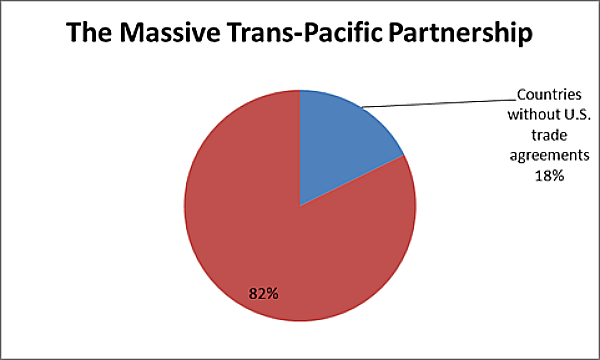
Value in Reading Others’ Propaganda

0

U.S. policymakers view their country as the “exceptional” and “indispensable” global policeman but shut their eyes to how other nations see the world, thus blinding America to emerging problems and possible solutions, as ex-CIA official Graham E. Fuller explains.

By Graham E. Fuller

All countries do it – promoting their own societies in ideal terms in order to influence others. The U.S. devotes a huge amount of time and money to selling its self-image and a view of the world as seen through American eyes – and perhaps denigrating others as well.

Such “crafted” image-making is hardly exclusive to the U.S. government. The New York Times, for example, supposedly our gold-standard on objective reporting, is heavily slanted when it comes to reporting nearly anything on China or Russia – among other issues.

United States President Barack Obama (third from left) and Vladimir V. Putin (second from right), President of the Russian Federation, share a toast at a luncheon hosted by Secretary-General Ban Ki-moon in honor of world leaders attending the general debate of the General Assembly. Also pictured: Andrzej Duda (left), President of the Republic of Poland.

United States President Barack Obama (third from left) and Vladimir V. Putin (second from right), President of the Russian Federation, share a toast at a luncheon hosted by Secretary-General Ban Ki-moon in honor of world leaders attending the general debate of the General Assembly. Also pictured: Andrzej Duda (left), President of the Republic of Poland.

If you recognize the nature of what you’re reading, that’s fine. But if you think you’re getting the full skinny on the world, then it can be dangerous and self-deceiving. As we say in the free market, let the buyer beware.

China and Russia, among others, certainly produce their own state propaganda, often far less skillfully than the U.S., and it more often comes in state-controlled media. The real danger, of course, comes when you start believing your own spin as representing reality around you.

But there can actually be some virtue in reading “propaganda.” (Let’s use a better description for it – promotion of one’s own view of the world – in the effort to bring others over to your view.) The value of reading such material can actually be great – particularly for those interested in international affairs. Certainly when I was at CIA we read a lot of what could be called “foreign propaganda.”

Indeed there was an entire branch of CIA which monitored and published on a daily…

Read more

Video: Sex for Repairs Scheme Alleged in Gilmor Homes

0


Federal lawsuit alleges residents of city housing project where Freddie Gray grew-up were asked to have sex in exchange for maintenance work.

Via Youtube

FBI to report on officer-involved shootings as overall crime rate drops

1

The FBI will begin tracking information on officer-involved shootings for its annual crime report. However, relevant data will continue to be submitted by law enforcement agencies on a voluntary basis, leading critics to call the upcoming data unreliable.

“[T]o address the ongoing debate about the appropriate use of force by law enforcement, we plan to collect more data about shootings (fatal and nonfatal) between law enforcement and civilians, and to increase reporting overall,” FBI Director James Comey said in a message introducing the 2014 Crime in the United States report.

The report comprises statistics and information provided by law enforcement agencies to the FBI’s Uniform Crime Reporting (UCR) Program. It measures the nation’s crime problem. Currently the program only collects data on the number of justifiable homicides reported by police as well as information about the felonious killing and assault of law enforcement officers.

“As helpful as this information is, however, we need more law enforcement agencies to submit their justifiable homicide data so that we can better understand what is happening across the country,” Comey said. The data will still be collected voluntarily, though, meaning that the FBI will not create a mandatory reporting system for officer-involved shootings.

Once the FBI begins collecting the expanded data, UCR plans to add a special publication that will focus on law enforcement’s use of force in shooting incidents, the agency said. The secondary report will outline facts detailing what happened, who was involved, whether there were injuries or deaths, and the circumstances surrounding each incident.

“We hope this information will become part of a balanced dialogue in communities and in the media ‒ a dialogue that will help to dispel misperceptions, foster accountability, and promote transparency in how law enforcement personnel relate to the communities they serve.” Comey said.

Laurie Robinson, co-chair of President Barack Obama’s Task Force on 21st Century Policing, described the current data as flawed and unreliable because of changes law enforcement agencies have made since national attention turned to the issue after a white police officer in Ferguson, Missouri shot and killed an unarmed black teenager in August 2014.

“There is a lag in the reporting of the data. The public and professional consciousness on these issues really has occurred in 2015, even though Ferguson occurred in 2014,” she told the Guardian. “So I’m not sure that one would expect there would be a dramatic change in behaviour in law enforcement in the last couple of months in 2014.”

Comey came out in favor of the additional reporting at the beginning of the year, saying it would lead to meaningful conversations.

“It’s ridiculous that I can’t tell you how many people were shot by police in this country,” he said during a February speech that addressed race relations between civilians and police in the United States.

During the same speech, he also admitted that there is “the widespread existence of unconscious bias. Many people in our white-majority culture have unconscious racial biases and react differently to a white face than a black face.” Comey then quoted ‘Everyone’s A Little Bit Racist’ from the Broadway musical ‘Avenue Q’.

Along with the announcement that the FBI would begin to track data of officer-involved shootings that aren’t ruled justifiable homicides or don’t involve law enforcement personnel as the victims, the agency also released its 2014 crime statistics.

The estimated number of violent crimes reported by law enforcement to UCR’s Summary Reporting System during 2014 ‒ just under 1.2 million violent crimes ‒ decreased 0.2 percent when compared with 2013 data, continuing a 20-year trend. The estimated number of property crimes ‒ nearly 8.3 million ‒ decreased 4.3 percent from 2013 levels. Police made an estimated 11.2 million arrests last year, including approximately half a million for violent crimes.

However, the total number of violent crimes did increase in 22 states between 2013 and 2014. The largest jumps occurred in Montana, with a 29.1 percent increase; Florida, up 16.9 percent; and Nebraska, up 7.7 percent. Total violent crimes dropped the most in Vermont, an 18.1 percent decrease; Connecticut, down 9.7 percent; and New Jersey, a 9.1 percent drop.

Beginning in January 2016, UCR Program will begin collecting data for its newest initiative ‒ animal cruelty offenses ‒ as requested by the National Sheriffs’ Association and the Animal Welfare Institute.

Via RT. This piece was reprinted by RINF Alternative News with permission or license.

Karma Police spying on the whole internet: Snowden

1

Documents recently leaked by NSA whistleblower Edward Snowden have revealed that Britain’s Government Communications Headquarters (GCHQ) mapped “every visible user on the internet,” in an operation code-named Karma Police.

According to the Intercept website, GCHQ launched the operation in 2009 without obtaining legal permission or Parliamentary consultation or public scrutiny, RT reported on Saturday.

The operation was designed in 2007-08 to link “every user visible to passive SIGINT with every website they visit, hence providing either (a) a web browsing profile for every visible user on the internet, or (b) a user profile for every visible website on the internet.”

The term SIGINT or signals intelligence refers to intelligence-gathering by interception of signals, whether it be communication between people or from electronic signals not directly used in communication.

In 2012, GCHQ, which provides intelligence by intercepting communications between people or equipment to the British government or armed forces, was collecting around 50 billion online metadata records per day. The information was then stored for later examination by data analysts.

GCHQ has declined from commenting on the matter, but insisted that its activities are carried out under strict monitoring procedures.

Read more

To NYT, ‘Diplomatic’ and ‘Unilateral’ Don’t Mean What You Think They Mean

0

A New York Times story by Michael Gordon (9/27/15) contains a line that sums up corporate media’s spin on the US role in the Syrian conflict:

Even as the United States has banked on a diplomatic strategy of trying to enlist Russia’s cooperation in Syria, the Kremlin has continued to jolt the White House with its unilateral military and political moves.

That “diplomatic strategy” involves getting Russia to endorse regime change in Syria, while the United States carries on a campaign against Syria that is anything but diplomatic. It’s involved facilitating the shipment of at least 160 planeloads of weapons to rebels trying to bring down the government, as the New York Times itself has reported (3/24/13; FAIR Blog, 2/22/15). It’s included the CIA spending a billion dollars–roughly 1/15th of the agency’s annual budget–to train fighters to overthrow Syrian President Bashar al-Assad (Washington Post, 6/12/15; FAIR Blog, 9/5/15).

It’s launched some 5,000 airstrikes in Syria and Iraq, mainly against the militant religious movement known as ISIS (Islamic State in Iraq and Syria), but it’s also declared that it will use air power to support anti-government forces. US bombing of ISIS has killed at least 584 noncombatant civilians in Syria and Iraq.

The US has even had ground troops fighting in Syria, sending special forces on commando raids to kill ISIS leaders (New York Times, 5/16/15; FAIR Blog, 5/19/15).

So that’s what the New York Times means by a “diplomatic strategy.”

This is contrasted with Russia’s “unilateral military and political moves.” What does this consist of? Well, the move that prompted Gordon to write an article was Russia’s bid to “expand its political and military influence” by “reaching an understanding, announced on Sunday, with Iraq, Syria and Iran to share intelligence about the Islamic State.” In other words, Russia agreed to share information with three internationally recognized governments about an openly genocidal militant group that has seized territory in two of the governments’ countries.

Why is that “unilateral”? Because, Gordon explains, it was done “without notice to the United States.”

Another thing that Russia did without first alerting the United States, Gordon wrote, was opening a military base in Syria. Actually, the Russian Federation has always had a military base in Syria, having inherited the naval base near Tartus from the Soviet Union. Now, according to the Times, Russia is also establishing an airbase near Latakia, about 50 miles away. The deployment of planes to the airbase, the Times reported in an earlier article, “appears to leave little doubt about Moscow’s goal to establish a military outpost in the Middle East.”

Hmm. Has any other country tried to establish a military outpost in the Middle East?

US military bases in Middle East

Partial map of US military bases in the Middle East (source: Juan Cole)

But no matter how many military bases the United States might put in the Middle East, by the Times‘ standards, this does not constitute “unilateral” military expansion. Why? Because, by definition, Washington is always kept informed.


Jim Naureckas is the editor of FAIR.org.

You can send a message to the New York Times at letters@nytimes.com, or write to public editor Margaret Sullivan at public@nytimes.com (Twitter:@NYTimes or @Sulliview). Please remember that respectful communication is the most effective.


This piece was reprinted by RINF Alternative News with permission from FAIR.

Video: Obama vs. Putin at the U.N.

0


President Obama and President Putin address the UN on their strategies for fighting the Islamic State.

Via Youtube

Instead of Shaming the Poor, Let’s Raise the Minimum Wage

0

Yesterday I joined Fox and Friends for what they billed, in typical Fox News fashion, as a “fair and balanced debate.” The topic was a Maine mayor’s call to publish the names and addresses of all recipients of public assistance online as a sort of “poverty-offender registry.” Mayor Robert MacDonald of Lewistown announced this ugly proposal last week in an op-ed in the local Twin-City Times, offering the justification that Mainers “have a right to know how their money is being spent.”

My conservative counterpart on the show–Seton Motley, a one-man political operation he calls Less Government (hey, at least he gets points for being straightforward)–defended “shaming the people who are sitting on welfare” as a tactic to get them off of assistance, and to crack down on what he termed “widespread welfare abuse.”

As I pointed out when my turn came to speak, the real shame is that our nation’s minimum wage is a poverty wage. In the late 1960s, the minimum wage was enough to keep a family of three out of poverty. Had it kept pace with inflation since then, it would be nearly $11 today, instead of the current $7.25 per hour.

And it’s not just workers earning the minimum wage who are struggling: Working families have seen decades of flat and declining wages, while those at the top of the income ladder capture an ever-rising share of the gains from economic growth.

As a result, millions of Americans are working harder than ever while falling further and further behind. And many are juggling two and three jobs in an effort to make enough to live on: 7 million Americans are working multiple jobs. (Remember Maria Fernandes, the New Jersey woman who died in her car after trying to get a few hours of sleep in between her four jobs?)

Read more


$1 billion contract to protect US government networks goes to Raytheon

0

The US Department of Homeland security has awarded Raytheon a five-year contract, which could be worth up to $1 billion, to protect government agencies from the growing number of cyber threats, in one of the largest civilian cybersecurity measures in years.

The deal boosts the protection of more than 100 federal agencies, making Raytheon the prime contractor the Department of Homeland Security’s Network Security Deployment (NDS) division. It comes alongside news that the Office of Personnel Management (OPM) fell victim to one of the most serious hacks is the history of the United States government.Hackers stole the personnel information of 21.5 million people current and former government employees, such as social security numbers and security clearance information, as well as the fingerprints of 5.6 million people.

“Today’s cyber threats are increasingly pervasive and serious, and our government and private sector institutions require the best protection possible,” Dave Wajsgras, president of Raytheon Intelligence, Information and Services, said in a press release. “Raytheon has invested over $3.5 billion in recent years to build our cybersecurity capabilities, and we’re looking forward to bringing the very best and most innovative solutions to the Department of Homeland Security.”

While the Boston-based defense contractor is known more for its radar and missile systems than cybersecurity, Raytheon acquired 12 cyber companies over the last 10 years, making this contract a big win for the company’s long-term strategy. This move was in contrast to the behavior of other defense contractors such as Lockheed Martin, who is focusing on its military hardware while laying off 500 employees in its information technology division, according to the Washington Post.

Wajsgras noted that cybersecurity incidents have, worldwide, increased an average of 66 percent a year between 2009 and 2014.

Raytheon’s stocks grew in price over 11 percent thanks to its focus on cybersecurity, according to Money Morning, jumping 1.5 percent Tuesday morning, following the announcement.

The White House has also raised the alarm about the issue of cybersecurity, saying that the country must take aggressive steps to secure the country’s networks. Director of National Intelligence, James Clapper, told the Senate Armed Services Committee on Tuesday that cyber threats to the United States were increasing in frequency, both from countries like China, who is blamed for the OPM hack, and from non-state actors.

“Such malicious cyber activity will continue and probably accelerate until we establish and demonstrate the capability to deter malicious state-sponsored cyber activity,” he said.

Clapper and the other officials said they see the agreement on cybersecurity between China and the United States as a “good first step,” but that it was unclear how effective the pact would be.

“We are not where we need to be in our deterrent posture,” US Deputy Defense Secretary Robert Work also said at the Senate hearing, according to Reuters.

Raytheon is also a finalist to win $2 million in DARPA’s Grand Cyber Challenge, which pits contestants against each other to make the best fully-automated computer security system.

Via RT. This piece was reprinted by RINF Alternative News with permission or license.

Obama Deifies American Hegemony

4

Paul Craig Roberts

(RINF) – Today is the 70th anniversary of the UN. It is not clear how much good the UN has done. Some UN Blue Hemet peacekeeping operations had limited success. But mainly Washington has used the UN for war, such as the Korean War and Washington’s Cold War against the Soviet Union. In our time Washington had UN tanks sent in against Bosnian Serbs during the period that Washington was dismantling Yugoslavia and Serbia and accusing Serbian leaders, who tried to defend the integrity of their country against Washington’s aggression, of “war crimes.”

The UN supported Washington’s sanctions against Iraq that resulted in the deaths of 500,000 Iraqi children. When asked about it, Clinton’s Secretary of State said, with typical American heartlessness, that the deaths of the children were worth it. In 2006 the UN voted sanctions against Iran for exercising its right as a signatory of the non-proliferation treaty to develop atomic energy. Washington claimed without any evidence that Iran was building a nuclear weapon in violation of the non-proliferation treaty, and this lie was accepted by the UN. Washington’s false claim was repudiated by all 16 US intelligence agencies and by the International Atomic Energy Agency inspectors on the ground in Iran, but in the face of the factual evidence the US government and its presstitute media pressed the claim to the point that Russia had to intervene and take the matter out of Washington’s warmonger hands. Russia’s intervention to prevent US military attacks on Iran and Syria resulted in the demonization of Russia and its president, Vladimir Putin. “Facts?!, Washington don’t need no stinkin’ facts! We got power!” Today at the UN Obama asserted America’s over-riding power many times: the strongest military in the world, the strongest economy in the world.

The UN has done nothing to stop Washington’s invasions and bombings, illegal under international law, of seven countries or Obama’s overthrow by coup of democratic governments in Honduras and Ukraine, with more in the works.

The UN does provide a forum for countries and populations within countries that are suffering oppression to post complaints–except, of course, for the Palestinians, who, despite the boundaries shown on maps and centuries of habitation by Palestinians, are not even recognized by the UN as a state.

On this 70th anniversary of the UN, I have spent much of the day listening to the various speeches. The most truthful ones were delivered by the presidents of Russia and Iran. The presidents of Russia and Iran refused to accept the Washington-serving reality or Matrix that Obama sought to impose on the world with his speech. Both presidents forcefully challenged the false reality that the propagandistic Western media and its government masters seek to create in order to continue to exercise their hegemony over everyone else.

What about China? China’s president left the fireworks to Putin, but set the stage for Putin by rejecting US claims of hegemony: “The future of the world must be shaped by all countries.” China’s president spoke in veiled terms against Western neoliberal economics and declared that “China’s vote in the UN will always belong to the developing countries.”

In the masterly way of Chinese diplomacy, the President of China spoke in a non-threatening, non-provocative way. His criticisms of the West were indirect. He gave a short speech and was much applauded.

Obama followed second to the President of Brazil, who used her opportunity for PR for Brazil, at least for the most part. Obama gave us the traditional Washington spiel:

The US has worked to prevent a third world war, to promote democracy by overthrowing governments with violence, to respect the dignity and equal worth of all peoples except for the Russians in Ukraine and Muslims in Somalia, Libya, Iraq, Afghanistan, Syria, Yemen, and Pakistan.

Obama declared Washington’s purpose to “prevent bigger countries from imposing their will on smaller ones.” Imposing its will is what Washington has been doing throughout its history and especially under Obama’s regime.

All those refugees overrunning Europe? Washington has nothing to do with it. The refugees are the fault of Assad who drops bombs on people. When Assad drops bombs it oppresses people, but when Washington drops bombs it liberates them. Obama justified Washington’s violence as liberation from “dictators,” such as Assad in Syria, who garnered 80% of the vote in the last election, a vote of confidence that Obama never received and never will.

Obama said that it wasn’t Washington that violated Ukraine’s sovereignty with a coup that overthrew a democratically elected government. It was Russia, whose president invaded Ukraine and annexed Crimera and is trying to annex the other breakaway republics, Russian populations who object to the Russophobia of Washington’s puppet government in Ukraine.

Obama said with a straight face that sending 60 percent of the US fleet to bottle up China in the South China Sea was not an act of American aggression but the protection of the free flow of commerce. Obama implied that China was a threat to the free flow of commerce, but, of course, Washington’s real concern is that China is expanding its influence by expanding the free flow of commerce.

Obama denied that the US and Israel employ violence. This is what Russia and Syria do, asserted Obama with no evidence. Obama said that he had Libya attacked in order to “prevent a massacre,” but, of course, the NATO attack on Libya perpetrated a massacre, an ongoing one. But it was all Gaddafi’s fault. He was going to massacre his own people, so Washington did it for him.

Obama justified all of Washington’s violence against millions of peoples on the grounds that Washington is well-meaning and saving the world from dictators. Obama attempted to cover up Washington’s massive war crimes, crimes that have killed and displaced millions of peoples in seven countries, with feel good rhetoric about standing up to dictators.

Did the UN General Assembly buy it? Probably the only one present sufficiently stupid to buy it was the UK’s Cameron. The rest of Washington’s vassals went through the motion of supporting Obama’s propaganda, but there was no conviction in their voices.

Vladimir Putin would have none of it. He said that the UN works, if it works, by compromise and not by the imposition of one country’s will, but after the end of the Cold War “a single center of domination arose in the world”–the “exceptional” country. This country, Putin said, seeks its own course which is not one of compromise or attention to the interests of others.

In response to Obama’s speech that Russia and its ally Syria wear the black hats, Putin said in reference to Obama’s speech that “one should not manipulate words.”

Putin said that Washington repeats its mistakes by relying on violence which results in poverty and social destruction. He asked Obama: “Do you realize what you have done?”

Yes, Washington realizes it, but Washington will not admit it.

Putin said that “ambitious America accuses Russia of ambitions” while Washington’s ambitions run wild, and that the West cloaks its aggression as fighting terrorism while Washington finances and encourages terrorism.

The President of Iran said that terrorism was created by the US invasion of Afghanistan and Iraq and by US support for the Zionist destruction of Palestine.

Obama’s speech made clear that Washington accepts no responsibility for the destruction of the lives and prospects of millions of Muslims. The refugees from Washington’s wars who are overflowing Europe are the fault of Assad, Obama declared.

Obama’s claim to represent “international norms” was an assertion of US hegemony, and was recognized as such by the General Assembly.

What the world is faced with is two rogue anti-democratic governments–the US and Israel–that believe that their “exceptionalism” makes them above the law. International norms mean Washington’s and Israel’s norms. Countries that do not comply with international norms are countries that do not comply with Washington and Israel’s dictates.

The presidents of Russia, China, and Iran did not accept Washington’s definition of “international norms.”

The lines are drawn. Unless the American people come to their senses and expel the Washington warmongers, war is our future.

Dr. Paul Craig Roberts was Assistant Secretary of the Treasury for Economic Policy and associate editor of the Wall Street Journal. He was columnist for Business Week, Scripps Howard News Service, and Creators Syndicate. He has had many university appointments. His internet columns have attracted a worldwide following. Roberts’ latest books are The Failure of Laissez Faire Capitalism and Economic Dissolution of the West and How America Was Lost.

Irresponsible Putin Bashing Following His UN Address

6


by Stephen Lendman
(RINF) – It’s always open season on irresponsibly bashing him – instead of embracing his sensible solutions to major world problems.
Western media are relentless, marching to the drumbeat of imperial regimes they represent, partnering with America’s killing machine – polar opposite Putin’s global peace and stability agenda, respecting the sovereign rights of all nations, urging unity to achieve common objectives benefitting everyone.
Major media in America long ago lost credibility. They’re self-serving disreputable agents of wealth, power and privilege, substituting misinformation and Big Lies for hard truths, turning growing numbers of people to reliable alternative choices for news, information and analysis, impossible to get from sources like The New York Times.
Its editors headlined “Putin and Obama Have Profound Differences on Syria.” They lied accusing Russia’s leader of US aggression in Syria.
They ignored his all-out efforts for peace – criticizing his alliance with Iran, Iraq, Syria and now China to cooperate in eliminating the scourge of international terrorism.
They repeated the Big Lie alleging Russia’s beefed up military presence in Syria, suggesting it intends using military force to help Assad combat ISIS, ignoring Putin flatly denying it.
Times editors: “…Assad’s main target has always been his domestic opposition, not the Islamic State.”
Fact: Responsible editors wouldn’t tolerate this rubbish in their publications – a bald-faced lie, trivializing the suffering of millions of Syrians terrorized by US-sponsored ISIS death squads.
Syria enjoyed peace and stability until Obama launched naked aggression in March 2011, using imported proxy terrorists to do his dirty work – notably Islamic State fighters, a US creation, not a force that arose on its own.
It couldn’t exist without US support – supplying funding, weapons, training and direction. The vast majority of these terrorists aren’t Syrians, imported from scores of regional and other countries, notably European ones.
Times editors accepted Obama’s Big Lie claiming Assad “reacted to peaceful protests by escalating repression and killing that, in turn, created the environment for the current strife.”
Fact: So-called “peaceful protests” were US-instigated violence, aimed at toppling Assad, similar to schemes Washington uses to replace numerous independent governments with ones it controls.
Times editors support US imperial wars, its efforts to replace all independent leaders, including Assad – ignoring his overwhelming popular support and the right of Syrians to choose their own leader, free from outside interference.
The Times mocked Putin’s sensible proposal for “a genuinely broad international coalition” to fight Islamic State terrorists. Its editors absurdly claimed his intent is “to supplant the American-led coalition that has been bombing Islamic State militants for over a year…”
Fact: Washington and complicit partners support Islamic State terrorists, attacking Syrian infrastructure targets, systematically destroying the country along with its proxy ground force, part of the strategy to topple its government.
Times editors: “Putin…has no particular strategy to contain the Syrian conflict.”
Fact: He has the only sensible one – international unity to combat ISIS, easily defeated without Western and regional support.
Times editors: “Obama…did not create this catastrophe…”
Fact: He bears full responsibility for naked aggression against a non-threatening country – the supreme crime against peace.
Washington Post editors said Putin and Obama are wrong on Syria. They lied claiming Putin “boldly deployed troops and planes on behalf of Syria’s bloodstained dictatorship.”
They urged nations to reject his sensible plan to combat ISIS, the only way to defeat it. They ignored Obama’s full responsibility for inciting violence, followed by US naked aggression using imported death squads, blaming Assad for his crimes.
They praised Obama’s litany of lies in his deplorable UN address. They criticized his weak effort to topple Assad – with no “strategy…to counter Mr. Putin…”
Wall Street Journal editors took issue with Obama not being more aggressive than already. Endless devastating wars in Afghanistan, Iraq, Libya, Syria, Donbass and Yemen aren’t enough.
They want them escalated, likely more launched, perhaps against Iran, Russia and China. They’re terrified about the prospect of an effective Russian, Iranian, Iraqi, Syrian alliance to combat ISIS, exposing US efforts as phony.
They claim “(t)he Putin-Tehran goal in Syria is part of a strategy to build an arc of influence that extends from Western Afghanistan through the Eastern Mediterranean…to isolate US allies in Kurdish Iraq and Israel, while forcing the Sunni Arabs to accommodate the Shiite-Russian alliance or face internal agitation and perhaps external conflict.”
They ignore Putin and Iran’s genuine interest in restoring peace and stability to a troubled region – because of America’s endless wars of aggression, its orgy of violence, a policy of continued mass slaughter and destruction.
Journal editors are notorious Putin bashers. They hammer Obama for not being more aggressive than already. Their strategy for world peace is total war – an agenda for ending life on earth.
Stephen Lendman lives in Chicago. He can be reached at lendmanstephen@sbcglobal.net.
His new book as editor and contributor is titled “Flashpoint in Ukraine: US Drive for Hegemony Risks WW III.”
http://www.claritypress.com/LendmanIII.html
Visit his blog site at sjlendman.blogspot.com.
Listen to cutting-edge discussions with distinguished guests on the Progressive Radio News Hour on the Progressive Radio Network.


It airs three times weekly: live on Sundays at 1PM Central time plus two prerecorded archived programs.

The Fascist World of ‘Minority Report’

1

“The Internet is watching us now. If they want to. They can see what sites you visit. In the future, television will be watching us, and customizing itself to what it knows about us. The thrilling thing is, that will make us feel we’re part of the medium. The scary thing is, we’ll lose our right to privacy. An ad will appear in the air around us, talking directly to us.”–Director Steven Spielberg, Minority Report

We are a scant 40 years away from the futuristic world that science fiction author Philip K. Dick envisioned for Minority Report in which the government is all-seeing, all-knowing and all-powerful, and if you dare to step out of line, dark-clad police SWAT teams will crack a few skulls to bring the populace under control.

Unfortunately, as I point out in my book Battlefield America: The War on the American People, we may have already arrived at the year 2054.

Increasingly, the world around us resembles Dick’s dystopian police state in which the police combine widespread surveillance, behavior prediction technologies, data mining and precognitive technology to capture would-be criminals before they can do any damage. In other words, the government’s goal is to prevent crimes before they happen: precrime.

For John Anderton (played by Tom Cruise), Chief of the Department of Pre-Crime in Washington, DC, the technology that he relies on for his predictive policing proves to be fallible, identifying him as the next would-be criminal and targeting him for preemptive measures. Consequently, Anderton finds himself not only attempting to prove his innocence but forced to take drastic measures in order to avoid capture in a surveillance state that uses biometric data and sophisticated computer networks to track its citizens.

Seemingly taking its cue from science fiction, technology has moved so fast in the short time since Minority Reportpremiered in 2002 that what once seemed futuristic no longer occupies the realm of science fiction. Incredibly, as the various nascent technologies employed and shared by the government and corporations alike–facial recognition, iris scanners, massive databases, behavior prediction software, and so on–are incorporated into a complex, interwoven cyber network aimed at tracking our movements, predicting our thoughts and controlling our behavior, Spielberg’s unnerving vision of the future is fast becoming our reality.

Examples abound.

FICTION: In Minority Report, police use holographic data screens, city-wide surveillance cameras, dimensional maps and database feeds to monitor the movements of its citizens.

REALITY CHECK: Microsoft, in a partnership with New York City, has developed a crime-fighting system that “will allow police to quickly collate and visualise vast amounts of data from cameras, licence plate readers, 911 calls, police databases and other sources. It will then display the information in real time, both visually and chronologically, allowing investigators to centralise information about crimes as they happen or are reported.”

Read more

Video: ISIS, The New Israel

0


In this episode of Days of Revolt, Chris Hedges and Sabah Alnasseri discuss how US foreign policy and class struggle created the conditions for the rise of ISIS, …

Via Youtube

Video: Top U.S. and World News Headlines for Tuesday, September 29

0


Visit http://democracynow.org to watch the full independent, global news hour, read the transcript, search our archive, and to make a donation to support us.

Via Youtube

Ending Police Militarization, One City at a Time

0

Urban Shield, the world’s largest SWAT training and war-weapons expo, was held in September in California’s Bay Area, beginning on the 14th anniversary of 9/11. Hosted each year since 2007 in the Bay Area’s Alameda County (last year in Oakland, this year in Pleasanton) with exercises all across the Bay, it is attended by hundreds of local, federal and international law enforcement agencies and weapons manufacturers.

Since his tenure began in 2007, Alameda County’s sheriff, Gregory J. Ahern, has been waging war on Black and Brown communities across the Bay Area. Urban Shield solidifies Ahern’s war, and makes it a profitable one. As the Bay Area Urban Shield’s core organizer, he has received over $100,000 in contributions for his electoral campaign from Urban Shield vendors, such as 511 Tactical, Adamson Police Products and Corizon Health. But he’s not the only one. Local, federal and international agencies coordinate through police trainings and weapons expos all over the world, much like Urban Shield, to trade tactics and military-grade weaponry.

Urban Shield is just one such police militarization expo: a convenient “one-stop shop” for anything a police department might need to turn regular beat cops into SWAT-like robo-cops. Granted, Alameda County police forces were committing brutality long before Urban Shield first began in 2007. It has been occurring since the mid-1960s to 1980s, as high-level military equipment and techniques were nationally transferred to police departments for “war on drugs” activities. Post-9/11 saw a morphing of these weapons transfer programs between the military and police for the “war on terror” and for the “enhancement of officer safety.”

Read more

‘Surveillance bill in disguise’ might make a Senate comeback this week

1

As Congress scurries to avoid another government shutdown, lawmakers may be ready to once again bring up a controversial information-sharing bill for consideration this week, which critics dubbed “a surveillance bill masquerading as a cybersecurity bill.”

According to a report by Politico, confusion reigns at the Senate as Majority Leader Mitch McConnell (R-Kentucky) mulls over the chamber’s upcoming schedule. One unidentified source told the outlet that it was “likely” McConnell paves the way for a reintroduction of the Cybersecurity Information Sharing Act (CISA), but others said the situation was still “very uncertain.”

If passed into law, the bill would give companies greater liability protection when it comes to collecting personal data that could potentially be related to security threats. It would also allow them to share that information with government departments such as the National Security Agency.

Debate over the cyber bill has been extremely contentious, with privacy advocates routinely devising campaigns against it and claiming it will actually grant the federal government more power to spy on Americans than it already has.

The arguments intensified this month after The Software Alliance (BSA), which advocates for the global software industry, penned a letter to lawmakers urging them to take action on five digital priorities. One of these included “cyber threat information sharing legislation” allowing private companies with information about “vulnerability and intrusions to more easily share that information voluntarily.”

Signed by large companies such as Apple, IBM, Microsoft and others, the letter was seen by privacy advocates as granting support for CISA, though it did not explicitly endorse the bill. One advocacy group, Fight for the Future, even set up a website called YouBetrayedUs.org to criticize the organizations. The group has also called CISA “a surveillance bill in disguise.”

“Many of these companies have previously claimed to fight for their users’ privacy rights, but by supporting this type of legislation, they’ve made it clear that they’ve abandoned that position, and are willing to endanger their users’ security and civil rights in exchange for government handouts and protection,” the website reads.

Since then, one company, SalesForce, stated that it does not support CISA. Meanwhile, the BSA updated its site to say that it “does not support any of the three current bills pending before Congress,” including CISA.

“BSA has consistently advocated for strong privacy protections in all information sharing bills currently pending before the Congress,” the group’s website continued

The CISA bill gained a new lease on life, though, after the massive hack that targeted the government’s Office of Personnel Management (OPM) earlier this year. Declared the largest hack in government history, the attack claimed the personal information of more than 21 million people, the vast majority of which either were or currently are federal employees. Last week, the agency said hackers also gained access to the fingerprint records of some 5.6 million people.

Combined with the hack against Sony Pictures Entertainment last year, the incidents caused President Obama and congressional lawmakers to renew their push for more cooperation between the private and public sectors to fight cyber threats. Supporters argue that CISA will permit officials to more easily discover digital threats and potentially stop them before they strike.

Critics have questioned that line of thought, saying the current bill does not offer enough protections for individuals and that companies won’t be required to delete personal information before sharing it with the government. Data such as credit card information, addresses and more information could then be funneled into federal hands.

In July, Senator Ron Wyden (D-Oregon) reiterated the concerns of privacy advocates, saying CISA offers few incentives for companies to keep personal information private.

“The government can’t keep its own data safe,” he said, referring to the OPM hack. “Giving more of your information to the government creates a huge new target for hackers.”

Via RT. This piece was reprinted by RINF Alternative News with permission or license.

The Superpower as Victim: Three Exceptional Facts About America

3

Why it’s safe to be paranoid in the U.S.

Given the cluttered landscape of the last 14 years, can you even faintly remember the moment when the Berlin Wall came down, the Cold War ended in a stunned silence of shock and triumph in Washington, Eastern Europe was freed, Germany unified, and the Soviet Union vanished from the face of the Earth? At that epochal moment, six centuries of imperial rivalries ended. Only one mighty power was left.

There hadn’t been a moment like it in historical memory: a single “hyperpower” with a military force beyond compare looming over a planet without rivals. Under the circumstances, what couldn’t Washington hope for? The eternal domination of the Middle East and all that oil? A planetary Pax Americana for generations to come? Why not? After all, not even the Romans and the British at the height of their empires had experienced a world quite like this one.

Now, leap a quarter of a century to the present and note the rising tide of paranoia in this country and the litany of predictions of doom and disaster. Consider the extremity of fear and gloom in the party of Ronald “It’s Morning Again in America” Reagan in what are called “debates” among its presidential candidates, and it’s hard not to imagine that we aren’t at the precipice of the decline and fall of just about everything. The American Century? So much sawdust on the floor of history.

If, however, you look at the country that its top politicians can now hardly mention without defensively wielding the words “exceptional” or “indispensable,” the truly exceptional thing is this: as a great power, the United States still stands alone on planet Earth and Americans can exhibit all the paranoia they want in remarkable safety and security.

Here, then, are three exceptional facts of our moment.

Exceptional Fact #1: Failure Is Success, or the U.S. Remains the Sole Superpower

If you were to isolate the single most striking, if little discussed, aspect of American foreign policy in the first 15 years of this century, it might be that Washington’s inability to apply its power successfully just about anywhere confirms that very power; in other words, failure is a marker of success. Let me explain.

In the post-9/11 years, American power in various highly militarized forms has been let loose repeatedly across a vast swath of the planet from the Chinese border to deep in Africa — and nowhere in those 14 years, despite dreams of glory and global dominion, has the U.S. succeeded in any of its strategic goals. That should qualify as exceptional in itself. After all, what are the odds that, in all that time, nothing should turn out as planned or positively by Washington’s standards? It could not win its war in Afghanistan; nor its two wars, one ongoing, in Iraq; nor has it had success in its present one in Syria; it failed to cow Iran; its intervention in Libya proved catastrophic; its various special ops and drone campaigns in Yemen have led to chaos in that country; and so, as novelist Kurt Vonnegut used to say, it goes.

Read more


Labour says no to austerity, vows aggressive tax crackdown

2

Britain’s opposition Labour Party on Monday voiced strong anti-austerity sentiments and said it would enforce an aggressive policy of collecting taxes from the wealthy if it won the next election.

The Party’s top economic spokesman John McDonnell emphasized that major businesses will be forced to pay their “fair share” of taxes to help end austerity policies.

McDonnell said Labour was now “the only anti-austerity party in Britain,” adding that austerity is not “an economic necessity” and that it is rather “a political choice”.

He accused the Conservative-led government of making a “conscious decision” six years ago to protect the very wealthy at the expensive of ordinary people.

“We need to prove to the British people we can run the economy better than the rich elite that runs it now,” McDonnell told his party’s four-day annual conference in the southern city of Brighton as he outlined the party’s economic plans.

“Labour’s plan to balance the books will be aggressive. We will force people like Starbucks, Vodafone, Amazon and Google and all the others to pay their fair share of taxes,” he said to loud applause, as Reuters reported.


Read more

An Important New Reason to Keep Pesticides Away from Children

1

Despite major improvements in treatment and survival, children’s cancer rates are rising in the United States, leaving parents and scientists alike searching for evidence of what’s behind the trend. A new report sheds light into one avoidable risk: household pesticides.

Children exposed to insecticides inside their homes have a 47 percent higher risk of developing certain cancers in childhood, according to the report by Alex Lu and his colleagues at the Harvard TH Chan School of Public Health.

The research team examined 16 high-quality studies of children’s risks and found that indoor exposure to insecticides was associated with higher rates of leukemia and lymphoma, the most common cancers diagnosed in children. Exposure to outdoor herbicides (weed killers), but not insecticides (bug killers), was associated with 26 percent higher childhood leukemia risk.

Due to the complexity of studying people in the real world, there aren’t any studies examining whether childhood exposures to pesticides increase the risk of developing cancer in adulthood. But childhood exposure could also be causing health issues that manifest later in life.

What can parents do to protect their children? Stop using pesticides on your lawn and garden. Indoors, use pesticides only as a last resort. Then follow these tips to keep your home pest-free.

Take preventive steps. You can make changes in your home to deter pests like roaches, ants, wasps and rodents from living there in the first place. Schools and daycares should do the same.

  • Reduce pest temptations. Pests are attracted to food and water. Store food securely in airtight bins, containers or the refrigerator. Don’t leave food or liquids out overnight and take out the trash regularly. Remember your pet’s food is just as tempting to a pest as your own.
  • Clean thoroughly and often. Minimize food crumbs by regularly cleaning kitchen counters, tables, ovens and stovetops, and anywhere else crumbs collect, such as cabinet corners. Visit EWG’s Guide to Healthy Cleaning for product recommendations.

Read more


US national debt is so bad now that the U.S. Treasury has simply stopped reporting it

2

“Officially,” the U.S. national debt has frozen in time, though “unofficially” it continues to grow at a frenetic pace.

What’s going on? Did the federal government suddenly become fiscally responsible and we are no longer accumulating country-destroying debt?

If you believe the U.S. Department of the Treasury, yes. As reported recently by CNS News, the national debt froze for more than 21 days.

Oh, wait. Look at the official figure being reported: $18,112,975,000,000. That just happens to be the official debt limit set by Congress. Indeed, $18,112,975,000,000 is about $25 million below the current legal debt limit of $18,113,000,080,959.35.

In a March 13 letter to House Speaker John Boehner, R-Ohio, Treasury Secretary Jack Lew explained that he was planning to declare a “debt issuance suspension period.” That was required, he explained, because in 2014 Congress passed legislation that “suspended” the debt limit until March 15, but reinstated it again on that date at whatever level the debt had reached at that time.

“As you know, in February 2014, Congress passed the Temporary Debt Limit Extension Act, suspending the statutory debt limit through March 15, 2015,” Lew said in his letter. “Beginning on Monday, March 16, the outstanding debt of the United States will be at the statutory limit. In anticipation of reaching that date, Treasury has suspended until further notice the issue of State and Local Government Series securities, which count against the debt limit.”

What are State and Local Government Series securities? According to the Congressional Research Service they are “customized securities available for state and local governments to hold proceeds of bond sales.” They are further considered to be part of the federal government debt held by the public.

“Because Congress has not yet acted to raise the debt limit,” Lew continued in his letter, “the Treasury Department will have to employ further extraordinary measures to continue to finance the government on a temporary basis. Therefore, beginning on March 16, I plan to declare a ‘debt issuance suspension period’ with respect to investment of the Civil Service Retirement and Disability Fund and also suspend the daily reinvestment of Treasury securities held by the Government Securities Investment Fund and the Federal Employees’ Retirement System Thrift Savings Plan.”

Some of these same actions have been taken before, during earlier periods when the debt seemed to freeze in time.

In a separate report entitled, “Reaching the Debt Limit: Background and Potential Effects on Government Operations,” the CRS further explained:

Under current law, if the Secretary of the Treasury determines that the issuance of obligations of the United States may not be made without exceeding the debt limit, a ‘debt issuance suspension period’ may be determined. This determination gives the Treasury the authority to suspend investments in the Civil Service Retirement and Disability Trust Fund, Postal Service Retiree Health Benefit Fund, and the Government Securities Investment Fund (G-Fund) of the Federal Thrift Savings Plan.

In addition, this gives Treasury the authority to prematurely redeem securities held by the Civil Service Retirement and Disability Trust Fund and Postal Service Retiree Health Benefit Fund.

In other words, in order to avoid exceeding the congressionally set debt limit, which is codified in statutory law, the Treasury secretary has the authority to simply cook the books and then “declare” that Uncle Sam is no longer accruing any debt.

So, why doesn’t the government just “declare” that it no longer even has any debt? Because it does – the federal government owes creditors, many of whom are foreign governments, and cannot simply whitewash them away.

The Treasury also engages in Ponzi schemes. Click here to see how these financial “geniuses” get creative with the numbers, in order to avoid telling Americans just how bad things really are.

Sources:

http://cnsnews.com

http://www.treasury.gov

http://cnsnews.com

http://www.naturalnews.com

Reprinted on RINF Alternative News with permission from
Natural News.

Video: Obama & Putin Spar at U.N.: Will Regime Change in Syria Further Destabilize War-Torn Nation?

0


Democracynow.org – President Barack Obama and Russian President Vladimir Putin held their first formal meeting in two years on Monday in New York to …

Via Youtube

Hillary Clinton’s ‘Wicked’ Syrian Choice

1

As Secretary of State, Hillary Clinton bought into the neocon/liberal-hawk agenda which spread the chaos of Iraq across Libya, Syria and now into Europe. How Clinton approached those challenges suggests that she would head down the same “regime change” path as President, Rick Sterling explains.

By Rick Sterling

Key leaders from around the world are present at the United Nations this week to discuss critical issues; one of the most pressing is Syria. How did we get to this point with half the Syrian population (almost 12 million) displaced and under-populated but huge areas of Syria now controlled by the Islamic State (also known as ISIS), Al Qaeda (Nusra) and other fanatical fundamentalist groups?

Hillary Clinton’s 2014 book Hard Choices reveals important information about the first years of the Syrian conflict and how we got where we are today. Clinton’s account conveys the perception, priorities and bias at the top level of the Obama administration. The book describes policy differences within the administration and the common assumptions and goals which have led to the current disastrous situation.

Clinton’s chapter on Syria, entitled “Syria: A Wicked Problem,” documents how the U.S. and regional allies tried to overthrow the government of President Bashar al-Assad in Damascus. The “wicked problem” is that there was no easy way. Attack directly? Train a proxy army? Supply the armed opposition with weapons secretly or publicly? Create a “No Fly Zone”? Bomb Damascus? These are the question considered.

The dominance of the neoconservative mentality in Washington and throughout the Western media is demonstrated by the fact that foreign demands that “Assad must go” are rarely questioned despite the fact it’s in clear violation of international law and the UN Charter.

Read more

Video: A Voice for Dalit Women in India: Ruth Manorama Speaks Out Against Caste-Based Discrimination

0


Democracynow.org – There are 200 million Dalits, who were previously called “untouchables,” in India. According to the country’s National Crime Records …

Via Youtube

Video: Main Stream Media Hack Chris Matthews Finally Exposed On Slander and Lies

1


In this video Luke Rudkowski finally get a chance to catch up with MSNBC star anchor Chris Matthews about his on air slander and lies about WeAreChange …

source

Video: Luc Jouret’s Order of the Solar Temple cult in Switzerland 1994. 100 members dead

0


1994: Cult members die in ‘mass suicide’ The bodies of 48 cult members have been discovered by Swiss police following an apparent mass suicide.

Via Youtube

Video: Dr. Sherri Tenpenny: “There’s No Such Thing As A Clean Vaccine!”

0


Please Support The Show — http://richieallenshow.com/donate/ https://DrTenpenny.com http://richieallenshow.com/ https://www.facebook.com/richieallenshow …

Via Youtube

Video: Thousands Protest Indian PM Narendra Modi in U.S. over Human Rights Record

0


Democracynow.org – Indian Prime Minister Narendra Modi addressed the U.N. General Assembly on Monday before leaving the United States after a seven-day …

Via Youtube

Video: ‘They just want to kill each other, don’t know why’: Children of the world speak out on war

0


Sometimes children can be wiser than grown-ups. When political leaders meet to discuss global issues and have big talks, RT asks kids from all over the world …

Via Youtube

Video: UNGA from inside: Join RT’s Anissa Naouai on unique tour of UN HQ

0


For 63 years, world-changing decisions have been made in these halls. Anissa Naouai talks about the history of UNGA from UN HQ READ MORE …

Via Youtube

Video: Timelapse: ‘Super Blood Moon’ moving across London’s sky

0


A time-lapse setup caught stunning pictures of the ‘Super Blood Moon’ moving across London’s sky on the early hours of Monday morning. For the first time in …

Via Youtube

Video: RAW: ‘Super Blood Moon’ dominates London’s horizon

0


‘The Super Blood Moon’ dominated London’s skyline on Monday morning. The moon’s red appearance is due to sunlight being scattered by the Earth’s …

Via Youtube

Imperial legacy: Jamaica demands slavery reparations from Britain

5

Prime Minister David Cameron has been reminded of his family’s links to slavery as he faces calls for Britain to pay Jamaica millions of pounds in reparations ahead of his first official visit to Kingston on Tuesday.

Academics and politicians in Jamaica have demanded the PM issue an apology for the hundreds of years during which Britain enslaved and “extracted wealth” from the island’s people.

In an open letter to Cameron published in the Jamaica Observer, historian Sir Hilary Beckles reminded the PM that his ancestral family benefited from slavery on the island through General Sir James Duff, Cameron’s cousin six times removed.

Downing Street has dismissed Jamaica’s call for reparations on the grounds slavery took place under a different government, hundreds of years ago.
In a cutting letter to the PM, Beckles reminded Cameron of his family’s own involvement in Jamaican slavery.

“You are a grandson of the Jamaican soil who has been privileged and enriched by your forebears’ sins of the enslavement of our ancestors … You are, Sir, a prized product of this land and the bonanza benefits reaped by your family and inherited by you continue to bind us together like birds of a feather,” he wrote.

“I speak, Sir, of the legacies of slavery that continue to derail, undermine and haunt our best efforts at sustainable economic development and the psychological and cultural rehabilitation of our people from the ravishes of the crimes against humanity committed by your British State and its citizens in the form of chattel slavery and native genocide,” he went on to say.

Buckles wrote that while Jamaica fueled Britain’s economic growth at a crucial time in its history, helping it to “become great.” He called on the UK to reciprocate as part of an effort in “cleaning up this monumental mess of Empire.”

“We ask not for handouts or any such acts of indecent submission. We merely ask that you acknowledge responsibility for your share of this situation and move to contribute in a joint program of rehabilitation and renewal,” he added.

Via RT.

Video: Scuffles in Stuttgart: Police teargas fighting Turks & Kurds

0


At least 20 people were arrested as Turkish and Kurdish groups clashed in Stuttgart on Sunday. Police sprayes pepper gas and chased the rival groups through …

Via Youtube

US slams top EU high court official over data privacy deal

1

The United States has criticized a top adviser to the European Union’s high court for describing an important data privacy agreement between the US and the European Union as invalid.

On Wednesday, Yves Bot, an advocate general for the European Court of Justice (ECJ), said the US intelligence practices disclosed by Edward Snowden render the protections of the Safe Harbor program invalid.

“Because the surveillance carried out by the US is mass, indiscriminate surveillance … in those circumstances, a third country cannot in any event be regarded as ensuring an adequate level of protection,” Bot wrote in a non-binding opinion.

On Monday, the US mission to the EU said in a statement that “we believe that it is essential to comment in this instance because the Advocate General’s opinion rests on numerous inaccurate assertions about intelligence practices of the United States.”

The US mission rejected Bot’s claim that the US is involved in mass surveillance, noting that the spying program targets only “valid foreign intelligence threats” and that it abides by “publicly disclosed limitations.”

Under the 2000 agreement, technology giants, including Google and Facebook can legally funnel data for EU citizens across the Atlantic as they “self certify” that their data-privacy practices are equal to stricter EU regulations.


Read more

How Henry Kissinger Helped Create Our "Proliferated" World

1

The only person Henry Kissinger flattered more than President Richard Nixon was Mohammad Reza Pahlavi, the Shah of Iran. In the early 1970s, the Shah, sitting atop an enormous reserve of increasingly expensive oil and a key figure in Nixon and Kissinger’s move into the Middle East, wanted to be dealt with as a serious person. He expected his country to be treated with the same respect Washington showed other key Cold War allies like West Germany and Great Britain. As Nixon’s national security adviser and, after 1973, secretary of state, Kissinger’s job was to pump up the Shah, to make him feel like he truly was the “king of kings.”

Reading the diplomatic record, it’s hard not to imagine his weariness as he prepared for his sessions with the Shah, considering just what gestures and words would be needed to make it clear that his majesty truly mattered to Washington, that he was valued beyond compare. “Let’s see,” an aide who was helping Kissinger get ready for one such meeting said, “the Shah will want to talk about Pakistan, Afghanistan, Saudi Arabia, the Gulf, the Kurds, and Brezhnev.”

During another prep, Kissinger was told that “the Shah wants to ride in an F-14.” Silence ensued. Then Kissinger began to think aloud about how to flatter the monarch into abandoning the idea. “We can say,” he began, “that if he has his heart set on it, okay, but the President would feel easier if he didn’t have that one worry in 10,000 [that the plane might crash]. The Shah will be flattered.” Once, Nixon asked Kissinger to book the entertainer Danny Kaye for a private performance for the Shah and his wife.

The 92-year-old Kissinger has a long history of involvement in Iran and his recent opposition to Barack Obama’s Iran nuclear deal, while relatively subdued by present Washington standards, matters. In it lies a certain irony, given his own largely unexamined record in the region.

Read more

Video: CrossTalk: Exiting recession

0


The recession in Russia is turning out to be longer and deeper than most economists had expected. Nonetheless, there is a growing consensus the worst is …

Via Youtube

UK calls for UN to impose sanctions against four British nationals

0

The United Nations (UN) is expected to impose sanctions, upon a request by the UK government, on four British nationals accused of fighting or recruiting for the Takfiri Daesh (ISIL) terrorist group operating in Syria.

Britain named the four as 21-year-old Asqa Mahmood, Sally Anne Jones, 46, Abu-Said al-Britani, also known as Omar Hussain, 28, and Nasser Muthana, 21.

The two women and men, who are thought to be based in Syria’s northern militant-held city of Raqqa, will face UN travel bans and asset freezes.

Double standards

A spokesman for UK Prime Minister David Cameron, whose name was not mentioned in the reports, said Monday that the move to place the four Britons under UN sanctions is meant to stop more people from being lured into joining the ranks of Daesh.

“We will do all we can to stop British citizens from going to fight for ISIL,” the UK official said.

The British government said it was the first time in 10 years that Britain had submitted names to the UN sanctions list.

Read more

Human rights abuse rampant in Turkey — British lawyers

2

The Turkish government is guilty of systemic human rights violations, according to a report written by Britain’s top lawyers and commissioned by President Erdogan’s exiled rival and outspoken critic Fethullah Gulen.

The inquiry’s findings, which were published Monday, were that some 40,000 police officers, civil servants, judges and public prosecutors were removed from their posts since 2013. Drawing attention to Erdogan administration’s egregious restriction of freedom of expression, the 95-page report called for legal action against the Turkish government from the European Court of Human Rights (ECHR).

“From the perspective of international human rights law, we consider that the Turkish government has perpetrated significant human rights violations against supporters of the Gulen movement that would justify legal action before the European Court of Human Rights, in the absence of suitable remedies in Turkey,” the authors of the report said.

The authors warned that the pattern of human rights violations represents a step backward away from democracy in Turkey.

“We have analyzed the actions taken by the Turkish government and its agents since December 2013 and have unanimously concluded that there has been a distinct reversal in the reform process that had been taking place since Turkey began accession talks with the European Union in 2005,” they said.

“We regard this as a serious setback for Turkish democracy and its respect for human rights, in particular for the freedom of speech and the rule of law.”

The report was written by four leading British lawyers, including Lord Woolf, a former lord chief justice, and Sir Edward Garnier QC, a Conservative MP and former solicitor general. Funding for the report was provided by the US-based Journalist and Writers Foundation, whose honorary chairman is Gulen, an erstwhile Erdogan ally but current critic.

The report focuses on the AK party government’s persecution of any groups or individuals with ties to Gulen or Hizmet, his influential spiritual and social movement.

Turkey has been under increasing international scrutiny following the arrest of two Vice News journalists and the raid on the Gulen-affiliated Koza Ipek group last month.

Before being relocating to the US in 1999, Gulen was one of Erdogan’s most prominent supporters. However, their relationship began to fall apart as Erdogan grew suspicions about Gulen’s growing influence.

Via RT. This piece was reprinted by RINF Alternative News with permission or license.

New Report Exposes the Polluters Making Millions Drilling Public Lands

0

Report adds to growing demand for President Obama to end federal leasing program

by Lauren McCauley

Amid the growing call for President Barack Obama to end the leasing of federal lands for fossil fuel development, a new report published Monday exposes the energy corporations profiting most from this public pillaging.

The report (pdf), put forth by the Rainforest Action Network, compiles the top federal leaseholders–dubbed the “Filthy 15″–in each of three fossil fuel arenas: coal mining, onshore oil and gas drilling, and offshore oil and gas drilling.

Perhaps not surprisingly, fossil fuel heavyweights including ExxonMobil, Royal Dutch Shell, and Arch Coal are among the companies paying as little as $2 an acre to mine taxpayer-owned forests, prairies, deserts, and bodies of water. These corporations, states the report, “generate millions in profit each year off of our shared national resources while damaging our environmental legacy for generations to come.”

The report also highlights some of the lesser-known companies and describes how they are “flying under the radar of government regulation and enforcement.”

“We are seeing energy companies making millions off the public land giveaway. These companies have well documented track records of environmental destruction, violations of Indigenous sacred sites, systematic evasions of royalty payments, and passing on the massive clean up costs associated with their operations to the public. This is the worst of the worst,” said RAN campaigner and report co-author, Ruth Breech.

Further, in addition to the greenhouse gases and toxic chemicals routinely emitted from their extraction activities, the report notes that 12 of the top leaseholders “have been responsible for major environmental disasters,” including “offshore oil spills, explosions, pipeline ruptures, household water contamination, abandoned mines, and Clean Air and Clean Water Act violations.”

Earlier this month, more than 400 organizations sent a letter to Obama calling on him to stop new leasing of public lands for fossil fuel development, arguing that the cost of further development “to our land, climate, and communities is too high.”

“The science is clear that, to maintain a good chance of avoiding catastrophic levels of warming, the world must keep the vast majority of its remaining fossil fuels in the ground,” the groups wrote. “Federal fossil fuels–those that you control–are the natural place to begin.”

The U.S. government is entrusted with the stewardship of nearly 650 million acres of public land and more than 1.7 billion acres of Outer Continental Shelf. An estimated 67 million acres of these lands are already leased to the fossil fuel industry.

Via Common Dreams. This piece was reprinted by RINF Alternative News with permission or license.

Video: Catalonia independent? Pros & cons of secession from Spain

0


In Barcelona, thousands have been celebrating a pro-independence victory . They won a majority of seats in the Catalan parliament and promise to breakaway …

Via Youtube

Video: RAW: World’s largest tidal bore soaring in Chinese river

0


The tidal bore on Monday kept soaring in the Qiantang River in east China’s Zhejiang Province, providing a spectacular view for residents and tourists. The tidal …

Via Youtube