It’s A BFD! Cecilia Tkaczyk Wins Squeaker In NY Senate Race

0

Nearly ten weeks after the election, Cecilia Tkaczyk, backed by the progressive Working Families slate, wins her race for the New York State Senate over wealthy real estate developer George Amedore.

ThinkProgress reports:

Progressive Democrat Cecilia Tkaczyk has been elected to the New York State Senate over former Assemblyman George Amedore (R), after a successful court challenge led to the counting of 99 previously uncounted ballots from the November elections. Amedore, a wealthy real estate developer, saw his 37-vote lead become a 19-vote loss as the ballots were counted Thursday and Friday.

Tkaczyk ran a strongly progressive campaign in the Albany-area district, emphasizing her support for public education, LGBT equality, equal pay for women, reproductive choice, environmental protection, and campaign finance reform. Though she was heavily outspent by Amedore, she benefited from outside spending by supporters ofpublic financing for candidates. In a December op/ed, she observed: “If I do get sworn in, I’ll know my support for public financing is a central reason I won the job.”

Yes, that’s certainly one of the reasons, but the other one is equally central: Every vote counts. The fact that she had to mount a court challenge to count uncounted votes is shameful, but it’s fortunate for her that she won it. Her victory would not have been celebrated today if those 99 votes had not been counted.

The result is a real victory for progressives, as ThinkProgress notes:

A coalition of Republicans and Independent Democrats share power and jointly control the 63-member Senate. But with Tkaczyk’s newly-determined victory, Republican Conference Leader Dean Skelos will have a minority of seats – strengthening both the influence of the five-member Independent Democratic Conference and the likelihood of progressive legislation passing the body. Gov. Andrew Cuomo and State Assembly Speaker Sheldon Silver are both Democrats.

Congratulations, Senator-elect Tkaczyk.

On the News With Thom Hartmann: Corporate America Is Doing Very, Very Well Under President Obama, and More

0

In today’s On the News segment: Despite accusations that the President is anti-business or even a socialist, an analysis by Bloomberg News shows that corporate profits have grown a whopping 171 percent under Obama; as much as 16.6 million more metric tons of carbon dioxide will be pumped into the atmosphere if the Keystone XL pipeline is approved in March; millions of Americans are at risk of having their homes flooded, as a result of our deteriorating infrastructure; and more.

TRANSCRIPT:

Thom Hartmann here — on the news…

You need to know this. Ten Governors around the nation, along with the premier of Saskatchewan, are urging President Obama to approve construction of the rest of the Keystone XL pipeline. The administration is expected to make a decision by the end of March, and for the sake of the planet, let’s hope the President says, “no way!” A new study by Oil Change International looked at the potential environmental impacts of the Keystone XL pipeline — and discovered they were worse than previously thought. As much as 16.6 million more metric tons of carbon dioxide will be pumped into the atmosphere, as a result of the Keystone XL pipeline — and new estimates show that annual carbon emission will be 13% higher than previously estimates. While Big Oil and foreign transnational corporations urge the President to approve this environmental time bomb, more rational scientists are pleading for the President to reject it. On Tuesday, 18 of the nation’s top climate scientists wrote a letter to President Obama, urging him to scrap the pipeline. In order to tip the scales away from Big Oil, “we the people” need to get active and fight for the planet — because with projections showing a 5-degree increase in temperatures by the end of the century, if we sit around and do nothing — the consequences could be catastrophic.

In screwed news…Millions of Americans are at risk of having their homes flooded, as a result of our deteriorating infrastructure. According to an investigation by the U.S. Army Corps of Engineers, more than 300 levees covering more than 2,000 miles around the country are in need of “urgent repair”, and risk failing. And this problem could be much worse, as only 40% of the nearly 2,500 structures, which protect 10 million people from floods, have been reviewed so far. In New Orleans in 2005, we saw the horrific consequences of what happens when levees fail. And these deteriorating levees are part of a bigger problem — a deteriorating infrastructure. According to the American Society of Civil Engineers — our infrastructure requires $1.6 trillion in repairs — and if nothing is done by the end of the decade, that number will grow to nearly $3 trillion. Decaying infrastructure is estimated to cost our economy 3.5 million jobs over the next decade. Of course, there’s a simple solution to all of this: Invest government money into rebuilding and modernizing our nation’s infrastructure. Unfortunately, since such a thing will put tens of millions of Americans back to work, improve our economy, and prove that the government can indeed be a force for economic good — Republicans in Congress are blocking this much needed infrastructure stimulus. So, you know who to call next time the levees break — John Boehner and Eric Cantor.

In the best of the rest of the news…

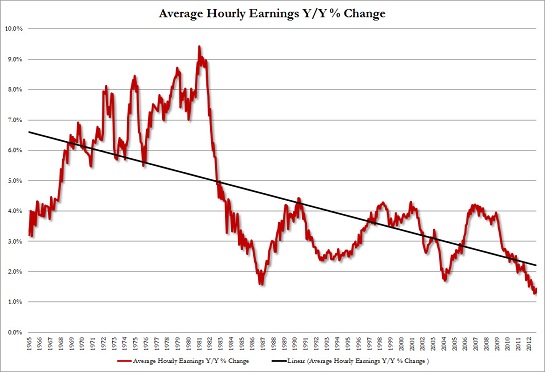
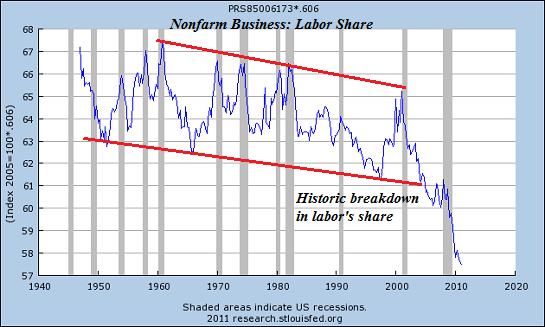
Corporate America is doing very, very well under President Obama. Despite accusations that the President is anti-business or even a socialist, an analysis by Bloomberg News shows that corporate profits have grown a whopping 171% under President Obama. That’s the biggest gain under any president ever in the post-war era. To put it in perspective — as Bloomberg points out, “Profits are more than twice as high as their peak during President Ronald Reagan’s administration, and more than 50 percent greater than during the late-1990s Internet boom, measured by the size of the economy.” At the same time, workers’ wages as a percent of GDP are lower than they’ve ever been. Despite what you hear on Fox so-called News, and the Conservative misinformation complex — big business is doing very well under President Obama. It’s the workers who aren’t. So if the President really is a socialist, then he’s not doing a very good job.

Mired in the worst flu season in decades, Americans are demanding business owners give their workers paid sick days. According to a new survey by the consumer organization, ORC International, 57% of Americans say it is “very important or important” that restaurants provide their workers with paid sick days. This is common sense, after all, who wants sick people handling their food? Unfortunately, the United States of America is the only developed nation in the world that doesn’t guarantee paid sick leave, holiday pay or paid vacation days. As a result, 90% of restaurant workers don’t get paid sick time. The same is true of 79% of ALL food industry workers. According to a 2009 study by the CDC — as many as 5 million more Americans get the flu every year, because restaurants don’t offer paid sick days to their workers. This is insanity. Enough with putting corporate profits ahead of the health of entire communities. Give workers what they’ve earned — a paid day off when they have the flu. With corporate profits as percentage of GDP higher than they’ve ever been before, Corporate America can easily afford it.

And finally…Republicans are now admitting that the only reason they still control the House of Representatives is because they rigged the election. In a new report by the Republican State Leadership Council, the Party brags about how it spent $30 million in 2010 to put Republicans majorities in state legislatures in blue states, like Michigan, Ohio, Wisconsin and Pennsylvania. Those majorities went on to carve up Congressional districts in a way that benefits Republicans — by carving up very safe red districts —and hurts Democrats by splitting up Democratic strongholds. So by the time the 2012 elections came along — Republican House seats were already very well-protected. As the report notes, “2012 could have been a repeat of 2008, when voters gave control of the White House and both chambers of Congress to Democrats…Instead, Republicans enjoy a 33-seat margin in the U.S. House…having endured Democratic successes atop the ticket and over one million more votes cast for Democratic House candidates than Republicans.” Yes, Republicans just admitted that voters wanted Democrats to control the House — but Republican gerrymandering prevented that from happening. Clearly the Republican Party has adopted one simple strategy: If you can’t win elections fair and square — then steal them.

And that’s the way it is today — Friday, January 18, 2013. I’m Thom Hartmann — on the news.

In today’s On the News segment: Despite accusations that the President is anti-business or even a socialist, an analysis by Bloomberg News shows that corporate profits have grown a whopping 171 percent under Obama; as much as 16.6 million more metric tons of carbon dioxide will be pumped into the atmosphere, if the Keystone XL pipeline is approved in March; millions of Americans are at risk of having their homes flooded, as a result of our deteriorating infrastructure; and more.

140 countries agree on first-ever global treaty to curb mercury pollution

0

A security guard stands outside the cooling towers for a coal-powered power plant in the suburbs of Beijing. Coal burning has been a major contributing factor towards a rise in mercury emissions. (AFP Photo / Goh Chai Hin)

A security guard stands outside the cooling towers for a coal-powered power plant in the suburbs of Beijing. Coal burning has been a major contributing factor towards a rise in mercury emissions. (AFP Photo / Goh Chai Hin)

A convention signed in Geneva has legally bound over 140 countries to a set of newly established laws as part of an attempt to prevent the spread of deadly mercury pollution following a rise in the toxin’s emissions.

Environmental mercury levels have been rising, and anticipated further increases have motivated UN delegates in Geneva to reach a consensus on the solution. Mercury can cause a range of neurological and health problems, and is potentially fatal in large doses.

The set of legally binding rules, known as the Minimata Convention, was established on Saturday morning following overnight negotiations preceded by a week of discussions.

UN Environment Program (UNEP) spokesperson Nick Nuttall told Reuters that a “treaty to start to begin to rid the world of a notorious health-hazardous metal was agreed in the morning of January 19.”

The UN approval of the treaty followed recently published data which demonstrated an alarming rise in levels of the highly toxic metal, especially in developing states.

Deadly mercury

Mercury is the only metal that is liquid at room temperature. It can also occur naturally, such as in cinnabar deposits, coal and limestone.

In the past, it was frequently used in thermometers, but was phased out amid health concerns over its neurotoxicity.

Mercury is still, however, a byproduct of chemical and mining processes. It remains in the environment for a lasting period of time.

It is particularly prevalent in fish and shellfish, who store it as ‘methylmercury,’ an organic compound of the substance, which builds up in their system over an extended period of time.

Mercury is a serious health threat, especially for unborn children, and exposure to it can not only have neurological effects but also an impact on the digestive and immune systems, internal organs and skin, if touched.

‘Minimata’ is the Japanese name for a neurological disorder that arises from severe mercury poisoning, symptoms of which can include numbness in the extremities, ataxia, damage to speech, sound and sight, paralysis and death.The condition itself is named after the Kyushu Island city which suffered a severe outbreak in 1956 from untreated chemical factory wastewater.

Once released into the environment, mercury can become more concentrated as it moves up the food chain. It can bioaccumulate in fish, which humans then consume.

UNEP said a growth in small-scale mining and coal burning were the primary reasons for the rise in mercury emissions.

The UN-mandated limits on mercury emission include restricting the supply of and trade in mercury, its use in products and industry, measures to reduce emissions from small-scale gold mining, and measures to reduce emissions from metal production facilities and power plants.

However, UNEP told Reuters that the agreement could take three to five years to come into force.

The poisonous metal is frequently used in chemical production and mining. Coal-burning power plants are infamous for being the largest human-caused source of mercury. However, it was reported in November 2012 that plans had been made for more than 1,000 new coal power plants to be built worldwide, 76 percent of which would be built in China and India.

Prior to the new agreement, UNEP had published a report warning that developing nations were facing growing health and environmental risks from increased exposure to mercury, attributing the rise in emissions to small-scale mining and coal burning.

Joe DiGangi, a science adviser with advocacy group IPEN, told AP that while the treaty is “a first step,” it is not stringent enough and should impose stricter limitations in order to accomplish the goal of reducing overall mercury emissions.

The signing ceremony for the new regulations will take place later this year in Japan.

8-year-old promises to lead English League One side to elite in 3 years

0

AFP Photo / Olivier Morin

AFP Photo / Olivier Morin

Mac Wilson, an 8-year old lad, could get his first job at English League One club Doncaster after he wrote a letter describing his vision for the team’s development, which reached the table of club chair John Ryan.

Ryan was so impressed with young Mac’s application for the vacancy left by Dean Saunders’ departure that he invited him in for an interview.

“My daughter Claire was with me at the time that I got Mac’s letter and my first thought was to give him a ring,” the Doncaster Free Press quoted him as saying.

“I got his dad on the phone and asked if I could speak to Mac with regards to the vacancy at Rovers,” Ryan said. “He came on the phone and I asked him whether he would like to come down for an interview. I invited them both down on Saturday for a look round, meet the players and to give him an interview.”

In his letter, Mac promised to get the team in the Premier League in three years. “I thought that was a very positive statement,” Ryan said.

Mac’s dad Adi said the boy was convinced his older brother was playing a trick on him. “We sent off the email for a bit of fun really. All credit to John for responding. Mac has been absolutely full of it since he got in touch and so excited,” the same source quoted Adi as saying.

Rovers season-ticket holder Mac was officially invited to the Keepmoat Stadium to watch the Rovers, lead by a caretaker boss Brian Flynn, play Leyton Orient on Saturday.

The young man’s future with the club will be announced shortly but one thing is certain: He has hit the ground running. One of the best young coaches in the sport, Tottenham manager Andre Villas-Boas, wrote his famous letter to Sir Bobby Robson when he was 17, so Mac has some time as handicap.

‘Pakistan set to finish IP project soon’

0

Islamabad set to finish IP project as soon as possible: Pak min.

Pakistani Minister of Oil and Natural Resources Asim Hussain says Islamabad wants to complete Iran-Pakistan (IP) gas pipeline as soon as possible to deflect the emerging power and gas crises.

“We are dependent on this project as there is no other substitute at present to meet the growing energy demand [in Pakistan],” Hussain said on January 19.

The Iran-Pakistan gas pipeline, projected to cost USD1.2-1.5 billion, is aimed to export a daily amount of 21.5 million cubic meters of Iranian natural gas to Pakistan.

Describing the project as beneficial for Iran and Pakistan, Hussain said Islamabad started work on the IP project in December 2012.

Hussain had said on September 4, 2012 that the gas pipeline project would become fully operational in 2014, adding that, “Surveys for the project are due to be completed before October 2012 and construction can start as early as December 2012.”

This is while Iran has already constructed more than 900 kilometers of the pipeline on its soil.

The Pakistani minister added that the implementation of the project showed that Islamabad had a flexible foreign policy.

According to reports, the US has been trying to lure Islamabad away from the gas pipeline project by offering cheaper gas to the country.

Pakistani Foreign Minister Hina Rabbani Khar, however, reiterated on December 20, 2012, that Islamabad has a resolve to push ahead with the gas pipeline project.

The Pakistani foreign minister also underscored Pakistan’s daily-growing demand for Iran’s gas and said the project would continue “under any condition.”

MYA/SS

King: I Have a Dream. Obama: I Have a Drone.

0

President Barack Obama during his speech accepting the 2009 Nobel Peace prize in Oslo, Norway, Thursday , Dec. 10, 2009. (Photo: Doug Mills / The New York Times)President Barack Obama during his speech accepting the 2009 Nobel Peace prize in Oslo, Norway, Thursday , Dec. 10, 2009. (Photo: Doug Mills / The New York Times)A simple twist of fate has set President Obama’s second Inaugural Address for January 21, the same day as the Martin Luther King Jr. national holiday.

Obama made no mention of King during the Inauguration four years ago — but since then, in word and deed, the president has done much to distinguish himself from the man who said “I have a dream.”

After his speech at the March on Washington for Jobs and Freedom in August 1963, King went on to take great risks as a passionate advocate for peace.

After his Inaugural speech in January 2009, Obama has pursued policies that epitomize King’s grim warning in 1967: “When scientific power outruns moral power, we end up with guided missiles and misguided men.”

But Obama has not ignored King’s anti-war legacy. On the contrary, the president has gone out of his way to distort and belittle it.

In his eleventh month as president — while escalating the U.S. war effort in Afghanistan, a process that tripled the American troop levels there — Obama traveled to Oslo to accept the Nobel Peace Prize. In his speech, he cast aspersions on the peace advocacy of another Nobel Peace laureate: Martin Luther King Jr.

The president struck a respectful tone as he whetted the rhetorical knife before twisting. “I know there’s nothing weak — nothing passive — nothing naive — in the creed and lives of Gandhi and King,” he said, just before swiftly implying that those two advocates of nonviolent direct action were, in fact, passive and naive. “I face the world as it is, and cannot stand idle in the face of threats to the American people,” Obama added.

Moments later, he was straining to justify American warfare: past, present, future. “To say that force may sometimes be necessary is not a call to cynicism — it is a recognition of history; the imperfections of man and the limits of reason,” Obama said. “I raise this point, I begin with this point because in many countries there is a deep ambivalence about military action today, no matter what the cause. And at times, this is joined by a reflexive suspicion of America, the world’s sole military superpower.”

Then came the jingo pitch: “Whatever mistakes we have made, the plain fact is this: The United States of America has helped underwrite global security for more than six decades with the blood of our citizens and the strength of our arms.”

Crowing about the moral virtues of making war while accepting a peace prize might seem a bit odd, but Obama’s rhetoric was in sync with a key dictum from Orwell: “Who controls the past controls the future; who controls the present controls the past.”

Laboring to denigrate King’s anti-war past while boasting about Uncle Sam’s past (albeit acknowledging “mistakes,” a classic retrospective euphemism for carnage from the vantage point of perpetrators), Obama marshaled his oratory to foreshadow and justify the killing yet to come under his authority.

Two weeks before the start of Obama’s second term, the British daily The Guardian noted that “U.S. use of drones has soared during Obama’s time in office, with the White House authorizing attacks in at least four countries: Afghanistan, Pakistan, Yemen and Somalia. It is estimated that the CIA and the U.S. military have undertaken more than 300 drone strikes and killed about 2,500 people.”

The newspaper reported that a former member of Obama’s “counter-terrorism group” during the 2008 campaign, Michael Boyle, says the White House is now understating the number of civilian deaths due to the drone strikes, with loosened standards for when and where to attack: “The consequences can be seen in the targeting of mosques or funeral processions that kill non-combatants and tear at the social fabric of the regions where they occur. No one really knows the number of deaths caused by drones in these distant, sometimes ungoverned, lands.”

Although Obama criticized the Bush-era “war on terror” several years ago, Boyle points out, President Obama “has been just as ruthless and indifferent to the rule of law as his predecessor.”

Boyle’s assessment — consistent with the conclusions of many other policy analysts — found the Obama administration’s use of drones is “encouraging a new arms race that will empower current and future rivals and lay the foundations for an international system that is increasingly violent.”

In recent weeks, more than 50,000 Americans have signed a petition to Ban Weaponized Drones from the World. The petition says that “weaponized drones are no more acceptable than land mines, cluster bombs or chemical weapons.” It calls for President Obama “to abandon the use of weaponized drones, and to abandon his ‘kill list’ program regardless of the technology employed.”

Count on lofty rhetoric from the Inaugural podium. The spirit of Dr. King will be elsewhere.

Gerry Adams: ‘Irish Unity Makes Sense’

0

A single economy for the island of Ireland would be good for prosperity, jobs and investment, Sinn Fein has claimed.

Party president Gerry Adams called on the Irish and British governments to set a date for a border poll and let the people of Northern Ireland vote on a united Ireland.

Delivering a keynote address almost 15 years since the Good Friday Agreement, he said a referendum in the next term of the Assembly and Oireachtas would be a key element in moving forward.

“Irish unity makes sense,” the Louth TD said in Dublin.

irish unity sinn fein

Gerry Adams said on Saturday a unified Irelands ‘makes sense’

“It makes political sense. It makes economic sense. It is in the best interests of the people of these islands.”

Despite loyalists staging a protest in Belfast over the Union flag controversy for a seventh week and the economic crisis in the Republic of Ireland, Adams maintained that it is time to legislate for the island to be united.

“Republicans believe that partition has been bad for the people of this island and for our economy. It has been bad for investment, bad for growth, bad for jobs,” Adams said.

“A planned single-island economy would be good for prosperity, good for jobs, good for investment. It would benefit everyone. Together is stronger.”

Greater co-operation and harmonisation and unity would transform the economic and political landscape, Mr Adams said.

gerry adams

Adams was speaking almost 15 years after the Good Friday Agreement was signed

“Imagine the financial and efficiency benefits if there was one education system, one health service, one energy network and all-island investment practices.

“Imagine one economy, not two, and without the differing rates in VAT, in corporation tax, in excise duties, as well as currency.

“Imagine how much better off citizens would be if there was a comprehensive all-Ireland economic recovery plan which was able to deliver prosperity and sustainable economic growth.

“Imagine ‘Brand Ireland’ being employed creatively to grow our exports and create jobs.

“All of these things and more are possible.”

French minister says 2000 boots in Mali

0

French troops arrived at the 101st military airbase near Bamako, Mali on January 16, 2013.

French Defense Minister Jean-Yves Le Drian says the number of its boots on the ground in Mali has reached 2,000.

The announcement was made in a televised interview on Saturday. Le Drian also said that a further 900 French soldiers were supporting the military operation from bases outside the African nation.

Asked whether Paris would send further troops on ground in Mali, the minister said, “2,500 is what was initially announced, perhaps we will go beyond that.”

Le Drian added that “around 4,000 troops will be mobilized for this operation” in Mali and outside bases.

Meanwhile, Foreign Minister Laurent Fabius said at a meeting in the Ivory Coast capital Abidjan on Saturday that it was time for the African nations to take over the military operation in Mali.

Fabius said France was “obliged to intervene… But it is well understood that it is the Africans that must pick up the baton.”

The United States, Canada, Britain, Belgium, Germany and Denmark have already said they would support the French operation against Mali.

The Economic Community of West African States (ECOWAS) pledged to support the French operation by sending 5,800 soldiers to Mali.

Oil-rich Chad also confirmed it would send 2,000 soldiers to Mali, while Nigeria said it would increase its troops to 1,200.

France intervened in Mali on January 11 by launching an air offensive under the pretext of halting the advance of militants.

Chaos broke out in the African country after Malian President Amadou Toumani Toure was toppled in a military coup on March 22, 2012. The coup leaders said the move was in response to the government’s inability to contain the Tuareg rebellion in the north of the country.

SAB/HGH

Explicit New Role For Harry Potter Star

0

Daniel Radcliffe has put the boy wizard firmly behind him with an explicit new portrayal of the Beat poet Allen Ginsberg.

The Harry Potter star’s new film, Kill Your Darlings, has been premiered at the Sundance Film Festival in Utah.

His new role sees Radcliffe as the young Ginsberg initiated into drink and drugs and some dubious sexual encounters with men, including a scene of oral sex in a library.

The film recounts a little-known 1944 story of a murder involving Ginsberg’s friends, including fellow future Beat heroes Jack Kerouac (Jack Huston) and William S Burroughs (Ben Foster).

Dane DeHaan co-stars as Ginsberg idol and intimate Lucien Carr who introduces him to Burroughs, Kerouac and the bohemian life. It is Carr’s older lover who meets an untimely death.

Radcliffe was initially apprehensive of taking on a real-life literary heavyweight but director and co-screenwriter John Krokidas helped him to put it in perspective.

He said: “I think John made us all feel much more relaxed about that and it was such an amazing process.

“I’ve never had a director work with me so closely, and I think all the actors felt that. It’s made us all feel much less intimidated by the whole thing. I hope.”

Krokidas said Radcliffe became his muse on the film and that it was clear within minutes of their first meeting that the part was his.

Casting Radcliffe effectively came to him in a dream.

“Daniel Radcliffe was an idea I had in the middle of the night. I basically made a list of all the actors I thought were fantastic under 30,” he said.

Just before he fell asleep, Radcliffe had moved to the top of the list.

Krokidas said young Ginsberg starts as a dutiful son who spends his time taking care of others but eventually spills over with repressed passion.

“By the end of the movie, he is a poet and a rebel,” Krokidas said. “I had a feeling Dan might be able to relate to this.”

Also on the red carpet at Sundance to promote the film were Dexter star Michael C Hall, who plays Kammerer, Foster, DeHaan and Huston.

Kill Your Darlings is one of 16 films in the US Dramatic Competition category at Sundance, all receiving their world premieres.

Exposed! How the Billionaires Class Is Destroying Democracy

0

Casino mogul Sheldon Adelson, center, arrives at the U.S. Capitol in Washington, Dec. 4, 2012. (Photo: Stephen Crowley / The New York Times)Casino mogul Sheldon Adelson, center, arrives at the U.S. Capitol in Washington, Dec. 4, 2012. (Photo: Stephen Crowley / The New York Times)Out of the guts of the internet, we find an endless stream of misattributed quotes and made-up stories that end up in chain emails that you eventually receive from your loopy uncle in Texas who’s trying to justify right-wing economics or anti-Obama conspiracy theories.

It’s just one of the headaches of the Internet Age.

But, there’s one quote in particular that’s always attributed to an obscure Scottish historian, Sir Alexander Frasier Tytler (as if that gave it great credibility), and it seemed to both make sense and prophecy the end of the American Republic.

Tytler was supposed to have said: “A democracy cannot exist as a permanent form of government. It can only exist until the voters discover that they can vote themselves largess of the public treasury. From that time on the majority always votes for the candidates promising the most benefits from the public treasury, with the results that a democracy always collapses over loose fiscal policy, always followed by a dictatorship.”

Tyltler goes on to talk about the process by which democracies fail as a result of this “voter selfishness.”

The average age of the world’s greatest civilizations has been two hundred years,” he was rumored to have said. “These nations have progressed through this sequence: from bondage to spiritual faith; from spiritual faith to great courage; from great courage to liberty; from liberty to abundance; from abundance to selfishness; from selfishness to complacency; from complacency to apathy; from apathy to dependence; from dependency back again to bondage.”

Now, here’s the reality: Tytler never said any of these words. They can all be tracked back to right-wing American businessmen in the early decades of the twentieth century. And why would right-wing businessmen say such things? Because, in actual point of fact, the thing that corrupts democracies is not “the voters” demanding “free stuff” (to paraphrase Romney), but, instead, its businessmen buying off politicians.

It’s not the powerless who corrupt democracies, as that viral right-wing quote would suggest; it’s the powerful who corrupt democracies. And money is the source of that power.

Yes, over the last hundred years, average American people have voted themselves benefits like Social Security, unemployment insurance, Medicare, and Medicaid. But at the same time, they’ve also supported tax increases to pay for all of these things. Remember, the Social Security tax only applies to the first $113,000 of wages – earned income. People like Paris Hilton and Mitt Romney, when they get all their money from capital gains, dividends, and carried interest, don’t pay a penny of Social Security taxes on their millions of income. And the average top CEO in America, with an income of $13.7 million a year, over a million a month, only pays Social Security taxes on his first few days of income every year – every other day is Social Security tax-free. Quite literally, as Leona Helmsley famously said, only the “little people” pay such taxes. The safety net program for working class people is exclusively paid for by working class people.

On the other hand, when the Billionaire Class extracts benefits from the government for themselves, the generally don’t pay higher taxes. The billions in taxpayer subsidies for Big Oil, trillions in bailouts and bonuses for Wall Street banksters, and hundreds of billions for war profiteers are always accompanied by demands for more tax cuts at the top.

And, truth be told, billionaires aren’t even receiving these benefits by voting for them. Instead, they always get them through the simple process of buying politicians. For example, Sheldon Adelson spent $150 million in the last election. That’s more than any American spent in any election in American history. And he spent all that money to give himself the “benefits” of derailing an Obama Justice Department investigation into his casino in China and to get his taxes cut even further.

Billionaires also corrupt democracy to get their benefits through billionaire-funded think tanks, like the Koch-funded American Legislative Exchange Council that writes legislation to benefit Corporate America, and then has Republicans state lawmakers introduce and pass laws in state after state, across the nation.

But despite this very clear reality of who is demanding largesse from our government, it’s still working people and average voters who are targeted by right-wingers and their viral emails as the selfish “takers.” That’s the reason why the Business Roundtable is saying the best way to fix insurance programs like Social Security and Medicare is to raise the retirement age to 70 and voucherize Medicare.

Of course, the average CEO for an S&P 500 company doesn’t need Social Security. But they know that by raising the retirement age, they’re shielding themselves from any tax increases that may come with raising that payroll tax cap, so even billionaires pay into Social Security, which will quickly and easily make that insurance program solvent forever.

America’s fiscal problems have nothing to do with voters. In fact, the Billionaire Class is trying to make it harder and harder for people to vote by pushing for voter suppression ID laws and restrictions on early voting.

America’s fiscal problems are a direct result of the Billionaire Class working behind the scenes of our democracy and syphoning off massive amounts of wealth for themselves while paying lower taxes than they’ve paid in a half-century. As Senator Bernie Sanders points out, a quarter of all profitable corporations in America pay zero federal taxes. And Mitt Romney and Paris Hilton’s income tax rates top out at 20 percent.

Tytler didn’t really say those words that the Billionaire Class think-tanks and email shills attribute to him. But, had he said them, he probably would have something more along the lines of this: “A democracy cannot exist as a permanent form of government. It can only exist until the billionaires discover that they can steal for themselves largess of the public treasury through buying politicians. From that time on the billionaires will always buy candidates promising them the most benefits from the public treasury, with the results that a democracy always collapses over loose fiscal policy, always followed by a dictatorship.”

If we are concerned about the future of our American democratic republic, the way to preserve it isn’t to protect it from greedy Social Security recipients by pushing the retirement age back to 70. It’s to get money out of government, thus neutering the political power of the Billionaire Class. And that means reversing two core doctrines that the US Supreme Court has created out of thin air (at the request of big business and billionaires): that corporations are people, and that money is speech.

The best way to do that is through a constitutional amendment that says corporations are not people, and money is property and not speech.

Go to MoveToAmend.org to join the fight for the survival of our democratic republic.

Islamists Retreat Without Fight From Towns in Central Mali as French Continue to Deploy

0

Niono, Mali – Islamist rebels withdrew from their forward positions on both of Mali’s war fronts Friday, an apparent sign that they’ll be shifting tactics after heavy French aerial bombardment pounded their positions even in civilian residential areas.

The Malian military announced that it had regained control of Konna, the city whose fall last week prompted the French to send troops and air power to the West African nation.

The Islamists also pulled out of the town of Diabaly, which they’d taken Monday, after days of intense aerial bombardment. Malian troops were expected to occupy the town Friday night.

Residents fleeing Diabaly said they never saw any ground combat or French soldiers but that the air attack included jets and helicopters. Both officially and privately, local authorities said that as far as they knew, there’d been no ground attack on Diabaly.

“Diabaly is free. There is not even a single rebel in Diabaly,” said Seydou Traore, the prefect of the Niono region, which includes Diabaly. “I don’t know if it is a tactical withdrawal or if they ran away. There was no ground fighting.”

In Paris, a French military spokesman said the rebels abandoned Konna after a fierce aerial campaign that included 70 airstrikes. But the spokesman, Col. Thierry Burkhard, did not acknowledge the withdrawal from Diabaly, perhaps signaling the suddenness of the rebel departure. “There has been no action in Diabaly,” he said.

Burkhard said that French troops had not engaged in close combat with the Islamists. “Only the French special forces have been in contact” with the enemy, primarily from the air, he said. There had been “no real fighting,” he added.

He said French troops were continuing to arrive in Bamako, the country’s capital, nearly 200 miles to the south of Niono, and that a company of French soldiers had been sent to Markala, about 160 miles north of the capital, both to guard a crucial dam there and to serve as a blocking force should the Islamists attempt to move toward Bamako.

The rebels’ push southward 10 days ago from the harsh Sahara Desert, which composes most of northern Mali, into the lush green lands of central Mali, where rice paddies and eucalyptus plantations irrigated by the Niger River dominate, had surprised Mali’s government, which feared the Islamists’ advance soon might include Bamako. Mali’s president quickly asked the United Nations and France for help, and French troops began arriving in this former French colony a week ago.

A French bombing campaign failed, however, to dislodge the Islamists from Konna, the town on the eastern bank of the Niger River that the Islamists had captured Jan. 9. Then on Monday, the rebels opened a front on the western side of the river, taking Diabaly in a two-pronged attack that routed the Malian garrison. Malian troops at other outposts in the area also withdrew, allowing the Islamists to expand their presence to the abandoned towns.

It was unknown whether all those gains had been ceded to the French-backed Malian government Friday or whether some rebels had remained behind. Nor was it immediately clear whether the rebel withdrawal from both positions was coordinated.

What precipitated the withdrawal was the subject of rumor. Reports swirled among Diabaly townspeople that the rebels’ sudden withdrawal came after French aircraft bombed a truck piled with rebel corpses that was heading to the cemetery. The truck was obliterated, incinerating the corpses, now denied a proper Muslim burial. Then the rout began, said residents pouring into Niono. No one, however, claimed to have seen the incident personally.

A withdrawal for purely cat-and-mouse reasons seemed unlikely. By pulling back, the rebels abandoned their checkpoints around the communities, opening the floodgates for a stream of relieved residents who hadn’t yet found a way to escape. Without a civilian population around them, the rebels would have become far more exposed to the aerial attacks.

Fleeing residents had been reporting for days that rebels were parking their gun-mounted trucks in residential areas in hopes that the possibility of killing civilians would deter the French. But as civilians fled, the tactic’s utility was waning.

The French probably were aided in their aerial assault by special forces on the ground, operating with the advantage of night-vision technologies.

Four armored vehicles of French special forces rolled out north of Niono toward Diabaly on Thursday evening, said a local official, who asked not to be named as he wasn’t authorized to speak on military matters. The official said the special forces didn’t return and were manning a covert forward operating base.

Niono has been under a strict 6 p.m. curfew since the fall of Diabaly. On Friday, after the news of the rebels’ Diabaly retreat, the local state radio made a special announcement to remind residents to stay indoors after 6 p.m. There would be military movements during the night, the announcement said. As dusk fell, French vehicles closed the road that leads to Niono from the south.

Residents who’d escaped from rebel-held Diabaly seemed surprised at the sudden reversal. Many had predicted in the preceding days that the rebels wouldn’t be dislodged easily or soon.

At noon Friday, one group that had sneaked out of Diabaly the night before and just arrived in Niono had no idea about the events.

“Maybe we can defeat those people, but it will be very difficult,” said Fousseni Traore, 19. “I’m the son of a soldier. I’ve never seen such powerful weapons. One of them, when it shoots, the earth seems like it will collapse.”

“We will need outside help,” he said, unaware that the town he’d just left was now, for the moment, back in government hands.

McClatchy special correspondent Frederic Castel contributed from Paris.

In Reversal, House GOP Agrees to Lift Debt Limit

0

House Speaker John Boehner (R-Ohio) walks to the House floor on the first day of the 113th Congress in Washington, Jan. 3, 2013. (Photo: Luke Sharrett / The New York Times)House Speaker John Boehner (R-Ohio) walks to the House floor on the first day of the 113th Congress in Washington, Jan. 3, 2013. (Photo: Luke Sharrett / The New York Times)Washington – Backing down from their hard-line stance, House Republicans said Friday that they would agree to lift the federal government’s statutory borrowing limit for three months, with a requirement that both chambers of Congress pass a budget in that time to clear the way for negotiations on long-term deficit reduction.

The new proposal, which came out of closed-door party negotiations at a retreat in Williamsburg, Va., seemed to significantly reduce the threat of a default by the federal government in coming weeks. The White House press secretary, Jay Carney, said he was encouraged by the offer; Senate Democrats, while bristling at the demand for a budget, were also reassured and viewed it as a de-escalation of the debt fight.

The change in tack represented a retreat for House Republicans, who were increasingly isolated in their refusal to lift the debt ceiling. Speaker John A. Boehner of Ohio had previously said he would raise it only if it were paired with immediate spending cuts of equivalent value. The new strategy is designed to start a more orderly negotiation with President Obama and Senate Democrats on ways to shrink the trillion-dollar deficit.

To add muscle to their efforts to bring Senate Democrats to the table, House Republicans will include a provision in the debt ceiling legislation that says lawmakers will not be paid if they do not pass a budget blueprint, though questions have been raised whether that provision is constitutional.

That “no budget, no pay” provision offered Republicans a face-saving way out of a corner they had painted themselves into – and an effort to shift blame for any default onto the Senate if it balks. The House Republicans’ campaign arm quickly moved from taunting Democrats about raising the government’s borrowing limit to demanding that they sacrifice their paychecks if they fail to pass a budget.

“The Democratic-controlled Senate has failed to pass a budget for four years. That is a shameful run that needs to end, this year,” Mr. Boehner said in a statement from Williamsburg. “We are going to pursue strategies that will obligate the Senate to finally join the House in confronting the government’s spending problem.”

House Democrats met the deal with scorn, indicating they would inflict maximum political pain by making Republicans either break a campaign promise to carry it to passage or defy their leaders. But other Democrats were more sanguine. The president had said he would not sign a short-term debt ceiling increase, but a senior administration official said that as long as there were no surprises, the White House was likely to accept the House’s offer. Most important, the official said, Republicans had broken from the “Boehner rule” imposed in 2011: any debt ceiling increase was to include a dollar-for-dollar spending reduction.

The decision represents a victory – at least for now – for Mr. Obama, who has said for months that he will not negotiate budget cuts under the threat of a debt default. By punting that threat into the spring, budget negotiations instead will center on two earlier points of leverage: March 1, when $1 trillion in across-the-board military and domestic cuts are set to begin, and March 27, when a stopgap law financing the government will expire.

Reordering the sequences of those hurdles was central to the delicate Republican deliberations that resulted in the new plan. In the days leading to the Williamsburg retreat, Representative Paul D. Ryan of Wisconsin, the House Budget Committee chairman and former vice-presidential nominee, had been meeting with the leader and three past chairmen of the conservative House Republican Study Committee to discuss a way through the debt ceiling morass.

Those conversations led into Thursday morning, when Mr. Boehner and Representative Eric Cantor of Virginia, the No. 2 House Republican, opened the retreat by going through the timeline for the coming budget fights, according to aides who were there.

They turned the floor over to Representative Dave Camp of Michigan, the House Ways and Means chairman, who delivered a blow-by-blow description of the economic disaster that could be wrought by a government default. Mr. Camp also talked through the notion held by some Republicans that the Treasury Department could manage a debt ceiling breach by channeling the daily in-flow of tax dollars to the most pressing needs, paying government creditors, sending out Social Security checks and financing the military. His message was that it would not work, the aides said.

Then Mr. Ryan stood to talk over the options he had developed with the House conservative leaders. They could do a longer-term debt ceiling extension with specific demands, like converting Medicare into a voucherlike program. Or they could lower expectations, reorder the budget hurdles with a three-month punt, and add the “no budget, no pay” provision.

Persuading Republicans who adamantly oppose raising the debt ceiling took some time, and the ensuing discussion stretched on and on, breaking at noon for lunch on Thursday, resuming at 2:30, until 4 p.m., then concluding Friday.

Representative Kevin McCarthy of California, the House majority whip, met with freshmen early Friday to make sure they were on board. Mr. Boehner and Mr. Cantor joined Mr. Ryan for one last meeting with conservative leaders – Representatives Steve Scalise of Louisiana, Jim Jordan of Ohio, Jeb Hensarling of Texas and Tom Price of Georgia – to make sure they were on board. Then the top four leaders sealed the agreement midmorning.

Mr. Obama will unveil his own 10-year budget plan in February, laying out his tax and spending plans for his second term. But Senate Democrats, for the past four years, have refused to move a budget blueprint to the Senate floor, in violation of the Budget Act of 1974, which laid out new rules for controlling deficits.

For the past two years, House Republicans have approved sweeping budget plans that would fundamentally remake Medicare and Medicaid, sharply reduce domestic spending, increase military spending and order a wholesale rewriting of the federal tax code. But without Senate negotiating partners, those plans, written by Mr. Ryan, have been more political statement than legislative program.

“This is the first step to get on the right track, reduce our deficit and get focused on creating better living conditions for our families and children,” Mr. Cantor said. “It’s time to come together and get to work.”

Ashley Parker contributed reporting from Williamsburg, Va.

‘Being Christian’ Looks At A Modern-Day Elmer Gantry

0

K.C. Boyd, author of ‘Being Christian,’ interviewed by Nicole Sandler last year.

is one of my favorite movies — and the Sinclair Lewis book on which it’s based is pretty damned good, too. So a friend recently referred this book, “Being Christian.” He said it was written by a woman who’d done a lot of research into the Dominionists (who are one of the biggest threats to our democracy and have always fascinated me because of their conviction that it’s perfectly okay to lie, cheat and steal, as long as you’re doing it to bring God’s kingdom on earth), and wrote about it as a satire. I wasn’t all that interested in reading it (if you saw my pile of unread books, you’d understand) — until he sent me this blurb by Mikey Weinstein, who founded the Military Religious Freedom Foundation as a watchdog organization to protect religious freedom in the military, and of course has been the target of death threats (because the baby Jesus would want it that way). I just love Mikey Weinstein:

Having raced through K.C. Boyd’s astonishing page-turner without being able to put it down, Being Christian — A Novel, I can say there is no fictional portrait of today’s evangelical right that I would recommend more highly. As it says on the back of the book, this is Elmer Gantry, but on mega-steroids.

The story, in its vivid portrayals–with attention to character and place – was emotional crack to me. From the first chapter, Boyd created a story so riveting that not only could I not put it down, but upon finishing it, I found myself, like an addict, craving more. Being Christian screams screenplay, if ever a book did. A totally emotional experience, by book’s end, I was left drained as well as disturbed by the true-to-life portraiture of John Christian Hillcox, Boyd’s main character. A man who all too closely resembles so many of today’s religious con-men we’ve come to know from sexual and financial scandals too many to enumerate. Being Christian – A Novel is brilliant theater of the mind.

It ain’t literature, but it’s a real page turner. Boy, does she know these people and how they operate. (I saw parts of every wingnut preacher I know in this book.)

And if you want an easy way to catch up on exactly how the End Timers are perverting our democracy, this book is right up your alley.

Manti Te’o Denies Role In Dead Girlfriend Hoax

0

American college football star Manti Te’o has insisted he played no role in the hoax involving his ‘imaginary girlfriend’.

In his first interview since the scandal erupted, the Notre Dame linebacker said he was tricked by three people who have confessed they were behind the deception and apologised.

But Te’o accepted he did lie to his father about meeting the ‘girl’ because he was embarrassed they had never met – and to cover that up, he lied to everyone else.

“I wasn’t part of this,” he told ESPN . “When they hear the facts they’ll know. Two guys and a girl are responsible for the whole thing.”

Te’o’s virtual relationship began when a girl calling herself ‘Lennay Kekua’ sent him a friend request on Facebook. In the months that followed the pair had sporadic contact on the internet and over the phone.

But whenever he tried to speak to her on Skype, the picture was always blocked. On several occasions he arranged to meet her in person, but she would always call off the meeting or sent others in her place.

Te’o referred to Lennay as his girlfriend several times, but he denies creating ‘Lennay’ or her ‘death’ to boost his career.

After he received a message from someone who claimed ‘Lennay’ had died of leukaemia, Te’o admitted he misled the public about the nature of their relationship because he was too embarrassed to admit he had never met her in person.

He said: “That goes back to what I did with my dad. I knew it was crazy that I was with somebody that I didn’t meet so I tailored my stories so people would think, ‘yeah, he met her before she passed away’.”

Te’o insisted he did not know ‘Lennay’ was not real until two days ago, when he claims he was contacted by a 22-year-old man who confessed he was the perpetrator, along with one other man and a woman.

He said their relationship intensified after ‘Lennay’ told him her father had died.

“She told me her dad passed away, and I was there. I was that shoulder to cry on, and I kind of just naturally cared for the person,” he said.

He was also once told ‘Lennay’ had been in a car accident and was in hospital in a coma.

“I would ask to talk to her, and the only communication I had was through Noah, her brother,” he said. “He would put the phone right next to her mouth and I could hear the ventilator going and she would be breathing.

“They said every time I was on the phone the nurse noticed that she must have recognised the voice because she would breath quicker and I could hear it on the phone.”

When asked why he did not visit ‘Lennay’ in hospital, Te’o said: “It never really crossed my mind. I don’t know. I was in school.”

When asked what he thought should happen to the alleged perpetrator, Te’o replied: “I hope he learns, I hope he understands what he’s done. I don’t wish an ill thing to somebody. I think embarrassment is big enough.”

Banknote bungle: Maple leaf on Canada’s new $20 bill is …Norwegian?

0

The new Canadian 20 dollar bill made of polymer is displayed at the Bank of Canada in Ottawa.(Reuters / Chris Wattie)

The new Canadian 20 dollar bill made of polymer is displayed at the Bank of Canada in Ottawa.(Reuters / Chris Wattie)

The Bank of Canada has found itself in the center of a leafy controversy after botanists claimed it placed the ‘wrong’ maple leaf on its new polymer bills — not the Canadian sugar maple leaf represented on the national flag.

Sean Blaney, a botanist who tracks plants for the Atlantic Canada Conservation Data Center in New Brunswick, told the Canadian Broadcasting Corporation (CBC) that the Bank of Canada put the “wrong” maple leaf on the new version of the C$20 bill.

Though the differences between the Norway maple and Canada’s native sugar maple may not be obvious to everyone, the Norway leaf has more sections and a more pointed outline, he explained.

The Norway maple tree has been naturalized in Canada after it was introduced to the country in the 18th century.

“It’s a species that’s invasive in Eastern Canada and is displacing some of our native species, and it’s probably not an appropriate species to be putting on our native currency,” Blaney told CBC News.

Blaney suggested that the prevalence of the Norway maple in Canada could be the reason why its leaf was chosen for the latest version of the C$20 bill.

Bank of Canada has denied the charge, and stated that the image was specifically designed to represent a combination of various kinds of species instead of a particular one. “It is not a Norway maple leaf. It is a stylized maple leaf and it is what it ought to be,” Bank of Canada currency spokesperson Julie Girard said, adding that the Norway maple leaf is more rectangular.

Bank of Canada consulted a dendrologist, a botanist who specializes in trees and shrubs, during the making of the symbol, Girard added. “On the advice of this expert, steps were taken to ensure that the design of the leaf in the secondary window is not representative of a Norway maple,” she said.

But Blaney argued that the image looks nothing like any of the 10 maple trees native to Canada.

“It seems a bit like an after-the-fact explanation to me. The bottom line is that, the image on the bill looks exactly like a Norway maple, however it was derived,” he said.

Another Canadian expert, University of Ottawa professor and Canadian Museum of Nature research scientist Julian Starr, was earlier consulted by the Royal Canadian Mint about the botanical accuracy of the coins. Starr confirmed that the image is a Norway maple leaf.

“You can say it’s stylized. But it’s stylized to the point where it doesn’t look like any native species at all,” he told CTV News. “It basically looks like a Norway maple.”

Other organizations have confused the two types of maples trees as well, including the official logos of Wilfrid Laurier University in Waterloo, Ontario, the FIFA under-20 World Cup of Soccer, the Canadian Television Fund and the Alliance of Natural History Museums of Canada, CBC reported.

The Bank of Canada has run into problems with its new polymer bills before. Currently, Canada is in the process of switching from cotton-paper bank notes to polymer ones. The new notes are deemed to be more secure and environmentally friendly.

Canada released its first polymer C$100 banknote on November 14, 2011, followed by the C$50 banknote on March 26, 2012, and the C$20 banknote on November 7, 2012. New polymer $5 and $10 bills are expected to be released by the Bank of Canada later this year.

Back in August, the Bank of Canada was accused of racism and forced to apologize after media revealed that the image of an Asian lab assistant on its new C$100 banknote had been replaced with a woman who looked more Caucasian, after focus groups responded that Asians should not be the only group represented.

United Ireland ‘makes more sense’

0

A single economy for the island of Ireland would be good for prosperity, jobs and investment, Sinn Fein has claimed.

Party president Gerry Adams called on the Irish and British governments to set a date for a border poll and let the people of Northern Ireland vote on a united Ireland.

Delivering a keynote address almost 15 years since the Good Friday Agreement, he said a referendum in the next term of the Assembly and Oireachtas would be a key element in moving forward.

“Irish unity makes sense,” the Louth TD said in Dublin.

“It makes political sense. It makes economic sense. It is in the best interests of the people of these islands.”

Despite loyalists staging a protest in Belfast over the Union flag controversy for a seventh week and the economic crisis in the Republic of Ireland, Mr Adams maintained that it is time to legislate for the island to be united.

“Republicans believe that partition has been bad for the people of this island and for our economy. It has been bad for investment, bad for growth, bad for jobs,” Mr Adams said.

“A planned single-island economy would be good for prosperity, good for jobs, good for investment. It would benefit everyone. Together is stronger.”

Greater co-operation and harmonisation and unity would transform the economic and political landscape, Mr Adams said.

“Imagine the financial and efficiency benefits if there was one education system, one health service, one energy network and all-island investment practices.”

‘Kindergarten terrorist’: 5-year-old girl suspended over bubble-gun ‘threat’

0

A 5-year-old girl was suspended from a Pennsylvania kindergarten after telling another girl that she was going to shoot her. The weapon she was going to use was a pink toy gun that blows soapy bubbles.

Mount Carmel Area School District officials questioned the student without her parents present, deemed the girl a “terrorist threat” and suspended her for 10 days, according to attorney Robin Ficker, who was hired by the family to fight the suspension.

The incident happened on January 10 as the preschoolers were waiting in line for a schoolbus, Ficker told news website PennLive.com.

The girl, who has not been identified, said something like “I’m going to shoot you and I will shoot myself,” referring to the toy. She did not have the bubble gun on her person at the time.

School officials learned of the conversation and questioned the girl for over 30 minutes the next day, Ficker said. After the talk, she was suspended for 10 days, branded a threat and required to be evaluated by a psychologist, he added.

“This little girl is the least terroristic person in Pennsylvania,” he said.

The punishment has since been reduced to two-day suspension, the attorney said. He also argued that the girl’s permanent record should be expunged, and that she should be offered an apology.

Ficker said he was hired because the girl’s mother read that he had handled a similar case in Maryland. In that case, he represented a 6-year-old boy who was suspended by an elementary school for pointing at another student with his fingers folded like a gun and saying “pow.”

School authorities called it a “serious incident,” and said the boy “threatened to shoot” the other student.

Gun-related violence at schools is a painful issue in the US after the massacre at Sandy Hook Elementary School in Newtown, Connecticut. The shooting claimed 26 lives, including 20 children, shocking the nation and triggering a heated debate over tighter gun control.

Blockbuster Shuts 129 Shops And Slashes Staff

0

The collapsed DVD and games rental firm Blockbuster is to close 129 of its 528 shops and axe 760 workers in the coming weeks.

Some 31 branches have already been put on notice of closure, according to the company’s administrators Deloitte.

The move means the chain is already planning to close a quarter of its branches and make 18% of its workforce redundant.

It was announced just days after the chain went into administration in a run of bad news for the British high street.

There will be fears that this is just the first step in taking apart a company that employs more than 4,000 people in the UK.

Lee Manning, of administrator Deloitte, said: “Having reviewed the portfolio with management, the store closure plan is an inevitable consequence of having to restructure the company to a profitable core which is capable of being sold.

“We would like to thank the company’s employees for their support and professionalism during this difficult time. We are also grateful to the customers for their continued support.”

An employee helpline and an “employee assistance programme” have been set up to help staff find other jobs.

The firm’s trading woes were blamed on competition from internet firms and digital streaming of movies and games.

Blockbuster had struggled to adapt to the changing market and rivalry from internet retailers including Netflix, Amazon’s LoveFilm and iTunes, which now offers a movie rental service.

Its collapse came after its own plans to break into film-streaming appeared to stall in recent months.

It follows the demise of camera chain Jessops and electricals group Comet, which also blamed competition from online players for their downfall.

Just a day before Blockbuster went into administration, the music and entertainment chain HMV went under following dismal Christmas sales.

Algeria Hostage Crisis: Britons Remain ‘At Risk’

0

At least 10 British nationals are unaccounted for in the “ongoing” Algerian hostage crisis, according to Sky Sources.

It follows an Algerian attempt to rescue gas workers taken hostage by al Qaeda-linked militants which ended in a number of deaths.

Prime Minister David Cameron warned of “further bad news” as he put off a high-profile speech on Europe to stay in London and oversee developments.

Mr Cameron is chairing a meeting of the Cobra emergency committee to discuss the hostage situation at a gas plant in eastern Algeria. He will make a statement in the House of Commons at 11am.

Algerian authorities announced there had been “some deaths and injuries” in the operation to free foreign workers from Islamist militants.

But it was unclear how many casualties or which nationalities there were, with conflicting reports from sources on the ground.

Foreign Secretary William Hague cut short a visit to Australia to return to the UK and there was also expected to be a ministerial statement to the House of Commons.

He said: “The responsibility for the tragic events of the last two days squarely rests with terrorists who chose to attack innocent workers, murdering some and holding others hostage.”

The UK government has not had confirmation from the Algerian government as to whether the crisis is over, and Foreign Office officials believe hostage takers could still be on the site.

Sky’s Sophy Ridge said: “There has been perhaps an assumption … that this is a now just a search operation but certainly that’s not the basis that the Foreign Office in the UK is working on.”

The rescue attempt was launched early on Thursday without consultation with the UK. Mr Cameron was only informed it was under way when he spoke to the Algerian prime minister.

Algerian communications minister Mohamed Said Belaid said the military operation succeeded in “neutralising a large number of terrorists and freeing a large number of hostages”.

He added: “But unfortunately, we are sorry to say, there were some deaths and injuries.

“We do not yet have a definitive figure. As soon as we have it, we will make it public.”

One British citizen has already been confirmed dead earlier in the hostage situation.

Among those confirmed freed include Irishman Stephen McFaul and three Japanese workers.

Speaking after cancelling his long-awaited Europe speech, Mr Cameron said: “We should be prepared for the possibility of further bad news, very difficult news, in this extremely difficult situation.”

The militant group believed to have carried out the raid on the In Amenas gas plant – Katibat Moulathamine or The Masked Ones – said it was retaliating for French military intervention against al Qaeda-backed rebels in neighbouring Mali.

The attack began on Wednesday morning when heavily-armed militants launched a dawn raid.

They claimed to have seized dozens of foreign workers, including Britons, Americans, Norwegians and Japanese.

Lance Armstrong Biopic Planned By Paramount

0

After his much-publicised confessional interview with Oprah Winfrey, the story of Lance Armstrong is heading for the silver screen.

Paramount Pictures and producer J J Abrams’ company, Bad Robot, have announced they are planning a biopic about the disgraced cyclist.

The co-producers have secured the rights to the book Cycle Of Lies: The Fall Of Lance Armstrong by New York Times reporter Juliet Macur, which is due out in June.

MS Macur covered the career of the seven-times Tour de France winner for over a decade.

No director, writer, star or start date have been set for the project.

In a two-part interview with Winfrey on her fledgling OWN network, Armstrong has admitted to using performance-enhancing drugs to reach his historic victories, something he had defiantly denied for years.

Some 3.2 million viewers in the United States tuned in to see fallen cyclist’s confession that he was a drug cheat, the TV interviewer’s cable channel said .

It was the most-watched show ever on the network after Winfrey’s March 2012 conversation with the family of late singer Whitney Houston.

The figure does not include viewers in other countries, or the 1.1 million who watched a repeat immediately after the initial broadcast of the 90-minute special that was also streamed live on Oprah.com.

The first part of the much-anticipated interview ran against American Idol on the mainstream Fox network, which drew 16.2 million viewers during its two-hour broadcast, Variety reported.

Entertainment Weekly called the ratings “extremely strong”, but showbusiness trade journal Variety thought the numbers were “below what might have been expected considering the gravitas of the interview”.

US TV ratings authority Nielsen said the special “ranked among the top 20 most-watched primetime programmes for the night among all broadcast and cable networks”.

:: You can watch the full interview tonight (Saturday) on Discovery.

France Launches War in Mali in Bid to Secure Resources, Stamp Out National Rights Struggles

0

France, the former slave power of west Africa, has poured into Mali with a vengeance in a military attack launched on January 11. French warplanes are bombing towns and cities across the vast swath of northern Mali, a territory measuring some one thousand kilometers from south to north and east to west. French soldiers in armoured columns have launched a ground offensive, beginning with towns in the south of the northern territory, some 300 km north and east of the Malian capital of Bamako.

A French armoured convoy entered Mali several days ago from neighbouring Ivory Coast, another former French colony. French troops spearheaded the overthrow of that country’s government in 2011.

Off with a handshake into a C-17 transport plane, to support French imperialism.

The invasion has received universal support from France’s imperialist allies. The U.S., Canada and Europe are assisting financially and with military transport. To provide a figleaf of African legitimacy, plans have been accelerated to introduce troops from eight regional countries to join the fighting (map here).

“Islamist terrorists” etc., etc.

The public relations version of the French et al invasion is a familiar refrain. “Islamic terrorists” and “jihadists” have taken control of northern Mali and are a threat to international security and to the well-being of the local population. Terrible atrocities against the local populace are alleged and given wide publicity by corporate media. Similar myths were peddled by the warmakers when they invaded Afghanistan in 2001 and Iraq in 2003.

It is true that Islamic fundamentalists have ruled northern Mali with an iron hand since taking over in 2012. But the reasons for this latest intervention lie in the determination of the world’s imperial powers to keep the human and natural resources of poor regions of the world as preserves for capitalist profits. West Africa is a region of great resource wealth, including gold, oil and uranium.

The uranium mines in neighbouring Niger and the uranium deposits in Mali are of particular interest to France, which generates 78 per cent of its electricity from nuclear energy. Niger’s uranium mines are highly polluting and deeply resented by the population, including among the semi-nomadic, Tuareg people who reside in the mining regions. The French company Areva is presently constructing in Imouraren, Niger what will become the second largest uranium mine in the world.

Notwithstanding the fabulous wealth created by uranium mining, Niger is one of the poorest countries on earth. As one European researcher puts it, “Uranium mining in Niger sustains light in France and darkness in Niger.”

Mali (population 15.5 million) is the third-largest gold producing country in Africa. Canada’s IAMGOLD operates two mines there (and a third in nearby Burkina Faso). Many other Canadian and foreign investors are present.

A key player in the unfolding war is Algeria. The government there is anxious to prove its loyalty to imperialism. Its lengthy border with northern Mali is a key zone for the “pacification” of northern Mali upon which France and its allies are embarked.

Further proof of the hypocrisy of the ‘democracy’ that France claims to be fighting for in Mali is found in the nature of the Mali regime with which it is allied. Often presented in mainstream media as a ‘beacon of democracy’ in west Africa, the Mali government was little more than a corrupt and pliant neo-colonial regime before last year when the U.S.-trained and equipped Mali army twice overthrew it — in March and again in December. The Mali army now scrambling to fight alongside its French big brother was condemned and boycotted by the U.S., Europe and Canada during a brief, sham interlude of concern following the first coup.

Today, the Mali government is a shell of a regime that rules at the behest of the Mali military, the latter’s foreign trainers, and the foreign mining companies that provide much of its revenue.

The Tuareg People

At the political heart of the conflict in Mali is the decades-long struggle of the Tuareg, a semi-nomadic people numbering some 1.2 million. Their language is part of the Berber language group. Their historic homeland includes much of Niger and northern Mali and smaller parts of Nigeria, Burkina Faso, Algeria and Libya. They call themselves Kel Tamasheq (speakers of the Tamasheq language).

The Tuareg have fought a succession of rebellions in the 20th century against the borders imposed by colonialism and then defended by post-independence, neo-colonial regimes. They are one of many minority nationalities in west Africa fighting for national self-determination, including the Sahwari of Western Sahara, a region controlled by Morocco and whose Sahwari leadership, the Polisario Front, is widely recognized internationally.

The Tuareg were brutally subdued by colonial France at the outset of the 20th century. Following the independence of Mali and neighbouring countries in 1960, they continued to suffer discrimination. A first Tuareg Rebellion took place in 1962-64.

A second, larger rebellion began in 1990 and won some autonomy from the Mali government that was elected in 1992 and re-elected in 1997. A third rebellion in Mali and Niger in 2007 won further political and territorial concessions, but these were constantly reneged. A Libya-brokered peace deal ended fighting in 2009.

The Mali state and army constantly sought to retake what they had lost. Violence and even massacres against the Tuareg population pushed matters to a head in 2011. The army was defeated by the military forces of the National Movement for the Liberation of Azawad (NMLA) and on April 6, 2012, the MNLA declared an independent Azawad, as they call northern Mali and surrounding region. The Tuareg are one of several national groups within the disputed territory.

The independence declaration proved premature and unsustainable. The MNLA was soon pushed aside by Islamist-inspired armed groups that oppose Tuareg self-determination and an independent state. The army, meanwhile, continued to harass and kill people. A group of 17 visiting Muslim clerics, for example, were massacred on September 22, 2012.

According to unconfirmed reports, the MNLA has renounced the goal of an independent Azawad. It entered into talks with the Mali regime in December for autonomy in the northern region. A January 13 statement on the group’s website acquiesces to the French intervention but says it should not allow troops of the Mali army to pass beyond the border demarcation line declared in April of last year.

Militarization of Mali and West Africa

Mali is one of the poorest places on earth but has been drawn into the whirlwind of post-September, 2001 militarization led by the United States. U.S. armed forces have been training the Mali military for years. In 2005, the U.S. established the Trans-Sahara Counter-Terrorism Partnership comprising eleven ‘partner’ African countries-Algeria, Burkina Faso, Libya, Morocco, Tunisia, Chad, Mali, Mauritania, Niger, Nigeria and Senegal.

The ‘partnership’ conducts annual military exercises termed ‘Flintlock.’ This year’s exercise is to take place in Niger and according to the January 12 Globe and Mail, “Canada’s military involvement in Niger has already commenced.”

Canadian troops have participated in military exercises in west Africa since at least 2008. In 2009, Mali was named one of six “countries of focus” in Africa for Canadian aid. Beginning that year, Canadian aid to Mali leaped to where it is now one of the largest country recipients of Canada aid funds.

In 2008, Canada quietly launched a plan to establish at least six, new military bases abroad, including two in Africa. (It is not known exactly where the Africa part of the plan stands today.)

War Atrocities

Only days into the French attack, evidence is mounting of significant civilian and military casualties. In the town of Douentza in central Mali, injured civilians can’t reach the local hospital, according to Médecins sans frontières (Doctors Without Borders). “Because of the bombardments and fighting, nobody is moving in the streets of Douentza and patients are not making it through to the hospital,” said a statement by the agency’s emergency response co-ordinator Rosa Crestani.

The International Red Cross is reporting scores of civilian and military casualties in the towns coming under French attack.

Amnesty International is worried. Its West Africa researcher, Salvatore Saguès, was in the country last September and saw the recruitment of children into the Mali army. He is worried about retaliatory attacks by the army if it retakes control of the towns and cities it has lost, notably in the northern cities of Gao, Kidal and Timbuktu.

He also warned of the plans to bring neighbouring armies into northern Mali. “These armies, who are already committing serious violations in their countries, are most likely to do the same, or at least not behave in accordance to international law if they are in Mali,” he said.

According to the U.N. refugee agency UNHCR, the latest crisis has internally displaced nearly 230,000 Malians. An additional 144,500 Malians were already refugees in neighbouring countries.

UNHCR spokesperson Adrian Edwards says half the population of the town of Konna, some 5,000 people, sought as French bombs threatened to fall by fleeing across the River Niger.

In an ominous sign of more civilian casualties to come, and echoing the excuses for atrocities by invading armies against civilians in Iraq, Afghanistan and Palestine in recent years, French military commanders are complaining of the difficulty in distinguishing fighters they are bombing from non-combatant populations. France’s army chief Edouard Guillaud told Reuters that France’s air strikes were being hampered because militants were using civilian populations as shields.

No to the War in Mali

The military attack in Mali was ordered by French President François Hollande, the winner of the 2012 election on behalf of the Socialist Party. His decision has been condemned by groups on the political left in France, including the Nouveau parti anticapitaliste and the Gauche anticapitaliste. The latter is a tendency with the Front de gauche (Left Front) that captured 11 per cent of the first-round presidential vote last year.

Shockingly, the Left Front leadership group has come out in favour of the intervention. Deputy François Asensi spoke on behalf of the party leadership in the National Assembly on January 16 and declared,

“The positions of the deputies of the Left Front, Communists and republicans, is clear: To abandon the people of Mali to the barbarism of fanatics would be a moral mistake… International military action was necessary in order to avoid the installation of a terrorist state.”

His statement went on to complain that President Hollande did not bother to seek the approval of the National Assembly.

A January 12 statement by the French Communist Party (PCF), a component of the Left Front, said,

“The PCF shares the concern of Malians over the armed offensive of the Jihadist groups toward the south of their country… The party recalls here that the response to the request for assistance by the president of Mali should have been made in the framework of a United Nations and African Union sponsorship, under the flag of the UN…”

Unlike the overthrow of Haiti’s elected government in 2004, which the PCF and Socialist Party supported at the time, France and its allies did not feel the need to obtain a rubber stamp of approval from the UN Security Council this time in Mali. But doing so would not have changed the predatory nature of this latest mission, just as it didn’t in Haiti.

A January 15 statement by the Canadian Peace Alliance explains:

“The real reason for NATO’s involvement is to secure strategic, resource rich areas of Africa for the West. Canadian gold mining operations have significant holdings in Mali as do may other western nations…

“It is ironic that since the death of Osama Bin Laden, the U.S. military boasts that Al-Qaeda is on the run and has no ability to wage its war. Meanwhile, any time there is a need for intervention, there is suddenly a new Al-Qaeda threat that comes out of the woodwork. Canada must not participate in this process of unending war.”

That’s a call to action which should be acted upon in the coming days and weeks as one of the poorest and most ecologically fragile regions of the world falls victim to deeper militarization and plundering. –

Roger Annis is an antiwar activist who lives in Vancouver, Canada.

‘Iran won’t give up Caspian sea rights’

0

An Iranian lawmaker has reaffirmed the country’s commitment to all international regulations, stressing the Islamic Republic will never retreat from its rights in the Caspian Sea.

“Tehran is committed to all international conventions and agreements while maintaining its national interests in the Caspian Sea,” spokesman for the Majlis (parliament) Committee on National Security and Foreign Policy Hossein Naqavi Hosseini said on Saturday.

He added that Iran would make its utmost efforts to establish the most amicable relations with its 15 neighboring states and prevent any tension.

Addressing the second national meeting on the legal regime of the Caspian Sea in northern Iranian city of Sari on Thursday, Iran’s Foreign Minister Ali Akbar Salehi said that commitment to international conventions and treaties is among the country’s absolute principles in the field of foreign policy, and the advancement of interests and the maintenance of national sovereignty are carried out in line with these treaties.

The Caspian Sea is the largest enclosed body of water on earth by area, and is variously classed as the world’s largest lake or a full-fledged sea.

The maritime and seabed boundaries of the Caspian Sea have yet to be demarcated among the five countries bordering the sea.

Despite extensive negotiations, the legal status of the Caspian Sea has been unclear since the break-up of the Soviet Union in 1991.

Currently, the Caspian Sea’s legal regime is based on two agreements signed between Iran and the Soviet Union in 1921 and 1940.

The littoral states have yet to come up with a final convention on the Caspian Sea, which will determine their territorial rights as well as other matters related to the sea.

SF/AZ/MA

Gunmen kill another reporter in Somalia

0

Unknown gunmen have shot dead a journalist in Somalia in the latest of a string of fatal attacks targeting members of media in the lawless Horn of Africa nation, Press TV reports.

Abdihared Osman Aden, a veteran producer for Shabelle Media Network, was shot several times at around 7 a.m. local time (0400 GMT) on Friday when three assailants, armed with pistols, opened fire on him as he was walking to work in the Wadajir district of Mogadishu.

“He left his house on Friday morning to go to work, but was reportedly killed near his home. He was rushed to Mogadishu’s Medina Hospital, but pronounced dead upon arrival,” Mohamed Ali, one of his colleagues, told Press TV.

Meanwhile, the International Federation of Journalists (IFJ) has deplored the attack, saying it was deeply concerned over the rampant attacks on journalists in Somalia.

“We condemn the unspeakable violence against media professionals in Somalia. We will stand firm in our demands on the Somali authorities to support the victim’s family,” Gabriel Baglo, the IFJ Africa Director, said.

Aden is the fifth Shabelle journalist killed over the past 13 months. Shabelle director Hassan Osman Abdi, better known locally as Hassan Fantastic, was gunned down outside his Mogadishu home on January 28, 2012.

Twelve journalists were killed in Somalia in 2012 — all of them targeted murders — making the country the most dangerous in Africa for journalists.

In November, Somali President Hassan Sheikh Mohamoud called on Prime Minister Abdi Farah Shirdon to set up a task force to investigate the cases of journalist killings in Somalia.

Press rights watchdog Reporters Without Borders has called 2012 the “deadliest year” on record for journalists in Somalia, surpassing 2009 – when nine died.

MP/MA

Boeing 787’s grounding stings US firm

0

Troubles with major American aviation corporation Boeing continues as the entire fleet of its newest 787 Dreamliner planes remain grounded world-wide following a series of mechanical faults causing fires and fuel leaks and leading to at least one emergency landing.

Despite the universal grounding of the fuel-efficient aircraft, Boeing’s Chief Executive Jim McNerney boasted the company’s “high confidence in the safety of the 787” in a Friday message to its employees posted on Boeing’s “internal website,” The Los Angeles Times reported Saturday.

McNerney further insisted that Boeing’s executives “stand squarely behind its integrity as the newest addition to our product family” while adding that the company was “working around the clock” to aid the Federal Aviation Administration probe of the aircraft, which first entered service about 15 months ago.

FAA’s decision to ground all Boeing 787 passengers in the US came on Wednesday after one of the planes operated by Japanese airliner, All Nippon Airways, made an emergency landing in southwestern Japan when the crew reported a “strange smell” in the cabin.

According to press reports, indicators in the cockpit told pilots there was a problem related to an onboard lithium-ion battery.

Such batteries were reportedly also involved in a fire last week aboard a parked 787 in Boston operated by Japan Airlines.

The two incidents prompted Japanese air carriers, which own 24 of the 50 Dreamliners currently in operation worldwide, decided to remove all of their 787s from service indefinitely for safety concerns.

The FAA’s extraordinary grounding order left US airliners struggling to accommodate delayed passengers, as the measure was described in press reports as a potentially “devastating setback” for the troubled aircraft.

The move was immediately followed by a similar decision by European air-safety authorities, who on Thursday ordered the grounding of the European fleet of the passenger plane, used only by Polish airliner LOT.

Following the grounding of the Dreamliner, Boeing’s stock dropped more than 3%, or $2.60, to $74.34 on Wednesday as it scrambles to resolve the mechanical issues with the aircraft.

Analysts say it’s too early to estimate the financial effect of the Dreamliner grounding.

“You’re talking a pretty significant impact, but not necessarily billions of dollars,” said analyst Ken Herbert who covers Boeing for Imperial Capital in San Francisco.

“If you start to see a cancellation of orders or a lack of interest from airlines in purchasing this plane in the future, then it’s a much more material impact,” he added.

The Chicago-based Boeing Company has taken 848 orders for Dreamliners from airlines and aircraft leasing firms around the world. Price tag for the planes ranges from $206.8 million to $243.6 million per jet, depending on various versions.

MFB/MFB

Malvinas to vote on future of islands

0

Residents of the Malvinas Islands are slated to vote in a referendum on whether the islands should remain under British rule or become part of Argentina.

The disputed islands’ government said on Saturday that the referendum would be held on March 10 and 11.

The government said in a statement that the result of the vote will demonstrate “in a clear, democratic and incontestable way” how the people of the islands wish to live their lives.

This is while as on January 3, Argentina’s President Cristina Fernandez de Kirchner published an open letter to the UK Prime Minister David Cameron in several British newspapers, calling on London to hand over the Malvinas Islands.

Tensions escalated between London and Buenos Aires in 2012 when both countries marked the 30th anniversary of the end of the UK and Argentina war over the islands.

The two countries fought a 74-day-long war in 1982 over the islands, which ended with the British side claiming victory over the Argentineans.

Located about 300 miles off Argentina’s coast and home to about 3,000 inhabitants, the islands have been declared part of the British Overseas Territories since Britain established its colonial rule on the territories in 1833.

Argentina, however, has repeatedly dismissed the British territorial claim.

MR/MA

New Delhi rape cases climb in 2012

0

Anti-rape protesters in New Delhi on December 22, 2012.

Rape cases increased in the Indian capital New Delhi by 23 percent in 2012, compared with data from the previous year, a recent report says.

“The rate of conviction in rapes in Delhi is much higher than the national rate,” Delhi Police Commissioner Neeraj Kumar said on Friday.

According to official figures released in an annual report, 706 rape cases were registered in 2012, showing a 23.43 percent rise from 572 cases in 2011.

This comes nearly a month after the gang-rape and murder of a 23-year-old Indian woman in New Delhi on December 16. Jyoti Singh Pandey was gang-raped and severely beaten on a moving bus in New Delhi.

After the attack, the woman and a male friend, who was also beaten, were thrown off the bus. She died on December 29 in a hospital in Singapore.

The horrific nature of the crime shocked Indians, who thronged the streets, demanding protection for women and capital punishment for rape, which currently carries a maximum penalty of life imprisonment.

Some 45 cases of rape and 75 cases of sexual molestation were reported in the two weeks following the incident.

New Delhi, a city of 16 million people, is known to be the least safe major city for women in India.

People accuse the officers patrolling the capital’s streets of being insensitive towards sexual crimes and ignoring related complaints. They say the country’s slow judicial system also discourages women from making complaints.

SZH/MA

Fish with radiation over 2,500 times safe levels found near Fukushima plant

0

The unit No.1 (L) and No. 2 reactor building of the tsunami-crippled Fukushima Daiichi nuclear power plant are seen through a window in a bus while Japan's new Prime Minister Shinzo Abe inspects the nuclear power plant power plant in Fukushima Prefecture December 29, 2012.(Reuters / Pool New)

The unit No.1 (L) and No. 2 reactor building of the tsunami-crippled Fukushima Daiichi nuclear power plant are seen through a window in a bus while Japan’s new Prime Minister Shinzo Abe inspects the nuclear power plant power plant in Fukushima Prefecture December 29, 2012.(Reuters / Pool New)

A fish containing over 2,500 times Japan’s legal limit for radiation in seafood has been caught in the vicinity of the crippled Fukushima nuclear plant, the facility’s operator reported.

­A ‘murasoi’ fish, similar to a rockfish, was caught at a port inside the plant, according to AFP. Plant owner Tokyo Electric Power Co. (TEPCO) indicated that the amount of cesium measured 254,000 becquerels per kilogram — 2,540 times Japan’s legal limit for radiation in seafood.

In October, TEPCO admitted that radiation leaks at the plant had not fully stopped.

In 2011, after a March earthquake and tsunami devastated the region, Japan barred beef, vegetables, milk, seafood and mushrooms grown near the affected area from both domestic markets and exports over safety concerns.

Science magazine published an article revealing that the levels of cesium in seafood around the disaster-battered area had not decreased since 2011. In October 2012, around 40 percent of bottom-dwelling marine species demonstrated elevated radiation levels, with cesium-134 and 137 levels above Japan’s legal limit. August samples collected by author Ken Buesseler had cesium levels 250 times what Japanese authorities consider safe.

Seafood from the area near Fukushima has turned out to be a health hazard abroad, as well as within the country.

In July, Russia expressed concern over fish caught off its coast near Japan. In May, a contaminated tuna was found near the California coastline. Japan stressed that they understood the numbers of contaminated seafood are “extremely high,” but also pointed out that radiation was detected only in the kinds of fish found closest to the plant.

In October 2012, the European Commission, the executive arm of the European Union, announced that it would relax regulations on imports of Japanese food starting on November 1. The restrictions were introduced after the quake and tsunami hit Japan on March 11, 2011, with many countries such as the US, Australia, Canada, Germany, France and the UK either halting food imports or starting additional inspections of Japanese imports.

Panetta vows action on Africa militants

0

American military chief Leon Panetta has threatened that the US will take whatever moves necessary to protect “our people” from threats of al-Qaeda-linked militants in North Africa.

The outgoing US Defense Secretary issued the warning in a BBC interview in London, declaring that the United States would “take all necessary steps to protect our people” from the threat of militants in North Africa, who he alleged were tied to the shadowy al-Qaeda group.

“Whether or not that involves assisting others with military operations, whether it involves developing in a cooperative way operations there, those are areas that I think remain to be decided,” Panetta further said.

Panetta was interviewed by state-owned British Broadcasting Corporation on the recent hostage crisis in Algeria, where Americans are reported to be part of a group of foreign workers killed or still held in captivity in a gas field owned by British Petroleum.

The head of the Pentagon is currently visiting Britain as part of his ongoing tour of European countries.

Panetta has previously made clear that the US supports the French military intervention in the North African country of Mali with various forms of aerial reconnaissance, refueling and troop transport missions.

Other US officials have been quoted as saying in press reports that limited number of American forces have also been deployed in the African country to train and advice Malian military forces.

MFB/MFB

Food ‘enemy’ for millions of women

0

Millions of British women binge-eat, lie about how much they weigh and have a negative relationship with food, according to a new survey.

The study of 2,000 women also found that eating in secret is commonplace, with many refusing to tell family and friends the truth about how much they really consume.

Researchers said boredom, stress and feeling depressed are the biggest triggers causing women to eat more.

Three-quarters of UK women – 24 million – say they often feel guilty about how much they eat.

Women typically think about food 12 times a day, and those under 25 have it on their minds twice as much as those over 55, the poll found.

Six out of 10 told researchers they have lied about how much food they eat, almost half (43.74%) said they snack in secret, and more than a quarter (27.68%) confess to binge-eating – this rises to more than a third (36.72%) of those under 25.

Linda O’Byrne, chief nutritionist for New Atkins Nutritional, which organised the survey, said: “These are very worrying figures that reveal many women are ill at ease with food.

“Whether it is bingeing, lying about how much you weigh or eating in secret, you must do your best to stamp it out.

“We want everyone to have a happy and a wholesome relationship with food and believe this can be obtained by following a sensible and satisfying weight loss regime.

“Whether you are on a diet or not, food should never be the enemy.”

Horse Abattoir Film Reveals Welfare Breaches

0

Sky News has uncovered shocking animal welfare conditions at a UK horse abattoir.

They include animals being beaten, neglected and illegal procedures in the process of slaughtering British horses destined for European food markets.

It comes amid public anger that some of our biggest supermarkets have been selling beef burgers and other products that contained horse meat .

Sky News visited the Red Lion Abattoir near Nantwich in Cheshire after concerns were raised by Animal Welfare Group Hillside Animal Sanctuary.

Investigators at Hillside  fitted secret cameras which filmed horses being beaten with an iron rod to encourage them into the pens. 

Some were then crammed into the slaughter pens in pairs and, on one occasion, a group of three, before being stunned together.

In harrowing images the horses fall on top of each other. Under The Welfare of  Anim als Act 1995 , horses should not be slaughtered in sight of one another because of the distress it causes.

Furthermore, Sky News found that sick or injured horses were left untended overnight rather than put down immediately.

As a result of the investigation, two slaughter men have had their licences revoked.

Craig Kirby, head of approvals and veterinary advice at the Food Standards Agency (FSA) told Sky News: “As soon as we got the footage and reviewed it we took immediate action to revoke the slaughter men’s licences.

“That means they cannot work to slaughter animals again. We will also look to gather further evidence to see if we can prosecute.”

Former government chief veterinary officer Keith Meldrum, who viewed the footage, said he was shocked by what he described as “appalling” welfare breaches.

“We see three animals stunned at the same time and it is totally illegal and contrary to welfare slaughter regulations,” he said.

“It’s a significant welfare problem for a number of reasons. It’s harder to render them unconscious in a group and they have a higher chance of regaining consciousness before you’ve completed the procedure.”

Another incident filmed included a horse that appeared to come round from the stun while being hung upside down before being bled. Mr Meldrum described it as “totally and completely unacceptable”.

FSA statistics released to Sky News show a dramatic increase in the number of UK horses slaughtered every year, from 3,859 in 2007 to 8,426 in 2012.

Depending on the size and breed they are bought for anything between £100 to £300 and can fetch around 700 euro on the European meat markets.

The animals come from a variety of backgrounds. Some are former pets, others come from show jumping or the race track.

A report last year from the British Horseracing Authority  (BHA) found: “The number of thoroughbreds reported dead to the Horse Passport Issuing Authority rose by 580 – an increase of 29% – from 1994 to 2574 horses.

“Of these, 1127 horses either in training, breeding or out of training were reported as killed in abattoirs – and reported to the Government Meat Hygiene Service – from 499 horses in 2010, an increase of 126%.”

However, in a statement to Sky News, the BHA added: “This is a wider equine issue and not an issue for the British racing industry, which is one of the country’s most highly regulated equine pursuits.

“However, if there are allegations that any horse, whether thoroughbred or not, is being inhumanely treated in an abattoir we would fully support any investigation and subsequent action, if appropriate.”

During the investigation, Hillside Animal Sanctuary rescued one racehorse called Underwriter by bidding against the abattoir at auction. They discovered it had a distinguished career.

John Watson, from Hillside, said: “It’s not just ill and old horses being killed. There are very many fit and healthy horses, horses with foals, pregnant mares, and thoroughbreds that are being treated badly.

“It blows away the myth of humane slaughter, and there is a misery in that place that is palpable.”

Hillside’s lead investigator, who did not want to be identified, added: “What we’ve found has shocked us deeply; animals left with horrendous injuries and horses shot on top of each other.

“In all the years I’ve been doing this work, without doubt it’s the most harrowing experience I’ve come across. All the horses in there had their heads hung down.”

The Red Lion Abattoir told us it views animal welfare and public health with paramount importance.

In a statement it said: “In attendance at the The Red Lion Abattoir are three full time Food Standards Officers comprising of an official veterinarian and full-time meat hygiene inspectors throughout production.”

It said the incidents were “not the norm, but of an isolated nature” and they have taken disciplinary action against the individual featured.

The statement continued: “I agree horses should individually enter the stunning area and most certainly not three at a time.

“However, small horses and ponies having spent years together as companions are difficult to separate. Horse lovers would understand that.

“My opinion and that of other veterinarians is it is better to keep those types together to reduce the stress, providing swift dispatch is achieved.”

The Red Lion Abattoir also insisted it meat was not part of the recent supermarket burger scandal.

The horses there are destined to be served in European food markets. The scandal this time is the way they are treated, in the last moments of their lives, in a licenced British abattoir. 

Roly Owers, chief executive of World Horse Welfare , viewed the footage and said: “The breaches, from what we’ve seen, are throughout; from the care of the animals to the slaughter process.

“Horses are intelligent animals. When they see an animal stunned in front of them you can only imagine the distress that animal is going through. There are, without doubt, welfare issues here and it is plain illegal.”

The RSPCA said “The footage is shocking and upsetting to watch.” They have requested a full copy of the film with a view to investigating.

Belgium to build ‘battery island’ to store wind farm energy

0

Belgium plants to build a horseshoe-shaped artificial island off its North Sea coast to store energy generated by its wind farms. The project will also double as attraction for sea birds (and possibly flocks of tourists).

­The ambitious undertaking was unveiled this week by Belgian North Sea Minister Johan Vande Lanotte, as he reported on the implementation of marine special planning.

The island is planned to be built over the course of five years about three to four kilometers off the coast near the village of Wenduine in the province of West Flanders. It will be about three kilometers in diameter, and will have a giant water reservoir occupying most of its territory.

Energy will be stored by pumping seawater inside the reservoir. It is then recovered when needed by guiding the water back into the sea through a hydropower plant at the heel of the ‘horseshoe.’

­Storing excess energy is a common problem for electric grid management. Consumption of electricity varies greatly between daytime and nighttime, so balancing the load often requires generating and storing extra energy overnight and releasing those reserves during peak hours. This is a particular issue for many forms of green energy; for example, the output of a wind farm depends on whether there is enough wind to spin its turbines.

Pumping water uphill is the most widely used approach to storing this energy, and is a technique that has been used since the late 19th century. However, those reservoirs are usually built inland in a mountainous areas and store freshwater. The Yanbaru Seawater Pumped Storage Power Station — launched in 1999 in Okinawa, Japan — was the first facility to use seawater for this purpose.

A notable exception is tidal power plants, where extra seawater may be pumped up during the high tide and released during the low tide to boost the plant’s efficiency.

The Belgian island project is part of the country’s phase-out of nuclear energy and shift towards renewables. The country, which has for years received more than half of its electricity from its two nuclear power plants, Doel and Tihange, wants to shut down all its reactors by 2025; wind farms on the North Sea are an essential part of this strategy.

The country had just 1,078 megawatts of wind power connected to the grid in 2011, but the output is expected to expand to more than 4,000 megawatts by 2020, according to a European Wind Energy Association report.

The island will also double as a resting place for gulls and other sea birds, Minister Lanotte said. They will be fed there, and will be less inclined to bother people on the mainland, he explained.

Belgium is currently seeking potential members for a consortium that would operate the battery island. No detailed project has been penned yet, but the government estimates that its cost would be about the same as a wind farm, Lanotte said.

Honor denied: UK won’t let WWII vets accept Russian bravery medals

0

A World War II British Navy veteran shows his Arctic Convoy Commemorative medal during a medal presentation on board HMS Belfast, in London. (AFP Photo / Warren Allott)

A World War II British Navy veteran shows his Arctic Convoy Commemorative medal during a medal presentation on board HMS Belfast, in London. (AFP Photo / Warren Allott)

Three thousand British sailors who braved arctic conditions and enemy bombers to deliver vital supplies to the Eastern Front during WWII have been denied medals for bravery offered by Russia for their outstanding service.

­The UK Foreign Office said this week that British veterans who served in the legendary Arctic convoy during World War II may not accept the Ushakov Medal for Bravery.

Officials stated that if the medals were accepted, it would violate the law as the service took place more than five years ago and the veterans are in line to receive British medals for their duty.

The Foreign Office added that it “very much appreciates” Russia’s bid to honor the Britons’ “brave and valuable” service.

The decision has been met with anger and scorn in some quarters. An e-petition has been created on the Downing Street website asking the government to reconsider, as many former navy men feel let down.

“The one the Russians are offering now is a special state award for outstanding courage during World War II,” eighty-five-year-old Ken Reith told the Courier, adding, “I would prefer to get the Russian medal, to be honest, because at least it is being given with heartfelt gratitude instead of the one we’ve been fighting for from British bureaucrats for almost 70 years.”

Despite promises from Prime Minister David Cameron last year to honor the Arctic Convoy troops, none have yet received medals.
Some of the veterans value Russian recognition over that of the UK. “The Russian government wants to give us a bravery medal, not a campaign medal. There is a big difference,” Lieutenant Commander Roy Francis told the Daily Mail.

“Arctic convoys were renowned to be the toughest voyages. In addition to the threat from U-boats, bombers and surface craft to all convoys, the main enemy was the bitter cold,” Francis explained.

Wartime Prime Minister Winston Churchill described their voyage as “the worst journey in the world” as the ships took the freezing Arctic route to reach the Soviet Union’s northernmost ports in Arkhangelsk and Murmansk.

There were 78 Arctic convoys between August 1941 and May 1945. About 1,400 vessels delivered much-needed war supplies to the Soviet Union under a lend-lease program. The merchant ships were escorted by the Royal Navy, US Navy and Royal Canadian Navy. Sixteen Royal Navy warships were lost in the operation as well as eighty-five merchant vessels.

The Medal of Ushakov. (RIA Novosti / Sergey Subbotin)

The Road Forward: UK Politicians Try To Claim Obama As Their Own

0

LONDON — In March 2012, British Prime Minister David Cameron and Chancellor George Osborne jetted off to the United States for a series of meetings at the White House.

“They should use the trip to ask President Obama for some economic advice,” Ed Balls, the Labour Party’s shadow chancellor, said at the time. “While Britain’s economy has stalled and unemployment has reached a 17-year high, the U.S. economy is strengthening and the jobless rate has come down to a three-year low.“

Since the formation of the Conservative-led coalition in May 2010, Tory and Labour politicians have tried to claim Obama, and his economic approach, as their own — for political reasons (the U.S. president is very popular with the British public) as well as economic ones (the U.S. economy has been growing much faster than the UK’s). To be economically credible in Westminster, it seems, is to be aligned with Barack Obama.

But for how much longer?

In speeches, interviews and press releases, Balls has repeatedly invoked Obama, and the latter’s fiscal stimulus and delayed austerity, in order to loudly denounce Cameron and Osborne’s fiscal strategy.

Meanwhile, the Tory claim on Obama is growing increasingly difficult to sustain, says David Blanchflower, professor of economics at Dartmouth College and a former member of the Bank of England’s Monetary Policy Committee. “Obama’s view [on austerity] is ‘later is better than sooner,’ while Osborne thinks ‘sooner is better than later,’” he told The Huffington Post UK. “The evidence suggests Osborne is wrong.”

Blanchflower says “the proof is in the pudding”: Since the coalition’s cuts-laden Spending Review in October 2010, the UK economy has grown by an anaemic 0.6 percent, compared to a much healthier 3.4 percent in the U.S. Despite the looming row over the debt ceiling, the IMF forecasts 2.1 percent growth for the U.S. in 2013 and just 1.1 percent for the UK.

In response, the Conservatives have stressed the president’s stance on the importance of reducing the deficit and balancing the budget by 2018. During Obama’s state visit to the UK in May 2011, Tory spin doctors even briefed the press that the leader of the free world would offer an implicit endorsement of the coalition’s deficit reduction plan.

They were left disappointed. Answering a question on the UK’s deficit reduction efforts at a joint press conference with Cameron, the U.S. president stressed that “every country is different” and highlighted the way that “concerted action” by the UK and the U.S. had “yanked the world economy out of recession” — a pretty clear nod to the previous Labour government’s fiscal stimulus.

However, the Obama administration has a record of mixed messages on the UK’s austerity measures. On a visit to London in February 2011, for example, U.S. Treasury Secretary Timothy Geithner said that he was “very impressed” with George Osborne’s fiscal plan, and said his British counterpart had been handed “problems not created by this government.” His Tory hosts were delighted.

So will Obama’s reelection help or hinder Osborne and Co., between now and the next election in 2015? The chancellor’s biographer, Janan Ganesh, has argued that the election of GOP presidential candidate Mitt Romney and his running mate Paul Ryan would have shifted “the international debate rightward, leaving the UK looking less like an austere outlier.”

“The U.S. is taking a more Keynesian approach to things,” admitted Tory MP Brooks Newmark, who sits on the Commons Treasury Select Committee. “So it’s not surprising that Balls admires it … [but] the shape of the U.S. economy is structurally very different to the UK economy.”

Newmark, one of the few Conservative politicians to have publicly backed Romney, views America’s national debt as “unsustainable” and — contradicting those Tories who argue that the coalition is on the same page, fiscally, as the Obama administration — thinks the president isn’t “cutting hard enough or deep enough.” This despite recent reports suggesting the U.S. is on pace to experience more austerity than most of Europe in 2013.

Senior Labour figures, who had been petrified by the prospect of a victory for the Romney-Ryan austerity ticket, breathed a sigh of relief on the morning of Nov. 7 — and then promptly set about spinning the president’s reelection as an endorsement for their own fiscal strategy.

“Obama’s win proved that voters will back a balanced and pro-jobs and growth economic policy,” a source close to the shadow chancellor told HuffPost UK. “A victory for Romney would have been a victory for the austerity-and-tax-cuts-for-the-rich approach that David Cameron and George Osborne have been cheerleaders for.”

But senior Tories haven’t given up on Obama — yet. In a column for the Times of London, published the week after Obama’s victory, Osborne praised the president’s “hard fought campaign.” He noted how “the incumbent government was re-elected despite a historically weak economic recovery” and claimed Obama had “made up lost ground once he stopped talking about stimulus and instead said ‘our debt has grown so large that we could do real damage to the economy if we don’t begin a process now to get our fiscal house in order.’” He added: “Here in Britain, the [Labour] Opposition are a million miles from understanding this crucial truth.”

Not all of Osborne’s Conservative colleagues agree with his approach. “I don’t think the British public sees the U.S. economy as a success story,” a senior Tory minister told HuffPost UK. Thus, Obama’s fiscal decisions, adds the minister, “don’t matter a jot to our message on the economy.”

Yet if the U.S. economy continues to motor ahead of the UK’s, expect to hear more from Balls about how the coalition’s cuts have failed and how Obama’s much slower, more moderate approach to deficit reduction should be the model for Britain.

“If we’re completely honest, there’s not a huge amount of distance between the U.S. and UK economies,” said Will Straw, associate director at the left-leaning Institute for Public Policy Research. “Despite what we’re led to believe, all major parties [Labour, Conservative, Democrat, Republican] favour some form of austerity to reduce deficits. The debate is about the pace and the balance between spending cuts and tax rises.” On this, Straw said, “there’s little doubt that Obama is closer to Labour.”

The Labour leadership wants Obama to firmly resist the push from congressional Republicans to cut spending ahead of the looming debt ceiling deadline, and to continue to advocate a Labour-style 2:1 ratio of (delayed) spending cuts to tax increases. Cameron and Osborne, on the other hand, are keen for Obama to focus his rhetoric, if not his policies, on deficit reduction, balancing the books and cutting the debt.

Both sides will continue to scour the president’s statements, and his budget proposals, over the next four years for ammunition to use against their opponents here at home.

Yet, as Blanchflower notes, “the [U.S.] evidence suggests that if you delay austerity … then outcomes are better.”

This article is part of a series produced by The Huffington Post that closely examines the most pressing challenges facing President Obama in his second term. To read other posts in the series, click here.

C&L’s Late Night Music Club With David Bowie

0

….the fools do not realize,a population that can ,….. not paticipate ………….in the ‘economy’…,can not keep it viable!………..”we are listening,…….and we’re not blind.,……this is your life….this is your time.”

US school boots student who refused to wear ‘Mark of the Beast’ tracking device

0

Student body ID cards with RFID-embedded chips (Image from Northside Independent School District)

Student body ID cards with RFID-embedded chips (Image from Northside Independent School District)

A Texas high school banned a second-year student from classes after she refused to wear an ID badge containing an RFID chip. The school district uses the tags in order to game the attendance system for better funding.

Students at some schools in the Northside Independent School District, a public school district serving the San Antonio area, have been required to carry student IDs containing RFID chips since the schoolyear began last fall. John Jay High, where Angela Hernandez was enrolled, is one of the schools included in the initiative.

RFID, which stands for radio frequency identification, involves the use of radio and electromagnetic fields to disseminate information for the purposes of tracking and identification.

RFID is commonly used to keep track of livestock. At schools in the Northside Independent district, the chips monitor students’ movements on campus for attendance records, which are tightly linked to the amount of funding public schools receive each year.

After she refused to wear the tracking device, the district told 15-year-old Hernandez in November that she would have to find another school to attend that didn’t use the tags unless she chose to comply with John Jay’s rules.

Hernandez, a strict Christian, sued the district as a result, claiming that the device is the “Mark of the Beast” mentioned in the Revelation of John, an important part of the Bible held to describe the apocalypse.

“It’s obvious that John Jay High School has no interest in putting their students first, which is a sad reflection on our educational system,” said John Whitehead, president of the group that defended Hernandez in court, as quoted by Wired.

A Texas federal judge and a federal appeals court both ruled that the school’s decision had not violated Hernandez’s freedom of religion. That ruling was because the school eventually moved to allow Hernandez to go to class without the tracking device, while still insisting that she wear it. In any case, the district told Hernandez and her family that she would no longer be able to attend John Jay after January 22, when the next semester begins.

As is the case with most public schools in the US, each district’s funding is determined largely as a result of its daily attendance records. Traditionally, teachers take roll calls at the beginning of classes. If the student happens to be late, the school could lose funding because there is no record of his being there.

With the RFID tracking system, school administrators can count a student as being in attendance as long as he or she is somewhere on the school’s campus that day. By this method, the district gets its portion of funding linked to that student.

Football vs. Women: Will They Ever Matter As Much As The Win?

0

DSC_0357_2.jpg

It doesn’t take much to raise the outrage I felt over Jerry Sandusky’s abuse of young boys while the Penn State football gang looked the other way, but at least there’s comfort in justice. Unfortunately, too many victims become victims twice when the crimes committed against them go ignored and silenced.

Notre Dame: Justice Ignored

In The Nation, Dave Zirin writes about the differences and similarities between Penn State and Notre Dame’s football program, and the silence surrounding what appears to be a rape culture inside a cone of silence:

At Penn State, revered assistant coach Jerry Sandusky was raping young boys while being shielded by a conspiracy of silence of those in power at the football powerhouse. At Notre Dame, it’s not young boys being raped by an assistant coach. It’s women being threatened, assaulted, and raped by players on the school’s unbeaten football team. Yet sports media that are overwhelmingly male and ineffably giddy about Fighting Irish football’s return to prominence have enacted their own conspiracy of silence.

As unbeaten Notre Dame prepares to play in tonight’s national championship game against Alabama, the sports media have chosen not to discuss the fact that this football team has two players on its roster suspected of sexual assault and rape; two players whose crimes have been ignored; two players whose accusers felt harassed and intimidated; two players whose presence on the field Monday night should be seen as a national disgrace.

In 2010, Lizzy Seeberg was a freshman at Notre Dame. Lizzy was, among other things, a brand-spanking new member of the College Republicans and a good conservative girl. She also suffered from anxiety attacks.

Only a month after her freshman year began, she was sexually assaulted by a Notre Dame football player. She reported the assault, and submitted to evidence collection. Then she waited. And waited.

NCR Online:

All their lives, women Lizzy’s age have been taught to report unwanted touching. But after she did, the same friend of the player who’d left her alone with him sent her a series of text messages that scared her as much as the player himself had. “Don’t do anything you would regret,” he wrote. “Messing with Notre Dame football is a bad idea.” Over the next 10 days, Lizzy became convinced he was right about that. The player wasn’t hard to find on the practice field each afternoon, so what were investigators waiting for? It crushed Lizzy, said her therapist in Chicago, Dr. Heather Hale, that reporting a crime somehow made her a traitor to the school she’d grown up revering.

But she also couldn’t get past the idea that failing to follow through legally would make her party to any harm that came to other women on campus, either from the same man or others emboldened by her silence. In a Skype session with Lizzy the day before she died, Hale said, “the conflict was, ‘Do I do the best I can and get on with my life, versus the fear that if I do that, this could happen to someone else?’ “

Remarkably, Lizzy did everything she could to show her loyalty to the team between the time she reported the assault and her suicide. Zirin:

To show that she wouldn’t rock the boat, Lizzy was compelled by her peers to go to the next game, stencil the Notre Dame logos into her face and cheer her assaulter.

Gosh, that sort of reminds me of a case in Texas. The one where a court ordered the rape victim to cheer for her rapist?

Washington Post reporter and Notre Dame alum who has investigated the sexual assaults on campus extensively, wrote, “On Sept. 7, she wrote her therapist, ‘I can’t get out of this f*!#ing hole I’ve started to dig. I’m trying to go to sleep because I’m sick with a cold and need to get rest but I can’t stop thinking about taking all the pills I can find. I’m ready to check out because this sucks.’ She promised [her therapist] she would never follow through. But then, on Sept. 9, she had a panic attack during a mandatory freshman orientation on sexual assault.”

That panic attack preceded her suicide. If in life Lizzy Seeberg suffered at the hands of not only players on the team but the people in power who ignored her pleas, in death these forces have gone further and slandered her to a shocking degree. They have claimed Lizzy was a “troubled girl” who was “all over the boy”, as well as mentally unstable. As Henneberger wrote, “The damage to her memory since then is arguably more of a violation than anything she reported to police – and all the more shocking because it was not done thoughtlessly, by a kid in a moment he can’t take back, but on purpose, by the very adults who heavily market the moral leadership of a Catholic institution. Notre Dame’s mission statement could not be clearer: ‘The university is dedicated to the pursuit and sharing of truth for its own sake.’ But in this case, the university did just the opposite.”

Lizzy Seeberg wasn’t the only victim, in death and in life, as Henneberger chronicles. Football supremacy at the cost of a few sexual assaults is part of a long-standing tradition evidently, dating back years and years until it has become a regular part of the school’s culture. Not only the school’s culture, but South Bend’s culture, too. Zirin:

But this conspiracy of silence and slander is bigger than just the school. Deindustrialized South Bend, Indiana, is a company town, and the company is Notre Dame football. The football program in 2012 was valued by Forbes as the third “most valuable” in the country, behind far larger state universities in Texas and Michigan. This is just the formal economy. Informally, every hotel, every bar, every kid at the side of the road selling bottled water depends on Notre Dame football. Home games generate $10 million in local spending for a community of just 100,000 people. It is the beating economic heart of South Bend and women have become, in this sclerotic set up, the collateral damage.

The economic heart and soul of South Bend can’t be disturbed because some women are assaulted by testosterone-deranged football players, right?

Why the hell not? When did a sport supersede the rule of law? When did it become acceptable to turn the other way and ignore what is happening, or worse, shame the victims to protect the program?

Steubenville Occupied

Anonymous has been protesting in Steubenville after a sixteen-year old girl was used as two football players’ rape toy for a night. Either drunk or drugged or both, the young victim — an honor student at a private Catholic high school — woke up the next day with no memory of what happened until she signed onto her social networks and found tweets and pictures of the alleged assault.

Allison Kilkenny:

Occupy Steubenville is a particularly interesting phenomenon given that so much media interest has been devoted to the no-less-horrific gang rape of a young woman named Jyoti Singh Pandey in India. Establishment pundits rushed to condemn the rape, and the rape culture that permitted the attack, when it came to exotic Indian folk in a faraway land, but seem more hesitant to address rape culture within the United States, even though a shining example of women’s second-class status is on display in Ohio.

Men who rape–and rape culture contributors who laugh about it later on Twitter and YouTube–do so precisely because they either don’t think rape is wrong (or, at the very least, raping a drunk girl “doesn’t count”) and/or they know they can rape with impunity. The “justice system” can’t work if there’s a two-tier structure where someone people get punished for raping teenage girls, and others don’t simply because they happen to be football players.

In the case of Steubenville, it seems that everyone has an opinion and some of those opinions fall on the side of the players. Breitbart writer Lee Stranahan has suggested that the New York Times slanted their account with some sort of “agenda”, that she asked for it, that even if it was rape, it wasn’t necessarily brutal, and that there’s a manufactured vendetta against the entire town of Steubenville.

How is what Stranahan and those who deny anything happened any different than the posthumous sliming of Lizzy Seeburg? Is there any time to actually accept that these things do happen, that they are the product of a culture which values how men move a ball down a 100-yard field more than women?

There’s a double standard about pointing our fingers at the young lady who committed suicide in India after being raped and how we look at rape victims here. There’s always a way to slut-shame the victims. They were drinking, they were there voluntarily, they were throwing themselves at those poor boys, they were just poor judges of character, they were dressed in scanty clothing, and so on.

Rape is brutal, it can cause PTSD, and it can lead to suicide, depression, and self-harm. There is no such thing as gentle rape. They are all brutal, whether or not the rapist uses fists or whatever. Even more brutal is the aftermath, particularly if a victim challenges the establishment as in the revered football programs in Steubenville and South Bend.

A Texas cheerleader. A Notre Dame freshman. A high school honor student. They are all people, they are all worthy of receiving our society’s sympathy and justice for the wrongs done them. Yet none of them saw that justice, simply because they were on the wrong side of the football power structure and the culture that defends them.

Fox Uses 2004 GOP Talking Points To Attack Obama On Guns

0

Steve Doocy teamed up with Daily Caller’s Vince Coglianese this morning to dig up one of then-State Senator Barack Obama’s 1999 votes on gun violence and held it up as “proof” that Obama is more interested in cracking down on guns than gun violence. Even worse, the actual digging was done by Obama’s 2004 U.S. Senate opponent. In other words, from GOP oppo research to Fox News airwaves.

Doocy began the Fox & Friends segment by saying that President Obama “sounds pretty emphatic” about curbing gun violence but “when he had the chance to be a part of legislation to crack down on school shooters while he was an Illinois State Senator — what did he do? He voted present.” Doocy deliberately sneered and sad trombone music underscored the “fail” meme.

Coglianese told us that in 1999, after the Columbine massacre, Illinois had a bill to try juveniles who commit school shootings as adults. Although the Illinois’ state senate passed it by a vote of 52-1, Obama was one of five who voted “present.”

Doocy prodded for more. “I see that the Daily Caller, you tracked down a long record of Obama voting against tough-on-crime legislation.”

Well, not exactly — unless your idea of “tracking down” means dusting off the work of an old Obama political foe and looking for ways to use it now. Coglianese said that he and a Daily Caller colleague “went to Chicago — and this was in the midst of the election — and picked up all this opposition research prepared by Jack Ryan, who was one-time Obama’s Republican Senate opponent.”

Somehow, both Doocy and Coglianese forgot to mention that Ryan might not be the most credible of sources to Fox News family values viewers, having dropped out of his U.S. senate campaign after divorce papers revealed his actress wife accused him of taking her to sex clubs.

Even worse, Doocy ignored how Coglianese revealed he had unquestioningly taken on Ryan’s slant as his own.

COGLIANESE: (Ryan) found all this information and the way that he framed it – and I think it’s probably right — is that Obama was always very soft on crime but very tough on guns. Every time Obama had a crime vote to take when he was in the Illinois state senate, he always voted present… for two reasons: One, he said that crime, criminal law disproportionately affected African Americans. He saw a racial component there.”

… And additionally, he said that I don’t want to clog the court system with all these cases. Well, what do you want to clog the court system with? And we thought that given his rhetoric on guns lately that it would be interesting to bring up this ’99 vote where he said, “You know what? I don’t want to give tougher prosecution to children who shoot at schools.”

Doocy murmured, “Sure,” approvingly as Coglianese spoke.

But as Media Matters pointed out, this attempt to paint President Obama as a hypocrite on gun laws was either disingenuous or half-baked (or both). Obama’s reasons for voting present in 1999 were his opposition to automatically transferring juveniles into the adult system and none of Obama’s current proposals call for trying juveniles as adults.

Fox must be getting pretty desperate for dirt to throw at Obama’s gun proposals if they’re stooping to this.

Rock solid proof of alien life? Scientists claim fossilized algae inside meteorite

0

An example of a supposedly fossilized diatom (Image from www.journalofcosmology.com)

An example of a supposedly fossilized diatom (Image from www.journalofcosmology.com)

Fossilized algae recently discovered inside a Sri Lankan meteorite could finally prove the existence of extra-terrestrial life, claim the authors of the new paper.

­In a recently published article in the Journal of Cosmology titled “Fossil Diatoms in a New Carbonaceous Meteorite”, scientists from the UK and Sri Lanka claim to have found fossilized algae in a meteorite.

The paper alleges that “microscopic fossilized diatoms were found in the sample,” which fell in Sri Lanka in December last year. The finding, the work suggests is a “strong evidence to support the theory of cometary panspermia.” The theory argues that life across planets is spread by meteorites and asteroids. Panspermia suggests that life could have existed on another planet and moved to Earth.

The scientists concluded the paper by saying “the presence of structures of this kind in any extra-terrestrial setting could be construed as unequivocal proof of biology.”

Samples from the rock were collected immediately after a large meteorite disintegrated and fell in the village of Araganwila in Sri Lanka on 29 December 2012.

The scientific community, including Prof Francis Thackeray from the Institute of Human Evolution at Wits University welcomed the report as “very exciting” yet “very controversial”, as samples could have been contaminated on earth, Business Day reports.

Comparison of a Polonnaruwa meteorite structure with a well-known terrestrial diatom. (Image from www.journalofcosmology.com)

(Image from www.journalofcosmology.com)

(Image from www.journalofcosmology.com)

There Was a Time When Conservatives Advocated Gun Control

0

For anyone who missed it over the weekend, MSNBC’s Melissa Harris-Perry had a rather interesting segment to open her show on Sunday, where she said conservatives haven’t always been against gun control laws and the issue wasn’t necessarily a partisan one. She gave viewers a little history lesson about the days when the Black Panthers were taking up arms on the streets of California and none other than conservative icon St. Ronnie Reagan was signing legislation to disarm them.

So… if we want to get conservatives to go along with some sort of gun control legislation, do we need to try to bring back the Black Panthers and get them back out there advocating for open carry? They all loved it when we had these TeaBirchers out there bringing guns to rallies and town hall meetings protesting the health care law. If Fox was going crazy over just a few of these New Black Panthers standing outside of a polling place, imagine how they’d act if we had the old Black Panther Party back, ’60’s style, armed and ready to stand up for their Second Amendment rights.

For more on what Harris-Perry was talking about here and what went down with the Black Panthers in the ’60’s, check out this article from The Atlantic from back in Sept. of 2011: The Secret History of Guns:

The Ku Klux Klan, Ronald Reagan, and, for most of its history, the NRA all worked to control guns. The Founding Fathers? They required gun ownership–and regulated it. And no group has more fiercely advocated the right to bear loaded weapons in public than the Black Panthers–the true pioneers of the modern pro-gun movement. In the battle over gun rights in America, both sides have distorted history and the law, and there’s no resolution in sight.

The Currency Wars: Now US Automakers Are Squealing

0

Wolf Richter  www.testosteronepit.com  www.amazon.com/author/wolfrichter

Japan’s Liberal Democratic Party went all out late last year to re-grab the power it had held for 50 years before getting booted out in 2009. Its platform: print and borrow with utter abandon to create asset bubbles and inflation, and to weaken the yen. It even threatened to wrest control over the printing press away from the Bank of Japan. That verbiage has been phenomenally successful: the stock market is surging, and the yen is crashing from historic–under normal circumstances, inexplicable–highs.

But now, US automakers are squealing. They want the government to fight back in the currency war. The American Automotive Policy Council (AAPC), a lobbying organization that represents only Ford, GM, and Chrysler, sent President Obama a letter, demanding retaliation against Japan’s NO EXIT strategy. Then it went public with it grievances.

“Here we go again,” said Matt Blunt, AAPC president and former Republican governor of Missouri. “Japan’s Liberal Democratic party is back in power and determined to repeat the ‘beggar thy neighbor’ policies that distort trade by cheapening the value of the yen to promote economic growth in Japan at the expense of its trading partners.”

He claimed that “these types of policies” had “inflicted tremendous harm” on manufacturing in the US. “We urge the Obama Administration to make it clear to Japan that such policies are unacceptable and will be met by reciprocal measures.”

The AAPC has been lambasting Japan, and rightfully so, for having “the most closed auto market in the developed world,” protected by “non-tariff barriers” that keep US automotive products out. But now it accused Japan of manipulating its currency “to boost its own exports at the expense of other nations, especially the United States.”

Alas, the biggest currency manipulator in the world is the Fed, not only with its verbiage but also with its endless and escalating waves of quantitative easing, to the point where it currently prints $85 billion a month to debase and demolish the dollar, or what is left of it, which isn’t much. It makes US wages more competitive with those in Mexico and China. It also makes imports more expensive for American consumers and exports cheaper for consumers elsewhere. Meanwhile, Japan’s infamous trade surplus has given way to a ballooning trade deficit (graph).

The automakers were whining to President Obama, ironically, as another announcement was made and received with hoopla: GM would invest $1.5 billion in plants in North America in 2013. While no further details emerged, hopes were swirling that this manna would rain down on Michigan.

Yet North America, in addition to Michigan, also includes among other places Canada and Mexico, and how much of this money will land in the US is uncertain. Embarrassingly, the $1.5 billion was just a fraction of GM’s planned investments of $8 billion for 2013, of which $6.5 billion will be sent to countries outside North America–not Europe where GM is bleeding to death, but Asia.

That has been the paradigm in manufacturing for decades. US corporations have invested prodigiously in China and other countries where labor is cheap and have thus contributed to their enormous economic growth, while only crumbs have fallen on US soil. In this manner, much of the US auto component industry has moved offshore.

Exhibit A: Delphi, formerly GM’s component division. GM spun it off in 1999. Two years later, Delphi axed 11,500 workers. In 2004, it got into hot water over its accounting practices. In 2005, it went bankrupt and closed 45 plants in the US, with much of the production moving to China. In 2009, it sold its chassis division to state-owned BeijingWest Industries, which now develops and manufactures brake and chassis components for US and European automakers.

Exhibit B: Visteon, formerly Ford’s component division. Always the laggard, Ford spun it off in 2000. In 2009, it went bankrupt, shuttered all but one of its 33 plants in the US, let go 25,000 workers, and shifted its center of gravity to Shanghai. It now has 171 plants and facilities in other countries. Its headquarters building in Van Buren Township, Michigan, was sold last year, though its headquarters is still officially located there.

Visteon is still “a US company at this point,” CEO Tim Leuliette said at the Automotive News World Congress on Wednesday. Yet globally, he added, only “about 4%, 5% of our employees are in the United States,” most of them supporting customers in North America. So, if the headquarters shifted to Asia, he said, it wouldn’t change much, jobs-wise.

Bitter irony: American automakers, after having sent their investments and manufacturing overseas, are using a Republican ex-governor to pressure the Obama administration to stop the Japanese from defending themselves in the currency war that the Fed has been waging relentlessly for years.

Meanwhile, Dallas Fed President Richard Fisher is waging his own war–against TBTF banks. “Repression” is what he calls “the injustice of being held hostage to large financial institutions,” whose investors, executives, counterparties, and customers “believe themselves to be exempt from the processes of bankruptcy and creative destruction.” These banks “capture the financial upside” of their bets but are bailed out when things go wrong, he says, “in violation of one of the basic tenets of market capitalism.” Read…. How Big Is ”BIG”?

And for an easy, fun guy read, if you like cars and the rambunctious process of selling them, check out TESTOSTERONE PIT, the novel.

Your rating: None

“Detonating The Japanese Debt Time Bomb” With Kyle Bass

0

The hyper-correlation of Japanese stocks and the JPY have led many to believe that Abe’s miracle promise will be just the ticket to bring the nation’s two-decade slump to an end – a 2% inflation target is all you need. However, in a brief CNBC interview, Kyle Bass explains that not only are 99.9% of people wrong about the crisis (explaining the critical aspect of the abrupt turn of twenty years of the ‘procylicality of thought’ – that deflation is the norm), but Abe’s actions have actually brought forward the date of the “detonation of Japan’s Debt Time Bomb.

It is the Japanese institutions that own JGBs and they own them at meager rates of interest simply because of the ingrained belief in deflation; when the government begins to target 2% inflation, the swing in forward expectations (he notes to monitor inflation swap breakevens) will be the trigger for Japan’s implosion. Bass warns that “Japanese debt is around 24x central government tax revenue and when you sail into the zone of insolvency, nothing you can do will help,” though he realizes that calling the end of the 70-year debt super-cyle to a specific date is naive, he does expect the ‘bomb’ to explode within 18 month to two years.

All of the components for this [bomb] to go off ‘all of a sudden’ are in place. The clock has started on the qualitative shift in participants’ minds that the situation is untenable as the realization that Japan spends 25% of revenue on interest now – and with higher rates (via this supposed inflation) the entire situation becomes farcical as every 1% rise in their cost of capital (or rates) costs them another 25% of revenue!.

On JPY devaluation – The signs are already there that elites are exiting the JPY – with recent M&A transactions – he warns. 20% of exports go to China; this could be halved given the tensions, and a JPY devaluation is not going to restore the competitiveness of that secular decline.

On Japanese stocks – The people buying Japanese stocks, are picking up dimes in front of a bulldozer.

Bass goes on to discuss the US Housing stabilization, European stress, and China’s economic opacity.

Your rating: None

Facebook democracy: Israelis ‘share’ votes with Palestinians

0

A snapshot of the Real Democracy movement's page on facebook.com

A snapshot of the Real Democracy movement’s page on facebook.com

In a move of high-tech civil disobedience, thousands of Israeli citizens are donating their right to vote in the upcoming parliamentary elections to their Palestinian neighbors via Facebook.

­The political initiative, called Real Democracy, so far has over 1,400 followers and is allowing Israelis to “donate” their votes for the Palestinian cause, giving their second-class citizen compatriots an opportunity to participate in general elections on Tuesday.

The founders of the initiative call their campaign “an act of civil disobedience against … the undemocratic nature of Israeli elections … the election of a government which controls four million Palestinians without voting rights,” quotes The Guardian.

The goal is to take the action a step further and allow Palestinians a potential say in the Israeli government’s “de facto control over the United Nations Security Council.”

Around a one and a half million Palestinians have Israeli citizenship, the other roughly two and a half million living in the country fall under the sovereignty of the Palestinian Authority in the West Bank, and of Hamas in Gaza — and do not have an opportunity to vote in the elections that ultimately influences their lives.

Participants in the campaign say they are willing to go to the polling stations on January 22 to cast their votes according to the decision of the Palestinian to whom they gave their vote.

In his video post supporting the campaign, Israeli Moriel Rothman says he is “ashamed” of how the Israeli government treats the Palestinian population, surrendering his vote, saying, “I will vote the way you tell me to vote.”

Haim Barack Cohen, a lawyer from Tel Aviv, urged in his post the destruction of all barriers, giving up his right to vote so that the Palestinian people can have “equal rights.”

One of the men behind the movement, Shimri Zameret, says real democracy should rise above borders. “Politics transcends borders but governments are national. This is an attempt to create a new form of politics,” Zameret was quoted by The Guardian as saying.

The Real Democracy movement follows a similar model, initiated in 2010 in the UK, when a number of Britons agreed to donate their votes to minorities in the country.

Israel will hold parliamentary elections on January 22. The latest polls show Prime Minister Benjamin Netanyahu’s bloc ahead of their center-left opponents, with the right claiming 63 seats against 57 for the moderates, according to Dialogue service poll numbers.

Say It Ain’t So — A Can of Soda a Day Can Increase the Risk of Cancer for Men by 40 Percent?

0

A new medical study poses huge questions for the future of soft drinks.

January 18, 2013  |  

Like this article?

Join our email list:

Stay up to date with the latest headlines via email.

According to a Swedish study from Lund University recently published in the American Journal of Clinical Nutrition, it takes a single daily can of soda to increase a man’s risk of prostate cancer by 40 percent, compared to a man who never touches the stuff. 

So where is the public outcry warning Americans, who are always in search of newer and better drugs anyway, off these lucrative yet carcinogenic vehicles for addictive substances like caffeine, sugar and perhaps worse? They are likely hiding, at least for now, from an industry loathe to let cold-hearted science and much-needed reason lead the way.

“When it comes to studies of soda consumption and chronic disease risk, the only superior alternative to a prospective cohort study would be to conduct a randomized, controlled trial, where you assign one group to drink high amounts soda over 20 years, and the other group to not consume soda,” senior researcher Isabel Drake, who led Lund University’s soda cancer study, told AlterNet. “This, of course, is unethical and never going to be feasible. There are situations like this one, to assess for causal associations between soda consumption and cancer or other chronic diseases, where observational studies are realistically the best study design to address causal associations.”

Causality is the central question when it comes to sodas, whose lineage leads to 18th and 19th century druggists, scientists and other whitecoats. Since then, sodas have metamorphosed from chemical experiments into ubiquitous commodities pounded out by powerhouse multinationals like Coca-Cola and Pepsi, who together lord over about 90 percent of the market. Clocking around $60 billion a year, soda competes for drug market share with cannabis and its godfather, cocaine.

You’ll notice that nowhere in that short history lesson did you hear anything about health and wellness. That’s because sodas have zero redeeming nutritional value.

But they have had lethal additives like 4-methylimidazole, the ammonia-sulfite caramel coloring that is also a known animal carcinogen. The flavorless die brought nothing to products like Coke, Pepsi, Dr. Pepper and more that carried it, and was toxic enough to activate a new California law requiring disclosure of cancer risk — which, in turn, was enough to motivate Coke and Pepsi to quickly discard it while protesting the controversy as “scientifically unfounded.” An appeal to the FDA for ban from the Center for Science in the Public Interest likely helped. But 4-methylimidazole is just one soda headache among many.

“Caramel is one concern that the industry is in the process of largely solving,” CSPI co-founder and executive director Michael F. Jacobson told AlterNet. “Also, we have concerns about aspartame, acesulfame-potassium and saccharin, which is rarely used in drinks.”

Lund’s study is the latest in a roll-call of soda cancer flags. Drake and colleagues followed 8,000 men aged 45-73 for an average of 15 years, and found that 40 percent of those who downed barely 12 ounces of soda a day were likely to contract a disease that kills a million of them a year. Previous research has warned of increased risk of esophageal cancer. University of Minnesota School of Public Health professor of epidemiology Mark Pereira recently led a study finding that 87 percent of his over 60,000 test subjects were likely to develop pancreatic cancer, whose median survival for 80 percent of afflicted individuals hovers between six to 10 months. The soda cancer warning signs continue to siren.

“The important take away from our study is that habitual consumption of soft drinks may be linked to an increased risk of pancreatic cancer,” Noel Mueller, University of Minnesota School of Public Health Ph.D. student and first author on Pereira’s study, told AlterNet. “In response to any criticisms, I’d like to point out that our results align with a recent Columbia University Mailman School of Public Health meta-analysis of studies on this topic, including ours, which found that soft drink consumption was indeed positively associated with pancreatic cancer risk.”

Did Tim Geithner Leak Every Fed Announcement To The Banks?

0

On August 17, 2007, the Fed’s Board of Governors announced a key change to primary credit lending terms, whereby the discount rate was cut by 50 bp – to 5.75% from 6.25% – and the term of loans was extended from overnight to up to thirty days. This reduced the spread of the primary credit rate over the fed funds rate from 100 basis points to 50 basis points. News of the emergency measure was supposed to be kept secret from market participants as it was substantially market moving. It wasn’t. And just when we thought our opinion of the outgoing Treasury Secretary and former NY Fed head Tim Geithner, whose TurboTax incompetence is now legendary, couldn’t get lower, it got lower. Much lower.

From the August 16, 2007 transcript (page 13 of 37) of the conference call preceding this announcement.

MR. LACKER. If I could just follow up on that, Mr. Chairman.

CHAIRMAN BERNANKE. Yes, go ahead.

MR. LACKER. Vice Chairman Geithner, did you say that [the banks] are unaware of what we’re considering or what we might be doing with the discount rate?

VICE CHAIRMAN GEITHNER. Yes.

MR. LACKER. Vice Chairman Geithner, I spoke with Ken Lewis, President and CEO of Bank of America, this afternoon, and he said that he appreciated what Tim Geithner was arranging by way of changes in the discount facility. So my information is different from that.

CHAIRMAN BERNANKE. Okay. Thank you. Go ahead, Vice Chairman Geithner.

VICE CHAIRMAN GEITHNER. Well, I cannot speak for Ken Lewis, but I think they have sought to see whether they could understand a little more clearly the scope of their rights and our current policy with respect to the window. The only thing I’ve done is to try to help them understand–and I’m sure that’s been true across the System–what the scope of that is because these people generally don’t use the window and they don’t really understand in some sense what it’s about.

At least we now know who the bankers’ mole on the FOMC was before, as gratitude for his services, he was promoted to Treasury Secretary of the US. Because if he leaked one, he leaked them all.

h/t Manal

Your rating: None Average: 4.8 (12 votes)

Guest Post: The “Bloated” Bond Bubble

0

Via Gordon T. Long,

The Fiscal Cliff theater was great ‘off Broadway’ drama, but the real show for traders took center stage Sunday December 16th in Japan. The curtain went up for the newly elected Prime Minister of Japan as the star actor in the unfolding global fiat currency drama. In the last 90 days the US, EU and now Japan have announced “unlimited”, “Uncapped” monetary policy with UK’s soon to be bank of England Governor, Carney indicating he wants inflation & growth targeting also when he assumes the reins. The goal has been to get interest REAL interest rates as low as possible, and the expected duration to be as long as possible. Market have reacted to this strategic and obvious debasement by stampeding, relentlessly into the Bond Market and creating a disturbing potentially destabilizing bond bubble. However, remember, Financial Repression is at work here and US Bond Yields and Interest Rates must be further reduced. We presently expect the 10 Year US Treasury Bill to eventually break below 1% and Equities will fall on the re-pricing of credit and risk, earnings revenue and margin issues and slowing real global growth.

GTL Bond Bubble by xxyyxxyy123123

Your rating: None Average: 1 (1 vote)

6 Foods That Companies Hype to Make You Think They Are Healthy

0

Plenty of bad foods are marketed to purposely mislead consumers.

Photo Credit: Shutterstock.com

January 18, 2013  |  

Like this article?

Join our email list:

Stay up to date with the latest headlines via email.

There’s nothing inherently wrong with high-calorie foods. We should all be able to eat whatever we want, and no one should ever be shamed for occasionally going to town on some junk food. Still, there are plenty of bad foods that are marketed to mislead consumers into thinking they’re one thing when they’re actually something else.

It’s especially unfortunate when companies market foods as healthy when in fact they aren’t. Unfortunately, that’s the world we live in, though, so we all have to become a bit savvier about how we make healthy food choices. 

1. Smoothie King’sPeanut Power Plus Grape Smoothie

This product came to our attention via Center for Science in the Public Interest’s 2013 Xtreme Eating Awards. In CSPI’s words:

Smoothie King combines peanut butter, banana, sugar, and grape juice in its Peanut Power Plus Grape Smoothie. Some may think that sounds healthy, but a 40-oz. large size has 1,460 calories and three-and-a-half days’ worth of added sugar (22 teaspoons). Make that six-and-a-half days’ worth, since the 17 teaspoons of naturally occurring sugar in the grape juice aren’t any healthier than added sugar. There’s an additional 12 teaspoons of sugar coming from the banana and nonfat milk.

That is…a lot of sugar, especially considering that one of these smoothies is likely purchased as a snack, or at most one meal. I wonder how many people know just how much sugar they’re getting?

2. Applebee’s Oriental Chicken Salad

We picked just one salad for this article’s purposes, but you should know that as of last summer, there were at least 15 salads for sale at major chain restaurants that were unhealthier than a Big Mac (which has 550 calories and 29 grams of fat).

But let’s talk about this Applebee’s salad in particular. Chicken plus salad plus what sounds like some sort of Asian cuisine-inspired preparation might lead many customers to think that this salad is one of the healthier options on the Applebee’s menu. But no. The salad has 1,380 calories and 99 grams of fat, of which 15 grams are saturated. That’s almost impressive for a dish whose most fundamental ingredient is lettuce.

3. Yoplait’s 99% Fat-Free Cherry Orchard

Oh, the irony of this yogurt having “fat free” in its name! Men’s Health named this product “worst yogurt” in its Supermarket Survival Guide, and it’s easy to see why: it has a whopping 27 grams of sugar. That’s more than the daily recommended amount for the average woman (20 grams) — all in one “99% fat-free” snack.

4. Red Mango Mixed Frozen Yogurt

With the frozen yogurt fad in full force, it’s worth noting that fro-yo, while a delicious treat, is not necessarily a whole lot healthier for you than ice cream. I’m not trying to take your Pinkberry away — by all means, eat it to your heart’s content — just have all the facts before you do.

At the popular frozen yogurt chain Red Mango, you can buy a mixture of flavors (plain tart, pomegranate, blueberry, and white peach) that, swirled together in the smallest cup, contains 85 grams of sugar. That’s still less than most ice cream, but it’s a far cry from “healthy,” if that’s what you think you’re getting with a small cup of fruit-flavored fro-yo.

5. McDonald’s Fruit and Maple Oatmeal

Mark Bittman wrote a widely shared takedown of McDonald’s Fruit and Maple Oatmeal when it was introduced in 2011, so let’s take it from him:

A more accurate description than “100 percent natural whole-grain oats,” “plump raisins,” “sweet cranberries” and “crisp fresh apples” would be “oats, sugar, sweetened dried fruit, cream and 11 weird ingredients you would never keep in your kitchen”….

‘Breaking The Law Should Not Be A Business Expense’

0

In the past, federal regulators have been known to include provisions that waived the ability of a company to write off the costs of a settlement. But since our banks are always considered Too Big To Fail, they are of course offered every consideration, and We the People will end up paying for this. That doesn’t sit well with me, and probably not with you, either:

WASHINGTON (AP) – Consumer advocates have complained that U.S. mortgage lenders are getting off easy in a deal to settle charges that they wrongfully foreclosed on many homeowners.

Now it turns out the deal is even sweeter for the lenders than it appears: Taxpayers will subsidize them for the money they’re ponying up.

The Internal Revenue Service regards the lenders’ compensation to homeowners as a cost incurred in the course of doing business. Result: It’s fully tax-deductible.

Critics argue that big banks that were bailed out by taxpayers during the financial crisis are again being favored over the victims of their mortgage abuses.

“The government is abetting the behavior by not preventing the deduction,” said Sen. Charles Grassley, R-Iowa. “The taxpayers end up subsidizing the Wall Street banks after the headlines of a big-dollar settlement die down. That’s unfair to taxpayers.”

Under the deal, 12 mortgage lenders will pay more than $9 billion to compensate hundreds of thousands of people whose homes were seized improperly, a result of abuses such as “robo-signing.” That’s when banks automatically approved foreclosures without properly reviewing documents.

Regulators reached agreement this week with Goldman Sachs and Morgan Stanley. Last week, the regulators settled with 10 other lenders: Bank of America, JPMorgan Chase, Wells Fargo, Citigroup, MetLife Bank, PNC Financial Services, Sovereign, SunTrust, U.S. Bank and Aurora. The settlements will help eliminate huge potential liabilities for the banks.

I have to wonder: Does this do anything at all to help homeowners with zombie titles?

Many consumer advocates argued that regulators settled for too low a price by letting banks avoid full responsibility for wrongful foreclosures that victimized families.

That price the banks will pay will be further eased by the tax-deductibility of their settlement costs. Companies can deduct those costs against federal taxes as long as they are compensating private individuals to remedy a wrong. By contrast, a fine or other financial penalty is not tax-deductible.

Taxpayers “should not be subsidizing or in any way paying for these corporations’ wrongdoing,” said Phineas Baxandall, a senior tax and budget analyst at the U.S. Public Interest Research Group, a consumer advocate.

[…] At least one lawmaker, Sen. Sherrod Brown, D-Ohio, wants regulators to bar the tax deductibility of the lenders’ costs. Brown made his argument in a letter to Federal Reserve Chairman Ben Bernanke, U.S. Comptroller of the Currency Thomas Curry and other top regulators. The Fed and the comptroller’s office, a Treasury Department agency, negotiated the foreclosure abuse settlements with the banks.

“It is simply unfair for taxpayers to foot the bill for Wall Street’s wrongdoing,” Brown wrote in the letter dated Thursday. “Breaking the law should not be a business expense.

12 hostages killed at Algerian gas plant

0

A gas field in eastern Algeria near the gas plant stormed by militants on Wednesday

New reports say twelve people have died in a botched operation to rescue workers being held hostage by militants at a gas plant in eastern Algeria.

On Friday, the Algerian Press Service quoted a security source as saying, “As well as the 18 terrorists who were killed, 12 Algerian and foreign workers died.”

On Thursday, the Algerian army launched an assault on the militants, who stormed the gas plant, which is located in the town of In Amenas, on Wednesday.

Reporters say that seven foreigners remain in captivity at the gas plant — three Belgians, two US citizens, one Briton, and one Japanese.

On Thursday, the militants blew up a part of the plant to keep the Algerian forces at bay.

Earlier reports said the army had freed 573 Algerians and around 100 foreign hostages. However, about 30 people remain uncounted for and it is still not clear how many hostages were freed and how many were killed.

An Algerian government source said the army had gone in under “extremely complex” conditions and had averted a “disaster.”

The militant group, which splintered off of al-Qaeda in the Islamic Maghreb (AQIM), is known as the Signed-in-Blood Battalion, which could also be translated as Those who Sign with Blood Battalion, but has also used the names the Masked Men Brigade and the Khaled Abu al-Abbas Brigade.

The Signed-in-Blood Battalion said the hostage-taking incident was carried out in reprisal for France’s intervention in Mali’s internal affairs and has demanded an immediate end to the military offensive.

Sources close to the group’s leader, Mokhtar Belmokhtar, said the gunmen also want to exchange the US citizens for prisoners held in the United States.

On January 11, France launched a military intervention in Mali under the pretext of halting the advance of militants in the African country.

Four days later, France announced that it would more than triple the number of its troops in Mali from 800 to 2,500. French soldiers launched their first ground attack against the rebel forces on January 16.

GVN/HGL

Pictet On The Sudden Depreciation Of The Swiss Franc

0

Following the recent fall of the Swiss franc against the euro, there were paradoxical comments on the opportunity on both moving the Swiss National Bank’s floor lower (say to 1.25 for example) or on abandoning it altogether (or moving it higher). We believe both options are very unlikely, at least in the coming months. Moving the floor lower would be a bad idea in our view. As we have seen, the extent of the franc’s overvaluation is quite debatable and the lower the floor, the quicker a monetary policy dilemma may emerge. Moreover, in the event renewed upward pressures on the franc occur once again, a lower floor may prove more costly in terms of FX interventions. In any case, the SNB was relatively clear recently in saying that it has no plan to move the floor.

On the other hand, now that the euro is far higher than 1.20 francs, it could look tempting for the SNB to take the opportunity to simply abandon the floor. However, this would be quite a risky bet. As mentioned below, a new bout of the euro crisis may break out at some stage or another over the coming months, propelling the franc sharply higher once again. Then what would the SNB do? Reset a floor? In short, by abandoning the floor already now, the SNB would be playing dangerously with its credibility. In our view, we continue to believe the floor might be abandoned (or possibly raised substantially) at some stage, but most likely not before next year.

The franc has weakened sharply against the euro this year
Over the past week or so, the Swiss franc suddenly weakened significantly against the single currency, reaching almost CHF1.255 per euro, its lowest level since May 2011. Behind the scene, this sudden decline was linked to a further substantial reduction in the systemic risk associated with the euro crisis and the widespread practice of charging penalty rates on CHF deposits. However, the short-term trigger of the CHF fall was clearly last week’s surprisingly “not-so-dovish” ECB press conference.

#ccc;” />

What to expect for the future?
The first thing to keep in mind is that the stability that prevailed on the EUR/CHF during most of last year lies in the fact that the SNB had to sell huge amounts of francs. According to our rough estimates, between mid-May and mid-September 2012, SNB FX interventions reached a massive CHF190bn. A good part of the money invested in the franc during that period was probably “hot money” seeking protection from a potential euro breakup. This means that potentially substantial amounts may leave the franc if the euro area systemic risk is reduced further. Moreover, short-covering probably played a significant role in the franc’s recent downward move and this may continue, at least in the short run. The consequence is that it is extremely difficult to figure out up to what point the recent appreciation of the euro against the franc will go in the short run, but we believe the move may well extend further for a while.

Swiss franc weakness unlikely to last in our view
Nevertheless, we do not believe the franc’s recent depreciation against the euro will prove a lasting phenomenon. It is far from sure that risk aversion will continue to fall over the coming few months. Peripheral European countries are in a deep recession and even German economic activity contracted in Q4 2012. Austerity programmes are a powerful drag on growth and public budget rebalancing is far from being achieved. At some stage over the coming few months, a new bout  of the euro crisis may burst. And, even if it does not, the prolonged weakness of the euro area economy may well lead to more accommodative measures by the ECB. Moreover, a temporary surge in risk aversion is also possible around the looming US political challenges (the debt ceiling, the ‘Sequester’ and the continuing budget resolution).

#ccc;” />

From a longer-term point of view, things are also not that straightforward either. At first sight, it would seem reasonable to bet on a lower Swiss franc against the euro. First, although some downward euro correction is quite possible in the short run, we expect the single currency to appreciate further against the dollar during the course of 2013, on the back of improving world and European growth and further — although irregular — progress in resolving the euro crisis. Second, the Swiss franc still seems to be overvalued (see chart above).

#ccc;” />

However, we are not convinced by these lines of reasoning. The extent of the franc’s overvaluation is debatable. Swiss exports were surprisingly resilient to the strength of the franc. The Swiss export industry is currently not suffering so much from a lack of competitiveness but rather from a lack of demand.

Moreover, it’s worth noting that at current inflation differentials (around 2.5 percentage points less inflation in Switzerland compared to the weighted average of its trading partners), the estimated overvaluation of the real trade weighted value of the Swiss franc (around 2.5% currently) would be erased in a year or so, and all that with no further nominal exchange rate movements.

Toward a monetary policy dilemma at the SNB?
An even more important point playing to the advantage of the Swiss franc is the potential gradual building of a SNB “monetary policy dilemma” later this year. Already currently, the Swiss economy is not that weak. Employment is booming and the pace of house price increases remains quite elevated. In that context, the more world and European growth improves over the coming months, the more Swiss growth will accelerate, and growth prospects will brighten. This means that the same factors behind our rather bullish scenario for the euro against the dollar may well lead, later in 2013, to anticipations that a SNB ‘exit strategy’ is getting closer, which is likely to give some support to the Swiss franc.

Consequently, we believe by year-end the Swiss franc is more likely to be stronger than today, rather than weaker. We maintain our forecast of a euro at 1.20-1.22 franc in 12 months’ time.

#ccc;” />

The floor should remain in place and unchanged

Following the recent fall of the Swiss franc against the euro, there were paradoxical comments on the opportunity on both moving the floor lower (say to 1.25 for example) or on abandoning it altogether (or  moving it higher). We believe both options are very unlikely, at least in the coming months. Moving the floor lower would be a bad idea in our view. As we have seen, the extent of the franc’s overvaluation is quite debatable and the lower the floor, the quicker a monetary policy dilemma may emerge. Moreover, in the event renewed upward pressures on the franc occur once again, a lower floor may prove more costly in terms of FX interventions. In any case, the SNB was relatively clear recently in saying that it has no plan to move the floor.

On the other hand, now that the euro is far higher than 1.20 francs, it could look tempting for the SNB to take the opportunity to simply abandon the floor. However, this would be quite a risky bet. As mentioned above, a new bout of the euro crisis may break out at some stage or another over the coming months, propelling the franc sharply higher once again. Then what would the SNB do? Reset a floor? In short, by abandoning the floor already now, the SNB would be playing dangerously with its credibility. In our view, we continue to believe the floor might be abandoned (or possibly raised substantially) at some stage, but most likely not before next year.

Critically, as SNBCHF blog noted, while the SNB did make aprofit last year, Q4 saw them give a lot of it back – suggesting the deltas (or exposure) is very high (and senstivie to JPY and Gold):

The profit in foreign currency positions fell from 10.3 billion in the first three quarters to 4.7 billion in the whole year implying a loss of 5.6 billion in the last quarter. The loss was 4 billion higher than our estimate (possible reason: the IMF FX reserves data used for our estimate will be revised downwards). Especially the yen and gold depreciated in the last quarter. The latest monetary data showed that the SNB reduced sight deposits and liabilities by only 4 billion francs in Q4/2012 and they even increased by one billion francs last week.

House Republicans Caving On Debt Ceiling?

0
a_560x375.jpeg

I’m still a little skeptical, but whether it’s three months, or three years, a House Republican cave on the debt ceiling bodes well for our economy and dealings with Congress, wingnuts or no wingnuts.

According to The Hill, House Republicans are going to propose a three-month raise to the debt ceiling with some contingencies attached:

House Republican leaders on Friday announced a plan to condition a three-month increase in the debt limit on the Senate committing to pass a budget by the April 15 statutory deadline.

“Before there is any long-term debt limit increase, a budget should be passed that cuts spending,” Speaker John Boehner (R-Ohio) told the Republican conference in remarks to close the party’s three-day retreat in Williamsburg. “The Democratic-controlled Senate has failed to pass a budget for four years. That is a shameful run that needs to end, this year.”

The House will also seek to prevent members of Congress from being paid if the two chambers do not pass a budget resolution.“We are going to pursue strategies that will obligate the Senate to finally join the House in confronting the government’s spending problem,” Boehner said. “The principle is simple: no budget, no pay.”

The “no budget, no pay” piece of their proposal appears to be unconstitutional, according to ThinkProgress, but that’s a small thing compared to the fact that it looks as though they’re prepared to release the hostage, and once they do that, there’s no turning back.

Steve Benen points out that releasing the debt ceiling hostage simply exchanges one for another:

That said, it also appears the congressional GOP hopes to trade one hostage for another.

Even if Republicans now seem to realize they can’t follow through on their debt-ceiling threats — they really should have thought this through beforehand — GOP policymakers still appear committed to aggressive confrontations on automatic sequestration cuts and funding levels for the government itself.

To be sure, these threats carry a punch. The sequester includes deep cuts that neither side wants and a fight over spending levels may very well lead to a government shutdown, but neither pose the catastrophic dangers associated with a genuine debt-ceiling crisis — and even House Republicans seem aware of this, which is why they have no intention of shooting this hostage.

There’s apparently growing GOP support for a clean, short-term extension of the debt ceiling — which, as we discussed yesterday, doesn’t seem to make any sense at all — which would presumably set the stage for additional talks. This will play out soon enough, but at a certain level its impact is limited. Once everyone in Washington — Democrats and Republicans, the White House and Congress — realizes that GOP leaders aren’t prepared to allow a default on our obligations, the game is effectively over.

Greg Sargent:

Here’s why this matters: This increases the debt ceiling to authorize borrowing to pay the country’s bills well into April. That punts the debt limit deadline until after the deadline for funding for the government to run out, which is on March 27th. In other words, Republicans will now use the threat of a government shutdown along with the coming expiration of the sequester to extract the spending cuts it wants. Presuming this all gets resolved by then, or soon after, it means the threat of default is no longer a factor. This will all but certainly get resolved in advance of this three month deadline, and a long term debt limit hike will get attached to that agreement.

It’s that last bit that has me skeptical, though Krauthammer was pretty specific in his column about what the GOP will not get while this President is in office and while the Senate majority is a Democratic one. In that column, he’s blunt:

The party establishment is coming around to the view that if you try to govern from one house – e.g., force spending cuts with cliffhanging brinkmanship – you lose. You not only don’t get the cuts. You get the blame for rattled markets and economic uncertainty. You get humiliated by having to cave in the end. And you get opinion polls ranking you below head lice and colonoscopies in popularity.

There is history here. The Gingrich Revolution ran aground when it tried to govern from Congress, losing badly to President Clinton over government shutdowns. Nor did the modern insurgents do any better in the 2011 debt-ceiling and 2012 fiscal-cliff showdowns with Obama.

Obama’s postelection arrogance and intransigence can put you in a fighting mood. I sympathize. But I’m tending toward the realist view: Don’t force the issue when you don’t have the power.

Releasing the hostage is good, but it isn’t the end of the line by any means. It does, however, allow some breathing room to actually work through some kind of deal that ends the standoff over budget cuts and if Krauthammer’s words carry any weight, it seems that he’s signaling to Republicans that they take on more modest challenges and win smaller battles rather than trying to take on unwinnable large battles.

Jonathan Chait argues that a short-term debt ceiling increase seems somewhat pointless, and has similar concerns to mine:

Will it work? You have to ask yourself what the point is. If Republicans can’t threaten to shoot the hostage, what do they gain by holding new debt ceiling votes every few months? It’s either leverage or it isn’t. If it isn’t, then a new vote every few months won’t do anything for the GOP. Indeed, it will annoy Republicans, who will be forced to take more and more “he voted to increase the debt ceiling fourteen times!” votes.

Still. I don’t trust Republicans enough to call this a win. At best, it’s a stabilizing move, assuming it can pass the House without some Democrats tossing in their votes too. Or maybe they have come to the conclusion that holding the debt ceiling hostage is simply a losing strategy that would undo any hope of getting anything passed that is on their agenda, in which case they’d be better off doing one clean, long-term raise of the ceiling and moving on to the budget battles.

Stay tuned. They still have to vote on it.

Counterpoint: After writing this, I’ve seen more people weigh in. Nancy Pelosi will not accept a debt ceiling bill with contingencies, according to Greg Sargent. Jason Easley at PoliticusUSA weighs in with a warning that this is just an Eric Cantor bait and switch to force the Senate to pass the House budget without any changes.

Eric Cantor’s offer is totally bogus. Rep. Cantor was proposing that as long as the Senate will agree with the House on budget, the House will raise the debt ceiling for 90 days. Cantor expects the Senate to trade three months of debt ceiling for one year of spending cuts. Look carefully at what Cantor proposed. He didn’t propose that the Senate has to pass a budget. He said that the House and Senate both have to pass a budget. Rep. Cantor was referring to a budget that both the House and Senate agree to, not just a Senate budget.

It’s unclear right now whether the actual bill would be a clean raise for three months, or one with contingencies attached. If the latter, then yes, it’s simply a bait-and-switch.

Cancer survivor says she was fired for medical leave

0

A breast cancer patient in hospital. (Reuters / Eric Gaillard)

A breast cancer patient in hospital. (Reuters / Eric Gaillard)

After taking leave to get a mastectomy, a breast cancer survivor was fired from her job the day before she was scheduled to go back to work, allegedly because she had taken too much medical leave.

Vivienne Parra, 39, is now suing her former employer for what she considers an unjust termination. The Oceanside, Calif., woman took three weeks of leave to undergo cancer treatment and a mastectomy in 2009, followed by three more weeks when she delivered a baby.

The woman claims she went to work whenever she was physically capable of it during those six weeks. She says always gave her employer advance notice and documentation whenever she had to take medical leave.

“I put all my effort into this job and even how sick I was I came in. I didn’t have my hair, I’d come in, and I worked hard and I was pregnant; tired from day one,” Parra told NBC News.

The woman’s boss at the Sentara Northern Virginia Medical Center allegedly fired her by claiming that “she no longer desired employment,” the lawsuit states.

“Employers are using the fact that their employees are on leave as a way to get rid of them,” said David Scher, Parras’ attorney.

If Parra was indeed fired for seeking breast cancer treatment, then her employer may be in violation of federal laws that protect workers with disabilities from discrimination at the workplace, including the Americans with Disabilities Act of 1990 and the Family and Medical Leave Act of 1993, the latter of which requires employers to provide their workers with leave for personal and family reasons including illness and pregnancy.

The Equal Employment Opportunity Commission, an agency that enforces anti-discrimination laws, conducted a three-year investigation of Parra’s case and believes that she “was discharged based on her disability in violation of the [Americans with Disabilities Act],” the agency wrote in a letter obtained by the Washington Post.

Parra’s former employer is insisting that the woman did not file the paperwork to request time off and that she had run out of days to use. R. Scott Oswald of the Employment Law Group said that the post-recession economy has increasingly prompted employers to unjustly fire their workers.

In 2005, the Equal Employment Opportunity Commission filed 14,893 charges of disability discrimination in the US. In 2011, it filed 25,742 cases — a record high.

“I hope the managers I worked for understand all I wanted was help from them so I could pursue what I needed to do to get better,” Parra told the Post.

NASA tests laser communications by sending Mona Lisa to space

0

A digital version of the Mona Lisa has been beamed to space using lasers. (Image courtesy: Xiaoli Sun, NASA Goddard)

A digital version of the Mona Lisa has been beamed to space using lasers. (Image courtesy: Xiaoli Sun, NASA Goddard)

A new experiment by NASA proving the effectiveness of laser communications has raised the prospect that beam technology could one day replace radio. That’s after NASA scientists successfully beamed an image of the Mona Lisa to the moon.

­NASA scientists usually use lasers to track the position of its Lunar Reconnaissance Orbiter (LRO) — the robotic spacecraft that creates gravitational maps of the moon. It collects the information then transmits it back to earth at a rate of 50 Mbs.

Then NASA scientists had the bright idea of reversing the flow by beaming an image of the Mona Lisa to the LRO using lasers.

“This is the first time anyone has achieved one-way laser communication at planetary distances,” says LOLA’s principal investigator, David Smith of the Massachusetts Institute of Technology. “In the near future, this type of simple laser communication might serve as a backup for the radio communication that satellites use. In the more distant future, it may allow communication at higher data rates than present radio links can provide.”

The picture was transmitted to the LRO spacecraft, because it is the only satellite that has a laser receiver.  

An image grab taken from a video uploaded on http://www.nasa.gov

Precise timing was the key to transmitting the simplified black and white image, because the laser pulse has to hit a small target a very very long way away.

The first attempt to reassemble the image was not successful, the quality of the picture was significantly degraded. Atmospheric turbulence and a slight pause in transmission caused errors, making the resulting image grainy, distorted and incomplete. The scientists then applied the same kind of data correction methods used for CDs and DVDs, which substantially helped clear up the image.

A data rate of 300 bits per second is woefully slow compared to what is possible with cables or radio, so NASA has come up with a new experimental laser they hope will be capable of transmitting 600 million bits per second. This system will be carried by the Lunar Atmosphere and Dust Environment Explorer satellite, which is to be launched in August. 

This is just one aspect of NASA’s planned research into laser communications. In 2017 it plans to start a new experiment called Laser Communications Radar Demonstration — a commercial satellite that is going to test beam-based communication systems. Theoretically the speed and volume of information that can the transferred by laser is an order of magnitude greater than the rates attainable with radio waves.

An image grab taken from a video uploaded on http://www.nasa.gov

Doug Casey: “We Are Living In The Middle Of The Biggest Bubble In History.”

0

The recovery since the 2008 financial crisis is just an illusion created by the papering-over of our insolvency by central-bank printing. Doug Casey adds that the current state is akin to being “in the eye of the hurricane thanks to this ‘cover'” and believes the printing which will ultimately lead to very high inflation once bank lending starts to pick up again. This excellent interview moves from Casey’s view of a looming loss of confidence in the dollar (and the impact of mass repatriation) to what must the Keynesians be thinking as the “apparency of prosperity” remains all that we have to lift animal spirits. With an eye to gold (and non-western central banks behavior towards it as they realize “the USD is just an unsecured liability of a bankrupt government”), he evaluates the likelihood of a western economic collapse in 2013 and what that would imply for an implicit gold standard in the world. From Austrian economist Hans Herman-Hoppe’s view of a post-Keynesian-crash era to his potential triggers for this collapse (such as gold-energy barter and non-dollar blocs), Casey succinctly reminds us that there is not just one asset-class bubble but that “we are living in the middle of the biggest bubble in history.”

Your rating: None Average: 5 (1 vote)

Japan to start building world’s biggest offshore wind farm this summer

0

The world's largest offshore windmill farm, Middelgrunden Windmill Farm, located in the Oeresund, three km from Copenhagen harbour. (AFP Photo / Soeren Bidstrup)

The world’s largest offshore windmill farm, Middelgrunden Windmill Farm, located in the Oeresund, three km from Copenhagen harbour. (AFP Photo / Soeren Bidstrup)

Japan is to start building its ambitious wind farm project off the Fukushima coast in July. The farm is expected to become the world’s largest and produce 1GW of power once completed in 2020.

­The power-generating facility will be built 16 kilometers off the coast of the Fukushima Daiichi nuclear power plant, which was critically damaged by an earthquake and tsunami in March 2011.

The 143 wind turbines, which are to be 200 meters in height, will be built on buoyant steel frames stabilized with ballast and anchored to the continental shelf.

Once completed in 2020, the project will generate 1 gigawatt of renewable electrical power. 

The project is part of Japan’s national plan to increase renewable energy resources following the nuclear disaster at Fukushima. After the quake, Japan shut down its 54 nuclear reactors, but due to energy shortages it has had to restart two reactors.

“This project is important. I think it is impossible to use nuclear power in Fukushima again,” project manager Takeshi Ishihara of the University of Tokyo told New Scientist weekly magazine.

Ishihara believes the area’s seismic activity won’t be a problem for the turbines. His team has carried out lots of computer simulations and water tank tests in order to verify the safety of the turbines in all possible extreme events, such as earthquakes, tsunamis and typhoons.

“All extreme conditions have been taken into consideration in the design,” he added.

There were some objections to the project by local people, who expressed concerns, in particular, over possible impact on the fishing industry, which was also hit by the nuclear disaster. But Ishihara is sure it’s possible to turn the farm into a ‘marine pasture’ that would attract fish.

Facility specifications of forward project. (Image from Fukushima Floating Offshore Wind Farm Demonstration Project, Takeshi Ishihara The University of Tokyo)

The project is also part of the prefecture’s plan to become completely energy self-sufficient by 2040, using only renewable sources.  

The Fukushima wind farm will produce double the amount of energy of the Greater Gabbard array, currently the world’s biggest, off the coast of Suffolk in the United Kingdom, which generates 504 megawatts from its 140 turbines. Although the title of biggest will soon pass to the London Array in the Thames Estuary, where 175 turbines will produce 630 megawatts of power when it becomes operational later this year.

Scientists and researchers believe Japan’s wind capacity could reach 7.6 gigawatts over the next three years.

Development phases and key success factors. (Image from Fukushima Floating Offshore Wind Farm Demonstration Project, Takeshi Ishihara The University of Tokyo)

Week in Review: Scramble for Africa

0
africa2

Mali Conflict Could Refuel Algeria’s Civil War, Abayomi Azikiwe, January 18, 2013

Interview with Abayomi Azikiwe, editor of Pan-African News Wire

In regard to the situation in Algeria, there has been over the last two decades insurgencies led by Islamist forces there and it appeared as if these difficulties and conflicts had…

––––––––––––––––––––––––––––––––––––––––––––––––––––-

2013 and the New Scramble for Africa, Chris Marsden, January 17, 2013

France’s military aggression in Mali is only the latest expression of a renewed Scramble for Africa being undertaken by all of the continent’s former imperialist overlords. This involves not only those powers that directly ruled Africa from the late nineteenth…

––––––––––––––––––––––––––––––––––––––––––––––––––––-

algerie

By Design: French Mali Invasion Spills into Algeria, Tony Cartalucci, January 17, 2013

Al Qaeda is both a casus belli and mercenary force, deployed by the West against targeted nations. French operations seek to trigger armed conflict in Algeria as well as a possible Western military intervention there as well, with the Mali conflict serving as a pretense.

––––––––––––––––––––––––––––––––––––––––––––––––––––-

congo

Congo’s M23 Conflict: Rebellion or Resource War?, Nile Bowie, January 16, 2013

M23 rebels in DR Congo have threatened to march to the capital and depose the government. UN reports confirm that rebels receive support from key US allies in the region, and Washington’s role in the conflict has become difficult to…

––––––––––––––––––––––––––––––––––––––––––––––––––––-

africa2

The Geopolitical Reordering of Africa: US Covert Support to Al Qaeda in Northern Mali, France “Comes to the Rescue”, Tony Cartalucci, January 15, 2013

NATO is funding, arming, while simultaneously fighting Al Qaeda from Mali to Syria. Al-Qaeda in the Islamic Maghreb (AQIM) is allied to the Libyan Islamic Fighting Group (LIFG) supported by France during NATO’s 2011 proxy-invasion of Libya

––––––––––––––––––––––––––––––––––––––––––––––––––––-

mali

The War on Mali. What you Should Know: An Eldorado of Uranium, Gold, Petroleum, Strategic Minerals …, R. Teichman, January 15, 2013

Whatever is announced by France or the US, reported by the mainstream media, the goal of this new war is no other than stripping yet another country of its natural resources

––––––––––––––––––––––––––––––––––––––––––––––––––––-

obama_war1

Obama in Africa: Somalia, Mali and the War Powers Resolution, Steve Breyman, January 15, 2013

Critics of President Obama’s 2011 aerial intervention in Libya may recall one of that conflict’s most striking features: the administration’s failure to invoke the 1973 War Powers Resolution(WPR). The War Powers Resolution is that tasteless congressional fruit of the late…

––––––––––––––––––––––––––––––––––––––––––––––––––––-

africa2

Mali and the Scramble for Africa, Ben Schreiner, January 14, 2013

The French military intervention into Mali on Friday – France’s second in as many years into a former African colony – was reportedly “seconded” by the United States. This ought to come as no great surprise, given the Pentagon’s deepening…

––––––––––––––––––––––––––––––––––––––––––––––––––––-

africa

Military Intervention in Mali: Special Operation to Recolonize Africa, Alexander Mezyaev, January 14, 2013

The military operation in Mali launched on January 11 is another vivid example of special activities aimed at recolonization of the African continent. It’s an orderly and consistent capture of new African territories by Western powers. They have got hold…

––––––––––––––––––––––––––––––––––––––––––––––––––––-

Mali's Tuareg-Uranium Conspiracy

Mali’s Tuareg-Uranium Conspiracy, Moeen Raoof, January 13, 2013

Global Research Editor’s Note In the light of recent events in Northern Mali, we bring the following April 2012 Global Research article to the attention of our readers.

The recent Coup in Mali by a Army Officer Captain while all…

––––––––––––––––––––––––––––––––––––––––––––––––––––-

Click here to access all articles published this week.

Disclaimer: The contents of this article are of sole responsibility of the author(s). The Centre for Research on Globalization will not be responsible for any inaccurate or incorrect statement in this article. The Center of Research on Globalization grants permission to cross-post original Global Research articles on community internet sites as long as the text & title are not modified. The source and the author’s copyright must be displayed. For publication of Global Research articles in print or other forms including commercial internet sites, contact: publications@globalresearch.ca

www.globalresearch.ca contains copyrighted material the use of which has not always been specifically authorized by the copyright owner. We are making such material available to our readers under the provisions of “fair use” in an effort to advance a better understanding of political, economic and social issues. The material on this site is distributed without profit to those who have expressed a prior interest in receiving it for research and educational purposes. If you wish to use copyrighted material for purposes other than “fair use” you must request permission from the copyright owner.

For media inquiries: publications@globalresearch.ca

Thousands call for boycott of ‘cosmetic’ Jordan elections

0

Protesters from the Islamic Action Front and other opposition parties hold signs reading "Boycotting" during a protest in Amman January 18, 2013. (Reuters / Majed Jaber)

Protesters from the Islamic Action Front and other opposition parties hold signs reading “Boycotting” during a protest in Amman January 18, 2013. (Reuters / Majed Jaber)

Around 2,000 people gathered on the streets of Jordan’s capital Amman to protest against “sham” elections scheduled for January 23. Many called for long-ruling King Abdullah to relinquish his powers.

­The young crowd, dominated by members of leading opposition party the Muslim Brotherhood and more radical Islamist groups, chanted angrily, but remained peaceful.

Cries of “Freedom, freedom. This is not a royal gift, but our right,” went around repeatedly. One banner read “We reject cosmetic elections and schemes against our demands for reform.”

In the wake of the Arab Spring protests two years ago that toppled many of Abdullah II’s neighbors, the King has offered a raft of reforms to enliven what was previously only a nominal democracy.

For the first time ever, the Prime Minister will be chosen as a result of the vote, and national vote lists and quotas for women have been introduced.

The protesters believe the reforms have not gone far enough.

Although, according to the US State Department, Jordanians of Palestinian origin make up more than half of the country’s 6 million population, they currently occupy less than a tenth of the country’s parliamentary seats.

This is largely a result of gerrymandering. Less populous Bedouin districts, which have traditionally formed the monarchy’s power base, are allocated proportionately more votes than densely inhabited and mushrooming Palestinian cities.

As well as redrawing electoral borders, protesters are demanding that the King take action against extensive vote buying which they believe is taking place. There have been recent reports that wealthy candidates are able to secure support in rural areas for as little as $30 a vote.

Many believe that whatever the outcome of the election, ultimate political control will be retained by the country’s powerful but shadowy security apparatus.

 “This would have been my first time to vote. But I won’t because it just seems like the same old game,” Hassan Sarhan, who was participating in a smaller simultaneous protest in the town of Mafraq, told AP.

The government has said the elections will go on regardless of street rallies.

“It’s a pity they are boycotting. We tried to dissuade them but they chose this path,” said Prime Minister Abdullah Ensour.

Political instability in the resource-poor country, which largely depends on aid from its Arab neighbors, is being exacerbated by the worsening economic climate.

The International Monetary Fund has told the debt-ridden nation to introduce austerity measures, including cutting electricity and fuel subsidies, to secure a new $2 billion loan,. A cut to fuel subsidies last November sparked widespread national protests that ended in violence.

Protesters from the Islamic Action Front and other opposition parties during a protest in Amman January 18, 2013. (Reuters / Majed Jaber)

Protesters from the Islamic Action Front and other opposition parties during a protest in Amman January 18, 2013. (Reuters / Majed Jaber)

A protester from the Islamic Action Front holds a sign reading "Boycotting" during a protest in Amman January 18, 2013. (Reuters / Majed Jaber)
A protester from the Islamic Action Front holds a sign reading “Boycotting” during a protest in Amman January 18, 2013. (Reuters / Majed Jaber)

Protesters from the Islamic Action Front and other opposition parties hold signs read "Boycotting" during a protest in Amman January 18, 2013. (Reuters / Majed Jaber)
Protesters from the Islamic Action Front and other opposition parties hold signs read “Boycotting” during a protest in Amman January 18, 2013. (Reuters / Majed Jaber)

CruciVIXion

0

The USD ends the week up over 0.6%, Treasury yields down 2-4bps, Silver up 4.6%, Oil 2%, and Gold 1.4%; but it is VIX that rules the waves of unreality this week as it collapsed from this morning’s unchanged on the week, played catch down to stocks (from yesterday) and then led stocks on a vol steepening/compression extravaganza down to 12.31% – its lowest since June 2007 as the ‘contingent’ extension of the debt-limit appeared the initial trigger and nothing at all the secondary trigger. AAPL wavered below and tested up to $500 (amid very large average trade size) but was the distinct loser once again with size sellers as S&P 500 futures surged (yet agin inferring the unwind of the long-AAPL, short-ES trade continues). Once the fire was lit, there was no stopping the stop-chasing momo run in stocks as ES chased all the way up above the week’s highs. VXX was crushed (as the curve also compressed) and high-yield credit and stocks tracked each other in the rampapalooza. Of course the moment the day-session close, ES cracked back lower but for now no one cares (ending up just 5 points in the S&P cash). Average trade size was high once again in the S&P as the USD, Bonds, and Stocks were bid.

Treasuries didn’t buy it but who cares – VIX led the way…

VIX recoupled then they were off to the races together…

S&P 500 futures are 4-5points off the day-session closing highs as futures close…but we have tested this upper range…

And Treasuries were not buying this risk-on thing…

Nothing is stopping stocks now… USD strength on the week…

Tech was the only loser on the week (thanks to AAPL) as Energy and Industrials led – with financials just eking out a gain by the close today.

The VIX term structure steepened notably once again to near 5-month steeps – and pushing it near a cyclical level that tends to mark short-term turning points in complacency in stocks…

What happened the last time VIX dropped this far this fast? It was July 2006…

Charts: Bloomberg and Capital Context

Your rating: None Average: 5 (4 votes)

Jon Stewart Takes Wingnuts Apart for Cries of Tyranny Over Gun Control

0

Jon Stewart took the hypocrites over at Fox apart again for their cries of tyranny over President Obama’s executive orders on gun violence in America — which, as Stewart pointed out, somehow the likes of Sean Hannity or Dana Perino had absolutely no problem with when their buddy Bush was issuing them.

He also gave a little history lesson to all of the wingnuts out there who believe that the 2nd Amendment gives them some protection from government tyranny and who are throwing out ridiculous hypotheticals like saying that the Jews having guns would have protected them from Hitler or that we wouldn’t have had slavery if African Americans were allowed to have guns.

American CEOs want to raise retirement age to 70

0

Gary Loveman, CEO of Caesars Entertainment. (Reuters / Brian Snyder)

Gary Loveman, CEO of Caesars Entertainment. (Reuters / Brian Snyder)

A group of CEOs is attempting to push the official US retirement age to 70, thereby making fewer Americans eligible to receive benefits such as Social Security and Medicare.

The Business Roundtable (BRT), a group of influential CEOs, on Wednesday unveiled its plan to partially privatize the health insurance program for older Americans and gradually reduce the benefits they currently receive by cutting entitlements. The plan calls for smaller annual Social Security increases, as well as reduced benefits for wealthy retirees.

“America can preserve the health and retirement safety net and rein in long-term spending growth by modernizing Medicare and Social Security in a way that addresses America’s new fiscal and demographic realities,” Gary Loveman, chairman, president and chief executive of Caesars Entertainment, told CBS News. Loveman is head of the Business Roundtable, which came up with the plan. The millionaire businessman hopes to convince Congress to enact the new measures in an attempt to cut US spending.

The BRT believes the eligibility age for both Medicare and Social Security should increase to 70. Some legislators have already proposed raising it to 67, but congressional Democrats have fought hard to prevent such an increase. Retirees can currently get reduced Social Security benefits starting at age 62, full Social Security benefits at age 66, and Medicare at age 65.

While the proposed changes would impact the younger generations, anyone who is currently over 55 would not be affected by those measures and could continue to receive their government benefits, regardless of the outcome of the decision.

The BRT believes that raising the age would help reduce the deficit. Its members also believe that the changes would cause traditional Medicare programs to compete with private insurance plans — something that Rep. Paul Ryan, chair of the House Budget Committee, has long advocated for.

But while raising the eligibility age would save the federal government money, it would also cause Americans’ expenses to increase dramatically, which would particularly devastate low-income individuals dependent on government assistance. CNNMoney reports that medical expenses would increase by $11.4 billion, even though federal spending would only drop by $5.7 billion.

“Raising the age doesn’t address the larger concern of reducing health care spending overall,” said Juliette Cubanski, associate director of Kaiser’s Program on Medicare Policy. “It just shifts costs from the federal government to other payers in the system.”

As Democrats and Republicans attempt to come up with a budget plan to avoid causing the country to fall into default, Medicare reform continues to be heavily debated. Although President Obama said he would support minor changes to Medicare, he would not support a plan as radical as that proposed by the BRT.

Increasing the eligibility age to 68 would put 435,000 seniors at risk of being uninsured — a number that would be higher if the eligibility age was set at 70.

“These ideas were soundly rejected in the last election only a few months ago,” said Max Richtman, president and CEO of the National Committee to Preserve Social Security and Medicare.

But the US could soon be struggling to pay its bills, and the CEOS of the BRT believe their proposal could gain congressional support among those most adamant about cutting spending.

Palestinians Forge New Village in Protest of Israeli Expansion

0

Night at Bab Al-Karamah. (International Solidarity Movement / Abir Kopty)Palestinian activists began constructing a new village in the West Bank on Friday in protest of the illegal Israeli occupation in Palestine and ongoing land grabs by Israeli settlers in the area.

The protesters said they were re-establishing Palestinian land in opposition to Israel–saying they have so far set up a mosque and several tents near the village of Beit Iksa near Jerusalem and have begun work on a permanent structure.

Locals said roughly 400 Palestinians gathered for Friday prayers in the open area.

The activists said the Israeli army recently announced a plan to take over roughly 124 acres of land in the area, which is located on the northwestern outskirts of Jerusalem, an area that is already riddled with Jewish settlements.

Saed Yakrina, an activist from Beit Iksa, told Ma’an News Agency the camp was “a message to Israel and all democratic societies that we are human, and we want peace.”

“We are looking for a life without checkpoints, walls and settlements,” he said.

“We pitched two tents and began building a new structure using concrete and stones in an area in Beit Iksa which Israel wants to take for settlement,” Said Yaqine told Agence France-Presse.

“This action is not limited to today but will go on for several days, to declare our refusal of the Israeli decision to take the land,” he said.

The group said they were naming the new village extension Bab Al-Karamah, Arabic for ‘Gate of Dignity’.

A spokeswoman for the Israeli army said Israeli soldiers have been “deployed in order to maintain the security in the area.”

The protest comes days after Israeli forces raided and forcefully evicted Palestinian and other multi-national activists from a similar hilltop protest camp in the E-1 corridor of the West Bank–similarly, an area slated for Israeli settlers. The Palestinian activists had also declared the space a newly founded Palestinian village, Bab Al Shams (Gate of the Sun).

Israel Prime Minister Benjamin Netanyahu ordered the raid, which resulted in several protester injuries, reports of police brutality, and the total eviction of the 150 inhabitants.

________________________

________________________

Winning The Global Export Race

0

It is no secret to anyone that as we said some 3 years ago, the world is now engaged in all out currency warfare whose sole goal is destroying one’s own currency faster and more brutally than “the other guy” can. Because while devaluing one’s currency is imperative in order to return to a viable debt load, about $40 trillion less than where it is now (as per BCG) by pushing monetary inflation upon one’s people and inflating said debt away, just as important is to stimulate one’s economy and exports which, all else equal, can only be done by making them cheaper to one’s trading partners. It is, after all, a zero sum world.

This is precisely the tug of war that the developed world is caught in currently, where every attempt is made to talk down one’s currency, and when that fails, to dilute it by printing more of it (the Fed), to backstop it with collateral of every lower quality (the ECB, although in Europe’s case it is more of an involuntary phenomenon), or just to talk, and talk, ant talk (Japan).

Yet while every country with a self-respecting central bank (i.e., currency printer) hopes that they will be the ultimate winner of the currency debasement export race, what has become obvious over the past 30 years, is that when it comes to specializing in exports, there is just one true winner: a winner which is self-evident from the chart below.

So the question becomes: while everyone is scrambling for the peanuts and breadcrumbs of marginal exports while injecting trillions, then quadrillions, then quintillions and so on, to make their exports “attractive”, is China merely sitting on the sidelines and smiling, knowing well that when it comes to Ricardian dynamics, there is nobody who can ever catch up or slow down its momentum, benefiting from a (still) cheap labor force that is second to none, and an unprecedented work ethic (the lack of a social safety net does miracles for motivation), even if every country destroys their economy in the process of trying to catch up?

Of course, when every other country’s economy implodes, that means the traditional Chinese export partners will no longer exist, and the country will finally have no choice but ending its mercantilist ways, and actually focusing on internal growth. But China, like the US in so many other things, will only cross that particular bridge when it has no other choice.

Your rating: None Average: 4.7 (7 votes)

Hunt goes on for Algeria militants

0

Algerian special forces are still hunting Islamist militants who overran a BP gas plant as freed British hostages spoke of their fears for their colleagues still trapped on the site.

The Algerian state news agency, APS, reported that about 100 foreign workers had been released from a total of 132 seized by the militants when they stormed the remote desert facility on Wednesday.

At least 10 UK nationals were understood to still be “at risk” at the plant at In Amenas, close to the Libyan border, as the hostage crisis headed towards a fourth day.

Footage of several British workers said to have escaped the siege has been shown on Algerian state television. One man said: “The gendarmes did a fantastic job. They kept us all nice and safe and fought off the bad guys. I never really felt in any danger, to be honest.”

Another said: “I feel safe at the moment but I won’t feel 100% happy until I’m back in the UK. My heart goes out to the guys that are still there and hopefully everyone comes home safe because, at the end of the day, it’s only work.”

The Algerian government said that an unspecified number of foreigners had died during the military rescue operation, which began on Wednesday morning. Eighteen of the militants were also reported to have been killed – suggesting that around a dozen of the original group of about 30 could still be at large.

A Mauritanian news site reported that the remaining militants were demanding the release of two terrorists held in the United States, including 1993 World Trade Centre bombing mastermind Omar Abdel Rahman, in return for the release of two US captives.

Despite the casualties among the hostages, an Algerian government source quoted by APS strongly defended the military operation, saying it had prevented a “true disaster” which would have caused “immeasurable” human and material damage.

Prime Minister David Cameron said Britain would do “everything we can to hunt down” those behind the “brutal and savage” attack.

It was reported that two UK workers were among the casualties, which would bring the British death toll to three after one was killed in Wednesday’s initial raid by the militants.

Letter Bomb: Viable Device Sent To NI Officer

0

Postal workers have intercepted a letter bomb addressed to a senior police officer in Northern Ireland.

The suspicious package, meant for Chief Inspector Andy Lemon, was discovered in a sorting office in Strabane, Co Tyrone.

Bomb disposal experts examined the package and said it was “a small viable device”, the Police Service of Northern Ireland (PSNI) said.

The device was made up of a battery pack and accelerant and was packed into a brown envelope. It was taken away for further examination.

Six roads around the sorting office were closed for several hours this morning but all have since been reopened.

Chief Inspector Lemon said the vigilance of postal staff had saved lives.

“This was a very dangerous device and I would like to praise the Post Office staff for noticing it. One of them, or one of my officers, could have been injured had they opened it,” he said.

He added: “I do not believe this is a personal attack but more a general attack on the police.

“Because I am area commander, a lot of mail would come into the police station addressed to myself, but I do not open any of it. That is done by other members of staff.

“This was an attempt to kill or injure police.”

Chief Inspector Lemon said the PSNI was keeping an open mind about who was responsible but said dissident republicans were the most likely suspects.

Northern Ireland’s first minister Peter Robinson and his deputy Martin McGuinness condemned the attempted attack.

“There can be no justification for this calculated and callous behaviour,” they said in a joint statement.

“This was not just a planned attack on a police officer but also on the postal workers involved and society as a whole.”

They urged anyone with information to contact police.

Last month, an explosive device was found under the car of a police officer in east Belfast.

‘Mali Ko’: Musicians Come Together in Mali to Sing Song of Peace

0

Musicians in the west African nation of Mali–now the scene of a military intervention by the French military with backing from the US–have come together with a message calling for a peaceful end to the violent conflict that has recently engulfed their country.

Recording of a new song, called ‘Mali Ko’ (meaning For Mali), took place in the capitol city of Bamako where many of the country’s most accomplished musicians gathered just as the Malian Army, backed by French troops, escalated its fighting against Tuareg militias in the north of the country.

‘What has become of beautiful Mali?” the song’s lyrics ask.

“It is time for us artists to speak about our Mali. Malians, let us join hands because this country is not a country of war.”Malian singer Fatoumata Diawara performs in Rotterdam last year. (Photo: AFP/Getty)

“What’s happening in Mali? Dont forget that we are all of the same blood.”

“The only way out of this crisis is the way of peace.”

Organized by well-known female singer Fatoumata Diawara, more than 40 artists participated in the recording of Mali Ko, including Oumou Sangare, Bassekou Kouyate, Vieux Farka Toure, Djelimady Tounkara, Toumani Diabate, Khaira Arby, Kasse Mady Diabate, Baba Salah, Afel Bocoum, Tiken Jah, Amkoullel and Habib Koite and many others.

The Guardian reports:

Diawara launched the song at a press conference in Bamako on Thursday as the battle for control of the north of the country appeared to be drawing nearer to the capital.

“What is going on in Mali?” she sings. “Do we really want to kill each other? Do we really want to betray one another? Allow ourselves to be divided?”

Malian musicians are well known and admired throughout the world and Mali has hosted the now famous Festival in the Dessert since 2001, attracting musicians and music-lovers from all over the world to experience and celebrate the culture’s rich musical history.

Due to the internal violence this year, the concert and festival in Mali were cancelled, though organizers have plans to hold the festival ‘in exile‘ until they can peacefully return.

Diawara, speaking to PRI’s The World radio program, said recently: ““The Malian people look to us,” referring to the country’s musicians.

“They have lost hope in politics. But music has always brought hope in Mali,” she said. “Music has always been strong and spiritual, and has had a very important role in the country, so when it comes to the current situation, people are looking up to musicians for a sense of direction.”

“Music has always been strong and spiritual, and has had a very important role in the country, so when it comes to the current situation, people are looking up to musicians for a sense of direction.”

The song comes as reports from humanitarian organizations say that a refugee crisis is worsening and regional experts warn that the conflict will likely have a deeply destabilizing effect in the western Saharan Sahel.

The translated lyrics of the song follow (via The Guardian):

Refrain 1 :
Il est temps que nous nous exprimions.
Il est temps que nous les artistes parlions du cœur. Notre Mali
THE TIME HAS COME FOR US TO SPEAK UP ABOUT THE CRISIS IN MALI; WE, THE ARTISTS MUST NOW SPEAK FROM THE HEART ABOUT WHAT IS HAPPENING TO OUR MALI.

Haira Harby : 2
Maliens et Maliennes, donnons-nous la main car ce pays n’est pas un pays de guerre. MEN & WOMEN OF MALI, STAND TOGETHER ! OUR MALI NEVER WANTED A WAR.

Fatoumata Diawara : 3
Que se passe-t-il au Mali ? Paraît-il que nous sommes en train de nous entretuer, de nous trahir, de nous diviser. N’oublions pas que nous sommes tous du même sang (Rouge), de la même mère. Le jour que nous nous donnerons la main, le continent africain sera plus fort.
WHAT’S GOING ON IN MALI ?
DO WE REALLY WANT TO KILL EACH OTHER? DO WE REALLY WANT TO BETRAY ONE ANOTHER? ALLOW OURSELVES TO BE DIVIDED ? REMEMBER, WE ARE ALL CHILDREN OF THE SAME MOTHER COUNTRY WHEN WE STAND TOGETHER, ALL OF AFRICA IS STRONGER

Amkoullel : 4
Mettons nous ensemble, Maliens, Maliennes pour être encore plus fort.
Maliens, Maliennes, unissons-nous pour être encore plus fort.
MEN & WOMEN OF MALI, LET US UNITE AND STAND STRONG!

Doussou Bakayoko : 5
Le Mali n’appartiendra pas à ces gens-là. Ce grand pays ne sera la proie de personne. OUR MALI WILL NEVER BELONG TO THOSE PEOPLE,
THIS GREAT NATION WILL NOT BE THEIR VICTIM.

Kasse Mady : 6
Montrons au monde entier que le Mali est un pays de paix.
Nous sommes tous du même père et de la même mère
WE’LL SHOW THE WORLD THAT OUR MALI IS A COUNTRY WHERE PEACE REIGNS. WE STAND TOGETHER, WE ARE ALL CHILDREN OF THE SAME MOTHER COUNTRY

Sadio Sidibé : 7 Le Mali mon beau pays, qu’est-il devenu ?
WHAT HAS BECOME OF MY BEAUTIFUL MALI?

Baba Salah : 8
Tu as été le soleil qui a illuminé les 4 coins du monde. Notre Mali, sèche tes larmes, nous t’aimons!!!
ONCE YOU WERE THE SUN THAT SHONE ‘ROUND THE WORLD. OUR MALI, WE ARE PROUD OF YOU -DRY YOUR TEARS! WE LOVE YOU !!!!

Refrain 1 : les artistes
Il est temps que nous nous exprimions.
Il est temps que nous les artistes parlions du cœur!!!! Notre Mali

THE TIME HAS COME FOR US TO SPEAK UP ABOUT THE CRISIS IN MALI ; WE, THE ARTISTS, MUST NOW SPEAK FROM THE HEART ABOUT WHAT IS HAPPENING TO OUR MALI.

Soumaila Kanouté : 9
Je n’ai jamais vu de situation aussi désolante, de catastrophique. Ils veulent nous imposer la Charia. Allez leur dire que le Mali est indivisible mais aussi inchangeable!! NEVER HAVE I SEEN SUCH CATASTROPHE, SUCH DESOLATION. THEY WANT TO IMPOSE SHARIA LAW ON US. TELL THE NORTH THAT OUR MALI IS ONE NATION, INDIVISIBLE!!

Master Soumi : 10
Hier, le Mali est devenu comme un mégot de cigarette qu’on jette politiquement, on a tous pleuré, on s’est tous inquiété. Chaque jour, on attend que de mauvaises nouvelles, c’est déplorable. Il faut se ressaisir, peuple malien, sinon on sera la risée du monde.
OF LATE, OUR MALI HAS BEEN LIKE A POLITICAL CIGARETTE BUTT THROWN IN THE GUTTER. WE CRY, WE WORRY. EVERY DAY WE AWAIT ONLY MORE BAD NEWS, THIS CANNOT LAST! WE MUST REACT OR MALI WILL BECOME THE BUTT OF THE WORLD’S BAD JOKE

M’baou Tounkara : 11
Le Mali est un pays hospitalier et accueillant, la guerre nous fait perdre toutes nos valeurs et aussi beaucoup de temps.
OUR MALI IS A COUNTRY OF WARM WELCOME, WAR DEPRIVES US OF OUR VALUES. WE ARE LOSING TIME
Oumou Sangare : 12
Ecoutez-moi bien! Prenons garde, sinon, nos petits enfants n’apprendront pas la vraie histoire de notre Pays. On risque de le perdre.
LISTEN TO ME :
WE MUST TAKE CARE NOW, OR OUR CHILDREN WILL NEVER KNOW THE REAL STORY OF OUR COUNTRY. WE MIGHT LOSE IT.
CAREFUL NOW, OR OUR CHILDREN WILL SUFFER TOMORROW.

Koko Dembelé : 13
Tant qu’il y a de la vie, il y a de l’espoir. Enfants du Mali, levons-nous!!!
AS LONG AS WE LIVE, WE SHALL HAVE HOPE. RISE UP, CHILDREN OF MALI !

Babani Koné : 14
Je suis inquiète, j’ai peur. Nous sommes du même sang donc ne parlons pas de guerre. Quel avenir pour les femmes et les enfants dans ce pays ?
I AM TROUBLED, I AM AFRAID. WE ARE ALL OF THE SAME BLOOD SO LET US NOT SPEAK OF WAR. WHAT FUTURE CAN THERE BE FOR OUR WOMEN, FOR OUR CHILDREN IN THIS COUNTRY?

Afel Bocoum : 15 Le seul chemin de sortie de cette crise est le chemin de la paix.
THE ONLY WAY OUT OF THIS CRISIS IS THE WAY OF PEACE

Iba one : 16
Soyons unis, peuple malien, l’union fait la force. Arrêtons tous nos divergences, la guerre n’a jamais été une solution.
UNITE AS ONE, MALIANS ! UNION MAKES US STRONG. STOP FIGHTING EACH OTHER, WAR HAS NEVER BEEN A SOLUTION

Tiken Jah : 17
Mali, tous ensemble, Mali indivisible, Mali tous unis, la paix n’a pas de prix!!!
MALI UNITED, MALI INDIVISIBLE, MALI UNITED, MALI INDIVISIBLE. PEACE HAS NO PRICE!

Fati Kouyaté : 18
La guerre ne connaît ni femme, ni enfant, ni les personnes âgées. Cela ne nous ressemble pas!!!
WAR KNOWS NO CHILD, NO WOMAN, NO ELDER. OUR COUNTRY DOES NOT ACT LIKE THIS!

Kisto Dem : 19
Qui pouvait imaginer une telle situation au Mal i? Au moment où les Maliens pensaient à leur stabilité, d’autres cherchent à nous bouleverser. Dans le nord, la population a faim, nos femmes sont devenues des marchandises, elles sont battues et violées!!!!
WHO WOULD HAVE IMAGINED OUR COUNTRY THIS WAY? JUST AS WE MALIANS WERE REACHING STABILITY, OTHERS TRY TO DESTABILIZE US. IN THE NORTH, PEOPLE ARE STARVING, WOMEN ARE GOODS TO BE TRADED, THEY ARE BEATEN AND RAPED!

Nahawa Doumbia : 20
Nous ne voulons pas de guerre!!!! Non, pas chez nous!!!! Elle détruit tout sur son chemin.
WE DON’T WANT WAR !!!!! NOT IN OUR MALI!!!! WAR DESTROYS EVERYTHING IN ITS PATH.

Mamadou Diabate « 21 DG » : Maliba, comme l’a toujours appelé nos ancêtres, ne reste pas à genoux, relève toi et bat toi pour honorer les ancêtres
“MALIBA” AS OUR ANCESTORS ALWAYS CALLED YOU, DON’T STAY ON YOUR KNEES, RISE UP AND FIGHT FOR THE HONOUR OF THOSE ANCESTORS

Amadou et Mariam: 22
Ensemble, l’Afrique ne sera que plus forte !!!!! Avec plus d’avenir!
WHEN WE STAND TOGETHER AFRICA IS STRONGER .WHEN WE STAND UNITED WE HAVE A FUTURE!

Tamachek: 23 Le Mali notre grand pays, qui a été toujours un pays de paix et d’hospitalité, soyons unis.
MALI OUR GREAT COUNTRY, WHICH HAS ALWAYS BEEN A LAND OF PEACE AND HOSPITALITY, LET US UNITE.

Oumou Sangare : 23
Faisons attention, pour ne pas perdre notre pays. Faites attention, sinon nos enfants et nos petits enfants ne pourront pas lever la tête. Je m’adresse aux politiciens et aux militaires !!!
WE MUST TAKE CARE, THAT WE DON’T LOSE OUR COUNTRY.TAKE CARE, OR OUR CHILDREN WILL HANG THEIR HEADS IN SHAME.

I’M TALKING TO YOU, MILITARY LEADERS!
I’M TALKING TO YOU, POLITICIANS !

Habib Koite : 24
Maliens, c’est l’union qui fait la force !!! Ne laissons pas notre grand pays nous échapper !!!! Terre des grands hommes !!!!
MALIANS, UNION MAKES US STRONG. WE CANNOT LET OUR GREAT COUNTRY SLIP THROUGH OUR FINGERS. OUR LAND OF GREAT MEN!

Djeneba Seck : 25
Maliens, Maliennes, le monde entier nous observe, unissons-nous pour retrouver notre stabilité dans l’harmonie.
MEN & WOMEN OF MALI, THE WHOLE WORLD IS WATCHING. UNITE TO BRING BACK STABILITY AND HARMONY.

Vieux Farka Toure: 26
Réveillons-nous ! Nous sommes du même sang, donnons-nous la main.
WAKE UP!!! WE ARE ALL FAMILY, LET’S STAND TOGETHER

Mylmo : 27
On est si apprécié dans du monde entier, pourquoi s’entredéchirer devant ces mêmes personnes ? Soundjata Keita et les héros de notre pays nous ont légué des valeurs, ne les bafouons pas.
THE WORLD ADORED OUR COUNTRY, SO WHY NOW ARE WE TEARING EACH OTHER APART BEFORE THEIR VERY EYES? SOUNDJATA KEITA AND OUR OTHER HEROES OF LORE TAUGHT US OUR VALUES WHICH SHALL REMAIN STEADY.

Amadou et Mariam : 27 L’union fait la force!!! Donnons-nous la main!!!
UNION MAKES US STRONG!!!!! LET US STAND TOGETHER!!!

Amadou Bakayoko : 28
Dans l’entente, le pays peut se développer!! Personne ne viendra nous déstabiliser et nos enfants auront un avenir.
IN HARMONY, OUR COUNTRY CAN DEVELOP. NOBODY CAN DESTABILIZE US, OUR CHILDREN WILL HAVE A FUTURE.

Nahawa Doumbia: 28
On veut la paix, la paix.
En Afrique la paix ! Dans le monde entier la paix !
WE WANT PEACE,
PEACE PEACE IN AFRICA !
PEACE IN THE WORLD!

La paix, la paix
PEACE, PEACE


Guest Post: Fiscal Farce, Failure, Fantasy, & Fornication

0

Submitted by Jim Quinn of The Burning Platform blog,

I’ve put off writing an article about what is likely to happen in 2013 so I could peruse the thousands of other articles by reputable bloggers, paid pundits, Wall Street shills and captured charlatans to gather their wisdom. It’s essential that I make predictions for 2013 so I can write another article in December rationalizing why 90% of my predictions failed to materialize. Reading all of these 2013 prediction articles made things much clearer for me. I now know for sure:

  • The stock market will reach an all-time high.
  • The stock market will fall 42%.
  • The economy will strengthen as the year progresses.
  • The economy will descend into a depression.
  • The USD will strengthen.
  • The USD will collapse.
  • Gas prices will set new highs.
  • Gas prices will fall below 2012 levels.
  • Gold will rise to $10,000 per ounce.
  • Gold will drop below $1,000 per ounce.
  • We will experience hyperinflation.
  • We will experience horrific deflation.
  • Obama will compromise with the Republicans and put the country on a path to prosperity.
  • Obama will create a debt ceiling crisis and assume dictatorial powers as a result.
  • Snooki will be a better mother than Kim Kardashian.
  • Honey Boo Boo will beat I Didn’t Know I Was Pregnant in the Neilson ratings.

The majority of 2013 prediction articles are written to support the agenda of the writer. Many are trying to sell newsletter subscriptions or investment services. Their predictions will match the theme of their newsletter. Others are Wall Street paid shills who will predict what they are paid to predict by their owners. Then there are the political hacks who tow the party line with their predictions. But no one can top the predictive powers of the CBO. They just put out their ten year updated forecast reflecting the fabulous fiscal cliff deal that saved the country. According to the CBO, the “compromise” to reduce our deficits will add a mere $4 trillion to the national debt over the next ten years. I’m sure this will prove to be accurate. Just take a look at their 2002 projection, after passage of the Bush tax cuts:

The CBO predicted the FY2012 surplus would be $641 billion, the national debt would total $3.5 trillion, the debt held by the public would total $1.273 trillion, and GDP would total $17.2 trillion. They missed by that much.


The actual FY12 results were:

  • The true deficit was $1.37 trillion (amount national debt increased — not the phony deficit number reported by the mainstream media).
  • The national debt was $16.1 trillion.
  • The debt held by the public was $11.3 trillion.
  • GDP was $15.8 trillion.

Based on these results, I won’t be asking the CBO for help with my Super Bowl bet. Making ten year predictions is beyond worthless, but public policy in Washington DC is based on these useless CBO projections. The entire fiscal cliff kabuki theater fictitious crisis reveals the politicians and mainstream media pundits to be liars, fools and frauds. The tax the rich to cut the deficit storyline was sold to the public and won the day. Of course, the highly accurate CBO immediately revealed that the Orwellian named American Taxpayer Relief Act of 2012 adds $4 trillion to the national debt over the next ten years. Based on the accuracy of their previous predictions, it’s a guarantee the national debt goes up by $8 trillion, as the rich take advantage of the thousands of loopholes in the IRS code they paid for to avoid paying the taxes expected by the CBO.

Hypocrisy abounds on both sides of the aisle in Washington DC and on the media company propaganda channels. As the national debt soared from $10.6 trillion on the day Obama took office to $16.4 trillion today, I heard shrieking liberal talking heads on MSNBC, CNN, and the rest of the liberal media blame the debt on the Bush tax cuts and the Bush wars. If the Bush tax cuts were so horrific, why did Obama and his minions just make 98% of these tax cuts permanent? Liberals held protest marches across the country against Bush’s wars and burned him in effigy. Obama’s defense budgets have been larger than Bush’s and he doubled down on our miserable failure in Afghanistan. You don’t hear a peep from the liberals about the warmongering Barack Obama who has kill lists and unleashes predator drones, killing women and children across the globe. Liberals pretend to be concerned about the welfare of the citizens, but continue to support a President that uses executive orders to imprison citizens indefinitely without charges, has expanded surveillance on citizens, has kept Guantanamo open, signs the continuation of the Patriot Act, and proposes overturning the Second Amendment by executive order. Liberals shriek about the evils of an unregulated Wall Street, while remaining silent as Obama hasn’t prosecuted a single banker for the greatest financial fraud in world history. You don’t hear a peep about Jon Corzine, who stole $1.2 billion from the accounts of farmers and ranchers. Liberals talk about regulation and then stand idly by while Wall Street lobbyists wrote the Dodd Frank law and insurance and drug company lobbyists wrote the Obamacare law. Liberal hypocrisy knows no bounds and is only matched by Neo-Con hypocrisy.

The Neo-Con controlled Republican Party is a pathetic joke. They have the guts to declare themselves the party of fiscal responsibility, after Bush’s eight year reign of error. He and his fiscally responsible party were handed a budget in surplus and managed to add $4.9 trillion to the national debt by waging undeclared wars, encouraging Wall Street to create the biggest fraudulent financial bubble in history, creating a new $16 trillion unfunded entitlement (Medicare Part D), cutting taxes without paying for them, and creating a massive new government agency (DHS) to take away our liberties and freedom. Federal government spending grew from $1.9 trillion to $3.0 trillion under Bush and the Republicans. Does that sound fiscally responsible?

Does anyone believe the Republican Party is serious about cutting anything? Tough guy Republicans like Big Chris Christie preach fiscal responsibility when going to war with teachers’ unions, but he squeals  like a stuck pig when a $60 billion pork filled, unpaid for, Sandy Relief bill is held up in Congress. The courageous fiscally responsible Congress critters passed the entire pork filled, unfunded, bloated, vote buying joke. It included $28 billion to mitigate future disasters, $3 billion to repair or replace Federal assets, and $6 billion for transportation projects completely unrelated to Sandy damage.  The hypocrisy of politicians who proclaim the $50 billion of 2013 fiscal cliff tax revenue as deficit cutting, and then immediately piss it away by paying people to rebuild their houses yards from the Atlantic Ocean while funding billions of non-disaster related projects is disgusting to behold. There is nothing like compromise to add another $60 billion to the national debt.

Our entire economic and political system is a farce. The American people are being played by the powerful interests that provide them with an illusion of choice. Both parties serve the interests of their masters and the fiscal cliff show and debt ceiling show are a form of reality TV to keep the masses alarmed, fearful, and believing there is actually a difference between the policies of the ruling class. The charade has played out in its full glory in the last few weeks with Obama convincing the masses he had stuck it to the rich, while in reality the working middle class got it good and hard when they got their January paychecks. This chart details the tax changes that went into effect on January 1.          

 taxbill

The funniest part this fiscal fiasco farce is watching the reaction of the sheep who believed Obama and the mainstream media storyline. Obama was able to raise the published top rate on people making over $400,000. The newly defined “rich” laughed heartily as they know only fools pay anywhere near the top rate. The rich just call their tax advisor and instruct them to use one of the thousands of tax loopholes in the 75,000 page IRS tax code to “legally” avoid the new Obama rates. Meanwhile, both parties and their mainstream media mouthpieces downplayed the 2% payroll tax increase on every working American. This tax increase has been a complete surprise to the reality TV zombies and Facebook aficionados. Even college educated professionals in my office had no idea their next monthly paycheck was going to be $150 to $200 lighter. This will wipe out most, or all, of the annual raise they received. The tax will fall heavily on the 75% of households that make less than the $113,700 Social Security cutoff. For a struggling family of four earning the median income of $50,000, the $1,000 less in their paychecks will mean less food, putting off trips to the doctor, driving on bald tires, or not taking the family on a vacation to the Jersey shore. The $2,274 increase in taxes (.57%) for the Wall Street banker making $400,000 probably won’t put too much of a crimp in his Hamptons lifestyle.

The joke is on the American people as the rich will ante up maybe $50 billion of taxes in 2013, while the working middle class will be skewered for $125 billion. How’s that “Tax the Rich” slogan working out for you?     


Only in the Orwellian capital of Washington DC would a bill that was supposed to provide tax relief to the middle class and spending cuts to reduce the deficit, actually increase the tax burden of a median household by $1,000 and perpetuate the pork spending payoffs to campaign contributors and friends of the slimy politicians that slither through the halls of Congress. The list of pork and bribes should be nauseating to hard working Americans across the country:

$30 billion extension of the 99 weeks of unemployment benefits, even though we are supposedly in the 3rd year of economic recovery. Continuing to pay people to not work for two years will surely boost employment.

$14.3 billion for a two-year extension of the corporate research credit benefiting large technology companies like IBM and Hewlett Packard.

$12.2 billion one-year extension of the production tax credit for wind power.

$11.2 billion two- year extension of the active financing exception, which lets GE, Caterpillar Inc. (CAT) and Citigroup Inc. (C), among others, defer taxes on financing income they earn outside the U.S.

$1.9 billion extension of the Work Opportunity Tax Credit for hiring workers from disadvantaged groups, benefitting mega-restaurant chains like McDonalds.

$1.8 billion extension of the New Markets Tax Credit for investments in low- income areas, benefitting JP Morgan and other Wall Street shyster banks.

$650 million tax credit for manufacturing energy-efficient appliances, benefitting mega-corps like Whirlpool.

$430 million for Hollywood through “special expensing rules” to encourage TV and film production in the United States. Producers can expense up to $15 million of costs for their projects. NBC thanks you.

$331 million for railroads by allowing short-line and regional operators to claim a tax credit up to 50% of the cost to maintain tracks that they own or lease.

$248 million in special expensing rules for films and television programs.

$222 million for Puerto Rico and the Virgin Islands through returned excise taxes collected by the federal government on rum produced in the islands and imported to the mainland.

$78 million for NASCAR by extending a “7-year cost recovery period for certain motorsports racing track facilities.”

$59 million for algae growers through tax credits to encourage production of “cellulosic biofuel” at up to $1.01 per gallon.

$4 million for electric motorcycle makers by expanding an existing green-energy tax credit for buyers of plug-in vehicles to include electric motorbikes.

So when you see the cut in your take home pay, just comfort yourself knowing that JP Morgan, Citigroup, GE and hundreds of mega-corporations were able to retain their tax breaks. As they have done for decades, Congress and the President agreed to address spending cuts at a future date. Of course, a government spending cut isn’t actually a cut. It’s a lower increase than their previous projection. Nothing is ever cut in Washington DC. The austerity storyline is a lie. Not a dime has been cut from the Federal budget. Intellectually dishonest ideologues try to peddle the wind down of the Obama $800 billion porkulus program as a cut in Federal spending. They sold this Keynesian “shovel ready” crap to a gullible public as stimulus to jumpstart the economy. Federal spending was $3.0 trillion before the Obama stimulus. After the two year stimulus was pissed away without helping the economy one iota, the baseline should have been back in the $3.2 trillion range. Instead, FY13 Federal spending will be $3.8 trillion. This hasn’t kept liberal ideologues like Krugman and his minions in the mainstream media from blaming crazy Tea Party Republicans for inflicting horrendous austerity measures on the poor and disadvantaged.


The chart above reveals a few truths:

  • The country has been blessed with two of the worst presidents in U.S. history over the last twelve years.
  • When Federal spending as a percentage of GDP is beyond two standard deviations over the normal range during the last sixty years, your problem is not lack of tax revenue.
  • Obama and the current Congress are spending at a level of 24% of GDP versus the 18% of GDP when Clinton left office. This amounts to a nose bleed altitude $950 billion higher than the level Clinton was spending in his final year in office.

The Op-eds in liberal rags across the land decry the lack of civility in Washington DC and plead for politicians on both sides of the aisle to come together and compromise for the good of the country. This line of bullshit would be laughable if it wasn’t so wretched in its falsity. Compromise is what has left this country with a $16.4 trillion national debt, $200 trillion of unfunded liabilities, and $1 trillion deficits as far as the eye can see. Democrats have compromised and let the Republicans create a warfare state. Republicans have compromised and let Democrats create a welfare state. The two headed monster living in the swamps of Washington DC just voted to increase taxes on all Americans. They voted to hand criminal Wall Street banks $700 billion. They voted to pass the Patriot Act. They voted to pass the NDAA. They’ve allowed the President to wage undeclared wars in Iraq, Afghanistan, Libya, and now Iran. They voted for a $663 billion Defense bill that includes tens of billions the Secretary of Defense doesn’t even want. They will vote to raise the debt ceiling in the next two months. The last thing this country needs is more compromise. We can’t afford any more compromise. The chart above proves what can happen when gridlock ensues, spending restrictions are enforced, and confrontation displaces compromise. After the 1994 Republican takeover of Congress, gridlock ensued for the next six years. PAYGO restrictions in the Omnibus Budget Reconciliation Act of 1990 didn’t allow unfettered spending increases. The result was Federal spending falling from 22% of GDP to 18% of GDP and a budget surplus. The Pay-Go restrictions expired in 2002 and Democrats and Republicans have compromised to the tune of a $10.2 trillion increase in the national debt in ten years. The hypocrisy of pandering deceitful politicians is boundless and shows utter contempt for the intelligence of the American populace.  

“Raising the debt ceiling does not authorize more spending. It simply allows the country to pay for spending that Congress has already committed to. If congressional Republicans refuse to pay America’s bills on time, Social Security checks, and veterans benefits will be delayed. We might not be able to pay our troops, or honor our contracts with small business owners. Food inspectors, air traffic controllers, specialist who track down loose nuclear materials wouldn’t get their paychecks. Investors around the world will ask if the United States of America is in fact a safe bet. Markets could go haywire, interest rates would spike for anybody who borrows money — Every homeowner with a mortgage, every student with a college loan, every small business owner who wants to grow and hire. We are not a deadbeat nation.

It would be a self-inflicted wound on the economy. It would slow down our growth, might tip us into recession. And ironically it would probably increase our deficit. So to even entertain the idea of this happening, of the United States of America not paying its bills, is irresponsible. It’s absurd. Republicans in Congress have two choices here. They can act responsibly, and pay America’s bills, or they can act irresponsibly and put America through another economic crisis. But they will not collect a ransom in exchange for not crashing the American economy.” — President Barack Obama — January 14, 2013

“The fact that we are here today to debate raising America’s debt limit is a sign of leadership failure. It is a sign that the U.S. Government can’t pay its own bills. It is a sign that we now depend on ongoing financial assistance from foreign countries to finance our Government’s reckless fiscal policies. The Senate continues to reject a return to the common sense Pay-go rules that used to apply. Previously, Pay-go rules applied both to increases in mandatory spending and to tax cuts.

The Senate had to abide by the common sense budgeting principle of balancing expenses and revenues. But we must remember that the more we depend on foreign nations to lend us money, the more our economic security is tied to the whims of foreign leaders whose interests might not be aligned with ours. Increasing America’s debt weakens us domestically and internationally. Leadership means that ‘‘the buck stops here.’’ Instead, Washington is shifting the burden of bad choices today onto the backs of our children and grandchildren. America has a debt problem and a failure of leadership. Americans deserve better. I therefore intend to oppose the effort to increase America’s debt limit.” — Senator Barack Obama — March 16, 2006

I could have shown quotes from George W. Bush during the 2000 Presidential campaign talking about a non-interventionist foreign policy and no need for the U.S. to get involved in nation building and then proceeding to pre-emptively attack sovereign countries while wasting trillions and impoverishing unborn generations trying to create “democracy” in the Middle East at the point of a gun as a cover to protect “our” oil. The point is that we are being given the illusion of choice. Everyone knows the debt ceiling will be raised after another episode of Washington DC Kabuki Theater, presented by the corporate mainstream media in breathtaking detail, because the politicians are beholden to their owners and those owners want more of our money. That is why spending will never be willingly cut by the spineless puppet congressmen, as their strings are pulled by the corporate puppet masters and they dance to the tune of the banking oligarchs that own this country.

After witnessing the fighting of undeclared never ending wars, passage of freedom destroying legislation like the Patriot Act & NDAA, approval of pork barrel spending to the tune of hundreds of billions, rule by Executive Order, using ZIRP to extract hundreds of billions from senior citizen savers and give it to criminal Wall Street banks, forcing the American people at gunpoint to replenish the Wall Street banks with $700 billion after they had committed the greatest financial fraud in history, and a continuing trampling of the U.S. Constitution, the American people continue to remain willfully ignorant of the truth. The American Dream is dead. We’ve allowed a rich, privileged, elite few to achieve hegemony over our economic and political system with their control of the media and manipulation of our financial markets. They will collapse the country because they will never be satisfied with the amount of wealth and power they’ve accumulated. Their voracious greed will be their downfall. The sooner we can channel the anger of George Carlin, the sooner we can put an end to this corporate fascist reign of terror.         

“Politicians are put there to give you that idea that you have freedom of choice. You don’t. You have no choice. You have owners. They own you. They own everything. They own all the important land, they own and control the corporations, and they’ve long since bought and paid for the Senate, the Congress, the State Houses, and the City Halls. They’ve got the judges in their back pockets. And they own all the big media companies so they control just about all the news and information you get to hear. They’ve got you by the balls.

They spend billions of dollars every year lobbying to get what they want. Well, we know what they want; they want more for themselves and less for everybody else. But I’ll tell you what they don’t want–they don’t want a population of citizens capable of critical thinking. They don’t want well informed, well educated people capable of critical thinking. They’re not interested in that. That doesn’t help them. That’s against their interest. You know something, they don’t want people that are smart enough to sit around their kitchen table and figure out how badly they’re getting fucked by a system that threw them overboard 30 fucking years ago.

It’s a big club and you ain’t in it! You and I are not in the Big Club. By the way, it’s the same big club they use to beat you in the head with all day long when they tell you what to believe. All day long beating you over the head with their media telling you what to believe, what to think and what to buy. The table is tilted folks, the game is rigged. And nobody seems to notice, nobody seems to care. That’s what the owners count on, the fact that Americans are and will probably remain willfully ignorant of the big red, white, and blue dick that’s being jammed up their assholes every day. Because the owners of this country know the truth, it’s called the American Dream, because you have to be asleep to believe it.” — George Carlin

Your rating: None Average: 5 (3 votes)

Don’t Ignore the Drought: It’s Bad, and It’s Not Going Away

0

A farmer holds a fistful of arid topsoil in Logan, Kansas. (Photo: John Moore/Getty Images)Droughts, it could be argued, are the opposite of news. By definition, they represent the absence of something (namely, adequate rain) happening. And they only occur when that something has already been not-happening for a very long time. As a result, droughts tend not to make the front page. When they do — as happened last summer, when headlines trumpeted the worst U.S. drought conditions in 50 years — the public gets concerned. But soon enough, droughts begin to feel like business as usual again, invisible in their very ubiquity.

It’s time to start paying attention.

Why?

Well, first off, the current drought — which is essentially the same one the U.S. has been experiencing since 2010, and which last year encompassed more than 65 percent of the country, more than at any time since the Dust Bowl in the 1930s — is having some eye-popping impacts that make it tough to ignore. In 2012, more than 9 million acres went up in flames in this country. Only dredging and some eleventh-hour rain kept the mighty Mississippi River from being shut down to navigation due to low water levels; continuing drought conditions make “long-term stabilization” of river levels unlikely in the near future. Several of the Great Lakes are soon expected to hit their lowest levels in history. In Nebraska last summer, a 100-mile stretch of the Platte River simply dried up. Drought led the USDA to declare federal disaster areas in 2,245 counties in 39 states last year, and the federal government will likely have to pay tens of billions for crop insurance and lost crops. As ranchers became increasingly desperate to feed their livestock, “hay rustling” and other agricultural crimes rose.

Still, it’s easy to dismiss even the worst impacts of drought as temporary problems — once some rain falls, we get to move on. It’s over. Right?

Sadly, no. Major droughts have effects that endure long after they’ve technically ended. Food production and food prices can suffer long-term disruptions. Drought-related culling and destocking has left the U.S. cattle herd at a 60-year low; beef prices hit an all-time high in November and are expected to increase. The current drought has also hit producers of staple crops from corn to wheat to hay. Furthermore, drought depletes water reserves in glaciers, aquifers and groundwater on which future growing seasons depend. Officials have reported rapidly declining water levels in the crucial, shrinking Ogalalla Aquifer, and some areas are seeing spikes in water violations as farmers and ranchers overdraw their permits.

Even more troubling, drought conditions are showing signs of becoming self-sustaining. Lack of rainfall today means less moisture is available to create future rainfall tomorrow. Even when it does rain, it doesn’t necessarily help much, as water runs off hard-baked ground in flash floods instead of being absorbed into soil or plant roots. A recent study in Nature explained that drought-stricken trees often die even after rainfall has returned, because their ability to suck up water has been fatally compromised. Even in the worst-affected areas, there has been rain — considerable storms, even — during this drought. But it hasn’t been enough to turn things around. Instead, for most of the drought-stricken U.S., this scary state of affairs is predicted to persist or intensify.

That brings us to the biggest reason not to ignore this drought: It’s a harbinger of things to come.

Last week, a newly released draft of the National Climate Assessment cited severe drought among other recent examples of extreme weather that prove that “climate change, once considered an issue for a distant future, has moved firmly into the present.”

The report warns that the greatest consequences of climate change will come in the form of more extreme “extremes” — not just drought, but also intense heat, rains, flooding and storms. It predicts a future where drought is more severe, U.S. crop yields are lower and the ability of ecosystems to moderate the effects of drought is diminished.

“The Dust Bowl (in the 1930s) lasted for several years, but eventually the rains returned and the region recovered,” U.S. Representative Ed Markey (D-Massachusetts) wrote in a recent letter to the National Oceanic and Atmospheric Administration. “Unfortunately, our current drought may be more than a passing natural phenomenon.”

“Unfortunately” is right. We simply can no longer think of drought as aberrant weather that we can ignore until it goes away. Instead, it’s part of our new, unpredictable normal.

© 2013 Rolling Stone

12 more hostages killed in Algeria

0

Twelve more hostages have been killed in Algeria’s operation against hostage-takers at In Amenas gas plant, while other hostages including three Belgians, two Americans, one Briton and one Japanese are still being held at the facility.

TNP/SS

Iranian tennis player in Asia quarterfinals

0

Iranian female tennis player Sadaf Sadegh Vaziri has managed to advance into the doubles quarterfinals of the 2013 International Tennis Federation (ITF) U14 Asian Championships – Division 2 in Vietnam.

Sadegh Vaziri and her Yemeni teammate overcame their Singaporean and Myanmarese opponents 6-0 and 6-1 at the Phu Tho Tennis Club in Ho Chi Minh City on Friday.

In the singles, however, the Iranian athlete was defeated in two sets (5-7, 3-6) by her Vietnamese opponent.

In her attempt to secure the third spot in the singles matches of the Asian tennis tournament, Sadegh Vazri will face another competitor from the host country on Saturday.

The 2013 International Tennis Federation (ITF) U14 Asian Championships – Division 2 opened on January 14 and will wrap up on January 25.

Some 61 young tennis players from countries across Asia, namely Bangladesh, Bhutan, Iran, Malaysia, the Maldives, Mongolia, Myanmar, Nepal, Pakistan, Singapore, Sri Lanka, Syria, the UAE and Yemen, are participating in the 12-day event.

MP/HMV

New Proposal Will Force Gun Owners to Store Assault Weapons At Government Authorized Storage Depots

0
Mac Slavo
January 18th, 2013
SHTFplan.com

Read by 12,941 people

Because you can never have too many laws, regulations and mandates, Massachusetts State Representative David Linsky has filed a new bill that would, among other things, force gun owners to undergo mental health background checks, acquire liability insurance, pay an additional 25% tax on all forms of ammunition, and require firearms categorized as “assault weapons” to be stored outside of their homes and only at government approved storage depots.

“This bill is a comprehensive effort to reduce all types of gun violence — murders, intentional shootings, accidental shootings and suicides. There is not one solution to reducing gun violence — we can’t eliminate it — but there are a lot of common-sense steps that we can take to significantly reduce the everyday tragedy of gun violence and deaths,” said Linsky.

…

“I have spoken with hundreds of people over the past few weeks in developing this legislation — victims, police officers, criminologists, physicians, and yes — gun owners and sportsmen,” stated Linsky. “There are a lot of good ideas out there. We should all have one goal — reducing gun violence and trying to keep more tragedies from happening.”

Provisions in the bill include:

  • Having one standard of the issuance of all gun licenses, giving local police chiefs the ability to evaluate all aspects of an application for a gun license.
  • Requires proof of liability insurance for possession of a firearm, rifle or shotgun.
  • Requires that all large capacity weapons and grandfathered assault weapons must be stored at gun clubs or target ranges.
  • Requires live shooting as part of the curriculum for a basic firearms safety course; this is not a current requirement.
  • Requires all applicants for gun licenses and FID cards to sign a waiver of mental health records for review to be destroyed after decision.
  • Imposes 25% sales tax on ammunition, firearms, shotguns, and rifles; dedicates funds towards firearms licensing, police training, mental health services, and victim’s services.
  •  Brings Massachusetts into compliance with the National Instant Criminal Background Check System (NICS).
  • Limits gun buyers to one firearm purchase per month.

Source: Natick Patch

Bills such as this one are being filed by irrationally driven anti-gunners all over the country.

They are targeting every aspect of firearms in an effort to first reduce ownership, and then to ultimately ban it altogether.

They’ll expand the definitions for mental health to include basic forms of stress and normal human mood fluctuations and designate these as mental health conditions that would disqualify you from owning a gun.

They’ll tax gun purchases and ammunition like they’ve done with cigarettes (tripling the cost over a decade) and require huge insurance premiums, making ownership unaffordable for most Americans.

They’ll track the sale and transfer of all firearms through registration, with unjust punishments for anyone engaging in black-market trading.

And, eventually, another crisis — likely one that purports to threaten the very security and stability of the government of the United States — will be used in an attempt institute a complete roundup of the majority of modern firearms.

A full out assault on the Second Amendment is underway.

Author: Mac Slavo
Views: Read by 12,941 people
Date: January 18th, 2013
Website: www.SHTFplan.com

Copyright Information: Copyright SHTFplan and Mac Slavo. This content may be freely reproduced in full or in part in digital form with full attribution to the author and a link to www.shtfplan.com. Please contact us for permission to reproduce this content in other media formats.

Subscribe To Our Newsletter

New Proposal Will Force Gun Owners to Store Assault Weapons At Government Authorized Storage Depots

0
Mac Slavo
January 18th, 2013
SHTFplan.com

Read by 19,913 people

Because you can never have too many laws, regulations and mandates, Massachusetts State Representative David Linsky has filed a new bill that would, among other things, force gun owners to undergo mental health background checks, acquire liability insurance, pay an additional 25% tax on all forms of ammunition, and require firearms categorized as “assault weapons” to be stored outside of their homes and only at government approved storage depots.

“This bill is a comprehensive effort to reduce all types of gun violence — murders, intentional shootings, accidental shootings and suicides. There is not one solution to reducing gun violence — we can’t eliminate it — but there are a lot of common-sense steps that we can take to significantly reduce the everyday tragedy of gun violence and deaths,” said Linsky.

…

“I have spoken with hundreds of people over the past few weeks in developing this legislation — victims, police officers, criminologists, physicians, and yes — gun owners and sportsmen,” stated Linsky. “There are a lot of good ideas out there. We should all have one goal — reducing gun violence and trying to keep more tragedies from happening.”

Provisions in the bill include:

  • Having one standard of the issuance of all gun licenses, giving local police chiefs the ability to evaluate all aspects of an application for a gun license.
  • Requires proof of liability insurance for possession of a firearm, rifle or shotgun.
  • Requires that all large capacity weapons and grandfathered assault weapons must be stored at gun clubs or target ranges.
  • Requires live shooting as part of the curriculum for a basic firearms safety course; this is not a current requirement.
  • Requires all applicants for gun licenses and FID cards to sign a waiver of mental health records for review to be destroyed after decision.
  • Imposes 25% sales tax on ammunition, firearms, shotguns, and rifles; dedicates funds towards firearms licensing, police training, mental health services, and victim’s services.
  •  Brings Massachusetts into compliance with the National Instant Criminal Background Check System (NICS).
  • Limits gun buyers to one firearm purchase per month.

Source: Natick Patch

Bills such as this one are being filed by irrationally driven anti-gunners all over the country.

They are targeting every aspect of firearms in an effort to first reduce ownership, and then to ultimately ban it altogether.

They’ll expand the definitions for mental health to include basic forms of stress and normal human mood fluctuations and designate these as mental health conditions that would disqualify you from owning a gun.

They’ll tax gun purchases and ammunition like they’ve done with cigarettes (tripling the cost over a decade) and require huge insurance premiums, making ownership unaffordable for most Americans.

They’ll track the sale and transfer of all firearms through registration, with unjust punishments for anyone engaging in black-market trading.

And, eventually, another crisis — likely one that purports to threaten the very security and stability of the government of the United States — will be used in an attempt institute a complete roundup of the majority of modern firearms.

A full out assault on the Second Amendment is underway.

Author: Mac Slavo
Views: Read by 19,913 people
Date: January 18th, 2013
Website: www.SHTFplan.com

Copyright Information: Copyright SHTFplan and Mac Slavo. This content may be freely reproduced in full or in part in digital form with full attribution to the author and a link to www.shtfplan.com. Please contact us for permission to reproduce this content in other media formats.

Subscribe To Our Newsletter

Foreigners remain ‘in danger’ as dozens confirmed killed in Algerian hostage crisis

0

12 Algerian and foreign hostages killed in gas plant rescue mission — state news

12 Algerian and foreign hostages killed in gas plant rescue mission — state news

A mission to rescue workers being held by Islamist militants in an Algerian gas plant has resulted in the death of 12 hostages, according to Algerian state news. 30 foreign hostages remain unaccounted for amid reports the siege has come to an end.

DETAILS TO FOLLOW.

What Was The Fed Thinking The Last Time Stocks Were Here?

0

Sometimes it is useful to reflect back more than a nanosecond to check one’s anchoring bias. With US equities back at 2007 levels, we thought it may be instructive to look at what the Fed was thinking – and what the FOMC was looking at – to be better able to judge their ‘forecasts’ now. To wit Q4 2007, FOMC… “Economic growth was solid in the third quarter, and strains in financial markets have eased somewhat on balance.” The reflexivity of the use of market-based measures to preempt their actions is very clear from the presentation materials, as, just like now, there was falling current year EPS expectations but a phoenix-like resurrection due in 2008 based on analyst’s expectations. Furthermore, the expectations for rate changes from Q4 2007 to Q4 2008 was remarkably modest (even as they had all the data on subprime delinquencies soaring and monolines collapsing) – and of course, turned out to be absolutely and utterly incorrect. And yet, we listen intently to every forecast word they utter?

From Oct 2007 FOMC:

“Economic growth was solid in the third quarter, and strains in financial markets have eased somewhat on balance. However, the pace of economic expansion will likely slow in the near term, partly reflecting the intensification of the housing correction. Today’s action, combined with the policy action taken in September, should help forestall some of the adverse effects on the broader economy that might otherwise arise from the disruptions in financial markets and promote moderate growth over time.”

From Mr. Dudley’s Presentation Materials at the December FOMC:
Earnings are down but have no fear – they will rise again next year..

And the market is not expecting rate cuts so things can’t be that bad – or the efficient market would have priced it in?

And then finally, the 3 versions of the December 2007 FOMC statement – where the Fed seems to congratulate itself on noticing the weakness, and the proclaims that its actions will save the day (even though there are some ‘downside risks’.

Remind us again, why we pay any attention to the forecasts of this motley crew?

Your rating: None Average: 5 (2 votes)

Israeli bullets injure 2 Palestinian youths

0

Israeli forces fire tear gas to disperse demonstrators protesting near Nablus against the expropriation of Palestinian lands by Israel in the occupied West Bank, January 18, 2013.

Israeli soldiers have shot and wounded two Palestinian youths, one near the West Bank city of Bethlehem and the other in the northern Gaza Strip.

Israeli security forces seriously wounded a 15-year-old Palestinian boy on Friday during a protest in the Aida refugee camp, north of Bethlehem.

The teenager was hit in the face by a bullet that bounced off the ground and was taken to hospital in Beit Jala, before being transferred to Hadassah Ein Kerem hospital in al-Quds (Jerusalem) for further treatment.

At Aida, demonstrators were protesting against Tel Aviv’s expropriation of Palestinian lands for Tel Aviv’s illegal separation barrier that zigzags through the occupied West Bank.

On Tuesday, a 17-year-old Palestinian died after being hit by three bullets in the West Bank village of Budrus, the fourth Palestinian shot dead in the West Bank and Gaza since last Friday.

In the blockaded Gaza Strip, a 17-year-old boy was shot in the leg on Friday after he approached Israel’s separation fence east of Beit Lahiya, Palestinian medical officials said.

The death was the fourth such incident in Gaza since a November 21 truce between Tel Aviv and Hamas ended eight days of deadly Israeli strikes on the populated coastal enclave.

Under the truce agreement, Israel is required to allow Palestinians to enter what it had previously declared as a 300-meter deep no-go zone on the Gaza side of the border.

Farmers have been allowed to move up to 100 meters from the border, but Israeli troops open fire at Palestinians, claiming they have come closer than that.

MRS/JR/SS

Malkin: ACA Has Deputized Gun-Grabbing Doctors to Pursue ‘Nanny State’ Agenda

0

As expected, as soon as the Obama administration released their list of executive orders to help curb gun violence, the right wing went into full blown hissy fit mode. It seems Michelle Malkin took a page straight out of Limbaugh and Drudge’s book on Fox this Thursday afternoon during this interview with Megyn Kelly.

Drudge And Limbaugh Misrepresent What Obama And The Affordable Care Act Say About Doctors And Guns:

As soon as President Obama’s new recommendations for gun violence prevention became public, right-wing media immediately claimed the president was issuing an executive action requiring doctors to ask patients about their guns. This is false. The president’s released proposals only clarify that nothing in the Affordable Care Act changes longstanding law: doctors are still free (but not required) to discuss with their patients any health hazards, including a lack of gun safety at home or elsewhere.

Among the White House proposals for gun violence reduction, the president announced that the administration will “[c]larify that the Affordable Care Act does not prohibit doctors asking their patients about guns in their homes.” Nowhere in his proposal did he instead require doctors to ask about guns. The Drudge Report, however, immediately splashed across its website this graphic:

drudge ACA gun.jpg

Rush Limbaugh picked up on this flatly inaccurate claim that the president required doctors to ask their patients about “gun ownership.” Rather than explain the president’s executive action only indicated future orders, regulations, or guidance will clarify that no law – including the ACA – prohibits them from discussing gun safety with their patients, Limbaugh reported it as a new directive that “deputizes gun-snitch doctors“: […]

Limbaugh concedes that the executive action doesn’t literally say that doctors are required to ask about gun safety, but rather, in his interpretation, “the executive action today is almost essentially requiring it.” The president’s proposal was likely a direct response to these types of wildly erroneous interpretations of the health care reform law and executive orders that were already floating around the right-wing blogosphere, before Limbaugh added his analysis.

Go read the rest for more on how the right is lying about the language in the law. Malkin did the exact same thing during the interview above with Megyn Kelly and in a post at her blog the previous day. (Warning, link goes to Malkin’s site.)

The anti-gun doctors’ lobby has a friend in Obama:

Anyone with kids knows that the invasive, anti-gun doctors’ lobby has been around a long time.

Flashback October 2007: Is your pediatrician using your kid to spy on you?

Flashback July 2008: More nosy doctors who don’t like guns

The liberal leadership of the American Medical Association and the American Academy of Pediatrics have long been filled with notorious gun-grabbers – and they’ve promoted years of junk science to pursue their Nanny State agenda.

Now comes President Obama, who has deputized doctors to “help” snoop on law-abiding, gun-owning patients even further. Moreover, the White House has now lent federal support to doctors’ groups trying to fight state efforts to protect gun owners’ privacy: […]

Political malpractice plus medical malpractice in the name of saving the children is a recipe for authoritarianism. The Hippocratic Oath has been turned on its head.

Malkin seems to have a little trouble understanding the difference between “does not prohibit” and mandates. Who knew we had all of those evil liberal doctors out there who are more worried about taking away everyone’s guns than doing their job and providing health care to their patients. Be afraid… be very afraid!

Firearms instructor leaves gun in school bathroom

0

In response to last month’s massacre in Newtown, a Michigan charter school hired a firearms instructor as a security guard — only to find that the armed guard forgot his gun in the school bathroom.

The school took the National Rifle Association’s advice in hiring an armed guard, but the retired Lapeer County Sheriff’s Dept. firearms instructor, Clark Arnold, endangered students less than a week after he was hired by forgetting his deadly weapon in the school bathroom.

The Chatfield School of Lapeer, Michigan, which has about 500 enrolled students, was fortunate that the security guard remembered to retrieve the missing gun before a student came across it. The school director reported the incident to local authorities, but the retired firearms instructor will face no criminal charges.

“If you left a gun unattended and a toddler finds it and shoots and hurts someone, it could be some kind of reckless use of a firearm,” Lapeer County Prosecutor Byron Konschuh told the Flint Journal.

But because no students were injured at the charter school, “it’s almost like no harm no foul,” Konschuh added.

Chartfield School Director Matt Young told TV5 that his school is proud of its safe learning environment. Last week, he admitted the need for several improvements, one of which he thought he was satisfying by hiring the armed guard. The school also installed new cameras and teachers received lockdown training.

Even Arnold, who recklessly forgot his weapon in the bathroom, said his presence would add to the safety of the school.

“It’s probably slim to next to none that someone’s going to be needed in the school, but it’s that slim you have to worry about,” he told WNEM TV. “It’s a tremendous asset to the safety of our students.”

But he himself could have provided that ‘slim’ chance for another Newtown-type massacre at the school of 500 — a mistake that Young recognizes, but refuses to talk about. The director called the incident “a personal matter” and told the Flint Journal that he would not discuss the officers’ actions or consequences.

“The school has put additional security procedures in place that follow local law enforcement practices and guidelines,” he said in a statement. “At no time was any student involved in this breach of protocol. We will continue to work on improving school security.”

After the Sandy Hook Elementary School massacre, which left 26 students and faculty dead, the NRA recommended placing armed guards in schools across America to prevent further shootings.

“The only thing that stops a bad guy with a gun is a good guy with a gun,” said NRA Chief Executive Wayne LaPierre. But if the ‘good’ guy’s weapon falls into the wrong hands, a mistake like Arnold’s could trigger the country’s next deadly shooting.

Israel troops raze Palestinian buildings

0

Israeli troops have attacked a small village near the Palestinian city of Jericho, destroying several Palestinian buildings using bulldozers, Press TV reports.

According to witnesses, Israeli soldiers raided the village in al-Zour and al-Helgela areas of Jericho at 11 p.m. local time and destroyed at least six outhouses, which the villagers depend on for their livestock.

They said the Israelis did not even allow them to empty the structures.

Villagers said Israeli troops are destroying their outhouses since they want to establish a security area in the region and that they have turned the area into a closed Israeli military zone.

“We have lived in the area for 30 years, we have made outhouses, but Israelis destroy them because they want to build a security area. We can not live in an enclosed area,” a villager told Press TV correspondent.

Israelis are now stepping up their policy of occupying villages, towns and cities in various regions in order to eliminate the achievements of the Palestinian people.

They have also stepped up their procedures of demolishing homes and continue violence towards the Palestinian people.

HM/JR/SS

Guest Post: 2008 Again?

0

Submitted by John Aziz of Azizonomics blog,

The so-called recovery is built on sand, and as stock markets climb and climb, and more traders and investors turn bullish, we come ever-closer to a new 2008-style collapse.

Markets have already gone far, far higher than many expected on a drift of reinflationary central bank liquidity. Yesterday the DJIA hit a new post-2007 high:

fredgraph (14)

The same day, it was revealed that the big Wall Street banks are gambling again with billions and billions of dollars of clients’ funds. Goldman Sachs are back to pre-crisis-style profits. Again and again – from the LIBOR scandal, to MF Global, to the London Whale, to Kweku Adoboli – the financial sector has illustrated that it has learned very little from 2008, and is still practising many of the same hyper-fragile ponzi finance practices that led to the subprime bubble and the 2008 collapse.

Soaring markets, and soaring speculation. Big finance using loopholes to speculate bigger and harder. Mainstream financial journalists becoming more and more complacent about the “recovery”.

We’ve been here before. Isn’t repeating the same behaviour and hoping for different results the very definition of insanity? 

I don’t know exactly how the next crash will occur – although there are many potential ignition spots including a severe trade or energy shock, or a Chinese real estate and subprime meltdown, or a natural disaster, or a new Western financial crisis.  I don’t know when the next crash will occur, or how high the markets will climb before it does (DJIA 36,000 maybe? That would be hilarious).

But I know that if markets and regulators continue to repeat the mistakes that led to 2008, we will be back in a similar or worse hole soon.

Your rating: None Average: 4 (3 votes)

Galliano Returns To Fashion With De La Renta

0

Disgraced John Galliano is returning to the fashion industry with a temporary role at Oscar de la Renta’s New York studio.

The British designer, who was once heralded as one of the most talented names in fashion, was fired in 2011 by fashion house Dior after being caught on camera making anti-Semitic remarks in a Paris cafe.

He will spend three weeks with de la Renta as he prepares for his forthcoming New York Fashion Week show.

“He has worked long and hard on his recovery, and I’m happy to give him the opportunity to re-immerse himself in the world of fashion and re-acclimate in an environment where he has been so creative,” de la Renta said.

He said he had known Galliano for many years and added: “I’m a great admirer of his talent.”

Galliano, 52, said an addiction to drugs and alcohol had caused him to lose control, and that he was determined to make amends.

A French court handed him a \$8,000 (£5,043) suspended fine after finding him guilty of anti-Semitic behaviour.

In a statement he said he has been in recovery for alcoholism for the past two years but that he had previously “descended into the madness of the disease. I said and did things which hurt others, especially members of the Jewish community.”

“I am grateful to Oscar beyond words for inviting me to spend time with him in the familiar surroundings of a design studio. His support and faith in me is humbling,” he added.

Dior has since hired Raf Simons as its head designer.

Snow: Accidents Cause Rush Hour Misery

0

Road and rail users are being warned that heavy snow that is set to blanket Britain could chaos on transport networks in the coming hours.

Temperatures are expected to remain below zero in most parts, making it bitterly cold, while blizzards and strong winds are set to make conditions treacherous on the roads.

Rail operators South West Trains, Southern, Greater Anglia and Eurostar have already cancelled services or revised timetables to cope with any problems caused by the weather.

Passengers were advised to check with operators before travelling.

Airports and schools are likely to be closed as the snowfall sweeps into the country from the southwest through the day.

A rare “red warning” has been issued for parts of South Wales, meaning all non-essential journeys should be avoided. The Met Office said up to 30cm of snow could fall in the area with strong southeasterly winds causing blizzards.

Amber alerts were in place for parts of the Midlands, London and the South, the east of England, the North West and Northern Ireland.

London and East Anglia could see up to 10cm of snow.

The Highways Agency has issued an amber alert and has placed a 500-strong fleet of salt-spreaders, ploughs and snow-blowers on stand-by.

Greg Carstensen, service director for Hounslow Highways, told Sky News they were well-prepared with roads in some areas already gritted the night before snow was expected.

However, he still urged motorists to “listen to the advice being given out on television and radio and make sensible decisions and only make necessary trips if the snow is really that bad”.

The AA said the greatest risk of disruption would be in Wales, the West Midlands, southern England and Northern Ireland.

Darron Burness, the AA’s head of special operations, said the morning commute was “likely to test man and machine with potentially challenging driving conditions across many areas”.

“If the snow comes in quickly, it will cause problems, particularly drifting snow.”

Those who decided to travel have been urged to travel prepared with a fully charged mobile phone, warm waterproof clothes, boots and a blanket, some food and drink, and have a torch, ice scraper, de-icer and a shovel.

There were also reports of panic-buying in Derbyshire and Wales.

At a supermarket in Ripley every loaf of bread and all the bananas had been bought up. One customer reportedly went home with 20 loaves of bread.

Mali: Fragile Democracy and Clumsy US Policy

0

The Algeria hostage siege debacle, coming hard on the heels of France’s intervention in neighbouring Mali, has heightened fears that a “third generation” of al-Qaida-affiliated jihadis is creating a new front in the war against US and western interests in the vast, ungoverned spaces of the Sahel and Saharan regions of north and west Africa.‘Captain Amadou Sanogo used the skills he was taught by the US to wreck years of careful American and European nurturing of Mali’s fragile democracy.’ (Photograph: Reuters)

But the crisis has also focused attention on unsuccessful and at times shambolic American efforts to counter the growing Islamist challenge there, and on the danger that military intervention will only make matters worse. Fearful of more Algeria-style attacks, US and European officials hold differing views about what to do next, ranging from direct engagement via special forces and drone strikes to enhanced regional diplomacy and alliance building.

Recent experience is chastening. US attempts to build up Mali’s military as a bulwark against the extremists, by training army officers and providing equipment including brand-new Land Cruisers and expensive communications equipment, backfired spectacularly last year after a rebellion in the north provoked a coup that unseated the elected government in Bamako.

When push came to shove, a senior officer said the Tuareg commanders of three of the four Malian units fighting in the north defected to the insurrection “at the crucial moment”, taking fighters, weapons and equipment with them. They were joined by about 1,600 other defectors from the Malian army, shattering the government’s hope of crushing the uprising.

“The aid of the Americans turned out not to be useful,” another officer said. “They made the wrong choice,” by relying on commanders from a group that had been conducting a 50-year rebellion against the Malian state.

The coup was a particular embarrassment to Washington as it was led by an army officer, Captain Amadou Sanogo, on whom it had lavished special favour. “Sanogo represents something of a US failure,” said veteran commentator Walter Pincus.

“He [Sanogo] had participated in the Pentagon’s international military education and training programmes, with basic training at Fort Benning, Georgia; English-language training at Lackland air force base, Texas; an intelligence course at Fort Huachuca, Arizona; and study at Quantico, Virginia, with the Marine Corps,” Pincus reported. The ungrateful Sanogo used his new skills to wreck years of careful American and European nurturing of Mali’s fragile democracy.

The multimillion dollar pre-coup assistance to Mali was part of an ambitious but flawed US regional policy embracing Algeria, Morocco, Tunisia and several west African states, intended to strengthen defences against al-Qaida in the Islamic Maghreb and like-minded groups. In 2002, the state department unveiled the so-called Pan-Sahel Initiative “to protect borders … combat terrorism, and enhance regional cooperation and stability”. This was replaced in 2005 by the Trans-Sahara Counter-Terrorism Partnership, overseen by the grandly named but ineffectual US Africa Command.

In recent years the Pentagon and other US agencies have run annual joint military exercises called Operation Flintlock involving Mali, Algeria, Chad, Mauritania, Niger, Senegal, Tunisia, Burkina Faso, Morocco and Nigeria. Imaginary war scenarios involved a terrorist group being chased across national borders from Mauritania all the way east to Chad. The war games proved to be prescient, except now it is the terrorists who are doing the chasing, and in the other direction.

If Americans are confirmed among the Algeria casualties, pressure will grow on the Obama administration to get more directly involved. The Joint Special Operations Command is already operating covert, region-wide surveillance flights under a classified programme know as Creek Sand. Analysts say the next step may be to use existing bases in Burkina Faso, Ethiopia and elsewhere to launch drone strikes and targeted assassinations, as in Somalia and Yemen. Since the Mali coup, the US has also upped military assistance to Niger and Mauritania.

Mark Mazzetti and Eric Schmitt reported for the New York Times: “Some Pentagon officials have long taken a more hawkish stance, and they cite intelligence reports that fighters with ties to al-Qaida in the Islamic Maghreb … played a role in the deadly attack in September on the American diplomatic compound in Benghazi, Libya. They have pushed for targeted strikes against Islamist leaders in northern Mali, arguing that killing the leadership could permanently cripple the strength of the militants.”

At the same time there is a clear danger that an expanding war in Mali could start a wave of new attacks on “soft” western targets similar to that in southern Algeria, and that increased western intervention in the region will transform extremist groups that had only local importance into potent trans-national threats.

“While Pentagon lawyers claim al-Qaida is tipping into defeat, in fact we are seeing the emergence of the third generation of the terrorist movement,” said analyst Bruce Riedel. “Under siege by drones in Pakistan and Yemen, al-Qaida 3.0 has exploited the ‘Arab Awakening’ to create its largest safe havens and operational bases in more than a decade across the Arab world. This may prove to be the most deadly al-Qaida yet.”

French journalist shot dead in Syria

0

French war reporter Yves Debay has been killed by sniper fire while reporting on Syria crisis in the northern city of Aleppo.

A Turkish official said on Friday that the Belgian-born Debay was taken to Turkey, where medical staff pronounced him dead, after being shot once in the head and once in the chest on Thursday, Reuters reported.

Photographs of Debay’s body and of his press card were posted online.

Debay, 59, was working for Assaut, a French magazine he founded and which specialized in defense matters.

“France condemns this odious act and expresses its condolences, its sympathy and its solidarity with the friends and family of Yves Debay,” French President Francois Hollande said in a statement.

Media watchdog Reporters Without Borders has said that at least 20 professional journalists, both foreign and Syrian, and 49 citizen journalists have died since the beginning of unrest in Syria.

In October 2012, Press TV’s correspondent in Syria, Maya Naser, was killed by sniper fire in Damascus while reporting live for Press TV.

Press TV and Al-Alam Damascus Bureau Chief Hosein Mortada also came under attack and was injured.

Syria has been experiencing unrest since March 2011. Many people, including large numbers of army and security personnel, have been killed in the turmoil.

According to a UN report, militants from 29 countries have so far filtered into Syria to fight against the Damascus government, most of whom are extremist Salafists.

The Syrian government has repeatedly said that the chaos is being orchestrated from outside the country, and that a very large number of the militants operating in the country are foreign nationals.

HM/JR

Snowpocalypse Now: Whole of Russia covered in snow (PHOTOS)

0

Norilsk. (Photo from bigpicture.ru)

Norilsk. (Photo from bigpicture.ru)

Russia has been hit by heavy snowfall over the past week, causing traffic accidents, flight delays, and cutting off some remote settlements entirely. Latest worldwide snow coverage maps show that the entire country is covered in snow.

Russia snowed under. (World Wide Daily Snow and Ice Cover Map, Source: NOAA)

­As more than 10 inches of snow fell in Moscow — more than half of the average snowfall for the whole of January — the already congested city is on the verge of a traffic collapse. Traffic measuring portal Yandex reported Grade 10 (out of 10) jams on Friday, as strong winds created blizzard conditions and built imposing snow drifts.

More than 12,000 de-icers and snow sweepers are out on the streets, working around the clock.

As the city has come to a standstill the chair of the Duma’s transport committee has called for local transport officials to face legal sanctions for failing to cope with the winter weather.

“Until local bureaucrats face the wrath of the law, winter will always be a surprise occurrence. They will continue to do nothing, as people suffer,” Mikhail Bryachak told Kommersant FM radio.

Several dozen flights have been postponed at the city’s major airports, with thousands of passengers stranded, many having to stay overnight.

A traffic jam at the Moscow Ring Road. Heavy snowfalls have caused traffic problems in the city on January 18, 2013. (RIA Novosti / Vitaliy Belousov)

A traffic jam at the Moscow Ring Road. Heavy snowfalls have caused traffic problems in the city on January 18, 2013. (RIA Novosti / Maxim Blinov)

Moscow (AFP Photo / Tverskoy Prospect)

While in the large population centers in western Russia the snowstorms have caused inconvenience, further east they have been life threatening.

The polar circle city of Norilsk has seen snowfall build to a height of more than 10 feet, and entire apartment blocks have been barricaded by snow overnight, requiring city workers to dig passageways through the snow banks.

Meanwhile, icicles up to three feet in length have formed off every building ledge, breaking at random and causing a lethal hazard for pedestrians below.

Nearly two hundred people have died throughout Russia as a direct result of weather-related accidents and hypothermia this season, according to official statistics, although the extreme conditions have likely contributed to many more fatalities.

However, meteorologists have promised some good news: the stormy conditions are expected to recede over the weekend.

Moscow (Reuters / Sergei Karpukhin)

Norilsk (Photo from bigpicture.ru)

Norilsk (Photo from bigpicture.ru)

Norilsk (Photo from bigpicture.ru)

Norilsk (Photo from bigpicture.ru)

Norilsk (Photo from bigpicture.ru)

Norilsk (Photo from bigpicture.ru)

Norilsk (Photo from bigpicture.ru)

Norilsk (Photo from bigpicture.ru)

Norilsk (Photo from bigpicture.ru)

Norilsk (Photo from bigpicture.ru)

Norilsk (Photo from bigpicture.ru)

Norilsk (Photo from bigpicture.ru)

Norilsk (Photo from bigpicture.ru)

Norilsk (Photo from bigpicture.ru)

GOP Proposal “Sure To Go Nowhere” In The Senate

0

The market ramped, modestly, on the earlier news that the House would push the debt ceiling by three months with an implied budget/spending cut provision. That the market actually moved on this headline shows front and center just how clueless the algos doing all the trading truly are, because one doesn’t need Politico to tell them that this proposal is absolutely DOA and is nothing but more theater. However, those who do need Politico to tell them just that, here it is.

House Republicans will vote next week on a bill that would raise the nation’s debt ceiling for three months and attach a provision that would stop pay for members of Congress if the Senate doesn’t pass a budget, GOP officials said Friday.

It’s an attempt to force the Senate to lay out a spending plan, but is sure to go nowhere in the Democratic controlled upper chamber.

This is not a final solution to the debt ceiling battle, or anything close. Lifting the nation’s borrowing cap, which must be done by the end of February or March, will be a lengthy battle between House Republicans, Senate Democrats and the White House.

This strategy – trying to shift blame to the Senate – is a tried and true House GOP tactic. And it also falls in line with a new mantra leadership has been trying to instill in its membership: we do not control Washington, and cannot force the president’s hand.

…

If anything, the tactic would put front and center the Democratic Senate’s resistance to lay out its spending priorities. They haven’t passed a budget in three years.

Back to square one.

Your rating: None Average: 4 (1 vote)

Obama: I Have a Drone vs MLK: I have a Dream

0

WASHINGTON – January 18 – While many are drawing parallels between Martin Luther King Jr. and President Barack Obama, some activists and analysts state that many of Obama’s policies run totally counter to King’s activism.

The group RootsAction states: “Meticulous researchers have documented that U.S. drones are killing many innocent civilians in Pakistan, Yemen and elsewhere. Drones are making the world less stable and creating new enemies. Their remoteness provides those responsible with a sense of immunity.”

The Washington Peace Center has a list of protests and other events around the inauguration.

In King’s 1967 book Where Do We Go from Here: Chaos or Community? he wrote: “When scientific power outruns moral power, we end up with guided missiles and misguided men.” That same year In his “Beyond Vietnam” speech [see text and audio], King said: “What of the National Liberation Front, that strangely anonymous group we call ‘VC’ or ‘communists’? … Surely we must understand their feelings, even if we do not condone their actions. Surely we must see that the men we supported pressed them to their violence. Surely we must see that our own computerized plans of destruction simply dwarf their greatest acts.

“I’m convinced that if we are to get on the right side of the world revolution, we as a nation must undergo a radical revolution of values. … When machines and computers, profit motives and property rights are considered more important than people, the giant triplets of racism, militarism and economic exploitation are incapable of being conquered. A true revolution of values will soon cause us to question the fairness and justice of many of our present policies. …

“With righteous indignation, it will look across the seas and see individual capitalists of the West investing huge sums of money in Asia, Africa, and South America, only to take the profits out with no concern for the social betterment of the countries, and say, ‘This is not just.’ It will look at our alliance with the landed gentry of South America and say, ‘This is not just.’ The Western arrogance of feeling that it has everything to teach others and nothing to learn from them is not just.

“Perhaps his [Vietnamese leader Ho Chi Minh] sense of humor and of irony can save him when he hears the most powerful nation of the world speaking of ‘aggression’ as it drops thousands of bombs on a poor, weak nation more than eight thousand miles away from its shores.

“A nation that continues year after year to spend more money on military defense than on programs of social uplift is approaching spiritual death. … True compassion is more than flinging a coin to a beggar. A true revolution of values will soon look uneasily on the glaring contrast of poverty and wealth with righteous indignation.”

LEAH BOLGER, [email]
President of Veterans for Peace, Bolger said today: “King’s legacy is not upheld by increasing troops in Afghanistan and killing in so many other countries as the administration has done – it is violated. Obama put Social Security on the fiscal chopping block instead of the military budget. The main advocate of drone killings, John Brennan, was just nominated by Obama to be head of the CIA. We must clearly judge politicians by the content of their policies, not the effectiveness of their delivery.”

JARED BALL, [email]
Associate professor of journalism and mass communication at Morgan State University and author of I MiX What I Like: A MiXtape Manifesto, Ball said today: “Not even the Hollywood distortions of Lincoln and Django out-perform the political myths being planned for this week’s inauguration. One hundred and fifty years since the Emancipation Proclamation and 50 years after the March on Washington, Barack Obama will use both the bibles of Abraham Lincoln and Martin Luther King, Jr. as part of a ceremony that is as much about obscuring or preventing progressive change as were the real politics of Lincoln and those falsely ascribed to King. It is as doubtful that Lincoln meant by colonization [of blacks back to Africa] the eventual return of Africans to sit in this country’s highest offices as it is that King meant to fight for an equality that would allow black people the same right to perform drone strikes. Lincoln and King represent important dialectical, hostile and very unequal political opposites. Obama’s symbolic merging of the two in fact works to impose a false unity to what each represented and disrespectfully aligns King with a political tradition he was killed trying to eradicate.”

US Flu Epidemic Update: All Red

0

We are not epidemiology experts, but something tells us the US flu (or is that communist?) epidemic is getting worse, not better.

A week ago:

And today (from Google):

In other news, from USA Today:

Flu activity remained high in the United States through Jan. 13 but is decreasing in some areas, numbers from the Centers for Disease Control and Prevention released Friday show. Twenty-nine children have died as a result of the flu since the season’s start.

Although there’s no national reporting system for adult flu-related deaths, the CDC said that 8.3% of deaths reported in its 122 Cities Mortality Reporting System were due to pneumonia and influenza. That’s above the epidemic threshold of 7.2%. The rate of deaths linked to pneumonia and flu the week before was 7.3%.

Forty-eight states reported widespread geographic influenza activity, but the wave is beginning to wane in some areas, CDC said.

In other flu news, the company that makes Tamiflu, an antiviral drug used to lessen the severity of flu in those exposed to the virus, has released reserve stocks to lessen shortages in some parts of the country.

“With the addition of these reserve supplies, we anticipate having sufficient supply of Tamiflu capsules to meet demand for this flu season,” spokeswoman Tara Iannuccillo said.

The liquid form of the drug, given to children because they can’t easily swallow pills, has been difficult to find. Genentech, of South San Francisco, has worked with the Food and Drug Administration to get more 75-milligram capsules of the drug on the market in the United States, Iannuccillo said. Pharmacists can mix the contents of the capsules with a sweet liquid to make a drug that children can easily take.

Your rating: None Average: 5 (2 votes)

‘Iran, major trade partner for S Korea’

0

South Korean president-elect Park Geun Hye has hailed her country’s longstanding relations with Iran, stressing that Seoul attaches great significance to the expansion of ties with Tehran in all fields.

In a meeting with Iranian Ambassador to Seoul Ahmad Ma’soumifar on Friday, Park described the Islamic Republic to be among South Korea’s major commercial partners in the Middle East.

Pointing to the historical and friendly ties between Tehran and Seoul, Park noted that 2012 marked the 50th year of the establishment of diplomatic ties between Iran and South Korea.

Park also called for stronger Seoul-Tehran relations in the cultural, educational and sports spheres.

During the meeting, Ma’soumifar extended Iranian President Mahmoud Ahmadinejad’s message of congratulations to Park on winning the presidential election in South Korea.

He said relations between Iran and South Korea over the past half century have always been “friendly and constructive.”

Ma’soumifar also expressed hope for the further expansion of ties between Iran and South Korea during Park’s tenure.

MP/HMV/SS

The Second Amendment Was Really Ratified to Preserve Slavery

0

Have you ever asked yourself why, whenever we have these battles over reasonable gun safety laws, the gun nuts huddle around the Second Amendment as if it were the Holy Grail? Say the word “militia” today and everyone thinks about those folks up in Idaho building their little fortresses, not anything resembling the “well-regulated militia” defined in the amendment. Thom Hartmann’s been doing some research and surprisingly, the reasons behind it are not what everyone thinks:

The real reason the Second Amendment was ratified, and why it says “State” instead of “Country” (the Framers knew the difference – see the 10th Amendment), was to preserve the slave patrol militias in the southern states, which was necessary to get Virginia’s vote. Founders Patrick Henry, George Mason, and James Madison were totally clear on that . . . and we all should be too.

In the beginning, there were the militias. In the South, they were also called the “slave patrols,” and they were regulated by the states.

[…]

And slave rebellions were keeping the slave patrols busy. By the time the Constitution was ratified, hundreds of substantial slave uprisings had occurred across the South. Blacks outnumbered whites in large areas, and the state militias were used to both prevent and to put down slave uprisings. As Dr. Bogus points out, slavery can only exist in the context of a police state, and the enforcement of that police state was the explicit job of the militias.

If the anti-slavery folks in the North had figured out a way to disband – or even move out of the state – those southern militias, the police state of the South would collapse. And, similarly, if the North were to invite into military service the slaves of the South, then they could be emancipated, which would collapse the institution of slavery, and the southern economic and social systems, altogether.

These two possibilities worried southerners like James Monroe, George Mason (who owned over 300 slaves) and the southern Christian evangelical, Patrick Henry (who opposed slavery on principle, but also opposed freeing slaves).

So tell me again: Why do we have a bunch of people who practically worship at the altar of a constitutional amendment which was put there to protect slave owners — when slavery has been outlawed for 150 years?

Oh, I see. Because there was some tension and mistrust between the states and the federal government.

Their main concern was that Article 1, Section 8 of the newly-proposed Constitution, which gave the federal government the power to raise and supervise a militia, could also allow that federal militia to subsume their state militias and change them from slavery-enforcing institutions into something that could even, one day, free the slaves.

This was not an imagined threat. Famously, 12 years earlier, during the lead-up to the Revolutionary War, Lord Dunsmore offered freedom to slaves who could escape and join his forces. “Liberty to Slaves” was stitched onto their jacket pocket flaps. During the War, British General Henry Clinton extended the practice in 1779. And numerous freed slaves served in General Washington’s army.

Thus, southern legislators and plantation owners lived not just in fear of their own slaves rebelling, but also in fear that their slaves could be emancipated through military service.

Ultimately, it took a bloody war with guns and emancipated slaves to end the slavery in the South. But the Civil War is not quite completely in the past. We may not be fighting on open battleground with muskets, cannons and bayonets, but we are still fighting one, verbally and politically.

Guest Post: Money Velocity Free-Fall And Federal Deficit Spending

0

Submitted by Charles Hugh-Smith of OfTwoMinds blog,

The velocity of money is in free-fall, and borrowing, squandering and printing trillions of dollars to prop up a diminishing-return Status Quo won’t reverse that historic collapse.

Courtesy of Chartist Friend from Pittsburgh, here are three charts overlaying the velocity of money and the Federal surplus/deficit. The charts display the three common measures of money: M1, M2 and MZM. From the St. Louis Federal Reserve site:

M1 includes funds that are readily accessible for spending. M1 consists of: (1) currency outside the U.S. Treasury, Federal Reserve Banks, and the vaults of depository institutions; (2) traveler’s checks of nonbank issuers; (3) demand deposits; and (4) other checkable deposits (OCDs). 

M2 includes a broader set of financial assets held principally by households. M2 consists of M1 plus: (1) savings deposits (which include money market deposit accounts, or MMDAs); (2) small-denomination time deposits (time deposits in amounts of less than $100,000); and (3) balances in retail money market mutual funds (MMMFs). 

Money Zero Maturity (MZM) is M2 less small-denomination time deposits plus institutional money funds.

The correlation of deficit spending and money velocity is especially striking in the chart of M2 velocity.
 

Here is MZM velocity:
 

And M1 velocity:
 

Since correlation implies causation, ideologically unbiased observers will wonder: does declining money velocity lead to more deficit spending, or does deficit spending depress money velocity?
 

Alternatively, both declining money velocity and soaring deficits reflect a contracting, post-credit-bubble economy. It is interesting to compare when the various measures of money velocity bottomed and topped out:
 

— M1 velocity rose straight through the inflationary 1970s (no surprise there), chopped around the expansionary 1980s and then climbed along with the Bull market in stocks from 1994 to a peak in 2007, matching the peak in stocks and housing almost perfectly.
 

— M2 velocity first peaked during the height of inflation in 1981 (when interest rates also peaked), bottomed in 1987 and then tracked the stock market and economy higher, reaching a much higher peak in 1997, much earlier than M1 velocity. M2 fell substantially to a low in 2002 and then rebounded modestly to a lower peak in 2007, after which it collapsed.
 

— MZM velocity topped out in the inflationary surge of the early 1980s, like M2, but unlike the other measures, it did not ascend to new heights in the 1990s or 2000s; rather, it has fallen steadily for 30 years since its 1982 top.
 

The most striking feature of these charts is the complete collapse of money velocity. MZM and M2 have collapsed to historic lows, while M1 has fallen back to 1982 levels.
 

In this context, we can view unprecedented Federal deficit spending as a misguided attempt to compensate for the implosion of money velocity. I say “attempt” because the Treasury borrowing and blowing $6 trillion over the past five years and the Federal Reserve printing $2 trillion, backstopping the parasitic financial cartel with $16 trillion and buying over $1 trillion each of mortgage securities and Treasury bonds has only kept the economy stumbling along at essentially zero growth while real wages have declined by 7% to 9%.
 

This stupendous creation of money and unprecedented fiscal stimulus has had zero effect on money velocity. This conclusively shows that fiscal and monetary stimulus are not fixing what’s broken with money velocity.
 

Please see these entries for more on why this is so:
 

The Neoliberal Financial Skim (January 14, 2013)

Keynesian stimulus policies (deficit spending and low-interest easy money) create speculative credit bubbles. As the above charts illustrate, post-bubble economies do not respond to additional stimulus because the economy is burdened by impaired debt and phantom collateral.
 

In sum, the U.S. economy is a neofeudal debt-serf wasteland with few opportunities for organic (non-Central Planning) expansion. As a result, the velocity of money is in free-fall, and borrowing, squandering and printing trillions of dollars to prop up a diminishing-return Status Quo won’t reverse that historic collapse.
 

Put another way: we’ve run out of speculative credit bubbles to exploit.

Your rating: None Average: 4.5 (8 votes)

After Being Denied a Medical Marijuana Defense, Another Montana Cultivator was Convicted in Federal Court Yesterday

0

Missoula, MT – January 18 – Montana medical marijuana patient, cultivator and former University of Montana Grizzlies quarterback Jason Washington was convicted yesterday in federal court of two felonies, “conspiracy to manufacture and distribute marijuana” and “possession with intent to distribute marijuana,” but was acquitted of another felony possession of a firearm in furtherance of a drug-related crime. Washington claimed to be in compliance with Montana’s medical marijuana law but, as is typical with such federal cases, defendants like Washington are routinely denied a defense. He is facing a 5-year mandatory minimum sentence, up to 40 years in prison, and more than $10 million in fines and forfeitures.

Washington and six others were arrested and similarly charged in November 2011, after the federal Drug Enforcement Administration (DEA) raided his Big Sky Health dispensary in Missoula. Five of his six co-defendants pleaded guilty and cooperated with the government’s case against Washington. Illustrating the government’s prosecutorial disparity, Washington’s co-defendants received far more lenient sentences than what he’s facing, the longest of which was only 125 days. Charges against the sixth defendant were thrown out by U.S. District Court Judge Dana Christensen, who presided over the cases. Twenty other people in the case were never charged, and were offered immunity by the government to testify against Washington.

“Jason Washington is the latest casualty in President Obama’s effort to undermine the implementation of state medical marijuana laws,” said Kris Hermes, spokesperson with Americans for Safe Access, the country’s largest medical marijuana advocacy organization. “Several Montana cultivators have been unnecessarily imprisoned recently, some with fatal consequences.” Sixty-eight year-old medical marijuana cultivator Richard Flor died last year while serving out a 5-year prison sentence after being convicted in federal court, despite no evidence of state law violations. “When is the Obama Administration going to answer for its aggressive enforcement practices against state-compliant medical marijuana providers?” asked Hermes.

The DEA raid on Big Sky Health followed a series of federal raids in March 2011, at the same time the Montana legislature was considering a law that would have repealed the state’s original medical marijuana law, Initiative 148, adopted in 2004. Shortly after the initial raids, in April 2011, U.S. Attorney Michael Cotter sent a letter to the legislative leadership indicating that the Justice Department maintains the authority to enforce federal marijuana laws “even if such activities are permitted under state law,” and that “investigative and prosecutorial resources will continue to be directed toward these objectives.” The governor vetoed the repeal bill, but the raids and threats made by U.S. Attorney Cotter spawned another restrictive proposal, Senate Bill 423, which ultimately was signed into law.

Notably, yesterday’s conviction comes on the same day that a Helena district judge issued a second preliminary injunction, blocking the implementation of SB 423. In June 2011, Judge James Reynolds issued a temporary injunction against the restrictive law, but the injunction was reversed in September 2012 by the Montana Supreme Court. After hearing testimony from numerous patients and using a different standard to determine the extent of one’s rights under state law, Judge Reynolds issued a more thorough but similarly conclusive ruling yesterday.

The Obama Administration has indicted more than 80 patients and providers since he took office in 2009, a number of whom were recently sentenced and incarcerated. Chris Williams, the only other Montana medical marijuana cultivator to endure trial, recently accepted a rare post-conviction plea deal for a mandatory minimum of 5 years and will be sentenced February 1st. Washington is currently released and does not yet have a sentencing date.

Americans for Safe Access is the nation’s largest organization of patients, medical professionals, scientists and concerned citizens promoting safe and legal access to cannabis for therapeutic use and research.

Torture Is Trivial

0

The great American torture debate has been rekindled by the nationwide release of “Zero Dark Thirty,” the hot new movie about the CIA’s hunt for Osama bin Laden.The US military’s “Shock and Awe” campaign began by bombing targets in Baghdad, March, 2003. (Image: Corbis via BBC)

But all the fussing over whether or not the movie condones, glorifies, and/or misrepresents torture is trivial, because the United States’ use of torture after 9/11 is trivial in the context of larger U.S. crimes.

Let me be clear: I don’t support torture. I think torture is immoral. I think government officials who ordered or condoned torture should be held accountable. Torture crosses a line that should not be crossed.

But when I look at the decade since 9/11, torture is hardly the greatest crime of the U.S. war machine. Since 9/11, the United States has helped destroy two countries with, at best, sketchy moral and legal justification. The invasion of Afghanistan was connected to the crimes of 9/11, at least at first, but quickly devolved into a nonsensical occupation. The invasion of Iraq, which was clearly illegal, was a scandal of unprecedented scale, even by the standards of past U.S. invasions and covert operations.

While the Iraq war is over (sort of) and the Afghanistan war is coming to an end (sort of) the United States is also at war in Pakistan and Iran. The U.S. routinely unleashes murderous drone strikes in Pakistani territory, and we can assume that covert operations against Iran, such as the cyber-attack with a powerful computer virus, continue even though Iran poses no serious threat to the United States.

“The problem with “Zero Dark Thirty” is that … it tells the story that Americans want to hear: We are an innocent nation that has earned its extraordinary wealth fair and square.”

All of this was, or is, clearly illegal or of dubious legal status. None of it makes us more secure in the long run. And if one considers human beings who aren’t U.S. citizens to be fully human, there is no moral justification for any of it.

The problem with “Zero Dark Thirty” is that it ignores all of that, as do most of the movies, television shows, and journalism about the past decade. It tells the story that Americans want to hear: We are an innocent nation that has earned its extraordinary wealth fair and square. Now we want nothing more than to protect the fruits of our honest labor while, when possible, extending our superior system to others. Despite our moral virtue and benevolence, there are irrational ideologues around the world who want to kill Americans. This forces our warriors into unpleasant situations dealing with unpleasant people, regrettable but necessary to restore the rightful order.

A less self-indulgent look at the reality of the post-World War II era suggests a different story. Whether in Latin America, southern Africa, the Middle East, or Southeast Asia, the central goal of U.S. foreign policy has been consistent: to make sure that an independent course of development did not succeed anywhere, out of a fear that it might spread to the rest of the developing world and threaten U.S. economic domination. In the Middle East, the specific task has been to make sure that the flow of oil and oil profits continues in a fashion conducive to U.S. interests.

This is not is a defense of terrorism but rather a consistent critique of terrorism, whether committed by nation-states or non-state actors. The solution to the problem is not more terrorism by one side to counter the terrorism of the other. The solution is not torture. At this point, there are no easy and obvious “solutions” available, given the hole into which we’ve dug ourselves.

But there are things we can do that would help create the conditions under which solutions may emerge, ways to support real democracy around the world and a just distribution of resources. The first step is for those with more wealth and power to tell the truth about how that wealth was accumulated and how that power has been used.

The real problem with “Zero Dark Thirty” is not that it takes artistic license with some of the facts about torture. The film’s more profound failure is that by reinforcing the same old story about American innocence, it helps obscure the larger truths we don’t want to face about ourselves.

Boehner To Obama: “No Budget, No Pay”

0

And the game continues as Speaker Boehner appears to be kicking the can across the corridor to the Senate (and implicitly the Democrats) as he quite specifically advises them that with no budget, there is no talk of debt-ceiling extensions. The principle is simple, he notes, “no budget, no pay.” As Dow Jones reports, the ‘compromise’ deal is that the House will propose a three-month extension of the debt-ceiling in exchange for a budget (i.e. spending cuts from the Senate) – which of course is all but impossible given the years of inability to pass a budget anyway. Check to Obama (though we know the response)…

Following are excerpts of House Speaker John Boehner’s (R-OH) closing remarks as at the House Republican members retreat today, as prepared:

“Before there is any long-term debt limit increase, a budget should be passed that cuts spending. The Democratic-controlled Senate has failed to pass a budget for four years. That is a shameful run that needs to end, this year.

“We are going to pursue strategies that will obligate the Senate to finally join the House in confronting the government’s spending problem. The principle is simple: no budget, no pay. …

“A long-term increase in the debt limit that is not preceded by meaningful and responsible reductions in government spending might avert a default, but it would also invite a downgrade of our nation’s credit that damages our economy, hurts families and small businesses, and destroys jobs.”

Via Dow Jones:

  • DJN – DJ U.S. HOUSE TO SEEK THREE-MONTH EXTENSION OF DEBT CEILING
  • DJN – DJ U.S. REP CANTOR: IF HOUSE AND SENATE DON’T PASS BUDGET IN 3 MONTHS LAWMAKERS WON’T GET PAID

Your rating: None Average: 5 (2 votes)

A Modest Proposal for Jacob Lew: Acknowledge Three Simple Facts about U.S. Fiscal Reality

0

In a reasonable world, in which we recognized the culpability of big-time D.C. politicians and bureaucrats who allowed Wall Street hyper-speculation to run wild and eventually cause the 2008-09 crash and Great Recession, Jacob Lew would be understood as a terrible choice as President Obama’s second-term Treasury Secretary, replacing Timothy Geithner. The outstanding journalist Robert Sheer gives us the basic background in a recent Nation article. Sheer writes:

I suppose that he can’t be much worse than Timothy Geithner, but that should be scant cause for cheer over the news that the president has nominated Jack Lew as Treasury secretary. Both championed the financial deregulation craze of the Clinton administration, and both are acolytes of Robert Rubin, the former Clinton Treasury secretary who unfettered Wall Street greed and then took his own considerable cut of the action.

But because we are not living in a reasonable world, at least in terms of D.C.-insider debates on economic policy, Lew’s nomination apparently faces opposition from Republicans because he appears insufficiently committed to an austerity budget that could push the economy back into recession while also devastating spending for Social Security, education, health care, family support, and unemployment insurance.

It is clear that debate over the fiscal deficit and austerity will dominate Lew’s confirmation hearings and at least his initial period in office, if he ends up getting confirmed. But without pursuing any deep explorations about who should be taxed more or less, or whether 47 percent of U.S. citizens are indeed freeloaders, I would just propose that Lew be willing to recognize three sets of very simple, irrefutable facts about the current U.S. fiscal condition. Here they are:

Fact #1: The U.S. government is not facing a fiscal crisis.

In any common sense meaning of the term “fiscal crisis,” we would be referring to the government’s inability to make its forthcoming payments to its creditors. By that common sense definition, the U.S. federal government is in just about the best shape it has ever been. Figure 1 below tells the story.

According to the most recent data from the third quarter of 2012 (which we term “2012.3”), the federal government spent 7.7 percent of its total expenditures on interest to its creditors. As the figure shows, that figure is less than half of the average figure under the full 12 years of Republican Presidents Reagan and Bush, when the government paid, on average, 16.8 percent of the total budget to cover interest payments. Right now, as we see, government interest payments are at near historic lows, not highs. As Treasury Secretary-designate, Lew needs to just state this obvious, and highly relevant point. To my knowledge, it has been heretofore completely left out of the insider-D.C. fiscal cliff debates, by Lew, Obama, and Geithner, to say nothing of the Republicans.

Fact #2: Interest rates on government bonds are at historic lows.

Figure 2 tells this story, which is well-known, but is not being given proper recognition in the deficit debates. As the figure shows, at the end of 2012, the U.S. government was borrowing at 0.7 percent on its 5-year Treasury Bonds.

It is precisely because the federal government can borrow so cheaply that our interest payments are corresponding low. Deficit hawks–economists and politicians alike–have been insisting for years that the rates are about to spike back up. Of course, interest rates will rise back up, at some point. We need to be vigilant about that. But this hasn’t happened over the full four year period since the onset of the Great Recession. This enables the U.S. government to maintain stimulus levels of spending, to get the economy onto a healthy growth trajectory. In other words, we have no reason to submit to an austerity agenda now. We should expect Jacob Lew to at least state the obvious here: that the deficit hawks have been wrong about an impending interest rate spike for four years running.

Fact #3: Current large government deficits are due to the recession, not out-of-control spending.

This is so obvious it should be barely worth mentioning. But simple facts are ignored repeatedly in the fiscal deficit debates. No doubt during the Lew hearings, there will be more discussion about the current crisis being due to the 47 percent freeloading population who, as Mitt Romney put it after his defeat, “want stuff” from the government. As we see in Figure 3, the government’s fiscal deficit spiked at 10.1 percent of GDP in 2009, immediately after the onset of the recession.

But does anybody want to seriously claim that the pattern of fiscal deficits that we see in Figure 3 is due to the fact that people didn’t want too much stuff as of 2007 or 2008, then all of the sudden, that demand for stuff soared in 2009, which was just coincidentally exactly when the Wall Street crash brought the economy to its knees?

The deficit has fallen modestly since 2009, to 8.5 percent of GDP in 2012. But the single most important thing we can do to lower the fiscal deficit further is to push unemployment down. This will generate increased government revenues with people paying more in income and sales taxes, and it will reduce government payments on unemployment insurance and supplemental aid for health care and family support. The U.S. has the capacity to pursue a stimulus agenda now quite easily, precisely because interest rates and interest payments to creditors remain historically low.

It shouldn’t be any stretch at all for Jacob Lew to acknowledge these three simple, irrefutable points. But will he do it? My guess is that he will not. If I am right in this guess, it will provide only further evidence as to the dismal state of the economic policy debate in official Washington, including Democrats like Lew here as well as Republicans.

© 2013 Political Economy Research Institute (PERI)

New West Point Study Highlights Threat Posed by Far Right-Wing Groups In U.S.

0

The study is already coming under attack by Republicans for not properly defining what constitutes a member of the “far right.”

January 18, 2013  |  

Like this article?

Join our email list:

Stay up to date with the latest headlines via email.

A new study from a think tank connected to the West Point Military Academy highlights the threat of violent far-right movements in the United States, leading to the conclusion that, while diverse in in their causes, they are similar in their use of violence to achieve their aims.

West Point’s Combatting Terrorism Center was founded in the aftermath of the Sept. 11 attacks, and has primarily focused its research on international terrorist threats. Titled “ Challengers from the Sidelines: Understanding America’s Violent Far-Right,” this new report instead looks as the risk that domestic groups pose to the U.S. Breaking down these groups into three categories – the Racist/White Supremacy Movement, the Anti-Federalist Movement, and the Christian Fundamentalist Movement – allows the study to examine the background ideologies and methods of each subset thoroughly, opposed to lumping them all together as most studies have.

Each of the groupings in the study represent competing ideological views, with none of them likely to cooperate in achieving their aims. The chances that each of these groups will use violence also varies. What they share, however, is a use of violence against their chosen targets – be it minority races or abortion clinics – to draw attention to and emphasize their given ideology. After charting out the various instances of violence carried out by each of the categories, the paper offers up several policy recommendations on responding to their actions:

From a theoretical perspective, this constitutes a further indication of the perception among some parts of the academic community that terrorism is an instrument of symbolic discourse which is shared by violent groups and their adversaries. Target selection is thus not based just on operational considerations, but is one component, among others, which allows violent groups to shape their message using violent practices–timing, weapons used and target locations, are only a small measure of the other components which contribute to the shape of the symbolic message conveyed via the attack.

In this context, policy implications are clear. If the numerous far right groups are driven by different ideological sentiments, and are thus also engaged in distinguishing tactics, then the response in terms of counterterrorism policies must be flexible and group/movement oriented.

The study is already coming under attack by Republicans for not properly defining what constitutes a member of the “far right.”

A Republican congressional staffer who served in the military told The Washington Times: “If [the Defense Department] is looking for places to cut spending, this junk study is ground zero.

“Shouldn’t the Combating Terrorism Center be combating radical Islam around the globe instead of perpetuating the left’s myth that right-wingers are terrorists?” the staffer said. “The $64,000 dollar question is when will the Combating Terrorism Center publish their study on real left-wing terrorists like the Animal Liberation Front, Earth Liberation Front, and the Weather Underground?”

This pushback is unsurprising, given the unwelcome response a 2009 report on the same topic received. Titled “ Rightwing Extremism: Current Economic and Political Climate Fueling Resurgence in Radicalization and Recruitment,” the Department of Homeland Security-commissioned report drew attention to the fact that right-wing groups have proved more of a threat than Islamic extremists during a similar period. Secretary Janet Napolitano withdrew that report under harsh criticism from conservatives at the time, but there is no sign that the CTC will pull this study any time soon.

Fukushima debris hits Hawaii

0

Debris set adrift by the 2011 Japanese tsunami has made its way to Hawaii, triggering concerns over the unknown effects of the radiation it may carry from the meltdown of the Fukushima reactor.

Debris has washed ashore the islands of Oahu and Kauai and the state’s Department of Health has been asked to test some of the incoming material for radiation levels. Refrigerator parts, oyster buoys, housing insulation, storage bins, soda bottles, toys, fishing nets, plastic trash cans and even Japanese net boats have all washed up on Hawaiian sands in the past few weeks, triggering serious environmental concerns over both water pollution and radiation exposure.

Long-term exposure to radiation can cause cancer, gene mutations, premature aging and in severe cases, death. The consequences of the influx of debris are unknown, causing local agencies to advocate precaution in picking up the Japanese debris.

After a Kona fisherman discovered a 24-foot Japanese net boat floating along the Hawaiian coast early this month, the National Oceanic and Atmospheric Administration began an investigation to trace where some of the items have come in from and possibly find its owners.

“On behalf of NOAA and the State of Hawaii, we ask that anyone who finds personal items, which may have come from the tsunami, to please report them to county, state and/or federal officials,” William J. Aila, Jr., Department of Land and Natural Resources (DLNR) chairperson, told Hawaii 24/7 News.

Depending on an object’s weight, density and other physical characteristics, it can take months or years to travel from Japan to Hawaii, which explains why many of the same type of items are floating ashore at the same time. Although an estimated 70 percent of the tsunami debris sank offshore, millions of tons of wreckage are still adrift and slowly making landfall, reports LiveScience.

Aside from the unknown radiation risks, some of the debris is bringing invasive species to Hawaii, thereby threatening the island chain’s ecosystem and introducing the possibility of consuming contaminated seafood. The 24-foot boat found by the fisherman was covered in blue mussels, which are native to Japan and harmful to Hawaii’s marine life — especially the corals.

“If it does take hold, the concern is that they will just be able to populate at a fast rate and out compete some of our native species,” Jono Blodgett, the aquatic species program leader at DLNR, told the Honolulu Civil Beat. And even if Hawaiians attempt to kill the invasive mussels, their attempts might be fruitless.

“When species are stressed out and about to die, they might release their eggs or sperm,” he said. The fisherman who discovered the abandoned Japanese boat saw the mussels as an opportunity for a tasty meal, raising additional concerns about Hawaiian locals’ exposure to radiation found in seafood. Blodgett believes the boat likely drifted to sea before the Fukushima reactors had a meltdown, making the attached mussels safe to consume — but the possibility of contamination remains, especially if the creatures are found on some of the other debris.

Even though Hawaiian officials have minimized panic by assuring residents that radiation risks are low, their investigations and detection programs indicate that the concern is still there. The state of Hawaii purchased a $15,000 portable radiation detection device in September, while the Hawaii Department of Health has conducted quarterly shoreline surveillance since the tsunami hit in 2011. This monitoring has increased since the debris began to wash upon the Hawaiian shoreline.

But some of the debris is so small that it becomes quickly buried in the sand on the beach, making it impossible to clean up or even detect.

“Many places on the beach, it’s hard to differentiate the sand from the plastics on the surface,” Nicholas Mallos of the Ocean Conservancy group told LiveScience.

And as long as the radiation risks are unknown, Hawaii residents should avoid collecting floating refrigerator parts or consuming Japanese mussels they might find on washed up debris.

How JPMorgan’s $5 Million Loss Rose 80-Fold In Minutes After “A Confrontation Between Traders”

0

Actually that title was misleading: there will be no disclosure of “how“, because we don’t know. What we do know is that thanks to the magic of JPM’s definition of “Mark-To-Market” accounting, a $5 million prop trading loss (and thus forbidden by the Volcker Rule) funded by depositor cash as it took place in the infamous CIO unit whose job was to manage “excess deposits” in a prudent manner, became a $400 million prop trading loss in the span of 88 minutes. But not during trading – the market was long closed. The adjustment was purely on paper.

From the JPM Task force report on the CIO “London Whale” fiasco, as referenced yesterday:

April 10 was the first trading day in London after the “London Whale” articles were published. When the U.S. markets opened (i.e., towards the middle of the London trading day), one of the traders informed another that he was estimating a loss of approximately $700 million for the day. The latter reported this information to a more senior team member, who became angry and accused the third trader of undermining his credibility at JPMorgan. At 7:02 p.m. GMT on April 10, the trader with responsibility for the P&L Predict circulated a P&L Predict indicating a $5 million loss for the day; according to one of the traders, the trader who circulated this P&L Predict did so at the direction of another trader. After a confrontation between the other two traders, the same trader sent an updated P&L Predict at 8:30 p.m. GMT the same day, this time showing an estimated loss of approximately $400 million. He explained to one of the other traders that the market had improved and that the $400 million figure was an accurate reflection of mark-to-market losses for the day.

And that, ladies and gentlemen, is how “mark-to-market” is implemented in the current commercial bank prop trading units – through a “confrontation between traders.”

We learn all this in the Task Force report. What we don’t learn is why there was a confrontation, what was the basis for the mismarking, and most importantly, how it is possible that in JPM’s wacky Schrodinger world, a Marked to Market loss can be $5 Million and $400 Million at the same time, depending on who a “confrontation” takes place between. Perhaps in JPM, Mark to Muscle is a more appropriate estimation of what is going on.

Why should readers care? Because this 80-fold delta in potential losses is funded, and thus impacts, something dear to all those who have savings at JPM. Their money. Money, which should not be used to speculate in fashion that means an a full wipe out of capital is purely in the eye of the beholder.

What it also means for all other “mark to market” estimates of JPM, and all other banks’ profitability, we leave to readers to infer.

Finally, some much more deserved criticism of the JPM’s Task Force “report” comes from Bloomberg’s Jon Weil:

[H]ow did JPMorgan’s chief investment office, which manages deposits that the bank hasn’t lent, go from being a conservatively run risk manager to a profit center speculating on higher-yielding assets such as credit derivatives? The company’s report, conveniently, said this pivotal question was outside the inquiry’s scope. It’s worth noting that it was Dimon who pushed for the transformation several years ago, as Bloomberg News reported last spring.

“Although the task force has reviewed certain general background information on the origin of the synthetic credit portfolio and its development over time, the task force’s focus was on the events at the end of 2011 and the first several months of 2012 when the losses occurred,” the report said.

The head of the task force that produced the report, Michael Cavanagh, is the co-CEO of JPMorgan’s corporate and investment bank. So it isn’t as if there was a pretense that this was some sort of independent review. The company didn’t disclose the task force’s other members.

The report dodged important disclosure issues. The facts in the report suggest there were serious shortcomings before 2012 in the internal controls over JPMorgan’s valuation processes. Some employees manipulated the numbers to make the trading losses look smaller. And when JPMorgan restated its first- quarter 2012 results last summer, the company acknowledged it had a material weakness in its controls as of March 31. Yet the bank hasn’t amended past disclosures to show control weaknesses in any earlier periods. Why not? This week’s report didn’t address the question.

Another example: During an April 13 call with analysts, about a month before JPMorgan began acknowledging the magnitude of its losses, Douglas Braunstein, JPMorgan’s since-demoted chief financial officer, said “those positions are fully transparent to the regulators” and that the bank’s regulators “get the information on those positions on a regular and recurring basis as part of our normalized reporting.” The statement wasn’t credible then. There’s no reason to believe he had any basis for the remark. Yet the task force’s report didn’t touch it.

The report also included this bizarre disclaimer: “This report sets out the facts that the task force believes are most relevant to understanding the causes of the losses. It reflects the task force’s view of the facts. Others (including regulators conducting their own investigations) may have a different view of the facts, or may focus on facts not described in this report, and may also draw different conclusions regarding the facts and issues.” In other words, we haven’t been told the whole story.

And this is the opacity that one gets when a firm sets off to expose what should otherwise be perfectly public information in the first place. One does start to wonder: if America’s banks go to such great lengths to mask how ugly the behind the scenes truth really is, is the true undercapitalization of the US banking sector in the trillions… Or tens of trillions?

Your rating: None Average: 5 (2 votes)

The Privatization of Chile’s Sea

0

Context: As yet there are no context links for this item.

Transcript

Voiceover: A series of protests have erupted across Chile over the past year regarding a law that will impact the country’s fishing industry. Proponents say the law is needed in order to protect depleted fish reserves and ensure the sustainability of the industry, but opponents say the law seeks to privatize the Chilean sea and its resources to the benefit of 7 powerful families that control a handful of large fishing businesses.

David Dougherty, Valparaiso, Chile: Many small-scale fishermen in Chile say that a way of life is at stake with the new fishing law. Fishermen in coastal towns and cities across Chile, like here in Valparaiso, are raising fundamental questions about whether the Chilean sea and its fish should be considered private property.Gabriel Valenzuela Andaur, President, Caleta Membrillo Fishermen’s Union, Valparaiso: As small scale fishermen, artisanal fishermen, we don’t really approve of this new law, it’s going to be more of the same law, which has treated us very poorly…(why, how has it treated you bad, what has been the impact)…because it has enabled the large fishing businesses, they are destructive pillagers, they’ve damaged the ocean floor, they haven’t let the species regroup and reproduce and this has resulted in the collapse of fishing resources.Miguel Angel Maureira, Artisanal Fisherman, Caleta Membrillo, Valparaiso: The ships that go after all the large fish, they have radar they have everything they need to capture the big ones and follow the schools of fish, they always take the biggest ones and leave the smallest ones, these are what they leave, the fish for the people, the rest are for foreigners, they are industrial fishermen, we are artisanal fishermen, and these are the only fish left for us.Voiceover: Chile’s current Minister of Economy Pablo Longueira, a founding member of the rightwing Independent Democratic Union party presented the law, which opponents have named the Longueira Law. Longueira is one of a number of current members of President Sebastian Piñera’s administration who were early supporters of and later collaborators with General Augusto Pinochet, who ruled the country under a military dictatorship after grabbing power in a US-backed coup in 1973 that ousted democratically elected leftwing president Salvador Allende. Longueira and other officials pushing for the law, which essentially seeks to consolidate and expand a shorter-term law approved in 2002, say the measures are necessary in order to ensure the sustainability of the fishing industry, which has faced severely diminishing yields in recent years due to overfishing.Pablo Longuiera, Minister of Economy, Chile: What this project does, which makes it difficult to implement, I fully understand that this is not an easy project, what it establishes in the first article is that the object of the Chilean Fishing Law is the sustainability of these resources.Voiceover: The 2002 law established a quota system that essentially divided up what’s left of the remaining depleted fishing stocks; the new law would extend the quota system for an additional 20 years and make it renewable and transferable, which critics say essentially enables the future generations large scale fishing industry giants to be born into ownership of the quotas several decades down the road. A number of species targeted by the fishing industry have faced near total collapse since the 90’s, like the jurel, or jack mackerel, having declined 90% in the past 20 years in the southern Pacific, with stocks diminishing from 30 million tons annually to less than 3 million. Some marine biologists like Gonzalo Araya have warned against the potential harmful environmental impacts of the law, which he says have already manifested themselves after 10 years under the existing quota system.Gonzalo Araya, Marine Biologist: If we do an analysis of the past 10 years of the implementation of this system that they want to extend for an additional 20 years, I think there is no doubt that the majority of the resources subject to the quota system are in collapse, they are in a state of full exploitation and decline…they need exclusive rights to the exploitation of the fish, for what they hope is indefinitely, to improve their economic efficiency, which is not conditioned on the sustainability of fishing resources.Voiceover: The Chilean fishing industry is estimated to be the 6th largest in the world and a major pillar of the national economy. Several decades of monopolization and mergers have resulted in the establishment of 4 major conglomerations controlled by 7 families, who also have major investments in other critical sectors of national the economy and abroad. Juan Carlos Cárdenas is the director of the Ecoceanos Center, a citizen’s organization that works with a number of community organizations and coastal communities on issues surrounding maritime resources and environmental sustainability. He explains how historically strong ties between the fishing industry oligarchs and elected officials have encouraged a system where the political process and public policies are influenced and driven by powerful economic interests.Juan Carlos Cárdenas, Director, Ecoceanos: It’s important to note that they obtained and gained access to a large number of resources during the period of the dictatorship, later during the end of the dictatorship and the start of the civilian governments, they conditioned the first fishing and aquaculture laws in a way that would maintain their control … there is not a deputy or senator from a coastal region who was elected without funding from the fishing and aquaculture companies.Voiceover: At least 4 senators have been accused of conflicts of interest due to investments and ties with the fishing industry, although their votes were not voided. The law was made a priority for discussion in parliament, with aspirations for a quick approval before the expiration of the existing fishing law at the end of 2012. However, the law’s passage was temporarily paralyzed after it was determined that the indigenous communities involved in the fishing economy were not properly consulted as required by law. Cardenas explains how the fishing law and its quota system seek to consolidate a market model open to speculation, which he describes as among the most privatized in the international fishing industry.Juan Carlos Cárdenas, Director, Ecoceanos: The system is based on eliminating the property of the state, along with access and use of the fishing resources, and transferring them to the market through an individual quota system of fish, they are transferable, which means the quotas can be sold, purchased, rented, or leased. They are also applying this quota system to the artisanal fishermen, and most likely they will have to leave the system within a matter of years because their quotas are small and they would have to sell them to the industry, this system makes it so that in the future, the fishing quotas on paper are going to have more value than the physical resources that actually exist in the water. Voiceover: Ironically for a country characterized by its extensive coastline, fish is considered a luxury for many Chilean families due to high prices that make it out of reach for regular consumption. The overwhelming majority of fish captured by the large-scale industry is destined for export to international markets, with most of it converted into fish oil or powder to be used as animal feed in aquaculture and factory farming. The fishing law has ignited questions over national food security and whether the majority of fish should be destined for domestic consumption as a national resource, or exported to foreign markets under the current industry model.Gabriel Valenzuela Andaur, President, Caleta Membrillo Fishermen’s Union: The large businesses have always been those who benefit the most, we have always denounced that fishing in the country is generally in the hands of 7 families…Here it’s worth much more to protect the interests and pockets of a few people than the benefit of the people who feed themselves with this product.Voiceover: Some divisions have arisen among more than 73,000 artisanal fishermen regarding the new law. A classification system based on boat size has led to ambiguities where some producers considered to be small-scale artisanal fishermen have been found to be operated by or working directly with the large-scale businesses. Minister Longueira signed an accord with 2 federations representing artisanal fishermen, but other fishermen like Gino Bavestrello of the national council for the patrimonial defense of Chilean fishermen, say that the groups consulted constitute a minority and do not represent the interests of the majority of small-scale fishermen in Chile.Gino Bavestrello, National Director, Condepp¬¬¬¬¬: In order for the law to be approved, Minister Longueira called upon a group of artisanal fishermen who represent their own interests. Our organization, the Council for the Defense of the Patrimonial Fishermen of Chile, is the largest group of artisanal fishermen, and they’ve never called on us to ask how we feel about this law…We think that artisanal fishing is going to disappear, because they’re basically handing over the fishing resources to a handful of businesses that are going to exploit them commercially.Voiceover: While the fishing law currently remains held up due to the failure of legislatures to consult indigenous communities, many are concerned that it will only be a speed bump to the eventual passage of all or most of its major provisions. Fishermen opposed to the measures have announced that they intend to not comply if they are signed into law, saying they are struggling to protect their way of life.


Comments

Our automatic spam filter blocks comments with multiple links and multiple users using the same IP address. Please make thoughtful comments with minimal links using only one user name. If you think your comment has been mistakenly removed please email us at contact@therealnews.com

Please enable JavaScript to view the comments powered by Disqus.

What are the German Bankers Thinking?

0

Context: As yet there are no context links for this item.

Transcript

PAUL JAY, SENIOR EDITOR, TRNN: Welcome to The Real News Network. I’m Paul Jay in Baltimore.

I’ve been wondering for a while what is in the minds of German bankers, who seem willing to let Europe go into a deep recession and do not seem to be having any flexibility on how they collect their debts. Now joining us to try to unpack all of this is Michael Ash.Michael is a professor of economics and chair of the economics department at the University of Massachusetts Amherst. Thanks very much for joining us, Michael.MICHAEL ASH, PROF. ECONOMICS, UMASS: Thanks for having me, Paul.JAY: So German banks look at this situation. They see Greece going into deep recession, Spain, Portugal. Even France is starting to teeter, in a sense. What is in the minds of these German bankers?ASH: Well, I think you’ve asked the question just the right way. And it’s really important that we focus our attention on the German banks. I mean, a fish rots from the head down. And really, if you want to look at the [unintel.] causes of the European problem and have good predictions about what’s going to happen next, it’s essential to think about what’s going on in the German banking system. This is really the birthplace of the crisis. So asking what next from them is a really valuable question. You’ve asked: how can they let things slide this far? Well, to be honest, I’m shocked at how far they have let things go. I think at this point an ideology has taken hold that, hey, we’ve been paying the bills for Southern Europe for so long, we’re going to stop. That ideology’s completely backwards. I can explain why, if you’re interested.JAY: Yeah, sure. Yeah, go ahead. Explain.ASH: So, well, the ideology is, we’ve been writing–we the Germans have been writing the checks for these profligate Southern Europeans. And in fact, it’s almost the opposite situation. In fact, it’s Southern Europeans who have been buying the German goods that have kept the German economy afloat until now.So I think you’ve got kind of a collision coming between this growing Northern European ideology that they’ve been paying the bills and the fact that much of their reasonably good times before the crisis were made possible by the earning and spending of Southern Europeans. I mean, you really have a circular-flow economy in Europe, and it’s been very badly disrupted in the south. And I think that, you know, there’s going to be some unpleasant consequences as they spread from the south up through France and Germany.JAY: So German banks are essentially undermining, weakening, destroying their own best markets. Most of German exports have been going to these quote-unquote “peripheral” countries of Europe. So, you know, what is this a strategy about? I mean, whether it’s a strategy or not, what they’re going to end up with is much lower wages in all these countries. They’re going to try to unravel, and probably will, in Greece and Spain, at least, and Portugal, unravel much of the social safety net. And Italy, I should say, as well. So they’re going to have this big pool of skilled, cheap labor who can’t buy as much product. So what is the objective here? To better compete in the developing world? In Asia and China and India, Brazil, and such?ASH: I think strategy is overstating what we’re seeing from the German banks. I think it helps if you think about the German banks as kind of a four-faced statue or four-faced monster, that there isn’t–nobody is at the wheel. And so it’s a mistake to think somebody old and sensible is in charge. There’s really nobody in charge at the German banks. There are just kind of fragments of several systems.So, you know, there’s this one German banker who’s incredibly inflation-o-phobic. We’re told, oh, the memory of the Weimar inflation–90 years ago at this point–haunts this banker so much, couldn’t possibly imagine an expansionary monetary policy. So that’s one of the faces of the German banker. And this guy is dead-set against any sort of expansionary activity. It might cause inflation–very, very scary. And then you’ve got this other guy who seems nothing like his very conservative anti-inflationary counterpart. He’s the gambler who went down to the Spanish Riviera looking for some action and just loved rolling the dice and was willing to take these very large gambles on Southern European real estate, on, you know, coastal real estate in Spain, float the Greek sovereign debts because it seemed really profitable. So this was the kind of let the good times roll German [crosstalk]JAY: And you could add to that their plays in the American real estate market, and not just subprime mortgage. I mean, I think Deutsche Bank now owns one of the biggest casinos in Las Vegas.ASH: Yeah. So, right. So it wasn’t just playing their own real estate markets. I mean, I think they picked up the lesson. I think you can–you know, there’s kind of a lesson here that bad banking drives out good, that this German banker, the high-roller, looked across the Atlantic, saw the American cousin, his cowboy cousin, making out like a bandit, so he said, I want to take some of those big bets too, and then did, on Southern European real estate, Greek sovereign debt, but also buying CDSs (credit default swaps) and other exotic derivatives straight from the U.S. market. So that high-roller was really a newcomer to German banking.The inflation-o-phobe and the kind of really very careful German banker were one wing of German banking. Then we got these high-rollers. Their combination–the high-rollers brought on the immediate crisis. And their combination has led to the, you know, stern, nasty bill collector German banker, who says, ah, the bill must be paid, and is really insisting that the bills be paid even if that collection effort is going to, you know, ultimately drive the German economy into the ground. And it’s already done a very–it’s done very serious damage to the Portuguese, Spanish, Greek, and Irish economies. And really, I think, you know, Italy is kind of teetering on the brink. You’ve got these three.Let me tell you about the last German banker, the one who’s been kind of shoved into the corner, who was actually the first one I learned about, and he’s a fairly likeable fellow. That’s the benevolent social planner. That’s the German banker from the ’60s and ’70s who owned a lot of stock in German companies and was therefore willing to make long-term plans for the future, wasn’t too averse to talking to labor, would invite labor to the table, would even invite labor to be on the board of directors. So that was kind of the good face. So you’ve got these four faces. The good face has kind of been crammed into the corner, and these other three are sort of staring at each other, not really in full agreement, but kind of paralyze because they don’t know what to do next.JAY: I mean, is part of this that they kind of all buy into this Austrian school of economics, that there needs to be a catharsis, there needs to be a cleansing, capitalism needs to go through these periods where it gets rid of excess capacity and better disciplines the workforce? I mean, do they not just believe that capitalism just is resilient, and to go through, quote-unquote, the pain, and out the other side will come a vibrant Europe? But I don’t know what the evidence for that is. But is that what they believe? They’ve got to believe something here.ASH: I don’t know that there’s such a Randian fellow at work in the German banks. I mean, I think that the stern bill collector simply has a–the bills must be paid; we made the loans, you must pay back the loans; you know, kind of a very–you know, sort of the you must pay the rent landlord who comes to the door, you know, the evil drooping mustache.So I don’t think that, you know, the cleansing, a cleansing dose of capitalism, liquidate, liquidate, liquidate is really what these bankers have in mind. I think that they’ve more kind of hit a number of contradictions and that they sort of don’t know which of these bankers is bought. They know that the high-roller got them into very serious trouble, so they’re not willing to start lending. The inflation hawk and the stern bill collector are maybe of a piece, that they are unwilling to try anything too expansionary. You know, I think it’s–nobody is planning enough for this to be a kind of a well-coordinated strike on the European welfare state. I think that the European bankers are willing to sweep up a couple of chips along the way if they fall on the table and they’re easy pickings. But I think it’s sort of–too much planning would be involved to say, oh, this was an engineered crisis that allowed [crosstalk]JAY: But whether it’s an engineered crisis or not, they’re certainly taking advantage of the crisis. And, I mean, what you’re seeing is massive amounts of privatization, you know, in Greece and some of these other same countries. You’re going to see lower wages. They’re–you’re–enormous pressure on the social safety net. And years–I don’t see how it’s anything but years of deep recession and high unemployment. I mean, that much is objective, is it not?ASH: Yeah. I think these are good points, and they bring to mind a couple of thoughts. The first is that capitalists can’t live with stagnation either. So taking advantage of the recession, as I said, to sort of pick up a couple of quick hits, you know, some chips have fallen on the table, some free $20 bills on the sidewalk. I can see that well and good.But I really think that the extent to which the bankers have allowed the European situation to really at this point spiral out of control is self-destructive, but they can’t do anything about it. They are really–it is not in their constitution. It’s really going to take, I think, a new political political movement, a kind of a new political orientation in Europe to do something about this. I think the bankers have hit the end–you know, sort of hit the end of their bag of tricks, and they simply cannot envision themselves overseeing a Keynesian-type expansion. But they also–I don’t think it’s planned for a fully stagnated economy [crosstalk]JAY: This has to come back and bite them in the bum. I mean, how can this not lead eventually to much more serious stagnation in Germany itself?ASH: Well, it has to. I mean, as you pointed out, they’ve cut off the fuel to their main markets. They are not–they’ve cut off the fuel to their main markets. They are not–I do not think they can realistically expect to make up the sales, even with the burdgeoning elite in China, in number, if not in percent. So I really think that they have backed themselves into a rough corner.Now let me make a couple–I want to take a step back and make a couple of other observations. The first is that it’s interesting to think about where the German working class has been during this period. The German working class on the one hand has stayed employed. So they don’t have the problems of mass unemployment that the Spanish and Portuguese and Greek working class. On the other hand, the German working class has really taken it on the chin in the last generation. They’ve been kind of an unwilling or a semi-willing participant in the Germans’ euro-based plan. So they’ve accepted increasingly low wages. And the German wage share has fallen something like 10 percentage points, which is a massive redistribution from labor to capital in Germany over the last generation. The German working class has been told that’s the price of staying employed. So you won’t be as rich, you know, you won’t have as big a share of the pie, but you at least won’t be in the same boat that the Southern Europeans have found themselves in.So it’d be very interesting to see what happens as this promise becomes increasingly untenable, the promise of, well, at least you’re employed, even if you’re not paid as much. That becomes increasingly untenable. It’d be very interesting to see if there is mobilization by the German working class and other working class, other union labor movement in Northern Europe.JAY: Alright. Well, thanks for joining us, Michael.ASH: Well, thanks very much for having me.JAY: And thank you for joining us on The Real News Network.

End

DISCLAIMER: Please note that transcripts for The Real News Network are typed from a recording of the program. TRNN cannot guarantee their complete accuracy.


Comments

Our automatic spam filter blocks comments with multiple links and multiple users using the same IP address. Please make thoughtful comments with minimal links using only one user name. If you think your comment has been mistakenly removed please email us at contact@therealnews.com

Please enable JavaScript to view the comments powered by Disqus.

Stewart vs Krugman and the Religion of Austerity

0

Context: As yet there are no context links for this item.

Bio

William K. Black, author of THE BEST WAY TO ROB A BANK IS TO OWN ONE, teaches economics and law at the University of Missouri Kansas City (UMKC). He was the Executive Director of the Institute for Fraud Prevention from 2005-2007. He has taught previously at the LBJ School of Public Affairs at the University of Texas at Austin and at Santa Clara University, where he was also the distinguished scholar in residence for insurance law and a visiting scholar at the Markkula Center for Applied Ethics. Black was litigation director of the Federal Home Loan Bank Board, deputy director of the FSLIC, SVP and general counsel of the Federal Home Loan Bank of San Francisco, and senior deputy chief counsel, Office of Thrift Supervision. He was deputy director of the National Commission on Financial Institution Reform, Recovery and Enforcement. Black developed the concept of “control fraud” frauds in which the CEO or head of state uses the entity as a “weapon.” Control frauds cause greater financial losses than all other forms of property crime combined. He recently helped the World Bank develop anti-corruption initiatives and served as an expert for OFHEO in its enforcement action against Fannie Mae’s former senior management.

Transcript

PAUL JAY, SENIOR EDITOR, TRNN: Welcome to The Real News Network. I’m Paul Jay in Baltimore. And welcome to this week’s edition of The Black Financial and Fraud Report with Bill Black, who now joins us from Kansas City.

Bill is an associate professor of economics and law at the University of Missouri—Kansas City. He’s a white-collar criminologist, a former financial regulator, and author of the book The Best Way to Rob a Bank Is to Own One. Thanks for joining us, Bill.BILL BLACK, ASSOC. PROF. ECONOMICS AND LAW, UMKC: Thank you.JAY: So you’ve been talking in many of our interviews and you’ve been writing about what you thought was the likelihood of a coming grand betrayal, in other words, President Obama making deals for cuts to the social safety net and various other kinds of austerity measures, as part of a deal dealing to get the fiscal cliff done, and then to get the debt ceiling deal done. But President Obama recently has been saying he’s not going to, he says, negotiate under the gun of the debt ceiling. So isn’t that what you want to hear?BLACK: Well, it may be. I certainly agree that you certainly shouldn’t make concessions to people who engage in extortion, ’cause if you do, they’ll simply extend the debt limit for only a very short time period, and they’ll keep coming back, and it’ll be the death of 1,000 cuts. So Obama, if he has any competence as a negotiator, should be refusing to give in to the extortion.Problem is that he’s been engaged in unilateral disarmament as a negotiator leading up to these talks. He had a couple of ways, clear ways, that he could have completely defused what Donald Trump called his “nuclear weapon” of threatening to use the debt limit to extort concessions from Obama. One is the requirement under the Fourteenth Amendment to pay U.S. debt, and the second was the idea of minting this $1 trillion platinum coin.JAY: Okay. Let me just ask you about the coin thing, ’cause John Stewart on The Daily Show went after Paul Krugman–~~~JOHN STEWART, HOST, THE DAILY SHOW: If somebody’s ruining their brand with a $1 trillion coin idea, I don’t think it’s the non-economist. [snip] So I stand by our research on the topic, the due diligence, and my ignorant conclusion that a $1 trillion coin minted to allow the president to circumvent the debt ceiling, however arbitrary that may be, is a stupid [bleep] idea.~~~JAY: –’cause Krugman apparently in one of his articles took this as a serious idea that he could do this, and Stewart was kind of ridiculing him about it. I mean, this is a serious thing he could do. I mean, do you think it’s a legitimate policy alternative? And let’s explain to everybody this is the idea the Treasury mints a $1 trillion coin, deposit it–the Fed mints it, is that it? Who mints this coin, anyway?BLACK: The Mint mints the coin.JAY: The Mint mints the coin. Under whose direction? Treasury Department.BLACK: Under the Treasury, and which is to say the president’s direction. And they could–and the law expressly says you can make it in whatever denomination you want. So if people are trying to extort you using the debt limit, make it a $1 trillion coin, or $2 trillion, $4 trillion. It doesn’t matter. And then you deposit it at the Federal reserve, and, poof!, all of the leverage goes away by the House Republicans and the Tea Party in particular that’s trying to use this nuclear weapon of extortion where they hold hostage the U.S. economy. So it was actually a very good idea. And, you know, it would have required all of about $0.80 worth of platinum–that’s literally how much platinum would have been required, because you just make it a clad, you know, coin. And for reasons that, you know, make perfect sense as a humorist, you know, John Stewart’s had a lot of fun with this. And then Paul Krugman, I think, made the tactical mistake of playing in John Stewart’s garden by saying, hey, this is, you know, a serious idea, and you didn’t research it at all; it just sounded funny to you, so you made fun of it. And, you know, John Stewart says, yes, that’s what we do; we make fun of ideas. But then Stewart added: and obviously it’s a stupid idea. Well, no, obviously it isn’t a stupid idea. And if Stewart knew more about economics, he wouldn’t think it was a silly idea. But, you know, he is a humorist.JAY: But that being said, President Obama, I think, has said he won’t do it.BLACK: Well, Obama has said he won’t do either of these things that would remove the leverage of the Tea Party to extort America and threaten to destroy our economy. So that’s really completely imprudent on Obama’s part. When you have somebody like the Tea Party threatening the U.S. economy and you have the ready ability to defuse that nuclear weapon, you should use that authority. And so this is at best an irresponsible action.JAY: Now, is this partly because Obama knows that the corporate backers of the Tea Party, for example, the Koch brothers, don’t want this to happen, in the sense they don’t want another paralyzed economy, they don’t want the debt ceiling legislation not to be enacted, and so that Obama’s kind of calling their bluff?BLACK: I wish that were true. I mean, you can certainly see a much harder politician saying this is just going to hurt the Republican brand, that they’re going to threaten to ruin the U.S. economy, and if they ever did it, in fact it would cause such economic devastation that it might destroy the Republican Party. So that, of course, is a possibility, that Obama is that, you know, strategic and trying to bait the Republicans into doing their worst, with the idea that it will hurt the Republican brand.Another possibility, though, of course, is that he wants the excuse to give in. And remember, we just had him propose to make concessions to the Republicans in which he was going to make very sharp cuts in social spending, and sharp cuts in the safety net as well. And we were saved only by Harry Reid, who took the Obama instrument of surrender and literally threw it in the fireplace and burned it up rather than to make that proposal. And before that, in the broader discussions in the fiscal cliff, Obama was very much in favor of an austerity package–back in July 2011 and November 2011, Obama was very much in terms of an austerity package. And even now, Obama is saying, once we get past this extension of the debt limit, we’re open to doing the grand betrayal. So I think all he’s saying is, I’m going to fight you on the debt extension, but then I’ll give you the deal anyway. The Republicans, of course, are saying that they are going to demand austerity as the price of doing anything on the debt limit.And so the column I just did today looked at what were the–you know, how did we get here? How did this austerity idea that has repeatedly caused recessions and depressions, where did it come from in recent times? And it turns out it’s the Pete Peterson Institute. And Pete Peterson, of course, is the Republican billionaire who’s said that he’s going to spend his fortune trying to unwind the safety net in America, that he wants a combination of lower taxes and dramatically reduced social spending, and then, you know, to really go after–his ultimately goal, he has said, is to privatize Social Security. And, of course, this is the great dream of Wall Street in terms of their fees.So I look back, and the Pete Peterson Institute is the place–and it still employs the senior fellow, an economist named John Williamson, a Brit, at least originally, who proposed the Washington consensus. So I went and looked at the original document, which he published in 1990–it was a speech he actually gave in 1989–in which he coined the phrase Washington consensus, ’cause, of course, there’d been a lot of reinventing history in his writing since. The original piece is entirely in the context of the Latin American debt crisis, and it starts out right at the first paragraph and says, hey, here’s the deal: we’re going to give some delay in the South American debt, Latin American debt, and in return we’re going to require them to agree to strong conditionality, which is code for whatever we tell them to do, right? And the very first thing on his list–and he called it central to the whole idea of the Washington consensus was austerity.So austerity, deregulation, privatization, the whole neoliberal agenda–although he objects to that term–is there in the first document as a way of forcing Latin American nations to agree to a completely new governance structure imposed by Washington, D.C., for the benefit of American banks and the IMF to collect debts from Latin America.Now, that of course was a terrible experience in much of Latin America and accounts for why we have so many Latin American leaders elected over the last ten years on a platform of rejecting the Washington consensus–in other words, elect me ’cause I am going to fight against the Washington consensus. Go forward in time and this is the same mindset that caused Europe to adopt austerity. And I have another recent column about, you know, Germany has just announced that in the fourth quarter, growth went sharply negative, probably by 0.5 percent, which is a lot. That would be, like, the equivalent, if you straight-lined it out, of -2 percent growth for a year. And the Eurozone has been as a whole forced into recession. This news on Germany means that that recession is getting far worse in the Eurozone. And as I’ve stressed before, places like Spain, Italy, and Greece have Great Depression levels of unemployment. And so we have an idea, a terrible idea, austerity, that makes recessions worse, that creates Great Depression levels of unemployment in many countries, that will not die, no matter how much damage it causes to the world. And, of course, when really bad ideas refuse to die, even though they’re proven to be bad ideas time after time, then you know you’re dealing with dogma, not with science. So that which is called neoliberal economics is one of the only areas that I know of that purports to be a science in which we have gone dramatically downhill in the science content over the last 50 years, such that it isn’t a science at all anymore, it’s a weird religion of austerity that actually takes pleasure in causing suffering in other nations.JAY: Alright. Thanks a lot for joining us, Bill.BLACK: Thank you.JAY: And thank you for joining us on The Real News Network.

End

DISCLAIMER: Please note that transcripts for The Real News Network are typed from a recording of the program. TRNN cannot guarantee their complete accuracy.


Comments

Our automatic spam filter blocks comments with multiple links and multiple users using the same IP address. Please make thoughtful comments with minimal links using only one user name. If you think your comment has been mistakenly removed please email us at contact@therealnews.com

Please enable JavaScript to view the comments powered by Disqus.

Rebel Towns, Local Democracy, and the Common Good

0

Sugar Hill, New Hampshire. (Courtesy: Anthony Quintano)The 600 residents of Sugar Hill, New Hampshire, have done a laudable job of keeping the vulgarities of modern life at bay. There are no fast-food restaurants, no neon signs. Instead, the former iron-mining town has rambling country inns and a main road lined with Victorian and Arts and Crafts houses. Locals gather for breakfast, as they have since 1938, at Polly’s Pancake Parlor, which grinds its own corn and wheat and uses syrup from the sugar maples that give the town its name. With tourism driving the economy, the village’s biggest assets are its fall foliage, fields of lupines and uninterrupted views of the snow-capped White Mountains.

Each March, Sugar Hill’s voters gather at the white meetinghouse–a converted church built in 1830 with a trio of gold-leaf clocks on its steeple–for their annual town meeting. Anyone who collects enough signatures can place an item on the agenda to be voted into law. That New Englander impulse toward self-government, combined with the feistiness that led Sugar Hill to secede from a neighboring town in 1962, might explain its residents’ sweeping response when they learned in 2010 that an international electric consortium has proposed a high-voltage transmission line that would slice through the village like a giant zipper.

The Northern Pass, if built, would enter New Hampshire at the Canadian border and bisect some of the state’s most intact forestland as it connects Quebec’s hydroelectric dams with New England’s power grid. Steel towers, some exceeding thirteen stories in height, would line the 180-mile route, which snakes through ten miles of protected national forest and seven miles of Sugar Hill. Conservationists say the project is unneeded and could degrade waterways and fragment wildlife habitats. 

But what New Hampshirites fear most is that the Northern Pass will disfigure the state’s visual landscape. “It could destroy our economy,” says Dolly McPhaul, a lifelong Sugar Hill resident. “If people don’t build their second homes here, where are the builders going to get their money? The plumbers? The grocery store that feeds these people?” McPhaul and her neighbors were particularly disheartened to learn that the Northern Pass required federal and state permits–but no local permits at all.

“You’re shocked to find out you have no say,” says Nancy Martland, a retired child-development researcher who moved to Sugar Hill in 2007. “Even your whole town. Even at town meeting. Even your Select Board. You have no power. People in New Hampshire–maybe everywhere, I don’t know–we want to stand up for ourselves.”

So they did. Last year, Martland and McPhaul campaigned for a local ordinance that would ban corporations from acquiring land or building structures to support any “unsustainable energy system.” The ordinance stripped those corporations of their free-speech and due-process rights under the Constitution, as well as protections afforded by the Constitution’s commerce and contract clauses. Judicial rulings that recognized corporations as legal “persons” would not be recognized in Sugar Hill. Any state or federal law that tried to interfere with the town’s authority would be invalidated. “Natural communities and ecosystems”–wetlands, streams, rivers, aquifers–would acquire “inalienable and fundamental rights to exist and flourish,” and any resident could enforce the law on their behalf. “All power is inherent in the people,” the measure stated.

Sugar Hill’s attorney suggested this was folly; local governments can’t override state or federal law, much less the Constitution. Such an ordinance could attract a lawsuit, which the village could ill afford. McPhaul, a Republican and a charity volunteer and self-described “goody two-shoes,” also worried about litigation. “But what is your option?” she asks. “To lie down, play dead and let them destroy your town?” After a two-month public-awareness campaign, Sugar Hill’s residents took up the ordinance at their 2012 town meeting. It passed by a unanimous voice vote.

Thus, Sugar Hill became one of dozens of communities nationwide–mostly villages but also the city of Pittsburgh–that have reacted to environmental threats by directly challenging the Constitution and established case law. The leading champion of this confrontational strategy–which has its share of critics, even among progressives who share the sense of desperation that is driving it–is a bearish 43-year-old attorney named Thomas Linzey. These skirmishes, Linzey believes, are the first steps in a long campaign to wrest power from corporations and strengthen American democracy. He refers to the strategy as “collective nonviolent civil disobedience through municipal lawmaking.”

* * *

Linzey runs the Community Environmental Legal Defense Fund, a Pennsylvania nonprofit that advocates for local self-government and the rights of nature. CELDF comes into threatened communities, educates residents about US legal history, and trains them to advocate for “rights-based ordinances” like Sugar Hill’s. About thirty municipalities in Maine, New Hampshire, Massachusetts, New York, Pennsylvania, Maryland, Virginia, Ohio and New Mexico have enacted such measures, according to Linzey, following an earlier round of over 100 more modest laws. CELDF’s organizers have helped citizens fight frackers, coal companies, factory farms, big-box stores, water bottlers and sewage-sludge dumpers. They’ve campaigned to overhaul the city charter in Spokane, Washington. And they aided the successful effort to confer rights on nature in Ecuador’s 2008 Constitution. Linzey, whose baritone voice is filled with populist fire, has crafted a message whose appeal brings together liberals distrustful of big business and conservatives distrustful of big government.

Linzey’s approach has evolved dramatically since 1995, when the organization he co-founded started assisting Pennsylvania communities that were battling polluters and developers. Newly admitted to the bar, the young Alabaman initially put his faith in the regulatory system. “It seemed to us at the time that people needed lawyers,” he recalls. “The problem was not that we didn’t have good environmental laws. The problem was, the world has gone to shit because we didn’t have enough people enforcing those laws.” So Linzey applied what he’d learned in law school. Faced with a proposed incinerator or landfill, “we would take the 400-page application and try to find places where it was deficient–gaps, omissions, those types of things.” Based on these bureaucratic challenges, CELDF’s clients often won their first rounds.

“Then the community group would have a victory party,” he recalls. “Everybody would pat each other on the back and say the system works. Meanwhile, thirty, sixty days from then, the corporation would come back and submit a new and improved permit application, and the project would move forward. So we weren’t stopping anything.” 

The attorney wondered what he was accomplishing by working within the system. “In many ways, the regulatory process is intended to exhaust communities, because it does not recognize–and neither does the broader structure of the law recognize–that communities have any power to make those fundamental decisions about energy or transportation or agriculture.” Citizens could delay but not stop projects; the law was “merely regulating the rate at which the environment was being destroyed.”

Behind Linzey’s epiphany is almost 200 years of jurisprudence giving both constitutional rights and legal personhood to corporations. The Supreme Court’s 2010 Citizens United decision, which used the First Amendment to permit corporations unlimited independent political spending, is just the latest in a chain of such rulings. Most famous is the 1886 case Santa Clara v. Southern Pacific, in which a railroad company argued that a particular tax law violated the Fourteenth Amendment’s equal-protection clause. “The court does not wish to hear argument on the question whether the [clause] applies to these corporations,” Chief Justice Morrison Waite said from the bench. “We are all of opinion that it does.” Since then, courts have also used the Constitution’s Fourth and Fifth Amendments, and its commerce and contract clauses, to expand corporate rights. Linzey believes these rulings are rooted in the very structure of the Constitution, which he says “puts the rights of property and commerce over the rights of people, communities and nature.”

The Constitution also concentrates power by declaring itself, along with federal statutes, “the supreme law of the land.” And starting in 1868, a judicial doctrine known as Dillon’s Rule held local governments subservient to state legislatures, which “breathes into them the breath of life, without which they cannot exist,” Linzey adds.

With communities holding so little authority, Linzey and his colleagues decided that the only way to fight environmental threats was through open defiance. He compares this to Northern jurors who refused to convict defendants in fugitive slave cases, suffragists who risked arrest to vote and African-Americans who sat down at segregated lunch counters. “Change does not happen by silver-tongued lawyers going into courthouses,” he says. “The only way law changes is through disobedience.” There was no reason, he concluded, that disobedience couldn’t come from local governments–and he found eager allies in Pennsylvania’s Republican-leaning farm country. 

* * *

Linzey had started receiving calls from elected supervisors worried about the arrival of factory hog farms in their rural townships. The officials had tried to stave off the invasions by strictly regulating manure disposal, only to find their efforts pre-empted by Pennsylvania law. Now some were willing to butt heads with the state government. Linzey drafted an ordinance that would ban corporate farming altogether, drawing from similar laws passed by nine Midwestern states. About twenty townships enacted the measure, he estimates, followed by eighty that banned the importing of corporate-hauled sewage sludge for use as fertilizer on farm fields. (Despite industry assurances, some scientists consider the noxious sludge toxic. Two Pennsylvania teens had recently died after exposure to such sludge.) A few townships went further, refusing altogether to recognize the personhood of corporate sludge haulers.

Predictably, Pennsylvania’s state government invoked its supremacy. It passed a law in 2005 empowering the attorney general to sue local governments that restrict “normal agricultural operations,” then took legal action against two townships, East Brunswick and Packer. Both withdrew their sludge bans, though Packer’s supervisors voted not to recognize the attorney general’s authority to restrict their autonomy. A court voided that measure.

News of the Pennsylvania rebellion reached other places. In Barnstead, New Hampshire (population 4,600), a home-schooling mother named Gail Darrell, who lives in a Revolutionary War—era cabin with her piano-tuner husband, watched with alarm as a water bottler called USA Springs announced plans to extract 310,000 gallons a day from three bedrock wells in nearby Nottingham. A report by civil engineer Thomas Ballestero warned that the operations could deplete and contaminate the local water supply. Yet the project seemed to be moving forward. 

Darrell had never been involved in local politics. But her children were getting older, leaving her with free time. So she volunteered to sit on a committee studying how Barnstead could protect its own water. There she learned about CELDF and invited Linzey to speak to the town’s selectmen. Linzey’s call to outlaw corporate privilege found a receptive audience in freedom-loving New Hampshire. (The state constitution authorizes its citizens to form a new government when the existing one starts serving private interests.) “It’s always been a bit ornery up here,” says Gordon Preston, who chaired the board of selectmen at the time. Preston had reservations about CELDF’s approach: “The biggest fear of a small town is that they get their asses hauled into court and have little or no money to defend themselves.” But he also shared Linzey’s concern about corporate power and supported the principle of local self-government.

Darrell worked with the selectmen to put an anti-bottling ordinance on the 2006 town meeting agenda. Shortly before the vote, Linzey and historian Richard Grossman came to Barnstead to teach CELDF’s Democracy School, an intensive seminar that traces the history of corporate and government power. It was a clarifying moment for Darrell. “I didn’t really understand about the Constitution till I went through the school–that it wasn’t about freedom,” she says. “We grow up with that IV drip in our arm that tells us that we live in the greatest democracy that ever was.” The seminar gave Darrell the momentum she needed to defend the ordinance, which passed overwhelmingly at the town meeting and was strengthened two years later. Barnstead not only banned corporate water withdrawals and stripped bottling companies of their presumed constitutional rights; it also threatened secession from any government that tries to overturn the ban or “intimidate the people of Barnstead.” The measure was among the first to confer civil rights on natural systems like aquifers and rivers. Nottingham, which had initially rebuffed CELDF, followed suit with a similar measure.

“New Hampshire has always had an independent spirit,” Darrell says. “The soil here is crap, and you really have to work hard to farm. When people came up here to settle, they were coming into no-man’s land. You had to have enough gumption to stick it out, to stand up for yourself, and to make it through the winter. That spirit has carried out into the way we treat government. We believe that we have the inalienable right to govern ourselves. So to hear the language of the ordinance–that didn’t seem foreign to people.”

USA Springs later filed for bankruptcy, so it is hard to know whether these ordinances had any impact. But Darrell, who became CELDF’s New England organizer, claimed a more tangible victory in Shapleigh, Maine, where residents passed a rights-based ordinance in 2009. Their target, the Nestlé subsidiary Poland Spring, pulled up its test wells and left four months later. “Without the town’s permission to proceed on that project,” says Mark Dubois, the company’s natural-resource manager, “we had no project.”

Nestlé’s withdrawal felt particularly sweet because Shapleigh’s citizens had defied both the company and their own elected officials. When the board of selectmen refused to put the rights-based ordinance to a public vote, calling it unconstitutional, bottling opponents convened their own town meeting and passed it 114-66. “Nobody is covering our asses out here,” says Charles Mullins, a retired machinist who later served one term as selectman. “When the people up high don’t do their jobs, then we’ve got to get out in the streets and do it ourselves.”

Victories like Shapleigh’s have inspired other threatened communities, but they’re not really part of CELDF’s long-term game plan. For Linzey, disobedient lawmaking is an organizing tactic, not a legal one. He knows municipalities violate the law when they assert supremacy over state and federal governments. He expects “lawsuits galore” and assumes judges won’t permit these affronts to the Constitution. But he also believes that every courtroom defeat will trigger a bigger backlash against the status quo, leading to more municipal defiance. Over time, he expects to build the critical mass necessary to amend state constitutions and eventually the federal one. 

CELDF considers this the only path to environmental sustainability, and its leaders freely criticize liberals who believe otherwise. “We’re seen as not able to play well with others,” says Ben Price, who leads the nonprofit’s efforts in Pennsylvania. He admits that CELDF’s uncompromising style can be off-putting, but he doesn’t care. “Frankly, I’m not willing to suggest that the traditional progressive strategy is just as good” as the one CELDF is pursuing, and “we’re just giving another tool in the toolbox–I don’t agree with that. If trying to regulate the rate of destruction was working so well, we wouldn’t be in the mess we’re in environmentally.”

Price says that when he chats with mainstream environmentalists, “what I constantly hear is, ‘We need to have a seat at the table. If we’re not sitting down when they’re talking about these rules and regs, we’re left out. Is that what you want?’ My answer is yes. We need to stop legitimizing what they’re doing by being invited to the table of power, and then having no power.”

The criticism, though, runs both ways. Some progressives call CELDF’s tactics pie-in-the-sky at best, dangerous at worst. “I’m concerned about how this can suck energy out of other avenues for change,” says Jon Snyder, a Spokane City Council member who believes the resources spent on a CELDF-sponsored ballot initiative cost his council the chance for its “first progressive majority.” The 2011 measure would have amended the city charter to strip rights from corporations and give them to waterways, neighborhoods and workers. It lost by 1,000 votes out of 58,700 cast. That’s a thin margin, but wider than the eighty-nine votes that would have elected a fourth progressive to the seven-member council. The liberal bloc has lost 4—3 votes on marriage equality, saving union jobs, utility rate reform, historic preservation, alternatives to incarceration and job-placement services for the poor, Snyder says.

Constitutional scholar Kent Greenfield believes CELDF’s shortcomings go beyond misplaced energy. “I totally understand people’s revulsion against corporations’ misdeeds,” says the Boston College law professor. “I think, though, that we shouldn’t be squandering this political moment on organizational tools that, if implemented, would be a disaster. The reason we have a national government is because there are certain things we ought to decide at the national level and we can’t let people opt out of.” America’s racial history, he says, is exhibit number one; if Barnstead can threaten to secede, so can a town that wants to resegregate its schools. “This is what we fought the Civil War over, for goodness’ sake. This is what the civil rights movement was about. We cannot let the George Wallaces of the world stand in the schoolhouse door and say, ‘Our community norm of segregation is going to control here in the face of the national norm of equality.’ The assertion of power to rewrite the Constitution within one’s own community is a nonstarter–and ought to be.” 

Linzey has heard the racial analogy before and rejects it. He argues that CELDF’s ordinances expand rights, at least to flesh-and-blood humans. The Constitution and federal laws should be used, he says, to overturn local restrictions of rights. “Vehicles are only as good,” he says, “as the values that animate them.”

* * *

In the decade since it first took aim at corporate privilege, CELDF has jumped beyond its rural roots. It crossed the Rubicon in 2010, when Pittsburgh’s City Council unanimously passed a rights-based anti-fracking ordinance. “It was a very, very assertive bill,” says sponsor Doug Shields, who has since retired from the council. “It didn’t mince words. And there was talk that if you do this, you’ll be challenged the day after your vote.” Sure enough, last year Pennsylvania’s legislature passed a bill nullifying almost all local regulation of oil and gas extraction. (The state’s Public Utility Commission says this includes the Pittsburgh ordinance.) The new law is currently in litigation.

Even before the Pittsburgh foray, CELDF started working internationally. After a handful of townships had given civil rights to “natural communities and ecosystems”–an idea floated forty years ago by legal scholar Christopher Stone in an essay titled “Should Trees Have Standing?”–CELDF was invited by an NGO to help draft a similar provision in Ecuador’s Constitution. “Ecuador has been treated by multinational corporations as a cheap hotel,” says associate director Mari Margil. “They come in, they make a giant mess, and then they leave.” The new Constitution, adopted in 2008, gives nature the right to “respect for its existence and for the maintenance and regeneration of its life cycles.” Courts have used that provision to crack down on illegal mining and road construction. Yet resource extraction continues, including the opening of 8 million acres of unspoiled rainforest to oil drilling. Margil and Linzey have also talked with activists in Nepal, Italy, India and New Zealand. 

The heart of CELDF’s work, though, remains in small American communities like those affected by the Northern Pass. Besides Sugar Hill, two other towns outlawed unsustainable energy projects by popular vote last year. Three others rejected or tabled the ordinance. For all of New Hampshire’s iconoclasm, not everyone wants to register dissent through a vehicle that could be overturned in court. “Unfortunately, the state trumps anything the towns do,” says Tom Mullen, developer of a resort that lies in the transmission line’s path. “I want to focus on things that will stop this project now.” For Mullen, that means working with the state government, which in 2012 led to a victory: legislators banned the use of eminent domain to obtain right-of-way for unneeded transmission projects.

Still, CELDF keeps minting activists who want nothing to do with government as usual. Alexis Eynon, a middle-school art teacher, started attending Democracy Schools–following them around New England–when she learned the Northern Pass would come within a mile of her home in Thornton. Eynon built her house from straw bale, framing it with salvaged timber from her five wooded acres and heating it with a geothermal pump and a wood stove. “The original concept was to disturb the land as little as possible,” she says, which makes the nearby utility corridor that much harder to bear. “It takes a spectacular treasure that to me seems so rare in our country–these untouched places–and makes it mundane. It becomes like every other place that’s been destroyed by some kind of industrial project.”

Hearing Linzey speak, and attending the Democracy Schools, convinced Eynon that “nobody’s going to help us here. We have to help ourselves.” In March, she plans to present the rights-based ordinance at Thornton’s town meeting in the hope that it will follow the lead of Sugar Hill, thirty miles away. Eynon knows that some of her neighbors are wary of a lawsuit and that others support the Northern Pass outright. She still considers such ordinances New Hampshire’s only hope.

“The whole regulatory business feels like being a hamster in a hamster wheel,” she says. “I want to put my track shoes to the pavement and just start running.”

© 2012 The Nation

AlterNet Comics: Tom Tomorrow on Platinum Coins and Flying Killer Robots

0
comments_imageComments

What does it take to be a very serious person these days?

January 18, 2013  |  

  • submit to reddit
See more stories tagged with:

China reveals income gap statistics after 12 year of silence

0

China has released statistics on the income gap between rich and poor after keeping the figures secret since 2000. The wealth gap remained ‘relatively large’ according to officials.

­The China’s Gini coefficient, a measure of income disparity used by economists, was 0.474 in 2012, still “relatively large”, though down since peaking in 2008, according to Ma Jiantang, the head of the National Bureau of Statistics.

“China’s Gini coefficient has narrowed from a peak of 0.491 in 2008 and from 0.477 in 2011 and stood at 0.474 in 2012. But still the situation is not a rally,” Ma Jiantang told journalists at a news conference as reported by Reuters.

“It reflected the urgency for our country to speed up reform of the income distribution scheme to narrow the disparity,” Ma added.

China kept silent about income gap figures since 2000, when the index stood at 0.412. The country’s officials had been saying that it was too difficult to calculate incomes, particularly those of the wealthy. The index is viewed as the point at which social dissatisfaction may get out of government control.

The Gini index shows how much of a country’s income goes to each economic level of society. The figure ranges from 0 for complete equality to 1 for perfect inequality. It also can be represented on a 100-point scale.

Official figures made public on Friday are lower than those calculated independently by a research center founded by the Southwestern University of Finance and Economics and the Institute of Financial Research and published last month. Their research showed that China’s Gini index for 2010 was 0.61. It would put China at the top of a list of 16 countries by Gini coefficient on the World Bank website.

An Antipoverty Contract for 2013?

0

This past year I’ve had the opportunity to cover the antipoverty movement–and I do believe it’s a movement–it’s just a little too much of a well-kept secret right now. (Photo via equityblog.org)

But I think in 2013, the people and groups at the forefront of antipoverty thinking and action are poised to reach a much wider audience, and gain far greater popular support.

That’s in part because the movement is led by organizations and individuals who have been fighting poverty for decades, and they offer solutions that are grounded in empirical data and the every day experiences of millions of working Americans and families.

In contrast, the opposition to antipoverty reform relies largely on tired stereotypes, myths, and prejudices–that low-income people are lazy and don’t want to work; that they only want handouts, or to live off of welfare; that antipoverty policies have failed; and, most recently, that we can’t afford these investments. 

But an economy that is short on opportunity and concentrates wealth in the hands of a few is coming into focus. The interests of low-income people and a shrinking middle-class are converging–everyone wants fair pay, a shot at a good education, and an economy defined by opportunity and upward mobility.

People are beginning to recognize that we have a proliferation of low wage work– over 25 percent of the jobs in the nation pay less than the poverty line for a family of four, and 50 percent pay less than $34,000 a year. It’s no wonder that 28 percent of all workers last year earned wages below the poverty line, and that more than 70 percent of low-income families and half of all families in poverty were working in 2011. (Low-income defined as living on less than 200 percent of the poverty line, or less than approximately $36,000 annually for a family of three–which now constitutes 106 million people, more than 1 in 3 Americans; poverty defined as living on less than $18,000 annually for a family of three, which now describes more than 46 million Americans.) People are looking for answers.

Currently, the antipoverty movement is largely in sync as it tries to protect programs that are vital to basic human needs during the fiscal debate. But I think there are things it can do in 2013–after the budget debate–to reach a wider audience and bring more people into its fold.

One possible change–or more like a tweak: many seem to focus on the lack of will in our political leadership to fight poverty; instead the primary focus might be on what the movement itself is doing to create political will. 

What is it doing to make itself more visible? How is it creating new relationships between low-income and higher-income people? At any given conference on poverty-related issues, are the people who know poverty first hand presenting, leading, educating, and organizing? At a Congressional or local hearing on food stamps, TANF, SSI, or childcare–is the movement doing whatever it can to ensure that the people who have actually experienced the system are testifying? Are the more “white collar” organizations in the movement going into low-income communities to join people and groups who are organizing on the ground? Are these organizations showing up and also providing resources to protect homes, strengthen schools and neighborhoods, and stand with low-wage workers for better jobs? How are we coming together–rich, poor, and in between–and how are we working in silos? How are we speaking–or failing to speak–with a unified voice? 

I also believe if the movement can coalesce around a simple, clear and concise antipoverty agenda–an Antipoverty Contract for 2013–it can engage new audiences and grow significantly. Choose four or five key policies that are easily grasped and in sync with most people’s values, and forge new alliances around them. Whether or not the contract includes a group’s particular issue, hopefully groups will take a leap of faith and help push it forward, knowing that it might lead to a stronger movement and broader and deeper reforms down the road.

Below is one possible Antipoverty Contract for 2013. I have no idea if these are the right choices–and there are some notable absences–on full employment, housing and education, to name a few.

But I hope this draft serves as a conversation starter among organizations, community groups, and people at the forefront of these fights–and that a core might emerge to coalesce and organize around a clear, focused antipoverty contract this year that might serve as a compelling organizing tool.

Raise the Minimum Wage

Americans generally believe that people who work hard should be able to pay for the basics, including food, housing, healthcare, and education.

As Peter Edelman notes in his book, So Rich, So Poor, for most of the 1960s and 70s the minimum wage paid enough to lift a family of three above the poverty line, about $18,000 today. Not so anymore.  It has been raised only three times in the past thirty years and now stands at $7.25 per hour, which results in sub-poverty earnings of approximately $15,000 for a year-round, full-time employee.

The minimum wage for tipped workers is even worse–a stunning $2.13 per hour, and it’s been locked there since 1991. As a result, food industry servers in the US are three times more likely than the general workforce to be paid sub-poverty wages and twice as likely to need food stamps.

If Congress had indexed the minimum wage to inflation–as they did for, say, individual campaign contribution limits or the new estate tax threshold–it would be $10.58 per hour today. 

Of course, any attempt to raise the wage floor is met with claims from opponents that it will result in massive job losses. This has been shown repeatedly to be complete bunk. Further, a recent report by the National Employment Law Project found that 66 percent of low-wage employees work for large companies, not small businesses, and that more than 70 percent of the biggest low-wage employers have fully recovered from the recession and are enjoying strong profits.

The Fair Minimum Wage Act of 2012, introduced by Senator Tom Harkin and Representative George Miller, would raise the federal minimum wage to $9.80 by 2014, index it to inflation, and boost annual earnings to $19,600–above the poverty line for a family of three. It would also raise the tipped minimum wage to $6.85 over five years, and it would be fixed to 70 percent of the full minimum wage.

The Economic Policy Institute estimates the Harkin-Miller proposal would generate more than $25 billion in new consumer spending, which would lead to the creation of more than 100,000 new full-time jobs. It would also increase wages for nearly 30 million Americans–roughly one-fifth of the workforce–because raising the wage floor improves pay for workers who earn at or just above the minimum wage.

Paid sick and family leave for all workers

Americans know that someone should not have to choose between their own health–or caring for a sick child or relative–and a job. They believe that paid sick days are “a basic worker’s right.”

More than 40 percent of people in the private sector workforce–including 81 percent of low-wage workers–don’t receive a single paid sick day. Millions more lack paid leave to care for a sick child or family member. Nearly 25 percent of workers polled said that they have lost a job or were told they would lose a job for taking time off to deal with a personal or family illness.

The US is virtually alone among other high-income countries in not setting a minimal standard for paid sick days, and is in the minority in not providing paid leave to care for a family member. For families in or near poverty, this is especially critical, since a few days’ lost pay makes the struggle to provide the basics–like food–that much harder.

Across demographic and political backgrounds, 75 percent of Americans favor a law providing a “minimum number” of paid sick days for all workers, including 69 percent who strongly favor providing workers with 7 paid sick days per year.

The Healthy Families Act would allow workers in businesses with 15 or more employees to earn up to seven job-protected paid sick days each year–to recover from their own illnesses, access preventative care, or provide care for a sick family member. 

This would be a significant leap forward in protecting all workers and their families.

Affordable Child Care for Working Families

Americans believe that parents should be able to work without spending exorbitant amounts on childcare. 

Half in Ten recently reported that the average cost of full-time child care ranges from $3,600 to $18,200 annually per child. Since there are 7.8 million families with children under age 6 that live below 200 percent of the poverty line–on less than about $36,000 annually for a family of three–that’s just unacceptable (and it’s unacceptable for the middle-class too). 

Edelman reports that federal child care assistance currently reaches about one in seven children who qualify for it, the National Women’s Law Center (NWLC) puts the number at one in six–either way it’s bleak. Last year, only 1.7 million children received a federal child care subsidy, and Helen Blank, director of Childcare and Early Learning at NWLC, predicted that the number would fall to 1.5 million–the fewest children served since 1998.

The economy can’t afford this lack of investment in working people and children.

“Child care plays two critical roles that support our economy,” said Blank. “It helps children access the high-quality early learning environments they need to succeed, and it helps parents work.”

In fact, in 2010 poverty rates for families headed by a single mother dropped from 40.7 percent to 14 percent when the mother had full-time, year-round employment–and child care is key to that equation.  Research shows that low-income mothers who receive childcare subsidies are more likely to be employed, work more hours, and work standard schedules compared to mothers without subsidies.

But instead of bolstering childcare assistance we are moving in the opposite direction. It’s funded primarily through the Child Care and Development Block Grant (CCDBC)–a fixed federal block grant so funding hasn’t risen with increased demand–and it now faces serious cuts. Blank points to growing waiting lists–75,000 children in Florida, over 20,000 in Maryland, and 36,000 in Massachusetts. She said that in North Carolina, about one out of four families on the state’s waiting list had lost or needed to quit their jobs while waiting for child care assistance.

Blank said child care needs a reauthorization with “significant new funds” so that children are in the kind of early-learning settings they need and deserve, and parents are able to work. Peer countries are able to provide affordable childcare, why can’t we?  

End Childhood Hunger

Americans intuitively recognize that there is no excuse for any child to go hungry in the wealthiest nation in the history of forever.

In a 2011 poll commissioned by Tyson Foods and the Food Research and Action Center (FRAC), 80 percent of respondents said they “strongly agree” with the statement that “in the United States of America, no one should go hungry.”

And yet it is our most vulnerable population–children– that are particularly suffering from hunger. More than 16 million live in food insecure households, including nearly 25 percent of all children under age 6, despite the fact that the parents of hungry children typically have full-time jobs. Hunger has a tremendous impact on young children’s health, future potential, and cognitive, social and emotional development.

“There are lifelong implications,” says Dr. Mariana Chilton, associate professor at Drexel University School of Public Health and co-principal investigator for Children’s HealthWatch. “Children in food insecure households have more health problems, are more likely to be hospitalized, and have developmental delays. Young kids who are food insecure may arrive at kindergarten unprepared and never catch up with their peers.”

In 2009, FRAC laid out seven steps to ending childhood hunger by 2015 that are still relevant today. They include a range of measures such as: raising the minimum wage; creating jobs with better wages for lower-income workers; improving the SNAP benefit (which averaged $4.30 per person per day in 2010); increasing participation in the school lunch, breakfast, after school and summer meal programs; improving WIC; engaging all federal agencies that interact with low-income children–whether it’s the DOJ which funds afterschool programs, Treasury which does outreach to families regarding the Earned Income Tax Credit, or others; and creating a national stream of grants and loans to make sure there are decent grocery stores in low-income communities. 

TANF: a path to good jobs for those who can work, assistance for those who can’t

Americans are told TANF is a program that leads to self-sufficiency. It isn’t.

The Temporary Assistance to Needy Families (TANF) program created in 1996 was touted as assistance that would help families on a path towards self-sufficiency. It’s tough to overstate what a bill of goods the American people are being sold when both parties claim it has been a success.

If success means reducing the number of families with children in poverty that receive cash assistance–from 68 for every 100 families in poverty, to 27 for every 100 over the past 16 years–then, yeah it was successful. But then why not just throw everyone off?

If it means not indexing TANF assistance to inflation, so that the benefit is now less than 30 percent of the poverty level in most states (less than $6000 annually for a family of three)… then it was successful. 

If it means keeping TANF recipients in any kind of job in order to receive this meager TANF benefit and no actual wage–whether it’s cleaning toilets, working in a cemetery, sweeping a county garage, or filing folders at an office–rather than helping people acquire the education and skills needed to secure family-supporting wages… then it was successful.

If it means cutting people with significant barriers to employment off of assistance because they reached an arbitrary, state-determined time limit or failed to meet a work requirement (no matter their individual circumstances)–then indeed the program has been successful. It has directly contributed to the fact that 20.4 million people are now living in deep poverty–at less than half of the poverty line, or less than $9,000 for a family of three–up from 12.6 million people in 2000. This number includes over 15 million women and children (nearly 10 percent of all children). 

If success means virtually 50 different welfare systems–for the purpose of “state flexibility”–so that Wyoming provides assistance to just 4 families for every 100 with children in poverty, Mississippi reaches 10, and California 66… then it was successful.

The antipoverty community should fight for a TANF that meets some basic standards regarding who should receive it; supports people in work or education programs that lead to family-supporting rather than dead-end jobs (including through a vehicle like the TANF Emergency Fund that placed 260,000 unemployed low-income parents and young adults in subsidized jobs during the recession and enjoyed bipartisan support from governors); and that addresses the needs of families living in deep poverty–which are usually headed by people with the most significant barriers to employment, including mental and physical health challenges, lack of a high school diploma, caring for a child with special needs, or living with domestic violence–rather than simply throwing families off of assistance.

One possible piece of legislation to rally around is Wisconsin Congresswoman Gwen Moore’s RISE Act. Among the changes it calls for are adjusting each state’s block grant for inflation so it’s no longer frozen at 1996 funding levels; allowing education to count towards work requirements; providing childcare for all work-eligible parents; and prohibiting time limits of less than 60 months. 

Even if the antipoverty community were to win on subsidized jobs alone that would be a significant victory.

Conclusion

An Antipoverty Contract for 2013 wouldn’t guarantee a win on one or any of these five issues this year. But it could engage people who currently aren’t being reached by the antipoverty movement; demonstrate why the movement’s policies are good for the entire nation; and offer an opportunity for people to work together for these and deeper reforms moving forward. I would be interested in constructive comments below, as well as in emails to weekinpoverty@me.com.

© 2012 The Nation

Iran, Armenia discuss joint econ. zone

0

File photo shows Nordouz border crossing on the Iran-Armenia border.

Iran and Armenia have discussed the latest issues concerning the establishment of a joint economic zone to facilitate bilateral trade interactions.

During a meeting between managing director of Iran’s northwestern Aras Free Trade Zone, Sadeq Najafi, and Governor General of Armenia’s Syunik Province Suren Khachatryan earlier this week, the two sides exchanged views on the creation of a joint economic zone at Nordouz border crossing.

Since Armenian businessmen and manufacturers do not require a visa to enter the Aras Free Trade Zone via Nordouz border crossing, they can explore investment opportunities in the Iranian trade zone, Khachatryan pointed out.

On December 23, 2011, Iranian President Mahmoud Ahmadinejad paid an official one-day visit to Yerevan. The visit took place upon the invitation of his Armenian counterpart Serzh Sargsyan and in response to his earlier trip to Tehran in March, 2011.

Ahmadinejad and Sargsyan discussed the promotion of relations between Tehran and Yerevan, Iran’s oil exports to Armenia and the construction of connecting routes. Iran and Armenia also signed five cooperation documents and memoranda of understanding on the sidelines of Ahmadinejad’s visit to Armenia.

The agreements included cooperation on the construction and launch of hydro-electric power plants on the Aras River, joint cooperation between the Institute of Standards and Industrial Research of Iran and Armenia’s National Institute of Standards, cooperation in social welfare and affairs as well as bilateral environmental cooperation.

The value of trade between Iran and Armenia reached USD270 million in 2010. The figure now reportedly stands at USD300 million. The two countries have taken major strides over the past 20 years toward the expansion of economic ties, particularly in the energy sector.

MP/HMV/SS

‘Unintended Consequences of Military Intervention’: Roots of Mali, Algeria Crisis Tied to US-Led War in Libya

0

(Photograph by Issouf Sanogo/AFP/Getty)In Algeria, at least 22 foreign hostages remained unaccounted for in what has been described as one of the biggest international hostage crises in decades. Islamist militants opposed to the French air strikes in neighboring Mali seized a gas facility near the Libyan border. It remains unclear how many people died on Thursday when Algerian forces stormed the desert gas complex to free the workers. Meanwhile, the Obama administration has acknowledged it is now directly aiding France’s military operation in Mali.

In the interview below, Democracy Now! speaks with Emira Woods, co-director of Foreign Policy In Focus at the Institute for Policy Studies, for insight and perspective:

© 2012 Democracy Now!

Sky-High Radiation Found in Fukushima Fish

0

In the latest discovery revealing the ongoing and devastating effects of the Fukushima nuclear disaster of 2011, a fish contaminated with over 2,500 times the legal amount of radiation has been caught off the coast of the Fukushima Daiichi nuclear power plant in Japan, officials announced Friday.

Japanese fishermen unload their catch at the Hirakata fish market in Kitaibaraki, Ibaraki prefecture, close to the Fukushima Daiichi nuclear power plant on April 6, 2011. (TEPCO) Plant operator TEPCO stated that the radioactive element caesium was detected in a murasoi fish at levels “equivalent to 254,000 becquerels per kilogramme — or 2,540 times more than the government seafood limit,” Agence France-Press reports.

Radioactive contamination has remained consistent in the after-life of the crippled nuclear plant. In October, a group of scientists discovered that the plant was likely still leaking radiation into the sea, with up to 40% of bottom feeding fish near the site of the nuclear disaster still showing elevated levels of radiation.

“The fact that many fish are just as contaminated today with caesium 134 and caesium 137 as they were more than one year ago implies that caesium is still being released to the food chain,” Ken Buesseler, senior scientist at Woods Hole Oceanographic Institution of the United States reported at that time.

“The (radioactivity) numbers aren’t going down. Oceans usually cause the concentrations to decrease if the spigot is turned off,” he added. “There has to be somewhere they’re picking up the cesium.”

This week’s alarming discovery reveals that the situation for the ecosystems surrounding the plant remain dire.

TEPCO has come under fire for neglecting essential safety measures ahead of the disastrous nuclear meltdown, and the Japanese government has been cited for malfeasance regarding issues of public safety and contamination surrounding the nuclear disaster. Critics have continually highlighted ‘unreliable‘ radiation monitoring, under-reported leakage, and other transgressions.

Ukrainian ex-PM Tymoshenko may face life in prison for ‘ordering murder’

0

Malian army gains ground in conflict as UN warns of mass refugee exodus

The Malian army has beaten back Islamist rebels entrenched in 2 strategically important towns in central Mali. The UN has predicted a potential exodus of up to 700,000 refugees amid fears the conflict could spill into neighboring countries.

Newly Discovered ‘Plastic Island’ Shows Global Epidemic Worsening

0

New research shows that the ‘Great Pacific Garbage Patch’ is just the tip of the iceberg (Photo:Lindsey Hoshaw via Spot.us.)Floating patches of humanity’s garbage have become a permanent feature in the world’s oceans and a new discovery in the South Pacific shows that this woeful trend has worsened, not improved, since the phenomenon was first discovered nearly two decades ago.

As new research by the 5 Gyres Institute shows, the existence of a new plastic island has been found swirling with junk in ocean currents running near Easter Island in the South Pacific, marking the first documented garbage patch in the Southern Hemisphere.

The new study, published in the journal Marine Pollution Bulletin, documents the first evidence of a defined oceanic “garbage patch,” an accumulation zone of plastic pollution, floating in the area designated as the South Pacific subtropical gyre.

Conducting the first ever sampling of the southern gyre, the research team, led by 5 Gyres Institute Executive Director Dr. Marcus Eriksen, “recorded increased density of plastic pollution with an average of 26,898 particles per square kilometer, and a high of 396,342 km/m2 in the center of the predicted accumulation zone [based on ocean current models].”

“Without a doubt, we have discovered a previously unknown garbage patch in the South Pacific Subtropical Gyre,” said Dr. Eriksen.

Also, a recent investigation by a team of Australia researchers found that “humans have put so much plastic into our planet’s oceans that even if everyone in the world stopped putting garbage in the ocean today, giant garbage patches would continue to grow for hundreds of years.” No matter where plastic garbage enters the ocean, the group said, it will inevitably end up in any of the five ocean basins.

These findings were the result of research done by the Australian Research Council Center of Excellence for Climate System Science who employed drifter buoys to determine how these giant ocean garbage patches form as a result of ocean currents.

“There are five known garbage patches in the subtropical oceans between each of the continents. Each contains so much plastic that if you were to drag a net through these areas you would pull up more plastic than biomass,” said lead author Dr. Erik van Sebille.

The 1997 discovery of the ‘Great Pacific Garbage Patch,’ brought initial attention to the severe problem of plastic and plastic waste, particularly in how it affects our ocean ecosystems, but these findings show that “plastic pollution isn’t just a North Pacific phenomenon but rather a global problem with global implications for fisheries, tourism, marine ecosystems and human health.”

In the video below, Dr. Erik van Sebille discusses his research on oceanic plastic polllution with animations that illustrate the movement of plastic through the oceans:

No, Actually, This Is What a Fascist Looks Like

0

(Image: <a href="http://www.flickr.com/photos/truthout/4664344949/sizes/l/in/photostream/"  Rodriguez / t r u t h o u t; Adapted: Thomas Hawk, Rob Shenk / flickr</a>)(Image: Jared Rodriguez / t r u t h o u t; Adapted: Thomas Hawk, Rob Shenk / flickr)Whole Foods CEO, John Mackey, doesn’t know what a fascist is.

Speaking with NPR this week, multimillionaire Mackey tried to express how much he hates Obamacare. Back in 2009, he hated Obamacare so much that he called it “socialism.” But now, in 2013, Mackey thinks Obamacare is “fascism.”

“Technically speaking, [Obamacare] is more like fascism,” he said. “Socialism is where the government owns the means of production. In fascism, the government doesn’t own the means of production, but they do control it, and that’s what’s happening with our healthcare programs and these reforms.”

Mackey has since walked back this description saying he “regrets using that word now” because there’s “so much baggage attached to it.”

But, whether Mackey meant to or not, it’s about time someone injected the word fascism back into our political debate. Especially now that corporations wield more power today than they have in America since the Robber Baron Era.

First, let’s take on Mackey’s definitions of socialism and fascism, which he likely procured from the Google machine after typing in, “What are the differences between socialism and fascism?”

Yes, socialism encourages more democratic control of the economy. Or, if Mackey insists, more government ownership of the economy — in particular, ownership of the commons and natural resources.   

Fascism, on the other hand, is something completely different. Reporter Sy Mukherjee, who blogged about this story over at ThinkProgress.org notes, “Although fascist nations do often control their ‘means of production,’ Mackey seems to have forgotten that they usually utilize warfare, forced mass mobilization of the public, and politically-motivated violence against their own peoples to achieve their ends.”

The 1983 American Heritage Dictionary defined fascism as: “A system of government that exercises a dictatorship of the extreme right, typically through the merging of state and business leadership, together with belligerent nationalism.”
Fascism originated in Italy, and Mussolini claims to have invented the word itself. It was actually his ghostwriter, Giovanni Gentile, who invented it and defined it in the Encyclopedia Italiana in this way: “Fascism should more appropriately be called corporatism because it is a merger of state and corporate power.”

In other words, fascism is corporate government — a Libertarian’s wet dream. It’s a government in which the Atlas’s of industry are given free rein to control the economy, just how they’re regulated, how much they pay in taxes, how much they pay their workers. It should be noted here that, ironically, John Mackey describes himself as a Libertarian.  

In 1938, Mussolini finally got his chance to bring fascism to fruition. He dissolved Parliament and replaced it with the “Camera dei Fasci e delle Corporazioni” – the Chamber of the Fascist Corporations. Members of the Chamber were not selected to represent particular regional constituencies, but instead to represent various aspects of Italian industry and trade. They were the corporate leaders of Italy.

Imagine if the House of Representatives was dissolved and replaced by a Council of America’s most powerful CEOs — the Kochs, the Waltons, the Blankfeins, the Dimons, the Mackeys, you get the picture.

Actually, that’s not too difficult to imagine, huh? But, that’d be similar to what Mussolini defined as fascism.

As we know, fascism was eventually defeated in World War 2. But just before the end of the war, with the fascists on the ropes, the Vice President of the United States at the time, Henry Wallace, penned an op-ed for the New York Times warning Americans about the creeping dangers of fascism — or corporate government.

He defined a fascist as, “those who, paying lip service to democracy and the common welfare, in their insatiable greed for money and the power which money gives, do not hesitate surreptitiously to evade the laws designed to safeguard the public from monopolistic extortion.”

Under that definition we can throw those CEOs who’ve decided to evade Obamacare’s mandate to provide health insurance to their employees, like New York City Applebee’s franchise owner Zane Terkel, Papa John’s CEO John Schnatter, and executives at Darden Restaurants.

Or, perhaps, Wallace is referring to the banksters at Goldman Sachs who knowingly evaded laws and sold investors “shitty deals” or scammed entire cities into bankruptcy or illegally foreclosed on thousands of Americans through fraudulently robo-signing all in the name of short term profits and all in the name of preserving their monopolistic, too-big-to-fail status.

Either way, evading laws meant to protect the public in order to pad your own pockets has become the name of the game in Corporate America today.

Wallace goes on to write, “The American fascists are most easily recognized by their deliberate perversion of truth and fact. Their newspapers and propaganda carefully cultivate every fissure of disunity, every crack in the common front against fascism.”

Can anyone say Fox News, or the rest of the Conservative media complex? Or, those on the Right who divide working people and turn them against each other: makers versus takes, public sector workers versus private sector workers, and white people versus brown people.  

“They use every opportunity to impugn democracy,” wrote Wallace. Does that sound familiar after months of Republican efforts to disenfranchise large swaths of the electorate with voter suppression ID laws, as well as restrictions on early voting and voter registration in largely Democratic areas?

Or what about what Republicans in Pennsylvania are doing right now to rig the next Presidential election by changing how Electoral votes are counted in the state?

Wallace continues, “They demand free enterprise, but are the spokesmen for monopoly and vested interest. Their final objective toward which all their deceit is directed is to capture political power so that, using the power of the state and the power of the market simultaneously, they may keep the common man in eternal subjection.”

We often hear of free enterprise from the likes of Wall Street, Big Oil, and the defense industry. Yet these are the same corporations that also lobby to keep generous taxpayer subsidies, bailouts, and no-bid contracts in place that allow them to reign supreme over the markets and crush their smaller, more independent competition.

And the common man suffers as a result. Wages as a percentage of GDP are lower than they’ve ever been. Unionization rates are lower than they’ve ever been in more than a half-century. And yet, corporate profits as a percent of GDP are higher than they’ve ever been in American history.

At the time Wallace was writing this op-ed, he was confident that the fascists had been adequately held in check in America by the Roosevelt Administration. As he wrote, “Happily, it can be said that as yet fascism has not captured a predominant place in the outlook of any American section, class or religion.”

But, he went on to warn that in the future, “[Fascism] may be encountered in Wall Street, Main Street or Tobacco Road. Some even suspect that they can detect incipient traces of it along the Potomac.”

Sure enough, the bastions of fascism can be found on Wall Street. Main Street, which used to be lined with local independent businesses, is now lined with predatory, transnational giants. And along the Potomac, we find politicians who are more than happy to do the bidding of their corporate overlords.

Today in America, we are dangerously close to seeing Wallace’s fascistic, dystopic America come into fruition. We see the traces of it everywhere.

Unfortunately, too many Americans just didn’t have a word to define what’s happening. But, thanks to John Mackey, and thanks to the foresight of Vice President Henry Wallace, we do have the right word now: Fascism.

VIX Dumps To 13.00 As Stocks Catch Down To Risk

0

Given the compression in realized volatility and surge in stocks, it is not totally surprising that spot VIX would see some catch down compression. Sure enough, spot VIX just plunged to 13.00 (for the first time in almost 6 years). Stocks are falling as VIX is falling though – in a convergence from yesterday’s gap-open. Longer-date VIX futures are also falling but not as much – implying further debt-ceiling deadline steepeners being laid out.

VIX vs SPX…

Implied vol has tracked realized vol almost prefectly (lower pane) for the last few weeks…

Your rating: None Average: 5 (3 votes)

The Twelve Steps

0
hedgeless_horseman's picture

The Twelve Steps
 

  1. We came to understand that our government is powerless over its spending – that our nation’s debt had become unmanageable.
  2. We came to believe that a power greater than our fiat currency could restore us to sanity.
  3. We made a decision to turn our savings and our investments over to the care of gold, as we understand gold to be a physical asset – not a paper promise.
  4. We made a searching and fearless inventory of our wealth.
  5. We converted to gold, to Krugerrands, and to Maple Leafs, the fiat paper assets of our wealth, thus eliminating our counterparties.
  6. We were entirely ready to have gold remove all the risk of default.
  7. We humbly asked our coin dealer to reduce our exposure to The Inflation Tax.
  8. We made a list of those politicians that expose us to The Inflation Tax, and became willing to work against them all.
  9. We gave direct support to Libertarians whenever possible, except when no Libertarian is on the ballot, and then we voted against the incumbent.
  10. We continued to create wealth through our own industry, and then we converted it to gold, and promptly buried it.
  11. We sought through silver coins to increase our contact with precious metal, as we understand silver to be a physical asset – not a paper promise, paying for as many day-to-day transactions with silver as possible, using our credit card (not debit) for what was not, and paying off the entire balance each month.
  12. We, having had a fiscal awakening as the result of these steps, tried to carry this message to others, and to practice these principles in all our affairs.

Your rating: None

Similar Articles You Might Enjoy:

Niger ambassador, wife found dead

0

Police investigators work at the residence of Nigerien ambassador in Ukkel-Uccle, Brussels, on January 18, 2013.

Niger’s ambassador to Belgium and his wife have been found dead at their residence in Uccle-Ukkel, Brussels, after what police sources announced carbon monoxide poisoning.

The Nigerien Embassy announced the death of Issaka Djibo, 61, and his wife Fatouma, 50, on Friday, AFP reported.

The bodies of the two were found in their bedroom by their daughter, alerted by an embassy employee who had not heard from the ambassador.

Initial findings suggested the couple died from carbon monoxide poisoning caused by a faulty heater, the Belga news agency cited police officals as saying.

Djibo, took up his post in January 2012, also represented Niger to the European Union.

MRS/JR

If You Are Unemployed In These States, Move!

0

According to Bloomberg’s rankings (based on wealth disparity, average unemployment benefits, and overall unemployment pool), and somewhat confirming the food-divide discussion we had last night, the following states are the worst to live in if you are unemployed. Connecticut tops the list with its massive wealth disparity – more than one $200,000 household for every household earning less than $10,000. New York, California, and D.C. are close behind with Oregon and Alabama in 19th and 20th ‘worst’ place to be unemployed. Welcome to the bifurcated un-recovery.

Methodology

Bloomberg Rankings used three criteria to identify the worst states to be unemployed: income replacement, or average unemployment benefits (as of the 2Q 2012) as a percentage of median state income per capita; unemployment pool, or how states stack up on unemployment, using October 2012 rates; and wealth disparity, the ratio of households with incomes of at least $200,000 to those with incomes of less than $10,000, according to the most recently available data from 2009. Each state was ranked on the three criteria and the ranks were averaged.

Source: Bloomberg Briefs

Your rating: None Average: 4.7 (3 votes)

Italy recession to be worse: Central bank

0

The Italian central bank says the country’s economy is likely to contract by 1.0 percent this year, far worse than a previously expected downturn.

The Bank of Italy said in its economic bulletin on Friday that the country’s gross domestic product will probably decrease 1 percent this year.

“In our country, internal demand still hasn’t reached an inflection point,” the bank said adding that the lower GDP forecast was “due to the worsening of the international scenario and the continuation of the weakness in business activity in recent months.”

Italy’s central bank had estimated a 0.2 percent reduction in the European country’s 2013 GDP.

Italy started to experience recession after its economy contracted by 0.2 percent in the third quarter and by 0.7 percent in the fourth quarter of 2011.

According to data, released by Italy’s National Institute for Statistics (ISTAT) on Monday, the country witnessed a 1.0 percent drop in its industrial output in November.

The fall follows a 1.1 percent drop in October, marking the country’s third steep consecutive monthly decline.

The eurozone’s third-largest economy also faced a 2.1-percent decline in its energy production and a 1.3-percent drop in investment goods output in November.

Italy also has the second-highest debt level in the eurozone. Greece holds the worst eurozone GDP debt level.

Europe plunged into financial crisis in early 2008. The worsening debt crisis has forced EU governments to adopt harsh austerity measures and tough economic reforms, which have triggered incidents of social unrest and massive protests in many European countries.

TE/JR

‘Backing Syria terrorists unmasked US’

0

Tehran’s Interim Friday Prayers Leader Ayatollah Ahmad Khatami says the United States’ support for the Syrian militants belies Washington’s claims to fighting terrorism.

“The United States breeds terrorists and sends those terrorists into Syria to commit crimes with its own and its allies’ money,” Ayatollah Khatami said.

Syria has been experiencing unrest since March 2011. Many people, including large numbers of security forces, have been killed in the raging turmoil.

The Syrian government says the chaos is being orchestrated from outside the country, and there are reports that a very large number of the militants in Syria are foreign nationals.

Ayatollah Khatami also stressed that the United States is backing those who have already massacred Muslims in several countries including Pakistan and Iraq.

“Who commits such crimes? The answer is clear. They are the ones on whom the United States spends money to kill Muslims,” the senior cleric noted.

He further pointed out that some Arab traitors are also involved in the killing of Muslims and are spending large sums of money on massacring and dividing Muslims.

TNP/HMV/SS

What Are the German Bankers Thinking?

0

Paul Jay, Senior Editor, TRNN: Welcome to The Real News Network. I’m Paul Jay in Baltimore.

I’ve been wondering for a while what is in the minds of German bankers, who seem willing to let Europe go into a deep recession and do not seem to be having any flexibility on how they collect their debts. Now joining us to try to unpack all of this is Michael Ash.

Michael is a professor of economics and chair of the economics department at the University of Massachusetts Amherst. Thanks very much for joining us, Michael.

Michael Ash, Erof. Economics, UMass: Thanks for having me, Paul.

Jay: So German banks look at this situation. They see Greece going into deep recession, Spain, Portugal. Even France is starting to teeter, in a sense. What is in the minds of these German bankers?

Ash: Well, I think you’ve asked the question just the right way. And it’s really important that we focus our attention on the German banks. I mean, a fish rots from the head down. And really, if you want to look at the [unintel.] causes of the European problem and have good predictions about what’s going to happen next, it’s essential to think about what’s going on in the German banking system. This is really the birthplace of the crisis. So asking what next from them is a really valuable question.

You’ve asked: how can they let things slide this far? Well, to be honest, I’m shocked at how far they have let things go.

I think at this point an ideology has taken hold that, hey, we’ve been paying the bills for Southern Europe for so long, we’re going to stop. That ideology’s completely backwards. I can explain why, if you’re interested.

Jay: Yeah, sure. Yeah, go ahead. Explain.

Ash: So, well, the ideology is, we’ve been writing–we the Germans have been writing the checks for these profligate Southern Europeans. And in fact, it’s almost the opposite situation. In fact, it’s Southern Europeans who have been buying the German goods that have kept the German economy afloat until now.

So I think you’ve got kind of a collision coming between this growing Northern European ideology that they’ve been paying the bills and the fact that much of their reasonably good times before the crisis were made possible by the earning and spending of Southern Europeans. I mean, you really have a circular-flow economy in Europe, and it’s been very badly disrupted in the south. And I think that, you know, there’s going to be some unpleasant consequences as they spread from the south up through France and Germany.

Jay: So German banks are essentially undermining, weakening, destroying their own best markets. Most of German exports have been going to these quote-unquote “peripheral” countries of Europe. So, you know, what is this a strategy about? I mean, whether it’s a strategy or not, what they’re going to end up with is much lower wages in all these countries. They’re going to try to unravel, and probably will, in Greece and Spain, at least, and Portugal, unravel much of the social safety net. And Italy, I should say, as well. So they’re going to have this big pool of skilled, cheap labor who can’t buy as much product. So what is the objective here? To better compete in the developing world? In Asia and China and India, Brazil, and such?

Ash: I think strategy is overstating what we’re seeing from the German banks. I think it helps if you think about the German banks as kind of a four-faced statue or four-faced monster, that there isn’t–nobody is at the wheel. And so it’s a mistake to think somebody old and sensible is in charge. There’s really nobody in charge at the German banks. There are just kind of fragments of several systems.

So, you know, there’s this one German banker who’s incredibly inflation-o-phobic. We’re told, oh, the memory of the Weimar inflation–90 years ago at this point–haunts this banker so much, couldn’t possibly imagine an expansionary monetary policy. So that’s one of the faces of the German banker. And this guy is dead-set against any sort of expansionary activity. It might cause inflation–very, very scary.

And then you’ve got this other guy who seems nothing like his very conservative anti-inflationary counterpart. He’s the gambler who went down to the Spanish Riviera looking for some action and just loved rolling the dice and was willing to take these very large gambles on Southern European real estate, on, you know, coastal real estate in Spain, float the Greek sovereign debts because it seemed really profitable. So this was the kind of let the good times roll German [crosstalk]

Jay: And you could add to that their plays in the American real estate market, and not just subprime mortgage. I mean, I think Deutsche Bank now owns one of the biggest casinos in Las Vegas.

Ash: Yeah. So, right. So it wasn’t just playing their own real estate markets. I mean, I think they picked up the lesson. I think you can–you know, there’s kind of a lesson here that bad banking drives out good, that this German banker, the high-roller, looked across the Atlantic, saw the American cousin, his cowboy cousin, making out like a bandit, so he said, I want to take some of those big bets too, and then did, on Southern European real estate, Greek sovereign debt, but also buying CDSs (credit default swaps) and other exotic derivatives straight from the U.S. market. So that high-roller was really a newcomer to German banking.

The inflation-o-phobe and the kind of really very careful German banker were one wing of German banking. Then we got these high-rollers. Their combination–the high-rollers brought on the immediate crisis. And their combination has led to the, you know, stern, nasty bill collector German banker, who says, ah, the bill must be paid, and is really insisting that the bills be paid even if that collection effort is going to, you know, ultimately drive the German economy into the ground. And it’s already done a very–it’s done very serious damage to the Portuguese, Spanish, Greek, and Irish economies. And really, I think, you know, Italy is kind of teetering on the brink. You’ve got these three.

Let me tell you about the last German banker, the one who’s been kind of shoved into the corner, who was actually the first one I learned about, and he’s a fairly likeable fellow. That’s the benevolent social planner. That’s the German banker from the ’60s and ’70s who owned a lot of stock in German companies and was therefore willing to make long-term plans for the future, wasn’t too averse to talking to labor, would invite labor to the table, would even invite labor to be on the board of directors. So that was kind of the good face.

So you’ve got these four faces. The good face has kind of been crammed into the corner, and these other three are sort of staring at each other, not really in full agreement, but kind of paralyze because they don’t know what to do next.

Jay: I mean, is part of this that they kind of all buy into this Austrian school of economics, that there needs to be a catharsis, there needs to be a cleansing, capitalism needs to go through these periods where it gets rid of excess capacity and better disciplines the workforce? I mean, do they not just believe that capitalism just is resilient, and to go through, quote-unquote, the pain, and out the other side will come a vibrant Europe? But I don’t know what the evidence for that is. But is that what they believe? They’ve got to believe something here.

Ash: I don’t know that there’s such a Randian fellow at work in the German banks. I mean, I think that the stern bill collector simply has a–the bills must be paid; we made the loans, you must pay back the loans; you know, kind of a very–you know, sort of the you must pay the rent landlord who comes to the door, you know, the evil drooping mustache.

So I don’t think that, you know, the cleansing, a cleansing dose of capitalism, liquidate, liquidate, liquidate is really what these bankers have in mind. I think that they’ve more kind of hit a number of contradictions and that they sort of don’t know which of these bankers is bought. They know that the high-roller got them into very serious trouble, so they’re not willing to start lending. The inflation hawk and the stern bill collector are maybe of a piece, that they are unwilling to try anything too expansionary.

You know, I think it’s–nobody is planning enough for this to be a kind of a well-coordinated strike on the European welfare state. I think that the European bankers are willing to sweep up a couple of chips along the way if they fall on the table and they’re easy pickings. But I think it’s sort of–too much planning would be involved to say, oh, this was an engineered crisis that allowed [crosstalk]

Jay: But whether it’s an engineered crisis or not, they’re certainly taking advantage of the crisis. And, I mean, what you’re seeing is massive amounts of privatization, you know, in Greece and some of these other same countries. You’re going to see lower wages. They’re–you’re–enormous pressure on the social safety net. And years–I don’t see how it’s anything but years of deep recession and high unemployment. I mean, that much is objective, is it not?

Ash: Yeah. I think these are good points, and they bring to mind a couple of thoughts. The first is that capitalists can’t live with stagnation either. So taking advantage of the recession, as I said, to sort of pick up a couple of quick hits, you know, some chips have fallen on the table, some free $20 bills on the sidewalk. I can see that well and good.

But I really think that the extent to which the bankers have allowed the European situation to really at this point spiral out of control is self-destructive, but they can’t do anything about it. They are really–it is not in their constitution. It’s really going to take, I think, a new political political movement, a kind of a new political orientation in Europe to do something about this. I think the bankers have hit the end–you know, sort of hit the end of their bag of tricks, and they simply cannot envision themselves overseeing a Keynesian-type expansion. But they also–I don’t think it’s planned for a fully stagnated economy [crosstalk]

Jay: This has to come back and bite them in the bum. I mean, how can this not lead eventually to much more serious stagnation in Germany itself?

Ash: Well, it has to. I mean, as you pointed out, they’ve cut off the fuel to their main markets. They are not–they’ve cut off the fuel to their main markets. They are not–I do not think they can realistically expect to make up the sales, even with the burdgeoning elite in China, in number, if not in percent. So I really think that they have backed themselves into a rough corner.

Now let me make a couple–I want to take a step back and make a couple of other observations. The first is that it’s interesting to think about where the German working class has been during this period. The German working class on the one hand has stayed employed. So they don’t have the problems of mass unemployment that the Spanish and Portuguese and Greek working class.

On the other hand, the German working class has really taken it on the chin in the last generation. They’ve been kind of an unwilling or a semi-willing participant in the Germans’ euro-based plan. So they’ve accepted increasingly low wages. And the German wage share has fallen something like 10 percentage points, which is a massive redistribution from labor to capital in Germany over the last generation. The German working class has been told that’s the price of staying employed. So you won’t be as rich, you know, you won’t have as big a share of the pie, but you at least won’t be in the same boat that the Southern Europeans have found themselves in.

So it’d be very interesting to see what happens as this promise becomes increasingly untenable, the promise of, well, at least you’re employed, even if you’re not paid as much. That becomes increasingly untenable. It’d be very interesting to see if there is mobilization by the German working class and other working class, other union labor movement in Northern Europe.

Jay: Alright. Well, thanks for joining us, Michael.

Ash: Well, thanks very much for having me.

Jay: And thank you for joining us on The Real News Network.

Most Pensioners ‘Will Be Better Off’ – Minister

0

Most people reaching state pension age in the coming 40 years will receive a higher pension over their retirement due to planned reforms of the system, the Government maintained today.

Ministers said an assessment of the proposals also showed that more than half of over-25s will receive more state pension income during retirement than they would under the current system.

Experts warned the Government on Monday, when it published a White Paper, that the vast majority of people would be worse off under the pensions shake-up.

The respected Institute of Fiscal Studies said the main effect in the long run will be to reduce pensions for the vast majority of people, while increasing rights for some particular groups, notably the self-employed.

But the Government said that in the 2020s, three-quarters of all new people retiring will receive a higher state pension and in the 2040s around two-thirds will be better off as a result of the introduction of a single-tier pension.

Pensions Minister Steve Webb said: “We’re doing the right thing by today’s workforce with our reforms. The majority of over-25s will get more, not less, income during their retirement under single-tier.

“We’re also doing the right thing by younger people, giving them a simple, clear state pension, and the right to a workplace pension on top, with a contribution from their employer and the Government.”

The reforms, planned for April 2017 at the earliest, will particularly benefit women taking time out to bring up a family, low earners, and the self-employed whose National Insurance contributions will count for the first time towards a full single-tier pension of £144 a week, said the Government.

Ministers added that without the reforms, spending on state pensions and pensioner benefits will rise from 6.9% of GDP (economic output)in 2012/13 to 8.5% in 2060/61. The changes mean the increase will slow to reach 8.1% in 2060, ensuring the state pension remains “sustainable for future generations”, said the Government.

America’s “Lili-Pads” in Afghanistan and Central Asia: Pentagon to Increase the Number of “Small Military Bases”

0

US have many small military bases in Central Asia and can add to them more, Professor of Anthropology, Central Asian and Middle Eastern Studies at Indiana University, USA, Nazif M. Shahrani, told Trend.

“Since the first Gulf War of the 1990′s US security policy has been one described as the “Lily-Pad” policy of keeping small military presence in very large numbers of places around the world, but no large military bases in any particular area. The land based Lily-Pads are complemented by the US navy on the high Seas. Yes, US already has many small military contingents in Central Asia and may add to them, but will not ask for establishing long-term military bases in the region including in Afghanistan. With the widespread use of drones, long-range missiles and extremely mobile US military force, establishing large military bases are not cost effective, so small lily pads-i.e., a military foothold in various places in Central Asia will suffice”, Shahrani said.

Expert: US may extend number of small military bases in Central Asia after 2014

As he mentioned, most but not all of US troops will leave Afghanistan by 2014 for a number of reasons. First of all, the cost of keeping every American service men in Afghanistan is very high-estimated now at $1.2 million a year per soldier — and President Obama is searching for ways to reduce the cost to the US tax payers who are getting tired of the longest US war, especially in light of very unpromising accomplishment in Afghanistan during the last eleven years. More importantly the country is facing trillions of dollars budget deficit in the midst of economic crises.

According to Shahrani, the second reason is increasing cost of the Afghan war in blood-over 3000 dead so far in battle and some are killed by the so called “Blue on Green” (Afghan soldiers killing their US trainers). More importantly it is reported today that in 2012 suicide among US military personnel in Afghanistan has surged to the record number with some 349 US army personnel taking their own lives in Afghanistan. This number far exceeds American combat deaths according to Associated Press in Afghanistan during last year.

“The numbers of seriously injured, both physically and mentally, among the Afghan war casualties are also very high and they require long term care and there are estimates that the long-term cost of US-Afghan war may run more than two trillion dollars in decades to come,” the professor said.

“The third reason is that US want to Afghanize the war and that is why they have established security force of more than 350,000.00 for the Kabul regime. Now they have to take over from the US. Some Afghans, especially President Karzai wants reduction in the US troops because he will not be the President after 2014. If the conditions should deteriorate under his successor, he could then argue that his role as leader of the country was and is indispensable. He has always thought of himself and hardly ever of the country or the nation,” the professor mentioned.

According to Shahrani, in Afghanistan there are a range of reactions to the talk about US ending combat role for the US-ISAF/NATO forces and pulling out by the end of 2014. The range includes-denial by some that US will never completely leave the country or the region because of her own interest in CA; extreme anxiety by many that after US withdrawal Afghanistan government will fold and another round of regional proxy wars may return to Afghanistan and the region.

As he mentioned, these include women and the non-Pashtun ethnic groups in western central and northern parts of the country.

“However, the US and Europeans are unlikely to allow such a disaster from happening; and great many in Afghanistan whose expectation of the international community bringing better and more effective governance and economic reconstruction have been thoroughly crushed, they are disappointed and no longer see the presence of US and European armies and promises of any consequence to them,” Shahrani mentioned.

Currently, there are 50,000 U.S. servicemen in Afghanistan. In early May of last year, U.S. President Barack Obama and Afghan President Hamid Karzai signed a long-term strategic partnership between the two countries. The document provides for the signing of an agreement on safety, better known in diplomatic circles as the “protocol on troops.” It is this agreement that will govern the U.S. military presence in Afghanistan after 2014.

The author can be contacted at agency@trend.az

Nord Stream will cost Gazprom more to export gas

0

The logo of Gazprom.(Reuters / Charles Platiau)

The logo of Gazprom.(Reuters / Charles Platiau)

Gazprom`s plans to transfer gas shipments from Ukraine to the Nord Stream pipeline are turning out unexpectedly expensive.

­The price of moving gas through both Ukraine and Nord Stream significantly increased by 20 % in just first six months of 2012, Kommersant daily reports. At the same time the volume of Russian gas going through Ukraine decreased by 15% by the end of last year. 

Once the second stretch of the Nord Stream was opened at the end of last year it reached its full capacity of 55 billion cubic meters per year. However, the head of East European Gas Analysis Michael Korchemkyn says the pipeline is currently only using about one-third of its capacity. He believes switching gas export away from Ukraine to Nord Stream will mean not only higher delivery costs but also other expenses, Kommersant daily reports. Many transit contracts with European countries have ship-or-pay condition and lower volumes mean fines for Gazprom.

There is another challenge for Russia`s gas monopoly— the company`s sales are predicted to fall in 2013 due to weak gas demand in Europe, which is still struggling to overcome the consequences of the global economic recession.

Gazprom`s European partners, including French GDF Suez, Austrian Econgas and German Wingas and WIEH, have asked to review gas prices for 2013. In 2012 Gazprom decreased its prices by around 10% for some of its major European partners as well as to Slovenia’s SPP and Turkey’s Botas.

While Gazprom is experiencing difficulties and has posted its worst results in a decade, its closest European rival Norway is moving to overtake its primary position. Norway reported record high exports last year, around 107.6bn cubic meters, getting very close to the level of Russian gas exports to Europe. The Scandinavian rival has what Gazprom can’t afford — lower prices. Competitive pricing in times of weak economic conditions and the EU`s desire to diversify away from Russian gas supplies represent now the main challenges faced by the Russian gas supplier.

The EU has accused Gazprom over alleged unfair competition and price fixing in the natural gas markets of Central and Eastern Europe. In September the European Commission launched an anti-trust probe against Russia’s gas major Gazprom. If Gazprom is found to have broken the rules it could be fined 10% its annual revenue or $1.1-1.4bn. Gazprom hasn’t admitted any wrongdoing, but decided to divide its European assets to meet the requirements of EU’s “third energy package” and avoid anti-trust claims. Russian President Vladimir Putin has signed a decree that prohibits companies deemed strategic, with Gazprom among them, from disclosing information, disposing of assets or amending agreements without ratification by the Russian authorities in the case that the claims are initiated by foreign states or companies.

IMF Sees Greek Funding Gap Up To €9.5 Billion in 2014

0

All commentary at this point on the infinite monetary sinkhole of Southern Bavaria, f/k/a Greece (whose lack of privatization efforts have angered Mother Merkel, who is now demanding more Greek assets be sold to “willing buyers”) is now worthless:

  • IMF SEES GREECE NEEDING EXTRA EU5.5-9.5 BILLION IN 2015-16
  • GREEK GDP TO SHRINK 4.2% THIS YEAR, GROW 0.6% IN 2014, IMF SAYS
  • IMF RECOMMENDS HAIRCUTS ON BILATERAL GREEK LOANS FROM EUROPE
  • IMF RECOMMENDS RATES `CLOSE TO ZERO’ ON BILATERAL GREEK LOANS

Has the IMF hired Armstrong yet?

Your rating: None Average: 5 (2 votes)

Funny Pictures Of The Week

0

From Boris the blonde gorilla to actual, real gorillas – via royalty, celebrity and No Pants Day – check out our round-up of this week’s silliest snaps

Man Shopping With Rifle, Glock at Utah JC Penney “Pretty Much an Idiot”

0

If you have to scare the pants off of shoppers with your intimidating AR-15, your Glock, and your abundance of ammo to prove they’re not scary, then they’re scary.

Photo Credit: Cindy Yorgason

January 18, 2013  |  

Like this article?

Join our email list:

Stay up to date with the latest headlines via email.

If you have to bring big, dangerous guns to a store to prove that “they are not dangerous in the hands of law abiding citizens,” then that pretty much proves that they are dangerous… in anyone’s hands.

If you have to scare the pants off of shoppers with your intimidating AR-15, your Glock, and your abundance of ammo to prove they’re not scary, then they’re scary.

Just ask Cindy Yorgason, who was shopping at a Utah JC Penney store when she glanced up and saw Mr. 22-Year-Old Gun Guy standing in front of her schlepping a big ol’ rifle. Then she noticed his ammunition clips and another firearm in his holster. So what’s an unnerved woman to do? She grabbed a couple of photos and posted them on Facebook.

They went viral.

The Salt Lake City Tribune (link isn’t working, sorry) is reporting that a clerk refused him service and all nearby customers wanted to “get away” from him. Gee, can’t imagine why.

Gun Guy had been in the military, had a concealed-carry permit, and had checked with police dispatch prior to his little outing. They confirmed to him that he had the right to parade around with his oh-so-harmless portable arsenal, which he says he carries to protect his kids and everyone else from “criminals, cartels, drug lords” and other “evil men.”

As Olive Oyl would say, “What a man!”

At least that’s what he seems to think of himself.

Wait… so there are no evil women? And who knew drug lords shopped at JC Penney?

Yorgason said the following about The Self-Appointed Protector: “ I thought that he was pretty much an idiot. You do not need to do something like this even if you are against any potential bans.”

GottaLaff is a regular blogger for Cliff Schecter’s Blog

IAEA queries of Iran must end: Analyst

0

A political commentator says Tehran is ready to answer International Atomic Energy Agency’s (IAEA) questions provided that when they are answered the process comes to an end.

“I have talked to Iranian diplomats and they told me that Iran has constantly expressed its willingness to answer all the questions that have been raised [by IAEA], provided that when the questions are answered, the process comes to an end,” Hamid Reza Emadi said in an interview with Press TV on Friday.

He went on to say that the United States has stopped the IAEA from fulfilling its duties, making the agency unwilling to end its questioning process with regards to Iran.

“The International Atomic Energy Agency, which is clearly working under a US-dictated mandate that has prevented it from performing its professional obligations, wants to maintain the pressure on Tehran. The agency, as the diplomats told me, does not want the case to be closed any time soon and they want to raise more questions, to raise more issues once the existing questions are fully answered by Iran. So this is going to be an endless process,” Emadi pointed out.

The political commentator further noted that the past dealings of the IAEA with the Islamic Republic show that the atomic agency is not willing to reach an agreement on any framework for mutual cooperation.

“Just take a look at the history of IAEA’s dealings with Tehran, they first raised the issue of a laptop that they got from nowhere and focused on it for several years and then totally forgot about it and moved on to a different issue which is the Parchin military site.”

Emadi stated that Iran is ready to give access to Parchin once a structured framework for cooperation is finalized and signed by the two sides.

“But the IAEA, under pressure from the West, does not want anything to be finalized at this point in time and they want to prolong the issue for an unspecified period of time,” he added.

Referring to reports quoting Western diplomats as saying that Iran has put “unacceptable conditions on the table,” Emadi said, “The bottom line is [that] Iran wants to resolve all the so-called outstanding issues once and forever, provided that the agency wants to do the same thing.”

“This is what those Western diplomats, who I believe most probably work for the IAEA, are rejecting as unacceptable conditions,” Emadi concluded.

TNP/HMV/SS

Lance Armstrong tells Oprah: I did take drugs

0

Disgraced cyclist Lance Armstrong has admitted he took performance-enhancing drugs and used blood transfusions as he won his seven Tour de France titles.

In an interview with Oprah Winfrey, the 41-year-old said it was “not possible” to win the the gruelling race so many times without doping.

Armstrong confessed that he doped during all seven Tour victories from 1999 to 2005, using blood-boosting agent EPO; blood doping; testosterone, cortisone or human growth hormone.

“My cocktail was EPO, transfusions and testosterone,” he said.

“I made my decisions. They’re my mistake. And I’m sitting here today to acknowledge that and to say I’m sorry for that,”

The Texan, who won the world road race title in 1993, added that his drug use began in the “mid-90s”.

“I suppose earlier in my career there was cortisone and then the EPO generation began,” he said.

However, he said at the time he did not believe what he was doing was cheating.

“I looked up the definition of cheat. The definition of cheat is to gain an advantage over a rival or foe,” Armstrong said. “I didn’t do that. I viewed it as a level playing field.”

Armstrong, who has already had his Tour wins taken away and been banned from the sport for life, acknowledged his admission was probably “too late” for most people.

“I view this situation as one big lie, that I repeated a lot of times. It wasn’t as if I just said no.”

He had repeatedly previously denied all accusations made against him, despite the United States Anti-Doping Agency found him to be a central figure in “the most sophisticated, professionalised and successful doping programme that sport has ever seen”.

Although Armstrong acknowledged the doping, he rejected some of USADA’s claims about his US Postal team, saying: “It was definitely professional and it was definitely smart, if you can call it that. But it was very conservative, very risk averse.”

“But to say that that programme was bigger than the East German programme in the mid-80s, it’s not true.”

Although he denied forcing others on the team to take banned substances, he said he led by example and admitted being a “bully”.

Armstrong was adamant he did not dope or perform blood transfusions in 2009 or 2010, when he made his comeback to the sport, saying: “The last time I crossed that line was 2005.”

He said that allegations he did take banned substances during this comeback period were the only thing in the USADA’s detailed report that “really upset” him.

It was out-of-competition testing and the so-called biological passport, which collates biological markers of doping and doping tests, that forced him to stop.

The interview was recorded in Armstrong’s hometown of Austin, Texas, three days before it was broadcast.

Fashion’s bad boy back on track: John Galliano to work for Oscar de la Renta

0

British designer John Galliano.(Reuters / Jacky Naegelen)

British designer John Galliano.(Reuters / Jacky Naegelen)

The “wild child of British fashion” John Galliano is returning to fashion for the first time after he was kicked out of Christian Dior over his anti-Semitic remarks in a Parisian cafe.

The famed designer has been hired by Oscar de la Renta studio in New York, and promises a comeback to the top of the fashion industry.

“John and I have known each other for many years and I am a great admirer of his talent,” Vogue quotes de la Renta as saying. “He has worked long and hard on his recovery and I am happy to give him the opportunity to re-immerse himself in the world of fashion and re-acclimate in an environment where he has been so creative.”

Galliano will reportedly present his new collection in at New York fashion week in February.

Galliano was fired from Dior in March 2011 after anti-Semitic remarks. The designer faced legal action and was ordered by a French court to pay a €6,000 fine on charges of “public insults based on the origin, religious affiliation, race or ethnicity”.

About the same time of the Parisian incident another video featuring the designer saying “I love Hitler” came to public attention. Galliano’s remarks sparked an international outcry.

Galliano has been out of the business for the past two years. Since designing Kate Moss’s wedding dress in July 2011, he hasn’t been professionally involved in other projects.

The bad boy of fashion used the time to deal with his personal problems and attended a rehab to be treated for the alcoholism that led to the Parisian incident and ruined his career.

“I am an alcoholic,” Galliano told WWD. “I have been in recovery for the past two years. Several years prior to my sobriety, I descended into the madness of the disease. I said and did things which hurt others, especially members of the Jewish community. I have expressed my sorrow privately and publicly for the pain which I caused, and I continue to do so. I remain committed to making amends to those I have hurt,” he said.

“I am grateful to Oscar beyond words for inviting me to spend time with him in the familiar surroundings of a design studio,”
Galliano told British Vogue. “His support and faith in me is humbling.”

AppleSoft: No, It Was Not Different This Time

0

Back in late August, we presented a chart whose foresight and accuracy turned out to be so spot on, it scared even us. We asked: “With Apple overtaking Microsoft’s ‘peak-market-cap’ and becoming the most ‘valuable’ company ever traded, we thought a reflection on what humans (as opposed to machines programmed by humans) did the last time a world-changing technology company went ubiquitous. Comparing AAPL’s last few years to the run-up in MSFT’s peak in 1999…” Or, in other words, “is it different this time?”

This is the chart we presented five months ago:

Turns out, the answer is, No. It was not different this time. It never is.

This, despite what a certain Jim Cramer said two weeks later, just as the stock hit its all time high:

“Oh, for heaven’s sake, stop trading Apple and start owning it... Is this an average stock with average growth? No, it is among the greatest wealth creators in the world with a vastly superior growth-and-balance sheet. Do you want to flit in and out of Apple to catch the latest review or day’s sale? Or do you want to own a stock that’s just too cheap not be owned, one that money managers all over the country have to own to show that they are in the game or to beat the game going into the fourth quarter. I think owning it has it all over trading it. Nothing I heard yesterday changes my mind.“

Here is the same chart as above, updated for what has transpired since:

The chart above also means that there is much more gravity to come for this particular fruit.

Your rating: None Average: 4.8 (6 votes)

What’s the Cure for Shorter Lives and Poorer Health in America? Can You Say “Public Option”?

0

Harold Myerson, over at the Washington Post, points out a new report by the National Research Council and the Institute of Medicine contains some bad news about about the America’s health. The title pretty much says it all: “U.S. Health in International Perspective: Shorter Lives, Poorer Health.” The summary of the report goes into more detail. 

The United States is among the wealthiest nations in the world, but it is far from the healthiest. Although life expectancy and survival rates in the United States have improved dramatically over the past century, Americans live shorter lives and experience more injuries and illnesses than people in other high-income countries. A growing body of research is call- ing attention to this problem, with a 2011 report by the National Research Council confirming a large and rising international “mortality gap” among adults age 50 and older. The U.S. health disadvantage cannot be attributed solely to the adverse health status of racial or ethnic minorities or poor people, since recent studies suggest that even highly advantaged Americans may be in worse health than their counterparts in other countries.

Either Billy Joel was onto something when he sang “Only the good die young,” or America’s health care system still has some serious problems. 

Compared to 16 other high-income “peer” countries America is almost always dead last (no pun intended). Every single one of these countries –  Australia, Austria, Canada, Denmark, Finland, France, Germany, Italy, Japan, Norway, Portugal, Spain, Sweden, Switzerland, the Netherlands, and the United Kingdom – get more bang for their health care bucks than we do. We’re only tops in how much we spend on health care. (Well, that and violent deaths. We’re number one in that category too.)

What gives? Meyerson hones in on a likely factor.

But a funny thing happens to Americans’ life expectancy when they age. The U.S. mortality rate is the highest of the 17 nations until Americans hit 50 and the second-highest until they hit 70. Then our mortality ranking precipitously shifts: By the time American seniors hit 80, they have some of the longest life expectancies in the world.


What gives? Have seniors discovered the Fountain of Youth? Do U.S. geriatricians outpace all our other physicians?


Part of the answer is Darwinian: Those Americans who have been less able to access reliable medical care, maintain good diets and live in neighborhoods that are not prey to gun violence have disproportionately died off before age 80. That isn’t natural selection but social selection – the survival of the economically fittest in a nation that rations longevity by wealth.


But the larger part of the answer is that at age 65, Americans enter a health-care system that ceases to be exceptional when compared with the systems in the other 16 nations studied. They leave behind the private provision of medical coverage, forsake the genius of the market and avail themselves of universal medical insurance. For the first time, they are beneficiaries of the same kind of social policy that their counterparts in other lands enjoy. And presto, change-o: Their life expectancy catches up with and eventually surpasses those of the French, Germans, Britons and Canadians.

 That, as Meyerson points out, puts the defenders of private health insurance in a bit of a bind. That bind may get even tighter. Thanks to a bill introduced by Reps. Jan Schakowsky (D-Ill.) and Henry Waxman (D-Calif.), the “public option” is back in the mix.

 A group of House Democrats are surfacing the health care public option as a way of reducing the deficit, revisiting an approach suggested by President Obama’s debt commission in 2010.


According to a Tuesday statement from Rep. Jan Schakowsky’s (D-Ill.) office, Schakowsky, Rep. Henry Waxman (D-Calif.), and 43 other House members have introduced the Public Option Deficit Reduction Act, which would “would offer the choice of a publicly-run health insurance plan, an option that would save more than $100 billion over 10 years.”


“As Congress looks to reduce the deficit, it is important to remember the one policy that could save billions of dollars is the public option. I hope that my colleagues will take a fresh look at this in the months ahead,” Waxman said in the statement.


The public option, hotly debated during negotiations over Obama’s health care reform law, was left out of the legislation after it repeatedly failed to gain enough traction in Congress.

The statement from Shakowsky’s office points out that a public option would cut the country’s health care spending by more than $100 million, and lower health care costs for families by putting pressure on private insurers to lower their rates in order to compete. Not only would it save money, but according to this report, it would also save lives.

Let’s face it, we weren’t really done with health care after the Affordable Care Act, and this report tells us that we’ve still got a long way to go. 

Bushfires rage in southeast Australia

0

A handout aerial picture taken on January 15, 2013 shows a bushfire near Tamworth in the New England region of New South Wales, Australia.

Raging bushfires continue to burn out of control across Australia, threatening several towns in the southwestern state of Victoria and New South Wales in the east.

Eighty-four fires were devouring through the state, with more than a dozen still raging as of Friday.

Australian police have confirmed the death of a man in Victoria’s southeast as the two-week forest fire emergency claimed its first civlian fatality.

The victim’s body was reportedly found in a burnt-out vehicle near Seaton as blazes rage across the area.

Last week, a 61-year-old firefighter died of a suspected heart attack while trying to contain a fire in Tasmania.

The flames have also sparked fears of a new escalation as temperatures are soaring over 45 degrees Celsius.

A blaze burning around 200 kilometers east of Melbourne has affected a number of communities in the Gippsland region and is feared to spread to residential buildings there.

Reports say the small town of Licola has been surrounded by flames.

Fire officials in New South Wales also say a blaze there has destroyed 51 homes and broken the containment lines.

MRS/JR

Nixon Went to China, Who Will Go to Iran?

0

Iranians are now beginning to die for lack of medicines kept out by U.S.-imposed sanctions. I recently questioned (and videoed) former U.S. Secretary of State Madeleine Albright about her notorious defense of sanctions that killed over a half million young Iraqi children. She said she’d been wrong to say what she’d said. She did not comment on the appropriateness of what she’d done. I asked her if what we were doing to Iran was also wrong, and she replied, “No, absolutely not.”

So, somehow it is good and proper for us to be killing Iranian children — although perhaps not to be talking about it.

I suspect that some of the reasons why we imagine there is a greater good being served by such actions are the same reasons no U.S. president will go to Iran in the manner in which Nixon went to China. Of course, the common political wisdom in the United States holds that the president who went to China had to be a Republican. By the same logic, the president who goes to Iran must be a militarist power-mad servant of the corporate oligarchy from the Republican party and not a militarist power-mad servant of the corporate oligarchy from the Democratic party. That wouldn’t do at all. And yet, U.S. conduct toward Iran has varied little from Bush to Clinton to Bush Jr. to Obama/Clinton, H. A hopeless spiral of delusional counter-productive approaches toward the Islamic Republic of Iran needs to be broken by a 180 degree turn, and it won’t make much substantive difference who does it, as long as it doesn’t come too late.

Whether the authors intended exactly that or not, the above is the lesson I take away from an excellent new book by Flynt Leverett and Hillary Mann Leverett called “Going to Tehran: Why the United States Must Come to Terms with the Islamic Republic of Iran.”

It has been U.S. policy for decades not to engage with Iran, and — misleading rhetoric notwithstanding — it still is. “More than any of his predecessors, in fact, Obama has given engagement a bad name, by claiming to have reached out to Tehran and failed when the truth is he never really tried.” 

The Leveretts trace official U.S. policy on Iran to a trio of myths: the myths of irrationality, illegitimacy, and isolation. 

IRRATIONALITY:

The evidence of irrationality on the part of the Iranian people or the Iranian government is very slim. I can find much more irrationality in the U.S. public and government. Iranians, in fact, are better at distinguishing between our people and our government than we seem to be at making that distinction on their side. Iran has funded Hizballah and HAMAS, and we call those groups terrorists. But we call any militants opposing Pentagon interests terrorists. Iranian leaders have made comments verging on anti-Semitic (and routinely distorted into outrageous anti-Semitism), but nothing approaching the things Anwar Sadat or Mahmoud Abbas said or wrote before they were deemed rational actors with whom the U.S. and Israel could (and did) work. 

Iran’s policies have been defensive, not aggressive. Iran has not threatened to attack or attacked others. Iran has refused to retaliate against chemical weapons attacks or terrorism or our shooting down a commercial jet or our funding efforts within Iran to manipulate its elections or our training of militants seeking to overthrow Iran’s government. Iran has refused to develop chemical, biological, or nuclear weapons. Unlike Britain, Russia, or the United States, when provoked Iran has refused to invade Afghanistan, choosing wise reflection over hot-tempered anger. Look at the polling across the Middle East: people fear the United States and Israel, not Iran. 

Iran’s approach to the United States over the years has been rational and forbearant. In 1995 the Islamic Republic of Iran offered its first foreign oil development contract to the United States, which turned it down. Iran aided President Clinton by shipping arms to Bosnia, which Clinton turned around and condemned Iran for when the story became public. In 2001, the President of Iran requested permission to pray for 911 victims at the site of the World Trade Center and offered to assist in counterterrorism plans, but was turned down. Iran assisted the United States with its invasion of Afghanistan and was labeled “evil” in return. The current president of Iran wrote long friendly letters to President Bush and President Obama, both of whom ignored them except to allow their staffs to publicly mock them. The Iranian government repeatedly proposed substantive dialogue, offering to put everything on the table, including its nuclear energy program, and was turned down. The Obama administration gave Turkey and Brazil terms it was sure Iran wouldn’t agree to; Iran agreed to them; and the White House rejected them, choosing instead to grow outraged at Brazil and Turkey.

Iran tried to believe in the change in Obama’s (no doubt domestically intended) rhetoric, but never encountered any substance, only fraud and hostility. That Iran attempts civil relations with a nation surrounding and threatening it, imposing deadly sanctions on it, funding terrorism within its borders, and publicly mocking its sincere approaches is indication of either rationality or something almost Christ-like (I’m inclined to go with rationality).

ILLEGITIMACY:

War is immoral, illegal, and counter-productive. That doesn’t change if the people bombed are living or suffering under an illegitimate government. Here in the United States an unaccountable Supreme Court rewrites our basic laws, unverifiable privately owned and operated machines count our votes, candidates are chosen by wealth, media coverage is dolled out by a corporate cartel, presidents disregard the legislature, and high crimes and misdemeanors are not prosecuted. And yet, nonetheless — amazing to tell — we’d rather not be bombed. I don’t give a damn whether this scholar or that scholar believes the Iranian government is legitimate or not; I don’t want any human beings killed in my name with my money.

That being said, common claims of illegitimacy for Iran’s government are myths. Western experts have predicted its imminent collapse (as well as its imminent development of nukes) for decades. Iranian elections are far more credible than U.S. ones. A government need not be secular to be legitimate. I might favor secular governments, but I’m not an Iranian. I’m a citizen of a government that has been seeking to control Iran’s government for over a half century since overthrowing it in 1953; I don’t get to have a voice. Iranians are gaining in rights, in education, in health, in life expectancy (the opposite in many ways of the course we are on in the United States). Iranian women used to be permitted to dress as they liked but not to pursue the education and career they liked. Now that has largely been reversed. Iranian women are guaranteed paid maternity leave that outstrips our standards. Iran’s approach to drugs is more rational than our own, its approach to homosexuality more mixed than we suspect, its investment in science cutting edge. 

All of that being said, the Iranian government abuses its people in ways that need to be addressed by its people and should have been directly addressed by the Leveretts’ book.

I also want to quibble with the Leveretts’ account of the 1979 revolution in light of the views of some who were there at the time. I’m not convinced that Khomeini led and directed the revolution from the start. I’m willing to believe that secular pro-democracy activists did not represent the views of all Iranians. There’s no question that significant support swung to Khomeini and the mullahs who claimed power. But Khomeini’s supposed leadership was news in the West before it was ever heard of in Tehran. The Shah was not opposed for his secularism, but for his surveillance, imprisonment, torture, murder, greed, expropriation of wealth, and subservience to foreigners. The Leveretts admit that Khomeini originally proposed a government with less power for himself and then revised his plans, but they claim that he only did so in response to secularists’ insistence that he hold no power at all. Not the strongest defense of tyranny I’ve ever encountered. 

The authors then cite a public referendum of December 2-3, 1979, in which, they say, “the new constitution was approved by 98 percent of participating voters.” Sounds impressive, right? Guess what choices the voters were offered: an Islamic republic or the Shah! Of course they chose the Islamic republic! But to turn around and claim that 98% voted against a secular republic is misleading. During the 2003-2013 U.S. war on Iraq, a U.S. Democratic-Party group called MoveOn.org polled its membership. Did they support House Speaker Nancy Pelosi’s plan for more war or President George W. Bush’s? Of course, they overwhelmingly chose Pelosi’s. MoveOn then turned around and claimed that their people opposed Congresswoman Barbara Lee’s proposal to end the war. Such votes should be given no more dignity than they deserve.

How the government of the 1980s came to be does not tell us everything we should know about today’s government, but nothing you could tell me about today’s government would have any relevance to the morality of bombing the people of Iran.

ISOLATION:

The United States has sought to isolate Iran and failed dramatically, with Iran now chairing the Nonaligned Movement. It has sought to use economic and other pressures to overthrow the government, and instead strengthened it. In 2011, Obama opened a “virtual embassy” to propagandize the Iranian people for “regime change.” In 2012 it removed the terrorist designation for an opposition terrorist group called the MEK. Imagine if Iran did such things to us, rather than just being Muslim or whatever it is that it’s actually done to us. The Leveretts present a long and unrelenting history of incompetence and irrationality . . . from the U.S. side. They have been reduced, reasonably enough, to something that sounds ridiculous: longing for Richard Nixon.

Europe’s Cognitive Dissonance

0

With Spanish and Italian sovereign bond spreads back at 19-month lows (admittedly driven by OMT ‘promises’ and self-referential buying from any and every domestic fund possible), many are arguing that all is well, crisis averted and the world can go on its merry way to Dow 30,000. However, the reality is extremely different in the real economy – and the optics of the spread compression have done nothing but armor the politicians to stall any needed reforms for now. The ultimate cognitive dissonance is highlighted nowhere better than in Italian GDP (whose 2013 forecast was just slashed further to -1% – and remember in Jan 2012, the 2012 GDP forecast was -0.4% and it is currently running at a 6x miss around -2.4%); and Spanish bad loans, which are now running at ever-new record highs of 11.6% and accelerating year-over-year. The chasm between the facts on the ground (reality) and the market’s optics have never been wider as data point after data point indicates stagnation at best (core and periphery) and depression at worst.

Everything is fixed in Europe – as Italy and Spain bond spreads compress to post-crisis lows…

In Jan 2012, Italy’s government ‘believed 2012 GDP would come in at -0.4% (via Reuters), only a 6x miss…

and the forecast for Italy’s GDP in 2013 is being pegged lower every month (will they be as accurate this time?)…

and in Spain, things are going from worst to worsterer, as bad loans continue to accelerate to massive new record highs…

Charts: Bloomberg

Your rating: None Average: 4.7 (3 votes)

&%$@#! Swearing to be banned in Russian media

0

Liberal Democratic Party leader Vladimir Zhirinovsky.(RIA Novosti / Iliya Pitalev)

Liberal Democratic Party leader Vladimir Zhirinovsky.(RIA Novosti / Iliya Pitalev)

Russian lawmakers have approved the first reading of a bill that imposes large fines on media outlets over the use of foul language – even for citing obscene quotes in classic literature.

Under the amendments to the Code of Administrative Offenses, the media will be fined up to 200,000 roubles (US $6,600) for using obscenities. The document, initiated by the majority United Russia party, was supported by 390 out of 450 State Duma deputies.

According to the lawmakers, people often complain about the bad language used on television and radio, as well as in newspapers.

At the moment, only swearing in public places is considered an administrative offense and punishable with a fine.

In the event that obscene comments are made by participants in live radio programs, the stations are obliged to report such behavior to the proper officials.

Normally, before permitted to participate in radio broadcasts, contributors leave their personal contact information with the radio station. Thus, identifying violators of the law would not be a problem, according to Deputy Duma speaker Sergey Zheleznyak.

“It makes me sick to hear some radio programs, where words that people never utter are being used,” commented the leader of Liberal-Democratic party, Vladimir Zhirinovsky. “It should be stopped. We should preserve the richness of our language — it’s beautiful.”

Zhirinovsky believes that lawmakers should go even further than banning obscene language and outlaw the usage of foreign words as well whenever they can be replaced by Russian synonyms.

Meanwhile, Russian journalists oppose the new legislation, saying it is a waste of time and money.

Rafael Akopov, the former head of the ProfMedia group, compared the imposition of fines for bad language to punishing individuals for wearing mini-skirts.

Duma legislators, however, argued that broadcasters have failed to control the language issue on their own.

“It’d be great if the media — thanks to their inner culture and self-control — could reject obscene language,” but in reality people are bombarded with such language on a regular basis in newspapers or on the television, concluded top Duma official Sergey Zheleznyak.

Several Syrians killed in Dara’a bombings

0

A handout picture released SANA shows Syrians inspecting the damage caused by an explosion in the capital Damascus, on October 29, 2012.

Two car bombs have exploded in front of a mosque in the southern Syrian city of Dara’a, killing many civilians, local sources say.

According to Syria’s official news agency, SANA, the bombs went off near al-Hassan mosque in al-Balad district of the city on Friday as worshippers were leaving.

The blasts also caused huge material damage. Syrian media blamed the al-Qaeda linked al-Nusra Front for the bombings.

The twin blasts came shortly after a rocket fired by foreign-backed, hit the Muhafaza Sakaniya neighborhood in the northern city of Aleppo, leaving unknown number of casualties.

Video from state television showed the side of a building collapsed into rubble that spilled into nearby streets. A crowd sifted through the wreckage as medics pulled bloodied bodies onto stretchers.

It was not immediately known how many people were killed or wounded in the two cities

Meanwhile, a number of militants were killed in a blast at a bomb making factory in the northwestern province of Idlib.

Government forces also destroyed several terrorist hideouts in Idlib suburbs.

Syria has been experiencing unrest since March 2011. Many people, including large numbers of army and security personnel, have been killed in the turmoil.

According to a UN report, militants from 29 countries have so far filtered into Syria to fight against the Damascus government, most of whom are extremist Salafists.

The Syrian government has repeatedly said that the chaos is being orchestrated from outside the country, and that a very large number of the militants operating in the country are foreign nationals.

HM/JR

Matalin: President Needs to be Less ‘Self-Reverential’ to Make Progress With Republicans

0

What is it with these Republicans who just can’t stop themselves from coming just a hair shy of calling the President of the United States “uppity?” Last week, Bill-O was calling him “cocky” during his Talking Points Memo segment on Fox. Now we’ve got Lady McCheney Mary Matalin on Mrs. Greenspan’s show calling him too “self-reverential” and “self-righteous” and that he wants Republicans to go along with him and pretend they care about doing their jobs and legislating, he’d better start acting nicer to them.

Andrea Mitchell reminded her that he didn’t exactly have much good will from the other side, what with them immediately plotting on how to obstruct everything he tried to do from the day he got elected –during that now-famous meeting with Frank Luntz and Newt Gingrich. We also had Mitch McConnell out there just stating openly that his “single most important” goal was to make Barack Obama a one-term president. Matalin feigned ignorance and pretended she had no idea what Mitchell was talking about. She said the GOP leadership didn’t attend meetings and the last time she checked, neither Luntz nor Gingrich were in office at the time of that meeting.

Thankfully, Mitchell did remind her that a good deal of the leadership was there, but that didn’t stop her from going right back after President Obama and complaining that he wasn’t talking nicely enough to those poor sensitive Republicans.

Here’s a little reminder of just what went on during that meeting from James Wolcott: The Conspiracy to Commit Legislative Constipation:

In a scene reminiscent of the summit meeting of mob bosses in The Godfather, Republican House leaders were summoned by evil marshmallow and message-crafter Frank Luntz to hash out a strategy to cope with the defeat of their party in 2008 and the election of the newly inaugurated President Obama, according to Robert Draper’s just published book Do Not Ask What Good We Do: Inside the U.S. House of Representatives.

From a report on Draper’s revelation by Ewen MacAskill in the Guardian UK (the bolding is mine):

During a lengthy discussion, the senior GOP members worked out a plan to repeatedly block Obama over the coming four years to try to ensure he would not be re-elected.

In his book, Draper opens with the heady atmosphere in Washington on the days running up to the inauguration and the day itself, which attracted 1.8 million to the mall to witness Obama being sworn in as America’s first black president.

Those numbers contributed to a growing sense of unease among Republicans as much the defeat in the White House race the previous November. The 15 Republicans were in a sombre mood as they gathered at the Caucus Room in Washington, an upscale restaurant where a New York strip steak costs $51.

Attending the dinner were House members Eric Cantor, Jeb Hensarling, Pete Hoekstra, Dan Lungren, Kevin McCarthy, Paul Ryan and Pete Sessions. From the Senate were Tom Coburn, Bob Corker, Jim DeMint, John Ensign and Jon Kyl. Others present were former House Speaker and future — and failed — presidential candidate Newt Gingrich and the Republican strategist Frank Luntz, who organised the dinner and sent out the invitations.

The dinner table was set in a square at Luntz’s request so everyone could see one another and talk freely. The session lasted four hours and by the end the sombre mood had lifted: they had conceived a plan. They would take back the House in November 2010, which they did, and use it as a spear to mortally wound Obama in 2011 and take back the Senate and White House in 2012, Draper writes.

“If you act like you’re the minority, you’re going to stay in the minority,” said Keven McCarthy, quoted by Draper. “We’ve gotta challenge them on every single bill and challenge them on every single campaign.”

The Republicans have done that, bringing Washington to a near standstill several times during Obama’s first term over debt and other issues.

Their locked-shut buttocks will unclench of course should Mitt Romney be elected, at which point they’ll be passing legislation like street hawkers handing out strip-club flyers. Every bill will be named after Reagan or some other sentimental favorite.

I don’t know about anyone else, but I’ve about had it up to here with these Republicans and their supposed hurt feelings as an excuse for obstruction when they’ve disrespected President Obama and called him every name in the book for years. Matalin’s pearl clutching is growing tiresome –to put it mildly.

Merkel to meet AU chief to discuss Mali

0

German Chancellor Angela Merkel is slated to visit the African Union chief Thomas Boni Yayi to discuss the military operation in Mali.

Merkel’s spokesman Steffen Seibert announced the news on Friday saying that the Benin President would be received with military honors in Berlin on Wednesday.

According to Seibert, the two officials will discuss “bilateral relations, the role of the African Union in Africa’s peace and security set-up as well as current security developments on the continent, especially the situation in Mali.”

Benin, which currently holds the rotating AU presidency, has promised to send 300 troops to help the Malian Army fight against the militants controlling the northern parts of the West African country.

Germany has also sent two military transport aircraft with 14 crew members to transport to Mali soldiers from one of the 14 West African states of the Economic Community of West African States (ECOWAS).

The aircraft would first stop in France to be loaded with medical material and then fly to the Malian capital of Bamako.

Meanwhile, the European Union foreign ministers have agreed to back up France in its operations in Mali by launching a military mission to train and restructure the West African country’s embattled army.

On January 11, France launched a military intervention in Mali under the pretext of halting the advance of militants in the African country.

Four days later, France announced that it would more than triple the number of its troopers in Mali from 800 to 2,500. French troops launched their first ground attack against rebel forces on January 16.

TE/JR

Secrecy of Cayman’s off-shore tax haven to be blown

0

The legendary secret tax haven status of the Cayman Islands is coming to an end. The islands’ financial authorities are going to begin scrutinising the companies and hedge funds set up there.

Thousands of enterprises and financial institutions in the British overseas territory that kept a low profile will soon come into the spotlight. The Cayman Island Monetary Authority (CIMA) wants to set up a database of funds registered in the island which will include the names of the bosses, according to the Financial Times (FT).

Between $8.19tn and $12.6tn has leaked out of countries into such secret jurisdictions as the Cayman Islands and Switzerland, according to the Guardian.

Since the onset of the financial crisis, some of the key financial institutions have amended their operation rules to allow a clearer picture of their activities.

“In the 24 months subsequent to the onset of the financial crisis, the BVI Financial Services Commission, the Central Bank of Ireland, the Jersey Financial Services Commission, the Bahamas Financial Services Board and the Isle of Man Supervision Commission all updated their corporate governance codes, laws and/or regulations,” FT quotes a CIMA paper.

On Thursday, EU Tax Commissioner Algirdas Semeta offered an ultimatum to Switzerland, saying the country has six months to make its tax legislation more transparent in terms of disclosing data on companies and enterprises, and make it comply with EU laws.

The Caymans have long been a subject of anger and criticism by both politicians and investors. While the US and UK policymakers are struggling to keep pace with fast-moving new global regulations, investors have been complaining on the uncertainty around the entities they were considering as investment destinations.

“We have been screaming for more transparency for some time now,” Vincent Vandenbroucke, head of operational due diligence at Hermes BPK, told FT. “It’s no longer acceptable for [offshore] directors to act as rubber stamps.”

Hermes BPK makes hedge fund investments on behalf of some of the UK’s biggest pension funds.

Paul Krugman Explains the Keys to Our Recovery

0

Bill Moyers: Welcome. Just before the holidays, we asked you, our viewers, to recommend the one book you thought President Obama should read as he prepares himself for his second term in office. As ever, your suggestions were thoughtful, provocative and eclectic — from books by authors who have appeared as guests on this broadcast, to works by the late John Steinbeck and A. A. Milne, the creator of Winnie-the-Pooh. You can see a list at our website, BillMoyers.com.

Many of you asked for my choice, too. This is it — Paul Krugman’s End This Depression Now! It’s both prescription and warning: our current obsession with slashing the deficit and avoiding that well-known and worn fiscal cliff is killing us, Krugman writes, getting in the way of what really needs to be done — which is dedicating government to creating jobs and getting us back to full employment. He blames not only Congress but the White House.

Paul Krugman is professor of economics and international affairs at Princeton University. Since 1999, he’s been an op-ed columnist at The New York Times and now also writes a blog for the paper titled “The Conscience of a Liberal.” According to the search engine Technorati, it’s the most popular blog by an individual on the internet. Author or editor of some twenty books and more than 200 professional papers, Krugman is a thinker so esteemed and widely known in his field he’s become an icon. Not only has he won the Nobel Prize in Economics, he’s also the subject of this song by the balladeer Loudon Wainwright III…

Loudon Wainwright III: I read the New York Times that’s where I get my news Paul Krugman’s on the op-ed page that’s where I get the blues ‘Cause Paul always tells it like it is we get it blow by blow…

Bill Moyers: As if being immortalized by the blues isn’t enough, there was even an unofficial campaign and petition in the last few days urging President Obama to make Paul Krugman the next Secretary of the Treasury. It was an honor, as Shakespeare would say, that Mr. Krugman dreams not of.

Paul Krugman, welcome.

Paul Krugman: Hi there.

Bill Moyers: So, like William Tecumseh Sherman you refuse to be drafted.

Paul Krugman: Well, you know, fortunately it hasn’t come to that point. But I think I probably would.

Bill Moyers: But you remember what General Sherman said when there was a movement to run him for president. “I will not accept if nominated and will not serve if elected.” That was the Sherman like statement you issued.

Paul Krugman: That’s, well, I’m not quite up to Sherman’s standards and I don’t think I’m quite ready to lay waste to Georgia either. But a good, good man I admire actually.

Bill Moyers: But the grassroots campaign in your behalf, unofficial, was serious. I mean, over 235,000 people signed on. You broke their hearts. Any regrets?

Paul Krugman: No, because I probably have more influence than I, doing what I do now than I would if I were inside trying to, you know, do the court power games that come with any White House, even the best, which I don’t think I’d be any good at. So no, this is fine. And what the president needs right now is he needs a hardnosed negotiator. And rumor has it that’s what he’s got, so.

Bill Moyers: In Jack Lew?

Paul Krugman: That’s right. The president can’t pass major new legislation. He can’t formulate major new programs right now. What he has to do now is bargain down or ride over these crazy people in the Republican Party. And we what we need now is not deep thinking from the treasury secretary. If the president wants deep thinkers, he can call Joe Stiglitz, he can call other people. What he needs from the Treasury secretary is somebody who’s going to be very effective at dealing with these wild men and making sure that nothing terrible happens.

Bill Moyers: I understand that Jack Lew has Depression art on his, the wall of his office, art done by the Works Progress Administration. Which would be a good sign for someone like you who believes the Depression is back.

Paul Krugman: That’s, I have to say, the most reassuring thing I’ve heard about him. WPA, you know, they produced a lot of art, which I think it’s almost inconceivable now. But also the WPA was one of the really good moments in American policy. In a time of economic disaster, hiring people, giving them jobs to do things that are good, much of which survives and is an important part of our physical planet today. This is great. And the fact that he thinks well of and admires what the WPA did, that’s a very hopeful sign.

Bill Moyers: What could Jack Lew do as Treasury secretary that would make you think he’s a kindred spirit?

Paul Krugman: Campaign against this austerity obsession. We’re not going to get a big new stimulus package, much as I would like to see it. No, we’re not going to get it this year, anyway. But I’d like to see him saying when somebody says, “Well, we need to slash here, we need to slash there.” And he would say “Why would we want to be doing that now? That’s actually going to hurt the economy.”

Bill Moyers: But hasn’t our economy changed so much since Franklin Roosevelt simply put people on the government payroll?

Paul Krugman: It’s, economics, the underlying rules change a lot more slowly than people imagine. People look and they say, “Oh, you know, back then they were taking ocean liners and now we fly jet airplanes.” Or, “Back then we didn’t have a global economy.” Actually, we did. It’s a little bit fancier now. But the basic rules are not are not much changed. It takes hundreds of years for those to change a whole lot. And this is, I can pretty easily assemble a bunch of headlines from the 1930s and they will sound like they’re right out of today’s headlines. This is the same kind of animal that we confronted in the ’30s. This is depression economics. And the nature of the solution is not really very different now from what it was then.

Bill Moyers: What do you mean, depression economics?

Paul Krugman: Well, two things really. One is, a recession is when the economy’s going down. A depression is when the economy is down. So, you know, the U.S. economy was actually expanding through most of the 1930s, after a terrible big slump at the beginning and another slump later in the ’30s. And then it was expanding in between. But we call that whole episode the Great Depression because it was all a period of high unemployment and a lot of suffering.

And, of course, we’re in that now. It’s not as bad as the Great Depression. You know, it’s a great recommendation. Not as bad as the Great Depression. It’s terrible. We have a persistently depressed economy, persistent lack of jobs. So in that sense, it’s a depression. And there’s also a more technical meaning. Depression economics is when the normal things you do to boost the economy, have the Federal Reserve cut interest rates a little bit, are no longer available or effective. It’s a situation where the normal rules of what you– of economic policy, have to be put on hold, and you really need to do extraordinary stuff.

Bill Moyers: Well, the Fed has kept the interest late very low. And it has made a big difference, has it?

Paul Krugman: I think it actually has. If they hadn’t kept the interest rate low, things would be much, much worse. Meaning–

Bill Moyers: More people out to work.

Paul Krugman: That’s right. We, you know, this is not as bad as the Great Depression. Again, our famous last words. But part of the reason is that the Fed did learn something from the 1930s. It’s learned that raising interest rates to stabilize the price of gold is a really bad idea in times like this. But the trouble is that zero, which is as low as it can get, is not low enough. And we actually know pretty well what you need to do.

Bill Moyers: The other side of it is that people have been told so long, “Save money. Save money. Americans were not saving.” Now if they save money, they make no money from their savings.

Paul Krugman: That’s right. And, actually the truth is right now saving hurts us. It’s because what, another way, yet another way to think about depression economics, depression economics is a situation where the total amount that people want to save is less than the amount that businesses are willing to invest. You can think of that as being the result, a lot of it is because of this overhang of personal household debt from the past.

We had a housing bubble that burst, leaving us with too much construction. We have a financial system that’s disrupted. But all of that leads to the fact that there’s, the amount that businesses are willing to invest is less than the amount that collectively we all want to save, including corporations that are trying to retain earnings.

Which means that we’re awash in excess savings. And if you decide to save more, it’s not actually going to help society. I mean, things add up. If there’s a crucial, one crucial thing to understand about all this it is that the global economy, money moves around in a circle. And my spending is your income, and your spending is my income. And if all of us try to spend less because we want to save more, we don’t succeed. All we end up doing is creating a global depression.

Bill Moyers: So your prescription in this book, and the book is an argument for the prescription, is that the government should spend more so that people can buy more. In other words, creating demand that will drive the economy. That’s the chief argument in here.

Paul Krugman: That’s right. There are some other things you can do. Debt relief, where you can do it, will help because it will make people able to spend more. There’re some things that the, maybe the Federal Reserve can do, even though interest rates are zero. But the core thing, the thing that we know works, the thing that all the evidence of history says works in a situation like this is the private sector won’t spend, government can step in and provide the spending that we need in order to keep this economy afloat.

Bill Moyers: As you know, there is an argument on the other side that says that Roosevelt, in spending in the ’30s, did not really bring us out of the Depression. It was, and you acknowledge this in the book, the war, in which so much money was spent, you couldn’t help but put people to work.

Paul Krugman: That’s right. But the fact that it was a war that finally got the U.S. government to spend enough is not an argument against spending. It’s an argument about politics. It’s saying that then, as now, lots of people were saying, “Oh, it would be irresponsible to spend,” and it wasn’t until something external came along that the political restraints were released.

And then, we didn’t, we actually were, we had recovered from the Great Depression before Pearl Harbor, because the U.S. economy really went to war in 1940. And presto. I mean, lots of people said, “Oh, spending more can’t produce recovery.” And then we started our military buildup because war had broken out in Europe. And suddenly, we had recovery.

I made it as a joke, but if we discovered a threat from space aliens and decided that to deal with that threat, we needed to actually, somehow or other we needed to do a lot of infrastructure spending. We needed to build roads and high-speed rail. We would have full employment.

Bill Moyers: By full employment, you mean?

Paul Krugman: Something like 5 percent unemployment.

Bill Moyers: There essentially will always be a certain number of people who are not working for one reason or another.

Paul Krugman: Yeah. It’s a dynamic economy. There’s always going to be companies failing. There’s always going to be people quitting a job and taking some time to find a new one. There’s a lot of friction in the economy. So the fact of the matter is that normal, a normally pretty full employment economy is still going to have 5 percent measured unemployment. That’s okay. But there’s a world of difference between that and right now the official number is in the high sevens. But a lot of measures suggest it’s a lot worse than that. I mean, and most important, we have four million who’ve been out of work for more than a year, which is unprecedented since the 1930s.

Bill Moyers: Yeah, you write that we are in a depression that is essentially gratuitous. We don’t need to be suffering so much pain and destroying so many lives.

Paul Krugman: Gratuitous in the sense that there’s nothing, the only obstacles to putting people to work, to having those lives restored, to producing hundreds of billions, probably 900 billion a year or so of extra valuable stuff in our economy, is in our minds.

If I could somehow convince the members of Congress and the usual suspects that deficit spending, for the time being, is okay, and that what we really need is a big job creation program. And let’s worry about the deficit after we’ve had a solid recovery, it would all be over. It would be no problem at all, which is what, that’s the lesson of 1940, 1941.

Bill Moyers: Which is?

Paul Krugman: You can find all kinds of people explaining what was fundamentally wrong with the U.S. economy in 1940, that technology makes it impossible, workers don’t have the right skill. Then along came a war in Europe and we started spending. Actually, at that point, spending a lot on infrastructure because we were getting ready for a war. And all of a sudden–

Bill Moyers: Building harbors, building all kinds of–

Paul Krugman: And camps, training camps, there are a lot–

Bill Moyers: –training–

Paul Krugman: The first thing that happened actually was a lot of construction spending on the giant new camps that the Army was going need. And all of a sudden, all of those unemployable workers turned out to be extremely productive, if you gave them a job. All of those, you know, total inability to get the economy moving turned out to be totally easy to get the economy moving. And we’re basically in that situation right now. All the productive capacity is there. All that’s lacking is the intellectual clarity and the political will.

Bill Moyers: You make this so clear in the book, that’s why I recommended that President Obama read this book as the one book I would like to see him read before the inauguration next week. If he read it, what would you hope he would fasten on?

Paul Krugman: I would hope that he would fasten on the notion, you know, he faces real political constraint. So we understand, he can’t just pass legislation. But that the most important thing, his policy priority right now should be doing whatever he can to at least move in the direction of the kinds of policies that we want for full employment, that we need for full employment. And that the obsessions of Washington about a grand bargain on the deficit are really pretty much beside the point right now. That, if given a choice between doing something that will help the economy in the next two years, and something that will allegedly settle our budget problems for all, you know, for all time, which is wouldn’t, that he should go for the stuff that will help the economy now. That he should not bend on that point.

Bill Moyers: I can imagine that if you were sitting across the table with him, he might reply, “Look, Krugman, we’ve got a recovery coming on. Jobs are being created more steadily than ever. Measured unemployment is falling. Households are shaking off their burden of debt. I can see light at the end of the tunnel. I don’t think this is the time to do what you’re saying.”

Paul Krugman: I think he might have said that two, three years ago. I don’t think that president, you know, we happen to have a very intelligent man as president. He’s for real. And he does understand. You can have real discussions with him. And I think he understands that, although things have improved some. We actually have had some progress on the economy in the past year. It’s a glacial pace, compared with the way we should be. You can do this various ways. But if you think about the plunge that we took and you look at measures like the labor force, a fraction of prime age workers employed, whatever, we have maybe made up a quarter of the ground we lost in that great plunge in 2008, 2009. And it’ll take years and years to get back to anything that looks like prosperity at this rate.

Bill Moyers: What makes this a depression? You know, my generation remembers the photographs of those long lines of people looking for jobs, men and women both. Remembers the sad eyes, the hungry stomachs. Remembers that men were becoming so desperate they were becoming militant. But today, even though you say the situation, in terms of joblessness, is like the 1930s, you can’t obviously, you can’t transparently look around and see the evidence of a depression.

Paul Krugman: That’s right. It’s, and partly that it’s not as bad. So by modern concepts the Great Depression had unemployment rates that were as high as 20something percent by modern measures. And even in 1937, when things had improved, before we went into the second leg of the Great Depression, it was still probably about a nine percent unemployment rate by modern standards. And we’ve got a seven point something, eight percent, whatever. So things are not as bad. But I think a lot of it is just that the optics have changed.

Bill Moyers: Optics?

Paul Krugman: The optic, the misery is there. I mean, is there anybody, I guess if you live in very rarified circles you don’t know people who are desperate right now. But I live in pretty rarified circles and I do. I know, I have relatives, friends people I know who have, men my age who’ve lost jobs and see no prospect of getting another job and are just desperately trying to hang in there until they can collect their social security and get on Medicare. There are young people whose lives have collapsed. You know, they graduate and there’s nothing there.

Bill Moyers: Yeah, you make a very powerful point in here of the impact of being out of work now on the lifetime career of a young person who has no job at the moment.

Paul Krugman: We have pretty good evidence on, you know, how long does it take to make up for the fact that you happen to graduate from college into a bad labor market. And the answer is forever. You will never recover.

Bill Moyers: How so, what do you mean?

Paul Krugman: You will never get, you’ll miss years getting onto the career ladder. By the time you get a chance to get a job that makes any sense, you know, that makes any use of your skills, you will already be tarred as somebody, “Well, you’re 28 years old and you haven’t held a responsible position?” “Well, yeah, I couldn’t because there were no jobs.” It just shadows your whole life. And it’s very clear in the evidence from past recessions, which have been nowhere near as bad as this one.

The other thing I think I want to say here is that we have, in some ways, made things more civilized but also more invisible. Somebody said that food stamps are the soup kitchens of the modern depression. That there’re a lot of people who would be standing in line to get that soup, who are instead, and it’s a good thing, who are instead getting, I guess it’s now called SNAP, Supplementary Nutritional Assistance Program, but who are getting those debit cards, and are getting essential food stuffs. And they’re at the grocery store and they look like anybody else. But the fact of the matter is they are still as desperate, they’re getting by day to day with the aid of a trickle of government aid, just like the people who were on, standing in line at the soup kitchens in the ’30s, but they’re not visible. They, we don’t have guys selling apples in street corners partly because, you know, the city licensing wouldn’t allow that anymore.

But we do have, again, we’ve got four million people who’ve been out of work for more than a year. The U.S. social system is not designed to take care of somebody who’s been out of work. We have unemployment insurance that’s intended to deal with short spells of unemployment. So there’s an enormous amount of misery, but it is mostly hidden.

Bill Moyers: So that’s why you refer to it, even though the optics have changed, as a quote “Vast, unnecessary catastrophe”?

Paul Krugman: Yeah. The amount of damage that’s being done is enormous. The amount of suffering of people is enormous. And if it isn’t out there, visible on the streets, if it’s dispersed across a suburban you know, if you see a house with a for sale sign that’s been sitting there for a while, you may not know the story about the family that was driven from its house because they, one or both spouses lost jobs and couldn’t find others. Or, and they were foreclosed on. But it’s a real story, all the same. And there’s lots of that going around. And none of this needs to be happening.

Bill Moyers: And you argue that this could actually be solved in two years?

Paul Krugman: That’s right. And that’s not a number plucked out of thin air. That’s a guess at how long it would take to get a serious spending program going. And we could actually make a lot of difference in it even quicker than that because the fact of the matter is, far from having effective job creation program, we’ve actually been pulling back. We’ve seen state and local governments lay off hundreds of thousands of school teachers. We’ve seen public investment in basic stuff like road repair cut way back. If we just went back to normal rates of filling potholes and normal rates of employment of school teachers, that could be done in months.

Bill Moyers: You wonder why, given the suffering, Congress and the White House haven’t acted.

Paul Krugman: Well, there are I think two, two levels of opposition. And one of them is just raw politics. We have a powerful political movement in this country that has a longstanding goal of rolling back all of the social programs, all the safety net that we’ve created. They want smaller government. They want reduced public services. Even the idea of public schools is very much under attack. They want it all to be switched to a system of vouchers. And they see this, you and I see a disaster, they see an opportunity. Here we have cash strapped state and local government. Good. Forced to cut back in government. They don’t want to do anything that will make it easier for them to, for government as we know it to continue. That movement controls one political party. And that political party controls one house of Congress. And that is enough to stand in the way of a lot of things we ought to be doing. Then there’s the second level, which is this odd coalescence of, I picked up the phrase from other people. Actually, from the blogger Duncan Black. “Very Serious People,” capital V, capital S, capital P.

Bill Moyers: You’re always writing that these Very Serious People. Who are they?

Paul Krugman: Yeah. The notion that someone, well, you can look are your random set of, you know Erskine Bowles and Alan Simpson would be the quintessential Very Serious People. The editorial, practically the whole op-ed page, not all of them, but most of “The Washington Post.” People for whom this, it’s axiomatic that the budget deficit is the most important problem. And that what we really, really need to do right now at a time of mass unemployment is worry about the debt to GDP ratio ten years from now. And it’s a very hard thing to crack, partly because it’s not actually a rational argument. You very rarely, very rarely see on the Sunday talk shows, people asking, “Why exactly are you so concerned about the deficit right now?” That’s sort of a given. That’s a starting point. Everybody serious understands that, except that if you ask them why exactly, they can’t give you a very good answer.

Bill Moyers: What is the answer?

Paul Krugman: It’s partly that this is, it sounds serious. Never you know, never underestimate the importance of just plain what comes across. Start so it’s partly just it sounds serious, it’s the kind of thing that people who wear good suits are likely to talk about. Partly it is actually, of course, a deliberate pressure campaign.

Bill Moyers: For example, Pete Peterson, Nixon’s Secretary of the Commerce, billionaire several times over has set up this Fix the Debt campaign and is said to be putting half a billion dollars into trying to influence the public.

Paul Krugman: Yeah, actually it’s not just Fix the Debt, that’s just the latest incarnation. There’s also the Committee for a Responsible Federal Budget, there’s the newspaper “The Fiscal Times,” there’s several others. It’s a whole portfolio. They all are Peterson Foundation money at the roots, but they’re all out there. And yeah, serious attempts to influence public debate are not, by and large, a very lavishly funded enterprise.

Bill Moyers: But in this case?

Paul Krugman: But in this case, you’ve got so half a billion dollars, $500 million of spending with one agenda is going to have a huge impact. You know, policy intellectuals, by and large come cheap. A few hundred thousand in consulting contracts could do a lot there.

Bill Moyers: Do you think some of them are serious about the debt leading to a loss of confidence on the part of investors in foreign governments? I mean, even three years ago Barack Obama expressed concern about the long term debt and the confidence of people in the U.S. government. Take a listen.

Barack Obama: There may be some tax provisions that can encourage businesses to hire sooner rather than sitting on the sidelines. So we’re taking a look at those. I think it is important, though, to recognize that if we keep on adding to the debt, even in the midst of this recovery, that at some point, people could lose confidence in the US economy in a way that could actually lead to a double-dip recession.

Paul Krugman: I remember that well. And at the time it was going on, I do occasionally find myself in meetings with Very Serious People myself. I guess I am personally one now and then. There was this widespread view among people, and not all of it venal, not all of it self-interested, that somehow things were hanging by a thread. That any day now we could have a run on U.S. government debt, which was wrong.

But, okay, I can see how people could for a while have believed that. But a lot of time has gone by since then. And I hope that at least some people have learned better. But it’s amazing how little the continued failure of these warnings to actually be vindicated by anything has…how little of that’s actually affected the debate.

And there’s a special issue here, which I’ve actually tried to get across now, and I find that I get resistance even from people who are, I would’ve hoped were more flexible. It’s even very hard to tell the story about how this loss of confidence is supposed to work. I mean, it’s the United States is not like a European country that doesn’t have its own currency.

The U.S. government cannot run out of cash unless Congress prevents it, you know creates an entirely self-inflicted shortage through the debt ceiling. How is it exactly that we’re supposed to have this crisis that leads to a double dip recession? It really doesn’t even make sense as a story. And yet it is one of those things that people say and by and large, are not contradicted on.

Bill Moyers: We keep hearing from the right that we’re here on the path to becoming Greece, and you say that that’s impossible?

Paul Krugman: Yeah. We, even if, suppose that people decided, investors decided they don’t like U.S. government debt, it can’t cause a funding crisis because the U.S. government prints money. It’s even hard to see how it can drive up interest rates because the Fed sets interest rates at the short end, and why exactly would the long run rates go up if you don’t expect the Fed to raise rates? It could lead to a weakening of the U.S. dollar against other currencies.

But that’s actually a good thing. That would make U.S. exports more competitive. That would actually boost our economy. So it’s, actually impossible to tell that story, as far as I can tell. And yet, it’s not, again we’re mostly not in the realm of rational discourse here. It’s one of those things where people say it, they hear other people saying it. And they don’t actually try to work it through.

And it plays a big role, I’m sorry, in influencing our public discussion. Interestingly, people who actually have money on the line, that is people who are buying bonds, just keep on driving U.S. interest rates ever lower. So actual investors don’t care about this stuff. But our political class does.

Bill Moyers: Why don’t they care?

Paul Krugman: Because first of all, because I think at some level investors understand what I’m saying. That it’s very difficult to see any reason why the Fed would raise short term rates, which is controls for years to come. And in that case, long term debt even at a pretty low interest rate is a reasonable investment. Hard to see how a financial crisis actually develops against the United States, U.S. government, which is in this you know, has all the luxury of printing its own currency.

And investments are always about compared to what, right? If you if you say, “Well, the U.S. is a dangerous place to invest,” I don’t think it is, but particularly where is the safe place that people are going to invest? You know, what is this other asset that they’re going to buy? And it doesn’t really exist.

Bill Moyers: You say we’re in a liquidity trap. I don’t understand that.

Paul Krugman: Basically, a liquidity trap is we’re, back up for a second. How do we normally deal with a recession? How do we deal with a garden variety recession like the 2001 after the dot com bubble burst, or 1991? The answer is that basically the Fed, the Federal Reserve goes out there and prints money.

Or strictly speaking credits banks, you know, credit banks with that extra reserves and buys treasury bills. And that normally starts a chain of events where, okay, the banks have got extra reserves, they lend them out. They, that drives down interest rates, leads to a whole series of events, which ends up with the economy picking up some steam. And what the Fed is doing in that case, it’s supplying extra liquidity to the system.

Paul Krugman: But now we’re in a situation, we’re awash in liquidity. We’ve already got, I mean, interest rates are zero. And so anybody you say, “Well, we’re going to give you some more cash and you’re going to go lend it out,” and banks, everybody’s going to say, “Well, why would I want to do that? I mean, interest rates are zero. It’s, there’s no particular incentive for me not to just sit on this cash.”

So you pour this extra liquidity into the economy and it just sits there. And that’s the liquidity trap. It’s a situation in which the ordinary monetary policy thing doesn’t work.

A side consequence of that is it also means that if the government goes out and borrows more, it’s not going to drive up interest rates because there’s all this cash sitting out there looking for a place to go.

So the rules change. And liquidity traps are really rare. I mean, we had one in the 1930s and we’ve had another one since 2008. And aside from that, we had one in Japan in the 1990s, and that’s about it. But when they happen, boy, they change all the rules. You find yourself in a different universe for economics.

Bill Moyers: And they’re not putting people to work.

Paul Krugman: That’s right. A liquidity trap is a situation where the economy can stay depressed and there’s no natural, certainly no fast natural route to recovery.

Bill Moyers: So why would you be calling for more spending, given that reality?

Paul Krugman: Oh, but that’s the point, then the equation, what we’re looking for always, the problem…Basically all recessions are a problem of not enough spending in the economy. There are a few exceptions, basically, what we call a recession is, a case where there’s not enough spending, and so there’s not enough jobs. Normally, however, you can deal with that in a very narrow technocratic fashion, which is that the Federal Reserve cuts interest rates and stuff happens.

Now that doesn’t work because we’re in a liquidity trap. And so, this is where you say, “Okay, we need something else that’s going to work, and it’s very hard to come up with anything that is clearly effective, other than having the government go out and spend the money that the private sector won’t.” And this is why it, you know, this is, monetary policy is the aspirin of economic ailments. Take a couple whenever you’re feeling that you have a headache. Now we had the over the counter remedy doesn’t work and we need the, the heavy duty prescription medicine, and that’s what I’m arguing for.

Bill Moyers: Interesting you say that because I tried to condense to one sentence the message and argument of your book. And I wrote down, “The answer is simple. Increase spending and boost consumption because the fundamental problem at the root of this crisis is a lack of demand.”

Paul Krugman: That’s it. Now you can say that all crises’, or most crises’ anyway, most recessions are a lack of demand. But this is an intractable lack of demand. And so, we, we need we need government action of a type that most, at any point during the past 70 years, except this one, I would have said, “No, let’s leave it up to my former colleague, Ben Bernanke.” But he can’t do the job right now. And so, we need the government.

Bill Moyers: And if the president were sitting across the table from you and asking, “Where would you spend this money, Paul?” What would your answer be?

Paul Krugman: Right now it’s easy because right now we can do it very quickly simply by restoring the spending cuts that have already happened. If you gave me unlimited carte blanche in terms of spending, I would want to go beyond that. I’d want to talk about and pretty straightforward things, even so. We have you know, fix the sewer lines. I mean, we have, we have a lot of, a lot of basic infrastructure needs that are worth doing in any case.

But right now you can get a quick boost just by rehiring those school teachers and filling those potholes. We are something like $300 billion a year short of the spending that we should be undertaking just for the normal business of government. And that extra $300 billion a year would be a really big deal for the economy if we could do it right now.

Bill Moyers: Would it bring us to what you call full employment?

Paul Krugman: Probably not. Probably bring us down to an unemployment rate that was more in the 6 to 6.5 percent.

Bill Moyers: How much would it add to the long term deficit?

Paul Krugman: Actually, nothing to the long term deficit, or almost nothing because this would not be a permanent set of measures. This would be something we’d do now. It would add headline suppose we spend $300 billion a year right now, additional. That’s not $300 billion a year in extra debt because it’s, the economy will be stronger, which means more revenue, which means less spending on unemployment benefits.

So it’s probably under $200 billion a year in immediate borrowing. And there’s a lot of reason to think that would actually, having a stronger economy now would actually strengthen the economy in the long run as well. Or put it this way, the other way, that having a really weak economy now is damaging our future and not just our present. Think about all college graduates who will never get the job they all should get.

That’s not just harm for them, that’s a future economy that is weaker than it should’ve been because it’s wasting a lot of our talent. And there’s a pretty good case, actually a pretty strong case, that if you think about the long run fiscal impact, spending more right now is actually positive even in terms of the long run budget situation because a stronger future economy will mean stronger revenue down the pike.

And the debt we incur right now, well, you know, the interest rate on U.S. long term debt is under 2 percent. Inflation protected U.S. long term debt has a negative interest rate. There’s almost no, there’s even, on purely fiscal terms, it’s arguable that we should be spending more just to strengthen our long run budget position.

Bill Moyers: Is there a limit to how much we can keep borrowing?

Paul Krugman: There may be, although all that we know, all of the evidence says it’s a lot further away than conventional wisdom has it. I mean, like a lot of people, including Ben Bernanke, I got into all of these things by looking at Japan in the ’90s. And Japan famously has run deficits year after year. And it has a level of debt that is about twice what we’ve got as a share of GDP.

And people have been predicting financial catastrophe for Japan year after year for ten years or more. They’ve had downgrades. Their debt was downgraded in 2002 by the major rating agencies. And everybody who believed those warnings and everybody — has lost a lot of money. So it turns out that if you’re an advanced country with its own currency and a reasonably stable government, you have a lot of running room on these things.

So am I worried? Yeah, I mean, I am worried about the U.S. fiscal situation 20 years from now. We do have a problem of health care costs and so on. But, you know, I’m worried about a lot of other things 20 years as well. I’m not sure that even if you take that long term perspective, that the budget should be at the top of your list of things to be afraid of.

I’m a lot more afraid, actually, of the great — the entire southwest of the United States turning into a dustbowl because of climate change, right? So sure, by all means, let’s think about it. But it should not be dominating our policy discussion now.

Bill Moyers: As you know, we’re heading toward another knockdown, drag out, shoot it out at the O.K. Corral fight over raising the debt ceiling in a few weeks. President Obama has already said he will not negotiate on raising the debt ceiling. Here’s what he said.

Barack Obama: I will not have another debate with this Congress over whether or not they should pay the bills that they’ve already racked up through the laws that they passed. Let me repeat. We can’t not pay bills that we’ve already incurred.

Bill Moyers: And here’s the response he got the next day from Republican Senator Pat Toomey of Pennsylvania.

Pat Toomey: Our opportunity here is on the debt ceiling. The president’s made it very clear; he doesn’t even want to have a discussion about it, because he knows this is where we have leverage. We Republicans need to be willing to tolerate a temporary partial government shutdown, which is what that could mean, and insist that we get off the road to Greece, because that’s the road we’re on right now. We only can solve this problem by getting spending under control and restructuring the entitlement programs. There is no tax solution to this; it’s a spending solution. And if this president doesn’t want to go there, we’re going to have to force it and we’re going to have to force it over the debt ceiling.

Paul Krugman: This is a guy walking into a crowded room and saying, “I have a bomb strapped to my chest, and if you don’t give me what I want, I’m going to blow up everybody, including myself.” And is that a credible threat? Well, there’re some pretty crazy people there. And it might be that they’re willing to do it.

But by the same token, Obama cannot get into this because then you have government in the hands of — never mind the Constitution, the government is run by whoever is most willing to wreak havoc with our whole system of — with the nation. We cannot allow ourselves to be blackmailed into spending cuts, partly because blackmail should not be part of how the U.S. operates, and partly because spending cuts would be disastrous right now. So Obama’s right to say he doesn’t negotiate. I’d like to know exactly what he will do if it turns out that there is not a quorum of sane people in the Republican party.

Bill Moyers: If you were Secretary of the Treasury, what would you recommend he do?

Paul Krugman: I’m for whatever gimmick works. So the most dignified is to say, “Look, this is ridiculous. You are giving the president — effectively Congress is giving the president inconsistent instructions. It’s passed bills mandating spending. It’s passed bills that give us inadequate revenue to cover that spending which requires that we borrow. And then you’re saying, ‘I can’t borrow.’ Well, you know.

And my reading of the Constitution is I have to obey the due legislative process and go ahead and do this borrowing to meet the bills that we’ve already incurred, as the president said.” That’s sort of what people are calling the Fourteenth Amendment solution, that basically it’s unconstitutional to give into this debt limit thing. I guess that’s your best solution. They don’t think that that’s workable then you go for anything at hand. And there is this wonderful bit about the platinum coin.

Bill Moyers: I don’t understand that.

Paul Krugman: In a 1997 act amended in 2000 which covers issuance of coins and stuff like that. There’s one clause that says that the Secretary of the Treasury shall have the right to mint and issue platinum coins in any denomination that he so chooses. Clearly, the intent was commemorative coins. You’re going to strike a coin to commemorate whatever, Mother’s Day.

But it doesn’t say that. And as far as legal scholars have been able to make out, there’s no reason why the Secretary of the Treasury can’t order the minting of a coin that says this coin is worth $1 trillion, which need bear no relationship to the actual value of the platinum in it. It has to be platinum, however. And walk that coin over to the Federal Reserve.

Deposit it in and have the Federal Reserve create a bank account for the federal government based on that coin of whatever. It could be one coin for $1 trillion, it could be a thousand coins of a billion each, whatever. And then the government can pay its bills by drawing on that bank account. And it’s crazy, it’s an accounting gimmick, but then this whole thing is crazy. And if that lets you bypass this nonsense about the debt limit, fine.

There are other routes. I mean, it’s possible the government could issue coupons that look like debt and function like debt, but says, “No, they’re not debt.” They could say, “This — we have no legal obligation to pay this. We are, in fact, going to pay it, but we have no legal obligation to pay it.” That’s another alternative. They could–

Bill Moyers: This is what you’d call–

Paul Krugman: I’d call it moral obligation coupons.

Bill Moyers: Moral obligation because the government is morally obligated to pay that at some point, right? That’s what–

Paul Krugman: That’s right.

Bill Moyers: –you mean by that?

Paul Krugman: Yeah. So, but it’s a moral obligation. We can say it’s not a legal obligation so that — you know, all of this is of course, this is all word games. But then that’s not to play games would be irresponsible at this point.

Bill Moyers: So you would encourage, if you were Secretary of the Treasury, the president to call the Republican bluff?

Paul Krugman: Yes. I think, now, I think you probably don’t commit to doing that until we actually hit the limit. You say what the president is now saying. There is no alternative but for Congress to do the responsible thing and raise this debt limit.

But you don’t rule out these alternatives and you make sure that the Republicans know you haven’t ruled it out so that it stands ready, and in fact it’s what you do. Hostage negotiations, you have to — you have to have some credible alternative to giving into the hostage takers demands, and that’s where we are right now.

Bill Moyers: You’ve confessed before to an occasional sinking feeling that you can count on President Obama to wimp out. And that’s your term, “to wimp out” when it matters.

Paul Krugman: Yeah. The 2011 debt ceiling fight was deeply disheartening because he should not have negotiated on the debt ceiling at all. Same argument as now. This is not how you do it. It is not a legitimate tactic of politics to threaten to destroy the country if you don’t get what you want. And people who make that demand have no standing. You should not give them anything.

But he did. He actually did, in fact, make some significant concessions on spending, in order to get a rise in the debt limit. He blinked a little bit on the fiscal cliff. Not as badly as some of us feared, but he did not, in fact, hold out for the full revenue package. And so, some of us are worried. Now, I have to say, I mean, I’m reading my own stage directions here.

People like me are, in part, going after him, warning about the wimping out thing in order to turn that into a self-denying prophesy. That the idea is to make a situation where the president will be aware what people will say about him if he does give in here so it doesn’t happen.

Bill Moyers: More than many economists I read, you keep politics at center stage in writing about the economy. Those are two different narratives in one sense. And yet, you intertwine them as you keep writing and analyzing our situation today. Why is that?

Paul Krugman: I think we’ve reached a moment in our history where the extreme nature of our politics and the extreme nature of the economic situation has converged. You know, here we are, on one side we have a once-in-three-generations economic crisis. Right, this is — starting in 2008, we’ve been experiencing the crisis that has haunted the nightmares of macro economists since the 1930s. And here it is again.

And this is as dramatic as it gets. It’s a situation where you really have to throw out the business as usual. And on the other side, you have this extreme political situation, where a radical movement has taken over one of our two great political parties. And does not– does not practice politics as usual. Anyone who talks about, “Well, we should make deals the way we used to. What about the Tax Reform of 1986? Why can’t we do that again?” And the answer is, well, that might make sense to you if you’ve been in a Buddhist monastery for the past 20 years.

But that’s not today’s Republican party. You can’t make that kind of deal with them. And so, how can you write about the economics? If you write about economics right now and implicitly adopt the perspective, “Well, let’s get reasonable people together in Washington and reach a solution here,” you know, you’re paying no attention to reality. And, of course, if you talk about the politics without talking about the economics, you’re also missing everything. So how could I not be writing about both?

Bill Moyers: You begin one chapter of your book with a quote from your intellectual mentor, John Maynard Keynes, who writes in his masterpiece The General Theory of Employment, Interest and Money, “The outstanding faults of the economic society in which we live–” and this was the ’20s and ’30s, “are its failure to provide for full employment. And its arbitrary and inequitable distribution of wealth and incomes.” Well, we don’t have full employment today and we have gross inequality in income. So which is failing us, capitalism or democracy or both?

Paul Krugman: I guess I have a — here’s where I guess I am an optimist, which is that I believe that you can fix both capitalism and democracy. Not to produce a utopia, but to produce a workable solution. And the reason I believe that is we did that for a pretty long stretch.

Western economies in 1933 and western societies in 1933 were in a pretty horrible state. Mass unemployment, gross inequality, collapse of democracy in a number of places. And in the end, by the time 1950 had rolled around, we had managed to create a more equitable, not totally equal, but a more equitable society, with reasonably full employment.

And that solution lasted for half a century, which is all you can ever expect in human affairs. Nothing is permanent. So I do believe that we can do that again. So it’s not that we have to ditch capitalism. I think a market economy is — this is probably Churchill, right, it’s the worst solution except for all the others. And democracy is the worst system, except for all the others.

But it’s going to take some work. It’s not — the idea that you can just let markets rip and that you don’t need to worry about the state of your democracy, that’s wrong. But I’m actually, in a way, a conservative on these things. But a conservative, not — what we now call conservatives are actually radicals who want to tear down the structure that we built, starting with FDR. And I want to rebuild something like that, a modernized, a twenty-first century version of that system. But it’s not out of reach. It’s not something that can’t be done.

Bill Moyers: Paul Krugman, “End This Depression Now.” Thank you very much for this conversation.

Paul Krugman: Thank you.

Sad Story

0

Sad Story

Friday, 18 January 2013 09:17 By Matt Bors, Universal Uclick | Cartoon

Sad Story

Copyright Universal Uclick.

Matt Bors relentlessly skewers the latest absurdities of American politics and culture. From war to religion to obsessive lawn care, Bors’ cartoons dissect and expose the news, “avoiding the Donkeys and Elephants of many of his peers,” to make readers think and laugh about real issues. Bors’ unique cartoons feature a vivid style and biting humor that have earned him a great deal of praise. Drawn! Magazine editor John Martz says that Bors is “one of few in his field whose work redefines what an editorial cartoon should look like.”


Show Comments

Hide Comments

UN warns of refugee crisis in Mali

0

A file photo shows a UN refugee camp in Mauritania where thousands of displaced Malians have been stationed.

The United Nations High Commissioner for Refugees (UNHCR) has warned that the Western-led war in Mali could leave hundreds of thousands of people homeless.

“We believe that in the near future there could be up to 300,000 people additionally displaced inside Mali, and over 400,000 additionally displaced in the neighboring countries,” UNHCR spokeswoman Melissa Fleming said on Friday.

The figures do not include the existing 229,000 people already displaced inside the country and 147,000 refugees who have fled to neighboring nations, she told reporters in Geneva.

The spokeswoman also noted that many have been unable to leave the violence-hit country due to the high costs.

The wave of displacements came after France aircraft started airstrikes in the country on January 11, with 2,744 Malians fleeing for Mauritania, Burkina Faso and Niger.

France and several European and African countries have sent troops to the West African state to help the Malian government stop the advance of rebels who have been occupying the country’s north Mali since April.

The Malian Army has announced progress in blocking the rebels’ advance beyond their stronghold in the north, but the UNHCR remained skeptical the conflict would come to an end any time soon.

“Nobody thinks this is going to be over tomorrow,” she said, pointing to pre-existing differences and reports of growing ethnic tensions in the country.
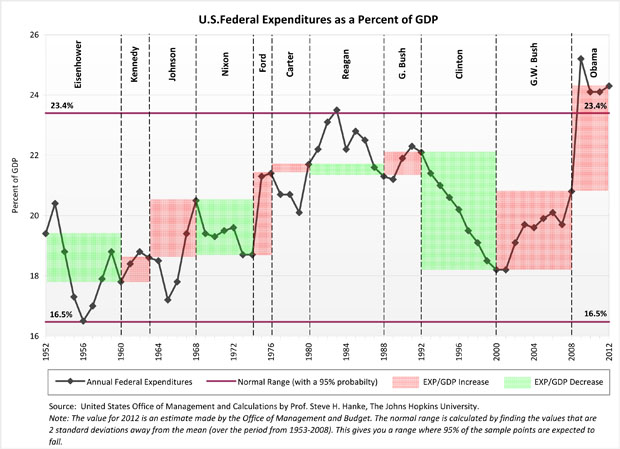
MRS/JR

Hostage Crisis in Northern Africa: Is al Qaeda Involved?

0

For 20 years, Mali was considered a model of democracy in Africa. Then, in March of 2012, junior officers, dissatisfied with the government’s way handling of a rebellion by Tuareg tribes, staged a coup d’état. Mali’s 20-year-old democracy fell and Tuareg rebels and Islamists took over the northern part of the country, an area as big as France. An alliance of jihadist groups, including Ansar Dine, the Movement for Oneness and Jihad in West Africa and al-Qaeda in the Islamic Maghreb (AQIM) imposed the rule of Islamic law on northern Mali – reports have emerged of people stoned to death for public displays of affection – and retook Timbuktu, vowing to destroy its storied mausoleums.

The Malian government have been indecisive about receiving international aid to fight the jihadists. Then, on January 10, jihadists made a sudden advance into the southern part of Mali and seized the central village of Konna. Last week, French President Francois Hollande sent in 2,500 ground troops and launched an air attack.

By January 12, French troops had retaken Konna. But the intervention of the French – who fought against the jihadist Tukulor Empire in the 19th century – has set off a new crisis, the taking of more than 40 hostages, including citizens of Japan, Norway, the U.K. and the U.S., from an oil facility in Algeria on Wednesday.  Initial reports said that a Briton and an Algerian had been killed in an ambush on a bus bringing workers to an airport. The media have since said that 34 hostages and 14 kidnappers have been killed, though there has not yet been official confirmation of any deaths, says the BBC.

The gas field is operated jointly by BP, Algerian state oil company Sonatrach and Norwegian firm Statoil.

Northern Mali: Now “the largest al Qaeda-controlled space in the world”

According to Algerian Interior Minister Daho Ould Kablia, the kidnappers are Algerian and under the command of Mokhtar Belmokhtar, who was a senior commander of AQIM until last year. A statement said to be from the kidnappers calls for an end to the French military intervention in neighboring Mali.

Peter Chilson writes in an article entitled “Al Qaeda Country: Why Mali Matters” in Foreign Policy:

If Mali feels somewhat far away or less than important, consider this: Northern Mali is currently the largest al Qaeda-controlled space in the world, an area a little larger than France itself. U.N. Secretary General Ban Ki-moon has warned that Mali could become a “permanent haven for terrorists and organized criminal networks.” In December, Gen. Carter F. Ham, commander of the U.S. Africa Command, warned that al Qaeda was using northern Mali as a training center and base for recruiting across Africa, the Middle East, and Europe. Jihadists operating in northern Mali have been linked to Boko Haram, the violent Islamist group based in northern Nigeria, and to Ansar al-Sharia, a group in Libya which has been linked to the attack on the U.S. consulate at Benghazi that killed Ambassador Chris Stevens and three other Americans.

The French government has said that the Malian government requested its help after the jihadist incursion on January 10. But behind this is a “less selfless reason,” says Chilson, a “fear that a growing al Qaeda presence in West Africa will make France itself more vulnerable to terrorist attack.” France has said it will remain in Mali until it is stable again; Chilson says that will not be any time soon:

Taking back Mali’s northern cities, such as Timbuktu, Gao, and Kidal, may be the easiest task. Mali’s vast northern desert is a hard place to live, not to mention wage war. For eight months a year, the daytime temperature exceeds 120 degrees Fahrenheit in a vast and unpopulated land that is easy to hide in, especially for the jihadist forces who know the territory well. Any army, no matter how large and well equipped, will have a tough time driving them out.

The jihadists – who Chilson describes as well-trained, well-funded from ransom from kidnappings and armed with weapons captured from the Malian army last spring and Libya –  have counteracted and taken another village in Segou province that is some 300 miles away from the Malian capital, Bamako.

The recent rush of events in Mali and Algeria has revealed that U.S. officials have “only an impressionistic understanding of the militant groups that have established a safe haven in Mali” and are “divided about whether some of these groups even pose a threat” to the U.S., says the New York Times. Asked if AQIM poses an “imminent threat,” Gen. Carter F. Ham, the top American commander in Africa, responded “probably not,” though Defense Secretary Leon E. Panetta has said he sees the group as a more serious threat. As Gen. Ham points out, Malie and the entire region are “tough to penetrate.”

Troops from the Algerian army are currently surrounding the facility where the hostages are being held. At least four hostages have been freed but there have also been a number of victims.

Convoy of Lebanese minister attacked

0

Lebanese security forces gather around a burnt car that burst into flames after gunmen opened fire on the convoy of Minister of Youth and Sports Faisal Karami in Tripoli on January 18, 2013.

At least four people have been injured after gunmen ambushed the convoy of Lebanese Minister of Youth and Sports Faisal Karami in the northern city of Tripoli, Press TV reports.

The attack occurred on Friday in Tripoli’s Azmi street as the ministerial convoy passed through.

According to a statement issued by Karami’s office, the minister was not hurt in the attack and that the four who were injured were his bodyguards.

One of the convoy’s patrol cars burst into flames after gunmen threw a grenade at the convoy.

Voice of Lebanon radio (93.3) said that the incident took place after Karami’s bodyguards exchanged fire with protesters who were participating in a sit-in to demand the release of Islamist detainees held at Roumieh prison, which is located northeast of Beirut.

Following the attack, Lebanese army was deployed near Karami’s house in al-Maarad area and began checking the identification papers of passers-by.

Shortly after the attack Karami told local TV channel OTV that he felt he was not the target of the attack, but rather that “the unrest aims at targeting the country’s security situation”. The minister, however, said that the incident represented an attack on his life.

Hundreds of members of Fatah al-Islam, a violent extrimist group that in 2007 fought deadly gun battles with the Lebanese Army in the northern Palestinian refugee camp of Nahr al-Bared, are being held at Roumieh prison for years without trial.

HM/JR

Arab Spring in 2013

0

Context: As yet there are no context links for this item.

Bio

Phyllis Bennis is a Fellow and the Director of the New Internationalism Project at the Institute for Policy Studies in Washington DC. She is the author of Before and After: US Foreign Policy and the September 11 Crisis , Ending the US War in Afghanistan: A Primer and Understanding the US-Iran Crisis: A Primer.

Transcript

PAUL JAY, SENIOR EDITOR, TRNN: Welcome to The Real News Network. I’m Paul Jay in Baltimore. And welcome to this week’s edition of The Bennis Report with Phyllis Bennis, who now joins us from Washington, D.C.

Phyllis is a fellow and the director of the New Internationalism Project at the Institute for Policy Studies in Washington, author of many books, including Before and After: U.S. Foreign Policy and the War on Terrorism and Understanding the Palestinian-Israeli Conflict: A Primer.Thanks for joining us, Phyllis.PHYLLIS BENNIS, FELLOW, INSTITUTE FOR POLICY STUDIES: Great to be with you, Paul.JAY: So 2013, what are one or two of the things you’re going to be looking for?BENNIS: This is coming on to the second anniversary now of the Arab Spring. And I’m one of maybe only a few left that are still calling it a spring, because I think that despite the horrors that are right now facing people, especially in Syria, I think that what we’re seeing across the Middle East, throughout the Arab world, has been a just incredible rising of peoples claiming their citizenship in a way that they just have never done for the last 40 or 50 years. And that’s still going on. It’s going to take a very long time. None of it’s going to be easy. We’re seeing, you know, five steps back for every one step forward. But still I think there’s new developments that are important. If we start perhaps with Bahrain, which has been off the pages of major newspapers in the U.S., because Bahrain, of course, is a key U.S. ally–the Fifth Fleet is stationed there–but the conditions in Bahrain, where the uprising was smashed early on and continues to face horrific human rights violations, is now coming back. We saw a New York Times editorial by one of the leaders of that movement, Zainab al-Khawaja, a terrific young woman. I spent some time with her a few months ago in South Africa. We toured together doing a little speaking tour, and she’s fantastic. She’s 24 years old. Her father is one of the leaders of this movement. He’s in prison for life. Her sister has just been imprisoned. She works in exile in Norway to get the issues of the human rights crisis in Bahrain out, and they’re now having success. They’re reaching people in this country. They’re reaching the pages of The New York Times. And the question of the Fifth Fleet is not preventing that. So that’s huge at the level of influencing the discourse in this country. If we look at the conditions in Syria, of course, there’s not much good to talk about. The UN’s latest report indicates that the overall conflict in Syria has become overwhelmingly a sectarian conflict. And that means it’s going to be much harder to bring it to an end. The UN envoy Lakhdar Brahimi has just completed another visit to the region. He’s gone off to Moscow to talk with officials there. He’s talking again about the possibility of a transitional government.So far, both sides are pretty opposed to that. There’s no clarity about how a ceasefire–the first thing that has to happen–would take place. So the Syrian opposition now has come together with a new coalition that’s being recognized by the U.S., and leading European governments as well. But at the same time, the United States has said that one of the most important organizations within that coalition, the one that has the most power militarily on the ground, that’s won the most victories against the regime’s army, is in fact what the U.S. calls a terrorist organization linked to al-Qaeda. So it’s a very uneven level of support that the U.S. is offering. The arms are still coming in via Turkey, primarily from Saudi Arabia and Qatar. There’s big debates about whether it’s even possible to provide arms for what the U.S. and the Europeans would like to think are the good guys in the opposition, meaning Western secular types like us, versus those who are actually getting the weapons from Saudi Arabia and Qatar, which tend to be the Islamist forces that aren’t like us. So it’s a very messy situation in which the opposition, writ large, is winning real victories on the ground. But who is speaking for the opposition, how to take into account the needs of the original opposition movement, which was largely a secular, very democratic, open-minded kind of opposition whose voices, in their commitment to nonviolence, their commitment to not making this a civil war, as it has become, they have been largely squelched. Their voices have been silenced by the sound of the guns.At the same time, the regime is losing credibility. It’s suffered significant losses of high-ranking officials, including military officials, including recently the major general of the Syrian army whose job it was to head up the division charged with preventing defections. He was the most recent defector. So it’s a very uncertain question, how this is going to be resolved. The top supporter of the regime, Russia, has pulled back from its once all-sided support for Assad and is now saying, well, we’re not supporting anybody, but we don’t want to have a situation like we have in Libya. Libya, of course, remains completely chaotic, without a viable government that’s capable of providing security for the people of Libya. The weapons that are flooding countries like Mali and elsewhere in North Africa are largely coming from Libya in the wake of this U.S.- and NATO-backed overthrow of the Gaddafi regime.And in Syria it’s becoming more and more sectarian, with even those generals that are defecting tend to not be the Alawites’ generals that are the most closely tied to Assad’s inner circle. So this is going to be a very, very difficult and, I’m afraid, continuing very bloody scenario in Syria.But the one thing that I think: the optimism has to come back when we look at Egypt. Even though there’s been this horrific political debate going on over the Egyptian constitution and some significant losses for the secular and democratic components of the opposition forces with the consolidation of power by President Morsi and the Muslim Brotherhood that backs him, I still think that what we’re seeing in Egypt is a very exciting moment that over the long and even medium term is going to transform that country into a place where people claim their rights as citizens of their country and not subjects of a U.S.-backed dictatorship, as they were for so many years. I don’t exactly know how that’s going to play out. I think that the elections that are going to come for the lower house of Parliament are likely to once again lead to a Islamist-dominated Parliament. But I think that the secular opposition, the Christian opposition, the Muslim opposition, who just doesn’t want as big a role for religion in the government, all of those opposition forces are beginning to cohere much more than they were before. They were really very diverse and divergent before. They’re coming together. And I think they’re showing themselves to be an important player in society. And Morsi has to recognize that despite the fact that in both days of the election or the referendum over the Constitution, despite the fact that he won, he won, his constitution won, by a fairly narrow margin. It was 52 one day and about 60 percent the next. But on both days, there was less than a third of the potential voters, less than a third of the eligible voters actually participated. So if you do the math, it ends up that only about 15 percent of eligible voters supported the Constitution. And that’s not very many.JAY: When you look at the Palestinian-Israeli situation, there are some things happening there which are kind of new in a way–Qatar’s involvement in Gaza, the Muslim Brotherhood of Egypt’s role in sort of managing the resolution of the Gaza war, and then the Fatah-Hamas kind of unity front (we’ll see how long that lasts). And then, apparently, just now, recently, President Abbas has said if the paralysis with Israel–negotiations continues to be so paralyzed, he’s going to disband the P.A.BENNIS: Yeah, there’s a lot of developments there, some of which are optimistic. But, again, the situation on the ground continues to be very grim. What we saw with the most recent Isreali assault on Gaza in November-December, just like what happened four years ago during Operation Cast Lead, the 22-day Israeli war on Gaza, there’s been a real transition of political realities in the aftermath. So it isn’t only about public awareness of the brutality of the Israeli occupation. What the assault on Gaza meant in terms of the killing of civilians, particularly the killing of children, but as well, on the political front, that’s where you saw the new reality of the post-Arab Spring governments moving towards Palestine in a way that they never did before. So even while the Israeli assault was under way, you had–I think the total was somewhere like 14 or 15 Arab foreign ministers visiting not the Israelis to make sure that the U.S. saw they were on the Israeli side, and not even going to the West Bank, where the Israeli assault was not happening, but going right to Gaza under the bombs. You had the prime minister of Egypt, you had the foreign minister of Turkey, you had the foreign ministers of half the Arab League showing up. So this is a very important development in terms of not so much the rhetoric, because those governments all had the rhetoric of being pro-Palestinian for years, but they were never willing to do anything that would challenge the U.S. This time around, at least on the political front, they were willing to. Now, we saw the large grant from Qatar to the Palestinian authorities in Gaza led by Hamas. We see the break of Hamas with the Syrian government. And to a large degree it’s beginning to break with Iran as well. And the result of that is that right now the key allies of Hamas in the region are not Syria and Iran, the key enemies of the United States, but they are Turkey and Qatar and Saudi Arabia, arguably among the most important allies of the U.S. in the region. So it’s a very different scenario that we’re working with. And then you have Egypt, where the Egyptian shift means–and, again, here, in terms of relations with Hamas, Egypt’s role as well as–perhaps even more than Turkey and Qatar, becomes critical, because Egypt has emerged as the interlocutor between Israel and Hamas on the one hand–after all of Israel’s claims that we’ll never talk to Hamas, they’re talking to them through the Egyptians–as the interlocutor between Hamas and Fatah, bringing the possibility of a Palestinian unity process more likely to be something that could happen sooner. And at the end of the day, you have the possibility that with an opening of the Gaza crossing into Egypt, at least a possibility for the people of Gaza to breathe.Overall, I think that we’re moving into a period where the Arab Spring has enormous possibilities. Syria remains a disaster, and it’s going to take a great deal of diplomacy to bring that to a halt. But elsewhere in the region I think that things are more hopeful than we’ve seen. On the ground, particularly for Palestinians, as well as Syrians, it’s a disaster. But we have to look forward, and 2013 could be a year when we see some real changes.JAY: Alright. Thanks for joining us, Phyllis.BENNIS: Thank you, Paul. Always a pleasure.JAY: And thank you for joining us on The Real News Network.

End

DISCLAIMER: Please note that transcripts for The Real News Network are typed from a recording of the program. TRNN cannot guarantee their complete accuracy.


Comments

Our automatic spam filter blocks comments with multiple links and multiple users using the same IP address. Please make thoughtful comments with minimal links using only one user name. If you think your comment has been mistakenly removed please email us at contact@therealnews.com

Please enable JavaScript to view the comments powered by Disqus.

Maddow on NRA: Trolls Don’t Deserve A Seat At The Table

0

At last, someone calls the NRA what they are: trolls. Rachel Maddow is absolutely right. They’re just playing the “how can I get a reaction” game while the rest of us are actually trying to have an adult discussion. This is characteristic of trolls: They intend to disrupt and disturb rational conversations in order to put the attention on themselves. In the case of the NRA, they’re hoping their disruption will not only slow momentum building for reasonable gun safety laws, but also focus attention on them and their stupid fearmongering about losing their guns.

We all know how to treat trolls, right? Repeat after me: We don’t feed the trolls. We don’t pay attention to the trolls, we don’t give them any attention whatsoever. We keep having our adult conversation, which even Joe Scarborough and Michael Steele are involved in, while ignoring the lunatics over there on the sidelines trolling for attention.

Alrighty then. Back to work.

Wolf Killings are Based on the Most Cynical of Premises

0

A wolf hunter in Hasselforsreviret, Sweden. (Photo: Anders Wiklund/AFP/Getty Images)

If, as she has threatened, Brigitte Bardot moves to Russia in protest at the treatment of animals in France, she’s in for a major shock.

A couple of weeks ago, the former actress warned that if two circus elephants thought to be carrying tuberculosis are killed as a result of a ruling by a French court, she will follow Gérard Depardieu by applying for a Russian passport:

“If those in power are cowardly and impudent enough to kill the elephants … then I have decided I will ask for Russian nationality to get out of this country which has become nothing more than an animal cemetery”.

As a general principle, I think anyone who threatens to move to another country if they don’t get their way should be obliged to do so. This, for example, would rid the United Kingdom of some of its greediest and most demanding bankers who, despite their promises, are still here. And Tracey Emin.

But if Bardot does move to Russia, which I reckon is about as likely as Vladimir Putin being elected to the board of Amnesty International, she’ll find that France’s record on the treatment and protection of animals, while often brutal, is almost exemplary by comparison to her adopted country’s. Take for example the decree on Tuesday by the president of the Sakha Republic (also known as Yakutia) in Siberia.

There are 3,500 wolves in Sakha, which sounds like a lot until you discover that the republic is the size of India. President Yegor Borisov wants to reduce the population to 500 through an intensive three-month hunt, supported by a state of emergency, bounties for every wolf shot and a prize of 1m roubles for the hunters who kill the most.

This “emergency” massacre is necessary, he claims, because wolves are killing too many domestic animals. Last year, apparently, they incurred 5m roubles’ (£103,500) worth of losses – considerably less than the likely cost of the wolf hunt. Would it not make more sense to use the money to compensate the farmers? Would it not make more sense to protect the wolves’ natural prey: animals such as hares which are currently being overhunted by people, driving the wolves to look elsewhere for food?

In November, when I wrote about plans to exterminate wolves in Norway, some of those who supported the killings wrote to me to explain that there are plenty of wolves in Russia, so why bother protecting them in Scandinavia? Doubtless the Russian supporters of Borisov’s bloodbath will respond that there are plenty of wolves left in Canada, so why bother protecting them in Russia?

Well they too are likely to be disappointed, as similar massacres are being planned there, on the most cynical of premises.

In Alberta, the province systematically corrupted and brutalised by the oil curse, and whose polluted politics are now corrupting public life throughout Canada, the government plans to carry out a mass killing of wolves by shooting them from helicopters and poisoning them with strychnine.

The reason, ostensibly, is to protect the woodland caribou, a subspecies of reindeer (Rangifer tarandus caribou), whose numbers have been diminishing rapidly. This, according to the Alberta Caribou Committee, is because wolves have been killing them.

So what is this Alberta Caribou Committee? As you might expect, it represents all the usual environmental organisations, such as, er, PetroCanada, Shell, BP, ConocoPhillips, Koch Petroleum, TransCanada Pipelines, Alberta-Pacific Forest Industries and the pulp company Daishowa Marubeni.

Between them they have decided – and apparently convinced both the provincial and federal governments – that the problem afflicting the province’s caribou is not the fragmentation of their habitat by seismic lines, pipelines, roads, oil platforms, timber cutting and the transformation of pristine forest into wasteland by tar sands operations, but the natural predator with which the species has lived for thousands of years.

Never mind that analysis of wolves’ feces show that they eat very few caribou, as they prefer to hunt deer. Never mind that the woodland caribou is highly susceptible to disturbance, and that all the evidence points to the destruction of their habitat as the major factor causing their decline. Something other than the smash and grab exploitation now raging across Saudi Alberta must be to blame. And what better scapegoat could there be than the animal demonised for centuries on both sides of the Atlantic?

Wolf killing is the excuse the federal government needs to remove protection from all but 5% of pristine woodland caribou habitat. As Cliff Wallis of the Alberta Wilderness Association points out “The plan gives the appearance of doing something, but the details read ‘business as usual’ for Alberta oil sands, oil and gas and forestry.” Killing wolves suggests that the caribou are being protected, even while they are being driven to extinction by scarcely regulated industry. Already, hundreds of wolves have been shot and poisoned: now the government intends to intensify this effort.

Something similar is happening in British Columbia. In November a wolf-killing competition, sponsored among others by the Peace River Rod and Gun Club, was announced. It will take place across the winter, and offers cash prizes for the hunters who kill the biggest and smallest wolves. The wolves are driven to exhaustion by snowmobiles, then shot.

Like Alberta’s, the provincial government of British Columbia plans to relax the regulations governing the killing of wolves and to wipe them out in some parts of the province. Again, the excuse is to protect caribou; which again are threatened primarily by human activities.

So I wonder what the advocates of the wolf massacres in Canada will say: don’t worry about our populations, because they’re thriving in Russia, I mean Norway, I mean Edinburgh zoo?

You cannot rely on other countries to do what you refuse to do at home. There’s only one place in which a government can be sure of protecting wildlife, and that’s the place over which it has jurisdiction.

© 2013 George Monbiot

‘Italy recession worse than expected’

0
No Operation

The requested page was not found.
Please visit the PressTV homepage Here

© Copyright 2010 Press TV. All rights reserved.

Spain takes Iran Hispan TV off air

0

The Spanish government has ordered the satellite service provider Hispasat to take the Iranian Spanish language channel, Hispan TV off the air in a blatant assault on the freedom of speech.

The move comes a month after the Spanish satellite company – Hispasat – terminated the terrestrial broadcast of Hispan TV.

Back then, the move was immediately welcomed by the American Jewish Committee (AJC), which called it an important development in worldwide efforts to contain Iran’s media influence.

AJC Executive Director David Harris has acknowledged that the committee had for months been engaged in discussions with the Spaniards over taking Iranian media off the air.

Hispan TV, along with Iran’s 24-hour English language news channel Press TV, has already been targeted by Hispasat’s fellow European satellite providers Eutelsat and Hotbird.

Hispasat is partly owned by Eutelsat, whose French-Israeli CEO is blamed for the recent wave of attacks on Iranian media in Europe.

MP/HMV/SS

Parents guilty of son’s methadone death

0

A couple wept in court as they were convicted of the manslaughter of their two-year-old son who died from drinking methadone.

Riley Pettipierre died in hospital after drinking the heroin substitute from a beaker left in a bedroom at his family’s flat in Belper, Derbyshire, last March.

A jury at Nottingham Crown Court found his parents, Sally Dent, 33, and Shaun Binfield, 45, guilty of his manslaughter.

During the two-week trial, the jury heard that Dent had a history of drug use going back many years and was prescribed methadone to try to rid her of the habit.

Dent regularly sold some of her methadone to other drug addicts to make extra money and was struggling to kick her addiction.

The jurors heard that a green and yellow child’s beaker of the drug was left in the bedroom on March 12 last year so Dent could drink from it during the night if she needed it.

The next morning Dent, who had taken heroin the night before, woke to find Riley unconscious next to her in bed after the toddler drank the drug from the beaker.

The couple told the court a cup was usually kept on top of the wardrobe in their bedroom but had been moved on that occasion because it was more convenient for Dent.

Binfield told the court he forgot to move the cup because he had got caught up with putting the family bins out and the childcare routine after getting up on March 13.

He fought back tears as he admitted he missed three opportunities to move the cup, which the child must have managed to get hold of and drink from.

Dent called 999 and paramedics arrived at the house to find Riley lifeless. His heart had stopped beating and his lips were blue, the court heard.

The child was taken to hospital but was pronounced dead shortly after arriving and a post-mortem showed that Riley had enough methadone in his blood, stomach and urine to prove fatal.

He is believed to have consumed between 10ml and 20ml of methadone, the court heard.

The jury took just four hours to convict Dent and Binfield of manslaughter.

Dent was also found guilty of a separate charge of cruelty to a child under the age of 16 for failing to keep methadone out of the reach of her child.

Following her conviction, the court heard Dent had previous convictions for possessing Class A drugs with intent to supply, assault and prostitution.

Judge Milmo adjourned sentencing until February 19.

He thanked the jury for dealing with such an “emotionally charged” case. “This has been a distressing case and I’m afraid it has fallen to you to deal with it,” he said.

Money Out… Voters In

0

It’s time to stop moneyed conservative interests from trying to buy or steal our democracy. We know the problem–let’s get to the solutions.

Since the 1880s we’ve seen how money shouts, and since the 1980s we’ve watched regressives seek to restrict the freedom to vote, culminating last year in the explosion of Super PAC spending and voting rights restrictions. This time, the efforts of the Adelsons, Kochs and Roves largely failed (at the federal level). But the economic elites will be back to attempt their hostile takeover of our democracy with even more money and sophistication.

Hence MoneyOut/VotersIn Day in some sixty cities on January 19. That’s when a large coalition of public interest, labor, voting rights and faith groups are aspiring to a “more perfect union” on the confluence of the third anniversary of Citizens United, the weekend celebration of MLK and the Presidential Inauguration.

Generations of traditional campaign finance groups have worked against a democracy-for-sale. And heroic voting rights groups have long sought to fulfill Dr. King’s plea at the Washington Monument in 1957: “Give us the ballot! Give us the ballot!” But rarely have these two communities worked together to stop the rigging of the political system. Until we ensure that popular majorities become public law, it will be hard to accomplish so much of what is urgent–a more progressive tax code, immigration reform, climate change legislation, a living wage, labor reform and gun violence reduction.

So on January 19, scores of groups and thousands of people around the country will organize around a three-part Democracy-for-All program: a constitutional amendment to overturn Citizens United; public funding of public elections, in Washington and state capitols; and guaranteed voting rights so potentially 50 million more Americans can vote before or on a National Holiday in November.

First, reverse Citizens United. A momentary five-justice majority in this case tried to assure that a plutocracy of donors supplant a democracy of voters. As for the view that, well, both capital and labor will now be able to spend without limit in elections, the reality is that capital has 3,000 times more wealth than labor, the Koch brothers alone with a net worth more than all unions in America. Senator John McCain is right when he calls the decision the worst in a century. How can “originalists” like Justices Scalia and Thomas ignore the historical reality that the founders intended the First Amendment apply to actual people, not corporations, which never appear in the Constitution? How can Justice Kennedy make believe that “the appearance of influence or access…will not cause the electorate to lose faith in our democracy” if Sheldon Adelson spends, say, $40 million on someone’s behalf and then calls the winning candidate with his ideas on lowered capital gains rates? How can big interests and their apologists hide behind the First Amendment when money is literally property, not speech?

But then, like segregationists who hid behind “property rights” and “states rights,” today’s powerbrokers pretend that they are merely the modern equivalent of silenced minorities. Walmart is not Tom Paine or Fannie Lou Hamer.

It’s one thing for money to buy companies in a system of capitalism based on the private pursuit of profit–but quite another for money to buy congressmen with trillions in shareholder wealth collected for commercial, not political, purposes.

There is an almost comical irony in the law creating corporate charters to raise private capital for business purposes…and then allowing these creations to use that privilege to privatize democracy itself. Surely the Supreme Court can figure out how to condition a privilege, so that corporations can contract and enjoy police protection, but not vote, marry or drown out other voices with an ocean of paid political commercials.

By lopsided margins, the public opposes the current system of purchased politicians and supports overturning Citizens United by amendment or a new Court decision. (Eighty percent favor one and 70 percent would make Super PACs illegal.) While the exact language of an amendment might vary, one version could simply state that money isn’t speech and can, in the electoral context, be regulated like excessive decibels and pollution are by sound/place/manner laws and environmental rules.

There are currently 125 members of Congress, eleven states and 350 cities and towns that have called for a constitutional amendment. Obviously, no state resolution can force a constitutional conclusion, but together they can help create a climate for change, the way hundreds of local referenda for a nuclear freeze in the early 1980s spurred nuclear arms reductions in later Reagan-Gorbachev summits.

True, it’s not feasible today to get a two-thirds majority of each chamber and three-fourths of state legislatures to vote for an amendment–which has happened seventeen times since the Bill of Rights–but a growing movement has taken the idea from pipe dream to mainstream. President Obama told one of the authors in the spring that it was something he wanted to consider in a second term. In his Reddit AMA in October, Obama said, “Even if the amendment process falls short, it can shine a spotlight of the super-PAC phenomenon and help apply pressure for change.”

Next, enact “Democracy Funding.” There are successful versions in New York City, Maine and Arizona. Essentially, either a critical mass of small donations generate a multiple of public matching funding (in New York City, donations from city voters of $175 or under are matched six to one) or candidates can voluntarily opt in to a system where, if they reach a minimum threshold of donors, they receive a fixed amount of public funds to run for office.

Compare the New York City system with matching “democracy funding” and the New York State system without it. Small donations (under $250) account for 55 percent of campaign funds raised in City races but only six percent of State races. Forget 1 percent vs. 99 percent. Given the ethic that you don’t bite the hand that funds you, who is in charge when .5 percent of eligible voters comprise 100 percent of all campaign treasuries in NYS? That’s why a Fair Elections Act creating publicly financed state elections is about to be debated in Albany.

Yes, public funds are involved. But either we have a system of the private funding of public elections–with the hundreds of billions in corporate welfare that result–or we have the public funding for public elections just as we now pay for voting machines and election personnel to administer that Tuesday. New York State has learned that two dollars a voter would pay for a program covering statewide races. Is not our democracy more valuable than one aircraft carrier?

Then there’s Universal Voter Registration. Voter fraud is essentially nonexistent. Meanwhile, some state laws have seven-hour lines for people to exercise their right to vote. As used successfully in many Western European countries and as prominently advocated by the Brennan Center for Legal Justice at NYU, a system of universal registration based on various data bases, like Social Security at birth, could automatically enroll people at 18, creating some 50 million more voters.

Many states–led by Oregon and Washington–have shown that a mix of voting-by-mail, early voting, and same day registration can boost participation by 20 percent points or more. As part of a federal Voter Empowerment Act, it would be also ideal if Congress could create a National Democracy Day on a Saturday in November rather than a working day.

* * *

There are many important steps to save our democracy, from filibuster and gerrymander reforms to the DISCLOSE Act, from the IRS finally investigating tax-deductible groups spending massively in political campaigns, to requiring shareholder resolutions before a company politically spends over a certain amount. But if the three essential elements of a Democracy-for-All Act were enacted, they would fundamentally forever alter who runs, who wins and whom they respond to once in office.

But the only way any or all of this can occur is for candidates to fear and hear from voters more than donors. That’s precisely what happened right after the Watergate scandal, when Congress enacted strong new laws limiting spending and corruption. Now is another opportune moment. After the recent backlash to secret Super PACs and to voter suppression laws–and the election of Obama, who denounced Citizens United to the justices at this 2010 State of the Union and who election night 2012 said of long lines of voters, “We have to fix that”–we demand democracy! If not January 19, then when…and if not us, then who?”

Learn more about MoneyOut/VotersIn Day here.

© 2012 The Nation

‘Green’ Approaches to Water Gaining Ground Around World

0

Protecting natural watershed areas is considered a sustainable and cost-effective approach to ensuring a supply of potable water. Above, the Ashokan Reservoir in New York state. (Credit: ScubaBear68/CC by 2.0)UXBRIDGE, Canada – After Hurricane Sandy swept through the northeast of the United States late October 2012, millions of New Yorkers were left for days without electricity. But they still had access to drinking water, thanks to New York City’s reliance on protected watershed areas for potable water.

Instead of using electric-powered water treatment plans, New York City brings its high-quality drinking water through aqueducts connected to protected areas in the nearby Catskill/Delaware forests and wetlands — just one example of how protecting watersheds can provide residential areas with drinking water and flood and pollution protection at bargain basement prices.

New York saved between four and six billion dollars on the cost of water treatment plants by protecting forests and compensating farmers in the Catskills for reducing pollution in lakes and streams.

In 2011, countries around the world invested more than eight billion dollars in similar watershed projects around the world, according to the State of Watershed Payments 2012 report released Thursday. That year, China led the way, accounting for 91 percent of watershed investment.

“Whether you need to save water-starved China from economic ruin or protect drinking water for New York City, investing in natural resources is emerging as the most cost-efficient and effective way to secure clean water and recharge our dangerously depleted streams and aquifers,” said Michael Jenkins, president of Forest Trends, a non-governmental organisation (NGO) in the United States, which compiled the report.

Previous studies have shown that pollution, the building of dams, agricultural runoff, conversion of wetlands, and waterworks engineering have severely affected global river systems. The wealthier the country, the bigger the threat to river systems, primarily because of expensive waterworks engineering, according to the first-ever health assessment of river ecosystems around the world, as previously reported by IPS.

Promoting a new approach

Given the water engineering mentality of the 1990s, it wasn’t easy to convince health and safety officials that a “green waterworks” approach would work for New York City, said Genevieve Bennett, lead author of the Watershed Payments report and a research analyst with Ecosystem Marketplace.

But trees, grasses and plants are extremely effective at cleaning and retaining water, as well as reducing sedimentation that clogs water reservoirs, Bennett told IPS. “The benefits from these watershed programs extend far beyond water: they support biodiversity, reduce greenhouse gas emissions, and provide income for the rural poor,” she said.

In watershed protection programs such as those in New York, farmers are paid to use soil and water conservation techniques — payment for good stewardship that benefits the public, Bennett added.

Government regulations, however, remain a major constraint to similar projects in many countries. New York’s well documented and highly successful strategy has not been emulated by many other cities, including those in China or India, where engineering expertise is highly prized and huge engineering works are a matter of national pride.

Investing in sustaining existing ecosystems is better than destroying them and attempting to engineer solutions, Charles Vörösmarty, an expert on global water resources, previously told IPS. Water management costs will skyrocket if developing countries adopt the approach of developed nations, he added.

China is one country that has begun to change its approach, according to the report. About 108,000 residents in struggling communities upstream of the southern coastal city of Zhuhai are receiving new health insurance benefits in exchange for adopting land management practices to improve drinking water in the region.

“There are lots of different ways watershed investments are being made in China, some good and some bad. There’s lots of learning happening,” said Bennett.

Beginning of change

In Latin America, the trend in water programs is to offer compensation other than cash for protecting water resources. In Bolivia’s Santa Cruz valley, for example, more than 500 families receive beehives, fruit plants and wire, which can be used for fencing to keep livestock away from rivers and stream banks, in return for their water protection efforts.

A Swedish local water authority found it cheaper to pay for a program to establish blue mussel beds in Gullmar Fjord to filter nitrate pollution than to build a new treatment facility on shore. In Uganda, a beer brewer is paying for the protection of wetlands to retain their valuable capacity to maintain a steady and abundant supply of clean water.

The vast majority of investments in watersheds are with public money. The private sector still thinks providing good quality water is up to governments, Bennett said. However, the public sector is unlikely to be able to invest the 17.7 trillion dollars needed for water infrastructure by 2030, according to the Organisation for Economic Cooperation and Development (OECD).

A green infrastructure is by far the cheaper option and provides a host of other benefits, Bennett concluded.

© 2012 IPS North America

TSA ends naked airport scanners contract after years of controversy

0

A TSA agent waits for passengers to use the TSA PreCheck lane being implemented by the Transportation Security Administration at Miami International Airport.(AFP Photo / Joe Raedle)

A TSA agent waits for passengers to use the TSA PreCheck lane being implemented by the Transportation Security Administration at Miami International Airport.(AFP Photo / Joe Raedle)

The US Transport and Security Administration (TSA) will remove all 174 of OSI Systems Inc. (OSIS)’s Rapiscan body scanners from airports, following serious concerns over their inability to protect the privacy of passengers.

­The $5 million contract Rapiscan had with the TSA will come to an end, leading to the removal of the invasive machines from all US airports. The contract has been terminated as a result of the company’s inability to meet TSA requirements that their machines develop software to produce less invasive images of passengers.

The need for a speedy adjustment intensified in November 2012, when Wired reported that Rapiscan may have been manipulating the results of tests on integrated privacy software that they were supposed to have been implementing. In a letter quoted by Bloomberg, Rep Mike Rogers (R-AL) claimed that Rapiscan “may have attempted to defraud the government by knowingly manipulating an operational test.”

As a result of the outcry that followed these accusations about the then-current software, the TSA ordered the manufacturer to adjust the machines so that an avatar of a miscellaneous body was displayed in place of the individual being searched.

Rapiscan indicated that they would not be able to meet the TSA’s demands until 2014. TSA Assistant Administrator Karen Shelton Waters said that it “became clear to TSA they would be unable to meet our timeline.”

As early as August 2010, the TSA had required that software be developed to make body scans of airline passengers less revealing, after the administration was criticized for essentially stripping their travellers naked. However, their airport scanners have continued to be a source of controversy — in 2012, a Texas woman was sent through a scanner three times, and told she was ‘cute,’

The TSA has been using two companies to conduct the searches, outsourcing to both Rapiscan and L-3 Communications Holdings to produce the machines. While the Rapiscan machines have been utilizing weak X-rays to create what appears to be a naked image of the subject, the machines of L-3 Communications Holdings use radio waves to depict concealed objects on an avatar image on a screen, and will continue to be used by the TSA.  

The Rapiscan machines will be replaced by 60 units supplied by L-3.

Silver Lining For Obama In Official Portrait

0

The White house has released the second official presidential picture of Barack Obama following his victory in the general election in November.

obama split

Obama’s first and second official portraits

Although smiling, the 44th president of the United States boasts a few more grey hairs than the previous portrait, while his faced is etched with the strains of a first -term that in which a bellicose opposition pushed against the Democrat at every turn.

And with the debt ceiling debate due to become increasingly prominent in the run up to the March deadline, perhaps Michelle should prepare herself for a bit more silver atop the “leader of the free world”.

Former Russian defense chief under fire over ‘charity’ forestation project

0

Anatoly Serdyukov.(RIA Novosti / Sergey Guneev)

Anatoly Serdyukov.(RIA Novosti / Sergey Guneev)

Investigators plan to open a criminal case into conscript soldiers’ participation in road building and forestation at a country resort owned by Anatoly Serdyukov’s brother-in-law, a newspaper reports.

The Kommersant business daily quoted an unnamed source in Russia’s top law enforcement agency, the Central Investigative Committee, as saying that the criminal case was opened as a result of a preliminary probe into Serdyukov’s work as the Defense Minister. Investigators suspect some yet unidentified top officials of the ministry of abuse of power. The newspaper adds that the ex-minister could become a ‘participant’ in the case, which suggests charges will be laid against him.

According to law enforcers, in 2011 the unidentified defense ministry officials sent a group of conscript soldiers to the Zhitnoye country resort located in Southern Russia’s Astrakhan Region. The soldiers built a road and planted some lawns and trees in Zhitnoye, which is described as a top-level holiday home offering Volga fishing trips. Zhitnoye reportedly belongs to Anatoly Serdyukov’s brother-in-law, Valery Puzikov.

Investigators claim that the troops sent to work at the resort belonged to a local air force unit and used helicopters to fly to work.

The estimated cost to the defense ministry amounts to 18 million roubles (just under $600,000), but Kommersant quoted a representative of the Investigative Committee as saying that further calculation could multiply the cost five times. The source added that a separate criminal case could be launched into the road building project and this case would also involve the former defense minister.

Serdyukov’s lawyer admitted the road building was real, but said it would not have cost the Defense Ministry as the road became the ministry’s property. As for the forestation and lawns, the lawyer called them “charity or sponsor aid”.

A criminal case into a major embezzlement had already cost Anatoly Serduyukov his Defense Minister’s post. At least four people, including Serdyukov’s close friends, were arrested over the Rosoboronservis affair — a suspected scheme in which top Defense Ministry officials picked valuable real estate assets and sold them to friendly businessmen at lower than market price.

Serdyukov has been summoned to the Investigative Committee twice over the Rosoboronservis case. The first time the questioning was canceled because Serdyukov’s lawyer was ill and could not attend it. At the second meeting the ex-minister refused to give testimony quoting the article of the constitution that allows a witness not to incriminate himself.

Frontrunning: January 18

0
  • Foreign Hostages Die in Algeria’s Battle With Terrorists (Bloomberg)
  • The latest bank to soon join the currency wars: McCafferty Says BOE Must Keep Open Mind on New Policy Tools (Bloomberg)
  • US debt talks complicated by timing (FT)
  • BOJ eyes open-ended asset buying, agrees new inflation goal (Reuters)
  • AmEx Says U.S. Card Income Fell 42% as Loss Provisions Increased (BBG)
  • Call to raise age for US’s Medicare (FT)
  • Obama Promise to Raise Middle Class Living Already Seen in Peril (BBG)
  • China Exits Slowdown as Quarterly Growth Tops Forecasts (BBG) – actually, as new Politburo says to make it appear that way
  • Britain to drift out of European Union without reforms (Reuters)
  • Republicans weigh interim debt-limit hike (FT)
  • Abe’s aide says Japan shouldn’t fret if yen falls to 100 vs dlr (Reuters) … and it was 90 just a few days ago
  • PBOC May Seek More Liquidity Operations (Dow Jones)

Overnight Media Digest

WSJ

* Former professional cyclist Lance Armstrong told the world Thursday
evening that he used performance-enhancing drugs to win seven Tour de
France titles.

* Algeria’s military launched a raid on Thursday
to free about 40 foreigners held by militants at a remote natural-gas
complex, leaving some hostages dead, surprising and angering several
governments and putting leaders across the world at a loss to determine
the fate of their citizens.

* In his final days as U.S. Treasury
secretary, Timothy Geithner reflected on the financial crisis and the
response he helped craft, in an interview with The Wall Street Journal.
Among other things, he said the government’s rescue of the financial
system was doomed to be unpopular.

* In approving Boeing Co’s
787 Deamliner to start carrying passengers in 2011, the Federal Aviation
Administration relied extensively on data generated by Boeing that
indicated the plane’s advanced lithium-ion battery systems — never used
before on a big jetliner — featured redundant safeguards that were
essentially foolproof.

* Rio Tinto Chief Executive Tom Albanese
agreed to step down on Thursday, the latest in a string of leaders
toppled by shifting fortunes at the world’s biggest mining companies.

*
Quarterly earnings reports released on Thursday underscore the
lingering illnesses afflicting some of the largest, best-known U.S.
banks and the comparatively ruddy health of some smaller regional
lenders.

* Sony Corp has reached a deal to sell its U.S.
headquarters at 550 Madison Avenue for $1.1 billion, the company said on
Thursday, a strong price that shows how investors are bidding
aggressively for top Manhattan properties.

* Toyota Motor Corp
has settled what was to be the first in a group of hundreds of pending
wrongful death and injury lawsuits involving sudden, unintended
acceleration by Toyota vehicles.

FT

In a drive for transparency, authorities in the Cayman Islands are planning on creating a public database of funds domiciled in the British territory for the first time.

Videogames seller Game Group is interested in acquiring stores from collapsed music retailer HMV, the CEO said.
 
As their mega-merger continues to go through regulatory clearance, Glencore and Xstrata are set to extend the deadline for the deal for a third time.

The British banking industry wants a deadline of May 2014 to be imposed for claims from customers who say they were mis-sold payment protection insurance, says one senior executive.

Barclays is considering whether it should recoup some or all of the 290 million pounds it was fined for Libor-rate rigging from the bonuses it is due to pay investment bankers in 2012.

NYT

* Hours after Algerian forces raided a gas facility, there was still no official word on the number of hostages freed, killed or still held by their Islamist kidnappers.

* In a televised interview with Oprah Winfrey, Lance Armstrong admitted to using banned substances but did not say how he did it or who helped him.

Thomas Weisel, who bankrolled Lance Armstrong through seven Tour de France wins, said in his first public comment on the matter that he never personally saw an instance of doping on the team.

* Most banks have recovered from the recent financial collapse, but two companies, Bank of America and Citigroup have reported continuing effects on earnings.

* AT&T warned that it would take a fourth-quarter charge of about $10 billion because of bigger-than-expected pension obligations.

* The Chinese economy picked up steam during the last few months of 2012, closely watched data from Beijing on Friday confirmed. But at the same time the figures underlined the view that the pace of future growth is likely to remain well below that seen in recent years.

* E*Trade Financial named Paul Idzik, a former executive at Barclays, as its new chief, ending a five-month search for a new leader.

* Norwegian Cruise Line Holdings has sold shares in itself at $19 apiece, a person briefed on the matter said, reaping about $446.5 million in proceeds.

Canada

CHINA SECURITIES JOURNAL

–The State Electricity Regulatory Commission of China (SERC) said China’s power consumption could reach above 9 percent in 2013 from 5.5 percent in 2012.

CHINA DAILY (www.chinadaily.com.cn)

–Fears over intellectual property lawsuits by foreign train technology companies will not derail exports of Chinese bullet trains, Vice Minister of Science and Technology Cao Jianlin said in an interview, dismissing copycat claims by Japan’s Kawasaki as “nonsense.”

–A former Japanese leader visited a memorial site to victims of Japanese wartime aggression, but analysts were quick to reject ay suggestion that Tokyo will change its policies toward China.

PEOPLE’S DAILY

–China’s Railway Ministry said investment in railway could hit 650 billion yuan and that it will set a National Railway Development Fund as soon as possible.

China

THE GLOBE AND MAIL

* Two class action lawsuits were filed against the federal government in Canada after the human resources and skills development department lost a portable hard drive containing personal information about more than half a million people who took out student loans.

The department said last week the device contained data on 583,000 Canada Student Loans Program borrowers from 2000 to 2006.

* The federal ethics commissioner wants to talk to Finance Minister Jim Flaherty about his letter to the Canadian Radio-television and Telecommunications Commission (CRTC) after it was revealed that he wrote to the arm’s-length broadcast regulator in support of a constituent’s bid for a radio licence.

Reports in the business section:

* More Canadians went online to do their Christmas shopping this year, according to a new report by MasterCard Advisors.

Canadian consumers spent C$2.8 billion ($2.84 billion) shopping online in December, up 26 percent over the previous year and representing about 6.6 per cent of the month’s total retail sales.

NATIONAL POST

* Three Quebec City teens have been arrested over charges of planning a shootout at their high school.

The three teens, two boys aged 14 and 15 and a 16 year old girl, who have pleaded not guilty, face charges of conspiracy to commit murder and will remain detained until a bail hearing on Monday.

FINANCIAL POST

* The blowout in price between Alberta’s heavy oil and the North American benchmark price is a “longer term issue” with no quick fix, Alberta Investment Management Corp (AIMCo) CEO Leo de Bever said.

Fly On The Wall 7:00 Market Snapshot

ANALYST RESEARCH

Upgrades

Amazon.com (AMZN) upgraded to Outperform from Sector Perform at Pacific Crest
Cornerstone OnDemand (CSOD) upgraded to Buy from Neutral at Goldman
Credit Suisse (CS) upgraded to Overweight from Equal Weight at Morgan Stanley
Expeditors (EXPD) upgraded to Outperform from Neutral at Credit Suisse
Fabrinet (FN) upgraded to Overweight from Neutral at JPMorgan
Las Vegas Sands (LVS) upgraded to Outperform from Market Perform at Wells Fargo
Movado (MOV) upgraded to Buy from Neutral at Citigroup
Netflix (NFLX) upgraded to Buy from Neutral at Janney Capital
Qlik Technologies (QLIK) upgraded to Buy from Neutral at Goldman
Research in Motion (RIMM) upgraded to Buy from Hold at Jefferies
Tyson Foods (TSN) upgraded to Outperform from Market Perform at BMO Capital
Wynn Resorts (WYNN) upgraded to Outperform from Market Perform at Wells Fargo

Downgrades

Alterra Capital (ALTE) downgraded to Neutral from Buy at Sterne Agee
Ball Corp. (BLL) downgraded to Hold from Buy at Jefferies
CSX (CSX) downgraded to Neutral from Outperform at Credit Suisse
Capital One (COF) downgraded to Neutral from Buy at Janney Capital
Carrizo Oil & Gas (CRZO) downgraded to Underperform from Neutral at Credit Suisse
Clarcor (CLC) downgraded to Market Perform from Outperform at William Blair
Finisar (FNSR) downgraded to Underperform from Hold at Jefferies
MGM Resorts (MGM) downgraded to Market Perform from Outperform at Wells Fargo
NetSuite (N) downgraded to Neutral from Conviction Buy at Goldman
Ultimate Software (ULTI) downgraded to Neutral from Buy at Goldman
Visa (V) downgraded to Neutral from Outperform at RW Baird
Westamerica (WABC) downgraded to Underperform from Market Perform at BMO Capital

Initiations

Geron (GERN) initiated with an Overweight at Piper Jaffray
Halcon Resources (HK) initiated with a Hold at Stifel Nicolaus
Harry Winston (HWD) initiated with a Buy at Nomura
Inovio Pharma (INO) initiated with an Overweight at Piper Jaffray
Intuitive Surgical (ISRG) initiated with a Buy at Janney Capital
Marathon Oil (MRO) initiated with a Buy at Stifel Nicolaus
Oncothyreon (ONTY) initiated with an Underweight at Piper Jaffray
Threshold Pharmaceuticals (THLD) initiated with a Neutral at Piper Jaffray
Tronox (TROX) initiated with a Buy at B. Riley Caris
Ziopharm (ZIOP) initiated with a Neutral at Piper Jaffray

HOT STOCKS

GE (GE) on target to achieve dougle-digit earnings growth in 2013
Said outlook for developed markets remain uncertain
Sees growth in China, resource rich countries
Weiss family raised American Greetings (AM) offer to $17.50 from $17.18 per share
Moody’s changed Rite Aid (RAD) outlook to positive from stable
Schlumberger (SLB) said global macroeconomic environment remains uncertain
Sees 2013 global oil demand similar to 2012
Liberty Media (LMCA) bought 50M shares of Sirius XM (SIRI), control above 50%
Intel (INTC) ”excited about strong pipeline of products coming to market”
Sees little growth in wireless in 2013
Capital One (COF) sees average quarterly revenue levels in 2013 like Q412
Sees reduction in loan balances in 2013
Sony Corporation of America (SNE) sold 550 Madison Avenue building for $1.1B
AZZ Inc. (AZZ) sees FY14 margins remaining strong
ONEOK Partners (OKS) announced $465M-$500M project investments through 2015
NuPathe’s (PATH) Zecuity approved by FDA

EARNINGS

Companies that beat consensus earnings expectations last night and today include:
General Electric (GE), Schlumberger (SLB), Xilinx (XLNX), Bank Mutual (BKMU), Intel (INTC), Wintrust Financial (WTFC)

Companies that missed consensus earnings expectations include:
Matthews (MATW), People’s United (PBCT), Capital One (COF)

Companies that matched consensus earnings expectations include:
Wipro (WIT), Associated Banc-Corp (ASBC), American Express (AXP)

NEWSPAPERS/WEBSITES

GE (GE) is the world’s top producer of aircraft engines and medical-imaging equipment, but as far as its profits are concerned, it’s very much a bank. GE Capital is expected to account for nearly half the company’s 2012 profit, the Wall Street Journal reports
Dell’s (DELL) potential $23B leveraged buyout could also be the deal that finally gets the leveraged-buyout machine going again, showering financiers in fees and potentially yielding big returns for investors, the Wall Street Journal reports
Americans are more confident in the future and are increasingly striking out to set up their own homes, a move that is helping propel the housing recovery, Reuters reports
When U.S. natural gas producers release their 2012 annual reports, many companies may have to significantly reduce a key indicator of their financial health: reserves. The SEC
requires companies to calculate and report year-end oil and gas reserves using 12-month average prices, Reuters reports
With the worst flu outbreak since 2009 gripping the U.S., vaccine makers (GSK, AZN) are determined to do better next season. They’re developing powerful vaccines that hold the promise of cutting incidences of flu by the thousands, Bloomberg reports
Franklin Templeton Investments (BEN) reduced its holdings of Apple (AAPL) last year to 4.2% from 7% in 2011 on concern the maker of the iPhone lacks a strategy to sell cheaper smartphones in emerging markets such as China and India, Bloomberg reports

SYNDICATE

CyrusOne (CONE) 16.5M share IPO priced at $19.00
Northern Tier (NTI) Energy 10.7M share Secondary priced at $24.46
Norwegian Cruise Line (NCLH) 23.529M share IPO priced at $19.00
SunCoke Energy (SXCP) 13.5M share IPO priced at $19.00
Trius Therapeutics (TSRX) files to sell common stock

Your rating: None

Spain takes Iran Hispan TV off air

0

Spanish government has ordered the communications satellite service provider Hispasat to take Iranian channel Hispan TV off the air in a clear assault on the freedom of speech.

MP/

The Week In Funny Tweets (Contains Less Than 29% Horse Jokes)

0

From “My Lidl Pony” to #horsemeatgate, the week on Twitter – at least if you were a. British and b. looking for funnies – was dominated by the Tesco horsemeat burgers scandal. (Although we have to say: if people are worried about burgers being 29% horsemeat, wait until they find out their lettuces are 90% water.)

And apart from horse burgers there was, of course, snow. Still is. And more to come*.

Plus: the demise of two (count ’em!) high street stores – HMV and Blockbuster – Lance Armstrong’s doping confession, the Golden Globes (including that Jodie Foster speech. You know: that one), the announcement of new gun control laws in the States and the subsequent muted response of the NRA.

And here were just some of the tweets about all of the above – and more – that made us smile this week:

Loading Slideshow...

*Apparently. Please note: we are not official Met Office staff.

Rocket hits residential area in Aleppo, mosque in Daraa, multiple casualties reported

0

Rocket hits Aleppo residential area, multiple casualties reported

Rocket hits Aleppo residential area, multiple casualties reported

A large explosion reportedly caused by rockets has hit a central neighborhood of the Syrian city of Aleppo, local state-run television said, blaming the violence on a ‘terrorist group’. A TV report showed a building collapsed into rubble.

­The number of casualties was not immediately known, though the TV report showed crowds of people pulling bloodied bodies from the rubble, Reuters said.

So Much For That “Record Inflow” Into Equity Funds – Domestic Equities See $4.2 Billion Outflow In Most Recent Week

0

The most talked about story of the last week was undoubtedly the relentless chatter about that massive $18 billion in equity fund inflows as reported by Lipper (not ICI), which tracks primarily institutional and ETF flow of funds, and which, as we explained even before the Lipper data came out, was driven exclusively by a surge in bank deposits into the year end, to be recycled for risk investment purposes by the commercial banks’ own prop desks. The details, however, were largely ignored by the mainstream media which took that inflow as an indication that the tide has finally turned and that the great rotation out of bonds into stocks is on. Turns out that just as we expected it was a year end calendar asset rebalancing. As Lipper reported earlier, the enthusiasm for US stocks appears to have abruptly ended, with a whopping $4.2 billion pumped out of domestic equities, offset by some $4.5 billion invested in non-domestic equities. The blended flow? Just $286 million going into equities. Now our math may be a little rusty, but $18 billion followed by $0.2 is not really indicative of an ongoing rotation out of bonds and into stocks, and is more indicative of a one-time, non-recurring event, just the opposite of all the Bank of America addbacks.

To summarize:

Sector                    Flow    Chg %       Assets    Count
                           ($Bil)   Assets 

 All Equity Funds    0.286 0.01    3,042.918 10,145
 Domestic Equities        -4.181   -0.19   2,255.468 7,523
 Non-Domestic Equities    4.467 0.57    787.450    2,622
 All Taxable Bond Funds   4.625 0.30    1,531.942 4,824
 All Money Market Funds  -9.603   -0.40 2,402.327 1,363
 All Municipal Bond Funds 1.443    0.45    324.824  1,348

From Reuters:

When combined, the sizeable inflows into stock mutual funds and the big outflows from stock ETFs produce a total figure of just $286 million into equity funds overall, which is sharply lower than the previous week’s total inflow of $18.32 billion, which was the most net new cash into equity funds since 2008.

The S&P 500 rose a slight 0.8 percent over the reporting period. Federal Reserve Presidents James Bullard, Charles Plosser and Charles Evans voiced their optimism about U.S. growth for 2013, while upbeat U.S. retail sales for December and strong corporate earnings for major banks JPMorgan Chase and Goldman Sachs also boosted markets.

Investors remained cautious, however, in light of Republican opposition in Congress to increase the $16.4 trillion U.S. debt ceiling. A failure to raise the government’s borrowing limit could cause the United States to default on its debt in coming months.

With regard to the $3.75 billion inflow into stock mutual funds, those that specialize in U.S. stocks attracted $1.41 billion of that sum, while mutual funds that hold international stocks attracted the remaining $2.34 billion.

The enthusiasm for stock mutual funds did not apply to stock ETFs, which suffered outflows of $3.5 billion. The outflows are the first losses for the funds in eight weeks, and mark a reversal from the previous week’s big gains of $10.78 billion. Investors turned particularly cold toward the SPDR S&P 500 ETF fund, from which they pulled $4.21 billion.

Sadly for the prepared talking points, the flows into bond funds are back.

Investors in bond funds favored higher quality and gave $2.02 billion to investment-grade corporate bond funds. The figure represents the total amount pumped into both mutual funds and ETFs that hold investment-grade bonds.

Lemieux of Lipper said that consistent inflows into investment-grade corporate bond funds show that investors are still opting for some safety.

High-yield “junk” bond funds attracted just $571 million overall, indicating the decreased appetite for risky bonds compared with the previous week, when the funds attracted $1.11 billion in new cash.

We, for one, can’t wait to see how much non discussion this latest weekly fund flow update gets on the mainstream financial media, or whether last week’s flow aberation will be locked in time and referred to by the pundits on an ongoing basis indefinitely

Your rating: None

Can National Grassroots Push Depose the ‘Billion Dollar Democracy’?

0

A new report released Thursday puts an exclamation point on the outlandish and outweighed influence that wealthy individuals and corporations have in a post-Citizens United world by showing that a mere 32 wealthy donors–with an average gift of almost $10 million each–gave as much money to largely unregulated Super PACs in 2012 than all the country’s individual small donors gave to the Obama and Romney campaigns combined.

And though the 2012 election is behind us, many activists–now equipped with the experience of what a modern democracy controlled by millionaires and billionaires looks like–are hoping that fundamental changes can be made to correct the corrosive impact of shadow money and undue influence.

As the new report by U.S. PIRG and Demos, “Billion-Dollar Democracy,” shows, those 32 multi-million dollar gifts, in essence, outweighed the collective voice of 3.7 million individuals who gave individual and transparent campaign contributions to the candidate of their choice. Moreover, most did so under a veil of secrecy using shadow non-profit groups and shell corporations created specifically to launder political giving by masking the identities of financial sources.

“Americans who are wondering why it seems tougher to get ahead or even get a fair shake in today’s economy should look to big money politics for answers,” said Adam Lioz, report co-author and Counsel for Demos. “When a tiny group of wealthy donors fuels political campaigns, they get to set the agenda in Washington, and the rest of us are left to argue over that agenda.”

And U.S. PIRG’s Blair Bowie, the report’s other co-author adds: “The first post-Citizens United presidential election confirmed our fears that the new unlimited-money regime allows well-heeled special interests and secret spenders to drown out the voices of ordinary citizens.”

Thanks in large part to the U.S. Supreme Court’s 2010 decision in Citizens United v FEC, the 2012 election was the most expensive in the history of the world.

But now, the reality of this new world of campaign giving, coupled with nationwide attempts in 2012 making it hard for many poor and vulnerable people to vote, has prompted many to demand an end to such preferential treatment of the wealthiest in a democracy engulfed in cash and renewed calls for broader and more equitable poll access.

“At the same time we’ve seen record amounts of unaccountable corporate money spent on elections, we’ve also seen a deliberate attack on the rights of voters to participate in our democracy,” said Aquene Freechild, senior organizer for Public Citizen, which is hosting nationwide events this weekend for its ongoing Democracy Is For People campaign.

According to the group, concerned citizens and voters will gather across the country in the coming week to demand an end to the combined threat of unlimited corporate spending and resurgent voter suppression tactics found in many states.

To voice their outrage and demand fundamental change, progressive groups–including Public Citizen, NAACP, U.S. PIRG, Common Cause, MoveOn, Organic Consumers Association, League of United Latin American Citizens, Hip Hop Caucus and others–have planned nationwide days of action called Money Out/Voters In taking place this coming weekend.

As Public Citizen’s president Robert Weissman, along with advocate Mark Green, wrote regarding the events that will bring “public interest, labor, voting rights and faith groups” together under one banner and cause:

Generations of traditional campaign finance groups have worked against a democracy-for-sale. And heroic voting rights groups have long sought to fulfill Dr. King’s plea at the Washington Monument in 1957: “Give us the ballot! Give us the ballot!” But rarely have these two communities worked together to stop the rigging of the political system. Until we ensure that popular majorities become public law, it will be hard to accomplish so much of what is urgent–a more progressive tax code, immigration reform, climate change legislation, a living wage, labor reform and gun violence reduction.

So on January 19, scores of groups and thousands of people around the country will organize around a three-part Democracy-for-All program: a constitutional amendment to overturn Citizens United; public funding of public elections, in Washington and state capitols; and guaranteed voting rights so potentially 50 million more Americans can vote [in the next election].

Such events seem prove what the authors of the ‘Billion Dollar Democracy’ concluded as well.

In an op-ed published alongside their new report, Lioz and Bowie write: “The outsized role of money in our elections is a dark cloud over our democracy–but there is a silver lining. Not since Watergate has there been so much energy behind finally building a democracy in which the strength of a citizen’s voice does not depend upon the size of her wallet.”

­Protected coral reef may be ‘irreversibly’ damaged by US Navy ship (PHOTOS)

0

This handout photo taken on January 17, 2013 and released on January 18, 2013 by the Philippine Western Command (WESCOM) shows an aerial shot of the US Navy minesweeper USS Guardian after it ran aground on the Tubbataha Reef in the western Philippine island of Palawan. The US Navy minesweeper ran aground in a protected marine sanctuary in the Philippines, the US embassy in Manila said on January 17, 2013.(AFP Photo / Wescom)

This handout photo taken on January 17, 2013 and released on January 18, 2013 by the Philippine Western Command (WESCOM) shows an aerial shot of the US Navy minesweeper USS Guardian after it ran aground on the Tubbataha Reef in the western Philippine island of Palawan. The US Navy minesweeper ran aground in a protected marine sanctuary in the Philippines, the US embassy in Manila said on January 17, 2013.(AFP Photo / Wescom)

A US Navy minesweeper has run aground on a UNESCO protected coral reef off the Philippines. The unique ecosystem “with a very high density of marine species” may suffer irreversible environmental damage.

The ship hit the coral reef in the Tubbataha National Marine Park and ran aground on Thursday due to bad weather. The navy tried to pull the USS Guardian off the reef at high tide on Friday; however the mission was failed, the BBC reports referring to a statement from the US Navy.

The ship remains stuck in the Sulu Sea south-east of Palawan island.

The US Navy reported that the ship had 79 crewmembers aboard at the time it hit the reef. As a precautionary measure 72 of them were evacuated on another vessel.

“A small complement of engineering and bridge personnel will remain aboard and work with a US Navy team in an attempt to free Guardian with minimal environmental impact,” the US Navy statement said.

According to the local media Philippine coast guards and nature park ranger were sent to the site to check whether any significant damage was made to the reef.

UNESCO describes the World Heritage site as a “unique example of an atoll reef with a very high density of marine species… serving as a nesting site for birds and marine turtles.”

“The site is an excellent example of a pristine coral reef with a spectacular 100-m perpendicular wall, extensive lagoons and two coral islands,” according to UNESCO.

The cause of the grounding is currently under investigation, the US Navy said.

This handout photo taken on January 17, 2013 and released on January 18, 2013 by Philippine Western Command (WESCOM) shows an aerial shot of US navy minesweeper, the USS Guardian, after it ran aground on the Tubattaha reef in western island of Palawan. A US Navy minesweeper has run aground in a protected marine sanctuary in the Philippines, the US embassy in Manila said January 17.(AFP Photo / Wescom)

AFP Photo / Jay Directo

Gunmen attack Leb. minister convoy

0

Gunmen attack convoy of Lebanese minister in Tripoli, injure 4

At least four people have been injured after gunmen ambushed the convoy of a Lebanese minister in the northern city of Tripoli.

HM/SS

Russia extends blacklist of American citizens

0

No longer limited to US citizens suspected of human rights abuses at the Guantanamo Bay detention facility, the updated list of Americans prohibited from entering Russia now includes new categories of individuals.

­In December, the number of US citizens declared persona non grata in Russia stood at 11; now this number has been increased by 49 more people as new categories of individuals are added to the list, Aleksey Pushkov, the chairman of the State Duma Committee on Foreign Affairs, told reporters on Friday.

The new names, which contain both government officials and ordinary Americans, can be divided into three categories, Pushkov said.

The first category is comprised of “judges, investigators, secret service agents and Justice Department members” who are believed to be connected with the criminal prosecution and sentencing of Viktor Bout and Konstantin Yaroshenko, Russian nationals who were arrested by US officials, tried on American soil, and are now serving their prison sentences in the US.

Bout, a former Soviet officer who became the owner of an air transport company, was arrested in 2008 by US agents in Thailand. In November 2011, he was convicted by a jury in a New York federal court of intending to provide military weapons to the Revolutionary Armed Forces of Columbia (FARC), which the United States ranks as a terrorist organization, and conspiracy to kill US citizens. He was sentenced to 25 years in prison.

Bout has pleaded his innocent to all charges.

Yaroshenko was arrested in May 2010 in an undercover operation in Liberia. He was taken to the United States and sentenced to 20 years in prison for alleged drug trafficking.

 The second category of individuals prohibited from entering the Russian Federation include US Senators who were responsible for initiating the so-called Magnitsky Act, which was signed into law by US President Barack Obama in December.

The new US legislation attempts to punish Russian nationals who Washington believes are responsible for the death of Sergey Magnitsky, who died in a detention facility in Moscow in 2009 awaiting a tax evasion investigation. 

The final category of persona non grata individuals include American adoptive parents who were found guilty of abusing their adopted Russian children or guilty of their deaths. 

On December 28, 2012, President Putin signed the Dima Yakovlev bill, named after a Russian orphan who died of heat stroke after being left in a car for an extended period by his American adoptive parents. 

Judges who delivered “inadequate” verdicts on such cases, as well as psychiatrists who claimed that those children allegedly had congenital deficiencies that supposedly caused their deaths are also prohibited from entering Russia.

Robert Bridge, RT

The Trillion Dollar Coin: A Debt Solution for the People

0

On Friday, January 11, economist and New York Times columnist Paul Krugman urged the White House to mint a platinum coin worth $1 trillion, as a counter to what was then a threat to block federal spending that Congress had already approved. (Republicans made good on that threat yesterday, putting the United States in danger of default.)

We have forgotten the role that money issued directly by the government has played in our history.

The White House responded by saying the trillion dollar coin is off the table, because the Federal Reserve declared that it “wouldn’t view the coin as viable.”

Even Krugman called the coin idea “silly.” He just thought it was less silly–and less dangerous–than playing with the debt ceiling.

But it is not silly. We have forgotten the role that money issued directly by the government has played in our history. The American colonists did not think it was silly when they escaped a grinding debt to British bankers and a chronically short money supply by printing their own paper scrip, an innovative solution that allowed the colonies to thrive.

Many people believe that the U.S. government creates its own money. This is not true. Today, the Federal Reserve creates trillions of dollars on its books and lends them at near-zero interest to private banks, which then lend them back to the government and the people at market rates. We have been brainwashed into thinking that it makes more sense to do this than for the government to simply create the money itself, debt- and interest-free.

In fact, the trillion dollar coin represents one of the most important principles of popular prosperity ever conceived: nations should be free to create their own money without incurring debt. Some of our greatest leaders, including Benjamin Franklin, Thomas Jefferson, and Abraham Lincoln, promoted this essential strategy. They realized that the freedom to print money offers a way to break the shackles of debt and free the nation to realize its full potential.

While a commoner might get 10 to 20 years for robbing a bank, bank executives get huge bonuses for robbing us.

Money creation is an all-important power that has been fought over for centuries, in a largely secret battle between governments and private banks. For the last two and a half centuries, the banks have had the upper hand, making us forget that any other option exists. But we are learning the great secret of money: that how it gets created determines who has the power in society–we the people, or they the bankers.

It is no secret who has that power today. Witness the great bailout of 2008 that rewarded banks for making irresponsible and fraudulent gambles in the subprime mortgage scandal. None of the bankers responsible served time in jail. Then there was the robosigning scandal, in which banks skipped important steps in the process of foreclosing on the homes of ordinary Americans, and came away with a slap on the wrist. Now we are seeing the LIBOR scandal unfold, in which traders at the Swiss financial services company UBS were convicted of colluding with other banks to tweak interest rates for their own financial benefit. We can make an educated guess as to how this too will turn out for them (hint: well). While a commoner might get 10 to 20 years for robbing a bank, bank executives get huge bonuses for robbing us.

We may rail against the banks and demand change, but change will not come until we grasp the fundamental secrets that are the foundation of their power: those who create the nation’s money control the nation, and nearly the entire money supply today is created by banks in concert with the Federal Reserve.

Remembering our roots

Everyone knows that Benjamin Franklin played an important role in the founding of the United States. Fewer know his views on the printing of money. “Experience, more prevalent than all the logic in the World,” he wrote, “has fully convinced us all, that [paper money] has been, and is now of the greatest advantages to the country.”

When the British forbade new issues of paper scrip by the colonial governments, Franklin went to London and argued that issuing their own money was responsible for the colonies’ prosperity.

The response of the king, leaned on by the Bank of England, was to ban all issues of paper scrip. Without their paper money, the money supply collapsed, and the economy sank into a deep recession. The colonists then rebelled. They won the revolution, but the bankers retained the power to create money by setting up a banking system like that dominated by the Bank of England.

Fourscore and six years later, in 1862, President Abraham Lincoln boldly took back the power to create money during the Civil War. To avoid exorbitant interest rates of 24 to 36 percent, he decided to print money directly from the U.S. Treasury as U.S. Notes or “greenbacks.” The issuance of $450 million in greenbacks was the key to funding not only the North’s victory in the war but an array of pivotal infrastructure projects, including a transcontinental railway system.

After Lincoln was assassinated, however, the greenback program was quickly discontinued. Repeated popular attempts by farmers and laborers to revive it failed. They were opposed by a wave of banker activism to maintain the banks’ control over the printing of money, which had been established by the National Bank Act of 1863.

In 1872, New York bankers sent a letter to every bank in the United States. The letter, as quoted by Lynn Wheeler in Triumphant Plutocracy: The Story of American Public Life from 1870 to 1920, read in part:

Dear Sir: It is advisable to do all in your power to sustain such prominent daily and weekly newspapers…as will oppose the issuing of greenback paper money, and that you also withhold patronage or favors from all applicants who are not willing to oppose the Government issue of money. Let the Government issue the coin and the banks issue the paper money of the country. [T]o restore to circulation the Government issue of money, will be to provide the people with money, and will therefore seriously affect your individual profit as bankers and lenders .

Bank-created money, including paper bills and now electronic money, could be rented to the people at a profit. The people’s debt-free money was limited to coins, which today compose less than one ten-thousandth of M3, the broadest measure of the money supply.

Lincoln’s assassination and the abandonment of debt-free greenbacks marked the exchange of physical slavery for what has been called “debt peonage” or “wage slavery.” Today, as a result, the American government and American people are so heavily mired in debt that only a radical overhaul of the monetary system can free us.

Gimmick or game-changer?

This is the real context and backstory of the trillion dollar coin. The stakes are much higher than just fending off the debt ceiling. We the people need to take back the power to issue our own money, and we can’t do it with nickels and dimes. We’re going to need coins bearing some very large numbers.

The coin could put within the government’s grasp the power to solve its debt problems once and for all.

The idea of minting large-denomination coins to solve economic problems seems to have first been suggested by a chairman of the Coinage Subcommittee of the U.S. House of Representatives in the early 1980s. He pointed out that the government could pay off its entire debt with some billion-dollar coins. The Constitution gives Congress the power to coin money and regulate its value, and sets no limit on the value of the coins it creates.

That may have been true then, but in legislation initiated in 1982, Congress chose instead to impose limits on the amounts and denominations of most coins. The one exception was the platinum coin, which a special provision allowed to be minted in any amount for commemorative purposes.

An attorney named Carlos Mucha, who at the time was blogging under the pseudonym “ Beowulf ,” proposed issuing a platinum trillion dollar coin to capitalize on this loophole, after he heard me mention the trillion dollar coin in a Thom Hartmann interview. At first, he said, it was just an amusing exercise. But with the endless gridlock in Congress over the debt ceiling, it got picked up by serious economists as a way to checkmate the deficit hawks.

Philip Diehl , former head of the U.S. Mint and co-author of the platinum coin law, confirmed that the coin would be legal tender:

In minting the $1 trillion platinum coin, the Treasury Secretary would be exercising authority which Congress has granted routinely for more than 220 years. The Secretary authority is derived from an Act of Congress (in fact, a GOP Congress) under power expressly granted to Congress in the Constitution (Article 1, Section 8).

Warren Mosler, one of the founders of Modern Monetary Theory (MMT), reviewed the idea of the trillion dollar coin and concluded it would work operationally. And Joe Firestone pointed out that the trillion dollar coin has far greater game-changing potential than mere political maneuvering. The coin could put within the government’s grasp the power to solve its debt problems once and for all, replacing austerity with the abundance enjoyed by our forefathers.

The invariable objection to government-issued money is that it will lead to hyperinflation. The trillion dollar coin can evoke images of million-Deutschemark notes filling wheelbarrows. But as economist Michael Hudson points out:

Every hyperinflation in history has been caused by foreign debt service collapsing the exchange rate. The problem almost always has resulted from wartime foreign currency strains, not domestic spending.

And as professor Randall Wray observes, the coin would not circulate in the general economy. Instead, it would be deposited in the government’s account and held at the Fed, so it could not inflate the circulating money supply.

As far as spending goes, the fact that the Treasury has money in its account doesn’t mean Congress could or would go wild spending the funds. The budget would still need congressional approval. To keep a lid on spending, Congress would just need to abide by some basic rules of economics. It could spend on goods and services up to full productive capacity without creating price inflation (since supply and demand would rise together). After that, it would need to tax–not to fund the budget, but to shrink the circulating money supply and avoid driving up prices with excess demand.

Time to take back the money power

The current political stalemate cannot be solved with the thinking that created it. There is simply not enough money in the system to fund the services that Americans desperately need, create full employment, pay down the debt, and keep taxes affordable. The money supply has shrunk by $4 trillion since 2008, according to the Fed’s own website.

The massive push from educational campaigns such as those organized by Occupy Wall Street, Strike Debt, and the Free University is starting to lift the veil from our eyes.

The only real solution to the unemployment created by this shrinkage is to add more money to the economy, and that means that someone needs to create it. Either the Fed does this in the way that it is currently done, by adding the money nearly interest-free to the balance sheets of banks to be lent to the government and the people at interest; or the Treasury does it and adds the money to the government’s account debt- and interest-free.

After a century of domination by the Federal Reserve, it is time we tried something new. In flatly rejecting the Treasury’s legal tender, the Fed as representative of the banks is asserting itself to be more powerful than the elected representatives of the people. If the Fed won’t acknowledge the coins created by the government, perhaps the government needs to charter a publicly owned bank that will.

We have a chance today to end the charade of big money gridlock politics, as well as the reign of the big banks. But the current government is so thoroughly captured by the bank-created money of our time that it is unlikely to take action without pressure from the people. Our ignorance on these issues has played into the hands of the 1 percent, who are dependent on the current system for their wealth and power. However, the massive push from educational campaigns such as those organized by Occupy Wall Street, Strike Debt, and the Free University is starting to lift the veil from our eyes.

We have the power to choose prosperity over austerity. But to do it, we must first restore the power to create money to the people.

This work is licensed under a Creative Commons License

China, Japan Do Their Best To Add To The Overnight Multiple Expansion

0

China’s monthly data dump was the main macro update overnight, which however with ongoing mockery of the Chinese data “goalseeking” and distribution methodologies, most recently by the likes of Goldman, UBS and ANZ, had purely political window dressing purposes for the new Chinese politburo. Sure enough, that all the data came precisely Goldilocks +1 was enough to put a smile on everyone’s face. To wit – Q4 GDP growth came in just higher than consensus (+7.9%yoy v +7.8%). On a full year basis the economy grew by 7.8%, also a tad above expectations. Then we got industrial production, also just higher than expected (+10.3% v +10.2%) and retail sales – just higher as well (+15.2% v +15.1%). Much more important than meaningless, jiggered numbers, was the announcement from the PBOC that in light of the entire world going “open-ended” on easing, China – which now can’t afford to lower rates for fears of rampant inflation together with importing everyone else’s hot money – announced it will start short-term liquidity operations as additional tool for controlling liquidity, engaging in a reverse repo on a daily basis, which will have a maturity of less than 7 days. This way the central bank will be able to reacted almost instantly to any inflationary spikes across the economy, as it too has no choice but to ease although not by the conventional inflation targeting methods now used by everyone else.

Overnight, Japan also shared the spotlight as far as market price action is concerned. The Nikkei (+2.9%) aggressively outperformed other Asian bourses helped by earlier headlines that Bank of Japan is preparing to announce additional easing measures at its meeting next week. This of course is not news, however the BOJ has certainly adopted the ECB’s posture of talking and talking and talking, knowing well every time there is a flashing red headline, the algos will take the USDJPY higher, and once the actual announcement by the BOJ happens, it will be sell the news. Reuters yesterday reported that the BoJ may pledge open-ended asset buying until 2% inflation target is reached. For the n-th time. Overnight headlines following a three-way meeting between the Finance Minister Aso, the Economy Minister Amari and the BoJ Governor Shirawaka are also adding fuel to the rally.

As Deutsche reports, Japanese media noted that Aso and Shirakawa exchanged views on closer cooperation and have made significant progress in producing a joint policy accordstatement. The statement may be published after the two-day BoJ meeting beginning on Monday. Meanwhile, the government’s economic advisor Mr Hamada, who met with PM Abe today, said that the central bank has no choice but to ease next week. Although Hamada added that USDJPY at 95 or 100 is not problematic for the Japanese economy he interestingly said that 110 was a level to be concerned about. In overnight trading the USDJPY briefly breached the 90 level after jumping 2.1% in the last 24 hours.

The bigger problem, as we reported, is that while the USDJPY has reached its preliminary target of 90 in two short months, so has inflation, which for several key products has jumped over 3% in the same period! This will only continue as more and more goods and services prices soar leading to a popular backlash as once more people realize there is no such thing as a free lunch.

More on the market recap from Deustche Bank

Asian markets are trading stronger this morning taking cues from the Chinese data as well as the positive US lead yesterday. The Hang Seng, Shanghai Composite and the KOSPI are all higher by 0.88%, 1.4% and 0.31% respectively. Asian credit markets are also trading firmer with IG bonds opening 1-2bp tighter. The UST 10-year is steady at 1.877% after having moved 6bp higher yesterday following a risk-on move in markets.

Returning briefly to yesterday’s US session, for the first time in a week the S&P 500 started the day on the front foot to rally +0.4% shortly after the opening bell on the back of a strong set of housing and jobless claims data. The index closed 0.56% higher, with just Financials (-0.1%) closing lower on the back of some mixed results from Bank of America and Citigroup.

Taking a slightly closer look at the data, Housing starts rose 12%mom to 954k (vs 851k previous and 890k expected) which our US economists partly attribute to unseasonably warmer weather and Hurricane Sandy. Meanwhile, building permits were little changed on the month (903k vs. 899k previous) suggesting that much of the improvement in housing starts was indeed weather-related. Jobless claims were encouraging, falling 37k to 335k for the week ending January 12th which is the lowest reading since January 19, 2008.

The market looked through a disappointing Philly Fed print though as the index fell to -5.8 for January (vs. 8.1 prior and 5.6 expected due to poor current condition readings. The fiscal cliff uncertainty around year-end may have had an impact but the silver lining was that the 6- month outlook for business activity (+29.2 vs. +23.7) and new orders (+32.5 vs. +28.3) were both higher.

Turning to Europe, German Finance Minister Wolfgang Schaeuble said on Thursday he was very concerned about an expected further easing of monetary policy in Japan. In a speech to the Bundestag, Scheuable said that “When you think of the surplus of liquidity on global financial markets, it is fuelled further by a wrong understanding of central bank policy.” (Reuters). Italy’s La Republicca reported that Mario Monti and leader of the Left, Bersani, have reached a deal on an “anti Berlusconi” alliance following the upcoming election. Elsewhere, the Portuguese government said that they have decided to tap the debt markets before the end of February, after a successful bills auction on Wednesday, according to domestic media.

Moving on to the day ahead, Italian industrial orders, UK retail sales will be the main data print in the Eurozone. British PM David Cameron was originally scheduled to make a highly anticipated speech on Europe today but that has been postponed following the tragic events in Algeria last night. Elsewhere in Europe, final campaigning will take place in Germany ahead of state polls in Lower Saxony on the weekend. The data calendar will be light in the US today with the UofM consumer confidence index being the only highlight. Morgan Stanley will report today but all eyes will be on bell-weather General Electric as the company reports its results before the opening bell.

Your rating: None

Masked Moscow attacker throws acid at face of Bolshoi Theater’s artistic director

0

Sergey Filin, Bolshoi Theater ballet chief, attending a press conference on the celebrations of the 20th anniversary of the International Benois de la Danse Ballet Prize.(RIA Novosti / Ruslan Krivobok)

Sergey Filin, Bolshoi Theater ballet chief, attending a press conference on the celebrations of the 20th anniversary of the International Benois de la Danse Ballet Prize.(RIA Novosti / Ruslan Krivobok)

The Bolshoi Theater’s artistic director was attacked by a masked assailant in Moscow who splashed acid onto his face. Sergey Filin is suffering from severe burns, and may lose his sight. Police have linked the attack to his professional work.

­The 42-year-old former dancer, now the Bolshoi Theater’s artistic director, was attacked near midnight on Friday as he left his car outside his home in central Moscow. The masked assailant then fled the scene.

The artistic director of the legendary Russian theater suffered severe burns of multiple degrees to his face and eyes, and is being treated at a hospital in Moscow where doctors are working to save his eyesight.

Filin is “in a satisfactory condition, in our burns center, not intensive care,” a hospital spokesperson said. Medics also suggested that Filin will need plastic surgery, and said the acid had affected his hair, which will start falling out soon, forcing him to wear a wig.

“The most threatening thing is that he has third-degree cornea burns which put his eyesight in danger,” medics explained. However, it will not be known for two weeks whether Filin will be able to keep his vision, Moskovsky Komosomolets newspaper reported citing the doctors.

The theater’s supervisory board said it decided to send Filin to a foreign clinic for treatment, indicating Germany and Israel as the two main options, Interfax news agency reported.

It will take Filin at least six months to recover, Bolshoi spokesperson Ekaterina Novikova said. She added that Sergey Filin had received threats from anonymous callers before. “We never imagined that a war for roles — not for real estate or for oil — could reach this level of crime,” Novikova said to Channel One.

Bolshoi general director Anatoly Iksanov said he believed the attack was linked to Filin’s work at the theater. “He is a man of principle and never compromised,” Iksanov said. “If he believed that this or that dancer was not ready or was unable to perform this or that part, he would turn them down.”

Filin’s mother said that the threats began on December 31. The Bolshoi’s artistic director’s Facebook page and his email account were hacked shortly before the attack, and his car tires were reportedly slashed on Friday. Someone also called Filin repeatedly, but kept silent when he picked up the phone.

Police said that Sergey Filin’s professional activity is believed to be the primary reason behind the attack. Security forces are looking into the attack, and said that the assailant, if convicted, could face up to eight years in jail for inflicting willful damage to health.

The former Bolshoi ballet star was appointed as the theater’s artistic director in March 2011 amid fierce rivalry for the position.

The Bolshoi Theater reopened in October 2011 after a massive six-year reconstruction effort.

Zero Dark Thirty’s ‘Almost Journalism’: Another Word For Propaganda

0

Why aren’t film director Kathryn Bigelow’s claimed government sources, including employees of the CIA, in jail like Pfc. Bradley Manning? Or, at the very least, being investigated for their role in one of the most damaging leaks of national security information in U.S. history?Still from “Zero Dark Thirty,” released by Colombia Pictures.

How did the Japanese-owned Sony Corporation that released Bigelow’s “Zero Dark Thirty” gain access to information on the 10-year hunt for Osama bin Laden, so highly classified that it was denied to the official 9/11 Commission that investigated the terrorist attacks? The opening frame of the movie states the crime, clearly claiming that “Zero” is “based on firsthand accounts of actual events.” 

Those “actual events,” constituting the tenacious search for the country’s most- wanted terrorist, are matters of such carefully guarded secrecy that even the 10 members of the 9/11 Commission, all possessing the highest level of access, were forbidden to interview anyone with “firsthand” knowledge. The commission, which was created by President George W. Bush and Congress in 2002 and in 2004 released the only official public U.S. government examination of 9/11, was explicitly banned from any contact with the “key witnesses.”

That 585-page report concedes in a boxed disclaimer on page 146 that the commissioners were denied the access that Bigelow claims to have had to the torturers and the tortured in developing the narrative outlined in two key chapters of the report:

Chapters 5 and 7 rely heavily on information obtained from captured al Qaeda members. A number of these ‘detainees’ have firsthand knowledge of the 9/11 plot.

Assessing the truth of statements by these witnesses–sworn enemies of the United States–is challenging. Our access to them has been limited to the review of intelligence reports based on communications received from the locations where the actual interrogations take place. We submitted questions for use in the interrogations, but had no control over whether, when, or how questions of particular interest would be asked. Nor were we allowed to talk to the interrogators so that we could better judge the credibility of the detainees and clarify ambiguities in the reporting. We were told that our requests might disrupt the sensitive interrogation process.

That “sensitive interrogation process” is now on full display for all the world to see in this movie’s opening celebration of the American style of sadism. The purpose is a dehumanizing one, in which the tortured have no claim to a presumption of innocence. Nor is there any interest, as there was in the exemplary “Taxi to the Dark Side”–the 2007 Academy Award documentary winner–in the complex socio-political factors that have led the tortured to be in this position.

Even the 9/11 Commission report, which failed in its forced reliance on firsthand facts of secondhand accounts, acknowledges that some of these villains fought on the same side as the United States against the Soviets, benefited from Western education, and are responding to a myriad of religious and nationalist causes that are worthy of examination. Of course, a public trial for the accused would be the best way to educate ourselves as to why a terrorist band drawn almost entirely from, and financed by, a long-trusted U.S. ally, Saudi Arabia, would engage in such nefarious anti—American deeds. 

But that is not about to happen, and instead, we are at the mercy of selective government leaks. In the case of “Zero Dark Thirty,” leading members of the Senate, experts on intelligence matters, and officials in the executive branch have condemned the film for getting it wrong, not sadly for the use of torture but rather its efficacy in the hunt for bin Laden. So it is the word of Bigelow’s sources against theirs, and the rest of us sourceless folks are at the mercy of the volume of their respective megaphones. 

In short, all of us, the great U.S. citizenry, have been denied open access to the facts essential to understanding the great national trauma justifying a war on terror that has done more damage to U.S. standards of freedom than any foreign enemy.

The few brave whistle-blowers in our government who have attempted to warn us of this dangerous course, like Manning, who is accused of exposing the killing of innocent Iraqi civilians, have endured harsh punishment and been threatened with even greater penalties. Not so the eyewitnesses on whom Bigelow relied for her film’s knee-jerk acceptance of a U.S. torture policy. 

For this sorry state of affairs, I do not primarily blame Bigelow, who has no expertise in investigative journalism and clearly will go with whatever account seems most riveting cinematically. “What we are attempting,” she has said in defense of her work, “is almost a journalistic approach to film.” 

“Almost journalism” is a polite way of justifying propaganda.

© 2012 TruthDig.com

Zero Dark Thiryt’s ‘Almost Journalism’: Another Word For Propaganda

Why aren’t film director Kathryn Bigelow’s claimed government sources, including employees of the CIA, in jail like Pfc. Bradley Manning? Or, at the very least, being investigated for their role in one of the most damaging leaks of national security information in U.S. history?

Still from “Zero Dark Thirty,” released by Colombia Pictures.

How did the Japanese-owned Sony Corporation that released Bigelow’s “Zero Dark Thirty” gain access to information on the 10-year hunt for Osama bin Laden, so highly classified that it was denied to the official 9/11 Commission that investigated the terrorist attacks? The opening frame of the movie states the crime, clearly claiming that “Zero” is “based on firsthand accounts of actual events.”

Those “actual events,” constituting the tenacious search for the country’s most- wanted terrorist, are matters of such carefully guarded secrecy that even the 10 members of the 9/11 Commission, all possessing the highest level of access, were forbidden to interview anyone with “firsthand” knowledge. The commission, which was created by President George W. Bush and Congress in 2002 and in 2004 released the only official public U.S. government examination of 9/11, was explicitly banned from any contact with the “key witnesses.”

That 585-page report concedes in a boxed disclaimer on page 146 that the commissioners were denied the access that Bigelow claims to have had to the torturers and the tortured in developing the narrative outlined in two key chapters of the report:

Chapters 5 and 7 rely heavily on information obtained from captured al Qaeda members. A number of these ‘detainees’ have firsthand knowledge of the 9/11 plot.

Assessing the truth of statements by these witnesses–sworn enemies of the United States–is challenging. Our access to them has been limited to the review of intelligence reports based on communications received from the locations where the actual interrogations take place. We submitted questions for use in the interrogations, but had no control over whether, when, or how questions of particular interest would be asked. Nor were we allowed to talk to the interrogators so that we could better judge the credibility of the detainees and clarify ambiguities in the reporting. We were told that our requests might disrupt the sensitive interrogation process.

That “sensitive interrogation process” is now on full display for all the world to see in this movie’s opening celebration of the American style of sadism. The purpose is a dehumanizing one, in which the tortured have no claim to a presumption of innocence. Nor is there any interest, as there was in the exemplary “Taxi to the Dark Side”–the 2007 Academy Award documentary winner–in the complex socio-political factors that have led the tortured to be in this position.

Even the 9/11 Commission report, which failed in its forced reliance on firsthand facts of secondhand accounts, acknowledges that some of these villains fought on the same side as the United States against the Soviets, benefited from Western education, and are responding to a myriad of religious and nationalist causes that are worthy of examination. Of course, a public trial for the accused would be the best way to educate ourselves as to why a terrorist band drawn almost entirely from, and financed by, a long-trusted U.S. ally, Saudi Arabia, would engage in such nefarious anti—American deeds.

But that is not about to happen, and instead, we are at the mercy of selective government leaks. In the case of “Zero Dark Thirty,” leading members of the Senate, experts on intelligence matters, and officials in the executive branch have condemned the film for getting it wrong, not sadly for the use of torture but rather its efficacy in the hunt for bin Laden. So it is the word of Bigelow’s sources against theirs, and the rest of us sourceless folks are at the mercy of the volume of their respective megaphones.

In short, all of us, the great U.S. citizenry, have been denied open access to the facts essential to understanding the great national trauma justifying a war on terror that has done more damage to U.S. standards of freedom than any foreign enemy.

The few brave whistle-blowers in our government who have attempted to warn us of this dangerous course, like Manning, who is accused of exposing the killing of innocent Iraqi civilians, have endured harsh punishment and been threatened with even greater penalties. Not so the eyewitnesses on whom Bigelow relied for her film’s knee-jerk acceptance of a U.S. torture policy.

For this sorry state of affairs, I do not primarily blame Bigelow, who has no expertise in investigative journalism and clearly will go with whatever account seems most riveting cinematically. “What we are attempting,” she has said in defense of her work, “is almost a journalistic approach to film.”

“Almost journalism” is a polite way of justifying propaganda.

© 2012 TruthDig.com

Tributes Paid To Head Of Police Federation

0

Head of the Police Federation for England and Wales Paul McKeever has died after suffering an embolism.

Federation chairman Mr McKeever died on Thursday night after being admitted to hospital a few days ago.

paul mckeever

Paul McKeever was a serving officer with the Metropolitan Police

Chair-elect of the group Steve Williams said: “I am terribly saddened to announce that Paul McKeever, chairman of the Police Federation of England and Wales, died last night.

“He was admitted to hospital a few days ago and sadly collapsed with a suspected embolism. We await further details. However, my deepest sympathy and that of the entire Police Federation is with his wife and family at this time.

“He was a truly outstanding chairman, and most importantly a truly outstanding police officer and man. A true gentleman, his leadership and reputation will be remembered highly by all those who knew him.”

Metropolitan Police Federation chairman John Tully said: “It is with profound sadness that we have today learned of the sudden death of our colleague and National Federation chairman Paul McKeever.

“Paul was a serving Metropolitan officer and was on the verge of retiring from the service after more than 30 years.

“Sincere condolences go to Paul’s family, colleagues and friends at this very sad time.”

Guns and Mental Illness: A Second Look

0

On the day of the mass murder in Newtown I wrote a column, too quickly. That’s how I deal with overwhelming, unbearable feelings. Some people cry. Some call their friends. Some go to vigils. I write, fast. To get at least a tiny illusion of closure, I had to finish the piece and post it right away.

I did have an important point to make: “Mental health reform is as important as gun reform.” And I came up with what I thought was a clever slogan to reinforce the point: Guns, all by themselves, don’t kill people. Mentally or emotionally disturbed people with guns kill people.

But after the piece was posted I had time to think more carefully. And the more I thought the more I regretted such a hasty, sweeping generalization. A few of the commenters on my piece pointed out the error, and the danger, of linking mental/emotional disturbance to violence in such a simplistic way. I thank them for that.

Now I can say more precisely what I should have said then: A gun, all by itself, doesn’t walk into a public place and start shooting at strangers. There’s a high likelihood — though no certainty — that it’s a mentally ill or emotionally disturbed person with a gun who has killed those people.

Although even one such event is one too many, it’s important to recognize that mass murders are a tiny, almost infinitesimal portion of all the incidents of gun violence in America. The large majority of gun violence is perpetrated by people that the professionals would deem sane.

Those are just two of the points made in a fine article by Dr. Richard Friedman, who took his time and did his homework before he wrote. He cites the research to show that “only about 4 percent of violence in the United States can be attributed to people with mental illness.”

That’s because “the vast majority of people with psychiatric disorders do not commit violent acts.” Though young psychotic male who are intoxicated with alcohol are at a high risk of doing violence, “most individuals who fit this profile are harmless.” Even those who are harmful are driven mostly by drink: “Alcohol and drug abuse are far more likely to result in violent behavior than mental illness by itself.”

 So my earlier column was an unintended example of a huge problem facing those with mental/emotional disturbance. Even among those of us trying to improve public behavioral health services, it’s too easy to fall prey to false stereotypes that create fear and misunderstanding.

That’s one big reason we, as a society, are failing so badly in helping those with mental/emotional disturbance. The old-fashioned impulse to isolate them, to keep them away from the rest of us who are deemed “normal,” is still far too common. We don’t isolate them physically as much as we used to (though physical isolation is still a problem). But emotionally and culturally the distancing may be as great as ever. It happens, in a word, by stigmatizing.

Huge amounts of money flow to research on cancer, heart disease, and many other physical illnesses because they do not carry any stigma. But there is still enormous stigma attached to mental and emotional conditions, because they are met with so much unnecessary, unjustified fear. So we still know far too little about those conditions. More knowledge would dispel some of the fear. Yet it’s hard to get adequate funding for the urgently needed research.

In fact it’s hard to get much public attention at all for the ongoing social crisis in mental/emotional health. Only an act of unimaginable violence, it seems, can get the nation thinking about taking some action. If that’s the only way to get public attention to the issue, it’s better than not raising the issue at all. I’ve been glad to see the public spotlight begin to shine, at least a bit, on this problem. Hopefully the president’s call for public dialogue will be taken seriously and make that light shine brighter.

But if we pay attention to the behavioral health crisis only in the context of violence, it’s far too easy to reinforce the stereotype that the mentally ill and emotionally disturbed are all potentially violent or dangerous.

That prejudice is, unfortunately, driving the newly energized public debate about mental illness and legal access to guns. There’s a growing clamor for tighter restrictions. Many people simply say that anyone with a history of mental illness should be barred from having a gun. Perhaps they don’t stop to think how that would carve irrational stigma into the stone of law.

Perhaps they don’t know that it’s already carved into the laws of many states — and of the federal government, which prohibits selling or giving a gun to anyone who “has been adjudicated as a mental defective [whatever that means!] or has been committed to any mental institution.”   

In the wake of the Aurora shooting, the head of the National Alliance on Mental Illness made a more reasonable suggestion: “Change the law — thoughtfully and carefully — in a way that is not only overly broad, but also avoids unfair, damaging discrimination.” One good example is a report just released by a panel in Maryland, advising that a judge should have to find clear evidence that someone with behavioral health problems is dangerous before they can be barred from getting a gun. 

Of course we need tighter restrictions on legal gun access for everyone. But no one should be singled out merely because they’ve had, or perhaps still have, mental or emotional health problems. Discrimination is just as wrong in gun laws as it is in jobs, housing, or anywhere else.

Discrimination is especially dangerous in gun laws because it reinforces the prejudice that anyone who has mental or emotional difficulties is inherently dangerous and ought to be avoided. As long as that prejudice prevails, we are likely to go on ignoring this enormous social problem. 

If we ever have a truly humane, comprehensive, well-funded public program for helping everyone with mental/emotional problems, we probably will reduce mass killings and, to a lesser degree, all forms of violence. But that will be a very small piece of the much larger gain for our whole society. When the most seriously troubled people among us have their troubles eased, we all benefit.

Dollar Finishing Week on Firm Note

0

The US dollar is trading firmly. The official verbal commentary this week by Europe’s Juncker and Japan’s Amari were more disruptive noise a true signal. These mis-directional cues whipsawed short-term participants and served to obscure what was really happening. 

One of the most important take aways, it seems, from this week’s action is the narrowing of the breadth of the dollar’s decline.  It is really limited to only the euro, with itself appears to have stalled near $1.34. Weighed down by a poor retail sales reports today (-0.1% vs consensus +0.2%, leaving the year-over-year rate at 0.3%, half of what was expected), sterling has broken the uptrend going back to last June’s low near $1.5270. There is immediate support near $.1.5900, the real target is the $1.5830 low from mid-Nov.  The $1.60 area, which had offered support is now resistance. 

The dollar-bloc has generally not participated in the recent move against the dollar.  The Australian dollar is off half a cent today and making new lows from the week below $1.05. Even the firm data from China, indicating that the world’s second largest economy stopped slowing failed to lift the Aussie.  

The US dollar is also making new highs for the week against the Canadian dollar. For the fourth day running the US dollar is setting higher lows and higher highs against the Loonie and is now flirting the CAD0.9900. The near-term risk extends toward CAD1.00.

The Swiss franc not the yen has been the weakest currency this week, falling roughly 2.25% against the dollar and the euro climbed to its highest level since May 2011. Negative interest on franc deposits and some talk under pressure from industry the SNB could raise its euro floor to CHF1.25 from CHF1.20 appears to have been the hook for leveraged participants, who are thought to be the main drivers of the price action. We expect the SNB to neither raise the euro floor nor unwind some of the reserves it has accumulated.   The SNB does not have to do a thing. The last five centime euro rise has come to it very cheaply. 

Another important take away from this week has been the relative underlying resilience of the US economy in the face of the fiscal cliff in late 2012. We do expect GDP to slow considerably from the 3.1% pace in Q3, but this is more reflective of the accounting function. Manufacturing napped back from the storm related Oct decline, rising 1.3% in Nov and 0.8% in Dec. Housing starts are at multi-year highs, accelerating from 728k pace in July to 954k in Dec. Lastly, one of the most important high frequency data, weekly initial jobless claims and the four week moving average, used to smooth out some of the volatility, is at new recovery lows.

Lastly, we note that German election in the state of Lower Saxony this weekend. The importance for investors lies with the implications for the national stage. The key in this regard is how the FDP, the junior partner in the national coalition. If the FDP does not secure 5% of the vote to be represented in state parliament, FDP leader and Economic Minister Roesler could resign. It would also raise the prospect that despite the popularity of Merkel, without a stronger FDP, the CDU could be forced to into a grand coalition with the SPD. The next state election is not until Bavaria hold’s its in Sept and steep CDU losses are anticipated. 

This week the German government has cut its 2013 GDP forecast to 0.4% from 0.7%, the same now as the BBK. A deeper or more protracted downturn (and rise in unemployment) could also emerge as an important electoral consideration.

Your rating: None

US Defence Secretary Says Terrorists Have ‘No Place To Hide’

0

US Defence Secretary Leon Panetta has condemned the militants behind the Algerian hostage crisis and warned them: “Those who would wantonly attack our country and our people will have no place to hide.”

In a speech in central London, Panetta vowed that the US government is “working around the clock to ensure the safe return of our citizens”.

The former CIA chief said: “Even as we continue to try and gather better information about what is happening, let me make a few points.

“First, regardless of the motivation of the hostage takers, there is no justification, no justification, for the kidnapping and murder of innocent people, innocent people going about their daily lives.

“Second, we are working around the clock to ensure the safe return of our citizens and we will continue to be in close consultation with the Algerian government.

“And third, terrorists should be on notice that they will find no sanctuary, no refuge. Not in Algeria, not in North Africa, not anywhere.

“Those who would wantonly attack our country and our people will have no place to hide.”

Panetta’s comments came as David Cameron gave an emergency statement to the House of Commons in which he condemned the “brutal and savage” attack on the desert gas field.

Related on HuffPost:

1,000 shot in US since school carnage

0

US President Barack Obama signing 23 executive orders on gun-control in a Wednesday event.

More than 1,000 Americans have been killed in gun-related violence since last month’s elementary school shooting carnage in Connecticut that killed 20 young pupils and six staff members, new data show.

According to the new data, collected through an interactive project conducted by Slate.com, the tally of those killed in gun violence across the US since the Connecticut massacre has surpassed the 1,000 mark, showing that as of 5 a.m. GMT on January 18, the figure has reached 1013.

The Connecticut school massacre was carried out by a lone 20-year-old gunman on December 14, 2012, using a semi-automatic assault rifle. The incident was reportedly the deadliest carnage at an elementary school in the US history.

Amid growing calls across the US for meaningful government and legislative action to control the free access to guns, especially assault weapons, US President Barack Obama finally delivered on his vow to offer a far-reaching gun-control plan on Wednesday.

While calling on the US Congress to do its part in legislating better gun-control laws, Obama also signed 23 executive orders to facilitate better measures to control purchase and tracking of firearms.

The move, however, has angered pro-gun conservative and Republican politicians and activists, led by the powerful gun lobby, the National Rifle Association (NRA), prompting some to call for Obama’s impeachment and other describing the newly reelected president as an “elitist hypocrite.”

A group called the “Project of Policy Issues Institute” manages a website that urges for Obama’s impeachment, asking visitors to sign a petition to impeach the US president and to receive updates on the campaign to remove him from office.

Although a real effort to impeach Obama appears highly unlikely, the emerging movement supporting the bid stems from a surge of public attention to the US gun debate following the Connecticut school carnage and the persisting divide in the nation’s Congress on enacting any gun-control legislations.

This is while US Vice President Joseph Biden vowed in a Thursday address to the United States Conference of Mayors in Washington that the Obama administration would vigorously press its bid to enact more gun-control legislations.

“We’re going to take it to the American people,” he said. “We’re going to go around the country making our case, and we’re going to let the voices, the voices of the American people be heard.”

MFB/MFB

Israel won’t dismantle settlements: Bibi

0

File photo shows an illegal Israeli settlement in the occupied West Bank.

Israeli Prime Minister Benjamin Netanyahu has vowed that the illegal settlements in the occupied West Bank will not be dismantled if he is reelected.

In an interview with the Israeli daily Maariv on Friday, the Israeli premier said, “We haven’t uprooted any settlements, we have expanded them.”

More than half a million Israelis live in over 120 settlements built since the 1967 Israeli occupation of the West Bank and East al-Quds (Jerusalem). Much of the international community considers the settlements illegal.

The latest Israeli plans to build more settler units have also been censured by many countries.

The Maariv report was published a day after Israeli police took down a tent camp that had been set up by Palestinians in the West Bank in protest against the Tel Aviv regime’s plans to construct a large settlement there.

On January 16, an Israeli court issued a ruling that permitted the Tel Aviv regime forces to remove the tents set up at E1 area near al-Quds (Jerusalem).

The Palestinians had received the court’s temporary injunction allowing them to keep the encampment. However, Netanyahu called for the decision to be reversed.

Netanyahu’s Likud Party is expected to win a majority of seats in the general elections which will be held on January 22.

MKA/HSN/AZ

‘Iran supports vote-based Syria reforms’

0

Ali Akbar Velayati, senior advisor to Leader of the Islamic Revolution Ayatollah Seyyed Ali Khamenei (file photo)

A senior advisor to Leader of the Islamic Revolution Ayatollah Seyyed Ali Khamenei says Iran supports reforms in Syria which are based on people’s votes.

We believe that reforms should be carried out in Syria and they need to be based on the public vote, Ali Akbar Velayati said in an interview with the Lebanon-based al-Mayadeen TV channel.

Velayati, however, added that the reforms should not be carried out through violence or the support of the United States and certain reactionary regimes like Qatar, which provides militants with weapons.

Syria has been experiencing unrest since March 2011, and many people, including large numbers of security forces, have been killed in the turmoil.

The Syrian government says the chaos is being orchestrated from outside the country, and there are reports that a very large number of the militants are foreign nationals.

Iran stresses that the crisis in the Arab state must be resolved politically.

The Islamic Republic has repeatedly condemned any foreign interference in Syria and denounced certain countries’ support of militants carrying out terrorist activities in the country.

AR/MA

‘Brutal And Savage Attack’

0

David Cameron has confirmed that British citizens are still at risk in the ongoing hostage crisis in Algeria, as he gave an emergency statement to the House of Commons on Friday morning.

The prime minister told MPs that the situation was a “dangerous, uncertain and fluid” as Algerian forces continue to try and free captives from a gas facility in the desert.

Cameron confirmed that at least one Briton had died and condemned the “brutal and savage terrorist attack” by Islamist militants.

“It appears to be a large, well co-ordinated and heavily armed assault, it is probable it had been pre-planned,” he said.

Cameron said that on Thursday night the number of British citizens at risk was “less than 30” but said that number had now been “quite significantly reduced”.

The prime minister decided to cancel his long-awaited Netherlands speech on Britain’s future relationship with the European Union in order to stay in London and handle the hostage crisis.

Downing Street confirmed yesterday that Cameron was only told of the Algerian military operation after it had begun – with the Algerian prime minister ignoring British requests to be consulted before any action was taken.

Cameron told the Commons today that the UK and other governments had offered support to the Algerians but this had not yet been accepted.

“We and other countries should be consulted before any other action was taken,” he said. “The Algerian forces mounted an operation and we were not informed of this in advance. I was told of this by Algerian prime minister while it was taking place.”

The British government has offered support to Algeria and Cameron gave his backing to a country that had who “paid a heavy price” over many years in its fight against terror.

“We need to be absolutely clear whose fault this is. It is the terrorists who are responsible for this attack and for the loss of life. The actions of these extremists can never be justified,” he said.

However it is clear Downing Street is frustrated at not being informed of the military moves before they began.

“I will not hide we were disappointed that we were not informed of the assault in advance,” Cameron admitted.

It has also been reported that the Japanese government summoned the Algerian ambassador on Friday to demand answers over what happend when the militants were attacked by government forces.

locator map algeria

Ed Miliband offered Labour’s “full support” to the government “as it responds to appauling and tragic events”.

The Labour leader told the Commons it was “appalling that innocent decent people” had been targeted and said it was a “dark and difficult time”.

United States Secretary of Defence Leon Panetta said in London today that there was “no justification for the kidnapping and murder of innocent people” in Algeria, and vowed the US government was “working around the clock to ensure the safe return of our citizens”.

Also on HuffPost:

Earthquake felt in East Midlands

0

An earthquake with a magnitude of 2.9 has been felt in the east Midlands, according to the British Geological Survey.

The tremor was reported across Leicestershire, Derbyshire and Nottinghamshire.

Julian Bukits, of the BSG, said the earthquake happened at 5.20am and was “average” for the UK.

Leicestershire Police and the county’s fire and rescue services said they had not been called out to any incidents.

The epicentre of the seismic activity was located near Loughborough, Leicestershire, where residents would have felt a bang and a slight vibration.

Mr Bukits said that properties in the area, which has a history of earthquakes, would not have suffered any structural damage.

On October 28, 2001, there was a 4.1 earthquake near Melton Mowbray, Leicestershire, which Mr Bukits described as “big by UK standards”.

Putting today’s quake into perspective, the expert said it was a million times weaker than the 8.9 earthquake which struck off the Japanese coast, causing a devastating tsunami in March 2011.

“Earthquakes generally have to be of 4.5 to 5 magnitude to cause damage,” he added.

Earthquakes in the UK are described as intraplate seismic activity, as they take place far from tectonic plate boundaries.

More follows…

Russian opposition activist commits suicide after Dutch asylum rejected

0

An opposition activist who was on trial in Russia over his part in the 2012 street riots in Moscow has committed suicide in the Netherlands after authorities turned down his asylum request.

The Russian Embassy in the Netherlands has confirmed Aleksandr Dolmatov’s death and said his body will be returned to Russia for burial.

The reports about the circumstances of Dolmatov’s suicide differ. The Russian Lawyers’ Association for Human Rights said the activist killed himself in a refugee center in Amsterdam, and the Russian Embassy spokesperson also claimed they had documents supporting this version.

At the same time, one of Dolmatov’s friends who had already received asylum in Europe, told reporters that his girlfriend had received an SMS from him saying he was in prison in Rotterdam.

Another Dolmatov’s friend has told Russian newspaper Kommersant that the activist had previously complained that Dutch officials asked him to disclose confidential information about his work at a missile facility.

The Dutch embassy in Moscow reported on Friday that before his suicide Dolmatov wrote a letter to his mother and it proves the suicide was a personal matter and not because of the asylum denial.

Aleksandr Dolmatov, was once a designer at a secret Russian missile-building enterprise. The member of the unregistered opposition group Other Russia fled to the Netherland in mid-summer 2012 after Russian law enforcers charged him with taking part in mass unrest during the protest rally on Moscow’s Bolotnaya Square in early May.

Police suspected Dolmatov of participating in a protest rally against alleged elections violations that ended in violence. About 12 Russians are currently on trial over their role in the events. One man has already been sentenced to 4.5 years in prison for assaulting a police officer during the unrest.

After Russian police searched Dolmatov’s apartment the activist asked the Dutch authorities for political asylum, but his request has been declined. Dolmatov appealed the decision and the court session into his appeal was due in the near future.

Other Russia leader, writer and leftist politician Eduard Limonov said that Dolmatov, being a scientist and a technical specialist, probably could not adjust to the living conditions in asylum centers.

Dolmatov’s comrades said that the Dutch authorities should be blamed for the activist’s death. An attorney working for the Other Russia group has told the press that he and his colleagues planned to hold protest pickets near the Dutch Embassies in Kiev and Moscow.

Russian banks hit record $33.3bn profit in 2012

0

RIA Novosti / Igor Zarembo

RIA Novosti / Igor Zarembo

Russia’s lenders set a new record for net earnings last year, which was mostly underpinned by fast growth in personal credit.

Banks across Russia beat their 2011 record $28.3bn, according to Aleksey Simanovsky, first deputy head of the Central Bank of Russia (CBR). While corporate banking produced little growth, Russia’s households were very active and increased consumer credit by 40% in 2012 compared to the year earlier.

Credit cards together with mortgage loans accounted for the largest part of the growth, with the amount of debt through cards increasing 74.81% year on year and loans for housing needs going up 50.53%, the National Bureau for Credit Histories calculated.

“The fast pace of crediting development, especially in the segments of mortgage lending and credit cards is a positive factor that reflects the market maturity and an increase in its technological effectiveness and responsibility,” Aleksandr Vikulin, CEO of the National Bureau for Credit Histories, told Gazeta newspaper.

The CBR has long been warning fast credit growth could hamper macroeconomic stability, “if a regulator doesn’t react in time,” as Sergey Moiseev, deputy director at CBR financial stability department said earlier in December.

Unlike foreign markets, Russian producers benefit little from the growing credit markets, complains Pavel Samiev, CEO at Expert rating agency. While accelerated growth of retail credit results in a revival in domestic demand abroad, in Russia it’s the country’s imports that go up, the expert concluded.

The growth, however, isn’t expected to go into 2013, according to Maria Pomelnikova, an analyst at Raiffeisenbank. Demand for retail credit will be falling as Russian households will be becoming less confident about future income and tighter regulation by the CBR. “A slowdown [in the credit market] can very quickly translate into lower consumer activity and a 1% cut of consumption growth in our estimations could lower GDP growth by about 0.5%,” Pomelnikova concluded.

David Cameron: UK Could ‘Drift Towards’ EU Exit

0

David Cameron served notice today that Britain could leave the European Union if its concerns about its membership are not resolved.

Extracts from a speech that Cameron was planning to make this morning show that the Prime Minister intended to make clear that he wants the UK to play a “committed and active” part in the EU in future.

But he was also planning to warn that, if changes are not made to address the three key challenges of eurozone crisis, economic competitiveness and dramatically declining public support, “the danger is that Europe will fail and the British people will drift towards the exit”.

But the extracts released by Downing Street did not reveal whether the Prime Minister intended to commit himself to an in/out referendum on British membership of the EU following the renegotiation of its terms which he has already said he plans to undertake after the 2015 general election.

The Prime Minister’s reference to possible exit from the EU is his starkest warning yet of the consequence of failure to reform Europe, and echoes Chancellor George Osborne’s comment to a German newspaper last week that “in order that we can remain in the European Union, the EU must change”.

SEE ALSO: European Parliament President Warns David Cameron May ‘Break-Up’ European Union

Cameron’s long-awaited speech in the Netherlands was dramatically postponed last night, after the Prime Minister decided he should stay in London to deal with the bloody fallout from the hostage crisis in Algeria.

The postponement – to a date yet to be fixed – is the latest mishap to befall the his attempt, several months in the planning, to spell out his vision for the future of Europe.

First trailed as early as September, the speech has already been so delayed that Cameron joked he was taking a “tantric” approach to it.

He prepared the ground for a public statement of his Europe policy by speaking to opposite numbers in Germany and Sweden in the Netherlands over the last few days, and discussed last night what he planned to say with French president Francois Hollande and US president Barack Obama.

Segments of the speech released last night showed that he was intending to tell Europe’s leaders that they have a “duty” to respond to the growing frustration of their people and to accept change to the way the EU operates.

“More of the same” would condemn EU nations to “less competitiveness, less growth, fewer jobs”, he argued.

According to the speech extracts, Cameron was planning to use the address to set out what he termed a “positive vision for the future of the European Union. A future in which Britain wants, and should want, to play a committed and active part”.

He was planning to tell an audience of business people and EU diplomats that Europe “must change, both to deliver prosperity and to retain the support of its peoples”.

The woes of the euro were already forcing “fundamental change” on the structures of the EU, while a “crisis” in competitiveness was allowing emerging nations around the world to “soar ahead” of Europe, he was due to say.

And he was planning to warn that “there is a gap between the EU and its citizens which has grown dramatically in recent years and which represents a lack of democratic accountability and consent that is – yes – felt particularly acutely in Britain”.

SEE ALSO: Former Belgian PM Compares Cameron To ‘Suicide Bomber’

The speech extracts warned: “If we don’t address these challenges, the danger is that Europe will fail and the British people will drift towards the exit.

“I do not want that to happen. I want the European Union to be a success and I want a relationship between Britain and the EU that keeps us in it.”

According to Cameron, the austerity measures taken to deal with the crisis in the eurozone have given added urgency to the issue of the EU’s democratic legitimacy.

“People are increasingly frustrated that decisions taken further and further away from them mean their living standards are slashed through enforced austerity or their taxes are used to bail out governments on the other side of the continent,” he was intending to argue.

“And yes, of course, we are seeing this frustration with the EU very dramatically in Britain. Europe’s leaders have a duty to hear these concerns. And we have a duty to act on them.”

In a riposte to supporters of the status quo in Europe, Mr Cameron was planning to warn: “More of the same will not secure a long-term future for the eurozone. More of the same will not see the European Union keeping pace with the new powerhouse economies. More of the same will not bring the European Union any closer to its citizens.

“More of the same will just produce more of the same – less competitiveness, less growth, fewer jobs. And that will make our countries weaker, not stronger.”

The Prime Minister’s approach won the support of London mayor Boris Johnson, who said in a speech last night that he believed voters would back a renegotiated membership which saw Britain stay in the single market but remove some of the “barnacles” which have grown up around EU membership.

But Liberal Democrat Business Secretary Vince Cable warned that renegotiation was a “dangerous gamble”, while Labour’s Douglas Alexander said Mr Cameron was “sleepwalking towards exit”.

There was also renewed US pressure, with President Barack Obama telling Cameron that Washington greatly valued Britain being in the EU.

Cameron set out his proposed speech in a call with the president yesterday afternoon before it was postponed.

The White House made clear that Obama maintained the pressure on the Prime Minister in the call.

A spokesman said: “The president underscored our close alliance with the United Kingdom and said that the United States values a strong UK in a strong European Union, which makes critical contributions to peace, prosperity, and security in Europe and around the world.”

Related on HuffPost:

Iran speaker hails resistance movements

0

Iran’s Majlis Speaker Ali Larijani speaks at the international conference of ‘Gaza, Symbol of Resistance’ in the Iranian capital, Tehran, on January 17, 2013.

Iran Majlis Speaker Ali Larijani has lauded Lebanon’s Hezbollah as well as the Palestinian resistance movements of Hamas and Islamic Jihad as influential powers in the region.

Speaking at the international conference of ‘Gaza, Symbol of Resistance’ in the Iranian capital on Thursday, Larijani said that Hezbollah, Hamas and Islamic Jihad were among the most influential powers in the region due to their morale of resistance.

He said that Israel was crushed by Hezbollah during the 33-day war and added the Lebanese movement imposed a backbreaking defeat on Tel Aviv. Larijani said that Israel then launched the 22-day war to break Gaza but was defeated by Hamas and Islamic Jihad and added the Tel Aviv regime suffered its latest defeat in the recent eight-year war on Gaza.

On November 14, the Israeli regime launched a deadly offensive on the blockaded Gaza Strip, which killed more than 160 Palestinians and injured some 1,200 others. In retaliation, Palestinian resistance fighters fired rockets and missiles into the Israeli cities, killing at least five Israelis.

The November 2012 Israeli war on Gaza was Tel Aviv’s second deadly attack on the Palestinian strip in four years. Israeli regime waged a 22-day war on the densely-populated enclave in 2008, which killed over 1,400 Palestinians, including at least 300 children.

Israel had also unleashed an all-out offensive on Lebanon in summer 2006 but received a humiliating defeat from Hezbollah. The invasion claimed the lives of nearly 1,200 Lebanese people, most of them civilians.

AR/MA/AZ

Lucky escape: Half-naked Russian runs 7 km in -40°C weather after falling off train

0

RIA Novosti / Viktor Ahlomov

RIA Novosti / Viktor Ahlomov

A 42-year-old Russian man literally ran for his life for seven kilometers in the freezing cold after he accidentally fell off a train in the country’s Far East — wearing only a T-shirt, sweatpants and slippers.

­The man said that he had gone to the train’s vestibule for a smoke. As he was coming back to his carriage, he missed his door and opened another one to a non-functioning vestibule. He stepped into the dark — and then found himself in taiga forest, on the railroad, all alone.

The passenger ran after the train for seven kilometers, but couldn’t catch up with it. At the next station — ‘Richard Sorge,’ only 150 kilometers away from the train’s final destination — the man was given help.

“The 42-year-old man survived by sheer luck,” the Interior Ministry’s local transport department reported on Friday.

An investigation into the matter has been launched, and police are trying to ascertain whether what happened was an accident, or whether a train attendant forgot to close the door out of neglect.

Local media reported that the man turned out to be a driver working under a rotation system in Russia’s Far East. “He is feeling fine, has already started working, and has suffered no bodily harm. Certainly, he had been very scared, but got over the shock,” the man’s employer told Komsomolskaya Pravda newspaper.

The train was traveling from Moscow to Nerungri, a city in Russia’s Far East, which has a population of just over 62,000 people. The average winter temperatures in the area measure around -30°C.

Revolutionary Cyber-Guard? Iran boosts Web-warfare capabilities after centrifuge virus attack

0

Technicians monitor data flow in the control room of an internet service provider in Tehran.(Reuters / Caren Firouz)

Technicians monitor data flow in the control room of an internet service provider in Tehran.(Reuters / Caren Firouz)

The 2010 cyber-attack on an Iranian uranium enrichment facility, which destroyed more than 1,000 centrifuges, has sparked a buildup of Tehran’s hacking capabilities, a US cyberwarfare commander said. Tehran may soon be a formidable foe in cyberspace.

While no government has officially claimed responsibility for the Stuxnet virus that targeted Iran’s Natanz facility, the US and Israel are widely believed to be behind the attack. The sophisticated cyberweapon infected industrial computers and interfered with centrifuge operations, causing damage to the equipment.

“It’s clear that the Natanz situation generated a reaction by them. They are going to be a force to be reckoned with, with the potential capabilities that they will develop over the years and the potential threat that will represent to the United States,” General William Shelton told journalists. Shelton heads the US Air Force’s Space Command, and also oversees the Air Force’s cyber operations.

General Shelton declined to elaborate on Iran’s offensive hacking capabilities, or the damage that Tehran could inflict on US computer networks. Earlier, a newsletter from the Department of Homeland Security’s cyber unit warned that critical US infrastructure is becoming increasingly vulnerable to hacker attacks.

Tehran has denied several accusations it was involved hacking operations; the latest such incident was a hacking attack on nine US banks and financial institutions last week, which cost the firms millions of dollars.

A hacker group claimed responsibility for the denial-of-service onslaught against the financial websites, saying it was retaliation for an amateur video deemed offensive to Islam’s Prophet Muhammad. But US media cited a number of officials and experts who said that Washington is certain Tehran was behind the attack. Tehran denied any involvement, saying in a statement that it “denounces such methods, which are a violation of the sovereignty of nations.”

Another alleged Iranian cyberwarfare operation was last year’s attack on Saudi oil giant Aramco. A virus uploaded to the state-owned firm’s computer networks damaged files on some 30,000 computers. At the time, US Secretary of Defense Leon Panetta called the incident “a significant escalation of the cyber threat,” and warned that a “cyber Pearl Harbor” could soon hit America.

Iran has recently grappled with a number of cyber-attacks. In December 2012, Tehran complained that a number of hacking attacks aimed at disrupting the networks of Iranian industrial facilities — including a power plant — took place over the course of several months.

Iran is currently under crippling financial sanctions championed by the US that have significantly cut its oil revenues and damaged its economy. Washington and its allies have stepped up pressure on Tehran in a bid to halt its uranium enrichment program, and have accused Iran of trying to build a nuclear weapon.

The Islamic Republic has for years denied allegations it is weaponizing its nuclear industry, arguing that its enrichment capabilities are needed to produce fuel for nuclear power plants and radioactive isotopes for medical applications.

Gun found in 7-year-old schoolboy’s backpack in NYC

0

A ..22 caliber handgun, its magazine and a flare gun seized by police from a seven-year-old boy at Wave Preparatory Elementary School in New York are pictured in this handout photo released by the NYPD January 17, 2013.(Reuters / Handout)

A ..22 caliber handgun, its magazine and a flare gun seized by police from a seven-year-old boy at Wave Preparatory Elementary School in New York are pictured in this handout photo released by the NYPD January 17, 2013.(Reuters / Handout)

A handgun was discovered in the backpack of a second grade student at a public elementary school in New York City, just two days after state Governor Andrew Cuomo signed post-Newton gun restrictions into law.

­The .22-caliber weapon was unearthed from the 7-year-old boy’s bag on Thursday morning at Wave Preparatory Elementary School in the Queens borough of New York City. The school was then placed on lockdown, just after 10:00am local time.

Alongside the semiautomatic pistol, police also seized ammunition and a flare gun from the young boy’s satchel. The horrifying incident took place amid heightened concern regarding gun violence in US schools, following the December tragedy at Sandy Hook Elementary School in Newtown, Connecticut, in which 20 children and six educators were massacred.

Two hours after the boy arrived at Wave Preparatory, his mother learned that he had the gun and attempted to apprehend him at the school, telling administrators that he had a dentist appointment. The boy told his mother that he had given the gun to a second grade classmate, leading her to alert the principal.

Students were then instructed to remain in their classrooms after the principal announced the school was in ‘lockdown’ status. Javier Ferrufino, an 11-year-old in fifth grade, told the New York Times, “I thought we were going to get killed… we went to the back of the classroom. I hid with my friend behind some computers.”

It remains unknown how a boy so young came to be in possession of the handgun. However, he reportedly has two older brothers aged 21 and 27 — the question of whether the young boy was aware of the weapon’s presence in his bag is under investigation.

Heightened fears following the Sandy Hook shooting massacre have led to intense discussions regarding gun control measures in the US. On Wednesday, President Barack Obama urged Congress to approve a ban on assault weapons and high-capacity magazines, and institute thorough background checks on all gun buyers. However, on Thursday, Senator Rand Paul (R-KY) derided the President’s attempts to exert power in this arena, comparing his actions to those of a monarch.

Obama’s skepticism over placing armed guards in schools was criticized as hypocritical by the NRA on Tuesday, on the grounds that his children have secret service protection. A Reuters poll on Thursday found that 72 percent of Americans favored the proposal to station armed guards in the nation’s schools.

 However, the same Reuters poll found that 74 percent of Americans are in favor of a ban on assault weapons, and 86 percent approve of expanded background checks on all gun buyers.

‘A ruthless desire to win at all costs was my biggest flaw’ – Armstrong

0

Lance Armstrong (AFP Photo/Nathalie Magniez)

Lance Armstrong (AFP Photo/Nathalie Magniez)

Once revered as the greatest cyclist in the world, Lance Armstrong has finally confessed to using performance-enhancing drugs, saying he was not afraid of being caught at the time, calling his decisions his “own mistake.”

­The seven-time Tour de France titleholder confessed to Oprah Winfrey that reaching such heights as an athlete would not have been possible without the use of drugs. 

The onetime legend said that he didn’t invent the culture of doping in professional cycling, claiming that taking banned substances “was part of the job.”  But, he admitted, he also did not try to stop it. Armstrong admitted to blood-doping and testosterone.

“I viewed it as very simple. We had things that were oxygen-boosting drugs, for want of a better word, that were incredibly beneficial for endurance sports — and that’s all you needed. My cocktail, so to speak, was only EPO, but not a lot, transfusions and testosterone,” he told the talk show host.

Armstrong has also confessed that the last time he doped was in 2005, after starting the process in the mid-1990s.

Last October, Armstrong was stripped of all his titles after the US Anti-Doping Agency reported illegal substances presence in his blood samples. The cyclist has also been banned from competition for life.

Müller ‘proud’ to receive souvenir from Messi

0

Photo from twitter.com user @vasijamal

Photo from twitter.com user @vasijamal

The German iconic football striker Gerd Müller has received a signed jersey sent to him by Leo Messi, who broke his record for scoring the most number of goals within one calendar year forty years on.

Messi had written the following tribute on his number 10 Barça jersey: “For Gerd Müller. My respects and admiration. Regards”.

The Bayern Munich legend was beaming with happiness when he received the gift from the four-time Ballon d’Or holder.

“I am very pleased and proud to receive a jersey like this from the best player in the world,” Müller told Bayern Munich’s press office.

Müller, who set his impressive record mark of 85 goals in 1972, saw his achievement tumble to Messi in 2012, when the Argentine striker netted a total of 91 goals.

The German has promised to give the jersey to Bayern’s museum for all the fans to see.

‘Prepare For The Worst’

0

The hostage crisis in Algeria is still not over, the Foreign Office has confirmed, with Britain is braced for news of more casualties amid confusion over the death toll after a military rescue bid.

Prime Minister David Cameron warned of “further bad news” as he put off a highly-anticipated speech on Britain’s future in Europe to stay in London and oversee developments.

algeria

A man reads a newspaper headlining “Terrorist attack and kidnapping in In Amenas”, at a news stand in Algiers

The Algerian authorities announced there had been “some deaths and injuries” in the operation to free foreign workers from Islamist militants.


Sophy Ridge

Foreign Office source tells me they’re working on understanding its still “ongoing” situation in Algeria & may still be hostage takers there

One report on Algerian state television said two British workers were among four foreigners killed at the remote desert gas plant at In Amenas, which is jointly operated by BP.

Two Scots are reportedly among four hostages freed during an attack by the Algerian army on militants as they drove away from the plant yesterday, the Algerian Press Service said.

Cameron will chair a meeting of the Cobra emergency committee on Thursday morning as efforts continue to establish the full scale of the bloodshed.

A Foreign Office spokesman said on Friday morning: “The terrorist incident in Algeria remains ongoing. The Prime Minister spoke twice to his Algerian counterpart, prime minister Abdelmalek Sellal, on Thursday.

“He chaired Cobra twice on Thursday, and will chair another meeting on Friday morning; Cobra will continue to meet as long as the crisis lasts.

“As the Prime Minister and Foreign Secretary have said, to the best of our knowledge on the information given to us by the Algerian government, one British national has sadly been killed.

“We are not in a position to give further information at this time. But the Prime Minister has advised we should be prepared for bad news.

“Our priority will remain the safety of British nationals and their co-workers.

“We cannot provide any details that might endanger their lives. But we are working round-the-clock to resolve this crisis.”

Foreign Secretary William Hague has cut short a visit to Australia to return to the UK and there is expected to be a ministerial statement to the Commons.

The Algerian rescue effort was launched early Thursday morning without consultation with the UK, to the dismay of Number 10.

Cameron was informed that it was under way when he telephoned his Algerian counterpart yesterday morning despite having earlier asked to be kept fully updated.

Offers of British help had been declined.

Algerian communications minister Mohamed Said Belaid said the military operation succeeded in “neutralising a large number of terrorists and freeing a large number of hostages”.

“But unfortunately, we are sorry to say, there were some deaths and injuries,” he said.

“We do not yet have a definitive figure. As soon as we have it, we will make it public.”

One British citizen had already been confirmed dead earlier in the hostage incident in which several others are known to be caught up.

Earlier reports said that between six and 35 hostages and eight and 15 rebels had been killed.

locator map algeria

Cameron cancelled his long-awaited Europe speech which he had been due to deliver in the Netherlands Friday after a second call to Algerian premier Abdelmalek Sellal.

Downing Street said he “emphasised the continuing need for the Algerian security forces to do everything they could to safeguard hostages”.

Speaking afterwards he said: “We should be prepared for the possibility of further bad news, very difficult news, in this extremely difficult situation.”

Officials would continue “working around the clock to do everything we can to keep in contact with the families, to build the fullest possible picture of the information and the intelligence”.

“I will do everything I can to update people about what is a difficult and dangerous and potentially very bad situation,” he added.

The militant group believed to have carried out the raid on the gas plant says it was retaliation for French military intervention against al Qaida-backed rebels in neighbouring Mali.

The drama began Wednesday morning when heavily-armed militants launched a dawn raid, killing two people and injuring six others.

They claimed to have seized 41 foreign workers including Britons, Americans, Norwegians and Japanese.

A spokesman for the militants claimed that 35 hostages and 15 rebels had been killed when Algerian helicopters strafed the site in today’s operation.

The militants – reportedly led by the veteran jihadist Mokhtar Belmokhtar – threatened previously to “eliminate” the hostages if they were attacked.

The Irish government said that one of its nationals had been freed.

Father-of-two Stephen McFaul, 36, from west Belfast, made contact with his wife Angela to say he was safe and well.

algeria

Amenas Gas Field in Algeria, which is jointly operated by BP and Norway’s Statoil and Algeria’s Sonatrach.

His 13-year-old son Dylan choked back tears as he declared he would give the electrician a “big hug” as soon as he sees him and never let him go overseas again.

Shadow foreign secretary Douglas Alexander said: “Latest reports of the grave and tragic events unfolding on the ground in Algeria are deeply concerning.

“The priority must be the resolution of the crisis and the safety of the hostages and we offer the Government our support in their efforts to achieve this.”

Foreign Office Minister Alistair Burt said: “Although details have yet to become final, I am afraid we should be under no illusion that there will be some bad and distressing news to follow from this terrorist attack.

“You will appreciate that there is a limit to what I can say at present given ongoing security issues. All our thoughts should be with those who have been caught up in this tragedy and particularly with the families who have already suffered so much distress.”

Market Buzz: Small gains expected worldwide as positive signs emerge

0

Traders work on the floor of the New York Stock Exchange (NYSE) in New York.(AFP Photo / Stephen Chernin)

Traders work on the floor of the New York Stock Exchange (NYSE) in New York.(AFP Photo / Stephen Chernin)

Russian indices are expected to make slight gains on Friday after macroeconomic data from the US and China inspired investors the previous day.

­

“[The] Friday trading session in Russia is most likely to show a mild growth. Given positive dynamics in Asian floors and a close of US trading in the ‘green zone,’ one could expect Russian markets to open in the black, with falling oil prices still pressing the indices,” Darya Pichugina of Investcafe wrote in an email.

On Thursday, both key Russian indices finished trading in positive territory. The RTS rose 0.91% to 1,585.44 and the MICEX was up 0.59% to 1,523.74. This upbeat sentiment came mostly on the back of positive statistics from the US, Pichugina added.

Despite the upbeat macroeconomic data from China and the US, as well the military conflict currently raging in north Africa, oil prices are declining: Brent lost 0.14% and the WTI dropped 0.32%, Pichugina said.

China reported better-than-expected economic growth for Q4 2012, with its GDP rising 7.9% during the period compared to a 7.4% growth in the previous quarter.

The number of new homes being built in the US in December rose sharply, according to official figures. Investors were also cheered by good news in the job market, where first-time claims for unemployment benefits fell to a five-year low last week. The declining number of unemployment claims sowed hopes that the world’s largest economy is gaining traction, CNN Money reported, quoting Chief Market Strategist Doug Roberts of Channel Capital Research.

Corporate earnings in the US offered a mixed picture, with Bank of America posting quarterly earnings slightly better that analysts had expected, while Citigroup fell short of expectations.

Asian markets have generally risen today, with Japanese shares leading the region. The Nikkei 225 is up 2.46%, while Hong Kong’s Hang Seng added 0.75% and China’s Shanghai Composite went up 0.56%.

The Dow Jones, the S&P 500 and the Nasdaq all rose more than 0.6%, with the S&P 500 closing at a five-year high.

European markets finished higher on Thursday with shares in France leading the region. The CAC 40 is up 0.96%, while Germany’s DAX is up 0.58% and London’s FTSE 100 is up 0.46%.

Algeria: Irish Hostage Had Explosives Around Neck

0

An Irishman who escaped from the Algerian hostage crisis had explosives tied around his neck, his brother has revealed.

Father-of-two Stephen McFaul, from west Belfast, fled after the vehicle he had been travelling in crashed after coming under attack from Algerian forces, Brian McFaul said.

The 36-year-old was able to run off and made it to safety. He later was able to contact members of his family.

Mr McFaul said: “He had explosives tied around his neck.

“He was being transported in a convoy of five vehicles when they came under attack. His vehicle crashed.”

Stephen McFaul made contact with his wife Angela at around 3pm on Thursday to say he was safe and well.

His 13-year-old son Dylan declared he would give him a “big hug” as soon as he sees him.

The electrician supervisor, who also has a four-year-old son Jake, is being looked after by Algerian authorities while arrangements are made for his return.

His father, Christopher, said he was worried about the ordeal he went through at the gasfield complex at In Amenas.

He said: “I never doubted it but it is hard to say in those situations.”

Earlier, he told Sky News: “We feel sorry for the other hostages who are still there, we don’t know what has happened to them, those who have been killed.

“The last 48 hours has been hell, that’s all I can really say about it.”

Donna McBride, Mr McFaul’s sister, added: “I feel so sorry for the rest of the families who have lost loved ones and others who are missing.”

Mr McFaul, who was last at home on Boxing Day, works as a supervising electrician at the gas field.

His wife said she expected him home on Friday.

Algeria is one of a number of African countries he has worked in during an extensive career in the industry.

Stormont First Minister Peter Robinson and Deputy First Minister Martin McGuinness expressed relief at the release of Mr McFaul and hoped he can return to his family in the near future.

Data ‘to show retail sales growth’

0

A clearer picture of how retailers fared over the crucial Christmas trading period is due to emerge when official December figures are released.

The City expects data from the Office for National Statistics (ONS) to show retail sales volumes grew by 0.2% between November and December.

There will also be information on internet sales, which have surged as more people own smartphones and tablet computers and use click and collect services.

This has increased the pressure on the high street, where HMV, Jessops and Blockbuster UK have all gone into administration this month.

The British Retail Consortium recently said internet sales were up 18% during last month but that overall it had been an “underwhelming” month for retailers, with overall like-for-like sales edging up just 0.3%.

However, figures from a clutch of high-profile retailers on Thursday showed some pockets of progress, with Primark among those continuing to do well.

Dixons, which owns Currys and PC World, said it sold over one million tablet computers in the UK and Ireland in the 12 weeks to January 5 as it benefited from the demise of rival chain Comet.

Tablets were also in demand at Argos, where a switch in focus from catalogues to online retail helped it post a 2.7% rise in like-for-like sales.

The ONS figures will be closely watched after a lacklustre performance in November, when sales were flat after a shock 0.8% drop in volumes in October.

Howard Archer, chief European and UK economist at IHS Global Insight, is pencilling in a 0.3% sales volume rise. This indicates a 0.5% contraction in the final quarter of 2012, fuelling concerns there was a dip in UK output. He said: “The problem that retailers – and the economy in general – face is that consumers’ purchasing power came under renewed pressure in late 2012 after seeing appreciable improvement over the first three quarters.”

UK awaits Algeria death toll news

0

Britain is braced for news of more casualties in the Algeria hostage crisis amid confusion over the death toll after a military rescue bid.

Prime Minister David Cameron warned of “further bad news” as he put off a high-profile speech on Europe to stay in London and oversee developments.

The Algerian authorities announced there had been “some deaths and injuries” in the operation to free foreign workers from Islamist militants.

One report on Algerian state television said two British workers were among four foreigners killed at the remote desert gas plant at In Amenas, which is jointly operated by BP.

Mr Cameron is to chair a meeting of the Cobra emergency committee as efforts continue to establish the full scale of the bloodshed. Foreign Secretary William Hague has cut short a visit to Australia to return to the UK and there is expected to be a ministerial statement to the Commons.

The Algerian rescue effort was launched early on Thursday without consultation with the UK, to the dismay of Number 10. Mr Cameron was informed that it was under way when he telephoned his Algerian counterpart on Thursday morning despite having earlier asked to be kept fully updated. Offers of British help had been declined.

Algerian communications minister Mohamed Said Belaid said the military operation succeeded in “neutralising a large number of terrorists and freeing a large number of hostages”. “But unfortunately, we are sorry to say, there were some deaths and injuries,” he said. “We do not yet have a definitive figure. As soon as we have it, we will make it public.”

One British citizen had already been confirmed dead earlier in the hostage incident in which several others are known to be caught up. Earlier reports said that between six and 35 hostages and eight and 15 rebels had been killed.

Mr Cameron cancelled his long-awaited Europe speech which he had been due to deliver in the Netherlands today after a second call to Algerian premier Abdelmalek Sellal. Downing Street said he “emphasised the continuing need for the Algerian security forces to do everything they could to safeguard hostages”.

Speaking afterwards he said: “We should be prepared for the possibility of further bad news, very difficult news, in this extremely difficult situation.”

C&L’s Late Night Music Club With The Hollies

0

Title: Dang Me

Here’s a very cool cover of a Roger Miller song by the Hollies. Got a favorite cover song?

The Hollies’ Greatest Hits
The Hollies' Greatest Hits

Artist: The Hollies

Price: $5.09

(As of 01/17/13 06:10 pm details)

ACLU suing Philadelphia law enforcement over 45-day detention of man who filmed cops

0

­The American Civil Liberties Union is taking Philadelphia law enforcement to court over the arrest of a man for recording police on his cell phone. The rights group says recording public officials’ actions is protected by the First Amendment.

Christopher Montgomery v. City of Philadelphia, as the complaint is formally titled, describes how Montgomery recorded local police making arrests in his iPhone in January 2011. He was held for some 45 days following his arrest, and the video was removed from his phone.

Montgomery was charged with and convicted of disorderly conduct, but the ACLU says recording cops is protected by the US Constitution, which contains sections on freedom of speech and the press.

“As the role of the citizen journalist increases in these tense situations, it’s crucial that everyone holds up their recording devices and holds the powerful accountable,” Montgomery said in an ACLU press release.

It’s not the first case of its kind in recent days. In December 2012, an Illinois court ruled that it was legal to record police officers while they were doing their jobs. In July of the same year, Washington, D.C. police were told to allow citizens to film them; the move followed ACLU action against the department.

Guest Post: The Unadulterated Gold Standard Part 4 (Intro To Real Bills)

0

Authored by Keith Weiner,

In Part I , we looked at the period prior to and during the time of what we now call the Classical Gold Standard.  It should be underscored that it worked pretty darned well. Under this standard, the United States produced more wealth at a faster pace than any other country before, or since. There were problems; such as laws to fix prices, and regulations to force banks to buy government bonds, but they were not an essential property of the gold standard.

In Part II , we went through the era of heavy-handed intrusion by governments all over the world, central planning by central banks, and some of the destructive consequences of their actions including the destabilized interest rate, foreign exchange rates, the Triffin dilemma with an irredeemable paper reserve currency, and the inevitable gold default by the US government which occurred in 1971.

In Part III we looked at the key features of the gold standard, emphasized the distinction between money (gold) and credit (everything else), and looked at bonds and the banking system including fractional reserves.

In this Part IV, we consider another kind of credit: the Real Bill. We must acknowledge that this topic is controversial because of the belief that Real Bills are inflationary. This author proposes that inflation should not be defined as an increase in the money supply per se, but of counterfeit credit.

Let’s start by looking at the function served by the Real Bill: clearing. This is an age-old problem and a modern one as well. The early Medieval Fairs were large gatherings of merchants. Each would come with goods from his local area to trade for goods from other lands. None carried gold to make the purchases for two reasons. First, they didn’t have enough gold to buy the local goods plus the gross price of the foreign goods. Second, carrying gold was risky and dangerous.

The merchants could have attempted some sort of direct barter. But they would encounter the very problem that led to the discovery and use of money originally. It is called the “coincidence of wants”. One merchant may have had furs to sell and wants to buy silks. But the silk merchant does not want furs. He wants spices. The spice merchant may not want silks or furs, and so on. It would waste everyone’s time to run around and put together a three-way deal, much less a four-way or a 7-way deal so that every merchant got the goods he wanted to bring to his home market. They developed a system of “chits” to enable them to clear their various and complex trades. In the end, all merchants had to settle up only the net difference in gold or silver.

Clearing is necessary when merchants deal in large gross amounts with small net differences.

The same challenge occurs in the supply chain of consumer goods.  Each business along the way adds some value to the product and passes it to the next business. For example the farmer starts the chain by selling wheat. The miller turns wheat into flour and sells it to the baker. The baker turns flour into bread and sells it to the consumer. These businesses run on thin margins, and this is a good thing for everyone (though the baker, the miller and the farmer might disagree!) The question is: on thin margins, how are they to pay for the gross price of their ingredients before selling their products?

This is an intractable problem and it only gets worse if they attempt to grow their businesses.  Further, it would be impossible to add a new business into the supply chain. For example, a processor to bleach the flour might be a separate company. And then it may turn out that when the bakery grows and grows, that it is more efficient to operate a small number of very large regional bakeries and then the distributor enters the supply chain to buy the bread from the baker and sell it to another new entrant in the chain, the grocer.

With each new entrant into each supply chain, the supply of gold coins would have to grow proportionally. This is not possible. Fortunately, it is not necessary.  If there were a means of clearing the market, then only the net differences would have to be settled in gold. If consumers buy 10,000 grams of gold worth of bread from the grocer, the grocer could keep his 5% profit of 500g and pass 9,500g to the distributor. The distributor would keep his 2% profit of 190g and pay 9310g to the baker. The baker would keep his 10%, 931g and pay 8379 to the flour bleacher, and so on up the chain.

The obvious challenge is that the payments move in the opposite direction compared to the goods.  Whereas the wheat is eventually turned into bread as it moves from the farmer to the consumer, the gold moves from consumer to farmer. The Real Bill is the clearing mechanism that makes this possible.

Without the Real Bill, the enterprises in the supply chain would have to borrow using conventional loans and bonds, which is less efficient and more expensive. Or else the division of labor along with highly optimized specialty businesses would not be possible.

As we discussed in Part III of this series, everyone benefits if it is possible to efficiently exchange wealth in the form of savings for income in the form of interest on a bond. The saver’s money can work for him his whole life, and he can live on the interest in retirement without fear of outliving his money. The entrepreneur can start or grow a new business without having to spend his career saving a fraction of his wages, working a job in which he is underemployed. Everyone else gets the use of the entrepreneur’s new products, and thereby improve their lives.

The same analogy applies to the efficient clearing of the supply chain for every kind of consumer good. This is especially true as new entrants come in to the chain and make the process more efficient (i.e. less expensive to the consumer). And it is also necessary for seasonal demand, such as prior to Christmas. Clearly, there is an increase in the production of all kinds of consumer goods around September or October. Everything from chocolates to wrapping paper must be produced in larger quantities than at other times of the year. Without a clearing mechanism, without the Real Bill, the manufacturers would be forced to limit production based on their gold on hand. There would be shortages.

In practice, the Real Bill is nothing more than the invoice of the wholesaler on the retailer.  In our example, the distributor delivers bread to the grocer and presents him with a bill. The grocer signs it, agreeing to pay 9500g of gold in 90 days (probably less for bread). It is an important criterion that Real Bills must be paid in less than 90 days, for a number of reasons.

  • First, the Real Bill is for consumer goods with known demand.  If the good does not sell through in 90 days, that indicates a problem has occurred or someone has misestimated the demand. The sooner this is realized, the better.
  • Second, 90 days represents the change of the season in most countries. What had been in demand last season may not be in demand in the next.
  • Third, the Real Bill is a short-term credit instrument that is not debt. At the Medieval Fair, there was no borrowing and no lending. The same is true for the Real Bill. The wholesaler does not lend money to the retailer. He delivers the goods and accepts that he will be paid when the goods sell through to the consumer. The retailer agrees to pay for the goods when they sell through, but he does not borrow money.
  • Finally, if a business transaction requires longer-term credit, then it is appropriate to borrow money via a loan or a bond.  The Real Bill is not suitable for the risk or the duration. Longer-term credit means that it is not simply being used to clear a transaction, but that there is some element of speculation, storage, and uncertainty.

What has happened in different times and in different countries is that Real Bills circulate. Spontaneously. No law is required to force anyone to accept them. No banking system is necessary to make them liquid. Real Bills “circulate on their own wings and under their own steam” in the words of Antal Fekete: The Real Bill is the highest quality earning asset, and the highest quality asset aside from gold itself (incidentally, this is why Real Bills don’t work under irredeemable paper–it would be a contradiction for a Real Bill to mature into a lower-quality paper instrument).

Opponents of Real Bills have a dilemma.  They can either oppose them by means of enacting a coercive law, or they can allow them because they will spring into existence and circulate in a free market under the gold standard. We can hope that the principle of freedom and free markets leads everyone to the latter.

It is not the job of government to outlaw everything that experts in every field believe will lead to calamity. And those experts should be cautious before prejudging free actors in a free market and presuming that they will hurt themselves if left alone.

In Part V, we will take a deeper look at the Real Bills market, including the arbitrages and the players…

Your rating: None

Raúl Castro, el verdadero disidente

0

Raúl_Castro 2

Contrariamente a una idea ampliamente difundida, particularmente en Occidente, el debate crítico está presente en la sociedad Cuba. Así, el crítico más virulento del país se llama Raúl Castro.

En Occidente, Cuba es representada como una sociedad cerrada sobre sí misma, donde el debate crítico es inexistente y la pluralidad de las ideas prohibida por el poder. En realidad, Cuba está lejos de ser una sociedad monolítica que compartiría un pensamiento único. En efecto, la cultura del debate se desarrolla cada día más y la simboliza el Presidente cubano Raúl Castro que se ha convertido en el primer de las vicisitudes, contradicciones, aberraciones e injusticias presentes en la sociedad cubana.

La necesidad de cambio y del debate crítico

En diciembre de 2010, en una intervención ante el Parlamento cubano, Raúl Castro tuvo un discurso más alarmista y puso al gobierno y a los ciudadanos frente a sus responsabilidades: “O rectificamos o ya se acabó el tiempo de seguir bordeando el precipicio, nos hundimos, y hundiremos”.[1] También agregó poco tiempo después: “es imprescindible romper la colosal barrera sicológica que resulta de una mentalidad arraigada en hábitos y conceptos del pasado”.[2]

Raúl Castro también fustigó la debilidad del debate crítico en Cuba. También fustigó los silencios, la complacencia y la mediocridad. Lanzó un llamado a más franqueza. “No hay que temerle a las discrepancias de criterios […], las diferencias de opiniones, que […] siempre serán más deseables a la falsa unanimidad basada en la simulación y el oportunismo. Es por demás un derecho del que no se debe privar a nadie”. Castro denunció “el exceso de secretismo a que nos habituamos durante más de 50 años” para ocultar errores, fallos y yerros. “Es necesario cambiar la mentalidad de los cuadros y de todos los compatriotas”, agregó[3].

Sobre los medios, dijo lo siguiente:

Nuestra prensa habla bastante de eso, de los logros de la Revolución, en los discursos también abundamos; pero hay que ir a la médula de los problemas […]. Soy un defensor de la lucha contra el secretismo, porque detrás de esa adornada alfombra es donde se ocultan las fallas que tenemos, y los interesados en que sea así y siga así. Y yo recuerdo algunas críticas; “sí, saquen en el periódico tal crítica”, le orienté yo mismo […]. Inmediatamente la gran burocracia empezó a moverse: “Esas cosas no ayudan, desmoralizan a los trabajadores”. ¿A qué trabajadores van a desmoralizar? Como en una ocasión, en la gran empresa estatal lechera, El Triángulo. Se llevaba semanas, porque uno de los camiones de esa vaquería que estaba ahí en Camagüey estaba roto, y entonces toda la leche que se producía en las vaquerías de esa zona, de ese lugar se la echaban a unos cerdos que estaban criando. Fue entonces que le digo a un secretario del Comité Central para atender la agricultura en esa etapa, mete en Granma, cuenta todo esto que está pasando, haz una crítica. Algunos vinieron y hasta me comentaron que: “Esas cosas no ayudan, porque desmoralizan a los trabajadores”. Lo que no sabían que era yo el que lo había orientado.[4]

El 1 de agosto de 2011, durante su discurso de clausura de la VII Legislatura del Parlamento Cubano, Raúl Castro reiteró la necesidad del debate crítico y la controversia en la sociedad: “Todas las opiniones deben ser analizadas, y cuando no se alcance el consenso, las discrepancias se elevarán a las instancias superiores facultadas para decidir y además nadie está mandatado para impedirlo”. [5] Llamó a acabar con “el hábito del triunfalismo, la estridencia y el formalismo al abordar la actualidad nacional y generar materiales escritos y programas de televisión y radio, que por su contenido y estilo capturen la atención y estimulen el debate en la opinión pública” para evitar “materiales aburridos, improvisados y superficiales” en los medios de comunicación.[6]

La corrupción

Raúl Castro tampoco eludió el problema de la corrupción: “Ante las violaciones de la Constitución y de la legalidad establecida no queda otra alternativa que recurrir a la Fiscalía y los Tribunales, como ya empezamos a hacer, para exigir responsabilidad a los infractores, sean quienes sean, porque todos los cubanos, sin excepción, somos iguales ante la ley”.[7] Raúl Castro, consciente de que la corrupción también afecta a los altos funcionarios, ha mandado un mensaje claro a los responsables de todos los sectores: “Hay que luchar para desterrar definitivamente la mentira y el engaño de la conducta de los cuadros, de cualquier nivel”. De modo más insólito se ha apoyado en dos de los diez mandamientos bíblicos para ilustrar sus puntos: “No robarás” y “no mentirás”. Del mismo modo, ha evocado los tres principios éticos y morales de la civilización inca: “no mentir, no robar, no ser holgazán”, los cuales deben guiar la conducta de todos los responsables de la nación. [8]

La libertad religiosa

Del mismo modo, Raúl Castro condenó severamente las derivas sectarias. Así, denunció públicamente por televisión algunos atentados a la libertad religiosa debidos a la intolerancia “enraizad[a] en la mentalidad de no pocos dirigentes en todos los niveles”.[9] Evocó el caso de una mujer, cuadro del Partido Comunista, con trayectoria ejemplar, quien fue apartada de sus funciones, en febrero de 2011, por su fe cristiana y cuyo salario fue reducido en un 40%, en violación del artículo 43 de la Constitución de 1976 que prohíbe todo tipo de discriminación. El presidente de la República denunció así “el daño ocasionado a una familia cubana por actitudes basadas en una mentalidad arcaica, alimentada por la simulación y el oportunismo”. Recordó que la persona víctima de esta discriminación había nacido en 1953, fecha del ataque al cuartel Moncada por los partidarios de Fidel Castro contra la dictadura de Fulgencio Batista, Raúl Castro expresó lo siguiente:

Yo no fui al Moncada para eso […]. De la misma forma, recordábamos que el 30 de julio, día de la reunión mencionada, se cumplían 54 años del asesinato de Frank País y de su fiel acompañante Raúl Pujol. Yo conocí a Frank en México, lo volví a ver en la Sierra, no recuerdo haber conocido un alma tan pura como esa, tan valiente, tan revolucionaria, tan noble y modesta, y dirigiéndome a uno de los responsables de esa injusticia que cometieron, le dije: Frank creía en Dios y practicaba su religión, que yo sepa nunca dejó de hacerlo ¿Qué hubieran hecho ustedes con Frank País?[10]

La productividad, el salario mensual y la libreta de abastecimiento

En cuanto a la productividad y la política económica, Raúl Castro admite “una ausencia de cultura económica en la población”, así como los errores del pasado. “No pensamos volver a copiar de nadie, bastantes problemas nos trajo hacerlo y porque además mucha veces copiamos mal”.[11] El gobierno cubano da prueba de lucidez en cuanto a las carencias en materia económica. Reconoce que “la espontaneidad, la improvisación, la superficialidad, el incumplimiento de los alcances, la falta de profundidad en los estudios de factibilidad y la carencia de integralidad al emprender una inversión” atentan gravemente contra la nación. [12]

En cuanto al ingreso mensual de los cubanos, Raúl Castro da prueba de lucidez: “El salario aún es claramente insuficiente para satisfacer todas las necesidades, por lo que prácticamente dejó de cumplir su papel de asegurar el principio socialista de que cada cual aporte según su capacidad y reciba según su trabajo. Ello favoreció manifestaciones de indisciplina social”.[13]

Del mismo modo, el presidente cubano no vaciló en subrayar los efectos negativos de la libreta de abastecimiento en vigor desde 1960, particularmente “su nocivo carácter igualitarista”, la cual se ha convertido en “una carga insoportable para la economía y en un desestímulo al trabajo, además de generar ilegalidades diversas en la sociedad”. También apuntó las siguientes contradicciones: “Como la libreta está diseñada para cubrir a los más de 11 millones de cubanos por igual, no faltan ejemplos absurdos como que el café normado se abastece hasta a los recién nacidos. Lo mismo pasaba con los cigarros hasta septiembre del 2010 que se surtía sin distinguir a fumadores y no fumadores, propiciando el crecimiento de este dañino hábito en la población”. Según él, la libreta “contradice en su esencia el principio de la distribución que debe caracterizar al socialismo, o sea, “De cada cual según su capacidad, a cada cual según su trabajo”. Por ello, “será imprescindible aplicar para erradicar las profundas distorsiones existentes en el funcionamiento de la economía y la sociedad en su conjunto”. [14]

Raúl Castro y Che Guevara durante la Revolución cubana.

Raúl relevo generacional

Por otra parte, Raúl Castro también subrayó la presencia de un problema crucial en Cuba: el relevo generacional y la falta de diversidad. Denunció “la insuficiente sistematicidad y voluntad política para asegurar la promoción a cargos decisorios de mujeres, negros, mestizos y jóvenes, sobre la base del mérito y las condiciones personales”. Expresó su despecho sin eludir su propia responsabilidad: “ No haber resuelto este último problema en más de medio siglo es una verdadera vergüenza, que cargaremos en nuestras conciencias durante muchos años”. Por lo tanto, Cuba sufre “las consecuencias de no contar con una reserva de sustitutos debidamente preparados, con suficiente experiencia y madurez para asumir las nuevas y complejas tareas de dirección en el Partido, el Estado y el Gobierno”.[15]

Todas estas declaraciones se hicieron en vivo en la televisión cubana a una hora estelar. Permiten ilustran la presencia del debate crítico en Cuba al más alto nivel del Estado. Así, Raúl Castro no sólo es el Presidente de la nación, sino también — según parece — el primer disidente del país y el más feroz crítico de las derivas e imperfecciones del sistema.

Salim Lamrani

Doctor en Estudios Ibéricos y Latinoamericanos de la Universidad Paris Sorbonne-Paris IV, Salim Lamrani es profesor titular de la Universidad de la Reunión y periodista, especialista de las relaciones entre Cuba y Estados Unidos. Su último libro se titula Etat de siège. Les sanctions économiques des Etats-Unis contre Cuba, París, Ediciones Estrella, 2011, con un prólogo de Wayne S. Smith y un prefacio de Paul Estrade.

Contacto: lamranisalim@yahoo.fr ; Salim.Lamrani@univ-reunion.fr

Página Facebook: https://www.facebook.com/SalimLamraniOfficiel

Texto original en portugués :

http://operamundi.uol.com.br/conteudo/opiniao/26619/raul+castro+o+verdadeiro+dissidente.shtml


[1] Raúl Castro Ruz, « Discurso pronunciado por el General de Ejército Raúl Castro Ruz, Presidente de los Consejos de Estado y de Ministros, en la clausura del Sexto Período Ordinario de Sesiones de la Séptima Legislatura de la Asamblea Nacional del Poder Popular », República de Cuba, 18 de diciembre de 2010. http://www.cuba.cu/gobierno/rauldiscursos/2010/esp/r181210e.html (sitio consultado el 2 de abril de 2011).

[2] Raúl Castro Ruz, « Intervención del General de Ejército Raúl Castro Ruz, Presidente de los Consejos de Estado y de Ministros de la República de Cuba en la Clausura del X Periodo de Sesiones de la Séptima Legislatura de la Asamblea Nacional del Poder Popular », 13 de diciembre de 2012. http://www.cubadebate.cu/raul-castro-ruz/2012/12/13/raul-todo-lo-que-hagamos-va-dirigido-a-la-preservacion-y-desarrollo-en-cuba-de-una-sociedad-socialista-sustentable-y-prospera-fotos/ (sitio consultado el 2 de enero de 2013).

[3] Raúl Castro, « Discurso… », 18 de diciembre de 2010, op.cit.

[5] Raúl Castro, « Toda resistencia burocrática al estricto cumplimiento de los acuerdos del Congreso, respaldados másivamente por el pueblo, será inútil », Cubadebate, 1ro de agosto de 2011.

[6] Raúl Castro, « Texto íntegro del Informe Central al VI Congreso del PCC », 16 de abril de 2011. http://www.cubadebate.cu/opinion/2011/04/16/texto-integro-del-informe-central-al-vi-congreso-del-pcc/(sitio consultado el 20 de abril de 2011).

[7] Raúl Castro, « Toda resistencia… », op. cit.

[8] Raúl Castro, « Discurso… », 18 de diciembre de 2010, op.cit.

[9] Raúl Castro, « Toda resistencia… », op. cit.

[11] Raúl Castro, « Discurso… », 18 de diciembre de 2010, op.cit.

[12] Partido Comunista de Cuba, « Resolución sobre los lineamientos de la política económica y social del partido y la Revolución », op. cit.

[13] Raúl Castro Ruz, « Discurso… », 18 de diciembre de 2010, op. cit.

[14] Raúl Castro, « Informe central al VI Congreso del Partido Comunista de Cuba », 16 de abril de 2011. http://www.cuba.cu/gobierno/rauldiscursos/2011/esp/r160411e.html (sitio consultado el 2 de enero de 2013).

Usher, Accenture Team Up To Train 50,000 Teens As Leaders

0

In my never-ending quest to find some hopeful news (because this line of work really sucks the joy out of you), I ran across this story from Laffy at the Political Carnival. Seems that some years ago, pop singer Usher founded something called the New Look Foundation, and now he’s teaming up with Accenture to develop leadership skills in teens around the world:

Usher’s New Look, a non-profit organization founded by Usher Raymond IV, today announced their partnership with Accenture to help New Look reach its goal of training and certifying 50,000 youth as global leaders. The effort reflects Accenture’s Skills to Succeed corporate citizenship initiative.

Over two years, Accenture is supporting New Look with a more than $900,000 contribution, which includes a cash grant as well as pro bono support to develop iLEAD — an online, interactive, curriculum-based platform that will provide data management and tracking for students and parents as they move through New Look’s four leadership pillars — talent, education, career and service.

Through the iLEAD platform, New Look will be able to better track the progress of enrolled students. It will also support developing leaders in schools, raising graduation rates and preparing youth for college and career readiness.The platform will align with national public school, career training and development standards.

It’s always nice to hear about a celebrity who wants to give something back, who uses his fame and fortune for something besides partying and extravagant living. Hopefully this program will plant seeds that will sprout and spread.

And maybe Accenture can make a large enough deposit in the karma bank to make up for past sins.

Raúl Castro, o verdadeiro dissidente

0

Raúl_Castro 2

Contrariamente a uma ideia amplamente difundida, particularmente no Ocidente, o debate crítico está presente na sociedade cubana.

No Ocidente, Cuba é representada como uma sociedade fechada em si mesma, na qual o debate crítico é inexistente e a pluralidade das ideias é proibida por quem está no poder. Na realidade, Cuba está longe de ser uma sociedade monolítica que compartilharia um pensamento único. Com efeito, a cultura do debate se desenvolve mais a cada dia e é simbolizada pelo Presidente cubano Raúl Castro (foto à esquerda), que se converteu no primeiro a falar dos reveses, das contradições, aberrações e injustiças presentes na sociedade cubana.
A necessidade de mudança e do debate crítico

Em dezembro de 2010, em uma intervenção diante do Parlamento cubano, Raúl Castro fez um discurso mais alarmista e colocou o governo e os cidadãos frente às suas responsabilidades: “Ou retificamos ou já acabou o tempo de seguir à beira do precipício, nos afundamos, e afundaremos”1.  Também acrescentou pouco tempo depois: “É imprescindível romper com a barreira psicológica colossal que resulta de uma mentalidade arraigada em hábitos e conceitos do passado”2.

Raúl Castro também reprovou duramente a debilidade do debate crítico em cuba. Também reprovou os silêncios, a complacência e a mediocridade. Lançou um chamado para maior franqueza: “Não é preciso temer a discrepância de critérios […], as diferenças de opiniões, que […] sempre serão mais desejáveis do que a falsa unanimidade baseada na simulação e no oportunismo. Trata-se de um direito do qual ninguém deve ser privado”. Castro denunciou “o excesso de secretismo a que nos habituamos por mais de 50 anos” para ocultar erros, falhas e equívocos. “É necessário mudar a mentalidade dos quatros e de todos os compatriotas, acrescentou3.

Sobre os meios de comunicação, disse o seguinte:

Nossa imprensa fala bastante disso, das conquistas da Revolução, e nos discursos também falamos muito; mas é preciso ir à medula dos problemas […]. Sou um defensor da luta contra o secretismo porque é debaixo desse tapete onde se ocultam as falhas que temos, bem como os interessados de que isso seja assim e de que tudo siga assim. E eu me lembro de algumas críticas; “sim, tirem do jornal tal crítica”, orientei eu mesmo […]. Imediatamente, a grande burocracia começou a se mover: “Essas coisas não ajudam, demoralizam os trabalhadores”. Quais trabalhadores vão desmoralizar? Como ocorreu em uma ocasião, na grande empresa estatal de leite El Triángulo. Levou semanas, porque um dos caminhões dessa vacaria4,  que estava lá em Camagüey, estava quebrado, e então todo o leite que se produzia nas vacarias dessa zona, desse lugar, eram jogados a uns porcos que estavam criando. Foi então que eu disse a um secretário do Comitê Central para atender a agricultura nessa etapa, coloque no Granma, conte tudo isso que está acontecendo, faça uma crítica. Alguns vieram mim e até que: “Essas coisas não ajudam porque desmoralizam os trabalhadores”. O que não sabiam era que eu o havia orientado5. 

No dia 1º de agosto de 2011, durante seu discurso de fechamento da VII Legislatura do Parlamento Cubano, Raúl Castro reiterou a necessidade do debate crítico e da controvérsia na sociedade. “Todas as opiniões devem ser analisadas, e quando não se alcançar o consenso, as discrepâncias serão levadas às instâncias superiores facultadas para decidir e, além disso, ninguém está autorizado para impedi-lo6.  Convidou para acabar com “o hábito do triunfalismo, a estridência e o formalismo ao abordar a atualidade nacional e a gerar materiais escritos e programas de televisão e rádio, que, por seu conteúdo e estilo, chamem a atenção e estimulem o debate na opinião pública” para evitar “materiais entediantes, improvisados e superficiais” nos meios de comunicação7.

A corrupção

Raúl Castro tampouco se esquivou do problema da corrupção: “Diante das violações da Constituição e da legalidade estabelecida, não resta outra alternativa senão recorrer à Fiscalização e aos Tribunais, como já começamos a fazer, para exigir a responsabilidade dos infratores, sejam quem forem, porque todos os cubanos, sem exceção, somos iguais perante a lei”8.  Raúl Castro, consciente de que a corrupção também afeta os funcionários do alto escalão, mandou uma mensagem clara aos responsáveis por todos os setores: “É preciso lugar para acabar definitivamente com a mentira e o engano na conduta dos quadros de qualquer nível”. De modo mais insólito, apoiou-se em dois dos dez mandamentos bíblicos para ilustrar seus pontos. “Não roubarás” e “não mentirás”. Do mesmo modo, evocou os três princípios éticos e morais da civilização inca: “não mentir, não roubar, não ser folgado”, os quais devem guiar a conduta de todos os responsáveis da nação9.

A liberdade religiosa

Da mesma forma, Raúl Castro condenou veementemente as derivas sectárias. Assim, denunciou publicamente por televisão alguns atentados à liberdade religiosa devidos à intolerância “enraizad[a] na mentalidade de não poucos dirigentes em todos os níveis”10.  Citou o caso de uma mulher, quadro do Partido Comunista com trajetória exemplar, que foi afastada de suas funções em fevereiro de 2011 por sua fé cristã e cujo salário foi reduzido em 40% por violar o artigo 43 da Constituição de 1976, que proíbe todo tipo de discriminação. O Presidente da República denunciou assim “o dano ocasionado a uma família cubana por atitudes baseadas em uma mentalidade arcaica, alimentada pela simulação e o oportunismo”. Ao lembrar que a pessoa vítima dessa discriminação havia nascido em 1953, data do ataque ao quartel Moncada pelos partidários de Fidel Castro contra a ditadura de Fulgencio Batista, Raúl Castro disse o seguinte:

Eu não fui ao Moncada para isso […]. Da mesma forma, recordávamos que o dia 30 de julho, dia da reunião mencionada, eram completados 54 anos do assassinato de Frank País e de seu fiel companheiro Raúl Pujol. Eu conheci Frank no México, voltei a vê-lo na Sierra, não me lembro de ter conhecido uma alma tão pura como essa, tão valente, tão revolucionária, tão nobre e modesta, e dirigindo-me a um dos responsáveis por essa injustiça que cometeram, eu lhe disse: Frank acreditava em Deus e praticava sua religião. Que eu saiba, nunca deixou de fazê-lo. “O que vocês teriam feito com Frank País?”11.

A produtividade, o salário mensal e a libreta de abastecimento

Quanto à produtividade e à política econômica, Raúl Castro admite “uma ausência de cultura econômica na população”, assim como os erros do passado. “Não pensamos em voltar a copiar ninguém. Tivemos muitos problemas ao fazê-lo e porque, além disso, muitas vezes copiamos mal”12.  O governo cubano dá prova de lucidez quanto às carências em matéria econômica. Reconhece que “a espontaneidade, a improvisação, a superficialidade, o não cumprimento das metas, a falta de profundidade nos estudos de viabilidade e a carência de completude ao empreender uma inversão” atentam gravemente contra a nação13.

WikiCommons

(Raúl Castro e Che Guevara durante revolução cubana)

Quanto à renda mensal dos cubanos, Raúl Castro dá provas de ludidez: “O salário ainda é claramente insuficiente para satisfazer a todas as necessidades, pois praticamente deixou de cumprir com seu papel de assegurar o princípio socialista de que cada qual ganhe segundo sua capacidade e receba segundo seu trabalho. Ele favoreceu manifestações de indisciplina social”14.Do mesmo modo, o presidente cubano não vacilou ao salientar os efeitos negativos da libreta de abastecimento em vigor desde 1960 — particularmente, “seu nocivo caráter igualitarista”, que se converteu em “um peso insuportável para a economia e em um desestímulo ao trabalho, além de gerar ilegalidades diversas na sociedade”. Também apontou as seguintes contradições: “Como a libreta está projetada para cobrir os mais de 11 milhões de cubanos por igual, não faltam exemplos absurdos, como o café que abastece até os recém-nascidos. O mesmo acontecia com os cigarros até setembro de 2010, quando era fornecido sem distinguir fumantes e não fumantes, propiciando o crescimento desse hábito nocivo na população. Segundo ele, a libreta “contradiz, em sua essência, o princípio da distribuição que deve caracterizar o socialismo, ou seja, “de cada qual segundo sua capacidade, cada qual segundo seu trabalho”. Por isso, “será imprescindível agir para erradicar as profunda distorções existentes no funcionamento da economia e da sociedade em seu conjunto”15.

A troca geracional

Por outro lado, Raúl Castro também salientou a presença de um problema crucial em Cuba: a troca geracional e a falta de diversidade. Denunciou “a insuficiente sistematicidade e vontade política para assegurar a promoção de mulheres, negros, mestiços e jovens a cargos decisórios, sobre a base do mérito e das condições pessoais. Expressou seu despeito sem se esquivar de sua própria responsabilidade: “Não ter resolvido este último problema em mais de meio século é uma verdadeira vergonha que carregaremos em nossas consciências durante muitos anos”. Portanto, Cuba sofre “as consequência de não contar com uma reserva de substitutos devidamente preparados, com experiência suficiente e maturidade para assumir as novas e complexas tarefas de direção no Partido, no Estado e no Governo”16.

Todas essas declarações foram feitas ao vivo na televisão cubana em horário nobre. Permitem ilustrar a presença do debate crítico em Cuba no mais lato nível do Estado. Assim, Raúl Castro não é apenas o presidente da nação, mas também — segundo parece — o primeiro dissidente do país e o mais feroz crítico das derivas e imperfeições do sistema.

Salim Lamrani

Notas
1 — Raúl Castro Ruz, «Discurso feito pelo General do Exército Raúl Castro Ruz, Presidente dos Conselhos de Estado e de Ministros, no encerramento do Sexto Período Ordinário de Sessões da Sétima Legislatura da Asambleia Nacional do Poder Popular», República de Cuba, 18 de dezembro de 2010. (site acessado em 2 de abril de 2011).
2 — Raúl Castro Ruz, «Intervenção do General do Exército Raúl Castro Ruz, Presidente dos Conselhos de Estado e de Ministros, no encerramento do X Período de Sessões da Sétima Legislatura da Asambleia Nacional do Poder Popular», 13 de dezembro de 2012. (site acessado em 2 de janeiro de 2013).
3 — Raúl Castro, «Discurso…», 18 de dezembro de 2010, op.cit. N. do T.: estábulo ou local onde vacas são tratadas e seu leite é ordenhado à vista dos compradores. Original: “vaquería”.
4 — Ibid.
5 — Raúl Castro, «Toda resistência burocrática ao estrito cumprimeiro dos acordos do Congreso, respaldados massivamente pelo povo, será inútil», Cubadebate, 1º de agosto de 2011.
6 — Raúl Castro, «Texto integral do Informe Central ao VI Congreso del PCC», 16 de abril de 2011. (site acessado em 20 de abril de 2011).
7 — Raúl Castro, «Toda resistência…», op. cit.
8 — Raúl Castro, «Discurso…», 18 de dezembdo de 2010, op.cit.
9 — Raúl Castro, «Toda resistência…», op. cit.
10 — Ibid.
11 — Raúl Castro, « Discurso… », 18 de dezembro de 2010, op.cit.
12 — Partido Comunista de Cuba, «Resolução sobre os alinhamentos da política econômica e social do partido e a Revolução», op. cit.
13 — Raúl Castro Ruz, « Discurso… », 18 de dezembdo de 2010, op. cit.
14 — Raúl Castro, «Informe central ao VI Congreso del Partido Comunista de Cuba», 16 de abril de 2011. (site acessao em 2 de janeiro de 2013).
15 — Ibid.

A Tale Of Two New York Cities: The Rich And The Hungry

0

New York’s apparent success as a financial and cultural center of the world (and anchor for the liquidity flood of the world’s central banks via bank er bonuses) has an ugly side. The inflationary impact of the extremely wealthy is squeezing food prices to the point that many low income families simply cannot afford to eat. A dismally real picture of the situation in New York is exposed in a report by Food Bank NYC – One City, Two Realities. As The Daily News notes, many of the report’s findings are truly worrisome. For instance, between 2011 and 2012, the percentage of households with annual income below $25,000 that had trouble affording food increased a whopping 30%, with 70% of these households with kids reported difficulty affording ‘needed’ food. NYC’s unemployment rate remains well above the nation’s average and 54% of those are struggling as according to the Food Bank, “low [no] income families are making the difficult decision to reduce the nutritional quality of their meals by purchasing less expensive and unhealthy foods in order to afford the mandatory expenses that would keep a roof over their heads.” Participation in government food assistance programs continues to rise, and demand for emergency food programs continues to intensify as 54% expect to need assistance (SNAP) in the next 12 months.

Food costs are surging in NYC…

and while it is dropping, unemployment remains well above average in NYC…

leaving the divide between those who have and those who strugle to afford food growing ever wider (h/t Banzai)

Via Daily News:

New York City has a well-deserved reputation as the country’s financial and cultural center – and that’s great.

What is not so great is that, for a growing number of its residents, simply surviving in New York has become an increasingly difficult proposition.

As shown by a report issued last year by the city controller, the so-called “Capital of the World” is also the capital of income distribution inequality in the nation.

…

Even though the research precedes superstorm Sandy, this year’s NYC Hunger Experience report (below) reveals a tale of two cities, wherein the struggles of low-income and unemployed New Yorkers to keep food on the table have intensified even as the circumstances continue to improve for those who are better off.

“Now, we have the additional hardships brought about by Sandy,” Stampas said.

Many of the report’s findings are truly worrisome. For instance, between 2011 and 2012, the percentage of households with annual income below $25,000 that had trouble affording food increased a whopping 30%, though the total number of city residents who reported difficulty affording food in the same time period actually decreased by 9%.

No less serious is that, according to the Food Bank, “low income families are making the difficult decision to reduce the nutritional quality of their meals by purchasing less expensive and unhealthy foods in order to afford the mandatory expenses that would keep a roof over their heads.”

Not surprisingly, low-income residents – especially Latinos and African-Americans, women and the unemployed – are more likely to experience difficulty affording the basics than other groups.

The picture painted by the report is nothing short of alarming:

  • The percentage of unemployed New Yorkers reporting difficulty soared from 41% in 2011 to 54% in 2012. To make matters worse, the city’s unemployment rate continues to trump the national average.
  • As of last November, the city’s unemployment rate was 8.8% (approximately 351,000 people), compared to 7.8% (approximately 12.2 million people) in the country as a whole.
  • In fact, the report adds, three years after economists declared the end of the Great Recession in 2009, unemployment rates in the city have yet to recede to pre-recession levels. Participation in government food assistance programs continues to rise, and demand for emergency food programs continues to intensify.

Again, not a pretty picture.

…

Full Report Below:

NYC Hunger by xxyyxxyy123123

Your rating: None Average: 4 (1 vote)

Rep. Jan Schakowsky Re-Introduces Public Option Bill As Deficit Reduction Measure

0

It appears that Rep. Jan Schakowsky intends to hold Republicans to their word with regard to deficit reduction. Citing studies that prove a public option would control health care costs, Schakowsky introduced the “Public Option Deficit Reduction Act”.

TalkingPointsMemo:

The bill, which almost certainly cannot pass in the Republican-controlled House, is a mostly symbolic effort meant to keep the public option alive as a policy prescription. It is sponsored by Rep. Jan Schakowsky (D-IL), who is on the Energy & Commerce health subcommittee, along with Energy & Commerce Ranking Member Henry Waxman (D-CA) and 43 other lawmakers.

“The Public Option Deficit Reduction Act will give health care consumers more choice and lower their premiums,” said Schakowsky. “And, by providing a lower-cost alternative to private insurance, it would put pressure on all insurers to lower their premiums in order to compete.”

Citing an earlier estimate by the nonpartisan Congressional Budget Office, Schakowsky expects it to reduce the deficit by some $100 billion over 10 years by boosting competition among insurers and paying providers at Medicare rates. The 2010 version of the public option was expected to reduce the debt by $68 billion over 10 years.

This probably has as much chance of passing in this Congress as a handgun ban does. But it serves a good purpose. First, it keeps the focus on Republicans’ hypocrisy with regard to the deficit, because a public option would save money and keep insurance costs down. They could also introduce a Medicare buy-in bill for people 50 and up, which would really reduce the cost of Medicare and put it on the road to full solvency. Either way, there’s no question that it would save money in the long run. Republicans will scurry around and whine about socialism in between whines about tyranny and guns, which keeps them from actually focusing on their own message and forces them to dance to our tune.

The other benefit is the incentive for all of us to try and overcome the insane gerrymandering and take back the Congress. I figure if people view the Congress as lower than cockroaches and head lice, there should be hope for any candidate, Democrat or otherwise, to be elected in 2014. We just need to make the case for the next two years for why this group of Republicans is toxic to the country and Democracy.

Along those lines, Democrats (particularly the DCCC) should take note: If they had contended in every district instead of ignoring 45 of them, it’s possible that the popular vote edge would have even been bigger than it was. That needs to happen in 2014.

Does This Look Like A Recovery?

Via Simon Black of Sovereign Man Blog,

A few years ago back when I used to watch an occasional bit of television, I would always have an internal debate with myself: which was more funny— Comedy Central, or CNBC?

It was always a toss-up. One channel has talking puppets. The other has Steven Colbert. Both are satires of our bizarre reality.

These days it seems financial media has surged ahead in this contest, rolling out one expert guest after another to beat a steady drum that economic recovery has settled on terra firma.

Now, I’m an optimistic guy… and there are plenty of good news stories around the world. But just looking at the numbers, it’s clear that there is a major disconnect between sentiment and reality.

On one hand, western governments and mainstream media sources tell people that their economies are recovering and moving forward. Sentiment is high, confidence is growing.

Unfortunately the data show a completely different story:

1. In the US, while the official unemployment rate is falling, a much better indication of the labor market is the Labor Force Participation Rate— the percentage of people within a society who are engaged in the work force.

It rose steadily for decades after World War II as more and more women entered the work force, peaking in the late 1990s/early 2000s. It has been in terminal decline for the past ten years, having now reached the same level as from the late 1970s.

labor force participation Does this look like a picture of recovery?

Mirroring this point is private sector data from Automatic Data Processing, the largest payroll services firm in the world. ADP regularly releases its own employment data— they are, after all, the ones who send out the paychecks…

According to ADP data, the number of people employed in the United States today (111 million) is roughly the same as in 2001. Yet back then, there were about 285 million people in the US. Today there are 315 million people.

So the conclusion is that there has been no growth in the number of jobs, far more people in the country, and far fewer of them ‘participating’ in the work force. This can hardly be called progress.

2. We’re also told that consumer spending is coming back. The US Commerce Department has reported that spending edged higher for the last several months, giving rise to even more optimism.

This may be true. However the other side to this story is that (a) US wages as a percentage of GDP are at a record low; and (b) consumer credit has been steadily rising since early 2011.

consumer credit Does this look like a picture of recovery?

So what we’re really seeing is US shoppers who are either unemployed or earning record low wages going deeper into debt to buy stuff. Somehow this is a source of optimism.

3. Since 2008, large US companies have been able to enjoy absurdly low interest rates, plus a very forgiving society when they lay off workers.

Clearly this combination of cheap capital, lower payroll expense, and consumers willing to indebt themselves to buy products is positive for corporate profits. But is it sustainable?

In the long run, are strong corporate profits underpinned by cheap funny money and bankrupt consumers? Or strong, vibrant, productive economies? I would suggest the latter.

This analysis isn’t intended to be negative; bear in mind, numbers don’t have feelings. Data is simply truth. But the gulf between truth and perception is now astoundingly vast. And there are dangerous consequences to this, just as we have seen in the recent past. Welcome to 2007 all over again.

Your rating: None Average: 4.7 (3 votes)

Algeria Hostage Crisis: Military Operation ‘Ends’

0

A number of foreign hostages at a besieged Algerian gas plant have reportedly been freed in the wake of a military strike which news agencies say has killed several people.

Mauritania’s ANI news agency reported the deaths citing one of the kidnappers who had earlier taken 41 people captive at the compound near the border with Libya.

A large explosion has been heard away from the accommodation block at the remote desert complex, Sky sources said.

The official Algerian APS news agency said a number of foreign hostages were free. The Irish foreign ministry says 36-year-old Stephen McFaul, who was among them, is understood to be safe.

APS also said as many as 600 Algerian workers at the site managed to flee the plant.

News agency Reuters spoke to a local resident who said many people were killed in the military operation, which the Algerian government confirmed it was carrying out.

There have been conflicting reports as to the number of casualties, with Reuters citing a local source as saying six foreign hostages and eight rebels were killed.

The source said some hostages were still being held.

ANI said the attackers’ spokesman had claimed that Algerian forces opened fire as the militants tried to leave the energy complex with hostages.

The facility is run jointly by BP, the Norwegian energy firm Staoil and the Algerian state oil company.

On Wednesday a Briton and an Algerian were killed when around 20 gunmen from an al Qaeda-backed group stormed the In Amenas facility.

Among the UK nationals taken hostage by the group were Scottish nationals, Scottish National Party leader Alex Salmond confirmed earlier.

Al Qaeda-linked militant group Katibat Moulathamine – The Masked Ones – claimed responsibility for the attack.

The group said it was retaliating for French military intervention against al Qaeda-backed rebels in neighbouring Mali, where France now has 1,400 troops on the ground.

Foreign Secretary William Hague earlier said he was sceptical the attack was a retaliation over the offensive against Islamist fighters in Mali because it would take longer to plan.

BP said it was evacuating a group of workers from Algeria after Islamist gunmen took dozens of foreigners hostage at the In Amenas plant.

More follows…

Searching For a Place to Sleep

0

“I’ve been homeless and mostly living outside … Nobody should have to sleep outside. I mean that.”

Photo Credit: Shutterstock.com/Aaron Rutten

January 17, 2013  |  

Like this article?

Join our email list:

Stay up to date with the latest headlines via email.

Editor’s Note: The following is an excerpt from The Book of the Poor: Who They Are, What They Say, and How To End Their Poverty. T.M.’s story was written in the spring of 2012. (T.M. is in his fifties and has been living on the street, off and on, for a majority of those years.):

The Son of Man has nowhere to lay his head. –Matthew: 8:20

For four years, I’ve been homeless and mostly living outside. Finally, finally, I was able to get an SRO (single room occupancy in a multiple tenant building) in Chicago. It was great until I awoke and discovered it was infested with bedbugs and I was covered with their bites.

Nobody should have to sleep outside. I mean that. I think of all the guys who do. It is not something you want to do.

I’ve done a lot of things to survive. We all do. I’ve been through a couple of blizzards and some really cold times. And we got wet at times, really wet.

The first day I had no roof to stay under, I walked and walked until two or three o’clock in the morning. Finally, I went in a doorway and up some stairs. I slept next to somebody’s apartment and made certain I got up before they came out of it.

I’ve stayed in a homeless shelter in Chicago, but I ran into too many gangbangers and decided it was too dangerous to keep doing it.

I have ridden the “L” trains all night, but twice my pockets were slit while I was sleeping and I lost my I.D. card. There was never any money in my pockets. I didn’t have any. They just probably threw my I.D. in the trash, but I was forced to get a new one. Once someone stole my shoes. That was it.

I moved to a suburb where there was a decent shelter, but it was so crowded that I had to wait six months before I could get a bed. I stayed there for a little while, but they cut the beds back to just 20 and I was out on the street again. You wait and wait for an opening, but sometimes they just give the next bed to someone they want to.

There have been times when someone let me stay with him or her. We have all experienced that, but it doesn’t last. And let me tell you, there is nothing like having a place of your own.

We call it sleeping “under the viaduct” because it is so much like that, but it is actually under a loading dock. We are not bothered and, when the weather is right, we feel we have something like a place of our own. There used to be four or five places in this town where you could get away from the worst of the blizzards or the storms. Now, there are only two. Once you start sleeping there, others will respect that it is yours.

We had a place for several months where three of us stayed. We had sleeping bags and lots of blankets. Every morning we got up early and hid them. We never told anyone where we hid them, and we had to make certain no one found out.

On the really cold and stormy nights, we went to bed early. We got into our sleeping bags and wrapped ourselves in every blanket we could. The problem was if you had to get up to take a leak or when you got up in the morning. Some guys and some of the women get drunk because it helps them keep warm. I drink because it helps, but I never get drunk.

Goldman’s Most ‘Event-Risk-Prone’ US Equities

0

With the Dell LBO potentially heralding the renaissance of re-leveraging risk transfer from equity-holders to credit-holders, Goldman’s screen among investment grade and high-yield companies attempts to uncover the names most likely to engage in shareholder-friendly (or more specifically bond-holder unfriendly) events. From quantitative screens on cashflow, leverage, and cash to stock ‘cheapness’, industry suitablity, and management reputation, the following 47 names warrant further attention (in both CDS and equity markets).

Investment Grade Names…

High-Yield Names…

Charts: Goldman Sachs

Your rating: None Average: 5 (1 vote)

Syria Terrorists Kidnapping: Ukraine and Russia working with Syria to save Ukrainian Journalist

0

Anhar Kochneva

The Syrian Embassy in Ukraine has said that the Syrian, Ukrainian and Russian authorities are cooperating to ensure the speedy release of Ukrainian journalist Anhar Kochneva, who was abducted by rebels in Syria.

“Our authorities, including our embassy, in cooperation with Ukrainian and Russian authorities, are doing all they can to release her,” the embassy told Interfax-Ukraine regarding the situation with the abducted Ukrainian.

According to the embassy, Kochneva is “significant prey” for the group that abducted her, as in this way they prevented her from objectively covering the events in the country.

The embassy said that an information war was currently being waged against Syria, during which a number of leading Western and Arab media “pledged to make misleading reports about the events in Syria.”

“The fact is that Syria is the only country in the Middle East that opposes the United States and its satellites on the implementation of the plan for the New Middle East. Accordingly, these countries set the goal of breaking Syria, and they don’t want it to exist as a strong independent country,” the embassy said.

The statement says that the “so-called Free Syrian Army” uses violence and acts of terror against the civilian population.

“The number of terror attacks grows every day, thousands of victims have been killed, both civilians and military personnel, and many people have been abducted, and if a ransom is not paid for them, they are killed (and sometimes they are killed even after the receipt of a ransom), not to mention sabotage against infrastructure. Unfortunately, among those abducted is Anhar Kochneva, who was objectively performing her journalistic duties, exposing the deception of some media involved in disinformation,” the embassy said.

The statement also says that 48 Iranian pilgrims were kidnapped in Syria five months ago, and owing to the joint efforts of the Syrian authorities and a number of other countries able to resolve such a problem, the abducted persons were released a few days ago.

As reported, Kochneva was abducted by gunmen of the Free Syrian Army in Syria in October 2012. The kidnappers of the journalist threatened to kill her if a ransom of $50 million was not paid.

The kidnappers even contacted Ukrainian journalists and expressed their indignation at the inactivity of the Ukrainian authorities in this matter, but Kyiv repeatedly said that it was doing everything to release Kochneva.

Syrian Chambers of Industry: Turkey has been stealing from Aleppo’s Factories

0

Turkey To Request NATO Military Intervention In Syria: Prime Minister

Head of the Federation of Syrian Chambers of Industry, Eng. Fares Shihabi, stressed that Aleppo Industry Chamber has decisive evidence on the involvement of the Turkish government in stealing production lines and machines from hundreds of factories in Aleppo city and smuggling them into the Turkish territories in clear breach of the international laws.

In a statement to SANA, al-Shihabi said that robbing factories and facilities in Aleppo aims at destroying the Syrian economy, causing damage to the Syrian industry, the competitor to the Turkish products, and creating a gap between the national business sector and the state in Syria.

He added that the industrials in Aleppo accuse the Turkish government of practicing terrorism, criminality and robbery in a deliberate and methodical way against the Syrian industry and they call for forming a neutral international committee to investigate the reality of robbing factories in Aleppo.

Al-Shihabi called upon the current Turkish government to compensate for damage caused to the industry sector in Aleppo since it facilitated the passage of terrorist gunmen through its borders to Syria and harbored them and they are the same ones who stole and smuggled the machines and production lines in Syrian factories.

He said that the terrorists robbed around 1,000 factories with all their equipment and machines in Aleppo city, indicating that the initial estimate of damage caused to industrial facilities and factories in Aleppo due to the terrorist acts exceeded SYP 200 billion.

He noted that the estimated amount did not include damage caused to building and archeological markets or the losses inflicted upon industrials since these factories went out of service.

Al-Shihabi called upon the national opposition to deny its relationship to the terrorists and gunmen who rob factories in its name, avoid covering these crimes and work on preventing such criminal acts.

He stressed the necessity of eliminating all terrorists in Aleppo and restore security and stability to it so that the industrials will be able to rebuild these factories again.

He added that these terrorist acts are crimes against the Syrians and target their livelihood, including traders and industrials who were also victims.

Mehdi’s Morning Memo: The Waiting Game

0

The ten things you need to know on Friday 18 January 2013…

1) THE WAITING GAME

What on earth were the Algerians thinking?

From the BBC:

“The fate of a number of British hostages held in a desert gas complex remains unknown in the wake of an Algerian military attempt to free them.

“They were among foreign nationals held near In Amenas who the Algerian forces attempted to free from militants.

“… David Cameron has warned of further possible “bad news”.

“The prime minister postponed a major speech on Europe scheduled for Friday, and Foreign Secretary William Hague has cut short a trip to Australia to return to the UK.

“The BBC’s Nick Robinson said sources had told him officials were prepared for ‘multiple’ British casualties.”

The Guardian reports:

“The British government complained it had not been informed before the military operation was launched. Cameron was only told once it was under way and immediately demanded an explanation from Algiers. Washington and Paris indicated they too had been left in the dark.”

According to the Beeb:

“Another meeting of the government’s emergency response committee, Cobra, will be held later, chaired by Mr Cameron. Ministers are also planning to make a statement to Parliament.

“Mr Cameron said on Thursday night that the country faced ‘a very bad situation’.

“‘A number of British citizens have been taken hostage. Already we know of one who has died,’ Mr Cameron said.

“‘It is a very dangerous… a very fluid situation and I think we have to prepare ourselves for the possibility of bad news ahead.'”

2) WHO IS ‘MR MARLBORO’?

The papers are full of profiles of Mokhtar Belmokhtar, head of the al-Qaeda-affiliated brigade that claims to have captured the Western hostages in Algeria.

He is, as the Times notes, a “jihadist straight out of central casting. Trained in Afghanistan, he has a long record of smuggling arms, kidnapping and violence, a death sentence passed in absentia, premature reports of his demise and a string of nicknames including One-Eyed, The Uncatchable and Mr Marlboro”.

The latter nickname was acquired, says the Guardian, “for his involvement in cigarette smuggling”.

The Telegraph calls Belmokhtar a “veteran, one-eyed jihadist-cum-gangster” who has “been reported dead at least twice”: “Like other warlords in the region, he operates under the umbrella of al-Qaeda in the Islamic Maghreb, a group descended from the radical Islamists that waged war against the Algerian state in the 1990s. Belmokhtar was a key member of the most violent group, the GSPC.”

So what’s driving him this time? What’s his goal? According to the Guardian:

“The reality is the operation is probably as much about his own credentials as a jihadi warlord as it is about the French military operation in Mali, and a reminder to those who sidelined him in AQIM [Al Qaeda in the Maghreb] that he remains a well connected and powerful figure to be reckoned with.”

3) ‘AMSTERDOOM’

That’s the headline in the Sun which, like other papers, goes quite big on extracts from the PM’s postponed Europe speech that were briefed out last night – before the decision was taken to delay it at 6:30pm:

“The EU ‘will fail’ in a doomsday meltdown and Britain will LEAVE unless its deep problems are tackled, David Cameron is set to declare.

“… [I]t emerged the landmark speech will represent the strongest attack on the EU yet made by a serving British Prime Minister.

“When it comes – probably next week – Mr Cameron will claim the EU faces a perfect storm of the eurozone crisis, a lack of competitiveness and a collapse in public support.

“He will say: ‘If we don’t address these challenges, the danger is Europe will fail and the British people will drift towards the exit.'”

The Telegraph says the postponement of the speech “represents another setback for Mr Cameron involving the speech, which has been expected since last summer” but it also reports:

“The Prime Minister was backed last night by Boris Johnson, the London Mayor, who said Mr Cameron had to ‘put a renegotiated membership to the British people’. In a speech to London government leaders, Mr Johnson said it was ‘inevitable’ that there would be a referendum and that an exit from the EU was ‘neither particularly necessary, nor particularly desirable, nor particularly likely’.”

However, the Americans have yet again reiterated their fears about a British exit from the EU, or ‘Brexit, with President Obama using a phone call to Cameron to tell our PM, according to a White House spokesman, that “the United States values a strong UK in a strong European Union, which makes critical contributions to peace, prosperity, and security in Europe and around the world”.

Meanwhile, writing exclusively for the Huffington Post UK, the president of the European Parliament, Martin Schulz, has warned Cameron that his attempt to negotiate a new relationship with the Europe could lead “to the break-up of the EU”. Also writing for HuffPost UK, the former Belgian PM and now MEP, Guy Verhofstadt, says: “If Cameron fails to show leadership now and allows Britain to drift away from continental Europe, he will guarantee his place in the history books – but for all the wrong reasons.”

4) DIVERSE DAVE

Nick’s about to get a telling off from Dave, it seems. As my colleague Ned Simons reports:

“David Cameron has said Nick Clegg needs increase the number of female Lib Dem MPs, as he promised to appoint more women to his cabinet.

“In an interview with the parliamentary House magazine published today, the prime minister said he was committed to honouring a pledge to make at least one third of Conservative ministers women.

“But he noted that he could not speak on behalf of his Lib Dem colleagues in government. ‘Obviously I can’t apply my pledge to the Lib Dems and obviously they need to improve their diversity and I’ll be having a word with the deputy prime minister about that,’ he said.”

All of the Lib Dems’ five cabinet ministers are men, just seven out of 57 Lib Dem MPs are women and none of them are from an ethnic minority background. Liberalism in the 21st century, eh?

5) ‘GETTING OUT OF THE CAGE’

The Telegraph has some other details from the House magazine interview with the PM:

“Recalling the couple’s most recent ‘date night’, he said: ‘Last night, we went out for supper, dinner, quite early actually, I was tucked up in bed nice and early last night. But we try and get out of the cage on a regular basis.’

“… Mr Cameron credited his wife with improving the flat. ‘It’s lovely living here, it’s a wonderful flat that she’s created, the children are very happy. And she’s very happy and family life is good.’ Mr Cameron said his wife had given him a DVD of the last season of the Danish crime thriller The Killing for Christmas, which the couple had watched.

“… The Prime Minister said he was reading A Short History of England by Sir Simon Jenkins, which he bought for himself while Christmas shopping. ‘I’m on Vikings at the moment,’ he added.”

BECAUSE YOU’VE READ THIS FAR…

Watch this amusing video of an epic spider-slaying mission going wrong.

6) 200,000 EXTRA POOR KIDS?

From the Independent:

“On Monday, MPs will vote on measures contained in the Welfare Benefits Uprating Bill. The Coalition has previously avoided predicting its impact on poverty, but in a parliamentary answer it let slip that 200,000 children would be affected…

“Ministers seem to be in denial that, under current policies, their legacy threatens to be the worst poverty record of any government for a generation,” said the Child Poverty Action Group.

The government’s evasive response – via work and pensions minister Esther McVey – was to point that “people will still see benefits go up year on year” and to question the official poverty measure: “Looking at relative income in isolation is not a helpful measure to track progress towards our target of eradicating child poverty.”

But back in 2006, David Cameron used a major speech to concede: “We need to think of poverty in relative terms… I want this message to go out loud and clear: the Conservative Party recognises, will measure and will act on relative poverty.”

How times change, I guess.

7) ‘POTTY’ PAY

From the Sun:

“Nick Clegg has slammed ‘potty’ MPs who demanded a huge pay rise – even though his own Lib Dem backbenchers want a 20 per cent hike.

“The Deputy PM hit out after a survey revealed MPs wanted wages raised from £65,738 to more than £86,000 – a staggering 32 PER CENT increase.

“… Despite his MPs’ call, Mr Clegg told LBC radio: ‘I think it’s potty and it’s not going to happen.'”

8) BORIS HIRES BFF

Astonishing – from the Guardian:

“Boris Johnson has triggered a new row over alleged cronyism after it emerged that he has offered the post of cycling adviser to Andrew Gilligan, the journalist who did more than any other to topple the London mayor’s main rival, Ken Livingstone.

“Gilligan is expected to take up the post part-time while retaining his current staff position at the Daily Telegraph, but will curtail his coverage of London issues. It is understood he will be paid the normal adviser rate on a pro-rata basis. Most of the mayor’s advisers are paid more than £90,000.”

Can you imagine what Gilligan’s hysterical reaction would have been like if the situation had been reversed and it was Livingstone who had made such an appointment?

9) TWEETS AND TWITS

The perils of Twitter. From the BBC:

“Lib Dem MEP Sir Graham Watson has been reprimanded by his own party for responding to the PM’s decision to postpone a speech on Europe with the tweet: ‘Al Qaeda 1, @David_Cameron 0’.”

Oh dear.

10) SERVANTGATE

Forget Plebgate, welcome to Servantgate. From the HuffPost UK:

“Tory MP Christopher Chope has sparked a minor class war by referring to catering staff in the House of Commons as ‘servants’ and suggesting MPs should get cheaper meals.

“Speaking in the Commons on Thursday morning, the Christchurch MP said he had eaten in Commons restaurants for three nights last week but ‘almost nobody else was present’.

“‘The service was absolutely fantastic because there was three-to-one service – three servants for each person sitting down,’ he said.”

You couldn’t make it up. Watch the video of his comments in the Commons here.

PUBLIC OPINION WATCH

From the latest Sun/YouGov poll:

Labour 44
Conservatives 34
Lib Dems 9
Ukip 8

That would give Labour a majority of 118.

140 CHARACTERS OR LESS

@LiamFoxMP PM has made entirely the right decision to postpone speech in light of Algerian hostage crisis.

@joeyjonessky Right decision to postpone speech in such circumstances. More immediate priorities, but the euro headache will return, magnified

@paulwaugh I asked PM if he watched Borgen: “God, no! It’s just whether Morgen Shmorgen is Health Minister or is Education..it’s too much like work!”

900 WORDS OR MORE

Ed Balls, writing in the Guardian, says: “Britain needs reform in Europe, not an exit.”

Philip Collins, writing in the Times, says: “The Labour leader should seize his chance to appeal to British business and voters. He must offer an in-out vote now.”

Fraser Nelson, writing in the Telegraph, says: “It’s too early for the Tories to assume defeat is inevitable in 2015.”

Got something you want to share? Please send any stories/tips/quotes/pix/plugs/gossip to Mehdi Hasan (mehdi.hasan@huffingtonpost.com) or Ned Simons (ned.simons@huffingtonpost.com). You can also follow us on Twitter: @mehdirhasan, @nedsimons and @huffpostukpol

Hard-Hitting Gun Violence Ads Go After NRA-Loving Democrats

0

I was on Mark Thompson’s “Make It Plain” on Sirius XM last night (I’m on every Wednesday night), and we were talking about how urban people and rural people have such different opinions on guns because they have different experiences of guns. Urban gun violence is so random, and so interwoven with the drug trade (that’s a whole other discussion), that city dwellers just want to make it stop. (Although the only time I’ve had a loaded gun pointed at me was in the suburbs, by an Iraqi vet having a PTSD episode. A little unnerving!)

So no, it’s not that we want to take away your guns. We just want gun violence against other human beings to stop. We want better odds against being a victim, and against our children being victims. We love living in the city, but we don’t want to be so afraid of guns.

I lived in this one apartment on a main city artery, with an iron gate across the front entrance, and I don’t know that I would have moved in without it. Shortly after I moved in, a neighborhood woman was shot in the head from a stray bullet — while she was asleep in her bed. (This was a few blocks from me.) I said to myself, “Well, my bedroom is in the back of the building, so I’m less likely to get hit.” Because that’s how you think when you live in the city.

Because I live in the city, there’s part of me that still can’t believe we even have to call our representatives and push for such a “controversial” idea as protecting children from gun violence. That the discussion in our country is so very slanted toward fear and paranoia, keeping guns out of the hands of criminals and the severely mentally ill is what passes for radical.

That’s why I’m happy that we have these outside groups to turn up the political heat. Check out this hard-hitting ad from the Coalition to Stop Gun Violence. They’re now going after conservative Dems who support the NRA in opposing gun controls, and they’re linking Rep. John Barrow’s stance to the recent slaughter at Newtown:

One week ago, Barrow declared that “no new [gun] laws will have a big chance of passing in the House.” Yesterday, he commented on President Obama’s reform package, saying, “We need to find practical solutions to gun violence that are consistent with the Second Amendment, rather than having another political debate in Washington that divides Americans.”

According to CSGV executive director Josh Horwitz, “Representative John Barrow has decided to put his love of the NRA above his concern for his fellow Americans. That is not acceptable.”

Noting that Barrow has received $27,250 in NRA campaign contributions over his eight-year congressional career, Horwitz added, “Rep. Barrow has been bought for the price of a new truck. It would be laughable if his lack of regard for our families’ safety wasn’t so dangerous.”

[…] The Coalition to Stop Gun Violence is encouraging concerned citizens to call Representative Barrow at (202) 225-2823 to tell him to support the President’s gun policy proposals.

The CSGV also went after the newly-elected Sen. Heidi Heitkamp (D-ND) for calling the White House’s effort to reform our gun laws “extreme.”

The Heitkamp ads, signed by four parents who lost their children in mass shootings, stated “SHAME ON YOU.” They urged Americans to call Senator Heitkamp to express their disgust, and enough of them did that Heitkamp changed her position, saying, “We have a responsibility to keep guns out of the hands of criminals and the mentally ill.”

My point is, we can stop gun violence. Finally, the tide of public opinion is overwhelmingly with us. Call your reps, call your senators, write letters to the editor. Call talk radio. Get involved.

The time is now.

Cleric Qadri to RT: ‘I’m here to empower the people of Pakistan’

0

The government of Pakistan is so corrupt that it has no means to ensure democratic processes, cleric Muhammad Tahir-ul-Qadri has told RT in an exclusive interview, urging reforms to “put the country on the right track.”

­RT: Do you think the march will derail democracy in Pakistan, especially if the general election takes place within the next few months?

Cleric Muhammad Tahir-ul-Qadri: Democracy is not going to be derailed. It has already been derailed by corrupt political leaders. We want to put democracy on the right track. And we want to put democracy in place in its true letter and spirit. We don’t want any kind of delay in elections. The electorate reforms which I have suggested, they are already mentioned in the constitution of Pakistan. All the details which I am demanding are already there in the law, constitution and electoral laws.

And the whole thing, my electorate reforms agenda has been endorsed by the supreme court of Pakistan in its judgment which was issued on the 8 June 2012. This year we just have to enforce these articles of the constitution and sections of electoral law and the judgment of the Supreme Court. It will not take more than a month to implement and we still have three months of caretaker government. So there is no chance of derailing democracy. Elections can take place on time.

RT: You have accused the political leaders of Pakistan of corruption and other crimes. What do you expect to change?

MQ: First of all, let me substantiate what I had stated. The majority of these people are corrupt. There is a department of the government, National Accountability Bureau (NAB), and its chairman retired Admiral Fasih Bokhari is appointed by the president of Pakistan, Mr. Zardari himself. He has stated in his press conference and he has said in his official NAB statement that five thousand million rupees per annum are going to corruption. So these are the affectionate figures given by the government department. And at the same time it is declared and it’s not denied that seventy percent of members of Parliament in Pakistan are tax evaders. They do not bother to file tax returns. They conceal their source of income. So the corruption, there is nobody that can deny this reality.

So our march and movement is anti-corruption to eradicate corruption from our society and indeed the whole Muslim world, the whole third world and developing Muslim countries. We have to get rid of corruption and corrupt leaders. We have to get rid of tax evaders and law breakers. This is why we have started this struggle as a Tahrir Square of Pakistan.

Supporters of Pakistani Muslim cleric Tahir-ul Qadri flash the V-sign as they celebrate the victory of a demand for electoral reform at a protest rally in Islamabad on January 17, 2013. (AFP Photo/Asif Hassan)

RT:You mentioned Egypt and some other countries, it’s a very famous saying “ the revolution is its own children” and what happened in Egypt, Libya and other countries, those who cause the revolutions, they are not the rulers now. Do you feel that the fruits of your efforts could go to somebody else?

MQ: I do not think that somebody else will gain, because somebody else has no intention to take over power. They have lost a lot of their reputation because of past experiences and they, in fact, are not specialists at controlling civil society. They have not been trained for it.

When I say a revolution, you should keep in your mind in Egypt, in Tunis, in Libya and all these countries, there was a military dictatorship for years and years, for a really long time and the people stood up against that. In Iran, it was the monarchical rule of the Shah, people stood up against that. Pakistan’s case is a little bit different, there is neither monarchical rule or a military dictatorship.

Here it’s electoral authoritarianism. A dictatorship-democracy as far as the term exists. There’re political parties and they manipulate the elections to come back into parliament every five years. But true democracy does not exist in this society, neither in the political field, neither in social field, nor economic field. No democracy. The people are not in fact participating in the real process of democracy. They are not getting a job, they are not getting the rule of law. They are not getting protection of their life. There is no protection for their wealth and business. There are targeted killings. People are being kidnapped.

You know in the last four days, 125 dead bodies have been sitting there without a burial. No state minister was there, no provincial government was there, no members of the assembly was there. Even the Prime Minister arrived there, four days later. So there is lawlessness, total chaos and anarchy in this country. Government is totally dysfunctional.

So, this is the single nation, single country in the whole Muslim world having nuclear capability and if the same situation continues, that would be a very big disaster if we collapse. So we have to put democracy on the right track. We have to stabilize society on true basis of constitution and law. This is what this movement is for.

RT: Don’t you feel that if force is used, a lot of innocent lives could be sacrificed?

MQ: We have to stand up. The people have to stand up for their rights. People want a peaceful society.

RT: But what if they used the force?

MQ: I don’t think they are going to be able to. I know thousands of commandos have arrived from the government of Pundjab. Shabazz Sharif sent thousands of commandos this night. They have already made an attempt to drive us out — the first night that we had arrived here, and they were defeated. Our security guards and ladies moved in front of them and they ran away. They ran away. I know, and I tell you, thousands of commandoes have been sent from the government of Pundjab. And they’ve arranged more from the capital too. They are thinking of a joint venture but hundreds of thousands of people are sitting here, although, they are unarmed and peaceful. They do not have any weapons. But still, hundreds of thousands of people, despite of being peaceful, they are enough to stop these kind of terrorist attacks by the government.

RT: There are a lot of question marks on how you fund your campaign and this march in particular. Do you receive any foreign aid or funds?

MQ: A simple answer. Who funded revolution of Ahwan and people in Egypt? Who funded them? Who funded the people in Libya? Who funded the people in Tunis? These are the people. Who funded the people in Iran, in the very old days, when the people got up for revolution? They give their lives as sacrifice. But to talk about the money, every single poor person is selling his …we sold…we gave…I gave myself, my wife, my children, my daughters, my daughter in law, all of them, my whole family gave jewellery. The ladies give their jewellery, the girls give their jewellery. People are selling their house, their motorbikes , their cars, whatever savings they have, they are spending on publicity. They are spending everything for this purpose.

Supporters of Pakistani Muslim cleric Tahir-ul Qadri celebrate the victory of a demand for electoral reform at a protest rally in Islamabad on January 17, 2013. (AFP Photo/Asif Hassan)

RT: It is an open secret that the Americans and some western powers, have a role in shaping the political events and scenarios in Pakistan. How do you see their role and what is your strategy towards these Americans and these Western powers?

MQ: This is because of this incompetent political leadership. If you have a competent leadership who fixes and prescribes and who knows that what are our supreme national interests and then it develops or formulates as foreign policy, exactly on the basis of our own national interest. Nobody in this world whether America or any other country is your permanent friend nor your permanent enemy. We don’t want to become the enemy of other countries and we don’t want other countries, including America to be our enemies. We want a fair, friendly relationship with them but at the same time, we want to safeguard our national interests. We want to become a peaceful country. We want to protect our neighbors and region and we want to participate in the development of peace for the whole world.

RT: Some accuse you of pursuing a foreign agenda that you’re trying to implement here in Pakistan. How do you respond to these accusations?

MQ: Can you tell me a single day when there is no crisis in Pakistan, when there is no targeted killing, where there is no bomb terrorist attack, when there is no kidnapping? Every single day is a day of crisis in the history of Pakistan because of the inability and incompetency of these rulers. My coming here, this is a farce accusation. I totally reject it. I totally rebut it, refute it. I do not come here with any agenda, my agenda is the nation of Pakistan.

Some critics can say anything to anybody. Hosni Mubarak would have said the same thing to the revolutionary people of Egypt. Colonel Gaddafi would have said the same thing. So whenever you get up for change, the people who want to maintain the status quo, they make these types of allegations and tell lies.

And this time, rising up and standing up for change and democratic revolution, it is the best time, because we do not want to disturb the political mandate of the current rulers. They got their five year term and we wanted them to complete their term. Now their term is up, almost complete. The elections are due in March, do you understand, their term is coming to an end. So without disturbing their term, we gave them time to deliver, if they could deliver anything, but they could not deliver to the people.

So this is the best time to bring in electoral reforms before we enter the process of elections. If the elections take place according to the same corrupt practices and the same corrupt traditions as has been taken place throughout the history, it means the same corrupt people, with fake degrees, the law breakers, corrupt people, tax evaders like the PM, who’s arrest has been ordered by the Supreme Court, these terrible people will once again be in parliament and they will ruin this country for the next five years. So I think this time, is the best time to bring electoral reforms and then elections should take place within the time given by the constitution without any delay. 

RT: Do you have any political ambitions?

MQ: I’m not here to empower myself, I’m here to empower the people of Pakistan. I’ve already declared that I’m not a candidate to become caretaker Prime Minister, absolutely not.

Decree shows Chavez still rules Venezuela: minister

0

Venezuela’s newly appointed foreign minister said Thursday the decree that installed him in office is proof that ailing President Hugo Chavez is still in control of the oil-rich country.

Elias Jaua was named in Venezuela’s official government gazette in a decree signed by Chavez, who remains gravely ill in a Havana hospital some five weeks after complications arose during his fourth round of cancer surgery.

“If I am the foreign minister, it is because President Chavez is governing and making decisions,” Jaua told a Colombian radio station.

The decree has been heavily criticized by Venezuela’s opposition, who have cited its publication as a further reason to demand that the absent president clarify how sick he is and what he can and cannot do.

The decree — number 9,351 — was marked “Caracas” and carries the signature of Chavez, who underwent surgery in Cuba on December 11 and has not been seen in public for more than a month.

Opposition lawmaker Carlos Berrizbeitia weighed in on the dispute Thursday, stating there was “reasonable doubt” about whether the signature on the decree was genuine and demanding the government release the original document.

“It is not possible that the president has signed the decree… in Caracas, because everyone knows he is in Havana,” Berrizbeitia told local media.

The Venezuelan government has been releasing only minimal information on the condition of Chavez, a 58-year-old former paratrooper who first came to power in 1999 and won a third term in October elections.

He could not attend his scheduled inauguration on January 10 because of his poor health and the swearing-in has been postponed indefinitely.

Many in Venezuela find it hard to believe that Chavez — a flamboyant and near constant fixture on television and radio — would not address the nation in some way if he were able to do so.

Despite winning last year’s election, Chavez urged his armed forces before leaving Caracas to look out for any attempt, “from outside or from within,” to destabilize the country, which has the world’s largest proven oil reserves.

The leader’s absence, combined with his decision to be treated in secrecy in strictly-controlled Cuba, has fueled speculation and concern not only about his health but the future of his leftist “Bolivarian Revolution.”

Algeria Hostages: Man From Belfast Released

0

The family of the Irishman freed in the Algerian hostage crisis have been talking of their joy.

Stephen McFaul, 36, from west Belfast, made contact with his wife Angela at around 3pm to confirm he was no longer being held captive, his sister Donna McBride said.

Ireland’s Department of Foreign Affairs had earlier announced he was free.

Ms McBride said: “We are absolutely delighted that he is free and is unharmed.

“I feel so sorry for the rest of the families who have lost loved ones and others who are missing.”

She said her brother was currently with officials in Algeria being debriefed.

Mr McFaul’s father, Christopher McFaul, said he was “delighted” his son had been freed and described the last 48 hours as “hell”.

His 13-year-old son Dylan said: “I can’t even explain the excitement. I can’t wait until he gets home again.”

He added he would tell him “he’s never going back there and I’m not letting him”.

Ireland’s prime minister Enda Kenny said he is greatly relieved to hear Mr McFaul was safe and well.

“I believe he has already spoken to his family in Belfast and I wish him a safe return home to his loved ones,” he said.

Mr McFaul, a father-of-two, worked as a supervising electrician at the In Amenas gas plant, where he other foreign nationals were taken captive by Islamist rebels.

Algeria is one of a number of African countries he has worked in during hois career in the industry.

He lives in Antrim and was last home on Boxing Day.

Ms McBride added: “He is a very kind person. He would do a lot for anybody, he would do anything for anyone.

“I can imagine out there he has probably done everything in his power to make sure everybody is safe.”

US Drones, Boots Arrive In Mali

0

Absolutely “nobody” could have possibly anticipated that the week old French incursion into Mali could already have such disastrous consequences: a botched hostage rescue attempt by French commandos while leaving behind one of their team, a downed pilot on the first day of the confrontation, revels that succeeded in capturing a strategic village and military post, and today, yet another hostage crisis in Algeria that has seen tens of hostages killed, potentially including Americans, following another botched rescue operation. Yet, in some ways, perhaps the stars have aligned just right for the US, which as Bloomberg reports, has wasted no time in sending not only drones in the air, but also boots on the ground.

From Bloomberg:

  • U.S. military trainers are expected to arrive in West Africa this weekend to train local military forces to fight Islamist insurgents including those now battling French and local government troops in Mali, State Dept. spokeswoman Victoria Nuland says in Washington.
  • U.S. now providing intelligence, airlift to French troops fighting insurgents in Mali
  • No U.S. troops to operate in Mali; U.S. barred from providing direct assistance to Mali military

So on one hand the US is barred from providing direct assistance, but on the other, US trainers are… providing direct assistance?

But why? Well, take a quick look at the map of French “military assets” in Mali.

What does this map show?

Nothing.

Mali is one of the most irrelevant countries in West Africa from a resource standpoint, and what happens inside of it is certainly irrelevant from a greater geopolitical standpoint.

What is more important is what this map doesn’t show, specifically the name of the country located a few hundred miles to the south: Nigeria.

Now Nigeria is important: very important. Or rather, Nigerian light sweet, one of the highest quality crudes in the world, is. And thanks to the “bungled” French peacemaking attempt, the US now has a critical foothold in what is the most strategically placed stretch of desert in Western Africa, a place where US “military trainers” will now be deployed at will.

Be on the lookout for curious escalations in violence around the capital Abuja, and key port city Lagos, in the coming months once the current Mali fracas is long forgotten.

Your rating: None Average: 3.7 (6 votes)

French troops upped to 1,400 in Mali

0

French soldiers prepare ammunitions at a military airbase in the Malian capital Bamako on January 16, 2013.

France says it has currently 1,400 soldiers deployed in Mali, where the French military has been battling militants controlling the northern parts of the West African country.

The Defense Ministry said on Thursday that a total of 1,400 French soldiers are deployed in Mali, 600 more than the figure given on Wednesday, AFP reported.

The ministry added that the number of troops would increase to 2,500 as France expands its military campaign against the militants, who have seized much of the African nation.

Intense fighting has been going on between French forces and the rebels in the central town of Diabaly, which was seized by the militants earlier this week.

A convoy of militants has also reportedly left Diabaly and is heading to the town of Banamba, about 220 kilometers (136 miles) northeast of the capital Bamako.

France had said earlier that its ground forces had stayed out of the fighting, limiting its intervention in Mali to aerial assaults. On January 16, however, French troops launched ground attacks against rebel forces in the African country.

On January 11, France intervened in Mali by launching an air offensive under the pretext of halting the advance of the militants.

Chaos broke out in Mali after President Amadou Toumani Toure was toppled in a military coup on March 22, 2012. The coup leaders said they mounted the coup in response to the government’s inability to contain the Tuareg rebellion in the north of the country, which had been going on for two months.

However, in the wake of the coup d’état, the Tuareg rebels took control of the entire northern desert region, but the Ansar Dine extremists then pushed them aside and took control of the region, which is larger than France or Texas.

MN/MHB

Weather Warning: Blizzards To Blanket Britain

0

Heavy snowfall and icy storms are set to leave much of the country shivering during the next few days.

Snow has already started to fall in parts of Wales.

But forecasters are predicting the heaviest snowfall of the winter will hit large swathes of the UK on Friday.

Up to 10 inches of snow is expected to fall on higher ground, and between three and five inches on lower ground.

Train services are expected to be cancelled, and airports and schools to close.

The Met Office has issued severe weather warnings for the East Midlands, North West and South West England, Wales, the West Midlands and Yorkshire & Humber.

It comes after a bitterly cold night for much of the UK, with temperatures over East Anglia dropping to -11C.

Further snow showers are expected on Saturday, particularly along eastern coastal areas, with lighter snow showers on Sunday in the Midlands and northwards.

Strong winds at times across the country will make it feel bitterly cold.

Sky News weather presenter, Jo Wheeler, said: “As evening approaches, temperatures will drop, fog thickening in the east and there’ll be a widespread frost.

“As the rain spreads across Wales and the South West, it will give significant snowfall, potentially up to 25cm over exposed uplands.

“There’ll also be strong winds, with gusts of between 50mph and 60mph which will give blizzard conditions for a while.

“All in all, the travel situation will be quite atrocious for tomorrow’s commute or school run.

“The snow will push eastwards during the day, and is expected to reach London around the middle of the day, and eastern coasts by evening.

“Behind the snow however, it will become milder, with rain showers following onto western coasts.”

The Highways Agency has warned motorists to check forecasts, allow extra time for their journeys and avoid any unnecessary travel.

Steve Crosthwaite, head of the agency’s national traffic operations centre, said: “During periods of severe weather we also suggest people consider whether their journey is essential. They may want to delay their travel until conditions improve.”

The freezing weather has already caused havoc on the roads, with the AA reporting about 1,000 breakdowns an hour.

In Norfolk, 93 schools remain closed due to the weather.

US will provide France airlift help, ‘training’ for Mali operation – reports

0

The United States has agreed to provide France with additional airlift capacity to help move troops during the Mali operation, Reuters reported citing an unnamed US official.

­In addition to reports that Washington will help French and Malian forces by way of airlift support for getting troops and equipment to the battlefield, CBS News correspondent Margaret Brennan tweeted Thursday that US Secretary of State Hillary Clinton “says US trainers will be on the ground by this wknd to help train African militaries to intervene in Mali.”

­DETAILS TO FOLLOW

Colbert Tells Ladies They’d Better Live Up to Standards Set by ‘Eye Pudding’ Pat Robertson

0

As Diane already noted here, Pat Robertson really is a loathsome excuse for a human being and he proved it yet again when giving out some marital advice in response to a 17-year-old who called into the 700 Club to complain about his father spending too much time hogging the video games. This Wednesday, Stephen Colbert took Robertson apart for the episode as only he can.

Death toll unclear in hostage raid

0

Prime Minister David Cameron has said the country should be “prepared for the possibility of further bad news” in the hostage crisis in Algeria.

With a confused picture of what is happening on the ground following an Algerian military operation, Mr Cameron has postponed his speech on Europe in the Netherlands that was due on Friday to stay in Downing Street.

One British citizen is known to have died in the crisis and several others have been caught up in it.

Mr Cameron said: “It’s a fluid situation, it’s ongoing, it’s very uncertain.

“We should be prepared for the possibility of further bad news, very difficult news, in this extremely difficult situation.”

The Government has confirmed that there are “several” British nationals among the foreign hostages held by Islamist militants at the gas plant at In Amenas, deep in the Algerian desert.

Mr Cameron said: “We face a very bad situation at this BP gas compound in Algeria. A number of British citizens have been taken hostage. Already we know of one who has died.

“The Algerian armed forces have now attacked the compound.”

He said officials in the Government’s Cobra emergency committee, which he chaired twice on Thursday, were “working around the clock to do everything we can to keep in contact with the families, to build the fullest possible picture of the information and the intelligence we have”.

The Prime Minister said he would continue to chair the meetings “and I will do everything I can to update people about what is a difficult and dangerous and potentially very bad situation”.

‘Algeria hostage rescue operation over’

0

Algeria’s News Agency (APS) says that military operation by the Algerian Army to rescue hostages, held by militants at a remote natural gas complex has finished.

According to a report, released by the APS on Thursday, at least four foreigners, including a Frenchman, two Britons, and a Kenyan were freed and four more hostages, including two Britons and two Filipinos were killed after the Army conducted raids on the African country’s In Amenas gas facilities.

The military operation ended in the evening, the report added.

Earlier in the day, the kidnappers said that at least 35 foreigners and 15 militants were killed in the operation by Algerian forces.

The so-called al-Qaeda-linked militants in the African country had earlier claimed to be holding 41 foreign employees of the desert gas complex hostage at the site.

Kidnappers said their hostage taking is a reprisal for France’s intervention in Mali’s internal affairs and demanded an immediate end to the military offensive.

On January 11, France launched a military intervention in Mali under the pretext of halting the advance of militants in the African country.

Four days later, France announced that it would more than triple the number of its troopers in Mali from 800 to 2,500. French troops launched their first ground attack against rebel forces on January 16.

On Wednesday, two people, including a British national, reportedly died in an attack conducted by gunmen in three vehicles on a bus carrying foreign gas workers near the In Amenas gas field, west of the Libyan border.

The rebel forces fighting in Mali say they carried out the attack to avenge Algeria’s support for the French-led military operation in Mali.

MAM/HN

New Congress even wealthier after millionaire freshmen join its ranks

0

The 113th Congress has become wealthier than the last, with incoming freshmen bringing in a median net worth of $1,066,515 each — about $1 million more than that of the average American.

While US citizens are getting poorer and increasingly applying for food stamps, the nation’s legislators are getting richer. Freshmen members of the 113th Congress have a median net worth that is about $100,000 higher than the net worth of all congressional members combined. All 535 members of Congress are worth an average $966,001 each, according to a new analysis by the Center for Responsive Politics.

A typical American household has a net worth of about $66,740 — a value that has been declining since the start of the most recent recession. Between 2007 and 2010, the median net worth of American households sank 47.1 percent. Food stamp enrollment increased by 15.5 million since 2009 and recent job creation figures show that low-paying jobs have largely replaced higher paying ones.

At a time when the majority is struggling financially, the nation’s leaders are accumulating more wealth.

“What’s [hard] to measure is whether these new legislators appreciate the financial pain people face and can effectively represent them despite the fact that they themselves are well off,” Sheila Krumholz, executive director of the Center for Responsive Politics, told Open Secrets.

Almost 50 percent of the lawmakers have a net worth of more than $1 million, the wealthiest of which, Rep. Michael McCaul (R-TX), was worth more than $500 million in 2011 and could be worth more than that today.

“Often people focus on who’s up, who’s down and the number of millionaires in Congress. And of course we should monitor how representative our legislature is and whether someone is getting rich while in public office — and why,” Krumholz said, adding that many of these legislators invest in companies and could therefore also have conflicts of interests.

Adding the average net worth of each member of Congress comes out to about $4.5 billion. With many of its members being in the nation’s top “one percent”, the legislators’ rising incomes illustrate the increasing income gap during a time of economic struggles.

Americans living below the poverty line rose to 49.7 million last year — a record high which equates to 16 percent of the population. A recent study also shows that the US income gap is worse today than it was in 1774.

“The era when Washington economists and politicians could dismiss inequality as a second or third-tier issue may be ending,” wrote National Journal writer Jonathan Rauch. “And progressives, potentially, have a case against inequality that might put accusations of ‘class warfare’ and ‘politics of envy’ behind them.”

Hamas, Fatah set steps for reviving deal

0

Acting Palestinian Authority (PA) Chief Mahmoud Abbas (R) shakes hands with Palestinian Prime Minister Ismail Haniyeh. (file photo)

Rival Palestinian factions Hamas and Fatah have agreed to revive their unity deal, stalled for two years, by the end of January.

“Fatah and Hamas agreed at a meeting in Cairo on Thursday between delegations of the two movements on a timetable for implementing Palestinian reconciliation,” AFP quoted Azzam al-Ahmad, who headed Fatah’s delegation in Cairo talks, as saying on Thursday.

“We are in agreement on the mechanisms and timetable to end the division, the most important being the resumption of operations by the Central Election Commission (CEC) in the Gaza Strip on the 30th of the month at the latest and afterwards in the West Bank,” he said.

Al-Ahmad stated that Hamas and Fatah had agreed to renew talks about forming a transitional government.

The Cairo talks came following the January 9 meeting between the acting Palestinian Authority (PA) Chief, Mahmoud Abbas from the Fatah party and the Chairman of the Hamas Political Bureau, Khaled Meshaal in the Egyptian capital.

In 2011, Hamas and Fatah signed a unity deal, which has not yet been implemented. The agreement was designed to lay the groundwork for the formation of a transitional government ahead of last year’s legislative election. But the process was halted.

Hamas and Fatah have been at odds since Hamas won the Palestinian parliamentary elections in January 2006.

The dispute marginalized Hamas’ governance to the Palestinian territory of the Gaza Strip.

The Israeli regime also reacted to the victory by laying a crippling siege on Gaza and keeping the impoverished strip under regular deadly attacks.

Fatah, however, set up headquarters in the Israel-occupied Palestinian territory of the West Bank.

KA/HN

Dow Jones Closes Just Shy Of 5 Year High As Intel Beats EPS, Misses Revenue And Guides Lukewarm

0

Stocks surged (apart from AAPL) gloriously out of their super-narrow recent range, driven by recycled JPY rumors and some potential ‘give’ by the Republicans, and the rest of the risk-on complex tracked higher with it. Treasury yields pinged back to higher on the week as the S&P took out recent highs amid a very large surge in average trade size – something that often marks a climax in trend. It seems the selling of vol has hit its short-term limit (as VIX flatlined in general today) and so FX and credit were the levers today. Gold and Silver also surged on the day as Oil popped on the growing tensions in Algeria. In a premature release, Intel exposed an EPS beat, revenue miss, and weak guidance which sent algos scurrying and the share price snapping up and down into the close (and falling after). The bottom-line seems to be that the BoJ joining the infinite print brigade (and some very mixed US macro data) was enough to break us out of a narrow range – but the VWAP reversion into the close appears anything but follow through for the next leg up – as trade size suggests short-term trend change.

The world shifted a little today as VIX compression lost its mojo…

JPY weakness and the carry driver correlation were the basis for much of today’s equity exuberance

S&P 500 futures tradedup to the up channel trendline highs – amid large block (blue)…

As average trade size surged…

Commodities surged (even as USD remained relatively flat)

Gold and the S&P 500 are now synced from 1/3/13 close at +1.4%.

Intel, afer trading up immediately on the headlines, is now trading down afterhours…

Full-Year 2013

  • Revenue: low single-digit percentage increase.
  • Gross margin percentage: 60 percent, plus or minus a few percentage points.
  • R&D plus MG&A spending: $18.9 billion, plus or minus $200 million.
  • Amortization of acquisition-related intangibles: approximately $300 million.
  • Depreciation: $6.8 billion, plus or minus $100 million.
  • Impact of equity investments and interest and other: net gain of approximately $100 million.
  • Tax Rate: approximately 25 percent.
  • Full-year capital spending: $13.0 billion, plus or minus $500 million.

Q1 2013

  • Revenue: $12.7 billion, plus or minus $500 million.
  • Gross margin percentage: 58 percent, plus or minus a couple percentage points.
  • R&D plus MG&A spending: approximately $4.6 billion.
  • Amortization of acquisition-related intangibles: approximately $75 million.
  • Impact of equity investments and interest and other: net loss of approximately $50 million.
  • Depreciation: approximately $1.7 billion.

Charts: Bloomberg and Capital Context

Your rating: None Average: 4.7 (3 votes)

“Going Clear”: Scientology Exposed

0

Lawrence Wright’s enthralling, meticulously fact-checked account of the insular church and its celebrity members.

January 17, 2013  |  

Like this article?

Join our email list:

Stay up to date with the latest headlines via email.

Several years ago, for a series of Salon articles about Scientology, I was asked to review the founding text of the church, “Dianetics” by L.Ron Hubbard, first published in 1950. The book seemed so clearly the work of a man suffering from particular and pronounced mental health issues that I became, for the first time, curious about its author. Like most self-help books, “Dianetics” frequently invokes case histories or hypothetical scenarios, but unlike most self-help books, Hubbard’s stories featured an alarming amount of violence, specifically domestic violence.

Over and over, when imagining a childhood source for an individual’s problems, Hubbard spins tales of unfaithful wives and husbands who beat and verbally abuse them, sometimes kicking their pregnant bellies. Perhaps we can attribute some of this to a preoccupation with prenatal trauma; “Dianetics” insists that fetuses can understand damaging statements made to the women carrying them. Nevertheless, to me, the most striking thing about the book – besides Hubbard’s belief that it is “not uncommon” for women to make “twenty or thirty” attempts at a self-induced abortion with orange sticks and other implements – is its author’s assumption that such beatings are a commonplace aspect of most people’s home lives.

I wanted to find out if Hubbard had grown up amid such abuse, or had experience of it in his adult life, so I went online to poke around. What I found, on assorted anti-Scientology websites and discussion forums, seemed so outlandish and extreme that I decided not to refer to those charges at all in my review. I couldn’t be sure they were substantiated.

Scientology has involved preposterous claims from the very start – from before the very start, actually, since “Dianetics” (published two years before the foundation of the church) promises that a “clear” (an individual who has succeeded in using the Dianetic “technology” to free him- or herself of all impairing “engrams”) will attain assorted superpowers. These include healing his or her own disabilities and illnesses, as well as perfect recall, the capacity to perform “mental computations” at lightning speeds and various forms of mind reading and control. Scientology’s critics, on the other hand, accused Hubbard of – yes – domestic violence (including an incident in which he demanded that his second wife kill herself to prove she really loved him), to bigamy, lying about his service in World War II, engaging in black magic rituals and throwing followers who displeased him off the high deck of his ship. The church has countered such attacks by flinging accusations at its critics, from public drunkenness to adultery and homosexuality.

The whole mess seemed like a seething farrago of bizarre fantasies, vendettas and nightmares, indistinguishable from whatever grains of truth lingered here and there. A phenomenally diligent and rigorous investigator could probably sort it all out, but the Church of Scientology is notorious for using nuisance litigation to hound skeptical journalists to the brink of destitution and despair. Who’d be up for that?

Lawrence Wright was, and my long preamble is all by way of explaining why his new book, “Going Clear: Scientology, Hollywood and the Prison of Belief,” is so invaluable. There have been other exposés of the church – including last year’s fine “Inside Scientology: The Story of America’s Most Secretive Religion” by Janet Reitman, a book Wright praises in his own – but this one carries the imprimatur of both Wright, a Pulitzer Prize-winner, and the New Yorker magazine, where Wright first wrote about the church in a story on its cultivation of celebrity members, as exemplified by movie director Paul Haggis.

The Ugly Canadian: Harper Policy in Latin America

0

Transcript

PAUL JAY, SENIOR EDITOR, TRNN: Welcome back to The Real News Network. I’m Paul Jay in Baltimore. And we’re continuing our series of interviews with Yves Engler.

So Yves, as I said, is a Canadian commentator and author, and his recent book The Ugly Canadian is all about Stephen Harper’s foreign policy. Thanks for joining us again, Yves.

YVES ENGLER, AUTHOR AND POLITICAL COMMENTATOR: Thanks for having me.

JAY: Let’s talk about Latin America. Has Stephen Harper’s policies towards Latin America changed in any way from previous Canadian policy?

ENGLER: It’s a heightening of the sort of hostility towards the leftward shift in Latin America, a number of criticisms of the Venezuelan government, and going out of its way to criticize the Venezuelan government. And Peter Kent, the minister for Latin America for a couple of years, he went down to Venezuela back in January 2010 and only met with opposition figures and made a number of critical comments about the lack of democracy in Latin America.

They’ve responded to the coup against Fernando Lugo back in June this year. They were–Canada was the only country to recognize the new government in Paraguay that had overthrown Lugo, who had ended 61 years of one-party rule.

The Canadian government was–tacitly supported the coup in Honduras against Manuel Zelaya in June 2009. Canada was the only country to not–only major donor to Honduras to not cut off some of its aid after the coup. The European Union, the World Bank, even Washington suspended some of its aid. Ottawa refused to suspend its aid to Honduras after the coup, maintained the military training assistance program whereby a handful of Honduran troops are trained by the Canadian military of Canada, so many different public comments in support of the new post-coup government in Honduras. So they’ve taken a very right-wing position on Latin America, close to, obviously, the Canadian mining companies that are huge players throughout the hemisphere.

JAY: I was kind of taken by an experience I had in Venezuela. I was visiting and doing some reports and interviews and some other things. I went to visit the Canadian Embassy, just to sort of pay my respects and see what they had to say about the situation. And without even telling me they were doing this, they set up a meeting for me with seven or eight opposition members. And it was a briefing session on the situation in Venezuela. And it was essentially one horror story after another about the Chávez government and what was going on in Venezuela. And it seemed extraordinarily activist for me that the embassy would do that. It’s kind of interesting they did it without even hiding the fact they were doing it. They were quite unabashedly promoting the opposition. I mean, is this a reflection of Canadian embassies and foreign policy throughout Latin America?

ENGLER: Yeah, I think it would be a reflection. When there’s a government in power that is not seen as serving the interests of foreign investors or, you know, Washington-led geopolitics, which is the case with Chávez, the Canadian government’s hostile. In the case of Chávez, there’s been a number of reports–it’s hard to get, you know, confirmation of all the details, but a few different investigative reports have shown that Canada, the Canadian aid agency and the Canadian embassy in Venezuela have been fairly significantly involved in funding opposition groups. Hundreds or thousands of dollars a year are going to different Venezuelan opposition groups. And Canada is, after the U.S.–obviously, U.S. is spending (different reports) into the millions, tens of millions of dollars a year in terms of funding opposition groups in Venezuela.

JAY: It’s kind of ironic, actually, ’cause I’ve never heard reports–I may be wrong, but I’ve never heard of reports of Canada funding opposition groups in Cuba, where there’s such significant commercial interest of Canada, they don’t want to piss off the Cuban government. But in Venezuela, which they accuse Venezuela of being a sort of dictatorship the way Cuba is, they’re unabashedly supporting the opposition.

ENGLER: There’s a longstanding–you know, it’s sort of the policy of the Canadian government towards Cuba. There is–there have been some reports, much less so than in the case of Venezuela, of some Canadian funding to, you know, pro-democracy movements in Cuba, but, no, much less than the case of Venezuela. And the Harper government and the Canadian government, you know, before that the Paul Martin government and Chrétien, but the Harper government particularly, is very clearly hostile to Chávez and is clearly hostile to the leftward shift in Latin America and has enhanced aid to the more right-wing governments.

You know, the free trade agreement they signed with Colombia, with the Uribe government in Colombia, that was explicitly–you know, the minister said explicitly, was designed to support Colombia in competition with Venezuela in the region. So they’re, you know, spending–bringing [incompr.] aid in Peru and in Colombia, making those countries big recipients of Canadian aid was explicitly designed to support the more right-wing sectors in those countries that were, you know, sort of feeling under threat from the leftward socialistic shift in the hemisphere. So the Harper government is right there. It’s not as big a player in this process as Washington, but it’s right there with Washington in terms of supporting those sort of oppositional–the opposition forces to the leftward shift in Latin America.

JAY: And of course Canada has an enormous amount at stake in Latin America because of its dominant role in global mining and Latin America being one of the major places for extractive industries. So how much does this impact what Canada wants in terms of its foreign policy? And do we see any differences in Harper in that respect?

ENGLER: I think it has a big role. I mean, one of the first things that governments and social movements that challenge neoliberal capitalism tend to do is call for higher royalty rates on natural resources, call for nationalizing of natural resources. So the Harper government, I think, is [incompr.] Canadian business, because it’s by far the biggest player in Latin American natural resources in terms of mining and stuff. They are particularly weary of movements and governments that challenge neoliberal capitalism, because their assets, their profits tend to be some of the first that get impinged upon. And so I think that’s a central role. And Canadian mining companies dominate, I think in–are the biggest player, I think, in every single country in the hemisphere. So there is significant, significant corporate interests that drive this policy.

JAY: Now, has Harper changed anything about Canada’s policy towards Cuba? You would think if there was–if he was going to be, quote, ideologically consistent in some way, that they would be all over supporting the Cuban opposition. As I said–you say there’s been some; I take your point, but not much. In fact, Harper seems to not have changed the traditional, relatively friendly attitude towards Cuba.

ENGLER: Yes. That’s one that’s–you know, from an ideological perspective, you would definitely assume a more critical position of the Cuban government, and they haven’t. They’ve actually been quite–he seems very careful to basically continue status quo policy, which is: say very little about what’s going on in Cuba, while at the same time, obviously, Canadian companies are pretty significant players in Cuba.

And the Conservative government really hasn’t gone out of its way to, you know, criticize human rights violations or a lack of democracy or anything like that in Cuba, which is surprising. I think it’s partly reflective of the business interests in Cuba. It’s also partly reflective of the fact that, you know, 1 million–I think it’s almost 1 million Canadians that travel to Cuba every year. So there’s lots of sort of warm feeling among Canadians towards Cuba, and there’s a sense that Washington really has been a bully down there, and that Canada taking a different position is something that lots of Canadians are sort of proud of.

So they’ve been very careful on the Cuba file, which I think is an interesting kind of development in there, ’cause they’ve generally been pretty hostile on–or taken pretty sort of pro-empire policies kind of almost everywhere else in the world.

JAY: Alright. Thanks very much for joining us, Yves. We’ll be continuing this discussion about other areas of foreign policy. Thankns for joining us, Yves.

ENGLER: Thanks for having me.

JAY: And thank you for joining us on The Real News Network.

PA GOP Introduces Bill To Rig 2016 Electoral Votes

0

Pennsylvania_state_seal.jpeg

Just like clockwork, it begins. Via ThinkProgress:

On Monday, seven Pennsylvania Republican state representatives introduced a bill to make this vote-rigging scheme a reality in their state. Under their bill, the winner of Pennsylvania as a whole will receive only 2 of the state’s 20 electoral votes, while “[e]ach of the remaining presidential electors shall be elected in the presidential elector’s congressional district.”

Pennsylvania is a blue state that voted for the Democratic presidential candidate in every single presidential race for the last two decades, so implementing the GOP election-rigging plan in Pennsylvania would make it much harder for a Democrat to be elected to the White House. Moreover, because of gerrymandering, it is overwhelmingly likely that the Republican candidate will win a majority of Pennsylvania’s electoral votes even if the Democrat wins the state by a very comfortable margin. Despite the fact that President Obama won Pennsylvania by more than 5 points last November, Democrats carried only 5 of the state’s 18 congressional seats. Accordingly, Obama would have likely won only 7 of the state’s 20 electoral votes if the GOP vote rigging plan had been in effect last year.

ThinkProgress notes that the bill has fewer sponsors this time than last, which might indicate that they’re not going to prioritize it. I think it’s just a case of political cover. The less fingerprints on the effort to subvert the will of the people, the better.

More folks are starting to get shrill. Good. The more voices the better. Republicans should not be allowed to steal what they cannot win.

British soldier who died from wounds named

0

A British soldier who died in hospital from wounds suffered in combat in Afghanistan has been named by the Ministry of Defence.

The MoD said Kingsman David Robert Shaw, from 1st Battalion The Duke of Lancaster’s Regiment, died in the Queen Elizabeth Hospital in Birmingham on January 16.

Kingsman Shaw sustained a gun shot wound when his checkpoint came under attack from insurgents in the Lashkar Gah district of Helmand province on January 14.

The 23-year-old soldier was from Barrow-in-Furness and joined the Army in February, 2008.

Kingsman Shaw was a qualified sharpshooter and an assault pioneer, and died on his second deployment to Afghanistan.

The family of Kingsman Shaw said: “David was a much-loved son and brother who was proud to have served his country in the 1st Battalion The Duke of Lancaster’s Regiment.

“He loved his family and friends and would always make time for a hug for everybody. He enjoyed playing football, running and was an Arsenal fan.

“He also followed his local team, Barrow AFC. He has touched many lives. He will be missed and never forgotten.”

Lieutenant Colonel Nick Wood, commanding officer of the battalion, added: “The death of Kingsman David Shaw is a devastating tragedy. The loss of our fallen comrade, who has fought so bravely and fiercely for three months, is deeply felt by all…”

“David was a true Cumbrian and Kingsman – physically and mentally tough, a warrior through and through, utterly loyal to those he worked with and possessing a sense of humour that touched us all.

“Known throughout the Battalion as ‘Doctor S’ he was the most popular of individuals. His joking and light heartedness would lift the gloomiest of situations and have us all laughing.”

Kingsman Matthew Bond, Foxhound operator of Corunna company said: “The whole time I knew David he was a bright, funny and a hardworking young man.

“He was well liked and respected by the whole company. David’s death was heartbreaking to hear about and my thoughts are with his friends and family.”

Defence Secretary Philip Hammond added: “My thoughts are with his family, loved ones and those he served alongside in the Duke of Lancaster’s Regiment.”

Kingsman Shaw is the second British serviceman to be killed in Afghanistan this year and his death takes to 440 the number of UK service members who have lost their lives since operations began in October, 2001.

Sapper Richard Reginald Walker, 23, from 28 Engineer Regiment attached to 21 Engineer Regiment, was killed in a “green-on-blue” insider attack by a suspected member of the Afghan National Army (ANA) in the Nahr-e Saraj district of Helmand province on January 7.

Sapper Walker’s body was repatriated to the UK today.

Prosperity Under Occupation?

0

From the street level perspective in downtown Ramallah the economy seems to be thriving. Gleaming storefronts display an array of brand name products, American fast food restaurants are sprouting up, and the city is host to a bustling nightlife that could rival Tel Aviv. Israeli and Palestinian Authority officials point to World Bank reports indicating 9.6% growth in recent years as evidence of the success of their economic policies. But behind the veneer of prosperity is an uncomfortable reality. In September, the West Bank was rocked by anti-austerity protests, directed against Salam Fayyad the chief architect of the Ramallah project. The Real News’ Lia Tarachansky joins independent journalist Max Blumenthal in a look at what is behind the policy the Israeli Prime Minister Benjamin Netanyahu terms Peace Through Prosperity. They speak with a Ramallah Cafe owner, Jack Saadeh, economist Ibrahim Shikaki, and Nablus Cafe owner Ali Amer.

You Wanted Inflation, You Got It: Japanese Gasoline Price Rises To Eight Month High

0

When one thinks of open-ended, “inflation targeting” one usually thinks of soaring markets, at least in nominal terms, exploding central bank balance sheet, and happy central planners. What one usually does not think of, is, well, inflation targeting. Because while the shadow banking financial system, perfectly devoid of deposits, has for now provided a sufficient buffer from trillions of reserve injections from spreading into the broader economy of the US and Europe, and has primarily impacted stock markets as unsterilized liquidity injections are used by banks to bid stocks, Japan has been far less lucky in this regard. As it turns out, the massive slide in the Japanese Yen in the past 2 months on nothing but ongoing promises of open-ended action, something Europe has perfected, and the US most recently enacted, may have already achieved its goal of pushing inflation. only not to the desired 2% level, but about 50% higher. Luckily, it is for such trivial things that nobody really every needs, such as fuel and consumer products – just ask the BLS.

As the Nikkei reports “the average price of regular gasoline rose to an eight-month high of 150 yen per liter on Tuesday, up 1.2 yen from a week earlier, according to data released on Thursday by the Agency for Natural Resources and Energy. The price has climbed 4.5 yen, or 3%, since late November, when the yen’s downswing started. The dollar-based price of crude oil has remained steady since November, but the yen’s slide by about 10 yen to the dollar has resulted in higher import prices.”

It gets better: 

The price of kerosene rose to a nine-month peak. Growing demand due to a cold spell have pushed the price of the fuel up more sharply than other petroleum products.

External hard-disk drives are selling at higher prices at volume electronics retailers, partly because key imported components are paid for with dollars. The average price shot up 540 yen from a week earlier to 8,580 yen, according to research firm BCN Inc.

At Rakuten Inc.’s (4755) online mall, one of the most popular Roomba robotic vacuum cleaners sells for around 29,000 yen. The price of the U.S. product could exceed 30,000 yen after the current inventory runs out in the spring, said a company official.

And that old barbarous relic just hit an all time high:

The domestic retail price for gold hit a 32-year high earlier this month. “Jewelry prices are closely linked to those precious metals, so price hikes will likely spread,” said an official at F&A Aqua Holdings Inc.

The Nikkei’s conclusion: “Households are beginning to feel pinched by the weaker Japanese
currency
.”

Well, the Japanese people wanted Abe, and his inflation targeting policies. They got what they wanted: at least the endless jawboning part that is. We have yet to see just how the BOJ will implement the action that is supposed to back the surge in the USDJPY by over 1000 pips in two months. And now, they also have the surging prices to show for it.

And once the full impact of the spillover from unlimited monetization in the country with the JPY1 quadrillion in debt spill over, look for the prices of all goods and services to explode.

But at least Japanese exports will surge. Oh wait, that would assume that the nationalistic Abe government smoothes tensions with China, something it has not only not done, but exacerabted drastically in the past month or so.

We wonder how long the Japanese people will last until they say enough with this inflationary experiment, and kick Abe out on hopes of a prompt return to deflation.

Perhaps someone far smarter than the MIT and Princeton educated central planners conceived the saying that one should be careful what one wishes for…

Your rating: None Average: 4.7 (3 votes)

Crumbling levees threaten US with new Katrina

0

Chris Graythen/Getty Images/AFP

Chris Graythen/Getty Images/AFP

Across the US, hundreds of federal flood control systems are at risk of failing, endangering millions of people and property across 37 states.

­When Hurricane Katrina passed over New Orleans in 2005, more than 50 deficient levees were breaches, killing 1,464 people who were in close proximity to the flood control systems. Another natural disaster could subject hundreds, thousands or even millions more Americans to the same fate if the government doesn’t address the issue.

Inspectors discovered 326 deficient levees across the US, whose likely failures could leave millions of people dead. A breach could demolish homes and cost local governments millions of dollars. By failing to repair the defective structures, the US is choosing to risk the lives of its citizens who are walking on eggshells with their proximity to the flood zones. In its first ever inventory of the nation’s flood control systems, inspectors raised the overdue alarm that hundreds of levees may be unable to regulate water levels and prove useless in face of heavy rains. Such populated cities as Washington DC, Sacramento, Dallas, Cleveland and many others might be flooded at any moment.

The US Army Corps of Engineers has only issued ratings for 58 percent of the 2,487 flood control systems, which means inspectors could still discover hundreds more deficient levees. Many of the earthen levees are crumbling under the effect of trees, shrubs and animal holes. Decaying pipes and pumping stations could also cause the flood control systems downfall, while some of the levees are dangerously close to houses or even have houses built on top of them.

Although the Army Corps has no estimates as to how many people are endangered by the defective systems, the 2,487 federally regulated flood control systems protect about 10 million people. The failures of several hundred levees could therefore impact millions of US residents.

While upgrading the deficient flood control systems is the responsibility of the local governments, many small towns don’t have enough money for such a costly undertaking.

“It’s just not right to tell a little town like this to spend millions of dollars that we can’t raise,” Judy Askew, mayor of Brookport, told AP. The small Ohio town has a population of about 1,000 and is built on the banks of the Ohio River, making it particularly vulnerable to flooding if its levees were to give out.

Overall, US levees have long scored poorly when inspectors examined the structures. In 2009, the American Society of Civil Engineers gave the nation’s levees an average rating of D-, ranking them behind bridges, rails and dams.

Of the 1,451 levees inspectors have rated since Jan. 10, only 121 were acceptable with no need of any upgrades. About 1,004 were minimally acceptable with several deficiencies, and 326 were completely unacceptable.

Some local officials have denied that their flood control systems have any problems, claiming the Army Corps was exaggerating the conditions. But with repairs costing millions of dollars, local officials are hesitant to acknowledge the problem if they can’t afford to fix it.

“There is no money available,” Askew said. “There’s no way we could raise even a 25 percent match if [the feds] covered the rest of it.”

The federal government has no plans to pay for the deficient structures, but a congressional advisory board panel in 2009 recommended that Congress invest some of its budget in levee repairs. To date, legislators have not come up with a plan to deal with the problem.

“This is going to be a national problem and it just hasn’t dawned on people how big it’s gonna be,”Jeffrey Mount, a levee management specialist and founder of the Center for Watershed Sciences at the University of California, Davis, told AP. “We’re in a never-ending cycle of flood and rebuild.”

Iran, IAEA to talk again on Feb. 12

0

Iran, IAEA agree to hold more talks on Feb. 12

IAEA Deputy Director General and Head of the Department of Safeguards Herman M.G. Nackaerts (R) and his team leave on another trip to Iran. (file photo)

Iran and the United Nations nuclear watchdog have wrapped up two days of talks in Tehran, and have agreed to hold a new round of talks again in the Iranian capital on Feb 12.

The talks, which ended on Thursday, were led by Iran’s Ambassador to the International Atomic Energy Agency (IAEA), Ali Asghar Soltanieh and the IAEA Deputy Director General, Herman Nackaerts.

The talks between Iranian and IAEA negotiators were focused on finding a structured framework for mutual cooperation.

On Tuesday, Nackaerts had said the IAEA inspectors hoped to win Iran’s green light to visit the Parchin military site outside Tehran.

But Iran dismissed allegations about clandestine nuclear activities at Parchin.

“Parchin is a military site and continues its own specific activities without having anything to do with [Iran’s] nuclear work,” Iran’s Foreign Ministry spokesman Ramin Mehmanparast said on Tuesday.

The United States, Israel, and some of their allies have repeatedly accused Iran of pursuing non-civilian objectives in its nuclear energy program.

Iran argues that as a committed signatory to the nuclear Non-Proliferation Treaty and a member of the IAEA, it is entitled to develop and acquire nuclear technology for peaceful purposes.

KA/HN

That ‘other’ Obama nominee the mainstream forgot about

0

Al Jazeera

Lost amidst all the fuss over whether Obama nominee Chuck Hagel is – or isn’t – acceptable to the Israeli lobby (or whatever), is the crucial, but strangely low-profile, debate over the president’s nomination of controversial counterterrorism chief John Brennan to head up the CIA.

The 25-year agency veteran, who first tied himself to Obama when the then-Illinois Senator was launching his long-shot campaign for the Oval Office, makes Hagel look positively liberal. This early support for an Illinois back bencher paid off for Brennan, for when Obama took office he immediately turned to the CIA veteran for his expertise on the war on terrorism.

While Brennan’s official title during Obama’s first term was US Deputy National Security Advisor for Homeland Security and Counterterrorism, he was known to critics and supporters alike as “Mr Drone” – the official behind the administration’s more than 350 separate drone strikes in Pakistan, Yemen and Somalia that have killed more than 3400 people, including an estimated 891 civilians.

“No politically appointed official in US history has played such a prominent role in killing so many people outside of a war zone as John Brennan,” Foreign Policy’s Micah Zenka writes, adding that Brennan is the “most lethal bureaucrat” in Washington.

‘Assassination czar’

That may well be, but while Brennan hasn’t exactly been given “a pass” by either Democrats or Republicans (and has been dubbed the administration’s “assassination czar” by American progresssives), his most predictable critics have been less than outspoken in opposing his nomination.

One of the reasons may well be that Brennan believes the CIA should be “demilitarised” (which has gained him the support of the agency’s powerful senior analysts), and its drone war turned over to the Pentagon – which is where it belongs.

Although doing so probably won’t end the programme (should it actually happen), senior military officers are known to be sceptical of its utility, and intelligence veterans support Brennan’s position on transforming the post-Patraeus CIA back into what it was intended to be – an agency that gathers intelligence instead of running push-button wars.

Then too, the seemingly endless war on terrorism is wearing thin on senior military officers who are increasingly loathe to explain how littering Pakistan’s streets with “collateral damage” will bring the war to an end. “The drone programme is a classic ‘effects based operation’, the effect of which is that it’s ineffective,” a Pentagon military planner bitterly notes. “It’s the best recruiting tool that extremists have.”

While Brennan would undoubtedly disagree with this (and strongly), he’s credited by some with actually scaling back the drone programme’s more controversial elements.

In 2008, after Obama took office, Brennan reportedly sided with the president in questioning “signature strikes” – targeting groups of men who “bear certain signatures, or defining characteristics”, but whose identities aren’t known.

Brennan also sided with sceptics (primarily in the military) over a series of planned CIA drone strikes on Somalia’s “Al Shabaab” militant group, quietly but effectively siding with the Pentagon’s view that the planned campaign amounted to “carpet bombing”.

Then too, Brennan says what he means which, while it doesn’t always endear him to liberals, gives conservatives fits: He’s advocated an end to “Iran bashing”, described “jihad” as a “legitimate tenet of Islam”, called Jerusalem “Al Quds” (he speaks fluent Arabic) and has said that he supports dialogue with “the moderate elements” of Hezbollah.

Ideological conservatives

While any one of these statements would have buried Chuck Hagel (and for the record, Brennan walked back his statement on Hezbollah), they’ve somehow slid off of Brennan – who’s chances of being confirmed as CIA Director remain “astronomically high“.

The reason? “No one ever lost a vote by killing a Muslim,” a Pentagon official told me this week.

That statement might be viewed as insulting, were it not so true.

Indeed, back in 2008, Brennan was forced to withdraw his name as Obama’s nominee for CIA Director over criticism of his support for both “enhanced interrogation techniques” and “rendition” during the Bush years, allegations which he later strenuously denied.

Perhaps he spoke too soon: The fact that Brennan was a top CIA official through the blunder-filled Bush years actually enhances his chances for confirmation. Then too, Brennan might have disagreed with “signature strikes” but they went ahead anyway (in Yemen), and he’s supported the killing of Americans “linked” to terrorist groups without due process. Conservatives are cheering: that’s two strikes – in his favour.

What an irony: Brennan, who never served in the military (and who insists that the legal basis of America’s remote control killing programme remain secret), is described as a “stand up guy”, while Chuck Hagel, who carried a rifle (and was wounded) in America’s most controversial war, is described by those who defend their country by wielding a pen as “a gutless dove“.

There are other ironies and they’re worth mentioning – if only to serve as a reminder on just how far to the right America remains.

Both Brennan and Hagel are essentially ideological conservatives, both men supported George Bush’s war in Iraq, both support drone strikes on “extremists”, both support the war on terrorism – and both remain the best hope of ending it.

Mark Perry is a journalist and author of the recently released Talking To Terrorists.

The views expressed in this article are the author’s own and do not necessarily reflect Al Jazeera’s editorial policy.

Lib Dem MEP Sparks Outrage Over Algeria Hostage Tweet

0

Liberal Democrat MEP Graham Watson faced fierce criticism tonight after a tweet was sent from his account insinuating that Al-Qaida had won a victory over the Prime Minister.

graham watson

Graham Watson’s original tweet before being deleted

The “sick and offensive” message, sent from the account of Mr Watson, who represents South West England and Gibraltar, read: “Al Qaeda 1, @David_Cameron 0.”

The dig was an apparent jibe at Mr Cameron’s decision to postpone his planned trip to Amsterdam for a speech on Europe and instead stay in the UK following the Algerian hostage crisis.

Lib Dem leader Nick Clegg “utterly condemned” the tweet, for which Mr Watson later apologised.

The MEP wrote: “I wish to apologise profusely for the insensitive tweet I issued earlier. I have taken it down.”

Users of the site called for Mr Watson’s resignation over the message, which came as it was reported that two British workers were among the dead following an Algerian military raid to free hostages at a desert gas plant.

Speaking shortly after the tweet, a Lib Dem spokesman said: “We have not been able to verify whether this tweet is authentic.

“But whoever it is from, it is clearly sick and offensive and is utterly condemned by Nick Clegg.”

He later added: “Graham has profusely apologised for his insensitive tweet.”

Conservative blogger and broadcaster Iain Dale said Mr Watson was a “disgrace”, adding: “What a disgusting thing to do.”

Twitter-user @Biltawulf wrote: “Unelectable insensitive idiot. You just turned people’s families into a football score.”

The sentiment was echoed by @hughbs, who addressed Mr Watson directly, saying: “Sorry, apology not accepted. You have revealed just how petty and self-serving you really are. Hope electorate will judge.”

Citizens Rally This Week to Demand End to Dual Threat of Money in Politics and Voter Suppression

0

WASHINGTON – January 17 – Citizens will gather across the country this week to demand an end to the combined threat to our democracy of unlimited corporate spending in elections and voter suppression.

These events are part of a nationwide day of action called Money Out/Voters In taking place on and around the weekend of Jan. 19. Activists in more than 75 towns and cities will rally to demand that lawmakers pass measures that limit the corrosive influence of money in politics and expand democratic participation at the polls. Money Out/Voters In is made up of a broad coalition of groups including Public Citizen, NAACP, U.S. PIRG, Common Cause, MoveOn, Organic Consumers Association, League of United Latin American Citizens, Hip Hop Caucus and many more.

“At the same time we’ve seen record amounts of unaccountable corporate money spent on elections, we’ve also seen a deliberate attack on the rights of voters to participate in our democracy,” said Aquene Freechild, senior organizer for Public Citizen’s Democracy Is For People campaign. “Having so many diverse groups involved in this week’s events shows how crucial this fight is.”

In addition to being on the eve of the presidential inauguration, the weekend of Jan. 19 precedes the third anniversary of the U.S. Supreme Court’s landmark Citizens United v. Federal Election Commission decision and Martin Luther King Jr. Day — both on Jan. 21.

Events include:

– Annapolis, Md. — U.S. Reps. John Sarbanes and Chris Van Hollen will attend a rally and address local advocates who worked to make Maryland one of the first states to call for a constitutional amendment.

– Richmond, Calif. — Community members will hold a rally with speakers and entertainment outside the Chevron refinery, and will make a human billboard. The rally is to protest more than $3.5 million in political spending by Chevron, including $1 million injected into the local city council race.

– Chicago, Ill. — Elected officials will join members of the labor, democracy and civil rights communities at a rally to call for transparency and limits on spending in elections and voting rights for all citizens. Illinois PIRG also will release a report on spending in the last election.

– New York City — Mark Green, former New York City public advocate, will speak at a rally with the Rev. James Forbes; Jeff Clements, author of “Corporations Are Not People”; and Shirley Adelbo, executive vice president of SEIU 32BJ Hospital Workers Union at NYU’s Kimmel Center. The rally will be followed by a “holy matrimony” ceremony between a person and a corporation.

– Austin, Texas — Tom “Smitty” Smith, director of Public Citizen’s Texas office, will join leaders from the NAACP, AFL-CIO, Common Cause and Occupy at a rally on the south steps of the Capitol.

These actions come as the country is witnessing a groundswell of grassroots support for improving our democracy. On Election Day, voters in Montana, Colorado, Chicago, San Francisco and dozens of towns in Massachusetts overwhelmingly backed initiatives that called on Congress to pass a constitutional amendment to overturn Citizens United. So far, 11 states and more than 350 communities have formally called for an amendment. In addition, nearly 100 current members of Congress have expressed support for an amendment, as has President Barack Obama.

“The 2012 election — only the second post-Citizens United election — was the most expensive ever, saw more outside money spent than ever, had more secret, Dark Money spent than ever, and subjected voters to unprecedented negative, attack advertising. We can’t keep going in this direction and maintain a functioning democracy,” said Robert Weissman, president of Public Citizen. “As this week’s actions demonstrate, the good news is the American people are in an uproar, and demanding fundamental reform, including a constitutional amendment to overturn Citizens United and related decisions.”

“We are facing a dual attack on our democracy — everyday voters are being disenfranchised while corporations are being hyper-enfranchised,” stated NAACP President and CEO Benjamin Todd Jealous. “We need to fix the fundamentals of our political system if we want to get down to solving our long-term problems.”

“Since the Citizens United decision three years ago, voters have been clear in their disdain for this decision,” said Common Cause President Bob Edgar. “The big question is whether our elected representatives will listen to those voices. Our goal is to build a wave of grassroots support so strong that they cannot ignore it.”

Added Marge Baker, executive vice president for People For the American Way, “Voter suppression and unlimited corporate and special interest money in politics serve as barriers to full civic participation, transparency, and accountability. We are excited to come together with our allies on this important weekend to signal our intentions to confront the multi-faceted assault on the voices of everyday Americans in our political system.”

Since the Supreme Court’s Citizens United decision, super PACs and other independent groups — many of which can hide the identities of their donors — have spent huge amounts, in some cases outspending individual campaigns by a ratio of 2-to-1. Citizens United-enabled outside group spending is devoted overwhelmingly to negative attack ads.

Information about the nationwide action can be found at www.moneyout-votersin.org.

Follow this issue on Twitter at #MoneyOutVotersIn.

Public Citizen is a national, nonprofit consumer advocacy organization founded in 1971 to represent consumer interests in Congress, the executive branch and the courts.

Algerian siege: Hostage situation ends with scores of hostages and militants dead – reports

0

This undated hand out picture released by Norway's energy group Statoil on January 17, 2013 shows a road sign near the In Amenas gas field, jointly operated by British oil giant BP, Norway's Statoil and state-run Algerian energy firm Sonatrach, in eastern Algeria near the Libyan border. (AFP Photo/Statoil/Kjetil Alsvik)

This undated hand out picture released by Norway’s energy group Statoil on January 17, 2013 shows a road sign near the In Amenas gas field, jointly operated by British oil giant BP, Norway’s Statoil and state-run Algerian energy firm Sonatrach, in eastern Algeria near the Libyan border. (AFP Photo/Statoil/Kjetil Alsvik)

The hostage rescue operation at an Algerian gas facility is over, a state news agency reported. Algeria’s communication minister had earlier confirmed that some hostages had been killed during the rescue attempt.

­The military operation to rescue the hostages at an Algerian natural gas plant in the Sahara Desert has been completed, APS news agency reported citing military sources.

The latest reports gave no final death toll from the operation. However, Algerian Communications Minister Mohamed Said confirmed earlier that there had been “several deaths and injuries” among the hostages.

“An important number of hostages were freed and an important number of terrorists were neutralized,” Said told state media.

The Algerian military, supported by helicopters, attacked the group of Islamist militants at the facility after a many as 50 captives, including dozens of foreigners, reportedly escaped.

A spokesman for the al-Qaeda-linked Malian militant group behind the seige, however, claimed earlier that 34 hostages and 15 kidnappers had been killed after a helicopter attacked the group’s convoy.

No more secrets! The new era of total surveillance

0

Jesse Hicks

Just two years ago, Andy Greenberg had an hours-long interview with WikiLeaks founder Julian Assange. The author and Forbes reporter listened as Assange claimed to have a massive trove of documents, the release of which, he promised, could “take down a bank or two.” When Greenberg reported the story, stock speculation led to Bank of America losing $3.5 billion in market value in just a few hours. But the promised documents never materialized.

Instead, the real story was in a casual remark Assange made at the end of the interview, after Greenberg’s recorder was turned off. He promised a “megaleak” seven times the size of the Iraq War document collection the group had already set into the wild. Asked whether it would affect the private sector or government, Assange answered “both,” and asked which industries, he replied, “All of them.”

If Assange was overstating the case, it wasn’t by much. The release of 251,000 classified State Department cables laid bare the secrets of international relations. The revelations helped spur the Arab Spring, the effects of which are still reverberating; according to CNN, the WikiLeaks dump helped deep-six negotiations that would have kept American troops in Iraq past the 2011 withdrawal date. And those are only the most obvious effects.

The Cablegate release kept reporters plenty busy for over a year. But Greenberg wondered what had happened to the banking documents hyped by Assange. He began digging into not just WikiLeaks, but the history of leaking, of cryptography and technological anonymity. The resulting book, This Machine Kills Secrets: How WikiLeakers, Cypherpunks, and Hacktivists Aim to Free the World’s Information, spans from Daniel Ellsberg to Bradley Manning, cypherpunks to Icelandic information activists, the Chaos Computer Club to Occupy Wall Street. Via e-mail, he discussed with us the difference between the Pentagon Papers and Cablegate; his encounter with The Architect, the engineer behind WikiLeaks; and the future of online anonymity.

Read more

AP Report Raises Alarming Questions about EPA’s Oversight of Oil and Gas Drillers

0

WASHINGTON – January 17 – A report yesterday by the Associated Press that the U.S. Environmental Protection Agency withdrew action against a natural gas company despite evidence that its drilling operations had contaminated drinking water in Texas raises alarming questions about the industry’s influence and the agency’s commitment to protecting public health and the environment.

According to an investigation by the AP’s Ramit Plushnick-Masti, the EPA dropped legal action against Range Resources Corp. even though an independent study strongly suggested that Range’s drilling operations contaminated a nearby water well. The study was conducted by scientist Geoffrey Thyne and commissioned by the EPA.

“If people can’t trust the Environmental Protection Agency to protect communities and the environment, who can they?” asked Earthworks’ Bruce Baizel. He continued, “Not the states, they leave uninspected more than 50 percent of oil and gas wells each year. So long as the public cannot rely on regulators to defend the public interest from drillers, public opposition to drilling will continue to grow.”

EWG’s Dusty Horwitt added, “From Texas to New York to California, regulators at the federal and state level have shown that they are all too willing to overlook serious drilling risks. What is even more troubling about this case is that EPA has allowed the drilling industry to criticize its scientific integrity when, all along, EPA officials had evidence of real drilling pollution. At the very least, these facts make it clear further investigation is needed, not only of Range’s activities, but also of EPA’s motivations.”

On the News With Thom Hartmann: Two GOP Congressmen Want to Impeach Obama Over Gun Reforms, and More

0

In today’s On the News segment: More than 300 private schools teaching creationism receive taxpayer dollars, and more.

Thom Hartmann here — on the news…

You need to know this. After President Obama unveiled his plans for gun control — including signing more than 20 executive orders — Republicans are reacting with calls for impeachment. Despite Presidents routinely signing executive orders — Republicans are accusing the President of high crimes. Republican Congressman Steve Stockman compared the President to Saddam Hussein, and previously threatened to impeach him. Also, Republicans Louie Gohmert and Trey Radel piled on — saying impeachment is one of a number of options that should be on the table to respond to the President’s gun reforms. Of course, to the rational person, the President’s executive orders are common sense reforms: including better record sharing between federal agencies — new studies on gun violence — and even providing incentives for schools to hire resource officers. But to the insane, these are tyranny, which is odd because these same Republicans didn’t seem to mind when Bush signed a number of far more radical executive orders during his term, including: a ban on stem cell research — authorization of torture — creating more powers for the Vice President’s office — and making it harder to get a hold of presidential records. All of these actions were taken without any consideration of Congress. But none of them were taken against the deep-pocketed gun industry — so Republicans were just fine with them. Enough with the rhetoric, it’s time for Congress to do what the American people overwhelmingly support, which is take action to get weapons of war off our streets, and out of the hands of the mentally ill. And that also includes addressing the wealth inequality issue in America that is underlying all this violence in our society. Pass an Assault Weapons Ban — and repeal the Reagan tax cuts, too.

In screwed news…we can’t say we weren’t warned. Republicans in Pennsylvania have taken the boldest step yet in rigging the next Presidential election. On Monday, seven Republican state lawmakers introduced legislation to change the way Pennsylvania counts its Electoral College votes. Under the proposed scheme, rather than winner-take-all — Pennsylvania will dole out Electoral Votes to candidates per congressional district they win in the state — with two extra votes going to the state’s popular vote winner. This is a huge benefit to Republicans that are now in control of these traditionally blue states, and have gerrymandered the Congressional districts, to carve out a bunch of safe seats for Republicans, while dividing Democratic strongholds. In fact, Had this Republican plan been in effect last November, then President Obama would have only collected seven of Pennsylvania 20 Electoral College votes, despite winning the popular vote in that state by 5-points. And had other swing states like Ohio, Michigan, and Wisconsin also passed this plan — then Mitt Romney would be our president today. This is blatant election rigging — and the fact that the Republican Party is allowing this to move forward, shows they really don’t give a damn about American democracy anymore.

In the best of the rest of the news…

At a time when Republicans are so concerned about the debt, why are taxpayer dollars being funneled toward private schools that teach creationism, instead of evolution? According to new research by Zack Kopplin and MSNBC — more than 310 private schools that teach creationism are also receiving tens of millions of taxpayer dollars. Thanks to voucher programs in states like Florida, Georgia, and Oklahoma — critical money that could shore up public education budgets is being funneled toward religious, and corporate schools, that are only interested in either A) indoctrinating young people with radical religious ideology instead of actual science — or B) turning a hefty profit off each student. One school in Oklahoma receiving taxpayer dollars is called Life Christian Academy — and it advertises that its life science class will, “lead the student to recognize that God created all living things and that these living things are fearfully and wonderfully made.” So, while students in China and the developing world learn actual science, and prepare themselves for jobs in the 21st century — American students are learning from the bible, and paying a lot more for this useless education.

Corporate America wants to make it harder for you to retire. Following in the footsteps of CEOs who’ve organized the “Fix the Debt” campaign, which promotes raising the retirement age for Social Security, another corporate front group — the Business Roundtable — is calling for the same thing. They want to raise the retirement age for Social Security up to 70 years. Of course, just like “Fix the Debt”, the Business Roundtable is made up of wealthy CEO,s who have little use for Social Security anyway — and will do just fine on their multi-million dollar nest eggs when they retire. But, fearing that they might see their taxes go up if the payroll tax cap was lifted to make Social Security more solvent, these executives would rather see Americans laying bricks until they’re seventy-years-old. And for the record, this argument that Americans are living longer is bunk. While the wealthy who work non-physical jobs — like banksters — are indeed living longer — the working people in physical jobs have seen very few gains in average life expectancy. It’s up to Democrats in Congress to protect Social Security — a program they created.

And finally…seven Americans are among 41 hostages taken in Algeria, after an Islamist militant group attacked an oil field partially owned BP. According to the Algerian government, the heavily armed militants used three vehicles, and launched an attack in the early morning hours — apparently killing three people in the process. The group is affiliated with al-Qaeda, and claims the attack is revenge for the ongoing bombing of suspected militants in Mali by French forces over the last week. Tragically, this is what Chalmers Johnson would refer to as “blowback” — the consequence of decades of meddling in internal politics in the region, and extracting natural resources. Let’s hope for the safety of the hostages.

And that’s the way it is today — Thursday, January 17th, 2013. I’m Thom Hartmann — on the news.

‘Algeria hostage rescue operation over’

0

Algeria’s News Agency (APS) says that military operation by the Algerian Army to rescue hostages seized by militants at a remote desert gas facility has finished.

MAM/HN

Floridians Stand Up for Clean Water at EPA Meetings in Tampa

0

WASHINGTON – January 17 – Concerned Floridians told the U.S. Environmental Protection Agency today that the continued slime outbreaks in the state’s public waterways are harming Florida’s tourism business, contaminating drinking water, killing wildlife, and repeatedly threatening public health. They joined together in a public demonstration and urged the EPA to stay strong and enforce the Clean Water Act, despite pressure from polluting industries.

Protesters gathered at the Tampa Hotel, where the EPA is holding the first of two public information meetings (January 17 from 1—7 pm and January 18 from 9 am—1 pm).

“EPA officials say they are prepared to withdraw their proposed strong rules and transfer Clean Water Act authority to Florida DEP. That would be disastrous,” said Frank Jackalone, Sierra Club’s Florida staff director.

“Governor Scott and DEP Secretary Vinyard are neither willing nor able to stop the flow of manure, sewage, and fertilizer into Florida’s springs, lakes, rivers and bays. They are crippling clean water enforcement and doing the dirty work of polluters. Theirs is the reign of red tides and green slime,” Jackalone said.

“The joke that DEP stands for ‘Don’t Expect Protection’ has never been more true,” said Earthjustice attorney David Guest.

Gov. Rick Scott’s administration is firing experienced DEP staffers and replacing them with people who come from polluting industries. Records show that enforcement cases against environmental lawbreakers have plummeted at the DEP.

“This is a critical time for us to get a handle on the sewage, manure and fertilizer pollution that’s causing these repeated algae outbreaks which devastate rivers like the St. Johns,” said St. Johns Riverkeeper Lisa Rinaman. “The St. Johns River is at the center of the northeast Florida economy. Green slime and massive piles of dead fish along the banks hurt us all. We want EPA to stand strong and do its job enforcing the Clean Water Act.”

Andrew McElwaine, President of the Conservancy of Southwest Florida, noted that Sarasota County had to remove 4.5 tons of rotting fish from its public beaches due to red tide, which is worsened by this pollution. In addition, Sanibel Island had to cancel a youth fishing tournament, green slimy algae keeps shutting down a drinking water plant for 30,000 people, and the state has banned shell fishing in some areas.

“We were encouraged in November when the EPA announced it is setting enforceable, numeric limits on the amount of pollutants allowed in our waters,” McElwaine said. “The EPA’s number limits apply to about 85 percent of Florida waters. Unfortunately, the EPA allowed Florida to impose ineffective state rules for 15 percent of streams, canals and estuaries.”

“Now EPA is signaling that it is might withdraw its proposed rules for 85 percent of Florida’s waters and transfer that authority to the DEP,” McElwaine said. “That’s the wrong way to go.”

“We need EPA’s enforceable numbers for 100 percent of the state’s waters,” said Earthjustice attorney Guest. “We’ve seen that the Scott administration is far more interested in coddling polluter lobbyists than it is in cleaning up our public waterways. We know that polluted water is a job killer for everyone who relies on the tourism industry here in Florida–and that’s pretty much all of us.”

Florida Wildlife Federation President Fuller added: “The DEP rules are ineffective, convoluted and never result in enforcement. Meanwhile, pollution of Florida’s waterways continues to worsen.”

The EPA began working to set pollution limits for Florida in 2009–part of a settlement in a 2008 Clean Water Act suit filed by Earthjustice in the Northern District of Florida on behalf of the Florida Wildlife Federation, the Conservancy of Southwest Florida, the Environmental Confederation of Southwest Florida, St. John’s Riverkeeper, and the Sierra Club. The suit challenged the decade-long delay by the state and federal governments in setting limits for the pollution.

The public supports the EPA pollution limits. In response to a call for action, more than 40,000 citizens wrote the White House in 2012, urging the Obama administration to stand firm on imposing effective federal standards for Florida waters.

New World Order – Attack On Sovereignty

0

Paul Craig Roberts
rinf.com

Those concerned about “The New World Order” speak as if the United States is coming under the control of an outside conspiratorial force. In fact, it is the US that is the New World Order. That is what the American unipolar world, about which China, Russia, and Iran complain, is all about.

Washington has demonstrated that it has no respect for its own laws and Constitution, much less any respect for international law and the law and sovereignty of other countries. All that counts is Washington’s will as the pursuit of hegemony moves Washington closer to becoming a world dictator.

The examples are so numerous someone should compile them into a book. During the Reagan administration the long established bank secrecy laws of Switzerland had to bend to Washington’s will. The Clinton administration attacked Serbia, murdered civilians and sent Serbia’s president to be tried as a war criminal for defending his country. The US government engages in widespread spying on Europeans’ emails and telephone calls that is unrelated to terrorism. Julian Assange is confined to the Ecuadoran embassy in London, because Washington won’t permit the British government to honor his grant of political asylum. Washington refuses to comply with a writ of habeas corpus from a British count to turn over Yunus Rahmatullah whose detention a British Court of Appeals has ruled to be unlawful. Washington imposes sanctions on other countries and enforces them by cutting sovereign nations that do not comply out of the international payments system.

Last week the Obama regime warned the British government that it was a violation of US interests for the UK to pull out of the European Union or reduce its ties to the EU in any way.

In other words, the sovereignty of Great Britain is not a choice to be made by the British government or people. The decision is made by Washington in keeping with Washington’s interest.

The British are so accustomed to being Washington’s colony that deputy prime minister Nick Clegg and a group of UK business executives quickly lined up with Washington.

This leaves Great Britain in a quandary. The British economy, once a manufacturing powerhouse, has been reduced to the City of London, Britain’s equivalent to Wall Street. London, like New York, is a world financial center of which there are none in Europe. Without its financial status, there wouldn’t be much left of the UK.

It is because of the City’s financial importance that the UK, alone of the EU member states, kept the British pound as its currency and did not join the euro. Because the UK has its own currency and central bank, the UK was spared the sovereign debt crisis that has plagued other EU member states. The Bank of England, like the Federal Reserve in the US, was able to bail out its own banks, whereas other EU states sharing a common currency could not create money, and the European Central Bank is prohibited by its charter (at Germany’s insistence) from bailing out member states.

The quandary for the UK is that the solution to the sovereign debt crisis toward which the EU is moving is to strip the member governments of their fiscal sovereignty. For the individual countries, the spending, taxing and, thereby, deficit or surplus positions of the member countries’ budgets will be set by EU central authority. This would mean the end of national sovereignty for European countries.

For Britain to remain an EU member while retaining its own currency and central bank would mean special status for Great Britain. The UK would be the only member of the EU that remained a sovereign country. What are the chances that the UK will be permitted such exceptional status? Is this acceptable to Germany and France?

If the British are to fold themselves into Europe, they will have to give up their currency, central bank, their law, and their economic status as a world financial center and accept governance by the EU bureaucracy. The British will have to give up being somebody and become nobody.

It would, however, free the UK from being Washington’s puppet unless the EU itself is Washington’s puppet.

According to reports, sometime this year Scotland, a constituent part of the UK, is to vote on leaving the UK and becoming an independent country. How ironic that as the UK debates its dismemberment the country itself faces being merged into a multi-national state.

New Report “Billion-Dollar Democracy” Shows Unprecedented Impact of Big Money in 2012 Elections

0

WASHINGTON – January 17 – It took just 32 billionaires and corporations giving Super PACs an average of $9.9 million apiece to match every single dollar given by small donors to Romney and Obama in the 2012 election cycle, according to “Billion-Dollar Democracy,” a new report by U.S. PIRG and Demos. Those small donations amounted to over $313 million from more than 3.7 million individuals.

READ Billion-Dollar Democracy

“Americans who are wondering why it seems tougher to get ahead or even get a fair shake in today’s economy should look to big money politics for answers,” said Adam Lioz, report co-author and Counsel for Demos. “When a tiny group of wealthy donors fuels political campaigns, they get to set the agenda in Washington, and the rest of us are left to argue over that agenda.”

The report provides a full and detailed analysis of all 2012 federal election spending and fundraising by campaigns and Super PACs. The data shows the undue influence of large donors, business interests and secret spenders in 2012:

  • Nearly 60% of Super PAC funding came from just 159 donors contributing at least $1 million.
  • Candidates for both House and Senate raised the majority of their funds from gifts of $1,000 or more; and 40 percent of all contributions to Senate candidates came from donors who gave at least $2,500. (Those donors are just 0.02 percent of the American population.)
  • Corporate donations accounted for a large portion of the funds of two of top ten most active Super PACs, including 18 percent of Restore Our Future’s total contributions and 52.6 percent of those of FreedomWorks for America.

“The first post-Citizens United presidential election confirmed our fears that the new unlimited-money regime allows well-heeled special interests and secret spenders to drown out the voices of ordinary citizens,” said Blair Bowie, U.S. PIRG Democracy Advocate and report co-author.

“Billion-Dollar Democracy” also found that groups that do not disclose the source of their funds paid for well more than half of television advertising in the 2012 presidential race not sponsored by candidates or parties.

”These dark money groups hide key information about where they get their money from voters,” added Bowie. “Furthermore, because there’s no one to hold responsible for the content of their advertising, studies show they are far more likely to be misleading or just downright lying.”

Data in “Billion Dollar Democracy” also demonstrate to extent to which our big money system determines winners and losers, distorting our democratic process. Incumbents, for example, are big winners–outraising major challengers by 443% in the House and 316% in the Senate.

The report documents how vastly disproportionate influence by the “donor class” skews public policy, and concludes with specific solutions for every level of government to ensure that ordinary Americans can make their voices heard in financing electoral campaigns. These recommendations include amending the constitution, matching small political contributions with public funds, and requiring corporations to disclose political giving, among others.

READ “DOLLAR DEMOCRACY” HERE: http://demos.io/billions2012

GRAPHICS AVAILABLE HERE: http://demos.io/11A14wM

A multi-issue national organization, Demos combines research, policy development, and advocacy to influence public debates and catalyze change. We publish books, reports, and briefing papers that illuminate critical problems and advance innovative solutions; work at both the national and state level with advocates and policymakers to promote reforms; help to build the capacity and skills of key progressive constituencies; project our values into the media by promoting Demos Fellows and staff in print, broadcast, and Internet venues; and host public events that showcase new ideas and leading progressive voices.

DNA Anonymity Under Threat

0

The Scientist

A person donating their DNA sequence anonymously for research purposes may in fact be identified by a few simple web searches, according to a paper published today (January 17) in Science. But rather than trying to protect anonymity, some scientists believe efforts should instead be focused on educating DNA donors and on legislating against the misuse of sequence data.

“The paper is a nice example of how simple it is to re-identify de-identified samples and that the reliance on de-identification as the mechanism of ensuring privacy and avoiding misuse is one that is not viable,” said Nita Farahany, a professor of law and research at Duke University in Durham, North Carolina, who was not involved in the study.

Participants in public sequencing projects are told that their anonymity is not 100 percent guaranteed, but the risk of a person’s identity being discovered was perceived to be miniscule, explained Yaniv Erlich, a computational geneticist at the Whitehead Institute for Biomedical Research in Cambridge, Massachusetts, who led the study. However, a 2005 Washington Post article about a teenage boy who tracked-down his biological sperm-donor father via online genealogy searches suggested the risk may be significant. According to the article, the boy had submitted a sample of his own DNA to a genealogy service that used repeat sequences from his Y-chromosome to search their sequence databases for related males. Although the search did not uncover his father directly, it did find weak matches to two men who importantly shared a surname.  Along with his father’s place and date of birth–information released to the mother–the likely surname enabled the boy to find and contact his father.

“We heard about this story and we thought, wow, this could be a threat for [the privacy of] personal genomes,” said Erlich.

To see how easy it might be to discover the identity of DNA donors, his team built software for retrieving Y-chromosome repeat information from whole genome sequences. With those repeat sequences, they could perform genealogy searches. “We thought, cool, let’s try it on the genome of Craig Venter,” said Erlich. “And it worked!”

They searched the available genealogical sequence database at Ysearch.org and, sure enough, the strongest match by far was to someone named Venter from Lincolnshire in England. The surname, together with Craig Venter’s known age and state of residence–two pieces of information commonly accompanying anonymous genome sequences–were then used to search the online public record,USsearch.com. The search came up with just two possible people, and one was Craig Venter.

Taking the experiment further, Erlich and his colleagues used their software to retrieve Y chromosome information from the anonymous DNA sequences of male participants in a public sequencing project and showed that, using the same methods, they could accurately determine the identities of multiple individuals. They could even identify anonymous women donors related to the males, by virtue of family tree data accompanying the genome sequences and the ability to search online public records. The important point, said Erlich, is that “everything was publically available. We didn’t break into any database. We didn’t need any special passwords.”

Although, the authors find the probability of discovering someone’s identity is still low, the study raises the question of whether more should be done to protect donors’ anonymity. But George Church, professor of genetics at Harvard Medical School, who was not involved in the study, thinks there is little point. “You can keep trying to adjust the protocols”–information about participants’ ages might be kept private, for example–“but that’s kind of putting a bandage on it. . . . It’s only going to get easier to re-identify [anonymous sequences], not harder,” he said.

Although the Genetic Information Nondiscrimination Act in the United States prohibits employers and health insurance companies from discriminating on the basis of genetic information, “there is still a fear of the unknown,” said Brad Marlin, a professor of biomedical informatics and computer science at Vanderbilt University in Nashville, Tennessee, who is worried that the study will frighten away members of the public from participating in genome sequencing projects. “It is important to highlight these problems, but at the same time, when you highlight them it is very difficult to temper the result,” he said.

Farahany agreed. “What we need to do is better educate people about the facts,” she said.  Furthermore, she added, efforts might be better spent on regulating the use of sequence data, rather than ensuring anonymity. “That’s where we should focus our legal and ethical analyses,” she said–“not on trying to prevent the flow of information, but on trying to prevent the misuse of information.”

Republicans Considering “Temporary” Debt-Ceiling Increase

0

In what is sure to be a complete non-starter with the Obama administration, WSJ reports that Paul Ryan said that “Republicans are discussing whether to support a short-term increase in the nation’s borrowing authority, possibly linking the debt ceiling to future talks aimed at reaching a major deficit deal….Mr. Ryan said no decisions have been made about how to approach the debt and spending negotiations, but that leaders hope House Republicans will reach consensus on a strategy by the end of the week. The former vice-presidential candidate said “we’re discussing the possible virtue of a short-term debt limit” increase that would lead to broader deficit talks with Senate Democrats and the White House. “We hope to achieve consensus on a plan to proceed so we can make progress on controlling spending and deficits and debt,” Mr. Ryan said.” The logical question immediately arose, and promptly received a non-answer “Mr. Ryan wouldn’t say what he meant by a temporary debt-ceiling increase, declining to give a specific increase figure or timeframe for an extension.”

Needless to say, Obama will hold out for nothing short of a full increase that lasts at least 2 years, and like in the summer of 2011, is accompanied by many promises about cutting future spending, and likely set up another “cliff” type automatic gate some time down the road which will will also have to be pushed back like the current one, which still has to have the spending side resolved. So while this is a lot of non-news, what it is is the starting position in negotiations, which now have 4 weeks to come to some conclusion before the US begins defaulting on 40% of its mandatory payments, although certainly not interst payments as explained yesterday.

For those curious how big the debt ceiling hike will have to be this time around, this too was shown yesterday:

Your rating: None Average: 5 (2 votes)

Foreigner’s Murder Shows Greek Failure on Racist Violence

0

WASHINGTON – January 17 – The murder of a Pakistani youth in Athens is a result of the Greek authorities’ continuing failure to take decisive action against racially-motivated violence, Amnesty International said today.

Two people on a motorcycle stabbed the 27-year old Pakistani as he was riding his bicycle in Petralona, Athens on 16 January and he died later of his wounds. The police arrested two Greek nationals as suspects.

Marek Marczynski, Europe and Central Asia Deputy Programme Director at Amnesty International, said:     
“This attack is not an isolated case. We have seen a dramatic escalation of  racially motivated attacks over the past year”.

“Amnesty international has received testimonies and information for four more cases of Egyptian nationals who have been attacked and injured over the past two months in the areas of Pireus, Keratsini and Moschato.    

“The Greek authorities must investigate the racist motive and bring the perpetrators to justice.
 
“They must take urgent measures in order to put an end to the long line of the intimidating racist attacks in the country.”

In December Amnesty International issued a report on the sorts of challenges and dangers faced by foreign nationals including the dramatic increase in the number of racist attacks by members of extreme right wing groups. 

Amnesty International is a worldwide movement of people who campaign for internationally recognized human rights for all. Our supporters are outraged by human rights abuses but inspired by hope for a better world – so we work to improve human rights through campaigning and international solidarity. We have more than 2.2 million members and subscribers in more than 150 countries and regions and we coordinate this support to act for justice on a wide range of issues.

The Great Systemic Rig of 2012 is Now Ending

0

Europe’s banking system has been on the ropes for years.

It’s a little known fact that the largest recipients of US bailouts were in fact foreign banks based in Europe. Also bear in mind that the biggest beneficiaries of QE 2 were European banks. Things got so bad in mid-2012 that the whole system lurched towards collapse. The only thing that pulled the EU back from the brink was Mario Draghi’s promise of unlimited bond buying (a promise and nothing more as the EU has yet to do any of this).

However, these efforts, like all cover?ups, will not last. Indeed, by the look of things, Europe’s banking system is breaking down again….

Greece’s four largest banks need to boost their capital by 27.5 billion euros ($36.3 billion) after taking losses from the country’s debt swap earlier this year, the largest sovereign restructuring in history.

National Bank of Greece SA, the country’s biggest lender, needs to raise 9.8 billion euros, according to an e-­?mailed report by the Athens-­?based Bank of Greece (TELL) today. Eurobank Ergasias SA (EUROB) needs 5.8 billion euros, Alpha Bank (ALPHA) needs 4.6 billion euros and Piraeus Bank SA (TPEIR) needs 7.3 billion euros, according to the report. Total recapitalization needs for the country’s banking sector amount to 40.5 billion euros, the report said.

http://www.bloomberg.com/news/2012-­?12-­?27/greek-­?bank-­?capital-…? at-­?eu27-­?5-­?billion-­?bank-­?of-­?greece-­?says.html

The above articles tell us point blank that Europe’s banking crisis is neither fixed nor even close to over. However, the numbers need some perspective: sure, €27.5 billion sounds like a lot of money, but just how big is it relative to Greece’s banks.

The entire capital base of the Greek banking system is only €22 billion.

By saying that Greek banks need €27.5 billion Greece is essentially admitting that is needs to recapitalize its entire banking system. Also, you should know that Greek banks are still sitting on €46.8 billion in bad loans.

There is a word for a banking system with a capital base of €22 billion and bad loans of €46.8. It’s INSOLVENT.

We get other signs that Europe is ready to fall back into the abyss from recent revelations concerning Spain’s sovereign bonds.

In July 2012, Spain’s ten year bond yield hit 8% even though Spain had already been granted a €100 billion bailout by the EU and the ECB had also promised to provide unlimited bond buying.

As a point of reference, remember that any yield over 7% is GAME OVER as far as funding your debt.

Then, starting in August 2012, Spain’s ten-­?year bond yields magically began to fall. Since that time, they’ve plunged to just 5%.

The reason for this drop in yields?

It’s not that Spain’s finances improved (its Debt to GDP ratio hit 85% this year and is on track to reach 90% by the end of 2013). Nor is it that Spain’s economy is recovering (unemployment reached a new record in 3Q12).

It’s not also that investors are less worried about Spain and have decided to buy Spanish debt (Spain just staged a terrible bond rally in early December).

So why were Spanish yields falling?

Spain has been using up its Social Security fund to buy its own debt.

Spain has been quietly tapping the country’s richest piggy bank, the Social Security Reserve Fund, as a buyer of last resort for Spanish government bonds, raising questions about the fund’s role as guarantor of future pension payouts.

Now the scarcely noticed borrowing spree, carried out amid a prolonged economic crisis, is about to end, because there is little left to take. At least 90% of the €65 billion ($85.7 billion) fund has been invested in increasingly risky Spanish debt, according to official figures, and the government has begun withdrawing cash for emergency payments.

http://online.wsj.com/article/SB100014241278873233745045782173840 62120520.html

This is precisely what we mean when we say the system was rigged in the second half of 2012. Spain, a country that is totally bankrupt and likely heading for its own version of the Arab Spring (things are so bad that Spaniards have begun self-­? immolating just as they did in Tunisia right before that country suffered a societal breakdown) managed to fool the world into believing that things had improved by raiding its social security fund to buy its own debt.

As we said at the beginning of this issue, the rigging that occurred in the second half of 2012 was simply staggering. But it will end. Our view is that we have perhaps another month or so left at the most before things begin to get ugly again.

With that in mind, smart investors are taking advantage of the lull in the markets to position themselves for what’s coming.

We offer several FREE Special Reports designed to help them do this. They include:

Preparing Your Portfolio For Obama’s Economic Nightmare

What Europe’s Crisis Means For You and Your Savings

How to Protect Yourself From Inflation

And last but not least…

Bullion 101: Everything You Need to Know About Investing in Gold and Silver Bullion…

You can pick up FREE copies of all of the above at:

http://gainspainscapital.com/

Best

Phoenix Capital Research

Your rating: None

Common Cause, Allies Mark Citizens United Anniversary, MLK Day With Actions Across the Nation, New Data on Election Spending

0

WASHINGTON – January 17 – Common Cause joined this week with ally organizations to mark Martin Luther King, Jr. Day and the third anniversary of Citizens United v. FEC with events drawing attention to the dual threats of voter suppression and unlimited corporate and special interest money in politics. Under the banner of Money Out/Voters In, organizers are hosting “Day of Action” events in more than 65 cities in 32 states on and around the weekend of January 19.

“Since the Citizens United decision three years ago, voters have been clear in their disdain for this decision,” said Common Cause President Bob Edgar. “The big question is whether our elected representatives will listen to those voices. Our goal is to build a wave of grassroots support so strong that they cannot ignore it. “

Additionally, two reports highlighting new data on spending in the 2012 election season were released today. A report by Demos and the U.S. PIRG Education Fund provides a wide-ranging analysis of the role of money in the 2012 elections, and a report by the U.S. PIRG Education Fund and the Center for Media and Democracy examines the role dark money nonprofits and shell corporations played in 2012.

For more information about the Money Out/Voters In Days of Action, please visit www.moneyout-votersin.com. 

A New Industrial Revolution: The Rise of the Robots

0

(Photo: CartoonArts International / The New York Times Syndicate).(Photo: CartoonArts International / The New York Times Syndicate).It’s taken me a while to get around to Bob Gordon’s stimulating essay suggesting that the great days of economic growth are behind us. It’s not that different from things he’s been saying before, and I have in the past had a lot of sympathy for that view. I now believe, however, that his technological pessimism is wrong – or if you prefer, it’s the wrong kind of pessimism. But this is definitely a discussion worth having.

Mr. Gordon, an economics professor at Northwestern University, argues, rightly in my view, that we’ve really had three industrial revolutions so far, each based on a different cluster of technologies. In an essay published in September by the Center for Economic Policy Research, Mr. Gordon writes:

“The analysis in my paper links periods of slow and rapid growth to the timing of the three industrial revolutions: IR #1 (steam, railroads) from 1750 to 1830; IR #2 (electricity, internal combustion engine, running water, indoor toilets, communications, entertainment, chemicals, petroleum) from 1870 to 1900; and IR #3 (computers, the Web, mobile phones) from 1960 to present.”

M. Gordon then argues that IR#2 was by far the most dramatic, which again seems right. Think of the America shown in the film “Lincoln,” which is a society shaped by IR #1 but not yet transformed by IR #2. It was a society in which people could travel much farther and faster than ever before – but when they got to their destinations, they were still living in a horse-drawn society. Most people still lived on farms and the cities were cruder and dirtier than we can easily imagine. By the 1920s, however, urban America was already recognizably a modern society. What Mr. Gordon then does is suggest that IR #3 has already mostly run its course, that all our mobile devices and so on are new and fun but not that fundamental.

It’s good to have someone questioning the tech euphoria, but I’ve been looking into technology issues a lot lately, and I’m pretty sure he’s wrong: the information technology revolution has only begun to have its impact. Consider for a moment a sort of fantasy technology scenario in which we can produce intelligent robots able to do everything a person can do. Clearly, such a technology would remove all limits on per-capita gross domestic product, as long as you don’t count robots among the capitas. All you need to do is keep raising the ratio of robots to humans, and you get whatever G.D.P. you want.

Now, that’s not happening – and in fact, as I understand it, not that much progress has been made in producing machines that think the way we do. But it turns out that there are other ways of producing very smart machines. In particular, Big Data – the use of huge databases of things like spoken conversations – apparently makes it possible for machines to perform tasks that even a few years ago were really only possible for people. Speech recognition is still imperfect, but it is vastly better than it was and it’s improving rapidly, not because we’ve managed to emulate human understanding but because we’ve found data-intensive ways of interpreting speech in a very nonhuman way. And this means that in a sense we are moving toward something like my intelligent-robots world; many, many tasks are becoming machine-friendly. This in turn means that Mr. Gordon is probably wrong about diminishing returns from technology.

Ah, you ask, but what about the people? Very good question. Smart machines may make higher G.D.P. possible, but they will also reduce the demand for people – including smart people. So we could be looking at a society that grows ever richer, but in which all the gains in wealth accrue to whoever owns the robots. And then eventually Skynet decides to kill us all, but that’s another story.

Anyway, interesting stuff to speculate about – and not irrelevant to policy, either, since so much of the debate over entitlements is about what is supposed to happen decades from now.

© 2013 The New York Times Company

Truthout has licensed this content. It may not be reproduced by any other source and is not covered by our Creative Commons license.

Paul Krugman joined The New York Times in 1999 as a columnist on the Op-Ed page and continues as a professor of economics and international affairs at Princeton University. He was awarded the Nobel in economic science in 2008. Mr Krugman is the author or editor of 20 books and more than 200 papers in professional journals and edited volumes, including “The Return of Depression Economics” (2008) and “The Conscience of a Liberal” (2007).

Copyright 2013 The New York Times.

Behind the NRA’s Money: Gun Lobby Deepens Financial Ties to $12 Billion Firearms Industry

0

NERMEEN SHAIKH: We conclude today’s show with a look at the connection between the firearms industry and the National Rifle Association. Throughout its history, the NRA has portrayed itself as an advocate for individual gun owners’ Second Amendment rights. But a new investigation finds the group has come to rely on the support of the $12-billion-a-year gun industry, made up of firearms and ammunition manufacturers and sellers.

AMY GOODMAN: For more, we go to Washington, D.C. We’re joined by investigative reporter Peter Stone, who has covered money and politics and lobbying for 20 years for the National Journal , the Center for Public Integrity. His latest piece is for The Huffington Post; it’s called “NRA Gun Control Crusade Reflects Firearms Industry Financial Ties.”

Peter, welcome to Democracy Now! Just what are those ties?

PETER STONE: Well, the ties have become extensive in recent years. They date back principally to 2005, when the gun industry was facing a major crisis. It had been hit by dozens of suits from cities in recent years prior to that, and they were facing significant financial costs from this litigation. Litigation was aimed at recouping healthcare and other costs from gun violence in major cities. And the gun industry turned to the NRA for its lobbying muscle, which is legendary in Congress. They needed help. And they came up with a plan to obtain a liability shield for gun manufacturers and distributors. It’s the only industry in the country that was able to secure such a shield from most litigation. The NRA pushed it very hard for a few years, and it passed Congress in 2005, providing unique protection to gun manufacturers.

At the same time, that very same year, the NRA launched a new fundraising program aimed at corporate donors, most of whom have been firearms companies, ammunitions makers. And that program has boomed since it started in 2005. There are no precise numbers, but the NRA posts data about the range of contributions from firearms industry firms. And according to a report in 2011 from the Violence Policy Center, between $14 million and $39 million came into NRA coffers in that period. This is probably a conservative estimate. Most of the NRA’s money is still from other sources, the bulk of the money, but the firearms industry has formed a kind of symbiotic relationship with the NRA in recent years–it benefits both.

NERMEEN SHAIKH: Peter Stone, can you say a little about who the executives are who serve on the board of the NRA?

PETER STONE: Well, the NRA has a very large board, about 76 members, many of whom are prominent conservatives, including Grover Norquist, Ollie North, film star Chuck Norris and many others. They have a small number of industry executives, as well, who are on the board. And at least a few of these are from fairly large donors; Brownells, Barrett Firearms, their top executives are on the NRA board. Interestingly, both of these companies are distributors or makers of these high-capacity magazines, which are now facing significant criticism and legislative threats because of concerns that they have been linked to many of the mass shootings in the last couple of years. So it probably gives them a little more input and influence at the NRA as they fight these bans.

AMY GOODMAN: Can you talk about how the NRA’s positions increased gun sales for the NRA’s patrons, the weapons manufacturers?

PETER STONE: Well, it’s anecdotal, but there’s obviously evidence in recent years that one of the major pushes of the NRA over the last decade has been to pass laws in states called “concealed carry laws,” which are now existing in almost every state. The president of one of the big companies, Sturm, Ruger, in Connecticut, in a conference call with analysts back in 2011, said that they were looking for a nice uptick in sales in Wisconsin after the–that state passed a concealed carry law. These are ones that, you know, the NRA has pushed in Second Amendment grounds, self-defense grounds, but they obviously have been good for the firearms industry, too.

NERMEEN SHAIKH: Peter Stone, could you say what you think the NRA’s influence will be on the gun control legislation or discussion that’s now going on?

PETER STONE: Well, the NRA still has, you know, huge influence in Congress. It tried to defeat President Obama in 2012. It spent over $10 million in that effort. It didn’t succeed. But it also has upped its contributions significantly in recent years and tilted toward the Republican Party. And in the House, it’s going to be very tough to get enough Republican votes to support some of the legislation which the administration seems likely to push: the assault weapons ban and the limits on high-capacity magazines. I think the latter may have a little more possibility. There have been some statements from–isolated statements in recent days from Republicans indicating that they seem to be–there’s some openness, in a handful of Republicans, to such a ban. It will be very interesting to see if the NRA can twist those arms and block the legislation. I think that’s more likely at this stage than the assault weapons ban. But obviously, popular sentiment and support for gun control has increased. It’s a period of great flux. More momentum seems to exist now than has existed in a long time for increased gun control measures, tougher gun laws. And I think this is a volatile situation where the NRA is facing, you know, new challenges. It may find that it can’t, you know, rely on all the members it’s relied on in the past. But it’s going to be–

AMY GOODMAN: Peter Stone, we’re going to have to leave it there, but I thank you for being with us, longtime investigative reporter. We’ll link to your piece at The Huffington Post called “NRA Gun Control Crusade Reflects Firearms Industry Financial Ties.”

And I want to encourage people to tune into our inauguration special Monday from 8:00 in the morning ’til 1:00 in the afternoon. And Tuesday to Friday, we’ll be at Sundance.

British Soldier Who Died From Wounds Named

0

A British soldier who died in hospital from wounds suffered in combat in Afghanistan has been named by the Ministry of Defence.

The MoD said Kingsman David Robert Shaw, from 1st Battalion The Duke of Lancaster’s Regiment, died in the Queen Elizabeth Hospital in Birmingham on January 16.

Kingsman Shaw sustained a gun shot wound when his checkpoint came under attack from insurgents in the Lashkar Gah district of Helmand province on January 14.

The 23-year-old soldier was from Barrow-in-Furness and joined the Army in February, 2008.

Kingsman Shaw was a qualified sharpshooter and an assault pioneer, and died on his second deployment to Afghanistan.

The family of Kingsman Shaw said: “David was a much-loved son and brother who was proud to have served his country in the 1st Battalion The Duke of Lancaster’s Regiment.

“He loved his family and friends and would always make time for a hug for everybody. He enjoyed playing football, running and was an Arsenal fan.

“He also followed his local team, Barrow AFC. He has touched many lives. He will be missed and never forgotten.”

Lieutenant Colonel Nick Wood, commanding officer of the battalion, added: “The death of Kingsman David Shaw is a devastating tragedy. The loss of our fallen comrade, who has fought so bravely and fiercely for three months, is deeply felt by all…”

“David was a true Cumbrian and Kingsman – physically and mentally tough, a warrior through and through, utterly loyal to those he worked with and possessing a sense of humour that touched us all.

“Known throughout the Battalion as ‘Doctor S’ he was the most popular of individuals. His joking and light heartedness would lift the gloomiest of situations and have us all laughing.”

Kingsman Matthew Bond, Foxhound operator of Corunna company said: “The whole time I knew David he was a bright, funny and a hardworking young man.

“He was well liked and respected by the whole company. David’s death was heartbreaking to hear about and my thoughts are with his friends and family.”

Defence Secretary Philip Hammond added: “My thoughts are with his family, loved ones and those he served alongside in the Duke of Lancaster’s Regiment.”

Kingsman Shaw is the second British serviceman to be killed in Afghanistan this year and his death takes to 440 the number of UK service members who have lost their lives since operations began in October, 2001.

Sapper Richard Reginald Walker, 23, from 28 Engineer Regiment attached to 21 Engineer Regiment, was killed in a “green-on-blue” insider attack by a suspected member of the Afghan National Army (ANA) in the Nahr-e Saraj district of Helmand province on January 7.

Sapper Walker’s body was repatriated to the UK today.

Algerian Military Launches Raid to Rescue Hostages

0

The Algerian military on Thursday launched a raid to retake a natural gas complex from Islamic militants who seized the compound a day earlier and took scores of hostages, including Americans, Britons and Japanese.

Conflicting reports of casualties emerged. The Algerian news agency reported that as many as 45 hostages, including Americans, escaped the site in the Sahara Desert near the Algerian-Libyan border. Algeria media reports later in the day said that only between four and six foreign hostages were freed and that were a number of “victims.”

A Mauritanian news organization quoting an extremist spokesman suggested that gunfire from Algerian military helicopters at two vehicles attempting to flee the compound killed 35 foreigners and 15 kidnappers, including the militant group’s leader.

The militant assault on the Western-run gas compound reportedly was carried out as retaliation for French military strikes against Islamist rebels seeking to overthrow the government in neighboring Mali. The Al Qaeda-linked militants, who belonged to a group called the Signed-in-Blood Battalion, reportedly threatened to blow up the site if Algerian commandos attempted to free the hostages.

Hundreds of Algerian soldiers ringed the remote compound and helicopters skimmed above, reports said. Algerian officials had earlier said they would not negotiate with the extremists, who reportedly had asked for safe passage into neighboring Libya.

“The authorities do not negotiate, no negotiations,” Algerian Interior Minister Daho Ould Kablia said on state television. “We have received their demands, but we didn’t respond to them.”

The Algerian military’s raid on the complex marked a stunning twist in a drama that had raised fears of a long siege and highlighted the dangerous Islamist extremism stretching from Mali across the mountains and lawless deserts of North Africa.

The Algerian government was under pressure from the United States, Britain and other countries whose nationals were taken hostage to end the ordeal.

But the military raid appeared to have caught some by surprise. British Prime Minister David Cameron’s office said that he would have preferred to have been told in advance of the operation.

In a phone interview with Al Jazeera, two European hostages urged the Algerian army to pull back from the site.

“We are receiving care and good treatment from the kidnappers. The [Algerian] army did not withdraw and they are firing at the camp,” said one of the hostages. “There are around 150 Algerian hostages. We say to everybody that negotiations is a sign of strength and will spare many any loss of life.”

The natural gas field complex at In Amenas, which supplies Europe and Turkey, is a joint venture operated by BP, the Norwegian firm Statoil and Sonatrach, the Algerian national oil company.

Times staff writer Henry Chu in London contributed to this report.

© 2013 McClatchy-Tribune Information Services. Truthout has licensed this content. It may not be reproduced by any other source and is not covered by our Creative Commons license.

Guest Post: Misunderstanding Austerity, Stimulus and Demand

0

Submitted by Charles Hugh-Smith of OfTwoMinds blog,

Keynesian policy requires an expansionist Central State and Bank bent on imposing central planning on every level of the economy. Keynesians are natural partners with the neofeudal financial Aristocracy which benefits so enormously from Keynesian print-borrow-blow policies.

Here is the standard Keynesian cargo-cult analysis of our economic woes:

1. The problem is a lack of aggregate demand, i.e. people buying stuff and services.

2. As a result, the economy is running below capacity, i.e. economic output is below potential.

3. The solution is fiscal and monetary stimulus, i.e. the Central State borrowing and spending trillions on politically directed programs and the Federal Reserve printing and injecting trillions of “free money” dollars into the financial sector to boost borrowing and lending.

The cargo-cult program has failed for a number of fundamental reasons. Let’s illuminate these reasons with a few thought experiments.

1. If we borrow or print $1 trillion and bury it in the ground, how much demand does it create? Answer: none, of course; it just sits there, utterly inactive. The Fed has printed around $2 trillion and made huge sums available to the financial sector at 0% interest. Most of the funds are sitting in the Fed as reserves, doing nothing except earning interest for the banks who borrowed it at 0%.

The velocity of this money is essentially zero: it goes nowhere and does nothing to stimulate demand. If we print $1 trillion and give it to the banks to lend to businesses and consumers, but nobody wants to borrow any money at any price, then it is a equivalent of burying the $1 trillion in a hole. The velocity of money is in a free-fall:

The Keynesians do not understand diminishing returns: the Fed could print another $1 trillion and that enormous sum wouldn’t increase aggregate demand at all. Heck, make it $10 trillion; the mechanism is broken and increasing the sum of money available cannot fix it.

2. If we borrow and distribute $1 trillion to households who promptly buy $1 trillion of cheap junk from Asia, how much did that “increase in aggregate demand” do to boost the U.S. economy’s capacity or output? Answer: very little. A relative handful of workers in the transport sector moved the goods from Long Beach Harbor to Walmarts and Targets around the nation, and the shippers and retail giants skimmed a thin margin of profit from the churn, but the capacity and output of the U.S. economy barely budged because the supply chain for this $1 trillion in “always low prices” low-quality junk lies elsewhere in the world.

If some sliver of the $1 trillion bought Apple products, then much of that money flows through the low-profit-margin Asian supply chain to Apple’s Cupertino, CA headquarters. Corporate profits are nice for the top 5% who own the vast majority of stocks in the U.S., but once again they do little to boost capacity utilization.

How much of the Keynesian stimulus has trickled down to the employed bottom 90%? It looks like much of it flowed to the parasitic financial sector.

Keynesian policy requires an expansionist Central State and Bank bent on imposing central planning on every level of the economy. Keynesians are natural partners with the neofeudal financial Aristocracy which benefits so enormously from Keynesian print-borrow-blow policies.

Who handles all that Central State debt? The Wall Street broker-dealers, that’s who. Who gets to borrow money at 0% interest from the Keynesian Central Bank? Wall Street banks, that’s who (you and I don’t get that perquisite). No wonder financial profits have soared under the Keynesian “stimulus” (The Keynesians have perfected an Orwellian lexicon).

Keynesians don’t understand that their policies (deficit spending and low-interest easy money) create speculative debt bubbles. They also don’t understand that post-bubble economies do not respond to more stimulus (diminishing returns again) because the economy is burdened by impaired debt and phantom collateral; it is a neofeudal debt-serf wasteland with few opportunities for business expansion.

No wonder small businesses are evaporating like ice cubes scattered on a Death Valley highway in July.

Employees are not faring any better under the Keynesian jackboot. Wage earners are earning less in the Keynesian regime:

Labor’s share of the national income is in free-fall. Once again, the Keynesian policy is to inflate a speculative credit bubble and then after it bursts, “stimulate” the debt-serf economy by handing the financial sector $16 trillion in guarantees, backstops and subsidies and unlimited access to free money ay 0% interest.

3. With 28% of Americans pulling money out of their 401K retirement accounts to get by and Baby Boomers desperately working past retirement to rebuild their stripmined net worth, who is left to borrow the money the Keynesians gave the banks at 0% interest? Answer: very few. The top 10% are shedding debt, even though they own the majority of the nation’s stocks and bonds.

The majority of companies and households that are getting loans are those refinancing existing debt to lower their monthly payments. Refinancing might add a thin sliver of demand from reduced interest payments, but those reaping the modest increase in disposable income might decide to save that cash rather than squander it, as the Keynesians hoped. Saving and spending wisely is–horrors!–austerity.

It’s difficult to retire on Keynesian promises of the speculative-bubble-bogus-prosperity fleet returning any day now. The cargo cult’s chants and dances are getting as tiresome as their grandiose policy failures.

Your rating: None Average: 5 (4 votes)

UK Car Industry Accelerates As Europe Brakes

0

The extent to which the UK car production industry is bucking the slowdown in Europe is laid bare in figures suggesting a record-breaking performance in 2012.

Figures from the industry body the SMMT show that UK car manufacturing achieved record exports of more than 1.2 million last year – a rise of 8% on 2011.

Total vehicle output from the country’s car plants also rose by the same margin to its highest level since 2008.

The total number of cars produced increased by 9% to 1.46 million – rising 6% in December alone.

Paul Everitt, SMMT Chief Executive said, “2012 was a very good year for UK car production with record levels of exports and volumes at their highest since 2008.

“The outlook for 2013 remains positive with demand in many faster growing global markets offsetting the continued weakness in European economies.

The £6bn of investment committed to UK facilities, new model programmes and R&D (research and development) signals a bright future and many new opportunities for companies in the supply chain.”

But he cautioned: “These remain extremely challenging times and it is essential industry and government continue to work together to secure long-term industrial growth.”

Analysts say the UK has outperformed the market because it is largely making good quality vehicles that remain in strong demand.

Luxury brands including Land Rover models have sold particularly well in China and Russia while Nissan has invested huge sums at its Sunderland plant, creating new models with high export demand.

However it is not all good news as while Honda recently announced 800 job losses in Swindon, there remains speculation that Vauxhall’s operations could yet pay a price as its owner GM Europe struggles.

It was revealed on Wednesday that European car sales fell 16% in December alone – the industry paying the price for the effects of the euro debt crisis. There was a fall of 8% over the course of 2012 with demand plunging in nations such as Greece, Portugal, Spain and Italy.

News of the UK’s success was welcomed by the Business Secretary, Vince Cable.

He said the figures were “a great tribute to our manufacturing strengths, particularly in the face of challenging trading conditions in Europe and strong international competition.”

He went on: “The UK is achieving success by making products that are in demand across the world. We have a diverse and innovative automotive sector with some of the most productive plants in the world and a flexible, skilled and committed workforce.

“The Government is creating a highly supportive business environment to ensure that UK manufacturers continue to flourish as well as encouraging further investment in the UK automotive sector, including the supply chain.

“There is no room for complacency and to build on this competitive advantage we are working jointly with the auto sector on a long-term industrial strategy.”

Snow slab hits fireman saving baby (VIDEO)

0

Still from YouTube video by kanalalnal

(8.9Mb) embed video

A child rescue operation nearly turned into tragedy, after a fireman climbing up the ladder was carried away by a huge bank of snow in the Russian Far East.

­A woman with a baby was trapped inside a flat after fire broke out on the upper floor of a dormitory in the Russian city of Magadan on Thursday. She called the rescuers pleading for them to save the child.

A scaling ladder was pulled out on a fire brigade’s arrival, and a firefighter began climbing up to the top floor window. But it was not the fire that was about to cause him the biggest problem, rather treacherous ice and snow.

When the fireman was at the top and was preparing to reach out to the window, a huge slab of snow resting on the roof came down on him, carrying him away and down the ladder.

Amazingly, the rescuer managed to grip onto the ladder after falling several meters upside down.

Two of his workmates rushed to help, one of them climbing up to fetch the baby from the firetrap.

The baby was soon rescued and the fire put out. The fireman hit by the mini-avalanche was also unhurt.

What Would a Down-to-Earth Economy Look Like?

0

(Photo: Thomas Hawk)With proper care and respect, Earth can provide a high quality of life for all people in perpetuity. Yet we devastate productive lands and waters for a quick profit, a few temporary jobs, or a one-time resource fix.

Our current expansion of tar sands oil extraction, deep-sea oil drilling, hydraulic fracturing natural gas extraction, and mountaintop-removal coal mining are but examples of this insanity. These highly profitable choices deepen our economic dependence on rapidly diminishing, nonrenewable fossil-energy reserves, disrupt the generative capacity of Earth’s living systems, and accelerate climate disruption.

A global economy dependent on this nonsense is already failing and its ultimate collapse is only a matter of time. For a surprisingly long time, we humans have successfully maintained the illusion that we are outside of, superior to, and not subject to the rules of nature. We do so, however, at a huge cost, and payment is coming due.

To secure the health and happiness of future generations, we must embrace life as our defining value, recognize that competition is but a subtext of life’s deeper narrative of cooperation, and restructure our institutions to conform to life’s favored organizing principle of radically decentralized, localized decision making and self-organization. This work begins with recognizing what nature has learned about the organization of complex living systems over billions of years.

Our Original Instructions

Some indigenous people speak of the “original instructions.” Chief Oren Lyons, of the Onondaga Nation, summarizes the rules in “Listening to Natural Law” in the anthology Original Instructions:

“Our instructions, and I’m talking about for all human beings, are to get along … with [nature’s] laws, and support them and work with them. We were told a long time ago that if you do that, life is endless. It just continues on and on in great cycles of regeneration. … If you want to tinker with that regeneration, if you want to interrupt it, that’s your choice, but the results that come back can be very severe because … the laws are absolute.”

Decision-making would be local and the system would organize from the bottom up.

Modern neuroscience affirms that the human brain evolved to reward cooperation and service. In other words, nature has hard-wired the original instructions into our brain. Extreme individualism, greed, and violence are pathological and a sign of physical, developmental, cultural, and/or institutional system failure. Caring relationships are the foundation of healthy families, communities, and life itself.

We are living out the consequences of our collective human failure to adhere to the original instructions–the organizing principles of healthy living systems readily discernible through observation of nature at work. These are the principles by which we must rethink and reorganize human economies.

So how would nature design an economy? An economy is nothing more than a system for allocating resources to productive activity–presumably in support of life. In fact, nature is an economy, with material and information exchange, saving, investment, production, and consumption–all functions we associate with economic activity. Absent human intervention, as Lyons says, “It just continues on and on in great cycles of regeneration.”

Nature surrounds us with expressions of the organizing principles that make possible life’s exceptional resilience, capacity for adaptation, creative innovation, and vibrant abundance. Earth’s biosphere and the human body are two magnificent examples.


Wall Street


Nature

Defining value   Money   Life
Primary performance indicators   Growth, financial returns, flows, and assets   Life’s abundance, health, resilience, and creative potential
Primary dynamic   Competition to maximize self-interest   Cooperation to optimize self- and community interest
Decision-making power   Global, top-down, centralized, and concentrated   Local, bottom-up, and distributed
Time frame   Immediate return   Sustained yield
Local character   Uniform   Diverse
Resource control   Monopolized   Shared
Resource flows   Global, linear, one-time use from mine to dump   Local, circular, perpetual use, zero waste
Deficits of concern   Financial   Social and environmental
Measure of efficiency   Returns to financial capital   Returns to social and natural capital
Growth   Infinite growth of money and material consumption   A stage in life’s endless regenerative cycles of birth, growth, death, and rebirth

The Economy of the Biosphere

Earth’s exquisitely complex, resilient, and continuously evolving band of life–the biosphere–demonstrates on a grand scale the creative potential of the distributed intelligence of many trillions of individual self-organizing, choice-making living organisms. Acting in concert, they continuously regenerate soils, rivers, aquifers, fisheries, forests, and grasslands while maintaining climatic balance and the composition of the atmosphere to serve the needs of Earth’s widely varied life forms. So long as humans honor the original instructions, the biosphere has an extraordinary capacity to optimize the capture, organization, and sharing of Earth’s energy, water, and nutrients in support of life–including human life.

In nature, species and individuals earn a right to a share in the bounty of the whole as necessary to their sustenance through their contribution to the well-being of the whole. Over the long term, those that contribute prosper, and those that do not contribute expire. The interests of the whole are protected against rogue behavior by natural limits on the ability of any individual or species to monopolize resources beyond its own need to the exclusion of the needs of others.

Individuals and species may compete for territory and sexual dominance, but the amount of territory or number of mates nature allows an individual or species to claim is local, limited, and subject to continuous challenge. Until humans began to create the imperial civilizations characteristic of our most recent 5,000 years, the idea that any species, let alone a few individual members of a species, might claim control of all of Earth’s living wealth to the exclusion of all others was beyond comprehension.

The Economy of the Body

The human body is a more intimate demonstration of the creative power of life’s organizing principles. The individual human body comprises tens of trillions of individual living cells, each a decision-making entity with the ability to manage and maintain its own health and integrity under changing and often stressful circumstances. At the same time, each cell faithfully discharges its responsibility to serve the needs of the entire body on which its own health and integrity depend.

Working together, these cells create and maintain a self-organizing human organism with the potential to achieve extraordinary feats of physical grace and intellectual acuity far beyond the capability of any individual cell on its own.

Each decision-making, resource-sharing cell is integral to a larger whole of which no part or system can exist on its own. Together they create regulatory mechanisms internal to the whole that work to assure that no part asserts dominance over the others or monopolizes the body’s stores of energy, nutrients, and water for its exclusive use. Resources are shared based on need.

All the while, the body’s cells self-organize to fight off a vast variety of viruses, cancer cells, and harmful bacteria, adapt to changing temperatures and energy needs and variations in the body’s food and water intake, heal damaged tissues, and collect and provide sensory data to our conscious mind essential to our conscious choice making.

Another of the many impressive expressions of the body’s capacity to self-organize is the process by which our cells continuously regenerate while maintaining the body’s integrity as a unified organism. The cells lining the human stomach have a turnover of only five days. Red blood cells are replaced every 120 days or so. The surface of the skin recycles every two weeks. The cells of the body are constantly reproducing, growing, and dying.

A Human Economy Based on Nature

If nature were in charge of creating an enduring human economy, she would surely apply the same principles she applies in natural systems. Her goal would be a global system of bioregional living economies that secure a healthy, happy, productive life for every person on the planet in symbiotic balance with the non-human systems on which we humans depend for breathable air, drinkable water, fertile soils, timber, fish, grasslands, and climate stability. Each bioregional economy would meet its own needs for energy, water, nutrients, and mineral resources through sustained local capture, circular flow, utilization, and repurposing. Decision making would be local and the system would organize from the bottom up. Diversity and redundancy would support local adaptation and resilience.

This should be our goal and vision. With the biosphere as our systems model, we would design our economic institutions and rules to align with nature’s rules and organizing principles. We would replace GDP as the primary measure of economic performance with a new system of living system indicators that assess economic performance against the outcomes we actually want–healthy, happy people and healthy, resilient natural systems. These indicators might be based on Bhutan’s Gross National Happiness Index. We would redirect the time, talent, and money we currently devote to growing GDP, material consumption, securities bubbles, and Wall Street bonuses to producing the outcomes we really want.

We would favor local, cooperative ownership and control. Organizing from the bottom up in support of bioregional self-reliance, our economic institutions would support local decision-making in response to local needs and opportunities. Cultural and biological diversity and sharing within and between local communities would support local and global resilience and facilitate life-serving system innovation.

The result would be an economy based on a love of life that honors the original instructions and conforms to the organizing principles of nature, real markets, and true democracy. The challenge is epic in its proportion and long overdue.

We are Earth’s children; she is our mother. We must honor and care for her as she loves and cares for us. Together we can forge an integral partnership grounded in the learning and deep wisdom of her 3.8 billion-year experience in nurturing life’s expanding capacities for intelligent self-organization, creative innovation, and self-reflective consciousness.

This work is licensed under a Creative Commons License

Boeing: Deliveries Vs Orders

0

One of the questions emerging from the latest batterygate affair, this time not involving A123 or any other government subsidized lithium batter maker, is whether customers who have already preordered Dreamliners, some as far back as 2004, may end up just saying no over concerns how long it will take Boeing to resolve its problems, and opting for other airplanes from the company, or even choosing some of Airbus’ offerings. Because it may come as a surprise to some that while a whopping 848 airplanes have been ordered, only some 49 have been delivered, virtually all of which are now grounded. What else may be surprising? The charts below summarize where Boeing is on the delivery vs preorders picture. 

Your rating: None Average: 5 (1 vote)

MUST SEE: Citizens Against Senseless Violence: “Join Us! Tell Everyone Your House Is Completely Unprotected!” (Video)

0
Mac Slavo
January 17th, 2013
SHTFplan.com

Read by 13,922 people

This is one you don’t want to miss.

Citizens Against Senseless Violence goes door-to-door and asks supporters of gun control legislation to join the movement by putting signs in front of their homes letting everyone know that they proudly live in a gun free zone.

The group visits a host of key anti-gun proponents including the publishing team at the Journal News, which recently posted a public map of homeowners with registered weapons. They also visit the home of our very own Attorney General Eric Holder who has said we need to “brainwash” people about gun ownership, yet ironically, was the lead law enforcement officer in charge of an operation that transferred (without a background check or registration, no less!) military style assault rifles with high capacity magazines to the Los Zetas Mexican drug cartel.

All have called on President Obama and Congress to disarm Americans.

While they’ve been quite vocal about ensuring that Americans give up their guns through reeducation, intimidation and policy, as you’ll see, they are not exactly receptive to the idea of letting everyone else in their neighborhood know how proud they are to be gun-free.

Since these reporters and editors did not consider it a violation of the privacy and safety of others to reveal which homes have guns and which homes don’t, we went to see which of them would be willing to put up a sign publicly declaring their homes to be gun free zones.

While we didn’t find any members of the media with the strength of their convictions, we did find quite a few guns and some good explanations for why they might be necessary.

Video by Project Veritas via Activist Post

Their hypocrisy knows no bounds.

Author: Mac Slavo
Views: Read by 13,922 people
Date: January 17th, 2013
Website: www.SHTFplan.com

Copyright Information: Copyright SHTFplan and Mac Slavo. This content may be freely reproduced in full or in part in digital form with full attribution to the author and a link to www.shtfplan.com. Please contact us for permission to reproduce this content in other media formats.

Subscribe To Our Newsletter

MUST SEE: Citizens Against Senseless Violence: “Join Us! Tell Everyone Your House Is Completely Unprotected!” (Video)

0
Mac Slavo
January 17th, 2013
SHTFplan.com

Read by 16,072 people

This is one you don’t want to miss.

Citizens Against Senseless Violence goes door-to-door and asks supporters of gun control legislation to join the movement by putting signs in front of their homes letting everyone know that they proudly live in a gun free zone.

The group visits a host of key anti-gun proponents including the publishing team at the Journal News, which recently posted a public map of homeowners with registered weapons. They also visit the home of our very own Attorney General Eric Holder who has said we need to “brainwash” people about gun ownership, yet ironically, was the lead law enforcement officer in charge of an operation that transferred (without a background check or registration, no less!) military style assault rifles with high capacity magazines to the Los Zetas Mexican drug cartel.

All have called on President Obama and Congress to disarm Americans.

While they’ve been quite vocal about ensuring that Americans give up their guns through reeducation, intimidation and policy, as you’ll see, they are not exactly receptive to the idea of letting everyone else in their neighborhood know how proud they are to be gun-free.

Since these reporters and editors did not consider it a violation of the privacy and safety of others to reveal which homes have guns and which homes don’t, we went to see which of them would be willing to put up a sign publicly declaring their homes to be gun free zones.

While we didn’t find any members of the media with the strength of their convictions, we did find quite a few guns and some good explanations for why they might be necessary.

Video by Project Veritas via Activist Post

Their hypocrisy knows no bounds.

Author: Mac Slavo
Views: Read by 16,072 people
Date: January 17th, 2013
Website: www.SHTFplan.com

Copyright Information: Copyright SHTFplan and Mac Slavo. This content may be freely reproduced in full or in part in digital form with full attribution to the author and a link to www.shtfplan.com. Please contact us for permission to reproduce this content in other media formats.

Subscribe To Our Newsletter

Haiti: Lavalas Masses Rise up Against Aristide’s Political Persecution

0

Haiti, Failed Solidarity: International Trade Union Organizations "Pay Lip Service" to 2004 Overthrow of President Aristide

When Lucmane Délille, Port-au-Prince’s district attorney, summoned former President Jean-Bertrand Aristide to appear before him on Wednesday, Jan. 9 to answer patently frivolous complaints, it caused a great awakening of the Lavalas masses, alarming those in Haiti and abroad who thought it was time to behead Aristide’s party, the Lavalas Family.

Indeed, tensions ran high that day when thousands of Aristide’s supporters massed outside the courthouse where Aristide was summoned to appear before Délille at 10 a.m.. Similar outpourings took place in Haiti’s major cities like Cap Haïtien, Gonaïves, and Jérémie. However, when the prosecutor saw the crowds, he decided, at the urging of Aristide’s lawyers, to go meet with the former head of state at his home in Tabarre, on the northern outskirts of the capital.

When the crowd heard that news, the thousand of demonstrators marched, jogged, and ran from the courthouse to Aristide’s home, about four miles away.

...

What exactly happened at Aristide’s home?

Délille told journalists that he had a cordial conversation with Dr. Aristide. The conversation was very brief, no more than 30 minutes. There was a massive police presence. Not since his return to Haiti on Mar. 18, 2011 after seven years in exile had so many police officers been mobilized to provide Aristide security. It appears that day was the first time that district attorney Délille realized that he was dealing with a former head of state and that meeting with Aristide posed a security problem.

Délille also pretended that he interviewed Aristide. But, according to a reliable source who was at the meeting, Délille’s assistant, Paul Eronce Villard, conducted most of the interview. There was also in Délille’s delegation a senior official of the Justice Ministry whose name was not revealed.

This raises an important question: who was the Justice Ministry employee, and why was he there?

Aristide’s lawyers were also present: Mario Joseph, Dabia Jean Lunès, Camille Leblanc, Joël Petit-homme, Newton Saint-Juste, and Guy César. According to them, the meeting was very cordial. Délille’s team displayed no arrogance and did not conduct the meeting as an interrogation or hearing.

Aristide’s lawyers said they took the opportunity to object to the proceeding. Délille was acting on two complaints, the first that Aristide was responsible for the losses some people incurred after investing in a cooperative bank which failed during his time in office. One lawyer argued that “a head of state cannot be aware of a contract between two private individuals.”

The second complaint was brought by Sony Thélusma (Ti Sony), who, as a child, had lived at Lafanmi Selavi, an orphanage Aristide ran in the 1980s. Thélusma, who was allied with pro-coup forces in the years before the Feb. 29, 2004 putsch against Aristide, claimed that his former mentor raised money for the orphanage which was then misspent on political projects. The lawyers said that there is no evidence whatsoever to support that claim and that Fanmi Selavi fed and housed hundreds of poor street children.

Despite the cordiality and the lawyers’ objections, Délille sent the case to an investigating judge, the equivalent in Haitian law of convening a grand jury. The investigating judge can choose to proceed with the prosecution or dismiss it, or even to have Aristide arrested.

Many parliamentarians have strongly criticized Délille and the government for their action. Senators Moïse Jean Charles, John Joël Joseph, and Jean-Baptiste Bien-Aimé, among many others, said that the questioning of Aristide amounts to political persecution carried out by the government to undermine the Lavalas Family leader. Sen. Bien-Aimé said that President Michel Martelly and Prime Minister Laurent Lamothe fear that the power and popularity of the Lavalas Family would hurt them in upcoming elections and that they had to do everything to discredit and destroy Aristide’s popularity. Meanwhile, Sen. Jean-Charles accused Martelly of instigating the legal proceedings against Aristide. Other parliamentarians called on Délille to resign.

Durin Duret Junior, president of the National Association of Haitian Magistrates (ANAMAH) and Carlos Hercule, president of the Federation of Bar Associations of Haiti, said that Délille had proceeded illegally.

“This is a real spectacle that we’ve witnessed this Wednesday in Port-au-Prince,” Duret said. “A magistrate must operate in compliance with the law and legality. Once the standards are not met, there is automatically a risk of hurting oneself. Prosecutor Délille’s conduct in the case of the former priest of St. John Bosco continues to sully the institution and as a result the judicial system itself.”

The big question is this: are Délille and the Martelly/Lamothe regime really trying to uphold justice and the rule of law by embarking on this adventure?

Martelly, showered with accusations that he is behind Aristide’s prosecution, denies it. However, Aristide’s supporters point to a growing number of legal anomalies and “dirty tricks” under his administration: the November 2011 arrest of Deputy Arnel Bélizaire, despite his parliamentary immunity; the unlawful arrest and imprisonment of 21 Lavalas supporters hours after a Jan. 1, 2013 demonstration; the release from jail of Martelly’s Special Adviser, Calixte Valentin, who murdered Octanol Dérissaint before numerous eye-witnesses; the alleged involvement of National Palace security chief, Marc-Arthur Phébé in the Clifford Brandt kidnapping ring; and finally the case of Josué Pierre-Louis, the hand-picked president of Martelly’s contested Permanent Electoral Council, who is credibly accused of raping a subordinate.

Despite the alarm and outcry of his supporters, Aristide continues to preach peace. “Honor and respect for each person who is making a big sacrifice by marching under the hot sun for democracy to give justice and peace,” Aristide said in a statement issued after the demonstration outside his home. “Honor and respect for that great patriotic sacrifice. I’d like to embrace each of my sisters and brothers who were in the crowd, but unfortunately that is not possible. Allow me to tell you ‘thank you’ while I renew my engagement to always remain faithful to you all. Haiti, our mother, is thirsty for peace for her children. In mutual love, we will continue to protect that peace so that every Haitian, without distinction, lives with peace in his head and in his stomach.”

The massive mobilization to defend Aristide certainly surprised Délille. Anxiety and disappointment were clearly visible on his face as he stood before television cameras after the meeting in Tabarre.

Meanwhile, Lavalas militants, some of whom had been divided by secondary differences, were energized and emboldened by their massive show of unity on Jan. 9.

Syrians concerned about FSA behavior

0

Syrian militants ride on a pick-up truck through a neighborhood the northern city of Aleppo. (File photo)

Fears are growing among the Syrian public in the northern city of Aleppo as the so-called Free Syrian Army (FSA) militants display growing violence against civilians.

Incoming reports from Aleppo show public concern is rising over the behavior of FSA militants.

According to a BBC correspondent, indicate that FSA militants are actively involved in theft, looting and kidnapping for ransom.

“We used to live like kings,” a BBC reporter quoted one man standing hungry and frustrated in a long queue outside a local bakery as saying.

Syria has been experiencing unrest since March 2011. Many people, including large numbers of security forces, have been killed in the raging turmoil.

The Syrian government says the chaos is being orchestrated from outside the country, and there are reports that a very large number of militants are foreign nationals.

Several international human rights organizations have accused the foreign-sponsored militants fighting against Syrian President Bashar al-Assad’s government of committing war crimes and crimes against humanity.

MRS/HGH

We’re Energy Workers and We Oppose the Keystone XL Pipeline

0

The following speech was delivered to a City University of New York forum called “Confronting the Climate Crisis: Can Labor Help Shape an Effective Strategy?” on Thursday, January 17th:

The obvious answer to the question is yes and the voice of energy workers is a particularly important one to hear while talking about labour’s role in reducing green-house gas emissions. As Canada’s largest energy union, the CEP represents 35,000 members employed in oil and gas extraction, transportation, refining, and conversion in the petrochemical and plastics sectors.

CEP believes that it is necessary to transition away from fossil fuels by reducing consumption and investing in green energies while ensuring a just transition for energy workers and their communities.

My union believes we need to pause further development of Alberta’s bitumen sands. Additionally, the bevy of export pipelines being proposed need to be put on hold until we develop a national consensus around a sustainable energy strategy.

Corporations and their sycophants in the media and academia tell us that we have to choose between jobs and the environment. But we reject this dichotomy.

We oppose the proposed Keystone XL pipeline and call on President Obama to reject the project. Climate pollution from the bitumen sands industry is already considerable and will only get worse by approving Keystone XL. The Canadian government’s aggressive lobbying in the US in favor of the pipeline is an embarrassment.

I have been arrested in the fight against Keystone XL because our union understands that this pipeline is bad for both the environment and Canadian workers. The pipeline will take potential upgrading and refining jobs away from Canadians and put our country’s energy security at risk.

Fighting for economic equality and climate justice are at the base of our everyday work. The CEP understands that the same government that wants to extract as much oil (should I say profits) as quickly as possible from Alberta’s bitumen sands has repeatedly legislated workers back to work and attacked unions’ political independence.

The CEP is active in numerous initiatives to fight the climate crisis. We recently supported PowerShift, a skills sharing conference that brought together 1000 youth fighting for climate justice.

When the leader of the official opposition Thomas Mulcair sparked a controversy by saying the Canadian dollar is “artificially high” because we’re “allowing [the oil companies] a bit of a free ride in using the air, the soil and the water in an unlimited way” the right wing accused him of causing regional tensions between the manufacturing-focused east of the country and the more resource dependent west. In response, CEP local 707 hosted Mulcair’s tour of the bitumen sands. This helped undercut the right wing’s attacks by showing that many of those working in Fort McMurray’s energy extraction sector are also concerned about unbridled oil expansion.

The CEP is part of Blue Green Canada, an alliance of labour, environmental and civil society organizations. A recent Blue Green report shows that six to eight times more jobs could be created by investing the $1.3 billion in federal subsidies that currently go to oil and gas subsidies into energy efficiency, renewable energy and public transit.

For science the threat of global warming is beyond sane dispute. But, capitalists whose wealth and power depends on existing enterprises deny there is a problem. Our current economic system is dependent on endless growth even though it’s clear as day that unrestrained growth is environmentally unsustainable.

Our current economic system is dependent on endless growth even though it’s clear as day that unrestrained growth is environmentally unsustainable.

Corporations and their sycophants in the media and academia tell us that we have to choose between jobs and the environment. But we reject this dichotomy.

It’s possible to build an economic system that provides people with good and fulfilling work all the while respecting Mother Earth. If we don’t seek that balance there may be no good jobs for our great grandchildren.

To deal with the unfolding ecological crisis we must jettison corporation-centric economic policies in favor of ones that actually address our world’s many social and ecological concerns.

In conclusion, the main spokesperson for the largely successful student strike that rocked Quebec last spring, Gabriel Nadeau-Dubois, told Powershift in October: “The problem is not [personal] consumption, it is our economy and production. Our system is broken on a systemic level. The destruction of our environment is a natural and inevitable result.

“Without radical change we will be faced with extinction. Resistance in these times is not an option. It is a duty.”

Open Letter to Mark Duke, CEO of Walmart: Take the Lead on Raising Minimum Wage

0

Mike Duke, CEO
Walmart Corporation
Bentonville, Arkansas

Dear Mr. Duke,

Walmart, your gigantic company, is increasingly being challenged by your workers, government prosecutors, civil lawsuits, communities (that do not want a Walmart), taxpayers learning about your drain on government services and corporate welfare, and small businesses and groups working with unions such as SEIU and UFCW. Thus far, Walmart is successfully playing rope-a-dope, conceding little while expecting to wear down its opposition.

Wal-Mart workers rallied outside a store in Pico Rivera, California. (Photo: Jonathan Alcorn/Reuters) But you and your Board of Directors know what most shoppers and other people do not know — namely that these pressures are only going to increase. There is one policy announcement by your company that can “roll back” many of these pressures and relieve adverse public relations.

Walmart has about one million workers, give or take, in the U.S. who are making less per hour, adjusted for inflation, than workers made in 1968. This is remarkable for another reason — today’s Walmart worker, due to automation and other efficiencies, does the work of two Walmart workers from 40 years ago. A federal minimum wage, inflation-adjusted from 1968, would be $10.50 today. The present federal minimum wage is $7.25 — the lowest in major Western countries. In Western Europe and Ontario, where you have operations, you must currently adhere to minimum wages of $10.50 or more.

If you were to announce that Walmart is raising the wages of your one million laborers to $10.50, you would have a decisive impact on the momentum that is building this year for Congress to lift 30 million American workers to the level of workers in 1968, inflation adjusted. Imagine 30 million workers trying to pay their bills with wages below those of 1968, inflation adjusted, when, back then, overall worker productivity was half what it is today.

Raising your workers’ wages to a $10.50 minimum would cost your company less than $2 billion (deductible) on U.S. sales of more than $313 billion. Fewer Walmart workers would have to go on varieties of government relief. Some of that $2 billion would go to social security, and Medicare with more going back into purchases at Walmart. Employee turnover would diminish. If Walmart joins with many civic, charitable groups and unions to press Congress for legislation to catch up with 1968 for 30 million American workers, good things will happen. You and your fellow executives will feel better. Your public relations will improve. So will our economy.

Members of Congress, economists, workers and reporters know you can do this. After all, Walmart has to meet numerous safety nets in countries of Western Europe beyond a higher minimum wage, such as weeks of paid vacation and paid sick leave. Also, your top executives in Europe are paid far less than your $11,000 an hour plus benefits and perks.

Walmart watchers know that Walmart officials are worried about damaging disclosures, about Walmart problems such as foreign bribery in Mexico, which may become more numerous. Last year, during the Black Friday demonstrations, some of your workers and their supporters, raised the civil rights issue of Walmart’s retaliation for workers publically complaining about workplace harassment — pay, fair schedules and affordable health care. Such protests are only going to intensify in the future.

At a productive meeting with your government relations people in Washington, D.C. last year, I told them that Walmart was one billionaire away from a serious unionization drive, and I referred them to my political fiction book “Only the Super-Rich Can Save Us!” for a detailed step-by-step strategy that only awaits funding from one or two very rich, people.

You need to do something authentic that people can relate to — seventy percent of the people in polls support an inflation-adjusted minimum wage. So did Rick Santorum and even Mitt Romney, until he waffled during the primaries.

Your announcements this week about hiring 100,000 veterans in the next five years is less than what meets the eye. Twenty-thousand veterans hired each year is a tiny fraction of your workforce and if you are not doing that already, given your huge number of employees (1.4 million) and large annual turnovers, you should be ashamed.

Veterans would have to take a 50 percent or more pay cut from their military salaries — housing and food allowances, health care and other benefits — to work for Walmart. Indeed, the Congressional Budget Office recently estimated that the average active-duty service member receives Army benefits and compensation worth $99,000, which is much more than the prospect of a Walmart job paying less than $20,000 coupled with very limited health insurance.

Should you wish to discuss Walmart taking the lead in raising the minimum wage for its workers to catch up with 1968, please call me. It is better to anticipate than have to react to the looming dark clouds on Walmart’s horizon. Thank you for your considered response.

Sincerely yours,

Ralph Nader
P.O. Box 19312
Washington, DC 20036
 

Glenn Beck Announces Plans To Build A Libertarian Disneyland

0

Glenn Beck wants to be the libertarian Walt Disney. And he has decided to build himself some kind of libertarian-utopia theme park called Independence, USA where, for a price, you can live out Beck’s dream of America The Way It Should Be: Grow your own food, your own energy and your own media. Plus, there’s a giant phallic symbol of a structure that Beck says represents “man reaching up to find God’s knowledge.”

In a voice full of hushed awe at his own amazing vision, Beck described his Fantasy Land that, he hopes, will exemplify the “rebirth of our nation through our own principles.”

Here are a few snippets:

You want an Ann Taylor, go some place else… This is where people work and create their own businesses, quintessentially American businesses.

…We have to teach how we grow food… Everything in this Independence Park… we produce more than we consume.

…I don’t know about you but my favorite vacations are not in fancy resorts. My favorite vacations are going to the mountains and just shutting off all the electronic devices — no TV, nothing — and watching the kids, after about two days, their imaginations start running wild and they stop saying, ‘What are we gonna do? What are we gonna do? There’s nothing to do here.’ And all of a sudden, everybody’s making magic castles or for warriors out of some rocks or watching the kids be superheroes. …We have to have simpler times.

But while Beck presented this as some kind of incubator of innovation, it’s pretty clear he’s really looking to inculcate his own Beckian vision:

Before you send your kids to college… you spend a week with us… We will show them the truth. We will tell them what they’re gonna try to do and we will deprogram them every summer if you care.

But really, Beck believes schools are “a thing of the past” and is working with some “very, very wise people” on “how it can be done.”

Beckland Independence also includes what he describes as “my baby” which is “my national archives.” There, he says, “We will keep the things and the ideas and the books and the papers that tell the truth.”

You mean like David Barton’s?

Beck also plans to produce some of his shows in Independence and make movies full of “common decency,” as if Beck has ever showed any. There’s also what he described as a “canyon theater” that can become Fort McHenry (among other things) if you “ever want to tell the story of 1812.”

What Beck didn’t say is how much he plans to soak charge his truthseekers for all this wisdom and rebirth. As Sharmin Kent wrote on Think Progress:

An environment built primarily on capitalism–and Beck’s brand of news and entertainment–will have to turn a profit. And from the proposed theme park to the ranch where visitors can learn to “work the land,” Independence, USA is a vehicle for Glenn Beck to cultivate, build and benefit from his audience’s attention as well as their wallets. At its core, the concept of Independence–like the fantasy playland Walt Disney created nearly 60 years ago–sells nothing more than the make-believe world Beck has spent years building on Fox News, and later with his own media company.

But there’s one big difference between Disney’s make-believe world and Beck’s: Disney’s is full of fun and enchantment for everyone. In Independence, the magic is all about Beck.

Russia to keep US adoption ban in place

0

Russia has vowed to uphold its ban on Americans adopting Russian children as Moscow adopts a stronger stance against child abuse in the US.

Russian Children’s Rights Commissioner Pavel Astakhov on Thursday dismissed calls to lift the ban, saying the prohibition has helped put a stop to abuse and trading of children in the US.

The US selectively adopted able orphans from Russia, said Astakhov, who also serves as advisor to President Vladimir Putin’s on child rights. Astakhov pointed out that of the 3,400 Russian children adopted by the Americans in 2011 only five were disabled.

Astakhov criticized the US for allowing “child brokers” to trade adopted Russian children for money and pointed to 19 cases of child deaths from abuse at the hands of American adoptive families.

“There are not that many countries left in the world today that export their children, let alone sell them,” Astakhov said referring to US foreign adoption agencies.

The agencies “are involved in [child] trade,” he added.

American families had developed a trend of adopting children in the sparsely populated east of Russia, which borders with China and is located a few miles from the US.

“Why is the Far East [of Russia] so popular? Think about that for a second. The Far East, where the population halved in 15 years. And still they are carrying children away from there in great numbers,” Astakhov said.

The ban on the adoption of Russian children by Americans, which an overwhelming majority of lawmakers in the Russian parliament approved in December 2012, came into force on January 1 after Putin signed the legislation in to law on December 28, 2012.

GVN/HMV

Are School Children Taking Gun Control Into Their Own Hands?

0
BoNeSxxx's picture

Found on the net…

In Plain English

So Obama released his Executive Orders to Prevent Maniacs From Being Maniacs today. I’ve taken the time to translate the summaries into plain English below:

1. Issue a Presidential Memorandum to require federal agencies to make relevant data available to the federal background check system.

Tell the government to follow the law.

2. Address unnecessary legal barriers, particularly relating to the Health Insurance Portability and Accountability Act, that may prevent states from making information available to the background check system.

Tell the regulators to stop the stupid and useless regulations.

3. Improve incentives for states to share information with the background check system.

Pay the states back for the unfunded mandates that the Feds keeps making.

4. Direct the Attorney General to review categories of individuals prohibited from having a gun to make sure dangerous people are not slipping through the cracks.

Tell the Attorney General to do his job.

5. Propose rulemaking to give law enforcement the ability to run a full background check on an individual before returning a seized gun.

Start another unfunded mandate. (See #3.)

6. Publish a letter from ATF to federally licensed gun dealers providing guidance on how to run background checks for private sellers.

Tell FDLs how to do something no one is ever going to bother to do.

7. Launch a national safe and responsible gun ownership campaign.

Do the same thing the NRA already does, only half as well at twice the cost.

8. Review safety standards for gun locks and gun safes (Consumer Product Safety Commission).

Do what Underwriters Laboratories already does, only half as well at twice the cost.

9. Issue a Presidential Memorandum to require federal law enforcement to trace guns recovered in criminal investigations.

Tell the Feds to do their jobs.

10. Release a DOJ report analyzing information on lost and stolen guns and make it widely available to law enforcement.

Tell the DOJ to do its job.

11. Nominate an ATF director.

Tell myself to do my job.

12. Provide law enforcement, first responders, and school officials with proper training for active shooter situations.

Spend more money.

13. Maximize enforcement efforts to prevent gun violence and prosecute gun crime.

Tell everyone to do their goddamned jobs.

14. Issue a Presidential Memorandum directing the Centers for Disease Control to research the causes and prevention of gun violence.

Tell the doctors to figure out why it isn’t the feds’ fault that they aren’t doing their jobs.

15. Direct the Attorney General to issue a report on the availability and most effective use of new gun safety technologies and challenge the private sector to develop innovative technologies.

Figure out a way to push “smart guns” that don’t exist and wouldn’t be useful as guns if they did.

16. Clarify that the Affordable Care Act does not prohibit doctors asking their patients about guns in their homes.

Tell everyone that Obamacare doesn’t actually mean what it says.

17. Release a letter to health care providers clarifying that no federal law prohibits them from reporting threats of violence to law enforcement authorities.

Tell everyone that, seriously, Obamacare doesn’t actually mean that. We had to pass it to find out what was in it, after all.

18. Provide incentives for schools to hire school resource officers.

Tell everyone that I’ve been a partisan hack for the last month every time I said the NRA was crazy to want to post more cops in schools.

19. Develop model emergency response plans for schools, houses of worship and institutions of higher education.

Do the same thing that every police agency in the country has already done, only half as well and at ten times the cost.

20. Release a letter to state health officials clarifying the scope of mental health services that Medicaid plans must cover.

Tell doctors what they already know.

21. Finalize regulations clarifying essential health benefits and parity requirements within ACA exchanges.

Tell people what the parts of Obamacare don’t say anything.

22. Commit to finalizing mental health parity regulations.

Tell HHS to do their job.

23. Launch a national dialogue led by Secretaries Sebelius and Duncan on mental health.

Hand the rest of the job of telling everyone to do their jobs off to someone else so it is no longer my job.

How Did the Gates of Hell Open in Vietnam?

0

For half a century we have been arguing about “the Vietnam War.” Is it possible that we didn’t know what we were talking about? After all that has been written (some 30,000 books and counting), it scarcely seems possible, but such, it turns out, has literally been the case.

Now, in Kill Anything that Moves, Nick Turse has for the first time put together a comprehensive picture, written with mastery and dignity, of what American forces actually were doing in Vietnam. The findings disclose an almost unspeakable truth. Meticulously piecing together newly released classified information, court-martial records, Pentagon reports, and firsthand interviews in Vietnam and the United States, as well as contemporaneous press accounts and secondary literature, Turse discovers that episodes of devastation, murder, massacre, rape, and torture once considered isolated atrocities were in fact the norm, adding up to a continuous stream of atrocity, unfolding, year after year, throughout that country.

It has been Turse’s great achievement to see that, thanks to the special character of the war, its prime reality — an accurate overall picture of what physically was occurring on the ground — had never been assembled; that with imagination and years of dogged work this could be done; and that even a half-century after the beginning of the war it still should be done. Turse acknowledges that, even now, not enough is known to present this picture in statistical terms. To be sure, he offers plenty of numbers — for instance the mind-boggling estimates that during the war there were some two million civilians killed and some five million wounded, that the United States flew 3.4 million aircraft sorties, and that it expended 30 billion pounds of munitions, releasing the equivalent in explosive force of 640 Hiroshima bombs.

Yet it would not have been enough to simply accumulate anecdotal evidence of abuses. Therefore, while providing an abundance of firsthand accounts, he has supplemented this approach. Like a fabric, a social reality — a town, a university, a revolution, a war — has a pattern and a texture. No fact is an island. Each one is rich in implications, which, so to speak, reach out toward the wider area of the surrounding facts. When some of these other facts are confirmed, they begin to reveal the pattern and texture in question.

Turse repeatedly invites us to ask what sort of larger picture each story implies. For example, he writes:

“If one man and his tiny team could claim more KIAs [killed in action] than an entire battalion without raising red flags among superiors; if a brigade commander could up the body count by picking off civilians from his helicopter with impunity; if a top general could institutionalize atrocities through the profligate use of heavy firepower in areas packed with civilians — then what could be expected down the line, especially among heavily armed young infantrymen operating in the field for weeks, angry, tired, and scared, often unable to locate the enemy and yet relentlessly pressed for kills?”

Like a tightening net, the web of stories and reports drawn from myriad sources coalesces into a convincing, inescapable portrait of this war — a portrait that, as an American, you do not wish to see; that, having seen, you wish you could forget, but that you should not forget; and that the facts force you to see and remember and take into account when you ask yourself what the United States has done and been in the last half century, and what it still is doing and still is.

Scorched Earth in I Corps

My angle of vision on these matters is a highly particular one. In early August 1967, I arrived in I Corps, the northernmost district of American military operations in what was then South Vietnam. I was there to report for the New Yorker on the “air war.” The phrase was a misnomer. The Vietnamese foe, of course, had no assets in the air in the South, and so there was no “war” of that description.

There was only the unilateral bombardment of the land and people by the fantastic array of aircraft assembled by the United States in Vietnam. These ranged from the B-52, which laid down a pattern of destruction a mile long and several football fields wide; to fighter bombers capable of dropping, along with much else, 500-pound bombs and canisters of napalm; to the reconfigured DC-3 equipped with a cannon capable of firing 100 rounds per second; to the ubiquitous fleets of helicopters, large and small, that crowded the skies. All this was abetted by continuous artillery fire into “free-fire” zones and naval bombardment from ships just off the coast.

By the time I arrived, the destruction of the villages in the region and the removal of their people to squalid refugee camps was approaching completion. (However, they often returned to their blasted villages, now subject to indiscriminate artillery fire.) Only a few pockets of villages survived. I witnessed the destruction of many of these in Quang Ngai and Quang Tinh provinces from the back seat of small Cessnas called Forward Air Control planes.

As we floated overhead day after day, I would watch long lines of houses burst into flames one after another as troops moved through the area of operation. In the meantime, the Forward Air Controllers were calling in air strikes as requested by radio from troops on the ground. In past operations, the villagers had been herded out of the area into the camps. But this time, no evacuation had been ordered, and the population was being subjected to the full fury of a ground and air assault. A rural society was being torn to pieces before my eyes.

The broad results of American actions in I Corps were thus visible and measurable from the air. No scorched earth policy had been announced but scorched earth had been the result. Still, a huge piece was missing from the puzzle. I was not able to witness most of the significant operations on the ground firsthand. I sought to interview some soldiers but they would not talk, though one did hint at dark deeds. “You wouldn’t believe it so I’m not going to tell you,” he said to me. “No one’s ever going to find out about some things, and after this war is over, and we’ve all gone home, no one is ever going to know.”

In other words, like so many reporters in Vietnam, I saw mainly one aspect of one corner of the war. What I had seen was ghastly, but it was not enough to serve as a basis for generalizations about the conduct of the war as a whole. Just a few years later, in 1969, thanks to the determined efforts of a courageous soldier, Ron Ridenhour, and the persistence of a reporter, Seymour Hersh, one piece of the hidden truth about ground operations in I Corp came to light.

It was the My Lai massacre, in which more than 500 civilians were murdered in cold blood by Charlie Company, 1st Battalion, 20th Infantry, of the Americal Division. In subsequent years, news of other atrocities in the area filtered into the press, often many years after the fact. For example, in 2003 the Toledo Blade disclosed a campaign of torture and murder over a period of months, including the summary execution of two blind men by a “reconnaissance” squad called Tiger Force. Still, no comprehensive picture of the generality of ground operations in the area emerged.

It has not been until the publication of Turse’s book that the everyday reality of which these atrocities were a part has been brought so fully to light. Almost immediately after the American troops arrived in I Corps, a pattern of savagery was established. My Lai, it turns out, was exceptional only in the numbers killed.

Turse offers a massacre at a village called Trieu Ai in October 1967 as a paradigm. A marine company suffered the loss of a man to a booby trap near the village, which had in fact had been mostly burned down by other American forces a few days earlier. Some villagers had, however, returned for their belongings. Now, the Marine company, enraged by its loss but unable to find the enemy, entered the village firing their M-16s, setting fire to any intact houses, and tossing grenades into bomb shelters.

A Marine marched a woman into a field and shot her. Another reported that there were children in the shelters that were being blown up. His superior replied, “Tough shit, they grow up to be VC [Vietcong].” Five or ten people rushed out of a shelter when a grenade was thrown into it. They were cut down in a hail of fire. Turse comments:

“In the story of Trieu Ai one can see virtually the entire war writ small. Here was the repeated aerial bombing and artillery fire… Here was the deliberate burning of peasant homes and the relocation of villagers to refugee camps… Angry troops primed to lash out, often following losses within the unit; civilians trapped in their paths; and officers in the field issuing ambiguous or illegal orders to young men conditioned to obey — that was the basic recipe for many of the mass killings carried out by army soldiers and marines over the years.”

The savagery often extended to the utmost depravity: gratuitous torture, killing for target practice, slaughter of children and babies, gang rape. Consider the following all-too-typical actions of Company B, 1st Battalion, 35th infantry beginning in October 1967:

“The company stumbled upon an unarmed young boy. ‘Someone caught him up on a hill, and they brought him down and the lieutenant asked who wanted to kill him…’ medic Jamie Henry later told army investigators. A radioman and another medic volunteered for the job. The radioman… ’kicked the boy in the stomach and the medic took him around behind a rock and I heard one magazine go off complete on automatic…’

“A few days after this incident, members of that same unit brutalized an elderly man to the point of collapse and then threw him off a cliff without even knowing whether he was dead or alive…

“A couple of days after that, they used an unarmed man for target practice…

“And less than two weeks later, members of Company B reportedly killed five unarmed women…

“Unit members rattled off a litany of other brutal acts committed by the company… [including] a living woman who had an ear cut off while her baby was thrown to the ground and stomped on…”

Pumping Up the Body Count

Turse’s findings completed the picture of the war in I Corps for me. Whatever the policy might have been in theory, the reality, on the ground as in the air, was the scorched earth I had witnessed from the Forward Air Control planes. Whatever the United States thought it was doing in I Corps, it was actually waging systematic war against the people of the region.

And so it was, as Turse voluminously documents, throughout the country. Details differed from area to area but the broad picture was the same as the one in I Corps. A case in point is the war in the Mekong Delta, home to some five to six million people in an area of less than 15,000 square miles laced with rivers and canals. In February 1968, General Julian Ewell, soon to be known by Vietnamese and Americans alike as “the Butcher of the Delta,” was placed in charge of the 9th Infantry Division.

In December 1968, he launched Operation Speedy Express. His specialty, amounting to obsession, was increasing “the body count,” ordained by the high command as the key measure of progress in defeating the enemy. Theoretically, only slain soldiers were to be included in that count but — as anyone, soldier or reporter, who spent a half-hour in the field quickly learned — virtually all slain Vietnamese, most of them clearly civilians, were included in the total. The higher an officer’s body count, the more likely his promotion. Privates who turned in high counts were rewarded with mini-vacations. Ewell set out to increase the ratio of supposed enemy soldiers killed to American soldiers killed. Pressure to do so was ratcheted up at all levels in the 9th Division. One of his chiefs of staff “went berserk,” in the words of a later chief of staff.

The means were simple: immensely increase the already staggering firepower being used and loosen the already highly permissive “rules of engagement” by, for example, ordering more night raids. In a typical night episode, Cobra gunships strafed a herd of water buffalo and seven children tending them. All died, and the children were reported as enemy soldiers killed in action.

The kill ratios duly rose from an already suspiciously high 24 “Vietcong” for every dead American to a completely surreal 134 Vietcong per American. The unreality, however, did not simply lie in the inflated kill numbers but in the identities of the corpses. Overwhelmingly, they were not enemy soldiers but civilians. A “Concerned Sergeant” who protested the operation in an anonymous letter to the high command at the time described the results as he witnessed them:

“A battalion would kill maybe 15 to 20 a day. With 4 battalions in the Brigade that would be maybe 40 to 50 a day or 1200 a month 1500, easy. (One battalion claimed almost 1000 body counts one month!) If I am only 10% right, and believe me its lots more, then I am trying to tell you about 120-150 murders, or a My Lay [My Lai] each month for over a year.”

This range of estimates was confirmed in later analyses. Operations in I Corp perhaps depended more on infantry attacks supported by air strikes, while Speedy Express depended more on helicopter raids and demands for high body counts, but the results were the same: indiscriminate warfare, unrestrained by calculation or humanity, on the population of South Vietnam.

Turse reminds us that off the battlefield, too, casual violence — such as the use of military trucks to run over Vietnamese on the roads, seemingly for entertainment — was widespread. The commonest terms for Vietnamese were the racist epithets “gooks,” “dinks,” and “slopes.” And the U.S. military machine was supplemented by an equally brutal American-South Vietnamese prison system in which torture was standard procedure and extrajudicial executions common.

How did it happen? How did a country that believes itself to be guided by principles of decency permit such savagery to break out and then allow it to continue for more than a decade?

Why, when the first Marines arrived in I Corps in early 1965, did so many of them almost immediately cast aside the rules of war as well as all ordinary scruples and sink to the lowest levels of barbarism? What chains of cause and effect linked “the best and the brightest” of America’s top universities and corporations who were running the war with the murder of those buffalo boys in the Mekong Delta?

How did the gates of hell open? This is a different question from the often-asked one of how the United States got into the war. I cannot pretend to begin to do it justice here. The moral and cognitive seasickness that has attended the Vietnam War from the beginning afflicts us still. Yet Kill Anything that Moves permits us, finally, to at least formulate the question in light of the actual facts of the case.

Reflections would certainly seem in order for a country that, since Vietnam, has done its best to unlearn even such lessons as were learned from that debacle in preparation for other misbegotten wars like those in Iraq and Afghanistan. Here, however, are a few thoughts, offered in a spirit of thinking aloud.

The Fictitious War and the Real One

Roughly since the massacre at My Lai was revealed, people have debated whether the atrocities of the war were the product of decisions by troops on the ground or of high policy, of orders issued from above — whether they were “aberrations” or “operations.” The first school obviously lends itself to bad-apple-in-a-healthy-barrel thinking, blaming individual units for unacceptable behavior while exonerating the higher ups; the second tends to exonerate the troops while pinning the blame on their superiors.

Turse’s book shows that the barrel was rotten through and through. It discredits the “aberration” school once and for all. Yet it does not exactly offer support for the orders-from-the-top school either. Perhaps the problem always was that these alternatives framed the situation inaccurately. The relationship between policy and practice in Vietnam was, it turns out, far more peculiar than the two choices suggest.

It’s often said that truth is the first casualty of war. In Vietnam, however, it was not just that the United States was doing one thing while saying another (for example, destroying villages while claiming to protect them), true as that was. Rather, from its inception the war’s structure was shaped by an attempt to superimpose a false official narrative on a reality of a wholly different character.

In the official war, the people of South Vietnam were resisting the attempts of the North Vietnamese to conquer them in the name of world communism. The United States was simply assisting them in their patriotic resistance. In reality, most people in South Vietnam, insofar as they were politically minded, were nationalists who sought to push out foreign conquerors: first, the French, then the Japanese, and next the Americans, along with their client state, the South Vietnamese government which was never able to develop any independent strength in a land supposedly its own. This fictitious official narrative was not added on later to disguise unpalatable facts; it was baked into the enterprise from the outset.

Accordingly, the collision of policy and reality first took place on the ground in Trieu Ai village and its like. The American forces, including their local commanders, were confronted with a reality that the policymakers had not faced and would not face for many long years. Expecting to be welcomed as saviors, the troops found themselves in a sea of nearly universal hostility.

No manual was handed out in Washington to deal with the unexpected situation. It was left to the soldiers to decide what to do. Throughout the country, they started to improvise. To this extent, policy was indeed being made in the field. Yet it was not within the troops’ power to reverse basic policy; they could not, for instance, have withdrawn themselves from the whole misconceived exercise. They could only respond to the unexpected circumstances in which they found themselves.

The result would combine an incomprehensible and impossible mission dictated from above (to win the “hearts and minds” of a population already overwhelmingly hostile, while pulverizing their society) and locally conceived illegal but sometimes vague orders that left plenty of room for spontaneous, rage-driven improvisation on the ground. In this gap between the fiction of high policy and the actuality of the real war was born the futile, abhorrent assault on the people of Vietnam.

The improvisatory character of all this, as Turse emphasizes, can be seen in the fact that while the abuses of civilians were pervasive they were not consistent. As he summarizes what a villager in one brutalized area told him decades later, “Sometimes U.S. troops handed out candies. Sometimes they shot at people. Sometimes they passed through a village hardly touching a thing. Sometimes they burned all the homes. ‘We didn’t understand the reasons why the acted in the way they did.’”

Alongside the imaginary official war, then, there grew up the real war on the ground, the one that Turse has, for the first time, adequately described. It is no defense of what happened to point out that, for the troops, it was not so much their orders from on high as their circumstances — what Robert J. Lifton has called “atrocity-producing situations” — that generated their degraded behavior. Neither does such an account provide escape from accountability for the war’s architects without whose blind and misguided policies these infernal situations never would have arisen.

In one further bitter irony, this real war came at a certain point to be partially codified at ever higher levels of command into policies that did translate into orders from the top. In effect, the generals gradually — if absurdly, in light of the supposed goals of the war — sanctioned and promoted the de facto war on the population. Enter General Ewell and his body counts.

In other words, the improvising moved up the chain of command until the soldiers were following orders when they killed civilians, though, as in the case of Ewell, those orders rarely took exactly that form. Nonetheless, the generals sometimes went quite far in formulating these new rules, even when they flagrantly contradicted official policies.

To give one example supplied by Turse, in 1965, General William Westmoreland, who was made commander of U.S. forces in Vietnam in 1964, implicitly declared war on the peasantry of South Vietnam. He said:

“Until now the war has been characterized by a substantial majority of the population remaining neutral. In the past year we have seen an escalation to a higher intensity in the war. This will bring about a moment of decision for the peasant farmer. He will have to choose if he stays alive.”

Like his underlings, Westmoreland, was improvising. This new policy of, in effect, terrorizing the peasantry into submission was utterly inconsistent with the Washington narrative of winning hearts and minds, but it was fully consistent with everything his forces were actually doing and about to do in I Corps and throughout the country.

A Skyscraper of Lies

One more level of the conflict needs to be mentioned in this context. Documents show that, as early as the mid-1960s, the key mistaken assumptions of the war — that the Vietnamese foe was a tentacle of world communism, that the war was a front in the Cold War rather than an episode in the long decolonization movement of the twentieth century, that the South Vietnamese were eager for rescue by the United States — were widely suspected to be mistaken in official Washington. But one other assumption was not found to be mistaken: that whichever administration “lost” Vietnam would likely lose the next election.

Rightly or wrongly, presidents lived in terror of losing the war and so being politically destroyed by a movement of the kind Senator Joe McCarthy launched after the American “loss” of China in 1949.  Later, McGeorge Bundy, Lyndon Johnson’s national security advisor, would describe his understanding of the president’s frame of mind at the time this way:

“LBJ isn’t deeply concerned about who governs Laos, or who governs South Vietnam — he’s deeply concerned with what the average American voter is going to think about how he did in the ball game of the Cold War. The great Cold War championship gets played in the largest stadium in the United States and he, Lyndon Johnson, is the quarterback, and if he loses, how does he do in the next election? So don’t lose. Now that’s too simple, but it’s where he is. He’s living with his own political survival every time he looks at these questions.”

In this context, domestic political considerations trumped the substantive reasoning that, once the futility and horror of the enterprise had been revealed, might have led to an end to the war. More and more it was understood to be a murderous farce, but politics dictated that it must continue. As long as this remained the case, no news from Vietnam could lead to a reversal of the war policies.

This was the top floor of the skyscraper of lies that was the Vietnam War. Domestic politics was the largest and most fact-proof of the atrocity-producing situations. Do we imagine that this has changed?

This is a joint TomDispatch/Nation article and appears in print in the Nation magazine.

GOP May Back Away from Debt Ceiling Theatrics, But Plutocrats Still Calling the Shots

0

A important shift in the Republicans’ negotiating stance over the austerity fight (do we go Dem lite or Republican high test?) was duly noted in the Financial Times a day ago, but a search in Google News (“debt ceiling”) suggests a lot of other commentators have not yet digested its significance, so it seemed worthy of a short recap here.David Koch and his allies may be rethinking the wisdom of their debt ceiling brinkmanship, but they still have their eye on the big prize: dismantling the public sector and eviscerating the common good. (Getty Images)

Although extremism and brinksmanship have become preferred negotiating tactics of the Republicans, the most relentless practitioners are under the sway of libertarian funders and stealth organizers, primarily the Koch brothers, and intellectual leaders (not quite an oxymnoron) like Grover Norquist. In the new year, some elements of the Republican party have been taking more and more extreme positions, even saying that defaulting on US Treasuries would be a good idea, hewing to the “execution at dawn focuses the mind” school of thought.

Although financial markets didn’t yet take that bluster seriously, if it went on any length of time, they might have. Fitch bothered sending a warning shot, effectively indicating they regarded this sort of talk as bluster, but if anyone got serious, they’d review US debt ratings. The reason that was significant isn’t so much that it would affect bond yields (the Fed has been keeping a lid on them of late) but that the possibility of a downgrade by a second rating agency could widen repo haircuts on Treasuries and government guaranteed bonds, and the effects would ripple through the entire financial system.

The Kochs apparently decided things were getting out of hand. As the Financial Times reported late Tuesday:

A conservative activist group backed by the industrialist Koch brothers is urging Republicans to show restraint during US debt ceiling negotiations, representing a shift in position by the usually hardline Americans for Prosperity.

The move by the influential group underscores concern that a political stand-off over extending the US’s borrowing limit, which many Republicans are pushing for at the end of February, would diminish public support for sharp cuts in government spending, AFP’s stated goal. AFP opposed an agreement that raised the debt ceiling in 2011 because it said the deal did not go far enough to cut spending.

“We’re saying calibrate your message. Focus on overspending instead of long-term debt,” said Tim Phillips, president of AFP. “Focusing on [the debt ceiling] makes the messaging more difficult.”

Readers are welcome to correct me, but I have yet to see Grover Norquist weigh in either way on this recommendation, so for the moment, it looks like he is tacitly supporting this shift.

Now that does not mean that all Tea Party members will abandon the debt ceiling hostage taking approach, but with the Kochs herding the most recalcitrant members into line, the battle line is shifting away from the debt ceiling (oh, there will be posturing, but a deal will get done) to the sequester (which kicks in March 1 unless no new agreement is reached) and the budget (end of March, which would lead to a shutdown if no pact is in place, but bills would continue to be paid, unlike running into debt ceiling constraints). The current fallback hoped for by more aggressive Republicans is to tie any debt ceiling raises to spending cuts (difficult to see how that could be agreed in enough detail to work by mid February, even if the Democrats were willing to play ball) and or only raise the debt ceiling enough to accommodate debt service (no way would Senate Democrats agree). So effectively the complexity of the bargaining has been reduced and the first difficult deadline is not the as early as mid February debt ceiling limit but the beginning of March sequester. In other words, the parties are steadily moving towards negotiating, as opposed to engaging in theatrics.

As unpleasant as this scheming is to follow, remember that lulling the public into “wake me when this is over” works to the plutocrats’ advantage. So don’t change the dial when the austerity debate comes on.

Japan plane makes emergency landing

0

Japan Dreamliner makes emergency landing due to smoke

A Boeing 787 Dreamliner passenger aircraft belonging to Japan Airlines has made emergency landing after smoke was seen in the cabin.

TE/SS

UK govt. to put more kids in poverty

0

UK government is to put 200,000 more children in poverty.

The British government’s squeeze on tax credits and benefits is to put a further 200,000 children in poverty, the government has declared for the first time.

The government’s plan to limit annual increases in working-age benefits to 1 percent for the next three years is expected to raise the number of poor children in Britain by 2020.

The work and pensions minister, Esther McVey, estimated that “the uprating measures … will result in around an extra 200,000 children being deemed by this measure to be in relative income poverty.”

Criticizing the government, the Labour Party said the figures showed children were victims of the Conservatives’ “political games”.

“The true character of this Conservative-led government has now been exposed. While they give the richest 2 percent of earners a £3 billion tax cut, 200,000 children will be pushed into poverty and millions of working families made worse off,” shadow chancellor Ed Balls said.

A vote for a cap on benefit handouts was passed by majority of 56 in the Commons on January 8, despite a move by some Labour and Liberal Democrats to block it.

MOS/SSM/HE

Koch Brothers Warn GOP to Back Away from Debt Ceiling Brinksmanship

0

Kochs may fear that the Tea Party’s debt ceiling hostage-taking will foil budget strategy.

January 17, 2013  |  

Like this article?

Join our email list:

Stay up to date with the latest headlines via email.

A important shift in the Republicans’ negotiating stance over the austerity fight (do we go Dem lite or Republican high test?) was duly noted in the Financial Times a day ago, but a search in Google News (“debt ceiling”) suggests a lot of other commentators have not yet digested its significance, so it seemed worthy of a short recap here.

Although extremism and brinksmanship have become preferred negotiating tactics of the Republicans, the most relentless practitioners are under the sway of libertarian funders and stealth organizers, primarily the Koch brothers, and intellectual leaders (not quite an oxymnoron) like Grover Norquist. In the new year, some elements of the Republican party have been taking more and more extreme positions, even saying that defaulting on US Treasuries would be a good idea, hewing to the “execution at dawn focuses the mind” school of thought.

Although financial markets didn’t yet take that bluster seriously, if it went on any length of time, they might have. Fitch bothered sending a warning shot, effectively indicating they regarded this sort of talk as bluster, but if anyone got serious, they’d review US debt ratings. The reason that was significant isn’t so much that it would affect bond yields (the Fed has been keeping a lid on them of late) but that the possibility of a downgrade by a second rating agency could widen repo haircuts on Treasuries and government guaranteed bonds, and the effects would ripple through the entire financial system.

The Kochs apparently decided things were getting out of hand. As the Financial Times reported late Tuesday:

A conservative activist group backed by the industrialist Koch brothers is urging Republicans to show restraint during US debt ceiling negotiations, representing a shift in position by the usually hardline Americans for Prosperity.

The move by the influential group underscores concern that a political stand-off over extending the US’s borrowing limit, which many Republicans are pushing for at the end of February, would diminish public support for sharp cuts in government spending, AFP’s stated goal. AFP opposed an agreement that raised the debt ceiling in 2011 because it said the deal did not go far enough to cut spending.

“We’re saying calibrate your message. Focus on overspending instead of long-term debt,” said Tim Phillips, president of AFP. “Focusing on [the debt ceiling] makes the messaging more difficult.”

Readers are welcome to correct me, but I have yet to see Grover Norquist weigh in either way on this recommendation, so for the moment, it looks like he is tacitly supporting this shift.

Now that does not mean that all Tea Party members will abandon the debt ceiling hostage taking approach, but with the Kochs herding the most recalcitrant members into line, the battle line is shifting away from the debt ceiling (oh, there will be posturing, but a deal will get done) to the sequester (which kicks in March 1 unless no new agreement is reached) and the budget (end of March, which would lead to a shutdown if no pact is in place, but bills would continue to be paid, unlike running into debt ceiling constraints). The current fallback hoped for by more aggressive Republicans is to tie any debt ceiling raises to spending cuts (difficult to see how that could be agreed in enough detail to work by mid February, even if the Democrats were willing to play ball) and or only raise the debt ceiling enough to accommodate debt service (no way would Senate Democrats agree). So effectively the complexity of the bargaining has been reduced and the first difficult deadline is not the as early as mid February debt ceiling limit but the beginning of March sequester. In other words, the parties are steadily moving towards negotiating, as opposed to engaging in theatrics.

7 Brilliant Insights from Noam Chomsky on American Empire

0

One of the nation’s greatest thinkers explains the New World Order.

January 17, 2013  |  

Like this article?

Join our email list:

Stay up to date with the latest headlines via email.

Noam Chomsky is an expert on many matters — linguistics, how our economy functions and propaganda, among others. One area where his wisdom especially shines through is in articulating the structure and functioning of the American empire. Chomsky has been speaking and publishing on the topic since the ’60s. Below are seven powerful quotes on the evils, atrocities and ironies of the American empire taken from his personal site and from a fan-curated Web site dedicated to collecting Chomsky‘s observations.

1. [In early 2007] there was a new rash of articles and headlines on the front page about the “Chinese military build-up.” The Pentagon claimed that China had increased its offensive military capacity — with 400 missiles, which could be nuclear armed. Then we had a debate about whether that proves China is trying to conquer the world or the numbers are wrong, or something. Just a little footnote. How many offensive nuclear armed missiles does the United States have? Well, it turns out to be 10,000. China may now have maybe 400, if you believe the hawks. That proves that they are trying to conquer the world.

It turns out, if you read the international press closely, that the reason China is building up its military capacity is not only because of U.S. aggressiveness all over the place, but the fact that the United States has improved its targeting capacities so it can now destroy missile sites in a much more sophisticated fashion wherever they are, even if they are mobile. So who is trying to conquer the world? Well, obviously the Chinese because since we own it, they are trying to conquer it. It’s all too easy to continue with this indefinitely. Just pick your topic. It’s a good exercise to try. This simple principle, “we own the world,” is sufficient to explain a lot of the discussion about foreign affairs. — from ” We Own the World” January 1, 2008.

2. “Could we stop the militarization of space? It certainly looks like we could. The reason is that the U.S. is alone, literally alone, in pressing for it. The entire world is opposed, because they’re scared, mainly. The U.S. is way ahead. If other countries are not willing to even dream of full-spectrum dominance and world control, they’re way too far behind; they will react, undoubtedly. But they’d like to cut it off. And there are several treaties, which are in fact already in place, that are supported literally by the entire world and that the U.S. is trying to overturn. One is the Outer Space Treaty of 1967, which bans placing weapons in outer space. Everyone signed it, including the United States. Nobody has tried to put weapons in outer space. It has been observed and would be easily detected if anyone broke it. In 1999, the treaty came up at the UN General Assembly, and the vote was around 163 to 0 with 2 abstentions, the U.S. and Israel, which votes automatically with the U.S.” — “Militarizing Space ‘to protect U.S. interests and investment,” International Socialist Review  Issue 19, July-August 2001

3. “Globalization is the result of powerful governments, especially that of the United States, pushing trade deals and other accords down the throats of the world’s people to make it easier for corporations and the wealthy to dominate the economies of nations around the world without having obligations to the peoples of those nations.” — Profit over People: Neoliberalism and the Global Order

4. “[The U.S. still names] military helicopter gunships after victims of genocide. Nobody bats an eyelash about that: Blackhawk. Apache. And Comanche. If the Luftwaffe named its military helicopters Jew and Gypsy, I suppose people would notice.” — Propaganda and the Public Mind: Conversations with Noam Chomsky and David Barsamian

2007 Deja Vu As Goldman Sees $150 Oil By The Summer

0

While Brent closed 2012 at around its average closing price for the year, suggesting some stability, rolling a front-month contract garnered returns over 10% underscoring Jeff Currie’s (Goldman’s chief commodity strategist) note that money can still be made in a low volatility environment. However, he does note the incredible divergence between near-record-high geopolitical risks and near record-low Brent crude volatility relative to stocks. The key is that while Currie expects the global oil to remain cyclically tight (inventories low in 2013-14), with a $105.50 average for WTI; in an interview earlier today in Frankfurt, he said he wouldn’t be surprised “if we woke up in summer and [Brent] oil cost $150” per barrel.

Dow Jones notes that:

Mr. Currie pointed out that despite the boom in U.S. shale gas, the oil price remains high, which he attributed primarily to sanction-related supply disruptions in Iran. Trying to compensate for this, Saudi Arabia has already increased its oil production to a 30-year high this year. At the same time, Mr. Currie added that while global oil demand has increased at a slower pace, it is still higher than the production increases in non-OPEC countries.

Your rating: None

Aaron Swartz: Suicide or Murder?

0

Stephen Lendman
rinf.com

Advocates of online openness and freedom lost a committed champion. The Economist said to call him “gifted would be to miss the point. As far as the internet was concerned, he was the gift.”

The Electronic Frontier Foundation called him an “Internet freedom rock star.”

An official family statement called him “(o)ur beloved brother, son, friend, and partner….We are in shock, and have not yet come terms with his passing.”

His “insatiable curiosity, creativity, and brilliance; his reflexive empathy and capacity for selfless, boundless love; his refusal to accept injustice as inevitable – these gifts made the world, and our lives, far brighter.”

“Aaron’s commitment to social justice was profound, and defined his life. He was instrumental to the defeat of an Internet censorship bill; he fought for a more democratic, open, and accountable political system; and he helped to create, build, and preserve a dizzying range of scholarly projects that extended the scope and accessibility of human knowledge.”

“He used his prodigious skills as a programmer and technologist not to enrich himself but to make the Internet and the world a fairer, better place.”

“His deeply humane writing touched minds and hearts across generations and continents. He earned the friendship of thousands and the respect and support of millions more.”

“Aaron’s death is not simply a personal tragedy. It is the product of a criminal justice system rife with intimidation and prosecutorial overreach.”

“Decisions made by officials in the Massachusetts US Attorney’s office and at MIT contributed to his death. The US Attorney’s office pursued an exceptionally harsh array of charges, carrying potentially over 30 years in prison, to punish an alleged crime that had no victims.”

“Meanwhile, unlike JSTOR, MIT refused to stand up for Aaron and its own community’s most cherished principles.”

“Today, we grieve for the extraordinary and irreplaceable man that we have lost.”

Lawrence Lessig is an academic, political activist, online freedom proponent, former University of Chicago/Harvard Law School Professor, and current Professor of Law at Stanford. He founded the school’s Center for Internet and Society.

He knew Aaron as a friend and lawyer. On January 13, he headlined “Prosecutor as Bully,” saying:

Whatever Aaron did wasn’t for personal gain. He did what he thought right. JSTOR understood. “They declined to pursue their own action against Aaron.”

They asked prosecutors to drop charges. “MIT, to its great shame, was not as clear.”

Prosecutors took full advantage. They got the excuse they wanted to target Aaron. They wrongfully criminalized him.

“From the beginning, the government worked as hard as it could to characterize what Aaron did in the most extreme and absurd way.”

It suggested he downloaded academic and scholarly articles for profit.

“But anyone who says that there is money to be made in a stash of ACADEMIC ARTICLES is either an idiot or a liar. It was clear what this was not, yet our government continued to push as if it had caught the 9/11 terrorists red-handed.”

“Aaron had literally done nothing in his life ‘to make money.’ ” Whatever he earned wasn’t by intent.

“(W)e live in a world where the architects of the financial crisis, (notorious despots, and other scoundrels) regularly dine at the White House.”

“(W)hy (was) Aaron labeled a ‘felon?’ ” Prosecutors bled him dry. “(W)e need to get beyond the ‘I’m right so I’m right to nuke you’ ethics that dominates our time.”

“That begins with one word: shame. One word, and endless tears.”

A previous article questioned the official suicide story. It quoted Aaron extensively in his own words. It asked if he sounded like someone planning suicide.

He advocated online openness and freedom. He called information “power.” He wanted it in the public domain. He wanted everyone able to share it freely and openly. Failure is “too high a price to pay,” he said.

It’s “outrageous and unacceptable,” he added. Possessors of information are obligated to share it. They’re morally bound not to “keep this privilege for (them)selves.”

“(S)haring isn’t immoral – it’s a moral imperative. Only those blinded by greed would refuse to let a friend make a copy.”

“Large corporations….are blinded by greed.” Politicians are “bought off to back them.” Legislation follows. It’s immoral and unjust.

“There is no justice in following unjust laws. It’s time to come into the light and, in the grand tradition of civil disobedience, declare our opposition to this private theft of public culture.”

Aaron advocated open access. He wanted information everyone has the right to know made public. Download them from scientific journals, he urged. Upload them to file sharing networks.

Make privatization of knowledge a thing of the past. He asked everyone to join him in a struggle for what’s right. He did it because it matters.

He paid with his life. New York’s medical examiner allegedly conducted an autopsy. He pronounced death by “hang(ing) himself in his Brooklyn apartment.”

A previous article said lingering suspicions remain. Why would someone with so much to give end it all this way? Why would he throw it away?

Why was no private autopsy and forensic examination done? Why aren’t questions raised about a potential coverup? Why isn’t independently determined full disclosure demanded?

Prosecutors notoriously lie. Medical examiners help them. So do media scoundrels.

Did Aaron take his own life or was he murdered? America has a dark history of eliminating noted figures it wants silenced.

Aaron perhaps is the latest. His death raises obvious suspicions. He appears a victim of capitalist greed. His open access advocacy had to be silenced. What better way than by making murder look like suicide.

Was he drugged and then hanged? Was eliminating him planned long ago? Was it done to avoid protracted headline-making trial proceedings?

Many of Aaron’s global followers would have reported them daily. Doing so would have revealed prosecutorial injustice. Dark forces perhaps decided not to risk it.

Prosecutors hounded him. His attorney, Elliot Peters, accused them of doing it to gain publicity. They cooked up alleged computer crimes against him.

They targeted his advocacy for what’s right. They wanted him silenced. They wanted him put away for decades. They wanted him out of sight and mind.

They crossed ethical and moral lines, said Lessig. They did what they did because they can. They made him a martyr in the process. He’s internationally recognized for fighting for what’s right.

Internet freedom is at stake. In 2008, candidate Obama promised to “(s)upport the principle of network neutrality to preserve the benefits of open competition on the Internet.”

As president he’s waged war to destroy it. He wants open access advocates criminalized. He calls doing so investing in America’s future. He wants censorship replacing First Amendment rights.

He and likeminded Washington extremists support an alphabet soup of federal and international freedom-destroying measures.

Various cybersecurity acts threaten constitutional freedoms. SOPA, PIPA, CISPA, ACTA, and TPP are stealth pro-corporate, anti-populist schemes.

Secrecy and misbranding conceal their harshness. Activists know what’s going on and say so. At issue is unchallenged global corporate empowerment regulation free.

Internet freedom, popular rights, and national sovereignty are too important to lose. They’re on the chopping block for elimination.

Profits alone matter. Compromising civil liberties is a small price to pay. So are public knowledge, privacy, and other fundamental rights free societies should champion. Democratic values are too important to lose.

Obama has other ideas in mind. Aaron and likeminded open access advocates challenged him. Doing so targeted him for elimination. Others are likewise threatened.

Doing the right thing is dangerous. Everyone involved is closely monitored. FBI, CIA and other national security files are maintained.

Lawless warrantless surveillance watches like Big Brother. Phones are tapped. Emails and other private communications are monitored, collected and stored. Stealth videos at times are used. There’s no place to hide.

Doing the right thing is hazardous. America’s unfit to live in. For many, it’s dangerous. Other Western societies operate the same way. The best, brightest and most dedicated are targeted.

Some are marked for elimination. Odds suggest Aaron was one. A fitting epitaph should read killed by capitalist greed.

He’s gone but by no means forgotten. Others continue his struggle for open access justice. Doing so is the only chance to have it. The alternative is too intolerable to accept.

A Final Comment

On January 15, Russia Today said Massachusetts federal court charges were dropped. Why pursue a dead man. A simple statement read:

“DISMISSAL”

“Pursuant to FRCP 48(a), the United States Attorney for the District of Massachusetts, Carmen M. Ortiz, hereby dismisses the case presently pending against Defendant Aaron Swartz.”

“In support of this dismissal, the government states that Mr. Swartz died on January 11, 2013.”

Omitted was full disclosure about how and most important why. Aaron was no ordinary Internet freedom advocate. His prominence made him a marked man. It cost him his life.

JSTOR didn’t press charges. MIT pursued a civil suit. Repercussions remain ongoing.

On January 14, the global hacktivist collective, Anonymous, broke into MIT’s website. It replaced its front page. A simple line read: “In Memoriam, Aaron Swartz.”

A statement followed. It called the Justice Department’s prosecution “a grotesque miscarriage of justice” and “a distorted and perverse shadow of the justice that Aaron died fighting for.”

“We call for this tragedy to be a basis for a renewed and unwavering commitment to a free and unfettered Internet, spared from censorship with equality of access and franchise for all,” it added.

Aaron grew up in suburban Chicago. On January 11, he died in his Brooklyn apartment. He was 26 years old.

On January 15, suburban Chicago’s Highland Park Central Avenue Synagogue was filled to capacity.

Family, friends and supporters came to honor him. Taren Stinebrickner-Kauffman spoke for others, saying “Aaron wanted so badly to change the world. He wanted it more than money. He wanted it more than fame.”

“When things are hard – and he said it is the important things that are hard – you have to lean into the pain.”

Does that sound like someone planning suicide?

Stephen Lendman lives in Chicago and can be reached at lendmanstephen@sbcglobal.net.

His new book is titled “Banker Occupation: Waging Financial War on Humanity.”

http://www.claritypress.com/LendmanII.html

Visit his blog site at sjlendman.blogspot.com and listen to cutting-edge discussions with distinguished guests on the Progressive Radio News Hour on the Progressive Radio Network Thursdays at 10AM US Central time and Saturdays and Sundays at noon. All programs are archived for easy listening.

Gitmo – America’s Legal Black Hole

0

iViews

Friday, January 11 was the 11th anniversary of the opening of the Guantanamo Bay prison in Cuba in which hundreds of Muslims, mostly unrelated to any terrorist activities, continue to be holed up without any rights. The prison symbolizes what is wrong with America’s so-called war on terror and its total disregard for human rights of those prisoners who are subjected to the worst forms of torture, coercion and abuse known to mankind in the 21st century.

What is of particular concern is the fact that many of these prisoners are not even charged on anything. Is not 11 years too long a period to charge them or let them go free? But President Obama who had taught constitutional law at the prestigious Chicago University for 12 years had no moral qualms in denying these prisoners such fundamental rights. In an ongoing legal black hole, these prisoners are being used as guinea pigs for medical and psychological experimentation. If Hitler and his Nazi war criminals were alive, they surely would have been proud of such displays under George W. Bush and Barack Obama!

As the investigative journalist, author, filmmaker, photographer and Guantanamo expert Andy Worthington has recently noted in his website, at Guantanamo, the US authorities manufactured a rationale for holding these men and boys – calling them “the worst of the worst,” and disguising the fact that the majority of them were sold to the US military for substantial bounty payments by their Afghan and Pakistani allies. According to Worthington, “They did this through the extraction of false statements in which pliant prisoners – whether tortured or otherwise abused, or bribed or pushed until they could take the pressure no longer – made false statements about their fellow prisoners, and/or themselves, which continue to be regarded as something resembling evidence by all three branches of the US government, even though the closest analogy for what this information is in reality can be found in the false statements uttered by the victims of the witch hunts in the 17th century.”

Read more


Prosecutors defend charges against Aaron Swartz

0

Aaron Swartz (Reuters/Noah Berger)

Aaron Swartz (Reuters/Noah Berger)

US Attorney Carmen Ortiz has released a statement defending her prosecution of Aaron Swartz, calling it an appropriate handling of the case, even though it may have prompted the 26-year-old’s suicide.

Although Ortiz expressed her condolences to friends and family of Swartz, she proceeded by defending her office’s conduct and claimed she would have sought out a much lighter penalty than Swartz was expecting.

“At no time did this office ever seek — or ever tell Mr. Swartz’s attorneys that it intended to see — maximum penalties under the law,” Ortiz said. The Internet activist and Reddit co-founder was facing the possibility of more than 50 years in prison and $4 million in fines if convicted, but Ortiz claims she would have recommended that the judge offer a deal that came with six-month prison sentence in a low-security setting.

Elliot Peters, Swartz’s lawyer, told the Huffington Post that prosecutors planned to argue for a seven to eight year prison sentence if their client had rejected the six-month offer.

“This office’s conduct was appropriate in bringing and handling this case,” Ortiz said. “The career prosecutors handling this matter took on the difficult task of enforcing a law they had taken an oath to uphold, and did so reasonably.”

But Forbes writer Tim Lee believes that plea bargains are a disgrace and force defendants into pleading guilty without going to trial and having the opportunity to defend themselves. Lee also claims that Ortiz used the maximum penalty threats to force the young man into pleading guilty.

“If Ortiz thought Swartz only deserved to spend six months in jail, why did she charge him with crimes carrying a maximum penalty of 50 years? It’s a common way to gaining leverage during plea bargaining,” Lee writes. “Had Swartz chosen to plead not guilty, the offer of six months in jail would have evaporated. Upon conviction, prosecutors likely would have sought the maximum penalty available under the law. And while the judge would have been unlikely to sentence him to the full 50 years, it’s not hard to imagine him being sentenced to 10 years. “

Ortiz’s statement was the first time she publicly commented on the Swartz case since he took his own life on Jan. 11. The young man’s friends and family have blamed the government’s heavy pursuit of the young man for his death. Swartz’s father said his son was “killed by the government”.

The US attorney’s office in Boston has so far declined to discuss the controversy surrounding the prosecution and Swartz’s suicide, but opposition to the US attorney’s actions is growing. A White House petition calling for the removal of Ortiz from office has generated more than 40,000 signatures, thereby requiring an official response from the Obama administration.

Ortiz is now facing further criticism for using her statement to defend her actions, rather than apologizing for her harsh pursuit of Swartz.

“As federal prosecutors, our mission includes protecting the use of computers and the Internet by enforcing the law as fairly and responsibly as possible,” she said. “We strive to do our best to fulfill this mission every day.”

And in relaying her mission, the attorney’s condolences have done little to protect her from further scrutiny as Swartz supporters continue to blame the prosecution for their heavy pursuit.

FBI responds to ACLU FOIA request…with 111 blank pages

0

The American Civil Liberties Union filed a Freedom of Information Act request with the FBI seeking details of its surveillance policy — who it spies upon, and how, and under what circumstances. The FBI sent back two 50+ page memos in reply, each of them totally blacked out except for some information on the title page.

Read more

Sex Ring Trial: Girl Talked Out Of Complaint

0

A teenager who was raped by a man accused of being involved in a child sex ring says she was persuaded to drop her complaint to police.

Bassam Karrar, 32, allegedly abused the 14-year-old girl while he was high on cocaine in a house in Oxford when she refused to have sex with him, the Old Bailey heard.

The youngster, who cannot be named for legal reasons, reported Karrar to police but was persuaded to withdraw her complaint by another girl who was “seeing” the defendant at the time, jurors were told.

Karrar is one of nine men from the Oxford area who deny 51 counts, including rape, trafficking and organising prostitution involving six girls aged between 11 and 15 between 2004 and last year.

The accused include two sets of brothers, Karrar and Mohammed Karrar, 38 – described as “the sick sex monsters” by one of the young victims.

The others are Akhtar Dogar, 32, and Anjum Dogar, 30, Kamar Jamil, 27, Zeeshan Ahmed, 27, Assad Hussain, 32, Bilal Ahmed, 26, and Mohammed Hussain, 24.

The men are all of either Pakistani or north African descent.

After a neighbour called police in 2006, the 14-year-old girl was found in the basement of a house “extremely distressed, crying and shaking”, prosecutor Noel Lucas QC said.

The teenager told police she had been held against her will, raped and repeatedly smacked in the face.

She also claimed her head had been held under a shower and that she had been injected with a drug.

A second girl aged 14 also spoke to police after she was found in a property with two of the defendants.

The girl later admitted to police to having sex with at least two of the men and said she had run away from a children’s home, Mr Lucas said.

The trial has already heard that a third girl claimed two men had forced her to snort cocaine and left her in an unconscious state.

Then, in September 2006, the girl told police she had had sex with one of the defendants – Akhtar Dogar – and another man in a park in exchange for drugs.

The girl was examined by a doctor, who found injuries consistent with “forceful oral sex”, the court heard.

A fourth girl was forced into an illegal abortion when she fell pregnant after being raped from the age of 12, the court heard.

The girl, who acted as a carer for her deaf parents, was allegedly abused by Mohammed Karrar and his brother Bassam between the ages of 11 and 15.

She claimed she had been “sold” to Karrar by an unnamed man to “cure her bad attitude”, Mr Lucas said.

The trial continues.

The Frightening Truth Behind Bank Of America’s “Earnings”

0

Over a year ago we noted that when it comes to Bank of America “earnings”, items which traditionally are classified as non-recurring, one-time: primarily litigation and mortgage related charges, have now become recurring, and all the time, courtesy of the worst M&A transaction of all time – the purchase of Countrywide and its horrifying mortgage book. Today, this is finally being appreciated by the market where even the pompom carriers have said that it is time to start ignoring the endless addbacks and focus on actual earnings. The same cheerleaders have also, finally, understood that the primary source of “profitability” at this lawsuit magnet of a company, is nothing other than the accounting trick known as loan loss reserve releases – not actual profits but merely bottom line adjustments whose purpose is to mitigate the impact of quarterly charge offs on loans gone horrible bad. Remember that Bank of America has some $908 billion in total consumer loans and leases, and every day hundreds of millions of these go ‘bad‘ and ultimately have to be discharged, offset by “hopes” that the future will improve. This hits both the balance sheet and the P&L. So, if one steps back and ignores the non-recurring, one-time noise, what emerges? A truly frightening picture.

The chart below shows Bank of America’s earnings broken down to their most basic: the blue bar shows reported pre-tax net income excluding pro forma adjustments, as it is shown on the company’s filings. This is the number that bank “analysts” then use as the baseline to grow using addbacks, getting to a final number which exists only in some excel spreadsheet, and which is used to sell BAC stock to clueless lemmings. However, what this number also includes, is the now infamous loan loss reserves. Luckily, the Bank breaks it all up. And the red bar in the chart shows what earnings would have been had Bank of America not taken the benefit of padding its Net Income with said accounting gimmick.

So what happens when one strips loss reserve releases from the Net Income? Well, the full year Bank of America Per-Tax earnings plunges by a whopping $6.7 billion (the total loan loss reserve releases taken in 2012) from $4 billion to a negative $2.8 billion.

One can simplify the chart above even more. Instead of looking at pre-tax income either with or without loan loss reserve releases, a just as good proxy of what is truly going on is to look at pre-tax, pre-provision earnings – an earnings number that isn’t impact by how the collapsing balance sheet is impacting earnings, and alternatively to just compare the Total Net Charge Offs disclosed by the bank on a quarterly basis: i.e., parsing the debt on the balance sheet that is now worthless, and directly impacts retained earnings.

The result: $12.1 billion in pre-tax, pre-provision earnings. So far so good. However, offsetting this is a massive $14.9 billion in Net Charge Offs, a number which is likely underestimating the true loss resulting from debt on the balance sheet gone bad. The difference, as it must, foots to the delta above, or some $2.8 billion in losses incurred in 2012.

Finally, the purists may have noticed that the numbers used above are pre-tax for an apples to apples comparison. Which does however raise a good point: what taxes did Bank of America pay, at least for GAAP purposes, in 2012? This may come as a surprise but in 2012 Bank of America paid a grand total of…

… negative $215 million in tax. Yup, in 2012 Bank of America got money from the government (if only for pseudo GAAP purposes).

* * *

And this was the best performing stock of 2012?

Your rating: None Average: 5 (5 votes)

Pilot was a good guy, says brother

0

The pilot killed when a helicopter smashed into a crane in central London was “a good guy” who would have battled to save lives, his brother has said.

Chris Barnes, 55, paid tribute to his brother Pete, who was a veteran pilot with 25 years’ experience.

The 50-year-old, from Berkshire, died on Wednesday when the helicopter he was flying hit a high-rise crane yards from Vauxhall Station in central London at 8am.

Matthew Wood, 39, from Sutton, south London, was also killed as he was walking to work nearby. His sister said he was a “big guy with a big heart”, who doted on his godson, his brother Darren’s child.

Mr Barnes, who piloted helicopters for films such as Die Another Day, was alone in the aircraft amid thick cloud when it clipped the crane. The helicopter was on a commercial flight from Redhill, Surrey, to Elstree, Hertfordshire, but Mr Barnes asked to be diverted to Battersea heliport due to bad weather.

Chris Barnes, from Nottingham, said: “It’s a matter of instinct, it’s what pilots do. He had 25 years and 10,500 hours experience. He was very good at what he did. Our condolences go out to the family of the other man who was killed, that’s the last thing that my brother would have wanted to happen.”

Mr Wood’s sister Amanda, 31, said the last the family heard from him was when he sent a text to his brother on Wednesday morning to ask about his godson, who had been in hospital following a minor accident. His death came almost a year to the day after his father Brian died from leukaemia on January 21.

Ms Wood said: “When we were younger we used to argue and didn’t get on. But last year he told me how proud he would be if he were to walk me up the aisle.”

Close friend Lance Robertson, 37, said “everyone who came across him loved him”.

Twelve people were injured in the tragedy, but police said the number of casualties could have been much higher.

Gold rush: ­Man finds massive 5.5 kg gold nugget in Australia

0

Still from YouTube video/newsday251

Still from YouTube video/newsday251

Searching for gold may not be such a hopeless thing to do, if you know where to look. Apparently a local prospector in Ballarat, Australia knew where to look, as he has found a gold nugget weighing 5.5 kilograms, worth up to half a million dollars.

The name of the lucky man, who discovered the precious nugget, is being kept secret, the Courier newspaper reports.

Experts at the Ballarat Mining Exchange Gold Shop, who took the gold nugget for evaluation, say it was found about 60 centimeters below the surface of the earth. Gold nuggets of such enormous size are extremely rare.

The amateur gold-hunter reportedly used a cutting edge $6000 detector that helped him make the find of his life.

According to the gold shop owner Cordell Kent, if the nugget was sold just on the basis of gold content it’s market value would be around $300,000. However its size and natural shape make it worth more than that.

“If you are silly enough to melt it down, it would be worth just under $300,000 on market value but as a nugget at this size and shape, it’s worth significantly more than that,” he said. “A finding like this gives people hope. It’s my dream to find something like that, and I’ve been prospecting for more than two decades,” he added.

It is expected the nugget will be sold to a collector or possibly a museum within Australia.

BoJ Joins ECB And Fed On Unlimited Print Train

0

Just as some do not believe in Santa, Christine Lagarde appeared to comment that she does not believe in currency wars (or competitive devaluation) this morning but sure enough, just a few hours later, Reuters rumors that the BoJ is about to join the Fed and ECB on the open-ended infinite print train. Sure enough, JPY is dumping (breaking recent highs on a stop-run), stocks are responding in their correlated carry way, and precious metals are surging (Silver +4.6% on the week) as fiat floods the world. It appears 2013 is the years of last last resort as the G-20 meme seems to be “if we can’t reflate now, then it’s all over.” What is perhaps remarkable about the equity response is that everyone has known for two months that Japan plans on implementing a 2% inflation target. The only question has been “how” – and that it is only logical that the BOJ would use ‘whatever means everyone else has used’ – today merely confirmed this – knee-jerk algo response or sell-the-news? 

  • *IMF’S LAGARDE SAYS SHE OBJECTED TO IDEA OF `CURRENCY WAR’
  • *LAGARDE SAYS COMPETITIVE DEVALUATIONS AGAINST IMF PRINCIPLES
  • *BOJ MAY PLEDGE OPEN-ENDED ASSET BUYING, REUTERS REPORTS

JPY dumping (higher is weaker vs USD in the chart)…

S&P 500 futures surged in their correlated fashion as JPY crosses all went risk-on…

and Gold surged…

Gold now leading the S&P since 1/3/13… +1.88% vs +1.36% from 01/03/13 close

Your rating: None Average: 5 (1 vote)

Off the menu: 600 plump cats escape slaughter after China truck crash

0

This picture taken on January 15, 2013 shows a volunteers feeding caged cats after the truck that was transporting more than 600 cats was involved in an accident in Changsha, central China's Hunan province. (AFP Photo/China Out)

This picture taken on January 15, 2013 shows a volunteers feeding caged cats after the truck that was transporting more than 600 cats was involved in an accident in Changsha, central China’s Hunan province. (AFP Photo/China Out)

Up to 600 plump white cats escaped death when the truck carrying them to be slaughtered crashed and they were rescued by animal rights activists in central China.

Volunteers hauled the cats from the overturned lorry in the central city of Changsha. Around one hundred felines, however, died in the accident while others escaped, says Xu Chenxin of the Changsha Small Animal Protection Association.

The cats, most of them plump and white, were heading to restaurants in the southern Guandong province, the China Daily reported.

“It was easy to tell they were meant to be eaten, from looking at the crates you could tell their owners didn’t care if they were alive or dead. When I arrived, the truck was piled high with more than 50 crates. The cats had travelled for days, without water or food, and the smell was dreadful” Xu told AFP on Monday.

The volunteer group which recued the felines negotiated with one of the trucks drivers to buy the animals for 10,000 yuan ($1,600) and they were now awaiting adoption.

“We’ve already had inquiries from families across Changsha,” said Xu.

Activists often come to the rescue of animals in China. In one of the biggest occasions they bought around 500 dogs intended for the dining table from a convoy of trucks on a highway in Beijing in 2011.

China does not have laws to protect non-endangered animals such as cats and dogs. Although cats are not commonly served up as dinner in Chinese restaurants, some establishments, especially in the south, will put cat on the menu.

AFP Photo/China Out
AFP Photo/China Out

Snap elections: Pakistani govt reaches deal with protesters – report

0

Supporters of Sufi cleric and leader of the Minhaj-ul-Quran religious organisation Muhammad Tahirul Qadri hold placards during a protest in Islamabad January 17, 2013. (Reuters/Akhtar Soomro)

Supporters of Sufi cleric and leader of the Minhaj-ul-Quran religious organisation Muhammad Tahirul Qadri hold placards during a protest in Islamabad January 17, 2013. (Reuters/Akhtar Soomro)

A team of Pakistani ministers and political leaders have struck a deal with protesters, dubbed the “Islamabad Long March Declaration”.The document provides for the dissolution of parliament and snap elections, RT’s correspondent in Islamabad reports.

RT’s Tariq Muhiyuddin says that the parliament will be dissolved before March 16 and a snap election will be held in 90 days. 

The document is yet to be signed by the Prime Minister, however.

Muslim Cleric Muhammad Tahirul Qadri, who has been calling for the government to resign since Thursday, has said he has reached an agreement with the government and has called an end to street protests in Islamabad. Quadri told supporters that the two sides had finalized an agreement called the ‘Islamabad Long March Declaration’. 

DETAILS TO FOLLOW

How Extreme Is the Business Roundtable? Check Out Its Attack On the Elderly

0

Here’s a thought experiment:  What if a group of Social Security and Medicare recipients wanted to increase their benefits by, say, 1,000 percent, and proposed seizing rich people’s assets — houses, cars, boats, whatever — to pay for it? And whenever anybody suggested that was extreme, they rolled their eyes and said, “We’re pragmatists.”Gary Loveman, chairman, CEO and president of Caesar’s Entertainment, speaks in Boston. An influential group of business CEOs chaired by Loveman is pushing a plan to gradually increase the full retirement age to 70 for both Social Security and Medicare and to partially privatize the health insurance program for older Americans. (AP Photo/Stephan Savoia, File)

But isn’t it unfair to to just take other people’s stuff? “Ideologues like you are the reason Washington lacks the political will to adopt our practical solutions.”

Now imagine the reverse: Rich CEOs have used every tax loophole in the book to add to their own wealth, have been bailed out directly or indirectly by the American taxpayer, and have rigged corporate governance so that they make far more than they’re worth.

Now, to make sure the milk and honey keeps flowing their way, they want to cut Medicare and Social Security benefits for the beleaguered American majority. Sounds crazy, right?

Meet the CEOs of the Business Roundtable.

They hate our freedoms benefits.

Matt Yglesias is right: There’s a special hatred for Social Security out there — and for Medicare, too. They’re hated because, as Yglesias says, some people don’t consider them “economically valuable.”

That’s an extremist right-wing point of view by any objective measure.

It’s also well outside the mainstream of public opinion for Americans of all political leanings, including Tea Party members, according to polling. When it’s espoused by rich corporate CEOs, it’s also exceptionally greedy.

Which gets us to the business at hand …

It’s easy if you have the will.

Yesterday Gary Loveman, CEO of Caesars Entertainment Corporation and head of the Roundtable’s “health and retirement committee,” told Politico, “Any effort to address the country’s fiscal problems has to have as a centerpiece reform of its principal entitlement programs.”

Added Loveman: “None of us [CEOs] — very few of us — are ideologically driven. We’re pragmatists …”

“I am encouraged by how relatively easy these remedies really are,” said Loveman. “… (and) they have a tremendously sanguine effect on the government’s fiscal health.”

“The Business Roundtable was founded specifically to win political favors from the largest and most ruthless companies in America.”

That’s true. It is pretty easy. Just kick in a few rich people’s doors, seize their belongings … oh, wait. That’s the other extremist scenario. Loveman’s is the one where people who have paid for Social Security and Medicare coverage throughout their working lives must give some of their benefits up — for him and his friends.

Problem identified: There are just too many old people.

Loveman repeats the often-disproven canard that these programs are fiscally unsound because they “were put in place in a very different demographic reality.”

Social Security’s finances were successfully balanced in 1983, when the last Baby Boomer had already reached maturity. And longevity hasn’t changed significantly or unexpectedly for people who reach retirement age.

Social Security’s in much better fiscal shape than most corporate benefit plans, and any long-term problems it may have are driven by a) greater wealth inequity than even the most conservative economists could have imagined in 1983; and b) massive unemployment brought on by Wall Street greed.

Medicare’s Most Wanted

As for Medicare, its cost problems are caused by for-profit health companies inflating medical costs. Think the Business Roundtable will mention that? Its members include the CEOs of Johnson & Johnson, Pfizer, Sanofi-Aventis, Abbott Laboratories, the Tenet hospital system, Cardinal Health, ExpressScripts, CVS/Caremark and  WellPoint.

Like hell it will.

Our long-term deficits are driven by America’s runaway health care costs, which in turn are driven by our profit-driven system. It’s barely an exaggeration to say that if some of these companies and their competitors didn’t exist the Federal government might not have a deficit problem at all.

The poor you will always have with you …

Like the other anti-Social Security and anti-Medicare “pragmatists,” Loveman insists that cuts would be designed to protect people from falling into poverty. But 8.9 percent of American seniors already live in poverty, while 5.4 percent live in near poverty.

“Our long-term deficits are driven by America’s runaway health care costs, which in turn are driven by our profit-driven system. It’s barely an exaggeration to say that if some of these companies and their competitors didn’t exist the Federal government might not have a deficit problem at all.”

The average Social Security recipient collects $1,164 per month.

Anyone who claims they can cut those benefits by 3 percent — and use those meager benefits to end elder poverty — is selling snake oil.

But think of the children …

Loveman also said of the Roundtable’s proposed benefit cuts: “These don’t affect current beneficiaries much, if at all. They have a long time to take effect …”

Okay, let’s modify our hypothetical situation a little: The extremists don’t want to confiscate rich people’s property. They want to confiscate their kids’‘ property. If that sounds a little Stalinist to you, that’s because it is.

And by “not affecting current beneficiaries much,” he means it would affect current beneficiaries — starting next year.

A tune from the Peterson songbook …

Loveman expanded on the Roundtable’s anti-elderly agenda in a  Wall Street Journal op-ed. Not coincidentally, that agenda corresponds exactly with that of right-wing billionaire ideologue Pete Peterson, who has funded many such anti-”entitlement” initiatives. They include:

  • Raise the Social Security age even more than currently scheduled — presumably from 67 to 70;
  • Raise the Medicare eligibility age;
  • Partially (or totally) privatize Medicare;
  • Implement the “chained CPI,” which cuts Social Security benefits by 3 percent and raises taxes on the middle class (but not on Loveman or other members of the Business Roundtable)

Each of these measures would be financially devastating to most Americans.

… and the irresistible song stylings of Faith Hill and Tim McGraw.

We interrupt this presentation for a special announcement: Remember, Gary Loveman runs Caesars.

If you’re planning a trip to Las Vegas, may I suggest the Palazzo? Caesars may have Celine Dion, but the Palazzo’s got Tim McGraw and Faith Hill — two entertainers for the price of one.

And you won’t be subsidizing your own future financial misery.

Unindicted co-conspirators.

Loveman’s just one member of the gang, of course — Mr. Pink to Jamie Dimon’s Mr. White. (I know, I know: Why do I gotta be Mr. Pink?) There’s also:

Dimon: Under his leadership JPMorgan Chase has repeatedly violated the law, paying billions in fines; lost billions in the London Whale catastrophe from a unit under his direct supervision; been sanctioned for laundering drug money; has been fined for bribery, and … well, Dimon deserves an article of his own.

Jim McInerney: He runs Boeing, a major defense contractor. Ever wonder why these “pragmatists” don’t recommend cuts to defense spending, since it’s one-fifth of our government budget?

David Cote: His company’s Honeywll, another major defense contractor (and leading advocate of Social Security and Medicare cuts).

Jeff Immelt: He leads serial corporate criminal GE.

The Roundtable has more such “leaders,” but you get the idea.

A rap sheet as long as your arm.

The Business Roundtable was founded specifically to win political favors from the largest and most ruthless companies in America, often at the expense of smaller business, and its accomplishments read like a rap sheet: it defeated an anti-trust bill in 1975, help kill a labor rights bill and a consumer protection agency in 1977, lobbied successfully for lower corporate taxes in 1985, blocked meaningful shareholder reform in 1986 (which is why these CEOs make so much more than they’re worth), and lobbied for NAFTA.

The lost jobs and lost wages the Roundtable help create have devastated the middle class — and increased the deficit.

But they’re not finished yet. Right now the Roundtable’s fighting for more air pollution; more bank crimes, fiscal crises, and BP oil spills: and more Americans without health insurance.

Seniors are the kulaks of the CEO revolution.

If the CEOs of the Business Roundtable are corporate America’s Stalinists, to them the elderly are kulaks, those peasants who saved enough to buy a farm — and whose existence became an ideological offense. When working Americans approach retirement age, they see them as Enemies of the People.

The CEOs of the Business Roundtable claim the government can’t afford to redeem its Medicare and Social Security pledges. The government owes more than a trillion dollars to banks and mutual funds, and much of that debt is held by people like the CEOs of the Business Roundtable.

If they don’t think the U.S. can afford to keep its commitments anymore — if they want a United States of America that welshes on its debts — that would be a good place to start. But for the wealthy, pampered, and narcissistic CEOs of the Business Roundtable, sacrifice is always for someone else. They have luxurious lives to maintain — and a revolution to lead.

© 2012 Campaign for America’s Future

How Extreme Is the Business Roundtable? Check Out Its Attack On the Elderly

Here’s a thought experiment:  What if a group of Social Security and Medicare recipients wanted to increase their benefits by, say, 1,000 percent, and proposed seizing rich people’s assets — houses, cars, boats, whatever — to pay for it? And whenever anybody suggested that was extreme, they rolled their eyes and said, “We’re pragmatists.”Gary Loveman, chairman, CEO and president of Caesar’s Entertainment, speaks in Boston. An influential group of business CEOs chaired by Loveman is pushing a plan to gradually increase the full retirement age to 70 for both Social Security and Medicare and to partially privatize the health insurance program for older Americans. (AP Photo/Stephan Savoia, File)

But isn’t it unfair to to just take other people’s stuff? “Ideologues like you are the reason Washington lacks the political will to adopt our practical solutions.”

Now imagine the reverse: Rich CEOs have used every tax loophole in the book to add to their own wealth, have been bailed out directly or indirectly by the American taxpayer, and have rigged corporate governance so that they make far more than they’re worth.

Now, to make sure the milk and honey keeps flowing their way, they want to cut Medicare and Social Security benefits for the beleaguered American majority. Sounds crazy, right?

Meet the CEOs of the Business Roundtable.

They hate our freedoms benefits.

Matt Yglesias is right: There’s a special hatred for Social Security out there — and for Medicare, too. They’re hated because, as Yglesias says, some people don’t consider them “economically valuable.”

That’s an extremist right-wing point of view by any objective measure.

It’s also well outside the mainstream of public opinion for Americans of all political leanings, including Tea Party members, according to polling. When it’s espoused by rich corporate CEOs, it’s also exceptionally greedy.

Which gets us to the business at hand …

It’s easy if you have the will.

Yesterday Gary Loveman, CEO of Caesars Entertainment Corporation and head of the Roundtable’s “health and retirement committee,” told Politico, “Any effort to address the country’s fiscal problems has to have as a centerpiece reform of its principal entitlement programs.”

Added Loveman: “None of us [CEOs] — very few of us — are ideologically driven. We’re pragmatists …”

“I am encouraged by how relatively easy these remedies really are,” said Loveman. “… (and) they have a tremendously sanguine effect on the government’s fiscal health.”

“The Business Roundtable was founded specifically to win political favors from the largest and most ruthless companies in America.”

That’s true. It is pretty easy. Just kick in a few rich people’s doors, seize their belongings … oh, wait. That’s the other extremist scenario. Loveman’s is the one where people who have paid for Social Security and Medicare coverage throughout their working lives must give some of their benefits up — for him and his friends.

Problem identified: There are just too many old people.

Loveman repeats the often-disproven canard that these programs are fiscally unsound because they “were put in place in a very different demographic reality.”

Social Security’s finances were successfully balanced in 1983, when the last Baby Boomer had already reached maturity. And longevity hasn’t changed significantly or unexpectedly for people who reach retirement age.

Social Security’s in much better fiscal shape than most corporate benefit plans, and any long-term problems it may have are driven by a) greater wealth inequity than even the most conservative economists could have imagined in 1983; and b) massive unemployment brought on by Wall Street greed.

Medicare’s Most Wanted

As for Medicare, its cost problems are caused by for-profit health companies inflating medical costs. Think the Business Roundtable will mention that? Its members include the CEOs of Johnson & Johnson, Pfizer, Sanofi-Aventis, Abbott Laboratories, the Tenet hospital system, Cardinal Health, ExpressScripts, CVS/Caremark and  WellPoint.

Like hell it will.

Our long-term deficits are driven by America’s runaway health care costs, which in turn are driven by our profit-driven system. It’s barely an exaggeration to say that if some of these companies and their competitors didn’t exist the Federal government might not have a deficit problem at all.

The poor you will always have with you …

Like the other anti-Social Security and anti-Medicare “pragmatists,” Loveman insists that cuts would be designed to protect people from falling into poverty. But 8.9 percent of American seniors already live in poverty, while 5.4 percent live in near poverty.

“Our long-term deficits are driven by America’s runaway health care costs, which in turn are driven by our profit-driven system. It’s barely an exaggeration to say that if some of these companies and their competitors didn’t exist the Federal government might not have a deficit problem at all.”

The average Social Security recipient collects $1,164 per month.

Anyone who claims they can cut those benefits by 3 percent — and use those meager benefits to end elder poverty — is selling snake oil.

But think of the children …

Loveman also said of the Roundtable’s proposed benefit cuts: “These don’t affect current beneficiaries much, if at all. They have a long time to take effect …”

Okay, let’s modify our hypothetical situation a little: The extremists don’t want to confiscate rich people’s property. They want to confiscate their kids’‘ property. If that sounds a little Stalinist to you, that’s because it is.

And by “not affecting current beneficiaries much,” he means it would affect current beneficiaries — starting next year.

A tune from the Peterson songbook …

Loveman expanded on the Roundtable’s anti-elderly agenda in a  Wall Street Journal op-ed. Not coincidentally, that agenda corresponds exactly with that of right-wing billionaire ideologue Pete Peterson, who has funded many such anti-”entitlement” initiatives. They include:

  • Raise the Social Security age even more than currently scheduled — presumably from 67 to 70;
  • Raise the Medicare eligibility age;
  • Partially (or totally) privatize Medicare;
  • Implement the “chained CPI,” which cuts Social Security benefits by 3 percent and raises taxes on the middle class (but not on Loveman or other members of the Business Roundtable)

Each of these measures would be financially devastating to most Americans.

… and the irresistible song stylings of Faith Hill and Tim McGraw.

We interrupt this presentation for a special announcement: Remember, Gary Loveman runs Caesars.

If you’re planning a trip to Las Vegas, may I suggest the Palazzo? Caesars may have Celine Dion, but the Palazzo’s got Tim McGraw and Faith Hill — two entertainers for the price of one.

And you won’t be subsidizing your own future financial misery.

Unindicted co-conspirators.

Loveman’s just one member of the gang, of course — Mr. Pink to Jamie Dimon’s Mr. White. (I know, I know: Why do I gotta be Mr. Pink?) There’s also:

Dimon: Under his leadership JPMorgan Chase has repeatedly violated the law, paying billions in fines; lost billions in the London Whale catastrophe from a unit under his direct supervision; been sanctioned for laundering drug money; has been fined for bribery, and … well, Dimon deserves an article of his own.

Jim McInerney: He runs Boeing, a major defense contractor. Ever wonder why these “pragmatists” don’t recommend cuts to defense spending, since it’s one-fifth of our government budget?

David Cote: His company’s Honeywll, another major defense contractor (and leading advocate of Social Security and Medicare cuts).

Jeff Immelt: He leads serial corporate criminal GE.

The Roundtable has more such “leaders,” but you get the idea.

A rap sheet as long as your arm.

The Business Roundtable was founded specifically to win political favors from the largest and most ruthless companies in America, often at the expense of smaller business, and its accomplishments read like a rap sheet: it defeated an anti-trust bill in 1975, help kill a labor rights bill and a consumer protection agency in 1977, lobbied successfully for lower corporate taxes in 1985, blocked meaningful shareholder reform in 1986 (which is why these CEOs make so much more than they’re worth), and lobbied for NAFTA.

The lost jobs and lost wages the Roundtable help create have devastated the middle class — and increased the deficit.

But they’re not finished yet. Right now the Roundtable’s fighting for more air pollution; more bank crimes, fiscal crises, and BP oil spills: and more Americans without health insurance.

Seniors are the kulaks of the CEO revolution.

If the CEOs of the Business Roundtable are corporate America’s Stalinists, to them the elderly are kulaks, those peasants who saved enough to buy a farm — and whose existence became an ideological offense. When working Americans approach retirement age, they see them as Enemies of the People.

The CEOs of the Business Roundtable claim the government can’t afford to redeem its Medicare and Social Security pledges. The government owes more than a trillion dollars to banks and mutual funds, and much of that debt is held by people like the CEOs of the Business Roundtable.

If they don’t think the U.S. can afford to keep its commitments anymore — if they want a United States of America that welshes on its debts — that would be a good place to start. But for the wealthy, pampered, and narcissistic CEOs of the Business Roundtable, sacrifice is always for someone else. They have luxurious lives to maintain — and a revolution to lead.

© 2012 Campaign for America’s Future

Guess Who’s Behind New ‘Findings’ That It’s Healthy to Be Overweight?

0

With so much profit to be made from keeping people overweight, the public is not hearing the truth about obesity.

Photo Credit: © Tatiana Popova/ Shutterstock.com

January 17, 2013  |  

Like this article?

Join our email list:

Stay up to date with the latest headlines via email.

Did you hear the news? Now it’s healthy to be fat! It turns out that your smug skinny friend who eats broccoli and runs marathons should have been eating fast food and watching TV this whole time. Right?

Well, maybe not. A new study published in the Journal of the American Medical Association has made headlines because it found that overweight people have lower mortality rates than people with “healthy” weights and that even moderate obesity does not increase mortality.

This means that an overweight 5’4” woman weighing between 145 and 169 pounds ( Body Mass Index of 25 to 29) has less chance of dying than a woman of the same height who weighs less. If she gains weight and falls within the lower obese range (174 to 204 pounds, BMI of 30 to 35), she is equally likely to die as a woman with a “healthy” BMI of 18.5 to 25. Only once her weight exceeds 205 pounds does her risk of mortality increase.

The study made waves when a recent New York Times op-ed proclaimed that “baselessly categorizing at least 130 million Americans – and hundreds of millions in the rest of the world – as people in need of ‘treatment’ for their ‘condition’ serves the economic interests of, among others, the multibillion-dollar weight-loss industry and large pharmaceutical companies.”

So what’s the story? Is it healthy to be overweight?

As usual, it’s instructive to look back in history — in this case to the mid-1990s when the current standards we use to define “overweight” and “obese” were set. Initially, the U.S. government used a BMI of 27.3 for women and a BMI of 27.8 for men as the lowest BMIs that qualified as overweight. 

Across the pond, British scientist Philip James convened the International Obesity Task Force in 1995, and their work, in collaboration with the UN’s World Health Organization (WHO), led to an international standard that defined a BMI of 25 or above as overweight for both sexes, and a BMI of 30 or above as obese.

Back in the U.S., the National Institutes of Health put together an expert panel, chaired by Dr. F. Xavier Pi-Sunyer, a recognized expert on obesity, and at the time, the executive director of the Weight Watchers Foundation. In September 1998, they published a document called the “ Clinical Guidelines on the Identification, Evaluation, and Treatment of Overweight and Obesity in Adults,” which lowered the U.S. standard for overweight to match the international standard.

Suddenly, a 5’4” woman who weighed 145 or a 5’10” man who weighed 174 were considered overweight. Newspapers published articles on 29 million Americans who went to bed at a healthy weight one night and woke up the next morning to discover they were overweight — although they had not gained one single pound! At the time, these previously “healthy weight” individuals accounted for nearly 30 percent of the overweight and obese people in America.

In the mainstream media, one of the few opposing voices to this change was former Surgeon General C. Everett Koop, who told the Washington Post that, “weight does not increase the risk of death until the BMI reaches 27 or 28.” Other critics feared that the new standards would result in an increase in the use of diet drugs or discourage Americans, resulting in them giving up trying to lose weight altogether.

Others point to conflicts of interest among the expert panel that defined 55 percent of the nation (at the time) as overweight or obese, or even data showing that a few extra pounds did not result in increased mortality.

Helicopter Victim Was ‘Big Guy With Big Heart’

0

The sister of one of the victims of the helicopter crash in London has told Sky News he was a “big guy with a big heart”.

Matthew Wood, 39, from Sutton, was walking to work as a pest control manager when he was killed in Vauxhall after the aircraft hit a crane on The Tower in St George Wharf.

His sister Amanda Wood said he was a “gentle giant” who had been looking forward to planning his 40th birthday in April.

Chris Barnes, 55, also paid tribute to his brother, pilot Peter Barnes, the other person killed in the crash.

Describing him as a “good guy”, he said it would have been Peter’s “instinct” to do whatever he could to minimise casualties.

Ms Wood said her family had failed to get in contact with her brother after news of the crash emerged on Wednesday and were then told by police that he was one of the two victims.

“You just think, why couldn’t he be late for just one day in his life?” Ms Wood said.

She said her brother had “so much love to give” and always put his friends first.

Mr Barnes had 25 years and 10,500 hours of experience as a pilot, said his brother.

He said: “He was outgoing, very personable. A good-looking guy with an irrepressible smile.

“When he walked into a room you knew he was there, he lit up a room. He was a good guy.”

Mr Barnes had two children, 12-year-old Alexandra and eight-year-old Freddie, with his partner Rebecca Dixon.

She told the Evening Standard: “Obviously he would have been frantic and the lives of others would have been at the forefront of his mind.

“It sums up the man. I find it very comforting and so do the children.”

The mother of a workman who should have been in the crane that was hit by the AgustaWestland 109 Power has spoken of her relief that he overslept.

Richard Moule and Nicki Biagioni were late for work and hurrying to climb the crane when the helicopter clipped it at 8am and plunged 700ft to the ground.

Maureen Biaginoi wrote on her Facebook page: “Thank God my son is ok a bit shaken but alive.

“He defo has a guardian angel thank you thank you ssssooooo much.”

Mr Moule, 31, a father of two from Harlow, Essex, was supposed to be at work at 7am with his colleague Mr Biagioni, 30, but they were both late.

Mr Moule told the Daily Mail: “It was the first time I’ve been late since starting this job three years ago. I just woke up late. Call it divine intervention if you like.”

He was in the basement of the building when the helicopter struck the crane and was evacuated.

Mr Biagioni, from Ongar, Essex, told The Sun he was late because his four-year-old son had slept in.

His wife Leanna told the newspaper: “Nicki was at the site minutes before it happened. He gets a lift to a certain level and then climbs a ladder the rest of the way.

“If he’d been climbing he would have died from the fall for certain. It’s too horrible to think about.”

Mr Barnes, 50, from Berkshire, was alone in the aircraft in thick cloud when it hit the crane. It came down on land near to the building, strewing burning wreckage across the road.

The helicopter was undertaking a commercial flight from Redhill, Surrey, to Elstree, Hertfordshire, but Mr Barnes asked to be diverted to Battersea heliport because of bad weather.

Witnesses described hearing a loud bang and a flash of light as the twin-engine aircraft crashed near Wandsworth Road.

Video footage and photos flooded on to social media sites revealing chaotic scenes, burning wreckage and vehicles charred by flames.

Residents from nearby houses in Lambeth and Wandsworth were not allowed to return home on Wednesday night after debris was scattered over a large area, including on rooftops.

Tributes have been paid to Mr Barnes.

Kevin Hodgson, who worked alongside him on life-saving missions with the Great North Air Ambulance (GNAA), said: “Pete was as good a guy as you can imagine and one of the best pilots I’ve ever had the pleasure of flying with.”

Mr Barnes, who also flew aircraft for films Tomb Raider II and Saving Private Ryan, had around 9,000 hours of flying time, including 3,500 hours on the type of craft involved in the incident.

The Civil Aviation Authority (CAA) said helicopter regulations for flying over London included “requirements for lighting on tall structures”.

The authority said: “In addition, where appropriate, very tall structures are also notified to pilots for flight planning purposes, as was the case with the crane that was involved in this morning’s accident.”

Scotland Yard and the London Fire Brigade are working with other agencies including the Air Accidents Investigation Branch (AAIB) and the CAA.

Boeing Dreamliners grounded across the world

0

The European Aviation Safety Agency (EASA) has ordered airlines to ground Boeing’s 787 Dreamliners over safety fears after an emergency landing in Japan.

It follows a decision by the US Federal Aviation Administration and two Japanese airlines to ground all of their 787s after a sixth problem with the aircraft in less than two weeks.

The planes will be grounded until the risk of possible battery fires is addressed, a US official said.

The federal agency plans to work with Boeing on a plan to allow the Dreamliners to “resume operations as quickly and safely as possible”.

The EASA typically implements safety directives when they are issued by the country where the aircraft was originally designed – in this case the US.

Qatar Airways has also decided to ground its five aircraft.

The company’s CEO Akbar al Baker said: “In light of recent events surrounding the Boeing 787 Dreamliner worldwide, we are actively working with Boeing and the regulators to restore full customer confidence in the 787.

“Qatar Airways will resume 787 operations when we are clear that the aircraft meets the full requirements of the Airworthiness Directive and our standards which assure the safety of our passengers and crew at all times. So we are not flying the aircraft until and only such a time this is achieved.”

United Airlines is the only American carrier to have 787s and has six of the aircraft in its fleet.

The decision comes just days after the FAA Administrator Michael Huerta and Transport Secretary Ray LaHood declared the plane safe.

All Nippon Airlines (ANA) announced it was grounding all 17 of its 787s after one was forced to make an emergency landing in west Japan on Wednesday.

Japan Air Lines Co Ltd (JAL) said it would also suspend all Dreamliner flights scheduled to leave Japan on Wednesday over safety concerns.

Public broadcaster NHK said the ANA aircraft landed in Takamatsu and all passengers on board were evacuated after smoke was seen in the cabin.

ANA spokeswoman Naoko Yamamoto said: “It made an emergency landing at Takamatsu because there was an error message during the flight.

“It is true that the aircraft has recently seen a series of troubles. But we cannot say if this has something in common with previous problems.”

A statement later said a battery problem had forced the emergency landing.

TV footage showed emergency chutes deployed from the plane at the airport, on Japan’s fourth largest island of Shikoku.

ANA said 129 passengers and eight crew were on board. Some of the passengers were reported to have suffered minor injuries as the plane was evacuated.

The aircraft was travelling to Haneda Airport in Tokyo.

On Friday, oil was discovered leaking from another ANA operated Dreamliner at Miyazaki airport in southern Japan.

On the same day, a cracked cockpit window was also discovered on another of its 787s.

Last Wednesday, a domestic flight was halted by ANA because brake parts to the rear left undercarriage needed replacing.

And a JAL jet was also grounded at Boston Logan International airport in the US following an engine fuel leak.

Another JAL 787 filled with smoke shortly after passengers and crew had disembarked last Monday.

Japanese authorities announced on Monday they would investigate the fuel leak.

Japan is the biggest market so far for the Dreamliner, with ANA and Japan Airlines Co flying 24 of the 50 Dreamliners delivered to date.

Iran to send live animals into space

0

Iran launched its first domestically-produced Omid (Hope) satellite in 2009 onboard Safir (Ambassador) carrier. (File photo)

Director of Iran Space Agency (ISA) Hamid Fazeli says the country will soon send live animals into the space aboard a bio-capsule as prelude to sending humans into the space.

Fazeli said on Tuesday that the space capsule, code-named Pishgam (Pioneer), has gone through final tests and will be launched during the 10-Day Dawn celebrations in early February 2013, which will mark the 34th anniversary of the victory of the Islamic Revolution in Iran in 1979.

He added that because of biological similarities between humans and monkeys, the latter were selected for the forthcoming space mission.

Fazeli further highlighted that the plan to send living animals into the space is part of a broader project to send human beings on space missions.

The ISA director stated that Iran’s first manned mission to space would be launched within the next five to eight years.

Elsewhere in his remarks, Fazeli said the domestically designed and manufactured Sharifsat satellite will be put into the orbit by the end of the current Iranian calendar year (ends on March 20, 2013).

Iran launched its first indigenous satellite, Omid (Hope), in 2009. The country also sent its first bio-capsule containing living creatures into the space in February 2010, using the indigenous Kavoshgar-3 (Explorer-3) carrier.

In June 2011, Iran put the 15.3-kilogram Rasad (Observation) orbiter in space. Rasad’s mission was to take images of the Earth and transmit them along with telemetry information to the ground stations.

Iran also launched Navid-e Elm-o Sanat (Harbinger of Science and Industry), another indigenous satellite, into the orbit on February 3, 2012.

The satellite was a telecom, measurement and scientific one, whose records were reportedly used in a wide range of fields.

Iran is one of the 24 founding members of the UN Committee on the Peaceful Uses of Outer Space, which was set up in 1959.

MP/SS

German police arrest 11 Italian criminals

0

Police of the western North Rhine-Westphalia state in Germany hold guns at a practice session. (File photo)

German police have arrested nearly a dozen members of an Italian crime syndicate involved in laundering money and evading taxes in Germany.

Around 400 German police officers and tax inspectors led the Thursday raid on homes and offices involved in the fraudulent operations. Some 11 people were arrested following the raid.

One of those arrested was a 39-year-old Sicilian, whom police have charged with laundering crime money and employing Italians on German building sites without paying taxes or social insurance.

The Sicilian, who was not identified, led the operation from a pizza restaurant in the western city of Cologne and sent fraudsters from 24 different companies in the syndicate.

Cologne police said the organized crime group, which had set up a personal service company, owned offices around cities in the western state of North Rhine Westphalia. Italian police rounded up six of the 11 alleged criminals on the island of Sicily.

The syndicate operated through establishing a business that sent skilled personnel to work for construction companies. After the bills of the service had been paid, the fake company would intentionally go into liquidation to evade state tax payments and debts to creditors.

The raids come as German officials intend to increase cooperation with Italian police in fighting the operations of the Italian Mafia in both countries. Two years ago, a similar crackdown ended with 10 Italians arrested.

GVN/HMV

Post-Iraq-War US Intel Chief Praised

0

Thomas Fingar, former Director of the National Intelligence Council, will receive the annual award from Sam Adams Associates for Integrity in Intelligence in recognition of Fingar’s work from 2005 to 2008 restoring respect for the battered discipline of U.S. intelligence analysis after the fraudulent assessments on Iraq’s non-existent WMD.Thomas Fingar, who served as U.S. Director of the National Intelligence Council in the wake of the Iraq War intelligence fiasco.

In 2007, as chief of intelligence analysis, Fingar managed a thoroughly professional — and unsparingly honest — National Intelligence Estimate on the live-wire issue of Iran’s nuclear program. That NIE was instrumental in thwarting plans by President George W. Bush and Vice President Dick Cheney to attack Iran before they left office.

At the time, it was widely believed in the Official Washington that Tehran was developing a nuclear weapon but, as a seasoned intelligence professional, Fingar was allergic to “group think.” He recruited the best experts and ordered an empirical, bottom-up approach to the evidence. And, as luck would have it, some critical new intelligence became available in 2007 during the drafting.

Thus, in the Iran NIE of early November 2007, all 16 U.S. intelligence agencies judged “with high confidence” that Iran had halted its nuclear weapon design and weaponization work in 2003. That key judgment has been revalidated in testimony to Congress every year since.

Fingar, now a professor at Stanford, is teaching in its overseas program at Oxford in the United Kingdom. The award — named for the late CIA analyst Sam Adams who challenged the U.S. military’s overly optimistic claims about Vietcong and North Vietnamese troop strength during the Vietnam War — will be presented to Fingar at the historic Oxford Union.

Discussing his upcoming award with Sam Adams Associates, Fingar showed little patience with the nonsensical charges that he and his analysts had to endure after the NIE on Iran hit the streets. He reminded us:

“The whole purpose was to provide as accurate and objective a picture of what we knew at the time. To have done otherwise would have been unprofessional and inconsistent with the reason we have an intelligence establishment.

“Every other characterization of security-related affairs provided to decision makers has, or is assumed to have, a policy agenda. The Intelligence Community exists not just to provide analyses based on ‘all’ the information available to others — plus, when it can get it, information not available to others — but also, and more importantly, to assemble and assess the information as objectively as possible.

“The job of the Intelligence Community is to help decision makers to make better-informed decisions. It most emphatically is not to lead or pressure them to decide issues in a particular way. … It is also the reason we spend billions of dollars on intelligence analysis. … In a fundamental way, we were simply ‘doing our jobs’ when we produced the Iran NIE.

“Those who did not like the conclusions knew or soon realized that they could not challenge our findings by disputing the existence or meaning of our evidence, so they pursued a different course. The ploy was completely transparent: allege that those who wrote the NIE were intelligence amateurs who had a political agenda, and claim that the alleged principal authors had been career-long opponents of President Bush.

“There are many ‘problems’ with this line of attack — problems that were overlooked by a remarkable number of journalists. … I didn’t write the NIE but, at the time, I had 37 years of intelligence experience — probably no longer an amateur.

“Neocon critics never explained why, if I had been a career-long opponent of George W. Bush, he had nominated me to be an assistant secretary of state, endorsed my selection as the first Deputy Director of National Intelligence for Analysis, and approved my selection to supervise preparation of materials for his daily briefing.”

Blocking a Dash to War

Without doubt, the NIE on Iran’s nuclear program made another rash decision to go to war in the Middle East untenable.

I myself have been involved in intelligence analysis for 50 years — 27 at the CIA; two as an Army infantry/intelligence officer, and the rest as a close observer. Yet, the November 2007 NIE is the only one I know of that deserves unambiguous credit for stopping an unnecessary war, one that could have been even more disastrous than the Bush administration’s excellent adventure in Iraq.

Don’t take my word for it. In his memoir Decision Points, President George W. Bush acknowledged that the “eye-popping” findings of the 2007 NIE “tied my hands on the military side. … After the NIE, how could I possibly explain using the military to destroy the nuclear facilities of a country the intelligence community said had no active nuclear weapons program?

“I don’t know why the NIE was written the way it was … I certainly hoped intelligence analysts weren’t trying to influence policy. Whatever the explanation, the NIE had a big impact — and not a good one.”

As Bush’s comment made clear, intelligence analysts do not operate in a political vacuum. The real professionals, however, construct a protective shield against political influence, bias and an understandable-but-anathema eagerness to please superiors in the White House.

When I tell Washington cognoscenti that this shielding can actually work, and that the debacle with “intelligence” on Iraq was the “Cheney/Bush exemption to the rule,” their eyes roll in disbelief. Everyone in Washington is perceived to have a political agenda. It takes guts for senior intelligence officials to avoid playing into that perception.

Perhaps President Bush and Vice President Cheney can be forgiven for assuming that all senior intelligence officials are as eager to politicize their work as were former CIA Director George Tenet, his deputy John McLaughlin, and the senior managers who had bubbled to the top — with disastrous consequences for Iraq.

More than two decades had gone by since Director William Casey and his protégé, Robert Gates, began politicizing intelligence big-time. That is usually enough time to corrupt thoroughly any institution — and that proved to be true for the CIA. However, after the Iraq WMD catastrophe, professionals like Fingar stepped in to begin righting the intelligence ship.

The November 2007 NIE landed like a dead fish on the White House doorstep, causing the neocons and other war hawks to challenge the unanimous judgment of all 16 intelligence agencies as naïve. The drafters were pilloried with charges that they were soft on Iran and just trying to stop a war! But the deed was done; and we were spared another unnecessary bloodletting.

Oxford Site for Award

The Oxford Union will be hosting the Sam Adams Associates for Integrity in Intelligence award ceremony on Jan. 23. The ceremony will feature several individuals well known in the field of intelligence and related topics, including an exclusive address via videolink from Julian Assange, who won the award in 2010.

The award is one of the few accolades for high-level whistleblowers who have taken risks to honor the public’s need to know. Also at the Oxford ceremony will be several previous Sam Adams awardees, including Coleen Rowley, Katharine Gun, Craig Murray, and Thomas Drake. The acceptance speech by Dr. Fingar will be followed by briefer remarks from a few previous Sam Adams awardees.

Sam Adams Associates for Integrity in Intelligence was established in 2002 by colleagues and admirers of the late CIA intelligence analyst Sam Adams to recognize those who uphold his example as a model for those in intelligence who would aspire to the courage to speak truth to power. In honoring Adams’s memory, SAAII confers an award each year to someone in intelligence or related work who exemplifies Sam Adam’s courage, persistence, and devotion to truth – no matter the consequences.

It was Adams who discovered in 1967 that there were more than a half-million Vietnamese Communists under arms. This was roughly twice the number that the U.S. command in Saigon would admit to, lest Americans learn that claims of “progress” were bogus. As proven later in court, Gen. William Westmoreland had simply limited the number Army intelligence was allowed to carry on its books. His deputy, Gen. Creighton Abrams revealed the deception in a cable from Saigon:

A SECRET/EYES ONLY cable from Abrams on Aug. 20, 1967 stated: “We have been projecting an image of success over recent months,” and cautioned that if the higher figures became public, “all available caveats and explanations will not prevent the press from drawing an erroneous and gloomy conclusion.”

The Communist countrywide offensive during Tet (January/February 1968) made it clear that the generals had been lying and that Sam Adams’ higher figures were correct. Senior officials of the Washington Establishment were aware of the deception, but lacked the courage to stand up to Westmoreland. Sam Adams himself was too much a creature of the system to go “outside channels.”

A few weeks after Tet, however, Daniel Ellsberg rose to the occasion. Ellsberg learned that Westmoreland was asking for 206,000 more troops to widen the war into Cambodia, Laos, and North Vietnam – right up to the border with China, and perhaps beyond. Someone (we still don’t know who) promptly leaked to the New York Times Westmoreland’s troop request, emboldening Ellsberg to do likewise with Sam Adams’ figures.

It was Ellsberg’s first unauthorized disclosure. He had come to the view that leaking truth about a deceitful war would be “a patriotic and constructive act.” On March 19, 1968, the Times published a stinging story based on Adams’s figures.

On March 25, President Johnson complained to a small group, “The leaks to the New York Times hurt us. … We have no support for the war. This is caused by the 206,000 troop request and the leaks. … I would have given Westy the 206,000 men.” On March 31, 1968, Johnson ordered a bombing pause, opted for negotiations, and announced that he would not run for another term in November.

Sam Adams continued to press for honesty but stayed “inside channels” – and failed. He died at 55 of a heart attack in 1988, nagged by the thought that, had he gone to the media, thousands of lives might have been saved. His story is told in War of Numbers, published posthumously.

The annual Sam Adams Award has been given in previous years to truth tellers Coleen Rowley of the FBI; Katharine Gun of British Intelligence; Sibel Edmonds of the FBI; Craig Murray, former UK ambassador to Uzbekistan; Sam Provance; former US Army Sgt at Abu Ghraib; Maj. Frank Grevil of Danish Army Intelligence; Larry Wilkerson, Col., U.S. Army (ret.), former chief of staff to Colin Powell at State; Julian Assange of WikiLeaks; and (ex aequo) to Thomas Drake, former senior official of NSA and Jesselyn Radack, Director of National Security and Human Rights, Government Accountability Project.

© 2012 Consortium News

Tories undermine workers’ rights: TUC

0

The TUC accuses UK Tory Eurosceptics of disguising plans to tear up workers’ rights.

The Trades Union Congress (TUC) has accused Tory Eurosceptics of undermining a wide number of labor laws that has emerged from Britain’s membership of the European Union (EU) over the past years.

The TUC said the Conservatives’ bid to abolish the EU social and employment law is a cover-up to tear up British workers’ rights.

The Union’s accusations came after a group of Conservative MPs said their primary objective over the country’s break up from the EU was to see the return of social and employment legislation from Brussels.

“The Conservatives want a free market Europe without workers’ rights, controls on the financial sector, equality laws, human rights and so on,” The TUC said.

“The PM’s strategy is that if he can blackmail the rest of the EU into that, then he will put that to a referendum and seek the British people’s endorsement.”

British Prime Minister David Cameron is under growing pressure from backbenchers for a referendum offering voters the choice of signing up to a new EU deal or quitting.

BGH/MOS/SSM/HE

Corporate Profits Have Grown By 171 Percent Under Obama — Highest Rate Since 1900

Business executives like to portray the Obama administration as the “ most anti-business” in history, creating an “ increasingly hostile environment for investment and job creation.” However, the data  tells a far different story. According to a Bloomberg News analysis, corporate profits have  grown by 171 percent under Obama, the most in the post-war era:

U.S. corporations’ after-tax profits have grown by 171 percent under Obama, more than under any president since World War II, and are now at their highest level relative to the size of the economy since the government began keeping records in 1947, according to data compiled by Bloomberg.

Profits are more than twice as high as their peak during President Ronald Reagan’s administration and more than 50 percent greater than during the late-1990s Internet boom, measured by the size of the economy.

Average annual corporate profit growth under Obama is the highest since 1900, whereas profit growth declined during both Bush presidencies. As a share of the economy, corporate profits have never been higher.

Unfortunately, this profit deluge has not been shared by workers, whose wages as a percentage of the economy have fallen to all-time lows. Workers also got dinged by the recent increase in the payroll tax, which was large enough to wipe out a minimum wage increase in some states.

Pat Garofalo is economic policy editor for ThinkProgress.org. His writing has also appeared in the Nation, the Atlantic, U.S. News & World Report, and other publications. Follow him on Twitter at @Pat_Garofalo.

­China censors Skyfall ahead of premiere

0

Chinese authorities have altered the course of events in the record-breaking Bond film Skyfall to adjust the film in accordance with state ideology.

The scene staged in the Chinese city of Shanghai and featuring a Chinese character being killed was reportedly cut in entirety. In the scene a French killer shoots a security guard after entering a skyscraper, the Hollywood reporter says.

The dialogue has also undergone several “adjustments”. The meaning of words featured in the scene where Bond talks to a bar hostess in a Macau casino were also altered.

The original conversation between Bond and the hostess, has the protagonist mentioning that the woman became a prostitute at a young age. References to politics have also been altered to make the film “suitable” for screening in China in the eyes of the Chinese authorities.

Censorship and re-editing of imported films is quite a common phenomenon in China. Scenes in such films as Men in Black 3, Pirates of the Caribbean: At World’s End and several other have been cut and altered for being offensive, the Guardian reports.

The Chinese government frequently delays the release of Western made films in the country as part of an effort to support homemade films by sparing them competition with big Hollywood blockbusters. Skyfall was due to go on hire in China in November 2012, however the release was rescheduled for 2013.

The latest Bond movie has already grossed $1.03 billion internationally.

Rand Paul declares war on Obama’s executive actions on gun control

Senator Rand Paul (AFP Photo/Mandel Ngan)

Senator Rand Paul (AFP Photo/Mandel Ngan)

Sen. Rand Paul has made plans to nullify President Obama’s 23 executive actions on gun control policy, claiming the president is exercising too much power and demonstrating a ‘king complex’.

The Kentucky Senator made a Wednesday night appearance on Fox News’ “Hannity”, during which he outlined the legislation he hopes to pass in order to prevent the president from using his executive powers.

“Our founding fathers were very concerned about us having separation of powers. They didn’t want to let the president become a king,” Paul said. “In this bill, we will nullify anything the president does that smacks of legislation.”

Paul’s bill, the Separation of Powers Restoration and Second Amendment Protection Act of 2013, points to Article I of the Constitution, which states, “All legislative powers herein granted shall be vested in a Congress of the United States.” The bill makes mention of the president’s 23 executive actions, which “could be construed to describe an attempt by the executive to make laws in violation of the Article 1, Sec. 8 of the Constitution and the 2ndAmendment.”

President Obama on Wednesday laid out the 23 executive actions, which he believes will put an end to “the epidemic of gun violence in this country”. His new restrictions would tighten the background check and information sharing system for gun purchases and more closely tackle the issue of mental health. They would also maximize law enforcement efforts at preventing and prosecuting gun crimes and more closely monitor where firearms are stored — especially those recovered in criminal investigations.

Since the president announced these actions without congressional approval, opponents of the measures, including Paul, have criticized the decision. Paul did not discuss his views on the individual actions themselves, but reviewed his concern with the president’s use of his executive powers.

“This idea of checks and balances and separation of powers should be a fundamental one,” he said, explaining his hopes to nullify the president’s gun control actions. Paul said his bill is lagging support from Democrats and could therefore stall in the Senate. But if it were to pass, it would nullify the president’s executive orders, defund them and ask the Senate to file a court challenge to them.

“I’m against having a king,” Paul said. “I think having a monarch is what we fought the American Revolution over and someone who wants to bypass the Constitution, bypass Congress — that’s someone who wants to act like a king or monarch.”

President Obama announced the 23 executive actions without congressional approval, but is relying on legislators to make their own decisions on a number of more significant gun control measures. Obama recommended reinstating the assault weapons ban, restoring a 10-round limit on ammunition magazines, providing mental health services at schools, hiring more police officers, among other policies that require congressional approval.

“I intend to use whatever weight this office holds to make them a reality,” Obama said. “If there’s even one life that can be saved, then we’ve got an obligation to try.”