Prosperity Under Occupation?

0

Context: As yet there are no context links for this item.

Precis

From the street level perspective in downtown Ramallah the economy seems to be thriving. Gleaming storefronts display an array of brand name products, American fast food restaurants are sprouting up, and the city is host to a bustling nightlife that could rival Tel Aviv. Israeli and Palestinian Authority officials point to World Bank reports indicating 9.6% growth in recent years as evidence of the success of their economic policies. But behind the veneer of prosperity is an uncomfortable reality. In September, the West Bank was rocked by anti-austerity protests, directed against Salam Fayyad the chief architect of the Ramallah project. The Real News’ Lia Tarachansky joins independent journalist Max Blumenthal in a look at what is behind the policy the Israeli Prime Minister Benjamin Netanyahu terms Peace Through Prosperity. They speak with a Ramallah Cafe owner, Jack Saadeh, economist Ibrahim Shikaki, and Nablus Cafe owner Ali Amer.

Comments

Our automatic spam filter blocks comments with multiple links and multiple users using the same IP address. Please make thoughtful comments with minimal links using only one user name. If you think your comment has been mistakenly removed please email us at contact@therealnews.com

Please enable JavaScript to view the comments powered by Disqus.

GOP Rep. Stockman Threatens Impeachment Over Use of Executive Orders on Guns

0

You gotta love it. These wingnuts can’t even wait to see what executive orders end up being issued on gun control before they start with the impeachment threats. I’m not quite sure what else remains on the list that Congressional Republicans can do to make themselves less popular than they are right now, but I’m pretty sure impeachment hearings would work out about as well for them as they did back in Clinton’s days, which is not well at all.

GOP Rep. Threatens Impeachment If Obama Uses Executive Order On Guns:

The conservative discord in the wake of the Newtown, Conn. massacre went up another octave on Monday when Rep. Steve Stockman (R-TX) threatened to file articles of impeachment if President Obama uses an executive order to try to reduce gun violence.

“The White House’s recent announcement they will use executive orders and executive actions to infringe on our constitutionally-protected right to keep and bear arms is an unconstitutional and unconscionable attack on the very founding principles of this republic,” Stockman said in a statement. “I will seek to thwart this action by any means necessary, including but not limited to eliminating funding for implementation, defunding the White House, and even filing articles of impeachment.”

Stockman showed up on Greta Van Susteren’s show on Fox Tuesday night and reiterated his statement about impeachment being an option on the table and he threw this stink-bomb out there: Republican freshman to Fox News host: Obama reminds me of Saddam Hussein:

Republican Rep. Steve Stockman of Texas unfavorably compared President Barack Obama to Abraham Lincoln and Saddam Hussein on Tuesday night.

The Republican freshman appeared on Fox News’ On The Record with Greta Van Susteren to discuss how he would try impeach Obama if the President attempted to use an executive order to enact new gun control laws.

“He is saying he is going to issue 19 executive orders,” Stockman explained to Greta Van Susteren. “If it breaches his authority into legislation which impedes on the Constitution, we have the right to take different steps to counter that. A lot of people are frustrated with Republicans not fighting back, and I was too when I was on the sidelines. I got involved with Congress, I said enough is enough, and we need to stand up and fight. I said these kinds of tools are available to us, and we’re going to use every tool possible to fight an administration which wants to abrogate the Constitution.” […]

At the end of the interview, Stockman awkwardly interjected that Obama was “even using children.”

“Reminds me of Saddam Hussein, when he used kids,” he said with a laugh.

“Well, I think that is just a little bit of a stretch,” Van Susteren replied.

I think this turd just figured out how to make sure he gets himself lots of airtime on Fox. Every time we get rid of one of these flamethrowers, another one comes along and takes their place.

Malgeria Crisis Update

0

The situation in MalgeriaTM continues to remain uncertain but the following updates should provide some color as to where they stand currently (and a primer on the initial French intervention). Critically, Stratfor warns that the escalation in Algeria will possibly lead to further militants crossing the Mali border, further endangering Westerners and energy infrastructure (which is important as Algeria is one of the largest exports of light, sweet crude oil in the world and a significant natural gas exporter to Europe).

Stratfor 3-minute Primer:

Update:

1) In general there is chaos as FranceTV put it “it is very confusing, with no official confirmation of any of the actions being reported on”

2) Up to 35 (of the 44) Hostages have apparently been killed in the Algerian rescue (retake) operation, with hostages freed (one Irishman);
2a) All 8 of the hostage-takers have apparently been killed

Who is Mokhtar Belmokhtar?

3) A US Drone is now on site to take a look for the first time;

4) The UK’s Cameron was not informed before the Algerian operation (and wanted to be consulted);

5) Stratfor’s concern is that Algeria’s action will bring more militants across the border and threaten more Westerners and energy production

There are hundreds of smaller oil and gas fields in between, to the west of In Amenas and around the central desert region surrounding In Salah. Algeria lacks the capacity to provide a robust security presence for all of these sites, nor can it afford to suspend operations given the aggressive oil and gas production expansions planned for 2013. Algeria cannot maintain a permanent security presence at every production site across its territory, but as evidenced by the Jan.16 attack, they are capable of quickly organizing regional security forces at sites of unrest.

6) BP is pulling all non-essential staff out

Your rating: None Average: 5 (1 vote)

New arrests made in UK bribery inquiry

A journalist from the Sun newspaper and two serving police officers have been arrested as part of Operation Elveden, an investigation into inappropriate payments to police and public officials in Britain.

London’s Metropolitan Police said the three individuals were detained on Thursday over alleged corrupt payments as part of the probe, which is running along the phone-hacking inquiry.

According to Scotland Yard, the arrests were made on suspicion of offences between 2004 and 2011, based on information provided by the management of Rupert Murdoch’s media empire News Corporation and standards committee.

A crime correspondent for the Sun was arrested in Hertfordshire, North of London, over allegations of conspiracy to corrupt and conspiracy to cause misconduct in a public office.

A 47-year-old man from the Metropolitan police’s specialist operations command was arrested at his Hertfordshire home on suspicion of misconduct in a public office and corruption.

Moreover, a police officer serving in the force’s specialist crime and operations command was detained in Surrey, south of the British capital, on suspicion of the similar offences.

56 people have been arrested by Operation Elveden detectives in total, from which 22 were from the Sun.

MOS/SSM/HE

Violence is Deeply Rooted in American Culture: An Interview With Henry A. Giroux

0

C. J. Polychroniou: America’s fascination with guns is turning into an ever growing nightmare, with the latest carnage taking place last month at Sandy Hill Elementary School in Newtown Connecticut where 20 young children and six educators were killed. Yet, there is no evidence that the US is any closer to joining the rest of the civilized nations and imposing strict gun control laws in order to reduce violent crime.  Is the National Rifle Association largely to blame for this?

Henry A. Giroux: After every national tragedy involving guns, the American public is being inundated with figures about gun violence, ranging from the fact that more than 84 people are killed daily with guns, to the shocking statistic that there are more than 31,000 gun-related deaths annually. In 2010, for example, there were 8,775 murders by firearms in the U.S., while in Britain there were only 638. Moreover, there are 300 million firearms in a country of just over 311 million and just over 47 percent of Americans own guns. Most disturbingly, as pointed out by the Children’s Defense fund, is the fact that in 2010, “2694 children and teens were killed by gunfire [and] since 1979 …a shocking 119,079 children and teens have been killed by gun violence. That is more child and youth deaths in America than American battle deaths in World War I (53,402) or in Vietnam (47,434) or in the Korean War (33,739) or in the Iraq War (3,517).”[1] These are startling figures, but they do not tell us enough about the cult and spectacle of violence in American society. Nor do they make visible the myriad of forces that has produced a country drenched in bloodshed and violence.

There is little doubt that the role of the NRA is instrumental in the violence haunting American culture, or that gun control is important, but it is only one factor in the culture of symbolic and institutional violence that has such a powerful grip on the everyday cultural apparatuses and workings of American society. The issue of violence in America goes far beyond the issue of gun control. When gun control is the focus – instead of a broader consideration of violence – it can actually serve to deflect the most important questions that need to be raised. The grave reality is that violence saturates almost every aspect of North American culture. Domestically, violence weaves through the cultural and social landscape like a highly charged forest fire burning everything in its path. Popular culture, extending from Hollywood films and sports thuggery, to video games, embraces the spectacle of violence as the primary medium of entertainment. The real issue here is the existence of a pedagogy of violence that actually makes the power of deadly violence attractive.  Representations of violence dominate the media and often parade before viewers less as an object of critique than as a for-profit spectacle, just as the language of violence and punishment now shapes the U.S. culture  – with various registers of violence now informing school zero-tolerance policies, a bulging prison-industrial complex, and the growing militarization of everyday life. There is also the fact that as neoliberalism and its culture of cruelty weaves its way through the culture it makes the work place, schools, and other public spheres sites of rage, anger, humiliation, and misery, creating the foundation for blind rebellion against what might be termed intolerable conditions. Accepting the logic of radical individual responsibility, too many Americans blame themselves for being unemployed, homeless, and isolated and end up perceiving their misery as an individual failing and hence are vulnerable to forms of existential depression and collective rage.  We have seen such violence among students reacting to bullying and among postal workers responding to intolerable work conditions. There is no one cause of violence, but a series of a number of causes that range from the war on drugs and the militarization of police departments to mass incarcerations in prisons to the return from brutal wars of many trained killers suffering with PTSD.[2] All of these factors combine in an explosive mix to create an dangerous culture of violence and cruelty and as Jeff Sparrow points out a “willingness of ordinary people to commit unthinkable atrocities.”[3]

C. J. Polychroniou: Is this what you mean when you refer in your writings to a break down between the realm of war and civil life?

Henry A. Giroux: Exactly.  The metaphysics of war and associated violence creep into everyday life in the United States, a process which has intensified since 9/11. War and militarism not only eat up resources and revenue, it also determines the more general meanings that shape the values of social relations of everyday life and is constitutive of both social power and culture itself.  Under neoliberalism, markets are now fused with the warlike logic of militarization as ways of thinking, subject positions, and the ordering of social relations are fused, as the philosopher David Theo Goldberg points out, with “military truth, structure, and temporality.”[4]  

Of course, what I mean by this is that is the United States is not only obsessed with military values shaping foreign policy, but war and militarism have become a mediating force that now seep into almost every aspect of daily life.  War now makes men, and becomes the most important logic mediating not simply contemporary views of masculinity but social relations in general. We see war and its dynamics of cruelty and punishment seeping into a whole range of institutions. For instance, we see schools and social services modeled increasingly after prisons. We see police forces being paramilitarized. We see popular culture endlessly celebrating the spectacle of violence. What is startling is that the logic of war and violence have become addictive, a socially constructed need that we simply cannot get away from. Violence has become a defining organizing principle of society that has become one of the few shared mediating forces that now holds everyday life together. What is crucial to acknowledge here is that “the fields of politics and violence–a violence that seems to lack rational organization, not excepting self-destruction–are no longer separated. They have progressively permeated one another.”[5]  

State violence is now amplified in the rise of the punishing state which works to support corporate interests and suppress all forms of dissent aimed at making corporate power accountable. Violence as a mode of discipline is now enacted in spheres that have traditionally been created to counter the symbolic and institutional violence perpetuated by forms of state and corporate sovereignty. Airports, schools, public services, and a host of other public spheres are now defined through a militarized language of discipline, regulation, control, and order. Human behavior is now reduced to the instrumental logic of cost-benefit analyses, market shares, and profit ratings. Human relations and behaviors are not simply militarized, viewed as targets, but also reified and dehumanized making it easier to legitimate a culture of cruelty and politics of disposability that are central organizing principles of casino capitalism.

C. J. Polychroniou: Where does all this come from?

Henry A. Giroux: Part of it comes from the fact that all of a sudden we live in a society marked by what some have called “a failed sociality.” We have no language for democracy. We have no language for compassion. Neoliberalism collapses public issues into private troubles and in doing so not only destroys democratic values and forms of solidarity, but also extends a continuity of cruelty, misery, and exploitation into every sphere of everyday life—from schools and the work place to the workings of a state that now thrives on punishing rather than nourishing the welfare state. We view any form of dependency, any form of regard for the other as humiliating and worthy of scorn.  We live in a neoliberal market-driven culture that basically celebrates an unchecked notion of self-interest and narcissism. This is a culture that has gone over the top in its worship of celebrity culture and violence. It views the news as a video game, a source of entertainment where a story gains prominence by virtue of the notion that if it bleeds it leads. So it’s really not surprising in the lack of any substantive existence of a formative culture that would value a sense of compassion and regard for the other that we end up in a moral vacuum in which violence finds suitable legitimation. And of course, formal education has been turned into a quest for private satisfactions and is no longer viewed as a public good, thus cutting itself off from teaching students about public values, the public good and engaged notions of critical citizenship.

What has emerged in the United States is a civil and political order structured around the criminalization of social problems and everyday life. This governing-through-crime model produces a highly authoritarian and mechanistic approach to addressing social problems that often focuses on the poor and minorities, promotes highly repressive policies, and places undue emphasis on personal security, rather than considering the larger complex of social and structural forces that fuels violence in the first place.

C. J. Polychroniou: In your writings, you also talk of the “neoliberal terror” and the politics of disposability that has taken hold over American society, suggesting that there is a new form of class warfare directed against the poor and the working class. Would you elaborate a bit on this?

Henry A. Giroux: In the US there is an institutionalized regime of neoliberal violence directed against low income people, poor minorities, immigrants, the disabled, and others now considered disposable under a ruthless and savage fanatical capitalism that luxuriates in the poisonous dream worlds of commodification, deregulation, consumption, and privatization.  Within this regime of neoliberal violence, the politics of disposability is shored up by the assumption that some lives and social relationships are not worthy of a meaningful social existence, empathy and social protections. For instance, those considered “other” because of their lack of capital, consuming power, or alleged refusal to accept the unethical grammar of an Atlas Shrugged winner-take-all ethos are now relegated to zones of abandonment and terminal exclusion.  Lacking social protections, such populations increasingly are addressed within the growing reach of the punishing state, as a source of entertainment, or are relegated to what the French philosopher Etienne Balibar calls the “death zones of humanity.”[6] 

In a culture defined by excessive inequality, suffering, and cruelty, the protective covering of the state, along with the public values and the formative culture necessary for a democracy is corrupted, increasingly dismantled, and held in contempt. And the disposable are not merely those populations caught in extreme poverty. Increasingly, they are individuals and groups now ravaged by bad mortgages, poor credit and huge debt. They are the growing army of the unemployed forced to abandon their houses, credit cards and ability to consume — a liability that pushes them to the margins of a market society. These are the groups whose homes will not be covered by insurance, who have no place to live, no resources to fall back on, no way to imagine that the problems they will be facing are not just personal, but deeply structural, built into a system that views the social contract and the welfare state as a lethal disease.

In this economic Darwinist measure of value, those marginalized by race and class, who might detract from, rather than enlarge another’s wealth are not only demonized, but are also viewed as problematic in that they become burdens to be disposed of, rather than a valuable and treasured human resource in which to invest. The discourse of disposability is not limited to right-wing politicians, but it is also built into the vocabulary of neoliberal governmental policy. Market societies are ruled by a predatory form of economic Darwinism in which greed and avarice are legitimated through a war-against-all, survival-of-the-fittest mentality that embraces a near sociopathic lack of interest in others and provides few social protections against individual and collective misfortune while at the same time dismissing the value of social provisions.  As the sociologist Elliott Currie has pointed out, neoliberal societies have become criminogenic in that they destroy peoples’ livelihoods, withdraw public supports, create massive extremes of economic inequality, erode social bonds while creating debilitating forms of atomization,  promote materialistic values that produce a culture of callousness, corrupt the political process, and market a form of normalized brutality evident in the massive rise of corporate crime and a culture of corruption.[7]  

Neoliberalism represents a full-fledged assault on democratic values, relations, and public spheres and does so by universalizing its own ideology, policies, and modes of governance. Its logic of disposability reduces citizenship to the logic of consumerism, reinforces the dominance of public life by giant corporations, and produces what the anthropologist Joao Biel calls a “machinery of social death.” In fact, the “machinery of social death,” is fed by corporate investments in the organized production of violence for profit and I am not just talking about industries that make big profits as part of the military-industrial complex. As New York Times journalist Andrew Ross Sorkin states, what has been overlooked in the recent debate about gun worship in the United States is that some of the biggest gun makers are “owned by private equity funds run by Wall Street titan.” For instance, Cerberus Capital Management, Sciens Capital Management, and MidOcean Partners make big profits selling everything from Ak-47s to military-grade night-vision goggles.[8] The technology of death is a big profit maker for Wall Street and makes clear that neoliberalism is actively engaged in the production of a dystopian society in which people, resources, and goods are now considered throwaways, just as moral responsibility is detached from actions, and politics is removed from the promise of a substantive democracy.

NOTES:

[1] Marian Wright Edelman, “Dear God! When Will It Stop?”, Common Dreams, (December 15, 2012). Online: https://www.commondreams.org/view/2012/12/15-0

[2] Don Hazen, “We are a country drenched in Bloodshed: Some Hard thoughts About Violence in the Media,” Alternet (December 20, 2013). Online:http://www.alternet.org/media/we-are-country-drenched-bloodshed-some-hard-truths-about-violence-media

[3] Jeff Sparrow, “When the Burning Moment Breaks: Gun Control and Rage Massacres,” Overland, (August 6, 2012). Online: http://overland.org.au/blogs/new-words/2012/08/when-the-burning-moment-breaks-gun-control-and-rage-massacres/

[4] David Theo Goldberg, “Mission Accomplished: Militarizing Social Logic,” in Enrique Jezik: Obstruct, Destroy, Conceal, ed. Cuauhtemoc Medina (Mexico: Universidad Nacional Autonoma de Mexico, 2011), p. 187.

[5] Etienne Balibar, “Outline of a Topography of Cruelty: Citizenship and Civility in the Era of Global Violence,” We, the People of Europe? Reflections on Transnational Citizenship (Princeton: Princeton University Press, 2004), p. 125.

[6] Etienne Balibar, “Outline of a Topography of Cruelty: Citizenship and Civility in the Era of Global Violence,” We, the People of Europe? Reflections on Transnational Citizenship (Princeton: Princeton University Press, 2004), p. 128.

[7] Elliott Currie, “Market, Crime and Community: Toward a Mid-Range Theory of Post-Industrial Violence,” Theoretical Criminology 1, no. 2 (1997): 147-172

[8] Andrew Ross Sorkin, “Wall Street, Invested in Firearms, Is Unlikely to Push for Reform,” The New York Times, (December 17, 2012).http://dealbook.nytimes.com/2012/12/17/wall-street-invested-in-firearms-is-unlikely-to-push-for-reform/

**A shorter version of this interview appeared in the Greek newspaper, Eleftherotypia.

A Program for Combating Poverty — Stop the Cuts to Social Security, Medicare, Expand Medicare to All

0

A comprehensive program to combat poverty in America is long overdue.

January 17, 2013  |  

Like this article?

Join our email list:

Stay up to date with the latest headlines via email.

With poverty rates spinning perilously out of control in the U.S., it’s time to send an unmistakable message to Congress and the White House as they prepare to resume the ongoing obsession with the deficit: End the silence on poverty, don’t make poverty worse by make cuts to Social Security or Medicare, and address a principle cause of poverty with a permanent fix to our dysfunctional healthcare system..

In a week in which a shocking new report on U.S. life expectancy rates was published, which has a disproportionate impact on the poor, and a high profile pre-inauguration forum on poverty is behind held Thursday night in Washington, this is a good time to draw the links between income, healthcare, and Social Security and Medicare, perhaps the two most effective anti-poverty programs ever enacted in the U.S.

Census Bureau data puts the official poverty rate at 15 percent, 46 million people, and at 22 percent for children under 18.  Some have speculated the real number is two to three times that amount.

Not that you would notice listening to the debates inside the Beltway where too many politicians are focused on spending cuts, not addressing the daily shortages of food, shelter, healthcare, and jobs faced by a large swath of our nation.

It’s one reason why nationally syndicated broadcaster Tavis Smiley is hosting a major forum, “Vision for a New America. A Future Without Poverty,” being broadcast on CSPAN Thursday night in Washington.

Nurses see the correlation of low incomes and deteriorating health status every day in hospitals and clinics across the U.S.

Consequences that are evident in a report last week by the National Research Council and Institute of Medicine which found the U.S. ranked last in life expectancies among 17 affluent countries. All the others have some form of a national healthcare system. No gold medals for us in this international competition, except in how much we spend and waste on health care as a result of our profit-focused private system.

Sadly, the Affordable Care Act has not eradicated the problem, especially when it comes to rising healthcare costs.

that alone contribute to two-thirds of personal bankruptcies and a myriad of the health woes nurses witness regularly.

Nurses see the effects in premature and low weight babies and other widespread nutrition problems from hunger and malnutrition that can lead to disease and even organ failure. They see children with high levels of stress and anxiety, heart attacks in younger and younger men, rampant unaddressed mental health problems and emotional disorders, and scores of patients who routinely skip needed medical care because of the cost until they end up in emergency rooms with major untreated diseases that may then be too late to heal.

Patients like the widowed woman in a Midwest state whose diabetes led to foot and leg wounds that became severe because she could not afford constant treatment. Finally admitted to a hospital, she faced the Sophie’s Choice of amputation or lengthy, more expensive long term care. She chose amputation because it was cheaper. No that’s not a story out of the Middle Ages or a Civil War battlefield, it’s modern day America.

Permanent disability would not have been needed had she been able to wait a few more years. The NRC/Institute of Medicine study found the U.S. catching up to other countries only when people are later in life. Because of Medicare.

Upon signing the Medicare law in 1965, President Johnson cited the long history in the U.S. of “bill after bill (being) introduced to help older citizens meet the often crushing and always rising cost of disease and crippling illness.”

Corporate CEO ‘Extremists’ Target Social Security, Medicare

0
Common Dreams
Breaking News & Views for the Progressive Community.
Independent, non-profit newscenter since 1997.

To inform. To inspire. To ignite change for the common good.

Cameron Left In Dark About Algeria Rescue Mission

0

The Algerian government kept David Cameron in the dark about plans to launch a military rescue mission for the hostages held captive by militants, it has emerged.

Downing Street confirmed on Thursday afternoon that the prime minister had asked his Algerian counterpart to consult Britain before any military moves were made, given the presence of “several” British hostages.

However despite the request to be kept informed, Cameron was only formally told of the military action after it had begun on Thursday morning.

The PM called Abdelmalek Sellal, the Algerian prime minister, at 11.30am today to find out the latest development.

During the 10-15 minute conversation Sellal told Cameron it had been his judgment that he had needed to act “immediately”.

According to the prime minister’s official spokesperson, Algeria was aware Britain would have “preferred to have been consulted in advance” but chose to ignore that request.

“The prime minister is extremely concerned. It is a very grave and serious situation,” the spokesman said.

However the spokesperson refused to be drawn on whether Cameron only became aware of the military action during the phone call, or had learned of it prior to placing the call.

“We are in constant contact with them [Algeria], it’s a fast moving, ongoing situation and we are doing as much as we can to establish what is going on,” he said.

The spokesperson would also not be drawn on reports that between six and 35 hostages and between eight and 15 of the rebels had been killed in the fighting.

The British government has offered to provide assistance if asked — but such as request has yet to be made by Algeria.

It is understood that Algeria did not inform other foreign governments about its decision to launch an operation.

Cameron has also had phone conversations with French president Francois Hollande and US president Obama to discuss the situation in Algeria.

The prime minister was due to chair another meeting of the emergency Cobra cabinet committee later on Thursday to assess the situation.

The prime minister has now cancelled his trip to the Netherlands, where he was due to deliver a speech on the European Union, in light of the escalating crisis.

locator map algeria

Related on HuffPost:

SLV Adds Record 572 Tons Of Silver In One Day, More Than In All Of 2012

0

Technically the addition of 572 tons, or a massive 18,378,092 ounces of physical silver, to the SLV ETF, in one day is not a record, as it excludes one amount which however was a year end rebalance at the end of 2007 offset promptly on the next day, but it certainly is the biggest one day addition of physical silver to SLV in ordinary course operations. It is also more silver added to the ETF in all of 2012, when just 544 tons were added in the entire year. This was driven by the creation of some 19,000,000 shares of SLV overnight which brought the total to 356.8 million shares. And since there has been no move in the price of silver, which certainly would have soared had this amount been purchased in the open market we can only assume this has to do with in kind basket creation taking place. Whether this was due to arbitrage, or simply the need to create inventory we don’t know: we are confident however, that SLV custodian, money laundering expert extraordinaire HSBC, will have no comment. Just as there is no comment why in the days following the epic May 1, 2011 take down of silver, a nearly just as large 522 tons of silver poured out the ETF on May 4, 2011. What is certain is that a move of this size is certainly notable.

Your rating: None Average: 5 (4 votes)

‘Iceberg Cowboys’: Exxon’s Outrageous Plan for Drilling the North Atlantic

0

It would be funny if it weren’t so enormously dangerous or so shockingly reckless, but Exxon Mobile is defending plans for its massive offshore drilling operation in the North Atlantic–in an area not far from where the Titanic met its fateful demise–by claiming it has “learned to keep icebergs away” by lassoing them, pushing them off “with propeller wash,” or other techniques related to the term “iceberg cowboy.”

Hebron’s giant concrete base will look similar to the one supporting nearby Hibernia. (Photo credit: Wikipedia) As a CNNMoney report describes Thursday, ExxonMobil is currently building a massive offshore drilling rig for deployment off the coast off Newfoundland in some of the world’s coldest and stormiest ocean waters.

The ‘Hebron’ drilling rig currently being built in a dammed-off inlet in New Brunswick would be taller than the Eiffel Tower, according to the report, and weigh more than the Empire State building.

And while Canada has permitted the $14 billion project to move forward and offshore drilling advocates say the US should follow suit by opening its North Atlantic waters to oil drilling as well, critics and environmentalists say that oil companies have proven over and over again that they are simply not equipped to deal with the dangerous conditions.

Moreover, say opponents, developing potential oil fields that lay under the sea bed in some of the region’s most pristine and important fisheries is insane given that climate scientists have said that such deposits must be left where they are–untouched–if climate stabilization is to be achieved.

“The benefits go to the companies, but the risks go to the people,” Mike Lavine, a lawyer for Oceana, told CNN. “We shouldn’t be asked to bear those risks for the sake of corporate profit.”

As CNNMoney reports:

Seeing Exxon develop oil fields for Canada is reviving calls for the United States to do the same off its Atlantic Coast — which has been closed for oil and gas exploration for decades.

But as Shell’s (RDSA) drill ships continue to run aground in the Arctic, critics say letting Exxon drill off the coast of Newfoundland or the heavily populated U.S. Eastern Seaboard is a mistake.

The risks: In 1982, the Ocean Ranger — then the largest drill rig of its type in the world — capsized and sank in nearby waters during a winter storm, killing all 84 crew members aboard.

Safety standards have improved since then, but drilling in icy, remote conditions remains one of the most dangerous jobs in the businesses — as Royal Dutch Shell’s ill-fated Arctic foray showed last summer.

_______________________________

UK civil servants to strike over pay

0

British civil and public servants are to stage a protest against the Tor-led government’s policies on pay and pensions, the Public and Commercial Services Union (PCS) has revealed.

The PCS said it will ballot 250,000 of its members to take a fresh strike action against cuts to pay and pensions and poor working conditions across England, Wales, and Scotland.

The union announced that the voting will start on February 8 and close on March 4, adding that it would seek support from other unions in Britain.

PCS has demanded a minimum pay rise of 5 percent, or £1,200 for all public servants this year, insisting that a four-year freeze and cap on pay, together with increased pension contributions, would cut income by 16 percent by 2014.

The union has already staged three days of strikes over pay and reforms to public sector pensions imposed by the British government.

BGH/MOS/SSM/HE

New Report: “Billion-Dollar Democracy” Shows Unprecedented Impact of Big Money in 2012 Elections

0

WASHINGTON – January 17 – It took just 32 billionaires and corporations giving Super PACs an average of $9.9 million apiece to match every single dollar given by small donors to Romney and Obama in the 2012 election cycle, according to “Billion-Dollar Democracy,” a new report by U.S. PIRG and Demos. Those small donations amounted to over $313 million from more than 3.7 million individuals.

“Americans who are wondering why it seems tougher to get ahead or even get a fair shake in today’s economy should look to big money politics for answers,” said Adam Lioz, report co-author and Counsel for Demos. “When a tiny group of wealthy donors fuels political campaigns, they get to set the agenda in Washington, and the rest of us are left to argue over that agenda.”

The report provides a full and detailed analysis of all 2012 federal election spending and fundraising by campaigns and Super PACs. The data shows the undue influence of large donors, business interests and secret spenders in 2012:

  • Nearly 60% of Super PAC funding came from just 159 donors contributing at least $1 million.
  • Candidates for both House and Senate raised the majority of their funds from gifts of $1,000 or more; and 40 percent of all contributions to Senate candidates came from donors gave at least $2,500. (Those donors are just 0.02 percent of the American population.)
  • Corporate donations accounted for a large portion of the funds of two of top ten most active Super PACs, including 18 percent of Restore Our Future’s total contributions and 52.6 percent of those of FreedomWorks for America.

“The first post-Citizens United presidential election confirmed our fears that the new unlimited-money regime allows well-heeled special interests and secret spenders to drown out the voices of ordinary citizens,” said Blair Bowie, U.S. PIRG Democracy Advocate and report co-author.

“Billion-Dollar Democracy” also found that groups that do not disclose the source of their funds paid for well more than half of television advertising in the 2012 presidential race not sponsored by candidates or parties.

”These dark money groups hide key information about where they get their money from voters,” added Bowie. “Furthermore, because there’s no one to hold responsible for the content of their advertising, studies show they are far more likely to be misleading or just downright lying.”

Data in “Billion Dollar Democracy” also demonstrates to extent to which our big money system determines winners and losers, distorting our democratic process. Incumbents, for example, are big winners–outraising major challengers by 443% in the House and 316% in the Senate.

The report documents how vastly disproportionate influence by the “donor class” skews public policy, and concludes with specific solutions for every level of government to ensure that ordinary Americans can make their voices heard in financing electoral campaigns. These recommendations including amending the constitution, matching small political contributions with public funds, and requiring corporations to disclose political giving, among others.

READ “BILLION-DOLLAR DEMOCRACY” HERE: http://bit.ly/Wah17c

U.S. PIRG, the federation of state Public Interest Research Groups (PIRGs), stands up to powerful special interests on behalf of the American public, working to win concrete results for our health and our well-being. With a strong network of researchers, advocates, organizers and students in state capitols across the country, we take on the special interests on issues, such as product safety,political corruption, prescription drugs and voting rights,where these interests stand in the way of reform and progress.

Big Media Behaving Badly

America’s biggest media companies are on a roll this month.

Usually fancy new gadgets – not old-school media giants – are the focus of the Consumer Electronics Show. But this year the talk at CES was all about CBS.

On the last day of the big electronics trade show, the technology site CNET was ready to announce its best-of-show awards. The winning gadget was a new digital video recorder (DVR) made by the satellite company DISH.

However, CBS owns CNET, and CBS is in the midst of a messy legal battle with DISH. So at the last minute the DISH DVR disappeared from the awards. In fact, the Vergereported that CBS management forced CNET staff to re-vote on the best gadget award.

At the time, CNET released a statement that suggested CBS’ action reflected an ongoing company policy: “We will no longer be reviewing products manufactured by companies with which we are in litigation with respect to such product.”

This is one of the many problems that arise with huge media conglomerates: They often use business interests as an excuse for interfering with news content.

And sometimes the problem isn’t a company telling newsrooms what they can’t cover, but telling what they must address.

Joe Flint of the L.A. Times recently chronicled two examples of big vertically integrated media companies using their news programs as marketing arms. When Comcast bought NBC, it promised not to meddle with the longtime broadcaster’s news programming. But Flint states that NBC has become “the most aggressive” company when it comes to using news operations to push entertainment offerings.

Flint points to a number of cases in which NBC used Rock Center and Meet the Pressas opportunities to push sitcoms and late-night comedy personalities like Jay Leno. He also notes that increasingly news anchors like Brian Williams are showing up in shows like 30 Rock and the new 1600 Penn. In the end, this only hurts the news, Flint writes: “Not only does it hurt the integrity of the news division, there’s also no proof it helps boost ratings.”

Just days after taking NBC to task, Flint turned his attention to ABC, where Nightlineran an extended feature on the network’s Miss America Pageant. “When it comes to networks risking the credibility of their news units by using them to promote their own entertainment shows,” Flint writes, “that horse left the barn a long time ago. But now the horse is on its fifth lap around the farm.”

Newsrooms today are working with limited resources, Flint argues, and whenever staff time and energy are used to promote sitcoms and pageants it takes resources away from coverage of more important topics and current events.

Here’s the kicker: The media giants discussed here all infringed on their news operations on the same day – Jan. 11. Let’s hope the rest of the year gets better from here.

Study Shows Impact of Keystone XL Pipeline More Disastrous Than Previously Thought

0
Common Dreams
Breaking News & Views for the Progressive Community.
Independent, non-profit newscenter since 1997.

To inform. To inspire. To ignite change for the common good.

New Research Shows Climate Emissions from Keystone XL Tar Sands Pipeline Much Worse Than Reported

0

WASHINGTON – January 17 – Scientists and advocates today unveiled new research showing that the Keystone XL tar sands pipeline would damage the climate much more than previously thought, by dramatically expanding tar sands production and because it will lead to increased combustion of a particularly dirty form of oil.

Speaking at the National Press Club in Washington, experts and advocates said the new information gives the Obama Administration further evidence to reject the controversial pipeline, especially since the president has in recent months put addressing climate change on the nation’s agenda.

“With climate change chaos sweeping the nation, this new research shows why the Obama Administration should stop the Keystone XL tar sands pipeline in its tracks,” said Danielle Droitsch, Canada Project Director at the Natural Resources Defense Council. “Approving Keystone would open the gateway to dramatic new development of tar sands oil and far more harm to our climate.”

Oil Change International’s new report “Petroleum Coke: The Coal Hiding in the Tar Sands” reveals that current analyses of the impacts of tar sands fail to account for a high-carbon byproduct of the refining process that is a major source of climate change causing carbon emissions: petroleum coke–known as petcoke. Because it is considered a refinery byproduct, petcoke emissions are not included in most assessments of the climate impact of tar sands. Thus, the climate impact of oil production is being consistently undercounted.

Petcoke is commonly used as a cheaper, more carbon-intensive substitute to coal–and the petcoke in tar sands is turning American refineries into coal factories. The petcoke produced from the Keystone XL tar sands pipeline would fuel 5 coal plants and produce 16.6 million metric tons of carbon dioxide each year, thus emitting 13% more carbon dioxide than the U.S. State Department has previously considered.

“What we’ve uncovered is something industry doesn’t want you to hear: exploiting the tar sands and building the Keystone XL pipeline is even more damaging to the climate than has been previously reported,” said Lorne Stockman, Research Director at Oil Change International and author of the report. “Factored into the equation, petcoke puts another strong nail in the coffin of any rational argument for the further exploitation of the tar sands.”

While the new report makes clear that petcoke emissions should be included, EPA’s existing figures, which do not include petcoke-related emissions, already paint a troubling picture. They suggest that simply replacing 830,000 bpd of conventional crude with the tar sands in the Keystone XL pipeline would increase US carbon dioxide emissions by 27.6 million metric tons per year, or the equivalent of adding nearly 6 million cars on the road.

Nathan Lemphers from the Pembina Institute, a Canadian environmental think tank, explained that the Keystone XL tar sands pipeline would accelerate expansion of the tar sands and significantly increase greenhouse gas emissions. Keystone XL is an integral part of the industry’s plan to nearly triple tar sands production by 2030. In order to meet its expansion goals, the tar sands industry needs all proposed transportation options to move forward. As the largest of these projects, Keystone XL has the greatest independent impact on the rate of tar sands expansion. 

“Filling the Keystone XL pipeline with oilsands crude will create significant greenhouse gases regardless of whether other transport options move forward,” said Lemphers. “Because Canada does not have a credible plan for responsibly developing the oilsands, including reducing emissions so Canada can meet its climate commitments, the pipeline should not go ahead.”

The Pembina Institute’s backgrounder, “The climate implications of the proposed Keystone XL pipeline”, shows that pipelines are a key determinant of tar sands expansion, and argues that the increase in greenhouse gas emissions associated with supplying the Keystone XL pipeline with tar sands bitumen represents a significant barrier to Canada meeting its domestic and international climate commitments.  A corresponding blog titled “Climate concerns are key in Keystone XL pipeline debate” can be accessed at http://www.pembina.org/blog/682.

The decision to reject or approve the Keystone XL tar sands pipeline will be one of the most important climate issues facing the Obama administration. The environmental review for the Keystone XL tar sands pipeline, anticipated any day from the State Department, will be one of the first major decisions on climate from the Obama Administration since the election.  

Keystone XL would expand dirty tar sands practices and lock the U.S. into a long-term commitment to an energy infrastructure that relies on extra-dirty oil. For example, building Keystone XL would wipe out the benefits of new standards that would have cut greenhouse gas emissions from medium to heavy duty trucks announced by the Obama administration.

Given the global market for oil and the surplus of oil in the United States, it is conventional wisdom among industry experts that the tar sand contents of the Keystone XL pipeline will be exported to China, Venezuela, and other countries. Members of Congress requested that TransCanada give assurance that the oil would remain in the country, but that request was rebuffed.

With carbon emissions worse than previously estimated and the national security arguments nullified, the Obama administration has every reason to deny the pipeline application.

The Natural Resources Defense Council is a national, nonprofit organization of scientists, lawyers and environmental specialists dedicated to protecting public health and the environment. Founded in 1970, NRDC has 1.2 million members and online activists, served from offices in New York, Washington, Chicago, Los Angeles, San Francisco and Beijing.

Obama EPA Shut Down Weatherford, Texas Shale Gas Water Contamination Study

0

The Associated Press has a breaking investigative story out today revealing that the Obama Administration’s Environmental Protection Agency (EPA) censored a smoking gun scientific report in March 2012 that it had contracted out to a scientist who conducted field data on 32 water samples in Weatherford, TX.

That report, according to the AP, would have explicitly linked methane migration to hydraulic fracturing (“fracking”) in Weatherford, a city with 25,000+ citizens located in the heart of the Barnett Shale geologic formation 30 minutes from Dallas.

It was authored by Geoffrey Thyne, a geologist formerly on the faculty of the Colorado School of Mines and University of Wyoming before departing from the latter for a job in the private sector working forInterralogic Inc. in Ft Collins, CO. 

This isn’t the first time Thyne’s scientific research has been shoved aside, either. Thyne wrote two landmark studies on groundwater contamination in Garfield County, CO, the first showing that it existed, the second confirming that the contamination was directly linked to fracking in the area.

It’s the second study that got him in trouble.

“Thyne says he was told to cease his research by higher-ups. He didn’t,” The Checks and Balances Project explained. “And when it came to renew his contract, Thyne was cut loose.”

From Smoking Gun to Censorship: Range Resources Link

The Obama EPA’s Weatherford, TX study was long-in-the-making, with its orgins actually dating back to a case of water contamination in 2010. The victim: Steve Lipsky. 

“At first, the Environmental Protection Agency believed the situation was so serious that it issued a rare emergency order in late 2010 that said at least two homeowners were in immediate danger from a well saturated with flammable methane,” the AP wrote. 

AP proceeded to explain that Lipsky had “reported his family’s drinking water had begun ‘bubbling’ like champagne” and that his “well…contains so much methane that the…water [is] pouring out of a garden hose [that] can be ignited.”

The driller in this case was a corporation notorious for intimidating local communities and governmental officials at all levels of governance: Range Resources. Range, in this case, set up shop for shale gas production in a “wooded area about a mile from Lipsky’s home,” according to the AP. 

As DeSmogBlog revealed in November 2011, Range Resources utilizes psychological warfare techniques as part of its overarching public relations strategy.

Due to the grave health concerns associated with the presence of methane and benzene in drinking water, the Obama EPA “ordered Range…to take steps to clean their water wells and provide affected homeowners with safe water,” wrote the AP. 

Range’s response? It “threatened not to cooperate” with the Obama EPA’s study on fracking’s link to water contamination. The non-cooperation lead to the Obama EPA suing Range Resources. 

It was during this phase of the struggle where things got interesting. As the AP explained,

Believing the case was headed for a lengthy legal battle, the Obama EPA asked an independent scientist named Geoffrey Thyne to analyze water samples taken from 32 water wells. In the report obtained by the AP, Thyne concluded from chemical testing that the gas in the drinking water could have originated from Range Resources’ nearby drilling operation.

Despite this smoking gun, everything was soon shut down, with the Obama EPA reversing its emergency order, terminating the court battle and censoring Thyne’s report. The AP explained that the Obama EPA has “refused to answer questions about the decision.”

“I just can’t believe that an agency that knows the truth about something like that, or has evidence like this, wouldn’t use it,” Lipsky, who now pays $1,000 a month to have water hauled to his family’s house, told the AP.

“Duke Study” Co-Author Confirms Veracity of Thyne’s Study 

Robert Jackson, a Professor of Global Environmental Change at Duke University and co-author of the “Duke Study” linking fracking to groundwater contamination did an independent peer review of Thyne’s censored findings. He found that it is probable that the methane in Lipsky’s well water likely ended up there thanks to the fracking process. 

Range predictably dismissed Thyne and Jackson as “anti-industry.”

Americans Against Fracking: An “Unconscionable” Decision

Americans Against Fracking summed up the situation best in a scathing press release:

It is unconscionable that the Environmental Protection Agency (EPA), which is tasked with safeguarding our nation’s vital natural resources, would fold under pressure to the oil and gas industry…It is again abundantly clear that the deep pocketed oil and gas industry will stop at nothing to protect its own interests, even when mounting scientific evidence shows that drilling and fracking pose a direct threat to vital drinking water supplies.

There’s also a tragic human side to this tale. 

“This has been total hell,” Lipsky told the AP. “It’s been taking a huge toll on my family and on our life.”

Hit Movies Miss Mideast Realities

0

Maya is the name of the determined protagonist of Zero Dark Thirty who pursues Osama bin Laden to his death.Controversies generated by the film include whether torture was essential to the success of the original mission, whether the producers were given special access to the CIA, and whether the film amounts to propaganda that excuses illegal methods of countering terrorism.

Director Kathryn Bigelow has been accused of wanting the film to be seen as both documentary and fiction, not unlike the way Rush Limbaugh wants to be seen as both a factual cultural power broker and mere entertainer.

Zero Dark Thirty, along with actor-director Ben Affleck’s film Argo, a thriller based on the joint CIA-Canadian rescue of rescue of six American diplomats during the 1979 Iranian hostage crisis, can generate some useful reflection upon American methods for achieving security in a dangerous world.

Both films pander to crude stereotypes of malevolent, swarthy-skinned, bearded jihadis. They intensify the “us and them” paradigm that suffuses our thinking about a region of the world going through paroxysmal changes.

Argo begins with a brief montage that acknowledges the U.S. role in the creation of modern Iran. The film mentions that the C.I.A. overturned Iranian elections in the 1950s, deposed the popular democratically elected Mohammad Mosaddegh in 1953, and installed the Shah, causing severe blowback. We experienced more blowback when bin Laden was with us against the Soviets (during their Afghan War) before he was against us (leading to our Afghan War).

Ironically, Argo’s reduction of Iranians to brutal thugs is countered by the supremely subtle and human Iranian 2011 film of director and writer Asghar Farhadi, A Separation, in which an Iranian couple must decide whether to move to another country to provide opportunities for their child, or stay in Iran to care for a family member with Alzheimer’s; a work vastly higher in quality than either Argo or Zero Dark Thirty.

The two American films celebrate our ingenuity, courage and perseverance against adversaries, but our own integrity requires that we look more deeply into the dominant narrative that produced them.

While these are “only” films, Zero Dark Thirty points us back to the painfulness of the events out of which it came, illuminating the questions: How and when can the “war on terror” come to an end, and how will we know when it does? In the same way, Argo questions how to prevent a war between us – or Israel – and Iran, a war that would resolve nothing.

Bin Laden was apparently motivated to attack the West out of revenge–the ancient paradigm of an “eye for an eye.” In an extensive 2002 letter to the American people, printed in the British publication The Observer, bin Laden laid out his specific justifications for horrific violence against innocents.

He began by citing passages from the Koran that give permission to Islamists to fight “disbelievers.” Immediately this sets up a pathological context, because it contains what philosophers call a performative contradiction:

He proclaimed Islam as a universal religion, but his vision was radically exclusivist. He believed that a universal God is on the side of pure Islam against impure or non-Islamists. Religionists of many faiths, including Christianity, have occasionally fallen into this moral trap.

Bin Laden went on to say that he and his colleagues are fighting the U.S. because the U.S. supports Israel against Palestine. He was explicitly anti-Semitic; to him the creation of Israel was a crime, implying no willingness to accept a more inclusive, multi-ethnic vision of the region’s future.

Not all of bin Laden’s justifications for violence were based in irrational fantasies of revenge. He raised issues, like the deaths of hundreds of thousands of children in Iraq as the result of U.S. sanctions, or our double standards about whom we allow to have nuclear weapons and whom we do not, that have also been raised by patriotic and loyal Americans.

When I spoke at a Rotary club a few years ago, I said that however horrific bin Laden’s crimes were, it was important to hear his rationalizations and understand his frame of reference. It was important to consider what effect actions of our own, like stationing troops on bases in Saudi Arabia, had upon extremists – or those who could be recruited to their ranks from amongst offended citizens – and it was important to bring murderers to trial as ordinary criminals rather than exterminate them. A number of listeners to my talk stood up and walked out.

Our decision to assassinate bin Laden was not an act of restorative justice. Killing him would not have brought back to life those who perished on 9/11. It was an act of retributive, consciously decided, cold-minded payback.

In the intent eyes of our heads of government as they followed the actions of the Navy Seals, eyes that included a winner of the Nobel Peace Prize, it was possible to see how an eye for an eye makes the whole world blind.

In the nuclear age, this lack of moral imagination becomes a great deal more important than the issue of how entertaining or truthful are the products of Hollywood. Our planetary misery and fear will never decrease by an endless cycle of revenge and counter-revenge.

A pathological level of revenge is built into the very deterrence that rationalizes the possession of massive nuclear arsenals – the mother of all performative contradictions: a revenge-cycle that could kill us all, as it very nearly did in the Cuban Missile Crisis of 1962.

Shouldn’t any sane narrative of our response to terrorism include fewer drones that create more terrorists than they kill, and a few more initiatives of reconciliation between the West and Muslim regions? It is past time to set aside, from the trillions we spend on weapons and war, a few millions for a Department of Peace.

Otherwise we are fooling ourselves – moving deck chairs around on the Titanic. “Maya” is the Sanskrit word for illusion.

Post Iraq War US Intel Chief Praised

0

Thomas Fingar, former Director of the National Intelligence Council, will receive the annual award from Sam Adams Associates for Integrity in Intelligence in recognition of Fingar’s work from 2005 to 2008 restoring respect for the battered discipline of U.S. intelligence analysis after the fraudulent assessments on Iraq’s non-existent WMD.

In 2007, as chief of intelligence analysis, Fingar managed a thoroughly professional — and unsparingly honest — National Intelligence Estimate on the live-wire issue of Iran’s nuclear program. That NIE was instrumental in thwarting plans by President George W. Bush and Vice President Dick Cheney to attack Iran before they left office.

At the time, it was widely believed in the Official Washington that Tehran was developing a nuclear weapon but, as a seasoned intelligence professional, Fingar was allergic to “group think.” He recruited the best experts and ordered an empirical, bottom-up approach to the evidence. And, as luck would have it, some critical new intelligence became available in 2007 during the drafting.

Thus, in the Iran NIE of early November 2007, all 16 U.S. intelligence agencies judged “with high confidence” that Iran had halted its nuclear weapon design and weaponization work in 2003. That key judgment has been revalidated in testimony to Congress every year since.

Fingar, now a professor at Stanford, is teaching in its overseas program at Oxford in the United Kingdom. The award — named for the late CIA analyst Sam Adams who challenged the U.S. military’s overly optimistic claims about Vietcong and North Vietnamese troop strength during the Vietnam War — will be presented to Fingar at the historic Oxford Union.

Discussing his upcoming award with Sam Adams Associates, Fingar showed little patience with the nonsensical charges that he and his analysts had to endure after the NIE on Iran hit the streets. He reminded us:

“The whole purpose was to provide as accurate and objective a picture of what we knew at the time. To have done otherwise would have been unprofessional and inconsistent with the reason we have an intelligence establishment.

“Every other characterization of security-related affairs provided to decision makers has, or is assumed to have, a policy agenda. The Intelligence Community exists not just to provide analyses based on ‘all’ the information available to others — plus, when it can get it, information not available to others — but also, and more importantly, to assemble and assess the information as objectively as possible.

“The job of the Intelligence Community is to help decision makers to make better-informed decisions. It most emphatically is not to lead or pressure them to decide issues in a particular way. … It is also the reason we spend billions of dollars on intelligence analysis. … In a fundamental way, we were simply ‘doing our jobs’ when we produced the Iran NIE.

“Those who did not like the conclusions knew or soon realized that they could not challenge our findings by disputing the existence or meaning of our evidence, so they pursued a different course. The ploy was completely transparent: allege that those who wrote the NIE were intelligence amateurs who had a political agenda, and claim that the alleged principal authors had been career-long opponents of President Bush.

“There are many ‘problems’ with this line of attack — problems that were overlooked by a remarkable number of journalists. … I didn’t write the NIE but, at the time, I had 37 years of intelligence experience — probably no longer an amateur.

“Neocon critics never explained why, if I had been a career-long opponent of George W. Bush, he had nominated me to be an assistant secretary of state, endorsed my selection as the first Deputy Director of National Intelligence for Analysis, and approved my selection to supervise preparation of materials for his daily briefing.”

Blocking a Dash to War

Without doubt, the NIE on Iran’s nuclear program made another rash decision to go to war in the Middle East untenable.

I myself have been involved in intelligence analysis for 50 years — 27 at the CIA; two as an Army infantry/intelligence officer, and the rest as a close observer. Yet, the November 2007 NIE is the only one I know of that deserves unambiguous credit for stopping an unnecessary war, one that could have been even more disastrous than the Bush administration’s excellent adventure in Iraq.

Don’t take my word for it. In his memoir Decision Points, President George W. Bush acknowledged that the “eye-popping” findings of the 2007 NIE “tied my hands on the military side. … After the NIE, how could I possibly explain using the military to destroy the nuclear facilities of a country the intelligence community said had no active nuclear weapons program?

“I don’t know why the NIE was written the way it was … I certainly hoped intelligence analysts weren’t trying to influence policy. Whatever the explanation, the NIE had a big impact — and not a good one.”

As Bush’s comment made clear, intelligence analysts do not operate in a political vacuum. The real professionals, however, construct a protective shield against political influence, bias and an understandable-but-anathema eagerness to please superiors in the White House.

When I tell Washington cognoscenti that this shielding can actually work, and that the debacle with “intelligence” on Iraq was the “Cheney/Bush exemption to the rule,” their eyes roll in disbelief. Everyone in Washington is perceived to have a political agenda. It takes guts for senior intelligence officials to avoid playing into that perception.

Perhaps President Bush and Vice President Cheney can be forgiven for assuming that all senior intelligence officials are as eager to politicize their work as were former CIA Director George Tenet, his deputy John McLaughlin, and the senior managers who had bubbled to the top — with disastrous consequences for Iraq.

More than two decades had gone by since Director William Casey and his protégé, Robert Gates, began politicizing intelligence big-time. That is usually enough time to corrupt thoroughly any institution — and that proved to be true for the CIA. However, after the Iraq WMD catastrophe, professionals like Fingar stepped in to begin righting the intelligence ship.

The November 2007 NIE landed like a dead fish on the White House doorstep, causing the neocons and other war hawks to challenge the unanimous judgment of all 16 intelligence agencies as naïve. The drafters were pilloried with charges that they were soft on Iran and just trying to stop a war! But the deed was done; and we were spared another unnecessary bloodletting.

Oxford Site for Award

The Oxford Union will be hosting the Sam Adams Associates for Integrity in Intelligence award ceremony on Jan. 23. The ceremony will feature several individuals well known in the field of intelligence and related topics, including an exclusive address via videolink from Julian Assange, who won the award in 2010.

The award is one of the few accolades for high-level whistleblowers who have taken risks to honor the public’s need to know. Also at the Oxford ceremony will be several previous Sam Adams awardees, including Coleen Rowley, Katharine Gun, Craig Murray, and Thomas Drake. The acceptance speech by Dr. Fingar will be followed by briefer remarks from a few previous Sam Adams awardees.

Sam Adams Associates for Integrity in Intelligence was established in 2002 by colleagues and admirers of the late CIA intelligence analyst Sam Adams to recognize those who uphold his example as a model for those in intelligence who would aspire to the courage to speak truth to power. In honoring Adams’s memory, SAAII confers an award each year to someone in intelligence or related work who exemplifies Sam Adam’s courage, persistence, and devotion to truth – no matter the consequences.

It was Adams who discovered in 1967 that there were more than a half-million Vietnamese Communists under arms. This was roughly twice the number that the U.S. command in Saigon would admit to, lest Americans learn that claims of “progress” were bogus. As proven later in court, Gen. William Westmoreland had simply limited the number Army intelligence was allowed to carry on its books. His deputy, Gen. Creighton Abrams revealed the deception in a cable from Saigon:

A SECRET/EYES ONLY cable from Abrams on Aug. 20, 1967 stated: “We have been projecting an image of success over recent months,” and cautioned that if the higher figures became public, “all available caveats and explanations will not prevent the press from drawing an erroneous and gloomy conclusion.”

The Communist countrywide offensive during Tet (January/February 1968) made it clear that the generals had been lying and that Sam Adams’ higher figures were correct. Senior officials of the Washington Establishment were aware of the deception, but lacked the courage to stand up to Westmoreland. Sam Adams himself was too much a creature of the system to go “outside channels.”

A few weeks after Tet, however, Daniel Ellsberg rose to the occasion. Ellsberg learned that Westmoreland was asking for 206,000 more troops to widen the war into Cambodia, Laos, and North Vietnam – right up to the border with China, and perhaps beyond. Someone (we still don’t know who) promptly leaked to the New York TimesWestmoreland’s troop request, emboldening Ellsberg to do likewise with Sam Adams’ figures.

It was Ellsberg’s first unauthorized disclosure. He had come to the view that leaking truth about a deceitful war would be “a patriotic and constructive act.” On March 19, 1968, the Times published a stinging story based on Adams’s figures.

On March 25, President Johnson complained to a small group, “The leaks to the New York Times hurt us. … We have no support for the war. This is caused by the 206,000 troop request and the leaks. … I would have given Westy the 206,000 men.” On March 31, 1968, Johnson ordered a bombing pause, opted for negotiations, and announced that he would not run for another term in November.

Sam Adams continued to press for honesty but stayed “inside channels” – and failed. He died at 55 of a heart attack in 1988, nagged by the thought that, had he gone to the media, thousands of lives might have been saved. His story is told in War of Numbers, published posthumously.

The annual Sam Adams Award has been given in previous years to truth tellers Coleen Rowley of the FBI;Katharine Gun of British Intelligence; Sibel Edmonds of the FBI; Craig Murray, former UK ambassador to Uzbekistan; Sam Provance; former US Army Sgt at Abu Ghraib; Maj. Frank Grevil of Danish Army Intelligence;Larry Wilkerson, Col., U.S. Army (ret.), former chief of staff to Colin Powell at State; Julian Assange of WikiLeaks; and (ex aequo) to Thomas Drake, former senior official of NSA and Jesselyn Radack, Director of National Security and Human Rights, Government Accountability Project.

5 children killed as African Union peacekeepers mistakenly open fire on school

0

Soldiers stationed at frontline military bases in Lower Shabelle, Somalia (AFP Photo / AU-UN IST Photo / Tobin Jones)

Soldiers stationed at frontline military bases in Lower Shabelle, Somalia (AFP Photo / AU-UN IST Photo / Tobin Jones)

Five children and two adults were killed when African Union (AU) troops mistakenly shot into a religious school while pursuing militants, according to media reports.

­All five of the children killed were under five years of age, Somali legislator Dahir Amin Jesow told the AP.

The attack took place in a village about 120 kilometers west of Somali capital Mogadishu early morning Tuesday, when many students of Islamic schools in Somalia attend class.

Jesow said that soldiers from the African Union Mission for Somalia (AMISOM) were attacked by militants earlier.

But other residents of Leggo claimed there were no gunbattles between the troops and the rebels at the time.

“The AU forces opened fire indiscriminately on our homes,” one of them told Reuters.

AMISOM’s acting force commander, Major General Salvatore Harushimana, declared that AU troops always try to minimize civilian casualties. 

“AMISOM is mindful of its responsibility to minimize civilian casualties during its operations and we have clear rules of engagement to that effect. We are therefore currently establishing the facts and the circumstances around this tragic incident so as to ascertain whether, and to what extent, these rules may have been breached,” General Harushimana said. 

There are 17,600 AU troops in Somalia supporting the country’s weak central government, which is facing an insurgency from al-Shabab, an al-Qaeda-linked group of Islamist militants.

How Many Central Banks Does It Take To Generate 1% GDP Growth In 5 Years?

0

By order of their various ‘independent’ masters, the world’s central banks have “got to work” over the past few years. Running the printing presses under the guise of various multi-syllabic programs designed to optically lower interest rates and feed fungible resources to its banking systems – that will inevitably (surely) flow to the real economy and make everything right with the world. Well, perhaps the following chart will explain just how good a “job” they are doing with that real-world, real-economy recovery…

(h/t @Not_Jim_Cramer)

Your rating: None Average: 4.9 (7 votes)

No Arab school on my watch — Israeli mayor

0

Reuters / Mohamed Abd El Ghany

Reuters / Mohamed Abd El Ghany

The mayor of Israel’s Upper Nazareth has refused to allow an Arab school to be built, defying an Israeli rights group that said the nearly 2,000 Arab children have a “basic right” to education, and that he is denying Arabs a “legitimate existence.”

­Upper Nazareth, a Jewish settlement in Galilee near the town of Nazareth, has rejected an appeal to set up an Arab school in the city, Israeli newspaper Haaretz reported Thursday.

“Upper Nazareth was founded to make the Galilee Jewish and must preserve this role,” Mayor Shimon Gapso said in a response to the Association of Civil Rights in Israel (ACRI), which submitted the request for the school earlier this month.

Gapso said the building of an Arab school in the city would be akin to building a mosque or a Muslim cemetery. He claimed the request concealed “a provocative nationalist statement intended to disrupt the status quo,” and vowed that it would never happen as long as he was mayor.

Although one-fifth of the 52,000 residents of Upper Nazareth are Arabs, there is no Arab school in the town, and the 1,900 Arab schoolchildren must travel to schools outside the city, most of them in neighboring Nazareth.

But the schools in Nazareth can only accept a small number of pupils from out of town, forcing many Arab children to attend much more expensive private schools.

Gapso defended his decision when questioned by Haaretz, calling the ACRI’s and the Arab’s claims unjustified. He argued that Upper Nazareth and Nazareth are in the same school registration area, and that the town provides transport to schools in Nazareth in accordance with the Education Ministry’s criteria.

Arab parents have in recent years repeatedly appealed to the local council to open an Arab school in Upper Nazareth, but this is the first time they have received a concrete answer.

“The lack of adequate schools infringes on the Arab residents’ right to accessible, available education and on the equality of allocating public and municipal resources,” the parents said in their request, which was submitted by ACRI attorney Ashraf Elias.

Elias then wrote to Mayor Gapso, urging him to rectify the situation: “The Arab children in Upper Nazareth are deprived of free, available formal education in their own town and neighborhoods. This means the local authority and education ministry are hardly allocating any resources to the Arab children’s education, compared to the Jewish children’s education.”

ACRI’s request was submitted on January 7; Gapso responded the next day. When contacted by Haaretz, he said that Upper Nazareth must stick to its “mission” of making the Galilee Jewish, and that he stood by “every word” he said.

Auni Banna, another ACRI attorney, warned that Gapso’s angry response was adopting a dangerous approach, “which not only objects to the existence of Arab schools in Upper Nazareth but also denies the legitimate existence of Arab’s in the city. The parents demand to enable their children to go to school in the city they live in is a basic right, and no city or mayor may deny it.”

Gapso is no stranger to conflict or furious outbursts. About six weeks ago, following a protest rally in Nazareth over the Israeli occupation of Gaza, Gapso accused the Nazareth municipality of being a “fifth column” that was a “hostile city to Israel,” and accused the entire city of becoming “a nest of terrorism in the heart of Galilee… waiting for an opportunity to stab Israel in the back.”

Israel’s anti-racism coalition has demanded that Gaspo be investigated and tried for incitement.

Nazareth is known as the ‘Arab capital of Israel’ because its population is predominately Arab. It is also the historic birthplace of Jesus, making it a center for Christian pilgrimage.

‘Mali a potential long-term, Afghanistan-like conflict for France’

0

Al-Qaeda plans to use North Africa as a stepping stone to Europe and France may witness an Afghanistan-like backlash with the US entering another war, former Pentagon official Michael Maloof told RT.

A lot of the terrorists the French are battling in Mali were well-trained by the US and know how US special forces operate, and can use that knowledge against American troops, Maloof said.

The US will likely assist with troops transportation to the region, which could eventually lead to a coup in the country. The situation may soon become a potential Afghanistan for France, Maloof warned.

RT: Militants have killed two foreigners and are holding foreign hostages at a gas field in Algeria. This is an apparent retaliation for the French offensive in Mali. Is this what Paris has been warned against?

Michael Maloof: Paris was fully aware, and I think the US is aware too. This demonstrates how Al-Qaeda in the Islamic Maghreb basically is coordinating their activities. This is a part of the overall Al-Qaeda plan to basically take that northern part of Africa as a stepping stone into Europe itself — and there have been threats in Paris already by Malians.

What is really tragic is the fact that the US trained a lot of these now-terrorists, who basically defected from the government and know many of our activities, and know how we operate from a special forces standpoint and can use them against us.

RT: Why did that training initiative go so badly wrong there?

MM: The training went great at the time when it happened. What happened is that they defected. The man who led the coup, [Capt. Amadou Sanogo], was a military man who was actually trained by the US forces. He has insight, and I think General [Carter F.] Ham, one of our top commanders [in Africa], basically declared that this is a disaster that we’re confronting this problem right now.

These troops are very well-trained. They were involved not only in Libya, but also in Mali. They basically turned: They were Tuaregs [nomadic tribes], now they’ve joined forces with AQIM, which is Al-Qaeda in the Islamic Maghreb.

RT: Before asking more about the rebels and their makeup, because it is so easy to call them Al-Qaeda, what about the fact that the US, should it not be obliged now to help France more, as people say it is the US fault? Or is Washington distancing itself from what is going on in Mali?

MM: Not at all. They are involved and providing intelligence and probably will be committing transport to bring in African Union’s troops from African countries. But this could be a double-edged sword, given the uncertainty and volatility within in Mali itself. Many of the foreign troops coming could actually stage their own coups and take over the country. So this is a very dicey situation. It also represents a potential long-term Afghanistan-like effect for France itself, and inadvertently it could suck the United States back yet into another war.

RT: So these groups are actually homegrown in Mali? Or has there has been an element of importation of Islamism coming from other countries?

MM: Both internal and external. They have foreign fighters who have been part of AQIM for some time and as I said earlier this is a part of the grand Al-Qaeda central strategy out of Pakistan these days. I think it’s laying a foundation to lay more attacks into Europe, ultimately. The EU is very concerned about it, I may add.

RT: What’s happening in Mali is provoking possible attacks from elsewhere. The French seem to want to stamp out Islamism and stop Islamists from taking not just the north of Mali, but also the rest of the country. Just bombing them and using a military exercise against them — does that really get rid of the ideology and the actual threat?

MM: No I don’t think so, because after doing something similar for 10 years in Afghanistan we’re ready to pull out and Taliban is ready to move back in. There’s just a question of how effective this approach is going to be. I think that is something the French have to weigh for themselves. This could bring other countries back into a long-drawn conflict. Already Germany is beginning to show some resistance to this and is concerned about the amount of help that they give simply because they see protracted effort such as the experience in Afghanistan.

RT: That is exactly what the rebels are saying. That France is falling into a trap and could be experiencing another Iraq, Afghanistan or another Libya. So you think they may be right here: France is taking on a challenge that it may not be able to cope with along with other countries?

MM: It is almost like a strategy on the part of the rebels to draw them in. I have to add that Russia has a lot to be concerned because it has investments in this region to protect. They of course agreed to the UN Security council resolution to provide assistance to the French. It’s a dicey situation and larger than Mali, per se. It could affect the entire North Africa and enter Europe. I think it is a concern from geostrategic and political standpoint.

RT: So this conflict is going a lot longer, France is ambitious and positive this is going to be over very quickly. What about François Hollande? We start seeing troops with their first combat battles on the ground, 2,500 troops could be engaged on the ground there. If casualties start coming back and retaliate on French soil, what does that do for Hollande in the political situation there?

MM: I think it puts him ill-at-ease politically. Even though he put a strong stand that he’s going to fight them, to resist them, he has been just a recently elected president so he has ways to go. So, he will quickly see if Malian rebels would be able to do something in France, that could make citizens very concerned or they may just say ‘get out’ altogetherto avoid the conflict. He is in a very precarious situation now.

Weather Warning: Blizzards To Blanket Britain

0

Heavy snowfall and icy storms are set to leave much of the country shivering during the next few days.

Snow has already started to fall in parts of Wales.

But forecasters are predicting the heaviest snowfall of the winter will hit large swathes of the UK on Friday.

Up to 10 inches of snow is expected to fall on higher ground, and between three and five inches on lower ground.

Train services are expected to be cancelled, and airports and schools to close.

The Met Office has issued severe weather warnings for the East Midlands, North West and South West England, Wales, the West Midlands and Yorkshire & Humber.

It comes after a bitterly cold night for much of the UK, with temperatures over East Anglia dropping to -11C.

Further snow showers are expected on Saturday, particularly along eastern coastal areas, with lighter snow showers on Sunday in the Midlands and northwards.

Strong winds at times across the country will make it feel bitterly cold.

Sky News weather presenter, Jo Wheeler, said: “As evening approaches, temperatures will drop, fog thickening in the east and there’ll be a widespread frost.

“As the rain spreads across Wales and the South West, it will give significant snowfall, potentially up to 25cm over exposed uplands.

“There’ll also be strong winds, with gusts of between 50mph and 60mph which will give blizzard conditions for a while.

“All in all, the travel situation will be quite atrocious for tomorrow’s commute or school run.

“The snow will push eastwards during the day, and is expected to reach London around the middle of the day, and eastern coasts by evening.

“Behind the snow however, it will become milder, with rain showers following onto western coasts.”

The Highways Agency has warned motorists to check forecasts, allow extra time for their journeys and avoid any unnecessary travel.

Steve Crosthwaite, head of the agency’s national traffic operations centre, said: “During periods of severe weather we also suggest people consider whether their journey is essential. They may want to delay their travel until conditions improve.”

The freezing weather has already caused havoc on the roads, with the AA reporting about 1,000 breakdowns an hour.

In Norfolk, 93 schools remain closed due to the weather.

KSA OKs aid package for struggling PA

0

Palestinians wait to withdraw money from a cash machine in the northern West Bank city of Jenin. (File photo)

Saudi Arabia has pledged USD 100 million in aid to the Palestinian Authority (PA) to help alleviate its financial crisis caused by Israel’s seizure of Palestinian assets.

Saudi Finance Minister Ibrahim al-Assaf announced the decision in a telephone conversation with acting PA chief Mahmoud Abbas, the official Palestinian news agency, WAFA, reported late Wednesday.

The Palestinian Authority is grappling with a severe budget deficit caused by Israel seizing Palestinian assets after the United Nations agreed late last year to upgrade the Palestinians’ status to a nonmember observer state.

Infuriated by the successful Palestinian bid at the UN General Assembly, Israel decided to withhold the tax and tariff revenues it collects on behalf of the PA.

In December, Arab states agreed to provide the Palestinian Authority with a USD100 million monthly “financial safety net” to help Ramallah cope with the shortfall.

However, funds have yet to materialize despite pledges to deliver the money, which has left the PA unable to pay thousands of government employees waiting half their salaries from November and all their salaries from December.

Thousands of government workers across the West Bank embarked on a strike in December over unpaid wages, saying they could not even afford to travel to work.

MRS/HGH

Rio Tinto CEO resigns after $14bn write-down

0

Rio Tinto (Reuters / Yuriko Nakao)

Rio Tinto (Reuters / Yuriko Nakao)

The boss of mining giant Rio Tinto Tom Albanese has resigned over a $14bn write-down, after admitting ‘accountability’ for the loss of assets following bad deals.

­Rio Tinto revealed the losses in connection with its two most significant acquisitions in recent years. Immediately the company`s chief executive Tom Albanese left after more than 30 years working for the company.

Rio Tinto bought Canadian aluminum company Alcon in 2007, right before the start of the global economic recession. Some have called the $38 billion deal “disastrous”. In 2011 the company reported a 59% drop in profits followed by a $8.9 billion write-down on the value of the aluminum assets. As the results went public chief executive Albanese said he would not take his annual bonus.

2012 was not a lucky year for the company either. Another significant acquisition — Mozambique coal assets — has not brought any long-awaited results. On the contrary Rio Tinto announced plans to continue the write-downs, with a further 3 billion dollars relating to its Mozambique coal assets, basically wiping out most of the value placed on the coal mines it bought for 4 billion.

Jan du Plessis, Rio Tinto Group chairman said “a write-down of this scale in relation to a relatively recent Mozambique acquisition is unacceptable.”

Another Rio Tinto veteran the head of strategy Doug Ritchie, who led the Mozambique acquisition, stepped down by mutual agreement.

News of the massive write-downs at the company, which used to be one of the world`s biggest miners, knocked Rio`s shares by almost 3 per cent in early trade on the LSE.

Tom Albanese will be replaced by Sam Walsh, who spent 20 years in the auto industry before turning to Rio Tinto in 1991. Reuters reported on Thursday that Walsh was welcomed by investors as a helpful pair of hands, but noted that there are concerns the 63-year-old veteran will not be a long-term solution.

Both Albanese and Ritchie will work at the company till mid-July, though their resignation has already been accepted; they have also refused from any bonuses on departure. 

Meanwhile, Albanese`s departure makes him the latest in line of chief executives leaving major mining companies. Both BHP Billiton and Anglo American have seats open.

Benefits And Child Credits Squeeze Pushes 200,000 Children Into Poverty

0

The squeeze on tax credits and benefits will push a further 200,000 children into poverty, the government has admitted for the first time. It suggests a total of a million extra children will be in poverty as a result of government welfare measures.

Read the whole story at Guardian

Nearly 50 people killed in Algeria strikes

0

Some 34 Westerners and 15 kidnappers have been reportedly killed after the Algerian Army conducted air raids on the African country’s In-Amenas gas facilities.

Mauritania’s news agency (ANI) said the attack came as kidnappers were trying to move their hostages in vehicles to a new location.

Algerian militants had earlier claimed to be holding 41 foreign employees of the desert gas complex hostage at the site, but had suggested that they were ready to negotiate if the army withdrew from the area.

ANI cited the spokesman for the hostage-takers as saying that their leader Abu al Baraa had also been killed in the attack. The kidnapper, talking by telephone from inside the facility, warned that the rest of the hostages would also be killed, if the Algerian Army approached the site.

This is while local officials announced earlier on Thursday that 30 Algerians and 15 foreign nationals had managed to escape their kidnappers.

Kidnappers said their hostage taking is a reprisal for France’s intervention in Mali’s internal affairs and demanded an immediate end to the military offensive.

On January 11, France launched a military intervention in Mali under the pretext of halting the advance of the militants in the African country.

Four days later, France announced that it would more than triple the number of its soldiers in Mali from 800 to 2,500. French troops launched their first ground attack against rebel forces on January 16.

On Wednesday, two people, including a British national, reportedly died in an attack conducted by gunmen in three vehicles on a bus carrying foreign gas workers near the In-Amenas gas field, west of the Libyan border.

The rebel forces fighting in Mali say they carried out the attack to avenge Algeria’s support for the French-led military operation in Mali.

TE/HMV

Iran, Syria sign economic agreement

0

The Islamic Republic of Iran and Syria have signed a memorandum of understanding (MoU) on economic cooperation and transfer of technology for electricity generation and transmission.

Under the agreement inked between energy officials of the two countries in the presence of Iranian First Vice President Mohammad Reza Rahimi and Syrian Prime Minister Wael Nader al-Halqi in Tehran on Wednesday, Iran will provide engineering services as well as necessary equipment for transmission of electrical power through the Syrian national power grid.

The contract is worth about 50 million euros (over USD66 million), and is projected to be implemented in 20 months.

Meanwhile, Tehran and Damascus signed an agreement to open a USD1-billion line of credit that will allow Syrian importers to purchase Iranian supplies without the need for direct cash transfer.

The deal was cut between the Export Development Bank of Iran and Commerce Bank of Syria.

Halqi arrived in Tehran on Tuesday for a two-day visit. During his stay, he discussed matters of mutual interest as well as regional and international developments with senior Iranian officials.

MP/SS/IS

David Cameron Tells Nick Clegg Lib Dems ‘Need To Be More Diverse’

0

David Cameron has said Nick Clegg needs increase the number of female Lib Dem MPs, as he promised to appoint more women to his cabinet.

In an interview with the parliamentary House magazine published today, the prime minister said he was committed to honouring a pledge to make at least one third of Conservative ministers women.

But he noted that he could not speak on behalf of his Lib Dem colleagues in government. “Obviously I can’t apply my pledge to the Lib Dems and obviously they need to improve their diversity and I’ll be having a word with the deputy prime minister about that,” he said.

“I remain committed to what I said. I want to deliver a more diverse party and I want to encourage more women and more ethnic minorities, more people from different parts of the country, from different backgrounds, into the party at all levels,” he said.

The Lib Dems currently have five cabinet ministers in the government – all of them are men. Of the junior Lib Dem ministers, six are women, including Lynne Featherstone at international development and Jo Swinson at the business department.

Cameron has frequently been criticised for not appointing enough women to top government jobs. Of only four full cabinet members are women, Justine Greening (transport), Maria Miller (culture), Theresa Villers (Northern Ireland) and Theresa May (Home Office).

The prime minister said the reason many junior ministers lost their jobs in September’s reshuffle was so he could bring in new MPs, especially female and ethnic minority Tories, with a view to promoting them in the future.

“You can’t just catapult people into the Cabinet. You need to give people the chance to shine in junior ministerial jobs so that’s what I’ve done, ” he said.

“These reshuffles are important because you can’t just fix it in one go. You need to get the talent moving through the ranks.”

Cameron also said there was a “never ending drive” to see more MPs from ethnic minorities elected to parliament.

He told House magazine: “The Conservative Party needed to reach out as I’ve put it in the past people were opening a door hand seeing all white faces and didn’t find that very welcoming, we need to go out and attract very talented people from ethnic minority communities to join the Conservatives, stands as a Conservatives, stand for local government, stand for Parliament, so there’s no let up in that, we’ll go on encouraging that.”

Backed Into A Corner Of Our Own Making

0

Via Mark J. Grant, author of Out of the Box,

It is neither pessimism nor optimism but a squaring up with the facts and, when done, it is the inescapable conclusion that we have backed ourselves into a corner of our own making and that to escape this dark and dangerous place will be a painful experience. The scheme rests upon various feet; Central Banks acting in collusion to lower yields and provide capital as an off-set to the government in America and the governments on the Continent who cannot bear, for political reasons, to do what should be done and that is to cut expenditures.

The United States and the European Union are spending far too much money on anything/everything which cannot be afforded by their economies and so the Central Banks print more and more and more money to accommodate their Masters. Inflation, the conclusion that would be expected in normal times, is not present because all of these Central Banks are operating in unison and so, with nowhere to invest money off-world, we are restrained by the boundaries of the planet and what is available to absorb the slosh of capital that has been created. With the Central Banks buying up around eighty percent of any new supply; what is left for the poor beggars defined as private investors and so the money is put to use, equities head higher, absolute yields fall, compression continues unabated in Fixed Income, Real Estate increases in price and it soon become obvious that it is not this sector or that sector but the entire planet that has been filled with a gigantic amount of hot air and newly minted little pieces of paper and that a bubble has been created which is not only world-wide and systemic but it is the likes of one we have never seen which is why it has gone rather unnoticed. It is rather like lying in the poppy fields of Oz on some warm afternoon in May and forgetting that the wicked witch still lurks in her castle and watch out for Toto because she means to get you both!
 
The worry then is how does it all end, what do you do in the meantime and how and what do you do when the bubble is pricked. The Central Banks will try to manage it but they will fail as the demon is now far larger than either spun rhetoric or their ability to contain the monster that they have created. The politicians, on both Continents, have fed the incubus by offering sustenance to the people that elect them far past what their pocketbooks can afford and so Uncle Ben and Super Mario turn on their magic machines which mystically morphs paper into a special affair that can be used to buy goods and services with all of it backed by nothing more than promises to pay and “full faith and credit” and other lofty sounding words that mask the fact that no government could afford to pay except in this “pay in kind” fashion and so the presses print, old debt is paid off with new debt, the size of the debt is hidden in musty drawers, most isn’t counted and six and twenty blackbirds have baked a meringue pie.
 
A meringue is really nothing but foam. And what is foam after all, but a big collection of bubbles? And what’s a bubble? It’s basically a very flimsy little latticework of proteins draped with water. We add sugar to this structure, which strengthens it; but things can, and will, go wrong. Perhaps very wrong.
 
So there is the definition of the problem. There is the crystallization of the dilemma. The entire world’s financial system encased in a bubble and nowhere to go, nowhere to hide and nowhere to be safe. Many argue for the value of gold when the prick comes but gold is just a currency replacement and while it will rally in response or perhaps rally with inflation if it comes it begs the question of valuation as it has no absolute value as defined by me before and so relative value without the payment of income is a major cause of concern.

Consequently unless the world’s financial system implodes, a thought expressed by some, gold may be a choice but not the best of choices.
 
Since off-world investments are not possible then we are bound by the choices that are available. This brings us around to TIPS or corporate bonds tied to inflation, staying very short in maturities, floating rate notes that rise with interest rates or any other types of investments that float off of CMT (Constant Maturity Treasuries) or any other asset class that will rise in yield and price as valuation decreases and as the effects of the slosh of money wears thin. Bonds such as step-ups may have additional worth now as a partial hedge and fortunes, once again, will be made and lost making the right bet. The big Kahuna will be the question of timing because we play the Great Game to win and not to be right. Preparation is the key now because history teaches us that small bubbles, much less our humongous one, will not last as political and economic forces unite to prick that which is so over-valued in one manner or another.
 
When the economies of Spain, Greece, Italy, Ireland, Portugal and France are in decline and yet their sovereign yields fall as supported by a conditional promise from the ECB then trouble is in the making. When America spends money like it is without end because the Fed hands out the byproducts of the forest as if it was an unlimited supply then the valuation of paper overtakes the use to which it is put. We are sitting with our little round plastic toys and blowing bubbles into the sky and when the turn comes, when the bubble is pricked, scant few will be able to run fast enough or get through the door quickly enough when the madding crowd is rushing in a collective push to get out of the burning theatre. It may not be today and it may not be tomorrow but soon enough and hence my caution before the storm.

Your rating: None Average: 3 (3 votes)

Worldwide Political and Financial Tensions, Spiralling Debt Crisis in America

0

recession

Until now the course of the crisis has been accurately described according to the five phases identified by our team from May 2006 (GEAB n°5) and completed in February 2009 (GEAB n°32): release, acceleration, impact, decanting and global geopolitical dislocation, the last two stages developing simultaneously. In the last issues and in particular the GEAB n°70 (December 2012), we commented extensively on the ongoing processes of the two last phases, a decantation from which the world-after painfully emerges on the rubble of world geopolitical dislocation.

But we had underestimated the decanting period’s duration which we have gone through for more than four years, a period during which all the crisis’ players have worked to a common goal, to gain time: the United States, whilst making every effort to prevent the appearance of alternative solutions to the dollar, in spite of the catastrophic situation of all its systemic fundamentals, to prevent its creditors from abandoning it (discrediting other currencies including the Yen from now on, tenacity against the attempts to disconnect oil from the dollar, etc…); the rest of the world, in setting up skilful strategies consisting of maintaining its assistance towards the United States to avoid a sudden collapse from which it would be the first to suffer, and at the same time constructing alternative and of decoupling solutions.At the end of this long period of the system’s apparent “anaesthesia”, we consider it necessary to add a sixth phase to our description of the crisis: the last impact phase which will occur in 2013.

The United States certainly believed that the rest of the world would have an interest in keeping its economy on artificial respiratory assistance ad infinitum but it is likely that they don’t believe it any more today. As regards the rest of the world, the final chapters of the US crisis (major political crisis, decisional paralysis, near miss of the fiscal cliff, perspective of a payment default in March, and always the incapacity to implement the least structural solution) convinced it of the imminence of a collapse, and all the players are on the look-out for the least sign of a swing to extricate themselves, conscious that by doing so they will precipitate the final collapse.

Our team considers that in the context of the extreme tensions — both domestic political and world financial tensions — induced by the next raising of the US debt ceiling in March 2013, the signs will not be lacking to cause the disappearance of US treasury bonds’ last purchasers, a disappearance which the Fed will no longer be able to compensate for, resulting in an increase in interest rates which will propel American indebtedness to astronomical levels, leaving no hope of ever being repaid to creditors who will prefer to throw in the towel and let the dollar collapse… a collapse of the dollar which will de facto correspond to the first genuine solution, painful certainly but real, for US indebtedness.

It’s for this reason also that our team anticipates that 2013, the first year of the World-Afterwards, will see a setting up of this “purifying” of US and world accounts. All the players are tending towards this step whose consequences are very difficult to predict but which is also an unavoidable solution to the crisis taking into account the United States structural incapacity to set up genuine debt-reduction strategies.But in order to take the measure of the causes and consequences of this last impact phase, let’s reconsider the reasons for which the system lasted for so long. Our team will then analyze the reasons for which the shock will take place in 2013 afterwards.

Saving time: When the world rejoices at the US status-quo

Since 2009 and the temporary measures to save the global economy, the world has been waiting for the famous “double dip”, the relapse, as the situation continues to worsen day by day for the United States: breathtakingly high national debt, mass unemployment and poverty, political paralysis, loss of influence, etc. However, this relapse still hasn’t arrived. Admittedly, the “exceptional measures” of assistance to the economy (lowest interest rates, public expenditure, debt repurchase, etc.) are still in force. But against all expectations and contrary to any objective and rational judgment, the markets still seem to have confidence in the United States.

Actually, the system isn’t based on confidence any more but on calculating the best moment to extricate themselves and the means of hanging on until then.The time has passed when China challenged the United States to implement a second round of quantitative easing (1): the world seems to have adapted itself to the fact that this country is still growing its debt and is inescapably turning towards a payment default, provided that it’s still standing and doesn’t make too many waves again. Why don’t the other countries press the United States to reduce its deficit, but on the contrary are delighted (2) when agreement on the fiscal cliff keeps the status-quo? However nobody is fooled, the situation cannot last indefinitely, and the world economy’s main problem is really the United States and its dollar (3).

Countries’ public debt by the number of months tax receipts (4) - Source: LEAP / European Commission, ONS, FRB

Countries’ public debt by the number of months tax receipts (4) — Source: LEAP / European Commission, ONS, FRB

According to the LEAP/E2020 team, the various players are seeking to gain time. For the markets, it is a question of gaining maximum benefit from the Fed and the US government’s largesse in order to make easy money; for the foreign countries, it’s a question of extracting their economies to the maximum from that of the United States in order to be able to shelter themselves at the time of the coming shock. Thus, for example, it’s how Euroland makes the most of it in order to strengthen itself and China takes advantage of it to sink its dollars in foreign infrastructures (5) which will always be better value than dollars when that currency is on the floor.

Acceleration of the tempo and a build-up of challenges

But this period of complicit leniency is coming to an end because of intense pressures. It is interesting to note that the pressures don’t really come from abroad, confirming our analysis above; those are rather of two sorts, internal and financial-economic.On the one hand, it’s the internal political battle which threatens the house of cards. If Obama appears to be traversing a period of political grace facing a seemingly subjugated republican camp, the battle will begin again even more violently than ever starting from March. Indeed, if the republican representatives will be undoubtedly obliged to vote the increase in the debt ceiling, they will make Obama pay dearly for this “capitulation”, pushed here by their electoral base half of which in fact wants a US default considered by them as the only solution to free them from the country’s pathological debt (6). The republicans thus hope to do battle on the many issues and challenges which are shaping up: on the social side, firearms regulation (7), taking a new look at immigration and the legalization of 11 million illegal immigrants (8), health care reform, and more generally questioning the Federal state’s role; on the economic side, lowering expenditure, debt settlement (9), fiscal cliff « redux » (10), etc… All these issues are on the next few months’ agenda and the least hitch can prove to be fatal. Given the republicans’ pugnacity and their supporters’ even more so, it’s rather the hope that there is no hitch which is utopian.On the other hand, it’s the international markets, Wall Street at the forefront, which threaten not to extend their confidence in the US economy. Since Hurricane Sandy and especially since the episode of the fiscal cliff which hasn’t fixed any problems, the pessimistic analyses and doubts are becoming increasingly strong (11). It’s necessary to keep in mind that the stock markets are stateless and, even domiciled in New York, have only one goal, profits. In 2013, the world is sufficiently extensive so that investors and their capital, just like a flight of sparrows, slip away to other skies on the slightest warning (12).Whereas agreement on the debt ceiling in 2011 settled the question for 18 months (13), that on the fiscal cliff defers the problem for only two months. Whilst one felt the effects of QE1 for a year, QE3 had an effect for only a few weeks (14). Besides, with a diary loaded with negotiations to come, one sees the tempo accelerate significantly, a sign that the abyss is approaching and players’ nervousness along with it.

S&P performance during each quantitative easing action - Source: ZeroHedge/SocGen

S&P performance during each quantitative easing action — Source: ZeroHedge/SocGen

March-June 2013, extreme tension: the least spark lights the blue touch-paper

In addition to these US challenges, the whole world also has many tests to pass, here again its economic challenges above all. In particular it’s Japan and the United Kingdom, key elements in the US sphere of influence, which are fighting for their survival, both in recession, with insupportable debts, household savings on the deck and with no prospect of a short-term solution. We will examine these two countries in detail later in this issue. But it’s also a Brazilian economy which is just ticking over (15); difficulty to manage inflation rates in the emerging powers; the deflation of the Canadian, Chinese and European real estate bubbles (16), etc…

The challenges are also of a geopolitical nature: to quote only three examples, African conflicts among which of course France’s intervention in Mali, conflicts and indirect confrontation of the Middle Eastern powers around Syria, Israel and Iran, as well as the territorial tensions around China which we will examine during our following analysis on Japan.All these factors, economic, geopolitical, American, global, are coming together at the same moment in time: the second quarter of 2013.

Our team has identified the period running from March to June 2013 as being explosive, in particular at the conclusion of the negotiations in the United States on the debt ceiling and the fiscal cliff. The least spark will light the blue touch-paper, unleashing the second impact phase of the global systemic crisis. \

And there are many opportunities to create sparks, as we have seen.So what are the consequences of and the calendar for this second impact phase? On the markets initially, a significant fall will spread out until the end of 2013. All economies being inter-connected, the impact will spread throughout the whole planet and will drag the global economy into recession. Nevertheless, thanks to other countries’ decoupling which we mentioned previously, all countries won’t be affected in the same way. Because, more so than in 2008, opportunities exist for capital in Asia, Europe and Latin America, in particular.

In addition to the United States, the countries the most affected will be those in the US sphere, namely the United Kingdom and Japan primarily. And, while these countries will still struggle in 2014 with the social and political consequences of the impact, the other regions, BRICS and Euroland at the forefront, will finally see the end of the tunnel at that time.In order to understand the formation of this second impact phase, we next review the “suicidal tendencies” of four powers of the world before: the United States, the United Kingdom, Japan and Israel.

Then we will present the traditional January “Ups & Downs”, rising and falling trends for 2013, also serving as recommendations for this New Year. Finally, as in each month, our readers will also find the GlobalEurometre.

Notes:

(1) One can refresh one’s memory here (Wall Street Journal, 18/10/2010) or here (US News, 29/10/2010).

(2) « Relief after the happy epilogue of the fiscal cliff » headline ForexPros.fr (02/01/2013); « Relief at fiscal cliff crisis deal » headline BBC (03/01/2013)…

(3) As identified by LEAP/E2020 since 2006 from the GEAB n°2.

(4) The banks’ public reflation is included in the United Kingdom’s debt.

(5) The Chinese being very active in this arena; one has numerous examples such as the port of Piraeus in Greece, Heathrow airport in the UK, in Africa, but also the takeover of industrial jewels (Volvo for example) etc. See, for example Emerging Money (China to invest in Western infrastructure, 28/11/2011).

(6) Read, for example, ZeroHedge, 14/01/2013.

(7) Source: Fox News, 30/12/2012.

(8) Source: New York Times, 12/01/2013.

(9) Source: New York Times, 15/01/2013.

(10) The budgetary cuts debate has simply been pushed back two months. Source: New Statesman, 02/01/2013.

(11) Like here (CNBC, 11/01/2013), here (MarketWatch, 14/01/2013) or here (CNBC, 08/01/2013).

(12) The United States will in their turn taste the irony of history: the financial market deregulation and globalisation which they promoted so much is going to turn round dramatically against them.

(13) It’s as at this point in time that the automatic cuts of 01/01/2013 were enacted to force a bipartisan agreement. Source: CNN Money (02/08/2011) or Wikipedia.

(14) For a reminder on these quantitative easing operations, one can refer to BankRate.com, Financial crisis timeline.

(15) Source: Les Échos, 05/12/2012.(16) See previous GEAB issues.

Armstrong

0

Thursday, 17 January 2013 10:23 By Clay Bennett, Washington Post Writers Group | Cartoon

Armstrong

This piece was reprinted by Truthout with permission or license. It may not be reproduced in any form without permission or license from the source.


Show Comments

Hide Comments

Biggest Philly Fed Miss In 7 Months Ignored As Fed Injects Reserves Via Repo

0

A month ago we mocked the Philly Fed number which printed at an outlier level of 8.1, slamming expectations of a negative print, and sending algos into overbuydrive. A week ago we were validated when the annual revision brought that number down from 8.1 to 4.6. Today we get confirmation that the December print was a total farce, with a January Philly Fed print which is once again solidly in negative territory, or -5.8, which just happens to be the biggest miss to expectations of 5.6 in seven months. Yet while a month ago the huge beat was a reason for the robots to ramp stocks, today’s miss is a reason to… ramp stocks even more. Why? Because moments before the disappointing announcement the Fed decided to inject even more liquidity in addition to the now daily unsterilized POMO, following the resumption of repos, which injected some $210 million in reserves into dealers. This is in addition to the $3 or so billion that today’s POMO will add as stock purchasing dry powder for banks.

This is how today’s Philly Fed looked: note the collapse in number of employees, which apparently nobody cares about anymore:

From the report:

The survey’s broadest measure of manufacturing conditions, the diffusion index of current activity, decreased from a revised reading of 4.6 in December to -5.8 this month (see Chart).* The demand for manufactured goods showed slight declines this month: The new orders index declined from a revised reading of 4.9 in December to -4.3 in January. The shipments index remained slightly positive but suggests no overall growth – the percentage of firms reporting increased shipments was mostly offset by the percentage reporting decreased shipments (26 percent). The indexes for both delivery times and unfilled orders recorded slightly negative readings this month.

Labor market conditions at reporting firms deteriorated this month. The employment index, at -5.2, fell from -0.2 in December. The percentage of firms reporting decreases in employment (16 percent) exceeded the percentage reporting increases (11 percent). Firms also indicated a decrease in the average workweek compared with last month.

And why was this huge miss completely ignored by algos and bank prop desks? Here’s why, courtesy of the first Fed repo operation of 2013:

To summarize: two big misses to unadjusted data massaged by seasonal adjustments, and a major miss to a diffusion index, all ignored and offset by even more Fed liquidity.

Your rating: None

Pesticide Resistant

0

Pesticide Resistant

Thursday, 17 January 2013 10:17 By Tom Toles, Universal Uclick | Cartoon

Pesticide Resistant

Copyright Universal Uclick.

Tom Toles is a nationally syndicated editorial cartoonist. Toles, a Pulitzer Prize winner, skillfully targets political, economic and social concerns – in particular, complicated environmental issues. Toles has received the 2011 Herblock Prize, the National Headliners Award, The Week Magazine’s Cartoonist of the Year award, the Overseas Press Club Thomas Nast Award, the National Cartoonists Society Editorial Cartoonist of the Year award, the John Fischetti Award and the H.L. Mencken Free Press Award. He won the Pulitzer Prize for Editorial Cartooning in 1990.


Show Comments

Hide Comments

Senator aims to nullify Obama gun plan

0

A US senator has announced plans to nullify the president’s gun control proposal, saying that Barack Obama’s actions resemble that of a king.

Republican Senator Rand Paul said on Wednesday that the proposal, which was presented earlier in the day, violates the constitutional separation of powers between the president and Congress and argued that Obama may be developing a “king-like complex.”

In reaction to the unrelenting gun massacres in the US, Obama presented a USD500-million proposal that calls for a ban on military-style assault weapons and high-capacity ammunition magazines as well as wider background checks on gun buyers.

The proposal has angered gun advocates, who say it violates the Second Amendment of the Constitution, which gives the Americans the right to carry firearms.

Paul presented a bill, which aims to invalidate Obama’s executive actions, deny any federal funding for their implementation and allow Congress members and state officials to challenge the actions in court.

“Our founding fathers were very concerned about us having separation of powers. They didn’t want to let the president become a king.” Paul said. “In this bill, we will nullify anything the president does that smacks of legislation.”

Obama’s proposals were met with widespread objections from Republicans and gun rights groups including the National Rifle Association (NRA).

“Attacking firearms and ignoring children is not a solution to the crisis we face as a nation,” said NRA regarding the gun proposal, and added, “Only honest, law-abiding gun owners will be affected and our children will remain vulnerable to the inevitability of more tragedy.”

In the next couple of weeks, NRA is planning to put its lobbying pressure on lawmakers at Capitol Hill aimed at stopping the proposal from being approved.

The Senate hearing on the gun control proposal is set to start in two weeks.

CAH/HMV

A MeSSaGe To THe BuNDeSBaNK FRoM BeNDiTo BeN…

0

AND NOW FOR A MESSAGE TO THE BUNDESBANK FROM BENDITO BEN
.


When the Demon had finished his crime
And the assets could no longer climb
His power decayed
He stated to fade
Like dust in the space-winds of time

The Limerick King


Charles Ponzi in Gold Vault
.

Ponzi can surely attest

The gold in the vault is the best

But then he checked leases

For 10 times the pieces

And said: “Now I’m really impressed!!!”

The Limerick King

PONZI EVENT HORIZON

.

When the Demon had finished his crime

And the assets could no longer climb

His power decayed

He stated to fade

Like dust in the space-winds of time

The Limerick King

Your rating: None Average: 5 (3 votes)

Militants Seize Americans and Other Hostages in Algeria

0

The French military assault on Islamist extremists in Mali escalated into a potentially much broader North African conflict on Wednesday when, in retribution, armed attackers in unmarked trucks seized an internationally managed natural gas field in neighboring Algeria and took at least 20 foreign hostages, including Americans.

Algerian officials said at least two people, including a Briton, were killed in the assault, which began with a predawn ambush on a bus trying to ferry gas-field workers to an airport. Hundreds of Algerian security forces were sent to surround the gas-field compound, creating a tense standoff, and the country’s interior minister said there would be no negotiations.

Algeria’s official news agency said at least 20 fighters had carried out the attack and mass abduction. There were unconfirmed reports late on Wednesday that the security forces had tried to storm the compound and had retreated under gunfire from the hostage takers.

Many details of the assault on the gas field in a barren desert site near Libya’s border remained murky, including the precise number of hostages, which could be as high as 41, according to claims by the attackers quoted by regional news agencies. American, French, British, Japanese and Norwegian citizens who worked at the field were known to be among them, officials said.

Defense Secretary Leon E. Panetta called the gas-field attack a terrorist act and said the United States was weighing a response. His statement suggested that the Obama administration could be drawn into a military entanglement in North Africa that it had been seeking to keep at arm’s length – even as it has conceded that the region has become a new haven for extremists who threaten Western security and vital interests.

“I want to assure the American people that the United States will take all necessary and proper steps that are required to deal with this situation,” Mr. Panetta said during a visit to Italy.

The gas-field attack, which seemed to take foreign governments and the British and Norwegian companies that help run the facility completely by surprise, appeared to make good on a pledge by the Islamist militants who seized northern Mali last year to sharply expand their struggle against the West in response to France’s military intervention that began last week.

The hostage taking potentially broadened the conflict beyond Mali’s borders and raised the possibility of drawing an increasing number of foreign countries into direct involvement, particularly if expatriates working in the vast energy extraction industries of North Africa become targets. It also doubled, at least, the number of non-African hostages that Islamist militants in northern and western Africa have been using as bargaining chips to finance themselves in recent years through ransoms that have totaled millions of dollars.

But there was no indication that the gas-field attackers wanted money, and no other demands or ultimatums were issued. In a statement sent to ANI, a Mauritanian news agency, they demanded the “immediate halt of the aggression against our own in Mali.”

The statement, made by a group called Al Mulathameen, which has links to Al Qaeda in the Islamic Maghreb, the North African affiliate of Al Qaeda, claimed it was holding more than 40 “crusaders” – apparently a reference to non-Muslims – “including seven Americans, two French, two British as well as other citizens of various European nationalities.”

Algeria’s interior minister, Daho Ould Kablia, said, according to Reuters, that the raid was led by Mokhtar Belmokhtar, who fought Soviet forces in Afghanistan in the 1980s and recently set up his own group in the Sahara after falling out with other local Qaeda leaders.

Mr. Belmokhtar is known to French intelligence officials as “the Uncatchable” and to some locals as “Mister Marlboro” for his illicit cigarette-running business, the news agency said. His ties to Islamist extremists who seized towns across northern Mali last year are unclear.

The gas-field attack coincided with an escalation of the fight inside Mali, according to Western and Malian officials, as French ground troops, joined by soldiers of the Malian Army, engaged in combat with Islamist fighters. The officials said the French-Malian units had begun to beat back the Islamist militant advance southward from northern Mali, a move that had provoked the intervention ordered by President François Hollande of France.

The attackers seemed particularly incensed that Algeria’s government had permitted the French to use Algerian airspace to fly warplanes and military equipment into Mali, according to their statement, which may explain why they chose Algeria for retaliation. Some Algerian military experts said the Algerian public also was unhappy about the government’s decision.

“The setting in motion of a military machine in north Mali was going to have definite repercussions in Algeria,” said Mohamed Chafik Mesbah, a former Algerian Army officer and political scientist, adding, . “There are going to be much worse consequences. There will be more attacks.”

A senior Algerian official said the militants, who claimed to have come from Mali, had used three unmarked trucks to breach the gas-field compound, outside the town of In Amenas. An oil company official who had knowledge of the attack said the militants had shut down production at the site, an indication of carefully planning. But how and why they chose In Amenas, which is more than 700 miles from the Malian border and is much closer to Libya, were among the unknowns.

The facility is the fourth-largest gas development in Algeria, a major oil producer and OPEC member. The In Amenas gas compression plant is operated by BP of Britain, the Norwegian company Statoil and the Algerian national oil company Sonatrach.

Bard Glad Pedersen, a Statoil spokesman, said that of 17 Statoil employees who had been working in the field, four escaped to a nearby Algerian military camp, but he would not say how. The Sahara Media Agency of Mauritania, quoting what it described as a spokesman for the militants, said that they were holding five hostages in a production facility on the site and 36 others in a housing area, and that there were as many as 400 Algerian soldiers surrounding the operation. But that information could not be confirmed.

Islamist groups and bandits have long operated in the deserts of western and northern Africa, and a collection of Islamists have occupied the vast expanse of northern Mali since a government crisis in that country last March. Those groups, including Al Qaeda in the Islamic Maghreb, had pledged to strike against France’s interests on the continent and abroad, as well as those of nations backing the French operations. In France, security has been reinforced at airports, train stations and other public spaces.

The militant groups are financed in large part through ransoms paid for the freeing of Western hostages, and regular kidnappings have occurred in the West African desert in recent years. At least seven French citizens are presently being held there, officials say.

Oil and gas are central to the Algerian economy, accounting for more than a third of the country’s gross domestic product, over 95 percent of its export earnings and 60 percent of government financial receipts. Algeria is an important gas supplier to France, Spain, Turkey, Italy and Britain.

Algeria has also historically been known as a relatively secure place for foreign companies to work and invest. Sonatrach and the security forces had put tight security around oil and gas facilities during the struggle with Islamic militants in the 1990s, when energy infrastructure was never a major insurgent target.

Energy experts expressed concern that the Algerian raid could signal a new strategy by Islamic militants to attack the West by focusing on Western-operated oil and gas facilities in the region.

Helima Croft, a Barclays Capital senior geopolitical strategist,said if groups like Al Qaeda in the Islamic Maghreb “decide as a change in tactic they go after Western energy interests, then you have to look at a threat in all these countries, including Libya, Nigeria and Morocco.”

She added: “This type of attack had to have advanced planning. It’s not an easy target of opportunity.”

Adam Nossiter reported from Bamako, and Scott Sayare from Paris. Reporting was contributed by Clifford Krauss from Houston, Rick Gladstone from New York, Elisabeth Bumiller from Rome, and Alan Cowell and Steven Erlanger from Paris.

© 2013 The New York Times Company Truthout has licensed this content. It may not be reproduced by any other source and is not covered by our Creative Commons license.

Gun Owners of America Spokesman: Reagan Only Supported Gun Control in ‘Later Years’

0

I’m not sure why MSNBC thinks that anyone from an organization that makes the NRA look like moderates deserves to get some air time or to be treated as someone the public should take seriously, but they brought Gun Owners of America’s Erich Pratt (son of Larry Pratt) on to bash President Obama after his press conference today calling for sweeping new gun laws.

As Think Progress noted, he decided to dish out a bit of revisionist history on just when St. Ronnie was in support of gun control and as I noted this week, it was before he was president and well before he started exhibiting symptoms of Alzheimer’s disease: Reagan Only Supported Gun Control Because He Was Senile, Prominent Gun Advocate Suggests:

As he unveiled his comprehensive package of gun safety regulations on Wednesday afternoon, President Obama urged Americans to stand up to irrational opponents of restrictions on military-style weapons, noting that even President Ronald Reagan supported sensible restrictions on assault weapons. “And by the way, so did Ronald Reagan, one of the staunchest defenders of the Second Amendment, who wrote to Congress in 1994 urging them – this is Ronald Reagan speaking – urging them to listen to the American public and to the law enforcement community and support a ban on the further manufacture of military-style assault weapons,” Obama said.

Asked about Reagan’s position during an appearance on MSNBC shortly after Obama’s remarks, Erich Pratt of Gun Owners of America, suggested that Reagan only supported greater restrictions because he was senile:

ANDREA MITCHELL (HOST): What’s the problem with registering a gun? If you have a bushmaster, first of all, why would you have one?

PRATT: President Reagan owned an AR-15.

MITCHELL: And he supported gun control. He advocated…

PRATT: In his later years. We have to keep that in account.

MITCHELL: In his later years he was almost killed by John Hinckley.

PRATT: But all through his presidency he opposed gun control, that’s my point.

Read on…

Pratt was also defending the NRA’s new ad that they decided to double down on today, even though, as Andrea Mitchell noted, it’s generally considered off limits to be going after the children of presidents. These groups don’t care how low they have to go if it gets their base whipped into a frenzy and protects the gun manufacturers who are funding them.

Demand Progress Asks Followers to ‘Demand Justice for Aaron Swartz’

WASHINGTON – January 17 – In a letter to their army of supporters Demand Progress and Harvard Law Professor Lawrence Lessig expressed anger and frustration at the system that had their friend, Aaron Swartz, facing a 35-plus year prison sentence for downloading academic journal articles that were available to his network for free. The beloved Demand Progress founder and celebrated computer programmer, known for his pioneering work on such online staples as RSS and Reddit, took his life late last week.

“We are sad. We’re tired. We’re frustrated and we’re angry at a system that let this happen to Aaron,” the letter begins. “We and Aaron’s friends and family have been in touch with lawmakers to ask for help. We’re asking them to help rein in a criminal justice system run amok. Authorities are encouraged to bring frivolous charges and hold decades of jail time over the heads of people accused of victimless crimes.”

The letter asks supporters to lend their voices to two efforts already taking shape:

1. Supporters are being asked to urge their members of Congress to cosponsor “Aaron’s Law” and broader changes to the Computer Fraud and Abuse Act” (CFAA). Aaron’s law is being introduced by Representative Zoe Logren (D-CA) would amend the Computer Fraud and Abuse Act to decriminalize violations of “terms of service”agreements. Under current law, failure to adhere to the letter of the lengthy legalese, that websites, applications and Internet service providers ask their users to “click” their acceptance to, is considered a form of computer and/or wire fraud that can be prosecuted as a felony. Under Aaron’s Law, disputes over “terms of service” agreements would fall under the jurisdiction of civil courts.

According to Demand Progress executive director David Segal, “As currently written, Aaron’s Law alone wouldn’t have saved Aaron — there is still more to do to make sure that victimless computer activities are not charged as felonies — but this is a solid start that we can pass now and it’s a law he wanted to change. And then we’ll keep pushing.”

2. Supporters are also asked to help Representative Darrell Issa (R-CA), Chairman of the House Oversight Committee, by backing his investigation into the possible prosecutorial overreach that led to Aarons death. Aaron’s supporters are encouraged to ask Members of Congress and the administration to expand the inquiry’s scope to include a more thorough investigation into the rampant over-prosecution of victimless alleged crimes and to hold those responsible for Aaron’s prosecution to account.

According to Segal: “This is just a start. Demand Progress and Aaron’s friends and family will continue to push for key reforms to the criminal justice system, and otherwise work towards forwarding Aaron’s life’s work. It’s so hard to determine a fitting tribute to him: He cared about so much, had done so much, and would have done so much more if he were still with us.”

The letter to supporters can be read in its entirety at: http://act.demandprogress.org/letter/aarons_law/

Demand Progress is a civil liberties and civil rights activism group with more than one million members.

Europe 2nd largest paper firm to cut jobs

0

The UPM-Kymmene paper production firm intends to cut 90 jobs at the mill in the town of Rauma, southwest Finland, as part of the 860 job cuts in the company worldwide. (File photo)

Europe’s second largest paper production firm intends to cut 860 jobs worldwide after the eurozone crisis reduced the demand for paper.

The struggling European economy has affected the use and need for paper, the Finland-based UPM (United Paper Mills)-Kymmene said on Thursday. The supply of graphic papers has significantly outweighed the demand in Europe.

“The continuing challenges in the European economy have significantly impacted the consumption of paper, exacerbating the effect of structural changes in paper end-uses and resulting in further decline in the demand of graphic papers in Europe,” UPM said in a statement.

“UPM is planning to permanently reduce paper capacity in Europe by a further 580,000 tons,” the company added.

The Finnish paper maker now seeks major cost cutting schemes through the closure of paper machines and mills that are “at the end of their technical age” or have “poor profitability,” UPM Paper Business Group President Jurki Ovaska said.

The decrease of paper demand in Europe started in 2005 as the debt crisis, unemployment and austerity measures forced people to look for cheaper alternatives to newspapers and magazine subscriptions.

Consumers in the information media market have tended to lean toward free information sources available on websites.

Europe plunged into financial crisis in early 2008. The worsening debt crisis has forced the EU governments to adopt harsh austerity measures and tough economic reforms, which have triggered incidents of social unrest and massive protests in many European countries.

GVN/HMV

Germany’s Gold Repatriation Unlikely To Assuage Public Concerns

0

Submitted by GoldCore

Germany’s Gold Repatriation Unlikely To Assuage Public Concerns

Today’s AM fix was USD 1,683.25, EUR 1,260.11, and GBP 1,050.85 per ounce. 
Yesterday’s AM fix was USD 1,679.75, EUR 1,262.78 and GBP 1,047.55 per ounce.

Silver is trading at $31.53/oz, €23.68/oz and £19.75/oz. Platinum is trading at $1,687.50/oz, palladium at $725.00/oz and rhodium at $1,125/oz.


Cross Currency Table — (Bloomberg)

Gold inched up $1.00 or 0.06% in New York yesterday and closed at $1,679.90/oz. Silver rose to $31.46 in Asia before it dropped off to $31.07 in London, but it then climbed to as high as $31.551 in New York and finished with a gain of 0.25%.

Gold held firm on Thursday, as investors weighed concern about slowing global economic growth and expectations for more stimulus measures. 

Platinum supply shortages in South Africa limited its 7 day rally.

Thomson Reuters GEMS reported that gold investment favoured by negative real interest rates and debt concerns, is expected to drive prices to a record average high in 2013.

Although the U.S. Fed minutes earlier in the month stirred concerns about tightening monetary policy, the U.S. debt ceiling issue still looms and without an agreement the U.S. government will run out of money by mid February.

The Bundesbank announced yesterday that they will repatriate 674 metric tons of their total 3,391 metric ton gold reserves from vaults in Paris and New York to restore public confidence in the safety of Germany’s gold reserves.


IMF Germany Total Reserves Minus Gold in Millions of USD 

Whether the repatriation of only some 20% of Germany’s gold reserves from the Federal Reserve Bank of New York and the Banque of Paris back to Frankfurt manages to allay German concerns remains in question. 

Especially given that the transfer from the Federal Reserve is set to take place slowly over a seven year period and will only be completed in 2020.


The German Precious Metals Association and Germany’s ‘Repatriate Our Gold’ campaign said that the move by the Bundesbank did not negate the need for a full audit of Germany’s gold. 

They want this to take place in order to protect against impairment of the gold reserves through leases and swaps. Indeed, they have called for independent, full, neutral and physical audits of the gold reserves of the world’s central banks and the repatriation of all central bank gold – the physical transport of gold reserves back into the respective sovereign ownership countries.

It seems likely that we may only have seen another important milestone in the debate about German and global gold reserves.

Mohamed El_Erian of PIMCO in an op-ed piece in the Financial Times said that the German gold move should have “minimum systemic impact”. 

But he acknowledged the risk that this could be wrong and the decision could “fuel greater suspicion” which could result in a “hit to what remains in multilateral policy cooperation would be problematic for virtually everybody.”

He warned that “growing mutual mistrusts” could  “translate into larger multilateral tensions, then the world would find itself facing even greater difficulties resolving payments imbalances and resisting beggar-thy-neighbor national policies.”

For breaking news and commentary on financial markets and gold, follow us on Twitter.

NEWS

Germany creates pile of golden opportunities — The Financial Times

Germany’s Bundesbank brings gold reserves home – Reuters

Bundesbank to Repatriate 674 Tons of Gold to Germany by 2020 – Bloomberg

Germany Repatriates Gold Reserves — The Wall Street Journal

Platinum up for 7th day as South Africa crisis stirs supply fears – Reuters

Concern in Dublin: Six tonnes of Irish gold in Bank of England — The Australian

COMMENTARY

Bundesbank Weighs Bullion Against Public Pressure — The Financial Times

The Meaning of Germany’s Gold Decision – The Financial Times

Gold Price On Rise: How To Invest In Bullion — The Telegraph

Your rating: None

Human Rights Watch, US Reject Report That Syria Used Chemical Weapons

0

Syria RebelsA front line, where rebels have made slow gains against the entrenched Syrian Army, in Aleppo, Syria, December 12, 2012. (Photo: Tyler Hicks / The New York Times) Employees of the advocacy group Human Rights Watch expressed skepticism Wednesday over a report that a State Department cable had concluded that the Syrian government used chemical weapons last month against rebel-held neighborhoods in the city of Homs.

The group, which has been at the forefront of documenting human rights violations perpetrated during Syria’s civil war, said it had received reports of suspected chemical-weapons use in Homs but had been unable to confirm that the incident had taken place.

“I shared these with our arms experts at HRW at the time, but based on the information available to us we have not been able to confirm that the government did in fact use chemical weapons,” Lama Fakih, a researcher for Human Rights Watch based in Lebanon, said in an email.

In Washington, State Department spokeswoman Victoria Nuland also rejected the report, saying U.S. authorities had investigated a tip that arrived in late December about a possible chemical-weapons attack in Homs but found “no credible evidence to corroborate or confirm chemical weapons.”

The issue of chemical weapons in Syria’s civil war is a sensitive one. President Barack Obama has said that the use of such weapons by the government of President Bashar Assad would trigger a so-far undefined American military response, and U.S. officials have used diplomatic and other channels repeatedly to warn the Syrian government not to use its chemical weapons.

The issue was raised again Tuesday, however, when a blog on the website of the journal Foreign Policy reported that a classified diplomatic cable from the U.S. consulate in Istanbul had concluded that chemical weapons had been used.

The report didn’t quote the cable itself. But it said an Obama administration official who’d read the cable said an investigation by a company hired by the United States had determined that Syrian doctors in Homs had made a “strong case” that the Syrian military had deployed a chemical agent. But the story also quoted the unnamed administration official as saying that U.S. officials weren’t “100 percent certain” that chemical weapons had been deployed.

Rami Abdurrahman, the head of the Syrian Observatory for Human Rights, a British-based group that tracks the fighting and casualties on both sides of Syria’s war, said he was familiar with the incident the cable referred to and that he too didn’t believe that chemical weapons had been involved. He noted that rebels frequently report the use of chemical weapons but that to date no such report has been confirmed.

“It’s not chemical weapons, but they used some kind of gas,” Abdurrahman said, noting that some of the people who’d been exposed to the gas had made full recoveries.

“If you have evidence I will report it, but I will not participate in propaganda,” Abdurrahman said.

Outside groups have documented the Syrian government’s use of other kinds of weapons that have been confused with chemical weapons, including incendiary cluster bombs, which cause fires that are difficult to extinguish and can cause severe burns, as well as skin and lung damage and death from inhaling the smoke they produce.

© 2013 McClatchy-Tribune Information Services. Truthout has licensed this content. It may not be reproduced by any other source and is not covered by our Creative Commons license.

Iran humanitarian aid arrives in Myanmar

0

A Muslim Rohingya mother comforts her crying child as they wait for medical care at a clinic in the Bawdupha Internally Displaced Persons (IDP) camp on the outskirts of Sittwe on November 2, 2012.

Iran’s consignment of humanitarian aid for ethnic Rohingya Muslims in Myanmar has been delivered to the refugees in the country.

The shipment includes foodstuff, tents, blankets and other basic commodities, and was distributed among the Rohingya Muslims following the arrival of Iran’s parliamentary delegation in the city of Sittwe in the Western state of Rakhine.

The Iranian parliamentary delegation, led by deputy head of Iran Majlis National Security and Foreign Policy Committee, Mansour Haqiqatpour, arrived in Myanmar on Tuesday.

During meetings with local officials, Haqiqatpour extended messages of the Leader of the Islamic Revolution Ayatollah Seyyed Ali Khamenei, Iranian government, Majlis and nation to Myanmarese Muslim refugees.

The representatives of Iran’s Foreign Ministry, Imam Khomeini Relief Committee and the Iranian Red Crescent Society also accompanied the Iranian parliamentary delegation in this visit.

Some 800,000 Rohingyas are deprived of citizenship rights and suffer from a policy of discrimination that has denied them the right of naturalization and made them vulnerable to acts of violence and persecution, expulsion and displacement.

On December 25, the United Nations General Assembly issued a resolution expressing concern over the persecution of Muslims in Myanmar. The resolution called on Myanmar’s government to “protect all their (the Muslims) human rights, including their right to a nationality.”

Hundreds of Rohingyas are believed to have been killed and thousands displaced in attacks by Buddhist extremists. The assaults have been mainly carried out in the state of Rakhine.

Myanmar’s army forces have reportedly provided the extremists with containers of petrol for torching the houses of Muslim villagers.

TNP/SS

Climate-Friendly Food Demands Animal-Friendly Farming

0

A growing number of organic consumers, natural health advocates and climate hawks are taking a more comprehensive look at the fundamental causes of global warming. And it’s led them to this sobering conclusion: Our modern energy-, chemical- and GMO-intensive industrial food and farming systems are the major cause of man-made global warming.

How did they reach this conclusion? First, by taking a more inclusive look at the scientific data on greenhouse gas (GHG) emissions – not just carbon dioxide (CO2), but also methane and nitrous oxide. Next, by doing a full accounting of the fossil fuel consumption and emissions of the entire industrial food and farming cycle, including inputs, equipment, production, processing, distribution, heating, cooling and waste. And finally, by factoring in the indirect impacts of contemporary agriculture, which include deforestation and wetlands destruction.

When you add it all up, the picture is clear: Contemporary agriculture is burning up our planet. And factory farms or, in industry lingo, Confined Animal Feeding Operations (CAFOs), play a key role in this impending disaster. 

The science behind global warming is complex. Without question, coal plants, tar sands and natural gas fracking have contributed heavily to greenhouse gas (GHG) pollution, the major cause of global warming. We must unite to shut down these industries. Similarly, consumer overconsumption of fossil fuels represents another big piece of the climate-crisis equation. We absolutely must rethink, retrofit and/or redesign our gas-guzzling cars and our energy-inefficient buildings, if we want to reduce fossil fuel use by 90 percent over the next few decades.

But we also must address the environmental impact of factory farming.

When you add it all up, the picture is clear: Contemporary agriculture is burning up our planet.

Today, nearly 65 billion animals worldwide, including cows, chickens and pigs, are crammed into CAFOs. These animals are literally imprisoned and tortured in unhealthy, unsanitary and unconscionably cruel conditions. Sickness is the norm for animals who are confined rather than pastured, and who eat GMO corn and soybeans, rather than grass and forage as nature intended. To prevent the inevitable spread of disease from stress, overcrowding and lack of vitamin D, animals are fed a steady diet of antibiotics. Those antibiotics pose a direct threat to the environment when they run off into our lakes, rivers, aquifers and drinking water.

CAFOs contribute directly to global warming by releasing vast amounts of greenhouse gases into the atmosphere – more than the entire global transportation industry. The air at some factory farm test sites in the US is dirtier than in America’s most polluted cities, according to the Environmental Integrity Project. According to a 2006 report by the Food and Agriculture Organization of the United Nations (FAO), animal agriculture is responsible for 18 percent of all human-induced greenhouse gas emissions, including 37 percent of methane emissions and 65 percent of nitrous oxide emissions. The methane releases from billions of imprisoned animals on factory farms are 70 times more damaging per ton to the earth’s atmosphere than CO2.

Contrary to popular arguments, factory farming is not a cheap, efficient solution to world hunger.

Indirectly, factory farms contribute to climate disruption by their impact on deforestation and draining of wetlands, and because of the nitrous oxide emissions from huge amounts of pesticides used to grow the genetically engineered corn and soy fed to animals raised in CAFOs. Nitrous oxide pollution is even worse than methane — 200 times more damaging per ton than CO2. And just as animal waste leaches antibiotics and hormones into ground and water, pesticides and fertilizers also eventually find their way into our waterways, further damaging the environment.

Factory farms aren’t just a disaster for the environment. They’re also ruining our health. A growing chorus of scientists and public health advocates warn that the intensive and reckless use of antibiotics and growth hormones leads to factory-farmed food that contains antibiotic-resistant pathogens, drug residues such as hormones and growth promoters, and “bad fats.” Yet despite these health and environmental hazards, the vast majority of consumers don’t realize that nearly 95% of the meat, dairy and eggs sold in the U.S. come from CAFOs. Nor do most people realize that CAFOs represent a corporate-controlled system characterized by large-scale, centralized, low profit-margin production, processing and distribution systems.

There’s an alternative: A socially responsible, small-scale system created by independent producers and processors focused on local and regional markets. This alternative produces high-quality food, and supports farmers who produce healthy, meat, eggs and dairy products using humane methods.

And it’s far easier on the environment.

Consumers can boycott food products from factory farms and choose the more environmentally-friendly alternatives. But first, we have to regain the right to know what’s in our food. And that means mandatory labeling, not only of genetically engineered foods, but of the 95 percent of non-organic, non-grass-fed meat, dairy and eggs that are produced on the hellish factory farms that today dominate U.S. food production.

In 2013, a new alliance of organic and natural health consumers, animal welfare advocates, anti-GMO and climate-change activists will tackle the next big food labeling battle: meat, eggs and dairy products from animals raised on factory farms, or CAFOs. This campaign will start with a massive program to educate consumers about the negative impacts of factory farming on the environment, on human health and on animal welfare, and then move forward to organize and mobilize millions of consumers to demand labels on beef, pork, poultry and dairy products derived from these unhealthy and unsustainable so-called “farming” practices.

Opponents and skeptics will ask, “What about feeding the world?” Contrary to popular arguments, factory farming is not a cheap, efficient solution to world hunger. Feeding huge numbers of confined animals actually uses more food, in the form of grains that could feed humans, than it produces. For every 100 food calories of edible crops fed to livestock, we get back just 30 calories in the form of meat and dairy. That’s a 70-percent loss.

With the earth’s population predicted to reach nine billion by mid-century, the planet can no longer afford this reckless, unhealthy and environmentally disastrous farming system. We believe that once people know the whole truth about CAFOs they will want to make healthier, more sustainable food choices. And to do that, we’ll have to fight for the consumer’s right to know not only what is in our food, but where our food comes from.

Debt Ceiling 2011 Vs 2013 Compare And Contrast

0

The last few months have seen US equity markets swinging from confidence to grave concerns (briefly) and back to exuberance even as the looming ‘debt ceiling’ and sequester remains dead ahead. The pattern is eerily similar in price (and volatility) terms to the movements ahead of the Summer 2011 ‘debt ceiling’ debacle. What is just as concerning is, as Bloomberg’s Chart of the Day shows, is the mass psychology aspect, as mentions of the words ‘debt ceiling’ are once again gathering pace, just as they did in 2011. Markets may not repeat, but they do echo; and as UBS’ Art Cashin noted, this month marks the 40-year anniversary of a significant top in the market as stocks broke to all-time highs and “all appeared right with the world.” Perhaps, it is our inexorably optimistic belief that the politicians will fix it all (or kick the can) at the last minute – so there is nothing to fear but fear itself; or perhaps this time, there is a line in the sand that both sides need to defend.

The S&P 500 has followed a very similar trajectory heading into this uncertainty – but moreover, the mentions of ‘debt ceiling’; are picking up dramatically and will increasingly weigh on mass psychology…

and perhaps that is why the VIX term structure is also showing a very similar path of over-confidence (and longer-dated hedging)… an initial flare of risk (with spot VIX inverting to the curve) followed by a push out almng the curve (where we are now) which is followed by the front-end catching back up as the risk deadline becomes much more imminent

Charts: Bloomberg

Your rating: None Average: 3.7 (3 votes)

Global Economic Crisis: Europe Slides Deeper into Recession

0

EUflag

According to figures released Monday by the European Union statistics agency, Eurostat, industrial output across the 17 countries of the euro zone fell in November for the third successive month.

The 0.3 percent decline for November was worse than forecast by financial analysts, who had anticipated a slight recovery. Compared to the same month in 2011, industrial production in the euro zone was down by 3.7 percent.

Separate figures released Monday revealed that Europe’s biggest economy, Germany, suffered a sharp contraction in the final quarter of 2012. The German economy, which accounts for 28 percent of all gross domestic product (GDP) in the euro zone, contracted by 0.5 percent. This slashed Germany’s growth rate for all of 2012 to just 0.7 percent, down sharply from the country’s growth rate of 3.0 percent in 2011.

The most significant expression of the economic downturn in Germany is the slump in investment by German companies in plant and machinery. Despite benchmark interest rates close to zero as set by the European Central Bank, investment in plant and machinery fell by 4.1 per cent during 2012. This compares to a 7.3 percent growth in such investment one year earlier.

In line with the latest figures, the German government has cut its forecast for economic growth in 2013 from an already meager 1.0 percent to just 0.4 percent.

The decline in investment in plant and machinery is the clearest indication that German executives expect the contraction in the country’s key economic markets in Europe to continue and deepen. German exports to Europe declined by 2.0 percent in 2012. A full-scale disaster was prevented only by increased German exports to North America, Mexico and the Far East.

Germany’s export industry is also threatened by the rise in the value of the euro, which has gained 8 percent against the US dollar in the past six months. At a meeting of business leaders in Luxembourg at the start of this week, the outgoing head of euro-area finance ministers, Jean-Claude Juncker, expressed concern over the rise in the value of the euro for European exports.

Germany is currently the only major European country to be experiencing even a minimal level of growth. According to figures from the French Central Bank, the continent’s second largest economy, France, barely avoided sinking officially into recession by posting 0.1 growth in the third quarter of 2012. In both the second and fourth quarters the national economy contracted.

Inside the euro zone itself, seven countries are officially in recession, with Greece, Portugal, Spain and Italy mired in deep slumps. Outside the euro zone, Great Britain is expected to slide into a “triple dip” recession in 2013.

The increasingly precarious nature of the European economy is underscored by the situation of one of its key industries–auto. Although some German companies, in particular Volkswagen, were able to expand their sales in some parts of the world, auto markets in Europe are shrinking dramatically. VW sales dropped by 6.5 percent in Western Europe, excluding Germany.

According to the region’s biggest car makers, new car registrations in the European Union fell by 8.2 percent in 2012 to a little more than 12 million units, the lowest level since 1995. In Germany, the drop in car sales was relatively modest–2.9 percent in 2012 compared with the previous year, but in other European countries the slump was far more pronounced.

Auto sales in Spain fell by 13.4 percent, in France by 13.9 percent and in Italy by 19.9 percent. Auto registrations in Greece slumped by over 40 percent compared to 2011.

The recession in the auto industry is worsening. December was the worst month for new car registrations in 2012, declining by 16.3 percent across the EU. Auto sales have now been falling for the past 15 months.

Auto makers have responded to the downturn in sales with a new wave of job cuts. A month ago, GM-Opel announced it was winding down its operations at its German plant in Bochum.

Just last week France’s Peugeot-Citroen reported a 16.5 percent fall in sales worldwide, blaming “the crisis affecting the European automobile market,” and on Tuesday, Renault announced plans to cut 7,500 jobs in France by 2016.

Across the channel, the Japanese carmaker Honda issued a statement Friday announcing 800 job cuts at its UK plant near Swindon, citing the fall in demand across Europe.

The economic and social catastrophe enveloping Europe is being intensified and exploited by the European ruling class to slash the wages and social conditions of the continent’s workers to a level approaching those in the special economic zones of China and the Far East.

Fully aware of the dire social implications, European leaders are determined to intensify austerity measures. In his discussions Monday with Alexis Tsipras, leader of the Greek SYRIZA movement, German Finance Minister Wolfgang Schäuble declared once again that there is no alternative to austerity in Europe.

The lack of profitable returns in European industry combined with the readiness of the world’s leading central banks to make virtually interest-free credit available to the banks is fueling a new junk bond bubble. The Financial Times on Monday noted that the year 2012 was characterized by a “dash for trash in global markets,” and, in a reference to the financial crash of 2008, evoked a “sense of déjà vu.”

Government Pushes Propaganda Through Video Games

0

war is fun

We documented yesterday that American movies, television and news are dominated by the CIA and other government agencies.

The government also spreads propaganda through video games.

By way of example, former CIA director William Colby went to work for a video game company after he retired, and a former United States marine allegedly confessed to working at a video game company which was really a CIA front to create a game to drum up support for war against Iran.

The Guardian reports:

“For decades the military has been using video-game technology,” says Nina Huntemann, associate professor of communication and journalism at Suffolk University in Boston and a computer games specialist. “Every branch of the US armed forces and many, many police departments are using retooled video games to train their personnel.”

Like much of early computing, nascent digital gaming benefited from military spending. The prototype for the first home video games console, the 1972 Magnavox Odyssey, was developed by Sanders Associates, a US defence contractor. Meanwhile, pre-digital electronic flight simulators, for use in both military and civilian training, date back to at least the second world war.

Later, the games industry began to repay its debts. Many insiders note how instruments in British Challenger 2 tanks, introduced in 1994, look uncannily like the PlayStation’s controllers, one of the most popular consoles of that year. Indeed, warfare’s use of digital war games soared towards the end of the 20th century.

“By the late 1990s,” says Nick Turse, an American journalist, historian and author of The Complex: How the Military Invades Our Everyday Lives, “the [US] army was pouring tens of millions of dollars into a centre at the University of Southern California — the Institute of Creative Technologies — specifically to build partnerships with the gaming industry and Hollywood.” [The Washington Times reports on the link as well.]

It’s a toxic relationship in Turse’s opinion, since gaming leads to a reliance on remote-controlled warfare, and this in turn makes combat more palatable.

“Last year,” says Turse, “the US conducted combat missions in Afghanistan, Iraq, Libya, Pakistan, Somalia and Yemen. There are a great many factors that led to this astonishing number of simultaneous wars, but the increasing use of drones, and thus a lower number of US military casualties that result, no doubt contributed to it.”

The Christian Science Monitor noted in 2009:

In 1999, the military had its worst recruiting year in 30, and Congress called for “aggressive, innovative” new approaches. Private-sector specialists were brought in, including the top advertising agency Leo Burnett, and the Army Marketing Brand Group was formed. A key aim of the new recruitment strategy was to ensure long-term success by cultivating the allegiance of teenage Americans.

Part of the new campaign, helping the post-9/11 recruiting bump, was the free video game America’s Army. Since its release, different versions of the war game have been downloaded more than 40 million times, enough to put it in the Guinness book of world records. According to a 2008 study by researchers at the Massachusetts Institute of Technology, “the game had more impact on recruits than all other forms of Army advertising combined.”

***

That these efforts are unfaithful to war’s reality has not gone unnoticed. Protesting the Army Experience Center in Philadelphia, Sgt. Jesse Hamilton, who served two tours inIraq and nine total in the military, expressed disgust that the Army has “resorted to such a deceiving recruitment strategy.”

It’s an approach that could have detrimental long-term effects. “The video game generation is worse at distorting the reality” of war, according to one Air Force colonel. Although they may be more talented at operating predator drones, the colonel told theBrookings Institution, “They don’t have that sense of what [is] really going on.”

NBC News reported in 2003:

Video games are increasingly viewed by top brass as a way to get teenagers interested in enlisting.

Games such as “America’s Army,” developed and published by the Army, and “Guard Force,” which the Army National Guard developed with Alexandria, Va.-based Rival Interactive, can be downloaded or picked up at recruitment offices.

“America’s Army” has been a hit online since its July 2002 release, attaining 1.5 million registered users who endure a basic training regiment complete with barbed-wire obstacle courses and target practice.

“Guard Force” has been less successful. Released last year, it features bland synth-rock music that blares in the background. Between video commercials touting the thrills of enlisting in the Army National Guard, gamers pluck flood victims from rooftops or defend a snowy base. In the training mission, gamers deploy helicopters, even tanks, to rescue skiers trapped in an avalanche.

Foreign Policy argued last year:

Video games would seem to be ideal propaganda tools. Where comic books and newsreels once enthralled the Greatest Generation, today’s millennials are in love with video games. American consumers, for example, spent $25 billion on games in 2010, while gamers worldwide play 3 billion hours a week. Games also offer advantages over traditional propaganda mediums like television or newspapers: They are interactive and immersive, they and deliver challenge, competition, and the hands-on triumph of personally gunning down enemies.

***

Who could blame a CIA spymaster for pondering whether games could be used to demonize Iran or vilify Venezuela?

Michael Bauch writes:

Governments are increasingly trying to twist the business into a brainwashing machine to promote their agendas, just as has been done with the movie industry.

Why are video games such a perfect tool for governments and why are governments stepping up their usage of them? Because the Internet generation now have easy access to all information and points of view. Governments don’t want kids using the Internet to learn about these things. So governments need to keep kids distracted and under constant brainwashing. A typical American kid might go to school all morning learning about how great America is and how dangerous the rest of the world is, then come home and play some video games like Strategy 2012.

This game was free during the Presidential campaign and tells you who you should vote for and how political campaigns are run (or at least how the government would like you to think it’s done). This is the official game description: “Help Mitt Romney win the Nomination by beating his conservative rivals. Then choose Romney or Obama and fight for the presidency in Ohio.”

***

Not only are government-developed games spreading propaganda. Game developers are now accepting the norms set by the government like in Scribblenaughts where the game set’s a puzzle for you to solve by conjuring items. In one puzzle you get a mission called “Peacefully break up the Rioters!” What would a sane person try first? Well, I tried “Diplomat” and “Peacekeeper”. Neither had any effect. So I tried “Tear Gas” and had the crowd crying and disbursing in seconds, immediately earning a gold star just as you would in school when you have done something right! You can watch the video … of me playing the mission.

***

Now that the gaming industry have been infected by government propaganda they are now constantly sending the information they want to your kids.

You might assume that only foreigners are depicted as enemy targets in the propaganda video games. But remember that peaceful protest and any criticism of the government is now considered potential terrorism.

As such, it should not be entirely surprising that the enemy target in the most popular video game series,Call of Duty — which is more popular than virtually any movie or musical album — is a Julian Assange like character who is the “leader of the 99%”.

And see this and this.  

Boris Pictured Walking Past Homeless Man As He Talks Of ‘Vibrance And Glory’ Of Croydon

0

Boris Johnson announced that £1bn will be pumped into Croydon on Thursday, in a redevelopment plan that will see a new Westfield set up in the South London borough.

The Mayor’s rhetoric of confident investment and future prosperity might have been fine oratory but during a photo walkabout he was confronted with evidence of the poverty on Britain’s streets.

boris long

Someone living rough with his dog looks up to see Boris walking on

boris

Homeless person in South London looks on as Boris walks past

In December, charity Crisis warned homelessness in England has risen by nearly a quarter, and is even higher in London.

The Mayor’s office later tweeted:


Boris Johnson

Delighted to join Westfield & Hammerson this morning. Croydon’s regeneration secure with announcement of new shopping centre – jobs & growth

The Mayor’s office told the Huffington Post UK that Boris Johnson did not speak with any rough sleepers whilst in Croydon.

Migrant Workers Can’t Win In Xenophobic Greece

0

When riot police side with the xenophobic Golden Dawn, who will fight for Greece’s migrant workers? (Photo: Steve Jurvetson / Flickr)Across Europe, the economic crisis is driving communities to deep desperation, and the people who were always at the margins are getting pushed straight off the edge.

Under misguided austerity policies, unemployment has reached devastating levels in the euro zone–reaching 12 percent across the region and topping 50 percent for youth in Spain and Greece. But some communities are sinking faster than others. Struggling migrant communities–both economic immigrants and refugees–are more neglected by the state’s social infrastructure than ever, while their native-born neighbors turn against them in a rash of xenophobic scapegoating.

Greece, which has long been a hub of immigration from Asia, Middle East and Africa, has become a cesspool of bigotry. According to a December report by Amnesty International, “Asylum-seekers, migrants, community centers, shops and mosques have been the target of such attacks which have been reported on an almost daily basis since the summer.”

Last September, an attack on a Pakistani-run barber shop showed how racism intersects with inhumane immigration policies:

The two men verbally attacked the Greek customer who was present for having a haircut in a shop owned by Pakistanis and stabbed him when he reacted. Then they started destroying the shop and throwing Molotov cocktails. The police came to investigate the incident and arrested two Pakistani nationals because they had no documents. In October, they were both in detention, pending deportation.

Meanwhile, dysfunctional European Union border policies leave Greece, due to its geography, bearing the brunt of the responsibility to absorb immigrants. Amnesty researchers found that many asylum seekers from countries such as Afghanistan and Syria flee to the Greek border, but instead of finding refuge they languish in detention under poor overcrowded conditions, while their claims wend through a broken, under-resourced bureaucracy.

The mistreatment of Greece’s migrant workers and asylum seekers reflects the economic injustices facing all working people in a state that has mortgaged its democracy for a neoliberal austerity program. With Greece’s economy expected to contract another 4 percent in the coming year, the misery continues to deepen.

Much of Greece’s most brutal xenophobic violence is affiliated with Golden Dawn, the neo-fascist-associated movement known for mob harassment and beatings of migrants. Yet Greek police appear sympathetic to the Golden Dawn. The Guardian reported in October that police responded to clashes at an anti-fascist protest in Athens by detaining, abusing and torturing a group of protesters. Earlier reports suggested that police may be aiding Golden Dawn by intimidating people into “donating” to the group’s local charity programs. Whether or not the police are directly partnering with fascists, there’s no doubt that the state and the extreme Right are aligned in their vicious attacks on immigrants.

During Greece’s economic collapse, Golden Dawn has gained broader popularity with the public and even won some parliamentary seats in recent elections. The group deftly exploits the public’s despair by “advocating the ousting of foreigners as “the only way to solve unemployment, poverty and criminality,” writes Amalia Loizidou in Socialism Today:

Golden Dawn’s electoral success in 2010 was the result of consistent local campaigns it had launched in the deprived neighborhoods. Whose fault is it, they endlessly asked, that these areas are deprived? Whose fault is it that there is such extreme poverty, unemployment, criminality, and no hope for the future? Its answer, of course, is to blame immigrants and foreigners, not the big-business bosses or capitalists. On the basis of this propaganda, Golden Dawn intervened in schools. It went petitioning. It went door to door and organised demonstrations. This was the way it built its electoral profile and recruited supporters.

The idea that immigration poses an economic threat is a political fiction (research shows that immigration is vital to Europe’s economic functioning, even in times of job scarcity). However, failed immigration policies do have harmful human-rights consequences.

According to John Dalhuisen, Amnesty’s Europe and Central Asia program director, efforts to tighten immigration restrictions and militarize Europe’s borders have, as in the United States, deepened the humanitarian crisis. “Rather than halting irregular migration, such policies reconfigure mobility flows and make migration routes more dangerous and difficult,” he explains. “They also contribute to making smuggling a more lucrative business.” Across the EU, Dalhuisen adds, “There is an urgent need to reverse policies which criminalize migrants and address the wide-spread anti-immigration political rhetoric which contributes to making migrants unwelcome, if not the outright target of xenophobic attack.”

Once migrants make it into Europe, their systematic disenfranchisement enables severe labor exploitation that hurts all workers. Alexandre Afonso, a lecturer in politics at King’s College London, tells ITT via email that however political attitudes toward migrants may fluctuate, migration flows are essentially linked to demand for cheap labor. At the same time, improving labor conditions can help alleviate the erosion of jobs and wages and by extension help rebalance a global labor market rife with exploitation:

Since the politics of control is bound to be ineffective because migration flows de facto cannot be totally stopped, it seems that the only effective way is to ensure fair working and salary conditions for all, including migrants, through work standards compliance, enforced minimum wages, in order to prevent exploitation practices.

Though such reforms are more vital than ever, the gutted social infrastructure has left compassion in short supply. The epidemic abuse of migrants is a symptom of social degradation precipitated by austerity. One group of dispossessed falls into a spiral of racial invective and xenophobia aimed at another, instead of forming a collective uprising against the real threat: an elite that has bled civil society dry and left the poor to cannibalize themselves.

© 2013 In These Times

Common Ground: It’s All Happening at the Park

0

Parks stand as the foremost symbol of the commons because they are literally common ground–a place where everyone can come and rub shoulders, interact, share an experience, get to know one another better. They are the foundation of community and democracy.Milwaukee’s Lake Park, one of many national treasures designed by Frederick Law Olmsted. (Photo by Julia Taylor under a Creative Commons license from flickr.com)

Parks are also one of America’s great gifts to the world. Not only did we introduce the idea of national parks with Yellowstone in 1872, Frederick Law Olmsted earlier showed the immense promise of public parks with the creation of Central Park. Until then most of the major work by landscape architects such as Capability Brown was done on private estates. Olmsted showcased the idea that the public sphere could also inspire us with beauty and grandeur, an idea he developed based on the work of British designer Joseph Paxton.

Olmsted’s parks around North America–New York, Boston, Chicago, Seattle Louisville, Milwaukee, Buffalo and Montreal–are treasures ranking with the Parthenon an Grand Canyon. Yet sadly, some of the these parks have not been treated with the care worthy of masterpieces. Buffalo’s Delaware Park now is bisected by an expressway and Detroit’s Belle Isle is in disrepair. Indeed, even Central and Prospect Parks in New York City were deteriorating in the 1980s until citizens’ groups came forward to help the financially-strapped park board maintain them.

Do We Still Need Parks?

Too often, there is a sense from leaders that parks are not as necessary as they used to be. It’s not Olmsted’s era anymore when most people lived in tenements with no access to nature. Now the great majority of people, especially in suburban areas, live in houses or apartments with yards. Parks aren’t a top priority–especially in these times of tight fiscal budgets.

But actually, we need great parks as much as ever:

  • In a time when bitter divisions and increasing alienation characterize American life, parks are one of the few spots where people still connect in a congenial setting. They are the literal common ground of our democracy, where people of all backgrounds can realize how much we share in common.
  • As economic inequality deepens, which is now spreading to suburban areas, it is important to emphasize the fact that for most people, the park system is their equivalent of a lake cabin, a performing arts center, a country club, a health club, grandpa’s farm, and a classroom for continuing education. As the gap in personal opportunities and quality-of-life between people of different income levels is increasing, the park is one place where everyone counts. That experience is critically important for lower- and middle-income people to feel a continuing sense of possibility for the future of their families.
  • In post-World War II suburban communities, where typically fewer people walk and enjoy less opportunities for spontaneous encounters on the street, parks play an even more important role than in older cities. Whether at sports facilities, beaches, trails or public events, the park is central to people’s sense of community and belonging.
  • More than just pleasant places to play, parks are places to learn. Even beyond environmental education, parks are an ideal setting for classes, workshops, and experiential learning of all kinds. Many people might be more drawn to programming in a park than in a library or local school, and the opportunity for hands-on experience are more plentiful.

This work is licensed under a Creative Commons License

NRA Releases Longer Video Aiming at Obama Daughters, Congress, and Elites

0

Just after the President released his gun safety proposals this morning, the NRA doubled down on yesterday’s propaganda piece exploiting the Obama daughters. In this 4 1/2 minute video, Wayne LaPierre shakes his fist at the mysterious “elites” that the media represents. Via Media Matters:

The ad opens with a montage of criticisms in media of the NRA executive vice president Wayne LaPierre’s December speech calling for armed guards in schools in a response to the massacre at a Newtown, CT, school earlier that month. A narrator then states, “The media speaks for elites. America speaks for itself.”

The ad also highlights the number of armed guards at the school attended by President Obama’s daughters to make the claim that the President is a hypocrite for stating that he is “skeptical that the only answer is putting more guns in schools.” This attack follows up on a similar one made by the NRA in a recently released ad. The release of the White House’s gun violence prevention plan today calls for federal funds to be used on school safety programs, including hiring more school resource officers, in addition to a number of proposals for stronger gun laws.

LaPierre may be leading the charge, but there are some generals backing him up. Tea Party Nation founder Judson Phillips let his Birch Society roots show today with a post entitled “Waiting for Adolf” which I won’t link to but I will quote:

We are waiting on Adolf.

America has shed the trappings and protections of a Constitutional Republic and is now a democracy.

Democracies eventually have the same end. The people discover that they can vote themselves largess from the public treasury. The greed of the people is like the greed of the politician. It has no limits and is unsustainable.

These wingnuts are about to find out they’re spitting into the wind. Indeed, there is a majority of people who want tighter gun laws, and we’re about to discover whether they’ll fight for them. OFA members are idling on the sidelines, waiting for the call to action. I believe they will activate that behemoth, organize, and get this done. It will take that kind of engagement to keep this issue from being hijacked by the likes of the NRA.

Bonus stories:

TruthOut: The Second amendment was added to allow landowners to put down slave rebellions.

Washington Post: How NRA’s true believers converted a marksmanship group into a mighty gun lobby

Tunisia cordons off French Embassy

0

French Embassy in Tunisian capital, Tunis, has been reportedly cordoned off amid escalating anger over the European country’s attacks on Mali.

TE/SS

What Happened to the Violence Against Women Act?

0

Democrats and Republicans in Congress are having a hard time agreeing on anything these days. But there are some things that should never fall victim to partisan bickering. One of these is protecting women against domestic violence and sexual assault.

(Photo: Chip Somodevilla/Getty Images)But for Republicans in Congress, apparently, it isn’t that simple. Thanks to the extremism of House Republicans, the Violence Against Women Act expired this month after 18 years of saving women’s lives.

Here’s how it happened. Back in April, the Senate passed a reauthorization of the Violence Against Women Act (VAWA), which since 1994 has provided funding and training for state and local law enforcement to prevent domestic violence and sexual assault. The law has worked incredibly well: between 1993 and 2010, the rate of intimate partner violence fell by 64 percent and the reporting of domestic violence has increased dramatically. Because of this, it has been reauthorized twice with overwhelming support from both Democrats and Republicans.

But at the start of this year, the act expired because House Republicans refused to reauthorize it. They refused even to hold a vote on it, instead proposing a watered-down bill that the president promised to veto. What they objected to were the new bill’s increased protections for immigrants, LGBT people, and Native American women.

Yes, they objected to greater protections for at-risk communities. Immigrant women are especially vulnerable to domestic violence because many rely on a spouse for their ability to live and work in this country. The new law would expand the number of victims of spousal abuse who could apply for their own visas and start their own lives.

Similarly, LGBT people too often fall through the cracks of our safety net for domestic violence victims: they are turned away from shelters or denied support, simply because of the gender of the abuser and the abused. This law would fix that. Finally, many Native American victims of domestic violence and sexual assault are left without recourse against non-Native abusers when their cases get lost in the gap between federal and tribal courts.

This is no minor problem: an astounding one in three Native women will survive a rape in her lifetime, and the vast majority of crimes against Native Americans are perpetrated by non-Natives. The Violence Against Women Act would bridge that legal gap and allow all Native American survivors of abuse to seek justice in court.

Republican efforts to prevent expanded protections for these at-risk groups made all women lose important protections. This issue is especially important to me as a survivor, an advocate, and a member of the ministerial staff at an African-American congregation.

Violence against women is an issue that affects everyone in America, but it disproportionately impacts women of color. The 2010 National Intimate Partner and Sexual Violence Survey found that more than a third of Hispanic women and nearly 44 percent of black women have experienced rape, physical violence, and/or stalking by an intimate partner in their lifetimes.

As a faith leader – and as someone who worked with others to help enact this legislation in the first place – I feel that it is important to speak out in support of those who are most vulnerable to violence and abuse. The lawmakers who blocked VAWA aren’t just insulting victims of domestic abuse, they’re actively putting women’s lives in danger. Congress should act quickly in this new year to reauthorize this life-saving program.

This work is licensed under a Creative Commons License

Hague slams Briton’s murder in Algeria

0

British Foreign Secretary William Hague has denounced the “cold-blooded murder” of a British national at a gas field in Algeria.

Hague considered the Algeria siege as a “dangerous and rapidly developing situation”, and said what happened was a “tragedy”.

“The Government’s Cobra emergency system is in full operation. I have spoken to our ambassador in Algeria and dispatched a rapid deployment team to Algeria to strengthen our embassy there and help them in their work,” Hague said.

Citing local officials, Algeria’s official APS news agency said on Wednesday morning that “a British national, died in the terrorist attack carried out early in Tigantourine”.

The British national was reported to be caught up with as many as 40 BP workers in Algeria, in a revenge attack by al-Qaeda-linked insurgents.

Qaeda insurgents have claimed the attack is in revenge for Algeria’s support of France’s military intervention in Mali, media reports said.

France initiated military action in Mali on January 12, allegedly to halt the advance of the rebels who control northern part of the West African nation.

According to the recent reports, a number of hostages could escape the militants who took them captive in eastern Algeria.

MOS/SSM/HE

Nearly 50 people killed in Algeria strikes

0

Nearly 50 hostages, kidnappers killed in Algeria strikes

Some 34 hostages and 15 kidnappers have been killed in airstrikes on a gas facility in Algeria, ANI news agency says.

TE/SS

Can the DEA Hide a Surveillance Camera on Your Land?

0
Clarence Walker
Stop The Drug War

A case that began with reports of suspicious activity in northeast Wisconsin forest land last spring may be headed for the US Supreme Court. That’s because a US district court judge ruled in the case last fall that it was okay for the DEA to enter the rural property without a warrant and install surveillance cameras that were used to help convict five members of a family on charges they were growing marijuana.

The ruling last October came in a motion to suppress the evidence obtained by the warrantless video cameras. After that ruling, the defendants, five members of the Magana family, pleaded guilty to possession with intent to distribute marijuana and now face up to life in prison and up to $10 million in fines. But as part of the plea deal, they retained their right to appeal the ruling.

And their attorneys say they are prepared to take the case all the way to the US Supreme Court.

In their motion, they had asked the court to suppress evidence because of the property’s locked gate and “No Trespassing” sign. Since the properties were heavily wooded and posted with signs, the owners were entitled to an expectation of privacy, the attorneys say.

EU to launch Mali military mission

0

The file photo shows French troops boarding a military plane for deployment to Mali.

The European Union foreign ministers have agreed to back up France in its Mali operations by launching a military mission to train and restructure the West African country’s embattled army.

Foreign ministers of the 27-nation bloc appointed French Brigadier General Francois Lecointre as commander of the mission, which is slated to last for 15 months.

The USD 16.33-million operation will reportedly not have a combat role and has only been launched to train Malian forces for fighting against the rebels controlling the northern parts of the African country.

The operation headquarters will be in the capital city of Bamako and training sessions will be held northeast of the city.

Some sources say the mission will consist of almost two hundred trainers as well as an unknown number of security forces.

On January 11, France intervened in Mali by launching an air offensive under the pretext of halting the advance of the militants.

Four days later, France announced that it would more than triple the number of its soldiers in Mali from 800 to 2,500. French troops launched their first ground attack against rebel forces on January 16.

EU members are also set to hold an emergency meeting over the crisis in Mali.

Chaos broke out in the African country after Malian President Amadou Toumani Toure was toppled in a military coup on March 22, 2012. The coup leaders said they had mounted the coup in response to the government’s inability to contain the Tuareg rebellion in the north of the country.

TE/HMV

N-Dubz Dappy guilty over forecourt fight

0

N-Dubz frontman Dappy has been found guilty of affray in connection with a brawl at a petrol station.

The 25-year-old was also convicted by a jury at Guildford Crown Court of a charge of assault by beating, which involved him spitting at a man.

The singer was cleared of two charges of common assault in which he was accused of spitting at – but missing – two 19-year-old women.

The week-long trial heard how Dappy had been out on February 27 last year celebrating the release of his single Rockstar featuring Queen guitarist Brian May.

After spending the night in the VIP area of the Casino nightclub in Guildford, Dappy and his friends were travelling back in three cars to a recording studio in Godalming.

They stopped at a Shell garage in Woodbridge Road at about 3.30am, where Dappy approached Grace Cochran and Serena Burton.

Prosecutor Brian Stork said the women had been sitting on the kerb outside the station shop where Dappy tried to persuade them to get into the car with him.

The court was told that when they refused these advances and began to ridicule him, Dappy allegedly became angry and insulted them.

He was then accused of spitting at them but missing – the two counts of common assault faced by the singer.

Mr Stork said a man called David Jenkins who had been talking to the two women then stepped in to protect them, but was spat at by Dappy.

This spitting, which hit Mr Jenkins, makes up the charge of assault by beating. The trial was told that saliva was found on Mr Jenkins’ T-shirt which had a DNA link to Dappy.

The court heard that Mr Jenkins put the rapper in a headlock, leading to several other people joining in the fight.

This included two other defendants, Kieran Vassell, 25, of west London, and Kalonji Stewart, 32, of Birmingham, who were both charged with affray.

A fourth man, Alfred Miller, 28, of west London, pleaded guilty to affray and his case was adjourned for sentence at the end of the trial.

The trial heard that Mr Jenkins suffered several broken teeth in the fight while another man, Oliver Billson, suffered a swollen eye and Christopher Gibson suffered a broken nose.

Dappy had denied attempting to pick up the two women and told the court that he only spoke to them to promote his single.

Reports: Bloodbath in Algeria as Army Attacks Hostage-Takers

0

Reports from Algeria Thursday morning paint a picture of a bloodbath after the military there attempted a raid on a group of militants who had taken hostages, including many westerners, at a remote gas plant.

Troops surround gas facility where dozens of workers are held by fighters demanding an end to French operations in Mali. (Reuters) Al-Jazeera reports:

At least 35 hostages and 15 captors have been killed in a siege at a southern Algerian gas field.

The group was being transported from one part of the complex to another, when they came under attack from the Algerian army. The lead hostage-taker is also among the dead.

Reuters adds:

A Mauritanian news agency that has been in constant contact with kidnappers holding dozens of Western hostages in Algeria reported on Thursday that 34 of the captives had been killed in air strikes.

It was not immediately possible to confirm the report by the ANI news agency, which said 14 kidnappers had also been killed in air strikes by the Algerian armed forces, which had surrounded the remote desert gas pumping station where the kidnappers were holed up.

______________________________

______________________________

WATCH: Tory MP Calls Waiters ‘Servants’ And Asks For Cheaper Meals For MPs

0

Tory MP Christopher Chope has sparked a minor class war by referring to catering staff in the House of Commons as “servants” and suggesting MPs should get cheaper meals.

Speaking in the Commons on Thursday morning, the Christchurch MP said he had eaten in Commons restaurants for three nights last week but “almost nobody else was present”.

“The service was absolutely fantastic because there was three-to-one service – three servants for each person sitting down,” he said.

Incredulous Labour MPs picked up on his description of waiters and waitresses by shouting “servants?” across the chamber.

Shadow leader of the Commons Angela Eagle said Chope had let the “cat out of the bag” with his comment.


Angela Eagle

Tory MP Christopher Chope let’s the cat out of the bag by referring to HoC waiters and waitresses as ‘servants!’

Labour MP Jonathan Ashworth added on Twitter: “Good grief – a Tory MP in the Commons has just described the catering staff who work in the Commons dining rooms as ‘servants’.”

And Chope’s suggestion that MPs should get discount prices in parliament’s restaurants is unlikely to go down well with a public still smarting from the expenses scandal in 2009.

“One way of engaging the members of the House today who don’t use the dining rooms would be to offer them much cheaper rates,” he said.

Lib Dem John Thurso, speaking for the Commons authorities, poured cold water on the idea. “There is clearly a balance to be struck between attracting people in at the right price and prices being so low that they do not recover the appropriate cost,” he said.

The incident is no pleb-gate, but the prime minister must despair at his MPs, who can not seem to stop making it easy for Labour to paint the Tories as out of touch rich folk.

HuffPost UK invites Chope, and any other cash strapped MPs, for lunch in the press gallery bar where egg & cress sandwiches are on sale for a very reasonable £1.45.

Military Forces In Schools And Ex-Soldiers As Mentors

0

Military cadet forces should be set up in state schools and former servicemen recruited as mentors to help instil self-discipline and rigour, Stephen Twigg has suggested.

The shadow education secretary followed in the footsteps of Michael Gove by calling for an army presences in schools.

Twigg called for state schools to follow the lead of the private sector and offer pupils more after-school activities, such as sport and debating clubs.

Youngsters need to be taught to be team players, and build up their confidence, he said.

Twigg was expected to make the call publicly in a speech to the North of England Education Conference (NEEC) in Sheffield but was unable to attend at the last minute.

In a speech prepared for the conference, Twigg was due to say: “I believe we need to encourage state schools to offer more after-school activities.

“I have talked about the importance of our armed services becoming more involved in schools, with more cadet forces in state schools and a role for ex-service personnel to act as mentors for young people.”

Twigg said that on a recent visit to a school, one 14-year-old girl told him that an armed services mentor had “changed her life – giving her a sense of self-discipline and rigour, helping get her back on the right track”.

There are around 257 Combined Cadet Forces (CCF) in UK state and private schools, according to official figures.
It is thought the vast majority are in independent schools.

CCFs can be made up of a number of different services, including the Royal Navy, the Royal Air Force and the Army. Some also include the Royal Marines.

Competitive sport is also “critical”, Twigg’s speech said, so that pupils “can learn to be team players, to build confidence – learning to be able to win and lose”.

“However, we are seeing a decline in the number of pupils doing two hours of sport and PE per week, and we have seen a reduction in the regulations and standards which protect playing fields.”

Twigg accused the Government of “undermining the Olympic legacy” and insisted that Labour would give Ofsted powers to inspect sport in schools.

He suggested that schools needed to make sure their pupils were “life-ready” by the time they finished their studies.

“Developing character and resilience must be one of the aims of a modern curriculum,” his speech stated.

“It means having an exam system that assesses the skills necessary to thrive in the modern economy.”

Twigg’s comments come weeks after ministers announced plans to send former soldiers into classrooms to instil discipline and raise results among troubled youngsters.

Under the plans, ex-servicemen and women would be recruited to teach teamwork, discipline and leadership skills through mentoring, outdoor activities and other group exercises such as military-style obstacle courses.

Four projects will be established to pass on military values to youngsters who have been excluded from school, the Government said.

US “Hazy” on Threat from Mali Militants, Backs Intervention Anyway

0
Common Dreams
Breaking News & Views for the Progressive Community.
Independent, non-profit newscenter since 1997.

To inform. To inspire. To ignite change for the common good.

Citi Down 4% On Top- And Bottom-Line Miss

0

While Citi’s stock is getting hammered in the pre-market for missing both top- and bottom-lines, three things stand out to us at first glance. First, legal costs were well above expectations; second, they reduced their exposure to GIIPS during Q4 – just when the rip-roaring rally in Europe really took off; and third, and more importantly, Citi did not take a huge loan loss reserve drawdown like every other bank.

  • *CITIGROUP 4Q REV. $18.66B, EST. $18.92B                 :C US
  • *CITIGROUP 4Q ADJ. EPS 69C WITH/WITHOUT ITEMS MISSES EST. 96C
  • *CITI 4Q GIIPS NET CURRENT FUNDED EXPOSURE $8.9B VS 3Q $9.5B
  • *CITIGROUP 4Q LOAN LOSS RESERVE RELEASE $86M VS $1.5B PRIOR YR

The question is, why would Citi not take advantage of the investing public’s ignorance like every other bank and release more from loan-loss-reserves – have they maxed out their previous releases? or are they less exuberant at the housing un-recovery? (we note that 90-179-Day Delinquencies rose)

Citi Q4 by xxyyxxyy123123

Your rating: None

Who Says You Can Kill Americans, Mr. President?

0

President Obama has refused to tell Congress or the American people why he believes the Constitution gives, or fails to deny, him the authority to secretly target and kill American citizens who he suspects are involved in terrorist activities overseas. So far he has killed three that we know of.

Presidents had never before, to our knowledge, targeted specific Americans for military strikes. There are no court decisions that tell us if he is acting lawfully. Mr. Obama tells us not to worry, though, because his lawyers say it is fine, because experts guide the decisions and because his advisers have set up a careful process to help him decide whom he should kill.

He must think we should be relieved.

The three Americans known to have been killed, in two drone strikes in Yemen in the fall of 2011, are Anwar al-Awlaki, a radical Muslim cleric who was born in New Mexico; Samir Khan, a naturalized American citizen who had lived in New York and North Carolina, and was killed alongside Mr. Awlaki; and, in a strike two weeks later, Mr. Awlaki’s 16-year-old son, Abdulrahman al-Awlaki, who was born in Colorado.

Most of us think these people were probably terrorists anyway. So the president’s reassurances have been enough to keep criticism at an acceptable level for the White House. Democrats in Congress and in the press have only gingerly questioned the claims by a Democratic president that he is right about the law and careful when he orders drone attacks on our citizens. And Republicans, who favor aggressive national security powers for the executive branch, look forward to the day when one of their own can wield them again.

But a few of our representatives have spoken up – sort of. Several months ago, Senator Patrick J. Leahy, Democrat of Vermont and chairman of the Judiciary Committee, began limply requesting the Department of Justice memorandums that justify the targeted killing program. At a committee hearing, Attorney General Eric H. Holder Jr., reminded of the request, demurred and shared a rueful chuckle with the senator. Mr. Leahy did not want to be rude, it seems – though some of us remember him being harder on former President George W. Bush’s attorney general, Alberto R. Gonzales, in 2005.

So, even though Congress has the absolute power under the Constitution to receive these documents, the Democratic-controlled Senate has not fought this president to get them. If the senators did, and the president held fast to his refusal, they could go to court and demand them, and I believe they would win. Perhaps even better, they could skip getting the legal memos and go right to the meat of the matter – using oversight and perhaps legislating to control the president’s killing powers. That isn’t happening either.

Thank goodness we have another branch of government to step into the fray. It is the job of the federal courts to interpret the Constitution and laws, and thus to define the boundaries of the powers of the branches of government, including their own.

In reining in the branches, the courts have been toughest on themselves, however. A long line of Supreme Court cases require that judges wait for cases to come to them. They can take cases only from plaintiffs who have a personal stake in the outcome; they cannot decide political questions; they cannot rule on an issue not squarely before them.

Because of these and other limitations, no case has made it far enough in federal court for a judge to rule on the merits of the basic constitutional questions at stake here. A pending case filed in July by the families of the three dead Americans does raise Fourth and Fifth Amendment challenges to the president’s killings of their relatives. We will see if the judge agrees to consider the constitutional questions or dismisses the case, citing limitations on his own power.

In another case, decided two weeks ago, a federal judge in Manhattan, Colleen McMahon, ruled, grudgingly, that the American Civil Liberties Union and two New York Times reporters could not get access, under the Freedom of Information Act, to classified legal memorandums that were relied on to justify the targeted killing program. In her opinion, she expressed serious reservations about the president’s interpretation of the constitutional questions. But the merits of the program were not before her, just access to the Justice Department memos, so her opinion was, in effect, nothing but an interesting read.

So at the moment, the legislature and the courts are flummoxed by, or don’t care about, how or whether to take on this aggressive program. But Mr. Obama, a former constitutional law professor, should know, of all people, what needs to be done. He was highly critical when Mr. Bush applied new constitutional theories to justify warrantless wiretapping and “enhanced interrogation.” In his 2008 campaign, Mr. Obama demanded transparency, and after taking office, he released legal memos that the Bush administration had kept secret. Once the self-serving constitutional analysis that the Bush team had used was revealed, legal scholars from across the spectrum studied and denounced it.

While Mr. Obama has criticized his predecessor, he has also worried about his successors. Last fall, when the election’s outcome was still in doubt, Mr. Obama talked about drone strikes in general and said Congress and the courts should in some manner “rein in” presidents by putting a “legal architecture in place.” His comments seemed to reflect concern that future presidents should perhaps not wield alone such awesome and unchecked power over life and death – of anyone, not just Americans. Oddly, under current law, Congress and the courts are involved when presidents eavesdrop on Americans, detain them or harshly interrogate them – but not when they kill them.

It is not just the most recent president, this one and the next whom we need to worry about when it comes to improper exercise of power. It is every president. Mr. Obama should declassify and release, to Congress, the press and the public, documents that set forth the detailed constitutional and statutory analysis he relies on for targeting and killing American citizens.

Perhaps Mr. Obama still believes that, in a democracy, the people have a right to know the legal theories upon which the president executes his great powers. Certainly, we can hope so. After all, his interpretation might be wrong.

© 2012 The New York Times

Deep Dive: Financial Repression Reconsidered

0

In response to the end of the credit cycle, policy makers and central bankers in the high income countries have exponentially increased their presence in the capital markets.  Debt issued by governments has soared and central banks are pursuing unorthodox policies–the purpose of which varies from country to country.  

The purpose of quantitative easing in the US, especially the latest reiteration, is to accelerate employment growth. The ECB’s Outright Market Transactions is to ensure a proper transmission of its monetary policy to countries that agree to EU/IMF conditionality and have access to the capital markets. Japan’s asset purchase program, through which it buys not only government bonds, but also ETFs, REITS and corporate bonds, is to fight deflation. 

Initially, the Swiss National Bank bought foreign bonds as a way to arrest the franc’s appreciation that was fueling deflationary forces in Switzerland. When this failed, it moved to formally cap the franc. The SNB now buys sufficient foreign currencies to defend it. The Bank of England’s gilt purchase program seemed aimed at strengthening the economy, though it is much less concerned about the labor market than is the Federal Reserve.

Some economists call this “financial repression.” It occurs, they say, whenever a sovereign interferes with free market activity and the pricing of debt or currency. Of course, such a broad definition means that financial repression has been around forever. For example, it is akin to shaving some precious metal from coins in ancient Rome. 

By artificially lowering the cost of debt below what would prevail in a free market, quantitative easing has been called a “stealthy default” by PIMCO, one of the largest bond investors in the world. It also suggests that it is a sneaky form of taxation: “a gentlemanly way for modern countries with fiat currencies to stiff creditors while still ostensibly paying interest and principal in full.” 

II

There are two problems with this narrative despite its widespread acceptance. First, the financial repression thesis (FRT) imagines a state of nature in which the market exists, but the state does not. This view implies that the market is natural and the state artificial. But if this is the case, any action by the state in the financial markets falls under the expansive definition of financial repression.

The factors of production–land, labor and capital–were not always regarded as commodities that can be traded and bought in the market place.  Karl Polanyi traces this development in his classic “The Great Transformation: The Political and Economic Origins of Our Time”. The point is that modernity was co-created by the rise of the modern state and the market economy. The two were inseparable.

A strong state was needed to overturn the reciprocal rights and responsibilities that limited the scope of the markets in traditional societies (think feudalism, for example).  Each of the factors of production sought to escape the omnipresent market by organizing. Individual capitalists organized through various forms, like pools, trusts, cartels, and corporations. Labor organized in industrial and trade unions. Farmers organized in cooperatives, collectives, and political parties. 

The kind of capitalism that Charles Dickens chronicled, and Fredrich Engels documented, required the visible hand of the state to ameliorate some of the harsher consequences of the market. None less than Bismark, Churchill, Theodore Roosevelt (heading up the Republican wing of the family, a generation before FDR) recognized this. 

III

The second problem with the FRT grows out of the first, but is considerably less abstract. FRT misconstrues the conflict that is at the center of its narrative. The state, it is claimed, seeks to siphon off some of the funds that in a free-market would go to investors and savers.  These funds go to the sovereign, but ultimately, FRT sees the objective of financial repression as re-distribution.

FRT emphasizes only one aspect of unconventional monetary policies: interest rates. Yet, the conflict between savers and debtors is multifaceted.  To truly assess the state of financial repression, a broader inquiry is required. 

Let’s concede, for the sake of the argument, that the Federal Reserve’s long-term asset purchases did drive down US yields, depriving savers of interest income. 

There are two income streams that flow to capital and accrue to savers, interest rates and profits. FRT holds that savers are being “repressed” by the Federal Reserve pushing interest rates lower than they would otherwise be. But savers are not only coupon clippers. They are investors too. They were rewarded by holding bonds that increased in price.  

Moreover, riskier assets like stocks have done better under these policies, hence rewarding savers who invest in these asset classes as well.  Indeed, since the Fed’s long term asset purchases began shortly after the demise of Lehman, the S&P 500 has risen by almost 75%.  

In addition, the US reduced the tax on capital gains and dividend income. This clearly favors the owners of capital, which, of course, are savers by definition. Many savers are also home owners. The government and Federal Reserve’s “encroachment” into the markets have directly and indirectly supported the real estate market and home prices. This tends not to be part of discussions of financial repression, but it ought to be.

IV

FRT accuses the government of “repressing” the owners of capital. Yet, wealth and income have become increasingly more concentrated in the US since the late 1960s or early 1970s. It has trended through Republican and Democrat Administrations and has continued unabated through the booms and busts of business and credit cycles.    

In recent decades, the productivity gains generated by both labor and capital have gone disproportionately to the owners of capital. Wages in the US have not kept pace with gains in productivity. The share of national income accounted for by profits has continued to grow, even during the post-Lehman period, when FRT gained greater currency.  

Actions by the government and the Federal Reserve may moderate the pace of accumulation in one area or another from time to time, but also accelerate it in other areas.

In fact, the very success of the owners of capital in securing the elephant’s share productivity gains and ensuring low effective taxes, lies at the very heart of the credit crisis.  

Briefly, even if crudely, the decoupling of men’s wages from productivity made both possible and necessary wider participation of women in the work force. This too proved insufficient to procure the American Dream (i.e., auto, home and education). 

Transfer payments also proved insufficient.  Credit filled the gap and bought social peace, which meant no fighting over distribution of the social pie. The end of the credit cycle threatened this arrangement.  The extraordinary government action in response to the crisis was largely intended to restart this circuit of capital. The large and persistent gap between deposits and loans at large financial institutions indicates that the transmission mechanism is still broken.   

V

At those rare times when the system that favors the owners of capital is at risk, officials can moderate the pace at which capital is accumulated.  This is why it is important to recognize that the growth of the state is, historically speaking, as much, if not more, a conservative project as it is a progressive one.

FRT has a close relative: the Central Bank Independence Thesis (CBIT).  It focuses on the action of central banks rather than governments. The main argument is that the unconventional policies of central banks carry significant political repercussions, so it should not be a job for independent technocrats.  Because there are “winners” and “losers” from the unconventional monetary policies, governments will increasingly have little choice but to encroach upon the independence of central banks to shape the outcomes.

Central bank independence was never what it was cracked up to be.  During “normal” times, central banks protected the interests of the owners of capital. Paul Volcker is often cited as the epitome of the independent central banker, but surely his tight monetary policy, justified in terms of some technocratic money supply target created winners and losers. The owners of capital were among the winners, while those who did not own capital were losers (through such things as higher unemployment and downward pressure on real wages).

Moreover, most central banks have only one goal: price stability. Some central banks are given an inflation target, like the Bank of England, which incidentally only recently was granted what many would call independence. Other central banks are given a goal of price stability, but chose how precisely to define it. 

The definition of price stability is itself not a value-free technocratic decision. Some central banks focus on core inflation and others on headline inflation. If, for example, the ECB focused on core inflation rather than headline inflation, it arguably would not have hiked rates in July 2008 as the euro area economy was already contracting.

In addition, many central banks have defined price stability as around 2% annual inflation. Yet there is no material difference between 2% inflation and 2.5% inflation or even 3% inflation.

This argument can be pushed further. The fact that most central banks have price stability as their sole mandate is a reflection of a certain set of values and, dare one say, an ideological bias. Only the US Federal Reserve (and perhaps soon the Bank of Japan), has a full employment goal. While inflation hurts the owners of capital, it eases the burden on those who don’t own capital.  From a purely technocratic and neutral point of view, it is not clear why monetary policy should not target nominal GDP or asset prices.

The setting of monetary policy was never simply a technocratic exercise as the CBIT pretends. There were always those interests that benefited and those who did less well. Few cried of a loss of central bank independence, for example, when the Bundesbank would threaten tighter monetary policy in reaction to unions seeking a sharp increase in wages.

It is apparently acceptable for the Federal Reserve to use monetary policy to aid the government’s war efforts against foreign enemies, but not against the scourge of high unemployment or other domestic policy goals. 

The US Treasury Secretary was a member of the Federal Reserve Open Market Committee (FOMC) from FDR’s re-organization of the Fed until the early-1950s. Even before the new Abe government in Japan, it was not unusual for an official from the Finance Ministry to sit in on Bank of Japan meetings.

CBIT makes a fetish out of independence. In modern parliamentary democracies, there is no room for such a concentration of power that is not part of a system of checks and balances. From whom should the central banks be independent? Usually the answer is from short-sighted politicians who may be tempted to pump the economy for some electoral gain. Yet these are the same politicians we trust with national security and the power of the purse (i.e., tax and spend) and the very politicians that appoint the central bank boards anyway. 

It is not simply in the inflation target where the ideological and political bias of the central bank is laid bare. The mere act of treating the central bank like no other institution in a representative democracy is itself laden with political values that favor some over others.

VI

The Financial Repression Thesis and the related Central Bank Independence Thesis recognize the conflictual nature of society. The interests of the owners of capital differ from the interests of those who do not own capital. An important role of the government and the central banks is to preserve and sustain that conflict.

The purported neutrality of governments and central banks is in fact a self-serving myth.  They both seek to preserve a privileged place for the owners of capital (i.e., as a group and this may mean sacrificing the interests of any single owner of capital). The lower rate of interest that may be accruing to the owners of capital is not repressive. The loss of interest income is offset by the rise of corporate profits, equity (and other financial asset prices), and real estate prices.

The financial crisis grew out of the very success of the owners of capital in securing productivity gains and extracting profits at levels well beyond which can be used for future profitable investment. This not only created the conditions for unstable and unsustainable debt-financed-consumption, but also required an elaborate and expensive financial super-structure and complex products to absorb the surpluses.

Governments and central banks have overseen an incredible concentration of wealth and income over the last few decades. Cries of financial repression are heard only when they seek to moderate part of the pace of capital accumulation.  There was no outcry from Wall Street when governments broke labor unions (Thatcher and the miners and Reagan and the air traffic controllers).

The concentration of wealth and income has become so great that it threatens social stability. A more balanced distribution of productivity gains can serve to minimize the chance of financial crises.  This is the proper aim of a democratic and representative government. A stable society requires that the levers of policy–security, fiscal and monetary–be accountable to the people. It is the absence of that accountability, not low interest rates, that is the true repression.  

Your rating: None Average: 5 (1 vote)

Russia-led military bloc offers cooperation with NATO

0

Sergey Lavrov holds a news conference at the end of a NATO-Russia meeting during a NATO Foreign Ministers meeting in Brussels (Reuters / Sebastien Pirlet)

Sergey Lavrov holds a news conference at the end of a NATO-Russia meeting during a NATO Foreign Ministers meeting in Brussels (Reuters / Sebastien Pirlet)

Colonel-General Valery Gerasimov, Chief of the General Staff of the Russian Armed Forces, said closer interaction between NATO and the Collective Security Treaty Organization (CSTO) could produce ‘positive results’ in Afghanistan and the region.

Given that any security lapses due to the coalition forces’ pullout from Afghanistan “will be happening in proximity to the Russian border and the borders of our CSTO allies,” Russia cannot afford to remain indifferent to the situation, Gerasimov told reporters following a session of the Chiefs of the General Staff of the NATO-Russian Council in Brussels.

“Obviously, all forces that are interested in preventing the region from sliding back into chaos should coordinate their efforts,” the Russian military officer emphasized. “That is why we invited NATO to discuss (a joint security proposal) with CSTO in order to devise…a security concept for the region.”

The CSTO is an intergovernmental military organization comprised of Armenia, Belarus, Kazakhstan, Kyrgyzstan, Russia and Tajikistan.

NATO attempted to reassure its Russian colleagues that the transfer of power to the Afghan government does not mean a full withdrawal of NATO troops from Afghanistan. 

On January 1, 2015, NATO officials will still be in Afghanistan, NATO Secretary General’s Special Representative for the South Caucasus and Central Asia James Appathurai said. 

The western military alliance will play “an auxiliary role” by providing support to the Afghan authorities, he said.

The International Security Assistance Force (ISAF) is a NATO-led security mission in Afghanistan established by the United Nations Security Council on December 20, 2001. The ISAF has been fighting for over a decade in Afghanistan against the Taliban, and other militant groups, including al-Qaeda.

It is the existence of these radical forces in Afghanistan and elsewhere in Central Asia, which continues to create security headaches for ISAF today, that are of great concern for Russia and its allies. 

“The upcoming significant reduction of the military contingents of the International Security Assistance Force (ISAF) is capable of provoking greater activeness of radical forces in that country,” Gerasimov warned.

Despite their divergence of opinion concerning the future of Afghanistan, Russia and NATO continue to cooperate and are scheduled to hold joint military exercises this year.

“Joint exercises will train for the practical interaction in counterterrorism and maritime rescue operations,” Gerasimov revealed.

Russia and NATO forces will continue to cooperate in areas such as “counterterrorism, anti-piracy activities, maritime search and rescue operations, logistics and military academic exchanges,” he added.

Robert Bridge, RT

­Vatican Vanity Fair: Papal secretary graces glossy mag cover

0

A woman holds a copy of Italy's Vanity Fair magazine showing Archbishop Georg Ganswein on the cover in St Peter's Square at the Vatican January 16, 2013 (Reuters / Tony Gentile)

A woman holds a copy of Italy’s Vanity Fair magazine showing Archbishop Georg Ganswein on the cover in St Peter’s Square at the Vatican January 16, 2013 (Reuters / Tony Gentile)

The cover of a glossy magazine may not be the most appropriate place for a top cleric. However the Pope’s private secretary Archbishop Georg Ganswein dubbed by Italian media as “Gorgeous George” has appeared on the cover of Vanity Fair magazine.

Pope Benedict’s private secretary landed on the front page of the Italian edition of the magazine. The cover features a smiling photograph of the 56-year-old cleric under the headline reading “Father Georg — It’s not a sin to be beautiful,” Reuters reports.

The archbishop did not pose for the cover intentionally. The magazine reportedly used a close-up of an existing picture. According to Reuters, the magazine also did not specifically interview the cleric.

The material in the Vanity Fair issue refers to Ganswein as “the George Clooney of St. Peter’s” while the story is highlighting the growing power of the recently promoted archbishop within the Roman Catholic Church. As the Pope becomes older, his personal assistant becomes a more and more powerful and important figure. Ganswein was also promoted for the job of Prefect of the Pontifical Household.

This position will bring him even more power and authority. Ganswein will be in charge of arranging the daily schedule and the private and public audiences of the head of the Roman Catholic Church.

Like the Pope Ganswein is German and was promoted to archbishop in January. He has been performing Pope Benedict’s personal secretary’s duties since 2005, when the former Cardinal Joseph Ratzinger was elected Roman Catholic leader.

The magazine with Georg Ganswein on the cover hit the news stands on Wednesday.

Obama Takes Some Good Steps on Guns, But What About the War on Drugs?

0

Pres. Obama came out with some sensible proposals on gun violence Wednesday.

By advocating reinstituting a ban on semi-automatic weapons and establishing a ban on high-capacity magazines, he would at least make it more difficult for mass killers such as we saw in Aurora or at Sandy Hook.

Some of his other ideas are welcome, as well, like getting armored-piercing bullets off the street, and increasing mental health services.

But not only do we need to increase mental health services; we also need a national public awareness campaign on suicide warning signs.

Let’s be real here: Of the 31,000 people killed by guns in the United States in 2010, 19,000 of them were suicides. So let’s work seriously on suicide prevention.

I also doubt this assertion by the White House: “The single most important thing we can do to prevent gun violence and mass shootings, like the one in Newtown, is to make sure those who would commit acts of violence cannot get access to guns.”

First of all, it’s unclear whether the shooters in Newtown and Aurora wouldn’t have been able to get access to some kind of guns even under Obama’s new regulations.

And secondly, is that “the single most important thing”?

I’d hazard a guess that, other than bolstering suicide prevention efforts, the single most important thing we can do is to end the war on drugs.

By legalizing or decriminalizing drugs, the rampant gun violence that is plaguing places like Baltimore, Chicago, Detroit, Memphis, Milwaukee, New Orleans, and Oakland would go way down. (And those involved in the violent gun trade will manage to get a hold of firearms somehow, even with bans and increased registration efforts in place.)

While we’re at it, we also might try solving the problem of poverty, which is closely associated with the problem of gun violence.

“Poverty is a substantial factor in gun deaths” in metro areas, according to a recent report by the Atlantic Cities.

Yes, it’s easier to place more cops in schools, which Obama now advocates, than it is to end the war on drugs or tackle poverty. (And Obama’s willingness to place more cops in school puts the lie to the hideous NRA ad about Obama carrying more about his kids, who have armed guards at their school, then everyone else’s kids.)

But we’re kidding ourselves if we think Obama’s efforts are going to make a big dent in gun violence.

© 2012 The Progressive

Frontrunning: January 17

0
  • Obama’s Gun Curbs Face a Slog in Congress (BBG)
  • Euro Area Seen Stalling as Draghi’s Pessimism Shared (BBG)
  • China Begins to Lose Edge as World’s Factory Floor (WSJ)
  • EU Car Sales Slump (WSJ)
  • Fed Concerned About Overheated Markets Amid Record Bond-Buying (BBG)
  • Australia Posts Worst Back-to-Back Job Growth Since ’97 (BBG)
  • Abe Currency Policy Stokes Gaffe Risk as Amari Roils Yen (BBG)
  • Japan Opposition Party Won’t Back BOJ Officials for Governor (BBG)
  • Fed Reports Point to Subdued Economic Growth (WSJ)
  • China Set to Exit Slowdown by Boosting Infrastructure (BBG)
  • Greece not out of woods, must stick to reforms: finance minister (Reuters)
  • Russian Rate Debate Flares Up as Cabinet Seeks Growth (BBG)

Overnight Media Digest

WSJ

* The Federal Aviation Administration on Wednesday ordered a halt to flights of Boeing Co’s 787 Dreamliner, an unprecedented rebuke to the plane maker after two major battery malfunctions on its flagship jets.

* JPMorgan Chase & Co’s directors cut Chief Executive James Dimon’s pay by 50 percent for 2012, as the board took management to task for a trading debacle that cost the nation’s largest bank more than $6 billion.

* Goldman Sachs Group Inc and Morgan Stanley agreed to pay a combined $560 million to settle allegations of foreclosure abuses, the latest setback in the banks’ costly foray into subprime mortgages.

* Citigroup Inc has asked regulators for permission to repurchase just enough stock to counter dilution from routine share issuance, according to people familiar with the company’s plans.

* Two bidders have emerged as leading contenders for ThyssenKrupp AG’s steel operations in the Americas. ArcelorMittal SA submitted a $1.5 billion bid for a plant in Alabama, while Brazil’s Companhia Siderúrgica Nacional submitted a $3.8 billion bid for that plant and a majority stake in a Brazilian mill, people familiar with the matter said.

* Hewlett-Packard Co has received expressions of interest from potential suitors for its Autonomy Corp business, the division that the technology giant has alleged engaged in accounting improprieties before HP acquired it in 2011, according to people familiar with the discussions.

* EBay Inc’s revenue rose 18 percent in the latest quarter as business in the company’s online marketplace and PayPal units continued to improve.

* Chipotle Mexican Grill Inc expects higher food costs to dampen fourth-quarter earnings, despite continued strength in its underlying sales trends.

* European retailer Metro AG said it is pulling out of the Chinese consumer-electronics business after two years of testing.

* China is losing its competitive edge as a low-cost manufacturing base, new data suggest, with makers of everything from handbags to shirts to basic electronic components relocating to cheaper locales like Southeast Asia.

FT

Dozens of expatriate workers have been kidnapped from an Algerian natural gas facility operated by BP and Statoil .

Business Secretary Vince Cable will say in a speech that the debate over Britain’s EU membership and a possible referendum is terrible timing, creating uncertainty for investors.

Opposition leader Ed Miliband said in an interview that Cameron’s inability to guarantee that Britain will be in the EU in five years’ time would be destabilising for investment.

Goldman Sachs cut its bonuses in the fourth quarter, boosting it to its highest profit level in three years.

Germany’s Bundesbank is planning to repatriate 54,000 gold bars worth 27 billion euros from Paris and New York between now and 2020.

New rules that force British banks to hold more capital against loans secured on commercial property are resulting in higher costs and scrapped projects for developers.

NYT

* Long seen as one of the most careful banks on Wall Street, JPMorgan Chase & Co on Wednesday drew back a curtain on a rare breakdown, showing traders acting on their own and concealing losses while managers seemingly turned a blind eye. In a 129-page internal report dissecting a bad bet on credit derivatives that cost the bank more than $6 billion, the bank confessed, in painstaking detail, to widespread “failures.”

* The Federal Aviation Administration said on Wednesday it was grounding all Boeing Co 787s operated by United States carriers until it can determine what caused a new type of battery to catch fire on two planes in nine days.

* Hewlett-Packard Co has received a number of inquiries from would-be buyers for its Autonomy and Electronic Data Systems units in recent weeks, though the technology company isn’t interested in selling at the moment, a person briefed on the matter said.

* Goldman Sachs Group Inc on Wednesday released financial results that demonstrated it was not only benefiting from cost-cutting, but it also finally had a significant rebound in its core businesses. It reported a fourth-quarter profit of $2.89 billion, or $5.60 a share.

* To combat a rise in cybercrime, the European Commission is considering a plan to require companies that store data on the Internet – like Microsoft Corp, Apple Inc, Google Inc and International Business Machines Corp – to report the loss or theft of personal information in the 27-nation bloc or risk sanctions and fines.

* A new type of flu vaccine won regulatory approval on Wednesday, and its manufacturer said that limited supplies are expected to be available this winter.

* After an estimated 500,000 patients in the United States have received a type of artificial hip that is failing early in many cases, the Food and Drug Administration is proposing rules that could stop manufacturers from selling such implants.

* Robert Wolf, a top Wall Street rainmaker who left UBS AG last summer, has hired Austan Goolsbee as a “strategic partner” for his new firm, 32 Advisors, the two men have told friends in recent weeks, according to people briefed on the matter.

* Nearly half of Germany’s gold reserves are held in a vault at the Federal Reserve Bank of New York – billions of dollars worth of postwar geopolitical history squirreled away for safe keeping below the streets of Lower Manhattan. Now the German central bank wants to make a big withdrawal – 300 tons in all.

Canada

THE GLOBE AND MAIL

* Canada’s energy and mining companies are facing new challenges from First Nations that are demanding the right to approve all resource projects on traditional territories and to participate in the revenues.

* French President François Hollande has personally asked Canadian Prime Minister Stephen Harper to extend Canada’s contribution of a heavy-lift cargo plane for Mali, and to offer more transport help, testing Harper’s efforts to set strict limits on Canada’s military assistance.

Reports in the business section:

* Air Transat will cut $20 million in annual operating cost as part of its parent company’s efforts to restore profitability in the face of toughening competition.

Executives told employees on Wednesday that the airline needs to realize the savings in order to operate a fleet of Boeing 737 aircraft and replace those flown under subcontract by Nova Scotia-based Canjet since 2009.

* H&R Real Estate Investment Trust on Wednesday offered to buy Primaris Retail Real Estate Investment Trust for nearly C$3 billion ($3.04 billion), or C$28 a share, just above a hostile C$26 per share bid put forward in December by a consortium led by KingSett Capital.

NATIONAL POST

* An Ontario bodyguard who worked for Saadi Gaddafi — the son of slain Libyan leader Muammar Gaddafi — provided “invaluable assistance” to the Libyan dictatorship as it attempted to brutally crush an anti-regime uprising in 2011, the Canada Border Services Agency said.

* A new study has indicated that overdose deaths have risen in close parallel with Canada’s soaring consumption of prescription narcotics and the painkillers have become the country’s most dangerous drugs after tobacco and alcohol, a leading addiction researcher of Simon Fraser University said.

FINANCIAL POST

* Calgary-based Sunshine Oil Sands Ltd has agreed to share oil sands exploration technology with a division of China’s CNOOC Ltd.

The one-year “cooperation” agreement comes roughly one month after the federal government approved the sale of oil sands producer Nexen Inc to CNOOC for $15.1 billion.

* Lululemon Athletica Inc has its sights on growing its share in menswear, CEO Christine Day said at the ICR XChange investor conference in Miami on Wednesday, a rare bright spot in last year’s apparel market.

A little over a year and a half ago, menswear represented 8 percent of sales at the Vancouver-based retailer. while on a year to date basis the category has hit 12 percent with the holiday season peaking at 15 percent, Day said.

China

CHINA SECURITIES JOURNAL

–The yuan’s real effective exchange rate (REER), which measures the currency’s value against a trade-weighted basket after adjustments based on inflation, hit a record high of 110.16 in December, Bank for International Settlements (BIS) data showed.

SHANGHAI SECURITIES NEWS

–In the first two weeks of January, new loans from China’s “big four” banks hit 270 billion yuan ($43.43 billion), with industry insiders expecting that the total new loans are likely to hit one trillion yuan in January.

PEOPLE’S DAILY

–China’s tax revenue rose 11.2 percent to 11.7 trillion yuan in 2012, data from the state administration of taxation showed.

Fly on the Wall 7:00 AM Market Snapshot

ANALYST RESEARCH

Upgrades

Adtran (ADTN) upgraded to Neutral from Sell at Citigroup
Bio-Rad (BIO) upgraded to Outperform from Underperform at CLSA
GT Advanced (GTAT) upgraded to Hold from Underperform at Jefferies
Infinera (INFN) upgraded to Overweight from Neutral at JPMorgan
Juniper (JNPR) upgraded to Overweight from Neutral at JPMorgan
Medtronic (MDT) upgraded to Outperform from Neutral at Credit Suisse
Mercury General (MCY) upgraded to Outperform from Neutral at Macquarie
Mohawk (MHK) upgraded to Outperform from Underperform at Macquarie
PerkinElmer (PKI) upgraded to Buy from Outperform at CLSA
Rio Tinto (RIO) upgraded to Buy from Neutral at Citigroup

Downgrades

Adtran (ADTN) downgraded to Sell from Neutral at UBS
Agilent (A) downgraded to Outperform from Buy at CLSA
BNY Mellon (BK) downgraded to Sector Perform from Outperform at RBC Capital
Boeing (BA) downgraded to Underweight from Hold at BB&T
Celsion (CLSN) downgraded to Sell from Hold at Brean Capital
Cisco (CSCO) downgraded to Underweight from Neutral at JPMorgan
Columbia Sportswear (COLM) downgraded to Underperform from Buy at BofA/Merrill
Corning (GLW) downgraded to Sector Perform from Outperform at RBC Capital
Cree (CREE) downgraded to Underperform from Buy at Jefferies
Itron (ITRI) downgraded to Hold from Buy at Jefferies
Leap Wireless (LEAP) downgraded to Underperform from Hold at Jefferies
RBC Bearings (ROLL) downgraded to Market Perform from Outperform at William Blair
Regal-Beloit (RBC) downgraded to Perform from Outperform at Oppenheimer
Regeneron (REGN) downgraded to Hold from Buy at Brean Capital
SAP (SAP) downgraded to Neutral from Buy at Citigroup
VIVUS (VVUS) downgraded to Sell from Hold at Brean Capital
Waters (WAT) downgraded to Market Perform from Outperform at Wells Fargo
Williams-Sonoma (WSM) downgraded to Market Perform from Strong Buy at Raymond James
Williams-Sonoma (WSM) downgraded to Neutral from Buy at Goldman

Initiations

Alkermes (ALKS) initiated with a Neutral at Credit Suisse
Approach Resources (AREX) initiated with an In-Line at Imperial Capital
Asset Acceptance (AACC) initiated with a Neutral at Janney Capital
Concho Resources (CXO) initiated with an Outperform at Imperial Capital
Eli Lilly (LLY) initiated with a Sell at CLSA
Encore Capital (ECPG) initiated with a Buy at Janney Capital
Portfolio Recovery (PRAA) initiated with a Neutral at Janney Capital
Stillwater Mining (SWC) initiated with an Outperform at Wells Fargo
U.S. Silica (SLCA) initiated with a Sector Perform at RBC Capital
Vanda Pharmaceuticals (VNDA) initiated with an Outperform at JMP Securities

HOT STOCKS

FAA ordered Boeing (BA) to temporary cease operations of all U.S. 787 Dreamliners jets, Bloomberg reports
Rio Tinto (RIO) said CEO Albanese stepped down after charges
Expects non-cash impairment charge of $14B
Stryker (SYK) acquired Trauson Holdings for $764M in cash
Sun Life Financial (SLF), Khazanah Nasional Berhad to purchase CIMB Aviva for C$586M
Treasury Department hired Citigroup (C), JPMorgan (JPM) to sell General Motors (GM) shares, Bloomberg reports
Nokia (NOK) to cut 300 jobs, transfer 820 others amid changes in IT
AT&T (T) to enable FaceTime over Cellular (AAPL) for all iOS devices at no extra charge
CBS (CBS) began converting its Outdoor Americas division into a REIT, and will pursue a divestiture of its Outdoor operations in Europe and Asia
A. M. Castle (CAS) announced restructuring plan, will reduce workforce by 10%
eBay (EBAY) said Europe still “sluggish,” said Latin America an “important growth opportunity”
Said PayPal-Discover partnership to go live at end of Q2
K-Swiss (KSWS) to be acquired by E.Land World for $4.75 per share in cash

EARNINGS

Companies that beat consensus earnings expectations last night and today include: Fifth Third Bancorp (FITB), Insteel (IIIN), BlackRock (BLK), Huntington Bancshares (HBAN), Virginia Commerce (VCBI), BB&T (BBT), H.B. Fuller (FUL), Bank of the Ozarks (OZRK), Clarcor (CLC), SLM Corp. (SLM), eBay (EBAY), Nautilus (NLS)

Companies that missed consensus earnings expectations include:
CVB Financial (CVBF), Plexus (PLXS), Kinder Morgan Energy (KMP), Kinder Morgan (KMI), Boston Private Financial (BPFH)

Companies that matched consensus earnings expectations include:
UnitedHealth (UNH), Pacific Continental (PCBK)

NEWSPAPERS/WEBSITES
Investors are grappling with what could be a watershed moment for Apple (AAPL). In many fund managers’ eyes, the recent decline could mark Apple’s transformation from a growth stock–one that is seen as risky but whose growth prospects could lead to big gains–to a more plodding value stock–one that trades at a low price relative to earnings and offers regular payments such as dividends, the Wall Street Journal reports
The power that U.S. baby boomers have exercised for some 50 years over the auto industry is starting to wane. Auto industry executives at the North American International Auto Show in Detroit this week made it clear with their designs for coming models that they are pivoting their attention–and their product strategies–toward the 20, 30 and 40-something consumers collectively known as Generations X and Y, the Wall Street Journal reports
PC makers, trying to beat back a tablet mania that’s hurting their sales, are making what may be a last attempt to sway customers by mimicking the competition, Reuters reports
Airbus (EADSY) reported a 43% drop in orders and lost its title as the world’s largest plane maker to Boeing (BA) in 2012, as it predicted improvements in orders and deliveries for 2013 as airlines look to reduce fuel costs. Adjusted for cancellations, Airbus had 833 net orders, while Boeing led on net orders with 921 aircraft, Reuters reports
Fed officials are increasingly concerned that record-low interest rates are overheating markets for assets from farmland to junk bonds, which could heighten risks when they reverse their bond purchases, Bloomberg reports
Treasuries fell, as 10-year notes halted a four-day advance, before Commerce Department data forecast to show U.S. housing starts rose last month, adding to signs the U.S. economy is improving, Bloomberg reports

SYNDICATE
Aveo Pharmaceuticals (AVEO) commences offering of common stock
CVR Refining (CVRR) 24M share IPO priced at $25.00
Imation (IMN) files to sell 3.32M shares of common stock for holders
Northern Tier (NTI) commences offering of 9M common units by holders

Your rating: None

Pakistani govt. defies Ashraf arrest order

0

Pakistan’s anti-corruption chief has defied an order by the Supreme Court to arrest the country’s Prime Minister Raja Pervaiz Ashraf over corruption charges.

Head of Pakistan’s National Accountability Bureau Fasih Bokhari told the top court that there is not enough evidence to arrest the premier.

Bokhari, who was appointed to his post by President Asif Ali Zardari, said on Thursday that the investigating officers “were not able to bring incriminating evidence but relied on oral statements which are not warranted in the court of law.”

He described the investigation as “inaccurate” and “hurried,” saying that he needed more time to decide whether the prime minister should be arrested or not.

The Supreme Court ordered the arrest of Ashraf on Tuesday over the premier’s alleged involvement in a bribery case in 2010 when he was the minister for water and power.

The court also ordered the arrest of 16 others, including three former ministers, in connection with the allegations and gave the authorities one day to arrest the premier and the other suspects.

Bokhari’s comments come following protests held by followers of the anti-government cleric Tahir-ul Qadri in the capital Islamabad to demand the resignation of the government and the dissolution of the parliament.

The officials accuse the cleric of trying to delay the elections, due by May, and sowing political chaos.

TE/HMV/SS

Which Politician Would Clegg Want As Back Up In A Fight?

0

Call Clegg, the weekly opportunity to listen to the deputy PM talk about what he would do if Cameron let him make any decisions, threw up an interesting scenario this morning.

As a final question Clegg was asked which party leader he would pick to back him up “if your back was against the wall”.

Despite insisting that in last week’s show he had tackled questions “head on”, he completely fluffed it in the name of domestic harmony and chose “my wife probably”.

The Huffington Post UK is no shirker and duly takes on the task of identifying the best tag-team buddy for a political punch-up.

Bank Of America Earnings Plagued By Legacy Countrywide Woes Offset By $900 Million In Loan Loss Reserve Releases

0

As disclosed 10 days ago in its agreement with Fannie, Bank of America already warned that it would see a $2.7 billion pre-tax hit to earnings resulting from just one GSE reps and warrants settlement. Sure enough, this was the biggest one time adjustment to the company’s earnings which came out at $700 million on a pre-adjustment basis, or some $0.03. Excluding all the various incurred “charges”, the bank reported $0.29 in earnings. Of course, the assumption is that the bulk of the charges highlighted below are “one time” – yet, since most of them relate to the ongoing reps and warrants litigation, it is rather safe to put them in the recurring cost of business as the total amount of outstanding claims on R&W warrant cases has soared to a record $28.3 billion, compared to just $12.6 billion a year ago. Netting out the $13.5 billion in GSE claims which are now settled there are still some $125 billion in private and monoline claims which will continue to be a drain on BAC cash and EPS for years to come.

The full breakdown of Q4 “earnings”, including the rather odd $2.4 billion tax benefit, and all the charges is shown below. Oddly enough, a year ago it paid some $441 million in taxes.

In brief: $10.56 billion in net interest income, better than the $10.24 billion estimate, driven by the arbitrate $900 million in loan loss reserve releases for the quarter (see below). The far less adjustable non-interest income was just $8.34 billion, far below the estimated $11.7 billion. Of course, BofA’s argument is that this is due to one-time charges. Yet are these truly one time charges? A quick look at the outstanding Reps and Warrants claims shows there is much more legacy Countrywide pain to come for the bank:

In one years total claims have increased from $12.6 billion to $28.3 billion. Of this the GSE claims are now settled, which means only some $5-10 billion to settle the outstanding Private and Monoline R&W claims. In other words, it is safe to assume that the same kinds of “one-time” charges will be seen for years to come.

Net interest margin declined from a year ago, from 2.45% to 2.35%, although it rose by a tiny 3 bps from last quarter. This resulted in some $10.6 billion in Net Interest Income in the quarter, or well over half of the total revenue of $18.9 billion reported in Q4.

The $10.6 billion in Net Interest Income, which was “better than estimates” of $10.24 billion, was offset by some $2.2 billion provision for credit losses. Of course, this being Bank of America, there was a lot of Loan Loss Reserve Releases. Sure enough, as the chart below shows of the $700 million in unadjusted Net Income, some $900 million, or more than all of it, came from everyone’s accounting gimmick. Absent the release, the firm would have reported a negative pre-adjustment Net Income number.

The $900 million reserve reduction was accompanied by some $3.1 billion in charge offs, of which $2.9 billion in consumer and $251 million in commercial. Of the consumer charge offs, $714MM was in resi mortgage, $767 million in home equity and $978 million in credit cards. The total was $2.2 billion provision for credit losses.

The loan book did not improve much if at all, with some $15.3 billion in residential NPAs. This was driven by a reduction in the 180 day past dues from $10.1 billion to $9.2 billion, offset by an increase in the < 180 days from $5.7 billion to $6.1 billion. Home Equity NPAs was unchanged at $4.3 billion.

Then we look at sales and trading revenue, that other bastion of profitability of the New Normal bank hedge funds, where we find that it declined by $0.7 billion from Q3 to $2.5 billion ($1.8 billion in FICC and $0.7 billion in Equity Income), although rising from a year ago. A far cry from the blow out trading numbers reported by Goldman. What is odd, is that while the Goldman VaR plunged, BAC’s soared:

Finally, there were quite a few pink slips at the bank in the quarter, with some 228.5K FTEs at the end of Q4, down from 230.9K last quarter, and 242.3K a year ago.

In short: yet another quarter marked by “one-time” charges which will likely never go away, and ongoing deterioration in business fundamentals offset by loan loss reserve releases.

Full presentation below

BAC Q3 by zerohedge

Your rating: None

‘Iran, China deem Assad plan realistic’

0

Iran’s Deputy Foreign Minister for Arab and African Affairs Hossein Amir-Abdollahian (file photo)

An Iranian deputy foreign minister says the Islamic Republic and China regard as realistic the peace plan proposed by Syrian President Bashar al-Assad to resolve the crisis in the Arab country.

Deputy Foreign Minister for Arab and African Affairs Hossein Amir-Abdollahian made the remark after his meetings with Chinese Foreign Minister Yang Jiechi and Vice Foreign Minister Zhang Zhijun on the Middle East developments in Beijing on Wednesday.

Pointing to close viewpoints held by Iran and China on international issues, Amir-Abdollahian said both countries stress non-interference of foreign parties in Syria, complete halt of terrorist activities, and control of borders.

We believe that the situation in Syria is improving and we should help the Syrian people and that the Assad plan must be supported, the Iranian deputy foreign minister added.

He reiterated that the only solution to the Syria unrest is political, saying that military measures in Syria are bound to fail and certain countries’ support of terrorist groups has had no result but human losses and infrastructural damages.

Syria has been experiencing unrest since March 2011. Many people, including large numbers of army and security personnel, have been killed in the turmoil.

In a key speech on January 6, Assad called for an end to the terrorist operations inside Syria and urged “concerned states and parties” to stop funding, arming and harboring militants.

He said his government is always ready to hold talks with the opposition and political parties and will call for a “comprehensive national dialog” after foreign parties end their support for the militants and the terrorist activities cease in the country.

AR/SS

‘Too big to fail’ banks must be broken up – Fed official

Richard Fisher (Reuters / Jose Luis Magaua)

Richard Fisher (Reuters / Jose Luis Magaua)

US “megabanks” with large toxic assets accumulated during the crisis should be split into smaller units, according to a senior Fed official. Thus they won’t be able to use the “too big to fail” excuse to get another government bailout.

“We recommend that TBTF (too-big-to-fail) financial institutions be restructured into multiple business entities,” Reuters quotes Richard Fisher, President of the Dallas Federal Reserve Bank.

The Fed official identified 12 “megabanks” with above $250bn in assets that could be classified as “too big to fail”. Among the so-called “behemoth” institutions are JPMorgan Chase, Bank of America, Goldman Sachs, Citigroup and Morgan Stanley.

Under the proposal only the commercial banking could rely on federal help, with such units as insurance or brokerage relying on their own resources. Customers of banking businesses other than commercial would need to sign an official disclaimer, proving they understand the risks. Fisher didn’t specify the exact limits for the size of the banks, saying that would be up to market forces.

“They [huge banks] should completely separate investment banking from commercial banking, that’s the only thing that matters. Otherwise commercial banks are run by hedge funds which is crazy,” agreed Robert Allen, professor of Economic History at Oxford University, talking to Business RT.

On a global scale, the biggest central banks have injected above $11tn into the world financial system since the start of the financial crisis in 2007, according to Wall Street Journal (WSJ) calculations. A lion’s share of this money has been aimed to help banking giants remain afloat

While representing just 0.2% of the country’s total 5,600 banks, this dozen “megabanks” account for 69% of all US banking assets.

Spending billions on the rescue of a handful of banks creates “an unfair tax” on ordinary people and prevents monetary policy from working smoothly, Fisher concluded.

Tired by the need to inject massive amounts of money to help huge lenders out of a bankruptcy, monetary authorities across the globe have already started to urge banks towards better self-sufficiency. Stress tests aimed at identifying whether a lender would have enough funds to cope with an unexpected shock now seem to be turning into regular practice. Most recently, the Central Bank of Russia (CBR) said it would release recommendations for the country’s lenders on how to create ‘emergency plans’ in case of another banking crisis. CBR wants Russian banks to make up such plans to be sure they will have enough reserves and planning to tackle a crisis without state aid.

US forces kill four Afghan civilians

0

File photo shows US soldiers near Shindand district, Herat, Afghanistan.

At least four Afghan civilians, including two children, have been killed by US forces in the western province of Herat, Press TV reports.

Two women and two children were killed after American forces opened fire on them in Shindand district of Herat Province.

The US military has confirmed the incident, but claimed that the victims were militants. Local officials have strongly condemned the attack.

Civilian casualties inflicted by US-led troops have increased anti-American sentiments in Afghanistan. The deaths have also been the main source of friction between Kabul and Washington over the past years.

The United States invaded Afghanistan in 2001 under the pretext of combating terrorism. The offensive removed the Taliban from power, but insecurity remains despite the presence of thousands of foreign troops in the country.

The US-led war, which has caused record-high civilian and military casualties, has become the longest military conflict in the American history.

TE/HMV/SS

European Parliament President Warns David Cameron May ‘Break-Up’ EU

The president of the European Parliament, Martin Schulz, has warned David Cameron that his attempt to negotiate a new relationship with the Europe could lead to the break-up of the EU.

Writing on The Huffington Post UK on Thursday, the German MEP warns the prime minister that any attempt by the UK government to repatriate powers to Westminster is likely to be a “drawn out and cumbersome negotiation”.

“By attempting to revisit major parts of the Union’s established acquis and picking and choosing the bits the UK approves of is a dangerous precedent – it could lead to piece-meal legislation, disintegration and potentially the break-up of the EU,” he says.

Schulz said the UK had played a major role in shaping EU policies and it would be unfair for it to then try and wriggle out of obeying many of them.

“Surely it cannot be expected that the EU institutions and the other 26 Member States will stand idly by whilst the UK moves increasingly closer to opting out of more than 130 of those measures – in essence re-erecting national borders in the fight against cross-border crime – and then seek special agreement to rejoin a select few which are considered to be in the ‘national interest’.

Martin Schulz: Shaping and Engaging the EU Should Trump Exclusion and Repatriation

Schulz’s intervention comes a day before the prime minister is due to deliver a major speech in Amsterdam on Britain’s future membership of the EU.

Cameron is expected to set out plans to persuade the UK’s EU partners to allow London to wrest back control over several areas of policy with a view to putting the new deal to a referendum after the next election.

Schulz adds: “In a globalised world, it is not in the UK’s interest to seek to downgrade to some kind of ‘second class’ membership and so choose to weaken its own influence on European and global affairs.

“Attempting to repatriate competences from the EU may well play well in parts of the notoriously eurosceptic media and in parts of the Conservative Party but I would question whether it is truly in the British and European long-term interest.”

“I suspect however that David Cameron is playing a dangerous game for purely tactical, domestic reasons.

“I personally do believe him when he says that he wants the UK to remain a Member of the EU. But he increasingly resembles Goethe’s poem The Sorcerer’s Apprentice who cannot get rid of the spirits that he summoned – the spirits who want to leave the EU for ideological reasons to the detriment of the British people.”

Senior Lib Dems including Nick Clegg and Vince Cable have joined Ed Miliband in warning any pledge to hold a referendum would create “uncertainty” and damage the British economy.

Related on HuffPost:

Algeria hostage crisis: Troops surround gunmen

0

William Hague has condemned the killing of a Briton in the Algerian gas field hostage crisis as “cold-blooded murder” as forces surround the Islamist gunmen.

One Briton and an Algerian were killed when around 20 attackers from an al Qaeda-backed group stormed the In Amenas facility, which is part owned by BP.

They seized 41 Westerners, including several Britons.

Six people were wounded in Wednesday’s attack, which the group claims is retaliation for the French military intervention against al Qaeda-backed rebels in neighbouring Mali.

The raid is believed to have been planned by Mokhtar Belmokhtar, a one-eyed Islamist known as Mr Marlboro and The Uncatchable.

His group goes under various names including Khaled Abul Abbas Brigade, the Masked Ones and The Blood Battalion and is said to be linked to al Qaeda in the Islamic Maghreb.

Mr Hague said he was sceptical the raid was carried out retaliation for the offensive in Mali .

Speaking during a visit to Australia, the Foreign Secretary said: “That is a convenient excuse, but usually operations like this take longer to plan.

“Whatever excuse is being used by terrorists and murderers, there is no excuse. This is the cold-blooded murder of people going about their business.”

Algerian interior minister Dahou Ould Kablia said Algiers would not negotiate with “terrorists”.

The plant has been surrounded by Algerian army and security forces, with army helicopters flying overhead.

A rapid deployment team has also been sent from the Foreign Office to reinforce British embassy and consular staff in Algeria.

Mr Hague added: “A number of people are held hostage. This does include a number of British nationals. This is therefore an extremely dangerous situation.”

Downing Street said David Cameron “expressed his sympathy and support” when he spoke to Algerian prime minister Abdelmalek Sellal on Wednesday evening.

The Irish government has said a 36-year-old Irish national was among the hostages. He was believed to be unharmed.

The Algerian interior ministry said the attack began when three vehicles carrying heavily armed militants ambushed a bus carrying employees from the gas plant to a nearby airport.

They were initially driven off, but then they were taken to the main complex.

The ministry said: “After their failed attempt, the terrorist group headed to the complex’s living quarters and took a number of workers with foreign nationalities hostage.”

The militant group Katibat Moulathamine – The Masked Ones – later contacted a news agency in the Saharan state of Mauritania to claim responsibility.

A spokesman for the Katibat told the Sahara Media Agency that Westerners of nine or 10 nationalities had been taken hostage, including seven Americans.

Five foreigners were being held in a factory, while 36 others were in living quarters at the plant, claimed the spokesman, who said the action was carried out in retaliation for Algeria allowing France to use its airspace to carry out raids on northern Mali.

Britain has provided two RAF C-17 transport aircraft to support the operation as well as offering to share intelligence with Paris.

The In Amenas facility, near the Libyan border, is jointly operated by BP, the Norwegian company Statoil and the Algerian state oil company Sonatrach.

BP said there was “an ongoing security incident” in the gas field, which was “attacked and occupied by a group of unidentified armed people”.

The attack happened as EU foreign ministers were preparing to meet in Brussels to discuss plans to send a 400-strong military training mission to Mali.

Personal data needed in exchange for Sochi tickets

0

screenshot from http://www.sochi2014.com

screenshot from http://www.sochi2014.com

Before buying tickets to the Sochi Winter Olympics fans will have to give their personal details to the Russian authorities for security reasons, the organizing committee head says.

In order to obtain a so-called spectator pass the Olympic guests will need to log their info with a new national database, the state ID, containing the owner’s passport information and even bank details, the R-Sport news agency reports.

“A person who wants to buy a ticket will be requested to voluntarily register on the database. It’s confirmation that he is a well-behaved fan. He joins a sort of Sochi 2014 fan club,” the source quotes the head of the organizing committee Dmitry Chernyshenko.

However, ‘voluntary’ to Chernyshenko means Olympic access denial for those, who refused to register.

“It’s similar to accreditation for sporting competitions. You don’t have to view this as a policing measure,” Chernyshenko stressed adding that this is all done for security reasons.

It is yet to be known how foreigners’ data would be used, or whether it would be added to the government database.

The first such cards were issued earlier this month and will be compulsory from the start of next year.

For obvious reasons the initiative has been met with criticism by some of the Russian civil liberties activists.

3D Printed Guns Render Gun Control Moot

0

guncontrol

Forbes has recently published an article about New York Congressman Steve Israel’s promise to ban 3D printed high capacity ammunition magazines. The congressman’s comments come after Defense Distributed, an open source DIY gunsmith group working to manufacture both guns and their accessories using 3D printing technology, successfully printed and tested a 30-round AR-15 magazine.

Congressman Israel stated:

“Background checks and gun regulations will do little good if criminals can print high-capacity magazines at home. 3-D printing is a new technology that shows great promise, but also requires new guidelines. Law enforcement officials should have the power to stop high-capacity magazines from proliferating with a Google search.”

It seems that Congressman Israel doesn’t realize that background checks and gun regulations both in the United States and just over America’s border with Mexico, already don’t work — without advanced manufacturing and open source paradigms even playing a role. Criminals intent on breaking laws have existed since laws themselves. Additionally, technology like 3D printing, as Forbes correctly points out, will pose a serious challenge to gun control advocates in terms of enforcement. Forbes stated specifically:

“But for either [Congresswoman Diane] Feinstein or Israel’s bill, the same problem arises: How to enforce that prohibition in every garage and workshop in America that houses a 3D printer?”

Of course, without becoming Nazi Germany or Stalin’s Soviet Union, or something far worse, there is no way to enforce these gun regulations. Criminals in particular will continue trumping the law, and because of the government’s refusal to actually tackle the socioeconomic factors driving violence and its insistence on instead punishing law abiding citizens, their authority, legitimacy, and ability to enforce even sensible legislation will be compromised.

And 3D manufacturing isn’t the only way to build your own gun. As a matter of fact, around the world where criminals are unable to buy guns, they do indeed already make their own — and then, as criminals are wanton to do, commit crimes with them, including, murder.

In Thailand, vocational schools are plagued by fierce gang-style rivalries. With standard tools, these students construct homemade guns which they frequently murder each other with. And just this New Year’s Eve, a British tourist was killed when a fight broke out at a party, and a homemade gun was fired. The difference between a Thai vocational education, and say a German or Japanese vocational education is one of culture and socioeconomics — not access to tools.

Image: This homemade handgun was made by an unruly Thai party-goer who claimed the life of a British tourist this New Year’s Eve. Despite the ubiquitous nature of guns, both homemade and manufactured in Thailand, and nearly no means of enforcing whatever legislation may or may not be on the books, gun violence (and violence overall) is still less than in the United States.

….

Preventing people from manufacturing guns, or worse yet, from possessing or using tools that can be used to create guns, is both ludicrous and impossible. Like with cars or anything else, laws are there to ensure we don’t harm others by abusing any given right or implement — not preventing us from having those rights or implements responsibly in the first place. In the end, one must address the factors in any given society that drive large numbers of people to commit violent crimes in the first place — regardless of their chosen means or method.

In reality, an honest public representative would already be far too busy improving education, infrastructure, and the economic prospects of their people to waste time on banning every conceivable implement that could be used in a crime, directly or indirectly. The goal of Congress members like Feinstein or Israel, is not to prevent violence — but to simply disarm the population as the corporate-financier interests they represent seek to be further unhindered as they loot people and nations both abroad and at home.

The fact that the White House is taking such bold actions against “guns,” citing “mass shootings” which account for a fraction of 1% of all homicides, indicates a far more insidious agenda — and one based not on real priorities, but built upon a carefully exploited, emotional campaign to exact an obvious but not forthcoming final goal.

Get Involved.

Defense Distributed has a website — DefCAD.org — and the files for building their various designs available for downloading and use — for free. The files are in .IGS format and require a computer aided design program (CAD) to view them. FreeCAD is an open source, free to download program that works well. This is where, again, a local hackerspace pooling people’s resources together would help infinitely, especially when most hackerspaces come equipped with 3D printers and people capable of operating them and more importantly, capable of teaching you how to use them.

Image: Distributed Defense’s 30 round magazine opened in FreeCAD.

….

Right now, there seems to be only Distributed Defense pursuing this project in any meaningful manner — which should be a cause of concern for anyone who thinks this is a good idea. One group of people working on this alone is a giant, slow-moving target prone to failure from both within and beyond. Many people working on this in parallel, however, presents the same problem the movie and music industry face with file sharing — impossible victory/inevitable defeat.

Starting your own open source “distributed defense” group would be a good way to hedge the risk of having just one group coordinating efforts toward developing open source firearms accessible to all. DefCAD could be infiltrated, co-opted, or derailed in so many conceivable ways considering the implications the work it is doing have, it would be foolish not to hedge such risk.

The lack of direct participation in preserving our rights, and instead depending on lobbyists and protesters alone to to do it for us is one problem. Another problem is the purposeful polarization of the “gun debate” — of gun advocates and their critics along predictable political lines. The Washington Post, which is ironically run by a right-wing Neo-Con editorial board, recently celebrated President Obama’s “clever” use of the Constitution to turn the gun debate on its head. It also noted gleefully that part of the plan was getting the “people” themselves to demand stricter gun control. This will be done by getting half of America (the left) to take the guns away from the other half (the right).

Faux right-wing leaders take particular care in ensuring that to be a “gun rights activist,” you must also be a xenophobic crypto-racist, Islamophobic, and a conservative who believes the problem facing the world are closet-Communist liberals. Likewise, the faux left’s leadership ensures that their followers believe conservatives, their religion, and their guns are the root of all problems. In reality, the corporate-financiers run both sides of the debate and direct the talking points of prominent personalities on both the faux-left and faux-right.

Obviously, instead of digging in and playing along, our goal should be to reach across the aisle and close this artificial divide — by abandoning the leaders claiming to represent our particular political proclivities and working together to address the true causes of violence — social injustice, socioeconomic decay, and inadequate, impractical education.

Getting involved includes creating local institutions that find common ground and reject this artificial polarization — common ground that includes improving education, health care, and local economic prospects, which in turn reduces violence and leaves only responsible people with firearms (and the means to make them). Local efforts must be apolitical and all-inclusive — because if we are reduced to talking politics, it is because we don’t have a pragmatic solution to solve our problems.

DefCAD has a pragmatic solution — leveraging tangible, modern technology to ensure our rights are not trampled upon by insidious politicians. Taking away guns is not an option politically, and soon, not an option practically. All sides who truly seek to reduce the violence in society will be forced to look elsewhere for the solution. Since guns were never the problem to begin with, the advent of 3D printed guns and the insurmountable deterrence they present to “gun control,” may be a blessing in disguise for all who seek a more peaceful and just world.

David Cameron’s EU Speech In Netherlands To Go Ahead, Despite Algeria Hostage Crisis

0

David Cameron has no plans to cancel his long awaited speech on the European Union in the Netherlands on Friday, despite the on-going hostage crisis in Algeria, Downing Street has insisted.

The prime minister’s official spokesperson said on Thursday that the situation at the gas facility where militants are holding captive several Algerian and foreign nationals, including “several” Britons was a “very serious and dangerous situation”.

Cameron is due to hold a emergency meeting of the ministerial Cobra committee in London this afternoon to asses the situation in North Africa.

His trip to the Netherlands tomorrow where he is expected to use an Amsterdam speech to set out his plan for a referendum on membership of the EU will go ahead — but arrangements have been made for him to chair a Cobra meeting remotely from The Hague if necessary.

As Algerian troops surrounded a gas facility in the east of the country, No. 10 said the British government had agreed to let the Algerians take the lead on securing the release of the hostages.

The prime minister’s official spokesperson said the UK would consider any requests for assistance made by the Algerians – but none had yet been made. “If they had any requests we would consider them,” the spokesperson said.

Downing Street also believes the “nature and extent” of the attack in which one Briton has already died suggests an element of “pre-planning” on the part of the militants.

According to the Algerian government twenty foreign hostages, including Americans, escaped from their captors on Thursday morning.

SEE ALSO: Vince Cable Warns David Cameron Of ‘Dangerous’ EU Referendum

Also on HuffPost:

EU to launch Mali military mission

0

EU agrees to launch military mission to train Malian army

European Union’s foreign ministers have agreed to launch a military mission to train and restructure Mali’s embattled army.

TE/SS

By Design: French Mali Invasion Spills into Algeria

0

Exactly as predicted, the ongoing French “intervention” in the North African nation of Mali has spilled into Algeria — the next most likely objective of Western geopolitical interests in the region since the successful destabilization of Libya in 2011.

In last week’s “France Displays Unhinged Hypocrisy as Bombs Fall on Mali” report, it was stated specifically that:

“As far back as August of 2011, Bruce Riedel out of the corporate-financier funded think-tank, the Brookings Institution, wrote “Algeria will be next to fall,” where he gleefully predicted success in Libya would embolden radical elements in Algeria, in particular AQIM. Between extremist violence and the prospect of French airstrikes, Riedel hoped to see the fall of the Algerian government. Ironically Riedel noted:

Algeria has expressed particular concern that the unrest in Libya could lead to the development of a major safe haven and sanctuary for al-Qaeda and other extremist jihadis.

And thanks to NATO, that is exactly what Libya has become — a Western sponsored sanctuary for Al-Qaeda. AQIM’s headway in northern Mali and now French involvement will see the conflict inevitably spill over into Algeria. It should be noted that Riedel is a co-author of “Which Path to Persia?” which openly conspires to arm yet another US State Department-listed terrorist organization (list as #28), the Mujahedin-e Khalq (MEK) to wreak havoc across Iran and help collapse the government there — illustrating a pattern of using clearly terroristic organizations, even those listed as so by the US State Department, to carry out US foreign policy.”

Now, it is reported that “Al Qaeda-linked” terrorists have seized American hostages in Algeria in what is being described by the Western press as “spill over” from France’s Mali operations.

The Washington Post, in their article, “Al-Qaida-linked militants seize BP complex in Algeria, take hostages in revenge for Mali,” claims:

“As Algerian army helicopters clattered overhead deep in the Sahara desert, Islamist militants hunkered down for the night in a natural gas complex they had assaulted Wednesday morning, killing two people and taking dozens of foreigners hostage in what could be the first spillover from France’s intervention in Mali.”

The Wall Street Journal, in its article, “Militants Grab U.S. Hostages in Algeria,” reports that:

“Militants with possible links to al Qaeda seized about 40 foreign hostages, including several Americans, at a natural-gas field in Algeria, posing a new level of threat to nations trying to blunt the growing influence of Islamist extremists in Africa.

As security officials in the U.S. and Europe assessed options to reach the captives from distant bases, Algerian security forces failed in an attempt late Wednesday to storm the facility.”

The WSJ also added:

“Defense Secretary Leon Panetta said the U.S. would take “necessary and proper steps” in the hostage situation, and didn’t rule out military action. He said the Algeria attack could represent a spillover from Mali.”

And it is military action, both covert and incrementally more overt, that will see the West’s extremist proxies and the West’s faux efforts to stem them, increasingly creep over the Mali-Algerian border, as the old imperial maps of Europe are redrawn right before our eyes.

Image: The French Empire at its height right before the World Wars. The regions that are now Libya, Algeria, Mali, and the Ivory Coast all face reconquest by the French and Anglo-Americans, with French troops literally occupying the region and playing a pivotal role in installing Western-friendly client regimes. Also notice Syria too, was a French holding — now under attack by US-British-French funded, armed, and backed terrorists — the same terrorists allegedly being fought in Mali and now Algeria.

….

Meanwhile, these very same terrorist forces continue to receive funding, arms, covert military support, and diplomatic recognition in Syria, by NATO, and specifically the US and France who are both claiming to fight the “Free Syrian Army’s” ideological and very literal allies in North Africa.

In reality, Al Qaeda is allowing the US and France to intervene and interfere in Algeria, after attempts in 2011 to trigger political subversion was soundly defeated by the Algerian government. Al Qaeda is essentially both a casus belli and mercenary force, deployed by the West against targeted nations. It is clear that French operations seek to trigger armed conflict in Algeria as well as a possible Western military intervention there as well, with the Mali conflict serving only as a pretense.

BP’s Big Plan: Burn It. Burn It All.

0

BP CEO Bob Dudley. (Photo: AP)Ignoring overtly and by design the dire and repeated warnings of scientists who say that in order to avoid catastrophic and irreversible changes to the world’s climate we must drastically reduce carbon emissions by curbing our use of fossil fuels, BP has a different plan for the next two decades which translates to this: Burn it. Burn whatever we can find.

Amid release of its annual Energy Outlook Report, BP’s chief executive Bob Dudley says that a surge in unconventional carbon fuel extraction should be heralded, not challenged.

“The Outlook shows the degree to which once-accepted wisdom has been turned on its head,” Dudley said in the statement. “Fears over oil running out – to which BP has never subscribed – appear increasingly groundless.”

Focusing on shale oil and other hard-to-reach fuels and citing “favourable regulatory terms” in North American countries (namely the US and Canada) for current profit growth, BP plans says that it now hopes less developed countries “will succeed” in paving a path for more unconventional fuel extraction in the coming years. BP’s plan says that its global oil extraction could increase over the next two decades.

But the result, as The Guardian‘s Fiona Harvey points out, is that

carbon dioxide emissions will rise by more than a quarter by 2030 — a disaster, according to scientists, because if the world is to avoid dangerous climate change then studies suggest emissions must peak in the next three years or so.

So-called unconventional oil — shale oil, tar sands and biofuels — are the most controversial forms of the fuel, because they are much more carbon-intensive than conventional oilfields. They require large amounts of energy and water, and have been associated with serious environmental damages.

Dudley’s comments–and the Outlook report itself–shows the chasm that exists between what the world’s largest oil companies are preparing to do and what climate scientists are calling for with increasing urgency.

At one level, Dudley betrays his fundamental understanding of the term ‘peak oil.’ As energy expert Nafeez Mosaddeq Ahmed explained recently:

For most serious analysts, far from signifying a world running out of oil, “peak oil” refers simply to the point when, due to a combination of below-ground geological constraints and above-ground economic factors, oil becomes increasingly and irreversibly more difficult and expensive to produce.

Ahmed argues, despite what energy giants like BP would like to believe or say publicly, that moment is here.

And as author Naomi Klein outlines in an article written in the aftermath of Hurricane Sandy last fall, it has become necessary to challenge the business model that thinks destroying the earth’s climate in the name of profit is permissible.

“These companies have shown that they are willing to burn five times as much carbon as the most conservative estimates say is compatible with a livable planet,” Klein said. “We’ve done the math, and we simply can’t let them.”

Futures Refuse To Remain Grounded, Unlike Global Boeing Fleet

0

Same overnight pattern, different day. After a late day ramp in the US market, followed by a selloff in the futures after hours, taking the ES to trading session lows, we get the European trading crew which day after day sends the EURUSD soaring as Europe opens, pushing futures to unchanged or even green and easily negating the key news event of the day, in this case the full grounding of the entire global Boeing fleet which will once again weigh on the stock and DJIA. In the meantime, the big rotation behind the scenes in FX land continues, with the ongoing and very sudden pounding of the Swiss Franc taking the EURCHF to 1.2450, or the highest, since 2011. Same with the USDJPY which after another attempt to fall, rallies on more of the same regurgitated rumors. Not to mention the EURUSD of course, which as mentioned above has surged some 100 pips since the European open. In other words the overnight beating of the USD is enough to push the US stock market high enough in nominal terms, avoiding that there is no incremental cash flow. Then again, who needs cash flow when you have “multiple expansion.”

Elsewhere, Spain sold 30 year bonds for the first time, as the Social Security Fund pillaging continues. As a result, the Spanish pensions will soon be solely in the form of SPGBs – this is great as long as the Spanish bond complex is rising, but once the plunge resumes, there will be some very unhappy pensioners.

Germany’s Economy minister Roessler said a word or two out of place, and was promptly roasted by SocGen for daring to remind the world that all the “growth” is courtesy of central banks. To wit: “It scarcely seems possible but the words ‘ECB rate rise’ were muttered by German economy minister Roesler yesterday in the margin of the government’s presentation of the economic outlook for 2013. Having cut the real GDP estimate back to 0.4% from 1.1% previously, hardly a growth path that justifies monetary tightening (even with the debt crisis easing), nudging the debate in the direction of ‘higher’ interest rates should be a long way off. It is the latest example (it has been a while it must be said) of a flawed and incoherent communication strategy that has beset the eurozone over the past few years. Earlier in the day yesterday, outgoing Eurogroup chairman Juncker had fired his shot in the currency war after having taken to the wires saying that the euro exchange rate was ‘dangerously high’, to which Roesler later responded he didn’t see any danger in euro strength. Clearly there will be lots of currency discussions planned at the next G20 FinMin meeting in February, but from a eurozone perspective the disjointed nature of the rhetoric is back and perhaps is the clearest testimony to the optimism among officials that the world is moving on. The path is thus open for officials to return to their more individual ways and brings with it the danger of misinterpretation. Fortunately Mr Roesler’s words do not carry much weight (as junior partner in CDU/CSU coalition) given that his chances to survive in the post of economy minister later this year have been greatly diminished considering his party’s flagging popularity in the election polls.”

Finally, the US debt ceiling X-Date is now under a month away. The market is still convinced this is a non-event.

More from DB:

European equities initially started the day on the back foot, with the Stoxx600 trading about half a percent lower at the halfway mark before a solid set of earnings from JPMorgan and Goldman Sachs turned risk sentiment around in the second half of the session. Both banks beat estimates on the top and bottom line and investors took comfort from the 20% q/q revenue growth recorded in each banks’ investment banking businesses which offset double digit declines in FICC and equities trading revenues. More broadly, the US earnings season has started strongly with the running total showing that 15 of 21 S&P500 companies have beat EPS estimates so far, with the same proportion of companies beating revenue estimates — although it’s still clearly early days.

On the data front, there were generally a benign set of economic releases in the US. The NAHB Homebuilder sentiment index was a touch below consensus (47 vs 48 expected) but remains at the highest level since April 2006. December industrial production was in line with estimates (+0.3%mom) and would have been better if not for unseasonably warm weather which weighed on utility output. The December CPI headline was unchanged following a -0.3% decline in November and just a 0.1% increase in October.

Turning to the overnight session and risk assets are generally trading softer ahead of a big day of Chinese macro data tomorrow including Q4 GDP, December industrial production, fixed asset investment, property prices and retail sales. The Hang Seng (-0.2%), KOSPI (-0.2%) and Shanghai Composite (-0.7%) are all edging lower as we type and the ASX200 (+0.38%) is the only major index managing to trade higher on the day. The Nikkei is underperforming at -0.8%, not helped by the third consecutive day of yen appreciation against the greenback. Following recent comments suggesting official concern at the pace of yen depreciation, Japan’s trade minister Motegi sought to assure markets that there has been no change in stance to tackle the strong yen and overcome deflation. Meanwhile in the credit space, the attention continues to be on the recent patchy performance of new issues which is driving the benchmark Australian and Asian credit indices 1-2bp wider.

Reviewing some of the European headlines, the WSJ reported that the head of the ESM believes that allowing the fund to directly recapitalise banks would deplete its lending capacity much faster than extending loans to governments.

Officials are now discussing whether the home government should retain a stake in additional recapitalizations, echoing a similar report by the FT earlier in the week. Such national stakes could absorb the first round of losses on capital investments and protect the ESM and the rest of the eurozone (WSJ). ECB Governing Council member Ewald Nowotny said he did not share Juncker’s concern about the euro’s strength, adding that the ECB targeted price stability rather than exchange rates. Juncker said on Tuesday that the euro was “dangerously high” which helped cause a 0.6% selloff in EURUSD.

Returning to the US, the debt ceiling took a back seat to the gun control debate in Washington, but there was an interesting poll published by the Washington Post which indicated that Republican voters are divided on the GOP’s strategy of tying a debt ceiling increase to spending cuts. 48% of Republican supporters say any increase in the debt limit should be tied to cuts, while nearly as many, 45%, say that the two issues should be isolated, discrete issues. Overall, 58% of voters say spending cuts should be a separate matter to the debt ceiling, versus 36% who say that the two issues should be considered together. (Washington Post).

Looking at today’s calendar, the European data docket looks relatively light. Spain will sell 2015, 2018 and 2041 bonds while France will issue EUR7-8bn of two to five year bonds. The ECB also publishes its monthly report today. It will be another full day of data in the US with the Philly Fed, jobless claims, housing starts and building permits all scheduled.

Your rating: None

The Crisis of World Capitalism: the Myth of Canadian Exceptionalism

0

The interview was conducted by Rebekah Wetmore and Ryan Romard. Rebekah Wetmore is an independent researcher and community organizer. She has an MA in Sociology from Acadia University in Wolfville, Nova Scotia. Ryan Romard is a MA Candidate in Sociology at Acadia University. He studies the Sociology of Agriculture in Cuba.

This interview forms part of Great Recession-Proof? Shattering the Myth of Canadian Exceptionalism, and is published in the most recent issue of Alternate Routes: A Journal of Critical Social Research.

Rebekah Wetmore and Ryan Romard (RW/RR): The crisis of world capitalism starting in 2007 was the most severe crisis of capitalism since the Great Depression and thus far the recovery, both globally and within Canada, has been weak at best. With this mind, to what extent is the current crisis cyclical and in what ways is this related to a broader, systemic crisis of the capitalist system?

Michael Lebowitz (ML): This is not a question for which there is a quick answer. What do we mean by a crisis of capitalism? I distinguish between a crisis in capitalism and a crisis of capitalism. For me, there is only a crisis of capitalism when there is an organized and conscious subject prepared to put an end to capitalism.

There are always crises, though, within capitalism. Understanding this distinguishes a Marxian perspective from the perspective of mainstream neoclassical economists for whom the normal state of capitalism is equilibrium and crises are aberrations. For Marx and Marxists, crises are inherent in capital’s tendency toward overaccumulation. It is inherent in the nature of capital that its orientation is to grow, to expand — to accumulate, accumulate! In a crisis, though, that process of accumulation is checked.

All crises take the form initially of the inability of capital to realize the surplus value extracted from workers through exploitation in the process of production. If capital is unable to realize the surplus value which is contained within commodities through sale of those commodities, it will cut back on their production. And, the result is unemployment as well as reduced demand for investment — in other words, reduced demand for the sector producing means of production. Growing unemployment in both the consumer goods sector and the sector producing means of production means that there will be greater difficulties in selling commodities. Thus, the initial emergence of the inability to sell commodities brings with it a deepening crisis within capitalism.

Part of that deepening of the crisis involves a significant reduction in the values of capital — in the value of raw material stocks, for example, but especially what is called fictitious capital. By fictitious capital, we mean the capital invested in various vehicles which, while linked ultimately to the fortunes of real capital within the spheres of production and circulation, takes on a life of its own. For example, the values of shares in corporations (which have their real basis in the profitability of those corporations) expand significantly in the period of a boom. Presumably, these values are related to expectations of that profitability but those stock values are determined instead by prospects of money to be made in the stock market. Until the moment of truth, there comes a point as a crisis within the real economy emerges in which there is an enormous destruction of those values contained in this particular form of fictitious capital — i.e., a crisis of the stock market. And this is not the only form of fictitious capital. We’ve seen a great destruction of fictitious capital in the form of various financial instruments such as derivatives, etc. as well as real estate values. All of this has its impact and feeds back on the real, underlying economy to deepen a crisis.

None of this explains why crises occur, though — why capital’s drive to expand comes up against barriers. In Marx’s Capital, he indicated that capital develops an ability to grow by leaps and bounds and comes up against no barriers except those presented by the availability of raw materials and the extent of sales outlets. Both those barriers are the result of capital’s tendency for overaccumulation. In the case of the first, Marx described how overaccumulation tends to be manifested in lagging production of raw materials and other products whose source is nature. Agriculture and extractive industries such as mining, Marx noted, are modes of production sui generis — they cannot be expanded in the same way as spheres of production which are users of raw materials. Precisely for this reason, then, in an extended period of accumulation, capital often comes up against the problem of the rising value of raw materials with the result that a greater proportion of capital outlays must be for what is called constant capital. These will be periods in which the rate of profit tends to fall because overaccumulation in industry has as its counterpart underaccumulation in the production of raw materials. You can see my discussion of Marx’s argument in “The General and the Specific in Marx’s Theory of Crisis,” which is reprinted in my book, Following Marx: Method, Critique and Crisis.

The second barrier that Marx identified is rooted in the antagonistic conditions within which capital functions — in other words, in the nature of capitalist relations of production themselves (recall that Marx stressed that the real barrier of capital is capital itself). Capital’s drive to increase the rate of exploitation brings with it a tendency for its ability to produce more and more articles of consumption to come up against a barrier in terms of its ability to realize the surplus value contained in those commodities; this tendency for overproduction of capital often takes the form of intensification of capitalist competition. The begged question, though, is if a rising rate of exploitation is significant, why doesn’t the relatively increased share of income for capital lead to increased capitalist expenditures (investment and consumption)? The answer is that capitalists are not likely to expand productive capacity if there is already unused capacity in the productive sector (because of overaccumulation) and falling profit rates because of the burden of the high costs of raw materials. The situation is one in which workers can’t spend and capitalists won’t. It’s a situation when capitalists choose to place their funds elsewhere — in securities, real estate, etc.

I have been describing a crisis which is essentially a cyclical crisis. Cyclical crises, though, by definition don’t last. For one, the process of destruction of values can restore the conditions for resumption of profitable production. But crises can be more than cyclical; they can also be structural. When we talk about the overaccumulation of capital, it is essential to recognize that capital does not expand in unison. There is an inherent tendency toward unevenness: some capitals will be the major contributors to the growth and accumulation of capital while others may bear the brunt of the effects of overaccumulation. In particular, there are periods in which capital expands in new areas, new geographical regions, more rapidly than in the old regions of capitalist expansion. This process may reflect new, advanced productive forces (thus, better means of securing relative surplus value) or very high rates of exploitation based upon low real wages and a high length and intensity of work — and sometimes it may be both modern techniques and very low wages.

This emergence of new capitals and new forms of production provides a basis for a structural crisis — in other words, a crisis which is the result of the changing structure of capital. Although it does not occur with the periodicity of a cyclical crisis, this definitely has happened before — in what was called the Great Depression in England in the latter part of the 19th century (as the result of the growth of production in Germany and elsewhere on the Continent as well as the U.S.) and in the 1930s (after the growth of mass production in the U.S. and the growth of the rate of exploitation in the 1920s). Crises in capitalism which embody both cyclical elements but also significant structural elements will be deeper and longer than those which only involve cyclical swings. Further, structural crises may generate significant tensions because the change in the geographical locus of capital resulting from unevenness may lead to an attempt to redivide spheres of influence and power (and thus inter-imperialist rivalry). Finally, their resolution may require a process of restructuring of capitalist institutions in order to incorporate the new elements and manage these new relations — the obvious case being the restructuring which occurred with the Bretton Woods agreements after the depression of the 1930s and World War II.

I have been stressing this question of restructuring because it is obvious that the current crisis within capitalism is both cyclical and also structural in this sense. There’s been a very significant growth in productive capacity, an accumulation of capital, in centres such as China, South Korea, India, Brazil, etc. A significant part of the explanation of this process has been the enormous reserve armies of labour in the countryside which could be drawn upon for the expansion of wage labour within industry at wage rates well below the levels in the old capitalist centres. As a result, this has been a period marked by a rising rate of exploitation on a world scale and at the same time a rising demand for raw materials from these new expanding centres of capitalist accumulation (reflected in prosperity in raw material producing centres).

Both these characteristics tend to generate a crisis within world capitalism; however, within that general crisis, the unevenness is obvious. In the old centres of capital, we see that rather than the expansion of productive capital, money has flowed into finance and real estate; thus, one can speak accurately about the separation of finance capital from productive capital there (much like England’s shift toward rentier capitalism in the late 19th century). But there is more: in the context of capitalist competition and pressures upon profits we see that capital in these old centres has managed to insulate itself somewhat because of its success in shifting the tax burden to the working-class — reducing taxes upon corporations and upon those with high income (who are described as the ‘job creators’). Capital has been able to do this because the defeat of the working-class in these centres.

“

It is obvious that there is a very serious problem of an emerging ecological crisis to which capital is contributing substantially. However, that is a crisis of humanity — not a crisis of capital. ”

To describe, though, the growth of finance capital at the expense of productive capital as characteristic of this crisis in capitalism (and especially to see this as a sign of the crisis of capitalism) is an example of one-sidedness (which happens to coincide with the location of those who come to this conclusion). It doesn’t look at all like a crisis of capitalism in China, Vietnam, India, Brazil etc. In short, what we are seeing is a change in the structure of world capitalism, and the attempt to manage the change in that structure is reflected in such developments as the shift from the G7 to the G20. Will that restructuring of capital succeed? I suggest that, in the absence of the ability of the working-class throughout the world to prevent it, capital will succeed in this as it has in the past.

Let me turn, though, to a question which you didn’t ask explicitly: is there anything in this existing situation which points to the ultimate, final crisis of capitalism? Although there are many Marxist economists who are predicting the end of capitalism (something Marxist economists are prone to do), my perspective is somewhat different. It is obvious that there is a very serious problem of an emerging ecological crisis to which capital is contributing substantially. However, that is a crisis of humanity — not a crisis of capital. How and if this crisis of humanity can be prevented depends upon a serious movement of working people to put an end to capitalism by all means possible and as soon as possible. And that will be the crisis of capitalism.

RW/RR: Canada’s Prime Minister Stephen Harper has unashamedly promoted the myth that the financial crisis did not greatly affect Canada. Is this notion of Canadian exceptionalism warranted? If not, what might the next couple of years be like for Canadians, particularly in light of the recent austerity measures?

ML: It is true that Canada has not been as affected by the financial crisis as the United States. But that has really little to do with the actions of the Harper government. In part, it reflects the difference in the nature of the banking system and the traditions of finance in Canada. In part, too, it also reflects the difference in the risk orientation of Canadians. But this is not a case of Canadian exceptionalism at all. Not unless you forget about all those other exceptions like Chile, Ecuador, Venezuela, Brazil, and indeed all countries exporting raw materials to China and experiencing a boom based upon this.

There have been two distinct tendencies affecting the Canadian economy. One is the tendency related to the depression in the United States, given Canada’s long-term dependence upon that market. The other tendency reflects the resource boom based upon exports to China and other Asian countries. Those two tendencies reflect the changing structure of world capitalism, and the geographical division involved is reproduced within Canada itself. Thus, provinces like Québec and Ontario, which have focused upon manufacturing, are suffering significantly whereas Prairie provinces like Alberta, Saskatchewan and Manitoba in particular have been benefiting from their resources.

The Harper government has thrown its lot in with the latter group of provinces and with the emerging new centres of capital. In its so-called budget bill, its determination to push through pipelines to serve China, its interest in Chinese foreign investment, its removal of environmental protection measures, etc, we can see that it is placing a wager on the structural changes in capital. This strategy has major implications for the Canadian economy. Thomas Mulcair of the NDP has raised the question of the ‘Dutch disease’ — i.e., the blow to Canadian manufacturing as a result of a rising value of the Canadian dollar linked to resource exports. I think that’s a bit premature because we cannot say at this point how much of this particular decline is cyclical and how much is structural. However, over a long time period, I think it is correct to talk about the spectre of the Dutch disease. The Harper government strategy points in the direction of a new model — actually a return to the old model, that of the hewers of wood and drawers of water (i.e., to a hollowing-out of the economy similar to what happened to Venezuela over a number of years as the result of its oil wealth).

In this period, the two tendencies interact. Budget deficits reflect the fate of the old capitals — in particular, the problems in the U.S. economy and the pattern of tax cuts for corporations and high income earners that have occurred here. As in the case of the United States, the defeat of the working-class and the weakness of working-class institutions has meant the successful imposition of capital’s austerity plan which is an attack on the working-class. To this can be added the effect of resource exports which have significantly elevated the value of the Canadian dollar relative to that of the U.S. and seriously affected manufacturing exports as well as those of sectors such as the forest industry (and thus employment in these sectors).

Of course, it is essential to recognize that these two tendencies are not occurring in two separate worlds. The rapid accumulation of capital in China and other emerging capitalist countries has itself been based on the existence of markets in the developed North. To the extent that the latter continue to slump, it cannot help but affect the accumulation of capital in the former and thus their demand for resources. When that happens (and I think the only thing in question will be its extent), Canada faces the real prospect of a serious decline. All other things equal, this will accelerate and intensify the capitalist austerity project.

So, when you ask the question as to what may the next couple of years be like for Canadians, it is difficult to provide a definite answer. It depends. All other things are not necessarily equal. If the working-class continues to be defeated, we can look forward to one defeat after another — one attack after another on social services, health and safety, education, everything that people have made sacrifices and struggled to achieve in the past. It’s not, of course, inevitable. Nothing is inevitable when it comes to the question of class struggle.

RW/RR: In The Socialist Alternative, you argue that “given the heterogeneity of the collective worker (and its various forms of immiseration) and capital’s use of differences to divide the working-class in order to defeat it, a political instrument is needed to mediate among the parts of the collective worker, provide the welcoming space where popular movements can learn from each other and develop the unity necessary to defeat capital.” Is the anti-capitalist left in Canada ready to form such a party? If not, what can be done to foster the development of this type of party?

ML: My immediate response is no, the anti-capitalist left in Canada is definitely not ready to form a party which can defeat capital. But there is also the question as to whether an anti-capitalist left as such can ever defeat capital. I doubt that. When I was involved in Rebuilding the Left in Vancouver, I argued that we needed to go beyond organizing on the basis of anti-capitalism and instead to stress explicitly the necessity for a socialist alternative. Anti-capitalism means something different for everyone. For some people, it is opposition to big corporations; for others, it is opposition to the banks or the capitalist state or money or large-scale industry, international capital or inequality in income and wealth. Accordingly, the perceived alternative can range from breaking up the corporations to developing alternative currencies to supporting cooperatives and credit unions to putting an end to private ownership of the means of production and to returning simply to the good old days when people could anticipate a good job, a home of their own and all the amenities that their parents had. The multiplicity of views about what we don’t like about capitalism (ie., anti-capitalism) was apparent in the Occupy movement.

Of course people should struggle against every assault by capital and every violation of our conceptions of justice. Marx made the point well: without the struggles of workers over wages, workers would be a “heartbroken, a weak-minded, a worn-out, unresisting mass” and would be incapable of any larger struggles. Of course, too, it is essential to try to link these struggles. However, in the absence of a positive vision, capital can and will separate and defeat those who oppose it. Trade unions under attack and facing capital’s demand for concessions, for example, can look at issues outside their immediate concerns and say, ‘what’s this got to do with our members?’

Sometimes, though, capital and the capitalist state make it easier to connect issues. In 1983, a simultaneous blanket assault by the Social Credit government in BC created conditions in which it was possible to unify teachers, hospital workers, renters, poverty movements and private sector trade unions who were injured by the proposed legislation in a movement toward a general strike. Similarly, when capital is in a crisis period and moves to administer its affairs through a general programme of capitalist austerity, it is possible to bring together those under attack — both those suffering from the crisis itself and those under attack by the capitalist state. That is what Occupy, the Enraged and the Middle East Spring demonstrate. And, right now that potential is there as the result of the Harper Government’s so-called Budget Bill.

But, as the disintegration of the General Strike movement in BC demonstrated, many ‘No’s’ do not make a big ‘Yes’. At the present time, people are fighting against reductions in social services, against measures which make universities and education inaccessible for many, against the removal of measures protecting against the destruction of the environment, against the removal of support for our current healthcare system — against, indeed, many characteristics of what is viewed as our entitlement, an entitlement which didn’t drop from the sky but which was the result of years of struggle. In short, people are struggling out of a sense of fairness. But there’s a difference between struggling over questions of fairness (sometimes identified as characteristic of moral economy) and being able to understand why all this is occurring — enough so to be able to put an end to such attacks. If you don’t understand the underlying factors, you are likely to look upon what you’re fighting for as the restoration of the good old days.

Marx made this point in talking about the limits of wage struggles. 99% of those struggles, he said, were reactions against capital’s previous actions to drive down wages. They were attempts to restore the traditional standard of life and occurred under the conservative banner of a fair day’s pay for a fair day’s work. And, it was accurate to describe this as a conservative slogan because workers fighting under that banner were seeking to conserve or preserve the pre-existing conditions. While though those struggles were essential for developing their collective strength and dignity, Marx stressed the necessity for workers to go beyond those guerrilla wars against capital and its state and to struggle under the revolutionary banner of putting an end to capitalist relations.

We need to understand the nature of capitalism, and we need a vision of a socialist alternative if we are to defeat capital. This is my point in The Socialist Alternative: Real Human Development, where I argue for a vision of socialism which involves social ownership of the means of production, worker and community decision-making and production for social needs rather than exchange. A focus upon human development unifies these elements and, indeed, has the potential to unify all our separate struggles. This vision of a society in which all human beings are able to develop their capacities and realize their potential is the vision contained in The Communist Manifesto — a society in which “the free development of each is the condition for the free development of all.” We need to communicate and struggle for the realization of that vision.

“

We need but we’re not ready to form a socialist party that can defeat capital. But we can develop a socialist project, one which listens, educates and helps to create the basis for a new type of party which is integral to and does not stand over and above social movements. ”

Defeating capital won’t happen spontaneously through some kind of collective epiphany. It requires conscious effort. But any attempt to create at this point a party to defeat capital would be viewed correctly as just another vanguard sect promising to deliver socialism. It is important to start from people’s conception of fairness and to understand why they are moved to struggle. However, we need to recognize the limits of guerrilla wars against capital and to learn to work together in practice to build an understanding about the nature of capitalism and the need for a socialist vision. That means finding ways to create spaces where popular movements can learn from each other — spaces and new forms like people’s assemblies at every level. We need but we’re not ready to form a socialist party that can defeat capital. But we can develop a socialist project, one which listens, educates and helps to create the basis for a new type of party which is integral to and does not stand over and above social movements.

RW/RR: Drawing on your work in Venezuela, Cuba and the former Soviet Union what might a socialistic response to the ongoing economic crisis look like? What has been Venezuela’s response to the economic crisis? What can socialists in Canada and elsewhere learn from these experiences about how to respond to the crises of capitalism?

ML: I’ve just completed a new book, Contradictions of ‘Real Socialism’: the Conductor and the Conducted, which stressed, among other things, the importance of building upon aspects of the ‘moral economy’ of the working-class in the former Soviet Union in order to move forward to socialism. As we know, however, what did happen was precisely the opposite — an attack on the concepts of fairness and justice of workers as part of the process of moving to capitalism. Unfortunately, too, there are many signs in Cuba that the response to their current crisis is to move in the same direction although it is still too soon to rule out the possibility that there can be a return to the ideas of Che Guevara about the importance of building socialist human beings.

Venezuela, though, does offer some ideas that Canadians can draw upon — precisely because it is a capitalist country with resource wealth, has the experience of suffering the Dutch disease and now has a government with the articulated goal of building a new socialism different from the experiences of the 20th Century. In particular, the government of Hugo Chavez has decided to use its resource wealth to expand enormously access to health services and education, to reclaim as state property the oil and other basic industries as well as telecommunications, electricity, steel, cement, airlines and a host of other sectors seen as important for satisfying the many needs of Venezuelans. By building up local industry, housing and agriculture with oil revenues, it is explicitly attempting to demonstrate that there is nothing inevitable about the Dutch disease if you have a government committed to food sovereignty and to creating opportunities for jobs that can serve the needs of people.

There are many problems in Venezuela, and not the least is the inherited culture of clientalism and corruption (as well as a tendency to populism) to which the Chavez government is not at all immune. But there are elements that can inspire many people within Canada who don’t think of themselves as part of an anti-capitalist or socialist Left. The idea of neighbourhood government where people can work together with their neighbours to solve local problems and to plan (something embodied in the communal councils and communes in Venezuela) and the idea of workers’ councils (without which, Chavez has said, you can’t build socialism) — these are ideas which don’t need oil revenues or major state-directed programmes. This concept of protagonistic democracy, a concept of democracy as practice through which people can develop their potential, can appeal to people precisely because of their sense of their powerlessness in modern capitalist society.

Are there ideas here for Canadian socialists to draw upon in the context of the current crisis and the capitalist austerity programme under way? Think about it. Taking resource wealth away from private corporations to be used for fostering the education and health of the people and building new socially-owned industry, creating new institutions which allow for the development of the capacities of people through their own practices, i.e., developing the ultimate productive forces — wouldn’t these be elements with which to counter capital’s austerity programme and to substitute for it a socialist austerity programme (i.e., austerity for capital)?

Consider how different would be the situation in the current crisis in Canada if resource revenues were poured back into the economy for education and health and for building and modernizing economic activity — investments for the future as well as a means of mitigating (instead of exacerbating) the current crisis. Capitalism, as Chavez has said, is a perverse system — one which doesn’t care about human beings. We can use the opportunity of the current crisis to demonstrate how it is a system that we need to go beyond. –

Currency Wars: Iran to Exclude Dollar, Euro from Foreign Transactions: Minister

Iranian Economy Minister Seyed Shamseddin Hosseini said Monday that Tehran plans to exclude the currencies of the Western states, specially US dollar and euro, from its foreign trade transactions, semi-official Fars news agency reported.

“According to the decision made by the cabinet workgroup, dollar and euro will be gradually put aside from Iran’s trade with other countries,” Hosseini was quoted as saying.Iran has changed its trade partners and redirected its trade transactions from such countries as Britain and Germany to Middle- Eastern and Eastern states, he said, adding that such changes reduce the need for currencies like dollar and euro.This is not the first time that the Islamic republic announces the replacement of Western currencies with local currencies of Iran’s trade partners.

According to Fars, in July 2010, Iran’s First Vice-President Mohammad-Reza Rahimi announced that the “country plans to replace dollar and euro with other currencies in its oil trades.”

In 2005, Iranian President Mahmoud Ahmadinejad proposed for the first time a switch in the country’s transactions from dollar to euro as a counter-measure to the US moves against Iran’s controversial nuclear program.

In June 2010, Press TV reported that since October 2007 Iran had received 85 percent of its oil revenues in currencies other than dollar.

Disclaimer: The contents of this article are of sole responsibility of the author(s). The Centre for Research on Globalization will not be responsible for any inaccurate or incorrect statement in this article. The Center of Research on Globalization grants permission to cross-post original Global Research articles on community internet sites as long as the text & title are not modified. The source and the author’s copyright must be displayed. For publication of Global Research articles in print or other forms including commercial internet sites, contact: publications@globalresearch.ca

www.globalresearch.ca contains copyrighted material the use of which has not always been specifically authorized by the copyright owner. We are making such material available to our readers under the provisions of “fair use” in an effort to advance a better understanding of political, economic and social issues. The material on this site is distributed without profit to those who have expressed a prior interest in receiving it for research and educational purposes. If you wish to use copyrighted material for purposes other than “fair use” you must request permission from the copyright owner.

For media inquiries: publications@globalresearch.ca

Right to rites: Russia may ban unsanctioned public prayer

RIA Novosti / Ilya Pitalev

RIA Novosti / Ilya Pitalev

The Russian Ministry of Justice has proposed a bill that would make illegal any unsanctioned prayer services and rites held outside religious sites or cemeteries. Such religious events would require permission from authorities.

The Justice Ministry has proposed tough amendments to the Law on Freedom of Conscience and Religious Associations. Currently, worshipers are allowed to hold religious ceremonies in public places if they inform the local administration in advance about the planned gathering.

Under the proposed bill, unsanctioned ceremonies — such as public prayers or religious meetings — are allowed on territories and in buildings belonging to religious organizations, on pilgrimage sites, at cemeteries and crematoriums and in private accommodations.

In all other cases, worshippers must have their gatherings approved by a local administration — analogous to the contentious ‘anti-rally’ law adopted in 2012. The bill significantly increased the punishment for organizing and taking part in illegal protests, and introduced more regulation over rallies.

RIA Novosti / Andrey Rudakov

The hotly debated legislation was intended to regulate Russia’s mass protest movement, which has seen a dramatic rise in activity since the country’s December 2011 parliamentary elections.

The main argument in favor of the law was that one person’s freedom ends where another person’s freedom begins — when many citizens are exercising their right to freedom of expression, their protests should not disturb others’ lives.

Some religious celebrations, which are often held right in the streets, have also been a source of irritation for many of Russia’s city-dwellers. Thousands of Muslims from Central Asia have immigrated to Russia, especially to large cities like Moscow and St. Petersburg, bringing their traditions with them. The most crowded Muslim religious festivities take place twice a year, when believers celebrate end of Ramadan (Eid al Fitr) and the Feast of Sacrifice (Eid al-Adha).

Epiphany bathing on the Feast of Theophany in Kuskovo estate, eastern Moscow (RIA Novosti / Anton Denisov)

Boy, 2, drank caustic soda in shop

0

A little boy has been admitted to hospital with burns to his throat and stomach after he drank caustic soda while in a shop.

Police were called shortly before 7.35pm on Monday by staff at the Manchester Children’s Hospital after a two-year-old boy was admitted with burns to the throat and stomach.

The toddler was shopping with his mother when they went into a shop on Claremont Road in Moss Side, Greater Manchester, on Sunday, a police spokesman said.

The child was strapped into his push chair and when his mother was not looking he reached over to a bottle containing caustic soda, took the top off and drank some.

The toddler remains in hospital where his condition is described as serious but stable.

A joint investigation by Greater Manchester Police and Cheshire East Council Trading Standards is now under way.

Superintendent Sarah Jones, from the South Manchester Division, said: “Caustic soda is a highly toxic chemical commonly found in drain and oven cleaners.

“If it is touched, inhaled or swallowed it can cause severe burns. This little boy took a drink from a bottle and is now seriously ill in hospital.

“I want to take this opportunity to remind people when storing products of this nature to make sure the lids of the bottles are on tightly, keep them in a cool place and out of reach from children, preferably in a locked cupboard.”

US Interior secretary also leaving post

0

US Interior Secretary Ken Salazar intends to step down from his post at the end of March, becoming the fifth cabinet member to leave the Obama administration.

The news of Salazar’s plan to leave the administration came on Wednesday as The Denver Post reported that the former Colorado senator intends to “return to Colorado to spend time with his family.”

Salazar’s office has reportedly confirmed news of his intent to leave Obama’s cabinet.

Others leaving the Obama administration in his second term in office are Secretary of State Hillary Clinton, Defense Secretary Leaon Panetta, Treasury Secretary Timothy Geithner and Labor Secretary Hilda Solis.

White House Chief of Staff Jacob Lew is also due to leave his post since he has been nominated by President Barack Obama to replace Geithner as Secretary of the Treasury.

Meanwhile, The New York Times reported on Wednesday that Obama intends to appoint “a key national security deputy,” Denis McDonough, as his new White House chief of staff, widely viewed as the closest advisor to the US president and “the gatekeeper to the Oval Office.”

Democratic Massachusetts Senator and former US presidential nominee John Kerry has been nominated to replace Clinton at the State Department and is widely expected to win a Senate confirmation.

Former Republican Nebraska Senator Chuck Hagel has been nominated to take over as the next US Defense Secretary, replacing Leon Panetta.

Hagel’s confirmation, however, is expected to be difficult as he has come under harsh attacks from pro-Israeli Republican conservatives for criticizing the “Jewish Lobby” in the United States and opposing US or Israeli military strikes as well as economic sanctions against Iran while he was in the US Senate.

MFB/MFB

Welcome to the Shammies, the Media Awards that Recognise Truly Unsung Talent

0

brainwash

There are awards for everyone. There are the Logies, the Commies, the Tonys, the Theas,  the Millies (“They cried with pride”) and now the Shammies.

The Shammies celebrate the finest sham media. “Competition for the 2013 Gold Shammy,” said the panel of judges, “has been cutthroat.”  The Shammies are not for the tabloid lower orders. Rupert Murdoch has been honoured enough. Shammies distinguish respectable journalism that guards the limits of what the best and brightest like to call the “national conversation”.

The Shammy judges were especially impressed by a spirited campaign to rehabilitate Tony Blair. The winner will receive the coveted Jeremy Paxman Hoodwink Prize, in honour of the famous BBC broadcaster who says he was “hoodwinked” over Iraq — regardless of the multiple opportunities he had to challenge Blair and expose the truth and carnage of the illegal invasion.

Short-listed for Hoodwink is Michael White, the Guardian’s political editor, whose lament for Blair’s “wasted talent” is distinguished by his defence of Blair as the victim of a “very unholy alliance between a familiar chorus of America-bashers and Blair bait[ers]”. (I am included).

On 19 December, another contender, White’s colleague, Jane Martinson, was granted a “rare” interview with Cherie Blair in her “stately private office” with its “gorgeous views over Hyde Park” and “imposing mahogany furniture”. In such splendour does Mrs. Blair (she prefers her married name for its “profile”) run her “foundation for women” in Africa, India and the Middle East. Her political collusion in her husband’s career and support for adventures that destroyed the lives of countless women was not mentioned. A PR triumph and odds-on for a Shammy.

Also nominated: the brains behind the Guardian’s front page of 8 November: “The best is yet to come”, dominated by a half-page picture of the happy-huggy-droney Obama family. And who could fail to appreciate the assurance from the BBC’s Mark Mardell that, in personally selecting people to murder with his drones, “the care taken by the president is significant”?

Matt Frei, formerly of the BBC now of Channel 4 News, drew commendation for his reporting of Obama as a “warrior president” and Hugo Chavez as a “chubby-faced strongman”. A study by the University of the West of England found that, of the 304 BBC reports on Venezuela published in a decade, only three mentioned the Chavez government’s extraordinary record in promoting human rights and reducing poverty.

In the Gold Shammy category, the judges were  struck by the outstanding work of the Guardian’s Decca Aitkenhead. “Everywhere we went, before my eyes people fell in love with him … no one seemed to be immune.” This was her memorable encounter with Peter Mandelson in 2009. She described his “effortless allure… the intensity of his theatre is electrifying to behold… His skin is dewey, as if fresh from a spa facial, and his grooming so flawless he looks almost hyper-real, the cuff links and tie delicately co-ordinated, with their detail inversely echoed in his socks … His whole body seems weirdly untroubled by the passage of time…”

Aitkenhead had previously “profiled” Alistair Darling, the Chancellor who presided over the worst financial collapse in memory. Greeted as “old friends” by Darling and his “gregarious” wife Maggie “who cooks and makes tea and supper while Darling lights the fire”, Aitkenhead effused over “a highly effective minister …he seems almost too straightforward, even high-minded, for the low cunning of political warfare.”

The judges were asked to compare and contrast such moments of journalistic ecstasy with the same writer’s profile of Julian Assange on 7 December.  Assange answered her questions methodically, providing her with a lot of information about the state’s abuse of technology and mass surveillance. “There is no debate that Assange knows more about this subject than almost anyone alive,” she wrote. No matter. Rather than someone who had exposed more state criminality than any journalist, he was described as “someone convalescing after a breakdown”: a mentally ill figure she likened to “Miss Havisham”.  Unlike the alluring, electrifying, twice disgraced Mandelson, and the high-minded, disastrous Chancellor, Assange had a “messianic grandiosity”. No evidence was offered. The Gold Shammy was within her grasp.

Then, on Christmas Eve, the BBC News magazine published an article marking the 40th anniversary of the 1972 Christmas bombing of Hanoi. The bombing, wrote Rebecca Kesby, “was President Richard Nixon’s attempt to hasten the end of the Vietnam war, as the growing strength of the Viet Cong caused heavy casualties among US ground troops”.

In fact, Nixon promised “an honourable end to the war” four years earlier. His 1972 Christmas bombing of Hanoi in the north was as much concerned with peace as Hitler’s bombing of Poland: a cynical, vengeful act of barbarism that changed nothing in the stalled Paris talks. Kesby cites Henry Kissinger’s absurd claim that the North Vietnamese “were on their knees”. Far from hastening “the end of the Vietnam war”, America’s savagery ensured the war went on for another two a half years, during which more Vietnamese were killed than during the previous decade.

Kesby claimed that previous US targets had been “fuel depots and munitions stores”.  On my wall is a photograph I took of a hamlet in the north obliterated by F-105 and Phantom fighters flying at 200 feet in order to pick off “soft targets” — human beings. In the town of Hongai, I stood in the debris of churches, hospitals, schools. A new type of “dart bomb” was used; the darts were made from a plastic that did not show in X-rays, and the victims, mostly children, suffered until they died. Filmed by Malcolm Aird and James Cameron, a news report on this type of terror bombing was suppressed by the BBC.

Today our memory of all of this is sanitised.  America and its allies, using even more diabolical weapons, continue to “hasten to the end of war”. Such has been the BBC’s unerring theme since Vietnam. The Gold Shammy is richly deserved.

For more information on John Pilger, please visit his website at www.johnpilger.com

45 hostages escape captors in Algeria

0

Some 30 Algerians and 15 foreign nationals, taken hostage after a deadly attack on a gas facility in Algeria, have managed to escape from the kidnappers, state media say.

Local officials said, “Thirty Algerian workers managed to escape on Thursday from the Tinguentourine gas facility, where they had been held hostage” by a group of armed men linked to rebel forces fighting in Mali, Algerian media reported.

On Wednesday, two people including, a British national, reportedly died in an attack conducted by gunmen in three vehicles on a bus carrying foreign gas workers near the In Amenas gas field, west of the Libyan border.

The assailants also claimed to had taken 41 foreign national hostages, among them French, British and American nationals.

On the same day, head of a French catering company said 150 of its Algerian employees are being held in the BP plant where the other hostages are being held.

According to reports, Algerian army forces have also surrounded the armed hostage takers at the desert gas field.

One of the kidnappers, identified as Abu al-Baraa, said that Algerian troops opened fire on the hostages’ location, injuring a Japanese national.

The rebel forces fighting in Mali say they have carried out the attack to avenge Algeria’s support for the French-led military operation in Mali.

On January 11, France launched an air offensive against militants controlling the north of the West African country.

The United States, Canada, Britain, Belgium, Germany and Denmark have already said they would support the French offensive against Mali.

MKA/MA

Militants demand Algeria army pullout

0

Militants in Algeria have demanded that the army withdraw from a gas field where they are holding a group of foreigners in order for negotiations to begin.

“We demand the Algerian army pull out from the area to allow negotiations,” said one of the kidnappers, identified as Abu al-Baraa, on Thursday.

Algerian Interior Minister Daho Ould Kablia stated that the authorities “will not answer the terrorists’ demands and refuse all negotiation.”

On Wednesday, militants repelled an attack by the Algerian army trying to rescue over 40 kidnapped foreigners, among them French, British and American nationals.

The incident took place when Nigerian soldiers made an attempt to enter the gas installation in Algeria’s town of In Amenas. The gas field in is jointly operated by British oil giant BP, Norway’s Statoil and Algeria’s Sonatrach.

Baraa further said that Algerian snipers had opened fire at the site injuring a Japanese national.

He confirmed there were “around 41” hostages from several countries including Norway, France, the United States, Britain, Romania, Colombia, Thailand, Philippines, Ireland, Japan, South Korea, and Germany.

YH/HSN

Station evacuated after a train catches fire

0

A fire on board a train has caused major delays at one of London’s busiest railway stations during morning rush hour.

Smoke was seen pouring from the engine of a Gatwick Express train, forcing officials to evacuate and close Victoria Station.

Fire crews attended and put out the blaze, which was spotted by a commuter at around 7am.

The train was empty at the time, National Rail said, and no one is reported to have been injured.

All platforms have been since been reopened to the public, and trains are running.

However, commuters have been warned to expect delays of up to 50 minutes during the next few hours, until at least 10am.

Gatwick Express, Southeastern and Southern rail services in and out of the station are affected.

Tom Edwards, an antiques dealer from London, who was trying to get a train to visit his mother, said he spotted flames and black smoke coming from the train.

“There was just a little bit of flames by the wheels,” he said.

“They put it out and then started chucking everybody out of the building.

“There was no panic. It could have got pretty bad if they hadn’t done something about it straight away.”

On its Twitter feed, Southern rail confirmed the damaged train was a Gatwick Express service, adding: “No one was hurt which was good.”

Iran seeks interests on basis of law: FM

0

Iran’s Foreign Minister Ali Akbar Salehi says the Islamic Republic will pursue its national interests in line with commitment to international conventions and treaties.

“Commitment to international conventions and treaties is among Iran’s absolute principles in the field of foreign policy, and the advancement of interests and the maintenance of national sovereignty are carried out [by Iran] in line with these treaties,” Salehi said in an address to a national meeting on the legal regime of the Caspian Sea on Thursday.

He added that Iran is among the few countries in the world that have numerous neighbors and noted that Tehran seeks to achieve convergence with its neighboring states and remove possible differences with them.

The minister pointed to the bullying countries’ pressure on Iran and expressed confidence that the Islamic Republic will manage to withstand international pressure in the near future.

“If we are supposed to have sustainable political independence, we should pay the price for it,” Salehi pointed out.

The US and some of its allies have imposed sanctions based on the false claim that Iran is pursuing non-civilian objectives in its nuclear energy program.

Iran rejects the allegations, arguing that as a signatory to the nuclear Non-Proliferation Treaty and a member of the International Atomic Energy Agency, it is entitled to develop and acquire nuclear technology for peaceful purposes.

SF/HJL/MA

The Homeless Children Riding The Buses To Nowhere

0

For vulnerable youngsters with no homes or parents to turn to, ‘bussing’ has become the preferred option to stay safe at night. Teacher Chloe Combi joined a group travelling across London

Read the whole story at The Independent

Obama-Netanyahu row strains ties ahead of Israeli elections

0

Barack Obama (R) and Benjamin Netanyahu (AFP Photo / Jim Warson)

Barack Obama (R) and Benjamin Netanyahu (AFP Photo / Jim Warson)

Israeli PM Benjamin Netanyahu has dismissed damning comments by US President Barack Obama on Israel’s settlement policy. The heated rhetoric may signal a split in Israel-US relations, as Netanyahu is expected to win his country’s upcoming elections.

Responding to President Obama’s warning that Israel was “going down the path to near-total isolation,” Prime Minister Benjamin Netanyahu stressed Israel’s right to self-determination.

“Everyone understands only Israelis will determine who faithfully represents Israel’s vital interests,” Netanyahu said during a visit to the Israel Defense Forces’ Gaza division. He emphasized that the US sought for Israel to “restrain our pressure on Iran, withdraw to the 1967 lines, divide Jerusalem and cease construction in Jerusalem.”

Shrugging off US influence, Netanyahu said that Israel had “fended off those pressures.”

The Israeli Prime Minister’s comments came after American political commentator Jeffrey Goldberg published a blog post on Bloomberg on Obama’s response to Israel’s announcement it will build thousands of homes in the West Bank.

“Obama said privately and repeatedly that Israel doesn’t know what its own best interests are,” Goldberg wrote, quoting Obama. “With each new settlement announcement, Netanyahu is moving his country down a path toward near-total isolation.”

Following the UN’s recognition of Palestine as a non-member observer state last year, Netanyahu announced plans to build 4,000 housing units in the West Bank and East Jerusalem. The plans provoked international condemnation by human rights groups and world governments.

The US voted against Palestine’s bid for de facto statehood in the UN General Assembly, but Goldberg warned in his blog that in the future, Israel may not be able to rely on US support and vetoes in the UN.

Members of Netanyahu’s Likud party were enraged by the US president’s comments, condemning them as “gross interference” and a US attempt to meddle in the upcoming Israeli elections.

The Obama administration’s relationship with Netanyahu has become increasingly frosty over the past year.

Netanyahu and Obama came close to diplomatic blows on a number of occasions over how to deal with Iran’s nuclear program. Last year, the Israeli prime minister repeatedly called for US aid for a military strike on Tehran’s nuclear facilities. Obama has sought to defuse Netanyahu’s aggression towards Israel’s rival, and has preferred to ratchet up pressure on Tehran through financial sanctions.

The two leaders’ increasingly stormy relationship could herald a rift in a traditional alliance now that polls project that Netanyahu will win the upcoming Israeli elections.

Russian ombudsman supports creation of state agency for orphans

0

Pavel Astakhov (RIA Novosti / Vladimir Pesnya)

Pavel Astakhov (RIA Novosti / Vladimir Pesnya)

The Presidential representative for children’s right says Russia has too many organizations dealing with orphans and wants to see a separate dedicated agency to deal with the issue.

Pavel Astakhov told a Thursday news conference in Moscow that the idea of a special state agency for orphans originated in the Lower House, adding that he as an ombudsman fully supported it but everything depended now on the President and the government.

The ombudsman says 19 separate organisations are dealing with children-related problems and they cannot be effective. Astakhov told reporters that in part the unifying function is now performed by the staff of the presidential plenipotentiary for children’s rights, but they could only make suggestions on action and lacked any control to ensure positive changes.

Astakhov emphasized that in order to successfully solve the problems of orphans the state must deal with the social causes.

He also promised a large-scale inspection of all orphanages in Moscow, scheduled for April this year. The ombudsman said his office was ready to initiate additional checks on institutions if there are any complaints. In particular the ombudsman offered to send psychologists to orphanages so that they could verify the facts behind the complaints.

Russian authorities raised the issue of a nationwide program on orphans’ problems after the parliament suggested banning US adoptions of Russian children. The move is part of Russia’s reply to the US Magnitsky Act, and was motivated by the refusal of US authorities to cooperate with Russians in probes over cruel treatment and even manslaughter of Russian kids in US foster families.

The bill containing the adoptions ban was unanimously approved by the parliament and came into force on January 1 this year but from the very beginning the ban met strong opposition from the public, media and even officials, including several federal ministers. The advocates of the new law say they shared the concerns about the children’s future, but insisted on the need to improve the situation inside the country rather than rely on foreign aid.

President Vladimir Putin instructed the legislators to prepare and introduce a special plan to boost Russia’s domestic adoptions, including state aid to orphanages and tax benefits for adoptive parents.

Russia-US spar over “seized” Jewish documents

0

Rabbis from the Jewish orthodox Chabad Lubavitch of New York in Mumbai, India (AFP Photo / Indranil Mukherjee)

Rabbis from the Jewish orthodox Chabad Lubavitch of New York in Mumbai, India (AFP Photo / Indranil Mukherjee)

The Foreign Ministry has expressed outrage after a US court imposes a fine on Russia for its refusal to comply with a 2010 court order to return a collection of religious documents to a prominent US-based Jewish organization.

­The move comes shortly after the Magnitsky Act, which saw US legislators attempting to exert pressure on Russia’s judicial system. A court in Washington is now attempting to penalize Russia for its possession of a collection of books, manuscripts and other Judaic documents.

According to the ruling, Russia would be required to pay $50,000 a day to Chabad Lubavitch, an Orthodox Jewish movement headquartered in New York City, until it releases the Schneerson Library, of which the Jewish group claims rightful ownership.

“It is outrageous that a Washington court has taken this unprecedented step fraught with most serious consequences as the imposition of a fine on a sovereign state,” the Russian Foreign Ministry said in a statement on Thursday.

The ministry statement slammed the US ruling as “exterritorial in nature,” and a violation of international law. Russia considers the ruling to be legally null and void, the statement added.

Meanwhile, the US Justice Department also spoke out against the decision, arguing the court cannot introduce sanctions of this type against Russia, and that such a move would further damage US-Russian relations.

Chabad Lubavitch claimed the Schneerson collection — which includes 12,000 books and 50,000 rare documents gathered since the 18th century by Rabbi Joseph I. Schneersohn and his descendants in the Russian city of Smolensk — was illegally seized during a wave of Soviet nationalization projects.

“The Schneerson Library has never belonged to the Chabad; it never left Russia, and was nationalized because there were no legal heirs in the Schneerson family,” the ministry said. “The ‘return’ of these books to the US is therefore not an issue in principle.”

Due to the controversial question regarding the ownership rights of the Schneerson Collection, Russian museums are hesitant to travel to the United States with any exhibitions for fear of them being held hostage in the court standoff.

Robert Bridge, RT

Miliband Warns Cameron Over EU Exit

0

Ed Miliband renewed his warning to David Cameron on Thursday, that he is leading Britain towards an exit from the European Union.

The Labour leader said the prime minister’s expected plan – to be set out in a keynote speech in the Netherlands tomorrow – to renegotiate the UK’s relationship with the EU and then put it to a referendum would create uncertainty and damage the economy.

“The Prime Minister is taking us to the economic cliff,” he told the BBC Radio 4 Today programme.

“I fear the Prime Minister’s strategy is leading us towards the exit, which will cause real damage to our economy.

“If we put up a sign around Britain saying we might be out of the European Union within five years, I don’t think that is going to be good for our country.

“Putting up a big flag saying ‘Exit, Britain’s about to get out’ – is that a good negotiating strategy? I have to say that I think it is a hopeless negotiating strategy.”

Mr Miliband said Mr Cameron’s strategy was being driven by Eurosceptic Tories.

“He has been dragged by a neuralgic Conservative Party towards the position he is taking tomorrow,” he said.

However, Mr Miliband repeatedly refused to rule out the prospect that he could seek to stage a referendum on the EU – and made clear that Labour would not repeal the Government’s “referendum lock” requiring any fresh transfer of powers to Brussels to be put to a popular vote.

“There is legislation which is on the books, which we don’t propose repealing, which says that if there is a transfer of powers to the European Union, then there would be a referendum,” he said.

He added that he would also seek to repatriate some powers from Brussels relating to issues such as regional and industrial policy.

“I think there are areas where Britain actually needs some powers back,” he said.

Ovechkin to play in Sochi regardless of NHL decision

0

Alexander Ovechkin (AFP Photo / Alexander Nemenov)

Alexander Ovechkin (AFP Photo / Alexander Nemenov)

Russian ice hockey star Alex Ovechkin has pledged to take part in the 2014 Sochi Olympics even if the NHL doesn’t allow the players to participate in the event.

The NHL has yet to announce its stance on the issue, but Alex Ovechkin is sure to take part when Russia hosts the Winter Games. The Washington Capitals powerhouse says he hasn’t thought much about what the NHL will say.

“To be honest I didn’t think about it right now. It doesn’t matter what they’re going to say to me. Of course it means a lot for everybody, for all the Russians. I’ve been in the Olympic Games and I know exactly how it feels to play there. It’s pretty big, biggest event in the world,” the Washington Post quotes the Russian as saying.

On Wednesday it was announced Ovechkin will be one of the torchbearers for the 123-day relay prior to the Olympics.

“I’m very excited. It’s a big thing in Russia and it’s a very good thing,” Ovechkin said. “I’m very proud I’m one of the guys who is going to have a torch. I’m very happy and it means a lot to me,” he stated.

‘Yemeni security official assassinated’

0

Yemeni soldiers man a checkpoint at the entrance to the capital Sana’a. (File photo)

Unknown gunmen have shot dead a top Yemeni security official in the western province of Dhamar, a report says.

On Wednesday, armed assailants on a motorbike attacked the security official, Saba news agency reported.

“Two gunmen on a motorbike opened gunfire on Colonel (Abdullah) al-Mushki killing him immediately,” a security official told Saba.

“Security services are carrying out vast investigations to hunt down the criminals behind this crime which carries the fingerprints of al-Qaeda,” added the official, whose name was not mentioned in the report.

A similar attack was carried out on December 29, 2012, when two armed men killed Lieutenant Colonel Mutei Baqatyan in the city of Mukalla, in southern Yemen.

On December 18, the military intelligence chief of Yemen’s southeastern province of Hadramout, Colonel Mohammed Hadiq escaped an assassination attempt.

Yemeni security forces frequently come under attack by gunmen especially in the southern and eastern parts of the country.

SAB/HSN

How The Algerian Hostage Crisis Unfolded

0

Islamist militants are holding a number of Britons and foreign nationals hostage after armed terrorists stormed a natural gas field in the east of Algeria. British special forces are on standby and one Briton is said to have been among two people killed.

Here is a timeline of how the attack in the North African country unfolded.

Wednesday January 16, 2am THE ATTACK

  • Heavily armed gunmen in vehicles storm the energy site in In Amenas, in the east of the African country, taking a group of international workers hostage.

oil field

The jointly operated BP oil field in In Amenas

12.20pm HOSTAGES FROM IRELAND, NORWAY, JAPAN AND FRANCE

  • Unconfirmed reports say British workers are among the hostages, alongside a 36-year-old Irishman, Japanese, Norwegian and French nationals.
  • Ireland’s Tanaiste (deputy prime minister) Eamon Gilmore calls for his compatriot’s immediate release

.

1pm BP ACTIVATES EMERGENCY RESPONSE SYSTEM

  • Officials at the UK Foreign Office say they are “urgently” investigating whether any British nationals were involved.
  • A BP spokesman confirms a “security incident” at the facility, activates its emergency response system and sets up a helpline for relatives.

ain amenas

Statoil Chief Executive Helge Lund answers questions about the situation in the gas field, which is jointly operated by the Norwegian energy company

1.45pm COBRA EMERGENCY MEETING TO BE CHAIRED

Downing Street officials confirm Prime Minister David Cameron will chair a meeting of the Government’s crisis committee Cobra later in the day.

2.30pm

The Foreign Office confirms that British nationals are caught up in the attack.

3pm

Officials say no family hotline has been set up for the incident because the number of British nationals involved is “very small”.

4.20pm TWO HOSTAGES KILLED

Reports from Algeria’s official news agency APS, attributed to provincial authorities, say one British and one French national were killed in the attack.

After a 45-minute meeting of Whitehall’s Cobra emergency committee, Mr Cameron’s official spokesman says he cannot confirm that a Briton has died but says “several” UK nationals are involved.

He says Mr Cameron will speak to his Algerian counterpart Abdelmalek Sellal.

bp oil field

The oil field was stormed at 2am by militants

‘THOSE WHO SIGN THEIR NAME IN BLOOD’

Downing Street says it is “too early to speculate” on the motive for the attack, or whether it is linked to French support – backed by the UK – for Mali’s government in its fight against Islamist forces which have occupied the north of the country.

It is reported that a news agency in the Saharan state of Mauritania was contacted by the militant group Katibat Moulathamine – “The Masked Ones” – with a claim that yesterday’s attack was carried out by one of its affiliates, identified as “Those who sign their names in blood”.

41 WESTERNERS HELD, ALGERIAN WORKERS RELEASED

  • A spokesman for Katibat tells the Sahara Media Agency that 41 Westerners of nine or 10 nationalities were taken hostage, including seven Americans.
  • Five foreigners were being held in a factory, while 36 others were in living quarters at the plant, claims the spokesman, who says the action was carried out in retaliation for Algeria allowing France to use its airspace to carry out raids on northern Mali. Algerian workers are said to have been released.

7pm: ALGERIAN MINISTER REJECTS NEGOTIATIONS AND REFUSES TO LET MILITANTS LEAVE THE COUNTRY

  • Algerian Interior Minister Daho Ould Kabila tells reporters the militants wanted to leave the country with the hostages, but he had refused to let them go, the BBC reports. He says: “It seems [the militants] want to leave the country with the hostages – this is completely unacceptable for the Algerian authorities.We reject all negotiations with the group, which is holding some 20 hostages from several nationalities.”
  • Mr Kabila says the kidnappers are Algerian and operating under the order of Mokhtar Belmokhtar, a senior commander of al Qaida in the Islamic Maghreb (AQIM) until late last year, when he set up his own armed group, the BBC says. Mr Kabila says as well as a Briton and Algerian national being killed, two other Britons, a Norwegian, two police officers and a security guard were also hurt in the gun battle. “Since then, they’ve been facing off. The security forces are consolidating their position around the base,” he says. Nearby border crossings have been closed as a precaution, he adds.
  • A man claiming to be a spokesman for the militants tells BBC Arabic that al Qaida carried out the attack. He says they are only holding foreign nationals at the gas facility and had allowed Algerian workers to leave.
  • The spokesman tells the BBC a list of demands has been sent to Algerian authorities, and the hostages will be killed if troops attempt to rescue them.”Storming the gas complex would be easy for the Algerian military, but the outcome of such an operation would be disastrous,” he warns.

leon panetta

US Defence Secretary Leon Panetta

US CONDEMNS ATTACK

Thursday January 17, 3.30am “COLD BLOODED MURDER”

Speaking from Australia, where he is attending the Australia-UK Ministerial Consultations, Foreign Secretary William Hague says there is no excuse for the attack, which he calls “cold-blooded murder”.

He says: “This is an absolute tragedy, of course, in this dangerous and rapidly developing situation. The next of kin have been informed.

“The government’s Cobra emergency system is in full operation, I have spoken to our ambassador in Algeria and dispatched a rapid deployment team to Algeria to strengthen our embassy there and help them in their work.

“Excuses being used by terrorists and murderers who are involved, there is no excuse for such behaviour, whatever excuse they may claim.

“It is absolutely unacceptable, of course. It is in this case the cold-blooded murder of people going about their business.

“So there is no excuse, whether it be connected to Libya, Mali or anywhere else.”

map

An infographic of the surrounding area

Obama’s America Expands Its Global Overreach

In January 2003, headlines such as “American Empire: Get used to it” seemed commonplace. In the wake of 9/11, the United States had already invaded Afghanistan, was weeks away from invading Iraq and in the middle of a “global war on terror.” Since then, many Americans have indeed gotten used to American Empire. The most disappointing among them is President Obama, who once railed against the empire’s blackest outrages – from torture to perpetual imprisonment without trial. Instead, Obama is about to enter his second term as heir of George W. Bush’s imperial strategy unless his latest foreign policy appointments signal significant change.

While following through on some key promises, such as withdrawing U.S. forces from Iraq, Obama has often simultaneously deepened his commitment to the empire. In some cases, he pursued his promises, proposing to close Guantanamo and launching a plan to give terrorist “detainees” civilian trials, and then quickly backed away as his political foes attacked.

Ignored warnings

When in office, Obama ignored warnings about getting trapped in the Afghan quagmire. Pushed by his handpicked advisers, including Hillary Clinton and Republican holdover Robert Gates, and generals David Petraeus and Stanley McChrystal, he tripled the number of U.S. troops there. By 2011, the United States was spending $110 billion on military operations. Even as the president announced a slight acceleration of the planned 2014 pullout, it is unclear what long-term impact Obama’s Afghan ” will have.

Elsewhere, Obama quickly became the world’s leading drone warrior, employing more predator drones in his first nine-and-a-half months in office than Bush had in the previous three years. The results are mixed. He managed to decapitate much of al-Qaeda’s leadership, but these attacks fueled jihadist recruitment. In Yemen, al-Qaeda had up to 300 members when Obama’s drone campaign began. It now has 1,000. When the judge asked Pakistani-born “Times Square Bomber” Faisal Shahzad how he could target innocent women and children, he countered that U.S. drone strikes “kill women, children; they kill everybody.” To Shahzad, the victims were human beings. Drone operators referred to them as “bug splats.”

Unrestrained power

Obama claimed the right to murder, without judicial review, anyone he deemed a threat to U.S. interests, making him judge, jury and executioner, and far exceeding Bush’s surveillance without judicial review (which also seems to have expanded under Obama). He personally selected the individuals to be targeted who were put on “kill lists.” Before 9/11, the U.S. had condemned targeted assassinations. Now, they are Obama’s signature foreign policy initiative, one that many other nations have prepared to emulate.

Often, Obama’s efforts to expand America’s imperial role are obscured by Republican demands that he go further. Obama has been hard on Iran, tightening sanctions and threatening military action if it pursues a nuclear weapons program that the intelligence community has consistently said it abandoned in 2003, and soft on Israel, whose government’s recalcitrance and expansion of settlements undermine the prospects for a two-state solution.

In Asia, the U.S. is transitioning to a more confrontational role, dubbed the “pivot” as outlined in Secretary of State Clinton’s November 2011 Foreign Policy magazine article titled ” America’s Pacific Century.”

China Cold War

The U.S. has followed up with moves intended to encircle and contain China, disturbingly reminiscent of its Cold War efforts to contain the Soviet Union. Rather than constructively engage China, the U.S. has been militarizing the region with arms sales, joint naval operations, strengthened military alliances, deployment of troops to Australia, and a growing naval presence.

Even Obama’s rhetoric has been disconcerting. Though he has not gone as far as Bush in announcing a crusade to wipe out “evil” in the world, he has echoed Woodrow Wilson’s post-World War I description of “America as the savior of the world.” “Unlike the old empires, we don’t make these sacrifices for territory or for resources. We do it because it’s right,” Obama told troops returning from Iraq. He might better recall the words of long-serving Federal Reserve chairman Alan Greenspan, who wrote, “Everyone knows: The Iraq War is largely about oil.”


Israel police dismantle Palestinian camp

0

File photo shows tents pitched by Palestinians in E1 area of the occupied West Bank.

Israeli police have dismantled a tent camp that was set up by Palestinians in the occupied West Bank in protest against the Tel Aviv regime’s plans to construct a large settlement there.

Micky Rosenfeld, an Israeli police spokesman, said on Thursday, “The 24 tents in the encampment were dismantled during the night by police.”

Abir Kopty, a Palestinian activist who helped pitch the camp, also confirmed that the tent “village” had been taken down.

On Wednesday, an Israeli court issued a ruling that permitted Tel Aviv regime forces to remove the tents set up at E1 area near al-Quds (Jerusalem).

The Palestinians had received the court’s temporary injunction allowing them to keep the encampment. However, Israeli Prime Minister Benjamin Netanyahu called for the decision to be reversed.

On January 11, Palestinian activists set up the camp, which they named Bab al-Shams (Gate of the Sun) in a move to protest against Israeli plans to build more illegal settler units in E1 area.

Israeli forces, however, attacked the tents and forced the activists out of the location two days later.

On January 15, Palestinian protesters tried to return to the site, but Israeli forces blocked them, declaring the area a closed military zone.

The E1 project aims at connecting the West Bank settlement of Maale Adumim to East al-Quds (Jerusalem), about six kilometers away. The plan will cut off the northern part of the West Bank from the south.

More than half a million Israelis live in over 120 illegal settlements built since the 1967 Israeli occupation of the West Bank and East al-Quds.

MKA/HSN

US programmer outsourced own job to China, spent workdays on Reddit and Facebook

0

A programmer at a US company outsourced his job to a Chinese contractor for a fraction of his six-figure salary. After handing over his login information, he spent his days on Facebook and perused cat videos while the Chinese firm worked in his name.

‘Bob,’ as he has been dubbed in the media, had his cover blown when an external audit showed that a Chinese company had been logging in under his name.

The audit revealed an active virtual private network (VPN) between ‘Bob’s’ workstation and a firm in Shenyang, China. Suspecting a breach in their security system, the company’s executives initially requested an audit from Operations Verizon.

“Evidence even suggested he had the same scam going across multiple companies in the area,” Andrew Valentine of Verizon said, adding that “he earned several hundred thousand dollars a year, and only had to pay the Chinese consulting firm about $50,000 annually.”

Verizon uncovered hundreds of PDF files and invoices exchanged between the Shenyang contractor and ‘Bob.’ Verizon said that the employee had sent his security credentials by Fedex to the Chinese company so they could log on with his username during working hours.

“Authentication was no problem. He physically FedExed his RSA [security] token to China so that the third-party contractor could log-in under his credentials during the workday. It would appear that he was working an average nine-to-five work day,” Valentine said.

Verizon revealed the Shenyang contractor had been working for ‘Bob’ for months, and had access to the classified files of the “critical infrastructure company.” This gives rise to the question: What did Bob actually do during his workday?

A look at the employee’s Internet browsing history revealed he whiled away the hours updating Facebook, surfing Reddit and perusing the Web for cat videos. And at the end of every workday, ‘Bob’ would send a personal email to the management to safeguard his integrity.

Official performance figures for the company where ‘Bob’ worked showed that he was the most productive developer in the building.

‘Bob’ has been described as “inoffensive, quiet” and talented, and is fluent in several different programing languages.

­

Unsung hero or couch potato?

The Internet lit up with comments after the story broke, with some praising ‘Bob’s’ ingenuity and resourcefulness.

One blogger opined that he was an “American hero,” worthy of a medal. “Where’s the problem? He improved his personal profit and the quality and efficiency of his work.”

However, Chinese users of Twitter-style social network Weibo were more critical of ‘Bob’s’ work ethic.

“Learn English and let’s find work in US. Why do we have to do the dirty work for such a cheap price in China?” one Weibo commenter wrote.
The real identity of ‘Bob’ has not yet been revealed, but he reportedly no longer works for the infrastructure company.

Airlines must ground Dreamliners: FAA

0

Passengers leave an All Nippon Airways Boeing 787 after it made an emergency landing at Takamatsu airport in Takamatsu, Kagawa Prefecture, Japan, January 16, 2013.

The US Federal Aviation Administration (FAA) has ordered American airliners to stop operating Boeing 787s, following an incident where one of the Dreamliner passenger aircraft made an emergency landing in Japan.

“As a result of an in-flight Boeing 787 battery incident earlier today in Japan, the FAA will issue an emergency airworthiness directive (AD) to address a potential battery fire risk in the 787 and require operators to temporarily cease operations,” the FAA said in a statement on Wednesday.

Japanese airlines Nippon Airways (ANA) and Japan Airlines (JAL) suspended flights of all their Dreamliners on Wednesday following an emergency landing made by an ANA Boeing 787 Dreamliner with more than 130 people on board.

The two Japanese air carriers operate 24 planes out of the 50 Dreamliners sold around the world so far. They have also made large orders for more of the Boeing jets.

“Before further flight, operators of US-registered Boeing 787 aircraft must demonstrate to the Federal Aviation Administration that the batteries are safe,” the FAA statement added.

Meanwhile, United Airlines, the only US airline currently operating the 787, said it would “immediately comply” with the FAA’s directive and re-accommodate customers on alternative aircraft.

Airlines in Chile and India have also grounded their Dreamliners.

However, Boeing CEO Jim McNerney said, “We are confident the 787 is safe and we stand behind its overall integrity.”

“We will be taking every necessary step in the coming days to assure our customers and the travelling public of the 787’s safety and to return the airplanes to service.”

Boeing 787 Dreamliner has been troubled by a series of bad news this week including fire on a flight, fuel leak, a brake computer fault and a cracked cockpit window, which could hit global confidence in the new aircraft.

YH/HSN

‘Iran always ready to help Palestinians’

0

Iran’s Majlis Speaker Ali Larijani has described Palestine as a significant issue in the Islamic world, saying the Islamic Republic of Iran is always ready to render assistance to Palestinian fighters against Israel.

In a Wednesday meeting with Emad al-Alami, a member of Hamas Political Bureau, Larijani added that the issue of Palestine and supporting the defenseless Palestinians against Israel’s bullying has been a concern for the Islamic Republic.

Larijani said that the resistance of the Palestinians, in particular the people of Gaza, against the aggressions of the Zionist regime sets a model for independent nations and added that the achievements by the Palestinians against Israel were made thanks to the morale of resistance, which needs to be maintained.

He reiterated that the Palestinian cause can be realized and the occupied lands can be liberated only through resistance.

The Hamas official, for his part, expressed gratitude towards Iran’s support for the Palestinians and said the Islamic Republic has been an advocate of Palestine in hard times.

He said that Iran has played a significant role in the triumphs of the Palestinians against Israel and added the recent victory of resistance against Israel indicated that the Zionist regime is bound to collapse and Quds will be liberated.

On November 14, the Israeli regime launched a deadly offensive on the blockaded Gaza Strip, which killed more than 160 Palestinians and injured some 1,200 others. In retaliation, Palestinian resistance fighters fired rockets and missiles into the Israeli cities, killing at least five Israelis.

An Egypt-mediated ceasefire agreement, which took effect on November 21, ended the eight-day Israeli onslaught on Gaza.

AR/HJL/MA

India, Pakistan agree on Kashmir truce

0
No Operation

The requested page was not found.
Please visit the PressTV homepage Here

© Copyright 2010 Press TV. All rights reserved.

Car bombing kills seven in Iraq

0

At least seven people have been killed in a car bomb attack carried out in Iraq’s Saladin province north of the capital, Baghdad, reports say.

At least 17 people were aslo wounded as another car bomb went off in Iraq’s holy city of Karbala on Thursday.

MKA/MA

Weather warning: Heavy snowfalls all over UK

0

Large swathes of England and Wales will see up to six inches of snow by the weekend as forecasters warned of plunging temperatures.

Travel disruption is expected when the severe winter weather hits on Friday.

Sky News weather presenter, Isobel Lang, said: “An active frontal system pushes in from the southwest bringing in rain and snow with strong south to southeast winds.

“Although some southern and western coastal counties are likely to see rain rather than snow, many parts of England and Wales could see around four to six inches of snow.”

Patchy fog and ice is expected over the next day or so, when any snow is likely to be confined to either East Anglia and Kent or across the western fringes of Britain.

But many places will see temperatures barely rise above freezing. Parts of Scotland, northern England, Wales, the Midlands and East Anglia will be looking at maximum temperatures of -1C or zero.

It comes after a bitterly cold night for much of the UK, with average temperatures between -3C and -7C, and -3C in London.

The lowest temperature so far this winter was recorded in the early hours of Wednesday in Marham, Norfolk, where -13.1C beat the -12.9C recorded in Braemar on December 16.

The freezing weather has already caused havoc on transport networks, with a six-vehicle pile-up leaving three people injured on Tuesday and the AA reportingabout 1,000 breakdowns an hour.

In Norfolk, 262 schools have closed due to the weather and freezing fog has made conditions hazardous in the Midlands, East Anglia and central and southern England.

A helicopter crashed in central London when it hit a crane on a high building in foggy conditions, killing two people.

Tesco in horse meat burger apology

0

Supermarket giant Tesco has placed full-page adverts in a number of UK national newspapers apologising to customers for selling beef burgers containing horse meat.

It has also promised to refund customers who bought the contaminated products, and said sorry for the “unacceptable” situation.

The apology came as a food expert claimed horse meat could have been in beef burgers for years, but remained undetected because of insufficient food regulation. The UK’s food watchdog, the Food Standards Agency (FSA), is also considering taking legal action against companies at the centre of the scandal.

Tesco promised refunds to customers who had bought the contaminated products, which it identified as Tesco Everyday Value 8 x Frozen Beef Burgers (397g), Tesco 4 x Frozen Beef Quarter Pounders (454g), and a branded product, Flamehouse Frozen Chargrilled Quarter Pounders.

In the advertisement entitled “We apologise”, Tesco said: “While the FSAI (Food Safety Authority of Ireland) has said that the products pose no risk to public health, we appreciate that, like us, our customers will find this absolutely unacceptable. We have immediately withdrawn from sale all products from the supplier in question, from all our stores and online… We and our supplier have let you down and we apologise. So here’s our promise. We will find out exactly what happened and, when we do, we’ll come back and tell you. And we will work harder than ever with all our suppliers to make sure this never happens again.” The apology came as a reported £300 million (360 million euro) was wiped off Tesco’s stock market value.

The FSA said it would consult relevant local authorities and the FSAI over whether to take action against any organisations embroiled in the controversy. But it was criticised for not carrying out tests in the past because horse meat posed no threat to public health, the Daily Telegraph said. Tim Lang, a professor of food policy at City University in London, told the newspaper: “It could have been going on for years but we wouldn’t know about it because we have never conducted tests. For too long we have had light-touch regulation. The Food Standards Agency has to be institutionalised into taking a more critical approach. They have to work on the assumption that things could go wrong.” After a meeting with food industry representatives, the FSA said it would continue its review of the traceability of the food products identified in an FSAI survey, which uncovered the scandal. It also said it would try to further understand how the lower levels of horse and pig meat contamination took place and help to carry out a UK-wide study of food authenticity in meat products.

Meanwhile, the food company at the centre of the scandal vowed to adopt strict DNA testing of its products to prevent a repeat. The ABP Food Group, one of Europe’s biggest suppliers and processors, is being investigated by health and agriculture authorities in the UK and Ireland over the controversy. Two of its subsidiaries, Silvercrest Foods in Ireland and Dalepak Hambleton in Yorkshire, supplied beef burgers with traces of equine DNA to supermarkets, including one product classed as 29% horse. An ABP spokesman said: “It is vital that the integrity of the supply chain is assured and we are committed to restoring consumer confidence.”

A third company, Liffey Meats, based in Co Cavan, was also found to be supplying products to supermarkets with traces of horse DNA. Liffey Meats said it believed horse DNA was originally contained in raw ingredient marked “bovine only” and supplied by an EU approved factory. It said the traces of horse in three of its products were minute. “Liffey Meats has never produced, purchased or traded any equine products,” the company said. “Ingredients were supplied from an EU approved plant and were certified from bovine sources only. We now believe that such imported raw ingredients were the ultimate source of the DNA traces found in some of our products.” Liffey Meats is also DNA testing all ingredients at its Ballyjamesduff plant.

The results of the FSAI survey, verified in laboratories in Germany, showed low levels of horse in beef products sold in Tesco, Lidl, Aldi, Iceland and Dunnes Stores in Ireland. Some burgers were also being sold in the UK but retailers insisted all suspect brands had been taken off the shelves within hours of the findings being released. Ten million burgers have been taken off shelves as a result of the scandal.

Simon Coveney, Ireland’s Agriculture and Food Minister, said the issue should not be seen in the same light as BSE or a dioxin scare in Irish pork meat from four years ago. “There’s no health issue here. But I’m not comfortable eating horse meat like lots of others,” he said. “But that’s not the issue. The issue is if someone has consumed a burger and something was in that burger that they did not know about. There’s no health risk with that.” Concerns have also been raised over the extent of reputational damage to Ireland’s food industry, worth nine billion euro last year. “There is a serious issue here because of that,” Mr Coveney said. “The most important issue here is that our systems have worked. They have flagged a problem and we have to deal with that problem and I think we need to deal with that quickly.” The minister said he was confident buyers of Irish food would not pull the plug on deals. “It’s important to understand that most of the beef and meat product that gets exported out of Ireland is fresh meat,” he said.

Mehdi’s Morning Memo: Cable Vs Cameron

0

The ten things you need to know on Thursday 17 January 2013…

1) CABLE VS CAMERON

First there was an American diplomat. Then a German politician. Then a former British ambassador. And then, of course, a group of eurosceptic Tory backbenchers. Everyone seems to have something to say on Britain’s relationship with Europe ahead of David Cameron’s ‘tantric’ speech on the subject in the Netherlands tomorrow.

Tonight, just a few hours ahead of the PM’s address, it’s Vince Cable’s turn. As Ned Simons and I report:

“In a speech to business leaders on Thursday, the Lib Dem business secretary will say it is a ‘terrible time’ to have the ‘diversion and uncertainty’ which build up to a referendum would entail.

“’Uncertainty is the enemy of investment. At a time of extreme fragility in business confidence such uncertainty would add to the sense of unresolved crisis and weaken Britain’s ability to deliver more reform inside the EU,’ he will say.

“… Taking aim at eurosceptic Tory backbenchers, Cable will use his speech on Thursday evening to say that it will be “next to impossible” to safeguard the UK national interest in the Single Market if London tries to disengage from its existing commitments.

“’The eurosceptic calculation is that British permission is necessary for closer integration- via treaty change- and that this permission can be traded for the negotiating objectives. That seems to me a dangerous gamble to make,’ he will say.”

There aren’t many Tories who like Vince Cable and there’ll be even fewer after he delivers tonight’s speech in Oxfordshire. A senior Lib Dem official tells us that the the party wants “to give the Tories enough rope to hang themselves with”.

Meanwhile, the Guardian reports:

“In the runup to the [Cameron] speech, a group of prominent City figures have written to the Telegraph in support of an in-out referendum, and a group of 30 pro-European Tory MPs, including Ken Clarke and Sir Malcolm Rifkind, have written a letter charging the prime minister with jeopardising Margaret Thatcher’s foremost European legacy, the single market. The MPs warn: ‘We fear that a renegotiation which seems to favour the UK alone would force other capitals to ask why they cannot simply dispense with those parts of the single market that don’t suit them, potentially endangering Margaret Thatcher’s defining European legacy.'”

2) ‘THE EDGE OF THE CLIFF’

The Tories’ seem pretty divided on Europe – something Ed Miliband was keen to highlight during prime minister’s questions yesterday. But what’s Labour’s position? We may found out today when shadow foreign secretary Douglas Alexander gives his own speech on Europe (yep, everyone’s at it!) in which he will say:

“The gap between the minimum the Tories will demand and the maximum our European partners can accept remains unbridgeable.”

Meanwhile, his boss, the Labour leader Ed Miliband, has told the Financial Times that David Cameron was about to take Britain “to the edge of an economic cliff” with a promise of an EU referendum, which he believes will also reawaken “collective” hysteria” in the Conservative Party.

Miliband told the FT that he is “not in favour now of committing to an in-out referendum – it wouldn’t be the right thing for our country. The priority for this country is to focus on our economic difficulties and getting out of those difficulties and you don’t do that by putting a big ‘closed for business’ sign around Britain.”

Cameron “should be listening to the CBI and not Nigel Farage”, the Labour leader added.

Oooh…

3) COLLECTIVE (IR)RESPONSIBILITY

Europhobes in the cabinet (IDS? Owen Paterson? Chris Grayling?) will be delighted – from the Guardian:

“The prime minister has refused to confirm or deny claims that he has given cabinet colleagues freedom to campaign for Britain to exit the European Union in a future referendum.”

It could be 1975 all over again…

4) ‘ROM THEIR WAY’

That’s the headline in the Sun this morning, which reports:

“Up to 350,000 Romanians and Bulgarians could flock to Britain when restrictions are lifted at the end of this year, a report warns today.

“The influx would equal a city the size of Leicester.

“A new analysis estimates 50,000 Romanians and Bulgarians could arrive each year – or 250,000 over the next five years. But that figure could hit 70,000 annually – or 350,000 over five years, according to…”

Hmm. According to who? Yep, you guessed it:

“…campaign group Migration Watch.”

But earlier this week, the prime minister said that the detail for such calculations “wasn’t there yet” and as the BBC reports:

“Sarah Mulley, of the Institute for Public Policy Research (IPPR) think tank said that although it was ‘very difficult to predict migration flows with any degree of confidence in these circumstances’ the estimates put forward by Migration Watch ‘look high’.

“She said: ‘The UK is opening access to its labour markets along with the rest of Europe and the process of opening up to Bulgaria and Romania has been a gradual one, in contrast with 2004 when the UK was the only large EU country to open its labour market and when borders and labour market access were opened at the same time.

“‘So it would be very surprising if net migration from Bulgaria and Romania was on the scale predicted by Migration Watch.'”

Watch this space.

5) BARACK OBAMA VS THE NRA

Second-term Obama seems to have found his cojones – from my HuffPost colleagues in the US:

“In a bold and potentially historic attempt to stem the increase in mass gun violence, President Barack Obama unveiled on Wednesday the most sweeping effort at gun control policy reform in a generation.

“‘This is our first task as a society: keeping our children safe. This is how we will be judged,’ Obama said. ‘We can’t put this off any longer.’

“… [T]he president recommended requiring criminal background checks for all gun sales; reinstating the assault weapons ban; restoring a 10-round limit on ammunition magazines; eliminating armor-piercing bullets; providing mental health services in schools; allocating funds to hire more police officers; and instituting a federal gun trafficking statute, among other policies. The cost of the package, senior officials estimated, would be roughly $500 million, some of which could come from already budgeted funds.”

The NRA isn’t happy. Prior to the president’s announcement, America’s largest gun lobby released a TV ad in which

“… a narrator argued that the Secret Service protection provided to Obama’s two daughters, Sasha and Malia, is evidence that the president is an ‘elitist hypocrite,’ who wants armed guards for his own daughters, but not for other people’s children. The ad was widely panned as soon as it was released, and White House spokesman Jay Carney called it ‘repugnant and cowardly.'”

“Has the NRA lost it entirely?” asks Salon’s Joan Walsh.

Er, yes.

BECAUSE YOU’VE READ THIS FAR…

Watch this video of two dogs Skypeing each other.

6) AFGHAN REDUX?

From the Times splash:

“British special forces were on standby last night to mount a rescue mission after al-Qaeda militants in Algeria took scores of foreign workers hostage, including up to five Britons.

“One British citizen was killed in the bloody siege at a BP gas plant in the East of the country – the worst terrorist crisis of David Cameron’s premiership and one of the largest foreign kidnappings of recent times. The militants, from neighbouring Mali, claimed that they were responding to a decision by France, supported by Britain, to attack al-Qaeda Islamists in their country.”

The paper adds:

“In a move that could increase tensions further, MPs approved plans yesterday to send a small number of British military personnel to help to train Mali’s demoralised army as it battles to reclaim the sprawling north of the country from jihadists.

“Britain has contributed two transport aircraft to help the French mission, but was expected to send a small number of soldiers to Bamako, the Malian capital, as early as next month under proposals drawn up by the European Union.”

But the Daily Mail’s leader argues that “it would surely be disastrous for Britain to commit more of our overstretched men and equipment to a cause not obviously our own”. It says:

“Indeed, in the rapidly escalating conflict in Mali, where France will triple its troop deployment ‘within days’, aren’t there chilling echoes of Afghanistan? There, too – where the bloodshed continues after more than a decade – Britain took arms against a tribal enemy as a gesture of solidarity with an ally.

“In Mali, as in Afghanistan, the insurgents are proving a more formidable foe than expected, armed as they are with heavy machine guns, Kalashnikovs and rocketpropelled grenades.

“… As France calls for more international support, is it too much to hope that David Cameron will remember the British lives lost and the sobering lessons of our oh-so-recent history – and just say No?”

7) LABOUR’S IRON MAN?

The cover story of the Guardian’s G2 supplement has a rather startling headline this morning: “Could Ed be Labour’s Thatcher?”

Author Andy Beckett, a long-time Miliband-watcher, draws a fascinating comparison between the Labour leader and the Tories’ most famous, successful and right-wing leader. He writes:

“Members of Miliband’s unusually small inner circle are also open about their preoccupation with — and even sometimes admiration for — what Thatcher subsequently achieved in her 15 years as opposition leader and prime minister.”

The whole thing is worth a read – and not just because Beckett plugs my biog of the Labour leader in the opening paragraph.

8) AUSTERITY WATCH, PART 129

From the Times:

“More than 100,000 disabled people will lose basic home support under government reforms of social care, leading disability groups are warning.

“Five charities including Scope, Mencap and Leonard Cheshire argue that the care system is already underfunded by at least £1.2 billion and “is on the verge of breakdown”.

“… In a report published today the charities say that 40 per cent of disabled people are already failing to get the basic care they need, such as help with washing, dressing, cooking and eating.”

9) FORMER ISRAELI PM ACCUSES CURRENT ISRAELI PM

From the Daily Beast:

“Former Israeli Prime Minister Ehud Olmert says the government of Benjamin Netanyahu spent almost $3 billion in the past two years preparing for a war against Iran’s nuclear program that it probably never intended to wage.

In an interview with The Daily Beast, Olmert said the sum was above and beyond the billions allocated to the defense budget and helped raise Israel’s fiscal deficit to heights it hadn’t reached in years. As a result, he said, Netanyahu would be forced to make broad spending cuts, if reelected next week…”

Now that’s what I call a deficit debate…

10) ‘MY MATHS ISN’T GOOD ENOUGH’

From the HuffPost UK:

“Wonga’s head of regulatory and public affairs has told a committee of MPs that he could not work out the interest on a loan from his own company because ‘my maths isn’t good enough.’

“Henry Raine, head of regulatory and public affairs at the payday loans company, defended his business to the House of Commons Public Accounts committee, where he was grilled by chair and Labour MP Margaret Hodge on the effectiveness of consumer credit regulation.”

PUBLIC OPINION WATCH

From the latest Ipsos-MORI poll:

Labour 43
Conservatives 30
Ukip 9
Lib Dems 8

That would give Labour a majority of 124.

140 CHARACTERS OR LESS

@DanHannanMEP The lobby is covering the PM’s coming speech in terms of party management. They’re missing the epochal significance of an In/Out referendum.

@edballsmp When David Cameron gets so desperate he has to claim Labour wants Britain to join the single currency, you know he’s really losing it..

@TheOnion On Tonight’s ONNCast: NRA Fights Legislation That Would Ban Gun Sales To Those Currently On Killing Sprees

900 WORDS OR MORE

James Forsyth, writing in this week’s Spectator, says: “Cameron’s European moment has come — a year late.”

Peter Oborne, writing in the Telegraph, says: “Tony Blair’s record in the Middle East is a sorry one — it’s time he quit.”

Slavoj Zizek, writing in the Guardian, says: “The west’s crisis is one of democracy as much as finance.”

Got something you want to share? Please send any stories/tips/quotes/pix/plugs/gossip to Mehdi Hasan (mehdi.hasan@huffingtonpost.com) or Ned Simons (ned.simons@huffingtonpost.com). You can also follow us on Twitter: @mehdirhasan, @nedsimons and @huffpostukpol

Market Buzz: Protracted uncertainty prevails

0

AFP Photo / Yoshikazu Tsuno

AFP Photo / Yoshikazu Tsuno

Global floors remain sluggish as traders register disappointment with the World Bank’s forecast of weaker-than-expected economic growth in 2013, and as US debt ceiling negotiations draw nearer.

Russian indices are expected to produce another day of slow trading on Thursday, as uncertainty prevails on international floors, according to Darya Pichugina of Investcafe. Russian stocks traded mixed Wednesday, with the RTS declining 0.34% to 1,571.15, and the MICEX rising 0.12% to 1,516.67.

Asian floors also began Thursday trading with mixed sentiments: The Nikkei has gained 0.15% and the Shanghai Composite has gone down 0.78%, Pichugina added.

The debate over the US debt ceiling is heating up as Washington is expected to reach its borrowing limit in February. Should the country fail to resolve the issue, the world’s largest economy could default, Fed chief Ben Bernanke and US Treasury Secretary Timothy Geithner have warned.

The debt ceiling is expected to dominate investor attention after the reporting period in the US concludes, J.J. Kinahan, chief derivatives strategist at TD Ameritrade, told CNN Money.

“We may have a bit of a pause after earnings season ends and we head into debt ceiling negotiations,” Kinahan said. “That’s when you might see people start to hold back. For now, people are trading earnings as if it’s a normal market.”

The World Bank report was another point of concern for investors, as the Washington-based bank projected that the world economy would expand 2.4% in 2013, down from a June forecast of 3%, after growing 2.3% in 2012. The lowered expectations are due largely to austerity measures, high unemployment and low business confidence weighing down economies in developed nations, the World Bank said.

“Doubts have been growing that the strength in equities can be sustained as fears of the outlook for the global economy re-emerged after the World Bank downgraded its forecast for global GDP leading to some investors banking recent profits,” Angus Campbell, Head of Market Analysis at Capital Spreads, wrote in an email.

On Wall Street, the Dow Jones fell 0.2% on Wednesday, with Boeing leading the decline. The S&P 500 closed almost flat, while the Nasdaq gained 0.2%. Boeing shares fell 3.4% as its ‘Dreamliner’ jet continued to disappoint. Two Japanese airlines grounded their fleets of the 787 aircraft after one of All Nippon Airways’ Dreamliners had to make an emergency landing.

European markets traded mixed as of the most recent closing prices. The CAC 40 gained 0.30% and the DAX rose 0.20%, while the FTSE 100 lost 0.22%.

Selling the Shooting

0

A boy looks on as a customer inspects a pistol at the Saratoga Arms Fair at the City Center in Saratoga Springs, N.Y., Jan. 12, 2013. (Photo: Nathaniel Brooks / The New York Times) A boy looks on as a customer inspects a pistol at the Saratoga Arms Fair at the City Center in Saratoga Springs, N.Y., Jan. 12, 2013. (Photo: Nathaniel Brooks / The New York Times) Fuck you, that’s my name. You know why, mister? ‘Cause you drove a Hyundai to get here tonight, and I drove an $80,000 BMW…only one thing counts in this life: get them to sign on the line which is dotted.

– Glengarry Glen Ross

A few hours before President Obama and Vice President Biden unveiled their proposals for gun reform in America, the National Rifle Association launched a preemptive strike on the president’s children. To wit: an NRA-sponsored television commercial claimed that, because Sasha and Malia get armed guards in school and your kids don’t, Mr. Obama is an elitist hypocrite.

Leaving aside the colossal tin-eared stupidity involved in attacking children in the midst of a debate that was initiated after 20 children were slaughtered, and notwithstanding the fact that, to no small degree, the presidential children need bodyguards to protect them from the very audience targeted by that NRA ad, the simple, ugly truth of the matter is that this most recent example of the NRA’s psychotic nonsense is pretty much what we can expect to hear now that the gun gauntlet has finally been thrown down.

The substance of the Obama administration’s proposals are historic in scope: enact a stronger assault weapons ban, limit the size of ammunition magazines, require universal background checks for all gun sales, strengthen mental health treatment options, and empower schools to deal with gun violence threats while addressing issues of bullying. Beyond that, Mr. Obama released a list of 23 Executive Orders aimed at beefing up existing gun laws, allowing the Centers for Disease Control to research the underlying causes of gun violence (something the GOP successfully quashed for years), and reviewing safety standards for gun locks and gun safes.

On the whole, the administration’s proposals are about as bold as one could hope for in this day and age; more than 900 people have been shot to death since the massacre at Sandy Hook, and Rep. Gabby Giffords was shot through the skull, and President Reagan was shot way back when, and his press secretary took a bullet to the head that day and has spent his whole life since trying to keep that from happening to anyone else, and Columbine happened, and Aurora happened, and the Sikh temple massacre happened, and the body count from American gun violence has been spinning like the fare meter on a Manhattan taxicab since Bobby Kennedy got his brains blown out in a Los Angeles hotel kitchen almost 50 years ago, and still, after everything that has happened and after everything we know, we all somehow became convinced that stuffing the Biblical camel through the eye of the Biblical needle would be easier than passing sensible gun control legislation on a national level in America.

That, my friends, is salesmanship.

Salesmanship the likes of which has rarely been seen in history, even in this nation of boiling commercialism. It is no small accomplishment to convince millions of people that their safety and security – indeed, their very existence as a nation – absolutely depends upon the astonishing preponderance of devices that kill them on the hour, every hour, every day.

All the gun lobby does is bellow about freedom, about the Constitution, about preserving the ability to defend oneself against the onset of an intrusive, tyrannical government. This is the song that has been sung for decades now, to the point that it is holy writ to those who think the ability to own an AR-15 with a magazine capacity large enough to take out half of Yankee Stadium, should the need somehow arise, is the apotheosis of American freedom. Good luck with that; send me a note from the front, hero. I’m sure your Red Dawn fantasy will unspool itself any day now.

Convincing so many people that their freedom is inviolably attached to things that kill them in piles every single day is amazingly successful salesmanship…and as we embark upon this national debate over guns, we must encompass this essential truth: all the grandstanding over personal freedom, over the Constitution, over the ability to defend oneself against the government, is the end-product of perhaps the most magnificent sales job ever deployed against anyone, ever.

Understand the bottom line here, best described by an astute observer: “I think the real problem gun manufacturers face is an inability to build planned obsolescence into their products. Unlike other instrument with moving parts, a gun can continue to shoot for a very, very long time. Hence, for gun manufacturers to remain profitable, the number of firearms in society and their lethality must continually increase if for no other reason than to maintain enough novelty to encourage new purchases.”

There it is.

The root of the problem.

The NRA and the gun lobby in general getting into bed with the Republicans and the far right, all the shouting about freedom and the Constitution, is just window-dressing to the gun-makers. They don’t believe that baloney; they just use it to sell their products, because unlike a Toyota or a blender, their products pretty much last forever.

There was a company once that made tractors, the best damned tractors ever assembled by anyone ever, and every farmer in the country bought one…and after a while, the company that made those excellent tractors went out of business, because all anyone needed was one, and the one they bought lasted forever, so no one ever bought another one.

For the gun-makers, it is about making the product they produce attractive enough to purchase over and over and over again. That is the only way they will be able to stay in business. Period, end of file.

We are going to hear a great deal of insane noise now that debate over guns in America has been fully engaged by – yeah, I’ll say it – a president I am proud of today. Do not ever forget, no matter the rhetoric that gets wrapped up in this argument, that this is about the ability to sell guns. This isn’t about freedom or the Constitution or anything else for the gun-makers and their friends.

It’s a sales pitch, and nothing more.

C&L’s Late Night Music Club With Ivor Cutler

0

Beware. They’re huge. MB not KB.

I like Jesus Calling Jesus

Website here for other listeners.

another site here.

If I like a song I investigate the artist using the web

Feds taunt rights group with blacked-out docs on GPS tracking

0

The first two pages of a US government document regarding GPS surveillance on American citizens given to the ACLU. (via aclu.org)

The first two pages of a US government document regarding GPS surveillance on American citizens given to the ACLU. (via aclu.org)

The American Civil Liberties Union has been given information on how Washington determines when it can surveil American citizens using GPS. The documents are so heavily redacted by the Justice Department, though, that they are essentially worthless.

­The redacted sections — which consume several paragraphs and even entire pages — are thought to show legal interpretations outlining the government’s rationale on tracking its citizens with GPS. With so much of the documents blacked out, Americans are still wondering whether the federal government is required to obtain a warrant before spying on them with GPS technology — and if so, when exactly it can do so.

The ACLU, one of the most powerful American civil rights groups, had to sue the government in August 2011 with a Freedom of Information Act (FOIA) request in order to get their hands on the memos.

­The memos “outline the Justice Department’s conclusions regarding its obligations” under US v. Jones, a January 2012 Supreme Court trial that saw a unanimous ruling in favor of requiring law enforcement to get a warrant before tracking American citizens without their knowledge, ACLU staff attorney Catherine Crump wrote in a statement on the matter. They also show how the Justice Department’s Criminal Division wrote up another memorandum, “Guidance Regarding the Application of United States v. Jones to GPS Tracking Devices,” in late February of 2012. That July, the same division wrote another document on the same topic that it said “should not be disseminated outside the Department of Justice.”

Such a move by Washington bureaucrats is not unprecedented by any means. For example, the government has refused American citizens access to the legal opinions guiding its use of PATRIOT Act Section 215, which applies to the seizure of personal material. The section’s vague language allows law enforcement to search or seize “any tangible things” based on a few guidelines.

The government also keeps secret its legal opinions on when it is or is not acceptable to kill Americans with drones. President Barack Obama has even blocked at least one senator, Ron Wyden (D-OR), from seeing the opinions — though legislators are required access to them by law. 

The ACLU says it will ask for a court order requiring the Justice Department to release the documents, which the group says are “improperly withheld.”

“The purpose [of] FOIA is to make sure the government doesn’t operate under secret law–and right now that’s exactly what these memos are,” the statement concludes.

Inflatable hope: NASA looks forward to a blow-up space module

0

This NASA photo shows NASA Deputy Administrator Lori Garver and President and founder of Bigelow Aerospace Robert T. Bigelow as they talk while standing next to the Bigelow Expandable Activity Module (BEAM) during a media briefing where it was announced that the BEAM expandable space habitat technology will be tested on the International Space Station on January 16, 2013 in Las Vegas, Nevada. (AFP Photo/NASA)

This NASA photo shows NASA Deputy Administrator Lori Garver and President and founder of Bigelow Aerospace Robert T. Bigelow as they talk while standing next to the Bigelow Expandable Activity Module (BEAM) during a media briefing where it was announced that the BEAM expandable space habitat technology will be tested on the International Space Station on January 16, 2013 in Las Vegas, Nevada. (AFP Photo/NASA)

NASA has spotted an evolution in space engineering that could save money for space exploration if privately developed inflatable space dwelling prove to be successful.

A new agreement between NASA and a Nevadan firm to add a privately built module to the International Space Station could evolve into uses of the innovative technology beyond low-Earth orbit, space agency and company officials said on Wednesday.

NASA’s $17.8 million venture with Bigelow Aerospace to build an inflatable module, the Bigelow Expandable Activity Module (BEAM), is planned to be tested at the ISS in 2015.

California-based SpaceX company will help BEAM make it to orbit by providing a Falcon 9 rocket. Once in space, the module will be installed on an open dock of the station’s Node 3 by uniting the module using a robotic arm.

The Beam weighs around 1,360 kilograms and is about 4 meters long and 3.2 meters wide.

Bigelow Aerospace has so far spent around $250m to develop inflatable space habitation. It has preliminary agreements with seven non-US space and research agencies in the UK, the Netherlands, Australia, Singapore, Japan, Sweden and the UAE.

NASA has placed high hopes in private industries to develop ways to take its astronauts to and from the space station. That service is now provided by Russia at a cost of more than $60 million per person.

Malian crisis: French troops engage in direct combat

0

A French air force pilot stands near Mirage jets of the French army at the 101 airbase near Bamako during a visit of Malian president to the French troops on January 16, 2013. (AFP Photo/Issouf Sanogo)

A French air force pilot stands near Mirage jets of the French army at the 101 airbase near Bamako during a visit of Malian president to the French troops on January 16, 2013. (AFP Photo/Issouf Sanogo)

Following almost a week of intense airstrikes, French troops have engaged in directs combat with Islamist rebels in central Mali only 400 kilometers from the capital Bamako.

­The first clashes erupted between Islamist rebels and Malian and French ground troops after they surrounded the rebel-controlled city of Diabaly north of the capital, Xinhua reported.

About 200 French soldiers took part in the operation, a Malian security source told Xinhua. According to witnesses, women and children had fled the town before the operation started.

Meanwhile, Al-Jazeera reported that the fighting was happening about two kilometers away from the center of the city, “away from the civilians.”

Rebels also clashed with Malian troops near the central town of Konna “with support from the French army,” the source told Al-Jazeera giving no details on the kind of support.

French military meanwhile continues massive preparations for a full-scale ground offensive after six days of airstrikes failed to prevent the militants, who have seized vast areas in the north of the former French colony, from moving towards Bamako.

On Tuesday, France announced it would deploy as many as 2,500 soldiers, tripling its contingent on the ground.

A French army officer stand guard on January 16, 2013 while Malian president welcomes service at the military airbase in Bamako. (AFP Photo/Issouf Sanogo)

A French Army Land Rover and pallets of rations are seen on a Royal Air Force C17 cargo aircraft as it prepares to leave for Bamako in Mali from Abidjan in the Ivory Coast, January 16, 2013. (Reuters/Andrew Winning)

 French soldiers prepare their ammunitions on January 16, 2013 at the military airbase in Bamako, before their deployment as part of the "Serval" operation against Islamists occupying northern Mali. (AFP Photo/Issouf Sanogo)
French soldiers prepare their ammunitions on January 16, 2013 at the military airbase in Bamako, before their deployment as part of the “Serval” operation against Islamists occupying northern Mali. (AFP Photo/Issouf Sanogo)

French troops from the 21st Rima (French Navy Infantry Regiment) arrive near the town of Markala to secure a strategic bridge on the Niger river on January 16, 2013 after leaving the capital Bamako Bamako the day before. (AFP Photo/Michel Moutot)

A French army helicopter arrives on January 16, 2013 at the military airbase in Bamako, as part of the "Serval" operation against Islamists occupying northern Mali. (AFP Photo/Issouf Sanogo)
A French army helicopter arrives on January 16, 2013 at the military airbase in Bamako, as part of the “Serval” operation against Islamists occupying northern Mali. (AFP Photo/Issouf Sanogo)

This handout picture released and taken on January 15, 2013 by French Army Communications Audiovisual office (ECPAD) shows French soldiers carrying munitions at Bamako military airport as part of the "Serval" operation in Mali. (AFP Photo/Jeremy Lempin)
This handout picture released and taken on January 15, 2013 by French Army Communications Audiovisual office (ECPAD) shows French soldiers carrying munitions at Bamako military airport as part of the “Serval” operation in Mali. (AFP Photo/Jeremy Lempin)

An Ivorian officer (sitting at R) and other ECOWAS army officers prepare a document during a meeting of chiefs of staff on January 16, 2013 at the Mali peacekeeping traning center in Bamako. (AFP Photo/Issouf Sanogo)

Former IRS Director on Shadowy NonProfits: Investigate and Prosecute Them

0

501c4-donations-to-PACs.jpeg

For those of you who have been following my series on how non-profits are abused to finance right wing agendas, campaigns and elections, this is a good sign. Mother Jones reports that former IRS director Marcus Owens has called for a bright-light focus on them.

“The government’s going to have to investigate them and prosecute them,” says Marcus Owens, who ran the IRS’ tax-exempt division for a decade and is now a lawyer in private practice. “In order to maintain the integrity of the process, they’re going to be forced to take action.”

In their initial applications seeking tax-exempt status under a particular provision of the tax code, section 501(c)(4), dozens of political non-profits told the IRS their political spending would be limited or, in some cases, non-existent. (Otherwise, they wouldn’t qualify for this advantageous tax status, which allows them to take foreign donationsand hide the identities of their funders.) But ProPublica reported that many of those groups have spent big on politics. In 2008, for instance, the Iowa-based American Future Fund assured the IRS on its tax-exempt application that it would spend “no” money to influence elections; the same day the group mailed its application, it released a web adhailing then-Sen. Norm Coleman (R-Minn.) and went on to spend $8 million on politicking in the 2010 elections. Americans for Responsible Leadership, an Arizona-based nonprofit, was more bold: It told the taxman it would engage in zero political work. It then spent $5.2 million backing Mitt Romney.

Regular readers know I’ve been banging this drum for a very long time. In recent days, I’ve written about Americans for Job Security, American Commitment, and the American Action Network. I have several other reports in the pipeline about even more organizations because every time one is uncovered, four more pop up.

These organizations do not simply exist to function as conduits for elections. They exist to guide large sums of money into unaccountable silos to fight against candidates and issues on a state by state basis. No issue is too small for billionaires to take up, and the real beneficiaries are the consultants, media buyers and fundraisers who are paid millions to push the message out.

Millions in, garbage out. Yes, investigate and prosecute would seem to be a no-brainer. Ironically, the only 501c4 who has had their status denied is Emerge America, a group that recruits and trains Democratic candidates. Funding for Emerge America is a drop in the bucket compared to the millions that have flowed through these nonprofits on the right-wing side. Ironically, what cost Emerge America their exemption was the truth, which they told on their application for exemption.

Conversely, right wing organizations put a lot of nonsense and lies in their applications, get approval, and the IRS never spends another moment on them. Here’s an example of the crap they say:

XYZ Committee, Inc is a social welfare organization dedicated to educating and informing American citizens, in an in-depth manner, about free market principles and policies and about the importance of working together to encourage opinion leaders and public officials to support ideas, programs and policies that promote the concept of a free market.

XYZ Committee, Inc. will work to inform the general public about various public policy issues…and will promote the concept of a free market as the appropriate solution.

[…]

XYZ Committee, Inc does not plan to produce its own publications or advertisements at this time, but XYZ does intend to help other organizations plan for and create campaigns that will best communicate the policies and principles of a free market to the general public.

That particular organization received approval three months after they filed their application.

Despite repeated calls by watchdog organizations to look into the activities of Crossroads GPS and allied entities, nothing happens. Via the Mother Jones article:

Tax experts like Owens, Hill, and Tobin aren’t the only ones prodding the IRS to take action. Campaign finance watchdogs have hounded the agency for years for not investigating and punishing politically active nonprofits. In a letter dated January 2, lawyers with the Campaign Legal Center and Democracy 21, two groups that favor more regulation of political money, urged the IRS to officially deny tax-exempt status to Rove’s Crossroads GPS. (The group’s application is technically still pending.)

“Crossroads GPS served as little more than a campaign operation in 2012,” the lawyers wrote.

Collegio, the Crossroads spokesman, has dismissed the letter as “the 25th identical letter that the partisans and ideologues at the Campaign Legal Center have sent to the IRS, and it doesn’t merit anyone’s attention.”

Well, yes. It absolutely merits attention. But it never seems to get any.

I will volunteer my time to the IRS to assist in the audit process of these organizations, if it would help get this done. If they allow these organizations to serve as money laundering operations for campaigns and elections, do you suppose there might be money laundering occurring in other contexts?

Get on it, IRS.

BaTTeRieS NoT INCLuDeD…

0
williambanzai7's picture

BATTERIES NOT INCLUDED

Your rating: None

Similar Articles You Might Enjoy:

Sunbed users ‘get double radiation’

0

The majority of sunbeds expose users to double the radiation safety limits, increasing their risk of skin cancer, new research has found.

Ultraviolet (UV) radiation limits are set at 0.3 watts per square metre (Wm2) for sunbeds in Europe but tests by scientists found that hundreds exceed that level.

But the Sunbed Association said the research is “two years out of date” and that all new units manufactured since April 2009, when the level was introduced, are compliant with the limit.

Scientists from the University of Dundee tested 402 sunbeds between October 2010 and February 2011 and found that only 10% complied with the safety limits. The rest had average UV radiation levels of around 0.6Wm2.

Professor Harry Moseley, consultant medical physicist at University of Dundee and leader of the research, said: “The development of high-power sunlamps, along with clear failures of the sunbed industry to regulate themselves effectively, is putting young people at an even greater risk of skin cancer than we previously thought.

“We hope that these findings will make people think twice before using sunbeds as you can’t be sure how much radiation you’re exposing yourself to when you try to top up a tan.”

Senior health information officer at Cancer Research UK, Yinka Ebo, said: “It’s worrying to see that so many sunbeds are not meeting the safety standards. This strengthens our advice that using a sunbed just isn’t worth it.”

The Sunbed Association represents the companies which manufacture and operate tanning stations. Gary Lipman, association chairman, said: “The findings of this study are two years out of date. If the study was undertaken today, the results would be dramatically different.

“Sunbeds have been required to have a maximum UV output since 2009 and the Sunbed Association has been working with its members, non-members and the enforcement departments within local authorities since that time to inform about the change in UV emission levels, advise how to become compliant and ensure compliance.”

The research was funded by Cancer Research UK and appears in the British Journal of Dermatology.

Frenzy in the Gold Market: The Repatriation of Germany’s Post World War II Gold Reserves

0

The decision of Germany’s Bundesbank to repatriate part of its Gold Reserves held at the New York Federal Reserve bank has triggered a frenzy in the gold market.

German news sources suggest that a large portion of the German gold stored in the vaults of the New York Fed and the Banque de France is to be moved back to Germany.

According to analysts, this move could potentially “trigger a chain reaction, prompting other countries to start repatriating the gold stored in London, New York or Paris…. “

If gold repatriation becomes a worldwide trend, it will be obvious that both the US and UK have lost their credibility as gold custodians. For gold markets worldwide, this move may mark a switch from “financial gold” to “physical gold”, but the process is definitely in its early stages.

The decision to repatriate the German gold is a big victory for a part of the German press that first forced the Bundesbank to admit that 69% of its gold is stored outside Germany. Almost certainly both the German press and at least several German lawmakers will demand a verification procedure for the gold bars returned from New York, just to make sure that Germany doesn’t receive gold-plated tungsten instead of gold. It seems that German decision makers no longer trust their American partners. (Voice of Russia, January 15, 2013, emphasis added)

While the issue is actively debated in Germany, US financial reports have downplayed the significance of this historic decision, approved by the German government last September.

Meanwhile, a “Repatriate our Gold” campaign has been launched by several German economists, business executives and lawyers. The initiative does not apply solely to Germany. It calls upon countries to initiate the homeland repatriation of ALL gold holdings held in foreign central banks.

While national sovereignty and custody over Germany’s gold assets is part of the debate, several observers —including politicians— have begged the question: “can we trust the foreign central banks” (namely the US, Britain and France) which are holding Germany’s gold bars “in safe keeping”:

…Several German politicians have … voiced unease. Philipp Missfelder, a leading lawmaker from Chancellor Angela Merkel’s center-right party, has asked the Bundesbank for the right to view the gold bars in Paris and London, but the central bank has denied the request, citing the lack of visitor rooms in those facilities, German daily Bild reported.

Given the growing political unease about the issue and the pressure from auditors, the central bank decided last month [September] to repatriate some 50 tons of gold in each of the three coming years from New York to its headquarters in Frankfurt for ‘‘thorough examinations’’ regarding weight and quality, the report revealed.

…Several passages of the auditors’ report were blackened out in the copy shared with lawmakers, citing the Bundesbank’s concerns that they could compromise secrets involving the central banks storing the gold.

The report said that the gold pile in London has fallen ‘‘below 500 tons’’ due to recent sales and repatriations, but it did not specify how much gold was held in the U.S. and in France. German media have widely reported that some 1,500 tons – almost half of the total reserves – are stored in New York.

( Associated Press, Oct 22, 2012, emphasis added )

A full and complete repatriation of gold assets, however, is not envisaged:

“The Bundesbank plans to transfer 300 tonnes of gold from the Federal Reserve in New York and all of its gold stored at the Banque de France in Paris, 374 tonnes, to Frankfurt. beginning this year,

By 2020, it wants to hold half of the nearly 3,400 tonnes of gold valued at almost 138 billion euros — only the United States holds more — in Frankfurt, where it stores about a third of its reserves. The rest is kept at the Federal Reserve, the Banque de France and the Bank of England. (Reuters, January 16, 2012)

The German Federal Court of Auditors has called for an official inspection of German gold reserves stored at foreign central banks, “because they have never been fully checked“.

Are these German bullion reserves held at the Federal Reserve “separate” or are they part of the Federal Reserve’s fungible “big pot” of gold assets.

Does the New York Federal Reserve Bank have “Fungible Gold Assets to the Degree Claimed”? Could it reasonably meet a process of homeland repatriation of gold assets initiated by several countries simultaneously?

Why is German Gold held outside Germany?

“Why is our gold in Paris, London and New York” and not in Frankfurt ?

The official explanation —which borders on the absurd— is that West Germany at the outset of the Cold War decided to store its gold assets in London, Paris, and New York to “put them out of reach of the Soviet empire” which was allegedly intent upon looting West Germany’s gold treasures.

According to Reuters:

As the Cold War set in, Germany kept its gold reserves put, keeping them out of reach of the Soviet empire. But government officials have grown uneasy about the storage set-up and have called for the Bundesbank to inspect the bars.

The Bundesbank now wants to change the arrangement too, even though it has said it does not see a need to count the bars or check their gold content itself and considers written assurances from the other central banks as sufficient.

With the end of the Cold War it was no longer necessary to keep Germany’s gold reserves “as far to the west and as far from the Iron Curtain as possible”, Bundesbank board member Carl-Ludwig Thiele told reporters on Wednesday.

The Bundesbank gained more space in its vaults after the transition to the euro from the deutschmark. Reuters, January 16, 2013)

According to the Western media, in chorus, the threats of the “evil empire” in the course of the Cold War era had so to speak encouraged the “looking after” and “safe-keeping” of billions of dollars of German gold bullion in the secure central bank vaults of France, England and America. This was a “responsible” initiative undertaken by these three countries —”friends of West Germany”— with a view to assisting the Bundesbank located in Frankfurt am Main against an imminent attack by The Red Army.

But now fourteen years after the official end of the Cold War, the Bundesbank “plans to bring home some of its gold reserves stored in the United States’ and French central banks, bowing to government pressure to unwind a Cold War-era ploy that secured the national treasure.”

What was the objective of the US, in the wake of the World War II in pressuring countries to deposit their gold bullion in the custody of the US Federal Reserve?

Historically, the accumulation of gold bullion in the vaults of the US Federal Reserve (on behalf of foreign countries) has indelibly served to strengthen the global dollar system, both during the period of the (Bretton Woods) post-war “gold exchange standard” (1946-1971) as well as in its aftermath (1971-).

History: In the Wake of World War II

The gold bullion storage arrangement has nothing to do with the Soviet threat.

It has a lot to do with the history of World War II and its immediate aftermath.

The early postwar central banking arrangement was dictated by the Victors of World War II, namely America, France and Britain.

The military occupation governments of these three countries directly controlled the post-war monetary reforms implemented in West Germany starting in 1945.

West Germany had been split up into three zones, respectively under the jurisdiction of the US, Britain and France (see map below). From 1945 to 1947, The Reichmark continued to circulate with new paper money printed in the US.

__________________________________________________________________________________________________________________________________

File:Map-Germany-1945.svg

Post-Nazi German occupation borders and territories. Areas in beige indicate territories east of the Oder-Neisse line that were attached to Poland and the USSR. The Saar Protectorate, on the lefthand side of the map, is also shown in beige. Berlin is the multinational area shown within the red Soviet zone.

__________________________________________________________________________________________________________________________________

In 1947, the US and UK controlled occupation zones merged into an Anglo-American “BiZone”. In 1948, under a so-called “First Law on currency Reform”, the occupation military government set up the Bank deutscher Länder (Bank of the German States) in liaison with the US Federal Reserve and the Bank of England. The currency reforms were implemented in parallel with the Marshall Plan, launched in June 1947.

The Bank deutscher Länder (BdL) was to manage the monetary system of the Länder  (equivalent to states in a federal structure) in the Bizone under the jurisdiction of the US-UK military government, leading to the establishment of the Deutsch Mark in June 1948, which replaced the Reichsmark.

Ludwig Erhard —who became Finance Minister under the FGR government of Conrad Adenauer and then German Chancellor (1963-1966)— played a central role in the process of monetary reform. He started his political career as an economic consultant to the US military Government (USMG). In 1947, he was appointed chairman of the currency reform commission. From January 1947 to May 1949, the US military governor of the US zone (USMG) who supervised the setting up the new currency arrangement was General Lucius D. Clay, nicknamed “Der Kaiser”.

The Deutsche Mark initiative was then extended to the occupation zone controlled by France in November 1948 (“TriZone” arrangement), with the inclusion and participation of the Banque de France.

While the Federal Republic of Germany (FRG) (Bundesrepublik Deutschland), was created in May 1949, the Bundesbank only came into existence 8 years later, in 1957.

Germany’s gold reserves were under the jurisdiction of the Bank deutscher Laender (and subsequently of the Bundesbank). But the BdL was an initiative of the US-UK-France military occupation.

The important question is the following:

Did the procedures and agreements determined by the occupation military governments in 1947-48 envisage a framework whereby part of West Germany’s gold bullion was to be held in the victors’ central banks, namely the Bank of England, the US Federal Reserve and the Banque de France?

Gold Reserves from the Third Reich

The issue of the gold reserves of the Third Reich is a subject matter in itself, beyond the scope of this article.

A couple of observations: As of 1945, large amounts of gold from the Third Reich were transferred into custody of the military governments. Part of this gold was used to finance war reparations:

In September 1946, the United States, Britain, and France established the Tripartite Commission for the Restitution of Monetary Gold (TGC). The commission has its roots in Part III of the Paris Agreement on Reparation, signed on January 14, 1946 concerning German war reparations. Under the 1946 Paris Agreement, the three Allies were charged with recovering monetary gold looted by Nazi Germany from banks in occupied Europe and placing it in a “gold pool.”

Claims against the gold pool and subsequent redistribution of the gold to claimant countries were to be adjudicated and executed by the three Allies. ” ( for further details see US State Department, Tripartie Gold Commission, February 24, 1997,

A Foreign Exchange Depositary (FED) had been established at the Reichbank in Frankfurt. Referred to as the Fort Knox of Germany, a process of collection had been established `by the FED on behalf of the Allied Occupation Council.

Gold was collected by the FED, both in monetary and non-monetary form. By October 1947 —coinciding with the establishment of the Bank deutscher Laender—  the FED, had accumulated 260 million dollars of monetary gold (at the 1947 price of gold, this represented a colossal amount of bullion).

A large part of this gold was restituted to different claimant countries, organizations and individuals. In 1950, the remaining assets of the FED —which were minimal, according to the US State Department— were transferred to the Bank deutscher Laender. (William Z. Slany, US Efforts to Restore Gold and Other Assets Stolen or Hidden by Germany During World War II, US State Department, Washington, 1997, p. 150-59)

Guest Post: A Message To The ‘Left’ From A ‘Right Wing Extremist’

0

Submitted by Brandon Smith of Alt-Market blog,

A Message To The ‘Left’ From A ‘Right Wing Extremist’

Some discoveries are exciting, joyful, and exhilarating, while others can be quite painful. Stumbling upon the fact that you do not necessarily have a competent grasp of reality, that you have in fact been duped for most of your life, is not a pleasant experience. While it may be a living nightmare to realize that part of one’s life was, perhaps, wasted on the false ideas of others, enlightenment often requires that the worldview that we were indoctrinated with be completely destroyed before we can finally resurrect a tangible identity and belief system. To have rebirth, something must first die…

In 2004, I found myself at such a crossroads. At that time I was a dedicated Democrat, and I thought I had it all figured out. The Republican Party was to me a perfect sort of monster. They had everything! Corporate puppet masters. Warmongering zealots. Fake Christians. Orwellian social policies. The Bush years were a special kind of horror. It was cinematic. Shakespearean. If I was to tell a story of absolute villainy, I would merely describe the mass insanity and bloodlust days of doom and dread wrought by the Neo-Con ilk in the early years of the new millennium.

But, of course, I was partly naïve…

The campaign rhetoric of John Kerry was eye opening. I waited, day after day, month after month for my party’s candidate to take a hard stance on the illegal wars in Iraq and Afghanistan. I waited for a battle cry against the Patriot Act and the unconstitutional intrusions of the Executive Branch into the lives of innocent citizens. I waited for a clear vision, a spark of wisdom and common sense. I waited for the whole of the election for that man to finally embrace the feelings of his supporters and say, with absolute resolve, that the broken nation we now lived in would be returned to its original foundations. That civil liberty, freedom, and peace, would be our standard once again. Unfortunately, the words never came, and I realized, he had no opposition to the Bush plan. He was not going to fight against the wars, the revolving door, or the trampling of our freedoms. Indeed, it seemed as though he had no intention of winning at all.

I came to see a dark side to the Democratic Party that had always been there but which I had refused to acknowledge. Their leadership was no different than the Neo-Cons that I despised. On top of this, many supporters of the Democratic establishment had no values, and no principles. Their only desire was to “win” at any cost. They would get their “perfect society” at any cost, even if they had to chain us all together to do it. 

There was no doubt in my mind that if the Democrats reoccupied the White House or any other political power structure one day, they would immediately adopt the same exact policies and attitudes of the Neo-Conservatives, and become just as power-mad if not more so. In 2008 my theory was proven unequivocally correct.

It really is amazing. I have seen the so-called “anti-war” party become the most accommodating cheerleader of laser guided death and domination in the Middle East, with predator drones operating in the sovereign skies of multiple countries raining missiles upon far more civilians than “enemy combatants”, all at the behest of Barack Obama. I have seen the “party of civil liberties” expand on every Constitution crushing policy of the Bush Administration, while levying some of the most draconian legislation ever witnessed in the history of this country. I have seen Obama endorse enemy combatant status for American citizens, and the end of due process under the law through the NDAA. I have seen him endorse the end of trial by jury. I have seen him endorse secret assassination lists, and the federally drafted murder of U.S. civilians. I have seen him endorse executive orders which open the path to the declaration of a “national emergency” at any time for any reason allowing for the dissolution of most constitutional rights and the unleashing of martial law.

If I was still a Democrat today I would be sickly ashamed. Yet, many average Democrats actually defend this behavior from their party. The same behavior they once railed against under Bush.

However, I have not come here to admonish Democrats (at least not most of them). I used to be just like them. I used to believe in the game. I believed that the rules mattered, and that it was possible to change things by those rules with patience and effort. I believed in non-violent resistance, protest, civil dissent, educational activism, etc. I thought that the courts were an avenue for political justice. I believed that the only element required to end corruption would be a sound argument and solid logic backed by an emotional appeal to reason. I believed in the power of elections, and had faith in the idea that all we needed was the “right candidate” to lead us to the promise land. Again, I believed in the game. 

The problem is, the way the world works and the way we WISH the world worked are not always congruent. Attempting to renovate a criminal system while acting within the rigged confines of that system is futile, not to mention delusional. Corrupt oligarchies adhere to the standards of civility only as long as they feel the need to maintain the illusion of the moral high ground. Once they have enough control, the mask always comes off, the rotten core is revealed, and immediate violence against dissent commences. 

Sometimes the only solutions left in the face of tyranny are not peaceful. Logic, reason, and justice are not revered in a legal system which serves the will of the power elite instead of the common man. The most beautiful of arguments are but meaningless flitters of hot air in the ears of sociopaths. Sometimes, the bully just needs to be punched in the teeth.

This philosophy of independent action is consistently demonized, regardless of how practical it really is when faced with the facts. The usual responses to the concept of full defiance are accusations of extremism and malicious intent. Believe me, when I embarked on the path towards the truth in 2004, I never thought I would one day be called a potential “homegrown terrorist”, but that is essentially where we are in America in 2013. To step outside the mainstream and question the validity of the game is akin to terrorism in the eyes of the state and the sad cowardly people who feed the machine. 

During the rise of any despotic governmental structure, there is always a section of the population that is given special treatment, and made to feel as though they are “on the winning team”. For now, it would appear that the “Left” side of the political spectrum has been chosen by the establishment as the favored sons and daughters of the restructured centralized U.S. However, before those of you on the Left get too comfortable in your new position as the hand of globalization, I would like to appeal to you for a moment of unbiased consideration. I know from personal experience that there are Democrats out there who are actually far more like we constitutionalists and “right wing extremists” than they may realize. I ask that you take the following points into account, regardless of what the system decides to label us…

We Are Being Divided By False Party Paradigms

Many Democrats and Republicans are not stupid, and want above all else to see the tenets of freedom respected and protected. Unfortunately, they also tend to believe that only their particular political party is the true defender of liberty. The bottom line is, at the top of each party there is very little if any discernible difference between the two.  If you ignore all the rhetoric and only look at action, the Republican and Democratic leadership are essentially the same animal working for the same special interests. There is no left and right; only those who wish to be free, and those who wish to control.

Last year, the “Left and the “Right” experienced an incredible moment of unity after the introduction of the NDAA. People on both sides were able to see the terrifying implications of a law that allows the government to treat any American civilian as an enemy of war without right to trial. In 2013, the establishment is attempting to divide us once again with the issue of gun disarmament. I have already presented my position on gun rights in numerous other articles and I believe my stance is unshakeable. But, what I will ask anti-gun proponents and on-the-fence Democrats is this: How do you think legislation like the NDAA will be enforced in the future? Is it not far easier to threaten Americans with rendition, torture, and assassination when they are completely unarmed? If you oppose the NDAA, you should also oppose any measure which gives teeth to the NDAA, including the debasement of the 2nd Amendment.

Democrats Are Looking For Help In The Wrong Place

Strangely, Democrats very often search for redress within the very system they know is criminal. For some reason, they think that if they bash their heads into the wall long enough, a door will suddenly appear. I’m here to tell you, there is no door. 

The biggest difference between progressives and conservatives is that progressives consistently look to government to solve all the troubles of the world, when government is usually the CAUSE of all the troubles in the world. The most common Democratic argument is that in America the government “is what we make it”, and we can change it anytime we like through the election process. Maybe this was true at one time, but not anymore. Just look at Barack Obama! I would ask all those on the Left to take an honest look at the policies of Obama compared to the policies of most Neo-Cons, especially when it comes to constitutional liberties. Where is the end to Middle Eastern war? Where is the end to domestic spy programs? Where is the end to incessant and dictatorial executive orders? Where is the conflict between the Neo-Cons and the Neo-Liberals? And, before you point at the gun control debate, I suggest you look at Obama’s gun policies compared to Mitt Romney’s and John McCain’s — there is almost no difference whatsoever…

If the two party system becomes a one party system, then elections are meaningless, and electing a new set of corrupt politicians will not help us.

Democrats Value Social Units When They Should Value Individuals Instead

Democrats tend to see everything in terms of groups. Victim status groups, religious groups, racial groups, special interest groups, etc. They want to focus on the health of the whole world as if it is a single entity. It is not. Without individuals, there is no such thing as “groups”, and what we might categorize as groups change and disperse without notice. Groups do not exist beyond shared values, and even then, the individual is still more important in the grand scheme of things. 

As a former Democrat, I know that the obsession with group status makes it easy to fall into the trap of collectivism. It is easy to think that what is best for you must be best for everybody. This Utopian idealism is incredibly fallible. Wanting the best for everyone is a noble sentiment, but using government as a weapon to force your particular vision of the “greater good” on others leads to nothing but disaster. The only safe and reasonable course is to allow individuals to choose for themselves how they will function in society IF they choose to participate at all. Government must be left out of the equation as much as possible. Its primary job should be to safeguard the individual’s right to choose how he will live. You have to get over the fact that there is no such thing as a perfect social order, and even if there was, no government is capable of making it happen for you.   

Democrats Can Become As Power-Mad As Any Neo-Con

I think it is important to point out how quickly most Democratic values went out the door as soon as Barack Obama was placed in the White House. Let’s be clear; you cannot claim to be anti-war, anti-torture, anti-assassination, anti-surveillance, anti-corporate, anti-bank, anti-rendition, etc. while defending the policies of Obama at the same time. This is hypocrisy. 

I have heard some insane arguments from left leaning proponents lately. Some admit that Obama does indeed murder and torture, but “at least he is pushing for universal health care…”. Even if it did work (which it won’t), is Obamacare really worth having a president who is willing to murder children on the other side of the world and black-bag citizens here at home? Do not forget your moral compass just because you think the system is now your personal playground. If you do, you are no better than all the angry bloodcrazed Republicans that bumbled into the Iraq War while blindly following George W. Bush. 

There Is A Difference Between Traditional Conservatives And Neo-Cons

Neo-Cons are not conservative. They are in fact socialist in their methods, and they always expand government spending and power while reducing constitutional protections. The “Liberty Movement”, of which I am proudly a part, is traditional conservative. We believe that government, especially as corrupt as it is today, cannot be trusted to administrate and nursemaid over every individual in our nation. It has proven time after time that it caters only to criminally inclined circles of elites. Therefore, we seek to reduce the size and influence of government so that we can minimize the damage that it is doing. For this, we are called “extremists”. 

Governments are not omnipotent. They are not above criticism, or even punishment. They are merely a collection of individuals who act either with honor or dishonor. In the Liberty Movement, we treat a corrupt government just as we would treat a corrupt individual. We do not worship the image of the state, nor should any Democrat.

Liberty Minded Conservatives Are Not “Terrorists”

There will come a time, very soon I believe, when people like me are officially labeled “terrorists”. Perhaps because we refuse gun registration or confiscation. Perhaps because we develop alternative trade markets outside the system. Maybe because some of us are targeted by federal raids, and we fight back instead of submitting. Maybe because we speak out against the establishment during a time of “declared crisis”, and speech critical of the government is labeled “harmful to the public good”. One way or another, whether you want to believe me now or not, the day is coming. 

Before this occurs, and the mainstream media attacks us viciously as “conspiracy theorists” and traitors, I want the Left to understand that no matter what you may hear about us, our only purpose is to ensure that our natural rights are not violated, our country is not decimated, and our republic is governed with full transparency. We are not the dumb redneck racist hillbilly gun nuts you see in every primetime TV show, and anyone who acts out of personal bias and disdain for their fellow man is not someone we seek to associate with. We fight because we have no other choice. Our conscience demands that we oppose centralized tyranny. We do what we do because the only other option is subservience and slavery.   

Many of the people I have dealt with in the Liberty Movement are the most intelligent, well-informed, principled and dedicated men and women I have ever met. They want, basically, what most of us want:

  • to be free to determine their own destinies.
  • To be free to speak their minds without threat of state retribution.
  • To be free to defend themselves from any enemy that would seek to oppress them.
  • To live within an economic environment that is not rigged in favor of elitist minorities and on the verge of engineered collapse.
  • To live in a system that respects justice and legitimate law instead of using the law as a sword against the public.
  • To wake up each day with solace in the knowledge that while life in many regards will always be a difficult thing, we still have the means to make it better for ourselves and for the next generation.
  • To wake up knowing that those inner elements of the human heart which make us most unique and most endearing are no longer considered “aberrant”, and are no longer under threat.

Your rating: None Average: 5 (15 votes)

The Dream Is Over As FAA Grounds Nightmareliner

0

The pain for Boeing never stops. Just out from Reuters:

  • U.S. FAA says requiring airlines to temporarily stop flying Boeing’s 787 Dreamliner. #BREAKING
  • FAA: Battery failures on Boeing 787s could damage critical systems and structures, spark fire, if not corrected
  • FAA: Will work with Boeing, airlines to develop corrective action plan to resume 787 operations as “quickly and safely as possible”
  • FAA: Decision to ground Boeing 787s prompted by second incident involving lithium ion battery failure
  • FAA: Will also examine Boeing 787 batteries as part of comprehensive review announced last week

So, will Transportation Secretary Ray LaHood (i.e., the US government) perhaps reassess his conclusion from last week that the Dreamliner is “Dreamliner?

Your rating: None Average: 4.7 (3 votes)

Complete The Following Sequence…

0

Some have argued that the market is dead. They may be right, as the following sequence of S&P 500 closes from the past 5 days:

1472, 1472, 1471, 1472, 1473

…suggests that V-Fib has set in among the equity indices. Perhaps, as the movie Flatliners noted “Some Lines [like SPX 1470] Shouldn’t Be Crossed.” Meanwhile the 10Y Treasury yield has slipped from 1.90% to 1.82% over the same period.

Your rating: None Average: 5 (1 vote)

Comprehensive Mental Health Background Checks for Gun Buyers Is a No-Brainer — And Almost Impossible

0

The White House and New York State want to use more mental health data, but obstacles abound.

January 16, 2013  |  

Like this article?

Join our email list:

Stay up to date with the latest headlines via email.

On Wednesday, President Obama said strengthening background checks for gun buyers was one of the key features of his package of gun control reforms, before he signed an executive order telling federal agencies to “clarify that no federal law prevents healthcare providers from warning law enforcement authorities about threats of violence.”
 
And on Tuesday, the fine print of New York’s new gun-control law–rushed through its legislature and signed that day by Gov. Andrew Cuomo–went even further. New York is now requiring mental health professionals to report any mental illness that could lead to violence to police agencies. The police, in turn, will use that referral to revoke any gun license issued to that person, confiscate any guns they own (but pay them), and possibly order forced hospitalization if that person doesn’t follow a treatment plan.

These steps–from the White House issuing executive orders to try to get more and better information into the FBI’s national background check database for gun buyers, to what New York’s Gov. Cuomo is calling the nation’s “ most comprehensive” gun law–are conveying to Americans that better gun buyer background checks are on the horizon.

But health law and policy experts say both the White House–and to a much greater extent, New York state–are overpromising what can be delivered in the near future to strengthen gun buyer background checks, especially when it comes to including and acting on mental health records and information.

“There’s a lot of technical stuff embedded in these issues,” said Richard J. Bonnie, a public policy professor at University of Virginia’s law school who led his state’s review of its gun laws after the 2007 Virginia Tech shooting that left 33 people dead. “My own view is this is worth doing–trying to make the system have the data that the system is designed to have. But trying to make the system as good as it can be is a big challenge. It’s a bigger challenge than people are willing to indicate.”

The public discussion following the Sandy Hook school shooting in December has included calls for more and better background checks for gun buyers.

On the “more” side of this ledger, was Obama’s call for “universal” background checks. In 1986, Congress created a loophole for buying guns privately at gun shows, with no background check by the FBI. Forty percent of all guns are now sold this way. On the “better” side of this equation is submitting more mental health information to federal and state gun licensing databases, which, as Bonnie said, gets complicated.

The federal background check system is hardly all that it can be, for a variety of reasons.

The first reason is states don’t have to participate if they don’t want to. They can decide what mix of court records–from criminal matters to mental health orders–to submit, as a result of a 1997 Supreme Court decision authored by Justice Antonin Scalia. “A recent report by the Government Accountability Office found that there are still 17 states that have made fewer than 10 mental health records available,” the White House said in a report issued Wednesday, highlighting this gap.

“If they don’t want to do it, they can’t be made to do it,” said Bonnie, referring to the Supreme Court ruling about state’s compliance with the 1994 Brady Bill, which created a nationwide system of gun background checks.     

What Congress has done since the 1997 ruling and what the White House proposed on Wednesday, is to offer states new money to create the technical and administrative capacity to collect and submit the background check data. In many states, the lack of political will, incompatible state and county computing systems, and varying mental health systems from county to county are sizeable obstacles, Bonnie said.

Mental Health Privacy Laws

It Will Take The Fed Seven Years To Deliver 300 Tons Of German Gold

0

With the market yet another algo-controlled snoozer, programmed to close the S&P just green (as otherwise confidence in central planning may fail), the key things we learned today are as follows:

Obama proposed 23 “gun controling” executive actions, which do little to actually control guns – that part falls to Congress, where the proposal will be promptly killed – but which will add some $4.5 billion to US spending, and which will “push for further action on his health care law, including insisting on the kind of mental health coverage states must provide under their Medicaid programs.”

The breakdown of the spending is as follows, per Weekly Standard:

  • $4 billion for the president’s proposal “to help keep 15,000 cops on the streets in cities and towns across the country.” (That is roughly $266,000 per police officer.)
  • $20 million to “give states stronger incentives to make [relevant] data available [for background checks] … “$50 million for this purpose in FY2014”
  • “$14 million to help train 14,000 more police officers and other public and private personnel to respond to active shooter situations.”
  • “$10 million for the Centers for Disease Control to conduct further research, including investigating the relationship between video games, media images, and violence.”
  • $20 million to expand the National Violent Death Reporting System.
  • $150 million to “put up to 1,000 new school resource officers and school counselors on the job.”

What can one say: politics, fully, theatrically and embarrassingly “endorsed” by the children sitting behind the president.

* * *

But the biggest news of the day comes from the official Buba announcement that, in its official capacity as a prudent central bank, it – as first of many – is looking to repatriate some 300 tons of gold from the New York Fed. That, however, is not today’s news – that was Monday’s news.

What is news is that courtesy of the supplied calendar of events in the Buba statement, it will take the Fed some seven years to procure Germany’s 300 tons of gold. This is the same Fed that, in its own words, holds some “216 million troy ounces of gold” or some 6720 tons, in its vault 80 feet below ground level.

Putting the above in perspective, the amount of gold that Germany will have to wait 7 years for is shown in red. The amount of gold the Fed supposedly holds, is shown in yellow with a shade of tungsten. Why it will take the Fed 7 years to part with an amount of gold that is less than 5% of its total holdings is anyone’s guess…

unless of course, the bulk of the gold in the column on the right has been rehypothecated numerous times to serve as collateral for countless counterparties, and it is no longer clear just who own what to anyone.

* * *

We can only wonder how many centuries it will take the New York Fed to deliver all the gold held by third parties in its vault, once the demand notices start rushing in…

For all those curious how the Fed itself describes the gold vault and its contents, can read more in the pamphet below:


Your rating: None Average: 4.9 (7 votes)

Illegal Siege: Why We Must Never Forget Palestine

0

palestinian-flag_001

In 2011, one year after nine people from the Gaza Flotilla were executed by Israeli commandos in international waters, The Spirit of Rachel Corrie Mission, a humanitarian cargo boat carrying sewage pipes entered Palestinian waters in an attempt to break the illegal siege of Gaza.

Global Research’s journalist Julie Lévesque, who took part in the mission, explains why she joined the risky undertaking and gives an overview of the dire situation in Gaza, known as the largest open-air prison on Earth, where fishermen are shot at daily by the Israeli navy and where, according to the UN, it will be impossible to live by 2020.

Listen to the interview on Under the Olive Tree, a CKUT radio show dedicated to Palestine.

Press arrow to activate player:

Click here to download the audio (MP3 format)

(Click here to access CKUT archives)

Global Research also recommends the following articles:

Click here to access the Global Research in-depth report on Palestine

Disclaimer: The contents of this article are of sole responsibility of the author(s). The Centre for Research on Globalization will not be responsible for any inaccurate or incorrect statement in this article. The Center of Research on Globalization grants permission to cross-post original Global Research articles on community internet sites as long as the text & title are not modified. The source and the author’s copyright must be displayed. For publication of Global Research articles in print or other forms including commercial internet sites, contact: publications@globalresearch.ca

www.globalresearch.ca contains copyrighted material the use of which has not always been specifically authorized by the copyright owner. We are making such material available to our readers under the provisions of “fair use” in an effort to advance a better understanding of political, economic and social issues. The material on this site is distributed without profit to those who have expressed a prior interest in receiving it for research and educational purposes. If you wish to use copyrighted material for purposes other than “fair use” you must request permission from the copyright owner.

For media inquiries: publications@globalresearch.ca

The CIA and Other Government Agencies Dominate Movies and Television

CIA Hollywood

Rob Kall points out that the military-industrial complex is the winner of the Golden Globe award:

Homeland won best TV series, best TV actor and actress. It IS a highly entertaining show which actually portrays some of the flaws of the MIIC system

Argo won best movie and best director. It glorifies the CIA and Ben Affleck spoke with the highest praise for the CIA.

And best actress went to Jessica Chastain of Zero Dark Thirty, a movie that has been vilified for propagandizing the use of torture.

***

The Military Industrial Intelligence Complex is playing a more and more pervasive role in our lives.  In the next few years we’ll be seeing movies that focus on the use of drone technology in police and spy work in the USA. We’ve already been seeing movies that show how spies can violate every aspect of our privacy— of the most intimate parts of our lives. By making movies and TV series that celebrate these cancerous extensions of the police state Hollywood and the big studios are normalizing the ideas they present us with— lying to the public, routinely creating fraudulent stories as covers for what’s really going on.

***

I was hoping that Zero Dark Thirty would come up without any awards. I was hoping that at least such blatant propaganda promoting  the lie that torture works would be repudiated by the Golden Globes. That didn’t happen.

***

The truth is we do live in a time when the police have been massively militarized. We don’t need movies or TV shows that celebrate that militarization. We don’t need entertainment that normalizes the obscene violations of our privacy that the intelligence state is inflicting upon us. We need stories that celebrate people who stand up to this seemingly irrepressible tide that is washing away our freedoms, sucking up all our resources and erasing the last bastions of privacy.

David Walsh notes that the real winner of the 2013 Academy Awards is the CIA:

Zero Dark Thirty, Kathryn Bigelow’s quasi-fascistic glorification of the role played by the CIA in the so-called “war on terror” … was tapped for five awards.

Of course,there is plenty of other war-o-tainment. being peddled by Hollywood.

The military has long had a direct influence on Hollywood. For example, a book published by the University of Texas points out:

The Central Intelligence Agency has been actively engaged in shaping the content of film and television, especially since it established an entertainment industry liaison program in the mid-1990s.

The book laments:

The significant influence that the CIA now wields in Hollywood

Gizmodo reports:

The CIA has a pile of script ideas lying around.

***

The Department of Defense and just about every branch of the military has an entertainment industry liaison similar to the CIA’s.

If you want to make a war film and need a fleet of F-22s, a crowd of Marines, or a Navy aircraft carrier, just call up the Department of Defense’s entertainment media office and they’ll tell you if the Army can spare that M1A1 Abrams tank you’ve always wanted for a day or two of filming.

“The scripts we get are only the writer’s idea of how the Department of Defense operates,” Vince Ogilvie, deputy director of the Defense Department’s entertainment liaison office, told Danger Room. “We make sure the Department and facilities and people are portrayed in the most accurate and positive light possible.”

Hollywood has been working with government organizations to make more credible films for years (for instance, Jerry Bruckheimer and Paramount Pictures worked closely with the Pentagon when filming the 1986 blockbuster “Top Gun”). But the phenomenon is under newfound scrutiny. There was a bit of a kerfuffle recently when some in the press and in Congress speculated about whether the government will give Sony Pictures any pointers while they make a film about the killing of Osama bin Laden.

In a letter to the Defense Department and CIA last month, Rep. Peter King expressed outrage at the Pentagon’s relationship with the film’s director, Kathyrn Bigelow. King claimed that she had already been made privy to sensitive information that could put American lives at risk.

***

Standard procedure is to review the script, make notes on what the Defense Department would like changed, and kick it back to the producer. If the changes are made, the military will provide whatever help they can — declassified information, equipment, personnel, etc. — for a price.

***

Why has the Defense Department recently partnered with 20th Century Fox to make anX-Men/U.S. Army ad or with explosion-enthusiast Michael Bay to make all threeTransformers movies? In The Washington Post, David Sirota suggests entertainment like this is “government-subsidized propaganda.”

The Guardian noted in 2001 that this has been happening for a long time:

For the first time in its history, the [CIA] has appointed an official PR liaison with Hollywood: veteran CIA operative Chase Brandon, whose 25-year career was spent defending democracy, it says here, in benighted South American theatres of the cold war.

These days, his brief is to preach a revised CIA gospel to Tinseltown, to overcome the lamentable image the agency acquired during the 1977 Church Congressional Commission on Assassinations, which it has struggled to shake off.

***

Other government agencies like the FBI, the Secret Service and the armed services discovered long ago the benefits of lending their cooperation to movies like Silence of the Lambs, In the Line of Fire and Top Gun.

Coming late to the game, the beleaguered CIA now has to overcome 25 years of suspicion — not to mention a grim history of covert assassinations, secret wars, illegal coups d’état, and the damaging revelations of former agents such as Philip Agee or John Stockwell — if it wants to clean up its image. This may be an uphill struggle, as the agency faces criticism for its failure to predict the events of September 11 — but suddenly, perhaps fortuitously, a slew of movies and TV shows about the CIA will be launched this autumn.

Brandon and the agency have approved eye-opening stuff. The Agency is a new CBS drama, full of best-and- brightest types rolling up their sleeves and attacking problems of national security, West Wing-style. Its first episode depicted a CIA attempt to foil an assassination attempt on Fidel Castro. This might surprise anyone remembering the agency’s attempts in the early 1960s to knock off Fidel with exploding cigars, sub-contracted mobsters and chemicals designed to make his beard fall out — to say nothing of the abortive Bay of Pigs invasion.

***

The company also lent their support to Alias, an action series featuring Jennifer Garner as a grad student-superspy a few degrees away from La Femme Nikita. The Chris Rock-Anthony Hopkins comedy Bad Company traffics in similar comic-strip depictions of the CIA that Brandon was happy to help.

***

Receipt of the CIA’s corporate imprimatur is conditional upon only one thing: a totally sympathetic portrayal of company business.

***

It used to be the case that if a movie explicitly condemned CIA actions — such as Under Fire — the studios could be counted on to bury it.

In fact, the CIA first started working with Hollywood in the 1950s:

The CIA has been working with Hollywood since the 1950s.

***

The CIA first started working with Hollywood to influence foreign audiences. “Their purpose was essentially to shape foreign policy or to win hearts and minds overseas during the cold war,” she says.

The CIA developed a think tank to fight communist ideology, which negotiated the rights to George Orwell’s “Animal Farm” – getting a talking pig on the screen 20 years before “Charlotte’s Web.” Jenkins says the CIA also wanted to promote a certain view of American life, for instance pressing for line changes in 1950s scripts to make black characters more dignified, and white characters more tolerant. This “politically correct” image was intended to promote an attractive image of America to a world picking sides in the Cold War.

Of course, pro-torture productions such as Zero Dark Thirty and the CIA-sponsored tv show 24 are 100% false: the top conservative and liberal interrogation experts say that torture hurts rather than helps national security.

And the CIA’s drone problem creates many more terrorists than it kills.

And the CIA’s other efforts have made us more vulnerable … not safer.

But this is Tinseltown we’re talking about … so no one expects the truth.

Of course, the CIA and other government agencies have long directed the mainstream media as well.

No wonder the mainstream media is always pro-war, and happily trumpets disinformation about supposed enemies to drum up support for new wars. Even after the Iraq WMD propaganda was thoroughly debunked, the old media is at it again

Helicopter Crash In Vauxhall: Pilot Named

0

A helicopter has crashed into a crane in Vauxhall, south London, hitting two cars as it plummeted into the ground.

The crash involved an unknown number of people, London Fire Service said.

Sky sources said one person was aboard the aircraft, which is believed to be an Augusta 109.

The helicopter appeared to have hit a crane on top of a building, Scotland Yard said.

Flames and a huge column of black smoke could be seen at the crash site just off South Lambeth Road near the River Thames.

Witnesses said at least some 22 fire engines were at the scene, as well as police and ambulances.

A spokesman for London Fire Brigade was unable to give details but said: “We are taking lots of emergency calls at the moment.”

A Met police spokesman said: “We had a call at approximately 8am this morning and we are dealing with an incident.”

The accident happened close to a railway line and train services were briefly suspended.

More follows…

Algeria: ‘Five Brits Taken Hostage, One Killed’

0

At least eight foreigners, including an Irishman, have been kidnapped from a gas facility part-operated by BP in Algeria.

The Foreign Office confirmed a “terrorist” incident was ongoing soon after BP said it had reported a “security incident” to the UK authorities.

But the company was yet to confirm a link to reports that Islamist militants, said to be linked to al Qaeda, had seized a number of people in an attack that had a possible revenge motive for French military action in Mali .

A French citizen was killed, according to the AP news agency, which quoted an Algerian security official.

He suggested the attack on the base, about 60 miles from the Libyan border, came at 2am and the militants involved came from Mali.

The official claimed that the Algerian army had since surrounded the militants and their hostages and negotiations had started.

In its statement BP said: “We can confirm that there has been a security incident this morning at the In Amenas gas field in the eastern central region of Algeria.

“The In Amenas field is operated by a joint venture of which BP is a member. Algerian authorities are engaged with the incident; UK authorities have also been advised.

“BP has activated its emergency response system and is setting up a helpline for relatives.”

The company did not say whether foreigners were taken away from the facility.

The Foreign Office said: “The British embassy in Algiers is aware of the incident and is liaising with local authorities.

“We are aware that British nationals are working in the area. We cannot confirm at this stage whether any are involved in the incident. We are urgently seeking clarification from oil companies working in the area.”

Ireland’s Department of Foreign Affairs (DPA) confirmed a 36-year-old married man from Northern Ireland, travelling on an Irish passport, was among those taken.

It is understood that Japanese, Norwegian and French nationals were also part of the group.

Ireland’s Deputy Prime Minister Eamon Gilmore called for the Irishman’s immediate release.

He said: “The Government stands ready to use all the resources available to us to ensure that our citizen is released as soon as possible.

“I would ask that the family be allowed privacy at this difficult time.”

The country’s DPA added it was providing consular assistance to the family and was in close contact with its international partners and a wide range of other contacts in order to establish the facts of the situation.

A spokesman said: “At this stage, the identity and motives of the kidnappers is unknown.”

More follows…

Vince Cable Warns David Cameron ‘Dangerous’ EU Referendum Will Damage Economy

0

Vince Cable has sided with Labour leader Ed Miliband in warning David Cameron that any pledge to hold a referendum on Britain’s membership on the EU would damage the British economy – and deepened the coalition split on the issue.

In a speech to business leaders on Thursday, the Lib Dem business secretary will say it is a “terrible time” to have the “diversion and uncertainty” which build up to a referendum would entail.

“Uncertainty is the enemy of investment. At a time of extreme fragility in business confidence such uncertainty would add to the sense of unresolved crisis and weaken Britain’s ability to deliver more reform inside the EU,” he will say.

“Any reopening the whole question of British membership creates additional uncertainty at a time when there is already fragile economic confidence in the wake of the financial crisis.”

He will add: “I have never met or heard of a business that exports widely, within or beyond Europe, that thinks it would be better to be doing this from outside the EU.”

Cable’s intervention signals a ratcheting up up of the Lib Dem attack on Cameron’s increasingly eurosceptic position, although The Huffington Post UK understands that the Lib Dems have no plans to make a formal, Leveson-style, response to the prime minister’s speech on Friday.

“We want to give the Tories enough rope to hang themselves with,” a senior Lib Dem official told HuffPostUK.

On Monday, Lib Dem leader Nick Clegg said that talk of a referendum would have a “chilling effect” on jobs and growth.

“We should be very careful, at a time when the British economy is still haltingly recovering from the worst economic shock for a generation, to create a very high and prolonged period of uncertainty,” the deputy prime minister told BBC Radio 4’s Today programme.

Cable’s comments come the day before David Cameron’s much-anticipated speech on Britain’s future relationship with the EU, although HuffPost UK understands that the business secretary’s speech was in the diary long before the date of the prime minister’s address was known.

Cameron is expected to use his speech in the Netherlands on Friday to commit the Conservative Party to a holding a referendum on Britain’s ‘renegotiated’ relationship with the EU – if, that is, the Tories wins the next election outright.

Ed Miliband launched a similar attack to Cable’s on Cameron during prime minister’s questions on Wednesday.

“At a time when one million young people are out of work and businesses are going to the wall, what is the Prime Minister doing? He has spent six months preparing a speech to create five years of uncertainty for Britain,” he said.

Taking aim at eurosceptic Tory backbenchers, Cable will use his speech on Thursday evening to say that it will be “next to impossible” to safeguard the UK national interest in the Single Market if London tries to disengage from its existing commitments.

“The eurosceptic calculation is that British permission is necessary for closer integration- via treaty change- and that this permission can be traded for the negotiating objectives. That seems to me a dangerous gamble to make,” he will say.

“There are many in Europe, notably in France, who would be happy to see the back of the UK (whatever that may mean in practice) and even the UK’s allies on market reform (notably Germany) have limited political capital to spend getting a more favourable arrangement for the UK.”

Cable’s view that Tory eurosceptics are risking with Britain’s position inside the Single Market mirrors comments made by veteran europhile and Conservative minister Kenneth Clarke, who told the Financial Times yesterday that any referendum would be a “gamble” that could lead to the UK leaving the union.

On Thursday evening shadow foreign secretary Douglas Alexander will also deliver a speech on Britain and the EU, outlining Labour’s European vision, rejecting a referendum and slamming Cameron’s eurosceptic position.

“For many in his Party, getting David Cameron to commit now to an in/out referendum is not about securing consent. It is about securing exit,” he will say.

“The gap between the minimum the Tories will demand and the maximum our European partners can accept remains unbridgeable.

In words that are almost identical to Cable’s, Alexander will say committing to a referendum “risks up to seven years of economic uncertainty which could deter potential investors and undermine the prospects for recovery”.

State Department denies Syria’s use of chemical weapons despite media reports

0

Soldiers loyal to President Bashar al-Assad travel in a Syrian Army tank in al-Arqoub neighbourhood, after clashes between Free Syrian Army fighters and regime forces in Aleppo city September 23, 2012. (Reuters/George Ourfalian)

Soldiers loyal to President Bashar al-Assad travel in a Syrian Army tank in al-Arqoub neighbourhood, after clashes between Free Syrian Army fighters and regime forces in Aleppo city September 23, 2012. (Reuters/George Ourfalian)

A classified State Department cable relayed US officials’ beliefs that Syrian President Bashar al-Assad used chemical weapons against opposition rebels but an investigation on Monday concluded that Assad was in fact using riot-control gas.

Foreign Policy’s “The Cable” reported Tuesday that a secret diplomatic cable provided information that Assad’s military had used chemical weapons in an attack that left five dead and injured about 100 in the city of Homs.

“We can’t definitely say 100 percent, but Syrian contacts made a compelling case that Agent 15 was used in Homs,” a White House official told Foreign Policy Magazine under condition of anonymity. Agent 15, also known as 3-Quinuclidinyl Benzilate (BZ), is an incapacitating chemical that causes hallucinations and confusion and can sometimes be lethal.

The cable had been signed and classified as “secret” by US consul general in Istanbul, Scott Frederic Kilner. It included interviews with activists, doctors and defectors who all believed the Assad regime had used chemical weapons in an attack against the rebels, which means he would have crossed the “red line” US President Barack Obama spoke about last August. Crossing this line would have evoked the possibility of direct US intervention in the Syrian conflict.

Foreign Policy claimed the report ‘confirmed’ US officials’ worst fears: that chemical weapons were being used in Syria and that Assad was ‘testing US red lines.’

But the results of a State Department investigation show that the material used by the Assad regime was a “riot control agent” which was designed not to have any lasting effects but was more dangerous than officials estimated, since it was released in dense areas.

“It is meant to be short term,” a State Department official told CNN. “But just like with tear gas, if you breathe in an entire canister, that can have a severe effect on your lungs and other organs.”

Dr. Abu al Fida, who treated about 30 of the gas victims, told CNN that proximity to the substance played a significant role in the severity of the symptoms. Victims who were closest to the riot gas suffered paralyses, seizures, muscle spasms and in some cases blindness — symptoms that could have also resulted from exposure to chemical weapons.

Some of the victims were effectively treated with a medication normally used to treat people exposed to the chemical weapon sarin.

The results of the new investigation may bring comfort to Americans worried about a US intervention in Syria, since riot gas does not classify as a chemical weapon and its use, however deadly, would therefore not be crossing the ‘red line’.

“The president was very clear when he said that if the Assad regime makes the tragic mistake of using chemical weapons, or fails to meet its obligation to secure them, the regime will be held accountable,” National Security Council Spokesman Tommy Vietor told CNN.

Smartphones Could Become UK’s New Credit Cards

0

Most Britons will be able to pay for items using their mobile phone next year.

Banks and financial institutions representing 90% of current accounts have agreed to launch the UK’s first industry-wide mobile payment service in spring 2014.

Using a process similar to texting, people will be able to sign up to send and receive payments using their own number.

It will be done without the need to disclose their bank account details.

The Payments Council , the industry body that is leading the project, said using mobiles to buy goods and services, as well as send money to friends and family, would become a mainstream option due to the popularity of the plan among banks.

Eight financial institutions have already committed themselves to offering the service, and discussions are under way for others to join.

The council pointed out that while there are existing ways to pay using a mobile, the project is the first to have the potential to link every bank account in the country with a mobile number.

Chief executive Adrian Kamellard said: “This new service will offer a simple, secure way to split a bill for dinner, receive money from a friend or pay a tradesman without needing to remember or share account details.”

Before the service launches, the financial institutions involved will invite customers to register via their online banking service, mobile app or other approved method.

The Payments Council said more details about the industry-wide registration process and the precise launch date would be announced later.

More than 5,000 consumers took part in Payments Council research, which revealed the service is likely to prove most popular with smartphone users, who accounted for 67% of those surveyed.

One in three smartphone users said they were either “definitely” or “extremely likely” to sign up to the new service when it launches.

Obama Unveils Plan to Curb Gun Violence, Asks Congress to Ban Assault Weapons

0

President Barack Obama and Vice President Joe Biden, flanked by children who wrote Obama letters about gun violence in the weeks following the Newtown shooting, at a news conference, signing 23 executive actions on gun control, at the White House, in Washington, Jan. 16, 2013. Obama on Wednesday unveiled plans to introduce legislation by next week that includes a ban on assault weapons, limits on high-capacity magazines and other steps. (Photo: Stephen Crowley / The New York Times)President Barack Obama and Vice President Joe Biden, flanked by children who wrote Obama letters about gun violence in the weeks following the Newtown shooting, at a news conference, signing 23 executive actions on gun control, at the White House, in Washington, Jan. 16, 2013. Obama on Wednesday unveiled plans to introduce legislation by next week that includes a ban on assault weapons, limits on high-capacity magazines and other steps. (Photo: Stephen Crowley / The New York Times)

Flanked by four schoolchildren, President Obama unveiled a sweeping plan to address gun violence on Wednesday which includes 23 executive orders, closing background check loopholes and asking Congress to restore a ban on military-style assault weapons.

Under the president’s plan, the ban on assault weapons would include magazines that hold more than ten rounds, which were used by the shooters in recent high-profile mass shootings, including the shootings at an elementary school in Newtown, Connecticut, and a movie theater in Aurora, Colorado.

“In the month since 20 precious children and six brave adults were violently taken from us at Sandy Hook Elementary, more than 900 of our fellow Americans have reportedly died at the end of a gun – 900 in the past month,”Obama said in an address. “And every day we wait, that number will keep growing.”

A ban on assault weapons was in place from 1994 until 2004, but Obama admitted that it would not be easy to convince Congress to reinstate the ban. The president’s plan is the biggest push for gun control Washington has seen is decades and is expected to meet considerable backlash from the powerful gun lobby and its allies in Congress.

“There will be pundits and politicians and special interest lobbyists publicly warning of a tyrannical, all-out assault on liberty – not because that’s true, but because they want to gin up fear or higher ratings or revenue for themselves,” Obama said. “And behind the scenes, they’ll do everything they can to block any commonsense reform and make sure nothing changes whatsoever.”

The president will also push Congress to pass legislation to close the “gun show loophole”and require criminal background checks for all gun sales, including those made by private sellers who are currently exempt from background check requirements.

The plan also includes a comprehensive strategy to make schools safer which includes incentives for schools to hire “school resource officers”and mental health professionals. The president also wants to “end the freeze on gun violence research” and allow the Centers for Disease Control to conduct research on the cause and prevention of gun violence, including links with video games and the media.

Congress has barred such research in the past, according to the White House.

The White House also released memorandums today requiring executive agencies to improve the availability of federal records to the national criminal background check system, engage in public research on the cause and prevention of gun violence, and ensure that all firearms confiscated during federal investigations are traced through the Bureau of Alcohol, Tobacco and Firearms (ATF).

The 23 executive orders signed by President Obama today do not appear to have an impact on current individual gun owners. Here’s a list:

1. Issue a presidential memorandum to require federal agencies to make relevant data available to the federal background check system.

2. Address unnecessary legal barriers, particularly relating to the Health Insurance Portability and Accountability Act, that may prevent states from making information available to the background check system.

3. Improve incentives for states to share information with the background check system.

4. Direct the attorney general to review categories of individuals prohibited from having a gun to make sure dangerous people are not slipping through the cracks.

5. Propose rulemaking to give law enforcement the ability to run a full background check on an individual before returning a seized gun.

6. Publish a letter from ATF to federally licensed gun dealers providing guidance on how to run background checks for private sellers.

7. Launch a national safe and responsible gun ownership campaign.

8. Conduct a review by the Consumer Product Safety Commission of safety standards for gun locks and gun safes.

9. Issue a presidential memorandum to require federal law enforcement to trace guns recovered in criminal investigations.

10. Release a Department of Justice report analyzing information on lost and stolen guns and make it widely available to law enforcement.

11. Nominate an ATF director.

12. Provide law enforcement, first responders and school officials with proper training for active shooter situations.

13. Maximize enforcement efforts to prevent gun violence and prosecute gun crime.

14. Issue a presidential memorandum directing the Centers for Disease Control to research the causes and prevention of gun violence.

15. Direct the attorney general to issue a report on the availability and most effective use of new gun safety technologies and challenge the private sector to develop innovative technologies.

16. Clarify that the Affordable Care Act (ACA) does not prohibit doctors asking their patients about guns in their homes.

17. Release a letter to health care providers clarifying that no federal law prohibits them from reporting threats of violence to law enforcement authorities.

18. Provide incentives for schools to hire school resource officers.

19. Develop model emergency response plans for schools, houses of worship and institutions of higher education.

20. Release a letter to state health officials clarifying the scope of mental health services that Medicaid plans must cover.

21. Finalize regulations clarifying essential health benefits and parity requirements within ACA exchanges.

22. Commit to finalizing mental health parity regulations.

23. Launch a national dialogue led by Secretary of Human Services Kathleen Sebelius and Secretary of Education Arne Duncan on mental health.

Horse meat firms may face action

0

A food company at the centre of a scandal over horse meat in beef burgers has vowed to adopt strict DNA testing of its products to prevent a repeat.

The ABP Food Group, one of Europe’s biggest suppliers and processors, is being investigated by health and agriculture authorities in the UK and Ireland over the controversy.

Two of its subsidiaries, Silvercrest Foods in Ireland and Dalepak Hambleton in Yorkshire, supplied beef burgers with traces of equine DNA to supermarkets, including one product classed as 29% horse.

An ABP spokesman said.”It is vital that the integrity of the supply chain is assured and we are committed to restoring consumer confidence.”

A third company, Liffey meats, based in Co Cavan, Ireland, was also found to be supplying products to supermarkets with traces of horse DNA.

Suppliers in the Netherlands and Spain have been identified as the possible sources for incorrectly labelled ingredients after the scandal was uncovered through DNA testing of samples by the Food Safety Authority of Ireland (FSAI).

The results, verified in laboratories in Germany, showed low levels of horse in beef products sold in Tesco, Lidl, Aldi, Iceland and Dunnes Stores in Ireland. Some burgers were also being sold in the UK but retailers insisted all suspect brands had been taken off the shelves within hours of the findings being released on Tuesday evening.

Prime Minister David Cameron said supermarkets had to take responsibility for what he said was an extremely disturbing case. He added: “This is a completely unacceptable state of affairs. It is worth making the point that, ultimately, retailers have to be responsible for what they sell and where it has come from.”

The FSAI analysed 27 beefburger products with best before dates from last June to March 2014 with 10 of the 27 products – 37% – testing positive for horse DNA and 85% testing positive for pig DNA.

Simon Coveney, Ireland’s Agriculture and Food Minister, said the issue should not be seen in the same light as BSE or a dioxin scare in Irish pork meat from four years ago. He added: “There’s no health issue here. But I’m not comfortable eating horse meat like lots of others. But that’s not the issue. The issue is if someone has consumed a burger and something was in that burger that they did not know about. There’s no health risk with that.”

Crossing Through The “X Date” – What Happens After The US “Default”?

0

Call it “X Date”, call it “D(elinquent/efault)-Day“, call it what you will: it is simply the day past which the US government will no longer be able to rely on “extraordinary measures” to delay the day of reckoning, and will be unable to pay all its bills without recourse to additional debt. It is not the day when the US defaults, at least not defaults on its debt. It will begin “defaulting” on various financial obligations, such as not paying due bills on time and in full, but since this is something Europe’s periphery has been doing for years, it is hardly catastrophic. 

As a reminder, the technical definition of default is being unable to pay the interest or maturity on one’s debt – for the US this is not an issue (at least not for the near term), as the revenues brought in by taxes more than cover cash interest requirements. It is, however, the day past which the US government will slowly but surely have to begin shutting down non-vital services and cut spending for non-core services, as it is forced to begin prioritizing who gets what from the remaining money. In short: it the day when America has no choice but to live within its means (no wonder the crank spending to infinity “Magic Money Tree” brigade – the same that has no idea that IRR on government “investments” is always below zero, is screaming bloody murder).

And while we have done the full analysis some 18 months ago when the US found itself in the exact same place, it is time for a refresh of precisely what the next steps are if, some time after the second half of February, there is still no debt ceiling resolution, and the “catastrophic outcome” (in the words of Tim Geithner) becomes reality.

First, as everyone knows, the US hit its debt ceiling on December 31, and has since been utilizing some $200 billion in Extraordinary Measure to stave off X Date. The exact same thing happened on May 15, 2011, when for three and a half months, until August 2, the government used the same delay tactic. Alas, this time around there is only 1 – 1.5 months in “extraordinary” dry powder time, because, as the Bipartisan Policy Center politely puts it, “February is a “bad” month for the federal government’s finances” and “Fewer measures available” (one does wonder just what month is “good” for federal finances when the US government is burning over $1 trillion a year but that’s a different story).

The $200 billion in “Extraordinary Measures” are summarized as follows:

In other words, the government will basically defund yet more retirees in exchange for another IOU. And how long will this strategy go for? Not too long. As the chart below shows, the drama will end some time between February 15 and March 1, depending on inflows, and the calendarization of expenditures:

Once the $201 billion, consisting primarily of plundering the government retirement G-fund, runs out, the Treasury has two options:

  • Remaining cash on hand (including any leftover funds from the emergency $201 b)
  • Daily cash inflows (federal revenues received each day)

Since there will be virtually no cash on hand, absent some much more drastic measures, such as selling the Treasury’s gold, Jack Lew will have to make do with spending what he makes: i.e., tax revenues.

And here comes the rub, because should we get to T+1, we will be in history territory, as “There is no precedent; all other debt limit impasses have been resolved without reaching the X Date. Treasury has never failed during a debt limit impasse to meet a payment obligation.” No precedent? Kinda like the Fed injecting $3 trillion into the stock market…

None other than the Chairsatan has chimed in: “[Going past the X Date] would no doubt have a very adverse effect very quickly on the recovery. I’m quite certain of that.”

So what will happen, assuming the world does not end? Simple: prioritization. To wit:

If we reach the X Date, Treasury might either prioritize payments or make full days’ worth of payments once they receive sufficient revenues to cover all of a day’s obligations.

  • Interest on the federal debt would likely be prioritized in either scenario.

Scenario # 1: Pay some bills, but not others

  • Treasury might attempt to prioritize some types of payments over others. Prioritized payments would be made on time, others would not.
  • Uncertain legality (no precedent)
  • Unclear if it is feasible, given the design of Treasury’s computer systems

Scenario # 2: Make all of each day’s payments together once enough cash is available

  • Treasury might wait until enough revenue is deposited to cover an entire day’s payments, and then make all of those payments at once.
    • (For example, upon reaching the X date, it might take two days of revenue collections to raise enough cash to make all of the payments due on day one. Thus, the first day’s payments would be made one day late. This, of course, would delay the second day’s payments to a later day.)

The issue, under scenario 1, is that the Treasury would have to choose and sort between 100 million monthly payments, and that roughly 40% of the funds owed for the month would go unpaid. As the chart below shows, of the 20 business days between February 15 and March 15 2013, there is a $175 billion deficit, 40% of the total outflows of $452 billion.

Specifically, the Yes/No option means that should the government pay these bills:

It won’t be able to pay these bills:

For those who enjoy micromanagement, here is the two week daily cash flow forecast from February 15 to March 1, showing inflows and, mostly, outflows, in the period under discussion. Keep in mind that should the debt ceiling not be resolved in this 15 day period, the same cash flow analysis, usually done by bankruptcy consultants at the corporate level, will have to be extended on a month to month basis:

Yet the reality that while manageable, payments will quickly become problematic, especially for Social Security, Medicare, Medicaid, Defense, military, etc, as group after group scrambles to demand priority in order of payment.

In effect, the US will become one ongoing bankruptcy assignment, where the various impaired unsecured creditors will demand a right of superpriority. It is unclear which bankruptcy court they can voice their objections to, however.

* * *

But perhaps the biggest threat for the US when it crosses the X Date is not so much the debt interest, nor the prioritization of payments, but the roll over risk of some $500 billion in debt maturing between February 15 and March 15! That’s right – recall that when it comes to the US debt, it is the ever greater frontloading of short-term maturities that amplify the interest rate risk facing the country. And while interest rates are likely to explode across the curve, what is virtually assured is that the rolling of the half trillion in debt will become impossible due to lack of funding, and the inability to find buyers of matched short-term debt to roll the retiring paper, in an environment in which suddenly it is unclear if even 4 week Bills will be money good. And for all those predicting a failed Treasury auction, this will be your time to shine, as it is unclear if even full direct and outright monetization of ultra short term debt by the Fed will be enough to get piggyback buyers on paper whose rate of return is so low as to not justify the risk of exposure to a real deal maturity non-payment default.

What else will happen? the BPS has some other ideas:

Additional borrowing costs for the federal government from delay in increasing the debt limit

  • Additional rating agency downgrades are possible
  • S&P downgraded last summer and reaction was not severe
  • But there is uncertainty about effects of another downgrade since many funds are prohibited from holding non-AAA securities

Market risks beyond the X Date:

  • Treasury market, interest rates
  • Potential for serious equity market reaction (401(k)s, IRAs, other pensions)
  • Our economy
  • The global financial system

No guarantee of the outcome; risks are risks

In other words: while it is not the end of the world, what would happen on Day 1 (2, 3, etc) is the sudden realization that the game is, indeed, over, and that little by little everyone’s head will have to be pulled out of the ponzi sand.

* * *
Finally, and perhaps most disturbingly, because realistically Congress will come to a compromise, even if it means 2-3 days of payment defaults, even if it means the early onset of the sequester, which together with the payroll tax cut expiration, would mean recession for the US as explained previously, is the final chart in the BPC presentation, which shows just how much the US debt ceiling will have to be increased by to get the country through the end of 2013 and 2014. The answer? See below:

That’s right: we are looking at 2 more years of $1 trillion+ deficits, which means by January 1, 2015, there will have been 6 years in a row of $1 trillion deficits.

Sadly, “Banana republic” does not even come close to doing this country justice.

Source: Bipartisan Policy Center

Your rating: None Average: 5 (1 vote)

On the News With Thom Hartmann: More Than 8,000 New York City School Bus Drivers Go on Strike, and More

0

In today’s On the News segment: In New York City, more than 8,000 school bus drivers walked off the job in strike on Tuesday; a school shooting in eastern Kentucky claimed the lives of two people; Louisiana Republican Gov. Bobby Jindal wants to get rid of personal income and corporate taxes – and replace them with a higher sales tax in his state; and more.

TRANSCRIPT:

Thom Hartmann here — on the news…

You need to know this. Working people are again on strike. In New York City on Tuesday, more than 8,000 school bus drivers walked off the job. It’s the first time school bus drivers have gone on strike in New York City in 33 years — and it’s the largest bus drivers’ union in the nation. The union claims bus drivers’ jobs are in danger as the city puts their contract up for bid in an effort to reduce costs. On average, the drivers make $35,000 a year — with starting pay at $14 an hour — barely enough to get by, especially in New York City. These school bus drivers in New York City are facing the same problem as police officers in Camden and sanitation workers in Detroit. This is made worse by their cities teetering on the edge of bankruptcy since Wall Street crashed our economy — and the Bush Housing Bubble loaded everyone with debt. Now, looking to get their balance sheets in order, cities are cutting public services and selling our commons off to private corporations that don’t like unions and don’t give a damn about paying their workers a living wage. Luckily, as we’ve seen over the last few years in Wisconsin, Ohio, at Walmarts across the nation, at fast food joints in New York City, and at shipping ports on the east and west coasts — American people are saying enough is enough, and are going on strike. And as we know, progressive change in America has always moved forward by the efforts of organized working people.

In screwed news…return of the reverse Robin Hoods! Louisiana Republican Governor — and potential 2016 presidential candidate — Bobby Jindal is pushing tax reform in his state. And, as you’d expect — it’s the sort of tax reform that gives the super-rich a hefty break — while raising taxes on the poor. Jindal wants to get rid of personal income and corporate taxes — and replace them with a higher sales tax. According to an analysis by the Institute on Taxation and Economic Policy, this plan will raise taxes on the poorest 80% of Louisianans, while cutting taxes for the top 1%. To break it down, Jindal wants to hit the poorest 20% of taxpayers in his state with $395 a year in new taxes. The middle 20% would be hit by $534 in new taxes. But the richest 1% would get a not-too-shabby tax cut of more than $25,000. This is trickle-down economics on steroids. And it demonstrates what billionaire Leona Helmsley once said, “We don’t pay taxes. Only the little people pay taxes.”

In the best of the rest of the news…

Another school shooting claimed the lives of two people on Tuesday. This time it was at a community college in eastern Kentucky. A gunman opened fire into a vehicle on campus — killing a man and a woman and injuring a third. The gunman was not caught. This latest school shooting paves the way for President Obama today to unveil his proposals for gun control. Reports indicate the President will call for a new assault weapons ban — including a ban on high capacity ammo clips — as well as universal background checks for all gun purchases. On those measures, the President will need to get Congress on board, too. However, he is expected to announce more than a dozen executive actions he can legally take on his own to stem gun violence across America. The President is putting forward a bold proposal to at least slow this scourge of violence on our society — and he’s about to meet maximum resistance in Congress from Republicans and some Democrats who are in the pocket of the gun industry. It’s up to us to get active and convince the President that this is a fight worth having.

26-year-old Internet activist Aaron Swartz was laid to rest on Tuesday just outside of Chicago after taking his own life over the weekend. At the funeral, Swartz’s father told mourners that his son was “killed by the government.” Swartz, who was caught tapping into the MIT network and downloading millions of online academic journals, was facing as many as 30 years in prison and a million dollar fine as a result of an overzealous Department of Justice. Under this pressure, and amid a long battle with depression, Swartz killed himself. On Tuesday, Republican Chairman of the House Government Oversight Committee Darrell Issa said he will investigate the DOJ’s handling of Swartz. Speaking to reporters, Issa talked about the extreme sentence and then said Swartz was, “certainly someone who worked very hard…Had he been a journalist and taken that same material that he gained from MIT, he would have been praised for it.” Congressman Issa has wasted taxpayer dollars and derailed President Obama’s agenda with witch hunt investigations into Fast and Furious and Benghazi. But he’s finally doing what he should be doing — and that’s looking into the Department of Justice’s extreme actions toward peaceful activists. As they say, even a broken clock is right twice a day.

More than ten years ago, President George W. Bush launched a campaign to bring democracy to the entire world with bombs and guns. A decade later, we know the results of Bush’s crusade — it was a failure. According to an annual report by Freedom House — democracy is on the decline around the world. Although there are three more nations enjoying full freedom than were in 2011, according to the report, 27 other nations have actually clamped down on their populations tighter — restricting speech and the media. Currently, about 3 billion people around the world enjoy full freedom living in a democracy. Another 1.6 billion enjoy partial freedoms, and 2.3 billion live in nations deemed not free. Reacting to this news, the report calls for a “critical need for leadership from the United States and other democracies.” That doesn’t mean forcing democracy through violence — it means strengthening our own democracy at home to inspire other people around the planet. As my friend Dick Gregory once told me, if democracy is so good, we don’t need to force it on anyone — they will steal it for themselves. And all we need to do is be there to help when they do.

And that’s the way it is today — Wednesday, January 16, 2013. I’m Thom Hartmann — on the news.

Work starts to restore oil flow

0

Work to restore the flow of oil through a major UK pipeline system in the North Sea has begun.

The oil company TAQA announced that it has started the process which will see production levels of crude oil reach 80,000 barrels per day (bpd) through the Brent pipeline after it was shut down on Monday.

The pipeline system was stopped and 92 men airlifted from the Cormorant Alpha platform 94 miles from Shetland after a release of hydrocarbons was detected in one leg of the platform.

A statement from the Abu Dhabi based company explains the rig pipeline with the leak is separate to the Brent system.

“Investigations have found there is no connection between the Brent pipeline system and the pipeline involved in the release. The process of restarting Brent throughput follows a thorough technical evaluation that shows it is safe to do so without any increased risk to Cormorant Alpha,” the company said.

Hydrocarbon levels inside the platform leg have been monitored since the discovery on Monday and measurements show the volume released is small, the oil firm said. None have been released into the environment, it said.

An investigation into the source of the hydrocarbons is continuing. “Work is under way to mitigate the release of hydrocarbons, and preparations are being made to stop it and effect repairs,” the company said.

Sir Robert Smith, Liberal Democrat MP for West Aberdeenshire and Kincardine, previously said: “This is another reminder of the importance of maintaining our mature assets in the North Sea, especially the key hubs and pipelines that are so crucial to UK production.

“If the UK is to retain its high safety and environmental protection standards and if it is to maximise production in the North Sea, it is vital that it continues to attract investment in its ageing infrastructure.”

Oil transported through the Brent pipeline is said to represent between 5% and 6% of the UK’s North Sea oil and gas production. Of the 90,000 barrels (bpd) normally handled a day by the Cormorant Alpha, 42,600 are produced by Abu Dhabi energy company TAQA, which took over the platform in 2009.

Debate on Armed Police in Schools: Needed for Kid Safety or Part of the Student-to-Prison Pipeline?

0

As the National Rifle Association pushes for armed guards in every school, we host a debate over what type of security measures should be taken in schools to prevent future tragedies. On Monday, the superintendent of Atlanta Public Schools proposed forming the school system’s own police force. We’re joined by Sean Burke, president of the School Safety Advocacy Council; and Damon Hewitt, an attorney with the NAACP Legal Defense and Educational Fund and co-author of “The School-to-Prison Pipeline: Structuring Legal Reform.”

NERMEEN SHAIKH: One month after the Sandy Hook Elementary School shooting, we turn now to a growing debate over what types of security measures should be taken in schools to prevent future tragedies. The NRA has just launched a new campaign called “Stand Up and Fight” as part of its push to place armed officers in every school. The NRA issued this new ad criticizing President Obama on Tuesday.

NRA AD: Are the president’s kids more important than yours? Then why is he skeptical about putting armed security in our schools, when his kids are protected by armed guards at their school? Mr. Obama demands the wealthy pay their fair share of taxes, but he’s just another elitist hypocrite when it comes to a fair share of security–protection for their kids, and gun-free zones for ours.

NERMEEN SHAIKH: NRA Chief Executive Wayne LaPierre first made the call for armed guards in U.S. schools last month during a press conference.

WAYNE LAPIERRE: The only thing that stops a bad guy with a gun is a good guy with a gun. I call on Congress today to act immediately to appropriate whatever is necessary to put armed police officers in every single school in this nation, and to do it now, to make sure that blanket safety is in place when our kids return to school in January.

AMY GOODMAN: The call for armed guards is gaining momentum. On Monday, the superintendent of Atlanta Public Schools proposed forming the school system’s own police force.

For more, we turn now to a debate between two guests. In Boston, Sean Burke is with us, president of the School Safety Advocacy Council. He was formerly director of public safety for the Lawrence Public School’s Police/Safety Department, where he coordinated all safety efforts, including the creation of the school’s crisis plan, which now serves as a model throughout the country. His organization does not support the NRA call for armed volunteers, but it does support more efforts to place more police officers in schools.

And here in New York, Damon Hewitt is with us, director of the Education Practice Group at the NAACP Legal Defense and Educational Fund. In 2002, he launched the group’s Dismantling the School-to-Prison Pipeline Initiative, which challenges racial disparities that criminalize students and push them out of schools. The Legal Defense Fund is one of the groups that submitted recommendations to Vice President Biden’s task force on guns.

Before we talk about the issue of guns in schools, I wanted to get your response, Damon Hewitt, to the ad that the NRA has just put out targeting President Obama’s daughters.

DAMON HEWITT: Thanks for having me, Amy.

You know, I think that ad is a perfect example of how the public debate is so polarized and so driven by a culture of fear instead of a culture of solutions. We really have to move beyond rhetoric and beyond fear and really start to talk about how do we meaningfully keep schools safe, how do we develop not just school environments, but also environments in our communities where we won’t have these kinds of fears, where we won’t be afraid of mass shootings and all of these assault weapons, which are just so rampant in this country today.

AMY GOODMAN: Sean Burke, would you like to respond to the ad that says, “Are the president’s kids more important than yours? Then why is he skeptical about putting armed security in our schools when his kids are protected by armed guards?” Do you think this is appropriate?

SEAN BURKE: Good morning, Amy.

And I also don’t like anything that–that is bent out of fear. I don’t think that fear is going to be good for school safety. I don’t think fear is good for the United States. And I don’t think it’s going to produce anything that’s going to be positive in the way of changes in school safety. So, I don’t think it’s an appropriate ad to be running in the United States, no.

NERMEEN SHAIKH: Sean Burke, can you elaborate your responses to the Newtown shooting and what you think ought to be done to increase safety in schools?

SEAN BURKE: Well, first of all, we promote reasonableness. I don’t think there is–there is call to go off on wild tangents or go out of the norm with a lot of ideas that are coming up nowadays. I think that we should be going back and putting an emphasis on things that we were doing, somewhat limited, before the shooting, but take advantage of this now, this public outcry that things have to be done in school.

I think that, ultimately, the only good thing the NRA does say is that there should be a police officer in every school, a well-trained police officer in every school. But we know that’s not a reasonable request in today’s budgetary area. So, what we proposed is a program called LEEP, Law Enforcement Enhancement Procedures, where patrol officers, while they’re doing their routine duties, or officers that are reserves promoting other duties, would stop by schools, have satellite offices in schools, get to know the administration, get to know the children that attend there, forge relationships. And, by that, it will be a deterrent for violence in the school. It will serve as police officers becoming more knowledgeable of the layout in case there is an emergency, and really promote safer schools by just that regular visiting on your daily patrol.

NERMEEN SHAIKH: Damon Hewitt, the NAACP Legal Defense Fund co-authored a report called “Police in Schools Are Not the Answer to the Newtown Shooting.” So can you respond to what Sean Burke said and what your report recommends?

DAMON HEWITT: Sure. Well, we think–we think we have to learn from the past, and not-so-distant past, in particular the tragedy at Columbine High School and the reactions thereto. We know that in–with the best of intentions, police officers were placed in many schools throughout Colorado, throughout the United States. We also know that in Denver public schools, for example, in the five years after the Columbine tragedy, we saw a 71 percent increase in referrals of students to law enforcement by schools, and the vast majority, over 90 percent of those referrals, were not for anything that was remotely dangerous at all.

What we started to see was that the line between matters of school safety and matters of school discipline have become completely blurred. In essence, throughout the country now, school resource officers, some of which are paid for at times by federal dollars, are actually becoming–or functioning, rather, as the disciplinary arm of schools. They’re actually enforcing discipline codes and criminalizing students for behavior that most of us wouldn’t consider criminal, things like using profanity, running in the classroom, talking back to teachers–behavior that should be disciplined, and students shouldn’t do those things, but they certainly shouldn’t get a citation, summons or arrest for those kinds of activities.

AMY GOODMAN: What do you think of police officers–the idea that Sean Burke is putting forward, of police officers casually being in the schools so they can get to know them more easily, but in so doing, they’re in the schools?

DAMON HEWITT: Well, what we understand is this: You know, the call for a police officer in every school, in some communities that may give the appearance of safety, but it’s just that, the appearance. What we know is that this won’t keep us safer. There was a guard on duty at Columbine High School when that tragedy happened. At Virginia Tech, where Colin Goddard–when that tragedy happened, we know that there was an entire police force. So this isn’t going to keep us safe. What actually keeps us safe is the root cause solutions that the administration is working on. And also what keeps us safe is having a safe, functioning, healthy school environment, where children aren’t afraid of police officers, but children actually can engage their school leaders, they can engage their teachers, on matters of instruction or matters of a healthy climate, instead of feeling like their school is being treated like a prison.

NERMEEN SHAIKH: Sean Burke, can you respond to what Damon Hewitt said and address specifically whether you have any concerns about a large number of police officers in schools playing a role–a disciplinary role, not just a security one?

SEAN BURKE: Well, the first point is that, of course, people are going to feel safer with a police officer in your school. I think any citizen that is doing nothing wrong feels much safer with a police officer nearby. You’re going to have a decreased fear of crime. Once you get to know that officer and develop a relationship with him, you’re going to feel comfortable with him. So I think the notion or any idea put forward that you’re not going to feel safer with a police offer in school, I don’t agree with that at all.

Secondly, to address the issue of the Columbine shooting, there was an SRO on duty, and the SRO exchanged fire with the gunmen before they entered the school, delaying their entrance into the school, thus cutting back–

NERMEEN SHAIKH: Sorry, Sean Burke, can you explain what an SRO is?

SEAN BURKE: A school resource officer is a certified police officer, and they’re usually from a sheriff’s department or a police department. And they work cooperatively with the education, with the school district, and they work full time in the school. They’re part of the administration team. They are highly trained to deal with issues such as special education, emergency response, even providing educational classes to schools.

So, what you have is a school resource officer, better known as an SRO, for short, he was working at Columbine. And as I said, he exchanged fire with the gunmen on the outside. Now, the failure at Columbine was the response after that. The SRO did his job, exchanged fire, delayed the entrance. The problem was the police response after that. Since then, tactics have changed. And now, instead of waiting for the SWAT team to gather and going into a school, now we know that police officers, even alone, are going to risk their lives and go into a school.

AMY GOODMAN: Let me get a response–

SEAN BURKE: So, the idea that–

AMY GOODMAN: Let me get a response from Damon Hewitt on the point that Sean Burke has made that anyone feels safer with a police officer nearby.

DAMON HEWITT: Well, we think that’s absolutely false. I mean, first of all, from a civil rights perspective, for many years, communities of color have actually felt under threat. They don’t have equal protection of the laws. They feel like they’re under assault. Students of color throughout–students of color throughout the country feel the same way in their schools. We know that what may appear to be a safe environment in some communities, in other communities it actually feels like danger.

And the racial disparities in the school-to-prison pipeline actually bear this out. We know that the U.S. Department of Education only recently began collecting data on school-based arrests. And although African-American students only comprise about 18 percent of public school students nationwide, they represent 35 and 42 percent of those students who are referred to law enforcement and arrested by law enforcement on school campuses. And so, unless you believe that African-American youth are somehow, in and of themselves, out on some rampage of crime, which is actually ridiculous, then you have to believe that there’s some type of cultural disconnect between what police are doing in schools, what SROs are doing in schools. And there’s a cultural disconnect, frankly, with your other guest’s statements, which just seem completely out of step with the reality that young people face and communities face throughout the country.

AMY GOODMAN: Sean Burke, your response, that not all people feel safe when a police officer is right there?

SEAN BURKE: Well, I think–I think you can take a reality and change it to fit your political agenda. And I believe that SROs do make schools safe. I believe that when you talk about prison-to pipeline, and you throw out all these stats to really scare, that maybe imply that police are racist, I think that’s a problem. And I think that doesn’t take into account, number one, victims’ rights. You talk about misdemeanors and people being arrested and summons for misdemeanors. Well, assault and battery isn’t a misdemeanor. So, what is a police officer to do if another student is assaulted or a teacher is assaulted? Is he to go to them and say, “I can’t help you because you’re in a school, and I can’t press charges, I can’t protect you”? I agree, there are instances–and we can name instances–where there are acts that may not have been correctly decided as far as actions against younger students and bringing them into the court system, but it’s hard to Monday-morning-quarterback an incident. And it’s also [inaudible]–

AMY GOODMAN: Let me get a quick comment from Damon Hewitt.

DAMON HEWITT: Well, you know, you don’t need to Monday-morning-quarterback when a student is given a criminal citation for cursing on a school campus. That’s absolutely ridiculous.

When we talk about agendas, let’s talk about the agenda of an industry. Look, I’ve worked very closely with law enforcement throughout my career. You know, I actually ran a task force for the former governor of New York regarding police-on-police shootings, where police shot other officers when they mistook them for criminal suspects. And they were black and Latino officers, primarily. So, the police community knows that there’s an issue here.

And it’s actually unfair not just to students, communities and teachers in schools; it’s also unfair to law enforcement, just to simply throw them into schools and say, “Police these school hallways.” You know, you can’t bring that kind of mindset into a school, because you completely alter and disrupt the entire school environment. And what happens is, you don’t make schools safer. All the research shows, from the American Psychological Association, from the American Bar Association, none of the leading experts actually believe that simply placing cops in schools makes them safer.

Now, we can talk about training and have an honest conversation about that. And the current leadership of NASRO, the organization that your guest once headed, does talk somewhat about training. But we also have to just say, first things first, don’t use this strategy–this tragedy, rather, as an excuse, as a reason to advance an agenda to simply propagate and populate schools with more and more police officers. Let’s actually address the root causes.

NERMEEN SHAIKH: I want to go back to the NRA’s Wayne LaPierre. He appeared on Meet the Press last month.

WAYNE LAPIERRE: If it’s crazy to call for putting police and armed security in our school to protect our children, then call me crazy. I’ll tell you what the American people–I think the American people think it’s crazy not to do it. It’s the one thing that would keep people safe. And the NRA is going to try to do that.

NERMEEN SHAIKH: That was Wayne LaPierre of the NRA. Sean Burke, your response to what he had to say?

SEAN BURKE: Well, as I said before, one of the few statements from the NRA that I do suggest–that I do agree with. The bad thing is, we don’t have the money in this country to do it. And the bad part is also that we have these people now that have opinions on what happens in school, strictly by looking at numbers, never look at instances individually, you know, and when you have these people that criticize law enforcement in schools, my question to them: Have you ever worked in a school?

I was an SRO, and SRO commander, and I was there for 15 years. And I have numerous and countless stories of how I’ve helped people. And I know SROs all around the country that work hard every day and that it takes a certain kind of individual. You know, you can’t just have this idea of this macho cop walking in the school halls and arresting people for swearing or for horsing around with their friends. That’s just not the reality. The reality is, incidents happen in schools, police are called for one reason or another by the school administrator, and sometimes action is taken. And that’s the way it is. Schools are safer with cops in there. With a well-trained police officer, they are going to be safer. And it does take a special kind of police officer to work in schools. And I personally have worked in schools, and I know the response from the administrators. I know the response from the kids. I’ve never had a problem getting relationships started with kids. And I think it carries over to the street. I think when you have a good relationship with an SRO, or a school resource officer, I think it carries over to police, in general, where children and students are not afraid to come up and talk to them. If we look at school shootings–

AMY GOODMAN: Sean Burke, a quick question, as we wrap up: Do you also support the assault weapons ban?

SEAN BURKE: I support meaningful gun changes. I think that there has to be some changes in our gun laws in this country, and I think it’s imperative.

AMY GOODMAN: Just very directly, an assault weapons ban and a high-capacity magazine ban that’s being proposed today, that the NRA opposes?

SEAN BURKE: I haven’t seen the full ban, but I really don’t think that anyone needs a 100-round drum. I don’t think anyone needs a machine gun to go hunting. So, if you’re talking about bans on that, I do agree on that.

AMY GOODMAN: And final comment, Damon Hewitt?

DAMON HEWITT: Sure. You know, we have to really think about the perspective that communities have throughout this country, especially communities of color. They are being policed, and they feel under assault. Children, when they leave their homes, as they walk to school or catch a bus to school, when they’re in school and on their way back, it’s like they’re under constant assault. We really have to keep and understand that perspective. The notion that we have an Officer Friendly in every school who smiles and shakes hands, that’s a great aspiration, but it’s actually pollyannaish, and it doesn’t comport with reality. Until we have a bright line between officers’ involvement in matters of school safety, in matters of school discipline, then it will be irresponsible to just ad hoc say, “Let’s bring officers into schools en masse.” Unless we deal with the unintended consequences, we’re actually doing more harm than good.

AMY GOODMAN: We’re going to have to leave it there, and I thank you both for being with us, Damon Hewitt, NAACP Legal Defense and Educational Fund, and Sean Burke, School Safety Advocacy Council, speaking to us from Boston.

This is Democracy Now! When we come back, we look at the NRA’s links to weapons manufacturers. Stay with us.

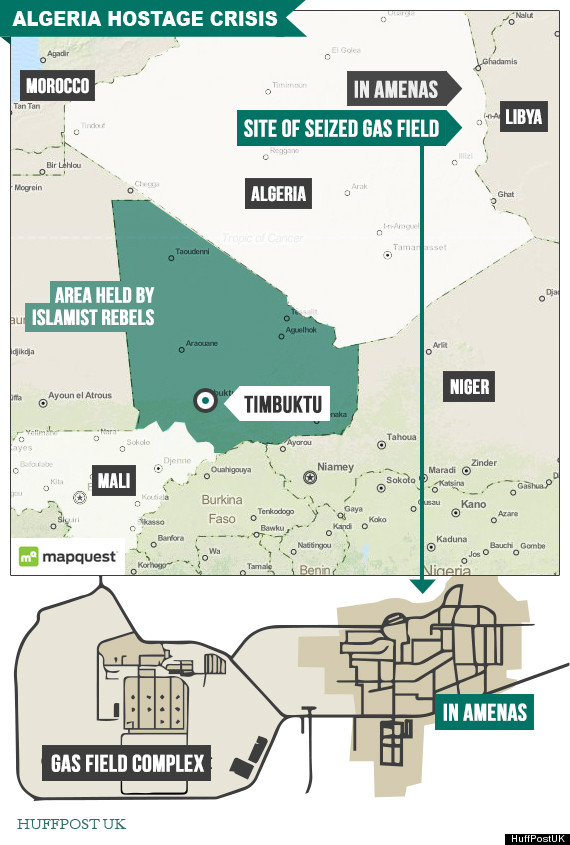
Yet Another Long-Term Mean Reversion Chart

0

As the S&P 500 pulls within a few percentage points of its nominal all-time highs, despite macro-uncertainty and micro-delusion, perhaps (as UBS’ Peter Lee notes) a longer-term perspective is warranted. For over 80 years, the S&P 500 (or its proxy) has cyclically reverted to it its logarithmic trend-line growth. The last time the market pulled away from this bullish up-trend was in 1982 (and the previous period of cyclical reversion took 32 years from 1942 to 1974) and suggests the S&P 500 could well revert to around an 850 level within the next year or so. Perhaps Lee (the anti-thesis of JPM’s Tom Lee) needs to read some Birinyi to really understand how to extrapolate? Still, an 80-plus year trend-line perhaps offers some color.

The 80-Year S&P 500 Log Chart Trendline…

Chart: Bloomberg

Your rating: None Average: 5 (5 votes)

Guardiola agrees Bayern deal

0

Spanish football coach, Josep Guardiola (AFP Photo/Lluis Gene)

Spanish football coach, Josep Guardiola (AFP Photo/Lluis Gene)

One of football’s most wanted coaches, Josep Guardiola, has finally found a new job, signing a deal with German powerhouse, Bayern Munich.

­The sides have struck a three-year deal on Wednesday, with Guardiola to take charge of Bayern this summer — after the end of the 2012/13 season.  

“We are delighted we’ve succeeded in appointing leading coach Pep Guardiola, who has been pursued and contacted by many big-name clubs, for FC Bayern,” Karl-Heinz Rummenigge, Bayern chairman, told the club’s official website. “Pep Guardiola is one of the most successful coaches in the world, and we’re certain he will add great flair to both FC Bayern and German football.”

Bayern’s current coach, Jupp Heynckes, will most likely remain at the Munich club after the reshuffle, taking a position in administration.

“We are extremely grateful to Jupp Heynckes for all his work,”
Uli Hoeness, Bayern Munich supervisory board chairman, commented. “Following his decision, we would be delighted if the team was to give this coaching great the glorious farewell he deserves. As a worthy successor to Jupp Heynckes, only a coach of Pep Guardiola’s caliber comes into question.”

Guardiola has claimed 13 trophies during his four years at FC Barcelona, including three Spanish La Liga titles and two wins in the Champions League.

The 41-year-old left the Catalan club, which was referred to as the best team in the world during his rule, in April 2012, saying he needed rest.

There have been numerous rumors about the Spaniards new job in the past month, with Chelsea, Manchester City and the Russian national football team all being mentioned as possible options.

All Aboard The Gold Repatriation Train: First Germany, Next: The Netherlands?

0

While moustachioed managers, contrary to the far better insight of their superiors, and mainstream spivs are trying to talk down Germany’s somewhat stunning shift in thinking – i.e. to repatriate its gold – as nothing but political pandering (or cost-saving); it seems, just as we predicted, the rest of the world are seeing this crack-in-the-confidence-armor the same way we have suggested. As we noted here, the first party to defect from the prisoner’s dilemma of all the bulk of global gold being held by the Fed, defects best (then the second, or even the third perhaps) and sure enough, via RTL, we see the Dutch CDA party has requested that Holland’s gold supply be repatriated. Who next?

The Dutch government says it has 612 tonnes of gold – with a value of around E24 billion – and is thereby in the top 10 of countries with gold reserves. The bulk of the Dutch gold reserves is in America and, to a lesser extent, in Canada and the United Kingdom. The rest, about 10 percent, is in Amsterdam.

Your rating: None Average: 5 (2 votes)

Mediaworks pulls plug on Kim Dotcom’s Mega ad campaign

0

Megaupload boss Kim Dotcom (AFP Photo/Michael Bradley)

Megaupload boss Kim Dotcom (AFP Photo/Michael Bradley)

Mediaworks, a New Zealand media company, has cancelled an ad campaign for Kim Dotcom’s new business Mega, a file-locker service. The enfant terrible of web media still faces extradition to the US for breaking copyright laws.

Mediaworks, a New Zealand based television, radio and interactive media company has said that it has cancelled an advertising campaign for Kim Dotcom’s new business, Mega.

Mega says it will be capable of transferring confidential information securely, which previously has required the installation of dedicated software. .

Mega launches on Sunday January 20th at Kim Dotcom’s Coatesville mansion in New Zealand.

The advertisements were expected to run on Mediaworks’ the Edge radio and other stations from Wednesday.

Dotcom tweeted Wednesday that Mediaworks had pulled the plug on the radio ad campaign, which had been booked prior to Mega’s launch:

Dotcom added that he was “Not blaming Mediaworks. They are a great company with great people. It’s the music labels that are abusing their power, again.”

Dotcom has appealed to other radio stations to play the ad campaign instead.

Media works confirmed they had canceled the ad but didn’t say why.

“When it comes to details of relationships with all our clients, including Mr. Dotcom, we keep those arrangements pretty confidential”, said a Mediaworks spokeswoman. Although she did say that cancelling an ad campaign was a “unique situation” for Mediaworks.

Despite a series of legal victories against prosecutors, Dotcom still faces an extradition hearing next year amid allegations that he should be made to face trial in the US over charges his wealth has been obtained by widespread copyright infringement.

Dotcom and his co-accused, Finn Batata, Mathias Ortman and Bram Van der Kolk, deny the charges.

“If I win my case and Mega becomes a powerful business that creates thousands of jobs, I get involved in startups and contribute to the economy — then I want to be New Zealander of the year,” The German National previously told the Weekend Herald, with regards to his new business Mega.

Satanists plan rally in support of Florida governor

0

Satanists plan rally in support of Florida governor

Satanists plan rally in support of Florida governor

The Satanic Temple is planning a rally outside of Florida Governor Rick Scott’s office to support his bill allowing students to pray at school events.

Senate Bill 98 gives students “sole discretion in determining whether an inspirational message is to be delivered” at a school assembly — including religious prayers. Scott has long advocated for students to be able to pray at school events, but he wasn’t expecting Satanists to jump on the opportunity.

To celebrate the governor’s signing of the bill, Satanists will rally outside of his office on Jan. 25 to show their support for Scott’s decision, as well as to promote their own beliefs.

“You don’t build up your membership unless people know about you,” Satanic Temple spokesman Lucien Greaves told the Palm Beach Post. “So this allows us to get our message out in public. We’re hoping it will reduce the stigmatism.”

Neil Bricke, founder of the Satanic Temple, will travel from his home in New York to Florida to speak at the rally.

“New York is a pretty good place for Satanism. Florida is too,” Greaves told ABC News. Currently, the Satanic Temple is “more or less an online community”, but its members are trying to bring their places of worship to US cities.

“Though we have far to go before public education leads to a mainstream embrace of our Satanic religion, we feel that our own public ‘coming out’ will go a long way toward raising the consciousness of the populace … and the social environment has never yet been better prepared for the welcoming of the Satanic era.”

Gov. Scott is an evangelical Christian who supports prayer in schools and has therefore always supported Senate Bill 98, which was sponsored by Sen. Gary Siplin. The bill was subject of heated opposition in early 2012, with the American Civil Liberties Union, the Anti-Defamation League and Americans United claiming it would alienate students whose religions are in the minority.

Gov. Scott did not expect the Satanic minority to publicly thank him for the legislation and hold a rally outside of his office, but told ABC News that every group has a right to express themselves.

The Satanic Temple does not know how many people will attend the Jan. 25 rally, since most of its followers have expressed online interest and could be located anywhere in the world. But one thing is clear: they want the Republican governor to know the effect the new legislation is having on their community.

“Satanists are happy to show their support of Rick Scott who — particularly with SB 98 — has reaffirmed our American freedom to practice our faith openly, allowing our Satanic children the freedom to pray in school,” the Temple said in a press release announcing the rally. 

Addicted to Plastic: The Rise and Demise of a Modern Miracle

0

Documentary that explores the history of plastic and how it came to dominate our lives. From styrofoam cups to artificial organs, plastics are perhaps the most ubiquitous and versatile material ever invented. No invention in the past 100 years has had more influence and presence than synthetics. But such progress has had a cost.

For better and for worse, no ecosystem or segment of human activity has escaped the shrink-wrapped grasp of plastic. ADDICTED TO PLASTIC is a global journey to investigate what we really know about the material of a thousand uses and why there’s so darn much of it. On the way we discover a toxic legacy, and the men and women dedicated to cleaning it up.

ADDICTED TO PLASTIC is a feature-length documentary about solutions to plastic pollution. The point-of-view style documentary encompasses three years of filming in 12 countries on 5 continents, including two trips to the middle of the Pacific Ocean where plastic debris accumulates.

The film details plastic’s path over the last 100 years and provides a wealth of expert interviews on practical and cutting edge solutions to recycling, toxicity and biodegradability. These solutions – which include plastic made from plants – will provide viewers with a hopeful perspective about our future with plastic.

Guest Post: In Case It Wasn’t Obvious…

0

Via Simon Black of Sovereign Man blog,

Sometimes the writing on the wall seems painfully obvious. But occasionally it’s a good idea to step back and look at the big picture:

1) The Land of the Free is set to impose fresh restrictions on firearm ownership… to include a ban on assault weapons, increased background checks, psychological screenings, and criminalizing ammunition magazine clips with a capacity beyond ten rounds.

And if they can’t pass these measures by law, the President is prepared to enforce them by royal decree, i.e. executive order.

It’s amazing that people have become so fearful, they are now abdicating one of the most fundamental responsibilities of humanity– protecting and safeguarding our families.

Instead, many Americans are choosing to outsource this responsibility to the same folks who bathe them in radiation at airports, spy on their phone calls and emails, wage senseless wars in foreign lands… and have a horrible track record of screwing up everything they try to do.

Great idea, seems like a hell of a trade-off.

2) The German central bank has announced that they will begin withdrawing their massive gold holdings from the United States.

In what is likely to be the first move among many other sovereign nations, it’s clear that governments no longer trust each other, and that the goodwill of the United States is being viewed with increasing suspicion.

As gold holdings flee the United States, how long will it be before they ‘close the window’ and ban gold exports? Do you really want to find out first hand?

3) The United States government is just weeks away from defaulting on its mountain of debt. Having already technically breached the debt ceiling, their only temporary fix is to seize federal pensions and engage in fraudulent accounting tricks.

Obviously this forebodes a number of potential consequences– seizure of private retirement accounts, capital controls, etc. And yet, people in US will merely trust that their government is going to ‘fix it’, and do absolutely nothing to hedge their bets.

4) European politicians have declared an end to the euro crisis. Notwithstanding the wave of riots across the continent, or the record level of unemployment that was just reached this month, politicians are engaging in self-congratulatory back-slapping for their courageous handling of the crisis.

At this point, Europe has almost become a caricature… its politicians like monocled cartoon villains, twirling their moustaches in dark room.

Absolutely nothing has changed on a fundamental level. Most countries still have massively high debt burdens, pension obgliations, and deficits. And they’re still living hand to mouth on the backs of German taxpayers and quantitative easing.

Pretending that the situation has magically resolved itself is either the height of incompetence or intellectual dishonesty.

Curiously, most people seem to know this. Yet they will do absolutely nothing.

They know, for example, that a US default is an entirely feasible option on the table. They understand that the consequences would be disastrous. And yet, most folks will do nothing and simply hope for the best.

The best response is to take steps which make sense in either scenario… no matter what happens.

You won’t be worse off for taking control of your retirement account. You won’t be worse off for holding some of your hard-earned savings in a strong, stable bank overseas, in a jurisdiction where your politicians can’t seize it. You won’t be worse off for having some precious metals stashed away overseas… or owning productive land abroad.

All of these steps make sense no matter what. And it’s an important strategy to adopt.

Your rating: None Average: 3.4 (11 votes)

New Gun Laws’ Chief Enemy: Democratic Senators

0

President Obama announced his plan for stricter gun safety laws on Wednesday, saying that while some of his approach would be instituted by executive order much of the broader strokes would necessarily have to pass through Congress if they were to become law.

Meanwhile, at the nation’s largest gun show taking place in Las Vegas this week, talk swirled about how the National Rifle Association was plotting ‘the fight of the century‘ against any efforts in Washington to pass new legislation that would potentially injure the bottom line of the gun industry they so elegantly serve.

Gun safety advocates applauded Obama’s speech while the predictable detractors were apoplectic and irrational about the announcement’s implications.

To give a sense of national opinion, a Washington Post-ABC News poll on Monday showed 58 percent of adults and 59 percent of registered voters support a nationwide ban on the sale of assault weapons.

“The smart analysis says that the chances of Congress passing serious gun control legislation decrease by the day.” —Harry Enten

But amid all the fanfare and talk about ‘Obama vs. the NRA’ or ‘Obama vs. the House Republicans’ it seems, by many accounts, that the largest obstacle to pushing through the proposed measures–no matter how modest they are in most regards–will be members of his own party.

During Wednesday’s televised remarks that followed an introduction by his vice president Joe Biden, Obama said that together they would do everything they could to pass the plans set forth, but took special care to mark what is surely the most essential reality of the fight brewing over guns in Washington, by telling his audience–the American people–that moving even the modest measures he proposed forward would not be possible unless “the American people demand it.”

“And by the way, that doesn’t just mean from certain parts of the country,” Obama added, seeming to acknowledge the magnitude of difference between passing gun control laws in a place like New York versus a state like West Virginia or Montana. That said, it is powerful Democrats in those states that are likely to be political obstacles to new guns laws, not their champions.

“We’re going to need voices in those areas and those congressional districts where the tradition of gun ownership is strong to speak up and to say this is important. It can’t just be the usual suspects,” he continued. “We have to examine ourselves in our hearts, and ask yourselves what is important?”

“If parents and teachers, police officers, and pastors, if hunters and sportsman, if responsible gun owners, if Americans of every background stand up and say, enough. We’ve suffered too much pain, and care too much about our children to allow this to continue, then change will — change will come.”

But, as many political observers point out, the rhetoric of gun safety laws comes easy–perhaps more easy from one of the most eloquent politicians in American history–but perhaps too easy when it comes to glossing over the political realities that reside fully and deeply, as the facts show, within the president’s own Democratic party.

As Politico reports, the Democrat-controlled Senate is likely to give Obama tremendous problems when he turns to it to re-instate an assault weapons ban:

…other than background checks, it’s not at all clear whether Senate Democrats will hold votes on any other piece of the Obama plan, most notably on the assault weapons ban. Reid – who benefited when the National Rifle Association stayed out of his 2010 reelection contest – threw cold water on passing an assault-weapons ban in a recent televised interview.

And political analyst Harry Enten at The Guardian writes:

I can’t imagine a senator from a red state, especially one in which there are more guns per household than the national average, wanting to go up against a barrage from pro-gun forces.

That’s why Max Baucus of Montana, Mark Begich of Alaska, and Tim Johnson of South Dakota all have A ratings from the NRA. They all come from states ranked third or fourth in gun ownership — at least 57% of households have a gun in the home. Baucus voted against a renewal of the assault weapons ban in 2004; Begich said he’d vote against it even after Newtown; and Johnson has seen his NRA grade go from a C+ in 2003 to an A, with an NRA endorsement, during his 2008 re-election fight.

The electoral prospects for each man adds to the unlikelihood that any will cast a vote in favor of serious gun control legislation. According to Public Policy Polling (PPP), Baucus has a net approval rating of -3pt and leads a generic Republican candidate by only 3pt. Begich won election 2008 by only 1pt and is rated as “vulnerable” by the Cook Political Report, which also pegs Johnson as the incumbent most likely to lose in 2014.

Mary Landrieu of Louisiana, too, is likely a goner on serious gun control legislation, despite a C from the NRA. She voted against renewing the assault weapons ban in 2004, and pretty much every other gun control measure of the past eight years. She won re-election in 2008 by six points — against a relatively weak opponent and in a state that voted for Romney by 17pt. She is “at risk” per the Cook Political Report. In Louisiana, 44% of households have a gun, 14th most in the nation.

Given the popular support for better gun safety laws, it’s likely that some legislation will pass, but when it comes to the measures that safety advocates say would have the most impact–banning semi-automatic assault rifles and large ammunition clips–Sean Sullivan at the Washington Post puts likelihood of that passage at a mere fifty percent.

And Enten, even less optimistic, concludes: “the smart analysis says that the chances of Congress passing serious gun control legislation decrease by the day. The House is a foregone conclusion. When all these numbers start getting added together, I’m not even sure you can find a simple majority of senators to agree on tougher gun control.”

With that in mind, it’s worth noting that legislative action on Obama’s proposals is not expected until February.

__________________________

Helicopter Crash: Pilot Worked On Major Films

0

The pilot of a helicopter which crashed in central London was one of the country’s most experienced and had flown in films such as Die Another Day and Saving Private Ryan.

Pete Barnes was killed when the AgustaWestland 109 Power he was flying hit a crane on a high rise building in Vauxhall and plummeted to the ground.

Mr Barnes had amassed around 12,000 hours of flying time, including 3,500 hours in Agusta helicopters.

During his 18-year career as a pilot the 50-year-old had flown air ambulances and worked as a pilot on adverts and films such as James Bond’s Die Another Day, Saving Private Ryan and Tomb Raider II.

He had been working as a freelance pilot for Rotormotion , a company which counts among its clients the Prince of Wales, Prime Minister David Cameron, former PM Tony Blair and the Dalai Lama.

In a statement the firm, which describes itself as a “boutique helicopter charter business”, paid tribute to Mr Barnes, referring to the crash as a “tragic accident”.

“Captain Peter Barnes, aged 50 from the Reading area, has been flying with RotorMotion since it was established over 15 years ago,” the company said.

“He was a very highly skilled pilot, one of the most experienced in the UK, with over 12,000 flying hours.

“We are devastated by the loss of a highly valued colleague and very dear friend. Our thoughts and condolences are with Peter’s wife and children.”

In 2004 Mr Barnes helped rescue a motorist from a flooded ford in County Durham while working for the Great North Air Ambulance.

Jolyon Palmer, a racing car driver who competes in the Formula One feeder GP2 series, said the pilot saved his life in 2007.

He tweeted: “Helicopter pilot Pete Barnes helped save my life in 2007 after I had a serious quad bike accident. Extremely sad news today.”

Mr Barnes also flew the Newcastle Traffic and Travel helicopter as the Voice of Metro FM and worked as a helicopter instructor.

Broadcaster Alan Robson of the Tyneside-based radio station said the pilot was a pioneer of “eye in the sky” traffic reports in this country.

Mr Robson, an award-winning radio host, also worked with Mr Barnes on TV shows, and said that while he would pull off daring manoeuvres, he was safety-conscious.

“He was a stylish, lovely guy. He could have auditioned for James Bond,” Mr Robson recalled.

“He was handsome, the girls melted. He walked it and he talked it.

“He was a genuinely lovely guy. I am absolutely gutted.”

Mr Barnes originally worked as a ski instructor and guide in Europe after completing a business studies degree, before going into advertising.

But he later moved to the US to train as a helicopter pilot, earning a US Commercial and Instructors Licence flying helicopters around Florida and the East Coast before moving back to the UK.

Un-Recovery Continues As Beige Book Lives Up To Its Name

0

In its somewhat typical fashion, the Beige Book was dominated by the four ‘M’ words ‘mixed’, ‘moderate’, ‘measured’, and ‘modest’ as any weakness was blamed on fiscal cliff uncertainty (even though macro data and the market itself seems to have shrugged all of that silliness off rather dismissively). Employment conditions were little changed, Real Estate prices rose in 11 districts,and energy sector activity was mixed:

  • *FED: TRENDS IN WAGES, PRICES, EMPLOYMENT ‘RELATIVELY UNCHANGED’
  • *FED REGIONAL BANKS REPORT ‘MODEST OR MODERATE’ ECONOMIC GROWTH

Unleash the anecdotal spin…

Your rating: None

The West’s Crisis is One of Democracy as Much as Finance

0

In one of the last interviews before his fall, Nicolae Ceausescu was asked by a western journalist how he justified the fact that Romanian citizens could not travel freely abroad although freedom of movement was guaranteed by the constitution. His answer was in the best tradition of Stalinist sophistry: true, the constitution guarantees freedom of movement, but it also guarantees the right to a safe, prosperous home. So we have here a potential conflict of rights: if Romanian citizens were to be allowed to leave the country, the prosperity of their homeland would be threatened. In this conflict, one has to make a choice, and the right to a prosperous, safe homeland enjoys clear priority …Nicolae Ceausescu addresses Romania’s Communist party congress in November 1989, shortly before he was deposed and executed. (Photograph: Gerard Fouet/AFP)

It seems that this same spirit is alive and well in Slovenia today. Last month the constitutional court found that a referendum on legislation to set up a “bad bank” and a sovereign holding would be unconstitutional — in effect banning a popular vote on the matter. The referendum was proposed by trade unions challenging the government’s neoliberal economic politics, and the proposal got enough signatures to make it obligatory.

The idea of the “bad bank” was of a place to transfer all bad credit from main banks, which would then be salvaged by state money (ie at taxpayers’ expense), so preventing any serious inquiry into who was responsible for this bad credit in the first place. This measure, debated for months, was far from being generally accepted, even by financial specialists. So why prohibit the referendum? In 2011, when George Papandreou’s government in Greece proposed a referendum on austerity measures, there was panic in Brussels, but even there no one dared to directly prohibit it.

According to the Slovenian constitutional court, the referendum “would have caused unconstitutional consequences”. How? The court conceded a constitutional right to a referendum, but claimed that its execution would endanger other constitutional values that should be given priority in an economic crisis: the efficient functioning of the state apparatus, especially in creating conditions for economic growth; the realisation of human rights, especially the rights to social security and to free economic initiative.

In short, in assessing the consequences of the referendum, the court simply accepted as fact that failing to obey the dictates of international financial institutions (or to meet their expectations) can lead to political and economic crisis, and is thus unconstitutional. To put it bluntly: since meeting these dictates and expectations is the condition of maintaining the constitutional order, they have priority over the constitution (and eo ipso state sovereignty).

Slovenia may be a small country, but this decision is a symptom of a global tendency towards the limitation of democracy. The idea is that, in a complex economic situation like today’s, the majority of the people are not qualified to decide — they are unaware of the catastrophic consequences that would ensue if their demands were to be met. This line of argument is not new. In a TV interview a couple of years ago, the sociologist Ralf Dahrendorf linked the growing distrust for democracy to the fact that, after every revolutionary change, the road to new prosperity leads through a “valley of tears”. After the breakdown of socialism, one cannot directly pass to the abundance of a successful market economy: limited, but real, socialist welfare and security have to be dismantled, and these first steps are necessarily painful. The same goes for western Europe, where the passage from the post-second world war welfare state to new global economy involves painful renunciations, less security, less guaranteed social care. For Dahrendorf, the problem is encapsulated by the simple fact that this painful passage through the “valley of tears” lasts longer than the average period between elections, so that the temptation is great to postpone the difficult changes for the short-term electoral gains.

For him, the paradigm here is the disappointment of the large strata of post-communist nations with the economic results of the new democratic order: in the glorious days of 1989, they equated democracy with the abundance of western consumerist societies; and 20 years later, with the abundance still missing, they now blame democracy itself.

Unfortunately, Dahrendorf focuses much less on the opposite temptation: if the majority resist the necessary structural changes in the economy, would one of the logical conclusions not be that, for a decade or so, an enlightened elite should take power, even by non-democratic means, to enforce the necessary measures and thus lay the foundations for truly stable democracy?

Along these lines, the journalist Fareed Zakaria pointed out how democracy can only “catch on” in economically developed countries. If developing countries are “prematurely democratised”, the result is a populism that ends in economic catastrophe and political despotism — no wonder that today’s economically most successful third world countries (Taiwan, South Korea, Chile) embraced full democracy only after a period of authoritarian rule. And, furthermore, does this line of thinking not provide the best argument for the authoritarian regime in China?

What is new today is that, with the financial crisis that began in 2008, this same distrust of democracy — once constrained to the third world or post-communist developing countries — is gaining ground in the developed west itself: what was a decade or two ago patronising advice to others now concerns ourselves.

The least one can say is that this crisis offers proof that it is not the people but experts themselves who do not know what they are doing. In western Europe we are effectively witnessing a growing inability of the ruling elite — they know less and less how to rule. Look at how Europe is dealing with the Greek crisis: putting pressure on Greece to repay debts, but at the same time ruining its economy through imposed austerity measures and thereby making sure that the Greek debt will never be repaid.

At the end of October last year, the IMF itself released research showing that the economic damage from aggressive austerity measures may be as much as three times larger than previously assumed, thereby nullifying its own advice on austerity in the eurozone crisis. Now the IMF admits that forcing Greece and other debt-burdened countries to reduce their deficits too quickly would be counterproductive, but only after hundreds of thousands of jobs have been lost because of such “miscalculations”.

And therein resides the true message of the “irrational” popular protests all around Europe: the protesters know very well what they don’t know; they don’t pretend to have fast and easy answers; but what their instinct is telling them is nonetheless true — that those in power also don’t know it. In Europe today, the blind are leading the blind.

How to Stop the Next Pandemic: End Factory Farming

0

Is our national habit of eating dead animals dragging us closer and closer to a flu pandemic that could kill tens of millions of Americans? Dr. Michael Greger believes so.

He’s the author of the new book, Bird Flu: A Virus of Our Own Hatching, and he recently came on our show, The Big Picture, to ring the alarm bell.

“Up to sixty million Americans get the flu every year,” he said before asking, “What if it turned deadly?”

The question wasn’t exactly rhetorical.

We do know that the flu is already deadly. Hundreds, sometime thousands, of Americans do die every year from the regular seasonal flu, which according to the Center for Disease Control has a mortality rate of about two-tenths of one percent.

A particularly severe and infectious form of influenza struck the world in 1918 infecting a third of the global population and killing as many as 100 million people. In the United States, that flu took the lives of more than a half-million Americans. Unlike the average seasonal flu that we’re confronting today with a mortality rate of .2%, the 1918 strand of influenza had a mortality rate of 2.5%. It was the worst plague in history.

But what if a strand of influenza swept across the nation that was twenty-five times deadlier than the 1918 strand? What if we were dealing with a flu pandemic that had a 60% mortality rate?

Here’s the frightening news: We already are.

An extremely deadly and contagious form of bird flu, H5N1, has already infected people in several countries including densely populated China and Indonesia, as well as Thailand, Vietnam, and Egypt, among others.

Just in 2012, known cases of H5N1 bird flu in Cambodia killed 90% of those infected. In China, 65% died. In Indonesia, the mortality rate was 83%. And in Laos and Nigeria, the mortality rate was 100% – every single person who got it, died.

If the 60 million Americans who get the flu every year suddenly got this particular strand of the flu, H5N1, then upwards of 40 million Americans would die. It would be a disaster on a scale never before seen in this nation other than, possibly, how Europeans wiped out Native Americans when they first brought the flu from Europe. And if it spread around the rest of the world, it would make the Black Plague of the 14th century look like the common cold.

Dr. Greger warned: “It’s like crossing one of the deadliest known human diseases, Ebola, with one of the most contagious known diseases, influenza.” He added that the single factor that was most likely to cause this is factory farming.

We should be doing everything we possibly can to defend against this apocalyptic pandemic. Yet, each day we as a nation continue factory farming, we’re tempting fate.

That’s because the only thing stopping the H5N1 influenza from killing billions around the planet is the H5N1 flu itself. Only about 600 people have been infected so far by this flu, simply because it hasn’t yet mutated to a form that can more easily infect humans.

As Dr. Greger said, “Right now, H5N1 is good at infecting the viral receptors that coat the trachea or windpipe of birds. It needs to mutate to better attach to human receptors.” He continued, “But there’s evidence that there is a strand in Indonesia and Egypt acquiring those mutations.”

Jamming birds together in factory farming slaughterhouses, beak to beak, and pumping them up with antibiotics promotes these mutations. Now that local small, family farms and local-supermarket butchers have been replaced by giant transnational slaughterhouses, we’ve seen a radical and rapid increase in mutant strains of the flu, along with other diseases that come from factory farms like the newly-mutated and now deadly forms of E. Coli and Salmonella.

“We’ve domesticated bird for thousands of years,” Dr. Greger noted. “It’s really just been in the last few years where we’ve seen this unprecedented emergence of these highly pathogenic strains, which have killed hundreds of billions of birds.”

Factory farms, according to Dr. Greger, are the, “perfect storm environments for the emergence and spread of these super-strains of influenza.”

Other consequences of factory farming are well known. Our national diet now has more meat it in it than ever before, thus accelerating heart disease, diabetes, obesity, and other illnesses that are responsible for increasing healthcare costs.

Factory farms requires enormous food and water. And, according to a report by the World Bank Group’s International Finance Corporation, 51% of all greenhouse gas emissions are the direct or indirect result of giant factory farms raising cattle, pigs, and poultry.

In other words, factory farming is hurtling our planet toward catastrophic climate change.

But so far, these reasons haven’t been strong enough to really motivate us to change. Americans and policymakers haven’t been ready to move away from the factory farm model to bring back local farming and reform our diet by eating fewer dead animals.

But, if nothing else, the fear of a worldwide pandemic that kills more than half the human race should motivate us to change how we farm and how we eat.

Let’s hope. Because whatever joy we as a nation get out of eating chicken wings will be far outweighed by the catastrophe of watching millions of our fellow humans die.

To save the human race, we need to end factory farming now.

Police chief barred from arresting criminals by union rules

0

Jeff Swensen / Getty Images / AFP

Jeff Swensen / Getty Images / AFP

Committing a crime just became a whole lot easier to get away with in Scranton, Pennsylvania. A city examiner there this week ruled that the chief of police is prohibited from performing the duties assigned to lesser officers of the law.

Under current labor rules in the city of Scranton, non-union workers are more or less barred from performing the duties guaranteed to members of a bargaining unit. But while most law enforcement officers in the Electric City belong to the local Fraternal Order of Police union, the chief of police has been precluded from joining since 2002 following a decision made by the city’s mayor.

Neither the union nor Scranton is arguing to have the chief of police allowed in the FOP, but the workers’ group says that the top officer in the city isn’t permitted to act like a cop, even if he’s the leading figure in the law enforcement community.

Of biggest concern among the union are the actions of Dan Duffy, the former Scranton police chief who resigned only this past July. During his two year tenure at the top of the department, the union says Duffy time and time again performed the official duties of his lesser officers. In one instance, he arrested heroin dealers during a drug bust inside of a cemetery. In another, Duffy personally apprehended a person that was the subject of an outstanding warrant.

It may sound like the routine work of a police officer, but the Scranton POF says it isn’t allowed.

“Historically, the chief has not performed bargaining unit work,” the Scranton Labor Relations Board hearing examiner Jack Marino finds [PDF]. Before Duffy, he says, the chief of police never engaged in patrol activities or performed the work of the bargaining unit – that is, the rest of the department. Instead, says Marino, the chief’s duties are managerial and serve the financial and operational needs of the department.

Essentially, says WNEP News’ Stacy Lange, this decision ensures that the chief of police holds on to solely a desk job for the unforeseeable future.

The police union asked Marino to intervene after Duffy conducted a series of arrests before his resignation, citing a contract that forbids chiefs from doing the work of bargaining unit members. The union said his behavior constituted unfair labor practices, but the city, which has been on the brink of bankruptcy for months, declined to send an attorney or other representative to present their case during a meeting before the Board. Now in response, Marino is siding with the union and making it clear that no chiefs – now or ever – are allowed to engage in actual police work unless of extraneous circumstances.

“I did what any public servant should do,” Mr. Duffy tells the Scranton Times-Tribune. “I would have never done anything in violation of the law nor do I believe I did anything that I should not have been doing.”

The union, on the other hand, is applauding Marino’s ruling.

“It’s labor law,” union president Lt. Bob Martin adds to the paper. “If we look the other way, then we lose our exclusivity. … If we were to look the other way, then we would forever give up our right to challenge it again.”

“The problem we have is when a non-bargaining unit member goes out and seeks out our work and does our work of a bargaining unit member. Then that’s when we have a problem and that’s what this decision is about,” he adds to WNEP.

“If the chief is standing on the corner, and a crime is being committed in his presence, he is morally and he is legally obligated to act. … Absolutely, no problem with that,” he tells the Tribune. “We endorse that and we would come and aid him in every way. He was doing differently.”

In the Marino’s findings, he says the arrests performed by Duffy did not fit into a category that warranted immediate intervention from the chief. Those arrests included incidents where Duffy apprehended wanted suspects, mostly drug dealers.

“I believe a police chief should actively show concern for the city and not be afraid to get involved on the streets,” Duffy tells the Tribune. “This is something that should be expected of a police chief. It should not be a group of union leaders saying, ‘You can negotiate and we’ll give you permission to do something that should not be done’ … For somebody to say the police chief is not allowed to go out and look for trouble? Come on.”

The City of Scranton says they will not fight the ruling since Mr. Duffy is no longer working in local law enforcement. He took a job last year with Lackawanna College. The results of the hearing require the city to cease and desist from interfering with the duties contractually promised to lesser police officers.

With the Stroke of a Pen: Obama Moves to Ban Sale and Manufacture Of Semi-Automatic Weapons, High Capacity Magazines; Will Require Universal Registration (Full Speech Video)

0
Mac Slavo
January 16th, 2013
SHTFplan.com

Read by 20,725 people

Within two days of the President having been re-elected, reports of coming gun control legislation championed by liberal California Senator Diane Feinstein began to surface across the internet. Believed to be just rumors at first, the Newtown school shooting brought the proposals to the forefront of American politics.

Today, those rumors became reality.

President Obama has moved to introduce new legislation, by way of Congress and delegated Executive Orders, that promises to completely re-write the Second Amendment of the U.S. Constitution.

From universal background checks and gun registration for all firearms sold and transferred in the United States, to empowering healthcare practitioners with the ability to make determinations for who should or shouldn’t own a gun, the Obama administration and Congress are making a full spectrum assault on law-abiding gun owners.

Included in the initiative will be legislation to ban semi-automatic rifles, restrict magazine capacity to 10 rounds, and close ‘loopholes’ that allow individuals in certain states to freely and without government interference buy, sell and trade firearms.

In the days ahead I intend to use whatever weight this office holds to make them [gun proposals] a reality.

…

If there’s even one life that can be saved, then we’ve got an obligation to try. And I’m going to do my part.

As soon as I am finished speaking here I will sit at that desk and sign a directive giving law enforcement, schools, mental health professionals and the public health community some of the tools they need to reduce gun violence.

…

If you want to buy a gun, whether it’s from a licensed dealer or a private seller, you should at least have to show you are not a felon or someone legally prohibited from buying one. This is common sense, and an overwhelming majority of Americans agree with us on the need for universal background checks.

Second, Congress should restore a ban on military style assault weapons and a ten round limit for magazines.

(queue applause)

…

We should get tougher on people who buy guns with the express purpose of turning around and selling them to criminals. And, we should severely punish anybody who helps them do this.

(Editor’s note: It is not yet clear if this provision would apply to the sale of weapons by DEA and ATF officials to Mexican drug cartels)

…

Let me be absolutely clear. Like most Americans, I believe the Second Amendment guarantees an individual right to bear arms. I respect our strong tradition of gun ownership and the rights of hunters and sportsmen.

…

This will be difficult.

There will be pundits, and politicians, and special interest lobbyists publicly warning of a tyrannical all-out assault on liberty. 

Not because that’s true, but because they want to gin up fear, or higher ratings, or revenue for themselves. And, behind the scenes they will do whatever they can to block any commonsense reform and make sure nothing changes whatsoever.

…

This is the Land of the Free, and it always will be…

Video via www.TheDailySheeple.com

There’s been no word on whether universal background check provisions will also be implemented for the sale and/or transfer of weapons to Mexican drug cartels or militant extremist rebels in the middle east.

Likewise, laser guided drone attacks that often target scores of civilians including men, women and school-age children for no other reason than a quick intelligence assessment will continue until further notice.

“So this is how liberty dies… With thunderous applause”

Author: Mac Slavo
Views: Read by 20,725 people
Date: January 16th, 2013
Website: www.SHTFplan.com

Copyright Information: Copyright SHTFplan and Mac Slavo. This content may be freely reproduced in full or in part in digital form with full attribution to the author and a link to www.shtfplan.com. Please contact us for permission to reproduce this content in other media formats.

Subscribe To Our Newsletter

With the Stroke of a Pen: Obama Moves to Ban Sale and Manufacture Of Semi-Automatic Weapons, High Capacity Magazines; Will Require Universal Registration (Full Speech Video)

0
Mac Slavo
January 16th, 2013
SHTFplan.com

Read by 21,692 people

Within two days of the President having been re-elected, reports of coming gun control legislation championed by liberal California Senator Diane Feinstein began to surface across the internet. Believed to be just rumors at first, the Newtown school shooting brought the proposals to the forefront of American politics.

Today, those rumors became reality.

President Obama has moved to introduce new legislation, by way of Congress and delegated Executive Orders, that promises to completely re-write the Second Amendment of the U.S. Constitution.

From universal background checks and gun registration for all firearms sold and transferred in the United States, to empowering healthcare practitioners with the ability to make determinations for who should or shouldn’t own a gun, the Obama administration and Congress are making a full spectrum assault on law-abiding gun owners.

Included in the initiative will be legislation to ban semi-automatic rifles, restrict magazine capacity to 10 rounds, and close ‘loopholes’ that allow individuals in certain states to freely and without government interference buy, sell and trade firearms.

In the days ahead I intend to use whatever weight this office holds to make them [gun proposals] a reality.

…

If there’s even one life that can be saved, then we’ve got an obligation to try. And I’m going to do my part.

As soon as I am finished speaking here I will sit at that desk and sign a directive giving law enforcement, schools, mental health professionals and the public health community some of the tools they need to reduce gun violence.

…

If you want to buy a gun, whether it’s from a licensed dealer or a private seller, you should at least have to show you are not a felon or someone legally prohibited from buying one. This is common sense, and an overwhelming majority of Americans agree with us on the need for universal background checks.

Second, Congress should restore a ban on military style assault weapons and a ten round limit for magazines.

(queue applause)

…

We should get tougher on people who buy guns with the express purpose of turning around and selling them to criminals. And, we should severely punish anybody who helps them do this.

(Editor’s note: It is not yet clear if this provision would apply to the sale of weapons by DEA and ATF officials to Mexican drug cartels)

…

Let me be absolutely clear. Like most Americans, I believe the Second Amendment guarantees an individual right to bear arms. I respect our strong tradition of gun ownership and the rights of hunters and sportsmen.

…

This will be difficult.

There will be pundits, and politicians, and special interest lobbyists publicly warning of a tyrannical all-out assault on liberty. 

Not because that’s true, but because they want to gin up fear, or higher ratings, or revenue for themselves. And, behind the scenes they will do whatever they can to block any commonsense reform and make sure nothing changes whatsoever.

…

This is the Land of the Free, and it always will be…

Video via www.TheDailySheeple.com

There’s been no word on whether universal background check provisions will also be implemented for the sale and/or transfer of weapons to Mexican drug cartels or militant extremist rebels in the middle east.

Likewise, laser guided drone attacks that often target scores of civilians including men, women and school-age children for no other reason than a quick intelligence assessment will continue until further notice.

“So this is how liberty dies… With thunderous applause”

Author: Mac Slavo
Views: Read by 21,692 people
Date: January 16th, 2013
Website: www.SHTFplan.com

Copyright Information: Copyright SHTFplan and Mac Slavo. This content may be freely reproduced in full or in part in digital form with full attribution to the author and a link to www.shtfplan.com. Please contact us for permission to reproduce this content in other media formats.

Subscribe To Our Newsletter

David Rosenberg On “Fascinating Markets”, Or 2011 vs 2012 vs 2013

0

Unsure what the current blistering start for the S&P 500 means in the new year? Here is David Rosenberg putting the last two years in perspective to the last two weeks. Alas, with fat tails now solely emanating from politicians (as the Fed has guaranteed nothing wrong can ever happen again on the monetary side, until everything goes wrong of course), and politicians being inherently irrational and unpredictable, it is not exactly clear how anyone can factor for what in just one month is sure to be the biggest clash in history between two sides of a Congress that has never been more polarized.

via Gluskin Sheff

Fascinating Markets

Go to 2011 and we had corporate earnings growth and yet the S&P 500 was flat as a pancake. Why? Because between the recurring euro zone financial strains and the debt ceiling issue that summer we had a two-point compression in the P/E.

Fast forward to 2012 and we had no earnings growth at all and yet the market rallied 12%. Based on what? A 1½ point P/E multiple expansion as the global central banks moved ever more forcefully to curtail financial tail risks.

It seems to me that 2013 will find ourselves somewhere in between. It could well be argued that the market is fairly valued with a historical forward multiple of 14x-15x and call it a $100-$105 on earnings (allowing for some buybacks). That gives a 1,400 to 1.575 tradable range and right now we are smack-dab in the middle of that band.

The difference it would seem to me is that the level of enthusiasm and complacency to kick off 2013 is much higher than it was at this time of 2012 when there was much more scepticism. The VIX index at 13-and-change currently, the Market Vane sentiment survey at 68% and well more than twice as many bulls than bears in the Investors Intelligence poll results pretty well say it all.

Your rating: None

‘Mali’ Islamists kill 3, take 41 hostage in Algeria

0

An undated handout picture released by the BP petroleum company on January 16, 2013, shows their operation at the In Amenas field in the Sahara desert, 1,300 kilometres (810 miles) southeast of Algiers, close to the Libyan border. (AFP Photo/BP)

An undated handout picture released by the BP petroleum company on January 16, 2013, shows their operation at the In Amenas field in the Sahara desert, 1,300 kilometres (810 miles) southeast of Algiers, close to the Libyan border. (AFP Photo/BP)

Islamists claiming to come from Mali killed three foreigners and are holding 41 more hostage after a raid on a compound near an Algerian gas field. The attack is reportedly in retaliation to the ongoing French military campaign in Mali.

The Algerian interior ministry said a heavily armed terrorist group using three vehicles launched an early morning attack against a base owned by Sontrach, the Algerian national oil company.

“Forty-one westerners including seven Americans, French, British and Japanese citizens have been taken hostage,” a spokesman for the Islamists told the Mauritanian News Agency and Sahara Media.

He said five of the hostages were being held at the gas plant, while the others were in a nearby housing complex.

Algerian security forces have surrounded the kidnappers and negotiations for the release of the hostages are ongoing, an Algerian security official based in the region told AP. He confirmed that the militants had come from Mali, though he spoke on condition of anonymity as he was not authorized to speak to the press.

The Algerian Press Service is reporting that the Algerians taken hostage have been set free.

A Briton and an Algerian security guard were killed and seven people were injured in the assault, including two foreigners, Algeria’s official APS news agency said.

A French national was also killed in the attack, Reuters cites a local source as saying.

The Foreign Office in London said it could not confirm that a Briton had been killed, only that “British Nationals ”were caught up in an “ongoing terrorist incident.”

BP, which jointly administers the In Amenas gas field with the Norwegian firm Statoil and Sontrach, released a statement confirming an “ongoing security incident” at the site.

An al-Qaeda affiliated group said the raid was executed in retaliation to Algeria’s decision to allow France to use its airspace to launch airstrikes against militants in Mila, where French forces have been targeting Islamists fighters since last week.

A spokesman for the group called Algeria’s attitude “a betrayal for the blood of Algerian martyrs slain by the French colonists.”

The group further said to ensure the safety of the kidnapped hostages in Algeria, the French attack on Northern Mali must end, Reuters reports.

On Wednesday French troops launched their first ground operation against Islamist rebels following six days of airstrikes.

French President Francois Hollande said on Tuesday French forces would remain in Mali until stability was returned to the conflict-torn West African state.

Truthout’s Jason Leopold on His Upcoming Trip to Guantanamo, His Update on the Gitmo “Suicide” of Adnan Latif and the Case of ex-CIA Spy John Kiriakou

0

In this wide-ranging conversation with Jason Leopold, Truthout’s lead investigative reporter, he talks about his upcoming trip to Guantanamo, the impact of the new pro-torture film Zero Dark 30, the scheduled sentencing of former CIA agent Kiriakou, and his fifth report on the reported suicide of Gitmo prisoner Adnan Latif. We start with Leopold’s announcement that he’s been approved to cover the trial of Khaled Sheikh Muhammed at Guantanamo Bay, and will travel there at the end of January. We talk about the sharp limitations on coverage and the rules of evidence that appear to preclude a fair trial.

We talk about the new film Zero Dark 30, and the way it cements the myths that torture is OK, and produces usable intelligence. It also burnishes the image of the CIA, despite the numerous known cases where it tortured innocent people and bungled investigations.

Next, we discuss the recent plea deal taken by John Kiriakou, a CIA agent who helped capture Abu Zubaidah in 2002, who was mistakenly thought to be al Qaeda’s #3 leader. Kiriakou, who was misled to believe that Zubaidah cracked during his first waterboarding, did not participate in torture sessions, but went public in 2007. Leopold interviewed him in a 2010 video report, and asked Kiriakou about Deuce Martinez, whose name surfaced in the later investigation. We talk about NY Times reporter Scott Shane’s remarkable January 6 report, which revealed Shane’s contacts with Kiriakou that drew Shane into the investigation, related to Martinez. Ultimately, Kiriakou pled guilty to revealing a different agent’s name to a reporter, who did not even publish it. So far, Kiriakou is the only person going to jail related to Bush’s torture program.

Finally, we talk about Leopold’s dogged efforts to get to the truth in the case of Yemeni Adnan Latif, who was reported a suicide on September 8, 2012 at Guantanamo. We recap how Latif was not a terrorist, was approved for release by both Bush and Obama officials, and the contradictions in the initial death reports and his autopsy.

Correction: In our interview, PBC states that the corporate media has barely covered the Latif story. One exception is a recent “Op-Doc” posted on the NY Times website, a 9-minute video that shows the return of Latif’s remains to his family last December. Credit is due to the producer, Laura Poitras. The video is embedded in Leopold’s report.

The NRA and Koch-Backed ALEC Have Fought Gun Buyback Programs Across Country

0

Gun pile(Image: Gun pile via Shutterstock)The National Rifle Association (NRA) is threatening legal action if the Tucson Police Department tries to destroy the guns it acquired through a voluntary gun buyback program — thanks to legislation advanced by the American Legislative Exchange Council (ALEC) and then passed in Arizona.

In the wake of the Sandy Hook, Connecticut massacre, cities around the country held voluntary gun buybacks: community-wide events where local law enforcement offers small incentives like gift cards or cash in exchange for citizens turning in their unwanted guns. Tucson officials offered $50 Safeway grocery store gift cards (funded by private donors) and collected 206 firearms. But the NRA wants those guns back in circulation.

“If they destroy [the guns], they will be in violation of state law,” said Arizona gun lobbyist and national NRA Board member Todd Rathner.

ALEC Model Disrupts Gun Buyback in Arizona

That Arizona law prohibits law enforcement from destroying firearms they obtain through gun buybacks or confiscation, instead mandating that they auction the guns to dealers.

Arizona Governor Jan Brewer — an ALEC alum — signed the legislation in April of 2012.

Just a few months earlier, the corporations and legislators on the ALEC Public Safety and Elections Task Force had adopted a version of the “Firearms Destruction Prevention Act” (also known as the “Disposition of Firearms in State and Local Custody Act”) as a “model,” at the behest of the NRA. Both the ALEC/NRA model and the Arizona law have the same functional impact.

When the bill was introduced in the Arizona state Senate, twenty out of its twenty-six sponsors were known ALEC members. As the Center for Media and Democracy (publisher of PRWatch) has documented, Arizona ranks among the top states in the country in terms of legislators receiving corporate-funded “scholarships” for trips to ALEC meetings, where they rub shoulders with special interest lobbyists at fancy resorts.

ALEC and NRA “Jump the Shark”

The public safety benefit from gun buybacks are clear: people with young children (or disturbed family members) can get guns out of their house, unwanted weapons are not sitting and waiting for misuse, and the total number of guns in circulation is reduced in a calm, legal, orderly manner. As Rachel Maddow has noted, gun buybacks are “low-hanging fruit” — an entirely voluntary, non-coercive program that ought to be politically attainable.

“When your response to the political cliche of low-hanging fruit is something so cartoonishly insensitive, so cartoonishly villainous, you then bring upon us a second political cliche — you have jumped the shark,” Maddow noted.

“This is the sort of thing that might make sense internally to the NRA when they talk about this amongst themselves about this issue, but the rest of the country are not picking a fight, but instead just looking for problem-solving, non-confrontational ways to help each other out. Trying to block the voluntary Tucson gun buyback program does not make sense.”

Despite Denials, Koch Had Role in ALEC Gun Policy

“Koch has had no role in any ALEC-sponsored legislation concerning gun laws,” Koch Industries declared in a statement released after the Sandy Hook shooting.

But according to Bloomberg News, which reported on the August 2011 ALEC meeting, the ALEC task force that adopted the “Firearms Destruction Prevention Act” as a model bill included representatives of Koch Industries. And as the Center for Media and Democracy’s Executive Director Lisa Graves has documented, Koch Industries was a member of ALEC’s Criminal Justice/Public Safety & Elections Task Force for many years (until it was disbanded), where Koch would have had a vote on approving all model bills, including the NRA’s gun bills. The NRA’s gun agenda also flourished during the many years that Koch representatives sat on ALEC’s national corporate board, and even during the period when Koch Industries chaired ALEC’s board.

Last year, ALEC announced it was disbanding that task force, which had been responsible for spreading restrictions on voting rights and versions of the “Stand Your Ground”/”Castle Doctrine” law that was initially cited to protect Trayvon Martin’s killer. However, the task force’s legislative chair, then-Representative Jerry Madden, admitted that its work would continue, and ALEC has done nothing to urge the repeal of state laws that were modeled after bills approved by the task force.

ALEC claims to be interested in “small government,” so it is curious that it would promote legislation that puts the state in the position of being an arms dealer. But this bill is yet another example of how the NRA and ALEC have promoted legislation to advance a narrow agenda at the expense of public safety.

RINF Video: Thugs in Uniform – A Cesspool of Police Misconduct and Corruption

0

RINF News examines the decline of public trust in the police, due to increasing levels of misconduct and corruption. Special attention is given to the Jimmy Savile scandal and how British police protected him for decades by repeatedly ignoring complaints from abuse victims. The questions must be ask – WHY? And who else are they protecting?

Energy Corporations Must Change, Die, or (at the Very Least) Get Out of the Way

0

“The truth is that we have a planetary emergency.” — NASA climatologist James Hansen (October 2012)

North Carolina has a unique opportunity and duty to help avert runaway climate change and repair our wounded democracy.

Most Americans realize global warming is serious but aren’t clear about the urgency. Hansen and others say if global emissions continue rising for even a few more years, carbon and warming already “in the pipeline” will push this crisis past a point of no return, toward a hellish reality for us all.

We don’t have to entirely solve the emergency by 2015, but we must begin to dramatically reduce emissions. Because the world’s second-largest electricity generator, Duke Energy, is headquartered here, North Carolina can make a huge difference — one that also makes economic sense.

For several years, NC WARN and allies have been urging Duke Energy CEO Jim Rogers to use his clout to become a climate game-changer. We want Duke to join the clean energy revolution by phasing out fossil-fueled electricity while ramping up energy-saving programs, solar and wind — proven technologies that are abundant and cheaper than nuclear power.

Because of Duke’s size, the mere announcement of such a shift could impact energy markets, attitudes and regulations worldwide and become a positive tipping point toward climate stabilization.

This isn’t pie in the sky.

Duke has invested $2.5 billion in solar and wind out West. In the monopoly-captive Southeast, however, Duke is actually suppressing renewables while holding out hopes of building $20 billion nuclear plants — by forcing customers to pay for them years in advance.

But potholes are filling that road. The corporations building two new U.S. nuclear plants are already countersuing each other over massive cost overruns and delays; both projects could collapse before foundations are poured.

Also, Duke has South Carolina pump-hydro facilities that store energy equal to two nuclear plants, energy that’s readily dispatched to smooth the variability of widespread solar and wind generation.

Duke claims natural gas-fired plants emit less carbon. But Cornell researchers found that methane leakage during the fracking process makes global warming worse — plus, it pollutes our water.

Duke’s plans to build giant, unneeded plants would double our power bills through a long series of rate hikes. This would further reduce demand and increase criticism as ratepayers watch other states develop clean-energy solutions that are cheaper, cleaner and better job-creators.

Rogers is clearly torn between Duke employees and customers wanting to advance clean energy and an old guard whose careers were built on coal and nuclear power.

Duke is hampering the transition by using ratepayer money to buy pervasive financial influence over our governmental and civic leaders. Such undemocratic influence is a factor in NC WARN’s lawsuit against the N.C. Utilities Commission over the Duke-Progress merger.

During the merger proceedings, Duke withheld information regarding five different billion-dollar boondoggles that will drive rates even higher.

Not only did regulators not require Duke to explain those problems once we exposed them, they cut a closed-door settlement that resumed Duke’s march toward serial rate hikes for families and businesses.

We’re urging the N.C. Court of Appeals to revoke or modify the merger because Duke’s management and stockholders — not its customers — should bear the costs of its corporate mistakes and secret deal-making.

Another obstacle is the sweeping societal denial about climate change. I’m not talking about the “climate deniers,” but the public majority who realize chaotic weather is already devastating millions of people — and wildlife — and hammering our economy, but can’t bear to talk about it.

Climate change is terrifying. Ferocious storms, repeated droughts and bizarre temperature patterns are rapidly changing North Carolina. Arctic sea ice — Earth’s air conditioner — has lost 75 percent of its summer volume since 1980, driving up sea levels and storm surges that are swallowing our beautiful beaches.

Yes, it’s hard to know how to help, beyond reducing energy usage and hoping our dysfunctional government will somehow solve this crisis. We’re eager to work with Duke to help avert cascading collapses of climate and social systems.

Meanwhile, we’ll vigorously work to weaken Duke’s monopoly control over society’s most vital decisions and to change its business plan that is so disastrous for our climate, our economy and our democracy.

Whether Duke leads or impedes, the climate challenge requires much greater civic engagement — promoting solutions, cleaning up politics and demanding that leaders serve the public.

North Carolina can be a climate game-changer. Now’s the time.

© 2012 News & Observer

Britain to drop out of top 10 economies

0

Britain is expected to lose its prestigious status to be among the world’s top ten economies by the next four decades, a report has warned.

According to the report by accountancy giant PricewaterhouseCoopers (PwC), Britain will be overtaken by Mexico and Indonesia in 2050 in terms of economy, slipping from its current 9th place to 11th.

PwC estimated a rapid rise of the E7 emerging economies, saying their economies will grow “much faster” than the G7, with average growth in terms of purchasing power parity showing Nigeria ahead, followed by Vietnam, India, Indonesia, Malaysia and China.

The report also pushed the US, Japan, Germany, France and Italy down the league table, although it revealed only Britain and Italy will fall out of their top ten status.

PwC economists predicted that China could overtake the US as the world’s largest economy by 2017.

MOS/MOL/HE

Iran, IAEA wrap up first day of talks

0

Iran and the International Atomic Energy Agency have wrapped up the first day of their talks over the country’s nuclear energy program in Tehran.

MYA/SS

Chance of Flares: Earth Directed Sun Spot “Harbors Energy for X-Class Eruptions”

0

Space watchers have warned that the sun may soon be waking up — as early as today — and it has the potential to direct high powered X-Class solar flares directly at earth.

So far today, solar activity is low. However, that could be the calm before the storm. The magnetic field of big sunspot AR1654 has grown more complex. It is now classified as a ‘beta-gamma-delta’ magnetic field, which means it harbors energy for X-class eruptions.

If there is a flare today, the blast would be Earth-directed.

This sunrise shot, taken at dawn on Jan. 16th by Jan Koeman on the bank of the Westerschelde River in the Netherlands, shows how AR1654 (circled) is almost directly facing our planet

AR1654 Photo via Space Weather:

Though some ‘C’ and ‘M’ class flares have hit earth recently, none were strong enough to cause any serious, long-lasting damage, save some minor effects on satellites and radio stations.

X-Class flares, however, have the potential to wreak havoc across the globe. Similar to the earthquake Richter scale, going up from one class to the next means that the flare is at least 10 times as powerful as the level below it, so an ‘X-1 Class’ flare would be 10 times as powerful as the strongest ‘M’ class flare.

The effects of such a flare hitting earth could be disastrous, wiping out essential infrastructure components like power grids and utilities, satellite communications, cell phones, transportation systems, and the internet. It’s been theorized that a strong enough solar flare similar to the one that struck earth in 1859, known as the Carrington Event, could potentially wipe out modern day electronic systems and send human civilization back to the 19th century.

In 1989, it took only seconds for Hydro-Quebec, the company that supplies power to the Canadian region, to fail when an intense geo-magnetic storm struck earth and caused a cascading breakdown in the electric grid. It is believed that the solar flare which caused the outage was rated at a class of X-15, and luckily only struck a small portion of the northern hemisphere.

In July of 2012 an X-1 flare narrowly missed earth.

Scientists have rated solar flares into different “divisions,” identified by a number following the letter class. In general, solar flare classes are rated from 1-9, but scientists have, as recently as 2003, measured flares that were literally off the charts:

Then come the X-class flares. Although X is the last letter, there are flares more than 10 times the power of an X1, so X-class flares can go higher than 9.

The most powerful flare measured with modern methods was in 2003, during the last solar maximum, and it was so powerful that it overloaded the sensors measuring it. The sensors cut out at X28.

The biggest X-class flares are, by far, the largest explosions in the solar system and are awesome to watch. Loops tens of times the size of Earth leap up off the Sun’s surface when the Sun’s magnetic fields cross over each other and reconnect. In the biggest events, this reconnection process can produce as much energy as a billion hydrogen bombs.

Should one of these off the chart flares be directed at earth, we could be looking at an Armageddon-like event in its aftermath.

According to Frank Gaffney, president of the Center for Security Policy, if electronic systems in the United States were wiped out, the consequences would be lead to a complete breakdown in society. Though Gaffney bases his assessment on the threat of an electro-magnetic pulse weapon, a powerful enough solar flare could cause similar destruction:

“Within a year of that attack, nine out of 10 Americans would be dead, because we can’t support a population of the present size in urban centers and the like without electricity.”

How likely is it that such a powerful geo-magnetic storm could hit earth?

According to a recent research study published by Space Weather: The International Journal of Research and Applications, the odds are not in our favor:

By showing that the frequency of occurrence scales as an inverse power of the severity of the event, and assuming that this relationship holds at higher magnitudes, we are able to estimate the probability that an event larger than some criteria will occur within a certain interval of time in the future. For example, the probability of another Carrington event occurring within the next decade is ∼12%.

It’s solar roulette and eventually our number will be up.

Champions of ‘Idle No More’ Stage Blockades Across Canada

0

Though not officially sanctioned by the Idle No More campaign, First Nations chiefs and activists have picked up the momentum and are rallying across Canada Wednesday as part of a national day of action in solidarity with the ongoing environmental and indigenous rights campaign.

A protestor holds a flag aloft and an Idle No More spinoff protest in Cayuga, Ontario on Jan. 16. (Photo via @CBCHamilton) Chiefs unsatisfied with Prime Minister Stephen Harper’s slow response to First Nations demands have declared the day to assert their rights and hopefully hasten official recognition and legislative action.

Demonstrations, round dances and rallies occurred across Canada while roadblocks of local railway lines and a large demonstration at North America’s busiest border crossing have also been confirmed.

“We’re sending the message very clearly with the railway blockade that [there’s] going to be no more stolen property being sold until such time that they come to the table and deal with the original owners,” said Terry Nelson, a former chief of the Roseau River First Nation in southern Manitoba.

APTN National News reported Wednesday: “Rail blockaders in Manitoba. CN confirms regional traffic has been shut down.”

Also, the Global News announced earlier:  

Posts on social media Wednesday morning called on supporters to meet at the Red Sun Smoke Shop and Gas Bar just northwest of Winnipeg to join a convoy headed to the intersection of the Trans-Canada and the Yellowhead highways near Portage la Prairie. A blockade of a railway near the intersection is planned.

Occupy Carlisle (@occupycarlisle) tweeted: “Via Rail says blockade between Belleville, Ont. and Kingston, Ont. has forced company to stop trains #IdleNoMore”

Another large grassroots group led an “economic slowdown,” targeting the Ambassador Bridge between Windsor, Ont. and Detroit, Mich.

Organizer Lorena Garvey-Shepley was clear to point out the action was “not a blockade,” adding, “we don’t want to inconvenience people too much. But we want to be in places that are going to get us noticed and allow us to get our information out.”

Organizers held a “peaceful walk” towards the bridge concluding with a rally at the base on the Canadian side.

Organizers reiterated that today’s actions are expected to be peaceful though protesters are prepared to get arrested.

Chief Allan Adam of the Athabaska Chipewyan First Nation said that if the indigenous movement’s demands are not recognized soon, more dramatic actions, including roadblocks, can be expected.

“The people are upset with the current state of affairs in this country and things are escalating towards more direct action,” he said. 

Across Canada, protestors marched the streets–often blocking traffic–banging drums and carrying banners blatantly displaying “Idle No More.”

More pictures from today’s actions can be seen here.

CBC News has listed a partial overview of the solidarity actions planned for Wednesday.

_____________________

Though inspired by the Idle No More movement, Wednesday’s actions–particularly the bridge and street blockades–highlighted protest tactics not condoned by the campaign’s founders, marking potential divisions as the movement grows beyond itself.

“If you have an impromptu blockade that doesn’t follow the legal permits, then you’re irritating the public and that’s not the purpose behind Idle No More,” said Sylvia McAdam, one of the movement’s four originators. “A lot of our children and elders are involved in the [Idle No More] activities, so their safety is our priority.”

The movement leaders are instead focusing on a Jan. 28 Idle No More International Call-to-Action during which they will protest at Ottawa’s Parliament Hill as “MPs return to the legislature after their winter break.”

In a recent interview, McAdam specified that, despite heavy media attention given to co-founder Attawapiskat Chief Theresa Spence’s recent hunger strike, Idle No More has no one leader, saying:

The grassroots movement of Idle No More is the face of all grassroots people…The founders might be considered guides or maintaining the vision, but Idle No More has no leader or official spokesperson.

A recent press release on the Official Idle No More website echoed this sentiment:

This movement has been guided by Spiritual Elders, dreams, visions, and from peoples’ core values. We are here to ensure the land, the waters, the air, and the creatures and indeed each of us, return to balance and discontinue harming each other and the earth.

January 11th’s official Day of Action and meeting between First Nation leaders and Canadian Prime Minister Stephen Harper exposed a rift in leadership when Idle No More leaders, namely Chief Spence, rejected the meeting on the basis it did not meet their demands while a number of other Chiefs partook despite the protest. 

A poll on the official Idle No More website asks “Do you think the media is playing up the perceived divisions within IDM?”

The poll will run for a month, but thus far readers have responded 56 percent voted ‘Yes, we are stronger than ever!’, 14 percent responded ‘I’m not sure’ while 30 percent said ‘No, there are divisions and the media is playing it just right.’

Austria supports nuclear talks with Iran

0

Austrian President Heinz Fischer has reiterated his support for continuation of talks between major world powers and Iran over Tehran’s nuclear energy program.

In an exclusive interview with the Austrian daily Der Standard on Tuesday, Fischer said “We all hope and demand that Iran take credible and transparent steps to settle the dispute over its nuclear program.”

The president also strongly condemned Israeli plans to build thousands of more illegal settler units on the occupied Palestinian territories.

Iran and the six major world powers known as the P5+1 — Russia, China, France, Britain, and the US plus Germany — have held several rounds of talks with the main focus being on Iran’s nuclear energy program.

On January 4, Secretary of Iran’s Supreme National Security Council Saeed Jalili said the Islamic Republic has agreed to resume talks with six major world powers about the country’s nuclear energy program.

The United States, Israel and some of their allies have repeatedly accused Iran of pursuing non-civilian objectives in its nuclear energy program.

Iran rejects the allegation, arguing that as a committed signatory to the Non-Proliferation Treaty (NPT) and a member of the International Atomic Energy Agency (IAEA), it has the right to use nuclear technology for peaceful purposes.

In addition, the IAEA has conducted numerous inspections of Iran’s nuclear facilities but has never found any evidence showing that its civilian nuclear program has been diverted toward military purposes.

PG/HGH/SS

Is Effective Financial Regulation Possible?

0

Gerald Epstein: Powerful lobbying by finance sector keeps turning regulations into Swiss cheese; there is an alternative if people fight for it.

TRANSCRIPT:

PAUL JAY, SENIOR EDITOR, TRNN: Welcome to The Real News Network. I’m Paul Jay in Baltimore. And welcome to this week’s edition of the PERI report from Amherst, Massachusetts. And now joining us from Amherst is Gerald Epstein.

Gerry’s codirector of the Political Economy Research Institute in Amherst. He’s a professor of economics there. And he’s published widely on a variety of economic issues, including central banking and international finance.

Thanks for joining us again, Gerry.

GERALD EPSTEIN, CODIRECTOR, PERI: Thanks, Paul.

JAY: So what have you been following this week?

EPSTEIN: Well, I’ve been following the continual swiss-cheesing of the financial regulation game here. As you know, after the financial crisis, all the financial regulators said, we’re going to put up really strong regulations, tough enforcement, so that this doesn’t happen again, so the banks don’t fail and the taxpayers are left on the hook.

Well, this was six years ago when the financial crisis really started hitting, four years and a half since Lehman Brothers, and since that time there’s just been one delay and problem after another. So this week we’re looking at the so-called liquidity coverage ratio, which is a regulation to make the banks hold on to enough liquidity, enough cash, enough safe assets, so that if there’s a run on the bank, they can sell those, get cash, and pay off depositors. This was the idea, so that banks don’t go bankrupt and come after the taxpayers.

Well, what happened was the biggest banks lobbied very hard against tough regulations here and in Europe, and the Basel Committee last week came out with the liquidity coverage ratio regulations that were a total gift to the banking industry.

JAY: So what’s next on this? I mean, is this then a done deal, that there won’t be the tougher regulation?

EPSTEIN: Well, what they’re going to do is–well, we know it’s a big gift to the banking industry, because JPMorgan’s bank stock immediately shot up about 6 percent. The European banks’ stocks rose even more. What they did was instead of making the banks hold a lot of liquidity in really safe assets, they reduced the amount of liquidity that they’re making the banks hold, and they’re letting them count things like mortgage-backed securities, all kinds of securitized assets, triple-B rated securities, and count that as safe liquid assets. So it’s really just a kind of a charade.

Similar things are happening in other realms of financial regulation. So, for example, there was a rule to make the banks push out their derivatives trading from the core banks and push them into subsidiaries that would be easier to let them just go bankrupt and taxpayers wouldn’t have to bail them out. The banks fought hard against this rule. But the government had kept this rule against subsidiaries of foreign banks. Now the foreign banks are fighting hard to exempt themselves.

Something is similar happening with the Volcker Rule. The Volcker Rule was supposed to have been written and implemented by now. It’s being delayed another several months at least.

So this is just going on and on and on.

JAY: So we’re once again dealing with a situation where finance is simply so powerful you can’t regulate it. I mean, every attempt to do this seems to wind up with sort of something kind of superficial that they can say, oh, we did it, but in substance it’s not very serious. Is that not right?

EPSTEIN: That’s correct. I think a lot of us were hoping–and, it turns out, incorrectly–that you could really put in some effective regulation that would be enforced. But what it’s now looking like is that that’s simply not going to be possible.

So I think the only solution, really, is a more extreme solution of actually breaking up the banks, making them be much smaller, so that as they continue to get into trouble and make their risky bets, we won’t have to bail them out. And the fact of the matter is, most of the large banks really are not doing much that’s contributing to real investment, to job creation. There wouldn’t really be that much lost if the financial sector shrunk substantially and if we broke up the banks.

JAY: That’s even tougher to pass, isn’t it, than passing regulation.

EPSTEIN: It would be tougher to pass, but it’s a clearer line. And I think rather than fighting in so much detail over every aspect of every rule, which is what we have been doing–and I think it was worth the fight, but rather than doing that, it’s better to have a very clear line about breaking up the banks and pushing on that.

JAY: And what about–I mean, I’m not saying it’d be any easier to pass, but a proper public bank, so that, you know, whether they’re big or small, let private banks go off and speculate if they want to, but have some alternative to that private banking system?

EPSTEIN: That’s right. And as part of a reinvestment program, which the United States and European countries are going to eventually have to move toward, we will have to see much more public banking, development banking and so forth. And that can be part of an infrastructure bank, more policies to create smaller cooperative banks. That has to be the flipside of this coin.

JAY: Now, the thing is, even for the interests of the non-finance sector of the economy, you know, people involved in industry and retail and all the rest, I mean, you know, without some kind of regulation, there’s simply no reason why there wouldn’t be another crash as there was in ’08. Aren’t they concerned?

EPSTEIN: Well, this has been the ongoing puzzle of the whole political dynamic since the crisis started, which is why the nonfinancial firms have been so passive in this whole financial regulations fight.

Part of the answer, I think, is that a lot of at least the large financial firms have themselves become financialized, that is, that they make a lot of their profits from financial activities. And particularly, the high pay of their CEOs is tied to stock options and the financial speculation. So until that changes, you’re not going to see a lot of the large non-financial corporations supporting strong financial regulation.

It’s the medium-size and smaller-size firms, I think, that have to find a political vehicle for opposing the large banks. But the party system here in the U.S. between the Democrats and the Republicans is so divided right now, I think the political vehicle for them isn’t clear at the moment.

JAY: Divided, but also both parties so beholden to the finance sector.

EPSTEIN: That’s right. That’s correct.

JAY: Yeah. Alright. Thanks very much for joining us, Gerry.

EPSTEIN: Thank you.

JAY: And thank you for joining us on The Real News Network.

‘I was in terrorism class with Bibi wife’

0

Habayit Hayehudi party leader says that he and Israeli Prime Minister Benjamin Netanyahu’s wife were in “a terrorism class together.”

When asked in a televised interview on Wednesday about working in a possible coalition with Benjamin Netanyahu side-by-side with the PM and his wife despite their bad history, Naftali Bennett said “It will be fine.”

“We served in the same unit, so that should delete our history,” the party leader said.

When asked whether he was referring to himself and Sara Netanyahu, Bennett said, “Yes, exactly, Sara and I were mostly in terrorism class together.”

“There is nothing that 15 Knesset seats won’t cure. Netanyahu and I will work very well together,” he added.

Bennett was Netanyahu’s bureau chief and ran his campaign for the Likud party leadership in 2007. However, Bennett later resigned from his position after quarreling with Netanyahu’s wife.

SAB/SZH

What Do German Central Bankers Know That We Don’t?

0

Ben Bernanke and the rest of the US Federal Reserve bet the farm that they could engage in countless monetary interventions, keep interest rates at zero, and print over $2 trillion in new money without damaging the US’s credibility.

They were wrong. Indeed, Germany just fired a major warning shot to the US Federal Reserve.

On Monday, Germany announced that it will be moving a significant portion of its Gold reserves out of storage with the New York Fed and moving them back to Germany.

A few background details.

  • Germany has the second largest Gold reserves in the world behind the US.
  • Since the early ‘80s, Germany has stored the largest portion of its Gold reserves with the New York Fed (45% vs. 13% in London, 11% in Paris and the remaining 31% in Frankfurt).
  • In the fall of last year, German officials began raising the issue of auditing its reserves at the NY Fed.

Why would Germany suddenly decide that it wants to change a policy it has had in place for over 30 years?

More importantly, how did it go from wanting to audit its reserves to actually removing them from the NY Fed’s care?

In simple terms, Germany has just announced that it doesn’t trust the US Fed.

The world’s Central Banks have been staging a global currency way for several years now. Germany, China, Japan, and the US all want to keep their currencies weak to improve exports and minimize their debt loads.

In the case of Germany, it’s the second largest exporter of goods in the world behind China. More than anyone in the EU, Germany wants a weak Euro. However, every time the Fed announces a new policy, the US Dollar falls, the Euro rallies and German exports fall off a cliff.

Germany is now openly telling the Fed that it is done playing around. This will have severe consequences in the financial system.

Remember, the only thing holding the financial system together is belief in the Central Banks. If the Central Banks (it was Germany’s Bundesbank that is behind the Gold move) stop trusting one another or grow openly antagonistic, then things will get very bad very quickly.

For months now we’ve been asserting that the “improvements” in the global economy and financial system were a mirage. Germany’s move has confirmed this. If the financial system was in fact safe and the global economy was improving, Germany would not feel the need to repatriate its Gold.

Which begs the question, what exactly do German Central Bankers know that we don’t?

With that in mind, smart investors are taking advantage of the lull in the markets to position themselves for what’s coming.

We offer several FREE Special Reports designed to help them do this. They include:

Preparing Your Portfolio For Obama’s Economic Nightmare

What Europe’s Crisis Means For You and Your Savings

How to Protect Yourself From Inflation

And last but not least…

Bullion 101: Everything You Need to Know About Investing in Gold and Silver Bullion…

You can pick up free copies of all of the above at:

http://gainspainscapital.com/

Best

Phoenix Capital Research

Your rating: None

Iran pres. to attend OIC summit in Cairo

0

A senior Iranian official says Iran’s President Mahmoud Ahmadinejad will participate in the upcoming summit of the Organization of Islamic Cooperation (OIC) in the Egyptian capital, Cairo.

Mohammad Reza Forqani, director general for international affairs at Iran’s Presidential Office, said on Wednesday that Ahmadinejad would leave Tehran for Cairo on February 6.

Iran severed ties with Egypt after Cairo signed the 1978 Camp David Accord with the Israeli regime and offered asylum to Iran’s deposed monarch Mohammad Reza Pahlavi.

“As one of the largest Muslim countries, Iran has always tried to actively participate in all the summits of the organization at all levels,” Forqani said on Wednesday.

During the summit, which will be held on February 2-7 in Cairo, Egypt will take over the OIC presidency for the next three years.

The OIC, which was established in 1969, has 57 member states spread over four continents.

Forqani added that Iran would attend the OIC summit as the head of the Non-Aligned Movement (NAM).

Iran assumed the rotating presidency of NAM for a three-year term during the movement’s summit in the country’s capital, Tehran, in August 2012.

NAM is an international organization with 120 member states that is not formally aligned with any major power bloc. Nearly two-thirds of the countries of the UN are also NAM members.

“On the other hand, we are witnessing developments and incidents in the Muslim world and, therefore, such a summit has special importance to further cooperation among Muslim countries,” Forqani said.

MYA/HGH/SS

Watch Obama’s Gun-Control Decree – Live Webcast

0

It would appear, given the equity market reactions, that investors are not expecting a dramatic impact to the gun-makers as Sturm, Ruger, Smith & Wesson, and even Cabela’s are all rising ahead of the Biden-Obama Gun-Control Decree. Perhaps, this is front-running of what is likely to be record-breaking gun sales in the next 48 hours if past history is anything to go by. From the NRA’s view of Obama as an “elitist hypocrite”, Republican calls for his impeachment, and many US citizens against gun control (even though emotions are raw – 51% of men polled want to protect the right to own guns), it would appear that the populist might be struggling, especially as Politico notes that there are strong indications that any comprehensive legislation restricting weapons and/or ammunition won’t even see a vote on the House floor.

Google Trends Search Volumes…

Your rating: None

‘My Maths Isn’t Good Enough’

0

Wonga’s head of regulatory and public affairs has told a committee of MPs that he could not work out the interest on a loan from his own company because “my maths isn’t good enough.”


stellacreasy

my sums show if rolled over av wonga loan of £157 for 3 months would reach £417.36 – before the interest rate would be frozen…

Henry Raine, head of regulatory and public affairs at the payday loans company, defended his business to the House of Commons Public Accounts committee, where he was grilled by chair and Labour MP Margaret Hodge on the effectiveness of consumer credit regulation.

Raine said the company had handed out around six million loans, and 85% of people pay back on time.

The MPs also struggled to work out how many late loans that would add up to, with Hodge suggesting one milllion, before the commitee settled on the correct number – 900,000.

Wonga’s representative insisted that the process was transparent, even for those with poor maths skills.

“We want to show people what they will owe in pounds and pence, not APR. People can’t calculate APR. I can’t calculate APR.”


Rob Merrick

Wonga chief on its notorious 4,214% APR: “I agree it’s terrible.” – but insisted lenders don’t pay that, because loans short-term

When asked about whether more financial education was needed for people to understand borrowing, Raine replied: “My own view is that a lot of money has been put into financial education in this country for not a lot of benefit.”

The MPs struggled with figures again as Raine mentioned that they had written off around £7m of £77m worth of income from loans, with one MP suggesting that was “more than 10%”. Raine corrected him: “It’s less than 10%”

Raine insisted he would use a service like Wonga himself.

“When I was a trainee solicitor I would certainly have used a company like Wonga, in special circumstances, occasionally.

“My children are too young to have used it, but I certainly would have. If you take a credit card out for a short period, it’s an incredibly cheap way to borrow, but people end up paying way more because they just make minimum payments.

“Lending money short term is a very expensive business. The reason we have had such a successful business is that banks have not been prepared to lend. People see how transparent we are, they see what they are going to pay. Banks hit people with unarranged overdraft fees they have no idea about.”

margaret hodge

Margaret Hodge grilled Wonga’s Henry Raine at the Public Accounts Committee

Labour MP Austin Mitchell pressed Raine on his claim that the company could justify high interest rates because the business is “high-risk”, yet 85% pay back on time.

Raine said: “15% is actually a high risk and it’s an expensive business to run. It’s not because of the lack of checks, people’s circumstances may change or they may have borrowed more from other people, which is information we might not have access to.”

He also shed some light on the profile of an average Wonga customer, telling the committee: “Around 60% of our customers are under 40 and very, very few are over 50. It’s the nature of it only being available online.

“Their average salary is £20,000, more likely to be men and 25% have never used a payday loan before. We have no evidence to suggest they are ill-educated.”

Raine refused to say he was entirely against a proposed cap on interest rates, but “we are not in favour of one either.”

He said: ‘I have not led a campaign against a cap. All we’ve said is, let’s look at the evidence, we need to know what a cap would be and how it would work.”


stellacreasy

wonga hedging their bets on capping osts of credit – interesting as they’ve been vociferous in lobbying govt not to do this behind scenes!

Asked about Wonga’s sponsorship of Newcastle football club, Raine said they had not deliberately targeted a poor area. “Chelsea or Arsenal were not available.”

Fears of Mali Blowback Realized? Algerian Militants Attack Gas Field, Seize Western Hostages

0

This a breaking story. Check back for possible updates:

Militants attacked a gas production field in southern Algeria on Wednesday, kidnapping at least nine foreigners and killing two people including a French national during a dawn raid, local and company officials said. The ‘In Amenas’ gas field is operated by a joint venture including BP, Norwegian oil firm Statoil and Algerian state company Sonatrach. (Photo: Reuters/Kjetil Alsvik / Statoil/Handout) Media are reporting that Islamic militants–citing anger over French military forces in neighboring Mali– have seized control of an area near a natural gas field in the west African nation of Algeria and taken dozens of hostages, including many westerners and some Americans.

As Reuters reports:

An al Qaeda affiliated group said the raid had been carried out because of Algeria’s decision to allow France to use its air space for attacks against Islamists in Mali, where French forces have been in action against al Qaeda-linked militants since last week.

The attack in southern Algeria also raised fears that the French action in Mali could prompt further Islamist revenge attacks on Western targets in Africa, where al Qaeda in the Islamic Maghreb (AQIM) operates across borders in the Sahara desert, and in Europe.

AQIM said it had carried out Wednesday’s raid on the In Amenas gas facility in Algeria, Mauritania’s ANI news agency reported.

The Algerian interior ministry said: “A terrorist group, heavily armed and using three vehicles, launched an attack this Wednesday at 5 a.m. against a Sonatrach base in Tigantourine, near In Amenas, about 100 km (60 miles) from the Algerian and Libyan border.”

The gas field is operated by a joint venture including BP, Norwegian oil firm Statoil and Algerian state company Sonatrach.

BP said armed men were still occupying facilities at the gas field.

“The site was attacked and occupied by a group of unidentified armed people at about 0500 UK time. Contact with the site is extremely difficult, but we understand that armed individuals are still occupying the In Amenas operations site,” it said.

As noted, the event sparks fear among experts that France’s military invention in neighboring Mali could have unintended but destablizing repercussions throughout the Sahel region.

As Daveed Gartenstein-Ross wrote at the Globe and Mail–just hours before the attack in Algeria was reported:

There are concerns not only about Operation Serval, as the [French military intervention in Mali] is known, causing … other kinds of chaos to cross neighboring states’ borders, but also fears of international retaliation — perhaps in the form of a terrorist attack, or an assault on foreign diplomatic targets.

In fact, it is just such concerns about a spillover that led Mali’s neighbors to be hesitant toward supporting an intervention.

And, as expert on the region Andrew Lebovich said, referring to the exact group now holding hostages in Algeria: “I’d be very concerned about instability if [this group is] pushed out of Mali.”

As French bombs fell on Mali beginning over the weekend, other critics of intervention warned that just as NATO and US intervention in Libya helped destabilize Mali, the intervention in Mali was now likely to domino into crises in other neighboring countries in the fragile Sahel region of Africa.

Owen Jones, writing at The Independent on Monday, warned:

It is conceivable that [intervention in Mali] could — for a time — achieve its goals of pushing back the Islamist militias, and shore up Mali’s government. But the Libyan war was seen as a success, too; and here we are now engaging with its catastrophic blowback. In Afghanistan, Western forces remain engaged in a never-ending war which has already helped destabilised Pakistan, leading to drone attacks that have killed hundreds of civilians and unleashed further chaos. The price of Western interventions may often be ignored by our media, but it is still paid nonetheless.

Western intervention led by France, supported by Britain and with possible US drone attacks on the way will undoubtedly fuel the narrative of radical Islamist groups. As Professor Rogers puts it to me, it will be portrayed as “one more example of an assault on Islam”. With the speed and reach of modern forms of communication, radical groups in Western Africa and beyond will use this escalating war as evidence of another front opened against Muslims.

And The Guardian‘s Glenn Greenwald added:

Over and over, western intervention ends up – whether by ineptitude or design – sowing the seeds of further intervention. Given the massive instability still plaguing Libya as well as enduring anger over the Benghazi attack, how long will it be before we hear that bombing and invasions in that country are – once again – necessary to combat the empowered “Islamist” forces there: forces empowered as a result of the Nato overthrow of that country’s government?

If developing events in Algeria are any indication, it appears that once again the lesson of blowback will be taught, though it remains dubious to suppose that the lesson will be learned anytime soon by western powers.

World War Is Coming, Currency War That Is – Russia Warns

0

It will not come as a surprise to anyone who has spent more than a few cursory minutes reading ZeroHedge over the past few years (back in 2009, then 2010, and most recently here, and here) but the rolling ‘beggar thy neighbor’ currency strategies of world central banks are gathering pace. To wit, Bloomberg reports that energy-bound Russia’s central bank chief appears to have broken ranks warning that “the world is on the brink of a fresh ‘currency war’.” With Japan openly (and actively) verbally intervening to depress the JPY and now Juncker’s “dangerously high” comments on the EUR yesterday, it appears 2013 will be the year when the G-20 finance ministers (who agreed to ‘refrain from competitive devaluation of currencies’ in 2009) tear up their promises and get active. Rhetoric is on the rise with the Bank of Korea threatening “an active response”, Russia now suggesting reciprocal devaluations will occur (and hurt the global economy) as RBA Governor noted that there is “a degree of disquiet in the global policy-making community.” Critically BoE Governor Mervyn King has suggested what only conspiracists have offered before: “we’ll see the growth of actively managed exchange rates,” and sure enough where FX rates go so stocks will nominally follow (see JPY vs TOPIX and CHF vs SMI recently).

Via Bloomberg:

The world is on the brink of a fresh “currency war,” Russia warned, as European policy makers joined Japan in bemoaning the economic cost of rising exchange rates.

“Japan is weakening the yen and other countries may follow,”

…

The push for weaker currencies is being driven by a need to find new sources of economic growth as monetary and fiscal policies run out of room. The risk is as each country tries to boost exports, it hurts the competitiveness of other economies and provokes retaliation.

Yesterday “will go down as the first day European policy makers fired a shot in the 2013 currency war,” said Chris Turner, head of foreign-exchange strategy at ING Groep NV in London.

…

The skirmish may lead to a clash of G-20 finance ministers and central banks when they meet next month in Moscow, three months after reiterating their 2009 pledge to “refrain from competitive devaluation of currencies.”

While emerging markets have repeatedly complained about strong currencies as a result of easy monetary policies in the west, the engagement of richer nations is adding a new dimension to what Brazilian Finance Minister Guido Mantega first dubbed a currency war in 2010.

…

…and as we warned over two years ago:

“We feel sad for the central banks, who apparently don’t realize that in this war of attrition there are no losers, and the final outcome is the end of Keynesianism. We hope someone promptly discovers the FX equivalent of the nuke, and a global exchange occurs, as we, for one, can’t wait for this most destructive experiment in economic fundamentalism to end already.”

Your rating: None Average: 5 (3 votes)

Court Rejects Pussy Riot Request to Defer Sentence to Raise Son

0

A Russian court on Wednesday rejected a request by jailed single mother and Pussy Riot member Maria Alekhina to defer her sentence so that she may raise her young son.

(Photo: Sergei Karpukhin/ Reuters) Meeting near the female prison IK-28 in Berezniki where the band members are being held, Alekhina asked the court to let her serve the remainder of her two-year sentence after her 5-year-old son turns 14, arguing that “separation from her young child now would do irreparable psychological damage to him.”

Judge Galina Yefremova rejected Alekhina’s petition arguing that the court that sentenced her had already taken the child’s existence into account.

Alekhina, along with two other Pussy Riot members, was convicted this summer of “hooliganism…based on motives of religious hatred and enmity,” over the performance of an anti-Putin “punk prayer” in a Moscow cathedral.

Nadezhda Tolokonnikova, who also has an underage child, continues to serve her jail sentence in Mordovia prison camp; the third member, Ekaterina Samutsevich, was released on probation in October 2012 after successfully appealing her conviction.

As several dozen supporters gathered outside the Berezniki court building, the Pussy Riot support group declared Wednesday, January 16 the International Day of Solidarity with Maria Alyokhina listing a number of international actions taking place in her support.

(Photo: Sergei Karpukhin/ Reuters)

America’s Big Political Fight: Will We Grapple with Reality or Fully Detach and Live in Fantasyland?

0

Key elements of the American Right have set up permanent residence in the world of make-believe, making the real-world challenges we face almost impossible to solve.

January 16, 2013  |  

Like this article?

Join our email list:

Stay up to date with the latest headlines via email.

The real struggle confronting the United States is not between the Right and the Left in any traditional sense, but between those who believe in reality and those who are entranced by unreality. It is a battle that is testing whether fact-based people have the same determination to fight for their real-world view as those who operate in a fact-free space do in defending their illusions.

These battle lines do relate somewhat to the Right/Left divide because today’s right-wing has embraced ideological propaganda as truth more aggressively and completely than those on the Left, though the Left (and the Center, too) are surely not immune from the practice of ignoring facts in pursuit of some useful agit-prop.

But key elements of the American Right have set up permanent residence in the world of make-believe, making any commonsense approach to the real-world challenges nearly politically impossible. The Right’s fantasists also have the passions of true-believers, like a cult that gets angrier the more its views are questioned.

So, it doesn’t matter that scientific evidence proves global warming is real; the deniers will insist the facts are simply a government ploy to impose “tyranny.” It doesn’t matter how many schoolchildren are slaughtered by semi-automatic assault rifles — or what the real history of the Second Amendment was. To the gun fanatics, the Framers wanted armed rebellion against the non-violent political process they worked so hard to create.

On more narrow questions, it doesn’t matter whether President Barack Obama presents his short or long birth certificates, he must have somehow fabricated the Hawaiian state records to hide his Kenyan birth. Oh, yes, and Obama is “lazy” even though he may appear to an objective observer to be a multi-tasking workaholic.

The American Right’s collective departure from reality can be traced back decades, but clearly accelerated with the emergence of former actor Ronald Reagan on the national stage. Even his admirers acknowledge that Reagan had a strained relationship with facts, preferring to illustrate his points with distorted or apocryphal anecdotes.

Reagan’s detachment from reality extended from foreign policy to economics. As his rival for the 1980 Republican presidential nomination, George H.W. Bush famously labeled Reagan’s supply-side policies — of massive tax cuts for the rich which would supposedly raise more revenues — as “voodoo economics.”

But Bush, who knew better, then succumbed to Reagan’s political clout as he accepted Reagan’s vice presidential offer. In that way, the senior Bush would become a model for how other figures in the Establishment would pragmatically bend to Reagan’s casual disregard for reality.

Perception Management

The Reagan administration also built around the President a propaganda infrastructure that systematically punished politicians, citizens, journalists or anyone who dared challenge the fantasies. This private-public collaboration — coordinating right-wing media with government disinformationists — brought home to America the CIA’s strategy of “perception management” normally aimed at hostile populations.

Thus, the Nicaraguan Contras, who in reality were drug-connected terrorists roaming the countryside murdering, torturing and raping, became “the moral equivalent” of America’s Founding Fathers. To say otherwise marked you as a troublemaker who had to be “controversialized” and marginalized.

The remarkable success of Reagan’s propaganda was a lesson not lost on a young generation of Republican operatives and the emerging neoconservatives who held key jobs in Reagan’s Central American and public-diplomacy operations, the likes of Elliott Abrams and Robert Kagan. The neocons’ devotion to imperialism abroad seemed to motivate their growing disdain for empiricism at home. Facts didn’t matter; results did. [See Robert Parry’s Lost History.]

But this strategy wouldn’t have worked if not for gullible rank-and-file right-wingers who were manipulated by an endless series of false narratives. The Republican political pros manipulated the racial resentments of neo-Confederates, the religious zeal of fundamentalist Christians, and the free-market hero worship of Ayn Rand acolytes.

NYSE Short Interest Plunges To March 2012 Levels

0

As if the already documented record $220 billion year end equity market injection courtesy of deposits (being used by bank prop arms to invest in risk assets) was not enough to send markets into nosebleed territory to start the new year, which fully explains the institutional (note: not retail) capital flood into equity funds and ETFs as has been trumpeted every day for the past week by CNBC (we will update the retail data from ICI today), here is yet another reason why the 2012 to 2013 transition has everything to do with trading technicals and nothing to do with fundamentals.

As the chart below shows, the reported level of NYSE short interest tumbled as of December 31, to 12.9 billion shares, a major 5% decline – the largest incidentally since December 30, 2011 – the lowest level since March, and a trend which has likely persisted as the shorts once again have thrown in the towel (except for Herbalife of course). Of course, this collapse in bearish sentiment, which goes hand in hand with the surge in NYSE margin debt to 5 years highs, is only sustainable if and only if the Fed has now fully eradicated all risk and all volatility in perpetuity. Which for now, judging by the epic ongoing smackdown in the VIX, is succeeding. That will change.

Your rating: None

Imposing Real Consequences for Prosecutorial Abuse in Case of Aaron Swartz

0

Whenever an avoidable tragedy occurs, it’s common for there to be an intense spate of anger in its immediate aftermath which quickly dissipates as people move on to the next outrage. That’s a key dynamic that enables people in positions of authority to evade consequences for their bad acts. But as more facts emerge regarding the conduct of the federal prosecutors in the case of Aaron Swartz – Massachusetts’ US attorney Carmen Ortiz and assistant US attorney Stephen Heymann – the opposite seems to be taking place: there is greater and greater momentum for real investigations, accountability and reform. It is urgent that this opportunity not be squandered, that this interest be sustained.US Attorney Carmen Ortiz is under fire for her office’s conduct in the prosecution of Aaron Swartz. (Photograph: US Department of Justice)

The Wall Street Journal reported this week that – two days before the 26-year-old activist killed himself on Friday – federal prosecutors again rejected a plea bargain offer from Swartz’s lawyers that would have kept him out of prison. They instead demanded that he “would need to plead guilty to every count” and made clear that “the government would insist on prison time”. That made a trial on all 15 felony counts – with the threat of a lengthy prison sentence if convicted – a virtual inevitability.

Just three months ago, Ortiz’s office, as TechDirt reported, severely escalated the already-excessive four-felony-count indictment by adding nine new felony counts, each of which “carrie[d] the possibility of a fine and imprisonment of up to 10-20 years per felony”, meaning “the sentence could conceivably total 50+ years and [a] fine in the area of $4 million.” That meant, as Think Progress documented, that Swartz faced “a more severe prison term than killers, slave dealers and bank robbers”.

Swartz’s girlfriend, Taren Stinebrickner-Kauffman, told the WSJ that the case had drained all of his money and he could not afford to pay for a trial. At Swartz’s funeral in Chicago on Tuesday, his father flatly stated that his son “was killed by the government”.

Ortiz and Heymann continue to refuse to speak publicly about what they did in this case – at least officially. Yesterday, Ortiz’s husband, IBM Corp executive Thomas J. Dolan, took to Twitter and – without identifying himself as the US Attorney’s husband – defended the prosecutors’ actions in response to prominent critics, and even harshly criticized the Swartz family for assigning blame to prosecutors: “Truly incredible in their own son’s obit they blame others for his death”, Ortiz’s husband wrote. Once Dolan’s identity was discovered, he received assertive criticism and then sheepishly deleted his Twitter account.

Clearly, the politically ambitious Ortiz – who was touted just last month by the Boston Globe as a possible Democratic candidate for governor – is feeling serious heat as a result of rising fury over her office’s wildly overzealous pursuit of Swartz. The same is true of Heymman, whose father was Deputy Attorney General in the Clinton administration and who has tried to forge his own reputation as a tough-guy prosecutor who takes particular aim at hackers.

Yesterday, the GOP’s House Oversight Committee Chairman, Darrell Issa, announced a formal investigation into the Justice Department’s conduct in this case. Separately, two Democratic members of the House Judiciary Committee issued stinging denunciations, with Democratic Rep. Jared Polis proclaiming that “the charges were ridiculous and trumped-up” and labeling Swartz a “martyr” for the evils of minimum sentencing guidelines, while Rep. Zoe Lofgren denounced the prosecutors’ behavior as “pretty outrageous” and “way out of line”.

The US has become a society in which political and financial elites systematically evade accountability for their bad acts, no matter how destructive. Those who torture, illegally eavesdrop, commit systemic financial fraud, even launder money for designated terrorists and drug dealers are all protected from criminal liability, while those who are powerless – or especially, as in Swartz’s case, those who challenge power – are mercilessly punished for trivial transgressions.

A petition on the White House’s website to fire Ortiz quickly exceeded the 25,000 signatures needed to compel a reply, and a similar petition aimed at Heymann has also attracted thousands of signatures, and is likely to gather steam in the wake of revelations that another young hacker committed suicide in 2008 in response to Heymann’s pursuit of him (You can [and I hope will] sign both petitions by clicking on those links; the Heymann petition in particular needs more signatures).

In sum, as CNET’s Declan McCullagh detailed in a comprehensive article this morning, it is Ortiz who “has now found herself in an unusual – and uncomfortable – position: as the target of an investigation instead of the initiator of one.” And that’s exactly as it should be given that, as he documents, there is little question that her office sought to make an example out of Swartz for improper and careerist benefits. Swartz “was enhancing the careers of a group of career prosecutors and a very ambitious – politically-ambitious – U.S. attorney who loves to have her name in lights,” the Cambridge criminal lawyer Harvey Silverglate told McCullagh. Swartz’s lawyer said that Heymann “was going to receive press and he was going to be a tough guy and read his name in the newspaper.” Writes McCullagh:

“If Swartz had stolen a $100 hard drive with the JSTOR articles, it would have been a misdemeanor offense that would have yielded probation or community service. But the sweeping nature of federal computer crime laws allowed Ortiz and [] Heymann, who wanted a high-profile computer crime conviction, to pursue felony charges. Heymann threatened the diminutive free culture activist with over 30 years in prison as recently as last week.”

For numerous reasons, it is imperative that there be serious investigations about what took place here and meaningful consequences for this prosecutorial abuse, at least including firing. It is equally crucial that there be reform of the criminal laws and practices that enable this to take place in so many other cases and contexts.

To begin with, there has been a serious injustice in the Swartz case, and that alone compels accountability. Prosecutors are vested with the extraordinary power to investigate, prosecute, bankrupt, and use the power of the state to imprison people for decades. They have the corresponding obligation to exercise judgment and restraint in how that power is used. When they fail to do so, lives are ruined – or ended.

The US has become a society in which political and financial elites systematically evade accountability for their bad acts, no matter how destructive. Those who torture, illegally eavesdrop, commit systemic financial fraud, even launder money for designated terrorists and drug dealers are all protected from criminal liability, while those who are powerless – or especially, as in Swartz’s case, those who challenge power – are mercilessly punished for trivial transgressions. All one has to do to see that this is true is to contrast the incredible leniency given by Ortiz’s office to large companies and executives accused of serious crimes with the indescribably excessive pursuit of Swartz.

This immunity for people with power needs to stop. The power of prosecutors is particularly potent, and abuse of that power is consequently devastating. Prosecutorial abuse is widespread in the US, and it’s vital that a strong message be sent that it is not acceptable. Swartz’s family strongly believes – with convincing rationale – that the abuse of this power by Ortiz and Heymann played a key role in the death of their 26-year-old son. It would be unconscionable to decide that this should be simply forgotten.

Beyond this specific case, the US government – as part of its war to vest control over the internet in itself and in corporate factions – has been wildly excessive, almost hysterical, in punishing even trivial and harmless activists who are perceived as “hackers”. The 1984 Computer Fraud and Abuse Act (CFAA) – enacted in the midst of that decade’s hysteria over hackers – is so broad and extreme that it permits federal prosecutors to treat minor, victimless computer pranks – or even violations of a website’s “terms of service” – as major felonies, which is why Rep. Lofgren just announced her proposed “Aaron’s Law” to curb some of its abuses.

But the abuses here extend far beyond the statutes in question. There is, as I wrote about on Saturday when news of Swartz’s suicide spread, a general effort to punish with particular harshness anyone who challenges the authority of government and corporations to maintain strict control over the internet and the information that flows on it. Swartz’s persecution was clearly waged by the government as a battle in the broader war for control over the internet. As Swartz’s friend, the NYU professor and Harvard researcher Danah Boyd, described in her superb analysis:

“When the federal government went after him — and MIT sheepishly played along — they weren’t treating him as a person who may or may not have done something stupid. He was an example. And the reason they threw the book at him wasn’t to teach him a lesson, but to make a point to the entire Cambridge hacker community that they were p0wned. It was a threat that had nothing to do with justice and everything to do with a broader battle over systemic power.

“In recent years, hackers have challenged the status quo and called into question the legitimacy of countless political actions. Their means may have been questionable, but their intentions have been valiant. The whole point of a functioning democracy is to always question the uses and abuses of power in order to prevent tyranny from emerging. Over the last few years, we’ve seen hackers demonized as anti-democratic even though so many of them see themselves as contemporary freedom fighters. And those in power used Aaron, reframing his information liberation project as a story of vicious hackers whose terroristic acts are meant to destroy democracy . . . .

“So much public effort has been put into controlling and harmonizing geek resistance, squashing the rebellion, and punishing whoever authorities can get their hands on. But most geeks operate in gray zones, making it hard for them to be pinned down and charged. It’s in this context that Aaron’s stunt gave federal agents enough evidence to bring him to trial to use him as an example. They used their power to silence him and publicly condemn him even before the trial even began.”

The grotesque abuse of Bradley Manning. The dangerous efforts to criminalize WikiLeaks’ journalism. The severe overkill that drives the effort to apprehend and punish minor protests by Anonymous teenagers while ignoring far more serious cyber-threats aimed at government critics. The Obama administration’s unprecedented persecution of whistleblowers. And now the obscene abuse of power applied to Swartz.

This is not just prosecutorial abuse. It’s broader than that. It’s all part and parcel of the exploitation of law and the justice system to entrench those in power and shield themselves from meaningful dissent and challenge by making everyone petrified of the consequences of doing anything other than meekly submitting to the status quo. As another of Swartz’s friends, Matt Stoller, wrote in an equally compelling essay:

“What killed him was corruption. Corruption isn’t just people profiting from betraying the public interest. It’s also people being punished for upholding the public interest. In our institutions of power, when you do the right thing and challenge abusive power, you end up destroying a job prospect, an economic opportunity, a political or social connection, or an opportunity for media. Or if you are truly dangerous and brilliantly subversive, as Aaron was, you are bankrupted and destroyed. There’s a reason whistleblowers get fired. There’s a reason Bradley Manning is in jail. There’s a reason the only CIA official who has gone to jail for torture is the person — John Kiriakou – who told the world it was going on. There’s a reason those who destroyed the financial system ‘dine at the White House’, as Lawrence Lessig put it.

“There’s a reason former Senator Russ Feingold is a college professor whereas former Senator Chris Dodd is now a multi-millionaire. There’s a reason DOJ officials do not go after bankers who illegally foreclose, and then get jobs as partners in white collar criminal defense. There’s a reason no one has been held accountable for decisions leading to the financial crisis, or the war in Iraq.

“This reason is the modern ethic in American society that defines success as climbing up the ladder, consequences be damned. Corrupt self-interest, when it goes systemwide, demands that it protect rentiers from people like Aaron, that it intimidate, co-opt, humiliate, fire, destroy, and/or bankrupt those who stand for justice.”

In most of what I’ve written and spoken about over the past several years, this is probably the overarching point: the abuse of state power, the systematic violation of civil liberties, is about creating a Climate of Fear, one that is geared toward entrenching the power and position of elites by intimidating the rest of society from meaningful challenges and dissent. There is a particular overzealousness when it comes to internet activism because the internet is one of the few weapons – perhaps the only one – that can be effectively harnessed to galvanize movements and challenge the prevailing order. That’s why so much effort is devoted to destroying the ability to use it anonymously – the Surveillance State – and why there is so much effort to punishing as virtual Terrorists anyone like Swartz who uses it for political activism or dissent.

The law and prosecutorial power should not be abused to crush and destroy those who commit the “crime” of engaging in activism and dissent against the acts of elites. Nobody contests the propriety of charging Swartz with some crime for what he did. Civil disobedience is supposed to have consequences. The issue is that he was punished completely out of proportion to what he did, for ends that have nothing to do with the proper administration of justice. That has consequences far beyond his case, and simply cannot be tolerated.

Finally, there is the general disgrace of the US justice system: the wildly excessive emphasis on merciless punishment even for small transgressions. Numerous people have written extensively about the evils of America’s penal state, including me in my last book and when the DOJ announced that HSBC would not be prosecuted for money laundering because, in essence, it was too big to jail.

All the statistics are well known at this point. The US imprisons more of its citizens than any other nation in the world, both in absolute numbers and proportionally. Despite having only roughly 5% of the world’s population, the US has close to 25% of the world’s prisoners in its cages. This is the result of decades of a warped, now-bipartisan obsession with proving “law and order” bona fides by advocating for ever harsher and less forgiving prison terms even for victimless “crimes”.

The “drug war” is the leading but by no means only culprit. The result of this punishment-obsessed justice approach is not only that millions of Americans are branded as felons and locked away, but that the nation’s racial minorities are disproportionately harmed. As the conservative writer Michael Moynihan detailed this morning in the Daily Beast, there is growing bipartisan recognition “the American criminal justice system, in its relentlessness and inflexibility, its unduly harsh sentencing guidelines, requires serious reexamination.” As he documents, prosecutors have virtually unchallengeable power at this point to convict anyone they want.

In sum, as Sen Jim Webb courageously put it when he introduced a bill aimed at fundamentally reforming America’s penal state, a bill that predictably went nowhere: “America’s criminal justice system has deteriorated to the point that it is a national disgrace” and “we are locking up too many people who do not belong in jail.” The tragedy of Aaron Swartz’s mistreatment can and should be used as a trigger to challenge these oppressive penal policies. As Moynihan wrote: “those outraged by Swartz’s suicide and looking to convert their anger into action would be best served by focusing their attention on the brutishness and stupidity of America’s criminal justice system.”

But none of this reform will be possible without holding accountable the prime culprits in this case: Carmen Ortiz and Stephen Heymann [MIT officials have their own reckoning to do]. Their status as federal prosecutors does not and must not vest them with immunity; the opposite is true: the vast power that has been vested in them requires consequences when it is abused. It is up to the rest of us to ensure that this happens, not to forget the anger and injustice from this case in a week or a month or a year. A sustained public campaign is necessary to bring real accountability to Ortiz and Heymann, and only then can further urgently needed reforms flow from the tragedy of Swartz’s suicide.

© 2012 Guardian News and Media Limited

Florida Prof Says Newtown Massacre Is Government Head Fake

0

Some people should not be professors and probably have too much time on their hands. Communications Professor James Tracy of Florida Atlantic University might be one of those people. Via Raw Story, some quotes from a blog post he wrote last month:

“While it sounds like an outrageous claim, one is left to inquire whether the Sandy Hook shooting ever took place–at least in the way law enforcement authorities and the nation’s news media have described,” he declared, noting that no surveillance video of photos of bodies had been released by authorities.

“Moreover, to suggest that [President Barack] Obama is not capable of deploying such techniques to achieve political ends is to similarly place one’s faith in image and interpretation above substance and established fact, the exact inclination that in sum has brought America to such an impasse.”

Has anyone told this professor that the absence of evidence is not evidence, or that the absence of said evidence in this case suggests the event never happened?

26 graves in Sandy Hook, Connecticut say otherwise. That is evidence enough.

Professor Tracy appears to be a bit of a conspiracy theorist at heart, paranoid as all get-out, and sure that the Obama administration manufactured this whole tragedy in order to spark national sympathies toward gun control. But he did clarify his thoughts for WPTV:

On Tuesday, WPTV caught up with Tracy, who also doubts the official versions President John F. Kennedy’s assassination, the Oklahoma City bombing, the Sept. 11 terrorists attacks and the mass shooting at a theater in Aurora, Colorado last year.

“In terms of saying that Sandy Hook – the Newtown massacre – did not take place, is really an oversimplification of what I actually said,” he explained. “I said that I think that there may very well be elements of that event that are synthetic to some degree, that are somewhat contrived. I think that, overall, the media really did drop the ball. I don’t think that they got to the bottom of some of the things that may have taken place there.”

“Elements of that event that are synthetic to some degree”? Like what? Twenty dead children and six dead adults is not a synthetic thing, nor is the fact that they were killed with a weapon capable of gunning down an entire group. Yes, the conspiracy would be massive and for what? To start a showdown over responsible gun safety laws that will be bloody and likely leave no one feeling fully satisfied? Please, give me a small break here.

It should bother all of us that this wingnut is responsible for teaching students. It should bother us all more that he’s teaching communications. Clearly he has some work to do on his own communicating style. The only ‘bottom of things’ here is the bottom of the conspiracy theorists’ barrel.

Quebec euthanasia bill may bypass Canadian law

0

Quebec is pushing ahead with a euthanasia bill that Canada’s federal government has decried as illegal and tantamount to assisted suicide. The move comes after recommendations from legal experts, claiming the bill does not violate Canadian law.

­A team of legal experts released a 400-page report to the government of Quebec outlining their recommendations for the so-called ‘dying with dignity’ bill. The experts argued that legislation allowing doctors to assist a patient in dying does not violate the Canadian Criminal Code, which prohibits assisted suicide.

“The Quebec legislature has the constitutional power to organize the required legal framework for end-of-life care within the health-care system,” the report stated.

The law will only be applicable in cases where the patient is close to death and enduring great pain and suffering. If the patient is receiving palliative care and can in their right mind express a desire to end their life, it is the doctor’s duty to carry out that wish.

“Every person should be able to make their own choice according to their values and according to their experience, their life, at the end of their life,” said Jean-Paul Ménard, who led the legal panel. Ménard noted that it would be at the doctor’s discretion as to whether to comply with the request and that the patient would be free to seek other medical advice should the request be refused.

Canada’s federal government has made it clear that it does not approve of the legislation, regarding it as a violation of the country’s ban on euthanasia and assisted suicide.

Julie Di Mambro, a spokesperson for federal Justice Minister Rob Nicholson, said Tuesday the government’s stance on the issue remains unchanged. “This is a painful and divisive issue that has been thoroughly debated in Parliament,” she said. “We respect Parliament’s decision.”

However, the panel argued that the new specification will allow Quebec to sidestep Ottawa and pass the bill into law.

Véronique Hivon, Quebec’s social services minister, said the report gives the province’s government the legal grounds to move forward. “The constitutional basis is clear,” Hivon said. “We are really in a field of regulating end-of-life care — and adding the possibility for somebody to have access to medical aid in dying.”

Setting a precedent

Opponents of the bill have voiced fears that the ‘dying with dignity’ law will pavee the way for a loosening of regulations over what might end up amounting to assisted suicide.

The President of the Quebec Life Coalition said that “there are scary precedents,” citing the recent case of the two twins in Belgium who were euthanized by lethal injection: “Give it a few years, and you’ll have cases like these twins,” he told CBC News. “The floodgates open.”

Here Comes The Sequester, And Another 1% Cut To 2013 GDP

0

Several days ago we showed an analysis that indicated that the elimination of the payroll tax cut would likely eat into 1.5% of 2013 US GDP and subtract as much as 3.5% of 2013 growth based on one submodel – a deduction to overall US growth which already puts US GDP forecasts in borderline recession territory. We also added the caveat that “no estimates take into account spending cuts, which may happen, and which will serve as a double whammy to consumption in addition to already enacted tax hikes.” Today, we present the flip side to the GDP calculation, namely what may and likely will happen to US growth once the pound of flesh is extracted by the GOP in exchange for raising the debt ceiling, which will eventually be raised even if it means a shutdown in the government for an indefinite period of time.

The reason: the sequester, whose implementation most thought would be delayed until well into 2014, is now starting to loom as the logical counterpoint to the debt ceiling compromise. And here comes Goldman with the first shot across the bow on what this quid pro quo would likely mean for US GDP: “Allowing the sequester to hit would, in our view, have greater implications for growth than a short-lived government shutdown, but would not be as severe as a failure to raise the debt limit. Although Republicans in Congress generally support replacing the defense portion of the sequester with cuts in other areas, there is much less Republican support for delaying them without offsetting the increased spending that would result.”

And in bottom line terms: “Sequestration would reduce the level of spending authority by $85bn in fiscal year (FY) 2013 and $109bn for subsequent fiscal years through 2021. The actual effect on spending in calendar 2013 would be smaller–around $53bn, or 0.3% of GDP–since reductions in spending authority reduce actual spending with a lag. The reduction in spending would occur fairly quickly; the change would be concentrated in Q2 and particularly Q3 and could weigh on growth by 0.5pp to 1.0pp.“

In other words: payroll tax eliminates some 1.5% of 2013 GDP growth; on the other side the sequester cuts another 1%: that’s a total of 2.5%. So: is the US now almost certainly looking at a recession when all the fiscal components to “growth” are eliminated? And what will the Fed do when it is already easing on “full blast” just to keep US growth barely above 0%?

Of course, don’t tell the market, whose only illogical response to what is an increasingly ugly fundamanetal picture would be to… sell vol, and push the ES to new 5 year highs.

Full note from Goldman:

Spending Cuts Under the Sequester: A Question of When, Not If

  • Failure to raise the debt ceiling would have severe economic consequences, but for this reason Congress seems likely to increase it. By contrast, a temporary government shutdown would have a limited effect on growth if it were resolved quickly, and this lack of severe consequences makes it more likely to occur. In the middle of these two extremes lie the spending cuts under sequestration–allowing them to take effect in full could impose a meaningful drag on growth, but the effect might not be severe enough to dissuade Congress from allowing it to occur.
  • Our forecast assumes that $15bn in sequestration-related spending cuts will take effect in 2013, with the remainder implemented in 2014 and 2015. But while we have been assuming that the sequester will be allowed to take effect eventually, that moment may come sooner than we had expected, for two reasons: (1) many members of Congress dislike the sequester, but reversing it amounts to a spending increase, which would be politically difficult; and (2) the sequester takes effect March 1, and Congress may not have resolved the two other fiscal issues by that point.
  • While there is a growing risk that some of these cuts are allowed to take effect, we suspect that Congress will reverse at least some of them, potentially replacing them with phased-in savings elsewhere in the budget. The Dept. of Defense has already announced that it will have to undertake several disruptive steps, including employee furloughs, if the cut is implemented on schedule. Delaying it until the start of the coming fiscal year would avoid most of this disruption, but would not have that significant an effect on the 10-year budget projections.

Once again, the White House and congressional Republicans find themselves with seemingly irreconcilable differences on key fiscal issues. Speaker Boehner has insisted that an increase in the debt limit must be matched with spending cuts of an equal amount (when measured over ten years), while President Obama reiterated today that he will not negotiate on any other policy changes in return for the increase. Settling this disagreement will be harder than it was in 2011, when the debt limit was increased by $2.1 trillion in return for $2.1 trillion in spending cuts over ten years. Further budget savings would need to come mainly from entitlement programs or tax increases, which are much more controversial.

President Obama is unlikely to accept entitlement cuts without a second tax increase. Republicans are therefore looking for a way to convince the administration that agreeing to entitlement cuts will be better than what would occur if no agreement is reached. To be successful, the mechanism Republicans use to force the issue must have severe enough consequences that the White House will want to reach an agreement instead, but not so severe that no one believes it could be allowed to happen. They have three options to choose from:

Debt limit – severe effects but low likelihood: The Treasury has indicated it expects to exhaust its borrowing capacity “between mid-February and early March,” similar to our previous projection of March 1. There is little risk to Treasury’s ability to make scheduled interest or principal payments, in our view, given their small size relative to Treasury’s overall cash flows. But there still would be two important consequences: first, the inability to borrow would force the Treasury to immediately eliminate the budget deficit, leading to a delay in payments to federal employees, federal contractors, and beneficiaries of entitlement programs, among others; second, rating agencies might downgrade the US rating following a failure to raise the limit in a timely manner. Even Speaker Boehner has described potential failure to raise the debt limit as a “financial disaster.” The upshot is that since leaders of both parties accept the need to raise it and recognize the negative consequences of a failure to do so, opposing an increase in the debt limit is no longer as credible a threat as it was in 2011.

A government shutdown — modest effects but increasingly likely: Congress opted in September 2012 to extend spending authority for six months, until March 27, 2013. This has been done frequently in recent years when lawmakers cannot agree on full-year spending levels. If spending authority is not extended further, the Obama administration will lose its authority to carry out activities funded by appropriations and will be forced to shut down non-essential government operations. This is not as bad as it sounds, for a few reasons: first, only 40% of federal spending relies on congressional appropriations; the remainder is unaffected by a failure to extend spending authority. Second, about two-thirds of that 40% is deemed “essential” and continues even without a renewal of spending authority. This includes defense functions and services “essential to protect life and property.” The upshot is that a one-week shutdown of these activities would reduce federal spending by $8bn to $12bn (annualized). Since a shutdown that begins on March 27 would straddle the end of Q1 and the start of Q2, the effect on quarterly growth is hard to estimate but might be around 0.1pp in each quarter. (For more discussion of the effects of a government shutdown, see our April 8, 2011 US Economics Analyst).

Sequester — meaningful effects and quite possible: Allowing the sequester to hit would, in our view, have greater implications for growth than a short-lived government shutdown, but would not be as severe as a failure to raise the debt limit. Although Republicans in Congress generally support replacing the defense portion of the sequester with cuts in other areas, there is much less Republican support for delaying them without offsetting the increased spending that would result.

Among these three options, the sequester may present the greatest risk to growth in 2013 because it might actually happen–unlike a debt-limit induced default which is very unlikely–and because it would have longer lasting effects, unlike a government shutdown, which would be reversed quickly.

Sequestration would reduce the level of spending authority by $85bn in fiscal year (FY) 2013 and $109bn for subsequent fiscal years through 2021. The actual effect on spending in calendar 2013 would be smaller–around $53bn, or 0.3% of GDP–since reductions in spending authority reduce actual spending with a lag. The reduction in spending would occur fairly quickly; the change would be concentrated in Q2 and particularly Q3 and could weigh on growth by 0.5pp to 1.0pp.

The sequester would weigh on growth mid-year

Unlike the other two issues noted above, the sequester is not a “cliff.” There would be few spending cuts implemented in the days immediately following March 1 if Congress allows the sequester to take effect on schedule. It would probably take federal agencies several weeks to put the cuts into effect. Moreover, the law provides federal agencies 120 days to take “administrative regulations or similar actions implementing sequestration.” So it is possible for Congress to allow the sequester to be implemented on schedule, but to “turn off” the sequester a few weeks later without a significant effect on spending.

If the sequester were fully implemented, it would have very disruptive effects in some areas of the budget, particularly defense. In order to fulfill the requirements of the sequester, the Department of Defense (DoD) would need to reduce spending authority by around 9% for FY2013. The administration would have little flexibility in how to implement this cut, so every program, project, and account would need to be cut by the same amount. This would mean, for example, furloughing most civilian DoD employees for a full month before the end of the fiscal year, and cutting basic activities like healthcare for active-duty military and aircraft maintenance. On the non-defense side, the cuts would be similarly disruptive though the political effects might not be as salient.

Sequestration would be much more disruptive in 2013 than it would be in 2014 and beyond. The budget agreement that Congress reached in the summer of 2011 cut spending through two mechanisms: (1) annual caps on congressional appropriations and (2) the sequester, which cuts the level of spending authority by $109bn below the cap just mentioned. Since the 2011 law called for sequestration to take effect January 1, 2013–three months into the fiscal year–it was structured as an across the board cut to the spending level already in place. For 2014 and beyond, the sequester simply lowers the cap mentioned earlier by an additional $109 billion. That means that instead of across the board cuts, for FY 2014 and beyond Congress can appropriate funds as it sees fit as long as it stays below the caps. Delaying the sequester to the start of the coming fiscal year would not simply “kick the can” on fiscal restraint but it would also allow a less disruptive and more efficient cut to be implemented.

However, the cost of a delay could be a problem. Delaying the entire sequester until the next fiscal year starts (October 1, 2013) would increase projected spending over the next ten years by $85bn. Finding savings elsewhere in the budget to offset that increase in spending would be difficult, particularly if Republicans insist that the new deficit reduction measures used to replace the sequester should come entirely from domestic spending like entitlement programs. If the budget effects of a delay become prohibitive, Congress might opt to reduce but not eliminate the sequester for FY2013.

Even if Congress does manage to delay the onset of the sequester past March 1, the cuts are likely to be implemented eventually. As noted above, our forecast assumes that $15bn of the cuts will be implemented in 2013 (versus $53bn if Congress takes no further action) with the remainder implemented in 2014. This is based on the premise that although neither party likes the sequester, the entitlement spending cuts and tax increases that would be necessary to replace the sequester over the longer term are even less popular.

Ultimately, it is only a matter of time before the sequester will be implemented. While we have assumed that Congress would delay part of the sequester until 2014, when it could be implemented with much less disruption to the military and other federal activities, it is very possible that some or most of it could take effect earlier than expected, in 2013.

Your rating: None

Hoax Encourages Cutting Over Beiber Pot Smoking

0

Pranksters launched the trending hashtag #Cut4Beiber, which, accompanied by graphic images of cutting, was supposedly aimed at urging Beiber to stop smoking marijuana.

January 16, 2013  |  

Like this article?

Join our email list:

Stay up to date with the latest headlines via email.

Eighteen-year-old pop sensation Justin Beiber (AKA the Beibs) spent this New Year’s Eve partying with friends at Newport Beach. There were no brawls, hookups or 911 calls, just the Beibs. And weed. Photos of the night show the teen star clutching what appears to a blunt (an emptied out cigar re-rolled with marijuana instead of tobacco) as he kicks it with friends, including his close buddy 19-year-old rapper Lil’ Twist, who some have accused of being a “bad influence” on Beiber. Little did Beiber know, his smoking habit would soon turn into #Cut4Beiber, a cruel prank on his fans.

On New Year’s Day, paparazzo Christopher James Guerra, hot on the story that Beiber had been smoking marijuana, hurried to the scene where police had pulled over Beiber’s Ferrari (which was actually being driven by Lil’ Twist, not by Beiber) on Sepulveda Boulevard in the San Fernando Valley. A car struck Guerra as he crossed the street back to his own vehicle, killing him. But Beiber’s marijuana saga did not end there.

Days later, a disturbing trend gained massive popularity on Twitter: #Cut4Beiber, the hashtag accompanied by graphic photographs of cutting, supposedly to urge Beiber to stop smoking marijuana. The trend was not initiated by “Beliebers” themselves, but the forum 4Chan, where users appear to have launched the #Cut4Beiber hashtag out of the hope that they could trick some Beliebers into actually hurting themselves. The photos — arms so sliced up and bloody that there were more red gashes than visible flesh– were disturbing enough. Even sicker is their target: Justin Beiber fans, many of whom happen to be Internet-savvy young girls.

While 4Chan may have hoped to at least mock and maybe even harm some Beiber fans, it is likely that few fans took the joke seriously and actually followed through with the sick prank. Janis Whitlock, director of the Cornell Research Program on Self-Injurious Behaviors, says any Beiber fans who may have fallen victim to the prank would have been vulnerable to self-injury to begin with. “I suspect that there are definitely young women out there who are vulnerable to this sort of thing, and they would probably be young women who had encountered or considered it before,” she said, adding, “People who self-injure might use it as another justification for self-injury.” Still, “I doubt [4Chan] will sway someone who never really encountered it to start injuring.”

Nowadays, self-injury and cutting is far more prevalent in the media than it once, says Whitlock. Nonetheless, as dumb a prank as #Cut4Beiber was, it was popular for the same reason it held the potential to be problematic: The iconization of self-injury in the age of Internet.

Whitlock says that in the ‘80s and ‘90s, the coming-out of high-profile cutters like Angelina Jolie, combined with an increased acceptance of body modification as expression, opened a Pandora’s box that would prompt self-injury among people who might not have done it before. Though celebs who come out as cutters may have the best intentions, she says the consequences are sometimes less than ideal.

“The Internet provides an outlet for an idea,” Whitlock told AlterNet. “Ideas — and behaviors — are as contagious as germs in some ways. The Internet and all media forms really just circulate an idea that is then attached to something, especially something iconic,” she said, “especially a pop icon like Justin Beiber.”  

4Chan users did not accuse Beiber of being a cutter himself, but by exploiting self-harm as a mechanism of group expression, they attached self-injury as a means to Beiber, the icon. And their target audience — adolescents in middle school or early high school — also fit the age group most commonly associated with cutting.  

“It’s definitely the right age for people who self injure, definitely the right gender for people who tend to be a little more at risk,” said Whitlock. According to her research, most self-injurers start harming themselves around age 14, though most will ditch the behavior after a couple of years. Girls are about one and a half times more likely to self-injure, she says.

4Chan may have targeted a demographic vulnerable to self-injury, but they did it with a reason that rarely prompts self-injuring behavior. “The idea that self-injury could be used as form of protest, solidarity or expression is not the most common reason for self-injury, but it is something that we hear,” said Whitlock.

Whitlock gave as an example a middle-school girl who “dedicated a series of her injuries to an old boyfriend who left her for another girl. She called him and said ‘This is what I’m doing. See what you’ve done to me? This is what I’m doing in response.’”

But the more common reason to self-injure is to relieve emotional distress. “For some people, when they feel very emotionally overwhelmed or emotionally numb, self injury can bring them from a state of high emotional agitation to state of calm really quickly,” said Whitlock. “Or if they feel numb, it can make them begin to feel again.”

Self-injury is a complicated physiological process, but most simply, Whitlock said, “People cut to relieve emotional distress.” The anticipation of injury, or act of injury itself, engages the androgynous opioid system, the same subset of pleasure chemicals that react to chocolate, drugs and sex. “In people for whom self-injury really works, it activates that system and can move them from high agitation to calm or relative, functional peace.” For this reason, said Whitlock, therapy that focuses on emotion regulation is often the best treatment.

When it comes to the iconization of cutting, however, Whitlock said “the cat is of the bag,” and there is no going back. As far as 4Chan is concerned, she said, “If you make it sound silly and childish and you just dismiss it like that, it really doesn’t give it the appeal and attention to which young people in particular seem to gravitate.”

Australian study turns HIV against itself

0

An Australian scientist said he had discovered how to turn the HIV virus against itself to stop it progressing to AIDS, describing it as a major breakthrough in finding a cure for the disease.

David Harrich, from the Queensland Institute of Medical Research, said he had successfully modified a protein in HIV that the virus needed to replicate and instead made it “potently” inhibit virus growth.

“I have never seen anything like it. The modified protein works every time,” said Harrich.

“If this research continues down its strong path, and bear in mind there are many hurdles to clear, we’re looking at a cure for AIDS.”

Harrich said the modified protein, which he had named Nullbasic, had shown a “remarkable” ability to arrest HIV growth in a lab environment and could have exciting implications both in curbing AIDS and treating existing HIV sufferers.

He described it as “fighting fire with fire”.

“The virus might infect a cell but it wouldn’t spread,” said Harrich of his study, published in the latest edition of the journal Human Gene Therapy.

“You would still be infected with HIV, it’s not a cure for the virus, but the virus would stay latent, it wouldn’t wake up, so it wouldn’t develop into AIDS,” he added.

“With a treatment like this, you would maintain a healthy immune system.”

A person with HIV is said to have AIDS when their count of CD4 immune system cells drops below 200 per microlitre of blood or they develop what is known as an AIDS-defining illness; any one of 22 opportunistic infections or cancers related to HIV.

The majority of people infected with HIV, if left untreated, may not progress to AIDS for 10-15 years or longer, according to the UN. Antiretroviral treatments can prolong this further still.

The new Nullbasic gene therapy, if proven, could see the deterioration from HIV to AIDS halted indefinitely, bringing an end to the deadly condition.

Harrich said the fact that a single protein could be so effective could spell an end to onerous multiple drug regimes for HIV patients, meaning better quality of life and lower costs to individuals and governments.

“In that respect, this is a world-first agent that’s able to stop HIV with a single agent at multiple steps of the virus lifecycle,” Harrich told ABC Radio.

“You either have to eliminate the virus infection or alternatively you have to eliminate the disease process and that’s what this could do, potentially for a very long time.”

Animal trials of the protein are due to start this year, with any treatment using it likely to be some years away.

According to the latest UN figures, the number of people infected by HIV worldwide rose to 34 million in 2011 from 33.5 million in 2010.

The vast majority (23.5 million) live in sub-Saharan Africa, with another 4.2 million in South and Southeast Asia.

There were 1.7 million deaths from AIDS-related causes worldwide in 2011, 24 percent fewer than in 2005 and nearly six percent below the 2010 level.

New HIV infections have at least halved in 25 low and middle income countries, many in hard-hit Africa, over the past decade, with particular progress made towards protecting children from the deadly virus.

The UN said in November that achieving zero new infections in children was appearing increasingly possible.

Telemundo Anchor to GOP: There Are “Aryan, Blond, Blue-Eyed People” Who Need Immigration Reform, Too

0

José Díaz Balart, the television anchor for Telemundo, shares his personal thoughts.

January 16, 2013  |  

Like this article?

Join our email list:

Stay up to date with the latest headlines via email.

While Marco Rubio has come out as a leader of the Republican Party on the issue of immigration reform, José Díaz Balart, the television anchor for Telemundo, isn’t all that impressed with the rest of the party.

Speaking with Alex Wagner on MSNBC, he teased the GOP about the party’s obvious ethnic bias in the debate.

“Let’s remember that the 11 million people that are here illegally aren’t just Latinos,” he said. “There are some aryan, blond, blue-eyed people” that also need legal status.

In fact, according to a Pew Institute report, nearly 20 percent of undocumented immigrants in the U.S. are not originally from Latin America. About 1 million come from Asia, 600,000 are from Europe and Canada, and 400,000 are from Africa and other countries.

And, in contrast to the stereotype that the majority of undocumented immigrants are single men, nearly 30 percent are young women (between the ages of 18 and 39) and 17 percent are children under the age of 18.


Laura Gottesdiener is a freelance journalist and activist in New York City.

New Study Shows Anti-Choice Policies Leading to Widespread Arrests of and Forced Interventions on Pregnant Women

0

On Tuesday, January 15th, the Journal of Health Politics, Policy and Law will publish our study, “Arrests of and Forced Interventions on Pregnant Women in the United States, 1973-2005: Implications for Women’s Legal Status and Public Health.” This study makes clear that post-Roe anti-choice and “pro-life” measures are being used to do more than limit access to abortion; they are providing the basis for arresting women, locking them up, and forcing them to submit to medical interventions, including surgery. The cases documented in our study through 2005, as well as more recent cases, make clear that 40 years after Roe v. Wade was decided, far more is at stake than abortion or women’s reproductive rights. Pregnant women face attacks on virtually every right associated with constitutional personhood, including the very basic right to physical liberty.  

Our study identified 413 criminal and civil cases involving the arrests, detentions, and equivalent deprivations of pregnant women’s physical liberty that occurred between 1973 (when Roe v. Wade was decided) and 2005. Because many cases are not reported publicly, we know that this is a substantial under count. Furthermore, new data collection indicates that at least 250 such interventions have taken place since 2005.

In almost all of the cases we identified, the arrests and other actions would not have happened but for the fact that the woman was pregnant at the time of the alleged violation of law. And, in almost every case we identified, the person who initiated the action had no direct legal authority for doing so. No state legislature has passed a law that holds women legally liable for the outcome of their pregnancies. No state legislature has passed a law making it a crime for a pregnant woman to continue her pregnancy to term in spite of a drug or alcohol problem. No state has passed a law exempting pregnant women from the protections of the state and federal constitution. And, under Roe v. Wade, abortion remains legal.

Yet, since 1973, many states have passed feticide measures and laws restricting access to safe abortion care that, like so-called “personhood” measures, encourage state actors to treat eggs, embryos, and fetuses as if they are legally separate from the pregnant woman. We found that these laws have been used as the basis for a disturbing range of punitive state actions in every region of the country and against women of every race, though disproportionately against women in the South, low-income women and African-American women.  

Women have been arrested while still pregnant, taken straight from the hospital in handcuffs, and sometimes shackled around the waist and at the ankles. Pregnant women have been held under house arrest and incarcerated in jails and prisons. Pregnant women have been held in locked psychiatric wards, as well as in hospitals and in drug treatment programs under 24-hour guard. They have been forced to undergo intimate medical exams and blood transfusions over their religious objections. Women have been forced to submit to cesarean surgery. They have been arrested shortly after giving birth while dressed only in hospital gowns. And, despite claims by some anti-choice activists that women themselves will not be arrested if abortion is re-criminalized, women who have ended their pregnancies and had abortions are already being arrested.  

Consider the following:

  • A woman in Utah gave birth to twins. When one was stillborn, she was arrested and charged with criminal homicide based on the claim that her decision to delay cesarean surgery was the cause of the stillbirth.
  • After a hearing that lasted less than a day, a court issued an order requiring a critically-ill pregnant woman in Washington, D.C. to undergo cesarean surgery over her objections. Neither she nor her baby survived.
  • A judge in Ohio kept a woman imprisoned to prevent her from having an abortion.
  • A woman in Oregon who did not comply with a doctor’s recommendation to have additional testing for gestational diabetes was subjected to involuntary civil commitment. During her detention, the additional testing was never performed.
  • A Louisiana woman was charged with murder and spent approximately a year in jail before her counsel was able to show that what was deemed a murder of a fetus or newborn was actually a miscarriage that resulted from medication given to her by a health care provider.
  • In Texas, a pregnant woman who sometimes smoked marijuana to ease nausea and boost her appetite gave birth to healthy twins. She was arrested for delivery of a controlled substance to a minor.
  • A doctor in Wisconsin had concerns about a woman’s plans to have her birth attended by a midwife. As a result, a civil court order of protective custody for the woman’s fetus was obtained. The order authorized the sheriff’s department to take the woman into custody, transport her to a hospital, and subject her to involuntary testing and medical treatment.

As disturbing as our findings are, this study also provides a basis for building a shared public health and political agenda that includes all pregnant women. The current public debate overwhelmingly focuses on the issue of abortion and interference with one kind of right: the right to end an unwanted and untenable pregnancy. This study, however, confirms that if passed, so called “personhood” measures would: 1) provide the basis for arresting pregnant women who have abortions; and 2) provide state actors with the authority to subject all pregnant women to surveillance, arrest, incarceration, and other deprivations of liberty whether women seek to end a pregnancy or not.

Furthermore, the study demonstrates that there is no way to add fertilized eggs, embryos, and fetuses to state constitutions or to the United States Constitution without removing all pregnant women from the community of constitutional persons. These measures create a “Jane Crow” system of law, establishing a separate and unequal status for all pregnant women and disproportionately punishing African-American and low-income women.

For example, last week, a Tennessee woman who had been in a car accident was tested to see if she had been driving under the influence of alcohol. According to local press, her blood alcohol content was well below the legal limit. Nevertheless, because she told a police officer that she was four months pregnant, she was arrested and taken to jail. Tennessee apparently recognizes a special crime reserved just for pregnant women: driving whilenot intoxicated.

We are confident that most people in the United States, regardless of their views on abortion, do not want to see pregnant women subjected to a separate and unequal system of law as a result of “pro-life” measures. To that end, we call for a culture of life that values all women, including those who give birth to that life, and recommend:

  • The rejection of “personhood” measures;
  • A moratorium on new feticide laws and a fair and open inquiry into whether such laws–passed with the promise of protecting pregnant women and fetuses–have actually reduced violence against pregnant women or rather increased legal surveillance of women;
  • That health care providers ensure that pregnant women are afforded the same confidentiality, respect, and dignity extended to other patients;
  • That lawmakers adopt policies that promote women’s health and remove barriers to family planning and contraceptive services, abortion services, birthing options, and effective and humane drug treatment, and address the stark racial and economic inequalities that are perpetuated by the United States war on drugs and our system of mass incarceration;

Finally, we call upon legislative authorities and others to affirm the personhood of pregnant women, ensuring that upon becoming pregnant and through all stages of pregnancy, labor, and delivery, women retain their civil and human rights.

Abortion as a Blessing, Grace, or Gift: Changing the Conversation about Reproductive Rights and Moral Values

0

How can we reclaim the moral high ground in the debate about abortion as a part of thoughtful, wise loving and living?

Most Americans think of childbearing as a deeply personal or even sacred decision. So do most reproductive rights advocates. That is why we don’t think anybody’s boss or any institution should have a say in it. But for almost three decades, those of us who hold this view have failed to create a resonant conversation about why, sometimes, it is morally or spiritually imperative that a woman can stop a pregnancy that is underway.

My friend Patricia offers a single reason for her passionate defense of reproductive care that includes abortion: Every baby should have its toes kissed. If life is precious and helping our children to flourish is one of the most precious obligations we take on in life, then being able to stop an ill-conceived gestation is a sacred gift. Whether or not we are religious, deciding whether to keep or terminate a pregnancy is a process steeped in spiritual values: responsibility, stewardship, love, honesty, compassion, freedom, balance, discernment. But how often do we hear words like these coming from pro-choice advocates?

Our inability to talk in morally resonant terms about abortion has clouded the broader conversation about mindful childbearing. The cost in recent decades has been devastating. In developing countries millions of real women and children have died because abortion-obsessed American Christians banned family planning conversations as a part of HIV prevention efforts. Those lost lives reveal the callous immorality of the anti-choice movement.

Back home, here in the U.S., our inability to claim the moral high ground about abortion has brought us one of the most regressive culture shifts of a generation. We are, incredibly, faced with “personhood rights” for fertilized eggs, pregnancies that begin legally before we even have sex, politicians with “Rape Tourette’s,” and a stunningly antagonistic debate about contraceptive technologies that could make as many as ninety percent of unintended pregnancies along with consequent suffering and abortions simply obsolete.

The voices that are strongest on reproductive rights often falter when it comes to the cultural dialogue. At least part of this absence is because so many of the pro-choice movement’s leaders and funders are secular and civic in their orientation, awkwardly uncomfortable with the moral and spiritual dimension of the conversation, or, for that matter, even with words like moral and spiritual. From language that seems moderately wise—Who decides?—we fall back on “safe, legal and rare” (a questionable effort to please everyone) or even the legal jargon of the “right to privacy.”

The other side talks about murdering teeny, weeny babies and then mind-melds images of ultrasounds and Gerber babies with faded photos of late term abortions. And we come back by talking about privacy?? Is that like the right to commit murder in the privacy of your own home or doctor’s office? Even apart from the dubious moral equivalence, let’s be real: In the age of Facebook and Twitter, is there a female under twenty-five in who gives a rat’s patooey about privacy, let alone thinks of it as a core value?

The right to privacy may work in court. But it is a proxy for much deeper values at play. Privacy simply carves out space for individual men and women to wrestle with those values. In the court of public opinion, it is the underlying values that carry the conversation.

Far too often those who care most about the lives of women and children and the fabric of life on this planet limit themselves to legal and policy fights. Fifty years ago, reproductive rights activists took the abortion fight to the courts and won, and they have kept that focus ever since. But the legal fight has drawn energy away from the broader conversation. And the emphasis on “privacy” has meant that even the most powerful stories that best illustrate our sacred values are too often kept quiet.

Legal codes and cultural sensibilities are never independent of each other. Abortion rights were secured legally because of a culture shift that was aided by anguished stories andstatements by compassion-driven Christian theologians during the 1960’s and 1970’s. The brutal deaths of American women every year, at a peak of thousands in the 1930’s, was, beyond question or doubt, a profound immorality that many Americans were desperate to stop. Protestant leaders across the theological spectrum took a moral stand in support of legal abortion. In contrast to the Vatican, they had long agreed that thoughtful decision-making about whether to bring a child into the world serves compassion and wellbeing–the very heart of humanity’s shared moral core.

At this point it should be clear that the tide has turned. Opponents, having lost in court, instead took their fight to conservative churches, where they have been refining their appeals for forty years. The last few years have seen a systematic erosion of legal rights driven by a culture shift that had been building long before. It has also seen a complete reversal of the once-stalwart moral support for reproductive rights among American Protestants, which in the 1950s was seen as a moral good by almost every denomination from the most liberal to the most conservative. Unless this shift is challenged and stopped, there is every reason to fear that abortion will once again become inaccessible for most women in the U.S.

Can pro-choice advocates reclaim the moral and spiritual high ground? Yes. But to do so will require a challenge to the status quo on two fronts. Rather than ignoring the right’s moral claims, we must confront their arguments. We must also express our pro-choice position in clear, resonant moral and spiritual terms. In other words, in combination, we must show why ours is the more moral, more spiritual position.

This isn’t as hard as it sounds. Most “pro-life” positions aren’t really pro-life; they are no-choice. They are designed to protect traditional gender roles and patriarchal institutions and, specifically, institutional religion. The Catholic Bishops and Southern Baptist Convention–both leaders in the charge against reproductive rights— represent traditions in which male “headship” and control of female fertility have long been tools of competition for money and power. They use moral language to advance goals that have little to do with the wellbeing of women or children or the sacred web of life that sustains us all.

The arguments they make to attain these ends are powerful emotionally but not rationally. They appeal to antiquated and brittle conceptions of God. They appeal to the crumbling illusion of biblical and ecclesiastical perfection–and the crumbling authority of authority itself. They corrupt the civil rights tradition and turn religious freedom on its head. They play games with our protective instinct and cheapen what it means to be a person. Theylie.

That adds up to a lot of vulnerability in what should be the stronghold of the priesthood: their claim to speak for what is good and right.

Republican Strategist Karl Rove will go down in history for his strategy of attacking enemies on their perceived strength – for example, by attacking John Kerry on his war record. In the recent election, we saw this strategy in play on both sides. Obama proved to be less vulnerable than his opponents hoped on his signature legislation, the Affordable Care Act. But by the time the election was over, Romney’s strongest credential, his background in business, was seen by many as parasitic “vulture capitalism.” If we want Americans to understand and distance from the moral emptiness of the “pro-life” movement, we will have to challenge the patriarchs in on their home turf, in their position as moral guides.

Here, for openers, are a few ways we might change the conversation:

1. Talk about the whole moral continuum. A moral continuum ranges from actions that are forbidden, to those that are allowed, to those that are obligatory. When it comes to abortion, we talk only about one half of this continuum–Is it forbidden or is it allowed?–when, in actuality, a women faced with an ill-conceived pregnancy often experiences herself at the other end of the continuum, wrestling with a set of competing duties or obligations. What is my responsibility to my other children? To society? To my partner?To myself? (To cite a personal example, my husband and I chose an abortion under circumstances where it would have felt like a violation of our core values to do otherwise.) The current conversation doesn’t reflect the real quandaries women face, one in which moral imperatives can and do compete with other moral imperatives. Nor does it reflect the wide range of spiritual values and god concepts that enter into the decision making process.

  • No-choice advocates say: Abortion is immoral. God hates abortion.
  • We can say: For me, bringing a child into the world under bad circumstances is immoral. It violates my moral and spiritual values. / Whose god decides?

2. Challenge the personhood/fetus-as-baby concept both philosophically and visually. The history of humanity’s evolving ethical consciousness has focused on the question of who counts as a person, and if the arc bends toward justice it is because it is an arc of inclusion. Non-land-owning men, slaves, women, poor workers, children–our ancestors have fought and won personhood rights for each of these, and abortion foes are smart to invoke this tradition. But their ploy involves a sleight of hand. The civil rights tradition is built on what a “person” can think and feel. By contrast, the anti-choice move is about DNA, and it seeks to trigger visual instincts that make us feel protective toward anything that looks remotely like a baby, even a stuffed animal. In reality, the tissue removed during most abortions is minute, a gestational sac the size of a dime or quarter, which is surprising to people who have been exposed to anti-abortion propaganda. It strikes almost no-one as being the substance of “personhood.”

  • They say: Abortion is murder. Abortion kills little babies.
  • We can say: A person can think and feel. My cat can feel hungry or hurt or curious or content; an embryo cannot. / Thanks to better and better pregnancy tests, over 60 percent of abortions now occur before 9 weeks of gestation. Want to see what theyactually look like?

3. Admit that the qualities of personhood begin to emerge during gestation.Pregnancy is no longer the black box it was at the time of Roe v. Wade. Ultrasound and photography have made fetal development visible, and research is beginning to offer a glimpse into the developing nervous system, with the potential to answer an important question: What, if anything, is a fetus capable of experiencing at different stages of development? Although this isn’t the only question in the ethics of abortion, it undeniably relevant. How we treat other living beings has long been guided by our knowledge of what they can experience and want. By implication, ethics change over the course of pregnancy. A fertilized egg may not be a person except by religious definitions, but by broad human agreement a healthy newborn is, and in between is a continuum of becoming. Most Americans understand this argument morally and emotionally. The Roe trimester framework also codified it legally. Ethical credibility requires that we acknowledge and address the ethical complexities at stake.

  • They say: A fetus is a baby. A baby is a living soul from the moment of conception.
  • We can say: In nature, most fertilized eggs never become babies. A fetus is becoming a baby, grows into a baby, is a potential person, or is becoming a person.

4. Pin blame for high abortion rates where it belongs — on those who oppose contraception–and call out the immorality of their position because it causes expense and suffering. Unintended pregnancy is the main cause of abortion. Right now half of pregnancies in the U.S. are unintended. For unmarried women under 30, that’s almost 70%. A third of those pregnancies end in abortion. The reality is that abortion is an expensive invasive medical procedure. For the price of one abortion, we can provide a woman with the best contraceptive protection available, something that will be over 99% effective for up to twelve years. If every woman had information and access to state-of-the-art long acting contraceptives, half of abortions could go away before Barack Obama gets out of office.

  • They say: Liberals are to blame for abortion. Planned Parenthood is an abortion mill.
  • We can say: Obstructing contraceptive knowledge and access causes abortion and unwanted babies. That’s what’s immoral. We have the technology to prevent almost all of the suffering and expense caused by unintended pregnancy, but many women don’t have access to that information or technology because of the twisted moral priorities of religious and cultural conservatives. Barack Obama and Planned Parenthood have done more to prevent abortions in America than all of the choice opponents combined. The no-choice position is anti-life. It kills women. It puts faith over life.

5. Acknowledge and address the powerful mixed feelings surrounding abortion. The most common emotional reaction to abortion is relief. That said, women react physically and emotionally in a variety of ways to terminating a pregnancy. Sometimes, even those who are clear that they have made the best decision feel a surprising intensity of loss. Women should be given the support they need to process whatever their experience may be. We also need to understand that some abortion opponents actively induce guilt and trauma in women who have had abortions.

  • They Say: Abortion is psychologically scarring. Women end up haunted by guilt and permanently traumatized after having an abortion.
  • We can say: No one should do something that violates her own values. Violating your values is wounding; that is why each woman should be supported in following her own moral, spiritual and life values when making decisions about pregnancy.

6. OWN religious freedom. Religious freedom is for individuals, not institutions. If the women and men who work for religious institutions all perceived the will of God in the same way, their employers wouldn’t be trying to control them by controlling their benefits package. Religious institutions have always tried to override the spiritual freedom of individuals, and they use the arm of the law as a lever whenever they can, and that is what they are doing now.

  • They say: Employers shouldn’t be forced to provide contraceptive or abortion coverage.
  • We Can Say: The freedom to choose how your employees spend their hard earned benefits and the freedom to choose whether to have a child are two very different things. No institution–and nobody’s boss—should have a say in one of the most personal and sacred decisions we can make: whether to have child. That is why all women, regardless of who they work for, should have access to the full range of contraceptives and reproductive care.

7. Talk about children and parenting, not just women. Responsible and loving parents do what they can to give their kids a good life. We take our kids to doctors, get them the best schooling we can afford, love them up, and pour years of our lives into helping them acquire the skills that will let them be happy, kind, generous, hard-working adults. But parenting starts before we even try to get pregnant. We consider our own education and finances and whether we have the kind of partnership or social support that would help a child to thrive. We may quit smoking or drinking to be as healthy as possible during pregnancy. More often than not, the decision to stop a given pregnancy is a part of this much bigger process of mindful, responsible parenting.

  • They say: Abortion is selfish. Women just want to have sex without consequences.
  • We can say: A loving mother makes hard decisions to bring her kids the best life possible. A responsible woman takes care of herself. A caring father wants the best life possible for his children. Wise parents know their limits.

8. Embrace abortion as a sacred gift or blessing. For years we have talked as if abortion were a lesser evil, rather than a remarkable gift. In reality, no medical procedure is pleasant and yet the option to have the treatments and surgeries we need is an unmitigated good. The term “safe, legal and rare” confuses things because it implies that what should be rare is the treatment rather than the problem, unintended pregnancy. An abortion should be exactly as safe, legal and rare as a surgery to remove swollen tonsils or an infected appendix. If we think about abortion like we think about other medical services, then the attitude is one not of shame or ambivalence but of gratitude.

  • They say: Abortion is bad. An abortion is regrettable.
  • We can say: An ill-conceived pregnancy is bad. An unintended pregnancy is regrettable. An abortion when needed is a blessing. It is a gift, a grace, a mercy, a cause for gratitude, a new lease on life. Being able to choose when and whether to bring a child into the world enables us and our children to flourish.

9. Honor doctors who provide abortion services as we honor other healers.The human body fends off most infections and cancers, but not all. It spontaneously heals most broken bones and closes many wounds but not all. Similarly, it spontaneously aborts most problem pregnancies, but not all. Nature tends to abort pregnancies where there are problems with cell division or fetal development, where there is little chance for a fetus to become a healthy, thriving person. Through medical or surgical abortion, as through every other medical procedure, doctors and healers extend the work of nature–of God, if you will–to promote health and wellbeing. By ending pregnancies that don’t have a good chance to turn into thriving children and adults, they are–literally or metaphorically—doing God’s work.

  • They say: Abortionists are murderers.
  • We can say: God (or Nature) aborts most fertilized eggs. Abortion doctors are compassionate healers who devote their lives to helping women and men ensure that they have strong, well-planned, wanted families. Their work is as sacred as any in the field of medicine.

10. Honor women who decide to terminate pregnancies just as we honor motherhood. Sometimes the decision to end a problem pregnancy is clear and simple. Other times not. Either way, a woman often has to fight off a sense of shame and blamethat she has internalized from religious and social conservatives – too often, including other women. She may feel bad even when her own values are clear and the decision has been thoughtful. How often do we affirm and honor the wisdom of women who make difficult childbearing choices (abortion, adoption, waiting) so as to best manage their lives and their parenting?

Most women chose an abortion so that they can later choose a well-timed pregnancy; or so they can take good care of the kids they have, ensuring those kids have the best possible chance in life. Sometimes a woman ends a pregnancy because she is choosing to put her life energy elsewhere. Even then, she is accepting that to embrace life fully she must choose among the kinds of good available to her and take responsibility for avoiding harm. She may or may not put it in these terms, but those are moral and spiritual questions, the kind that religion has long sought to guide. That is why many religious traditions support a woman or couple in weighing their own deepest values when it comes to reproductive decisions.

As individual stories show, the decision to end a pregnancy may be based in humility, responsibility, nurturing, prudence, forethought, vision, aspiration, stewardship, love, courage. . . . or some combination of these qualities. Mere tolerance fails to affirm the many strengths that go into reproductive decisions including the decision to end a pregnancy. These are virtues worthy of honor.

  • They say: An abortion is shameful. An abortion should be kept secret. An abortion needs to be forgiven by God.
  • We can say: Choosing abortion can be wise and brave. It can be loving and generous. It can be responsible and self-sacrificing.

In the end the real morality of our position lies in the right of babies to be truly loved and wanted and in the right of parents to bring babies into this world when they’re fully ready to welcome them with open arms. As my friend Patricia said, every baby should have its toes kissed. Her simple message speaks volumes. Parents who get to plan and choose are more likely to eagerly await that toe kissing. They are more likely to have the emotional energy that makes those little toes irresistible even after sleepless nights and days of work. They are more likely to have a supporting community that can kiss toes when they are busy. They are more likely to have what it takes when a baby turns into a kid, and toe kissing turns into play dates and homework and I-think-we-need-to-talk. And they are more likely to still be kissing when they have to stand on their own toes to plant a peck on the cheek of a kid who’s on the way out the door with the car keys.

Toe kissing is a small, spontaneous celebration of love and life, the same values that are at the heart of our spiritual traditions. They are the values that no-choice, anti-abortion leaders claim to represent, but represent so poorly. We would do well to say so.

Russia may re-introduce minimum voter turnout law

0

RIA Novosti / Vladimir Fedorenko

RIA Novosti / Vladimir Fedorenko

The majority United Russia Party is weighing amendments to electoral law that could bring back minimum voter requirements for gubernatorial and regional elections in the country.

Earlier, Viktor Ishayev, an official in charge of Russia’s Far East development, urged that the voter turnout threshold for regional elections be set at 25 percent.

Similar proposals came from other politicians, Duma vice Speaker Sergey Neverov said, adding that voter turnout requirements, eliminated from electoral law in 2006, would be “quite logical.” Neverov said that before any decisions on the minimum threshold is made, the idea should be discussed with other political players.

The idea has been already welcomed by the second-largest Duma party, the KPRF. The Communist Party however has insisted that the threshold requirement be introduced for elections at all levels — from municipal to federal. Communist Ivan Melnikov argued that years ago, it was United Russia’s initiative to remove the rule requiring at least 20 percent of voters to turn out in order for poll results to be validated.

Meanwhile, lawmakers from two other parliamentary parties — the Liberal-Democrats and Fair Russia — do no support the initiative.

“We are against artificial barriers at elections,” Fair Russia MP Mikhail Yemelyanov told Itar-Tass. People will take part in polls if elections are fair, he explained.

Obama’s Race To The Top Drives Nationwide Wave of School Closings, Teacher Firings

0

A nationwide epidemic of school closings and teacher firings has been underway for some time. It’s concentrated chiefly in poor and minority communities, and the teachers let go are often experienced and committed classroom instructors, and likely to live in and near the communities they serve, and disproportionately black.

(Photo:Brian Jones via Socialistworker)It’s not an accident, or a reflection of changing demographics, or more educational choices suddenly becoming available to families in those areas. It’s not due to greedy unionized teachers or the invisible hand of the marketplace or well-intentioned educational policies somehow gone awry.

The current wave of school closings is latest result of bipartisan educational policies which began with No Child Left Behind in 2001, and have kicked into overdrive under the Obama administration’s Race To The Top. In Chicago, the home town of the president and his Secretary of Education, the percentage of black teachers has dropped from 45% in 1995 to 19% today. After winning a couple skirmishes in federal court over discriminatory firings in a few schools, teachers have now filed a citywide class action lawsuit alleging that the city’s policy of school “turnarounds” and “transformations” is racially discriminatory because it’s carried out mainly in black neighborhoods and the fired teachers are disproportionately black.

How did this happen? Where did those policies come from, and exactly what are they?

Beginning in the 1980s, deep right pockets like the Bradley and Walton Family Foundations spent billions to create and fund fake “grassroots movements.” They churned out academic studies and blizzards of media hype, first for vouchers, later on for charter schools and what’s become a whole panoply of privatization-oriented “education reforms” ranging f rom teacher merit pay to common core curriculum and more.  

Those billions paid off with the 2001 passage of the No Child Left Behind Act which made the right wing corporate agenda of undermining and ultimately privatizing public education national policy.  Though standardized test scores were long known to prove little aside from student family income, they suddenly became the gold standard for judging teacher & school performance.  School districts were required to purchase & give dozens of costly meaningless tests and to publish lists ranking their own schools and teachers as “failing” when test scores were low, which again, was mostly wherever students were poor .

Amid torrents of “blame the teachers” propaganda, so-called “failing schools” were required to hire expensive contractors with cockeyed “run the school like a business” remedies and more crackpot tests. Thus it was that NCLB s pawned almost overnight an entire industry of jackleg educational consultants and test suppliers guaranteed a market with dollars diverted from already tight public school budgets. Those industries attracted capital investors, and began doing what every other industry does in the US–make big campaign contributions to politicians to get sweeter contracts and more favorable regulation.  When test scores still didn’t rise, NCLB required many schools to close, making openings for chains of charter schools, often highly profitable charter schools, bringing the blessings of “choice” and free market competition to the educational “marketplace.”

It was an unequal sort of “competition” though, because charter schools have always been allowed to pick and choose their students, to turn away those with special needs, and to hire teachers and principals with little or no relevant training.

Results in the classrooms of poor neighborhoods around the country were devastating.  Where in 1987-88 the modal year for teacher experience–that’s the number of years the largest cohort of teachers had been in the classrooms–was ten years, by 2008 the biggest block of teachers were in their very first year, by definition–the least confident, the least experienced and the least effective.  

This was the state of public education when President Obama walked into the White House door. What did he do? Did he turn it around? Or did he double down? The answer is that in the spirit of corporate bipartisanship, president Obama sided with the charter school sugar daddies instead of black teachers, black parents and their children.

President Obama appointed Chicago Schools CEO Arne Duncan Secretary of Education. A champion of privatization, Duncan had closed dozens of Chicago schools, many on short notice, some at the apparent behest of gentrifying real estate developers. Duncan fired so many veteran black Chicago teachers to , fil l their slots with mostly white rookies, that teachers sued him for racial discrimination in federal court and won.  Duncan even introduced military charter schools in Chicago, in one case handing a west side middle school to the US Marine Corps.

No Child Left Behind had been passed by a Democratic congress in the first days of the Bush administration. Opposition to its policies was widespread, and much of that opposition was among Democratic constituencies. So President Obama’s signature education policy initiative, would bypass Congress and the opportunity for public debate on the disastrous effects of existing pro-privatization policies.

Secretary Duncan at his side, President Obama introduced Race To The Top, drawn up by the Bill & Melinda Gates, the Eli Broad, Boeing, Walton Family and other foundations.  Under Race To The Top states and school districts are forced to bid against each other for many of the same education dollars they used to receive as a matter of course. The winning districts are those who apply Race To The Top’s four official solutions to their so-called “failing schools.”

Race To The Top’s four federally mandated “solutions,” which are never spelled out by corporate media news outlets, are “school transformations,” “school turnarounds,” “school restarts,” and “school closures.”

Race to the Top defines a “ school transformation,” its first remedy, as firing the principal and up to 50% of teachers, replacing them with temps and newbies, hiring expensive consultants, often the same folks who drafted Race To The Top guidelines or their cronies, to redesign curriculum and personnel policies. “Transformed” schools tie teachers jobs to test scores (that’s what caused the national epidemic of cheating scandals) lengthening school days with no extra pay, cutting wages & benefits and of course lots more costly and useless tests.

Race To The Top calls its second remedy “school turnaround.” Turnarounds are exactly the same as school transformations, with high priced “run the school like a business” consultants, increased reliance on standardized tests, sanctions for teachers and all new hires sourced from Teach For America type agencies, except that transformations fire up to 50% of school staff, but to be called a turnaround schools must fire at least 50% of school staff.

School restarts,” are the third Race To The Top solution. In a “restart” you close the public school and reopen a new school with new staff and the same connected consultants used for transformations and turnarounds, but all under the management of a private corporation. In other words, you close the public school and open a charter school in the same building. Charters of course can use public money to hire even less qualified teachers, pick and choose the students it serves, and often to generate handsome private profits.

Race To The Top ‘s fourth remedy is “school closure. ” You fire the staff, padlock the school doors and let families take their chances on the free market, or find another public school if they can.

The states and school districts quickest to carry out the most transformations, turnarounds, restarts and school closings are the ones who get to keep or increase their levels of federal funding. Those who drag their feet lose federal education dollars. That’s why it’s a race, but not exactly to the top.

Clearly there’s no broad support for these insanely destructive educational policies. But since news media never report what Race To The Top’s actual requirements are, or even that a nationwide wave of school closings and teacher firings is underway, much of the public, and even many teachers and their unions are unable to make the connection between federal policies and their local school crises. Corporate media point helpfully instead to corrupt local officials, greedy organized teachers insufficient reliance on the invisible hand of the free market. News reports in many areas are full of stories about school districts whose certification is imperiled because of looming loss of federal funds, but the public is offered few clues as to exactly WHY the funds are lacking or WHAT measures the district will have to take to get them restored. The fact is, Race To The Top is consciously designed to punish school districts that try to protect their educational assets, and rewards those who eviscerate and sell them off.

President Obama’s Race To The Top then, is the direct cause of our national wave of school closings and mass teacher firings from Philly to Atlanta and Los Angeles to Rhode Island. It was local implementation of Obama’s Race To The Top mandates that forced Chicago teachers out on strike last fall, and it’s reluctance to carry out these measures that now imperils education funding in cities as large as Las Vegas.

The Chicago teachers class action lawsuit is a good thing. But the courts have been captive to the far right wing for a long time now, and are not likely to issue quick and sweeping rulings that upset things as they are. In the end, the only thing that will begin to save public education, that will halt the wave of school closings and teacher firings is mass mobilization on a scale not seen in fifty years. Right now, that seems almost as unlikely as corporate school reform being reversed or halted by the federal court.

What passes for black leadership these days, the descendants of the old line “civil rights” organizations are firmly on the corporate education reform bandwagon. Bill Gates, for example, delivered the 2011 keynote at the National Urban League’s annual meeting. The NAACP and similar outfits are no better, all preferring to do the bidding of their funders and their president, over the interests of ordinary black families and their children. Even teachers unions are handicapped. Unlike the Chicago Teachers Union most haven’t spent the last few years forging deep ties with organized forces in their school communities, and lack even a tradition of standing up for their own members they way labor unions ought to.

In human history, the notion that everybody is entitled to a quality public education is still relatively new, and has powerful enemies. President Obama is one of these. It was the insistence of newly freed slaves that led to the first universal public education laws in the South. African American leaders till now have always been stalwart champions of public education. Until we raise up a new crop of leaders and movements not beholden to corporate funding, not disposed to uncritical worship of corporate power wielded by a black face, public education will continue to wither and die.

© 2013 Black Agenda Report

New York Passes Major Gun Control Law, 104-43

0

There’s such a split in how urban and rural dwellers experience guns. It’s probably hard for rural gun supporters to understand just how common it is for city residents to be hit by stray gunfire — often, when they’re home sleeping in their own beds. They can’t relate to the sense of violation and outrage, because they rarely experience anything like it. But both factions in the New York state house managed to come together long enough to put aside those differences and pass a comprehensive gun bill yesterday. Congratulations! We don’t see much real bipartisan cooperation these days:

New York lawmakers on Tuesday approved the toughest gun control law in the nation, expanding the state’s existing assault weapons ban and addressing gun ownership by those with mental illnesses in the first major legislative action in response to the Newtown, Conn., school massacre.

The measure passed the state Assembly 104-43 after passing the state Senate 43-18 Monday. Gov. Andrew Cuomo quickly signed the legislation on Tuesday.

“This unfortunately required tragedies and loss of life to actually spur the political process to action,” Cuomo said in remarks minutes before signing the bill.

“This will be the toughest gun control package in the nation,” Sen. Jeffrey Klein, leader of the Independent Democratic Conference that shares majority control with Republican senators, had told The Associated Press. “All in all, it is a comprehensive, balanced approach that will save lives.”

In a statement Tuesday, the National Rifle Association said it was “outraged” and called New York’s gun control bill “draconian.”

Russian court denies suspension of jail term for Pussy Riot member

0

Russian court suspends jail term for Pussy Riot member Maria Alyokhina until son turns 14 (RIA Novosti / Pavel Lysizin)

Russian court suspends jail term for Pussy Riot member Maria Alyokhina until son turns 14 (RIA Novosti / Pavel Lysizin)

A Russian court has denied a bid to suspend the two-year prison sentence for Maria Alyokhina, a member of feminist punk band Pussy Riot, until her 5-year-old son turned 14. She was jailed last year over the group’s protest at Moscow’s main cathedral.

­A court in the town of Berezniky in Russia’s Perm region, where Alyokhina is serving her jail term, has turned down her appeal to be released in order to raise her 5-year-old son Philippe. The court ruled Alyokhina must finish the rest of her two-year term, most of which has already been served.

Nadezhda Tolokonnikova, another jailed member of Pussy Riot who also has an underage child, continues to serve her sentence in Mordovia prison camp, notorious for its harsh conditions. There has been no information so far on whether her lawyers attempted to have her sentence suspended as well.

The third imprisoned member of Pussy Riot, Yekaterina Samutsevich, was released on probation in October 2012 after successfully appealing her conviction.

The three members of Pussy Riot were arrested in February 2012 following their provocative ‘punk prayer’ at the altar of Christ the Savior Cathedral in central Moscow, Russia’s main Orthodox house of worship.

On August 17, 2012, Tolokonnikova, Alyokhina and Samutsevich were each sentenced to three years in prison for ‘hooliganism motivated by religious hatred,’ and for showing flagrant disregard for church parishioners and the fundamentals of the Orthodox faith.

WATCH: Tantric Sex And The SS Margaret Thatcher

0

Of all the pressing matters keeping the nation awake at night perhaps the one issue of most concern is: What DO the Taiwanese think of David Cameron’s upcoming EU speech?

Well, Britain will sleep soundly tonight because Taiwanese current affairs channel, NMATV, have kindly shown us exactly that.

Highlights include Margaret Thatcher adrift at sea, Nick Clegg balling his eyes out in a baby harness and a line that might even perk the interest of the least politically inclined of you out there.

Cameron’s speech, expected to outline an in/out referendum on Britain’s relationship with the EU, has been much anticipated, and here’s why;

Apparently: “Like Tantric sex, Cameron has told reporters his policy will be better when it finally does come.”

Hong Kong to spend $1.3bn to battle pollution

0

Heavy traffic is seen in Hong Kong (AFP Photo / Philippe Lopez)

Heavy traffic is seen in Hong Kong (AFP Photo / Philippe Lopez)

Hong Kong has approved a $1.3-billion subsidy program to replace old diesel vehicles in a bid to curb pollution. According to recent estimates, 3,000 premature deaths are caused by air pollution in the city each year.

In his first policy speech since he was appointed last July, Chief Executive Leung Chun-ying vowed to cut particulate emissions by 80 percent and nitrogen oxides by 30 percent. He also proposed that the operational lifespan of new commercial diesel vehicles be cut to 15 years, Bloomberg reported.

The government’s failure to force aging buses and trucks off the streets of the city is believed to be a key cause of air pollution in Hong Kong.

The level of pollution in Hong Kong has surpassed that of New York and London, as vehicle and marine emissions contribute to an increase of smog — a problem Leung aims to solve.

“We strive to improve air quality on all fronts,” Leung was quoted by Bloomberg as saying. “We must phase out old diesel commercial vehicles with greater financial incentives while putting in place more stringent regulatory measures.”

The city’s administration is also considering a plan to fuel ships berthing at its ports with low-sulfur diesel.

Previous subsidies introduced by Leung’s predecessor in 2007 and 2010 were estimated at about $473 million, and reportedly weren’t big enough to motivate the companies to replace high-polluting vehicles.

Russia to become European powerhouse by 2020

0

(L-R) Brazilian President Dilma Roussef, Russian President Vladimir Putin, Indian Prime Minister Manmohan Singh and Chinese President Hu Jintao (AFP Photo / Presidencia Brasil / Roberto Stuckert Filho / HO)

(L-R) Brazilian President Dilma Roussef, Russian President Vladimir Putin, Indian Prime Minister Manmohan Singh and Chinese President Hu Jintao (AFP Photo / Presidencia Brasil / Roberto Stuckert Filho / HO)

Russia is due to overtake the German economy by 2020, and the E7 club of emerging economies will take the reins of the world economy in another 30 years according to a PriceWaterhouseCoopers report.

“Russia could overtake Germany well before 2030 to become the largest European economy, but in the global rankings might then be overtaken itself by Brazil before 2050”, says PwC in its Beyond the BRICS report.

Such emerging economies as Mexico and Indonesia could be larger than the UK and France by 2050, with Turkey outpacing Italy, the paper adds.

Overall, among the seven largest emerging economies that make up the E7 club, Asian countries are expected to become the leading economic powerhouses.China is once again projected to become the number one world economy, pushing the US into second position, with India coming in third and Brazil taking the 4th place ahead of Japan by 2050.

The E7 club includes China, India, Brazil, Russia, Indonesia, Mexico and Turkey.

The collective GDP of the seven emerging economies could become larger than that of the G7 group of developed economies as early as 2017, the report said.

The coming China’s leadership raises no doubt among analysts, who agree that the issue now remains just a matter of time, as well as a major reshape of the world economic map.

“The Roman Empire was the biggest economy in the world for centuries but once the decline and fall set in it became a less appealing place to invest or work. However, even if the standards of living in China (and Russia) are lower, the dynamism and opportunities on offer from a fast growing economy are what make a nation great and proud,” Ben Aris, editor in chief for Business New Europe told Business RT.

Father of Aaron Swartz: “The Government Killed Him”.

0

aaron-swartz-100021334-orig

A funeral for Aaron Swartz was held Tuesday at the Central Avenue Synagogue in Highland Park, Illinois. The event overflowed with friends, family, collaborators and those who came to pay tribute to the 26-year-old open Internet activist who took his own life late last week.

In remarks delivered at the funeral, Robert Swartz, Aaron’s father, issued a stinging rebuke of the US government. “Aaron did not commit suicide,” he said. “The government killed him. Someone who made the world a better place was pushed to his death by the government.”

At the time of his death, Swartz faced federal felony charges for allegedly downloading millions of academic journal articles from subscription service JSTOR through the Massachusetts Institute of Technology, with the aim of making these articles freely available. Federal prosecutors were demanding prison time, and Swartz faced the prospect of 35 years in prison if convicted in trial. (See, “Open access activist dead at 26”)

Robert Swartz spoke passionately of his son, who he said grew up as a “beacon of light in a world of darkness.” He contrasted Aaron’s principled actions in service of open information access with the criminality of the financial system that crashed the global economy.

Swartz noted that Aaron did nothing legally wrong and yet was persecuted and bullied by the US government. He contrasted the actions of his son with those who did “sketchy or illegal” things in order to make vast fortunes, mentioning Mark Zuckerberg, Steve Jobs, and Bill Gates.

From a very early age, Swartz played a major role in developing important internet infrastructure, including RSS feeds. A company he founded, Infogami, merged with Reddit, which has since become one of the most popular link aggregating sites on the Internet. Swartz also founded Demand Progress, a group that promotes Internet freedom.

In a document describing his views, written in 2008, Swartz argued that “the world’s scientific and cultural heritage, published over centuries in books and journals, is increasingly being digitized and locked up by a handful of private corporations.” He added that large corporations are opposed to any attempt to make information broadly available, “and the politicians they have bought off back them.”

Friends and family at the funeral spoke of Aaron’s intellectual curiosity, selflessness, emotional sensitivity and deep concern for improving the world. Various speakers spoke of a “light” within Aaron that drew people to him as he sought to hold the world to a higher standard. They spoke of his ability to challenge others and inspire them to solve complex problems, whether technological or social.

Aaron’s partner, Taren Stinebrickner-Kauffman, recalled a kind, sensitive and creative person. “Aaron wanted so badly to change the world. He wanted it more than money and more than fame,” she said. “Aaron wanted us to see the world as it is,” she said, “even if it was very painful to do so.”

In an interview with the Los Angeles Times, Stinebrickner-Kauffman said that she “was never as worried about [Swartz] as the last few days of his life, and there’s no doubt in my mind that this wouldn’t have happened if it hadn’t been for the overreaching prosecution.” She said that Swartz was particularly distraught by the need to make continual financial appeals from friends and supporters to fund his defense campaign. “He couldn’t face another day of, ‘Have you done this, have you asked people for money.’ I think he literally rather would have been dead.”

Other speakers and collaborators at the funeral spoke of the seriousness that Aaron gave to every subject he sought to understand. He was “wise beyond his years,” said his friend and collaborator Larry Lessig, a professor at Harvard Law School.

Aaron’s defense lawyer, Elliot Peters, recollected a young man who looked vulnerable and needed protection, but always became animated and alive when conversations turned to complex subjects. He was pained that Aaron took his life, as he felt that his case could have been won. Peters spoke out against US Attorney Carmen Ortiz’s statement that “stealing is stealing, whether you use a computer command or a crowbar, and whether you take documents, data or dollars.”

Ortiz, the US attorney for the district of Massachusetts and an Obama appointee, along with assistant attorney Stephen Heymann, pushed to get felony convictions against Swartz. In this they were operating at the behest of the Obama administration, which has aggressively pursued opponents of corporate and government control of the Internet.

Even after JSTOR indicated that it had no desire to pursue a case against Swartz, the federal government, with the support of MIT, brought the full weight of the law against him. The excessive charges were accompanied by a refusal to reach any settlement that did not include prison time and a guilty plea on 13 felony counts.

“I said, how about a misdemeanor and probation, and they said it will never happen,” Peters said on Monday. Swartz was adamant about not accepting a felony plea, Peters said, but this meant facing a trial that require enormous financial resources and could ruin his life.

Reporters from the World Socialist Web Site spoke to some of those in attendance at the funeral. Kathleen Geier, a writer for Washington Monthly, said, “Aaron was a representative of the best that is in America. He read more than anyone I knew and studied so many different subjects. He was a representative light to us all.”

Peter Eckersley, Technology Projects Director at Electronic Frontier Foundation, and a friend and collaborator of Swartz, said, “It was a terrible loss. We both worked together fighting SOPA and PIPA,” referring to proposed legislation to increase government control over the Internet.

With tears in his eyes, Eckersley said, “A big problem in the US is the out-of-control criminal justice system. I’m from Australia and I find it unbelievable here. You have a system that takes people that do not hurt anyone and puts them in prison.”

Movement to End High-Stakes Testing Steps Up in Seattle

0

Standardized test form(Photo: biologycorner)Teachers at two Seattle high schools violate district policy and their union contracts by refusing to administer a mandatory test. And signs abound that teachers around the nation are ready to stand up, too.

Forty-five minutes after school let out Thursday afternoon, 19 teachers at Seattle‘s Garfield High School worked their way to the front of an already-crowded classroom, then turned, leaned their backs against the wall of whiteboards, and fired the first salvo of open defiance against high-stakes standardized testing in America‘s public schools.

To a room full of TV cameras, reporters, students, and colleagues, the teachers announced their refusal to administer a standardized test that ninth-graders across the district are mandated to take in the first part of January. Known as the MAP test–for Measures of Academic Progress–it is intended to evaluate student progress and skill in reading and math.

First one teacher, then another, and then more stepped forward to charge that the test wastes time, money, and dwindling school resources. It is also used to evaluate teacher quality.

“Our teachers have come together and agreed that the MAP test is not good for our students, nor is it an appropriate or useful tool in measuring progress,” said Kris McBride, academic dean and testing coordinator at Garfield High. “Additionally, students don’t take it seriously. It produces specious results and wreaks havoc on limited school resources during the weeks and weeks the test is administered.”

Garfield’s civil yet disobedient faculty appears to be the first group of teachers nationally to defy district edicts concerning a standardized test, but the backlash against high-stakes testing has been percolating in other parts of the country.

  • The New York State Principals association recently issued a scathing letter, nearly four pages of “unintended negative consequences” it claims such tests foment.
  • In Maryland, Montgomery County Public Schools Superintendent Joshua Starr has called for a three-year moratorium on standardized testing.
  • In north Texas last year, superintendents of several high-performing school districts signed a letter to state officials and lawmakers saying high-stakes standardized testing is “strangling our public schools.” As of Jan. 8, 880 districts that educate more than 4.4 million Texas students have adopted a resolution opposing these tests.

“This high-stakes testing–there needs to be a moratorium on it because it’s out of control,” says Carol Burris, principal of South Side High School in Rockville Center, Long Island, N.Y. “None of these tests really have anything to do with curriculum. Maybe they have a little bit to do with math. But that’s it.”

Dr. Burris co-authored the letter for the New York State principals. On Dec. 31, she started a petition in New York opposing high-stakes testing. In 10 days, she says, 5,500 administrators, teachers, and parents have signed it.

“Parents are stressed. Teachers are stressed. Kids are stressed by these tests more than parents,” Burris says. “And when you tie teachers’ evaluations to these tests, the teachers end up focusing their lessons on the tests. And that’s starting to destroy elementary education.”

At Montgomery County Public Schools, America’s 17th largest district, Dr. Starr says the conflicting demands of the No Child Left Behind Act and the emerging Common Core State Standards Initiative (sanctioned by 46 states and the District of Columbia) are overwhelming districts, teachers, and resources.

“It’s not because I’m opposed to all standardized testing. Standardized tests do have a place,” he says. “But more and more folks are starting to recognize these standardized tests are not designed to do what we’re being asked to do with them. They’re a very narrow measure.”

Starr says many standardized tests detract from teachers’ ability to prepare students effectively: “This isn’t about saying, ‘Do away with all standardized testing.’ It’s about saying, ‘Do away with tests that are not aligned with what kids will actually need to do in the 21st century.’ ”

Starr’s words could well have been uttered here at Garfield.

“In 26 years of teaching,” says Kit McCormick, who teaches English, “this is the first time I’ve said, ‘I’m not giving this test.’ It’s not that I think my ninth-graders should not be tested. I want my ninth-graders to be tested. I teach to the Common Core standards, and I am happy to teach those standards. Bottom line is: The test is not useful to my students.”

Ms. McBride, the academic dean, said Garfield teachers “have a myriad of reasons for not administering the MAP test,” including “no evidence” the test is aligned with state and local curriculum, that it’s “filled with things that aren’t a part of the curriculum at all,” and that the district uses student test scores to grade teachers, even though the company that markets the test says it should not be used to assess teacher effectiveness.

“We really think our teachers are making the right decision,” said student body president Obadiah Stephens-Terry. “I know when I took the test, it didn’t seem relevant to what we were studying in class — and we have great classes here at Garfield. I know students who just go through the motions when taking the test, just did it as quickly as possible so they could do something more useful with their time.”

When someone asked the teachers if they were worried about what lessons students might take away from their collective defiance of the district, Mario Shauvette, chairman of the math department, stepped forward. “I’m teaching by example,” he said. “If I don’t step up now, who will? I’m taking charge of what I do here.”

On Friday, 25 teachers from Ballard High School, in northwest Seattle, signed a letter in support of the Garfield staff, listing many of the same complaints and saying they “support statements and actions of our colleagues at Garfield High School surrounding the MAP test. Specifically, the MAP test program throughout Seattle Public Schools ought to be shut down immediately. It has been and continues to be an embarrassing mistake. Continuing it even another day, let alone another month or year or decade, will not turn this sow’s ear into a silk purse.”

Officials from Seattle Public Schools noted that they agreed in November to look closer at all standardized testing policies, including the MAP test, and to report back to the school board this spring. “As part of this process, we will be inviting teachers and principals to attend meetings to discuss MAP testing,” says Lesley Rogers, the district’s communications officer. “We believe this is the appropriate venue to share concerns and to have an in-depth and productive discussion about the test.

“In the meantime,” she adds, “we expect our classroom teachers to fulfill their responsibilities and obligations to administer this test. If a teacher chooses not to administer the MAP test, we will evaluate the situation on a case-by-case basis.”

The teachers know they’re violating district policy, as well as their union contract. They realize consequences could be severe.

“But the people down at district headquarters are wise people, good people,” said history teacher Jesse Hagopian. “We all want what’s best for our students, and the faculty here is confident we can work together and come up with ways of evaluating our kids that are a lot more effective than this test.”

Neocons, War Hawks Call for ‘Overt Preparations’ for Attack on Iran

WASHINGTON – Four U.S. non-proliferation specialists are urging the Obama administration to impose tougher economic sanctions against Iran and issue more explicit threats to destroy its nuclear programme by military means.

(Image: via lobelog.com) In a 155-page report, the specialists, who were joined by the head of a right-wing pro-Israel lobby group, the Foundation for the Defence of Democracies (FDD), said Washington should declare its intent to institute a “de facto international embargo on all investments in, and trade with” Iran, excepting food and medicine, if it does not freeze its nuclear-related work.

The calls come amidst speculation over a critical meeting between Iran and the five permanent members of the United Nations Security Council — the United States, Britain, France, China and Russia — plus Germany (P5+1), which have met over the last two months in an apparent effort to unify their positions before meeting with Iran. That meeting has not yet been scheduled, but most observers believe it will take place at the end of the month.

The report, “U.S. Nonproliferation Strategy for the Changing Middle East,” also said Washington should “increase Iranian isolation, including through regime change in Syria” and “undertake…overt preparations for the use of warplanes and/or missiles to destroy Iran’s nuclear capabilities with high explosives”.

Only if Tehran provided “meaningful concessions”, among them suspending all uranium enrichment and heavy water-related projects, closing the underground enrichment facility at Fordow, and accepting a highly intrusive International Atomic Energy Agency (IAEA) inspections regime — should sanctions relief be considered, said the report, which was co-authored by FDD’s president, Mark Dubowitz, and David Albright, a physicist who heads the Institute for Science and International Security (ISIS).

In that respect, the recommendations appeared to reflect more the position held by Israel than that of the Obama administration, which has suggested that it will not necessarily insist on a total suspension of uranium enrichment — a demand that Iran has consistently rejected and which many Iran specialists believe is a deal-killer — as a condition for possible sanctions relief.

“The report does not offer a realistic formula for negotiating a satisfactory agreement on limiting Iran’s nuclear programme,” said Greg Thielmann, a senior fellow at the Arms Control Association (ACA) and a former top State Department analyst on proliferation issues. “It would require Iran to capitulate on virtually all fronts.”

“Some of the measures it suggests would be likely to disrupt P5+1 unity….and the maximalist requirements it cites for an agreement could convince Tehran that the U.S. objective is regime change, rather than full compliance with its obligations to the IAEA,” he noted.

In at least one respect, however, the report departed from Israel’s views. Israeli Prime Minister Binyamin Netanyahu, who has repeatedly threatened to attack Iran’s nuclear facilities, warned in September that Tehran could reach what the report called the “critical capability” to quickly build a bomb without detection as early as this spring. The reported concluded that mid-2014 was more likely, although it noted an earlier date was also possible.

“The focal point wasn’t to say, ‘Saddle up, we’re going to war in six months,’” said Leonard Spector, deputy director of the James Martin Centre for Nonproliferation Studies and a co-chair of one of the five task forces that contributed to the report. “This was a more careful assessment of how much time we had, and it allows the sort of (sanctions) pressure, which has been mounting, to have more impact.”

Iranian officials have suggested over the last several months that they are willing to make major concessions, including halting their enrichment of uranium up to 20 percent, transferring a substantial portion of their 20-percent enriched stockpile out of the country, and accepting enhanced IAEA inspections, provided they receive major sanctions relief in exchange. But they have also insisted that their right to enrichment of up to five percent is nonnegotiable.

The P5+1 appear divided over how much sanctions relief to offer and in what sequence. Recent reports indicate that Washington and Paris are pressing to require Iran to implement all of these measures, as well as closing Fordow and clearing up all questions raised by the IAEA regarding alleged military dimensions of Iran’s nuclear programme, before any major easing of sanctions can happen.

The new report, which came out of a series of “roundtables” that included presentations by senior administration officials, clearly favours an even tougher stance.

It explicitly endorsed a letter — reportedly drafted by the American Israel Public Affairs Committee (AIPAC) — to Obama signed by 73 U.S. senators last month that warned, “There should be absolutely no diminution of pressure on the Iranians until the totality of their nuclear problem has been addressed.” The report called for intensified sanctions and more explicit military threats by the administration.

It also called for stepping up covert action against Tehran’s nuclear and missile programmes and exerting greater pressure on China, Hong Kong, Turkey, and the Gulf kingdoms to halt all commerce with Iran.

While the report covered other non-proliferation issues in the Middle East and North Africa, it skipped lightly over Israel, the region’s only nuclear power, noting merely that the Jewish state will consider disarmament initiatives only after all its neighbours make peace with it.

The dearth of attention to Israel, which, unlike Iran, is not a signatory to the Non-Proliferation Treaty (NPT), was described by Thielmann as “conspicuous” given the intended scope of the report.

The report also said Washington should threaten the Islamist-led government in Cairo with tough sanctions if it takes steps to gain nuclear capability.

That the report’s recommendations coincided closely with Israel’s positions may have been due in part to the heavy involvement in the project by staff members from both FDD, which has been a leading proponent of “economic warfare” against Iran, and the Dershowitz Group, a media relations firm with FDD shares office space and reportedly cooperates closely.

Several Dershowitz account executives included in the report’s acknowledgments have previously been associated with Hasbara Fellowships, a group set up by the right-wing, Israel-based Aish HaTorah International, to counter alleged anti-Israel sentiment at U.S. universities. IPS inquiries into the project’s sources of funding went unanswered.

The endorsement by Albright, who is frequently cited by mainstream U.S. media as an expert on the technical aspects of Iran’s nuclear programme, of the report’s policy-oriented recommendations, such as making a military attack on Iran more credible, came as a surprise to some proliferation experts, including two who participated in the roundtables but asked to remain anonymous because of the off-the-record nature of the proceedings.

“His expertise is a technical one, but this is mostly a political paper,” noted one expert. “This covers areas that go far beyond his expertise.”

© 2012 IPS North America

Suicide squad strikes Afghan spy HQ in Kabul

0

Afghan security forces investigate at the site of a car bomb attack in Kabul January 16, 2013 (Reuters / Mohammad Ismail)

Afghan security forces investigate at the site of a car bomb attack in Kabul January 16, 2013 (Reuters / Mohammad Ismail)

Six suicide bombers — including one in a car laden with explosives — struck Afghanistan’s national intelligence agency in the heart of Kabul. At least two were killed and dozens of civilians were wounded, officials said.

The coordinated attack started around 12:00pm local time, when the first attacker detonated a large car bomb near the entrance of the National Directorate of Security (NDS), Kabul’s police chief said in a statement.

Five others militants, all of whom had bombs strapped to their chests, jumped out of a minivan in a brazen attempt to storm the gate of the heavily fortified building.

All five men were shot dead in an ensuing 30-minute gun battle. The minivan, packed full of explosives, did not detonate and was defused by police.

Two NDS guards were killed in the initial blast and at least 22 more were wounded, security and health officials said.

The Taliban took responsibility for the attack in a text message to AFP, claiming that “a large number of intelligence workers were killed and wounded.”

The NDS plays a critical role in the battle against the Taliban, who have ratcheted up attacks over the last year in the run-up to the 2014 NATO troop withdrawal.

In December, NDS chief Asadullah Khalid was wounded in an assassination attempt by a visitor at a spy agency guesthouse in an upscale Kabul neighborhood. Khalid is still receiving medical treatment in the United States.

The most recent attack in Kabul occurred on December 17, when a car bomber targeted a compound used by a US military contractor. At least two Afghans were killed in the blast, and more than a dozen others were wounded.

An Afghan truck driver peers through the broken windshield of his vehicle at the site of a suicide attack near the Afghan intelligence agency headquarters in Kabul on January 16, 2013 (AFP Photo / Shah Marai)

Bystanders and local residents stand at the site of a suicide attack near the Afghan intelligence agency headquarters in Kabul on January 16, 2013 (AFP Photo / Shah Marai)

Afghan policemen secure the site of a suicide attack near the Afghan intelligence agency headquarters in Kabul on January 16, 2013 (AFP Photo / Shah Marai)

Afghan security forces exchange fire with militants at the site of a suicide attack near the Afghan intelligence agency headquarters in Kabul on January 16, 2013 (AFP Photo / Shah Marai)

A wounded Afghan man waits for an ambulance at the site of car bomb attack in Kabul January 16, 2013 (Reuters / Omar Sobhani)

Poverty in America: Growing Share of US Workers Forced to Tap Retirement Accounts

0

incomepoverrtymap

A growing number of American workers are tapping their retirement savings accounts before they retire, due to economic distress. The Washington Post reported Tuesday that more than one in four workers with 401(k) and other retirement plans are cashing them out or taking out loans against them to pay for basic necessities.

The Post report, based on a study due out this week from the financial advisory firm HelloWallet, notes that workers are draining nearly a quarter of the estimated $293 billion that they and their employers pay into retirement accounts each year. The money is going toward mortgages, medical bills, college tuition, credit card debt and other expenses.

The news comes as the Obama administration signals its willingness to reduce future cost-of-living increases for Social Security recipients and raise the Medicare eligibility age from 65 to 67, moves that will spell economic hardship for increasing numbers of American seniors as they reach their “golden years.”

Data provided to HelloWallet by Vanguard, one of the largest managers of 401(k) accounts, shows that the number of workers taking out loans or cashing out their accounts has grown significantly in the wake of the recession, rising by 12 percent since 2008.

One-third of workers in their 40s–i.e., some two decades before retirement–are depleting their 401(k) and other accounts to make ends meet.

Low-income workers are the most likely to cash out their retirement plans to pay for non- retirement expenses. HelloWallet found that 30 percent of households earning less than $50,000 a year had done so, while only 8 percent of households earning more than $150,000 had cleared out their retirement accounts.

Those taking out loans against their retirement funds must pay them back with interest. Withdrawing the money outright incurs a stiff penalty, usually 10 percent; the funds withdrawn are also subject to federal income tax. Workers and their families end up being financially penalized even as the funds that are supposed to be there for them in retirement dwindle in value.

According to a survey of 110 large employers by human resources consultancy firm Aon Hewitt in 2010, nearly a third of enrolled employees had an outstanding loan against their retirement account. Nearly 7 percent had taken “hardship withdrawals”–a 40 percent increase since the recession. About 42 percent had cashed out their plans when they changed jobs instead of rolling them over.

Increasing numbers of American workers have come to rely on 401(k) retirement accounts, created by Congress in 1978, as the vast majority of employers have eliminated traditional, defined benefit pension plans. In 1980, about 80 percent of private sector workers were covered by a pension that paid them a fixed benefit, calculated on the basis of their salaries and years worked.

Today, only about 20 percent of workers have a traditional pension. In most cases, new hires are not offered a pension, as employers wait for older workers with the benefit to retire or accept buyouts. Some corporations have also raided the pensions funds of workers through bankruptcy proceedings, leaving retirees with only their Social Security checks to survive.

About a third of all American households participate in a 401(k)-type plan, according to the Post, for a combined total of $3.5 trillion in assets. A study by the Center for Retirement Research at Boston College found that the typical household on the eve of retirement has an average of only $120,000 in savings set aside for retirement, only enough for about $7,000 a year based on average life expectancy.

For those workers and households that have been forced to either deplete their 401(k)s or cash them out completely, retirement prospects are even more bleak. The average monthly Social Security check is about $1,230, or $14,760 annually, according to the Social Security Administration. For a single retiree, this is only 25 percent above the Health and Human Services Poverty Guideline for a one-member household–$11,170, already woefully inadequate.

For many more retirees–including those who spent their lives in low-paid jobs, or who were out of work for a considerable length of time–monthly Social Security checks will be much lower or nonexistent. Undocumented immigrant workers who are not enrolled in Social Security have virtually nothing to fall back on in retirement.

According to the US Census Bureau’s Supplementary Poverty Measure, 15.1 percent of people 65 years and older were living in poverty in 2011. This number can be expected to rise in the sluggish economy, forcing millions to depend on subsidized housing, food stamps and other social programs targeted by the government for cutbacks. As the vast majority of working families struggle to make ends meet, corporate profits and CEO pay have all returned to or surpassed pre-recession levels.

Ammunition

0

Ammunition

Wednesday, 16 January 2013 09:04 By Tom Toles, Universal UClick | Cartoon

Ammunition

Copyright Universal UClick.

Tom Toles is a nationally syndicated editorial cartoonist. Toles, a Pulitzer Prize winner, skillfully targets political, economic and social concerns – in particular, complicated environmental issues. Toles has received the 2011 Herblock Prize, the National Headliners Award, The Week Magazine’s Cartoonist of the Year award, the Overseas Press Club Thomas Nast Award, the National Cartoonists Society Editorial Cartoonist of the Year award, the John Fischetti Award and the H.L. Mencken Free Press Award. He won the Pulitzer Prize for Editorial Cartooning in 1990.


Show Comments

Hide Comments

War in Syria, Lebanon Remains in Limbo

0

lebanon

BEIRUT — On arrival to Lebanon’s capital city, all seems very functional and normal on the surface, as the city runs business as usual.

Below the surface however, there is a feeling of trepidation, an unspoken collective worry that a city and country who has gradually managed to pick up the pieces from the decades-long conflict which stretched through the 70’s and 80’s, an Israeli occupation of its south, followed by a brief, albeit destructive, ‘33 Day War’ with Israel in 2006 — might once again be dragged into another sub-regional conflict. It goes without saying that police and security services in Lebanon are on high alert.

Tourism Hit

The neighboring conflict has also had a very negative impact on Lebanon’s tourism, keeping away the much-needed outside currency for which many jobs, small hotels and other SMEs are dependent for their economic survival. But despite the recent problems, Beirut is still moving ahead, still attracting some foreign investment made visible by the hundreds of new building projects springing up all over the city. And as expected, the restaurants seem busy and the cafes are still buzzing.

Already there is a tangible presence of Syrian refugees in Lebanon and in the capital Beirut, who have fled from the fighting and breakdown of society currently unfolding next door. The impact of the Syrian conflict on its neighbor Lebanon in such a short space of time is substantial.

Latest reports put the number of Syrian refugees recently accumulated in Lebanon at 300,000. This figure is contrasted by the number of Palestinian refugees whose ancestors fled Israel’s ethnic cleanings in 1947-48, still housed in Lebanon today — which is currently estimated at 500,000.

The Issue of Sectarianism

Lebanon is, more than ever, a demonstration of sectarianism par excellence. In of country of 4 million, there is differentiation within the Christian community — Greek Orthodox, Maronite, Melkite, Greek Catholic and Roman Catholic, as well as within and the Muslim community — Sunnis, Shi’ites, and Druze.  In addition to this, there is a substantial Armenian community, a large community of foreign nationals from the US and Europe, Asian and African migrant workers, and a small Jewish community. One might also note that the internal rifts between Christian and Muslim factions are almost as great as that between the polarity separating Christians and Muslim as a whole.

That said, it is also the only society in the region where contrasting religions and cultures are completely intermingled and where tolerance has evolved into a virtue.

Xmas

Co-existance: A scene from a recent Christmas illustrates the country’s diversity (PHOTO: Mary Henningsen)

In its totality, Lebanon consists of some of 19 religions and dozens more ethnic , groups. Many a thesis and book have sought to chronicle (and will continue to argue no doubt) this strive towards cultural détente in the Levant. One such writer is Lebanese-American Professor Walid Phares, who sums up the country’s current alignment as follows:

“Although multi-ethic and multi-religious, Lebanon was viewed by the political establishment as a unitary republic which can only have a majority and a minority. Therefore, and without a mechanism of decentralization, Federation or simply pluralism, that establishment was vying over who really represents the “majority” of all Lebanese, and who reduced to a “minority.” The debate was then about numbers, census, demographic changes, communities who have allegedly increased in numbers because of poverty versus communities who have decreased in numbers because of emigration. But that was a false problem.”

Much of the country’s political energy has been expended over the course of the last half century in determining who is the majority and who is the minority, and although the intention was to present a fair solution to representation in its central government, it has also been the source of internal power-politics, which some believe laid down a fertile soil for the sharp upheaval Lebanon experienced from 1975 onward.

Nowhere is the nation’s simmering ‘political ratio’ reflected more than in its own constitution — a document which goes to extraordinary lengths to secure some form of socio-religious balance. The Lebanese constitution mandates that the office President should be held by a Maronite Christian, the Speaker of the House held by a Shi’ite Muslim, and the post of Prime Minister held by a Sunni Muslim.

IMG_1457

Beirut shoulders a diverse collection of ethnic groups, along with their corresponding political issues (PHOTO: Patrick Henningsen)

Many academics such as Phares, feel that the future would be brighter if Lebanon would embrace its multicultural reality and take a feather out of Belgium’s or Canada’s cap, and consider phasing out its historical obsession with ethnic and religious minorities and majorities. In other words, if Lebanon could embrace ‘multiculturalism’, it wouldn’t need the old system. This idea is easier said than done, as vested political interests and blood spilled over decades has, to a large degree, cemented traditional political and social paradigms into place.

Syria Simmering Next Door

What’s foremost on the minds of Lebanese in 2013 is what will happen with Syria, and will Lebanon we dragged to their war. Alongside this, many are left questioning whether or not Lebanon will ever achieve some form of long-term peace with its southern neighbor Israel. The former is the key to its short-term prosperity, while the latter is the key to healing wounds still festering from the wars, as well as the influx of Palestinians it has had to shoulder since 1948.

The situation in Syria is made even more complex by the fact that a number of foreign powers with vested interests in Damascus regime change are supplying fighters, arms, logistics, money and mass media support — which has always been a recipe for chaos throughout history. Among these foreign actors vying for position in Syria are Saudi Arabia, Qatar, Jordan, Turkey, US, UK and France (somehow, it’s all beginning to look more and more like pre-WWI power-politics).

Syria has long played an overshadowing role in the stability — and destiny of its smaller neighbor Lebanon. The scares still run deep from Syria’s obtuse and often disjointed alliances with different factions over the course of Lebanon’s Civil Wars in the 70’s and 1980’s. The result of Syria’s hand in those affairs has been a dysfunctional, and often times confusing relationship between Damascus and Beirut, as well as the cause for political dysfunction within Beirut itself.

In 2013, however, the alignments are markedly different from previous decades. For starters, Syria, itself, is now a major piece on the global chessboard, not least of all because of its three major allies, all of whom seem to run contrary to ‘central planning‘ in the West — namely, Hezbollah in Lebanon, Iran and now Russia. All interested parties see Syria as the key domino, and this, rightly so, is the cause for much worry right now.

Lebanon has a number of internal issues I’m sure it would prefer to sort out first before being dragged into another sub-regional conflagration — like it’s own central government, its economy, its potentially massive tourism trade, and of course, the Palestinian refugee issue.

Yesterday, I was able to travel south the ancient city of Tyre, some 16km from the the Israeli border. The ruins are stunning, but so are the Palestinian refugee camp which runs alongside it. It’s was a little tragic, if not amusing to discover there that some Palestinians in need of rock for building their homes had permanently borrowed some of the antiquity ruins next door. In a certain way, some five millennia of history puts the current protracted upheaval into some perspective.

IMG_1366

Ancient city of Tyre in Lebanon (PHOTO: Patrick Henningsen)

The recent past certainly has pulled Lebanon down in a spiral of social tension and extreme economic strife, but set against the larger backdrop of successive empires and cultures who have been overlaid on to this small, but historically pivotal region, it’s merely the latest chapter in a much larger epic novel. Many people outside of Lebanon — academics, archeologists, tourists — all long to see Lebanon achieve stability and one day showcase its incredible cultural and historical wealth to the world.

In essence, making the difficult transition from a fractured state, to one of stability and eventual prosperity. I talked about this to one long-term Beirut resident, named Jamal, who put it simply, “To do all this, first we need to have peace.”

It’s that simple. On paper anyway.

Writer Patrick Henningsen is a correspondent for the UK Column, as well as host of 21st Century Wire TV programme airing Thursdays at 6pm on PSTV SKY channel 191 in the UK.

Iran ‘Cube of Sugar’ to vie in Ireland

0

Iranian filmmaker Reza Mirkarimi’s dramatic comedy A Cube of Sugar is to be screened at the 2013 Jameson Dublin International Film Festival (JDIFF) in Ireland.

The movie is programmed to be presented in the Irish capital Dublin’s Light House cinema as one of the festival’s screening venues.

Mirkarimi’s latest production recounts the story of a family who lives in an old Iranian city and their attempts in dealing with different problems and incidents.

The film was screened at the World Greats Section of the 35th Montreal International film festival in August, 2011.

Mirkarimi’s family drama was also presented at the 2011 edition of Busan International film festival in South Korea and the 17th Vilnius International Film Festival in Lithuania.

The movie also represented Iran at the 2012 edition of Off Plus Camera Festival in Poland.

Born in 1966, screenwriter and director Mirkarimi has received prizes in several domestic and international festivals.

The 2008 Golden St. George award of Moscow International Film Festival, the 2001 Best Screenplay Prize of Asia-Pacific Film Festival and the 2001 Special Jury Prize of Tokyo International Film Festival are among his many honors.

Under the Moonlight (2001), The Child and the Soldier (2001), So Close, So Far(2005) and As Simple as That (2008) are among Mirkarimi’s better known works.

The Jameson Dublin International Film Festival as the Ireland’s largest feature film festival is held in Dublin city centre every February.

This year’s festival is scheduled to take place from February 14 through 24.

FGP/FGP

NRA’s New Ad Goes After the Obama Daughters

0

Apparently President Obama is a hypocrite because his children are protected by the Secret Service. Doubtless the NRA goons used similar tactics in the 1990s with Chelsea when President Clinton pushed for the assault weapons ban.

via the Washington Post:

The National Rifle Association released a new video on its Web site Tuesday calling President Obama an “elitist hypocrite” for having Secret Service protection of his daughters at school but saying he was “skeptical” about installing armed guards in all schools.

The NRA’s provocative, 35-second video is as harsh as any attack ad in a political campaign and illustrates how emotionally charged and personal the debate over gun control is becoming.

“Are the president’s kids more important than yours?” a deep-voiced narrator asks. “Then why is he skeptical about putting armed security in our schools when his kids are protected by armed guards at their school? Mr. Obama demands the wealthy pay their fair share of taxes, but he’s just another elitist hypocrite when it comes to a fair share of security.”

A White House spokesman did not immediately respond to a request for comment.

No Inflation In December BLS Says

0

The December CPI is out, and according to the BLS, or more specifically, it’s X-12 Arima reality processors, there was no inflation in the past month, with headline CPI printing at 0.0%, as expected, and up from a 0.3% deflation in November. Excluding food and gas, CPI rose 0.1%, less than the expected 0.2%. Compared to a year ago, inflation was a tame 1.7%, the BLS would like you to believe, and 1.9% ex food and energy. Luckily these numbers exclude such soaring in price items as education, and it certainly excludes a proxy for reserve inflation such as the stock market, which while certainly not a part of staple purchased goods, shows just where the free Fed money is going. As such, the S&P is as good a proxy of real, free money generated “inflation”, as anything else. Naturally, once the stock market bubble pops, things will change, but for now why buy food when one can buy FUD and pray there is a greater fool to sell it to in a day or to. The biggest reported change in inflation Y/Y is in the price of medical care services which increased 3.7% compared to December 2011, and Utility gas service, which in turn declined by -2.9% from a year earlier. Finally, for those confused why producers see the need to dilute coffee and bear, and add just a little more than the RDS of horse meat to burgers, the reason is that food at home prices increased by 1.3% in 2012, while dining out has gotten a whopping 1.8% more expensive. That’s right: the price of the food you eat at home has increased by 1.3% in the past year – so says the BLS which apparently like the Fed, only eats hedonically adjusted iPads.

Some charts:

And from the report:

Year in Review:

The CPI rose 1.7 percent in 2012 after a 3.0 percent increase in 2011. This was the third smallest December-December increase of the past ten years and compares to a 2.4 percent average annual increase over the span.

The energy index increased 0.5 percent in 2012, a sharp deceleration from its 6.6 percent increase in 2011. The gasoline index rose 1.7 percent in 2012 after increasing 13.8 percent in 2010 and 9.9 percent in 2011. The household energy index declined in 2012, falling 1.1 percent after increasing 1.8 percent in 2011. The fuel oil index rose 3.6 percent in 2012, but the electricity index decreased 0.5 percent and the index for natural gas fell 2.9 percent, the fourth straight year it has declined.

The index for food rose 1.8 percent in 2012, a deceleration from its 4.7 percent increase in 2011. The index for food at home rose 1.3 percent in 2012 compared to 6.0 percent in 2011. Five of the six major grocery store food group indexes rose in 2012, with increases ranging from 0.5 percent (dairy and related products) to 2.0 percent (other food at home). The nonalcoholic beverages group was the only index to decline, falling 0.2 percent. The index for food away from home rose 2.5 percent in 2012 after increasing 2.9 percent in 2011.

The index for all items less food and energy decelerated slightly in 2012, rising 1.9 percent after a 2.2 percent increase in 2011. This matches the average annual increase of 1.9 percent over the past ten years. Several indexes decelerated in 2012. The apparel index, which rose 4.6 percent in 2011, increased 1.8 percent in 2012. The index for new vehicles increased 1.6 percent in 2012 after rising 3.2 percent in 2011, and the medical care index rose 3.2 percent in 2012 after a 3.5 percent increase the prior year. The index for airline fares rose 2.1 percent, the tobacco index increased 1.9 percent, and the recreation index rose 0.8 percent; all of these increases were smaller than in 2011. The index for household furnishings and operations was unchanged in 2012 after rising in 2011, and the index for used cars and trucks turned down in 2012, falling 2.0 percent after increasing 4.0 percent in 2011. In contrast, the shelter index accelerated in 2012, rising 2.2 percent after a 1.9 percent increase in 2011. The index for rent rose 2.7 percent and the index for owners’ equivalent rent increased 2.1 percent.

Your rating: None

Iran deploys 24th fleet to Mediterranean

0

Iran Navy Commander Rear Admiral Habibollah Sayyari says the Islamic Republic’s 24th fleet of warships will be deployed to the Mediterranean Sea.

“The Navy’s 24th fleet of warships will patrol the north of the Indian Ocean, the Gulf of Aden, Bab-el-Mandeb, the Red Sea, Suez Canal and the Mediterranean Sea for three months and will even sail as far as southeastern Asian countries,” Sayyari said on Wednesday.

The Iranian commander added that the Navy’s 23rd fleet of warships would return to the country next week.

Referring to the Navy’s recent drill, dubbed Velayat 91, Sayyari said the maneuver displayed Iran’s naval capability and its ability to counter any threat against the interests of the Islamic Republic.

Iran Navy launched the six-day naval maneuvers on Friday in order to display the country’s capabilities to defend its maritime borders and maintain lasting peace in the region.

The exercises covered a vast area including the Strait of Hormuz, the Sea of Oman, north of the Indian Ocean, the Gulf of Aden and Bab-el-Mandeb Strait.

Sayyari added that enhancing the Iranian Navy’s combat capability is not a threat to any regional country and pursues defensive objectives.

“We announce that we are able to provide security in the region with the help of all neighboring countries,” the Iranian commander said.

Over the past few years, Iran has held several military drills to enhance the defensive capabilities of its armed forces and to test modern military tactics and equipment.

The Islamic Republic has repeatedly assured other nations, especially neighbors, that its military might poses no threat to other countries, insisting that its defense doctrine is based on deterrence.

MYA/HGH/SS

Congo’s M23 Conflict: Rebellion or Resource War?

0

M23 rebels in DR Congo have threatened to march to the capital and depose the government. UN reports confirm that rebels receive support from key US allies in the region, and Washington’s role in the conflict has become difficult to ignore. Instability, lawlessness and violence are nothing new to those who live in the troubled eastern regions of the Democratic Republic of the Congo. An 

 Congolese have perished since 1996 in a spate of ceaseless military conflicts that have long gripped this severely-overlooked and underreported region. In late November 2012, members of the M23 rebel group invaded and took control of Goma, a strategic provincial capital in North Kivu state with a population of 1 million people, with the declared purpose of marching to the nation’s capital, Kinshasa, to depose the ruling government. M23′s president, Jean Marie Runiga, later agreed to withdraw only if the ruling President Joseph Kabila listened to the group’s grievances and adhered to their demands. Rebel leaders have threatened to abandon peace talks unless Kinshasa signs an official ceasefire, a demand the government dismissed as unnecessary.

Kinshasa called on M23 to respect previous agreements to withdraw 20km outside of Goma in a move to prevent the region falling back into war after two decades of conflict, fought largely over the DRC’s vast wealth of copper, cobalt diamonds, gold and coltan. The United Nation’s peacekeeping mission in DR Congo has come under fire for allowing M23 to take Goma without firing a single shot, despite the presence of 19,000 UN troops in the country. The UN’s Congo mission is its largest and most expensive peacekeeping operation, costing over US$1 billion a year. UN forces recently announced they would introduce the use of surveillance drones over the DRC, in addition to imposing a travel ban and asset freeze on M23 leader Jean-Marie Runiga and Lt. Col. Eric Badege. A confidential 44-page report issued by a United Nations panel accused the governments of neighboring Rwanda and Uganda of supporting M23 with weapons, ammunition and Rwandan military personnel. Despite both nations denying these accusations, the governments of the United States, Britain, Germany and the Netherlands have publicly suspended military aid and developmental assistance to Rwanda. The governments of both Rwanda and Uganda, led by President Paul Kagame and President Yoweri Museveni respectively, have long been staunch American allies and the recipients of millions in military aid.

M23 President Jean-Marie Runiga (2nd R) arrives to address the media in Bunagana in eastern Democratic Republic of Congo.(Reuters / James Akena)

M23 President Jean-Marie Runiga (2nd R) arrives to address the media in Bunagana in eastern Democratic Republic of Congo.(Reuters / James Akena)

Historical precedent

The DRC has suffered immensely during its history of foreign plunder and colonial occupation; it maintains the second-lowest GDP per capita despite possessing an estimated $24 trillion in untapped raw minerals deposits. During the Congo Wars of the 1996 to 2003, the United States provided training and arms to Rwandan and Ugandan militias who later invaded the Congo’s eastern provinces where M23 are currently active. In addition to enriching various Western multinational corporations, the regimes of Kagame in Rwanda and Museveni in Uganda both profited immensely from the plunder of Congolese conflict minerals such as cassiterite, wolframite, coltan (from which niobium and tantalum are derived) and gold; the DRC holds more than 30 per cent of the world’s diamond reserves and 80 per cent of the world’s coltan.

In 1990, civil war raged between Hutu and Tutsi ethnic groups in neighboring Rwanda; Washington sought to overthrow the 20-year reign of then-President Juvénal Habyarimana (a Hutu) by installing a Tutsi client regime. At the time, prior to the outbreak of the Rwandan civil war, the Tutsi Rwandan Patriotic Army (RPA), led by the current president, was part of Uganda’s United People’s Defense Forces (UPDF). Kagame, who received training at the US Army Command and Staff College in Leavenworth, Kansas, invaded Rwanda in 1990 from Uganda under the pretext of liberating the Tutsi population from Hutu subjugation. Kagame’s forces defeated the Hutu government in Kigali and installed himself as head of a minority Tutsi regime in Rwanda, prompting the exodus of 2 million Hutu refugees (many of whom took part in the genocide) to UN-run camps in Congo’s North and South Kivu provinces.

Following Kagame’s consolidation of power in Rwanda, a large invasion force of Rwandan Tutsis arrived in North and South Kivu in 1996 under the pretext of pursuing Hutu militant groups, such as the Democratic Forces for the Liberation of Rwanda (FDLR). Under the banner of safeguarding Rwandan national security, troops from Rwanda, Uganda and Burundi invaded Congo and ripped through Hutu refugee camps, slaughtering thousands of Rwandan and Congolese Hutu civilians, including many women and children. US Special Forces trained Rwandan and Ugandan troops at Fort Bragg in the United States and supported Congolese rebels, who brought down Congolese dictator Mobutu Sese Seko — they claimed he was giving refuge to the leaders of the genocide.

After deposing Mobutu and seizing control in Kinshasa, a new regime led by Laurent Kabila, father of the current president, was installed. Kabila was quickly regarded as an equally despotic leader, eradicating all opposition to his rule; he turned away from his Rwandan backers and called on Congolese civilians to violently purge the nation of Rwandans, prompting Rwandan forces to regroup in Goma. Laurent Kabila was assassinated in 2001 at the hands of a member of his security staff, allowing his son, Joseph, to usurp the presidency. The younger Kabila derives his legitimacy from the support of foreign heads of state and the international business community, primarily for his ability to comply with foreign plunder.

During the Congo’s general elections in November 2011, the international community and the UN remained silent regarding the mass irregularities observed by the electoral committee. The United Nations Organization Stabilization Mission in the Democratic Republic of the Congo (MONUSCO) has faced frequent allegations of corruption, prompting opposition leader Étienne Tshisikedi, who is currently under house arrest, to call for the UN mission to end its deliberate efforts to maintain the system of international plundering and to appoint someone “less corrupt and more credible” to head UN operations. MONUSCO has been plagued with frequent cases of peacekeeping troops caught smuggling minerals such as cassiterite and dealing weapons to militia groups. Kabila is seen by many to be self-serving in his weak oversight of the central government in Kinshasa. M23 rebels have demanded the liberation of all political prisoners, including opposition leader Étienne Tshisikedi, and the dissolution of the current electoral commission that was in charge 2011’s elections, widely perceived to be fraudulent.

Displaced civilians from Walikale arrive at Magunga III camp outside of the eastern Congolese city of Goma.(Reuters / Alissa Everett)

Displaced civilians from Walikale arrive at Magunga III camp outside of the eastern Congolese city of Goma.(Reuters / Alissa Everett)

Role of US in Rwanda’s M23 backing

M23, or The March 23 Movement, takes its name from peace accords held on March 23, 2009, which allowed members of the National Congress for the Defense of the People (CNDP), an earlier incarnation of today’s M23, to integrate into the Armed Forces of the Democratic Republic of the Congo (FARDC) and be recognized as an official political party. The CNDP was an entirely Rwandan creation, and was led by figures such as Bosco Ntaganda. In accordance to the deal reached in 2009, the Congolese government agreed to integrate 6,000 CNDP combatants into the FARDC, giving Ntaganda, a Rwandan Tutsi and former member of the Rwandan Patriotic Army, a senior position in the integrated force. The current M23 offensive began in April 2012, when around 300 former CNDP personnel led by Ntaganda defected from FARDC, citing poor working conditions and the government’s unwillingness to meaningfully implement the 23 March 2009 peace deal.

According to UN reports, Ntaganda controls several mining operations in the region and has derived enormous profits from mineral exploitation in eastern Congo, in addition to gaining large revenues from taxation levied by Rwandan-backed “mining police.” Bosco Ntaganda appears to be assisting Rwanda’s Tutsi government in plundering eastern Congo’s natural resources, which has gone on since Kagame came to power in 1994; M23 is basically paid for with the money from tin, tungsten and tantalum smuggled from Congolese mines. UN reports detail Rwanda’s deep involvement by even naming Rwandan personnel involved; Ntaganda takes direct military orders from Rwandan Chief of Defense Staff General Charles Kayonga, who in turn acts on instructions from Minster of Defense General James Kabarebe. Both Britain and France reportedly found the UN report to be “credible and compelling.”

Susan Rice, US Ambassador to the United Nations, finds herself mired in scandal yet again; Rice has come under fire for suppressing information on Rwanda’s role in the ongoing resource looting and rebellion in eastern Congo. Rice delayed the publication of a UN Group of Experts report detailing Rwandan and Ugandan depredations in Congo, while simultaneously subverting efforts within the State Department to rein in Kagame and Museveni. Rice, in her role as assistant secretary of state for African affairs in 1997 under the Clinton administration, tacitly approved Rwanda and Uganda’s invasion of the Democratic Republic of Congo and was quoted in the New York Times as saying, “…they [Kagame & Museveni] know how to deal with that, the only thing we have to do is look the other way.” Another article published in the New York Times by Helen Cooper detailed Rice’s business connections to the Rwandan government:

“Ms. Rice has been at the forefront of trying to shield the Rwandan government, and Mr. Kagame in particular, from international censure, even as several United Nations reports have laid the blame for the violence in Congo at Mr. Kagame’s door… Aides to Ms. Rice acknowledge that she is close to Mr. Kagame and that Mr. Kagame’s government was her client when she worked at Intellibridge, a strategic analysis firm in Washington… After delaying for weeks the publication of a United Nations report denouncing Rwanda’s support for the M23 and opposing any direct references to Rwanda in United Nations statements and resolutions on the crisis, Ms. Rice intervened to water down a Security Council resolution that strongly condemned the M23 for widespread rape, summary executions and recruitment of child soldiers. The resolution expressed ‘deep concern’ about external actors supporting the M23. But Ms. Rice prevailed in preventing the resolution from explicitly naming Rwanda when it was passed on Nov. 20.”

M23 rebel fighters walk as they withdraw near the town of Sake, some 42 km (26 miles) west of Goma.(Reuters / Goran Tomasevic)

M23 rebel fighters walk as they withdraw near the town of Sake, some 42 km (26 miles) west of Goma.(Reuters / Goran Tomasevic)

Geopolitics of plunder

It must be recognized that Kagame controls a vastly wealthy and mineral-rich area of eastern Congo — an area that has long been integrated into Rwanda’s economy — with total complicity from the United States. As Washington prepares to escalate its military presence throughout the African continent with AFRICOM, the United States Africa Command, what long-term objectives does Uncle Sam have in the Congo, considered the world’s most resource-rich nation? Washington is crusading against China’s export restrictions on minerals that are crucial components in the production of consumer electronics such as flat-screen televisions, smart phones, laptop batteries, and a host of other products. The US sees these Chinese export policies as a means of Beijing attempting to monopolize the mineral and rare earth market.

In a 2010 white paper entitled “Critical Raw Materials for the EU,” the European Commission cites the immediate need for reserve supplies of tantalum, cobalt, niobium, and tungsten among others; the US Department of Energy 2010 white paper “Critical Mineral Strategy” also acknowledged the strategic importance of these key components. In 1980, Pentagon documents acknowledged shortages of cobalt, titanium, chromium, tantalum, beryllium, and nickel. The US Congressional Budget Office’s 1982 report “Cobalt: Policy Options for a Strategic Mineral” notes that cobalt alloys are critical to the aerospace and weapons industries and that 64 per cent of the world’s cobalt reserves lay in the Katanga Copper Belt, running from southeastern Congo into northern Zambia.

Additionally, the sole piece of legislation authored by President Obama during his time as a Senator was SB 2125, the“Democratic Republic of the Congo Relief, Security, and Democracy Promotion Act of 2006”. In the legislation, Obama acknowledges Congo as a long-term interest to the United States and further alludes to the threat of Hutu militias as an apparent pretext for continued interference in the region; Section 201(6) of the bill specifically calls for the protection of natural resources in the eastern DRC. The United States does not like the fact that President Kabila in Kinshasa has become very comfortable with Beijing, and worries that Congo will drift into Chinese economic orbit. Under the current regime in Congo, Chinese commercial activities have significantly increased not only in the mining sector, but also considerably in the telecommunications field.

In 2000, the Chinese ZTE Corporation finalized a $12.6 million deal with the Congolese government to establish the first Sino-Congolese telecommunications company; furthermore, the DRC exported $1.4 billion worth of cobalt between 2007 and 2008. The majority of Congolese raw materials like cobalt, copper ore and a variety of hardwoodsare exported to China for further processing and 90 per cent of the processing plants in resource rich southeastern Katanga province are owned by Chinese nationals. In 2008, a consortium of Chinese companies were granted the rights to mining operations in Katanga in exchange for US$6 billion in infrastructure investments, including the construction of two hospitals, four universities and a hydroelectric power project. In 2009, the International Monetary Fund (IMF) demanded renegotiation of the deal, arguing that the agreement between China and the DRC violated the foreign debt relief program for so-called HIPC (Highly Indebted Poor Countries) nations. The IMF successfully blocked the deal in May 2009, calling for a more feasibility study of the DRCs mineral concessions. An article published by Shamus Cooke of Workers Action explains:

“This act instantly transformed Kabila from an unreliable friend to an enemy. The US and China have been madly scrambling for Africa’s immense wealth of raw materials, and Kabila’s new alliance with China was too much for the US to bear. Kabila further inflamed his former allies by demanding that the international corporations exploiting the Congo’s precious metals have their super-profit contracts re-negotiated, so that the country might actually receive some benefit from its riches.”

During a diplomatic tour of Africa in 2011, US Secretary of State Hilary Clinton herself has irresponsibly insinuatedChina’s guilt in perpetuating a creeping “new colonialism.” China annually invests an estimated $5.5 billion in Africa, with only 29 per cent of direct investment in the mining sector in 2009 — while more than half was directed toward domestic manufacturing, finance, and construction industries. China has further committed $10 billion in concessional loans to Africa between 2009 and 2012. As Africa’s largest trading partner, China imports 1.5 million barrels of oil from Africa per day, accounting for approximately 30 per cent of its total imports. Over the past decade, 750,000 Chinese nationals have settled in Africa; China’s deepening economic engagement in Africa and its crucial role in developing the mineral sector, telecommunications industry and much needed infrastructural projects is creating “deep nervousness” in the West, according to David Shinn, the former US ambassador to Burkina Faso and Ethiopia.

Too big to fail, or too big to succeed?

In December 2012, Dr J Peter Pham published a bizarre Op-Ed in the New York Times titled, “To Save Congo, Let It Fall Apart.” Pham is the director of the Michael S. Ansari Africa Center and is a frequent guest lecturer on the US Army War College, the Joint Special Operations University, and other US Government affiliated educational institutions; he is a Washington insider, and understanding his rationale is important, as his opinion may very well shape US policy in Congo. Pham argues that Congo is an “artificial entity” that is “too big to succeed,” and therefore, the policy direction taken by the US should be one of promoting balkanization:

“Rather than nation-building, what is needed to end Congo’s violence is the opposite: breaking up a chronically failed state into smaller organic units whose members share broad agreement or at least have common interests in personal and community security… If Congo were permitted to break up into smaller entities, the international community could devote its increasingly scarce resources to humanitarian relief and development, rather than trying, as the United Nations Security Council has pledged, to preserve the ‘sovereignty, independence, unity, and territorial integrity’ of a fictional state that is of value only to the political elites who have clawed their way to the top in order to plunder Congo’s resources and fund the patronage networks that ensure that they will remain in power.”

What Pham is suggesting is policy to bring out the collapse of the Congolese nation by creating tiny ethno-nationalist entities too small to stand up to multinational corporations. The success of M23 must surely have shaken President Kabila, whose father came to power with the backing of the Ugandan and Rwandan regimes in 1996, employing the same strategies that M23 is using today. If Kabila wants to stay in power, he needs the capability of exercising authority over the entire country. Sanctions should be imposed on top-level Rwandan and Ugandan officials and all military aid should be withheld; additionally, Rwandan strongman Paul Kagame should be investigated and removed from his position. Kambale Musavuli, of the Washington DC-based NGO, Friends of Congo, has it right when he says:

“People need to be clear who we are fighting in the Congo… We are fighting Western powers, the United States and the United Kingdom, who are arming, training and equipping the Rwandan and Ugandan militaries.”

M23 military leader General Sultani Makenga attend press conference in Bunagana in eastern Democratic Republic of Congo.(Reuters / James Akena)

M23 military leader General Sultani Makenga attend press conference in Bunagana in eastern Democratic Republic of Congo.(Reuters / James Akena)

Nile Bowie is an independent political commentator and photographer based in Kuala Lumpur, Malaysia. He can be reached at nilebowie@gmail.com 

IRGC unyielding against enemy threats’

0

‘IRGC unyielding against enemy threats: Iran cmdr.

Commander of Islamic Revolution Guards Corps Major General Mohammad-Ali Jafari (file photo)

The Commander of Iran’s Islamic Revolution Guards Corps (IRGC) says the Iranian Armed Forces will be unyielding in their response to any enemy threat.

Major General Mohammad-Ali Jafari on Wednesday pointed to the complete readiness of Iranian Armed Forces to face enemy threats, saying, “In response to any kind of enemy threats, we have envisioned unyielding reactions.”

“The enemies of the Islamic Revolution are in crisis and think that by spreading this crisis to other parts [of the world] they will be able to control the public opinion of their nations, ” the general said.

Jafari stated that the threadbare, outdated and tried scenarios that enemies use against the Iranian nation will have no result but strengthening the pillars of the Islamic Revolution.

“We are determined to use all capacities to safeguard the achievements of the [Islamic] establishment and revolution like before, and on this path, we are moving towards brighter horizons,” Jafari stated.

Israel has frequently threatened to attack Iran’s nuclear facilities based on the unfounded allegation that Iran’s nuclear energy program has been diverted towards military purposes.

Iran rejects the allegation, arguing that as a committed signatory to the Non-Proliferation Treaty and a member of the International Atomic Energy Agency, it has the right to use nuclear technology for peaceful purposes.

Iranian officials have also vowed a crushing response to any military strike against the country, warning that any such measure could result in a war that would spread beyond the Middle East.

KA/HGH/SS

Bundesbank Official Statement On Gold Repatriation

0

When we first heard about it, we thought Handelsblatt had gotten something very wrong. The implications were just so staggering. Turns out the news was spot on. Here is the official announcement from the Bundesbank, which roundly refutes all the spin the Frankfurt bank spoon-fed the people in October and November when it repeated time after time that there is nothing wrong with keeping German gold in NY and Paris, and on the contrary, it was better for everyone involved.

From the Bundesbank:

By 2020, the Bundesbank intends to store half of Germany’s gold reserves in its own vaults in Germany. The other half will remain in storage at its partner central banks in New York and London. With this new storage plan, the Bundesbank is focusing on the two primary functions of the gold reserves: to build trust and confidence domestically, and the ability to exchange gold for foreign currencies at gold trading centres abroad within a short space of time.

The following table shows the current and the envisaged future allocation of Germany’s gold reserves across the various storage locations:

  31 December 2012 31 December 2020
Frankfurt am Main 31 % 50 %
New York 45 % 37 %
London 13 % 13 %
Paris 11 % 0 %

To this end, the Bundesbank is planning a phased relocation of 300 tonnes of gold from New York to Frankfurt as well as an additional 374 tonnes from Paris to Frankfurt by 2020.

The withdrawal of the reserves from the storage location in Paris reflects the change in the framework conditions since the introduction of the euro. Given that France, like Germany, also has the euro as its national currency, the Bundesbank is no longer dependent on Paris as a financial centre in which to exchange gold for an international reserve currency should the need arise. As capacity has now become available in the Bundesbank’s own vaults in Germany, the gold stocks can now be relocated from Paris to Frankfurt.

* * *

So it took the Bundesbank over 10 years to figure out that “the Bundesbank is no longer dependent on Paris as a financial centre in which to exchange gold for an international reserve currency should the need arise.”

Well, as long as it has nothing to do with the recent political schism between socialist beggar France and the only country left in Europe that is not an all out parasite, all is well.

Finally, compare the above statement with the following from November:

Remarks On German Gold Reserves:

Please let me also comment on the bizarre public discussion we are currently facing in Germany on the safety of our gold deposits outside Germany — a discussion which is driven by irrational fears.

In this context, I wish to warn against voluntarily adding fuel to the general sense of uncertainty among the German public in times like these by conducting a “phantom debate” on the safety of our gold reserves.

The arguments raised are not really convincing. And I am glad that this is common sense for most Germans. Following the statement by the President of the Federal Court of Auditors in Germany, the discussion is now likely to come to an end — and it should do so before it causes harm to the excellent relationship between the Bundesbank and the US Fed.

Let’s get back to facts and figures: I would like to remind you that our gold reserves are part of the German currency reserves. These were accumulated over time thanks, in part, to Germany’s economic boom in the 1950s and 1960s. Germany’s growing economic strength, especially its strong external position, resulted in rather large trade account surpluses, most of them acquired in US dollars. At that time, the International Monetary System, known as the Bretton Woods System, was dominated by the US currency. As long as this system was in force, which was up until 1971, the US Fed was obliged to exchange its currency for gold.

Any current account surplus thus resulted in an increase in Germany’s gold reserves. This gold was stored in US vaults for obvious reasons [ZH: sorry, we don’t have an econ PhD: what are the “obvious reasons”?]. This was not only the case for the gold hold by the Bundesbank — it was, in fact, common practice. By the way: it was the only practical thing to do, since running a trade account deficit meant a decrease in gold stocks.

Thus, we are now looking back at sixty years not only of fruitful cooperation in many fields and international fora, but also of storing gold and trading via the New York Fed. As a matter of fact, it is sensible for us to do so in New York, as Frankfurt is not a gold trading venue.

Throughout these sixty years, we have never encountered the slightest problem, let alone had any doubts concerning the credibility of the Fed [ZH may, and likely will, soon provide a few historical facts which will cast some serious doubts on this claim. Very serious doubts]. And for this, Bill, I would like to thank you personally. I am also grateful for your uncomplicated cooperation in so many matters. The Bundesbank will remain the Fed’s trusted partner in future, and we will continue to take advantage of the Fed’s services by storing some of our currency reserves as gold in New York.

At the same time, you can be assured that we are confident that our gold is in safe hands with you. The days in which Hollywood Germans such as Gerd Fröbe, better known as Goldfinger, and East German terrorist Simon Gruber, masterminded gold heists in US vaults are long gone. Nobody can seriously imagine scenarios like these, which are reminiscent of a James Bond movie with Goldfinger playing the role of a US Fed accounting clerk.

While gold is important, we have to combat a crisis of confidence in the euro area. This is the task we need to concentrate on. And we will do so.

Until we don’t, three months later, and decide to repatriate said gold after all…

Your rating: None Average: 5 (6 votes)

Goldman Removes Boeing From “Conviction Buy” List

0

For those curious how it is that Goldman just reported a stunning beat across the board, here is a hint: the firm had flaming paperweight extraordinaire maker Boeing (a firm which has now had at least one component in 4 Dreamliners spontaneously combust, and has lead to the grounding of the entire ANA and JAL fleets) on its Conviction Buy list. At least until today, when the stock is indicated to open some 5% lower. Which means as of moments ago, Goldman is done selling BA stock to its clients. With conviction.

From Goldman:

What happened

We remove Boeing from the Conviction List, while retaining our Buy rating. We lower our 12-month price target to $90 from $98. Last night an All Nippon Airways (ANA) flight on a 787 aircraft made an emergency landing. Multiple reports state this was due to an alert in the cockpit of an issue related to batteries in the aircraft. This follows the January 7 incident in which a Japan Airlines 787 experienced a fire while parked at the gate at Logan airport, which was also reportedly caused by the overheating of a lithium ion battery. BA is up 31% since we added to the CL on 8/8/11 vs. SPX up 32%. It is up 3% the past 12 months (SPX up 14%).

Current view

We remain bullish on the fundamentals of the Commercial Aerospace sector, we continue to favor the long-term earnings and cash flow growth driven by the 787 product cycle, we continue to expect significant shareholder-friendly capital deployment from BA, and we still believe valuation for the stock is attractive.

We also believe it is normal for new aircraft programs to experience challenges in the early part of entry in to service, including many historical new aircraft programs requiring multiple FAA-driven changes. And it remains possible that the recent 787 issues fall in to the “teething” category, as much information is still unknown.

But despite our view on all of these items, we also recognize that there have now been two incidents in a very short window pointing to potential issues related to one part — lithium ion batteries — and the concentration and possible overlap of cause within these events heightens the risk of a potentially more meaningful required change to the aircraft and therefore a possible delay in the pace of the production ramp. This would make near-term outperformance of shares more difficult to see.

Our estimates are unchanged (our model already assumes 10 787s per month is achieved in mid-2014). We lower our price target to $90 from $98 on a lower P/E (13.8X vs. 15.0X prior) given these increased risks. Other risks include the new aircraft order cycle and DoD spending priorities.

Your rating: None

New York Passes New Gun Laws, But Will Nation Follow?

0

In what Governor Andrew Cuomo called simply a ‘common sense’ approach, New York passed the nation’s most stringent gun safety laws Tuesday night following swift passage of the bill through the state’s legislature.

Gov. Andrew M. Cuomo at a bill-signing ceremony on Tuesday with, in foreground from left, Leah Gunn Barrett of New Yorkers Against Gun Violence; Senator Jeffrey D. Klein; Sheldon Silver, the Assembly speaker; and Senator Andrea Stewart-Cousins. (Photo: Nathaniel Brooks for The New York Times) New York’s progress came nearly one month after the Sandy Hook massacre in December and one day before President Obama will publicly announce the White House’s approach to tougher federal laws on Wednesday.

Advocates for better gun laws championed the developments in New York, recognizing that political will is all that prevents similar gun laws from being passed in other states or at the national level.

“Governor Cuomo and the lawmakers in Albany have shown tremendous leadership on the critical issue of gun violence. By making this a priority, the Governor has not only saved lives, but will hopefully inspire leaders in Washington also to take swift action,” said Dan Gross, President of the Brady Campaign.

“The policies will have an immediate and widespread impact on gun violence, and when coupled with public health and safety education programs, will finally begin to address in a real way the epidemic of gun deaths in America,” he said.

The law itself, called the New York Secure Ammunition and Firearms Enforcement Act of 2013 (NY SAFE ACT), purports to give New York the most comprehensive gun safety laws in the nation. Among its key provisions, the law:

  • Completely bans all pre-1994 high capacity magazines
  • Bans any magazine that can hold over 7 rounds (down from a limit of 10)
  • Forces real time background checks of ammunition purchases in order to alert law enforcement of high volume buyers

“Seven bullets in a gun, why? Because the high-capacity magazines that give you the capacity to kill a large number of human beings in a very short period of time is nonsensical to a civil society,” Cuomo said.

In a more controversial aspect, the law also puts higher burdens on mental health professionals when it comes to reporting patients who they believe may be planning or capable of violent acts with guns. As many experts point out, such an assessment is nearly impossible to make accurately or consistently.

In inteviews with the Associated Press, “one expert called the new law meaningless and said he expects mental health providers to ignore it, while others said they worry about its impact on patients.” According to AP:

Dr. Paul Appelbaum at Columbia University said the prospect of being reported to local mental health authorities and maybe the police might discourage people from revealing thoughts of harm to a therapist, or even from seeking treatment at all.

“The people who arguably most need to be in treatment and most need to feel free to talk about these disturbing impulses, may be the ones we make least likely to do so,” said the director of law, ethics and psychiatry at Columbia. “They will either simply not come, or not report the thoughts that they have.” […]

“[The law] undercuts the clinical approach to treating these impulses, and instead turns it into a public safety issue,” Appelbaum said.

He also noted that in many mass shootings in the past, the gunman had not been under treatment and so would not have been deterred by a law like the proposed measure. Before the mass shooting in a Colorado movie theater last July, gunman James Holmes had been seeing a psychiatrist, but Appelbaum said he doesn’t know whether a law like New York’s would have made a difference.

Dr. Steven Dubovsky, chairman of the psychiatry department at the University at Buffalo, called the new measure meaningless. “It’s pure political posturing” and a deceptive attempt to reassure the public, he said.

The intent seems to be to turn mental health professionals into detectives and policemen, he said, but “no patient is going to tell you anything if they think you’re going to report them.”

_________________________

Goldman Beats On Solid Top Line Results; Average 2012 Employee Pay Rises To $399,506

0

Unlike JPM, there is little that can be faulted with Goldman’s just released Q4 earnings, which saw total top-line surge to $9.24 billion on expectations of $7.83 billion, while net earnings printed at $2.822 billion, or $5.60 diluted, nearly double the $1.458 billion reported in Q3 and far above the $978MM in Q4 2011. This beat was driven by solid performance around the board, which was to be somewhat expected: after all this was a quarter of success for the world’s most connected hedge fund, which saw one of its own rise to the top of the world’s most venerable central bank: the Bank of England, and is certainly pining to have a Goldmanite replace Shirakawa as head of the BOJ in one month. Rhetoric aside, Goldman’s performance was impressive, posting the best results since Q1 2012, when total revenues hit $9.9 billion. Increases were seen across all segments, with Investment banking rising to $1.4 billion, Equities up to $2.3 billion, Investment Management at $1.5 billion, and Investing and Lending, aka Prop (yes, the firm discloses it has a prop group, much to the dismay of many people out there apparently) of $1.973 billion. The only weak spot was FICC which while posting a solid $2.0 billion in revenue, actually declined from the $2.2 billion in Q3.

It is not immediately clear just what drove Goldman’s outperformance to such highs. We will have to wait for the 10-Q release to guess just how many $100MM+ trading days the firm had, especially since VaR declined from both Q4 2011, $135, and Q3 2012, $81 to just $76. Something just does not add up.

Finally, while the comp benefits accrual taken in Q4 was only $1.976 billion, or 21.4% of revenues, on a blended TTM basis and based on the firm’s 32,400 employees (down from 32,600 in Q3), this means that the average Goldman bonus in 2012 will be just under $400,000. This is up from $367,057 a year ago: a nearly 10% increase. At least someone’s wages are going up.

Full revenue breakdown:

Full trailing 1 year compensation average:

Your rating: None

In the Wake of Aaron Swartz’s Death, Let’s Fix Draconian Computer Crime Law

0

Outpourings of grief and calls for change continue to flood the Internet after the suicide of Aaron Swartz, only 26 years old.

Aaron was one of our community’s best and brightest, and he acheived great things in his short life. He was a coder, a political activist, an entrepreneur, a contributor to major technological developments (like RSS), and an all-around Internet freedom rock star. As Wired noted, the world will miss out on decades of magnificent things Aaron would have accomplished had his time not been cut short.

Over the past two years, Aaron was forced to devote much of his energy and resources to fighting a relentless and unjust felony prosecution brought by Justice Department attorneys in Massachusetts. His alleged crimes stemmed from using MIT’s computer network to download millions of academic articles from the online archive JSTOR, allegedly without “authorization.” For that, he faced 13 felony counts of hacking and wire fraud (pdf), which carried the possibility of decades in prison and crippling fines. His case would have gone to trial in April.

The government should never have thrown the book at Aaron for accessing MIT’s network and downloading scholarly research. However, some extremely problematic elements of the law made it possible.  We can trace some of those issues to the U.S. criminal justice system as an institution, and I suspect others will write about that in the coming days. But Aaron’s tragedy also shines a spotlight on a couple profound flaws of the Computer Fraud and Abuse Act in particular, and gives us an opportunity to think about how to address them.

Problem 1: Hacking laws are too broad, and too vague

Among other things, the CFAA makes it illegal to gain access to protected computers “without authorization” or in a manner that “exceeds authorized access.”  Unfortunately, the law doesn’t clearly explain what a lack of “authorization” actually means. Creative prosecutors have taken advantage of this confusion to craft criminal charges that aren’t really about hacking a computer but instead target other behavior the prosecutors don’t like.

An infamous example is United States v. Drew, a case in which a woman created a fake MySpace page to taunt a teenage girl. The girl became distraught and committed suicide. No crime made the bullying itself illegal, so prosecutors charged Drew under the CFAA, claiming her fake profile violated MySpace’s terms of use, which made her access to the social networking site’s computers “unauthorized.”

An obvious problem with this argument is that it would mean anyone who runs afoul of a web site’s fine print is a criminal – and many of us intentionally or unintentionally violate those agreements every day. Prosecutors wouldn’t bother filing criminal charges against most of us, of course. But if they wanted to, they would have the leeway to do it under the government’s theory.

The judge ultimately reached the right result, finding that Drew didn’t violate the CFAA just because she breached MySpace’s terms of use.

But other criminal defendants haven’t been so lucky.

In November, a jury convicted Andrew Auernheimer after someone else wrote a script to collect thousands of iPad owners’ email addresses – which AT&T had failed to secure. Auernheimer’s involvement in the “hack” appears to have been primarily telling journalists about then vulnerability after the fact (pdf). He plans to appeal the conviction.

It’s possible that Auernheimer’s unsympathetic reputation as an Internet troll played a role in the government’s decision to indict him. And the CFAA’s vague and overbroad language gave the jury an excuse to punish someone who didn’t carry out anything remotely resembling a serious computer intrusion, even though that’s the concern that caused Congress to criminalize “unauthorized” access in the first place.

Let’s be clear: being an unsympathetic person is not a computer crime.

Most of the government’s charges against Aaron alleged “unauthorized” access. We’ll never know exactly how prosecutors planned to argue at trial that Aaron’s access to JSTOR and the MIT network was “unauthorized.” However, the allegations in the indictment suggest the case was based at least in part on the idea that Aaron violated JSTOR and MIT’s network rules and user agreements. Under Drew and more recent precedent(pdf), that theory of criminal liability is dubious at best.

The prosecutors also made more technical claims that Aaron registered as a guest on the MIT network under a pseudonym, bypassed IP blocks, and spoofed his laptop’s MAC address to avoid detection on the MIT network. Respected information security expert Alex Stamos, who would have testified at trial, has debunked the idea that these practices amounted to the grim hacking scheme suggested by the government, especially because MIT purposely maintains an open network. Stamos concluded:

Aaron Swartz was not the super hacker breathlessly described in the Government’s indictment and forensic reports, and his actions did not pose a real danger to JSTOR, MIT or the public. He was an intelligent young man who found a loophole that would allow him to download a lot of documents quickly. This loophole was created intentionally by MIT and JSTOR, and was codified contractually in the piles of paperwork turned over during discovery.

The Justice Department’s press release announcing Aaron’s indictment suggests the true motivation for pursuing the case was that Aaron downloaded academic literature from JSTOR and planned to make it available to the public for free as a political statement about access to knowledge. According to United States Attorney Carmen M. Ortiz, “Stealing is stealing whether you use a computer command or a crowbar, and whether you take documents, data or dollars. It is equally harmful to the victim whether you sell what you have stolen or give it away.” And the CFAA’s vague language and broad reach helped to give the government the means to bring a criminal prosecution, even though the situation would have been better resolved privately among Aaron, JSTOR, and MIT.

It’s time for Congress to amend the CFAA to clarify what counts as access “without authorization” and what doesn’t. This will help ensure prosecutors can’t use the law to bring arbitary cases against people they simply don’t like.

Problem 2: Hacking laws have far too heavy-handed penalties

The penalty scheme for CFAA violations is harsh and disproportionate to the magnitude of offenses. Even first-time offenses for accessing a protected computer “without authorization” can be punishable by up to five years in prison each (ten years for repeat offenses) plus fines. It’s worth nothing that five years is a relatively light maximum penalty by CFAA standards; violations of other parts of that law are punishable by up to ten years, 20 years, and even life in prison.

When Aaron was first indicted on four felony counts, the Justice Department crowed that he was facing 35 years in prison and a million-dollar fine. Last fall, the government upped the ante and re-indicted Aaron on 13 counts. Eleven counts were CFAA offenses, some of which were “unauthorized” access claims and some of which were alleged violations of other parts of that law. Each CFAA count was punishable by a maximum of five years of prison time. He was also indicted on two wire fraud counts, each of which carried a maximum of 20 years.

According to the Wall Street Journal, the government indicated shortly before Aaron’s death that it “might only seek seven years at trial.” That number pales in comparison to what prosecutors could have exercised their discretion to seek, and what the law would have permitted a court to impose. But seven years is still a very long time, and a wholly disproportionate penalty for Aaron’s alleged actions.

As if the law’s current magnitude of punishment isn’t overwhelming enough, Congress has been thinking about beefing up the CFAA, which the Justice Department fully supports (pdf). Both the House and Senate considered legislation last year that would expand the reach of the statute and make its penalties even more severe. These are terrible ideas, especially in light of the “unauthorized” access problem discussed above.

The specter of being incarcerated for years should never have haunted Aaron, but it did. Brilliant, talented, visionary people should be spending their time building our future, not worrying about wasting away in prison. Congress must update the CFAA to ensure the penalties actually make sense in light of the behavior they’re meant to punish.

The Upshot

The CFAA’s vague language, broad reach, and harsh punishments combine to create a powerful weapon for overeager prosecutors to unleash on people they don’t like. Aaron was facing the possibility of decades in prison for accessing the MIT network and downloading academic papers as part of his activism work for open access to knowledge. No prosecutor should have tools to threaten to end someone’s freedom for such actions, but the CFAA helped to make that fate a realistic fear for Aaron.

Please join us in calling on Congress to change the law today. Click here to send a note to your elected officials today.

Aaron was a powerful force for change, and he would still be working toward that goal if he were here. His memory should challenge us to make the Internet, the law, and the world better. One place to start is the CFAA.

© 2012 Electronic Frontier Foundation

Russia drafts 3-year foreign PR plan based on soft power — report

0

Bagpipers and drummers from military orchestras of Britain, Australia, South Africa and New Zealand perform at the &quot;Kremlin Zoria&quot;, international military ceremonies festival on Red Square in Moscow (AFP Photo / Maxim Marmur)

Bagpipers and drummers from military orchestras of Britain, Australia, South Africa and New Zealand perform at the “Kremlin Zoria”, international military ceremonies festival on Red Square in Moscow (AFP Photo / Maxim Marmur)

Russia could improve its image through science and culture centers, the promotion of the Russian language, and youth festivals, in plans put forward by a Russian government agency.

It has been prepared by the Federal Agency for International Humanitarian Cooperation and the Kommersant business daily reviewed a draft of the document in its Tuesday issue.

In particular, the authorities intend to hold a major Youth and Student festival in Moscow in 2017. Similar festivals were twice held in the USSR — in 1957 and 1985 and became major events both in the country and in the world.

The agency wants to attract more young foreigners to Russia through raising the foreign student quotas at Russian universities as well as re-launching the ‘houses of friendship’ with foreign nations — large state-sponsored culture centers.

The plan includes measures to support the Russian language such as aide to the Russian-language media, launching language courses for future immigrants and opening a network of offices that would offer official certificates of proficiency in Russian on the basis of the existing centers of Russian science and culture abroad.

The Cooperation Agency also says the number of these science and culture centers should be increased and the existing 59 offices should undergo modernization. There are also plans to open special centers for postgraduate studies and branches of Russian museums.

The agency suggests the web-sites of all culture centers post “an anthem in prose” — a special text about Russia prepared together by the Cooperation Agency and the Ministries of Foreign Affairs, Culture and Communications.

This is the first major program prepared by the International Humanitarian Cooperation Agency that was set up in 2012. The head of the organization, Konstantin Kosachev, refused to comment on the document saying that it was still being prepared.

Vladimir Putin raised the issues of giving a true image of Russia to foreigners in his article ‘Russia and the Changing World’ published at the time of the presidential elections. These questions are also mentioned in the last document on Russia’s foreign policy prepared in 2012.

London copter crash leaves 2 dead

0

Two people died this morning when a helicopter crashed in central London after colliding with a crane on top of a newly-built tower block at Vauxhall Cross on the south bank of the river Thames, local media reported.

Nine other people were also injured, one critically, when the copter blasted into flames after hitting the crane and crashing into a street during morning rush hour, British media reported.

The Metropolitan police commissioner, Bernard Hogan-Howe, said “there were 11 casualties, with two dead, one person critically ill, and others “less seriously injured”.

A Met police spokesman confirmed that the helicopter had come down shortly after 8am on Wednesday.

“Two people have been confirmed dead at the scene. Two have been taken to south London hospital. We await a condition update”, the spokesman added.

London fire brigade said the crash took place near Wandsworth Road in south Lambeth.

About 90 firefighters managed to kill the fire after 25 minutes near Wandsworth Road. Doctors said one of the dead was in the helicopter and the other on the ground.

NATS, which runs air traffic control across the UK, said the helicopter pilot had been receiving assistance earlier in the journey but not at the time of the crash.

The incident will be subject to an investigation by the Air Accident Investigation Branch.

MOL/HE

Bank of England warns Lloyds and RBS need billions more in capital

0

UK regulators have warned the Royal Bank of Scotland and Lloyds Banking Group that March of this year is the final deadline to cope with an impending financial ‘black hole’ caused by the undervaluing of bad debts.

The warning came as regulators admitted that the government had overpaid when rescuing the banks in 2008. Britain’s banks may now be forced to raise large amounts of capital in a short time to ensure they remain solvent, Bank of England (BoE) officials said.

The exact amount of the shortfall was not specified, but bank officials confirmed it was substantial. The sum could reach £30 billion (over $48 billion), according to Brooks Newmark, a Tory member of the Treasury Select Committee, the Telegraph reported. BoE Financial Policy Committee member Michael Cohrs also said that he doesn’t believe that UK taxpayers will see any returns on the bank bailouts, let alone profits.

Earlier, the Guardian reported that UK taxpayers would end 2012 with a £23-billion loss on their stakes in Royal Bank of Scotland and Lloyds Banking Group. BoE Governor Mervyn King admitted on Wednesday that the US has been more successful in bailing out its banks than the UK, adding that recapitalizing the banking system in 2008 was initially a British idea, which was then copied and improved by the US.

As a result, US taxpayers saw returns equivalent to 15 percent after its bailouts. The US federal government bought stakes in major banks at about half their book value, and has already been repaid for most of those investments, the Telegraph reported. The UK paid roughly twice the US rate for its stakes in Lloyds and RBS.

Lloyds and RBS are considering raising more capital by selling down assets or shrinking their investment banking arms, rather than demanding further funds from UK taxpayers. Andrew Bailey, head of prudential regulation at the Financial Services Authority, suggested the firms should “reduce their investment bank balance sheets.”

Sir King was quoted by the Telegraph as saying that the best course of action is to deal with the problem “straight away.” He offered the banks “two options — either they raise more capital or they restructure… Investors may not like it, but they will be better off over time.”

JPM Beats Thanks To Ongoing Loan Loss Reserve Releases; NIM And Trading Revenues Decline, CIO Posts Loss

0

The much anticipated JPM earnings are out and while the company beat superficially, posting Q4 revenue of $24.4 billion vs expectations of $24.3 billion, and adjusted EPS of $1.35 “ex-items” vs expected $1.22, the real story as usual is below the surface. And in this case below the surface means what happens with the firm’s Net Interest Margin, Trading Revenues, Loan Loss Reserve Releases and, of course, the busted “CIO and Treasury” aka London Whale unit. Starting with the last we have this: “Treasury and CIO reported a net loss of $157 million, compared with net income of $417 million in the prior year. Net revenue was a loss of $110 million, compared with net revenue of $845 million in the prior year. Net revenue included net securities gains of $103 million from sales of available-for-sale investment securities during the current quarter and principal transactions revenue of $99 million. Net interest income was a loss of $388 million due to low interest rates and limited reinvestment opportunities.” JPM also warned to “Expect Treasury and CIO net loss of $300mm +/- in 1Q13; likely to vary each quarter.”

Funny how the once amazingly profitable CIO is no longer is a cash cow when it can’t invest excess deposits and recycle reserves via repo into cornering the IG market. Next, loan loss reserve releases amounted to some $0.9 billion in Q4, with total loan losses declining to $21.9 billion in Q4. This is 15% of the reported net income even as nonperforming loans rise by $1.7 billion compared to Q4 2011.

Trading revenues were better than Q4 2011, but much weaker than Q3 with fixed income markets revenues amounting to $3.2 billion, down $0.5 billion from Q3, and equity markets $0.9 billion, down $149MM from the last quarter. The reported VaR declined to $106 from Q3’s $122, but up from the $75 in Q4 2011, which was reported pre-CIO bust. Total assets under custody rose to a whopping $18.8 trillion, up from $18.2 trillion last quarter, and $16.9 trillion in Q4 2011. $18.8 trillion?

Finally, the Net Interest Margin, firmwide and core, declined by 3 and 7 bps respectively QoQ due to, per JPM, lower loan yields, lower yields on investment securities; limited reinvestment opportunities; and higher balances in Fed funds sold and certain secured financings. In other words, ZIRP continues to take its toll on a bank which can no longer be a hedge fund and which can’t make money on the NIM curve.

Oh, and those curious who is buying Italian loans? It’s JPM (among others): JPM reports $13.9B total firmwide European peripheral net exposure as of 4Q12, up from $11.7B as of 3Q12. Net exposure increased primarily due to the impact of client transactions in Italy.

From the earnings supplement, here are the full Q4 results:

One time charges:

Loan Loss Reserve Release:

JPM banking and trading revenues:

Net Interest Margin:

European Exposure:

Full report:

Your rating: None

Tory Cabinet Ministers Could Be Allowed To Campaign For EU Exit

0

David Cameron will allow Tory cabinet ministers to campaign for Britain to leave the European Union, it has been reported.

On Friday the prime minister is expected to set out plans to hold a referendum on Britain’s relationship with the EU.

Cameron will meet with Conservative members of the cabinet this afternoon in order to brief them on the contents of his long awaited speech.

It is believed that the prime minister will pledge to negotiate a looser trade-based relationship with the EU and then put that new settlement to the British people in a referendum.

According to the Daily Mail he will allow Tory ministers to campaign for a ‘no’ vote, against Britain’s continued membership of the EU, if they wish.

However Cameron dodged the question when grilled on the subject of Tory splits by Ed Miliband during prime minister questions.

“He has lost control of his party,” the Labour leader said. “The problem is this he thinks his problems with Europe will end on Friday, they are just beginning.”

Miliband added: “It’s the same old Tories; a divided party and a weak prime minister.”

Cameron said it would be “dangerous” for Britain if the government chose to ignore the changes taking place in Europe as a result of the economic crisis.

“What Britain should be doing is getting in there, fighting for the changes we want so then we can ask for the consent of the British people to settle this issue once and for all,” he said.

It has been suggested that up to nine cabinet ministers could campaign for Britain to leave the EU in the event of a referendum.

On Monday, communities secretary Eric Pickles said he would not be voting along party lines in any ballot, fuelling speculation he may advocate an exit. “I’ll be voting on what I think is the interests of the country,” he said.

In November, eurosceptic work and pensions secretary Iain Duncan Smith said he saw no reason why Britain could not do as well, or better, outside the EU than it does inside.

And education secretary Michael Gove was reported to have told friends that the UK had “nothing to be scared of” if it left the union.

Cameron is under pressure from eurosceptic backbench Tory MPs to claw back powers from Brussels to Westminster.

A group of Conservative backbenchers today set out a blueprint for the renegotiation of Britain’s membership of the European Union, warning that “the status quo is no longer an option”.

Two days ahead of the major speech in the Netherlands in which Cameron will set out his plans for a new settlement for the UK in Europe, the Fresh Start Project’s Manifesto for Change urged him to focus his efforts on “a robust but achievable renegotiation of our terms of membership”.

The manifesto demands five significant revisions to EU treaties:

  • An “emergency brake” for all member states on financial services issues;
  • Repatriation of powers on social and employment law, or at least a UK opt-out and emergency brake in these areas;
  • A UK opt-out from all policing and criminal justice measures;
  • A new legal safeguard for the single market;
  • The abolition of the Strasbourg seat of the European Parliament.

Foreign Secretary William Hague appeared to signal that the group’s ideas chime with thinking on Europe at the top of the Conservative Party, hailing the manifesto in a foreword as a “well-researched and well-considered document full of powerful ideas for Britain’s future in Europe”.

The prime minister’s official spokesperson said Cameron thought the group had made a “very interesting contribution” to the debate.

Earlier on HuffPost:

Turkish jets bomb 50 PKK targets in Iraq

0

A file photo of Kurdistan Workers’ Party (PKK) members, patrolling at a security checkpoint near a PKK base in the Qandil Mountain, near Rania Province, in northern Iraq.

Turkish fighter jets have pounded at least 50 Kurdistan Workers’ Party’s (PKK) targets in northern Iraq.

“Sixteen F-16 fighter jets took off from their base in Diyarbakir in the southeast at around 20:00 GMT Tuesday and bombed the targets in Qandil Mountain in northern Iraq, 90 kilometers from the border,” military sources said on Wednesday.

“More than 50 targets were hit in the three-hour operation,” the statement added.

According to Abdulrazzaq Bayiz, mayor of Senkasar, the aircraft targeted two villages in the region, destroying a number of homes.

Turkish sources said that bunker-busters developed by Turkey’s Scientific and Technological Research Council (TUBITAK) were used for the first time in the attacks on Tuesday.

The PKK has been fighting for an autonomous Kurdish region since the 1980s. The conflict has left tens of thousands of people dead.

Clashes between Turkish forces and PKK fighters have intensified in recent months.
Turkey refuses to recognize its Kurdish population as a distinct minority.

AO/SZH

Playboy fined over porn websites

0

Ofcom has fined Playboy £100,000 for failing to protect children from potentially harmful pornographic material.

Two websites owned by Playboy, Playboy TV and Demand Adult, allowed access to “hardcore videos and images” without having acceptable controls in place to check users were aged 18 or over, said the regulator.

Ofcom concluded that Playboy’s failure to protect children from potentially accessing the sites was “serious, repeated and reckless”.

Will World Act to Protect Bees from Pesticidal ‘Nerve Agent’?

0

In what environmental campaigners say could be the hopeful “death knell” for a certain family of pesticides long believed to be harming the health of the world’s bee colonies, a new report released Wednesday says that use of such chemicals should be deeply curtailed and urgency given to identify potential risks the chemicals pose to other plant pollinators.

A honeybee pollinates a flower in a citrus grove just coming into blossom. Environmental campaigners say the conclusion, by Europe’s leading food safety authority, sounds the “death knell” for the insect nerve agent neonicotinoid. (Photograph: David Silverman/Getty Images) The report, released by the European Food Safety Authority (EFSA), found that a host of chemical compounds–the active ingredients in widely used neonicotinoid pesticides–pose serious risks to the global bee population and thus the overall ecological health of the biosphere.

“Given the importance of bees in the ecosystem and the food chain and given the multiple services they provide to humans, their protection is essential,” EFSA said in a statement released with the report.

The family of neonicotinoid pesticides are sprayed on many staple crops throughout the world and are designed to act as “nerve agents” on insects. The industrial manufacturer of most of these chemicals, Bayer, has repeatedly pushed back against scientific studies pointing to the chemicals as a possible villain in the ‘colony collapse’ epidemic that has infected pollinating bees worldwide in recent years.

The EFSA report, however, gives campaigners hope that the tide has turned against an industry-backed misinformation campaign.

“This is a major turning point in the battle to save our bees,” Friends of the Earth’s Andrew Pendleton said to The Guardian in response to the report: “EFSA have sounded the death knell for one of the chemicals most frequently linked to bee decline and cast serious doubt over the safety of the whole neonicotinoid family of insecticides. Ministers must wake up to the fact that these chemicals come with an enormous sting in the tail by immediately suspending the use of these pesticides.”

Also speaking responding was Prof David Goulson from the University of Stirling, who led one of the key 2012 studies reviewed in the EFSA report and said: “It is very pleasing that EFSA now acknowledge there are significant environmental risks associated with these chemicals. It begs the question of what was going on when these chemicals were first approved. Rachel Carson’s Silent Spring was 50 years ago but we have not learned the lessons.”

Scientists at EFSA released this video to explain the importance of bee pollination and the harm created by the toxic compounds found in popular pesticides:

And The Guardian’s Damian Carrington adds:

The chemical’s manufacturer, Bayer, claimed the report, released on Wednesday, did not alter existing risk assessments and warned against “over-interpretation of the precautionary principle”.

The report comes just months after the UK government dismissed a fast-growing body of evidence of harm to bees as insufficient to justify banning the chemicals.

Bees and other pollinators are critical to one-third of all food, but two major studies in March 2012, and others since, have implicated neonicotinoid pesticides in the decline in the insects, alongside habitat loss and disease. In April, the European commission demanded a re-examination of the risks posed by the chemicals, including Bayer’s widely used imidacloprid and two others. […]

The chemical industry funded a report published on Tuesday claiming that banning neonicotinoids would cost farmers £620m in lost food production. But Goulson said the report contained “not a shred” of serious evidence.

____________________________

‘We are on the threshold of ‘currency wars”

0

Aleksei Ulyukayev (RIA Novosti / Alexey Filippov)

Aleksei Ulyukayev (RIA Novosti / Alexey Filippov)

In an effort to keep domestic currencies artificially low and competitive in global markets the world economies can end up with another wave of currency wars, warns the First Deputy Head of the Central Bank of Russia Alexey Uluykaev.

“We are now on the threshold of a very serious, I think, confrontational action, which is called, maybe excessively emotionally, “currency wars,” Ulyukaev said on Wednesday.

Japan is showing an aggressive monetary policy expansion, with the yen having lost 11% since December when Abe’s Liberal Democratic Party won the general election. Lowering the yen’s value is good for the Japanese economy, as it allows domestic companies to receive bigger export revenues, but it hits developing economies, warns Anna Bodrova of Investcafe.

In December 2012, the Bank of Japan raised the limit for the asset purchase program by 10tn yen ($120bn) to 101tn yen ($1,210bn). The stimulus measures in the country are aimed at driving Japan out of deflation and achieve 2% inflation. The Japanese economy is marred by over 20 years of negative growth and deflation.

Such an artificial currency downgrade is a way “to a separation, a split into separate zones of influence, up to a very sharp competition, up to the world currency wars, which is definitely counterproductive,” Ulyukaev said.

“That’s really the case,” Bodrova agrees. “…it’ll be enough to look at the stance of the US, Europe or Japan on the issue. The euro, for example, added more than 8% in half a year, which isn’t at all good for the region’s economic recovery…” she added.

Last year the Japanese yen was down by the average of 14%, Bodrova said. “All these movements lead to imbalances in the world currency system, and this has the chance of starting a new round of so-called currency wars,” the Investcafe analyst commented.

Two 787 Fleets Grounded, As Well As Overnight Optimism

0

Those who went long Boeing in the last few days on hopes the “smoking battery” issue had been resolved, especially following Ray LaHood comment’s he would fly the Dreamliner, which is rapidly becoming the Nightmareliner for Boeing, anytime anywhere, are about to be grounded, as is the entire 787 fleet of All Nippon Airlines and Japan Airlines following yet another incident forcing an emergency Dreamliner landing. This happened after ANA “alarms indicated smoke in the forward area of the plane, which houses batteries and other equipment, the airline said, and there was a “burning-like smell” in the cockpit and parts of the cabin. The plane landed at Takamatsu airport in western Japan, where the 129 passengers were evacuated using the plane’s emergency chutes. The plane also carried eight crew members. ANA said that the exact cause was still undetermined. The event was designated as a “serious incident” by Japan’s transport ministry, setting off an immediate investigation by the Japan Transport Safety Board, which dispatched a team to the scene.” The result – a 4% drop in the stock so far premarket, and if any more airlines are to ground their fleet the implications for the backlog could be devastating, it will only get far worse for both the company and the Dow Jones average, of which it is part.

Elsewhere, as we already reported, Germany cut its 2013 growth outlook to 0.4%, down from 0.7% in 2012. However, while Juncker yesterday launched the first shot of verbal intervention in an attempt to keep German exports strong, today ECB’s Nowotny confirmed that the confusion in Europe is as prevalent as ever, following remarks that the “panic in markets over the EUR is over, and the exchange rate is not a matter of major concern”, which pushed the EURUSD higher by some 50 pips. While these remarks directly negated Juncker’s, they also made sure that the export-growth driven Germany’s recession is here to stay as every yard higher in the EURUSD means, several German GDP ends up several ticks lower. Pick your poison.

In other news the earnings season revs up a gear today as JPMorgan and Goldman Sachs kick off the reporting season for the US investment banks (before US market open). This should set the tone for the rest of the banking sector who report over the following few days including Bank of America and Citigroup tomorrow and Morgan Stanley on Friday. For the record, the market is expecting EPS of $1.22 and $3.66 for JPM and GS respectively. Importantly though, in recent months Q4 expectations themselves have been raised by around 7% and 18% for JPM and GS respectively, according to Bloomberg data. Indeed, expectations for the broader financial sector as a whole are high, with the financials industry sector rallying more than 13% since the lows in mid-November (vs a 8.7% gain for the broader S&P500).

Deutsche Bank’s recap continues: In terms of yesterday’s US session, it was a day of two halves as a weaker-than-expected Empire Manufacturing print (-7.8 vs 0.0 expected) and another 3% drop in Apple set the scene for a weak open. From there, the S&P500 managed a 0.6% intraday rally to close with a gain of 0.11%, taking the benchmark to a new postfinancial crisis high of 1472. Driving the rally was a better than expected retail sales number (+0.5% vs +0.2% expected) which as our US economists point out, came amidst a recent spate of weaker consumer sentiment indicators including the UofMichigan (72.9 Dec vs. 82.6 Oct) and Conference board surveys (65.1 Dec vs. 73.1 Oct). Indeed retail stocks (+0.75%) outperformed on the day led by JC Penney (+3.4%), Tiffany’s (+3.3%) and Macy’s (+2.2%) — helping to offset another weak day for telecoms (-0.9%) and technology stocks (-0.6%). While on the topic of technology, Apple had its second consecutive day of +3% losses. Its stock price closed below $500/share for the first time since February 10th 2012 and is now about 31% below the all-time peak of $702 reached in mid-September 2012.

Across the Atlantic, the head of Fitch’s sovereign ratings team reiterated that another last minute US budget deal isn’t consistent with a AAA rating, and the “self inflicted crisis” will put into question the predictability and reliability of US fiscal policy. The agency also said that the risks of the UK losing its AAA rating are increasing, adding that the Treasury’s Autumn Statement that it would miss its 2015-16 target to start cutting the level of net debt had weakened the Treasury’s “credibility”.

In an interview in the FT, PM Rajoy said that his government’s reform programme will begin to bear fruit in the form of an economic recovery later this year, and will “come through very clearly in 2014”. Rajoy also called for expansionist policies from countries that could afford it, probably referring to Germany. Mr Rajoy also insisted that Spain was right not to request aid from the ECB last year – and ruled out any such move for the time being. Mr Rajoy suggested he would only consider OMT in the event of fresh market turmoil. “The option is there, and it would be absurd to rule it out for all time,” the PM said. (FT) Turning to overnight markets, most Asian markets are trading with a weaker tone paced by losses on the Hang Seng (-0.22%) and Shanghai Composite (-0.56%).

The Nikkei (-2%) is underperforming broader regional markets, despite better than expected November machine orders (+3.9%mom vs +0.3% expected), partly driven by profit taking following four straight sessions of gains. The JPY is continuing to strengthen across the board following comments on the newswires from the LDP’s Secretary General that a weaker JPY may be of concern for some industries. Staying in Japan, the Nikkei reported that the Abe government will present successors to BoJ Governor Shirakawa and his two deputies around February 15th.

In other interesting headlines, the EU’s Jean-Claude Juncker said that Euro’s recent rise against major currencies had resulted in an exchange rate that was “dangerously high”. The comment drove a late selloff in EURUSD (-0.57%) yesterday, although it remains about 1.7% higher than before the ECB’s meeting last Thursday. On the topic of central banks, Boston Fed President Rosengren said that the Fed could enlarge asset purchases if it were to become necessary. He highlighted that the Fed would want to see about a 0.5ppt drop in unemployment before it would begin to decide whether to halt purchases.

Turning to the day ahead, the German government is expected to publish its annual economic report that is reported to revise down the country’s 2013 growth estimate to 0.5% from a previous estimate of 1% (Reuters). Eurozone CPI, Italian trade data for November and a German 10yr bund auction are the other highlights of today’s European calendar. In the US, December CPI, industrial production, the Fed’s beige book and the NAHB housing market index are the main data releases. But all eyes will be on the JPM and GS results which are due at 12 noon and 12:30pm London time respectively.

Your rating: None

Deafness at Doomsday

0

To our great peril, the scientific community has had little success in recent years influencing policy on global security. Perhaps this is because the best scientists today are not directly responsible for the very weapons that threaten our safety, and are therefore no longer the high priests of destruction, to be consulted as oracles as they were after World War II.(Image: Yarek Waszul)

The problems scientists confront today are actually much harder than they were at the dawn of the nuclear age, and their successes more heartily earned. This is why it is so distressing that even Stephen Hawking, perhaps the world’s most famous living scientist, gets more attention for his views on space aliens than his views on nuclear weapons.Scientists’ voices are crucial in the debates over the global challenges of climate change, nuclear proliferation and the potential creation of new and deadly pathogens. But unlike in the past, their voices aren’t being heard.

Indeed, it was Albert Einstein’s letter to President Franklin D. Roosevelt in 1939, warning of the possibility that Hitler might develop a nuclear weapon, that quickly prompted the start of the Manhattan Project, the largest scientific wartime project in history. Then, in 1945, the same group of physicists who had created the atomic bomb founded the Bulletin of the Atomic Scientists to warn of the dangers of nuclear weapons, and to promote international cooperation to avoid nuclear war. As Einstein said in May 1946, “The unleashed power of the atom has changed everything save our modes of thinking, and thus we drift toward unparalleled catastrophe.”

The men who built the bomb had enormous prestige as the greatest physics minds of the time. They included Nobel laureates, past and future, like Hans A. Bethe, Richard P. Feynman, Enrico Fermi, Ernest O. Lawrence and Isidor Isaac Rabi.

In June 1946, for instance, J. Robert Oppenheimer, who had helped lead the Manhattan Project in Los Alamos, N.M., argued that atomic energy should be placed under civilian rather than military control. Within two months President Harry S. Truman signed a law doing so, effective January 1947.

Today, nine nuclear states have stockpiled perhaps 20,000 nuclear weapons, many of which dwarf the weapons dropped on Hiroshima and Nagasaki. Yet proliferation is as alarming as ever, even though President Obama signed, and Congress ratified, the new strategic arms-reduction treaty in 2010. Iran’s nuclear program could lead to conflict. So could the animosity between India and Pakistan, which both have nuclear weapons.

The United States is complicit, because whatever our leaders may say, our actions suggest that we have no real intention to disarm. The United Nations adopted the Comprehensive Test Ban Treaty, which would ban countries from testing nuclear weapons, in 1996. But it has not come into force; the Senate rejected ratification in 1999, and while President Obama has promised to obtain ratification, he has not shown enough urgency in doing so.

What’s striking is that today’s version of the Manhattan Project scientists – not the weapons researchers at our maximum-security national laboratories, but distinguished scientific minds at our research universities and other national labs – provide advice that is routinely ignored.

Last year, the National Academy of Sciences published a report demonstrating that all the technical preconditions necessary for ratifying the United Nations treaty were in place. But this vital issue did not come up in the presidential campaign and is barely mentioned in Washington. Another study by the academy last year, on flaws in America’s costly ballistic missile defense program, has had little impact even as the Pentagon considers cuts in military spending.

I am co-chairman of the board of sponsors of the Bulletin of the Atomic Scientists, which has supported the call for a world free of nuclear weapons – a vision backed by major foreign policy figures in both parties. But ideological biases have become so ingrained in Washington that scientific realities are subordinated to political intransigence.

Do scientists need to develop new doomsday tools before our views are again heard? Will climate researchers remain voiceless unless they propose untested geoengineering technologies that could have insidious consequences? Will biologists be heard only if their work spawns new biotechnologies that could be weaponized?

Because the threat of nuclear proliferation is not being addressed, because missile defense technologies remain flawed and because new threats exposed by scientists have been ignored, the Bulletin’s annual Doomsday clock – which was updated on Tuesday – still sits at five minutes to midnight. The clock is meant to convey the threats we face not only from nuclear weapons, but also from climate change and the potential unintended consequences of genetic engineering, which could be misused by those seeking to create bioweapons.

Until science and data become central to informing our public policies, our civilization will be hamstrung in confronting the gravest threats to its survival.

© 2012 The New York Times

Obama re-election ‘not objective’ – Russian monitors

0

AFP Photo / Mehdi Taamallah

AFP Photo / Mehdi Taamallah

Russia’s Central Election Commission (CEC) claims the US presidential election failed to meet democratic standards and international obligations and therefore its results cannot be considered objective.

The Russian election watchdog published a report based on a distant monitoring of the American poll by several Russian NGOs. The document will be officially presented on the eve of Barack Obama’s inauguration scheduled for January 21.

The November 6 vote — which secured Obama four more years in the White House — fell short of international election principles. It was neither fair, nor transparent, states the report.

The periodicity of the vote was only international obligation relevant for democratic elections that was fully observed, according to Igor Borisov, the head of the Russian Institute of Electoral Law (one of the organizations behind the report).

“There are quite a few criticisms. American election is like a hamburger: it looks nice but the cutlet inside of it is artificial,” Borisov, a former CEC official observed.

Among the shortcomings of the report draws attention to the fact that over 50 million of Americans are denied the right to vote for one reason or another.

“Racial minorities” suffer from such violations of rights more often than any other group, experts claim. In particular, only 62 per cent of African-Americans and only about a half of Latino Americans — all citizens of the US — were included in voting lists throughout the country.

Commenting on the principle of freedom of election, the authors of the document stated that bosses in American companies often “help” their employees to make their choice through threat of dismissal.

As for a secret ballot — yet another fundamental international obligation for democratic elections — it was far from ideal as well, since voters in America are allowed to have their say via e-mail or fax.

The US system of election campaign sponsoring also came under fire as it permits anonymous donations to candidates, while funds have no upper limits.

“American reality is completely different from American propaganda. Perhaps, it’s the only country that pretends to be democratic but has neither direct nor national elections,” the head of the Foreign Affairs Committee of the Russian Lower House, Aleksey Pushkov told Izvestia.

However, Russian monitors also gave a positive assessment to some novelties introduced during the November elections. For instance, they praised the decision by Washington authorities to allow voter registration via Facebook social networking service.

The Russian CEC plans to prepare reports — similar to that on the US vote — on elections in other countries.

King of Russian Mafia ‘Grandpa Hassan’ killed by sniper in Moscow

0

'King of Russian Mafia' Grandpa Hassan killed in Moscow (RIA Noosti / Evgeny Biyatov)

‘King of Russian Mafia’ Grandpa Hassan killed in Moscow (RIA Noosti / Evgeny Biyatov)

One of Russia’s most notorious criminal masterminds, Mafia godfather Aslan Usoyan, also known as ‘Grandpa Hassan,’ was shot dead by a sniper rifle in central Moscow on Wednesday, police said.

Usoyan, Kurdish by nationality, was born in Tbilisi in 1937. He is considered to have been controlling most criminal gangs in Russia and neigboring countries.

DETAILS TO FOLLOW

Aslan Usoyan
Aslan Usoyan

Pop Quiz on Standardized Testing

0

If you are surprised at the surge of support for Seattle’s Garfield High teachers’ boycott of district-mandated standardized tests, you probably haven’t been paying enough attention. Perhaps a pop quiz will help. In June, I constructed a pop quiz on our national obsession with testing that proved surprisingly popular. It included questions on subjects such as Florida’s decision to dramatically lower the passing score on its writing exam due to embarrassing scoring glitches, New York’s eighth grade test and its absurdly confusing reading comprehension questions, and who pays for and who profits from our national testing explosion. It’s getting harder and harder to keep up with fast-moving developments in the national rebellion against high-stakes testing, so here’s another pop quiz to keep you on track:

1. What reasons did Garfield High School teachers give for boycotting the Measure of Academic Progress tests?

a)     “It is not good for our students, nor is it an appropriate or useful tool in measuring progress.”

b)     “There seems to be little overlap between what teachers are expected to teach (state and district standards) and what is measured on the test.”

c)     The district planned to use the test to evaluate teachers even though the test-maker itself said it is not accurate enough to be used to evaluate individual teachers.

d)    All of the above.

 2. Why did award-winning Florida second-grade teacher Kim Cook (voted teacher of the year by her peers) receive an “unsatisfactory” evaluation that put her job in jeopardy?

a)     The Florida legislature passed a law mandating that 40% of a teacher’s evaluation must be based on student scores on the state’s standardized tests.

b)     High marks on the other components of the evaluation— her principal’s appraisal and her lesson plan–were outweighed by the “value-added measure” based solely on student test scores.

c)     The system used test scores of 3rd graders from a different school to measure Ms. Cook’s “value added,” though Ms. Cook had never taught any of those children.

d)    All of the above.

3. When Vice President Steve Ferrara of the $1.5 billion testing company Pearson blogged that testing accounts for “a minuscule percentage of education spending,” and “students in grades 3-8 spend about ten hours on end of year tests … about a day and a half of school per year,” which of these comments was posted in response?

a)      “In my kids’ school, there are TWO practice tests before the real one (our first was before Thanksgiving), and countless days and weeks of test prep-type sessions: practice summarizing, practice finding the “best answer” of 4, practice underlining and sussing out the main point of ridiculously contrived articles and stories, resulting in WEEKS of instructional time instructing THE TEST. WEEKS. Not TEN HOURS.”

b)      “While the actual tests are ten hours (which by the way, is ridiculously too long for a third grader), the amount of preparation that goes into getting ready for the tests takes away from lessons that should focus on critical thinking.”

c)      “I think it is too much money on tests that are riddled with errors. I think that writing tests with a profit motive will lead to cut corners. The profit has to come from somewhere. In New York State, tests used to be made up by groups of teachers. The only motive was writing a good test. Testing is eating up our entire educational system. The 11 hours of Pearson produced state tests my fourth grader is supposed to take in the spring (she is not because we are opting her out of them) has put complete control of the rest of her instructional time in the hands of Pearson and the State.”

d)      All of the above.

4. Which of these statements was made by a school superintendent in the last few months?

a)     “I am very troubled by the amount of testing we are being asked to do. We can teach our way to the top, but we cannot test our way to the top.

b)     “We’re getting ready in the state of North Carolina to put out 177 new exams.”

c)     “We need a three-year moratorium on all standardized tests.”

d)    All of the above.

5. In light of growing opposition by parents, students, teachers, principals, superintendents and school boards to the overuse and abuse of standardized testing (including many voters’ rejection of policies favored by the administration) what has Secretary of Education Arne Duncan said he will do?

a)     “Our basic theory of action is not going to change.”

b)     “Our job, in a second term, is to support the bold and transformational reforms at the state and local level that so many of you have pursued during the last four years.”

c)     Continue “to provide incentives and supports” for states to implement the administration’s favored reforms.

d)    All of the above.

6. What can parents, teachers, administrators, and school board members do to change the costly and destructive path we are on?

a)     Sign the National Resolution on High Stakes Testing and tell all your friends and relatives to do the same.

b)     Get involved with your local schools to review and reconsider the amount and uses of testing.

c)     Write your members of Congress or your legislature and tell them federal/state education policy needs to fundamentally change course and regain a sane and reasonable approach to assessment and accountability.

d)    Download FairTest’s infographic on what’s wrong with standardized tests and pass it around.

e)     All of the above.

[The correct answer to all of the questions is “All of the above.”]

© 2012 The Washington Post

Who’s Behind “Fix the Debt”?

0

Look out, the “fixers” are coming.

Top corporate chieftains and Wall Street gamblers want to tell Washington how to fix our national debt, so they’ve created a front group called “Fix the Debt” to push their agenda. Unfortunately, they’re using “fix” in the same way your veterinarian uses it – their core demand is for Washington to spay Social Security, castrate Medicare and geld Medicaid.

Who’s behind this piece of crude surgery on the retirement and health programs that most Americans count on? Pete Peterson, for one. For years, this Wall Street billionaire, who amassed his fortune as honcho of a private equity outfit named Blackstone, has runs a political sideshow demanding that the federal budget be balanced on the backs of the middle class and the poor. Fix the Debt is just his latest war whoop, organized by a corporate “think tank” he funds.

This time, Peterson rallied some 95 CEOs to his plutocratic crusade, including the likes of General Electric boss Jeffrey Immelt and Honeywell chief David Cote. (Note: Both Immelt and Cote, while cheering for cuts to programs that we working Americans pay into, are themselves taking money hand over fist from taxpayers in terms of military contracts and corporate subsidies for their corporations. But they aren’t concerned about defense spending and ending subsidies that benefit their bottom line.)

All of them are not merely “One Percenters,” but the top one-tenth of One Percenters. Of course, a group of pampered, narcissistic billionaires would not make a credible sales argument for this dirty work. Having elites piously preach austerity to the masses would be as ineffective as having Col. Sanders invite a flock of chickens to Sunday dinner.

Presented with this image problem, Fix the Debt needed to give their campaign a more benign image, and Peterson and Co. followed a tried-and-true formula of political deceit. As described by Mary Bottari of the Center for Media and Democracy, the trick is to “gather a bipartisan group of ‘serious’ men, hire a PR firm to place them on TV shows, blanket the media with talk of a looming crisis and pretend to have grassroots support.”

In this case, a collection of former member of Congress, each of whom had a reputation for being moderate to the extreme, were recruited to give the campaign a sheen of high public purpose. Backed by a $40 million budget put up by the corporate interests, these “elder statesman” are now the face of Fix the Debt, doing dozens of TV interviews, hosting breakfast sessions with members of Congress, making speeches about “mutual sacrifice” and generally going all-out to sell the financial elite’s snake oil.

But wait – being an elder does not automatically mean you’re a statesman. Let’s peek at the resumes of these so-called public-spirited fixers of the debt. Start with Jim McCrery, a former GOP lawmaker from Louisiana. While urging Congress to cut people’s programs, he’s also a top-paid lobbyist pushing Congress to give more tax subsidies to America’s richest people and to such multinational corporations as General Electric.

Former Democratic Sen. Sam Nunn is a fixer, too – but he’s also paid $300,000 a year to be on the board of directors for General Electric. Likewise, Democrat Erskine Bowles, a co-founder of the fixers’ front group, is on the board of Morgan Stanley, drawing $345,000 a year. And former GOP Sen. Judd Gregg takes about a million bucks a year as advisor to and board member for such giants as Goldman Sachs and Honeywell.

Fix the Debt is nothing but another corporate fraud. I wouldn’t let this gang of fixers touch pet my dog, much less my Social Security!

© 2012 Creators Syndicate

Top Russian defense official detained over major graft

0

RIA Novosti / Vladimir Pesnya

RIA Novosti / Vladimir Pesnya

Law enforcers have apprehended the acting head of Defense Ministry’s logistics department within their probe into the embezzlement case that already caused the dismissal of the country’s defense minister.

Nikolai Ryabykh was detained when he arrived at the Investigative Committee for questioning over the now infamous case of the Oboronservis company — a commercial firm affiliated with the Defense Ministry that, according to investigators was used by several top officials to commit large-scale graft.

Investigators suspect Ryabykh of participating in a scheme in which the ministry paid at least 18.5 million roubles (about $600 000) for communal services for an office building in Moscow that in reality was undergoing repairs and did not have to be maintained. The recipient company then allegedly laundered and stole the money, said the official representative of the Investigative Committee, Vladimir Markin.

The spokesman added that Ryabykh repeatedly gave fake addresses as his place of residence in various official papers and apparently has no real address in Moscow. Considering this and also the possibility that the official starts destroying evidence and pressuring witnesses the Investigative Committee requested that the court orders to put Ryabykh in pre-trial custody.

At the questioning the acting logistics chief agreed to testify but pleaded not guilty to all the accusations.

Previously the court ordered the arrest of three more suspects, including the founder of the company that serviced the repaired building under the fake contract. The total fraud against the state allegedly amounts to 400 million roubles (about $12 million).

The case is a part of a string of graft cases linked to the Oboronservis company — the economic branch of the Defense Ministry that, according to investigators, was used by topofficials to pick premium state-owned real estate and sell it to friendly companies at a large discount.

When the Oboronservis case was made public the Russian President fired defense minister Anatoly Serdyukov who is now acting as a witness and has already been questioned. At the questioning the ex-minister officially refused to give evidence quoting the constitution article that allows citizens not to incriminate themselves. This caused the law enforcers to hint in an official statement that Serdyukov’s status could soon be changed from witness to suspect.

Mission Impossible? Ex-Ministers suggest ways to restore Russia-US partnership

0

As relations between Moscow and Washington turn increasingly frosty, two former high-ranking Russian and American officials have called for a series of measures to bring the two nuclear superpowers back in from the cold.

Former Russian Foreign Minister Igor Ivanov, together with former US Secretary of State Madeleine Albright, co-wrote an article in The New York Times (“A New Agenda for U.S.-Russia Cooperation,” Dec. 30, 2012) that suggests various bilateral-building initiatives between the two former Cold War foes.

Albright and Ivanov believe that since Presidents Vladimir Putin and Barack Obama are back in power for another six years and four years, respectively, the time is ripe for Moscow and Washington to restore the shine to the partnership.

But is the nostalgia for the Clinton-Yeltsin era, when Russia and America — not to mention Albright and Ivanov — enjoyed all the advantages of a rock-solid Russia-US relationship, clouding their perception of the current realities?

On the other hand, are the two former high-ranking Russian and American officials correct in their assumption that putting the Russia-US relationship back on track simply requires the fine-tuning of a few diplomatic channels?

Whatever the case may be, the first step, they advise, is to put arms reduction between the two countries on the fast track.

Considering the question as to whether it is necessary to wait until 2018 for reducing nuclear stockpiles, “START III has become a truly important achievement in (the reduction of nuclear weapons), but it is possible to do more,” they write.

Reminding that “Russia and the United States control 90 to 95 percent of the world’s nuclear weapons,” Albright and Ivanov believe it is possible to “continue negotiations of further reductions and still safely ensure our security.”

There is just one problem, however, with Russia agreeing to any substantial cuts in its ballistic missile arsenal: America has shown its determination to build an all-encompassing missile defense shield in Eastern Europe. In other words, Washington apparently thinks that Moscow will drop its sword at precisely the same time the US is constructing a mighty shield .

Albright and Ivanov, admitting that the US missile defense project “continues to cast a shadow over possible progress on arms control, even though both NATO and Russia say they want to cooperate in that sphere,”  may be underestimating the chances for setting things straight.

Indeed, there is a vast difference between words and deeds, as Russia is keenly aware as the US and NATO hold out promises on cooperation on the project that continually lead to a diplomatic dead-end.

Moscow, clearly at the end of its political patience, has warned that the construction of the system — without Russia’s participation — would upset the strategic applecart, thus putting the world at risk of another arms race. Despite such unappealing prospects, the US and NATO refuse to heed Russia’s warning, continuing on the construction of the project just miles from the Russian border.

Nevertheless, Albright and Ivanov remain positive that their two governments will find a way to overcome the atmosphere of mistrust that the ABM system has created.

Saying that “now is the time to be creative,” they go so far as to argue that missile defense could ultimately prove to be a “game-changer,” thereby uniting NATO and Russia “in protecting Europe.”

While such a turn of events would certainly put the shine back in the bilateral relationship, are Madeleine Albright and Igor Ivanov being overly optimistic and even unrealistic about the chances of such a change of heart on the part of Washington?

After all, many Americans, and not least of all Americans who belong to the Democratic party, have given up hope on Barack Obama, who has backtracked on a number of dusty campaign pledges, including his promise to shut down the Guantanamo Bay detention facility, as well as the pledge to “sit down and talk with America’s enemies.”

If unleashing aerial hell on America’s enemies courtesy of drone attacks may be considered “talking,” then Obama has certainly kept his word on that point (the US leader has authorized just under 300 drone attacks in Pakistan, six times more than during George W. Bush’s two-term presidency).

In other words, if Barack Obama finds it so easy to retreat from his promises to members of his own constituency, it seems highly probable that he will find it equally easy to go back on his word with the Russians.

Meanwhile, Albright and Ivanov argue that the combined efforts of their respective governments in slashing nuclear stockpiles will set an example for other countries, possibly even enhancing the “credibility of our diplomacy in mobilizing international pressure on Iran to refrain from trying to build a nuclear weapon.”

Some countries, including the United States and Israel, believe that Iran is attempting to build a nuclear weapon. Tehran vehemently denies the claims, saying they are conducting nuclear research in an effort to provide a reliable energy source for their people.

Albright and Ivanov mentioned other trouble spots in the relationship, including their stance on Syria, where a western-backed militant opposition is attempting to usurp President Bashar al-Assad.

Despite differences in the bilateral relationship, “[I]t is essential not to interrupt dialogue even on those issues where positions differ substantially,” the article says.

On the question of Afghanistan, that has been the scene of a long war between Coalition forces and the Taliban,“Washington and Moscow, together with others, should support Afghan leadersinconstructingastablesociety, ableto withstand pressure from violent extremist groups,” it says.

Indeed, the cornerstone of the Russia-US relationship has been the declared willingness to work together in the fight against terrorism, as well as on other fronts.

Albright and Ivanov called on Moscow and Washington to put disagreements behind them and “embark on a historic mission to start a new chapter” in relations between the two countries.

While that would represent a chapter of a book that many people on both sides of the Atlantic would like to read, it will be interesting to see if Moscow and Washington have the political will to move their relations forward the next four years.

Albright currently serves as a Professor of International Relations at Georgetown University’s Walsh School of Foreign Service, while Igor Ivanov serves as President of the Russian International Affairs Council (RIAC).

Robert Bridge, RT

15 years in jail: Egyptian family charged for attempting to restore Christian names

0

An Egyptian Christian mourns as he stands next to a blood-stained painting of Jesus Christ (AFP Photo / Mohammed Abed)

An Egyptian Christian mourns as he stands next to a blood-stained painting of Jesus Christ (AFP Photo / Mohammed Abed)

An Egyptian mother and her seven children have been given lengthy jail sentences for illegally changing their names on official documents. The family wanted to use their Christian names again after a conversion following their Muslim father’s death.

Nadia Ali Mohamed was born Christian but converted to Islam when she married her husband Mustafa Mohamed Abdel-Wahab. When he died in 1991, she wanted to go back to being a Christian, and pushed her seven children to convert.

In 2004, after the family had converted back to Christianity, they replaced their Muslim names on their identity cards with their Christian names. They had also moved to a different city of residence, which was changed on the documents as well.

Two years later, one of Mohamed’s sons was arrested by police at the information Center of Beni Suef, a town about 115 kilometers south of Cairo, where they were living at that time. Officials suspected that the boy’s documents had been forged.

The boy confessed his conversion to Christianity, and said that the subsequent name changes in the documents were at the behest of his mother. When the police passed the case on, judges decided to bring charges against the mother and all of her children, as well as the seven clerks from the registration office who had changed the family’s documents.

The entire family now faces 15 years behind bars for violating the Egyptian laws governing name changes; the clerks will be jailed for five years, Asia News web portal reported on the ruling Tuesday.

Christians in Egypt who convert to Islam often complain they face enormous difficulties if they decide to convert back to Christianity, particularly in changing their names on official documents.

According to Wikislam, Christian converts Naglaa and her husband Malak were arrested in February 2011 for trying to leave Egypt for Cyprus, and were held in custody until at least June 2011 while police tried to force her to renounce her Christian faith.

Gazprom says NO to private companies in Russia’s shelf

0

Igor Sechin (L) Alexei Miller (RIA Novosti / Yana Lapikova)

Igor Sechin (L) Alexei Miller (RIA Novosti / Yana Lapikova)

The Russian gas monopoly is determined not to allow private companies access to the shelf, where potential resources are greater than the rest of the country. “We’ll continue to work there and won’t give it to anybody” says Gazprom boss.

Under Russia’s Subsoil legislation adopted in 2008 just a handful of state controlled companies have access to Russia’s shelf, with private companies struggling to get a foothold. The potential resources of the area are estimated at 76bn tones of standard fuel, while discovered stock in the entire Russia stands at 10bn tones.

There was an attempt to find a consensus at a Tuesday meeting of PM Dmitry Medvedev, where Sergey Donskoy, Russia’s Minister for Natural Resources offered to retain a priority for state companies in the shelf, at the same time allowing a chance for private ones. Under the plan, private players may get a license for geological exploration without a bid, but in case they find a huge deposit they will need to allow an option to explore 50% + 1 share of it to a state company. The Ministry also offered to lift shelf limitations on the development of the areas where state companies had refused to operate, letting private companies in as they would do on land.

However, Gazprom boss Alexey Miller was unshakeable, stating openly he wouldn’t give up even the least interesting areas.

“There is no answer to the question why access by private companies to gas resources in the shelf is necessary. We’ll continue to work there and won’t give it to anybody,” Vedomosti daily quotes Gazprom officials quoting company boss Aleksey Miller.

The gas monopoly is due to receive a license to develop 17 fields in the shelf out of the total 29, according to Deputy PM Arkady Dvorkovich.

Analysts agree that Gazprom should be afraid of competition in export markets from private companies. “In case of deliveries to Europe this shelf gas will surely compete with pipe exports by the gas monopoly, which Gazprom will naturally dislike,” Andrey Tolstousov, asset manager at Grandis Capital told Vedomosti daily. On top of that, huge deposits could be used to access foreign markets on a share swap basis, the way Rosneft did it, added Andrey Polishyuk, an analyst at Raiffeisenbank.

Head of Rosneft Igor Sechin, who used to be another strong opponent of letting private companies onto Russia’s shelf has now changed his tone.

“Different options are being discussed. Since a Government decision is taken and confirmed, we’ll be acting according to it,” Sechin said.

The most likely reason why the Rosneft chief changed his mind seems to be the company’s current tight finances, which means co-investors in shelf development would be more than welcome. Now Russia’s oil major is involved in the so — called“deal of the century” to buy out the Russian — British oil consortium TNK-BP for an estimated $55 bn, where $45 bn is needed to be raised in cash, and the remainder is expected to comefrom the sale of 12.84% of Rosneft treasury notes.

Meanwhile, Russian authorities are considering idea to end the Gazprom export monopoly and allow independent energy firms to sell LNG abroad. The country’s Ministry of Energy, Ministry of Economy, Ministry of Natural Resources and the Federal Anti-Monopoly Service (FAS) reportedly backed the proposal by independent gas producer Novatek to abolish the gas export monopoly last December.

Brussels on edge ahead of Cameron’s EU speech

0

BRUSSELS (Reuters) – It’s been called a tightrope walk, an attempt to thread a needle in the dark and like sailing between Scylla and Charybdis. The classical allusion may be a stretch, but one way or the other, David Cameron faces a tough ask on Europe.

When he stands up to speak at 10 a.m. on Friday, the prime minister will confront a highly expectant audience, not just in the room before him in Amsterdam, but on TV across Europe and particularly on the other side of the Channel at home.

In Brussels, diplomats confess to a mixture of apprehension and hopefulness – they don’t expect Cameron to turn his back on Europe, but how firmly will he make the case for British involvement in the EU? And how much criticism will he have to heap on Brussels to placate a deeply sceptical electorate?

Herman Van Rompuy, the president of the European Council, has said Cameron cannot “cherry-pick” the parts of EU policy he wants to sign up to, and Irish, French and other officials have warned Cameron that the EU is not an “a la carte menu”.

But it is far from clear precisely what the prime minister wants and how he sees Britain’s ties to the continent changing in the years ahead after 40 years in the European club.

“Cameron really will have to navigate his way through Scylla and Charybdis and may well find a brick wall on the other side,” said one EU diplomat concerned about how successfully he can walk the line in a speech that has been in the works for weeks.

“Britain’s Europe policy has been confusing for a long time. He’s going to have to sort out a lot of misunderstandings before he can convince people of what he’s doing,” said the official, underlining that uncertainty would not go away overnight.

“The risk remains of an exit by mistake. It shouldn’t happen, but other things that shouldn’t have happened did.”

TREATY CHANGE?

When asked how he wants to change Britain’s ties to the EU, Cameron has spoken about a “new settlement” with the 27-country bloc, with powers repatriated from Brussels to London and Britain having less stringent links to the EU machinery.

He has said his aim is to renegotiate elements of Britain’s relationship, particularly on justice, labour and policing issues, next time EU member states reopen the EU treaty for amendments, a process only likely in 2015 at the earliest.

After that, Cameron has said, the outcome will be put to the British public in a referendum, with voters deciding whether they accept the terms of the new EU relationship.

But there are a few problems with the scenario Cameron envisages, not least that the majority of his partners in Europe have no appetite at this stage for treaty change, a cumbersome and painstaking process that can take years to complete.

Irish Prime Minister Enda Kenny, European Commission President Jose Manuel Barroso and Van Rompuy all made the point during appearances in Ireland last week that there was little prospect of a reopening of the treaty anytime soon.

And even if there were, the likelihood of countries such as France, Germany, Poland or Italy agreeing to sweeping treaty amendments largely to accommodate Britain is slim at best.

As a result, there are already signs that Britain is adjusting its message ahead of Cameron’s speech.

FORTY YEARS OF EUROPE

Asked what the aim of the speech was this week, one official spoke of Cameron’s desire, shared by many northern European countries, to make the EU more competitive, and to ensure that the bloc becomes more democratic and accountable to voters.

That is a very different line to the more confrontational one that Cameron and senior members of his Conservative party have been pushing at home in recent weeks.

“There’s a chance that Cameron is going to make a speech that at one level casts him as a good European who cares about making the EU strong and competitive,” said a senior British official working in one of the EU institutions.

“From the Brussels point-of-view, we would be very happy if that turns out to be the case. But it’s not going to wash with the Daily Mail or most of the British electorate, and in that respect, Cameron’s in a serious fix,” he said, referring to an often vociferously anti-Europe mass-market British newspaper.

Analysts at JP Morgan, who are paying close attention to the speech because of the potential for an impact on financial markets if Cameron comes out swinging, expect him to be far more emollient than commentators in Britain are predicting.

“We expect him to reiterate his view that the UK’s economic future lies in Europe, and to express optimism about the prospect of doing a deal that reflects British concerns,” JP Morgan economist Alex White said in a note this week.

“In doing so, he will risk a backlash from the eurosceptics in his own party.”

Overall, the likelihood is that Cameron will walk a narrow line, not fully satisfying Europe and not fully satisfying eurosceptic voters. The definitive picture of Britain’s relationship with the EU will not be drawn in one speech.

The Dutch may be relieved by that. It was the Netherlands that pushed hard in the late 1960s and early 70s for Britain to become a member of the European Economic Community, the forerunner to the EU, despite rigid opposition from France.

Britain eventually prevailed and became a member in 1973. It would strike a sour note if Cameron chose the Netherlands as the location to make a speech that signals a departure from Europe.

(Writing by Luke Baker; Editing by Peter Graff)

UK govt. blasted for Mali intervention

0

UK govt. blasted for aiding France in Mali intervention

File photo shows rebels in northern Mali.

British anti-war organization Stop the War Coalition has blasted the UK government for assisting France in its ongoing military intervention in Mali.

The campaign group attacked the British government for being “the first to support” French military in stepping up airstrikes against rebels in the West African country while providing “no democratic discussion or debate” over its decision.

In a statement titled “No foreign intervention in Mali”, the anti-war organization said the UK’s support for the French military intervention in Mali “only shows how keen the government is to participate in a new rush for influence on the African continent.”

“It is extraordinary that the [British] government has not learned from the terrible legacy of Afghanistan, Iraq and Libya,” the statement added.

France initiated military action in Mali on January 12 to allegedly halt the advance of the rebels, who control the northern parts of the African nation.

British Prime Minister David Cameron welcomed France’s decision to halt advances by the rebels and has promised to provide the country with logistic support.

The UK Royal Air Force (RAF) has sent two C-17 transport planes to the region, although one of the two aircraft has reportedly been grounded due to a technical fault.

Furthermore, referring to the French government’s claim that it’s waging “a war against terrorism” in Mali, John Rees, a national officer of Stop the War Coalition, said “We’ve heard this so many times. I’m surprised that they haven’t bored themselves by repeating this line.”

Chaos broke out in the West African country after Malian President Amadou Toumani Toure was toppled in a military coup on March 22, 2012. The coup leaders said they mounted the coup in response to the government’s inability to contain the Tuareg rebellion in the north of the country, which had been going on for two months.

SSM/HE

Iran electricity exports rise 34 percent

0

This file photo shows power transmission lines between Iran and its neighbors.

Iran’s electricity exports to neighboring countries have increased by about 34 percent since the beginning of the current Iranian calendar year (started March 20, 2012).

According to Iran’s Energy Ministry, the country has exported 8,974 gigawatt hours (GWh) of electricity over the past 10 months, which shows a 33.48-percent increase compared to the same period last year.

On January 7, 2013, Iran’s Energy Minister Majid Namjou said the country’s power exports will increase to 10 billion kilowatt hours (kWh) by the end of the current Iranian calendar year (March 20, 2013) from 6.8 kWh the previous year (ended March 20, 2012).

Seeking to become a major regional exporter of electricity, Iran has attracted more than USD 1.1 billion in investments to build three new power plants.

According to the Iranian energy minister, by the end of the Fifth Economic Development Plan (March 2010-March 2015), Iran will boost its electricity generation capacity by 25 gigawatts to reach 73 gigawatts.

Iran is currently exchanging electricity with Armenia, Pakistan, Turkmenistan, Turkey, Azerbaijan, Nakhchivan, Iraq and Afghanistan.

TE/PKH/HJL

Helicopter crashes into crane in London

0

A helicopter has crashed into a crane at a building site in the British capital during the morning rush hour. It reportedly hit a crane in Vauxhall, south London and a plume of smoke was seen billowing into the sky above the area.

SSM/HE

Bringing in the bullion: Germany to repatriate gold from US and France

0

Reuters / Heinz-Peter Bader

Reuters / Heinz-Peter Bader

Germany’s central bank is set to reclaim some of its vast gold reserves held in the US and France, a German daily reported. The move follows an audit criticizing Bundesbank for mismanagement, stating the funds had never been “verified physically.”

Bundesbank voiced plans to withdraw its entire 450-ton store of gold bullion from the Bank of France in Paris, and a portion of the 1,500 tons currently held by the New York Federal Reserve, Handelsblatt reported.

The German government refrained from commenting on the reports ahead of its presentation of a new plan for the management of its gold reserves on Wednesday. Germany boasts the world’s second-largest bullion reserves at 270,000 gold bars ($177.5 billion), second only to the US.

Germany’s gold stockpile was relocated abroad during the Cold War amid fears of a possible Soviet invasion. There is no reason now to maintain overseas stockpiles, Bundesbank said — from now on, the bank will only keep small amounts of gold abroad for trading purposes.
About 30 percent of Germany’s gold reserves are currently being held in the country at the facilities of Frankfurt-based Bundesbank.

The move follows a damning report by the German Court of Auditors criticizing the management of Bundesbank’s foreign bullion stockpiles. Auditors said that the stores “had never been verified physically,” and were not under proper control.

Bundesbank was taken aback by the criticism, stressing there was no need for speculation on Germany’s overseas holdings and that “there is no doubt about the integrity of the foreign storage sites.” The central bank is widely regarded as one of the most trustworthy institutions in German society.

Veteran gold dealer Jim Sinclair said that Bundesbank’s strategy marked a change in trends in the global gold market, heralding a move away from paper administration of funds.

“This sends a message about storing gold near you and taking delivery no matter who is holding it,” Sinclair told British newspaper the Telegraph. “When France did these years ago it sent panic amongst the US financial leadership. History will look back on this salvo as being the beginning of the end of the US dollar as the reserve currency of choice.”

Pakistanis continue anti-gov’t demo

0

Pakistani cleric Tahir Qadri (C) leaves Lahore to lead an anti-government march to the capital, Islamabad, January 13, 2013.

Pakistanis have held a demonstration for the third consecutive day in the capital, Islamabad, demanding the resignation of the government.

On Wednesday, tens of thousands of the followers of anti-government cleric Tahir Qadri gathered near the parliament building in the largest political protest in the country over the past years.

Pakistan’s Supreme Court ordered the arrest of Pakistani Prime Minister Raja Pervez Ashraf on Tuesday over allegations of involvement in a bribery case in 2010, when he was the minister for water and power.

Ashraf is accused of taking bribes in a scam related to power projects during his tenure.

The court also ordered the arrest of 16 other officials, including three former ministers, in connection with the allegations. The Supreme Court also gave a one-day deadline to authorities to arrest the premier and other suspects.

Addressing thousands of his supporters in Islamabad on Tuesday, Qadri delivered a fiery speech and called on the demonstrators to remain on the streets until Wednesday.

“I want to ask you to stay until tomorrow (Wednesday). I’m going to stay,” he said.

The Pakistani cleric and his supporters say they want the immediate dissolution of the parliament and the establishment of a caretaker government in order to implement major reforms in the country ahead of the elections that are expected to be held by mid-May.

Pakistani officials accuse Qadri of trying to delay the elections and sow political chaos. However, his supporters say he wants an end to corruption and problems facing Pakistan.

Qadri will address the demonstrators later on Wednesday.

MR/HSN/HJL

Wave of terror attacks kills 23 in Iraq

0

Nearly two dozen people have been killed and more than 200 others wounded in a wave of terrorist attacks in Iraq.

A car bomb went off in a commercial street in the northern city of Kirkuk near the local headquarters of the Kurdistan Democratic Party on Wednesday, leaving at least 16 people dead and 190 others injured, according to health officials.

The bombing was apparently meant to strike local offices of the Kurdish Democratic Party, led by Massoud Barzani, the president of the Kurdistan region.

Another car bomb attack in the town of Tuz Khurmatu south of Kirkuk claimed the lives of two people and injured over 25 others. The attack was carried out near the offices of Patriotic Union of Kurdistan of Iraqi President Jalal Talabani.

In Baghdad, officials said five people were killed in three separate attacks.

No group has claimed responsibility for the bombings, but militants affiliated with al-Qaeda are commonly blamed for such attacks in Iraq.

The recent bomb attacks came in the wake of the killing of an Iraqi lawmaker along with three of his body guards and two other civilians in the western province of Anbar on Tuesday.

On December 31, 2012, over 20 people, including children, were killed and 80 others injured in a wave of attacks in several cities and towns in the country.

The Iraqi government has stepped up efforts to increase security across the country over the past few months.

AO/HSN

Honduras: British tourist ‘shot dead by robbers’

0

A British tourist has been shot dead in an apparent mugging in Honduras.

The man was taking photos in San Pedro Sula, the Central American nation’s second city, when he was attacked by two armed men, police said.

Deputy Police Chief Leonel Sauceda said: “It looks like he put up a fight when they stole his camera, so they shot him.”

Witnesses told police he was shot dead as he ran away, El Heraldo newspaper said.

The city is a significant commercial and industrial hub, but drug-related violence has risen as Mexican and Colombian drug cartels have expanded their operations into Honduras.

The country has the world’s highest murder rate with 87 killings per 100,000 people, according to the United Nations.

Conservative MPs Tell David Cameron To Take Powers Back From EU

0

Conservative backbenchers will today tell David Cameron he must claw back full British control over social and employment law from Brussels and warn the “status quo is no longer an option”.

The Fresh Start group, which is said to have wide support among the party, has called for the complete repatriation of the powers to be a priority and told the Government it “should not settle for anything less”.

Foreign Secretary William Hague has called its report a “well-researched and well-considered document” and suggested some of its contents could become party policy.

Mr Cameron is due to meet Conservative Cabinet members today to brief them on the details of his long-awaited speech on Europe and is almost certain to face questions about its keenly-anticipated contents at Prime Minister’s Questions.

Fresh Start, founded by George Eustice, Andrea Leadsom and Chris Heaton-Harris, will use the intense focus on Europe as an opportunity to launch its “manifesto for change” of Britain’s relationship with the EU.

The document will demand the repatriation of key powers that the MPs believe are vital if the UK is to retain “national democratic accountability”.

It calls for “significant revisions” to EU treaties, including the repatriation of all social and employment law, such as the Working Time Directive, according to the Daily Telegraph.

The UK should have an opt-out from all existing policing and criminal justice measures and an “emergency brake” on any new legislation that affects financial services, it adds.

According to the newspaper, MPs also want an end to the European Parliament’s venue switching between Brussels and Strasbourg as well as non-treaty change moves that could save billions annually, including reforming the EU budget for agricultural and fishing policy and repatriating regional policy.

Mr Hague, who is carrying out an audit across Whitehall of all EU powers, wrote in the foreword to the report: “It is a well-researched and well-considered document full of powerful ideas for Britain’s future in Europe and, indeed, for Europe’s future.

“Many of the proposals are already Government policy, some could well become future Government or Conservative Party policy and some may require further thought.”

Mr Eustice, a former press secretary to Mr Cameron, said: “Although it would be a mistake for the Prime Minister to set out a detailed shopping list this far in advance of any negotiations, these proposals are intended to stimulate debate, to highlight those areas where change is required and also to help inform the Government’s ongoing balance of competences review.”

Mr Cameron is expected to announce plans for a referendum on a new settlement with Brussels after the 2015 general election when he makes his Europe speech in the Netherlands on Friday.

He has rejected calls for an immediate in/out referendum on British membership, which he said would present voters with a “false choice”.

But he said it would be right to seek the “fresh consent” of the British people after negotiating a new settlement for the UK.

The PM is at the centre of an increasingly tempestuous storm within his own party over Britain’s future in Europe and relations with Liberal Democrat coalition colleagues are strained on the issue.

He faces demands from some Tory backbenchers for a public vote on EU membership while business leaders and grandees including Lord Heseltine have warned of the dangers of UK withdrawal.

Nick Clegg yesterday warned that uncertainty over the UK’s membership of the EU could have a “chilling effect” on the economy.

The Deputy Prime Minister said the public should only get a say if there was a transfer of powers to Brussels but denied breaking a pre-election promise of a popular vote.

“I do not think we should do anything to jeopardise our leadership (in Europe) and we certainly should not do anything which would have a chilling effect on jobs in this country,” Mr Clegg told the BBC.

“We should be very careful at a time when the British economy is still haltingly recovering from the worst economic shock in a generation to create a very high degree and a prolonged period of uncertainty because in my view uncertainty is the enemy of growth and jobs and our priority, in this Government and in the national duty, has got to be to foster growth and jobs.

“If you are an investor investing in the United Kingdom to create jobs here it is unnecessary to create a high degree of uncertainty which might actually chase away that investment and might diminish the number of jobs in this country.”

Mr Cameron has already held telephone talks with Swedish prime minister Fredrik Reinfeldt to discuss his approach to the issue and will make further calls to EU leaders before the speech.

Mrs Leadsom told the BBC Radio 4 Today programme: “In our manifesto we are very carefully treading a fine line between calling for things that are just going to be a non-starter, where the rest of Europe will say ‘Just forget it’, and choosing those topics that are really important to Britain, that would really be a game-changer for Britain’s relationship with the EU, and I think that our manifesto actually does walk that fine tightrope.

“Certainly, from my conversations with European politicians over the last few months, when we actually get down to the nitty gritty of what is it that Britain wants, they don’t think it’s all utterly impossible.”

It was an “extraordinarily unlikely event that the rest of the EU literally wants to throw out the baby with the bathwater and see Britain leave”, she said, rejecting claims that it amounted to “blackmail”.

She said there was “a wealth of evidence” about how the working time directive was hampering new businesses.

“I guess if you were to say our priority is ‘more trade and less of the other stuff’ that’s true,” she added.

Helicopter crashes in central London during rush hour

0

image from twitter by user @QuinMurray

image from twitter by user @QuinMurray

A helicopter has crashed close to Vauxhall train station in central London during the morning rush hour, witnesses reported. The London emergency services received numerous calls of a helicopter colliding with a crane.

­DETAILS TO FOLLOW.

Horsemeat in burgers: Tesco removes product

0

Horse DNA has been found in some beef burger products made in Ireland and the UK, according to the Food Safety Authority of Ireland (FSAI).

It follows a study examining the authenticity of a number of beef burger, beef meal and salami products available from retail outlets in Ireland.

The study which tested for the presence of horse and pig DNA, revealed the presence of horse DNA in some beef burger products.

The FSAI said although there was no risk to public health, it raised concerns about the traceability of meat ingredients and products entering the food chain.

A total of 27 beef burger products were analysed with 10 (37%) testing positive for horse DNA and 23 (85%) testing positive for pig DNA.

Some 31 beef meal products including cottage pie, beef curry pie and lasagne were also analysed. Twenty-one were found to have pig DNA while all were negative for horse DNA.

All 19 salami products analysed tested negative for horse DNA, but traces were detected in batches of raw ingredients including some imported from The Netherlands and Spain.

The beef burger products which tested positive for horse DNA were produced by two processing plants in Ireland, Liffey Meats and Silvercrest Foods, and one in the UK, Dalepak Hambleton.

They were on sale in Tesco, Dunnes Stores, Lidl, Aldi and Iceland. In nine of the 10 beef burger samples from these retailers, horse DNA was found at very low levels.

However, in one sample from Tesco the level indicated that horse meat accounted for approximately 29% of the content.

The FSAI says it is working with the Department of Agriculture, Food and the Marine, and the processing plants and retailers involved.

It said the retailers had pledged to remove all implicated batches from their shelves immediately. In addition, Silvercrest Foods was withdrawing all products from sale and replacing them with new ones.

In a statement, Tesco said the products found to have horse DNA included two types of frozen beef burgers sold by the chain in the UK as well as Ireland.

It said it was working with the authorities in Ireland and the UK and the supplier to “urgently understand how this has happened and how to ensure it does not happen again “

It added: “The safety and quality of our food is of the highest importance to Tesco. We will not tolerate any compromise in the quality of the food we sell.”

Professor Alan Reilly, chief executive of the FSAI, said although consumers need not worry, the findings did raise a number of concerns.

He said: “The products we have identified as containing horse DNA and/or pig DNA do not pose any food safety risk and consumers should not be worried. Consumers who have purchased any of the implicated products can return them to their retailer.

“Whilst, there is a plausible explanation for the presence of pig DNA in these products due to the fact that meat from different animals is processed in the same meat plants, there is no clear explanation at this time for the presence of horse DNA in products emanating from meat plants that do not use horse meat in their production process.

“In Ireland, it is not in our culture to eat horse meat and therefore, we do not expect to find it in a burger. Likewise, for some religious groups or people who abstain from eating pig meat, the presence of traces of pig DNA is unacceptable.”

:: The FSAI operates an advice line on 1890 33 66 77 from 9.00am-5.00pm.

Car Insurance Premiums Soar For Young Women

0

Car insurance prices for young women in the UK rose by an average 16.4% in the final quarter of 2012 after EU rules banned setting prices based on gender.

On average, women aged between 17 and 20 who insured themselves as the only driver paid £2,081 for their premiums.

But married females of the same age only saw a quarterly rise of 4.8%, with an average premium of £2,089 for two insured drivers on a car.

At the same time, quoted prices for men aged between 17 and 20 saw an average fall of 10.7% over the same period.

Gareth Kloet, head of car insurance at Confused.com, said: “With the EU gender directive taking effect from December 21, 2012, it’s clear to see that the insurance industry has both reacted and prepared for the well documented and anticipated change in legislation during the last quarter.

“As expected, our index shows that women have seen the greatest changes in their insurance premium as insurers prepared for the change in legislation with what is effectively a gender tax on their car insurance premiums.

“We encourage everyone to shop around in order to get the best deals and if you are married, consider car sharing with your partner to benefit from cheaper car insurance premiums.”

The figures, from the latest Confused.com/Towers Watson Car Insurance Price Index, also found the average comprehensive car insurance price now stands at £737 – down from £844 in the same quarter in 2011.

The EU Gender Directive came into force on December 21 last year, banning companies from setting prices according to gender.

The ruling, by the European Court of Justice, followed a 10-year legal battle against the proposals by insurers.

Syria condemns attack on Aleppo Univ.

0

The site of an attack in the University of Aleppo in northwestern Syria, January 15, 2013

The Syrian ambassador to the United Nations has condemned the recent attack at the University of Aleppo as “cowardly.”

“A cowardly terrorist act targeted the students of Aleppo University,” which killed “82 students and wounded 162 other students,” Bashar Ja’afari told the UN Security Council on Tuesday.

Two explosions rocked the University of Aleppo in the second largest city of Syria on the same day. The explosions reportedly targeted an area between the halls of residence and the faculty of architecture on the first day of exams.

“The terrorist armed groups in my country always take advantage of a Security Council meeting to perpetrate a terrorist attack inside Syria and this is indeed what happened today perhaps for the 10th or 20th time since the crisis in my country began,” Ja’afari stated.

According to the Syrian state television, terrorists launched two rockets at the university complex.

Some displaced Syrians, including women and children, who had sought refuge at the university complex were among the casualties.

Syria has been experiencing unrest since March 2011. Many people, including large numbers of army and security personnel, have been killed in the turmoil.

A recent UN report revealed that militants from 29 countries have so far infiltrated into Syria. Most of them are extremist Salafis.

AO/HSN/HJL

UK Republic slams royals’ veto power

0

Britain’s anti-monarchy campaign group Republic has criticized the senior royals’ secretive power of veto over new laws as undemocratic, calling for it to be scrapped.

The group, which campaigns for a “democratic Britain with an elected head of state,” described the royal veto as “a serious affront” to democracy, following revelations about “real influence and real power” of the British Queen and the Prince of Wales.

According to Whitehall papers prepared by Cabinet Office lawyers, at least 39 bills have been subject to the royal approval, with the senior royals using their power to consent or block legislation proposed by the UK parliament.

The Cabinet Office document, which was released following a court order, showed that the Queen vetoed entirely a private member’s Bill, the Military Actions Against Iraq (Parliamentary Approval) Bill 1999, that would have transferred the power to authorize military strikes against Iraq from the monarch to Parliament.

“It is extraordinary that in this day and age our elected politicians have to ask the permission of the Queen and her eldest son before they can pass new laws,” said Graham Smith, chief executive of Republic.

“This is clearly more than a formality. It is hard to believe the palace’s claim that consent is only withheld on the instruction of ministers. Why would ministers advise the Queen to withhold consent from their own bill?”

The internal Whitehall pamphlet also said that among the new laws that required the Queen’s consent was the Civil Partnership Act 2004, as it contained a clause about the validity of the relationships “that would bind Her Majesty.”

Moreover, the document, which was released under freedom of information laws to Legal scholar John Kirkhope, revealed that the UK government was obliged to ask the Prince of Wales for his consent for the Merchant Shipping and Maritime Security Act 1997, because he owns the harbor of the Isles of Scilly through the Duchy of Cornwall.

In December last year, the campaign group condemned the British Queen’s cabinet visit as a proof of the feudalist nature of the country’s political system.

On December 18, the Queen visited Downing Street, where she joined the cabinet while they were updated on a range of forthcoming parliamentary business, as part of her Diamond Jubilee celebrations.

SSM/HSN/HE

Mehdi’s Morning Memo: Fiddling The Figures

0

The ten things you need to know on Wednesday 16 January 2013…

1) ‘FIDDLING THE FIGURES’

Coalition ministers – led by George Osborne and Iain Duncan Smith – have been keen to highlight “record high” employment figures in the UK, as well as the net creation of around half a million new jobs over the past year, but the Guardian has some rather interesting news for us this morning:

“Government claims to have created an additional 500,000 jobs in the past year have been called into question after it was revealed that one in five of the people involved are on government work schemes, including tens of thousands still claiming unemployment benefits.

“.. [F]igures obtained by the Guardian from the Office for National Statistics show that just over 20% of this total (105,000) involves those on largely unpaid government back-to-work schemes, the majority of whom are still claiming jobseeker’s allowance.

“They include unpaid workers doing voluntary and mandatory work experience in supermarkets and charity shops.

“Many more tens of thousands with no jobs, training or pay, who simply attend regular job hunt workshops as part of the work programme run by the Department for Work and Pensions, are also being counted as employed.”

You couldn’t make it up…

2) EUROPE: EVERYONE’S GOT AN OPINION

Less than 72 hours to go till the big Cameron speech on Europe in the Netherlands. Everyone – everyone – seems to want to give the PM some advice on what he should say/do. First, there’s Eurosceptic Tory MPs – from the Telegraph:

“The Fresh Start group of Conservative backbenchers will throw down the gauntlet to the Prime Minister… as it sets out proposals to return responsibility for laws to Westminster and cut Britain’s bill for EU membership by billions of pounds a year.”

“A copy seen by The Daily Telegraph recommends four “significant revisions” to the EU treaties:

“- The repatriation of all social and employment law, such as the Working Time Directive;
“- An opt-out from all existing policing and criminal justice measures;
“- An “emergency brake” on any new legislation that affects financial services;
“- An end to the European Parliament’s costly monthly move from Brussels to Strasbourg.”

Then there’s the “veteran Europhile”, Ken Clarke, who issues this warning to the PM in the FT:

“Europe is not the primary interest of the British public and all kinds of things can arouse protest,” Mr Clarke said in an interview with the Financial Times.

“… Mr Clarke admits that pro-Europeans have abandoned the battlefield and must regroup quickly. ‘All referenda are a bit of a gamble. I don’t think we can take a Yes vote for granted,’ he said. ‘I think one of the problems is, because so much of the media is overwhelmingly eurosceptic, no one has really campaigned very vigorously for the case for British leadership in the European Union for probably a decade or more.'”

Then there’s Sir Nigel Sheinwald, the UK’s former ambassador to Washington DC and Brussels, who tells the Guardian:

“I just cannot see any logical basis for thinking a move to the sidelines, or particularly a move out of Europe, would be anything other than diminishing to UK’s capacity, standing, influence, ability to get things done and capacity to build coalitions internationally.

“… In any event other members of the EU would regard any really significant proposals by us to renegotiate as opportunistic, given the main areas they are going to be examining are ones they would say are necessary for the euro to survive and prosper.”

Finally, there’s the former (Labour) foreign secretary, David Miliband, writing in the Times: “Don’t be the PM who takes us out of Europe.”

Lots to digest. Dave – over to you.

3) OUT OF CREDIT?

Perhaps, just perhaps, the PM should focus less on Europe and more on the British economy. He also might want to re-read the Conservative Party’s 2010 manifesto, which promised to “safeguard Britain’s credit rating”.

Because the Guardian has some bad news for Dave and for Gideon:

“Fitch, the credit ratings agency, has warned the chancellor that Britain could be stripped of its prized AAA status if he fails to boost the country’s economic situation in the spring budget

“The agency said the UK remains under “significant pressure” following the autumn statement in December, when George Osborne conceded that growth would be lower over the next two years and for that reason he was likely to miss one of his two debt reduction targets.”

Losing the triple-A crown at some point in 2013 could cost the chancellor, in particular, any little credibility that he might have left. He has, as the HuffPost UK documents here, staked his political and economic reputation on ‘AAA’.

4) “STALINIST” NHS

The coalition’s safest pair of hands, Jeremy Hunt, is back in the headlines again. From the Daily Mail:

“All medical records – including prescriptions and test results – are to be stored on computers and shared between hospitals, GPs, care homes and councils.

“Jeremy Hunt will pledge a ‘paperless NHS’ by 2018 to help save lives by allowing different parts of the NHS to communicate more effectively.

“… But the records ‘free-for-all’ raises fears that confidential information could be accessed inappropriately.

“Mr Hunt admitted the system was ‘Stalinist’ – in being driven from the top – but he said this was vital for patient safety.”

5) OBAMA VS THE SECOND AMENDMENT

From the BBC:

“US President Barack Obama is expected on Wednesday to unveil wide-ranging measures aimed at curbing gun violence.

“The proposals could echo measures, considered the toughest in the nation, passed in New York state on Tuesday.

“Mr Obama has said he favours bans on assault weapons and high-capacity ammunition magazines, as well as broader background checks.”

Good luck, Barack!

BECAUSE YOU’VE READ THIS FAR…

Watch this video of a drunk guy sing ‘Bohemiam Rhapsody’ – really loudly – on the New York subway.

6) BANKS WIN, WE LOSE (PART 1)

From the Telegraph:

“Taxpayers are sitting on a loss of £18 billion on government shareholdings in RBS and Lloyds Banking Group, which were acquired during the financial crisis.

“Grant Shapps, the Conservative Party chairman, compared the bank bail-out to Labour’s decision to sell the country’s gold reserves. ‘Labour sold gold at a record low price and now it seems they massively overpaid for the taxpayer stakes in the banks,’ he said.

“… Michael Cohrs, a member of the Bank of England’s financial policy committee, told MPs on the Treasury committee that the government had ‘probably’ overpaid for its stakes in the nationalised banks and that taxpayers were unlikely to enjoy the returns that had been seen in America.”

Thanks, Gordon and Alistair.

7) BANKS WIN, WE LOSE (PART 2)

From the FT splash:

“In the face of withering criticism, Goldman Sachs has abandoned a plan which would have allowed bankers to benefit from a cut in the top rate of income tax by delaying UK bonus payments until after the start of the new British tax year.

“The Wall Street bank decided at a board meeting not to press ahead with the proposal after the governor of the Bank of England denounced the plan.”

So, banks on the run, eh? Not quite. After all, why are banks still paying out massive bonuses to begin with, given the lack of lending and the ongoing economic stagnation? As the Telegraph reported earlier this week:

“Analysts expect the Wall Street bank to have amassed a total compensation pot, which includes bonuses and salaries, of between $13.3bn (8.2bn pounds) and $13.8bn for 2012… [t]hat is up from $12.2bn in 2011.”

All in this together? I think not.

8) ROYAL ‘VETO’ UPDATE

The Guardian follows up on its exclusive from yesterday:

“Government ministers have exploited the royal family’s secretive power to veto new laws as a way to quell politically embarrassing backbench rebellions, it was claimed on Tuesday.

“Tam Dalyell, the sponsor of a 1999 parliamentary bill that aimed to give MPs a vote on military action against Saddam Hussein, said he is ‘incandescent and angry’ that it was blocked by the Queen under apparent influence from Tony Blair’s government. It also emerged that Harold Wilson used the Queen’s power to kill off politically embarrassing bills about Zimbabwe and peerages.”

9) MINISTERS VS LAWYERS

From the Times:

“The Government is facing a backlash from senior legal figures over plans to curb what ministers see as a ‘growth industry’ in judicial review challenges.

“Lord Woolf, the former Lord Chief Justice, and Lord Goldsmith, the former Attorney-General, warned that the Government should proceed with “caution” with any changes that could be seen as restricting the right to hold politicians to account.

“… The number of judicial review cases jumped from 160 in 1974 to more than 11,000 in 2011, costing the taxpayer millions in legal fees. But in 2011 only one in six applications was granted and even fewer were successful when they went ahead.”

10) THE RETURN OF GORDO

Our ex-premier returned to the Commons yesterday to participate in a debate and give a speech – it’s worth reading Ann Treneman’s sketch in the Times:

“For the first time in 14 months, Gordo was in the Chamber.

“Dozens of MPs came to watch, peering at him as he appeared, at 6.44pm, at the tail end of a debate on Scotland. His fellow Scots stared at him as if they hardly recognised him. Alistair Darling, his Chancellor, moved as far away as possible. A small doughnut of hardcore Gordo fans formed around him.”

“Almost Never Spotted was there for the adjournment debate on why the Government should save the Remploy factory in Fife. It started at 7pm.

“… When the lesser mortals stopped speaking, Gordo arose, his voice booming, his stomach protruding to the extent that his shirt-button deserves to be mentioned in despatches. He had known the factory for 30 years and he had a plan to save it. This involved the Government relaxing its financial restrictions. Gordon Brown asking for money!

“… When it was over, the Almost Never Spotted left, his shirt button relieved to have survived. When, I wondered, would we see him again?”

A very good question.

PUBLIC OPINION WATCH

From the latest Sun/YouGov poll:

Labour 44
Conservatives 32
Lib Dems 10
Ukip 9

That would give Labour a majority of 120.

140 CHARACTERS OR LESS

‏@David_Cameron Delighted that principle of wearing religious symbols at work has been upheld — ppl shouldn’t suffer discrimination due to religious beliefs

‏@BenPBradshaw Bad ministers blame the #civilservice & if No 10 find out what’s happening from the media it’s because they don’t have a grip @BBCr4today

@ShippersUnbound As we hang earnestly on the wisdom of Sir Nigel Sheinwald remember it was he who thought Barak Obama had no chance of getting elected

900 WORDS OR MORE

Mary Riddell, writing in the Telegraph, says: “Ed Miliband needs bolder answers over the European Union and immigration.”

Simon Jenkins, writing in the Guardian, says: “Europe: no more talk of in-or-out. Let’s think opt-outs.”

Daniel Finkelstein, writing in the Times, says: “Public servants have private interests, just like the rest of us. They’ll only change if we make it worth their while.”

Got something you want to share? Please send any stories/tips/quotes/pix/plugs/gossip to Mehdi Hasan (mehdi.hasan@huffingtonpost.com) or Ned Simons (ned.simons@huffingtonpost.com). You can also follow us on Twitter: @mehdirhasan, @nedsimons and @huffpostukpol

Organized crime kills 38 in Mexico

0

Organized crime has left 38 people killed in Mexico despite a promise by the newly-inaugurated president to reduce violence.

Mexican police announced on Tuesday that 22 bodies were found in the capital of Mexico City over the weekend and at least 16 bodies in the region of Toluca.

Many of the bodies in Toluca were dismembered and signs of torture were visible and some of them had notes beside them from drug gangs.

Recently inaugurated President Enrique Pena Nieto has stated that his government’s top priorities for the country would be to decrease crime and violence.

On December 17, 2012, Nieto presented new measures such as introducing a new 10,000 national police force to reduce crime and also set aside 8.8 billion dollars for social programs aimed at crime prevention.

During the first month in office, Mexican media outlets have estimated that more than 1,000 people have been killed across the country. This is a faster rate than when former President Felipe Calderon held power.

A number of drug lords have been arrested or killed and an estimated 70,000 Mexicans have been killed in drug-related violence over the past six years.

CAH/HSN

HMV Collapse: Gift Cards And Vouchers Invalid

0

HMV has confirmed it will not be accepting gift cards or vouchers from customers as the retailer prepared to collapse into administration.

The company confirmed its intentions after a board meeting, as exclusively revealed by Sky’s City Editor Mark Kleinman .

The chief executive of HMV – which employs 4,350 people – said it was “business as usual” at the chain’s 238 stores, which will remain open while administrators Deloitte attempt to find a buyer.

Trevor Moore told Sky News he was “absolutely confident” about the future of the business, but added: “It does require a number of significant changes in the business, and those changes we’re very clear about.”

He said: “We would hope to find a prospective buyer that could work with us to enable me to deliver those changes and ensure that HMV – which is one of the consumer’s 10 most favourite stores in the UK remains on the high streets that we operate in.”

A company statement said it had ultimately failed to meet the conditions of its bank loans, and trading in HMV’s ordinary shares had ceased.

It said the business “faced material uncertainties” and would probably “not comply with its banking covenants” at the end of January.

Confirming the appointment of administrators “with immediate effect”, the statement added: “The board regrets to announce that it has been unable to reach a position where it feels able to continue to trade outside of insolvency protection.”

Mr Moore urged staff at the chain to support each other despite being faced with an uncertain future.

“My message is that it’s critically important – even more now than ever before – that we remain focussed on the job at hand,” he said.

“That we engage with our customers, we look after each other, support each other, and engage … to ensure the business continues to trade successfully.”

He added: “As far as I’m concerned, right now it’s business as usual – HMV’s doors are wide open, we have stock to sell, we have teams to staff our stores and we have a business to run.”

Celebrities have been among those sharing their memories of the iconic chain.

BBC 6Music DJ Lauren Laverne tweeted: “Long time since i was in #HMV, but I remember it well… RIP.”

Also on Twitter, rapper Professor Green posted: “hmv bankrupt. we may as well just give up on any medium that involves hard copy and get on with it. #sadtimes.”

And fellow artist Sway added: “Just a thought. If all of the artists and labels in the UK all made a small donation do you think it would be enough to save #HMV?”

Retail expert Mary Portas posted: “HMV was a brilliant business that was a great part of our Highstreets. So sad to see this one go.”

The retailer, which has struggled for several years in the face of online competition, had announced last week an additional sale at its stores in a last ditch effort to raise cash but its £176.1m debt pile was too great for the move to have much impact.

Last year, the company sold off its most profitable arm, its live music business, as it attempted to slash what it owed.

In January 2011, suppliers including Universal Music came to HMV’s rescue with a deal that helped the retailer shed some of its debt, but they are understood to have dismissed requests for more financial help earlier this month.

Analysts suggest the business model was already doomed – squeezed by internet retailers and supermarkets whose scale enables them to offer CDs and DVDs at cheaper prices.

IAEA delegation arrives in Tehran

0

International Atomic Energy Agency (IAEA) Deputy Director General Herman M.G. Nackaerts (C) talks with reporters upon returning from his trip to Iran, December 14, 2012.

A delegation from the International Atomic Energy Agency (IAEA) has arrived in the Iranian capital of Tehran for a new round of negotiations with Iranian officials.

The delegation, led by the agency’s Deputy Director General Herman Nackaerts, was welcomed by Iran’s Ambassador to the IAEA Ali Asghar Soltanieh on Wednesday.

The IAEA experts are expected to discuss issues regarding Tehran’s nuclear energy program with Iranian officials in the coming hours.

The agency says the visit is aimed at finalizing a framework agreement with Iran.

Nackaerts, who is also the head of the IAEA Department of Safeguards, said on Tuesday that the Agency’s inspectors also hope to win Iran’s green light to visit the country’s Parchin military site.

IAEA chief Yukiya Amano had earlier claimed that Iran was making efforts to ‘clean up traces of nuclear activity’ at the Parchin site.

Iran has rejected the allegation of nuclear activities being carried out at the Parchin military site. Iranian Foreign Minister Ali Akbar Salehi has further pointed out that it is technically impossible to clean up places where nuclear work has been done.

Iran and the IAEA had last met and held talks in Tehran on December 14, 2012. Nackaerts said, at that time, progress had been made in negotiations between the agency and the Islamic Republic.

The United States, Israel and some of their allies accuse Iran of pursuing non-civilian objectives in its nuclear energy program.

Iran refutes the allegation and argues that as a signatory to the nuclear Non-Proliferation Treaty and a member of the IAEA, it is entitled to develop and acquire nuclear technology for peaceful purposes.

TE/PKH/HJL

France launches ground attack on Mali

0

French troops have launched the first ground attack against rebel forces in Mali, a report says.

The attack was carried out on Tuesday after French warplanes heavily bombed the strongholds of the Malian opposition forces.

The ground attack came as France initiated its military operation in Mali on January 12 under the pretext of halting the advance of the rebels, who control the northern parts of the West African country.

Meanwhile, the foreign ministers of the European Union are set to attend an emergency meeting on Thursday to discuss the deployment of a training mission for the Malian army.

Malian and French forces were also reportedly driving toward the town of Diabaly in central Mali. Rebels managed to take control of the town on January 14, when a NATO spokesman stated that the alliance would support France’s operations in Mali.

The United States, Canada, Britain, Belgium, Germany and Denmark have already said they would support the French operation against Mali.

Chaos broke out in the African country after Malian President Amadou Toumani Toure was toppled in a military coup on March 22, 2012. The coup leaders said they mounted the coup in response to the government’s inability to contain the Tuareg rebellion in the north of the country.

However, in the wake of the coup, the Tuareg rebels took control of the entire northern desert region, but the Ansar Dine extremists then pushed them aside and took control of the region.

MR/HSN

Cold snap heralds new big freeze

0

A cold snap will grip the country today – a bitter prelude to a weather system that will leave the UK covered in up to four inches of snow by the weekend.

Thermometers are set to plummet, with many parts of the country struggling to see temperatures rise above freezing.

Motorists will have to be wary as freezing fog that has formed overnight across the Midlands, East Anglia and central and southern England could make road conditions hazardous.

But while snowfall on Tuesday led to 42 schools being closed in Norfolk and all planes grounded at Norwich International Airport, overnight there was little more than a smattering of snow along the North Sea coast and down into Kent.

The lowest temperatures overnight were -12.7C at Braemar in Scotland and -12.1C at Houghton Hall in Norfolk, according to MeteoGroup, the weather division of the Press Association.

Gemma Plumb, a forecaster with MeteoGroup, said it had been bitterly cold for much of the UK overnight – average temperatures were between -3C and -7C, and -3C in London – with worse to come.

“Most places are looking like they will be dry today, with some sunny spells around. But fog and low cloud could linger in places like the East Midlands and East Anglia, with further outbreaks of sleet and snow across parts of western Scotland,” Ms Plumb said.

“But it is going to be very cold today, with many places struggling to see temperatures rising above freezing. Parts of Scotland, northern England, Wales, the Midlands and East Anglia will be looking at maximum temperatures of -1C or zero.”

A weather front moving across the UK on Thursday night is set to bring the biggest snowfall of the winter. Ms Plumb said: “At the moment we are looking at 5cm to 10cm (2in-4in) falling quite widely across the country on Friday, with more than that locally, especially across higher ground.”

Darron Burness, of the AA, said motorists should take measures to prepare for the cold weather and coming snow. “The main problem is flat or failed batteries, as the car’s electrical system has to work much harder in the cold,” he said. “When you get in your car, switch off all the electrics before starting it – for example, blowers, lights and heated windscreen – and dip the clutch while starting to take some of the load off the starter motor and, in turn, the battery.”

Market Buzz: No major moves as world awaits US corporate earnings reports

0

AFP Photo / Stephen Chernin

AFP Photo / Stephen Chernin

Global investors are expected to hold off on major action until corporate reports from the US give an indication of the state of the world’s largest economy. Uncertainty around the US debt ceiling has added to an overall market malaise.

“In the near future they expect quarterly reports of American banks to be released, with their success now likely to become the only notable growth stimulus. And so far a Russian market seems to freeze up pending developments on global floors,” Liliya Brueva of Investcafe wrote in an email to RT.

Russian stocks closed mixed after Tuesday’s session: The RTS lost 0.86% to end at 1,576.54, and the MICEX climbed 0.11% to 1,516.92.

International investors generally held off on big moves until a clearer picture emerges of US corporate profits. Goldman Sachs and JPMorgan Chase will report their results Wednesday, while Intel, Bank of America and General Electric are due later in the week.

The unresolved issue of raising the US debt ceiling is another source of investor uncertainty. Fed chief Ben Bernanke and US Treasury Secretary Timothy Geithner offered sharp commentaries on the issue; Geithner argued that unless the debt ceiling is raised, the US may default on its debts as early as the end of February, Brueva said.

“If you thought the US fiscal cliff worries were over think again, as markets were shrouded in more uncertainty about the outcome of future negotiations in respect of the US debt ceiling,” said Angus Campbell, head of market analysis at Capital Spreads.

The Dow Jones Industrial Average and S&P 500 closed up between 0.1% and 0.2% on Tuesday. The Nasdaq dipped 0.2%.

Asian markets also traded mixed: Japan’s Nikkei advanced 0.7% after being closed Monday for a holiday, the Shanghai Composite added 0.6% and the Hang Seng declined 0.1%.

European markets finished mixed as of the most recent closing prices. The FTSE 100 gained 0.15%, while the DAX led the CAC 40 lower, falling 0.69% and 0.29% respectively.

Syria a Humanitarian Disaster – People Demand a Political Settlement Without Assad

0

Context: As yet there are no context links for this item.

Bio

Omar S. Dahi is an assistant professor of economics. He received his B.A. in economics from California State University at Long Beach, and his M.A. and Ph.D. in economics from the University of Notre Dame, Indiana. His research and teaching interests are in the areas of economic development and international trade, with a special focus on South-South economic cooperation, and on the political economy of the Middle East and North Africa.

Transcript

PAUL JAY, SENIOR EDITOR, TRNN: Welcome to The Real News Network. I’m Paul Jay in Baltimore.

On January 6, President Assad of Syria gave a speech to his nation. Here are a few excerpts of what he had to say….ASSAD (AS PER PAUL JAY): Terrorists holding the views of al-Qaeda who call themselves jihadists are the ones running the terrorist operations here, and we are fighting them. It’s not impossible to destroy them if we have the courage. Whoever talks of a solely political solution only is turning a blind eye to the facts, and he is either ignorant or has been fooled into selling his people in the blood of martyrs for free, and we will not allow this. We are now in a state of war in every sense of the word. This war targets Syria using a handful of Syrians and many foreigners. Thus this is a war of defending the nation. We will have dialog with all those who opposed us politically and all who have rejected our positions, as long as their positions were not based on trying to destroy our principles and our foundations….JAY: Now joining us to talk about Assad’s speech and the situation in Syria is Omar Dahi. He’s an assistant professor of economics at Hampshire College in Amherst, Massachusetts. He’s also editor at The Middle East Report. And he grew up in Syria.Thanks very much for joining us, Omar.OMAR DAHI, ASSISTANT ECONOMICS PROF., HAMPSHIRE COLLEGE: Thanks for having me.JAY: So, first of all, what’s your reaction to Assad’s speech?DAHI: Well, in general it was similar to many speeches that he gave before. He explored the same themes, that the country overall is under attack by terrorists internally and under attack by the international sort of conspiracy by the West aimed to destroy Syria because of its anti-Israel resistant position, more broadly its sort of anti-imperialist position. It also in many ways was worse than previous speeches, in that in previous speeches he usually started off by saying that there were initially some demands, there were initially some peaceful demonstrations, but they turned violent. In this speech, he seemed to say that from the very beginning this was a plot and this was violent and these were terrorist acts and it was never an opposition versus a government, it was never a revolution, it was always a big plot against the nation. He ended the speech with some things that people who were trying to look for hopeful signs saw [as] perhaps encouraging, saying that maybe there will be a process where there’s going to be a dialog, and then there is going to be perhaps a transition with a new constitution that’ll be voted on. But in reality, most of those themes in one way or another were in previous speeches. Overall, it was a negative speech, but not something unexpected, given the pattern of previous ones.JAY: Well, what do you make of what he says? In the news reports, we see increasing reports that the resistance, actual fighters on the ground seem to be al-Qaeda type jihadist fighters, and in the new government that met in Doha, the government in exile that the Americans and French and others have recognized, there seems to be this split with the people that are actually doing the fighting. I mean, how much of the fighting is jihadist-led now?DAHI: Sure. In terms of what has changed–so I mentioned that from the very beginning the themes in the speeches were the same. But what has changed on the ground is that you’ve seen the rise to prominence of these fighting groups, many of which have–who can be broadly termed the Salafi, very conservative ideology in terms of their tactics. They seem to employ improvised explosive devices; they seem to employ attacks that do not necessarily avoid civilian targets. And Jabhat al-Nusra, which is the most prominent one that is–you can consider it al-Qaeda type group–in terms of fighting is fairly prominent. It’s slightly two different questions how prominent it is in the overall numerical representation and how prominent it is in terms of the most success in terms of fighting the regime. I would say that the Salafi groups and the Jabhat al-Nusra in many areas in Syria have been the most prominent, particularly in the northern areas. But you’ve seen a very fluid and dynamic situation in Syria, where over the course of the battles in the past year, these jihadi groups have grown in influence and have actually, even though some of them include fighters who came from outside of Syria, but I would say they were able to draw many people from inside Syria who felt that they were more serious, who were more skillful, who were more prepared to militarily fight the regime. So I would say that in the past several months in particular, you’ve seen more and more the Free Syrian Army, even though it’s still active–and the Free Syrian Army was mainly made of defectors, former soldiers who took up weapons against the regime, or local people who took up arms. But in terms of overall ideology, there’s been more openly, explicitly Islamist ideology. In many ways it has represented itself in a very sectarian, anti-Shiite, anti-Alawite type discourse. So that trend is on the upswing. It’s hard to pin down the exact numbers, because it’s hard to really get a sense of what’s happening overall inside the country, but definitely their prominence is quite high at this point.JAY: Now, Assad’s basic charge against the revolution from the very beginning is that it hasn’t really been popular-resistant, it’s been externally-manipulated small groups, terrorist groups and such. I mean, what’s your take on the truth of this?DAHI: Well, that’s not accurate. I mean, it depends on if you look at the first six months of the uprising. I would say that was overwhelmingly nonviolent, even though not exclusively there were rather violent episodes from few months into the uprising. But overall, in terms of the people on the street, it was broadly representative, much more than perhaps it is at this point, at least in terms of the people doing the fighting. So it has evolved over time. And I would say from the very beginning there is some truth and there is a great deal of truth, and increasingly so, that there are attempts to manipulate it, most prominently from the Gulf Arab states, who’s openly supported the uprising from the very beginning, and increasingly became the main financiers of the opposition, in particular the external opposition groups and the armed forces.Now, a lot of the financing, I would say, over the first year, most of it came from Syrians themselves, whether Syrians inside Syria or expatriates outside of Syria. But increasingly, as the conflict became more militarized–and it’s probably accurate to say that in many cases the militarization was facilitated by the flow of weapons from these groups, but not exclusively. But definitely in the past six months, you’ve seen more and more the sense that the external opposition is completely in line with the policy objectives of the Gulf Arab groups.JAY: So then this–as this–you could say, the struggle increasingly gotten influenced, and perhaps even directed, by Qatar and Saudi Arabia, to a large extent, Turkey obviously very involved, step back a bit and give us the geopolitical picture here.DAHI: Sure. I think the geopolitics has been misread somewhat in the uprising, at least among people who are sort of somewhat critical of the overall reporting or overall picture. In my view, there has been points of agreement within the allies, and disagreement, and points of agreement/disagreement among the adversaries, in this sense, that on the one hand you have the U.S. and its regional allies broadly supporting the uprising, and Russia, Iran, the Syrian regime, Hezbollah, China, on the other hand, more supporting the Syrian regime itself. Within this broad picture, I think there is some agreement between Russia and the U.S. on keeping the Syrian regime or the Syrian army intact. I think both sides have an interest in preventing a complete collapse, each for their own purposes, Russia because of the fact that they contain–they have ties with the Syrian regime, they have a base in Syria in Tartus; the U.S. because the U.S. is afraid of a power vacuum that would essentially create a place where, for example, Israel might be threatened. And I think the U.S.-Israeli position on this, my own analysis is that they’re very close in that, despite the fact that they outwardly criticized Assad. For many years, Assad had a de facto peace treaty with Israel and protected the northern borders of Israel. So I feel the U.S. didn’t have a problem with Syria weakening, didn’t have a problem with laying siege to the Syrian regime, but they don’t want a complete collapse, and I think they’ve been putting pressure on their allies not to supply the opposition with weapons that might ensure a complete victory for the opposition.That’s not been the case for the Gulf Arab states, who do not have to pay the costs of a complete regime collapse. From their opinion, weakening the Syrian regime is the key to weakening Hezbollah and weakening Iran and weakening Iran’s influence in the region, which is, I believe, their primary goal of the uprising. And second, they’re trying to transform the Arab uprising, they’re trying to go on a counteroffensive on all the Arab uprisings, to position their allies in power, to turn it into a Sunni-Shiite battle, and to try to head back any democratic movements in their countries. So I believe they’ve played a very destructive role. But increasingly what you see with the formation of the new coalition is an attempt by Russia and the U.S. to manage the conflict more directly and to put pressure on their allies to follow a line. Turkey increasingly has been trying to extricate itself from the crisis after initially–as you probably know, in the last decade, the Turkish and Syrian governments were very close. At the start of the uprising, Turkey wavered a little bit, and then took a very strong position against the regime. But as the fighting has continued and as you’ve seen the Kurdish movements really stirring in northern Syria, and as the conflict has had a severe toll in terms of refugees, in terms of instability, they’re also trying to extricate themselves. So I feel even though the external parties are fueling the conflict, they’re also trying to manage the conflict in a way that suits their interests. And there seems to be some agreement. Now, having said that, most of the dynamics of the Syrian uprising can also be understood in terms of the internal militarization of the conflict, in terms of the internal polarization that’s happened inside the country. So there’s a sort of a inside-outside loop that has happened as a result of this.JAY: And where are we at in terms of the inside part of the loop? I mean, where–if you can–it’s hard to answer the question I’m about to ask, but I’ll ask it anyway. Your sense of what the majority of Syrians want now, what is it?DAHI: Well, it’s been very hard to say. And I have been from the very beginning against trying to make claims on what most people want.But I would say that given the extraordinary level of suffering and hunger and destruction that has happened, given the recent dire warnings by the World Food Programme, by the refugee councils, of inability to feed hundreds of thousands of people, warnings of a catastrophic collapse, something even much worse than the perhaps 50,000 people who have already died, which is already incredibly tragic and really hard to fathom, most people want a political settlement. Most people want the ability to be able to survive. And I think that’s quite rational. The question is: on what terms will the political settlement be? A lot of people want anything that ends the violence at the moment, even if it means entering into some sort of transitional government that includes the regime. And the sticking point is whether or not Assad himself will be in power. In my opinion, most people, the overwhelming majority of Syrians, would probably support immediately a transition if Assad was to step down. If Assad is not going to step down, anyone who enters into an agreement, anyone who enters into a transition, will be immediately branded as a traitor by the opposition, can be credibly branded as a traitor, or ostracized, and the cycle of violence, I feel, will continue.So I could probably confidently say that most people really just want the violence to stop and for the humanitarian situation and medical situation to be addressed right away. But the question is: how is it going to be stopped? And I think that’s the tough question.JAY: Now, why don’t we see what happened in Egypt? Why doesn’t the Syrian elite throw Assad under the bus and, you know, in other words, try to keep Assad-ism going without Assad?DAHI: That’s a good question, and I think many people thought that something like that might have happened several months ago, perhaps a year and a half ago. It hasn’t happened, and the Syrian elite has shown quite remarkable unity. And I think it has to do with the fact that the structure of the Syrian regime is much more of an organic whole than the Egyptian regime. The Egyptian regime, the army, the military, the presidential sort of group, had more autonomy from one another. And they were intertwined together in Syria at the level of sect, kinship, family ties. And I think in Syria what matters is the presidential Republican Guard, the national guard, the army, and the security intelligence apparatus and the paramilitary groups. And all of these have very close ties. Assad is the sense of the symbol that unifies them together. And so there is not an obvious other figure that can simply replace him around which there is unity within those groups. And I think many of them believe that they’re fighting for the preservation–many of the lower-ranking people, many of them feel that they’re fighting for the preservation of the Alawite community. And as the conflict becomes more militarized, as the sectarian voices, partly from inside the country and partly coming from propagandistic escalation from the Gulf and other sources, many of their fears have some truth to them. They’re founded to some extent. I don’t think they’re completely founded, and I think the best way to address them is to have this transition and is to end the violence. But I think they’ve clung closer together, rather than fragmented, as the uprising has continued. And I think that’s partly what the regime’s strategy has been from the very beginning. They escalated into a zero-sum game, all or nothing, and gave people a very clear choice: you’re either with us, we either stick together under no compromises, or the whole country will be destroyed. And I think that marginalized many people who would have been interested in a negotiated settlement who even had critiques of Assad. In many ways this was a successful strategy. It was an insane strategy, but it was successful. Of course, we’re paying the cost for it, as we can see in the sort of the tragic daily events. JAY: Now, if–as you say, if Russia and the United States have kind of decided for their own reasons not to let the Assad regime completely fall, in other words, not to let the amount of arms go in that would tip the balance of power, I guess, is the only effective way they could do that, but if Iran keeps sending arms to Syria–and I don’t know where else Syria’s getting arms. I guess that’s part of my question. Is the Syrian regime getting arms other than Iran? Is Russia still sending arms to Assad? But that seems like a scenario for this conflict just keeps going.DAHI: Yes, and it’s possible the conflict will keep going and that there won’t be a settlement any time soon. As I mentioned, there is an internal logic to the conflict that is still very strong. It’s not completely the case, as some people claim, that this is only a proxy war. To some extent it is, but to a large extent it’s still determined by the logic of the violence and the events inside the country. And both sides have a lot of leverage over their respective allies or people that they influence within the opposition and the regime, but they don’t have complete control. Yes, the Syrian regime is receiving weapons from Iran and there are reports that they’re also receiving financial aid from Russia, and possibly military aid, although it’s hard to really confirm this. And I don’t know for sure. Many of the reports I’ve read are speculative in terms of military aid from Russia. But they’re at least receiving–there are credible reports that they’re receiving financial aid, and I think that hasn’t been even a secret that the Syrian regime has tried to hide. So yes. And it’s also the case that even though the U.S. is pressuring its Gulf allies to stop the flow of weapons, they also don’t control them completely, and many of the weapons are coming from individual benefactors, who are not necessarily under the control of the royal family. So you’ve seen many people trying to make a name for themselves inside Syria by funding one group or another. Some of them are trying to read out their names and sort of pay loyalty to them that this so-and-so prince has supported the Syrian revolution and so forth. So in many ways you’ve seen sort of the rise of small warlords being funded by different people.Nevertheless, I do believe Iran also wants to extricate itself from this crisis in a way that doesn’t signal a complete defeat, doesn’t mean that Syria will become a place that will be a launching pad for attacks against Iran. And I think that’s what they’re concerned about. And they have some founded fears, given the level of rhetorical escalation, given the fact that they’ve been under siege by the West for decades. [Their fears] may be founded.JAY: So, just finally, for people who are not Syrian, who are outside, what sort of things should they be demanding from their governments?DAHI: Well, I think the main thing they should be demanding is assistance, humanitarian assistance. All the Western governments, all the European governments, North American governments who openly supported the uprising, who claimed that they cared about the Syrian people, should be ashamed of the scenes we’re seeing from the refugee camps in Jordan, in Lebanon, and Turkey, the absolute level of malnutrition, hunger, the threat of mass starvation. So all those who really claim to support Syria really need to support it in terms of material assistance. I think that’s the primary concern now, because we have an impending mass catastrophe that can possibly happen according to the World Food Programme and the United Nations.The second thing they should be demanding is really a political settlement, a meaningful political settlement. In my view, the political settlement cannot include Assad, because any inclusion of Assad will mean a continuation of the violence. But a meaningful political settlement and the beginning of a transition to try and salvage what’s basically left of the country. JAY: Alright. Thanks very much for joining us, Omar.DAHI: Thanks for having me.JAY: And thanks for joining us on The Real News Network.

End

DISCLAIMER: Please note that transcripts for The Real News Network are typed from a recording of the program. TRNN cannot guarantee their complete accuracy.


Comments

Our automatic spam filter blocks comments with multiple links and multiple users using the same IP address. Please make thoughtful comments with minimal links using only one user name. If you think your comment has been mistakenly removed please email us at contact@therealnews.com

Please enable JavaScript to view the comments powered by Disqus.

Is Effective Financial Regulation Possible?

0

Context: As yet there are no context links for this item.

Bio

Gerald Epstein is codirector of the Political Economy Research Institute (PERI) and Professor of Economics. He received his Ph.D. in economics from Princeton University. He has published widely on a variety of progressive economic policy issues, especially in the areas of central banking and international finance, and is the editor or co-editor of six volumes.

Transcript

PAUL JAY, SENIOR EDITOR, TRNN: Welcome to The Real News Network. I’m Paul Jay in Baltimore. And welcome to this week’s edition of the PERI report from Amherst, Massachusetts. And now joining us from Amherst is Gerald Epstein.

Gerry’s codirector of the Political Economy Research Institute in Amherst. He’s a professor of economics there. And he’s published widely on a variety of economic issues, including central banking and international finance.Thanks for joining us again, Gerry.GERALD EPSTEIN, CODIRECTOR, PERI: Thanks, Paul.JAY: So what have you been following this week?EPSTEIN: Well, I’ve been following the continual swiss-cheesing of the financial regulation game here. As you know, after the financial crisis, all the financial regulators said, we’re going to put up really strong regulations, tough enforcement, so that this doesn’t happen again, so the banks don’t fail and the taxpayers are left on the hook.Well, this was six years ago when the financial crisis really started hitting, four years and a half since Lehman Brothers, and since that time there’s just been one delay and problem after another. So this week we’re looking at the so-called liquidity coverage ratio, which is a regulation to make the banks hold on to enough liquidity, enough cash, enough safe assets, so that if there’s a run on the bank, they can sell those, get cash, and pay off depositors. This was the idea, so that banks don’t go bankrupt and come after the taxpayers.Well, what happened was the biggest banks lobbied very hard against tough regulations here and in Europe, and the Basel Committee last year came out with the liquidity coverage ratio regulations that were a total gift to the banking industry.JAY: So what’s next on this? I mean, is this then a done deal, that there won’t be the tougher regulation?EPSTEIN: Well, what they’re going to do is–well, we know it’s a big gift to the banking industry, because JPMorgan’s bank stock immediately shot up about 6 percent. The European banks’ stocks rose even more. What they did was instead of making the banks hold a lot of liquidity in really safe assets, they reduced the amount of liquidity that they’re making the banks hold, and they’re letting them count things like mortgage-backed securities, all kinds of securitized assets, triple-B rated securities, and count that as safe liquid assets. So it’s really just a kind of a charade. Similar things are happening in other realms of financial regulation. So, for example, there was a rule to make the banks push out the derivatives trading from the core banks and push them into subsidiaries that would be easier to let them just go bankrupt and taxpayers wouldn’t have to bail them out. The banks fought hard against this rule. But the government had kept this rule against subsidiaries of foreign banks. Now the foreign banks are fighting hard to exempt themselves. Something is similar happening with the Volcker Rule. The Volcker Rule was supposed to have been written and implemented by now. It’s being delayed another several months at least. So this is just going on and on and on.JAY: So we’re once again dealing with a situation where finance is simply so powerful you can’t regulate it. I mean, every attempt to do this seems to wind up with sort of something kind of superficial that they can say, oh, we did it, but in substance it’s not very serious. Is that not right?EPSTEIN: That’s correct. I think a lot of us were hoping–and, it turns out, incorrectly–that you could really put in some effective regulation that would be enforced. But what it’s now looking like is that that’s simply not going to be possible. So I think the only solution, really, is a more extreme solution of actually breaking up the banks, making them be much smaller, so that as they continue to get into trouble and make their risky bets, we won’t have to bail them out. And the fact of the matter is, most of the large banks really are not doing much that’s contributing to real investment, to job creation. There wouldn’t really be that much lost if the financial sector shrunk substantially and if we broke up the banks.JAY: Wouldn’t that be even tougher to pass than regulation?EPSTEIN: It would be tougher to pass, but it’s a clearer line. And I think rather than fighting in so much detail over every aspect of every rule, which is what we have been doing–and I think it was worth the fight–but rather than doing that, it’s better to have a very clear line about breaking up the banks and pushing on that.JAY: And what about–I mean, I’m not saying it’d be any easier to pass, but a proper public bank, so that, you know, whether they’re big or small, let private banks go off and speculate if they want to, but have some alternative to that private banking system?EPSTEIN: That’s right. And as part of a reinvestment program, which the United States and European countries are going to eventually have to move toward, we will have to see much more public banking, development banking and so forth. And that can be part of an infrastructure bank, more policies to create smaller cooperative banks. That has to be the flipside of this coin.JAY: Now, the thing is, even for the interests of the non-finance sector of the economy, you know, people involved in industry and retail and all the rest, I mean, you know, without some kind of regulation, there’s simply no reason why there wouldn’t be another crash as there was in ’08. Aren’t they concerned?EPSTEIN: Well, this has been the ongoing puzzle of the whole political dynamic since the crisis started, which is why the nonfinancial firms have been so passive in this whole financial regulations fight. Part of the answer, I think, is that a lot of at least the large financial firms have themselves become financialized, that is, that they make a lot of their profits from financial activities. And particularly, the high pay of their CEOs is tied to stock options and the financial speculation. So until that changes, you’re not going to see a lot of the large non-financial corporations supporting strong financial regulation. It’s the medium-size and smaller-size firms, I think, that have to find a political vehicle for opposing the large banks. But the party system here in the U.S. between the Democrats and the Republicans is so divided right now, I think the political vehicle for them isn’t clear at the moment.JAY: You mean divided, but also both parties so beholden to the finance sector.EPSTEIN: That’s right. That’s correct.JAY: Yeah. Alright. Thanks very much for joining us, Gerry.EPSTEIN: Thank you. JAY: And thank you for joining us on The Real News Network.

End

DISCLAIMER: Please note that transcripts for The Real News Network are typed from a recording of the program. TRNN cannot guarantee their complete accuracy.


Comments

Our automatic spam filter blocks comments with multiple links and multiple users using the same IP address. Please make thoughtful comments with minimal links using only one user name. If you think your comment has been mistakenly removed please email us at contact@therealnews.com

Please enable JavaScript to view the comments powered by Disqus.

Israel Uses Control of Birth Registry and ID Cards to Control Gaza Population

0

Context: As yet there are no context links for this item.

Transcript

Yousef Al-Helou: Palestinians have been living in a state of limbo since the 1967 war, and even before 1948, the year when Israel was created on the land of historic Palestine, after forcing its indigenous population to leave to neighboring counties and elsewhere throughout the world, which made them become refugees and stateless dreaming of their right of return.

Since 1967, when Israel occupied the Gaza strip and the West Bank, it has been in control of the Palestinian population registry and all important cards required to enter Gaza and the West Bank.This system was designed to control and monitor the movement of all Palestinians and to curb the Palestinian population by denying their Diaspora the right to come home even if for a short visit.The Real News talked to Samah Sabawi, a Palestinian writer from Australia who managed to enter Gaza to visit her family for the first time in 17 years and after 7 hours of waiting at the Rafah crossing.It is virtually impossible for many cases for the majority of Palestinians like Samah who are actually from Gaza  and who were forced to leave after 1967 to actually come back for a visit because they do not carry the Palestinian ID or what is known among Palestinians  as “Haweyyah”.Samah Sabawi, Palestinian Writer: There is great power in controlling the birth registry and the population registry .When you are a nation defines yourself  by a specific ethnic character  which is the Jewish character, you want to know how many non Jews are being born within your area of control, you want be able to control this population. So it is a great measurement of controlling not only the exit and entry and movement of the population but also to implement a kind of segregation, so you have people from the west bank who can not come to Gaza because they are confined by their ID’s, and you got people from Gaza who dream of coming to the West bank for the same reason, but above the fragmentation and the implementation of this fragmentation by the Israeli authority,  you got also the power to curb the Palestinian populationAl-Helou: The Rafah crossing is Gaza’s only gate that bypasses Israel and controlled by Egypt but only Palestinians with Israeli approved ID cards can use this crossing. Those who do not have ID’s or what is known as Palestinian National Number Card  issued by Israeli interior ministry and wish to visit Gaza have to coordinate their visit with Egyptian authorities. In case their attempts failed, the alternative is to use underground tunnels between Gaza and Egypt.Islam Shahwan, Spokesperson of Gaza interior ministry: We have over 200,000 Palestinians registered in our database and who are living outside Gaza and do not have Palestinian ID’s issued by Israeli authorities, they have applied for family unification, registration and residency this issue was stopped by Israeli authorities  some years ago. These people have either Egyptian or Lebanese or other travel documents and want to visit or live in Gaza, we have overcome this problem by coordinating this matter with Egyptian authorities by granting them identification cards issued from the Palestinian ministry of interior in Gaza.Al-Helou: With Israel controlling the Palestinian registry, the whole picture and the whole analysis becomes very clear, it is controlling every aspect of the lives of Palestinians from the moments they are born.This is one of the general civil affairs offices, Gaza residents come to such offices to issue new birth certificates for their new babies, or to issue passports or even to renew the old passports.Some have gone far, calling Israel’s control of the Palestinian registry and residency as an apartheid system that was designed in order to keep an eye on the population growth of the Palestinian people and sever the Palestinian population either in the Gaza strip or the West Bank from the DiasporaAsad Abu Sharekh, Al-Azhar University: This is not violation against our sovereignty , this is violation of international humanitarian law , Israel is in total control of this registry, simply it wants to be in control of everything in Palestine, so that Israel is practicing an ethnic cleansing policy. Whenever Israel knows there is growth in population, it uses new strategy in order to de-Palestiniaze, de-arabize, and depopulate Palestine and to use this ethnic cleansing and it has has been doing that ever since 1967.Al-Helou: Meanwhile, Human Rights Watch said in its report, that the way Israel’s military has exercised its control over the Palestinian population registry — the list of Palestinians whom it considers to be lawful residents of the West Bank and Gaza territories — has separated families, caused people to lose jobs and educational opportunities, barred people from entering the Palestinian territories, and trapped others inside them.While, Israeli policies on Palestinian residency have arbitrarily denied thousands of Palestinians the ability to live in, and travel to and from, the West Bank and Gaza, the system of ID cards is used as a weapon to further cement the implementation of the fragmentation of the Palestinian population as it confines the Palestinians to their geographic Israeli-controlled Bantustans. For Thre Real News, Yousef Al-Helou, Gaza.


Comments

Our automatic spam filter blocks comments with multiple links and multiple users using the same IP address. Please make thoughtful comments with minimal links using only one user name. If you think your comment has been mistakenly removed please email us at contact@therealnews.com

Please enable JavaScript to view the comments powered by Disqus.

“The Chinese are Starting to Feel Surrounded by US Forces from All Sides”: Expert

0

“I don’t think that China’s leaders today want to make compromises with the US. It is unlikely that China will agree to create a program of developing its navy that would satisfy the US. In its turn, the US also doesn’t want to be ousted by China from its positions in the Asia-Pacific region. Besides its military presence there, the US also wants to maintain control over all the transport routes in this region, and China is now becoming a serious rival for the US from this point of view as well.”

In 2012, the US announced that it is starting “to return to Asia” — that is, to broaden its military presence in the south of the Asia-Pacific region.

This is the US’s response to China’s increasing military activity in disputed waters in the East China and the South China Seas.

The US is going to move up to 60% of its navy to the Asia-Pacific region. That would increase the US’s military presence there 3 times in comparison with the current situation.

At present, about 60 to 70 US military ships and from 200 to 300 planes are constantly present at US naval bases in Japan and South Korea. Besides, at least 2 US aircraft carriers are constantly keeping watch in the region.

Now, according to President Obama’s order, US naval forces are to increase in Australia, Singapore and the Philippines.

In Australia, the number of US marines will be increased 10 times and will reach 2,500 people. Besides, the US will have broader access to the Australian naval base on the coast of the Indian Ocean, to the south of the city of Perth.

Up to 4 US navy ships will be deployed near Singapore’s coast.

The US is also planning to deploy up to 500 servicemen and reconnaissance aircraft in the Philippines and to create a center for repairing US navy ships there. Moreover, the US does not rule out that in some time from now, the Philippines may become the center of commanding US forces in the Asia-Pacific region.

“In such conditions, the Chinese are starting to feel surrounded by US forces from all sides,” Russian expert in Eastern affairs Yuri Tavrovsky said in an interview with the Voice of Russia. “After all, the US does not hide the fact that the reason it is strenthening its military presence in the Asia-Pacific region is the growing influence of China there.”

“In its turn, China is actively developing its navy,” Mr. Tavrovsky continues. “It is hard to deny that within the last few years, China’s economy has been rapidly developing, which has allowed China to considerably increase its military might. It would probably be an exaggeration to say that China is becoming aggressive, but it is obviously starting to realize that it is getting strong enough to afford dictating its will to other countries.”

Another Russian expert, Evgeny Kanaev, is predicting that US-Chinese relations will most probably aggravate even further:

“I don’t think that China’s leaders today want to make compromises with the US. It is unlikely that China will agree to create a program of developing its navy that would satisfy the US. In its turn, the US also doesn’t want to be ousted by China from its positions in the Asia-Pacific region. Besides its military presence there, the US also wants to maintain control over all the transport routes in this region, and China is now becoming a serious rival for the US from this point of view as well.”

Experts are concerned that the US’s policy of regaining military control over the Asia-Pacific region and its competition for this role with China may aggravate the situation in this region to a very dangerous point.

Aaron Swartz’s FOIA Requests Shed Light on His Struggle

0

Aaron Swartz at a 2008 Creative Commons panel.Aaron Swartz at a 2008 Creative Commons panel. (Photo: dsearls)It looked like Aaron Swartz was up to something.

Two months before his death, the high-profile Internet activist filed a Freedom of Information Act request with the US Mint and asked for copies of its 2005 survey results which claimed, “147 million adults continued to collect the 50 State Quarters … the most successful coin program in the nation’s history.”

The 50 State Quarters Program report Swartz cited in his November 24 FOIA request said the US Mint “shipped 34.3 billion quarter-dollar coins to the Federal Reserve Banks (FRB), generating $8.6 billion in revenue and nearly $6.3 billion in seigniorage, which helps finance the national debt.”

“The United States Mint estimated it shipped 16.3 billion more coins to the FRB than it would have in the absence of the Program. Consequently, the Agency attributes $4.1 billion in revenue and $3.0 billion in seigniorage solely to the 50 State Quarters Program,” according to the report. “The sale of 50 State Quarters numismatic products generated another $470.1 million in revenue and $136.2 million in earnings and seigniorage.”

It’s unknown what Swartz had hoped to do with the information if and when he received the types of records he was requesting. Swartz’s request remains open, according to Muckrock, a transparency web site that streamlines the FOIA request process for journalists and the public and which Swartz used to request records.

Michael Morisy, the founder of Muckrock, who met Swartz in 2010 after Morisy launched the site, told Truthout they spoke regularly about a number of Swartz’s FOIA requests “but not that one in particular.”

Perhaps the boy genius who founded a software company that merged with the popular social networking web site Reddit was hoping to come up with a solution to the country’s financial woes and use the statistics in the government report to show why an idea to mint a platinum trillion-dollar coin as a means of dealing with the federal debt ceiling could be even bigger than the 50 State Quarters Program. In one of his last tweets before he took his own life Friday, he urged his followers to “save the country” and “sign the platinum coin petition.”

The idea was ultimately shot down on Saturday.

A day earlier, Swartz hanged himself with his belt in his Brooklyn, New York home. He was 26. He had battled depression and in years past had publicly written about thoughts of suicide. He did not leave a suicide note, according to police.

While his supporters, family and friends continue attempt to come to grips with the tragic loss of such a gifted computer programmer, who at 14, developed an early version of Really Simple Syndication, or RSS, which allowed blogs and news web sites to easily share their content, a peek at the FOIA requests Swartz filed over the past two years sheds a little light on what he had been grappling with personally and professionally.

Although a majority of his FOIA requests were self-serving it is also clear that the information he sought, particularly in areas pertaining to government surveillance, would have greatly benefited the public. However, his efforts to pry loose materials from a highly secretive administration were mostly unsuccessful.

On the Government’s Radar

Swartz filed his first FOIA request using Muckrock’s service in December 2010, more than two years after he landed on the government’s radar. He was seeking information about himself. 

In 2008, Swartz’s friend and fellow open government activist Carl Malamud, the founder of the nonprofit public.resource.org, wanted to make federal court documents housed on the Public Access to Court Electronic Records system (PACER) available to the public for free. Using $600,000 he raised from supporters, Malamud purchased 50 years worth of appellate court documents and posted them on his website.

Then, the government started a pilot program in which access to federal court documents on PACER would be made available to users at no cost at 17 libraries around the country. Malamud urged activists like Swartz to visit the libraries, download the documents and send it over to him so he could make it availble to the public via his website. 

“So Aaron went to one of them and installed a small PERL script he had written that cycled sequentially through case numbers, requesting a new document from Pacer every three seconds, and uploading it to” Amazon’s Elastic Compute (EC2) Cloud server, Wired reported. “Aaron pulled nearly 20 million pages of public court documents, which are now available for free on the Internet Archive.” 

The court documents Swartz legally accessed were worth $1.5 million. The government shut down the PACER pilot program and the FBI launched an investigtation. 

On December 10, 2010, Swartz filed a FOIA request with the Justice Department’s Criminal Division seeking “documents related to me, Aaron Swartz, as well as any documents related to any associated PACER investigation.” The government responded by stating it could not locate any responsive records.

The same day he filed a FOIA request with the Justice Department he also filed one with the Food and Drug Administration (FDA) seeking “All clinical trial information, including the medical and statistical reviews of New Drug Applications.” The FDA said his request was too broad. Swartz narrowed it and asked for “the list or log that includes all names of drugs which the FDA has already processed and prepared for public release all the submitted medical and statistical new drug reviews. [sic]” The FDA told Swartz he could find that information on the agency’s website. It’s unknown why Swartz was so interested in the data.

Two years ago, Swartz was indicted on federal wire and computer fraud charges for allegedly downloading illegally more than 4 million journal articles and documents from JSTOR, an electronic database of journal articles, by entering a wiring closet in the basement of a research building at the Massachusetts Institute of Technology (MIT), connecting a laptop to the university’s network and uploading the articles to Amazon’s cloud server. Swartz later returned to retrieve the computer, according to federal court documents.

This time the government aggressively pursued Swartz, even after he turned over hard drives containing the articles and JSTOR said it was not interested in pursuing the matter further. His trial was due to start in April. He faced $1 million in fines and decades in prison if convicted.

In March 2011, about two months after he was arrested by MIT and Cambridge, Massachusetts, police and a Secret Service agent and four months prior to his indictment, Swartz filed a FOIA request with the Justice Department, which appeared to be related to his PACER case, seeking:

Any records requests made to Amazon and any responses from Amazon in connection with any such requests. This includes subpoenas, warrants, 2703 orders, National Security Letters, etc.

In addition, I request any guidelines, policies, advice, or procedures related to using data stored by Amazon for investigations, data-collection, and surveillance. For example, any guides or advice to law enforcement akin to the “AOL Inc. Law Enforcement Manual” or “Facebook Law Enforcement Guidelines” would be included by this request.

In particular, I request the response from Amazon to a Grand Jury subpoena as included in an email from Eric Wenger dated Nov 4, 2008 and labeled “Amazon_GJS_Response.pdf”. Since it pertains to me, I request this information under the Privacy Act as well as the Freedom of Information Act.

A week before he filed his FOIA, Swartz exchanged emails with Christopher Soghoian, a security and privacy researcher at the American Civil Liberties Union, asking him to provide feedback about a blog post he was considering publishing: “Is the Government Snooping On Your EC2 Instance?” While Swartz’s post raised a number of important privacy and security questions, he was clearly concerned about how the government was obtaining information about him without his knowledge.

When I heard that the government had [ordered Twitter to turn over data about its users], I got real interested in the legal techniques for getting people’s private data,” Swartz wrote. “I’ve spent the past few months talking to lawyers, policy experts, and executives at online service providers about how the rules work and what protections they afford. What I’ve found is that ­­- incredibly -­­ anyone who’s filed a lawsuit can order online service providers to turn over just about anything.” In a message on the same email string, Soghoian questioned the accuracy of Swartz’s finding that “anyone” could obtain such information, citing a provision in the Electronic Communications Privacy Act that prohibits disclosure of content to anyone but the government. (And the government doesn’t even need to file a lawsuit.) But most major online service providers warn you before they hand over your data and give you a chance to challenge the order in court. Google, Yahoo, and Twitter all send their users emails with a copy of the request and instructions on how to challenge it.

What are Amazon’s policies? I’ve had several conversations with them about this, but they refuse to comment on the record. Still, I’m in the rare position of getting to experience them first­hand. A couple years ago the government sent Amazon a subpoena for information about an EC2 instance I’d purchased. Amazon handed it over without stopping to warn me. When I asked them about it specifically, they refused to comment. When I asked them about their general policy, they refused to comment. The only reason I found out about it was because I filed a FOIA request with the Department of Justice. The DOJ was more transparent about this than Amazon.

As best as I can tell, this is Amazon’s policy: When the government asks, turn stuff over. Never tell the people affected. Don’t give them a chance to object.

In his email to Soghoian, Swartz said he could not publish the article under his name “for personal reasons.” He did not elaborate. Swartz’s attorney did not return calls from Truthout seeking comment. Soghoian also did not respond to email requests for comment.

A week after his email exchange with Soghoian, Swartz filed a FOIA request with the FBI and Justice Department seeking records from the FBI and records related to a “raid” of Soghoian’s Indiana home in 2006.

According to Muckrock, Swartz did not receive any documents pertaining to Soghoian at the time of his death.

Why the government was so determined to punish Swartz is a mystery. The Huffington Post reported that Swartz’s attorney, Elliot Peters, said that the assistant US attorney in Massachusetts prosecuting the case, Stephen Heymann, was looking for “some juicy computer crime cases and Aaron’s case, sadly for Aaron, fit the bill.” Peters believes Heymann thought he “was going to receive press and he was going to be a tough guy and read his name in the newspaper.”

Over the weekend, Swartz’s family issued a statement and said Swartz’s death “is the product of a criminal justice system rife with intimidation and prosecutorial overreach. Decisions made by officials in the Massachusetts U.S. Attorney’s office and at MIT contributed to his death.”

Rankled By ICE Domain Name Seizures

Morisy, the Muckrock founder, said Swartz was particularly disturbed by actions on the part of Immigrations and Customs Enforcement (ICE) that led to the seizure of dozens of Internet domain names. He filed a FOIA in December 2010 with the agency in hopes of prying loose documents about its actions.

“That really bothered him,” Morisy said about the domain name seizures. “He felt it was politicized. He was just really upset that the government could come in and do this.”

ICE turned over to Swartz last October about 100 pages of heavily redacted documents. But the materials do not help explain the government’s actions.

Morisy said he was working on an appeal for Swartz to send to ICE, a draft of which was ready at the time of his death last week. He added that Swartz expressed some interest in working with advocacy organizations, such as the Electronic Frontier Foundation (EFF), to “raise awareness about these issues and effect change.”

“It wasn’t just a curiosity for him,” Morisy said about Swartz’s FOIA requests. “He wanted to see something done differently.”

Free Speech Advocate

Swartz also sought government records related to Pfc. Bradley Manning, the intelligence analyst accused of leaking hundreds of thousands of State Department cables and other documents to WikiLeaks. Specifically, Swartz’s December 27, 2010 FOIA request asked the Marine Corps to “please process as quickly as possible a request for the government-curated audio tapes created in Quantico brig visitation room #2 on December 18 and December 19 2010 from 1:00pm — 3:00pm.

“These tapes may also contain a recording of David M. House; I have permission from David House under the Privacy Act to request these records,” Swartz wrote. He filed the same request with the Army Criminal Investigative Service on February 9, 2011.

House is a founding member of the Bradley Manning Support Network who helped raise awareness about the conditions of Manning’s detention, which a military judge recently ruled was illegal. In June 2011, House was subpoeaned to appear before a federal grand jury in Alexandria, Virginia, which is reportedly investigating Wikileaks and associations a group of Boston-area hackers may have had with Wikileaks founder Julian Assange and/or Manning. 

House declined to comment on the record about Swartz’s FOIA. 

Morisy said Swartz “was very interested in due process and the freedom of speech issues.” That certainly appeared to be  the common thread in all of his FOIA requests. 

But it was also deeply personal for Swartz.

Indeed, one of his FOIA requests sought from the United States Secret Service, “Any records on the procedures the Secret Service uses for reading encrypted hard disks.” Swartz, who filed the records request on February 28, 2011, was still waiting for the Secret Service to produce responsive records at the time of his death. 

In a blog post published Monday, investigative blogger Marcy Wheeler reported that two days before Swartz was arrested in January 2011, the Secret Service took over the investigation.

On Monday, in what is considered standard procedure when the defendant in a case has died, the Justice Department announced that it had dropped its criminal case against Swartz.

Guest Post: Inflation Rocks The UK As Beer Gets Watered Down

0

Submitted by Michael Krieger of Liberty Blitzkrieg

Inflation Rocks The UK As Beer Gets Watered Down

These types of stories are popping up with increased frequency throughout the western world. Products are simply declining in quality, and in many cases these declines are being accompanied by price increases. Remember my article from a week ago Inflation Hits Coffee as Brewers Secretly Swap Robusta for Arabica. This is more or less the same story, except this time in the UK and centered around beer. From CNBC:

Britain’s favorite pint of bitter is being watered down as austerity continues to bite and taxes rise.

John Smith’s Extra Smooth, billed as “no nonsense beer”, is being reduced from 3.8 percent alcohol to 3.6 percent in response to rising costs and reduced beer consumption.

Heineken, which is also raising the cost of the famous bitter by about 2.5 pence a pint, said it was bringing John Smith’s “in line with competitor smooth ales that already sit at or below this alcoholic strength”, including its biggest rival, Carlsberg’s Tetley Smoothflow.

Now here is my favorite line:


“Extensive research conducted with retailers and consumers consistently confirmed that a 0.2 percent reduction in [alcohol content] does not compromise on the taste and quality,” a Heineken U.K. spokesman said.

Um yeah, but it does compromise on the alcohol…the main reason most people drink beer in the first place.

Heineken blamed the rising cost of energy and ingredients such as barley — as well as higher beer duty — for the increase.

There you go. Finally the truth comes out; the culprit is inflation. Taste that beer? That’s the taste of you getting poorer.

Your rating: None Average: 4 (4 votes)

C&L’s Late Night Music Club With The Dead Milkmen

0

Title: Bitchin’ Camaro

This song reminds me of college. What songs take you back to school?

Big Lizard In My Back Yard

Price: $9.99

(As of 01/15/13 06:56 pm details)

Electronic Sanctions: Targeting Iran’s Media, Preventing Iranians from Using the Internet

0

internet

The inhumane sanctions of the United States and its European allies against Iran know no boundaries. At the cost of the lives of thousands of Iranian patients suffering from different types of cancer, thalassemia, hemophilia, HIV/Aids, psychiatric disorders and other diseases, the West has banned the export of life-saving medicines and medical equipments to Iran and this is deteriorating the lives of those patients who cannot find medicines needed for their survival. The companies that do business with Iran will be immediately penalized by the U.S. government and so far no exemptions have been made to ensure that ordinary Iranian citizens will at least get access to foodstuff, medicines and other humanitarian goods.

The recent wave of sanctions have also targeted Iranian media as several satellite providers across Asia, Europe, Latin America and North America have taken Iranian television channels off air, denying millions of viewers around the world the chance to find an alternative, Iranian perspective on the world affairs.

However, the sanctions have been so extensive and widespread that they even deprive the Iranian citizens from enjoying the latest productions of technology.

The internet explorer “Google Chrome” is unavailable for downloading to the Iranian users, and so are the instant messaging software “Google Chrome”, picture sharing platform “Picasa” and the geographical surveying application “Google Earth.” Although the Iranian computer geeks know tricks to circumvent these limitations, for the majority of Iranian computer users these services are not easy-to-access.

Ironically, Google lifted the limitations in early 2011 when the opponents of President Ahmadinejad had taken to the streets and staged demonstrations. Google announced that it will ease the restrictions to allow the protesters communicate more smoothly and organize rallies and mass demonstrations. “There are many activist layers on Google Earth. Anyone can create a layer to show exactly what is going on in Iran,” said Google’s head of public policy Scott Rubin.

Rubin also said that having access to Google Chrome will be also useful for the protesters: “in a country with a history of government surveillance it is useful having a browser that can’t easily be hacked.”

So it’s clear that even when the American internet giant made some concessions, it did not intend to serve the interests of the Iranian people in general, but only meant to contribute to the weakening of the government and empowerment of the opposition.

But the limitations imposed on Iranian internet users by the United States are not new or unprecedented. On August 19, 1997, President Clinton signed the 13059 executive order which stipulated harsh restrictions on Iranian internet users and computer companies in terms of using the U.S.-produced software, hardware and other technology products.

According to this order, “the exportation, reexportation, sale, or supply, directly or indirectly, from the United States, or by a United States person, wherever located, of any goods, technology, or services to Iran or the Government of Iran, including the exportation, reexportation, sale, or supply of any goods, technology, or services to a person in a third country” will be prohibited.

According to the U.S. Department of Treasury, only a handful of commonplace computer applications including document readers such as Acrobat Reader, plug-ins such as Flashplayer and Shockwave and “free mobile apps related to personal communications” are legally downloadable in Iran.

In April 2003, it was reported that in a racially discriminatory and politically motivated decision, the popular career and job-finding website Monster.com removed the profiles and résumés of users from a number of countries on the U.S. Department of State’s blacklist including Iran, Syria, Sudan, Myanmar, Cuba, Libya and North Korea.

In a March 21, 2012 report, the CNet’s political correspondent Declan McCullagh wrote that Google has also restricted Iranian users’ access to Android Market, known as Google Play.

Collin Anderson, an independent researcher in North Dakota has listed a number of U.S.-based technology products that are unavailable to Iranian users. These products include, but are not limited to, Apple’s iOS app store, McAfee’s antivirus software, Oracle’s Java and MySQL, Adobe Acrobat Reader, DropBox, Real Player, Google AdWords, and Google Android Market.

But the unfair measures taken by the U.S. government as dictated to the American internet, IT and other technology-related service providers have gone beyond the pale and are now taking the form of racial discrimination. It was reported in June 2012 that an Apple Store in Alpharetta, Georgia refused to sell an iPhone and iPad to the Persian-speaking customers, resorting to the excuse that they may send at least one of these devices to their friends in Iran!

When Sara Sabet, a 19-year-old student of the Georgia University went to an Apple Store in a local mall with her friend to buy a couple of iDevices, the salesperson found her speaking in a foreign language. The employee asked her what language she spoke, where she was from and where the iPad and iPhone she were heading to. She responded by saying that she is from Iran and wants to send the devices to her friend in Iran. It was then that the Apple employee responded by saying, “I just can’t sell this to you. Our countries have bad relations.” Sabet said that the left the store and shed tears all the way back to home.

The Council on American-Islamic Relations called the Apple Store’s treatment of the Iranian student discriminatory in a statement issued in condemnation: “Apple must revise its policies to ensure that customers do not face discriminatory treatment based on their religion, ethnicity or national origin,” said CAIR National Executive Director Nihad Awad. “If the actions of these Apple employees reflected company policy, that policy must be changed and all employees retrained.”

Overall, this is how the Iranians are being treated by a government which has always been busy trumpeting its anxiety and nervousness for the protection of human rights around the world. Perhaps Iranians are paying the price for the independence of their nation and their refusal to be brought under the hegemonic domination of the United States. These sanctions which directly affect the daily lives of ordinary citizens show the extent to which the U.S. government can be brutal and ruthless to deprive a nation of its most rudimentary and basic rights. Can anyone really understand what Uncle Sam is doing?

Venezuelan VP delivers State of the Nation address in Chavez’s place

0

Venezuelan Vice-President Nicolas Maduro (AFP Photo)

Venezuelan Vice-President Nicolas Maduro (AFP Photo)

The Venezuelan vice president stood in for the country’s ill leader Hugo Chavez to deliver a short state of the nation address. The opposition walked out on the speech.

Nicolas Maduro’s speech took place as Chavez was still recovering from his fourth cancer-related surgery in Cuba. The opposition argues that the annual speech should have been postponed.

Maduro, who visited Chavez in Cuba the previous day, announced that former vice president Elias Jaua had been designated by the president to be the new foreign minister, a post which Maduro headed before his appointment as vice president in October.

Opposition leader Henrique Capriles has challenged the appointment, claiming that the nomination should be reviewed to determine under what authority the vice president was acting, since only the president has the power to make appointments.

Only a portion of the opposition lawmakers walked out of the session. “We have an illegitimate government,” said lawmaker Maria Corina Machado, one of about a dozen who left.

Others in the cabinet, including Oil Minister Rafael Ramirez, supported Maduro’s announcement, rejecting the claim that the appointment broke any rules.

“There’s no constitutional controversy,” Ramirez told reporters, calling the politicians who walked out “the most extremist sector of the far right.”

Hugo Chavez was re-elected in October, but has not made any public comments since his latest cancer surgery on December 11, raising doubts in the opposition of his ability to lead the nation. Government officials have said Chavez is being treated for a “respiratory deficiency.”

The government has also indefinitely postponed Chavez’s inauguration despite opposition complaints that it is also unconstitutional.

Mali crisis: France moves troops to the front line

0

Malian people look at a French armoured vehicle as French soldiers leave Bamako and start their deployment to the north of Mali as part of the &quot;Serval&quot; operations on January 15, 2013 (AFP Photo / Eric Feferberg)

Malian people look at a French armoured vehicle as French soldiers leave Bamako and start their deployment to the north of Mali as part of the “Serval” operations on January 15, 2013 (AFP Photo / Eric Feferberg)

French troops in Mali have been deployed to frontline areas in a bid to stop the advance of the Islamist insurgency. Meanwhile in the city of Gao, rebels reportedly cut telecommunications links to prevent residents from aiding the intervention force.

­Thousands of French and Malian troops in armored vehicles are headed to the north of the capital, towards Diabaly, a strategic city seized by the rebels the day before, witnesses said. French airstrikes forced the country’s Islamist insurgency to seek shelter in deserted territories, but they are still controlling vast northern areas of the country, including the city of Gao — where residents claim all landlines and mobile phone communications have been cut.

“They cut communications. They accuse residents of giving information to the soldiers,” a local resident told AFP by satellite phone.

The engagement of ground troops comes after five days of heavy bombardment of rebel-controlled areas by the French Air Force and the announcement that the French government was increasing the number of troops on the ground from 800 to 2,500.

But experts feel that the latest intervention makes the participating states vulnerable on the domestic front.

“By launching this campaign, which the jihadi extremists will use to create a ‘holy war,’ this sets up the tension for more terrorist activity — and instead of terminating or containing this conflict in Mali, what the US and the French are doing is spreading it and endangering their own security,” Lawrence Freeman from the Intelligence Review Magazine, told RT.

The military chiefs of the neighboring West African states met in Bamako, the capital, to discuss the deployment of a UN-mandated 3,300-strong regional intervention force.

Although over a dozen countries have voiced support for the intervention in Mali, so far only France has boots on the ground. 

The United States is aiding the combat mission with logistical support and intelligence-gathering assistance. Defense Secretary Leon Panetta reiterated on Tuesday that no American troops will be sent in Mali.

French Elite Special Operations soldiers drive through the town of Markala, about 275 km (171 miles) from the capital Bamako, January 15, 2013 (Reuters / Stringer)

French army soldiers stand on armoured vehicles as they leave Bamako and start their deployment to the north of Mali as part of the "Serval" operations on January 15, 2013 (AFP Photo / Eric Feferberg)
French army soldiers stand on armoured vehicles as they leave Bamako and start their deployment to the north of Mali as part of the “Serval” operations on January 15, 2013 (AFP Photo / Eric Feferberg)

French army soldiers stand on Sagaie tank destroyer as they leave Bamako and start their deployment to the north of Mali as part of the "Serval" operations on January 15, 2013 (AFP Photo / Eric Feferberg)
French army soldiers stand on Sagaie tank destroyer as they leave Bamako and start their deployment to the north of Mali as part of the “Serval” operations on January 15, 2013 (AFP Photo / Eric Feferberg)

America’s ‘Invisible’ Poor – An Infographic

0

Are more and more people in the western world dropping off the radar and becoming the invisible poor or is the opposite happening? We are always interested in looking at the financial health of real people. We noted earlier that an astounding 46 million Americans are officially below the poverty line (That’s $23,050/year for a family of four according to the official sources). That number really caught PaydayLoan.co.uk‘s eye and as such they decided to do a little more digging to help put some more facts and figures around it. The below is an excellent visualization of the results they came up with. Conservative MP Norman Tebbit when responding to a question on unemployment noted “I grew up in the 30’s with an unemployed father. He didn’t riot. He got on his bike and looked for work, and he kept looking ’til he found it.” Are the American (and possibly other western populations) poor really in this mess because they are lazy (27% of Americans think so) or is it because they don’t have the right work ethic (49% of Americans think this is all it would take!)?

Infographic: The Invisible Poor

The Invisible Poor by Payday Loan.co.uk

Your rating: None Average: 1 (1 vote)

We Are Still Going Sideways

0

Here are slides of my updated/revised presentation on sideways markets. Over the last three months I’ve given talks on sideways markets three times, to CFA Societies in South Florida, New Zealand, and Atlanta. It is very hard to be excited about the US stock market. I read that Rich Bernstein, former chief investment strategist at Merrill Lynch, is very optimistic about US stocks; he believes we are at a point similar to where the market was in 1982 — at the beginning of the 1982-2000 secular bull. After you’ve gone through my slides, you’ll understand why it is so hard for me to share Rich’s excitement.

Stocks were so expensive in 1999 that 12 years of economic growth did not cure the excesses of overvaluation. In fact, 12 years into this sideways market, valuations are still 30% above the historical average, while in 1982 they were about 30% percent below average! Also, historically, stocks spent a good amount of time at below-average valuations before sideways market turned into a secular bull market.

I hear that everyone is bearish, then I recall a line from a movie — would you rather believe me or your own eyes? Well, my own eyes tell me that the market is up this year, so not everyone is bearish. Higher taxes and lower government spending (which is good in the long run) are destimulating for the economy, so it is reasonable to expect slower growth going forward. Then you look at corporate profit margins, which are at an all-time high (see my presentation). Lower top line growth and declining corporate margins will lead to subpar earnings growth, so stocks are still expensive. No, I don’t share Rich’s excitement about the stock market. All that being said, there are stocks that we are excited about, though it is becoming more and more difficult to find them.

Your rating: None

Wellspring Committee: Conduit for Reaganite Religious Righties

0
wellspring

Wellspring, defined: An original and bountiful source of something

Something, indeed. After looking into all of the different right wing 501(c)(4) organizations and their associations, it’s easy to see the metaphor of a tree with many branches. If the trunk represents the right wing as a whole, then each major limb of the tree represents a different set of affiliations under the overall right wing umbrella.

The Wellspring Committee, Inc. is a large limb on that tree, created to support the anti-gay, anti-woman, religious right Reaganites alongside pet agendas of other contributing billionaires. Despite the lofty language Wellspring used to describe its activities, the dictionary definition of their purpose is more apt: An original and bountiful source of money.

Who is Wellspring Committee?

Wellspring Committee (WCI) sprang to life in the waning days of the George W. Bush era in February, 2008. It is perhaps not a coincidence that its birth also coincided with the efforts of the National Organization for Marriage (NOM) and other groups to push California’s Proposition 8 onto the November ballot, too. In fact, the president of WCI, Ann Corkery, is the spouse of Neil Corkery, who was the President of NOM in 2008 and now serves as Treasurer. Neil Corkery now serves as CFO of a group called the Wedgwood Circle, founded by Comcast mogul Phil Anschutz, Rick Perry bundler George Seay III, and many more. (See bios here).

Neil Corkery says in his bio that he “runs a financial consulting firm specializing in assisting non-profit organizations.” Well, there’s a convenient place to find oneself: at the crossroads of nonprofits and billionaires aching to buy their governments.

Ann Corkery served as a finance vice chair for Mitt Romney’s first Presidential bid in 2008 and is employed by Security National Servicing Corporation as “Director of Philanthropy”. Security National appears to specialize in lender-owned properties. I’m guessing they snag these properties at a song, keep them out of foreclosure and sell them at a profit. What philanthropy has to do with it is anyone’s guess, but that’s what Ms. Corkery does. She is uniquely positioned, as is her husband.

As you review Wellspring’s acts of charity, you see tinges of Koch, DeVos, and mainline Republican fingerprints all over it. Clearly it’s a major pipeline channel for right-wing organizations desperately in need of their billionaires’ support.

Who does Wellspring Committee Support?

As it turns out, they’re a pretty generous lot. Lucky recipients for 2010 included:

  • American Majority: $1,020,125 Lots of grassroots to be had for the low, low price of a million.
  • The Annual Fund: $2,450,000 This organization came into being on September 1, 2010 in time for the midterm elections, and closed its first year on September 30, 2011. This grant by WCI represents nearly all of its first-year income. It then turned and distributed nearly $1.5 million to Right Change in North Carolina, a group founded by Pharma King Fred Eshelman. RightChange targeted Patty Murray, Charlie Crist, Harry Reid and Michael Bennet in the 2010 midterms.

    $500,000 was also distributed by The Annual Fund to FreedomVote, Inc, an Ohio-based 501c4. FreedomVote’s mailing address is a FedEx/Kinkos in Dayton now, but the originally reported address went to a Republican PR guy and Boehner crony by the name of Thomas Whatman, who also manages Boehner’s PAC, Freedom Project. How that $500,000 was used, I do not know. They have a bare-bones website and little else. I found no records of independent expenditures with the FEC, and so it remains a mystery for now.

    Finally, The Annual Fund gave $475,000 to a group called Citizens for the Republic, which is yet another 501c4 organization launched by old-timer Reaganites and headed up by Craigan Shirley, of Shirley and Bannister lobbying fame.

    Other smaller grant recipients include Independent Women’s Voice, where Heather Higgins is the Executive Director and was part of the bizarre James O’Keefe email loop regarding a conspiracy to frame the SEIU and undermine their get out the vote effort, and Enterprise Washington, which is a trade association group of businessmen in Washington state.

    One large grant grew many offshoots, didn’t it?

  • Citizens for the Republic – $360,000 This donation was in addition to the $475,000 passed through via The Annual Fund, and is one of the strongest indications that these organizations are used as conduits by groups of like-minded right-wingers.
  • Faith and Freedom Coalition – $250,000 Ralph Reed’s newest incarnation of the Christian Coalition.
  • Franklin Center – $160,000 The Koch-funded propaganda apparatus operating out of Wisconsin
  • Freedom Vote – Oh, look! Another $200,000 into a black hole of non-accountability.
  • Federalist Society – $200,000
  • RightChange – $900,000 – A companion contribution to the $1.5 million funneled through The Annual Fund
  • Illinois Manufacturing Association – $500,000 I’m curious as to whether this group sponsored ads supporting crazy deadbeat dad Joe Walsh.
  • Judicial Crisis Network – $350,000 – Don’t be fooled by the name. It’s a group formed to undermine democracy wherever it can. President Gary Marx is a long time associate of Ralph Reed. In their first reporting year of July 1, 2009 to June 30, 2010, they boast of spending nearly $800,000 to “[advocate] for the importance of judicial restraint in the debate over the 2010 hearing for U.S. Supreme Court nominee. It also became heavily involved in state supreme court nominations.” The SCOTUS nominee mentioned had to be Elena Kagan. I suppose they’re the ones who started the rumor that she’s gay, too. That would explain part of their opposition to her nomination since they’re a bunch of homophobes over that way.
  • Better Courts For Missouri – $850,000 It seems right-wingers don’t like elected judges very much, so they have been campaigning since 2008 to shift that over to the governor’s office. Unfortunately, lawyers don’t like it either, and this group failed to get the required signatures to place a constitutional amendment on the 2012 ballot. That hasn’t stopped this group from pouring thousands into the state to unleash a huge propaganda campaign against “George Soros judges.”
  • Michigan Chamber of Commerce – $125,000 In 2010, the Michigan Chamber of Commerce was one of the preferred money laundering conduits for state races. Millions flowed through them and out to other states and candidates. Looks like this organization was a minor contributor.

In 2009, Wellspring was more or less dormant. A few small grants went out to Missourians for Better Courts, the Know Campaign, and around $111,000 was paid out for “citizen outreach regarding state level issues and policies.” I’m guessing that was the beginning of the astroturf anti-health care reform effort, or maybe just general muckraking.

But in 2008, Wellspring was flowing like a river after a month of rain. You’re starting to see the pattern here, right? Nothing much happens in the out years, but in those even years, boy howdy, they get busy. Here are but a few of their 2008 projects:

  • Americans For Job Security: $2,605,824
  • Americans for Prosperity: $2,000,000
  • American Energy Alliance: $509,000
  • Wisconsin Manufacturers and Commerce Association: $200,000
  • American Future Fund: $367,500
  • National Right to Life Committee: $542,000
  • Susan B Anthony List: $753,000
  • Louisiana Conservative Action Network: $312,000

You get the idea. WCI received a total of $10 million and change in grants, and flowed through about $7.3 in grants to other organizations. Of course, by serving as the conduit, the other organizations can disclose their donors without actually disclosing their donors. That leaves anyone who is interested simply guessing who the donors might be.

Call me cynical, but Ralph Reed’s close ties to organizations receiving these conduit funds makes me feel like we’re getting dangerously close to a more sophisticated operation that looks a lot like Jack Abramoff’s past handiwork. I’m not sure anyone who was that close to that many millions and escaped any punishment isn’t capable of reconstituting his money train yet again, using tax-exempt organizations and a desperate right wing to move him up prosperity road.

Make a note: The Wellspring Committee is one of several major players in the right wing network. Each has their function, and all the billionaires do is choose from the menu of organizations to use for the laundering operation, which is why I will continue to write these long, detailed, link-laden posts about them. Because even if you don’t care much now, you will the next time one of these groups tries to shove their right wing candidates, agendas, judges, or news themes in your face.

Japanese carriers ground Dreamliners after emergency landing

0

All Nippon Airways grounds all Dreamliners in fleet after emergency landing

All Nippon Airways grounds all Dreamliners in fleet after emergency landing

All Nippon Airways has grounded all 17 Boeing 787 planes in its fleet for emergency inspections after a malfunction on board forced one of the Dreamliners to make an emergency landing at Takamatsu Airport in the west of Japan.

­DETAILS TO FOLLOW

An Analytic Framework For 2013

0

Submitted by Martin Sibileau of A View From The Trenches blog,

In the same fashion that I proposed an analytic framework for 2012, I want to lay out today what I think will be the big themes of 2013. Their drivers were established in September 2012, and I sought to give a thorough description of them here, here and here.

An analytic framework for 2013

In one sentence, during 2013, I expect imbalances to grow. These imbalances are the US fiscal and trade deficits, the fiscal deficits of the members of the European Monetary Union (EMU) and the unemployment rate of the EMU thanks to a stronger Euro. A stronger Euro is the consequence of capital inflows driven by the elimination of jump-to-default risk in EMU sovereign debt. Below is a drawing I made to help visualize these concepts:


The drawing shows a circular dynamic playing out: The threat of the European Central Bank to purchase the debt of sovereigns (that submit to a fiscal adjustment program) eliminates the jump-to-default risk of this asset class. As explained and forecasted in September, this threat also forces a convergence in sovereign yields within the EMU, to lower levels. As long as the market perceives that the solvency of Germany is not affected, the Bund yields will not rise to that convergence level. So far, the market seems not to see that (Possunt quia posse uidentur). But the resulting appreciation of the Euro will eventually address that illusion.

This convergence, in my view, is behind the recent weakness in Treasuries. I proposed this thesis last September. However, the ongoing weakness in Treasuries does not mean I was right. In fact, I fear I may have been right for the wrong reasons. The negotiations on the US fiscal deficit and the latest announcement of the Fed with regards to debt monetization quantitative easing to infinity may also be behind this move. But until proven wrong, I will cautiously hold to my thesis.

The above factors drove capital inflows back to the European Monetary Union and strengthened the Euro. I believe this strength will last longer than many can endure. The circularity of this all resides in that the strength of the Euro will make unemployment and fiscal deficits a structural feature of the EMU, forcing the ECB to keep the threat of and eventually implementing the Open Monetary Transactions. The alternative is a social uprising and that will not be tolerated by the Euro kleptocracy.

All this -and particularly the strength of the Euro- is not sustainable. Ad infinitum, it would create a Euro so strong that the periphery would drag coreEuropein its bankruptcy. But while it lasts, the compression in sovereign yield will mask the increasing default risks in Euro corporate debt, specially the one denominated in US dollars. Both have been fuelling the rise in the value of equities globally.

The unsustainable framework rests upon the shoulders of the Federal Reserve, which thanks to the established USD swaps and unlimited Quantitative Easing, has completely coupled its balance sheet to that of the European Central Bank. In the end, as this new set of relative prices between asset classes sets in, it will be more difficult for the European Central Bank to sterilize the Open Monetary Transactions.

History provides an example of the current growth in imbalances

By now, it should be clear that the rally in equities is not the reflection of upcoming economic growth. Paraphrasing Shakespeare, economic growth “should be made of sterner stuff”.

Under the current framework, the European Central Bank can afford to engage in the purchase of sovereign debt because the Fed is indirectly financing the European private sector. The Fed does so with the backstop of USD swaps and tangible quantitative easing, which provides cheap USD funding to European banks and thus avoids a credit contraction of the sorts we began to see at the end of 2011.

This same structure was in place between the Federal Reserve and the central banks of France and England in 1927, 1928 and 1929 and, as a witness declared, “(it) transformed the depression of 1929 into the Great Depression of 1931”. Something tells me that this time however it will be different. It will be worse. That little something is the determination of the new Japanese government to devalue its currency via purchases of European sovereign debt (ESM debt).

How fragile is this Entente?

Most analysts I have read/heard, focus on the political fragility of the framework. And they are right. The uncertainty over the US debt ceiling negotiations and the fact that prices today do not reflect anything else but the probability of a bid or lack thereof by a central bank makes politics relevant. Should the European Central Bank finally engage in Open Monetary Transactions, the importance of politics would be fully visible.

However, unemployment is “the” fundamental underlying factor in this story and I do not think it will fall. In the long term, financial repression, including zero-interest rate policies, simply hurt investment demand and productivity. I do not see unemployment dictating the rhythm in 2013, indirectly through defaults. Furthermore, in the meantime, the picture may look different, because “…we should not be surprised if, under zero-interest-rate policies in the developed world, we witness a growing trend in corporate leverage, with vertical integration, share buybacks and private equity funds taking public companies private…”. This is obviously supportive of risk.

No systemic meltdown in 2013?

From earlier letters, you know that I believe quasi-fiscal deficits (i.e. deficits from a central bank) are a necessary condition for a meltdown to occur, and that these usually appear when deposits begin to seriously evaporate. So far, capital is leaving main street (via leveraged share buybacks and dividends), but at the same time, it is being parked at banks in the form of deposits. The case of Wells Fargo and the temporary pause in the flight of deposits from the periphery of the European Union suggest that the process towards a meltdown, if any (and I believe there will be one) will be a long agony. Furthermore, in the short term, at the end of January, European banks, have the option to repay the money lent by the European Central Bank in the Long-Term Refinancing Operations from a year ago, on a weekly basis. I expect them to repay enough to cause more pain to those still long of gold (including me, of course).

Your rating: None

One Year Of Tax Hikes On The Rich Is Promptly Spent As $60 Billion Sandy Relief Aid Bill Passes

0

After more than two months of political grandstanding, finally the $60 billion pork-laden Sandy relief aid bill has passed through the House in a 241-180 vote (with 1 democrat and 179 republicans voting no), with the vote passing courtesy of just 49 republicans who voted with the democrats. The reminder objected in protest “against a bill that many conservatives say is too big and provides funding for things other than immediate relief for New York, New Jersey and Connecticut” Politico reports. Specifically, the House approved a $50 billion relief bill, after several hours of contentious debate in which scores of Republicans tried unsuccessfully to cut the size of the bill and offset a portion of it with spending cuts. $9.7 billion had been already voted on January 4th for a flood insurance lending facility.The biggest winner today? Chris Christie whose anti-Boehner soapbox rant drama two weeks ago may have been just the breaking straw that forced the passage of this porkulus bill.

From Politico:

Republican and Democratic supporters of the bill argued throughout the day that everyone should support it, or run the risk of losing votes for future disaster bills that might help people in their districts.

“Florida, good luck with no more hurricanes,” Rep. Frank LoBiondo (R-N.J.) shouted to any member who might oppose the bill. “California, congratulations, did you get rid of the Andreas Fault? The Mississippi’s in a drought. Do you think you’re not going to have a flood again?

“Who are you going to come to when you have these things? We need this, we need it now. Do the right thing, as we have always done for you.”

Minority Leader Nancy Pelosi (D-Calif.) issued a similar warning to members who oppose the bill.”

I hope that we can have an overwhelming bipartisan vote,” she said. “I think that ideally… that would be the right thing to do.

“But as a practical matter, you just never know what mother nature may have in store for you in your region, and you would certainly want the embrace of the entire nation around you and your area, for your constituents, for your communities, for our country.”

In other words, let’s cut spending… but not when that spending may involve me being the benficiary. Incidentally, this is precisely why the US government will never, ever address the true cause of its insolvency: spending. Because doing so may mean being unable to rely on other, generous taxpayers when push comes to shove.

Scores of Republicans ignored these warnings and voted to either cut the bill or offset parts of it with cuts elsewhere. But there were not enough deficit hawks to overcome the many Republicans who favored the bill as it was presented, along with nearly every Democrat.

And yet another reason why the debt ceiling deal has no choice but to be enacted, with the usual theater, is the following:

The other big vote was on whether to offset the $17 billion baseline bill with a 1.63 percent cut to discretionary government programs. The sponsor of this language, Rep. Mick Mulvaney (R-S.C.), argued that while prior disaster bills did not have offsetting spending cuts, Congress is now operating in the context of a $16 trillion debt.

“The time has come and gone in this nation where we can walk in here one day and spend nine or 17 or 60 billion dollars and not think about who’s paying for it,” Mulvaney said.

But Mulvaney was rebuffed by House Appropriations Committee Chairman Hal Rogers (R-Ky.), who opposed the idea of subjecting discretionary programs to an across-the-board cut. That left Mulvaney asking all members why Congress can’t find cuts to fund important disaster recovery aid.

“Just tell me what you are willing to do without,” said Mulvaney. “Are we willing and able to do without anything so that these people can get this money this year?”

Mulvaney’s amendment failed 162-258, as Republicans split on the proposal 157-71. The vote split GOP leaders, as Majority Leader Eric Cantor (R-Va.) voted for it, while Majority Whip Kevin McCarthy (R-Calif.) and Budget Committee Chairman Paul Ryan (R-Wis.) voted against it.

So, basically, there is nothing that the House was willing and able to do without. But yes: spending cuts.

Funny stuff.

And putting it all into context, $60 billion just happens to be the annual benefit from the Obama tax hikes on the rich. And just like that, the entire first year’s budget benefit was spent in under 2 weeks.

Because if you tell them there is more money, they will gladly take it…

Your rating: None Average: 5 (3 votes)

Teenager killed in wave of clashes with IDF across Palestinian territories (PHOTOS)

0

Israeli border police survey the scene on Januray 15, 2013, as Palestinians attempt to return to the Bab al-Shams (Gate of the Sun) &quot;outpost&quot; Palestinians recently erected in the controversial West Bank area known as E1 located east of Jerusalem and near the Jewish settlement of Maaleh Adumim, on January 15, 2013 (AFP Photo / Ahmad Gharabli)

Israeli border police survey the scene on Januray 15, 2013, as Palestinians attempt to return to the Bab al-Shams (Gate of the Sun) “outpost” Palestinians recently erected in the controversial West Bank area known as E1 located east of Jerusalem and near the Jewish settlement of Maaleh Adumim, on January 15, 2013 (AFP Photo / Ahmad Gharabli)

A teenager has been killed by the Israeli military near the West Bank separation wall as scuffles erupted with the local Palestinian community. It’s the latest in a series of violent incidents in both Gaza and the West Bank.

­According to the Israeli military, a group of students breached the fence dividing soldiers from protesters. Witnesses reported students were throwing rocks at the soldiers. The army has confirmed it opened fire on protesters who got through the barrier.

Seventeen-year-old Samir Ahmed Awad died after being shot three times in the village of Budrus, Palestinian medical sources say. The local mayor says the IDF targeted him deliberately.

“It was the last day of school and some students threw stones. The soldiers caught him and tried to arrest him, but he escaped so they fired six bullets at him,” Mayor Mohammed Morar told AFP.

An investigation into the shooting has been opened following “standard rules of engagement, which included live fire,” Israeli military spokesman Captain Eytan Buchman was quoted as saying by The Guardian.

Hours later, more than 2,000 Palestinians gathered for the teenager’s funeral, where violence erupted as some of the mourners threw stones. The IDF responded by firing tear gas and rubber bullets.

Palestinian medics also said troops shot and injured one person, possibly a teenager, by the nearby village of Deir Nidham. That victim was taken to Israel, reportedly for treatment.

Israeli soldiers fire teargas during clashes at the funeral of Samir Ahmed Awad, 17, in the West Bank village of Budrus on January 15, 2013 (AFP Photo / Abbas Momani)

In a separate incident, Israeli police have evicted dozens of Palestinians who returned to an illegal West Bank campsite after being removed on Sunday. The land, which Palestinians tried to reclaim though it legally belongs to them, lies in the area known as the E-1 settlement site. The Palestinians say they want to establish a village there, which they are calling Bab Al Shams. 

Tel Aviv has made clear its intention to pursue its illegal settlement activity, removing Palestinians from their homes, which are then often bulldozed, in retaliation for the UN’s recognition of a de facto state of Palestine in the West Bank, Gaza and East Jerusalem in November.
Palestinians claim the E-1 plan would block East Jerusalem, their capital, from the West Bank — and are demanding these areas be left untouched, along with Gaza, for their future state.

Also on Tuesday, around 50 Palestinians closed off the road near the Balata refugee camp with burning tires to protest repeated attempts by Palestinian security forces to disarm them.

 Israeli border police clash on Januray 15, 2013, with Palestinians attempting to return to the Bab al-Shams (Gate of the Sun) "outpost" Palestinians recently erected in the controversial West Bank area known as E1 located east of Jerusalem and near the Jewish settlement of Maaleh Adumim, on January 15, 2013 (AFP Photo / Ahmad Gharabli)
Israeli border police clash on Januray 15, 2013, with Palestinians attempting to return to the Bab al-Shams (Gate of the Sun) “outpost” Palestinians recently erected in the controversial West Bank area known as E1 located east of Jerusalem and near the Jewish settlement of Maaleh Adumim, on January 15, 2013 (AFP Photo / Ahmad Gharabli)

Israeli border police arrest a Palestinian man on January 15, 2013, as he attempts to return to the Bab al-Shams (Gate of the Sun) "outpost" Palestinians recently erected in the controversial West Bank area known as E1 located east of Jerusalem and near the Jewish settlement of Maaleh Adumim, on January 15, 2013 (AFP Photo / Ahmad Gharabli)
Israeli border police arrest a Palestinian man on January 15, 2013, as he attempts to return to the Bab al-Shams (Gate of the Sun) “outpost” Palestinians recently erected in the controversial West Bank area known as E1 located east of Jerusalem and near the Jewish settlement of Maaleh Adumim, on January 15, 2013 (AFP Photo / Ahmad Gharabli)

Israeli border police prepare to evacuate Palestinian protesters (C) from the scene in the controversial West Bank area known as E1 between Israeli annexed east Jerusalem and the settlement of Maaleh Adumim early on January 13, 2013 (AFP Photo / Ahmad Gharabli)

Israeli border police search an outpost of tents as they prepare to evacuate Palestinian protesters from the scene in the controversial West Bank area known as E1 between Israeli annexed east Jerusalem and the settlement of Maaleh Adumim early on January 13, 2013 (AFP Photo / Ahmad Gharabli)

Exposing Europe’s “Syphilitic Structural Core” With MEP Daniel Hannan

0

In an impassioned 80 seconds, MEP Daniel Hannan exposes the structurally rotten “syphilitic core” of a European Union whose existential crisis has now seemingly been pronounced ‘over’ by those wondrous self-denying members of the European elite. “There is an extraordinary denial going on,” the eloquent Englishman expounds as he notes that they still “haven’t addressed the fundamental problem,” of ‘applying a single monetary policy to countries with widely divergent conditions and means’ leaving unemployment rising and growth stagnating. He notes that the crisis in one respect is over, the moment of decision of taking one of two paths, is indeed over – and “the squaller, the wretchedness, the unemployment and poverty have now become structural.”

Your rating: None Average: 5 (3 votes)

Iran reiterates religious ban on atomic weapons ahead of IAEA talks

0

Iranian foreign ministry spokesman Ramin Mehmanparast (AFP Photo / Atta Kenare)

Iranian foreign ministry spokesman Ramin Mehmanparast (AFP Photo / Atta Kenare)

A fatwa, or religious decree, issued by Iran’s supreme leader prohibiting the assembly of nuclear weapons is legally binding for the government, Iran’s Foreign Ministry said ahead of possible progress in talks over the country’s nuclear program.

­“There is nothing higher than the exalted supreme leader’s fatwa to define the framework for our activities in the nuclear field,” Iran’s Foreign Ministry spokesman Ramin Mehmanparast announced on Tuesday. “When the highest jurist and authority in the country’s leadership issues a fatwa, this will be binding for all of us to follow.”

Last year, Supreme Leader Ayatollah Ali Khamenei announced that Tehran would never seek nuclear arms capabilities, as possessing nuclear weapons was a “grave sin” and “useless, harmful and dangerous.”

Western governments and international agencies including the International Atomic Energy Agency accuse Iran of developing weapons of mass destruction. The agency demands access to the Parchin military base southeast of Tehran in order to inspect it.

The agency has already visited Parchin twice, but IAEA experts believe that since the last visit in 2005, Tehran has tested elements of its nuclear weapons program there.

IAEA chief Yukiya Amano expressed optimism about progress in the negotiations to arrange another visit to Parchin. “We are aiming to finalize a structured approach,” he said ahead of another IAEA trip to Tehran. “We hope to be allowed to go to Parchin.”

Mehmanparast’s comments also come ahead of a new round of talks between Iran and the P5+1 group of nations which include Russia, France, the US, China, Britain and Germany, on its disputed nuclear program.

The date of the next round of talks has not yet been announced. 

Washington and its allies accuse Iran of seeking to develop nuclear weapons. Tehran denies the charge, saying that as a signatory of the Non-Proliferation Treaty and a member of the International Atomic Energy Agency it is entitled to develop nuclear technology strictly for peaceful purposes.

Wake Up, America! We’re Paying Billions for Personal Financial Advice, and It’s Making Us Poorer

0

An excerpt from the new book, “Pound Foolish: Exposing the Dark Side of the Personal Finance Industry.”

January 15, 2013  |  

Like this article?

Join our email list:

Stay up to date with the latest headlines via email.

Wake up, America! We’re paying billions for personal financial advice, and it’s making us poorer. From financial “coaches” to leading academics paid to tout dangerous products, members of what former financial columnist Helaine Olen calls the “personal finance industrial complex” are ripping us off, preying on our fears and ensuring that our financial futures are anything but secure. Olen exposes the bogus — and well-compensated — advice issuing from the mouths of slick celebrities like Suze Orman, David Bach, Dave Ramsey, and Jim Cramer. She blasts through the mirages of 401(K)s, mutual funds and gimmicks of the do-it-yourself retirement plan that America has foolishingly embraced, along with the real estate schemes and stock market fantasies we turn to when the numbers in our savings accounts don’t add up.

In a book that’s indispensable to anyone seeking to understand financial reality, Olen reveals the industry’s uber-myth: that it’s your fault if you’re not rich and that tinkering with retirement calculators and investments can save you from financial ruin. That lie, meant to shame and cow us, has a big pay-off for the personal finance predators: it diverts attention from the giant social and economic problems like flat wages, job insecurity and soaring healthcare costs that can bankrupt the most virtuous penny-pincher in the blink of an eye. The antidote to this snakeoil, Olen tells us, is to stop obsessing on our individual financial prospects, and start thinking collectively — before it’s too late.

The following excerpt is adapted from Pound Foolish: Exposing the Dark Side of the Personal Finance Industryby Helaine Olen by arrangement with Portfolio, a member of Penguin Group (USA), Inc., Copyright (c) Helaine Olen, 2013.

The Latté is a Lie: Selling the Myth of the Fiscally Promiscuous American

A quick cup of coffee, a few moments of pleasure. What could be wrong with that? If you ask David Bach, a lot.

According to him, the Starbucks latté is one of the leading sources of our money woes. A former Morgan Stanley money manager, Bach parlayed his experience into multiple book contracts, a nationwide seminar, and ultimately, a regular gig on the Today Show.

Bach believes we can all become millionaires by the time we retire if we arrange to make our savings automatic by having money deducted from every paycheck we receive and funneled into an invest­ment account. It’s not a bad insight as far as savings strategies go. But first people need to find money to invest, and that’s a challenge for Americans. Just under half of us are living paycheck-to­ paycheck existences at least some of the time, with nary a penny left over for savings.

That’s where Starbucks enters the picture.

Bach calculated that eschewing a $5 daily bill at Starbucks– because who, after all, really needs anything at Starbucks?–for a double nonfat latté and biscotti with chocolate could net a prospective saver $150 a month, or $2,000 a year. If she then took that money and put it all in stocks which, ever an optimist, Bach assumed would grow at an average annual rate of 11 percent a year, “chances are that by the time she reached sixty-five, she would have more than $2 million sitting in her account,” he wrote in his first book, Smart Women Finish Rich, published in 1999. “Are you latté-ing away your financial future?” Bach asked his readers.

People couldn’t get enough of the Latté Factor. It seemed to ex­plain all our woes, all our lack of financial discipline. Give up that latté, and save a six-month emergency fund! It was a simple solution to a long-term problem. “Extraordinary,” said Lester Holt on NBC. An Australian mutual fund company debuted the “Latté Challenge” to get savers to put aside money for retirement (in their funds, of course). The Bank of Nova Scotia announced a deal with Bach in late 2004, buying up 250,000 copies of The Automatic Millionaire to promote its “Find the Money” initiative, which encouraged customers to sign up for automatic de­posits in the financial institution’s retirement plans. Search Google today, and you’ll find more than 70,000 unique mentions of the latté factor.

The Geopolitical Reordering of Africa: US Covert Support to Al Qaeda in Northern Mali, France “Comes to the Rescue”

0

africa2

A deluge of articles have been quickly put into circulation defending France’s military intervention in the African nation of Mali. TIME’s article, “The Crisis in Mali: Will French Intervention Stop the Islamist Advance?” decides that old tricks are the best tricks, and elects the tiresome “War on Terror” narrative.TIME claims the intervention seeks to stop “Islamist” terrorists from overrunning both Africa and all of Europe. Specifically, the article states:

“…there is a (probably well-founded) fear in France that a radical Islamist Mali threatens France most of all, since most of the Islamists are French speakers and many have relatives in France. (Intelligence sources in Paris have told TIME that they’ve identified aspiring jihadis leaving France for northern Mali to train and fight.) Al-Qaeda in Islamic Maghreb (AQIM), one of the three groups that make up the Malian Islamist alliance and which provides much of the leadership, has also designated France – the representative of Western power in the region – as a prime target for attack.”

What TIME elects not to tell readers is that Al-Qaeda in the Islamic Maghreb (AQIM) is closely allied to the Libyan Islamic Fighting Group (LIFG whom France intervened on behalf of during NATO’s 2011 proxy-invasion of Libya — providing weapons, training, special forces and even aircraft to support them in the overthrow of Libya’s government.

As far back as August of 2011, Bruce Riedel out of the corporate-financier funded think-tank, the Brookings Institution, wrote “Algeria will be next to fall,” where he gleefully predicted success in Libya would embolden radical elements in Algeria, in particular AQIM. Between extremist violence and the prospect of French airstrikes, Riedel hoped to see the fall of the Algerian government. Ironically Riedel noted:

Algeria has expressed particular concern that the unrest in Libya could lead to the development of a major safe haven and sanctuary for al-Qaeda and other extremist jihadis.

And thanks to NATO, that is exactly what Libya has become — a Western sponsored sanctuary for Al-Qaeda. AQIM’s headway in northern Mali and now French involvement will see the conflict inevitably spill over into Algeria. It should be noted that Riedel is a co-author of “Which Path to Persia?” which openly conspires to arm yet another US State Department-listed terrorist organization (list as #28), the Mujahedin-e Khalq (MEK) to wreak havoc across Iran and help collapse the government there — illustrating a pattern of using clearly terroristic organizations, even those listed as so by the US State Department, to carry out US foreign policy.Geopolitical analyst Pepe Escobar noted a more direct connection between LIFG and AQIM in an Asia Times piece titled, “How al-Qaeda got to rule in Tripoli:”

“Crucially, still in 2007, then al-Qaeda’s number two, Zawahiri, officially announced the merger between the LIFG and al-Qaeda in the Islamic Mahgreb (AQIM). So, for all practical purposes, since then, LIFG/AQIM have been one and the same — and Belhaj was/is its emir. “

“Belhaj,” referring to Hakim Abdul Belhaj, leader of LIFG in Libya, led with NATO support, arms, funding, and diplomatic recognition, the overthrowing of Muammar Qaddafi and has now plunged the nation into unending racist and tribal, genocidal infighting. This intervention has also seen the rebellion’s epicenter of Benghazi peeling off from Tripoli as a semi-autonomous “Terror-Emirate.” Belhaj’s latest campaign has shifted to Syria where he was admittedly on the Turkish-Syrian border pledging weapons, money, and fighters to the so-called “Free Syrian Army,” again, under the auspices of NATO support.

Image: NATO’s intervention in Libya has resurrected listed-terrorist organization and Al Qaeda affiliate, LIFG. It had previously fought in Iraq and Afghanistan, and now has fighters, cash and weapons, all courtesy of NATO, spreading as far west as Mali, and as far east as Syria. The feared “global Caliphate” Neo-Cons have been scaring Western children with for a decade is now taking shape via US-Saudi, Israeli, and Qatari machinations, not “Islam.” In fact, real Muslims have paid the highest price in fighting this real “war against Western-funded terrorism.”

….

LIFG, which with French arms, cash, and diplomatic support, is now invading northern Syria on behalf of NATO’s attempted regime change there, officially merged with Al Qaeda in 2007 according to the US Army’s West Point Combating Terrorism Center (CTC). According to the CTC, AQIM and LIFG share not only ideological goals, but strategic and even tactical objectives. The weapons LIFG received most certainly made their way into the hands of AQIM on their way through the porous borders of the Sahara Desert and into northern Mali.

In fact, ABC News reported in their article, “Al Qaeda Terror Group: We ‘Benefit From’ Libyan Weapons,” that:

A leading member of an al Qaeda-affiliated terror group indicated the organization may have acquired some of the thousands of powerful weapons that went missing in the chaos of the Libyan uprising, stoking long-held fears of Western officials.”We have been one of the main beneficiaries of the revolutions in the Arab world,” Mokhtar Belmokhtar, a leader of the north Africa-based al Qaeda in the Islamic Maghreb [AQIM], told the Mauritanian news agency ANI Wednesday. “As for our benefiting from the [Libyan] weapons, this is a natural thing in these kinds of circumstances.”

It is no coincidence that as the Libyan conflict was drawing to a conclusion, conflict erupted in northern Mali. It is part of a premeditated geopolitical reordering that began with toppling Libya, and since then, using it as a springboard for invading other targeted nations, including Mali, Algeria, and Syria with heavily armed, NATO-funded and aided terrorists.

French involvement may drive AQIM and its affiliates out of northern Mali, but they are almost sure to end up in Algeria, most likely by design.

Algeria was able to balk subversion during the early phases of the US-engineered “Arab Spring” in 2011, but it surely has not escaped the attention of the West who is in the midst of transforming a region stretching from Africa to Beijing and Moscow’s doorsteps — and in a fit of geopolitical schizophrenia — using terrorists both as a casus belli to invade and as an inexhaustible mercenary force to do it.

The War on Mali. What you Should Know: An Eldorado of Uranium, Gold, Petroleum, Strategic Minerals …

0

africa2

The French government has stated that:

“it would send 2,500 troops to support Malian government soldiers in the conflict against Islamist rebels. France has already deployed around 750 troops to Mali, and French carriers arrived in Bamako on Tuesday morning…..

We will continue the deployment of forces on the ground and in the air…..

We have one goal. To ensure that when we leave, when we end our intervention, Mali is safe, has legitimate authorities, an electoral process and there are no more terrorists threatening its territory.” [1]

So this is the official narrative of France and those who support it. And of course this is what is widely reported by the mainstrem media.

France is supported by other NATO members. US Defense Secretary Leon Panetta confirmed that the US was providing intelligence to French forces in Mali. [2] Canada, Belgium, Denmark and Germany have also publicly backed the French incursion, pledging logistical support in the crackdown on the rebels. [3]

If we are to believe this narrative we are misled again about the real reasons. A look at Mali’s natural resources reveals what this is really about.

Mali’s natural resources  [4] (emphasis added)

Gold: Mali: Africa’s third largest gold producer with large scale exploration ongoing. Mali has been famous for its gold since the days of the great Malian empire and the pilgrimage to Mecca of the Emperor Kankou Moussa in 1324, on his caravan he carried more than 8 tonnes of gold! Mali has therefore been traditionally a mining country for over half a millennium.

Mali currently has seven operating gold mines which include: Kalana and Morila in Southern Mali, Yatela, Sadiola and Loulo in Western Mali, and mines which have recently restarted production notably Syama and Tabakoto. Advanced gold exploration projects include: Kofi, Kodieran, Gounkoto, Komana, Banankoro, Kobada and Nampala.

Uranium: encouraging signs and exploration in full swing. Exploration is currently being carried out by several companies with clear indications of deposits of uranium in Mali. Uranium potential is located in the Falea area which covers 150 km² of the Falea- North Guinea basin, a Neoproterozoic sedimentary basin marked by significant radiometric anomalies. Uranium potential in Falea is thought to be 5000 tonnes. The Kidal Project, in the north eastern part of Mali, with an area of 19,930 km2, the project covers a large crystalline geological province known as L’Adrar Des Iforas. Uranium potential in the Samit deposit, Gao region alone is thought to be 200 tonnes.

Diamonds: Mali has potential to develop its diamond exploration: in the Kayes administrative region (Mining region 1), thirty (30) kimberlitic pipes have been discovered of which eight are show traces of diamonds. Some eight small diamonds have been picked in the Sikasso administrative region (southern Mali).

Precious stones consist of the following and can be found in:

  • Circle of Nioro and Bafoulabe: Garnets and rare magnetic minerals
  • Circle of Bougouni and Faleme Basin: Pegmatite minerals
  • Le Gourma — garnet and corindons
  • L’Adrar des Ilforas — pegmatite and metamorphosing minerals
  • Hombori Douentza Zone: quartz and carbonates

Iron Ore, Bauxite and Manganese: significant resources present in Mali but still unexploited. Mali has according to estimates more than 2 million tonnes of potential iron ore reserves located in the areas of Djidian-Kenieba, Diamou and Bale.

Bauxite reserves are thought to be 1.2 million tonnes located in Kita, Kenieba and Bafing- Makana. Traces of manganese have been found in Bafing — Makana, Tondibi and Tassiga.

 Other mineral resources and potential in Mali

Calcarous rock deposits: 10 million tonnes est. ( Gangotery), 30 million tonnes est. ( Astro) and Bah El Heri ( Nord de Goundam) 2.2 Million tonnes est.

  • Copper: potentialities in Bafing Makan ( Western Region) and Ouatagouna ( Northern Region)
  • Marble : Selinkegny ( Bafoulabe) 10.6 MT estimated reserves and traces at Madibaya
  • Gypsum: Taoudenit ( 35 MT est.), Indice Kereit ( Nord de Tessalit) 0.37 MT est.
  • Kaolin: Potential estimated reserves ( 1MT) located in Gao ( Northern Region)
  • Phosphate: Reserve located at Tamaguilelt, production of 18,000 t/per annum and an estimated potential of 12 million tonnes. There are four other potential deposits in the North of 10 million tonnes.

Lead and zinc: Tessalit in the Northern Region ( 1.7 MT of estimated reserves) and traces in Bafing Makana ( Western Region) and Fafa (Northern Mali)

  • Lithium: Indications in Kayes ( Western Region) and estimated potential of 4 million tonnes in Bougouni ( Southern Region)
  • Bitumen schist: Potential estimated at 870 million tonnes, indications found in Agamor and Almoustrat in the Northern Region.
  • Lignite: Potential estimated at 1.3 million tonnes, indications found in Bourem ( Northern Region)
  • Rock Salt: Estimated potential of 53 million tonnes in Taoudenni ( Northern Region)
  • Diatomite: Estimated potential of 65 million tonnes in Douna Behri ( Northern Region)

Mali’s Petroleum potential already attracting significant interest from investors

Mali’s Petroleums potential has been documented since the 1970’s where sporadic seismic and drilling revealed probable indications of oil. With the increasing price of global oil and gas resources, Mali has stepped up its promotion and research for oil exploration, production and potential exports. Mali could also provide a strategic transport route for Sub-Saharan oil and gas exports through to the Western world and there is the possibility of connecting the Taoudeni basin to European market through Algeria.

Work has already begun to reinterpret previously gathered geophysical and geological data collected, focussing on five sedimentary basins in the North of country including: Taoudeni, Tamesna, Ilumenden, Ditch Nara and Gao.

So here we have it

Whatever is reported by the mainstream media, the goal of this new war is no other than stripping yet another country of its natural resources by securing the access of international corporations to do it. What is being done now in Mali through bombs and bullets is being done to Ireland, Greece, Portugal and Spain by means of debt enslavement.

And the people suffer and die

The Guardian reported 2 days ago [5] :

“The human toll has not yet been calculated, but a communique read on state television late Saturday said that at least 11 Malians were killed in Konna.

“Sory Diakite, the mayor of Konna, says the dead included children who drowned after they threw themselves into a river in an effort to escape the bombs.

“Others were killed inside their courtyards, or outside their homes. People were trying to flee to find refuge. Some drowned in the river. At least three children threw themselves in the river. They were trying to swim to the other side. And there has been significant infrastructure damage,” said the mayor, who fled the town with his family and is now in Bamako.”

Who knows what the death toll is today.

God help any country and its people with natural resources to be exploited.

Notes:

[1] [2] [3] http://rt.com/news/france-mali-french-troops-006/

[4] All information taken from Le Journee Miniere et Petrolieres du Mali (government information) http://www.jmpmali.com/html/miningandpetroleum.html

[5] http://www.guardian.co.uk/world/2013/jan/13/mali-neighbours-troops-french-intervention

Why Not Ask Teachers How They Would Improve Our Schools?

0

We were sitting in a Starbucks in Arlington, Va. It was our first meeting. Previously, Iowa governor Tom Vilsack and I had talked by phone and exchanged blog posts on education. His campaign staff had reached out to a number of educational bloggers, as he was seriously considering running for president and thought education was a good issue for him. Since he was going to be in my neighborhood, we agreed to get together.

At one point I mentioned that the governors had just had a meeting on education, and he nodded. I remarked that each had brought a business leader to the meeting. The governor nodded again. And then I asked, “Why didn’t you bring a teacher?”

The governor was surprised, and acknowledged he had never thought of it.

That was in 2005. The nation’s governors had a meeting to talk about education and the voices of teachers had not been included.

That was not unusual, and would not be unusual today. For too long, for too many discussions when people converse about our schools and our students, somehow the voices of those who are most intimately familiar with the issues of teaching and education are not part of the process. As a result, one might argue that our plans to improve public education are flawed, perhaps even damaging.

I come to this subject from an unusual perspective. Unlike many teachers, I have been able to get my voice heard and my perspective included at levels ranging from policies in my individual school to conversations with members of the House and Senators who do not represent me.

But mine is only one voice.

There are many other voices, some of which have been included but far too many excluded in the making of the decisions driving our educational policy, nationally, within the states and in local districts. There are examples where it has been included. This includes teacher evaluation and compensation in Denver. It includes those teachers who have served as Teacher Ambassadors in the U. S. Department of Education. It includes state and local Teachers of the Year to whom the relevant departments have turned as resources.

But being included at the table may not matter if the voice is not listened to. Former National Teacher of the Year Anthony Mullen has addressed this during his tenure as the voice of the nation’s teachers. In this blog post he wrote:

Teachers are being left out of the process of designing national standards and this is a recipe for disaster. Committees comprised of government officials, academics, and policy makers form an incomplete framework without the support of teachers. Teachers, after all, will be expected to implement the standards once adopted. The malformed thought that teachers should not play an integral role in helping develop national standards is just that: a malformed thought. I can feel a palpable anger when standing next to teachers who feel ignored and marginalized by the committees designing national standards. 
It’s time to let teachers help right a wobbly table.

But perhaps more pertinent is what he experienced, and about which he wrote, in the event where he begins his blog post:

I am a fly on the wall sitting at a table. Seated at a round table are three state governors, one state senator, a Harvard professor and author, and a strange little man who assumes the role of group moderator.

After he listens to them discuss for some time what needs to be done about education, he is finally asked what he thinks. Please note his words, which I quote extensively:

Where do I begin? I spent the last thirty minutes listening to a group of arrogant and condescending non-educators disrespect my colleagues and profession. I listened to a group of disingenuous people whose own self-interests guide their policies rather than the interests of children. I listened to a cabal of people who sit on national education committees that will have a profound impact on classroom teaching practices. And I heard nothing of value.

“I’m thinking about the current health care debate,” I said. “And I am wondering if I will be asked to sit on a national committee charged with the task of creating a core curriculum of medical procedures to be used in hospital emergency rooms.”

The strange little man cocks his head and, suddenly, the fly on the wall has everyone’s attention.

“I realize that most people would think I am unqualified to sit on such a committee because I am not a doctor, I have never worked in an emergency room, and I have never treated a single patient. So what? Today I have listened to people who are not teachers, have never worked in a classroom, and have never taught a single student tell me how to teach.” 

An uneasy silence cloaks the table. The governor from the South looks at his watch, the governor from the North bows his head, the governor from the Midwest stirs his coffee, the diminutive senator stares at me, and the strange little man grabs another strawberry. One by one the lunch guests leave the table. 

I return to being a fly on a wall at a table.
I wonder how many other teachers have been treated in such a manner.

It is not that teachers cannot express, verbally or in writing, their understanding of what needs to be changed in their profession. I am far from alone in being a notable education blogger who approaches things from the perspective of the classroom.

What I — and many other teachers — would like to see happen is that the voices of teachers would become more audible, to demonstrate the difference that it makes when teachers voice is included.

It might help were there a systematic study of how teachers are included and excluded in the shaping of educational policy. Such a study would almost certainly be more qualitative than quantitative, but there are enough examples of teachers who have been allowed to participate in the policy process. Perhaps we might then better understand why the inclusion of teacher voice tends to lead to more effective policies. It would be a start if teachers who have been allowed such participation were given the opportunity to share their experiences, including the difficulties encountered.
Not all teachers want to take the responsibility for the making of policy. Some prefer to keep their heads down and simply do what they can to improve the lives of their students.

Nevertheless, there is no doubt that increasingly teachers feel disrespected, as Anthony Mullen noted. As a result, they are not offering the insight and experience that might be the difference between successful educational policy reforms and simply doing more damage to our schools and especially our students.

It is not that teachers have not tried. I point to my friends Anthony Cody and Nancy Flanagan, who have pulpits at Education Week where they offer not only their own insights but also those of other educators. Anthony, Nancy and I were among the organizers of the 2011 Save Our Schools March and National Call to Action. More than 7,000 teachers, parents, university professors and students came to the Ellipse in Washington to hear from experts and activists, march around the White House, and hold a conference to advance a different perspective from “reformers” who advance an agenda that in many ways is anti-teacher and conceivably hostile to the best interest of students. That is an agenda that advocates for charters and ever more reliance upon mass-produced tests, even though there is no research base supporting the vast majority of the “reforms” they have succeeded in imposing upon America’s public schools.

Occasionally those of us who are better known are called by reporters, as I was a year ago by a new education reporter in a western city writing about the 10th anniversary of No Child Left Behind. She at least wanted to hear the voice of a teacher on the subject. I was happy to offer mine, but one voice is insufficient.

One role journalism has often played is to expose to the larger audience wrongs that need righting in our society. Some of our most important and significant journalism has been when readers or viewers are made aware of injustices, of people being excluded. Whether it was Jacob Riis writing about “How the Other Half Lives” or Dana Priest, Anne Hull and Michel du Cille informing the nation of the shocking conditions to which our veterans were subject at Walter Reed, telling a story with a point of view can be a powerful form of journalism. In television journalism, think of the power and impact of a documentary such as Edward R. Murrow’s “Harvest of Shame.”

I do not presume that I write with the power of any of the aforementioned outstanding journalists. I do know my topic, because I am immersed in it as a teacher who tries to find time to have an impact upon educational policy outside of my classroom. I have, over the more than 17 years I have been in the classroom, gotten to know many who similarly try to ensure that the teacher voice is heard. Some of them have been journalists. I have been fortunate to have my voice included in more than few pieces by Jay Mathews and to have my words repeated in the blog of Valerie Strauss. Many others are themselves teachers who have walked similar or parallel paths. Others I know only through reading their words, as I have read the words of Anthony Mullen. Through our writings, through those journalists who will feature our work, we are sometimes able to broaden people’s understanding of the reality of teaching and the classroom.

Unfortunately, when it comes to education, teaching and schools, most of the writers on the beat lack the background to understand the topic for which they are supposed to serve as the conduit through which ordinary folks come to understand the important issues about education. The Education Writers Association is the trade organization for those in the media who write about educational issues. For one of their conferences a dozen educational bloggers were invited to participate. I was at a table with three other bloggers and about a dozen reporters and editorial writers on the educational beat. I asked how many of the people there could accurately describe/define each of the following:

  • Reggio Emelia
  • Campbell’s Law
  • Simpson’s Paradox
  • Zone of Proximal Development

All of these are important concepts in education, and part of what is wrong is that none of the journalists at that table could describe all four, and only one of them had even heard of all four.

In case you are wondering, Reggio Emelia is a town in Italy which developed the world’s best early childhood education program. Campbell’s Law, promulgated by Donald Campbell in the 1970s, tells us that the greater the weight we place on any social indicator the less real value it has — an important concept when we raise the stakes on tests, for example. Simpson’s Paradox describes the statistical anomaly that disaggregated groups can each improve their score on some measure but if the proportion of the lower scoring group is increased the overall average score drops. The Zone of Proximal Development is the key concept of Lev Vygotsky and an important idea in the constructivist approach to education. Simply put, it is the idea that the maximum real learning occurs when a student is pushed beyond her comfort zone but not so far that she cannot, with support, achieve the task before her.

There are some cases where the voice of teachers is included. This is far more common at the local level. For instance, at Woodrow Wilson High School in Washington, prospective teachers are interviewed by a panel that includes multiple teachers and only one administrator. While I taught in Prince George’s County public schools, the panel on designing how teacher evaluation would be tied to student assessment included one elementary and one secondary teacher as well as high-ranking systemwide administrators, people from the testing office and other key constituencies within the system. Last school year, one of the Teacher Ambassadors at the U.S. Department of Education, Genevieve DuBose, persuaded 50 senior staff of the department — most of whom had never themselves been classroom teachers — to go spend at least half a day shadowing D.C. public school teachers. My friend Dan Brown wrote about the program in this blog post.

While this is a useful approach, would it not make sense to include selected teachers at all steps in the process of making educational policy? After all, it is teachers who we will depend on to carry out the policies we design. So perhaps it might make sense to listen to what they have to say before we make major commitments of time and resources.
We hear many voices saying they value teachers, that an outstanding teacher can make a major difference. Many of us are familiar with the words offered by Henry Adams who said, “A teacher affects eternity. He can never tell where his influence stops.”

We teachers are aware that our influence can be both positive and negative. To be certain that it is positive, we need to have our voices heard as educational policy is being formed. And yet, for too long, teachers have been forced when they are allowed to speak to do so in a frame that is not authentic. In my conversation with the reporter, she began a question by framing it in terms of “accountability,” and I immediately stopped her. Those of us who take teaching seriously dislike that word because it implies that we would not care nor act responsibly towards our students absent some outside measure. To a teacher, that is a wrong mindset, an improper frame that loses sight of the students for whom we are responsible.

It is precisely that different mindset which is why so many of us believe in the importance of including the voice of teachers. Or as Anthony Mullen put it so cogently, “It’s time to let teachers help right a wobbly table.”

NYC Bus Strike Kicks Off to Fight Privatization of Yellow Buses

0

The president of the union representing New York City school bus drivers announced earlier this week that a citywide strike will be starting Wednesday morning. This will be the first time in more than three decades that NYC’s largest union for school bus drivers will strike.

School buses lounge near the Coney Island boardwalk, July 8, 2007. (Photo:Jan-Erik Finnberg via Flickr) Michael Cordiello of Local 1181 of the Amalgamated Transit Union said that more than 8,000 bus drivers and matrons–workers who make sure children get on and off buses safely–would take part in the strike in response to a dispute over job protections in any new bus company contracts for the bus routes.

The city wants to cut transportation costs and has put bus contracts with private bus companies up for bid. The union is criticizing lack of employee protections, fearing current drivers may lose their jobs once contracts expire in June.

Writing for Alternet, Molly Knefel explains how the privatization effort is part of a push for widespread austerity:

The dispute is simple–it’s about saving money. As New York City schools chancellor David Walcott has noted, the city has operated its school-bus contracts without any “significant competitive bidding” for 33 years. During that time, something called “Employment Protection Provisions” ensured job security for senior workers, even if the city changed bus companies–meaning that experienced drivers were rehired year after year. But the contracts have gotten too pricey; more than twice what Los Angeles pays per student–and the city now plans to offer the contracts to the “lowest responsible bidder.” The union representing the school-bus drivers, Local 1181 of the Amalgamated Transit Union, is asking for Employment Protection Provisions to be included in the new contract to protect workers from losing their jobs to newer, cheaper labor. But due to a state court of appeals decision last year, in which the court ruled to exclude the provisions based on competitive bidding laws, the city says its hands are tied.

Part of the significance of this dispute is that while the importance of job protections for current bus drivers is difficult to quantify, the city’s need to reduce the budget is as plain and clear as the budget numbers themselves. In the face of the millions of dollars the city stands to save with cheaper contracts, why should it matter if, for example, 22,500 special-needs students find themselves with brand-new bus drivers one day?

It matters because how we treat those who care for certain children reflects how we value those children. It creates a system in which workers entrusted to be responsible for a child’s safety are utterly replaceable in the name of protecting the bottom line.

Even though under the city’s strike contingency plans, students, parents, or guardians would receive free MetroCards for mass transit, some politicians immediately rushed to condemn the strike and bus drivers.

Fully embracing the false paradigm that school contract disputes pit parents against education employees, Democratic NYC Council member David G. Greenfield tweeted, “School bus strike is 1st major test for NYC mayoral candidates. Whose side will they take: parents or unions?”

Greenfield then goes on to use the example of special needs children–not to illustrate the importance of protecting workers’ jobs as Knefel did in the above passage–but to depict striking drivers as being selfish.

When a parent responded to Greenfield that she is a parent and supporter of the striking drivers, he tweeted, “That’ very nice. I have dozens of parents of special needs children who have no way to get their kids to school b/c of strike,” and “the victims are the children. Especially the special needs children – many of whom won’t be able to get to school.”

Valdes-Dapena, the mother of a 10-year-old, told the AP, “I’m concerned about what happens if the drivers lose their seniority, if they’re less experienced. You can teach someone to drive a school bus, but what happens when all hell breaks loose behind them?” She added it takes experience to deal with situations like bus breakdowns, medical emergencies of kids with special needs or traffic, when kids get frustrated or unruly. “The drivers we have now–I’d trust them with my own life,” she said.

Any time a labor dispute like this arises, leadership from the top-down rushes to blame selfish workers for putting children in jeopardy rather than addressing issues of job security, privatization and how children are far more likely to suffer under budget cuts and teacher layoffs, while trying to learn in hostile education environments monitored by overworked, under-paid educators, than they are to suffer during a hiatus to settle a labor dispute.

Mayor Bloomberg perfectly demonstrated the “think of the children!” concern trolling when he remarked, “We hope that the union will reconsider its irresponsible and misguided decision to jeopardize our students’ education.” (Note: This concern for the children was missing when Bloomberg cut millions from after school programs.)

Herein lies the false choice. It’s not the children versus the bus drivers, but a choice between living wages and jobs with dignity, and the forces of privatization threatening workers everywhere.

© 2013 The Nation

President Obama’s Presser: An Ultimatum and Invitation

0

I know you’ve probably already read about the president’s press conference, because my friends John Amato and Susie Madrak have already written about it. If you haven’t read theirs, you should, and you should also read Mike Lux’ analysis of the issues surrounding the deficit.

These are people I deeply respect, but I confess that I simply did not hear the same messages in the press conference that they did. In fact, I heard something completely different.

On the Grand Bargain

What I heard was that the president was done with efforts to find a Grand Bargain. He expressed his concerns about the deficit, yes. But he also left the negotiating table. Here’s the key moment, in the Q & A session with Major Garrett asking the question:

MAJOR GARRETT: Thank you, Mr. President. As you well know, sir, finding votes for the debt ceiling can sometimes be complicated.

You, yourself, as a member of the Senate, voted against a debt ceiling increase. And in previous aspects of American history – President Reagan in 1985, President George Herbert Walker Bush in 1990, President Clinton in 1997 – all signed deficit reduction deals that were contingent upon or in the context of raising the debt ceiling. You, yourself, four times have done that. Three times, those were related to deficit reduction or budget maneuvers.

What Chuck and I and I think many people are curious about is this new, adamant desire on your part not to negotiate, when that seems to conflict with the entire history in the modern era of American Presidents and the debt ceiling, and your own history on the debt ceiling. And doesn’t that suggest that we are going to go into a default situation because no one is talking to each other about how to resolve this?

THE PRESIDENT: Well, no, Major, I think if you look at the history, getting votes for the debt ceiling is always difficult, and budgets in this town are always difficult. I went through this just last year. But what’s different is we never saw a situation as we saw last year in which certain groups in Congress took such an absolutist position that we came within a few days of defaulting. And the fact of the matter is, is that we have never seen the debt ceiling used in this fashion, where the notion was, you know what, we might default unless we get 100 percent of what we want. That hasn’t happened.

Now, as I indicated before, I’m happy to have a conversation about how we reduce our deficits further in a sensible way. Although one thing I want to point out is that the American people are also concerned about how we grow our economy, how we put people back to work, how we make sure that we finance our workers getting properly trained and our schools are giving our kids the education we deserve. There’s a whole growth agenda which will reduce our deficits that’s important as well.

But what you’ve never seen is the notion that has been presented, so far at least, by the Republicans that deficit reduction – we’ll only count spending cuts; that we will raise the deficit – or the debt ceiling dollar for dollar on spending cuts. There are a whole set of rules that have been established that are impossible to meet without doing severe damage to the economy.

And so what we’re not going to do is put ourselves in a position where in order to pay for spending that we’ve already incurred, that our two options are we’re either going to profoundly hurt the economy and hurt middle-class families and hurt seniors and hurt kids who are trying to go to college, or, alternatively, we’re going to blow up the economy. We’re not going to do that.

That was a clear signal to me that the president is done trying to mash up budget resolutions, tax reform and the debt ceiling. It sounds to me like he was saying plain and flatly that nothing other than a clean, reasonable increase on the debt ceiling will be acceptable. Further, he acknowledged the progressive argument advanced in John Amato’s post that the real solution to the deficit is economic growth. In other words, he acknowledged that the deficit issue is a Republican flog, and Americans have something else on their minds.

He reinforced that later in the Q&A session when he said this, which I found to be the strongest gesture that he expected these things to be dealt with in an orderly fashion, beginning with a clean debt ceiling vote, in response to Julianna Goldman’s question:

THE PRESIDENT: No, Julianna, look, this is pretty straightforward. Either Congress pays its bills or it doesn’t. Now, if – and they want to keep this responsibility; if John Boehner and Mitch McConnell think that they can come up with a plan that somehow meets their criteria that they’ve set for why they will – when they will raise the debt ceiling, they’re free to go ahead and try. But the proposals that they’ve put forward in order to accomplish that – only by cutting spending – means cuts to things like Medicare and education that the American people profoundly reject.

Now, if they think that they can get that through Congress, then they’re free to try. But I think that a better way of doing this is go ahead and say, we’re going to pay our bills. The question now is how do we actually get our deficit in a manageable, sustainable way? And that’s a conversation I’m happy to have.

  1. John Boehner and Mitch McConnell are free to try and get something through Congress, but they will have no assistance from the White House.
  2. There will be no approval from the White House on proposals that simply gut Medicare, education and other social safety nets, because that goes against what the American people want.
  3. Whatever they might try to do with deficit reduction has nothing to do with the debt ceiling.

The invitation

The president also invited people to use their voices to pressure Congress. It was subtle and almost easy to miss, but still there in his answer to Matt Spetalnick:

But it seems as if what’s motivating and propelling at this point some of the House Republicans is more than simply deficit reduction. They have a particular vision about what government should and should not do. So they are suspicious about government’s commitments, for example, to make sure that seniors have decent health care as they get older. They have suspicions about Social Security. They have suspicions about whether government should make sure that kids in poverty are getting enough to eat, or whether we should be spending money on medical research. So they’ve got a particular view of what government should do and should be.

And that view was rejected by the American people when it was debated during the presidential campaign. I think every poll that’s out there indicates that the American people actually think our commitment to Medicare or to education is really important, and that’s something that we should look at as a last resort in terms of reducing the deficit, and it makes a lot more sense for us to close, for example, corporate loopholes before we go to putting a bigger burden on students or seniors.

But if the House Republicans disagree with that and they want to shut down the government to see if they can get their way on it, that’s their prerogative. That’s how the system is set up. It will damage our economy.

The government is a big part of this economy, and it’s interesting that a lot of times you have people who recognize that when it comes to defense spending – some of the same folks who say we’ve got to cut spending, or complain that government jobs don’t do anything, when it comes to that defense contractor in their district, they think, wow, this is a pretty important part of the economy in my district and we shouldn’t stop spending on that. Let’s just make sure we’re not spending on those other folks.

In other words, House Republicans can go ahead and blow everything up if they really think that’s what they were elected to do, but it would appear that they were not elected to do that, and so their constituents should speak up.

For the rest of January and into February, President Obama has the bully pulpit. He has an inaugural speech coming up next Monday, and a State of the Union speech coming up the following month. He has the benefit of winning the last election by over 5 million votes, and he has the message that resonates with Americans on many levels.

I did not in any way, shape or form hear him say he wanted a Grand Bargain. I heard him say he wants a clean debt ceiling raise with no negotiating or bargain. Period. I heard him say that while he views deficit reduction as something to pay attention to, we’ve already tackled a chunk of the deficit reduction issue by $2.5 trillion in spending cuts and increased taxes, that this Congress is incapable of being reasonable, and he’s done with the Grand Bargain game. While it’s true that he mentioned the Grand Bargain in his introduction, he also did it in the past tense, which to me meant he’s done with the bargaining and has moved into action mode.

Here’s my question: What happens if they pass a debt ceiling increase loaded with cuts that do harm to Medicare and Medicaid and that somehow gets through the Senate? That would place him in an untenable position, where we all would wish that Grand Bargain had been struck. I worry that they’re trying to maneuver him into vetoing their bill so they can have their choice of people to blame: him or the Senate. In reality, I would expect the Senate to reject any debt ceiling increase that wasn’t clean, but it would still fall on the head of Democrats in that situation.

Key Republicans are beginning to make some critical statements to their side of the aisle. Frank Luntz’ remarks about how they should abandon the hostage-taking over the debt ceiling were very telling, and even Peggy Noonan, incoherent as she is, also says the same thing. If they couldn’t bring themselves to see the fiscal cliff from the other side of January 1st, I doubt they (or their billionaires) want the entire global economy on the brink.

It’s interesting how all of us can watch the same things and take out different points. To me, the President said the time for bargains are behind us. Others heard an appeal for a Grand Bargain.

In the end, I think the purpose of this press conference was to educate the public about what the debt ceiling is, why it must be raised, and why it is unrelated to any discussion of deficit reduction.

US gives Afghanistan fleet of drones

0

A US army soldier with the 101st Airborne Division Alpha Battery 1-320th tries to launch a drone outside Combat Outpost Nolen in the village of Jellawar in The Arghandab Valley (AFP Photo / Patrick Baz)

A US army soldier with the 101st Airborne Division Alpha Battery 1-320th tries to launch a drone outside Combat Outpost Nolen in the village of Jellawar in The Arghandab Valley (AFP Photo / Patrick Baz)

Afghan President Hamid Karzai said his recent meeting with US President Obama gave him nearly everything his country hoped for — including a fleet of aerial surveillance drones that Afghan officials have long been requesting.

Karzai held a news conference on Monday in which he proudly announced the promised fleet of drones, as well as an upgraded fleet of aircraft including 20 helicopters and at least four C-130 transport planes. The Afghan president noted that the surveillance drones would be unarmed, but will nevertheless help spy on enemy combatants and watch over coalition forces. Western forces will train Afghans to fly, use and maintain them before giving complete control to the Karzai government.

The US will also provide Afghanistan with intelligence gathering equipment “which will be used to defend and protect our air and ground sovereignty,” Karzai said. The US has also pledged to speed up the handover of detainees currently imprisoned and held by American forces. Karzai has previously called this a violation of promised Afghan sovereignty and the issue has built up tension between the two nations.

“We are happy and satisfied with the results of our meetings,” the Afghan president told journalists at the presidential palace. “We achieved what we were looking for.”

American officials refused to confirm or deny the details of the agreement made between Afghanistan and the US regarding aircraft, the New York Times reports. But since his meeting with Obama, Karzai had repeatedly expressed his satisfaction with the outcome.

The US has long demanded that Afghanistan grant immunity to any US forces staying in the country after the 2014 withdrawal. Karzai has sternly opposed this measure, but conceded after Obama granted him many of his own wishes.

“This is a decision that should be made by the Afghan people in a Loya Jirga: whether they are granting immunity to them or not; if yes, how and under what conditions” he said in an interview with CNN.

But this might not even matter if Afghans have their way when it comes to post-withdrawal troops. Top Afghan officials have expressed their desire for Special Operations forces to leave the country at the same time as US military troops. These forces currently train the Afghan local police and US officials have assumed that the withdrawal would only apply to traditional military troops, the Washington Post reports.

The Washington meetings between Karzai and Obama have resulted in numerous benefits for the Afghans and Karzai’s news conference was the first mention of American drones being handed over to the Afghan government. Negotiations between the US and Afghanistan are still ongoing, with the two countries trying to determine details regarding the US presence in Afghanistan after the 2014 troop withdrawal.

BA Employee Nadia Eweida Wins Cross Case

0

Nadia Eweida – who claimed she suffered religious discrimination at work – has won a landmark legal battle at a European court.

But three other Christian claimants, who launched similar action, lost their cases at the European Court of Human Rights (ECHR).

Miss Eweida, 60, took British Airways to the ECHR after she was banned from wearing a small silver cross around her neck in 2006 in breach of company uniform codes.

She said she was “jumping for joy” and saying “thank you Jesus” after the ruling but was disappointed for the other three applicants.

“I’m very happy and very pleased that Christian rights have been vindicated in the UK and Europe.

“I’m very pleased that after all this time the European court has specifically recognised, in paragraph 114 in the judgement, that I have suffered anxiety, frustration and distress.”

An employment tribunal in Britain had ruled the Coptic Christian, who lives in south-west London but is originally from Egypt, did not suffer religious discrimination.

The decision was upheld by The Court of Appeal and the Supreme Court before Miss Eweida took her fight to the ECHR.

She returned to work in customer services at Heathrow Airport’s Terminal 5 in February 2007, after BA changed its uniform policy on visible items of jewellery.

Judges today ruled there had been a violation of article nine (freedom of religion), by five votes to two.

They found a fair balance was not struck between Miss Eweida’s desire to demonstrate her religious belief and BA’s wish to “project a certain corporate image”.

It found the airline’s aim was “undoubtedly legitimate” but said domestic courts accorded it “too much weight”.

It concluded: “Ms Eweida’s cross was discreet and cannot have detracted from her professional appearance.

“There was no evidence that the wearing of other, previously authorised, items of religious clothing, such as turbans and hijabs, by other employees had any negative impact on British Airways’ brand or image.

“The court therefore concludes that, in these circumstances where there is no evidence of any real encroachment on the interests of others, the domestic authorities failed sufficiently to protect the first applicant’s right to manifest her religion.”

Judges rejected the cases of nurse Shirley Chaplin, 57, who was switched to a desk job after she also refused to remove a crucifix which she wore with her uniform.

Marriage counsellor Gary McFarlane, 51, who was sacked for saying he might object to offering sex therapy to homosexuals, and registrar Lillian Ladele, who was disciplined when she refused to conduct same-sex civil partnership ceremonies, also lost their legal action.

All three plan to appeal the decision.

Shami Chakrabarti, director of human rights group Liberty, said: “Today’s judgment is an excellent result for equal treatment, religious freedom and common sense.

“Nadia Eweida wasn’t hurting anyone and was perfectly capable of doing her job whilst wearing a small cross.

“British courts lost their way in her case and Strasbourg has actually acted more in keeping with our traditions of tolerance.

“However the Court was also right to uphold judgements in other cases that employers can expect staff not to discriminate in the discharge of duties at work.”

R.I.P. Retirement: 28% Of Americans Are Raiding Their 401k Plans

0

Via Michael Krieger of Liberty Blitzkrieg blog,

This trend has been in place since the financial crisis, but the fact that it is accelerating is extremely disconcerting. First off, this is not the kind of behavior that should be witnessed in an “economic recovery.” Second, we need to remember the huge percentage of Americans on food stamps and/or disability. As we have discussed previously, many of them also have jobs. So essentially, a wage and a check from the government is still not enough to survive. They still need to tap into a loan from their 401k plans.

From the Washington Post:

More than one in four American workers with 401(k) and other retirement savings accounts use them to pay current expenses, new data show. The withdrawals, cash-outs and loans drain nearly a quarter of the $293 billion that workers and employers deposit into the accounts each year, undermining already shaky retirement security for millions of Americans.

A report due out this week from the financial advisory firm HelloWallet found that more than one in four workers dip into retirement funds to pay their mortgages, credit card debt or other bills. Those in their 40s have been the most likely culprits – one-third are turning to such accounts for relief.

Fresh data from Vanguard, one of the nation’s largest 401(k) managers, show a 12 percent increase in the number of workers who took loans against their retirement accounts or withdrew money outright since 2008.

The most common way Americans tap their retirement funds is through loans, which must be repaid with interest. Those who withdraw money face hefty penalties. In most cases, they not only incur a 10 percent federal tax penalty but also pay income taxes. The costs are financially harmful to families even as ­money-management firms reap massive fees for handling retirement accounts that ultimately are not used for retirement.

Hint, banksters win again.

In 1980, four out of five private-sector workers were covered by traditional pensions that paid them a fixed benefit based on their salary and length of service once they retired. Now, just one in five workers has a pension, leaving 401(k)s and similar retirement savings accounts as the primary vehicles for retirees to supplement their Social Security benefits.

But millions of Americans, caught between flat wages and high expenses for everything from sending children to college to making home repairs, feel as though they have little choice. The withdrawals have grown substantially in the wake of the financial crisis.

In 2010, 28 percent of participants reported having an outstanding loan against their retirement accounts, an all-time high, according to a survey of 110 large employers by Aon Hewitt, a human resources consultancy.

Fellowes said workers would be better served by establishing emergency savings accounts that steered clear of the potential tax penalties, investment fees, and other risks and costs associated with having money in retirement accounts. Only after establishing an emergency savings fund, he said, should workers plow their money into retirement savings.

If people did the above, then the financial parasites couldn’t take their fees. Let’s not forget that many employers automatically put people into these 401k plans without even asking them. From the same article:

In 2006, employers were given broader latitude to enroll employees in 401(k)-type plans unless workers asked not to participate.

This happened to me at Bernstein and I had to call up to tell them I wanted out.

What a joke this nation has become…

Full article here.

Your rating: None Average: 4.5 (2 votes)

‘Aaron was killed by the government’ – Robert Swartz on his son’s death

0

The father of information activist Aaron Swartz blames US prosecutors for his son’s death, RT’s Andrew Blake reports from an emotional Tuesday morning funeral outside of Chicago.

Aaron Swartz, 26, was found dead on Friday of a reported suicide. Swartz had been instrumental in designing software that aimed to make the Internet easy and open for everyone, and also co-founded both Reddit.com and Demand Progress – one of the most visited sites on the Web and an highly touted activism organization, respectively.

But while friends, family and loved ones recalled Swartz’ compassion for technology and his utter selflessness during Tuesday’s service, those in attendance did not shy away from acknowledging the tremendous legal trouble that plagued the activist in recent years.

In 2011, federal prosecutors charged Swartz with a series of counts under the Computer Fraud and Abuse Act, crimes that could have sent him away to prison for upwards of 35 years if convicted. Swartz, said the government, entered a building at the Massachusetts Institute of Technology and downloaded millions of academic and scholarly papers from the service JSTOR with presumably the intent of distributing them for free.

“Aaron did not commit suicide but was killed by the government,” Robert Swartz said during Tuesday’s service at the Central Avenue Synagogue in Highland Park, Illinois. “Someone who made the world a better place was pushed to his death by the government.”

During the funeral, which lasted little less than 90 minutes, phrases such as “Googled,” “Anonymous,” “hackers” and “the Computer Fraud and Abuse Act” were spoken so nonchalantly it was as if including them in the service was simply to be expected. Taren Stinebrickner-Kauffman, Swartz’s partner, said amidst laughter and tears that one of her fondest memories of Aaron as of late was an early-morning moment from only weeks earlier when he insisted she help him spend hours analyzing an advanced algebraic math equation he was determined to solve.

In her eulogy as well as those offered by others, the take-away by and large was that Swartz, to the ones closest to the computer genius, was adamant on social change.

“Aaron meant more to our people than I think anyone else we know,” said Stinebrickner-Kauffman, who met Swartz through a tight-knit circle of activists from New England.

“Aaron wanted so badly to change the world,” she said, more so than acquiring wealth or fame.

Despite those intentions though, loved ones said the looming possibility of a felony conviction complicated matters for Swartz since his indictment in 2011.

“He was so tired” in recent weeks, Stinebrickner-Kauffman recalled. “He said to me, ‘Am I always going to feel that way?’”

With Swartz’ passing, though, his partner said it was now up to his colleagues and peers to push forward with the advocacy that Aaron was so incredibly passionate about.

“There’s nothing Aaron would want more than for us to take this moment and change the world,” she said, calling for the community Swartz was a part of to continue rallying for justice without him. If the community can combine forces and further his advocacy, she said, “prosecutors can stop going after innocent young people” like Aaron.

Elsewhere during her eulogy, Stinebrickner-Kauffman spoke harshly of the Massachusetts attorney general that filed charges against Swartz, as well as the institution that some say could have stopped the federal government from following up with the hacking case but did not.

That “false characterization” spearheaded by the Massachusetts Attorney General’s office, said Swartz’ dad, was likely the cause of his son’s death. Whereas the public applauds computer icons like Bill Gates and Steve Jobs as visionaries, Robert Swartz said his son was much more innocent in the eyes of the world at large, just not the federal government.

Before his days with Apple, recalled Mr. Swartz, Jobs and his business partner Steve Wozniak “used to criminally defraud the phone company” by selling small “blue box” devices that allowed anyone in the country to conduct long-distance calls for free. Gates’ development of Microsoft’s BASIC, Swartz said, was “sketchy” at best.

“These are people who are lionized,” he said, and “treated like idols in our culture.”

“How is that Aaron did something that legally wasn’t illegal – and he was destroyed by it,” he asked.

Mr. Swartz also had harsh words for MIT, who, unlike JSTOR, was relentless in their pursuit of the alleged criminal hacker.

“We tried and tried to get MIT to help and show compassion,” he said, but “their institutional concerns were more important than compassion.”

Following Swartz’ passing, members of the hacktivist group Anonymous gained unauthorized access to MIT’s servers and posted a tribute that was cited during Tuesday’s service, which also included eulogies from some of the most respected figures of Internet culture.

Tim Berners-Lee, a British scientist responsible for developing the World Wide Web, called Aaron Swartz “an elder” of the computer and information community during the funeral. When Berners-Lee first met Swartz, the young prodigy was all of 14 years old.

“I have no met anyone else so ethical,” Berners-Lee said. “He knew by writing code . . . he could change the world.”

“Up until the end, he was fighting for right,” he said.

Lawrence Lessig, an academic and political activist who knew Aaron Swartz for over a decade, called the government’s attempt to prosecute his friend pointless and an example of “idiocy” during the service. Elliot Peters, Swartz’ attorney in the JSTOR case, said his client’s peers are now without someone whose “passion for freedom and fairness” and a “mistrust for power” was unmatched. Peters echoed that same mistrust in his eulogy, which condemned the federal prosecutors that he suggested were at least partially responsible in his client’s death.

“Aaron, sadly, provided them the opportunity to make a case,” he said. “Something they could brag about.”

“They didn’t care who Aaron really was, or what he was doing,” Peters said. Meanwhile, he considered Swartz a “young, diminutive and oh so brilliant client” and compared his advocacy against the government to that of the American patriots during the US revolution.

“Aaron still lives as a voice for good,” his father said as the ceremony neared ending. “He spent his short life selflessly trying to make the world a better place for everyone.”

“Selfless” was an adjective used countless time during the funeral by several persons who cited Swartz’ insistence on putting himself first perhaps his most powerful trait.

“Your grief should not be equal to his work, because then your sorrow will never end,” Peters said at one point to quote Shakespeare’s Macbeth.

“As much as we despair, and we all do, we must know that we do all change the world. And we must never stop,” Mr. Swartz said before the ceremony concluded.

Memorial services for Swartz across the country are currently being planned. Hundreds are expected to gather in New York City later this week for a tribute planned in Times Square.

On the News With Thom Hartmann: First New Gun Law Since Sandy Hook Massacre Set to Pass Today, and More

0

In today’s On the News segment: Today New York is expected to pass the toughest gun control law in the nation — and the first new gun law since the massacre at Sandy Hook elementary school, Senate Majority Leader Harry Reid is shying away from strong filibuster reform, and more. 

You need to know this. Today New York is expected to pass the toughest gun control law in the nation — and the first new gun law since the massacre at Sandy Hook elementary school. Under the new provision, which passed the state Senate Monday night, and will be taken up by the state Assembly today, any assault weapons with a “military rifle” feature will be banned. Also, every single assault weapon sale, whether through a private dealer or not, will be subject to a background check — and internet sales of assault weapons will be banned altogether. The legal limit for ammo clips will be reduced from ten to seven bullets — and residents who own high-capacity magazines will have one-year to sell them out of state before they are in violation of this new law. Those who refuse could face a misdemeanor for possession of high-capacity ammo clips. There are also provisions to keep guns out of the hands of the mentally ill who have made violent threats. New York’s passage of tough gun control laws sets the stage for the national debate. According to the New York Times, President Obama will push for comprehensive gun control — and even endorse 19 specific executive actions he will take on his own — without Congress — to prevent weapons of war from ending up in the hands of the deranged. Among the President’s options include — restrictions on gun imports from overseas, better sharing of mental health records between federal agencies, and tougher background checks. This fight is just getting started — and the safety of future generations is on the line. Stay tuned.  

In screwed news…Republican election rigging efforts just received a big boost from one of the most prominent members of the Republican Party. RNC Chairman, Reince Priebus, threw his support behind an idea that’s making the rounds in many blue states, like Pennsylvania and Wisconsin, which are now under the control of Republicans. That idea would change how the state counts its Electoral Votes — awarding those votes based on Congressional districts won — rather than winner take all. And since those Congressional districts were gerrymandered by Republican state legislatures — it would give the Republican presidential candidate a huge advantage. In fact, had Electoral Votes been counted in this way last election — Mitt Romney would be our President, despite President Obama winning handedly in every single battleground state. This is a blatant attempt by Republicans to rig the election — and should be an idea isolated to the fringe of the Party. Yet here’s what RNC Chair Reince Preibus said about it in an interview with the Milwaukee-Journal Sentinel, “I think it’s something that a lot of states that have been consistently blue, that are fully controlled red, ought to be looking at.” So, reacting to a changing American demographic, calls for more progressive social reforms, and the collapse of the primary Republican ideology of Reagan’s trickle-down economics, Republicans have now pinned their best hopes of winning future elections, not on a new direction within the Party, but instead just rigging future elections.

In the best of the rest of the news…

President Obama is getting fed up with Republican intransigence over the debt limit. In a press conference on Monday, the President blasted Republicans for threatening to blow up the dead limit. Pointing out that raising the debt limit does not authorize more spending, but simply pays the bill on money Congress has already spent, the President said, “We are not a deadbeat nation.” He also reiterated that he will not negotiate over the debt-limit and put spending cuts on the table, in exchange for an increase in the debt-limit, saying, “House Republican will not collect a ransom in exchange for not crashing the American economy. The financial well-being of the American people is not leverage to be used.” Let’s hope the President stands firm — and doesn’t give in to the economic terrorists within the Republican Party. 

Senate Majority Leader Harry Reid is shying away from strong filibuster reform. In an interview with Las Vegas PBS, Reid threw his support behind modest filibuster reform — but  he stopped short of endorsing the Merkley-Udall plan, which would require a filibustering minority to speak on the floor of the Senate the entire time they wish to obstruct legislation. Under Reid’s plan, the minority would still be able to use a silent filibuster to block debate on legislation. But once debate has started, then Republicans would have to talk on the floor the entire time they wish to filibuster before a final vote is called. A spokesman for Senator Jeff Merkley said the Reid plan falls short, saying, “[T]his approach does nothing to take on the core problem we face in the Senate: routine obstruction by the secret, silent filibuster…Senator Merkley will continue his discussions with Leader Reid, and continue pushing for a real talking filibuster in any final package put together.” If Democrats hope to accomplish anything in the Senate these next two years, and actually be able to present passed legislation to the American people when the midterms come around in 2014, then it’s crucial for Harry Reid to take Senator Merkley’s advice, and pass strong filibuster reform.

And finally…Indiana Republicans are taking their cues from Glenn Beck. Two Indiana State Republicans have introduced legislation to outlaw the implementation of the UN’s Agenda 21 initiative — which is a modest, non-binding measure to encourage nations to support more sustainable environments. But according to Glenn Beck, who is currently promoting a new book titled “Agenda 21”, this initiative is the UN’s attempt to enact one-world government, and force us all into some sort of dystopia. There’s no proof whatsoever to back up Beck’s claims — but that hasn’t stopped Republican lawmakers in Georgia, Tennessee, and now Indiana, from taking action against it. The question we all have to face now is — what happens to our two-party American political system — when one party has flown over the cuckoo’s nest, and is basing their legislative agenda on paranoid conspiracy theories promoted by Glenn Beck? 

And that’s the way it is today — Tuesday, January 15, 2013. I’m Thom Hartmann — on the news. 

Lance Armstrong Interview: Oprah ‘Surprised’

0

Disgraced cyclist Lance Armstrong has admitted using performance-enhancing drugs, according to reports.

In an interview with US talk show host Oprah Winfrey, the fallen sports star ended a decade of denial, according to the AP news agency.

It cited a source who spoke on condition of anonymity, because the interview is to be broadcast on Winfrey’s network on Thursday.

Winfrey tweeted after the interview: “Just wrapped with @lancearmstrong. More than 2 1/2 hours. He came READY!”

She is scheduled to appear on CBS This Morning on Tuesday to discuss the interview.

Armstrong was stripped of his seven Tour de France titles last year after a US Anti-Doping Agency (USADA) report said he was a ruthless competitor, willing to go to any lengths to win the prestigious race.

USADA chief executive Travis Tygart labelled the doping regime allegedly carried out by the US Postal Service team that Armstrong once led, “the most sophisticated, professionalised and successful doping programme that sport has ever seen”.

The interview with Winfrey is Armstrong’s first public response to the USADA report.

He is not expected to have provided a detailed account about his involvement, or addressed in depth many of the specific allegations in the more than 1,000-page report.

The American apologised to staff at his Livestrong Foundation on Monday, saying he was sorry for the distress he had caused. He vowed he would repair the foundation’s reputation.

Armstrong is said to be worth around \$100m (£62m). However most sponsors dropped him after USADA’s scathing report – at the cost of tens of millions of dollars – and soon after, he left the board of Livestrong.

ACLU of Florida Statement Applauding Committee Passage of Drone Regulation Bill

0

TALLAHASSEE – January 15 – Today, the Florida Senate Committee on Criminal Justice unanimously voted in favor of Senate Bill 92, authored by Senator Joe Negron (R — District 32). SB 92 seeks to put needed controls on law enforcement’s use of unmanned surveillance drones.

The following statement may be attributed to Howard Simon, Executive Director of the ACLU of Florida:

“We applaud Senator Negron for taking leadership on this critical issue, and the Senate Criminal Justice Committee for making this bill a priority for the first days of legislative committee meetings.

“This is the first piece of legislation voted out of committee this year, and the leadership we have seen on this issue could make our state the first in the nation to regulate the use of drones by local law enforcement.

“The ACLU has serious concerns about unregulated, warrantless use of unmanned aerial vehicle surveillance technology to collect information about individuals. The pace by which surveillance technology has evolved in recent years has so far outstripped the pace at which laws have adapted to protect individuals’ privacy.

“Strict controls are needed to help guide law enforcement in using surveillance technology. Without those limits, we risk inching further into a society under constant and permanent surveillance.

Russia to play Brazil at Chelsea’s home ground

0

Brazil's national football team (AFP Photo / Juan Mabromata)

Brazil’s national football team (AFP Photo / Juan Mabromata)

The Russian national football team and Brazil, the World Cup 2014 hosts, will face each other in a friendly game at London’s Stamford Bridge stadium on March 25.

­“My number one goal as the coach of Russia is to qualify for the World Cup and then to do well in Brazil in 2014,” Fabio Capello, Russia’s coach, told Chelsea’s official website. “There is no better test of how well the Russia team is progressing than to play the five times World Cup winners, Brazil coached by such a respected coach as [Luiz] Felipe Scolari.”

“With the match taking place at Stamford Bridge, which is close to the center of London, I hope there will be a big atmosphere with plenty of Russia fans, Brazil fans and other people who like to watch good football,” he added.

The fact that three Brazilian internationals — David Luiz, Ramires and Oscar — are currently playing for Chelsea may also help fill the stadium for the encounter.

‘The game against Russia will be very important in order to prepare Brazil’s national team for the Confederations Cup in 2013 and the World Cup in 2014,”
Luiz Felipe Scolari, Brazil’s boss, explained. “Russia is a strong opponent and it is traditionally hard to play against them.”

Team Russia have never beaten Brazil in its modern history, losing three games and claiming a draw on one occasion.

USSR’s squad had better stats against the world’s top football nation, with three wins, a draw and five defeats.

The Soviet Union’s biggest success against the Brazilians came in the gold medal game of the Seoul Olympics where the team led by coach Anatoly Byshovets salvaged a 2-1 overtime win.  

Meanwhile, March 25 will also become a historic day for the Stamford Bridge arena as Chelsea’s stadium, who used to be home to English football squad in the past, will host an international match for the first time in over 60 years.

A general view of Stamford bridge stadium (AFP Photo / Ion Kington)

Monsanto vs. The People

0

Last week Monsanto announced staggering profits from 2012 to celebratory shareholders while American farmers filed into Washington, DC to challenge the Biotech giant’s right to sue farmers whose fields have become contaminated with Monsanto’s seeds. On January 10 oral arguments began before the U.S. Court of Appeals to decide whether to reverse the cases’ dismissal last February.Monsanto has established a conveniently intimidating reputation as “a ruthless prosecutor of non-GMO farmers” whose fields have been “contaminated by their neighbours’ genetically engineered crops”. (Photo: Reuters)

Monsanto’s earnings nearly doubled analysts’ projections and its total revenue reached $2.94bn at the end of 2012. The increased price of Roundup herbicide, continued market domination in the United States and, perhaps most significant, expanded markets in Latin America are all contributing factors to Monsanto’s booming business. 

Exploiting their patent on transgenic corn, soybean and cotton, Monsanto asserts an insidious control of those agricultural industries in the US, effectively squeezing out conventional farmers (those using non-transgenic seeds) and eliminating their capacity to viably participate and compete on the market. (Until the end of 2012, Monsanto was under investigation by the Department of Justice for violating anti-trust laws by practicing anticompetitive activities towards other biotech companies, but that investigation was quietly closed before the year’s end.) 

The seemingly modest objective of the current lawsuit, OSGATA et al v Monsanto, originally filed in March 2011, is to acquire legal protection for organic and conventional farmers from Monsanto’s aggressive prosecution of inadvertent patent infringements. But the implications of the suit are momentous. If the DC Court of Appeal reverses the dismissal, a process of discovery will be instigated that could unveil a reservoir of information, access to which Monsanto has withheld from public knowledge – both by not disclosing it and preventing independent research. 

Monsanto’s abuse of patents 

Between 1997 and 2010, Monsanto filed 144 lawsuits against family farmers and settled 700 cases out of court. Furthermore, food groups estimate that Monsanto investigates hundreds of farmers each year as potential culprits of patent infringement. 

Victims of Monsanto’s predatory lawsuits include farmers who used Monsanto seed but violated the licensing agreement, as well as those farmers who never had any intention of growing GE plants. OSGATA et al v Monsanto deals with the latter group and represents 31 farms and farmers, 13 seed-selling businesses, and 31 agricultural organisations that represent more than 300,000 individuals and 4,500 farms or farmers. 

Plaintiffs requested a declaratory judgment that would ensure Monsanto was not entitled to sue the plaintiffs for patent infringement. 

Jim Gerritson, president of OSGATA (Organic Seed Growers and Trade Association) and lead plaintiff in the case, explained to me that organic and non-GMO farmers are a “Classic example of why Congress passed the Declaratory Judgment Act: if you have a group that fears being bullied by a large company, they can petition for protection from claims of patent infringement.” 

But the federal courts have always protected Monsanto’s rights to profit via a patenting system that increasingly impinges on individual and market freedom, allowing Monsanto to abuse its patent rights. In a natural alliance, OSGATA is represented by attorney Dan Ravicher and Public Patent Foundation, an organisation dedicated to creating a just patent system that balances individual freedom and the ethical issuing of patents. 

Monsanto has established a conveniently intimidating reputation as a ruthless prosecutor of non-GMO farmers whose fields have been contaminated by their neighbours’ genetically engineered corn – either through cross-pollination or accidental seed mixing during harvest. 

With these terrifying exemplars in mind, farmers have taken on the burden of preventing contamination by setting up buffer zones, conducting genetic testing and in some cases, giving up on planting the crop altogether. 

Monopolising effect 

By detailing how many conventional farmers have given up trying to grow certain crops, OSGATA’s motion to appeal emphasises the monopolisation that has resulted from Monsanto’s aggressive pursuit of patent infringement cases. It is estimated that 88 percent of corn and 93 percent of soybeans are genetically modified, most of them by Monsanto. Bryce Stephens, an organic farmer in the northwest of Kansas, is one of those farmers who have decided to forego growing corn and soybeans due to the inevitable contamination that will result. 

“My fear of contamination by transgenic corn and soybeans and the resulting risk of being accused of patent infringement prevent me from growing corn and soybeans on my farm. There is no other reason why I do not grow those crops, and I would very much like to do so.” 

As Gerritson described to me, “Farmers have suffered economic loss because they’ve abandoned growing corn and soybeans because they are certain they will be contaminated. They cannot put their farms and families at risk of being sued for patent infringement.” 

Monsanto knows that consumers won’t voluntarily buy their products – a lesson they learned in Europe when GE foods there were required to be labelled as such. In America, the company and its allies have spent millions to defeat local labelling initiatives, most recently in California. But if the company successfully crowds out conventional farmers, Americans won’t have a choice – with or without a label. 

In spite of the creation of this dangerous monopoly, in February 2012, Judge Naomi Reice Buchwald granted Monsanto’s request and dismissed the initial suit, casting the farmers’ concerns as “overstated”; urging the plaintiffs to trust Monsanto’s (non-legally binding) promises to not exercise their patent rights over inadvertent acquisition of traces of GE plants; and insisting that farmers have created “a controversy where none exists“. 

If the farmers’ case is allowed to go forward, the very least that will happen is of supreme importance: that is, through the process of discovery the public will gain access to a trove of information that Monsanto has successfully stashed away. Ravicher believes that it can then be established that the products Monsanto peddles are not healthy and, hence, are not for the good of society. Quoting a 150-year-old case, Ravicher reminds us that “an invention to poison the people is not patentable”.  

It’s clear that the movement to defeat Monsanto is growing. Win or lose this round, the people are not giving up on taking down this monster.

© 2012 Al-Jazeera