Just because it has been a while since the ponytailed Swiss pundit’s cheerfulness graced these pages, here is a reminder that things can always be worse:
FABER: `I’M HYPER BEARISH, SOMETIMES WANT TO JUMP OUT WINDOW’
FABER: `PLACE FOR KEYNESIANS IS NORTH KOREA’
It goes on:
FABER: GOLD WOULD STILL HAVE VALUE IN WORST-CASE SCENARIO
FABER: `I ADVISE EVERYONE TO HAVE SOME GOLD’
FABER: VERY CONCERNED ABOUT LARGE SIZE OF DERIVATIVES MARKETS
FABER: SOME VALUE IN EASTERN EUROPE, BULGARIA, UKRAINE
FABER: PRINTING MONEY WON’T HAVE EQUAL EFFECT ON ALL PRICES
FABER: MAY SEE FLIGHT TO EQUITIES AWAY FROM CASH AND BONDS
Dr. Gloom, Boom and Doom: consistent to the very end.
Ladies and gentlemen of countries other than Ireland: allow us to introduce you to the Iona Insitute.
The Iona Institue was set up by a former editor of ‘The Irish Catholic’, David Quinn, and in its own words, it “promotes the place of marriage and religion in society”.
Or to put it another way: it does its very best to lobby against same-sex marriage.
To promote this point of view, the institute recently released the not-at-all-patronising-or-offensive video below – ‘The Case For Man & Woman Marriage’:
The video has been pulled from YouTube – we can’t think why – but not before it got spoofed wonderfully by Irish actress and comedian Tara Flynn.
Click play on the video at the top to enjoy Flynn’s parody. (And then go and bake a cake, ladies!)
Iraqi security forces inspect the scene of a car bomb. (File photo)
At least 18 people have been killed and dozens of others injured in a series of bombings in and around the capital, Baghdad, and in northern Iraq.
In one attack, five people were killed and 14 others wounded after a bomber detonated a car packed with explosives in the town of Mahmoudiya, south of Baghdad, on Tuesday.
Shortly after, a car bomb was detonated near an army checkpoint in the northern Baghdad suburb of Taji, killing seven people and injuring 20 others.
Five people were also killed in a car bomb explosion near a market in the northern Baghdad neighborhood of Shuala. Twelve people were also injured in the bombing.
No group has claimed responsibility for the attacks, which came after four days of relative calm in Iraq following a spate of attacks claimed by al-Qaeda, that killed nearly 90 people across the country on January 15-17.
Meanwhile, shootings and bombings in the eastern province of Diyala left one person dead, injuring at least six others.
After a car crash in the Russian city of Yaroslavl, a drunken man continued at the wheel as if nothing had happened at all. The driver ignored the fact that his vehicle had been practically torn into two and his passenger on the rear seat was killed.
On Saturday morning two buddies working together in a company in Yaroslavl came to work still high from yesterday’s drinking marathon. Their boss refused to admit them to work, telling both to go home and sleep it off.
Instead of using public transport, the couple got into an old Toyota Corolla and started to drive homeward.
The 36-year-old driver made no allowance for his condition and after some time of reckless driving and speeding crashed right into the front of a small bus carrying some 20 passengers. The crash happened downtown on the Dobryninsky Bridge.
The bus sustained considerable damage, though the passengers remained luckily unhurt. The 33-year-old passenger in the car was killed. The rear part of Toyota Corolla was actually torn off the chassis.
The driver of the car was so drunk, so scared or both that he opted not to stop and drove more than 5km more down the road, eventually colliding with a Subaru at a crossroad.
Witnesses to the accident were shocked at the scene of a pile of scrap continuing on its way and phoned police to make the zombie vehicle stop. Vigilant citizens made a number of calls reporting of demolished car’s progress.
Finally, police arrested the driver in a courtyard further down the road where the man drove to abandon the remnants of the vehicle.
Police officers found that the man was so drunk he could barely walk, let alone to drive a car. The body of his unfortunate friend was extracted from the debris of the ruined vehicle.
The driver was toxicologically examined, interrogated, but later on he was allowed to go home because a sobering-up center in Yaroslavl no longer exists, Life News reported.
But what really bewildered experienced police officers was the remains of the car, which continued to drive despite looking like a pile of metal scraps, with reportedly only one detail remaining fully intact — the driver’s seat.
While in some places crushing your currency is a badge of honor for every formerly independent central banker (and now merely an operative of the fourth branch of government), this appears to not be the case in Iran. Because after having done what western central bankers can only dream of, and destroying the Iranian real by so much it nearly led to the onset of hyperinflation in the troubled country (and inflating away all that sovereign debt, oh wait, wrong insolvent country), the governor of the nation’s central bank, Mahmoud Bahmani, who apparently did not come from Goldman when he was hired back in 2008, was summarily dismissed. And while the move is obviously politically motivated, and the reason given is that he ordered “illegal withdrawals of money from the banking system”, or a process better known in the US as POMO, it is rather stunning how gaping the double standard is vis-a-vis central bankers around the world.
Iran’s official IRNA news agency is reporting that an Iranian court has voted to dismiss nation’s central bank governor in connection with overnight withdrawals from banks.
IRNA is quoting Rahmatollah Sharif, the spokesman for the Supreme Court of Audit, as saying that Mahmoud Bahmani has 20 days to appeal the ruling.
He allegedly ordered illegal withdrawals of money from the country’s banking system. The money was related to the difference between the official and open market rates to change Iranian rials into U.S. dollars.
Some Iranian newspapers claimed that the money might have been withdrawn to pay cash handouts to Iranians in compensation for food and energy subsidy cuts that began in 2010.
Fear not Mahmoud – we are certain that Ben Bernanke will have a vice chairman spot open just for you, or at least a Vice President of Market Manipulation and Leaking on the Liberty 33 trading desk, if and when you manage to escape the clutches of Iran and make your way to the Marriner Eccles building. Now where is that Argo 2 – the Sequel film crew…
Japan’s deputy prime minister has been forced to apologise for saying old people should “hurry up and die” to unburden the nation’s economy.
Taro Aso who, who is 72, also called people with serious illnesses “tube persons”, reports Japan’s Kyodo News.
At a meeting of the National Council on Social Security Reforms on Monday, Aso said: “Heaven forbid if you are forced to live on when you want to die.
Aso has a long history of gaffes
“I would wake up feeling increasingly bad knowing that [treatment] was all being paid for by the government.
“The problem won’t be solved unless you let them hurry up and die.”
Aso’s less than delicate comments will be keenly felt in a country where nearly a quarter of the 128 million population are over the age of 60.
The deputy PM later defended his comments. He said: “I said what I personally believe, not what the end-of-life medical care system should be.
“It is important that you be able spend the final days of your life peacefully,” reports the Guardian.
Aso is known for his forthright way with words.
In 2001, he said Japan should become the kind of successful country in which “the richest Jews would want to live” and blamed America’s inability to solve the problems of the Middle East on their “blonde hair and blue eyes”.
He has also described China as a “considerable threat” because the country is “one billion people equipped with nuclear bombs”.
If world leaders refuse to follow the sane advice of climate scientists and innovators in sustainable energy and agriculture much longer, it should be noted that there’s a group of people out in the margins willing to perform planetary experiments to halt the progress of climate change by whatever strange, outlandish or dangerous means necessary. Geoengineers.
The billionaire philanthropist Bill Gates has received criticism for backing a group of climate scientists lobbying for geoengineering experiments. (Photo: Ted S. Warren/AP) As another new report in The Guardianshows Tuesday, a new study shows that geoengineering advocates would consider sprinkling billions of tons of “mineral dust” across the surface of the world’s oceans in order to offset the carbon pollution of today’s modern industrial society.
Ignoring the law of unintended consequences and despite that the effort would “require a mining effort on the same scale as the world’s coal industry and would alter the biology of the oceans,” supporters of continued research into the idea say that such plans should be retained in case other efforts to forestall greenhouse gas emissions fail.
But, as author and activist Naomi Klein worried last year after reports of a “rogue geoengineer” operating in British Columbia surfaced, was that “serious scientists” backed by “deep pockets” appeared ready and willing to “actively tamper with the complex and unpredictable natural systems that sustain life on earth.”
Klein wondered if the repeated appearance of scientific voices calling for complext schemes such as these shouldn’t urge the world’s citizens and policy makers to stop and have a conversation about their deep implications. She wrote:
The appeal is easy to understand. Geoengineering offers the tantalizing promise of a climate change fix that would allow us to continue our resource-exhausting way of life, indefinitely. And then there is the fear. Every week seems to bring more terrifying climate news, from reports of ice sheets melting ahead of schedule to oceans acidifying far faster than expected. At the same time, climate change has fallen so far off the political agenda that it wasn’t mentioned once during any of the three debates between the presidential candidates. Is it any wonder that many are pinning their hopes on a break-the-glass-in-case-of-emergency option that scientists have been cooking up in their labs?
But […] it is a good time to pause and ask, collectively, whether we want to go down the geoengineering road. Because the truth is that geoengineering is itself a rogue proposition. By definition, technologies that tamper with ocean and atmospheric chemistry affect everyone. Yet it is impossible to get anything like unanimous consent for these interventions. Nor could any such consent possibly be informed since we don’t – and can’t – know the full risks involved until these planet-altering technologies are actually deployed.
As Common Dreamsreported last year, the prowess of such efforts is often bolstered by some of the ideas’ financial backers, such as Microsoft founder and billionaire Bill Gates.
And additionally, as technology expert and critic of geoengineering schemes Diana Bronson has pointed out, “Some of geoengineering’s most ardent advocates are best known for their arguments against climate action, including outfits like the American Enterprise Institute and individuals like Bjørn Lomborg of Denmark.”
“Somehow they’re now urgently calling for a massive techno-fix for a problem they have spent their careers saying is exaggerated.”
Geoengineering — global-scale intervention to combat climate change — is a controversial idea because of the risk of unintended consequences on a planet-wide scale. But scientists argue it needs to be researched in case international efforts to cut the emission of greenhouse gases from human activities fail to prevent dramatic changes in climate and emergency measures are needed.
Dissolving mineral dust in the ocean makes sea water more alkaline and able to absorb more carbon dioxide from the atmosphere. The mineral olivine is attractive because it would dissolve within a year or two — delivering near-instant carbon reductions — and is present below the Earth’s surface around the world. Köhler’s research, published in Environmental Research Letters, found that sprinkling 3bn tonnes of olivine would remove almost 10% of man-made carbon emissions from the atmosphere.
More than 10% would be absorbed by the oceans, but the energy needed to grind and ship the mineral dust would result in carbon emissions. Up to one-third of that would be absorbed in the seas if coal-fired power stations were the source of the electricity. The mineral needs to be ground down to 1 micron size to prevent it sinking to the ocean floor before it dissolves.
Prime Minister Stephen Harper’s first economic policy initiative of 2013, which took him to Oakville in early January to trumpet yet another $250-million in auto subsidies, ought to raise some very fundamental questions. The heady free market rhetoric of recent decades was often cast in terms of the economic benefits associated with multinational corporations escaping the confines of nation states by being able to go global. In fact, what economic globalization has really been about has been the ability of these corporations to rely on the support of so many more states than ever before. And they have secured such state support while using the whip of competitiveness to discipline their workers — and to discard them when convenient.
The story is all too familiar in the Ontario auto industry. This was once again clearly seen just before Christmas when General Motors announced that it would remove production of the Camaro from its Oshawa plant — despite the Canadian government participation in the GM bailout just a few years ago as well as successive waves of concessions by the Canadian Auto Workers (CAW). Yet another instance of this is GM’s threat this week to shift production from the CAMI plant in Ingersoll to the U.S. and Mexico unless the union reopened the collective agreement there seven months early to install the same concessions — especially much lower wages and benefits for any new workers hired in the future — that it had given GM elsewhere.
GM Canada
GM’s plans for its Oshawa and CAMI plants need to be put in this context. J. D. Power and Associates has rated General Motors’ Canadian plants as among the best in the western hemisphere in six of its last 10 annual quality surveys. And Investment Canada proudly proclaims that our autoworkers are “highly-skilled” and known for “their strong work ethic, low turnover, reliability, quality and productivity.”
Since 2001, far from subsidies and concessions really protecting jobs, the number of workers employed in the auto sector in Canada fell from 119,000 to 66,000, with significant negative spinoffs throughout the economy. The plants closed were facilities with sophisticated equipment that employed workers with valuable and transferable skills, all of which could have been incorporated into major industrial conversion projects that could seriously address the environmental crisis.
Of course, the CAW’s concessions follow the lead of the UAW’s concessions south of the border. What is less often noticed is that, despite all the free market rhetoric in the U.S., corporations secure subsidies worth no less than $80-billion annually from state and local governments, as was revealed in a comprehensive investigation published in December by the New York Times. The subsidies were provided to both foreign and domestic multinational corporations, even as social services were eroded and infrastructure was allowed to deteriorate.
Yet they did not in fact lead to net job creation in the economy as a whole. Decisions by foreign corporations to invest in the U.S. were made as part of their global strategy, while American corporations, looking to relocate within the U.S., saw that whipsawing state and local governments gave them greater access to the public purse. In the end, hundreds of auto factory closures took place while subsidies were handed to many of the same companies to build new ones.
How far governments in the U.S. go in acting as the handmaiden of business was also seen in the bank bailouts. But this was not only a matter of emergency intervention. Just as the American state proved very active as a lender of last resort amidst the financial crisis so was it also very active in regulating finance before the crisis. Indeed, measured in terms of the number of regulatory agencies, laws on the statute books and pages of rules, the U.S. financial sector was probably the most regulated financial market in the world.
The U.S. and Global Capitalism
It was, however, a type of regulation that facilitated the massive expansion of finance in recent decades. Indeed, this was part and parcel of the general role U.S. governments have played in making global capitalism happen. Rather than withdrawing from state economic intervention in the face of global markets, the American state has played the most active role in promoting them — as well as in containing the crises they repeatedly have given rise to.
The bailout of the auto industry actually took the form of U.S. and Canadian governments becoming major owners of the corporations. Yet these governments bent over backwards to refrain from exercising control over key investment decisions, despite the sheer chutzpah shown by some of the private owners that benefited most from the bailout. The hedge fund that owned most of Delphi’s debt threatened to withhold crucial auto parts to GM, while at the same insisting on reducing jobs. Steve Rattner, the auto taskforce czar, likened this to “extortion demands by the Barbary pirates.”
The shameless rationale often put forward that corporations engage in such behaviour to meet their duty to ‘maximize shareholder value’ smacks of the old practice of mafia operatives justifying the shake down of mom and pop grocery stores. What is clear from the never-ending stream of subsidies and concessions, in good times and bad, is that maximizing shareholder value increasingly minimizes the public good. –
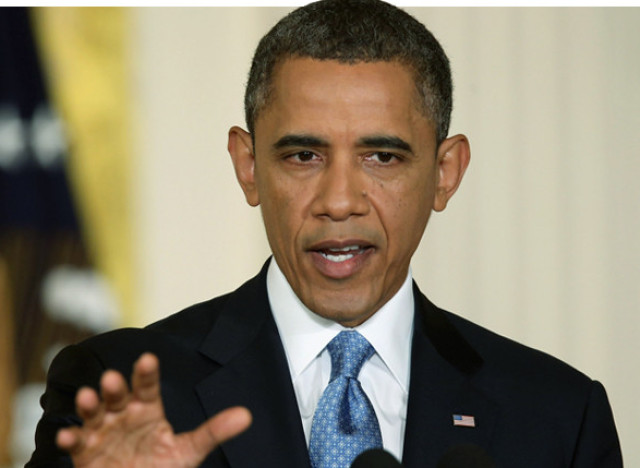
He’s killed Osama Bin Laden. He’s brought universal healthcare to America. And now, the 44th President of the United States is bringing sexy back. Oh yes.
And here’s the proof, above: the latest video from BaracksDubs, in which Barack Obama gives us his rendition of Justin Timberlake’s 2006 hit (featuring Joe Biden).
It’s cool, Mr President. Very cool. But then, we always knew you were a bit of a dude…
Loading Slideshow
President Obama Sings Al Green
Obama At The 2011 White House Correspondents’ Dinner
‘Slow Jam The News’ With Barack Obama
Obama Enjoys Fast Food
Obama Orders Stephen Colbert To Shave His Head
Behind The Scenes With Obama And Colbert
President Obama’s Letter To Betty White
Obama Calls Kanye West A Jackass
Obama Swats Fly During Interview
Obama On Letterman: ‘I Was Black Before The Election’
Obama Plays Basketball
President Obama Tells Journalist Off
Jump to 20 seconds before the end…
Obama On The ‘Coolest Thing He’s Ever Said’
Ever heard of a “vanadium redox fuel cell”? Well, neither has President Obama, speaking at a small business forum in Cleveland, but that hasn’t stopped it from being one of the coolest things he’s ever said out loud.
Obama’s ‘Cool Handshake’
Not real, sure, but still funny…
Jibjab’s ‘He’s Barack Obama’ Song
Also not real, of course, but still very brilliant.
In speech, Obama pushes activist government and takes on far right (Reuters)
Atari’s U.S. Operations File for Chapter 11 Bankruptcy (BBG)
Israel goes to polls, set to re-elect Netanyahu (Reuters)
Apple May Face First Profit Drop in Decade as IPhone Slows (BBG)
EU states get blessing for financial trading tax (Reuters)
Indian Jeweler Becomes Billionaire as Gold Price Surges (BBG)
Europe Stocks Fall; Deutsche Bank Drops on Bafin Request (BBG)
Algeria vows to fight Qaeda after 38 workers killed (Reuters)
GS Yuasa Searched After Boeing 787s Are Grounded (BBG)
Slumping pigment demand eats into DuPont’s profit (Reuters)
Overnight Media Digest
WSJ
* U.S. President Barack Obama began his second term on Monday by setting an agenda for the next four years built on bedrock Democratic social policies, in a provocative speech coming at a time of deep partisanship in the capital and lingering economic uncertainty across the country.
* Jonathan Baum, chairman and chief executive of Bank of New York Mellon Corp’s mutual-fund unit, has left the firm, the company said Monday.
* International investigations into the battery malfunctions that grounded Boeing Co’s 787 jet are accelerating, with U.S. and Japanese experts pursuing some new and possibly differing leads.
* Wal-Mart Stores Inc is warning suppliers that it is adopting a “zero tolerance policy” for violations of its global sourcing standards, and soon plans to immediately sever ties with anyone who subcontracts work to factories without the retailer’s knowledge.
* Japan’s central bank agreed to adopt a 2 percent inflation target and strengthened its monetary-easing program in a bid to rid the economy of long-running deflationary pressures.
* Bundesbank President Jens Weidmann warned Japan not to “politicize” its exchange rate by pursuing an overly aggressive monetary policy, reflecting mounting concern in Europe that other central banks may cheapen their currencies as a means of stimulating economic growth.
* Federal officials are expected to slap a Deutsche Bank AG unit with a $1.5 million penalty in coming days after concluding that its energy-trading arm extracted illicit profits from the California electricity marketplace in 2010.
* Mary Jo White, who made her name pursuing terrorists, mobsters and white-collar criminals as a federal prosecutor in New York, is the Obama administration’s likely pick to lead the Securities and Exchange Commission, according to people familiar with the administration’s search.
* House Republicans on Monday moved to extend U.S. borrowing authority until May 19, setting a timeline for the next phase of budget wrangling between the White House and Congress.
FT
RULES ON OFFICE-FLAT CONVERSION TO EASE Developers will be able to convert office buildings into blocks of flats without asking councils for permission under radical changes to the English planning system. (link.reuters.com/keh45t) WEIDMANN WARNS OF CURRENCY WAR RISK The erosion of central bank independence around the world threatens to unleash a round of competitive exchange rate devaluations, which leading economies have so far avoided during the financial crisis, the president of Germany’s Bundesbank warned. (link.reuters.com/qeh45t)
OBAMA DEFENDS ROLE OF STRONG GOVERNMENT Barack Obama mounted a vigorous defence of interventionist government and the role of a social safety net in an uplifting and uncompromising speech that marked the formal opening of his second term as president. (link.reuters.com/seh45t) HEATHROW AND BA DID NOT ACT ON SNOW ALERT The operator of Heathrow and airlines led by British Airways decided against taking pre-emptive measures to deal with snow that could have prevented the airport’s descent into chaos on Friday, the Financial Times has learnt. (link.reuters.com/heh45t)
GRADE TO STEP DOWN AS OCADO CHAIRMAN Online grocer Ocado will reveal on Tuesday that Michael Grade will step down as chairman later this year. Grade has been chairman of Ocado for seven years and brought the lossmaking company to market in an 800 million pound float three years ago. (link.reuters.com/geh45t)
HUAWEI IN PLEDGE TO DISCLOSE MORE INFORMATION Huawei has pledged to start disclosing more detailed financial and shareholding information as the Chinese telecoms equipment maker tries to dispel fears over suspected ties to the Chinese military, which are hampering its global expansion. (link.reuters.com/veh45t)
FRUIT FARMERS LOOK TO FOREIGN LABOUR INFLUX British ministers are under pressure to allow migrant workers from Russia, Ukraine and Turkey into the UK to mitigate a predicted shortage of fruit pickers which is threatening the 3 billion pounds a year horticulture industry. (link.reuters.com/duh45t)
NYT
* U.S. President Barack Obama ceremonially opened his second term on Monday with an assertive Inaugural Address, arguing that “preserving our individual freedoms ultimately requires collective action.”
* The Bank of Japan set an ambitious 2 percent inflation target and pledged to ease monetary policy “decisively” by introducing open-ended asset purchases, following intense pressure from the country’s audacious new prime minister, Shinzo Abe.
* As Facebook and Twitter become as central to workplace conversation as the company cafeteria, federal regulators are ordering employers to scale back policies that limit what workers can say online. The agency has pushed companies nationwide, including giants like General Motors, Target Corp and Costco, to rewrite their social media rules.
* Aerospace represents the latest frontier for China, which is eyeing parts manufacturers, materials producers, leasing businesses, cargo airlines and airport operators. The country now rivals the United States as a market for civilian airliners. And the new leadership named has publicly emphasized long-range missiles and other aerospace programs in its push for military modernization.
* Atari’s U.S. unit, Atari Interactive, filed for Chapter 11 protection on Monday as part of an effort to cleave itself from its French parent.
* After four months of fierce bidding between two Asian tycoons, a multibillion-dollar battle for control of Fraser & Neave appears to have reached its end. A bidding deadline on Monday evening came and went, meaning the victor will probably be TCC Assets, which is controlled by Charoen Sirivadhanabhakdi of Thailand.
* The Maloof family has agreed to sell a controlling stake in the Sacramento Kings, one of the NBA’s most troubled and well-traveled franchises, to an investment group led by Christopher Hansen, a hedge fund manager who intends to move the team to Seattle by next season and rename them the SuperSonics.
* A report from the International Labor Organization predicted jobless levels to rise to 202 million worldwide this year, and said government budget-balancing was hurting employment.
* Jeroen Dijsselbloem, the new president of the group of ministers overseeing the euro, said on Monday he wanted to heal the rift over austerity policies that had bred mistrust between southern and northern nations using the currency
Canada
THE GLOBE AND MAIL
* The demand for university education is not slowing down, as high school students continue to apply to Ontario institutions in record numbers. Preliminary figures released by the Ontario Universities’ Application Centre showed that the number of high school students applying to first-year programs in the fall climbed by 2.4 per cent over the previous year.
* Cable sweepers and “hydrophobic” coatings are part of the British Columbia government’s new plan to winterize the Port Mann Bridge, where last month vehicles and motorists were pummelled with ice falling from overhead cables. More than 340 insurance claims have been filed since the Dec. 19 snowstorm, according to ICBC spokesman Adam Grossman.
Reports in the business section:
* Rona Inc’s two largest shareholders are taking matters into their own hands, installing a turnaround expert who is familiar with reducing costs to lead the board of directors.
* Sun News Network is pinning its hopes for survival on a ruling by Canada’s broadcast regulator. Canada’s newest and most controversial news channel has argued its signal must be broadcast into every Canadian home if it is ever going to recover from losses that have already reached C$17 million a year.
NATIONAL POST
* Canadian Prime Minister Stephen Harper’s government said on Monday it will not include Governor General David Johnston in any future policy discussions with First Nations, further clouding its battle of wills with aboriginal leaders.
* Dan Ross, the former assistant deputy minister of defence materiel, has blamed the Stephen Harper government’s culture of secrecy and a lack of accountability at all levels for the failure of the F-35 stealth fighter program.
FINANCIAL POST
* Bank of Canada will deliver a one-two punch on Wednesday, combining its latest interest rate decision with the central bank’s latest quarterly outlook for the domestic and global economies.
* The Alberta provincial government said on Monday that its March 7 budget for 2013-14 will make a course correction from big spending to big belt tightening as a shortage of pipeline space and competition in oil production in the United States have tempered the surge in global oil prices.
China
CHINA SECURITIES JOURNAL
–A total of 1,271 funds in 70 fund companies made profits of 104.6 billion yuan ($16.81 billion) in the fourth quarter of last year, from a loss of 179.6 billion yuan in the third quarter, data showed.
–China’s National Development and Reform Commission said it will reduce credit card comissions next month, with analysts expecting it could help merchants save 4 billion yuan a year.
SHANGHAI SECURITIES NEWS
–A netizen has demanded U.S. fruit distributor Chiquita explain why slices of apples sold in FamilyMart stores in Shanghai fail to turn brown after 80 hours, sparking a debate online whether the steps Chiquita is taking to protect apple slices from oxidizing are unhealthy.
–Subsidised license plates for new energy vehicles in Shanghai received a lukewarm welcome, with only one customer applying for the plates on the first day they were made available.
–Chinese vehicle exports topped 1 million units for the first time in 2012, up 29.7 percent.
–Shanghai saw a contraction in total trade in 2012, the first time in three years.
PEOPLE’S DAILY
–China’s central government will invest 122.2 billion yuan to support the domestic spring ploughing industry, the finance ministry said.
Fly On The Wall 7:00 AM Market Snapshot
ANALYST RESEARCH
Upgrades
ASML (ASML) upgraded to Buy from Hold at ABN Amro ASML (ASML) upgraded to Hold from Sell at Deutsche Bank Bank of Kentucky (BKYF) upgraded to Outperform from Neutral at RW Baird Goodrich Petroleum (GDP) upgraded to Outperform from Market Perform at BMO Capital Precision Castparts (PCP) upgraded to Buy from Neutral at UBS Research in Motion (RIMM) upgraded to Outperform from Sector Perform at Scotia Capital Viacom (VIAB) upgraded to Buy from Neutral at Goldman VimpelCom (VIP) upgraded to Overweight from Neutral at HSBC WESCO (WCC) upgraded to Outperform from Neutral at Credit Suisse
Downgrades
ARM Holdings (ARMH) downgraded to Hold from Buy at Benchmark Co. Amgen (AMGN) downgraded to Neutral from Outperform at Credit Suisse Becton Dickinson (BDX) downgraded to Neutral from Buy at Mizuho Diamond Offshore (DO) downgraded to Neutral from Outperform at Credit Suisse F5 Networks (FFIV) downgraded to Hold from Buy at Needham FirstEnergy (FE) downgraded to Underperform from Hold at Jefferies Fortinet (FTNT) downgraded to Market Perform from Outperform at JMP Securities LRR Energy (LRE) downgraded to Neutral from Outperform at RW Baird Och-Ziff Capital (OZM) downgraded to Market Perform from Outperform at Keefe Bruyette Open Text (OTEX) downgraded to Hold from Buy at Stifel Nicolaus Roche (RHHBY) downgraded to Neutral from Outperform at Exane BNP Paribas Trinity Biotech (TRIB) downgraded to Neutral from Buy at Roth Capital Urban Outfitters (URBN) downgraded to Neutral from Overweight at Atlantic Equities Uroplasty (UPI) downgraded to Market Perform from Outperform at JMP Securities
Initiations
ExactTarget (ET) initiated with an Outperform at Credit Suisse LivePerson (LPSN) initiated with a Neutral at Credit Suisse PBF Energy (PBF) initiated with a Hold at Deutsche Bank PBF Energy (PBF) initiated with an Outperform at Credit Suisse S&W Seed (SANW) initiated with an Overweight at Piper Jaffray Verint Systems (VRNT) initiated with a Neutral at Credit Suisse
HOT STOCKS
Ericsson (ERIC) to acquire IT services capabilities from Devoteam in France KKR (KKR), Blackstone (BX) said to be among those in talks for Life Technologies (LIFE), Bloomberg reports Caterpillar (CAT) to record $580M goodwill impairment charge in Q4 Shaw Communications (SJR) reported Shaw family acquired 750,000 class B shares SeaCube (BOX) to be acquired by Ontario Teachers’ Pension for $23 per share NeoPhotonics (NPTN) subsidiary to acquire OCU unit from LAPIS Seminconductor for $36.8M BGI-Shenzhen extended tender offer for Complete Genomics (GNOM) FDA approved Botox (AGN) to treat overactive bladder FDA approved Mallinckrodt’s (COV) Gablofen prefilled syringe OM Group (OMG) divested Advanced Materials business for up to $435M (FCX) DaVita (DVA) formed JV with RHC in Taiwan Daimler AG (DDAIF) created subsidiary for innovative mobility services Pearson (PSO) sees tough market conditions continuing into 2013
EARNINGS
Companies that beat consensus earnings expectations last night and today include: DuPont (DD), Signature Bank (SBNY), TAL Education (XRS)
Companies that missed consensus earnings expectations include: Verizon (VZ), Sierra Bancorp (BSRR)
NEWSPAPERS/WEBSITES
International investigations into the battery troubles that grounded Boeing’s (BA) Dreamliner 787, are growing, with U.S. and Japanese experts pursuing some new and possibly differing leads, the Wall Street Journal reports Apple’s (AAPL) future is getting harder to read. Their move into new markets and its more complex supply chain are making its growth prospects more difficult to understand and predict, say longtime investors and analysts, the Wall Street Journal reports Microsoft (MSFT) CEO Steve Ballmer is not the right leader for the software company but holds his grip on it by systematically forcing out any rising manager who challenges his authority, claims former senior executive Joachim Kempin, who has written a book about his time at the company, Reuters reports South Africa’s Competition Tribunal today gave the green light to the proposed takeover of global miner Xstrata (XSRAY) by Glencore (GLNCY). But the tribunal attached some conditions to the $33B deal to limit the merger’s impact on job losses in the mining sector, Reuters reports Consumption of high fructose corn syrup, used to sweeten products from Coca-Cola (KO) to H.J. Heinz (HNZ) ketchup and linked to obesity, is falling in the U.S. as health-conscious consumers drink less soda, Bloomberg reports The world’s biggest investors are moving away from allocating money to government bond markets based on their amount of debt, a strategy that has favored the largest borrowers for three decades, Bloomberg reports
BARRON’S
A $14 per share LBO undervalues Dell (DELL) Rockwell Automation, ABB provide good opportunities for robotics (ROK, ABB, ADEP, CGNX) Crocs’ (CROX) operational shifts could raise 2013 EPS by 11% to $1.55 Fossil (FOSL) could reach over $120 per share as earnings are reported Data usage providing return on LTE investment for Verizon (VZ), AT&T (T) Intel’s (INTC) “branch prediction” on hybrid PCs a risky move
SYNDICATE
Performant Financial (PFMT) files to sell 7M shares of common stock
Hurricane Sandy as seen from space. (Photo by NASA Goddard Space Flight Center.)President Barack Obama included a call to action on climate change in his inaugural speech on 21 January, surprising those who believed gun violence and immigration reform would take top billing. It’s not the first time he’s talked about the issue, by any means, but few thought he would return to it with such emphasis now.
President Obama should call on us to be the next “greatest generation.”
During his 2008 campaign, he spoke of working for the moment when the rise of the oceans would begin to slow and our planet would begin to heal. During the 2012 election campaign, he was mocked for that statement.
But no one was laughing this fall when waves swept over lower Manhattan and towns up and down the eastern seaboard; nor this summer when much of the US midwest suffered from drought and brave firefighters battled unprecedented fires across the west. Obama spoke in Monday’s inaugural address of our responsibility to “preserve our planet”, recognizing that “the failure to do so would betray our children and future generations”.
So can we expect the president to take the sort of leadership on the climate that many have hoped for since his 2008 campaign? In particular, will he stand up to the pressure of the fossil fuel lobby?
Here are the top things he can do to turn those intentions into the actions that would be up to the scale of the problem. Many of them can happen without the consent of congressional Republicans.
First, President Obama proposed a national conversation on climate during his first post-2012 election press conference. He should launch that conversation with clear statements about the urgency of the climate science, an explanation of what is at stake, and a call to all Americans to be part of the change.
It’s important that he not dumb this down. We need to know what it means to have experienced record-breaking temperatures, floods, droughts, wild fires, melting ice caps, and extreme storms. When given a full account of a threat, the American people have risen to big challenges in the past. We did it during the second world war when millions enlisted in the military, grew “victory gardens”, recycled, and went to work in factories to aid the war effort. He should call on us to be the next “greatest generation.”
The billions of dollars raised by such a tax could help pay down the deficit, pay for investments in the clean energy economy, or be rebated directly to every American.
Second, he should drop the “all of the above” approach to energy development. As Bill McKibben of 350.org shows, 80 percent of the fossil fuel now in the ground must stay there if we are to stabilize an increasingly chaotic climate. That means instead of giving subsidies, tax breaks, and a regulatory pass to fossil fuel companies, these advantages should instead be given to businesses developing renewables and energy efficiency.
Third, he should propose a straightforward tax on carbon. This approach actually has the support of such Republicans as George Shultz, as well as former top aides to Mitt Romney and John McCain. Even ExxonMobile says it could support such a tax. A carbon tax would send the right market signal, nudging our economy toward one that is safe for the planet. The billions of dollars raised by such a tax could help pay down the deficit, pay for investments in the clean energy economy, or be rebated directly to every American.
Finally, Obama should use the regulatory authority he already has. He should put a permanent stop to the Keystone XL pipeline, which would transport some of the most carbon-intensive, polluting oil on the planet across the American heartland. He should instruct the Environmental Protection Agency to move ahead aggressively with regulation of existing power plants, which account for 40 percent of the country’s greenhouse gas emissions.
Stepping up to the climate challenge need not compete with the other goals he outlined in his inauguration speech. Building a clean energy economy will produce good jobs that lift more people into the middle class and build a sustainable and widely shared prosperity. Reducing fossil fuel pollutants will improve our health and reduce healthcare costs.
Less reliance on fossil fuels will bolster our security. And we could avoid spending untold sums cleaning up after massive storms and adapting to droughts and rising sea levels.
Obama’s speech shows he has the potential to be not just an historic president but a transformational one. Hopes have been raised and dashed before, though. If there was ever a moment for Barack Obama to take a stand and establish a legacy, this is it.
This project is far too big for any one person, even the president of the United States. Our best hope is an inside-outside strategy — one in which the Obama administration reaches out to those who are already on the front lines battling the climate crisis, as well as those who are just now coming to recognize the threat we face. And those on the outside must reciprocate.
Obama says we can lead the way together. People across the country and the globe have been doing so. Now is the time for the president to join them and take the bold actions that will serve generations to come.
The Moscow Currency Exchange (RIA Novosti / Anton Denisov)
Russia’s leading stock exchange will hold its initial public offering (IPO) on its own trading platform. The shares will only trade in Moscow. The size and time of the flotation hasn’t been announced.
While the company did not disclose how much it planned to raise, rumors say it was expected to be at least $500 million. The Moscow Exchange previously announced it was set to raise at least $300 million through the IPO.
The Moscow Exchange is the largest exchange group in terms of turnover and the extensive client base in Russian and Eastern Europe. It was created in 2011 with the merger of Russia’s two largest exchanges, the RTS and the MICEX. Among the Moscow Exchange’s largest shareholders are the Central Bank of Russia, Sberbank, Unicredit Bank and VTB Bank.
It is the world’s third largest floor for trading stock and index futures by number of contracts traded in the first half of 2012, after Deutsche Borse’s Eurex and NYSE Euronext’s Liffe. The Moscow Exchange was the last major exchange that remained unlisted.
With yet another wave of economic crisis predicted, Russia is preparing and filling up its Reserve Fund.
Russia’s Finance Ministry is due to transfer a $30 billion surplus of gas and oil revenues to the country’s Reserve Fund following the results of budget performance in 2012. Fresh inflow will increase the reserve by about a half to bring it to $93 billion in total.
The Fund was better prepared for the previous economic crisis. In the autumn of 2008 it was at its maximum level of $140 billion. In the following years the account was cut almost 6 times and reached its lowest level of $25 billion in 2010, as the government used almost $130 billion to covering budget spending. Over the last couple years the oil and gas surplus made up for the holes and by 2013 the reserve had $63 billion on account.
Provisions from oil and gas surplus will keep flowing into the Reserve until it reaches 7% of GDP. Russia’s Finance Ministry expects it to reach that point by 2017.
An 86 vehicle pile-up outside Cincinatti has left a 12-year-old girl dead and several others injured.
The child survived the initial crash on Monday morning and got out of a damaged car to stand on the motorway central reservation next to a cable barrier.
But another vehicle hit the fence, snapping one of the twisted steel ropes, which then struck the girl and killed her, the Hamilton County sheriff’s office said.
At least 20 other people were taken to hospital, though their injuries were not expected to be life-threatening.
The crash on Interstate 275 near the Cincinnati suburb of Colerain Township was one of at least four pile-ups that snared dozens of vehicles in Ohio.
The road was shut down for hours to clear the wreckage strewn across it.
“It was just chaos, absolute chaos,” Lieutenant Tory Smith told The Cincinnati Enquirer.
The sheriff’s office said the crash remained under investigation, but suggested poor weather and low visibility was a factor.
Snow had been accumulating on the road, and there were reports of ice.
As many as 50 vehicles were involved in another pileup on I-75, between Middletown and Monroe, in southwest Ohio.
Luke Stevens, of Van Wert, was in a vehicle at the front of that pile-up.
“It was complete ice all over the highway,” he said.
Four trucks and about 20 cars were involved in an afternoon pile-up on I-71 near Mansfield and a multi-vehicle crash near Columbus temporarily closed the I-270.
Nobody was seriously injured in the later crashes.
U.S. Ambassador to Russia Michael McFaul (RIA Novosti / Alexey Filippov)
US Ambassador to Russia Michael McFaul announced via his twitter account that by banning US adoptions Russia has lost the opportunity to know the fate of the orphans who already live in America.
The announcement was made in a Q&A session the Ambassador held on the Internet. “Russia had the opportunity to monitor their fate under the previous agreement, but now, as Russia cancelled this agreement, such opportunity is lost,” McFaul wrote in Russian in response to the question if it was true that the Russian authorities can no longer receive information about Russian orphans who had been previously adopted by US families.
McFaul’s comment came as a surprise, as the Russian-US agreement on adoptions must remain valid for one year since the moment when one of the sides informs the other side via diplomatic channels that it intended to stop it. Russia did so in early January after the Dima Yakovlev Law came into force and the US State Department confirmed that it received the official letter.
Vladimir Putin’s press secretary Dmitry Peskov explained in an interview earlier this month that the adoptions agreement will remain valid for one more year, “until the first day of January 2014”.
The agreement obliges state bodies of both countries to cooperate; in particular it reads that the authorities of the recipient state must send full and truthful reports on the adopted children’s lives upon request of the authorities of the donor state.
The Dima Yakovlev Law was drafted and approved in reply to the US Magnitsky Act. The US introduced sanctions on a group of Russian officials who, in view of the US are involved in human rights violations. Russia’s reply also included sanctions on citizens of the United States and other countries involved in violations of human rights and also in unlawful prosecution of Russian citizens.
When the Dima Yakovlev Bill was discussed in the Lower House, legislators amended it with a ban on all adoptions of Russian orphans by US citizens and on any participation of the US organizations in adoption procedures involving Russian children. Advocates of the ban said that in previous cases of cruel treatment and even manslaughter of Russian children by US foster parents the US authorities failed to provide Russia with information on the children’s fate. President Vladimir Putin, who also supported the ban, called the US attitude arrogant and added that it should not be tolerated.
The amendment caused a wave of criticism from the Russian public, media and officials, but the legislators remained adamant and passed the bill together with the ban and in the end of 2012 it was signed into law by the President.
Astoundingly, Mr. Obama — the supreme pragmatist and compromiser — gave an inaugural address that was as strong a defense of progressivism as we have seen in thirty years. Yet it will take more than words to make a difference. As the echoes of his speech fade, we are still faced with ultra-rightwing terrorists threatening to hold the US economy hostage to a set of demands that the majority of Americans disagree with.
These are the same loonies who deny global warming; the same ones who set up a museum showing prehistoric humans walking with dinosaurs; the same ones who think the answer to gun violence is more guns; the same ones who voted against relief for victims of Sandy … the same ones who want to shove ultrasound instruments into women’s vaginas and tell people who they can and cannot marry while simultaneously shouting to the rooftops about freedom and values.
Yeah. Their freedoms, their beliefs and their values, please. All others step to the back of the bus, or consult Leviticus. You know, that font of ancient wisdom that tells us when and how to stone our neighbor’s daughter.
Want to know how our political discourse got so mind-numbingly stupid?
Well, we can start with this little fact: The press is so enamored with “balance” that they’ll treat even the most ignorant, shallow, fatuous movement — a movement composed of the selfish, the self-obsessed, the angry, the bigoted, and the blissfully ignorant — as if it were a serious movement.
There’s the now infamous: “Keep your government hands off my Medicare.”
Or this gem: “Don’t steal from Medicare to Support Socialized Medicine.”
Or this: “Get a Brain. Morans [sic].”
Or this: “Obama Half Breed Muslin” — or maybe cotton or linen?
Or this: “We came unarmed. This time.”
Or this: “Stop Illeagles.” Yup, gotta hate it when eagles get ill.
There’s absolutely no shortage of these tributes to stupidity — the list could go on and on.
At one time this kind of foolishness would have been laughed off the national stage.
Now it dominates one of our major political parties, thanks to the media’s embrace of balance and false equivalence and the Democrats’ silent complicity.
It might be time for a whole new set of “imponderables”.
Imponderables are questions or statements that by their nature expose something that doesn’t make sense. At their best, they’re mildly amusing and instructive. For example, why does Hawaii have an Interstate Highway system? or Why isn’t “phonetic” spelled the way it sounds? or Why do psychics have to ask you for your name?
Yes, today’s political discourse is so thoroughly littered with “conventional wisdom” without an iota of wisdom, that there should be a new category — political imponderables. Here are a few examples:
National “Defense:” If the US was spending more than the next 16 countries combined on defense prior to 911, why did we need to create the Department of Homeland Security to defend ourselves?
Shouldn’t the Defense Department be called the Department of Offense?
Why isn’t every citizen asking why we have tens of thousands of troops scattered around the world to fight the cold war, nearly 25 years after it ended.
If Citizen’s United is about Free Speech, why does it cost so much? Republicans and plutocrats are set to spend far more than $1 billion on the presidential race.
Why did Obama call the Patriot Actshoddy and dangerous then essentially continue Bush’s assault on the Bill of Rights?
Climate Change: Why did candidate Obama call climate change an epochal man-made threat to the planet, while President Obama virtually ignored it his entire first term.
Deficit Duplicity: Why are Republicans once again threatening to shut down government over extending the debt ceiling, after voting for the Ryan’s first budget, which required multiple and astronomical increases in the debt ceiling until the year 2062?
Deregulation, Trickle Down Redux, or Fool me once, shame on you … If thirty years of policies featuring deregulation, tax cuts for the rich and starve the beast policies resulted in the economic crash in 2008 — the worst since the Great Depression, which was also preceded by laissez-faire policies — how can more of the same be the solution?
Small Government that Isn’t: If Republicans like small government, why does it always grow when they’re in office?
Why does the press mindlessly repeat conservative fear mongers’ debt warnings even as the deficit is disappearing?
There’s no shortage of political imponderables. Given the absurdity of our political process and the media’s malfeasance, our national well of stupidity is deep and wide.
The answer to all these questions is simple — these absurdities exist, because our media has replaced truth, accuracy and reality with balance, false equivalency, and stenography and Democrats have been silent co-conspirators.
John Atcheson is author of the novel, A Being Darkly Wise, an eco-thriller and Book One of a Trilogy centered on global warming. His writing has appeared in The New York Times, the Washington Post, the Baltimore Sun, the San Jose Mercury News and other major newspapers. Atcheson’s book reviews are featured on Climateprogess.org.
The two month wait is over and the most overtelegraphed central bank news since November 2012 finally hit the tape when the BOJ announced last night what everyone knew, namely that it would proceed with open-(y)ended asset purchases and a variety of economic targets, key of which was 2% inflation. However, the response so far has been one of certainly selling the pent up news, especially since as was further detailed, the BOJ will do virtually nothing for 12 months, except to increase the size of its existing QE (is the current episode QE 10 or 11?) by another €10 trillion for the Bills component. The USDJPY dropped as much as 170 pips lower than its overnight kneejerk highs hit just after the news.
Turning to Europe, where the EURUSD so far has been a bigger beneficiary of the BOJ action than the JPY, as apparently news of open-yended purchases are yen positive and dollar negative, a scary episode took place just around 4 am Eastern when the bottom suddenly seemed to fall out of German risk, especially financial stocks, spreading to the EUR, following a report from the Boersen Zeitung that a Bafin model was simulating a split of the largest German banks – Deutsche Bank and Landesbank Baden-Wuertenberg, due to their size relative to German GDP. Why Germany may be contemplating or even modeling a split of DB is unclear – it is likely that the biggest European bank will ever voluntarily split itself into two separate parts. Luckily fears of the scray reality were prmptly forgotten when one hour later the latest German ZEW sentiment index came out at a ridiculous print of 31.5 for January, up from 6.9, and above expectations of 12.0. Whether this is due to the official negative German GDP print, or to sliding German exports, or both, is unknown. It is also unknown how as part of the survey, the majority of the respondents said they did not believe the economy would change and only a minority see improvement, adding that if some banks gave back LTRO money that would be a sign that the crisis is not worsening. What is known is that once again, optimism and outlook is supposed to trump reality, and so it does, as the EURUSD promptly reverts back to its baseline in the mid-1.33 range, where it continues to be a drag on German and Spanish exports as reported yesterday.
And speaking of Spain, the pain for the insolvent country with the 26% unemployment, rages on following a report that in Q4 house prices fell another 9.8% from a year ago, with the Y/Y deteriorating following “only” a -9.3% drop in Q3, a -2.2% sequential drop from Q3 to Q4. Expect this too to be spun somehow.
Below is a quick post-mortem on the BOJ action from Goldman:
BoJ adopts a 2% inflation target – as expected
Today’s BoJ announcement was the most widely anticipated in a long time, as markets waited to see the steps that the BoJ would take in conjunction with the new administration’s desire to overcome deflation.
As widely flagged, the BoJ adopted a 2% inflation target. Ahead of the meeting, the Japanese media had debated the timeframe over which this target would be reached. In the event, the BoJ specified that it would pursue monetary easing and aim to “achieve this target at the earliest possible time”. However, it went on to suggest that this will take ‘a considerable time’. The BoJ’s forecasts, which were refreshed at this meeting, foresee that core CPI excluding the effects of the consumption tax hike will range between +0.5% and +1% in FY2014 (with a median estimate of 0.9%). While this is a move towards positive inflation rates, it is clearly still a long way from its new objective, underscoring that it will take a considerable time to reach inflation at 2%.
The BoJ increased its APP by JPY10trn to JPY111trn, mostly in JGBs and T-bills, and shifted to open-ended purchases (from 2014, there will be monthly purchases of JPY2trn JGBs and JPY10trn T-bills). The BoJ’s announcement states that the monthly JPY2trn JGB + JPY10trn T-bill purchase will increase the APP balance by JPY10trn in 2014, and then maintain the balance thereafter from 2015. We think the Bank is committing to at least maintain the balance, with the possibility of increasing the APP program if necessary as it goes along.
By contrast, the Fed has committed to an increase of its balance sheet by USD85bn per month until certain macro conditions are met (the BoJ’s Rinban operations also increase the bank’s balance sheet, but the BoJ has not chosen to ease policy by increasing the Rinban program). At this point, the Fed is continuing to ease more aggressively than the BoJ both in word and deed, and this continues to leave us sceptical about the ability of the Yen to weaken significantly further from here. Today’s BoJ announcement is likely to disappoint foreign investors who are holding relatively stretched short Yen positions, according to the IMM data. It will also be interesting to see what the Japanese investors make of today’s decision; they could be positively surprised by the decision to maintain the size of balance sheet.
The BoJ did not cut IOER, neither did it extend the maturity of bonds purchased under the APP, thus the actions taken were relatively muted considering the adoption of the 2% inflation target, but they were probably the most we could expect given limited room for manoeuvre. Ultimately, today’s announcement means that we will need to wait for the new governor to take over at the end of April and show his stripes.
The market reaction was relatively muted. The Yen is a shave stronger at 89.17, compared with the 89.50 levels ahead of the meeting, suggesting that the market was positioned for a modestly more dovish outcome. JGBs are basically flat and the Nikkei has recovered to flat after selling off slightly as the market digested the outcome. Possibly the most interesting market to watch from here is the Japanese inflation market. While this asset class is very illiquid owing to the lack of inflation-linked issuance since 2008, break-even inflation did rise steadily following the introduction of the 1% inflation goal in February 2012 and the introduction of a 2% inflation target may well push this move further after the pause since last summer. Outside of Japanese assets, the BoJ’s decision has pushed the Euro stronger, but the reaction elsewhere was fairly muted.
And a complete event recap of the past 24 hours, as is customary, from DB’s Jim Reid:
The two-month wait is finally over with the Bank of Japan announcing overnight that it will formally adopt a 2% inflation target and introduce anopen-ended asset purchase program starting from January 2014, after the current purchase program has concluded. In a 12-page announcement, the BoJ said monthly asset purchases will be targeted at 13trn yen from January 2014, consisting of 2trn in JGB purchases and 10trn in t-bills purchases. As a result of these measures, the total size of the asset purchase program will be increased by 10trn yen in 2014 after accounting for maturities.
The announcement also included a highly-anticipated joint statement from the Government and BoJ in which both parties agreed to strengthen policy coordination and work together to “overcome deflation early”. The joint statement also says that the BoJ will pursue monetary easing to achieve the inflation target at the “earliest possible time”. Meanwhile, the government will “promote measures aimed at establishing a sustainable fiscal structure” and formulate measures for “strengthening competitiveness” such as “concentrating resources on innovative research and development, and carrying out bold regulatory and institutional reforms”. As was expected, the overnight call rate was left unchanged at zero to 0.1%. Board members voted to adopt the above measures with a 7-2 majority vote.
In terms of the market reaction, the Nikkei and USDJPY went into the BoJ announcement trading 0.7% and 0.5% higher respectively, steered by widespread pre-empting of the new measures from domestic media in the hours prior to the formal BoJ announcement. Perhaps in a case of “sell the fact”, the Nikkei and USDJPY have more than retraced those moves and are now are sitting on losses of 0.40% and 0.45% for the day respectively. Across other assets, 10yr JGB yields are unchanged on the day after having been 2bp higher prior to the BoJ announcement, the TOPIX is down 0.7% (or a -0.9% move lower post-BoJ) and S&P futures have pared earlier gains to trade 0.2% higher overnight.
Outside of Japan, most Asian equities are trading marginally firmer overnight although earlier gains have been pared. The Hang Seng, ASX200 and KOSPI are 0.15%, +0.03% and 0.3% higher on the day respectively. Responding to the recent appreciation of the KRW against the USD and JPY, South Korea’s finance minister said that the government would increase support for exporters, citing that gains in the won were causing damage to companies such as automakers.
Returning to yesterday’s session, the EuroStoxx 600 finished with a gain of 0.26% bringing it to just a few points shy of its four-year high of 291. With US markets closed for Martin Luther King Day, there was little news flow or volume to move markets in either direction. In the US, House Republican leaders have scheduled a vote on a near-four-month extension of the debt ceiling for this Wednesday.
In an interesting twist, the House bill is not expected to specify a hard dollar increase in the debt ceiling, but will instead suspend (rather than lift) the debt ceiling until May 19th, after which the debt limit will be automatically increased from $16.4trn to accommodate whatever additional borrowing the Treasury had done during that time frame. According to the Hill, the bill was designed to allow Republicans to avoid having to vote on a specific dollar increase in the debt ceiling that could be used against them in later election campaigns (The Hill).
Elsewhere in Washington, Obama’s inauguration contained no major surprises from a markets point of view, but the President outlined pledges to preserve health-care programs, pressed for gun controls and an overhaul of the tax code (WSJ).
Turning to Europe now and the first Eurogroup meeting of 2013 concluded with Dutch finance minister Jeroen Dijsselbloem confirmed as the new President of the Eurogroup. Other items on the agenda last night included direct ESM bank recaps, to which there appeared to continued disagreement on the treatment of “legacy assets”, and Cyprus where a decision on a bailout has been pushed back to at least March. The Eurogroup did manage to agree on one thing though, authorising the next EUR9.2bn bailout disbursement to Greece. The payment will be broken into a EUR7.2bn for bank recaps and a EUR2bn for government budget needs.
In other headlines, Spain is reportedly planning to issue a new 10yr bond in the next week which would be the first benchmark 10 year bond issue since November 2011. The news perhaps explained some of the weakness in Spanish yields yesterday with the 10yr yield closing 8.5bp higher at 5.163%.
Turning to the day ahead, the highlights on the data front are Germany’s ZEW survey for January and existing home sales in the US. Eurozone finance ministers reconvene today for the ECOFIN meeting in Brussels. On the earnings docket, Unilever will be reporting annual results this morning London time. In the US, Johnson & Johnson and Texas Instruments report before the opening bell while Google and IBM report after the close.
Prime Minister Dmitry Medvedev sees no discrimination in a law obliging all migrant workers arriving in Russia to pass a test of their knowledge of the local language and culture.
“It’s absolutely normal. Such a practice exists in the majority of foreign countries. At least in countries that care about their future,” Medvedev stated on Tuesday, during a meeting with the members of parliamentary parties.
Currently, migrants working in Russia in housing, utilities, sales and public services have to demonstrate only basic knowledge of Russian when getting work permits. This does not refer to citizens of Belarus and South Ossetia — where Russian has the status of official language.
Now the lawmakers propose toughening the rules. Under the proposed bill, exams in Russian language, history and legislation basics will become compulsory for all foreigners who come to the country to work or live.
RIA Novosti / Alexey Kudenko
Medvedev welcomed deputies’ initiative, saying that Russia needs the creation of a civilized labor market. First of all, the country should attract professionals to fill vacancies from in-demand occupations list, the PM stressed.
However, mainly unqualified workers have been coming to Russia so far. Often then can hardly speak any Russian and do not know the local culture or traditions, which “leads to conflicts and, unfortunately, crimes,” Medvedev conceded.
The proposed exam would cost migrants up to 5,000 rubles (about US$165).However, the requirement will refer only to low-qualified workers, not highly-skilled professionals.
The majority migrants come to Russia from former Soviet republics — primarily Tajikistan, Uzbekistan, Kyrgyzstan and Moldova — to seek better living conditions or simply to earn some money to support their families at home. Only about 2 million of Russia’s estimated 10 million migrant laborers work in the country legally. But as the inflow of foreigners rises in Russia, so does the anti-immigrant sentiment.
A foul-smelling cloud of gas which wafted over to parts of the South East from a chemical factory in France has prompted dozens of calls to emergency services.
An accidental discharge of the gas mercaptan from a factory in the northern city of Rouen travelled across the English Channel early this morning.
People in Kent, Sussex, Surrey and parts of London reported the unpleasant aroma but emergency services said the gas is harmless and presents no danger to the public.
Sussex Police said they had received more than 25 calls by 9.15am, neighbouring Surrey had 15 calls by 11.30am, and Kent Police reportedly had a large number of calls.
“We understand that this smell emanates from an accidental factory discharge in Rouen, more than 60 miles west of Paris,” a Sussex Police spokesman said.
“The smell is from an additive to the gas which has an unpleasant aroma but is not toxic and there is no danger to the public.”
Mercaptan is added to municipal gas to alert people to gas leaks, among other uses.
According to the French interior ministry, the factory at the centre of the leak is owned by Lubrizol, a subsidiary of investor Warren Buffet’s Berkshire Hathaway group.
Kent Fire and Rescue Service said: “South Kent residents are being asked to keep doors and windows closed due to a gas cloud that is believed to have come across from France, following reports of a gas leak from a factory 75 miles west of Paris.
“Kent Fire and Rescue Service is aware and liaising with partner agencies.”
The Metropolitan Police tweeted: “We are aware of reports of a strong noxious gas-like smell in some south-east London boroughs – no risks to public.”
A Hampshire Fire and Rescue Service spokesman said it had received more than 20 calls about the smell, mostly in the Portsmouth area, with reports that it had been noticed as far north as Basingstoke and Andover and as far west as Ringwood.
Group manager Tony Deacon said: “Our control room has dealt with a number of calls reporting the unpleasant gas smell.
“We want to reassure the public that the gas presents no threat to health and is completely harmless.
Pierre-Jean Payrouse, director of internal operations at Lubrizol France, told BFM television: “It smells unpleasant because it’s a gas we use to give an odour to natural gas.
“The problem should be resolved during the day.”
A local news website said the gas had caused migraines, irritations and nausea among some residents of Rouen.
Five workers at the Department for Transport have been sacked for misuse of social media, the Huffington Post UK can reveal.
About 25 incidents of misuse of social media were recorded between 2010 and 2012, a Freedom of Information request showed.
Twenty staff were disciplined as a result, with five eventually losing their jobs.
The cases were evenly split between infractions involving Twitter and those related to Facebook.
The department did not break the figures down into detailed yearly statistics, to avoid staff being personally identified. But the FOI showed about five were disciplined in 2010, 10 in 2011 and five in 2012. In 2010 roughly five incidents in total were recorded, with 10 each in 2011 and 2012.
News of the sackings comes shortly after prime minister David Cameron took the plunge and joined Twitter himself. Cameron now has more than 217,000 followers on the social networking site.
The Department for Transport press office runs an official Twitter feed, which occasionally retweets information about weather warnings and statements from the department to its 20,000 followers.
Steven George-Hilley, director of technology at the centre-right think tank Parliament Street, said of the figures:
“Government departments should be encouraging responsible use of social media, not oppressing it. Many employees rely on social media channels to communicate with their colleagues and employers, particularly during the snowy season when transport is often disrupted.
“If the government genuinely wishes to become digital by default then it must embrace rather than punish social media use in the workplace.”
The Department for Transport told the Huffington Post:
“The Department has clear rules governing use of the social media, which we use as one means of getting information out to the public. Staff who do not comply with the rules may be in breach of the Civil Service Code and their terms and conditions of employment, leaving them liable to disciplinary action including dismissal.”
Cardinal Roger Mahony and other top Roman Catholic officials from the Archdiocese of Los Angeles worked behind the scenes to protect priests involved in sexual abuse of children. (File photo)
A top US Catholic archbishop and another church official have tried to keep police from discovering that priests were engaged in sexually abusing children, newly released records show.
Archbishop Roger Mahony and his top advisor on sex abuse cases, Thomas Curry, “plotted to conceal child molestation by priests from law enforcement,” including measures to keep the abusing priests away from California to avert legal prosecution, The Los Angeles Times reports Tuesday.
Although the failure of the church to remove its pedophile clergy as well as its unwillingness to cooperate with legal authorities have already been established in the past, internal Catholic Church documents from the late 1980’s, released Monday, demonstrate “the strongest evidence yet” of a rigorous bid by top authorities of the largest Catholic diocese in the US to protect child-abusing priest from the American law-enforcement, the report says.
According to the report, the newly released documents, which the Catholic Church has tried to keep secret for years, unveil statements by church leaders reflecting their desire to conceal child molestation by its priests from US authorities.
Confidential letters filed this month as evidence in a civil court case, the report adds, show that Curry “proposed strategies to prevent police from investigating three priests who had admitted to church officials that they abused young boys.”
One such case involved a priest named Peter Garcia, who had admitted to “preying for decades on undocumented children in predominantly Spanish-speaking parishes.”
Citing the newly released files, the report further notes that following Garcia’s release from “a New Mexico treatment center for pedophile clergy,” Mahony ordered him to keep his distance from California “for the foreseeable future” in a bid to evade “legal accountability.”
“I believe that if Monsignor Garcia were to reappear here within the archdiocese we might very well have some type of legal action filed in both the criminal and civil sectors,” the archbishop is quoted as writing to the treatment center’s director in July 1986.
Garcia returned to California later that year although the archdiocese did not give him ministerial duty since he “refused to take medication to suppress his sexual urges,” according to church documents cited in the report.
It adds that Garcia was never prosecuted and died in 2009.
The files, however, show that he admitted to a therapist that he had sexually abused boys “on and off” since his 1966 ordination.
“He assured church officials his victims were unlikely to come forward because of their immigration status. In at least one case, according to a church memo, he threatened to have a boy he had raped deported if he went to police,” the report further states.
According to the daily, an attorney for the Catholic church, Michael Hennigan, described the newly unveiled documents as “part of the past,” claiming that the church’s policy in the late 1980’s was to let the families of the victims decide whether to contact the police or not.
The report further adds that in the coming weeks, personnel files of 75 other Los Angeles area Catholic priests will be released as part of a 2007 civil settlement with 500 abuse victims.
A rural county in Ireland has supported a proposal to allow drink-driving to prevent people from becoming depressed.
Kerry County councillors voted in favour of a motion that would issue permits to isolated older residents, allowing them to have ‘two or three drinks’ and still drive home, according to The Journal.ie.
Councillor Danny Healy-Rae argued that rural drivers had never killed anyone on the roads in Kilgarvan and told the newspaper: “A lot of these people are living in isolated rural areas where there’s no public transport of any kind, and they end up at home looking at the four walls, night in and night out, because they don’t want to take the risk of losing their licence.”
Healey-Rae, himself a pub landlord, claimed the local watering hole was still the centre of the community in rural Ireland and the country roads were empty and narrow meaning drivers could go no faster than 20 or 30mph anyway.
To keep older residents at home in fear of losing their licence meant “all the wisdom and wit and culture they had, the music and singing, that’s all being lost to the younger generation,” he argued.
Calling on the minister of justice, Alan Shatter, to allow the garda to issue the permits he added: “They’re travelling in very minor roads, often on tractors, with very little traffic and it’s not right they’re being treated the same as the rest of the travelling public and they have never killed anyone,” reported the Irish Independent.
Driving the tractor back from the pub ‘less dangerous’
The motion was passed by five votes to three with seven councillors abstaining and 12 absent from the meeting. Mr Healey-Rae’s son Johnny, also a councillor, was among those who voted in favour.
However a number of politicians have spoken out against the proposal, labelling it “dangerous” and inaccurate.
Labour councillor Gillian Wharton-Slattery told Healy-Rae: “Depression causes suicide. It’s not caused by not being able to go to the pub. There’s more things to do in Kilgarvan than go into your pub.”
The mayor of Kerry also weighed in to condemn to motion, telling Irish broadcaster RTE: “It is incredibly dangerous. I don’t know how anybody can be allowed to say: ‘You’ve had two pints, so you’re justified to drive’.”
Noel Brett from the Road Safety Authority also condemned the idea, saying: “There is very strong evidence which makes an irrefutable link between the consumption of alcohol and impairment.”
Conor Cullen of Alcohol Action Ireland pointed out the established links between alcohol abuse, anxiety and depression and told the BBC: “Almost one in three crash deaths in Ireland is alcohol-related. Even in small amounts, alcohol impairs driving ability – any amount of alcohol increases the risk of involvement in a fatal crash.”
There are two main drivers in the foreign exchange market today: the much anticipated BOJ meeting and the much stronger than expected German ZEW survey.
Anticipation of aggressive easing by the BOJ today has kept the yen on the defensive. However, the combination of “sell the rumor and buy the fact” activity and, arguably, some disappointment, saw dollar turned back from the JPY90 level, which it has test during the three prior sessions without a convincing break and fall to near JPY88.35 before finding a bid. Similarly the euro, which had been flirting with the JPY120 area, was sold down to almost JPY117.30 before finding a solid bid.
The BOJ’s announcement seems to be a compromise formation. It was reluctant to be as aggressive as the government wanted so it gave some appearances of kowtowing without actually doing so. For example, it embraced a 2% inflation goal, but does not believe it can be achieved any time soon. Look at the BOJ’s inflation forecasts. It let the 2013 forecast unchanged from previous (Oct) forecast at 0.4% and the 2014 forecast was nudged higher to 0.9% from 0.8%. Two BOJ members, (Kinchi and Sato) dissented from the new inflation target.
In addition, the open-ended quantitative easing does not begin until the start of 2014, when the current asset purchase scheme expires. The BOJ intends to buy mostly bills, which in effect replace the bills that it is buying that will be expiring. This also seems to dilute the appearance of aggressiveness. Finance Minister Aso indicated that the government is not considering changing the BOJ Law at this juncture. A more aggressive central bank, that could cut interest on current deposit account at the BOJ and purchasing foreign bonds, for example, will likely await the new leadership that will likely be in place in the April-May period.
The second important development was the stronger than expected German ZEW survey. The sentiment reading jumped to 31.5 from 6.9. The Bloomberg consensus called for 12.0. This is a 2 1/2 year high. The assessment of the current situation also improved (7.1 from 5.7 and also better than the 6.2 expected). It is important because it lends credence to the BBK’s optimism that after contracting in Q4 (by as much as 0.5% quarter-over-quarter) that the euro area’s largest economy was already recovering. Attention now shifts to Thursday’s flash PMI readings for further confirmation.
The euro had been approaching last week’s low near $1.3260 on the back of rumors (denied by the BBK of Weidmann’s resignation) and concern about German banks (rumors of a large loss) and an inquiry by the national regulator (Bafin) as to the effects of splitting the retail from investment function at a couple large banks. The DAX is still under performing, slipped 0.5% in the morning session, led by the financials and utilities.
Posters like this have been spotted all over Washington DC. (TwitPic via 350.org)Environmental campaigners welcomed President Obama’s lofty rhetoric regarding climate change included in his second inaugural address, but say that meaningful and swift action, not words, is what’s needed to face the dire and immediate challenges we face.
In his speech on Monday, Obama said:
We, the people, still believe that our obligations as Americans are not just to ourselves, but to all posterity. We will respond to the threat of climate change, knowing that the failure to do so would betray our children and future generations. Some may still deny the overwhelming judgment of science, but none can avoid the devastating impact of raging fires, and crippling drought, and more powerful storms.
The path towards sustainable energy sources will be long and sometimes difficult. But America cannot resist this transition; we must lead it. We cannot cede to other nations the technology that will power new jobs and new industries — we must claim its promise. That is how we will maintain our economic vitality and our national treasure — our forests and waterways; our croplands and snowcapped peaks. That is how we will preserve our planet, commanded to our care by God. That’s what will lend meaning to the creed our fathers once declared.
There was widespread agreement among many that this was the president’s most foreceful language yet on the subject, but that didn’t keen observers from recognizing that–due to the urgency dictated by growing warnings from climate scientists and the almost daily examples of global warming’s impact on extreme weather, rising ocean levels, inland flooding, and prolonged droughts–words by themselves will do nothing to solve the crisis.
“We can no longer talk about climate change as an ominous threat on the horizon; the climate has changed and what we saw last year is only a small bitter taste of our common future if action is not taken immediately to alter course.” — Kumi Naidoo, Greenpeace
“Obama sounded good on climate,” tweeted350.org co-founder Bill McKibben immediately following the speech, but added caustically, “We’ll see.”
President of the NRDC, Frances Beinecke, said Obama’s speech was a “call to action against the climate chaos that is sweeping our nation and threatening our future.”
But now, she said, “It’s time to act.”
Later in the day McKibben’s group, which is planning a large rally at the White Houe in February to push Obama to once and for all reject permits to build the Keystone XL pipeline that would bring tar sands oil through the United States for refining and export, sent out an message to its members citing Obama’s speech and saying:
With words like that, it’s easy to let ourselves dream that something major might be about to happen to fix the biggest problem the world has ever faced.
But we know that even if the President is sincere in every syllable, he’s going to need lots of backup to help him get his point across in a city dominated by fossil fuel interests. And, given the record of the last four years, we know that too often rhetoric has yielded little in the way of results.
The group told its member that they would arrive at Obama’s White House and deliver him a clear message: “If you’re serious about protecting future generations from climate change, stop the Keystone XL tar sands pipeline. If you can do that, Mr. President, we can all work together to help build a climate legacy that will be a credit to your critical eight years in office.”
And, as author and editor of YES! Magazine Sarah van Gelder writes, “Stepping up to the climate challenge need not compete with the other goals [Obama] outlined in his inauguration speech. Building a clean energy economy will produce good jobs that lift more people into the middle class and build a sustainable and widely shared prosperity. Reducing fossil fuel pollutants will improve our health and reduce healthcare costs.”
Greenpeace also pivoted on the inaugural address, saying they believed the president wants to “do the right thing and move this country forward” and that they would help in very specific ways to help him achieve the goals embedded in his rhetoric. In fact, they put out a six part plan for the task, which included:
1) Put a final period on the end of “No Keystone Pipeline.” We’re sick of hearing “for now” at the end of this statement. Not only does the pipeline put us at risk of an unthinkable spill, it’s not the answer to progress for America’s energy future. It’s just the same, old dirty energy in a new, cylinder-shaped package.
2) Accelerate the expansion of clean, safe renewable energy. The clean energy industry needs your support rather than massive oil companies, dirty coal utilities and natural gas. When the United States invests in clean energy technology, we’re investing in our future.
3) Make carbon unaffordable. Why is it so cheap to quicken climate change and poison Americans? We need you to stand up to polluters, President Obama. They’re putting our health at risk, our homes at risk and our countries at risk. And you’re making it laughably easy to do so.
4) Save the Arctic. After months of campaigning to save the Arctic from oil companies looking to profit from record-low sea ice in our global air conditioner, we were thrilled to hear Shell’s announcement that they would no Arctic drilling in 2012. However, we know it’s only a matter of time before Shell, or another company, gives it another go. We need President Obama to grant no permits to any company to drill for oil in Arctic.
5) Support communities most impacted by climate change. In 2012, Hurricane Sandy showed us how quickly a superstorm can wipe out everything your entire livelihood. Unfortunately, climate change events can come in the form of a destructive wildfire, a devastating drought or sudden powerful storms. President Obama has to plan for the reality of climate change and help those Americans that are always left to clean up the mess.
As Kumi Naidoo, executive director of Greenpeace International, wrote recently: “We can no longer talk about climate change as an ominous threat on the horizon; the climate has changed and what we saw last year is only a small bitter taste of our common future if action is not taken immediately to alter course.”
“I hope, I expect, and I appeal on behalf of current and future generations that 2013 goes down in history as the year that governments, industry and civil society secured our planet for current and future generations,” he concluded.
The Islamic Republic of Iran and Russia have signed a memorandum of understanding (MoU) to increase security cooperation between the two countries.
Iranian Interior Minister Mostafa Mohammad-Najjar and his Russian counterpart Vladimir Alexandrovich Kolokoltsev signed the MoU during a meeting in Tehran on Tuesday.
Heading a political delegation, Kolokoltsev arrived in the Iranian capital on Monday for a two-day official visit upon the invitation of the Iranian interior minister.
“The signing of the security MoU is a cornerstone in the expansion of cooperation between the two countries,” Mohammad-Najjar said.
The Iranian interior minister added that the good relations between Iran and Russia require that Tehran and Moscow cooperate to provide security for the region.
“Training police forces and providing security in the region were among the main issues of the talks [in Tehran],” Mohammad-Najjar said, adding that various other issues such as the Caspian Sea, fighting organized crimes, and human and drug trafficking had also been discussed in the meeting.
Kolokoltsev’s visit is the first to Iran by a Russian minister of internal affairs since the victory of the Islamic Revolution in 1979.
The Iranian interior minister visited Russia at the invitation of his Russian counterpart in January 2012 and held talks with former Russian Interior Minister Rashid Nurgaliyev and Russia’s Federal Drug Control Service Viktor Ivanov.
Bahraini women wave their national flag during an anti-regime demonstration in the village of Sanabis, west of Manama, on January 6, 2013.
Anti-regime protesters in Bahrain hold overnight rallies in defiance of a standing government ban on such protests as the second anniversary of the anti-government uprising in the country draws closer.
Rallies were staged in several towns and villages across the tiny Persian Gulf sheikdom on Monday.
The demonstrators chanted slogans, calling for the downfall of the Al Khalifa regime.
In the village of Malikiyah, located some 18 kilometers (11 miles) southwest of Manama, Saudi-backed Bahraini forces fired tear gas and used shotguns to disperse the anti-regime protesters.
The revolution began in mid-February 2011 when people, inspired by the popular revolutions that toppled the dictators of Tunisia and Egypt, started holding massive demonstrations.
The Bahraini government promptly launched a brutal crackdown on the peaceful protests and called in Saudi-led Arab forces from neighboring states to assist the suppressive campaign.
Dozens of people have been killed in the crackdown, and the security forces have arrested hundreds, including doctors and nurses accused of treating injured revolutionaries.
A report, published by the Bahrain Independent Commission of Inquiry in November 2011, found that the Al Khalifa regime had used excessive force in the crackdown and accused Manama of torturing political activists, politicians, and protesters.
The protesters say they will continue holding anti-regime demonstrations until their demand for the establishment of a democratically-elected government is met.
Real Madrid’s Portuguese forward Cristiano Ronaldo (L) jumps to head the ball with Barcelona’s midfielder Sergio Busquets during their Spanish Supercup first-leg football match FC Barcelona vs Real Madrid CF at the Camp Nou stadium in Barcelona (AFP Photo / Quique Garcia)
If Barcelona were a just bit wealthier ten years ago, Real Madrid’s hero, Cristiano Ronaldo, could’ve well been playing for them, says the Catalan side’s former president, Joan Laporta.
“Barcelona was offered Ronaldo’s transfer when he was still a Sporting player,” Laporta is cited as saying by Sport-Express newspaper. “We could’ve signed him back than, paying less than Man United actually did. But at that time we had just acquired Ronaldinho, Ricardo Quaresma and Rafael Marques and we just did not have the financial resources to sign Cristiano Ronaldo as well.”
Ronaldo moved to Manchester United from Portuguese side Sporting Lisbon for €17.5 million in 2003.
Six years later, he left England for Real Madrid, scoring an impressive 130 goals in 120 appearances for the team from the Spanish capital.
The rivalry of Real and Barcelona as well as the team’s captains Cristiano Ronaldo and Lionel Messi is considered the biggest not only in Spain, but in the whole of football.
This file photo shows Iranian scientists working on an indigenous satellite.
Iran’s Aerospace Research Institute says the country will acquire the know-how to design and manufacture hi-tech space suits within the next eight years.
“Iran will acquire the know-how to design and produce space suits by the next eight years,” Head of Iran’s Aerospace Research Institute Mohammed Ebrahimi said on Monday.
Ebrahimi said his organization and Iran’s Shiraz University are cooperating closely with each other on the project.
The Iranian official said the production of space suits is a “high-tech” industry which is costly and requires advanced know-how.
In recent years, Iran has made great achievements in the field of aerospace.
On January 17, the director of Iran Space Agency (ISA) Hamid Fazeli said the country will soon send living animals into space aboard a bio-capsule as a prelude to sending humans into space.
Because of the biological similarities between humans and monkeys, the latter were selected for the forthcoming space mission, Fazeli said.
Fazeli further highlighted that the plan to send animals into space is part of a broader project to send human beings on space missions.
In recent years, Iran has made great achievements in the field of aerospace.
Iran launched its first indigenous satellite, Omid (Hope), in 2009. The country also sent its first bio-capsule of living creatures into space in February 2010, using the indigenous Kavoshgar-3 (Explorer-3) carrier.
Moreover, in June 2011, Iran put the 15.3-kilogram Rasad (Observation) orbiter in space. Rasad’s mission was to take images of the Earth and transmit them along with telemetry information to the ground stations.
Iran also launched Navid-e Elm-o Sanat (Harbinger of Science and Industry), another indigenous satellite into orbit on February 3, 2012.
Tehran plans to launch the country’s first manned mission to space by 2019.
Iran is one of the 24 founding members of the UN Committee on the Peaceful Uses of Outer Space, which was set up in 1959.
The Internationally-acclaimed Iranian auteur Abbas Kiarostami has been invited to attend the Ibn Arabi Film Festival (IBAFF) in the southeastern Spanish city of Murcia.
Kiarostami along with the renowned French screenwriter and actor Jean-Claude Carrière is slated to present workshops on filmmaking during the festival.
The 2013 edition of the festival will also hold a retrospective of Kiarostami’s films and discussion meetings.
The event’s Honorary Award will also be granted to Jean-Claude Carrière for his screenwriting in great works such as The Tin Drum(1979), Danton (1983), The Return of Martin Guerre (1982), The Unbearable Lightness of Being (1988).
Kiarostami’s diverse works of art such as painting, photography, Poetry and filmmaking are also to be reviewed during artistic workshops and programs in France in February.
As a filmmaker, painter, designer and photographer, Kiarostami has received many prestigious international awards, including the 1997 Cannes Golden Palm award and the 2008 Glory to the Filmmaker award of the Venice Film Festival.
He has staged Mozart’s opera buffa (comic opera), Cosi Fan Tutte at London’s Coliseum Theater and the 2008 Festival of Lyric Art in Aix-en-provence in France.
Kiarostami participated in the third edition of the Spanish festival while grabbed the Honorary Award of last year’s event.
Moreover, Iranian scholar and critic Bahman Maqsoudlou also presided over the jury panel of the last year’s IBAFF.
The fourth edition of Ibn Arabi Film Festival is scheduled to take place from March 4 to 9, 2013.
Prince Harry, the third-in-line to the UK’s throne, has acknowledged and justified killing Afghan people during his most recent deployment in the war-torn nation.
The 28 year-old prince has just finished his five-month second tour of duty in Afghanistan. He said he fired at Afghans from an Apache attack helicopter.
Harry revealed this in an interview before he left Afghanistan on Monday.
He was seeking to justify his hostility towards Afghans while on duty in the southern province of Helmand.
The prince is back home after a five-month tour of Afghanistan as an Apache pilot gunner.
Prince Harry served a 20-week mission with NATO forces in the southern Helmand province. He was deployed to Afghanistan shortly after his scandalous nude pictures at a hotel in Las Vegas were published on the Internet, making headlines worldwide.
“Take a life to save a life. That’s what we revolve around; I suppose…If there’s people trying to do bad stuff to our guys, then we’ll take them out of the game,” he said in an interview.
Earlier in January, former Afghan Prime Minister Gulbuddin Hekmatyar and an Afghan freedom fighter told The Daily Telegraph, “the British Prince comes to Afghanistan like a jackal to kill innocent Afghans while he is drunk.
At least 440 British troops have been killed in Afghanistan since the U.S.-led invasion of the country in 2001.
The Plosky Tolbachik Volcano erupts on the Kamchatka Peninsula (RIA Novosti / Alexandr Sidorenko)
Three volcanoes in Russia’s Kamchatka continue to send steam and ash into the air while lava flows down their slopes. Volcanic activity on the peninsula has dramatically intensified. Aviation authorities issued an orange security level in the area.
The volcanoes Shiveluch, Kizimen and Plosky Talbachek are erupting in different parts of the peninsula simultaneously, causing dozens of local earthquakes, as the vibrations accompanying the eruptions of the giants continue to increase.
The biggest and most active is Shiveluch, Kamchatka’s northernmost volcano and 3,283 meters high. Over the last days it made several eruptions of gases, steam and ash, the highest of which reached the 4,900m above sea level. Unceasing earth tremors send avalanches down its slopes. Sensors installed near the volcano are registering high seismic activity with, active gas generation and thermal anomalies.
Activity of Shiveluch started to grow back in 2009 when its dome split with a fissure 30 meters deep.
A mere 45km from Shiveluch there is Klyuchi settlement with 5,000 citizens. Volcanologists say at the moment there is no imminent danger to the town.
View of the Shiveluch Volcano from the Kamchatka River (RIA Novosti / Alexey Kudenko)
Stratovolcano Kizimen 3,900m high in the Kronotsky Reserve, famous for its Geyser Valley, is situated some 265km from the region’s largest city of Petropavlovsk-Kamchatsky. Its seismic activity also by far exceeds normal: over 80 local earthquakes have been registered near the volcano in the last 24 hours. The pillar of gas and ash rises to 4,400m above sea level. At night the red glow could be seen in the sky above its crater. Kizimen ‘woke up’ in 2009 after the last big eruption in 1928-29 and since then its activity has only been growing.
The Kizimen volcano (RIA Novosti / M. Pevzner)
Plosky Talbachek volcano 3,140m, a part of two-dome volcanic pile (the second dome Ostry Talbachek is 3,689m), became active on November 27, 2012, some 36 years after precisely predicted “Great fissure Tolbachek eruption” in 1975-76.
Plosky Talbachek has been erupting lava for weeks now. Two openings below the crater level were sending lava flows that reached 6 and 18km. The flows are glowing in the nighttime, which means that more and more masses of lava continue to arrive, reported Kamchatka Volcanic Eruption Response Team.
Though increased volcanic activity and eruptions pose a certain threat to air travel over the Kamchatka Peninsula, volcanologists closely monitoring the situation report no imminent danger to settlements close to any of the three volcanoes.
The Plosky Tolbachik Volcano erupts on the Kamchatka Peninsula (RIA Novosti / Alexandr Sidorenko)
The Plosky Tolbachik Volcano erupts on the Kamchatka Peninsula (RIA Novosti / Alexandr Sidorenko)
Viewing the chart above, a six-year old child could tell you that investing in physical gold and gold mining stocks (as indicated by the AMEX HUI gold bugs index) yielded returns from 2001 to 2012 far superior to the returns of the US S&P 500 Index over the same time period. In fact, the truth of this statement is so self-evident, that if this same child was asked what asset classes he should have been invested in over the past decade by viewing the above chart, the simplicity of that question might lead him to think that one is asking a trick question. So why is it that all the leading Wall Street investment firms stated during the visible onset of the global financial crisis in 2008 (versus the real onset of the global financial crisis quite a few years earlier) that gold was one of the riskiest assets in which one could possibly invest? The simple answer, of course, is that if they were the ones involved in the scam to take gold and silver prices down, then certainly they would not tell you that the steep, rapid (but short-lived) drop in gold/silver prices was a massive buying opportunity. However, if a six-year old can see what is so obvious, then why should a man of Warren Buffet’s prominence continue to slander gold and why does his right-hand man, Charlie Munger, make idiotic statements like “gold is a great thing to sew in your garments if you’re a Jewish family in 1939” but not to own, instead of just stating the truth that “physical gold (and physical silver) was one of the best assets to build wealth since 2001”? And if a six-year old can look at the above chart and immediately know that he or she should have beeen invested in gold and gold assets, why, according to the World Gold Council, is still only 1%, or $146 billion of the $146 trillion investable global assets, invested in gold, and 9.1% invested in money markets, 48.7% in fixed income, 37.2% in equities and 4.0% in alternative investments? (though these most recent statistics are from the end of 2010, it is doubtful that these statistics have changed much in the past two years.)
One of the main reasons why it is still likely that only 1% of all global invested assets are invested in gold is the psychological hatchet job that Wall Street and the global banking industry has performed on gold and gold stocks. For decades, bankers have repeated their false mantra that “gold and silver are incredibly risky”, using the strategy that if you tell a lie often enough, it may just be accepted as truth by the masses. The fact that millions of investors today still won’t even consider buying the top performing asset classes for more than the past decade (physical gold and physical silver, NOT the GLD and SLV), serves as testimony to the success of the bankers’ anti-gold, anti-silver propaganda campaign. Thus, the reason why just a piddling amount of investors around the world have allocated a substantial amount of their resources to gold, silver and PM stocks as of today is due to, quite simply, investor psychology. The commercial banking industry spends billions of dollars every year in marketing campaigns (exclusive of their investor relations budget), influencing and shaping investors’ beliefs into accepting a heaping pile of false beliefs. For example, according to Forbes Magazine, Bank of America spent $2 billion and Citigroup spent $1.6 billion in 2010 marketing expenses, and the biggest banks spent even far more for their annual advertising budget in recent years. As a result, bankers have been able to convince their clients that what is right for them (physical gold, silver and PM stocks) is wrong, and what is wrong for them (investing in global developed stock markets) is right.
Why else would anyone stay invested in the US S&P 500, an index, that from 2001 to the start of 2012, was still in the red (not even accounting for the effects of inflation), but for one’s blind obedience to one’s investment adviser that sells his clients on that moronic 100-year chart of US stock returns that shows an upward progression of US stocks over an entirely irrelevant 100-year period, and keeps telling his clients to be patient, because the “US market, in the long-run, has always returned a phenomenal yield”? So here is how investment advisers, all over the world, convince their clients to ignore a chart, that in plain sight, tells them that being invested in gold & gold stocks (and silver & silver stocks) for the last 12 years over any of the developed broad stock market indexes in the world was clearly the unequivocal correct decision.
Below are the four methods global investment bank investment advisers employ to convince their clients to keep doing what is best for himself and his firm (earning the firm management fees) and what is worst for themselves (degrading their investment portfolios and wealth):
(1) Frame stock market and PM stock volatility in a biased, skewed and unforthcoming manner that sells their mission while ignoring reality.
For example, when the S&P 500 index crashed, US investment advisers used the bounce from 666.79 in March, 2009 to a high of 1219.80 in April, 2010 to falsely promote the “soundness” of the US stock market like ravenous hyenas that had stumbled upon an abandoned lion kill. In other words, they ignored the “bad” volatility of a 57.69% crash to take the S&P500 down to 666.79 level and repeatedly promoted the fact that the 82.94% increase in the S&P500 was “one of the best in history” over and over and over again on television, radio and newspapers, even though the S&P 500 has still failed to regain its previous high of 1576.09 prior to the crash in October of 2007. Furthermore, though gold stocks had crashed too during this time, all global bank advisers absolutely ignored the much more significant 343% increase of the HUI gold mining index between October 24, 2008 from 150.27 to a high of 516.16 on December 2, 2009. Forget that over this same time period, gold stocks outperformed the US S&P 500 index by 313%. How many people knew that gold stocks rose 343% during this time? Probably less than 1% of all investors. The focus of global investment advisers is to bury statistics like this that compete with their precious legalized casinos called stock markets and to keep their clients invested in their legalized casinos that are stacked against their clients even when far better opportunities exist.
(2) Frame performance in a manner that again sells only their desire to keep their clients invested in global stock markets and keeps the management fees rolling in.
For example, there have been tons of articles written over the last 3-years that have titles like “What’s Wrong With Gold and Gold Stocks?” and “Why You Should Not Invest in Gold or Gold Stocks”. Commercial investment advisers are amazingly keen to talk about holding on to stocks for a long period of time because they state that one can’t judge performance over a 2-3 year period when stocks are not performing. Yet when broad stock markets go through flat periods, as the US stock market has been trapped in a 12-year period now with virtually no gains, you will never ever, not once in a blue moon, not in a million years, see a blizzard of articles shouting, “What’s Wrong With the US Stock Market!” Yet, bankers ensure that the mass media is flooded with articles about flat or poor performance of gold and silver stocks during the past three years to keep their clients away from PM stocks and they harp incessantly about this matter while completely ignoring multi-year trends in gold and silver mining stocks and keeping this information buried as well. So let’s look at both asset classes and compare performance over a reasonable 12-year investment period, not the ridiculous 100-year chart investment advisers are so keen to use. If one looks at a reasonable 12-year period between 2001 and 2013, the S&P 500 has not even returned a piddling 9% during this period, while gold has returned a whopping +524.77% (silver also returned a phenomenal yield over this same period as well). And what about gold stocks even when including the very flat last three years of performance? An almost unfathomable +1009.86% return when compared to the US S&P 500’s anemic return of 8% and change.
(3) Sell rubbish diversification strategies as “expert” advice when it is the worst advice in the world.
A great many people are afraid to concentrate their assets in gold and silver, among the best performing assets of the last 12 years, because for decades, the commercial investment industry has pounded into their brains that anything but diversification when it comes to investing is unsafe, unsound and risky. Yet diversification is a rubbish strategy used by all commercial investment advisers precisely because they lack the expertise and knowledge to know how to concentrate a portfolio properly without excessive amounts of risk. If you have the expertise, you can utilize concentration without increasing the risk of a portfolio. That’s why for years, we’ve been advocating our clients to invest very substantial amounts of their portfolio into physical gold and physical silver because frankly, despite the notorious volatility of gold and silver, we just didn’t consider gold and silver risky when they were respectively $560 a troy ounce and $9 a troy ounce. In fact, every year for the past 12 years, gold and silver has fallen, at some point during each year, to price ranges that marked solid entry prices that were low-risk, high-reward. The artificial banker-created volatility through manipulation of gold and silver prices ensured this.
A recent study by Nobel Laureate Daniel Kahneman tracked a group of 25 wealth advisers/portfolio managers and the variance of their portfolio yields over an 8-year period. At the end of his study, Kahneman stated that he was “shocked” to discover almost no variance in the portfolio performance over the group of managers, simply because he believed that portfolio management was a task that depended upon skill and expertise. Consequently, Kahneman expected wide-variance among the managers as far as performance yields over an 8-year period were concerned. Instead, he discovered that the variances among the performance yields suggested that portfolio management was not a skilled job but one that nearly entirely revolved around blind luck. My first reaction to Kahneman’s study was that he should have started his study by sitting in an office of Goldman Sachs or JP Morgan for 3-months and he would have learned within 3-months what it took him 8-years to conclude – that Portfolio Managers have no skill and that they all use the terrible strategy of diversification to cover up their severe skill deficiencies rather than diversification being a strategy that allows them to demonstrate their skill. How many US clients were protected by the strategy of diversification in 2008 when US markets collapsed by 38.50%? By the anecdotal information I gathered, all my contacts at the big US global investment firms told me that nearly all their clients were down the same 35% to 40% that year as the S&P 500 Index. Therefore, diversification did nothing but assure that nearly all clients suffered the same uniform losses as the major global developed indexes that year. In fact, diversification is a protective strategy embraced by the global investment industry as insurance against “client flight”. In other words, if all client portfolios show remarkably similar losses across multiple commerical investment firms during poor years of stock performance, the risk of client flight is small.
On the contrary, we at SmartKnowledgeU, have always taken the strategy of concentration over diversification, and in 2008, though it was a nominal gain, we still managed to yield nominal positive returns in our newsletter investment portfolio despite massive losses in all developed global stock markets. Massive outperformance can, and often, will be the result when skill and expertise, instead of luck, is applied to investment strategies. If concentration is so dangerous, and if diversification is a far superior strategy as nearly all investment advisers claim, then it may be possible for one fluke year to occur. But it is near impossible for five fluke years to occur. However, we at SmartKnowledgeU have been concentrating our Crisis Investment Opportunities portfolio since mid-2007 when we first launched, every year now for more than five years. Over that 5-½ year period, we’ve outperformed the S&P 500 by +161.95% and even outperformed the HUI gold bugs index by +120.80% due to the strategies we use to take advantage of the banker-induced volatilty in gold and silver markets. So much for diversification and buy & hold being wise investment strategies.
(4) Sell “volatility” as “dangerous & risky” even though this simply is not true.
The reason some of you may be shocked by the chart I’ve presented above is not only due to the tactics of #1 to #3 employed by the global investment industry, but also because of one additional key factor. Many of you may think that gold & gold stocks are way more volatile than my chart above shows, and you would be correct. I’ve only plotted the beginning price level of each asset above at the beginning of each year to smooth out all the interim volatility, so that everyone can clearly see the trends of each asset, even in the notoriously volatile gold (& silver) mining stocks. The reason I’ve stripped out the volatility in the above chart is because anyone that has studied the price behavior of gold & silver assets knows that Central Banks and bullion banks deliberately introduce volatility into gold & silver assets to intimidate gold & silver newbie investors into terrible decisions of selling all their gold & silver assets, or to scare off potentially new gold & silver buyers from ever buying. Though a commercial investment adviser would never tell you this secret, the evidence of this is overwhelming and since I’ve blogged many times about this very topic over the past 7 years, I’m not going to go into detail about the mechanisms by which the banking industry deliberately creates volatile prices in gold and silver assets in this article. However, since the banking industry has already sold the masses of the very false mantra that “volatility = risk”, by artificially and deliberately causing short-term volatility every year in gold and silver assets, commercial investment advisers can show their clients charts of gold, silver and mining stocks with all intra-day, intra-month or intra-year volatility, and keep convincing their clients that gold and silver are the riskiest assets in the entire investment universe while convincing them that broad stock market indexes are the safest arenas in which to invest, when indeed, the exact opposite has been true for 12 years, and will likely be true for the next decade as well.
Sure, one has to understand how and why the bankers create volatility in gold and silver assets to ensure that one enters these assets at low-risk, high-reward price points instead of high-risk, low-reward price points in order to be successful, but anyone that has studied gold and silver price behavior and understands how bankers manipulate gold and silver prices should now have the expertise to do provide this guidance. If one doesn’t understand what drives gold and silver prices and one enters at a high-risk, low-reward entry price, then certainly, one could have been taken to the cleaners after banker conducted raids against gold and silver executed in the paper markets, despite what the above chart illustrates. In addition, bankers also attempt to keep people out of buying physical gold and silver and PM mining stocks by painting charts to drive and intensify fear of gold and silver collapses during their multiple, annual banker raids on gold and silver prices. Every year, after there is intense short-term volatility in gold & silver in the form of a 3-5% drop in gold and/or silver in just a couple days, more than a handful of technical chartists will come out of the woodwork to predict massive collapses of silver and gold. Last year, when these situations occurred, more than a few chartists unnecessarily stoked fires of panic by predicting imminent collapses of silver to $20 an ounce and gold back to $1200 an ounce (or even lower). And every year, these predicted collapses of a gold “bubble” and silver “bubble” never materialize. But these false predictions gain enough publicity to keep many too scared from buying their first ounce of physical gold, physical silver or their first PM mining stock. Again, remember that bankers deliberately paint these gold and silver charts to give the appearance of an imminent collapse in prices even though the underlying, undiscussed fundamentals of the physical bullion world often directly contradict the price action of gold and silver during banker-executed raids on the PMs. This is why I have maintained for many years that technical analysis in gold and silver (and even in the highly rigged stock markets) is quite useless if conducted in a vacuum. However, if one uses technical analysis in conjunction with analyzing the underlying fraudulent mechanisms of what is causing great volatility in gold & silver markets, then one is much more likely to accurately assess these rapid declines in gold and silver price as buying opportunities as opposed to fostering clients to panic sell their PMs like fleeing lemmings off a cliff’s edge.
As Nobel Laureate Daniel Kahneman recently discovered, and as we’ve been stating at SmartKnowledgeU for nearly a decade now, the entire financial industry is built upon deception and rigging of markets. Their entire existence as ongoing, viable entities is based upon the creation and maintenance of an illusion among all their clients that they know what they are doing even though they do not, and even though they have recommended the same course of action for the past 12-years that has greatly failed. As long as the commercial investment industry can keep this illusion going, they can keep convincing their clients that gold and gold stocks (as well as silver) are the riskiest investments ever and simultaneously prevent their clients from realizing the simple truth self-evident in my one chart above and escaping the inertia of their poor advice.
Furthermore, since the conditions that launched this present gold & silver bull are even stronger and more favorable today than at the start of this PM bull, the reasons to be invested in gold (silver) and gold stocks (& silver stocks) are even stronger today than they were 12 years ago. In conclusion, ignore the simplicity of the above chart at grave risk to your own future financial health and security.
About the author: JS Kim is the Founder & Managing Director of SmartKnowledgeU, a fiercely independent investment research & consulting firm with a mission of education and helping Main Street beat the corruption of Wall Street. SmartKnowledgeU was the first company in the west to move to a gold standard of pricing, a pricing mechanism to which the firm has remained firmly committed, even when gold prices have been moved lower by bankers as in recent times. Currently, we are offering a 5% to 10% discount on all SmartKnowledgeU services until the end of January only, a discount that when combined with our significant discount in prices due to current lower gold prices, will almost assuredly mark our lowest prices of the year for 2013. Follow us on twitter @smartknowledgeu.
RealNewsNetwork.com, Real News Network, Real News, Real News For Real People, IWT are trademarks and service marks of IWT.TV inc. “The Real News” is the flagship show of IWT and Real News Network.
All original content on this site is copyright of The Real News Network. Click here for more
Israeli forces keep position during clashes with Palestinian protestors following a march organised by residents of the West Bank village Nabi Saleh to protest against the expansion of Jewish settlements on Palestinian land (AFP Photo / Abbas Momani)
Israelis willing to risk buying property in disputed area in the West Bank are being offered ‘amazing’ real estate deals. More property deals are likely to come if Benjamin Netanyahu claims victory in the elections in Israel.
Netanyahu is seeking his third term in the office and has stressed that Israeli settlements in the West Bank and East Jerusalem are to be expanded by thousands of housing units.
UK-based Jewish filmmaker Nimrod Kamer went to the disputed E1 sector in the West Bank and found out that not only settlements are being expanded, but the real estate deals in the area are beneficial to Jewish people.
In his film, made exclusively for RT, Kamer pretends to be a real estate developer, who together with a rich UK investor goes to the E1 area to acquire land and property. The filmmaker explores the area and negotiates with locals to get him a better deal.
He also reveals the public mood. At one point in the film he talks with a Jewish woman who wants to sell an apartment, who asserts that the land is Jewish, while Palestinians are just renting it.
The newly built real estate in E1 largely belongs to one company that is ready to guarantee good deals for Israelis who want to settle in East Jerusalem, Kamer told RT, adding that there are also subsidies from the State of Israel.
According to Kamer the properties are presented as a place for Jews and are competitively priced. Many Israelis move to the West Bank to simply save on real estate, rather then for political or religious reasons, he said.
Meanwhile, the E1 area still remains highly disputed. In early January some 200 Palestinians and foreign activists set up a tent camp in E1 demanding to preserve the area for an independent Palestinian state.
Two days later the camp was evicted by Israeli forces. The eviction was ordered by Prime Minister Netanyahu after the authorities convinced Israel’s High Court the action was necessary.
By vowing to build housing units in the West Bank and East Jerusalem Prime Minister Netanyahu, who has largely capitalized on security in his campaign, is undermining national safety, Tal Harris, executive director of the One Voice Movement, told RT.
There is a contradiction between “a vague promise, that was made almost four years ago for a two-state solution, allegedly adopted by PM Netanyahu and an increasing build-up of settlements, which makes the two-state solution increasingly harder,” he explained.
Shortly after Palestine secured non-member observer status at the UN Netanyahu promised to build 4,000 more housing units in the disputed territories, the construction of some 2,600 has already been approved.
The Russian State Duma has returned the bill on a nationwide gay propaganda ban to the preparatory stage, prompting conspiracy suggestions from some top level MPs.
The Lower House had already postponed the hearings from mid-December to the end of January, but as the date neared the lawmakers decided to return the draft law to the State Duma suggesting the nationwide ban on promotion of paedophilia and homosexuality among minors needed further discussion.
The news was announced to reporters by the head of the leftist Fair Russia faction, Sergey Mironov, who also said that he was perplexed by this fact. “We are talking about the ban on propaganda. Do you remember how [the head of the parliamentary committee for family policy] Yelena Mizulina said that she had a feeling that someone was deliberately opposing all bills concerning this subject? Now we postponed it again, and it raises questions,” Mironov told reporters.
As the parliament readied to consider the ban LGBT activists launched a string of protests all over the country. The actions started in December when several gay couples started kissing in public near the State Duma headquarters seeking to demonstrate that they were normal and had the right to express their feeling just as anyone else. Besides, the “Alliance of heterosexuals for equal rights with LGBT” group addressed the Lower House with a request to block the bill before it is put to a vote, saying the document was absurd and meaningless, distracted the public from real problems and also was discriminative towards a certain group of citizens.
The protests continued this year, and just as last year, they were opposed by the public. In the South Russian city of Voronezh a group of people hurled snowballs at protesting gay activists. In Moscow several people attacked reporters who arrived to the State Duma HQ in order to cover the announced protest rally.
Laws that levy heavy fines for promotion of paedophilia and homosexuality among minors have been introduced in several Russian regions, including the country’s second-largest city of St. Petersburg. The move has caused an outcry among the LGBT community and Human Rights activists both in Russia and abroad. The city council of Milan has even voted to sever the sister-city ties with St Petersburg, but Milan’s mayor later played down the move as purely declarative.
However, an opinion poll conducted last Spring showed that 86 percent of Russians support the ban on gay propaganda even though only 6 percent admitted that they had actually encountered it in their lives.
Despite all the reports of her quitting sport, two-time Olympic champion, Evgenia Kanaeva, says she hasn’t decided on her future in rhythmic gymnastics.
The news of Kanaeva’s retirement appeared on the All-Russian Rhythmic Gymnastics Federation’s website and was considered an official statement to the media.
But now the athlete says her words and actions were simply miss-interpreted by the people in the Federation.
“I really have no plans of ending my career,” Kanaeva told R-Sport news agency. “I’ll decide on this later. There’s still time. The most important thing is that I’m not being pressured. I’m told to take care of my health. I’ll make the decision after I recover.”
The Russian has become the first woman to win two Olympic rhythmic gymnastics all-around titles in London 2012, but this historic success came at a high price.
“Besides the leg, I have back problems and a weakened immune system,” the 22-year-old said. “Every athlete knows what it’s like to go through an Olympic cycle. It is impossible to stay completely healthy, especially, when you must be at the highest level throughout the whole four years.”
Kanaeva hinted she might retire after being elected vice-president of the All-Russian Rhythmic Gymnastics Federation in December last year.
“I also removed myself from the doping control list, which I had to inform of my whereabouts on a daily basis for the last five years,” she explained. “I went abroad for treatment, and I didn’t want to be bothered, so I said that I will not participate in the upcoming competitions. Maybe that’s the reason why somebody decided that I quit.”
According to doctors, Kanaeva will require at least six months to fully recover from her injuries.
Even if she stays in sport, the Russian is unlikely to take part in the 2013 World Championships, scheduled to take place in Kiev, Ukraine in August.
Inaugurating US presidents quadrennially reflects institutionalized hypocrisy.
On January 20, Obama began term two. After all the harm he caused so many, imagine how much more he plans.
He broke every major campaign promise made. He mocks legitimate governance. He lawlessly serves powerful monied interests. They own him.
He spurns peace. He’s waging multiple direct and proxy wars. He’s got new targets in mind. He supports some of the world’s most ruthless despots.
He spends more on militarism than all other countries combined. He’s done it when the only enemies America has are ones it invents.
He institutionalized tyranny. He targets dissent. He elevated abuse of power to a higher level. He imprisoned some of America’s best and brightest. He’s got others in mind.
He decides who’ll live or die. His kill list chooses targets. He designated himself judge, jury and executioner.
He supports the worst of Israeli crimes of war, against humanity and genocide. They partner in ravaging one country after another.
He authorized indefinite detention without charge or trial. He approved doing it to Americans. He wants them held in military prisons out of sight and mind.
He promised to close Guantanamo. It’s still open. He endorses torture by permitting it. He invents nonexistent security threats as justification.
He ignores political corruption at the highest levels.
He prioritizes serving Wall Street and other corporate favorites. He ignores popular needs. He’s force-feeding austerity when stimulus is needed. He destroyed hard won labor rights.
He wants education made another business profit center. He rationed healthcare to enrich insurers, drug companies and large hospital chains.
He put bankers in charge of financial reform. It’s a stealth system for global money control. They game the system for profit. Their business model is grand theft.
He increased poverty, unemployment, homelessness, hunger, and despair. He plans more of the same in term two.
He wants America’s social contract destroyed. He wants ordinary people on their own sink or swim. He conspired with Republicans and key Democrats to assure it. He pretends otherwise. He conceals what too few understand.
Don’t expect media scoundrels to explain. On January 14, The New York Times headlined “Obama’s First Term: A Romantic Oral History,” saying:
As Obama begins term two, “his team looks back at the four years that brought them to this point. (Their) story is, unsurprisingly and perhaps out of necessity, a romantic one.”
Former White House Domestic Policy Council director Melody Barnes said 2009’s inauguration “was like walking into a street festival. (It) was very, very festive.”
Former White House social secretary Desiree Rogers “kept thinking about (her) grandfather and how he would feel had he lived to see this day, because in so many instances the gentlemen that served the president looked like” him.
Former White House counsel Gregory Craig said “if the president does not say all the words of the oath of office, then he is not the president of the United States.”
Obama said “let’s keep this real slow.”
“They did it, and that was it.”
Former White House senior advisor David Axelrod remembered administration officials “trying to pass the Recovery Act.”
He omitted saying it helped business and elite interests at the expense of popular needs.
Former White House chief of staff Rahm Emanuel once said a crisis is too important to waste. Things not possible other times can happen then. He didn’t mean populist ones.
Other former White House officials were quoted. Misinformation substituted for truth and full disclosure. The Times leaves inconvenient facts unexplained. All the new fit to print is excluded. It’s standard policy to omit what’s most important.
On January 19, the Washington Post headlined “Obama 2.0,” saying:
Obama “took office in 2009….” He promised “inclusiveness and optimism….” His “leadership (made) growth and renewal very real.”
“We hope, given the opportunity, he will rededicate himself to being a president who is bigger than party and above partisan squabbling.”
Fact check
Instead of telling readers what they most need to know, Post editors lied. They concealed disturbing truths. It’s standard practice. They do it all time.
Straightaway in office, Obama fell from grace. His priorities revealed a Judas. He betrayed constituents who trusted him. Their hopes went unfulfilled.
Post editors claim otherwise. Obama wants “government to invest more in the foundation stones of economic dynamism and opportunity: education, research and infrastructure.”
“That was the message of his reelection campaign, and we think it is correct.”
Fact check
Obama wrecked the economy. He looted the nation’s wealth. He spurns popular interests. He doesn’t give a damn about ordinary people. He prioritizes wealth, power, privilege, and dominance.
“In his first term,” Post editors claim he “completed some unfinished work of the New Deal and Great Society.”
He prioritizes wrecking both. He plans completing what’s unfinished in term two. Post editors conceal the worst of his agenda. They sanitize what demands condemnation.
They serve as an official administration mouthpiece. They’re paid to lie. They’re not alone.
On January 20, Post columnist Robert Samuelson headlined “Obama’s quest for greatness.”
Achieving the “legacy thing” may be harder than he imagines, he said. He’s “already a historic president as the first African American to be elected, but there is a chasm between being historic and being great.”
Too bad Samuelson didn’t explain why. Historical analogues he discussed misstated facts, misinterpreted others, and omitted what’s most important.
Samuelson covers politics, business and economic issues. He makes economics look like pseudoscience. He’s notoriously neoliberal. He moralizes over a nonexistent deficit crisis.
He prioritizes austerity. He wants Social Security, Medicare and Medicaid cut more than already. He wants Obama to target them more than planned.
On December 31, he headlined “Obama’s leadership failure.”
He wants ordinary people, those most disadvantaged, and America’s elderly to bear the burden of deficit cutting. Obama hasn’t done enough, he said. He’s “profoundly hostile to the national interest.”
Samuelson deliberately misleads readers. He shames himself in the process. He’s got plenty of company.
On January 19, Los Angeles Times columnist Doyle McManus headlined “Obama, Version 2.0,” saying:
Obama “learned at least three important lessons from” term one. They shaped his thinking.
“Confrontation sometimes works better than conciliation.” He “hoped to be a bridge builder.” More recently, “he’s been more of a bridge burner.”
He “told Republicans….he flatly refuses to negotiate over the debt ceiling, and warned that if a showdown over the issue damages the economy, it will be on their heads.”
Fact check
Decades ago, both parties agreed to destroy America’s social contract. Obama accelerated the process. Out of sight and mind, he, key Democrats, and Republicans pursue it.
Rhetoric belies official policy. Both parties are in lockstep. Not a dime’s worth of difference separates them. They agree on issues mattering most.
They plan third-worldizing America. Police state laws target non-believers. The world’s largest gulag bears testimony to current policy. Much worse ahead is planned.
McManus claims otherwise. He’ll use term one lessons learned going forward, he said. He’ll “spend more time enlisting ordinary voters in his battles – over the debt ceiling, gun control and everything else.”
He’ll “rally public” sentiment to support him. He’s “turning his presidential campaign into a permanent network called Organizing for Action.”
He’ll stop short of being “over-ambitious.” He entered office in term one “with a huge electoral mandate.” He controlled both houses of Congress.
His current “expectations” are “trimmed.” He’ll pursue “deficit reduction, tax reform, infrastructure spending, immigration reform and gun control.”
He’ll stress “soaring hopes and national unity.” Obama today is the “same man he was four years ago, but he’s a very different politician.”
Fact check
Obama indeed is no different. He spurns popular interests. He betrays constituent supporters. He wages war on truth. He mocks legitimate governance.
He’s escalating greater harm. He’s doing it globally. He menaces humanity. It may not survive another four years.
On January 20, Chief Justice John Roberts administered Obama’s official oath of office. At midday, it was done quietly. It took two minutes in the White House Blue Room.
On January 21, public theater followed. Pomp and circumstance continued ad nauseam.
Ceremonial excess included patriotic music, bells pealing, the traditional post-inaugural parade and ball, parties, and candlelight celebrations throughout the evening.
Flags adorned Washington buildings, banks, commercial establishments, hotels, metal barriers, concrete ones, and a presidential reviewing stand.
Hundreds of thousands assembled. They filled the National Mall. Few got close enough to see much. Why they came, they’ll have to explain.
Most people watched on television. Doing so wasted time better spent on constructive things.
Obama repeated Sunday’s oath. He promised “to the best of (his) ability, to preserve, protect and defend the Constitution of the United States.”
He lied like he always does. He’s a serial liar. He spurns international, constitutional, and US statute laws. He does so with impunity.
He mocks legitimate governance. He shames what he claims to support. He never did, doesn’t now, and won’t in term two.
He’s a war criminal multiple times over. So are top administration officials and key congressional leaders. The criminal class in Washington is bipartisan. They get away with murder and much more. They benefit by doing what’s wrong.
Events this year coincided with Martin Luther King Day. He was a Baptist minister, political activist, renowned orator, Nobel Peace Prize laureate, and America’s most noted civil rights leader. He was also passionately anti-war.
His opposition to Vietnam aggression got him killed. He called America “the greatest purveyor of violence in the world.”
He won civil and voting rights victories. His earlier triumphs are now lost. Things are worse now than then.
Martin Luther King Day is the only national holiday commemorating an African American. Doing so elevates hypocrisy to a higher level.
King was murdered for doing what’s right. So are others less prominent. It’s not hard knowing who has motive, cause and opportunity.
US dark forces take full advantage. America’s best, brightest, and most noteworthy are targeted. So are others abroad. Washington wants unchallenged dominance. Nothing stands in its way seeking it.
James Earl Ray was framed. He had nothing to do with killing King. He got 99 years. He wasn’t tried.
At age 70 in April 1998, he died. He was denied justice. It’s the American way. Innocent victims suffer for state crimes. Ray is one of countless others. Numbers increase daily.
Obama’s responsible for many. Imagine what’s planned ahead. It bears repeating.
Obama menaces humanity. It may not survive another four years.
Stephen Lendman lives in Chicago and can be reached at lendmanstephen@sbcglobal.net.
A far cry from the smell of freshly-baked croissants and coffee, Parisians were greeted with a chemical stink from a gas leak on Tuesday morning. Citizens of Paris reported headaches and nausea as the “non-toxic” pong wafted through the streets.
Lubrizol, the company responsible for the malodorous mishap said the smell was not the product of the gas leak itself, but a chemical reaction that occurred upon the substance’s contact with the surrounding air.
The factory, which produces oil additives, is located in Rouen, around 120km west of Paris.
The plant’s owner said the smell produced in the reaction was something akin to “stink bombs.”
“The problem still hasn’t been resolved,” said a factory spokesperson to AFP, stressing that the gas is “absolutely non-toxic.”
Moreover, an AFP source inside the emergency services said there might be some isolated incidents of allergic reactions to the substance, but stressed any harm done was likely to be purely psychological.
However, it seems that Paris’ discerning residents would beg to differ. Emergency services received an influx of calls on Tuesday morning from worried citizens of the French capital, reporting the stench of sulfur and diesel.
Residents complained of migraines and nausea as a result of the all-encompassing reek. One woman told AFP that she “feared for her four children.”
“Everyone is saying that we shouldn’t panic, but they said the same thing about the cloud in Chernobyl,” worried mother Patricia Cousteau told AFP.
The Parisian fire brigade said that the fetid gas should dissipate naturally with time.
Senior couple sitting on park bench, Japan (AFP Photo / Getty Images)
The elderly should be allowed to finish their days without artificially sustaining their lives, says Japan’s finance minister. The social security system is being crippled by support for people over 60, already constituting a third of the nation.
Well known in Japan for his harsh mode of speech, Deputy PM and the head of the Finance Ministry Taro Aso told at the National Council on Social Security Reforms that the Japanese government pays for the meaningless enforced prolongation of lives of those whose days are numbered.
“Heaven forbid if you are forced to live on when you want to die,” he said. “You cannot sleep well when you think it’s all paid for by the government.”
Taro Aso, 72, revealed that he has written instructions left for his relatives that prohibit artificial prolongation of his life when his hour comes.
Taro Aso, appointed as Finance and Deputy Prime Minister (AFP Photo / Kazuhiro Nogi)
Aso named himself as an example of a person who would not cling to life with the help of medics, keeping the spark of life with meds and a heart and lung device.
“I don’t need that kind of care. I will die quickly,” Aso said.
The minister has reportedly been referring to “tube people” in terminal condition who cannot feed themselves. The minister gave them advice to “hurry up and die,” reports AFP, instead of burdening the state with prodigal end-of-life medical care.
Almost a third of Japan’s 128 million population are older than 60. Within next half century the number of pensioners will reach 40 per cent of the population.
Though his sharp remark has sparked a scandal, Aso has not resiled from his statement, explaining that this is his personal belief and it does not correlate with “what the end-of-life medical care system should be.”
“It is important that you can spend the final days of your life peacefully,” Taro Aso stressed.
Taro Aso represents an influential industrialist family with proven political ties. Aso’s grandfather Shigeru Yoshida was one of the most influential and respected Prime Ministers in the country’s history, heading the Japanese government that put Japan on the road of revival after the catastrophe of WWII.
A former PM himself, Taro Aso is married to a daughter of another Japanese PM.
Aso has a notorious reputation of being contrary to what is generally understood as being politically correct.
Back in 2001, when Aso occupied the chair of minister of the economy, he tied up the essential prosperity of a country with the desire of “rich Jews” to live in it.
Obama stumbled a little as he swore the oath of office. But seeing as the real swearing in actually took place on Sunday he won’t have to do the whole thing all over again like last time.
HuffPost’s White House correspondent Sam Stein: “The president, who has spent the first four years navigating Washington as much as shaping it, used his platform on Monday to announce that his next four years will be marked by a more assertive approach. The speech wasn’t devoid of the classic, Obama-esque ideal that the country itself, and the two political parties in particular, must come together for the common good. But the appeal he made wasn’t so much to the good nature of each individual lawmaker as it was to the need to confront the severity of the issues at hand.”
The president put equality at the centre of his speech, calling for equal rights for women and gay people as well as focusing on climate change, gun control and income inequality.
Today’s Memo is edited by Ned Simons as Mehdi Hasan is operating a delayed service due to heavy snow.
2) THIS SOUNDS FAMILIER
David Cameron’s warning of a “generational struggle” against terror in the Commons yesterday evoked memories of Tony Blair’s response to September 11 — leaving many observers to wonder the extent of Britain’s future involvement in Mali and North Afrida.
The Timesreports this morning that the prime minister has committed the UK to a “fully-fledged battle” against al-Qaeda in the continent as troops begin to be withdrawn from Afghanistan.
“Units from the Army, Royal Navy and RAF are on ‘high readiness’ to deploy if requested in support of France, which is attempting to repel Islamist extremists from the north of the country,” the paper says.
Cameron will chair a meeting of the National Security Council to consider what additional surveillance and transport help can be provided to the assault on rebels in the neighbouring country on top of two RAF C17 transport aircraft despatched last week.
3) YOU AND WHOSE ARMY?
However any plans to increase Britain’s military commitment in Africa may not go down too well with defence chiefs, as the MoD announces a third round of redundancies later today.
About 5,000 jobs are expected to go as part of cuts already announced by ministers to reduce Army numbers from 102,000 to 82,000 by 2017.
Now that the 28-year-old is bound for the UK after his second deployment to the war-torn country, it can be reported he took enemy fighters “out of the game” during his 20-week posting.
“Take a life to save a life,” he says during a TV interview. “That’s what we revolve around, I suppose. If there’s people trying to do bad stuff to our guys, then we’ll take them out of the game, I suppose.”
5) ROYAL EQUALITY
Prince Harry also spokes about looking forward to being an uncle. And today MPs will debate changing the law to ensure if he has a niece she will become queen, even if his brother and sister-in-law subsequently have a son.
Given Obama’s call for greater gender equality the reelected president will no doubt be pleased. Although. He probably isn’t too keen on the whole monarchy thing – memories of 1776 and all that.
The Daily Telegraph reports Nick Clegg will tell MPs: “The other Commonwealth countries where Her Majesty The Queen is head of state have just given us the green light to change the law, and we are wasting no time.
“At the moment, if the first child of the Duke and Duchess of Cambridge is a girl, any younger brothers she has will overtake her in line to the throne. We’re modernising these out of date rules so that men and women in line to the throne have equal rights.”
The proposed changes would also end the ban on royals marrying Catholics. “The reasons for this go back 300 years, to the days when Britain was worried about the threat from its Catholics neighbours, such as Louis XIV of France,” Clegg will say. “Times have changed, along with our attitudes towards each other. It is time for us to bring these arcane laws up to date.”
Labour’s lead over the Conservatives has been cut to five points, according to a poll released today.
The ICM poll for The Guardian put Ed Miliband’s party on 38% (down two points since a similar poll last month), David Cameron’s Tories on 33% (up one), with Nick Clegg’s Liberal Democrats on 15% (up two) and the UK Independence Party on 6% (down one).
Labour’s advantage is the narrowest recorded by ICM since August last year, and follows a period in which the party has consistently racked up double-digit leads over the Conservatives.
It is likely to spark speculation that Mr Cameron’s standing has been boosted by his handling of the crises in Algeria and Mali and by reports he is planning to offer an in/out referendum on future British membership of the European Union.
7) THE LONDON SPEECH
David Cameron will deliver his long-awaited speech on the EU on Wednesday morning in a central London location. Suggestions include on the doorstop of Ukip HQ or inside the Dutch embassy. At least if it gets called off again the travelling political press won’t have such a difficult journey back to their offices — depending on how many snowflakes have fallen on the Victoria line of course.
8) BIBI’S BACK
Benjamin Netanyahu seems poised for re-election as Israel’s prime minister in Tuesday’s voting, the result of the failure of his opponents to unite behind a viable candidate against him — and the fact that most Israelis no longer seem to believe it’s possible to reach a peace settlement with the Palestinians.
The widely held assumption of a victory by Netanyahu comes despite his grim record: there is no peace process, there is growing diplomatic isolation and a slowing economy, and his main ally has been forced to step down as foreign minister because of corruption allegations.
Even so, Netanyahu has managed to convince many Israelis that he offers a respectable choice by projecting experience, toughness and great powers of communication in both native Hebrew and flawless American English.
9) BENEFIT OF HINDSIGHT
Labour has failed to block the coalitions plans to cap benefit rises at 1%, as the proposals passed through the Commons.
From the BBC: “The Welfare Benefits Up-rating Bill, which will cap the benefit rises until 2016, passed by 305 votes to 246. Work and Pensions Secretary Iain Duncan Smith said spending had to be brought ‘back under control’ or the ‘poorest in society will fare the worst’. Labour’s Liam Byrne said ‘compassionate Conservatism’ was no longer believable.”
Labour was forced into a quick, clarification, last night, after Stephen Timms said it was Labour’s policy to increase benefits by the rate of inflation each year. “In our view uprating should be in line with inflation and it should be assessed as it always has been at the end of the proceeding year,” he said.
However the Labour leadership was quick to distance itself, insisting that in hindsight Timms was saying what Labour would do in office now, rather than setting out policy for the future.
Quoting from the report the newspaper adds: “Entering 2013, the crisis in the Euro area constitutes the single biggest risk to global employment trends for the year ahead. The financial crisis in the Euro area, brought on by a combination of banking sector distress and protracted financial and household deleveraging, coupled with high levels of sovereign debt and unsustainably high government bond yields in some countries, has emerged as a disruptive and destabilizing force not only in the Euro area itself, but also for the global economy as a whole.”
140 CHARACTERS OR LESS
@BarackObama “I want to look out one more time. I’ll never see this again.” http://OFA.BO/qWUrWy
@JBeattieMirror I’m guessing the MoD redundancies announced today will not include Capt Wales
900 WORDS OR MORE
Rachel Sylvester in The Times: “Algeria head good — Europe head bad. The EU is an old and damaging distraction for Mr Cameron. He looks stronger dealing with modern issues .”
Polly Toynbee in The Guardian: “These Tory backbenchers will bang on until they hit self-destruct. The Conservative right is pushing David Cameron ever further from the centre ground. Don’t they see he’s their biggest asset?”
Benedict Brogan in The Daily Telegraph: “Cameron’s message is Tory, but his enemies have drowned it out.”
Got something you want to share? Please send any stories/tips/quotes/pix/plugs/gossip to Mehdi Hasan (mehdi.hasan@huffingtonpost.com) or Ned Simons (ned.simons@huffingtonpost.com). You can also follow us on Twitter: @mehdirhasan, @nedsimons and @huffpostukpol
Prince Harry has spoken for the first time about how he believes he let himself down in Las Vegas last year.
The Prince has also launched a scathing attack against the media and their treatment of him and his family, calling them an “unstoppable force.”
Speaking at Camp Bastion during his five-month tour, Captain Harry Wales argued his naked antics in America’s Sin City were “probably a classic example of me being too much ‘Army’ and not enough ‘prince’, it’s a simple case of that”.
:: Watch the documentary about Prince Harry’s time in Afghanistan – Harry: Back On The Frontline – at 9.30pm on Sky News.
The prince was pictured frolicking in the nude with an unnamed woman, and the photos were published on websites around the world, as well as in The Sun newspaper.
“Back home everyone, all my close friends rallied round me and were great,” he added.
“At the end of the day I probably let myself down, I let my family down and let other people down, but I was in a private area and there should have been a certain amount of privacy that one should expect.”
But the 28-year-old believes some sections of the media behaved irresponsibly when the naked photographs of him emerged: “The papers knew I was going to Afghan anyway. So the way I was treated by them I don’t think was acceptable.”
A broken news blackout five years ago ended the Prince’s first tour to Afghanistan.
This time, a different agreement was reached between the Ministry of Defence and the media, one which sits uncomfortably with the co-pilot gunner.
“I never wanted you guys to be out here but there was an agreement made to invite you out on a deal that you, the media, didn’t speculate before my deployment. That’s the only reason you guys are out here.”
Prince Harry says he also excited about becoming an uncle, but is equally unrelenting about the press’ handling of the Royal parents-to-be.
“Obviously I’m thrilled for both of them, it’s about time and I can’t wait to be an uncle,” he said.
“I think it’s very unfair they were forced to publicise it when they were, but that’s just the media for you.
“I’m literally am very, very happy, but I just only hope she and him, but mainly Catherine, gets the necessary protection to allow her, as a mother-to-be, to enjoy the privacy that comes with it. I seriously hope that’s going to be able to happen.”
The third in line to the throne also accused sections of the press of printing stories that were not true.
“I spoke to them both and didn’t send a letter of congratulations like most of the papers said,” he said.
“How any of the papers think they know the relationship between myself and my sister-in-law is quite remarkable. But they’re wrong as always. But, yeah, I spoke to my brother and her, and they’re both very well and very happy, obviously.”
Harry also has strong feelings about the opportunities available to him, but not Prince William.
He said: “There is a bit of jealousy and not just because I get to fly this but he’d (William) love to be out here.
“To be honest with you, I don’t see why he couldn’t. His job out here would be doing Chinook missions, just the same as us.
“No one knows who’s in the cockpit, yes he’d get shot at, but, you know, if the guys who are doing the same job as us are being shot at on the ground I don’t think there’s anything wrong with us being shot as well.
“People back home might have issues with that – but we’re not special – the guys out there are, simple as that.”
Returning to public life brings with it for Harry a sense of foreboding. His mistrust of the press is firmly entrenched.
“I think it’s fairly obvious how far back it goes – to when I was very small,” said the prince.
“If there’s a story and something’s being said about me I want to know what’s being said. But all it does is upset me and anger me that people can get away with writing the stuff they do.
“I don’t believe there is any such thing as a private life anymore. I’m not going to sit here and whinge.
“Everyone knows about Twitter and the internet. Every single mobile phone has a camera on it now.
“You can’t move an inch without someone judging you and I suppose that’s just the way life goes.
“It’s not helped by media, it’s an unstoppable force.”
Mackerel has been taken off a list of sustainable fish to eat regularly, amid a fear of overfishing.
The Marine Conservation Society (MCS) said it downgraded mackerel and the fish, renowned for its omega 3 content, should only be eaten occasionally.
The removal by the MCS of mackerel from its list of “fish to eat” comes after the Marine Stewardship Council, which certifies fish stocks that are managed sustainably, suspended its certification of the north east Atlantic mackerel fishery.
Atlantic populations have moved north west into Icelandic and Faroe Islands waters, prompting their fishermen to fish more stock than was previously agreed and causing a dispute between the countries that target the fishery.
Mackerel has been a favourite fish for health-conscious Britons for a number of years.
Bernadette Clarke, fisheries officer at the MCS, said the stock has moved to follow its prey of small fish, crustaceans and squid.
“As a result, both countries have begun to fish more mackerel than was previously agreed.
“The total catch is now far in excess of what has been scientifically recommended and previously agreed upon by all participating countries – negotiations to introduce new catch allowances have so far failed to reach agreement.”
The conservation group said alternatives to mackerel included herring and sardine, and if people wanted to continue to buy mackerel, they should ensure it is as sustainable as possible – for example, fish caught locally using traditional methods.
Another fish taken off the “fish to eat” list is gurnard, because of a lack of data on population levels and concerns about how stocks of the increasingly popular fish are being managed.
Many gurnard which are caught are discarded, a wasteful practice which sees useable fish thrown back into the sea, because there is still relatively low demand for them, Ms Clarke added.
But the latest version of the “fish to eat” list also shows that herring stocks, coley and Dover sole from the English Channel are all good to eat with a clear conscience.
Whiting from the Celtic Sea also appears on the list for the first time.
Cod stocks from the North Sea are still below recommended levels, the MCS said, but a number of other popular wild fish are given the green light to appear on the dinner plate, including haddock and lemon sole.
Prince Harry has confirmed he killed Taliban insurgents during his latest tour of Afghanistan, saying: “We fire when we have to – take a life to save a life.”
The third-in-line to the throne is on his way home after a five-month tour of the war-torn country as an Apache pilot gunner, where he said his unit took enemy fighters “out of the game”.
The prince’s job meant he was in the front seat of the attack helicopter, controlling an array of weapons including a 30mm cannon and hellfire missiles.
:: Watch the documentary about Prince Harry’s time in Afghanistan – Harry: Back On The Frontline – at 9.30pm on Sky News.
When asked if he had killed from the cockpit the 28-year-old replied: “Yeah, so lots of people have.”
However Captain Wales, as he is known in the Army Air Corps, said the sight of an Apache was often enough to make Taliban fighters flee.
“They look at us and just go ‘Right, that’s an unfair fight, we’re not going to go near them’.
“But occasionally we get taken on, even when we are overhead.”
The prince’s duties included stints as part of the Very High Readiness (VHR) team at Camp Bastion in Helmand, which meant whiling away the hours playing board games and sleeping fully clothed awaiting a call 24 hours a day.
He said his crew got their response time down to just “six and a half or seven minutes”.
Once airborne the task could be anything from medical evacuation of a wounded soldier, to firing on the enemy who might have coalition troops pinned down.
“Every time you run the aircraft you get that adrenaline rush and then once you’re in the aircraft you’ve got to try and slow yourself down because otherwise, if the adrenaline is pumping too much, if you’re going too fast you’re going to miss something.”
For the most part 662 Squadron treated their Royal colleague as just one of the team, but when the prince had to mix with other soldiers at Camp Bastion in Helmand, he sometimes felt uncomfortable.
“I go to the cookhouse and everyone has a good gawp.
“That’s one thing that I dislike about being here, because there’s plenty of guys in here who’ve never met me and think of me as Prince Harry as opposed to Captain Wales, which is frustrating.”
While he enjoyed Army life, the prince described a Taliban attack on the camp last September as a “reality check”.
Insurgents broke into the heavily armed base, killing two US marines and wrecking equipment.
“This camp is in the middle of Afghanistan so you should expect to be attacked at any point.
“The guys dealt with it really well and it was on my birthday, so it was a bit of a reality check.”
Harry’s first tour of Afghanistan in 2008 was cut short when foreign media broke a news blackout, and he had to come home early.
He is bitter about being pulled out last time, and would have gone back to his old regiment – part of the Household Cavalry – if he could.
However, it was deemed to be too dangerous.
“My choice would have been out on the ground with my regiment. That sounds quite spoilt when I’m standing in front of this thing (an Apache helicopter).”
Harry and his squadron now plan to spend time “decompressing” – letting their hair down in Cyprus – before flying back home for a few weeks’ leave.
After that, Harry’s plans are less clear.
“I’ll always be here for my grandmother and whoever needs to send me abroad for whatever reason,” he said.
“I don’t really have any plans. This was my main effort to get back out to Afghanistan – that’s another tick in the box.
“As to how long I’m going to spend in the Army, who knows? I will continue to bounce between my Army job and the other job.”
An internally displaced Afghan boy from Helmand province walks past piled snow outside mud shelterS for the displaced at the Charhi Qambar refugee camp on the outskirts of Kabul. (File photo)
At least 17 people, including children, have been killed by severe cold weather in refugee camps in Afghanistan, Amnesty International says.
“These deaths were a preventable tragedy,” Amnesty’s deputy Asia Pacific director Polly Truscott said in a Tuesday statement.
The latest deaths, occurred in the first half of January in Herat and Kabul provinces, show “the inadequate co-ordination of winter assistance to hundreds of thousands of people living in displacement camps across the country,” Truscott said.
More than 500,000 Afghan internally displaced people are living in refugee camps in the war-torn country, one of the largest numbers in the world.
He added that children and the elderly were among the victims and called for protecting “those groups that are most vulnerable to the harsh winter conditions.”
“There is a desperate need to act now to prevent further deaths this winter. Afghanistan and its donor partners should remember that safeguarding lives in these settlements is an obligation under international law,” Truscott said.
Snap cold has claimed the lives of about 100 people, mostly children and the elderly, in last winter in Afghan refugee camps.
An Indonesian court on Tuesday sentenced a 56-year-old British grandmother to death for smuggling cocaine into the resort island of Bali.
Lindsay Sandiford sobbed as she heard the verdict, which stunned her defence team after the prosecution had recommended a lenient sentence of just 15 years imprisonment.
“We found Lindsay Sandiford convincingly and legally guilty for importing narcotics… and sentenced the defendant to death,” judge Amser Simanjuntak told Denpasar district court.
Sandiford’s lawyer said it was likely an appeal would be launched against the stiff sentence, which came despite the prosecution noting she had admitted her crime and behaved politely in court.
“We object to the sentence. We never expected that our client would get the death penalty,” said counsel Esra Karokaro. “We will discuss it first with her, most likely we will appeal.”
Sandiford, in spectacles and with her hair tied back, hung her head low and cried as the verdict was read out, while her sister Hillary Parson who attended the trial also sobbed.
A British embassy representative who attended the hearing declined to comment.
Sandiford was arrested at Bali’s international airport in May with 4.79 kilograms (10.6 pounds) of cocaine stashed in her suitcase.
Police said she was the ringleader of a drug importing ring involving three other Britons and an Indian who have also been arrested.
Sandiford argued that she was forced into transporting the drugs in order to protect her children whose safety was at stake.
But the court rejected that argument and said there were “no mitigating circumstances” to allow for leniency.
“All evidence was incriminating against the defendant,” said another judge on the panel, Bagus Komang Wijaya Adi.
The court said that in fact Sandiford had not admitted her crime and that she had undermined Indonesia’s hard-line stance on drugs.
“Her action was against the government’s effort to combat drug use in the country and she insisted that she never committed the crime,” judge Amser Simanjuntak said.
British human rights charity Reprieve said last month that Sandiford “was exploited by drug traffickers, who targeted her because of her vulnerability and her fear for the safety of her children”.
Two other Britons arrested in connection with the case received light sentences last month.
Rachel Dougall was sentenced to 12 months for failing to report Sandiford’s crime and Paul Beales received four years for possession of 3.6 grams of hashish but was cleared of drug trafficking.
A fourth Briton, Julian Ponder, is expected to hear his sentence at the end of this month after prosecutors recommended a seven-year jail term.
Indonesia enforces stiff penalties for drug trafficking, but death penalty sentences are commonly commuted to long jail sentences.
Two members of an Australian drug smuggling gang known as the “Bali Nine” who were arrested in 2005 are currently on death row, while the seven others face lengthy jail terms.
Syrian government forces have thwarted an attack by a group of foreign-sponsored gunmen against an Army checkpoint in the central province of Homs.
A number of gunmen were killed during intense clashes with Syrian troops on Monday as they assaulted the military building in the Tal Um Sakher district of the al-Qusayr city, located about 4.8 kilometers (3 miles) southwest of Homs, the official SANA news agency reported.
Syrian soldiers seized various kinds of weapons and munitions after the battle.
Also on Monday, a unit of government forces killed a number of armed men in the al-Sheikh neighborhood of the Aleppo city, situated 310 kilometers (193 miles) north of the capital Damascus.
The slain gunmen had terrorized citizens, and committed numerous counts of murder, robbery, and looting in the region.
Syrian soldiers also clashed with gunmen in the towns of Khan al-Asal, Atarib and Deir Jamal, and killed dozens of them.
Syria has been experiencing unrest since March 2011. Many people, including large numbers of Army and security personnel, have been killed in the violence.
The Syrian government has said that the chaos is being orchestrated from outside the country, and that a very large number of the militants operating in the country are foreign nationals.
Anti police brutality protest rally in US city of Long Beach, where Cambodian immigrant parents of a suspect critically injured by police were refused permission to visit their son
A protest rally against police brutality in western US city of Long Beach has been waged after parents of a young suspect shot by police were barred from visiting their critically wounded son.
A group of community activists in the California city staged the rally outside St. Mary’s Medical Center on Sunday to protest police brutality by Long Beach Police Department (LBPD) for refusing to allow the parents of the 22-year-old Cambodian suspect, Sokha Hor, to visit their son, who was shot and critically injured by LBPD officers on January 7.
Although the activists declared victory when the police department finally allowed the Cambodian-born parents of the seriously injured man to visit their son, they expressed extreme anger at the brutal manner in which the police denied visitation rights to Hor’s parents for nearly two weeks.
According to Hor’s mother, Yorn Eng, Long Beach police officers gave her contradictory information regarding her son’s condition and one cop told her “We’ll contact you if he dies,” when she demanded to visit her reportedly dying son.
The harsh police response, according to local news reports, prompted groups such as the Long Beach Campaign to Stop Police Violence and anti-war, pro-social justice ANSWER LA to launch an Internet campaign via email and social networking sites as well as the protest rally on Sunday to press police authorities to allow the Cambodian native’s parents to visit him.
The incident represents the latest in a string of cases of excessive force by LBPD officers, who were involved in seven shootings last year, four of which were fatal.
Israelis vote Tuesday in a general election expected to return Prime Minister Benjamin Netanyahu to power at the head of a government of hardline right-wing and religious parties.
The ballot to choose Israel’s 19th parliament is likely to usher in a government that will swing further to the right, undermining the chances of a peace deal with the Palestinians and raising the prospect of greater diplomatic isolation for the Jewish state.
Those elected will face key diplomatic and foreign policy questions, including Iran’s nuclear programme, which much of the world believes is a cover for a weapons drive, and pressure to revive peace talks with the Palestinians.
No less pressing are the domestic challenges, including a major budget crisis and looming austerity cuts, which are likely to exacerbate already widespread discontent over spiralling prices.
Opinion polls have consistently shown that Netanyahu’s rightwing Likud party, running on a joint list with the hardline secular nationalist Yisrael Beitenu, is well ahead of its rivals.
But as the day of reckoning neared, the numbers showed falling support for Likud-Beitenu, which is now seen taking 32 seats — 10 fewer than it currently holds — although the centre-left Labour party, its closest contender, is following a distant second with 17.
Final polls late last week had showed the right-wing-religious bloc taking between 61 and 67 seats, compared with 53 to 57 for the centre-left and Arab parties.
In a largely uneventful campaign, the surprise element has been Naftali Bennett, the young, charismatic new leader of the far-right nationalist religious Jewish Home who took over the party in November and is a rising star for the settler lobby.
The party, which firmly opposes a Palestinian state and won just three seats in 2009, is on course to win 15, making it the second faction in parliament and a likely partner in any future coalition government.
Bennett’s explosion onto the political scene has spooked Netanyahu, pundits say, with the premier pushing hard to stem the flow of right-wing votes to Jewish Home by burnishing his own credentials as a defender of Israeli settlement in the occupied territories.
Some 5.65 million Israelis are eligible to vote in Tuesday’s parliamentary elections.
Voters will be able to cast ballots at 10,132 polling stations which will open at 0500 GMT and close 15 hours later, with television exit polls due to be broadcast immediately afterwards.
Security has been tightened across the country and more than 20,000 police officers have been deployed to secure the vote.
With Netanyahu almost certain to return to the premier’s office, the big question is the makeup of the coalition he will piece together and how it will steer Israel on key issues such as settlement activity, talks with the Palestinians and Iran.
But pundits were unanimous he would pick his natural allies to form the next government, which was widely expected to be dominated by right-wing and religious parties.
“In the next coalition, which will include Likud-Beitenu, Jewish Home, Shas, United Torah Judaism and perhaps Yesh Atid as well, there will be a majority, for the first time in history, for the ultra-Orthodox and religious MPs,” wrote Shalom Yerushalmi in Maariv newspaper.
“This is mainly a great victory for the settlers, who have become the leading ideological force in the country.”
A foreign press photographer shoots pictures of a man holding a French flg on a street of Bamako on January 17, 2013. (FRED DUFOUR/AFP/Getty Images)
A picture taken with a mobile phone on January 12, 2013 reportedly shows Islamist insurgents in Gao. (STRINGER/AFP/Getty Images)
A Malian man sells flags, including French ones, on a street of Bamako on January 17, 2013. (FRED DUFOUR/AFP/Getty Images)
A Malian man sells souvenirs, including French ones, on a street of Bamako on January 17, 2013. (FRED DUFOUR/AFP/Getty Images)
French helicopters are towed to the military side of Bamako’s airport Wednesday Jan. 16, 2013, during a joined visit to French and Malian troops by Mali’s President Dioncounda Traore and French Ambassador to Mali Christian Rouyer. (AP Photo/Jerome Delay)
Mali National Guard soldiers stand guard on the military side of Bamako’s airport Wednesday Jan. 16, 2013, as a commercial jet takes off during a joined visit to French and Malian troops by Mali’s President Dioncounda Traore and French Ambassador to Mali Christian Rouyer. (AP Photo/Jerome Delay)
Mali’s President Dioncounda Traore, center, visits the troops on the military side of Bamako’s airport, Wednesday Jan. 16, 2013. (AP Photo/Jerome Delay)
Mali army cadets secure a perimeter on the military side of Bamako’s airport Wednesday Jan. 16, 2013, during a joined visit to French and Malian troops by Mali’s President Dioncounda Traore and French Ambassador to Mali Christian Rouyer. (AP Photo/Jerome Delay)
Mali National Guard soldiers stand guard on the military side of Bamako’s airport Wednesday Jan. 16, 2013, during a joined visit to French and Malian troops by Mali’s President Dioncounda Traore and French Ambassador to Mali Christian Rouyer. (AP Photo/Jerome Delay)
A Mali National Guard soldier stands guard on the military side of Bamako’s airport Wednesday Jan. 16, 2013, during a joined visit to French and Malian troops by Mali’s President Dioncounda Traore and French Ambassador to Mali Christian Rouyer. (AP Photo/Jerome Delay)
A Mali gendarme directs traffic on the military side of Bamako’s airport Wednesday Jan. 16, 2013, during a joined visit to French and Malian troops by Mali’s President Dioncounda Traore and French Ambassador to Mali Christian Rouyer. (AP Photo/Jerome Delay)
A Malian soldier stands guard on the military side of Bamako’s airport Wednesday Jan. 16, 2013, during a joined visit to French and Malian troops by Mali’s President Dioncounda Traore and French Ambassador to Mali Christian Rouyer. (AP Photo/Jerome Delay)
Mali National Guard soldiers stand guard on the military side of Bamako’s airport Wednesday Jan. 16, 2013, during a joined visit to French and Malian troops by Mali’s President Dioncounda Traore and French Ambassador to Mali Christian Rouyer. (AP Photo/Jerome Delay)
This night vision photo provided by the ECPAD/French Army shows French military armored vehicles on Bamako airport, Tuesday, Jan.15, 2013. (AP Photo/Jeremy Lempin, ECPAD, EMA)
This photo provided by the ECPAD/French Army shows a Rafale jetfighter flying over Mali, Tuesday, Jan.15, 2013. (AP Photo/Adj Nicolas-Nelson Richard, ECPAD, EMA)
This photo provided by the ECPAD/French Army shows French soldiers carrying ammunition at Bamako airport, Tuesday, Jan.15, 2013. (AP Photo/Jeremy Lempin, ECPAD, EMA)
This photo provided by the ECPAD/French Army shows a Rafale jet fighter refueling over Mali, Tuesday, Jan. 15, 2013. (AP Photo/Adj Nicolas-Nelson Richard, ECPAD, EMA)
Members of pro-Islamic human rights groups gather in front of the French consulate in Istanbul, Turkey, Wednesday, Jan. 16, 2013 to protest against France’s military intervention in Mali. (AP Photo)
Members of pro-Islamic human rights groups shout slogans in front of the French consulate in Istanbul, Turkey, Wednesday, Jan. 16, 2013 to protest against France’s military intervention in Mali. (AP Photo)
An Ivorian officer (sitting) and other ECOWAS army officers prepare a document during a meeting of chiefs of staff on January 16, 2013 at the Mali peacekeeping traning center in Bamako. (ISSOUF SANOGO/AFP/Getty Images)
A soldier stands guard during a meeting by ECOWAS chiefs of staff on January 16, 2013 at the Mali peacekeeping traning center in Bamako. (ISSOUF SANOGO/AFP/Getty Images)
A soldier stands guard during a meeting by ECOWAS chiefs of staff on January 16, 2013 at the Mali peacekeeping traning center in Bamako. (ISSOUF SANOGO/AFP/Getty Images)
A soldier stands guard during a meeting by ECOWAS chiefs of staff on January 16, 2013 at the Mali peacekeeping traning center in Bamako. (ISSOUF SANOGO/AFP/Getty Images)
Malian soldiers stand watch alongside the Niger river, in Segou, central Mali, Tuesday, Jan. 15, 2013. (AP Photo/Harouna Traore)
Young men play football in Bamako, Mali, Tuesday Jan. 15 2013. (AP Photo/Jerome Delay)
French troops in two armored personnel carriers drive through Mali’s capital Bamako on the road to Mopti Tuesday Jan. 15, 2013. (AP Photo/Jerome Delay)
In this picture dated Sunday, Jan. 13, 2013 and released by the French Army Communications Audiovisual office (ECPAD) s French soldiers of the 2nd Marine Infantry Regiment based in Le Mans, western France, listen to their officer during a briefing at Bamako airport, Mali. (AP Photo/Arnaud Roine, ECPAD)
In this picture dated Sunday, Jan. 13, 2013 and released by the French Army Communications Audiovisual office (ECPAD) shows French legionnaires of the 1st Foreign Cavalry Regiment based in Orange, southern France, exiting a military plane at Bamako airport, Mali. (AP Photo/Jeremy Lempin, ECPAD)
In this picture dated Sunday, Jan. 13, 2013 and released by the French Army Communications Audiovisual office (ECPAD), a French soldier of the 2nd Marine Infantry Regiment based in Le Mans, western France, prepares ammunition before distribution at Bamako airport, Mali. (AP Photo/Arnaud Roine, ECPAD)
French troops gather in a hangar at Bamako’s airport Tuesday 15 Jan. 2013. (AP Photo/Jerome Delay)
French troops gather in a hangar at Bamako’s airport Tuesday Jan. 15 2013. (AP Photo/Jerome Delay)
Malian soldiers helped by French troops, move a broken helicopter out a hangar to make room for more incoming troops at Bamako’s airport Tuesday Jan. 15. 2013. (AP Photo/Jerome Delay)
French troops gather in a hangar at Bamako’s airport Tuesday 15 Jan. 2013. (AP Photo/Jerome Delay)
Malian soldiers, foreground and rear, helped by French troops, push a broken helicopter out a hangar to make room for more incoming troops at Bamako’s airport Tuesday 15 Jan. 2013. (AP Photo/Jerome Delay)
A French military armoured vehicle is unloaded from a British C17, plane after it landed at Bamako airport, Mali early Tuesday Jan. 15, 2013. (AP Photo/SAC Dek Taylor, MOD)
Soldiers stand guard during a meeting by ECOWAS chiefs of staff on January 15, 2013 in Bamako. (ISSOUF SANOGO/AFP/Getty Images)
This Sunday Jan.13, 2013 photo provided by the French Army Monday Jan.14, 2013 shows French Rafale jetfighters on the tarmac after a mission to Mali in N’Djamena, Chad. (AP Photo/Adj Nicolas-Nelson Richard, ECPAD)
This Sunday Jan.13, 2013 photo provided by the French Army Monday Jan.14, 2013 shows a pilot exiting a jetfighter after a mission to Mali in N’Djamena, Chad. (AP Photo/Adj Nicolas-Nelson Richard, ECPAD)
This Sunday Jan.13, 2013 photo provided by the French Army Monday Jan.14, 2013 shows a French Rafale jetfighter landing after a mission to Mali in N’Djamena, Chad. (AP Photo/Adj Nicolas-Nelson Richard, ECPAD)
This Sunday Jan.13, 2013 photo provided by the French Army Monday Jan.14, 2013 shows soldiers preparing a French Rafale jetfighter from the Saint Dizier airbase, eastern France. (AP Photo/Laure-Anne Maucorps, ECPAD)
This Sunday Jan.13, 2013 photo provided by the French Army Monday Jan.14, 2013 shows French Rafale jetfighters being prepared before heading to Mali from the Saint Dizier airbase, eastern France. (AP Photo/Laure-Anne Maucorps, ECPAD)
This Sunday Jan.13, 2013 photo provided by the French Army Monday Jan.14, 2013 shows French Rafale jetfighters being prepared before heading to Mali from the Saint Dizier airbase, eastern France. (AP Photo/Laure-Anne Maucorps, ECPAD)
This Sunday Jan.13, 2013 photo provided by the French Army Monday Jan.14, 2013 shows a bomb being loaded onto a French Rafale jetfighter that is being prepared before heading to Mali from the Saint Dizier airbase, eastern France. (AP Photo/Laure-Anne Maucorps, ECPAD)
People donate blood for the injured, on January 14, 2013 in Bamako. (ISSOUF SANOGO/AFP/Getty Images)
A man picks up a test tube during a blood donation, on January 14, 2013 in Bamako. (ISSOUF SANOGO/AFP/Getty Images)
Malian people watch newspapers’ frontpages focusing on France’s military intervention to turn back the terrorist threat in Mali on January 14, 2013 in Bamako. (ERIC FEFERBERG/AFP/Getty Images)
People donate blood for the injured, on January 14, 2013 in Bamako. (ISSOUF SANOGO/AFP/Getty Images)
People donate blood for the injured, on January 14, 2013 in Bamako. (ISSOUF SANOGO/AFP/Getty Images)
French and British soldiers load material in a British army Boeing C-17 cargo aircraft arriving from British Brize Norton base en route to Bamako, on January 13, 2013 at the Evreux military Base. (CHARLY TRIBALLEAU/AFP/Getty Images)
A British soldier adjusts chains to a French armoured vehicle load with other material in a British army Boeing C-17 cargo aircraft arriving from British Brize Norton base en route to Bamako, on January 13, 2013 at the Evreux military Base. (CHARLY TRIBALLEAU/AFP/Getty Images)
Iran’s Majlis Speaker Ali Larijani (R) in a meeting with Kuwait’s National Assembly Speaker Ali Fahad al-Rashed in the Sudanese capital, Khartoum, January 21, 2013.
Kuwait’s National Assembly Speaker Ali Fahad al-Rashed has called for the expansion of ties between his country and the Islamic Republic of Iran.
“Relations between Iran and Kuwait have always been good and we seek to expand the ties with Iran,” al-Rashed said on Monday.
The Kuwaiti official made the remarks during a meeting with Iran’s Majlis Speaker Ali Larijani on the sidelines of the 8th General Assembly Meeting of the Islamic Inter-Parliamentary Union (IIPU) in the Sudanese capital, Khartoum, on Monday.
Al-Rashed further described Iran as one of the “key and influential” countries in the region and called for the enhancement of parliamentary ties with Tehran.
He expressed hope that other Persian Gulf littoral states would also seek to promote relations among themselves and settle any problems through negotiations and interaction.
Larijani, for his part, praised the “excellent” parliamentary ties between Iran and Kuwait and invited al-Rashed to pay an official visit to the Islamic Republic.
The IIPU meeting kicked off on Monday and will wrap up on Tuesday.
The IIPU was established in 1999 based on an initiative by Iran. It seeks to strengthen parliamentary cooperation among Islamic countries in order to solve the challenges facing the Islamic world.
Around 200 dissident Eritrean soldiers with two tanks have stormed the Information Ministry in Asmara and read out a statement on state TV, calling for political reform, diplomats and sources say.
The mutineers also called for the release of prisoners and the overthrow of the government.
The broadcast was cut off after the statement was read and the signal has been off air the rest of the day, reports say.
The government troops surrounded the Information Ministry after the incident and the mutineers left the building.
There have been no reports of clashes between renegade soldiers and government forces. “We do not know who is leading the situation…everybody has been put into the same room (in the ministry),” Amanuel Ghirmai, an Eritrean journalist in Paris for independent Radio Erena, quoted the sources as saying in Asmara.
There was no immediate statement from the government in this regard.
President Isaias Afworki has ruled the country, which had broken off from Ethiopia in the 1990s, since 1993.
Applicants wait to meet potential employers at a Manhattan job fair in New York City (AFP Photo / Mario Tama)
Global unemployment is at a record high in the wake of the financial crisis, says a UN report. A rise in joblessness of 5.1 million is expected in 2013, impacting the world’s youth hardest in a climate of stifling austerity and economic instability.
UN agency, the International Labor Organization (ILO) released its annual report on worldwide employment on Tuesday, marking a significant worsening in unemployment trends.
The report states that approximately 197 million people were out of work in 2012, a rise of 4.2 million. Guy Ryder, director-general of the ILO, stated at the press conference accompanying the release of the report that “inadequacy of policy to counter” unemployment was largely to blame for the slump in investment and hiring.
“This has prolonged the labor market slump in many countries, lowering job creation and increasing unemployment duration even in some countries that previously had low unemployment and dynamic labor markets,” he added.
Ryder stressed the numbers did not convey the full extent of the crisis because “labor force participation has fallen dramatically…masking the true extent of the jobs crisis.”
Over 39 million people dropped out of the global job market last year because of the increasingly bleak outlook. The economic climate in the eurozone has been earmarked as one of the worst areas for the job market, indicative of a “piecemeal approach” to the crisis.
“The global nature of the crisis means countries cannot resolve its impact individually and with domestic measures only,” he declared.
‘Global youth missing out on vital skills’
The document reported that young people are worst-hit by soaring unemployment and are losing valuable experience as a result of difficulties in getting onto the employment ladder in the first place.
“The crisis has dramatically diminished the labor market prospects for young people, as many experience long-term unemployment right from the start of their labor market entry,” the UN agency said, stressing that such a phenomenon had not been witnessed during previous downturns.
At present there are around 73.8 million people aged between 15 and 24 out of work worldwide and “the slowdown in economic activity is likely to push another half million into unemployment by 2014.”
The ILO signaled that, perhaps most worrying of all, in advanced economies around 35 per cent of unemployed young people had been jobless for more than six months. This extended period of time out of work has a detrimental impact on their future career prospects, depriving them of the necessary skills needed to compete in the job market. “Many of the new jobs require skills that jobseekers do not have,” Mr. Ryder informed.
The ILO signaled that employment prospects varied from region to region, emphasizing that Eastern Europe, East and South-East Asia and the Middle East would see youth joblessness on the rise in the coming years.
Growth of the global jobs market trailed off in 2011, writes the report, adding that many countries were also experiencing “a worsening in job quality.”
Two people have died in two days and several others are in hospital after possibly taking contaminated ecstasy tablets.
Greater Manchester Police said it is investigating whether a batch of the illegal drugs circulating in the area could have led to the deaths of the two “apparently fit young men”.
Gareth Ashton, 28, died at Wigan Infirmary on Monday, police have confirmed.
A 19-year-old died at Oldham Hospital on Sunday.
Both were admitted to hospital after complaining of feeling unwell and suffered the same symptoms.
Toxicology tests are due to take place to establish their cause of death.
Police have also been made aware of a number of other people who have been admitted to hospital suffering similar symptoms in the last few days.
The contaminated drugs are believed to be heart shaped and coloured purple, green, yellow and blue.
Detective Chief Inspector Howard Millington from Wigan CID said: “We are very concerned at how these deaths of two apparently fit young men have occurred.
“It is believed several other people have been admitted to hospital suffering from similar symptoms.
“It is possible that they are linked and this is something we are exploring as part of the investigation.
“Our main concern is that there may be a contaminated quantity of illegal drugs and if this goes unchecked it could result in further deaths.”
Anyone with information can phone police on 0161 856 7149 or Crimestoppers anonymously on 0800 555 111.
Russian indices are expected to open in the black on Tuesday following a day of slight decline in trading. On Monday the MICEX lost 0.19% and the RTS dropped 0.21%.
European stocks, to the contrary, showed positive dynamics on Monday with shares in Germany leading the region. The DAX was up 0.61%, France’s CAC 40 gained 0.57% and London’s FTSE 100 rose by 0.43%.
Asian markets are mixed and mainly in negative territory Tuesday. The Hang Seng is up 0.21%, while the Nikkei 225 and the Shanghai are down 0.56% and 0.13% respectively.
Oil indices show mild growth, with Brent gaining 0.20% and Light 0.01%.
“Given the European stocks finishing positively and the dynamics of oil indices, the Russian stock exchange might open in the black, but further trading will much depend on macroeconomic data report and general news background,” Yulia Voytovich from Investcafe says.
Tuesday is set to be particularly interesting in terms of macroeconomic data reports. The UK government’s net borrowings in December are expected to be published, predicted to be lower than in November and stand at 13.4 billion pounds.
The Zew Indicator of Economic sentiment is due to be posted on Tuesday. The forecast stands at 12.2 points and if the index goes higher this may see a positive reflection in world markets.
American bourses were closed on Monday due to a public holiday.
Mackerel is no longer a sustainable choice for a regular fish supper, conservationists have warned in the face of overfishing of the stock.
The Marine Conservation Society said it had removed mackerel, an oily fish packed with omega 3, from its latest version of its “fish to eat” list, and it should be eaten only occasionally.
The warning comes after the Marine Stewardship Council, which certifies fish stocks that are managed sustainably, suspended its certification of the north east Atlantic mackerel fishery.
Atlantic populations of mackerel have moved north west into Icelandic and Faroe Islands waters, prompting their fishermen to fish more stock than was previously agreed and causing a dispute between the countries that target the fishery.
Bernardette Clarke, fisheries officer at the Marine Conservation Society (MCS), said: “The stock has moved into Icelandic and Faroese waters, probably following their prey of small fish, crustaceans and squid.
“As a result, both countries have begun to fish more mackerel than was previously agreed.
“The total catch is now far in excess of what has been scientifically recommended and previously agreed upon by all participating countries. Negotiations to introduce new catch allowances have so far failed to reach agreement.”
The conservation group said good alternatives to mackerel were herring and sardine, and if people wanted to continue to buy mackerel, they should ensure it is as sustainable as possible – for example, fish caught locally using traditional methods.
Another fish taken off the “fish to eat” list is gurnard, because of a lack of data on population levels and concerns about how stocks of the increasingly popular fish are being managed.
Because the fish has been historically caught accidentally as “bycatch” by fishing vessels targeting other species, there are no catch restrictions – but if stocks are being increasingly targeted, they need to be managed sustainably, said the MCS.
La decisión del Banco Federal de Alemania de repatriar parte de sus reservas de oro mantenidas en el banco de la Reserva Federal de Nueva York ha provocado un frenesà en el mercado del oro.
Fuentes noticiosas alemanas sugieren que una gran porción del oro alemán depositado en las bóvedas de la Fed de Nueva York y la Banque de France será devuelto a Alemania.
Según los analistas, esa operación tendrÃa el potencial de “provocar una reacción en cadena, llevando a otros paÃses a comenzar a repatriar el oro almacenado en Londres, Nueva York o ParÃs…”
Si la repatriación del oro se convierte en una tendencia mundial, será obvio que tanto EE.UU. como el Reino Unido han perdido credibilidad como custodios del oro. Para los mercados del oro del mundo, esta operación puede marcar un paso del “oro financiero” al “oro fÃsico”, pero el proceso se encuentra definitivamente en sus fases preliminares.
La decisión de repatriar el oro alemán representa una gran victoria para una parte de la prensa alemana que primero obligó al Bundesbank a admitir que un 69% de su oro está almacenado fuera de Alemania. Es casi seguro que la prensa alemana y por lo menos varios legisladores alemanes exijan un procedimiento de verificación para las barras de oro devueltas desde Nueva York, para asegurarse de que Alemania no recibe tungsteno chapado con oro en lugar de oro. Parece que los tomadores de decisiones alemanes ya no confÃan en sus socios estadounidenses. (Voice of Russia, 15 de enero de 2013)
Mientras el tema es activamente discutido en Alemania, informes financieros estadounidenses han minimizado la importancia de esta decisión histórica, aprobada por el gobierno alemán en septiembre pasado.
Mientras tanto, varios economistas, ejecutivos empresariales y abogados alemanes han lanzado una campaña de “Repatriad nuestro oro”. La iniciativa no se aplica solo a Alemania. Llama a los paÃses a iniciar una repatriación de TODOS los valores en oro mantenidos en bancos centrales extranjeros.
Mientras la soberanÃa nacional y la custodia sobre los activos en oro de Alemania forman parte del debate, diversos observadores —incluyendo a polÃticos— han formulado la pregunta: “¿podemos confiar en bancos centrales extranjeros” (particularmente de EE.UU., Gran Bretaña y Francia) que mantienen las barras de oro de Alemania “para salvaguardarlas”?
…Varios polÃticos alemanes han… expresado intranquilidad. Philipp Missfelder, un destacado legislador del partido de centroderecha de la canciller Angela Merkel, ha solicitado al Bundesbank el derecho a ver las barras de oro en ParÃs y Londres, pero el banco central ha rechazado su solicitud, citando la falta de salas para visitantes en esas instalaciones, informó el periódico alemán Bild.
En vista de la creciente intranquilidad polÃtica sobre el tema y la presión de los auditores , el banco central decidió el pasado mes (septiembre) repatriar unas 50 toneladas de oro en cada uno de los próximos tres años desde Nueva York a su sede en Frankfurt para “exámenes exhaustivos” sobre su peso y calidad, reveló el informe.
…Varios pasajes del informe de los auditores fueron ennegrecidos en la copia compartida con los legisladores, citando las preocupaciones del Bundesbank de que podrÃan comprometer secretos respecto a los bancos centrales que almacenan el oro.
El informe dijo que la cantidad de oro en Londres ha caÃdo “bajo 500 toneladas” debido a recientes ventas y repatriaciones, pero no especifica cuánto oro es mantenido en EE.UU. y en Francia. Los medios alemanes han informado ampliamente que unas 1.500 toneladas —casi la mitad del total de las reservas— están almacenadas en Nueva York. (Associated Press, 22 de octubre de 2012)
“El Bundesbank planifica transferir a Frankfurt 300 toneladas de oro de la Reserva Federal en Nueva York y todo su oro almacenado en la Banque de France en Paris, 374 toneladas, a Frankfurt, a comienzos de este año.
Hasta 2020 quiere tener en Frankfurt, donde almacena casi un tercio de sus reservas, la mitad de las casi 3.400 toneladas de oro evaluadas en casi 138.000 millones de euros — solo EE.UU. tiene más. El resto se guarda en la Reserva Federal, la Banque de France y el Bank of England. (Reuters, 16 de enero de 2012)
La Corte Federal alemana de Auditores, ha solicitado una inspección oficial de las reservas de oro alemanas almacenadas en bancos centrales extranjeros, “porque nunca han sido totalmente comprobadas”.
¿Son “separadas” esas reservas de oro en lingotes mantenidas en la Reserva Federal o forman parte del “gran pote” fungible de activos de oro de la Reserva Federal?
¿Tiene el Banco de la Reserva Federal de Nueva York “activos de oro fungibles en la cantidad afirmada? ¿PodrÃa enfrentar razonablemente un proceso de repatriación de activos de oro iniciado simultáneamente por varios paÃses?
Históricamente, la acumulación de lingotes de oro en las bóvedas de la Reserva Federal de EE.UU. (por cuenta de paÃses extranjeros) ha servido indeleblemente para fortalecer el sistema global del dólar, tanto durante el perÃodo del “patrón cambio oro” de la posguerra (Bretton Woods) (1946-1971) asà como posteriormente (1971-).
Tiene mucho que ver con la historia de la Segunda Guerra Mundial y el perÃodo inmediatamente posterior.
El sistema original de los bancos centrales de la posguerra fue dictado por los Vencedores de la Segunda Guerra Mundial, es decir EE.UU., Francia y Gran Bretaña.
Los gobiernos de ocupación militar de estos tres paÃses controlaron directamente las reformas monetarias de la posguerra implementadas en Alemania Occidental a partir de 1945.
Alemania Occidental habÃa sido dividida en tres zonas, bajo la jurisdicción, respectivamente, de EE.UU., Gran Bretaña y Francia. Desde 1945 a 1947, el Reichsmark siguió circulando con nuevo papel moneda impreso en EE.UU.
En 1947, las zonas de ocupación de EE.UU. y el Reino Unido se fusionaron en una “BiZona” anglo-estadounidense. En 1948, bajo una asà llamada “Primera Ley sobre la reforma monetaria”, el gobierno alemán estableció el Bank deutscher Länder (Banco de los Estados Alemanes) vinculado a la Reserva Federal de EE.UU. y al Bank of England. Las reformas monetarias fueron implementadas paralelamente con el Plan Marshall, lanzado en junio de 1947.
El Bank deutscher Länder (BdL) debÃa administrar el sistema monetario de los Länder (el equivalente de Estados en una estructura Federal) en la BiZona bajo la jurisdicción del gobierno militar de EE.UU. y el Reino Unido, llevando al establecimiento del Marco Alemán en junio de 1948, que reemplazó al Reichsmark.
Ludwig Erhard —quien llegó a ser Ministro de Finanzas del gobierno de la RFA de Conrad Adenauer y luego Canciller alemán (1963-1966)— jugó un rol central en el proceso de reforma monetaria. Comenzó su carrera polÃtica como consultor económico del Gobierno militar de EE.UU. (USMG). En 1947, fue nombrado presiente de la comisión de reforma monetaria. Desde enero de 1947 hasta mayo de 1949, el gobernador militar estadounidense de la zona de EE.UU. (USMG), el que supervisó el establecimiento del nuevo sistema monetario fue el general Lucius D. Clay, apodado “Der Kaiser” [El emperador].
La zona del Deutsche Mark [marco alemán] fue entonces ampliada a la zona de ocupación controlada por Francia en noviembre de 1947 (sistema de “TriZone”) con la inclusión y participación de la Banque de France.
Las reservas de oro de Alemania estaban bajo la jurisdicción del Bank deutscher Laender (y subsiguientemente del Bundesbank). Pero el BdL fue una iniciativa de la ocupación militar de EE.UU.-Reino Unido-Francia.
La pregunta importante es la siguiente:
¿Previeron los procedimientos y acuerdos determinados por los gobiernos de ocupación militar en 1947-48 un marco según el cual parte de los lingotes de oro de Alemania Occidental serÃa mantenida en los bancos centrales de los vencedores, es decir el Bank of England, la Reserva Federal de EE.UU. y la Banque de France?
Reservas de oro del Tercer Reich
El tema de las reservas de oro del Tercer Reich es un tema per se, fuera del alcance de este artÃculo.
Un par de observaciones: Desde 1945, grandes cantidades de oro del Tercer Reich fueron transferidas a la custodia de los gobiernos militares. Parte de ese oro fue utilizada para financiar reparaciones de guerra:
En septiembre de 1946, EE.UU., Gran Bretaña y Francia establecieron la Comisión Tripartita para la Restitución del Oro Monetario (TGC). La comisión tiene sus raÃces en la Parte III del Acuerdo de ParÃs sobre Reparación, firmado el 14 de enero de 1946 respecto a las reparaciones de guerra alemanas. Según el Acuerdo de ParÃs de 1946, los tres Aliados fueron encargados de recuperar oro monetario saqueado por Alemania nazi de bancos en Europa ocupada y colocarlo en un “pool de oro”.
Las demandas contra el pool de oro y la subsiguiente redistribución del oro a los paÃses demandantes debÃan ser adjudicadas y ejecutadas por los tres Aliados. (Para más detalles vea US State Department, Tripartie Gold Commission, 24 de febrero de 1997.
Un Depositario de Divisas Extranjeras (FED) habÃa sido establecido en el Reichsbank en Frankfurt. Referido como el Fort Knox de Alemania, un proceso de recolección habÃa sido establecido por la FED por cuenta del Consejo Aliado de Ocupación.
El oro fue recolectado por la FED, en forma monetaria y no monetaria. En octubre de 1947 —coincidiendo con el establecimiento del Bank deutscher Laender— la FED, habÃa acumulado 260 millones de dólares en oro monetario (al precio del oro en 1947, representaban una cantidad colosal de lingotes de oro).
Una gran parte de este oro fue restituido a diferentes paÃses, organizaciones e individuos demandantes. En 1950, los activos restantes de la FED —que eran mÃnimos, según el Departamento de Estado de EE.UU.— fueron transferidos al Bank deutscher Laender. (William Z. Slany, US Efforts to Restore Gold and Other Assets Stolen or Hidden by Germany During World War II, US State Department, Washington, 1997, p. 150-59)
Nota:
Las 3.400 toneladas de reservas de oro no forman parte del oro de la era previa a 1945. Además, mientras los procedimientos de la reforma monetaria de Alemania Occidental bajo la ocupación militar aliada (1947-48) contribuyeron a establecer los fundamentos del sistema central bancario alemán en la era de la posguerra, la cantidad inicial de lingotes de oro depositados en los primeros dÃas del Bank deutscher Laender fueron mÃnimas y de poca importancia.
Se entiende que fuera del campo de la reforma del banco central y del sistema monetario, las fuerzas aliadas de la Segunda Guerra Mundial, incluidos EE.UU., Gran Bretaña, Francia y la URSS se apropiaron de parte del oro del Tercer Reich. Esto en sà es un tema enteramente separado y complejo que va más allá del alcance de este artÃculo.
The scandal over the «scientific team from the USA» broke out, despite attempts by the U.S. Embassy in Bolivia to kill it off. In June 2012, a team of team of specialists numbering 50 people came to the country, ostensibly to study the adverse effects of high altitude on humans and their capacity for rapid recovery of their fighting ability. To avoid attracting attention, the Americans used tourist visas and passed through border control in small groups. One group of these specialists went to the Yungas area, and another group to the slopes of Mount Chacaltaya. «Tourist» trails have been laid in the border areas with Peru and Chile.
The expedition’s activities in the country continued for a few months. Only after a series of articles in the U.S. media did the Bolivian authorities begin an investigation. Vice President Alvaro Garcia stated that the actions of the U.S. «scholars» in the country were in serious doubt. Initially, they assured that they were exploring issues of human adaptation to high altitude. Then it was announced that the experiments were being carried out in the interests of the U.S. / NATO troops in Afghanistan. Wow, more than ten years into the war against the Taliban, with the deadlines for withdrawing U.S. troops from Afghanistan approaching, the Pentagon suddenly remembered the «problem of high altitude «! Of course, after these confused explanations appeared, the assumption was made that not all those from the U.S. were scientists.
To carry out such operations without the formal permission of the host country, is an open challenge, demonstrating a disregard for the laws of Bolivia and its leadership. According to Vice-President Garcia, this is an «attack on the sovereignty of the country, and a preparation for a military attack on Bolivia.»
«The U.S. government has abused our trust and generosity,” said the vice-president of Bolivia. “This is a very negative signal against the background of attempts to restore full diplomatic relations between the two countries. We cannot remain indifferent to this aggression. We have the right to take measures to prevent such a thing from happening again. The executive branch intends to keep all the actions of the North American representatives in Bolivia under constant surveillance».
The U.S. Embassy was hostile from the start to Indian president, Evo Morales, and tried to prevent his coming to power in 2006, and re-election to the presidency in 2010. To get rid of Morales and return Bolivia to Washington control, the U.S. intelligence services have used every opportunity to conduct a «secret war without rules,» including the direction of terrorist groups. The surviving terrorists and their accomplices later fled from Bolivia to the United States.
Along the borders with Bolivia, The U.S. Southern Command has established military bases in Iquitos (Peru), Concon (Chile), and Mariscal Estigarribia (Paraguay). The current Paraguayan President Federico Franco, who came to power in a US-backed plot, is working with the Pentagon and acts as a consistent enemy of the integration process on the continent, which is carried out by the countries of ALBA, the Bolivarian Alliance for the Peoples of Latin America. Paraguay is considered by the Pentagon an important base from which to destabilize Bolivia. For this reason, an information and propaganda campaign was launched in Paraguay «to expose the export of the Bolivarian revolution» to Paraguay. Political analysts do not rule out that the «appropriate response» of the puppet regime in Paraguay to the «hostile acts of Morales” may become the implementation of» the Syrian scenario “. Bolivia is considered by U.S. intelligence analysts as a weak point in the ALBA integration bloc.
Separatist tendencies in lowland regions of Bolivia persist. The dissatisfaction of the traditional elites is becoming more radical, because they are unhappy that the Indian majority in the country is ruled by «Marxists» that mimic the experiences of Cuba and Venezuela. Episodes of corruption which involved government officials have been inflated by the media, compromising the positive things that Evo Morales and his associates have achieved during the presidency. The conflict in relations between Indians and white populations remain and are used by the U.S. secret services to strengthen the operational positions of the warring camps. Washington always makes the same complaints about Morales: his maintenance of friendly relations with Iran; strengthening of ties, including military, with China; and not doing enough in the fight against the drug cartels.
After four years of absence of the American ambassador from La Paz, a ray of hope finally dawned for the normalization of bilateral relations. Washington announced that it planned to send diplomat James Nealon to Bolivia, who has thirty years of experience working within the State Department. The last U.S. ambassador was Philip Goldberg, who in September 2008, was declared persona non grata by the Bolivian Ministry of Foreign Affairs, for contacts with the separatists and financing subversive activities of non-governmental organizations. Goldberg conspired almost openly, confident in the fact that the Bolivian leadership did not dare touch him. But he had to quickly pack his bags. Also because Goldberg, when talking to some western colleagues in the diplomatic corps, allowed racist attacks on Morales.
The Bolivians have learned from that history. Before arriving in Bolivia, Goldberg had a reputation as a specialist in the «overthrow of unfriendly regimes,» which he did not deny. La Paz now intends to conduct a thorough study of Nealon’s diplomatic path in terms of any «contradictions», and to see if there is evidence of his involvement in subversive operations in Latin America. A decision will be made depending on the results of the investigation.
At the moment, the only material to come up compromising the American was a publication in WikiLeaks: in an analytical document sent to the State Department from Lima, Nealon called Evo Morales an anti-system president and predicted the negative impact of his radical politics on the economic progress of Peru and the Indian population of that country. Nealon also noted that Morales was «taking steps» to destabilize the U.S. government loyalist Peruvian President Alan Garcia, enlisting the support of the «radical regimes» of Venezuela and Ecuador. So, in terms of U.S. national interests, Morales interpretation is that Nealon is an extremely dangerous character. What kind of objectivity can be expected from the American in the event of his arrival in La Paz?
By the way, Nealon figures little in WikiLeaks material. He is an experienced diplomat, who has worked in Chile, Uruguay, Peru, and Canada, but was not mentioned in regular correspondence with the State Department. This suggests one conclusion: Nealon worked for another office, the CIA.
The impression is that the Bolivian leadership is not too interested in the presence of the U.S. ambassador in La Paz. The fears of Morales and his team are understandable. Bolivia is subjected to complex destabilizing attacks on the domestic and external fronts. Inside of the country a «fifth column» is newly consolidating. The government has announced its intention to verify the legality of the operation of 22-NGOs, the sources of their finances and compliance of their real operations with the respective statutes. The opposition openly shows its relationship with the U.S. Embassy. At the recent congress of the party «Movement without fear” (MSM), Geoffrey Schadrack, the CIA chief in the country and political advisor to the U.S. Embassy, was invited. MSM is positioned as the party of right-wing conservatism and opposes the ruling MAS.
Bolivia has difficulties in its relations with its neighbors — Paraguay, Peru and Chile. Competing claims, situations of conflict, and accusations of «foul play» are ongoing. Washington consistently and competently drives a wedge of conflict in the region. Special attention is paid to the Indian issue, and the «incitement» of Bolivia in attempts to «revolutionize» the Indian movements in these countries. This creates the conditions for future conflict. The main defendant is known in advance.
“We Insist! Max Roach’s Freedom Now Suite” is a landmark jazz album released on Candid Records in 1960. It contains a suite which Max Roach and lyricist Oscar Brown had begun to develop in 1959 with a view to its performance in 1963 on the centennial of the Emancipation Proclamation. The cover references the sit-in movement of the Civil Rights Movement. The Penguin Guide to Jazz has awarded the album one of its rare ‘crown’ accolades, in addition to featuring it as part of its Core Collection of essential jazz recordings. The music consists of five selections concerning the Emancipation Proclamation and the growing African independence movements of the 1950s. Only Max Roach and Abbey Lincoln perform on all five tracks, and one track features a guest cameo by one of the inventors of jazz saxophone playing, Coleman Hawkins. In a chapter devoted to the album in his book “Digitopia Blues – Race, Technology and the American Voice”, author John Sobol wrote: “If A Love Supreme is the record of one man’s transformation from body to spirit, Freedom Now Suite is the record of a body that is all body, a record of transgressions against that body, of the anger, the hate, the sorrow, the dirt and the hope that body has known for four hundred years. Like A Love Supreme, the individuals, events, passion and context which created Freedom Now Suite form a whole with almost mythopoetical dimensions. That is to say the language, the music the performers and their lived history have a dramatic unity which lifts the suite beyond mere artistic expression to the realm of a revolutionary reordering of history. Freedom Now Suite is mythology, reality recast, reality recreated in the image of this diverse creative unit.”
Selections:
1. Driva Man 2. Freedom Day 3. Triptych: Prayer/Protest/Peace 4. All Africa 5. Tears For Johannesburg
Max Roach – drums / Abbey Lincoln – vocals / Booker Little – trumpet on “Driva Man,” “Freedom Day,” “All Africa,” and “Tears for Johannesburg” / Julian Priester – trombone on “Driva Man,” “Freedom Day,” and “Tears for Johannesburg” / Walter Benton – tenor saxophone on “Driva Man,” “Freedom Day,” and “Tears for Johannesburg” / Coleman Hawkins – tenor saxophone solo on “Driva Man” / James Schenck – bass on “Driva Man,” “Freedom Day,” and “Tears for Johannesburg” / Michael Olatunji – congas, vocals / Raymond Mantilla, Tomas duVall – percussion / Oscar Brown — lyrics
The world’s 100 richest people earned a stunning total of $240 billion in 2012 — enough money to end extreme poverty worldwide four times over, Oxfam has revealed, adding that the global economic crisis is further enriching the super-rich.
“The richest 1 percent has increased its income by 60 percent in the last 20 years with the financial crisis accelerating rather than slowing the process,” while the income of the top 0.01 percent has seen even greater growth, a new Oxfam report said.
For example, the luxury goods market has seen double-digit growth every year since the crisis hit, the report stated. And while the world’s 100 richest people earned $240 billion last year, people in ”extreme poverty” lived on less than $1.25 a day.
Oxfam is a leading international philanthropy organization. Its new report, ‘The Cost of Inequality: How Wealth and Income Extremes Hurt us All,’ argues that the extreme concentration of wealth actually hinders the world’s ability to reduce poverty.
The report was published before the World Economic Forum in Davos next week, and calls on world leaders to “end extreme wealth by 2025, and reverse the rapid increase in inequality seen in the majority of countries in the last 20 years.”
Oxfam’s report argues that extreme wealth is unethical, economically inefficient, politically corrosive, socially divisive and environmentally destructive.
The problem is a global one, Oxfam said: ”In the UK inequality is rapidly returning to levels not seen since the time of Charles Dickens. In China the top 10 percent now take home nearly 60 percent of the income. Chinese inequality levels are now similar to those in South Africa, which is now the most unequal country on Earth and significantly more [inequality] than at the end of apartheid.”
In the US, the richest 1 percent’s share of income has doubled since 1980 from 10 to 20 percent, according to the report. For the top 0.01 percent, their share of national income quadrupled, reaching levels never seen before.
“We can no longer pretend that the creation of wealth for a few will inevitably benefit the many — too often the reverse is true,” Executive Director of Oxfam International Jeremy Hobbs said.
Hobbs explained that concentration of wealth in the hands of the top few minimizes economic activity, making it harder for others to participate: “From tax havens to weak employment laws, the richest benefit from a global economic system which is rigged in their favor.”
The report highlights that even politics has become controlled by the super-wealthy, which leads to policies“benefitting the richest few and not the poor majority, even in democracies.”
“It is time our leaders reformed the system so that it works in the interests of the whole of humanity rather than a global elite,” the report said.
The four-day World Economic Forum will be held in Davos starting next Wednesday. World financial leaders will gather for an annual meeting that will focus on reviving the global economy, the eurozone crisis and the conflicts in Syria and Mali.
The report proposes a new global deal to world leaders to curb extreme poverty to 1990s levels by:
– closing tax havens, yielding $189bn in additional tax revenues
– reversing regressive forms of taxation
– introducing a global minimum corporation tax rate
In the most anticipated (and likely most strawman/leaked) policy actions, the BoJ and the Japanese government (still independent entities theoretically) have unveiled the new monetary policy to complement the $116bn fiscal stimulus plan to boost growth:
*BOJ TO ADOPT 2% INFLATION TARGET
*BOJ WILL INTRODUCE OPEN-ENDED PURCHASING FROM JAN 2014
*BOJ TO BUY 2T YEN OF JGBS MONTHLY FROM JAN 2014
*BOJ TO BUY ABOUT 10T YEN OF T-BILLS MONTHLY FROM JAN 2014
With epic amounts of JPY shorts and NKY longs, JPY was notably bid versus the USD (from Friday’s close) going in, 30Y JGBs bid relative to 10s, and the NKY and TOPIX were leaking lower. Now is the time to see just how effective this efficient market is at pricing in the stabilization-to-retaliation phase of the current actions. Though of course, there is no intent to cough-‘weaken’-cough the JPY:
*AMARI TO SAY AT DAVOS NO POLITICAL INTENTION TO MANIPULATE YEN
So , as expected, the BoJ joins the Fed and ECB on the unlimited open-ended printfest bandwagon. So far JPY is not totally impressed.
From our reading there is no change until Jan 2014 at which point the BOJ will monetize about 13 trillion in JGBs split between 2 trillion in BIlls and 10 trillion in bonds – perhaps giving cover for Aso’s G-20 comments? or just as with the ECB, the mere threat of ‘unlimited’ easing is thought to be enough. Or, simpler, the BOJ wants its cake – lower JPY – and to eat its low bonds too…
But importantly from a flow standpoint nothing has changed, and nothing will change for the next 12 months. How Japan will get the sustainable cash inflow to push inflation to 2% in the interim is anyone’s guess…
and close-up – 40 minutes to bring it all back…
On the fiscal side:
*ASO SAYS NEXT FISCAL YEAR’S BUDGET WILL BE TIGHTER
*ASO WANTS TAX INCOME TO EXCEED NEW BOND ISSUANCE IN FY13 BUDGET
*ASO SAYS GOVT, NOT BOJ SHOULD BE RESPONSIBLE FOR EMPLOYMENT
In Kosovska Mitrovica, two firebombs were thrown at the municipal building, causing no injuries or material damages. The perpetrators “quickly escaped the scene”, while members of the Kosovo police, KPS, “arrived there shortly after the attack”, according to reports.
Kosovska Mitorovica Mayor Krstimir Pantić criticized NATO troops, KFOR, who are deployed nearby, saying that the building was attacked on several other occasions and that, despite the fact the soldiers were standing several dozen meters away, the perpetrators have never been found and punished.
Pantić also announced that “as of tomorrow, the Civil Defense will take over the responsibility of securing personal and property safety of the citizens and the municipality”.
According to reports, ethnic Albanians in the town of Äakovica held a protest there and then headed for a nearby Serb Orthodox monastery, but KFOR soldier and members of the KPS prevented them from reaching the structure.
The monastery was once before targeted by Albanians, when it was burned down in March 2004. The holy place has in the meantime been reconstructed.
Meanwhile, 27 tombstones were destroyed in a Serb cemetery in Klokot. The Serbian Government Office for Kosovo and Metohija urged the international community representatives in Kosovo to find the “vandals” behind the incident as soon as possible.
Three more Serb Orthodox cemeteries were desecrated in Kosovo overnight, in the villages of Prilužje, Miloševo and Plemetina.
Beta news agency is reporting that explosives were used late on Sunday to blow up a tombstone on a cemetery plot belonging to a local Serb family in Prilužje.
In Vitina, a memorial for the members of the WW2 anti-fascist resistance (NOV), was also attacked. A video has surfaced on YouTube showing a crowd destroying the memorial, with several members of the KPS standing by without attempting to prevent them.
Radio Goraždevac editor Darko Dimitrijević said that shots had been fired at the memorial, and that this disturbed some 1,000 Serbs who live in this village in Metohija.
These incidents took place after a memorial built without a permit to honor members of the UCMPB (OVPMB) was removed from downtown Preševo, in southern Serbia.
The now disbanded ethnic Albanian group was considered terrorist by the authorities for launching attacks against police, military and civilian targets in the area in 2000 and 2001.
In PriÅ¡tina, Kosovo President Atifete Jahjaga was quoted as saying that the incidents targeting cemeteries and memorials were “unacceptable” and “contrary to the values of Kosovo’s society”, calling at the same time on the authorities to apprehend the perpetrators.
The government in PriÅ¡tina called on “the citizens of Kosovo and Albanians in the PreÅ¡evo valley” to express their dissatisfcation in a civilized manner, “without falling for the provocations of the Serbian government”.
Patriarch of Moscow and All Russia Kirill said he was concerned by the plight of Christian communities in the Middle East during a meeting with the Lebanese President Michel Sulayman on Monday. “We see Christians fleeing Middle Eastern countries, and we consider it a threat to peace and security, especially a threat to inter-religious peace in Lebanon and other states,” the head of the Russian Orthodox Church said.
Lebanon has the largest percentage of Christians among all Middle Eastern nations, though no official figures have been available since the last census in 1926. Many Syrian Christians, who fled the ongoing civil conflict in the country, have settled in Lebanese border towns.
“I would like to assure you that the Russian Orthodox Church is ready to assist in solving the complicated issues that we have just discussed,” the patriarch said.
In the early 20th century, about 20 percent of the Middle East population were Christians, but the figure has now dwindled to around five percent.
According to Terry Waite, a Church of England envoy and a hostage negotiator in Lebanon, many Christians were forced to flee their homes after the Arab Spring, including in Syria, Egypt and Libya. The Christian population is also dwindling in the Palestinian Territories, while in Iraq over 300,000 Christians have fled persecution since the fall of Saddam Hussein’s regime.
Disclaimer: The contents of this article are of sole responsibility of the author(s). The Centre for Research on Globalization will not be responsible for any inaccurate or incorrect statement in this article. The Center of Research on Globalization grants permission to cross-post original Global Research articles on community internet sites as long as the text & title are not modified. The source and the author’s copyright must be displayed. For publication of Global Research articles in print or other forms including commercial internet sites, contact: publications@globalresearch.ca
www.globalresearch.ca contains copyrighted material the use of which has not always been specifically authorized by the copyright owner. We are making such material available to our readers under the provisions of “fair use” in an effort to advance a better understanding of political, economic and social issues. The material on this site is distributed without profit to those who have expressed a prior interest in receiving it for research and educational purposes. If you wish to use copyrighted material for purposes other than “fair use” you must request permission from the copyright owner.
As we approach the new round of negotiations between the countries of 5+1 i.e. US, UK, France, Russia, China plus Germany with Iran to discuss the so called “Iran’s nuclear issue”, we the undersigned declare our stand on this issue, as follows:
There are two sides in this dispute, one composed of US and its allies in the European Union who accuse Iran for trying to develop nuclear weapons — without presenting even an iota of credible facts and supporting documents — and the other, Iran, which is striving to protect its right to develop nuclear energy for peaceful purposes based on provisions of International Atomic Energy Agency (IAEA).
Using an unfounded accusation as a pretext for acts of aggressions, one side of the dispute headed by the US empire is currently punishing the other side, Iran, with the genocidal sanctions, an inhuman act that has endangered the life of 10s of millions of innocent Iranian citizens for their “crime” of deciding to live independent and free from the yoke of hegemonic powers. The excuse for these aggressions is an allegation that has strongly been denied by Iranian officials and international organizations such as the Non-aligned Movement representing 120 countries. Furthermore, the charge against Iran on intending to develop nuclear weapons has even been refuted by the intelligent agencies of the US itself.
One side to this dispute has continuously shown its imperial arrogance through war crimes in Afghanistan, Iraq, Libya, and Syria and by fully backing the repeated Israeli mass killings of the Palestinian people, and the other, Iran, has not initiated any war against any nation since its people overthrow the US puppet regime of Shah back in 1979. That record matched with the current position of Iran on opposing wars elsewhere in the world indicates the fact that Iran wishes to live in peace with other nations.
Knowing the facts and the real stands of each party to this dispute, how could a freedom-lover keep silence and be impartial on the “negotiations” among these two opposing camps? In these negotiations one side is the oppressor and the other side is oppressed. One side is after domination, exploitation and plunder and the other side is looking to preserve its right to self-determination and sovereignty. One side represents the privileged interests of the big capitalist forces which constitute only %1 of the world population and the other is struggling for peace, independence and justice, causes in common with the interests of 99ers. That is why we take side with Iran and we urge all activists in the international peace movement to join us by signing this petition and demand:
Lift immediately all sanctions and stop threats of war against Iran.
Fair deal with Iran, recognize the right of Iranian people to develop nuclear energy for peaceful purposes.
Everyone knows that Japan, whose population is now at the oldest average age it has ever been in its history, sold more adult than baby diapers for the first time in 2012, and is “older” than any nation in the world, has a “demographic problem.” What few may know, however, is that it also has a secret plan to fix said “demographic problem” – a solution that would make Hitler, Goebbels and Stalin proud. Earlier today, Taro Aso, 72 years young, and the deputy PM of the man set to unleash Abenomics on Japan (for the second time, only this time it will be different), suggested that the elderly in Japan should just “hurry up and die” because “You cannot sleep well when you think it’s all paid by the government.“
Uhhhmmm….
Remember that this is the nation that the US is set to imitate at all costs: in everything from the rising debt/GDP, to the interest as a % of revenue, to the demographic distribution of the population, to the absolute collapse in its export base, to, well, everything. And, perhaps, one day to the treatment of the elderly. Because unlike the US, Japan does not have an insolvent Social Security Fund and underfunded liabilities that amount to about 10 times its GDP. Ironically, in the perspective of benefits promised to its society, Japan is in a better place than even the US. But why worry about that now: there is an inauguration going on, and everyone is discussing what the FLOTUS is wearing.
The 72-year-old Aso, who has a reputation for speaking insensitively, was addressing a meeting on social security issues on the burden imposed by prolonging patients’ lives with treatment.
Describing patients with serious illnesses as “tube persons”, Aso said they should be allowed to die quickly if they wanted to, Kyodo News reported.
“Heaven forbid I should be kept alive if I want to die. You cannot sleep well when you think it’s all paid by the government. This won’t be solved unless you let them hurry up and die.”
He later retracted some of his remarks and admitted it had been inappropriate to make such comments in public. They were his personal opinion, not government policy, he said.
Aso became something of a figure of fun during his brief stint as prime minister in 2009, during which he told a group of university students that young people should not get married because they are too poor and, because they don’t earn much money, they are not worthy of respect from a life partner.
That insight was followed by a declaration that followers of the world’s religions should learn from Japan’s work ethic.
“Our values in Japan regard work as important. To work is good. That is a completely different way of thinking to the Old Testament. We should share that philosophy with other nations.”
Aso has a reputation for not always thinking through his public comments. He had offended doctors by saying many of them “lack common sense”; the Democratic Party of Japan for comparing it with the Nazi Party; people with Alzheimer’s disease and also China, which he described as “a significant threat”.
And these are the – somewhat aged to be perfectly blunt here as well – people on which the western capital markets have staked their hopes for a return to prosperity and monetary utopia? Just when does the world admit to itself it has a peak desperation problem?
Illinois state Senator Toi Hutchinson is Blue America’s first congressional endorsement since the general election. She’s running in a special election in IL-02 to replace Jesse Jackson, Jr. Tomorrow she’ll be our live guest here at Crooks and Liars at 1pm (CT) and it would be awesome if you could come and meet her live. We have a special ActBlue page set up to help her campaign. Here’s the message she sent us this morning, celebrating both the legacy of Dr. Martin Luther King and the inauguration of President Barack Obama:
I think it’s wonderful that today is both the day we inaugurate President Obama for his second term in office and the day we commemorate the work of one of our greatest Americans, Martin Luther King, Jr.
For me, my grandfather’s story is how I remind myself of the progress our country has made. He started his career as a door-to-door World Book Encyclopedia salesman. He worked hard and saved his money so he would have something to leave his children. By the time he retired he’d become one of the first African American branch managers in the country. He broke ceilings, and his example inspires me every day.
This anniversary is an important time for Americans to reflect on the great progress we have made, and the great work still before us to create the kind of equal, open society we seek. We must never end our fight for equality and fairness. Over the next years we have to close the achievement gap, the wealth gap, the pay equity gap so that our communities are safe and thriving and everybody gets a chance. No matter what happens, I’m eager to be a part of that conversation.
Now obviously, anyone with any common sense would react to this story with immediate shock and disbelief. The 5 year old child merely discussed “shooting bubbles” with a bubble gun she didn’t even have with her, and she is immediately suspended? How does this compute? Have school districts gone completely insane? Actually, I believe they are quite aware and cognizant of what they are doing…
“A 5-year-old girl was suspended from school earlier this week after she made what the school called a “terrorist threat.”
Her weapon of choice? A small, Hello Kitty automatic bubble blower.
The kindergartner, who attends Mount Carmel Area Elementary School in Pennsylvania, caught administrators’ attention after suggesting she and a classmate should shoot each other with bubbles…”
Teachers and school administrators attend educational seminars (propaganda seminars) just like law enforcement, social workers, and most other state employees. They are given “action plans” and memo’s on “suspicious behavior”. They are trained to create very specific environmental conditions within their classrooms. Do they understand the full implications of their behavior towards their students? Probably not. But they are aware that they are implementing an educational regime designed to condition out certain behaviors and ideas in the children they teach.
I remember well the DARE program from my early years, which taught us that drug possession was paramount to murder and that it was okay to turn in one’s own parents for usage because it would “save their lives”. I also remember the constant drone of environmentalism (some of which was legitimate, but most of it nonsense), which taught us the evils of humanity and “overpopulation”, as well as the horrors that awaited us in the year 2000 (including the complete disappearance of fresh drinking water. I guess they missed the mark on that one…).
There is in fact a longstanding tradition within American public schools of manipulation. Hell, let’s just call it what it really is: Brainwashing!
In 2013, little has changed accept the subject matter. Today, children are being trained with fear and shame to despise the very idea of firearms. Not only the misuse of firearms, but the concept of firearms ownership for ANY person. It is also no mistake that school officials chose the word “terrorist” when describing the Kindergarten girl.
I recently wrote an article covering the suggestion by Reuters gun control advocates (among others) that public schools be “forced” to institute anti-gun propaganda by the federal government using the threat of funding cuts:
They were quite bold and open with the purpose of this re-education curriculum; to breed out the American gun culture by browbeating our children. The problem is, this was already going on for years before Sandy Hook; they have only picked up the pace since.
School children across the country are now being suspended for toy guns, games with gun imagery, and even pointing their fingers as if using a gun:
This is not just a “zero tolerance policy” on the part of school officials. This is a concerted and directed effort to frighten children away from the whole of American gun culture using negative reinforcement. Like Pavlov’s Dog, which was taught to salivate at the sound of a bell, America’s youngest generation is being taught to cringe at the mention of firearms. Anti-gun proponents will argue that is is not necessarily a “bad thing” to teach children to shy away from guns, however, regardless of the subject matter, it is NOT the job of the government or government employees to implant their personal world views into the minds of our kids. It is not their job to inject their personal biases into America’s youth. Character development is the job of the parent and the child together. Period. The state should never be allowed to play middle-man and dictate philosophical and political ideals to anyone, especially the young, impressionable, and fragile. Once this methodology becomes acceptable to the public, it will never end, for if the government is allowed to choreograph the thought processes of school kids in one area, then why not eventually tell them how to think in ALL areas?
As Japan and China increase naval and air activity around the disputed Senkaku/Diaoyu islands in the East China Sea, the United States is steadily increasing its active involvement to reassure Tokyo and send a warning to Beijing. But Beijing may seek an opportunity to challenge U.S. primacy in what China considers its territorial waters.
Analysis
The United States is monitoring Chinese air activity from E-3 Sentry aircraft based at Kadena air base on Okinawa in response to increasing incidents of Chinese combat and surveillance aircraft shadowing U.S. P-3C and C-130 flights near the Ryukyu islands, according to Japanese and Korean media reports. Chinese pilots are more actively shadowing U.S. military aircraft flying through the airspace between China and Japan. Chinese aircraft have also reportedly violated Japanese airspace near the disputed Senkaku/Diaoyu islands several times since mid-December, prompting Japan to send its aircraft, including F-15Js, to monitor Chinese actions. ?
The use of E-3s would bolster U.S. coordination and provide advance warning of possible encounters with Chinese aircraft, but its purpose may also be to offset some of Japan’s weaknesses in the area. Japan’s Defense Ministry wants to supplement its early warning capability — its radar station on Miyako Island, near Okinawa, cannot detect Chinese aircraft flying over the sea at low altitudes. As the Japanese government continues to review its policies and capabilities for dealing with China’s assertive stance on the disputed islands, Tokyo has identified several gaps in its ability to address Chinese actions. Japan will depend on the United States to fill these gaps as its military purchases new systems, shifts its existing forces and adjusts its rules of engagement.
Escalation
Until 2012, the dispute over the islands was only an occasional source of tension between China and Japan. The two sides had operated under a tacit agreement: China would not push its claims if Japan did not develop the islands. In April 2012, then-Tokyo Governor Shintaro Ishihara, in a speech at the Heritage Foundation, announced the city’s plans to purchase the Senkaku Islands from their Japanese private owner. This action forced the Japanese central government to purchase the islands outright rather than continue to rent them from the private owners or allow Ishihara to buy the islands and possibly begin to build facilities on them.?
What took place was effectively a change in the deeds to the islands, which in reality were already under Japanese control. Beijing, however, exploited the move to set in motion a nationalist campaign against Japanese businesses and products and to justify the new pace of Chinese maritime and air activity around the islands. China began sending more ships from its civilian maritime enforcement agencies to survey the waters around the islands and added aerial surveillance flights as part of a strategy to either force Japanese discussions over the islands or to demonstrate China’s presence and authority. In the first case, Japan does not acknowledge China’s claim to the islands, and thus it does not recognize a dispute, instead characterizing Beijing’s moves as Chinese aggression. In the second instance, China sees its increased presence as a way to either cow the other claimant or to help China build a stronger case should the dispute ever go to international arbitration.
Japan has already recognized several shortcomings in its own defense capabilities to counter Chinese actions. Tokyo is reviving discussions about moving some of its F-15s from Naha on Okinawa to Shimoji-shima, which would place the aircraft just 190 kilometers (118 miles) from the Senkakus, rather than 420 kilometers away, thus halving the current 15-20 minute flight time required to scramble Japanese warplanes to the islands. Tokyo is also seeking to develop or purchase additional unmanned aircraft, including the U.S. Global Hawk, to maintain more active monitoring of the area around the disputed islands, as well as of the Chinese coast 330 kilometers away. The Japanese Coast Guard is also planning a 12-vessel special patrol unit to monitor the Senkaku/Diaoyu islands. But most Japanese plans are slated for implementation no sooner than 2015. This leaves Tokyo unable to effectively counter Chinese activity for two more years.
The United States’ Pacific Presence
This is where the United States comes in. Tokyo and Washington are discussing a joint approach to the disputed area and to Chinese actions. Washington has said it does not recognize any sovereignty over the islands, but it does recognize Japanese administrative control, meaning that by default, Washington supports Japan. But the United States does not want a violent clash between Japan and China. By increasing its direct involvement, Washington can reassure Tokyo of its support, softening the pressure for Japan to take more aggressive action, and it can serve notice to China that more aggressive action would involve not only Japan but also the United States. ?
But this approach assumes China is willing to step back. In China’s view, the United States is trying to contain Beijing and encroach on its sphere of influence. Beijing sees the evidence of this in Washington’s pivot to Asia, in the expansion of its political and defense relations with Southeast Asian states and in its strengthened military posture throughout the region, particularly in Australia and the Philippines. China’s leaders see in some sense a Western attempt to prevent China, as a non-Western state, from taking its rightful place as a major regional power and international player. Chinese academics and officials raise the specter of a U.S. containment strategy similar to that used in the Cold War against the Soviets. Some also see a deeper U.S. and Western resistance to non-western power, an attitude they see going back to Western moves to block Japan’s emergence as a modern imperial nation in the early 20th Century. ?
The involvement of the United States, then, may not suffice to alter China’s actions around the disputed islands. Indeed, it may encourage China to more boldly test U.S. resolve and to assert its claim not only to the islands, but also to China’s expanded sphere of influence. In 2001, after a collision between a Chinese Jian-8 and a U.S. EP-3E, China held the plane on Hainan Island and demanded a U.S. apology. But more than just seeking an apology or trying to pry secrets from the plane’s airframe, China used the opportunity to try to show other Asian states that the United States and its military could be countered in Asia.
Beijing’s ability to resist U.S. demands and Washington’s unwillingness to intervene militarily were, for China, a victory. The 9/11 attacks on the United States shifted U.S. attention and the stresses of U.S.-China relations were quickly deprioritized. But those tensions are rising once again, and at a time when more military flights and ships are moving near the disputed area, Beijing may be on the lookout for another opportunity to reshape regional perceptions of Washington’s military commitment to Asia. And with the United States engaged for more than a decade in a war in Afghanistan, Beijing is calculating that Washington will continue to seek to avoid new conflict in Asia, giving China a short window of opportunity to make its point.
This coming September 11 will mark the fortieth anniversary of the coup overthrowing the elected government of Chile, a country that, at the time, enjoyed the longest enduring tradition of electoral stability in South America. Despite the uninterrupted existence of a constitutional parliamentary system from 1932, the Chilean military–aided by US covert services–overthrew the President, Doctor Salvador Allende Gossens, and violently suppressed his supporters, installing a military junta that ruled for 26 years.
What prompted the US government and its traitorous allies in the Chilean military to destroy the fabric of Chilean civil society in 1973? What “sin” could possibly warrant the installation of a murderous, fascistic regime under the leadership of General Pinochet and his collaborators?
The answer is found in one word: socialism. Not the grafting of a tepid welfare safety net to the fringes of capitalism as promised by social democrats, not the “socialism” of workers’ token participation in management, not the bad faith of class collaboration or the regulation and management of a voracious and predatory profit system, but the real and robust pursuit of revolutionary and transformative change.
For Salvador Allende and Popular Unity– the coalition of Communists, Socialists, and other worker and peasant organizations that backed his election in 1970, the vote was the opening steps on the unique “Chilean road to Socialism,” a road that would hopefully lead to working class political power and social ownership superseding the private ownership of the leading economic enterprises and giant agricultural estates.
The Allende government pressed forward with its agenda, nationalizing key industries and creating new and parallel organizations and institutions of local and workplace power. Of course this did not go well with the wealthy and powerful in Chile or unnoticed by their North American allies. Millions of our tax dollars were devoted to funding counter-revolutionary groups and actions in Chile. Provocative strikes were organized by middle-strata shop keepers, transportation owners, and managers to disrupt the economy. Demonstrations were instigated to bring sections of the middle strata–the “momios”–into the street in protest. Sabotage and vandalism were pressed. Even neo-Nazi terrorist groups were encouraged and funded by the CIA. And, of course, the US government did everything it could to isolate the Popular Unity government from international assistance, credits, and trade.
In the face of these provocations, Allende and his supporters urged workers and peasants to step forward in defense of the economy and the bourgeois democracy. And they did, in great numbers.
Thus, the expected rejection of Popular Unity in the elections of March, 1973 never materialized. Despite an unprecedented destabilization campaign, the Right was unable to muster enough votes to depose Allende. The only path left open to the enemies of popular power was the military coup. Six months later, Allende was dead and tens of thousands were about to be killed, jailed, tortured, disappeared or in hiding.
The Guzman Chronicles
It is rare to have a vivid and detailed account of such an important and tragic historical process. But thanks to the hours of video documentation secured by film maker Patricio Guzman, we can trace the powerful people’s movement that coalesced around Salvador Allende, the excitement and empowerment of the masses as they forged ahead, the hopes and disappointments of workers and the poor, and the betrayal and destruction of national aspirations. Guzman was a partisan of Popular Unity, yet open to recording the views and movements of the opposition. He captures the euphoria of workers and peasants finding their voices, the explosion of meetings and discussions of the formerly powerless, and the new-found confidence of the liberated.
His trilogy, The Battle of Chile (The Insurrection of the Bourgeoisie, The Coup d’Etat, and Popular Power) is available on DVD (Icarus Films) along with the 1996 film (Chile, Obstinate Memory) of his return to Chile to show his work in the post-Pinochet era.
Guzman’s prescient sense of the significance of Popular Unity seemingly put him on every corner, in every demonstration, in the mines and factories, and in the seats of governance. The visual imagery of workers, peasants, and ethnic minorities in the tens of thousands rallying to the cause of Popular Unity is unforgettable. Conversely, the faces of the “momios” and the military leaders reflect the ugliness of both their fear and their arrogance. Nor will one will ever forget the footage of a camera operator filming his own death at the hands of a soldier.
Far better than the many written accounts of the Chile tragedy, Guzman’s films expose the truths of class and ethnic divisions without adornment. In most cases, one can identify whether an interviewee on the streets of Santiago supports or opposes Popular Unity before he or she even speaks. Class identity is transparent.
Yes, it is class war, conscious class war. But class war that the long-ruling oligarchs, the industrialists, landlords and their minions could only win with the intervention of the military and their powerful friends to the north.
While the popular forces lost the battle of Chile, the collective memory of the peoples’ rising had to be extinguished before Chile could be returned to anything close to a “normal” bourgeois republic. For some time after elections were restored, Chile still lay in the shadows of the Generals, fearful of their return.
When Guzman arrived to present The Battle of Chile for the first time in his native land, he recorded the responses of a group of youth, both before the showing and after. Before the viewing and with only modest exceptions, the students mouthed the views received from Pinochet-era textbooks and documentaries. They showed some sympathy for the conditions of the very poor that might move them to support Popular Unity, only to charge the partisans with impatience, irresponsibility, or poor judgment. The views expressed were remarkably similar to those one might encounter in an upper-middle class suburban school in the US.
When the lights came on after the screening, the students were visibly moved–some were reduced to tears, others spoke openly for the first time of relatives who were repressed.Despite the concerted effort to remove the memory of Popular Unity, The Battle of Chile shocked the young people into a sympathetic encounter with their own history. This moment is captured vividly in Guzman’s Chile, Obstinate Memory.
A Vital Source
But the events of these three years, as revealed by the film and other chronicles, constitutes more than the nostalgia of those of us who placed so much hope in Popular Unity. Rather, the Chilean experience was a case study of the struggle to throw off the yoke of imperialism and capitalism. This episode bore many features unique to the conditions existing at that time and the pathway chosen by the movement’s leaders. At the same time, the Chilean revolutionaries faced adversaries and obstacles that are universal in any profound social change. In short, we have much to learn from Chile’s tragedy.
Today’s militancy, emerging slowly, but inexorably from the crushing impoverishment and stark inequities spawned by the global crisis, constitutes a new and promising assault on wealth and power. However, a new generation of the angry and defiant risk failure and disillusionment unless it draws lessons from the successes and failures of the past. History is cruel to those who turn away from those lessons.
Only those who are terminally jaded can but admire the energy of the “Occupy” militants in the US and the “Indignados” in Europe. But any who view The Battle of Chile will quickly recognize that powerful ruling classes with far-reaching police, a sophisticated intelligence apparatus, and a modern military at their beck and call are not readily moved to surrender power and position to forces organized in open-air general assemblies or in urban street encampments. Nor will they accommodate demands issued with the nobility of moral authority. Chile’s legacy reminds us that transformational change is about overcoming the nexus of economic and state power.
Recognition of the fusion of economic and state power in our time–what Marxists call “state-monopoly capitalism”–is essential to any credible assault on the fortress of wealth and privilege. To reach for state power, the majority must begin to disable the economic might wielded by the few. But to accomplish this, the many must act to take the power of the state that preserves and protects the economic basis of the ruling elites.
Solving these two challenges simultaneously is the task of revolutionaries. In Chile, Popular Unity hoped to meet the challenges by establishing loci of peoples’ organizations in neighborhoods and workplaces and nationalizing the heights of the economy. They understood that presidential power was only a fragile link to state power and far from sufficient to neutralize the economic might of the Chilean capitalists and their courtiers and attendants. Our modern day would-be revolutionaries are well-advised to grasp these realities.
The Battle for Chile is cold water in the face of so many erstwhile advocates of social justice who have turned to timid or utopian schemes to address a capitalist social system that has only become more aggressive and rapacious since the era of Chile’s interrupted revolution. While the loss of a counter-force to the US and its allies–the European socialist community–has vastly strengthened the hand of global capitalism, it neither excuses nor justifies a retreat from an anti-capitalist program. We see alternative schemes emerging from those disillusioned with the politics of reformism, but uneasy with revolutionary politics; they advocate motley theories of “radical democracy,” cooperatives, “The New Economy,” various strains of anarchism and kindred rejections of “hierarchies,” among others.
Marx and Engels anticipated these developments over a century and a half ago when they wrote in the Communist Manifesto:
Historical action is to yield to their personal inventive action; historically created conditions of emancipation to fantastic ones; and the gradual, spontaneous class organisation of the proletariat to an organisation of society especially contrived by these inventors. Future history resolves itself, in their eyes, into the propaganda and the practical carrying out of their social plans.
In the formation of their plans, they are conscious of caring chiefly for the interests of the working class, as being the most suffering class. Only from the point of view of being the most suffering class does the proletariat exist for them.
The undeveloped state of the class struggle, as well as their own surroundings, causes [activists] of this kind to consider themselves far superior to all class antagonisms. They want to improve the condition of every member of society, even that of the most favoured. Hence, they habitually appeal to society at large, without the distinction of class… For how can people, when once they understand their system, fail to see in it the best possible plan of the best possible state of society?
Hence, they reject all political, and especially all revolutionary action; they wish to attain their ends by peaceful means, necessarily doomed to failure, and by the force of example, to pave the way for the new social Gospel.
Such fantastic pictures of future society, painted at a time when the proletariat is still in a very undeveloped state and has but a fantastic conception of its own position, correspond with the first instinctive yearnings of that class for a general reconstruction of society…
They, therefore, endeavour, and that consistently, to deaden the class struggle and to reconcile the class antagonisms. They still dream of experimental realisation of their social Utopias, of founding isolated “phalansteres”, of establishing “Home Colonies”, or setting up a “Little Icaria” – duodecimo editions of the New Jerusalem – and to realise all these castles in the air, they are compelled to appeal to the feelings and purses of the bourgeois…
They, therefore, violently oppose all political action…; such action, according to them, can only result from blind unbelief in the new Gospel.
Revolutionaries must and will put these “castles in the air” behind them as the struggle for social justice sharpens.
And ahead are the many obstacles underscored by the Chilean events chronicled in Guzman’s film. Two critical problems of revolutionary theory that loom large in the battle for Chile are (1) the question of the military and other “security” organs and (2) the question of the “middle class.”
Clearly, Popular Unity failed to solve the problem of the military in 1973, though its leaders certainly recognized it. In our time, the near-coup in 2002 against President Hugo Chavez in Venezuela demonstrates the continuing dangers from those social elements holding a near monopoly on physical force: the military. Like the police and other organs of social control, the military invariably align with those opposing change. Without Chavez’s uniquely strong links to long-cultivated and sympathetic elements of the military, the coup would have undoubtedly led to a bloody and uncertain outcome. Any real quest for transformative change must wrestle with this question.
The question of the “middle classes” is really the problem posed by those who occupy the social space between the ownership class (the 1%) and those consciousof their diminished status resulting from employment by or servitude to the ownership class. While those who occupy this space are, in reality, also subservient to the rich and powerful, they see their status as above the poor and working class and identify their aspirations with the fate of those who rule. Labor leaders and other image shapers foster illusions about a broad and inclusive “middle class.” They offer the fantasy that auto workers and bus drivers have the same class interests as corporate lawyers and bond traders. In this imaginary world, their lives intersect at the shopping mall, the stadium, and the television set. Of course they really don’t. Even arch conservatives like Charles Murray have concluded that this view is nonsense, but the view persists widely in the mainstreams of both the US and Europe.
The dangers of these illusions are demonstrated well in The Battle of Chile. The “momios” who provided a mass base for the opposition to Popular Unity would, by and large, have eventually benefited from the Chilean road to socialism. But seduced by the lure of consumerism, vulgar culture, crass individualism and the delusional promise of joining the ranks of the privileged few, they proved to be an enormous obstacle to advancing the Popular Unity program.
In the more prosperous capitalist countries, the problem of the middle strata is even more acute today. While Marx’s judgment that the “…individual members of this class… are being constantly hurled down into the proletariat…” may be somewhat affirmed by the global economic crisis, the fact remains that the middle-class world view is resilient and will persist for some time. Belief in personal exceptionalism, like belief in spirits, is a difficult deception to shed.
“To be young and a revolutionary is a biological imperative” was a piece of graffiti scrawled on a wall in Santiago and translated for me by my friend Kay when we visited Santiago in the fall of 1990. After Pinochet, this was a welcome inspiration for those of us who placed hope in the Chilean revolutionary process. But biology will only take revolutionaries so far without a study of history. In fact, without heeding the lessons of history–in this case the Allende government and its violent suppression–the imperatives and energy of youth will dissipate and give way to cynicism and disappointment. The Battle of Chile offers these hard lessons, but also profound inspiration.
The New Mexico teen accused of killing his parents and three siblings over the weekend is now reported to have been planning to continue his rampage at the local Walmart. He envisaged the massacre ending with a shootout with police and his own death.
Investigators are still trying to put together 15-year-old Nehemiah Griego’s actions on Saturday night. They have discovered several guns, including an AR-15 assault rifle and a .22 caliber pistol, though no owner to match them, the Albuquerque Journal reports.
Griego was ready to drive to the superstore, with the loaded weapons already packed into his family’s car.
The teen’s plan was thwarted after he allegedly called a friend to tell him of his intention to go on a killing spree in Wal-Mart. The friend convinced him to meet at a local chapel, where he stayed for several hours, eventually admitting to a church guard that his family had been killed.
The guard took the boy home, calling police as soon as he laid eyes on the gruesome scene at Griego’s house.
Griego was arrested and faces two charges of murder and three of child abuse resulting in death.
New Mexico authorities say that prior to the shooting, Griego had never had a run-in with the law.
The economy cannot recover without a complete cleansing of the excesses that have built up over the last half century plus. This mantra has been repeated again and again on this website and elsewhere. It is not a unique idea. It is a foundational belief of Austrian economics and an integral part of Austrian Business Cycle theory.
Ludwig von Mises provided this fundamental observation:
Credit expansion can bring about a temporary boom. But such a fictitious prosperity must end in a general depression of trade, a slump.
There has likely never been a boom so great (and so fictitious) as the one that this country experienced for the last several decades. Its origins began with the hubris of government economists in the decade of the 1960s who believed that the economy could be managed like a piece of machinery. They believed that they had the tools (and wisdom) to eliminate business cycles by judiciously stepping on and letting off the gas at the correct times.
This incorrect belief is still fundamental to Keynesian economists, despite the impressive string of failures it has produced. Empirics notwithstanding, the belief is maintained. The misjudgments of practitioners, not the theory, are responsible.
The movement toward a social welfare state provided additional incentives for Keynesians. With its “costless” provision of increasing benefits to increasing numbers of people, the welfare state required that a boom be maintained lest the Ponzi scheme collapse prematurely. The Ponzians and Keynesians became natural comrades and allies.
Keynesianism promoted activist government. The welfare state was activist government taken to an extreme and required increasing amounts of money to survive. A symbiotic relationship was evident. The growth of one promoted the other and vice versa. The complementarity is apparent when one realizes that members of one of these cults generally belong to the other.
Whether this boom was the greatest in history might be debated. What cannot be debated is the fact that no other boom has been more dependent on government for its formation and maintenance. No boom in history has been created by easier money and bigger government interventions. Nor has any other been so desperately maintained by government.
As a result, this boom has been more artificial and damaging to the economy than any other. For decades the Fed and government interventions distorted interest rates and product prices. These incorrect price signals encouraged entrepreneurs to engage in behavior that should never have been undertaken. Massive mis-allocations of capital and labor are the result and they have built up over fifty years.
Markets are now trying to right these wrongs. Government is desperately trying to prevent the curative process. More stimulus and interventions may stem the tide for a while longer, but they also increase the distortions. Government efforts to stop markets are doomed to failure. Markets will prevail. They always do. Regarding such efforts, Mises observed:
There is no means of avoiding the final collapse of a boom brought about by credit (debt) expansion. The alternative is only whether the crisis should come sooner as the result of a voluntary abandonment of further credit (debt) expansion, or later as a final and total catastrophe of the currency system involved.
This quote is the bottom line. It summarizes what will be. It describes what the last five years has been about – a battle between political desire and economic law. It is a battle of hope against reality.
Politicians foolishly believe they can bend the laws of nature. They are fools for trying. Sadly, the pain and suffering that will be incurred will be borne by the millions of citizens dependent on markets and the economy.
Do not forget the big picture. The inexorable theme that is playing out is captured in Mises’ second quote. Knowing the underlying and immutable laws of economics will ensure you don’t fall prey to the political propaganda spewed out daily from Washington, their media minions and Wall Street shills.
Stay up to date with the latest headlines via email.
Forty years ago today, the Supreme Court issued a ruling in the case of Roe v Wade (and in a less heralded decision, Doe v Bolton, which struck down Georgia’s highly restrictive aboriton law). The 7-2 decision established that the right to privacy under the due process clause of the 14th Amendment extended to a woman’s choice to terminate a pregnancy, but that the right also had to be balanced against states’ legitimate interest in regulating the procedure.
Roe certainly didn’t settle the matter, as four decades of political agitation — and no small number of violent incidents — have demonstrated.
On Roe’s 40th birthday, Tracy Weitz, a medical sociologist at UC Berkeley’s Bixby Center for Global Reproductive Health, spoke to AlterNet about the state of reproductive rights in the U.S. Below is an edited transcript of our interview.
Joshua Holland: …In 1992, again according to Pew, 60 percent of Americans said that they did not want Roe overturned. Eleven years later in 2003, it was 62 percent. Now, 10 years after that, it’s 63 percent. So it’s creeping up, support for Roe, but it’s pretty stable.
Now, just 29 percent of the American population favor overturning Roe, the rest are unsure, or didn’t answer. We hear so much about the forced childbirth movement, or anti-choicers if you prefer. It seems like most of society has moved past this. How do they get so much noise from that small community?
TW: I think they got a lot of noise in part because they have been able to mobilize single-issue voters and single-issue donors to, in a sense, require that Republican candidates take a very strong stance against abortion, whether or not they actually personally believe that. There is a lot of power in electoral politics around abortion that doesn’t translate from an interest of the general public, but it does translate from what are very clearly single-issue voters and single-issue donors. I think that’s why there is this disproportionate relationship between the power they have in government and the power they have in public opinion, or in general life.
JH: According to NARAL, which is an abortion rights organization, there are many more single-issue anti-choice voters than there are single-issue pro-choice voters. Your typical pro-choice voter is going to make her decision based on a number of different issues.
TW: It’s what’s been called the “intensity gap.”
JH: Right.
What is the state of abortion access in this country today, 40 years after Roe? It seems the new strategy is to kind of regulate away abortion clinics, in conservative states anyway. And it’s harder to get people motivated over regulation, than say laws banning abortion. Your view?
TW: Yeah, I think that’s right on the money. In 1992, the Supreme Court allowed states to begin to regulate abortion and in doing so to explicitly express their disapproval of abortion. Since then, they have implemented hundreds of abortion laws that are anything from requiring women to wait 24 to 48 hours before having an abortion, to requiring a facility to have ceilings that are so high and hallways that are so wide and those are particularly hard. To most people, they may sound reasonable, so you have to spend a lot of time explaining to people why that may not be reasonable and that’s a hard place when you are trying to get people to care about things that aren’t on their daily agenda.
JH: You know a great example of that is, in states where they have an abortion clinic but no providers and have to fly in providers, they will put in a regulation that a doctor has to have admitting privileges at the local hospital. On its face, this seems rational — why shouldn’t states require that doctors be able to admit patients when things go badly? It is an attempt to legislate away abortion through a back door, a great example of your point.
California will no longer be a white-majority state by the end of this year: a new report predicts the Hispanic population will be equal to whites as early as July, and outnumber them by the end of the year.
California Gov. Jerry Brown’s 2013-14 budget proposal revealed the new ethnicity trends while also outlining declining birth rates. In July, the most populous US state will be about 39 percent Hispanic and 39 percent white, with the former being predominantly younger.
Eighty percent of California Hispanics are younger than 50, while only 73 percent of non-Hispanic whites are, the report says.
“One of the positive attributes of California’s cultural diversity is that not everyone gets old at once,” the report states. “That also means the workplace will change, as many in the non-Hispanic white population retire, they will be replaced by a more diverse workforce.”
Nationwide, Hispanics are the fastest growing demographic and by the time 2013 comes to an end, they will make up the majority in California. In New Mexico, the majorities have already shifted, with Hispanics making up 46.7 percent of the population and non-Hispanic whites making up 40.2 percent.
The report claims that the numbers will rise at a faster rate when the economy improves, with an annual growth of 340,000 Hispanics in California, most of which will be born there.
“It’s a seismic shift, period,” Larry Gerston, professor of California politics at San Jose State, told the Huffington Post. “We’re talking about demographic changes that will be reflected in a demographically changed legislature.”
Hispanics have already gained a greater ‘political muscle’ in California by making up 20 percent of the electorate in the 2012 election, Gerston said. In 1998, the Hispanic population made up only 12 percent of the electorate. With 5.9 million eligible Hispanic voters, the ethnic group has the ability to sway the outcome of elections — especially if more chose to register. Those who do choose to vote have most often identified with Democrats, making it difficult for political figures to gain support without addressing Hispanic concerns.
“Latinos are a window for the GOP that’s rapidly closing,” Gerston said. “Unless Republicans can pick issues that Latinos can identify with, it’ll be almost impossible for them to gain a majority.”
Even though birth rates are low, Hispanics will be California’s largest ethnic group in just a few months, likely bringing Latino issues to the political forefront as the former minority gains a greater voice in America’s most populous state.
Teenagers are harassed and violated in ways you can’t imagine.
Photo Credit: Shutterstock.com
January 21, 2013 |
Like this article?
Join our email list:
Stay up to date with the latest headlines via email.
Imagine you’re 17 years old. A man with a gun and a badge has stopped you on the street and jammed his hand inside your pants, touching your penis. The girl you have a crush on is watching from nearby. That’s the reality for many young men of color in New York City.
Stop-and-frisk is the controversial policing tactic in which street cops looking for weapons stop and pat down young men. Discussions of this policy in the media most often consist of alarming stats, like what percent of men targeted are black and brown ( 87% in New York) or the breach of constitutional rights the searches entail. But the reality on the ground is far less abstract. The policy amounts to a constant disruption of the lives of hundreds of thousands of young black and brown men. It’s a belittling experience that could better described as sexual assault.
I’ve reported on stop and frisk for two years, and in that time I’ve talked to young men who have experienced stop-and-frisk, and the stories they tell are harrowing. A black teenager in Bedford-Stuyvesant described how embarrassed he was to have “old ladies” watch as his pants landed around his ankles while police searched him. A 17-year-old in the Bronx explained that police, “They go in my pants. You’re not supposed to go in my pants.” Being touched by a female police officer can be especially upsetting for adolescent males. “It’s annoying because it doesn’t matter what kind of cop it is, female or male, they’re gonna frisk you. If you say something to the female about it, the female says something to you like ‘What? I can do what I want.’ And they still frisk you. You can’t say sexual harassment, nothing,” 18-year-old South Bronx resident Garnell told me last year, adding, “And they go hard, grabbing stuff they’re not supposed to.”
A New York attorney told me last year he has video of a cop saying he just “credit card-swiped” a man’s ass — without gloves, naturally. What kind of gun can fit between two butt cheeks? And why are cops touching penises, anyway? The answer is simple: They’re not looking for guns, but hoping to make arrests. While stop-and-frisk is only legally allowed for the purpose of uncovering weapons, it has been linked to far more low-level summonses and pot busts than guns. As 18-year-old Lower East resident “Twin” recently told me, “They run their hands down your ass crack because they think you’re hiding drugs there.” In the public housing on Baruch Street, he says police hang out until they see someone “suspicious” enough to grope.
Reporters also tend to cling to the idea that, while suspicion of unlawful activity is a legal prerequisite to a street stop, the vast majority of stops — nearly 90% — do not result in arrest. The 10% that do, however, deserve mention. Manhattan federal judge Shira Scheindlin recently ordered an immediate cease to police stops outside of Bronx private housing (before temporarily lifting the ban while she determines a remedy), citing the commonality of suspicionless stops. As the Bronx district attorney’s office noted this fall when it announced refusal to prosecute trespassing charges, unlawful stop-and-frisks were leading to bogus arrests. Imagine your son going to his friend’s house and missing curfew because, unable to prove he lived at the building he was exiting, he had been arrested for trespass. Or, imagine being the mother of a 12-year-old who went out to shoot hoops in Brownsville, Brooklyn — one of the city’s most violent neighborhoods — and was missing for hours, only to find out he had been taken down to the precinct to determine his identification following a street stop.
Never mind that they’re not old enough to drive, brown and black kids in New York carry IDs for different reasons. For older-looking teens in high stop-and-frisk neighborhoods, their first arrests came when they failed to produce valid ID during a street stop. As one community affairs officer in Brownsville told me after I inquired about the arrest of a 12-year-old without ID: “Well, does he look older?” He looked about 14 — old enough for the NYPD to declare his underwear suspicious enough to be searched. Stop-and-frisk happens to young males in some neighborhoods so often– almost daily, in fact — that it becomes a part of their everyday life.
With cops regularly shoving their hands down the pants of teenagers in particular neighborhoods, it should come as no surprise that they sometimes pull out a bag of weed. In these situations, an illegal search can quickly become a bogus marijuana charge. Queens College sociologist Harry Levine’s work demonstrates that this is precisely why 50,000 New Yorkers (mostly in the same neighborhoods where stop-and-frisk is prevalent) are arrested annually for pot in public. Once the cops remove weed from a kid’s pocket, they can deem it “in public view,” a more serious offense than marijuana that is concealed. Controversy over these nonsensical arrests led NYPD Commissioner Ray Kelly to send an internal memo to the NYPD, advising police that weed they bring into public view cannot be prosecuted as if the kid was smoking or waving his weed around for the cops to see. It is also why Governor Andrew Cuomo is pushing for the decriminalization of marijuana in public view. In a city full of white, bong-smoking college students, almost 90% of those arrested for pot are black or Latino.
But it’s not just marijuana arrests that are linked to stop-and-frisk. The racial profiling tool provides the initial contact that can lead to a citation necessary to fill a quota. The NYPD follows the “Broken Windows” strategy of policing, in which a zero-tolerance policy for low-level crimes is expected to drive down more serious crimes like shootings. Thus, in the same neighborhoods where police deploy stop-and-frisk, a teen can’t ride a bike on the sidewalk without getting a ticket.
Looks like Tommy Christopher at Mediaite figured out what we’ve been saying over here for a long time now… that David Gregory is a right wing tool who’s constantly advocating for really bad Republican economic policies along with a bunch of his fellow Villagers in the media: David Gregory Tells Morning Joe That President Obama Must Gut Medicare To Succeed:
On a very special 2nd Quadrennial Barack Obama Day edition of Morning Joe, Meet The Press host David Gregory provided some more evidence against the mythical “liberal media bias” when he endorsed the emerging Beltway media consensus that in order to deal with debt and deficits, President Obama is going to have to gut Medicare. “He’s got to be able to convince his own party, but also to do something that, frankly, Americans don’t want done,” Gregory said of Medicare, “which is to have to give back some things.”
[…] what’s significant is that Gregory wasn’t offering merely pragmatic political advice, but actually endorsing the idea that the way to solve our fiscal problems involves cutting Medicare for beneficiaries.
Unfortunately for America, President Obama has already indicated a willingness to move in that direction, having already placed raising the Medicare eligibility age on the table. Raising the age will only shift those costs, at higher rates, and only partially away from the federal government. Those two extra years will either be paid for by the seniors themselves, who will be charged up to 3 times as much for health insurance on the individual market, or by the government in the form of Medicaid for those who can’t afford private insurance, or by private insurance companies.
What no one is talking about is that Medicare is a huge break for private insurers, who get to lay off their highest-risk patients onto the government. People with retiree group health insurance will be covered by their health insurance for those two extra years, at great expense to those companies. The amount of money they pay out in claims will far outstrip what they can take in in premiums, and the additional premiums will fall on those retirees’ employers.
The other problem is that, relatively speaking, 65 and 66 year-olds are bargains for Medicare, and eliminating them from the program would only succeed at making the overall pool of Medicare recipients older and sicker. If there was a way to eliminate the last 2 years of eligibility, you’d be on to something.
Gregory and his fellow beltway hacks Joe Scarborough and Tom Brokaw have been singing this tune for some time now as we’ve pointed out here over, and over, and over, and over and over again. And as Christopher rightfully noted out, there are ways to make Medicare solvent without turning it over to the private insurance market:
Imagine the bleating if David Gregory, or any mainstream, “objective” journalist, bothered to point out that you can solve Medicare’s solvency “problem” (which is, at ten years’ solvency, the same as it’s always been) by some combination of raising Medicare taxes, making Medicare available to everyone, and, as Chris Hayes constantly points out, giving Obamacare time to kick in, and see what it does to health care costs.
Neither of those examples represents “bias,” of course. What Gregory did on Morning Joe was analysis, it was just bad analysis, wrong analysis. The problem is that this is what Washington lawmakers listen to.
And we had the hapless Eugene Robinson sitting next to him who didn’t give an ounce of push back to Gregory. For anyone who doesn’t watch the show, this has really become a daily event on there to be pushing for the social safety nets to be gutted, no matter who the guests are. If someone they have on isn’t doing it, Scarborough is. Here’s Gregory from this past Friday, telling the audience that cutting “entitlements” (And I hate that word by the way. They’re earned benefits.) will lead to growth in the economy. Of course no one asked him how jacking up health care costs for all of us and funneling more money to the private insurance market is going to do that.
French and Malian troops recaptured two key towns Monday from Al Qaeda-linked Islamists holding Mali’s north, as Egypt warned the Paris-led offensive could spark regional conflict.
The inroads into the central towns of Diabaly and Douentza marked a significant advance in the 11-day offensive led by former colonial power France, whose aim is the “total reconquest” of Mali’s vast semi-arid north.
But, breaking ranks with the global community — which supports the UN-backed intervention amid concerns the vast arid zone could become a new Afghanistan-like haven for Al-Qaeda — Egypt was sharply critical.
“We do not accept at all the military intervention in Mali because that will fuel conflict in the region,” President Mohamed Morsi said.
But in Diabaly, local residents applauded wildly as a convoy of about 30 armoured vehicles with some 200 Malian and French troops moved into the town on Monday morning.
Some shouted “Long Live France!” as the troops rolled in. Others scrambled to photograph the “liberators” on their cellphones.
French military officials and local residents said the fleeing Islamists had riddled the town with landmines.
“There is a problem with unexploded ammunition,” said Lieutenant-Colonel Frederic, in charge of the operations in Diabaly, who identified himself by his first name only in line with French army policy.
Diabaly, which lies 400 kilometres (250 miles) north of the capital Bamako, has been the theatre of air strikes and fighting since it was seized by Islamists a week ago.
French Defence Minister Jean-Yves Le Drian said the town of Douentza, which had been under Islamist control since September, had also been retaken by French and Malian troops.
Douentza is a strategic crossroads town some 100 kilometres east of Konna, whose capture earlier this month by extremists saw the French army swoop to the aid of the crippled and weak Malian army.
The push into the government-held southern triangle of the bow-tie shaped nation was seen as a threat on Bamako.
Amid the fighting, Mali extended by three months a state of emergency in place since January 12 and under which public gatherings, rallies and anything that can disrupt public order are banned.
“The military operations to liberate the occupied regions of our country are panning out well and the need to install a peaceful social climate throughout the country,” were the reasons for extending the state of emergency, a government statement said.
Distancing themselves from Egypt’s reaction, other countries offered their support — but not necessarily their soldiers — to France’s intervention.
Algerian Prime Minister Abdelmalek Sellal reiterated that his country would not put boots on the ground in Mali, but stressed that the “integrity of Mali has to be preserved.
“We cannot accept a ‘Sahelistan’ tomorrow on the Algerian frontier,” he said — a play on the word Sahel, the semi-arid belt that crosses Africa south of the Sahara desert.
German Chancellor Angela Merkel pledged support for France, saying “we cannot let them down. They are our partner,” but also excluded sending soldiers for the moment.
The European Union offered to host a global meeting on Mali in Brussels on February 5, involving the African Union and the 15-nation Economic Community of West African States.
The planned deployment of around 6,000 African soldiers meanwhile continued slowly into Bamako. The UN-approved African-led force is hampered by cash and logistical constraints, requiring up to 200 million euros ($265 million).
Mali’s crisis first erupted when the nomadic Tuaregs, who have long felt marginalised by the government, launched a rebellion a year ago and inflicted such humiliation on the Malian army that it triggered a military coup in Bamako in March.
The Tuaregs allied with Islamist groups including Al-Qaeda in the Islamic Maghreb (AQIM) and seized control of huge swathes of territory including the main northern towns of Gao, Kidal and fabled Timbuktu.
The Islamists soon chased out their more secular Tuareg allies and began imposing an extreme form of sharia, or Islamic law, flogging, amputating and sometimes executing violators.
Their success in seizing a vast stretch of desert territory raised fears they could use northern Mali as a base to launch attacks on the region, Europe and beyond.
All eyes were on Washington today as US President Barack Obama recited the oath of office in front of an estimated 800,000 people. As the leader prepares for the next four years, the world waits to see whether he’ll follow through with his previous pledge
Obama’s inaugural speech was filled with inspiration, as the leader promised to “support democracy from Asia to Africa; from the Americas to the Middle East,” while peacefully resolving conflicts with other nations.
However, if the leader’s first term is any indication, his promises may not be so easy to fulfill.
Economic issues
Five years since the beginning of the financial crisis, Americans are still waiting for a sign of fiscal improvement. Economic recovery has taken longer than most people ever imagined — including Obama.
“If we can’t get this done in three years, this is going to be a one-term proposition,” Obama said early in his presidency.
Fast forward to 2013, Obama is beginning his second term, despite the fact that the US unemployment rate is still hovering around 7.9 per cent.
It seems there is little indication of improvement anytime soon. “It will take more than a few years to solve challenges that have built up over decades,” Obama said during his 2012 campaign.
The freshest of Obama’s economic battles is the nation’s traditional Fiscal Cliff showdown. In February, congressional Republicans are expected to fight the president once again, demanding that funding for Social Security, Medicaid and Medicare be slashed.
As Congress gears up for the debate, the nation remains divided on the most effective way to handle the dispute.
Gun control
Last Wednesday, Obama called on Congress to pass a number of proposals that could allow for sweeping new gun laws across the country.
If approved, the measures would ban the buying and selling of certain assault weapons, close loopholes that circumvent background check requirements, impose limits on ammunition purchases and more.
“If there was even one thing we could do to reduce this violence, if there is even one life that can be saved, then we have an obligation to try it. And I’m going to do my part,” Obama said.
But “doing his part” may be easier said than done. In fact, many say the proposal has little or no chance of making it through Congress.
“In this country I don’t think [gun control] is going to happen anywhere in the near future, because we are a country that is very deeply in love with our guns,” constitutional lawyer Roger Pilon told RT.
Obama’s battles with Congress are nothing new. But while it may be difficult to pass laws within the US, it’s a bit easier for the leader to focus on foreign policy.
“Presidents who have trouble with Congress like to do international things because they have to worry about Congress much less,” political opinion writer Brent Budowsky told RT.
Foreign Policy
From Iran to Russia, critics are quick to speculate on how the Obama administration will handle foreign policy over the next four years.
In the past, Obama has stated that “all options remain on the table” to keep Iran from developing a nuclear weapon.
However, some say the selection of Chuck Hagel — Obama’s pick for Defense Secretary — acts as an early sign that the administration will monger less war than in years past. Why? Because Hagel is against launching a pre-emptive strike on Iran.
But Middle East experts aren’t so easily swayed.
“I’d bet a certain amount of money we will hear the words ‘all options are on the table’ come out of his mouth,” Middle East expert Flynt Leverett told RT.
Hagel’s views on Iran are countered with those of John Brennan, the man nominated to lead the CIA.
“Brennan is someone who will continue many of the covert programs at the CIA, and who will be very much to Israel’s liking and serve to undermine any attempts or possibilities for a real rapprochement or coming to terms with the Islamic Republic of Iran,” Hillary Mann Leverett, CEO of political risk consultancy Strategic Energy and Global Analysis, told RT.
In his speech, Obama mentioned the upcoming departure of American troops from Afghanistan. However, it remains debatable whether a decade of war has left Afghanistan — or America — any better off.
“There are extensive drone attacks still going on that I think put Americans in international environments in great danger,” security analyst Patricia DeGennaro told RT.
The Obama administration’s movements surrounding Syria have been frowned upon too, with many criticizing the US for giving the country’s insurgency strategic information.
“It’s a violation of international law and aggression under the UN charter. Plus, we have the very worrisome deployment of American missiles in Turkey, as if it were Turkey who needs defense against Syrian aggression rather than the other way around,” US Senate foreign policy advisor James Jatras told RT.
And if talks of moves to topple Syrian President Bashar Assad come to fruition, Jatras says, the Obama administration isn’t prepared for a post-Assad Syria.
“One of the problems with the various American-led interventions over the years, whether we’re talking about Bosnia, Kosovo, Libya, and hopefully not in the future, Syria, is that the goal immediately defined comes first, and we worry about the consequences later. Look, for example, at the aftershocks of Libya in Mali and Algeria,” Jatras said.
Obama faces yet another obstacle when it comes to Mali, with African forces asking for Western allies to do more to save the country from Islamist militants. Thus far, however, the US has ruled out the deployment of ground troops.
Closer to home is the on-going controversy surrounding Guantanamo Bay. The prison camp has been in the limelight since 2009, when Obama gave orders for it to be closed by January 22, 2010.
However, it remains open and operational.
It’s yet another example of Congress overpowering the president, bundling it with the National Defense Authorization Act, which serves as the overall defense budget for the country.Obama has the power to veto the entire act, but not to individually challenge the administration of Guantanamo Bay.
Obama has threatened to do so several times, as Congress has imposed more and more stringent measures on Guantanamo — yet the president has backed down on every occasion.
While the future of Obama’s foreign policy remains largely unclear, the future of his domestic agenda seems easier to predict. That is, unless he develops a sweeter relationship with Congress, there’s a good chance that many of his ideas will never make it beyond inspiring speeches.
A chain of reports out of Asia have announced that Apple plans to release three new iPhone models this year, two of them which will hit markets before the end of June.
The reports come one week after the Wall Street Journal reported a weak demand for the iPhone and that Apple was cutting its orders of the iPhone 5. The rumors from Asia suggest that Apple is not only planning to release more products this year, but that the company will see major growth in the second quarter of 2013.
The information was first publicized by the Commercial Times of Taiwan, then picked up by the China Times and translated by BrightWire. The reports claim that Apple will release a 4-inch iPhone 5S and a 4.8-inch “iPhone Math” before June, as well as a third iPhone with a 12 megapixel camera sometime before December. Apple is allegedly also going to release an Apple TV, known as the ‘iTV’, this year.
“The shipments for components, including touchscreens and cameras, will start rising significantly in March, and iPhone manufacturers will begin production in late April,” BrightWire states. “Hence, Apple’s suppliers will see major growth in 2Q 2013.”
The rumors have not been confirmed by Apple, but have sparked conversations over the future of the company. Business Insider predicts the iPhone business “appears to be ready for a major shake up in 2013.”
The rumors have also brought forth a number of questions about the veracity of the reports. The bigger 4.8-inch iPhone does not fit standard screens for developers’ applications. Currently, apps are created to fit 3.5-inch screens, 4-inch screens, 7.8-inch screens and 9.7-inch screens.
Some have also wondered whether Apple would name an iPhone the “Math”, and have suggested that this was perhaps translated incorrectly. But after the translation rumors surfaced, BrightWire added a note to its readers.
“Some news sites are speculating that the real name of the ‘iPhone Math’ product is ‘iPhone Max’ or ‘iPhone+’. However, the name ‘iPhone Math’ continues to be reported in Chinese and Taiwanese news sources that originally broke the story,” BrightWire writes.
The reports claim that in total, Apple will release seven or eight new products in 2013.
Apple stock has suffered several months of decline and was hit especially hard by the Wall Street Journal report that claimed it had reduced its component orders for the iPhone 5. The company has lost around $200 per share since September and closed at around $500 per share on Friday.
But Apple will report its fiscal first-quarter earnings on Wednesday. A large number of iPhone sales might bring its stock value back up shortly before the company plans to come out with new products.
Stay up to date with the latest headlines via email.
It was once assumed that women didn’t have orgasms, or at least that they were very different from what men experienced. Thankfully, nowadays we know that women have all the equipment required to produce sexual pleasure – and that there’s nothing wrong with enjoying it. Still, most statistics estimate that about 30 percent of women have trouble achieving orgasm.
Whether you’re a woman who’s diving into improving your sexual experiences, or you’re a guy who’s wondering why your lady isn’t getting off as often as you’d like, you’re probably looking for the big secret to female pleasure. That’s a great start, but the answer goes deeper than you might expect …
The Hidden Workings of the Female Orgasm
To discover the secrets to orgasm, you need to understand what’s going on under the hood (pun absolutely intended!). The most common way for a woman to reach orgasm is through clitoral stimulation, although some women also orgasm from stimulation of their G-spot, nipples, or even less obvious erogenous zones like earlobes or neck.
Orgasms are a full-body experience that includes rhythmic muscle contractions in and around the vagina, faster heart rate and breathing, raised blood pressure, and other exciting stuff like goosebumps or flushed, rosy skin. In fact an orgasm activates almost every part of the brain, so it really can be mind-blowing! (Get some surprising facts about a woman’s body in 10 Things You Don’t Know About Vaginas.)
The Secret Is …
Let’s get this out of the way right off the bat: Health problems can get in the way of an orgasm. So, if something more than your sex life feels off, you should visit a doctor. In absence of a medical problem, however, a woman’s orgasms, or the lack of them, go way beyond what’s going on with her body. That means the main secret to a woman’s orgasms is that they’re as individual as the woman herself. Learning to bring yourself or your female partner to a climax, therefore, can be a learning process, where’s there’s always room for improvement. Here are three common things that can boost a woman’s orgasmic potential – and that couples tend to overlook.
Set the Stage
Women using “too tired” as an excuse for not having sex is so common it’s become a cliche. That’s no doubt because it’s true; 33 percent of women in the U.S. report being too tired for sex. And when you’re not into it, an orgasm probably isn’t happening. When you don’t sleep enough, your stressed, exhausted body isn’t prepping itself for orgasmic nirvana; it just wants to know when it can roll over and pass out.
According to statistics from sleep company Zeo, getting seven or more hours of sleep per night increases youthfulness and physical vigor, while a sleepless night reduces attractiveness by 4 percent and elevates a stress hormone called cortisol by 37 percent, leading more frustration, irritability and unhappiness. Sex is a great stress reducer and sleep aid, but the irony is that in order to really enjoy it, you need to be well rested. Setting the stage for sex means setting the stage for sleep, so don’t be ashamed to make sleep a priority for both you and your partner. Better sex will surely follow. (See some other ways to lay proper groundwork in 8 New Year’s Resolutions for the Best Sex Ever.)
Take Your Time
You might not have thought about this one, but feeling time-pressured is one of the top orgasm killers for women. This is especially true when it comes to oral sex, as sexologist Yvonne Fulbright explains in her bestselling book The Best Oral Sex Ever – His Guide to Going Down.
This is where there’s a big difference between men and women. Men can rush to the finish line – many women can’t. In fact, most women need an average of 20 minutes of suitable stimulation before they achieve orgasm. Problem is, that 20 minutes can feel like a year when women spend it worrying – about their bodies, about their sexual abilities, or about whether their partner is getting bored. Women’s bodies work differently than men’s, which means that it takes more time to bring them to orgasm. Ladies, you aren’t taking too long. And men, try to be patient – you can’t hurry love!
Five people were wounded in a shooting at the intersection of LaSalle Street and Martin Luther King Jr. Boulevard on Monday afternoon.
Officials said none of the injuries were life-threatening.
Police Superintendent Ronal Serpas was among those who responded to the scene. He said that a group of six teenage boys or young men was gathered outside a small grocery when a late model white sedan – possibly a Nissan or Pontiac – drove past. Shots were fired from inside that vehicle.
The car sped off in the direction of the Mississippi River.
A woman has been found dead in the snow after collapsing in snow in Kent as the winter weather takes its toll in the UK.
The woman, believed to be in her 20s, was discovered by a man walking his dog in Church Meadow, Deal, Kent, at 7.30am on Sunday morning, police said.
She was pronounced dead at the scene.
A police spokesman said: “The woman’s death is not being treated as suspicious but it is unexplained.
“A post-mortem examination will be held later this week.”
There has been a spate of accidents as a fresh deluge of snow caused major disruption across parts of the UK, with severe delays expected on the roads, railways and at airports.
One person person died following a crash in snowy conditions on the A12 near Kelvedon, Essex, and drivers are being warned to take extra care on journeys.
Also in Kent, a man was taken to hospital with broken bones in his face when he was racially attacked after confronting a group of youngsters throwing snowballs at him.
And a teenager was left fighting for his life after suffering head injuries in a sledging accident in Middlesbrough.
Freezing temperatures and a blanket of snow will continue their grip on the UK this week, with up to eight inches of snow forecast today in Scotland, northern England and Northern Ireland.
Hundreds of schools throughout the country are closed due to the wintry weather.
Heavy snow fall has closed two major roads across the Pennines, the A628 Woodhead Pass and the A66 between Brough and Bowes.
The Highways Agency said both routes would be closed for some hours and advised drivers to find alternative routes across the Pennines.
In South Wales and the south and east of England, the Met Office is warning motorists of treacherous icy conditions.
The rail network is also braced for another day of snow and ice-related delays and cancellations.
East Coast, Eurostar, First Capital Connect, London Overground, Southeastern, Southern, South West Trains and Virgin trains are all facing disruption.
At Heathrow Airport planes are due to be grounded for a fourth day and passengers are advised to check the status of their flights before travelling to the airport.
Delays are predicted at Gatwick and Stansted ,Birmingham and Edinburgh airports and passengers are advised to check with airlines before setting out. Manchester said a “small number” of flights had been cancelled.
On Sunday passengers were left fuming after 260 flights were cancelled – 20% of the airport’s usual business – and on Monday 10% are due to be cancelled because of expected low visibility.
Gun lovers have a habit of seizing on the rare instances where having a gun does actually protect you (as opposed to it being used against you or going off from mishandling) that I was going to compile my own list to balance things out, but since Gawker already did it, I might as well point you to their
Yesterday was deemed a day to appreciate your guns in America, and boy did we. Five people were shot at gun shows in North Carolina, Ohio and Indiana. These were not, however, the only instances of gun violence yesterday.
As happens everyday, numerous people were either injured or killed by guns on “Gun Appreciation Day,” be it on purpose or accidentally. Spanning Alaska to Florida, here are those people:
A 14-year-old suburban Atlanta boy shot and killed his 15-year-old brother while playing with their mother’s handgun.
A 26 year old was shot and killed while driving in San Francisco.
A man was found dead from a gunshot wound in his home in Kansas City, Kansas.
A woman in an El Paso County, Texas shooting range was hit in the knee by a bullet that ricocheted off a trash can.
DIABALY, Mali (Reuters) – French and Malian armoured columns rolled into the towns of Diabaly and Douentza in central Mali on Monday after the al Qaeda-linked rebels who had seized them fled into the bush to avoid air strikes.
France said the advance was a significant step in its campaign to break Islamist fighters’ grip over Mali’s vast desert north, a presence raising fears of the region becoming a an African launchpad for international militant attacks.
The stakes in Mali rose dramatically last week when Islamist gunmen cited France’s intervention as the reason for attacking a gas plant in neighbouring Algeria, seizing hundreds of hostages and sowing fears the conflict would spill across borders.
“This advance by Mali’s army into towns held by their enemies is a clear military success for the government in Bamako and for French forces supporting the operation,” French Defence Minister Jean-Yves Le Drian said.
France, which has made 140 bombing sorties since January 11, plans eventually to hand over the military operation to a U.N.-sanctioned African mission – although that deployment has been hampered by a lack of supplies, funds and training.
Diabaly, 350 km (220 miles) north of Mali’s dusty riverside capital Bamako, had harboured the main cluster of insurgents south of the frontline towns of Mopti and Sevare.
Douentza, some 800 km from Bamako along the eastern road to the rebel stronghold of Gao, was a staging post in the rebels’ southward advance two weeks ago that prompted France to intervene for fear they would capture the Malian capital.
In Diabaly, the dusty streets were now littered with the charred wreckage of eight rebel pick-up trucks. Residents said 200 Islamist fighters had held them captive for three days as human shields against French air strikes.
“There were 12 of us in the house, with no food or water,” said 18-year-old Seydou Diarra. “They stopped us from leaving the village. They told us we’ll die together and those who insisted on leaving were unbelievers.”
Malian soldiers proudly displayed some 80 boxes of machine gun ammunition left behind by the fleeing rebels. Life gradually returned to the town’s main street as shops reopened and children played on the parade ground where French and Malian troops parked their armoured personnel carriers.
France has sent 2,150 ground troops to Mali and deployed jet fighters and attack helicopters that hammered rebel bases for an 11th day on Monday, as it awaited troops from nearby African nations, pouring into Bamako, to deploy to the front line.
Some 1,000 African troops from the West African regional bloc ECOWAS and the central African nation of Chad have arrived, and that number is expected to top 5,000 in the coming weeks.
Military experts say the swift and effective deployment of African forces is crucial to sustain the momentum of France’s air campaign and prevent Islamists from melting away into the empty desert or the rugged mountains near the Algerian border.
FOREST CAMPS
The Islamist alliance in Mali groups al Qaeda’s North African wing AQIM and the Malian militant groups Ansar Dine and MUJWA. It has imposed harsh sharia, meting out amputations and destroying ancient shrines sacred to moderate Sufi Muslims.
France aims to sweep the Islamists from northern Mali, an area the size of Texas, to prevent them using it as a base to mount attacks on the West or coordinate with other Islamist militants such as Nigeria’s Boko Haram and Somalia’s al Shabaab.
Paris aims to hand over the military operation to the U.N.-mandated African-led International Support Mission to Mali (AFISMA) “as quickly as possible. Until that happens, we shall do our duty,” President Francois Hollande said on Monday.
“We know that’s going to take time.”
The Algerian hostage-taking, claimed by veteran jihadist Mokhtar Belmokhtar in the name of al Qaeda, has placed Mali conflict firmly on the agenda of Western capitals.
Belmokhtar’s Mulathameen Brigade warned of further attacks on foreign interests unless France halted its intervention.
Algeria said 37 foreigners – including seven Japanese, four Britons, a Frenchman and an American – were killed during the hostage taking, ended with an assault by its security forces.
Britain, whose nationals were among those caught up in the hostage crisis, said on Monday it would increase counter-terrorism and intelligence aid to Algeria and consider giving more help to France to fight the Mali rebels. But it ruled out any direct British military intervention in Africa.
Addressing parliament, British Prime Minister David Cameron said a “patient, intelligent, but tough” approach was the best way to defeat terrorism. He stressed the “long-standing and deep” root causes of terrorism and pledged to help foster democracy and the rule of law in places at risk of Islamist militancy.
Egypt, however, warned that military intervention in Mali would aggravate strife in Africa and risk alienating the rest of the continent from its Arab north.
“The intervention must be peaceful and developmental and funds must be spent on development,” Egyptian President Mohamed Mursi, a freely elected Islamist, told an Arab development conference in Saudi Arabia.
The United States sent its first flight bringing logistical support on Sunday but has no plans to send combat troops.
France has appealed for international donors to help fund the African mission at a conference on January 29. The European Union also said it would host a meeting on Mali on February 5, with the support of the United Nations and the African Union.
REBELS DRIFT AWAY
In recent days, Islamists have melted into the scrubland of central Mali, preferring not to engage directly with Malian and French troops. Residents of Diabaly said some rebels had doffed their flowing robes to blend in with the population, raising fears of ambushes and booby traps left behind in captured towns.
A resident of Timbuktu told Reuters by satellite telephone on Monday that scores of pick-up trucks carrying Islamist fighters had arrived there since Saturday, as the rebels apparently pulled their forces back to their desert strongholds.
The push northward by the Malian army has raised the spectre of ethnic reprisals by security forces and militia groups. Human Rights Watch said it had received reports of serious abuses being committed by the Malian army against civilians in Niono.
There have also been reports of killings by Malian soldiers of lighter-skinned Arabs and Tuaregs, who are widely blamed for the rebellion that swept northern Mali.
In Diabaly, angry residents said the rebels had been led there by former army soldiers led by a local Tuareg captain who had deserted to join the Islamists.
“Only a person who knows Diabaly very well would have been able to bring them here,” said Diabaly Mayor Oumar Diakite.
(Additional reporting by Adama Diarra and Tiemoko Diallo in Bamako, Vicky Buffery, John Irish and Elizabeth Pineau in Paris, Mohammed Abbas in London; Writing by Richard Valdmanis; Editing by Daniel Flynn and Mark Heinrich)
The brother of former EastEnders actress Gemma McCluskie endured months of abuse from her, culminating in her threatening him with a knife, a court has heard.
Tony McCluskie, 35, said his sister’s behaviour had become volatile and she regularly shouted at him and called him names.
McCluskie admits killing the 29-year-old at the flat they shared in Shoreditch, east London, on March 1, 2012 but denies murder.
He told an Old Bailey jury he had no recollection of killing her or dismembering her and dumping the body in a canal.
McCluskie said the last thing he remembered was grabbing his sister’s wrists as she threatened to stab him.
Her torso was found in a suitcase in the Regent’s Canal in east London and her limbs in plastic bags. Her head was found six months later.
Police have released CCTV footage which shows McCluskie dragging a large bag into the boot of a taxi. In another clip, he is seen dragging a large bag along the Regent’s Canal.
The actress, who played Kerry Skinner, the niece of Ethel Skinner, in the BBC soap in 2001, was officially identified by dental records.
The prosecution at her brother’s murder trial said pot-smoking McCluskie bludgeoned his sister to death after a row about an overflowing sink.
McCluskie told the jury he had left a tap on, sparking a row and prompting his sister to call him later in the day and demand he moved out.
Later when they were both back in their flat in Pelter Street, the argument continued and his sister came at him with a knife after hurling a string of abuse, he said.
McCluskie, wearing a tie and glasses, told the court she had threatened to stab him and his on-off partner Terri Arnull, and to make sure Ms Arnull’s son, who he viewed as his own, was taken into care.
“I got very angry, I just couldn’t believe what I was hearing. All I remember is just grabbing her wrists. After that I have no recollection.”
He said the next thing he remembered was waking up two days after his sister’s death.
“I have tried countless times, even now I lie there all night and sit there all day trying to work out what happened, have the answers to every question that everyone has for me.
“All the questions from my family, they deserve to know, and me also, I need to know what happened, what made me do such a thing.”
The court heard his defence is one of lack of intention, as well as loss of control.
McCluskie said despite her bubbly exterior, behind closed doors his sister was often abusive, shouted at him and called him names.
He told the court that prior to her death he had split from his partner, his mother was undergoing treatment for a brain tumour and he was under great pressure at work because some colleagues thought he had reported them for breaching health and safety guidelines.
“I was pretty messed up with everything that was going on,” he said.
McCluskie described his sister as a “very strong personality, outgoing, a very fiery person”, but said loving texts between them presented to the court were very different from the way she often treated him.
“There would be nastiness coming out, hostile, threats, shouting and name-calling, I would say about my appearance, the way I looked.”
In March 2012 the Russian defense minister Anatoli Serdjukov said:
“The development of weaponry based on new physics principles; direct-energy weapons, geophysical weapons, wave-energy weapons, genetic weapons, psychotronic weapons, etc., is part of the state arms procurement program for 2011-2020,”Voice of Russia
The world media reacted to this hint on the open use of psychotronic weapons by the publication of scientific experiments from the 1960‘s where electromagnetic waves were used to transmit simple sounds into the human brain. However, most of them avoided saying that since then extensive scientific research has been carried out in this area throughout the world. Only a Colombian newspaper, El Spectador, published an article covering the whole scale of the achievements of this (computerized English translation).
Britain’s Daily Mail, as another exception, wrote that research in electromagnetic weapons has been secretly carried out in the USA and Russia since the 1950’s and that „previous research has shown that low-frequency waves or beams can affect brain cells, alter psychological states and make it possible to transmit suggestions and commands directly into someone’s thought processes. High doses of microwaves can damage the functioning of internal organs, control behaviour or even drive victims to suicide.”
In 1975, a neuropsychologist Don R. Justesen, the director of Laboratories of Experimental Neuropsychology at Veterans Administration Hospital in Kansas City, unwittingly leaked National Security Information. He published an article in “American Psychologist” on the influence of microwaves on living creatures’ behavior.
In the article he quoted the results of an experiment described to him by his colleague, Joseph C. Sharp, who was working on Pandora, a secret project of the American Navy.
Don R. Justesen wrote in his article:
“By radiating themselves with these ‘voice modulated’ microwaves, Sharp and Grove were readily able to hear, identify, and distinguish among the 9 words. The sounds heard were not unlike those emitted by persons with artificial larynxes” (pg. 396).
That this system was later brought to perfection is proved by the document which appeared on the website of the U.S. Environmental Protection Agency in 1997, where its Office of Research and Development presented the Department of Defense’s project:“Communicating Via the Microwave Auditory Effect”.In the description it said:
“An innovative and revolutionary technology is described that offers a low-probability-of-intercept radiofrequency (RF) communications. The feasibility of the concept has been established using both a low intensity laboratory system and a high power RF transmitter. Numerous military applications exist in areas of search and rescue, security and special operations” (See web.iol.cz)
In January 2007 the Washington Post wrote on the same subject:
“In 2002, the Air Force Research Laboratory patented precisely such a technology: using microwaves to send words into someone’s head… Rich Garcia, a spokesman for the research laboratory’s directed energy directorate, declined to discuss that patent or current or related research in the field, citing the lab’s policy not to comment on its microwave work. In response to a Freedom of Information Act request filed for this article, the Air Force released unclassified documents surrounding that 2002 patent – records that note that the patent was based on human experimentation in October 1994 at the Air Force lab, where scientists were able to transmit phrases into the heads of human subjects, albeit with marginal intelligibility. Research appeared to continue at least through 2002. Where this work has gone since is unclear – the research laboratory, citing classification, refused to discuss it or release other materials“
We can only stress again that the world media avoid publishing the full scale of the progress in the research of the remote control of human nervous system. Dr. Robert Becker, who was twice nominated for Nobel Prize for his share in the discovery of the effects of pulsed fields at the healing of broken bones, wrote in his book “Body Electric” about the experiment from 1974 by J. F. Schapitz, released due to the Freedom of Information Act request.
J.F. Schapitz stated:
“In this investigation it will be shown that the spoken word of hypnotist may also be conveyed by modulated electromagnetic energy directly into the subconscious parts of the human brain — i. e. without employing any technical devices for receiving or transcoding the messages and without the person exposed to such influence having a chance to control the information input consciously.”
In one of the four experiments subjects were given a test of hundred questions, ranging from easy to technical ones. Later, not knowing they were being irradiated, they would be subjected to information beams suggesting the answers to the questions they had left blank, amnesia for some of their correct answers, and memory falsification for other correct answers. After 2 weeks they had to pass the test again (Dr. Robert Becker: Body Electric: Electromagnetism and the Foundation of Life, William Morrow and comp., New York, 1985,. The results of the second test were never published. It is rather evident that in those experiments the messages were sent into human brain in ultrasound frequencies which the human brain perceives, but of which the subject is unaware. Dr. Robert Becker, due to those publications and his refusal to support the building of the antennae for the communication with submarines in brain frequencies, lost financial support for his research which meant an end to his scientific career.
Transmitting human speech into the human brain by means of electromagnetic waves is apparently, for the researchers, one of the most difficult tasks. It must be much easier to control human emotions which motivate human thinking, decision making and actions. People who claim to be victims of experiments with those devices complain, aside of hearing voices, of false feelings (including orgasms) as well of aches of internal organs which the physicians are unable to diagnose.
In November 2000 the Committee on Security of the Russian State Duma stated that capabilities enabling remote control of the human nervous system or the remote infliction of health impairment are available to many modern governments .See web.iol.cz
It is rather evident that those technologies are used, in conflict with the Nuremberg code, for experiments on unwitting human subjects. In 2001 the newspaper of the U.S. army, Defense News, wrote that Israel was experimenting with those weapons on Palestinians. Ibid
As well ousted Honduran president Manuel Zelaya, while under siege in Brazilian embassy in Honduras, complained that he had been subjected to an “electron bombardment with microwaves” which produces “headache and organic destabilization” The Guardian, October 2008
As president, do you know about this in the Honduran arsenal?” He replied: „Yes, of course“
The use of those weapons is time and again reemerging in times of political crisis. According to Russian daily newspapers, during the failed putsch against Mikhail Gorbachov in 1991, general Kobets warned the defenders of the Russian White House that mind control technology could be used against them (Komsomolskaya Pravda, September 7,1991, O. Volkov, „Sluchi o tom chto nam davili na psychiku nepotverzdalis. Poka“).
After the putsch, the vice president of the League of Independent Scientists of the USSR, Victor Sedlecki, published a declaration in the Russian daily Komsomolskaya Pravda where he stated:
As an expert and a legal entity I declare that mass production … of psychotronic biogenerators was launched in Kiev (this is indeed a very serious issue). I cannot assert for sure that that were exactly Kiev generators that were used during the putsch… However, the fact that they were used is obvious to me. What are psychotronic generators? It is an electronic equipment producing the effect of guided control in human organism. It especially affects the left and right hemisphere of the cortex. This is also the technology of the U.S. Project Zombie 5“. He further stated that due to the inexperience of the personnel who operated them the attempt to use the generators failed
(Komsomolskaya Pravda, August 27,1991, “Avtory programy Zombi obnaruzheny v Kieve”,
In the USA, at present several hundred people complaining of the remote manipulation of their nervous system are preparing a class action lawsuit against the FBI, Department of Defense and other agencies, requesting them to release files pertaining to their persons, detect the harmful radiations aimed at their bodies and sources of those radiations. As well perhaps over 2000 people are complaining in Russia, over 200 in Europe, over 300 in Japan and tens of people in China and India. Russian politician, Vladimir Lopatin, who was working on Committee on Security of the Russian State Duma and introduced there a bill banning the use of those technologies, admitted in his book „Psychotronic Weapon and Security of Russia“ (publishing house Sinteg, Moscow, 1999) that in Russia experiments on unwitting citizens are carried out, when he wrote: „
Compensation of damages and losses connected with social rehabilitation of persons suffering from destructive informational influence must be realized in legal trial“ (excerpts from the book in English
It should be understood that most of those people pass through mental hospitals. Vladimir Lopatin visited the USA in 1999 as a chairman of the Military Reform Subcommittee of the USSR Supreme Soviet Committee for Issues of Defense and State Security and met with Richard Cheney. At that time he was described as the “leader of a new breed of Soviet dissidents”. Then he disappeared from top ranks of Russian politicians.
Why has this research remained classified until present time? There are two explanations for this: First there is a secret arms race in progress in the world where the superpowers compete to gain decisive supremacy in this area and in this way master the control of the whole world. Second the governments keep those technologies in store for the case that they would not be able to control, by democratic means, the crisis that may arise as a result of their poor decisions. In both cases the era of democracy and human freedom in history will come to an end. According to the declaration of the former Russian Defense minister Serdjukov, there are maximally eight years left within which those weapons will officially become a part of the Russian military arsenal. For democracy this would mean a beginning of the end.
Anyway, in the past Russians were not resolved to put those means to work. When the construction of the American system HAARP was launched, with the system supposedly being able to target large regions of the planet by vibrating the ionosphere in brain frequencies (in this experiment the brain frequencies were not used, but the HAARP system can transmit in brain frequencies as well), Russia declared its willingness to ban mind control technologies. The Russian State Duma and consequently , the Interparliamentary Assembly of the Union of Independent States addressed the United Nations, OBSE and the European Council with a proposal for an international convention banning the development and use of informational weapons. According to the Russian newspaper Segodnya in March 1998, the matter was discussed with U.N. secretary general Kofi Anan, and included on the agenda of the General Assembly of the U.N. web.iol,cz, op cit
It is most likely the USA refused to negotiate this convention and in consequence the ban of informational weapons was not discussed by the United Nations General Assembly. Even in the U.S. congress appeared a bill proposing the ban of mind control technologies http://thomas.loc.gov/cgi-bin/query/r?c107:chemtrails.
But this was only for a very short period of time. The bill was then changed and in the new bill the ban of those technologies was left out of the Space Preservation Bill. Neither the U.S. congress nor the U.S. president made ever an effort to ban mind control weapons. The European Parliament reacted as well to the launch of the HAARP system construction, when it called in 1999 for the ban of manipulation of human beings.
The resolution was passed after the testimony of the American author of the book “Angels Don’t Play this HAARP”, Nick Begich, which apparently convinced the European Parliament of the possible use of this system to manipulate minds of whole populations. In the report by the European Parliament’s STOA (Science and Technological Options Assessment) panel “Crowd Control Technologies” the originally proposed text of the European Parliament’s resolution is quoted. There the European Parliament calls “for an international convention and global ban on all research and development , whether civilian or military , which seeks to apply knowledge of the chemical, electrical, sound vibration or other functioning of the human brain to the development of weapons which might enable any form of manipulation of human beings, including a ban on any actual or possible deployment (stressed by the author of the article) of such systems“. (40, pg CII, ref. 369). But apparently at the same time the European countries resigned on this intention when accepting the NATO politics of non-lethal weapons.
The same STOA report claims that the USA is a major promoter of the use of those arms and that:
“In October 1999 NATO announced a new policy on non-lethal weapons and their place in allied arsenals” (pg. xlv) and it goes on:
“In 1996 non-lethal tools identified by the U.S. Army included… directed energy systems” and “radio frequency weapons”European Parliament
(at the bottom of the page, second reference pg. Xlvi).
Directed energy system is further defined by the STOA document: „
Directed energy weapon system designed to match radio frequency source to interfere with human brain activity at synapse level“ (at the bottom of the page, first reference, Appendix 6-67). Since 1999 those weapons have been upgraded for another 13 years. European Parliament
In 1976 the future National Security advisor to president Carter, Zbygniew Brzezinski, wrote a book “Between Two Ages, America’s Role in the Technetronic Era” (Penguin Books, 1976, Massachusets). In the book he predicted “more controlled and directed society” based on the development of technology, where an elite group will play a leading role, which will take advantage of persisting social crises to use “the latest modern techniques for influencing public behavior and keeping society under close surveillance and control”.
The use of mind control technologies was predicted as well in the publication of Strategic Studies Institute of the U.S. Army War College, published in 1994
The scenario for the year 2000 expected the growth of terrorism, drug trafficking and criminality and drew a conclusion:
“The president was thus amenable to the use of the sort of psychotechnology which formed the core of the RMA (revolution in military affairs)… it was necessary to rethink our ethical prohibitions on manipulating the minds of enemies (and potential enemies) both international and domestic… Through persistent efforts and very sophisticated domestic ”consciousness raising”, old-fashioned notions of personal privacy and national sovereignty changed. As technology changed the way force was applied, things such as personal courage, face-to-face leadership, and the ‘warfighter’ mentality became irrelevant.”…
“Potential or possible supporters of the insurgency around the world were identified using the comprehensive Interagency Integrated Database. These were categorized as ‘potential’ or ‘active’, with sophisticated personality simulations used to develop, tailor and focus psychological campaigns for each“. So the Institute of Strategic Studies supposed that in the year 2000 those technologies would be that advanced that it will be possible to deprive human being of his freedom and adjust his personality to the needs of ruling elite. Most probably those technologies were at this level already in 1994.
The attempts to make the general public acquainted with the existence of those weapons are, with respect to the fact that it is evident that democratic public would require immediate ban of those technologies, systematically suppressed. Vladimir Lopatin wrote:
„The arms race is speeding up as a consequence of classification. Secrecy — this is in the first place the way to secure cruel control over the people… the way how to curtail their creativity, turn them into biorobots…”, and that psychotronic war “is already taking place without declaration of war, secretly… Only if the work on mind control problem is no more covered by the screen of secrecy, extraordinariness, mysteriousness, if complex, open scientific research with international participation, is carried out, the psychotronic war including the use of psychotronic weapon can be prevented”.
The article “Informacni zbrane ohrozuji demokracii a lidstvo” was deleted from the website of the Czech internet newspaper Britske Listy (www.blisty.cz). The sharing of the original web address of the English version of the same article — Means of Information War Threaten Democracy and Mankind — is blocked on Facebook and a similar article was deleted from the webpage of the Australian magazine “New Dawn”.
There exist no legislations punishing the use of those technologies by governments. Only in Russia and some of the states in the USA there are legislations punishing the ownership or trading with those technologies by non governmental entities. For example in the state of Michigan the sentence for this crime is equal to the sentence for ownership or trading with weapons of mass destruction.
The readers who will be reached by this article and prefer democratic political system would help its preservation if they forwarded the article to their friends.
An exhibit shows the life of a neanderthal family in a cave in the new Neanderthal Museum (Reuters / Nikola Solic)
Prehistoric men may soon be walking the earth again. One of the world’s leading geneticists is in search of a female volunteer to give birth to a Neanderthal — a species that went extinct more than 33,000 years ago.
Using DNA from Neanderthal bones, Harvard Medical School Professor George Church plans to resurrect the long-extinct relative of man by implanting a cloned embryo into the womb of a surrogate mother.
“We can clone all kinds of mammals, so it’s very likely that we could clone a human,” he told the German magazine, Der Spiegel. “Why shouldn’t we be able to do so?”
Church, a 58-year-old pioneer in synthetic biology, helped create the Human Genome Project in the 1980s and has been involved in instituting numerous biotech firms. He is working toward making humans resistant to all viruses, as well as recreating the Neanderthal. Church believes he has the Neanderthal genome and the technology to bring a prehistoric man to the earth. All he needs is an “extremely adventurous female human” and laws that would make cloning legal to begin his experiment.
“It depends on a hell of a lot of things, but I think it can be done,” he said.
The professor would first create the DNA based on a genetic code found in Neanderthal fossils. This DNA would then be put into stem cells, injected into cells from a human embryo and finally placed into a surrogate mother. Church believes the stem cells would cause the embryo to develop into a Neanderthal, rather than a human.
But creating a half-human, half-Neanderthal is not impossible — and might even be beneficial to bring increased diversity to Earth, according to the scientist.
“It could even be that you want just a few mutations from the Neanderthal genome,” he said. “Suppose you were to realize: Wow, these five mutations might change the neuronal pathways, the skull size, a few key things. They could give us what we want in terms of neutral diversity. I doubt that we are going to particularly care about their facial morphology, though.”
Church also believes that a Neanderthal society could contribute a new thought process that would lead to new ideas.
“Neanderthals might think differently than we do. They could even be more intelligent than us,” he said. “When the time comes to deal with an epidemic or getting off the planet, it’s conceivable that their way of thinking could be beneficial.”
Although the scientist’s plans might cause some to think back to “Jurassic Park”, Church does not believe it is possible to recreate the dinosaurs and older ancestors of man, like the Homo erectus. The limit for finding DNA fragments is around a million years, he said.
But the discussion of cloning won’t lead to action in the US as long as anti-cloning laws and policies continue to remain in place. Many countries, including the US, have banned all forms of human cloning. The United Nations Declaration on Human Cloning, which was adopted in 1997, called on member states to “prohibit all forms of cloning inasmuch as they are incompatible with human dignity and the protection of human life”, prompting the US to come up with its own set of federal laws when DNA technology became advanced enough to make human cloning feasible.
Some scientists believe cloned humans would not be accepted in modern society, while others are concerned the genetically engineered beings would lack immunity to diseases, become deformed, or be treated unethically. Church admitted that his work might not be the ‘desirable’ thing to do, but continues to focus on the possibilities of technology.
“I tend to decide on what is desirable based on societal consensus. My role is to determine what’s technologically feasible. All I can do is reduce the risk and increase the benefits,” he said.
Communication technology is leading to a radical reorganization of UK society, says a major study. Traditional communities will become “less cohesive”, as virtual ones form in their place, and the very definition of what it is to be a person changes.
Extensive social predictions off the back of latest Instagram usage statistics are not rare, but the report, funded by the Treasury and led by Chief Government Science Advisor Sir John Beddington, is the most comprehensive attempt yet to understand the implications of technological change on our identities.
“Increasingly, UK citizens will be globally networked, hyper-connected individuals, and this has substantial implications for what is meant by communities and by social integration. This means that some people also become part of ‘virtual’ communities, or communities of interest, rather than their neighbourhoods, and so feel less attachment to their physical locality,” write the authors, who commissioned 20 separate studies for the Future Identities report.
“Communities in the UK are likely to become less cohesive over the next 10 years.”
Muslim/Kidult/Football fan
Seventeen out of twenty Britons of all ages regularly go online, and over two thirds are members of social networks, up from just 17 percent in 2007. Both Facebook and Twitter are used by just over half of the population.
Aided by “hyper-connectivity” — the ability to always be online and to instantaneously document anything that is happening to them — the report claims Britons are no longer bound by traditional social roles.
Be it through a Facebook profile that shows one’s life as a never-ending carnival, a post on a football forum in the guise of a rabid fan, or a sober CV on LinkedIn, people now project what the study calls ”social plurality”, a variety of overlapping parts of personality they choose to amplify and show other people.
These new identities are replacing the older social personas of working professional, housewife, or pensioner, as people present themselves as they wish, and socialize on the basis of their interests, beliefs or fantasies.
Even age roles — which have in the recent past been defined by concrete things such as children, home ownership or retirement — are breaking down.
“An important trend for people’s identities is the emergence of new life stages, such as the more prolonged transitions between adolescence and adulthood (‘emerging adulthood’, referring to people in their 20s and early 30s) and between middle-age and old-age (‘older adulthood’: roughly between the ages 60 and 75), with a fluid period of reaching ‘full adulthood’ and then ‘middle adulthood’ sandwiched in between,” says the study.
“Increasingly these life stages are being either delayed, extended, or blurred together, and are likely to become even more fluid in future.”
Some of these changes maybe sparked by demographics (an older population) or the economy (more expensive housing) but they are exponentially accelerated by the freedom and connectivity offered by the internet.
Bedroom terrorists, London rioters and Facebook donors
The impact is mixed.
“The internet can allow many types of people to realise their identities more fully; for example, some people who have been shy or lonely or feel less attractive discover they can socialise more successfully and express themselves more freely online,” says the report.
“For many with disabilities being online or having an avatar can be the first time the person feels they are seen by others as a ‘normal’ human being.”
But as individuals burrow into their private cubby holes with the like-minded, they may lose touch with the rest of society.
“The role of online channels is often seen as crucial in providing support and information to facilitate Islamic radicalisation. It is true that the internet may provide a medium in which extreme views can become accentuated and normalized.”
But it is not just trainee terrorists who are feeling alienation, but also the young. In their minds, many have higher expectations than previous generations, fueled largely by the “everyone-is-a-star” mentality of social networks, but in reality they face “uncertainty” in a globalized economy that can no longer guarantee them a lifetime of financial security, even if they complete university. Instead, they face a prospect of caring for an ever-growing army of elderly relatives.
The authors say this may lead to a “lack of feeling of belonging, and less social investment for the future”.
When such disenfranchised groups do find a shared purpose, it can be through destructive behavior such as the London riots of 2011, organized primarily through mobile phones and social media.
The report claims that hyper-connectivity can compensate for the lack of cohesion, and often produce positive displays of social unity. Current technology means that when the Olympics take place or a natural disaster occurs, “disparate groups can be more easily mobilised where their interests temporarily coincide”, whether those lie in joining in national celebrations of sporting excellence or donating money for a relief effort.
One-way information superhighway
Regardless of how one sees these changes, they cannot be reversed. The study points out that by the time the current generation of under-18s become adults, they will not remember Britain without social networks and instant internet access.
In their world “maintaining an online presence could become normalised to the point where refusing to participate in online media could appear unusual or even suspicious”.
As for those for those who still say no to logging on (or are unable to, due to age or poverty) simply leaving is not an option.
The report says those “people may also find increasingly that their online identities are created or mediated by others.” As in, just because you are not on Facebook, it does not mean that other people haven’t uploaded your photos there and commented on them.
So, while the pace of social change will be “increasingly dynamic or volatile”, in the past decade Britain has already changed in ways that are invisible to the naked eye, but as fundamental as any physical construction or new law. As the authors sum up in their final recommendation to the politicians in charge, “In future, the UK needs to be considered as much a part of the virtual world as a real place.”
It is only three weeks into 2013, and already some clear winners (Dan Loeb, PTJ, Pine River, Owl Creek, Landsdowne, Solus) and losers (Ackman, T1 or is that T0?) are emerging.
With money laundering “lapses” and CEO mea culpas all the rage on Wall Street and the City of London, you would think that Hope and Changeâ„¢ grifter Barack Obama’s Justice and Treasury Departments would want to send a strong message to banksters who break the law.
You’d be wrong of course.
‘There’s Nothing to See Here…’
While the financial press is all aflutter over news that JPMorgan Chase (JPMC) CEO Jamie Dimon had his annual pay package cut by 50 percent, from $23 million (£14.5m) to $11.5 million (£7.25m) over $6.2 billion (£3.91bn) in losses in the risky derivatives market, you’d almost believe that Dimon was lining up for food stamps or hunting down mittens to stave off New York’s bone-chilling winter.
Despite allusions to what are euphemistically called “bad bets” by JPMC trader Bruno Iksil, the so-called “London Whale” on the hook for proverbial “shitty deals” that cost shareholders billions, Bloomberg News reported that JPMC’s “fourth-quarter profit rose 53 percent, beating analysts’ estimates as mortgage revenue more than doubled on record-low interest rates and government incentives.”
Incentives? Now there’s a polite word for a megabank with more than $2.3 trillion (£1.45tn) in assets handed some $600 billion (£378.24bn) in TARP funds, which included Federal Reserve engineered deals for their buy-out of Bear Stearns and Washington Mutual that wiped out shareholder equity as the capitalist system threatened to implode in 2008.
Adding to the sleaze factor, it emerged in 2011 that JPMC had wrongfully overcharged thousands of military families on their mortgages, including active duty personnel serving in Afghanistan. As a result of a class-action lawsuit, the bank was forced to admit they had illegally overcharged 6,000 active duty military personnel, had seized the homes of 18 military families and then paid out $27 million (£17.05m) in compensation. At a shareholder’s meeting later that year Dimon “apologized” for the “error” and lending chief David Lowman fell on his sword as he was shown the door.
Talk about stand-up guys!
And never mind, as Rolling Stone’s Matt Taibbi pointed out, “at the same moment that leading banks were taking trillions in secret loans from the Fed, top officials at those firms were buying up stock in their companies, privy to insider info that was not available to the public at large.”
While drug-tainted Citigroup’s former CEO Vikram Pandit “bought nearly $7 million in Citi stock in November 2008, just as his firm was secretly taking out $99.5 billion in Fed loans,” that other paragon of banking virtue, Jamie Dimon, who “respects” the JPMC board’s decision to slice his pay in half “bought more than $11 million in Chase stock in early 2009, at a time when his firm was receiving as much as $60 billion in secret Fed loans.”
Such “stock purchases by America’s top bankers,” Taibbi wrote, “raise serious questions of insider trading.” Yet not a single bankster has been seriously investigated let alone held to account, by the Justice Department.
How sweet a year was it for JPMorgan Chase? Pretty sweet by all accounts.
Overall, Bloomberg reported, “revenue increased 10 percent to $23.7 billion [£14.96bn] from $21.5 billion [£13.57bn] in the fourth quarter of 2011. Annual revenue was $97 billion [£61.23bn], down from $97.2 billion [£61.35bn] the prior year.” This included investment banking fees which jumped 54 percent to $1.7 billion (£1.07bn) and revenue in the commercial banking sector which rose to $1.75 billion (£1.1bn). And with the formation of a new housing bubble due to taxpayer-subsidized record low interest rates, JPMC’s profits in the mortgage writing mill rose to $418 million (£263.5m) in 2012, compared to losses which topped $263 million (£165.8m) a year earlier.
But far from being a sign that the economic black hole opened by 2008′s financial collapse has contracted, there’s bad news on the horizon for distressed homeowners and taxpayers who will be forced to pay the piper for the next round of predatory loans.
As analyst Mike Whitney recently pointed out in CounterPunch a new rule defining a “qualified mortgage” by the US Consumer Financial Protection Bureau “creates vast new opportunities for the nation’s biggest banks to engage in predatory lending practices with impunity.”
According to Whitney, while the financial press have described the rule “as an attempt to protect borrowers from the risky types of loans that caused the financial crisis, the opposite is true. The real purpose of the rule is to provide legal protection for the banks from homeowner lawsuits, and to lay the groundwork for more reckless lending that could inflate another housing bubble.”
“In other words,” Whitney noted, “the rule was designed to serve the interests of the banks and the banks alone. This is why bankers everywhere are celebrating the final draft.”
Never mind that leading financial institutions were forced to cough up $25 billion (£15.76bn) in a settlement with the Office of the Comptroller of the Currency (OCC) and the Federal Reserve over shady foreclosure practices and wrongful homeowner evictions that ruined millions of lives.
JPMC’s $2 billion (£1.26bn) portion of the settlement, which included “a one-time pretax charge [write down] of $700 million [£441.77m] in the fourth quarter to cover the costs associated with [the] settlement” according to Bloomberg, was a pittance compared to the trillions of dollars in assets controlled by the bank.
‘A Trillion Here, a Trillion There…’
But as bad as these gift horses are, they pale in comparison with federal government inaction when it comes to policing financial predators who inflate their balance sheets with laundered drug money and loot derived from terrorist financing and organized crime.
As Yury Fedotov, the Executive Director of the United Nations Office on Drugs and Crime (UNODC), pointed out in that agency’s 2011 report, Estimating Illicit Financial Flows Resulting from Drug Trafficking and Other Transnational Organized Crime: “Prior to this report, perhaps the most widely quoted figure for the extent of money laundering was the IMF’s ‘consensus range’ of between 2-5 per cent of global GDP, made public in 1998. A study-of-studies, or meta-analysis, conducted for this report, suggests that all criminal proceeds are likely to have amounted to some 3.6 per cent of GDP (2.3-5.5 per cent) or around US$2.1 trillion in 2009.”
The UNODC research team averred: “If only flows related to drug trafficking and other transnational organized crime activities were considered, related proceeds would have been equivalent to around US$650 billion per year in the first decade of the new millennium, equivalent to 1.5% of global GDP or US$870 billion in 2009 assuming that the proportions remained unchanged. The funds available for laundering through the financial system would have been equivalent to some 1% of global GDP or US$580 billion in 2009.”
However you slice these grim estimates, it should be obvious that banks have every incentive to remain key players in the transnational narcotics complex and will continue to do so thanks to the federal government.
Last week, the Office of the Comptroller of the Currency (OCC) released their cease-and-desist order against JPMC.
Unlike other drug money laundering banks such as Wells Fargo-owned Wachovia Bank, which agreed to a mere $160 million (£100.86m) settlement in 2010 in a deferred prosecution agreement (DPA) after admitting to laundering upwards of $368 billion (£231.99bn) for Colombian and Mexican drug cartels or the recent $1.9 billion (£1.2bn) DPA with Britain’s HSBC global financial empire, the OCC’s consent order didn’t even impose a fine on JPMC for money laundering “lapses.”
Now that’s juice!
Though short on details the order however, is a damning indictment of JPMC “indiscretions” when it comes to drug and other criminal money laundering. Keep in mind this is an institution that was slapped with an $88.3 million (£55.66m) fine less than 18 months ago for shipping a ton of gold bullion to Iran in breach of harsh Treasury Department sanctions. (I neither endorse nor support draconian sanctions imposed by the imperialists on the Islamic Republic, my purpose here is to point out the double standards which would land the average citizen in the slammer under “material support” statutes for trading with Iran). The January 2013 Consent Order stated although the Comptroller found serious “flaws” in their accounting practices, “the Bank neither admits nor denies” the following:
(1) The OCC’s examination findings establish that the Bank has deficiencies in its BSA/AML [Bank Secrecy Act/anti-money laundering] compliance program. These deficiencies have resulted in the failure to correct a previously reported problem and a BSA/AML compliance program violation under 12 U.S.C. § 1818(s) and its implementing regulation, 12 C.F.R. § 21.21 (BSA Compliance Program). In addition, the Bank has violated 12 C.F.R. § 21.11 (Suspicious Activity Report Filings).
(2) The Bank has failed to adopt and implement a compliance program that adequately covers the required BSA/AML program elements due to an inadequate system of internal controls, and ineffective independent testing. The Bank did not develop adequate due diligence on customers, particularly in the Commercial and Business Banking Unit, a repeat problem, and failed to file all necessary Suspicious Activity Reports (“SARs”) related to suspicious customer activity.
(3) The Bank failed to correct previously identified systemic weaknesses in the adequacy of customer due diligence and the effectiveness of monitoring in light of the customers’ cash activity and business type, constituting a deficiency in its BSA/AML compliance program and resulting in a violation of 12 U.S.C. § 1818(s)(3)(B).
Wait a minute, if these were “previously identified systemic weaknesses” and if JPMC “failed to adopt and implement a compliance program” that would shield the American financial system from a tsunami of drug-tainted cash annually washing through the economy, especially “in light of the customers’ cash activity and business type,” why then has OCC issued another toothless Consent Order rather than forcing the bank to comply with the law? Accordingly, federal regulators charge:
(4) Some of the critical deficiencies in the elements of the Bank’s BSA/AML compliance program, resulting in a violation of 12 U.S.C. § 1818(s)(3)(A) and 12 C.F.R. § 21.21, include the following:
(a) The Bank has an inadequate system of internal controls and independent testing. (b) The Bank has less than satisfactory risk assessment processes that do not provide an adequate foundation for management’s efforts to identify, manage, and control risk. (c) The Bank has systemic deficiencies in its transaction monitoring systems, due diligence processes, risk management, and quality assurance programs. (d) The Bank does not have enterprise-wide policies and procedures to ensure that foreign branch suspicious activity involving customers of other bank branches is effectively communicated to other affected branch locations and applicable AML operations staff. The Bank also does not have enterprise-wide policies and procedures to ensure that on a risk basis, customer transactions at foreign branch locations can be assessed, aggregated, and monitored. (e) The Bank has significant shortcomings in SAR decision-making protocols and an ineffective method for ensuring that referrals and alerts are properly documented, tracked, and resolved.
(5) The Bank failed to identify significant volumes of suspicious activity and file the required SARs concerning suspicious customer activities, in violation of 12 C.F.R. § 21.11. In some of these cases, the Bank self-identified the issues and is engaged in remediation.
(6) The Bank’s internal controls, including filtering processes and independent testing, with respect to Office of Foreign Asset Control (“OFAC”) compliance are inadequate.
How large were the “significant volumes” of “suspicious activity” alluded to opaquely? Where did they originate? Who were the “suspicious customers” and why did JPMC not have “enterprise-wide policies and procedures” after being previously ordered to do so to ensure that said “suspicious customers” at foreign bank branches didn’t include drug lords or terrorist financiers? All of these are unanswered questions for which the Obama administration should be held to account.
In fact, according to OCC’s own regulations, 12 C.F.R. § 21.21 clearly states that the federal government “requires every national bank to have a written, board approved program that is reasonably designed to assure and monitor compliance with the BSA.”
At a minimum, an anti-money laundering program “must” (this is not optional): “1. provide for a system of internal controls to assure ongoing compliance; 2. provide for independent testing for compliance; 3. designate an individual responsible for coordinating and monitoring day-to-day compliance; and 4. provide training for appropriate personnel. In addition, the implementing regulation for section 326 of the PATRIOT Act requires that every bank adopt a customer identification program identification program as part of its BSA compliance program.”
Keep in mind that Wachovia and HSBC under terms of their DPA’s were forced to admit that illegal transactions “ignored the money laundering risks associated with doing business with certain Mexican customers and failed to implement a BSA/AML program that was adequate to monitor suspicious transactions from Mexico.”
Furthermore, those risks were compounded, wilfully in this writer’s opinion, in order to inflate bank balance sheets with drug money, through their failure to correct “systemic deficiencies in its transaction monitoring systems, due diligence processes, risk management, and quality assurance programs.”
On every level, JPMorgan Chase failed to comply with existing rules and regulations that have earned penny-ante offenders terms in federal prison.
In fact, just last week Los Angeles-based “G&A Check Cashing, its manager, Karen Gasparian, and its compliance officer, Humberto Sanchez” were sentenced by US Judge John Walker to stiff prison terms, The Wall Street Journal reported. For violating the Bank Secrecy Act, Gasparian was “ordered to prison for five years and Sanchez for eight months.”
Are you kidding me! The Journal averred, “While it is common for banks to face scrutiny from the U.S. for complying with the Bank Secrecy Act, it is rare for authorities to pursue check-cashing businesses for anti-money laundering compliance issues, as they are often used by the poor, who may not have the funds to maintain a bank account.”
In full clown-car mode, Assistant Attorney General Lanny Breuer, Obama’s chieftain over at the Justice Department’s Criminal Division, who last month refused to file criminal charges against drug-money laundering banksters at HSBC said in a statement: “Karen Gasparian, Humberto Sanchez and their company G&A Check Cashing purposefully thwarted the Bank Secrecy Act, making it easier for others to use G&A to commit illegal activity. They knew they were required to report transactions over $10,000, but deliberately failed to do so.”
Although the OCC Consent Order does not spell out who benefited from JPMC’s “systemic weaknesses” when it came to lax drug money laundering controls, the suspicion persists that somewhere fugitive billionaire drug lord Chapo Guzmán is smiling as he enlarges his stable of thoroughbreds.
Tom Burghardt is a researcher and activist based in the San Francisco Bay Area. In addition to publishing in Covert Action Quarterly and Global Research, he is a Contributing Editor with Cyrano’s Journal Today. His articles can be read on Dissident Voice, Pacific Free Press, Uncommon Thought Journal, and the whistleblowing website WikiLeaks. He is the editor of Police State America: U.S. Military “Civil Disturbance” Planning, distributed by AK Press and has contributed to the new book from Global Research, The Global Economic Crisis: The Great Depression of the XXI Century.
The fanfare around Obama’s second-term inauguration as US president is being splashed across television screens with pomp, pageantry and the illusion of hope and change. The reality behind his leadership, however, is much more chilling, and the hypocrisy is ill-disguised. As Tony Cartalucci writes:
“It is safe to say that America has not mended its ways and only traveled further down the dark path Martin Luther King Jr. warned us of back in 1967. The man “leading” us, or at least the front-man for the corporate-financier interests that drive America’s destiny, may honor King with carefully contrived words and well orchestrated public stunts, but in deeds and actions Obama and the corporate-financier elite that hold his leash, defame and dishonor King in every way imaginable.”
(Tony Cartalucci, “Barack Obama versus Martin Luther King Jr.“, Global Research, January 21, 2013)
So who is really the man being so shamelessly celebrated across media networks today? Who is the person once again elected to lead the world’s most powerful nation – or at least the most well-armed – into the future?
“In these crucial times government and corporate-produced disinformation are more prevalent than ever. Global Research remains a genuinely alternative outlet of political news and informational analysis unbeholden to the censorial regime of media conglomeration and large scale philanthropic funding. This is why the site can directly address the most important events and issues of the day.”
-James F. Tracy, Ph.D., Associate Professor of Media Studies, Florida Atlantic University (Click for list of articles by Prof. James F. Tracy)
Between the actual truth and what we are told to believe exist a multitude of seemingly irreconcilable differences – at least if one focuses on mainstream, corporate-controlled media. But there is an alternative; Global Research is there to mitigate the disinformation onslaught by employing facts, research and real analysis to cut through the lies. It’s no small task, but it’s a necessary one. Please support us in these endeavours.
Visit our newly updated Online Store to learn more about our publications. Click to browse our titles:
Join us online
“Like” our FACEBOOK page and recommend us to your friends!
Subscribe to our YouTube channel for the latest videos on global issues.
A note to donors in the United States:
Tax Receipts for deductible charitable contributions by US residents
Tax Receipts for deductible charitable contributions by US residents can be provided for donations to Global Research in excess of $400 through our fiscal sponsorship program. If you are a US resident and wish to make a donation of $400 or more, contact us at crg.online@yahoo.com (please indicate “US Donation” in the subject line) and we will send you the details. We are much indebted for your support.
Russia’s Eduard Nikolaev competes on his Kamaz during the Stage 11 of the Dakar 2013 between La Rioja and Fiambala, Argentina, on January 16, 2013 (AFP Photo / Franck Fife)
It was a pleasant surprise to see Kamaz-Mater trucks taking all three spots on the Dakar 2013 podium, says the Russian team’s founder, Semyon Yakubov.
“Of course, we didn’t think it would be possible to sweep the whole podium,” Yakubov told Sportbox.ru. “Taking into account the number of serious drivers, who competed in the Dakar, setting such a task would’ve been simply inappropriate. Our goal was to see at least one of our trucks in the top three.”
“We have to keep in mind that we have pretty young drivers and the most important thing for them was getting the experience and improving their skill. After all, in this crazy marathon even reaching the finish line is an achievement. And maximum concentration and high morale allowed us to exceed the goals we set,” he added.
Top driver Eduard Nikolayev brought Kamaz their 11th Dakar title, with teammates Airat Mardeyev and Andrey Karginov coming second and third, respectively.
Semyon Yakubov, head of KAMAZ Master team (RIA Novosti / Ruslan Krivobok)
“We weren’t that good at the start of the race,” Yakubov explained. “But in that situation it was impossible to demand something supernatural from the guys because this endurance rally goes on under a tremendous emotional pressure. The boys needed time to adapt and they got better and better as time passed.”
The Kamaz founder stressed that appointing seven-time Dakar champion, Vladimir Chagin, as team boss ahead of this year’s event proved its worth.
“Of course, Chagin has made a great contribution into this success,” he said. “Vladimir prepared the guys psychologically, organized their living and worked with the mechanics as well. We had a lot of difficult moments during the race. In particular, we needed to do some complicated repairs, but Chagin managed to succeed. In short, Vladimir showed himself as a mature leader, who worked day and night without closing his eyes.”
A podium sweep was the perfect way for Kamaz to bounce back after the failed Dakar 2012 rally in which the world’s top truck team finished outside the top three.
In today’s On the News segment: a million Americans gathered to watch the inauguration of President Barack Obama; we honored Dr. Martin Luther King; Republicans announced they will approve a short-term increase in the debt limit; the city of Chicago is taking important step to protect workers, and more.
TRANSCRIPT
Thom Hartmann here — on the news…
You need to know this. As many as a million Americans gathered on our National Mall today, to watch Barack Obama be publicly sworn in to serve his second term as President of the United States. And he rides into his second term with a mandate — as the only President since Dwight Eisenhower to be elected twice with 51% of the vote. But if there’s one thing the President learned from his first term, it’s that Republicans will at all costs destroy whatever mandate he’s earned. In fact, on this day, four years ago, Republicans gathered at a fancy steakhouse in Washington, DC, just as President Obama was attending the inaugural balls. The likes of Newt Gingrich, Paul Ryan, and Frank Luntz all attended this meeting. And the purpose of the meeting was simple: How to destroy the Obama Presidency and retake the White House in four years. That night — Republicans committed themselves to four years of obstruction and economic sabotage. And that’s exactly what they did — even though it didn’t work out for them in the end. Today, the question is — what are Republicans plotting now? How will they sabotage the President’s second term? Let’s hope the President has learned lessons from the first term, and accepts that he’s facing a loyal opposition in the Republican Party. He’s facing economic terrorists — and the only way he can succeed is by taking the debate to the American people, using his bully pulpit, and shaming the fossils on the Right who serve the Billionaire Class.
Today — we also honor Dr. Martin Luther King, Jr. — a fitting tribute, as the nation’s first African American president is sworn in for the second time. And while President Obama’s ascendance to the highest office in the land is, without a doubt, a consequence of King’s legacy, the nation would be better served if both President Obama, and the rest of our Democratic leaders, acted a little more like Dr. King. Today we should remember that Dr. King was radical revolutionary, who marched and spoke out against war, against wealth inequality, and against the evils of unfettered capitalism. He was also a strong defender of organized labor. In fact, he was gunned down while supporting the striking public sanitation workers in Memphis. Dr. King wasn’t just focused on racial justice — but economic justice as well. And in a nation plagued by wealth inequality, mired in endless war abroad, and an increasingly hostile war against organized workers at home — the nation desperately needs a voice like Dr. King again.
In the best of the rest of the news…
Are Republicans actually coming to their senses, and caving in on the debt ceiling? Yes and no. House Republicans announced they would approve a short-term increase in the debt-limit next week — giving Congress an extra three months to pass a budget before we bump up against the debt-limit and, again, flirt with economic catastrophe. This is the definition of kicking the can down the road — but it’s an admission on the part of Republicans that their brinksmanship with the debt-limit was not helping them politically. So they’ll push it back three months, and see which way the wind blows. As ThinkProgress blog notes, this is “crisis politics” — and it’s no way a government should be managed. It’s also a direct result of Citizens United. It’s no coincidence that this House Republican majority was largely elected in 2010. That was the first election after the Supreme Court’s Citizens United decision, which was three years ago today. And they are now part of he most unpopular Congress in history. Consider the House Republican majority Exhibit A in why money in politics is a bad idea. This year we need to get active and organized, to fight for a constitutional amendment that says corporations are not people and money is not speech. Go to MoveToAmend.org.
The city of Chicago is taking important steps to protect workers from wage theft. Wage theft complaints around the nation have increased more than 400% over the last decade — as businesses force workers into overtime and don’t compensate them. A study out of the city of Chicago found that over 60% of its workers were underpaid by more than one-dollar an hour. And two-thirds of Chicago workers were not paid the overtime they were entitled to. But now, Chicago is saying enough is enough. The city council approved a measure that will revoke the charter of any business found to be guilty of wage theft. Essentially giving that business the corporate death penalty. This is a positive step forward for workers in that city. But workers all across America need help. The real wage theft that’s taken place over the last thirty years is that workers are no longer being paid for their increased productivity. Over the last thirty years, CEOs have pocketed all the gains from their workers’ increased productivity — so that today corporate profits, as a percentage of GDP, are higher than they’ve ever been — yet working wages, as a percent of GDP, are lower than they’ve ever been. To turn the tide, we have to empower labor unions — and get rid of the Reagan tax cuts, which have incentivized the Billionaire Class to steal more and more of their workers wages.
And finally…Democratic Congressman Ed Markey has declared war on Wall Street’s robots! By robots, I mean high-frequency trading machines that run on complex algorithms, and buy and sell stocks by the millions every single second. High-frequency trading is so prevalent now, that it makes up more than half of the entire stock market’s volume. It’s also extremely dangerous, which is why Congressman Markey is calling on the Securities and Exchange Commission to regulate the robots. He argues that the SEC has the power to do this under legislation he cosponsored in 1989 — and he wants the SEC to immediately come up with new rules, to “restrict or eliminate the practice” of high frequency trading. Let’s hope this happens soon, because as bad as the banksters are — their robots are even worse.
And that’s the way it is today — Monday, January 21st, 2013. I’m Thom Hartmann — on the news.
With the BoJ and the Japanese government set to announce the now much-anticipated (and oft-repeated rumor) 2% inflation target in a joint (yet, rest reassured completely independent) statement, we have seen JPY swing from a 0.4% weakening to a 0.6% strengthening (sell the news?) and back to middle of the day’s range by the time Europe closed. Cable (GBPUSD) has quite a day, dropping almost 100 pips top to bottom before bouncing back a little. This is 5 month lows for GBP as the triple-dip response of Mark Carney’s new deal starts to get discounted. The USD ended practically unchanged despite all this as European sovereigns leaked wider, CHF strengthened modestly (2Y Swiss positive) and US equity futures did a small stop-run helped by the JPY crosses. It seems the zero-sum game in global FX competitive devaluation, as Steve Englander notes, has a long way to go, for if the UK and Japan, among others, are determined to crowd in growth by boosting exports, their currencies will have to fall a lot more than is now priced in.
Some profit-taking in JPY and GBP taking on the reigns of devaluation to 5-month lows today…
Via Citi’s Steve Englander:
Bottom line is that if the UK and Japan, among others, are determined to crowd in growth by boosting exports, their currencies will have to fall a lot more than is now priced in.
It is often argued that the limited post-depreciation export balance improvement in the UK is due to the concentration of its trade with the euro zone, where growth has been, and is expected by our economists to continue to be, very weak. Were China rather than the euro zone the UK’s major trading partner, the UK’s export performance would be a lot stronger (according to this argument). Similar arguments were made for the lack of response of US exports in the middle of the last decade.
There are two difficulties with this line of argument. First, anchoring yourself 25 miles offshore from China, rather than from the euro zone, is not a policy option, so the UK’s bad hand with respect to export partners still means more rather than less depreciation, if GBP weakness is to be the UK’s growth engine. Second a lot of the UK’s export outperformance versus Europe disappears when you measure export gains in a common currency. So it is possible that the UK export outperformance is linked to translation rather than volume effects.
To gauge this possibility (and see whether it generalizes) we ran an annual regression of the US export price index on the BoE trade-weighted USD index and a couple of lags. When the trade-weighted USD depreciates, you have export prices going up cumulatively by more than 50% of the depreciation over the next couple of years. If you run a similar regression for the UK you have export prices going up by more than 70% of the depreciation in subsequent years. As we know from US (and now Japan’s Nikkei) experience, such translation effects are a marvelous way of making you feel richer, when in fact you are getting poorer. Nevertheless, there is a wealth effect that stimulates domestic demand, the same way that housing wealth does.
However, the specific export volume effect will very likely be much more limited if most of the depreciation shows up as higher local currency prices for exports and, by implication, stable foreign currency prices.
As a footnote,If supply chains are well established and expensive to break, the rational response to depreciation may in fact be to keep prices steady in foreign currencies, and forego any effort to gain market share. This may explain why the export volume response to depreciation globally is much less than advertised in Econ 101, and why currencies often have to move a mile in order for the volume response to become significant.
With this in mind, consider Figures 1 and 2 below which look at UK and German nominal exports to fast-growing countries in local (Figure 1)…
and common currency (Figure 2) terms…
The fast growing economies are Australia, Canada, China, Hong Kong, Saudi Arabia, Russia, Korea, Singapore and Taiwan (the sample was one of convenience and is meant to be non-controversial). UK exports to these countries grow much faster in GBP terms than German exports in EUR terms (Figure 1).
However, the significantly larger post-2007 UK export growth to fast growing countries disappears when measured in a common currency (in Figure 2 we use EUR but relative performance would be unchanged if we used GBP or USD). This does not mean that there is no export volume effect, but as we noted above, the pass through of depreciation into export prices is fairly high, so the volume effects from depreciation per se may be limited. Figure 3 shows how large the UK’s conventionally measured competitive advantage was in 2008-2011. It eroded in 2012 but was still substantial.
Hence our conclusion, that whether you are a Japanese, US or US policymaker, if a weaker currency is going to be the ticket to faster GDP growth, you have to be open to the possibility that you will need lots of it. You end up with a currency war, not because depreciations have such a big impact on activity, but because you need a big depreciation to get any significant impact.
President Barack Obama has taken his public oath of office on the steps of the US Capitol to mark the beginning of his second term.
Hundreds of thousands of spectators converged on Washington to witness the ceremonial swearing-in, and to listen live as Mr Obama delivered his inaugural address.
US Supreme Court Chief Justice John Roberts administered the oath as the 44th president placed his hand on two Bibles – one used by President Abraham Lincoln at his first inauguration and one used by civil rights leader Dr Martin Luther King Jr.
After taking the oath, Mr Obama used his speech to call for a divided nation to come together to right the nation’s course, following a bitterly partisan election and lame-duck session of Congress.
“Now more than ever we should do this as one nation,” he said, adding that Americans are made for this moment and can succeed “so long as we seize it together”.
Former US presidents Bill Clinton and Jimmy Carter were among dignitaries seated on the Capitol steps for the event.
Mr Clinton and Mr Carter are the only living Democrats who have occupied the White House. Mr Clinton was accompanied by his wife, Secretary of State Hillary Clinton, who is departing as Mr Obama’s second term gets under way.
In addition to the key political figures on hand, several celebrities, including Jay-Z and Beyonce, were in attendance to give the inaugural a red-carpet atmosphere.
Mr Obama and First Lady Michelle Obama will take part in a traditional parade before heading out to formal balls where the presidential couple will dance for the cameras.
As soon as the Second Inaugural of Barack Obama was finished, the newly re-elected President walked back into the U.S. Capitol and sat down behind an ornate, oak (at least it looked like oak) desk to sign some papers. It was mostly a photo-op, but there was some rather substantive legislative business to attend to, namely, the nominations to four cabinet posts, which the President had to officially sign his name to.
To his right, he was flanked by Harry Reid and Chuck Schumer. And to his left, Nancy Pelosi and a stiff, awkwardly smiling John Boehner.
The cameras flashed, the papers were signed, and the president rose to embrace his fellow leaders in government. It was a message to the country, “Everything is just fine. Look, we’re all cooperating and governing together. See?”
But, Eric Cantor was also in attendance.
And one of the most important things we’ve learned over the last four years watching Eric Cantor lead the insurgent Republican Party is that things aren’t just fine.
Four years ago Inaugural Day, as the new president, Barack Obama, was making the rounds of the inaugural balls, Eric Cantor had gathered powerful members of the Republican Party at an upscale steakhouse in Washington, DC’s Penn Quarter, a private room in a restaurant called the Caucus Room. Their agenda was straightforward. Sabotage the American economy, blame it on the young President, and then retake the White House in four years.
Paul Ryan, who, four years later, would be chosen to replace the Vice President and, thus, fulfill this agenda, was also in attendance that night. As was Newt Gingrich. And over a dozen prominent Republicans including Kevin McCarthy, Jim DeMint, and John Kyl.
As Robert Draper discloses in his book, “Do Not Ask What Good We Do: Inside the U.S. House of Representatives,” Republicans at that meeting committed themselves to what some would call political treason: an unwavering opposition to the coming Obama Presidency. Every single legislative priority coming out of the White House would be vetoed, obstructed, filibustered, or sabotaged.
This also meant a forcing the American middle class into a suicide pact. Our economy was hemorrhaging 750,000 jobs a month, and was in desperate need of prolonged government intervention and stimulus. By vowing to block these federal lifelines, Republicans knew they were condemning millions of Americans to joblessness, poverty, homelessness, and suicide.
But, the prospect of stopping the “Obama Revolution” in its tracks and reclaiming government on behalf of Reagan’s Billionaire Class was worth whatever means were needed to achieve it.
Congressman Kevin McCarthy reportedly told fellow Republicansat the meeting that they must, “Show united unyielding opposition to the president’s economic policies.” Pete Session said that Republicans should take on an “insurgency mindset.” On The Thom Hartmann program, Newt Gingrichconfirmedhe was at the meeting and justified this insurgent mentality.
We know the Republican lawmakers followed through on their plot. House Republicans unanimously voted against every noteworthy piece of Democratic legislation. And Senators DeMint, Kyl, Coburn, Ensign, and Corker, combined together to filibuster over 300 billsin the Senate.
Together, these men crippled the economic recovery, and thus won big victories in the House in 2010. But, ultimately, they failed at their number one goal: making Barack Obama a one-term president.
And so, here’s Eric Cantor, four years after plotting the first conspiracy against the President, at another Inaugural Ceremony, and again on the receiving end of an exaggerated handshake from Barack Obama who was still the President.
We know the President has a busy night ahead of him attending inaugural balls and such. But what’s Eric Cantor up to tonight? Which Republican operatives are gathering right now in smoke-filled private dining rooms at upscale DC steakhouses plotting the destruction of the President’s second term? Who knows?
But we do know that despite the Republican shellacking last November, something is afoot on the Right. Their commitment to achieving one-party rule for the Billionaire Class remains unshaken. And though President Obama may no longer be the sole target, the American Middle Class still is. You can see it on a state-level.
There’s Michigan’s shocking descent into becoming a right-to-work-for-less state, which will break up the unionized political base of the Democratic Party. There’s the attempt of Pennsylvania Republicans to change how their state doles out Electoral College votes, so Republicans presidential candidates will have a huge advantage in future national elections even when the majority of the people of Pennsylvania vote against them. And, of course, as a result of the Supreme Court’s Citizens United decision, the likes of Karl Rove, Sheldon Adelson, and the Koch brothers are learning from their mistakes last November, and will continue their efforts to steal future elections.
The Billionaire Class and its front men in the Republican Party are hard at work again, just as they were four years ago.
Today we saw the second Democratic President since FDR to have a Second Inaugural. But just underneath the revelry, conspiracies abound. And the Billionaire Class won’t rest until they’re assured that what happened today never happens again.
The big industrial park near the international airport north of Port-au-Prince actually does look like a nature park. Thousands of Haitians may be inside the complex’s 47 buildings hurriedly stitching tens of thousands of T-shirts for the North American market, but the wide, tree-lined streets between the factory seem peaceful when you drive along them in mid-morning on a workday. It’s as if you were in a gated community in the United States, a thousand miles from the noisy chaos of the Haitian capital.
The patrol car is operated by police agents from a Brazilian-led international “peacekeeping force” MINUSTAH, the United Nations Stabilization Mission in Haiti. The mission has been in Haiti since June 2004, with its mandate renewed each year since in mid-October. Under the current mandate, approved by the UN Security Council on October 12, 2012, MINUSTAH deploys up to 6,270 soldiers and up to 2,601 police agents in Haiti. Its cost for this fiscal year, July 2012 through June 2013, is about $677 million.
The mission has 140 police agents occupying two buildings in SONAPI, according to MINUSTAH deputy spokesperson Vincenzo Pugliese.
A “Threat to the Peace”?
The UN Security Council established MINUSTAH in the tense months following the February 2004 forced removal of former Haitian president Jean-Bertrand Aristide from office and the occupation of the country by U.S. troops. The council justified the move by citing Chapter 7 of the UN Charter, which treats “action with respect to threats to the peace, breaches of the peace, and acts of aggression.” Specifically, the council’s Resolution 1542 determined that with the “challenges to the political, social and economic stability of Haiti,” the situation there “continues to constitute a threat to international peace and security in the region.”
Many Haitians have questioned the idea that the instability and violence in parts of Haiti in early 2004 could somehow have spilled over into neighboring countries like Cuba, Jamaica, and the Dominican Republic, but even people who accept the Security Council’s rationale might wonder why an international police force would be guarding factories that mainly produce T-shirts and work uniforms.
“Our presence in SONAPI follows a request from the Government of Haiti (GoH) since the beginning of the Mission in 2004,” MINUSTAH spokesperson Pugliese explained in an email in early December, “considering that a number of industries in the park had been looted prior to the establishment of the mission.” Pugliese added that during elections the UN police presence helps secure the tabulation center and electoral material warehouse, which are located in SONAPI. He admitted that “[n]o incidents of violence or crime have been registered recently” in the park.
Protecting the Big Companies
Organizers for the leftist group Batay Ouvriye, which is active in the capital’s apparel assembly plants, have another explanation.
Wages and working conditions are a major issue for the 29,000 Haitians who work long hours in garment factories for about $5 a day. Anger over the situation erupted in August 2009, when thousands of SONAPI workers shut down their machines and marched into the center of Port-au-Prince to demand an increase in the minimum wage. Batay Ouvriye organizers say MINUSTAH began stepping up its presence in the park after the protests.
MINUSTAH has been criticized both in Haiti and internationally for a series of abuses–for civilian casualties, for rapes and other sexual crimes, for the cholera that has killed 8,000 Haitians to date and has sickened a half million others–but there has been less discussion of the mission’s purpose, and who stands to gain from it.
For decades Haitian leftists have argued that the U.S. government’s goal in Haiti is to provide a supply of cheap labor for the benefit of North American manufacturers and retailers. Maintaining a police force in the country’s industrial zones certainly would seem to fit into this program. And for all the insistence on MINUSTAH’s international composition, the United States clearly has a big role in the UN’s Haiti operations, with former U.S. president Bill Clinton serving as the UN’s special envoy to the country.
Haitian attorney Mario Joseph is a respected human rights advocate whose work on behalf of abuse victims has earned him international awards–and anonymous death threats. He is blunt when asked the purpose of the UN troops. “They do the job for the imperialist countries, like America, France, Canada,” he said during an interview last October at his office in the Bureau des Avocats Internationaux (BAI) in downtown Port-au-Prince. And the UN police in SONAPI? “They are there to protect the internationals, the big companies,” Joseph answered. “Forty Cameras and iPads”
The U.S. presence in MINUSTAH was evident at a small protest several grassroots organizations held on October 15 outside the UN Logistics Base at the airport, just a few blocks east of SONAPI.
The protest was billed as a “sit-in” against the renewal of MINUSTAH mandate three days earlier. The 20 or so Haitian protesters didn’t actually sit in; instead they stood in the base’s entry road for about 30 minutes, sometimes blocking it completely with a huge Batay Ouvriye banner reading: “Aba Okipasyon” (“Down With the Occupation”). A massive traffic jam developed, and the blare of car horns accompanied the protesters as they chanted: “MINUSTAH, kolera, se marasa” (“MINUSTAH and cholera are twins”) and “Aba MINUSTAH, kolera, kadejakè” (“Down with MINUSTAH, cholera, rapists”).
There was a mix of Haitian and UN police, some from the United States, guarding the entrance. It wasn’t clear whether Jeffrey Aguirre of UN Site Security was the agent in charge, but he was certainly the loudest–and the angriest. With a shaved head and a distinct Southern accent, Aguirre was involved in the only two incidents of violence during the protest. In the first, Aguirre ended up with a reporter’s iPad after a brief scuffle; he denied he’d seized the device, but then eventually he returned it.
In the second incident, the officer grabbed an activist who had been spray-painting “Aba” around the “UN” on one of the white cars stalled in traffic. Other protesters managed to free the activist, but Aguirre held on to the spray-paint canister. “This is our country,” a Haitian protester yelled in English. “You can’t destroy property,” Aguirre lectured. “How about our sovereignty?” the Haitian protester asked.
During a lull in the action, Aguirre was overheard talking on his cell phone. “They’re here at street level blocking a government office, completely blocking everything,” he said. He seemed especially concerned about the presence of reporters and five U.S. solidarity activists. “They’re here with about 40 cameras and iPads,” he complained, with considerable exaggeration. “They talk about the cholera, but they don’t talk about the $8 million a year the UN brings to the economy,” he added when he noticed a reporter listening in.
Recent reports have shown that the UK economy is being dangerously hit with snowfall hazards.
The UK economy is being dangerously hit with the latest heavy snowfall that caused a loss of working days for manufacturers and builders, as well as falls in other major businesses, local media reported.
Richard Dodd from the British Retail Consortium, a body representing the country’s major chains, said: “At a time when retailers are already under pressure, bad weather which keeps people from going shopping is very bad news.”
It will be revealed this week that the UK’s ailing economy shrank once again in the fourth quarter of 2012 and it is predicted the snowy conditions could now push the first quarter of 2013 into the red.
The hazardous weather conditions across Britain has caused commuters to struggle getting to work, while airlines and train operators were held up with a blanket of snow and ice.
The snow brought about a loss of working days for manufacturers and builders, allied to falls in business for shops and restaurants.
Shop owners and workers on a deserted Oxford Street, central London’s main shopping destination said trade had been hit heavily since Friday.
Chief European and UK economist Howard Archer said, “With the bad weather looking set to continue well into this week and possibly beyond, the risk of a triple dip recession is growing by the day.”
Israel’s January 22 legislative election is pitting a new figure affiliated with the right-wing Zionist Orthodox against Prime Minister Benjamin Netanyahu.
Naftali Bennett, a young politician from the religious far-right camp, has attracted attention.
Netanyahu has lost votes in favor of this candidate of the religious right-wing camp. Bennett leads Jewish Home Party, which has so far had only three seats in the Israeli parliament. But his rising popularity is likely to give him 12 to 14 seats in the Knesset.
Who is Naftali Bennett?
Political analysts say Bennett has given a fresh and modern image to his party. A large number of Israeli youth pin their hopes on Bennett, who has spoken of Jewish Spring in his election campaigning tours.
Bennett recently said, “Our priority is to resolve the problems inside Israel.”
He is opposed to the establishment of an independent Palestinian state.
Bennett believes that Israel should annex the so-called Area C to its territory. This area makes nearly 60 percent of the West Bank.
The public mood in Israel is not optimistic. A pessimistic atmosphere specifically dominates protestors who organized “Summer of Protest” in Tel Aviv center two years ago.
Bennett revealed recently that he and Netanyahu’s wife were in “a terrorism class together.”
Bennett was Netanyahu’s bureau chief and ran his campaign for the Likud Party leadership in 2007. However, he later resigned from his position after quarreling with Netanyahu’s wife.
Aaron Swartz (Reuters / Noah Berger) and Julian Assange (Reuters / Luke MacGregor)
In a series of tweets, WikiLeaks disclosed that deceased Internet activist and Reddit co-founder Aaron Swartz may have contributed to the organization and had even been in contact with Julian Assange.
WikiLeaks said it was divulging this information “due to the investigation into the Secret Service involvement with #AaronSwartz.”
Swartz, who committed a suicide on Jan. 11, was arrested two years ago for breaking and entering into an MIT storage closet and accessing an Acer laptop that he programmed to download millions of scholarly articles from the JSTOR database. The Secret Service took charge of the Swartz investigation two days before his arrest and provided the prosecution with information that led to its harsh pursuit of the 26-year-old.
While it is unclear why WikiLeaks decided to disclose Swartz’s involvement with the document archive organization, some have suggested that the alliance may have prompted the US Attorney’s Office and the Secret Service to pursue Swartz more harshly.
WikiLeaks confirmed that Swartz was in contact with its founder, Julian Assange, and indicated that he might have been one of their sources.
“Aaron Swartz assisted WikiLeaks #aaronwartz,” read the first tweet.
“Aaron Swartz was in communication with Julian Assange, including during 2010 and 2011,” the second one said.
“We have strong reasons to believe, but cannot prove, that Aaron Swartz was a WikiLeaks source. #aaronswartz”
The Verge’s Tim Carmody published an article in which he suggested that Swartz may have killed himself while defending WikiLeaks, but the organization called that position “a little far-fetched.”
“The aim of these tweets could be to imply that the US Attorney’s Office and the Secret Service targeted Swartz in order to get at WikiLeaks, and that Swartz died still defending his contacts’ anonymity,” wrote Carmody.
But because WikiLeaks has an anonymous user base, the organization only suspects that Swartz was a source, but does not know for certain. The reasons behind WikiLeaks’ disclosure of a possible source are still unclear. The organization does not usually reveal any of its sources, but when questioned by a CNET reporter, WikiLeaks representative Kristinn Hrafnsson confirmed that the tweets were authentic.
The disclosure of Swartz’s potential involvement might have been the first time that the organization revealed one of its sources.
“We can not provide details about the security of our media organisation or its anonymous drop box for sources because to do so would help those who would like to compromise the security of our organisation and its sources,” the organization states on its website. “What we can say is that we operate a number of servers across multiple international jurisdictions and we we do not keep logs. Hence these logs can not be seized. Anonymization occurs early in the WikiLeaks network, long before information passes to our web servers. Without specialized global internet traffic analysis, multiple parts of our organisation must conspire with each other to strip submitters of their anonymity.”
Hrafnsson said he could not elaborate on the meaning of the tweets at the current time, but said CNET could contact him again later with further questions.
We have long argued that when it comes to the deplorable and insolvent state of modern “developed” societies, the fault lies as much at the bottom, as at the top: the bottom, in this case, being the economic establishment in both academia and ‘practice’ that peddles a voodoo pseudoscience as a legitimate explanation for the unpredictable happenings in irrational world, meant to give people an illusory sense of control, and which works until it doesn’t and fails spectacularly, at which point “the top”, or the central banks conceived to smooth reality when it does not conform to economist models (and to facilitate wealth transfer from the poor to the rich of course), have to step in and fill gaping holes some $20+ trillion wide – see: 2008/2009 (all the while, the transfer of wealth from the middle class to the wealthy, by way of that invisible tax known as inflation continues). And while it has proven easy for the shamans of this voodoo class to fool the general population time and again (use big words, speak loudly and with confidence, mock any opposing voices as not having a Ph.D. or a Nobel prize in economics… “act as if”) in their infallibility and superiority or that they have even the faintest clue what it is they are talking about, the reverse has also turned out to be true. And as the case of one Mr. Baptista da Silva from Portugal has shown, there is nothing easier than for an economist to con other economists. Or, rather, one fraud to con a whole lot of other frauds.
As an ex-presidential consultant, a former adviser to the World Bank, a financial researcher for the United Nations and a professor in the US, Artur Baptista da Silva’s outspoken attacks on Portugal’s austerity cuts made the bespectacled 61-year-old one of the country’s leading media pundits last year.
The only problem was that Mr Baptista da Silva is none of the above. He turned out to be a convicted forger with fake credentials and, following his spectacular hoodwinking of Portuguese society, he could soon face fraud charges.
Mr Baptista da Silva’s conversion into the latest must-interview figure on the media circuit began when he turned up last April at Lisbon’s main philanthropic institution, the Academia do Bacalhau, with a large supply of business cards — which, it later turned out, bore false credentials — and an impressive-sounding dissertation entitled Growth, Inequality and Poverty. Looking Beyond Averages which, it also transpired, was “borrowed” from its writer, a World Bank employee, via the internet.
At the time, Mr Baptista da Silva also claimed to be a social economics professor at Milton College — a private university in Wisconsin, US, which actually closed in 1982 — and to be masterminding a UN research project into the effects of the recession on southern European countries. He even, some reports say, tried to pass himself off as a former adviser to Portugal’s President, Joaio Sampaio, and the World Bank.
Blessed with such an impressive CV, Mr Baptista’s subsequent criticisms of the Lisbon government’s far-reaching austerity cuts, as well as dire warnings that the UN planned to take action against it, struck a deep chord with its financially beleaguered population.
According to the Spanish newspaper El PaÃs, his powerfully delivered comments at a debate at the International Club, a prestigious Lisbon cultural and social organisation last month, were greeted with thunderous applause and a part-standing ovation.
Remember: never, ever, question what you are told, or what passes as economic dogma and canon. Only nut job conspiracy theorists do that. Yet perhaps others should give it a try – it is amazing what rabbit holes they uncover:
Then, in a double page interview in the weekly newspaper Expresso in mid-December, Mr Baptista da Silva continued to denounce the government’s policies. That was followed by an interview for the radio station TSF, appearances in high-profile television debates and well-publicised meetings with trade union leaders to advise them on economic policies.
Yet in the country’s jails, Mr Baptista da Silva’s sudden appearance among the intellectual elite caused amazement among his former cellmates. A colleague from his old school, lawyer Ricardo Sa Fernandes, who had come across Mr Baptista da Silva behind bars by chance when visiting one of his clients, told Visao magazine that when he saw the convicted fraudster on TV he was “staggered by his ability to put his past life behind him”.
Mr Baptista da Silva’s comeuppance began when the UN confirmed to a Portuguese TV station last month that he did not work for the organisation, not even as a volunteer, as he later alleged. Further media investigations uncovered his prison record and fake university titles, though Mr Baptista da Silva’s claims to have studied economics have not been categorically disproven.
After sending out a press release blasting his former journalist friends and colleagues for what he called a “witch-hunt”, Mr Baptista da Silva has now disappeared completely from public life, and there are reports he is under investigation for fraud charges by the police.
Sad: the one things that was missing from da Silva’s arsenal to fool everyone in his intellectual superiority, his totally fraudulent background notwithstanding which went unquestioned for eight months, would have been a Nobel prize in Economics. Then everyone would have surely been totally and utterly fooled that this particular economist fraud was legitimate.
As for what the above episode demonstrates about all other economists, we let readers decide for themselves.
That one can con the general public, and other “academic peers” into believing one is sophisticated and educated, and most importantly, is an expert economist, and with such apparent facility, does more to denounce the shamanic bullshit that is economics, than we ever could.
President Barack Obama was sworn into office for his second term this afternoon in Washington, DC. The following is video of his second inaugural address and the text of his prepared remarks:
Vice President Biden, Mr. Chief Justice, Members of the United States Congress, distinguished guests, and fellow citizens:
Each time we gather to inaugurate a president, we bear witness to the enduring strength of our Constitution. We affirm the promise of our democracy. We recall that what binds this nation together is not the colors of our skin or the tenets of our faith or the origins of our names. What makes us exceptional — what makes us American — is our allegiance to an idea, articulated in a declaration made more than two centuries ago:
“We hold these truths to be self-evident, that all men are created equal, that they are endowed by their Creator with certain unalienable rights, that among these are Life, Liberty, and the pursuit of Happiness.”
Today we continue a never-ending journey, to bridge the meaning of those words with the realities of our time. For history tells us that while these truths may be self-evident, they have never been self-executing; that while freedom is a gift from God, it must be secured by His people here on Earth. The patriots of 1776 did not fight to replace the tyranny of a king with the privileges of a few or the rule of a mob. They gave to us a Republic, a government of, and by, and for the people, entrusting each generation to keep safe our founding creed.
For more than two hundred years, we have.
Through blood drawn by lash and blood drawn by sword, we learned that no union founded on the principles of liberty and equality could survive half-slave and half-free. We made ourselves anew, and vowed to move forward together.
Together, we determined that a modern economy requires railroads and highways to speed travel and commerce; schools and colleges to train our workers.
Together, we discovered that a free market only thrives when there are rules to ensure competition and fair play.
Together, we resolved that a great nation must care for the vulnerable, and protect its people from life’s worst hazards and misfortune.
Through it all, we have never relinquished our skepticism of central authority, nor have we succumbed to the fiction that all society’s ills can be cured through government alone. Our celebration of initiative and enterprise; our insistence on hard work and personal responsibility, are constants in our character.
But we have always understood that when times change, so must we; that fidelity to our founding principles requires new responses to new challenges; that preserving our individual freedoms ultimately requires collective action. For the American people can no more meet the demands of today’s world by acting alone than American soldiers could have met the forces of fascism or communism with muskets and militias. No single person can train all the math and science teachers we’ll need to equip our children for the future, or build the roads and networks and research labs that will bring new jobs and businesses to our shores. Now, more than ever, we must do these things together, as one nation, and one people.
This generation of Americans has been tested by crises that steeled our resolve and proved our resilience. A decade of war is now ending. An economic recovery has begun. America’s possibilities are limitless, for we possess all the qualities that this world without boundaries demands: youth and drive; diversity and openness; an endless capacity for risk and a gift for reinvention. My fellow Americans, we are made for this moment, and we will seize it — so long as we seize it together.
For we, the people, understand that our country cannot succeed when a shrinking few do very well and a growing many barely make it. We believe that America’s prosperity must rest upon the broad shoulders of a rising middle class. We know that America thrives when every person can find independence and pride in their work; when the wages of honest labor liberate families from the brink of hardship. We are true to our creed when a little girl born into the bleakest poverty knows that she has the same chance to succeed as anybody else, because she is an American, she is free, and she is equal, not just in the eyes of God but also in our own.
We understand that outworn programs are inadequate to the needs of our time. We must harness new ideas and technology to remake our government, revamp our tax code, reform our schools, and empower our citizens with the skills they need to work harder, learn more, and reach higher. But while the means will change, our purpose endures: a nation that rewards the effort and determination of every single American. That is what this moment requires. That is what will give real meaning to our creed.
We, the people, still believe that every citizen deserves a basic measure of security and dignity. We must make the hard choices to reduce the cost of health care and the size of our deficit. But we reject the belief that America must choose between caring for the generation that built this country and investing in the generation that will build its future. For we remember the lessons of our past, when twilight years were spent in poverty, and parents of a child with a disability had nowhere to turn. We do not believe that in this country, freedom is reserved for the lucky, or happiness for the few. We recognize that no matter how responsibly we live our lives, any one of us, at any time, may face a job loss, or a sudden illness, or a home swept away in a terrible storm. The commitments we make to each other — through Medicare, and Medicaid, and Social Security — these things do not sap our initiative; they strengthen us. They do not make us a nation of takers; they free us to take the risks that make this country great.
We, the people, still believe that our obligations as Americans are not just to ourselves, but to all posterity. We will respond to the threat of climate change, knowing that the failure to do so would betray our children and future generations. Some may still deny the overwhelming judgment of science, but none can avoid the devastating impact of raging fires, and crippling drought, and more powerful storms. The path towards sustainable energy sources will be long and sometimes difficult. But America cannot resist this transition; we must lead it. We cannot cede to other nations the technology that will power new jobs and new industries — we must claim its promise. That is how we will maintain our economic vitality and our national treasure — our forests and waterways; our croplands and snowcapped peaks. That is how we will preserve our planet, commanded to our care by God. That’s what will lend meaning to the creed our fathers once declared.
We, the people, still believe that enduring security and lasting peace do not require perpetual war. Our brave men and women in uniform, tempered by the flames of battle, are unmatched in skill and courage. Our citizens, seared by the memory of those we have lost, know too well the price that is paid for liberty. The knowledge of their sacrifice will keep us forever vigilant against those who would do us harm. But we are also heirs to those who won the peace and not just the war, who turned sworn enemies into the surest of friends, and we must carry those lessons into this time as well.
We will defend our people and uphold our values through strength of arms and rule of law. We will show the courage to try and resolve our differences with other nations peacefully — not because we are naïve about the dangers we face, but because engagement can more durably lift suspicion and fear. America will remain the anchor of strong alliances in every corner of the globe; and we will renew those institutions that extend our capacity to manage crisis abroad, for no one has a greater stake in a peaceful world than its most powerful nation. We will support democracy from Asia to Africa; from the Americas to the Middle East, because our interests and our conscience compel us to act on behalf of those who long for freedom. And we must be a source of hope to the poor, the sick, the marginalized, the victims of prejudice — not out of mere charity, but because peace in our time requires the constant advance of those principles that our common creed describes: tolerance and opportunity; human dignity and justice.
We, the people, declare today that the most evident of truths — that all of us are created equal — is the star that guides us still; just as it guided our forebears through Seneca Falls, and Selma, and Stonewall; just as it guided all those men and women, sung and unsung, who left footprints along this great Mall, to hear a preacher say that we cannot walk alone; to hear a King proclaim that our individual freedom is inextricably bound to the freedom of every soul on Earth.
It is now our generation’s task to carry on what those pioneers began. For our journey is not complete until our wives, our mothers, and daughters can earn a living equal to their efforts. Our journey is not complete until our gay brothers and sisters are treated like anyone else under the law — for if we are truly created equal, then surely the love we commit to one another must be equal as well. Our journey is not complete until no citizen is forced to wait for hours to exercise the right to vote. Our journey is not complete until we find a better way to welcome the striving, hopeful immigrants who still see America as a land of opportunity; until bright young students and engineers are enlisted in our workforce rather than expelled from our country. Our journey is not complete until all our children, from the streets of Detroit to the hills of Appalachia to the quiet lanes of Newtown, know that they are cared for, and cherished, and always safe from harm.
That is our generation’s task — to make these words, these rights, these values — of Life, and Liberty, and the Pursuit of Happiness — real for every American. Being true to our founding documents does not require us to agree on every contour of life; it does not mean we will all define liberty in exactly the same way, or follow the same precise path to happiness. Progress does not compel us to settle centuries-long debates about the role of government for all time — but it does require us to act in our time.
For now decisions are upon us, and we cannot afford delay. We cannot mistake absolutism for principle, or substitute spectacle for politics, or treat name-calling as reasoned debate. We must act, knowing that our work will be imperfect. We must act, knowing that today’s victories will be only partial, and that it will be up to those who stand here in four years, and forty years, and four hundred years hence to advance the timeless spirit once conferred to us in a spare Philadelphia hall.
My fellow Americans, the oath I have sworn before you today, like the one recited by others who serve in this Capitol, was an oath to God and country, not party or faction — and we must faithfully execute that pledge during the duration of our service. But the words I spoke today are not so different from the oath that is taken each time a soldier signs up for duty, or an immigrant realizes her dream. My oath is not so different from the pledge we all make to the flag that waves above and that fills our hearts with pride.
They are the words of citizens, and they represent our greatest hope.
You and I, as citizens, have the power to set this country’s course.
You and I, as citizens, have the obligation to shape the debates of our time — not only with the votes we cast, but with the voices we lift in defense of our most ancient values and enduring ideals.
Let each of us now embrace, with solemn duty and awesome joy, what is our lasting birthright. With common effort and common purpose, with passion and dedication, let us answer the call of history, and carry into an uncertain future that precious light of freedom.
Thank you, God Bless you, and may He forever bless these United States of America.
Egypt’s Parliament Speaker Mohamed Saad El-Katatni has lauded Iran’s 1979 Islamic Revolution as a source of inspiration for all the popular revolutions across the region and defended Tehran’s nuclear rights.
At a Monday meeting with Iran’s Majlis Speaker Ali Larijani on the sidelines of the 8th General Assembly Meeting of the Islamic Inter-Parliamentary Union in Sudanese capital, Khartoum, El-Katatni also underscored the Egyptian nation’s opposition to any interference by global powers in Iran’s internal affairs and slammed the West’s double standards with regard to the Islamic Republic and Israel.
The top Egyptian legislator pointed to the North African nation’s resolve to consolidate ties with Iran and hailed the two countries’ common principles as a good ground for further enhancement of bilateral relations.
Larijani, for his part, underlined the importance of Egypt for Iran and expressed optimism that political reforms in the North African country will bring about prosperity.
“Since the beginning of the developments in Egypt, we have been constantly following up on the situation and changes in Egypt and consider your victory as a political earthquake for the country,” he added.
Iran severed ties with Egypt after Cairo signed the 1978 Camp David Accord with the Israeli regime and offered asylum to Iran’s deposed monarch, Mohammad Reza Pahlavi.
However, the Egyptian revolution in February 2011 which led to the ouster of Egypt’s former dictator, Hosni Mubarak, has caused relative thaw in frosty ties between Tehran and Cairo.
The recent landslide victory of the Liberal Democratic Party (LDP) on a platform that promised positive change for the long-struggling Japanese economy has thrust a somewhat forgotten Japan back into the headlines. Indeed, as Goldman notes, asset markets have already responded aggressively to the prospective changes with Japanese equity markets climbing to multi-year highs and the Yen declining to multi-year lows against the US dollar and the EUR. But, as Kyle Bass has recently explained, very real questions remain about the ability of the LDP and new Prime Minister (PM) Shinzo Abe to deliver on promises and break the damaging cycle of low growth and deflation that has become well-entrenched in the Japanese economy over the last five-plus years. These doubts are reinforced by concerns about the health of the domestic banking sector and of Japan Inc. in general. “Abe-nomics ‘appears’ positive, but for how long?” Goldman asks and Hamada’s recent concerns over ‘going too far’ are very real – though in general Goldman’s positive ‘take’ is a useful counter-point to Bass’ somewhat more realistic apocalyptic endgame thesis.
Overall, Goldman believes the recent developments suggest a still positive outlook for Japanese assets despite their recent run, but it’s clear that promises will need to continue to translate into action – and some very difficult longstanding issues will need to be addressed – in order to sustain the recent positive momentum over the medium-to-longer term.
It’s been a rocky path for Japan in recent years:
with the Japanese government taking over (it seems) all fiscal and monetary decisions:
But it appears things are approaching a tipping point one way or another with the following dates all important:
Is Japan on the verge of a financial crisis?
No, but it could become vulnerable to one over the next 5 years or so.
There are two factors to consider when assessing vulnerability to a financial crisis: solvency — the ability of the government to pay the debt that it has accumulated — and liquidity — the ability of the government to fund its deficit on an ongoing basis. There are large concerns about Japan’s solvency. Its debt/GDP ratio exceeds 200%, which is by far the worst in the world, and there is almost no hope in eradicating that debt. It also runs a large fiscal deficit owing to falling tax revenues, which is closely linked to anemic economic growth, and rising expenditures on public works and social security as the population continues to age.
But, in terms of liquidity, the situation is actually healthy, with high domestic savings to fund this deficit, as domestic investors continue to pour money into JGBs. That savings will likely be sufficient to fund the deficit for at least five years.
What are the headwinds to achieving higher growth and inflation?
Japan faces severe structural headwinds, particularly stemming from demographics. The population is decreasing and aging rapidly, which means fewer people in the workforce to support a growing social burden. We estimate that demographic challenges have reduced growth by 0.3 pp annually over the past decade. In order to envision meaningful and sustainable improvement in economic growth, these problems must be addressed through policies that work to increase the size of the workforce such as providing greater incentives and opportunities for women and the elderly, as well as foreigners to join the Japanese workforce. One of my main concerns about the economic policy proposals of PM Abe is that there is little focus on these demographic challenges and how to combat them.
I do not believe that monetary policy alone can solve all the structural problems, but I do think it can meaningfully increase growth and inflation if it can weaken the Yen further.
How essential is further Yen weakening to the economic recovery?
Very essential. In my view, the $/JPY needs to sustain a level of $/JPY 90 or weaker in order to see meaningful economic improvement and rising inflation; the best case scenario would be a relatively stable level of around $/JPY 95. The question of what is the right level is complicated because it’s not just Yen/Dollar that is important but also Yen/Euro and even more so Yen/Won for certain industries, such as the electronic industry, which competes with Korean manufacturers and has suffered tremendously from the very sharp move in the Yen/Won following the global financial crisis as the Yen appreciated against the US dollar and the Won depreciated. So you really have to look at the effective exchange rate, which is the weighted average of exchange rates of Japan’s trading partners. That said, I think a comfortable exchange rate is somewhere near the weaker level that persisted before the failure of Lehman Brothers in September 2008.
What do you think would be the most effective way to achieve further depreciation?
Exchange rates should not be targeted. Instead, exchange rates should be thought of as a byproduct of the right policies, and the right policies are the expansion of monetary policy, most likely through some type of QE, fiscal stimulus, and growth strategy, such as deregulation, and incentives for innovation.
USD/JPY has risen 14% since late September, in conjunction with a buildup in speculative Yen shorts off the back of PM Abe’s forceful statements. This time around, we believe that PM Abe’s statements will need to be backed up with action to sustain (or extend) the recent move.
What have been the key drivers behind the recent move? History would suggest that interest rate differentials and risk sentiment are some of the most likely culprits but recent developments in rates and risk are only consistent with about a third of the JPy move. Two other factors are:
i) A deterioration in the external balance
ii) Speculation
The key culprit that likely explains the rest of the move is the buildup in speculative short Yen positions in anticipation of new deflation-defeating policies proposed by PM Abe. JPY speculative positioning on the exchanges has remained at very stretched short levels for 6 weeks now.
FX is a relative game and we need to bear in mind that the Federal Reserve is also engaging in QE. Thus the outlook for the Yen is not entirely clear cut. Given that the recent move in the Yen has been driven by speculation of change, the rhetoric needs to turn into action to sustain (or extend) the recent price moves.
But while Goldman remains medium-term constructive on Japan and believes a ‘balance’ will be found before a weaker JPY crushes the spending power and living standards of the domestic economy, the market remains completely mesmerized in its nominal (and perfectly correlated) rise…
and yet, the chance of a snap-back remain extremely high given the massively ‘crowded’ long Japan trade…
File photo shows an Iranian worker walking at an oil facility in Iran.
Official data show Iran’s crude oil exports to China soared to their second highest level in December 2012, in spite of US-led sanctions against the Islamic Republic’s energy sector.
China imported nearly 593,390 barrels per day (bpd) of crude from Iran in December last year, up 3.6 percent from the preceding year and up 39 percent from November, Reuters quoted customs figures as saying.
For the whole 2012, the highest level of China’s crude imports from Iran stood at 633,000 bpd.
Industry officials in China attributed the enhancement in Iran’s crude oil exports to improvement in shipment.
“The problems with delays have improved recently. The period of delay has become shorter and overall, less frequent,” a well-informed Chinese official was quoted as saying.
Iran is currently China’s third largest supplier of crude, providing Beijing with roughly 12 percent of its total annual oil consumption.
At the beginning of 2012, the United States and the European Union imposed new sanctions on Iran’s oil and financial sectors with the goal of preventing other countries from purchasing Iranian oil and conducting transactions with the Central Bank of Iran.
The sanctions came into force in early summer 2012.
On October 15, 2012, the EU foreign ministers reached an agreement on another round of sanctions against Iran.
The illegal US-engineered sanctions were imposed based on the unfounded accusation that Iran is pursuing non-civilian objectives in its nuclear energy program.
Iran rejects the allegation, arguing that as a committed signatory to the Non-Proliferation Treaty (NPT) and a member of the International Atomic Energy Agency (IAEA), it has the right to use nuclear technology for peaceful purposes.
UK financial services companies have decided to cut a further 18,000 jobs over the next three months.
Britain’s financial services companies have decided to cut a further 18,000 jobs over the next three months, bringing the total loss of positions in the sector to around 132,000.
According to a report by the Confederation of Business Industry (CBI) and PricewaterhouseCoopers, Britain’s financial services companies will cut a further 18,000 jobs over the next three months.
This comes as banks; insurers, asset managers and other finance firms cut 25,000 jobs in the final quarter of 2012, with banking in the UK experiencing the deepest drop, the survey of 94 companies revealed.
The CBI said the latest cuts will mean that 132,000 jobs have been lost in the finance sector since the start of the downturn in 2008, when it employed around 1 million people.
Data from the Financial Services Authority suggests the number of frontline workers in the City of London has tumbled to the lowest level since 2004.
Moreover, a combination of Europe’s debt crisis, fresh financial regulations and a still lacklustre recovery in the US have made it harder for banks to return to the level of profits they enjoyed before the financial crisis.
President Obama’s 2nd inaugural speech is one for the ages. Jonathan Alter asked via Twitter shortly after what lines from it will be engraved in granite one day.
My answer: “We, the people.”
President Obama used the pronoun “we” 88 times in his speech. He spoke of climate change, of health care, of poverty, and of history, and did so in the context of our shared citizenship.
It was as much a call to citizenship as it was a call to unity. Two sections stand out for me. The first is his call to action:
That is our generation’s task — to make these words, these rights, these values of life and liberty and the pursuit of happiness real for every American. Being true to our founding documents does not require us to agree on every contour of life. It does not mean we all define liberty in exactly the same way or follow the same precise path to happiness. Progress does not compel us to settle centuries-long debates about the role of government for all time, but it does require us to act in our time.
I don’t think he could have made clearer the need for Congress to stop obstructing and start acting. But he didn’t limit that call to Congress alone. He concluded his speech with a clarion call for every citizen to engage, to act, and to fulfill their duties as citizens, too:
My fellow Americans, the oath I have sworn before you today, like the one recited by others who serve in this Capitol, was an oath to God and country, not party or faction. And we must faithfully execute that pledge during the duration of our service. But the words I spoke today are not so different from the oath that is taken each time a soldier signs up for duty or an immigrant realizes her dream. My oath is not so different from the pledge we all make to the flag that waves above and that fills our hearts with pride.
They are the words of citizens and they represent our greatest hope. You and I, as citizens, have the power to set this country’s course. You and I, as citizens, have the obligation to shape the debates of our time — not only with the votes we cast, but with the voices we lift in defense of our most ancient values and enduring ideals. (Applause.)
Let us, each of us, now embrace with solemn duty and awesome joy what is our lasting birthright. With common effort and common purpose, with passion and dedication, let us answer the call of history and carry into an uncertain future that precious light of freedom.
There has been so much punditry about what the President has to do and say in his second term, but very little said devoted to what citizens do. This is a real failure on the part of the pundits, in my opinion. They leave viewers thinking that the work of government is something which should take place among elected officials with no real engagement by the citizens.
This is how we failed in 2010. There was a sense that we elected this gifted politician to office and then most people checked out. President Barack Obama has called for that to end, and end now. By tying his own oath of office to the military’s oath of duty, the immigrant’s oath upon being conferred citizenship, and our own pledge of allegiance which is said at everything from sporting events to elementary schools, he called for us all to look at it as more than mere words, but our own duty to participate in democracy and raise our voices.
I can’t think of a better way for him to have begun his second term. It was a speech of unity and tolerance, but also one intended to remind everyone that citizenship carries responsibility with it. While I’m sure there are some exploding wingnut heads, I do think reasonable people should hear what he said for what it is: A reminder that it’s not just about Barack Obama, but every one of us.
“Had King survived, his break with Obama would have come early.”
Back in 1964, under prodding from a BBC interviewer, Dr. Martin Luther King Jr. predicted that a Black person might beelected president“in 25 years or less.” Four years later, shortly before his assassination, Kingconfidedto actor/activist Harry Belafonte that he had “come to believe we’re integrating into a burning house.” We now see that the two notions are not at all contradictory. At leastsomeAfrican Americans have achieved deep penetration of the very pinnacles of white power structures — integrating the White House, itself — while conditions of life for masses of Black folks deteriorate and the society as a whole falls into deep decay.
The fires lit by the “giant triplets of racism, extreme materialism, and militarism” that Dr. King identified in his 1967 “Beyond Vietnam: Breaking the Silence” speech are consuming the world, now stoked by a Black arsonist-in-chief. Domestic poverty hovers only a fraction of a percentage below thelevels of 1965, with “extreme poverty” the highest on record. Black household wealth has collapsed to one-twentieth that of whites. Today, more Black men are under the control of the criminal justice system than were slaves in the decade before the Civil War, according to Michelle Alexander, author ofThe New Jim Crow.
The intervening years have shown that Dr. King’s 1960s visions were not in conflict: the rooms at the top floors of the national house may have been integrated, but the building still burns.
The deepening crisis of capitalism, the triumph of Wall Street finance over industrial capital, the increasing imperial reversion to international lawlessness in a desperate bid to maintain global supremacy — all this was predictable under the laws of political economy. Had the assassin’s bullet not found him, Dr. King would have continued his implacable resistance to these unfolding evils, rejecting Barack Obama’s invasions, drones and Kill Lists with the same moral fervor and political courage that he broke with Lyndon Johnson over the Vietnam War. Absolutely nothing in King’s life and work indicates otherwise.
“The very notion of a grand austerity bargain with the Right would have been anathema to MLK.”
One school of thought holds that corporate servants like Obama could not have taken root in Black America if Dr. King, Malcolm X and a whole cadre of slain and imprisoned leaders of the Sixties had not been replaced by opportunistic representatives of a grasping Black acquisitive class. In any event, had King survived, his break with Obama would have come early. Surely, the Dr. King who, in his 1967 “Where Do We Go from Here” speech called for aguaranteed annual income would never have abided Obama’s targeting of Social Security, Medicare and Medicaid in the weeks before his 2009 inauguration. Forty-five years ago, King’s position was clear: “Our emphasis must be twofold: We must create full employment, or we must create incomes.” The very notion of a grand austerity bargain with the Right would have been anathema to MLK.
Were Martin alive, he would skewer the putative leftists and their “lesser evil” rationales for backing the corporatist, warmongering Obama. As both a theologian and a “revolutionary democrat,” as Temple University’s Prof. Anthony Monteiro has described him, MLK had no problem calling evil by its name — and in explicate triplicate. His militant approach to non-violent direct action required him to confront the underlying contradictions of society through the methodical application of creative tension. He would make Wall Street scream, and attempt to render the nation ungovernable under the dictatorship of the Lords of Capital. And he would deliver a withering condemnation of the base corruption and self-serving that saturates the Black Misleadership Class.
He would spend his birthday preparing a massive, disruptive action at the Inauguration.
Diversification during times of uncertainty and instability means different things to different people. For most of us looking to keep our eggs in different baskets, hard asset are a primary investment vehicle. As more dollars are printed by our central bank and more debt is borrowed to cover our government’s expenditures, there’s one thing we can be sure off: prices for essential resources are going up.
As our paper currencies lose value against the things that really matter, and the political situation takes a turn for the worse through more domestic taxation and regulation, it becomes difficult to discern where we can ‘park’ our money to keep it safe.
For many preparedness-minded individuals the survival instinct kicks in and the first thing we do is stock up on the essentials which will either disappear at the first signs of emergency or rise in value as crisis grips the world. That means things like food, precious metals, firearms, farmland and other important supplies and resources that will matter when the system as we know it comes unhinged. This is a prudent strategy to be sure, and those who invested in such assets before the 2008 financial crisis have seen positive investment gains employing it — not to mention the security of knowing you have a backup should things spiral out of control.
And, while it’s prudent to plan for the worst and have direct access to physical assets and commodities, an equally important consideration is how to properly diversify the funds we hold in our money market accounts, cash savings, 401k’s or IRA retirement accounts. Millions of Americans have their life savings in these types of accounts, and most of them are depending on a stable and fair ‘free market’ to keep that money safe.
But, as Casey Research Chief Strategist Marin Katusa notes, we’re not exactly operating in a free market, or a stable environment, for that matter:
That is exactly the market we are in right now, where people are scared. Where people are selling on emotion. Where the logic has been replaced by fear, by panic.
Emotion is leading the market, and that’s where the level-headed logical buyer is going to make a fortune in the years coming by basing their investments on a fundamental 8 P’s principle – on people.
For those looking to expand their portfolios and diversify their assets in ways your financial adviser doesn’t even have a clue exist, listen to the complete interview from Future Money Trends and Marin Katusa, who discusses strategies for investing in physical precious metals, international precious metals exploration and mining, energy resources and other non-traditional investment vehicles.
When we talk about worst-case-scenario diversification, we need to look at investment opportunities in a different light, often counter to traditional expert analysis. Long known for their ability to foresee crisis situations, Doug Casey and his team, which includes Marin Katusa who manages the firm’s KCR Fund, have been guiding investors for decades and were well ahead of the curve during the first stage of the global collapse we experienced over the last decade. They, like many of those who understand what’s coming our way, have been investing heavily into resources like physical commodities, precious metals, technology and land, much of it internationally to escape the draconian intervention of the U.S. government.
In the coming years we will see strife and financial destruction unlike anything in history. But during times of panic and fear, certain assets will always come out ahead.
I really believe by the end of 2013 we will see [gold] touch and cross $2000 [per ounce]. It may come back, and then settle back again.
You’ll see this is a huge psychological barrier.
And I think that the mainstream media, that the mainstream retail investors, until it breaks that $2000 it won’t attract that mass media attention. But I think 2013 is a critical year.
Look what’s going on with the fiscal cliff. Look what’s going on in Europe. Look at Asia, India, all these places.
And, gold is the real currency.
As Doug Casey recently noted, “we are living in the middle of the biggest bubble in history.”
This means we need to be looking at ways to shield ourselves and our assets from a complete collapse of the system as we have come to know it.
The very promise of permanent security dooms the economy to stagnation as complicity, avoidance of risk and passivity are incentivized.
Focusing on econometric data to make sense of our economic ills blinds us to deeper dynamics, for example, the Grand Tradeoff of risk and financial security.
We can visualize this as a seesaw: if financial security is the priority, then risk is avoided. If risk and innovation are rewarded, then security is off the agenda.
Contrast this ontological tradeoff with what Central States around the world have promised their populaces: rock-solid, permanent financial security via guaranteed mortgages, bank deposits, pensions, education and healthcare, and high growth to pay for it all based on ever-expanding innovation.
Sorry, developed-world people; you cannot have it both ways. If everyone is promised financial security, a premium is placed on risk avoidance and complicity with the Status Quo. Why risk failure and disorder for an unpredictable pay-off when “going along to get along” will reap guaranteed pensions, healthcare and an assortment of other entitlement goodies?
If you want growth, you must reward risk and innovation and foster a culture that accepts failure and low-intensity disorder as the norm. Promising financial security in this environment is promising the impossible.
That leads us to the deliciously perverse Grand Irony of the Grand Tradeoff: by fostering expectations of guaranteed financial security, you incentivize risk avoidance, which fosters a low-risk, low-innovation, low-growth economy that is incapable of expanding fast enough to fund all the grandiose promises of rock-solid security made to citizens.
The very act of promising financial security guarantees the promised security is illusory.
If you want a high-innovation, high-growth economy, you must reward risk and accept constant disorder and failure–the very antithesis of guaranteed financial security.
In promising financial security to hundreds of millions of citizens, Central States have in effect claimed that risk–that the promises cannot be kept–has been eliminated. This is an ontological impossibility. Risk cannot be eliminated, it can only be pushed beneath the surface or transferred to others.
If it is suppressed by financial repression and intervention, it doesn’t vanish; it slowly builds up like tectonic pressures that are suddenly released in the financial equivalent of a massive, unpredictable earthquake.
If the risk is transferred to the system itself, then it will eventually bring down the system.
Promising financial security is also promising that risk has been systemically eliminated. This is the fundamental dynamic of the “social contract” that underpins societies and economies from Europe to Japan. It is a social contract constructed on an ontological illusion.
If risk is avoided, suppressed and unrewarded, the economy will stagnate and the costs of the promised financial security will crush it. If risk is embraced and rewarded, the resulting expansion is based on a high rate of disorder and failure. Security cannot be promised, because security is illusory.
The very promise of permanent security dooms the economy to stagnation as complicity, gaming the system, avoidance of risk and passivity are incentivized.
“There is no security on this earth; there is only opportunity.” (Douglas MacArthur)
Sony, Universal and Warner Bros. have come to rescue HMV, after the music and video retailer collapsed. The companies are reportedly to offer easy credit terms to potential buyers of HMV in order to ease pressure from online stores like Amazon.
HMV, a British multinational entertainment retailing company struggled to survive as online shopping has taken over the movie and music distribution business. The chain is closing 239 and some 4000 staff will lose their jobs. “No one can say this is a surprise, but it is still a shock. HMV has been part of the fabric of the music and entertainment business for decades. But there are signs that this may not be the end of the story,” Kim Bayley, Director General of the Entertainment Retailers Association said in a statement.
According to the BBC, music labels and film studios are interested in keeping the retailer afloat as they do not want to be totally dependent on such online distributors as Amazon and iTunes Store.
“At the same time both music and video companies are painfully aware of the consequences of losing a retailer responsible for around a quarter of UK physical music and video sales. We have to hope they will not stand by and watch HMV go down,” Kim Bayley said.
Sony, Universal and Warner Bros. are currently in talks with accountants Deloitte, appointed as administrators to HMV, over the entertainment retailer’s future, the Daily Record reports.
The music labels and film studios are reported to be trying to back a rescue deal for the high street giant and offer potential HMV buyers favorable credit terms and slash the wholesale prices for CDs and DVDs.
Last week HMV bosses praised the “amazing support” of suppliers according to the Daily Record.
Moreover according to the Entertainment Retailers Association statement on HMV, consumers still want to see HMV stores on their high street.
“We know there is consumer demand — in a poll last year HMV was ranked in the Top 10 of the stores people most want to see on their High Street. Data suggests they generated 170 million in-store visits last year and another 40 million online,” Kim Bayley said.
Two days after the 9/11 attacks, during a meeting of Bush’s closest advisers, Cofer Black declared the country’s enemies must be left with ‘flies walking across their eyeballs’. It was an image of death so striking that Black became known among the President’s inner circle as ‘the flies on the eyeballs guy’. Unlike its allies — the UK, France, Spain and Israel — the US had little experience of serious terrorist attacks on its own territory, nor any understanding of the need for a patient response. Bush was impressed by Black. Colin Powell, the Secretary of State, could see that the President wanted to kill somebody. The problem, as successive attorneys general had warned one president after another, was that they did not enjoy unfettered powers of life and death over the nation’s enemies. The CIA had been banned from carrying out assassinations since 1976.
The President turned to his Department of Defense and found that it had no cogent, off-the-shelf plan for responding to an attack of this nature on the United States. The CIA, on the other hand, did have something in its arsenal: it had the rendition program.
Since 1987, the CIA had been quietly apprehending terrorists and ‘rendering’ them to the US for prosecution, without any regard for lawful extradition processes. In 1995, President Bill Clinton — apparently with the full encouragement of his vice-president, Al Gore — agreed that a number of terrorists could be taken to a third country, including countries known to use torture, a process that would come to be known as extraordinary rendition.
Mike Scheuer, the CIA officer who started that programme, faced few objections from Clinton’s national security advisers when he began taking prisoners to Egypt, where they could be interrogated under torture. ‘They just didn’t want to know what we were doing,’ he says.
Before 9/11, however, there were limits. In 1998, for example, the CIA had drawn up a plan to kidnap Osama bin Laden in Afghanistan and take him to Egypt. A shipping container was installed inside a Hercules aircraft and inside that was bolted a dentist’s chair fitted with restraints. The CIA were all ready to go when, at the last moment, the FBI persuaded Clinton’s attorney general, Janet Reno, that bin Laden’s inevitable death at the hands of the Egyptians would be an act of murder and that US officials would be responsible. Reno vetoed the plan.
By 13 September, with a still-unknown number of Americans dead and the President wanting action, all such legal squeamishness had vanished. President Bush and Dick Cheney both believed al-Qaida had succeeded because government lawyers had been expecting the CIA to do its job with one hand tied behind its back. Bush said as much to his attorney general, John Ashcroft, when he warned him: ‘Don’t ever let this happen again.’ So when the head of the FBI, Robert Mueller, went to brief the President a few days after 9/11 and began to talk of the need to gather evidence for future prosecutions, he was promptly silenced by Ashcroft. Prosecutions were beside the point, Ashcroft said. All that mattered was stopping another attack.
That night, Cofer Black locked himself away at his office at Langley and within five days had drawn up plans for the CIA’s response. It would entail a vast expansion of the rendition pro-gramme. Hundreds of al-Qaida suspects would be tracked down and abducted from their homes and hiding places in eighty different countries. The agency would decide who was to be killed and who was to be kept alive in a network of secret prisons, outside the US, where they would be systematically tormented until every one of their secrets had been delivered up. The United States had been blindsided by al-Qaida on 9/11 and that situation would not be permitted to occur a second time.
On December 29th, the brave and courageous survivor of a fatal Delhi gang rape breathed her last. This blog is a tribute to her and other victims of violence against women. (Image via YES! Magazine)Violence against women is as old as patriarchy.
Traditional patriarchy has structured our worldviews and mindsets, our social and cultural worlds, on the basis of domination over women and the denial of their full humanity and right to equality. But it has intensified and become more pervasive in the recent past. It has taken on more brutal forms, like the murder of the Delhi gang rape victim and the recent suicide of a 17-year-old rape victim in Chandigarh.
In India, rape cases and cases of violence against women have increased over the years. The National Crime Records Bureau (NCRB) reported 10,068 rape cases in 1990, which increased to 16496 in 2000. With 24,206 cases in 2011, rape cases jumped to incredible increase of 873 percent from 1971 when NCRB started to record cases of rape. And Delhi has emerged as the rape capital of India, accounting for 25 percent of cases.
We need to see how the structures of traditional patriarchy merge with the emerging structures of capitalist patriarchy to intensify violence against women.
The movement to stop this violence must be sustained till justice is done for every one of our daughters and sisters who has been violated.
And while we intensify our struggle for justice for women, we need to also ask why rape cases have increased 240 percent since 1990’s when the new economic policies were introduced.
Could there be a connection between the growth of violent, undemocratically imposed, unfair economic policies and the intensification and brutality of crimes against women?
I believe there is. I am not suggesting that violence against women begins with neoliberal economics. I am deeply aware of the deep gender biases in our traditional cultures and social organizations. I stand empowered today because people before me fought against the exclusions and biases against women and children: My grandfather sacrificed his life for women’s equality, and my mother was a feminist before the word existed.
The economic model focusing myopically on “growth” begins with violence against women by discounting their contribution to the economy.
Violence against women has taken on new and more vicious forms as traditional patriarchal structures have hybridized with the structures of capitalist patriarchy. We need to examine the connections between the violence of unjust, unsustainable economic systems and the growing frequency and brutality of violence against women. We need to see how the structures of traditional patriarchy merge with the emerging structures of capitalist patriarchy to intensify violence against women.
Cyclones and hurricanes have always occurred. But as the Orissa Supercyclone, Cyclone Nargis, Cyclone Aila, Hurricane Katrina, and Hurricane Sandy show, the intensity and frequency of cyclones has increased with climate change.
Our society has traditionally had a bias against the girl child. But the epidemic of female feticide and the disappearance of 30 million unborn girls has taken that bias to new levels of violence and new proportions. And it is into this context of the dynamics of more brutal and more vicious violence against women (and multiple, interconnected forms of violence) that the processes unleashed by neoliberalism are contributory factors.
Firstly, the economic model focusing myopically on “growth” begins with violence against women by discounting their contribution to the economy.
The more the government talks ad nauseum about “inclusive growth” and “financial inclusion,” the more it excludes the contributions of women to the economy and society. According to patriarchal economic models, production for sustenance is counted as “non-production.” The transformation of value into disvalue, labour into non-labour, and knowledge into non-knowledge is achieved by the most powerful number that rules our lives, the patriarchal construct of GDP–Gross Domestic Product–which commentators have started to call the Gross Domestic Problem.
When economies are confined to the marketplace, economic self-sufficiency is perceived as economic deficiency.
National accounting systems which are used for calculating growth as GDP are based on the assumption that if producers consume what they produce, they do not in fact produce at all, because they fall outside the production boundary.
The production boundary is a political creation that, in its workings, excludes regenerative and renewable production cycles from the area of production. Hence, all women who produce for their families, children, community, and society are treated as “non-productive” and “economically inactive.” When economies are confined to the marketplace, economic self-sufficiency is perceived as economic deficiency. The devaluation of women’s work, and of work done in subsistence economies of the Global South, is the natural outcome of a production boundary constructed by capitalist patriarchy.
The resource grab that is essential for “growth” creates a culture of rape.
By restricting itself to the values of the market economy, as defined by capitalist patriarchy, the production boundary ignores economic value in the two vital economies which are necessary to ecological and human survival. They are the areas of nature’s economy, and sustenance economy. In nature’s economy and the sustenance economy, economic value is a measure of how the earth’s life and human life are protected. Its currency is life-giving processes, not cash or market price.
Secondly, a model of capitalist patriarchy which excludes women’s work and wealth creation in the mind, deepens the violence by displacing women from their livelihoods and alienating them from the natural resources on which their livelihoods depend–their land, their forests, their water, and their seeds and biodiversity. Economic reforms based on the idea of limitless growth in a limited world, can only be maintained by the powerful grabbing the resources of the vulnerable. The resource grab that is essential for “growth” creates a culture of rape–the rape of the earth, of local self-reliant economies, and of women. The only way in which this “growth” is “inclusive” is by its inclusion of ever larger numbers in its circle of violence.
I have repeatedly stressed that the rape of the Earth and rape of women are intimately linked, both metaphorically in shaping worldviews, and materially in shaping women’s everyday lives. The deepening economic vulnerability of women makes them more vulnerable to all forms of violence–including sexual assault.
The economic model shaped by capitalist patriarchy is based on the commodification of everything, including women.
Thirdly, economic reforms lead to the subversion of democracy and privatization of government. Economic systems influence political systems. The government talks of economic reforms as if it has nothing to do with politics and power. Leaders talk of keeping politics out of economics, even while they impose an economic model shaped by the politics of a particular gender and class. Neoliberal reforms work against democracy. We have seen this recently with the Indian government pushing through “reforms” to bring in Walmart through FDI in retail. Corporate-driven reforms create a convergence of economic and political power, a deepening of inequalities, and a growing separation of the political class from the will of the people they are supposed to represent. This is at the root of the disconnect between politicians and the public that we experienced during the protests that have grown throughout India since the Delhi gang rape.
Worse, an alienated political class is afraid of its own citizens. This is what explains the increasing use of police to crush nonviolent citizen protests, as we have witnessed in Delhi. A privatized corporate state must rapidly become a police state.
This is why the politicians must surround themselves with ever increasing VIP security, diverting the police from their important duties to protect women and ordinary citizens.
Fourthly, the economic model shaped by capitalist patriarchy is based on the commodification of everything, including women. When we stopped the WTO in Seattle, our slogan was, “Our world is not for sale.”
An economics unleashed by economic liberalization–an economics of deregulation of commerce, of privatization and commodification of seeds and food, land and water, women and children–degrades social values, deepens patriarchy, and intensifies violence against women.
Economic systems influence culture and social values. An economics of commodification creates a culture of commodification, where everything has a price, and nothing has value.
The victim of the Delhi gang rape has triggered a social revolution. We must sustain it, deepen it, expand it.
The growing culture of rape is a social externality of economic reforms. We need to institutionalize social audits of the neoliberal policies which are a central instrument of patriarchy in our times. If there was a social audit of corporatizing our seed sector, 270,000 farmers would not have been pushed to suicide in India since the new economic policies were introduced. If there was a social audit of the corporatization of our food and agriculture, we would not have every fourth Indian hungry, every third woman malnourished, and every second child wasted and stunted due to severe malnutrition. India today would not be the Republic of Hunger that Dr. Utsa Patnaik has written about.
The victim of the Delhi gang rape has triggered a social revolution. We must sustain it, deepen it, expand it. We must demand and get speedy and effective justice for women. We must call for fast-track courts to convict those responsible for crimes against women. We must make sure laws are changed so justice is not elusive for victims of sexual violence. We must continue the demand for blacklisting of politicians with criminal records.
We must see the continuum of different forms of violence against women, from female feticide to economic exclusion and sexual assault. We need to continue the movement for the social reforms needed to guarantee safety, security, and equality for women, building on the foundations laid during India’s independence movement and continued by the feminist movement over the last half-century. The agenda for social reforms, social justice, and equality has been derailed by the aganda of “economic reforms” set by capitalist patriarchy
And while we do all this we need to change the ruling paradigm that reduces society to economy, the economy to the market, and is imposed on us in the name of “growth.”
Society and economy are not insulated from each other . The processes of social reforms and economic reforms can no longer be separated. We need economic reforms based on the foundations of social reforms that correct the gender inequality in society, rather than aggravating all forms of injustice, inequality, and violence.
Ending violence against women needs to also include moving beyond the violent economy to nonviolent, sustainable, peaceful, economies that give respect to women and the Earth.
This work is licensed under a Creative Commons License
(Image: Smoking gun via Shutterstock)Violent attacks by right-wing groups and individuals have increased by 400% since 1990, and dramatically in the last five years, according to a new report by West Point’s Combating Terrorism Center.
When examined side-by-side with FBI reports on domestic terrorism, the data from this study shows that the FBI has been either grossly miscalculating, or intentionally downplaying, murders and violent attacks by right-wing extremists while exaggerating the threat posed by animal rights activists and environmentalists, who have only destroyed property.
SHARP INCREASE IN VIOLENCE AGAINST MINORITIES
Between 2007 and 2011, there was a sharp increase in the number of victims of right wing violence, according to the study, to the highest levels documented so far. On a broader timeline, the increase is even more dramatic.
There was a spike in both from injuries and fatalities in 2007, and those levels have remained constant through 2012. That’s approximately 190 injuries a year, and 30 deaths, due to right-wing violence.
The victims of this violence are not surprising. Approximately 65% of the attacks were directed against ethnic and religious minorities. And 14% of violent attacks were against people because of their sexual orientation.
As the author notes, this only includes crimes that were reported and could be directly tied to right-wing politics.
It’s possible that these numbers are actually much higher.
FBI DOWNPLAYS RIGHT-WING THREAT
This data is troubling on its own, but it is even more disturbing that as right-wing violence has increased, the FBI has frequently downplayed the threat.
For instance, an FBI intelligence bulletin dated January 28, 2010 is titled “White Supremacist Extremist Violence Possibly Decreases.” It notes that, based on data from the FBI and open source reporting, violence by racist groups declined from 2007-2009. In this period, the FBI identifies 40 injuries and 7 fatalities; in the same period, West Point’s Combating Terrorism Center documented 599 injuries and 108 fatalities.
This is no anomaly. In my book Green Is the New Red, I combed through FBI terrorism reports, and the data sets the bureau uses to create them. I found that crimes by anti-abortion, racist, and militia groups were repeatedly absent.
The FBI has directed public attention elsewhere: in its chronological listing of terrorist incidents in the United States, the FBI says that in the three years after 9/11, every act of domestic terrorism, except for one, was the work of animal rights and environmental activists, including groups like the Animal Liberation Front and Earth Liberation Front.
In that period, right wing violence resulted in 283 injuries and 71 deaths.
In contrast, the crimes by animal rights and environmental activists physically harmed no one.
MISPLACED PRIORITIES PUT LIVES AT RISK
Disproportionately focusing time and money on animal rights and environmental activists, while more serious threats are minimized, wastes government resources and puts Americans’ lives at risk.
This concern has been raised within the federal government and law enforcement. A 2012 Congressional report on domestic terrorism examined the government’s crackdown on animal rights and environmental activists, and asked members of Congress to question why laws like the Animal Enterprise Terrorism Act single out political activists as terrorists when they have not harmed anyone.
In the context of right-wing extremism, the report said, “the crimes committed by animal rights extremists and eco-terrorists cannot be compared to clearly violent attacks…”
In a written response to the audit, the FBI refused to shift its focus.
The FBI continues to train agents on the threat posed by animal rights activists, environmentalists, and anarchists, and lists lawful, First Amendment activity and low-level criminal activity (such as civil disobedience) by these groups as examples of domestic terrorism.
“EASY TARGETS”
How do we explain the FBI’s misplaced priorities? Part of the explanation might be individual politics (as I’d wager most FBI agents lean more conservative than leftist). Part of it might be poor information gathering and reporting.
However, as the West Point report notes, we also need to take into consideration the nature of the victims:
“…some immigrant and minority communities,with a recent history in the United States, typically constitute a more vulnerable part of society: they have limited access to political power and economic resources and, as a result, are unable to secure severe sanctions against those threatening them; they are easy to identify and are likely to have contentious relations with law enforcement agencies. Thus, it is easy to understand why far-right elements might assume that attacking minorities will have limited potential costs in comparison to the costs of attacking other types of targets.”
And who are the targets of animal rights and environmental activists? Big Ag, the pharmaceutical industry, the energy industry. The most powerful corporations on the planet. Unlike minority groups, they do not have “limited access to political power,” they do not lack economic resources, and they do not have contentious relations with law enforcement (in fact they work very closely with them, and an entire industry of spy firms has risen to supplement those relationships).
The FBI’s priorities send a clear message that you can murder minority groups, and it will most likely be ignored. But if you are a member of those vulnerable communities, or if you effectively target the profits of multinational corporations, you may be listed as a domestic terrorist.
MOVING FORWARD
Years of manufactured hysteria about “eco-terrorism” have led to the normalization of unconstitutional surveillance, harassment, and entrapment of these movements. [As background on one of these plots, read Dean Kuipers’ recent article in Outside: “Honey Stinger: The FBI used an 18-year-old woman called ‘Anna’ to infiltrate an alleged ecoterrorism cell. Did she stop a bomb plot before it came off? Or did she launch one?]
Mike German is a former FBI agent, who worked undercover to infiltrate right-wing groups. He’s now a senior policy counsel at the American Civil Liberties Union. He told me we need to be careful that this report isn’t used to expand these types of invasive tactics to other groups, even if they’re people you strongly disagree with.
“Hopefully this report will cause the FBI to re-examine its intelligence priorities to focus on real threats, and scale back invasive surveillance and investigative measures taken against Muslim-American communities, environmental activists and others where there is no reasonable evidence of wrongdoing,” he says. “My fear however, is that the FBI will instead use the report to broaden the number and types of groups it targets with suspicion-less investigations and unwarranted surveillance, and that will only violate more Americans’ rights.”
Instead, I think it’s clearly time for Congress to demand accountability, oversight, and an overhaul of the FBI’s domestic terrorism priorities. As President Obama prepares for the inauguration this weekend, it is time he addressed issues that he said were troubling to him as a U.S. Senator. To continue ignoring them is to invite further civil liberties violations, and potentially even bloodshed.
Australia’s Pirate Party has become an official political organization after its registration was approved by the Australian Electoral Commission (AEC), the party announced.
The Commission Tweeted on Monday that the Party was officially registered on January 17. After conducting a series of tests, the Commission “found no reason to refuse the Party’s application“, wrote the AEC in a statement published on its web site.
The Pirate Party submitted its application in October 2012 and had received only one objection by the January 14 deadline, which was not considered sufficient grounds for a refusal, continued the AEC.
The Party, which describes itself as being “based around the core tenets of freedom of information and culture, civil and digital liberties, and governmental transparency,” plans to focus on developing policies and selecting candidates for this year’s federal elections, said the party’s President David W. Campbell.
“More than ever before there is a necessity in Australia for a Party that holds empowerment, participation, free culture and openness as its central tenets. A Party that understands the modern emerging information society and the imperative for political transparency,” said Pirate Party founder Rodney Serkowsky.
“As the Prime Minister condemns whistleblowers and publishers without trial, the spectre of data retention looms, policy is laundered and Australia’s interests are sidelined by faceless diplomats and bureaucrats… there has never been more reason to put pirates in parliament,” concluded Serkowsky.
Founded in 2009 and based on Sweden’s Pirate Party, it hopes to mobilize the growing number of Australian voters opposed the introduction of an Internet filter, the Anti-Counterfeiting Trade Agreement (ACTA) and recent attempts to increase regulation of the Internet by the UN International Telecommunication Union (ITU) — all of which have been actively endorsed by the Australian Government.
In a similarly controversial initiative, Wikileaks founder Julian Assange recently announced his intention to run for a seat in the Australian Senate in the upcoming elections, as well as the formation of a Wikileaks Party. Despite being confined to the Ecuadorean Embassy in London, plans for the registration of the party were “significantly advanced“, said Assange.
He is able to register as an overseas candidate in the states of New South Wales and Victoria. Regulations would allow him to appoint a proxy to take up his seat, if he is elected but unable to return.
President Obama is the first sitting president in recent history to speak out against criminal justice policies that hurt inner city and rural communities. This is a big deal.
With state budgets and vulnerable communities crippled by misguided criminal justice policies, the president is certainly right that the time for reform has come.
The myriad ways in which our criminal justice system is unwieldy, expensive, and damaging to vulnerable populations can be traced to one glaring issue: the U.S. has the world’s highest incarceration rate. With many of these people serving time for low-level, non-violent offenses, there is simply no justification for keeping such a large segment of our population behind bars. And of course most people affected by this national embarrassment are poor people and people of color.
Over the last 40 years, our American criminal justice system has been brutally damaged by politicians’ commitment to misguided “tough-on-crime” policies. It started in the 1970s, on the heels of a major uptick in crime rates, but our obsession with incarceration quickly surpassed its utility. Since the 1990s crime has steadily decreased, and most researchers believe incarceration was only responsible for a small percentage of the decline. Yet American incarceration rates continued to climb through the 1990s and 2000s–not in response to crime, but in response to absurdly harsh policies–and have just recently begun to flatten. And all this incarceration has come at exorbitant cost to U.S. taxpayers.
The president can begin to solve these problems immediately. In the first 100 days of his second term, he should accomplish three important goals: (1) adjust the unduly harsh crack cocaine sentences meted out before enactment of the Fair Sentencing act; (2) bar racial profiling in federal law enforcement; and (3) remove restrictions on communications between federal prisoners and their attorneys.
But we can go further. Over the long term, we must reduce our incarceration rates.
The only way to lower prison and jail populations is to reduce the number of people who enter the system and the amount of time they spend there. We’re going to have to stop arresting so many people for petty crimes and get rid of our punitive mandatory sentencing laws — particularly for non-violent offenses. There’s really no other choice.
Also, the president should put an end to incentives that stand in the way of reform. For example, the federal government contracts with private companies to house prisoners. These companies only get paid as long as they have prisoners to house, so they push for tough sentencing laws designed to keep people locked up. This creates a perverse incentive for lawmakers who receive support from private prison companies; they’re lobbied to enact ever-tougher laws, without any evidence to suggest that those laws protect public safety.
Another example is the billions of dollars the U.S. Department of Justice awards to local police, which reward officers for the number of low-level arrests they make. Incentivizing arrests for petty crimes only serves to keep more people locked up needlessly. Police should be rewarded for the number of violent crimes they resolve, not the number of people they unnecessarily arrest.
The president is right–we need to get smart about how the criminal justice system operates. People have suffered tremendously under the tough-on-crime policies of the last several decades. We know what we need to do to improve the system, and officials across the country have begun to make changes. Leadership from the president could bring national attention to what has become a national problem, accelerating needed reform of a broken system.
Last Monday, something remarkable happened. PBS aired their newest Frontline segment on the first four years of Obama’s presidency. In the opening segment, Frank Luntz crowed proudly about how the strategy session he organized and which took place four years ago today had proven to be a rousing success.
That strategy was, of course, the decision for Republicans to stand united against anything the President proposed. Anything, even if it was originally a Republican idea. In their mind, that was the only way they could recover from the devastating election results of 2008.
In some ways, this wasn’t news. Robert Draper’s book about the House of Representatives was the first “official report”, but this is the very first time anyone who was actually in that meeting went on the record to talk crow about it.
With that in mind, I am struggling to understand the Villager whine and groan over how, in his second term, President Obama must “bring Republicans to the table.”
Politifact, in all of its wisdom, has pronounced that “Obama failed to keep 119 or nearly one-fourth of his promises, including many high-profile ones such as his pledges to close the detention center in Guantanamo Bay, Cuba, to create a cap-and-trade system to combat global warming and his vow to ‘bring Democrats and Republicans together to pass an agenda.‘”
Politifact’s editors know about what I call “The Covenant.” Yet they framed a report which actually said that the president kept 73 percent of his campaign promises in terms of a failure to foster bipartisanship.
On This Week, Matthew Dowd keeps that drumbeat moving. Clearly he had to reach deep down into his storehouse of empty intellectual dishonesty to say this:
DOWD: But I think that we are at probably in this country in one of the most divisive, polarized times we’ve had since the Civil War. And in that speech, Lincoln talked about we both pray to the same God, malice towards none, charity for all, all of that, and I think this president should — which I don’t think he will do — should come with a sense of humbleness, a sense of humility, and a sense that basically the biggest problem he has in this country is the divisions that exist in this country that have only been made worse in the course of his presidency, age divisions, sex divisions, church divisions. All the divisions that exist in this country, he has to figure out a way to bring people together and solve some of the problems.
This is the “magic Barack theory,” writ large, and it’s one embraced by the Village idiots to an intolerable degree. It’s all on the president to breach the gap, reach over the divide, bring people together, make things happen. He is a magician, a conjurer, a sorcerer who can simply reach across the aisle and make it happen.
If he wants to.
Oh, and while he’s at it, he should lose the uppity attitude and come to the table with humility and the understanding that he has made Republicans behave badly, against the country’s interests and only in their own interests.
He is that powerful.
Congress is behaving badly, choosing to block everything the President does? No worries, Barack can fix it, if he wants to. All he has to do is what Republicans want and POOF! The divide will be forever bridged, a new unity. After all, look at Bill Clinton! He got things done because he and Newtie sat down and made it happen. Yes, someone said this on one of the endless pundit parades this week.
Never mind that it was Clinton’s cave to the likes of Phil Gramm that brought the housing market and with it, the rest of the financial markets, to a complete standstill and nearly wiped out our entire economy. Never mind that, because Clinton knew how to reach across the damned aisle and get stuff done.
Sure. It’s all about bridging the divide, no matter how awful the policy might be. And that divide exists, according to Dowd, because of Obama’s “divisiveness.” Divisions which were not of Barack Obama’s making are now entirely his problem. Of course, this plays right to Rick Santorum:
I don’t know. I don’t think this speech, frankly, matters that much. I think what matters is what the president pushes. And from what I hear, it’s going to be guns, it’s going to be climate change, both of which are nonstarters up on Capitol Hill, and he knows it, instead of — you want to see if the president really wants to make a difference? He’ll lead with immigration, because there’s not a single Republican up on Capitol Hill who believes he wants to get it done. They all believe he wants that — he will put — he will — he will put a measure that the Republicans can’t accept and then blame Republicans and then continue to drive a wedge between Republicans and Hispanics.
See how this works? President Obama proposes policy and the Republicans just cannot accept it, nor should they be willing to. Why? Because they’re Republicans and no one expects them to compromise or deal. Nay, nay, that’s the president’s job.
I’m not saying this country should be run like a business, but let’s apply this Santorum argument in a business context. I am unaware of any CEO of any company who rushes to make decisions which are not in the best interests of shareholders because a minority on that company’s board force him to. That does not happen. That CEO makes decisions that he views are best for the company and runs with it. At best, perhaps a concession or two is made to the dissenters in order to quell their rebellion.
Obviously Congress is not like a publicly held company, but my point is that if one wants to speak Republican, then let’s speak corporate Republican. In that context, they would not succeed at all, nor would the CEO be held responsible for that. Why? Because the CEO is accountable to and presumed to be acting for the benefit of shareholders, not himself.
Finally, for all of the Lincoln love being showered by the Idiots this week, can we please remember that in his first term, Abraham Lincoln freed the slaves by proclamation, suspended habeas corpus, and presided over a bloody Civil War?
How, then, has Lincoln magically transformed into the Great Uniter in his first term? How, then, has Barack Obama, who accomplished much but managed to keep the Civil War in the political realm become the one who must approach his next term with a “sense of humility?”
Listen up, Village Idiots. Republicans should be standing on every public platform this week begging the forgiveness of the American people for acting against the interests and will of the people in order to score cheap political points on a scoreboard created by Frank Luntz and Fox News. They should be out there apologizing for what they have done to our economy, to our well-being, and even to our national security. They should be promising the nearly 66 million voters in this country who rejected their message that THEY will repent, and work harder to arrive at reasonable compromises.
YOU, Village Idiots, should hold them accountable for that, not give them every excuse on the planet to go on national television and claim that it’s President Obama who created the division.
He won the election and he won by a lot. The American people did not re-elect him in order to see to it that he lets Republicans run roughshod over him for four more years, nor should the Idiots be pushing that theme.
President Obama is about to sign off on a manual that will institutionalize the process by which the White House orders and approves killings by remote-controlled drones, according to a report Sunday.
The so-called counterterrorism “playbook” will define the circumstances under which the CIA and the military’s Special Forces Command, the two agencies that operate drones in Afghanistan, Pakistan, Yemen, Somalia and other parts of the Middle East and Africa, may use lethal force.
The front-page article in the Washington Post amounts to a semi-official announcement by the White House and is based on statements by unnamed government officials. Its publication, on the same day that Obama officially took the oath of office for his second term as president, demonstrates the role of his administration as an instrument of the military-intelligence apparatus.
The US government is so deeply engaged in assassinations all over the world that top officials believe a manual is required to regularize the process. According to the Post account, the drafting of the drone warfare manual has been delayed by infighting between the CIA and other agencies, with the CIA seeking greater latitude to conduct missile strikes. These include “signature” strikes, in which the target is not an identified member of Al Qaeda or some other alleged terrorist group, but individuals who appear to be engaged in activity that bears the “signature” of terrorism, such as congregating with weapons, or loading vehicles with what appear to be explosives.
This means, in practice, targeting for murder people who appear to be engaged in resistance against US occupations or military actions in the Middle East, Central Asia and Africa. Moreover, since most drone strikes target rural areas of Afghanistan, Pakistan, Yemen and other countries where tribal gatherings are common and weapons are omnipresent, the demand for “signature” strikes amounts to a license for the CIA to murder anyone in the population of these territories.
The newspaper reported that the dispute was settled by the CIA gaining an exemption for wider attacks in Pakistan for a period of at least one year, more likely two years, and with a possible extension of even greater duration. The mountainous areas of northwest Pakistan, along the border with Afghanistan, have been the most frequent target of drone missile strikes, killing thousands, including hundreds of women and children.
The Post reports that the drone missile “playbook” will be submitted to Obama within weeks. The newspaper observes that it “marks the culmination of a year-long effort by the White House to codify its counterterrorism policies and create a guide for lethal operations through Obama’s second term.”
In other words, throughout Obama’s reelection campaign, top White House officials have been negotiating and concretizing the details of a secret document that takes as its point of departure the principle that the president is above the law and can order the death of any individual on the planet, including American citizens, without any legal recourse or constraint.
According to the report, “Among the subjects covered in the playbook are the process for adding names to kill lists, the legal principles that govern when US citizens can be targeted overseas and the sequence of approvals required when the CIA or US military conducts drone strikes outside war zones.”
The Obama administration has refused to disclose what “legal principles” supposedly give the president the power of life and death over all humanity. Legal memoranda drafted by the Department of Justice have been kept secret from the American people, with the administration prevailing in a series of court hearings where judges have bowed to its assertion of an absolute right to maintain “state secrets,” regardless of the provisions of the Bill of Rights.
Even the legal requirements drawn up by the Obama administration, however, will not actually impose any limits on the CIA and military. One former official told the Post that the CIA exemption for Pakistan would be in effect for “less than two years but more than one,” but added that any final decision “will undoubtedly be predicated on facts on the ground.”
One purpose of the planted account in the Post is to bolster the image of White House counterterrorism coordinator John Brennan, nominated by Obama to head the CIA. Brennan was Obama’s first choice as CIA director in 2009, but the newly elected president dared not nominate him because of his role as an advocate of rendition and torture while a top CIA official during the Bush administration.
The article published Sunday conforms to recent efforts by the White House to present Brennan as the advocate of moderation and restraint in the waging of drone warfare. He is described as the driving force of the “playbook,” his aim being “to impose more consistent and rigorous controls on counterterrorism programs that were largely ad-hoc in the aftermath of the Sept. 11 attacks.”
Insofar as this is anything more than puffery before Brennan’s nomination hearing next month, the account suggests that Brennan’s role is like that of the Nazi bureaucrats who wanted order and system in the operation of the Final Solution, rather than uncontrolled, spasmodic and therefore inefficient violence.
Meanwhile, the US killing machine continues its grisly operations. Over the weekend, US drone strikes killed at least six, and perhaps as many as sixteen, in several attacks in southern Yemen. Drone-fired missiles killed three people Saturday in Maarab province and three more in a car in the same province Sunday. Another ten were killed in an explosion at a house in al-Bayda province, said to be an accidental detonation during bomb-making, but possibly the result of another US strike, since the US government never comments publicly on drone operations.
One of the alleged victims of an Oxford sex trafficking ring has told an Old Bailey trial she feared she would be shot if she didn’t agree to have sex with her alleged abusers.
The witness, now 21 and who cannot be named for legal reasons, said she was just 14 when she first met a group of four Asian men.
Nine men are on trial accused of abusing the youngster and five others in the Oxford area.
The trial heard claims the men were initially very kind, but soon became abusive and threatening towards her.
The witness told the court that on one occasion she was raped by one of the men in an Oxford park after being threatened.
She said the man told her that if she did not do what she was told” he had someone who would shoot me as I walked past”.
The witness said the men became increasingly threatening and at times those threats turned to violence.
On another occasion two of the men branded a “smile” on her body with an electronic cigarette lighter.
The Old Bailey heard she was taken to a flat in Oxford in August 2006. Eleven men barged into the flat.
She claimed she was forced to have sex with one of the men and afterwards was told another man would be coming into the room to see her next.
The witness said she tried to escape through a window, but the opening was too small.
She managed to call the police. However, the court heard she withdrew her complaint the following day.
Nine men are on trial charged with a total of 51 offences against six girls, including rape and sex trafficking.
On trial are Kamar Jamil, Akhtar Dogar, Anjum Dogar, Assad Hussain, Mohammed Karrar, Bassam Karrar, Mohammed Hussain, Zeeshan Ahmed and Bilal Ahmed. All are aged between 24 and 38.
Beyonce sings “The Star-Spangled Banner” during the presidential public swearing-in on the west front of the Capitol during the 57th inauguration in Washington, Jan. 21, 2013. (Photo: Chang W. Lee / The New York Times) President Barack Obama has long vowed to “take on” federal lobbyists, swearing off their campaign cash, curtailing access to his administration, and lately, directing his Presidential Inaugural Committee to reject their donations.
“We’ve always relied on each other, not Washington lobbyists or corporate interests, to build our campaign,” he wrote to supporters after launching his re-election campaign.
While Obama has banned donations to his second inaugural celebration from lobbyists, no such prohibition exists on donations from the corporations that employ them.
Donate they have: Obama’s inaugural festivities Monday are bankrolled by several of the nation’s most powerful corporate lobbying forces, which have collectively spent at least $158.6 million on lobbying since the president first took office, a Center for Public Integrity review of congressional disclosures indicates.
(A new list of sponsors current through Saturday pushes the total to $283 million, please see update.)
The ceremony on the steps of the U.S. Capitol, perhaps fittingly, falls squarely on the third anniversary of one of the most notable political influence developments in U.S. history – the Supreme Court’s Citizens United decision – which Obama decried as a “huge victory” for special interests and their lobbyists and a “powerful blow to our efforts to rein in corporate influence.”
Chief among corporate inaugural donors: AT&T Inc., Microsoft Corp., energy giant Southern Co., biotechnology firm Genentech and health plan manager Centene Corp. Together, more than 300 registered lobbyists worked on the five companies’ behalf to influence legislation and government policy, according to their latest federal filings covering January through September.
Among numerous other influence efforts, Southern Co. lobbied the Executive Office of the President to curtail environmental regulations. AT&T pressed the Treasury Department to extend research and development tax credits and lobbied heavily – and unsuccessfully – to win regulatory approval of a merger with rival T-Mobile. Microsoft targeted the Justice Department, Federal Communications Commission and U.S. Copyright Office for support in strengthening online piracy and intellectual property regulations.
Together, the companies last year hired a constellation of K Street’s top lobbying firms to supplement in their own in-house advocates. The firms include Akin Gump Strauss Hauer & Feld, Alston & Bird, BGR Group, Capitol Counsel, Cassidy & Associates, Crossroads Strategies, Patton Boggs, Prime Policy Group, Van Scoyoc Associates and Wiley Rein.
Former members of Congress and high-ranking state politicians now employed by the influence industry pepper their ranks. They include Senate Majority Leader Trent Lott, R-Miss.; Sens. John Breaux, D-La., Jim Slattery, D-Neb. and Don Nickles, R-Okla.; Reps. Vic Fazio, D-Calif., Jim McCrery, R-La. and Henry Bonilla, R-Texas; and Mississippi Gov. Haley Barbour, a Republican.
Second term, no limits
Obama banned corporate contributions to the committee organizing his first inauguration and limited individual donations to $50,000. But for his second inauguration – a somewhat scaled-down affair expected to attract hundreds of thousands fewer revelers – most corporations and individuals are allowed to contribute unlimited amounts of money.
For both inaugurals, Obama barred contributions from political action committees, foreign governments, political parties, registered foreign agents or anyone under the age of 16 and federally registered lobbyists.
The committee is also not accepting individual or corporate sponsorships and companies that haven’t yet repaid Troubled Asset Relief Program funds are likewise blacklisted.
The inaugural committee released a statement in response to questions about the shift in contribution policies.
“The inaugural is a civic event and our guidelines aren’t just consistent with the law – they are consistent with the president’s commitment to transparency and to reducing the influence of PACs and lobbyists in Washington.”
The inaugural committee, which fundraises for and coordinates events including the inaugural parade, concerts, official balls and a prayer service, has maintained a twice-updated list of contributors on its website.
As of early Friday, it included eight corporations, although that list may soon grow.
Other businesses sponsoring the inaugural include United Therapeutics Corp., a pharmaceutical firm; Financial Innovations, Inc., a marketing firm that produced Obama campaign promotional products and Stream Line Circle LLC, which is controlled by Jon Stryker, a businessman and gay rights activist who last year donated $2 million to pro-Obama super PAC Priorities USA Action.
Stryker Corp., a medical products company of which Stryker is a minority owner, has spent more than $816,000 on federal-level lobbying since Obama became president, including lobbying the White House against a medical device tax, federal disclosures show.
The roughly 1,000-name online list, which the committee says is slated to again be updated Friday, provides significantly less information than a similar list published online by Obama’s 2009 inaugural committee, which wrote of its desire to “provide the most open and accessible inauguration in history” and the president’s “commitment to change business as usual in Washington.”
Current inaugural policy also illustrates the sometimes wild swings in donor disclosure levels from inaugural to inaugural, which is largely determined by the committee itself, not the federal government.
While it’s known which companies and individuals are making contributions to support the event, how much they gave remains a mystery. Nor does the inaugural committee provide information beyond a company or person’s name. This makes it difficult, if not impossible, to confirm the identities of contributors such as “Timothy Adams,” “Michael Johnson” and “Ryan Smith.”
Gone for Obama is the voluntary, pro-inaugural disclosure of donors’ location, Zip codes, occupations and employers – disclosure levels somewhat akin to those of President George W. Bush’s inaugural committees.
Don’t wait up late for Obama’s information, either. His committee isn’t required to provide a full and public accounting of its finances to the Federal Election Commission until 90 days after the inauguration.
‘Pleased to participate’
Some corporate inaugural donors say they are driven by civic responsibility, even though, arguably, their money could have greater political effect if given to super PACs or, for that matter, used to hire more lobbyists.
Southern Co.’s donation, which the company confirms is worth $100,000, was made to support “the celebration of the presidency and the activities of the inaugural committee,” spokesman Tim Leljedal said. “This is always a very special time for our country and we are pleased to participate.”
In a statement, Genentech said it aims to play a “positive role in the communities in which we live and operate” and “is proud to provide support for the presidential inauguration.”
Microsoft officials refused to comment about the company’s contribution, while officials for AT&T, Centene Corp., United Therapeutics, Financial Innovations Inc. and Stream Line Circle LLC did not reply to repeated requests for comment.
Microsoft and AT&T are also federal contractors, as USA Today noted, and while it’s illegal for such contractors to influence federal elections, they’re not banned from donating to inaugural committees unless the committee itself does the banning.
Meanwhile, Obama’s inauguration donor policies and practices have managed to agitate an eclectic cross-section of politicos, liberal and conservative.
David Bossie, president of Citizens United, the conservative activist group that prompted the eponymous Supreme Court decision, called the president’s decision to accept corporate cash “cynical” and “hypocritical.”
“He talks out of both sides of his mouth,” Bossie said. “I’ll be interested to look back to see what those companies are getting back in return.”
Some, at least, will receive an immediate return on their investment, as the committee confirmed that companies donating at least $1 million will receive a variety of inauguration day perks including choice viewing seats and inaugural ball tickets.
Corporations contributing at least $100,000 level also get ball tickets.
For Bruce Freed, president of the Center for Political Accountability, which aims to “bring transparency and accountability to corporate political spending,” corporations donating to Obama’s inaugural committee have “tremendous interests and influence and want to be heard in D.C.
“The administration,” Freed said, “should be very sensitive to opening up the door to corporate influence like this and the perception and risks associated with it.”
Monte Ward, president of the American League of Lobbyists and head of Advanced Capitol Consulting, says he’s “very disappointed” that Obama would accept unlimited contributions from corporations that lobby but not from individual lobbyists themselves.
Even commemorative inaugural tchotchkes – from a $20 baby onesie to a $7,500 medallion set featuring the likenesses of Obama and Vice President Joe Biden – are off-limits to the registered influence industry set because paying for them is considered a donation.
“He’s still singling out lobbyists. It’s unfounded. But we wouldn’t expect anything less,” said Ward, ticking off Obama’s perceived affronts to professional lobbyists, from prohibiting them from volunteering on executive branch advisory committees to signing a presidential order tightly restricting their hiring for administration jobs.
The president’s battle against lobbyists — donations from corporate lobbying entities or not – doesn’t appear to be over, either.
In May, Obama campaign Chief Operating Officer Ann Marie Habershaw boasted that it didn’t accept “any money from Washington lobbyists or corporate-interest groups – not a dime. We don’t want them owning any piece of this campaign or expecting any special consideration.”
And on the still-active Obama website Change.gov, a forerunner to WhiteHouse.gov, the ethics section prominently features a quotation from the president made while campaigning in 2007.
“I am in this race to tell the corporate lobbyists that their days of setting the agenda in Washington are over,” Obama said. “I have done more than any other candidate in this race to take on lobbyists – and won. They have not funded my campaign, they will not run my White House, and they will not drown out the voices of the American people when I am president.”
Saudi-backed Bahraini forces clash with anti-regime protesters on January 18, 2013.
Heavy clashes have erupted in Bahrain’s village of Malikiyah, south of capital Manama, as anti-regime protesters continue to brave the regime’s heavy crackdown on opposition demonstrations.
Saudi-backed Bahraini forces fired tear gas and used shotguns to disperse the anti-regime protesters.
Since mid-February 2011, thousands of pro-democracy protesters have staged numerous demonstrations in the streets of Bahrain, calling for the Al Khalifa royal family to relinquish power.
On March 14, 2011, troops from Saudi Arabia and the United Arab Emirates invaded the country to assist the Bahraini government in its crackdown on the peaceful protesters.
According to local sources, scores of people have been killed and hundreds arrested.
A new release of US Defense Department’s documents also revealed that Washington has been providing the Al Khalifa regime with weapons and combat vehicle parts.
Despite the foreign-backed clampdown, the Bahraini regime has failed to stop the demonstrations that continue on an almost daily basis.
European satellite provider Eutelsat SA has unexpectedly taken Iran’s Spanish-language Hispan TV off Hotbird in a blatant assault on the freedom of speech.
The overall cost of crime has soared by 15.6% in a year, according to the British Retail Consortium.
It now stands at a £1.6bn, with customer thefts representing 83% of all incidents.
The number of incidents has also risen in the majority of offences, with the exception of robbery, which has remained stable.
However, violence against staff has reduced by 55%, when compared to the previous year.
Customer theft continues to be the most prevalent when looking at the number of incidents, however so called e-crime now equates to the most costly type of crime affecting the sector.
The BRC said retailers continue to invest significantly to protect their businesses, staff and customers against crime and anti-social behaviour.
Expenditure on crime and loss prevention had risen by 7.1% when compared with the previous year with a median expenditure of £750,000 per retailer.
Meanwhile, Britain’s battered retail sector saw a fall in the number of shoppers last month despite a last-minute surge in the week before Christmas, figures have revealed.
Shopper numbers dropped by 1.2% across the UK compared with December 2011 as consumers continued to rein in their spending, according to the BRC’s latest Springboard footfall monitor.
The increasing popularity of so-called click-and-collect services helped the high street weather tough trading conditions.
Helen Dickinson, director general of the BRC, said that while the footfall figures made for painful reading, retailers were helped as shoppers spent more per visit.
BRC sales data for December showed like-for-like sales edging up 0.3% in December, boosted also by an 18% jump in internet orders.
However, last Friday’s official sales figures from the Office for National Statistics were far less cheery, showing a worse-than-expected 0.1% drop in volumes month-on-month in December.
The raft of high profile retail administrations has added to fears over the sector, with camera chain Jessops, entertainment group HMV and movie and game rental group Blockbuster having collapsed since the start of the year.
Russia sending two planes to pick Russians who want to leave Syria
Russia’s Emergencies Ministry is sending two planes to the Lebanese capital to pick those Russians who want to leave Syria torn by the ongoing civil conflict. The aircraft leave for Beirut on Tuesday, some 100 Russians are expected to be evacuated.
Two planes, Il-76 and Yak-42, both able to cary up to 120 passengers onboard will be dispatched for Beirut, the ministry confirmed on Monday.
Earlier there were rumors that Russia was considering using warships to evacuate its citizens from Syria.
In December a member of the National Coalition for Syrian Revolutionary and Opposition Forces, a newly formed opposition body recognized by the West, called Russian citizens in Syria ‘legitimate targets.’
“Russia, like Iran, supports the Assad regime with weapons and ammunition, as well as in the political arena, so the citizens of these countries are legitimate targets for militants in Syria,” Haitham al-Maleh, a member of the coalition told RT.
While it is not news that the GOP has proposed a temporary debt ceiling extension that would suspend the provisions of the debt ceiling target until May 19, as was reported last week, however which would demand that the Senate do something unthinkable, and something it has not done for 4 years, namely pass a budget by April 15, it is news that as The Hill reports, the vote to suspend the debt ceiling in the House will take place “as soon as Wednesday.”
From The Hill: “While past measures to address the debt limit have simply increased the borrowing cap, the House bill would actually suspend the debt limit for three months. Then, on May 19, the debt limit would be automatically increased from $16.4 trillion to accommodate whatever additional borrowing the Treasury had done during that time frame. The House Rules Committee posted the text of legislation as Washington prepared for President Obama’s second inauguration. In addition to preventing default, the bill would withhold members’ pay if Congress fails to pass a budget by April 15.”
As we explained last week, this is merely a plan to shift fiscal (ir)responsibility into the Democrat camp, as it is virtually impossible that America can have a budget now or ever again. After all with $1 trillion deficits as far as the eye can see, the possibility to bluster and claim one is fiscally responsible while demanding $4 trillion in debt until 2016, will hardly fool the majority of the people any more of the time. Sure enough, Pelosi’s response has made it quite clear this entire plan is DOA: “the proposed three-month debt- limit increase does not relieve the uncertainty faced by small businesses, the markets and the middle class. This is a gimmick unworthy of the challenges we face.”
That clears it up.
More from The Hill:
House Republican leaders are using the bill to put pressure on Senate Democrats to pass a budget, which they have failed to do for over four years.
“Before there is any long-term debt limit increase, a budget should be passed that cuts spending,” Speaker John Boehner (R-Ohio) told the Republican conference Friday in remarks to close the party’s three-day retreat in Williamsburg. “The Democratic-controlled Senate has failed to pass a budget for four years. That is a shameful run that needs to end, this year.”
Leading Senate Democrats have said they will produce a budget resolution that will included increased revenues, and will consider the debt limit boost set to come from the House.
House Republican leaders have billed their measure as “no budget, no pay.” But the bill would not actually eliminate pay for members of Congress if there is no budget in place by April 15. Rather, if a chamber of Congress, such as the Senate, fails to pass a budget by April 15, all income earned by members of that chamber would be set aside. Members would receive that pay in full once a budget is passed, or on the final day of the 113th Congress at the end of 2014.
This arrangement was struck as a way to avoid running afoul of the 27th Amendment of the Constitution, which states that no law varying the compensation of members of Congress can take effect until a new Congress is in place – members cannot vote to give themselves raises or pay cuts.
Needless to say, the word “budget” to the democratically-controlled senate is like garlic stew to a graveyard of vampires:
Senate Majority Leader Harry Reid’s spokesman, Adam Jentleson, said in a statement that the House must pass a “clean” debt-limit increase. He didn’t address Cantor’s statement about requiring members of Congress to forfeit their pay if a budget isn’t adopted.
House Democratic leader Nancy Pelosi’s spokesman, Drew Hammill, said in a statement that the proposed three-month debt- limit increase “does not relieve the uncertainty faced by small businesses, the markets and the middle class. This is a gimmick unworthy of the challenges we face.”
Political divisions in Congress pose limits to the ability of Republicans to achieve their long-term goals of deep cuts in spending, Budget Committee Chairman Paul Ryan of Wisconsin told reporters at the retreat two days ago.
Ryan said Republicans want “a two-way discussion between Democrats and Republicans and out of that hopefully some progress being made on getting this deficit and debt under control.”
The last time the Democratic-led Senate adopted a budget was in April 2009. The Senate and House are supposed to pass budget resolutions early each year to set a spending framework, though there is no enforcement mechanism. Without a budget resolution, appropriations bills allocate money for the federal government.
Leaders said the tactic of short-term debt-limit increases was used in the 1980s during the presidencies of Ronald Reagan and George H.W. Bush as a prelude to broader agreements on spending cuts.
“No one is talking about default, no one wants to default,” South Carolina Republican Mick Mulvaney, who voted against the 2011 debt-ceiling deal, said in an interview yesterday with Bloomberg Television’s “Capitol Gains” program airing tomorrow. There is a “lot of support growing” among the rank and file for a short-term debt limit, he said.
Finally, Obama has been quite clear on the issue:
Obama has said he won’t negotiate the terms of a debt-limit legislation the way he did in 2011, and he is demanding more tax revenue to accompany further spending cuts. House Speaker John Boehner, an Ohio Republican, has said that any increase in the debt ceiling would have to be accompanied by commensurate spending cuts.
At the end of the day, the debt ceiling will naturally pass, as otherwise the market’s ascent to new all time highs may be hindered.
Recall the sequence of events:
Fed monetizes deficit, issues trillions in debt as collateral for reserves
Banks use reserves, transformed under shadow banking, to boost risk assets, and otherwise invest in the capital markets
The stock markets grinds higher, as the economy does not grow, generating even more deficits
Even more deficits mean even more debt has to be monetized by the Fed, going back to step 1.
Sometimes the market has to plunge just to remind Congress who is in charge and that without a debt ceiling hike, there will be no more under the table pennies on a dollar kickbacks from Wall Street to D.C.
From Slope of Hope: Well, my fellow Slope-a-Dopes, your selfless Idiotic Savant servant, whom is securely chained to his desk, has spent a significant part of the long weekend, perusing nearly every finance blog on the world wide web for you. Therefore, I can reliably report to the SOH, that the overwhelming consensus out there in the financial blogosphere, which has now reached a nearly universal feverish pitch, is boldly & proudly heralding that a most encouraging new economic dawn is finally upon us. It seems, a pristine permanent plateau of prosperity has been patently perfected.
According to many, we are leaving behind the hostile, unruly, nearly catastrophic financial crisis which began in early 2008, and replacing it with a new era of sublime, totally tamed, and completely captured capital markets. All this, courtesy of our brilliant public authorities, who so astutely and capably swooped in to save the day for us all.
Just in case, you are still one of the few sage equity exchange participants, that remains unconvinced by the great USA! USA! USA! capital markets comeback pompoms, we have arranged a special effects holiday treat to bring you on-board the super flagship of State. We sure hope you enjoy the show. The relentless media driven smoke & mirrors, incessantly producing red white and blue Wonder Bread & hypnotic Carnival Cruise circuses, are in full force this weekend. Capped off by the fanatical Obonga inauguration palapalooza, which has everybody in America enthusiastically and stupefyingly, utterly stoned silly. I curiously ponder what the venerable, eloquent, deep thinking MLK would really feel about all this spectacularly superficial, overly hyped, completely bogus, self satisfied apple pie splendor. But, I digress. Sorry, I just couldn’t help myself. Back to the party line……
The warm glow of the sun is upon us again, and will soon shine as brightly as before, SPX 1700 here we come. The main thrust of this new found optimism stems from the notion that the parched & wilting private consumption Crocuses of old, have effectively been replaced by a special strain of fast growing Government spending Sunflower shoots. Our green thumbed Treasury & Central Bank planters, assure us that the fertile financial hybrid flowers will splendifferously bloom once again, with a magic turbo boost delivered by the new Miracle-Grow monetary & fiscal fertilizer. Most flower pot pundits are singing the same happy horticulture harmony.
The melodic musical notes sound something like this:
The original culprit, the devastated & destructive housing sector has now bottomed out, and there should be further constructive smooth nailing ahead.
The all important U.S. equity markets have soared back towards the heavens, like an unGodly shiny new Sphinx, up over 120% from the harrowing SPX 666 Lucifer hell hole, since the money mayhem of March 2009.
The sick expiring latin PIIGS, instead of ending up on Iggy’s breakfast plate, are being fattened up at the ECB trough with copious free flowing OMT hog feed.
The chief EU emergency room cardiologists, have miraculously breathed life back into the flat-lining EKG of the EURO heart attack patient, using the latest LTRO defibrillation techniques.
The global Inflation lion has been skillfully slayed, and the neatly folded Origami paper tiger is about to ferociously roar once again in China.
The Bond bubble will gently deflate its overly pressurized pent up air, right into an eagerly awaiting, warm and welcoming, stock market hot air balloon.
Even the dismal job market is being jack hammered back into satisfactory street shape.
Well, you get the picture……………it’s all coming up roses!
Are we really to believe that persistent and massive government spending, from the fiscally bankrupt Nation States of the developed world, combined with their Central Banks’ perpetual programs of counterfeit money printing, can actually make for a sound and sustainable new global economic paradigm in the 21st century? You can’t be serious, can you? Can we really print & spend our way to prosperity? Yes we can!!!! Break out the Obonga bong & Pakalolo, we have found the holy grail.
You mean to tell me that the popular Dire Straits lyrics; “money for nothing and your chicks for free”, is to be the new economic business model for the United States of America. Can this frantically fabricated financial fairy tale actually materialize? Are we really ready to sound the all clear? Nothing but cloudless azure skies ahead, they tell us. Our economic leaders would have us genuinely believe in this delightfully dazed panorama, which conjures up much the same feeling one gets, right after a torrentially drenching, early afternoon tropical thunderstorm, abruptly lifts & clears, as the sunny bright blue sky stunningly unveils itself once again, for all to enjoy. Can this really be?
Something is clearly amiss in this deluded depiction of bliss…….
Your most skeptical Idiot Savant is definitely not buying into this “sunshine day dream”, to quote another musical lyric, this one from the all American band The Grateful Dead. I really wonder, if that very same, warm and comfortable, sun filled feeling, gloriously graced the quiet islands of Hawaii on the Pacific morning of December 7, 1941? I trust you can see where I’m going with this Kimosabe-son? We are in dire straits alright. Tora! Tora! Tora!
As you can see from the captivating header post art work displayed above, Japan is where this artiste is applying his brush strokes today. To me, the land of the rising sun is the most intriguing landscape to paint at the moment. The newly elected prime minister, or should I say prime printer, crazed Kamikaze pilot Shinzo Abe, may well be the man that strikes the match which lights the stack. He was put into office on a platform that was primarily based upon forcing the Bank of Japan to ramp up its stimulus efforts, indeed to run what amounts to unlimited easing until inflation hits 2%. Make no mistake, this stimulating samurai most certainly means business, as the Yen is down a head spinning 12%, since he drew his razor sharp, double edged sword.
So, let me get this straight. This honorable, devoted, suicidal dive bomber, is somehow convinced he can print the Yen into oblivion, all the while, maintaining the lowest yielding major bond market on the planet??? How, in this glowing Blowfish Japanese sea world of his, does manufactured inflation not bring on higher interest rates? Just one look at the diagram below, should scare the living sushi out of you! Hara-Kiri anybody? Once Japan falls, all the California rolls follow.
Japan now has a breathtaking 230% ratio of government debt to GDP (the last estimate I have seen), and it is growing at 10% plus a year. The government will borrow nearly 45% of its budget this year. Has there ever been a more clear disaster on the horizon? Holy Tsunami! Once interest rates get away from the BOJ, even in the slightest, BOOM goes the Bonsai!
John Mauldin knows the score, he coined the phrase; Japan is a bug in search of a windshield:
“The new Japanese government, led by Prime Minister Abe and former Prime Minister and now Minister of Finance Aso, have very explicitly demanded that the Bank of Japan target 2% inflation. They have made clear their intention to replace the governors of the current BoJ board with members who agree with this policy. They have the political clout to do so. Whether at the upcoming meeting or after April, when a new head of the BoJ is appointed, that is going to happen. These moves mean there will be a massive printing of yen. In response, the yen has already weakened by over 10%.
You can control the quantity of money or the price of money but not both. (Yes, I know that one influences the other, but I am referring here to large-scale printing of money.) One has to assume that the law of gravity will not be repealed and that investors will want something more than 2% on the ten-year bond if inflation is at 2%. If the ten-year bond were to rise by 2%, Japan would soon be spending over 50% of its tax revenues on the interest carry alone. I submit that this is not a workable business model.
Why now and not sometime during the past ten years? I see a number of factors coming together this year:
1. The Japanese had a 15%+ savings rate in 1990. That is now down below 1%. (Exact numbers are difficult, because Japanese data on this topic has severe lags, and thus my number is an extrapolation but a reasonable one, I think.) Due to the nature of their retirement system, they have channeled the vast bulk of these savings into JGBs. When the savings rate goes negative or is no longer sufficient to buy all the issued debt, the choice will be to monetize the debt or cut spending. The latter choice does not appear to be part of their national conversation. Cutting spending by the amount required will mean a serious recession and further deflation, an option the new government explicitly rejects.
2. Both the trade deficit and the current account have recently turned negative. The vaunted Japanese export machine seems to have hit a wall, and this will limit options in controlling the price of the yen, even if the government wants to. Understand, inflation targeting is also currency-valuation targeting. They clearly want the yen to devalue. I have been writing for years that the yen would eventually be 125, then 150, then 200 to the dollar. It has been 300 in my lifetime, and unless the Japanese change direction, there is no reason it can’t get there again. This means that Mrs. Watanabe will see her energy bills double. This will call into question the Japanese decision to close their nuclear energy plants — something that Abe is already reconsidering.
Think the Koreans will be happy when you can buy a Lexus cheaper than you can buy a Kia? (Disclosure: I love my Japanese Infiniti, the first “foreign” car I have bought, except for a two-month dalliance with a disaster of a Volkswagen 30 years ago.) Think Samsung and LG will be happy when Panasonic and Sony can eat their lunch pricewise? Welcome to the era of real currency wars.”
This note is worth about $11 today. In the future? Not so much.
First come the currency wars, then come the resource wars. Take a quick look at oil & other basic commodities today, smell the inflationary warheads my friends. Military conflicts in Iraq, Afghanistan, Libya, Syria, Mali, etc…..Iran? Do you really think the non western nations of China, Russia, India, Brazil,…..etc, are simply gonna stand down, as the developed, so called “civilized” world, blatantly abuses it’s global reserve currency status, while simultaneously plundering the globe’s natural resources? Can you say WWIII? The intensifying China vs. Japan sabre rattling is just the beginning mes amis. Rest assured, along with the ensuing destruction, will come an inevitable economic depression of epic duration. That is the true score boys & girls, and don’t you doubt it for one minute. As my fellow frogs are fond of saying; Les jeux son’t fait!
As for the stock market, although, I do believe we are due for a shallow correction in the very short term here, the U.S. can continue to paper things over for a while longer, and yes we can, and probably will continue to drift higher in the intermediate term. Please be advised however, that this is certainly NOT because your average investors have suddenly found exuberant optimism in the dubious global economic developments of today’s modern industrialized world, as the pundits would have you believe.
The actual faux fantasy reason that this market continues to listlessly drift higher, is mostly due to the fact that investors have nowhere else to turn. The bond market is DOA, saving account CDs have been practically neutered, the USD is being systematically devalued, real estate is dicey at best, and the art market is a freak show. Let’s face it, the capital markets are completely upside down & FUBAR. The Bernanke and the rest of the global kamikaze money printers, are determined to force you into higher risk equity assets. So far, they are succeeding beyond their wildest dreams, in this rapacious incendiary dooms day endeavor.
Remember the tranquility of Pearl Harbor, just before the flying bombs appeared in the sky……………………
The bill that averted the fiscal cliff included a largely unnoticed section that granted world’s largest biotechnology firm a two-year delay in regulations of its drugs — even though the firm has just pleaded guilty in a federal fraud case.
The bill, H.R. 8, was passed with a paragraph that lawmakers included to give the biotechnology firm Amgen two years to sell Sensipar without government price regulations. Sensipar, an expensive prescription drug produced by Amgen and used by kidney dialysis patients, is projected to cost Medicare up to $500 million over the next two-year period, since the legislation delays Medicare price restraints of End Stage Renal Disease (ESRD) drugs, the New York Times reports.
Section 632 of the bill announces the “two-year delay of implementation of oral-only ESRD-related drugs in the ESRD prospective payment system; monitoring.” Even though the bill does not specify Amgen by name, it mainly affects the sale of Sensipar, costing the government millions while allowing the firm to keep its prices unregulated.
Amgen employs 74 lobbyists in Washington, DC and was the only company to lobby for this delay, Congressional aides told the Times. Most of the delay’s supporters are leaders of the Senate Finance Committee who have benefited from Amgen’s generous political donations. Critics of the measure discovered that Amgen had won a previous two-year delay already and consider the initiatives driven by personal gain.
“That is why we are in the trouble we are in,” Dennis J. Cotter, a health policy researcher, told the Times. “Everybody is carving out their own turf and getting it protected, and we pass the bill on to the taxpayer.”
Legislatives aides who support the delay said it would give providers like Amgen the time they need to determine the details of federal reimbursements for kidney care.
Most individuals who suffer from ESRD are eligible for Medicare, regardless of their age. Medicare spent about $10.1 billion on dialysis care for these patients in 2011. But the US Government Accountability Office published a report last month that showed a 23 percent decrease in use of ESRD drugs from 2007 to 2011. Still, Medicare is forced to pay a bundle rate for the drugs, and has been paying based on the 2007 utilization levels, which was $650 million to $880 million more than it needed.
Amgen has also been charged for illegally marketing one of its anti-anemia drugs, Aranesp. The firm pleaded guilty last month after a federal criminal investigation discovered evidence of its unlawful engagements. The company must now pay a $762 million settlement, which is its largest yet, but makes a small dent in its $15.6 billion annual revenue.
Still, two weeks after pleading guilty, Amgen was granted another break with the fiscal cliff bill’s section that allows the firm to keep its prices high. Lobbyists and Congressional aides told the Times that many of them first discovered the new language when the final bill was publicly posted, just hours before it was voted upon. With little time left to avert the fiscal cliff, lawmakers approved the bill.
The full text of the president’s prepared remarks.
January 21, 2013 |
Like this article?
Join our email list:
Stay up to date with the latest headlines via email.
Vice President Biden, Mr. Chief Justice, Members of the United States Congress, distinguished guests, and fellow citizens:
Each time we gather to inaugurate a president, we bear witness to the enduring strength of our Constitution. We affirm the promise of our democracy. We recall that what binds this nation together is not the colors of our skin or the tenets of our faith or the origins of our names. What makes us exceptional — what makes us American — is our allegiance to an idea, articulated in a declaration made more than two centuries ago:
“We hold these truths to be self-evident, that all men are created equal, that they are endowed by their Creator with certain unalienable rights, that among these are Life, Liberty, and the pursuit of Happiness.”
Today we continue a never-ending journey, to bridge the meaning of those words with the realities of our time. For history tells us that while these truths may be self-evident, they have never been self-executing; that while freedom is a gift from God, it must be secured by His people here on Earth. The patriots of 1776 did not fight to replace the tyranny of a king with the privileges of a few or the rule of a mob. They gave to us a Republic, a government of, and by, and for the people, entrusting each generation to keep safe our founding creed.
For more than two hundred years, we have.
Through blood drawn by lash and blood drawn by sword, we learned that no union founded on the principles of liberty and equality could survive half-slave and half-free. We made ourselves anew, and vowed to move forward together.
Together, we determined that a modern economy requires railroads and highways to speed travel and commerce; schools and colleges to train our workers.
Together, we discovered that a free market only thrives when there are rules to ensure competition and fair play.
Together, we resolved that a great nation must care for the vulnerable, and protect its people from life’s worst hazards and misfortune.
Through it all, we have never relinquished our skepticism of central authority, nor have we succumbed to the fiction that all society’s ills can be cured through government alone. Our celebration of initiative and enterprise; our insistence on hard work and personal responsibility, are constants in our character.
But we have always understood that when times change, so must we; that fidelity to our founding principles requires new responses to new challenges; that preserving our individual freedoms ultimately requires collective action. For the American people can no more meet the demands of today’s world by acting alone than American soldiers could have met the forces of fascism or communism with muskets and militias. No single person can train all the math and science teachers we’ll need to equip our children for the future, or build the roads and networks and research labs that will bring new jobs and businesses to our shores. Now, more than ever, we must do these things together, as one nation, and one people.
This generation of Americans has been tested by crises that steeled our resolve and proved our resilience. A decade of war is now ending. An economic recovery has begun. America’s possibilities are limitless, for we possess all the qualities that this world without boundaries demands: youth and drive; diversity and openness; an endless capacity for risk and a gift for reinvention. My fellow Americans, we are made for this moment, and we will seize it — so long as we seize it together.
Rescue workers carry the coffin of one of the hostages killed during a hostage crisis in a gas plant at the hospital in In Amenas January 21, 2013 (Reuters / Stringer)
In the wake of Algeria’s In Amenas crisis, the hostage death toll rose to almost 60. The survivors have revealed tales of shocking brutality — captives were used as human shields, forced to wear explosive jackets and witness to horrific executions.
The four-day ordeal at the In Amenas gas plant in the Sahara Desert ended Saturday — several US, British, French, Japanese, Norwegian, Romanian and Algerian workers were reported dead or missing. Many of the survivors have spoken with the press, recounting horrific tales of the abuse and murder of hostages.
Philippine survivor Joseph Balmaceda witnessed foreign hostages being used as human shields to protect the militants. He described one Japanese hostage being draped with explosives, while he and others had their hands tied with cables.
“Whenever government troops tried to use a helicopter to shoot at the enemy, we were used as human shields,” Balmaceda told reporters shortly after he arrived back in Manila. “We were told to raise our hands. The government forces could not shoot at them as long as we were held hostage.”
Balmaceda was the only survivor of nine hostages aboard a van that was bombed as militants clashed with Algerian security forces.
Militants targeted foreign hostages
Some of the freed workers described how they were forced to wear explosive jackets, and were threatened with being blown up. Others described watching their captors summarily execute hostages.
At a press conference on Sunday, the workers gave an account of how nine Japanese hostages were murdered.
Witnesses said the first three were killed as they tried to escape from a bus taking them to the airport. “We were all afraid when we heard bursts of gunfire at 5:30am (04:30 GMT) on Wednesday, after we realized that they had just killed our Japanese colleagues who tried to flee from the bus,” AFP reported, quoting Riad, an Algerian national working for Japanese engineering firm JGC Corp.
Earlier reports claimed that one Brit and one Algerian were killed on the bus during the militants’ initial assault. The gunmen then took the other bus passengers to the plant’s residential compound, where they had taken hundreds of hostages, one witness explained.
“A terrorist shouted ‘open the door!’ with a strong north American accent, and opened fire. Two other Japanese died then and we found four other Japanese bodies in the compound,” Riad added, his voice choked with emotion.
During the hostage crisis, Algerian workers were held separately from the foreign nationals. According to witnesses, they were treated well, and the militants said they were not interested in killing non-Christians; eventually, they were allowed to leave.
“I was allowed to go, but before I did, I saw many Brits killed,” an unidentified man told reporters. “One Westerner trying to give first aid was blown up by the terrorists.”
Another unnamed witness who said he worked as an engineer told the French press that the militants were shouting: “We’re only looking for foreigners, you Algerians can go!”
Some workers managed to flee the complex by cutting a hole through a metal fence, according to media reports
A 57-year-old Norwegian man was reportedly among the 50 people who escaped through the fence. He told the press that he and the others had to walk for 15 hours through the desert, braving exhaustion and severe dehydration, before reaching the nearest town of In Amenas.
Another survivor, an Algerian driver identified as ‘Brahim,’ also escaped through the fence. He found refuge almost immediately when he stumbled onto the Algerian army.
“As bullets rang nonstop, we cut holes in the metal fence with large clippers, and once through, we all started running,” Brahim said. “We were quickly taken in by the special forces stationed just a dozen meters from the base. I didn’t look back.”
Death toll climbs
On Monday, the bodies of two Canadians were discovered among the Islamists killed during the hostage crisis, after having been recovered from the site, Algerian private TV station Ennahar reported. Reuters also reported that nine Japanese nationals were killed during the four-day siege.
A raid by the Algerian military on Saturday ended the hostage crisis, with initial reports that at least 25 foreigners and Algerians had been killed, along with 32 of the kidnappers. The death toll was later raised to at least 89.
At least one of the militants responsible for the kidnapping was supposedly a French national, but Paris could not verify the claim, France24 reported. If true, the allegation would reinforce earlier reports by some of the surviving hostages, who claimed to have heard militants speaking French and English, in addition to Arabic.
Some of the hostages also said that the militants were able to easily navigate the facility, and knew its internal procedures and the room numbers of the foreign workers. “They had accomplices on the inside,” Riad said.
Earlier, the militants said the attack on the plant had been planned for two months, Mauritania’s ANI news agency reported.
Last year, Iran discovered 20 billion barrels of crude oil reserves.
Iran has discovered 14 billion barrels of crude oil reserves during the first three quarters of the current Persian calendar year (started March 20, 2012), an Iranian deputy oil minister says.
In a Monday interview, Mohsen Khojasteh-Mehr noted that during the previous Iranian year (ended March 19, 2012), the country discovered 20 billion barrels of crude oil.
“A total of 14 billion barrels of crude oil reserves has been also discovered in the first nine months of the current year,” he added.
The official pointed to Iran’s 300-percent progress in discovery of oil and natural gas resources and noted that the oil ministry is currently ahead of its discovery plans.
“Even in the absence of new discoveries, Iran will be capable of producing oil for the next 140 years,” Khojasteh-Mehr pointed out.
Iran holds the world’s third-largest proven oil reserves and the second-largest natural gas reserves.
The country’s total in-place oil reserves have been estimated at more than 560 billion barrels, with about 140 billion barrels of recoverable oil. Moreover, heavy and extra-heavy varieties of crude oil account for roughly 70-100 billion barrels of the total reserves.
Film director and restaurant critic Michael Winner has died at the age of 77.
Winner, who had been ill for some time, died on Monday at his London home in Kensington, where he was being nursed by his wife Geraldine.
Mrs Winner, a former dancer who he married two years ago, said in a statement: “Michael was a wonderful man, brilliant, funny and generous.
“A light has gone out in my life.”
Actor John Cleese also paid tribute, describing Winner as “the dearest, kindest, funniest and most generous of friends”.
“I shall miss him terribly,” he said in a statement.
In a film career spanning more than 50 years, Winner made more than 30 films including the blockbuster Death Wish series, and he worked with some of the biggest stars in Hollywood, including Marlon Brando, Robert Mitchum and Faye Dunaway.
He later reinvented himself as a restaurant critic, writing about food in his typically flamboyant style in his Winner’s Dinners column for The Sunday Times.
Sky’s Lucy Cotter said: “His first film was Shoot To Kill in 1960. The turning point in his career came in 1972 when he directed Marlon Brando in The Nightcomers.
“But it was really Death Wish which starred Charles Bronson which was seen as his most famous work, and at the time was incredibly shocking.
“People around the country will also know him for being a food critic.
“He wrote for The Sunday Times. He had a column, Winner’s Dinners, for about 20 years.
“He was very humourous, very cantankerous. I think the people whose restaurants he came into would have in some ways dreaded him coming in because he did not hold back in those columns.
“He had been ill for a while, but people will be quite surprised to hear this sad news.”
DJ Danny Baker wrote on Twitter: “A chum, a funny man who twinkled.”
And former newspaper editor Piers Morgan tweeted: “Very sad to hear Michael Winner has died. Hilarious, often preposterous, always generous, highly intelligent man. And terrific writer. RIP.”
TV mogul Simon Cowell said: “Laughter was never far away when Michael was around and he is someone who the more I got to know, the fonder I got of him. I am sure there are a lot of other people who, like me, will really miss him.”
Winner, whose appearance in adverts for motor insurance coined the catchphrase “Calm down dear, it’s only a commercial”, also founded and funded the Police Memorial Trust following the murder of WPC Yvonne Fletcher outside the Libyan embassy in London in 1984.
More than 50 officers have been honoured by the trust at sites across the country.
Steve Lloyd, trust manager, said: “There is no doubt that Michael’s work will be continued, and we at the Trust pass on our sympathies to his family at this sad time.
“The work he did on behalf of the policing family bought a lot of comfort to those he recognised.”
Winner, who was given 18 months to live by liver specialists last October, suffered several health scares over the years.
In February 2003, he spent two nights in Cromwell Hospital in London as a result of a heart condition.
Three years later, he embarked on a diet and wrote a book entitled The Fat Pig Diet in which he claimed to have lost four stone eating caviar, chocolate, cake and Doritos.
The simple message he was putting across was: “Eat what you like – but eat less of it”.
In 2007 he became seriously ill after eating a bad oyster in Barbados and almost had to have a leg amputated. He then contracted the superbug MRSA while in hospital.
Last year he revealed he had researched the possibility of ending his life at the Dignitas clinic in Switzerland.
He said: “I checked Dignitas on the computer and you need to go through so much. It’s not a walk-in death.
“You don’t just go in and say ‘Here I am, do your worst’.”
President Barack Obama arrives at the presidential public swearing-in on the west front of the Capitol during the 57th inauguration in Washington, Jan. 21, 2013. (Photo: Stephen Crowley / The New York Times)
To start with Emancipation. The declaration, effective 1 January 1863, proclaimed all those enslaved in Confederate states to be forever free — but there had been emancipations before. In the revolutionary war, enslaved Africans were promised emancipation if they fought with the colonies against the British. Others later won their freedom through dint of hard work or escape, or both.
Emancipation wasn’t quite what it was cracked up to be. For one thing, the 1863 declaration didn’t cover people enslaved in Union states. In Kentucky and Delaware, 40,000 people had to wait two years for the 13th amendment and their freedom. Even in the revolutionary years, there was a problem: legal freedom didn’t necessarily come along with any means to freely live.
Eleanor Eldridge, the daughter of a fighter in the revolutionary war, gives an account of her father and his brother, slaves who fought bravely against all odds, and who were promised freedom and land in what was then Mohawk territory. She wrote:
“What were toils, privations, distresses, dangers? Did they not already see the morning star of freedom glimmering in the east? Were they not soon to exhibit one of the most glorious changes in nature? Were they not soon to start up from the rank of goods and chattels, into men?”
At the end of the war, the Eldridge brothers were in for a shock. Massive inflation and a financial crash made their reward money essentially worthless. To quote Eleanor Eldridge again:
“At the close of the war they were pronounced free; but their services were paid in the old money, the depreciation, and final ruin of which, left them no wealth but the one priceless gem, liberty … They were free. Having no funds, they could not go to take possession of their lands on the Mohawk. And to this day, their children have never been able to recover them.”
Eleanor goes on to describe how she and her husband worked to buy a home, the deed to which she finally lost in a mortgage scam in the 1800s. Sound familiar?
Harriet Tubman, the fugitive slave who led so many to freedom, described her escape this way:
“I looked at my hands, to see if I was the same person now I was free. There was such a glory over everything … I had crossed the line of which I had so long been dreaming. I was free; but there was no one to welcome me to the land of freedom. I was a stranger in a strange land.”
There was no welcome for the freed men and women of the 1860s, either. As Angela Davis and Michelle Alexander (author of The New Jim Crow) have written, at exactly the time that former slaves were setting up their own communities and planting their own crops, the old slave-holding elites passed “anti-vagrancy” laws, which essentially made it a criminal offense to be self-employed or not working for a (white) boss. Easily arrested and convicted under the new laws, black “prisoners were forced to work for little or no pay”, writes Alexander. The 13th amendment’s anti-slavery provisions make a convenient exception for prison work.
So much for freedom. With no federal commitment to changing the power structure in the south, former slaveholders were able to use their political clout to legislate, and their economic might to arm mobs and the Ku Klux Klan. Between 1868 to 1876, most years saw 50-100 African Americans lynched.
Our own era has a lot in common with that one, the so-called Gilded Age. Then, as now, rich and poor were massively divided; industrialists and big bankers were battling it out with reformers, industrial workers, women, free blacks, and immigrants. Then and now, the nature of work, life, politics, and the demographics of the nation were all in flux. Many whites worried about the future of their “race”.
How emancipated are we today? It depends on whom you talk to and which questions you ask. Judged against slavery, today’s society is relatively free — but what a standard! To recall the Eldridges and Tubman, the means that people need to live freely are still stratified, and along the old tracks. Quality education, housing, work, health; we’ve legislated away the old “whites only” signs, but look at wealth, the most decisive indicator of access to any of those things.
The picture is revealing. Last year, researchers at the Insight Center for Community Economic Development, based in Oakland, reported (pdf) that the median household wealth of a working-age African American woman was $100, compared to $42,600 for the equivalent white woman (or 40% more than that for a white man). It’s amazing the difference that centuries of supremacy make.
Dr King and his colleagues knew that change would come not from presidents but from movements. Presidents might move, but movements make them do it. Only movements have the emancipating power to make strength out of numbers, even numbers of the weak.
The March on Washington married a demand for freedom with a demand for jobs. Listen to how little the moneyed media give the march its complete name: the March on Washington for Freedom and Jobs.
We could do with another march, but more importantly, another movement with equal punch. People like to say freedom isn’t free. But neither is emancipation: it costs the status quo. Emancipating a former slave state like ours takes a whole lot more than a declaration. We’re not there yet.
We thought it useful to succinctly summarize the words that have been spewed forth from The Capitol today (and in the past). There is plenty to consider; from Reagan’s “freedom” and “government” to Schumer’s unfortunate random use of the words: “America”, “Today”, “Finished”, “People” and finally Obama’s somewhat ironic punchline that “we have never relinquished our skepticism of central authority, nor have we succumbed to the fiction that all society’s ills can be cured through government alone. Our celebration of initiative and enterprise; our insistence on hard work and personal responsibility, are constants in our character.” Maybe the invisible hand of wordclouds was right when it suggested from today’s 2,078 word address that “America Must Believe.”
Reagan 1981: – ‘believe’, ‘freedom’, and ‘government’
Remarks of President Barack Obama — As Prepared for Delivery Inaugural Address Monday, January 21, 2013 Washington, DC
As Prepared for Delivery —
Vice President Biden, Mr. Chief Justice, Members of the United States Congress, distinguished guests, and fellow citizens:
Each time we gather to inaugurate a president, we bear witness to the enduring strength of our Constitution. We affirm the promise of our democracy. We recall that what binds this nation together is not the colors of our skin or the tenets of our faith or the origins of our names. What makes us exceptional — what makes us American — is our allegiance to an idea, articulated in a declaration made more than two centuries ago:
“We hold these truths to be self-evident, that all men are created equal, that they are endowed by their Creator with certain unalienable rights, that among these are Life, Liberty, and the pursuit of Happiness.”
Today we continue a never-ending journey, to bridge the meaning of those words with the realities of our time. For history tells us that while these truths may be self-evident, they have never been self-executing; that while freedom is a gift from God, it must be secured by His people here on Earth. The patriots of 1776 did not fight to replace the tyranny of a king with the privileges of a few or the rule of a mob. They gave to us a Republic, a government of, and by, and for the people, entrusting each generation to keep safe our founding creed.
For more than two hundred years, we have.
Through blood drawn by lash and blood drawn by sword, we learned that no union founded on the principles of liberty and equality could survive half-slave and half-free. We made ourselves anew, and vowed to move forward together.
Together, we determined that a modern economy requires railroads and highways to speed travel and commerce; schools and colleges to train our workers.
Together, we discovered that a free market only thrives when there are rules to ensure competition and fair play.
Together, we resolved that a great nation must care for the vulnerable, and protect its people from life’s worst hazards and misfortune.
Through it all, we have never relinquished our skepticism of central authority, nor have we succumbed to the fiction that all society’s ills can be cured through government alone. Our celebration of initiative and enterprise; our insistence on hard work and personal responsibility, are constants in our character.
But we have always understood that when times change, so must we; that fidelity to our founding principles requires new responses to new challenges; that preserving our individual freedoms ultimately requires collective action. For the American people can no more meet the demands of today’s world by acting alone than American soldiers could have met the forces of fascism or communism with muskets and militias. No single person can train all the math and science teachers we’ll need to equip our children for the future, or build the roads and networks and research labs that will bring new jobs and businesses to our shores. Now, more than ever, we must do these things together, as one nation, and one people.
This generation of Americans has been tested by crises that steeled our resolve and proved our resilience. A decade of war is now ending. An economic recovery has begun. America’s possibilities are limitless, for we possess all the qualities that this world without boundaries demands: youth and drive; diversity and openness; an endless capacity for risk and a gift for reinvention. My fellow Americans, we are made for this moment, and we will seize it — so long as we seize it together.
For we, the people, understand that our country cannot succeed when a shrinking few do very well and a growing many barely make it. We believe that America’s prosperity must rest upon the broad shoulders of a rising middle class. We know that America thrives when every person can find independence and pride in their work; when the wages of honest labor liberate families from the brink of hardship. We are true to our creed when a little girl born into the bleakest poverty knows that she has the same chance to succeed as anybody else, because she is an American, she is free, and she is equal, not just in the eyes of God but also in our own.
We understand that outworn programs are inadequate to the needs of our time. We must harness new ideas and technology to remake our government, revamp our tax code, reform our schools, and empower our citizens with the skills they need to work harder, learn more, and reach higher. But while the means will change, our purpose endures: a nation that rewards the effort and determination of every single American. That is what this moment requires. That is what will give real meaning to our creed.
We, the people, still believe that every citizen deserves a basic measure of security and dignity. We must make the hard choices to reduce the cost of health care and the size of our deficit. But we reject the belief that America must choose between caring for the generation that built this country and investing in the generation that will build its future. For we remember the lessons of our past, when twilight years were spent in poverty, and parents of a child with a disability had nowhere to turn. We do not believe that in this country, freedom is reserved for the lucky, or happiness for the few. We recognize that no matter how responsibly we live our lives, any one of us, at any time, may face a job loss, or a sudden illness, or a home swept away in a terrible storm. The commitments we make to each other — through Medicare, and Medicaid, and Social Security — these things do not sap our initiative; they strengthen us. They do not make us a nation of takers; they free us to take the risks that make this country great.
We, the people, still believe that our obligations as Americans are not just to ourselves, but to all posterity. We will respond to the threat of climate change, knowing that the failure to do so would betray our children and future generations. Some may still deny the overwhelming judgment of science, but none can avoid the devastating impact of raging fires, and crippling drought, and more powerful storms. The path towards sustainable energy sources will be long and sometimes difficult. But America cannot resist this transition; we must lead it. We cannot cede to other nations the technology that will power new jobs and new industries — we must claim its promise. That is how we will maintain our economic vitality and our national treasure — our forests and waterways; our croplands and snowcapped peaks. That is how we will preserve our planet, commanded to our care by God. That’s what will lend meaning to the creed our fathers once declared.
We, the people, still believe that enduring security and lasting peace do not require perpetual war. Our brave men and women in uniform, tempered by the flames of battle, are unmatched in skill and courage. Our citizens, seared by the memory of those we have lost, know too well the price that is paid for liberty. The knowledge of their sacrifice will keep us forever vigilant against those who would do us harm. But we are also heirs to those who won the peace and not just the war, who turned sworn enemies into the surest of friends, and we must carry those lessons into this time as well.
We will defend our people and uphold our values through strength of arms and rule of law. We will show the courage to try and resolve our differences with other nations peacefully — not because we are naïve about the dangers we face, but because engagement can more durably lift suspicion and fear. America will remain the anchor of strong alliances in every corner of the globe; and we will renew those institutions that extend our capacity to manage crisis abroad, for no one has a greater stake in a peaceful world than its most powerful nation. We will support democracy from Asia to Africa; from the Americas to the Middle East, because our interests and our conscience compel us to act on behalf of those who long for freedom. And we must be a source of hope to the poor, the sick, the marginalized, the victims of prejudice — not out of mere charity, but because peace in our time requires the constant advance of those principles that our common creed describes: tolerance and opportunity; human dignity and justice.
We, the people, declare today that the most evident of truths — that all of us are created equal — is the star that guides us still; just as it guided our forebears through Seneca Falls, and Selma, and Stonewall; just as it guided all those men and women, sung and unsung, who left footprints along this great Mall, to hear a preacher say that we cannot walk alone; to hear a King proclaim that our individual freedom is inextricably bound to the freedom of every soul on Earth.
It is now our generation’s task to carry on what those pioneers began. For our journey is not complete until our wives, our mothers, and daughters can earn a living equal to their efforts. Our journey is not complete until our gay brothers and sisters are treated like anyone else under the law — for if we are truly created equal, then surely the love we commit to one another must be equal as well. Our journey is not complete until no citizen is forced to wait for hours to exercise the right to vote. Our journey is not complete until we find a better way to welcome the striving, hopeful immigrants who still see America as a land of opportunity; until bright young students and engineers are enlisted in our workforce rather than expelled from our country. Our journey is not complete until all our children, from the streets of Detroit to the hills of Appalachia to the quiet lanes of Newtown, know that they are cared for, and cherished, and always safe from harm.
That is our generation’s task — to make these words, these rights, these values — of Life, and Liberty, and the Pursuit of Happiness — real for every American. Being true to our founding documents does not require us to agree on every contour of life; it does not mean we will all define liberty in exactly the same way, or follow the same precise path to happiness. Progress does not compel us to settle centuries-long debates about the role of government for all time — but it does require us to act in our time.
For now decisions are upon us, and we cannot afford delay. We cannot mistake absolutism for principle, or substitute spectacle for politics, or treat name-calling as reasoned debate. We must act, knowing that our work will be imperfect. We must act, knowing that today’s victories will be only partial, and that it will be up to those who stand here in four years, and forty years, and four hundred years hence to advance the timeless spirit once conferred to us in a spare Philadelphia hall.
My fellow Americans, the oath I have sworn before you today, like the one recited by others who serve in this Capitol, was an oath to God and country, not party or faction — and we must faithfully execute that pledge during the duration of our service. But the words I spoke today are not so different from the oath that is taken each time a soldier signs up for duty, or an immigrant realizes her dream. My oath is not so different from the pledge we all make to the flag that waves above and that fills our hearts with pride.
They are the words of citizens, and they represent our greatest hope.
You and I, as citizens, have the power to set this country’s course.
You and I, as citizens, have the obligation to shape the debates of our time — not only with the votes we cast, but with the voices we lift in defense of our most ancient values and enduring ideals.
Let each of us now embrace, with solemn duty and awesome joy, what is our lasting birthright. With common effort and common purpose, with passion and dedication, let us answer the call of history, and carry into an uncertain future that precious light of freedom.
Thank you, God Bless you, and may He forever bless these United States of America.
Three US drone attacks in Yemen in as many days–which have left as many as fifteen people dead– gives further proof that the CIA, according to recent comments made to the Washington Post by a former government official familiar with Obama’s assassination program, has “put the pedal to the metal” when it comes to administering the controversial tactic.
And, as Obama was sworn in to his second term in Washington Monday, critics of the ‘kill list’ took the opportunity to once again warn against the insidious consequences of his ongoing program.
On Saturday, two separate attacks saw US missiles destroy a house and its occupants in the province of al-Bayda and later a car and those it carried was targeted in the city of Maarib.
In the early hours Monday, reports say a vehicle carrying perhaps five men was fired on by a US drone in an area northeast of the nation’s capital city of Sanaa.
These latest strikes in Yemen continue a noted escalation of US attacks that began near the end of 2012.
As Agence France-Presse reports, “Monday’s raid brings to at least 25 the number of people killed in US drone strikes since such assaults were intensified on December 24.”
As experts and human rights organizations continue to warn the Obama administration that such attacks are counterproductive–increasing, not lessening, al Qaeda’s position in Yemen or elsewhere–the Washington Post‘s weekend report that the White House was “institutionalizing” the practice of assassination by drone with a new “playbook” was met with deep criticism.
According to Hina Shamsi, director of the American Civil Liberty Union’s National Security Project, the ‘playbook’–which seeks to codify some of the administrative procedures that will guide the program going forward– is “a step in exactly the wrong direction, a further bureaucratization of the CIA’s paramilitary killing program.”
On the day of his inauguration, as crowds lined the National Mall in Washington to see Obama sworn in for a second term, Glenn Greenwald observed the deep irony of the president being sworn in on the same day that the country celebrates the legacy of Martin Luther King, Jr., a man who spoke out eloquently and forcefully against the kind of militarism that Obama–with much of the nation cheering along–has now so fully embraced.
Arguing that “we must drone-bomb people in order to stop terrorism” is the equivalent of arguing that “we must continue to smoke cigarettes in order to stop lung cancer”. As ample evidence proves, the so-called “solution” to Terrorism – endless violence and killing – is actually its primary cause. As the Yemeni blogger Noon Arabia put it this weekend after a series of multiple drones strikes on her country: “For those arguing effectiveness of drones, let me explain: civilians killed => animosity towards US = Qaeda members increase = Vicious [circle]!”
The Speaker of Iran’s parliament (Majlis) Ali Larijani has called on Muslim states to close ranks in a bid to establish a power pole in the world.
Addressing the General Assembly Meeting of the Islamic Inter-Parliamentary Union (IIPU) in Sudan’s capital, Khartoum, Larijani said, “Parliaments in Muslim countries can take advantage of the ongoing regional and international developments based on clearly-defined principles in an attempt to set the stage for establishing a powerful and influential [political] pole.”
“The Islamic countries can either show solidarity with each other and move towards establishing an influential pole or follow different international poles,” he added, noting that the world is moving towards a multi-polar structure.
“Now that the Islamic Awakening has created new capacities in the societies to confront bullying Western powers, some narrow-minded individuals are ignorantly oiling the wheels of enemies and breaking Muslim ranks by raising religious and tribal issues,” Larijani stated.
He noted that violent behaviors under religious or sectarian pretexts would have no other result than spreading hatred and enmity among Muslims.
“Violence and massacres are occurring everywhere, particularly in Muslim states like Iraq, Pakistan and Syria coincidentally by the self-declared promoters of Islam. That would bring nothing more than political chicanery and intellectual depravity which would serve the United States and global Zionism,” said Larijani.
The Iranian official also noted, “Of course, we do not pick any quarrel with the followers of other divine religions because the school of Islam recommends peaceful coexistence.”
The IIPU meeting is under way in Khartoum on January 21-22. The last meeting of the union was held in the Malaysian city of Palembang in January 2012.
Major topics of discussion in the seventh assembly included Islamic Awakening, Palestine’s membership in the United Nations, modern technologies, counterterrorism, sustainable development, and the peaceful use of nuclear energy in the Middle East.
The IIPU was established in 1999 based on an initiative by Iran. It seeks to strengthen parliamentary cooperation among Islamic countries in order to solve challenges facing the Islamic world.
People hold a demonstration in the Yemeni capital, Sana’a, against US and Israeli interference in the internal affairs of their country. (File photo)
A new report has revealed that the Qatari government is involved in a new scenario to move the remnants of Yemen’s Jewish community to Israel.
According to Palestinian weekly Al-Manar, the first group of Yemeni Jews recently departed from Doha on Qatari flights and arrived in Tel Aviv’s Ben Gurion International Airport.
As tens of Yemeni Jewish families have immigrated to Israel over the past two years, a plan is underway to finalize the immigration of the remaining Yemeni Jews, the report added.
The scenario is reportedly orchestrated by Doha, some Israeli ministers and Knesset members from ultra-orthodox Shas Party.
Over the past months, Yemenis have held numerous demonstrations to demand an end to foreign interference in the internal affairs of their country, especially by the United States and its ally Israel.
South Sudan’s Petroleum and Mining Minister Dhieu Dau says the country has signed oil deals with several Israeli companies.
According to a statement issued by the ministry on January 18, the oil-rich East African state signed the deals with the companies to export oil to Israel.
No other details have been given regarding the agreements which were reached during Dau’s visit to Israel last week.
The announcement comes months after Israel signed a pact to cooperate on water infrastructure and technology development with South Sudan, the first economic cooperation agreement between Tel Aviv and Juba.
The deal between South Sudan and Israel Military Industries Ltd. (IMI) was signed in July 2012, during a ceremony at the Israeli parliament.
South Sudan gained independence from Sudan in July 2011 as part of a 2005 peace treaty, which ended decades of war between the two countries.
The new oil-rich nation is one of the least developed countries in the world, with one in seven children dying before the age of five.
Israeli forces demolished a Palestinian protest village in Northwest Jerusalem early Monday, evicting the Palestinian activists who had built the site in protest of Israeli land confiscation and the illegal occupation of Palestine.
Israel’s Prime Minister Benjamin Netanyahu attends the weekly cabinet meeting in Jerusalem January 20, 2013. (Reuters/Gali Tibbon) “The demolition of Bab al-Karamah does not mean the end of our stand. Activists will again occupy the site on which the village was built and they will rebuild their tents when the opportunity arises,” activist Nabil Hababa stated.
Bab al-Karamah, Arabic for Gate of Dignity, included 20 inhabitants, four tents and a building under construction. Activists began building the site Friday in protest of Israel’s plans to confiscate at least 124 acres of land near the village of Beit Iksa, which is currently surrounded by Jewish settlements. Should Israel’s plans go forth, Beit Iksa will soon be completely surrounded by Israel’s separation wall, cutting it off from the rest of Jerusalem.
When completed, the wall will annex 96 percent of Beit Iksa’s land, Ma’an Newsreports Monday.
On Sunday night, the Israeli army issued “invasion removal orders” of the site.
By early Monday morning, large numbers of Israeli troops escorted bulldozers to the protest village, Al-Karamah (Dignity), in Beit Iksa. The troops demolished all the tents and evacuated roughly 20 activists, the head of the local council of Beit Iksa, Kamal Hababa, toldMa’an.
The camp was the second in two weeks to be demolished by Israeli forces. Earlier, Israeli forces raided and forcefully evicted Palestinian and other multinational activists from a similar protest camp in the E-1 corridor of the West Bank–similarly, an area slated for Israeli expansion. The Palestinian activists had also declared the space a newly founded Palestinian village, Bab Al Shams (Gate of the Sun).
The IDF raid in that instance resulted in several protester injuries, reports of police brutality, and the eviction of 150 inhabitants.
Israeli Prime Minister Benjamin Netanyahu, widely predicted to win a third term in an election on Tuesday, has pledged to pursue settlement building in the West Bank and in East Jerusalem, occupied land that Israel has annexed in a move not recognized internationally. […]
Netanyahu announced plans late last year to expand settlements after Palestinians won de-facto statehood recognition at the United Nations General Assembly.
“The days of bulldozers uprooting Jews are behind us, not ahead of us,” Netanyahu said in a recent interview with Maariv newspaper, referring to past efforts to remove illegal Jewish outposts throughout the West Bank.
President Barack Obama waves to crowd after his Inaugural speech at the ceremonial swearing-in on the West Front of the U.S. Capitol during the 57th Presidential Inauguration in Washington, Monday, Jan. 21, 2013. (AP Photo/Scott Andrews, Pool)
Barack Obama, Michelle Obama
President Barack Obama kisses first lady Michelle Obama after being sworn-in at the ceremonial swearing-in at the U.S. Capitol during the 57th Presidential Inauguration in Washington, Monday, Jan. 21, 2013. (AP Photo/Carolyn Kaster)
Nominations for Sen. John Kerry, D-Mass. to be named Secretary of State, left, and for White House Chief of Staff Jacob Lew to be named Treasury Secretary, right, bear President Barack Obama’s signature after the president signed them on Capitol Hill in Washington, Monday, Jan. 21, 2013, following the president’s ceremonial swearing-in during the 57th Presidential Inauguration. (AP Photo/Jonathan Ernst, Pool)
Barack Obama, Michelle Obama, John Roberts
President Barack Obama receives the oath of office from Chief Justice John Roberts as first lady Michelle Obamas and his daughters Malia and Sasha look on at the ceremonial swearing-in at the U.S. Capitol during the 57th Presidential Inauguration in Washington, Monday, Jan. 21, 2013. (AP Photo/Carolyn Kaster)
James Taylor, Barack Obama
President Barack Obama listens as James Taylor sings at the ceremonial swearing-in at the U.S. Capitol during the 57th Presidential Inauguration in Washington, Monday, Jan. 21, 2013. (AP Photo/Carolyn Kaster)
Barack Obama, Michelle Obama, John Roberts
President Barack Obama receives the oath of office from Chief Justice John Roberts as first lady Michelle Obamas and his daughters Malia and Sasha look on at the ceremonial swearing-in at the U.S. Capitol during the 57th Presidential Inauguration in Washington, Monday, Jan. 21, 2013. (AP Photo/Carolyn Kaster)
Barack Obama, Michelle Obama, John Boehner, Deborah Gunlack
President Barack Obama, from left, with first lady Michelle Obama, Speaker of the House John Boehner, R-Ohio, and his wife Deborah Gunlack, attend a luncheon after his ceremonial swearing-in on Capitol Hill in Washington, Monday, Jan. 21, 2013. (AP Photo/Manuel Balce Ceneta)
Barack Obama, Joe Biden, Bill Clinton
President Barack Obama and Vice President Joe Biden greet guests including former president Bill Clinton, left, as they arrive on the inaugural platform on the West Front of the Capitol in Washington, Monday, Jan. 21, 2013, for President Barack Obama’s ceremonial swearing-in ceremony during the 57th Presidential Inauguration. (AP Photo/Jonathan Ernst, Pool)
Michelle Obama
First Lady Michelle waves across the aisle at the ceremonial swearing-in for President Barack Obama at the U.S. Capitol during the 57th Presidential Inauguration in Washington, Monday, Jan. 21, 2013. (AP Photo/Carolyn Kaster)
Barack Obama, Beyonce
President Barack Obama greets singer Beyonce on the West Front of the Capitol in Washington, Monday, Jan. 21,2013, after she sang the national anthem at the ceremonial swearing-in ceremony during the 57th Presidential Inauguration. (AP Photo/Win McNamee, Pool)
President Barack Obama, left, and Vice President Joe Biden listen as poet Richard Blanco speaks at the ceremonial swearing-in on the West Front of the U.S. Capitol during the 57th Presidential Inauguration in Washington, Monday, Jan. 21, 2013. (AP Photo/Pablo Martinez Monsivais)
Barack Obama
President Barack Obama signs nominations on Capitol Hill in Washington, Monday, Jan. 21, 2013, for Sen. John Kerry, D-Mass., to be named Secretary of State; White House Chief of Staff Jacob Lew to be named Treasury Secretary, former Nebraska Sen. Chuck Hagel to be Defense Secretary and John Brennan to be CIA Director, after his ceremonial swearing-in ceremony during the 57th Presidential Inauguration. (AP Photo/Jonathan Ernst, Pool)
Barack Obama Sworn In As U.S. President For A Second Term
WASHINGTON, DC – JANUARY 21: U.S. President Barack Obama is sworn in by Supreme Court Chief Justice John Roberts as first lady Michelle Obama and daughters, Sasha Obama and Malia Obama look on during the public ceremonial inauguration on the West Front of the U.S. Capitol January 21, 2013 in Washington, DC. Barack Obama was re-elected for a second term as President of the United States. (Photo by Alex Wong/Getty Images)
US-POLITICS-INAUGURATION-SWEARING IN-OBAMA
US President Barack Obama shakes hands during the 57th Presidential Inauguration ceremonial swearing-in at the US Capitol on January 21, 2013 in Washington, DC. The oath was administered by US Supreme Court Chief Justice John Roberts, Jr. AFP PHOTO / Saul LOEB (Photo credit should read SAUL LOEB/AFP/Getty Images)
Barack Obama Sworn In As U.S. President For A Second Term
WASHINGTON, DC – JANUARY 21: Singer Beyonce performs the National Anthem as U.S. President Barack Obama looks on during the public ceremonial inauguration on the West Front of the U.S. Capitol January 21, 2013 in Washington, DC. Barack Obama was re-elected for a second term as President of the United States. (Photo by Alex Wong/Getty Images)
US-POLITICS-INAUGURATION-SWEARING IN-OBAMA
President Barack Obama, First Lady Michelle and daughter Malia listen to Beyonce sing the National Anthem during the 57th Presidential Inauguration ceremonial swearing-in at the US Capitol on January 21, 2013 in Washington, DC. AFP PHOTO/Jewel Samad (Photo credit should read JEWEL SAMAD/AFP/Getty Images)
Barack Obama Sworn In As U.S. President For A Second Term
WASHINGTON, DC – JANUARY 21: U.S. President Barack Obama gives his inauguration address during the public ceremonial inauguration on the West Front of the U.S. Capitol January 21, 2013 in Washington, DC. Barack Obama was re-elected for a second term as President of the United States. (Photo by Alex Wong/Getty Images)
Barack Obama Sworn In As U.S. President For A Second Term
WASHINGTON, DC – JANUARY 21: Singer Beyonce performs the National Anthem as U.S. President Barack Obama looks on during the public ceremonial inauguration on the West Front of the U.S. Capitol January 21, 2013 in Washington, DC. Barack Obama was re-elected for a second term as President of the United States. (Photo by Alex Wong/Getty Images)
US-POLITICS-INAUGURATION-SWEARING IN-OBAMA
US President Barack Obama and his wife Michelle leave after Obama took the oath of office during the 57th Presidential Inauguration ceremonial swearing-in at the US Capitol on January 21, 2013 in Washington, DC. The oath was administered by US Supreme Court Chief Justice John Roberts. AFP PHOTO/Brendan SMIALOWSKI (Photo credit should read BRENDAN SMIALOWSKI/AFP/Getty Images)
Barack Obama Sworn In As U.S. President For A Second Term
WASHINGTON, DC – JANUARY 21: Singer Beyonce performs the National Anthem during the public ceremonial inauguration for U.S. President Barack Obama on the West Front of the U.S. Capitol January 21, 2013 in Washington, DC. Barack Obama was re-elected for a second term as President of the United States. (Photo by John Moore/Getty Images)
US-POLITICS-INAUGURATION-SWEARING IN-OBAMA
President Barack Obama greets singer Beyonce during the 57th Presidential Inauguration ceremonial swearing-in at the US Capitol on January 21, 2013 in Washington, DC. AFP PHOTO/Jewel Samad (Photo credit should read JEWEL SAMAD/AFP/Getty Images)
US-POLITICS-INAUGURATION-SWEARING IN-OBAMA
US President Barack Obama and his wife Michelle leave after Obama took the oath of office during the 57th Presidential Inauguration ceremonial swearing-in at the US Capitol on January 21, 2013 in Washington, DC. The oath was administered by US Supreme Court Chief Justice John Roberts. AFP PHOTO/Brendan SMIALOWSKI (Photo credit should read BRENDAN SMIALOWSKI/AFP/Getty Images)
Barack Obama Sworn In As U.S. President For A Second Term
WASHINGTON, DC – JANUARY 21: U.S. President Barack Obama greets singer Kelly Clarkson after her performance of ‘My Country, ‘Tis of Thee’ during the public ceremonial inauguration on the West Front of the U.S. Capitol January 21, 2013 in Washington, DC. Barack Obama was re-elected for a second term as President of the United States. (Photo by Justin Sullivan/Getty Images)
US-POLITICS-INAUGURATION-SWEARING IN-OBAMA
US President Barack Obama greets singer Kelly Clarkson (C) after Obama took the oath of office during the 57th Presidential Inauguration ceremonial swearing-in at the US Capitol on January 21, 2013 in Washington, DC. The oath was administered by US Supreme Court Chief Justice John Roberts. AFP PHOTO/Brendan SMIALOWSKI (Photo credit should read BRENDAN SMIALOWSKI/AFP/Getty Images)
Barack Obama Sworn In As U.S. President For A Second Term
WASHINGTON, DC – JANUARY 21: U.S. President Barack Obama applauds after singer Beyonce performs the National Anthem during the public ceremonial inauguration on the West Front of the U.S. Capitol January 21, 2013 in Washington, DC. Barack Obama was re-elected for a second term as President of the United States. (Photo by Win McNamee/Getty Images)
US-POLITICS-INAUGURATION-SWEARING IN-OBAMA
US President Barack Obama, First Lady Michelle Obama (C) and family members listen to Reverend Dr. Luis Leon during the 57th Presidential Inauguration ceremonial swearing-in at the US Capitol on January 21, 2013 in Washington, DC. AFP PHOTO/Jewel Samad (Photo credit should read JEWEL SAMAD/AFP/Getty Images)
US-POLITICS-INAUGURATION-SWEARING IN-OBAMA
US President Barack Obama, First Lady Michelle Obama (2nd L) and family members listen to Beyonce sing the National Anthem during the 57th Presidential Inauguration ceremonial swearing-in at the US Capitol on January 21, 2013 in Washington, DC. AFP PHOTO/Jewel Samad (Photo credit should read JEWEL SAMAD/AFP/Getty Images)
Barack Obama Sworn In As U.S. President For A Second Term
WASHINGTON, DC – JANUARY 21: U.S. President Barack Obama and first lady Michelle Obama greet people after the public ceremonial inauguration on the West Front of the U.S. Capitol January 21, 2013 in Washington, DC. Barack Obama was re-elected for a second term as President of the United States. (Photo by Rob Carr/Getty Images)
US-POLITICS-INAUGURATION-SWEARING IN-OBAMA
US President Barack Obama shakes hands during the 57th Presidential Inauguration ceremonial swearing-in at the US Capitol on January 21, 2013 in Washington, DC. The oath was administered by US Supreme Court Chief Justice John Roberts, Jr. AFP PHOTO / Saul LOEB (Photo credit should read SAUL LOEB/AFP/Getty Images)
US-POLITICS-INAUGURATION-SWEARING IN-OBAMA
US President Barack Obama, First Lady Michelle Obama (C) and family members listen to Reverend Dr. Luis Leon during the 57th Presidential Inauguration ceremonial swearing-in at the US Capitol on January 21, 2013 in Washington, DC. AFP PHOTO/Jewel Samad (Photo credit should read JEWEL SAMAD/AFP/Getty Images)
US-POLITICS-INAUGURATION-SWEARING IN-OBAMA
US President Barack Obama (R) and Vice President Joe Biden (L) smile at singer Kelly Clarkson (C) after Obama took the oath of office during the 57th Presidential Inauguration ceremonial swearing-in at the US Capitol on January 21, 2013 in Washington, DC. The oath was administered by US Supreme Court Chief Justice John Roberts. AFP PHOTO/Brendan SMIALOWSKI (Photo credit should read BRENDAN SMIALOWSKI/AFP/Getty Images)
US-POLITICS-INAUGURATION-SWEARING IN-OBAMA
Members of the media watch as US President Barack Obama takes the oath of office during the 57th Presidential Inauguration ceremonial swearing-in at the US Capitol on January 21, 2013 in Washington, DC. The oath is administered by US Supreme Court Chief Justice John Roberts, Jr. AFP PHOTO / Saul LOEB (Photo credit should read SAUL LOEB/AFP/Getty Images)
Barack Obama Sworn In As U.S. President For A Second Term
WASHINGTON, DC – JANUARY 21: U.S. President Barack Obama gives his inauguration address during the public ceremonial inauguration on the West Front of the U.S. Capitol January 21, 2013 in Washington, DC. Barack Obama was re-elected for a second term as President of the United States. (Photo by Justin Sullivan/Getty Images)
US-POLITICS-INAUGURATION-SWEARING IN-OBAMA
US President Barack Obama waves to the crowd after taking the oath of office during the 57th Presidential Inauguration ceremonial swearing-in at the US Capitol on January 21, 2013 in Washington, DC. The oath was administered by US Supreme Court Chief Justice John Roberts. AFP PHOTO/Brendan SMIALOWSKI (Photo credit should read BRENDAN SMIALOWSKI/AFP/Getty Images)
Barack Obama Sworn In As U.S. President For A Second Term
WASHINGTON, DC – JANUARY 21: U.S. President Barack Obama gives his inauguration address during the public ceremonial inauguration on the West Front of the U.S. Capitol January 21, 2013 in Washington, DC. Barack Obama was re-elected for a second term as President of the United States. (Photo by Justin Sullivan/Getty Images)
US-POLITICS-INAUGURATION-SWEARING IN-OBAMA
People listen to US President Barack Obama speak after taking the oath of office during the 57th Presidential Inauguration ceremonial swearing-in at the US Capitol on January 21, 2013 in Washington, DC. The oath was administered by US Supreme Court Chief Justice John Roberts. AFP PHOTO/Brendan SMIALOWSKI (Photo credit should read BRENDAN SMIALOWSKI/AFP/Getty Images)
Barack Obama Sworn In As U.S. President For A Second Term
WASHINGTON, DC – JANUARY 21: Beyonce and Jay-Z share a laugh with singer Kelly Clarkson during the public ceremonial inauguration for U.S. President Barack Obama on the West Front of the U.S. Capitol January 21, 2013 in Washington, DC. Barack Obama was re-elected for a second term as President of the United States. (Photo by Mark Wilson/Getty Images)
US-POLITICS-INAUGURATION-SWEARING IN-OBAMA
US President Barack Obama speaks after taking the oath of office during the 57th Presidential Inauguration ceremonial swearing-in at the US Capitol on January 21, 2013 in Washington, DC. The oath was administered by US Supreme Court Chief Justice John Roberts. AFP PHOTO/Brendan SMIALOWSKI (Photo credit should read BRENDAN SMIALOWSKI/AFP/Getty Images)
Barack Obama Sworn In As U.S. President For A Second Term
WASHINGTON, DC – JANUARY 21: U.S. President Barack Obama gives his inauguration address during the public ceremonial inauguration on the West Front of the U.S. Capitol January 21, 2013 in Washington, DC. Barack Obama was re-elected for a second term as President of the United States. (Photo by Justin Sullivan/Getty Images)
Barack Obama Sworn In As U.S. President For A Second Term
WASHINGTON, DC – JANUARY 21: U.S. President Barack Obama (R) greets poet Richard Blanco after his poem during the public ceremonial inauguration on the West Front of the U.S. Capitol January 21, 2013 in Washington, DC. Barack Obama was re-elected for a second term as President of the United States. (Photo by Win McNamee/Getty Images)
Barack Obama Sworn In As U.S. President For A Second Term
WASHINGTON, DC – JANUARY 21: U.S. President Barack Obama greets singer James Taylor after his performance during the public ceremonial inauguration on the West Front of the U.S. Capitol January 21, 2013 in Washington, DC. Barack Obama was re-elected for a second term as President of the United States. (Photo by Win McNamee/Getty Images)
US-POLITICS-INAUGURATION-SWEARING IN-OBAMA
First Lady Michelle Obama embraces President Barack Obama shortly after he took the oath of office during the 57th Presidential Inauguration ceremonial swearing-in at the US Capitol on January 21, 2013 in Washington, DC. AFP PHOTO/Jewel Samad (Photo credit should read JEWEL SAMAD/AFP/Getty Images)
Barack Obama Sworn In As U.S. President For A Second Term
WASHINGTON, DC – JANUARY 21: People gather on the National Mall during the public ceremonial inauguration of U.S. President Barack Obama on the West Front of the U.S. Capitol January 21, 2013 in Washington, DC. Barack Obama was re-elected for a second term as President of the United States. (Photo by Alex Wong/Getty Images)
Barack Obama Sworn In As U.S. President For A Second Term
WASHINGTON, DC – JANUARY 21: U.S. President Barack Obama (4R) is applauded by (L-R) Senate Majority Leader Sen. Harry Reid (D-NV), Sen. Lamar Alexander (R-TN), Sen. Chuck Schumer (D-NY), Vice President Joe Biden, House Speaker Rep. John Boehner (R-OH), House Majority Leader Rep. Eric Cantor (R-VA) and House Minority Leader Rep. Nancy Pelosi (D-CA) after signing a proclamation to commemorate the inauguration, entitled a National Day of Hope and Resolve, directly after swearing-in ceremonies in the U.S Capitol on January 21, 2013 in Washington, DC. U.S. President Barack Obama was ceremonially sworn in for his second term today. (Photo by Jonathan Ernst-Pool/Getty Images)
Barack Obama Sworn In As U.S. President For A Second Term
WASHINGTON, DC – JANUARY 21: Poet Richard Blanco (L) is greeted by U.S. Vice President Joe Biden (R) and U.S. President Barack Obama after reciting his poem during the presidential inauguration on the West Front of the U.S. Capitol January 21, 2013 in Washington, DC. Barack Obama was re-elected for a second term as President of the United States. (Photo by Mark Wilson/Getty Images)
Barack Obama Sworn In As U.S. President For A Second Term
WASHINGTON, DC – JANUARY 21: U.S. President Barack Obama greets singer Kelly Clarkson after her performance of ‘My Country, ‘Tis of Thee’ during the public ceremonial inauguration on the West Front of the U.S. Capitol January 21, 2013 in Washington, DC. Barack Obama was re-elected for a second term as President of the United States. (Photo by Rob Carr/Getty Images)
US-POLITICS-INAUGURATION-SWEARING IN-OBAMA
US President Barack Obama speaks to Marian Robinson (L) , mother of First Lady Michelle Obama (R), as daughters Sasha (2nd L) and Malia (2nd R) look on during the 57th Presidential Inauguration ceremonial swearing-in at the US Capitol on January 21, 2013 in Washington, DC. AFP PHOTO/Jewel Samad (Photo credit should read JEWEL SAMAD/AFP/Getty Images)
US-POLITICS-INAUGURATION-SWEARING IN-OBAMA
US President Barack Obama waves to the corwd after taking the oath of office during the 57th Presidential Inauguration ceremonial swearing-in at the US Capitol on January 21, 2013 in Washington, DC. AFP PHOTO/Jewel Samad (Photo credit should read JEWEL SAMAD/AFP/Getty Images)
Martin Luther King at Washington DC’s Lincoln Memorial in 1968. Barack Obama used the day before his inauguration to honour the spirit of King. (Photograph: Francis Miller/Getty)The civil right achievements of Martin Luther King are quite justly the focus of the annual birthday commemoration of his legacy. But it is remarkable, as I’ve noted before on this holiday, how completely his vehement anti-war advocacy is ignored when commemorating his life (just as his economic views are). By King’s own description, his work against US violence and militarism, not only in Vietnam but generally, was central – indispensable – to his worldview and activism, yet it has been almost completely erased from how he is remembered.
King argued for the centrality of his anti-militarism advocacy most eloquently on April 4, 1967, at Riverside Church in New York City – exactly one year before the day he was murdered. That extraordinary speech was devoted to answering his critics who had been complaining that his anti-war activism was distracting from his civil rights work (“Peace and civil rights don’t mix, they say. Aren’t you hurting the cause of your people, they ask?”). King, citing seven independent reasons, was adamant that ending US militarism and imperialism was not merely a moral imperative in its own right, but a prerequisite to achieving any meaningful reforms in American domestic life.
One of the best decisions the US ever made was to commemorate King’s birthday as a national holiday. He’s as close to a prophet as American history offers. But the distance between the veneration expressed for him and the principles he espoused seems to grow every year.
In that speech, King called the US government “the greatest purveyor of violence in the world today“, as well as the leading exponent of “the deadly Western arrogance that has poisoned the international atmosphere for so long” (is there any surprise this has been whitewashed from his legacy?). He emphasized that his condemnations extended far beyond the conflict in Southeast Asia: “the war in Vietnam is but a symptom of a far deeper malady within the American spirit.” He insisted that no significant social problem – wealth inequality, gun violence, racial strife – could be resolved while the US remains “a nation that continues year after year to spend more money on military defense than on programs of social uplift” – a recipe, he said, for certain “spiritual death”. For that reason, he argued, “it should be incandescently clear that no one who has any concern for the integrity and life of America today can ignore the present war.” That’s because:
“If America’s soul becomes totally poisoned, part of the autopsy must read Vietnam. It can never be saved so long as it destroys the deepest hopes of men the world over.”
Working against US imperialism was, he said, “the privilege and the burden of all of us who deem ourselves bound by allegiances and loyalties which are broader and deeper than nationalism and which go beyond our nation’s self-defined goals and positions.” For King, opposing US violence in the world was not optional but obligatory: “We are called to speak for the weak, for the voiceless, for victims of our nation and for those it calls enemy . . . .” The entire speech is indescribably compelling and its applicability to contemporary US behavior obvious. I urge everyone who hasn’t already done so to take the time to read it.
Barack Obama‘s grand inaugural ceremony will take place today on the holiday memorializing King’s birthday. Obama will always be linked in history to King because his election (and re-election) as America’s first African-American president is, standing alone, an inspiring by-product of King’s work on racial justice. But this symbolic link has another, less inspiring symbolic meaning: Obama’s policies are a manifestation of exactly the militaristic mindset which King so eloquently denounced. Obama has always been fond of invoking King’s phrase “fierce urgency of now”, yet ironically, that is lifted from this anti-war speech, one that stands as a stinging repudiation of the continuous killing and violence Obama has spent the last four years unleashing on many countries around the world (Max Blumenthal suggested that Obama’s second inaugural speech be entitled “I have a drone”).
What I always found most impressive, most powerful, about King’s April 4 speech is the connection he repeatedly made between American violence in the world and its national character. Endless war wasn’t just destructive in its own right, but is something that ensures that America’s “soul becomes totally poisoned”, fosters “spiritual death”, perpetuates the “malady within the American spirit”, and elevates “the Western arrogance of feeling that it has everything to teach others and nothing to learn from them.” In sum, to pursue endless war is “to worship the god of hate” and “bow before the altar of retaliation”.
This is the overarching point that drives our current debates about war and militarism through today. The debasement of the national psyche, the callousness toward continuous killing, the belief that the US has not only the right but the duty to bring violence anywhere in the world that it wants: that is what lies at the heart of America’s ongoing embrace of endless war. A rotted national soul does indeed enable leaders to wage endless war, but endless war also rots the national soul, exactly as King warned. At times this seems to be an inescapable, self-perpetuating cycle of degradation.
The way in which “America’s soul is totally poisoned” is evident in virtually every debate over US policies of militarism. Over the weekend, several pro-war national security “experts” argued: “I’d pay closer attention to critics of drone strikes if they explained their recommended alternative.” This is a commonly heard defense of Obama’s drone assaults: I support drones – despite how they constantly kill innocent adults and children – because the alternative, “boots on the ground”, is worse.
Those who argue this are literally incapable even of conceiving of an alternative in which the US stops killing anyone and everyone it wants in the world. They operate on the assumption that US violence is and should be inevitable, and the only cognizable debate is which weapon the US should use to carry out this killing (drones or “boots on the ground”?). Even though they have no idea who the US government is killing, they assume, with literally no evidence or basis, that those being killed are “terrorists” who want to attack the US and that therefore they – and anyone close to them – must be killed first. As Jonathan Swartz noted on Sunday, they have literally embraced the same mindset as the Terrorists they claim to loathe: we must use violence and killing, even if it means we kill innocents, because we simply cannot conceive of any alternative.
Never once do they stop and wonder: why are there so many people in the world who want to attack the US? Never once do they do what King so bravely and rather subversively urged: “the true meaning and value of compassion and nonviolence” is it “helps us to see the enemy’s point of view, to hear his questions, to know his assessment of ourselves“. King explained: “from his view we may indeed see the basic weaknesses of our own condition, and if we are mature, we may learn and grow and profit from the wisdom of the brothers who are called the opposition.” King thus urged the nation to “understand the arguments of those who are called enemy.”
Adhering to King’s prescription – “understanding the arguments of those who are called enemy” – would clearly reveal the obvious “alternative” to Obama’s global assassination program: namely, ceasing the endless violence that is what drives so many people to want to bring violence to the US in return, combined with prosecutions of the handful of people who posses both the intent and capability to attack the US.
Arguing that “we must drone-bomb people in order to stop terrorism” is the equivalent of arguing that “we must continue to smoke cigarettes in order to stop lung cancer”. As ample evidence proves, the so-called “solution” to Terrorism – endless violence and killing – is actually its primary cause. As the Yemeni blogger Noon Arabia put it this weekend after a series of multiple drones strikes on her country: “For those arguing effectiveness of drones, let me explain: civilians killed => animosity towards US = Qaeda members increase = Vicious [circle]!”
King made the same argument about Communists: that western militarism is not a solution to that ideology but is precisely what drives people to embrace it. He quoted a Vietnamese Buddhist leader who wrote that “each day the war goes on the hatred increases in the heart of the Vietnamese and in the hearts of those of humanitarian instinct”; that “the Americans are forcing even their friends into becoming their enemies”; and that “Americans, who calculate so carefully on the possibilities of military victory, do not realize that in the process they are incurring deep psychological and political defeat.” That Buddhist leader, quoted King, warned that “the image of America will never again be the image of revolution, freedom and democracy, but the image of violence and militarism.”
Citing the massive violence brought by the US to the world, King urged: “How can they trust us when now we . . . charge them with violence while we pour every new weapon of death into their land? Surely we must understand their feelings even if we do not condone their actions.” Anticipating the predictable smears of him that he knew were coming from making this argument – from pointing out the US’s own responsibility for the violence and extremism it claimed to be fighting – he said: “We must not call everyone a Communist or an appeaser who . . . recognizes that hate and hysteria are not the final answers to the problem of these turbulent days.”
But a citizenry whose “soul becomes totally poisoned” by endless war is incapable of considering nonviolence as an alternative. It loses its capacity for empathy (to understand what motivates others’ actions), for self-assessment (to acknowledge the role one’s own actions play in perpetuating this violence), for rationality (to consider whether those being killed are actually implacable foes), and for communion (to see “the enemy” as anything more than dehumanized Others who must be extinguished). Thus do we hear – in the face of endless reports of dead children and innocent adults from US violence – this morally stunted defense: I can’t think of an alternative other than boots on the ground. That’s the mantra of a degraded citizenry trained to recite from a script of endless war.
Exactly the same mindset instantly arises if one points out the severe and escalating suffering from the sanctions regime which the US and its Nato allies are imposing on Iranians. The inevitable defense one will hear is identical to the drone defense: it’s better than boots on the ground and all-out war.
Here we find the same stunted worldview. US aggression and belligerence toward Iran are and should be inevitable, and the only Serious debate is which weapons should be used to perpetuate it: sanctions or bombing? Questioning whether Iran is pursuing a bomb, or a negotiated settlement with its leaders, or containment if they do proliferate, are not even acknowledged as alternatives. It doesn’t even enter the imagination. A citizenry that has been fed a steady diet of war and aggression and demonization is understandably incapable of even entertaining “alternatives” that do not involve causing the deaths of others, and of expressing nothing but pure callousness when confronted with the human suffering of the policies they support.
One of the best decisions the US ever made was to commemorate King’s birthday as a national holiday. He’s as close to a prophet as American history offers. But the distance between the veneration expressed for him and the principles he espoused seems to grow every year. When it comes to King’s views on US militarism, nothing more potently illustrates that distance than the use of King’s holiday to re-inaugurate the 44th president.
Here’s the down-low on how different methods of contraception impact weight gain.
January 21, 2013 |
Like this article?
Join our email list:
Stay up to date with the latest headlines via email.
Come post-holiday season, many of us feel a little outside our comfort zone weight-wise, and we look at all kinds of factors: diet, exercise, sleep, supplements, meditation, hypnosis, psychotherapy, even surgery that might help us tip the scales a little less.
For many women, one question that inevitably comes up is whether contraception is making weight management harder. Modern Western women spend almost 40 years trying not to get pregnant. We have close to 400 fertile cycles out of which we want to get pregnant maybe once or twice or four times or not at all. That’s a lot of women spending a lot of time engaged in some kind of contraception, and consequently rumors abound about contraceptives and weight gain. What’s real?
The real scoop includes some bad news: Normal healthy women gain weight during their fertile years with or without contraception. At age 20, American women weigh on average 125-130 pounds. By age 55, the average is closer to 165, a total gain of 35 pounds. (Weight gain during the teen years is even more rapid, an average of 30 pounds in six years. Even long-distance runners tend to gain over time.) The net-net is that any time a woman is contracepting is a time she is also likely to be gaining weight, regardless of any effects from contraception. This is borne out in the fact that in all clinical trials of contraceptives some percentage of women complains of weight gain, and consequently, virtually all contraceptives subsequently list weight gain as a possible side-effect. Only after the fact, as data accumulate, are researchers able to tease apart normal weight gain from possible effects of contraceptive hormones.
This means that as a woman trying to figure out what is best for your body, it can be challenging to sort out reality from hype or haze. The best research compares women with and without a given method over a span of months or years, but research like that can be hard to find. The kind of information that spreads the fastest and furthest is stories. Anxiety, in particular, is contagious, which makes scary stories particularly viral.
Sometimes we forget the big picture: Pregnancy and childbearing have such big effects on our bodies that with rare but noteworthy exceptions the most significant health question related to any contraceptive is– how well does it work? Many women don’t realize how often most contraceptives fail with “human factors” built into the equation. On the Pill, 1 in 12 women gets pregnant each year; relying on condoms alone, that rate is 1 in 8. (For no contraception the annual rate is 85%; abstinence commitments may cut that 85% rate by about half.) With a long-acting method like an implant or IUD, the pregnancy rate drops to 1 in 500 or less. If you are concerned about managing weight for health or lifestyle reasons, efficacy should be a primary consideration in choosing among contraceptive options.
Independent of the question of efficacy, the best research available suggests that most contraceptives have little effect on weight, with a few important exceptions. Here is the lay of the land.
IUD’s: The copper IUD is in the top category for efficacy (99%+) and at the same time is a completely non-hormonal method. This means that, despite some challenges in insertion and adjustment, it is the gold standard for women who want no artificial hormones. Its only effect on weight is through reducing unintended pregnancies. Hormonal IUDs boost contraceptive effectiveness (and also decrease menstrual symptoms) by releasing a mostly local micro-dose of a progestin, Levonorgestrel. When it comes to weight gain or loss, though, the difference appears minimal. One study showed slightly more gain in hormonal IUD than copper IUD users, but a longer study found that women with hormonal IUDs gained slightly less weight than women with no hormonal contraceptive. Other research reported modest weight loss for women on both kinds of IUD. Since the differences appear small and inconsistent, don’t assume either IUD will prevent normal weight changes.
His vital April 4, 1967 speech is a direct repudiation of the sophistry now used to defend US violence and aggression
The civil right achievements of Martin Luther King are quite justly the focus of the annual birthday commemoration of his legacy. But it is remarkable, as I’ve noted before on this holiday, how completely his vehement anti-war advocacy is ignored when commemorating his life (just as his economic views are). By King’s own description, his work against US violence and militarism, not only in Vietnam but generally, was central – indispensable – to his worldview and activism, yet it has been almost completely erased from how he is remembered.
King argued for the centrality of his anti-militarism advocacy most eloquently on April 4, 1967, at Riverside Church in New York City – exactly one year before the day he was murdered. That extraordinary speech was devoted to answering his critics who had been complaining that his anti-war activism was distracting from his civil rights work (“Peace and civil rights don’t mix, they say. Aren’t you hurting the cause of your people, they ask?”). King, citing seven independent reasons, was adamant that ending US militarism and imperialism was not merely a moral imperative in its own right, but a prerequisite to achieving any meaningful reforms in American domestic life.
In that speech, King called the US government “the greatest purveyor of violence in the world today”, as well as the leading exponent of “the deadly Western arrogance that has poisoned the international atmosphere for so long” (is there any surprise this has been whitewashed from his legacy?). He emphasized that his condemnations extended far beyond the conflict in Southeast Asia: “the war in Vietnam is but a symptom of a far deeper malady within the American spirit.” He insisted that no significant social problem – wealth inequality, gun violence, racial strife – could be resolved while the US remains “a nation that continues year after year to spend more money on military defense than on programs of social uplift” – a recipe, he said, for certain “spiritual death”. For that reason, he argued, “it should be incandescently clear that no one who has any concern for the integrity and life of America today can ignore the present war.” That’s because:
“If America’s soul becomes totally poisoned, part of the autopsy must read Vietnam. It can never be saved so long as it destroys the deepest hopes of men the world over.”
Working against US imperialism was, he said, “the privilege and the burden of all of us who deem ourselves bound by allegiances and loyalties which are broader and deeper than nationalism and which go beyond our nation’s self-defined goals and positions.” For King, opposing US violence in the world was not optional but obligatory: “We are called to speak for the weak, for the voiceless, for victims of our nation and for those it calls enemy . . . .” The entire speech is indescribably compelling and its applicability to contemporary US behavior obvious. I urge everyone who hasn’t already done so to take the time to read it.
Barack Obama‘s grand inaugural ceremony will take place today on the holiday memorializing King’s birthday. Obama will always be linked in history to King because his election (and re-election) as America’s first African-American president is, standing alone, an inspiring by-product of King’s work on racial justice. But this symbolic link has another, less inspiring symbolic meaning: Obama’s policies are a manifestation of exactly the militaristic mindset which King so eloquently denounced. Obama has always been fond of invoking King’s phrase “fierce urgency of now”, yet ironically, that is lifted from this anti-war speech, one that stands as a stinging repudiation of the continuous killing and violence Obama has spent the last four years unleashing on many countries around the world (Max Blumenthal suggested that Obama’s second inaugural speech be entitled “I have a drone”).
WASHINGTON – January 21 – United for a Fair Economy’s tenth annual Martin Luther King, Jr. Day report was released today. State of the Dream 2013: A Long Way From Home outlines the state of the racial wealth divide in the U.S. and puts forward creative solutions for addressing persistent racial inequities.
Black and Latino families continue to have far less wealth than White families and have emerged from the Great Recession more indebted and less able than White families to face the economic challenges before them.
Housing, an integral piece of the increasingly elusive American Dream, has much to do with the hemmorhaging of wealth in communities of color. This report examines the link between housing and asset-building policies, the impacts of those policies on communities of color, and urges a targeted, goal-oriented policy approach that is guided by our shared values and principles.
Fifty years ago this year, on the steps of the Lincoln Memorial, Martin Luther King, Jr. shared a vision for a future of equality for all people, regardless of race, in his “I Have a Dream” speech. He spent the final years of his life working with thousands of others to challenge economic inequality and racial injustice. Although their efforts made historic civil rights victories possible, much work remains to close the racial divide. We are, indeed, a long way from home.
Read the report today. Share it with your community. Start a conversation. Speak out and work together to make a new economy possible.
United for a Fair Economy is a non-partisan organization that helps people of all races, ethnicities and classes work to reduce economic inequality.
Today’s AM fix was USD 1,688.00, EUR 1,269.08, and GBP 1063.58 per ounce. Friday’s AM fix was USD 1,690.00, EUR 1,265.82and GBP 1,060.49 per ounce.
Gold was up 1.26% for the week and silver was up 4.60%. Gold fell $2.80 or 0.17% in New York on Friday and closed at $1,684.10/oz. Silver surged to a high of $32.11 before it also edged off, but it still finished with a gain of 0.47%.
Gold inched up on Monday on concerns about currency debasement and an even looser monetary policies to be announced from the Bank of Japan.
BOJ is examining an open-ended pledge to buy assets until a 2% inflation target is near which is pushing the yen to a 2 ½ year low. Gold bullion on the TOCOM soared to match a multi year record of 4,911 yen a gram before giving up gains.
Physical gold demand is also ramping up in Asia with the upcoming Lunar New Year festivities just around the corner on February 10th.
This week’s economic highlights include Existing Home Sales on Tuesday, the FHFA Housing Price Index on Wednesday, Initial Jobless Claims and Leading Economic Indicators on Thursday, and New Home Sales on Friday. Next week investor will closely listen to the U.S. Federal Reserve’s policy meeting is on the 29th and 30th.
Sweden’s central bank hasn’t carried out any physical checks of its gold reserves deposited with central banks abroad and relies on the respective authorities to do so, Dagens Industri reported, citing the Riksbank.
Central banks internationally, from Ireland to Germany and now in Sweden, are being forced to answer legitimate questions about their gold reserves by concerned citizens.
Swedish gold reserves are 126 metric tonnes and are valued at almost 45 billion Swedish krone.
The Riksbank confirmed that the majority of Swedish gold reserves are located abroad.
Another respected hedge fund, the Pacific Group, has decided to convert one third of its hedge-fund assets into physical gold.
The Pacific Group Ltd., which manages assets of over $100 million, believes that gold will continue to rise as governments print more money to pay off debt according to Bloomberg.
Thus, continues the trend of some of the smartest money in the world diversifying some of their holdings into physical gold.
Respected hedge fund managers and investors such as George Soros, John Paulson, Bill Gross, David Einhorn and Kyle Bass have diversified into gold – the latter two opting for the safety of allocated physical gold bars.
The Hong Kong-based asset manager plans to take delivery of $35 million worth of gold bars that can be traded on the London Bullion Market Association and other international markets, William Kaye, its founder and chief investment officer, said in a telephone interview on January 18.
It has secured vault space at Hong Kong International Airport to store the gold, he said.
Investors disillusioned with government money printing to service “insurmountable” public debt may seek alternatives to fiat currencies, Kaye said.
Fiat currencies have no tangible backing, such as gold or silver, except governments’ good faith and can become worthless due to hyperinflation or loss of public faith.
Central banks have so far been able to manipulate interest rates to allow governments to service their debt at low costs, averting market seizures, Kaye said. Still, the next big rally in precious-metal prices may be 18 months to two years away, triggered by a “financial catastrophe,” he added.
Ownership of gold through financial instruments based on it, such as Comex futures contracts, now represents more than 100 times the physical gold that exists above ground worldwide, Kaye said, citing the Pacific Group’s own analysis.
“Gold, the way we look at it, is anywhere from being undervalued to being seriously undervalued,” Kaye said. “We’re in the early stages, in our judgment, of what would likely be the world’s largest short squeeze in any instrument.”
The likelihood of a massive short squeeze has been predicted for some years by GATA, the Gold Anti Trust Action Committee and by financial journalist, Max Keiser and many others, including GoldCore.
The idea appears to be becoming accepted in the wider investment world.
“All you actually need for a major upward revaluation of gold is for a small fraction of people to physically reclaim from major central banks or other depositories that are holding your gold and using it for their purposes,” he added.
The Pacific Group has just converted the first tranche of such investments, buying gold bars from local refineries, Kaye said without giving the exact value of the delivery.
For breaking news and commentary on financial markets and gold, follow U.S. onTwitter
Youths, including public art and music school pupils, perform outside the Finance ministry in central Athens against budget cuts which affect the transportation to their schools (AFP Photo / Louisa Gouliamaki)
Russia cannot afford to rescue European countries suffering from the debt crisis, without first thinking about its domestic needs, says the country’s Deputy Prime Minister Igor Shuvalov.
“We need to be very frugal at the moment, very conservative,” Igor Shuvalov told Bloomberg.
According to Shuvalov, Russia is not prepared to write off a $3.3 billion loan to Cyprus given in 2011. The loan was supposed to last three years, and earlier in January the Russian government announced it would consider granting loan concessions to Cyprus. In 2012 Russia considered a 5bn euro loan requested by Cyprus, but has yet to agree.
Russia has received calls from some Cyprus creditors to participate in a new bailout, including the possibility of forgiving some of the loan, the Welt am Sonntag newspaper reported on January, 19, citing German government officials. German Finance Minister Wolfgang Schaeuble told lawmakers last week that Russia must participate in a euro-area bailout.
Cyprus is currently seeking 17 billion euro of financial assistance from an international group of creditors. The sum, which is almost equivalent to its annual GDP, is needed to recapitalize its ailing banks and keep the government afloat. However, on Monday the head of the Eurogroup Jean-Claude Juncker said that Cyprus cannot receive a financial bailout before March.
Moody’s Investors Service downgraded its bond rating on Cyprus to Caa3 from B3 earlier in 2013, pointing to the country’s rising debt burden driven by a need to recapitalize its banks. Last December the US-based S&P rating agency cut the rating for Cyprus by two more notches, from ‘B/B’ to ‘CCC+/C, adding that the outlook is also negative.
The crowd is ready; the pundits are anxious; the country mostly watching American Idol on their DVR but in an understated moment in Washington D.C. Barack Obama is about to begin the 57th Inauguration (retail version following yesterday’s ‘real’ version) to be followed, perhaps, by his address in remembrance of MLK Day…
“All that is necessary for the triumph of evil is that good men do nothing.” Edmund Burke
Like many freedom fighters, rebels and enemies of the state that came before and after him, Dr. Martin Luther King Jr. died standing up, a free man; not as a slave on his knees.
He, and those who’ve risked everything to spread the message of love, liberty, and peace, knew their duty — and the price they had to pay.
On this day, as the country remembers the works of Dr. King, we offer you the following from the late Floyd Westerman.
Author: Mac Slavo Views: Read by 188 people Date: January 21st, 2013 Website:www.SHTFplan.com
Copyright Information: Copyright SHTFplan and Mac Slavo. This content may be freely reproduced in full or in part in digital form with full attribution to the author and a link to www.shtfplan.com. Please contact us for permission to reproduce this content in other media formats.
Well, it’s 5pm somewhere in the world but we thought the following would provide some levity to the potentially stoic teleprompter’s upcoming speech…
and for those wondering how long they will have to stand in the cold.. the shortest ever inaugural speech was:
George Washington gave the shortest inauguration address in history during his second inauguration on March 4, 1793. Washington’s second inaugural address was only 135 words long! The second shortest inaugural address was given by Franklin D. Roosevelt at his fourth inauguration and was only 558 words long.
One of the world’s most prestigious universities is being sued for discriminating over applicants’ financial standing. A would-be student has claimed the UK’s Oxford rejected his application because he “cannot afford to dine” with wealthy classmates.
Damien Shannon, a 26-year-old seeking an MSc in economic and social history, was accepted by St. Hugh’s college. However, he was unable to enroll because he could not provide proof of “sufficient funds,” and is taking Oxford to court over the matter
Shannon claims that the college denied him entry not because he was unable to pay for his tuition or living costs, but because he is not wealthy enough for fancy dining and socializing.
Oxford policy requires that every student pay 12,900 pounds (approximately $20,000) a year for living expenses. That sum is comprised of average rent costs, utilities, food allowances and other expenses.
In a blog post republished by the Guardian, Shannon — who did not have enough money to meet the college’s living expenses requirement — said he was ready to provide the admissions office with information showing that his rent is below average, and that he therefore has sufficient funds. However, his application was still denied.
“Oxford appears to be saying that those who cannot afford to dine within their colleges and socialize are not suitable for admission,” Shannon said, accusing some Oxford staffers of elitism, privilege and exclusivity.
St. Hugh’s defended its decision to reject Shannon due to his financial standing, saying that such policies are necessary to ensure that students have enough money to complete their studies.
“The requirement that postgraduate students provide a financial guarantee in order to take up their course place at the University of Oxford is made clear to potential applicants. The university and college have both made fundraising for postgraduate scholarships a key priority,” a college spokesperson said.
Oxford has hired a QC to defend itself in Manchester county count; Shannon will represent himself in the suit, and will likely go bankrupt if he loses the case.
Aaron Swartz at an anti-SOPA rally, January 18, 2012. (Photo: selfagency)Many people have been asking about the Justice Department’s priorities in the wake of the suicide of computer whiz and political activist Aaron Swartz. As has been widely reported, the Justice Department was pressing charges that carried several decades of prison time against Swartz. He was caught hacking M.I.T.’s computer system in an apparent effort to make large amounts of academic research freely available to the public.
The Justice Department’s determination to commit substantial time and resources to prosecuting Swartz presents a striking contrast to its see no evil attitude when it comes to financial fraud by the Wall Street banks. People should recognize that this is not just a rhetorical point. It is clear that the Justice Department opted to not pursue the sort of investigations that could have landed many high level people at places like Goldman Sachs and Citigroup behind bars.
First, it is important to acknowledge that stupidity, not fraud, was probably the largest factor driving the housing bubble. In the years when the bubble was peaking, 2002-2006, I met many people with no obvious stake in lying who would tell me stories of how housing was always a great investment. The same was true when the stock market was selling at twice its historic valuations in the late 1990s.
Unfortunately, many of the people who control large amounts of money at banks, pension funds, mutual funds and elsewhere can be pretty clueless when it comes to understanding the economy. This mismatch of jobs and skills imposes large costs on the economy, but does not involve criminality.
However there clearly was a substantial component of criminality in the housing bubble, which the Justice Department has chosen not to pursue. Specifically, we know that large numbers of fraudulent mortgages were issued. The FBI publicly warned about an “epidemic of mortgage fraud” as early as 2004.
This was not an issue of people lying to qualify for mortgages; it was overwhelmingly a case of issuers putting down false information to give people mortgages for which they were not qualified. This could mean, for example, that a couple applying for a $400,000 mortgage accurately reports their income at $60,000. Since this income would be grossly inadequate, the bank issuing the mortgage changes the income number to $120,000.
I received numerous e-mails during these years from people telling me about friends or relatives working at major subprime lenders who were being told to change numbers so that people would be able to get mortgages for which they were not qualified. Unless there was a conspiracy to fool Dean Baker, this sort of practice must have been commonplace.
The way the Justice Department would prosecute this fraud would be to find some of the worst branches and put together a case against the worst loan officers. They would then offer them the option of substantial prison time or explaining why their supervisors were unconcerned about them writing in phony numbers on loan forms. When they have two or three loan officers to make a case against a supervisor, they then offer the supervisor the option or jail time or explaining how he/she decided that it was clever to have their branch office engage in mortgage fraud. It is impossible to say whether this sort of investigation would have nailed an Angelo Mozilo (the CEO at Countrywide), but there is no evidence the Justice Department even started down this path.
In the case of the investment banks, the questions would be directed at the people who packaged together tens of thousands of fraudulent mortgages in mortgage backed securities. Again, being fooled by someone who passed along a bad mortgage is not a crime, but making a decision to ignore all sorts of warning signals so that Goldman Sachs or Citigroup can securitize the mortgage is a crime.
The path here is the same as at the issuers. The Justice Department would go to the people putting together the mortgage backed securities, present them with the most bogus mortgages they placed in pools, and ask them if they really are dumber than rocks. Odds are that at least some of the hotshot Harvard MBA types would fess up that they had some clue that the mortgages were not entirely kosher. We can never know whether such investigations would have landed folks like Lloyd Blankfein and Robert Rubin behind bars, but if the Justice Department tried this route, they have not been anxious to talk about it.
By contrast, we do know that the Justice Department was willing to devote considerable effort to putting Aaron Swartz behind bars. While the point of financial fraud was to make the perps rich, Swartz was trying to make academic research freely available to the public.
Swartz may have broken the law with his actions. If he did, he broke the law in the same way that people selling blue jeans on the black market in the Soviet Union broke the law. In both cases the actions could be deemed harmful to a system that relies on archaic restrictions. In the case of the Soviet Union, a system of rigid central planning; in the case of the United States a horribly archaic and inefficient system of copyright protections.
The Justice Department apparently wanted to send a message with its decision to prosecute Swartz while ignoring the financial fraud that fueled the housing bubble. It certainly did.
Among the dead are the shooter’s father, who was a volunteer chaplain at a local jail, his wife, and three of the shooter’s siblings. But do the details even matter? The fact is, no matter what this kid’s beef with his father, imagined or real, if he didn’t have access to guns, this family would probably be alive right now. If only rational people could do something about that:
Five people killed in a weekend shooting at an Albuquerque home included a volunteer fire chaplain and three “very young children,” officials said Sunday. A 15-year-old family member was arrested and charged with the slayings.
“Multiple weapons were apparently used, including one assault rifle,” Bernalillo County Sheriff Dan Houston told reporters in a televised news conference.
Deputies responded to the house on Saturday night. The victims — which included two girls and a boy — were each apparently shot multiple times.
In a statement late Sunday, the sheriff’s office identified the victims as Greg Griego, his wife Sara, and the children: Zephania, 9; Jael, 5; and Angelina, 2, the Associated Press reported.
Sheriff’s spokesman Aaron Williamson confirmed to the Los Angeles Times that the suspect is 15-year-old Nehemiah Griego, who has been arrested and charged with two counts of murder and three counts of child abuse resulting in death.
One of those killed was Greg Griego, who was identified as Nehemiah’s father in a biography that has since been removed from the website of the Albuquerque Calvary Church. A church leader told KOB-TV that Griego, a pastor, had taken a leave of absence from the church last year.
According to the biography, Greg Griego and his wife had 10 children.
Neighbor Peter Gomez told the Albuquerque Journal he often saw the family on walks through the neighborhood, adding that Nehemiah Griego “wore nothing but camouflage stuff.”
Steve Stucker, a weatherman with KOB-TV in Albuquerque, identified himself as a friend of Greg Griego’s in Facebook posts on Sunday and wrote that Griego’s wife and three of their children were also killed in the Saturday slayings.
“Greg was an ex con and former Gangbanger who Completely turned his life around through his Faith in Jesus,” Stucker wrote. “Greg, with the full support & blessing of his wife and family, spent the rest of his life visiting Jails & Prisons, sharing his story and changing Lives through the Love of Christ.”
According to Griego’s online biography, he began his religious service at the Calvary Chapel Montebello in California. He volunteered as a jail chaplain for years and was a volunteer chaplain with the Albuquerque Fire Department, which mourned him Sunday.
Monday, 21 January 2013 09:52By Matt Bors, Universal UClick | Cartoon
Copyright Universal UClick.
Matt Bors relentlessly skewers the latest absurdities of American politics and culture. From war to religion to obsessive lawn care, Bors’ cartoons dissect and expose the news, “avoiding the Donkeys and Elephants of many of his peers,” to make readers think and laugh about real issues. Bors’ unique cartoons feature a vivid style and biting humor that have earned him a great deal of praise. Drawn! Magazine editor John Martz says that Bors is “one of few in his field whose work redefines what an editorial cartoon should look like.”
David Cameron has warned that Britain is engaged in a “generational struggle” against terrorism in the wake of the Algerian hostage crisis which has left at least three Britons dead.
In a statement to the House of Commons on Monday afternoon, the prime minister said there needed to be a “patient, intelligent but tough approach” to defeat terrorism and to ensure the security of the UK.
“We are in the midst of a generational struggle against an ideology which is an extreme distortion of the Islamic faith, and which holds that mass murder and terror are not only acceptable but necessary,” he said.
“We must tackle this poisonous thinking at home and abroad and resist the ideologues’ attempt to divide the world into a clash of civilisations.”
He added: “We must pursue it with an iron resolve.”
Cameron insisted that a “tough security response” must be matched by an “intelligent political response”.
“We will contribute British intelligence and counter-terrorism assets to an international effort to find and dismantle the network that planned and ordered the brutal assault at In Amenas,” he said.
However his comments in the wake of the Algerian terror attack could signal a shift in his thinking towards an increasingly interventionist approach to foreign policy.
Many observers have noted parallels between his statement to that made by Tony Blair after the 11 September 2001 in New York and Washington.
In 2007, then leader of the Opposition, Cameron explicitly rejected the liberal interventionist approach and rhetoric of Blair that led to the war in Iraq.
“The idea that we should just get out there into the world and ‘sort it all out’ was the right impulse; was morally correct, but failed to strike the right balance between realism and idealism,” he said.
However this approach was challenged by the Arab Spring his decision to involve Britain in the operation to topple Colonel Gaddafi in Libya.
Cameron insisted the UK was “not seeking a combat role in Mali” to assist the French operations, but said the British government would consider providing additional intelligence and transport resources available to Paris.
Ed Miliband said the international community needed to “apply the lessons of the past” and ensure any security response was matched by a diplomatic and political approach.
“The whole country has been shocked as the horrific details of this unprovoked and violent act of terror have emerged,” he said. “This was pre-meditated, cold blooded murder of the most brutal kind.”
French and Malian soldiers arrive in the city of Diabaly on January 21, 2013 (AFP Photo / Issouf Sanogo)
French troops retake the central Malian towns of Diabaly and Douentza after Defense Minister Jean-Yves Le Drian declares that France’s ultimate goal is the “total reconquest” of Mali.
Early Monday morning, French and Malian troops entered the frontline towns of Diabaly and Douentza to little or no resistance. Residents said that rebels occupying the towns had abandoned them on the eve of France’s advance. In Douentza the advance was preceded by air strikes.
The recent push came amid news that militants were beginning to abandon their positions to regroup in the northern mountainous region of Kidal, 1,500 kilometers from the French and African forces’ arrival point in Bamako.
A French commander, identified only as ‘Colonel Frederic,’ warned that the conflict in Mali may continue for some time. Diabily had recently been subjected to French air strikes as it was a base for the majority of Malian rebels south of the towns of Mopti and Sevare. The “situation in the vicinity of Diabaly was confused for the moment,” Colonel Frederic said, adding that more information was needed to estimate the length of time it would take to resolve the conflict.
Despite the apparently easy victory, French troops in Diabaly and Douentza remain on alert — the extremists are adept at blending in with local populations. Additionally, explosives may remain at the scenes of previous fighting.
“There are risks of mines and booby traps in houses, that is why we have to be careful,” Malian army Colonel Seydou Sogoba explained. Colonel Fredric reiterated the “risks of mines and booby traps in houses.”
On Sunday, 400 troops from Nigeria, Togo and Benin had arrived in the southwestern town of Bamako, near the Guinean border. France has deployed 2,000 ground troops in the country, and has been conducting air strikes on militant bases over the last 10 days. French troops aim to reclaim the country from Al-Qaeda in the Islamic Maghreb-linked rebels, who have imposed Sharia law in northern Mali.
The news comes a day after France Defense Minister Jean-Yves Le Drian said that the goal of France’s military action in the African country was to retake control of the entire country from Islamist militants, who have seized the north.
“The goal is the total reconquest of Mali. We will not leave any pockets (of resistance)” Le Drian told France 5 television on Sunday. Earlier, the French authorities said their operation in Mali would be just “a matter of weeks“.
According to unofficial accounts, over 100 militants have been killed since France began ‘Operation Serval’ in the west African country. Defense Minister Le Drian also said Sunday that he was not aware of any civilian casualties.
Catherine Ashton, the EU’s high representative for foreign affairs, told Reuters on Monday that the European Union had proposed a February 5th meeting in Brussels to discuss the ongoing crisis in Mali. The conference will be organized alongside the African Union, the Economic Community of West African States (ECOWAS) and the UN.
The Centre for Research on Globalization (CRG) is looking for a bilingual English/French person based in Montreal to manage our online store (fulfillment of orders for books and DVDs) and perform other related administrative duties (editing, communication, etc.).
The ideal candidate is a quick learner with a keen eye for detail, is fully comfortable with multitasking and handling various types of assignments, and has the ability to work autonomously. A good knowledge of the web is essential and previous experience in an administrative role within an office environment is an asset.
This is a part-time position (approximated 15 hours per week, flexible schedule).
Kindly send your CV to crgjulie@yahoo.com. Indicate “staff position” in the subject line.
Il s’agit d’un poste à temps partiel (environ 15 heures par semaine, horaire flexible).
Veuillez faire parvenir votre CV Ã crgjulie@yahoo.com, en indiquant « offre d’emploi » dans l’objet du courriel.
Disclaimer: The contents of this article are of sole responsibility of the author(s). The Centre for Research on Globalization will not be responsible for any inaccurate or incorrect statement in this article. The Center of Research on Globalization grants permission to cross-post original Global Research articles on community internet sites as long as the text & title are not modified. The source and the author’s copyright must be displayed. For publication of Global Research articles in print or other forms including commercial internet sites, contact: publications@globalresearch.ca
www.globalresearch.ca contains copyrighted material the use of which has not always been specifically authorized by the copyright owner. We are making such material available to our readers under the provisions of “fair use” in an effort to advance a better understanding of political, economic and social issues. The material on this site is distributed without profit to those who have expressed a prior interest in receiving it for research and educational purposes. If you wish to use copyrighted material for purposes other than “fair use” you must request permission from the copyright owner.
Today Rev. Martin Luther King Jr. is viewed as something of an American saint. His birthday is a national holiday. His name adorns schools and street signs. Americans from across the political spectrum invoke King’s name to justify their beliefs and actions, as President Barack Obama will no doubt do in his second Inaugural speech and as gun fanatic Larry Ward recently did in outrageously claiming that King would have opposed proposals to restrict access to guns.
So it is easy to forget that in his day, in his own country, King was considered a dangerous troublemaker. He was harassed by the FBI and vilified in the media.
In fact, King was a radical. He believed that America needed a “radical redistribution of economic and political power.” He challenged America’s class system and its racial caste system. He was a strong ally of the nation’s labor union movement. He was assassinated in April 1968 in Memphis, where he had gone to support a sanitation workers’ strike. He opposed U.S. militarism and imperialism, especially the country’s misadventure in Vietnam.
In his critique of American society and his strategy for changing it, King pushed the country toward more democracy and social justice.
If he were alive today, he would certainly be standing with Walmart employees and other workers fighting for a living wage and the right to unionize. He would be in the forefront of the battle for strong gun controls and to thwart the influence of the National Rifle Association. He would be calling for dramatic cuts in the military budget in order to reinvest public dollars in jobs, education, and health care. He would surely be marching with immigrants and their allies in support of the Dream Act and comprehensive reform. Like most Americans in his day, King was homophobic, even though one of his closest advisors, Bayard Rustin, was gay. But today King would undoubtedly stand with advocates of LGBT rights and same-sex marriage.
Indeed, King’s views evolved over time. He entered the public stage with some hesitation, reluctantly becoming the spokesperson for the Montgomery bus boycott in 1955 at the age of 26. King began his activism in Montgomery as a crusader against the nation’s racial caste system, but the struggle for civil rights radicalized him into a fighter for broader economic and social justice and peace. Still, in reviewing King’s life, we can see that the seeds of his later radicalism were planted early.
King was born in Atlanta, Georgia in 1929, the son of a prominent black minister. Despite growing up in a solidly middle-class family, King saw the widespread human suffering caused by the Depression, particularly in the black community. In 1950, while in graduate school, he wrote an essay describing the “anti-capitalistic feelings” he experienced as a result of seeing unemployed people standing in breadlines.
During King’s first year at Morehouse College, civil rights and labor activist A. Philip Randolph spoke on campus. Randolph predicted that the near future would witness a global struggle that would end white supremacy and capitalism. He urged the students to link up with “the people in the shacks and the hovels,” who, although “poor in property,” were “rich in spirit.”
After graduating from Morehouse in 1948, King studied theology at Crozer Theological Seminary in Pennsylvania (where he read both Mohandas Gandhi and Karl Marx), planning to follow in his father’s footsteps and join the ministry. In 1955 he earned his doctorate from Boston University, where he studied the works of Reinhold Niebuhr, the influential liberal theologian. While in Boston, he told his girlfriend (and future wife), Coretta Scott, that “a society based on making all the money you can and ignoring people’s needs is wrong.”
When King moved to Montgomery to take his first pulpit at the Dexter Avenue Baptist Church, he was full of ideas but had no practical experience in politics or activism. But history sneaked up on him. On Thursday, December 1, 1955, Rosa Parks, a seamstress and veteran activist with the National Association for the Advancement of Colored People (NAACP), decided to resist the city’s segregation law by refusing to move to the back of the bus on her way home from work. She was arrested. Two other long-term activists — E. D. Nixon (leader of the NAACP and of the Brotherhood of Sleeping Car Porters) and Jo Ann Robinson (a professor at the all-black Alabama State College and a leader of Montgomery’s Women’s Political Council) — determined that Parks’ arrest was a ripe opportunity for a one-day boycott of the much-despised segregated bus system. Nixon and Robinson asked black ministers to use their Sunday sermons to spread the word. Some refused, but many others, including King, agreed.
The boycott was very effective. Most black residents stayed off the buses. Within days, the boycott leaders formed a new group, the Montgomery Improvement Association (MIA). At Nixon’s urging, they elected a hesitant King as president, in large part because he was new in town and not embroiled in the competition for congregants and visibility among black ministers. He was also well educated and already a brilliant orator, and thus would be a good public face for the protest movement. The ministers differed over whether to call off the boycott after one day but agreed to put the question up to a vote at a mass meeting.
That night, 7,000 blacks crowded into (and stood outside) the Holt Street Baptist Church. Inspired by King’s words –“There comes a time when people get tired of being trampled over by the iron feet of oppression”– they voted unanimously to continue the boycott. It lasted for 381 days and resulted in the desegregation of the city’s buses. During that time, King honed his leadership skills, aided by advice from two veteran pacifist organizers, Bayard Rustin and Rev. Glenn Smiley, who had been sent to Montgomery by the pacifist group, Fellowship of Reconciliation. During the boycott, King was arrested, his home was bombed, and he was subjected to personal abuse. But — with the assistance of the new medium of television — he emerged as a national figure.
In 1957 King launched the Southern Christian Leadership Conference (SCLC) to help spread the civil rights crusade to other cities. He helped lead local campaigns in different cities, including Selma and Birmingham, Alabama, where thousands marched to demand an end to segregation in defiance of court injunctions forbidding any protests. While participating in these protests, King also sought to keep the fractious civil rights movement together, despite the rivalries among the NAACP, the Urban League, the Student Nonviolent Coordinating Committee (SNCC), the Congress of Racial Equality (CORE), and SCLC. Between 1957 and 1968 King traveled over six million miles, spoke over 2,500 times, and was arrested at least 20 times, always preaching the gospel of nonviolence. King attended workshops at the Highlander Folk School in Tennessee, which connected him to a network of radicals, pacifists, and union activists from around the country whose ideas helped widen his political horizons.
It is often forgotten that the August 1963 protest rally at the Lincoln Memorial, where King delivered his famous “I Have a Dream” speech, was called the March on Washington for Jobs and Freedom. King was proud of the civil rights movement’s success in winning the passage of the Civil Rights Act in 1964 and the Voting Rights Act the following year. But he realized that neither law did much to provide better jobs or housing for the masses of black poor in either the urban cities or the rural South. “What good is having the right to sit at a lunch counter,” he asked, “if you can’t afford to buy a hamburger?”
King had hoped that the bus boycott, sit-ins, and other forms of civil disobedience would stir white southern moderates, led by his fellow clergy, to see the immorality of segregation and racism. His famous “Letter from a Birmingham Jail,” written in 1963, outlines King’s strategy of using nonviolent civil disobedience to force a response from the southern white establishment and to generate sympathy and support among white liberals and moderates. “The purpose of our direct-action program is to create a situation so crisis-packed that it will inevitably open the door to negotiation,” he wrote, and added, “We know through painful experience that freedom is never voluntarily given by the oppressor; it must be demanded by the oppressed.”
King eventually realized that many white Americans had at least a psychological stake in perpetuating racism. He began to recognize that racial segregation was devised not only to oppress African Americans but also to keep working-class whites from challenging their own oppression by letting them feel superior to blacks. “The Southern aristocracy took the world and gave the poor white man Jim Crow,” King said from the Capitol steps in Montgomery, following the 1965 march from Selma. “And when his wrinkled stomach cried out for the food that his empty pockets could not provide, he ate Jim Crow, a psychological bird that told him that no matter how bad off he was, at least he was a white man, better than a black man.”
When King launched a civil rights campaign in Chicago in 1965, he was shocked by the hatred and violence expressed by working-class whites as he and his followers marched through the streets of segregated neighborhoods in Chicago and its suburbs. He saw that the problem in Chicago’s ghetto was not legal segregation but “economic exploitation” — slum housing, overpriced food, and low-wage jobs — “because someone profits from its existence.”
These experiences led King to develop a more radical outlook. King supported President Lyndon B. Johnson’s declaration of the War on Poverty in 1964, but, like his friend and ally Walter Reuther, the president of the United Auto Workers, King thought that it did not go nearly far enough. As early as October 1964, he called for a “gigantic Marshall Plan” for the poor — black and white. Two months later, accepting the Nobel Peace Prize in Oslo, he observed that the United States could learn much from Scandinavian “democratic socialism.” He began talking openly about the need to confront “class issues,” which he described as “the gulf between the haves and the have nots.”
In 1966 King confided to his staff:
“You can’t talk about solving the economic problem of the Negro without talking about billions of dollars. You can’t talk about ending the slums without first saying profit must be taken out of slums. You’re really tampering and getting on dangerous ground because you are messing with folk then. You are messing with captains of industry. Now this means that we are treading in difficult water, because it really means that we are saying that something is wrong with capitalism. There must be a better distribution of wealth and maybe America must move toward a democratic socialism.”
Given this view, King was dismayed when Malcolm X, SNCC’s Stokely Carmichael, and others began advocating “black power,” which he warned would alienate white allies and undermine a genuine interracial movement for economic justice.
King became increasingly committed to building bridges between the civil rights and labor movements. Invited to address the AFL-CIO’s annual convention in 1961, King observed, “The labor movement did not diminish the strength of the nation but enlarged it. By raising the living standards of millions, labor miraculously created a market for industry and lifted the whole nation to undreamed of levels of production. Those who today attack labor forget these simple truths, but history remembers them.” In a 1961 speech to the Negro American Labor Council, King proclaimed, “Call it democracy, or call it democratic socialism, but there must be a better distribution of wealth within this country for all God’s children.” Speaking to a meeting of Teamsters union shop stewards in 1967, King said, “Negroes are not the only poor in the nation. There are nearly twice as many white poor as Negro, and therefore the struggle against poverty is not involved solely with color or racial discrimination but with elementary economic justice.”
King’s growing critique of capitalism coincided with his views about American imperialism. By 1965 he had turned against the Vietnam War, viewing it as an economic as well as a moral tragedy. But he was initially reluctant to speak out against the war. He understood that his fragile working alliance with LBJ would be undone if he challenged the president’s leadership on the war. Although some of his close advisers tried to discourage him, he nevertheless made the break in April 1967, in a bold and prophetic speech at the Riverside Church in New York City, entitled “Beyond Vietnam–A Time to Break Silence.” King called America the “greatest purveyor of violence in the world today” and linked the struggle for social justice with the struggle against militarism. King argued that Vietnam was stealing precious resources from domestic programs and that the Vietnam War was “an enemy of the poor.” In his last book, Where Do We Go from Here: Chaos or Community? (1967), King wrote, “The bombs in Vietnam explode at home; they destroy the hopes and possibilities for a decent America.”
In early 1968, King told journalist David Halberstam, “For years I labored with the idea of reforming the existing institutions of society, a little change here, a little change there. Now I feel quite differently. I think you’ve got to have a reconstruction of the entire society, a revolution of values.”
King kept trying to build a broad movement for economic justice that went beyond civil rights. In January 1968 he announced plans for a Poor People’s Campaign, a series of protests to be led by an interracial coalition of poor people and their allies among the middle-class liberals, unions, religious organizations, and other progressive groups, to pressure the White House and Congress to expand the War on Poverty. At King’s request, socialist activist Michael Harrington (author of The Other America, which helped inspire Presidents Kennedy and Johnson to declare a war on poverty) drafted a Poor People’s Manifesto that outlined the campaign’s goals. In April King was in Memphis, Tennessee, to help lend support to striking African American garbage workers and to gain recognition for their union. There he was assassinated at age 39 on April 4, a few months before the first protest action of the Poor People’s Campaign in Washington, DC.
President Johnson utilized this national tragedy to urge Congress to quickly enact the Fair Housing Act, legislation to ban racial discrimination in housing that King had strongly supported for two years. He signed the bill a week after King’s assassination.
The campaign for a federal holiday in King’s honor, spearheaded by Detroit Congressman John Conyers, began soon after his murder, but it did not come up for a vote in Congress until 1979, when it fell five votes short of the number needed for passage. In 1981, with the help of singer Stevie Wonder and other celebrities, supporters collected six million signatures on a petition to Congress on behalf of a King holiday. Congress finally passed legislation enacting the holiday in 1983, fifteen years after King’s death. But even then, 90 members of the House (including then-Congressmen John McCain of Arizona and Richard Shelby of Alabama, both now in the Senate) voted against it. Senator Jesse Helms, a North Carolina Republican, led an unsuccessful effort — supported by 21 other senators, including current Senator Charles Grassley (R-Iowa) — to block its passage in the Senate.
The holiday was first observed on January 20, 1986. In 1987 Arizona governor Evan Mecham rescinded King Day as his first act in office, setting off a national boycott of the state. Some states (including New Hampshire, which called it “Civil Rights Day” from 1991 to 1999) insisted on calling the holiday by other names. In 2000 South Carolina became the last state to make King Day a paid holiday for all state employees.
In his final speech in Memphis the night before he was killed, King told the crowd about a bomb threat on his plane from Atlanta that morning, saying he knew that his life was constantly in danger because of his political activism.
“I would like to live a long life,” he said. “Longevity has its place. But I’m not concerned about that now. I just want to do God’s will. And he’s allowed me to go up to the mountain, and I’ve looked over, and I’ve seen the promised land. I may not get there with you. But I want you to know tonight that we as a people will get to the promised land.”
We haven’t gotten there yet. But Dr. King is still with us in spirit. The best way to honor his memory is to continue the struggle for human dignity, workers’ rights, racial equality, peace, and social justice.
The German’s are demanding that the U.S. return all of the 374 tons of gold held by the Bank of France, and 300 tons of the 1500 tons of bullion held by the New York Federal Reserve.
Some say that Germany is only demanding repatriation of its gold due to internal political pressures, and that no other countries will do so.
In the first instance, it could translate into pressures on other countries to also repatriate part of their gold holdings. After all, if you can safely store your gold at home – a big if for some countries – no government would wish to be seen as one of the last to outsource all of this activity to foreign central banks.
Ecuador’s government wants the nation’s banks to repatriate about one third of their foreign holdings to support national growth, the head of the country’s tax agency said.
Carlos Carrasco, director of the tax agency known as the SRI, said today that Ecuador’s lenders could repatriate about $1.7 billion and still fulfill obligations to international clients. Carrasco spoke at a congressional hearing in Quito on a government proposal to raise taxes on banks to finance cash subsidies to the South American nation’s poor.
(Forbes notes that Iran and Libya have recently repatriated their gold as well).
The Telegraph’s lead economics writer — Ambrose Evans Pritchard — argues that the German repatriation demand shows that we’re switching to a de facto gold standard:
Central banks around the world bought more bullion last year in terms of tonnage than at any time in almost half a century.
They added a net 536 tonnes in 2012 as they diversified fresh reserves away from the four fiat suspects: dollar, euro, sterling, and yen.
The Washington Accord, where Britain, Spain, Holland, South Africa, Switzerland, and others sold a chunk of their gold each year, already seems another era — the Gordon Brown era, you might call it.
That was the illusionary period when investors thought the euro would take its place as the twin pillar of a new G2 condominium alongside the dollar. That hope has faded. Central bank holdings of euro bonds have fallen back to 26pc, where they were almost a decade ago.
Neither the euro nor the dollar can inspire full confidence, although for different reasons. EMU is a dysfunctional construct, covering two incompatible economies, prone to lurching from crisis to crisis, without a unified treasury to back it up. The dollar stands on a pyramid of debt. We all know that this debt will be inflated away over time — for better or worse. The only real disagreement is over the speed.
***
My guess is that any new Gold Standard will be sui generis, and better for it. Let gold will take its place as a third reserve currency, one that cannot be devalued, and one that holds the others to account, but not so dominant that it hitches our collective destinies to the inflationary ups (yes, gold was highly inflationary after the Conquista) and the deflationary downs of global mine supply.
***
A third reserve currency is just what America needs. As Prof Micheal Pettis from Beijing University has argued, holding the world’s reserve currency is an “exorbitant burden” that the US could do without.
The Triffin Dilemma — advanced by the Belgian economist Robert Triffin in the 1960s — suggests that the holder of the paramount currency faces an inherent contradiction. It must run a structural trade deficit over time to keep the system afloat, but this will undermine its own economy. The system self-destructs.
A partial Gold Standard — created by the global market, and beholden to nobody — is the best of all worlds. It offers a store of value (though no yield). It acts a balancing force. It is not dominant enough to smother the system.
Let us have three world currencies, a tripod with a golden leg. It might even be stable.
How Much Gold Is There?
It’s not confidence-inspiring that CNBC’s senior editor John Carney argues that it doesn’t matter whether or not the U.S. has the physical gold it claims to hold.
If the Western central banks are indeed leasing out their physical reserves, they would not actually have to disclose the specific amounts of gold that leave their respective vaults. According to a document on the European Central Bank’s (ECB) website regarding the statistical treatment of the Eurosystem’s International Reserves, current reporting guidelines do not require central banks to differentiate between gold owned outright versus gold lent out or swapped with another party. The document states that, “reversible transactions in gold do not have any effect on the level of monetary gold regardless of the type of transaction (i.e. gold swaps, repos, deposits or loans), in line with the recommendations contained in the IMF guidelines.”6 (Emphasis theirs). Under current reporting guidelines, therefore, central banks are permitted to continue carrying the entry of physical gold on their balance sheet even if they’ve swapped it or lent it out entirely. You can see this in the way Western central banks refer to their gold reserves.
When the Fed now writes $85 billion of checks to buy Treasuries and mortgages every month, they really have nothing in the “bank” to back them. Supposedly they own a few billion dollars of “gold certificates” that represent a fairy-tale claim on Ft. Knox’s secret stash, but there’s essentially nothing there but trust.. When a primary dealer such as J.P. Morgan or Bank of America sells its Treasuries to the Fed, it gets a “credit” in its account with the Fed, known as “reserves.” It can spend those reserves for something else, but then another bank gets a credit for its reserves and so on and so on. The Fed has told its member banks “Trust me, we will always honor your reserves,” and so the banks do, and corporations and ordinary citizens trust the banks, and “the beat goes on,” as Sonny and Cher sang. $54 trillion of credit in the U.S. financial system based upon trusting a central bank with nothing in the vault to back it up. Amazing!
And given that gold-plated tungsten has turned up all over the world, and that a top German gold expert found fake gold bars imprinted with official U.S. markings, Germans may have lost confidence in the trustworthiness of the Fed. See this, this, this and this.
Officials at the Bundesbank … acknowledged the move is “preemptive” in case a “currency crisis” hits the European Monetary Union.
***
“No, we have no intention to sell gold,” a Bundesbank spokesman said on the phone Wednesday, “[the relocation] is in case of a currency crisis.”
Reggie Middleton thinks that Germany’s demand for its gold is part of a currency war.
Jim Rickards has previously said that the Fed had plans to grab Germany gold:
Jim Rickards has outlined possible plans by the Federal Reserve to commandeer Germany’s and all foreign depositors of sovereign gold at the New York Federal Reserve in the event of a dollar and monetary crisis leading to intensified “currency wars” and the ‘nuclear option’ of a drastic upward revision of the price of gold and a return to a quasi gold standard is contemplated by embattled central banks to prevent debt deflation.
Is that one reason that Germany is demanding its gold back now?
Back in the mid-1920s, the head of the German Central Bank, Herr Hjalmar Schacht, went to New York to see Germany’s gold. However the NY Fed officials were unable to find the palette of Germany’s gold bullion. The Chairman of the Federal Reserve, Benjamin Strong was mortified, but to put him at ease Herr Schacht turned to him and said ‘Never mind, I believe you when you when you say the gold is there. Even if it weren’t you are good for its replacement.’ (H/T The Real Asset Company)
But that was then and this is now. In the eyes of the Germans — and who can blame them? — America has lost its mojo to such a degree that it can no longer be trusted honour its debts, even in the unlikely event that it were financially capable of doing so. Which is why, following in the footsteps of Venezuela’s Hugo Chavez (who may be an idiot but is definitely no fool), Germany is repatriatriating its gold from the US federal reserve. It will now be stored in Frankfurt.
***
[Things] may look calm on the surface, but this latest move by the Bundesbank gives us a pretty good indication that beneath the surface that serene-seeming swan is paddling for dear life.
Every few months there is a discussion regarding what China are planning on doing with the gold they both mine and import every year, with many believing they are hoarding the metal as an insurance against the billions of US Treasury bonds, notes and bills they hold. Many believe they will issue some kind of gold-backed currency in the short-term and dump its one trillion dollars’ worth of US Treasury securities. Whilst, at the moment the US seem to take their monopoly currency for granted, should the Chinese or anyone else behave in such a manner, the US will need to respond — most likely with gold, which on its own it does not have enough of.
Anyone who thinks this isn’t going to happen eventually should read Peter Schiff’s parable How An Economy Grows And Why It Crashes. If something can’t go on forever, it won’t.
In other words, Rickards and Skoyles appear to argue that Germany may be repatriating gold in the first round of musical chairs in which China is preparing to roll out a gold-backed Yuan. Under this theory, the rest of the world’s currencies will sink unless their nations’ can scramble to get their hands on enough gold to lend credibility to their paper.
Postscript: Michael Rivero thinks that the war in Mali is connected:
Mali is one of the world’s largest gold producers. Together with neighboring Ghana they account for 7-8% of world gold output. That makes them a rich prize for nations desperate for real physical gold. So, even as Germany started demanding their gold back from the Bank of France and the New York Federal Reserve, France (aided by the US) decided to invade Mali to fight “Islamists” working for “Al Qaeda.” Of course, “Islamists” has become the catch-all label for people that need to be killed to get them out of the way of the path to riches, and the people being bombed by France (aided by the US) are not “Al Qaeda” but Tawariqs, who have been fighting for their independence for 150 years, long before the CIA created “Al Qaeda”. Left to themselves, the Tawariqs could sell gold to whoever they want for whatever they want, and right now China can outbid the US and France.
Sen. Lamar Alexander (R-Tenn) may not strike many as the most likely speaker to take the stage minutes before President Obama takes his (ceremonial) oath of office, but because he is vice-chairman of the Joint Congressional Committee on Inaugural Ceremonies, he introduced Supreme Court Justice Sonia Sotomayor, who then swore in Vice President Biden (ceremonially) for his second term.
Alexander’s prepared remarks offered something of a nod to Republican dissatisfaction with the day’s ceremonies, by way of a quote from a famous story about slavery.
“The late Alex Haley, the author of Roots, lived his life by these six words: ‘Find the good and praise it,'” Alexander’s prepared remarks read.
Alexander went on to laud the fact that another election has come and gone without any unrest — a clear case of a conservative trying to find the bright side.
Here is the full text of Alexander’s prepared remarks.
“Today we praise the American tradition of transferring or reaffirming immense power as we inaugurate the President of the United States.
“We do this in a peaceful, orderly way.
“There is no mob, no coup, no insurrection.
“This is a moment when millions stop and watch.
“A moment most of us always will remember.
“A moment that is the most conspicuous and enduring symbol of our democracy.
“How remarkable that this has survived for so long in such a complex country with so much power at stake–this freedom to vote for our leaders and the restraint to respect the results.
“Last year, a tour guide at Mt. Vernon told me that our first president, George Washington, posed this question: ‘What is most important of this grand experiment, the United States?’
“And then Washington gave this answer: ‘Not the election of the first president, but the election of its second president. The peaceful transition of power is what will separate this country from every other country in the world.’
“Today we celebrate, because this is the 57th inauguration of the American president.
“Find the good and praise It.
“Now, it is my honor to introduce Associate Justice of the Supreme Court of the United States, Sonia Sotomayor, who will administer the oath of office to the vice president.
The profits of the world’s one hundred most wealthy individuals last year would be enough to wipe out world poverty, says a new report. And not just once over, or twice over, but the vast amount of money that has flowed to the top of the world’s financial food chain would be enough to eradicate the worst kind of poverty a full four times over.
Barbara Stocking, Oxfam’s chief executive, who said world leaders should commit to reducing inequality at least to 1990 levels. (Photograph: David Levene) Such an explosion in extreme wealth and income inequality represented by these numbers is exacerbating and hindering the world’s ability to tackle poverty, warns international aid group Oxfam International in a new analysis published ahead of the World Economic Forum starting in Davos this week.
According to the report, ‘The cost of inequality: how wealth and income extremes hurt us all,’ the $240 billion net income in 2012 of the richest 100 billionaires would be enough to eliminate extreme poverty four times over. In releasing the report, Oxfam is calling on world leaders to curb today’s income extremes and commit to bringing back inequality levels to at least those experienced in the early 1990’s.
“Concentration of resources in the hands of the top one per cent depresses economic activity and makes life harder for everyone else — particularly those at the bottom of the economic ladder,” said Jeremy Hobbs, Oxfam’s executive director.
“We can no longer pretend that the creation of wealth for a few will inevitably benefit the many — too often the reverse is true,” he said. “In a world where even basic resources such as land and water are increasingly scarce, we cannot afford to concentrate assets in the hands of a few and leave the many to struggle over what’s left.”
“From tax havens to weak employment laws, the richest benefit from a global economic system which is rigged in their favour. It is time our leaders reformed the system so that it works in the interests of the whole of humanity rather than a global elite.”
In addition, Barbara Stocking, Oxfam’s chief executive, says the world’s extremity of wealth inequality is “economically inefficient, politically corrosive, socially divisive and environmentally destructive”.
Oxfam is calling for a ‘new global deal’ which would stabilize the world’s economic systems and bring equality back in way that would benefit all humanity.
“From tax havens to weak employment laws, the richest benefit from a global economic system which is rigged in their favour. It is time our leaders reformed the system so that it works in the interests of the whole of humanity rather than a global elite.”
The group estimates that closing tax havens — which hold as much as $32 trillion or a third of all global wealth — could yield an additional $189bn in additional tax revenues. In addition to a tax haven crackdown, elements of the “global new deal” Oxfam envisions would include:
a reversal of the trend towards more regressive forms of taxation;
a global minimum corporation tax rate;
measures to boost wages compared with returns available to capital;
increased investment in free public services and safety nets.
The group says that the world’s richest one percent have seen their income increase by 60 percent in the last 20 years, with the latest world financial crisis only serving to hasten, rather than hinder, the process.
“We sometimes talk about the ‘have-nots’ and the ‘haves’ – well, we’re talking about the ‘have-lots’. […] We’re anti-poverty agency. We focus on poverty, we work with the poorest people around the world. You don’t normally hear us talking about wealth. But it’s gotten so out of control between rich and poor that one of the obstacles to solving extreme poverty is now extreme wealth,” Ben Phillips, a campaign director at Oxfam, told Al Jazeera.
If you’re depressed, you might consider asking your doctor to prescribe anti-depressants.
But as best-selling author Christiane Northrup, MD, notes:
In 2008, we learned that the benefits of antidepressants had been greatly overstated. Former FDA psychiatrist Erick H. Turner, M.D. uncovered some startling information about Selective Serotonin Reuptake Inhibitors (SSRIs), including Prozac, Paxil and Zoloft, the most commonly prescribed antidepressants. In reviewing all the medical literature, he learned that 94 percent of the reports showing the therapeutic benefits of SSRIs were published compared to only 14 percent of the reports showing either no benefits or inconclusive results (of taking SSRIs were published). When he weighed all the literature, Dr. Turner determined that SSRIs were no more effective than a placebo for treating most depressive patients. Those with severe depression were helped, sometimes greatly, but those with mild to moderate depression, the majority of cases, received little relief. British researchers using the Freedom of Information Act uncovered identical findings.
In January 2010, another study published in the Journal of the American Medical Association (JAMA) confirms these findings. The newest study also evaluated another class of antidepressants, tricyclic antidepressants. Again, researchers determined that the typical patient, one with mild to moderate depression, gets the same amount of relief from a placebo as from an antidepressant. The first author of the study, Jay C. Fournier, MA, told Medscape, “I think the most surprising part of the findings was how severe depression has to be in order to see this clinically meaningful difference emerge between medication and placebo, and that the majority of depressed patients presenting for treatment do not fall into that very severe category.”
The New York Times reported that the co-author of the study, Robert J. DeRubeis, shared this important insight: “The message for patients with mild to moderate depression is ‘Look, medications are always an option, but there’s little evidence that they add to other efforts to shake depression—whether it’s exercise, seeing the doctor, reading about the disorder or going for psychotherapy.’”
Getting enough Omega 3 fatty acids in your diet is also crucial in preventing depression. As Science Daily notes:
Researchers from Inserm and INRA and their collaborators in Spain collaboration, have studied mice fed on a diet low in omega-3 fatty acid. They discovered that reduced levels of omega-3 had deleterious consequences on synaptic functions and emotional behaviours.
Details of this work are available in the online version of the journal Nature Neuroscience.
***
The researchers studied mice fed a life-long diet imbalanced in omega-3 and omega-6 fatty acids. They found that omega-3 deficiency disturbed neuronal communication specifically ….This neuronal dysfunction was accompanied by depressive behaviours among the malnourished mice.
***
Consequently, the researchers discovered that among mice subjected to an omega-3 deficient dietary regime, synaptic plasticity … is disturbed in at least two structures involved with reward, motivation and emotional regulation: the prefrontal cortex and the nucleus accumbens.
In conclusion, the authors estimate that their results provide the first biological components of an explanation for the observed correlation between omega-3 poor diets, which are very widespread in the industrialized world, and mood disorders such as depression.
One of the best ways to support health brain chemistry is by taking fish oil. Fish oil has been shown time an again to relieve mild to moderate depression. The omega-3 fatty acids are essential to brain health and, according to Capt. Joe Hibbeln, M.D., these important fats support the serotonin system, may help reduce stress and lower your risk of all kinds of mental illness. Dr. Hibbeln, Chief of Outpatient Services for the National Institute on Alcohol Abuse and Alcoholism (NIAAA), is one of the world’s leading researchers on omega-3 fats. His findings have been compelling and encouraging.
***
Also encouraging is the largest ever clinical trial presenting in 2009 showing that fish oil may benefit half of all people with moderate to severe depression.
How could something as obscure as Omega 3s be so critical in preventing depression?
In other words, while omega 3s have just now been discovered by modern science, we evolved to get a lot of omega 3s … and if we just eat a modern, fast food diet without getting enough omega 3s, it can cause all sorts of health problems.
So something just discovered by science can be a central fuel which our bodies evolved to use.
For all of human history — until the last couple of decades — people ate beef from cows (or buffalo or bison) which grazed on grass. The cows were usually strong and healthy. Their meat was lean, with very little saturated fat, as the critters ate well and got outdoor exercise. Their meat was high in good Omega 3 fats. See this and this, and humans evolved to consume a lot of Omega 3 fatty acids in the wild game and fish which they ate (more).
Today, on the other hand, beef is laden with saturated fat and almost entirely lacking healthy fats like Omega 3s, because the cows are force-fed food which makes them sick. Specifically, instead of their natural menu — grass — they are force-fed corn, which makes them sick. Because their diet makes them ill, they are given massive amounts of antibiotics. Even with the antibiotics, the diet and living conditions would kill them pretty quickly if they aren’t slaughtered.
Science Daily explains:
In industrialized nations, diets have been impoverished in essential fatty acids since the beginning of the 20th century. The dietary ratio between omega-6 polyunsaturated fatty acid and omega-3 polyunsaturated fatty acid omega-3 increased continuously over the course of the 20th century. These fatty acids are “essential” lipids because the body cannot synthesize them from new. They must therefore be provided through food and their dietary balance is essential to maintain optimal brain functions.
So insufficient Omega 3s is a major source of depression in modern industrialized countries.
On the other hand, antioxidants reduce depression. See this, this and this. Here are the tricks for finding the least expensive, most powerful antioxidants.
Moreover, a multivitamin might be smart. Specifically, Hugh D. Riordan, M.D., argues:
It is possible to become depressed because of the lack of a sufficient amount of a single trace element.
We evolved eating foods which were high in vitamins and minerals ….
But as the Journal Current Opinion in Obstetrics and Gynecology notes:
With soil depletion, overfarming and transportation of foods over hundreds of miles with loss of nutrients en route, together with the increased use of convenience and fast foods, women can be over-fed, but under-nourished in our modern society.
In 1927 a study at King’s College, University of London, of the chemical composition of foods was initiated … to assist with diabetic dietary guidance. The study evolved and was then broadened to determine all the important organic and mineral constituents of foods, it was financed by the Medical Research Council and eventually published in 1940. Over the next 51 years subsequent editions reflected changing national dietary habits and food laws as well as advances in analytical procedures. The most recent (5th Edition) published in 1991 has comprehensively analysed 14 different categories of foods and beverages. In order to provide some insight into any variation in the quality of the foods available to us as a nation between 1940 and 1991 it was possible to compare and contrast the mineral content of 27 varieties of vegetable, 17 varieties of fruit, 10 cuts of meat and some milk and cheese products. The results demonstrate that there has been a significant loss of minerals and trace elements in these foods over that period of time.
The nutritional content of America’s vegetables and fruits has declined during the past 50 years – in some cases dramatically.
Donald Davis, a biochemist at the University of Texas, said that of 13 major nutrients in fruits and vegetables tracked by the Agriculture Department from 1950 to 1999, six showed noticeable declines – protein, calcium, phosphorus, iron, riboflavin and vitamin C. The declines ranged from 6 percent for protein, 15 percent for iron, 20 percent for vitamin C, and 38 percent for riboflavin.
“It’s an amazing thing,” said Davis, adding that the decline in nutrient content has not been widely noticed.
Many other studies have reported ongoing soil depletion around the world.
***
And many people eat highly processed foods in which most antioxidants have been destroyed.
So — just as with the low levels of omega 3s — there might be less antioxidants like vitamin C in the modern diet than the levels we evolved to run on.
Researchers have increasingly begun to suspect the gut was somehow linked with the brain. For instance, bowel disorders seem linked with stress-related psychiatric disorders such as anxiety and depression in people.
To learn more, scientists experimented with mice by feeding them a broth containing Lactobacillus rhamnosus JB-1. This species naturally lives in our gut, and scientists are exploring whether strains of it can be used as “probiotics” to improve our health. They discovered these rodents displayed significantly less behavior linked with stress, anxiety and depression than mice fed plain broth. Bacteria-fed mice also had significantly lower levels of the stress hormone corticosterone in response to stressful situations such as mazes.
“By affecting gut bacteria, you can have very robust and quite broad-spectrum effects on brain chemistry and behavior,” researcher John Cryan, a neuroscientist at University College Cork in Ireland, told LiveScience.
“Without overstating things, this does open up the concept that we could develop therapies that can treat psychiatric disorders by targeting the gut,” Cryan added. “You could take a yogurt with a probiotic in it instead of an antidepressant.”
***
The investigators found that one GABA receptor component was present in higher levels in bacteria-fed mice in parts of the brain where it is normally lowered during depression. In addition, several GABA receptor components were reduced in parts of the brain where they are normally increased in stressed or anxious animals.
Next, the researchers severed the vagus nerve, which helps alert the central nervous system to changes in the gastrointestinal tract. They found the bacteria-induced effects on behavior and GABA receptors were diminished, suggesting this nerve is the pathway by which changes in the gut can influence the brain.
Vagal nerve stimulations have been used at times to treat depression resistant to other therapies, but “that’s a surgical technique,” Cryan said. “By targeting the gut with probiotics, we could indirectly target the vagus nerve without surgery.”
As with Omega 3s, this sounds strange until you realize how humans evolved.
As NPR notes, our bodies are largely made up of — and supported by — bacteria:
Jeffrey Gordon, a professor at the Washington University in St. Louis School of Medicine, who studies the microbes that live on and in us, offers this factoid: “We think that there are 10 times more microbial cells on and in our bodies than there are human cells. That means that we’re 90 percent microbial and 10 percent human. There’s also an estimated 100 times more microbial genes than the genes in our human genome. So we’re really a compendium [and] an amalgamation of human and microbial parts.”
***
Gordon’s research shows that these microbes living in our bodies aren’t just there for the ride – they’re actively contributing to the normal physiology of the human body. He points to the trillions of microbes that live in our gut, doing everything from encoding enzymes to serving as pathways for vitamin production to digesting the parts of food we can’t digest on our own.
Many native cultures ate a lot of fermented foods containing healthy bacteria. Think yogurt, miso and Inuit fermented seal blubber (gross, we know …)
In addition, antibiotics kill a lot of the healthy bacteria in our gut. (The over-use of antibiotics has also been linked to obesity and other health problems. See this and this. Indeed, the prestigious journal Nature suggests that antiobiotics may permanentlykill off healthy gut bacteria.).
Given that the modern diet contains less fermented foods, and that antibiotics have killed off some of our healthy intestinal flora, probiotics — sold in health food stores — are an important preventative measure against depression.
The study was small, involving only 89 patients ages 60 and older, but the results were remarkable. Compared with a placebo, light therapy improved mood just as well as conventional antidepressant medications, said Dr. Ritsaert Lieverse, the paper’s lead author and a psychiatrist at the VU University Medical Center in Amsterdam.
“The effect sizes we found in this study are comparable to those reported for antidepressants, so I think efficacy is of comparable magnitude,” Dr. Lieverse said in an e-mail.
***
Since depression is often accompanied by poor sleep and other symptoms suggestive of circadian rhythm disruption, the scientists also examined markers of circadian function. The theory is that bright light therapy may act to elevate mood by activating the brain’s so-called circadian pacemaker, a structure called the suprachiasmatic nucleus. As part of the study, researchers assessed sleep quality and measured patients’ melatonin, a hormone critical for sleep-wake cycles, and urinary cortisol and salivary cortisol levels, measures of stress.
Dr. Lieverse said bright light therapy may also work by targeting depression-associated neurotransmitter systems that regulate serotonin and dopamine.
Sunshine has many if not all of these properties. So getting some sun will help with depression.
Exercise and Sex
Many studies show that exercise reduces depression. For example, see these reports by the Mayo Clinic, New York Times and WebMD.
Last — but not least — meditation can prevent depression. Psychology Today reports:
Imagine if you could cure depression with a therapy that was more effective and long-lasting than expensive drugs, and which did not have any side effects. These are the claims being made for a form of Mindfulness meditation.
Psychologists from the University of Exeter recently published a study into “mindfulness-based cognitive therapy” (MBCT), finding it to be better than drugs or counseling for depression. Four months after starting, three quarters of the patients felt well enough to stop taking antidepressants.
***
MBCT was developed in the mid-Nineties by psychologists at the Universities of Oxford, Cambridge and Toronto to help stabilize patients’ moods during and after use of antidepressants. About half of patients relapse into depression — even if they continue taking the medication. One common reason for a relapse is when a normal period of sadness turns into obsessive brooding.
***
The MBCT technique is simple, and revolves around “mindfulness meditation”. In this, you sit with your eyes closed and focus on your breathing. (See box for details). Concentrating on the rhythm of the breath helps produce a feeling of detachment. The idea is that you come to realize that thoughts come and go of their own accord, and that your conscious self is distinct from your thoughts. This realization is encouraged by gentle question-and-answer sessions modeled on those in cognitive therapy.
In the University of Exeter study, funded by the UK’s Medical Research Council, 47 per cent of patients with long-term depression suffered a relapse; the figure was 60 per cent among those taking medication alone. Other studies, including two published in the Journal of Consulting and Clinical Psychology, had comparable outcomes. As a result, the UK’s National Institute for Health and Clinical Excellence has recommended MBCT since 2004. Availability is still patchy though, with many sufferers seeking courses at Buddhist centers.
“One of the key features of depression is that it hijacks your attention,” says Professor Williams. “We all tend to bring to the forefront of our minds the thoughts and feelings that reflect our current mood. If you are sad, depressed or anxious, then you tend to remember the bad things that have happened to you and not the good. This drives you into a downward spiral that leads from sadness into a deeper depression. MBCT prevents and breaks that spiral.”
Psychology Today provides an example of a typical MBCT meditation:
1. Sit upright in a straight-backed chair, with your spine about an inch from the back of the chair, and your feet flat on the floor.
2. Close your eyes. Use your mind to watch your breath as it flows in and out. Observe your sensations without judgment. Do not try to alter your breathing.
3. After a while your mind will wander. Gently bring your attention back to your breath. The act of realizing that your mind has wandered — and bringing your attention back — is the key thing.
4. Your mind will eventually become calm.
5. Repeat every day for 20-30 minutes.
Postscript:If you are severely depressed and suicidal, contact a mental health professional.
We are not health professionals, and this does not constitute mental health or medical advice.
Context: As yet there are no context links for this item.
Bio
Glen Ford is a distinguished radio-show host and commentator. In 1977, Ford co-launched, produced and hosted America’s Black Forum, the first nationally syndicated Black news interview program on commercial television. In 1987, Ford launched Rap It Up, the first nationally syndicated Hip Hop music show, broadcast on 65 radio stations. Ford co-founded the Black Commentator in 2002 and in 2006 he launched the Black Agenda Report. Ford is also the author of The Big Lie: An Analysis of U.S. Media Coverage of the Grenada Invasion.
PAUL JAY, SENIOR EDITOR, TRNN: Welcome to The Real News Network. I’m Paul Jay in Baltimore.
Martin Luther King, when he was alive, was a representative and leader of African Americans, but of the working class, the black working class in particular. Now he seems to have become an icon, a symbol for the elite in general, some symbol of giving service to your community, but also of the black elite in particular.Now joining us to talk about Martin Luther King and his significance today and how his memory is dealt with is Glen Ford. He’s the cofounder and current executive editor of Black Agenda Report. He also colaunched, produced, and hosted America’s Black Forum, the first nationally syndicated black news interview program on commercial TV.Thanks for joining us, Glen.GLEN FORD, EXECUTIVE EDITOR, BLACKAGENDAREPORT.COM: Thanks for having me, Paul.JAY: So what do you make of what’s been done with the memory of Martin Luther King, but particularly the role of the black elite in this?FORD: You seem to be talking about the emergence of what we call the black misleadership class. And I think we have to go back to 1968, the year that Martin was assassinated.By ’68, almost all of the civil rights legal–narrow legal victories had been won. And in fact there was only one more major civil rights bill to pass, the Fair Housing Act, which would pass shortly after Martin’s death. This demolition of legal Jim Crow was very useful to a class of black folks who could make use of this new mobility, that had certain educational and money resources, etc. They were equipped to use the civil rights revolution as a kind of launching board for their own careers and aspirations. And they did.And although the civil rights movement or the broad black movement was certainly damaged by federal repression, the COINTEL program, and at state and local levels, in a sense the movement was also shut down from within by these elements of the upper classes of black folks who decided that it was their time, it was their time to enter the corporate world, it was their time to run for political office, it was their time to cash in on the death of legalized Jim Crow. And they didn’t want the continuation of a mass movement, the stirring up of stuff in the streets. Those who were going to run for political office, we know that the last thing that a mayor or an aspiring mayor wants is a people’s movement in his city. The only kind of movement that a local public official wants is people moving towards the ballot box once every two or four years, and they want them quiet the rest of the time. So it was in the interest–or they saw it in the interests of this upwardly mobile, very acquisitive class, to shut down the movement and to preach a kind of gospel of sophisticated politics, which basically ruled out the kind of mass political activity that Dr. King had led.JAY: So talk a bit about the message of King, especially during the sort of last few years of his life, and the sort of things we’re hearing from this sort of what you’re calling black misleadership or black elite.FORD: Well, if we’re going to describe King, I think he’s aptly described as a left social democrat. Some people, like Dr. Tony Monteiro, who I know you’ve had on your show recently, calls Dr. King a revolutionary Democrat. He was–he did not think of himself as a nationalist. But he did refer to himself as a socialist. His staff always discouraged him from using that word.He differed from the social democrats that we know today in that he opposed U.S. imperialism, because he was a man of peace.~~~MARTIN LUTHER KING JR.: Before long they must know that their government has sent them into a struggle upon Vietnamese, and the more sophisticated surely realize that we are on the side of the wealthy and the secure while we create a hell for the poor.~~~FORD: So he was an antiwar activist before 1967, when he made the formal break with his speech at Riverside Church and broke with the president, with whom the movement that Dr. King was a leader in had made a kind of alliance, the president who had introduced and then signed these civil rights bills. Martin Luther King felt that he had to break with this sometimes ally because of the Vietnam War, and not just because of the immorality of the war, but because of the way militarism affects domestic policy as well.So, yeah, he was a left social democrat, a person who believed that politics should not be confined to the ballot box. He resisted all the entreaties from folks on the left who wanted him to run for office, because he saw politics as setting people in motion, and a ballot box is only one destination.JAY: And the way they’re going to celebrate Martin Luther King is to–you know, you should do service, I think, for one–particularly on the Saturday, you should do a day’s service for your community, or if you want to do more, that’s the way to remember Martin Luther King, sort of doing this volunteer work. But you mentioned that King considered himself a socialist. And there was quite an anticapitalist character to his speeches in the last while of his life.FORD: Well, he talked about the triple evils of racism, extreme materialism, and militarism.~~~KING: I am convinced that if we are to get on the right side of the world revolution, we as a nation must undergo a radical revolution of values. We must rapidly begin the shift from a “thing-oriented” society to a “person-oriented” society. When machines and computers, profit motives and property rights are considered more important than people, the giant triplets of racism, extreme materialism, and militarism are incapable of being conquered.~~~FORD: And by extreme materialism, I think he was talking about the rule of the rich. And he got pretty explicit in terms of the rule of the masses of people by one moneyed class of people. He advocated back in 1967 a guaranteed national minimum income. He certainly preached a kind ofsocial gospel. And I also believe that politically we should call him a socialist, yes. He called himself that.JAY: So we’ve talked many times before about President Obama, and sort of some people have tried to give him the mantel of King. And I know you’ve been very critical of that. You wrote something recently about that. Do you think that’s still going on? And if so, what do you make of it?FORD: It’s insane. And what we wrote in our current article was that if King were alive, he would be celebrating his birthday week by organizing a massive disruption of the inauguration. And we didn’t say that in fun. I really believe that would be the case. He would be appalled at this president, who has at one time bombed simultaneously five countries, has a kill list, and every Tuesday decides who’s going to be on it, introduced and shepherded through our legislature a bill for preventive detention. This is a warmonger who surpasses in his militarism even George Bush. So how could anyone imagine that our prince of peace, as some folks refer to him, would not be dedicating all of his organizing efforts to disrupting this administration’s warlike strategies in the world?FORD: In terms of people trying to say that there is some seamless line, a straight line between Dr. King and Barack Obama, that somehow Dr. King would think that his dream had truly been fulfilled if he could see this family in the White House today, it is so dishonest, especially for people who are public intellectuals, to encourage that kind of thinking.Dr. King, of all of our great leaders–I’m talking about great black leaders–was probably the leader who explained to the people all the facets of his thinking. He wrote books. He gave speeches not just as a movement leader, but as a public intellectual and as a statesman. He was a public figure who was as well known in his day as Mandela is today. He also knew the art of speaking to the corporate media. He knew how to speak in soundbites as well. So the workings of King’s mind through his writings and his speeches and his interviews is no secret. And nowhere is there any evidence in these hundreds of thousands, millions of words, that Dr. King would be anything other than an opponent of this regime, this president, in terms of his domestic policies and his foreign policies.JAY: Alright. Thanks for joining us, Glen.FORD: Thank you.JAY: And thank you for joining us on The Real News Network.
End
DISCLAIMER: Please note that transcripts for The Real News Network are typed from a recording of the program. TRNN cannot guarantee their complete accuracy.
Comments
Our automatic spam filter blocks comments with multiple links and multiple users using the same IP address. Please make thoughtful comments with minimal links using only one user name. If you think your comment has been mistakenly removed please email us at contact@therealnews.com
Context: As yet there are no context links for this item.
Bio
Emira Woods is a co-director of Foreign Policy In Focus at the Institute for Policy Studies. Ms. Woods is chair of the Board of Africa Action and serves on the Board of the Association of Concerned Africa Scholars. She is also a member of the American Bar Association Rule of Law Initiative Africa Council.
PAUL JAY, SENIOR EDITOR, TRNN: Welcome to The Real News Network. I’m Paul Jay in Baltimore.
France is sending more forces to Mali as the anticolonial forces (as many of them describe themselves) are pushing further south. The forces are made up of the Tuareg people and various extremists, some people say. Others call them militant Islamists or Jihadists. But one way or another, there are many outside forces either intervening in Mali or poised to do so.Now joining us to talk about how we got here is Emira Woods. She’s codirector of Foreign Policy in Focus at the Institute for Policy Studies. Ms. Woods is chair of the board of Africa Action and serves on the board of the Association of Concerned Africa Scholars. She’s also a member of the American Bar Association Rule of Law Initiative, Africa Council. And between 1992 and ’99 she worked for Oxfam, where she traveled around Africa extensively and spent a lot of time in Mali. Thanks for joining us.EMIRA WOODS, CODIRECTOR, FOREIGN POLICY IN FOCUS, IPS: A pleasure to be with you. Thanks for having me.JAY: So give us a little bit of context, first of all. I know you can’t do the whole history of Mali in two minutes. But as quickly as you can, how did we get here?WOODS: Well, the history for me begins centuries back. So the quick version is, you know, Mali has been the center of Islamic thought, of learning. It was the site of one of the oldest universities, Timbuktu, one of the oldest libraries in the world. You know, these centers of learning predated Harvard and Cambridge and Oxford. You know, Mali has been at the center not only of African life, but really of the world, in many ways, for centuries. I think we have to understand, though, that Mali is–what’s happening in Mali is the direct result of an international intervention in Libya. The ousting of Muammar Gaddafi essentially unleashed these unintended consequences, where you had weapons flowing from Libya, weapons that–some of which were part of Gaddafi’s caches. Others were weapons brought by NATO and the NATO forces. But these weapons flowed from Libya across boarders, from Algeria into Mali, creating a real crisis situation, where longtime challenges in terms of the political process, the internal political process in Mali, where the northern part of the country, from the days of colonialism, the northern part was seen as marginalized economically, not enough development, marginalized politically, without sufficient political access. The north had been clamoring for greater rights, greater sovereignty, really, for decades, since the ’60s, or some say since the turn of the 20th century. So I think in the midst of this ongoing conflict for self-determination and greater rights of the north, you enter these weapons, the heavy flow of weapons from Libya. And it’s just been a recipe for disaster.So what happened? March 2012, you had a coup, essentially, launched by a U.S.-trained military officer, you know, Sanogo, who had come to the U.S. reportedly seven times in the last eight years, essentially launching a military coup one month before the elections in Mali, supposedly because there was a sense that the Malian government was not handling well the crisis in the north with this inflow of weapons coming forward. So the army launched a coup, and launched then a series of coups and countercoups that have gone on, really, since March, as recent as this past December. So what you have is a political crisis in Mali that’s now exacerbated by this heavy flow of weapons into the region.JAY: Is there any suggestion that this coup, there was some American interest to have this coup? ‘Cause I thought the president that was overthrown by the coup was very friendly to the United States.WOODS: Well, yes, the president did have relations, friendly relations with the U.S. But also you have a military that’s been armed and trained by the U.S. now for quite some time. And so that military takes the weapons and the training from U.S. taxpayer dollars and decides that they can do it better, and essentially skirts the democratic process and takes over power. So I think you have a political crisis that has now been exacerbated by a deteriorating security crisis in the north because of the massive inflow of weapons.And so enter this situation now the French essentially deciding that the UN, which passed a Security Council resolution, you know, 20-85 back in December authorizing an African-led military intervention, coupled with political intervention to get at the root causes of the crisis–but the French essentially decided that the UN process, the UN sanction process was not happening in a fast enough clip and that they could take more direct action more quickly. So the French back a week ago or so, back on Friday, launched a military intervention, airstrikes in Northern Mali, and that has been followed by ground forces there from the French moving steadily throughout Northern Mali.I think what we have to recognize is that, you know, often military intervention breeds greater challenges, unintended consequences. And so what we have created now is a situation where, you know, all the challenges internal to Mali have been exacerbated by people, extremists, coming–many foreign fighters coming from other countries into Mali to unseat the French, to offset Western colonial powers, and to assert their own image of what Mali should look like for the future. I think it is not only dangerous for Mali, but also for the neighboring countries, countries like Algeria that has now seen hostages taken at oil installations because of this, now, desire to combat the French and to stop the interventionists from the West.JAY: Now, France has essentially violated the UN resolution, right? The UN resolution was quite specific: this needed to be an African force led by Africans. And that’s not what’s happening.WOODS: Well, this is the thing. France essentially went to the UN to try to brief the UN, but there has been no new Security Council resolution. So what stands is the resolution passed, which calls for an Africa-led force. I think it is really important to underscore that the regional body the Economic Community of West African States echo us, as well as the African Union, have been calling for a comprehensive package. Let’s not look to the military solution as the answer here. What will be needed for long-term peace and stability in Mali is a comprehensive package that pays attention to the underlying political crisis that created the situation that has unfolded in Mali. But we also have a humanitarian crisis. Over 200,000 people have been forced out of their homes because of the conflicts in the northern part of Mali. And in addition to that, you have reports that just since Friday, in less than a week, 30,000 more people have been forced out of their homes, out of their communities. So you have a real humanitarian crisis that also needs attention from the international community.So the regional bodies were essentially calling for a comprehensive package, and yet the focus of the international–particularly the French action now, is on sort of this military intervention.JAY: Now, France is saying that the government of Mali is–be it what it is, asked them to come in. I mean, is that what we understand?WOODS: Well, this is what France has said. I think we have to understand that this is a government that came to power by a coup, and, you know, the U.S. in particular has said explicitly that they cannot support particularly the government in Mali officially, because it is a government that came to power by coup.So I think we have to question, really, the legitimacy of the government and understand that a government that comes to power through a coup that has–and led a series of coups and countercoups and ousted a civilian prime minister just as recent as December, that government is really lacking credibility in quite a number of ways. And so whether or not they have the credibility to call in the French, I think, is still up for discussion.JAY: Okay. So the other argument we’re hearing from France and in the mass media is that the troops from the north, the insurgents from the north, were heading south and, you know, getting towards the capital, and that there was a lot of foreigners there, including French citizens and others, and that if the French didn’t move in quickly, you know, people’s lives would be in jeopardy, and that the African countries that were supposed to be putting together this force hadn’t acted quickly enough. What do you make of all of that?WOODS: Well, I think, you know, there is always justification to push the military option as the first response, as opposed to a last resort. And I think what you have here is really a French justification for their actions. I think it is important to underscore that military actions will not bring resolution to the crisis in Mali.I think there needs to be comprehensive efforts to address the root cause of this crisis, which is the marginalization of the North, people of the North feeling completely isolated politically and economically. I think we have to underscore that, you know, this is a region that is rich in gold, in oil, with oil exploration very actively underway throughout the region. It is also a region where land has been expropriated in what many call land grabs, you know, with land being taken by international investors for biofuels production.So there are many underlying issues that have to be addressed to be able to get at the root causes of this conflict. And the military intervention, instead of addressing these multiple layers of challenges, the military intervention is actually going to exacerbate tensions, creating, really, a space where extremists from many different countries now, not only from Mali but from throughout the region, and even outside the region, are now anxious to get to Mali, to pick up arms to fight the colonial power, to fight the French. [snip] to continue to see the situation deteriorate because of this action.JAY: Some people might call the French extremist. But there’s a question I have is: why is France willing or interested to do this? Where does this interest lie? I mean, there’s every reason to think that this is going to be a quagmire for them.WOODS: Without a doubt. And I think, you know, many are really surprised to see a socialist government in France taking this action. You know? And there was a hope that the change in leadership in France would bring a different foreign policy. But unfortunately, you know, there is still this push towards foreign policy that’s set by more short-term, very narrowly defined strategic, quote-unquote, interests without looking at the longer-term relationships that need to develop to build a mutually beneficial set of policies that not only will benefit Mali and Africa but will bring benefit to the global economy [crosstalk]JAY: Do you think this has to do with French interest in Libya? I mean, France led the charge to overthrow Gaddafi in Libya. There was a big conflict over oil issues. And especially we’ve done quite a few stories about the conflict or contradiction between the French and the Russians over who was going to control, through Gazprom versus Total and the Italian company Eni. I mean, are they worried that this Northern Mali, if it doesn’t get checked by the French, becomes a kind of base that they’re going to wind up having to deal with in Libya?WOODS: Well, I think we cannot underestimate the role of oil and other vital natural resources. I think it is important to recognize that these are resource-rich countries, and so it isn’t by chance that, you know, there’s militarism, oil and militarism, whether it’s Iraq and Afghanistan, Libya, Algeria, or Mali, you know, that has this now very rich potential in exploration already underway in terms of its oil. You know. So I think the economic interests of countries, whether it’s France or the United States, particularly interests that are often directed, dictated by big oil companies, I think we cannot underestimate the role of those types of considerations in determining foreign policy.I think clearly there is this notion of responsibility to protect that was invoked both in Libya and, you know, is also being invoked–to a lesser extent, but also being invoked in Mali, this notion of protecting civilians. But I think what we have to understand is that when there is aerial bombardment, it is often civilians that are paying the heaviest price [crosstalk]JAY: But what do you say to the people of the South who do not want to be ruled by the people of the North, and if the army in the South is in such disarray, it may not be able to prevent that without some kind of intervention or support?WOODS: I think we have to–you know, we cannot underestimate the power of political negotiations for longer-lasting peace. And in this instance in Mali what we have seen is that the political process, the negotiations process, has actually brought results. The Tuaregs who initially started with their quest for a separate homeland, a separate state, you know, that would bring all the Tuaregs together from all the neighboring countries, that demand has been dropped largely because of political negotiations where traditional leaders, faith-based leaders, peace activists, are actively trying to bring about a negotiated settlement to the crisis.And so I think we have to continue to amplify the actions of those that are the true warriors for peace, those that are fighting for a political process that will address the root causes of the conflict and will bring longer-term stability. I think we have to recognize what gains have been made through those processes and continue to demand that those processes be a part of a comprehensive approach by the international community, as well as by the regional actors.JAY: Alright. Thanks very much for joining us, Emira.WOODS: It’s a pleasure. Thank you.JAY: And thank you for joining us on The Real News Network.
End
DISCLAIMER: Please note that transcripts for The Real News Network are typed from a recording of the program. TRNN cannot guarantee their complete accuracy.
Comments
Our automatic spam filter blocks comments with multiple links and multiple users using the same IP address. Please make thoughtful comments with minimal links using only one user name. If you think your comment has been mistakenly removed please email us at contact@therealnews.com
As the war inside Afghanistan grinds on, a new UN survey shows that detainees held by US- and NATO-backed Afghan security forces have been ruthless in their treatment of detainees with widespread reports of systematic torture, gross mistreatment and possible disappearances happening in the country’s growing system of detention centers and prisons.
In this file photo, a prisoner looks out of his cell window at the main prison in Kandahar, Afghanistan. (AP Photo/Allauddin Khan, File) In the report released Sunday, the United Nations Assistance Mission in Afghanistan (UNAMA) found that “despite significant efforts by the Government of Afghanistan and international partners to address ill-treatment of conflict-related detainees, torture persists and remains a serious concern in numerous detention facilities across Afghanistan.”
The report identified 14 different methods of torture and ill-treatment practices, including beatings, threats of execution and sexual abuse.
As a review of the full report by the Associated Pressfound, “Afghan authorities leave detainees hanging from the ceiling by their wrists, beat them with cables and wooden sticks, administer electric shocks, twist their genitals and threaten to shove bottles up their anuses or to kill them.”
“UNAMA found a persistent lack of accountability for perpetrators of torture with few investigations and no prosecutions for those responsible,” said Georgette Gagnon, Director of Human Rights for UNAMA. “The findings highlight that torture cannot be addressed by training, inspections and directives alone but requires sound accountability measures to stop and prevent its use. Without deterrents and disincentives to use torture, including a robust, independent investigation process, criminal prosecutions and courts’ consistent refusal to accept confessions gained through torture, Afghan officials have no incentive to stop torture.”
Additionally troubling was that this latest review showed that the level of mistreatment had increased since a similar review was conducted twelve months prior.
The UN team, which visited 89 detention centres and was denied access to just one intelligence service jail, found “multiple credible and reliable incidents of torture and ill-treatment had occurred particularly in 34 facilities”.
The torture was systematic in seven police jails and two intelligence detention centres, all but one of them in Kandahar, birthplace of the Taliban and long a stronghold of the insurgency. Torture by police and intelligence officials “was most prevalent” in Kandahar, the UN said.
It is also the only place where “disappearances” in police custody were reported.
Ten other intelligence service prisons and 15 other police jails across Afghanistan had multiple reports of torture, but the only other place where systematic use of torture was reported was the intelligence service’s counter-terrorism centre in Kabul.
Cold weather in Europe has caused this season’s record-high spot prices for gas, crossing the $400 mark. But even this does not make stable but higher long-term contract prices more attractive to European customers.
Over the weekend extreme weather has swept across Europe from the UK to Spain, claiming lives and causing flight cancelations and power outages. The freezing temperatures have forced Europe to consume more gas prompting the spot price to reach $406 per 1000 cubic meter. Gas at Britain’s National Balancing Point traded at $398.7 last week which was 8.5% higher than in first week of January.
However, Russia’s Gazprom, which in 2011 provided 32% of total gas supplies to Europe, will not benefit much from the rise. Only 20% of Gazprom’s gas exports to the EU were spot deals, Sergey Vakhrameev, analyst at Metropol told Vedomosti daily. Long-term contracts make up the majority of Gazprom deliveries, while spot supplies are only 7% of total exports, Vakhrameev added.
The spot market is on the rise in Europe as the price is usually lower than on contract. Thus, contract clients who are loyal to Gazprom are demanding a discount. The average price for current gas delivery to Europe stands at $400 under long-term contracts tied to oil, and the discount can be as much as 21%. Gazprom neither wins nor loses if the spot price keeps changing either way, business expert Yulia Voytovich from Investcafe told RT.
“Prices in long-term contracts are fixed and have nothing to do with changing spot-prices, ” Voytovich explained.
However spot-price market may look lucrative for European consumers, who in terms of economic crisis seek cheaper suppliers than Gazprom, Yulia added.
“Spot-price deals look more affordable for European consumers because Gazprom sets its prices at rather high level and is not ready to compromise it in given economic situation in Europe,” she said.
Gas reserves in European underground storage facilities amount to 64.5% max comparing to 72.2% last year. Gazprom actively takes gas out of its storage facilities in Europe to provide for its customers. Early estimations predict Russian gas export will rise almost 5% this year and promises pumping spring and summer seasons.
Gazprom exported around 238 billion cubic meters of natural gas worldwide last year. The vast majority of it was pumped to Europe. The company supplies a quarter of the 27-country European Union’s gas needs, some 124 billion cubic meters, according to Eurostat, the EU’s official data service. Europe is still heavily dependent on Russian supplies and will remain so for decades to come, because there is simply no alternative available at the moment, said Sergey Pikin, director of the Fund of energy development as quoted by Vzglyad daily.
“There are lots of projects that potentially can give Europe alternative suppliers but those are only projects,” Pikin said. “A Qatari liquefied natural gas and coal, which can replace gas, is the only real alternative. ”
Toronto exists because of one of the biggest swindles you can think of. In 1787, the British Crown first made what was known as the Toronto Purchase from the Mississaugas who were the Indigenous Peoples in the region. However, this was no tidy real estate transaction, the deed for the original purchase was left blank, the exact size of land was unclear and the names of Mississauga chiefs were attached to it by separate pieces of paper. Payment for this dubious purchase was some small arms and tobacco.
In January 1794, Governor General Dorchester wrote a letter to John Simcoe, the Lieutenant Governor of Upper Canada, stating that the blank deed was of “no validity” and called it “an omission which will set aside the whole transaction, and throw us entirely on the good faith of the Indians for just so much Land as they are willing to allow.”
In December 1794 Dorchester wrote to Alexander McKee, then the Deputy Superintendent General of Indian Affairs, saying “proceedings are so informal and irregular as to invalidate and set aside the whole transaction,” and that the deed itself was “of no validity or value.”
In 1805, a new effort was made to establish British legitimacy and ownership of the area a new deed was drawn up dramatically expanding the area claimed by the Crown and a scant 10 shillings was paid for 250,880 acres of land. The new boundaries stretched from the mouth of Etobicoke Creek to Ashbridges Bay and 40 kilometers north to what now is approximately Highway 9.
Not only that, but the location for the purchase was selected specifically as a strategic point of access by rivers and Lake Simcoe through to Lake Huron and the profitable fur-trade that existed in the north. The safe harbour along Lake Ontario would then facilitate easy transit of furs and other goods.
Like I said, Toronto exists because of a swindle of epic proportions.
It took another 205 years for the Mississaugas of the New Credit First Nation to reach a settlement with the government of Canada on their obvious claim that proper compensation was not paid for the land.
In 2010 a landmark, negotiated settlement saw the federal government pay $144-million to settle the land claim of the Toronto Purchase. That amount was based on what was considered a fair price for the land in 1805 extrapolated to 2010 dollars. The agreement was reached only after almost 20 years of legal requests, an official commission and negotiations between the Mississaugas of the New Credit and the federal government.
As a Torontonian I’m glad that the government finally paid up, but this process of thieving colonialism is still playing out today and the righting of historical wrongs doesn’t go far enough if we don’t learn from our past mistakes and not repeat them. Unfortunately, the recent changes to the colonial relic of “The Indian Act” by the federal government shows we haven’t learned our lesson. The changes that the bill makes are significant covering issues such as full or partial surrender of reserve land without a vote by the majority of community members as was previously required.
Speaking to CBC radio Pamela Palmater, Academic Director of the Centre for Indigenous Governance at Ryerson University, said:
“Think about it this way, say you had a First Nation of 5,000 band members and there’s a small contingency who want to make a deal with Enbridge to have a pipeline go across a community and the majority didn’t want to have that. Well, you can now set up a vote to surrender a piece of the reserve land to allow a pipeline to go through by those handful of people.”
Palmater nails the essence of what’s happening today and how it’s the same as 200 years ago. Only instead of a profitable fur trade, Canadian and international corporations are salivating at the prospect of new mineral, oil and gas resources from northern Ontario’s “Ring of Fire” to the expansion of the Oil Sands in northern Alberta.
“Treaties are Constitutionally Protected”
“Keep in mind about two-thirds of reserves in this country were set up via treaties. Those treaties are constitutionally protected. Those reserve lands are set aside for the exclusive use and benefit of band members only” said Palmater when asked how Bill C-45 violates treaty rights. “So the concept of surrendering those lands, either conditionally or unconditionally, is something that takes away from the collective use and benefit of those reserve lands — especially if the integrity is not maintained.”
The longstanding intransigence of the Canadian government on negotiating agreements with First Nations around land claims and sovereignty needs to be radically changed. However, to replace the foot-dragging of previous policies with the unilateral take-it-or-leave-it approach that the conservatives are taking is no way forward.
What we need as a society is a new conception of nation building that rests on the dual pillars of respect for Indigenous Peoples’ sovereignty and our responsibility to create a society as partners ensuring we all equitably share the wealth and protect this great land.
It is clear that the government and corporate elites don’t share that vision and would rather continue down the profitable path of colonialism and theft. But together ordinary people can work to prevent the modern swindling of First Nations, and working-class Canadians, from happening again. –
Mick Sweetman is the editor of The Dialog newspaper at George Brown College, where this article first appeared.
The story of US cyclist Lance Armstrong, who was deprived of his seven Tour de France titles after it emerged he used performance enhancing drugs, is to be turned into a movie by producers in Hollywood.
Paramount Pictures and J. J. Abrams’s Bad Robot studios have acquired the screen rights to the book called ‘Cycle of Lies: The Fall of Lance Armstrong’, which is to hit book stores in June.
Its author, New York Times sports journalist, Juliet Macur, has closely followed Amstrong’s life for more than a decade.
The book covers the events from the American’s triumphant comeback to cycling after testicular cancer and his record seventh Tour de France win to one of the biggest doping scandals in sports’ history, which put an end to his career.
The name of the screenwriter who will adapt the material, as well as the movie’s release date haven’t been announced yet.
Armstrong confessed to using banned performance enhancing drugs on a regular basis in an interview with Oprah Winfrey aired last Thursday.
Last year, the 41-year-old was stripped of all his titles as a result of an investigation by the United States Anti-Doping Agency (USADA).
All of his results after 1998 were annulled, with the American getting a life ban from cycling and any other sport.
Sony Pictures were working on a biopic of Armstrong, with Jake Gyllenhaal planned to play the lead, but the news on the project stopped as soon as the doping scandal erupted.
The Greatest Way to Dishonor Martin Luther King Jr.
What’s the greatest way to dishonor Martin Luther King Jr.? Compare him with US President Barack Obama — a servant of an engine for the greatest disparity, inequality, and injustice on Earth — driven by the very corporate-financier interests King stood up against, was opposed by throughout his entire life, and most likely was killed by. For Martin Luther King Jr. — whose famous speeches still echo through the halls of time, who spoke a message of peace and of the importance of character over the mere color of one’s skin — he is ironically compared to Barack Obama simply because of the color of their skin, despite the fact that these two men possess the opposite in character, and represent infinitely opposing causes.
Image: A visual representation of the corporate-financier special interests represented by US President Barack Obama’s cabinet, past and present.
….
Indeed, despite the left-leaning facade President Obama displays publicly, his entire cabinet, past and present, is a collection of corporate-financier special interests, warmongers, criminals, and elitists who merely couch a corporate-fascist, self-serving agenda behind well-meaning liberal-esque causes. A look at these characters more closely reveals just this:
Image: Brookings Institution’s corporate backers — clearly nothing to do with left-leaning liberal a
….
Of course, representation of the Council on Foreign Relations and the Brookings Institution (page 19, .pdf) should give any genuine left-leaning liberal pause for thought. These are think-tanks created by and for big business. The Brookings Institution in particular is home of the very architects of “George Bush’s” myriad of wars — wars the faux-left in America claim Obama only grudgingly has been stuck with.
In reality, his policy is driven by not only the exact same corporate-financier interests that drove Bush’s, but in fact, many of the exact same individuals are writing the policy versus nations like Libya, Syria, and Iran today who were behind “Bush’s” Iraq and Afghanistan wars — the consequences of which still are reverberating. This is what is called, “continuity of agenda,” with the feigned political proclivities of both Bush and Obama being nothing more than carefully orchestrated theater to divide and distract the public as a singular agenda transcends presidencies and perceived political lines.
And in reality, Martin Luther King Jr., should he still walk this world today, would undoubtedly be taking the podium and speaking out against this outrageous conspiracy against free humanity, and the affront to equality poseurs like President Barack Obama are attempting to foist upon the public and the world at large. He would undoubtedly condemn the global war Obama is waging from Mali to Libya, from Syria to Afghanistan and the borders of Pakistan, from Yemen to Somalia, to Uganda and beyond.
In a speech given on April 4, 1967 in New York City titled, “Beyond Vietnam — A Time to Break Silence,” King gives what is perhaps the widest encapsulation of his philosophy and worldview, one that would undoubtedly criticize and clash with the disingenuous US presidents of today, celebrating Martin Luther King Jr. Day. And the beauty of the equality King helped usher in is, the fact that Obama is black should not shield him from the criticism of the very man that helped pave the way for his accession to office.
“It is with such activity in mind that the words of the late John F. Kennedy come back to haunt us. Five years ago he said, “Those who make peaceful revolution impossible will make violent revolution inevitable.” Increasingly, by choice or by accident, this is the role our nation has taken, the role of those who make peaceful revolution impossible by refusing to give up the privileges and the pleasures that come from the immense profits of overseas investments. I am convinced that if we are to get on the right side of the world revolution, we as a nation must undergo a radical revolution of values. We must rapidly begin…we must rapidly begin the shift from a thing-oriented society to a person-oriented society. When machines and computers, profit motives and property rights, are considered more important than people, the giant triplets of racism, extreme materialism, and militarism are incapable of being conquered.
A true revolution of values will soon cause us to question the fairness and justice of many of our past and present policies. On the one hand, we are called to play the Good Samaritan on life’s roadside, but that will be only an initial act. One day we must come to see that the whole Jericho Road must be transformed so that men and women will not be constantly beaten and robbed as they make their journey on life’s highway. True compassion is more than flinging a coin to a beggar. It comes to see that an edifice which produces beggars needs restructuring. A true revolution of values will soon look uneasily on the glaring contrast of poverty and wealth. With righteous indignation, it will look across the seas and see individual capitalists of the West investing huge sums of money in Asia, Africa, and South America, only to take the profits out with no concern for the social betterment of the countries, and say, “This is not just.” It will look at our alliance with the landed gentry of South America and say, “This is not just.” The Western arrogance of feeling that it has everything to teach others and nothing to learn from them is not just.
A true revolution of values will lay hand on the world order and say of war, “This way of settling differences is not just.” This business of burning human beings with napalm, of filling our nation’s homes with orphans and widows, of injecting poisonous drugs of hate into the veins of peoples normally humane, of sending men home from dark and bloody battlefields physically handicapped and psychologically deranged, cannot be reconciled with wisdom, justice, and love. A nation that continues year after year to spend more money on military defense than on programs of social uplift is approaching spiritual death.
America, the richest and most powerful nation in the world, can well lead the way in this revolution of values. There is nothing except a tragic death wish to prevent us from reordering our priorities so that the pursuit of peace will take precedence over the pursuit of war. There is nothing to keep us from molding a recalcitrant status quo with bruised hands until we have fashioned it into a brotherhood.
This kind of positive revolution of values is our best defense against communism. War is not the answer. Communism will never be defeated by the use of atomic bombs or nuclear weapons. Let us not join those who shout war and, through their misguided passions, urge the United States to relinquish its participation in the United Nations. These are days which demand wise restraint and calm reasonableness. We must not engage in a negative anticommunism, but rather in a positive thrust for democracy, realizing that our greatest defense against communism is to take offensive action in behalf of justice. We must with positive action seek to remove those conditions of poverty, insecurity, and injustice, which are the fertile soil in which the seed of communism grows and develops.”
It is safe to say that America has not mended its ways and only traveled further down the dark path King warned us of back in 1967. The man “leading” us, or at least the front-man for the corporate-financier interests that drive America’s destiny, may honor King with carefully contrived words and well orchestrated public stunts, but in deeds and actions Obama and the corporate-financier elite that hold his leash, defame and dishonor King in every way imaginable.
If you want to honor King and his life’s work, honor it by implementing the words he uttered while alive, not by playing along with a system that resisted him until his death, and has since dishonored and exploited his memory with disingenuous praise while maliciously carrying out an agenda contra to everything King ever stood for.
You can read and listen to the whole April 4, 1967 speech, “Beyond Vietnam — A Time to Break Silence” on AmericanRhetoric.com.
The planet we have assaulted will convulse with fury. The senseless greed of limitless capitalist expansion will implode the global economy. The decimation of civil liberties, carried out in the name of fighting terror, will shackle us to an interconnected security and surveillance state that stretches from Moscow to Istanbul to New York. To endure what lies ahead we will have to harness the human imagination. It was the human imagination that permitted African-Americans during slavery and the Jim Crow era to transcend their physical condition. It was the human imagination that sustained Sitting Bull and Black Elk as their land was seized and their cultures were broken. And it was the human imagination that allowed the survivors in the Nazi death camps to retain the power of the sacred.
It is the imagination that makes possible transcendence. Chants, work songs, spirituals, the blues, poetry, dance and art converged under slavery to nourish and sustain this imagination. These were the forces that, as Ralph Ellison wrote, “we had in place of freedom.” The oppressed would be the first–for they know their fate–to admit that on a rational level such a notion is absurd, but they also know that it is only through the imagination that they survive. Jewish inmates in Auschwitz reportedly put God on trial for the Holocaust and then condemned God to death. A rabbi stood after the verdict to lead the evening prayers.
African-Americans and Native Americans, for centuries, had little control over their destinies. Forces of bigotry and violence kept them subjugated by whites. Suffering, for the oppressed, was tangible. Death was a constant companion. And it was only their imagination, as William Faulkner noted at the end of “The Sound and the Fury,” that permitted them–unlike the novel’s white Compson family–to “endure.”
The theologian James H. Cone captures this in his masterpiece “The Cross and the Lynching Tree.” Cone says that for oppressed blacks the cross was a “paradoxical religious symbol because it inverts the world’s value system with the news that hope comes by way of defeat, that suffering and death do not have the last word, that the last shall be first and the first last.” Cone continues:
That God could “make a way out of no way” in Jesus’ cross was truly absurd to the intellect, yet profoundly real in the souls of black folk. Enslaved blacks who first heard the gospel message seized on the power of the cross. Christ crucified manifested God’s loving and liberating presence in the contradictions of black life–that transcendent presence in the lives of black Christians that empowered them to believe that ultimately, in God’s eschatological future, they would not be defeated by the “troubles of this world,” no matter how great and painful their suffering. Believing this paradox, this absurd claim of faith, was only possible in humility and repentance. There was no place for the proud and the mighty, for people who think that God called them to rule over others. The cross was God’s critique of power–white power–with powerless love, snatching victory out of defeat.
Reinhold Niebuhr, as Cone points out in his book, labeled this capacity to defy the forces of repression “a sublime madness in the soul.” Niebuhr wrote that “nothing but madness will do battle with malignant power and ‘spiritual wickedness in high places.’ ” This sublime madness, as Niebuhr understood, is dangerous, but it is vital. Without it, “truth is obscured.” And Niebuhr also knew that traditional liberalism was a useless force in moments of extremity. Liberalism, Niebuhr said, “lacks the spirit of enthusiasm, not to say fanaticism, which is so necessary to move the world out of its beaten tracks. It is too intellectual and too little emotional to be an efficient force in history.”
Niebuhr’s “sublime madness” permits the rest of us to view the possibilities of a world otherwise seen only by the visionary, the artist and the madman. And it permits us to fight for these possibilities. The prophets in the Hebrew Bible had this sublime madness. The words of the Hebrew prophets, as Abraham Heschel wrote, were “a scream in the night. While the world is at ease and asleep, the prophet feels the blast from heaven.”
Primo Levi in his memoir “Survival in Auschwitz” tells of teaching Italian to another inmate, Jean Samuel, in exchange for lessons in French. Levi recites to Samuel from memory Canto XXVI of Dante’s “The Inferno.” It is the story of Ulysses’ final voyage.
“He has received the message,” Levi writes, “he has felt that it has to do with him, that it has to do with all men who toil, and with us in particular.” Levi goes on. “It is vitally necessary and urgent that he listen, that he understand … before it is too late; tomorrow he or I might be dead, or we might never see each other again.”
The poet Leon Staff wrote from the Warsaw ghetto: “Even more than bread we now need poetry, in a time when it seems that it is not needed at all.”
It is only those who can retreat into the imagination, and through their imagination can minister to the suffering of those around them, who uncover the physical and psychological strength to resist.
“… [T]he people noticed that Crazy Horse was queerer than ever,” Black Elk said in remembering the final days of the wars against the Indians. He went on to say of the great Sioux warrior: “He hardly ever stayed in the camp. People would find him out alone in the cold, and they would ask him to come home with them. He would not come, but sometimes he would tell the people what to do. People wondered if he ate anything at all. Once my father found him out alone like that, and he said to my father: ‘Uncle, you have noticed me the way I act. But do not worry; there are caves and holes for me to live in, and out here the spirits may help me. I am making plans for the good of my people.’ ”
Homer, Dante, Beethoven, Melville, Dostoevsky, Proust, Joyce, W.H. Auden, Emily Dickinson and James Baldwin, along with artists such as the sculptor David Smith, the photographer Diane Arbus and the blues musician Charley Patton, all had it. It is the sublime madness that lets one sing, as bluesman Ishman Bracey did in Hinds County, Miss., “I’ve been down so long, Lawd, down don’t worry me.” And yet in the mists of the imagination also lies the certainty of divine justice:
I feel my hell a-risin’, a-risin’ every day; I feel my hell a-risin’, a-risin’ every day; Someday it’ll burst this levee and wash the whole wide world away.
Shakespeare’s greatest heroes and heroines–Prospero, Anthony, Juliet, Viola, Rosalind, Hamlet, Cordelia and Lear–all have this sublime madness. As Theseus says in “A Midsummer Night’s Dream”:
Lovers and madmen have such seething brains, Such shaping fantasies, that apprehend More than cool reason ever comprehends. The lunatic, the lover, and the poet Are of imagination all compact.
“Ultimately, the artist and the revolutionary function as they function, and pay whatever dues they must pay behind it because they are both possessed by a vision, and they do not so much follow this vision as find themselves driven by it,” wrote James Baldwin. “Otherwise, they could never endure, much less embrace, the lives they are compelled to lead.”
Dell Said to Hire Evercore to Seek Higher Bids After Buyout (BBG)
Hostess Bakers Union Hires Investment Bank Gordian in Asset Sale (BBG)
Overnight Media Digest
WSJ
* President Barack Obama took the oath of office Sunday in a private ceremony at the White House, opening a second term in which he faces a divided government and myriad challenges overseas.
* Fears rose of a growing international death toll from the four-day terrorist attack on a remote Sahara desert natural-gas facility in Algeria, as more details emerged of the siege that has fueled new concerns about the threat posed by North Africa-based terror groups.
* The U.S. National Transportation Safety Board said that the battery that caught fire on a parked Japan Airlines Co 787 jet earlier this month “did not exceed its designed voltage.”
* Kim Dotcom, the larger-than-life personality accused by the U.S. of operating a website used to pirate half a billion dollars in entertainment, introduced a new version of his controversial Megaupload file-storage service on Sunday.
* ZTE Corp warned it expects to report a loss for 2012, but the Chinese telecom-equipment maker said it expects a profit for the first quarter of 2013, thanks to its strategic realignment.
* U.S. Federal Reserve officials in 2007 appeared to underestimate the sickly condition of U.S. financial markets before shifting to a state of growing alarm, according to 1,566 pages of newly released transcripts from the central bank’s meetings that year.
* House prices rose across the UK in January, while the number of new sellers also increased as market sentiment improved.
FT
WEST FACES ‘DECADES’ OF CONFLICT IN N AFRICA David Cameron has raised the spectre of Britain being sucked into the fight against terrorists in north Africa for “decades”.
OBAMA SWORN IN FOR SECOND TERM Barack Obama was sworn in on Sunday as the 44th president of the United States, ushering in a second term expected to be marked by partisan battles over debt, gun control and immigration.
NOKIA SIEMENS NETWORKS SEEKS TO RAISE 700 MLN EUROS Nokia Siemens Networks is set to issue a high-yield bond that will help gauge broader investor interest in the telecoms equipment maker.
TAX CRACKDOWN TO TARGET MIDDLE CLASSES Professionals are to be targeted in a crackdown on tax evasion, the director of public prosecutions, said.
ALLIANZGI TO LAUNCH UK BUILDING FUND Allianz Global Investors is to launch an infrastructure debt fund in the UK to help build schools, hospitals and roads.
EQT SHELVES PLAN TO SELL SPRINGER SCIENCE EQT has shelved a plan to sell German academic publisher Springer Science for up to 4 billion euros.
BATTERY FINDING MAY DELAY DREAMLINER The resumption of Boeing 787 Dreamliner flights could be further delayed after a top US investigator ruled out excessive voltage as the cause of a battery fire that led to the grounding of the aircraft around the world.
NYT
* With only his family beside him, President Barack Obama was sworn into office for a second term on Sunday in advance of Monday’s public pomp, facing a bitterly divided government at home and persistent threats abroad that inhibit his effort to redefine America’s use of power.
* If the issues with smoldering batteries that have grounded Boeing Co’s 787 Dreamliner prove more complicated, they could threaten Boeing’s plans to expand production of the planes, and the jobs that go with them.
* Internet tycoon Kim Dotcom opened his new file-storage Web site to the public on Sunday, a year after the police raided the mansion he rents in New Zealand. The raid was part of a coordinated operation with the F.B.I. that also shut down Megaupload, the file-sharing business he had founded.
* On Monday, Time Warner Cable — the second-largest cable provider in the United States behind Comcast — will begin a campaign aimed at former subscribers who might be having second thoughts about their current video service, spending at least $50 million on broadcast, print, online and direct mail ads.
* As Comcast’s Internet Essentials program to bring affordable broadband to low-income homes gains popularity, the company has been accused of overreaching in its interactions with local communities.
China
CHINA SECURITIES JOURNAL
— Chinese banks need to work to prevent risks in the “shadow banking” sector from infecting the banking system, said Cai Esheng, vice chairman with the China Banking Regulatory Commission.
— Several analysts said they expected China’s economy to continue to recover this year and that the property market could gradually rebound, but they did not expect a sharp rise in property prices.
— Fiscal revenue growth could fall to single digits for the first time, said Li Yang, vice president of the Chinese Academy of Social Sciences.
SHANGHAI SECURITIES NEWS
— The Shanghai Stock Exchange said it encourages seven types of companies to buy back their shares, especially companies whose stock prices are lower than their net asset value.
PEOPLE’S DAILY
— Total annual turnover at Chinese stated-owned or state-controlled enterprises rose 11 percent to 42.4 trillion yuan ($6.82 trillion) from a year earlier in 2012. Net profits fell 5.8 percent to 2.2 trillion yuan.
A top secret memo sent by the Ministry of Interior in Saudi Arabia reveals the Saudi Kingdom sent death-row inmates, sentenced to execution by decapitation, to Syria to fight Jihad against the Syrian government in exchange for commuting their sentences.
According to the memo, dated April 17, 2012, the Saudi Kingdom negotiated with a total of 1239 inmates, offering them a full pardon and a monthly salary for their families, who were to remain in the Kingdom, in exchange for “…training for the sake of sending to the Jihad in Syria.”
The memo was signed by Abdullah bin Ali al-Rmezan, the “Director of follow up in Ministry of Interior.”
According to the memo, prisoners were of the following nationalities: Yemenis, Palestinians, Saudis, Sudanese, Syrians, Jordanians, Somalis, Afghanis, Egyptians, Pakistanis, Iraqis, and Kuwaitis.
There were 23 Iraqi prisoners.
A former member of the Iraqi parliament, who spoke to AINA on condition of anonymity, confirmed the authenticity of the document and said most of the Iraqi prisoners Saudi Arabia sent to Syria returned to Iraq and admitted that they had agreed to the deal offered by the Saudi Kingdom, and requested the Iraqi government to petition the Saudi government to release their families, who were being held hostage in Saudi Arabia.
Yemeni nationals who were sent to Syria also returned to Yemen and asked their government to secure the release of their families, according to the former Iraqi MP, who said there are many more documents, like the one shown below, about Iraq, Libya and Syria.
Initially Saudi Arabia denied the existence of this program. But the testimony of the released prisoners forced the Saudi government to admit, in private circles, its existence.
According to the former Iraqi MP, the Russians threatened to bring this issue to the United Nations if the Saudis continued working against President Bashar al-Assad. The Saudis agreed to stop their clandestine activities and work towards finding a political solution on condition that knowledge of this program would not be made public.
Here is the translation of the memo:
This is a document issued by
Kingdom of Saudi Arabia Ministry of Interior Follow-up
LOGO
Number: 71466/J/H Attachments: Date: 25/5/1433 H. [April /17/2012 AD]
(Top Secret)
His Excellency General Suood Al-Thnayyan The Classified [Secret] Office at the Ministry of Interior
May Allah protect him
Peace be upon you and Allah’s mercy and blessings
In reference to the Royal Court telegram No. 112, dated on 04/19/1433 H [March 3, 2012], referring to those held in the Kingdom jails accused with crimes to which Islamic Sharia law of execution by sword [decapitation] applies, we inform you that we are in dialogue with the accused criminals who have been convicted with smuggling drugs, murder, rape, from the following nationalities: 110 Yemenis, 21 Palestinians, 212 Saudis, 96 Sudanese, 254 Syrians, 82 Jordanians, 68 Somalis, 32 Afghanis, 94 Egyptians, 203 Pakistanis, 23 Iraqis, and 44 Kuwaitis.We have reached an agreement with them that they will be granted pardon from the death sentence in return for a monthly salary for their families that are going to be held in Saudi Arabia, versus rehabilitation and training for the sake of sending to the Jihad in Syria.
Please accept my greetings.
[Signed] Director of follow up in Ministry of Interior Abdullah bin Ali al-Rmezan
CC: Authority of enforcement of the common good and prevention of forbidden Copy for general intelligence
For the original memo in Arabic: consult original article
The memo was translated for AINA by Dr. Samir Johna.
Arkady Plastov, People’s Artist of the USSR, in his studio (RIA Novosti / Lev Ivanov)
The presentation of Russia’s Plastov art award is set to take place in London on January 22. With a prize fund of over £500,000, the accolade will become the world’s biggest-ever modern art award.
In comparison to the Plastov Award, the UK’s Turner Prize currently stands at £40,000 and the American ArtPrize is worth $560,000 (around £350,000).
In the future, the Russian Ministry of Culture hopes the award will be considered an analogue to the Nobel Prize, but for the arts, according to The Art Newspaper.
The Plastov Award launched in 2007, and became internationally significant in 2011 when its prize fund reached €25,000 (£21,000), the Plastov Award’s website stated.
There will be 16 nominations for the 2013 Plastov Award, including pieces such as ‘Master,’ ‘Young Names,’ ‘Living Tradition,’ ‘In Plastov’s Homeland’ and others. Applications for next year’s award can be submitted starting in May.
Arkady Plastov (1893-1972) was a renowned Soviet artist who began to display his works in the 1930s. Plastov is mostly famous for his depictions of rural life, and is also well-known for his book illustrations.
“We as a nation must undergo a radical revolution of values…when machines and computers, profit motives and property rights, are considered more important than people, the giant triplets of racism, materialism and militarism are incapable of being conquered.” — Martin Luther King, Jr., April 4, 1967
While the US celebrates the re-election of its first African American President and the successes of numerous African Americans in all walks of life, there remain troubling challenges.
While remembering how far this nation has come since Dr. King was alive, we cannot forget how far we have still to go to combat the oppressions of racism, materialism and militarism.
Racism
Whites have 22 times more wealth than blacks and 15 times more wealth than Latinos. Median household net worth for whites was $110,000 versus $4,900 for blacks versus $7,424 for Latinos, according to CNN Money and the Census Bureau.
Latinos are 15.8 percent of the population but only 2.8 percent of attorneys.
African American students face harsher discipline, have less access to rigorous high school classes and are more likely to be taught by less experienced and lower paid teachers according to a government sponsored national survey of 72,000 schools.
13% of whites, 21% of blacks and 32% of Hispanics lack health insurance, according to a Kaiser Foundation study (pdf).
The latest Census analysis (pdf) shows 9% of white families below the US poverty level and 23% of Black and Hispanic families below the same levels.
Materialism
The chairman of Goldman Sachs was awarded $21 million in total pay for 2012, according to the Wall Street Journal.6
From 1978 to 2011, compensation for workers grew by 5.7 percent. During the same time, CEO compensation grew by 725 percent. In 1965 CEO earned about 20 times the typical worker. In 2011, the typical CEO “earned” over 200 times the typical worker.
The top 1% of earners took home 93% of the growth in incomes in 2010, while middle income household have lower incomes than they did in 1996, according to Nobel Laureate Joseph Stiglitz.
People in the US spent $52 billion on pets in 2012, according to the American Pet Products Association. The latest figures from the Census Bureau indicate the US spends less than $50 billion per year in non-military foreign aid.
Student loan debt is now higher than total credit card debt and total auto loan debt.
Over 2.8 million children in the US live in homes of extreme poverty, less than $2 per person per day before government benefits. This is double what it was 15 years ago.
The US spends more (pdf) on its military than any country in the world. The US spends more on its military than the next 10 countries combined! More than China, Russia, UK, France, Japan, Indian, Saudi Arabia, German and Brazil together.
The US has 737 military bases outside the US around the world and over 2 million military personnel, including Defense Department and local hires.
The US leads the world in the sale of weapons in the global arms market. In 2011 the US tripled sales to $66 billion making up three-quarters of the global market. Russia was second with less than $5 billion in sales.
45% of the 1.6 million veterans from wars in Iraq and Afghanistan are seeking disability benefits from physical and mental injuries suffered while in the service.
Suicides in active US military, 349 in 2012, exceeded the 295 total combat deaths in Afghanistan in 2012, according to the Associated Press.
Conclusion
These are challenges we should face with the hope and courage Dr. King and so many others have taught us as we celebrate his accomplishment and his inspiration.
Bill Quigley is Associate Director of the Center for Constitutional Rights and a law professor at Loyola University New Orleans. He is a Katrina survivor and has been active in human rights in Haiti for years. He volunteers with the Institute for Justice and Democracy in Haiti (IJDH) and the Bureau de Avocats Internationaux (BAI) in Port au Prince. Contact Bill at quigley77@gmail.com
LONDON (Reuters) – British Prime Minister David Cameron will give his long-delayed speech on the European Union setting out which powers he wants to claw back from the bloc in London on Wednesday, January 23, his office said on Monday.
Cameron postponed the speech last Friday because of the Algeria hostage crisis. He had originally been due to speak in Amsterdam.
“Wednesday morning in London fits best with the prime minister’s schedule,” Cameron’s spokesman said, saying the premier would field his usual weekly question and answer session in parliament after the address.
“There’s a debate going on across the European Union and also an active debate here in the United Kingdom and the prime minister’s speech will be reflecting both of those,” the spokesman said.
In the speech, Cameron is expected to spell out plans to renegotiate Britain’s membership of the 27-nation bloc and to promise a rare referendum on any deal he can strike. Some politicians have said the move could redefine Britain’s role in the world, alienate key allies and determine Cameron’s own political fate.
Advance extracts of the speech show that Cameron is planning to warn that Britain will drift out of the EU and that the European project will fail unless the bloc tackles three serious problems: the euro zone debt crisis, faltering competitiveness and declining public support, particularly in Britain.
(Reporting by Andrew Osborn and Mohammed Abbas; Editing by Stephen Addison)
An heroic British holidaymaker has wrestled a 2m (6ft) shark off the Australian coast to stop beachgoers being attacked.
Paul Marshallsea, 62, from Wales, was on a month’s break with his family when the shark swam right up to swimmers and children paddling on the shore on Queensland’s Sunshine Coast.
A local TV crew, which was on the beach filming another story, captured the moment when Mr Marshallsea and another man ran into the water and grabbed the shark by its tail in an attempt to get it to swim away.
At one point the shark is seen thrashing about in the water as Mr Marshallsea holds on, trying to stop it lunging at beachgoers. It eventually breaks free, pushing him over.
The grandfather, from Merthyr Tydfil, told Wales Online: “We got hold of his tail and pulled with all our might to get the shark back into deep enough water so that the poor thing could survive.
“While I was pulling the shark by the tail back into deeper water her 2ft-long babies were swimming through my legs. They must have got lost and marooned by the shallow sand banks and got beached.
“But the trouble was when we got the shark to just over knee deep it then turned on us and just missed me with a bite which was a fraction away from my leg.
“A shark that one minute ago was so docile now just nearly took my leg off in a split second – it was that quick.”
Holidaymakers and locals watched as the men tried to persuade the distressed dusky whaler shark to head back out to sea.
Lifeguards on the beach advised the men to stay clear of the shark, but in the end the man helping Mr Marshallsea managed to push it out to deeper waters.
Lifesaver Luke Turner was on duty at the time and told Sky News: “A shark beaching itself means one of two things, it wants to die because it is either really sick or because it’s really hungry.”
Tourist Tash Kimlin was with her family at Bulcock Beach when the drama happened.
She shouted out to her two young children when the alarm was raised.
“It was pretty scary, yeah, I was just calling out to them and they couldn’t really understand what I was saying,” she said.
The dusky shark, which reaches 4.2m (14ft) in length and weighs 347 kg (765 lb), is considered dangerous to humans and has been known to attack.
It has a slender, streamlined body and can be identified by its short round snout, long sickle-shaped pectoral fins, the ridge between its first and second dorsal fins, and faintly marked fins.
A ‘cult,’ according to Merriam-Webster, can be defined as “Great devotion to a person, idea, object, movement, or work..(and)..a usually small group of people characterized by such devotion.”
Capitalism has been defined by adherents and detractors: Milton Friedman said, “The problem of social organization is how to set up an arrangement under which greed will do the least harm, capitalism is that kind of a system.” John Maynard Keynes said, “Capitalism is the astounding belief that the most wickedest of men will do the most wickedest of things for the greatest good of everyone.”
Perhaps it’s best to turn to someone who actually practiced the art: “Capitalism is the legitimate racket of the ruling class.” Al Capone said that.
Capitalism is a cult. It is devoted to the ideals of privatization over the common good, profit over social needs, and control by a small group of people who defy the public’s will. The tenets of the cult lead to extremes rather than to compromise. Examples are not hard to find.
1. Extremes of Income
By sitting on their growing investments, the richest five Americans made almost $7 billion each in one year. That’s $3,500,000.00 per hour. The minimum wage for tipped workers is $2.13 per hour.
Our unregulated capitalist financial system allows a few well-positioned individuals to divert billions of dollars from the needs of society. If the 400 richest Americans lumped together their investment profits from last year, the total would pay in-state tuition and fees for EVERY college student in the United States.
2. Extremes of Wealth
The combined net worth of the world’s 250 richest individuals is more than the total annual living expenses of almost half the world – three billion people.
Within our own borders the disparity is no less shocking. For every one dollar of assets owned by a single black or Hispanic woman, a member of the Forbes 400 has over forty million dollars. That’s equivalent to a can of soup versus a mansion, a yacht, and a private jet. Most of the Forbes 400 wealth has accrued from nonproductive capital gains. It’s little wonder that with the exception of Russia, Ukraine, and Lebanon, the U.S. has the highest degree of wealth inequality in the world.
3. Extremes of Debt
Up until the 1970s U.S. households had virtually no debt. Now the total is $13 trillion, which averages out to $100,000 per American family.
Debt appears to be the only recourse for 21- to 35-year-olds, who have lost, on average, 68% of their median net worth since 1984, leaving each of them about $4,000.
4. Extremes of Health Care
A butler in black vest and tie passed the atrium waterfall and entered the $2,400 suite, where the linens were provided by the high-end bedding designer Frette of Italy and the bathroom glimmered with polished marble. Inside a senior financial executive awaited his ‘concierge’ doctor for private treatment.
He was waiting in the penthouse suite of the New York Presbyterian Hospital.
On the streets outside were some of the 26,000 Americans who will die this year because they are without health care. In 2010, 50 million Americans had no health insurance coverage.
5. Extremes of Justice
William James Rummel stole $80 with a credit card, then passed a bad check for $24, then refused to return $120 for a repair job gone bad. He got life in prison. Christopher Williams is facing over 80 years in prison for selling medical marijuana in Montana, a state which allows medical marijuana. Patricia Spottedcrow got 12 years for a $31 marijuana sale, and has seen her children only twice in the past two years. Numerous elderly Americans are in prison for life for non-violent marijuana offenses.
Banking giant HSBC, whose mission statement urges employees “to act with courageous integrity” in all they do, was described by a U.S. Senate report as having “exposed the U.S. financial system to ‘a wide array of money laundering, drug trafficking, and terrorist financing'” in their dealings with Mexico’s Sinaloa cartel, which is considered the deadliest drug gang in the world.
HSBC received a fine equivalent to four weeks’ profits. The bank’s CEO said, “we are profoundly sorry.”
In the words of Bertrand Russell, “Advocates of capitalism are very apt to appeal to the sacred principles of liberty, which are embodied in one maxim: The fortunate must not be restrained in the exercise of tyranny over the unfortunate.”
Accurate to the extreme.
Paul Buchheit is a college teacher, an active member of US Uncut Chicago, founder and developer of social justice and educational websites (UsAgainstGreed.org, PayUpNow.org, RappingHistory.org), and the editor and main author of “American Wars: Illusions and Realities” (Clarity Press). He can be reached at paul@UsAgainstGreed.org.
Police are reopening their investigation into disgraced former MP Denis MacShane’s expenses.
Scotland Yard said it will look again at Mr MacShane’s claims in the wake of last year’s damning report by the parliamentary standards watchdog.
A spokesman said: “We can confirm that following an assessment of the report published by the Standards and Privileges Committee and following liaison with the Crown Prosecution Service, the Metropolitan Police is reopening the investigation.”
Police began examining Mr MacShane’s expenses more than two years ago after allegations about abuses surfaced.
The criminal probe was dropped last July. But the ex-Labour minister stepped down from the Commons in November after the committee found he had faked receipts to receive thousands of pounds of public money.
The report included letters from Mr MacShane to the standards commissioner detailing his actions, which had not previously been seen by police.
However, the Commons authorities have suggested such material would not be admissible in court as it is protected by parliamentary privilege.
To some, today is Martin Luther King day and as a result the US markets are closed, especially since today is also the day when Obama celebrates his second inauguration with Beyonce, Kelly Clarkson and James Taylor at his side (hopefully not on the taxpayers’ dime). To others, January 21 is nothing more than the anniversary of the real beginning of the end, when five years ago a little known SocGen trader named Jerome Kerviel could no longer hide his massive futures positions and was forced to unwind them, sending global indices plunging resulting in the biggest single day drop in the Dax (-7.2%), and punking the Fed into an unannounced 75 bps cut. Luckily, today such cataclysmic unwinds are impossible as the market is priced perfectly efficiently, without central bank intervention, price transparency is ubiquitous and the Volcker rule has made prop trading by banks, funded by Fed reserves (which are nothing more than the monetization of excess budget deficits) and excess deposits, impossible.
Sarcasm aside, and hoping nobody will blow up forcing the Fed to cut rates by another 75 bps as a precaution to keeping markets float, as Deustche Bank summarizes we can expect a rather eventful calendar ahead for global macro despite the shortened trading week in the US. In Asia the much anticipated Bank of Japan 2-day meeting will conclude tomorrow where markets are expecting the central bank to embark on a more aggressive easing programme that could include inflation targeting. These hopes are somewhat dampened by the weekend comments from the government’s economic advisor Mr Hamada who said that the BoJ may need to slow the pace of easing if the effect on inflation and Yen “goes too far”. Overnight the Nikkei is about 1% lower while the JPY is off its 2.5 year low at 89.53 against the USD as we type.
In Europe, we have the Eurogroup/ECOFIN meetings on Monday and Tuesday. Wednesday sees the start of the five-day World Economic Forum in Davos where global leaders from Ms Merkel to Mr Dimon are set to speak/interact under the official theme of “Resilient Dynamism”. The same day will also see the IMF publish its updated outlook on the global economy. The Washington based group slashed its 2013 global GDP forecast to 3.6% from 3.9% in October so it’ll be interesting to see where they go from there. On the data front, flash PMIs from Europe, China and the US on Thursday will be the week’s highlights. The US earnings season shifts up a gear with 84 S&P 500 companies expected to report this week. Apple’s results on Wednesday will be a prime focus as market consensus is looking for its first year-on-year earnings decline since 2003. On that note, we also include our oft-updated earnings beat/miss tracker below as well as a recap of the stats for previous reporting season. The current earnings season is tracking rather well relative to the previous one.
Before we get to all that let’s recap the Asian session overnight. Equities are mixed despite the stronger finish to the US session on Friday. Gains in equities are being paced by the Hang Seng (+0.05%) and Shanghai Comp (+0.16%), while the KOSPI (-0.1%) is lagging but there aren’t too many catalysts in what has been a light session in terms of data. In credit markets, Asian bonds are quoted slightly tighter amidst better new issue performance and the Australian and Asian IG indices are marked flat to 1bp tighter.
It was a rather quiet weekend in terms of news flow, but one of the more interesting developments was the outcome of state elections in Lower Saxony on Sunday where the centre-left coalition scored what was described by the Spiegel as an “upset” victory. Early exit polls suggested that Angela Merkel’s CDU and its allies, the FDP, would manage to cling on to a one-seat majority, but that turned later in the evening after preliminary results gave the “red-green” alliance of the opposition SPD and Greens Party a total of 69 seats in the state parliament, against 68 for the CDU-FDP. Perhaps the silver lining for Merkel is that her allies, the FDP, polled much stronger than expected, after previously being in danger of falling below the 5% support threshold needed to retain seats in the state parliament.
The FDP ended up winning almost 10% of votes, however most of the gains came at the expense of Merkel’s CDU.
In other headlines, Bundesbank chief Jens Weidmann reiterated his opposition to the ECB’s OMT program. Weidmann added that it was “wrong and dangerous” to think of the ECB as the only able “crisis manager”. The IMF warned that the EU will need to come up with an additional EU10bn in funds for Greece even if the current programme stays on track, in a 260 page report issued on Friday (FT). In the UK, PM David Cameron’s office is expected to announce a date for his highly anticipated speech on the future of the UK’s relations with the EU this week.
Briefly recapping the US session on Friday, the S&P500 rallied from the early lows to close moderately higher (+0.34%). Gains were broad-based with nine out of 10 industry sectors posting gains. The sole laggard was the tech sector (-0.36%) which was weighed by a mixed result from Intel (-6.3%) which reported weak sales in the PC market and disappointed with its Q1 outlook. On the earnings front we had encouraging news as Morgan Stanley and GE both beat top and bottom line expectations. More broadly, the catalyst for the midday turnaround in risk sentiment was a report that House Republicans are considering extending the US debt ceiling by three months in a bill to be considered next week. According to the Washington Post, the move is a retreat from earlier GOP demand that a debt ceiling increase is matched by spending cuts. However in exchange for the concession, Republicans are expected to demand that a longer-term budget is passed by both houses of Congress by April 15th. The move was described as a means of forcing the Democrat-controlled Senate to pass a budget, which it hasn’t done in about four years. Over the weekend, Democrat Senator Charles Schumer responded that the Senate was working on a budget anyway which will include an overhaul to the tax code that is intended to raise significant revenue over the next decade (NY Times).
Last but not least previewing the data calendar for the week we’ll have the German ZEW survey on Tuesday, Japanese trade data on Thursday, German IFO and Japanese inflation both on Friday. US existing and new home sales are out this Tuesday and Friday, respectively. BoE minutes are out on Wednesday followed by the UK’s advance Q4 GDP estimate on Friday.
David Cameron will finally deliver his long-awaited speech on Britain’s future in the European Union in London on Wednesday.
The prime minister was forced to call off plans to make the address – at least six months in the preparation – in Amsterdam last Friday because of the hostage crisis in Algeria.
Extracts released last week showed that he will use the speech to warn EU leaders that Britain could leave the 27-nation bloc if three key concerns are not resolved.
But his official spokesman declined to comment today on weekend press reports that he will announce an in/out referendum to be held after the 2015 general election, but rule out legislation during this parliament.
Police began examining MacShane’s expenses more than two years ago after allegations about abuses surfaced.
The criminal probe was dropped last July. But the ex-Labour minister stepped down from the Commons in November after the committee found he had faked receipts to receive thousands of pounds of public money.
The report included letters from MacShane to the standards commissioner detailing his actions, which had not previously been seen by police.
However, the Commons authorities have suggested such material would not be admissible in court as it is protected by parliamentary privilege.
An Afghan special forces soldier (AFP Photo / Daud Yardos)
A new UN report has exposed cases of vicious torture of Afghan detainees, including beatings, hanging by the wrists and electric shocks. Many were handed over to authorities by foreign troops, despite numerous concerns about their previous treatment.
A United Nations Assistance Mission in Afghanistan (UNAMA) report released on Sunday underlined the abuse of ‘conflict-related detainees’ across 89 detention facilities in 30 provinces from October 2011 to October 2012, many of whom have been relocated to multiple Afghan detention camps by foreign governments.
Extensive interviews revealed that 326 — more than half — of the 635 detainees consulted had experienced ‘ill-treatment and torture’. The interviews also revealed that torture was still a systemic problem in the prisons, and that incidents of torture in Afghan National Police facilities have actually increased over the past year.
Those who suffered at the hands of authorities revealed their shocking firsthand experiences to interviewers, with 105 of the cases involving those classified as children under international law.
One detainee from Farah, western Afghanistan, reported to the UN that he was laid on the ground, as two individuals sat on his feet and head. The third took a pipe, and started beating him with it, saying “you are with Taliban and this is what you deserve.”
A 16-year-old boy gave a harrowing account to UNAMA, saying that “if I did not confess that I am a Taliban member, then the last resort would be pulling down my trousers and pushing a bottle into my anus… He asked the other interrogator to bring the bottle and then pull my trousers down…I realized that I could not do anything else except to accept what the interrogators wanted me to admit.”
Another spoke to interviewers of how he was handcuffed behind his back: “…fabric was very tightly around and under my arms and [they] suspended me from a mulberry tree. They did this for long periods of time until I would lose consciousness. This happened every night for six days or so… Around three times a foreign delegation, composed of American military, I think, came to check the Hawza, but each time they came I was hidden.”
There were further accounts of detainees being hung from the ceiling by their wrists, beaten with objects such as wooden sticks, cables and rifle butts, being shocked with electricity until they passed out, their genitals being twisted and beaten, and death threats.
Many of the accused detainees who end up in Afghan custody are captured by US and allied troops. Overall, 79 out of the 635 captives surveyed had been captured initially by international military forces or foreign government intelligence agencies, occasionally working alongside the Afghan forces. Of these, 25 had been subjected to torture.
In October 2011, NATO temporarily halted the transfer of prisoners to the facilities amid reports that detainees had been beaten with rubber hoses and hung from hooks. However, this was a temporary measure, and NATO transfers resumed in February 2012 to 12 of the 16 detention centers at which routine abuse was reported.
UNAMA Director of Human Rights Georgette Gagnon criticized the lack of investigation into the matter, saying that there were “no prosecutions for those responsible.”
Of the 635 prisoners interviewed, 552 had been convicted of offenses related to the Afghan war; 19 of those convicted had no knowledge of the specific crime for which they had been detained.
The treatment of prisoners in Afghanistan has been an ongoing source of concern. In 2002, intense controversy erupted over abuse at the US-run Parwan Detention Facility (DFIP) following the deaths of two prisoners at the hands of American soldiers. However, a footnote in the report stated that UNAMA did not visit the DFIP or the Afghan National Detention Facility at Parwan, so these facilities were not included in UNAMA’s sample and detention observations. The reasoning behind this exclusion was not given.
UN investigators were also informed of the alleged existence of numerous unofficial detention sites, hidden facilities which were not accounted for by international observers. Although these allegations were denied by Afghanistan’s intelligence agency, the UNAMA report described the accounts as “credible.” Additionally, the UNAMA received credible reports of the suspected disappearance of 81 individuals taken into Afghan National Police custody from September 2011 to October 2012.
The Afghan government’s internal monitoring committee called the allegations of torture “untrue and thus disproved.” The UNAMA conceded that some interviewees may have falsified accounts, and said it exercised discretion in its report.
A new CIA manual that limits the agency’s ability to use drones and creates strict guidelines for targeted killings is being finalized. Pakistan was exempted from these restrictions in a compromise between the CIA, State Department and the Pentagon.
The Washington Post has revealed that John Brennan, the counter-terrorism adviser nominated by President Obama to be the next head of the CIA, has agreed to temporarily exempt the spy agency from the new manual’s guidelines, which attempt to codify the use of drones to kill Al-Qaeda members, other terrorist organizations and even US citizens.
The manual sets out stricter standards and rigid rules for the use of US drones. Some of the guidelines include requirements for White House approval of drone strikes and the involvement of multiple agencies, such as the State Department, in adding new names to kill lists.
However, none of these stringent rules apply to US drone attacks in Pakistan, which started under President George W. Bush.
The CIA is currently required to give advance warning to the US ambassador to Pakistan on upcoming strikes, but that rule is rarely followed, the Washington Post reported; the agency effectively has total control over both the drone strikes and what names are added to assassination lists.
This exemption would allow the US to continue its most controversial drone strikes in Pakistan without oversight for over a year, or longer.
According to reports, the completed ‘playbook,’ work on which began last summer, will be submitted to Obama for final approval within weeks, and will guide Washington’s targeted killing program during Obama’s second term.
This would be the first document of its kind to legalize and institutionalize targeted killings. It includes a process for adding names to kill lists, sets out rules for when US citizens can be targeted overseas, and specifies procedures for when the CIA or US military can carry out drone strikes outside war zones.
The exemption for Pakistan was the result of a disagreement between the State Department, CIA and the Pentagon on the criteria for lethal strikes. The argument threatened to disrupt the competion of the drone playbook, according to the Washington Post. Eventually, the CIA was granted the temporary exemption for its operations in Pakistan as a compromise.
The director of the American Civil Liberty Union’s National Security Project told the Washington Post that the playbook is “a step in exactly the wrong direction, a further bureaucratization of the CIA’s paramilitary killing program.”
US intensifies its drone war in Pakistan
The US has stepped up the use of targeted killings in Pakistan in the past few years. Since 2004, an estimated 310 out of 362 drone strikes in the country were launched under Obama, according to the UK-based Bureau of Investigative Journalism. The strikes have killed up to 3,461 people, 891 of whom were identified as civilians.
The Pakistani government has criticized the Obama administration for the drone strikes, arguing the attacks are a violation of their sovereignty.
The CIA has escalated its use of drones in Pakistan in the first weeks of 2013, launching seven deadly strikes during the first 10 days of the new year, which killed at least 40 people, 11 of whom may have been civilians.
This has raised speculation that the Obama administration is accelerating attacks in the run-up to the planned 2014 withdrawal from Afghanistan, over fears of losing the capacity to carry them out.
These strikes “may be a signal to groups that include not just Al-Qaeda that the US will still present a threat” after most American forces have left, counterterrorism expert Seth Jones of Rand Corp. told the Washington Post. “With the drawdown in US forces, the drone may be, over time, the most important weapon against militant groups.”
With less than 6,000 troops planned to remain in Afghanistan after 2014, the CIA’s network of bases will be reduced from more than 15 to five, due in large part to a lack of security for its outposts.
The White House has defended the killing of civilians in its drone strikes overseas, even as the number of casualties continues to soar. The United Nations said in October 2012 that it would soon launch an investigation into the US drone program.
Ben Emmerson, the UN special rapporteur on counter-terror operations, told an audience at Harvard law school this week that a sub-section of the international organization will begin focusing next year on the Obama administration’s extrajudicial assassination of suspected insurgents, and the innocent civilians all too often killed in the process.
Scotland Yard said it will look again at former Labour MP,Denis MacShane’s , expenses claims in the wake of last year’s damning report by the parliamentary standards watchdog.
A spokesman said: “We can confirm that following an assessment of the report published by the Standards and Privileges Committee and following liaison with the Crown Prosecution Service, the Metropolitan Police is reopening the investigation.”
Police began examining MacShane’s expenses more than two years ago after allegations about abuses surfaced.
The criminal probe was dropped last July. But the ex-Labour minister stepped down from the Commons in November after the committee found he had faked receipts to receive thousands of pounds of public money.
The report included letters from MacShane to the standards commissioner detailing his actions, which had not previously been seen by police.
However, the Commons authorities have suggested such material would not be admissible in court as it is protected by parliamentary privilege.
A CPS spokeswoman said: “On consideration of the report published by the Parliamentary Committee on Standards and Privileges, we have looked again at this case.
“We have continued to liaise with the police in relation to this and have now provided them with further investigative advice.”
Parliamentary Standards Commissioner John Lyon found MacShane had entered 19 “misleading” expenses claims for research and translation services from a body called the European Policy Institute (EPI), signed by its supposed general manager.
However, the institute did not exist “in this form” by the time in question and the general manager’s signature was provided by MacShane himself or someone else “under his authority”.
One letter from the MP to Lyon in October 2009 described how he drew funds from the EPI so he could serve on a book-judging panel in Paris.
“I was invited by Jacques Delors to join a committee to draw up a shortlist for the European Book of the Year on which I still serve,” he wrote.
“Again, there were no funds to cover the costs of travel and staying in Paris for these meetings and, since I used them to try and advance the case of British writers, including helping to steer the committee to choose the work of British historian (redacted) in 2008, I thought it reasonable to use EPI money to cover these costs.”
The cross-party committee said the invoices were “plainly intended to deceive”, branding it the “gravest case” they had dealt with.
The parliamentary authorities have confirmed that police were not provided with any of MacShane’s evidence or the other information amassed by the commissioner when he referred the case to them in October 2010.
It is understood that officials still believe the correspondence is privileged because it was collected by the commissioner as part of parliamentary proceedings. However, they have suggested the report could be used as a “map” by police to further their own inquiries.
Russia’s Evgeniya Kanaeva performing with the hoop in the qualification phase of the individual rhythmic gymnastics competition at the London Olympic Games 2012 (RIA Novosti / Vladimir Pesnya)
Russia’s twice Olympic rhythmic gymnastics champion, Evgenia Kanaeva, is retiring at the age of 22 to take up an official role in the sport. Before she does that, RT offers a chance to look back at the record-breaking star in action.
Sen. Lamar Alexander (R-Tenn) may not strike many as the most likely speaker to take the stage minutes before President Obama takes his (ceremonial) oath of office, but because he is vice-chairman of the Joint Congressional Committee on Inaugural Ceremonies, he introduced Supreme Court Justice Sonia Sotomayor, who then swore in Vice President Biden (ceremonially) for his second term.
Alexander’s prepared remarks offered something of a nod to Republican dissatisfaction with the day’s ceremonies, by way of a quote from a famous story about slavery.
“The late Alex Haley, the author of Roots, lived his life by these six words: ‘Find the good and praise it,'” Alexander’s prepared remarks read.
Alexander went on to laud the fact that another election has come and gone without any unrest — a clear case of a conservative trying to find the bright side.
Here is the full text of Alexander’s prepared remarks.
“Today we praise the American tradition of transferring or reaffirming immense power as we inaugurate the President of the United States.
“We do this in a peaceful, orderly way.
“There is no mob, no coup, no insurrection.
“This is a moment when millions stop and watch.
“A moment most of us always will remember.
“A moment that is the most conspicuous and enduring symbol of our democracy.
“How remarkable that this has survived for so long in such a complex country with so much power at stake–this freedom to vote for our leaders and the restraint to respect the results.
“Last year, a tour guide at Mt. Vernon told me that our first president, George Washington, posed this question: ‘What is most important of this grand experiment, the United States?’
“And then Washington gave this answer: ‘Not the election of the first president, but the election of its second president. The peaceful transition of power is what will separate this country from every other country in the world.’
“Today we celebrate, because this is the 57th inauguration of the American president.
“Find the good and praise It.
“Now, it is my honor to introduce Associate Justice of the Supreme Court of the United States, Sonia Sotomayor, who will administer the oath of office to the vice president.
Foreign police chiefs will be able to run British forces for the first time under radical reforms set to be unveiled next week.
Home Secretary Theresa May has backtracked on her previous attitude to foreign police chiefs, earlier underlining the importance of the Scotland Yard commissioner being a British citizen for national security reasons.
She now plans to change the law, allowing candidates from the US, Canada, Australia and New Zealand, among others, to front up forces in England and Wales.
May will change the law to allow foreign police chiefs in
Current legislation prevented US ‘supercop’ Bill Bratton, former head of the New York police, applying to take charge of the Metropolitan Police in 2011.
With his zero tolerance initiatives, in just first two years at the helm of New York Police Department, reports of serious crime dropped 27%.
However the time, May blocked the appointment, reported the Daily Telegraph, issuing an advertisement for the role explicitly stating that “applicants must be British citizens”.
This was despite David Cameron telling MPs earlier in August: “Why shouldn’t someone, who has been a proven success overseas, be able to help turn around a force at home?”
‘Supercop’ Bill Bratton
The Association of Chief Police Officers has previously criticised suggestions that a foreign candidate such as Mr Bratton would be suited to running a British force.
A Home Office spokesman said: “This government wants to attract the best and brightest candidates into policing, people who have the right skills and expertise to forge a force fit for the 21st century.
“By opening up the police to a wider pool of talent, forces will be able to bring in people with diverse backgrounds and new perspectives.
“Combined with the strong leaders already working in forces, and the improved nurturing of internal talent through the College of Policing, we will have a police force that is even better at fighting crime.”
Foreign police chiefs could head up forces in the UK
Ministers also reportedly wants direct entry into the police at superintendent level for “exceptional” people from the forces, the security services, industry and the professions.
Under current rules, all police must enter at constable rank but the expected proposals will allow new recruits to skip the compulsory two years on the beat to attract talent.
Met Commissioner Sir Bernard Hogan-Howe told a policing conference last week that it was time to “consider and support” direct entry. He added that he would like to see one in 10 senior officers recruited from outside the police force.
In his review of policing, carried out for Mrs May, ex-rail regulator Tom Winsor called for direct entry to be introduced to the police service.
Mr Winsor, who is now Her Majesty’s Inspector of Constabulary, said he wanted to end the notion of policing as an intellectually undemanding occupation.
He added that the “brightest and best” applicants with skills “distinctly above those of factory workers” were needed.
Police need brains above ‘those of factory workers’
Under his proposals, exceptional applicants would have the chance to rise from civilian to inspector in just three years and potentially by the age of 24.
Successful businessmen and women, along with members of the armed forces and the security services, should all be encouraged to apply to the fast-track scheme, Mr Winsor said.
About 80 people should take part in the first course for inspectors, with around 30 trying to become superintendents, he recommended.
US assassination drone attacks amount to “war crime” against innocent civilians by a government that claims moral leadership of the world, a political analyst tells Press TV.
In an interview with Press TV, Mike Harris, financial editor of Veterans Today, said that the US drone attacks, which have killed thousands of innocent people in various countries should be considered a war crime.
“These drone attacks are a war crime. It is murder. There is no other word for it. It is plain and simple murder. And it should not be allowed,” said Harris.
While Washington claims the drone attacks target al-Qaeda militants, witnesses and local officials maintain that civilians are the main victims of the assaults.
“This is murder. It is plain and simple murder of innocent civilians. And even if they are military adversaries, it is indiscriminate, it is not the way you fight a war. There is too much collateral damage on this. It is not worth it. I mean it is heartbreaking,” said Harris.
Targets are chosen from Obama’s so called “kill list”, a list of individuals who the US suspects are terrorists, named to be assassinated after final approval by the president.
“This is [an] extremely dangerous situation. The NDAA (The National Defense Authorization Act) needs to be repealed. The Patriot Act needs to be repealed. This ‘kill list’ needs to be stopped. Anyone who puts together a kill list to assassinate, and this includes American citizens who are being deprived of due process, this is absolutely illegal against the US Constitution,” said Harris.
He concluded by saying, “We need to bring these people to justice. They need to be tried and if convicted, they need to be punished accordingly but this needs to stop. This is absolutely illegal.”
The US dollar begins the week mostly firmer. The notable exception is the Japanese yen, which has seen some position adjustment ahead of the outcome of the BOJ meeting tomorrow. In Asia, and Europe thus far, the dollar has found support near its five day moving average and the 38.2% retracement of its latest leg up (from Jan 16), both of which come in near JPY89.30. The recovery of the yen took a toll on Japanese stocks. The Nikkei lost 1.5% and posted an outside down day (trading on both sides of Friday’s ranges and finishing below Friday’s low).
The euro has been confined to an exception narrow range of about 15 ticks on either side of $1.3315. A break of support in the $1.3260-80 area would lend credence to our argument that a top of some import is being carved out, with a potential double top at $1.34. Sterling saw follow through selling on top of the pre-weekend losses. The euro traded at 10-month highs against sterling above GBP0.8400, but is reversing lower near midday in London. A modest bounce in cable seen in the European morning ran out of steam near $1.5900, which likely now marks the upper end of the new range.
Equity markets are mixed, with the MSCI Asia-Pacific seeing a 0.2% decline, dragged down by Japanese shares, and to a lesser extent Taiwan, Korea and Malaysia. European bourses are higher with the Dow Jones Stoxx 600 advancing almost 0.5%, led by utilities, basic materials and technology. While the US market is closed today, before the weekend the three main gauges, Dow, NASDAQ, and S&P 500 closed at 5-year highs. This week’s earnings feature technology giants Apple, Google, IBM, and United Technologies.
There was a potentially important development in the US fiscal drama. Some Republicans in the House of Representatives are proposing a three-month extension on the debt ceiling to give more time to negotiate a long-term deal. It is not yet immediately clear if the measure has sufficient Republican support–remember Bohener’s Plan B?–or if Obama will agree to it, after having the lack of interest in a short-term fix. Still it shows some fluidity of the situation and should ease what little concern that had really been that the US would default.
In a very tight election in Lower Saxony, the real winner, regardless of the formation of the new state government is the Free Democrat Party, and by extension German Chancellor Merkel. Merkel’s CDU party depends on a coalition with the FDP, but over the past year, the FDP has been trounced in most state elections. The conventional view that the national election later with year would result in another grand coalition was predicated on the inability of the FDP to deliver. Some feared it would not even meet the 5% threshold to secure parliamentary membership. In Lower Saxony, the FDP defied expectations and received almost 10% of the vote, more than twice what the opinion polls suggested. Yet, FDP party head and Economics Minister Roesler offered to resign and threw his support toward Bruederle, the head of the party’s parliament caucus, who is regarded as more dynamic and with some hope he can revive the party’s fortunes. A formal leadership decision in May. The SPD and Greens eked out a surprise victory, but Steinbrueck, the SPD candidate for Chancellor, apologized for his gaffes in the national campaign, which may have cost the SPD votes in the local contest.
The most anticipated event of the week is tomorrow’s conclusion of the BOJ meeting. The pressure on the BOJ from the new Abe government is widely recognized and with its recent economy assessment, in which most regions were downgraded, the BOJ cannot be content either. There is, therefore, little doubt the BOJ will take action. However, the impact of some of the measures that have been discussed like open-ended QE or a 2% inflation goal is questionable. What does open-ended QE mean when the BOJ has increased the amount of assets it is buying repeatedly ? How is a 2% inflation goal credible when it has failed to achieve its 1% goal? Similarly, a cut in the interest paid on reserves is possible, but it is not clear how that would be inflationary or stimulative. Our fundamental and technical analysis warns that the market is vulnerable to disappointment or a “sell the rumor buy the fact” type of activity. There has been some position adjustment today as the dollar still has not been able to sustain a move above JPY90. In terms of intent, the imagery we still think apropos is blowing (hot) air underneath the (yen’s) parachute to increase the likelihood of a soft landing and reduce the antagonism that its strategy engenders.
There are two aspects of the technical condition of that are worth underscoring. First, we think there was significant deterioration of the major foreign currencies, with sterling convincingly violating a 7-month uptrend line, the dramatic weakness of the Swiss franc, and new multi-week lows for the Australian and Canadian dollars. The euro has fared best, but technically appears vulnerable. Second, we note that implied volatility in the currency markets has trended higher in recent weeks. Before the weekend, 3-month euro vol reached its highest level since Oct. It reached a low in late Nov near 6.4% and now is near 8.6%. 3-month yen vol is at its highest level since Sept 2011 near 11.2%. On the eve of the election announcement in mid-Nov, it was near 7%, having bottomed a month earlier near 6.55%. Sterling vol is at its highest level in four months near 7.3%. It bottomed in middle of last month near 5.25%.
The euro area finance minister meet today. Cyprus aid package is not ready and it won’t be for at least a couple more months. Greece is progressing towards another tranche amid fresh call from the IMF than even if the country stays on track, it will need another 9 bln euros of assistance (perhaps in the form of further official sector concessions, Merkel has hinted in the latter years of its current program). There may also be some discussion of Spain. Perhaps the one notable action from the Eurogroup is that Juncker who has been the leader, with mixed reviews, including last week’s gaffe about the euro, is stepping down. His likely replacement, the new Dutch Finance Minister Dijsselbloem, has been widely tipped.
A more pressing issue for investors is the implication of the repayment of LTRO funds by the banks starting next week. Speculation that it would tighten financial conditions saw euribor yields rise sharply. ECB’s Coeure tried to calm market anxiety by indicating that he did not expect an impact on Eonia from the settlement. The implied yield of the March 13 Euribor futures contract has been trending higher since early December. The backing up in money market rates in Europe did not coincide with a stronger euro. We anticipate some stabilization in euribor in the days ahead, awaiting indications of the size of the repayments. Forecasts generally seem to range between 100-200 bln euros of the roughly trillion euros outstanding.
In addition, we draw your attention to the following events and data: Australia’s Q4 CPI on Tuesday could sway expectations for the RBA meeting in early February. Presently there is about a 40% chance of a 25 bp rate cut discounted. Although the headline pace of inflation likely accelerated, the core rate appears stable and has not been an obstacle to easier RBA policy. The release of the BOE minutes will likely reaffirm market expectations that a resumption of QE is not imminent, even though the economy appears to have contracted in Q4 (first estimate released on Friday, Jan 25). Europe reports the flash PMI readings in Thurs. A critical issue is if Germany, which appears to have contracted in Q4, is in a recession (as defined by two consecutive quarters of contracting GDP (though note that technically, a recession in the US is determined by National Bureau of Economic Research and it uses a broader definition). I
In emerging markets, we note that the tone of Mexico’s central bank statement was more dovish than expected before the weekend. It effectively removed any lingering threat of a hike, though we do not expect a rate cut either. Israel goes to the polls and barring a significant surprise, we do not expect much of a market reaction, though note that the dollar has found bids ahead of 1-year lows near ILS3.70. Three emerging market central banks meet this week, Turkey, the Philippines and South Africa. The only action we expect is a 25 bp rate cut by South Africa. The rand has been the weakest since the start of the year, losing 4.5% against the dollar, but many have their sights on the ZAR9.0, the high from October and again in November.
Pakistani officer Kamran Faisal (shown) was found dead in a hostel in Islamabad on Friday. (File photo)
Pakistan is due to start a probe into the mysterious death of a case officer tasked with investigating the corruption allegations against the country’s Prime Minister Raja Pervez Ashraf.
The Interior Ministry appointed a judicial commission “headed by retired supreme court judge justice Javed Iqbal” to investigate the mysterious death of Kamran Faisal within two weeks.
The new commission is empowered to summon anybody from the police, National Accountability Bureau (NAB) or other organizations, said Pakistani Interior Minister Rahman Malik.
Faisal’s body was found in the hostel where he lived in Islamabad on Friday, few days after the Supreme Court of Pakistan ordered the arrest of Ashraf over his alleged involvement in a bribery case in 2010, when he was the minister for water and power.
Following the discovery, a NAB spokesman said that Faisal was “suspected to have committed suicide.” However, his family ruled out the possibility of suicide and raised suspicions about a possible murder by talking of ‘bruises’ on his body.
The Supreme Court has also ordered the arrest of 16 others, including three former ministers, in connection with the allegations against the Pakistani premier.
Yet, NAB chief Fasih Bokhari has defied the arrest order of the Supreme Court, saying there is not enough evidence against the premier. He described the investigation as “inaccurate” and “hurried,” saying that he needed more time to decide whether the prime minister should be arrested or not.
Filipinos workers at the Algerian gas plant, upon their arrival at the Ninoy Aquino International Airport in Manila, Philippines on January 20, 2013.
The Philippines’ Department of Foreign Affairs has announced that six Filipino workers have been killed by militants at a natural gas plant in Algeria.
At least 16 Filipinos were accounted for, while four others are still missing, Foreign Affairs spokesman Raul Hernandez told reporters on Monday.
“The deaths of the six Filipinos were a direct result of the hostage-taking incident in the area and mostly by gunshot wounds and the effects of the explosions,” Hernandez said.
The information about the Filipino nationals was released after Algerian special forces stormed the gas plant on Saturday to put an end to a four-day deadly hostage taking by fighters, known as the Signed-in-Blood Battalion at the In Amenas gas complex.
The Signed-in-Blood Battalion said the hostage-taking incident has been carried out in reprisal for France’s war on Mali.
On January 11, France initiated a war on Mali under the pretext of halting the advance of fighters in the African country.
This is while, local media said earlier on Sunday that bodies of 25 hostages were found at the complex, bringing the number of the killed militants to at least 48.
The search operation in still underway at the complex with at least 20 hostages unaccounted for.
The recent death toll of the four-day siege of the plant has reached 81.
Powerful firms like Goldman Sachs have made hundreds of millions of dollars in food future trades. Critics accuse them of profiting off starvation and market manipulation, while traders claim their profits are due to increasing consumption in China.
World food prices tracked by the UN Food and Agriculture Organization (FAO) have more than doubled in the past 10 years. The FAO’s Food Price Index, which baskets prices for five prime food commodities, peaked in 2008 and 2011, each time rising more than 50 percent from the previous year. The latest price spike was one of the key factors that triggered the series of uprisings in the Arab world resulting in the fall of several governments.
The year 2013 may see another price hike, following the worst draught in the US in 50 years and poor harvests in Russia and Ukraine. The UN has warned that the world may be approaching a major hunger crisis.
At the same time, the industry is bringing millions in profits to those who rushed to invest in food. Goldman Sachs made an estimated $400 million in 2012 from investing its clients’ money in a range of “soft commodities,” from wheat and maize to coffee and sugar, according to an analysis by the World Development Movement (WDM). “While nearly a billion people go hungry, Goldman Sachs bankers are feeding their own bonuses by betting on the price of food. Financial speculation is fueling food price spikes and Goldman Sachs is the No, 1 culprit,” Christine Haigh of the WDM told the British newspaper The Independent.
The London-based organization — along with similar NGOs like Foodwatch, Oxfam, or Weed (World Economy, Ecology and Development) — have for years blamed financiers for inflating food prices, or for at least making the market dangerously volatile.
They argue that the amount of speculative money is too big in proportion to the physical inventories of the commodities. Deregulation in the late 1990s allowed financial institutions to bet on food prices, resulting in some $200 billion being poured into the market.
For example, hedge fund Armajaro virtually single-handedly sent the global price of cocoa to a 33-year high in July 2010 by buying around 15 percent of global cocoa stocks.
The overall effect of speculation on food prices is an issue of dispute. Influential analysts, such as US economist Paul Krugman, have argued that speculation is a marginal factor compared to rising demand from developing countries, as well as the expanding production of corn and maize for biofuels at the expense of foodstuffs.
Diagram from “The Food Crisis: Predictive validation of a quantitative model of food prics including speculators and ethanol conversion” By Marco Lagi, Yavni Bar-Yam, Karla Z. Bertrand and Yaneer Bar-Yam
A study by the New England Complex Systems Institute last year showed that the Food Price Index should only change if ethanol production had an impact. The study estimated that a 2008 ethanol price hike was largely due to speculation, while a 2011 spike was significantly fueled by investors.
Many financiers dismiss the accusations, and say they will continue bidding against food prices. On Saturday, Deutsche Bank Co-Chief Executive Juergen Fitsche told the Global Forum for Food and Agriculture that Germany’s biggest lender “will continue to offer financial instruments linked to agricultural products.” “Agricultural futures markets bring numerous advantages to farmers and the food industry,” he said.
Others seem to be yielding to pressure. Last year, several German banks, including the second-largest Commerzbank, ceased to speculate on basic food prices for moral reasons.
At least two people have been killed in a US-led drone attack in Kunduz Province in northern Afghanistan, Press TV reports.
The US-led drone strike claimed the lives of the two Afghans in Adam Khan region of Khan Abad town in Kunduz Province late Sunday.
Earlier on Saturday, at least five people were killed in another US assassination drone attack in the northeastern province of Kunar.
Kunar is located near the border with Pakistan and has been the scene of frequent US-led drone strikes.
Washington claims the targets of the drone attacks are al-Qaeda militants, but local officials and witnesses maintain that civilians have been the main victims of the attacks over the past few years.
The United States and its allies invaded Afghanistan in 2001 as part of Washington’s so-called war on terror. The offensive removed the Taliban from power, but insecurity continues to rise across the country, despite the presence of tens of thousands of US-led troops.
An activist says the assassination drone attacks carried out by the US around the world are against all domestic and international laws and disregard the sovereignty of nations.
“We want open transparency. Personally, I find the drone program completely illegal because it’s killing people off the battlefield. It’s becoming an institutionalized form of assassination that’s really against all international and national laws,” Toby Blome, a CodePink peace activist from Washington, told Press TV on Sunday.
She called on the countries coming under drone strikes to launch investigations into the assassination attacks “to find out when they have a drone strike, who really is killed? They really don’t. They fire the Hellfire missiles and they go on and do their next job.”
“It is completely illegal and people of conscience, Americans who are aware – and unfortunately most Americans don’t realize, that’s the other scary part, is that most Americans are totally unaware of what we’re really doing with these drone weapons,” the activist said.
Washington uses its assassination drones in Yemen, Pakistan, Afghanistan, and Somalia, claiming that they target the terrorists. The attacks, however, have mostly led to massive civilian casualties.
Blome went on to say: “This is a really different kind of warfare that’s never existed before. We’re going around the world killing people while they’re in their kitchens cooking meals. We’re killing, attacking funerals and weddings.
Some reports say US drone operations in Yemen nearly tripled in 2012 compared to the previous year.
British Pensions minister says disabled households will be worse off under government’s cap on benefit handouts.
Some British households with a disabled person are to lose out under the Tory-led government’s plans to limit annual increases in working-age benefits to 1 percent for the next three year, a Liberal Democrat minister has admitted.
British Pensions minister Steve Webb confirmed that around 3.4 million households in the UK will be £156 a year worse off on average as a result of the new rules, which keep the annual rise in benefits below the cost of living.
He said that one in three British households with a disabled person would be affected, losing out on £3 a week in 2015-16.
The disclosure comes days after British Work and Pensions Secretary Iain Duncan Smith claimed that the coalition government was “protecting disabled people”.
However, Webb said, “The Department [for Work and Pensions] estimates that approximately 34 per cent of households where someone describes themselves [as] disabled are affected by this Bill, with an average change of income of around -£3 a week in 2015-16 compared to uprating by the consumer prices index (CPI).”
A vote for a cap on benefit handouts was passed by majority of 56 in the Commons on January 8, despite a move by some Labour and Liberal Democrats to block it.
According to a Whitehall impact assessment published shortly before the controversial Welfare Uprating Bill debate, Britain’s poorest households would suffer the greatest loss of income following benefit changes, which are aimed at saving £3.1bn by 2016.
Shadow work and pensions secretary Liam Byrne also accused British Prime Minister David Cameron and Chancellor George Osborne of “cutting support for disabled people” while “giving 8,000 millionaires an average tax cut of over £107,000.”
Syrian National Council (SNC) members George Sabra (L), Samir Nashar (C), and Wahid Saqr chat as they get ready for a news conference in Istanbul, March 27, 2012.
Syrian opposition leaders failed to form a “transitional government” at a meeting in the Turkish city of Istanbul amid differences between the parties involved.
On Monday, the so-called Syrian National Council (SNC) said in a statement that it needs guarantees of support from Syrian militant groups as well as the countries financing and arming them.
“After studying the proposals and after deliberation on the question of creating an interim government, we decided to set up a five-member committee tasked with consulting with opposition forces, the Free Syrian Army and friendly states,” the SNC said.
The council added that the five-member panel would also be tasked with exploring the extent to which Syrian opposition groups and their foreign supporters can help the work to be ‘financially and politically feasible.’
The committee includes Syrian National Coalition President Moaz al-Khatib, SNC chief George Sabra and his predecessor Burhan Ghalioun among others.
Talks among Syrian opposition leaders were held behind closed doors on Sunday and Monday in Istanbul. The meeting will be followed by a forum on January 28 in Paris.
Syria has been experiencing unrest since March 2011. Many people, including large numbers of security forces, have been killed in the turmoil.
The Syrian government says that the chaos is being orchestrated from outside the country, and there are reports that a very large number of the militants are foreign nationals.
The Russian President has told the country’s federal security service to set up a system that would detect, counter and prevent computer attacks on state information resources.
The order defines official resources as information systems and networks that are located in the territory of the Russian Federation and in its diplomatic and consular offices.
The work and control over the system will be run by the FSB. The state security department will also cooperate with other state ministries and agencies to ensure anti-terrorist cyber systems work properly. Putin’s order published on an official web site on Monday states that law enforcers should establish how several recent cyber attacks against government agencies have been allowed to happen.
In recent years there have been a number of attacks but only a few claimed to be successful.The attacks are mostly launched through networks of infected computers belonging to unsuspecting users, which makes the work of FSB specialists difficult.
It has been established that in early May 2012 some internet activists who claimed to belong to the Anonymous hackers’ group promised to launch an attack on Russian government web-sites to support the rally against alleged election violations that took place in early May.
The attacks by Anonymous yielded at least one result — on May 9 the hackers managed to block access to the Russian President’s official web-site kremlin.ru for about four hours.
Before that, hackers who claimed to belong to the Anonymous group, managed to deface the web-sites of some regional offices of Russian parliamentary majority United Russia, posting texts that accused top officials of corruption.
Due to the Anonymous group being very loose and evasive such cases are rarely investigated with success.
However, in mid-January this year, the FSB directorate for the Krasnoyarsk Region in Siberia filed a case in court against a local hacker who is suspected of attacks on the Russian President’s web-site in May. The activist has been charged with spreading malicious software, which is a criminal offence punishable with up to four years in prison.
A young woman who was seriously hurt in an avalanche which killed four of her friends remains in a critical condition in hosp ital.
The 24-year-old, from the Durham area, is being cared for at Glasgow’s Southern General Hospital, where she was flown after initially being treated at Belford hospital in Fort William.
She suffered severe head injuries in the avalanche, which struck at about 2pm on Saturday as the woman and five friends made their descent on Bidean Nam Bian in Glencoe in the Scottish Highlands. There has been no change in her condition.
PhD students Christopher Bell, 24, and Tom Chesters, 28, and 25-year-old junior doctor Una Finnegan were swept 1,000ft to their deaths as they made their way down the mountain. Another woman was also killed. Police have so far withheld her name to allow her family members to inform other relatives.
One man survived by leaping from the collapsing sheet of snow and hammering an ice axe into firmer ground. Friends have said the group were experienced climbers who loved the mountains and were well-equipped for the trek.
Mr Bell was studying for a PhD in ocean mapping in Oban. Northern Constabulary initially said he was from Blackpool, Lancashire, but later said he was from Blackburn.
Mr Chesters had been living in Leeds and working towards his PhD qualification at Hull University while Ms Finnegan, originally from Coleraine in Co Londonderry, was a qualified doctor who lived in Edinburgh.
Sam Morris, 35, who used to work with Mr Bell and Mr Chesters as mountain bike guides in the French Alps, said they were both elite outdoor pursuits competitors and spent most of their free time on the mountains. Speaking from France, he said: “It was so few years lived but I know there’s not much either one of them would have done differently. They seized every opportunity. They’d do things that people who spend their whole lives sitting behind a desk wish they could have done. When they died, they were with the people they loved, doing what they loved.”
Mr Morris said Mr Chesters was one of Britain’s leading competitive orienteers while Mr Bell competed in triathlons at an elite level and ranked highly in major national events.
Ms Finnegan studied medicine at Newcastle University and took her masters in anthropology of health and illness in Edinburgh. Her father, Dr Owen Finnegan, was a well-respected consultant at the Causeway Hospital in Co Londonderry.
The file photo shows installations at Iran’s South Pars gas field.
Iran has exported USD11.804 billion worth of gas condensate and petrochemical products from Pars Special Energy Economic Zone in Assaluyeh in the southern province of Bushehr over the last ten months.
Ahmad Pour-Heidar, the managing director of the Pars Special Economic Energy Zone (PSEEZ) Customs Office, said on Monday that Iran had exported about 14.531 million tons of light and heavy polyethylene, gas condensate, propane gases, butane, benzene, and paraxylene during the period from mid-march 2012 to mid-January 2013.
The Iranian official added that gas condensate accounted for 7.561 million tons of the total exports which were valued at USD 6.732 billion.
During the same period, Pour-Heidar added, seven million tons of non oil products, valued at USD 4.8 billion, were exported.
According to Pour-Heidar, countries such as China, Japan, the UAE, India, Indonesia, the Netherlands, Belgium, Spain, Turkey, Romania, Taiwan, Thailand, Malaysia, Vietnam, and Afghanistan were the main markets for the exported goods.
Iran, which sits on the world’s second largest natural gas reserves after Russia, has been trying to enhance its gas production by increasing foreign and domestic investments, especially in its South Pars gas field.
Iran’s South Pars, which is part of a larger gas field shared with Qatar, is divided into 24 phases and holds about 14 trillion cubic meters of gas, or about eight percent of the total world reserves, and more than 18 billion barrels of liquefied natural gas resources.
Two commuter trains have collided head-on in rush-hour traffic in the Austrian capital Vienna, leaving five people seriously hurt.
“At the moment there are five people seriously injured and several people with light injuries,” emergency services spokeswoman Claudia Gigler said.
“The seriously injured were taken immediately to hospital,” she added.
Austrian Railways spokeswoman Sarah Nettel said the crash occurred at 8:45am local time in the Penzing district of western Vienna.
A large rescue operation involving around 25 fire engines as well as air ambulances is under way.
It took almost two hours to evacuate both trains, which had been travelling along the same track when the collision occurred.
Many of the injured had to be extracted from the wreckage of the crash using special cranes.
“Of course we will investigate the causes for the collision but at the moment our priority is with the passengers,” Austrian Railways spokeswoman Sarah Nettel said.
Last September a train derailed in the same area, without causing any injuries.
An enquiry blamed human error for the incident after a rail worker switched a point the wrong way.
David Cameron is to update MPs on the aftermath of the Algerian hostage crisis – as officials work to establish the fate of the final missing British workers.
Three Britons are now known to have died in a four-day siege at the BP gas plant and three more are believed to be dead. A UK resident is also thought to have died.
The first of the British victims to be officially named was 46-year-old Paul Morgan, from Liverpool.
He was reported to be a former Foreign Legion soldier and Gulf War veteran who was in charge of security at the In Amenas plant.
His mother Marianne, 65, and partner Emma Steele, 36, described him in a statement as a “true gentleman”.
In a statement they said: “Paul was a true gentleman, a family man, he very much loved his partner Emma, his mum, brothers and sister, of whom he was very proud.
“He loved life and lived it to the full. He was a professional man proud to do the job he did and died doing the job he loved.
“We are so proud of him and so proud of what he achieved in his life. We are devastated by Paul’s death and he will be truly missed.”
The siege ended on Saturday and Algerian authorities warned the figure of 23 hostages killed at the remote facility would rise sharply.
Bomb squads searching for booby-trap devices left by the Islamist militants discovered 25 bodies, some so badly disfigured they could not be identified.
Thirty-two terrorists also died and there were reports last night that five others had been captured alive.
Veteran jihadist Mokhtar Belmokhtar sent a video to a Mauritanian-based news website in which he claimed one of his cells, known as “Those Who Sign In Blood”, was responsible for the attack.
Foreign Secretary William Hague branded the militants “cold-blooded murderers” and said reports they had “executed” seven of their hostages before the final battle could well be true.
French tanks wait to be loaded onto an aircraft and sent to northern Mali, on January 20, 2013, at the 101st airbase near Bamako.
French fighter jets and helicopter gunships continue pounding areas controlled by the fighters in Mali as more people are killed and hundreds of thousands get displaced.
A military source said on condition of anonymity on Monday that French and Malian troops are advancing toward the western town of Diabaly, which was bombarded earlier.
The source added that the joint military forces, along with a convoy of armored vehicles, began the war against the fighters from the town of Niono, 60 kilometers (37 miles) south of Diabaly, on Monday.
The French army also announced that its fighter planes and helicopter gunships hit “terrorist vehicles” in six out of a dozen strikes over the last 24 hours.
French Defense Minister Jean-Yves Le Drian on Sunday rejected reports that French and Mali soldiers regained control of Diabaly.
Le Drian also stressed that the war in Mali seeks a total conquest of the West African country.
On Saturday, the minister said that the number of French troops on the ground in the West African country could top the initially-planned number of 2,500.
On January 11, France launched a war under the pretext of halting the advance of the fighters in Mali. However, few images of the conflict have come out of the African country. The French military has imposed a media blackout on the fighting in the resource-rich nation.
The United States, Canada, Britain, Belgium, Germany, and Denmark have already said they would support the French war in Mali.
The Economic Community of West African States (ECOWAS) has also pledged to support the French war by sending 5,800 soldiers to Mali.
Some analysts believe that Mali’s abandoned natural resources, including gold and uranium reserves, could be one of the reasons behind the French war on the country.
The United Nations Refugee Agency (UNHCR) says it was preparing for around 700,000 people to flee the violence in Mali.
American rapper Lupe Fiasco was thrown off stage by security guards as he performed a 40-minute anti-Obama song during a pre-inauguration event at a Washington, DC, concert hall Sunday night.
“Lupe Fiasco just got thrown off stage here at the Hamilton Live after he went on an anti-Obama diatribe mid set,” Josh Rogin, a reporter with Foreign Policy magazine, posted on Twitter.
During the concert, the singer played a lengthy anti-war song and told the audience he didn’t vote for Barack Obama, according to witnesses. When he was told to move on to the next song, he refused, and “a team of security guards came on stage and told him to go.”
The incident with Lupe Fiasco, born Wasalu Muhammad Jaco, triggered a storm of comments on Twitter — the hashtag #FiascoGate became popular across the social network.
The Internet community clashed over what happened, with some asking why “it’s okay for Kanye West to diss George Bush, but it’s wrong for Lupe Fiasco to question Obama war policies.”
However, others disagreed that the rapper was justified, saying that anyone “defending Lupe’s actions tonight is an IDIOT. He was paid 2 entertain a crowd. The crowd wasn’t entertained at all.”
Many Twitter users also mocked the fact that the pre-inauguration event’s organizers did not research the singer’s past anti-Obama rhetoric before inviting him to perform.
This was not the first time that the US leader has come under fire from the rapper. In 2011, Lupe Fiasco called Obama — and “the United States of America” — “terrorists.”
Iran’s Interior Minister Mostafa Mohammad-Najjari (R) meets with Russian Minister of Internal Affairs Vladimir Alexandrovich Kolokoltsev in Tehran, Monday, January 21, 2013.
Iran’s Interior Minister Mostafa Mohammad-Najjar says Tehran and Moscow hold common views in the fight against international terrorism and drug trafficking.
“Tehran and Moscow share the same views on fighting international terrorism, drug smuggling and many [other] issues,” Mohammad-Najjar said in a meeting with his visiting Russian counterpart Vladimir Alexandrovich Kolokoltsev on Monday.
During the meeting, the officials discussed ways to widen the Tehran-Moscow relations, the implementation of security and border agreements between the two countries as well as regional developments.
Kolokoltsev said Iran and Russia face common challenges and reiterated, “Today’s crimes, particularly the issue of anti-drug campaigns, human trafficking and terrorism require a swift reaction.”
The Russian minister described the establishment of “legal unions” as “a first priority” for the enhancement of cooperation between Iran and Russia.
He also said that the interior ministries of Iran and Russia enjoy “multi level cooperation in various fields,” adding that signing agreements can help strengthen cooperation between the two countries.
Heading a political delegation, Kolokoltsev arrived in Tehran on Monday on a two-day official visit upon the invitation of the Iranian interior minister.
This is the first visit to Iran by a Russian minister of internal affairs since the victory of the Islamic Revolution in 1979.
Iran has a 900-kilometer border with Afghanistan, where narcotics production is very high. Smugglers have sought to use Iran as a main route to transfer drugs to Europe.
The Islamic Republic has spent more than USD 700 million to seal the borders and prevent the transit of narcotics destined for European, Arab and Central Asian countries.
The war on drug trade originating from Afghanistan has claimed the lives of nearly 4,000 Iranian police officers over the past 33 years.
Fidan Dogan, Leyla Soylemez, and Sakine Cansiz (left to right) were shot dead in Paris on January 9, 2013.
The assassination of three female activists earlier this month in Paris was the result of an internal conflict in the Kurdistan Workers’ Party (PKK), the French intelligence agency says.
French officials were reportedly aware of tensions between different sections of the PKK before the killings occurred, English-language newspaper Hurriyet Daily News reported on Sunday.
The report added that foreign powers may have also fueled such tensions, using frustrated PKK members to commit the murders.
On January 9, Sakine Cansiz, Fidan Dogan, and Leyla Soylemez were killed in an execution-style attack at the Kurdistan Information Bureau in Paris. The bodies of the slain women were later flown to Turkey, where they were sent to the southeastern province of Diyarbakir for burial.
Cansiz was one of the founders of the PKK, and the first senior female member of the Kurdish organization.
Dogan was the Paris representative of the Brussels-based Kurdistan National Congress (KNC) political group. She was also responsible for lobbying the EU and diplomats on behalf of the PKK via the KNC.
Soylemez was a senior Kurdish activist working on diplomatic relations and a female representative of the PKK.
On January 17, French police detained two suspects, aged 39 and 31, in connection with the killings. This comes as security forces have not found any evidence related to the murders in searches conducted in the homes of the slain PKK members.
According to the French-language Le Point magazine, one of the suspects was with the women and he was the last person to see them alive. The report said he was detained after he sounded suspicious while answering police questions.
The killings of the three Kurdish women came as the Ankara government is holding peace talks with imprisoned PKK leader Abdullah Ocalan to broker a deal and end decades of fighting.
The PKK has been fighting for an autonomous Kurdish region since the 1980s. The conflict has left tens of thousands of people dead.
The snow and freezing weather could have dire consequences beyond the disruption to commuting, flying and schools, economists have warned.
The chances of Britain entering a triple-dip recession are being exacerbated by the negative effect on high street spending caused by people being deterred from venturing outdoors.
James Plunkett
“SNOW TRIPLE-DIP RECESSION WARNING”… Did stuff not used to happen? GDP stats seem unusually sensitive to it these days…
Figures out on Friday are expected to show a contraction in the British economy and a dip GDP of around -0.1%, reports the Financial Times.
Could the snow but the economy into a deep freeze?
Howard Archer of IHS Global Insight said: “With the economy in a fragile state, even relatively limited disruption from snow and freezing conditions could very well be enough to tip the balance towards modest GDP contraction rather than modest growth in the first quarter of this year.
Michael Klimes
I read an economic note that the UK might head into a triple dip recession if the snow continues…good grief. The UK can’t be that crap?
“Consumers are prevented from getting to the shops or to restaurants, pubs and entertainment venues, some people are unable to get into work while others have to stay at home due to the need to look after their children as a consequence of schools being closed, construction work is hit, and supply chains are disrupted due to the difficulties in moving goods, components and raw materials around the country.
“Meanwhile, there will be a hit to the revenues and profits of the airlines, freight companies and other transport providers if airports are shut and the transport system is gridlocked.”
Aaron Austin Locke
Listening to BBC this morn, apparently we r entering triple-dip recession. Not to do with govt. policy! Its the snow – WHAT!?
Speaking to Sky News, Jon Sellors of insurance group RSA, estimated the cost to the British economy of each day of heavy snow to be £473m.
Nick McCarthy
Pesky snow! Underming osborne’s brilliant economic success… Snow could put UK in a triple-dip recession http://t.co/GMHVxgsE via
In 2010, heavy snow is estimated to have caused a dip in GDP of -0.5%.
The threat of extremism in North Africa could be “much worse” if the West had not intervened in Libya, William Hague has warned.
The Foreign Secretary told BBC Radio 4’s Today programme that the spread of weapons across the region and the likelihood of further terror attacks would have been increased if Colonel Muammar Gaddafi had not been deposed.
Men look at the wreckage of a vehicle near Ain Amenas, Algeria
His comments came as David Cameron prepared to update MPs on the current situation in Algeria, as officials work to establish the fate of the remaining missing Brits.
Andrew Neil
News from Algeria gets worse: another 20 bodies found, some disfigured beyond recognition. Reuters reports 48 hostages dead in total
Hague told the BBC: “Certainly weapons, Tuareg people coming out of Libya have contributed to this situation that then al Qaida in the Maghreb have been able to take advantage of.”
“We were involved, if you recall, in saving lives in Libya. I think, actually, if we had not been doing that, because what we did actually shortened the Libyan conflict, these problems would have been, if anything, even greater.
“If the Libyan conflict had gone on for longer, there would have been an even greater flow of weapons and an even greater opportunity for extremists to take hold in Libya.”
He added: “While the Libyan situation may well have contributed to what has happened in Mali, I think the action that the Western world took in Libya, if anything, mitigated that.”
Hague said Somalia was a model for Western policy-makers, stressing the progress the country had made towards stability.
“What we do not want in these countries like Mali is that 20 years of failed state that preceded all of that in Somalia,” he added.
Paul Morgan, one of the hostages who died during the four-day siege
Three British nationals are now known to have died in the four-day siege of the In Amenas gas field in Algeria, which finally ended on Saturday, and three more are believed to be dead. A UK resident is also thought to have died.
The Algerian authorities warned on Sunday night that the confirmed toll of 23 hostages killed at the facility was set to rise sharply.
The first of the British victims to be officially named was 46-year-old Paul Morgan, reported to be a former Foreign Legion soldier and Gulf War veteran who was in charge of security at the In Amenas plant.
Cameron has described the terrorist attack as ‘vicious and cowardly’
Morgan was described by his mother Marianne, 65, and partner Emma Steele, 36, as a “true gentleman” who died doing the job he loved.
In a statement they said: “Paul was a true gentleman, a family man, he very much loved his partner Emma, his mum, brothers and sister, of whom he was very proud.
“He loved life and lived it to the full. He was a professional man proud to do the job he did and died doing the job he loved.
“We are so proud of him and so proud of what he achieved in his life. We are devastated by Paul’s death and he will be truly missed.
“We would like to thank the Family Support officers who are helping us through this difficult time.”
The kidnappers are linked to a terrorist splinter group led by veteran jihadist Mokhtar Belmokhtar
Others were reported to be Scot Kenneth Whiteside, a 59-year-old from Glenrothes, Fife, who lived in Johannesburg with his wife and two daughters, and Garry Barlow, 49, a married father of two from Liverpool who was a system supervisor for BP at the In Amenas plant.
Carlos Estrada, a Colombian executive for BP who lived in Chelsea, west London, is also reported to have died.
Bomb squads searching for booby-trap devices left by the Islamist militants discovered 25 bodies, some so badly disfigured they could not be identified.
Thirty-two terrorists also died and there were reports last night that five others had been captured alive.
The veteran jihadist Mokhtar Belmokhtar sent a video to a Mauritanian-based news website in which he claimed one of his cells, known as “Those Who Sign In Blood”, was responsible for the attack.
In the video – which was said to have been recorded while the siege was still going on and was not posted on the Sahara Media website – he offered to negotiate with Algeria and the West if they halted the bombing of Muslims in Mali.
Hague has previously branded the militants “cold-blooded murderers” and said reports they had “executed” seven of their hostages before the final battle could well be true.
BERLIN (Reuters) – In an extremely tight German state election that seemed to produce few clear-cut winners, there was no argument over who the biggest loser was — Chancellor Angela Merkel.
Her Christian Democrats (CDU), led by rising star David McAllister, had convinced themselves over the past week that they were on the verge of a stunning come-from-behind victory in Lower Saxony, a major agricultural and industrial region that is Germany’s closest approximation to a swing state.
But on Sunday, they came up agonisingly short, losing power to the centre-left Social Democrats (SPD) and Greens, who together garnered just one more seat in the state assembly than the centre-right.
The defeat is a bitter one for Merkel, even if she remains a strong favourite to win a third term in a federal election eight months from now.
In one fell swoop, it gives the centre-left a majority in the Bundesrat upper house of parliament, meaning the opposition can block major legislation from Merkel’s government and initiate laws themselves.
“I assume it won’t be possible to push anything through the Bundesrat that the SPD doesn’t want,” Volker Kauder, a Merkel ally and leader of her CDU in parliament, told German public television on Monday morning.
That will not change after the national election in September, even if Merkel’s centre-right coalition with the liberal Free Democrats (FDP) manages to hold onto power.
In the run-up to the federal vote, Merkel’s room for manoeuvre will be limited and the notoriously risk-averse German leader may take a more cautious stance on a range of policy issues, including her management of the euro zone debt crisis.
There will be much hand-wringing in the CDU about McAllister’s not-so-subtle hints to supporters in the weeks before the election that they use their votes to boost the score of the FDP.
His message resonated with CDU voters, but perhaps stronger than he would have liked.
The FDP, which had been expected to struggle to make the 5 percent threshold needed to enter the state assembly, ended up with a surprisingly strong score of 9.9 percent, largely thanks to CDU backers who split their two votes (in German elections voters cast ballots for both a party and a local candidate).
Yet the FDP’s strong showing appears to have come at the expense of McAllister’s CDU, which scored 36 percent, down 6.5 points from their last result in Lower Saxony in 2008 and well below the 40 percent-plus that opinion polls had forecast.
WARNING
With the loss, Merkel’s CDU has now lost to the SPD and Greens in five states over the past two years, including in their long-time southern stronghold of Baden-Wuerttemberg and in Germany’s most populous state, North Rhine-Westphalia.
The string of losses is likely to fuel anxiety about Merkel’s ability to leverage her own popularity into votes for her party.
“The state election in Lower Saxony should be a warning for Angela Merkel for the federal election in the autumn,” conservative daily Die Welt wrote on Monday.
The FDP were hailed as the big winners of Sunday’s vote, but the result failed to silence internal critics who want to jettison national party leader Philipp Roesler before the federal vote.
Leading Roesler critic Dirk Niebel, who serves as development minister in Merkel’s government, said the Lower Saxony surprise could not mask the FDP’s problems at the national level and demanded a special party congress in May to debate its leadership.
The SPD will take some satisfaction from having ousted loyal Merkel ally McAllister, but the narrow victory does not give them the major boost in momentum they had been hoping for heading into the national vote.
Instead it highlighted the problems of their own chancellor candidate Peer Steinbrueck, who on Sunday accepted responsibility for weakening the party’s score in Lower Saxony with a series of verbal blunders.
Just as with Roesler in the FDP, the result is unlikely to quiet voices within the SPD who have begun questioning Steinbrueck’s suitability as a challenger to Merkel.
The only party that came out an undisputed winner from Lower Saxony was the Greens, who with 13.7 percent of the vote scored their best ever result in the state. But without a stronger performance from the SPD, their natural allies, the environmentalist party has little hope of dislodging Merkel as they did McAllister.
“We are doing our part,” said Greens leader Cem Oezdemir. “But the SPD needs to look closely at how they can improve their own score.”
(Additional reporting by Stephen Brown; Writing by Noah Barkin)
Cabinet Secretary Sir Jeremy Heywood was sharply criticised by MPs on Monday for his botched investigation into former chief whip Andrew Mitchell’s “plebgate” row with Downing Street police officers.
The Commons Public Administration Committee said Sir Jeremy was not the “appropriate figure” to carry out such an inquiry and suggested that his role as an “impartial investigator” was compromised.
Mitchell was forced to resign following claims that he swore repeatedly at the officers and called them “plebs” after they refused to allow him to cycle through the Downing Street main gates.
Cabinet Permanent Secretary Sir Jeremy Heywood gives evidence this morning to the Public Administration Select Committee
However, evidence has since emerged casting doubt on the police account of events – which Mitchell has always strongly disputed, insisting he did not use the word “pleb” and only swore once under his breath.
An email supposedly sent by a member of the public who witnessed the encounter backing the police version was found to have come from a serving police officer who was not even there.
CCTV footage from the scene also appeared to undermine police claims that the row was overheard by bystanders outside the Downing Street gates who were shocked at Mitchell’s behaviour.
Scotland Yard has now mounted an investigation into what happened.
When he carried out his inquiry, Sir Jeremy failed to reach a conclusion on who was telling the truth, putting the discrepancies between the two versions down to a “genuine difference of view”.
However the committee listed a number of errors in his inquiry.
It was “surprising”, the committee said, that Sir Jeremy had not been aware of a note of a conversation that the No 10 head of security and the Prime Minister’s principal private secretary had with the officer concerned shortly after the incident.
It was “equally surprising”, it said, that he did not seek to establish whether a reported leak of the police log of the incident in The Daily Telegraph was actually true.
Given the doubts raised by the CCTV footage and the refusal of the author of the email to co-operate with his inquiry, the committee suggested Sir Jeremy should have advised David Cameron to refer the matter to the relevant police authorities so they could resolve any “discrepancies and inconsistencies”.
Instead, Sir Jeremy took the view that it was not his “job” to report the inaccuracies and unanswered questions to the police.
Overall, the committee said it was “regrettable” that the matter was not dealt with by the Prime Minister’s adviser on ministerial interests Sir Alex Allan – a former chairman of the Joint Intelligence Committee – who was the right person to handle such inquiries.
“Regardless of what the Prime Minister had or had not asked him to do, on establishing that there were unanswered questions about the incident, Sir Jeremy should have advised the Prime Minister that these questions required further investigation and therefore a wider inquiry,” the committee said.
“The events leading to the resignation of the Government Chief Whip again demonstrate that the Cabinet Secretary is not the appropriate person to investigate allegations of ministerial misconduct.
“His role is limited; there is already intense pressure on his time and attention; and his role as impartial investigator may conflict with his primary role, which is to support the daily work of the Prime Minister and the Government as a whole.”
The committee chairman, Bernard Jenkin, said: “This underlines the all-too-obvious truth that investigations into ministerial misconduct are not an appropriate role for the Cabinet Secretary to undertake.
“Given time, attention and with his relevant experience, Sir Alex might well have uncovered the truth.”
A Cabinet Office spokesman said: “The PM continues to take a strong view that his request to the Cabinet Secretary to look into the emails and see whether they changed his initial judgment was the right request at the time.
“There is nothing in the report which alters this view.
“The Cabinet Secretary’s advice was very clear the emails were unreliable and should not be taken into account. The PM concluded Andrew Mitchell should stay in post.
“The Cabinet Secretary’s review did not in any way lead to Andrew Mitchell’s departure.
“It would also have been entirely inappropriate for the Cabinet Secretary to conduct a freelance private investigation into the veracity of the police.”
China’s booming film market is the world’s second-largest, just behind the US. However, those who plan to create or release a movie in China are increasingly running up against a real obstacle: State censorship.
“It’s a system of protection,” Chinese film producer and distributor Yao Guo Qiang told RT at the International Film Market in Paris. “Whether you agree or disagree doesn’t matter, you just have to accept it.”
Anti-communist and anti-Chinese films, as well as those deemed vulgar and violent, are banned from screening in the Asian country. “In China, we don’t like too pessimist, too dark films,” Yao said.
Yearly box office returns in China doubled from 2009 to 2011, hitting $2 billion. From January to November of last year, Chinese theaters raked in $2.3 billion, Screen International reported.
The all-time box office record in China was set by James Cameron’s ‘Avatar,’ which grossed nearly $225 million in 2010.
The highest-grossing Hollywood release in China in 2012 was the 3-D version of another James Cameron film, ‘Titanic,’ which brought in $150 million, making China the world record-holder for sales of tickets of the film.
AFP Photo / Wang Zhao
The version of ‘Titanic’ shown to Chinese cinema-goers censored nudity in the movie — a shot was changed to show the nude Rose (Kate Winslet) from only her neck up. China’s State Administration of Radio, Film, and Television altered the film’s nude scenes over fears that audiences would try to reach out and ‘touch’ Winslet in the 3-D version.
That same scene — where Winslet’s character poses nude as Jack (Leonardo DiCaprio) draws her — was censored in China during the debut release of ‘Titanic’ in 1998, the Hollywood Reporter said. However, many in China managed to watch the original version on pirated copies; the nude scenes quickly became the talk of the town.
“Yes, there’s censorship about subject matter. But censorship is targeted not only at foreign films. It concerns all films, including the ones made in China,” Yao explained.
According to Variety, China boasts the largest number of 3-D movie screens in the world, at nearly 7,500. By 2020, the country is expected to overtake the US as the world’s biggest box office marketplace, with 25,000 screens set to go up over the next five years, Ernst and Young reported.
AFP Photo / Wang Zhao
China produces 600 films per year, Yao said. By way of comparison, 271 films were produced in France in 2011 — a record for Europe.
According to one Paris-based Chinese film buff, there is a simple reason behind the country’s booming film industry: “It’s the population that matters, the number of people, though proportionally there are not so many Chinese who go to the movies,” Ying Liu told RT.
“I think the challenge for young Chinese filmmakers these days is the box office,” Yao said.
Lost in Thailand (image from kinopoisk.ru)
The low-budget Chinese comedy ‘Lost in Thailand,’ made at a reported cost of $3.1 million, recently grossed nearly $160 million in a period of one month.
“The challenge for directors is censorship. If it changes, there will be more variety. There are filmmakers who fight to express themselves. Some succeed in it, others don’t. It’s an obstacle,” Ying explained.
“China’s film school isn’t bad. There are still interesting films made, despite the system.”
An American analyst says the US Central Intelligence Agency (CIA) is responsible for the recent murder of the American dissident blogger Aaron Swartz, Press TV reports.
“There is no coverage in the mainstream media at all and we have found no possible excuse to this death…. We believe rogue elements within the Central Intelligence Agency are responsible,” Gordon Duff said in an interview with Press TV on Saturday.
Swartz, who was an outspoken critic of Obama’s policies, was found dead in his apartment in Brooklyn, New York City, on January 11.
Swartz was critical of Obama’s “kill list,” a list of individuals who are suspected of terrorism by the US and are listed for targeted killing after final approval by the US president himself.
He was also critical of the monopoly of information by corporate cartels and believed that information should be shared and available for the benefit of the society.
“There is no other possibility and that is a place that I go very reluctantly but I can think of no other responsible party. It has to be them [the CIA elements]. No one has this kind of power. No one would do something so obvious. There is no question that this was a murder,” Duff noted.
He further pointed out that the United States government has made the mainstream media turn a blind eye to Swartz’s death to cover up the issues which have caused dissent in the American society.
“The Swartz’s issue has been pushed off the newspapers. Our government is very good at burying new stories. And this is what they have done with this one. They are not allowing us to have any voice in this controversy,” the analyst added.
Duff concluded that 90 percent of the Americans are not aware of the issue linked to Swartz’s death as “it has not been reported on mainstream news, newspapers, television and not one word has come to the American public.”
A British man on holiday in Australia grabbed a shark by its tail and tried to drag it away from people playing at the edge of the sea.
The man, named as grandfather Paul Marshallsea, was on a beach north of Brisbane in Queensland when a siren was sounded to warn of a shark in the water.
Mr Marshallsea, 62, from Merthyr Tydfil in South Wales, ran to the shoreline and grabbed the shark by the tail.
The incident was captured by a local news crew, and footage shown on Sky News shows him wrestling the fish in the shallows and trying to guide it towards deeper water.
But as the shark thrashed to free itself, Mr Marshallsea fell into the waves, and the creature turned and snapped its jaws just inches from his leg.
Mr Marshallsea said: “It just missed me with a bite, which was a fraction away from my leg. A shark that one minute ago was so docile now just nearly took my leg off.”
No sudden moves are expected today on the markets as investors worldwide will mainly focus on general news background.
Russian markets are expected to open in the red despite having closed in positive territory on Friday. Two key Russian indices finished in the green, with the RTS gaining 1.14% and the MICEX up 1.10%.
Asian markets are higher today as Chinese and Hong Kong shares show gains. The Shanghai Composite is up 0.23% and the Hang Seng rose 0.01%. The Nikkei 225 is closed for a holiday.
Oil prices slid on Monday, with Brent losing 0.27% and Light down 0.34%.
“Weak dynamics in Asian markets and a decline in world oil prices traditionally affect Russian stock exchanges, so I expect Russian indices to open with losse,” Yulia Voytovich of Investcafe explained.
However, European markets traded mixed. The FTSE 100 gained 0.36%, while the DAX dropped 0.43% and the CAC 40 lost 0.07%.
North and South American stocks also failed to show positive dynamics, but managed to finish mainly in green. The Dow Jones and the S&P 500 gained 0.39% and 0.34%, respectively, while the NASDAQ slid 0.04%.
“Today will not bring much in macroeconomic statistics, so no sudden moves on the markets are expected. Investors worldwide will mainly focus on general news background,” Voytovich said.
Today’s heavy snow could cost the UK economy almost £500m, according to new research by insurance group RSA.
The bad weather continues to engulf the UK , with up to 30cm – or a foot – of snow expected in south Wales.
RSA based its findings on the economic impact of the severe weather conditions in December 2010.
At the time, the Office for National Statistics estimated the snow caused the UK economy to contract by 0.5% in the fourth quarter.
Jon Sellors, RSA’s head of research, told Sky News the ongoing weather conditions had impacted businesses, schools and the transport system.
“We estimate that up to a third of the UK’s workforce have been unable to get into work, which would cost the economy up to £473m.
“And if the bad weather continues, the economic cost is only going to get higher.”
Ross Walker, UK economist at RBS, said there was an “obvious risk” snow would hit growth in the UK.
“This weather comes at a bad time – when the economy is growing at a 1% annual rate, it doesn’t take much in any individual quarter to push it backwards,” he told Sky News.
But he stressed it is important not to overstate impact of bad weather: “If you get a negative GDP figure because of weather then that is a one-off – it does not represent an underlying economic problem.”
It comes amid fears that Britain’s economy shrank in the final quarter of the year – with official figures due next Friday.
The industries most likely to be affected by bad weather are construction and retail, Mr Walker added.
At the end of 2010 – when heavy snow fell in some areas of the UK for weeks – construction was down by 3.3%.
“Construction is obviously vulnerable to bad weather, and retail could also get hit,” he said.
“Although if it snows so heavily that you don’t go and buy a pair of shoes you want, you will probably go and get them when the weather improves.”
But Douglas McWilliams, chief executive of the Centre for Economic and Business Research, said the snow could hit some businesses hard.
“The economy isn’t in great shape, and the retail sector isn’t in great shape,” he told Sky News.
“So even if in aggregate retailers don’t lose out over a two or three month period, cash is king.
“If you lose a day’s takings it may be the straw that breaks the camel’s back.”
The bad weather comes at a testing time for Britain’s high streets, following a tough Christmas period.
Official retail figures were worse than expected, showing a 0.3% fall in total sales in December compared with the month before.
Since the start of 2013 three big names — Jessops, HMV and Blockbuster — have already been forced to call in the administrators.
Context: As yet there are no context links for this item.
Precis
While all the polls and predictions concluded that current Prime Minister Benjamin Netanyahu will be re-elected, the parties have been fighting for their strength either in his coalition or in the opposition. Labor, a historic party whose leadership established the State of Israel, nearly vanished in the previous elections but under the new leadership of Shelly Yechimovich is attempting to reposition itself as the Center-Left party, capitalizing on the frustrations that led hundreds of thousands to the streets in the mass protests last summer. The Real News attended the Labor Party’s mega event where Lia Tarachansky spoke to Stav Shaffir, the unofficial spokeswoman of the J14 social justice protests. The Real News also teamed up with journalist Max Blumenthal at the elections’ foreign policy debate where he spoke to Isaac “Buji” Herzog, the second runnerup on the Labor ticket. Commenting on labor’s campaign is Dimi Reider, a journalist and contributing editor of 972 Magazine.
Comments
Our automatic spam filter blocks comments with multiple links and multiple users using the same IP address. Please make thoughtful comments with minimal links using only one user name. If you think your comment has been mistakenly removed please email us at contact@therealnews.com
Iraq has discovered substantial crude oil reserves in the southeastern province of Maysan after its state-run petroleum production companies conducted the first exploration activities in almost three decades.
Iraqi Oil Ministry spokesman Assem Jihad told AFP on Sunday that exploration started in Maysan, on the border with neighboring Iran, last year and the deposits of crude equivalent to one billion barrels of oil were found after studies were commissioned.
The spokesman termed the discovery as a big success for Iraq’s oil industry.
“The initial assessment from this discovery is about one billion barrels of oil,” Jihad said, adding, “It will increase production capacity for Maysan Oil Company.”
Iraq largely depends on oil revenues to support most state expenditures.
In recent years, the government in Baghdad has explored avenues to increase oil production in order to finance infrastructure projects across Iraq.
Iraq has proven reserves of 143.1 billion barrels of crude oil and 3.2 trillion cubic meters (111.9 trillion cubic feet) of natural gas.
British Prime Minister David Cameron says the recent UK workers’ deaths in Algeria is a declaration of “years, even decades” of war against what he claimed to be terrorist threats to the UK.
Cameron claimed that siege at a natural gas plant in the east of the North African country, which involved the alleged deaths of six Britons, was a “stark reminder” of the so-called terrorist threat to Britain.
“This is a global threat and it will require a global response. It will require a response that is about years, even decades, rather than months,” Cameron said.
However, Stop the War convener Lindsay German stressed the last decade had already proved the so-called war on terror was doomed to failure, saying, “How many more years will Britain continue to bomb and invade countries in the name of fighting terrorism?”
Sources have confirmed that 28 British nationals and one UK resident were involved in the Algerian hostage crisis, which began last Wednesday.
All 22 British survivors were back in Britain on Sunday, but of the remaining six, three have been confirmed killed, and three more missing, presumed dead.
On January 16, militants in Algeria, known as the Signed-in-Blood Battalion, conducted an attack on a gas field partly run by the oil giant British Petroleum (BP) in the eastern part of the North African country, killing a French national and a British citizen and kidnapping several other gas workers.
The armed assailants said they have carried out the attack to avenge Algeria’s support for the French-led military operation in Mali.
France launched a military intervention in Mali under the pretext of halting the advance of the militants in the African country on January 11.
Syrian Army soldiers have killed dozens of foreign-sponsored militants during mop-up operations on the outskirts of the capital city of Damascus.
A number of gunmen were killed during intense clashes with Syrian troops in the city of Harasta, located about 25 kilometers (15 miles) northeast of Damascus, on Sunday, the Syrian Arab News Agency (SANA) reported.
Government forces also destroyed a pickup truck mounted with a Dushka machinegun during clashes in the town of al-Hejjeira.
Also on Sunday, Syrian troops raided a terrorist hideout in the town of al-Ziyabiyeh, killing dozens of anti-government gunmen in the process and seizing an assortment of weapons and munitions.
Furthermore, a unit of government forces killed a number of foreign-backed militants in the town of Aqraba, situated roughly 6 kilometers (4 miles) southeast of Damascus.
Syrian soldiers also killed dozens of gunmen in clashes in the town of Daraya, located 8 kilometers (5 miles) southwest of Damascus.
Moreover, Syrian Army forces killed tens of foreign-sponsored militants in the town of al-Meleiha. The troops also defused an explosive device, weighing over 30 kilograms, in a district of the town.
Syria has been experiencing unrest since March 2011. Many people, including large numbers of security forces, have been killed in the turmoil.
The Syrian government says the chaos is being orchestrated from outside the country, and there are reports that a very large number of the militants are foreign nationals.
If you’re depressed, you might consider asking your doctor to prescribe anti-depressants.
But as best-selling author Christiane Northrup, MD, notes:
In 2008, we learned that the benefits of antidepressants had been greatly overstated. Former FDA psychiatrist Erick H. Turner, M.D. uncovered some startling information about Selective Serotonin Reuptake Inhibitors (SSRIs), including Prozac, Paxil and Zoloft, the most commonly prescribed antidepressants. In reviewing all the medical literature, he learned that 94 percent of the reports showing the therapeutic benefits of SSRIs were published compared to only 14 percent of the reports showing either no benefits or inconclusive results (of taking SSRIs were published). When he weighed all the literature, Dr. Turner determined that SSRIs were no more effective than a placebo for treating most depressive patients. Those with severe depression were helped, sometimes greatly, but those with mild to moderate depression, the majority of cases, received little relief. British researchers using the Freedom of Information Act uncovered identical findings.
In January 2010, another study published in the Journal of the American Medical Association (JAMA) confirms these findings. The newest study also evaluated another class of antidepressants, tricyclic antidepressants. Again, researchers determined that the typical patient, one with mild to moderate depression, gets the same amount of relief from a placebo as from an antidepressant. The first author of the study, Jay C. Fournier, MA, told Medscape, “I think the most surprising part of the findings was how severe depression has to be in order to see this clinically meaningful difference emerge between medication and placebo, and that the majority of depressed patients presenting for treatment do not fall into that very severe category.”
The New York Times reported that the co-author of the study, Robert J. DeRubeis, shared this important insight: “The message for patients with mild to moderate depression is ‘Look, medications are always an option, but there’s little evidence that they add to other efforts to shake depression—whether it’s exercise, seeing the doctor, reading about the disorder or going for psychotherapy.’”
Getting enough Omega 3 fatty acids in your diet is also crucial in preventing depression. As Science Daily notes:
Researchers from Inserm and INRA and their collaborators in Spain collaboration, have studied mice fed on a diet low in omega-3 fatty acid. They discovered that reduced levels of omega-3 had deleterious consequences on synaptic functions and emotional behaviours.
Details of this work are available in the online version of the journal Nature Neuroscience.
***
The researchers studied mice fed a life-long diet imbalanced in omega-3 and omega-6 fatty acids. They found that omega-3 deficiency disturbed neuronal communication specifically ….This neuronal dysfunction was accompanied by depressive behaviours among the malnourished mice.
***
Consequently, the researchers discovered that among mice subjected to an omega-3 deficient dietary regime, synaptic plasticity … is disturbed in at least two structures involved with reward, motivation and emotional regulation: the prefrontal cortex and the nucleus accumbens.
In conclusion, the authors estimate that their results provide the first biological components of an explanation for the observed correlation between omega-3 poor diets, which are very widespread in the industrialized world, and mood disorders such as depression.
One of the best ways to support health brain chemistry is by taking fish oil. Fish oil has been shown time an again to relieve mild to moderate depression. The omega-3 fatty acids are essential to brain health and, according to Capt. Joe Hibbeln, M.D., these important fats support the serotonin system, may help reduce stress and lower your risk of all kinds of mental illness. Dr. Hibbeln, Chief of Outpatient Services for the National Institute on Alcohol Abuse and Alcoholism (NIAAA), is one of the world’s leading researchers on omega-3 fats. His findings have been compelling and encouraging.
***
Also encouraging is the largest ever clinical trial presenting in 2009 showing that fish oil may benefit half of all people with moderate to severe depression.
How could something as obscure as Omega 3s be so critical in preventing depression?
In other words, while omega 3s have just now been discovered by modern science, we evolved to get a lot of omega 3s … and if we just eat a modern, fast food diet without getting enough omega 3s, it can cause all sorts of health problems.
So something just discovered by science can be a central fuel which our bodies evolved to use.
For all of human history — until the last couple of decades — people ate beef from cows (or buffalo or bison) which grazed on grass. The cows were usually strong and healthy. Their meat was lean, with very little saturated fat, as the critters ate well and got outdoor exercise. Their meat was high in good Omega 3 fats. See this and this, and humans evolved to consume a lot of Omega 3 fatty acids in the wild game and fish which they ate (more).
Today, on the other hand, beef is laden with saturated fat and almost entirely lacking healthy fats like Omega 3s, because the cows are force-fed food which makes them sick. Specifically, instead of their natural menu — grass — they are force-fed corn, which makes them sick. Because their diet makes them ill, they are given massive amounts of antibiotics. Even with the antibiotics, the diet and living conditions would kill them pretty quickly if they aren’t slaughtered.
Science Daily explains:
In industrialized nations, diets have been impoverished in essential fatty acids since the beginning of the 20th century. The dietary ratio between omega-6 polyunsaturated fatty acid and omega-3 polyunsaturated fatty acid omega-3 increased continuously over the course of the 20th century. These fatty acids are “essential” lipids because the body cannot synthesize them from new. They must therefore be provided through food and their dietary balance is essential to maintain optimal brain functions.
So insufficient Omega 3s is a major source of depression in modern industrialized countries.
On the other hand, antioxidants reduce depression. See this, this and this. Here are the tricks for finding the least expensive, most powerful antioxidants.
Moreover, a multivitamin might be smart. Specifically, Hugh D. Riordan, M.D., argues:
It is possible to become depressed because of the lack of a sufficient amount of a single trace element.
We evolved eating foods which were high in vitamins and minerals ….
But as the Journal Current Opinion in Obstetrics and Gynecology notes:
With soil depletion, overfarming and transportation of foods over hundreds of miles with loss of nutrients en route, together with the increased use of convenience and fast foods, women can be over-fed, but under-nourished in our modern society.
In 1927 a study at King’s College, University of London, of the chemical composition of foods was initiated … to assist with diabetic dietary guidance. The study evolved and was then broadened to determine all the important organic and mineral constituents of foods, it was financed by the Medical Research Council and eventually published in 1940. Over the next 51 years subsequent editions reflected changing national dietary habits and food laws as well as advances in analytical procedures. The most recent (5th Edition) published in 1991 has comprehensively analysed 14 different categories of foods and beverages. In order to provide some insight into any variation in the quality of the foods available to us as a nation between 1940 and 1991 it was possible to compare and contrast the mineral content of 27 varieties of vegetable, 17 varieties of fruit, 10 cuts of meat and some milk and cheese products. The results demonstrate that there has been a significant loss of minerals and trace elements in these foods over that period of time.
The nutritional content of America’s vegetables and fruits has declined during the past 50 years – in some cases dramatically.
Donald Davis, a biochemist at the University of Texas, said that of 13 major nutrients in fruits and vegetables tracked by the Agriculture Department from 1950 to 1999, six showed noticeable declines – protein, calcium, phosphorus, iron, riboflavin and vitamin C. The declines ranged from 6 percent for protein, 15 percent for iron, 20 percent for vitamin C, and 38 percent for riboflavin.
“It’s an amazing thing,” said Davis, adding that the decline in nutrient content has not been widely noticed.
Many other studies have reported ongoing soil depletion around the world.
***
And many people eat highly processed foods in which most antioxidants have been destroyed.
So — just as with the low levels of omega 3s — there might be less antioxidants like vitamin C in the modern diet than the levels we evolved to run on.
Researchers have increasingly begun to suspect the gut was somehow linked with the brain. For instance, bowel disorders seem linked with stress-related psychiatric disorders such as anxiety and depression in people.
To learn more, scientists experimented with mice by feeding them a broth containing Lactobacillus rhamnosus JB-1. This species naturally lives in our gut, and scientists are exploring whether strains of it can be used as “probiotics” to improve our health. They discovered these rodents displayed significantly less behavior linked with stress, anxiety and depression than mice fed plain broth. Bacteria-fed mice also had significantly lower levels of the stress hormone corticosterone in response to stressful situations such as mazes.
“By affecting gut bacteria, you can have very robust and quite broad-spectrum effects on brain chemistry and behavior,” researcher John Cryan, a neuroscientist at University College Cork in Ireland, told LiveScience.
“Without overstating things, this does open up the concept that we could develop therapies that can treat psychiatric disorders by targeting the gut,” Cryan added. “You could take a yogurt with a probiotic in it instead of an antidepressant.”
***
The investigators found that one GABA receptor component was present in higher levels in bacteria-fed mice in parts of the brain where it is normally lowered during depression. In addition, several GABA receptor components were reduced in parts of the brain where they are normally increased in stressed or anxious animals.
Next, the researchers severed the vagus nerve, which helps alert the central nervous system to changes in the gastrointestinal tract. They found the bacteria-induced effects on behavior and GABA receptors were diminished, suggesting this nerve is the pathway by which changes in the gut can influence the brain.
Vagal nerve stimulations have been used at times to treat depression resistant to other therapies, but “that’s a surgical technique,” Cryan said. “By targeting the gut with probiotics, we could indirectly target the vagus nerve without surgery.”
As with Omega 3s, this sounds strange until you realize how humans evolved.
As NPR notes, our bodies are largely made up of — and supported by — bacteria:
Jeffrey Gordon, a professor at the Washington University in St. Louis School of Medicine, who studies the microbes that live on and in us, offers this factoid: “We think that there are 10 times more microbial cells on and in our bodies than there are human cells. That means that we’re 90 percent microbial and 10 percent human. There’s also an estimated 100 times more microbial genes than the genes in our human genome. So we’re really a compendium [and] an amalgamation of human and microbial parts.”
***
Gordon’s research shows that these microbes living in our bodies aren’t just there for the ride – they’re actively contributing to the normal physiology of the human body. He points to the trillions of microbes that live in our gut, doing everything from encoding enzymes to serving as pathways for vitamin production to digesting the parts of food we can’t digest on our own.
Many native cultures ate a lot of fermented foods containing healthy bacteria. Think yogurt, miso and Inuit fermented seal blubber (gross, we know …)
In addition, antibiotics kill a lot of the healthy bacteria in our gut. (The healthy bacteria-killing property of antibiotics has also been linked to obesity and other health problems. See this and this.).
Given that the modern diet contains less fermented foods, and that antibiotics have killed off some of our intestinal flora, probiotics are an important preventative measure against depression.
The study was small, involving only 89 patients ages 60 and older, but the results were remarkable. Compared with a placebo, light therapy improved mood just as well as conventional antidepressant medications, said Dr. Ritsaert Lieverse, the paper’s lead author and a psychiatrist at the VU University Medical Center in Amsterdam.
“The effect sizes we found in this study are comparable to those reported for antidepressants, so I think efficacy is of comparable magnitude,” Dr. Lieverse said in an e-mail.
***
Since depression is often accompanied by poor sleep and other symptoms suggestive of circadian rhythm disruption, the scientists also examined markers of circadian function. The theory is that bright light therapy may act to elevate mood by activating the brain’s so-called circadian pacemaker, a structure called the suprachiasmatic nucleus. As part of the study, researchers assessed sleep quality and measured patients’ melatonin, a hormone critical for sleep-wake cycles, and urinary cortisol and salivary cortisol levels, measures of stress.
Dr. Lieverse said bright light therapy may also work by targeting depression-associated neurotransmitter systems that regulate serotonin and dopamine.
Sunshine has many if not all of these properties. So getting some sun will help with depression.
Exercise and Sex
Many studies show that exercise reduces depression. For example, see these reports by the Mayo Clinic, New York Times and WebMD.
Last — but not least — meditation can prevent depression. Psychology Today reports:
Imagine if you could cure depression with a therapy that was more effective and long-lasting than expensive drugs, and which did not have any side effects. These are the claims being made for a form of Mindfulness meditation.
Psychologists from the University of Exeter recently published a study into “mindfulness-based cognitive therapy” (MBCT), finding it to be better than drugs or counseling for depression. Four months after starting, three quarters of the patients felt well enough to stop taking antidepressants.
***
MBCT was developed in the mid-Nineties by psychologists at the Universities of Oxford, Cambridge and Toronto to help stabilize patients’ moods during and after use of antidepressants. About half of patients relapse into depression — even if they continue taking the medication. One common reason for a relapse is when a normal period of sadness turns into obsessive brooding.
***
The MBCT technique is simple, and revolves around “mindfulness meditation”. In this, you sit with your eyes closed and focus on your breathing. (See box for details). Concentrating on the rhythm of the breath helps produce a feeling of detachment. The idea is that you come to realize that thoughts come and go of their own accord, and that your conscious self is distinct from your thoughts. This realization is encouraged by gentle question-and-answer sessions modeled on those in cognitive therapy.
In the University of Exeter study, funded by the UK’s Medical Research Council, 47 per cent of patients with long-term depression suffered a relapse; the figure was 60 per cent among those taking medication alone. Other studies, including two published in the Journal of Consulting and Clinical Psychology, had comparable outcomes. As a result, the UK’s National Institute for Health and Clinical Excellence has recommended MBCT since 2004. Availability is still patchy though, with many sufferers seeking courses at Buddhist centers.
“One of the key features of depression is that it hijacks your attention,” says Professor Williams. “We all tend to bring to the forefront of our minds the thoughts and feelings that reflect our current mood. If you are sad, depressed or anxious, then you tend to remember the bad things that have happened to you and not the good. This drives you into a downward spiral that leads from sadness into a deeper depression. MBCT prevents and breaks that spiral.”
Psychology Today provides an example of a typical MBCT meditation:
1. Sit upright in a straight-backed chair, with your spine about an inch from the back of the chair, and your feet flat on the floor.
2. Close your eyes. Use your mind to watch your breath as it flows in and out. Observe your sensations without judgment. Do not try to alter your breathing.
3. After a while your mind will wander. Gently bring your attention back to your breath. The act of realizing that your mind has wandered — and bringing your attention back — is the key thing.
4. Your mind will eventually become calm.
5. Repeat every day for 20-30 minutes.
Postscript:If you are severely depressed and suicidal, contact a mental health professional.
We are not health professionals, and this does not constitute mental health or medical advice.
Germany has dispatched 240 soldiers to southern Turkey to operate Patriot missiles deployed along the Turkish-Syrian border.
The German contingent flew out of Berlin-Tegel International Airport on Sunday, and arrived at the Incirlik Air Base in the southern Turkish province of Adana later in the day, Xinhua reported.
The German soldiers are headed for Kahramanmaras Province, situated 100 kilometers (62 miles) inside Turkey’s border with Syria, where two German Patriot units are to be fully operational by early February.
The troops, comprising mostly of air forces personnel, reportedly include soldiers specialized in the areas of logistics, command, control systems, health services, and nuclear-biological-chemical weapons defenses.
An advanced German military team is already on site and the missiles with launch equipment are due to arrive by ship in Turkey on Monday.
A total of 350 German soldiers are to be sent to Turkey.
In early December 2012, NATO approved Turkey’s request for the deployment of Patriot surface-to-air missiles in its territory.
The United States, Germany, and the Netherlands will each deploy two Patriot batteries in southeastern Turkey.
Germany’s Bundestag parliament approved the deployment – limited to one year – on December 14, 2012.
Russia, Syria, and Iran have strongly opposed to the stationing of Patriot missile systems in Turkey.
Russia says the threats facing Ankara have been exaggerated in order to justify NATO’s deployment of advanced Patriot missiles in Turkey along the Syrian border.
Moscow also says that the deployment of Patriot missiles in Turkey would increase “the risk that these arms will be used.”
Meanwhile, Iranian Foreign Ministry Spokesman Ramin Mehmanparast urged Turkey on December 22, 2012, to cooperate with Iran in order to provide security in the region, saying that the unrest was only to Israel’s benefit.
Disputed islets, known as Senkaku in Japan and Diaoyu in China, December 13, 2012 (Reuters / State Oceanic Administration of People’s Republic of China / Handout)
Beijing has spoken out against Washington’s warning to China not to challenge Japan’s control of disputed islands in the East China Sea — a brewing argument between the two Asian countries that has intensified in recent months.
The Chinese Foreign Ministry expressed its displeasure a day after US Secretary of State Hillary Clinton assured Tokyo of American support for its territorial rights and warned China against any unilateral action in the dispute.
On Friday, Clinton in a press conference meeting with the Japanese Foreign Minister did not mention China directly but said she wanted the dispute to be resolved peacefully.
“Although the United States does not take a position on the ultimate sovereignty of the islands, we acknowledge they are under the administration of Japan,” Clinton said, adding “we oppose any unilateral actions that would seek to undermine Japanese administration, and we urge all parties to take steps to prevent incidents and manage disagreements through peaceful means.”
China is “strongly dissatisfied with and resolutely opposes” the comments made by Clinton, Foreign Ministry spokesman Qin Gang said in a statement.
The maritime quarrel which has been going on for years intensified last year when Tokyo nationalized the islands. China’s response was to increase maritime and air patrols of the Senkaku /Diaoyu islands. Japan meanwhile sent fighter jets over the disputed territory. No clashes have yet taken place.
“We urge the US side to treat the issue of the Diaoyu islands with a responsible attitude,” Qin said, asking Washington to be “careful in words, cautious in actions” and to take “realistic actions to protect the peace and stability of the region and Chinese-US relations.”
George Koo, the founder of International Strategic Alliances, believes the US is stoking the conflict between the two Asian powers.
“The US has created this mess and the US is continuing to prolong the problem between the Japan and China. The US is again playing the strategic ambiguity game by on the one hand saying, we’re neutral about this, and we’re not taking sides between China and Japan but on the other hand we recognize that Japan has administrative control and therefore, we would be opposed to any unilateral action. But how did Japan get military control? The US turned it [the islands] over to them. From the beginning to end, the US was responsible for this particular mess,” Koo told RT.
The Islands historically belonged to China for centuries, but Japan assumed control of the territory following 1894-95 Sino-Japanese War.
“After the WWII the terms of unconditional surrender specifically excluded any of the offshore islands as being part of Japan. But somehow the terms of surrender were changed during the peace treaty written in San Francisco. The Chinese had no part in forming of that treaty,” Kono explains.
In 1971, the US and Japan agreed on a deal giving Japan so-called “administration” over the islands. Washington insists it is a neutral party in the dispute yet says the islands are under Japan’s de facto administration. The islands are believed to be rich in natural resources.
In case you’ve forgotten, Romney’s big lie was based on a truth — that Chrysler planned to produce Jeeps in China — but twisted to give the misimpression that the company would outsource American jobs there. Now that Chrysler has announced specific plans to do what it said it was going to do in the first place, Fox crowed that Romney was right all along.
As Karoli pointed out last month, Fox News and Karl Rove were equally responsible for spreading that lie and giving it so much traction. Here they go again.
In a Fox & Friends Weekend segment so laden with distortions and disingenuousness I can’t name them all, Steve Doocy began with a false description of what made Romney’s lie a lie, saying that Romney’s campaign ad claimed Chrysler was “going to build Jeeps in China.” Doocy added, “But now it seems the joke is on them. Chrysler just announced that a hundred thousand Jeeps will actually be made in China starting next year. Just like Mitt Romney said.”
Um, not really.
In its original article rating Romney’s ad a “pants on fire” lie, PolitiFact wrote:
The ad ignores the return of American jobs to Chrysler Jeep plants in the United States, and it presents the manufacture of Jeeps in China as a threat, rather than an opportunity to sell cars made in China to Chinese consumers. It strings together facts in a way that presents an wholly inaccurate picture.
Furthermore, Romney originally said outright that Jeep planned to move all production to China. Rather than correct the lie, he doubled down with his campaign ad. As Jon Perr noted, this was all part of Romney’s strategy to attack the auto bailout. The backfire was considered at least partially responsible for Romney’s loss in November. Meanwhile, Chrysler has added 1,100 workers on a Jeep assembly line in Michigan in October and will add another 1,100 in Ohio in the fall. Not that any of that inconvenient truth came out during this segment.
To pile on to Fox’s lie about Romney’s lie, Doocy introduced Seton Motley who, among other roles, is a columnist for Breitbart.com — which has itsownissues with the truth. Not that Doocy mentioned that, either.
Instead, Doocy opened the discussion by saying Romney “knows a lot about the car companies” and that when he said, “Chrysler, they’re gonna wind up making Jeeps in China, the left-wing media just exploded, didn’t they?”
Seton came out of the gate with a falsehood, saying it was The Washington Post (instead of Tampa Bay Times’ PolitiFact) that had ruled this the Lie of the Year — as Doocy nodded in agreement.
Doocy feigned puzzlement as he “asked,” “So, you’ve got this fact-checking organization came in and said that that’s the ‘Lie of the Year.’ Why would a fact-checking organization say something like that? You, you would think that they would be non-political but in fact, sometimes they are a little political, aren’t they?” As if he didn’t know what Motley would say.
And sure enough, Motley said it: “I think the fact-checking movement is the latest in the ‘unbiased journalists’ movement which, prior to 1965 didn’t really exist… We created unbiased journalism to say, ‘Let’s pretend to be unbiased when we’re actually promoting leftism.’ I think the fact checkers is another advancement of that cause. And at the end of the day, they’re just leftists as they always have been.”
Now that Fox viewers had been warned that facts have a stinkin’ liberal bias, Doocy, more than three minutes into the segment, got around to reading a January 14 statement from Chrysler’s CEO that included these sentences: “We will keep the pillar cars of Jeep in the U.S. …Wrangler is one, The Grand Cherokee is another.”
Still, they ignored the significance. Fox posted a banner reading, “Chrysler backpedals.” And Motley made the completely unsubstantiated claim that $26.5 billion of the bailout was “a direct check written to the United Auto Workers union.”
Doocy closed the segment by saying, “Mitt Romney was right. Ironically, we find that out today, on the day the president’s sworn in for a second term.”
By the way, there’s reason to suspect Fox knows this was a bunch of baloney. Despite banners saying “PANTS ON FIRE” and “WHOOPS” (about PolitiFact) during the segment, FoxNews.com casts doubt on that by making the title of its video of the segment a question: PolitiFact’s ‘Lie of the Year’ actually true?
Fox News: The network where lying liars lie about true lies.
Three men have reportedly attacked a government building in western Kabul, the capital of Afghanistan. Two of the attackers blew themselves up while a third engaged in a shootout with police, local sources say.
The attackers targeted the traffic police headquarters in the Deh Mazang district of the city, TOLOnews TV producer Abdul Wali Siddiqui said in a twitter.
At least three suicide bombers took part in the attack, security sources told Reuters.
It was not immediately clear if there were any casualties.
On the heels of Chris’ recent report clarifying the global net energy predicament, he and PeakProsperity.com contributing editor Gregor Macdonald sit down to talk in depth about the broken relationship between energy costs and economic growth.
For much of the twentieth century, the developed world saw a steady march upwards in wages and living standards, due primarily to huge quantities of cheap, high-yielding liquid hydrocarbon. As we find ourselves bumping along the plateau of Peak Oil’s apex, suddenly we find that “growth” is a lot harder to come by.
Of course, if you follow the news today, this is not the story you are hearing. Talk of an energy bonanza and imminent energy independence (in the U.S.) are everywhere, thanks to gas fracking and tight oil production. What is missing from the headlines is the cost side of the equation and a blindness towards future demand.
For certain, shale gas will be a boon for the U.S. and some other countries. But very little is transported these days by gas, and there are no mega-sized infrastructure projects underway to change that anytime soon. Extraction of new tight oil plays is increasing production, but not by enough to offset other field declines elsewhere in the world, and not at the prices we were used to over the past century. The era of cheap oil is over, and these higher permanent prices act as a boot on the throat of economic growth. Hence the mired global economy we have been experiencing in recent years.
Rather than fooling ourselves with fanciful “energy independence” pablum, we should be looking hard at what kind of future we want to have now that oil is no longer cheap. And we should be asking ourselves in regards to the remaining fossil fuels we’re extracting: How can we put these non-renewable BTUs to their best use, before they become expensive, too?
I think the main conversation we are not having is that wages are very unlikely to ever return to a relationship to energy costs that would make the United States economy into a happy economic story once again. In other words, this whole idea that we will restore that unique relationship of high wages and low energy prices — that is what we are not dealing with. So by telling ourselves the story that we are producing more energy, you can clearly see the cultural impulse there. The cultural impulse is there is to suggest “See? There is a chance, there is a chance we can get the energy cost down again and then there is a chance that that wages will come up again. That relationship got very skewed and kicked into a nasty bad place over the past decade. That is very much a way of thinking about what our economic story is, why we had the crisis, and why this supposed emergence from the crisis that we have been plodding our way through the past several years, why it feels so dis-satisfactory, why it feels so insufficient in many respects.
This goes back to the Industrial Revolution. What caused a revolution in British wages? The appearance of coal in the British economy. Why is that? Because not only did you have human workers making stuff, but also, now you had coal helping you make stuff. Coal was the slave labor that you did not have to feed or shelter or clothe or house. And you could get coal to work for you and you could work for you, and you put it all together and it becomes high wages, and you get to pocket those high wages.
So this is the dream that we once enjoyed, here in the States with our cheap oil and our high wages. And since oil became less cheap, the wages have stagnated, and I just do not see how we are ever going to get back to that relationship again. Maybe we will talk about this; I do have some hope that we could stabilize the relationship in a future world, which is more weighted towards the power grid in which some manufacturing returns to the United States. But I think the main thing is — you asked the question, what is the main thing we are avoiding? We are avoiding the very painful prospect — likelihood — that we will not be able to return to high wages, low prices, cheap energy.
As you point out, one of the cruel things that we left in the wake of our higher rate of growth and our cheap energy era and our high wage era was the debt. We left a tremendous amount of debt. Of course there is the public debt, but I really think what has been governing the economy in the post-crisis era has been the intractable nature of the private debt. We have both done work on charting the course of the private debt and I am sure we would agree that there has been some deleveraging that has occurred, but it is not nearly the amount of deleveraging that the media either thinks or wishes has occurred.
When you compare private debt levels to assets in the United States, yes, we are off the peak, but we are only back to 2006 levels. Most of the people I know were worried about debt levels in 2006. So to “deleverage” back to 2006 levels is not an achievement.
This promise of greater energy supply is obviously dangling out the prospect that somehow that will translate into cheaper prices and that the debt can be serviced and possible extinguished or deleveraged. But as we are finding the process is grindingly slow, and that is a big reason why the economy is grindingly slow and just does not seem to make much progress.
These things can work for a short period in the short term, and that is what we have been doing in the last five to seven years. We have been adding either expensive or marginal sources to the liquid fuel supply, as you know. This process can be thought of as one where the older more cheap oil is continually swapped out for the more expensive, unconventional, more expensive oil, and that makes for some sort of new risks when it comes to how the global economy may slow or speed up and what it may do to oil prices.
Because what I think we are going to find, especially in resource plays like the tight oil resource plays: if price goes below what it is costing these companies to extract this oil, it is actually going to be quite easy for these companies to simply stop drilling; to just stop adding additional wells. Because if you look at the actual mechanics by which wells are currently being added, they are added on a highly discretionary basis. They go in, they produce a lot of oil for a short period of time, and then they go into steep decline.
I think what people do not understand is that the Bakken is not like a traditional oil field where you are developing the whole field at one time; you are really just sticking little pin pricks into the topography of the western Dakotas. It is not like a tar sands operation, in which you sink all of the steel in the ground first over a five- to six-year engineering project and then you try to get paid back for the steel that you sunk in the ground. This is more of an inch-by-inch incremental project in the Bakken.
So what it looks to me is if price goes below sufficient levels — and I currently put that if price goes below $80-$75 a barrel for any length of time — we will just lose supply much more quickly. I just do not think the market or the economy or Wall Street has gotten its head around the fact that a good chunk of our supply now is ready to go offline at the moment that price drops. And that is probably why price has been so sustainably high, because the global futures market for oil realizes that oil that you see now costs a lot more so it is not going to willing to sell you oil two years from now at $70 or $75 a barrel. It knows that the only way that $70 or $75 a barrel oil is available two years from now is if we are back into a deep recession. I mean a deep recession.
Click the play button below to listen to Chris’ interview with Gregor Macdonald (48m:43s):
How many ‘dips’ before a recession cycle becomes a depression structure? That is likely the question on Carney’s mind as he enters his role as top man at the BoE shortly. As The Guardian reports, an unprecedented third slump in four years looms for the UK as shoppers stay at home and vital transport links grind to a halt amid paralyzing weather. As snow blankets much of the nation, it would appear the next round of central bank easing will be to print ‘sunshine’. A series of economic releases — including weak trade data, downbeat business surveys and dreary retail sales — have fueled concerns that official figures out this week will show that output fell in the final quarter of last year. Now analysts fear a cold snap in January could lead to another quarter of contraction in Q1. The snow, bitter cold and harsh easterly winds continue to cause widespread disruption to travel by air, road and rail. “Clearly, the longer that the snow and ice lasts, the greater will be the negative impact on the economy,” IHS’ Archer added, though we are sure we will hear of the ‘broken icicle fallacy’ soon enough.
As transport services ground to a halt, Britons were unable to get to shops and restaurants, companies shut down early, construction work was hit, and supply chains were disrupted. Howard Archer, chief European and UK economist at IHS Global Insight, said retailers would be particularly hard hit, as the weather disrupted Saturday’s shopping hours.
David Tinsley, UK economist at BNP Paribas, said: “The scary thing is that, as the snow falls in London and widespread disruption beckons, we could yet get a drop in first-quarter GDP as well. We would then be in triple-dip territory, albeit for erratic reasons.” With the Met Office forecasting snow in parts of the country well into next week, the economic hit could be serious. “Clearly, the longer that the snow and ice lasts, the greater will be the negative impact on the economy,” said Archer.
The snow, bitter cold and harsh easterly winds continued to cause widespread disruption to travel by air, road and rail on Saturday. Further problems are expected as a blanket of snow falls across the country on Sunday morning in London and the south-east and spreading north throughout the day.
…
At Heathrow furious passengers vowed to boycott British Airways, the airport and, in some cases, Britain itself.
…
Some roads, both motorways, major routes and minor roads remained impassable on Saturday. Darron Burness, the AA’s head of special operations, said: “With the snow compacting down and turning icy, we’re likely to see treacherous driving conditions throughout the weekend. Any fresh snow on top will just add to the problems.”
Israel is encouraging and financing a new form of patriotism by offering bonuses to high school teachers who succeed in motivating students to do their army service. The move has sparked a wave of criticism of the Ministry of Education.
The initiative by the Ministry of Education that circulated in schools last year outlined the new policy of granting end of year bonuses to full-time teachers in Israel’s schools based on “achievements in learning”, ”social achievements”, and “achievements in values”.
The top 40 per cent of schools with a “high rate of enlistment for military, national or civil service” will receive funds to award their teachers with bonuses, according to the circular obtained by the Christian Science Monitor.
Those ranked among top ten percent will receive funds to grant bonuses in the amount of $2,160, while an equivalent of $1,620 will be paid for the next 10 per cent.
Critics of the move by the ministry say the militarization of the education system infringes on the future generation’s ability to participate in Middle East peace-making. Supporters say recuitment must remain high to ensure the security of the nation, citing army complaints that the percentage of young people taking up military service has dropped in recent years.
Those who oppose the pay scheme say that military propaganda comes at the cost of student education.
“Educating to prepare for the army and to encourage enlistment comes at the expense of regular education, which is meant to educate for democracy and citizenship,” Sharaf Hassan, educational director for the Association for Civil Rights in Israel told the Monitor.
Such an approach can also result in xenophobia, argues the former education minister Yossi Sarid.
“The ministry of education is taking Israel in a more militaristic, more nationalistic, more xenophobic, and more chauvinistic direction. It’s not education, it’s a sort of indoctrination,” Sarid said.
The education ministry claims that the bonus program is “designed to develop excellence among teachers and pupils.”
To survive, surrounded by enemies and threats, says a spokesman for former Prime Minister Ariel Sharon, Raanan Gissin, “everyone has to take part in defense and that means three years of military service.”
Cyprus is the euro area’s third-smallest economy in GDP terms (larger only than Malta and Estonia, but likely to be outgrown by the latter this year), accounting for less than 0.2% of the region’s output. Yet, we believe it is big enough to cause trouble. The country urgently needs external funding and applied for an EU/IMF/ECB (in short: troika) programme last summer. In the meantime, the amount in question has risen to EUR17.5bn (c100% of GDP).
However, the conditionality that comes with this programme does not go down well with the current Cypriot government, whereas politicians in core eurozone countries have started to point fingers at the small economy’s low-tax, soft banking regulation business model. What emerges is the threat of another deadlock, in which a small country pulls the eurozone’s consistency per se into question, while politicians in creditor countries place their hopes on a new, more forthcoming government. As it stands, until that happens financial markets will have sufficient time to turn nervous again.
Analogies to other emergency cases…
The Greek economy collapsed partly as a consequence of excessive leverage and a dysfunctional public sector. Ireland suffered from its bursting real estate bubble and implosion of its oversized banking system. Cyprus, in turn, presents itself as a combination of similar legacies. Strong trade links to the Greek mainland led to collapsing business when demand from Greece capsized. Tax revenues dried up in the wake. At the same time, shrinking house prices and massive write-downs on bank assets (in the first place, loans to Greek borrowers and Greek sovereign paper) led to increasing external funding needs in Cyprus’ financial sector, one of the largest in the euro area relative to GDP, close to that of Ireland (Chart 1).
Evaporating bank profits further eroded tax revenues, eventually causing a massive deterioration of Cyprus’ fiscal position.
…plus a good dose of home-made problems
By mid-2012, larger banks like Bank of Cyprus or Cyprus Popular Bank alone reported loans to Greek borrowers that exceeded Cyprus’ GDP. In addition, these institutions suffered from the Greek PSI, i.e. the haircut on Greek sovereign bonds carried out in connection to Greece’s debt restructuring on 21 March 2012. Yet bailing out the country’s banking sector has become difficult for the government since Cyprus lost access to market funding in April 2011.
Current ratings are CCC+ by S&P, B3 by Moody’s and BB- by Fitch. Despite the 2011 deficit and debt exceeding the Maastricht thresholds by quite some margin (deficit/GDP was 6.5% in 2011, debt/GDP rose by 10 percentage points to 71.5% in the same year), there has hardly been consistent effort on the part of President Dimitris Christofias’ administration to reign in excessive debt. As a result, without a EUR2.5bn loan granted by the Russian government at an interest rate of 4.5% in December 2011, the Cypriot government would have been forced to resort to a troika programme a lot earlier.
Although the Russian government asked for no conditionality, it is exactly the strong links (some would say dependence) between Moscow-educated Mr Christofias, Cyprus’ c15,000 Russian immigrants (c2% of the south’s mainly Greek-orthodox population) and Russia’s potential geo-strategic interest that raise concerns in EU capitals. From an EU perspective, being too harsh on Cyprus in terms of conditionality would increase the risk of even more Russian influence. But, being too soft could risk allegations of sacrificing core EU taxpayers’ money to bail out deposits of ‘Russian oligarchs’ in Cypriot banks.
What is arguably needed, therefore, is another exercise of political brinkmanship, by which the public opinion in creditor countries is massaged towards more willingness to accept a bailout, whereas creditors pressure Cyprus to enhance transparency in the financial system and convince the troika that allegations of Cyprus facilitating money-laundering and tax evasion are unfounded. As the outgoing Cypriot government run by Mr Christofias, who will not run again, has so far refused to implement even the conditionality agreed in the memorandum of understanding (MoU), creditors will likely prefer to wait until the new government takes office. We therefore expect no decision on Cyprus from the Eurogroup meeting on 21 January. Any solution before the election (first round scheduled for 17 February) looks unlikely.
Until then, there will be plenty of time for investors to turn nervous. The Cypriot case has all the ingredients to raise questions about the consistency of the euro project again, comparable to — albeit possibly less dangerous than — the ‘Grexit’ hysteria less than a year ago. Until a bailout is granted, the Central Bank of Cyprus will probably continue to fund the economy. At the peak in September 2012, its balance sheet had expanded by 64% from January 2011 (Chart 2).
The central bank’s emergency liquidity assistance (ELA) to the banking system skyrocketed from EUR150m in March 2012 to EUR9.9bn (c55% of GDP) in September.
Even despite the small size of the economy, Cyprus therefore has the potential, in our view, to become a catalyst that may eventually end the complacency brought about by the ‘Draghi plan’ in H2 last year. If this proves correct, it would likely mean that peripheral spreads widen and risk assets could turn more volatile, especially in view of Italy’s election and Spain’s funding needs.
Face The Nation had an interesting “power panel round table” where bipartisanship ruled the day and all the parties involved could agree on one thing for sure: President Obama is being a real meanie to Republicans. Bob Woodward, Dee Dee Myers, Peggy Noonan and Condoleezza Rice all made the same vapid points to Bob Schieffer. See, all this obstructionism by the Republicans ever since Obama moved into the Oval Office has never been about them. It’s all about the mean and nasty Obama is not being sensitive to their needs. Here’s how Beltway sage Bob Woodward framed the last four years:
Woodward: …governing is a collaboration between the White House and the Congress and let’s face it, it’s a collaboration that is not working. It is broken and the President has not found a way to close the deal with the leaders of the Republicans and quite frankly, with his own party.
I remember Katharine Graham, the publisher of the Washington Post, used to always say ‘it’s hard to not like someone who says they like you.’ You talk to senators and congressmen, as you know, and they feel Barack Obama doesn’t like them or is at least indifferent to them. And so you have all of these conflicts in negotiations and they end… Look, the President has the upper hand now and will for some time, but you know in any… Condi Rice knows so well, any any negotiation you need to leave the opponent with their dignity and the president is going out and sticking his finger in their eye.
Has any analysis by a politico who’s supposed to have been following this day to day been more bombastically wrong of our current political situation? My God, I know Obama is about to start his second term with higher popularity rates than anyone else in the Beltway, but this is the best narrative Villagers could come up with?
The only thing that makes sense is that they are trying to force Obama to cut Social Security and Medicare.
Schieffer goes farther and says Obama doesn’t even like the process of governing or ‘getting his hands dirty’, which is a quiet way to frame him as just being detached and lazy. Dee Dee Myers chimes in:
He’s a politician who doesn’t love politics—right, I mean I’m not sure if he even likes the art of politics and that’s a problem. He hasn’t built the kinds of relationships that sustained other politicans in tough times…
At this point, Myers takes a moment to pay homage to Woodward:
You have to let the other guys leave the table saying they got something for their side, because they’re going to give up something big if it’s going to be an important deal. I think this White House has not done this as successfully as they need to ’cause you end up with Versailles…
How can Obama negotiate in good faith with a party that has been fractured by their own extremism? Speaker John Boehner is constantly forced to withdraw from negotiations because the tea party refuses to be a grown up caucus. But this is left unmentioned. It’s all Obama’s fault, dontchaknow?
Bob then turns to Peggy Noonan, (who should probably be given a breathalyzer before she goes on any TV panel) to really get a grip on what’s happening in Washington.
Noonan: Hmmmm….well, it’s true on the Hill speakers and such don’t quite control their conferences and caucuses as they have, but what’s different for the last few weeks say, since the President was re-elected is that he’s playing it in a way differently than previous presidents. Previous presidents get a win, whether it’s close or not, and then they try to sort of put their arms around everybody and summon them in. We’re essentially a 50-50 country still. Instead of ‘let’s all be together,’ he’s been very sharply definitively ‘us guys’ vs. ‘you guys’ by going at the Republicans on the Hill. By speaking in a way that is very…sour about why Republicans take the stands they take, he, I think… it’s a new way to play it, a tough way to play it and dicey way to play it.
Do you remember George Bush rallying the Democrats after he won? I don’t. He did say he now had new political capital that he was going to spend and spend it big time. He stuck a fork in the eyes of Democrats on the Hill by trying to destroy Social Security. But why bring up real facts?
I also recall that after Bush won re-election in 2004, all the Villagers were heralding in the idea that America is a center-right nation while pimping Fox News’ all red map of the United States. This circle jerk meme of Obama’s mean behavior swept all the other networks, including CBS.
When Republicans act like meanies, they are thought to be tough negotiators and skilled politicians, when President Obama become tough, he’s really just aloof and politically lazy and mean to the poor, misunderstood Republicans, just trying to get along. I’m not shocked the teabaggers threaten to blow up the debt ceiling; because they won’t be blamed by the Villagers. I can see it now, Obama was mean to them so he deserved whatever the GOP do to him.
Who is behind the terrorist group which attacked the BP -Statoil-Sonatrach In Amenas Gas Field located on the Libyan border in south eastern Algeria? (see map below)
The operation was coordinated by Mokhtar Belmokhtar, leader of the Al Qaeda affiliated Islamist al-Mulathameen (Masked) Brigade, or “Those who Sign with Blood.”
Belmokhtar‘ organization has been involved in the drug trade, smuggling as well kidnapping operations of foreigners in North Africa. While his whereabouts are known, French intelligence has dubbed Belmokhtar “the uncatchable”.
Belmokhtar took responsibility on behalf of Al Qaeda for the kidnapping of 41 Western hostages including 7 Americans at the BP In Mena gas field complex.
Belmokthar, however, was not directly involved in the actual attack. The field commander of the operation was Abdul Rahman al-Nigeri, a veteran jihadist fighter from Niger, who joined Algeria’s Group for Preaching and Combat (GSPC) in 2005. (Albawaba, January 17, 2012)
The In Amenas kidnapping operation was carried out five days after the conduct of air strikes by France directed against Al Qaeda in the Islamic Maghreb (AQIM) militants in northern Mali.
French special forces and Malian troops regained control of Diabaly and Konna, two small towns North of Mopti. The town of Diabaly had apparently been taken over a few days earlier by fighters led by one of the leading AQIM commanders Abdelhamid Abou Zeid.
While the terrorist attack and kidnapping directed against the In Mena Gas plant was described as an act of revenge, it was not in any way improvised, Confirmed by analysts, the operation had in all likelihood been planned well in advance:
“European and U.S. officials say the raid was almost certainly too elaborate to have been planned in so short a time, although the French campaign could have been one trigger for fighters to launch an assault they had already prepared.”
According to recent reports (January 20, 2012) there are some 80 casualties, including hostages and jihadist fighters. There were several hundred workers at the gas plant, most of whom were Algerian. “Of those rescued, only 107 out of 792 workers were foreign”, according to the Algerian Ministry of Interior.
The British and French governments laid the blame on the jihadists. News reports confirm, however, that a large number of the deaths of both the hostages and the Islamic fighters was the result of the bombing raids led by Algerian forces.
“The deaths were incurred when Algerian forces bombed the compound, leading to the deaths of 23 hostages and 32 militants.”
Negotiations with the captors, which could have saved lives, had not been seriously contemplated by either the Algerian or Western governments. The militants had demanded an end to France’s attacks in northern Mali in return for the safety of the hostages. Al Qaeda leader Belmokhtar had stated:
“We are ready to negotiate with the West and the Algerian government provided they stop their bombing of Mali’s Muslims”
Within the ranks of the jihadists were mercenaries from a number of Muslim countries including Libya (yet to be confirmed) as well as fighters from Western countries.
The Al Qaeda Organization in the Islamic Maghreb (AQIQ). Who’s Who’s?
The National Movement for the Liberation of Azawad (MNLA) is a Tuareg secular nationalist and independence movement.
In September 2006, the Salafist Group for Preaching and Combat (GSPC) joined forces with Al Qaeda. The GSPC was founded byHassan Hattab a former GIA commander.
In January 2007, the group officially changed its name to the “Al-Qaeda Organization in the Islamic Maghreb (AQIM). Also in early 2007, the newly formed AQIM established a close relationship to the Libya Islamic Fighting Group (LIFG).
The commanders of the GSPC had been inspired by the religious teaching of Salafism in Saudi Arabia, which historically played an important role in the training of the Mujahideen in Afghanistan.
The history of AQIM jihadist commanders is of significance in addressing the broader issue: Who is behind the various Al Qaeda affiliated factions? Who is supporting the terrorists? What political and economic interests are being served?
The Washington based Council on Foreign Relations (CFR) traces back the origins of AQIM to the Soviet Afghan war:
Most of AQIM’s major leaders are believed to have trained in Afghanistan during the 1979-1989 war against the Soviets as part of a group of North African volunteers known as “Afghan Arabs” that returned to the region and radicalized Islamist movements in the years that followed. The group is divided into “katibas” or briga+des, which are clustered into different and often independent cells.
The group’s top leader, or emir, since 2004 has been Abdelmalek Droukdel, also known as Abou Mossab Abdelwadoud, a trained engineer and explosives expert who has fought in Afghanistan and has roots with the GIA in Algeria. It is under Droukdel’s leadership that AQIM declared France as its main target. One of the “most violent and radical” AQIM leaders is Abdelhamid Abou Zeid, according to counterterrorism experts. Abou Zied is linked to several kidnappings and executions of Europeans in the region. (CFR, http://www.cfr.org/north-africa/al-qaeda-islamic-maghreb-aqim/p12717
What the CFR report fails to mention is that the Islamic jihad in Afghanistan was a CIA initiative, initially launched in 1979 during the Carter administration. It was actively supported by president Ronald Reagan throughout the 1980s.
In 1979 the largest covert operation in the history of the CIA was launched in Afghanistan. Wahabi missionaries from Saudi Arabia set up the Coranic schools (madrassahs) in Pakistan and Afghanistan. The Islamic textbooks used in the madrassahs were printed and published in Nebraska.
Covert funding was channeled to the Mujahideen with the support of the CIA:
“With the active encouragement of the CIA and Pakistan’s ISI, who wanted to turn the Afghan Jihad into a global war waged by all Muslim states against the Soviet Union, some 35,000 Muslim radicals from 40 Islamic countries joined Afghanistan’s fight between 1982 and 1992. Tens of thousands more came to study in Pakistani madrasahs. Eventually, more than 100,000 foreign Muslim radicals were directly influenced by the Afghan jihad.” (Ahmed Rashid, “The Taliban: Exporting Extremism”, Foreign Affairs, November-December 1999).
The Central Intelligence Agency (CIA), using Pakistan’s military Inter-Services Intelligence (ISI), played a key role in training the Mujahideen. In turn, the CIA-sponsored guerrilla training was integrated with the teachings of Islam:
In March 1985, President Reagan signed National Security Decision Directive 166,…[which] authorize[d] stepped-up covert military aid to the Mujahideen, and it made clear that the secret Afghan war had a new goal: to defeat Soviet troops in Afghanistan through covert action and encourage a Soviet withdrawal. The new covert U.S. assistance began with a dramatic increase in arms supplies – a steady rise to 65,000 tons annually by 1987… as well as a “ceaseless stream” of CIA and Pentagon specialists who traveled to the secret headquarters of Pakistan’s ISI on the main road near Rawalpindi, Pakistan. There the CIA specialists met with Pakistani intelligence officers to help plan operations for the Afghan rebels.” (Steve Coll, Washington Post, July 19, 1992)
Mokhtar Belmokhtar, mastermind behind the terrorist attack on the In Mena gas plant, founding member of AQIM was trained and recruited by the CIA in Afghanistan.Belmokhtar had been enlisted at age 19 as a Mujahideen to fight within the ranks of Al Qaeda in Afghanistan, at a time when the CIA and its Pakistani affiliate the Inter Services Intelligence (ISI) were actively supporting the jihadists in both recruitment and training.Mokhtar Belmokhtar fought in the Afghan “civil war”. He returned to Algeria in 1993 and joined the GSPC. Belmokhtar’s history and involvement in Afghanistan suggests that he was a US sponsored “intelligence asset”.
The Role of America’s Allies, Saudi Arabia and Qatar
Al-Qaeda in the Islamic Maghreb (AQIM) from the outset in 2007 had established a close relationship to the Libyan Islamic Fighting Group (LIFG), whose leaders had also been trained and recruited in Afghanistan bu the CIA. The LIFG is supported covertly by the CIA and Britain’s MI6.
More recently, reports confirm that AQIM has received weapons from the Libya Islamic Fighting Group (LIFG). LIFG mercenaries have integrated AQIM brigades. According to commander Mokhtar Belmokhtar who coordinated the In Mena operation:
“We have been one of the main beneficiaries of the revolutions in the Arab world. As for our benefiting from the (Libyan) weapons, this is a natural thing in these kinds of circumstances.” http://www.hanford.gov/c.cfm/oci/ci_terrorist.cfm?dossier=174
The BP In Amenas plant is located directly on the Libyan border. One suspects that there was a contingent of Libya Islamic Fighting Group (LIFG) combatants involved in the operation.
AQIM also has ties to the Al Nusra Front in Syria which is supported covertly by Saudi Arabia and Qatar.
Al Qaeda in the Islamic Maghreb is indelibly tied into a Western intelligence agenda. It is described as ” one of the region’s wealthiest, best-armed militant groups”, financed covertly by Saui Arabia and Qatar.
Both the Tuareg rebels of the MNLA (independence and laity), Ansar Eddine, AQIM (Al Qaeda in Islamic Maghreb) and Mujao (Jihad in West Africa) were assisted with dollars from Qatar, according to one report (The Examiner)
Suspicions that Ansar Ed-Dine, the main pro-shari’ah armed group in the region, has been receiving funding from Qatar has circulated in Mali for several months.
Reports (as yet unconfirmed) that a ‘Qatari’ aircraft landed at Gao, full of weapons, money and drugs, for example, emerged near the beginning of the conflict.
The original report cites a French military intelligence report as indicating that Qatar has provided financial support to all three of the main armed groups in northern Mali: Iyad Ag Ghali’s Ansar Ed-Dine, al-Qa’ida in the Islamic Maghreb (AQIM) and the Movement for Unity and Jihad in West Africa (MUJWA).
The amount of funding given to each of the groups is not mentioned but it mentions repeated reports from the French DGSE to the Defense Ministry have mentioned Qatar’s support for ‘terrorism’ in northern Mali. (emphasis added)
The role of Al Qaeda in the Islamic Maghreb as an intelligence asset must be carefully assessed. The Islamic insurgency creates conditions which favor the political destabilization of Mali as a nation state. What geopolitical interests have been served?
Concluding Remarks: “The American Sudan”
In a bitter irony, the kidnapping operation in Southern Algeria and the tragedy resulting from the Algerian led military “rescue” operation provide a humanitarian justification for Western military intervention led by US Africom. The latter not only pertains to Mali and Algeria. It could also include the broader region extending across the Sahelian belt, from Mauritania to the borders of Sudan.
This process of escalation is part of US military and strategic road-map, a followup to the US-NATO 2011 war on Libya.
It is a project of neo-colonial conquest by the US over a vast area.
While France is the former colonial power, intervening on behalf of Washington, the end-game is to eventually exclude France from the Maghreb and sub-Saharan Africa. This displacement of France as a colonial power has been ongoing since the war of Indochina.
While the US is prepared in the short-run to share the spoils of war with France, Washington’s ultimate objective is to redraw the map of the African continent, and eventually, to transform francophone Africa into an American sphere of influence.
What is at stake is a vast territory which during the colonial period included French West Africa and French Equatorial Africa. Mali during the French period was referred to as the French Sudan.
Ironically, this process of weakening and eventually excluding France from francophone Africa has been carried out with the tacit endorsement of both (former) president Nicolas Sarkozy and Francois Hollande, both of whom are serving US interests to the detriment of the French Republic.
The militarization of the African continent is part of the mandate of US Africom. The longer term goal is to exert geopolitical control over of a vast area, which historically has been within the French sphere of influence. This area is an El Dorado of oil, natural gas, gold, uranium and strategic minerals.
The colonial redivision of Africa decided at the 1885-86 Berlin Conference (right). For the maps of French colonial Africa, see below.
Syria’s internationally recognized opposition coalition has held a meeting to name the country’s “prime minister-in-exile” a day after the country’s foreign minister invited any unarmed groups to participate in forming the new cabinet.
The foreign formed Syrian National Coalition which has been recognized as the “sole legitimate representative” of Syria and Syrian people by the majority of Western powers, held a closed door meeting in Istanbul on Sunday to consider the creation of a government-in-exile and select its leader.
“A proposal was made to name Riad Hijab but it has run into much criticism,” the official told AFP on condition of anonymity. Hijab is a former prime minister of Syria who defected and fled the country with his family last August.
The discussions are set to resume on Monday as opposition members prepare for a Paris meeting with the Friends of Syria nations on January 28.
Istanbul’s meeting has taken place a day after Syria’s Foreign Minister Walid Muallem appeared on state television calling on all “true representatives of the Syrian people” including Syrian based opposition groups to take part in a discussion, and then form a new Cabinet with wide executive powers.
“I tell the young men who carried arms for change and reform, take part in the dialogue for a new Syria and you will be a partner in building it,” Moallem stated, adding that “those who want foreign intervention will not be among us.”
The minister also blamed the armed militants for the bloodshed in the country calling them “Western-backed terrorists” trying to “undermine the presidency” of a sovereign country.
Earlier in January, President Assad outlined his vision for a solution to the 22-month conflict including a cease-fire, dialogue, and the creation of a broad-based new government.
The President’s speech was rejected by the opposition, which remains adamant about Assad’s departure as a prerequisite to end the conflict that the UN says has killed more than 60,000 people.
By rejecting Assad’s proposal and holding the meeting in Istanbul, the opposition umbrella has closed the door to end the bloodshed, says political analyst Lajos Szaszdi. He believes the violence will continue as long as the rebel supporters want Assad out.
“They are encouraged to do so by foreign backers of the opposition,” Szaszdi told RT. “You have the United States, the United Kingdom, France, Germany, Western powers backing the opposition, but you also have Saudi Arabia, Qatar and other wealthy states from the Persian Gulf region. You also have Turkey and Jordan. So they are encouraging their sides not to cooperate, not to engage in negotiations with the government in Damascus because they want its removal.”
“They do not want to compromise,” Szaszdi added. “They just want that government out.”
A week ago we reported that following what China said was a response to counter “Japanese military aircraft disrupting the routine patrols of Chinese administrative aircraft” over the East China Sea, the world’s most populous country (and one which has the largest, 2.25 million strong, standing army) scrambled several jets and put its military on high alert. Now, it is the turn of Japan, and its brand new militant and nationalistic government, to “retaliate” and escalate tensions by one more notch, in the process crashing any hope that Chinese imports of Japanese goods may resume, and obviating the ongoing temporary plunge in the yen (which while doing nothing to boost exports to this 20% trading partner, has made imports so expensive, inflation in the past two months has already soared well above the 2% target for various key goods as previously reported).
Moments ago, Japan says it may fire warning shots and take other measures to keep foreign aircraft from violating its airspace in the latest verbal blast between Tokyo and Beijing that raises concerns that a dispute over hotly contested islands could spin out of control.
Japanese officials made the comments after Chinese fighters tailed its warplanes near the islands recently. The incident is believed to be the first scrambling of Chinese fighters since the tensions began to rise last spring.
According to Chinese media, a pair of J-10 fighters was scrambled after Japanese F-15s began tailing a Chinese surveillance plane near the disputed islands in the East China Sea. China has complained the surveillance flight did not violate Japanese airspace and the F-15s were harassing it.
It was the first time the Chinese media has reported fighters being mobilized to respond to Japanese air force activity in the area and comes amid what Japan says is a rapid intensification of Chinese air force activity around the islands, where Japanese and Chinese coast guard ships have squared off for months.
Though there have been no outright clashes, the increased sea and air operations have fueled worries that the situation could spin out of control.
“Every country has procedures for how to deal with a violation of its territory that continues after multiple cautionary measures,” Japanese Defense Minister Itsunori Onodera said on Jan. 16 when asked if tracer shots would be fired against intruding aircraft that refuse to change course. “We have response measures ready that are consistent with global standards.”
Onodera said the use of warning shots has long been provided for under Japan’s defense policies and is widely accepted under international rules of engagement. Japan’s air force has not actually resorted to them since 1987–against a Soviet aircraft–and none were fired last week.
But Chinese and Japanese media have suggested Tokyo is publicly floating the possibility to test China’s reaction.
Perhaps it may surprise Japan, but “China’s reaction” will hardly be one of a dog retreating with its tail between its legs. In fact, it will likely be quite the opposite.
And the fact that the US has once again stepped in, and is once again on the side of the party that started this whole escalation fiasco (that would be Japan for those who have forgotten), will not help:
The escalation of tensions has worried the United States, with Secretary of State Hillary Rodham Clinton saying on Jan. 18 that while the U.S. doesn’t take a position on who has sovereignty over the islands, it opposes “any unilateral actions that would seek to undermine Japanese administration.”
That brought a sharp retort from the Chinese Foreign Ministry on Jan. 20. The comments “ignore the facts” that the islands are China’s inherent territory, spokesman Qin Gang said in a statement that urged the U.S. to adopt “a responsible attitude.”
In Beijing last week, a Foreign Ministry spokesman said China is on “high alert” and suggested Japan is escalating the tensions over the islands, called the Diaoyu in China and the Senkaku in Japan. Taiwan also claims the small isles, which are uninhabited but may be surrounded by valuable underwater natural resources.
“Chinese planes and ships are exercising normal jurisdiction in the waters and airspace surrounding the Diaoyu Islands,” spokesman Hong Lei said. “We are opposed to the operations of Japan’s planes and ships, which violate our rights around Diaoyu. We are on high alert against this escalation.”
As is often the case, Chinese media quoted military academics with a much more fiery response.
“Japan’s desire to fire tracer warning shots as a way of frightening the Chinese is nothing but a joke that shows the stupidity, cruelty and failure to understand their own limitations,” Maj. Gen. Peng Guangqian of the Chinese Academy of Military Sciences was quoted as saying by the China News Service and other state media.
“Firing tracer bullets is a type of provocation; it’s firing the first shot,” he said. “Were Japan to dare to fire tracers, which is to say fire the first shot, then China wouldn’t stint on responding and not allow them to fire the second shot.“
Sounds like a catalyst to double down and buy every ES contract in sight: just think of the GDP boost and appropriate fiscal multiplier once Japan is levelled.
The ten things you need to know on Monday 21 January 2013…
1) A ‘JINXED’ SPEECH
So, it seems the long-awaited, much-delayed, ‘tantric’ speech from the prime minister on Britain and Europe will be delivered on… drum roll… Wednesday! Or will it? As the Times points out, the speech seems to be “jinxed’:
“It was delayed by the Algerian hostage crisis. It clashed with a celebration of Franco-German friendship. But David Cameron’s speech on the EU will finally be delivered this week – snow permitting.
“William Hague, the Foreign Secretary, said yesterday that it would go ahead ‘in the coming week’, with details released today.
“The most likely day is Wednesday, before the Prime Minister leaves for the World Economic Forum in Davos.
“Downing Street had hoped that the speech, which is expected to propose the repatriation of powers from Brussels followed by a referendum on Britain’s membership, could be made on the Continent. Given the weather, it will probably settle for Britain.
“It can hardly be blamed for such pessimism. “The Speech” seems jinxed.”
There is, however, a bit of ‘good’ news for the Tory leader on the Europe front: arch-Eurosceptic Liam Fox has given the speech his seal of approval. From the Guardian:
“Liam Fox, the former defence secretary and one of the party’s most vocal critics of Brussels, said he had been briefed on the contents of the speech and was ‘broadly satisfied’ with what Cameron was intending to say. ‘If that is the speech that is finally delivered, a great many of us will think that it’s a speech that we’ve been waiting a long time for any prime minister to deliver,’ Fox said.”
2) THE SNOW ATE MY GROWTH
If we do enter an unprecedented ‘triple-dip’ recession later this year, Gideon now has a(nother) ready-made excuse.
“Economists have warned that heavy snowfall sweeping across the country could increase the chances that the UK enters a triple-dip recession, as commuters brace for another week of bad weather.
“High-street spending is expected to be badly affected by the snow, which has caused widespread disruption across the transport system.
“… The warnings come as figures due out on Friday are expected to show that the economy shrunk in the fourth quarter of last year… Peter Spencer, chief economic adviser to the Ernst & Young ITEM club, an economic forecasting group, said the snow increased the probability of a negative number in the first quarter and the prospect of two consecutive quarters of negative growth, a widely used measure of recession.”
3) WAR ON TERROR – THE SEQUEL
Both the EU and the state of the economy take a backseat on the front pages of most broadsheets this morning. They’re more worried about David Cameron’s comments yesterday about the (new) war against al Qaeda, in the wake of the horrific massacre in Algeria:
“New front opens in war against al-Qaeda,” proclaims the Times.
“West faces ‘decades’ of conflict in N Africa,” says the FT.
“North Africa terror could last decades – PM,” reports the Guardian.
“War against al-Qaeda in Africa could last decades,” declares the Telegraph.
“Britain faces a battle against Islamic extremism in North Africa and the Sahara that could last for decades, David Cameron warned on Sunday.
“The Prime Minister said that countering the rise of al-Qaeda-affiliated groups in the Sahel region will require an ‘iron resolve’ and greater military, diplomatic and economic engagement with the region.
“He spoke as it was confirmed that six British citizens had died after extremists took scores of hostages at a gas plant in eastern Algeria.
“… Speaking at Chequers on Sunday, Mr Cameron acknowledged that the terrorist threat in North Africa had grown and he predicted a prolonged struggle to meet it.
“’It will require a response that is about years, even decades, rather than months and it requires a response that is patient, that is painstaking, that is tough but also intelligent, but above all has an absolutely iron resolve; and that is what we will deliver over these coming years,’ he said.
“William Hague, the Foreign Secretary, signalled that could mean directing more of Britain’s growing aid budget to countries in the region.
“There is ‘no all-military solution’ to the problem, he said.”
Hague is 100% correct. Violence, as they say, begets violence. The past 12 years of the so-called ‘war on terror’ should have taught us that..
“Barack Obama was officially sworn in at noon yesterday as president for a second term, in which he has mapped out a programme of economic, social and cultural change that includes new gun control legislation and immigration reform.
“Obama, smiling throughout, delivered the oath in the Blue Room with first lady Michelle holding her family bible and their two daughters, Sasha and Malia, watching.
“Afterwards, he kissed his wife and daughters, telling them: “I did it.”
The paper adds:
“The main public events will be held today, with Obama being sworn in again on the steps of Congress, in front of a crowd expected to be between 500,000 to 800,000.”
Will we see a more aggressive, more confident president in the second term? A leader less likely to back away from confrontation with irreconcilable Republicans? The Huffington Post in the US is running a series of specially-commissioned articles on ‘The Road Forward: Obama’s Second-Term Challenges’ which you can read here.
I’ve done a piece on how both Conservative and Labour parties here in the UK are keeping a close eye on the path that Obama is trying to chart between austerity and stimulus, in the hope of proving that their own fiscal policies will be vindicated by the public as the right ones: “To be economically credible in Westminster, it seems, is to be aligned with Barack Obama.”
“David Cameron and his most senior civil servant, Sir Jeremy Heywood, have been criticised by an all-party committee of MPs over the way they handled the Andrew Mitchell “plebgate” controversy.
“The public administration committee said Heywood, the cabinet secretary, should have challenged the claim in a leaked police log that Mitchell called officers at the gates of No 10 “plebs” after Cameron asked Heywood to investigate what happened.
But, in a report published on Monday, the committee also said Cameron himself should have ordered a much more thorough investigation. Heywood was ‘not the appropriate person to investigate allegations of ministerial misconduct’, they said, and instead Cameron should have involved Sir Alex Allan, the independent adviser on ministers’ interests.”
And so it goes on.
BECAUSE YOU’VE READ THIS FAR…
Watch this video of a dad making a ponytail for his daughter in five seconds (hint: it involves a vacuum cleaner!).
“Middle-class professionals are to be targeted in a crackdown on tax evasion promised by the chief prosecutor of England and Wales.
“The Crown Prosecution Service will dramatically ramp up the number of tax evasion cases it takes on – with a view to prosecution – in the next two years, Keir Starmer, director of public prosecutions, has told the Financial Times. The CPS will increase fivefold the number of tax files it handles to 1,500 a year by 2014-15.
“… The CPS’s tougher stance matches that of HM Revenue & Customs, which investigates cases before referring criminal files to the CPS. Both organisations are trying to rein in the £14bn a year the UK economy loses from tax evasion. HMRC’s prosecution office was merged into the CPS in 2010.”
7) HEY PENSIONERS, HOSPITALS ARE BAD FOR YOUR HEALTH
Some pretty dire warnings about the NHS from a couple of pretty influential figures.
“Hospitals are ‘very bad places” to care for frail, elderly patients and new ways must be found to treat them in the community, the new independent head of the NHS has warned. In his first newspaper interview since being appointed head of the NHS Commissioning Board, Sir David Nicholson told The Independent that a revolution was needed in the way the health service cared for Britain’s ageing population.”
“The kind of neglect that disgraced Stafford hospital, where patients were left in soiled sheets, sitting on commodes for hours at a time and often denied pain relief, exists across the NHS, the health secretary, Jeremy Hunt, has said.”
8) MILLIONS STARVE, GOLDMAN PROFITS
A new angle on bank-bashing – from the front of the Independent:
“Goldman Sachs made more than a quarter of a billion pounds last year by speculating on food staples, reigniting the controversy over banks profiting from the global food crisis.
“Less than a week after the Bank of England Governor, Sir Mervyn King, slapped Goldman Sachs on the wrist for attempting to save its UK employees millions of pounds in tax by delaying bonus payments, the investment bank faces fresh accusations that it is contributing to rising food prices.”
“More than 100 energy companies, charities and businesses have joined forces to warn David Cameron that Britain is heading for a fuel poverty crisis owing to a failure of government policy.
“In a letter to the Prime Minister, seen by The Times, they argue that ministers are not doing enough to tackle soaring gas and electricity bills that leave a growing number of people unable to heat their homes.
“An unprecedented alliance, including Npower, the Co-operative, Age UK and Barnardo’s, urges Mr Cameron to use money raised from the “carbon tax” to be levied from April to tackle the ‘national disgrace’ of cold homes.”
So let me get this straight: the same ‘profiteering’ energy companies that are responsible for much of the fuel poverty in Britain are attacking the government for no tdoing enough to…tackle fuel poverty. Really?
10) PRIVACY FOR KIDS? DON’T. BE. SILLY.
The Daily Mail splashes on a rather interesting ‘snooping’ story:
“Parents should insist on seeing their children’s texts and internet exchanges, David Cameron’s new adviser on childhood urged last night.
“Claire Perry said that in a world where youngsters are surrounded by online dangers, parents should challenge the ‘bizarre’ idea that their children have the right to keep their messages private.
“… The Tory MP for Devizes added that parents had to take clearer responsibility for internet access on their children’s laptops and mobile phones.
“‘So many people say “I have got children on their laptop at 2am — what do I do?” Well, turn the router off when you go to bed,’ she said.”
As the father of two young children myself, I’m with Perry.
PUBLIC OPINION WATCH
From yesterday’s Sunday Times/YouGov poll:
Labour 42 Conservatives 33 Lib Dems 11 Ukip 7
That would give Labour a majority of 96.
140 CHARACTERS OR LESS
@BarackObama President Obama has been sworn in for a second term as President of the United States.
@samhaqitv PM to chair a final session of COBRA this morning on the Algerian hostage sit. This time, the priority is bringing British nationals home
â€@sturdyAlex I can never hear William Hague’s monotone without thinking of a Rotherham auctioneer “going once… anyone? going twice…”
900 WORDS OR MORE
Paul Collier, writing in the Financial Times, says: “The west has let negligence in the Sahel turn into a nightmare.”
Tim Montgomerie, writing in the Times, says: “Devastation in Syria, Islamist terror in North Africa – there is a bloody cost to when the US fails to intervene.”
David Owen, writing in the Guardian, says: “[EU] Treaty amendment should not wait until 2015 — and Labour should co-operate, in the spirit of one-nation politics.”
Got something you want to share? Please send any stories/tips/quotes/pix/plugs/gossip to Mehdi Hasan (mehdi.hasan@huffingtonpost.com) or Ned Simons (ned.simons@huffingtonpost.com). You can also follow us on Twitter: @mehdirhasan, @nedsimons and @huffpostukpol
It is easy to forget that in his day King was considered a dangerous troublemaker. He was harassed by the FBI and vilified in the media.
Photo Credit: Wikimedia Commons
January 20, 2013 |
Like this article?
Join our email list:
Stay up to date with the latest headlines via email.
Today Rev. Martin Luther King Jr. is viewed as something of an American saint. His birthday is a national holiday. His name adorns schools and street signs. Americans from across the political spectrum invoke King’s name to justify their beliefs and actions, as President Barack Obama will no doubt do in his second Inaugural speech and as gun fanatic Larry Ward recently did in outrageously claiming that King would have opposed proposals to restrict access to guns.
So it is easy to forget that in his day, in his own country, King was considered a dangerous troublemaker. He was harassed by the FBI and vilified in the media.
In fact, King was a radical. He believed that America needed a “radical redistribution of economic and political power.” He challenged America’s class system and its racial caste system. He was a strong ally of the nation’s labor union movement. He was assassinated in April 1968 in Memphis, where he had gone to support a sanitation workers’ strike. He opposed U.S. militarism and imperialism, especially the country’s misadventure in Vietnam.
In his critique of American society and his strategy for changing it, King pushed the country toward more democracy and social justice.
If he were alive today, he would certainly be standing with Walmart employees and other workers fighting for a living wage and the right to unionize. He would be in the forefront of the battle for strong gun controls and to thwart the influence of the National Rifle Association. He would be calling for dramatic cuts in the military budget in order to reinvest public dollars in jobs, education, and health care. He would surely be marching with immigrants and their allies in support of the Dream Act and comprehensive reform. Like most Americans in his day, King was homophobic, even though one of his closest advisors, Bayard Rustin, was gay. But today King would undoubtedly stand with advocates of LGBT rights and same-sex marriage.
Indeed, King’s views evolved over time. He entered the public stage with some hesitation, reluctantly becoming the spokesperson for the Montgomery bus boycott in 1955 at the age of 26. King began his activism in Montgomery as a crusader against the nation’s racial caste system, but the struggle for civil rights radicalized him into a fighter for broader economic and social justice and peace. Still, in reviewing King’s life, we can see that the seeds of his later radicalism were planted early.
King was born in Atlanta, Georgia in 1929, the son of a prominent black minister. Despite growing up in a solidly middle-class family, King saw the widespread human suffering caused by the Depression, particularly in the black community. In 1950, while in graduate school, he wrote an essay describing the “anti-capitalistic feelings” he experienced as a result of seeing unemployed people standing in breadlines.
During King’s first year at Morehouse College, civil rights and labor activist A. Philip Randolph spoke on campus. Randolph predicted that the near future would witness a global struggle that would end white supremacy and capitalism. He urged the students to link up with “the people in the shacks and the hovels,” who, although “poor in property,” were “rich in spirit.”
After graduating from Morehouse in 1948, King studied theology at Crozer Theological Seminary in Pennsylvania (where he read both Mohandas Gandhi and Karl Marx), planning to follow in his father’s footsteps and join the ministry. In 1955 he earned his doctorate from Boston University, where he studied the works of Reinhold Niebuhr, the influential liberal theologian. While in Boston, he told his girlfriend (and future wife), Coretta Scott, that “a society based on making all the money you can and ignoring people’s needs is wrong.”
Stay up to date with the latest headlines via email.
Taking a lesson from the success of Chik-Fil-A Appreciation Day, gun rights absolutists declared yesterday to be Gun Appreciation Day, and celebrated it at events across the country.
Now, I wouldn’t be surprised to learn that some overweight retiree consumed that final gram of saturated fat which pushed his heart over the edge and caused a fatal coronary on Chik-Fil-A Appreciation Day. But for the most part, guns are a tad more dangerous than greasy chicken sandwiches, especially in the hands of morons.
A person who was loading a gun outside of the Indy 1500 Gun and Knife Show at the State Fairgrounds was accidentally shot when his gun discharged Saturday afternoon.
The man, identified as Emory L. Cozee, 54, was walking back to his car… loading his .45 caliber semi-automatic and accidentally shot himself in the hand…
An accidental shooting at a northeast Ohio gun show has left one man with injuries in his arm and leg, according to police.
The shooting happened Saturday afternoon in Medina at the county gun show being held at the Medina County Community Center (on Medina Fair Grounds).
Medina police Chief Pat Berarducci said a gun dealer was checking out a semi-automatic handgun he had just bought when he accidentally pulled the trigger.
Investigators believe the round hit the floor and struck a man standing nearby in the leg and arm.
A retired sheriff’s deputy and two bystanders were hurt when gunfire erupted at a large gun show at North Carolina’s state fairgrounds on Saturday – a shooting that officials and witnesses are calling accidental.
A 12-gauge shotgun discharged while its owner removed it from its case at a security checkpoint at the entrance to the Dixie Gun and Knife Show, fairgrounds Police Chief Joel Keith said Saturday.
The punch-line for that last one is that the gun show will now be a gun-free zone. “By Saturday evening, the event’s website clearly stipulated: ‘No personal firearms are to be brought into the show.'”
A friend of mine is a combat veteran and a military instructor. He sent an email describing how a real expert views these events, and gave me permission to share it with AlterNet’s readers:
One of the most disturbing things I found at gun shows is how many drooling morons think that they can cultivate an air of “knowing” about guns by behaving casually with, and around them.
One show I attended in riverside was the shortest. Upon entering the door, and taking about 20 steps I had been muzzle flagged at least three times by people waving shit around. I backed the fuck out of that room most ricky tick.
Maybe the strongest lesson taught on the teams is muzzle discipline. Moving quickly in close quarters with loaded, cocked weapons with fingers on the triggers ready to shoot means that extreme attention must be paid to where the fuck you point that son of a bitch.
Countless drills were done with light pointers in the barrel instead of rounds so that the habit of awareness and attention was bored into the middle of our bones.
Transgressions were given swift, physical, ruthless, and unforgettable attention.
I have never once had a gun in my hands just “go off.” I have never had an “accident.”
When I am with, or around firearms every single thing I do is On. Fucking. Purpose. That’s what I learned. That’s what I teach.
“HAARP is a weapon of mass destruction, capable of destabilising agricultural and ecological systems globally.”
“‘Climatic warfare’ potentially threatens the future of humanity, but has casually been excluded from the reports for which the IPCC received the 2007 Nobel Peace Prize.”
Pdf version of article on Weather Warfare by Michel Chossudovsky, The Ecologist, December 2007 (pdf)
Rarely acknowledged in the debate on global climate change, the world’s weather can now be modified as part of a new generation of sophisticated electromagnetic weapons. Both the US and Russia have developed capabilities to manipulate the climate for military use.
Environmental modification techniques have been applied by the US military for more than half a century. US mathematician John von Neumann, in liaison with the US Department of Defense, started his research on weather modification in the late 1940s at the height of the Cold War and foresaw ‘forms of climatic warfare as yet unimagined’. During the Vietnam war, cloud-seeding techniques were used, starting in 1967 under Project Popeye, the objective of which was to prolong the monsoon season and block enemy supply routes along the Ho Chi Minh Trail.
The US military has developed advanced capabilities that enable it selectively to alter weather patterns. The technology, which is being perfected under the High-frequency Active Auroral Research Program (HAARP), is an appendage of the Strategic Defense Initiative — ‘Star Wars’. From a military standpoint, HAARP is a weapon of mass destruction, operating from the outer atmosphere and capable of destabilising agricultural and ecological systems around the world.
Weather-modification, according to the US Air Force document AF 2025 Final Report, ‘offers the war fighter a wide range of possible options to defeat or coerce an adversary’, capabilities, it says, extend to the triggering of floods, hurricanes, droughts and earthquakes: ‘Weather modification will become a part of domestic and international security and could be done unilaterally… It could have offensive and defensive applications and even be used for deterrence purposes. The ability to generate precipitation, fog and storms on earth or to modify space weather… and the production of artificial weather all are a part of an integrated set of [military] technologies.’
In 1977, an international Convention was ratified by the UN General Assembly which banned ‘military or other hostile use of environmental modification techniques having widespread, long-lasting or severe effects.’ It defined ‘environmental modification techniques’ as ‘any technique for changing —through the deliberate manipulation of natural processes — the dynamics, composition or structure of the earth, including its biota, lithosphere, hydrosphere and atmosphere, or of outer space.’
While the substance of the 1977 Convention was reasserted in the UN Framework Convention on Climate Change (UNFCCC) signed at the 1992 Earth Summit in Rio, debate on weather modification for military use has become a scientific taboo.
Military analysts are mute on the subject. Meteorologists are not investigating the matter and environmentalists are focused on greenhouse gas emissions under the Kyoto Protocol. Neither is the possibility of climatic or environmental manipulations as part of a military and intelligence agenda, while tacitly acknowledged, part of the broader debate on climate change under UN auspices.
The HAARP Programme
Established in 1992, HAARP, based in Gokona, Alaska, is an array of high-powered antennas that transmit, through high-frequency radio waves, massive amounts of energy into the ionosphere (the upper layer of the atmosphere). Their construction was funded by the US Air Force, the US Navy and the Defense Advanced Research Projects Agency (DARPA). Operated jointly by the Air Force Research Laboratory and the Office of Naval Research, HAARP constitutes a system of powerful antennas capable of creating ‘controlled local modifications of the ionosphere’. According to its official website, www.haarp.alaska.edu , HAARP will be used ‘to induce a small, localized change in ionospheric temperature so physical reactions can be studied by other instruments located either at or close to the HAARP site’.
HAARP Program, Alaska
HAARP array of antennas
But Rosalie Bertell, president of the International Institute of Concern for Public Health, says HAARP operates as ‘a gigantic heater that can cause major disruptions in the ionosphere, creating not just holes, but long incisions in the protective layer that keeps deadly radiation from bombarding the planet’.
Physicist Dr Bernard Eastlund called it ‘the largest ionospheric heater ever built’. HAARP is presented by the US Air Force as a research programme, but military documents confirm its main objective is to ‘induce ionospheric modifications’ with a view to altering weather patterns and disrupting communications and radar.
According to a report by the Russian State Duma: ‘The US plans to carry out large-scale experiments under the HAARP programme [and] create weapons capable of breaking radio communication lines and equipment installed on spaceships and rockets, provoke serious accidents in electricity networks and in oil and gas pipelines, and have a negative impact on the mental health of entire regions.’*
An analysis of statements emanating from the US Air Force points to the unthinkable: the covert manipulation of weather patterns, communications and electric power systems as a weapon of global warfare, enabling the US to disrupt and dominate entire regions. Weather manipulation is the pre-emptive weapon par excellence. It can be directed against enemy countries or ‘friendly nations’ without their knowledge, used to destabilise economies, ecosystems and agriculture. It can also trigger havoc in financial and commodity markets. The disruption in agriculture creates a greater dependency on food aid and imported grain staples from the US and other Western countries.
HAARP was developed as part of an Anglo-American partnership between Raytheon Corporation, which owns the HAARP patents, the US Air Force and British Aerospace Systems (BAES).
The HAARP project is one among several collaborative ventures in advanced weapons systems between the two defence giants. The HAARP project was initiated in 1992 by Advanced Power Technologies, Inc. (APTI), a subsidiary of Atlantic Richfield Corporation (ARCO). APTI (including the HAARP patents) was sold by ARCO to E-Systems Inc, in 1994. E-Systems, on contract to the CIA and US Department of Defense, outfitted the ‘Doomsday Plan’, which ‘allows the President to manage a nuclear war’.Subsequently acquired by Raytheon Corporation, it is among the largest intelligence contractors in the World. BAES was involved in the development of the advanced stage of the HAARP antenna array under a 2004 contract with the Office of Naval Research.
The installation of 132 high frequency transmitters was entrusted by BAES to its US subsidiary, BAE Systems Inc. The project, according to a July report in Defense News, was undertaken by BAES’s Electronic Warfare division. In September it received DARPA’s top award for technical achievement for the design, construction and activation of the HAARP array of antennas.
The HAARP system is fully operational and in many regards dwarfs existing conventional and strategic weapons systems. While there is no firm evidence of its use for military purposes, Air Force documents suggest HAARP is an integral part of the militarisation of space. One would expect the antennas already to have been subjected to routine testing.
Under the UNFCCC, the Intergovernmental Panel on Climate Change (IPCC) has a mandate ‘to assess scientific, technical and socioeconomic information relevant for the understanding of climate change’. This mandate includes environmental warfare. ‘Geo-engineering’ is acknowledged, but the underlying military applications are neither the object of policy analysis or scientific research in the thousands of pages of IPCC reports and supporting documents, based on the expertise and input of some 2,500 scientists, policymakers and environmentalists. ‘Climatic warfare’ potentially threatens the future of humanity, but has casually been excluded from the reports for which the IPCC received the 2007 Nobel Peace Prize.
Michel Chossudovsky is the author of the international bestseller America’s “War on Terrorism” Global Research, 2005. He is Professor of Economics at the University of Ottawa and Director of the Center for Research on Globalization.
Video footage from November 2012 shows men of the “Free Syrian Army” (FSA) North Storm Battalion monitoring the transfer of equipment and machinery from Aleppo to Turkey. According to the narrator from the terrorist group, he says that these are trucks and oil excavators that belong to the state of Qatar that are being returned to Qatar through Turkey after they were ‘liberated from the Assad army’.
Confirmation from the Syrian Foreign Ministry and other observers have claimed that between 1,000 and 1,500 factories have been robbed of their equipment and raw material, where those have been taken to Turkey with the full knowledge of and facilitation by the Turkish government.
Britain’s foreign policy will need fresh assessment in the wake of the Algerian hostage crisis a number of senior political figures have said.
Shadow foreign secretary Douglas Alexander told the Sky News Murnaghan programme that he hoped there would be an opportunity for questions and answers over the immediate response to the attack and that the implications for the UK and other nations could be eamined.
He said: “Well, the crisis is resolved but obviously the first thoughts this morning have to be with those British families who’ve lost loved ones in this appalling incident, but it now turns to both as the Prime Minister has suggested identifying bodies on the site and making sure that there is safe passage and urgent return for those UK nationals still in Algeria.
Lord Stirrup stressed how risky the rescue operation was
“My hope would be that then there would be the opportunity for both questions to be asked and answers to be provided. Not just about the immediate response that was undertaken to this attack but also, more broadly, what are the implications for the foreign policy of the UK and indeed of the other affected countries.”
David Cameron has confirmed that three British nationals have been killed in Algeria, a further three are believed to be dead and a British resident has also died.
Five suspected members of the Islamist group behind the attack have been arrested at the In Amenas gas plant, reports the BBC.
Alexander said the responsibility for what happened in the desert “lies squarely with the hostage takers and with the terrorists” who stormed the facility.
He added it was a “time for caution and for cool heads” within the British Government and other western governments in judging how to respond more broadly to the security challenges faced in north and west Africa.
He said: “There is no benefit in taking a number of disparate, regional disputes and cohering them together into a suggestion somehow of a global war against terror.
“I think we need the humility to understand as well as the commitment to act to support those who are best placed to lead the response and I would argue very strongly that there needs to be an African-led response to the challenges in the Sahel.”
Fox said: “Our interests, whether we like it or not, are now going to be threatened in many more parts of the globe than before.”
Former Chief of the Defence Staff Lord Stirrup said any hostage rescue operation was an extremely hazardous undertaking, adding: “You only launch such an operation when you’re clear that the risks involved are less than the risks of not undertaking that operation.”
He told the Sky News Murnaghan programme: “Whenever hostages sadly are killed in such an operation, there’s always a tendency to describe it as a botched operation.
“Well, there may have been mistakes but there may not. We need to be clear that these are always very hazardous operations and when you launch them it is always done in a clear knowledge that there’s a high risk you will lose people in the rescuers and amongst those you are seeking to rescue.”
Lord Stirrup said Britain needed to be “very careful how we tread in this particular area”.
He said: “There is a tendency to characterise this as some sort of global jihadist campaign when, in fact, in many circumstances in many of these areas they are regional disputes that have been going on for years, if not decades.”
Former defence secretary Dr Liam Fox said Britain had to find new ways of co-operating with its allies.
He told BBC One’s Sunday Politics programme: “That the era when governments could choose to stand back and say, ‘that is not a part of the world that we collectively are going to be involved in’ is over.
“We live now in a very interconnected global economy. Our interests, whether we like it or not, are now going to be threatened in many more parts of the globe than before, and we’re going to have to find new ways of co-operating in terms of intelligence, in terms of our military hardware.
“None of us can afford to do everything. We’ll have to find ways of co-operating with our allies, and if it’s for the Americans to put drones over these areas so that we can collectively get better information on how to act, then that’s how we’re going to have to do it.
A survivor of the Algerian hostage crisis has relieved his daring escape from a terrorist attack on a BP compound, describing the ordeal as “something you never want to go through again.”
BP employee Alan Wright, 37, was working at the plant in In Amenas on Wednesday when the Islamist terrorists stormed the installation.
The father-of-two hid in an office amid sounds of gunfire and attempts by the terrorists to lure them from their hiding place. He then joined Algerian colleagues in cutting their way through a fence and fleeing, wearing a hat to wear to make him “look less ex-pat”.
He told Sky News: “If you have been captured, there’s pretty much no escape and it is going to take a miracle to get you out.”
You’ve no idea what is out there, he told Sky News
David Cameron has confirmed that three British nationals have been killed in Algeria, a further three are believed to be dead and a British resident has also died.
Describing the attack as ‘vicious and cowardly’ he said the saga was a ‘stark reminder’ of the continued battle needing to be waged against terrorism.
Five suspected members of the Islamist militant group who took hostages at the plant have been arrested alive, the BBC has reported.
The kidnappers are linked to a terrorist splinter group led by veteran jihadist Mokhtar Belmokhtar, who claimed he would release the hostages if the West ceased operations in Mali.
Mr Wright, of Portsoy, Aberdeenshire, was working on Wednesday morning when he thought the compound had experienced a power cut and believed it was “nothing serious”.
Word soon spread they were under attack so he and three ex-pats and about a dozen Algerians holed up in an office.
The plant where Mr Wright was working
The men were surprisingly calm, he said, “everyone went into safe mode” and they assessed what they were going to do and stocked up on supplies.
The group got a satellite telephone, taped up their window and locked the door.
Soon after they heard gun fire but could not tell how far away it was.
The terrorists had tried to clear all the buildings of workers and one of the jihadists patrolled the area outside their hideaway and tried to trick them out.
Mr Wright told the broadcaster a man walked past saying good morning in a very friendly Arabic voice.
“That was the first moment when we thought we are in big trouble here,” Mr Wright said.
The terrorist “just walked past and…assumed the building had been emptied”.
Cameron has described the terrorist attack as ‘vicious and cowardly’
The group then spent a terrifying nine hours trying to stay out of sight and wondering what was happening.
At 6pm they left the office for another room and the ex-pats grew concerned that the Algerian nationals would leave them, as they were free to go, and inadvertently betray their position.
Shocking footage of the attack emerged
Mr Wright phoned home a few hours later to reassure his family, he said, although he was still in grave danger.
He said he did not want to speak to his two young daughters as he did not want his last conversation with them to be on a crackly phone.
In the morning, despite wanting to stay hidden, Mr Wright went along with a plan the nationals had to flee. he group, which had now swollen to about 30, made a break for it.
They cut the perimeter fence but were still worried as the terrorists were dressed the same as the Algerian security forces so they had no real way of knowing who to trust.
“The first cut of the fence, the wire and tension makes such a noise when it breaks and you knew it travelled to where the terrorists were,” Mr Wright told Sky News.
“But within 30 seconds they had both fences open and we were free to go, that was it.”
Mr Wright said it was important not to run and attract attention to themselves.
“You know these guys are behind you and if they see you, you don’t know if they’re going to be shooting at you, you just don’t know where everybody is…
“There was a mixture of relief, but you’ve no idea of what is out there.
“We got about a kilometre into the desert and you can see the military point with eight or nine military personnel with guns pointing into our spot but also that they had identified us and were making tracks to come our way.
“Then you think ‘Is it the terrorists or is it the gendarmes?’
“And for 20 minutes you’re still not sure – we’re down on your hands and knees with our hands up.”
A number of British hostages have returned home
The group was then split into Algerians and ex-pats and Mr Wright thought they had walked into the hands of the terrorists.
He said: “You’re thinking you’ve just made the biggest mistake of your life…
“That was a horrible, horrible thing, that you have escaped then into the hands of the terrorists, or so we thought…
“You just think that’s it… you fear the worst, you can’t put into words how bad you feel, it’s something you never want to go through again.”
The kidnappers are linked to a terrorist splinter group led by veteran jihadist Mokhtar Belmokhtar
Mr Wright applauded the courage of his Algerian colleagues in helping the ex-pats escape, and he thanked the military for helping to save him.
He said: “The guys who had the option to surrender and be safe but decided to stay and help us escape, you’ll be in debt to them for the rest of your life, the gendarmes as well, the military, if it wasn’t for them it would have been a lot worse.”
Mr Wright added that his thoughts were with those who had been killed.
Scotland’s First Minister Alex Salmond said that two Scots, or people with immediate Scottish family connections, were believed to have been killed. There were eight Scots among the survivors.
“The Scottish authorities continue to offer every support to all caught up in this crisis, and we remain in close contact with the UK Government,” he said.
PAUL JAY, SENIOR EDITOR, TRNN: Welcome to The Real News Network. I’m Paul Jay in Baltimore.
The revolutionary leader the governing elites would render harmless they name streets after. The number of streets named after Martin Luther King is increasing every year, and about 70 percent of those streets are in southern states. King’s home state of Georgia has the most, with over 105 streets. At least 730 cities have named streets after Martin Luther King–only 11 states in the country without a street named after him. Now joining us from Philadelphia to talk about the radical Martin Luther King and the real significance of his life is professor of African-American studies Anthony Monteiro. He’s at Temple University in Philadelphia.Thanks for joining us, Anthony.MONTEIRO: Thank you, Paul, for having me.JAY: So talk about the memory of Martin Luther King. When I go on the internet and I look at Martin Luther King Day, the first thing I see is you should volunteer on that day, do some service for your community for the day. MONTEIRO: Yeah. Well, that seems to be the way a lot of people think that you celebrate the life of King, by having a day––and the emphasis being on a day of service, rather than a week of service and a month of service, and maybe a year or a lifetime of service, to the causes of peace, antiwar, the fight against racism, and the overcoming of this deepening poverty in our society.JAY: Now, Martin Lutherc King, certainly near the end of his life, and perhaps earlier, but he was not shy about using words like imperialism and capitalism, and his language became increasingly radical as he became older. What was this process of the radicalization of King?MONTEIRO: Well, you know, Paul, I contend that King’s radicalization goes back to his time at Crozer Theological Seminary in Chester, Pennsylvania, outside of Philadelphia. And, you know, this was right after World War II and Christian theologians and public intellectuals in general were asking questions about the German churches, Protestant and Lutheran, and their going along with Hitler except for a few people. And one of those people was a pastor, Lutheran pastor, by the name of Dietrich Bonhoeffer, who along with others set up an underground church called the anti-Nazi church of Germany. And King encounters Bonhoeffer through his studies at Crozer. And I am of the opinion that when we look at King’s writings, in particular let us say the Letter from a Birmingham Jail and his last really great speech, which was the one at Riverside Church on the war in Vietnam, we hear him using phrases like “the fierce urgency of Now,” “procrastination is still the thief of time.” In the Letter from Birmingham Jail he talks about “the tragic misconception of time.” So he’s always talking about this urgent need for Christians to act. And I think he comes to that position after examining, among other things, the situation in Germany, where Christians espouse their beliefs, but when it came to action, they were either intimidated or felt that time would resolve all of these problems. So I think King begins a radical trajectory pretty much in his years at Crozer Theological Seminary. And, of course, we see the same thing when he goes to Boston University and he studies systematic theology, which is really a radical turn for that day in the study of theology, where reason is not seen as the opposite and a competitor with faith. But he was trying–as others were doing–synthesize reason with faith, the world with Christian belief, and that the Christians, as King would conclude, are defined not by what they say, but ultimately by what they do in the struggles for justice.JAY: And this trajectory takes him to a place where he doesn’t–if you look at the language of his, you know, last speeches, he doesn’t define the struggle as one between good and evil, really, and he certainly doesn’t define it as one between white and black. He talks about imperialism as a system. He talks about U.S. imperialism. And he talks about capitalism. He talks about class.MONTEIRO: Yeah. Well, he never defined the struggle as a struggle between white and black. And good and evil were metaphors, ultimately, for social forces in the society. And he would become more concrete in defining good and evil. Well, evil, of course, was the system of segregation, of the oppression of black people that went back, of course, to slavery. But then, of course, evil ultimately became the system that produces war and produces and reproduces poverty and the exploitation of working people. So you’re absolutely right. That kind of moral framing of the issue was not disconnected from a deep political and economic understanding of, as you put it, the capitalist system. And that’s precisely where he was going.His life is ended in Memphis, Tennessee, where he is organizing workers. Now, we have to take a step back, perhaps, to really understand the significance of that. First of all, the South was even viewed by most trade unionists as unorganizable because of the existence of racism and because of the fact that the political and economic establishments of the South not only oppressed black people but prevented workers from organizing. But even deeper than that, if we go back to W. E. B. Du Bois’s great work, Black Reconstruction in America, Du Bois begins that work–the first chapter is entitled “The Black Worker”. And Du Bois is talking about the southern black worker. So it seems to me that King ends his life in this great campaign to organize the unorganized and to organize the poor. And to me that is a great legacy. And it is a 21st-century legacy. And that is the legacy that we have to celebrate. But more than celebrate, we have to defend it.JAY: So if you look at how Martin Luther King Day is celebrated now, Michelle Obama, you know, calling on people to volunteer for the day, people get the day off in governments and banks–I don’t know about other workplaces; I guess some do–the reason for doing this is because the man had such impact that they have to do something with his historical memory. Speak a bit about that.MONTEIRO: Oh, yeah. Yeah. That legacy is too powerful for the elites. They have to minimize it. They have to distort it. They have to eviscerate it. They have to cheapen it. Besides, you know, First Lady Obama calling for people to do service, I am particularly offended by the fact that the president will be sworn in using Martin Luther King’s Bible. To me it’s a cheap PR trick. This president has nothing in common with King the man, and his presidency is the opposite of the great legacy of Martin Luther King. You know, King’s legacy is a gift not only to black Americans or to America but to humanity. And here we have a president who in many ways is George Bush on steroids–wars in every part of the world, preparation for war, economic wars against nations like Iran, actual wars in Africa, and so on and so forth. This is the very opposite of what Martin Luther King represents. And therefore, you know, we’ve got to defend that legacy. And that’s part of the battle of ideas that we’re involved in at this time.JAY: Now, Martin Luther King led a civil rights movement. He didn’t call it, I don’t think, a black civil rights movement. It may have been majority African Americans that were in it, African Americans may have led it, but it was a people’s movement. In a lot of cities–and I have to talk a bit about my experience here in Baltimore–there’s a great divide between the white left and the black left. You see, you hear young black militants talking about, well, you know, blacks need to just organize blacks first, and there’s a kind of unease about working or allying with whites. I mean, what’s the lesson for King in terms of dealing with this kind of a question?MONTEIRO: Well, of course, you’re hitting on the current realities that grow out of the great and evil legacy that is the United States of America and slavery and the wounds and the fact that too often–you mention the white left–has been less than effective in the mobilization and organization of white working people to join in solidarity with black working people. So, you know, while we can point to black nationalism as a problem–.JAY: Can I just jump in for one sec on this?MONTEIRO: Go ahead. Yes.JAY: Do you not think that what you’re describing is post-Cold War? Like, in the 1930s, ’20s, do you not think there was far more mobilization of white workers in solidarity with black workers? But when they kind of cleanse the trade unions of militants and the left and communists and such, they also got rid of those people that would do such things.MONTEIRO: Well, there’s no question about that. I mean, you know, when you have a communist party of over 100,000 members who are activists and who are committed to the fight against racism, that can make a profound difference.Now, at the same time, even while that was going on in these great campaigns of the CIO and the Scottsboro case and, you know, the Southern Negro Youth Congress and the National Negro Congress and all of these things going on and headway was being made against racism and there were campaigns to get anti-lynching laws, a federal anti-lynching law, the fact of the matter is the job was only partially completed. And you’re absolutely right. After World War II, as we enter the Cold War, we have a frontal attack, beginning with the Truman administration, with, ultimately, the collaboration of George Meany and that leadership of the AFL-CIO, which said that even the fight against racism was an act promoted by subversives and communists.So I don’t know whether I’m making myself perfectly clear, but I would agree with you that these 60-some, almost 70 years of the Cold War and Cold War ideology has severely damaged the struggle for unity of blacks and whites in the country. And you’re absolutely right about the fact that, you know, there’s damage on both sides of the color line. But the overarching problem remains the problem of racism and white supremacy and its influence upon vast numbers of white Americans, and the lack of leadership, either coming from the trade union movement or other progressive civil society organizations, or for that matter from the left, that can effectively reverse that tide.JAY: So in terms of the kind of momentum and such mass mobilization that took place under King, why do we see so little of it now?MONTEIRO: Oh, boy. That is–. Well, you know, I would say that, as you mentioned, the assassination of Martin Luther King could be considered a Cold War imperative. King threatened not just the domestic arrangements of race and class, but King’s leadership threatened the capacity of the United States government to impose its will and to become, as King said, the policemen of the whole world, and thus impose its empire, its military, upon the rest of the world. And so I consider the assassination of King to have been a Cold War imperative.JAY: Well, this is just the beginning of a discussion. And we won’t wait for another Martin Luther King Day to come around, because we believe in voluntary service more than one day a year. Thanks very much for joining us.MONTEIRO: Thank you, Paul.JAY: And thank you for joining us on The Real News Network.
End
DISCLAIMER: Please note that transcripts for The Real News Network are typed from a recording of the program. TRNN cannot guarantee their complete accuracy.
Comments
Our automatic spam filter blocks comments with multiple links and multiple users using the same IP address. Please make thoughtful comments with minimal links using only one user name. If you think your comment has been mistakenly removed please email us at contact@therealnews.com
Labour is to call for an investigation into the blacklisting of workers by construction firms involved in major projects, including the Olympics and Crossrail.
The party said secret files on thousands of workers in the construction sector resulted in workers being denied employment after raising legitimate health and safety concerns or exercising their human right to belong to a trade union.
Unions have said that more than 40 of the UK’s largest construction firms used a blacklist.
Chuka Umunna
We are forcing a debate in the Commons on Wednesday on the blacklisting scandal following ongoing revelations: http://t.co/HQ6KIqIc
Many of the workers still have no idea that they were included on the blacklist which was uncovered by the Information Commissioner’s Office (ICO) in a raid in 2009.
Labour said questions remain on why the ICO did not seize other documents found at the scene.
In a Commons debate next week, shadow business secretary Chuka Umunna will call for the Information Commissioner to adopt a proactive process for informing individual victims of blacklisting so that they can seek compensation.
Labour’s motion asks the government to examine whether further changes are needed to ensure that effective sanctions are in place to tackle and prevent blacklisting.
Mr Umunna said: “Blacklisting is a national scandal. Workers have had their livelihoods destroyed, their reputations tarnished and in some cases their families torn apart just because they raised health and safety concerns or were a member of a trade union, and the further tragedy is that many of those affected have no idea that they have been blacklisted.
“As well as investigating blacklisting allegations in full, including those relating to public construction projects, ministers need to look again at what changes need to be made to ensure blacklisting is prevented and that this scandal is never repeated again.”
As we predicted this past week, the theatrical upheaval in Mali was merely a nudging exercise to move forward the stated objectives laid down in US AFRICOM policy.
With no debate or questioning in foreign policy circles, and with Obama’s coronation and ceremonial pop concert in Washington DC keeping American eyes and ears glued to the corporate media punditry, NATO allies, led by the US, are carefully carving out a comprehensive military footprint in Africa in order to further evict Chinese influence from the continent.
A convenient excuse in the short-term will be to ‘stop the spread of Islamic extremist, but as history has witnessed, this is merely a superficial justification for a comprehensive military and economic colonization of the region over the next two decades. Ironic that it would be America’s first ‘black’ President who would reside over the takeover of Africa. Expect more US bases to come in the near future, as well as more violent civil wars popping up regularly in the region.
An alliance between the Conservatives and Ukip is “virtually impossible to even contemplate” with David Cameron as Prime Minister, Nigel Farage has said, claiming he doesn’t trust the Tory leader.
Farage told BBC One’s The Andrew Marr Show, hosted by Jeremy Vine, he did not think there was any prospect of doing a deal with the Conservative Party with Mr Cameron in charge.
He also pooh-poohed the Prime Minister’s long-awaited speech on Europe, saying: “What this speech apparently is going to offer us, is the idea that if he wins the next general election which looks doubtful, after a renegotiation which I don’t believe to be possible because the other member states of Europe aren’t in the mood, then in five years time he’ll give us a referendum and the trouble is we’ve heard this all before from Mr Cameron and frankly I don’t trust him.
“What Mr Cameron ought to do is say right we’re going to have a full, free and fair referendum on this before the next general election.”
Commenting on talk of a possible alliance between the Conservatives and Ukip, he said Cameron “just throws abuse at us and calls us nutters and closet racists, so I don’t think there’s any prospect of us doing a deal with the Conservative Party with Mr Cameron in charge.
“It’s very interesting, Ed Miliband, Nick Clegg, they don’t agree with what Ukip stands for but they recognise that we have a sensible point of view that is held by a large number of people in this country.
Mr Farage claimed pressure from Ukip and its supporters had contributed to a shift in public attitude towards the Europe Union.
He said: “The first thing to say is that 10 years ago you couldn’t even discuss the question of leaving the EU in polite society, it was considered completely beyond the pale to even talk about.
“So the very fact that the Prime Minister is making a speech on this issue is actually a tribute to the thousands of people that have worked and helped get Ukip established as a political party.”
He added: “Job done is when firstly we become an independent self-governing nation, and secondly when we start to put into practice the things the British economy needs and the British people need for us to be a proper 21st century country engaged with the world and not just with Europe.”
Mr Farage said the central democratic argument remained over whether Britain wishes to govern itself or be prepared to accept that “nearly all of our law comes from somewhere else over which we only have a tiny say”.
He said: “The question is do you wish to govern your own country through the ballot box in a democracy or become a province of a new united states of Europe.”
Mr Farage estimated that 40% of Britain’s trade went to European countries and it declined every year, adding there was “no prospect” of German car manufacturers not wishing to sell their cars to Britain because it was not part of a political union.
He said there was uncertainty in staying in the EU due to possible future legislation over financial services and the environment.
Mr Farage brushed aside the racism and homophobic slurs against Ukip, saying his was a party that believed in free speech, and on members’ forums “sometime people go ridiculously over the top”.
He said: “If people go beyond the pale we do throw them out and in fact over the last few years lots of people have been removed from Ukip.”
US assassination drone hovering over Pakistani air space. (File photo)
At least five civilians have been killed in a US assassination drone strike carried out in Afghanistan’s northeastern province of Kunar, Press TV reports.
Villagers say all the victims were civilians and had no links to any militant group.
Kunar which is located near the border with Pakistan has been the scene of frequent US assassination drone attacks.
Washington claims the targets of the drone attacks are al-Qaeda militants, but local officials and witnesses maintain that civilians have been the main victims of the attacks over the past few years.
The United States also carries out targeted killings through drone strikes in Yemen, Pakistan, and Somalia.
The United States and its allies invaded Afghanistan in 2001 as part of Washington’s so-called war on terror. The offensive removed the Taliban from power, but insecurity continues to rise across the country, despite the presence of about 100,000 US-led troops.
Sylvia Schultz (R) and Ivo Sasek address a conference of the Anti-Censorship Coalition in November 2012.
A German lawyer may face prosecution for questioning the Holocaust and making an argument that there is ‘no evidence’ to prove the event.
Sylvia Schultz denied the Holocaust during a conference of the Anti-Censorship Coalition held in the canton of Graubunden, Switzerland, in November 2012.
According to reports, Daniel Kettiger, a Bernese lawyer, has filed a criminal complaint against Schultz at the Graubunden Prosecutors Office.
The German lawyer had said during the conference that the Holocaust had never been proven in court as it would have lacked the findings of the crime scenes and killing methods and the number of deaths, perpetrators, corpses or traces of a murder.
Schultz had also argued that there was also no “testimony, documents or other evidence.”
Schultz is not the only person for whom a criminal complaint has been filed. Ivo Sasek, the organizer of the Anti-Censorship Coalition conference also faces similar prosecution.
Russian Black fleet ships take part in a Russian military Navy Day parade near an important navy base in the Ukrainian town of Sevastopol, on July 31, 2011.
Russia has launched its largest naval exercises in decades in the Mediterranean and Black Seas near the territorial waters of Syria amid the ongoing crisis in the Arab country.
The drills “are held in line with the Russian Armed Forces’ 2013 combat training plan and focus on interoperability of task forces from several fleets while on a mission in a far-off maritime zone,” said an official statement by Russia’s Defense Ministry on Saturday.
The maneuvers will continue until January 29 and comprise more than 60 drills, including anti-submarine warfare missions, missile and artillery firing practices.
Russia’s Black Sea, Northern and Baltic fleets, strategic bombers, tactical aircraft, air defense units, paratroopers and naval infantry will take part in the naval exercises.
The task forces have four large landing ships and a variety of auxiliary vessels in their composition which enable the Russian forces to carry out simulated beach landing and convoy escort missions.
Some of naval maneuvers are expected to be conducted in the eastern part of the Mediterranean near the territorial waters of Syria where foreign-backed terrorists have stepped up their campaign against the government of President Bashar Al-Assad.
Russia has criticized the Western countries’ support for the terrorists in the Arab country.
Syria has been experiencing unrest since mid-March 2011. Many people, including large numbers of army and security personnel, have been killed in the violence.
David Cameron will deliver his long-awaited speech on Britain’s relations with the European Union later this week, Foreign Secretary William Hague has confirmed, insisting there is a ‘strong case’ for a referendum.
The Prime Minister had been due to make the speech in the Netherlands on Friday but it was postponed due to the Algeria hostage crisis.
“It will happen this week,” Mr Hague told BBC1’s The Andrew Marr Show. “We will make an announcement on when and where tomorrow.”
Hague has said there is a strong case for a referendum
Cameron has been under pressure from eurosceptic Tories to set out his position on whether he will promise a referendum on EU membership after the next election.
The PM’s reticence on the subject has been a source of frustration to many, with the emotive policy threatening to tear a divide in the coalition.
Hague said on Sunday there was a ‘strong case’ for holding a vote, telling the BBC “fresh consent” would be needed to make Britain’s EU Membership a success.
“We want to succeed in the European Union – we want an outward-looking EU to succeed in the world, and for the United Kingdom to succeed in that,” he said.
“But we have to recognise that the European Union has changed a lot since the referendum of 1975 and that there have been not only great achievements to the EU’s name but some things that have gone badly wrong, such as the euro.”
Nigel Farage, of Ukip, has been revelling in increased support for an independent Britain
Extracts from Mr Cameron’s Netherlands speech showed the Prime Minister intended to make clear that he wanted the UK to play a “committed and active” part in the EU in future.
But he was also planning to warn that, if changes are not made to address the three key challenges of eurozone crisis, economic competitiveness and dramatically declining public support, “the danger is that Europe will fail and the British people will drift towards the exit”.
The extracts released by Downing Street did not reveal whether the Prime Minister intended to commit himself to an in/out referendum on British membership of the EU following the renegotiation of its terms which he has already said he plans to undertake after the 2015 general election.
The US ambassador to London, Louis Susman, became the latest senior figure to make clear that the Obama administration did not want the UK to break away.
“We believe in a strong EU. We cannot imagine a strong EU without a vibrant partner in the UK,” he told Sky News’s Murnaghan programme.
“That is what we hope will come about but it is up to the British people to decide what they want.”
The Obama administration have added their voices to the debate
In December the PM poked fun at himself for delaying the speech, saying “This is a tantric approach to policy-making. It’ll be even better when it does eventually come.”
Michello Portillo, who served as the Conservative Defence Secretary under John Major and was notoriously eurosceptic during his time in power, said the PM must tread carefully over whether he offers an in or out vote.
“To commit himself to an in-out referendum in the mid term of his next government seems to me to be extraordinarily dangerous,” Mr Portillo told Sky’s Murnaghan programme.
“People like to kick their government in the teeth.”
James Kirkup
So far today William Hague attacked on #marr as pro-European and Michael Portillo on #murnaghan opposed EU referendum. How times change.
Vince Cable has sided with Labour leader Ed Miliband in warning David Cameron that any pledge to hold a referendum on Britain’s membership on the EU would damage the British economy.
Cable’s intervention signals a ratcheting up up of the Lib Dem attack on Cameron’s increasingly eurosceptic position.
Former defence secretary Liam Fox said he would prefer to have a renegotiated relationship with Europe and that ultimately he would like to leave the union.
Dr Fox told BBC One’s Sunday Politics programme: “I think ultimately there has to be an in-out referendum because otherwise we’re going to have our politics in Britain constantly undermined by this debate and I think it’s very important that we settle one way or another the European argument for a generation.”
Liam Fox said his personal preference was to leave
He added that if the choice was between going in the current direction with an ultimately greater and greater loss of British sovereignty, “my personal preference would be to leave”.
He said: “I don’t want to have ever closer union, I don’t want to be a European first and British second.”
Eurosceptic Dr Fox added he had been “broadly satisfied” with what he saw that Mr Cameron was intending to say on Europe.
Asked if he was going to return to the Cabinet, he replied: “No I wouldn’t say that was true, I’ve got a lot of things that I’m doing at the moment, but most of us, if asked would you like to be in the Cabinet, would say yes of course we would.”
Shadow foreign secretary Douglas Alexander told the same programme Mr Cameron’s speech had “more to do with the politics of the Conservative Party…than actually to do with the national interest.”
He said: “Why has the speech been delayed for more than a year? David Cameron I would suggest was actually rendered speechless because of the gap between what his backbenchers will tolerate and what European partners will give him.”
An alliance between the Conservatives and Ukip is “virtually impossible to even contemplate” with David Cameron as Prime Minister, Nigel Farage said on the Andrew Marr show on Sunday.
Mr Farage claimed pressure from Ukip and its supporters had contributed to a shift in public attitude towards the Europe Union.
He said: “The first thing to say is that 10 years ago you couldn’t even discuss the question of leaving the EU in polite society, it was considered completely beyond the pale to even talk about.
“So the very fact that the Prime Minister is making a speech on this issue is actually a tribute to the thousands of people that have worked and helped get Ukip established as a political party.”
Three million disabled people in Britain will lose out under the Chancellor George Osborne’s plans to maintain the annual rise in benefits below the cost of living.
The Department for Work and Pensions admitted that one in three British families with a disabled person will be £156 a year worse off after the chancellor’s embattled plans to squeeze benefits, also known by its critics as “strivers’ tax”.
The new figures contradict Osborne’s pledge to “support the vulnerable” which he made last month as he announced the new cap on the benefits.
Osborne and Work and Pensions Secretary Iain Duncan Smith promised at the time that the disabled would not suffer from limits on benefit rises.
The two are now facing scathing criticism including by Shadow Work and Pensions Secretary Liam Byrne who described the situation as “shocking”.
“It tells you all you need to know about the priorities of this government that [British Prime Minister] David Cameron and George Osborne are cutting support for the disabled,” he added.
Under the new rules, the rise in most benefit payments would contract to 1 percent, that is exactly 1.7 percent below the current rate of inflation.
A soldier of the Mexican Army patrols outside a school during a security operation in Acapulco, Mexico on September 26, 2012.
At least 11 gunmen have been killed in the latest clashes between security forces and drug smugglers in Mexico, authorities say.
Army troops on Saturday repelled an attack by armed men working for drug gangs in the eastern town of Puente Nacional in the state of Veracruz, killing six of them.
In a separate incident in the city of Culiacan in the northwestern state of Sinaloa, five armed drug smugglers lost their lives during clashes with police and army troops.
There have been no reports of police casualties.
At least 70,000 people have been killed in drug-related violence in Mexico since former President Felipe Calderon launched an offensive against Mexico’s drug cartels in December 2006.
Current Mexican President Enrique Pena Nieto has vowed to reduce the crime rate as he continues the campaign against the drug cartels.
The ongoing six-week flag riots by pro-British unionists in Northern Ireland have been billed as the most serious episode of violence since the 1998 Good Friday Agreement and a threat to the peace accord.
Less highlighted aspects of the treaty, however, suggest the riots are fueled by pro-British unionists’ fears that they are losing their majority in Northern Ireland leading to the province ceasing to be part of Britain based on the very same accord.
Three people were arrested on Saturday after several hundred loyalist protesters took to the streets outside the City Hall in the capital Belfast to voice their outrage against the new flag arrangements over the building.
It was the 37th day of riots that have so far left more than 100 police officers injured along with dozens of protesters and bystanders and have seen officers resort to plastic rounds and water cannons to contain the mobs.
The crisis started after local councilors decided on December 3, 2012 that the British flag should be flying over the Belfast City Hall only for 17 designated days, as it is the norm across Britain, instead of all year round, which was the former norm.
The decision was made after the nationalists, who currently hold 24 seats on the council, could finally outdo their unionist counterparts, who number 21 on the council, and get a yes vote to remove the 107-year-old flag tradition.
The vote also reflected the changing political and demographical landscape of Northern Ireland.
As nationalists now dominate the council, the scales of the Northern Irish population are also tipping in favor of the mostly Catholic anti-British republicans; and that seems to be the sticky point for the pro-British rioters.
The 2011 census found that the Northern Irish population listing themselves as Protestant or brought up Protestant has plunged by five percent to stand at 48 percent since 2001, while the number has grown by one percent to 45 percent for Catholics.
This comes as estimates show Catholics, who are also growing rapidly in Belfast, could overtake Protestants in numbers in the next decades.
That points to the mostly Protestant republicans’ worst fears, rooted exactly in the Good Friday Agreement 15 years ago.
The accord stipulated that that Northern Ireland would remain part of Britain until a majority of the people of Northern Ireland and of the Republic of Ireland wished otherwise.
It added, should that happen, then the British and Irish governments are under “a binding obligation” to implement that choice.
Indeed, the agreement ruled that if a majority of Catholics seeking separation from Britain form in Northern Ireland and vote for re-union with the Republic of Ireland, Britain is obliged to approve it.
The flag decision is apparently a strong indicator that the Protestants, who have always prided themselves as ‘the majority’, are now losing to pro-independence Catholics, not just in numbers but a territory they say should remain British.
That explains the persisting riots that in turn reflect unionists’ alarm at the prospect of a united Ireland.
Context: As yet there are no context links for this item.
More Info
As part of the process of creating imagery in this video, the speech was edited for length. The whole speech is reprinted below. Sections in bold were omitted in the video. Once you’ve watched the video, we urge you to read the speech in its entirety.
———————————————————————————–
Martin Luther King Jr.: “Why I Am Opposed to the War in Vietnam”
Sermon at the Ebenezer Baptist Church on April 30, 1967:
[The sermon which I am preaching this morning in a sense is not the usual kind of sermon, but it is a sermon and an important subject, nevertheless, because the issue that I will be discussing today is one of the most controversial issues confronting our nation. I’m using as a subject from which to preach, “Why I Am Opposed to the War in Vietnam.”
Now, let me make it clear in the beginning, that I see this war as an unjust, evil, and futile war. I preach to you today on the war in Vietnam because my conscience leaves me with no other choice.]
The time has come for America to hear the truth about this tragic war.
[In international conflicts, the truth is hard to come by because most nations are deceived about themselves. Rationalizations and the incessant search for scapegoats are the psychological cataracts that blind us to our sins. But the day has passed for superficial patriotism. He who lives with untruth lives in spiritual slavery. Freedom is still the bonus we receive for knowing the truth. “Ye shall know the truth,” says Jesus, “and the truth shall set you free.”]
Now, I’ve chosen to preach about the war in Vietnam because I agree with Dante, that the hottest places in hell are reserved for those who in a period of moral crisis maintain their neutrality. There comes a time when silence becomes betrayal.
The truth of these words is beyond doubt, but the mission to which they call us is a most difficult one. Even when pressed by the demands of inner truth, men do not easily assume the task of opposing their government’s policy, especially in time of war. Nor does the human spirit move without great difficulty against all the apathy of conformist thought within one’s own bosom [and in the surrounding world. Moreover, when the issues at hand seem as perplexing, as they often do in the case of this dreadful conflict, we’re always on the verge of being mesmerized by uncertainty. But we must move on. Some of us who have already begun to break the silence of the night have found that the calling to speak is often a vocation of agony. But we must speak. We must speak with all the humility that is appropriate to our limited vision, but we must speak. And we must rejoice as well, for in all our history] there has never been such a monumental dissent during a war, by the American people.
Polls reveal that almost fifteen million Americans explicitly oppose the war in Vietnam. Additional millions cannot bring themselves around to support it. [And even those millions who do support the war [are] half-hearted, confused, and doubt-ridden]. This reveals that millions have chosen to move beyond the prophesying of smooth patriotism, to the high grounds of firm dissent, based upon the mandates of conscience and the reading of history. Now, of course, one of the difficulties in speaking out today grows the fact that there are those who are seeking to equate dissent with disloyalty. It’s a dark day in our nation when high-level authorities will seek to use every method to silence dissent. But something is happening, and people are not going to be silenced. The truth must be told, and I say that those who are seeking to make it appear that anyone who opposes the war in Vietnam is a fool or a traitor or an enemy of our soldiers is a person that has taken a stand against the best in our tradition.
[Yes, we must stand, and we must speak. [tape skip]…have moved to break the betrayal of my own silences and to speak from the burnings of my own heart, as I have called for radical departures from the destruction of Vietnam.]Many persons have questioned me about the wisdom of my path. [At the heart of their concerns, this query has often loomed large and loud]: “Why are you speaking about the war, Dr. King? Why are you joining the voices of dissent?” Peace and civil rights don’t mix, they say. And so this morning, I speak to you on this issue, because I am determined to take the Gospel seriously. [And I come this morning to my pulpit to make a passionate plea to my beloved nation.
This sermon is not addressed to Hanoi, or to the National Liberation Front. It is not addressed to China or to Russia. Nor is it an attempt to overlook the ambiguity of the total situation and the need for a collective solution to the tragedy of Vietnam. Nor is it an attempt to make North Vietnam or the National Liberation Front paragons of virtue, nor to overlook the role they must play in a successful resolution of the problem. This morning, however, I wish not to speak with Hanoi and the National Liberation Front, but rather to my fellow Americans, who bear the greatest responsibility, and entered a conflict that has exacted a heavy price on both continents.
Now, since I am a preacher by calling, I suppose it is not surprising that I have seven major reasons for bringing Vietnam into the field of my moral vision.]There is…a very obvious and almost facile connection between the war in Vietnam and the struggle I and others have been waging in America. A few years ago there was a shining moment in that struggle. It seemed that there was a real promise of hope for the poor, both black and white, through the Poverty Program. [There were experiments, hopes, and new beginnings.] Then came the build-up in Vietnam. And I watched the program broken as if it was some idle political plaything of a society gone mad on war. And I knew that America would never invest the necessary funds or energies in rehabilitation of its poor so long as adventures like Vietnam continued to draw men and skills and money, like some demonic, destructive suction tube. And you may not know it, my friends, but it is estimated that we spend $500,000 to kill each enemy soldier, while we spend only fifty-three dollars for each person classified as poor, and much of that fifty-three dollars goes for salaries to people that are not poor. So I was increasingly compelled to see the war as an enemy of the poor, and attack it as such.
Perhaps the more tragic recognition of reality took place when it became clear to me that the war was doing far more than devastating the hopes of the poor at home. It was sending their sons, and their brothers, and their husbands to fight and die in extraordinarily high proportion relative to the rest of the population. We were taking the black young men who had been crippled by society and sending them eight thousand miles away to guarantee liberties in Southeast Asia which they had not found in Southwest Georgia and East Harlem. So we have been repeatedly faced with a cruel irony of watching Negro and white boys on TV screens as they kill and die together for a nation that has been unable to seat them together in the same school room. So we watch them in brutal solidarity, burning the huts of a poor village. But we realize that they would hardly live on the same block in Chicago or Atlanta. [Now, I could not be silent in the face of such cruel manipulation of the poor.
My third reason moves to an even deeper level of awareness, for it grows out of my experience in the ghettos of the North over the last three years–especially the last three summers.]As I have walked among the desperate, rejected, and angry young men, I have told them that Molotov cocktails and rifles would not solve their problems. [I have tried to offer them my deepest compassion while maintaining my conviction that social change comes most meaningfully through non-violent action;] for they ask and write me, “So what about Vietnam?” They ask if our nation wasn’t using massive doses of violence to solve its problems [to bring about the changes it wanted. Their questions hit home,] and I knew that I could never again raise my voice against the violence of the oppressed in the ghettos without first having spoken clearly to the greatest purveyor of violence in the world today: my own government.
[For the sake of those boys, for the sake of this government, for the sake of the hundreds of thousands trembling under our violence I cannot be silent. Been a lot of applauding over the last few years. They applauded our total movement; they’ve applauded me.] America and most of its newspapers applauded me in Montgomery. And I stood before thousands of Negroes getting ready to riot when my home was bombed and said, we can’t do it this way. They applauded us in the sit-in movement–we non-violently decided to sit in at lunch counters. The applauded us on the Freedom Rides when we accepted blows without retaliation. [They praised us in Albany and Birmingham and Selma, Alabama.] Oh, the press was so noble in its applause, and so noble in its praise when I was saying, Be non-violent toward Bull Connor; [when I was saying, Be non-violent toward [Selma, Alabama segregationist sheriff] Jim Clark.] There’s something strangely inconsistent about a nation and a press that will praise you when you say, Be non-violent toward Jim Clark, but will curse and damn you when you say, “Be non-violent toward little brown Vietnamese children. There’s something wrong with that press!
[As if the weight of such a commitment to the life and health of America were not enough,]another burden of responsibility was placed upon me in 1964. And I cannot forget that the Nobel Peace Prize was not just something taking place, but it was a commission–a commission to work harder than I had ever worked before for the brotherhood of Man. This is a calling that takes me beyond national allegiances. But even if it were not present, I would yet have to live with the meaning of my commitment to the ministry of Jesus Christ. To me, the relationship of this ministry to the making of peace is so obvious that I sometimes marvel at those who ask me why I am speaking against the war. Could it be that they do not know that the Good News was meant for all men, for communists and capitalists, for their children and ours, for black and white, for revolutionary and conservative. Have they forgotten that my ministry is in obedience to the One who loved His enemies so fully that he died for them? What, then, can I say to the Vietcong, or to Castro, or to Mao, as a faithful minister to Jesus Christ? Can I threaten them with death, or must I not share with them my life? [Finally, I must be true to my conviction that I share with all men the calling to be the son of the Living God. Beyond the calling of race or nation or creed is this vocation of sonship and brotherhood. And because I believe that the Father is deeply concerned, especially for His suffering and helpless and outcast children, I come today to speak for them. And as I ponder the madness of Vietnam and search within myself for ways to understand and respond in compassion, my mind goes constantly to the people of that peninsula. I speak not now of the soldiers of each side, not of the military government of Saigon, but simply of the people who have been under the curse of war for almost three continuous decades now. I think of them, too, because it is clear to me that] there will be no meaningful solution until some attempt is made to know these people and hear their broken cries.
[Now, let me tell you the truth about it. They must see Americans as strange liberators. Do you realize that the Vietnamese people proclaimed their own independence in 1945 after a combined French and Japanese occupation. And incidentally, this was before the Communist revolution in China. They were led by Ho Chi Minh. And this is a little-known fact, and these people declared themselves independent in 1945. They quoted our Declaration of Independence in their document of freedom, and yet our government refused to recognize them. President Truman said they were not ready for independence. So we fell victim as a nation at that time of the same deadly arrogance that has poisoned the international situation for all of these years. France then set out to reconquer its former colony. And they fought eight long, hard, brutal years trying to re-conquer Vietnam. You know who helped France? It was the United States of America. It came to the point that we were meeting more than eighty percent of the war costs. And even when France started despairing of its reckless action, we did not. And in 1954, a conference was called at Geneva, and an agreement was reached, because France had been defeated at Dien Bien Phu. But even after that, and after the Geneva Accord, we did not stop. We must face the sad fact that our government sought, in a real sense, to sabotage the Geneva Accord. Well, after the French were defeated, it looked as if independence and land reform would come through the Geneva agreement. But instead the United States came and started supporting a man named Diem who turned out to be one of the most ruthless dictators in the history of the world. He set out to silence all opposition. People were brutally murdered because they raised their voices against the brutal policies of Diem. And the peasants watched and cringed as Diem ruthlessly rooted out all opposition. The peasants watched as all this was presided over by United States influence and by increasing numbers of United States troops who came to help quell the insurgency that Diem’s methods had aroused. When Diem was overthrown, they may have been happy, but the long line of military dictatorships seemed to offer no real change, especially in terms of their need for land and peace.]And who are we supporting in Vietnam today? It’s a man by the name of general Ky [Air Vice Marshal Nguyen Cao Ky] who fought with the French against his own people, and who said on one occasion that the greatest hero of his life is Hitler. This is who we are supporting in Vietnam today. Oh, our government and the press generally won’t tell us these things, but God told me to tell you this morning. The truth must be told.
[The only change came from America as we increased our troop commitments in support of governments which were singularly corrupt, inept, and without popular support]and all the while the people read our leaflets and received regular promises of peace and democracy and land reform. Now they languish under our bombs and consider us, not their fellow Vietnamese, the real enemy. [They move sadly and apathetically as we herd them off the land of their fathers into concentration camps, where minimal social needs are rarely met. They know they must move or be destroyed by our bombs. So they go, primarily women, and children and the aged. They watch as we poison their water, as we kill a million acres of their crops. They must weep as the bulldozers roar through their areas preparing to destroy the precious trees. They wander into the towns and see thousands of thousands of the children, homeless, without clothes, running in packs on the streets like animals.] They see the children degraded by our soldiers as they beg for food. [They see the children selling their sisters to our soldiers, soliciting for their mothers.] We have destroyed their two most cherished institutions: the family and the village. We have destroyed their land and their crops. [We have cooperated in the crushing of the nation’s only noncommunist revolutionary political force, the United Buddhist Church.] This is a role our nation has taken, the role of those who make peaceful revolutions impossible but refusing to give up the privileges and the pleasures that comes from the immense profits of overseas investments. I’m convinced that if we are to get on the right side of the world revolution, we as a nation must undergo a radical revolution of values. We must rapidly begin the shift from a thing-oriented society to a person-oriented society. When machines and computers, profit motives and property rights are considered more important than people, the giant triplets of racism, militarism and economic exploitation are incapable of being conquered.
A true revolution of values will soon cause us to question the fairness and justice of many of our present policies. [On the one hand, we are called to play the Good Samaritan on life’s roadside, but that will be only an initial act. One day we must come to see that the whole Jericho Road must be changed so that men and women will not be constantly beaten and robbed as they make their journey on life’s highway.] True compassion is more than flinging a coin to a beggar. A true revolution of values will soon look uneasily on the glaring contrast of poverty and wealth with righteous indignation. It will look across the seas and see individual capitalists of the West investing huge sums of money in Asia, Africa, and South America, only to take the profits out with no concern for the social betterment of the countries, and say, “This is not just.” It will look at our alliance with the landed gentry of Latin America and say, “This is not just.” The Western arrogance of feeling that it has everything to teach others and nothing to learn from them is not just. A true revolution of values will lay hands on the world order and say of war, “This way of settling differences is not just.” This business of burning human beings with napalm, of filling our nation’s homes with orphans and widows, of injecting poisonous drugs of hate into the veins of peoples normally humane, of sending men home from dark and bloody battlefields physically handicapped and psychologically deranged, cannot be reconciled with wisdom, justice, and love. A nation that continues year after year to spend more money on military defense than on programs of social uplift is approaching spiritual death.
[Oh, my friends, if there is any one thing that we must see today is that these are revolutionary times. All over the globe men are revolting against old systems of exploitation and oppression, and out of the wounds of a frail world, new systems of justice and equality are being born. The shirtless and barefoot people of the land are rising up as never before. The people who sat in darkness have seen a great light. They are saying, unconsciously, as we say in one of our freedom songs, “Ain’t gonna let nobody turn me around!”] It is a sad fact that because of comfort, complacency, a morbid fear of communism, our proneness to adjust to injustice, the Western nations that initiated so much of the revolutionary spirit of the modern world have now become the arch anti-revolutionaries. [This has driven many to feel that only Marxism has a revolutionary spirit. Therefore, communism is a judgment against our failure to make democracy real and follow through on the revolutions that we initiated.] Our only hope today lies in our ability to recapture the revolutionary spirit and go out into a sometimes hostile world declaring eternal hostility to poverty, racism, and militarism. [With this powerful commitment we shall boldly challenge the status quo, we shall boldly challenge unjust mores, and thereby speed up the day when “every valley shall be exalted, and every mountain and hill shall be made low, and the rough places shall be made plain, and the crooked places straight. And the glory of the Lord shall be revealed, and all flesh shall see it together.”]
A genuine revolution of values means in the final analysis that our loyalties must become ecumenical rather than sectional. Every nation must now develop an overriding loyalty to mankind as a whole in order to preserve the best in their individual societies. This call for a worldwide fellowship that lifts neighborly concern beyond one’s tribe, race, class, and nation is in reality a call for an all-embracing, unconditional love for all men. This oft misunderstood and misinterpreted concept, so readily dismissed by the Nietzsches of the world as a weak and cowardly force, has now become an absolute necessity for the survival of mankind. [And when I speak of love I’m not speaking of some sentimental and weak response. I am speaking of that force which all of the great religions have seen as the supreme unifying principle of life. Love is somehow the key that unlocks the door which leads to ultimate reality. This Hindu-Muslim-Christian-Jewish-Buddhist belief about ultimate reality is beautifully summed up in the first epistle of John: “Let us love one another, for God is love. And every one that loveth is born of God and knoweth God. He that loveth not knoweth not God, for God is love. If we love one another, God dwelleth in us and his love is perfected in us.”]
Let me say finally that I oppose the war in Vietnam because I love America. I speak out against this war, not in anger, but with anxiety and sorrow in my heart, and, above all, with a passionate desire to see our beloved country stand as the moral example of the world. I speak out against this war because I am disappointed with America. And there can be no great disappointment where there is not great love. I am disappointed with our failure to deal positively and forthrightly with the triple evils of racism, economic exploitation, and militarism. [We are presently moving down a dead-end road that can lead to national disaster. America has strayed to the far country of racism and militarism. The home that all too many Americans left was solidly structured idealistically; its pillars were solidly grounded in the insights of our Judeo-Christian heritage.] All men are made in the image of God. All men are bothers. All men are created equal. Every man is an heir to a legacy of dignity and worth. Every man has rights that are neither conferred by, nor derived from the State–they are God-given. Out of one blood, God made all men to dwell upon the face of the earth. What a marvelous foundation for any home! What a glorious and healthy place to inhabit. But America’s strayed away, and this unnatural excursion has brought only confusion and bewilderment. It has left hearts aching with guilt and minds distorted with irrationality.
It is time for all people of conscience to call upon America to come back home. Come home, America. [Omar Khayyam is right: “The moving finger writes, and having writ moves on.]” I call on Washington today. I call on every man and woman of good will all over America today. I call on the young men of America who must make a choice today to take a stand on this issue. Tomorrow may be too late. [The book may close]. And don’t let anybody make you think that God chose America as his divine, messianic force to be a sort of policeman of the whole world. God has a way of standing before the nations with judgment, and it seems that I can hear God saying to America, “You’re too arrogant! [And if you don’t change your ways, I will rise up and break the backbone of your power, and I’ll place it in the hands of a nation that doesn’t even know my name. Be still and know that I’m God.”]
Now it isn’t easy to stand up for truth and for justice. Sometimes it means being frustrated. When you tell the truth and take a stand, [sometimes it means that you will walk the streets with a burdened heart.] Sometimes it means losing a job…means being abused and scorned. It may mean having a seven, eight year old child asking a daddy, “Why do you have to go to jail so much?” And I’ve long since learned that to be a follower to the Jesus Christ means taking up the cross. And my bible tells me that Good Friday comes before Easter. Before the crown we wear, there is the cross that we must bear. Let us bear it–bear it for truth, bear it for justice, and bear it for peace. Let us go out this morning with that determination. And I have not lost faith. [I’m not in despair, because I know that there is a moral order.] I haven’t lost faith, because the arc of the moral universe is long, but it bends toward justice. [I can still sing “We Shall Overcome” because Carlyle was right: “No lie can live forever.” We shall overcome because William Cullen Bryant was right: “Truth pressed to earth will rise again.” We shall overcome because James Russell Lowell was right: “Truth forever on the scaffold, wrong forever on the throne.” Yet, that scaffold sways the future.] We shall overcome because the bible is right: “You shall reap what you sow.” [With this faith we will be able to hew out of the mountain of despair a stone of hope. With this faith we will be able to transform the jangling discords of our world into a beautiful symphony of brotherhood.] With this faith we will be able to speed up the day when justice will roll down like waters, and righteousness like a mighty stream. With this faith we will be able to speed up the day when the lion and the lamb will lie down together, and every man will sit under his own vine and fig tree, and none shall be afraid because the words of the Lord have spoken it. With this faith we will be able to speed up the day when all over the world we will be able to join hands and sing in the words of the old Negro spiritual, “Free at last! Free at last! Thank God Almighty, we’re free at last!” With this faith, we’ll sing it as we’re getting ready to sing it now. Men will beat their swords into plowshares and their spears into pruning hooks. And nations will not rise up against nations, neither shall they study war anymore. And I don’t know about you, I ain’t gonna study war [no more].
Comments
Our automatic spam filter blocks comments with multiple links and multiple users using the same IP address. Please make thoughtful comments with minimal links using only one user name. If you think your comment has been mistakenly removed please email us at contact@therealnews.com
“David Cameron has confirmed that three British nationals have been killed in Algeria, a further three are believed to be dead and a British resident has also died.
“The remaining 22 British survivors have returned to the UK and been reunited with their loved-ones, the Foreign Secretary has confirmed.
“Mr Cameron said: ‘I know the whole country will want to join me in sending our sympathies and condolences to the families who have undergone an absolutely dreadful ordeal and who now face life without these very precious loved ones.’
“Speaking from Chequers, the PM echoed President Barack Obama and blamed the terrorists for the deaths, saying ‘of course people will ask questions about the Algerian response to these events, but I would just say that the responsibility for these deaths lies squarely with the terrorists who launched a vicious and cowardly attack.'”
NOTE:For reasons I won’t bore you with, this Memo was delayed today, hence it’s ‘Sunday Lunchtime’, rather than ‘Morning’, title. Normal service will resume tomorrow morning. Fingers crossed.
2) ‘RED MEAT’
Forget the horse meat, it’s all about red meat when it comes to the PM and Europe.
“David Cameron will deliver a ‘redmeat announcement’ on Britain’s future in the EU, which he believes will satisfy all but a hard core of Conservative MPs, when he makes his much-delayed keynote speech on Europe in the next few days.
“Amid uncertainty over the exact timing of the jinxed address, senior government sources told the Observer that the prime minister intends to make the speech this week – possibly tomorrow – if a resolution has been found to the Algerian hostage crisis.
“‘He wants to go ahead as soon as possible. There will be something in it which will pacify all but the hard core,’ said the source. ‘But he could deliver the same kind of speech that Margaret Thatcher gave in Bruges in 1988 and around 25 MPs would not be happy. It is not possible to please everyone.'”
Speaking on the Andrew Marr programme, foreign secretary William Hague confirmed that the PM’s ‘tantric’ speech on Europe would take place in the coming week.
Hague told stand-in presenter Jeremy Vine that an announcement on the location and timing of the speech would happen tomorrow, and said the British public “need their say” on the UK’s relationship with Brussels – suggesting that was what his boss, the prime minister, would offer. Watch this space.
3) COUP AGAINST CAMERON?
Remember the letters to Graham Brady and the 1922 Committee? The ones from Tory backbenchers that could trigger a vote of no-confidence in Dave’s leadership of the Conservative Party? There’s now 17 of them, apparently.
“An increasing number of backbenchers are privately discussing the possibility of attempting to unseat the prime minister before the poll in 2015 if the party continues to trail in the polls.
“While there is no immediate threat to his position, a well-placed source said that up to 17 MPs had now written letters of ‘no confidence’, and there are rumours that at least one list of MPs willing to back a coup is being gathered.
“For the first time, discussions about ousting Cameron before 2015 appear to be spreading beyond the so-called ‘usual suspects’ – a hard core of about 20 backbenchers who are hostile to his leadership.”
Oh dear.
On a side note, Nigel Farage still isn’t happy with the Ukip-abusing Tory leader. This morning, on the Andrew Marr programme, Ukip leader Nigel Farage ruled out a post-2015 “deal” with a Cameron-led Conservative Party:
“I think with David Cameron as leader, that is virtually impossible to even contemplate.”
4) PLEBGATE, PART 99
Uh-oh. It’s not looking so good for Sir Jeremy Heywood. From the Mail on Sunday:
“Britain’s most powerful mandarin faces public humiliation after MPs claimed his bungled investigation cost ‘plebgate’ ex-Tory Minister Andrew Mitchell his job.
“A report by a powerful Commons committee will tomorrow accuse Cabinet Secretary Sir Jeremy Heywood of failing to give the former Chief Whip a chance to prove he was the victim of a police conspiracy.
“A copy of an explosive report by the Commons Public Administration Select Committee, obtained by The Mail on Sunday, shows that MPs lambast Sir Jeremy’s handling of a Downing Street investigation into Mr Mitchell.”
5) TAXING TIMES
Last Sunday, this Memo noted how the two Eds had were keen to position the Labour Party behind an anti-tax-avoidance campaign; this Sunday, it’s the turn of the Liberal Democrats.
“Senior Liberal Democrats are drawing up plans for a new levy on Starbucks, Amazon and other global businesses that pay low levels of tax on their British operations.
“As part of preparation for this year’s Budget negotiations, Lib Dems are looking to introduce a minimum tax charge on multinationals based on their global profits.
“Tim Farron, the party’s president, said the charge would address the ‘natural outrage’ many British people have felt at how little some multinationals contribute to the public finances.”
I guess dealing with the ‘national outrage’ over tax avoidance helps the Lib Dems deal with some of the ‘national outrage’ over… the Lib Dems themselves.
BECAUSE YOU’VE READ THIS FAR…
In honour of yesterday’s ‘National Gun Appreciation Day’ in the United States, watch this amusing video of US gun owners making idiots of themselves.
6) ‘WAR ON BENEFIT CHEATS’ ANNOUNCED. UGH.
Remember how Iain Duncan Smith, saviour of the poor, claimed in a recent Today programme interview that he and his department never demonised people on benefits? Remember that?
Well, check out some of today’s headlines and news reports. The Sun on Sunday (“£5bn benefiddle”) says:
“Ministers will this week step up the war on benefit cheats after false claims hit a record £5.3billion.
Hit squads will be sent into welfare hot spots to target suspect claimants.”
The Sunday Express quotes IDS as saying: “The welfare state has over the years become so complex and confusing that fraudsters basically have been given the green light to pick the pockets of hard working taxpayers.
Green light? Hit squads? ‘Benefiddle’? I wonder how many papers IDS/the DWP briefed about illegal tax evasion, which is estimated to cost the exchequer tens of billions of pounds compared to illegal benefit fraud which costs just over £1bn (or around 0.7% of the benefits bill).
“The Office for National Statistics will publish its first estimate of GDP growth for the final quarter of 2012 on Friday and many experts, including at the Bank, expect it to show that the economy contracted. A second negative quarter, from January to March, would mark the onset of Britain’s third recession in five years.”
The paper says the “Ernst and Young Item Club forecasting group joins those calling on the government to abandon the 2% inflation target, forcing the Bank of England to take more drastic action to lift the economy out of its slump”.
No pressure then on Mark Carney, the new bank governor from Canada who takes over Sir Mervyn King in the summer…
8) LIVING WAGE ‘ZONES’
Triple-dip or no triple-dip, wages will continue to stagnate over the next few years – and have been in decline since around 2003. Would a living wage help? Ed Miliband thinks so – from the Observer:
“The first detailed blueprint for boosting the wages of millions of low-paid private and public sector workers, while saving the Treasury billions of pounds a year, is released today by two leading thinktanks as support for the living wage grows at Westminster.
“Labour welcomed the radical ideas from the independent Resolution Foundation and the Institute for Public Policy Research (IPPR) as an “extremely valuable contribution” to the living wage debate, amid signs they could be taken up by Ed Miliband’s party for inclusion in its next general election manifesto.”
9) KENNETH BAKER VS MICHAEL GOVE
My former New Statesman colleague George Eaton has done a rather interesting interview with former Thatcher cabinet minister and Tory grandee Kenneth Baker – ‘the most transformative education secretary in recent history’ – which Michael Gove won’t be too pleased with.
The top lines:
1) He describes Gove’s English Baccalaureate (EBacc), which will replace GCSEs from 2015, as “a throwback”, comparing it to the School Certificate he sat as a 16-year-old in 1951. 2) He says the “jury’s out” on free schools and says he doesn’t think “allowing them to be run for profit would necessarily change very much, quite frankly. I really don’t think it would”. 3) He says “the jump [in tuition fees] to £9,000 was just too much, quite frankly”.
“Barack Obama is due to be officially sworn in for his second term as US president in a small ceremony at the White House.
Although the US Constitution requires the oath of office to be taken by noon on 20 January, as that falls on a Sunday the public inauguration will take place on Monday.”
The president wants the Almighty on his side. From the Huffington Post:
“When President Obama rests his hand on two historic Bibles to take his second-term oath of office Monday (Jan. 21), he’ll add a phrase not mentioned in the Constitution: ‘So help me God.’
“… Although the phrase was used in federal courtrooms since 1789, the first proof it was used in a presidential oath of office came with Chester Arthur’s inauguration in September 1881.
“Every president since, including Obama, has followed suit.”
The Huffington Post has commissioned a series of special pieces on ‘Obama’s second-term challenges’ which you can read here.
PUBLIC OPINION WATCH
From the Sunday Times/YouGov poll:
Labour 42 Conservatives 33 Ukip 11 Lib Dems 7
That would give Labour a majority of 96.
140 CHARACTERS OR LESS
â€@TimMontgomerie Never seen Cameron looking so tired, making his Algeria statement. Doesn’t look like he’s been to bed. Must have been v challenging few days
@OllyGrender Prob remains if PM does go for “in/out referendum” I know precisely where my party stands on that but his party will be chronically divided
@campbellclaret Success of Borgen (currently trending) and West Wing (which I have not seen) a sign of gap in market for essentially pro politics TV?
900 WORDS OR MORE
Liam Fox, writing in the Mail on Sunday, says: “Lethal force, not rational argument, must be our response to these violent fanatics.”
Andrew Rawnsley, writing in the Observer, says: “Ed Miliband and Nick Clegg’s relationship is starting to thaw.”
Lord Wolfson, writing in the Sunday Telegraph, says: “I back the single market — but not at any cost.”
Got something you want to share? Please send any stories/tips/quotes/pix/plugs/gossip to Mehdi Hasan (mehdi.hasan@huffingtonpost.com) or Ned Simons (ned.simons@huffingtonpost.com). You can also follow us on Twitter: @mehdirhasan, @nedsimons and @huffpostukpol
As we struggle to support ourselves, the super-rich remain on the take, driving us ever closer to the status of most wealth-unequal country in the world.
January 19, 2013 |
Like this article?
Join our email list:
Stay up to date with the latest headlines via email.
It’s so artfully done, and so diabolical, that one can picture secret seminars in subterranean Wall Street meeting rooms, guiding young business recruits in the proven process of taking an extra share of wealth from the middle class. Their presentation might unfold as follows:
1. Boost productivity while keeping worker wages flat.
The trend is unmistakable, and startling: productivity has continued unabated while wages have simply stopped growing. Improved technologies have reduced the need for workers while globalization has introduced the corporate world to cheap labor. In effect, the workers who built a productive America over a half-century stopped getting paid for their efforts.
Paul Krugman suggests that a “sharp increase in monopoly power” is another reason for the disparity. As John D. Rockefeller said, “Competition is a sin.” That certainly is the rule of thumb in banking and agriculture and health insurance and cell phones. Yet despite the fact that low-wage jobs are increasingly defining the American labor market, apologists for our meager minimum wage claim an increase will worsen unemployment. So it remains at $7.25. A minimum wage linked to productivity would be $21.00 per hour.
2. Build up a financial industry that has no maximum wage.
This is where the money is. In 2007, before the financial crisis, a Harvard survey revealed that almost half of the school’s seniors aspired to careers in finance. The industry’s share of corporate profits grew from 16% in 1980 to an astonishing 45% in 2002.
And there’s no limit to the earning potential. Hedge fund manager John Paulson conspired with Goldman Sachs in 2007 to bundle sure-to-fail subprime mortgages in attractive packages, with just enough time for Paulson to collect other people’s money to bet against his personally designed financial instruments. He made $3.7 billion, enough to pay the salaries of 100,000 new teachers.
3. Keep accumulating wealth created by the financial industry.
Experienced schemers have undoubtedly observed that over the past 100 years the stock market has grown three times faster than the GDP. The richest quintile of Americans owns 93% of such non-home wealth.
The richest 400 taxpayers doubled their income in just seven years while cutting their tax rates nearly in half. U.S. corporations can match that, doubling their profits and cutting their taxes by more than half in under ten years. The 1.3 million individuals in the richest 1% cut their federal tax burden from 34% to 23% in just 25 years.
5. Lend out your excess money to people who can no longer afford a middle-class lifestyle.
As stated by Thom Hartmann, “The ‘Takers’ own vast wealth, and loan it out at interest to everybody from students to governments..” Overall, Americans are burdened with over $11 trillion in consumer debt, including mortgages, student loans, and credit card liabilities.
Manti Te’o’s soap opera moves the school’s athletic director to tears, while Lizzy Seeberg’s suicide is ignored.
January 19, 2013 |
Like this article?
Join our email list:
Stay up to date with the latest headlines via email.
Less than a day into the Manti Te’o revelations, we’ve heard more about a fake dead girlfriend of a Notre Dame football player than a real dead girl. Lizzy Seeberg committed suicide, not long after being intimidated by Notre Dame football players for reporting a sexual assault by one of their teammates. A second woman who was taken to the hospital for a rape exam declined to formally accuse another Notre Dame football player after getting a series of bullying texts from players.
The handful of people who immediatelytooknote of the contrast in the attention – both by the press and by the university – are absolutely right to be angry. But no one should be surprised.
We don’t know everything about the Te’o saga yet, but there is probably only one fake dead girlfriend mythologized by the sports media, the existence of “Catfish”-ing as a verb notwithstanding. Whereas there are legions of stories of sexual violence against women and men by star athletes and staff, who can reliably count on the impunity offered by fandom. Confronting the former is a little embarrassing: The public equivalent of loving too much, the allure of a heartwarming story everyone wanted to believe. Confronting the latter requires uglier, more difficult self-examination, and accepting collective responsibility costs more.
It matters, too, how we can talk about each story. Some Manti Te’o Twitter jokes were instant classics; no one decent can make jokes about a girl who killed herself after being told, “Don’t do anything you would regret,” and “Messing with Notre Dame football is a bad idea,” according to Melinda Henneberger’s reporting. Henneberger, a Notre Dame alum, wrote in the Washington Post in early December that she won’t be cheering for the team. “As a thought exercise, how many predators would have to be on the team before you’d no longer feel like cheering?” she wrote. (She also said, “There are plenty of good guys on the team, too, I’m repeatedly told, And oh, that Manti Te’o is inspiring. I don’t doubt it.” Very few did.) It’s easier to just change the subject and not think about whether there is something endemic to football culture that enables sexual entitlement with the reasonable assumption of getting away with it.
We all have heard by now how denial and institutional culture contributed to Jerry Sandusky’s ability to continue assaulting young boys for years, under cover of the Penn State football program. But once that was exposed, it was rightly considered an unambiguous evil. But the sexual assault of women can and is often explained away – including the Notre Dame donor who justified his continued support to Henneberger by saying that Seeberg had been sexually aggressive, that “she was all over the boy.” In other words, it’s not just the players who are banding together around their brothers whether they’re rapists or not; it’s the adults around them who are turning a blind eye because they consider other things are more important. And they’re willing to believe anything except that these nice boys can be rapists.
Dave Zirin, who has long called for the Notre Dame football program to be shut down as irredeemably corrupt, pointed out that the university had hired a private investigator for the Te’o case but not the numerous other allegations of wrongdoing by players. Zirin said of the school’s athletic director, “It says so much that Te’o’s bizarre soap opera has moved [Jack] Swarbrick to openly weeping but he hasn’t spared one tear, let alone held one press conference, for Lizzy Seeberg … The problem at Notre Dame is not just football players without a compass; it’s the adults without a conscience.” We live in a country that officially condemns rape and sexual assault but when confronted with the real possibility of it, rarely strays from denial and excuses. That’s the biggest scam of all.
John Mackey of Whole Foods had a major media gaffe, but it’s about time someone injected the word fascism back into our political debate.
Spanish dictator General Francisco Franco gives a speech in Bilbao in 1939. A top judge, Baltasar Garzon, is charged with exceeding his powers on the grounds that the alleged crimes committted by the Franco regime were covered by an amnesty agreed in 1977 as Spain moved towards democracy two years after Franco’s death.
January 19, 2013 |
Like this article?
Join our email list:
Stay up to date with the latest headlines via email.
Whole Foods CEO, John Mackey, doesn’t know what a fascist is.
Speaking with NPR this week, multimillionaire Mackey tried to express how much he hates Obamacare. Back in 2009, he hated Obamacare so much that he called it “socialism.” But now, in 2013, Mackey thinks Obamacare is “fascism.”
“Technically speaking, [Obamacare] is more like fascism,” he said. “Socialism is where the government owns the means of production. In fascism, the government doesn’t own the means of production, but they do control it, and that’s what’s happening with our healthcare programs and these reforms.”
Mackey has since walked back this description saying he “regrets using that word now” because there’s “so much baggage attached to it.”
But, whether Mackey meant to or not, it’s about time someone injected the word fascism back into our political debate. Especially now that corporations wield more power today than they have in America since the Robber Baron Era.
First, let’s take on Mackey’s definitions of socialism and fascism, which he likely procured from the Google machine after typing in, “What are the differences between socialism and fascism?”
Yes, socialism encourages more democratic control of the economy. Or, if Mackey insists, more government ownership of the economy — in particular, ownership of the commons and natural resources.
Fascism, on the other hand, is something completely different. Reporter Sy Mukherjee, who blogged about this story over at ThinkProgress.org notes, “Although fascist nations do often control their ‘means of production,’ Mackey seems to have forgotten that they usually utilize warfare, forced mass mobilization of the public, and politically-motivated violence against their own peoples to achieve their ends.”
The 1983 American Heritage Dictionary defined fascism as: “A system of government that exercises a dictatorship of the extreme right, typically through the merging of state and business leadership, together with belligerent nationalism.” Fascism originated in Italy, and Mussolini claims to have invented the word itself. It was actually his ghostwriter, Giovanni Gentile, who invented it and defined it in the Encyclopedia Italiana in this way: “Fascism should more appropriately be called corporatism because it is a merger of state and corporate power.”
In other words, fascism is corporate government — a Libertarian’s wet dream. It’s a government in which the Atlas’s of industry are given free rein to control the economy, just how they’re regulated, how much they pay in taxes, how much they pay their workers. It should be noted here that, ironically, John Mackey describes himself as a Libertarian.
In 1938, Mussolini finally got his chance to bring fascism to fruition. He dissolved Parliament and replaced it with the “Camera dei Fasci e delle Corporazioni” – the Chamber of the Fascist Corporations. Members of the Chamber were not selected to represent particular regional constituencies, but instead to represent various aspects of Italian industry and trade. They were the corporate leaders of Italy.
Imagine if the House of Representatives was dissolved and replaced by a Council of America’s most powerful CEOs — the Kochs, the Waltons, the Blankfeins, the Dimons, the Mackeys, you get the picture.
Actually, that’s not too difficult to imagine, huh? But, that’d be similar to what Mussolini defined as fascism.
As we know, fascism was eventually defeated in World War 2. But just before the end of the war, with the fascists on the ropes, the Vice President of the United States at the time, Henry Wallace, penned an op-ed for the New York Times warning Americans about the creeping dangers of fascism — or corporate government.
He defined a fascist as, “those who, paying lip service to democracy and the common welfare, in their insatiable greed for money and the power which money gives, do not hesitate surreptitiously to evade the laws designed to safeguard the public from monopolistic extortion.”
This video grab broadcast by Bulgarian television channel BTV shows a man (R) pointing a pistol at leader of the Turkish minority Movement for Rights and Freedoms (MRF) party Ahmed Dogan during his speech at a national party conference in Sofia on January 19, 2013.(AFP Photo /BTV)
A man boarded the stage and pointed a gas pistol at the head of a leading Bulgarian politician in front of a stunned party conference. Angry parliamentarians then pounced on the would-be assassin, beating him to a bloody pulp.
Ahmed Dogan, the leader of the Turkish minority MRF party, known as the kingmaker of Bulgarian politics, was delivering an emotional speech in which he was about to announce that he was stepping down as chief of the party he founded in 1990.
Local video footage then shows a tall, heavily-built man wearing a laminated badge, later named as Oktai Enimehmedov, running into view, before holding the pistol an inch away from Dogan’s face. Dogan flinches, and Enimehmedov pauses for a second without firing, before the politician rapidly regains his composure and pushes away the assailant’s hand. Security personnel then run onto the stage, and overwhelm the failed assassin. What follow are unedifying scenes of a swarm of furious politicians repeatedly kicking and punching Enimehmedov on the ground as blood streams from his head.
It is not clear if Enimehmedov planned to shoot, as he appeared to have sufficient time to pull the trigger before Dogan even noticed him.
“Such an act is unacceptable in a democratic country. In the name of all Bulgarians, I want to convey the outrage caused by this act of violence,” said President Rossen Plevneliev, who urged the authorities to investigate who, if anyone, was behind the attack.
25-year-old Enimehmedov, who has previous assault and drugs convictions, was also found to have been carrying a knife. What seemed to be his conference pass was actually obtained at a previous party event.
Security appears to have been lax at the conference. There were no metal detectors at the door, and the National Protection Service, an official corps of top bodyguards that accompanies all leading politicians, reacted slowly.
Although his Movement for Rights and Freedoms (MRF) is a moderate liberal party, Dogan himself, often referred to as “the Falcon” by his allies and enemies alike, is a polarizing figure.
A dissident who went to jail in Communist times for protecting the rights of Turks who refused to abandon their identity during the forced policy of Bulgarization, he was later outed as a police informer, who co-operated with the secret service for more than a decade.
A successful leader, who led the party to a record result of 14 percent in the last election, Dogan has also been accused of being intolerant of dissent within his party, and of using his position to secure lucrative “consulting” fees from large corporations.
His political opponents say he has divided Bulgarian politics along ethnic lines, and has used the party as his personal plaything, joining two ideologically different governments as a minority coalition partner since the turn of the millennium.
In fact, some opponents have already accused Dogan of “staging” the incident to garner political support, and swing the outcome of the election in favour of the new MRF leader.
“Why did the security service act so unprofessionally? One possible answer is that we saw complete and utter incompetence; the alternative is that the National Protection Service was an accomplice in this staged incident,” said ultra-nationalist leader Volen Siderov.
The MRF conference is scheduled to restart this weekend.
Bulgarian security officers escort a bloodied 25 year old man after he attacked Ahmed Dogan, leader of the Turkish minority Movement for Rights and Freedoms (MRF) party during his speech at a national party conference in Sofia on January 19, 2013.(AFP Photo / Dimitar Kyosemarliev)
By now everyone has seen this propaganda piece put out by the NRA claiming that the Obama girls have armed guards at their school. There’s only one problem: That claim isn’t true. Shame, shame, NRA, for living in such a deep silo you actually relied on a Breitbart.com report without any fact checking.
“[The] school Obama’s daughters attend has 11 armed guards,” the longer ad’s narrator says, citing an article from Breitbart.com.
But a fact-check by the Washington Post found that not to be the case. The Postcalled the school, Sidwell Friends, where Obama’s daughters attend and asked if the school had armed guards. The school responded that none of their 11 security members carry any firearms.
But where did the myth of armed guards at Obama’s school come from?
A quick search found that the first post about it came from the Weekly Standard’s blog. A post by Daniel Halper said that the school – attended by both Obama’s and David Gregory’s children – had 11 armed guards on staff, citing the 11 members of the security team. The error by the site presuming the security at the Quaker school was armed led to the NRA’s two incorrect ads.
Well, yes, it led to them. But the NRA cited an article at Breitbart.com in their longer propaganda piece. Here’s the screenshot:
J.K. Trotter at The Atlantic picked this up late Friday:
You can see what’s going on here. An erroneous report on Breitbart.com, the conservative activist news website, led NRA officials to believe that Sidwell Friends employs armed guards. (Breitbartseems to have misread a job posting for a security officer.) The NRA even appropriated Breitbart’s argument: that the existence of such guards at an elite private school reveals Obama as an out-of-touch elitist, unaware of his own hypocrisy. From Breitbart reporter A.W.R. Hawkins:
Shame on President Obama for seeking more gun control and for trying to prevent the parents of other school children from doing what he has clearly done for his own. His children sit under the protection guns afford, while the children of regular Americans are sacrificed.
Hawkins adds:
If you dismiss this by saying, “Of course they have armed guards – they get Secret Service protection,” then you’ve missed the larger point […] that this is standard operating procedure for [Sidwell Friends], period.
It’s worth noting here that Breitbart is not an underground website, and the report the NRA ads refer to is not obscure: it currently boasts over a thousand comments, and was shared on Facebook or Twitter by over 143,000 people.
Color me shocked — SHOCKED — that Breitbart News advanced a false story in order to feed the NRA’s paranoia. Why, I’m sure they’ve never done anything like that before, have they?
Sixteen foreign hostages being held by Islamist fighters at a BP gas plant in Algeria have reportedly been freed.
Those freed include two Americans, two Germans and one Portuguese, a source told the Reuters news agency.
At least 10 Britons remain unaccounted for as Algerian special forces continue to hunt for the remaining al Qaeda-linked gunmen at the complex.
Foreign Secretary William Hague has chaired a meeting of the Government’s Cobra emergencies committee and said on Twitter the hostage crisis would “remain our top priority until every British national is accounted for”.
Earlier, around 30 foreigners are still missing after the terrorists stormed the complex on Wednesday and seized hundreds of workers.
The British ambassador to Algeria is expected to get permission to go to the site with a small consulate team later today, Sky sources said.
A UK plane carrying a “diplomatic team” landed in Algeria around 280 miles from the hostage scene. Sky’s Political Correspondent Sophy Ridge said the SAS were on standby.
The Algerian state news agency APS reported 12 foreign and Algerian workers and 18 Islamist militants have been killed in fighting after government troops carried out a raid at the In Amenas installation on Thursday.
Details remain sketchy but the figures suggest around a dozen of the original group of 30 heavily-armed terrorists could still be holed up at the complex – possibly still holding hostages.
The Algerian military control the vast residential barracks, while gunmen are in the industrial plant itself with an undisclosed number of hostages, making it difficult for special forces to intervene, Reuters reported.
The army is surrounding the plant and helicopters are monitoring the area, Algerian state radio said, quoting a reporter in the city of In Amenas.
Sky’s Special Correspondent Alex Crawford , reporting from neighbouring Mali, said: “There appears to be a stand-off between Algerian security forces who have surrounded this part of the gas facilitation complex and they know – in the words of the Algerian government – a few Islamists who are holding some of the workers hostage in that area of the complex.
“It appears to be a much smaller area, much more contained than when the siege first began three days ago, when they were holding people in the living quarters and the gas plant area.”
Hundreds of workers escaped on Thursday when the army launched their operation, but some hostages were reportedly killed in the assault at the facility, which is jointly run by BP, the Norwegian energy firm Statoil and the Algerian state oil company.
Despite the casualties among the hostages, an Algerian government source quoted by APS strongly defended the military operation, saying it prevented a “true disaster” which would have caused “immeasurable” human and material damage.
One Briton is known to have died earlier in the crisis.
APS reported around 100 of the 132 foreign workers at the site had been freed along with 573 locally employed staff.
Irishman Stephen McFaul, who managed to flee from the kidnappers, is expected to be reunited with his family later.
The 36-year-old father-of-two from west Belfast is understood to have been able to escape when a vehicle he was in crashed after being attacked by the Algerian army – despite having explosives placed around his neck.
Hostage Iain Strachan, 38, from Howwood in Renfrewshire, spoke to an Algerian television channel about his ordeal.
He said was “very relieved to be out”, adding: “Obviously we still don’t really know what’s happening back on site. So, as much as we’re glad to be out, our thoughts are with colleagues who are still there at the moment.”
He said the Algerian army’s assistance has been “fantastic”. He added: “I’ve never been so relieved as when they came and got us off site. We thank them very much for that.”
Mr Strachan was interviewed on a bus alongside Darren Matthews, 29, from Teesside.
Mr Matthews said: “I am relieved to be going to see friends and family. I feel safe at the moment but I won’t feel 100% happy until I’m back in the UK, when I am back with my family.
“My heart goes out to the guys that are still there and hopefully everyone comes home safe because, at the end of the day, it’s only work. No-one should have to go through that just for a job.”
The militants are believed to be under the command of the al Qaeda-linked terrorist Mokhtar Balmokhtar, a one-eyed Algerian known as The Uncatchable, who specialises in hostage taking and has strong links with al Qaeda in the Islamic Maghreb (AQIM).
The group behind the raid Katibat Moulathamine, or The Masked Ones, said it was retaliating for French military intervention against al Qaeda-backed rebels in Mali.
The gunmen are said to be demanding the release of two terror figures held in the US, including the 1993 World Trade Centre bombing mastermind Omar Abdel Rahman, in return for American hostages.
A man jumped on stage and pointed a gun at the leader of Bulgaria’s ethnic Turkish party before security guards wrestled him to the ground during a televised conference.
Ahmed Dogan, the long-time leader of the Movement for Rights and Freedoms (MRF) escaped unscathed – and it was not immediately clear why he had been targeted at the party congress in Sofia.
Television footage showed a man jumping out of the audience and interrupting a speech by 58-year-old Mr Dogan, who has led the party for almost a quarter of a century.
Security guards were seen beating and kicking the man.
“Ahmed Dogan is in good health. Everything is under control,” MRF official Ceyhan Ibryamov told journalists.
Police said they had arrested a 25-year-old man from the Black Sea town of Burgas. They said the attacker was also carrying two knives.
The liberal MRF party represents ethnic Turks and other Muslims who make up about 12% of Bulgaria’s 7.3 million population.
Mr Dogan is seen as one of Balkan country’s most influential political figures. The MRF was a junior partner in the previous Socialist-led cabinet.
In 1996, former prime minister Andrei Lukanov was found shot dead near his home in Sofia, though attacks on politicians are rare.
Britain’s transport network could be brought to its knees today as heavy snow is expected to blanket the UK.
Much of the UK has woken up to a thick covering of snow, and up to 12in (30cm) could fall on higher ground.
Travel companies have warned of widespread travel disruptions, and train firms have put out revised timetables. Southern, Greater Anglia, South West Trains and the Eurostar are all running amended services on a number of routes or with speed restrictions because of the snow.
Gritters have been out in force, and the Highways Agency has issued an amber alert, advising motorists to take extra care and check weather forecasts before they travel.
Weather experts warned it would be “bitterly cold” in England, with temperatures likely to remain below zero. Most of the UK is likely to be covered with between five and 10cm of snow. People in the South West will experience blizzard conditions throughout the morning, with winds of at least 30mph across Devon and Cornwall.
The Met Office has issued a “red” severe weather warning for heavy snow in upland parts of south east Wales, which is set to experience the worst of the weather. Drifting snow of up to 12in (30cm) is likely to cause severe disruption, the Met Office said, and warned people to avoid all but essential journeys.
Amber alerts were in place for the Midlands, London and the South, the east of England, the South West, the North West and Northern Ireland.
Gemma Plumb, a forecaster for MeteoGroup, the weather division of the Press Association, said snow had been coming in “from all directions” overnight. “We have had heavy snow showers in Suffolk, Essex, Norfolk and much of the east coast, where we have had reports of 3cm-4cm falling,” she said. “A band of more persistent and heavy snow has moved up from the South West, across south-west England, central and southern parts of Wales and central and southern England. The winds in the South West and Wales are strong, meaning there are blizzard conditions there.”
Ms Plumb said much of the rest of England, Wales and southern Scotland had been dusted with a light covering of snow, but warned more would fall throughout the day.
The snow is expected to ease off later in the day, remaining largely in eastern areas, and in Devon and Cornwall it will turn to sleet and rain. But it is likely to stay very cold over the weekend, with more snow likely.
File photo shows an ECOWAS meeting to discuss the crisis in northern Mali.
West African leaders have called for more global participation in the French-led operation against rebel forces fighting in northern Mali as they gather to step up their role in the ongoing confrontation.
During a summit held by the West African regional bloc (ECOWAS) to discuss the Mali crisis, Ivorian President Alassane Ouattara said it was high time for “major powers and more countries and organizations” to help France and Africa in the military intervention in Mali.
The emergency summit was held in Ivory Coast’s main city of Abidjan on Saturday.
“We must speed up the re-establishment of Mali’s territorial integrity with the logistical support of our partners … (and) go beyond our current deployment numbers,” added Ouattara, who currently assumes the rotating presidency of ECOWAS.
French Foreign Minister Laurent Fabius, who was present at the meeting, said it was time for Africans to take over the task of stopping the onslaught in the conflict-plagued country “as soon as possible.”
Fabius further said, “France was obliged to intervene…but it is well understood that it is the Africans that must pick up the baton.”
Earlier in the day, French President Francois Hollande said Paris would continue its military intervention in Mali as long as it takes to overcome terrorism in the region.
French Defense Minister Jean-Yves Le Drian also said the number of its boots on the ground in Mali has reached 2,000, adding that this number would exceed 2,500 as the country had earlier promised.
Before the Abidjan meeting, a French official, speaking on condition of anonymity, said the major issue at the summit would be choosing a central command for the African force fighting Mali.
France intervened in Mali on January 11 by launching an air offensive under the pretext of halting the advance of militants.
Iran hasn’t been in the headlines in recent months, but there’s a lot of talk that 2013 will be the year of decision on Iran–whether a deal will be struck between the U.S. and its allies and Iran on ending or restricting Iran’s nuclear enrichment program, or whether the U.S., Israel and other big powers will attack Iran.
The debate about confirming former Sen. Chuck Hagel, President Obama’s nominee for Secretary of Defense, revolves around whether he’s “tough enough” on Iran, while leading think-tank strategists are calling for overt preparations for attacking Iran, tougher economic sanctions and “more explicit threats to destroy its nuclear programme by military means.” (Jim Lobe, January 16)
“In 2013, perhaps in the next few months, President Obama will face a crisis on Iran. He has categorically ruled out living with a nuclear-armed Iran under a Cold War–style policy of containment,” Fareed Zakaria writes. “That means either Iran will capitulate to U.S. demands or the U.S. will go to war with Iran. Since the first option is extremely unlikely and the second extremely unattractive, the Obama administration needs to find a negotiated solution. That means using sticks and carrots–or what is often called coercive diplomacy–to get a deal that Washington and Tehran can live with….Otherwise, 2013 will be the year that we accepted a nuclear Iran or went to war.” (“The Year We Reckon With Iran,” January 21, Time)
In short, tough sanctions are being promoted as a kinder, gentler alternative to war. And perhaps some people voted for Obama in part because they perceived him as less likely to start a war with Iran than Romney.
But let’s get clear: Stiffening sanctions is a form of war against an entire population–a real weapon of mass destruction that is already imposing enormous suffering and death on the Iranian population. The U.S. is literally murdering babies and other vulnerable sections of the populations, but this fact is rarely mentioned by the cheerleaders of empire–aka the U.S. media–and there is no debate about it within the U.S. ruling class.
“Targeted” Sanctions Target the Iranian People
The U.S. claims that its sanctions are “smart” or “targeted” and only aimed at Iran’s government–the Islamic Republic–and its top leaders. But because the U.S. and its big power allies (Germany, France, Britain and other European countries) are sanctioning and embargoing Iranian banks, they have crippled Iran’s ability to pay for urgently needed imports–including medicines–and halted many shipments. In addition, many drugs and needed chemicals aren’t getting into Iran thanks to the banning under the sanctions of “dual-use” chemicals with possible military applications.
Here are some of the impacts being felt, just in terms of drugs and medicines:
“Hundreds of thousands of Iranians with serious illnesses have been put at imminent risk by the unintended consequences of international sanctions, which have led to dire shortages of life-saving medicines such as chemotherapy drugs for cancer and blood-clotting agents for haemophiliacs,” Guardian UK reports.
Iran produces most of its medicines internally, but sanctions have crippled domestic production making many Iranian-made drugs unavailable or very costly. This past October, two pharmaceutical companies closed and others are facing closure or bankruptcy.
The director general of Iran’s largest biggest pharmaceutical firm told the Guardian, “There are patients for whom a medicine is the different between life and death. What is the world doing about this? Are Britain, Germany, and France thinking about what they are doing? If you have cancer and you can’t find your chemotherapy drug, your death will come soon. It is as simple as that.”
His firm can no longer buy medical equipment including sterilizing machines essential for making many drugs, and some of the biggest western pharmaceutical companies refuse to have anything to do with Iran. “The west lies when it says it hasn’t imposed sanctions on our medical sector. Many medical firms have sanctioned us,” he said.
According to the Guardian, there’s a “looming” health crisis in Iran. Each year 85,000 new cancer patients are diagnosed who need chemotherapy and radiotherapy, now in short supply.
“Iranian health experts say that annual figure has nearly doubled in five years, referring to a ‘cancer tsunami’ most likely caused by air, water and soil pollution and possibly cheap low-quality imported food and other products….An estimated 23,000 Iranians with HIV/Aids have had their access to the drugs they need to keep them alive severely restricted. The society representing the 8,000 Iranians suffering from thalassaemia, an inherited blood disorder, has said its members are beginning to die because of a lack of an essential drug, deferoxamine, used to control the iron content in the blood.”
Iran’s over 8,000 hemophiliacs are in grave peril. It’s more and more difficult for them to get blood clotting agents, and operations on hemophiliacs “have been virtually suspended because of the risks created by the shortages,” the Guardian reports. At the end of October 2012, a 15-year-old child died for lack of coagulant medication. The head of Iran’s Hemophilia Society said, “This is a blatant hostage-taking of the most vulnerable people by countries which claim they care about human rights. Even a few days of delay can have serious consequences like haemorrhage and disability.” (See, Mehrnaz Shahabi, “The unfolding humanitarian catastrophe of economic sanctions on the people of Iran.”)
Last year, Iran’s Hemophilia Society told the World Federation of Hemophilia that tens of thousands of children’s lives were being threatened by shortages of medicines.
Again, this is just the sanctions’ impact on Iran’s healthcare–it is also devastating the population in a hundred other ways big and small.
They Know…And They’re Killing Babies Anyway
The Obama administration and its allies know full well how sanctions are impacting the people of Iran–including helpless babies. In fact, they’ve admitted in rare moments of truth-telling (mainly within their own ranks in discussions of strategy and tactics) that the whole point of sanctions is to cause suffering and discontent among Iran’s population, in order to pressure or collapse the Islamic Republic. An article last year in an article titled, “Public ire one goal of Iran sanctions, U.S. official says, the Washington Postreported, “The Obama administration sees economic sanctions against Iran as building public discontent that will help compel the government to abandon an alleged nuclear weapons program, according to a senior U.S. intelligence official.”
A column in the rightwing Wall Street Journal — “What Iran Sanctions Can and Can’t Do,” – was more explicit: sanctions were a “tool to precipitate the regime’s collapse.”
Too many people see sanctions as a thoughtful, peaceful, or diplomatic alternative to war. Bullshit.
It’s nonsensical as well as criminal because sanctions are already in effect killing people, but it’s also because sanctions can be part of the preparations or strategy for war. This is what the U.S. did to Iraq before the 1991 Persian Gulf War and the 2003 invasion and occupation of Iraq. Between these two wars and the intervening 13 years of sanctions, well over a million–probably over 2 million–Iraqis were killed. And did those sanctions prevent war? No. Because one goal of imperialist sanctions is to win political support for war if that’s deemed necessary: “We tried sanctions and had to resort to war,” they’ll claim.
Another goal is to soften an enemy up so waging war will prove easier–again, if the imperialists deem it necessary.
Sanctions or War = Imperialist Aggression
Neither imperialist war, nor imperialist sanctions, nor imperialist “diplomacy” are anything other than different forms of imperialist aggression. None of them are moral, or just. All must be opposed. It’s unconscionable for people in the U.S. to sit passively and silently by as these crimes are being carried out in our names, resulting in the suffering and deaths of thousands of people, thousands of miles away.
We can’t accept the terms that it’s either sanctions or war — either slow death or fast death. The U.S. is killing Iranian civilians in the interests of an unjust empire, and this is something that everyone with a conscience and a basic sense of right and wrong should oppose and protest.
Larry Everest is a correspondent for Revolution newspaper (revcom.us), where this article first appeared, and author of Oil, Power & Empire: Iraq and the U.S. Global Agenda (Common Courage 2004). In 1991 he traveled to Iraq and documented the impact of the Persian Gulf War and sanctions in his film: Iraq: War Against the People. He can be reached at larryeverest@hotmail.com.
A major search operation is under way for three people missing after five climbers were caught up in a serious avalanche at Glencoe, in the Scottish Highlands.
Northern Constabulary and mountain rescue teams were alerted to the emergency on Bidean Nam Bain at about 2pm.
One woman, who is said to be seriously injured, has been taken to Belford Hospital in Fort William while a male climber has been found safe and well.
Glencoe mountain rescue team is continuing to look for three other members of the party, assisted by Lochaber mountain rescue team and police search and rescue dogs.
A senior Iranian lawmaker has rejected US allegations that Iran interferes in the internal affairs of regional countries, including Yemen, describing them as blame game.
“Yemen is an Islamic country with a revolutionary nation and what is going on within its borders is the concern of the Yemeni nation and they should decide about it,” said Alaeddin Boroujerdi, chairman of Iran Majlis National Security and Foreign Policy Committee.
“Iran has never interfered in the internal affairs of other countries and we believe that it is for the people of every country to decide about their domestic issues,” he added.
US Ambassador to Yemen Gerald Feierstein on January 13 accused Iran of interfering in Yemen’s internal affairs to expand its influence and destabilize the region around the Strait of Hormuz.
The Iranian lawmaker said that the US has interfered a lot in internal affairs of many regional countries, including Yemen, but because its policies have failed, it usually plays the blame game and recent remarks by the US ambassador to Yemen are part of the same game played by Washington.
Boroujerdi stressed that Iran has always supported the wave of Islamic Awakening as a popular movement against the US hegemonic policies.
The regional popular uprisings and the Islamic Awakening are against the illegitimate interests pursued by the US in the region and Iran has always highlighted this, Boroujerdi concluded.
An American historian says the US calculations about the collapse of the Syrian government and their portrayal of situation on the ground in Syria are “out of touch with reality,” Press TV reports.
Webster Tarpley wrote in an article published on Press TV website that Syrian President Bashar al-Assad’s “defiant and self-confident” speech on January 6 shattered the optimism of US think tanks about the collapse of his government.
Referring to a remark by the US State Department spokeswoman, Victoria Nuland, that Assad was “out of touch with reality,” Tarpley quoted an expatriate Syrian journalist as saying that “many Syrians wonder whether it isn’t the United States and its allies who are out of touch….”
The American political critic says according to reports, areas under the control of the so-called Free Syrian Army (FSA) are exhibiting characteristics of a “failed state.”
Tarpley said the US, as the main sponsor of foreign militants in Syria, has been taken aback by reports about the “rising wave of hatred in northern Syria” towards the FSA due to their “catastrophic misrule.”
“Ordinary Syrians of all backgrounds are increasingly disgusted by the corruption, incompetence, and oppression of the FSA regime. The rebel chaos is contributing to a significant increase in the popularity of Assad and his regime, which had guaranteed stability and freedom from the worst privations for decades,” Tarpley added.
Syria has been experiencing unrest since mid-March 2011. Many people, including large numbers of security personnel, have been killed in the violence.
The Syrian government says the chaos is being orchestrated from outside the country, and there are reports that a very large number of the militants fighting the Syrian government are foreign nationals.
Hundreds of flights have already been cancelled on another day of weather misery for Britain after heavy snow gave way to ice.
Passengers at Heathrow Airport in west London faced further disruption after many were stranded on planes for seven hours or forced to sleep on the floor.
More than 100 flights have been cancelled and travellers have been complaining about check-in queues of up to two hours as staff battle to clear a backlog caused by 400 cancellations on Friday.
Elsewhere, drivers are being warned of treacherous conditions after heavy snow on Friday across much of Britain turned to ice overnight.
A young woman from Peterborough was killed in a crash involving a number of vehicles shortly after 6pm on Friday, Lincolnshire Police said.
It is not known if anyone else was injured in the accident, which happened in bad weather on the A1 at Little Ponton, near Grantham.
The Met Office is forecasting less snow for Saturday but has issued yellow warnings for ice for large swathes of the country.
With more heavy snow possible on Sunday, the Highways Agency has said its fleet of snow ploughs and gritters will be out in force throughout the weekend.
Heathrow said its runways were open on Saturday with no restrictions, but services were still being disrupted following Friday’s heavy snow.
Of 104 flights cancelled on Saturday, 100 were with British Airways, which has faced criticism for its handling of the disruption so far.
Husband and wife David and Janet Brindle, from Cumbria, branded BA’s customer service and treatment of passengers caught up in the chaos as “appalling” and said some people had been close to tears.
The couple sat on a plane at Manchester airport from 9am until 3pm on Friday and have been stuck at Heathrow since missing their connecting flight to New Zealand.
Mrs Brindle said: “They got us off the plane but our bags weren’t off. Not a single person came to tell us what was happening.
“Most people missed their connecting long-haul flights from Heathrow. We were advised to make our own way to Heathrow, so that’s what we did.
“Nobody knew what they were doing. They couldn’t tell us anything – they were quite rude, actually.”
A British Airways spokesman said: “We have unfortunately had to make a number of cancellations today, mainly due to knock-on disruption from yesterday.
“So we’ve got a number of aircraft out of position and it’s quite a complex operation to put that back together.”
BA says it is offering customers who no longer wish to travel this weekend the chance to rebook their flight at a later date and providing refunds and overnight accommodation, or letters to make a claim, to those who could not fly.
Some passengers on British Airways flights told Sky News that they have spent up to seven hours on aircraft which have never left the runway.
Sky Reporter Clare Fallon, at Heathrow, said: “It’s a surreal sight, there are hundreds of people on the floor trying to get some sleep because they are essentially stranded here. Some have told me they have been here since 11am yesterday morning.
“People feel very frustrated and stressed, and they don’t understand how a relatively small amount of snow has been able to cause so much chaos.”
A Gatwick spokeswoman said the airport is operating as normal on Saturday, with 505 flights scheduled and no knock-on effect from earlier bad weather.
The Highways Agency said several motorway lanes and major A roads had closed due to the snow and ice, as well as several crashes.
Drivers have been warned to be extra careful as freezing temperatures turn the snow to treacherous ice.
The deepest snowfall has been measured at 26cm in Sennybridge, Wales, although snow has been thawing in other areas and some train services have been returning to normal.
There have also been severe hold-ups for rail passengers, with many companies cancelling services to help them cope with problems caused by the weather. Train firms are advising passengers to check with operators before travelling.
But while commuters have been facing misery, the winter wonderland scenes have brought joy to thousands of youngsters who were given the day off school.
Few parts of the UK will escape the wintry weather as it continues into the weekend.
:: Send in your weather photos and videos
There is up to 10cm of snow likely in northern and eastern England as well as Ireland and southern and eastern Scotland on Saturday. Snow elsewhere will be lighter but it will be bitterly cold.
Sunday could also bring persistent but light snow to southeast England and some flurries for Scotland.
Darron Burness, from the AA, said commuting in the wintry conditions was “likely to test man and machine”.
Those who decide to travel have been urged to travel prepared with a fully charged mobile phone, warm waterproof clothes, boots and a blanket, some food and drink, and have a torch, ice scraper, de-icer and a shovel.
Retired Congressman Ron Paul has condemned the US use of drones and the country’s ‘king of the world’ style foreign policy.
Paul, who served 36 years as a US congressman and is a three-time presidential candidate, said in a Friday interview that minding its own business instead of getting involved militarily in the internal affairs of other states could have saved the US from bankruptcy.
“What if we didn’t hate Muslims? We have to bring up a lot of hatred for us to go 6,000 miles away and kill people with drones. This is where the conflict is coming,” said Paul.
“We have to beat the drums of war in this hatred that we go over and do these things and then all of a sudden we have an epidemic of suicides of American soldiers that come back [asking], ‘What am I doing over here shooting drone missiles and little kids dying?’”
The former congressman said that the US fails to understand that there is “blowback” from its involvement overseas, and that the situation is going to get much worse, if the country does not accept to recognize the situation.
He continued by arguing that the current anti-Americanism in the Middle East and North Africa have been cultivated by an everlasting cycle, in which the US feels compelled to send troops to deal with situations in the region.
He concluded the interview by saying, “It’s going to get a lot worse as long as we think we are the ‘king of the world’.”
The US, under the administration of former President George W. Bush, invaded Afghanistan in 2001 after claiming that the 9/11 attacks on World Trade Center in New York City were carried out by members of al-Qaeda harbored by the then Taliban regime in Afghanistan.
The US also attacked Iraq in 2003 claiming that the Middle Eastern country was in possession of weapons of mass destruction. Washington’s wars on Iraq and Afghanistan have claimed the lives of more than a million people.
Does that mean, as some commentators are suggesting, that future price growth for the gold price depends on China? That if the Chinese economy weakens and has a hard landing or a recession that gold will fall steeply?
There’s no doubt that the run-up that gold has experienced in recent years is associated with the rise in demand for gold from emerging markets and their central banks. And indeed, the BRIC central banks have been quite transparent about their gold acquisition and the reasons for it.
No asset is safe now. The only choice to hedge risks is to hold hard currency – gold.
Indeed, this trend recently led the Telegraph’s Ambrose Evans-Pritchard to declare that the world was on the road to “a new gold standard” – a tripartite reserve currency system of gold, dollars and euros:
The world is moving step by step towards a de facto Gold Standard, without any meetings of G20 leaders to announce the idea or bless the project.
Some readers will already have seen the GFMS Gold Survey for 2012 which reported that central banks around the world bought more bullion last year in terms of tonnage than at any time in almost half a century.
They added a net 536 tonnes in 2012 as they diversified fresh reserves away from the four fiat suspects: dollar, euro, sterling, and yen.
The countries driving the movement toward gold as a reserve currency by building their gold reserves is that they are broadly creditor nations whose dollar-denominated assets have been relatively hurt by over a decade of low and negative real interest rates. The idea that gold does well during periods of falling or negative real rates held even before the globalisation of U.S. Treasury debt.
The blue line is real interest rates on the 10-year Treasury, the red line change in the gold price from a year ago:
The historical relationship between real interest rates and the gold price shows that it is likely not “China” per se that has been driving the gold price so much as creditors and creditor states in general who are disappointed or frustrated with the negative real interest rate environment. What a slowdown in the Chinese economy (or indeed the BRICs in general) would mean for the gold price remains to be seen. While it is widely assumed that a Chinese slowdown might reduce demand for gold, it is quite plausible that the opposite could be true. For instance, an inflationary crisis in China could drive the Chinese public and financial into buying more gold to insulate themselves against falling or negative real rates.
Of course, this is only one factor. There are no hard and fast rules about what drives markets, especially markets like the gold market where many different market participants have many different motivations for participating – some see gold as an inflation hedge, some (like the PBOC) as a hedge against counterparty risk and global contagion, some as a buffer against negative real interest rates, some as a tangible form of wealth, etc.
So while emerging markets and particularly China have certainly been driving gold, while U.S. real interest rates remain negative or very low, and while the global monetary system remains in a state of flux, these nations will likely continue to gradually drive the gold price upward.
The Catholic priest busted for allegedly dealing crystal meth was suspended after church officials discovered he was a cross-dresser who was having sex in the rectory at Bridgeport’s St. Augustine Cathedral.
Monsignor Kevin Wallin was relieved of his duties in May, but the Roman Catholic Diocese of Bridgeport had continued to pay him a stipend until his Jan. 3 arrest — a day he was planning to fly to London on vacation.
Now dubbed “Msgr. Meth” by some, Wallin seemed to live a life that easily could have been ripped from the script of “Breaking Bad,” the popular AMC series about a high school chemistry teacher turned crystal methamphetamine producer. At one point, Wallin was selling upwards of $9,000 of meth a week, according to his indictment.
In his post-priesthood, Wallin, 61, bought an adult specialty and video store in North Haven called Land of Oz that sells sex toys and X-rated DVDs. Investigators believe the shop helped him launder thousands of dollars in weekly profits.
Wallin’s arrest sent shock waves through the Bridgeport and Danbury communities where he was known as a charismatic speaker who was involved in many charitable activities, and who enjoyed Broadway musicals and show tunes. He often attended musicals with his mentor, former N.Y. Cardinal Edward Egan and parishioners.
There are some stories which just leave me speechless. This is one of them.
Popular Delusion #1: The investment world believes China will engage in another massive round of stimulus.
This will not be the case. China’s new ruling party has stated point blank that the country will not be engaging in rampant stimulus (for the obvious reasons of rising inflation):
This may sound like an oxymoron, but China‘s new Communist government is turning away from financial stimulus to help its slow-?moving economy.
During the party’s two-?day Central Economic Work Conference this weekend, party leader Xi Jinping said the country would essentially not be pursuing high growth rates through stimulus. That doesn’t mean that Beijing has turned sour on fixed asset investments on things like roads, bridges and subways. They’re still going through with major urbanization projects. But whenever the economy is slowing, the new leaders say they will be less likely to prime the pump.
China’s market has rallied over 16% in the last month on the belief that China will engage in another large-?scale stimulus plan… despite China’s leaders stating they will not. This has the makings of a very nasty correction. We’ll be on the lookout for when it hits and will issue a trade alert when it’s time to go short.
Popular Delusion #2: Japan’s new leadership will be able to kick of even more aggressive monetary intervention.
Truth be told, Japan is on the cusp of the mother of all debt implosions. Case in point, Japan’s Yen is thought to be a safe haven. With that in mind, it’s critical to note that when the EU Crisis hit in mid-?2012, the Yen fell.
Popular Delusion #3: The US bond bubble will not burst in 2013.
It’s become increasingly common to see calls for the US bond bubble and economy to implode this year. To be clear, the US’s financial situation is terrible. But it is nothing compared to the financial situation in Europe, Japan, and China.
Europe has not recapitalized its banks. Many of its countries’ entire banking systems are insolvent. The EU banking system as a whole is leveraged at 26 to 1 (Lehman was at 30 to 1 when it went bust). Even Germany’s banking system is in worse shape than the US’s (the US recapitalized its banks following the 2008 crisis. Europe. including Germany, has not).
China’s true Debt to GDP is over 200%. Already in a hard landing, the country is now facing several major problems, namely looming water and agriculture crises, food inflation and accompanying civil unrest, and the potential of armed conflict with Japan.
Moreover, the belief that China will shift over to a consumer economy is misguided. Consumption has increased by 9% per year in China for 30 years now. The China consumer is not somehow dormant. And as more and more manufacturing firms leave China for more stable markets (Apple, Ford, GE, Bridgestone, have all announced they are moving facilities back to the US), China will be facing rising unemployment.
Finally, and most critically, financial institutions are desperate for high-?grade collateral in the form of quality sovereign bonds. Say what you will about the US, it remains the most liquid market for debt in the world. And if you had a choice between lending money to the US, Japanese, any European, or the Chinese Government, the US is the obvious answer.
This is not to say the US is in great shape. Instead, we would argue that the US is the least ugly of the major debt markets. The US bond bubble will burst at some point. But it will likely not do so in 2013.
Buckle up, 2013 is going to be an “interesting” year.
With that in mind, smart investors are taking advantage of the market rally to position themselves for what’s coming… much as they did in late 2007.
We offer several FREE Special Reports designed to help them do this. They include:
Preparing Your Portfolio For Obama’s Economic Nightmare
What Europe’s Crisis Means For You and Your Savings
How to Protect Yourself From Inflation
And last but not least…
Bullion 101: Everything You Need to Know About Investing in Gold and Silver Bullion…
You can pick up FREE copies of all of the above at:
Mega launch: Kim Dotcom’s new file storage project kicks off
Kim Dotcom, founder of the file-sharing site Megaupload outlawed by the US, has launched his new project, a file-storage site Mega. It comes exactly one year after the US authorities shut down Megaupload and Dotcom’s New Zealand mansion was raided.
In 1971, Major Gordon Livingston, a West Point graduate who served as regimental surgeon with the 11th Armored Cavalry Regiment, testified before members of Congress about the ease with which Americans killed Vietnamese. “Above 90 percent of the Americans with whom I had contact in Vietnam,” said Dr. Livingston, treated the Vietnamese as subhuman and with “nearly universal contempt.” To illustrate his point, Livingston told his listeners about a helicopter pilot who swooped down on two Vietnamese women riding bicycles and killed them with the helicopter skids. The pilot was temporarily grounded as the incident was being investigated, and Livingston spoke to him in his medical capacity. He found that the man felt no remorse about the killings and only regretted not receiving his pay during the investigation. According to Livingston, a board of inquiry eventually cleared the pilot of any wrongdoing and allowed him to resume flying.
Among those whom Livingston counted in the 90 percent who regarded the Vietnamese as subhuman was his commander, General George S. Patton III. Son of the famed World War II general of the same name, the younger Patton was known for his bloodthirsty attitude and the macabre souvenirs that he kept, including a Vietnamese skull that sat on his desk. He even carried it around at his end-of- tour farewell party. Of course, Patton was just one of many Americans who collected and displayed Vietnamese body parts. Given how contemptuously living Vietnamese were often treated by U.S. forces, it is not surprising that Vietnamese corpses were also often handled with little respect.
Some soldiers hacked the heads off Vietnamese to keep, trade, or exchange for prizes offered by commanders. Many more cut off the ears of their victims, in the hopes that disfiguring the dead would frighten the enemy. Some of these trophies were presented to superiors as gifts or as proof to confirm a body count; others were retained by the “grunts” and worn on necklaces or otherwise displayed. While ears were the most common souvenirs of this type, scalps, penises, noses, breasts, teeth, and fingers were also favored.
“There was people in all the platoons with ears on cords,” Jimmie Busby, a member of the 75th Rangers during 1970—71, told an army criminal investigator. Some would wear them, while others would sell the grisly trophies to air force personnel. “It was more or less an everyday occurrence that you might see someone with one.” Another member of the same unit, Tony Foster, told a CID agent: “I noticed numerous military personnel wearing or carrying various parts of the human anatomy. In detail I saw approximately 3—4 forefingers being carried in matchboxes; approximately 15—20 ears on rawhide-type cords being worn around different individuals’ necks; and one penis which had been pickled and was being carried wrapped in gauze.”
Many soldiers mistreated corpses in other ways–dressing them up, clowning around with them, or mutilating them, often taking photos of their handiwork and filling scrapbooks with the results. The correspondent Michael Herr recalled:
There were hundreds of these albums in Vietnam, thousands, and they all seemed to contain the same pictures . . . the severed head shot, the head often resting on the chest of the dead man or being held up by a smiling Marine, or a lot of heads, arranged in a row, with a burning cigarette in each of the mouths, the eyes open . . . the VC suspect being dragged over the dust by a half-track or being hung by his heels in some jungle clearing; the very young dead . . . a picture of a Marine holding an ear or maybe two ears or, in the case of a guy I knew near Pleiku, a whole necklace made of ears . . . the dead Viet Cong girl with her pajamas stripped off and her legs raised stiffly in the air. . . . Half the combat troops in Vietnam had these things in their packs, snapshots were the least of what they took after a fight, at least the pictures didn’t rot.
Norman Ryman, of the 173rd Airborne Brigade, was one of these souvenir-collecting soldiers. After U.S. authorities discovered three human ears–along with an atrocity album–in a package he sent back to the United States, he explained that he was responsible for only two of the body parts. The other, he said, had been purchased from a soldier in the 101st Airborne Division, who “had a large jar of ears that he was selling.”
ALEC is described as a “corporate bill mill” by its critics. It’s earned such a description because it passes “model bills” written by corporate lobbyists and to boot, the lobbyists typically do so behind closed doors at ALEC’s annual meetings.
“We wrote the model legislation and I presented it. I didn’t have to give that much of a case for it,” James Taylor of Heartland told The Washington Post in a November 2012 investigative report.
Taylor’s claims are backed by economic analyses of a sort.
As part of its effort to roll back renewable standards, ALEC is citing economic analyses of state policies co-published by Suffolk University’s Beacon Hill Institute and the State Policy Network. Both groups have received donations from foundations funded by the Koch brothers.
Gabe Elsner of the Checks and Balances Project described ALEC’s game plan as a deceptive “one-two punch” against renewable energy to The Post.
“You push the legislation to state legislators and then you fund reports to support the argument and convince state lawmakers and all without any transparency or disclosure about the sources of this funding,” he said back in November.
North Carolina’s GOP (which according to the Center for Media and Democracy‘s (CMD) SourceWatchhas 45 ALEC members) appears set to go on the offensive against the state’s existing renewable energy standards.
More to Come?
There’s far more of this to come in the weeks and months ahead in statehouses nationwide.
As Gibson explains, “According to its own documents, ALEC spent the last couple years monitoring states attempting to introduce state-level renewable energy portfolio standards in West Virginia, Vermont and Virginia as well as legislative attacks on REPS laws in New Hampshire and in Ohio.”
Renewable energy is under attack. That is, of course, unless its advocates fight back.
Almost two years after the awful nuclear disaster occurred, a fish caught near Fukushima on Friday January 18th had a record-breaking level of radioactive contamination over 2500x the legal limit. TEPCO measured ‘Mike the Murasoi’ at 254,000 becquerels per kilogram (with the limit for edible seafood at 100 becquerels). As Le Monde reports, the previous record (caught on August 21st 2012) was a mere 25,800 becquerels/kg. As further precautions, TEPCO is installing new nets 20km around the Fukushima Daichi site to avoid highly contaminated fish gettig too far and being consumed by other species. While Mike’s family are no doubt distraught (at him being caught and being so radioactive), it appears (somewhat disappointingly) that there is no apparent third eye, lazer fins, legs, or other ‘expected’ ‘blinky’ malformations.
More than two decades after the fall of the Berlin wall, what have we learned about barriers that separate people? In dozens of countries around the world, millions of people live beside border walls. These heavily militarized and closely watched areas can be dangerous places to be. On this edition, from Palestinian farmers struggling to make a living next to the Israeli wall, to shootings at the fence that divides the US and Mexico. Living in the shadow of the wall…
Featuring: Alex Soto, MC Shining Soul, Hannah Hafter, No More Deaths, Isabel Garcia, Derechos Humanos co-chair, Majed Wahdan, Gazan farmer; Mohammed Qudaih, drone strike victim; Dr Nabil Abu Sahammalla, Gazan Agricultural Ministry Director General for Planning; Zahra Abu Daqqa, Gazan farmer; Saber Za’aneen, non-violent activist.
At the end of 2012, the Liberal Democratic Party in Japan won the country’s election. Its significance for Japan’s politics goes much further than the election itself.
Japan’s economy is suffering. While Japan’s political parties are struggling to come up with policies to save the country, territorial disputes and the “China threat” theory ignite public sentiment. There is no doubt that newly elected Prime Minister Shinzo Abe will make use of these issues.
Japanese leaders should have the strategic vision and courage to acknowledge the significance of a resolved Sino-Japanese relationship and the negative impact of the two remaining in a spat.
The initiative lies with Japan, or Abe specifically, to restore relations. However, the recent actions of Abe and his cabinet are worrying.
Abe is kicking off a visit to Southeast Asian countries to boost ties. He is also reportedly going to write a letter to NATO in the face of China’s rising power. Meanwhile, he is seeking to amend the Peace Constitution and strengthen Japan’s Self-Defense Forces, which will increase tensions.
The current situation Japan faces is similar to what it experienced prior to World War II. A gloomy economy has led to the spread of militarism both among the public and politicians. Its neighboring countries are worried that Japan may take the path of militarism and nationalism as it did in the past. A wise politician is needed to save Japan from the desperate situation it is in now. The following aspects are worth Abe’s consideration.
First, the leaderships of both sides need to restore mechanisms to boost mutual trust as soon as possible. In 2006 after the bilateral relationship worsened due to then prime minister Junichiro Koizumi, Abe paid a visit to China to mend ties. Now, China has lost confidence in Japanese leaders. It is Abe who should take the initiative to restore mutual trust.
Japan should also give up the so-called “nationalization” of the Diaoyu Islands and wait for opportunities for bilateral negotiations. Abe and his cabinet should communicate with China and make proposals and commitments to turn the East China Sea into an area for joint development and shared interests. Meanwhile, Japan should keep a cool head toward China’s development.
Last but not least, both should seek common ground while putting aside differences. A joint declaration can be signed to solve territorial disputes by either shelving them for future settlement or trying to resolve them now. Building a rational and comprehensive relationship is still essential for both.
The author is board chairman of the China Tourism Revitalization Union in Okinawa, Japan. opinion@globaltimes.com.cn
The fate of “fewer than 10” British nationals caught up in the Algerian hostage crisis remains unknown as the four-day stand-off in the desert came to a bloody climax.
Foreign Secretary William Hague said that while the large majority of Britons at the BP gas plant at In Amenas were now safe, the country needed to be prepared for more “bad news”.
“As of now there are fewer than 10 British nationals at risk or unaccounted for. But that of course means that we continue to prepare ourselves bad news,” he said.
The Algerian state news agency, APS, reported that seven hostages died as Algerian special forces mounted a “final assault” on the last terrorists holding out at the sprawling gas facility.
Eleven of the militants were also reported to have died in the shoot-out.
Ha! the irony abounds – The second amendment was created to:
1) insure the arming of slave patrols (see Patrick Henry & James Madison), and
2) insure the continuing genocide against the indigenous peoples (ibid).
Those wingnuts who crusade for the 2nd amendment vs tyranny.
That amendment was created in the name of tyranny.
This military culture names its war machines in the names of the peoples crushed in its history: Apache, Commanche, Blackhawk – etc – imagine the Germans naming their war machines as: Jews and Gypsies.
The trillion dollar coin actually represents one of the most important principles of popular prosperity ever conceived: the creation of money by sovereign governments, debt-free.
Last week on “The Daily Show,” Jon Stewart characterized the proposal that the White House circumvent the debt ceiling by minting a trillion dollar coin as an attempt to “just make shit up.”
Economist and NY Times columnist Paul Krugman responded with a critical blog post accusing Stuart of a “lack of professionalism” for not taking the trillion dollar coin seriously. However, Krugman himself had called the idea “silly.” He thought it was just less silly – and less dangerous – than playing with the debt ceiling, which was itself an unconstitutional shackle on the Treasury’s ability to pay debts already incurred by Congress.
Stewart responded on January 15 that he stood by his “ignorant conclusion that a trillion dollar coin minted to allow the president to circumvent the debt ceiling, however arbitrary that may be, is a stupid f*cking idea.”
It’s all good fun — or is it? Most commentators have missed the real significance of the trillion dollar coin. It is not just about political gamesmanship. For centuries, a secret battle has raged over who should create the nation’s money supply — governments or banks. Today, all that is left of the US Treasury’s money-creating power is the ability to mint coins. If we the people want to reclaim that power so that we can pay our obligations when due, the Treasury will need to mint more than nickels and dimes. It will need to create some coins with very large numbers on them.
To bail out the banks, the Federal Reserve, as head of the private banking system, issued over $2 trillion as “quantitative easing,” simply by creating the money on a computer screen. Congress, the White House, and the Treasury all rolled over and acquiesced. When it was proposed that the government bail itself out of its budget woes by minting a $1 trillion coin, the Federal Reserve said it would not accept the Treasury’s legal tender. And the White House again acquiesced, evidently embarrassed to have entertained this “ludicrous” alternative.
Somehow we have come to accept that it is less silly for the central bank to create money out of thin air and lend it at near zero interest to private commercial banks, to be re-lent to the public and the government at market interest rates, than for the government to simply create the money itself, debt- and interest-free.
The banks obviously have the upper hand in this game; and they’ve had it for the last 2-1/2 centuries, making us forget that any other option exists. We have forgotten our historical roots. The American colonists did not think it was silly when they escaped a grinding debt to British bankers and a chronically short money supply by printing their own paper scrip, an innovative solution that allowed the colonies to thrive.
In fact, the trillion dollar coin represents one of the most important principles of popular prosperity ever conceived: national debt-free money creation. Some of our greatest leaders, including Benjamin Franklin, Thomas Jefferson, and Abraham Lincoln, promoted the essential strategy behind it: that debt-free money offers a way to break the shackles of debt and free the nation to realize its full potential.
We have lost not only the power to create our own money but the memory that we once had that power. With the help of such campaigns as Occupy Wall Street, Strike Debt, and the Free University, however, we are starting to re-learn the great secret of money: that how it gets created determines who has the power in society – we the people, or they the bankers.
It is no secret who has that power today. In the great bailout of 2008, banks were rewarded for making irresponsible and fraudulent gambles in the subprime mortgage scandal, with no one serving time in jail. Then there was the robosigning scandal, in which banks committed criminal fraud and came away with a slap on the wrist. Now we are seeing the LIBOR scandal unfold. While a commoner might get 10-20 years for robbing a bank, bank executives get huge bonuses for robbing us.
We may rail against the banks and demand change, but nothing will change until we grasp their fundamental secret, the foundation of their power: that those who create the nation’s money control the nation. By mechanisms explained elsewhere, nearly the entire money supply today is created by banks.
Remembering Our Roots: A Refresher Course
Benjamin Franklin was called called “the Father of Paper Money.” He argued before the British Parliament that government-issued money had allowed the colonies to escape the yoke of debt, to thrive and grow. The king, urged by the Bank of England, responded by forbidding all new issues of paper scrip. The colonial economy then sank into a depression, and the colonists rebelled. They won the revolution, but the power to create money was lost to a private banking oligarchy modeled on the one dominated by the Bank of England.
Fourscore and six years later, President Abraham Lincoln boldly took back the money power during the Civil War. To avoid exorbitant interest rates of 24% to 36%, he decided to print money directly from the US Treasury as US Notes or “greenbacks.” The issuance of $450 million in greenbacks was key to funding not only the North’s victory in the war but an array of pivotal infrastructure projects, including a transcontinental railway system.
Lincoln was assassinated, however and,the greenback program was quickly discontinued. Repeated popular attempts to revive it failed. In 1872, according to Lynn Wheeler in Triumphant Plutocracy: The Story of American Public Life from 1870 to 1920, New York bankers sent a letter to every bank in the United States, urging them to fund newspapers that opposed government-issued money. The letter read in part:
Dear Sir: It is advisable to do all in your power to sustain such prominent daily and weekly newspapers . . . as will oppose the issuing of greenback paper money, and that you also withhold patronage or favors from all applicants who are not willing to oppose the Government issue of money. Let the Government issue the coin and the banks issue the paper money of the country. . . . [T]o restore to circulation the Government issue of money, will be to provide the people with money, and will therefore seriously affect your individual profit as bankers and lenders.
Bank-created money (which now includes electronic money) could be rented at a profit to the people. The “people’s money” was limited to coin, which today composes less than one ten-thousandth of M3, the broadest measure of the money supply.
Lincoln’s assassination and the abandonment of debt-free greenbacks effectively marked the exchange of one type of slavery (race-based) for another (wage- and debt-based). As a result, the American government and American people are so heavily mired in debt today that only a radical overhaul of the monetary system can free us.
Gimmick or Game-Changer?
That is the real context and backstory of the trillion dollar coin. The stakes are much higher today than just fending off the debt ceiling. We the people need to take back the power to issue our own money, and coins are the only means left to us to do it.
The idea of minting large denomination coins to solve economic problems was evidently first suggested by a chairman of the Coinage Subcommittee of the U.S. House of Representatives in the early 1980s. He pointed out that the government could pay off its entire debt with some billion-dollar coins. The Constitution gives Congress the power to coin money and regulate its value, and no limit is put on the value of the coins it creates. In Web of Debt (2007), I suggested that to solve the government’s debt problems today these would need to be trillion dollar coins.
In legislation initiated in 1982, however, Congress chose to impose limits on the amounts and denominations of most coins. The one exception was the platinum coin, which a special provision allowed to be minted in any amount for commemorative purposes.
An attorney named Carlos Mucha, blogging under the pseudonym Beowulf, proposed issuing a platinum coin to capitalize on this loophole, after hearing me mention the trillion dollar coin in a Thom Hartmann interview. At first it was just an amusing exercise. But with the endless gridlock in Congress over the debt ceiling, it got picked up by serious economists as a way to checkmate the deficit hawks.
Philip Diehl, former head of the US Mint and co-author of the platinum coin law, confirmed that the coin would be legal tender:
In minting the $1 trillion platinum coin, the Treasury Secretary would be exercising authority which Congress has granted routinely for more than 220 years . . . under power expressly granted to Congress in the Constitution (Article 1, Section 8).
Warren Mosler, one of the founders of Modern Monetary Theory, reviewed the idea and concluded it would work operationally. The funds would simply be new reserve balances at the Fed rather than new Treasury securities.
Joe Firestone pointed out that the trillion dollar coin could solve the government’s debt problems once and for all, putting was in its grasp the power to replace austerity with the abundance enjoyed by our forefathers.
The trillion dollar coin can raise cries of “hyperinflation!” It evokes images of million-mark notes filling wheelbarrows. But as economist Michael Hudson observes:
Every hyperinflation in history has been caused by foreign debt service collapsing the exchange rate. The problem almost always has resulted from wartime foreign currency strains, not domestic spending.
Prof. Randall Wray explains that the coin would not circulate but would be deposited in the government’s account at the Fed, so it could not inflate the circulating money supply. The budget would still need Congressional approval. To keep a lid on spending, Congress would just need to abide by some basic rules of economics. It could spend on goods and services up to full employment without creating price inflation (since supply an d demand would rise together). After that, it would need to tax – not to fund the budget, but to shrink the circulating money supply and avoid driving up prices with excess demand.
Time to Take Back the Money Power
The current economic crisis cannot be solved with the thinking that created it. There is simply not enough money in the system to fund the services we desperately need, pay down the debt, and keep taxes affordable. The money supply has shrunk by $4 trillion since 2008, according to the Fed’s own website. The only solution is to add more money to the real, producing economy; And that means some congressionally-mandated entity needs to create it, either the Fed or the Treasury.
The Fed has declined. In flatly rejecting the Treasury’s legal tender, the Fed as representative of the banks is asserting itself as outranking the elected representatives of the people. If the Fed won’t acknowledge the coins created by the government, perhaps the government needs to charter a publicly-owned bank that will.
We have a chance today to end the charade of big money gridlock politics, as well as the reign of the big banks. We have the power to choose prosperity over austerity. But to do it, we must first restore the power to create money to the people.
Ellen Brown is an attorney and president of the Public Banking Institute. In Web of Debt, her latest of eleven books, she shows how a private banking oligarchy has usurped the power to create money from the people themselves, and how we the people can get it back. Her book The Buck Starts Here: Restoring Prosperity with Publicly-owned Banks will be released this spring. Her websites are http://WebofDebt.com, http://EllenBrown.com, and http://PublicBankingInstitute.org.
Official Presidential portrait of Franklin Delano Roosevelt. (Photo: Frank O. Salisbury)To achieve progress in his second term, President Obama must recognize that his opponents aren’t really interested in a “grand bargain.”
My fellow countrymen. When four years ago we met to inaugurate a President, the Republic, single-minded in anxiety, stood in spirit here. We dedicated ourselves to the fulfillment of a vision–to speed the time when there would be for all the people that security and peace essential to the pursuit of happiness. We of the Republic pledged ourselves to drive from the temple of our ancient faith those who had profaned it; to end by action, tireless and unafraid, the stagnation and despair of that day. We did those first things first.
Our covenant with ourselves did not stop there. Instinctively we recognized a deeper need–the need to find through government the instrument of our united purpose to solve for the individual the ever-rising problems of a complex civilization… To do this we knew that we must find practical controls over blind economic forces and blindly selfish men. –Franklin D. Roosevelt, Second Inaugural Address, January 20, 1937
Just over three-quarters of a century ago, in his second inaugural address, Franklin Roosevelt, reflecting on the accomplishments of the New Deal in mitigating the worst effects of the Great Depression, noted that “the greatest change we have witnessed [over the past four years] has been the change in the moral climate in America.” Among “men of goodwill,” he went on, “science and democracy together offer an ever-richer life and ever-larger satisfaction to the individual. With this change in our moral climate and our rediscovered ability to improve our economic order, we have set our feet upon the road of enduring progress.”
FDR based this assumption on the idea that what had transpired over the course of his first term–a first term which brought us, among other things, Social Security, unemployment insurance, the right of workers to engage in collective bargaining, the separation of commercial and investment banking, the establishment of the Securities and Exchange Commission (SEC), the establishment of the Federal Deposit Insurance Corporation (FDIC), the largest single drop in the unemployment rate in the nation’s history to date, and an average annual economic growth rate of 14 percent–was directly tied to a new understanding of the role of government. This new understanding, he noted, was based on the “fulfillment of a [collective] vision…to speed the time when there would be for all the people that security and peace essential to the pursuit of happiness.”
Equally important, however, was FDR’s assertion that in arriving at this new vision of government the people understood that it was critical to find “practical controls over blind economic forces and blindly selfish men,” to recognize the “need to find through government the instrument of our united purpose to solve for the individual the ever-rising problems of a complex civilization.”
In essence, what FDR offered the American people was a new vision for the future. This new vision was based the fundamental idea that it was only the power of democratic government that could provide the means to counter “the blind economic forces” and “blindly selfish men” who had profaned democracy and brought the country to ruin in the dark days of the early 1930s.
There is much in this speech that still holds relevance for Americans today. In the massive loss of manufacturing jobs and the globalization of the world’s economy in the last few decades, we can see at work “the blind economic forces” of which FDR spoke. And in the wake of the 2008 financial crisis, the power of the “blindly selfish men” on Wall Street is all too familiar. So too–thanks to the onset of the Great Recession–is the anxiety, fear, and bewilderment that he noted plagued the American people on the eve of his first inaugural. What is missing, sadly, is the contravening narrative, the covenant that FDR made with the American people, the understanding that the reforms achieved in his first term had made the exercise of all power more democratic by bringing:
…private autocratic powers into their proper subordination to the public’s government. The legend that they were invincible–above and beyond the processes of a democracy–has been shattered. They have been challenged and beaten.
President Obama has for the most part shied away from the idea that the real challenge to our democracy stems not from the dysfunctional nature of Congress, but rather from the forces of wealth and privilege who see themselves as “above and beyond the process of democracy.” Rather than take on these forces directly, he speaks instead of asking the wealthy to “pay their fair share in taxes,” of building a consensus, of taking a “balanced approach,” of striking a “grand bargain” that would “make sure that middle-class folks aren’t bearing the entire burden and sacrifice when it comes to some of these big challenges.” In taking this approach, the president argues that he is following the will of the American people, who made it clear through his re-election that they want compromise and action. These may be noble sentiments, but they fall far short of expressing what the American people truly want from their president, which above all else is leadership.
The sad fact is that we now live in a society where the income disparity between the rich and the rest of us now stands at its worst level since the late 1920s–just before the onset of the Great Depression. The Congressional Budget Office, for example, recently reported that between 1979 and 2007 the top 1 percent of households doubled their share of pretax income while the bottom 80 percent of American households actually saw their share of income decline. In a similar study, a recent Census Bureau report notes that the average white male worker earns roughly the same hourly wage that he would have made in 1978, adjusted for inflation, while the average CEO’s pay has increased by roughly 600 percent.
As was the case in the 1920s, such a drastic mal-distribution of wealth is clearly not sustainable, as it makes it very hard for the average worker to sustain the level of purchases necessary to maintain our largely consumer-based economy. Hence, if we truly want to find a way to grow our economy–as the president insists he does–then we must find a way to address this critical structural imbalance in our economy. And this means real reform, the type of reforms we saw in the New Deal, reforms that brought about the birth of the post-1945 modern American middle class that now seems to be so rapidly disappearing.
So rather than beat about the bushes, President Obama might do well to recognize–as FDR did–that the forces of wealth and privilege weighted against him are not really interested in a compromise or a “grand bargain.” What they want is to maintain the economic and political status quo in what FDR once rightly called the “false belief” that happiness can only be achieved “in the mad chase of evanescent profits.”
To overcome these entrenched forces, President Obama will need to provide the country with much more than his somewhat vague efforts to meet the other side halfway. He must learn to recognize that above all else it is his responsibility to give voice to the common aspiration of the people and provide them with a vision for the future — a vision that recognizes government’s fundamental responsibility to fashion a more just and equitable society, a vision based on the truism, as FDR said in his second inaugural, that:
We have always known that heedless self-interest was bad morals; we know now that it is bad economics. Out of the collapse of a prosperity whose builders boasted their practicality has come the conviction that in the long run economic morality pays. We are beginning to wipe out the line that divides the practical from the ideal; and in so doing we are fashioning an instrument of unimagined power for the establishment of a morally better world.
(Photo: Klaus M)Far from being a gimmick, having the US Treasury mint high-denomination coins is a solution that cuts to the root of America’s financial problems. And Benjamin Franklin would have liked it, too.
On Friday, January 11, economist and New York Times columnist Paul Krugman urged the White House to mint a platinum coin worth $1 trillion, as a counter to what was then a threat to block federal spending that Congress had already approved. (Republicans made good on that threat yesterday, putting the United States in danger of default.)
The White House responded by saying the trillion dollar coin is off the table, because the Federal Reserve declared that it “wouldn’t view the coin as viable.”
Even Krugman called the coin idea “silly.” He just thought it was less silly–and less dangerous–than playing with the debt ceiling.
But it is not silly. We have forgotten the role that money issued directly by the government has played in our history. The American colonists did not think it was silly when they escaped a grinding debt to British bankers and a chronically short money supply by printing their own paper scrip, an innovative solution that allowed the colonies to thrive.
Many people believe that the U.S. government creates its own money. This is not true. Today, the Federal Reserve creates trillions of dollars on its books and lends them at near-zero interest to private banks, which then lend them back to the government and the people at market rates. We have been brainwashed into thinking that it makes more sense to do this than for the government to simply create the money itself, debt- and interest-free.
In fact, the trillion dollar coin represents one of the most important principles of popular prosperity ever conceived: nations should be free to create their own money without incurring debt. Some of our greatest leaders, including Benjamin Franklin, Thomas Jefferson, and Abraham Lincoln, promoted this essential strategy. They realized that the freedom to print money offers a way to break the shackles of debt and free the nation to realize its full potential.
Money creation is an all-important power that has been fought over for centuries, in a largely secret battle between governments and private banks. For the last two and a half centuries, the banks have had the upper hand, making us forget that any other option exists. But we are learning the great secret of money: that how it gets created determines who has the power in society–we the people, or they the bankers.
It is no secret who has that power today. Witness the great bailout of 2008 that rewarded banks for making irresponsible and fraudulent gambles in the subprime mortgage scandal. None of the bankers responsible served time in jail. Then there was the robosigning scandal, in which banks skipped important steps in the process of foreclosing on the homes of ordinary Americans, and came away with a slap on the wrist. Now we are seeing the LIBOR scandal unfold, in which traders at the Swiss financial services company UBS were convicted of colluding with other banks to tweak interest rates for their own financial benefit. We can make an educated guess as to how this too will turn out for them (hint: well). While a commoner might get 10 to 20 years for robbing a bank, bank executives get huge bonuses for robbing us.
We may rail against the banks and demand change, but change will not come until we grasp the fundamental secrets that are the foundation of their power: those who create the nation’s money control the nation, and nearly the entire money supply today is created by banks in concert with the Federal Reserve.
Remembering our roots
Everyone knows that Benjamin Franklin played an important role in the founding of the United States. Fewer know his views on the printing of money. “Experience, more prevalent than all the logic in the World,” he wrote, “has fully convinced us all, that [paper money] has been, and is now of the greatest advantages to the country.”
When the British forbade new issues of paper scrip by the colonial governments, Franklin went to London and argued that issuing their own money was responsible for the colonies’ prosperity.
The response of the king, leaned on by the Bank of England, was to ban all issues of paper scrip. Without their paper money, the money supply collapsed, and the economy sank into a deep recession. The colonists then rebelled. They won the revolution, but the bankers retained the power to create money by setting up a banking system like that dominated by the Bank of England.
Fourscore and six years later, in 1862, President Abraham Lincoln boldly took back the power to create money during the Civil War. To avoid exorbitant interest rates of 24 to 36 percent, he decided to print money directly from the U.S. Treasury as U.S. Notes or “greenbacks.” The issuance of $450 million in greenbacks was the key to funding not only the North’s victory in the war but an array of pivotal infrastructure projects, including a transcontinental railway system.
After Lincoln was assassinated, however, the greenback program was quickly discontinued. Repeated popular attempts by farmers and laborers to revive it failed. They were opposed by a wave of banker activism to maintain the banks’ control over the printing of money, which had been established by the National Bank Act of 1863.
Dear Sir: It is advisable to do all in your power to sustain such prominent daily and weekly newspapers…as will oppose the issuing of greenback paper money, and that you also withhold patronage or favors from all applicants who are not willing to oppose the Government issue of money. Let the Government issue the coin and the banks issue the paper money of the country. [T]o restore to circulation the Government issue of money, will be to provide the people with money, and will therefore seriously affect your individual profit as bankers and lenders .
Bank-created money, including paper bills and now electronic money, could be rented to the people at a profit. The people’s debt-free money was limited to coins, which today compose less than one ten-thousandth of M3, the broadest measure of the money supply.
Lincoln’s assassination and the abandonment of debt-free greenbacks marked the exchange of physical slavery for what has been called “debt peonage” or “wage slavery.” Today, as a result, the American government and American people are so heavily mired in debt that only a radical overhaul of the monetary system can free us.
Gimmick or game-changer?
This is the real context and backstory of the trillion dollar coin. The stakes are much higher than just fending off the debt ceiling. We the people need to take back the power to issue our own money, and we can’t do it with nickels and dimes. We’re going to need coins bearing some very large numbers.
The idea of minting large-denomination coins to solve economic problems seems to have first been suggested by a chairman of the Coinage Subcommittee of the U.S. House of Representatives in the early 1980s. He pointed out that the government could pay off its entire debt with some billion-dollar coins. The Constitution gives Congress the power to coin money and regulate its value, and sets no limit on the value of the coins it creates.
That may have been true then, but in legislation initiated in 1982, Congress chose instead to impose limits on the amounts and denominations of most coins. The one exception was the platinum coin, which a special provision allowed to be minted in any amount for commemorative purposes.
An attorney named Carlos Mucha, who at the time was blogging under the pseudonym “ Beowulf ,” proposed issuing a platinum trillion dollar coin to capitalize on this loophole, after he heard me mention the trillion dollar coin in a Thom Hartmann interview. At first, he said, it was just an amusing exercise. But with the endless gridlock in Congress over the debt ceiling, it got picked up by serious economists as a way to checkmate the deficit hawks.
Philip Diehl , former head of the U.S. Mint and co-author of the platinum coin law, confirmed that the coin would be legal tender:
In minting the $1 trillion platinum coin, the Treasury Secretary would be exercising authority which Congress has granted routinely for more than 220 years. The Secretary authority is derived from an Act of Congress (in fact, a GOP Congress) under power expressly granted to Congress in the Constitution (Article 1, Section 8).
Warren Mosler, one of the founders of Modern Monetary Theory (MMT), reviewed the idea of the trillion dollar coin and concluded it would work operationally. And Joe Firestone pointed out that the trillion dollar coin has far greater game-changing potential than mere political maneuvering. The coin could put within the government’s grasp the power to solve its debt problems once and for all, replacing austerity with the abundance enjoyed by our forefathers.
The invariable objection to government-issued money is that it will lead to hyperinflation. The trillion dollar coin can evoke images of million-Deutschemark notes filling wheelbarrows. But as economist Michael Hudson points out:
Every hyperinflation in history has been caused by foreign debt service collapsing the exchange rate. The problem almost always has resulted from wartime foreign currency strains, not domestic spending.
And as professor Randall Wray observes, the coin would not circulate in the general economy. Instead, it would be deposited in the government’s account and held at the Fed, so it could not inflate the circulating money supply.
As far as spending goes, the fact that the Treasury has money in its account doesn’t mean Congress could or would go wild spending the funds. The budget would still need congressional approval. To keep a lid on spending, Congress would just need to abide by some basic rules of economics. It could spend on goods and services up to full productive capacity without creating price inflation (since supply and demand would rise together). After that, it would need to tax–not to fund the budget, but to shrink the circulating money supply and avoid driving up prices with excess demand.
Time to take back the money power
The current political stalemate cannot be solved with the thinking that created it. There is simply not enough money in the system to fund the services that Americans desperately need, create full employment, pay down the debt, and keep taxes affordable. The money supply has shrunk by $4 trillion since 2008, according to the Fed’s own website.
The only real solution to the unemployment created by this shrinkage is to add more money to the economy, and that means that someone needs to create it. Either the Fed does this in the way that it is currently done, by adding the money nearly interest-free to the balance sheets of banks to be lent to the government and the people at interest; or the Treasury does it and adds the money to the government’s account debt- and interest-free.
After a century of domination by the Federal Reserve, it is time we tried something new. In flatly rejecting the Treasury’s legal tender, the Fed as representative of the banks is asserting itself to be more powerful than the elected representatives of the people. If the Fed won’t acknowledge the coins created by the government, perhaps the government needs to charter a publicly owned bank that will.
We have a chance today to end the charade of big money gridlock politics, as well as the reign of the big banks. But the current government is so thoroughly captured by the bank-created money of our time that it is unlikely to take action without pressure from the people. Our ignorance on these issues has played into the hands of the 1 percent, who are dependent on the current system for their wealth and power. However, the massive push from educational campaigns such as those organized by Occupy Wall Street, Strike Debt, and the Free University is starting to lift the veil from our eyes.
We have the power to choose prosperity over austerity. But to do it, we must first restore the power to create money to the people.
Worried about draconian Internet laws? Creeping surveillance? The inability to share with others without being criminalized? The Internet is still a tool of tremendous power, but a deep rot has set in. We have caught it early and we are fighting to stop this rot, but there are other options we can begin exploring to hedge our bets, enhance our current efforts of fighting against corporate monopolies, and eventually, build an Internet of the people, by the people, for the people — big-telecom monopolies not welcomed.
Image: The PirateBox in use on a handheld device. Once the PirateBox is up and running, either on a standalone device like the one pictured to the right (background), or on your laptop as described here, it will appear as another WiFi network for people in range to connect to. Once connected files can be freely shared, and there is even a chat client users can communicate with. It is just as useful as a file server for a small business, as it is for circumventing the draconian criminalization of Internet file sharing.
….
In last week’s “Fighting Back Against the “Intellectual Property” Racket,” the “PirateBox” was introduced. The PirateBox transforms a laptop, router, or single board computer into a mini-Internet hub where files can be freely shared, and even features a chat program so users can communicate. It is a lite version of the mesh networks described in December 2012′s “Decentralizing Telecom” where independent mesh networks featured many software alternatives to emulate popular online programs such as Facebook, Twitter, Blogger, and others. The PirateBox is an introductory project anyone with a WiFi adapter and a USB thumbdrive can do on their own with a little motivation and an hour to experiment.
In a busy office, a PirateBox can serve as a simple local wireless file server and chat client. In an apartment complex, it can become the center of a social experiment, an opportunity to reach out to neighbors and organize constructively, or just for fun — building badly needed local communities back up.
Instructions for perhaps the easiest of PirateBox’s implementations can be found on blogger, designer, and activist David Darts’ website here. The instructions are nearly fool proof, and a lot of the common problems ran into are described and their solutions linked to throughout the explanation.
The PirateBox does not connect to the Internet, nor does it operate from your hard drive. It works entirely on the USB thumbdrive you install it on, simply using your computer’s WiFi to network all who are in range.
Ideally you’d want to make a dedicated, standalone PirateBox to serve your space, office, and neighbors. A great place for beginners to embark on this is at your local hackerspace. If you don’t have a local hackerspace, look into starting one up.
Protesting is important, but protesting alone will not stem the problem at its source. The rot will continue to spread unless we develop tangible tools to pragmatically excise it and repair the damage it has already done. The problem of corporate monopolies ensnaring and subjugating us through their telecom monopolies can and is being solved by solutions like mesh networks, the PirateBox, and the onward march of open source software and hardware, simply displacing proprietary products and services. The best way to ensure success is to have as many informed and constructive people as possible join in the problem-solving process.
….
Since posting about the PirateBox, LocalOrg has received several success stories of people who have either already been using it, or have looked into it, prompting this follow up. Continue sharing your success, and if you would like, contact us and have them covered here on LocalOrg.
We make more than we’ve ever made, we owe more than we’ve ever owed, and we have less than we’ve had in decades which is distributed to those that did not earn the money. This is a working definition of Trouble. The stock market is at an all-time high while the financial condition of the country has seriously deteriorated. We are printing $90 billion a month of little green pieces of paper while the Democrats yell at the Republicans to up the debt ceiling as they want to spend even more money to promote social welfare programs. We cannot afford the bills that we have now and we are being asked to add more to them. This is a recipe for disaster and I am reminded of those months right before the financial crisis of 2008/2009 where no documentation loans for Real Estate flourished and easy money was the normal course of things.
Perhaps the landscape has shifted from “money for nothing” for property to “money for nothing” for our national debt. Fiscal responsibility has evaporated in a grand scheme to get voters and Obama has put the Chavez Plan in place which appeals to the poorest of citizens, hands them money and expects their support at the polls. Hard work and earning a living are the ethics of past generations that are slowly being ground to dust in the flurry to socialize America and re-distribute wealth and having succeeded and having money is now thought of as a crime not far behind rape and arson. The White Knight is walking backwards and the Red Queen has lost her head and the Mad Hatter is in charge of the tea party.
“The trouble with practical jokes is that they very often get elected.”
-Will Rogers
Europe is in Trouble
The sovereign debt accounting is a fraud. Liabilities are not counted, contingent liabilities are not recognized and the balance sheet of the ECB is worse than America’s. Collateral considerations are a joke and loans are disguised, hidden and placed in various locked drawers and central bank vaults. The economies of Spain, Italy, Portugal, Cyprus, Greece, Ireland continue to deteriorate as their sovereign yields fall due to the Draghi put and the creation of their little pieces of blue paper which must be used somewhere for something. There is, once again, easy money in the United States but easier money in Europe and so the game continues as anyone with any common sense begins to wonder how it all will blow up and when. Is it to be Inflation or Valuation and will Gold be the next currency or are there going to be other answers.
Asia is in Trouble
Japan, once thought to be an ascending power, has drifted into a nightmare of insolvency and no growth where Deflation rules and the debts of the country now exceed the ability of their citizens and institutions to own them. The push is on for Inflation as the only way out as they argue with China over some islands that might have some oil reserves. In China growth is slowing, their one party system will not allow outside investment past a certain point, their banks are a shadow of the demands of the country and in disarray as political/economic scapegoats and the numbers that China provides for growth make no sense and so are discounted as maybe-maybe statistics. The central banks of both nations follow the tendrils of the American and European ones and the entire globe is encased in a soap bubble of our own making as some may see the fire but no one knows how to get safely out of the theatre.
Find two elephants, two zebras and two giraffes and start building the boat.
The World is in Trouble
The scheme has worked because there is no place to go, no place to run; no place to hide. The collusion is past anything we have ever seen in history. The central banks of the world are supporting intervention and massive protection of the State and we are witnessing the results while all of the newly created paper must be put somewhere and so bonds rise in price, absolute yields on sovereign debt will fall more, compression will continue and the equity markets will rise. All of this is not the result of fundamentals or of economics but solely the result of little pieces of paper being printed, distributed and having to find a home.
“God didn’t make the little green apples, and it don’t rain in Indianapolis in the summer time. And there’s no such thing as Dr. Seuss or Disneyland and Mother Goose, no nursery rhymes.”
-Roger Williams, Little Green Apples
Pricked
The world is in a gigantic bubble and it is going to get pricked. Now it takes certain magical incantations and special spells to determine all of this but we learned a few things from our last go round so the crystal ball is less cloudy and my wand is at hand. Our last fiasco whacked the banks on the backside as the valuation of their holdings, most noticeably their ownership of subprime mortgages and of mortgage securitizations raised the specter of default and of systemic carnage. This time it will be certain sovereign nations that will be the catalyst. It may be the mundane running out of cash that will cause the torrent to flow as Greece, Cyprus, Spain, Italy, Ireland or Portugal that lines up for more money and is refused by various governments on the Continent. It may be a refusal by a sovereign nation to accede to the demands of the IMF/EU/ECB for funding or it may be social unrest in the spring that unseats some government as nationalism overcomes the grand European experiment. The giant central bank slosh of money has lowered yields but it has not improved the financial condition of any nation on the Continent and so push will come to shove once again. It may be that Germany refuses to waste anymore of their citizen’s money or that Britain will have had enough of being run out of Berlin or it could even be a refusal to fund America’s debt which comes from China and other Asian countries as our creditworthiness deteriorates. There are many pressure points pressing against the Bubble and one of them will give just as the subprime mess was where the prick took place last time. It was all the cause of “money for nothing and chicks for free” and while I am unsure about the chicks I am quite sure that the incredible amount of easy money will take its toll once again. Money, you know, ceases to be money when all that anyone sees is paper and not the guarantee that is imprinted on it. It could be Inflation on a grand scale or worse, Valuation that determines the charade and calls it for what it is and neither result will be pleasant.
You cannot keep printing money without consequences and when absolute and intrinsic valuations replace relative valuations then the game is afoot. Lower and lower yields also eventually have a serious impact on the people of a nation, pension funds, insurance companies and backlashes are certainly possible as the lives of people and institutions are put at financial risk. When the survival of the State puts its people in dire straits then, eventually, the citizens will rebel as the nation has forgotten just who composes its constituents. The people and institutions that have the capital will only go along quietly for so long when nations try to take what they have earned and dispossess it for others. The rich will become poorer and the poor will become poorer and when those with the capital have been deprived of it so that everyone is worse off then the Lords of Chaos will be in control once again. Look for securities that float, States that have no debt in Municipals, the few countries in the world that are still fiscally responsible and get ready to hold on to your hat. The charade goes on a little longer but it will not go on indefinitely and the time for preparation is now. When one plus one no longer equals two then something will give. Make sure you are not the one crying “Uncle.”
The trouble with going with the flow is that you might be the one that is sucked down the drain!
We have entered an age of constant conflict….Only the foolish will fight fair. Lt Col Ralph Peters
It seems to be a worldwide given that senior politicians and military personnel make use of the revolving door when they retire from politics, and mostly it involves getting highly-paid directorships in arms manufacturing and other defence-related businesses. Britain’s record is as good as it gets — depending on your interpretation of ‘good’.
For example: Lord Reid, Defence Secretary to G4S; Michael Portillo, Defence Secretary to BAE Systems; Air Chief Marshal Sir Glenn Torpy, chief of staff to BAE Systems; Admiral Sir John Slater, to Lockheed Martin UK; Major-General Graham Binns to Aegis Defence Services; Sir Kevin Tebbit, MoD permanent under-secretary to Finmeccanica UK, owner of Westlands; David Gould, MoD procurement to Selex Systems, part of Finmeccanica; and Lady Taylor, defence equipment minister then minister for international defence and security until May 2010. In December 2010 she joined the arms contractor Thales. This last revolver is particularly indefensible, seeing that as the procurement minister she oversaw a huge budget deficit, much of it caused by a contract with Thales.
According to research done by the Guardian, senior military officers and Ministry of Defence officials have taken up more than 3,500 jobs in arms companies over the past 16 years. Let’s not forget the civil servants who follow the same route.
And what of the rule that prohibits them from taking a post related to their governmental responsibilities too soon after leaving office? (Mind you, other members of the great and good also benefit from revolving doors. Archbishop Rowan Williams, giving his final sermon in Canterbury Cathedral before retiring, exhorted his flock to give more respect to the elderly (apparently including those in their late fifties) who are ignored, marginalised and unable to gain or keep a job consistent with their qualifications and experience. Then he tottered off to a comfortable ‘retirement’ (housing and servants included) as Master of Magdalene College, Cambridge.)
But, with such a well-trodden path from Defence to Arms, it is no wonder that to a man and woman they’re all gung-ho for war, wherever it might be — all in the name of defending our country’s interests of course. It is also no wonder that we are now engaged in a revolving war.
Prime Ministers don’t help. David Cameron likes travelling abroad with an escort of arms manufacturers and dealers, taking them to Cairo’s Tahrir Square only days after Mubarak fell. Late last year he was in Saudi Arabia, UAE and Jordan, drumming up business for arms manufacturers while telling the world he is on the side of peace and democracy, neither of which he appears to care for when money is on the table.
None of these people recognise that international law says a state can only wage war on another state if the second state has physically attacked the first — not threatening the state or their interests or by possessing weapons of mass destruction — which we sold them. They get round all that by drafting a UN resolution which allows them to ‘intervene’ in the name of peace. Or they do it under the umbrella of Nato, which seems to have greatly increased the area covered by the North Atlantic. Or they give themselves fancy titles like ISAF (International Security Assistance Force). And they hope that no one notices that all of this is illegal, that they are interfering in countries that are truly no threat to our safety but are often resource rich.
Since 9/11 and the illegal ‘war on terror’ no war is ever won nor does it actually end. It simply migrates. So we went into Afghanistan, then Iraq, then turned our attention back to Afghanistan. Drones took the war into the Yemen and Pakistan, then into Somalia. We took sides in Libya, provided ‘support’ including illegal boots on the ground and arms to the rebels, and reduced much of Tripoli and Misrata to rubble with air strikes. We took sides again over Syria, supporting the rebels (a dodgy term this, seeing that many of the fighters hold non-Syrian passports) against ‘the regime’ although we haven’t yet sent in troops. There are constant mutterings about Iran. And now Mali — and more innocent civilians will be killed, not by their own people but by French air strikes.
President Hollande is worried about Islamists ‘on Europe’s doorstep’. Unless Europe has expanded since I last looked, his geography is a little at fault. I’d interpret ‘on Europe’s doorstep’ as being something that was literally on the border of a European state, which Mali isn’t, although it had the misfortune of being a French colony. But on our doorstep? No.
Admittedly Europe in its imperial and colonial heyday treated Africa as its backyard, much as the US has treated South and Central America. Most people’s backyards used to contain the outside toilet and a vegetable patch. In the colonial backyards we still dump our rubbish but instead of potatoes we did, and still do, dig for gold, diamonds, oil and other goodies to put on the corporate plate.
Of course the UK was only ‘helping’ France by providing transport planes, planes which had to be diverted from their commitments to Afghanistan, because we really don’t have the equipment to fight all these wars. No troops on the ground, oh no, no! Ah… well… maybe some to help train the government forces. Haven’t we heard that before? Where next? Which country will be accused of housing ‘Al Qaeda’ or other ‘Islamist rebels’? Hardly had one asked the question when the crisis in Algeria reared its head. We have to get involved now — after all we have nationals working at the In Amenas gas plant, prompting Hilary Clinton to come out with the very silly statement that, as hostages’ lives were in danger, ‘utmost care must be taken to preserve innocent life.’ When did that ever truly bother Western leaders as they sent in the drones? But, of course, it is only our innocent lives that matter.
So, from Mali to Algeria, to the whole of North Africa? Cameron, Prime Ministerial as ever, said that a diplomatic response would not be enough to tackle the growing terrorist threat in North Africa, and that Britain faced ‘a large and existential threat from organisations like Al Qaeda in the Magreb’. Didn’t Tony Blair tell us that Saddam posed a ‘real and existential threat to Britain’? Has it not occurred to people like Cameron and Clinton that much of the problem (apart from the West’s desire to control other people’s resources) has been their love of sending in the troops rather than diplomats? One thing you can be sure of — those dreaded people we are waging war upon will probably, at some point, have been supplied with our weapons.
We’ve written about this over and over again here at C&L and what a bad idea it is to be calling for the retirement age for Social Security and Medicare to be raised — how it just inflicts pain on the poor at a time of record income disparity. Not to mention the fact that there are other ways to address our debt and deficits other than attacking our social safety nets! It was nice to see Ezra Klein once again give some grief to the wealthy CEOs and pundits out there who have downplayed just how damaging these policies are for anyone who actually works for a living and is not sitting in some cushy, over-paid job. They don’t care when or if they retire because they love their jobs.
Meanwhile, working people are in so much pain from the hard work they do, they take a big hit on their benefits to retire early.
Klein discussed the recent news that CEOs and The Business Roundtable are pushing to have the retirement ages raised to 70, but don’t want the income cap raised on Social Security, because heaven forbid we do anything to harm those uber-wealthy “job creators.” As Klein notes, while they didn’t mind pushing for those with much lower incomes to take a big hit on their retirement benefits, the wealthiest among us aren’t willing to share in that sacrifice themselves. They’re drawing the line when it comes to raising their own Social Security taxes as Reuters reported:
But the group rejected shoring up Social Security by making incomes above the maximum annual threshold – which in 2012 was $110,100 – subject to payroll taxes, saying that would hurt the economy.
“You would have to raise the base upon which the taxes are applied very substantially to drive a sufficient level of revenue to address the long-term solvency of the program,” Loveman said.
“That would be far more damaging to economic growth than what we’re asking people to consider,” he added. “If you raise the tax rate on people who earn over the current threshold, you’ll have an immediate deleterious effect on employment and economic activity.”
I was very happy to hear the way Klein followed up on this:
KLEIN: So if you’re a CEO who makes maybe $1 million, you’re only taxed for Social Security on first tenth, tenth of your income. If you’re making $60,000 a year, a normal worker, every one of your $60,000 is taxed for Social Security. And this is the kind of thing, it just drives me crazy. Because you know what the flip side of these guys loving their jobs and never, ever, ever wanting to leave, not even when they’re old and their back hurts and they’ve got lots of grand kids is and the money to take all those grand kids to an island?
They’re also not going to stop being CEO of Caesar’s because they’re paying payroll taxes on more of their income, because they love their jobs. But that is the shell game that gets played here. Folks at the top have convinced themselves that things that won’t hurt them at all like raising the retirement age are easy, no brainers, because they won’t hurt anybody at all. They’re just common sense.
And then they’ve also convinced themselves that things that will hurt them, will devastate the economy. So when they’re saying no to paying higher taxes, they’re not being selfish, they’re just protecting jobs and growth. As Upton Sinclair liked to say, it is difficult to get a man to understand something, when his salary depends on him not understanding it.
Groups like The Business Roundtable, they have a big voice and they like to quote themselves in the economy and argue that what they say and what they do are informed and driven by just wanting what is best for jobs and for growth and for their company. But it seems to often come down to what is best for the CEOs. It is good to be on the top.
Sadly, yes it is. And those on top seem to be more and more detached from the lives of everyday Americans as the rest of us face those realities on a day-to-day basis. Segments like this one with Klein calling them out for it on cable television unfortunately are all too rare an occurrence these days.
Iran ranks first in the Middle East and 14th in the world in terms of power generation.
Managing director of Iran Power Generation and Transmission Company (TAVANIR) says the country ranks first in the Middle East in terms of electricity generation.
“Average per capita electricity generation in Asia is 190 watts (W), and Iran’s electricity industry ranks 14th in the world and first in the Middle East by having an installed power generation capacity of 67,806 megawatts (MW),” Homayoun Hayeri said on Saturday.
He added that Iran is the largest exporter and importer of electricity in the Middle East and is exchanging power with all the countries in the region.
Hayeri further noted that Iran’s power exports and imports are set to increase to 15 billion MW by the end of the current Iranian calendar year (March 20, 2013).
The Iranian official also pointed out that 99 percent of the equipment required for power generation, transfer and distribution is domestically designed and produced.
Iran is currently exchanging electricity with Armenia, Pakistan, Turkmenistan, Turkey, Azerbaijan, Nakhchivan, Iraq and Afghanistan.
Energy Minister Majid Namjou said on January 16 that the country’s electricity exports to neighboring countries have increased by about 34 percent since the beginning of the current Iranian calendar year (started March 20, 2012).
He added that by the end of the Fifth Economic Development Plan (2011- 2015), Iran will boost its electricity generation capacity by 25 gigawatts to reach 73 gigawatts.
At least Seven foreign hostages and 11 kidnappers have been killed after Algerian military forces launched another hostage rescue raid on the desert gas filed controlled by armed assailants in eastern Algeria.
“The (army) assault took place mid-morning. Eleven terrorists lost their lives along with the foreign hostages,” a security source said Saturday.
“The Algerian army took out 11 terrorists, and the terrorist group killed seven foreign hostages,” Algerian state TV said.
Romania’s Prime Minister Victor Ponta confirmed that a Romanian national was killed and another one injured in the recent incident, while the nationality of the others have not been confirmed so far.
Earlier in the day, the hostage takers said they were still holding seven foreign national hostages at In Amenas gas field located in eastern Algeria, near the Libyan border.
On January 16, the militants, known as the Signed-in-Blood Battalion, conducted an attack on a gas complex partly run by the oil giant British Petroleum (BP) in eastern Algeria, killing a French national and a British citizen and kidnapping several other gas workers.
The armed assailants, linked to the rebel forces fighting in neighboring Mali, said they have carried out the attack to avenge Algeria’s support for the French-led military operation in Mali.
A day later, Algerian army forces launched its first rescue raid to save the hostages seized by militants, killing some 30 people, including 12 captives and 18 kidnappers. However, the operation turned out to be a failure.
Algeria has authorized French warplanes to employ its airspace for launching airstrikes on the northern parts of the West African country controlled by rebel forces.
France launched a military intervention in Mali under the pretext of halting the advance of militants in the African country on January 11.
President Obama’s 2013 Inauguration store website. (Image: Whitehouse.gov)If you’re one of those who equate the worlds of Washington and Hollywood – the standard joke: “Politics is show business for ugly people” – then a presidential inauguration is the Oscars, Golden Globes and Emmy Awards combined, right down to the parties, balls, extravagant wardrobes and goody bags stuffed with swag.
Just check out the online “57th Presidential Inauguration Store“, peddling more tchotchkes than the vendors outside a Justin Bieber concert – from shot glasses, T-shirts and tube socks to an Obama portrait by the artist Chuck Close and a $7500 set of official medallions.
The company behind this marketing behemoth – as it was during the 2012 campaign, when at times it appeared the Obama team was running a big box store rather than a presidential race – is Financial Innovations, Inc., which also happens to be one of a handful of corporations donating money to underwrite this year’s inaugural celebration. Its owner, Democratic fundraiser Mark Weiner, was an Obama bundler, raising as much as half a million dollars for the president’s re-election. According to Matea Gold at the Los Angeles Times, analyzing data from the Federal Election Commission, Financial Innovations “was paid more than $15.7 million by two Obama campaign committees to produce and mail campaign merchandise.”
Four years ago, the committee for President Obama’s first swearing-in proudly announced that no corporate cash would be accepted for the festivities, presenting the decision as “a commitment to change business as usual in Washington.” Nor was money taken from registered lobbyists and foreign agents, non-U.S. citizens or political action committees. What’s more, individual contributions were capped at $50,000.
This year, there’s a new attitude and a new push for dollars – the goal is set at $50 million. The rules against lobbyists, PACs and non-citizens are still in effect, but now, contributions of as much as a million are being solicited from individuals as well as businesses (although you’re banned from giving if you received taxpayer bailout money from the Troubled Asset Relief Program — TARP – and haven’t paid it back!).
“Sources close to the planning said the decision was born out of pragmatism,” Politico reported in December. There were just a few weeks post-election “to raise tens of millions of dollars to celebrate a victory that Democratic supporters already spent hundreds of millions of dollars to win thanks to the rise of unlimited outside money in campaigns this year.” Nonetheless, as the Associated Press noted, “The changes are part of a continuing erosion of Obama’s pledge to keep donors and special interests at arm’s length of his presidency.”
According to records released by the official Presidential Inaugural Committee (PIC), so far, fewer than a thousand individuals and only eight corporations have contributed money for the long weekend of parties, balls and ceremonies (On January 17, ExxonMobil announced that it, too, was chipping in, to the tune of $250,000.)
Most of these companies have ties to the federal government. Restrictions on government contractors giving money to politicians don’t apply to the inaugural. They should.
“Telecom giant AT&T, which spent more than $14 million lobbying Congress and federal agencies during the first nine months of 2012, [and] has been awarded more than $101 million in federal contracts in the current fiscal year, federal contracting data show. Microsoft, which spent nearly $5.7 million on lobbying, has been awarded nearly $4.6 million in technology contracts with Homeland Security, the White House and several other agencies so far during this fiscal year…
“Another corporate donor, Centene Corporation, manages health insurance programs for more than a dozen states. Those programs include Medicaid, the federal-state health insurance system for the poor, and the Children’s Health Insurance Program. The Congressional Budget Office estimates insurance coverage will be expanded to 7 million more Americans in both programs next year as the new federal health care law takes effect.”
The other five businesses on PIC’s official list are the aforementioned Financial Innovations, the electric utility Southern Company Services, biotech companies Genentech and United Therapeutics, and Stream Line Circle, which the Los Angeles Times said was “an entity tied to philanthropist and gay rights activist Jon Stryker.”
Southern Company Services, described by the watchdog Sunlight Foundation as “a major lobbying powerhouse,” received stimulus money under the Obama administration’s Recovery Act —a $165 million Smart Grid Investment Grant to modernize electrical infrastructure.
Genentech is an active health care lobbyist in Washington and regularly seeks Food and Drug Administration approval of drugs (just last month the FDA okayed the use of Genentech’s Tamiflu influenza medication for the treatment of infants.)
United Therapeutics seeks FDA approval for an oral version of an injectable drug used to treat pulmonary arterial hypertension, a lung disorder. Sunlight’s Keenan Steiner reported, “The company faced a setback in October when the FDA did not approve the new drug. Its CEO vowed at the time to continue seeking approval ‘within the next four years.’”
The next four years? What a coincidence. All the more reason to seize every opportunity to glad hand at inaugural events where there might be a moment or two to slip in a good word as the price for your generosity. United Therapeutics covers its bases. Steiner continued: “The company does not have a political action committee but emerged as a surprising major donor to the Democratic National Convention in September, when it gave $600,000 to the effort, the fifth-biggest donor behind the likes of Bank of America and AT&T.”
But for all this, we only know the names of donors and nothing else – not their location or, most important, how much they’ve given (although Southern Company did tell the Sunlight Foundation that its donation was $100,000). In another departure from four years ago, the committee won’t reveal that information until reports are filed with the Federal Election Commission in late April.
This secrecy had led to speculation as to what the Presidential Inaugural Committee plans to do with any money left over after all the confetti is thrown and the last dance danced. The Capitol Hill newspaper Roll Callreports , “Theories range from the claim that Obama is getting a jump-start on funding his presidential library to conjecture that leftover campaign cash will prop up his grass-roots organizing operation, reportedly to be renamed Organizing for Action. Some say that it may even line the pockets of loyal campaign consultants.”
In a recent op-ed, Sheila Krumholz, executive director of the Center for Responsive Politics, wrote of inaugural fundraising, “Obama’s policy in 2009 bested those of all recent occupants of the Oval Office and went way beyond the law’s requirements. It appeared he’d set a new precedent for higher standards in transparency. That makes the backsliding this year especially disheartening. In fact, by comparison, this year’s process feels like a snub.”
But those with money to buy nice things – or exclusive government access – won’t feel snubbed at the inauguration. Despite reports of corporate and other high rollers offended at alleged aloofness and a lack of perks from the White House during the first term, this time, they’ll be welcomed with open arms. The president said it himself – he likes a good party.
Fraudulent Chinese corporations are nothing new – we have been warning about them since late 2010, spurring the creation of a cottage industry focused exclusively on unmasking such public reverse merger companies (and generating trading profits along the way). One company, however, which apparently was completely unaware of the how pervasive Chinese corporate fraud, is industrial machine titan Caterpillar. This was made clear when, after hours on Friday night of course, the company revealed that it had been misled by “deliberate, multi-year, coordinated accounting misconduct” at a subsidiary of a Chinese company it acquired last summer, leading it to write off most of the value of the deal. In the process it would also take a $580 million, or $0.87 cent charge to earnings, which would wipe out more than half its expected earnings of $1.70 for the fourth quarter of 2012. One wonders, however, is there more to this story than just a case of a gentle, naive board duped by fraudulent, evil, cunning “Chinamen” which may have watched one too many episodes of Autonomy does Hewlett Packard?
Caterpillar closed the purchase of ERA Mining Machinery Ltd and its subsidiary Siwei, China’s fourth-largest maker of hydraulic roof supports, last June, paying HK$5.06 billion, or $653.4 million. ERA had been publicly traded in Hong Kong, doing business through Siwei, which is known for making equipment to support roofs in mines.
A member of the Caterpillar board during the course of the Siwei deal told Reuters the board was distracted at the time by a larger transaction and paid relatively little attention to the Siwei acquisition.
“It came as a complete surprise to us,” the former board member said of the fraud, speaking on condition of anonymity because of the sensitivity of the situation. “It was presented to us as a pretty straightforward transaction. It’s a shame. It should have been investigated further.”
The source said the driving force behind the deal was Ed Rapp, the former Caterpillar chief financial officer who now serves as a group president with responsibility for China, among other operations. The source said it was Rapp who presented the deal to the board and pushed for its completion.
A Caterpillar spokesman declined to comment on Rapp’s role in the deal. Rapp could not be immediately located for comment.
…
In a statement, Caterpillar said an ongoing investigation launched after the deal closed “determined several Siwei senior managers engaged in deliberate misconduct beginning several years prior to Caterpillar’s acquisition of Siwei.”
According to a question-and-answer dialog Caterpillar included in its statement, the company found discrepancies in November between the inventory in Siwei’s books and its actual physical inventory, triggering the probe.
The company also said it had replaced several senior managers at Siwei, adding that their conduct was “offensive and completely unacceptable.”
So the board was “distracted”? Perhaps, the board was perfectly “tracted” and instead what the board did was pay close attention to what Hewlett-Packard did with Autonomy, where the allegations of fraud are still an open-ended case of he said, she said, and immediately saw an opportunity to use a tiny bolt on acquisition in a country which is the source of its entire marginal growth, as a scapegoat on which to pin everything that was going wrong in China, and maybe the world.
Recall from the Q2 CAT earnings release warning profusely about what is going on in China:
In China, we are lowering production levels and have started to export machines to other regions of the world. However, the construction industry in China is still weak and our dealers are reducing their inventories of new machines, further reducing our shipments. While our inventory of new machines in China increased, the combination of our finished inventory and dealer machine inventory was about flat with the end of the first quarter of 2012. We are working to lower finished inventory, but given the weak construction equipment industry in China it will be a gradual reduction throughout 2012. We are being appropriately cautious–we intend to lower inventory, but are considering our supply chain and are acting in an orderly manner. In addition, we are trying to balance our actions–the industry in China has been weak over the past year, but can move quickly when it turns around.
As we began 2012, our expectations for sales in China were higher, and we built substantial new machine inventory in the first quarter to support what is usually a seasonally strong quarter. First-quarter sales were lower than expected, and we ended the first quarter with higher inventory in China. We developed and are executing a plan for an orderly reduction of China inventory that includes lower production, merchandising programs to improve sales and the export of machines from China to other parts of the world.
We remain very positive on long-term industry growth in China and our strategy to grow our business there. Our plans for the remainder of 2012 reflect an orderly ramp down of production that considers our entire supply chain in China. Given the current low rate of sales and the production ramp down, it will likely take the rest of 2012 to reduce inventory to appropriate levels.
Subsequently, in Q3 CAT did all it could to telegraph that things in China may finally be improving, so no need to change anything about how business is conducted there:
From an economic standpoint, we are expecting slightly better world growth in 2013 with modest improvement in the United States, China and most of the developing world, but continuing difficulty in Europe.
“We are taking a pragmatic view of 2013–we’re not expecting rapid growth, and we’re not predicting a global recession. At this point, we expect 2013 sales will be similar overall to 2012, but with a slightly weaker first half and a slightly better second half. While machine deliveries to end users have continued to hold up, our sales will probably remain relatively weak early in 2013 as dealers are likely to continue reducing inventories. When expected dealer inventory reductions level off, and easing actions by central banks and governments around the world begin to improve economic growth, we expect our business will begin to improve. While there’s reason for optimism, and we’re not expecting a global recession in 2013, we are prepared and stand ready to take action no matter what happens to the global economy,” Oberhelman added.
Betting one’s business model on the “easing actions by central bankers” – brilliant. But let’s leave that for another day (yet one does wonder: was one of the “actions” the board was “prepared to take” in case of global recession, the release of news of massive fraud at a small Chinese subsidiary, thereby being excused for missing earnings by half?)
Reuters said as much:
The Siwei deal came as part of Caterpillar’s larger ambitions in China. In early 2012, it added Jon Huntsman, the former U.S. ambassador to China, to its board of directors.
The company, which already has 23 manufacturing facilities in China and four more under construction, said the Siwei episode would not change its strategy in the country.
Of course it won’t change the strategy: in fact, CAT will welcome the acquisition of futher such EPS-charge off enabling microcaps. After all, all it takes for the company to pull a get out of jail card by missing EPS by half in any given quarter, is for it to blame lax accounting and someone else’s fraud for the problem.
Because who is to say what is really going on? Naturally, nobody will trust the Chinese side of the story now. As for CAT: well, let’s say operating earnings were so horrible that not even all the GAAP accounting magic in the world could make the company beat earnings estimates. So what does the company do? It takes a “charge” which allows it to mask a whopping one-eighth of its entire full year EPS miss courtesy of a perfectly convenient scapegoat. As for what is really going on behind the scenes – it could be due to Chinese business imploding, or global economic conditions getting so bad the firm just can’t find a way to offset the losses, or anything else. Alas, we will never know as the official spian has been released.
But in the meantime, business in China continues as usual of course, now that CAT has reset losses with enough of a buffer to last it one more quarter. And if Chinese growth, and by growth we mean the construction of empty cities and hollow malls, does not pick up, well then – some other “manager” will be thrown under the bus for pushing a “distracted” board to purchase yet another Chinese microcap, whose books everyone is shocked, shocked, to learn were cooked end to end.
We look forward to even more high flying companies whose stock price has been pulled artificially higher due to the relentless ramp in ES by prop desk of primary dealers, to come up with comparable excuses for why earnings will miss. Because if it is not some softward glitch’s fault, it is some manager, or some auditor, or some accountant, or some M&A advisor, or some regulator.
Whose fault it never, ever is, is the ever declining global cash flow in a world in which the stock market and the economy have now hopelessly and laughably disconnected.
Secretary-General of Al-Wefaq opposition group, Sheikh Ali Salman speaks to a crowd during an anti-government rally. (file photo)
Head of Bahrain’s opposition party says the revolution cannot be suppressed, and that it will continue until the demands of Bahrainis are met.
Sheikh Ali Salman, secretary general of al-Wefaq party on Saturday criticized the Manama regime for cracking down on the popular uprising across the kingdom.
Meanwhile, Saudi-backed security forces attacked anti-regime protesters across Bahrain as crackdown on peaceful protests continues in the Persian Gulf country.
The regime forces fired tear gas and stun grenades at protesters in the capital, Manama, injuring several of them.
Since mid-February 2011, thousands of pro-democracy protesters have staged numerous demonstrations in the streets of Bahrain, calling for the Al Khalifa royal family to relinquish power.
On March 14, 2011, troops from Saudi Arabia and the United Arab Emirates invaded the country to assist the Bahraini government in its crackdown on the peaceful protesters.
According to local sources, scores of people have been killed and hundreds arrested.
A new release of US Defense Department’s documents also revealed that Washington has been providing the Al Khalifa regime with weapons and combat vehicle parts.
Recently, Bahrain’s highest court upheld jail terms and life sentences for dozens of activists.
Despite the foreign-backed clampdown, the Bahraini regime has failed to stop the demonstrations that continue on an almost daily basis.
Yes, this is the same infuriating bill from last year.
I suppose this is that “new” moderate Republican party I keep reading about. They say it’s all the rage, but apparently hasn’t made its way into the heart of old Virginny. Instead, we get small government — small enough to fit into a pregnant woman’s vagina!
RICHMOND – Senate Republicans on Thursday thwarted an effort by Democrats to repeal a law to require women to undergo an ultrasound before getting an abortion.
Republicans also rejected legislation that would have rolled back new regulations requiring abortion clinics to meet hospital-style building standards.
Overregulation! Killing small business!
As originally proposed last year, the bill would have required most women to undergo a vaginal ultrasound before an abortion. The legislation had not specifically mandated the type of ultrasound; it required that an ultrasound be performed and that the patient be offered a view of the image. But vaginal ultrasounds are typically used in the early stages of pregnancy, when most abortions are performed, because the fetus is so small that the external ultrasound does not yield a good image.
After an uproar over the invasive nature of the vaginal ultrasound, the 2012 bill was amended to specify that the ultrasound be external.
The change was meant to soften the legislation, but critics complained that as amended, it mandates a test that serves no medical purpose. Doctors routinely call for vaginal ultrasounds before performing abortions, people on both sides of the issue say. Now they must also order an external ultrasound to comply with the law.
Sens. Ralph S. Northam (D-Norfolk) and Barbara A. Favola (D-Arlington) proposed two bills meant to change that situation. One would have would have removed the requirement that a woman undergo a “transabdominal ultrasound” before an abortion. The other would have prohibited the commonwealth from mandating ultrasounds for “nonmedical reasons.”
Both failed in 8 to 7 votes after supporters of the 2012 law, including the Family Foundation of Virginia and representatives of Catholic and Baptist groups, said that the ultrasound helps women make an informed decision about whether to continue their pregnancies.
Because, you know, pregnant women are just so flighty about these things! Hmm. If I have a baby, I won’t be able to fit into that new bikini this summer! Thank God the Catholic Church, which has done such a great job with guiding their clergy toward moral purity, has offered their help. And the Baptists? Pretty much the same kind of high moral standards. These are the people I always turn to for spiritual guidance.
The committee also shot down two bills, proposed by Sen. Mark Herring (D-Loudoun), aimed at lifting strict building standards on abortion clinics. The rules, approved by the General Assembly two years ago but still being implemented, will require clinics to meet the same building standards as outpatient surgical centers. They call for costly physical renovations, such as widening hallways and doorways, that some clinic officials said could put them out of business. Antiabortion activists said the regulations will make clinics safer for women.
The committee sided with abortion rights groups on one bill, which would have prohibited Medicaid funds from being used to pay for abortions for women carrying fetuses with severe disabilities. The state paid for abortions in seven of those cases last year, according to Northam, a pediatric neurologist.
Sen. Thomas A. Garrett, Jr. (R-Louisa), said his bill would not prohibit anyone from terminating such a pregnancy, but simply prevent taxpayer money from being used to do so. Parents who had adopted children with severe disabilities testified in favor of the bill, including one who helped his daughter, born without arms or legs, up to the podium in a wheelchair.
“Doctors can be wrong. Children can beat odds,” said Victoria Cobb, president of the Family Foundation of Virginia.
Remember just a few short days ago, when we heard much outrage about using children for political purposes? Of course you do. And this kind of photo op is exactly why I pay those extremists no mind.
The fate of the abductees, taken by militants at a gas plant in eastern Algeria, remains uncertain nearly two days after a botched operation to rescue them.
The hostage takers said Saturday that they are still holding seven foreign national hostages, including three Belgians, two Americans, one Japanese and a British, at In Amenas gas field located in eastern Algeria, near the Libyan border.
However, other conflicting reports indicate that more than 20 foreigners have gone missing or are still being held captive inside the gas installation. The number of the missing hostages, dead or alive, is yet to be confirmed by the officials.
A French national and an American citizen have been confirmed as being among those killed in the rescue operation.
On January 7, Algerian army forces launched a rescue raid to save the hostages seized by militants, who had earlier stormed the gas plant, killing some 30 people, including 12 captives and 18 kidnappers.
An Algerian security official said Saturday “there’s no change since yesterday; the situation remains the same,” as army helicopters fly over the location.
Meanwhile, Algerian special forces have reportedly found 15 burned bodies at the desert near the gas field raided by the attackers, who are linked to the rebel forces fighting in neighboring Mali.
According to reports, efforts are underway to identify the dead bodies.
On January 16, the militants, known as the Signed-in-Blood Battalion, conducted an attack on a gas field partly run by the oil giant British Petroleum (BP) in eastern Algeria, killing a French national and a British citizen and kidnapping several other gas workers.
Sources close to the group’s leader, Mokhtar Belmokhtar, said the gunmen also want to exchange the US citizens for prisoners held in the United States.
The armed assailants said they have carried out the attack to avenge Algeria’s support for the French-led military operation in Mali.
Algeria has authorized French warplanes to employ its airspace for launching airstrikes on the northern parts of the West African country controlled by rebel forces.
France launched a military intervention in Mali under the pretext of halting the advance of militants in the African country on January 11.


 While in some places crushing your currency is a badge of honor for every formerly independent central banker (and now merely an operative of the fourth branch of government), this appears to not be the case in Iran. Because after having done what western central bankers can only dream of, and destroying the Iranian real by so much it nearly led to the onset of hyperinflation in the troubled country (and inflating away all that sovereign debt, oh wait, wrong insolvent country), the governor of the nation’s central bank, Mahmoud Bahmani, who apparently did not come from Goldman when he was









 “Like” our
 Subscribe to our


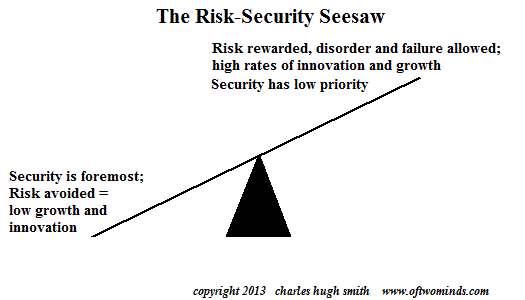




 A ‘cult,’ according to Merriam-Webster, can be defined as “Great devotion to a person, idea, object, movement, or work..(and)..a usually small group of people characterized by such devotion.”