Obama’s inauguration, Rhetoric versus Reality. “I The People Still Believe in War”

0

President Obama’s second Inaugural Address, Jan. 21, Washington, D.C.

President Barack Obama’s second Inaugural Address has been greeted by much of the corporate media and his supporters as a new “liberal vision,” in the words of a New York Times headline.

But while much of the president’s rhetoric was progressive-sounding and strongly delivered, there was little actual content, and most of that was decidedly unprogressive and/or dishonest.

“A decade of war is now ending,” Obama stated. In fact, U.S. military attacks and interventions are continuing in Afghanistan, Pakistan, Yemen, Somalia and other countries. Every Tuesday, there is a gathering in the White House where the president signs-off on the assassination-by- drone-missile of targeted individuals–and anyone who has the misfortune of being near them at the time of the strike–in a number of countries, none of which is actually at war with the U.S. .

While declaring that “We, the people, still believe that enduring security and lasting peace do not require perpetual war,” Obama boasted that “America will remain the anchor of strong alliances in every corner of the globe.” The Pentagon continues to maintain 900+ bases on every continent. The U.S. military budget is larger than all other countries in the world combined! These are, in fact, the essential elements of perpetual war and empire.

In his speech, the president referenced “Seneca Falls and Selma and Stonewall,” seeking to present himself as a continuator of the historic movements for women’s, African American and LGBT equal rights. The advances of these movements have been the results of determined mass movements over decades and centuries.

Despite the reality that more immigrants have been deported during his administration than any other in history, Obama called for “bright young students and engineers” to be “enlisted in our workforce rather than expelled from our country.”

Some passages of the speech seemed to come from a parallel universe. “We know that America thrives when every person can find independence and pride in their work, when the wages of honest labor will liberate families from the brink of hardship.”

In the real world United States of 2013, more than 23 million people are unemployed or severely underemployed. More than 146 million–or 48 percent of the population–is classified as low-income or living in poverty, a record. Real wages have been relentlessly driven down over the past three decades. When adjusted for inflation, the minimum wage now is worth 45 percent less than it was in 1968.

Yet, the word “poverty” was only mentioned twice in the speech, once in the past tense, “when twilight years were spent in poverty …” as if millions of elderly people are not today among the poor.

The other reference to poverty: “We are true to our creed when a little girl born into the bleakest poverty knows that she has the same chance to succeed as anybody else because she is an American, she is free, and she is equal ….” That may sound noble, but why not put forward a plan to end the “bleakest poverty” in this, the richest country in history?

Consistent with his first term record, the president advanced no proposals for how to address growing impoverishment, hunger and homelessness. None.

A strikingly deceptive paragraph in the speech read: “We, the people, still believe that every citizen deserves a basic measure of security and dignity. We must make the hard choices to reduce the cost of health care and the size of our deficit.”

Translation: We believe everyone deserves security and dignity, so we will be cutting your health care benefits very soon to meet the demands of the big banks.

Barack Obama’s election to the presidency in 2008 was an historic occasion in the history of a country blighted by extreme racism. It broke a 220-year streak of only white, northern European-descended males, nearly all wealthy, being allowed to occupy the highest elective office.

But regardless of who is elected, the job of U.S. president comes with a job description: CEO of the imperialist empire and protector of Corporate America.

Hammond Admits Afghanistan ‘Messy’ After Pullout

0

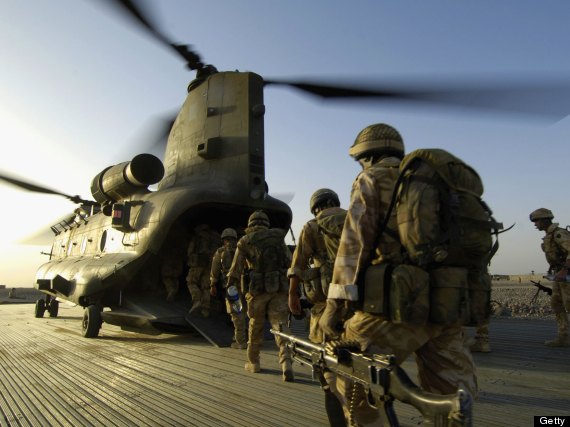
Afghanistan is likely to be “messy” after western troops pull out in 2014, Defence Secretary Philip Hammond admitted today.

Mr Hammond said there was little prospect of the Kabul-based government defeating the Taliban “outright”, and the most it could hope for was securing key cities and infrastructure.

philip hammond

Philip Hammond made admission before select committee

But he insisted there were grounds for “cautious optimism” that political compromises could be reached with some insurgents, and the situation could be stabilised in the longer term.

The frank assessment came as Mr Hammond gave evidence to the Commons Defence Committee.

“The ability to see a long-term sustainable peace in Afghanistan fundamentally rests upon a political compromise and political accommodation being made within that country between the different ethnic groups, the government and the Taliban,” he told the MPs.

“Such an accommodation will require the active support of the neighbours, particularly Pakistan.”

He said there appeared to be a growing recognition in Islamabad that it was “very much” in the country’s interests for Afghanistan to be stable.

President Hamid Karzai’s administration was also coming round to the idea of reaching out to Taliban elements, Mr Hammond said.

“In terms of the government I am not as close as my honourable friend the Foreign Secretary, but I sense there is a dawning realism, a commitment to actually trying to reach an accommodation with those elements of the Taliban that are prepared to renounce violence and distance themselves from al Qaida and international terrorism,” he went on.

afghanistan national order civil police

Afghanistan National Order Civil Police train with British forces

“It is going to be a slow and careful process. I do not expect dramatic progress but I think we are heading gently in the right direction rather than the wrong direction.”

He predicted that when international troops end their combat role next year, Afghan forces would be able to “effectively hold the important parts of the country”, such as cities, towns and key infrastructure.

“I would expect the situation to be messier than it is today with Isaf (the International Security Assistance Force) at present on the ground, but I sense that there is a growing recognition on both sides of this fight that neither side can win outright.

“The government cannot defeat the Taliban and secure every inch of Afghan space.

“The Taliban sense, and we have some evidence of acknowledgement of this, that they cannot defeat the government in military terms.

“So I think both sides will want to make progress ultimately to some kind of political accommodation.”

Mr Hammond added: “Our own experience suggests that might not be a smooth process.

“It might go in fits and starts.

british troops

British forces are due to leave Afghanistan by 2014

“There might be periods when it looks as though the political process is making way, there may be other periods when it looks as though the political process is stalled and the focus is on the ability of the security forces to maintain the ground. But I would expect slow and messy progress.”

The Cabinet minister told the committee he believed a patchwork of “more or less formal” local ceasefires would develop.

Mr Hammond told the cross-party committee that the Ministry of Defence would only bring back equipment from Afghanistan that it needed. Unwanted kit would be sold, gifted or destroyed.

Of around 11,000 container units of equipment in the country, he predicted that around 6,500 would return to the UK.

More militants driven out of Syria

0

A Syrian Army soldier takes position during fighting with foreign-backed militants in the southwest of Damascus on January 22, 2013.

The Syrian Army has managed to drive foreign-backed militants out of different locations in Syria.

The militants were repelled in the northern city of Aleppo and a suburb of Damascus on Wednesday.

The Syrian forces managed to destroy several militant bases in Aleppo and carried out operations against a number of militants’ hideouts around the capital.

Earlier in the day, the Syrian Foreign Ministry called on the United Nations to condemn the terrorist attacks across the country, blaming the foreign-sponsored militants for the violence in the Arab country.

Syria has been experiencing unrest since mid-March 2011. Many people, including large numbers of security personnel, have been killed in the violence.

The Syrian government says the chaos is being orchestrated from outside the country, and there are reports that a very large number of the militants fighting the Syrian government are foreign nationals.

And several international human rights organizations have accused the foreign-sponsored militants of committing war crimes.

NT/MHB

AAPL Meets EPS, Misses Revenues, Fails To Impress With In Line iPhone Sales, Total Cash Grows To $137.1 Billion

0

The most anticipated earnings release of the quarter has come and it has been a dud, at least judging by the market’s expectations and its response. Because while EPS beats just barely (a far cry from the epic EPS beats of Steve Jobs days) coming at $13.81 on expectations of a $13.53 print, revenue outright missed, coming at $54.5 billion on expectations of a $54.9 billion Q1 2013 result. Furthermore, fears about profit margins were proven correct, with total gross profit coming in at $21.1 billion, which alas was 38.6% of revenue, well below the vaunted 40% threshold (as a reference margin was 44.7% a year ago, and 40.0% a quarter ago). And finally, the breakdown by components in the iPhone 5 release quarter was just, well, meh.

  • iPhone sold: 47.8 million vs 47.8 sales expected, right in line with consensus, and a far cry from the Gene “Channel Checks” Munster 50 million+ handle
  • iPads sold: 22.9 million, just above the 22.4 million expected, but offset by
  • Macs sold just 4.1 million, well below the 5.1 million expected.

The guidance did not help, with AAPL seeing Q2 2013 revenue of $41-$43 billion while Wall Street was hoping for a $45.5 billion number. At this point AAPL is hardly sandbagging as it used to do under Jobs, while gross margin is expected to be 37.5% and 38.5%. It was 47.4% in Q2 2012.

The one bright spot was total cash and investments which rose by $16 billion in the quarter to a record $137.1 billion, however now that the company is dividending some $2.65/share absent the kind of record growth everyone used to expect, will hardly grow at this pace in perpetuity.

The bigger problem for Apple now is that the coolness factor has shifted to Samsung, and that increasing new product launches will merely cannibalize from future sales, as well as further deteriorate the coolness factor of a company where one could buy a product for one year and be set. Needless to say a 3-4 month product cadence would be suicide for Apple.

Finally, the biggest problem, naturally, is that absent some new revolutionary “must need” product that fills an unmet niche, i.e., the Steve Jobs genius shining through at least once more, the growth dream is absolutely over.

The relevant charts:

Revenues:

Margins:

Product Sales:

and total cash:

and the price behavior after-hours -(note the initial spike before taking out the year’s lows)…

and all the analysts…

And why is there a Hedge Fund exodus after hours? Here’s why:

Your rating: None Average: 5 (1 vote)

Maybe The Future of Abortion Lies With Nurses, Midwives

0

Starting with the 40th anniversary of Roe v. Wade this week, we got the welcome news that for the first time, the majority of Americans want abortion to be legal in all or most cases. As you can imagine, the sex-hating religious extremists are working to spin those results. And of course they continue to place every possible legal obstacle between women and an affordable, safe, legal abortion. (Hell, they even oppose contraception, which would seem to be the logical solution to their abortion qualms!)

But eventually that tide will change, just as is now happening with gay marriage. The most significant long-term news is this new study in the American Journal of Public Health, whose lead author was Tracy Weitz, associate professor and director of Advancing New Standards in Reproductive Health at UCSF.

This is significant because the shrinking number of abortion clinics (and more importantly, the declining number of physicians willing to perform abortions) has made the legal right to have an abortion an empty promise in many states. And many doctors now graduate medical school without ever learning how to perform an abortion.

The public health solution? The six-year study says that abortions performed by midwives, nurses and nurse practitioners are just as safe as those performed by doctors. We now know for a fact that there’s no medical basis for requiring higher-paid doctors to provide first-term abortions, and that means eventually the policy will shift:

Currently in the United States, a patchwork of state regulations determines who can provide abortions, with several states specifically prohibiting non-physician clinicians from performing the procedure.

The new study was designed to evaluate the safety of early aspiration abortions when performed by nurse practitioners, physician assistants and certified nurse midwives trained in the procedure. The study was conducted under a legal waiver from the Health Workforce Pilot Projects Program, a division of the California Office of Statewide Health Planning and Development. California law requires a legal clarification about who can perform aspiration abortions.

The researchers report in their study that the results show the pool of abortion providers could be safely expanded beyond physicians to include other trained health care professionals. They found that:

  • Nurse practitioners, certified nurse midwives and physician assistants can provide early abortion care that is clinically as safe as physicians;
  • Outpatient abortion is very safe, whether it is provided by physicians or by nurse practitioners, certified nurse midwives or physician assistants.

Nationally, 92 percent of abortions take place in the first trimester but studies find that black, uninsured and low-income women continue to have less access to this care, according to the researchers.

In California, 13 percent of women using state Medicaid insurance obtain abortions after the first trimester. Because the average cost of a second trimester abortion is substantially higher than a first trimester procedure and abortion complications increase as the pregnancy advances, shifting the population distribution of abortions to earlier gestations may result in safer, less costly care, according to the research team.

“Increasing the types of health care professionals who can provide early aspiration abortion care is one way to reduce this health care disparity,’’ said lead author Tracy Weitz. “Policy makers can now feel confident that expanding access to care in this way is evidence-based and will promote women’s health.’’

Currently, non-physicians are allowed to perform aspiration abortions in four states: Montana, Oregon, New Hampshire and Vermont. In other states, non-physician clinicians are permitted to perform medication but not aspiration abortions. In recent years, in an effort to limit abortion availability, several states have put laws on the books to prohibit non-physician clinicians from performing abortions.

In the study, 40 nurse practitioners, certified nurse midwives and physician assistants from four Planned Parenthood affiliates and from Kaiser Permanente of Northern California were trained to perform aspiration abortions. They were compared to a group of nearly 100 physicians, who had a mean of 14 years of experience providing abortions.

Altogether, 5,675 abortions were performed in the study by nurse practitioners, certified nurse midwives and physician assistants, compared to 5,812 abortions by physicians. The abortions were performed between August 2007 and August 2011 at 22 clinical facilities in California.

And skilled abortion doctors can be reserved for the higher-risk second- and third-term abortions. It won’t happen overnight (the Republicans still control too many state legislatures for that), but this is an important piece of science that will eventually make it easier and safer for women to have abortions.

United States ‘Very Clear’, Britain Must Not Leave The EU

0

The United States has repeated its warning that the United Kingdom must not leave the European Union, following David Cameron’s announcement he wants to hold a referendum.

President Obama’s press secretary Jay Carney said on Wednesday the White House believed the UK was “stronger” as a member of the EU.

“We welcome the prime minister’s call for Britain to remain in the EU and to retain a leading role in Europe’s institutions,” he said.

“And as the President told the prime minister when they spoke last week, the United States values a strong United Kingdom and a strong European Union.

“We value our essential relationship with the UK., as well as our relationship with the European Union, which makes critical contributions to peace, prosperity, and security in Europe and around the world.

“We believe that the United Kingdom is stronger as a result of its European Union membership, and we believe the European Union is stronger as a result of having the United Kingdom in the EU.”

He added: “So that’s – our views on this are very clear.”

On Wednesday Tory MPs hailed Cameron’s historic announcement that if he won a majority in 2015 he would hold an in or our referendum on Britain’s membership of the EU.

Earlier this month, before Cameron delivered his speech, US assistant secretary of state for European affairs Phil Gordon warned Britain against turning “inwards” with a referendum.

“We have a growing relationship with the EU as an institution, which has an increasing voice in the world, and we want to see a strong British voice in that EU,” he told journalists during a London briefing.

“That is in America’s interests. We welcome an outward-looking EU with Britain in it.”

President Obama repeated the sentiment during a phone call with the prime minister last week.

In a statement following the call the White House said: “The president underscored our close alliance with the United Kingdom and said that the United States values a strong UK in a strong European Union, which makes critical contributions to peace, prosperity, and security in Europe and around the world.”

Asked about British plans for an EU referendum during Wednesday’s daily press briefing, Carney said: “The internal processes by which these matters are considered within the UK or any other country are obviously the province of those countries and those governments.”

SEE ALSO:

NYPD to restart ‘stop and frisk’

0

AFP Photo / Timothy A. Clary

AFP Photo / Timothy A. Clary

A Manhattan judge said she will allow the NYPD’s “stop-and-frisk” program to go on in the Bronx until she comes up with a solution to prevent police officers from violating the rights of their subjects.

Manhattan federal Judge Shira Sheindlin on Tuesday lifted an order to stop the program after agreeing with city lawyers who argued that ending the stop-and-frisk program would be a burden on the New York Police Department. The lawyers said that if the program were brought to an end in the Bronx, thousands of NYPD officers and their supervisors would have to be retrained to figure out how to halt trespassers outside the borough’s “Clean Halls” buildings without acting unconstitutionally.

The case will go to trial on March 18, but until then, the NYPD will be able to continue using the stop-and-frisk program in the Bronx to prevent suspicious-looking people from trespassing onto the grounds of public housing.

The judge said that if she were to stop the program immediately, then “a certain number of unconstitutional stops are likely to take place that would not have taken place in the absence of a stay,” which could lead to further lawsuits against the NYPD.

“On the other hand, allowing a longstanding unconstitutional practice to persist for a few months while the parties present arguments regarding the appropriate scope of a remedy is quite distinct from allowing such a practice to persist until the competition of a trial,” she said.

The judge initially ordered a halt to the trespass stops outside the Bronx “Clean Halls” on Jan. 8, but will once again allow them until she decides on the measures required to prevent unconstitutional human rights violations ahead of the upcoming trial.

The stop-and-frisk program allows officers of the NYPD to stop and search any person they suspect of criminal activity. Most of the people who were stopped and frisked under the program have been African-American or Hispanic, prompting concerns over racial profiling.

The stop-and-frisk program came under intense scrutiny in mid-2012, when thousands of people marched in opposition to the policy on June 17. Protesters also released a number of videos of police stopping minorities for their activism. Even some NYPD officers have expressed opposition to the program, which they believe encourages their fellow officers to exercise too much power and create heated tensions between them and their subjects.

In 2011, 684,330 people were stopped and questioned by the NYPD, which is a 600 percent increase from the year 2002. Of those stopped in 2011, 87 percent were African American or Latino.

The NYPD has argued that their program reduces crime, but only 12 percent of those stopped in 2011 were found violating the law and received summons.

Allowing the stop-and-frisk program to continue in the Bronx will subject more New Yorkers to police stops and interrogations, nearly 90 percent of which involve innocent people and 87 percent of which involve African-Americans or Latinos.

US-led airstrike kills 3 Afghans

0

Afghan villagers stand at a house hit by a US-led airstrike in the village of Sajawand in Logar province on June 6, 2012.

At least three Afghan people have been killed and two others wounded in an airstrike carried out by US-led forces in the war-torn country, Press TV reports.

The latest deadly air raid took place in the eastern province of Nangarhar on Wednesday when a US-led warplane targeted a residential building.

US-led foreign forces have intensified their airstrikes, including drone attacks, across Afghanistan in recent days.

Foreign troops have already been under fire from both Afghan government and public over the deadly airstrikes.

US-led forces claim the targets of the airstrikes are al-Qaeda militants, but local officials and witnesses maintain that civilians have been the main victims of the attacks over the past few years.

The United States and its allies invaded Afghanistan in 2001 as part of Washington’s so-called war on terror. The offensive removed the Taliban from power, but insecurity continues to rise across the country, despite the presence of tens of thousands of US-led troops.

DB/MHB

Netflix Beats, Guides Higher As Free Cash Flow Implodes

0

One look at the headline numbers, and of course the short interest of Netflix, and one can see why the stock is being squeezed by nearly 30% after hours:

  • Q4 Revenue: $945 MM, Exp. $934 MM
  • Q4 EPS of $0.13, Exp. $(0.13)
  • Q4 domestic contribution margin 18.5%, up from 16.4% in Q3 and 10.9$ in Q4 2011
  • Total domestic subscribers 27.15 MM, paying subs: 25.47 MM
    • Forecasts 28.5MM-29.2MM domestic subscribers in Q1
  • Sees Q1 Revenues of $1.004 billion to $1.031 billion
  • Domestic DVD subs dropped from 8.61 to 8.22 while generating $254MM in revenue and $128MM in profit

In fact, all is either just a little bit better or much better if one looks at the projection set… until one looks at the actual Cash generated by the Business. Behold the Free Cash Flow as reported by the company… no, not AMZN, although it may well be its small cousin.

The company’s Free cash flow commentary:

In Q4, the gap between free cash flow (negative $51 million) and net income (positive $8 million) widened as a result of payments for the original programs coming to Netflix in 2013. Significant uses of cash in the quarter (relative to net income) were cash payments for both originals and non-originals content (in excess of the P&L expense), cash payments for PP&E (related to the continued rollout of our Open Connect servers), and tax payments.

In the past, we have managed our content licensing agreements such that cash payments in any quarter do not exceed 110% of the P&L expense (in other words, if our P&L expense was $200 million in the quarter, our cash payments for content would not exceed $220 million in the quarter). As we shared on our last earnings call, our original programming will require more up-front cash payments than most other content licensing agreements, raising this ratio (of cash to P&L for content) to as high as 120% in certain quarters with material originals payments. The bulk of our remaining cash payments for our current originals will be in Q1, driving FCF materially more negative than Q4, and then FCF will improve substantially in subsequent quarters.

As highlighted previously, we have sufficient cash on hand to fund our current slate of originals and ongoing expenses, and to maintain an adequate reserve, before returning to positive FCF.

In addition, we are exploring taking advantage of the current low interest rate environment to refinance our $200 million in outstanding notes and raise additional cash through new debt financing. This would give us additional reserves as well as increased flexibility to fund future originals.

Of course, in a ZIRP environment nobody cares about cash flow, and everyone cares about projections, which are as follows:

And, of course, short interest:

and the squeeze took us to the 02/07/12 swing highs and beyond +40% now

Your rating: None Average: 1 (1 vote)

Baby Death: Bloody Pillow And Blanket Found

0

An Irish nanny living illegally in America has been charged with violently assaulting a baby who later died.

Aisling McCarthy Brady, 34, from Quincy, Massachusetts, is alleged to have been the sole carer for the girl on January 14 – her first birthday – when she suffered injuries “consistent with abusive head trauma”, it is claimed.

The baby, Rehma Sabir, died two days later in hospital after suffering brain damage.

Rehma was also found to have multiple healing bone fractures.

Brady is currently being held on \$500,000 (£316,000) bail after pleading not guilty to assault and battery on a child causing substantial bodily injury.

However, further charges are anticipated following the conclusion of the final report by the Chief Medical Examiner, the district attorney’s office said on its website.

Middlesex District Attorney Gerry Leone said: “This is an extremely troubling case, where we allege the defendant violently assaulted a one-year-old child, causing a devastating head injury and broken bones.

“Children are our most vulnerable victims and where, as here, the offender has been entrusted with the care of a child who depends on them, the allegations are all the more egregious.”

A statement on the District Attorney’s website said: “It is alleged that on January 14, the child was in the care of the defendant, her nanny.

“Through their investigation, including interviews with witnesses, police determined that the defendant had sole custody of and contact with the child during the time that she sustained injuries consistent with abusive head trauma.”

Rehma’s injuries could have happened at any time, Brady’s lawyer told the Associated Press.

Immigration authorities said Brady arrived from Ireland in 2002 and was only permitted to stay for 90 days.

A spokeswoman for Ireland’s Department of Foreign Affairs and Trade said: “We are aware of the case and have been in contact with the family.

“We are ready to provide any consular assistance if it is needed.”

The Boston Herald has reported that Rehma’s father is from London and her mother is from Karachi, Pakistan.

POMO Pump Rescues Stocks Again But Risk-Assets Fade

0

In the old days, it was Fed via POMO to stocks; but given the new normal, now we have levered POMO to rescue us via vol compression and yet again – today saw risk-assets sliding all night (though admittedly only around 0.5% off highs) only to be rescued by a vol-compressing equity push that started the moment POMO finished. HY credit was tinkered with in the last hour to keep things afloat and of course AAPL soared into its earnings report. The debt-ceiling vote did little to maintain risk-on as CAD weakness (BoC holding off from rate hikes) pulled the USD higher, and hurt risk-on commodities – as Oil plunged on the day. Treasury yields continued to fall – entirely ignoring stocks once again – even though stocks caught down to risk early and ended at new five-year highs on the Dow (thanks almost entirely to IBM). So low volume in stocks (AAPL decent volume), low average trade size in S&P futures, and a disconnected equity market from bonds and FX once again… eyes down for an Apple full-house…

Correlations between stocks and risk assets broke once again as POMO finished…

and after AAPL reported… Stocks collapsed back to Bond and FX reality!!!

CAD weakness pilled the USD up (and via its carry impact the rest of the FX complex)…

Commodities shifted on the CAD impact on the USD and on the debt-ceiling vote…

The disconnect remains…

and across asset classes – stocks are now negativelycorrelated to risk (lower right) – ETFs realigned (with VXX balancing HYG weakness). With USD up and Tresasury yields down, the upper right chart shows the widening disconnect once again this afternoon…

Charts: Bloomberg and Capital Context

Bonus Chart: Dow Transports having best year since crisis…

Your rating: None Average: 4.5 (2 votes)

Prince Harry Arrives In UK From Afghanistan

0

Prince Harry has arrived back at RAF Brize Norton in Oxfordshire after his second tour in Afghanistan.

In his first interview since returning home, the 28-year-old Apache co-pilot gunner, said he was “very happy to be back” and is “longing to see his brother and sister-in-law” as well as the rest of his family.

He said 2013 would see him taking up more royal duties, including charity work, but added that he would “continue being a soldier” even when he’s not wearing his uniform.

Describing his four-and-a-half stint away, he said: “You get life experiences that you get nowhere else out there.”

Harry has been on post-deployment “decompression” at a British military base in Cyprus, since leaving war-torn Helmand Province on Monday evening.

He returned home on a regular personnel flight and is now expected to travel on with his unit, 662 Squadron, 3 Regiment Army Air Corps, to their Suffolk headquarters.

Harry is likely to have drunk his first beer in 20 weeks on the Mediterranean island, as troops are given four cans of lager to help unwind after an arduous tour in Helmand.

The third-in-line to the throne has revealed to the media that he took Taliban fighters “out of the game” from the cockpit of Apache attack helicopters and admitted he “let himself down” by romping naked in Las Vegas just weeks before his deployment.

Asked about the Taliban comments, he said: “You get asked to do things that you would expect to do wearing this uniform. That’s as simple as that, really.”

The prince’s duties included stints as part of the Very High Readiness (VHR) team at Camp Bastion, awaiting a call 24 hours a day.

Once airborne the task could be anything from medical evacuation of a wounded soldier, to firing on the enemy who might have coalition troops pinned down.

Homeless man threatened to kill Obama to get free health care in prison

0

Stephen Espalin.(Photo of Florida Department of Law Enforcement)

Stephen Espalin.(Photo of Florida Department of Law Enforcement)

A Florida man has been sentenced to prison – again – for threatening to kill the president of the United States – again. Stephen Espalin says he only made the threat to get free medical care, though, and it wasn’t the first time he tried it either.

Espalin, 57, was sentenced to 18 months in federal prison after he threatened the life of then-President George W. Bush back in 2001. He apparently didn’t learn his lesson, however, and told investigators just a few years later that he would kill Pres. Barack Obama with a homemade bomb.

While being treated for heart attack-like symptoms at a Boca Raton, FL hospital in December 2010, Espalin, according to the Sun Sentinel, told Secret Service agents that he had shipped a bomb to the White House only hours earlier.

“Espalin stated that he hoped the explosive device would kill the President of the United States because he did not approve of his political leadership,” reads Espalin’s plea agreement.

Assistant Federal Public Defender Robin Rosen-Evans told Senior US District Judge Kenneth Ryskamp last week that he found it abundantly clear that Espalin “had personally no intent and clearly had no ability to carry out a threat against the president.” Even if he wasn’t serious the second time, Judge Ryskamp sentenced Espalin nonetheless to four years in prison.

Fortunately for Espalin, that’s exactly what he had hoped for.

When he entered a Boca Raton hospital for chest pains in late 2010, Espalin apparently used fake names and lied about having health insurance, the Sun-Sentinel reports. Staffers were just about to eject him, in fact, when he made the comment about an apparently unreal bomb.

“I would have no intent to hurt the president,” the paper quotes Espalin. “I realize it wasn’t the right thing to do. I uttered those words knowing the [federal agents] would come and take care of me.”

In the two years since he made his most recent threat, Espalin has indeed received assistance from behind bars. His attorney says he will soon undergo heart surgery from prison, and he has already been given a wheelchair and chemotherapy behind bars – costly treatment that would have been near impossible without proper health insurance.

Investigators believe the “bomb”– described by Espalin as being the size of a shoe box and containing “explosive materials and visible external wiring”– was never sent to Washington. Regardless, he’s been reaping the benefits of free healthcare all for what authorities view as a serious crime nonetheless. And, according to CBS News, he made his threat against Pres. Bush in order to obtain the same services.

Espalin, who was homeless before his latest incarceration, has also been asked to pay a quarter-of-a-million dollar fee. First, however, he is expected to undergo heart surgery from behind bars.

And while Espalin has used an extended prison stay to have his medical bills comped before, he isn’t the only one who has done as much. In 2011, a North Carolina man entered a bank and demanded a single dollar bill so he could be incarcerated and receive treatment for back and foot problems.

Paul Ryan Throws A Hissy Fit, Rewrites His Recent History

0

Paul Ryan haz a sad after President Obama smacked him around in his inaugural speech, saying those programs “do not make us a nation of takers; they free us to take the risks that make this country great.”

Rep. Ryan didn’t care for the attention, it seems. According to Politico, Ryan denies ever, ever, ever referring to people on Medicare and Social Security as “takers.”

Is that a great example of denial in action, or what? Ryan suddenly forgot that he rolled out a plan for Medicare that ends it and substitutes private insurance for the lucky few who could afford it. Speaking to Laura Ingraham, he said he had been “misunderstood”! It wasn’t about senior citizens, he claims; it was about some mysterious, undocumented overall slide toward a “dependency society.”

Oh, Paul. Let us help you.

Paul Ryan at a 2005 fundraiser, selling the end of Medicare and Social Security:

“In case that wasn’t clear enough, Ryan added: “I think if we win a few of these right now — moving health care to a consumer-based, individualist system, moving Social Security to an individually pre-owned, pre-funded retirement system — just those two right there will do so much to change the dynamics in this society.”

Here’s another quote from that same speech:

In almost every fight we are involved in here, on Capitol Hill…it is a fight that usually comes down to one conflict: individualism vs. collectivism…That is why there is no more fight that is more obvious between the differences of these two conflicts than Social Security. Social Security right now is a collectivist system, it’s a welfare transfer system…..

He also mentioned Medicare in that same context.

Paul Ryan, June, 2012:

Do you want the American idea of an opportunity society with a safety net where you can take a risk, start a business, make a difference, succeed and be honored for being successful?,” Ryan said at a June 15, 2012 fundraiser. “Or do we go down the path the president is proposing — a social welfare state, a cradle-to-the-grave society where we have more takers than makers.”

Paul Ryan’s October, 2012 fundraising remarks:

“With a few exceptions, government’s approach has been to spend lots of money on centralized, bureaucratic, top-down anti-poverty programs,” Ryan said. “ … The problem is, starting in the 1960s, this top-down approach created and perpetuated a debilitating culture of dependency, wrecking families and communities. This was so obvious to everyone by the 1990s that, when a major welfare program was finally reformed, the law was passed by a Republican Congress and signed by a Democratic president.”

Here are more examples, mashed up in one compact video here.

Paul Ryan believes 60 percent of the people in this country are takers. He’s said that many, many times. And that category includes Medicare and Social Security recipients, no matter how much lipstickhe puts on that pig.

Always remember, this is a moral issue for Ryan. He can deny it all he wants, but this maker/taker belief rests at the core of his very being.

The only difference between Paul Ryan and Mitt Romney is a number: 13 percent. Romney said 47 percent were takers; Ryan says 60 percent are takers.

Otherwise, there’s no daylight between them.

New Labor Stats Show Assault on Public Unions Is Working

0

As the Washington Post‘s Jim Tankersley points out and new data from the US Department of Labor released on Wednesday confirms, the Republican push to destroy public sector unions in the last several years is having its desired effect.

Union members and supporters protest right-to-work legislation at the Michigan Capitol on Dec. 6, 2012. (Photo:Jonathan Oosting/ MLive.com) According to the Bureau of Labor Statistics’ new figures on unionization, the percentage of organized workers in the US took a sharp–and ‘unusual‘–decline last year, dropping from 11.8 percent in 2011 to 11.3 percent in 2012.

Moreover, as the New York Times highlights, the largest dip came not from the typical source of private union attrition caused by offshoring or factory closings, but from job losses in the public sector, which caused overall public sector union rates to drop more than full point in one year–from 37 percent to 35.9 percent.

Private sector unions–long in decline due to outsourcing linked to corporate globalization policies–now currently have about 7 million members, whereas public employee unions have roughly 7.3 million members.

The curious trend that Tankersley points out is the role that government-pushed austerity has played in union attrition. He writes:

The big culprit for last year’s drop doesn’t appear to be outsourcing (though union factory employment has fallen since the recession, while non-union employment has risen). The issue was austerity.

Specifically, state and local governments laid off a lot of workers last year to help balance their budgets. That means they let a lot of union members go. The Labor Department reports that more than half of all U.S. union members work in the public sector; government is nearly 36 percent unionized, while the private-sector union membership rate is less than 7 percent. (Last year’s stats suggest that some Republican governors’ efforts to reduce unionization in their state public sectors is working — Wisconsin posted a 2.1 percentage point drop in union membership from 2011 to 2012.)

Asking labor leaders to respond to the statistics on membership, Tankersley said they ’roundly’ agreed that the drop in rates “reflected a concerted attack on organized labor and an austerity hit to the economy that affects everyone, not just folks with a union card.”

“The economic crisis–and the politicians who took advantage of it for their own anti-worker purposes–had a negative impact,” Lee Saunders, president of the American Federation of State, County and Municipal Employees, told Tankersley.

And Richard Trumka, president of the A.F.L.-C.I.O., the nation’s main union federation, added: “Working women and men urgently need a voice on the job today, but the sad truth is that it has become more difficult for them to have one, as today’s figures on union membership demonstrate.”

What The World Is Thinking Ahead Of Apple’s Earnings

0

With minutes to go, this is what the world (according to the Google machine) is thinking ahead of Apple’s earnings… and what the market expects…

and what the market is expecting…

  • Revenue: $54.878bn (Guidance $52.00bn)
  • Operating Income: $16.97bn
  • EBITDA: $18.145bn
  • EPS GAAP: $13.531 (Guidance $11.75)
  • EPS Adj: $13.531

(h/t @Russian_Market)

Your rating: None Average: 5 (1 vote)

Air Force appalled by the number of sex assaults

0

A US Air Force general has referred to sexual misconduct within the service as a “cancer”, shedding new light on the extent of the problem in wake of a sex scandal that occurred at the Air Force training headquarters.

Gen. Mark Welsh, chief of staff of the US Air Force, disclosed disturbing sexual assault statistics at a congressional hearing on Wednesday. Sexual assault ranging from inappropriate touches to rape has been on the rise, with 2012 seeing 796 reported cases. Last year’s figures show a 30 percent increase from 2011, during which 614 cases of sexual assault were reported, according to AP.

“Calling these numbers unacceptable does not do the victims justice,” Welsh said in a testimony in front of the House Armed Services Committee. “The truth is, these numbers are appalling.”

Welsh pledged never to stop attacking the problem, which he said might be greater than currently believed, since many cases go unreported. US airmen are responsible for conducting most of the sexual assaults, which raises an alarm over the problem among the Air Force’s own members.

All of these airmen have at one point reported to the training headquarters at the Lackland Air Force Base in San Antonio, Texas, which is the site of a major scandal that erupted two years ago. Starting in 2009, 43 female trainees were allegedly assaulted — and in many cases, raped — by their military training instructors during and after basic training. An investigation led to the termination of 35 such instructors, including two commanders who oversaw the men. There are about 500 military training instructors who oversee about 35,000 airmen, 7,000 of which are women.

Fifteen instructors are currently still under investigation for charges ranging from adultery, rape and acting unprofessionally, while six have been convicted and nine more are waiting for their courts-martial.

But punishing the offenders in the Lackland sex scandal does little to tackle the problem. Welsh attributes the rising number of sexual assaults to a culture in the Air Force that needs to be addressed. Binge drinking and the sharing of obscene sexual images, songs and stories may contribute to the inappropriate actions of the airmen.

“A young man who routinely binge drinks and loses control of himself is going to conduct bad behavior,” Welsh said. “That bad behavior could result in sexual assault. Let’s stop the binge drinking.”

But the problem of sexual assault has a greater range than just the Air Force. Almost half of all US military women deployed to Iraq or Afghanistan say they were sexually harassed or assaulted, with 47 percent of those alleging the perpetrators were US military men who held a higher rank.

“Women in the armed forces are now more likely to be assaulted by a fellow soldier than killed in combat,” Newsweek’s Jesse Ellison wrote last year. And similarly to that of the US Air Force, the inappropriate behavior among US troops is at least partially attributed to a sexist culture.

“It comes down to culture. (It) hasn’t changed, no matter what the generals or the secretaries of defense say about zero tolerance,” California Rep. Jackie Speier told USA Today in December. “They have not scrubbed the sexism… out of the military.”

Common Cause Urges Senators to Reject “Handshake Deal” on Filibuster

0

WASHINGTON – January 23 – A filibuster “compromise” that takes the form of a handshake deal and allows the minority to obstruct action effortlessly would continue the Senate’s march toward irrelevance and deliver another two years of partisan gridlock on Capitol Hill, Common Cause said today.

“At a minimum, Senate rules should require that those seeking to block legislation be required to stand up and explain their position — and keep explaining it until they persuade a majority to join them or run out of things to say,” said Common Cause President Bob Edgar.

“It’s distressing to hear that the so-called reform in the works would preserve the ‘silent filibuster,’ allowing the minority to kill bills simply by sending an email or making a phone call,” Edgar added.

Edgar said Common Cause is proceeding “full speed ahead” on its lawsuit challenging the constitutionality of the filibuster rule; he urged senators involved in the reform effort to join in the litigation. “We remain convinced that a simple majority — 51 votes — is all that’s required to pass most legislation in the Senate,” he said.

A federal judge in Washington dismissed the suit last month, ruling that Common Cause and other plaintiffs, including four members of the House of Representatives, lacked legal standing to pursue the case; the addition of senators to the list of plaintiffs could produce a different result, Edgar asserted.

“We’ve already filed our notice of appeal,” Edgar noted. “We believe that in a trial on the merits, we can demonstrate that the filibuster rule violates the Constitution by establishing a 60-vote threshold for the Senate to conduct even routine business. That is emphatically not what the framers of the Constitution intended.

“President Obama outlined an ambitious agenda for the nation on Monday, one that deserves serious consideration by the entire Congress,” Edgar added. “Senators who oppose his initiatives, or any alternatives their colleagues in Congress might propose, should be required to engage in actual debates and then vote to decide the question. The filibuster should not be allowed to continue as the Senate’s silent killer.

The Case Against Kerry

0

WASHINGTON – January 23 –

STEPHEN ZUNES, [email]
Professor of politics and chair of Middle Eastern Studies at the University of San Francisco, Zunes recently wrote the piece “The Case Against Kerry,” which states: “John Kerry’s attacks on the International Court of Justice, his defense of Israeli occupation policies and human rights violations, and his support for the U.S. invasion of Iraq raise serious questions about his commitment to international law and treaty obligations. His false claims of Iraqi ‘weapons of mass destruction’ and his repeated denial of human rights abuses by allied governments well-documented by reputable monitoring groups raise serious questions about his credibility.

“In the 1980s, during the early part of his Senate career, Kerry was considered one of the more progressive members of the U.S. Senate on foreign policy. … More recently, however, Kerry became a prominent supporter of various neoconservative initiatives. …

“In 2002, he voted against an unsuccessful resolution authorizing the president to use force against Iraq only if the United Nations Security Council permitted such force under the UN Charter and instead voted for an alternative Republican resolution, which authorized President Bush to invade that oil-rich country unilaterally in violation of the UN Charter.

“The October 2002 war resolution backed by Kerry was not like the 1964 Gulf of Tonkin resolution regarding Vietnam, where there was no time for reflection and debate. Kerry had been briefed by the chief UN weapons inspector and by prominent scholars of the region, who informed him of the likely absence of any of the alleged ‘weapons of mass destruction’ and the likely consequences of a U.S. invasion, but he voted to authorize the invasion anyway. It was not a ‘mistake’ or a momentary lapse of judgment. It demonstrated Kerry’s dismissive attitude toward fundamental principles of international law and international treaties that prohibit aggressive war.

“Kerry and his supporters claim he does not really reject international law. They note that, in voting to authorize the invasion of Iraq, Kerry stated at that time that he expected President Bush ‘to work with the United Nations Security Council and our allies … if we have to disarm Saddam Hussein by force.’ He then promised that if President Bush failed to do so, ‘I will be the first to speak out.’

“However, Senator Kerry broke that promise. When President Bush abandoned his efforts to gain United Nations Security Council authorization for the war in late February 2003 and pressed forward with plans for the invasion without a credible international coalition, Kerry remained silent. Indeed, when President Bush actually launched the invasion soon afterwards, Senator Kerry praised him, co-sponsoring a Senate resolution declaring that the invasion was ‘lawful and fully authorized by the Congress’ and that he ‘commends and supports the efforts and leadership of the President … in the conflict with Iraq.’”

See video of some of Kerry’s statements on Iraq leading to his war vote as well as the IPA news release “Kerry’s Judgement Questioned Because of Pro-War Vote.“

Panetta Removes Ban on Women in Combat

0

The Defense Department was being sued by two women for the right to serve in combat:

WASHINGTON (AP) – Senior defense officials say Pentagon chief Leon Panetta is removing the military’s ban on women serving in combat, opening hundreds of thousands of front-line positions and potentially elite commando jobs after more than a decade at war.

The groundbreaking move recommended by the Joint Chiefs of Staff overturns a 1994 rule banning women from being assigned to smaller ground combat units. Panetta’s decision gives the military services until January 2016 to seek special exceptions if they believe any positions must remain closed to women.

On the News With Thom Hartmann: We Could Be Just Hours Away From Filibuster Reform in the Senate, and More

0

In today’s On the News segment: We could be just hours away from filibuster reform in the Senate; working people aren’t going on strike nearly as much as they used to forty years ago; the US Court of Appeals ruled in favor of the Drug Enforcement Agency – and declined to change the official drug classification of marijuana; and more.


TRANSCRIPT:

Thom Hartmann here — on the news…

You need to know this. We could be just hours away from filibuster reform in the Senate. Last night, Senate Majority Leader Harry Reid said he’s giving Republicans 24 to 36 hours to come to the table, and agree on some sort of filibuster reform. But, he said, if Republicans don’t do it — then he’ll proceed on his own. Democrats will fight to change the rules of the Senate, and curb some of the obstructionism we’ve seen over the last four years in the upper chamber. Reid must choose between two options for filibuster reform. There’s an ambitious reform plan, promoted by Senators Jeff Merkley and Tom Udall, which would put in place a “talking filibuster” – requiring the minority to stand on the floor of the Senate, and actually talk the entire time they wish to filibuster legislation. And there’s a more moderate reform plan, which preserves the minority’s silent filibuster, but cuts down on how many times they can filibuster a particular piece of legislation. While most progressive organizations have endorsed the Merkley-Udall “talking filibuster” reform, it’s unlikely Senator Reid has the votes among Democrats to pass such plan — and he will likely settle on a more moderate approach. But, if Democrats want to sweep the midterm elections in two years, and re-take the House of Representatives, then they have to pass legislation out of the Senate, and show the American people their agenda, and how it differs from the agenda of House Republicans. Strong filibuster may be the only way to accomplish this. Call your Senator today — and tell them to support the Merkley-Udall “talking filibuster” reform.

In screwed news…labor strikes are now a thing of the past. As Matt Bruenig has discovered, working people aren’t going on strike nearly as much as they used to forty years ago — despite the fact that they’ve suffered through 30 years of flattening wages and watching their jobs be shipped overseas. Forty years ago, there was an average of nearly 300 work stoppages, involving more than 1,000 workers, every single year. But in 2009, that number dropped all the way down to five. Just five major work stoppages a year. On the flip side, lockouts are on the rise. Lockouts occur when management locks workers out of the job — and they now represent a record percentage of works stoppages around the nation. This is a result of less democracy in the workplace, stemming from Conservatives busting up unions since the time of Reagan. And when unions decline, so too, does the middle class’ share of national income. The Billionaire Class has absolutely neutered organized labor. That’s why it’s so important to support and nurture those few labor strikes we’ve seen recently — from the Wal-Mart workers, to the fast food workers in New York City, to the Chicago Teachers Union. When working people get organized and get active — progressive change follows.

In the best of the rest of the news…

As much as Republicans want to call the President’s inaugural speech “far left” — the reality is, the President is just agreeing with the majority of the American people. The President’s speech featured homages to gay civil rights, to a pathway to citizenship for undocumented immigrants, and to action on climate change. Where do the American people stand on these issues? A USA Today poll showed that 53% of Americans approve of marriage equality. An ABC/Washington Post poll showed that 57% of Americans approve of a pathway to citizenship for immigrants. And an AP poll found that 80% of Americans believe climate change is happening and it’s a serious problem. America has been a left-leaning nation all along — it’s just been led astray by thirty years of Reaganism. Now, the nation is finally finding itself again, under the leadership of Barack Obama. America is a liberal nation — it has been for a while — and Republicans need to come to terms with that, or their party will go extinct like the Whigs.

On Tuesday — the U.S. Court of Appeals ruled in favor of the Drug Enforcement Agency — and declined to change the official drug classification of marijuana. Currently, the DEA classifies marijuana as a schedule 1 drug — which is reserved for the most dangerous typed of drugs that have absolutely no medicinal benefit. In fact, drugs like cocaine, opium, and morphine are listed as Schedule 2 drugs — which they say are safer, and have more medicinal value, than marijuana. The plaintiffs in the case presented more than 200 peer-reviewed studies that show the benefits of medicinal marijuana. And Governor Lincoln Chafee in Rhode Island, and Governor Christie Gregoire in Washington, both called for marijuana to be rescheduled. But the court wasn’t swayed, ultimately ruling that they are “obliged to defer to the agency’s interpretation” of controlled substances. It’s clear that the battle for sensible drug reform will not be won on a federal level — it will be won in the states, and has already been won in Washington and Colorado.

And finally…the NRA is so full of itself, that it decided to deliver an official response last night to President Obama’s inaugural address. The organization’s foaming-at-the-mouth CEO, Wayne LaPierre, defended his organization’s “absolutism”, and called it a virtue. He also spread more lies about the gun control plans coming out of the White House, saying, “There are only two reasons for that federal list of gun owners — to tax them or take them.” Of course, neither is true — not once has President Obama called for guns to be taxed, or confiscated. And the real reason for tracking firearms is for law enforcement to be more able to keep track of stolen guns, and to trace guns used in crimes back to their owners. The more Wayne LaPierre and the NRA speak up — the more we see just how out of touch they are with the mainstream in America. The best TV ad for gun control — is to play Wayne LaPierre speeches over and over and over again.

And that’s the way it is today — Wednesday, January 23, 2013. I’m Thom Hartmann — on the news.

ACLU Urges EEOC to Update Guidance Policy

0

WASHINGTON – January 23 – The ACLU and a coalition of civil rights and civil liberties groups sent a letter to the U.S. Commission on Civil Rights in response to the Commission’s briefing on “The Impact of Criminal Background Checks and the Equal Employment Opportunity Commission’s (EEOC) Conviction Records Policy on the Employment of Black and Latino Workers,” held on December 7, 2012.

“When employers rely on criminal records alone, they compound racial imbalances and replicate inequities in the workplace that can result in employment being denied because of errors,” said Jennifer Bellamy, legislative counsel at the ACLU Washington Legislative Office. “Fair, balanced and workable hiring procedures that do not discriminate against minorities must be available for people with arrests and criminal records.”

The EEOC’s Guidance Policy does not create new law, but explains and reaffirms what the law states for screening job applicants or hiring workers, and is useful to employers to ensure compliance with Title VII of the Civil Rights Act of 1964.

“The letter reminds the Commission that people with criminal records must have access to jobs to ensure their success,” Bellamy said. “The Guidance must explain to employers how to conduct appropriate background checks without violating the rights of job applicants.”

A pdf version of the letter is available here: http://www.aclu.org/criminal-law-reform-racial-justice/aclu-comments-usc….

California Failing to Deliver Vital Instruction to Thousands of English Learner Students

0

LOS ANGELES, Calif. – January 23 – The ACLU of California, the Asian Pacific American Legal Center (APALC) and the law firm of Latham & Watkins LLP today warned state education officials of possible litigation if they do not act immediately to provide essential language instruction to thousands of underserved English learner (EL) students, as required by state and federal law. The organizations have sent a demand letter to State Superintendent of Public Instruction Tom Torlakson and members of the State Board of Education urging them to fulfill their statutory and constitutional duties by taking specific steps detailed in a report the organizations also released today.

More than 20,000 EL students across 251 school districts –more than a quarter of California school districts that have EL students enrolled –have not been receiving any services to help them learn English. The lack of instruction violates legal mandates and is in spite of studies showing that EL students denied those services are more likely to fail or drop out of school.

As detailed in the report, the California Department of Education itself posts data on its website revealing that 20,318 EL students –in districts including Los Angeles Unified, Fremont Union High in Santa Clara County, and San Diego’s Grossmont Union High–receive no English language instructional services at all, yet the state has taken no steps to ensure that districts deliver the services. This inaction effectively denies these EL students equal educational opportunity, with the predictable results that they fall far below age and grade academic proficiency levels and drop out at disproportionately high levels.

“Each additional day an EL child goes without language instructional services is another day that child is effectively foreclosed from a meaningful education,” said Jessica Price, staff attorney with the ACLU of Southern California. “The children who are neglected today, in schools with no EL services, become the long-term English learners of tomorrow, sometimes struggling their entire school careers without anyone stepping in to make sure they have the tools to learn.”

“State educational officials are creating a caste system whereby tens of thousands of children–nearly all of whom are U.S. citizens–are denied access to the bond of English language that unites us as Californians and are placed instead into linguistic isolation which prevents them from achieving academic proficiency in state-mandated curricula,” said Mark Rosenbaum, chief counsel of the ACLU of Southern California. “Affording no services whatsoever to these children ghettoizes them, imprisoning their hearts and minds by cutting them off from the essential tool of communication necessary to read, speak and learn in all our schools and communities. And because English learners make up one quarter of all students in California’s public schools and one out of every four EL students in the nation are in California schools, the state’s no-services practices leave not only these children far behind, but also California along with them.”

In conjunction with the release of the letter and report, the ACLU and APALC are launching a public education campaign using social media, television and radio venues to educate parents and students about the importance of receiving appropriate services and how to advocate for their rights.  In many cases, parents may not know that their child has been designated EL because they have not received information about their child’s designation in a language they understand, as required by state law.

“In California, children from diverse backgrounds and districts are deprived of the foundational language skills necessary to succeed in school and life,” said Nicole Ochi, staff attorney with APALC. “To address the diverse language needs of English learners in our state, we have set up hotlines in multiple languages to provide access to legal advice for parents and students who have been kept in the dark for far too long about their education.”

The organizations have requested a response from State Superintendent Torlakson and the State Board of Education within 30 days.

Parents and students interested in learning more, including how to request translated materials from their local school district, may call the ACLU/APALC EL hotline at:

Chinese: 1-800-520-2356

Korean: 1-800-867-3640

Spanish: 1-213-977-5225

Tagalog/ Visayan: 1-888-349-9695

Thai: 1-800-914-9583

Vietnamese: 1-800-267-7395

For all other languages, please call: 213-977-5225.

More information and a copy of the letter and the report are available at www.aclu-sc.org/english-learners.

Obama to Shut Down Southern Air Defense Systems: “It Will Be Open Season for Terrorists Flying In With Nukes, Low Altitude Missiles, Or Even Full Scale Invasion of America”

0
Mac Slavo
January 23rd, 2013
SHTFplan.com

Read by 23,958 people

As the U.S. government continues to expand surveillance and monitoring systems to the tune of hundreds of billions of dollars within the borders of the United States, a recent announcement regarding the country’s southern air defense systems is raising eyebrows.

Our southern border is, in part, protected by the Tethered Aerostat Radar System (TARS), which utilizes moored balloons hovering at about 15,000 feet to identify low flying aircraft and missiles that may penetrate the border and cross into U.S. airspace.

The system is utilized by the U.S. Air Force, North American Aerospace Defense Command (NORAD),  and U.S. Customs and Border Protection for a number of missions including detection of drug smuggling and preservation of the air sovereignty of the continental United States.

According to Exelis Systems Corporation, the company that built and jointly maintains TARS with the U.S. Air Force, the government has ordered a complete shutdown of Aerostat flight operations:

The government also indicated its intent that aerostat flight operations will cease on March 15, 2013, and that the remainder of the fiscal year will be used to deflate aerostats, disposition equipment, and prepare sites for permanent closure. We are currently reviewing all the details of the RfP and evaluating the possible impacts on the program and our workforce. We continue to communicate with the government on this matter, and we will have more information in the coming days and weeks.

An Exelis employee close to the TARS project had this to say about the closure of the sites:

“Not only will this closure mean hundreds of people will be out of jobs, but it also means our borders will not be safe, especially along the remote U.S. Mexico Border like in Texas.

These defense radars detect low flying aircraft infiltrating our borders.

Without these defense radars, low flying aircraft will go undetected.

It will be open season for any drug/gun/slave smugglers, terrorists flying in with nukes, low altitude missiles, or even a full scale low elevation invasion/attack against America.”

With China actively and openly deploying Russian-made low altitude strategic bombers, designing EMP weapons capable of disabling the country’s power grid infrastructure, and establishing economic zones within the United States, it’s difficult to imagine the motivation behind the move to further weaken U.S. air defenses on the southern border.

If September 11, 2001 was any indication of our air defense capabilities, and considering that any ground invasion of the United States would originate on our southern border, then wouldn’t we want as many early warning systems as possible to be actively protecting our country in these specific areas?

The U.S. government has chosen to shutdown this outward facing surveillance system, and has instead turned the surveillance inward, on the American people.

Author: Mac Slavo
Views: Read by 23,958 people
Date: January 23rd, 2013
Website: www.SHTFplan.com

Copyright Information: Copyright SHTFplan and Mac Slavo. This content may be freely reproduced in full or in part in digital form with full attribution to the author and a link to www.shtfplan.com. Please contact us for permission to reproduce this content in other media formats.

Chris Matthews Backs Anti-Abortion Shill Into A Corner

0

Tweety really did a good job backing Marjorie Dannenfelser of the deceptively-named Susan B. Anthony List (it’s an anti-abortion group) into a corner with the same question I always use with them: Do you want to see women go to jail? Your mother, sister, daughter, cousin, friend?

If they’re going to push for these fetal personhood laws, then by God, they should be ready to talk about the inevitable legal consequences. Are they really so illogical that they never bothered to think about the outcomes? It may indeed not be their intent, but women will indeed go to jail. If that’s what they want, they should say so.

And if it isn’t what they want, well, it’s time to rethink their position.

Sanders: Strong Filibuster Reform Needed Now

0

WASHINGTON – January 23 – Sen. Bernie Sanders (I-Vt.) said today he strongly supports long-overdue filibuster reform to stop a single senator without explanation from forcing an extraordinary majority of 60 votes to advance legislation.

“This country faces enormous problems in terms of jobs, global warming, health care, campaign finance reform, deficit reduction and many other important issues. The Senate has been blocked from considering many of these and other major issues of our day by a stubborn minority’s abuse of a rule originally designed to guarantee debate, not silence it,” Sanders said.

“We were brought up to believe that in our democracy the majority rules. In the United States Senate, unfortunately, on virtually every piece of major legislation the majority does not rule. Only a supermajority rules. Republicans have used parliamentary delaying tactics and demanded 60 votes to even debate bills, let alone pass legislation,” Sanders added.

The once rare delaying tactic has become commonplace. Throughout the time when Lyndon Johnson was the Senate majority leader in the 1950s, there was one filibuster waged in an attempt to block civil rights legislation. In the past six years since Democrats regained the Senate majority, they have been forced to try to end silent filibusters on 390 separate occasions.

Sanders supports a so-called talking filibuster. With the support of 51 senators such a change in Senate procedure would force opponents of a bill to stand up on the Senate floor and explain their reasons, at length if they desired, for opposing a bill. The change would put an end to the current practice of routinely requiring a 60-vote majority to even consider a bill through the exercise of a silent objection.

“In the Senate we must protect minority rights and members should have as much time as they need to make their arguments but they must be willing to come to the Senate floor and make their case. The Senate is supposed to be the world’s greatest deliberative body. Our rules must let us deliberate, not obstruct,” Sanders said.

Filibuster reform is being considered this week as the Senate prepares to adopt rules governing for the new 113th Session of Congress. A formal vote on new rules has been delayed for days, however, by a filibuster.

How Britain Enthusiastically Teamed Up with Bush’s Horrific Torture and Rendition Agenda

0

Britain and the US stood shoulder to shoulder in the war on terror — even when working the dark side.

January 23, 2013  |  

Like this article?

Join our email list:

Stay up to date with the latest headlines via email.

Editor’s Note: The following is Part II of an excerpt from Ian Cobain’s new book, A Secret History of Torture (Counterpoint Press, 2012). Copyright 2012, Portobello Books. All Rights Reserved. Click here to read Part I.

Immediately after the 9/11 attacks, Tony Blair took a train from Brighton to London, where he issued a statement that pledged unswerving support for the US. He described terrorism as “the new evil in our world,” perpetrated by people with no regard for the sanctity of human life. There was now to be a battle between the free world and terrorism, he said. “We therefore here in Britain stand shoulder to shoulder with our American friends in this hour of tragedy and we, like them, will not rest until this evil is driven from our world.”

Quietly, Britain pledged logistics support for the rendition program, which resulted in the CIA’s Gulfstream V and other jets becoming frequent visitors to British airports en route to the agency’s secret prisons. Over the next four years, a 26-strong flight of rendition aircraft operated by the CIA used UK airports at least 210 times. Dozens of other private executive jets that the agency chartered were also regular visitors to the UK. Nineteen British airports and RAF bases were used, including Heathrow, Birmingham, Luton, Bournemouth and Belfast. The agency’s favorite destination was Prestwick in Scotland, which it used more than 75 times. One CIA pilot described Prestwick as an ideal refueling stop. “It’s an ‘ask no questions’ type of place, and you don’t need to give them any advance notice you’re coming.”

The US authorities also asked the UK government for permission to build a large prison on Diego Garcia, the British territory in the Indian Ocean that operates as a US military base. A Royal Marines officer made some preliminary plans, before the project was dropped, for logistical rather than legal reasons. Diego Garcia continued to be used as a stopover for rendition flights, however, and senior United Nations officials believe that a number of prisoners were held and interrogated there between 2002 and 2003.

The UK would do more than offer mere logistics support to the rendition program, however. It would “perform,” in Bush’s words, by becoming an enthusiastic participant in the rendition and torture program. As in the summer of 1940, its first victims would be British. But as then and since, Britain would enshroud its use of torture in the greatest possible secrecy.

In October 2001, when the United States and its allies went to war in Afghanistan to topple the Taliban regime that had harbored al-Qaida, it was inevitable that a small number of those captured on the battlefield would be British.

For more than a decade, MI5 had been aware that British Muslims had been traveling to Pakistan and Afghanistan to receive training at camps run by al-Qaida or associated groups. Pakistan’s main intelligence agency, the Directorate for Inter-Services Intelligence, or ISI, operated some of the camps, and graduates were encouraged to take up arms against Indian forces in Kashmir. Before al-Qaida began targeting the West in the late 1990s, MI5 saw these trips as evidence of little more than exuberant adventurism among a small section of young British Muslim males: a form of jihadi tourism that posed no threat to the UK. All that changed after 9/11, when both MI5 and MI6 became anxious to extract as much information as possible from any British prisoners in order to assess the al-Qaida threat.

It was not long before prisoners were being taken during battles in the north and southeast of Afghanistan. Many more foreign fighters were captured while attempting to slip across the border into Pakistan. Hundreds were handed over to US forces by Afghan and Pakistani bounty hunters, who received large bundles of dollars for every non-Afghan they captured.

Conservatives Have Their Worst Week Ever

0

Have Republicans, and the right wing in general, ever been more disjointed? More confused? More incapable of getting out of their own way?NRA head Wayne LaPierre. (Photo: Bonnie Jo Mount/Getty Images)

Watching America’s political conservatives try to counter-maneuver opposite Barack Obama’s re-inauguration over the course of the last week has been an incredible comedy — like watching the Three Stooges try to perform a liver transplant on roller skates.

Let’s review the basic timeline. First, Political Media, a conservative action group, decided to try to make an appeal to win the hearts and minds of Americans everywhere by declaring January 19th — previously known as Martin Luther King Day, to the rest of us — to be “Gun Appreciation Day.”

On Daily Beast: No Winners in Angry Gun Control Debate

They solicited hundreds of sponsors and sought to get 50 million people to sign a goofball petition (written in the style of the Declaration of Independence, with a plethora of “Whereas…“–es… Why do gun people insist on trying to use 18th-century syntax?) against the “tyrannical governments” that were out to take their guns. “Gun Appreciation Day” would also involve gun shows and other local events all over the country, meant as a counter-balance to the candle-toting gun control protests that were springing up over last weekend in anticipation of Obama’s inauguration and the rumored plans for new gun legislation.

But even before their excellent idea gets out of the gate, it stalls out, as obnoxious reporters check the list of “Gun Appreciation Day” sponsors and find that the “American Third Position,” a group that purports to represent the “unique political interests of White Americans,” is one of the event’s sponsors.

So now, Political Media has not only decided to hold its Gun Appreciation Event on a holiday meant to celebrate the life of a black leader who was a symbol of nonviolent protest and who was killed by a white man with a gun, it’s done so with the financial help of some yahoo white supremacist group. But this doesn’t derail the whole thing, as it’s of course just an innocent mistake. Political Media kicks “Third Position” out and appropriately issues a statement, saying, “We have removed the group and reiterate this event is not about racial politics, it is about gun politics.”

So far, so good, right? Well, then they go and actually hold their “Gun Appreciation Day” rallies all over the country, on Martin Luther King Day. And what happens? Five people get accidentally shot!

You can’t make this stuff up. In three separate incidents — one in North Carolina, one in Ohio and one in Indiana — gun-loving real Americans did their darndest to worsen the demographics in the favor of the gun control lobby by blowing themselves away with accidental discharges. They failed, fortunately — all five victims in the three incidents survived — but you literally can’t script a worse outcome for a political sideshow meant to highlight Americans’ love of the wholesome, safe exercise of gun rights.

In North Carolina, three people — a 50-year-old man, a 54-year-old woman, and a 50-year-old retired sheriff’s deputy — were injured when someone pulled a shotgun out of a display case and the 12-gauge accidentally went off, spraying the three people with birdshot.

In Ohio, a gun dealer was “checking out” a semi-automatic handgun he’d brought to a show at the Medina County Fairgrounds when he “accidentally” pulled the trigger, forgetting that, while he’d removed the magazine, he’d left a round in the chamber. According to the local police chief, the bullet “struck the floor, then a longtime friend of the gun dealer. The man was wounded in the arm and leg.”

The man was rushed by helicopter to a hospital in Cleveland. I sure hope that dude has private health insurance that he paid for. If it turns out that taxpayers had to foot the bill for a freaking helicopter flight to rescue the friend of some gun-toting conservative who decided to protest the socialist Obama administration by accidentally shooting a pal on Martin Luther King Day, that would be some kind of embarrassing, wouldn’t it?

Of course, that would fit right in with the kind of week gun advocates had. In a show at the Indiana State Fairgrounds, one Emory Cozee was loading his .45 while walking back to his car when he accidentally shot himself in the wrist. Once again, the taxpayer had to step in to the man’s aid, as state troopers rushed to the scene and transported Cozee to a nearby hospital. No charges were filed, stupidity not yet being against the law in Indiana, or anywhere else.

Beyond those five people getting shot, the other “Gun Appreciation” events went on without incident. Then we had Obama’s inauguration, where the president took more than one opportunity to goad the gun lobby in advance of an upcoming heated fight over his proposed gun restrictions, saying among other things, “Being true to our founding documents . . . does not mean we will all define liberty in the same way,” and, “We cannot substitute absolutism for principle.”

Without even taking a position on Obama or his proposed gun law, let me say this: The president, when he makes his case, does not come across like a drooling maniac, like he’s pissed off to the point of reaching back, grabbing a frying pan, and belting you across the forehead if you even think about disagreeing with him. He comes across like what he is — a calm, experienced attorney making a rhetorical argument to adults. That, plus a lot of video of little kids’ bodies being hauled out of school rooms in suburban Connecticut, can win you a lot of votes with people on the fence on the gun issue.

Then there’s Wayne LaPierre, the head of the NRA. He came out after Obama’s speech and gave one of his own at the Weatherby International Hunting and Conservation Awards in Reno, Nevada. In it, LaPierre weaved back and forth like a maniac, his blond forelock heaving, as he blurted out semi-coherent, quasi-grammatical defenses of “absolutism,” saying things like “absolutes do exist, it’s [sic] the basis of all civilization,” and “without those absolutes, democracy decays into nothing more than two wolves and one lamb voting on who to eat for lunch.”

He then proceeded to double down on his organization’s lunatic decision to inject Obama’s daughters into the national gun debate, saying, “If neither criminals nor the political class, with their bodyguards and security people, are limited by magazine capacity, we shouldn’t be limited in our capacity, either.”

This was clearly a reference to the controversy about the NRA’s recent TV buy, in which they blasted Obama for being an “elitist hypocrite” for allowing his daughters to have Secret Service protection while Joe Sixpack has to send his kids to school without paramilitary security experts. “Protection for their kids, and gun-free zones for ours,” was the ad’s nutty tagline.

The NRA was rightfully blasted for that crazy-ass commercial, which made no sense on any level and mainly painted the NRA as a bunch of disturbed rage-addicts who are completely out of touch with national sentiment after Sandy Hook. (Yes, the president’s kids have Secret Service protection — to protect them from your members, you idiots!)

Overall, people like LaPierre have fallen into every single political trap that’s been laid for them in the last month, allowing Democrats to paint them as humorless, frustrated and probably dangerous political radicals whose response to Sandy Hook has been to publicly attack the president’s minor children and to propose more guns in schools. Even the surge in NRA membership numbers since Sandy Hook is a net minus for the NRA, politically, because it scares the hell out of normal people and will result in increased pressure on pro-NRA congressional members to distance themselves from people whose response to piles of mowed-down children is to buy more guns.

So to recap: The gun lobby’s response to Obama’s inauguration was to organize a “Gun Appreciation Day” on Martin Luther King Day that left five of their own gun-loving members accidentally shot. Then they responded to Obama’s inaugural speech by doubling down on the “elitist hypocrite” ad that earned them near-universal condemnation previously. So how could things get worse?

Well, you could have a spokesman for Political Media, which organized “Gun Appreciation Day,” tell the Hollywood Reporter that Quentin Tarantino’s Django Unchained is the perfect argument in support of gun rights. Political Media’s Larry Ward said he’s considering a “What Would Django Do?” campaign as part of this new rhetorical line they’re thinking of trying to sell, particularly to the black community. The idea is, get this, that there wouldn’t have been slavery if slaves had had gun rights.

“Django is perfect for what we’re trying to do,” said Ward, “which is to promote gun rights to minorities.”

Hey, dipshit: Before anyone allowed slaves to have guns, they would have had to have other rights, like for instance being considered human beings. Are you people completely stupid? You’d have to have hoovered more coke than even Quentin Tarantino to imagine a world where white slave owners denied black people freedom of movement, denied them education and freedom of speech and dominion over their own bodies, but then for some reason also allowed them to buy guns. Jesus Christ! The whole point of slavery is that slaves didn’t have any rights, much less the right to bear arms.

Now, Django Unchained is a movie that uses the N-word 109 times (breaking the all-time record set by Finding Nemo, as Kamau Bell wittily noted) and was so historically jumbled that it featured scenes of both the Ku Klux Klan and sunglasses before either existed. Can you imagine any white guy going into Bedford-Stuyvestant or Compton or any other place where so many young black people have been killed by guns, and trying to connect with them by telling them you’re down with Django Unchained? That’s how out-to-lunch these NRA dudes are, that they genuinely think this is their entrée into minority communities.

I’m not naïve enough to think that just being publicly stupid is going to result in political problems for American conservatives. That’s never been the case before — hell, there are still people out there who think Saddam Hussein was behind 9/11. There’s enough popular anger out there toward Barack Obama that someone like Wayne LaPierre could probably shoot skeet on Martin Luther King’s grave and public support for the NRA still won’t drop below 40 percent.

But the behavior of the gun lobby in the last month will, for sure, have an impact on people who are on the fence about gun control. Moreover, there’s bigger game in play here. The Republicans post-2012 have been staring down the barrel of an increasingly desperate demographic problem that will require the party to find some way to market itself to blacks, Hispanics, women, gays and other minorities or else be relegated to permanent minority status.

But after Sandy Hook, the Democrats have skillfully painted the Republicans as the party of scary-looking and scary-sounding white maniacs like Tennessee security-company CEO James Yeager, a shaven-headed, soul-patched anger-sick white loony who posted a video promising to go ape if gun laws are enacted. “If this goes one inch further, I’m going to start killing people,” Yeager said.

Conservatives could have dealt with this post-Sandy Hook political curveball in a number of ways, from simply shutting up and working quietly behind the scenes to scuttle gun control efforts (that always worked before) to announcing willingness to engage in some extremely mild compromise (like maybe prohibiting schizophrenics from carrying machine guns near kindergartens).

Instead, they decided to piss all over Martin Luther King Day and then shoot themselves by the half-dozen in the process.

Well done, fellas! You’re well on your way to solving your demographic problems.

© 2012 Rolling Stone

Obama’s Failure to Punish Banks Should Be Causing Serious Social Unrest

0

A new PBS Frontline report examines outrageous steps Obama’s administration took to protect Wall St. Wall Street from prosecutions.

January 23, 2013  |  

Like this article?

Join our email list:

Stay up to date with the latest headlines via email.

PBS‘ Frontline program on Tuesday night broadcast a new one-hour report on one of the greatest and most shameful failings of the Obama administration: the lack of even a single arrest or prosecution of any senior Wall Street banker for the systemic fraud that precipitated the 2008 financial crisis: a crisis from which millions of people around the world are still suffering. What this program particularly demonstrated was that the Obama justice department, in particular the Chief of its Criminal Division, Lanny Breuer, never even tried to hold the high-level criminals accountable.

What Obama justice officials did instead is exactly what they did in the face of high-level Bush era crimes of torture and warrantless eavesdropping: namely, acted to protect the most powerful factions in the society in the face of overwhelming evidence of serious criminality. Indeed, financial elites were not only vested with impunity for their fraud, but thrived as a result of it, even as ordinary Americans continue to suffer the effects of that crisis.

Worst of all, Obama justice officials both shielded and feted these Wall Street oligarchs (who, just by the way, overwhelmingly supported Obama’s 2008 presidential campaign) as they simultaneously prosecuted and imprisoned powerless Americans for far more trivial transgressions. As Harvard law professor Larry Lessig put it two weeks ago when expressing anger over the DOJ’s persecution of Aaron Swartz: “we live in a world where the architects of the financial crisis regularly dine at the White House.” (Indeed, as “The Untouchables” put it: while no senior Wall Street executives have been prosecuted, “many small mortgage brokers, loan appraisers and even home buyers” have been).

As I documented at length in my 2011 book on America’s two-tiered justice system, With Liberty and Justice for Some, the evidence that felonies were committed by Wall Street is overwhelming. That evidence directly negates the primary excuse by Breuer (previously offered by Obama himself) that the bad acts of Wall Street were not criminal.

Numerous documents prove that executives at leading banks, credit agencies, and mortgage brokers were falsely touting assets as sound that knew were junk: the very definition of fraud. As former Wall Street analyst Yves Smith wrote in her book ECONned: “What went on at Lehman and AIG, as well as the chicanery in the CDO [collateralized debt obligation] business, by any sensible standard is criminal.” Even lifelong Wall Street defender Alan Greenspan, the former Federal Reserve Chair, said in Congressional testimony that “a lot of that stuff was just plain fraud.”

A New York Times editorial in August explained that the DOJ’s excuse for failing to prosecute Wall Street executives – that it was too hard to obtain convictions – “has always defied common sense – and all the more so now that a fuller picture is emerging of the range of banks’ reckless and lawless activities, including interest-rate rigging, money laundering, securities fraud and excessive speculation.” The Frontline program interviewed former prosecutors, Senate staffers and regulators who unequivocally said the same: it is inconceivable that the DOJ could not have successfully prosecuted at least some high-level Wall Street executives – had they tried.

What’s most remarkable about all of this is not even Wall Street had the audacity to expect the generosity of largesse they ended up receiving. “The Untouchables” begins by recounting the massive financial devastation the 2008 crisis wrought – “the economy was in ruins and bankers were being blamed” – and recounts:

“In 2009, Wall Street bankers were on the defensive, worried they could be held criminally liable for fraud. With a new administration, bankers and their attorneys expected investigations and at least some prosecutions.”

Chemicals banned in Europe still make their way into US foods

0

Have you ever tasted a soft drink so good you thought it should be illegal? In some parts of the world, ingredients used in beverages available across the United States are outlawed – but not because they’re dangerously delicious.

Drinks including Mountain Dew, Gatorade, Powerade and Squirt are all commonly available at restaurants and convenience stores across the US. If you’re overseas and thirsty for one of many products made by PepsiCo, Cocoa-Cola or the Dr. Pepper Snapple Group, you might get something entirely different. Brominated vegetable oil, an ingredient used by those manufacturers in an array of beverages, is banned in locales like Europe and Japan.

The New York Times reports that around 10 percent of drinks sold in the US contain brominated vegetable oil, or BVO, but elsewhere things are a bit different. Beverages overseas are stripped of the chemical, used usually to help distribute flavor, with foreign health officials citing some serious medical concerns as the reason for the ban.

Sarah Kavanagh, a teenager from Hattiesburg, Mississippi, only became aware of BVOs recently while examining a bottle of Gatorade. A quick Web search had her rethinking what she drinks, though.

“I knew it probably wasn’t from an animal because it had vegetable in the name, but I still wanted to know what it was, so I Googled it,” she tells the Times. “A page popped up with a long list of possible side effects, including neurological disorders and altered thyroid hormones. I didn’t expect that.”

Most Americans are in the same boat, but the substance is still completely legal in the US.

“BVO is banned other places in the world, so these companies already have a replacement for it,” Kavanagh tells the Times. “I don’t see why they don’t just make the switch.” According to the paper, companies say the switch would simply cost all too much.

After becoming aware of the compound, she started a campaign on Change.org to help raise awareness of BVO. Since that petition was launched in November, she has collected over 205,000 signatures from others urging a federal ban on BVOs.

“I was shocked that they’d put their consumers at risk like that and that the FDA would allow something like that to be put in products,” she tells the Chicago Tribune.

The US Food and Drug Administration maintains that all foods sold legally in the US are safe for human consumption. In a statement to the Tribune, in fact, the FDA says the US food supply is “the safest in the world” and that the agency’s foremost promise is to “protect public health by ensuring that foods are safe and properly labeled.” Even if American labels advertise the use of BVOs, though, that doesn’t do much to dismiss the concerns that have caused bans of the chemical internationally.

Brominated vegetable oil isn’t addictive and it hasn’t been proven to be fatal just yet. According to some studies, rodents subjected to the substance developed reproductive and behavioral problems.

“The FDA has been extremely lenient in evaluating food additives and it’s almost impossible to get the FDA to ban an additive once they have approved it,” Michael Jacobson of the Center for Science in the Public Interest adds to the Tribune. “It’s just not as public health oriented as it should be.”

“I just don’t think they’re doing enough to protect the public’s health with regard to food additives,” he says.

That one additive, BVO, certainly doesn’t seem safe to Kavanagh. On her Change.org petition, she notes that one of the elements of BVO, bromine, is used most often to make products flame retardant. It’s also been included in gasoline additives and pesticides, and was originally used as a general sedative until only a few decades ago. Scientific Americans says BVO “links to impaired neurological development, reduced fertility, early onset of puberty and altered thyroid hormones.”

“I’m not a scientist, but if there are lots of suspicious things about putting a flame retardant chemical in Gatorade (most flavors don’t even use it!) then why would Gatorade want to put it in a product designed for people like me who are into sports and health?” Kavanagh asks on Change.org.

The petition, which needs fewer than 95,000 more signatures before it is complete, will be sent to Gatorade, PepsiCo and other American beverage companies. “Please stop deceiving consumers and remove this chemical from your products,” the petition insists.

IMF cuts Britain’s growth forecast

0

The International Monetary Fund (IMF) has cut its forecast for UK growth for both this year and the next, blowing hopes for a quick recovery to the country’s ailing economy.

The IMF said Britain would grow only by 1 percent this year which is lower than its October forecast of 1.1 percent and also the official government forecast of 1.2 percent.

Moreover, the IMF said the country would grow by 1.9 percent next year, a 0.3 percentage point cut compared with October.

The IMF figures are another setback for British Chancellor George Osborne; whose policies have put the country’s privileged AAA credit status under significant pressure.

The recent figures underlined the country’s sluggish recovery just days ahead of the official growth figures for 2012.

The Office for National Statistics (ONS) is expected to reveal that the economy contracted by between 0.1 percent and 0.3 percent in the three months to December, causing the economy for the year as a whole to shrink by 0.1 percent.

MOS/MOL/HE

Angela Merkel Willing To Seek Compromise Over British EU Demands

0

David Cameron faced a broadside from across the Channel as politicians on all sides queued up to warn over his blueprint for Britain’s future in Europe.

However German Chancellor, Angela Merkel, held out an olive branch despite an earlier lukewarm reception from German foreign minister Guido Westerwelle. Mr Westerwelle left the door open to discussions but warned that the UK couldn’t “cherry pick” which policies to follow.

david cameron

David Cameron announcing his referendum plans

Mrs Merkel went further, saying that she wanted to achieve a deal with Britain but warned that any compromise would have to be fair to the other 26 members of the bloc.

“Germany, and I personally, want Britain to be an important part and an active member of the European Union,” She told Reuters reporters.

“We are prepared to talk about British wishes but we must always bear in mind that other countries have different wishes and we must find a fair compromise. We will talk intensively with Britain about its individual ideas but that has some time over the months ahead,” said Merkel.”

The German intervention gave tentative backing to David Cameron’s proposals but French leaders were more scathing in their view of the Prime Minister’s speech.

French Socialist foreign minister Laurent Fabius said the British Prime Minister was behaving like a club football player who suddenly announces he wants to play rugby.

He cheekily echoed Mr Cameron’s own words by saying France would “roll out the red carpet” to British businessmen quitting the UK in the event of the country exiting the EU.

Last summer Mr Cameron promised to “roll out the red carpet” to French companies leaving France because of austerity-led French tax rises.

Mr Fabius went on French radio after Mr Cameron finished speaking and said: “We are like a football club, and if you want to join the football club, you can’t then say you want to play rugby.”

For those preferring a culinary metaphor, Mr Fabius resorted to a familiar French complaint that the British wrongly believe they can choose from an “a la carte” menu as EU members. They cannot, he insisted – everyone has the set menu.

Mr Fabius also warned that Britain would find life “difficult” outside the EU.

angela merkel

German Chancellor, Angela Merkel

Former Belgian prime minister and Liberal Democrat leader in the European Parliament Guy Verhofstadt accused Mr Cameron of “playing with fire” over EU membership and warned against trying “hold the EU to ransom”.

He said: “By holding out the prospect of renegotiating the terms of Britain’s membership of the EU and subjecting it to a referendum, David Cameron is playing with fire. He can control neither the timing nor the outcome of the negotiations and in so doing is raising false expectations that can never be met.”

He continued: “His speech was full of inconsistencies, displaying a degree of ignorance about how the EU works. He claims he wants a common set of rules for the single market at the same time as wanting exceptions for Britain.

“He wants a single market council to focus on raising competitiveness, but we already have one. He claims that Europe offers more of the same and never changes, but the EU is constantly changing.

“It is the Conservatives’ conservative attitude to Europe that perhaps needs to change and recognise that in the 21st century, member states wield greater influence by sticking together and acting together.”

Mr Verhofstadt, who heads the European Parliament political group containing Lib Dem Deputy PM Nick Clegg’s 12 MEPs, said: “There can be no question of individual renegotiation or opt-out by a single member state from agreed policies. To do so would precipitate the unravelling of the internal market as other countries sought their own concessions in return.

“Mr Cameron will not succeed if he attempts to hold his European partners to ransom.”

Mr Verhofstadt said the PM’s problem is the internal rift within his own party, suggesting he seems to be jeopardising the interests of his own country for internal party stability.

“The one positive effect of today’s speech is the genuine debate that is finally taking place about the EU and Britain’s place in it.”

SEE ALSO:

Dead Bahraini receives prison sentence

0

Bahraini policemen advance to disperse protesters during an anti-regime demonstration in a village near Manama. (File photo)

A court in Bahrain has handed down a three-year prison sentence to an anti-regime activist and protester who died in detention last year.

Mohammed Mushaima died in police custody in October 2012 while he was serving a seven-year sentence for participating in anti-regime demonstrations.

Following his death, lawyers said that Mushaima suffered from severe sickle-cell anemia and died in custody from inadequate health care.

The Bahraini Center for Human Rights also announced that Mushaima was one of many prisoners of conscience in Bahrain in need of immediate medical care who have been denied treatment.

Since mid-February 2011, thousands of pro-democracy protesters have staged numerous demonstrations in the streets of Bahrain, calling for the Al Khalifa royal family to relinquish power.

On March 14, 2011, troops from Saudi Arabia and the United Arab Emirates invaded the country to assist the Bahraini government in its crackdown on the peaceful protesters.

According to local sources, scores of people have been killed and hundreds arrested.

A new release of US Defense Department’s documents also revealed that Washington has been providing the Al Khalifa regime with weapons and combat vehicle parts.

Despite the foreign-backed clampdown, the Bahraini regime has failed to stop the demonstrations that continue on an almost daily basis.

TNP/JR

Up in arms: Turkey Patriots ready by weekend amid local protest (PHOTOS)

0

Turkish leftists and nationalists protest against the deployment of Patriot missiles in Turkey near the Mediterranean port of Iskenderun in Hatay province January 21, 2013. (Reuters / Umit Bektas)

Turkish leftists and nationalists protest against the deployment of Patriot missiles in Turkey near the Mediterranean port of Iskenderun in Hatay province January 21, 2013. (Reuters / Umit Bektas)

Patriot missile batteries sent to Turkey from NATO countries will start operating this weekend, despite continuing protests from local activists unhappy at their deployment. In the latest incident German troops were mobbed by protesters.

After Ankara asked for NATO help in December to beef up its air defenses against a possible Syrian attack, the United States, Germany and the Netherlands have sent Patriots to Turkey, along with a contingent of 1,200 soldiers to operate them.

The Dutch army will be the first to have them operational, British Brigadier Gary Deakin, a senior NATO official told Reuters.

“We expect to have an initial operating capability this weekend, that is what we are aiming at. The first units will arrive on station, they will plug in to the NATO command and control network and they will be then ready to defend the population. The full capability we are aiming to deliver at the end of this month,” he said.

German military vehicles carrying equipment for NATO patriot defence missiles are deployed at a military base in Kahramanmaras January 23, 2013.(Reuters / Umit Bektas)

But many of the local population in the areas where the missiles will be based are against the deployment and angry at the presence of foreign soldiers on Turkish soil,

“As Muslim Turks we are against foreign soldiers,” said Mr Tutuen, the President of the Kanhranmaras division of the religious Felicity Party, in the south eastern region of Anatolia, it was reported Wednesday by the UAE English language newspaper, the National.

Since NATO troops started to arrive in Turkey, there have been protests by Islamist and leftist groups. In the town of Kahramanmaras protesters burnt US, NATO and Israeli flags.

About 400 German troops will man the Patriot batteries in Kahramanmaras and will live in a Turkish army barrack overlooking the town, which is about 100 kilometers north of the Syrian border.

“Deterrence may help to diffuse tension a little,” said Col Marc Ellermann, the commander of the German unit.

Turkish leftists and nationalists protest against the deployment of Patriot missiles in Turkey near the Mediterranean port of Iskenderun in Hatay province January 21, 2013. (Reuters / Umit Bektas)

But the locals are skeptical at the nature of the mission and if the missiles will protect them at all.

“If they put their missiles here, that means we will be the first place that will be attacked, doesn’t it?” Alaatin Namli, a local shop owner, told the National.

“Is there a war of Syria against Turkey? No, there isn’t. These missiles are for Israel and against Iran,” said Malik Ecder Kirecci, who runs a corner shop next to the barracks housing the German soldiers.

Tuesday saw several hundred protesters gather in Iskenderun and outside the Incirlik NATO airbase in Adana against the deployment. Police broke up the demonstrations with tear gas, pepper spray and batons.

Seven German soldiers have already been mobbed Tuesday in the port city of Iskenderun, in the southern Turkish province of Hatay.

A leftist group member clashes with Turkish riot policemen during a protest against NATO Patriot missiles in front of the US military base on January 21, 2013 at Incirlik in Adana. (AFP Photo / Anil Bagrik)

While on their way to the market, they were attacked by a group of activists from the Turkey Youth Union who tried to throw sacks on their heads. The soldiers managed to escape with the help of locals and took shelter in a jewelry shop, before the activists were detained by riot police.

The planned stunt was a reference to an incident when US soldiers arrested Turks during the 2003 invasion of Iraq and put sacks over their heads; judged as deeply insulting by many Turks.

The fact that the soldiers in Iskenderun were German and not American did not seem to make any difference.

“Whether it was German or American soldiers whose heads we put sacks on, it does not matter. All of them are NATO soldiers. We will not allow Turkey to be the centre for attacks in the Middle East,” said the leader of the group, it was reported in the Turkish press.

The German unit will travel from Iskenderun to Kahramanmaras over the next few days by road and authorities in Kahramanmaras are trying to work out the best way of doing this with minimal disruption.

For the time being some residents are prepared to give the Germans the benefit of the doubt, as long as they behave themselves.

While Cuma Tahiroglu, a parliamentary candidate for the Felicity Party in Kahramanmaras, warned that if the Germans flaunt their weapons around town they “will turn into Americans in our eyes.”

Members of Turkish unions stage a protest against the deployment of patriot missiles by NATO in Turkey on January 20, 2013 In Ankara. (AFP Photo / Adem Altan)

Members of Turkish unions stage a protest against the deployment of patriot missiles by NATO in Turkey on January 20, 2013 In Ankara. The banner reads: "No to Patriots". (AFP Photo / Adem Altan)
Members of Turkish unions stage a protest against the deployment of patriot missiles by NATO in Turkey on January 20, 2013 In Ankara. The banner reads: “No to Patriots”. (AFP Photo / Adem Altan)

A leftist group member bites the arm of aTurkish riot policeman during a protest against the deployment of NATO Patriot missiles, on January 21, 2013, in front of a US military base at Incirlik in Adana. (AFP Photo)

New Sensitivity Gene Discovered

0

It appears we have a variety of genetic mutations that are associated with sensitivity to the environment– for better and worse.

Photo Credit: Shutterstock.com/mathagraphics

January 23, 2013  |  

Like this article?

Join our email list:

Stay up to date with the latest headlines via email.

In Psychiatry, there has been a great mystery. We know that virtually every single mental disorder identified thus far has a heritable basis. So we know that many genes are involved. At the same time, whenever we go fishing for the specific genes that are associated with any disorder, we end up with an awful lot of seaweed. Each gene explains only a fraction of the outcome, and very few genes actually replicate. This doesn’t mean genes don’t contribute to the manifestation of psychological traits and disorders, but it does mean we’ll have to look beyond the genetic level if we want a fuller understanding of how we become who we are.

In recent years, studies keep accumulating that show the importance of gene by environment interactions. But researchers aren’t just finding that the environment matters in determining whether mental illness exists. What is being discovered is far more interesting and nuanced: Some of the very same genes that under certain environmental conditions are associated with some of the lowest lows of humanity, under supportive conditions are associated with the highest highs of human flourishing.

Referred to by some scientists as the “differential susceptibility hypothesis” or journalist David Dobbs as “The Orchid Hypothesis”, these findings shouldn’t be understated. They are revolutionary, and suggest a serious rethinking of the role of genes in the manifestation of our psychological traits and mental “illness”. Instead of all of our genes coding for particular psychological traits, it appears we have a variety of genetic mutations that are associated with sensitivity to the environment– for better and worse.

Only a few genetic mutations have been discovered so far that demonstrate differential susceptibility effects. Most of the genes that have been discovered contribute to the production of the neurotransmitters dopamine and serotonin. Both of these biological systems contribute heavily to many aspects of humanity, including our cognitive exploration, engagement with the world, positive emotions, anxiety, depression, and mood fluctuations. So far, the evidence suggests (but is still tentative) that certain genetic variants under harsh and abusive conditions are associated with anxiety and depression, but that the very same genetic variants are associated with the lowest levels of anxiety, depression, and fear under supportive, nurturing conditions. There hasn’t been too much research looking at differential susceptibility effects on other systems that involve learning and exploration, however. Enter a brand new study.

Rising superstar Rachael Grazioplene and colleagues focused on the cholinergic system– a biological system crucially involved in neural plasticity and learning. Situations that activate the cholinergic system involve “expected uncertainty” such as going to a new country you’ve never been before and knowing that you’re going to face things you’ve never faced before. This stands in contrast to “unexpected uncertainty”, which occurs when your expectations are violated, such as thinking you’re going to a Las Vegas family friendly Cirque Di Soleil only to realize you’ve actually gotten a ticket to an all-male dance revue called “Thunder from Down Under” (I have no idea where that example came from). Those sorts of experiences are more strongly related to the neurotransmitter norepinephrine.

Since the cholinergic system is most active in situations when a person can predict that learning is possible, this makes the system a prime candidate for the differential susceptibility effect. As the researchers note, unpredictable and novel environments could function as either threats or incentive rewards. When the significance of the environment is uncertain, both caution and exploration are adaptive. Therefore, traits relating to anxiety or curiosity should be influenced by cholinergic genetic variants, with developmental experiences determining whether individuals find expected uncertainty either more threatening or more promising.

To test their hypothesis, they focused on a polymorphism in the CHRNA4 gene, which builds a certain kind of neural receptor that the neurotransmitter binds to. These acetylcholine receptors are distributed throughout the brain, and are especially involved in the functioning of dopamine in the striatum. Genetic differences in the CHRNA4 gene seem to change the sensitivity of the brain’s acetylcholine system because small structural changes in these receptors make acetylcholine binding more or less likely. Previous studies have shown associations between variation in the CHRNA4 gene and neuroticism as well as laboratory tests of attention and working memory.

The researchers looked at the functioning of this gene among a group of 614 children aged 8-13 enrolled in a week-long day camp. Half of the children in the day camp were selected because they had been maltreated (sexual abuse, physical abuse, neglect, emotional maltreatment), whereas the other half was carefully selected to come from the same socioeconomic status but not have experienced any maltreatment. This study provides the ideal experimental design and environmental conditions to test the differential susceptibility effect. Not only were the backgrounds of the children clearly defined, but also dramatically different from each other. Additionally, all children engaged in the same novel learning environment–an environment well suited for cholinergic functioning. What did they find?

Individuals with the T/T variation of the CHRNA4 gene who were maltreated showed higher levels of anxiety (Neuroticism) compared to those with the C allele of this gene. They appeared to be more likely to learn anxious and fearful responses to situations with higher levels of uncertainty. In contrast, those with the T/T allele who were not maltreated were low in anxiety (Neuroticism) and high in curiosity (Openness to Experience). What’s more, this effect was independent of age, race, and sex. These results suggest that under normal parenting environments, the T/T allele (which is much rarer in the general population than the C allele) may be beneficial, bringing out lower levels of anxiety and increased curiosity in response to situations containing expected uncertainty.

These results are certainly exciting, but a few important caveats are in order. For one thing, the T/T genotype is very rare in the general population, which makes it all the more important for future studies to attempt to replicate these findings. Also, we’re talking vanishingly small effects here. The CHRNA4 variant only explained at most 1% of the variation in neuroticism and openness to experience. So we shouldn’t go around trying to predict individual people’s futures based on knowledge of a single gene and a single environment.

Scientifically speaking though, this level of prediction is expected based on the fact that all of our psychological dispositions are massively polymorphic (consists of many interacting genes). Both gene-gene and gene-environment interactions must be taken into account. Indeed, recent research found that the more sensitivity (“plasticity”) genes relating to the dopamine and serotonin systems adolescent males carried, the less self-regulation they displayed under unsupportive parenting conditions. In line with the differential susceptibility effect, the reverse was also found: higher levels of self-regulation were displayed by the adolescent males carrying more senstivity genes when they were reared under supportive parenting conditions.

The findings by Grazioplene and colleagues add to a growing literature on acetylcholine’s role in the emergence of schizophrenia and mood disorders. As the researcher’s note, these findings, while small in effect, may have clinical implications considering childhood maltreatment is a known risk factor for many psychiatric disorders. Children with the T/T genotype of CHRNA4 rs1044396 may be more likely to learn fearful responses in harsh and abusive environments, but children with the very same genotype may be more likely to display curiosity and engagement in response to uncertainty under normal or supportive conditions.

While it’s profoundly difficult predicting the developmental trajectory of any single individual, this research suggests we can influence the odds that people will retreat within themselves or unleash the fundamentally human drive to explore and create.

Fed Prez Accused Geithner Of Leaking Inside Info To Wall Street. Media Yawns!

0

Why on earth would your librul media not want to investigate how outgoing Treasury Secretary Tim “Turbo Tax” Geithner was accused of leaking inside information to Wall Street –by the Richmond Fed president? I can’t imagine, because it does seem like a story to those of us outside the Beltway bubble. Maybe the complicit ladies and gentlemen of the corporate media could get up off their knees and, you know, actually cover this story? Maybe earn those paychecks for doing something other than parroting the conventional wisdom of the elite?

Columbia Journalism Review’s Ryan Chittum, about the 2007 Federal Reserve transcripts released last week:

Of all the majors, Reuters does the best, and it advances the story by getting Lacker to stand by his 2007 comments about Geithner and to expand them to include other banks beyond BofA:

“My understanding was that (New York Fed) President Geithner had discussed a reduction in the discount rate with these banks in connection with these initiatives.”

But Reuters still falls well short of telling the whole story here. It doesn’t take the obvious next step and look at what happened in markets that day.

For that we turn to… Zero Hedge, which appears to have been the first to spot the Geithner-Lacker exchange last Friday:

What makes this much more interesting, as Zero Hedge notices, is that the Lacker-Geithner spat came at about 6:15 p.m. on August 16, four hours after stocks had jumped a stunning 4 percent in the span of sixty minutes.

Many shorts ended up being carted out of the front door that day, unsure what has just happened. Sure enough, the next day at 8:00 am the Fed did what it had decided the previously it would do, and announce the 50 bps cut to the discount rate to fed funds rate spread…

…the S&P futures moved from a low of 1320 (and 1330 at the 2:00 pm moment that the market saw a mysterious “invisible hand” pushing it higher), all the way to well over 1410 the next day: an unprecedented 90 ES point move in a few hours!

The Times headline called it a “tiff” and stuck the story deep inside. Chittum notes, “The Wall Street Journal, the Financial Times, and Bloomberg haven’t even touched the story.”

Gee. I wonder why. As Zero Hedge’s “Tyler Durden” says, “If he leaked one, he leaked them all.” From the transcript:

MR. LACKER. If I could just follow up on that, Mr. Chairman.

CHAIRMAN BERNANKE. Yes, go ahead.

MR. LACKER. Vice Chairman Geithner, did you say that [the banks] are unaware of what we’re considering or what we might be doing with the discount rate?

VICE CHAIRMAN GEITHNER. Yes.

MR. LACKER. Vice Chairman Geithner, I spoke with Ken Lewis, President and CEO of Bank of America, this afternoon, and he said that he appreciated what Tim Geithner was arranging by way of changes in the discount facility. So my information is different from that.

CHAIRMAN BERNANKE. Okay. Thank you. Go ahead, Vice Chairman Geithner.

VICE CHAIRMAN GEITHNER. Well, I cannot speak for Ken Lewis, but I think they have sought to see whether they could understand a little more clearly the scope of their rights and our current policy with respect to the window. The only thing I’ve done is to try to help them understand–and I’m sure that’s been true across the System–what the scope of that is because these people generally don’t use the window and they don’t really understand in some sense what it’s about.

Maybe Tim is telling the truth. But it sure is odd that so many people made so much money such a short time after he ‘splained things!

Eleven EU Nations Take on ‘Financial Elite’ with Robin Hood Tax

0

In a “major milestone in tax history,” 11 European countries are taking on the financial industry by agreeing on Tuesday to implement a Robin Hood tax earning potentially billions of euros for a region besotted with economic distress, finally taxing those institutions that created the current fiscal mess.

Proponents of the tax who campaigned last February can now celebrate the 11 EU Nations who agreed to the levy on Tuesday Jan. 22. (Photo: Martin Argles/ the Observer) The micro 0.1-0.01% financial transaction tax (FTT) would apply to trading in stocks, bonds and derivatives and could be implemented as early as next year.

The goal of the tax, according to a statement issued by the European Council, is “for the financial industry to make a fair contribution to tax revenues, whilst also creating a disincentive for transactions that do not enhance the efficiency of financial markets.”

Writing for the Guardian, Peter Hain notes:

The social justice arguments for an FTT are incontrovertible: the City’s financial elite may have sparked the financial crisis, but it is the rest of society, especially the poor, who are paying the price with the harshest program of austerity since world war two. Yet amid the 2.5 million unemployed and the threat of a triple dip recession, the financial sector has over the past year enjoyed one of the strongest performances of any sector on the FTSE 100. But it is the economic common sense, the potential to raise billions in additional revenue, that has led the center-right in Angela Merkel’s Germany, Mariano Rajoy’s Spain and Mario Monti’s Italy to back this tax. It will collectively raise the 11 countries involved £30bn [$47.5bn] a year — no small beer.

Meeting in Brussels at the Economic and Financial Affairs Council, the participating EU member states are Austria, Belgium, Estonia, France, Germany, Greece, Italy, Slovakia, Slovenia and Spain; together making up 90% of Eurozone GDP.

The one notable exception to the group is the United Kingdom. As the largest trading hub in Europe, British participation would bring an additional £8bn [$12.7bn] of annual revenue. “[The British] government opted out,” said Hain, “choosing instead to dance to the City of London’s tune,” referring to the financial elite in the UK.

Calling the vote “an example the rest of Europe and the world should follow,” EU policy adviser for Oxfam International Nicolas Mombrial called on those involved to ensure the tax lives up to its moniker and help fund climate and other development projects.

“It will only be a Robin Hood Tax if a big chunk of the estimated €37 billion annual revenue is used to help poor people at home and abroad who have been hit hardest by the economic crisis and climate change,” he said.

Oxfam is asking for a quarter of the sum be allocated to the Green Climate Fund (GCF), to help fund low-emission and climate-resilient development, particularly in poor, more vulnerable nations. However, there is no agreement yet on how revenues will be allocated.

Sarah Anderson from the Institute for Policy Studies said that international campaigners, like Oxfam, who have been pushing for this tax for several years, “will be redoubling their efforts to demand that revenues to go towards social and environmental purposes”

The European Commission still needs to draft the final legislation, and the 11 states in favor of the law will have to give their unanimous approval before it becomes law.

Are “We the People” the Terrorists Now?

0

Hebshi Shoshana is an American citizen and the mother of 7-year-old twins. She’s also one of the latest casualties of the hysteria built into our national war on terror.

On the tenth anniversary of 9/11, she flew on Frontier Airlines flight to Detroit. When the plane pulled up to the gate, all the passengers onboard were ordered to stay in their seats, put their heads down, and their arms up in front of them. Federal agents carrying large, military style weapons then boarded the plan, and marched down the aisles.

“I wondered if there was a fugitive on board,” Shoshana said.

What she didn’t realize at the time was the she was the “fugitive.”

The agents stopped at Shoshana’s row, ordered her to stand up along with two other men she had been randomly seated next to, and then she was handcuffed and removed from the plane at gunpoint. From there, they put her in a small jail cell, stripped the American mother of two children naked, and told to squat and cough while officers watched.

“I was scared and alone,” she said. “I can’t begin to describe the humiliation I felt. No one would tell me what was going on despite my repeated requests for information. No one told me of my rights, or when I would be able to call my family, who had no idea where I was.”

After some time, Shoshana was interrogated by an FBI agent. And she eventually learned that she was removed from the plane because of her ethnic name and her seat assignment.

She’d been seated between two men who were described by flight attendants as “possibly of Arab descent.” Those men had gone to the restroom a few times during the flight.

They, too, were American citizens. Of Indian descent. But, in our post-9/11 fear-frenzy whipped up by George W. Bush, the simple act of using the bathroom while “Arab looking” is enough to get you dragged off a plane at gunpoint. And, under the PATRIOT Act, it’s completely justifiable for federal agents armed to the teeth to spring into action and drag you, because of whoever is sitting next to you, off the plane, strip you naked, and put you in a jail cell indefinitely without a phone call, without a right to a lawyer, and without any information whatsoever about why you’re being detained. And they can legally keep you there for the rest of your life.

To repeat, all of this is now legal in post-George W. Bush America. All of this can happen to any of us just as it happened to Hebshi Shoshana, the American citizen and mother of twin boys.

“In my wildest dreams, I would have never imagined being in this situation,” she said.

None of us can, but all of us should.

Our national war on terror has now run for more than a decade. With it, we’ve seen two full-fledged wars fought in Afghanistan and Iraq, killing hundreds of thousands and destroying the lives of millions — at a cost of trillions. We’ve seen multiple covert drone wars launched in places like Pakistan, Yemen, and Somalia. We’ve seen an enormous security-state apparatus constructed at home that collects our personal emails, text messages, phone conversations, and who-knows-what-else. We’ve seen the legalization of indefinite detention of American citizens — without charges or trial or the ability to even confront their accusers – who are suspected of affiliating with terrorist organizations.

And in the case of Hebshi Shoshana, we’ve seen the ruthless counter-terror operations that we believed were only done in far off places in the Middle East or secret CIA detention facilities, brought home and used against us — against American citizens on American airliners at American airports.

And for the most part, “we the people” have allowed all of this to happen. And now, as this war on terror turns inward and begins devouring us from within, we have to ask ourselves, “What have we created?”

With the help of the American Civil Liberties Union, Shoshana is filing suit against the FBI, Frontier Airlines, the TSA, ICE, and Customs and Border Protection. She hopes her lawsuit will bring, “accountability and changes so this type of thing doesn’t happen again.”

We can only hope.

The fact is that “We the people” allowed this war on terror to begin and to grow. And if “we the people” don’t put an end to it fast, then it’ll eventually turn its guns on us, too.

Old-growth Forest in Humboldt County Spared From Clearcutting

0

SAN FRANCISCO – January 23 – Twenty-two acres of old-growth Douglas fir forest in Humboldt County, including trees more than a century old, are no longer slated for logging, thanks to public opposition. The trees provide important habitat for spotted owls and other wildlife. After the public spoke out, the California Department of Fish and Wildlife and Department of Forestry launched additional review of the logging plan; and on Friday, in response to the additional scrutiny, Sierra Pacific Industries withdrew the old-growth stand from a timber harvest plan near Redwood Creek.

“It’s sad that these trees were even on the chopping block to begin with,” said Justin Augustine, an attorney with the Center for Biological Diversity. “You would think that in 2013 we’d be protecting these last remaining old forests, and instead, timber operators like Sierra Pacific Industries are quietly trying to destroy them.”

In California, forest clearcutting, even clearcutting of old-growth trees, is still legal. Sierra Pacific Industries, the largest private landowner in the state, relies heavily on the practice and has turned the forests of Northern California into a checkerboard of lost and fragmented habitat. Not surprisingly, some of the state’s most vulnerable species are at risk of extinction in California due to the loss of the complex forest structure that has been, and continues to be, eliminated on private forestlands.

“Not all forests are equal when it comes to keeping our wildlife alive,” said Augustine. “Many rare species rely on a particular kind of forest – one with complex structure – and this kind of forest is being systematically eliminated by clearcutting. It’s time we moved on to logging practices that maintain the biological attributes wild animals need.”

In September 2012, the Center submitted comments on the timber harvest plan because it would clearcut a forest stand with Douglas fir trees more than 130 years old that could provide habitat for spotted owls and other wildlife species. Subsequently, the agencies charged with oversight of the plan took a closer look and began asking questions about the old growth and impacts on wildlife. Sierra Pacific then withdrew the old-growth stand from the plan.

At the Center for Biological Diversity, we believe that the welfare of human beings is deeply linked to nature – to the existence in our world of a vast diversity of wild animals and plants. Because diversity has intrinsic value, and because its loss impoverishes society, we work to secure a future for all species, great and small, hovering on the brink of extinction. We do so through science, law, and creative media, with a focus on protecting the lands, waters, and climate that species need to survive.

How the Obama Administration Protected Wall Street from Prosecutions

0

Glenn Greenwald

PBS‘ Frontline program on Tuesday night broadcast a new one-hour report on one of the greatest and most shameful failings of the Obama administration: the lack of even a single arrest or prosecution of any senior Wall Street banker for the systemic fraud that precipitated the 2008 financial crisis: a crisis from which millions of people around the world are still suffering. What this program particularly demonstrated was that the Obama justice department, in particular the Chief of its Criminal Division, Lanny Breuer, never even tried to hold the high-level criminals accountable.

What Obama justice officials did instead is exactly what they did in the face of high-level Bush era crimes of torture and warrantless eavesdropping: namely, acted to protect the most powerful factions in the society in the face of overwhelming evidence of serious criminality. Indeed, financial elites were not only vested with impunity for their fraud, but thrived as a result of it, even as ordinary Americans continue to suffer the effects of that crisis.

Read more

The Extremist Cult of Capitalism

0

Paul Buchheit
US Against Greed

A ‘cult,’ according to Merriam-Webster, can be defined as “Great devotion to a person, idea, object, movement, or work..(and)..a usually small group of people characterized by such devotion.”

Capitalism has been defined by adherents and detractors: Milton Friedman said, “The problem of social organization is how to set up an arrangement under which greed will do the least harm, capitalism is that kind of a system.” John Maynard Keynes said, “Capitalism is the astounding belief that the most wickedest of men will do the most wickedest of things for the greatest good of everyone.”

Perhaps it’s best to turn to someone who actually practiced the art: “Capitalism is the legitimate racket of the ruling class.” Al Capone said that.

Capitalism is a cult. It is devoted to the ideals of privatization over the common good, profit over social needs, and control by a small group of people who defy the public’s will. The tenets of the cult lead to extremes rather than to compromise. Examples are not hard to find.

1. Extremes of Income

By sitting on their growing investments, the  richest five Americans  made almost $7 billion each in  one  year. That’s $3,500,000.00 per hour. The minimum wage for  tipped workers  is $2.13 per hour.

Our unregulated capitalist financial system allows a few well-positioned individuals to divert billions of dollars from the needs of society. If the 400 richest Americans lumped together their investment profits  from last year, the total would pay  in-state tuition and fees  for  EVERY college student  in the United States.

2. Extremes of Wealth

The combined  net worth  of the world’s 250 richest individuals is more than the total annual living expenses of  almost half the world  – three billion people.

Within our own borders the disparity is no less shocking. For every one dollar of assets owned by a  single black or Hispanic woman , a member of the Forbes 400 has over  forty million dollars. That’s equivalent to a can of soup versus a mansion, a yacht, and a private jet. Most  of the Forbes 400 wealth has accrued from nonproductive capital gains. It’s little wonder that with the exception of Russia, Ukraine, and Lebanon, the U.S. has the highest degree of wealth inequality  in the world.

3. Extremes of Debt

Up until the 1970s U.S. households had virtually  no debt . Now the total is  $13 trillion , which averages out to $100,000 per American family.

Debt appears to be the only recourse for 21- to 35-year-olds, who have lost, on average, 68% of their median net worth  since 1984, leaving each of them about $4,000.

4. Extremes of Health Care

A butler in black vest and tie passed the atrium waterfall and entered the $2,400 suite, where the linens were provided by the high-end bedding designer Frette of Italy and the bathroom glimmered with polished marble. Inside a senior financial executive awaited his  ‘concierge’ doctor  for private treatment.

He was waiting in the  penthouse suite  of the New York Presbyterian Hospital.

On the streets outside were some of the  26,000 Americans  who will die this year because they are without health care. In 2010,  50 million Americans  had no health insurance coverage.

5. Extremes of Justice

William James Rummel  stole $80 with a credit card, then passed a bad check for $24, then refused to return $120 for a repair job gone bad. He got life in prison.  Christopher Williams is facing over 80 years in prison for selling medical marijuana in Montana, a state which allows medical marijuana. Patricia Spottedcrow got 12 years for a $31 marijuana sale, and has seen her children only twice in the past two years. Numerous elderly Americans are in  prison for life  for non-violent marijuana offenses.

Banking giant HSBC, whose  mission statement urges employees “to act with courageous integrity” in all they do, was  described  by a U.S. Senate report as having “exposed the U.S. financial system to ‘a wide array of money laundering, drug trafficking, and terrorist financing'” in their dealings with  Mexico’s Sinaloa cartel , which is considered the deadliest drug gang in the world.

HSBC  received a fine  equivalent to four weeks’ profits. The bank’s CEO said, “we are profoundly sorry.”

In the words of Bertrand Russell, “Advocates of capitalism are very apt to appeal to the sacred principles of liberty, which are embodied in one maxim: The fortunate must not be restrained in the exercise of tyranny over the unfortunate.”

Accurate to the extreme.

Extreme Wealth vs Global Sharing

0

Rajesh Makwana

Campaigners have long proposed measures to reduce extreme inequality, but policymakers remain fixated on an economic model that threatens to undermine the fabric of society. When will the political elite heed the growing demands for redistribution that are being voiced in countless reports, books and public protests?

Last year alone, the world’s 100 richest people earned a combined additional income of $241 billion. According to new calculations, redistributing just a quarter of this vast quantity of money would enable governments to wipe out extreme poverty for an entire year. Unfortunately for the40,000 people who die needlessly every day from poverty-related causes, these billionaires are as unlikely to share their earnings voluntarily as governments are to enact policies that redistribute their excessive incomes more fairly across society.

In the latest in a string of reports, books and public protests by those calling for sharing and justice to guide social and economic policy, Oxfam has put forward a robust argument for putting an end to extreme wealth by 2025. In their media briefing, ‘The cost of inequality: how wealth and income extremes hurt us all‘, the charity gives a litany of reasons why extreme inequality is bad for the economy, the environment and society in general.

According to the briefing, the incomes of the top 1% of the world’s population have increased 60% in the past twenty years. While joblessness rocketed across the US and Europe after the financial crisis of 2008, the income of this elite group of multimillionaires continued to expand. And the growth in income for the top 0.01% has been even greater – there are now around 1200 billionaires in the world. Unsurprisingly, the market for luxury goods has ‘registered double-digit growth every year since the [financial] crisis hit’.

Despite notable reductions in the number of people living in extreme poverty, the paper also highlights the rapid escalation of inequality in developing countries. For example, in China the top 10% of the population now earn nearly 60% of the country’s income, which places it almost on par with South Africa as one of the most unequal countries on earth. This trend has been just as pronounced in rich countries such as the UK, where inequality levels are fast reaching Dickensian proportions. Similarly, in the US the share of national income since 1980 has doubled for the top 1% and quadrupled for the top 0.01%.

Read more


The Institutionalization of Tyranny

0

Paul Craig Roberts
rinf.com

Republicans and conservative Americans are still fighting Big Government in its welfare state form. Apparently, they have never heard of the militarized police state form of Big Government, or, if they have, they are comfortable with it and have no objection.

Republicans, including those in the House and Senate, are content for big government to initiate wars without a declaration of war or even Congress’ assent, and to murder with drones citizens of countries with which Washington is not at war. Republicans do not mind that federal “security” agencies spy on American citizens without warrants and record every email, Internet site visited, Facebook posting, cell phone call, and credit card purchase. Republicans in Congress even voted to fund the massive structure in Utah in which this information is stored.

But heaven forbid that big government should do anything for a poor person.

Republicans have been fighting Social Security ever since President Franklin D. Roosevelt signed it into law in the 1930s, and they have been fighting Medicare ever since President Lyndon Johnson signed it into law in 1965 as part of the Great Society initiatives.

Conservatives accuse liberals of the “institutionalization of compassion.” Writing in the February, 2013, issue of Chronicles, John C. Seiler, Jr., damns Johnson’s Great Society as “a major force in turning a country that still enjoyed a modicum of republican liberty into the centralized, bureaucratized, degenerate, and bankrupt state we endure today.”

It doesn’t occur to conservatives that in Europe democracy, liberty, welfare, rich people, and national health services all coexist, but that somehow American liberty is so fragile that it is overturned by a limited health program only available to the elderly.

Neither does it occur to conservative Republicans that it is far better to institutionalize compassion than to institutionalize tyranny.

The institutionalization of tyranny is the achievement of the Bush/Obama regimes of the 21st century. This, and not the Great Society, is the decisive break from the American tradition. The Bush Republicans demolished almost all of the constitutional protections of liberty erected by the Founding Fathers. The Obama Democrats codified Bush’s dismantling of the Constitution and removed the protection afforded to citizens from being murdered by the government without due process. One decade was time enough for two presidents to make Americans the least free people of any developed country, indeed, perhaps of any country. In what other country or countries does the chief executive officer have the right to murder citizens without due process?

It turns one’s stomach to listen to conservatives bemoan the destruction of liberty by compassion while they institutionalize torture, indefinite detention in violation of habeas corpus, murder of citizens on suspicion and unproven accusation alone, complete and total violation of privacy, interference with the right to travel by unaccountable “no-fly” lists and highway check points, the brutalization of citizens and those exercising their right to protest by police, frame-ups of critics, and narrow the bounds of free speech.

In Amerika today only the executive branch of the federal government has any privacy. The privacy is institutional, not personal—witness the fate of CIA director Petraeus. While the executive branch destroys the privacy of every one else, it insists on its own privilege of privacy. National security is invoked to shield the executive branch from its criminal actions. Federal prosecutors actually conduct trials in which the evidence against defendants is classified and withheld from defendants’ attorneys. Attorneys such as Lynne Stewart have been imprisoned for not following orders from federal prosecutors to violate the attorney-client privilege.

Conservatives accept the monstrous police state that has been erected, because they think it makes them safe from “Muslim terrorism.” They haven’t the wits to see that they are now open to terrorism by the government.

Consider, for example, the case of Bradley Manning. He is accused of leaking confidential information that reveals US government war crimes despite the fact that it is the responsibility of every soldier to reveal war crimes. Virtually every one of Manning’s constitutional rights has been violated by the US government. He has been tortured. In an effort to coerce Manning into admitting trumped-up charges and implicating WikiLeaks’ Julian Assange, Manning had his right to a speedy trial violated by nearly three years of pre-trial custody and repeated trial delays by government prosecutors. And now the judge, Col. Denise Lind, who comes across as a member of the prosecution rather than an impartial judge, has ruled that Manning cannot use as evidence the government’s own reports that the leaked information did not harm national security. Lind has also thrown out the legal principle of mens reaby ruling that Manning’s motive for leaking information about US war crimes cannot be presented as evidence in his trial. http://www.armytimes.com/news/2013/01/ap-judge-limits-motive-evidence-wikileaks-case-bradely-manning-011613/

Mens rea says that a crime requires criminal intent. By discarding this legal principle, Lind has prevented Manning from showing that his motive was to do his duty under the military code and reveal evidence of war crimes. This allows prosecutors to turn a dutiful act into the crime of aiding the enemy by revealing classified information.

Of course, nothing that Manning allegedly revealed helped the enemy in any way as the enemy, having suffered the war crimes, was already aware of them.

Obama Democrats are no more disturbed than conservative Republicans that a dutiful American soldier is being prosecuted because he has a moral conscience. In Manning’s trial, the government’s definition of victory has nothing whatsoever to do with justice prevailing. For Washington, victory means stamping out moral conscience and protecting a corrupt government from public exposure of its war crimes.

‘Obama inauguration disappoints public’

0

A political analyst tells Press TV that the US President Barack Obama has disappointed Americans by spinning out hollow words during his second-term inaugural address.

“Obama’s inauguration is the triumph of three things: the corporatocracy; the status quo; and apathy – particularly apathy,” said online columnist Allen Roland in an interview with Press TV.

The journalist criticized Obama’s first term as president, citing failure to rescue the nation from former President George W. Bush’s legacy of throwing the nation under the bus.

“What we have is the status quo and corporatocracy. We have the Bush violations of trust, etcetera, carried on by the Obama administration. It’s empty words that have been spun out there and most of the American public knows it,” Roland said.

The expert went on to say that Obama will continue four more years of the same policies, the “same corporatocracy, the same agenda and doctrine.”

“I see no change in this at all…I see the American public becoming more and more disillusioned by this. I see the fact that our economy is not really recovering at all and this will become more and more obvious,” Roland concluded.

GMA/JR

‘Mali war pretext for West colonialism’

0

File photo shows a group of French soldiers in Mali.

The Western media outlets have stirred a hype to depict the separatists in Mali as “Islamist extremists” in an attempt to facilitate the Western and French colonial agenda in the resource-rich African country, a political analyst says.

“Much of the Western media depiction of northern Mali maligns these people as ‘Islamist extremists’. Many of the Tuaregs are secular and many subscribe to the Islam faith. One of the Tuareg rebel groups, Ansar Dine, is more outwardly Islamic in its tenets and aims. But that doesn’t make them ‘Islamic extremists’, Finian Cunningham wrote in a Wednesday article at Press TV website.

“That depiction is more a self-serving Western political and media agenda to discredit and demonize what is a genuine political movement among the northern Malian people for regional autonomy from the despised Francophile regime in Bamako,” he added.

Cunningham argued that “the weirdly angular borders of Mali,” after its independence from France in 1960 is “a crude colonial construct imposed on a region” that relied on centuries of cultural and political traditions before the Europeans colonized that region.

“France needed a pretext to go into Mali for several self-serving geopolitical reasons, including asserting political control over its client regime in [the Malian capital] Bamako,” the article added.

To achieve that objective, Cunningham noted, France embarked on militarizing the political situation in Mali by sabotaging the ongoing negotiations between the Malian conflicting parties in an attempt to portray the country as an international security threat from “Islamic extremists.”

On January 11, France launched a war under the pretext of halting the advance of the fighters in Mali.

Chaos broke out in Mali after President Amadou Toumani Toure was toppled in a military coup on March 22, 2012. The coup leaders said they mounted the coup in response to the government’s inability to contain the Tuareg rebellion in the north of the country, which had been going on for two months.

However, in the wake of the coup d’état, the Tuareg rebels took control of the entire northern desert region, but the Ansar Dine fighters then pushed them aside and took control of the region.

ASH/SS

Iraq: A Twenty-Two Year Genocide

0

Felicity Arbuthnot

“It is the first genocide of the 21st century. Poor Iraq and Iraqis. The silence of the world pushes me to lose faith in humanity.” (anonymous)

Incredibly it is twenty-two years to the day since the telephone rang in the early hours and a friend said, “They are bombing Baghdad.”

It was not only Baghdad, of course. Iraq was being systematically destroyed, from ancient southern Basra to haunting, historic Mosul in the north. In the West, destruction was such that it was not even noticed by the outside world that about seventy miles of Iraq had been entirely illegally donated to Jordan, the border was simply “moved.” Kuwait, bordering on Iraq’s southern border, illegally benefited similarly.

Then Secretary of State, James Baker’s, vow to “reduce Iraq to a pre-industrial age” was being minutely executed over what was to become a forty-three day blitz, which morphed in to a thirteen year vicious, murderous, one sided war of attrition and ultimately illegal invasion and occupation.

Of the 17th of January 1991 onslaught, Media Lens pointed out:
French diplomat Eric Rouleau later observed that Iraqis “… had difficulty comprehending the Allied rationale for using air power to systematically destroy or cripple Iraqi infrastructure and industry: electric power stations (92% of installed capacity destroyed), refineries (80% of production capacity), petrochemical complexes, telecommunications centers (including 135 telephone networks), bridges (more than 100), roads, highways, railroads, hundreds of locomotives and boxcars full of goods, radio and television broadcasting stations, cement plants and factories producing aluminum, textiles, electric cables and medical supplies.”

Further, former US Attorney-General Ramsey Clark said, “U.S. planes flew more than 109,000 sorties, raining 88,000 tons of bombs, the equivalent of seven Hiroshimas …”

Moreover, Eric Hoskins, a Canadian doctor and coordinator of a Harvard study team on Iraq, reported that the allied bombardment, “… effectively terminated everything vital to human survival in Iraq – electricity, water, sewage systems, agriculture, industry and health care. Food warehouses, hospitals and markets were bombed …” Hoskins’ team asked themselves, “if these children are not the most suffering child population on earth.”
A UN team called the devastation “near-apocalyptic.”

Invasions are, of course, a tragedy – unless it is the US-EU-NATO’s slaughterfest, then it becomes “the Right to Protect, humanitarian intervention and of course, liberation.” Iraq’s actions towards Kuwait were complex and Saddam Hussein was led to believe his action was US – thus Western – sanctioned. Iraq was, in fact, subject of an epic proportioned, historic, stitch up.

Academic, Dr Gideon Polya, author of: “Body Count – Global Avoidable Mortality since 1950,” calls Iraq’s subsequent plight a “Holocaust” and a “Genocide.” He is less than impressed by “liberations,” stating in the Preamble that his research, ” … documents the … avoidable death of 1.3 billion people since 1950 on Spaceship Earth, with the First World in control of the flight deck.” That was up until 2007.

Dr Polya has now researched attacks on Muslim countries. Given today’s anniversary, this is “stolen” wholesale from his Iraq website “dedicated to informing” of the enormity of what has befallen the people of Mesapotamia (note, figures so far, to 2011).

“The ongoing Iraqi Holocaust (1990-2011) involves 1.7 million violent deaths, 2.9 million non-violent excess deaths, 4.5 million violent and non-violent excess deaths, 2.0 million under-5 infant deaths, 1.8 million avoidable under-5 year old infant deaths and 5-6 million refugees. An Iraqi Genocide according to the UN Genocide Convention definition of: ‘acts committed with intent to destroy, in whole or in part, a national, ethnic, racial or religious group.’ ”

Dr Polya, who has filed a formal complaint with the International Criminal Court, states: “The Iraqi Genocide – still continuing under Nobel Peace Laureate Obama – is of a similar magnitude to the WW2 Jewish holocaust (5-6 million killed, 1 in 6 dying from deprivation.) ”

On this anniversary of a night of terror and tears, which set the stage, the war “theatre” or threat of it – with Muslim countries the target – this is dedicated to the people of Iraq – and their neighbours in Syria, Iran, and to the decimated of Afghanistan, Libya and the people of Palestine. To all those victims of “Spaceship Earth with the First World in control of the flight deck.”

Corrupt Met Officer And Sun Journalist Face Criminal Charges

0

Yorkshire Post

A former police officer and a Sun journalist are facing criminal charges over alleged corrupt payments for information including details of the death of a teenager.

Ex-Metropolitan Police constable Paul Flattley and The Sun’s defence editor Virginia Wheeler will be charged with conspiracy to commit misconduct in public office, the Crown Prosecution Service said yesterday.

It is alleged the officer was paid at least £4,000 in cheques and £2,450 in cash in exchange for information. Principal legal adviser to the Director of Public Prosecutions Alison Levitt QC said the details he is alleged to have provided “included information about the tragic death of a 15-year-old girl, as well as details about both suspects and victims of accidents, incidents and crimes. This included, but was not limited to, information about high-profile individuals and those associated with them.”

The charges are being brought as a result of Operation Elveden, Scotland Yard’s inquiry into alleged corrupt payments to public officials. So far, 56 people have been arrested as part of the inquiry, six have been charged, and two — a retired police officer and a former journalist — have been told they will face no further action.

Flattley, from Stockport, Cheshire, is due to appear at Westminster Magistrates’ Court on February 11. Wheeler, from Kennington, south London, has been summoned to the court on the same date.

Ending Obama’s Illegal Torture Policy

0

Pulse Media

As a candidate for president, Barack Obama promised a new direction. Just days after taking office, the new US president issued a series of executive orders banning all acts of torture, discontinuing the use of CIA black sites, and calling for the US detention centre at Guantanamo Bay to be closed.

But what will it really take to dismantle the Bush administration’s legacy of torture when there is the same leadership at the Pentagon, the same rhetoric about protecting “state secrets”, and the same refusal to allow victims of rendition to file lawsuits in US courts — not to mention a fully functional US military prison at Bagram air base in Afghanistan?

Among other things, since taking office, the Obama administration has asserted in court that prisoners held at Bagram Air Force base in Afghanistan have no right to challenge their detentions in US courts, pre-empted a supreme court ruling on whether a legal US resident can be imprisoned indefinitely without trial, and argued to dismiss cases brought by alleged victims of rendition on the grounds that they might pose a threat to US “national security”.

The litany of disappointing actions on human rights and civil liberties seems to be growing longer every day.

This week on Fault Lines, we talk to people on all sides of the so-called “war on terror” — from human rights lawyers to former Bush administration officials; from a former US detainee who was rendered to torture to the CIA analyst who helped author his fate.

Where at first glance the US appears to be heading in a new direction, to what extent has the Obama administration turned its back on the abusive policies of the Bush era? And to what extent can we expect more of the same?

Government Linked To Satanic Paedophile Rings?

0

Andrew Dilks

Since the revelations of Jimmy Savile’s prolific sex offending came to light last year there has been a palpable effort on the part of the government and much of the media (most notably the BBC, where Savile worked — and abused children — for decades) to brush the issue under the carpet. The disturbing implications as to how Savile was able to operate unimpeded and his connections to rich and powerful people, have been put aside in favour of focusing media attention on other minor celebrities and has-beens and the occasional dead politician. While there have been hints pointing to paedophile rings linked to members of the government — notably after Tom Watson MP raised the issue in Parliament — few mainstream journalists have conducted a thorough investigation, and the idea of organized networks of child abusers reaching into the upper echelons of society is rarely considered a possibility.

Even more outlandish is the notion that some of these paedophiles are carrying out Satanic ritual abuse on their victims — something so shocking and far-fetched that it hardly bares contemplating. But information is coming to light which suggests that, far from being a nightmarish fantasy, devil-worshipping ritual abuse could be a disturbing reality.

On the 19th January, the Mirror ran a story titled, “Pervert MP Cyril Smith was pals with satanic child sex monster.” outlining how deceased paedophile MP Cyril Smith was involved in satanic rituals and the rape of children as young as 2. Victim Michael Roberts, 40, provided shocking details of the rituals, set up by his stepdad Michael Horgan, a man who became known as the High Priest of Satan. Like-minded paedophiles, including the knighted MP Smith, attended events where young girls and boys were repeatedly raped while being filmed — some of the “parties” took place on Saddleworth Moor, where child killers Ian Brady and Myra Hindley had buried their victims. Evidence of Smith’s paedophilia was presented to the authorities in 1970, 1998 and 1999 but charges were never brought — as with Jimmy Savile, who’s activities were brought to the attention of the police on numerous occasions during his lifetime, it was only after his death that Smith was exposed as a paedophile.

Not only were Savile and Smith both able to operate as prolific paedophiles, both were knighted (perhaps a hint as to how they managed to avoid prosecution throughout their lives — Greater Manchester Police and the Crown Prosecution Service have both claimed there was “overwhelming evidence” against Smith) and were close friends for decades. And Savile, it seems, may have also been involved in Satanic-based ritual abuse, conducted in the basements of hospitals such as Stoke Mandeville, where Savile was a volunteer porter and fundraiser between 1965 and 1988. Dr Valerie Sinason recounted the experience of the victim to the Sunday Express:

“She recalled being led into a room that was filled with candles on the lowest level of the hospital, somewhere that was not regularly used by staff. Several adults were there, including Jimmy Savile who, like the others, was wearing a robe and a mask. She recognised him because of his distinctive voice and the fact that his blond hair was protruding from the side of the mask. He was not the leader but he was seen as important because of his fame. She was molested, raped and beaten and heard words that sounded like ‘Ave Satanas’, a Latin­ised version of ‘Hail Satan’, being chanted. There was no mention of any other child being there and she cannot remember how long the attack lasted but she was left extremely frightened and shaken.”

Additional accounts emerged in the same paper a few days later, detailing the ordeal of a 13 year old girl who was tied to an altar during a black mass at a secret venue. “Savile then climbed on to the table and raped me. Others around him called out Satan’s name and laughed hysterically and were worked up into a frenzy.” During her horrific ordeal, one of the devil worshippers sneered: “You definitely fixed this one, Jim!”

Perhaps understandably, there are many who react to these allegations with incredulity, accusing those who make such allegations of suffering from delusions or out to cash in on Savile’s notoriety (although the recent Express story notes that the victim received no money for her story). An examination of Jimmy Savile’s life, however, indicates that these allegations might be closer to the truth than most people realise. In an interview with Esquire — reported here in the Daily Mail — Savile stated, “I am also the eminence grise: the grey, shadowy figure in the background. The thing about me is I get things done and I work under cover.”

Here is an overview of some of Savile’s connections:

  • For a children’s television presenter, Savile had close relationships with a number of prominent politicians, including Prime Ministers. Correspondence between Savile and former Prime Minister Margaret Thatcher — heavily redacted by civil servants in the wake of the child abuse revelations — reveal that Savile and Thatcher met frequently as he sought funding for Stoke Mandeville hospital, where many of his abuses took place. He was also a frequent visitor to Chequers, spending New Year’s Eve with the Thatcher family on a number of occasions. Savile told Esquire, “I knew the real woman and the real woman was something else.”
  • In 1971 Jimmy Savile joined Lord Longford’s Commission on Pornography, along with six peers, an archbishop, three bishops, three professors, Cliff Richard and Gyles Brandreth. Longford was lampooned by the media for touring sex clubs in Denmark, but perhaps more controversial was his unsuccessful campaign for the early release of child killer Myra Hindley. While it is quite possible that Longford and the Commission knew nothing about Savile’s offending at the time, he nevertheless seems an odd choice. Longford’s niece Harriet Harman faced controversy when it emerged she once advocated the watering down of child pornography laws during her time as legal officer for the National Council for Civil Liberties (known today as Liberty).
  • From 1974 to 1984 the UK-based pro-paedophilia group the Paedophile Information Exchange (P.I.E.) operated, affiliated with the NCCL. An open letter to Lord Patten, chairman of the BBC Trust, indicated that Savile was a known member of this organization. In his call for a thorough investigation of paedophile rings linked to No. 10 Downing Street, Tom Watson cited the investigation and conviction of Peter Righton, a founding member of P.I.E. and the former director of education at the National Institute for Social Work, and other investigators have cited his links to an assistant bishop, artists, aristocrats and public school teachers in a network which had infiltrated all 12 of the children’s homes run by Islington council. If Savile’s connection to P.I.E. is true then his involvement in this network is highly likely — when the Righton investigation was closed, former Det Ch Supt Mike Hames (more from him later), head of Scotland Yard’s Obscene Publications Squad wrote: “We have only touched the tip of a huge national and international problem.” The BBC series Inside Story produced a detailed documentary on the case:

  • Savile’s political connections extended to Israel, where he met the president of Israel who invited him to address the country’s cabinet in 1975. Speaking of his meeting with President Ephraim Katzir, Savile said, “When the president came to me, he asked how I was enjoying my visit to Israel. I said I was very disappointed: the Israelis had won the Six Day War but they had given back all the land, including the only oil well in the region, and were now paying the Egyptians more for oil than if they had bought it from Saudi Arabia. I said: ‘You have forgotten to be Jewish’. He said: ‘Would you like to tell my cabinet that?’ Next morning, I went to the Knesset and they interrupted a cabinet meeting and I told them the same as I had told him.”
  • These political connections were crucial for the establishment of locations where Savile could carry out his abuse. As well as his suite at Stoke Mandeville, where he practiced necrophilia and sex with “underage subnormals“, Savile also had the keys to the high security Broadmoor hospital, where staff described him as a “psychopath” with a “liking for children”. It was here that Savile is believed to have befriended Peter “The Yorkshire Ripper” Sutcliffe — following on from Savile’s death it was revealed that he was a suspect in the notorious case. Savile was appointed to Broadmoor in 1988 when Ken Clarke was health secretary — when controvery over the appointment emerged, Clarke stated, “I have no recollection of ever having met Jimmy Savile and no recollection of these events. The Department of Health are rightly now investigating to establish the facts.” Former health minister Edwina Currie was also criticized for her role in Savile’s appointment, to which she responded that she had “nothing to hide”.
  • Savile’s influence reached even deeper into the British establishment, with strong connections to the royal family dating back to 1966 when he was introduced to them by Lord Mountbatten who realised Savile could be “a useful contact”. Before his assassination at the hands of the IRA, Mountbatten was implicated in the Kincora boys’ home abuse scandal — the book War of the Windsors by Stephen Prior, Lynn Picknett and Clive Prince states, “He was also said to have an interest in what homosexuals call ‘rough trade’ and to be particularly attracted to working-class boys in their early teens,” and claims that rumours had “even linked him with the notorious scandal surrounding the Kincora Boys’ Home, where a network of teenage boys were made available to VIPs.” During his relationship with the royals Savile was described by Diana as a “sort of mentor” to Charles, but Savile was notoriously tight-lipped about his relationship with the family: he told one biographer, “Anything to do with matters royal is a no-go area.” When asked by Louis Theroux about his relationship with the House of Windsor, Savile refused to discuss the matter, telling the BBC presenter, “I’m not a grass”. James Wilson Vincent Savile became Sir James Wilson Vincent Savile OBE in 1990 — at the time of writing his honours have yet to be rescinded.
  • Jimmy Savile was also honoured with a Papal knighthood by being made a Knight Commander of the Pontifical Equestrian Order of Saint Gregory the Great (KCSG) by Pope John Paul II in 1990. Pope John Paul II faced intense criticism for his handling of evidence of the widespread abuse of tens of thousands of children, remaining passive as litigation and prosecutions spread. The Catholic Church continues to protect paeedophile priests to this day — hardly surprising, given the Vatican’s sordid history helping thousands of Nazis escape Europe (with the assistance of the Red Cross) and building a secret property empire with Mussolini’s millions.

Clearly, Savile was incredibly well connected. From serial killers and gangsters (Savile associated with Ronnie Kray), to Popes, Prime Ministers and royalty, he was also closely linked to a number of notorious paedophiles and may have committed murder. He has also been linked to Haut de la Garenne, the children’s home in Jersey where evidence of historic child abuse came to light in 2008 (and which many believe became subject to a massive cover-up). Savile initially denied visiting Haut de la Garenne, but later admitted that he had done so, following the publication of a photograph showing him at the home surrounded by children.

As for Savile and Satanism, no conclusive evidence exists, although the following video clip does go some way to suggest how he perceived “God”:

Just how pervasive institutional paedophila is will probably never be known — as the Savile revelations have revealed, powerful forces are present which instigate cover-ups and often hinder full and open inquiries, shifting the focus away from organized networks to individual cases. One man who is qualified to comment on the nature and extent of the problem is Michael Hames, the former head of the Obsene Publications Branch. In his book The Dirty Squad, which outlines in some detail the case of Peter Righton, he says of the “international problem”:

“The fact is evident from the never-ending allegations of sexual abuse in the child-care system, and the hundreds upon hundreds of social workers who have been convicted of the systematic, planned abuse of children in their care … the child-care system has been thoroughly infiltrated at all levels by abusers. They have protected each other by subtle processes of misinformation, by the creation of doubt about the credibility of their victims, and by steady reassurances that all is well. Blatant and arrogant denial, even in the face of incriminating evidence, is a reaction native to the mentality of the paedophile, and it gets more of them off the hook than might be imagined.”

The extent to which the problem affects politics is hinted at in the following list of MPs convicted for sex offenses.

As Hames states, the problem is an international one. As this CNN report indicates, the downloading of child pornography by employees of the Pentagon was widespread — and largely ignored:

An even more shocking paedophilia scandal pointing to the involvement of figures at the highest level of American politics was uncovered in the following unaired documentary, Conspiracy of Silence:

In Belgium, the case of Marc Dutroux and the ineffectiveness of the prosecutors to uncover the truth led to a mass protest from the Belgian public. Again, allegations of a high-level cover-up were made, as outlined in the following documentary from the BBC (which once again reminds us of a time when the corporation was capable of hard-hitting investigative journalism):

The “Dutroux Affair” had shades of Satanism, practiced by European elites, in scenes which conjure images of a far more dark and twisted version of the occult orgies depicted in Stanley Kubrick’s Eyes Wide Shut. Peter Conradi, writing in the Sunday Times on December 29, 1996, reported:

“Brussels Satanic sects involved in bizarre rites including human sacrifice are being linked by Belgian police with this summer’s string of grisly paedophile murders in which at least four children died. Five witnesses came forward last week and described how black masses were held, at which children were killed in front of audiences said to have included prominent members of Belgian society. One investigator said it was “like going back to the Middle Ages”. The tentacles of the sects appear to have stretched beyond the borders of Belgium, to Holland, Germany and even America. The witnesses — several of whom claim to have received death threats — say that young babies were handed over by their parents willingly in return for money. In other cases the victims were abducted. The witnesses, who are believed to have identified the sites where the masses took place to the police, said organisers had also photographed participants and threatened to hand over the pictures if they went to the police.”

While most high-ranking paedophiles tend to escape prosecution once the cover-up machine goes into overdrive, there are occasional convictions which further highlight the extent of the problem. Jos Verbeek, the director of Unicef’s Belgian committee, was arrested and charged with inciting minors to debauchery — the case led to the resignation of the head of the United Nations Children’s Fund in Belgium. Unicef would later expose the raping of children in Sudan by UN staff, while the role of UN contractor Dyncorp in human trafficking and forced prostitution was revealed by a UN whistleblower.

The true reach of the tentacles of seemingly intertwining paedophile networks — and the heights they reach in the upper strata of society (who certainly have historical form when it comes to excess and debauchery) — will probably never come to light, despite all the good intentions and hard work of the investigators and crusaders doing their best to expose the systematic abuse of children.

“What you have to understand, John, is that sometimes there are forces and events too big, too powerful, with so much at stake for other people or institutions, that you cannot do any­thing about them, no matter how evil or wrong they are and no matter how dedicated or sincere you are or how much evidence you have. That is simply one of the hard facts of life you have to face. You have done your part. You have tried to expose the evil and wrongdoing. It has hurt you terribly. But it has not killed you up to this point. I am telling you, get out of this before it does.”

– Former CIA director and Cercle member William Colby giving advice to his friend senator John DeCamp, author of The Franklin Cover-Up.

Brazilians doubt govt. crime prevention

0

The majority of Brazilians living in the southern city of Sao Paulo feel insecure and dissatisfied with the services provided by the government, Press TV reports.

The Brazilian Institute of Surveys and Statistics revealed 91 percent of residents in Brazil’s largest city feel the need for greater police protection and more entertainment facilities, according to reports on Wednesday.

The opinion poll has recorded a 47 percent satisfaction in living standards — being the worst since four years ago — and 56 percent of Brazilians would prefer to leave the city.

Sao Paulo’s 11 million residents have seen an increase of crime rates since 2009, which has heightened anxiety levels among the public.

“The fact is that 100 percent of the population is scared. The situation of public safety in the city of Sao Paulo is shameful. The gangs are in command and the state governor is responsible for that,” Sao Paulo Commissioner Laercio Benko Lopes said.

Social science experts say the rise in violence across the city comes from social inequality and inadequate public services such as libraries, parks or culture centers.

Crime prevention on the streets of Sao Paulo comes with tens of thousands of civil and military police officers, which 60 percent of people in the city say they do not trust.

“The police are working the streets with more than 100,000 officers,” Governor of Sao Paulo Geraldo Alckmin said and added, “We have increased the number of officers to act extensively to reduce crime.”

On October 31, 2012, the government launched a key anti-crime operation aimed at reducing major offenses, following a rise in killings in the area.

GVN/JR

Inquest: Man Dies After Being Tasered Four Times In A Minute’

0

Sky News

A bodybuilder was Tasered four times in the space of a minute by an officer as police struggled to arrest him, an inquest has heard.

Dale Burns, 27, collapsed after the initial burst from the 50,000-volt electric shock weapon and was dead within three hours after suffering a heart attack.

PC Kevin Milby told an inquest in Kendal, Cumbria, that Mr Burns bore down on him just before he discharged the weapon.

The officer went on to use the Taser three more times as he and two colleagues tried to subdue the suspect.

PC Milby said he was called to Mr Burns’ flat in Barrow-in-Furness, Cumbria, at about 6pm on August 16, 2011, after reports that Mr Burns was causing damage.

He said he and other officers found Mr Burns wild-eyed and naked from the waist up, and appearing to be under the influence of drugs.

PC Milby told the hearing: “His eyes were rolling in the back of his head and pupils dilated. He was making sudden, jerky movements. I asked him what he had taken.”

Mr Burns replied ‘Madcat’, which is an illegal drug, the inquest heard.

The officer, with PCs Scott Elliot and Jon Batley, decided they would have to arrest Mr Burns for criminal damage but were concerned by his behaviour, the inquest heard.

Mr Burns began to throw clothes and other objects out of the window before rushing at the officer.

PC Milby said it was at that point that he felt it was necessary to use his Taser.

The officer said: “He turned towards me, he had both fists clenched … grinding down on his teeth. It was my belief he posed a danger to me and other officers and himself.”

He said he did not have time to shout a warning before discharging the gun. The officer said when the weapon hit Mr Burns, he fell back, then forwards, and hit his head on the TV cabinet as he went down.

Each Taser pulse lasts for five seconds. Records showed the officer fired the weapon again three seconds after the end of the first burst, and two more times within a minute of the first burst.

Mr Burns was said to be struggling violently with officers throughout. He was pepper-sprayed in the face between the second and third blasts of the gun.

Jonathan Hough QC, counsel for the coroner, asked the officer if he should have waited before pulling the trigger again so soon after the Taser was first fired.

“I would say it would be unsafe for all parties to do so,” he replied.

A restrained Mr Burns was taken to Furness General Hospital in Barrow, where he calmed down after medics administered diazepam, a sedative.

But he suffered a heart attack and despite hospital staff and a police officer giving CPR for 40 minutes, he was pronounced dead.

Mr Burns, a father of two young children, was described as a “gentle giant” who regularly took steroids and ecstasy pills while working as a nightclub bouncer.

He had also used cannabis and snorted cocaine and began to suffer depression and tried to take his own life in the months before his death.

The inquest is scheduled to last up to three weeks.

Police Abuse Power For Sex and Drugs

0

BBC

Dozens of police officers are being investigated for using anabolic steroids supplied by criminals in gyms, a report has revealed.

It also says some officers abuse their power to obtain sexual favours.

The Association of Chief Police Officers in England and Wales ordered the report from the anti-corruption group Transparency International.

The Police Federation of England and Wales said a “very low” number of officers tested positive for drugs.

Transparency International is a non-governmental group which monitors corporate and political corruption.

Its report urges “zero tolerance” on corruption and says forces should not “fire-fight” their way from crisis to crisis.

Acpo’s spokesman on professional standards, Staffordshire Chief Constable Michael Cunningham, said the problems caused by officers taking steroids were “a significant threat” to the integrity and professionalism of the police service.

Mr Cunningham said almost all of the 43 forces in England and Wales were investigating police officers involved in bodybuilding who had formed inappropriate relationships with people supplying the drugs.

“In most forces there will be a police officer who is into bodybuilding and the gym and who would abuse steroids,” he said.

Such cases would often start with officers going to gyms, starting to experiment with steroids – “then the relationships they form when they’re using steroids become corrupt and corrosive”, he added.

George Gallimore, lead officer on drugs issues for the Police Federation of England and Wales, said: “Officers should be dealt with appropriately under misconduct regulations if they are found to be taking drugs.

“Random drug tests are already carried out and there is a very low percentage of officers who test positive.”

Nicole Sapstead is director of operations at the UK Anti-Doping organisation, which is the principal advisor to the government on drug-free sport in the UK.

She said: “As well as being performance-enhancing, steroids carry serious health risks for the individual using them, which is why they are included in the World Anti-Doping Agency’s list of prohibited substances in sport.

“We work closely with law enforcement agencies such as the police to sanction anyone committing a breach of the rules.”

Hearings plan

Mr Cunningham said other top risk factors for corruption included the misuse of information systems.

He said most forces were also investigating allegations against officers “abusing their position for sexual favour”.

Responding to these specific claims, a Police Federation spokesman said: “We do not condone such behaviour. However, these incidents are extremely rare and there are misconduct procedures in place to cover such allegations.”

Later this week, chief constables will meet to talk about how best to tackle corruption allegations.

They will discuss plans including making gross misconduct hearings open to the public and the media as well as setting up ethics committees – independent of the police and crime commissioners – for each force.

In December, the Inspectorate of Constabulary called on forces to improve plans to combat corruption.

Investigations into corruption are rising but too few forces are gathering intelligence to prevent it happening, it found.

What to Make of Barack Obama?

0

In his Second Inaugural Address, President Obama offered a powerful rejoinder to the Right by arguing that progressive reform fits firmly within the Founders’ vision of a strong country advancing the “general Welfare” and securing “Blessings of Liberty.” But does his rhetoric reflect the real Obama?

American progressives tend to have two conflicting views of President Barack Obama: one that he had good intentions but inherited a poisonous mess from George W. Bush and then faced partisan, even racist obstructionism, or two that he was always a phony with a great smile who turned out to be “worse than Bush.”

Of course, there is much middle ground in assessments of Obama among progressives as from other political perspectives, but some prominent critics on the Left have opted for the latter point of view and berate anyone who takes the more forgiving position as an Obama “apologist.”

In particular, critics of Obama’s foreign policy have viewed it as an extension of Bush’s endless “war on terror” and only a slight redesign of U.S. imperialism, rather than a struggle by Obama to change the direction of America’s militaristic state, albeit gradually, deescalating wars and elevating diplomacy.

For instance, Oliver Stone’s Showtime documentary, “The Untold History of the United States,” likened Obama’s expansion of Bush’s lethal drone program against suspected terrorists to President Harry Truman dropping the atomic bomb on Hiroshima and Nagasaki near the end of World War II, both presidents inviting a reckless arms race, according to Stone. But is that a fair comparison?

Surely, the drone program raises troubling policy and moral issues, including the acceptance of targeted killings (or assassinations) as a routine practice of U.S. statecraft, an issue that Obama will have to address in his second term. (And one would have to be naive to think that assassinations have not been used by many presidents over the years, whatever euphemisms or middlemen were deployed.)

But drones simply don’t represent the qualitative change in warfare that nuclear weapons did. Indeed, the idea of standoff attacks by a military, i.e. firing from remote locations outside the range of an enemy’s reach, is as old as the catapult and has advanced through history from the longbow to artillery to aerial bombing to Cruise missiles fired from aircraft carriers far offshore.

It’s true that drones may be the most extreme application of this age-old military tactic — with strikes launched from the other side of the globe — but drones don’t compare with the introduction of nuclear warfare with its indiscriminate slaughter of civilians and the potential to exterminate all life on Earth. To put the two weapons advances in the same sentence is a bit like comparing Obama to Hitler, an extreme example of hyperbole.

Obama’s ‘Team of Rivals’  

But there are other criticisms of Obama’s foreign policy that have more merit, such as why he failed to break decisively from Bush’s foreign policy after winning election in fall 2008. Still, that choice can be read in different ways: that he was too accommodating to the Establishment out of a sense of insecurity or that he shared its outlook.

The political reality that Obama confronted as a new President was that – even though Bush had been discredited in the eyes of most Americans – the Establishment, which had shared Bush’s eagerness for war in the Middle East, remained in place. The editorial writers who had promoted Bush’s Iraq War still dominated the opinion pages of the Washington Post and the New York Times, from the Post’s editorial page editor Fred Hiatt to the Times’ Thomas Friedman.

The major Washington/New York think tanks had padded their staffs with high-profile neocons, from Robert Kagan at the Carnegie Endowment for International Peace to Michael O’Hanlon at the Brookings Institution to Max Boot at the Council on Foreign Relations. Mainstream Democrats, like former Sen. David Boren and former Rep. Lee Hamilton, mostly urged Obama to opt for continuity over change, and more often than not, the mainstream media, even liberal-oriented outlets like MSNBC, followed the lead of the pro-war pundits.

So, after winning election, Obama bowed to these paragons of conventional wisdom who were then abuzz about the need to apply the lessons from Doris Kearns Goodwin’s 2005 book about Abraham Lincoln, Team of Rivals. Official Washington’s takeaway from the book was that the ever-wise Lincoln had surrounded himself with political rivals so he could benefit from their strongly held alternative viewpoints. And, in late 2008, Lincoln’s supposed blueprint was hailed as the way to build Obama’s new administration.

In the real history, however, some of Lincoln’s Cabinet appointments were political payoffs promised at the Republican Party’s Chicago convention of 1860 so Lincoln could secure the presidential nomination. Yes, Lincoln did cut political deals. And the national crisis of the Civil War may have tamped down the fires of ambitions within other “rivals.”

In 2008, the danger of applying that ancient governing template to a very different era wasn’t taken into account. The idea of Obama surrounding himself with powerful people who had profoundly different policy prescriptions was a recipe for trouble, since these “rivals” could — and would — sabotage him with leaks and other bureaucratic warfare if he veered off in his own direction.

But Obama — with very limited management experience — went along. To the applause of Washington’s pundit class, he retained Bush’s Defense Secretary Robert Gates; he kept on Bush’s military stars like Gen. David Petraeus; and he named neocon-lite Sen. Hillary Clinton to be Secretary of State.

Faced with this line-up of heavy hitters, Obama predictably got shelled in 2009 when he wanted only a limited escalation and withdrawal plan for the Afghan War but was pushed into signing off on a broad counterinsurgency strategy in Afghanistan, an approach favored by Gates and Petraeus with Clinton’s support. The Pentagon denied Obama the more limited options he requested and then — facing leaks about his “indecisiveness” — he acquiesced to the Gates-Petraeus plan. He reportedly regretted his decision almost immediately. [For details, see Robert Parry’s America’s Stolen Narrative.]

Focusing on Bin Laden

Also recognizing the longstanding Democratic vulnerability of being labeled “soft on defense,” Obama authorized the CIA under his close ally, Leon Panetta, to refocus U.S. counterterrorism efforts on eliminating al-Qaeda’s top leadership, most notably Osama bin Laden.

That led to an expanded use of Predator drones hovering in the skies over Pakistan and other countries where al-Qaeda operatives were seen as mounting terrorist attacks against the U.S. mainland. Drone missiles killed U.S. citizen Anwar al-Awlaki in Yemen as well as other al-Qaeda operatives (though bin Laden was slain by U.S. commandos airlifted deep into Pakistan).

The drones raised a variety of serious concerns, such as the risk of making war seem easy and cheap. U.S. boots could be kept on the ground at home — with “pilots” handling “joy sticks” thousands of miles from the actual war zones. But this tactic of targeting groups of suspected terrorists did create political space for Obama to finish withdrawing from the war in Iraq and winding down the war in Afghanistan – despite harsh criticism from neocons and other pundits.

Belatedly, Obama also began replacing his initial Team of Rivals. Gates went into retirement in 2011; Petraeus departed amid a sex scandal in 2012; and Clinton is slated to be gone early in 2013.

So, there are two ways to view Obama’s foreign policy: one is that he let himself be hoodwinked by the hawks in his Team of Rivals but is now quietly extricating the United States from a decade of imperial wars, slowing steering the ship of state toward a more peaceful harbor, or two, he is just the latest manager of American imperialism with plans to reduce military operations in the Middle East only to expand them in Africa and Asia.

A similar duality of opinion persists about Obama’s domestic policies. In 2008-09, was he so terrified of tipping the world into a global depression that he swallowed his anger and acquiesced to bailing out Wall Street, or was he simply the latest Wall Street tool to become President with the singular goal of protecting Wall Street’s financial interests?

Did he get all that was politically doable on economic stimulus, the auto rescue and health-care reform — in the face of intractable Republican and right-wing opposition — or did he throw the fight on behalf of special interests?

If you wish to be generous toward Obama, you might add that just as the inexperienced president was entranced by the Team of Rivals illusion on foreign policy, he stuck way too long with another Inside-the-Beltway fantasy: the notion that he could somehow woo “reasonable” Republicans into putting aside partisanship and help him address a moment of grave economic crisis.

His courtship of Sen. Olympia Snowe of Maine was particularly painful as he kept thinking he had a chance with her on health-care reform when she obviously was just stringing him along. Yet, to this day, Obama gets hectored by the likes of the New York Times’ Maureen Dowd for not schmoozing enough with Republicans, as if playing poker with them on Wednesday nights would somehow lead them into bipartisan camaraderie the rest of the week.

The mainstream media continues to peddle this myth that bipartisanship is possible if only Obama tried harder, even when all the evidence indicates that the Republicans set out from the start to destroy his presidency and to deny him any achievements regardless of the toll that would take on the U.S. and world economies.

So, the fact that there has been almost no accountability in the Washington pundit class for a long train of failures has to be taken into account when evaluating Obama’s first term. If Obama had struck off in a radically different direction on foreign or domestic policies, he would have encountered intense resistance not only from the Republicans, the Tea Party and the neocons but also from the mainstream media and other parts of the Establishment. Whether he could have maintained his political viability in such circumstances is debatable.

Perfection vs. Pragmatism

In that regard, the long-term decline of the American Left also must be factored in. A common refrain that I hear from folks on the Left is that America has no Left, at least nothing that compares to the power on the Right to reach out to millions of sympathizers — via a sophisticated media apparatus — and rally them into action.

Instead of having the capacity to mobilize supporters to fight for politically achievable reforms, the Left now even shies away from offering specific policy ideas, as happened with the Occupy protests in 2011. Long-term marginalization from practical politics has contributed to the Left’s tendency to adopt the role of critic, acting as the avatar of perfection.

Giving his Second Inaugural Address, President Obama may have been speaking as much to the Left as to the Right when he declared: “We cannot mistake absolutism for principle, or substitute spectacle for politics, or treat name-calling as reasoned debate. We must act, knowing that our work will be imperfect. We must act, knowing that today’s victories will be only partial, and that it will be up to those who stand here in four years, and forty years, and four hundred years hence to advance the timeless spirit once conferred to us in a spare Philadelphia hall.”

Indeed, the answer to the question — who is the real Barack Obama — may not present itself until this second term plays out and possibly not even then. Even though his speech on Monday was the most ringing defense of liberal government that the American people have heard in decades, there will still be those on the Left who doubt his sincerity and will surely find evidence of inconsistencies in his compromises.

But the truth may be that Obama actually does believe in progressive governance, that he saw his Second Inaugural as his last big opportunity to make that case to the American public. In his heart, he appears to be a reformer, yet also a pragmatist, recognizing the many impediments and obstacles in the political terrain where he finds himself.

Yet, after a first term in which he seemed to cede too much ground, Obama took the rhetorical fight to right-wingers in his Second Inaugural, challenging their claim to be the true protectors of America’s Founding principles, that they alone understand American “exceptionalism” and that they might even have to resort to armed insurrection against the constitutionally elected government of the United States to stop “tyranny” and “take back” the country.

To those delusions, Obama said: “Each time we gather to inaugurate a president, we bear witness to the enduring strength of our Constitution. We affirm the promise of our democracy. We recall that what binds this nation together is not the colors of our skin or the tenets of our faith or the origins of our names.

“What makes us exceptional, what makes us American, is our allegiance to an idea, articulated in a declaration made more than two centuries ago: ‘We hold these truths to be self-evident, that all men are created equal, that they are endowed by their Creator with certain unalienable rights, that among these are Life, Liberty, and the pursuit of Happiness.’

“Today we continue a never-ending journey, to bridge the meaning of those words with the realities of our time. For history tells us that while these truths may be self-evident, they have never been self-executing; that while freedom is a gift from God, it must be secured by His people here on Earth. The patriots of 1776 did not fight to replace the tyranny of a king with the privileges of a few or the rule of a mob. They gave to us a Republic, a government of, and by, and for the people, entrusting each generation to keep safe our founding creed. For more than two hundred years, we have.”

Obama then made his case for continued reform within the constitutional framework: “Through blood drawn by lash and blood drawn by sword, we learned that no union founded on the principles of liberty and equality could survive half-slave and half-free. We made ourselves anew, and vowed to move forward together. Together, we determined that a modern economy requires railroads and highways to speed travel and commerce; schools and colleges to train our workers.

“Together, we discovered that a free market only thrives when there are rules to ensure competition and fair play. Together, we resolved that a great nation must care for the vulnerable, and protect its people from life’s worst hazards and misfortune. Through it all, we have never relinquished our skepticism of central authority, nor have we succumbed to the fiction that all society’s ills can be cured through government alone. Our celebration of initiative and enterprise; our insistence on hard work and personal responsibility, are constants in our character.

“But we have always understood that when times change, so must we; that fidelity to our founding principles requires new responses to new challenges; that preserving our individual freedoms ultimately requires collective action. For the American people can no more meet the demands of today’s world by acting alone than American soldiers could have met the forces of fascism or communism with muskets and militias.

“No single person can train all the math and science teachers, we’ll need to equip our children for the future, or build the roads and networks and research labs that will bring new jobs and businesses to our shores. Now, more than ever, we must do these things together, as one nation, and one people.”

Reversing Reagan

Thirty-two years ago, when Ronald Reagan declared in his First Inaugural Address that “government is the problem,” the United States began a radical shift away from the lessons of Franklin Roosevelt’s New Deal, the post-World War II “GI Bill” and Dwight Eisenhower’s constructive Republicanism — the key elements that built the Great American Middle Class and achieved an unprecedented level of financial security for many Americans.

Behind Reagan, a resurgent Right sped off in a new direction, convincing many white middle- and working-class men that their interests lay more with the rich plutocrats than with struggling minorities and underpaid women, that the real victims in America were Ayn Rand’s supermen whose economic dynamism needed to be “unchained.”

Thus, for most of the ensuing three decades, through lower taxes on the rich and deregulation of industry, the nation’s wealth shifted dramatically to the top 1 percent, the financial speculators prospered, the middle-class shrank and finally the economic “bubble” burst.

While Obama’s First Inaugural — and indeed his first term — concentrated on addressing the economic crisis, his Second Inaugural warned that now the United States must begin facing other crises, from global warming to gun violence to rebuilding the middle class to protecting important social programs for those in need. He said:

“For we, the people, understand that our country cannot succeed when a shrinking few do very well and a growing many barely make it. We believe that America’s prosperity must rest upon the broad shoulders of a rising middle class. We know that America thrives when every person can find independence and pride in their work; when the wages of honest labor liberate families from the brink of hardship.

“We are true to our creed when a little girl born into the bleakest poverty knows that she has the same chance to succeed as anybody else, because she is an American, she is free, and she is equal, not just in the eyes of God but also in our own. … We, the people, still believe that every citizen deserves a basic measure of security and dignity. … We do not believe that in this country, freedom is reserved for the lucky, or happiness for the few.

“We recognize that no matter how responsibly we live our lives, any one of us, at any time, may face a job loss, or a sudden illness, or a home swept away in a terrible storm. The commitments we make to each other: through Medicare, and Medicaid, and Social Security, these things do not sap our initiative; they strengthen us. They do not make us a nation of takers; they free us to take the risks that make this country great. …

“We will respond to the threat of climate change, knowing that the failure to do so would betray our children and future generations. Some may still deny the overwhelming judgment of science, but none can avoid the devastating impact of raging fires, and crippling drought, and more powerful storms. The path towards sustainable energy sources will be long and sometimes difficult. But America cannot resist this transition; we must lead it.”

Some pundits on the Right and Center immediately criticized Obama for taking shots at Ayn Rand acolytes like Rep. Paul Ryan, the former Republican vice presidential nominee who complained about a nation of “takers, not makers” and the global-warming deniers who see a socialist conspiracy behind scientific warnings of climate change.

Skepticism and Rejection

But Obama also has encountered skepticism and criticism when he talked about finally bringing the last decade of war to an end. He said, “We, the people, still believe that enduring security and lasting peace do not require perpetual war.”

Then, in a reference to World War II and the Cold War, Obama added, “we are also heirs to those who won the peace and not just the war, who turned sworn enemies into the surest of friends, and we must carry those lessons into this time as well. We will defend our people and uphold our values through strength of arms and rule of law.

“We will show the courage to try and resolve our differences with other nations peacefully – not because we are naive about the dangers we face, but because engagement can more durably lift suspicion and fear.” It was a message that the neocons disdained and that many on the Left doubted.

Obama then wrapped up his Second Inaugural with possibly its most memorable promise, a commitment to advance the cause of justice and equality:

“We, the people, declare today that the most evident of truths – that all of us are created equal – is the star that guides us still; just as it guided our forebears through Seneca Falls, and Selma, and Stonewall; just as it guided all those men and women, sung and unsung, who left footprints along this great Mall, to hear a preacher say that we cannot walk alone; to hear a King proclaim that our individual freedom is inextricably bound to the freedom of every soul on Earth. …

“Being true to our founding documents does not require us to agree on every contour of life; it does not mean we will all define liberty in exactly the same way, or follow the same precise path to happiness. Progress does not compel us to settle centuries-long debates about the role of government for all time – but it does require us to act in our time. For now decisions are upon us, and we cannot afford delay.”

Obama then called on American citizens to create the political space so these necessary reforms can be achieved: “You and I, as citizens, have the power to set this country’s course. You and I, as citizens, have the obligation to shape the debates of our time – not only with the votes we cast, but with the voices we lift in defense of our most ancient values and enduring ideals.”

The final measure of Obama and his presidency may not be just how well he lives up to the commitments of his Second Inaugural but how forcefully the American people insist that those commitments become real.


Top Five Lines From Barack Obama’s Second Inaugural Address

0

President Barack Obama was symbolically sworn into office for a second and final term on Monday (the formal ceremony was on Sunday). As is traditional, the President had the opportunity to lay out his vision for his upcoming term. Obama’s speech was far different from the somber, circumspect address he gave in 2009, when the country was just beginning to grapple with the Great Recession. Monday’s speech was full of hope, and a pointed rejection of the worldview of his 2012 opponent, Mitt Romney. Here are the top five passages from Obama’s speech.

5. What makes us exceptional, what makes us America is our allegiance to an idea articulated in a declaration made more than two centuries ago. We hold these truths to be self-evident, that all men are created equal. That they are endowed by their creator with certain unalienable rights, and among these are life, liberty, and the pursuit of happiness. Today we continue a never ending journey to bridge the meaning of those words with the realities of our time. For history tells us that while these truths may be self-evident, they’ve never been self-executing.

We all are aware that Barack Obama is America’s first African-American leader; indeed, he’s the first person with recent sub-Saharan African heritage to lead any Western nation. It’s easy to be glib about that, far harder to remember that it was but 50 years ago that America was fighting a bitter battle between those who supported integration and those who sought to maintain segregation. Obama is president today because of the millions of men and women who stood up and demanded that the self-evident truth of equality be extended to people of all races.

Over and over, our nation has extended equality to non-white, non-male, non-straight people grudgingly and half-heartedly, and only after equality was demanded. Obama’s speech acknowledges that – if we could recognize the “self-evident” truth that all people are equal, then there would be no question whether same-sex marriage should be legal, or women should get paid the same as men, or trans people should have the right to live their lives free of harassment, or whether restrictions on voting rights are at all appropriate.

The only way we will get to full equality for all people is to continue to demand it. It is, unfortunately, a never-ending journey, but Obama’s election (and perhaps more important, his re-election) is a sign that for all the arduousness of the journey, it is taking us in the right direction.

4. For we have always understood that when times change, so must we, that fidelity to our founding principles requires new responses to new challenges, that preserving our individual freedoms ultimately requires collective action.

This line is a direct rejoinder to Romney’s “47 percent” gaffe. The extremist base of the Republican Party has in recent years begun to argue that any assistance to the poor is “socialism,” any government action an infringement on liberty. Obama flatly rejects the formulation, recognizing correctly that a society is by definition collective to some extent. If we simply turn our backs on the poor and the needy, simply refuse to spend money to educate our children, care for our sick, and ensure our seniors enjoy retirement, we fail the most basic test of society.

3. We must act. We must act knowing that our work will be imperfect. We must act knowing that today’s victories will be only partial, and that it will be up to those who stand here in four years and 40 years and 400 years hence to advance the timeless spirit once conferred to us in a spare Philadelphia hall.

It is easy to complain when politicians – on either side – pass laws that are imperfect. There is suffering and sorrow aplenty in the world, and each time a bill is watered-down, each time a bill includes distasteful provisions, each time a new law fails to solve the problems of our time, it is tempting to simply declare the entire system broken beyond repair.

Politics, however, is a constant series of compromises between different factions. That is by design. Democracy was created as a way to avoid the previous method of changing government, which was armed rebellion. For good or ill, that means that sometimes, measures are imperfect.

That doesn’t mean that imperfect measures are meaningless, though. If a measure advances us forward, it makes it easier for the next group of leaders to move us further forward. The Affordable Care Act, for example, has many flaws, but it is better than nothing – and future leaders can build on it to make something better still.

The key is that we as a society keep advancing. That means, sometimes, that we have to work with those we disagree with. That’s democracy. As Winston Churchill once said, it’s the worst form of government, until you look at all the others.

2. We the people declare today that the most evident of truth that all of us are created equal – is the star that guides us still; just as it guided our forebears through Seneca Falls and Selma and Stonewall; just as it guided all those men and women, sung and unsung, who left footprints along this great mall, to hear a preacher say that we cannot walk alone; to hear a King proclaim that our individual freedom is inextricably bound to the freedom of every soul on Earth.

Obama here did something important, and historic. He linked the struggle for equal rights for LGBT Americans with the struggle for equal rights for people of color and the struggle for equal rights for women. He said, flatly, that these fights for equality are one and the same, and all motivated by the same goal. Furthermore, this struggle for equality is, in Obama’s estimation, the fundamental bedrock of our society.

1. We recognize that no matter how responsibly we live our lives, any one of us at any time may face a job loss or a sudden illness or a home swept away in a terrible storm. The commitments we make to each other through Medicare and Medicaid and Social Security, these things do not sap our initiative. They strengthen us. They do not make us a nation of takers. They free us to take the risks that make this country great.

This, finally, is a direct challenge to the Randian philosophy of the right. There are not moochers and looters, says Obama. There are just Americans. And if we as a society choose to help those who need help, that does not diminish us. It strengthens us.

It is not a coincidence that our nation reached true greatness in the 20th century, when we embraced universal education, when we finally found our way to view women and people of color as equal, when we created safety-net programs to protect those who were struggling. Nor is it a coincidence that our nation has struggled since it began to forget that what drives the country is not the super-rich, but the people as a whole.

Obama will face fights over the next four years, to be sure. But as he begins his second term, he has said to America that he believes in a nation where we look out for each other. He is saying, flatly, that the GOP may argue for a retreat from community, but that as long as he is president, he will not go with them.

Malaysians clash over calls to burn Bibles using ‘Allah’

0

Sabah Christians hold hands as they perform prayers during the Malaysia Day celebrations. (Reuters / Bazuki Muhammad)

Sabah Christians hold hands as they perform prayers during the Malaysia Day celebrations. (Reuters / Bazuki Muhammad)

Leaflets inviting people to a “Bible-burning festival” have stirred outrage in Malaysia. This coincided with a nationalist group leader urging to “seize and burn” Malay-language Bibles, prompting calls for his prosecution.

The flyers, issued by a previously unknown group, promised mass Bible-burning in the Malaysian state of Penang on Sunday. The incident has fueled the flames in an ongoing nationwide debate over the use of the word “Allah” for “God” in Jawi-scripted Christian holy texts.

“To Muslims who have copies of al-Kitab, bring them over to make our Bible-burning session merrier,” the text on the flyers said as published on Malaysiakini web portal. It added that the act should “teach them [Christians] a lesson.”

Such statements should be charged under various Malaysian Penal Code sections, including “incitement or abetment to commit criminal offence,” if not under the government’s Sedition Act, Malaysian Bar council president Lim Chee Wee said in a statement.

Wee has also backed the Malaysian opposition demands that charges should be brought against MP Ibrahim Ali, the founder of Malay supremacy group Perkasa, who is said to have made similar remarks recently.

Ibrahim Ali, who advocates for Malay Muslim majority dominance, is notoriously known for threatening Christians with a “holy war” and speaking against Malay-language Bibles containing the word “Allah.”

Opposition-ruled Penang state chief minister Lim Guan, also spoke out against the remarks, urging that authorities “impose stringent measures to prevent such abhorrent and vile acts that would endanger national harmony and heighten religious tensions,” referring to the calls for Bible-burning.

Perkasa has responded to the heightened criticism by claiming they have nothing to do with plans to burn Malay Bibles, with the groups secretary-general stating “That is not Perkasa’s program,” adding that they will “leave this event to the police.”

Religious tensions once again flared in Malaysia recently, after the sultan of Selangor state issued a decree banning the word “Allah” from being used by non-Muslims.

The word has appeared in Malaysia’s, as well as neighboring Indonesia’s Christian texts for centuries due to the language peculiarities. There is no other word for “God” in the Malay language.

The struggle comes on the eve of tight Malaysian elections, where the ruling coalition and the opposition candidates will be running in a close race according to the polls.

Clinton takes blame for Benghazi attack

0

US Secretary of State Hillary Clinton. (File photo)

US Secretary of State Hillary Clinton has testified before a congressional inquiry, admitting “full responsibility” regarding the September 11, 2012 attack on the US mission in Benghazi.

Clinton defended herself on Wednesday in front of the Senate and House foreign policy panels in Washington DC over the handling of the attack in Libya that killed four Americans including US Ambassador Christopher Stevens.

“I take responsibility,” Clinton admitted, saying that she directed the State Department’s response to the attacks.

This comes as a previous Senate report stated the State Department was completely ill-prepared to deal with the attack, citing “leadership and management” deficiencies, poor communication and misplaced lines of authority in Washington.

The report further stated a “grievous mistake” in equipping the Benghazi mission with inadequate security, particularly as intelligence revealed the growing unpopularity of the American presence in the region.

Eric Nordstrom, a US security officer previously stationed in Libya, told US lawmakers that he twice asked the State Department to send more security agents for the American mission in Benghazi, but was not given any response.

Clinton went on to say “the Arab revolutions have scrambled power dynamics and shattered security forces across the region,” admitting that the Arab Spring has taken a toll on American forces.

Clinton was originally scheduled to testify before the committee in late December, but a concussion due to dehydration and later a blood clot in her head forced her to postpone her testimony.

The Benghazi attack also put US ambassador to the United Nations Susan Rice in the spotlight when she said the attack was the result of a spontaneous demonstration rather than an assault. Rice later lost her chance to succeed Clinton as secretary of state.

On September 11, clashes broke out at the US consulate in Benghazi after a group of people held a demonstration against an anti-Islam movie produced in the US, which insulted Prophet Mohammad (PBUH).

GMA/JR

Schools buy military-grade weapons

0

Arturo Garcia
Raw Story

A California school board is being criticized following reports that it approved the purchase of 14 high-caliber rifles to be issued to school police officers responding to campus shootings.

KTLA-TV reported on Wednesday that the Fontana Unified School District bought 14 Colt 6940 rifles at $1,000 apiece to store on campuses around the district. The semi-automatic weapons are used by both law enforcement and U.S. Special Forces.

The purchase was approved by district Superintendent Cali Olsen-Binks last October. According to the Fontana Herald News, school officers received the weapons last month and received 40 hours of training over the winter break to learn how to use them.

Officials said the rifles will be stored in a safe on their respective campuses and will only be used to respond to attacks like the one on Sandy Hook Elementary in Connecticut last month.

“We know that criminals wear bullet proof vests,” School Police Chief Billy Green told the newspaper. “Our guns are not able to penetrate these vests from long distance, so we need shoulder weapons to defend innocent people. This is a decision I made and I have no regrets.”

But while local authorities supported Olsen-Binks’ decision, other school officials expressed concern and suggested they were misled.

“They did have meetings,” board member Sophia Green told KCAL-TV. “But at no point (did anyone say), ‘Semi-automatic guns will be bought,’ ‘We have semi-automatic guns,’ or ‘Semi-automatic guns are being stored on school property.’”

Child development specialist Anna Conklin told the station that the district shuttered a school counseling program two years ago, and said the use of district funds on increased firepower ignored the question of addressing students’ mental health.

“Children aren’t born with a gun in their hand and vengeance in their mind,” she said. “They aren’t necessarily going to grow into being a killer. We, as a society, need to address why children are growing up to commit these acts as teens and adults. I don’t see how adding more weapons on a campus is addressing that.”

However, both Fontana Mayor Acquanetta Warren and Police Chief Rodney Jones have publicly endorsed Olsen-Binks’ move, saying it is realistic.

“Everyone wants children safe,” Warren said. “At this time, we as a community, we have to come together and find other ways. But in the interim, our police officers need to be equipped.”

New Film Exposes Hidden Truths of Covert U.S. Warfare

0

Democracy Now

Watch Video Here

Transcript:

Premiering this week at the Sundance Film Festival in Utah, the new documentary “Dirty Wars: The World is a Battlefield” follows investigative reporter Jeremy Scahill to Afghanistan, Somalia and Yemen as he chases down the hidden truths behind America’s expanding covert wars.

We’re joined by Scahill and the film’s director, Rick Rowley, an independent journalist with Big Noise Films.

“We’re looking right now at a reality that President Obama has essentially extended the very policies that many of his supporters once opposed under President Bush,” says Scahill, author of the bestseller “Blackwater: The Rise of the World’s Most Powerful Mercenary Army” and a forthcoming book named after his film.

“One of the things that humbles both of us is that when you arrive in a village in Afghanistan and knock on someone’s door, you’re the first American they’ve seen since the Americans that kicked that door in and killed half their family,” Rowley says.

“We promised them that we would do everything we could to make their stories be heard in the U.S. … Finally we’re able to keep those promises.”

A Leader’s Lexicon for the 21st Century

0

falling

Intended to help all 21st Century leaders (Western of course) when making speeches or statements to the press and their gullible public. N.B.: this is not an exhaustive list, and leaders will invent their own useful words and phrases, freely copied by their fellows.

Insurgents (also known as terrorists, Mujahideen, Al Qaeda, Taliban, Islamists): bad. We don’t support them.

Rebels: good. We support them, with weapons and other equipment, training by our own forces (that are not there) because…

Boots on the ground: we are not going to send in any of our own troops (because they went in secretly last week/month/year).

Regimes, dictatorships: legitimate governments we don’t support.

Governments: regimes and dictatorships we do support.

‘We are proud of our special relationship’: we buy arms from them.

‘Partners’: we sell arms to them.

Friendly nations: and them.

Global allies: and them too.

We welcome the new government/the overthrow of the last government: we want to sell arms to them.

Regimes: people we used to sell arms to.

Dictatorships: as above.

Rogue state: one that has got entirely out of the West’s control.

Chemical/biological/nuclear weapons: use this term to frighten your own citizens. For example, “Iran/Iraq/Syria could attack us with their chemical/biological/nuclear weapons”. Warning — tread carefully here because (1) they may not actually have these weapons and (2) you can’t remember if and when you sold these weapons to them.

Back your statement with: ‘We have proof they have used them on their own citizens’. NEVER provide any proof. The headlines in the press the next day — “Syria/Iran/Iraq accused of…” are what you want.

‘We have proof’: a figment of your imagination. There are two courses you can follow. 1) Never mention it again in the hope the public will forget. 2) Plead ‘security issues’ that prevent you being entirely open and honest.

Robust security response: anything from sanctions, air strikes, boots on the ground to entire lock-down of your own country.

Threat: you can’t use this word often enough, usually with the words ‘grave’, ‘real and present’, ‘real and existential’, large and existential’ etc. Yes- you don’t know what ‘existential’ actually means, but neither does the public, so you get to look smarter than them. You hope.

Intervention: sanctions, air strikes, invasion (but do not mention plots, rebellions or assassinations organised by your own security forces).

Intervention to protect/defend our interests: their resources, our multi-nationals.

Our interests: as above

Humanitarian intervention: look noble when you use this phrase. You are going to stand between an innocent population and its cruel dictator. Do not mention your forces’ shoot-to-kill policy. Also known as ‘Responsibility to protect’, which requires a UN Resolution.

UN Resolution: an impossible set of demands on a rogue state. You know they can’t comply, which gives your invasion an appearance of legitimacy.

We are upholding the terms of the UN ‘responsibility to protect’ resolution: well done, this is quite true! You broke all the terms before you got the resolution passed.

Liberation: offer this to invaded states as the price of modernisation.

Modernisation: handing control of their resources/services over to multinationals.

Democracy (1): arranging elections for invaded states.

Democracy (2): ensuring governments of invaded states are controlled by your preferred candidates. If possible, they should hold American or British passports and maintain a residence in your country.

Democracy (3): ignore local, traditional systems of governance and impose ‘democratic elections’.

Democracy (4): inform your own citizens that you are their leader because they live in a democracy — of which they should be proud.

Removing dictator/regime: make clear to your own citizens that this is in their interest. Make clear that it is also being done to free the invaded country’s citizens and that it is absolutely necessary that they should be the subjects of air strikes etc. Who knows — you might get lucky. One of your precisely targeted missiles might hit the dictator.

Precision bombing: anything within 1000 yards — roughly.

‘Senior Al Qaeda/Taliban /Gaddafi/Assad supporter killed in strike’: Sound proud of your armed drones. They are so pin-point accurate and you know damned well no one can prove otherwise.

Our Brave Boys: our cannon fodder. Use freely and equally with ‘Heroes’.

Combatants: enemy combatants, that is. They are cannon fodder. Synonymous with ‘terrorists’ etc.

Sacrifice: Usually by ‘our brave boys’ when they have been killed, wounded, blown up or captured by ‘the enemy’. ‘Sacrifice’ is often ‘tragic’ — another word to be used freely. Warning: when using the word sacrifice, please hide the satisfaction you feel in knowing you personally will never have to sacrifice anything for the good of your country.

For the good of the country: Use to convince the voters you have a wider, further-reaching vision than theirs. Can also be used in conjunction with ‘national security’ and ‘interests’.

Innocent civilians: yours.

Collateral damage: theirs.

Targeted killing: do your best to sound clinical and leader-like when using this phrase. It means murder or assassination — for which your own citizens would be imprisoned for.

Torture: If British, just keep repeating ‘the Government’s clear policy is not to participate in, solicit, encourage or condone the use of torture or cruel, inhuman or degrading treatment for any purpose’, and insist that ‘our brave boys’ would never do such a thing, even if it has already been proved they did and do. If American, insist that US law allows you to do this as it has ruled that water-boarding etc. is not torture. You can be absolutely sure on this — you or your predecessor pushed it through the courts.

We have the enemy on the run: our troops are confined to base.

Bringing our boys back home: always insist that they have ‘fulfilled their mission’. Depend on the fact that very few people will remember what the mission was. If pressed, use the words ‘pulling out’ rather than ‘withdrawing’.  Or say that the ‘global threat of terrorism’ has moved elsewhere and that you and your forces are prepared to go wherever it raises its ugly head.

But NEVER, never use the words ‘retreat’, ‘lost’ or ‘defeat’.

Coming Soon: Private Navy – The Blackwater of the High Seas

0

Wired

Beware, pirates of Africa. You may have outlasted years of patrols from the world’s navies. You may have driven fear into the hears of shipping magnates and sent insurance rates skyrocketing. But now you’ll have to contend with a dapper British investor who is seeking to privatize the fight against seafaring brigands.

Anthony Sharp, a 50-year-old veteran of tech startups, grew up with a love for ships. On February 7, he’ll turn that boyhood affection into what might be the first private navy since the 19th century. Sharp’s newest company, Typhon, will offer a fleet of armed ex-Royal Marines and sailors to escort commercial ships through pirate-infested waters. In essence, Typhon wants to be the Blackwater of the sea, minus the stuff about accidentally killing civilians.

Sharp thinks the market is ripe for Typhon, a company named for a monster out of Greek myth. Budget cuts are slicing into the wallets of the militaries that provide protection from pirates. The conflicts and weak governments that incubate piracy in places like Somalia persist. “Maritime crime is growing at the same time that navies are shrinking,” Sharp tells Danger Room by telephone from the U.K. “The policemen are going off the beat.” Sharp thinks that creates a potent opportunity for the fleet he’s buying.

But he might be too late. Without much notice, piracy actually declined in 2012, bringing down the high insurance rates that send shipping companies running for armed protection. Meanwhile, the market for such security is being filled by companies that station armed guards aboard commercial ships to deter or combat pirates. That practice, known as “embarked security,” follows years of security firms, including Blackwater itself, trying and mostly failing at amassing fleets to escort commercial ships – Typhon’s model.

Sharp says he’s heard the objections and is undeterred. “We’ve got personnel. We’ve got clients,” he insists. And when Typhon launches on February 7 and begins operations in April, Sharp won’t just take a gamble on a market much different than the ones he made his money in. He’ll reintroduce the world to the forgotten concept of a private navy. And the U.S. Navy is watching, with much curiosity.

Read more


House raises debt ceiling to avoid US default

0

The opening session of the 113th US House of Representatives at the US Capitol in Washington. (AFP Photo / Saul Loeb)

The opening session of the 113th US House of Representatives at the US Capitol in Washington. (AFP Photo / Saul Loeb)

The House is expected to vote on legislation Wednesday that will raise the debt ceiling for three months and delay a US default. Even though this is just a short term fix, the Obama administration said it supports it.

The legislation would prevent a devastating default of US debt and payments next month and instead give Congress three more months to come up with an agreement on the budget, taxes, spending and the deficit. The move would cause the congressional budget battles to once again take place — but this time in March.

The legislation contains a “no budget, no pay” segment that ensures both House and Senate members will no longer receive their paychecks if a budget isn’t agreed upon by April 15, putting further pressure on legislators to come up with a plan. Although President Obama prefers a long-term solution and said incremental increases in the debt ceiling ultimately harm the economy, continued disagreement in Congress has prompted him to support the extension. While House Democrats appear widely opposed to the measure, Senate Democrats are reluctantly supporting it, AP reports.

The March talks will come at a time when automatic spending cuts are set to go into effect and severely affect the Pentagon budget. The military would face a 30 percent reduction in operating costs for Army posts, while the Pentagon would have to determine how it could come to terms with $500 billion in cuts over the next decade.

“The fiscal situation and outlook are serious. Our funding is in doubt as we support forward-deployed troops, those training and Wounded Warriors,” wrote Army Secretaries John McHugh and Gen. Raymond Odierno in a letter to commanders.

The automatic cuts would trim $85 billion from the 2013 budget, which the GOP plans to re-sequester during the next budget battle. Members of Congress who oppose the spending cuts will be forced to come up with an agreement on how to replace them, if they want to come up with an agreement on the deficit. A battle on raising taxes will likely ensue.

“We feel by moving the issue of raising the debt ceiling behind the sequestration … that we reorder things in a way that Democrats will have to work with,” Rep. John Fleming, R-La., told AP. “The cuts are the kind of cuts we want, they’re just not in the places we want. But they’re also not in the places that the Democrats want. So hopefully they’ll be forced to come to the table and work with us on a bipartisan basis to put them where they need to be, where it has the less pain.”

The three-month extension allows Congress to prolong talks about the $16.4 trillion deficit and it has caused stock markets to trade cautiously on Wednesday. By midafternoon in Europe, stock indexes were lacking momentum and Wall Street opened with equally little momentum, as the markets were awaiting the vote in Congress.

The credit agency Fitch Ratings said this month that it would consider downgrading America’s credit score if there is any sort of delay in coming up with a budget plan to raise the debt ceiling by March 1. The agency has not commented on Wednesday’s vote, but the move might prompt it to lower the US credit rating, thereby lowering international trust in US borrowing.

With the economy depending on the decision that lawmakers will be forced to come up with to avoid a default, the uncertainty about the US economic future has once again been prolonged with the extension as partisanship continues to rage through Congress.

“The sequester is arbitrary, but the fact is that when the sequester goes into effect… it will have a pretty dramatic effect of people’s attitudes here in Washington, and they may get serious about cuts to the mandatory side of the spending equation,” said Speaker of the House John Boehner.

Anonymous Calls for Civil War to Overthrow the US Government

0

Activist Post

In the latest video from Anonymous, they have called for the most aggressive action yet. They’re asking the American people to join them in a “call to arms” for the destruction and overthrow of the US Government.

In the statement, Anonymous says the government is calling them “terrorists” because they truly fear a people’s uprising.

 “The United States Government insists on labeling us as terrorists. The question is, “who do we terrorize?” Is it probable that the United States government is truly afraid of we, the people?”
They are not calling for denial of service attacks on government websites or protests as is their normal modus operandi, but for freedom activists to join them in full-blown war to overthrow the US Government and return it to the control of the people.

“We are not calling upon the collective to deface or use a distributed denial of service attack on a United States government agency website, or affiliate. We are not calling upon the people to once again occupy a city or protest in front of a local building, This has not brought on us any legislative change or alternate law. It has only brought us bloodshed and false criticism. For the last 12 years, voting has been useless. Corporations and lobbyists are the true leaders of this country and are the ones with the power to control our lives, To rebuild our government, we must first destroy it.Our time for democracy is here, Our time for resolution is here, This is America’s time for revolution, To restore our constitutional rights, to once again, be free therefore, Anonymous along with the American people have decided to openly declare war on the United States government. This is a call to arms.”

Read more

‘Japan to close its embassy in Mali’

0

A French armored all terrain vehicle navigates near the front line in Bamako, Mali, January 19, 2013.

Japan’s Foreign Ministry says that the East Asian country has planned to close its embassy in Mali amid conflict in the West African country.

According to a statement released by the ministry on Wednesday, “Japan will temporarily close the embassy in Mali due to the worsening security in the country, including in the capital of Bamako. The staff will continue the operation in the embassy in France.”

Earlier on January 20, Canada evacuated the majority of its staff and their families from its embassy in Mali for security reasons.

Ottawa further called on any Canadians still in the West African country to “leave immediately.”

On January 11, France launched a war under the pretext of halting the advance of the fighters in Mali. However, few images of the conflict have come out of the African country. The French military has imposed a media blackout on the fighting in the resource-rich nation.

The United States, Canada, Britain, Belgium, Germany, and Denmark have already said they would support the French war in Mali.

The Economic Community of West African States (ECOWAS) has also pledged to support the French war by sending 5,800 soldiers to Mali.

Some analysts believe that Mali’s abandoned natural resources, including gold and uranium reserves, could be one of the reasons behind the French war on the country.

The United Nations Refugee Agency (UNHCR) says it was preparing for around 700,000 people to flee the violence in Mali.

MAM/JR

Hillary Clinton Erupts at Ron Johnson Over Benghazi Attack

0

(h/t Scarce)

The way the Republicans in Congress have been milking the Benghazi tragedy, which resulted in the death of Ambassador Christopher Stevens and three others, you’d think that there haven’t been at least fifteen attacks on US consulates and embassies since 1979. You’d assume they haven’t been justifying their own vociferous defense of bad intel resulted in the invasion and occupation of Iraq.

You’d think that, but you would be wrong.

Hillary Clinton, who frankly, has been far more patient with this kangaroo court than pretty much any other person in DC, finally had enough with Ron Johnson’s ridiculously partisan framing of the intel on the Benghazi attacks that the attack was spurred by the anti-Islam YouTube movie, “The Innocence of Muslims”.

“With all due respect, the fact is we had four dead Americans,” Clinton responded, raising her voice at Johnson, who continued to interrupt her. “Was it because of a protest or was it because of guys out for a walk last night who decided to kill some Americans? What difference at this point does it make? It is our job to figure out what happened and do everything we can to prevent it from ever happening again, Senator.”

Clinton continued, defending the State Department’s efforts in the wake of the assault.

“Honestly, I will do my best to answer your questions about this, but the fact is people were trying their best in real time to get to the best information,” she said, before blasting the senator’s line of questioning. “Give me a break, Senator Johnson. This whole thing is the biggest fairy tale I’ve ever seen.”

GOP Stunt on Debt Ceiling Is Total Surrender to White House

0

House Speaker John Boehner (R-Ohio) departs a Republican caucus meeting on Capitol Hill, in Washington, Nov. 14, 2012. (Photo: Jonathan Ernst / The New York Times)House Speaker John Boehner (R-Ohio) departs a Republican caucus meeting on Capitol Hill, in Washington, Nov. 14, 2012. (Photo: Jonathan Ernst / The New York Times)Given what happened in July 2011 when they decided to do the opposite (you remember the anything-but-super committee, right?), we should all be happy House Republicans have agreed that this time they won’t hold hostage the increase in the federal debt ceiling the Treasury says will be needed by the end of February.

We should also be grateful that legislation embodying the House GOP plan will be debated and presumably passed in the House today – about a month before the deadline.

But it’s important to note this moment in federal budget history: The House GOP plan is nothing less than total capitulation to the Obama administration and Senate Democrats.

How much of a surrender? In 2011 Senate Minority Leader Mitch McConnell (R-KY) was saying that a debt ceiling would never again get adopted unless the president agreed to concessions. Eighteen months later the debt ceiling effectively is being raised with no White House concessions and the GOP is struggling to come up with some kind of spin it can use to counteract what everyone can see…that it tucked its tail between its fiscal legs and rolled over.

The exact same plan the Republicans are about to approve would have caused howls of protest had it been suggested to them by the Obama White House. A Democratic version of this plan would have evoked angry criticism by conservative pundits, been the main topic of conversation on right wing radio and resulted in frequent protests by tea partiers outside the Capital. And it definitely would have been a topic for comedy homologues on late-night television.

How much of a surrender is the House GOP plan? Consider the following:

  1. The plan doesn’t just allow the government to borrow more, it requires the existing ceiling to be ignored. The party that supposedly was the darlings of the Tea Party is proposing that the same federal debt ceiling that up-to-now it has likened to a tool of Satan be treated as if it’s not there and doesn’t matter.
  2. The ignoring is allowed to continue until May 15. At that point, the debt ceiling will increase automatically to accommodate the additional borrowing the government has done between now and then. In this GOP-proposed version of the “look ma, no hands” theory of budgeting, House Republicans are voting to raise the amount the government borrows without anyone having to go on record to do it. They don’t even get a campaign issue to use against Democrats in 2014.
  3. The bill includes a provision that requires that the salaries of representatives and senators be withheld if their respective house of Congress doesn’t adopt a budget resolution this year. But the provision doesn’t require that the two houses agree on a budget, just that each pass something of their own. No agreement on the budget resolution means that reconciliation— the procedure used in the Senate to avoid a filibuster on spending cuts and revenue increases and, therefore, makes them more likely to happen – can’t be used because that can only happen pursuant to instructions in a…you guessed it…budget resolution agreement. Therefore, the House GOP forcing the Senate to pass a budget resolution means nothing.

In addition, budget resolutions themselves are largely meaningless because they only include totals rather than specifics. For example, projected lower Medicare spending could be the result of either legislated reductions in benefits or an assumption that the program will be operated more efficiently. Similarly, higher revenues could come from assumed higher economic growth or a legislated increase in rates.

The Senate’s inability to pass a budget the past four years has been a main GOP talking point so it’s not that surprising that this was the price House Republicans decided they should demand in exchange for surrendering on the debt ceiling. But given the reality of what a one-house passed budget resolution means, it’s also not surprising that the White House is okay with the plan and the Senate is likely to go along. In reality, it’s a free pass.

In other words, the House GOP really isn’t getting anything for not fighting on the debt ceiling, and that’s about as complete a surrender as you can imagine.

Originally posted at Capital Gains and Games.

23 Women File Class-Action Lawsuit Against Revenge Porn Site

0

The suit seeks to prosecute the owners of Texxxan.com and hosting company GoDaddy — and end a despicable trend.

January 23, 2013  |  

Like this article?

Join our email list:

Stay up to date with the latest headlines via email.

In what is likely the first case of its kind, 23 women have joined a class-action lawsuit against the “revenge porn” website Texxxan.com.

Not sure what revenge porn is? Congratulations, you’re a good person.

Revenge porn is what you get when jilted exes and one-time hookups submit photos and videos of their sexual exploits for public consumption. While some of the material on these sites has been stolen by strangers off of phones and computers, all of it has one big thing in common: The women in these photos and videos didn’t consent to share them.

Hollie Toups, a 32-year-old resident of Beaumont, Texas, is one of those women. In addition to signing on to the lawsuit, she publicly came forward to discuss her experience with revenge porn in an effort to encourage other women to do the same.

As she told BetaBeat:

“I live in an extremely small town and the website was flooded with people that I knew,” Ms. Toups said. “Those of us on there go to the grocery store and everybody recognizes you. Not everybody says something, but you get a lot of like, ‘Hey, do I know you?’ or, ‘I recognize you from somewhere.’ But then you also get people that will just come out and say it.”

In addition to Texxxan.com, lawyers have also named Web hosting company GoDaddy.com in the suit:

“GoDaddy is profiting off of it,” said John S. Morgan, Ms. Toups’ lawyer. “The reality of it is at some level this issue of revenge porn has to become a public discussion and a legislative discussion and it raises issues of corporate responsibility. Why would an organization like GoDaddy want to give its name to this type of website?”

After discovering her photos on Texxxan.com, Toups contacted the site owner and asked him to remove them. “They replied and said they would be happy to remove the pictures for me if I would enter my credit card information,” she told BetaBeat. “I went from being depressed and embarrassed to being really pissed off.”

This kind of extortion is common with revenge porn sites, but Toups struggled to find a lawyer willing to represent her. After much searching, John S. Morgan, an attorney in Southeast Texas, agreed to help Toups build her case.

Many proprietors of revenge porn websites claim they are protected under Section 230 of the Communications Decency Act, which states that websites are not liable for content submitted by users. Morgan argues that because these sites advertise their content as being posted without the subject’s consent, they aren’t protected by this law.

But it isn’t just the website that Morgan is after; he intends to sue all those who signed up for a subscription on Texxxan.com, paying a monthly fee to get access to more personal information of the women in the photos.

Toups is optimistic that justice will be served through the suit, but is also glad to be talking openly about a problem so many women face in secret:

“I’ve been trying to figure out why this happened,” Ms. Toups said. “Maybe it happened to me so I could help someone. Several of the girls that I’ve been in contact with have been suicidal and I feel like if I had reached them sooner they would not even have attempted that. I’m one of the older ones—most of them are younger—so I felt somebody has to start it. And I knew that once I did even the ones who were scared would end up coming out.”

Spain MPs blame govt. for media ban

0

A group of Spanish lawmakers have heaped scorn on their government for pulling the plug on Iranian channels Press TV and Hispan TV under the influence of Zionist lobbies in the United States.

In a letter, the United Left deputies asked the Spanish government to explain if Spanish Foreign Minister Jose Manuel Garcia-Margallo had discussed the ban on Iranian networks in his meeting with the Zionist lobbies in October 2012.

The signatories to the letter highlighted the Israeli nationality of the owner of the European satellite provider, Eutelsat, accusing him of having been the harbinger of recent attacks on Iranian media in Europe.

The MPs also warned that according to Spanish law, Press TV and Hispan TV can take legal action against the Spanish government for its suppression of freedom of speech and interference with the affairs of private entities in violation of rules and regulations governing Spain and the European Union (EU).

They demanded that the Spanish government explain in clear terms the reasons behind yanking the Iranian channels off the air.

The Spanish government has ordered Madrid’s regional government to stop broadcast of Iran’s 24-hour Spanish-language Hispan TV as of Monday.

Hispan TV, along with Iran’s 24-hour English-language news channel Press TV, have been already targeted by Hispasat’s fellow European satellite providers, Eutelsat and Hotbird.

An overwhelming majority of 72 percent of respondents to a recent Press TV poll from across the globe said Iran’s media are attacked by Zionist lobbies for their revelation of truth about Israel and the West.

The ban on Press TV and Hispan TV in Spain followed a similar move by France’s Eutelsat company, which had already taken several Iranian satellite channels and radio stations off the air, claiming that the channels were removed because of “a wider interpretation of EU regulations.”

Hispasat is partly owned by Eutelsat, whose French-Israeli CEO is blamed for the recent wave of attacks on Iranian media in Europe.

Eutelsat SA and Intelsat SA, which stopped the broadcast of several Iranian satellite channels in October, 2012, have cited pressure by the European Union as the main reason.

The EU has, however, denied the claims by the European satellite companies.

KA/SS

Ownership, Full Employment and Community Economic Stability

0

Job networking(Image: Job networking via Shutterstock)The great British economist the late Joan Robinson once observed that the only thing worse than being exploited by capitalism is not being exploited by capitalism. This truth is felt acutely by anyone who is unemployed and looking for work. As the pain of the economic crisis continues and millions struggle to find employment there is an obvious imperative to create jobs–any jobs. But we shouldn’t stop there. In Back to Full Employment, Robert Pollin makes the essential point that “a workable definition of full employment should refer to an abundance of decent jobs.” Poor jobs that keep workers minimally employed but leave them in precarious circumstances and unable to participate fully in civic and political life are better than no jobs at all. But in terms of public policy we can and should aim higher–especially as decent jobs not only benefit the workers that hold them but also the communities in which they live. Absent a stable economic base, community itself is compromised.

Three elements of the instability challenge lend critical perspective to the issue. The first can be seen in the long-term results of the decline of manufacturing industry in the rust belt. We have in fact been quite literally “throwing away” entire cities–cities like Cleveland, Detroit and St. Louis. Since 1950, Cleveland and St. Louis have each lost half a million people, drops of more than 50 and 60 percent respectively; in Detroit, the fall in numbers has topped a million, more than 60 percent. The uncontrolled corporate decision-making that results in the elimination of jobs in one community–leaving behind empty houses, half-empty schools, roads, hospitals, public buildings, and so forth–implicitly requires that they be rebuilt in a different location. Quite apart from the human costs involved, the process is extremely costly in terms of capital and also of carbon content–and at a time when EPA studies show that greenhouse gas emissions caused by human activity in the United States are still moving in the wrong direction (having jumped by over 3 percent between 2009 and 2010 alone).

A second aspect relates to democracy. Substantial local economic stability is clearly necessary if democratic decision-making is a priority. A local population tossed hither and yon by uncontrolled economic forces is unable to exercise any serious interest in the long-term health of the community. To the extent local budgets are put under severe stress by instability, local community decision-making (as political scientist Paul E. Peterson has shown) is so financially constrained as to make a mockery of democratic process. This becomes still more problematic if we recognize–as theorists from Alexis de Tocqueville and John Stuart Mill to Benjamin Barber, Jane Mansbridge, and Stephen Elkin have argued–that an authentic experience of local democratic practice is also absolutely essential for there to be genuine national democratic practice.

Thirdly, and straightforwardly, it will be impossible to do serious local “sustainability planning”–mass transit, high-density housing, and so forth–that reduces a community’s carbon footprint if such planning is disrupted and destabilized by economic turmoil.

So yes, we need jobs. And yes, we need good jobs. But we also need an approach to good jobs that will allow us to grapple with the challenges indicated above while at the same time begin tackling the grotesque maldistribution of wealth in this country–a distribution that has reached literally medieval proportions. The top 400 individuals now control as much wealth as the bottom 180 million Americans taken together.

How to go about all this? As we–hopefully–begin to adopt smarter public policies aimed at reaching full employment, we should maximize the impact of these policies by choosing strategies likely to economically stabilize our cities and regions. A decent job should be understood as one which not only pays well, but which is anchored in a community, and which in turn anchors a worker and participant in the civic life of that community. If the culprit behind economic destabilization, and its catastrophic effects in terms of employment, is capital mobility, the solution will require increasing the proportion of capital held by actors with a long-term commitment to a given locality or region.

The problem, however, is that major footloose corporations are not only able but willing to jump from one city to another as they chase “incentives”–and mayors and governors waste taxpayer dollars in endless bidding wars. This raises the question of alternative ownership forms (something Pollin also began to take up in a 2012 article in the Cambridge Journal of Regions, Economy and Society). By rooting ownership broadly in the community, jobs stay put. And jobs that stay put create more jobs, through the multiplier effect of money circulating within a community as well as by expanding the tax base of cash-strapped local governments.

Worker and community ownership–whether through employee stock ownership plans or more egalitarian or community strategies–are forms of ownership relevant to thinking about jobs, job creation, and local economic stability. Crucially, community or cooperative ownership of jobs appears all but certain to yield more stable long-term employment than traditional corporate strategies, and is thus more valuable as part of a package of policies aimed at full employment. Companies owned by people who live in the community rarely if ever get up and move.

Traditional employers also have an incentive to keep labor costs low and will use workers only for as long as they are needed on a particular job. A number of community enterprises now aim to maximize employment over the long term. Instead of treating employees as disposable, such employers seek ways to find new work for their workforce or share existing work. (The BBC recently provided a striking example of this in their coverage of the resilience of the Basque country’s Mondragón cooperatives. In the regions where Mondragón has a significant presence, the unemployment rate is around half that of the rest of Spain.)

Worker ownership works in the US, as well. It’s not often realized that there are over 10 million Americans who work at jobs they also own–more than are members of unions in the private sector. In Cleveland an innovative complex of worker owned cooperatives, linked through a revolving fund and a non-profit corporation–and in part supported by procurement from non-profit hospitals and universities–has become a model for several other community efforts. A large part of this recent boom in worker ownership is due to federal policy; specifically, legislation that created substantial tax advantages for business owners who sell their ownership stake to their workers.

Another example of how smart policy has been used to cost-effectively support a worker-ownership job retention strategy can be found in the Ohio Employee Ownership Center (OEOC). The OEOC has used a relatively modest amount of state and federal funding (less than $1 million annually) to facilitate worker takeovers of firms whose owners are retiring or that are threatened with closure. Such firms, owned by workers, are city (and tax base) stabilizers: they do not get up and move. The OEOC has created enormous economic returns–retaining jobs at a cost of less than $800 per job and helping stabilize thousands of jobs in Ohio cities. This is in sharp contrast to traditional economic subsidies aimed at job retention, which cost far more, deliver less, and often lead to a destructive–and destabilizing–subsidy arms-race between different cities and states.

How might we begin, on a national level, to build a strategy to mobilize worker and community ownership as a means of reaching full employment? One policy intervention that could go a long way intersects with another of Robert Pollin’s concerns in Back to Full Employment. He notes that while successive rounds of economic stimulus have kept interest rates low, they have not always succeeded in making credit available to small businesses. Small worker owned businesses could benefit from policies that specifically expanded their access to credit. (In addition to the general reticence around lending Pollin highlights, these kinds of projects, especially cooperatives, have to deal with lending institutions that are often unfamiliar with or even hostile to democratized enterprises.)

Legislation has also been proposed that would start to modestly address this problem: Chaka Fattah’s National Cooperative Act or Bernie Sanders’ United States Employee Ownership Bank Act. But there are also existing programs that could be expanded: the Small Business Administration, for example, is running a very interesting initiative, the Intermediary Lending Pilot Program, which leverages existing local and regional community-oriented nonprofits to decentralize the loan-making process. One of the intermediaries here is the Cooperative Fund of New England, which is using the funds made available to the program to fund cooperatives; we can imagine, with adequate support, similar local cooperative funding initiatives across the country.

In short, if we’re serious about full employment, and about creating and preserving decent jobs, we shouldn’t limit ourselves to traditional conceptions of the kinds of companies that create jobs. Indeed, by leveraging worker and community ownership strategically, we’re not just embracing a potentially transformative strategy to democratize wealth in the long term, we’re picking potentially one of the most effective strategies available to support a long-term process of job creation that could lead us back both to full employment and community stability. At the same time, we can also help develop concrete ways to begin the long, hard task of democratizing the ownership of wealth in the United States.

Inaugurating Second Term, Obama Hints at a More Progressive Domestic Agenda Than in His First Four Years

0

In an inaugural address many saw as a blueprint for a more progressive second-term domestic agenda than his first, President Obama vowed a continued fight for equality of women and for the rights of gays and lesbians, to push for immigration reform and gun control, to address income inequality, and to tackle the warming of the planet. Also speaking on the National Mall were Myrlie Evers-Williams, the widow of slain civil rights activist Medgar Evers, and the Cuban-American poet Richard Blanco, who recited the poem “One Today.” With their remarks, Evers-Williams became the first woman and first layperson to deliver an inaugural invocation, and Blanco the first Latino and openly gay poet to read at a presidential inaugural ceremony.

AMY GOODMAN: We begin today’s show in Washington, D.C., where some 800,000 people packed into the National Mall to witness the second inauguration of President Obama on Monday, the second-largest inauguration in history only behind Obama’s first one four years ago that was the largest event in Washington, D.C.’s history.

Myrlie Evers-Williams became the first woman and first layperson to deliver an inaugural invocation. She’s the widow of Medgar Evers, the civil rights activist who was assassinated 50 years ago.

MYRLIE EVERS–WILLIAMS: One hundred fifty years after the Emancipation Proclamation and 50 years after the March on Washington, we celebrate the spirit of our ancestors, which has allowed us to move from a nation of unborn hopes and a history of disenfranchised votes to today’s expression of a more perfect union.

We ask, too, Almighty, that where our paths seem blanketed by throngs of oppression and riddled by pangs of despair, we ask for your guidance toward the light of deliverance and that the vision of those who came before us and dreamed of this day, that we recognize that their visions still inspire us. They are a great cloud of witnesses unseen by the naked eye, but all around us, thankful that their living was not in vain. For every mountain, you gave us the strength to climb. Your grace is pleaded to continue that climb for America and the world.

AMY GOODMAN: Myrlie Evers, delivering the inaugural invocation. Moments later, President Obama gave his inaugural address.

PRESIDENT BARACK OBAMA: We, the people, still believe that our obligations as Americans are not just to ourselves, but to all posterity. We will respond to the threat of climate change, knowing that the failure to do so would betray our children and future generations. Some may still deny the overwhelming judgment of science, but none can avoid the devastating impact of raging fires and crippling drought and more powerful storms.

The path towards sustainable energy sources will be long and sometimes difficult. But America cannot resist this transition; we must lead it. We cannot cede to other nations the technology that will power new jobs and new industries; we must claim its promise. That’s how we will maintain our economic vitality and our national treasure–our forests and waterways, our crop lands and snow-capped peaks. That is how we will preserve our planet, commanded to our care by God. That’s what will lend meaning to the creed our fathers once declared.

We, the people, still believe that enduring security and lasting peace do not require perpetual war. Our brave men and women in uniform, tempered by the flames of battle, are unmatched in skill and courage. Our citizens, seared by the memory of those we have lost, know too well the price that is paid for liberty. The knowledge of their sacrifice will keep us forever vigilant against those who would do us harm. But we are also heirs to those who won the peace and not just the war, who turned sworn enemies into the surest of friends. And we must carry those lessons into this time, as well.

We will defend our people and uphold our values through strength of arms and rule of law. We will show the courage to try and resolve our differences with other nations peacefully, not because we are naïve about the dangers we face, but because engagement can more durably lift suspicion and fear.

America will remain the anchor of strong alliances in every corner of the globe. And we will renew those institutions that extend our capacity to manage crisis abroad, for no one has a greater stake in a peaceful world than its most powerful nation. We will support democracy from Asia to Africa, from the Americas to the Middle East, because our interests and our conscience compel us to act on behalf of those who long for freedom. And we must be a source of hope to the poor, the sick, the marginalized, the victims of prejudice, not out of mere charity, but because peace in our time requires the constant advance of those principles that our common creed describes: tolerance and opportunity, human dignity and justice.

We, the people, declare today that the most evident of truths, that all of us are created equal, is the star that guides us still, just as it guided our forebears through Seneca Falls and Selma and Stonewall, just as it guided all those men and women, sung and unsung, who left footprints along this great Mall, to hear a preacher say that we cannot walk alone, to hear a King proclaim that our individual freedom is inextricably bound to the freedom of every soul on earth.

It is now our generation’s task to carry on what those pioneers began, for our journey is not complete until our wives, our mothers and daughters can earn a living equal to their efforts; our journey is not complete until our gay brothers and sisters are treated like anyone else under the law, for if we are truly created equal, then surely the love we commit to one another must be equal, as well; our journey is not complete until no citizen is forced to wait for hours to exercise the right to vote; our journey is not complete until we find a better way to welcome the striving, hopeful immigrants who still see America as a land of opportunity.

AMY GOODMAN: After President Obama delivered his inaugural address on Monday, Cuban-American poet Richard Blanco recited his poem called “One Today.” Blanco is the first Latino, as well as the first openly gay, poet to read at an inaugural ceremony.

RICHARD BLANCO: My face, your face, millions of faces in morning’s mirrors,
each one yawning to life, crescendoing into our day:
the pencil-yellow school buses, the rhythm of traffic lights,
fruit stands: apples, limes, and oranges arrayed like rainbows
begging our praise. Silver trucks heavy with oil or paper –
bricks or milk, teeming over highways alongside us,
on our way to clean tables, read ledgers, or save lives –
to teach geometry, or ring-up groceries as my mother did
for twenty years, so I could write this poem.

AMY GOODMAN: Cuban-American poet Richard Blanco reciting the poem “One Today” at President Obama’s inauguration on Monday.

This is Democracy Now!, democracynow.org, The War and Peace Report. When we come back, we are here in Park City, Utah, at the Sundance Film Festival. One of the films that has just premiered is called Dirty Wars. We’ll speak with the subject of that film and its producer, investigative journalist Jeremy Scahill and its director, Rick Rowley. Stay with us.

Climate Crisis Pushes Sierra Club to End Civil Disobedience Ban

0

After 120 years of advocating on behalf of nature, one of the the nation’s largest and oldest environmental organizations–The Sierra Club–has at last decided to end its refusal to participate in acts of civil disobedience.

In a letter to the group’s membership, which numbers over one million, executive director of Sierra Club, Michael Brune, announced: “For 120 years, we have remained committed to using every ‘lawful means’ to achieve our objectives. Now, for the first time in our history, we are prepared to go further.”

What spawned the decision? As Brune explained–and recognizing that many will comment “what took you so long?”–the change in direction was spurred by recognizing “the possibility that the United States might surrender any hope of stabilizing our planet’s climate.”

Specifically, Brune said, “the Sierra Club will officially participate in an act of peaceful civil resistance” at the White House next month on President’s Day weekend.

Brune continued:

We are watching a global crisis unfold before our eyes, and to stand aside and let it happen — even though we know how to stop it — would be unconscionable. As the president said on Monday, “to do so would betray our children and future generations.”  It couldn’t be simpler: Either we leave at least two-thirds of the known fossil fuel reserves in the ground, or we destroy our planet as we know it. That’s our choice, if you can call it that.

The Sierra Club has refused to stand by. We’ve worked hard and brought all of our traditional tactics of lobbying, electoral work, litigation, grassroots organizing, and public education to bear on this crisis. And we have had great success — stopping more than 170 coal plants from being built, securing the retirement of another 129 existing plants, and helping grow a clean energy economy. But time is running out, and there is so much more to do. The stakes are enormous. At this point, we can’t afford to lose a single major battle. That’s why the Sierra Club’s Board of Directors has for the first time endorsed an act of peaceful civil disobedience.

That protest, organized by Sierra Club and the climate justice organization 350.org, hopes to see thousands of Americans heading to Washington to create “the largest climate rally in history.” The aim will to be to urge President Obama and other political leaders to cancel plans for the Keystone XL tar sands pipeline and spawn meaningful climate action.

The organizers for the protest released this on video on Tuesday to urge support for attendance at the rally:

The decision to rescind the long-held ban on civil disobedience was made at the highest levels of the organization.

Allison Chin, board president of Sierra Club, added: “The recent decision made by the Board of Directors is not one we take lightly. As a nation, we are beginning to achieve significant success in the fight against climate disruption. But allowing the production, transport, export and burning of the dirtiest oil on Earth now would be a giant leap backwards in that progress. The Board is answering the urgency of this threat with our decision to engage, for one time, in civil disobedience.”

And the San Francisco Chronicle adds:

This is a major symbol of how The Club – and enviros in general – are jacking up pressure on President Obama. Yeah, they say, he gave a major shout-out Monday in his Inaugural Address to taking on climate change, but now is the time to back up the talk with action, they say.

We know that because major enviro – and major Obama donor – Susie Tompkins Buell told us almost a year ago that she was going to hold up giving Obama more cash unless he showed more “leadership” on climate change issues.

_____________________

Economists’ Statement on Regulation

0

We are economists who think that the economy should serve people, the planet and the future.

Rules are as important in an economy as they are in sports. When gamblers rig the game, players flout the rules, or competent referees are not on the field, the result is a charade and not a fair contest.

Yet some claim that regulations are always bad for the economy. They believe that “freeing” business from rules that protect public health, maintain competitive markets, and ensure financial solvency is the route to prosperity. This ideological opposition to regulation, epitomized by the repeal of the Glass-Steagall Act, dismantled the firewall between commercial banking and investment banking, and opened the door to the greed and reckless behavior that culminated in our current economic crisis.

Also see: The Bottom Line; Economists’ Statement on Jobs; Economist’s Statement on Housing; Economists’ Statement on Health Care.

Some claim that regulation “kills jobs.” They tell us that firms will hire more workers if they don’t have to worry about such things as safe workplaces, fair wages, clean air and water, or transparent accounting standards. They’re dead wrong. Sound regulations don’t deter investment. Sound regulations don’t deter job creation. On the contrary, sound regulations are a necessary ingredient in any healthy economy.

It was unregulated financial markets that killed millions of jobs, as surely as unregulated pollution kills people.

Some claim that we should treat corporations as people, allowing big business and banks to finance political campaigns, and giving free rein to their lobbyists. We’ve tried letting politicians and corporate CEOs police themselves. The verdict is in: we’ve paid the price in stolen lives, damaged health, massive bailouts, and vanished jobs. It turns out that “anything goes” means that anything goes to those who can pay for it. We need fair and transparent rules to govern our political system that are robustly enforced.

Sound economics supports sound regulation, and sound regulation supports a sound economy.

We call for regulations that prevent big banks from making our nation’s financial system a heads-they-win, tails-we-lose casino.

We call for regulations that safeguard the solvency of working families, the health of the public, and the natural environment as the common heritage of present and future generations.

We call for regulations that put the burden of proof on corporations to prove that it is safe to introduce new chemicals into our air and water, and new financial instruments into our capital markets, just as food and drug manufacturers must do under FDA rules.

We extend our support to the goal of building an economy where businesses, banks, and politicians are held accountable to the people, the planet, and the future.

If you’re an economist and would like to add your name to this statement, please send us an email by This email address is being protected from spambots. You need JavaScript enabled to view it. .

Gar Alperovitz / University of Maryland College Park

James K. Boyce / University of Massachusetts Amherst

Omar S. Dahi / Hampshire College

George DeMartino / University of Denver

Gerald Epstein / University of Massachusetts Amherst

Gerald Friedman / University of Massachusetts Amherst

Eban Goodstein / Bard College

Julie Nelson / University of Massachusetts Boston

Juliet Schor / Boston College

Douglas Smith / Econ4

Tim Koechlin / Vassar College

Hannah Appel / University of California Berkeley

Michael Ash / University of Massachusetts Amherst

Lee Badgett / University of Massachusetts Amherst

Ron Baiman / Center for Tax and Budget Accountability

Scott Baker / Common Ground — NYC

Erdogan Bakir / Bucknell University

Benjamin Balak / Rollins College

Radhika Balakrishnan / Rutgers University

Fabian Balardini / Borough of Manhattan Community College (CUNY)

Ahmet Baytas / Montclair State University

Carole Biewener / Simmons College

Marc Bilodeau / Indiana University — Purdue University Indianapolis

Cyrus Bina / University of Minnesota

Peter C. Bloch / University of Wisconsin-Madison

Elissa Braunstein / Colorado State University

Antonio Callari / Franklin and Marshall College

Martha Campbell / SUNY Potsdam

Jessica Carrick-Hagenbarth / University of Massachusetts Amherst

Kimberly Christensen / Sarah Lawrence College

Jennifer Cohen / Whitman College

J. Kevin Crocker / University of Massachusetts Amherst

James Crotty / University of Massachusetts Amherst

Susan M. Davis / Buffalo State College

Carmen Diana Deere / University of Florida

Geert Dhondt / John Jay College, The City University of New York

P.K. Dollar / Gem Communications

Laura Dresser / Center on Wisconsin Strategy

Marie Christine Duggan / Keene State College

Amitava Krishna Dutt / University of Notre Dame

Justin A. Elardo / Portland Community College

Bilge Erten / United Nations, DESA

Joshua Farley / University of Vermont

Kade Finnoff / University of Massachusetts Boston

Heidi Garrett-Peltier / University of Massachusetts Amherst

Barbara Garson / “Author “”Down the Up Escalator: How the 99% live in the Great Recession””

Armagan Gezici / Keene State College

David Gold / The New School

Jonathan P. Goldstein / Bowdoin College

Eban Goodstein / Bard College

Doug Henwood /”Left Business Observer, “”Behind the News””

Wolfgang Hoeschele / Truman State University

Julio Huato / St. Francis College

Mary C. King / Portland State University

Mark Klinedinst / University of Southern Mississippi

Kazim Konyar / California State University, San Bernardino

Philip Kozel / Rollins College

David Laibman / City University of New York

June Lapidus / Roosevelt University

Joelle J. Leclaire / Buffalo State College, SUNY

Frederic Lee / University of Missouri Kansas City

Fernando Leiva / University at Albany (SUNY)

Charles Levenstein / University of Massachusetts Lowell

Margaret Levenstein / University of Michigan Ann Arbor

Patricia J. Lindsey / Retired

Sean MacDonald / New York City College of Technology, City University of New York

Arthur MacEwan / University of Massachusetts Boston

Stephanie Martin / Allegheny College

Peter Hans Matthews / Middlebury College

Elaine McCrate / University of Vermont

Michael Meeropol / John Jay College of Criminal Justice (CUNY)

Ralph Meima Marlboro / College Graduate School

John D. Messier / University of Maine Farmington

Peter B. Meyer / University of Louisville, The E.P. Systems Group, Inc.

John Miller / Wheaton College

Fred Moseley / Mount Holyoke College

Tracy Mott / University of Denver

Ellen Mutari / The Richard Stockton College of New Jersey

Julie A. Nelson / University of Massachusetts Boston

Eric Nilsson / California State University San Bernardino

Jennifer Olmsted / Drew University

Shaianne Osterreich / Ithaca College

Aaron Pacitti / Siena College

Karl Petrick / Western New England University

Thomas Michael Power / The University of Montana

Paddy Quick / St. Francis College

Wendy Rayack / Wesleyan University

Stephen Resnick / University of Massachusetts Amherst

Meenakshi Rishi / Seattle University

Leopoldo Rodriguez / Portland State University

Frank Roosevelt / Sarah Lawrence College

Luis D. Rosero / Fitchburg State University

Blair Sandler / University of Massachusetts Amherst PhD, now teaching T’ai Chi

Ted P. Schmidt / SUNY Buffalo State

Markus P. A. Schneider / University of Denver

Barry Shelley / Brandeis University

Thomas Simmons / Greenfield Community College

Bryan Snyder / Bentley University

Peter Spiegler / University of Massachusetts Boston

Howard Stein / University of Michigan Ann Arbor

Masao Suzuki / Skyline College

Pavlina R. Tcherneva / Franklin and Marshall College

Frank Thompson / University of Michigan Ann Arbor

Renee Toback / URPE

Mariano Torras / Adelphi University

Mayo Toruño / California State University San Bernardino

A. Dale Tussing Syracuse University

Hasmet Uluorta / University of Miami

Valerie Voorheis University of / Massachusetts Amherst and Marlboro College Graduate Center

Mwangi wa Gĩthĩnji / University of Massachusetts Amherst

James Wagner / John Burrough Schools, Webster University

Scott A. Weir / Wake Technical Community College

Thomas E. Weisskopf / University of Michigan

Maggie Winslow / University of San Francisco

Yavuz YaÅŸar / University of Denver

Notes:

“anti-regulation ideology led to the repeal of the Glass-Steagall Act’s financial safeguards”: see Haldane 2010.

“sound regulations don’t deter investment”: see Shapiro 2011 and Shapiro and Irons 2011.

“put the burden of proof on corporations to demonstrate that it is safe to introduce new chemicals into our air and water”: see U.S. Government Accountability Office 2007.

“or new financial instruments into our capital markets”: see Crotty and Epstein 2009.

Lawsuit Filed to Force Plan to Save Florida’s Threatened Corals

0

TAMPA, Fla. – January 23 – The Center for Biological Diversity filed a lawsuit against the National Marine Fisheries Service today for failing to develop a recovery plan for elkhorn and staghorn corals. The Fisheries Service protected these corals under the Endangered Species Act in 2006, but in the six years since has failed to develop a recovery plan, a scientifically necessary, legally required blueprint for recovering endangered species.

“Elkhorn and staghorn corals used to be all over Florida’s reefs, and now they’re in danger of going extinct. They desperately need a recovery plan and quick action to reduce carbon dioxide pollution,” said Jaclyn Lopez, a Florida attorney at the Center.

The Center authored a scientific petition in 2004 to list the two corals under the Endangered Species Act due to impacts of global warming and ocean acidification. Reefs in Florida and the Caribbean were once dominated by these beautiful, branching elkhorn and staghorn corals, but now the species face steep declines due to bleaching from increasing ocean temperatures, pressures from disease, fishing and pollution, and impacts from ocean acidification.

“Time is short for saving coral reefs. If we want a future with beautiful coral reefs, healthy fisheries and thriving marine life, we have to act now,” said Lopez.

The Fisheries Service is required by federal law to develop and implement a recovery plan for the corals, needed to identify actions necessary to save the corals from extinction – such as habitat restoration and protection – and enable their removal from the Act’s protection once they’ve met recovery goals. Species with dedicated recovery plans are significantly more likely to be improving than species without. A 2012 study concluded that the Act has been successful in recovering listed species; 90 percent of sampled species have achieved recovery rates that coincide with the goals specified by their recovery plans.

At the Center for Biological Diversity, we believe that the welfare of human beings is deeply linked to nature – to the existence in our world of a vast diversity of wild animals and plants. Because diversity has intrinsic value, and because its loss impoverishes society, we work to secure a future for all species, great and small, hovering on the brink of extinction. We do so through science, law, and creative media, with a focus on protecting the lands, waters, and climate that species need to survive.

Iran delivers aid to Syrians in Lebanon

0

Refugees coming from Syria wait to receive humanitarian aid at the entrance of an NGO in the area of Wadi Khaled on the Lebanon-Syria border. (File photo)

Iran’s first consignment of humanitarian aid has been delivered to Palestinian and Syrian refugees, who have fled from Syria to Lebanon.

The consignment was handed to a delegation of Lebanese aid workers through an official ceremony in Beirut port on Wednesday, attended by Iran’s Ambassador to Lebanon Ghazanfar Roknabadi and Ramzi Naeman, an advisor to Lebanese Prime Minister Najib Mikati.

The Iranian ambassador said the humanitarian assistance marks Iran’s solidarity with Syria, reaffirming the Islamic Republic’s support for the Syrian people and government in their effort to restore peace and security and achieving a political solution to the country’s crisis.

Head of the Lebanese delegation, Brigadier General Ibrahim Bashir, thanked Iran on behalf of the Lebanese prime minister for supporting the Syrian refugees in Lebanon, noting that the aid will be distributed among all refugees without discrimination.

Since mid-March 2011, Syria has been experiencing a deadly unrest, which has killed many people including large numbers of security personnel.

The prolonged violence in the Arab country has forced many of its citizens, including Palestinian refugees in the country, to migrate to neighboring states such as Lebanon.

According to the United Nations refugee agency, UNHCR, some 150,000 people coming from Syria have taken refuge in Lebanon over the past months.

The Syrian government says the chaos is being orchestrated from outside the country, and certain Western states and their regional allies such as Qatar, Saudi Arabia, and Turkey have been trying to fuel the turmoil.

PG/SS

Study: Recent Elections Show a Strong Link Between Racism and Political Preference

0

A Brown University political scientist has tracked the rise of a renewed alignment between political preference and “old-fashioned racism.”

January 23, 2013  |  

Like this article?

Join our email list:

Stay up to date with the latest headlines via email.

As he looks back on his first term, President Barack Obama can take satisfaction from a series of significant accomplishments. But according to a new analysis by a Brown University political scientist, his rise to power has also produced a less-welcome result: A renewed alignment between political preference and “old-fashioned racism.”

Old-school racist beliefs were “unrelated to white Americans’ partisan preferences throughout the post-civil rights era,” writes Michael Tesler. But his analysis of survey data, recently published in the Journal of Politics, suggests that changed with the 2008 election–and was also a factor in the 2010 mid-terms. “The election of the country’s first black president had the ironic upshot of opening the door for old-fashioned racism to influence partisan preferences after it was long thought to be a spent force in American politics,” Tesler writes. He adds that this “enhanced polarization of white partisanship” may “leave a lasting mark on American politics that endures after he leaves office.” Understanding his argument first requires clarifying his vocabulary. Political scientists define “old-fashioned racism” as belief in the biological inferiority of blacks, and support for racial segregation and discrimination. In contrast, the new racism is characterized by “a moral feeling that blacks violate such traditional American values as invidualism and self-reliance, the work ethic, obedience and discipline,” Tesler notes, quoting a 1981 paper. To measure old-fashioned racism, Tesler looked at a variety of survey results, led by a key measure: the degree to which whites are comfortable with interracial dating. This data was matched with answers to two questions posed in a 2008 Pew Research Center poll: Who respondents would vote for in a matchup of John McCain and Hillary Clinton, and ditto for a race between McCain and Obama. Not surprisingly, increased levels of racism were correlated with a decreased share of the vote for Obama, compared to Clinton. More significantly, perhaps, is Tesler’s analysis of the 2010 midterms, which found that “old-fashioned racism had a noticeably larger impact on white Americans’ vote choices … than it had back in 2006.” Specifically, discomfort with interracial dating decreased support for Democratic Congressional candidates in 2010 to roughly the same degree as it decreased support for Obama in 2008. In contrast, racist beliefs had “relatively little impact on white Americans’ voting behavior in the 2006 midterm elections.” Given this alignment between racist beliefs and partisanship, Tesler would not be surprised to see “an increase in racist political rhetoric, since such messages should be more relevant and resonant now.”  He also frets that it may outlast the Obama presidency, since “partisanship typically persists rather stably” throughout one’s life.While we’ll have to wait to see if that prediction pans out, there’s no question that, for the moment, racist leanings make one more likely to conclude that the Democratic party does not represent you or your interests. “The evidence suggests that Obama simultaneously activates both old-fashioned racism and (21st-century) racial resentment,” Tesler concludes. “The most plausible explanation for that dual activation is that Obama independently taps into both the classic symbolic racism theme that blacks have too much influence in politics, and old-fashioned racists’ concerns about the leadership of a president from a racial group whom they consider to be intellectually and socially inferior.” 

Tom Jacobs is a veteran journalist with more than 20 years experience at daily newspapers. He has served as a staff writer for the Los Angeles Daily News and the Santa Barbara News-Press. His work has also appeared in the Los Angeles Times, Chicago Tribune and Ventura County Star.

Putin offers to host int’l talks on Syria

0

Russian President Vladimir Putin says his country is ready to host an international conference with regards to the situation of displaced Syrians.

“We will do our utmost to … sponsor the organization of an international conference on the refugee problem,” Putin said during a meeting with the Lebanese President Michel Suleiman on Wednesday.

“If the interested nations agree to this, we will be ready to propose Moscow as the venue,” the Russian president added.

The Office of the United Nations High Commissioner for Refugees (UNHCR) said on January 11 that the total number of Syrians who left the country has topped the 600,000 mark.

The UN refugee agency announced that a total of 612,134 Syrians had been registered or were in the process of being registered as refugees in Syria’s neighboring countries and North Africa.

UNHCR spokesman Adrian Edwards said that “many refugees in both camp and non-camp situations are facing particularly cold and damp conditions.”

“Many of those arriving have been barefoot, with their clothing soaked and covered in mud and snow,” he added.

Syria has been experiencing unrest since March 2011, and many people, including large numbers of security forces, have been killed in the turmoil.

The Syrian government says the chaos is being orchestrated from outside the country, and there are reports that a very large number of the militants are foreign nationals.

TNP/JR

David Cameron promises ‘in-out’ EU referendum

0

David Cameron has warned that Britain will “drift towards the exit” if the European Union does not change.

The Prime Minister raised the prospect of the whole EU’s failure as he delivered one of the defining speeches of his premiership.

Speaking in London, he insisted he does not want Britain to leave the Union and that he wants it to be a success.

But effectively issuing an ultimatum to Brussels, he said: “The danger is that Europe will fail and the British people will drift towards the exit.”

Mr Cameron called for “fundamental, far-reaching change” as he admitted that the “EU is seen as something that is done to people, rather than acting on their behalf.”

However, he also warned: “I never want us to pull up the drawbridge and retreat from the world. I am not a British isolationist but I do want a better deal for Britain.”

Later in the address, the PM will promise to stage a referendum on Britain’s membership of the EU if the Conservatives win the next general election.

“It is time for the British people to have their say. It is time to settle this European question in British politics,” he will declare.

Many Tory MPs hope the referendum pledge will be a turning point in the battle to win power in 2015.

The speech by the Tory leader has been months in the planning and comes as Conservatives are increasingly restive.

It should have been delivered last Friday but was postponed because of the Algerian hostage crisis.

More to follow…

Idle No More: The Kattawapiskak River Housing Crisis

0

Alanis Obomsawin’s documentary The People of the Kattawapiskak River exposes the housing crisis faced by 1,700 Cree in Northern Ontario, a situation that led Attawapiskat’s band chief, Theresa Spence, to ask the Canadian Red Cross for help.

With the Idle No More movement making front page headlines, this film provides background and context for one aspect of the growing crisis.

Watch full film online:
http://www.nfb.ca/film/people_of_kattawapiskak_river/

The People of the Kattawapiskak River (Trailer)

0

Alanis Obomsawin’s documentary The People of the Kattawapiskak River exposes the housing crisis faced by 1,700 Cree in Northern Ontario, a situation that led Attawapiskat’s band chief, Theresa Spence, to ask the Canadian Red Cross for help.

With the Idle No More movement making front page headlines, this film provides background and context for one aspect of the growing crisis.

Watch full film online:
http://www.nfb.ca/film/people_of_kattawapiskak_river/

Big freeze: Boy, 15, plunges through frozen pool

0

The fire brigade has warned people to stay off frozen ponds and lakes after a boy plunged through ice in the Midlands.

Emergency services were called to Sutton Park in Sutton Coldfield where a boy, believed to be aged 15, had apparently tried to walk on the frozen surface of a large pool of water.

After falling through the ice he managed to escape the icy water and reach an island about 30 metres from the shore, but was suffering from the cold.

Fire crews from Sutton Coldfield, Erdington and Perry Barr were sent to the park, along with the police and ambulance service.

They were able to rescue the boy using an inflatable raft, and he was taken to hospital.

A spokesman for West Midlands Fire Service said: “This incident is a very timely reminder about the need for us all to stay safe and sensible in these very cold weather conditions.

“As sturdy as it might look, there is no way of knowing the thickness of ice on pools, lakes and other waterways.

“Please stay off it, and make sure that any children you know are aware of the dangers.

“People who put themselves at risk by venturing on to ice also endanger the lives of anyone who might have to rescue them.

“We’re also urging dog owners to keep them on leads, so that they and their pets don’t get into difficulties.”

Snow has continued to fall over parts of south Wales and South West England overnight, but the end of the cold snap is in sight.

Weather will get milder at the weekend, however melting snow coupled with rainfall could lead to flooding.

About Time Women and Men Got Charged the Same Rates for Hair Cuts

0

From Denmark to New York City, governments are cracking down on the practice of overcharging women for haircuts.

January 23, 2013  |  

Like this article?

Join our email list:

Stay up to date with the latest headlines via email.

Denmark, the feminist paradise of subsidized childcare and socialized healthcare, upped the ante this year with a new gender equality ruling to  outlaw expensive women’s haircuts.

The Board of Equal Treatment (great title for the board, by the way), fined a salon that charged more for women’s haircuts than for men’s haircuts, effectively calling the price differential illegal.

The industry has all but threatened to bear their scissors in protest, denouncing the ruling because women’s hair generally takes longer to cut than men’s, while men often have to get more frequent cuts to keep their short styles. 

The ruling does not bar salons from charging different prices for different cuts, but merely the practice of denoting the price differences by gender. Hairdressers warn that sorting out these differences without naming gender, however, could cause “price chaos,” which–given the actual economic chaos in Europe right now–feels like something of an exaggeration.

While this ruling might strike women in the U.S. as yet another reason to buy a warm coat and catch a flight across the Atlantic immediately, New York City has actually long had a similar (although little-enforced) provision to protect against haircutting discrimination.

Since 1998, the city’s Department of Consumer Affairs has had legislation on the books that prohibits gender-pricing discrimination.

In 2011, the department doubled down on the law, issuing 580 violations , mainly to salons and barbershops that were overcharging one gender for services like manicures (men’s are often more expensive given larger and tougher nails) or haircuts (women’s cuts are often double the price, justified by demand for wispy layers and Rapunzel-length locks.)

As in Denmark, the city’s beauticians are indignant over the fines.

“If someone’s waxing a man’s back and a woman’s back, it’s like day and night,” one spa manager complained to the Wall Street Journal. “Of course it takes longer for men. It’s more labor, more product.”

So far, the city’s cosmetic industry has far from acquiesced to the laws, and price differences in salons and spas remain rampant.

Laura Gottesdiener is a freelance journalist and activist in New York City.

Syrian rebels burn and plunder religious sites — Human Rights Watch

0

Syrian rebels have looted and burned minority religious sites in Northern Syria, US-based Human Rights Watch says. The attacks highlight the increasingly sectarian nature of the conflict as the bloodshed continues unabated.

The three incidents took place in November and December of last year in religiously mixed areas.

Rebels looted two Christian churches in separate villages in the relatively peaceful western governorate of Latakia, local witnesses told the rights watchdog.

They also destroyed a Shiite ‘husseiniya’ — a religious site devoted to Hussein, a martyr in Shiite tradition — in Idlib governorate.

In all three cases, Human Rights Watch found evidence showing the attacks on the religious sites were directly connected to the areas coming under the control of the armed rebels.

After rebels took control of Jdeideh village in Latakia on December 11, a local resident told the group gunmen broke into and stole from the church, letting off multiple rounds inside which caused structural damage. Damage to the sealed-off church, including broken windows and evidence of forced entry, were observed by the group a week after the attack.

The priests’ quarters next to the church were also appropriated by rebel gunmen, who used it as a base to fire upon government forces in a neighboring village. A resident said medicine had been stolen from a clinic belonging to the church, homes had been looted and civilians were kidnapped, at times for ransom.

In the village of Ghasaniyeh, gunmen broke into another church, stealing gas and diesel fuel in late November. A cross had been left on the floor, but apart from the forced entry, no other damaged was observed.

“While the motivation for the church break-ins may have been theft rather than a religious attack, opposition fighters have a responsibility to protect religious sites in areas under their control from willful damage and theft,” Human Rights Watch said.

The destruction of the Shia holy site was carried out on December 11 after rebels took control of Zarzour village.

A video published on YouTube the following day purportedly showed armed rebel celebrating the expulsion of government forces from the village as a fire rages in the Shia mosque.

An image grab taken from a video uploaded on YouTube by user @syriarage showing Syrian rebels seizing the village of Zarzour on December 11 2012, where they allegedly torched the local mosque.

One rebel, identifying himself as a member of the Amr bin Ma’ad Yakrib al-Zubaydi Brigade, proclaims the “destruction of the dens of the Shiites and Rafida,” a derogatory term used against the Muslim denomination.

Rebel fighters claimed government forces torched the mosque before leaving, but two local residents said anti-government forces set the fire upon seizing the town.

Human Rights Watch independently confirmed that the damage to the site had been deliberate, lending credence to the video’s authenticity. The investigators witnessed that the windows at the site had been shattered, prayer stones were strewn across the floor, religious posters had been ripped off the walls, and charred items lay in a pile on the floor, indicating “they were piled on top of one another and deliberately set on fire.”

“The destruction of religious sites is furthering sectarian fears and compounding the tragedies of the country, with tens of thousands killed,” said Sarah Leah Whitson, Middle East director at Human Rights Watch.

“Syria will lose its rich cultural and religious diversity if armed groups do not respect places of worship. Leaders on both sides should send a message that those who attack these sites will be held accountable,” she continued.

An image grab taken from a video uploaded on YouTube by user @syriarage showing Syrian rebels seizing the village of Zarzour on December 11 2012, where they allegedly torched the local mosque.

An image grab taken from a video uploaded on YouTube by user @syriarage showing Syrian rebels seizing the village of Zarzour on December 11 2012, where they allegedly torched the local mosque.

­

Christians in crosshairs

Multiple reports of attacks on minority religious sites have surfaced in Syria as the armed conflict to out Syrian President Bashar Assad has killed more than 60,000 people and driven over 650,000 out of the country, according to UN estimates.

The 22-month-old rebellion has taken on increasingly sectarian dimensions, as primarily Sunni Muslim rebels have battled pro-government Alawites — an offshoot of Shiite Islam — and many Christians who link their survival to that of the Assad government.

Christians have increasingly viewed the current government as a guarantor of their religious freedoms. Religious persecution faced by Egyptian and Iraqi Christians in the wake of regime change has only increased fears that religiously tolerant Syria will be transformed by Islamist elements of the opposition.

Such sentiments have put them in the crosshairs of rebel fighters.

In August, Syria’s state news agency SANA reported a massacre in nearby Jandar village which left 16 civilians, mostly Alawites and Christians, dead.

In June, at least 9,000 Christians from the western Syrian city of Qusayr neighboring Homs were reportedly forced to seek refuge after an ultimatum from a local military chief of the armed opposition.

In March, sources inside the Syrian Orthodox Church have claimed the systematic “ethnic cleansing of Christians” by the Free Syrian Army was taking place in Homs.

A letter sent to Agenzia Fides — the Vatican’s press agency — by Orthodox sources in Syria said that “Militant armed Islamists…have managed to expel 90 per cent of Christians in Homs and confiscated their homes by force.”

Agnes Mariam, a local Christian leader in Syria, told RT in September that the persecution of Christians was a reflection of how their faith had excluded them from Islamist elements within the opposition.

“The Christians have been discriminated against not because they are Christians, but because by being Christians they couldn’t participate in Islamist demonstrations. Sometimes, this led to severe violence against them. You know, we had more than 200,000 Christians that had to flee out [of Syria] because of this ambiguous position.”

An image grab taken from a video uploaded on YouTube by user @syriarage showing Syrian rebels seizing the village of Zarzour on December 11 2012, where they allegedly torched the local mosque.

 An image grab taken from a video uploaded on YouTube by user @syriarage showing Syrian rebels seizing the village of Zarzour on December 11 2012, where they allegedly torched the local mosque.
An image grab taken from a video uploaded on YouTube by user @syriarage showing Syrian rebels seizing the village of Zarzour on December 11 2012, where they allegedly torched the local mosque.

Bomb explosion kills five in Pakistan

0

Pakistani police officials inspect the site of a bomb explosion in the city of Dera Ismail Khan in Khyber Pakhtunkhwa Province, November 25, 2012.

At least five people have been killed and three others wounded in a bomb blast in the troubled northwestern Pakistan.

The explosion took place on Wednesday in Orakzai Agency which is a tribal region situated some 60 kilometers from northwestern city of Peshawar. Reports say that security forces cordoned off the site of the attack and launched an investigation into the incident.

This is just the latest in a series of violent attacks in Pakistan’s troubled northwestern tribal region, with another four bombings having taken place within the past weeks.

On December 17, 2012 at least 17 people were killed and 70 others wounded in a car bomb explosion in the Jamrud area in the Khyber tribal region.

No group or individual has so far claimed responsibility for the attack, but it is likely to be linked to pro-Taliban groups.

Militants have carried out numerous attacks against security forces as well as civilians and managed to spread their influence in various regions of the country, despite frequent offensives by the Pakistani army.

Thousands of Pakistanis have lost their lives in bombings and other militant attacks since 2001, when Pakistan entered an alliance with the United States in the so-called “war on terror.”

Thousands more have also been displaced by the wave of violence and militancy in the country.

MAM/JR

23 Films You Have To Watch For A Political Education

0

It would be fair to call this the week of the political film.

If you’re in the mood for something contemporary, there’s Kathryn Bigelow’s thrilling, ultimately unsettling look at the events between the tragedy of 9/11 and the eventual capture and killing of Osama Bin Laden in ‘Zero Dark Thirty’.

Or, for something more retrospective, Steven Spielberg offers his take on ‘Lincoln’, with a tireless look at how Honest Abe juggled the competing interests in his government, brought the country out of civil war AND quenched slavery while he was at it… well, that’s one reading.

There’s obviously a market for the political drama and/or thriller, with cinema seats filled by viewers happy to sit through three hours of celluloid entertainment – possibly the same people who would have blanched at half an hour with a newspaper. But is it an education? Or too subjective to help? Should it be left to the historians? Discuss. My personal take is that it’s a lot better than nothing, and hopefully an introductory light on subjects that would never otherwise see the light of day. But it’s not the end of the story.

In the meantime, here are, off the top of my head, 23 other political films for a bit of political homework, if these two above have whetted your appetite, or so you can swot up in readiness for any and all pub discussions on Vietnam, slavery, impeachment… and through it all, the seeds of corruption. Have you got a favourite? Or one we’ve missed? Let me know…

Loading Slideshow...

  • 13 Days – Story of the Cuban missile crisis

  • The American President

    Aaron Sorkin’s big screen rehearsal for The West Wing.

  • Lincoln

    Steven Spielberg’s take on America’s most beloved President.

  • The War Room

    Documentary charting the inside track on Bill Clinton’s campaign to become the President.

  • Young Mr Lincoln

    Henry Fonda stars in yet another take on Honest Abe.

  • Primary Colours

    A campaign with a charismatic frontrunner – what could possibly go wrong?

  • Nixon

    Sir Anthony Hopkins channels a battered but not broken Richard Nixon at the height of the Watergate troubles.

  • The Queen

    The British Royal Family must rely on the Blair PR machine to avoid the UK becoming a republic in the wake of Princess Diana’s death.

  • Invictus

    Rugby and freedom from apartheid in South Africa

  • The Fog of War

    Robert McNamara, in his dotage, reflects on what went right and wrong in US politics during the Vietnam war.

  • Charlie Wilson’s War

    A drama based on a Texas congressman Charlie Wilson’s covert dealings in Afghanistan, where his efforts to assist rebels in their war with the Soviets have some unforeseen and long-reaching effects.

  • Amazing Grace

    Benedict Cumberbatch, Ion Gruffud star. The idealist William Wilberforce maneuvers his way through Parliament, endeavoring to end the British transatlantic slave trade.

  • The Ides of March

    George Clooney and Ryan Gosling in the tale of a young political activist forced to compromise his ideals as his celebrated candidate proves to have very human foibles.

  • The Ghost Writer

    Ewan McGregor runs into problems when faced with task of ghosting the memoirs of a charismatic US politician (Pierce Brosnan).

  • The Manchurian Candidate

    Both in Frank Sinatra’s original or Denzel Washington’s remake, this story delves into the brainwashing of captured soldiers for sinister purposes. Chilling.

  • All The President’s Men

    Dustin Hoffman, Robert Redford in this tale of the press being the last frontier between politicians and absolute corruption. No wonder Borgen’s Katrine has got their poster on her door.

  • Good Night and Good Luck

    Broadcast journalist Edward R. Murrow looks to bring down Senator Joseph McCarthy.

  • Mr Smith Goes To Washington

    A naive man is appointed to fill a vacancy in the US Senate. His plans promptly collide with political corruption, but he doesn’t back down. James Stewart – who else?

  • The Candidate

    Two CEOs seize an opportunity to oust long-term congressman Cam Brady (Will Ferrell) by putting up a rival candidate. Their man: naive Marty Huggins (Zach Galifianakis), director of the local Tourism Center.

  • Bulworth

    IMDB: A suicidally disillusioned liberal politician puts a contract out on himself and takes the opportunity to be bluntly honest with his voters by affecting the rhythms and speech of hip-hop music and culture.

  • Bob Roberts

    Tim Robbins stars. IMDB: A corrupt rightwing folksinger runs a crooked election campaign while only one independent muck-raking reporter is trying to stop him.

  • JFK

    … and how tragically it can all end. Oliver Stone’s exhaustive theories about what happened in Dallas on 22 November 1963.

Mali: France’s New Afghanistan

0
Since France launched military strikes against Mali rebels on January 11, the little-known West African country, which has been mired in a crisis for over a year, suddenly came under the media spotlight and made headlines around the world.In view of the developing situation on the ground, the high-profile move by French forces has directly turned the tables and objectively enhanced France’s influence in Africa while at the same time boosting its international status.

Mali was one of the first sub-Saharan countries to establish diplomatic ties with the People’s Republic of China, and Sino-Malian relations have been good. In addition to this, China has certain interests in Mali through its investment projects.

[T]here is one possible cause for alarm — French forces’ involvement in Mali will provide the case for legalization of a new interventionism in Africa.

Although France became involved in Mali under the banner of anti-terrorism, it is not entirely accurate to say that Malian rebels are terrorists. The nature of the Mali issue is more akin to that of a civil war among different political groups.

Compared with other regions across the world, Africa is a special continent where a majority of nations gained independence after World War II, and the borders of each nation were mostly demarcated by its former colonial masters.

Therefore, Africans’ sense of national identity and concept of sovereignty is quite weak, while their sense of ethnic and religious identity is much stronger. This creates opportunities for Western and other outside forces to intervene in the internal affairs of African countries.

Africa is a region where France has had the deepest impact and operated for the longest period of time. Former president Charles de Gaulle and successive governments have all seen Africa as a “forward base” to support France’s leadership, regard maintaining France’s special interests in French-speaking African countries as a core of African policy, and stress that France would become a second-rate country without Africa.

Moreover, France’s direct economic interests in Mali cannot be underestimated. That’s why President François Hollande, who is said to have “the least interest in Africa,” reversed his low-key image and decided to actively intervene in the continent.

Of course, France’s involvement in Mali is still a risky business. One of the drawbacks of this action is that it brings back memories of the “African gendarmerie” — France’s colonial status.

Although France explained its move as a request from the current government, the same request from the president of the Central African Republic, which also faced an offensive from rebels, failed to get help due to France’s own interests. France then bears the blame for acting with double standards in African affairs as an African gendarmerie. In addition, committing troops to Mali brings added burdens to the stagnant French economy.

As a result, international opinion is beginning to suspect that France may be repeating the missteps of the US in Afghanistan. Whether France can create long-term stability in Mali is far from certain.

The author is a director of African Studies under the Institute of West Asian and African Studies, the Chinese Academy of Social Sciences. Edited by Rick Rozoff, Stop NATO

‘Good governance is what Russia really needs’ — Davos participants

0

Prime Minister Dmitry Medvedev, second right, at the meeting "Russia's Development Scenarios," as part of the World Economic Forum. (RIA Novosti / Dmitry Astakhov)

Prime Minister Dmitry Medvedev, second right, at the meeting “Russia’s Development Scenarios,” as part of the World Economic Forum. (RIA Novosti / Dmitry Astakhov)

Attendees of the plenary session on Russia’s development at the WEF in Davos think good governance should become Russia’s top priority for further progressive development.

­The Global Agenda Council, consisting of Russian high-ranking officials, businessmen and international experts, presented today at the World Economic Forum a set of scenarios for Russia’s development.

Three scenarios were based on energy sector review, institutional reforms and social cohesion respectively and all three predict a rather gloomy future for Russia. But each of it can come true if the Russian government sits idle, said Herman Gref, president of Sberbank and former economic development minister, speaking at the panel.

“All of them [scenarios] are negative and will happen if nothing is done,” he said. “But pessimistic scenarios show that Russia is extremely critical to itself.”

Prime Minister Dmitry Medvedev, to the contrary, believes pessimism is for the good.

“And it’s good, that the scenarios are pessimistic. Because optimistic ones can get the government carried away,” he said. “We’ve seen even worse scenarios on the eve of the 2008 economic crisis,” Medvedev reminded.

But all the problems voiced in attempts to predict what the future holds for Russia are not what the country should actually focus on, the audience present at the panel thought. They were asked to vote for an answer to question “What should become government’s top priority in coming years” and the majority, 77.9 per cent, went with ‘good governance’.

“I was certain the majority would vote for this very option, because it represents the vision of Russia in the world,” Medvedev commented on the outcome of the vote.

Russia traditionally receives massive waves of criticism towards its policies and governing style. But its economy is something that concerns no less.

“We are often being asked what we will do without loads of petro-dollars? Will the Russian economy collapse, causing the collapse of the country as a whole? No, it won’t collapse,” Dmitry Medvedev said.

The PM agreed that the country’s economy is still “greatly dependent on its natural resource exports,” but this dependence is “too exaggerated.”

“Most of the growth in recent years was ensured not so much by oil and gas revenues, but rather by increased production of consumer goods and services. In future our policy should lead to significant increase of exports of food and intellectual services,” he said.

Speaking at the forum, Dmitry Medvedev also shared his vision of Russia’s priorities in the G20, of which the country assumed the rotating presidency last year. The effectiveness of the body grows with time, despite skepticism towards the organization when it was shaping up amid the raging economic crisis in 2008.

The World Economic Forum is an independent international organization committed to improving the state of the world by engaging business, political, academic and other leaders of society to shape global, regional and industry agendas. The forum was established in Geneva in 1971.

Iran president to visit Cairo Feb 6-7

0

File photo shows Iran President Mahmoud Ahmadinejad (C-R) and Egypt’s President Mohamed Morsi shaking hands during their meeting in Tehran.

Iranian President Mahmoud Ahmadinejad will pay a two-day state visit to Egypt early next month to attend the summit meeting of the Organization of Islamic Cooperation (OIC) in Cairo on February 2-7.

Ahmadinejad is scheduled to travel to Cairo on February 6 at the invitation of Egyptian President Mohamed Morsi, Director for International Affairs at the Presidential Office Mohammad-Reza Forqani said on Wednesday.

He added that the Iranian president would take part in the summit in his capacity as the rotating chairman of the Non-Aligned Movement (NAM), which comprises nearly two-thirds of the member states of the UN General Assembly.

Forqani said Ahmadinejad’s participation in the Cairo summit would be of “special significance.”

The OIC, which was established in 1969, is the second-largest inter-governmental organization after the United Nations and has 57 member states spread over four continents.

During the summit, Egypt will take over the OIC presidency for the next three years.

Morsi extended his invitation to Ahmadinejad during a recent visit to Egypt of Iranian Foreign Minister Ali Akbar Salehi.

Iran severed ties with Egypt after Cairo signed the 1978 Camp David Accord with Israel and offered asylum to Iran’s deposed monarch Mohammad Reza Pahlavi.

However, the Egyptian revolution in February 2011 which led to the ouster of Egypt’s former dictator, Hosni Mubarak, led to relative thaw in relations between Tehran and Cairo.

KA/SS

Destroying Libya And World Order

0

boyle

Book Review: Destroying Libya and World Order: The Three-Decade U.S. Campaign to Reverse the Qaddafi Revolution By Francis A. Boyle

It took three decades for the United States government-spanning and working assiduously over five different presidential administrations (Reagan, Bush I, Clinton, Bush II, and Obama)-to overthrow and reverse the 1969 Qaddafi Revolution in order to resubjugate Libya, seize control over its oil fields, and dismantle its Jamahiriya system. This book tells the story of what happened, why it happened, and what was both wrong and illegal with what happened from the perspective of an international law professor and lawyer who tried for over three decades to stop it.

Francis Boyle provides a comprehensive history and critique of American foreign policy toward Libya from when the Reagan administration came to power in January of 1981 up to the 2011 NATO war on Libya that ultimately achieved the US goal of regime change. He deals with the repeated series of military conflicts and crises between the United States and Libya over the Gulf of Sidra and the fraudulent US claims of Libyan instigation of international terrorism during the eight years of the neoconservative Reagan administration. This book sets forth the inside story behind the Lockerbie bombing cases against the United States and the United Kingdom that he filed at the World Court for Colonel Qaddafi acting upon his advice—and the unjust resolution of those disputes. In 2011, under the guise of the UN R2P “responsibility to protect” doctrine newly-contrived to provide legal cover for Western intervention into third world countries, and override the UN Charter commitment to prevention of aggression and state sovereignty, the NATO assault led to 50,000 Libyan casualties and the complete breakdown of law and order. Boyle analyzes and debunks the doctrines of R2P and its immediate predecessor, “humanitarian intervention”, in accordance with the standard recognized criteria of international law. This book provides an excellent case study of the conduct of US foreign policy as it relates to international law. The concluding chapter explains how the US/NATO war against Libya has destabilized the Maghreb and Sahel, including the French military intervention into Mali.

 Professor Francis A. Boyle is an international law expert and served as Legal Advisor to the Palestine Liberation Organization and Yasser Arafat on the 1988 Palestinian Declaration of Independence, as well as to the Palestinian Delegation to the Middle East Peace Negotiations from 1991 to 1993, where he drafted the Palestinian counter-offer to the now defunct Oslo Agreement. His books include “ Palestine, Palestinians and International Law” (2003), and “ The Palestinian Right of Return under International Law” (2010).


‘World unemployment hits all-time high’

0

A homeless man panhandles for donations on the streets of Ontario, Canada. (File photo)

The global unemployment rate has reached an all time high as the number of jobless people exceeds 197 million for the first time in human history.

According to a report published by the International Labour Organization (ILO), the number of unemployed workers worldwide has grown by 28 million people since the global financial crisis began five years ago, leaving 197 million people without jobs in 2012.

“This is a massive waste of the lives of young people and their talents and extraordinarily damaging to the people themselves and their societies even if stability were not to be affected,” said ILO chief Guy Ryder.

The agency criticized the United States and Europe for their “incoherent monetary policy”, which has threatened economic recovery and contributed to the global job loss.

“The crisis [lies] in labour markets of both advanced economies and developing economies,” the ILO said, adding that the “epicenter of the crisis has been the advanced economies, accounting for half of the total increase in unemployment.”

The agency added that the trend would continue for 2013, forecasting an additional 5.1 million jobless workers, while pushing the overall unemployment rate to 202 million people across the world.

According to a United Nation’s report, six percent of the world’s workforce went without a job in 2012, with the youth – those under 24 – particularly affected with nearly 13 percent unemployed. Approximately 35 percent of all young unemployed people have been out of work for six months or longer in advanced economies, up from 28.5 percent in 2007.

This comes as the US economy continues to be burdened by ongoing negotiations over the debt ceiling, and lingering spending cuts associated with the fiscal cliff.

In Europe, economic recovery remains dependent on the capability of political leaders to find joint proposals to deepen Europe’s economic and monetary union by May, the ILO concluded.

GMA/JR

Geopolitics and the World’s Gold Holdings. US has Largest Gold Reserves, China is World’s Largest Producer of Gold

0

Geopolitics and the World's Gold Holdings

Both the US dollar and the Euro currency systems are in crisis. During a period of waning currencies, where the value of money (in paper and/or electronic form) is tumbling, the strategic control over gold reserves and gold production is of paramount importance.

The issue is not only who controls the stock of central bank gold reserves, but who, namely which countries, control the production of mine gold.

While the US has the largest official gold reserves, China has become the World’s largest producer of mine gold.

The main players with regard to mine gold are China, Australia, Russia, South Africa, the US and Canada.

Anglo-American corporate interests exert a dominant control over mine gold. The World’s largest gold mining companies are Barrick Gold (Canada), GoldCorp Inc. (Canada), Newmont Mining, (USA).

Below are the official country level central bank holdings of gold (scroll down) as well as estimates of mine production of gold by major gold producing countries.

The figures on gold holdings pertain to central bank holdings. They do not include private holdings of gold by individuals and financial institutions.

The official central bank figures cannot be verified, nor can the total amount of gold derivatives transacted in financial markets.  There is no reliable data on private gold holdings, which have developed over several centuries.

With regard to official US gold holdings at Fort Knox, there has been no independent audit of official holdings. According to Rep. Ron Paul: “Our Federal Reserve admits to nothing, and they should prove all the gold is there. There is a reason to be suspicious, and even if you are not suspicious, why wouldn’t you have an audit?” (Ron Paul calls for audit of US Gold Reserves, quoted in The New American, August 30, 2010).

“The last and only time that an audit was performed on the gold held in Fort Knox was issued within hours of President Dwight Eisenhower’s inauguration on January 20, 1953.” (New American, op.cit. emphasis added)

Physical gold holdings constitute a crucial geopolitical variable in the confrontation between competing economic powers. They are also central to an understanding of the debt crisis.

Both Russia and China have significantly increased their gold holdings in recent years. Large amounts of US dollar denominated debt instruments have been converted into gold.

The official figures for China are based on released data by the People’s Bank of China. There is reason to believe that only part of the official purchases are made public, to the extent that the People’s Bank of China reserves may be much higher those recorded in official statistics. Conversely, there is reason to believe that US holdings at Fort Knox may be significantly lower than what is conveyed in official figures.

“China is on a gold buying spree these days. The Chinese central bank-the People’s Bank of China-is taking a series of steps to increase its gold reserves to ensure that the precious yellow metal replaces forex reserves held in the US dollar. In the last few months, there have been talks of China following India in buying gold reserves from the International Monetary Fund (IMF). So when IMF announced that it would be selling its remaining 191 tonnes of gold in the open market, several bullion analysts predicted that China would somehow jump into the fray and buy IMF gold. Both China and India are competing in the global bullion markets to be the largest consumers and importers of gold.” (See ibtimes.com).

Both China and Russia are major producers of gold. Of geopolitical significance, China is the World’s largest producer of physical gold.

2009 Mine Production

According to 2009 figures, China is the World’s largest gold producer; 313.98 metric tons,
representing 11.8 percent of global gold production.

1. China: 313.98 mt
2. Australia: 227.00 mt
3. United States: 216.00 mt
4. South Africa: 204.92 mt
5. Russia: 205.00 mt
6. Peru: 180mt (estimate)
7. Indonesia: 90.00 mt
8. Canada: 95.00 mt (estimate)
9. Ghana 90.20 mt
10. Uzbekistan 80mt (estimate)
Other: 854mt
TOTAL: 2572mt
http://www.goldsheetlinks.com/production.htm

The Gold Standard — World Gold Holdings

SOURCE:

www.thegoldstandardnow.org
View PDF File


ANNEX

OFFICIAL GOLD HOLDINGS BY COUNTRY IN METRIC TONS (2011)

Country
Tonnes

1.
United States
8,133.5

2.
Germany
3,401.8

3.
IMF
2,827.2

4.
Italy
2,451.8

5.
France
2,435.4

6.
China
1,054.1

7.
Switzerland
1,040.1

8.
Russia
784.1

9.
Japan
765.2

10.
Netherlands
612.5

11.
India
557.7

12.
ECB
501.4

* A tonne, also referred to as a metric ton, has a unit of mass equal to 1,000 kg

Statistics acquired from: “World Official Gold Holdings.” World Gold Council.
World Gold Council, Jan 2011. Web. 1 Feb 2011.


original

The Global Economic Crisis: The Great Depression of the XXI Century

Michel Chossudovsky and Andrew Gavin Marshall, Editors

$16.00

Save 38%


Libor Rigging and the Criminalization of Global Banking

libor

Sandwiched between revelations of mounting losses ($5.8 billion and rising) at JP Morgan in the face of bungled bets by a trader known as the London Whale, and allegations of money laundering for Mexican drug cartels and breaches of U.S. sanctions by HSBC, the disclosures of deliberate rigging of the Libor rate by Barclay’s Bank might appear mundane and a trifle boring in comparison. It is, however, this scandal about an arcane interest rate that most starkly exposes the rotten core of the global financial system.

Barclays paid a fine of $450 million and saw the ignominious exit of its CEO Bob Diamond in a deal with U.S. and British regulatory agencies that involves an agreement to defer prosecution and drop criminal charges in two years if the bank does not commit any federal crimes “after the execution of this agreement.” But this might just be the tip of the iceberg. About twenty other global banks are currently being probed, and the full scale of the scandal is yet to be seen. The Economist, while decrying the “casual dishonesty” revealed in the email exchanges of the “banksters” (including promises of expensive champagne in return for favors!), pronounced this global finance’s “tobacco moment,” when it is forced to acknowledge its destructive practices, with potentially huge settlement costs, reminiscent of the settlements of around $200 billion made by U.S. tobacco companies in 1998 following a protracted lawsuit.1 But the scandal is not simply one of colossal greed and hubris. It is about systemic failure. It is about the fictions and illusions that form the basis of today’s complex global financial system.

The Libor is the London Inter-Bank Offer Rate–the rate at which leading banks can borrow from each other in the London markets. It is, however, not simply the banking system’s cost of borrowing or obtaining funds; it has emerged as the anchor of about $800 trillion worth of international financial transactions.2 A brief outline of the history of the process by which the Libor has become a fulcrum of the global financial system is necessary if we are to understand the significance of the current scandal.

The Libor and the Dawn of Neoliberalism

The origin of the Libor is rooted in the explosion of private financial flows in the international monetary system and more specifically the Eurodollar market (constituted by dollar-denominated bank deposit liabilities held in foreign banks or foreign branches of U.S. banks) in the 1970s. This explosion was itself an outcome of the resurgence of finance and the rise of neoliberalism. The sharp hike in interest rates in the United States in 1979–the Volcker anti-inflation shock, aimed in part at lowering wage rates by increasing unemployment–signaled the aggressive promotion of financial openness and integration as a way out of the crisis of the 1970s.3 This agenda served to buttress the growing power of U.S. corporate and financial capital globally. This “coup of finance” hinged on preserving and extending the pivotal place of the United States in international financial markets, and securing the global hegemony of the dollar after the collapse of the Bretton Woods system of fixed exchange rates.4

The Eurodollar market emerged even as the U.S. government was attempting to restrict capital outflows to reduce growing balance of payments deficits. U.S. banks resorted to the Eurodollar markets (primarily in London) as a way of evading restrictive capital controls and protecting their earnings. This offshore market was also a profitable place for Germany and Russia to park their dollar surpluses. Although international financial business was now based more on dollars than sterling, Eurodollar deposits helped to preserve London as a financial center in the face of the erosion of sterling’s importance as an international reserve. At the same time, its ties to the international hegemony of the dollar were cemented5 and the United Kingdom was drawn more closely “into the American imperial embrace.”6

The Big Bang reforms of 1986 in Britain were an important milestone in this process. In the United States, financial deregulation had been set in motion with the Deregulation of Monetary Control Act of 1980. This culminated almost two decades later with the final dismantling of the regulatory framework of the Glass-Steagall Act (legislated in response to the Great Depression, it had separated commercial from investment banking) by means of the Gramm-Leach-Bliley Act of 1999, giving legislative sanction to the erosion of the regulatory firewall between security traders and deposit bankers. This deregulatory agenda was echoed in the Big Bang reforms of banking in Britain in 1986. These reforms blurred the distinction between stockbrokers, investment advisers, and “jobbers” who created the markets in shares. Britain’s permissive regime brought an influx of U.S. banks and huge bonanzas for bankers. The stodgy world of banking was transformed into a heady world of cutthroat deal-making.

Through the 1970s, the oil surpluses of the OPEC countries were channeled through the Eurodollar markets and recycled to developing countries, especially Latin America, in the form of syndicated offshore dollar loans. The floating of the dollar in 1973 also fostered the growth of futures and swaps: derivatives that allowed international investors to hedge the risks of exchange rate and interest rate fluctuations. The investors and bankers who sought to rake in earnings and fees in these rapidly growing markets for new and exotic instruments of loan syndication and financial derivatives found themselves in desperate need of a benchmark against which to price their deals. The payments in the syndicated sovereign loan market, for instance, were based on some measure of a benchmark risk-free borrowing rate plus a risk premium based on assessments of the borrowing country’s capacity to repay the loan.

A key requirement of a benchmark is that it must bear a stable relationship to the prices of other securities and that it be liquid.7 The U.S. Treasury bill rate was one such price, but the volatility of this market in the late 1970s, a period of high inflation in the United States, prompted a search for new benchmarks around which bankers could structure their deals. Futures contracts on the three-month U.S. Treasury bill were introduced in this context as a way to tame the turbulence of the U.S. Treasury bill markets. Even as the Latin American debt crisis brought the bonanza of syndicated sovereign loans to an abrupt halt in the 1980s, U.S. financial markets were further jolted by the failure of the Continental Illinois Bank in 1984. The sudden surge in demand for safe U.S. Treasury bills led to huge losses for those who had used them as hedges for their purchases of private financial assets (since the price of Treasury bills rose while that of private financial assets fell). Such episodes underscored finance’s search for an alternative benchmark more aligned with the prices of private assets.8

Eurodollar futures contracts had begun to be traded in London in the early 1980s. In 1982 the volume of three-month Eurodollar futures transactions (at around $8 billion) was about one-third the volume of futures transactions in three-month U.S. Treasury bills (around $25 billion). By 1986 the volume of Eurodollar futures had risen to about $50 billion (about ten times the volume of corresponding U.S. Treasury bill futures transactions).9 The percentage share of Eurodollar transactions to all money market transactions–from where the wider financial system draws its short-term liquidity funds–rose from less than 5 percent in 1980 to about 50 percent by 1985.10Since Eurodollar deposits were emerging as a major source of short-term funding for banks, the offshore Eurodollar borrowing rate emerged as an obvious anchor (the risk-free rate) for the proliferating financial trading. Particularly since financial institutions were finding that the prices of derivatives based on these offshore Eurodollar rates were closely aligned to their own borrowing costs. But in the early 1980s, there were not enough trades for a market-based index for Eurodollar deposits, and the Federal Reserve could not set and enforce targets for this rate like it could for the Federal Funds rate (the rate at which banks could borrow reserves overnight from each other). International financial markets felt hampered by a lack of standard reference rates. The solution was found through the offices of the British Bankers’ Association (BBA), the leading lobbying group of London Banks, with the blessing of the Bank of England.

In 1986, the BBA introduced a new benchmark rate, based on the average of daily estimates from the leading banks. The primary purpose of this new benchmark, the Libor, was to set a rate for dollar deposits held outside the United States and also to serve as a reference rate for a range of securities. Banks seeking to reduce their risk in a context of volatile interest rates found a closer approximation to their actual borrowing costs in this benchmark. The newly introduced standard came to be adopted as the basis of a variety of securities and derivatives (like interest rate swaps) that the banks used to hedge their risky portfolios. It was also adopted as the basis for the resetting of rates on long-term loans in line with the banks’ actual variable costs of funds. The volume of three-month Eurodollar futures contracts doubled between 1986 and 1988 to about $100 billion, while the share of Eurodollar transactions in short-term money market activity crossed 75 percent.11 Facilitated by the surge in Eurodollar lending in the syndicated loans market, the huge interest rate swap market, and later the markets for newer and more complex securities and derivatives got a huge boost.

And so, privately mediated financial instruments came to eclipse the publicly issued U.S. Treasury bill as the source of unregulated liquidity generation for the bloating global financial system. This is not to suggest that the U.S. Treasury bill was completely displaced. As the credit crisis of 2008 revealed, it remained the safe haven when the privately mediated mechanisms of liquidity generation and funding crashed in the wake of the collapse of Lehman Brothers.12 It is at the apex of the monetary hierarchy. In fact, a key indicator of financial distress is the difference between the interest rate banks charge each other on three-month loans (the three-month Libor) and the interest rate on three-month U.S. Treasury bills. A widening spread reflects the higher costs of unsecured interbank lending in a situation of evaporating confidence and growing uncertainty. At the peak of the credit crisis in 2008, this spread had risen to about 450 basis points (4.5 percent) from normal levels of between fifty and one hundred basis points (0.5—1 percent). Banks were finding it harder and harder to borrow from other banks, and interbank lending, which is not based on collateral, dried up. The Federal Reserve had to step in to fund the failing banks and restore lending. Even though private agents are a primary driving force in the money market, these decentralized parallel monetary mechanisms are, in the final instance, backstopped by the state and the market for U.S. Treasury bills.

The Emperor Has No Clothes!

So how is the Libor actually set? There are now rates set for deposits in ten currencies with fifteen maturity periods, for a total of 150 Libor rates. The borrowing rate is set daily by the BBA, on the basis of submissions by a panel of banks, for each of these ten currencies and fifteen maturities. The three-month dollar Libor is one of the most important of these rates. It is supposed to indicate what a bank would pay to borrow dollars for three months from other banks, at 11:00 AM on the day it is set. There are currently eighteen banks on the dollar Libor panel (including Citibank, JP Morgan, and Bank of America).

Each participating bank has to answer the question: At what rate could you borrow funds, were you to do so by asking for and then accepting interbank offers in a reasonable market size, just prior to 11:00 AM? The top quarter and bottom quarter estimates are then discarded, and the Libor is the trimmed average of the remaining submissions, (also known as fixings) calculated and posted by Thomsons-Reuters, the leading business data provider. The idea is that this process of trimming will get rid of outliers and rogues, and the number churned out will be a reasonably accurate gauge of the market. Libor thus claims to measure the rate at which banks can borrow from one another.

But in the real world, banks do not generally lend to each other for longer periods without adequate collateral. Interbank lending takes place through money market funds, but only for short periods. This means that quotes for longer periods are based on estimates and not on actual flows. The submissions are the banks’ own estimates of what they think they would have to pay to borrow if they needed money, and the body charged with collecting this information is not an independent regulatory agency but the banking sector’s own lobby group–the BBA. The calculation is undertaken by a data provider that derives huge chunks of its earnings from the same banking sector! The Libor is an accurate reflection of the state of funding liquidity only if most of the banks submit an honest assessment of the rate at which they believe they can borrow on a given day. The self-regulatory process of rate setting itself provides no checks and balances but relies on the integrity and discipline of markets to ensure the calculations are in line with real market conditions.

What the Barclays settlement has shown is that the bank’s submissions “were over a long period tainted by self-interest, whether to help some of its derivatives traders or out of a desire to protect its reputation in the market.”13 Groups of traders actively conspired with brokers to influence the banks’ rate submissions for the London rate. Banks colluded to push the rates in desired directions. The BBA, a group that had in its 2011 internal newsletter bragged about its lobbying victories and spent an estimated $8 million on lobbying in 2011, is hardly a body that would crack the whip on the sector it represents.14

What this boils down to is the mind-boggling revelation: this crucial rate that is the pivot of trillions of dollars worth of derivatives and loans is in a sense a fiction. “There simply is not enough trading, particularly at longer six-month and twelve-month lending periods, to be sure that the rate genuinely reflects the market.”15 As a senior trader said, “you have this vast overhang of financial instruments that hang their own fixes off a rate that doesn’t actually exist.”16 To make things even murkier, those involved in setting the rates had every incentive to lie, since not only did their banks stand to profit or lose, depending on the level at which the Libor was set each day, their own earnings hinged on these numbers. The Financial Services Authority “has identified price-rigging dating back to 2005, yet some current and former traders say that problems go back much further than that.”17 A former trader at the London office of Morgan Stanley has suggested that such misreporting of rates was fairly common practice even in 1991, a mere five years after the system was put in place.18

There have been, broadly speaking, two kinds of manipulations. The first category was designed to bolster traders’ profits. Traders nudged the money market desks of their banks to massage submissions in order to rake in the gains from deals they brokered. Requests were also passed on to these desks in collusion with counterparts at other banks. So a trader could ask the submitter of the fixings to keep the “fixings” high (or low) until certain deals went through. By keeping rates artificially raised or lowered, traders were guaranteed to make money on these deals. Where the income they paid out was fixed to the Libor, a lower rate reduced the payout; where their earnings were linked to the rate, a hike boosted these earnings. Far from being a manifestation of rogue trading, this pervasive rigging is a reflection of monopoly and cartel-like practices in the closed, clubby world of financiers.

A second category of manipulations, which emerged in the wake of the subprime market collapse, was the submission of artificially low rates. The motivation here was more complicated. Banks that were vulnerable sought to protect their reputations and their continued access to credit by obfuscating the actual difficulties they faced in borrowing. High borrowing costs signaled lack of credit worthiness. In fact, the persistently high Libor rates in 2008 were a sign of credit market distress. But, given the fragile state of investor confidence, persistently high Libor rates were seen, both by banks, regulators, and the central banks as an obstacle to restoring the credit engine.

Barclays’ high Libor submissions as the crisis was unfolding had thus prompted serious concern at the Bank of England. The recent travails of Royal Scotland bank had sent jitters though the financial markets, and Barclays was widely perceived to be the next to fail. The high rates were a signal of Barclays’ growing difficulties in borrowing from the market. There were numerous discussions between Bank of England officials and Barclays’ management (including the controversial phone conversations between bank managers and Paul Tucker, the deputy governor of the Bank of England) through this period. In May 2008, there were some reports of banks low-balling their borrowing rates to avoid looking desperate for cash. Timothy Geithner, who was then head of the New York Federal Reserve, sent a memo to Governor of the Bank of England Mervyn King outlining concerns (though no allegations of outright rigging) about the Libor and making recommendations to beef up its credibility. Given the close connections between private banks, central banks, and regulatory agencies, it is hardly credible that the scale of Libor manipulations caught the central bankers and regulators by surprise. The complete failure of the Central Bankers and regulators to respond reflects the structural stranglehold of private finance.

The relation between the state and the financial system erected on the complex interaction of private and public liquidity generation is fraught with contradiction. There has been a ratcheting up of state support of the banking system not just over the past three years or even the past few decades, but over the past century. However, the bulging safety net stokes even greater speculative and risk-taking behavior. Government interventions that rescue banks from their follies in order to restore stability, in effect, revive and reinvigorate the speculative juggernaut. The state again intervenes to rescue the financial institutions in the wake of the catastrophic bust that inevitably follows. The concentration and growing size of the institutions that need to be bailed out give rise to a dramatic scaling-up of central bank support to the financial system, even as regulatory control is being systematically weakened. As the bets keep increasing in size, the scope of the necessary intervention also grows, so that the cost of each successive meltdown becomes even larger. This destructive relationship has been christened “the doom loop.”19 In the process the state and central banks get more deeply implicated in the imperative to shore up the financial system and become hostage to the actions of private finance.

It is not surprising, given the immense control exercised by the Banking lobby, that any attempt at regulatory reform is resisted and stymied. The fundamental weakness of the Libor seems to have been ignored in the interests of protecting the financial system. It has been argued that the easing of the Libor rates late in 2008 was for the greater public good–a sort of collateral cost of preventing the complete collapse of the financial system. The truth is that it is simply testimony to how the power and influence of Wall Street continued to shape the response of the major central banks–the Bank of England and the Federal Reserve–even after its actions brought the global economy to the brink.

The deep ties and interpenetration between the government and financial sector also forged a common worldview that served the imperatives of finance and the neoliberal distaste for hindering, in any way, its forage for profits. The irony is that the neoliberal rhetoric of free markets that is deployed to justify obscene levels of profiteering and deter any forms of regulation is promoting a financial system where markets and market discipline have been banished! It is bad enough that in the world of exotic custom-built financial products and over the counter derivatives, the “models” spawned by the industry have completely usurped the role of the “market” that economic theory celebrates. As the conjurors of these models reaped fat profits from transactions that were conducted without any transparent process of price discovery through a market mechanism, they were immunized from the consequences of their actions. What we now know is that even these models are built around a notional price where no real market exists. Key features of a “properly functioning market”–wide and free participation and genuine price discovery–are conspicuously absent in the setting of the Libor. Pricing is based on private, self-reported quotes of a small clique of powerful banks without any reference to tangible financial transactions. These same banks also controlled the BBA, the organization that actually posts the daily Libor. While vociferously maintaining that self—regulation and unregulated market forces are the most effective form of discipline for this ballooning sector, the financial oligarchy colluded to preempt any genuine competitive process, or any form of accountability.

Equally blatant forms of collusion have recently come to light in the context of the municipal bond-rigging scam involving major banks, including J. P. Morgan Chase, Bank of America, UBS, Lehman Brothers, and Bear Stearns, who conspired and colluded to deliberately rig the public bids on municipal bonds, a business worth about $3.7 trillion. Towns and municipalities that borrow by issuing municipal bonds to finance various projects have also turned to brokers on Wall Street to handle investment of some of this money instead of keeping it idle over the course of the project. The bonds are supposed to be submitted to a competitive auction (of at least three bids), but what the brokers actually did was allow the bankers to collude to carve out chunks of business. The brokers charged with getting municipalities the best deal actually let the pre­arranged “winner” have a “last look” at the bids of the competitors, thus allowing the bank to make the lowest possible winning bid. “By shaving tiny fractions of a percent off their winning bids, the banks pocketed fantastic sums over the life of these multimillion-dollar bond deals,” while the broker collected not just fees and commissions but also a fat bribe. Four banks that took part in the scam (UBS, Bank of America, Chase, and Wells Fargo) have agreed to pay $673 million in damages. This is likely to be just a fraction of the actual sums skimmed from public projects all over the United States. Yet for the bankers concerned, this was a perfectly fair auction, since, despite the fact that the secret collusion resulted in lower returns to the municipalities, they still got the highest of the bids. The sharing of the extra margins between the colluding bankers was just extra topping on the cake!20

This same hubris of the financial oligarchs at the center of the complex financial infrastructure, who are in effect deciding market prices in a manner that leaves their clients with as bare a minimum as they can get away with, is evident in the Libor riggings. Bob Diamond, the Barclays CEO, complained in a memo to the staff after the fines scandal hit the headlines that, “We all know these events are not representative of our culture…on the majority of days, no requests were made at all.” Behind this arrogance is a perverse sense of entitlement to immunity from the disciplining ravages not simply of the law but of the market. Instead of the competitive markets espoused in the neoliberal dogma, the field was a hotbed of moral hazard, conflict of interest, and outright criminal fraud.

The Libor scandal is not about the risky bets or bad judgment of rogue traders, but the deliberate strangling of market forces in the pursuit of profits. The story of how such an obviously flawed rate came to enjoy such a central place in the global financial system is in the end a story about how corporate, financial capital was powerful enough to set in place institutional mechanisms to ensure the deliberate subversion of any efforts or any market forces that would stifle their pursuit of profits.

A Fantasy Built on Fiction, Breeding Illusion

Although the difference between the reported Libor rate and the actual borrowing costs might seem small, the total amount of money involved is huge, given that Libor rates affect contracts worth hundreds of trillions of dollars. The rate with which the traders and bankers were playing determines the prices that people and corporations around the world pay for loans or receive for their savings. And the mechanism set up allowed the bankers to dictate the rate, which was a pivotal determinant of their earnings, by conjuring these numbers literally out of thin air!

Adjustable-rate mortgages had been allowed in the U.S. mortgage sector after the St Germaine Depository Institutions Act of 1982. Today, about 90 percent of U.S. commercial and mortgage loans are linked to the Libor.21 In 1999, following the urgings of banking lobbies, the U.S. Student Loan Marketing Agency switched from pricing loans off the Treasury bill rates to using the Libor as a benchmark for loans. It is used as a benchmark to set payments on about $350 trillion worth of derivative contracts.22 The Libor, a fictional number based on good faith estimates of those whose earnings fluctuate dramatically with miniscule gyration of this same rate, is now an integral part of the hardwire of the financial system.

And while the banking system has raked in vast sums due to these manipulations, those on the wrong side of these deals have faced huge losses. Among those who have been defrauded through such deliberate rigging are municipalities like Baltimore. Bankers have embedded interest-rate swaps in many long-term municipal bonds, persuading municipalities and states to issue bonds and simultaneously enter into swaps. In these arrangements, the banks agreed to make variable-rate payments to the issuers, and the issuers, in turn, agreed to make fixed-rate payments to the banks involved. The City of Baltimore had entered into interest rate swaps worth $100 million, swapping fixed interest payment to banks for variable Libor-linked receipts. “Forty U.S. states currently allow municipalities to enter into swap agreements. The total estimated amount in 2010 was between $250—500 billion.”23 The artificial low-balling of the Libor after 2008 meant losses of millions of dollars annually to these government bodies. Such losses deprived these agencies of money at a time of prolonged recession and acute fiscal crisis, exacerbating job losses, and strangling public services. Pension funds that were entrusted with household savings were also ripped off though such manipulations.

And if that was not bad enough, after the crisis, when the State was forced to step in to shore up collapsing financial markets, the Treasury bailout programs used this artificially low Libor as the basis for lending to the banks under the Term Asset Backed Securities Loan Facility. And this despite the misgivings expressed by Timothy Geithner in his email to Mervyn King just a few months earlier! Not only did the structurally flawed rate receive further official sanction, but the rescued banks also ended up getting money at excessively cheap rates, skimming off the public exchequer. Meanwhile, families facing foreclosures of their homes or debts in significant excess of the value of their homes received no such relief.

The British government has announced a review of the Libor-setting process, to investigate ways of improving regulation and governance. Under consideration are recommendations like expanding the panel of banks submitting rates and exploring the possibility of a credible third party to monitor and collate submissions. Alternatives to Libor are being discussed. The bankers, however, do not see either the U.S. Treasury bill rate or the U.S. federal funds rate as a suitable benchmark for the parallel shadow financial system of derivatives and financial engineering, tethered as they are to state policy. An alternative that is finding favor with the bankers is an overnight index rate based on the weighted average of the interest rates paid each day on General Collateral Finance Repurchase Agreements (Repos), using the most traded collateral repos like U.S. government securities. This index will be given a further boost by U.S. Treasury Department moves to offer new floating-rate securities based on this index, as it attempts to maintain surging investor demand for government bonds. These proposals seek a patchwork fix of a system that has been usurped by the financial oligarchy for its own unfettered enrichment, when what is needed is an overhaul! The parties involved are, in the end, only trying to replace the fiction at the center without dispelling the neoliberal illusion that fostered the speculative juggernaut that enriched finance.

Even as the Libor scandal has turned the spotlight on the fundamentally flawed mechanisms of rate setting, Wall Street has been waging its battle against transparency in price setting on other fronts. This can be seen, for instance, in the strong pushback from the bank lobby against the Commodity Futures Trading Commission’s proposal that derivative trading facilities provide market participants with easily accessible prices on a centralized electronic screen and eliminate the one-to-one dealings between traders and investors. While espousing the neoliberal credo, and celebrating the virtues of “self-regulation,” the financial oligarchy continues to resist any attempt to curb its monopolistic stranglehold. Not only is regulatory control being preempted, the financial oligarchy also seeks immunity from market discipline.

The absence of the force of market discipline was, paradoxically enough, part of the argument against the socialist planning project, during a debate that took place before the Second World War between the advocates of capitalist markets and the defenders of planning–the “socialist calculation debate.” Ludwig Von Mises, an economist and philosopher of the Austrian school, argued that even if planners sought to mimic price signals, they could not create a disciplining mechanism analogous to the market, and could not therefore capture capitalism’s socially beneficial dynamism.24 It would seem that neoliberal orthodoxy and the hegemony of market fundamentalism has been instrumental in bringing into being a system plagued by this very failing!

Ramaa Vasudevan is an assistant professor of economics at Colorado State University. She is a member of the Union for Radical Political Economics and an associate of the Dollars and Sense Collective.

Notes

  1.  Syndicated loans are provided by a group or syndicate of banks to a borrowing sovereign or corporation. The rate on the loan is the benchmark rate plus some risk premium.
  2.  Interest rate swaps allow two parties to negotiate a “swap” of payments from fixed rate and floating rate contracts. The floating rates are normally calculated on the basis of a benchmark like the Libor.
  3.  A repo (repurchase agreement) is a method of short-term borrowing. The borrower “sells” a security to the lender with the understanding that the asset would be bought back at a higher price. The higher price represents the interest rate on the loan.

Notes

  1. ↩ “The LIBOR Affair: Banksters” (online video), Economist blogs, July 7, 2012, http://economist.com
  2. ↩ “The LIBOR Scandal: The Rotten Heart of Finance,” Economist, July 7, 2012, http://economist.com.
  3. ↩ Gerard Dumenil and Dominique Levy, The Crisis of Neoliberalism (Cambridge, MA: Harvard University Press, 2010) and Capital Resurgent (Cambridge, MA: Harvard University Press, 2004).
  4. ↩ Ramaa Vasudevan, “Finance Imperialism and the Hegemony of the Dollar,” Monthly Review 59, no.11 (April 2008): 35—50.
  5. ↩ Ibid.
  6. ↩ Leo Panitch and Sam Gindin, “Finance and the American Empire,” in Leo Panitch and Colin Leys, eds., Socialist Register 2005: The Empire Reloaded (New York: Monthly Review Press, 2005), 54.
  7. ↩ Jacob Wintellberg and Phillip Woolridge, “Interbank Rate Fixings During the Recent Turmoil,” BIS Quarterly Review, March 2008, http://bis.org.
  8. ↩ Robert N. McCauley, “Benchmark Tipping in the Money and Bond Markets,” BIS Quarterly Review, March 2001, http://bis.org.
  9. ↩ Ibid.
  10. ↩ Ibid.
  11. ↩ Ibid.
  12. ↩ Ramaa Vasudevan, “The Credit Crisis: Is the International Position of the Dollar at Stake?” Monthly Review 60, no.11 (April 2009): 24­—35.
  13. ↩ “Fixing Libor,” Financial Times, June 27, 2012, http://ft.com.
  14. ↩ Melanie Newman, “British Bankers Association Claimed Key Lobbying Victories,”Guardian, July 9, 2012, http://guardian.co.uk.
  15. ↩ Michael Mckenzie and Brooke Masters, “After Libor–The Search for a New Benchmark,” Financial Times, July 10, 2012, http://ft.com.
  16. ↩ “The LIBOR Scandal: The Rotten Heart of Finance.”
  17. ↩ Ibid.
  18. ↩ Douglass Keenan, “My Thwarted Attempts to Tell of LIBOR Shenanigans,” Financial Times, June 26, 2012, http://ft.com.
  19. ↩ Andrew Haldane and Piergiorgio Allessandri, “Banking on the State, Presentation at Federal Reserve Bank of Chicago,” September 2009, http://bis.org.
  20. ↩ Matt Taibbi, “The Scam Wall Street Learned from the Mafia,” Rolling Stone, July 5, 2012, http://rollingstone.com.
  21. ↩ Mariane Ojo, “LIBOR, EURIBOR and the Regulation of Capital Markets: The Impact of Eurocurrency markets on Monetary Setting Policies,” Munich Personal REPEC Archive Paper No 42093, October 20, 2012, http://mpra.ub.uni-muenchen.de.
  22. ↩ Gillian Tett, “Libor Affair Shows Banking’s Big Conceit,” Financial Times, June 28, 2012, http://ft.com.
  23. ↩ “The Libor Probes: An Expensive Smoking Gun,” Economist, April 14, 2012, http://economist.com.
  24. ↩ Ludwig Von Mises, “Economic Calculation in the Socialist Commonwealth,” in Freidrich Von Hayek, ed., Collectivist Economic Planning (London: Routledge and Kegan Paul, 193

Aaron Swartz stopped SOPA, his persecution political – Kim Dotcom to RT

Aaron Swartz became a political target, and that is what led to his tragic death, believes Kim Dotcom, the founder of the now-defunct file-storage site Megaupload, in a feature interview with RT.

“There is no reasonable cause behind going after a young genius like him in the fashion they did,” says Dotcom.

Swartz had been instrumental in designing software that aimed to make the internet easy and open for everyone, and also co-founded both Reddit.com and Demand Progress – one of the most visited sites on the web and a highly touted activism organization, respectively.

Swartz’s death in suicide on January 11 has resonated in the media across the world. It became known that in 2011, US federal prosecutors charged Swartz with a series of counts under the Computer Fraud and Abuse Act, crimes that could have sent him away to prison for upwards of 35 years if convicted. Swartz, said the government, entered a building at the Massachusetts Institute of Technology and downloaded millions of academic and scholarly papers presumably with the intent of distributing them for free.

The case is believed to have provoked Swartz’s severe depression. In light of this, his family and friends believe it was not strictly suicide, but rather he was killed by the government.

To learn more about forces that pushed Aaron towards his fate, watch RT’s extensive interview with Kim Dotcom, who is himself now fighting extradition to the US over piracy charges.

Full interview to be aired in Abby Martin’s ‘Breaking the Set’ on Friday.

An image grab taken from RT video.

Explosion kills 42 in northern Baghdad

0

At least 42 people have been killed and dozens injured as an explosion hits a mosque during a funeral in north of the Iraqi capital city, Baghdad.

The blast took place in the city of Tuz Khurmatu some 175 kilometers north of Baghdad, targeting the funeral procession of a politician who had been killed on Tuesday.

According to local officials, more than 70 people have also been wounded in the explosion.

No group has claimed responsibility for the attacks, which occurred after a series of bombings in and around Baghdad on Tuesday which killed at least 18 people.

In one attack, five people were killed and 14 others wounded after a bomber detonated a car packed with explosives in the town of Mahmoudiya, south of Baghdad.

Shortly after, a car bomb was detonated near an army checkpoint in the northern Baghdad suburb of Taji, killing seven people and injuring 20 others.

Five people were also killed in a car bomb explosion near a market in the northern Baghdad neighborhood of Shuala. Twelve people were also injured in the bombing.

TNP/JR

Powder Keg in the Pacific: Will China-Japan-U.S. Tensions Ignite a Conflict and Sink the Global Economy?

0

china japan

Don’t look now, but conditions are deteriorating in the western Pacific. Things are turning ugly, with consequences that could prove deadly and spell catastrophe for the global economy.

In Washington, it is widely assumed that a showdown with Iran over its nuclear ambitions will be the first major crisis to engulf the next secretary of defense – whether it be former Senator Chuck Hagel, as President Obama desires, or someone else if he fails to win Senate confirmation. With few signs of an imminent breakthrough in talks aimed at peacefully resolving the Iranian nuclear issue, many analysts believe that military action – if not by Israel, then by the United States – could be on this year’s agenda.

Lurking just behind the Iranian imbroglio, however, is a potential crisis of far greater magnitude, and potentially far more imminent than most of us imagine. China’s determination to assert control over disputed islands in the potentially energy-rich waters of the East and South China Seas, in the face of stiffening resistance from Japan and the Philippines along with greater regional assertiveness by the United States, spells trouble not just regionally, but potentially globally.

Islands, Islands, Everywhere

The possibility of an Iranian crisis remains in the spotlight because of the obvious risk of disorder in the Greater Middle East and its threat to global oil production and shipping. A crisis in the East or South China Seas (essentially, western extensions of the Pacific Ocean) would, however, pose a greater peril because of the possibility of a U.S.-China military confrontation and the threat to Asian economic stability.

The United States is bound by treaty to come to the assistance of Japan or the Philippines if either country is attacked by a third party, so any armed clash between Chinese and Japanese or Filipino forces could trigger American military intervention. With so much of the world’s trade focused on Asia, and the American, Chinese, and Japanese economies tied so closely together in ways too essential to ignore, a clash of almost any sort in these vital waterways might paralyze international commerce and trigger a global recession (or worse).

All of this should be painfully obvious and so rule out such a possibility – and yet the likelihood of such a clash occurring has been on the rise in recent months, as China and its neighbors continue to ratchet up the bellicosity of their statements and bolster their military forces in the contested areas. Washington’s continuing statements about its ongoing plans for a “pivot” to, or “rebalancing” of, its forces in the Pacific have only fueled Chinese intransigence and intensified a rising sense of crisis in the region. Leaders on all sides continue to affirm their country’s inviolable rights to the contested islands and vow to use any means necessary to resist encroachment by rival claimants. In the meantime, China has increased the frequency and scale of its naval maneuvers in waters claimed by Japan, Vietnam, and the Philippines, further enflaming tensions in the region.

Ostensibly, these disputes revolve around the question of who owns a constellation of largely uninhabited atolls and islets claimed by a variety of nations. In the East China Sea, the islands in contention are called the Diaoyus by China and the Senkakus by Japan. At present, they are administered by Japan, but both countries claim sovereignty over them. In the South China Sea, several island groups are in contention, including the Spratly chain and the Paracel Islands (known in China as the Nansha and Xisha Islands, respectively).  China claims allof these islets, while Vietnam claims some of the Spratlys and Paracels. Brunei, Malaysia, and the Philippines also claim some of the Spratlys.

Far more is, of course, at stake than just the ownership of a few uninhabited islets. The seabeds surrounding them are believed to sit atop vast reserves of oil and natural gas. Ownership of the islands would naturally confer ownership of the reserves – something all of these countries desperately desire. Powerful forces of nationalism are also at work: with rising popular fervor, the Chinese believe that the islands are part of their national territory and any other claims represent a direct assault on China’s sovereign rights; the fact that Japan – China’s brutal invader and occupier during World War II – is a rival claimant to some of them only adds a powerful tinge of victimhood to Chinese nationalism and intransigence on the issue. By the same token, the Japanese, Vietnamese, and Filipinos, already feeling threatened by China’s growing wealth and power, believe no less firmly that not bending on the island disputes is an essential expression of their nationhood.

Long ongoing, these disputes have escalated recently. In May 2011, for instance, the Vietnamese reported that Chinese warships were harassing oil-exploration vessels operated by the state-owned energy company PetroVietnam in the South China Sea. In two instances, Vietnamese authorities claimed, cables attached to underwater survey equipment were purposely slashed. In April 2012, armed Chinese marine surveillance ships blocked efforts by Filipino vessels to inspect Chinese boats suspected of illegally fishing off Scarborough Shoal, an islet in the South China Sea claimed by both countries.

The East China Sea has similarly witnessed tense encounters of late. Last September, for example, Japanese authorities arrested 14 Chinese citizens who had attempted to land on one of the Diaoyu/Senkaku Islands to press their country’s claims, provoking widespread anti-Japanese protests across China and a series of naval show-of-force operations by both sides in the disputed waters.

Regional diplomacy, that classic way of settling disputes in a peaceful manner, has been under growing strain recently thanks to these maritime disputes and the accompanying military encounters. In July 2012, at the annual meeting of the Association of Southeast Asian Nations (ASEAN), Asian leaders were unable to agree on a final communiqué, no matter how anodyne – the first time that had happened in the organization’s 46-year history. Reportedly, consensus on a final document was thwarted when Cambodia, a close ally of China’s, refused to endorse compromise language on a proposed “code of conduct” for resolving disputes in the South China Sea. Two months later, when Secretary of State Hillary Rodham Clinton visited Beijing in an attempt to promote negotiations on the disputes, she was reviled in the Chinese press, while officials there refused to cede any ground at all.

As 2012 ended and the New Year began, the situation only deteriorated. On December 1st, officials in Hainan Province, which administers the Chinese-claimed islands in the South China Sea,announced a new policy for 2013: Chinese warships would now be empowered to stop, search, or simply repel foreign ships that entered the claimed waters and were suspected of conducting illegal activities ranging, assumedly, from fishing to oil drilling. This move coincided with an increase in the size and frequency of Chinese naval deployments in the disputed areas.

On December 13th, the Japanese militaryscrambled F-15 fighter jets when a Chinese marine surveillance plane flew into airspace near the Diaoyu/Senkaku Islands.  Another worrisome incident occurred on January 8th, when four Chinese surveillance ships entered Japanese-controlled waters around those islands for 13 hours. Two days later, Japanese fighter jets were again scrambled when a Chinese surveillance plane returned to the islands. Chinese fighters then came in pursuit, the first time supersonic jets from both sides flew over the disputed area. The Chinese clearly have little intention of backing down, having indicated that they will increase their air and naval deployments in the area, just as the Japanese are doing.

Powder Keg in the Pacific

While war clouds gather in the Pacific sky, the question remains: Why, pray tell, is this happening now?

Several factors seem to be conspiring to heighten the risk of confrontation, including leadership changes in China and Japan, and a geopolitical reassessment by the United States.

* In China, a new leadership team is placing renewed emphasis on military strength and on what might be called national assertiveness. At the 18th Party Congress of the Chinese Communist Party, held last November in Beijing, Xi Jinping was named both party head and chairman of the Central Military Commission, making him, in effect, the nation’s foremost civilian and military official. Since then, Xi has made several heavily publicized visits to assorted Chinese military units, all clearly intended to demonstrate the Communist Party’s determination, under his leadership, to boost the capabilities and prestige of the country’s army, navy, and air force. He has already linked this drive to his belief that his country should play a more vigorous and assertive role in the region and the world.

In a speech to soldiers in the city of Huizhou, for example, Xi spoke of his “dream” of national rejuvenation: “This dream can be said to be a dream of a strong nation; and for the military, it is the dream of a strong military.” Significantly, he used the trip to visit the Haikou, a destroyer assigned to the fleet responsible for patrolling the disputed waters of the South China Sea. As he spoke, a Chinese surveillance plane entered disputed air space over the Diaoyu/Senkaku islands in the East China Sea, prompting Japan to scramble those F-15 fighter jets.

* In Japan, too, a new leadership team is placing renewed emphasis on military strength and national assertiveness. On December 16th, arch-nationalist Shinzo Abe returned to power as the nation’s prime minister. Although he campaignedlargely on economic issues, promising to revive the country’s lagging economy, Abe has made no secret of his intent to bolster the Japanese military and assume a tougher stance on the East China Sea dispute.

In his first few weeks in office, Abe has already announced plans to increase military spending and review an official apology made by a former government official to women forced into sexual slavery by the Japanese military during World War II. These steps are sure to please Japan’s rightists, but certain to inflame anti-Japanese sentiment in China, Korea, and other countries it once occupied.

Equally worrisome, Abe promptly negotiated an agreement with the Philippines for greater cooperation on enhanced “maritime security” in the western Pacific, a move intended to counter growing Chinese assertiveness in the region. Inevitably, this will spark a harsh Chinese response – and because the United States has mutual defense treaties with both countries, it will also increase the risk of U.S. involvement in future engagements at sea.

* In the United States, senior officials are debating implementation of the “Pacific pivot” announced by President Obama in a speech before the Australian Parliament a little over a year ago. In it, he promised that additional U.S. forces would be deployed in the region, even if that meant cutbacks elsewhere. “My guidance is clear,” he declared. “As we plan and budget for the future, we will allocate the resources necessary to maintain our strong military presence in this region.” While Obama never quite said that his approach was intended to constrain the rise of China, few observers doubt that a policy of “containment” has returned to the Pacific.

Indeed, the U.S. military has taken the first steps in this direction, announcing, for example, that by 2017 all three U.S. stealth planes, the F-22, F-35, and B-2, would be deployed to bases relatively near China and that by 2020 60% of U.S. naval forces will be stationed in the Pacific (compared to 50% today). However, the nation’s budget woes have led many analysts to question whether the Pentagon is actually capable of fully implementing the military part of any Asian pivot strategy in a meaningful way. A study conducted by the Center for Strategic and International Studies (CSIS) at the behest of Congress, released last summer,concluded that the Department of Defense “has not adequately articulated the strategy behind its force posture planning [in the Asia-Pacific] nor aligned the strategy with resources in a way that reflects current budget realities.”

This, in turn, has fueled a drive by military hawks to press the administration to spend more on Pacific-oriented forces and to play a more vigorous role in countering China’s “bullying” behavior in the East and South China Seas. “[America’s Asian allies] are waiting to see whether America will live up to its uncomfortable but necessary role as the true guarantor of stability in East Asia, or whether the region will again be dominated by belligerence and intimidation,” former Secretary of the Navy and former Senator James Webb wrote in the Wall Street Journal. Although the administration has responded to such taunts by reaffirming its pledge to bolster its forces in the Pacific, this has failed to halt the calls for an even tougher posture by Washington. Obama has already been chided for failing to provide sufficient backing to Israel in its struggle with Iran over nuclear weapons, and it is safe to assume that he will face even greater pressure to assist America’s allies in Asia were they to be threatened by Chinese forces.

Add these three developments together, and you have the makings of a powder keg – potentially at least as explosive and dangerous to the global economy as any confrontation with Iran. Right now, given the rising tensions, the first close encounter of the worst kind, in which, say, shots were unexpectedly fired and lives lost, or a ship or plane went down, might be the equivalent of lighting a fuse in a crowded, over-armed room. Such an incident could occur almost any time. The Japanese press has reported that government officials there are ready to authorize fighter pilots to fire warning shots if Chinese aircraft penetrate the airspace over the Diaoyu/Senkaku islands. A Chinese general has said that such an act would count as the start of “actual combat.” That the irrationality of such an event will be apparent to anyone who considers the deeply tangled economic relations among all these powers may prove no impediment to the situation – as at the beginning of World War I – simply spinning out of everyone’s control.

Can such a crisis be averted? Yes, if the leaders of China, Japan, and the United States, the key countries involved, take steps to defuse the belligerent and ultra-nationalistic pronouncements now holding sway and begin talking with one another about practical steps to resolve the disputes. Similarly, an emotional and unexpected gesture – Prime Minister Abe, for instance, pulling a Nixon and paying a surprise goodwill visit to China – might carry the day and change the atmosphere. Should these minor disputes in the Pacific get out of hand, however, not just those directly involved but the whole planet will look with sadness and horror on the failure of everyone involved.

Michael Klare is a professor of peace and world security studies at Hampshire College, a TomDispatch regular, and the author, most recently, ofThe Race for What’s Left, just published in paperback. A documentary movie based on his book Blood and Oil can be previewed and ordered at www.bloodandoilmovie.com. You can follow Klare on Facebook by clickinghere.

Nugent: ‘If You Want Another Concord Bridge, I’ve Got Some Buddies’

0

I guess Ted Nugent is itching to get himself another visit from the Secret Service:

Nugent At Gun Industry Trade Show: “If You Want Another Concord Bridge, I’ve Got Some Buddies”:

National Rifle Association board member and Washington Times columnist Ted Nugent alluded to the start of the American Revolution in an interview with Guns.com during the Shooting, Hunting, Outdoor Trade Show, claiming that the Obama administration “is attempting to re-implement the tyranny of King George” and that “if you want another Concord Bridge, I got some buddies.”

NUGENT: I’m part of a very great experiment in self-government where we the people determine our own pursuit of happiness and our own individual freedom and liberty not to be confused with the Barack Obama gang who believes in we the sheeple and actually is attempting to re-implement the tyranny of King George that we escaped from in 1776. And if you want another Concord Bridge, I got some buddies.

And here’s more with Nugent attacking President Obama.

NUGENT: But here is what is wrong with America today. We have a president, and everybody better write this down, and memorize this. The president of the United States goes to the Vietnam Memorial Wall and pretends to honor 58,000 American heroes who died fighting communism and then he hires, appoints and associates with communists. He pretends to pay honor to men who died fighting communism, and then he hangs out with, hires and appoints communists. He is an evil dangerous man who hates America and hates freedom. And we need to fix this as soon as possible.

What a guy. From the man who was spending his time out there chasing after underage girls and crapping his pants to avoid the draft in Vietnam.

Tony Blair: Cameron ‘Holding A Gun To His Own Head’ With EU Referendum

0

Tony Blair has suggested that Prime Minister David Cameron’s pledge to hold a referendum on Europe was like holding a gun to his own head.

The former premier said there was a “huge stab of anxiety” that the prospect of a British exit from the EU would be on the agenda for the next four or five years.

Mr Blair said the decision to make the promise reminded him of a scene in comedy Blazing Saddles where the sheriff threatened to blow his own brains out.

He told BBC Radio 4’s World At One programme: “To do that at this moment is a worry for any of us who have been through the European mill.

“Right now, these other European countries are in a very, very difficult state themselves.

“It reminds me a bit of the Mel Brooks comedy Blazing Saddles where the sheriff… holds a gun to his own head and says ‘If you don’t do what I want I’ll blow my brains out’.

“You want to watch one of the 26 don’t just say ‘Well, OK, go ahead’.”

Mr Blair said he had been able to achieve “significant reforms” to the EU without threatening British exit – and that the lack of such an ultimatum was not to blame “for any shortcomings” in those efforts.

He also told the BBC, Labour leader Ed Miliband was “absolutely right in a sense to say ‘at this moment in time what is the point of putting on the agenda the prospect of Britain leaving’.”

“If I were Ed Miliband, I would keep my powder completely dry at the moment.

“I would say I’m going to see what Europe proposes, I’m going to see what David Cameron proposes and therefore see what is actually going to happen rising out of the euro crisis,” he told Sky News.

Loading Slideshow...

Mr Blair said he could agree with “large parts” of the speech but dismissed the promise of a referendum as an attempt to placate Ukip and disgruntled Tory backbenchers.

He told Sky News: “It’s the climax to the speech that’s the 10% that I’m afraid is really about the internal European problem in the Conservative party and how they placate this Ukip party and that is where you put on the agenda the prospect of Britain leaving Europe.

“That’s not about our negotiation, that’s about putting on the agenda the prospect of a British exit from Europe when, for four or five years, you can’t answer the question ‘Is Britain going to remain in the European Union or not?'”

Mr Blair added: “Europe does need Britain and Britain needs Europe, which is why the sensible thing to do is to argue the case for reform in Europe.

“But the issue for me is why put that other question, why say we are actually going to put on the agenda the prospect of leaving altogether?

“Why would we do that?

“Why would we do that now when we don’t know either what we are proposing, what the rest of Europe’s proposing or what the outcome of these negotiations is going to be?”

SEE ALSO:

Russia ready to develop relations with US – Lavrov

0

Russian Foreign Minister Sergei Lavrov gives news conference on January 23, 2013. (RIA Novosti / Alexey Philippov)

Russian Foreign Minister Sergei Lavrov gives news conference on January 23, 2013. (RIA Novosti / Alexey Philippov)

Moscow, determined to salvage strained Russia-US relations, nevertheless says it will continue to respond accordingly to unfriendly US moves.

­Russia is looking for international cooperation with the United States that is based on the principles of equality, mutual respect and non-interference in each other’s internal affairs, Foreign Minister Sergey Lavrov said at a press conference in Moscow on Wednesday.

Lavrov, addressing “new irritants that have added to the missile defense irritation,” mentioned the passage by US lawmakers of the so-called Magnitsky Act, which has triggered a diplomatic storm between Moscow and Washington.

The Russian minister said the “odious” US legislation “supplanted the anti-Soviet Jackson-Vanik Amendment with an anti-Russian law.”

A human tragedy was utilized to cynically punish Russia, he added.

The Magnitsky Act was drafted by US lawmakers in response to the death of Sergey Magnitsky, a lawyer with Hermitage Capital who died in a Moscow prison while awaiting trial in a massive tax evasion case.

Lavrov reminded that the judicial process in the Magnitsky case “has not been completed,” yet American lawmakers are intent on playing the role of judge.

“This is beyond their jurisdiction,” he said. “One cannot leave these things without response.”

The Russian parliament responded by sending to the desk of President Vladimir Putin the Dima Yakovlev bill, named after a Russian boy who died of heatstroke after being left in a car by his adoptive American parents.

Putin signed the bill into law in late December.

Unfortunately, the diplomatic wrangling between Moscow and Washington did not end there.

This month, a US court imposed a fine on Russia for its refusal to return a collection of religious documents to a prominent US-based Jewish organization. According to the verdict, Russia would be required to pay US$50,000 a day to Chabad Lubavitch until it releases the Schneerson Library.

The problem over the Schneerson collection has nothing in common with justice, Lavrov told the press conference.

In fact, even the US Justice Department condemned the decision, arguing that it was not legally possible to introduce sanctions of this type against Russia.

The minister pointed to a “new spiral of confrontation” over a verdict that has “nothing in common with justice,” emphasizing that the collection is the “heritage of the Russian nation.”

Despite the surface tensions, Lavrov acknowledged that Russia is still committed to working with the United States as equal partners.

“Of course we will retaliate to unfriendly acts, but at the core of our position is the development of Russian-American links in all fields, including in the international arena,” he said.

Lavrov revealed that the newly re-inaugurated President Obama has received an invitation to visit Moscow, and the Kremlin is awaiting a response.

The Foreign Minister then discussed the situation in the Mediterranean region, specifically in Syria, where a militant political opposition is attempting to oust President Bashar Assad. In light of the situation, he advocated on behalf of Russia’s presence in the region.

“Times have changed and our fleets must have training,” Lavrov emphasized. “We cannot afford further destabilization in the Mediterranean region; therefore, (our naval presence there) is a stabilizing factor.”

The Foreign Minister noted that its diplomats in Syria have returned to Russia, adding that he did not anticipate a wide-scale evacuation of Russian civilians from the embattled Arab Republic.

Meanwhile, Lavrov expressed frustration that no real attempts have been made to encourage the Syrian opposition to enter into peace negotiations.

“It has been Russia that has made attempts to convince the Syrian opposition to start talks,” he proclaimed. “Presently, the opposition [has avoided negotiations] because it seeks to overthrow the regime of Bashar Assad.”

Such policy would stop at nothing, he believes.

Lavrov reiterated that Russia’s priority in Syria “is not to achieve any geopolitical goals, but to stabilize the situation and cease the bloodshed in order to save Syrians’ lives,” adding that the Russian Foreign Ministry welcomes the inaugural statement by President Obama concerning the end of the decade of wars and conflicts.

“I welcome this statement if it really means the end of armed settlement of international problems,” Lavrov said. “I think everyone has realized that these methods create nothing but new problems.”

Robert Bridge, RT

Olympic bosses ask Russia to return to winter time

0

A clock in the Neserbskaya street, Sochi. (RIA Novosti / Mikhail Mordasov)

A clock in the Neserbskaya street, Sochi. (RIA Novosti / Mikhail Mordasov)

The International Olympic Committee has requested the Russian government return the country to winter time for the sake of television broadcasting of the Sochi 2014 Winter Games.

­“This issue lies entirely in the competence of the government,” Maria Kiseleva, press-secretary of the Russian Olympic Committee, commented in an interview with RIA-Novosti. “We can only wait for their decision. The request was sent directly to the government to make it more convenient in terms of broadcasting.”

Ironically, it was the current head of the government, Dmitry Medvedev, who scrapped the switch to winter time in 2011 during his presidential term.

The reform has been criticized as the time difference between Russia and most European countries is now three hours instead of two.

The ICO also believes that returning to winter time will be the most convenient option for both the broadcasters and the audience.

The schedule for the Sochi Olympics, which will take place between February 7 and 23, 2014, will be announced within weeks, and the government has been asked to resolve the time issue before that.

Galbraith: Is This the End for the Deficit Drones?

0

Public opinion is turning on those who seek to cut our social safety net.

Photo Credit: Shutterstock.com

January 23, 2013  |  

Like this article?

Join our email list:

Stay up to date with the latest headlines via email.

In wars, sometimes there comes a moment when the tide turns. The collapse of Ludendorff’s offensive in 1918 presaged the Armistice; failure in the Ardennes meant the end for Germany in 1944.  

Today we have two drone wars in a similar state. One is mainly in Pakistan. Built on a gee-whiz technology that can’t do what it promised, this war has claimed too many victims for too little effect. It is a diplomatic disaster and its days are numbered, almost surely, for that reason.

The other drone war is in Washington. The drones are in groups with names like the Committee for a Responsible Federal Budget and Campaign to Fix the Debt. They drone on, and on, about the calamities that await unless we cut Social Security, Medicare and Medicaid.

That the goal of the deficit drones is to cut Social Security, Medicare and Medicaid has been plain for years to anyone who looks at where the money comes from. It comes largely from Peter G. Peterson, a billionaire former secretary of Commerce under Nixon, who is Captain Ahab to Social Security’s Moby Dick. And when one trick, such as privatization, falls flat, his minions always have another, whether it’s raising the retirement age or changing the COLA. But a cut by any other name is still, and always, just a cut.

Peterson’s influence is vast; practically the entire DC mind-meld has bought his line to some degree.  

The other day I was on CNBC, supposedly to discuss the debt ceiling, but the topic was Social Security all the way. My host, Andrew Ross Sorkin, was very blunt: “If now isn’t the time to cut entitlements,” he asked, “when would be?” My answer — in a word, never — is not one he seemed to have thought possible before.

Yet there is no good reason to cut Social Security, Medicare or Medicaid. These are insurance programs. They keep the elderly, their survivors and dependents, and the disabled, out of dire poverty. We can afford this. There is also no financing problem; if there were, investors would not be buying 20-year US bonds at 3 percent. These days when some economists say that cuts are needed, they say it’s only for show — to establish “credibility.” Old-timers may remember, that’s what DC insiders once said about the war in Vietnam.

And like Vietnam, this war is getting old. We’re beginning to realize, we don’t need it. If the United States really faced some sort of deficit or debt crisis, something would have happened by now. Simpson and Bowles — those brave men who were going to lead us toward budget balance — who remembers them? The super-committee? The fiscal cliff? All gone. Yet Social Security, Medicare and Medicaid are still here. The economy is still stable. And interest rates are still low. The debt ceiling? On that, the president stood up and the Republicans gave way.

It’s true that the sequesters and the continuing resolution lie ahead. But if you are going to refuse blackmail over the debt ceiling, why yield to it on anything else? The blackmailers must know by now which side the public will take.

And then on Monday we heard from President Obama. As part of his great speech, which settled so many questions, he gave a little economics lesson. Here’s what he said:

“The commitments we make to each other – through Medicare, and Medicaid, and Social Security – these things do not sap our initiative; they strengthen us. They do not make us a nation of takers; they free us to take the risks that make this country great.”

Six Economic Steps to a Better Life and Real Prosperity for All

0

Money sprout(Image: Money sprout via Shutterstock)

We’ve got to break out of the old ways of thinking about the economy.

Most activists tend to approach progressive change from one of two perspectives: First, there’s the “reform” tradition that assumes corporate control is a constant and that “politics” acts to modify practices within that constraint. Liberalism in the United States is representative of this tradition. Then there’s the “revolutionary” tradition, which assumes change can come about only if the major institutions are largely eliminated or transcended, often by violence.

But what if neither revolution nor reform is viable?

Paradoxically, we believe the current stalemating of progressive reform may open up some unique strategic possibilities to transform institutions of the political economy over time. We call this third option evolutionary reconstruction. Like reform, evolutionary reconstruction involves step-by-step nonviolent change. But like revolution, evolutionary reconstruction changes the basic institutions of ownership of the economy, so that the broad public, rather than a narrow band of individuals (i.e., the “one percent”) owns more and more of the nation’s productive assets.

1. A People’s Bank

One area where this logic can be seen at work is in the financial industry. At the height of the financial crisis in early 2009, some kind of nationalization of the banks seemed possible. It was a moment, President Obama told banking CEOs, when his administration was “the only thing between you and the pitchforks.” The president opted for a soft bailout, but that was not the only possible decision.

When the next financial crisis occurs — and many experts think it will –a different resolution may well be possible. One option has already been put on the table. In 2010, 33 senators voted to break up large Wall Street investment banks that were “too big to fail.” Such a policy would not only reduce financial vulnerability, it would alter the structure of institutional power.

Nor is an effort to break up banks, even if successful, likely to be the end of the process. The modern history of anti-trust and finance suggests that the big banks, even if broken up, will ultimately regroup. So what can be done when breaking them up fails?

Traditional reforms have aimed at improved regulation, higher reserve requirements and the channeling of credit to key sectors. But future crises may bring into play a spectrum of sophisticated proposals for more radical change. For instance, a “Limited Purpose Banking” strategy put forward by conservative economist Laurence Kolticoff would impose a 100% reserve requirement on banks. Since banks typically provide loans in amounts many times their reserves, this would transform them into modest institutions with little or no capacity to finance speculation. It would also nationalize the creation of all new money as federal authorities, rather than bankers, directly control system-wide financial flows.

More striking is the argument of Willem Buiter, the chief economist of Citigroup, that if the public underwrites the costs of bailouts, “banks should be in public ownership.” In fact, had the taxpayer funds used to bail out major financial institutions in 2007-2010 been provided on condition that voting stock be issued in return for the investment, one or more major banks would have become essentially public banks. 

Nor is this far from current political tradition. Unknown to most, there have been a large number of small and medium-sized public banking institutions for some time now. In fact, the federal government already operates 140 banks and quasi-banks that provide loans and loan guarantees for an extraordinary range of domestic and international economic activities.

The economic crisis has also produced widespread interest in the Bank of North Dakota, a highly successful state-owned bank founded in 1919. Between 1996 and 2008, the bank returned $340 million in profits to the state. The bank enjoys broad support in the business community, as well as among progressive activists. Legislative proposals to establish banks patterned in whole or in part on the North Dakota model have been put forward by activists and legislators in more than a dozen states.

2. Move to Universal Healthcare

That austerity and failing reform might open the way to “evolutionary reconstructive” institutional change is also suggested by emerging developments in healthcare.

Cost pressures are also building up–and, critically, in ways that will continue to undermine U.S. corporations facing global competitors, forcing them to seek new solutions. The federal Center for Medicare and Medicaid Services projects that healthcare costs will go up from the 2010 level of 17.5 percent of GDP to 19.6 percent in 2019. It has long been clear that over the long-haul cost pressures are ultimately likely to force development of some form of single-payer system –the only serious way to deal with the underlying problem.  

A national solution may come about either in response to a burst of pain-driven public outrage, or more slowly through a state-by-state build-up. Massachusetts already has a near universal plan. In Hawaii, health coverage (provided mostly by nonprofit insurers) reaches 91.8 percent of adults in part because of a 1970s law mandating low-cost insurance for anyone working 20 hours a week. In Vermont, Governor Peter Shumlin signed legislation in May 2011 creating “Green Mountain Care.” Universal coverage, dependent on a federal waiver, would begin in 2017 and possibly as early as 2014. In Connecticut, the legislature in 2011 authorized a “SustiNet” non-profit public health insurance program, which it aims to launch in 2014. In all, bills to create universal healthcare have been introduced in nearly 20 states.

3. Build Community Wealth

“Social enterprises” that undertake businesses in order to support specific social missions now increasingly comprise what is sometimes called a “fourth sector” (different from the government, business and non-profit sectors). Roughly 4,500 not-for-profit community development corporations are largely devoted to housing development. There are now also more than 10,000 businesses owned in whole or part by their employees; nearly 3 million more individuals are involved in these enterprises than are members of private sector unions. Another 130 million Americans are members of various urban, agricultural and credit union cooperatives. In many cities, “land trusts” are underway using an institutional form of nonprofit or municipal ownership that develops and maintains low- and moderate-income housing.

In Cleveland, Ohio, an integrated group of worker-owned companies has been developed, supported in part by the purchasing power of large hospitals and universities. The Cleveland effort, which is partly modeled on the 85,000-person Mondragón cooperative network, based in the Basque region of Spain, is on track to create new businesses, year by year, as time goes on. The goal is not simply worker ownership, but the democratization of wealth and community building in general. Linked by a community-serving non-profit corporation and a revolving fund, the companies cannot be sold outside the network; they also return 10 percent of profits to help develop additional worker-owned firms.

A critical element of the strategy points to what is essentially a quasi-public sector planning model: Hospitals and universities in the area currently spend $3 billion on goods and services a year–none, until recently, from the immediately surrounding neighborhoods. The “Cleveland model” is supported in part by decisions of these substantially publically financed institutions to allocate part of their procurement to the worker-co-ops in support of a larger community-building agenda. Numerous other cities are now exploring efforts of this kind, including Atlanta; Pittsburgh; Amarillo, Texas; and Washington, DC. Related institutional work is now underway, too, through the leadership of United Steelworkers, a union that has put forward new proposals for a co-op-union model of ownership.

Another innovative enterprise is Market Creek Plaza in San Diego, a $23.5 million, mixed-use, commercial-retail-residential development. The project was conceived, planned and developed by teams of community members working with the Jacobs Center for Neighborhood Innovation. Market Creek Plaza is also a green project, and aims to expand to become a transit-oriented village with 800 units of affordable housing and extensive facilities for nonprofit organizations. The project has restored 1,400 linear feet of wetlands, while generating 200 permanent jobs (70 percent filled by local residents), provided 415 residents with a 20-percent ownership stake in the project, and generated $42 million in economic activity (in 2008).

4. Leverage City Assets

Yet another arena of institutional growth involves municipal development. By maintaining direct ownership of areas surrounding transit station exits, public agencies in Washington, DC, Atlanta and elsewhere earn millions, capturing the increased land values their transit investments create. The town of Riverview, Michigan has been a national leader in trapping methane from its landfills and using it to fuel electricity generation, thereby providing both revenue and jobs. There are roughly 500 similar projects nationwide. Many cities have established municipally owned hotels. There are also nearly 2,000 publicly owned utilities that provide power (and often broadband) to more than 45 million Americans, generating $50 billion in annual revenue. Significant public institutions are also common at the state level. CalPERS, California’s public pension authority, helps finance local community development needs; in Alaska, state oil revenues provide each citizen with dividends as a matter of right; in Alabama, public pension investing has long focused on state economic development.

5. Organize for the Long Haul

You can think of the slow buildup of democratizing strategies as the pre-historical developmental work needed to clarify new principles for larger scale application. Just as in the decades before the New Deal, state and local experiments in the “laboratories of democracy” may suggest new larger scale approaches. The new direction has four aspects; democratization of wealth; community, both locally and in general; decentralization in general; and substantial but not complete forms of democratic planning. Let’s take a look at each of these.

Democratization of Wealth: Institutions like public banks challenge the idea that private corporate enterprise offers the only possible way forward. They also help open new ways of thinking about how to get meaningful larger scale democratization. Historically, cooperatives and other federations also helped establish institutional and organizational support for explicit political efforts in support of specific policies. Critically, they also help stabilize local community economies, since such institutions tend to be anchored locally by virtue of their democratic ownership structure.

Rethinking Community: If you want to alter larger patterns of wealth and power, you have to build a culture that reconstructs “community.” In economic terms, building community means introducing and emphasizing practical forms of community ownership. In the Cleveland effort, for example, the central institution is a community-wide, neighborhood-encompassing non-profit corporation. The board of the non-profit institution includes representatives both of the worker cooperatives and of key community institutions. Worker co-ops are linked to this (and to a revolving fund at the center), and though independently owned and managed, they cannot be sold without permission from the founding community-wide institution. The basic principle is that the effort should benefit the broader community, not only or simply workers in one or another co-op.

Decentralization: Can there be meaningful democracy in a very large system without far more rigorous decentralization than is commonly assumed in the United States?  It is a commonplace that Washington is “broken.” But part of the problem has to do with scale. We rarely confront the fact that the United States is a very large geographic polity: Germany could easily be tucked into Montana. The United States is also very large in population–currently more than 310 million, likely to reach 500 million shortly after mid-century.

Decentralization in these circumstances is nearly inevitable, and if the continental nation is too large and most states are too small to deal with economic matters, what remains is the intermediate scale we call the region– a unit of scale that is likely to become of increasing importance as time (and population growth) go on. The question is almost certainly how to regionalize, not whether to do so–what powers to maintain at the center and what powers to relegate to various smaller scale units. The principle of subsidiarity–keeping decision-making at the lowest feasible level, and only elevating to higher levels when absolutely necessary–is implicit as a guiding principle.

Democratic Planning: A well-designed planning system can change relationships between firms, the community and the market. Planning also needs to be democratic at all levels.

Take a look at Brazil’s innovations in participatory budgeting, where citizens determine major public expenditures — an idea that is gaining traction in Chicago. So far these experiments have definite limits since they are restricted to municipal budget decisions. But if the practice can be extended in scope and scale over time, it could provide an important mechanism for increasing meaningful democracy.

High-speed rail and mass transit are another area in which we can think about larger scale planning approaches. The United States has limited capacity to build equipment for any of this. But when the next crisis occurs in the auto or other industries, a public bail-out might restructure firms so that we could use public contracts needed to build mass transit and high-speed rail in ways that also help support the development of quasi-public national and community-based firms–both to produce what is needed and simultaneously to help stabilize local communities. 

6. Cut Corporate Power Down to Size

To deal with economic issues, ecological challenges and local community stability, we must also come to terms with corporate power dynamics. Public corporations are subject to Wall Street’s first commandment: Grow or die!” You can’t just wish or regulate that idea away.

In addition to carbon emissions, countless studies have documented growing energy, mineral, water, arable land and other limits to unending growth. Yet the trends continue: The United States, with less than 5 percent of global population, consumes 22 percent of the world’s oil, 13 percent of world coal, and 21 percent of world natural gas. From 1940 to 1976, Americans used up as large a share of the earth’s mineral resources as did everyone in all previous history.

At some point, a society like the United States that already produces the equivalent of over $190,000 for every family of four must ask when enough is enough. As Juliet Schor has argued, one key change is to encourage less consumption and more leisure time. That means reforming unemployment insurance policy to encourage work sharing, changing government labor practices to model shorter working hours, and discouraging excessive overtime. We need to restore balance on a personal level, but we can’t ignore the big systemic challenges. As former presidential adviser James Gustav Speth has observed: “For the most part we have worked within this current system of political economy, but working within the system will not succeed in the end when what is needed is transformative change in the system itself.”

As a matter of cold logic, if some of the most important corporations have a massively disruptive and costly impact on the economy and environment–and if experience suggests that regulation and anti-trust laws are likely to be largely subverted by these corporations–a public takeover becomes the only logical answer. This general argument was put forward most forcefully not by liberals, but by the founders of the Chicago School of economics. Conservative Nobel Laureate George Stigler repeatedly observed that regulatory strategies were “designed and operated primarily for [the corporation’s] benefit.” Henry C. Simons, Milton Friedman’s mentor, was even more forceful. “Turned loose with inordinate powers, corporations have vastly over-organized most industries,” Simons held. The state “should face the necessity of actually taking over, owning, and managing directly…industries in which it is impossible to maintain effectively competitive conditions.”

For many decades, the only choices to many have seemed state socialism, or corporate capitalism. When traditional systems falter and fail, new ideas spring to life. Little noticed by most observers, handholds on processes of potentially important new forms of change have been quietly developing around the country. These changes build upon each other to create an evolutionary process that has the power to transform the way we live — for the better.

Japan’s Fiscal Stimulus: Yes, There Is Such a Thing as a Free Lunch

0

Prime Minister Shinzo Abe speaks to the media at a press conference at the Liberal Democratic Party's headquarters in Tokyo, July 29, 2007. (Photo: Ko Sasaki / The New York Times) Prime Minister Shinzo Abe speaks to the media at a press conference at the Liberal Democratic Party’s headquarters in Tokyo, July 29, 2007. (Photo: Ko Sasaki / The New York Times) Economists like to say there’s no such thing as a free lunch — this was even the title of a 1975 book by Milton Friedman. But sometimes there is a free lunch — in a vitally important sense — and now is one of those times for a lot of countries suffering from unnecessary unemployment and in some cases, recession.

Adam Posen doesn’t want to recognize that this is the case for Japan at present. Posen is president of the Peterson Institute for International Economics, which is probably Washington’s most influential think tank on international economics. Posen is not an “austerian” economist — in the second half of the 1990s he supported expansionary fiscal policy in Japan; and more recently, as a member of the Bank of England’s Monetary Policy Committee from 2009-2012, he supported expansionary monetary policy, including quantitative easing and very low interest rates.

So it is worth looking at his argument, because it may help us understand how the mainstream of the economics profession can sometimes be an obstacle to global economic recovery, as well as to important social goals such as reducing unemployment and poverty.

The Japanese government of Shinzo Abe recently announced a large stimulus program; the exact size is not clear but the government is seeking to boost GDP growth by 2 percentage points. That would seem to be a good idea, since the Japanese economy is currently in recession, and the world economy to which it exports is not doing so well either. Japanese inflation is currently negative, which means that the government can create money to pay for the stimulus without having to worry about increasing inflation. In fact, deflation is the much greater worry, and the government wants the central bank to target a 2 percent inflation rate. (Deflation tends to discourage consumption, because purchases will be cheaper in the future; and investment, because investors are looking at shaky demand in the future, especially with the economy already in recession).

This is what I mean by a free lunch. In fact, it’s a free lunch and a five-course dinner plus dessert. It costs the central bank nothing to create this money for the government to spend; and any resulting increase in inflation actually helps get the Japanese economy out of its slump. It also means that the government doesn’t have to add anything to its net debt — so, no increase in the public debt burden for the future.

But Posen argues that it’s an idea whose time has past. Here is the crux of his argument:

Stuffing bank balance sheets with JGBs [Japanese government bonds] has constrained commercial lending by those banks — even during the recovery of 2003-08 — which harmed small and new business development. The persistently low returns on Japanese savings have further squandered investment opportunities, thereby creating a negative feedback loop with deflation and older savers’ risk aversion. The absence of external pressure has fed the combined long-term appreciation of the yen and stagnation of Japanese stock market returns, both severely distorting the economy. Needed public investment and funds for adequate healthcare and disaster recovery have been crowded out by debt payments …

I find it difficult to believe that Japanese government debt payments are crowding out public spending, much less private investment. Net interest payments on Japan’s public debt are less than 1 percent of GDP. (This is also true for the U.S., incidentally, for those who have debt-phobia here.) This is quite small. I am also skeptical about the other problems that he attributes to Japan’s debt accumulation, such as the long-term appreciation of the yen and low stock market returns. These have multiple causes, as does the amount of commercial lending by banks — which is more likely to be constrained by a weak economy than by government spending.

In any case, it’s difficult to see how a new stimulus program, financed by money creation, would worsen any of these problems — even if the potential for such an effect were possible — since it doesn’t add to the country’s net debt burden or reduce banks’ lending capacity. 

And a big chunk of the stimulus is targeted toward “needed public investment” and disaster reconstruction that Posen is worried about being crowded out by public debt.

From a public interest perspective, the only worries about a stimulus program like this one would be if the money were poorly spent, e.g. on environmentally destructive rather than constructive activities; and — to a much lesser extent, if the government were to finance it through borrowing from the public, rather than the central bank (i.e. the free lunch).

Posen also argues that the stimulus won’t fix Japan’s “real problem” which is “a return to deflation and an overvalued currency.”  But it’s more likely to reduce these problems than to make them worse. Indeed press reports have noted:

The expectation of aggressive monetary easing and a much bolder BOJ [Bank of Japan] since Abe, who was prime minister in 2006-2007, returned to power has sparked a bull run in Japanese markets.

Tokyo’s benchmark stock index, the Nikkei 225, has soared more than 20 percent since mid-November, while the yen has fallen roughly 11 percent in anticipation of aggressive monetary easing. The Nikkei hit a fresh 23-month high on Friday following the release of the stimulus package.

I would also take issue with a certain “false equivalence” regarding the alleged dangers of fiscal stimulus (in this case involving an economy with actual deflation) versus austerity, at a time when not only Japan but Europe is in recession, and much of the global economy is weak and facing downside risks. Posen writes:

Persistent fiscal policies that fail to adapt to changing cyclical conditions result in long-term damage. This holds true whether a government errs on the side of excessive austerity, as in Europe of late, or on the side of unjustified indiscipline, as in Japan since its recovery a decade ago . . . Italy, the UK and the US should fear the structural damage of following Japan’s example if fiscal expansion is not timed to end with recovery.

But the U.S. recovery is too weak; at the current pace it will take more than a decade to get back to full employment.  This is unacceptable. The world economy is projected to grow at 3.6 percent this year, as compared with 5.1 percent in 2010. Japan’s example should be followed anywhere that there is the economic capacity to do so, including in the United States and the eurozone.

Reid Threatens To Use Constitutional Option. Will He?

0

Will he really do it? He’s threatened to do it so many times before, and then he pulled back at the last minute. Stay tuned, because this will really turn up the heat on the Hill if he does use the constitutional option:

In a turnaround, Senate Majority Leader Harry Reid is threatening Senate Republicans with an obscure (and unprecedented) method of enacting filibuster reform. In a statement to reporters on Tuesday afternoon, the Nevada Democrat said that if he does not secure enough Republican votes within the next 36 hours, he will trigger what is known as the (alternatively, the ), which would override the established precedent of requiring a supermajority of Senators to change the rules of filibuster, which is the especially annoying tactic used by both sides to delay (and often kill) undesirable legislation. The “nuclear option” requires 51 votes instead of 67, and Reid said Tuesday that he has the votes.

This means two things. One, that Reid is making good on his word from November that he would seek, in whatever way possible, to reform the filibuster maneuver.r. And two, that his prior stance on the filibuster is no impediment to him seeking reform now. In several statements collected by BuzzFeed in November, Reid inveighed heavily against the “nuclear option” when it was being considered by Senate Republicans in 2005, calling it “un-American.” What changed? As far back as May 2012, Reid signaled that, between then and the middle of President Bush’s tenure, the filibuster rule had been significantly “abused” and needed to be reformed:

“I have been here in Congress 30 years, but this is a new one. Even bills that [Republicans] agree on, they want to mess around with. In years past, this would have gone through here just like this,” Reid said, snapping his fingers.

Still, the “nuclear option” is risky: It’s never been tried before, and would establish a new precedent for how the Senate majority controls the tactical strategy of the Senate minority.

Here’s Cenk, talking about it last year.

Tony Blair Backs David Cameron’s ‘Generational Struggle’ Against Terror

0

Tony Blair has given his backing to David Cameron’s warning of a “generational” struggle against terrorism, in the wake of the Algerian hostage crisis.

The former prime minister who led Britain into Afghanistan and Iraq said Britain could not allow north Africa to become a “safe haven for violent extremists”.

Writing in The Sun on Wednesday, Blair said the UK “cannot afford to allow large areas of our world, no matter how remote or inhospitable they might seem, to fall under the control of those determined to export their brand of violence and hatred”.

“David Cameron is right to warn that this is a battle for our values and way of life which will take years, even decades,” he said.

“We cannot pull everyone back within our borders, nor guarantee their safety if we did. For we also found out on 9/11 what can happen if we allow a country, even a nation as far away as Afghanistan, to become a safe haven for violent extremists.”

Blair also said it would be “totally wrong” to blame French military intervention in Mali for the attack on the Algerian gas field that led to the deaths of at least 57 hostages.

“I also believe that France was entirely right to come to the aid of Mali. President Hollande was courageous to sanction it,” Blair said.

Last week Cameron made one of his most pro-interventionist speeches to date – telling MPs he would pursue terrorists with an “an iron resolve”.

In opposition Cameron had explicitly distanced himself from Blair’s liberal-interventionist approach to foreign policy that saw Britain sign up to the invasion of Iraq.

However professor Michael Clarke, the director-general of the think-tank RUSI has warned that it would be wrong for Cameron to regard the threat in north Africa as a continuation of the same jihadist challenge that produced the 9/11 attacks and much else thereafter.

Writing on The Huffington Post UK Clarke said: “The danger of the prime minister’s rhetoric and what might follow from it, is that it can serve to unite forces that might otherwise be fractious and ineffective.

“The most obvious strategic mistake would be to unite forces which will otherwise become more disparate in the natural course of events.”

IAEA urged to be realist in N-talks

0

Iran’s ambassador to the International Atomic Energy Agency (IAEA) says the outcome of February nuclear talks in Tehran would depend on the Agency’s realism.

“The success of [the upcoming round of] negotiations about Iran’s nuclear program depends on the Agency’s adaptation to realities,” Ali Asghar Soltanieh told IRNA on Wednesday.

“In our previous meetings, some differences were settled, but there are still issues which we [still] insist upon,” he added.

Soltanieh stated that the next round of Iran-IAEA talks are scheduled to be held on February 12 or 13.

“We have announced that we will have another meeting and if considerations and expectations pertaining to our national security are incorporated [in the agenda of the negotiations] we would be ready to finalize them and remove ambiguities,” Soltanieh added.

“These negotiations need to be held with high precision because they deal with state security. Furthermore, they are held within a framework different from routine inspections conducted under the Non-Proliferation Treaty (NPT),” he noted.

Soltanieh said that Iran should be also assured that its nuclear case will be closed in the end because “it is one of the principles we have always underscored.”

Iran and IAEA wrapped up two days of talks in Tehran on January 17-18.

The United States, Israel, and some of their allies have repeatedly accused Iran of pursuing non-civilian objectives in its nuclear energy program.

Iran argues that as a committed signatory to the NPT and a member of the IAEA, it is entitled to develop and acquire nuclear technology for peaceful purposes.

KA/SS

Desert is their land: ‘French up against Mali guerillas who don’t observe borders’

0

A convoy of French military vehicles drive on a road outside Markala, Mali, January 22, 2013. (Reuters / Joe Penney)

(61.3Mb) embed video

A successful advance of French troops in Mali has prompted hopes in the Malian command that the war could be over within a month. But freelance journalist Andy Morgan tells RT France is yet to taste the might of Islamists who dominate the desert.

­”The French were very pleased to take those two towns in recent days — Diabaly and Douentza. But anybody who knows Mali understand that these two towns are a rather small fry compared to the towns and cities further up the line, which they’ll need to grab hold of at some point. The rhetoric is still that as soon as possible the French military will have to hand over to the African troops, but it’s very clear that without the French, without their air power, local troops wouldn’t have had any hope at all of taking Diabaly or Douentza,” Morgan, freelance journalist and writer on West Africa and the Sahara, said.

Operation Serval by the French troops was launched on January 11 in an attempt to free northern Mali from the Islamist groups that rebelled against the government and proclaimed independence last year. Mali officials had reportedly been asking France for help ever since. French President Francois Hollande has currently assigned more than 3,000 troops to this mission and says ultimate goal is the “total reconquest” of the country from the Jihadists.

Ahead of them are the northern towns of Timbuktu, Gao and Kidal, held by the Islamists for more than 10 months. And the desert.

“The Islamists are a very strange, diverse and kaleidoscopic group of people,” explains Morgan. “You have the hardcore of the Al-Qaeda, the Islamic hard fighters. They are hardened fighters, they know the region very well; the desert is their home. You also have the Tuareg rebels, who basically decided to put their faith in Islamist leaders, who’ve basically seduced a lot of Tuareg into joining the Islamist cause, even though maybe Tuareg don’t have this Islamist project in their heart of hearts. Desert is also their territory, they are superb as fighters.”

The Tuareg is a nomadic tribe who do not recognize national borders when it comes to desert. It means that the northern Mali operation may explode beyond what France has expected.

“All these people [France is fighting with] specialize in ‘hit-and-run’ guerilla tactics. They’ll strike very fast and they’ll disappear into desert, possible even over the borders, and we know that the attack on Diabaly was launched from across the border in Mauritania. That will be a huge problem for France and its allies,” says Morgan.

Morgan believes the Mali rebellion was initially triggered by the fall of Libyan leader Muammar Gaddafi, who was ‘dethroned’ by NATO strikes and then killed by Libyan rebels in October 2011. Waste arsenals of weapons then became accessible to whoever first claimed them. Andy Morgan believes the very figure of Gaddafi was crucial for African peace.

“The very ironic thing about Libya is that everybody says it’s the Tuareg mercenaries who brought weapons back from Libya, started the rebellion a year ago. The thing is, Gaddafi has always played an absolute double role, a two-edged role in this hell. On one hand, he supported the Tuareg with training, weapons et cetera, and also he’d always make sure that they never achieve their aims, because he was frightened of his own Tuareg and Berber populations in Libya having strange ideas.”

“The role of Gaddafi is quite ill-understood, but yes, when his weapon arsenals were opened after he fell, everybody helped themselves. It wasn’t only the Tuareg, it was Islamists, it was Libyans, it was Egyptians. Getting rid of Gaddafi was a major destabilization. He was a kind of a force behind stability in a strange way. He manipulated everybody in a very Machiavellian and a clever way over decades. Taking him away, everything became ‘free-for-all’, with many more non-aligned, little groups trying to get their own advantage.”

Morgan believes the French are being too naive by thinking it’s just militants they are fighting against.

“It’s a rainbow nation of Muslim Jihadists now in Northern Mali, but it’s not only them, it’s also local people. When François Hollande says ‘We want to get those Jihadists out of Mali’, the problem is, he’s also talking about Malians, he wants to get Malians out of Mali, and that is his problem,” he said.

The Odds On An EU Referendum…

0

On Wednesday morning David Cameron promised an in/out referendum on the EU and set the date for 2017.

Only thing is, there is a rather large obstacle in the way and we’re not talking about Nigel Farage’s unusually wide grin.

An election.

A very important election which the Conservatives must win otherwise all of this referendum talk is as relevant as Donald Trump.

Currently, online bookmakers, Paddy Power, are offering odds of 11/4 for a Conservative majority in 2015 and 5/2 on an EU referendum taking place in 2017.

Lets put these into context with a look at the odds offered on some other things on the political (and not so political) horizon…

­Lost in translation: Harvard geneticist denies plans to clone Neanderthals

Harvard Medical School Professor George Church. (Image from en.wikipedia.org / photo by Steve Jurvetson)

Harvard Medical School Professor George Church. (Image from en.wikipedia.org / photo by Steve Jurvetson)

Soon after the news about a Harvard professor hoping to revive the extinct Neanderthal species blasted the web, the scientist himself sharply denied the reports, saying they have likely been caused by mistranslation.

“The real story here is how these stories have percolated and changed in different ways,” said the internationally-recognized scholar, Professor of Harvard Medical School George Church, suggesting that the initial article reporting his cloning plans published in Britain’s Daily Mail was based on his interview to Germany’s Der Spiegel.

Earlier this week the media exploded with the news that the professor was looking for an ‘adventurous woman’ who would agree to become a surrogate mother for a Neanderthal embryo. Reports suggested that Church would reconstruct Neanderthal DNA from fossil remains, put DNA into stem cells and inject them into a human embryo.

Church explained that he was talking about the theoretical possibility of such an operation, but never said he intended to perform one.

“I’m saying, if it is technically possible someday, we need to start talking about it today,” he told the Boston Herald.

Of some 500 interviews given about his research projects this is the first one that triggered massive speculation and he is going to use it “as an educational moment to talk about journalism and technology,” the professor said.

He pointed out that his current project has nothing to do with cloning ancient species.

Church is a pioneer in synthetic biology and was at the origins of the Human Genome Project in the 1980s. In the meantime he is working on the use of genetics and DNA in improving healthcare.

Israeli Election Results Closer Than Predictions

0

Context: As yet there are no context links for this item.

Precis

On Tuesday, Israelis went to the polls in record numbers. Monitors reported the highest voter turnout in over a decade. While most expected to see the current Prime Minister, Benjamin Netanyahu re-elected, the number of seats he was projected to get was significantly greater than the 31 his alliance party won. Surprisingly, the new party of known TV anchor Yair Lapid won the second number of votes, while Labor followed in third place. Labor’s leader Shelly Yechimovich threatend this might mean the next coalition government will not be headed by Netanyahu, but many predict Lapid will join the Prime Minister, instead of the opposition. Official coalition negotiations are to begin a week after the elections. The Real News’ Lia Tarachansky spoke with regular Israelis on the streets of Tel Aviv.

Comments

Our automatic spam filter blocks comments with multiple links and multiple users using the same IP address. Please make thoughtful comments with minimal links using only one user name. If you think your comment has been mistakenly removed please email us at contact@therealnews.com

Please enable JavaScript to view the comments powered by Disqus.

If I Were Attorney General

0

Context: As yet there are no context links for this item.

Bio

Michael Ratner is President Emeritus of the Center for Constitutional Rights (CCR) in New York and Chair of the European Center for Constitutional and Human Rights in Berlin. He is currently a legal adviser to Wikileaks and Julian Assange. He and CCR brought the first case challenging the Guantanamo detentions and continue in their efforts to close Guantanamo. He taught at Yale Law School, and Columbia Law School, and was President of the National Lawyers Guild. His current books include “Hell No: Your Right to Dissent in the Twenty-First Century America,” and “ Who Killed Che? How the CIA Got Away With Murder.” NOTE: Mr. Ratner speaks on his own behalf and not for any organization with which he is affiliated.

Transcript

PAUL JAY, SENIOR EDITOR, TRNN: Welcome to The Real News Network. I’m Paul Jay in Baltimore. And welcome to this week’s edition of The Ratner Report with Michael Ratner, who now joins us from New York City.

Michael is the president emeritus of the Center for Constitutional Rights in New York. He’s chair of the European Center for Constitutional and Human Rights in Berlin. He’s a board member of The Real News. Thanks for joining us again, Michael.MICHAEL RATNER, PRESIDENT EMERITUS, CENTER FOR CONSTITUTIONAL RIGHTS: Good to be with you, Paul.JAY: So I’m–let’s kick this one off with a question. So President Obama gets inaugurated, and all of a sudden he has this brilliant flash: oh, no, I need Michael Ratner as attorney general. Now, that’s as likely to happen as–well, okay, I’m not going to crack any joke, but let’s say it happened. What would you do as attorney general?RATNER: Well, you know, it’s an interesting question. And I was asked the question by a progressive newspaper called The Indepedent as well, along similar lines. And, of course, you could decide, you could have a different government, a socialist government. But, of course, that’s not going to be decided by the attorney general. So what does the attorney general do? Attorney general heads the Department of Justice. In, like, 200 and some years there’s been one woman heading the Department of Justice. So you have to assume it’s probably going to be a man this time, which is going to be me. And I came up with some ideas, perhaps eight, nine, ten ideas of what I could actually do. So the first one is a nice–for all of us activists out there, ’cause you get social change through activism. And what I said was, handcuff the FBI, not activists. So the first thing that they could do is get the FBI off the backs of political activists, Muslim activists, people who are out in the streets, Occupy Wall Street people, and just get rid of government, political FBI spying, put handcuffs on the FBI, not on all of us, because that’s how social change is made.And right now we’re in a situation where Obama and the FBI are still operating under the FBI guidelines that were suggested by President Bush’s last attorney general, Mukasey. And they’re terrible, because they allow spying and surveillance and wiretapping on people who they have never been even accused or even implicated in a crime without reasonable doubt. They can spy on anybody.So number one, handcuff the FBI and not activists.Number two–and this is the power of attorney general. Even if there’s laws on the books saying it’s illegal for me to smoke marijuana or take cocaine, the attorney general doesn’t have to enforce those federal laws. And so the second thing I would do as attorney general, I would just stop all drug prosecutions. That’s not the same as passing laws that says they’re legal. But as attorney general, the chief law enforcement officer, stop all drug prosecutions. Already you’re going to see our jails getting empty, less people going, huge budget cuts that will make a big difference in, of course, people’s personal lives.The third is: what do we do about jails, and what can I do as attorney general? Well, I could ask that every single juvenile, every single person convicted as a juvenile in prison, under 18 years old, should be immediately paroled. They had no place in prison to begin with. They should have been treated. They should have been rehabilitated. Get rid of that right away.Then I would ask that all the political prisoners be released–Leonard Peltier, Mumia Abu-Jamal, etc., anybody–. Mumia, I wouldn’t have the authority. He’s in a state prison. But all the federal prisoners, such as the Indian activist Leonard Peltier. Get them out. And then, out of federal prisons, ask for parole of anybody who’s served over 20 years. Europe really has a maximum of 20 years. Let’s get rid of those. They’re just being in there for punitive reasons.So I have FBI, drugs, prisons. Then I would end the prosecution of any undocumented workers in the United States. No longer would we use a criminal system, such as operation streamline to jail tens and tens of thousands of people. End the prosecution of undocumented.Fifth, I would stop the prosecution of my own client, Julian Assange, the investigation of him as well as WikiLeaks. I would have stopped the prosecution of Aaron Swartz, the young internet activist who committed suicide really in part as a result, if not even in big part, as a result of the government’s persecution of Aaron Swartz, the internet activist. I would stop the prosecution of Bradley Manning. I would stop the one of Jeremy Hammond. Those are two people who allegedly uploaded documents to WikiLeaks. So I would just stop with prosecuting whistleblowers, just get rid of that, because they’re exposing secrets that we really have to know. That’s the sixth thing.The seventh thing–and this is a hard one to get into for the attorney general, because you think, how do I make this country more equal from an economic point of view. So I’ve thought long and hard about that. I can’t change the tax code. But what could I do? I could decide that anyone making under a certain amount will not be prosecuted if they don’t pay taxes.So let’s set the figure at, let’s say, $40,000. Anyone making under $40,000, if they decide not to pay taxes, I will not prosecute them as the Department of Justice, nor will I use civil jurisdiction or civil courts to try and collect those taxes. That would automatically raise the salary levels, raise the levels of income of, you know, probably the majority of the United States. That’s the sixth thing.The seventh thing. I don’t want to let the bad guys off the hook here. I have two sets of bad guys. The first thing I would do is begin an investigation and hope to get an indictment of President Obama for operating the drone strikes throughout the world. I would particularly go after them for the killing of al-Aulaqi in Yemen or al-Aulaqi’s son in Yemen, a 16-year-old boy, and for another U.S. citizen in Yemen. There’s a U.S. law–and a federal judge actually just cited it in a recent decision on drones. It says the president is not exempt from a law that prohibits people from killing Americans overseas. So I’d begin an investigation of President Obama because he has killed American citizens with drones.JAY: Now, not only will you never get appointed, but if in the wildest chance you did, you wouldn’t hold the job for very long. Go on.RATNER: Well, once I get him indicted, you know, he can’t get rid of me. Anyway, anything I would do is I would go after, obviously, the Bush—Cheney torture kill teams–implemented not only indefinite detention at Guantanamo and Bagram, but who actually tortured people all over the world–Guantanamo, Bagram–who rendered people to torture, and I would investigate and prosecute those people. That seems like a no-brainer. It should have been a no-brainer to Obama. It should have been a no-brainer to Eric Holder, the current person who I’m replacing. But apparently even that has been difficult.JAY: Now, you’re talking Bush—Cheney themselves?RATNER: Yes, of course. Bush and Cheney have both admitted that they ordered waterboarding, a form of torture, and they would do it again. That’s–you don’t need much more. They’ve openly admitted to ordering people to be tortured. And we know that people have been tortured as a result. Materials were released. Various people at black sites, one person 83 times waterboarded, another person well over 100. Torture’s completely illegal. We have an obligation to prosecute torturers under the Convention Against Torture. It hasn’t been done by Obama. I as attorney general would actually–of the ones I mentioned, I think a number of them are actually realistic. That one certainly should be carried out.Then, you know, how else do we get at the financial crisis? I gave us one way [unintel.] stop people having to pay taxes. I just won’t prosecute them. The other way, and what I made up for this, is: too big to fail, too big not to be in jail. So rather than just give all of these big banks civil penalties, or these investment houses, even if they’re $10 billion or $5 billion or $500 million, let’s actually have investigations where we jail the crooked bankers, jail the crooked investment houses, because that’s the way, at least, we can avert not crisis–’cause we’re going to have crisis in capitalism for a long time, economic crisis, but maybe we can take some of the really deep edge off the next economic crisis by trying to get our banks, our mortgage fraud people, etc., to operate in a better way. That’s number nine. Number ten. This was an interesting one. This was actually suggested by my daughter, modeled after a law in Bolivia called the Rights of Mother Earth, Ley de Derechos de la Madre Tierra. And what it does is rather than just talk about rights for human beings, talks about rights for the ecosystem and the cultural system that you’re in, so that when you do something, you have to not just think about what’s going to happen, you know, to me or when you build a dam, but what’s going to happen to the whole ecosystem. Bolivia has such a law. And as attorney general, of course, I can’t pass that law, but at least I could try and put that law forward. So these are ten real positions that the next attorney general could take. And were I the attorney general, despite the political pushback I could get, these are things that I would actually like to carry out. And while they wouldn’t be revolutionary in the sense of overturning this society, what they represent to me are transitional actions, transitional demands and actions that ultimately can lead to a much more equal society.JAY: Well, that’s great. I mean, I think if this was an elected position, you could probably get elected to this. Unfortunately, it’s not.RATNER: I love you, Paul.JAY: Thanks very much for joining us, Michael.RATNER: Thank you, Paul.JAY: And thank you for joining us on The Real News Network.

End

DISCLAIMER: Please note that transcripts for The Real News Network are typed from a recording of the program. TRNN cannot guarantee their complete accuracy.


Comments

Our automatic spam filter blocks comments with multiple links and multiple users using the same IP address. Please make thoughtful comments with minimal links using only one user name. If you think your comment has been mistakenly removed please email us at contact@therealnews.com

Please enable JavaScript to view the comments powered by Disqus.

Silver Bars Being Secured By HSBC — Buys $876 Million Worth From Poland

0

From GoldCore

Silver Bars Being Secured By HSBC — Buy $876 Million Worth From Poland

Today’s AM fix was USD 1,692.25, EUR 1,268.84, and GBP 1,066.19 per ounce.

Yesterday’s AM fix was USD 1,692.50, EUR 1,268.17, and GBP 1,068.36 per ounce.

Silver is trading at $32.33/oz, €24.32/oz and £20.46/oz. Platinum is trading at $1,700.50/oz, palladium at $725.00/oz and rhodium at $1,200/oz.

 
Cross Currency Table — (Bloomberg)

Gold climbed $6.40 or 0.4% in New York yesterday and closed at $1,690.50/oz. Silver slipped to $31.79 in London, but it then climbed to a high of $32.34 in New York and finished with a gain of 1%.

Gold hovered near a 1 month high on Wednesday supported by loose monetary policies of central banks. There are renewed hopes regarding U.S. debt ceiling talks and the U.S. House of Representatives plans to pass a bill on the almost 4 month extension of the borrowing limit.


Total Known ETF in Silver, Jan 2008-2013 — (Bloomberg)

Silver has now rallied for 7 days due to the flood of inflows into silver backed ETF’s and investment demand for coins and bars internationally. Analysts polled by Reuters expect silver to rise in 2013.

Holdings of iShares Silver Trust, the world’s largest silver ETF, stood at 10,689 tonnes on Jan. 22, up 604.9 tonnes, or nearly 6 percent, from the end of 2012.

By comparison, SPDR Gold Trust, the world’s top gold ETF, saw an outflow of nearly 15 tonnes so far this year. 

This has helped silver prices rally over 6% so far this year and 4.5% last week alone. The close above $32/oz yesterday was bullish technically and could lead to silver testing the next level of resistance which is at $34/oz.

The U.S. Mint has sold out of 2013 American Eagle silver coins and will resume sales the week of January 28 when the US Mint said inventory would be replenished.

Chinese silver turnover surged to 2,200 tonnes on Friday and analysts say Chinese investor’s interest in silver is continuing to rise as many are looking at silver as a cheaper alternative to gold. 

Hence, trading volumes for the precious metal on the SGE soared in 2012.

Silver bullion imports by China remain robust too. Silver imports were 228 metric tons in December, according to data released by the customs agency.

There are also rumours that Apple is experiencing delays in producing the new iMac due to difficulty in sourcing industrial silver in volume in China. More silver than is typically used is utilised in the new 21.5″ Apple iMacs. 


HSBC Buying KGHM Silver Bars 

HSBC has quietly moved into acquiring large amounts of silver bullion.

The bank has secured another deal to buy silver bars from KGHM which brings their total purchases of silver from KGHM alone in the last 12 months to $876 million or PLN 3.65 billion.

KGHM is one of the largest producers of silver in the world and is the second-largest producer of refined silver in the world.

They produce silver bars registered under the brand KGHM HG that are attested to by “Good Delivery” certificates issued by the London Bullion Market Association and the Dubai Multi Commodities Centre.


Silver Daily, 2010-1013 — (Bloomberg)

Listed metals producer KGHM signed an estimated PLN 1.67 billion deal on 2013 sales of silver to HSBC, KGHM said in a market filing yesterday.

The deal puts the total value of deals between KGHM and HSBC in the last 12 months to PLN 3.65 billion or $876 million, the filing read.

The Management Board of KGHM announced that on 21 January 2013 a contract was entered into between KGHM and HSBC Bank USA N.A., London Branch for silver sales in 2013. 

The estimated value of the contract is PLN 1,672,260,469.66. As a result of entering into this contract, the total estimated value of contracts entered into between KGHM and HSBC Bank USA N.A., London Branch over the last 12 months exceeded 10% of the equity of the Company and amounts to PLN 3,654,120,061.59.

The highest-value contract signed during this period is the above-mentioned contract. The criteria used for describing the contract as significant is that the total estimated value of the contracts exceeds 10% of the equity of KGHM.

KGHM is one of the largest companies in Poland and one of the largest mining & metallurgy companies in the world. 

The main customers of Polish silver in recent years have been the United Kingdom, Germany and Belgium.  HSBC appears to be one of their main customers now.

Respected and erudite, James Steel, the chief commodity analyst at HSBC Securities (USA) Inc. continues to be bullish on silver and recently said how “silver tends to track gold, except it over performs in a bull market”  and how he was “moderately bullish on silver” in 2013.


XAG/GBP Daily, 2010-2013 — (Bloomberg)


XAG/EUR Daily, 2010-2013 — (Bloomberg)

HSBC did not comment on the deal and it only came to light as KGHM is a listed company and had to report the deal which was then picked up in Polish media. 

The massive deal could simply be HSBC securing supply for the NYSE listed ETFS Physical Silver as they are the custodian.

Or it could be that senior people in HSBC are concerned about securing supply as they expect robust investment demand to continue and possibly increase resulting in higher prices.


NEWS

Standard Bank Says Physical Gold Purchases Unusually High – Bloomberg

Gold up on Japan stimulus, US stocks at 5-year high – Reuters

Gold ends back above $1,690 on safe-haven appeal — Market Watch

Davos leaders uneasy over glut of easy money – Reuters

COMMENTARY

Video: German Repatriation Of Gold Is “World Historical” – Yahoo

The Entrance To The Second Phase Of The Gold Market Ascendancy — JS Mineset

Silver Dollar From 1794 Could Go for $6 to $7 Million – Bloomberg

Gold Super-Spike To Be Dwarfed By The Mania In Silver — King World News

Gold, Jack Lew and the Circle Game — Financial Post

A Visual History Of Gold — Zero Hedge

For breaking news and commentary on financial markets and gold, follow us on Twitter.

Your rating: None

Five Days Before Latest College Shooting, TX Legislator Introduced ALEC/NRA Bill to Allow Guns on Campus

0

Just days before three people were shot in an altercation on a college campus in Texas, fourteen Texas state Senators co-sponsored a National Rifle Association-backed bill to prohibit colleges from restricting concealed handguns on campuses. The legislation closely resembles a “model” adopted by the American Legislative Exchange Council (ALEC).

Students gathered Tuesday after the shooting at the North Harris campus of Lone Star College, on the outskirts of Houston. (Jason Fochtman/The Courier of Montgomery County, via Associated Press) On January 22, an altercation at the Lone Star College campus in Houston led to gunfire. According to initial reports, one man involved in the fight was shot, and two bystanders were caught in the crossfire. Both suspects have been apprehended; one of the men had a student identification card.

On January 17, five days before the shooting, Texas State Senator Brian Birdwell (R) introduced  SB 182, the “Campus Personal Protection Act,” to require all colleges and technical schools to allow concealed handguns on campus for permit holders. The NRA promptly issued a release applauding Birdwell and the bill’s thirteen co-sponsors, and urging Texans to contact their legislators in support of the bill.

ALEC-NRA Campus Personal ProtectionSB 182 closely resembles the ALEC “model” Campus Personal Protection Act. See CMD’s side-by-side comparison of the bills here.

In 2008, the ALEC Criminal Justice Task Force unanimously approved the Campus Personal Protection Act as a model for introduction in other states. The NRA pushed the legislation after the Virginia Tech massacre. 

“This Act will officially become ALEC ‘Model Legislation’ in 30 days if there is no objection from ALEC’s Board of Directors,” the NRA noted in its press release. Koch Industries was on the ALEC Board of Directors in 2008 (and remains on the board today); despite this, the company has publicly declared it “has had no role in any ALEC-sponsored legislation concerning gun laws.” 

ALEC claims only the public sector board members give the final approval to model bills, but board documents indicate the public and private sector are treated as members of a single board; all board members see the bills ALEC adopts and promotes. CMD has documented how the NRA’s agenda has thrived while Koch has sat on the ALEC board, with ALEC approving “Stand Your Ground” legislation and bills to thwart gun buyback programs, among other “model” bills.

The ALEC board officially adopted the Campus Personal Protection Act as a template for state law 30 days later.

Versions of the legislation were introduced in Texas in 2009 and 2011 but failed to pass.

When Sen. Birdwell again introduced the Campus Personal Protection Act last Thursday, he said the bill “isn’t just about the firearm. It’s about trusting citizens with their God-given, constitutional rights.” 

“We’ve seen the tragedies that occur when law-abiding citizens are forced to disarm while violent offenders break the law,” said Sen. Donna Campbell, another sponsor of the bill.

© 2012 Center for Media & Democracy

Magnitsky was an accountant, not a truth seeker – Medvedev

0

Russia's Prime Minister Dmitry Medvedev addresses the annual meeting of the World Economic Forum (WEF) in Davos January 23, 2013. (Reuters / Pascal Lauener)

Russia’s Prime Minister Dmitry Medvedev addresses the annual meeting of the World Economic Forum (WEF) in Davos January 23, 2013. (Reuters / Pascal Lauener)

The whole story of Sergey Magnitsky is politicized fiction as this corporate executive had never been a truth-seeker, Russian PM Dmitry Medvedev said in an interview in Davos.

“He was a corporate lawyer or an accountant and he defended the interests of the people who hired him. He was not a truth seeker,” Medvedev told Bloomberg television. “Nevertheless, I feel pity for him as this man died in prison,” the Russian PM added.

Medvedev said it was very important to understand the reasons for this death and this was the real objective for the state and the rest was “politicized fiction of certain people” created to justify these people’s commercial activities in Russia.

He then accused these people of first making billions of dollars by trading in Russian assets and assuming a political position only after law enforcers uncovered a fraud.

Sergey Magnitsky died in a Moscow prison in November 2009 while in pre-trial custody on charges involving a major tax evasion scheme. A number of prison staff were fired and two doctors were tried and sentenced for criminal negligence over this death. However, Magnitsky’s former employers, the British investment fund Hermitage Capital and its head William Browder claim that Magnitsky was investigating fraud committed by several top Russian police and tax officials and was killed because he refused to stop.

Browder’s efforts eventually led to the United States introducing the so called Magnitsky Act — a set of sanctions applied to a group of Russian officials allegedly complicit in Magnitsky’s death and other Human Rights violations.

Medvedev said in the same interview that Russia had managed to create a legal framework for fighting corruption and this system is already yielding results. Law enforcers have started about 50,000 criminal cases involving corruption, Medvedev added that he expected a considerable part of these cases to be forwarded to courts and end up in convictions.

Spain takes Iran’s Hispan TV off air

0

In another blow to freedom of speech, Spain has taken Iran’s Spanish-language channel Hispan TV off the air.

The Spanish government has ordered Madrid’s regional government to stop Hispan TV’s broadcast as of Monday.

Meanwhile, Spain’s third biggest party, the United Left, has reacted to the move, demanding in an official letter an explanation from Madrid on taking Iran’s Hispan TV and Press TV channels off Hispasat earlier this month.

This is not the first time that Iran’s media are being targeted.

Hispan TV, along with Iran’s 24-hour English-language news channel Press TV, have been already targeted by Hispasat’s fellow European satellite providers Eutelsat and Hotbird.

The ban on Press TV and Hispan TV in Spain followed a similar move by France’s Eutelsat company, which had already taken several Iranian satellite channels and radio stations off the air, claiming that the channels were removed because of “a wider interpretation of EU regulations.”

Hispasat is partly owned by Eutelsat, whose French-Israeli CEO is blamed for the recent wave of attacks on Iranian media in Europe.

Eutelsat SA and Intelsat SA, which stopped the broadcast of several Iranian satellite channels in October, 2012, have cited pressure by the European Union as the main reason.

The EU has, however, denied the claims by the European satellite companies.

PG/SS

Worldwide “Jobless Numbers”: Global Unemployment Hits Record High, Declining Living Standards

0

ilo

World unemployment could hit record levels this year and continue rising until 2017, a United Nations agency reported Monday. In its annual Global Employment Trends report, the International Labour Organization (ILO) forecasts that jobless numbers around the world will rise by 5.1 million in 2013 to 202 million people, topping 2009’s record of 198 million.

Five years after the outbreak of the global financial crisis, world economic growth has decelerated and unemployment has begun to increase again. The ranks of the working poor are also on the rise, while large numbers of “discouraged workers” are dropping out of the labor market altogether.

The trends examined in the ILO report expose the fraudulent claim in Barack Obama’s inaugural address Monday that “an economic recovery has begun”–in the United States or elsewhere. On the contrary, a systemic crisis of the world capitalist economy is destroying jobs, particularly for the world’s youth, and plunging greater numbers of people into poverty. The austerity measures of governments around the world are further exacerbating this process.

Despite predictions of a moderate pick-up in the growth of economic output in 2013-2014, global jobless numbers are expected to rise to record highs in 2013 and hit 205 million in 2014. The ILO report projects the jobless rate to continue to rise until at least 2017. These figures undoubtedly underestimate the real level of unemployment, as they rely on official government figures that do not count those who have run out of jobless benefits or stopped looking for work.

Of the 4 million rise in global unemployment in 2012, a quarter of the increase came in the advanced economies, while three-quarters was in other regions, with East Asia, South Asia and Sub-Saharan Africa particularly hard hit. The report attributes this to the “spillover effect of the weak growth in advanced economies in 2012, in particular, recession conditions in Europe.”

Growth decelerated by 1.4 percent in East Asia in 2012, largely influenced by activity in China, where growth slowed to 7.8 percent, the slowest rate since 1999. Growth in India slowed sharply to 4.9 percent, the slowest rate of growth in a decade, contributing to a South Asian regional GDP growth rate deceleration of 1.6 percent. Latin America, the Middle East and the Caribbean also saw a substantial deceleration.

Labor force participation has fallen dramatically, particularly in the developed countries and the European Union region, where the rate declined by close to one percentage point. While official unemployment stands at 7.8 percent in the United States and 11.8 percent in the euro zone, even these high figures are misleading since they do not take into account the millions of workers who have stopped looking for work, discouraged by long-term unemployment and bleak job prospects.

The jobs crisis affecting young people is dire. There are currently some 73.8 million young people unemployed worldwide and the ILO predicts that the slowdown in economic activity will likely make another half million youth jobless by 2014. Global youth unemployment stood at 12.6 percent in 2012 and is expected to rise to 12.9 percent by 2017. The youth jobless rate is particularly acute in Europe, where it has surpassed 50 percent in Greece and Spain.

Long-term youth unemployment has also increased dramatically in the wake of the global financial crisis. Some 35 percent of all young people without a job in the advanced countries have been out of work for six months or longer, up from 28.5 percent in 2007. As job prospects dim, increasing numbers of youth are being driven out of the labor market altogether.

In the European countries, 12.7 percent of all young people are neither employed nor in education or training, a rate 2 percentage points higher than before the crisis. The ILO report notes: “The crisis has dramatically diminished the labor market prospects for young people, as many experience long-term unemployment right from the start of their labor market entry, a situation that was never observed during earlier cyclical downturns.”

The global ranks of the working poor are decreasing at a slower pace than before the downturn and remain at staggering levels. According to the ILO, there are currently some 397 million workers living in extreme poverty and an additional 472 million who cannot meet their basic needs on a regular basis. This means that 12 percent of the world’s population lives in families where at least one member is working, but they still struggle to gain access to decent housing, food and other necessities.

Another recent report showed that 47.5 million people in the US live in such low-income working families. (See: “ Ranks of US working poor grow dramatically ”)

Many regions of the world that have not seen a sizeable spike in unemployment have experienced a worsening in the quality of the jobs available, pushing more workers into vulnerable employment and the informal job sector. There are often what the report describes as “mismatches” between the jobs available and the skills required to attain them. In particular, occupations concentrated in exporting industries have been hard hit, and new jobs that become available often require skills that unemployed workers do not possess.

The ruling classes all over the world are seizing on the economic crisis to carry out massive attacks on the living standards of the working class. The ILO report notes that with the drying up of the limited stimulus funds injected into the economy in the immediate aftermath of the financial crash, the austerity measures being imposed by governments–particularly in the US and the euro zone–are deepening the slump. This has “reinforced corporate tendencies to increase cash holdings or pay dividends rather than expand capacity and hire new workers.”

Drones Provoke Growing Controversy in US

WASHINGTON – As Barack Obama renews his lease on the White House for another four years, his administration is debating how best to respond to a growing internal and public controversy over his first term’s non-battlefield counter-terrorist weapon of choice: armed drones.

Armed Predator drone firing Hellfire missile. (Credit: Public domain) For months, senior administration officials have reportedly been haggling over the terms of a so-called “playbook” for the use of drones against suspected terrorists that will provide detailed rules for who will be included on so-called “kill lists”, under what circumstances drones can be used to kill them, and what agency can do the killing.

The debate has also included whether or not — and to what extent — the government should make those rules, and the legal justifications that purportedly underlie them, public.

How the debate turns out could be critical to Obama’s hopes of reducing the size of Washington’s military “footprint” in the Middle East, notably by withdrawing ground forces while still pursuing a counter-terrorist strategy to disrupt and destroy Al-Qaeda and its affiliates. Over the past four years, drone strikes have played the pre-eminent role in that strategy.

Altogether, [US predator drones] are believed to have killed more than 3,000 people — more than the 9/11 death toll itself.

The Central Intelligence Agency (CIA), which operates the drone program in Pakistan and shares responsibility for drone operations with Pentagon forces in Yemen, has reportedly argued for greater leeway in carrying out strikes.

On the other hand, Obama’s counter-terrorism chief and, significantly, his nominee to head the CIA, John Brennan, has reportedly called for tighter rules, greater restraint, and more transparency.

According to a Washington Post account published Monday, the haggling is now coming to an end in a series of compromises that, among other things, will permit the Central Intelligence Agency (CIA) to continue its controversial Afghanistan-based drone program against targets in neighboring Pakistan for the next one to two years under the existing rules.

That covers the period when Washington is expected to draw down its military presence in Afghanistan from the current 66,000 troops to 10,000 or less.

One prominent critic of drone warfare has already criticized the anticipated exclusion of Pakistan from the so-called playbook.

“…(I)f the United States decides not to apply the, quote, playbook to Pakistan, it’s essentially meaningless, because 85 percent of all the targeted killings that the U.S. has conducted in non-battlefield settings since 9/11 have occurred in Pakistan,” said Micah Zenko, a fellow at the Council on Foreign Relations (CFR) whose recently published report, “Reforming U.S. Drone Strike Policies”, is shaping much of the current debate.

“So the vast majority of targeted killings and drone strikes will not be covered under the playbook,” he told a press teleconference convened by CFR Tuesday.

Since 9/11, U.S. forces have conducted some 425 targeted killings — all but a few through drone strikes – in at least three countries — Pakistan, Yemen and Somalia.

Altogether, they are believed to have killed more than 3,000 people — more than the 9/11 death toll itself. How many of those killed have been actual members of terrorist organizations, as opposed to civilians, has itself been a matter of intense debate.

The resort to drone strikes evoked controversy from the outset, not only because it marked a reversal of the policy against assassinations upheld by Republican and Democratic presidents alike since CIA assassinations were first exposed in the early 1970’s, but also because of the novelty of long-distance killing.

Typically, the operator of an armed drone sits before a video screen in a secure facility as far away as the state of Nevada, as much as 13,000 kms from the target.

Particularly controversial has been so-called “signature strikes.” While early drone strikes targeted specific identified suspected terrorists included on a “kill list” compiled by various U.S. agencies, “signature strikes”, which have been carried out to devastating effect in Pakistan, in particular, have targeted groups of suspected terrorists whose precise identity is unknown.

According to the former Director of National Intelligence (DNI), Adm. Dennis Blair, the distance between the drone operator and the target should not by itself be controversial. Drones, he told the same CFR teleconference, should be thought of as “long-range snipers, in the military sense”.

Depending on the specific circumstances, he also defended signature strikes. “If we are fighting in Afghanistan, for example, and we know that across the border in Pakistan there are Taliban groups who are gathering and training, …I think we could authorize either snipers — people with rifles — or drones to shoot at armed men who we see getting into pickup trucks and heading towards the Afghanistan border.”

At the same time, however, Blair expressed strong reservations about several aspects of current policy, notably the involvement of the CIA which, due to its covert nature, is precluded from speaking publicly about or defending its operations.

“I strongly believe that a great majority of the use of drones should be done under military command,” he said. “The reason that we have covert action is to be able to deny it.” But that pretense is not sustainable in long campaigns such as the one in Pakistan, he noted.

“The current open-secret, covert-action drone program in Pakistan …does not nothing except to enable the Pakistanis to allow to do it (kill targets), unofficially, and then officially to attack us for it and thereby make us extremely unpopular in Pakistan and interferes with all sorts of other objectives (we have) with Pakistan.”

Zenko agreed, noting that drone policy is “poorly co-ordinated with other elements of national power in the countries where it’s being used,” he said.

“And you can talk to the U.S. ambassadors to Pakistan or Yemen (and) …to the USAID contractors who are trying to do sort of soft-power efforts there, and they will tell you that when you go to the tribal areas of Pakistan or …southern Yemen, drones are the face of U.S. foreign policy.

“Because we don’t articulate and describe our vision for how these are used very well, we essentially …allow the Taliban and …the Pakistani government to tell our story about drones, which is a tremendous strategic communications lapse.”

Both men called for the playbook to be made public when it is completed. “A classified playbook does not reassure the American people who I think are the primary ones that need to be convinced that their government is doing the right thing,” said Blair.

While Zenko said the playbook itself could be “useful”, other critics have described it worrisome.”

Paul Pillar, a former top CIA analyst for the Middle East and South Asia, also questioned its value on his blog.

“Having a playbook on assassinations sounds like it is apt to be a useful guide for making the quick decision whether to pull the trigger on a Hellfire missile when a suspected terrorist is in the sights of a drone. But it probably will not, as far as we know, be of any help in weighing larger important issues such as whether such a killing is likely to generate more future anti-U.S. terrorism because of the anger over collateral casualties than it will prevent taking a bad guy out of commission.”

“By routinizing and institutionalizing a case-by-case set of criteria, there is even the hazard that officials will devote less deliberation than they otherwise would have to such larger considerations because they have the comfort and reassurance of following a manual,” he wrote.

© 2012 IPS North America

Yes, Prime Minister, You Better Get Used To Hokey Cokey Politics

0

Today we witnessed something historic. It was the first round of a new phenomenon: hokey cokey politics.

Four times Ed Miliband asked David Cameron if he’d vote in or out, yes or no in a European referendum – four times the PM dodged a straight answer.

Today’s session of Prime Minister’s Questions was the opening skirmish in a battle which will define political debate (and despite its seriousness potentially bore us into an early grave) for the next few years.

pmqs

David Cameron landed some good shots as Miliband struggled

As usual, the flagship occasion for politicians to showcase their leadership skills looked more like a kids party than constructive party politics.

Miliband put his left leg in.
Then pulled his left leg out.
In, out, in, out
He tried to shake Cameron all about

“He’s frightened because of the people behind him,” shouted Miliband who wasn’t on top of his game today.

Miliband was trying to make the point that Cameron’s call for an in/out EU referendum wasn’t about EU reform, but more about the PM tying to keep his own disillusioned party happy.

But then Cameron put his right leg in and did manage to shake Miliband all about.

“You can’t fight something with nothing,” he shouted over the dispatch box.

Tory backbenchers laughed and waved their papers. Miliband looked like he was struggling.

“He needs to go away and get a policy and tell us what it is,” added the PM, sticking the boot into Miliband.

Labour will now be wondering how they can knock some lumps out of the Tories.

Meanwhile, Cameron’s backbenchers couldn’t have been happier with the newly established hokey cokey politics.

They sat there, knees bent, arms stretched waving papers and shouting “ra, ra, ra”

RESULT: Cameron wins

Frontrunning: January 23

0
  • Doubt Greets Bank of Japan’s Easing Shift (WSJ)
  • Japan hits back at currency critics (FT)
  • Japan upgrades economic view for first time in eight months (Australian) – only to lower them in a few months again
  • GOP critics get opportunity to grill Secretary Clinton on Benghazi (Hill)
  • Global economy set for ‘slow recovery’ (FT)
  • Obama to back short debt limit extension (FT)
  • Spain economy contracted 1.3% in 2012: Bank of Spain (Presstv)
  • Unfinished Luxury Tower Is Stark Reminder of Las Vegas’s Economic Reversal (NYT)
  • Draghi Says ‘Darkest Clouds’ Over Europe Have Subsided (BBG)
  • High-Speed Dustup Hits a Clubby Corner (WSJ)
  • U.S. Budget Discord Is Top Threat to Global Economy in Poll (BBG)
  • Sir Mervyn King says abandoning inflation target would be ‘irresponsible’ (Telegraph)
  • Spain Says It May Cover 13% of 2013 Funding in January (BBG)
  • BOE Cites Pound as Rebalancing Obstacle in 8-1 Stimulus Vote (BBG)
  • Riksbank Has Room for More Cuts as Krona Gains, Ekholm Says (BBG)

Overnight Media Digest

WSJ

* Microsoft Corp entered discussions in recent days with private equity firm Silver Lake Partners and Dell Inc founder Michael Dell to help finance a leveraged buyout of the computer maker, according to people familiar with the deliberations. (http://link.reuters.com/vuq45t)

* Google Inc reversed the trend of slowing revenue growth in its core online advertising business, signaling that the internet giant is beginning to get a handle on how the consumer shift toward mobile devices is affecting the online ad industry. (http://link.reuters.com/xuq45t)

* Johnson & Johnson officials learned of problems with a metal hip-replacement implant in 2008, a year before the company stopped making the joints and two years before recalling them, according to documents unsealed in a California state court. (http://link.reuters.com/gyq45t)

* Allergan Inc said it will buy MAP Pharmaceuticals Inc in a $958 million deal that would help the Botox maker expand sales of medical treatments. (http://link.reuters.com/jyq45t)

* IBM Corp got back on track in the fourth quarter after disappointing investors the previous quarter as its software business and sales in emerging markets returned to growth. (http://link.reuters.com/byq45t)

* The White House offered a tacit endorsement of a House Republican plan to defer a fight over the U.S.’s borrowing limit, likely clearing the way for a deal that would forestall a showdown over the country’s borrowing limit until late spring. (http://link.reuters.com/tuq45t)

* Prime Minister David Cameron plans to let the British people vote in about five years on whether or not to stay in the European Union, a surprise move critics say will hurt both economies and cast a new shadow over the troubled bloc. (http://link.reuters.com/suq45t)

* Two prominent names in semiconductors, Advanced Micro Devices Inc and Texas Instruments Inc, provided more evidence of soft demand for personal computers and other products. (http://link.reuters.com/myq45t)

* Dish Network Corp plans to close a further 300 Blockbuster stores in the U.S. in the coming weeks, leaving the video chain with less than one-third of the stores acquired by the satellite-television company in 2011. (http://link.reuters.com/nyq45t)

* Banks are fighting an effort by Fannie Mae to cut costs on backup insurance policies often imposed on cash-strapped homeowners, a step that would crimp the lucrative fees the lenders collect on the coverage. (http://link.reuters.com/hyq45t)

* The U.S. Securities and Exchange Commission barred Egan-Jones Ratings Co from issuing ratings on certain bonds, an unprecedented step by the regulator and a setback for a small credit-rating firm. (http://link.reuters.com/zuq45t)

* IKEA is poised to embark on a global spending spree, but its departing chief executive says red tape is slowing how fast the home-furnishings retailer can open its pocket book. (http://link.reuters.com/dyq45t)

FT

 CAMERON TO PROMISE IN-OUT EU BALLOT David Cameron will on Wednesday vow to settle Britain’s future in the European Union with a straight in-out referendum by 2017, in a high-risk strategy which will test the willingness of Paris and Berlin to cut the UK a better membership deal.

KING STANDS BY INFLATION TARGETING The governor of the Bank of England has called for it to shed some of the burden of reviving Britain’s economy, suggesting the UK government should do more to support the “disappointingly slow” recovery.

POSEN ATTACKS BANK OF ENGLAND’S CULTURE A former policy maker at the Bank of England has attacked the management and culture of the bank, saying its directors abdicated responsibility for reining in a governor who had become far too powerful.

BoJ ACTION TRIGGERS CURRENCY WAR FEARS The Bank of Japan bowed to domestic political pressure and pledged to buy government bonds in potentially unlimited quantities as international policy makers aired fresh concern about the possibility of a global currency war.

BARCLAYS REVAMP TO COST UP TO 2,000 JOBS Barclays is cutting up to 2,000 jobs in its investment bank as part of a strategic overhaul by the bank’s chief executive Antony Jenkins. BUMI MOVES CLOSER TO TAKING LEGAL ACTION Bumi intends to take legal action to recover lost funds at its Indonesian subsidiary, Berau Coal, as well as considering other claims resulting from a four-month long investigation into “financial irregularities” at its mining businesses.

NYT

* Microsoft Corp is in talks to help finance a takeover bid for Dell Inc that would exceed $20 billion, a person briefed on the matter said. Microsoft is expected to contribute up to several billion dollars. (http://link.reuters.com/gar45t)

* A closer look at Google Inc’s results shows that while the company continues to be a moneymaking machine, its most lucrative business, search on desktop computers, is slowing, while it has not yet figured out how to make equivalent profits on mobile devices. (http://link.reuters.com/har45t)

* Allergan Inc has agreed to pay nearly $1 billion to acquire MAP Pharmaceuticals and gain full control of its experimental treatment for migraine headaches, the two companies announced Tuesday night. (http://link.reuters.com/par45t)

* Investigators in the United States and Japan indicated on Tuesday that many questions remained unanswered in their search for the cause of two incidents in which lithium-ion batteries burned on Boeing Co’s 787 aircraft. (http://link.reuters.com/var45t)

* An internal analysis conducted by Johnson & Johnson in 2011 not long after it recalled a troubled hip implant estimated that the all-metal device would fail within five years in nearly 40 percent of patients who received it, newly disclosed court records show. (http://link.reuters.com/kar45t)

* Celgene Corp’s drug Abraxane prolonged the lives of patients with advanced pancreatic cancer by almost two months in a clinical trial, researchers reported Tuesday, signifying an advance in treating a notoriously difficult disease but not as big a leap as some doctors and investors had hoped. (http://link.reuters.com/nar45t)

* A hotly contested tax on financial trades took a big step forward on Tuesday when European Union finance ministers allowed a vanguard of member states to proceed with the plan. (http://link.reuters.com/qar45t)

* The governor of Nebraska on Tuesday approved a revised route through the state for the Keystone XL pipeline, setting up a decision for President Obama that pipeline opponents say will be a crucial test of his intentions on climate change. (http://link.reuters.com/rar45t)

* Facing criticism for selling garments made at a Bangladesh factory where 112 workers died in a fire last November, Wal-Mart Stores Inc told its worldwide suppliers that it was adopting tougher rules on fire safety at its contractors and would have “zero tolerance” for suppliers that used unauthorized subcontractors.

Canada

THE GLOBE AND MAIL

* British Columbia community minister Bill Bennett said on Tuesday that the final regulatory pieces have fallen in place for a new liquefied natural gas plant to be built on a native reserve near Kitimat.

The massive LNG plant, a joint venture by Apache Canada Ltd and Chevron Canada Ltd, in cooperation with the Haisla First Nation, will process about 700 million cubic feet of gas per day, becoming a key link in the transportation chain between the province’s northeast gas fields and off-shore markets.

* Cash-strapped Parks Canada is consulting the public on a long list of proposed fee hikes for the country’s national parks and historic sites, pointing out that the rates have been frozen since 2008 and costs are on the rise.

But at the same time as fees are going up, many services are in decline following C$55 million in announced budget cuts and the resultant 600 jobs lost across the system.

Reports in the business section:

* Quebecor Inc may be the next Canadian regional cable company that will strike a deal to eventually sell some of its unused wireless spectrum, predicts a new analyst report.

* The Canadian federal government is ready to offer financial incentives as part of a pitch to get Volkswagen AG to locate some manufacturing facilities in the country.

Industry minister Christian Paradis said he urged senior Volkswagen executives to “look north” during meetings in Berlin this week, offering the prospect of tapping into Ottawa’s newly-replenished C$250 million ($252 million) auto innovation fund.

NATIONAL POST

* Calgary energy firm Griffiths Energy International Inc (GEI) pleaded guilty to a bribery charge under the Corruption of Foreign Public Officials Act and faces fines in excess of C$10.3 million. The company admitted that it paid C$2 million to officials in Chad to get an advantage in two exploration blocks in the oil-rich African country.

* Manitoba chiefs meeting in Winnipeg this week are reportedly slated to consider pulling out of the Assembly of First Nations, highlighting the fragility of a national body that some say needs a reset of its own.

FINANCIAL POST

* Inmet Mining Corp made its long-awaited rejection of First Quantum Minerals Ltd’s C$5.1 billion hostile bid on Tuesday.

The Toronto-based miner disputed First Quantum’s assertion that it could realize enormous cost savings at Cobre Panama project by using its internal project team and hiring far fewer contractors.

* Supermarket chain Metro Inc will sell about half of its 25-year investment in convenience store operator Alimentation Couche-Tard to three Canadian banks for C$479 million.

The Montreal-based company said on Tuesday that it has agreed to sell 10 million Class B subordinate voting shares to BMO Nesbitt Burns, National Bank Financial and TD Securities for C$47.90 per share.

* Air Canada’s Chief Executive Calin Rovinescu said he had faith that Boeing Co will be able to resolve the issues plaguing its 787 Dreamliner and believed in the benefits the plane will bring the country’s largest carrier.

China

CHINA SECURITIES JOURNAL

–Analysts expect China’s inflation to fall below 2 percent in January due to a high base from last year and as food prices have remained stable.

–China could cut its reserve requirement ratio twice at the beginning of this year with a reduction of 0.5 percent each time, the Bank of Communications said in its outlook report.

SHANGHAI SECURITIES NEWS

–Party Chief Xi Jinping took his campaign against corruption to the petty bureaucracy and minor infractions of low-level officials. Xi said it was just as important to go after junior officials as it was to tackle the seniors in the battle against graft. He called for a “disciplinary prevention and guarantee mechanism” to be set up to prevent corruption.

SHANGHAI DAILY

–Investors who lost money in a wealth management product sold in Hua Xia Bank have recouped their principal amount from the credit guarantee firm, a local TV station reported. Investors recently recovered their principal after Zhongfa Investment Guarantee Co stepped in to acquire the whole investment plan, Shanghai TV station said.

–The national security fund and foreign investors were the two biggest net buyers of Chinese mainland shares last year, the top securities regulator said.

CHINA DAILY (www.chinadaily.com.cn)

–China’s State Development and Investment Corp (SDIC), the country’s major investment holding company, saw profit grow 16 percent in the first eleven months of 2012 and plans to expand its overseas businesses, its chairman said. SDIC plans to raise the share of its overseas investment business, currently focused on fuel tank manufacturing, to 10 percent in the near future.

PEOPLE’S DAILY

–Turnover in China’s land market fell 14 percent in 2012, the finance ministry said.

Fly On The Wall 7:00 am Market Snapshot

ANALYST RESEARCH

Upgrades

Alcatel-Lucent (ALU) upgraded to Neutral from Sell at Citigroup
Costco (COST) upgraded to Market Perform from Underperform at Bernstein
D.R. Horton (DHI) upgraded to Market Perform from Underperform at Raymond James
Honda (HMC) upgraded to Outperform from Neutral at Macquarie
IBM (IBM) upgraded to Hold from Sell at Societe Generale
KB Home (KBH) upgraded to Market Perform from Underperform at Raymond James
Middleby (MIDD) upgraded to Outperform from Neutral at RW Baird
Novartis (NVS) upgraded to Buy from Neutral at Citigroup
Platinum Group (PLG) upgraded to Outperform from Sector Perform at RBC Capital
Questar (STR) upgraded to Buy from Neutral at Citigroup
Spirit Realty (SRC) upgraded to Outperform from Market Perform at Raymond James
Unum Group (UNM) upgraded to Overweight from Equal Weight at Barclays
Verizon (VZ) upgraded to Buy from Hold at Canaccord

Downgrades

Ellie Mae (ELLI) downgraded to Market Perform from Outperform at William Blair
Ford (F) downgraded to Hold from Buy at Deutsche Bank
France Telecom (FTE) downgraded to Underperform from Market Perform at Bernstein
GrafTech (GTI) downgraded to Neutral from Buy at Davenport
Grupo Aeroportuario (ASR) downgraded to Equal Weight at Morgan Stanley
Hartford Financial (HIG) downgraded to Market Perform from Outperform at FBR Capital
Incyte (INCY) downgraded to Underweight from Equal Weight at Morgan Stanley
NewBridge (NBBC) downgraded to Market Perform from Outperform at Keefe Bruyette
Synovus (SNV) downgraded to Market Perform from Outperform at Bernstein

Initiations

Allot Communications (ALLT) initiated with an Overweight at Barclays
Avago (AVGO) initiated with an Outperform at RBC Capital
Emulex (ELX) initiated with a Neutral at Piper Jaffray
FIS (FIS) initiated with a Buy at UBS
Fiserv (FISV) initiated with a Neutral at UBS
Global Eagle Acquisition (EAGL) initiated with an Outperform at Imperial Capital
Harbinger Group (HRG) initiated with a Buy at Jefferies
Mellanox (MLNX) initiated with an Overweight at Piper Jaffray
QLogic (QLGC) initiated with a Neutral at Piper Jaffray
Starz (STRZA) initiated with a Neutral at ISI Group
Workday (WDAY) initiated with a Neutral at RW Baird

HOT STOCKS

Allergan (AGN) to acquire MAP Pharmaceuticals (MAPP) for $25 per share
IBM (IBM) said good opportunities to drive profit growth, margin expansion in FY13
Said 1H13 growth rate will be “slightly higher” than 2H13
Texas Instruments (TXN) CEO Templeton said demand environment still weak
Praxair (PX) said backlog will contribute 4%-6% growth in 2013
Reported $2.6B project backlog at FY12-end
Heinz (HNZ) made $60M earn-out payment to China business
First Cash Financial (FCFS) to open 75-85 new stores in 2013, majority in Mexico
Gannett’s (GCI) USA TODAY, American Media announced partnership
Choice Hotels (CHH) and Bluegreen (BXG) announced strategic alliance

EARNINGS

Companies that beat consensus earnings expectations last night and today include:
Air Products (APD), Wellpoint (WLP), Novartis (NVS), Texas Instruments (TXN), International Game (IGT), AMD (AMD), IBM (IBM), Celestica (CLS), Norfolk Southern (NSC), CA Technologies (CA), Google (GOOG), Cree (CREE)

Companies that missed consensus earnings expectations include:
Textron (TXT), Southwest Bancorp (OKSB), Praxair (PX), Baker Hughes (BHI), Woodward (WWD), Total System (TSS)

NEWSPAPERS/WEBSITES

The estimated $1.7T that American companies say they have indefinitely invested overseas is actually sitting right here at home. Some companies, including Google (GOOG), Microsoft (MSFT) and EMC Corp. (EMC), keep over three-quarters of the cash owned by their foreign subsidiaries at U.S. banks, held in U.S. dollars or parked in U.S. government and corporate securities, sources say, the Wall Street Journal reports
U.K. Prime Minister Cameron today pledged to hold a referendum on whether the country should remain a member of the EU within two and a half years of the next general election, due in 2015, the Wall Street Journal reports
Fewer investors are taking corporate America to court for fraud as the number of new federal securities fraud lawsuits seeking class-action status fell to a seven year low in 2012, according to a study by Stanford Law School and Cornerstone Research, Reuters reports
In 2007, the FAA cleared Boeing’s (BA) use of a highly flammable battery in the 787 Dreamliner, deciding it was safe to let the lithium-ion battery burn out if it caught fire mid-air as long as the flames were contained, and smoke and fumes vented properly, according to documents reviewed by Reuters.That decision is now coming under scrutiny, Reuters reports
Clients of the largest U.S. banks withdrew funds this month at the fastest weekly pace since the September 11 attacks as a deposit-insurance program ended and customers tapped into a year-end cash hoard. Net withdrawals at the 25 largest U.S. banks totaled $114.1B in the week ended January 9, pushing deposits down to $5.37T, according to Federal Reserve data, Bloomberg reports
Global investors say the state of the U.S. government’s finances is the greatest risk to the world economy and nearly 50% are curbing their investments in response to continuing budget battles, according to a Bloomberg poll

SYNDICATE

Invesco Mortgage (IVR) files to sell 15M shares of common stock
KB Home (KBH) files to sell $100M in common stock; $150M in convertible senior notes
Numerex (NMRX) files to sell common stock
Senior Housing (SNH) files to sell 8M shares of common stock

Your rating: None

US-led trooper killed in Afghan war

0

One US-led soldier serving with the International Security Assistance Force (ISAF) has been killed in an attack by the Taliban militants in eastern Afghanistan.

The US-led Western military alliance confirmed the Wednesday incident. However, there was no report on the exact location of the incident or the soldier’s nationality.

Earlier on January 16, another US-led soldier was killed by an improvised explosive device (IED) in war-torn Afghanistan.

Meanwhile, a British soldier serving in the Lashkar Gah district of Helmand Province also died at a UK hospital on the same day as a result of injuries he had received two days earlier in an IED blast in Afghanistan.

According to the website icasualties.org, a total of 3,255 US-led troops have lost their lives in Afghanistan since 2001, when the United States and its allies invaded Afghanistan as part of Washington’s so-called war on terror.

The offensive removed the Taliban from power, but insecurity continues to rise across the country, despite the presence of thousands of US-led troops.

Hundreds of foreign soldiers were killed in the war-torn country in 2012 alone.

The increasing number of military casualties in Afghanistan has caused widespread anger in the US and other NATO member states, undermining public support for the Afghan war.

MAM/JR

Cameron Praises Auschwitz Trips He Once Dismissed As ‘Gimmick’

0

David Cameron has heaped high praise on the work of a Holocaust charity and its trips to Auschwitz with British schoolchildren – a initiative he once dismissed as a “gimmick”.

david cameron

Prime Minister David Cameron meets Holocaust survivor Freda Wineman on Monday

Cameron was responding to a question from Conservative MP Nadhim Zahawi, marking Holocaust Memorial Day on Thursday.


H.E.T.

Prime Minister David Cameron says HET is an “absolutely brilliant charity” during PMQs


Chris Bryant

Cameron called the holocaust memorial trust a gimmick when in opposition.

Zahawi said: “Sixty-eight years ago this Sunday, the Nazi concentration and extermination camp, Auschwitz-Birkenau, was liberated.

“As we mark Holocaust memorial day, will the Prime Minister commit to ensuring that young people in this country always have the opportunity to learn about what took place in the darkest period in our shared history, and will he commend the work of the Holocaust Educational Trust?”

Cameron called HET “an absolutely brilliant charity and organisation that makes sure that young people from schools across the country have the opportunity to go and see the places where the terrible events of the Holocaust took place.”

HET’s chief executive Karen Pollock told HuffPost UK: “We’re absolutely thrilled we were mentioned in Prime Minister’s Question Time.

“Cameron was clearly deeply touched when he met a Holocaust survivor Freda Wineman and the young Holocaust Educational Ambassadors on Monday morning, and took time out of a hectic schedule to do so. This government have been extremely supportive.”

But in 2008, when Cameron was leader of the opposition, the Conservatives included the trips on a list of “gimmicks” that the Labour government failed to deliver. Labour had promised to make the trips free, rather than costing pupils £100 each.

A Conservative spokesman said at the time: “There is no way we think that trips to Auschwitz are a gimmick.

“The gimmick is for the government to make an announcement without providing the means for it to happen.”

Then education secretary Ed Balls condemned the “gimmick” jibe, saying: “To call the announcement I made of £4.65m to fund visits by school children over the next three years a ‘gimmick’ just beggars belief.

“In trying to make this issue into a matter of party politics, David Cameron has shown once again that he not only lacks judgement but also a basic sense of decency.”

Labour peer Lord Janner, then chair and now founding patron of HET, called the attack “a low form of politics” but Conservative peer Lord Hunt, vice-president of the Holocaust Educational Trust, said Labour had deliberately taken the words out of context.

Funding for the trips was renewed in 2011 by the coalition government. Pupils pay £59 for the day-long trip to Auschwitz, subsidised by the Trust and the government grant.

New Sectarianism in US Politics: Obama Inauguration, America’s Version of a “Royal Coronation”

0

obamaking

It seemed to live up to all the pundits’ expectations.

The Second Inauguration of Barack Hussein Obama was broadcast in the genre of an American version of the royal coronation, a Hollywood-style, stage-managed ceremony which, in the final analysis, provided a unique, albeit somewhat dark insight into the ever evolving sectarian nation that is the United States of America.

For most Americans watching, this was an opportunity to forget about the blood sport of cross-party politics to enjoy what veteran Tom Brokaw described as, ‘A chance to see America at its best’, or something to that effect. The biggest topic of conversation in the media was the First Lady’s uniquechoice hair style, and of course her dress. But that is to be expected. Later the event transformed into a pop concert, as the artist called Beyonce sang national anthems one and two. That was also to be expected.

Most importantly however, is how the President would use this latest spotlight event. One could not help but get the feeling from Obama’s acceptance speech that this is a President who is ready to place political gamesmanship, and his celebrity image — above substance and integrity. The Democratic Party often accuses the Republican tribe of being ‘out of touch’ with the pulse of modern America — and perhaps accurately so, but what has become ultimately clear after observing how this White House manages its media output is that the Democrats have become completely dependent on the President’s media image as celebrity-in-chief. He looks and sounds ‘progressive’, but in reality, he is leading a nation through a period of regression.

A great orator, but America has still to experience his substance. His tone was sanguine — reinforcing his cult of personality.

‘Collective Action’

Beyond the clever NLP-fashioned rhetoric and calculated references to pastiches of genuine social movements in history, the President delivered a clear and more than palpable tone of communitarianism, socialism and collectivism. These themes were obvious.

Obama called loudly for “collective action”, as he paid tribute to the gods of global warming, with climate change being one of the greatest challenges he should meet in his second term. The do this, he brings God into the frame:

“Some may still deny the overwhelming judgment of science, but none can avoid the devastating impact of raging fires, and crippling drought, and more powerful storms… That is how we will preserve our planet, commanded to our care by God. That’s what will lend meaning to the creed our fathers once declared.”

-President Barack Obama,
Second Inaugural Address, 21 January 2013

This, after the scientific cabal who had invented this mythological crisis — and later managed to disseminate it through the UN’s IPCC clique of hand-picked shills — are all in retreat over their part in the scientific fraud. Somehow, this news never made it to the White House, as Obama seemed more determined than ever to ram home bankrupt policies based on a modern myth-cum-science, and whose only outcomes will be collectivism and a devolution of power to a new global government structure.

In the end, the President’s policies and actions are merely a reflection of his party’s contemporary character and his party is partly a reflection of American politics and society in 2013. In the absence of any true reform, or true national values, he and his party have chosen to accentuate division instead.

Never has America been more divided politically and socially than it is today. In the near future, Barack Obama might one day come to be known as ’The Great Divider’.

The New Sectarianism

What began as a trend of political tribalism that separated the two branches on America’s single party state — Democrats and Republicans, a complex environment of sectarianism has emerged as the dominant political paradigm in America. This ‘neo-secarianism’ is in part drawn from 21st century society’s post-modern obsession with identity politics borrowed from marketeers — segments, demographics, race, black, white, brown, Christian, Jew, Muslim, rich, poor, liberal, conservative, generation X ,Y and Z, baby boomers, empty-nesters, male, female, gay, straight, the 1%, the 99%, educated upper middle class, and of course the tiring red state, blue state and also ‘greens’.

For spin doctors, policy think tanks, media pundits and career politicians — with all their myriad of animated graphs and polls — this ever growing list… is what the American people have been reduced to in 2013.

Everywhere we turn, every political pundit we hear — we are constantly being reminded which segment we belong to, as we are told who we should be identifying with. Numbers on pie chart — that when arranged correctly, will mean victory in the next election. And for all those savvy political operators and masters of the spreadsheet, this (somehow) is cause for excitement. They may not notice it, but I do. I notice who is subtly promoting sectarianism in the United States.

Being able to toss around a label like ‘progressive’ in the manner that MSNBC’s Chris Matthews tends to do on a daily basis — means very little in a country that is no longer able to define what progressive is. No liberal pundit will ever ask the important question — is this new sectarianism in America progressive, or regressive?

Then there’s the issue of Obama’s all important 2nd term ‘legacy’, which seems to occupy media pundits more than the actual problems facing the United States in 2013.
Although his faithful following do not like to admit it, Obama has built his first term by carefully avoiding taking any responsibility, and blaming continued US imperial expansion on an inheritance from his predecessor. He has gone to great pains to carefully keep himself out of the firing line on foreign policy — so skillfully that it would make even the great Tony Blair envious. And this is without even mentioning what is arguably America’s single biggest black mark history and an embarrassment in the eyes of the global village, Guantanamo.

A Nation in Receivership to the Banking EliteObama_Coin_ExactChange_160

Spare change, anyone?

Just as each speech melts into the one before it, few will even care to remember the President declaring at the end of 2011, “”There’s no doubt that 2012 will bring even more change. And as we head into the New Year, I’m hopeful that we have what it takes to face that change and come out even stronger — to grow our economy, create more jobs, and strengthen the middle class.”

On paper, the United States is bankrupt. More trillions have been added to the national debt during the Obama tenure. There are no new jobs and the Federal government cannot ‘create’ them. In 2013, with no more spin left to apply, media pundits have all but caved in, calling this the Great Recession.

Few will care to remember that it was their President — Barack Obama, who left is campaign trail in 2008 along with his partner in crime John McCain, to lobby Congress and Senate to pass the first and most highly destructive banker bailout — a blank check for the men from Wall Street who backed him from the beginning. It was at this rather tragic moment when intelligent commentators realised who really ran the government in Washington DC. Sadly, this revelation was lost on most of the highly paid media heroes residing in New York and Atlanta.

Stunning Hypocrisy Overseas

Nor does the party faithful care much anymore about the proliferation of drone strikes carrying out extrajudicial killings of other brown people in far off lands that most Americans cannot even locate on a map. Foreign lives are worth less than American lives, or so we have been taught by the gods of DC over the last decade. It should come as no surprise then, that his silence was deafening as the Israeli bombs rained down on the people of Gaza.

Silence from the party faithful, and from the Republican crowd also, as the President chose to ally our nation with hired terrorists in the form of al Qaeda mercenaries in Libya and in Syria, and remain so shamelessly unapologetic to the American people about this unholy alliance.

In 2013, more US troops are now dying from suicide than on the field of battle.

And even fewer are at all concerned about America’s increased military presence in Africa, as President Obama rolls out AFRICOM directives there. Will anyone shed a tear for the thousands, or millions of African civilians who are likely to die over the next decade as a result of US and NATO designs on their beautiful continent? Ironic, that it would be America’s first ‘black’ President who would take our nation down that dark path.

Who would also have thought that it would be Obama who would embrace the Executive Order with such vigour, and in a way which makes the previous administration look transparent, timid, and even constitutional.

The signs are worrying that America is being led towards not just a more socialist, but collectivist society. In addition, this President appears to be pushing the country closer towards a number of highly unpopular United Nations treaties, all of which threaten to water down what is left of America’s democratic traditions, and in case of the UN’s international regulations on the private ownership of fire arms, undermine the US Constitution. This is the direction the President is taking the country.

A nation divided, with it economy crumbling and its sovereignty eroding.

A President who served eight years, and delivered nothing but speeches.

If this administration do not radically change course, this will be the Obama White House’s true legacy.

Melting Glaciers in Andes Could Spell Continental Water Crisis in South America

0

The great glaciers of South America are disappearing at rates never seen in modern times and the continents fresh water supply is at serious risk if the trend continues, says a new study.

Part of the Pastoruri glacier is seen atop Peru’s Cordillera Blanca, or “White Mountain Range.” The largest glacier chain in the tropics, the range is melting fast. Climate change could melt the Andean glaciers away altogether in coming years, says the new study. (Photo: AP File) Driven by global climate change, the report–published in the online academic journal Crysophere–shows that the Andean glaciers have shrunk anywhere from 30% to 50% since the 1970s.

“Glacier retreat in the tropical Andes over the last three decades is unprecedented,” said Antoine Rabatel, the lead author of the study and a scientist with the Laboratory for Glaciology and Environmental Geophysics in Grenoble, France.

“Because the maximum thickness of these small, low-altitude glaciers rarely exceeds 40 meters, with such an annual loss they will probably completely disappear within the coming decades,” Rabatel added.

If that happens, warned scientists, millions of people who depend on the glaciers to feed mountain streams and replenish water reserves would be at catastrophic risk.

And the Carbon Brief adds:

Retreating glaciers aren’t just a visible indication of climate change – there are practical consequences, too. Another author of the new study, Alvaro Soruco, says the Andean glaciers are an important source of fresh water for nearby populations:

“Glaciers provide about 15 per cent of the La Paz water supply throughout the year, increasing to about 27 per cent during the dry season.”

Rabatel explained to Carbon Brief today that as well as domestic consumption, the supply of water from mountain glaciers is important for agriculture and hydropower. So water shortages could become more problematic for local communities if the ice melt doesn’t stop soon.

Successive studies show that glaciers are melting in response to climate change. But there are still relatively few studies like this one, with data spanning several decades. Such research is invaluable to climate scientists looking to get an idea of the full impact of rising temperatures are having on the world’s glaciers – and what to expect in the future.

______________________

Overnight Sentiment: Cautiously Confident With IBM, GOOG Down; AAPL Next

0

With the market basking in glow of good earnings results yesterday, mostly out of IBM, and to a lesser extent GOOG, which missed on the top line but beat on EPS squeezing some recent inbound shorts, S&P500 futures have yet to post a solid move to the upside. Perhaps a big reason for this is the recent recoupling of risk based on not one but two carry signals: the first is the well-known EURUSD pair, while the second is the recent entrant, the USDJPY, and it is the latter that continues to see a cover of the massive short interest accumulated over the recent 1000 pip move higher on what upon ongoing reflection has been a disappointing announcement out of the BOJ. Needless to say, the Nikkei whose recent surge higher was all due to currency weakness has tumbled overnight despite corporate fundamentals, if not economic data, which continues to post substantially subpar prints.

Europe continues to plough along in limbo with Ken Rogoff telling Bloomberg ealier that the ECB has not solved any of the continent’s “fundamental problems.” Sure enough, the Bank of Spain announced that Spanish GDP shrunk 1.7% in 2012.

It is a quiet day macroeconomically, with the biggest event today being Apple’s results after the closing bell in the US after what, as Deutsche Bank describes, has been a fascinating few months for the company with the stock down 28% from its peak of $702.

Deutsche’s Jim Reid recounts the balance of the overnight action:

With all the recent excitement about central banks and the brewing discussions about currency wars, the BoE governor made some interesting remarks last night. He indicated that it would be appropriate to review the BoE’s current inflation targeting regime but warned against abandoning its 2% inflation target in favour of pursuing growth targets – a move suggested by King’s successor, Mark Carney. Speaking in Ireland, King said that high inflation “can be indulged if the costs fall on the dreamers; when the costs fall on others, it is unacceptable”. It looks like such debates are going to continue in 2013. In the near-term the ECB are likely to be the least interventionalist of the major central banks and as such the Euro looks set to edge higher. Indeed with some pre-payments of LTRO money, it could be said that the ECB is slowly exiting. Will this subtle tightening of policy cause problems for the Euro economy over the next few quarters? Our base case is that by the middle of the year it will.

Elsewhere, in Israel, voters delivered a third term to Benjamin Netanyahu overnight, but his Likud party returns with a weaker mandate than four years ago. Early exit polls indicate the combined Likud and Yisrael Beitenu parties captured just 33 seats in the 120-seat Knesset. This was down from pre-election polls projecting 37 seats, and is down from 42 in the outgoing parliament (Bloomberg). Likud remains the biggest party but the centrist Yesh Atuid party managed to secure around 18 seats, becoming the second largest political force. Mr Netanyahu is widely expected to be assigned the task of pulling together 61-seat coalition, potentially needing the support of centrist parties to form a majority. With geopolitical risk bubbling under the surface in the Middle East these are important events to watch.

Returning to markets the S&P500 closed with a gain of 0.44% yesterday, after rallying 0.8% from the morning lows seen after a weaker-than-expected existing home sales print.

Monday’s headline that Republican leaders will bring a House vote on extending the debt ceiling by 4 months helped risk assets retrace some of the early losses. The White House responded that it would not block the bill should it manage to pass Congress although Obama remains in favour of seeking a longer-term debt ceiling solution. Overnight, House Speak John Boehner was quoted as saying that it was time for the House to “come to a plan that will in fact balance the budget over the next 10 years”. The late rally drove S&P futures to new five year highs, helped by a number of positive earnings reports from the likes of AMD, IBM and Google.

Turning to overnight markets and Japanese assets continue to trade heavily following yesterday’s BoJ meeting. The Nikkei is down 1.3% as we type, underperforming other Asian equities which are down about two-tenths to half a percent. The concerns are focusing on the fact that the new BoJ measures don’t come into effect until January 2014 and that there is no set date to attain the 2% inflation target. The yen is up 0.4% against the dollar overnight (88.35), adding to gains of 1% yesterday. In light of the recent moves, Japan’s economy minister said that investors “don’t fully appreciate the significance of Tuesday’s monetary policy decision”. Outside of Japan, the Thai finance minister asked the central bank to “take care” of the Baht’s recent strength. He joins a growing chorus of other Asian officials including the Korean finance minister, who have expressed concern over local currency appreciation. Elsewhere, the AUD is 0.3% weaker against the USD following a lower than expected inflation print for November (+0.2% vs +0.4% expected).

In more credit specific issues, I’ve been away for a couple of days but I wanted to highlight our latest weekly where we looked at the basis between the single-name CDS and cash market. Over the course of the last 12 months or so, and specifically since the middle of last year we have seen a notable swing in the average level of the CDS-cash basis. In fact the majority of EUR corporate bonds from European issuers are now trading with a positive basis.

Looking at the day’s calendar, David Cameron’s speech at 8am (London time) on the future of Britain’s relationship with the EU will be closely watched. Overnight headlines suggest that the PM will propose a referendum sometime after the next election that will give voters a “very simple in or out choice” (BBC). In the US, the House of Reps will meet at 9am (2pm London) to consider the Republican debt ceiling bill that has been rather subtlety named the “No Budget, No Pay Act of 2013”.

In terms of data, French business confidence, Eurozone consumer confidence and BoE minutes are the key data points during the European timezone. Weekly mortgage applications and the FHFA house price reading for November are scheduled in the US. The IMF releases its World Economic Outlook update today and the Bank of Canada’s rate announcement is also scheduled for today.

Your rating: None

Qatar, Sponsor of Islamist Political Movements, Major Ally of America

0

persiangulf

Qatar and U.S. : Collusion or Conflict of Interests

In his inaugural address on January 21, U.S. President Barak Obama made the historic announcement that “a decade of war is ending” and declared his country’s determination to “show the courage to try and resolve our differences with other nations peacefully,” but his message will remain words that have yet to be translated into deeds and has yet to reach some of the U.S. closest allies in the Middle East who are still beating the drums of war, like Israel against Iran and Qatar against Syria.

In view of the level of “coordination” and “cooperation” since bilateral diplomatic relations were established in 1972 between the U.S. and Qatar , and the concentration of U.S. military power on this tiny peninsula, it seems impossible that Qatar could move independently apart, in parallel with, away or on a collision course with the U.S. strategic and regional plans.

According to the US State department’s online fact sheet, “bilateral relations are strong,” both countries are “coordinating” diplomatically and “cooperating” on regional security, have a “defense pact,” “ Qatar hosts CENTCOM Forward Headquarters,” and supports NATO and U.S. regional “military operations. Qatar is also an active participant in the U.S. — led efforts to set up an integrated missile defense network in the Gulf region. Moreover, it hosts the U.S. Combined Air Operations Center and three American military bases namely Al Udeid Air Base, Assaliyah Army Base and Doha International Air Base, which are manned by approximately 5,000 U.S. forces.

Qatar, which is bound by such a most intimate and closest alliance with the United States , has recently developed into the major sponsor of Islamist political movements. Qatar appears now to be the major sponsor of the international organization of the Muslim Brotherhood, which, reportedly, disbanded in Qatar in 1999 because it stopped to view the ruling family as an adversary.

The Qatar —Brotherhood marriage of convenience has created the natural incubator of Islamist armed fundamentalists against whom the U.S. , since September 11, 2001, has been leading what is labeled as the “global war on terrorism.”

The war in the African nation Mali offers the latest example on how the U.S. and Qatar , seemingly, go on two separate ways. Whereas US Secretary of Defense, Leon Panetta, was in London on January 18 “commending” the French “leadership of the international effort” in Mali to which his country was pledging logistical, transportation and intelligence support, Qatar appeared to risk its special ties with France, which peaked during the NATO — led war on Libya, and to distrust the U.S. and French judgment.

On January 15, Qatari Prime and Foreign Minister, Sheikh Hamad bin Jassem al-Thani, told reporters he did not believe “power will solve the problem,” advised instead that this problem be “discussed” among the “neighboring countries, the African Union and the (U.N.) Security Council,” and joined the Doha — based ideologue for the Muslim Brotherhood and their Qatari sponsors, Yusuf Abdullah al — Qaradawi – the head of the International Union of Muslim Scholars who was refused entry visa to U.K. in 2008 and to France last year — in calling for “dialogue,” “reconciliation” and “peaceful solution” instead of “military intervention.”

In a relatively older example, according to WikiLeaks , Somalia ’s former president in 2009, Sharif Ahmed, told a U.S. diplomat that Qatar was channeling financial assistance to the al-Qaeda — linked Shabab al-Mujahideen, which the U.S. listed as “terrorist.”

In Syria, for another example, the Brotherhood is the leading “fighting” force against the ruling regime and in alliance with and a culprit in the atrocities of the terrorist bombings of the al-Qaeda — linked Al-Nusra Front, designated by the United States as a terrorist organization last December; while the Brotherhood — led and U.S. and Qatar — sponsored Syrian opposition publicly protested the U.S. designation, the silence of Qatar on the matter could only be interpreted as in support of the protest against the U.S. decision.

Recently, Qatar has, for another example, replaced Syria , which has been on the U.S. list of state sponsors of terrorism since 1979, as the sponsor of Hamas, whose leadership relocated from Damascus to Doha , which the U.S. lists as a “terrorist” group, and which publicly admits being the Palestinian branch of the Brotherhood.

Qatar, in all these examples, seems positioning itself to be qualified as a mediator, with the U.S. blessing, trying to achieve by the country’s financial leverage what the U.S. could not achieve militarily, or could achieve but with a much more expensive cost in money and souls.

In the Mali case, the Qatari PM Sheikh Hamad went on record to declare this ambition: “We will be a part of the solution, (but) not the sole mediator,” he said. The U.S. blessing could not be more explicit than President Obama’s approval of opening the Afghani Taliban office in Doha “to facilitate” a “negotiated peace in Afghanistan ,” according to the Qatari Foreign Ministry on January 16.

However, a unilateral Qatari mediation failed in Yemen, a Qatar — led Arab mediation in Syria has similarly proved a failure two years on the Syrian crisis, the “Doha Declaration” to reconcile Palestinian rival factions is still a paper achievement, the Qatari mediation in Sudan’s Darfur crisis has yet to deliver, the Qatari “mediation” in Libya was condemned as intervention in the country’s internal affairs by the most prominent among the post — Gaddafi leaders, and in post — “Arab Spring” Egypt Qatar dropped its early mediation efforts to align itself publicly to the ruling Brotherhood. But in spite of these failures, Qatar ’s “mediation” efforts were successful in serving the strategy of its U.S. “ally.”

Hence the U.S. blessing. The Soufan Group’s intelligence analysts on last December 10 concluded that “Qatar continues to prove itself to be a pivotal U.S. ally, … Qatar is often able to implement shared U.S.-Qatari objectives that Washington is unable or unwilling to undertake itself.”

The first term Obama administration, under the pressure of “fiscal austerity,” blessed the Qatari funding of arming anti — Gaddafi Islamists in Libya, closed its eyes to Qatar’s shipment of Gaddafi’s military arsenal to Syrian and non — Syrian Islamists fighting the regime in Syria, “understood” the visit of Qatar’s Emir to Gaza last October as “a humanitarian mission,” and recently approved to arm the Qatar — backed and Brotherhood — led Egypt with 20 F-16 fighter jets and 200 M1A1 Abrams tanks.

This contradiction raises the question about whether this is a U.S. — Qatari mutual collusion or it is really a conflict of interests; the Obama administration during his second term has to draw the line which would give an explicit answer.

Seemingly nowadays, Doha and Washington do not see eye to eye on Islamic and Islamist movements, but on the battle grounds of the “war on terror” both capitals could hardly argue that in practice their active roles are not coordinated and do not complement each other.

Drawing on the historical experience of an Iranian similar “religious” approach, but on a rival “Shiite” sectarian basis, this Qatari “Sunni” Islamist” connection will inevitably fuel sectarian polarization in the region, regional instability, violence and civil wars.

Given the U.S. — Qatar alliance, the Qatari Islamist connection threatens to embroil the U.S. in more regional strife, or at least to hold the U.S. responsible for the resulting strife, and would sustain a deep — seated regional anti — Americanism, which in turn has become another incubator of extremism and terrorism and which is exacerbated by the past “decade of war,” which President Obama in his inaugural address promised to “end.”

Traditionally, Qatar, which stands in the eye of the storm in the very critical geopolitical volatile Gulf region, the theatre of three major wars during the last three decades, did its best to maintain a critical and fragile balance between the two major powers which determine its survival, namely the decades — old U.S. military presence in the Gulf and the rising regional power of Iran.

In 1992 it signed a comprehensive bilateral defense pact with the United States and in 2010 it signed a military defense agreement with Iran, which explains its warming up to closer ties with the Iran — supported Islamic anti — Israel resistance movements of the Hezbullah in Lebanon and Hamas in the Israeli — occupied Palestinian territories and explains as well Qatar’s “honey moon” with Iran’s ally in Syria.

However, since the eruption of the bloody Syrian crisis two years ago, the Qatari opening up to regional pro — Iran state and non-state powers was exposed as merely a tactical maneuver to lure such powers away from Iran. In the Syrian and Hezbullah cases, the failure of this tactic has led Qatar to embark on a collision course with both Syria and Iran, which are backed by Russia and China, and is leading the country to a U-turn shift away from its long maintained regional balancing act, a shift that Doha seems unaware of its threat to its very survival under the pressure of the international and regional conflicting interests as bloodily exposed in the Syrian crisis.

During the rise of the massive Pan-Arab, nationalist, socialist and democratic movements in the Arab world early in the second half of the twentieth century, the conservative authoritarian Arab monarchies adopted the Brotherhood, other Islamists and Islamic political ideology and used them against those movements to survive as allies of the United States, which in turn used both, spearheaded by al-Qaeda in Afghanistan, against the former Soviet Union and the communist ideology, to their detriment after the collapse of the bipolar world order.

However history seems to repeat itself as the U.S. — backed Arab monarchies, spearheaded by Qatar, are resorting to their old tactic of exploiting the Islamist ideology to undermine and preempt an Arab anti — authoritarian revolution for the rule of law, civil society, democratic institutions and social and economic justice in Arab countries on the periphery of their U.S. protected bastion in the Arabian peninsula, but they seem unaware they are opening a Pandora’s box that would unleash a backlash in comparison to which al — Qaeda’s fall back on the U.S. will prove a minor precedent.

 Nicola Nasser is a veteran Arab journalist based in Bir Zeit, West Bank of the Israeli-occupied Palestinian territories.

* nassernicola@ymail.com

Mali: The Fastest Blowback Yet in This Disastrous War on Terror

0

To listen to David Cameron’s rhetoric this week, it could be 2001 all over again. Eleven years into the war on terror, it might have been Tony Blair speaking after 9/11. As the bloody siege of the part BP-operated In Amenas gas plant in Algeria came to an end, the British prime minister claimed, like George Bush and Blair before him, that the country faced an “existential” and “global threat” to “our interests and way of life”.Diabaly, 21 January 2013. ‘France is the last country to sort out Mali’s problems, having created quite a few of them in the first place.’ (Photograph: Arnaud Roin/ECPAD/EPA)

While British RAF aircraft backed French military intervention against Islamist rebels in Mali, and troops were reported to be on alert for deployment to the west African state, Cameron promised that a “generational struggle” would be pursued with “iron resolve”. The fight over the new front in the terror war in North Africa and the Sahel region, he warned, could go on for decades.

So in austerity-blighted Britain, just as thousands of soldiers are being made redundant, while Barack Obama has declared that “a decade of war is now ending”, armed intervention is being ratcheted up in yet another part of the Muslim world. Of course, it’s French troops in action this time. But even in Britain the talk is of escalating drone attacks and special forces, and Cameron has refused to rule out troops on the ground.

You’d think the war on terror had been a huge success, the way the western powers keep at it, Groundhog Day-style. In reality, it has been a disastrous failure, even in its own terms — which is why the Obama administration felt it had to change its name to “overseas contingency operations”, until US defence secretary Leon Panetta revived the old title this week.

Instead of fighting terror, it has fuelled it everywhere it’s been unleashed: from Afghanistan to Pakistan, from Iraq to Yemen, spreading it from Osama bin Laden’s Afghan lairs eastwards to central Asia and westwards to North Africa — as US, British and other western forces have invaded, bombed, tortured and kidnapped their way across the Arab and Muslim world for over a decade.

So a violent jihadist movement that grew out of western intervention, occupation and support for dictatorship was countered with more of the same. And the law of unintended consequences has meanwhile been played out in spectacular fashion: from the original incubation of al-Qaida in the mujahideen war against the Soviet Union, to the spread of terror from western-occupied Afghanistan to Pakistan, to the strategic boost to Iran delivered by the US-British invasion of Iraq.

When it came to Libya, the blowback was much faster — and Mali took the impact. Nato’s intervention in Libya’s civil war nearly two years ago escalated the killing and ethnic cleansing, and played the decisive role in the overthrow of the Gaddafi regime. In the ensuing maelstrom, Tuareg people who had fought for Gaddafi went home to Mali and weapons caches flooded over the border.

Within a couple of months this had tipped longstanding demands for self-determination into armed rebellion — and then the takeover of northern Mali by Islamist fighters, some linked to al-Qaida. Foreign secretary William Hague acknowledged this week that Nato’s Libyan intervention had “contributed” to Mali’s war, but claimed the problem would have been worse without it.

In fact, the spillover might have been contained if the western powers had supported a negotiated settlement in Libya, just as all-out war in Mali might have been avoided if the Malian government’s French and US sponsors had backed a political instead of a military solution to the country’s divisions.

The past decade has demonstrated beyond doubt that such interventions don’t solve crises, let alone deal with the causes of terrorism, but deepen them and generate new conflicts.

French intervention in Mali has now produced the fastest blowback yet in the war on terror. The groups that seized the In Imenas gas plant last week — reportedly with weapons supplied to Libya by France and Britain — insisted their action was taken in response to France’s operation, Algeria’s decision to open its airspace to the French and western looting of the country’s natural resources.

It may well be that the attack had in fact been planned for months. And the Algerian government has its own history of bloody conflict with Islamist movements. But it clearly can’t be separated from the growing western involvement across the region.

France is in any case the last country to sort out Mali’s problems, having created quite a few of them in the first place as the former colonial power, including the legacy of ethnic schism within artificial borders — as Britain did elsewhere. The French may have been invited in by the Malian government. But it’s a government brought to power by military coup last year, not one elected by Malians — and whose troops are now trading atrocities and human rights abuses with the rebels.

Only a political settlement, guaranteed by regional African forces, can end the conflict. Meanwhile, French president François Hollande says his country will be in Mali as long as it takes to “defeat terrorism in that part of Africa”. All the experience of the past decade suggests that could be indefinitely — as western intervention is likely to boost jihadist recruitment and turn groups with a regional focus towards western targets.

All this is anyway about a good deal more than terrorism. Underlying the growing western military involvement in Africa — from the spread of American bases under the US Africa Command to France’s resumption of its post-colonial habit of routine armed intervention — is a struggle for resources and strategic control, in the face of China’s expanding economic role in the continent. In north and west Africa, that’s not just about oil and gas, but also uranium in countries like Niger — and Mali. Terrorism has long since become a catch-all cover for legitimising aggressive war.

The idea that jihadists in Mali, or Somalia for that matter, pose an existential threat to Britain, France, the US or the wider world is utter nonsense. But the opening of a new front in the war on terror in north Africa and the Sahel, accompanied by another murderous drone campaign, is a potential disaster for the region and risks a new blowback beyond it.

The past decade has demonstrated beyond doubt that such interventions don’t solve crises, let alone deal with the causes of terrorism, but deepen them and generate new conflicts. More military intervention will bolster authoritarian regimes — and its rhetoric further poison community relations in the intervening states. It seems the price has to be paid over and over again.

© 2012 Guardian News and Media Limited

The Israeli Elections: Dominant Israeli Parties Spurn Democracy

0
On January 22, Israelis voted. Over 5.6 million were eligible. About 1,000 polling stations accommodated them. In most places, they stayed open until 10PM. Rural areas, small towns, and hospitals closed theirs at 8PM. Voting required presenting a valid ID, passport or driver’s license. Anyone not sure where to go can check. Israel’s Central Elections Committee posted relevant information online. A hotline was set up for the same purpose.Voters further than 20km from assigned polling stations got free rides or public transportation there and back. Tickets were supplied. Getting them required presenting valid IDs or other form of identification.

Specially adapted polling stations accommodated disabled voters. For the first time, Israelis could follow ballot counting online in real time. Special cell phones permitted it.

Within hours after polls close, an estimated 85% of votes were counted. Before end of day January 23, they’ll all be. They’ll be published as soon as available.

Likud/Yisrael Beiteinu has minority support. It’s enough to stay dominant. Coalition partners will be chosen. Negotiations can take days, weeks or at times longer.

Near final results show Likud/Yisrael Beiteinu won 31 of 120 seats. Netanyahu will remain prime minister. He said he’ll begin working toward forming “as broad a (coalition) government as possible.”

Follow-up reports will explain more.

Money power rules America and other Western societies. Israel chose the same path. Wealth, power and privilege alone matter. Hardline rule is entrenched.

Democracy is more hypocrisy than real. In October 2007, Haaretz contrasted “occupying Land of Israel to the democratic Israel.”

It called for “debate about Israel’s control over the lives of Palestinians deprived of civil rights….Israeli democracy suffers from an essential flaw.” It’s more hypocrisy than real.

Fast forward five years. Things today are far worse. Democracy exists for privileged few alone. Inequality, racism, sexism, exploitation, capitalist excess, imperialism, and repressive harshness define policy.

Affording Netanyahu four more years deprives millions of Israelis of their rights. Palestinians have none. Arab citizens are called fifth column threats.

Haaretz contributors had their say. Their concerns reflect crisis conditions becoming graver.

An editorial said

“Israelis are being called upon to vote at a time when the country’s democracy faces real and present dangers.”

Right-wing hardliners are diabolical. Their agenda is clear. They intend “to undermine the state’s social and governmental institutions.”

Democratic freedoms are threatened. Extremists target “equal rights for all citizens, human rights, the judicial system, freedom of the press, and the right of citizens’ groups to operate unhindered.”

Voting right-wing “indicates a preference for territories over peace.”

Doing so undermines “democratic values.” Extremists govern Israel. Its future hangs in the balance.

Yehonatan Geffen headlined

“This election, there’s only one option for Israelis.”

Social justice and democratic freedoms depend on ending occupation harshness.

Coalition partners “spread confusion and (disingenuous) populist declarations about social justice and sharing the burden. (They’re) like doctors who” lie to their patients.

“Cancer here has been spreading here for” decades. It’s “metastasiz(ing).” It’s “terminal.” Few “will mourn (Israel’s) demise.”

It’s become the “State of Netanyahu,” said Yossi Verter. “He controls the broadcast media to a great extent.”

He does it directly through the Israel Broadcasting Authority. He has indirect control through commercial television and dominant right-wing publications.

They spread his lies. They propagate his message. They ignore “dark corners” he wants concealed.

Israeli electoral politics reflects America’s. Horse race journalism dominates political reporting. Rhetoric substitutes for reality. Issues aren’t discussed. Voters are left uninformed in the dark.

Israel’s election lacked substance. Party politics, personality profiles, likely coalition partners, he said, she said, and who’s ahead, who’s behind reflected daily discourse.

Likud/Yisrael Beiteinu presented no party platform. Netanyahu got away with it. Major issues went unaddressed.

Trust him on faith, he urged. Israel’s dominant media didn’t hold his feet to the fire.

Sefi Rachlevsky headlined”A wasted vote is a vote for Bibi,” saying:

This year’s election was “existential.” Iran didn’t disappear. Along with US/Israeli relations, its Netanyahu’s main foreign policy issue.

“There’s no excitement about” supporting him. He’s “viewed as the oppressor of the people.” He reflects “fascism” writ large. Imagine affording him four more years.

Nehemia Shtrasler headlined “The mission: Fool the voters today,” saying:

“Bibi’s method” prioritized winning right-wing votes. Late in the game he sought centrist ones. His strategy reflected “hocus-pocus, deception and outright lies.”

He won votes anyway he could. His politics are down and dirty. They reflect his dark side. Rhetorically he supports peace. In reality, he deplores it. He calls it a waste of time.

In two terms, he did nothing to pursue it. As long as he’s prime minister, achieving it is impossible. He prioritizes conflict and instability. He invents enemies to hype fear.

He menaces the entire region. He threatens to embroil it in war. He doesn’t negotiate. He demands. He wants Israel made ethnically pure.

He wants Arabs marginalized, denied and brutalized. He imposes harsh conditions. He hopes they’re tough enough to get them to vote with their feet and leave. Dispossessions give others no choice.

Israeli voters have few. Facts and truth don’t matter. Strategy calls for “fool(ing) the public — just for today, at the polling booth.”

Idan Sasson “love(s) Israel,” he says. “Don’t vote for democracy’s death certificate,” he urges.

Conditions today reflect Israel’s “most existentially troubling period,” he believes.

Likely new coalition partners worry him. He may never again be able to call Israel a democracy. Others are likeminded. Israeli scholars agree.

He quoted an unnamed friend saying:

“Israel is the biggest project of the Jewish people in history, and the occupation is the biggest problem facing Israel right now.”

Other major problems exist. War is prioritized over peace. Neoliberal harshness is policy. Social inequality harms Jews and Arabs alike.

“Many Israelis don’t seem to understand that by voting for Netanyahu they are signing democracy’s death certificate.”

The “whole world is watching,” he said. He cares and prioritizes Israeli/Arab coexistence. He needs majority caring to achieve it. It’s nowhere in sight.

Gideon Levy and Alex Levac headlined “Good night and good luck.” Television news pioneer Edward R. Murrow first said it. He used it to end broadcasts.

Levy and Levac chose good company. Israel reflects complacency and apathy, they said. Electoral fervor is absent. Netanyahu’s unfit to serve. Former Shin Bet heads deplore giving him another four years.

They went public saying so. It didn’t make enough of a difference to matter. Nor do occupation harshness, social injustice, or Israel’s “abominable international standing.”

“(N)one of this seemed to faze” people. “The candidates were groggy. Their listeners were sleepy. The parlor meetings, assemblies and rallies were all somnolent, with candidates and voters snoring in unison.”

Everything in the campaign was a “big yawn.” Public anger was absent. Candidates’ feet weren’t held to the fire. Voters asked “polite questions.”

“(T)rivial matters” substituted for real ones. Candidates ducked them.

“Where is the hatred when you need it? Where is the fervor and the fire — or at least a little smoke?” It was out of sight and mind.

Gatherings were absent. Rallies weren’t held. Parlor meetings were sparsely attended. Electoral campaigning was boring.

Platform committees used to conduct fiery debates. Parlor meetings and assemblies once mattered. Party branches became “kindergartens and stores.”

Hotels stand on former party headquarters ground. Except in Arab communities, posters were absent. Once they hung from balconies and trees everywhere.

“Where are the flyers that used to be dropped from the sky and covered the ground of our youth? Where are the cars with their blaring loudspeakers?”

Tourists arriving had no idea about election season. They had to ask or be told to know.

“How lacking was this election campaign in great ideas; how shallow and empty of ideals.”

Netanyahu was the only issue — “what he wears and how he looks.” What about what he stands for? What about great harm he caused Arabs, Jews, and regional neighbors?

What about prioritizing peace, rule of law principles, and real democracy. What about social justice, supporting Palestinian rights, and a nation fit to live in? What about doing what’s right, not wrong?

“Thank God it’s over,” Levy and Levac said. “(S)noozefest” substituted for substance.”

Maybe next time something will change. Maybe Israelis will decide it matters.

Stephen Lendman lives in Chicago and can be reached at lendmanstephen@sbcglobal.net.

His new book is titled “Banker Occupation: Waging Financial War on Humanity.”

http://www.claritypress.com/LendmanII.html

Visit his blog site at sjlendman.blogspot.com and listen to cutting-edge discussions with distinguished guests on the Progressive Radio News Hour on the Progressive Radio Network Thursdays at 10AM US Central time and Saturdays and Sundays at noon. All programs are archived for easy listening.

http://www.progressiveradionetwork.com/the-progressive-news-hour

http://www.dailycensored.com/dominant-israeli-parties-spurn-democracy/

Global Warming is a Domestic Crisis

0

As President Obama made clear in his inaugural address Monday, failing to confront the threat of climate change in his second term would be a betrayal of future generations. “Some may still deny the overwhelming judgment of science,” Obama said, “but none can avoid the devastating impact of raging fires, and crippling drought and more powerful storms.” Actually, there are some who can avoid fires, drought and storms, but most of them voted for Mitt Romney.Brian Hajeski, 41, of Brick, N.J., reacts after looking at debris of a home that washed up on to the Mantoloking Bridge the morning after superstorm Sandy rolled through. (Photo: AP/Julio Cortez)

At a time of continued unemployment and Republican assaults on workers’ rights, the climate crisis may not seem like a pressing bread and butter concern. However it is vital for the president and his allies in Congress to remember that those Americans most defenseless against extreme weather and natural disasters form the backbone of the Democratic Party.

That is the only conclusion one can draw from the draft of a new federal study on global warming’s growing impact on the United States. Those who stand for workers and the middle class, and for the rights of minorities, women and the underprivileged in our increasingly unequal society, are facing yet another epochal struggle. The carbon dioxide being spewed into the atmosphere by the coal, oil and gas corporations threatens the well-being of the 99 percent on a whole range of new fronts.

Climate change is provoking more and more drastic weather events. Residents along coastal regions are at risk both from more violent storms and from a projected 3- to 4-foot sea level rise over the next eight decades. The enormous storm surge caused by Hurricane Sandy is an example of these new threats. Hurricanes require warm water to remain active, and Sandy fed off of high Atlantic temperatures in waters that have historically been much colder.

The draft National Climate Assessment notes that people and neighborhoods along the coast were hardest hit, adding, “Many low-to-moderate income residents live in these areas and suffered the damage or loss of their homes, leaving tens of thousands of people displaced or homeless.” We saw with Katrina in New Orleans, as well, how the least well-off are often shunted to low-lying and more vulnerable land. Most of New Orleans will be gone within a century if we go on producing carbon dioxide at our current rate.

The elderly and medical patients faced special difficulties as a result of the storm surge, including the loss of electricity and other services, since they could not as easily flee. The assessment points out that with Sandy, “the elderly and infirm were highly vulnerable, especially those living in the coastal evacuation zone and those on upper floors of apartment buildings left without elevator service.” The rising temperatures and heat waves that global warming is bringing to the U.S. are especially risky for the elderly.

The $300 billion a year in agricultural crops and livestock produced by the United States will be adversely affected by climate change within 30 years, potentially increasing the cost of food and hurting farmworkers. People will see rising food prices if drought and other effects of climate change reduce our agricultural productivity through decreased rainfall and more insect infestations. The annual yield will also fluctuate more, causing prices to spike unpredictably some years.

At the moment, Americans spend only about 6 percent of their income on food, less than most Europeans and far less than is typical in the global south. Workers, the poor and everyone on a budget benefit from our relatively inexpensive groceries, but that boon is likely to change. Already more than one in six Americans is food insecure (i.e., they are sometimes unable to buy enough food to avoid hunger, and are just barely avoiding a nutritional crisis). Their situation will deteriorate further in coming years because of the damage climate change will do to crop yields.

Severe weather particularly endangers city dwellers, because municipal services are interconnected. Electricity is needed to pump water and to run some transportation, including elevators. Roads easily flood, making it difficult to flee rising waters. Oil refineries and pipelines are readily taken offline, producing fuel shortages that also hurt the ability of victims to leave disaster areas. City services, then, can be knocked out together in what scientists call a “cascade” (by which they mean that one disaster causes another, which causes another, on down the line).

About 245 million Americans now live in cities, and the vast majority of them are workers. The homeowners among them most often claim their residence as their major asset. Those homes are threatened by the harsh weather that climate change is generating.

The transportation networks on which people depend to get to work, moreover, could be degraded by the effects of climate change. First of all, a lot of damage could be done to the $4 trillion American transportation infrastructure by warming. Expansion joints on bridges suffer more stress when hot, and rail tracks buckle more often. In the Northern states, there will be less snow and more rain, and spring deluges will take out more bridges than slow-melting snow typically does. The asphalt in roads deteriorates faster in the heat, and drought in the Southeast and Southwest will cause slopes to be unstable and contribute to the pavement buckling. As for workers who live along the Gulf of Mexico, it will be harder to get around. According to the draft report on transportation, “In total, 24% of interstate highway miles and 28% of secondary road miles in the Gulf Coast region are at elevations below 4 feet.” (Sea levels will rise at least 4 feet over the coming 80 years).

And, well, it will be hot. Imagine being a construction worker in Houston where a heat wave is not 107 degrees, but 113. People whose jobs keep them outside in the summer may have to work more hours in the evenings and very early mornings, and will be at greater risk for dehydration, heat stroke and heart attack.

Labor activists and environmentalists need to band together to fight the effects of climate change, which will function as an extra tax on workers. The rich have the resources to get to the high ground. They can afford imported food, and will replace crumbling public infrastructure with toll roads and gated communities. It is the workers and the middle class who will bear the brunt of climate change disasters.

Workers and labor unions can take their own stand by divesting from coal, gas and oil companies in their pension funds, and can lobby for the closing of coal plants and a rapid move to wind and solar energy. The House of Representatives is useless, but municipal and state governments can accomplish a lot with their own energy projects and with tax rebates. Officials often will not offer them, however, unless pressured to do so. Not only unions, but organizations representing women and minorities have a stake in preventing these calamities. There are also expanding opportunities for crowdsourcing the funding of solar and wind projects. Solar panels are increasingly affordable and should be on every roof in the United States, and it is the people who can make that happen.

If carbon emissions are not radically reduced by 2020, we will be doomed to some of the worst effects of the intensified greenhouse gases. President Obama’s Environmental Protection Agency has finally enforced mercury pollution limits at coal plants, and is forcing substantial numbers of them to close. But all of them have to be shut in eight years if we are to avoid calamities, and it is not Obama’s instinct to pursue radical change. Nor has he been good about standing in the way of hydraulic fracturing (or “fracking”), a method of extracting natural gas that emits a great deal of methane. The president’s constituencies have to hold him to his inaugural promises and let him know that dealing with CO2 emissions and climate change is among their highest priorities for his second term.

© 2012 TruthDig.com

Current oil prices optimal for consumers and producers, Russia not interested in them rising – Medvedev

0

Russia's Prime Minister Dmitry Medvedev addresses the annual meeting of the World Economic Forum (WEF) in Davos January 23, 2013. (Reuters / Denis Balibouse)

Russia’s Prime Minister Dmitry Medvedev addresses the annual meeting of the World Economic Forum (WEF) in Davos January 23, 2013. (Reuters / Denis Balibouse)

Russia is not interested in high oil prices, nor is it in them going down, PM Medvedev said at the World Economic Forum in Davos. “The current level of oil prices is more or less perfect for both manufacturers and consumers,” Medvedev said.

­DETAILS TO FOLLOW

Progressives Who Voted For Obama

0

democrats

A Letter I Wish Progressive Groups Would Send to Their Members

Dear Progressives,

With President Obama’s second term underway and huge decisions looming on Capitol Hill, consider this statement from Howard Zinn:

“When a social movement adopts the compromises of legislators, it has forgotten its role, which is to push and challenge the politicians, not to fall in meekly behind them.”

With so much at stake, we can’t afford to forget our role. For starters, it must include public clarity.

Let’s face it: despite often nice-sounding rhetoric from the president, this administration has continued with a wide range of policies antithetical to progressive values.

Corporate power, climate change and perpetual war are running amok while civil liberties and economic fairness take a beating. President Obama has even put Social Security and Medicare on the table for cuts.

Last fall, the vast majority of progressives voted for Obama to prevent the presidency from going to a Republican Party replete with racism, misogyny, anti-gay bigotry and xenophobia. Defeating the right wing was cause for celebration. And now is the time to fight for genuine progressive policies.

But let’s be real about our current situation. Obama has led the Democratic Party – including, at the end of the legislative day, almost every Democrat on Capitol Hill – deeper into an abyss of corporate-driven austerity, huge military outlays, normalization of civil-liberties abuses and absence of significant action on climate change. Leverage from the Oval Office is acting as a brake on many – in Congress and in progressive constituency groups – who would prefer to be moving legislation in a progressive direction.

Hopefully we’ve learned by now that progressive oratory is no substitute for progressive policies. The soaring rhetoric in Obama’s inaugural address this week offered inspiring words about a compassionate society where everyone is respected and we look out for each other. Unfortunately and routinely, the president’s lofty words have allowed him to slide by many progressives despite policies that often amount to a modern version of “social liberalism, fiscal conservatism.”

The New York Times headline over its front-page coverage, “Obama Offers a Liberal Vision in Inaugural Address,” served up the current presidential recipe: a spoonful of rhetorical sugar to help the worsening austerity go down. But no amount of verbal sweetness can make up for assorted policies aligned with Wall Street and the wealthy at the expense of the rest of us.

“At their inaugurals,” independent journalist I.F. Stone noted long ago, our presidents “make us the dupes of our hopes.”

Unlike four years ago, Obama has a presidential record – and its contrasts with Monday’s oratorical performance are stark. A president seeking minimally fair economic policies, for instance, would not compound the disaster of four years of Timothy Geithner as Secretary of the Treasury by replacing him with Jack Lew – arguably even more of a corporate flack.

On foreign policy, it was notably disingenuous for Obama to proclaim in his second inaugural speech that “enduring security and lasting peace do not require perpetual war” – minutes after completing a first term when his administration launched more than 20,000 air strikes, sharply escalated the use of weaponized drones and did so much else to make war perpetual.

Meanwhile, the media hype on the inaugural speech’s passage about climate change has lacked any indication that the White House is ready to push for steps commensurate with the magnitude of the real climate crisis.

The founder of the Sustainable Energy and Economy Network, Daphne Wysham, points out that the inaugural words “will be meaningless unless a) the Obama administration rejects the Keystone XL tar sands pipeline; b) Obama selects a new EPA administrator who is willing to take action under the Clean Air Act to rein in CO2 emissions from all sources; c) he stops pushing for dangerous energy development deep offshore in the Gulf, in the Arctic and via continued fracking for oil and gas; d) he pursues a renewable energy standard for the entire country; and e) he directs our publicly financed development banks and export credit agencies to get out of fossil fuels entirely.”

The leadership we need is certainly not coming from the White House or Congress. “A genuine leader is not a searcher for consensus but a molder of consensus,” Martin Luther King Jr. observed. The leadership we need has to come, first and foremost, from us.

Some members of Congress – maybe dozens – have shown commitment to a progressive agenda, and a larger number claim a progressive mantle. In any event, their role is not our role. They adhere to dotted lines that we should cross. They engage in Hill-speak euphemisms that we should bypass. Routinely, they decline to directly confront wrong-headed Obama administration policies. And we must confront those policies.

If certain members of Congress resent being pushed by progressives to challenge the White House, they lack an appreciation for the crucial potential of grassroots social movements. On the other hand, those in Congress who “get” progressive social change will appreciate our efforts to push them and their colleagues to stand progressive ground.

When we’re mere supplicants to members of Congress, the doors that open on Capitol Hill won’t lead very much of anywhere. Superficial “access” has scant impact. The kind of empowered access we need will come from mobilizing grassroots power.

We need to show that we’ll back up members of Congress who are intrepid for our values – and we can defeat others, including self-described “progressives,” who aren’t. Building electoral muscle should be part of building a progressive movement.

We’re in this for the long haul, but we’re not willing to mimic the verbiage or echo the silences from members of Congress who fail to challenge egregious realities of this administration’s policies. As Howard Zinn said, our role is to challenge, not fall in line.

Norman Solomon

Norman Solomon is co-founder of RootsAction.org and founding director of the Institute for Public Accuracy. He co-chairs the Healthcare Not Warfare campaign organized by Progressive Democrats of America. His books include “War Made Easy: How Presidents and Pundits Keep Spinning Us to Death.” He writes the Political Culture 2013 column.

­Guess who? Japanese scientists launch face recognition-blocking glasses

0

The glasses stymie facial recognition software with infrared LED light. (Image from press release of The National Institute of Informatics, Japan)

The glasses stymie facial recognition software with infrared LED light. (Image from press release of The National Institute of Informatics, Japan)

Those concerned with online privacy may soon get another weapon to defend it. Two Japanese scientists have designed glasses that confuse face recognition technology without affecting one`s vision.

An associate professor at Tokyo’s national Institute of Informatics, Isao Echizen, together with Professor Seiichi Gohshi from Kogakuin University, have created a pair of glasses preventing internet search engines, social networks and other services using face recognition technology from identifying photos of a wearer.

The device is equipped with near-infrared light sources which distort the features of one who wears the glasses for cameras and at the same time do not affect his or her vision.

The glasses are powered by a battery placed in the wearer’s pocket. But the researchers say they are working on an improved version of their ‘privacy visor’ which would not need a separate battery.

Some companies have already demonstrated interest in the device, the inventors said. When mass-produced the glasses are expected to be priced very reasonably, at about $1 a pair.

According to Professor Echizen, the essential goal of the technology is to protect “photographed subjects from the invasion of privacy caused by photographs taken in secret and unintentional capture in camera images.”

The idea of the device came about as  Echizen discovered that Google face recognition technology was able to recognize individuals wearing five different types of sunglasses from various angles.

Face recognition technology is extensively used by law enforcement services, internet search engines and social networks. The technology also has been adopted by shops to collect statistical data about their customers for better marketing.

Execution of facial detection (examples). Area in green frame indicates successful detection. (Image from press release of The National Institute of Informatics, Japan)

US commander faces life for sexual acts

0

US Army Brig. Gen. Jeffrey Sinclair

A US Army brigadier general who has led American troops in Iraq and Afghanistan over past years has refused to enter a plea to multiple criminal charges that include sexual misconduct at his court-martial.

The active-duty US Army Brig. Gen. Jeffrey Sinclair deferred entering a plea to 25 violations of the Uniform Code of Military Justice from October 2007 and March 2012 at his court-martial on Tuesday, The Los Angeles Times reports on Wednesday.

The criminal offenses brought against the senior US general include forcible sodomy, sexual misconduct and violating orders and if convicted of the most serious charges, he faces a sentence of life-imprisonment.

According to prosecutors in the case, Sinclair, who is married, has “forced a female captain to engage in sex and threatened to kill the officer and her family if she told anyone.”

At an evidence hearing at US Army base Ft. Bragg in November, the report says, the female captain, who is also married, testified that General Sinclair used degrading language to describe other women. When she challenged him, “he said he was a general and he could say whatever the [expletive] he wanted,” she testified.

The Army general, who was removed from his command in Afghanistan last May, is further accused of “conducting improper sexual relationships with subordinate female officers and a civilian,” the report states.

Additionally, he has allegedly committed sexual offenses with various women “in his office in Afghanistan with the door open, on a plane, in a parking lot and on a hotel balcony.”

According to prosecutors, the acts took place in Afghanistan, Iraq, Germany as well as on bases within the United States.

Although only two other generals have faced courts-martial in recent years, says the report, charges of sexual misconduct against senior military commanders have become more frequent.

The report further cites military statistics compiled by the Associated Press to reveal that 30% of US commanders fired since 2005 lost their jobs due to sex-related offenses.

“Of the 18 generals and admirals fired during that period, 10 were removed because of sex-related offenses… In all, 78 of the 255 commanders at the rank of lieutenant colonel and above who were fired were removed because of sex-related offenses,” according to the AP report.

MFB/MFB

Nigel Farage Says Cameron EU Referendum Pledge A ‘Victory’ For Ukip

0

David Cameron’s decision to commit himself to an in or out referendum on the European Union is Ukip’s “biggest victory to date”, Nigel Farage has claimed.

Writing on The Huffington Post UK on Wednesday morning, the Ukip leader said it was a “great triumph for the tens of thousands of Ukip members and supporters” that the idea of Britain leaving the EU issue had now been put “on the nation’s agenda”.

However Farage insisted that rumours of his party’s demise were exaggerated and that the prime minister had not stolen Ukip’s main selling point.

“As far as Ukip goes, claims that there is no longer a need for us are nonsense. The genie is out of the bottle: the fight for our country’s liberty starts today and we are more relevant than ever,” he wrote.

“If David Cameron had promised a free and fair In/Out referendum during this parliament I would have cheered him.

“But we haven’t been offered that. Cast Iron Dave – who has a track record on denying the people the chance to have their say – will instead ask the public to forget recent history and trust a manifesto pledge.

NIGEL FARAGE: The Prime Minister’s Speech Has Made Today a Victory for Ukip

“It is clear the prime minister has been forced by public opinion to offer a referendum but it is also clear that the renegotiation he speaks of will be little more than lip service.

“EU leaders have been clear in their warnings to the prime minister that there cannot be an a la carte EU and recently proposed changes can be done without a new Treaty. This denies Mr Cameron the negotiating position he is insisting he has.

Farage added: “They might let us catch herrings in the Solent but not much more.”

SEE ALSO:

Loading Slideshow...

Related on HuffPost:

A Letter I Wish Progressive Groups Would Send to Their Members

0

Dear Progressives,

With President Obama’s second term underway and huge decisions looming on Capitol Hill, consider this statement from Howard Zinn: “When a social movement adopts the compromises of legislators, it has forgotten its role, which is to push and challenge the politicians, not to fall in meekly behind them.”“When a social movement adopts the compromises of legislators, it has forgotten its role, which is to push and challenge the politicians, not to fall in meekly behind them.” (Photo: HowardZinn.org)

With so much at stake, we can’t afford to forget our role. For starters, it must include public clarity.

Let’s face it: despite often nice-sounding rhetoric from the president, this administration has continued with a wide range of policies antithetical to progressive values.

Corporate power, climate change and perpetual war are running amok while civil liberties and economic fairness take a beating. President Obama has even put Social Security and Medicare on the table for cuts.

Last fall, the vast majority of progressives voted for Obama to prevent the presidency from going to a Republican Party replete with racism, misogyny, anti-gay bigotry and xenophobia. Defeating the right wing was cause for celebration. And now is the time to fight for genuine progressive policies.

But let’s be real about our current situation. Obama has led the Democratic Party — including, at the end of the legislative day, almost every Democrat on Capitol Hill — deeper into an abyss of corporate-driven austerity, huge military outlays, normalization of civil-liberties abuses and absence of significant action on climate change. Leverage from the Oval Office is acting as a brake on many — in Congress and in progressive constituency groups — who would prefer to be moving legislation in a progressive direction.

Hopefully we’ve learned by now that progressive oratory is no substitute for progressive policies. The soaring rhetoric in Obama’s inaugural address this week offered inspiring words about a compassionate society where everyone is respected and we look out for each other. Unfortunately and routinely, the president’s lofty words have allowed him to slide by many progressives despite policies that often amount to a modern version of “social liberalism, fiscal conservatism.”

The New York Times headline over its front-page coverage, “Obama Offers a Liberal Vision in Inaugural Address,” served up the current presidential recipe: a spoonful of rhetorical sugar to help the worsening austerity go down. But no amount of verbal sweetness can make up for assorted policies aligned with Wall Street and the wealthy at the expense of the rest of us.

“At their inaugurals,” independent journalist I.F. Stone noted long ago, our presidents “make us the dupes of our hopes.”

Unlike four years ago, Obama has a presidential record — and its contrasts with Monday’s oratorical performance are stark. A president seeking minimally fair economic policies, for instance, would not compound the disaster of four years of Timothy Geithner as Secretary of the Treasury by replacing him with Jack Lew — arguably even more of a corporate flack.

Superficial “access” has scant impact. The kind of empowered access we need will come from mobilizing grassroots power.

On foreign policy, it was notably disingenuous for Obama to proclaim in his second inaugural speech that “enduring security and lasting peace do not require perpetual war” — minutes after completing a first term when his administration launched more than 20,000 air strikes, sharply escalated the use of weaponized drones and did so much else to make war perpetual.

Meanwhile, the media hype on the inaugural speech’s passage about climate change has lacked any indication that the White House is ready to push for steps commensurate with the magnitude of the real climate crisis.

The founder of the Sustainable Energy and Economy Network, Daphne Wysham, points out that the inaugural words “will be meaningless unless a) the Obama administration rejects the Keystone XL tar sands pipeline; b) Obama selects a new EPA administrator who is willing to take action under the Clean Air Act to rein in CO2 emissions from all sources; c) he stops pushing for dangerous energy development deep offshore in the Gulf, in the Arctic and via continued fracking for oil and gas; d) he pursues a renewable energy standard for the entire country; and e) he directs our publicly financed development banks and export credit agencies to get out of fossil fuels entirely.”

The leadership we need is certainly not coming from the White House or Congress. “A genuine leader is not a searcher for consensus but a molder of consensus,” Martin Luther King Jr. observed. The leadership we need has to come, first and foremost, from us.

Some members of Congress — maybe dozens — have shown commitment to a progressive agenda, and a larger number claim a progressive mantle. In any event, their role is not our role. They adhere to dotted lines that we should cross. They engage in Hill-speak euphemisms that we should bypass. Routinely, they decline to directly confront wrong-headed Obama administration policies. And we must confront those policies.

If certain members of Congress resent being pushed by progressives to challenge the White House, they lack an appreciation for the crucial potential of grassroots social movements. On the other hand, those in Congress who “get” progressive social change will appreciate our efforts to push them and their colleagues to stand progressive ground.

When we’re mere supplicants to members of Congress, the doors that open on Capitol Hill won’t lead very much of anywhere. Superficial “access” has scant impact. The kind of empowered access we need will come from mobilizing grassroots power.

We need to show that we’ll back up members of Congress who are intrepid for our values — and we can defeat others, including self-described “progressives,” who aren’t. Building electoral muscle should be part of building a progressive movement.

We’re in this for the long haul, but we’re not willing to mimic the verbiage or echo the silences from members of Congress who fail to challenge egregious realities of this administration’s policies. As Howard Zinn said, our role is to challenge, not fall in line.

A Letter I Wish Progressive Groups Would Send to Their Members

Dear Progressives,

(Photo: HowardZinn.org)

With President Obama’s second term underway and huge decisions looming on Capitol Hill, consider this statement from Howard Zinn: “When a social movement adopts the compromises of legislators, it has forgotten its role, which is to push and challenge the politicians, not to fall in meekly behind them.”

With so much at stake, we can’t afford to forget our role. For starters, it must include public clarity.

Let’s face it: despite often nice-sounding rhetoric from the president, this administration has continued with a wide range of policies antithetical to progressive values.

Corporate power, climate change and perpetual war are running amok while civil liberties and economic fairness take a beating. President Obama has even put Social Security and Medicare on the table for cuts.

Last fall, the vast majority of progressives voted for Obama to prevent the presidency from going to a Republican Party replete with racism, misogyny, anti-gay bigotry and xenophobia. Defeating the right wing was cause for celebration. And now is the time to fight for genuine progressive policies.

But let’s be real about our current situation. Obama has led the Democratic Party — including, at the end of the legislative day, almost every Democrat on Capitol Hill — deeper into an abyss of corporate-driven austerity, huge military outlays, normalization of civil-liberties abuses and absence of significant action on climate change. Leverage from the Oval Office is acting as a brake on many — in Congress and in progressive constituency groups — who would prefer to be moving legislation in a progressive direction.

Hopefully we’ve learned by now that progressive oratory is no substitute for progressive policies. The soaring rhetoric in Obama’s inaugural address this week offered inspiring words about a compassionate society where everyone is respected and we look out for each other. Unfortunately and routinely, the president’s lofty words have allowed him to slide by many progressives despite policies that often amount to a modern version of “social liberalism, fiscal conservatism.”

The New York Times headline over its front-page coverage, “Obama Offers a Liberal Vision in Inaugural Address,” served up the current presidential recipe: a spoonful of rhetorical sugar to help the worsening austerity go down. But no amount of verbal sweetness can make up for assorted policies aligned with Wall Street and the wealthy at the expense of the rest of us.

“At their inaugurals,” independent journalist I.F. Stone noted long ago, our presidents “make us the dupes of our hopes.”

Unlike four years ago, Obama has a presidential record — and its contrasts with Monday’s oratorical performance are stark. A president seeking minimally fair economic policies, for instance, would not compound the disaster of four years of Timothy Geithner as Secretary of the Treasury by replacing him with Jack Lew — arguably even more of a corporate flack.

Superficial “access” has scant impact. The kind of empowered access we need will come from mobilizing grassroots power.

On foreign policy, it was notably disingenuous for Obama to proclaim in his second inaugural speech that “enduring security and lasting peace do not require perpetual war” — minutes after completing a first term when his administration launched more than 20,000 air strikes, sharply escalated the use of weaponized drones and did so much else to make war perpetual.

Meanwhile, the media hype on the inaugural speech’s passage about climate change has lacked any indication that the White House is ready to push for steps commensurate with the magnitude of the real climate crisis.

The founder of the Sustainable Energy and Economy Network, Daphne Wysham, points out that the inaugural words “will be meaningless unless a) the Obama administration rejects the Keystone XL tar sands pipeline; b) Obama selects a new EPA administrator who is willing to take action under the Clean Air Act to rein in CO2 emissions from all sources; c) he stops pushing for dangerous energy development deep offshore in the Gulf, in the Arctic and via continued fracking for oil and gas; d) he pursues a renewable energy standard for the entire country; and e) he directs our publicly financed development banks and export credit agencies to get out of fossil fuels entirely.”

The leadership we need is certainly not coming from the White House or Congress. “A genuine leader is not a searcher for consensus but a molder of consensus,” Martin Luther King Jr. observed. The leadership we need has to come, first and foremost, from us.

Some members of Congress — maybe dozens — have shown commitment to a progressive agenda, and a larger number claim a progressive mantle. In any event, their role is not our role. They adhere to dotted lines that we should cross. They engage in Hill-speak euphemisms that we should bypass. Routinely, they decline to directly confront wrong-headed Obama administration policies. And we must confront those policies.

If certain members of Congress resent being pushed by progressives to challenge the White House, they lack an appreciation for the crucial potential of grassroots social movements. On the other hand, those in Congress who “get” progressive social change will appreciate our efforts to push them and their colleagues to stand progressive ground.

When we’re mere supplicants to members of Congress, the doors that open on Capitol Hill won’t lead very much of anywhere. Superficial “access” has scant impact. The kind of empowered access we need will come from mobilizing grassroots power.

We need to show that we’ll back up members of Congress who are intrepid for our values — and we can defeat others, including self-described “progressives,” who aren’t. Building electoral muscle should be part of building a progressive movement.

We’re in this for the long haul, but we’re not willing to mimic the verbiage or echo the silences from members of Congress who fail to challenge egregious realities of this administration’s policies. As Howard Zinn said, our role is to challenge, not fall in line.

‘Spain economy shrank 1.3% in 2012’

0

The Bank of Spain has announced that the country’s economy contracted 1.3 percent in 2012 amid the economic downturn gripping Europe.

According to a report released by the central bank on Wednesday, Spain’s gross domestic product (GDP) slumped 0.6 percent in the final quarter of 2012 from a quarter before.

The fresh data also indicated that Spain’s economy shrank 1.7 percent in the fourth quarter of 2012, compared with the same period in 2011.

This is while Spanish economy fell 1.6 percent year-on-year in the third quarter of 2012.

Battered by the global financial downturn, the Spanish economy collapsed into recession in the second half of 2008, taking millions of jobs with it.

The eurozone’s fourth-largest economy must lower its deficit to 4.5 percent in 2013 and 2.8 percent in 2014.

Economists, however, say those targets will be difficult to meet amid poor prospects for the country’s economic recovery.

The Spanish government has also been sharply criticized over the austerity policies that are hitting the middle and working classes the hardest.

MR/MA

British ‘brain drain’: Young talent quits UK for warmer economic climes

0

Unemployed young people stand in line outside a job centre in central London. (AFP Photo / Leon Neal)

Unemployed young people stand in line outside a job centre in central London. (AFP Photo / Leon Neal)

Millions of people have emigrated from the UK over the last 10 years, most of whom seek to find a job in a more favorable economic climate. Graduate immigration is on the up as well in what’s been dubbed as the ‘talent drain’ by the British press.

According to statistics accumulated by the Office of National Statistics in the UK, over 3.5 million people have fled the country in the last decade.

The number has increased sharply over the past decade, going from 363,000 a year to a peak of 427,000 in 2008. However, during the past four years statistics have plateaued again, averaging off at 350,000 a year.

The principle motivation for leaving the UK is the search for a job, with 89 per cent of long-term immigrants being of working age, says the UK Home Office.

“Over the last 10 years, more than a third of British, EU and non-EU citizens who emigrated left to take up definite jobs but a much smaller proportion [18 per cent] of British citizens compared to the other two groups [34 per cent of EU citizens and 42 per cent of non-EU citizens) left to look for work,
” wrote the Home Office report published at the end of 2012.

Australia has traditionally been the most coveted destination for British nationals of working age over the past two decades, with the US following closely behind. Emigrants of retirement age tend to prefer destinations within the EU, such as France and Spain.

Those British citizens who chose to leave are more often than not highly-educated professionals seeking to work for pharmaceutical, aerospace, engineering and creative companies that are based abroad.

Conservative MP Nick de Bois told the Daily Telegraph that the growing rates of emigration were indicative of a talent drain that is dealing “enormous damage” to the UK economy.

In addition, last year a record amount of graduates quit the UK in search of employment in more favorable job climates.

Government statistics showed that in 2011, an average of one in 10 students looked for jobs abroad after graduating. The UK’s most successful higher education institutions were looked at in the report, including Cambridge, Durham, Exeter and Oxford.

Concerns have been voiced in British society that the departure of newly-graduated young professionals may leave a skill vacuum that will cause significant problems for the UK economy in the future.

Director of The Emigration Group, Paul Arthur, told the Yorkshire Post “there has never been a better time to emigrate.”

“The UK is continuing to experience a ‘brain drain’, with many Brits in professional or managerial positions emigrating to pursue careers abroad.”

British expat John Lucas, who moved to Australia three years ago, told the English publication “he had no plans to return to England.”

“With the 2008 global recession, the UK market was slow. But in Australia the market is still booming and there remains a great deal of opportunity for a construction business,” the 32-year-old said.

At present unemployment in the UK stands at almost 8 per cent, and the government is introducing sweeping economic cuts with a view to curtailing national deficit. Graduates have suffered the most in the economic crisis with unemployment at 9 per cent, and over 8 per cent still jobless six months after graduation.

Turkish protesters attack German troops

0

Photo of mock missiles with photos of Turkish, US and German leaders looking like Adolf Hitler, during a protest against the Turkish government and NATO’s deployment of patriot missiles, December 21, in Ankara.

Turkish protesters have attacked German troops stationed in the Mediterranean port of Iskenderun to operate NATO’s Patriot missiles.

Members of the Turkish Youth Union (TGB), affiliated to the Turkey Workers’ Party, attacked the soldiers in the center of the city on Tuesday and tried to put sacks on their heads.

Turkish media quoted Iskendurun Prosecutors Office as saying that 14 activists have been arrested and 28 others charged with intentionally attempting to cause harm.

Also on Tuesday, Turkish protesters staged a rally in the capital Ankara to voice opposition to the deployment of NATO’s missile system and the presence of foreign troops in the country.

Over the past days, similar protests have been held in front of the German and US embassies.

German and Dutch missile batteries, as part of NATO’s mission, arrived in Turkey on Monday. The surface-to-air missiles will be deployed near the border with Syria.

The United States, another contributor to the NATO mission, has also begun deployment of two Patriot missile batteries at Incirlik Air Base in Turkey’s southeast.

Russia has frequently expressed opposition to the deployment of the missiles in Turkey, which Ankara claims is aimed to deterring any threat emanating from its southern neighbor, Syria.

Moscow says the threats facing Ankara have been exaggerated in order to justify NATO’s deployment of the advanced missiles along the Syrian border, adding that the measure would increase the “risk that these arms will be used.”

MA/MA

New Glasses Prevent Facial Recognition

0

Techcrunch

In an unexpected twist against the rising tide of image-capturing technologies, an engineer has created glasses that thwart facial recognition scanners. Tokyo’s National Institute of Informatics Professor Isao Echizen’s “Privacy Visor” emits an infrared light source that reportedly confuses facial recognition software. Last week, another designer announced a stealth hoodie that blocks the thermal radiation scanners used by spy drones, marking what could be a trend in privacy wearables.

“Essential measures for preventing the invasion of privacy caused by photographs taken in secret and unintentional capture in camera images is now required,” said Professor Echizen, whose clunky-looking prototype still requires a personal pocket power source to operate. Previously, users could cake on heavy makeup or tilt their head 15 degrees to confuse scanners, but, according to Slate, the professor found that Google’s Picasa imagine management software could still recognize him — prompting him to concoct a more sophisticated disguise.

Last week, designer Adam Harvey launched a line of “Stealth Wear” for what he jokingly referred to as the “fashionably paranoid market.” Harvey’s concept line includes an “anti-drone” hoodie with metalized material and special cell phone pouch to block cell phone tracking.

Harvey was an early pioneer in the space, making headlines for an anti-paparazzi purse that automatically emits a photo-obscuring burst of light in response to camera bulbs.

The government, however, isn’t waiting for the private sector to find a fashion-friendly solution to privacy concerns. Facebook’s ongoing initiatives into automatic photo-tagging software and retail mannequins that scan shoppers have prompted aggressive overtures from the Federal Trade Commission (FTC) to regulate the new technologies.

Of course, as with any philosophical movement, there’s at least an equal and opposite reaction. Last fall, British maker OMG Pic (yes, that’s their actual name) announced Autographer, a high-resolution wearable camera that automatically logs up to 2,000 pictures a day.

With any luck, paranoid users and lifebloggers will spark a privacy/life-capturing arms race of ever-clunkier wearables. Because, honestly, we don’t have enough to think about already.

UK PM urged to tackle world food crisis

0

Make Poverty History demonstrators before the 2005 G8 Summit in Gleneagles, Scotland

Campaigners are to call on British Prime Minister David Cameron to use the UK’s presidency of the G8 summit this year to leverage action on ending malnutrition and hunger in the developing world.

A coalition of 100 UK development charities and faith groups will on Wednesday launch a major campaign to lobby Cameron to introduce measures, aimed at tackling the problem of global hunger when Britain hosts the G8 summit in June 2013.

The multiple charity campaign called “Enough Food For Everyone If” is the biggest attempt in almost a decade seeking to end world hunger.

The group warned that the “scandal” of children growing up hungry will drag almost a billion people into poverty by 2025 and cost the developed world £78 billion over the next 15 years.

It added that tackling the “corporation tax gap” by multinational companies could help developing countries raise enough revenue every day to save the lives of 230 children under the age of five.

“We want to make the case that the kinds of rules Britain needs to clamp down on firms like Starbucks are the same kind of laws that will help poorer countries,” said Max Lawson, of anti-poverty charity Oxfam.

The anti-hunger campaign will be formally launched at Somerset House in London on January 23.

SSM/MA/HE

Spain takes Iran’s Hispan TV off air

0

In another blow to freedom of speech, Spain has ordered Madrid’s regional government to take the Iran’s Spanish-language channel Hispan TV off air.

AR/HJL

WATCH: Nick Clegg Attacks ‘Grinding Uncertainty’ Of Referendum

0

Nick Clegg has slammed David Cameron’s decision to promise a referendum on Britain’s membership of the European Union as “not in the national interest”.

On Wednesday the prime minister pledged to hold a in or out referendum should the Conservatives win the next election in 2015.

But the Lib Dem leader said his current coalition partner was wrong to make the commitment. “My priority is to build a stronger economy in a fairer society,” he said.

“That job is made all the harder if we have years of grinding uncertainty because of an ill-defined protracted negotiation of Britain’s status within the EU. That’s why in my view it is not in the national interest.”

SEE ALSO:

The deputy prime minister and his Lib Dem cabinet colleagues have sided with Ed Miliband over the issue of a referendum, warning it will damage the country’s fragile economic recovery.

Clegg added: “There is the right time and right place for a referendum. My view is, years and years of uncertainty because of protracted ill-defined renegotiating is not in the national interest, it hits growth and jobs.”

But he said it was for Cameron to set out what he wanted to put in the next Conservative manifesto in an effort to win a majority.

Cameron has said that if he is still prime minister after 2015, whether in coalition or as the leader of a majority Conservative government, a referendum “will happen” – suggesting it will be a ‘red line’ in any negotiations with the Lib Dems.

Related on HuffPost:

War on Iran disastrous scenario: Russia

0

Russian Foreign Minister Sergei Lavrov has warned against any military attack against Iran, describing it as a “disastrous scenario.”

“Regarding the Iranian issue, we have mentioned on many occasions that the attempts to solve the Iranian nuclear issue through force and launching a strike against Iran’s nuclear facilities could be really dangerous,” Lavrov said during a major annual press conference on Wednesday.

“We really hope that the idea will not be implemented in reality. The majority of the countries of the world stick to this similar approach… and we really hope that we’ll be able to prevent such a disastrous scenario,” he added.

The United States, Israel and some of their allies have falsely accused Iran of pursuing non-civilian objectives in its nuclear energy program.

Israel has at times threatened to attack Iran’s nuclear facilities based on the unfounded allegation. The US has also on different occasions said that ‘all options are on the table’ regarding Iran, implicitly referring to a military strike.

Iran has vehemently rejected the allegations against its nuclear energy program, arguing that as a committed signatory to the nuclear Non-Proliferation Treaty (NPT) and a member of the International Atomic Energy Agency (IAEA), it is entitled to use nuclear technology for peaceful objectives.

Elsewhere in his press conference, the Russian top diplomat praised Iran’s significant role in solving problems facing the region.

“Iran is part of the region. It is one of the most important countries for the region. Without Iran one could hardly hope to address various issues existing there,” Lavrov said.

He said that the US did not hesitate to establish contact with Tehran to solve the security issues Washington faced in Iraq and did the same in Afghanistan but opposed Iran’s participation in resolving the Syrian crisis although the Islamic Republic had welcomed the Geneva agreement on Syria, which was reached on June 30, 2012.

Syria has been experiencing unrest since March 2011, and many people, including large numbers of security forces, have been killed in the turmoil.

Iran stresses that the crisis in the Arab state must be resolved politically. The Islamic Republic has repeatedly condemned any foreign interference in Syria and denounced the support of certain countries’ support of militants carrying out terrorist activities in the country.

AR/HJL

No Time To Read All Of Cameron’s EU Speech?

0

Like the tantric treat it had been billed as, David Cameron’s EU speech finally came this morning.

Much-anticipated, historic, hugely important and… really, really long.

If only there was a way to simplify the 5,661 words of the speech into an easy to peruse graphic that clearly illustrates the main themes.

Thanks to those clever people at Wordle, there is.

And here it is…

cameron eu speech

Few surprises really. “Britain”, “European”, “EU” and “Europe” all feature high as you would expect.

For some reason he also spoke about his “member” quite a lot too.

SEE ALSO:

Jordan general elections kick off, boycotted by Islamists

0

A girl watches as her mother votes at a polling station in Amman January 23, 2013. (Reuters / Muhammad Hamed)

A girl watches as her mother votes at a polling station in Amman January 23, 2013. (Reuters / Muhammad Hamed)

General elections dubbed ‘cosmetic’ by the opposition have kicked off in Jordan. The Muslim Brotherhood and several other parties urged voters to boycott the election for the sake of democracy.

Some 2.3 million people are eligible to vote in Jordan, however the passionate calls to ignore the elections sent by the Islamists may negatively affect the turnout.

With major parties abstaining from the election process the majority of some 1,500 candidates are tribal leaders, public figures and businessmen. They are running for 150 seats in the country`s 17th parliament.

This is the first time Jordan is choosing the prime minister by general vote. The move was a part of a raft of reforms offered by King Abdullah in 2011 to soothe public discontent and shift the country towards constitutional monarchy.

But the Muslim Brotherhood and other oppositional parties have accused the king of simulating changes rather than implementing them.

“For all the talk of amending laws and reforming the Constitution, we are offered but minor changes, which will have no impact on the political system at large,” Zaki Bani Rsheid, the deputy leader of the Muslim Brotherhood in Jordan told RT, “what we need is a true democratic transition, for the people to reclaim the power that they have been deprived of for decades.”

Jordan has recently seen several mass protests against the ‘cosmetic’ election. Protesters also called for King Abdullah to step down.

Forty-seven thousand police officers have been deployed to polling and vote-counting centers ahead of the election to monitor the situation.

An elderly woman is helped up a flight of stairs to cast her vote ballot at a polling station in Amman January 23, 2013. (Reuters / Muhammad Hamed)

Electoral officials show an empty ballot box before the box is sealed prior to voting at a poll station in Amman January 23, 2013. (Reuters / Muhammad Hamed)

She’s Not The First: Nine Other Lip Sync Fails

0

The revelations that Beyoncé lip synced her performance of ‘The Star-Spangled Banner’ at President Obama’s inauguration on Monday left us all shocked, but let’s be honest, she’s hardly the first popstar to rely on the use of a backing track.

beyonce obama

With her performances on ‘The X Factor’ and ‘The Voice’, Cheryl Cole has been a repeat offender, and who could forget when her backing track failed on ‘Stand Up To Cancer’ last year, exposing her as a mimer?

And then there is the Queen of mime, Britney Spears, who has been known to only sing one song live on her tours before now.

But the difference between them and Beyoncé is that we know the Destiny’s Child singer can actually sing live, which makes her decision to lip sync at Obama’s swearing in particularly odd. She’s not even got the excuse of having to perform an energetic dance routine to defend herself with.

But credit where credit is due, she is blinking good at miming – we were totally fooled. This lot could learn a lot from her…

Loading Slideshow...

  • Cheryl Cole

    We always wondered how Cheryl managed to sing so perfectly whilst throwing some serious shapes to her No.1 single ‘Call My Name’. Now, thanks to her performance on ‘Stand Up To Cancer’, we know.

  • Ashlee Simpson

    Jessica Simpson’s little sis, Ashlee, didn’t even pretend to mime along to her hit ‘Pieces Of Me’ on Saturday Night Live back in 2004. She just did it a little jig instead to try and distract us from the fact that she was going to mime along to her single. Yeah, that’s do it, Ash.

  • Britney Spears

    Britney made hardly any attempt to hide the fact she was miming when she appeared on ‘The X Factor’ to perform ‘Womanizer’ in 2010. As if her out-of-time lip movements weren’t enough, Dermot O’Learly gave the game away by handing Brit a mic to talk into after the performance. D’oh!

  • Mariah Carey

    Mariah forgot to put her mic to her mouth in time for her big screechy note when she appearing on ‘Ant & Dec’s Saturday Night Takeaway’. Ooops!

  • All About Eve

    We can’t remember any of All About Eve’s songs but we DO remember sitting down to watch Top of the Pops back in the day and seeing Julianne Regan and Tim Bricheno sitting there like lemons as their single ‘Martha’s Harbour’ played but they failed to hear it. Despite the epic live telly fail, the single climbed the charts for the next two weeks!

  • Lindsay Lohan

    If the acting work ever dries up for Li-Lo (which can’t be that far off) you’d think she’d have her music *ahem* career to fall back on but she’s going to need to brush up on her lip-synching skills first.

  • Cheryl Cole (again)

    She may have prepared a backing track with live vocals recorded over the top, but Cheryl was fooling no one when she performed ‘Fight For This Love’ on ‘The X Factor’ in 2010.

  • Katy Perry

    Katy Perry: Singer, songwriter, dancer… recorder player? Errrm, no.

  • The ‘X Factor’ contestants

    The ‘X Factor’ contestants have long made us cringe with their dreadful mimed group performances, but this particular rendition from 2011 had our toes extra curled.

  • Beyonce

    Beyonce fooled us all with her rendition of ‘The Star Spangled Banner’ at President Obama’s inauguration. And she would have got away with it if it wasn’t for some pesky kids who outed her as having mimed.

Everybody will get their chance against Iceland’ — Capello

0

Head coach of the Russian national football team Fabio Capello (RIA Novosti / Evgeny Biyatov)

Head coach of the Russian national football team Fabio Capello (RIA Novosti / Evgeny Biyatov)

Testing new players will be Russia’s priority in the upcoming friendly against Iceland, says national team coach Fabio Capello.

­“The main idea of the upcoming training camp and friendly match is for the rookies to get used to the team and feel themselves part of it,” Capello told Sportbox.ru. “Our task is to give everybody a chance to show themselves. We must regain the winning spirit, which was in the team in the autumn.”

There are several new names in the Russian squad for Iceland, including Igor Lebedenko and Oleg Ivanov of Terek Grozny and Lokomotiv Moscow attacker, Maksim Grigoriev.

Capello was also looking at Porto’s Marat Izmailov, who was on the preliminary list, but didn’t make it into the squad.

“The Russian championship is on a winter break and the season in Portugal is in full swing. His physical condition would be different from the rest,”
the Italian explained. “But I have already planned a trip to Porto’s home match against Malaga in the Champions League.”

Another former Russian international, Pavel Pogrebnyak, who scored several important goals for Reading in the English Premier League, may also return to the team soon.  

“I met up with Reading coach [Brian McDermott] at their base and asked him how Pavel is doing and the coach said he’s just gaining his form. I’ll follow his progress,”
the 66-year-old said.  

Team Russia is scheduled to take on Iceland in Marbella, Spain on February 6.

Capello’s men are doing well in World Cup qualifying as they confidently top Group F on 12 points with main rivals from Portugal 5 points behind.

Russia will play their next official game on March 13 away to Northern Ireland.

‘Awful News For The UK’

0

Europe’s nations may seem deeply divided, but on Britain’s membership of the EU, opinion is united. Europe’s Foreign Ministers have lined up to call the UK’s potential departure a “disaster”.

The speech led the front pages of newspaper websites from France and Germany to Sweden, with many containing dire political warnings that European leaders are losing patiences with Britain’s desire to “cherry-pick” the terms of a European relationship.

El País and El Mundo, the two biggest newspapers in Spain, both opened their online editions with Cameron’s referendum announcement.

Spain’s Minister of Foreign Affairs, José Manuel García-Margallo, said this was “awful news” for the UK, who would get “isolated in a world dominated by regional integration”.

cameron europe

Prime Minister David Cameron makes a speech on Europe

“To think in an United Kingdom competing alone in a world with the US, China, India or Brazil is really not understanding our times”, said the minister on a radio interview.

“I believe the British have played a dangerous game by feeding euroscepticism and Cameron now feels obliged to convene a referendum”, added García-Margallo.

The Foreign Minister believes that, might the UK leave the EU, it will “be a heavy blow” for its local and financial industry, that would become “little banks of insular scope”. He recognised, nevertheless, that it would not be good for the EU either.

France’s Le Monde opened its report claiming Cameron had “finally yielded to the Eurosceptics”.

The paper’s Florentin Collomp remarked: “Many close to the Prime Minister, including Education Secretary Michael Gove are already bragging that they have no qualms about leaving the Union if London does not get succeed in imposing its vision of a Europe à la carte.

“But this poker game stakes on the tolerance of its allies, which already seems to be reaching its limit.”

Before the speech, France’s Foreign Minister Laurent Fabius, said his country would “roll out the red carpet for British businessmen” if Britain leaves the EU.

spain

Spain’s Mininster of Foreign Affairs and Cooperation Jose Manuel Garcia Margallo

On German radio, European Parliament President Martin Schulz attacked Cameron, saying he was not offering constructive criticism.

“David Cameron wants the EU be reduced to the single market, but he doesn’t want, for example, for us to combine our skills to tackle climate change.”


Martin Schulz

PM Cameron’s speech was more about domestic politics than European reality, more to Eurosceptic parts of Tory party than UK’s partners.

Former German Foreign Minister Joschka Fischer told Süddeutsche Zeitung that an EU exit would be a “veritable disaster” for the UK.

Italy’s Foreign Minister Franco Frattini also tweeted his hope that the UK does not leave the EU.


Franco Frattini

is an indissoluble part of the European Integration Process. I wish London will decide to remain in Europe.

Sweden’s tabloid Aftonbladet reported that a British exit would be “to Britain, Europe and Sweden’s disadvantage. For Swedish part, we would lose an important partner in the EU, we are close to the UK on many issues, and it would be unfortunate for the Swedish political interests. The EU as a whole is losing a strong and important State.

“As the UK is one of the three heavy-weight countries in the EU, the whole Union hit hard by an exit.

“With Britain outside the EU would be a weaker Europe. It brings economic strength, military reach and credibility in international politics.”

Related on HuffPost:

Russian defense industry chief denies excessive militarization claims

0

Deputy Prime Minister Dmitry Rogozin at a a meeting of the Military-Industrial Commission. (RIA Novosti / Sergey Mamontov)

Deputy Prime Minister Dmitry Rogozin at a a meeting of the Military-Industrial Commission. (RIA Novosti / Sergey Mamontov)

The Russian Deputy PM in charge of the defense industry has called upon the former finance minister “not to play on the side of the West” by criticizing Russia’s militarization.

Deputy PM Dmitry Rogozin calls Alexey Kudrin’s position “basically wrong” in his Twitter microblog.

The defense industry chief says each Russian defense enterprise was renewing its facilities that produce competitive civilian goods. Rogozin called the military-industrial complex “a locomotive for the economy” and a guarantor of its progressive movement. In said he always welcomed criticism, but not hysterics and chided Kudrin with the old saying that the nation that does not want to feed its own army will eventually feed a foreign one.

The comments were made after Alexey Kudrin said in a press interview that the arms race was one of the reasons for the Soviet Union’s collapse and warned the current Russian leaders against repeating the mistake of excessive defense spending.

Known and praised as a finance specialist and long-time ally of Vladimir Putin, Kudrin has always opposed an increase in Russia’s defense budget. In 2011 his position led to an open conflict with then-president Dmitry Medvedev and Kudrin resigned from his post. After this he set up a think tank called the Committee of Civil Initiatives that has since published several reports urging the authorities to speed up reforms and to be more careful with balancing the budget.

Dmitry Rogozin is a long established politician of moderate nationalist views. He gained fame in Russia and abroad for his harsh rhetoric (often by means of the new media) when he held the post of Russia’s envoy to NATO in 2008-2011.

In 2011 Rogozin was appointed Deputy Prime Minister in charge of the defense industry and concentrated his efforts on the development of defense enterprises and increased state aid.

Russia is the World’s second-largest arms exporter after the United States with a record $15.16 billion worth of weapons sold abroad in 2012, according to the official report by the state military-technical cooperation agency.

Azarenka too much for Kuznetsova, Williams stunned by Stephens

0

Victoria Azarenka of Belarus celebrates defeating Svetlana Kuznetsova of Russia in their women's singles quarter-final match at the Australian Open tennis tournament in Melbourne, January 23, 2013. (Reuters / Toby Melville)

Victoria Azarenka of Belarus celebrates defeating Svetlana Kuznetsova of Russia in their women’s singles quarter-final match at the Australian Open tennis tournament in Melbourne, January 23, 2013. (Reuters / Toby Melville)

Russia’s Svetlana Kuznetsova has failed to make it to the semi-finals of the Australian Open, going down to World No.1, Victoria Azarenka, of Belarus in straight sets.

­Kuznetsova started well and enjoyed a 4-1 lead in the opener, but failed to hold on to her advantage, giving the set away to her opponent.

And it was one-way traffic for Azarenka in the second set as the top seed wrapped up a 7-5 6-1 win.

“I had to play with a top player, one of the best players at the moment,” Kuznetsova told the tournament’s official website. “These matches, you got to play very consistent. This is what for the moment kills me after my break, is my consistency. And I didn’t serve well. That’s why I lost the match.”

Meanwhile, the biggest upset of this year’s Australian Open came in the other quarter final as 29th seeded Sloane Stephens knocked out favorite Serena William’s in an All-American clash.

Serena came back from a set down, but back problems cost her in the decider, with Stephens collecting a 3-6 7-5 6-4 and her first ever Grand Slam semi-final place.

“I even screamed on the court,”
Williams said of her injury. “I was like, Ahh. I totally locked up after that. It was just like — it was a little painful. But, I mean, it’s OK. It was what it was.”

Stephens will challenge Azarenka for the spot in the final, with Russia’s Maria Sharapova and Na Li of China going face to face in the other semi-final.

On the men’s side of the draw, Great Britain’s Andy Murray also booked a semi-final spot, having few problems against Jeremy Chardy of France, 6-4 6-1 6-2.

Texas college shootout: three people injured

0

A shootout at a Texas community college has left three people wounded, including the two suspects.

Harris County Sheriff’s spokesman Armando Tello said the shooting at the Lone Star College in north Houston was the result of an altercation between two people.

Carlton Berry, aged 22, has been charged with aggravated assault.

Berry and a 24-year-old student, identified as Jody Neal, were both wounded and taken to hospital.

A college maintenance man was also injured after getting caught in the crossfire, and a female student was treated for a medical complication.

Neal’s relatives said he was taken to Harris Health Ben Taub Hospital Emergency Centre.

“All I know he got shot three times. That’s all I know,” Reginald Neal, who identified himself as Jody Neal’s uncle, told KPRC-TV. “He got shot in one of his arms, in the stomach and the leg.”

Stacy Neal, Jody Neal’s sister, said: “He was sitting in the study room. There (were) three people on the computer and a guy walked up the stairs and opened fire on him. They said it was just one guy that came in with a gun.”

Aerial footage from local television stations showed police cars and ambulances parked on the Lone Star College System campus about 20 miles north of downtown Houston.

Emergency personnel could be seen tending to people on stretchers, while others ran from a building led by officers.

The college issued an alert on its website telling students and staff to take immediate shelter or avoid the campus. The school later announced the campus had been evacuated and would remain closed for the rest of the day.

Cody Harris, 20, said he was in a classroom with about six or seven other students waiting for a psychology class to start when he heard eight shots. He and other students looked at each other, said “I guess we should get out of here,” and fled.

“I was just worried about getting out,” Mr Harris said. “I called my grandmother and asked her to pick me up.”

The Lone Star College System has an enrolment of 90,000 students and six college campuses, according to its website.

Along with the college, four nearby schools in the Aldine Independent School District went into lockdown, a district spokesman said.

Lone Star student Daniel Flores, 19, said he was in a tutoring lab on the second floor doing homework when he heard six to seven shots.

“I didn’t think they were shots,” he said. “It sounded like someone was kicking a door.”

About 60 people were in the lab, and they began running out of the room once they realised the sound was gunfire, he said. They fled to a nearby student services centre, where authorities kept them there for about 30 minutes before letting them go.

Budget carriers wanted, needed, but not welcomed in Russia

0

(RIA Novosti / Alexander Kozhokhin)

(RIA Novosti / Alexander Kozhokhin)

Russia’s Transport Ministry has proposed dropping a regulation under which air carriers are obliged to have at least eight aircraft. The move is hoped to pave the way for low-cost companies to enter the market.

­The proposal comes with a number of other measures aimed at combating high prices on domestic flights. Among other things, it’s planned to allow non-refundable tariffs, over-booking, extra-charges for heavy baggage and no meal service on flights less than three hours. Foreign pilots may also get a green light to join the Russian domestic air transportation system.

The regulation on having at least eight airplanes with capacity of over 50 seats on board came into force last November and forced Kuban Airlines to cease activities — their fleet consisted of only six.

This regulation literally prevents low-cost carriers from entering the market, Andrey Shnyrev from Department of State Policy on Civil Aviation told Vedomosti daily. Obliging airlines to pay high compensation for delaying or canceling flights might be a good option to replace this regulation with, Shnyrev said.

These measures are common and accepted worldwide, the newspaper quotes a representative from airline Utair. However, dropping value added tax (VAT) is what can significantly lower the price on tickets, and the government is strictly against this, the representative said.

UK to exit EU if there is no reform — Cameron

0

Cameron:Britain drifitng towards exit if there are no EU reforms

Cameron:Britain drifitng towards exit if there are no EU reforms

Britain will move to exit the EU if significant reforms are not made to the structure of the union, said UK Prime Minister David Cameron. He warned the organization was heading for a degree of integration “outside the UK’s comfort zone.”

Cameron stressed the solution was to hold an “in-out referendum” on Britain’s membership of the body, but only after the EU had had a chance to remedy the financial crisis.

“I say to the British people: this will be your decision. And when that choice comes, you will have an important choice to make about our country’s destiny,”

stated the British Prime Minister.

DETAILS TO FOLLOW

US mothers call for stricter gun laws

0

The advocates of stricter gun-control laws are seen marching over the Brooklyn Bridge toward City Hall in New York, the US, January 21.

Hundreds of mothers in the United States have staged a rally in New York City to demand the enforcement of stricter gun control laws.

The mothers, who were members of a group called One Million Moms for Gun Control, staged the rally on Monday.

The group was founded by Shannon Watts, a mother of five from Indianapolis, after a recent shooting tragedy in the city of Newtown in the US state of Connecticut, in which 20 small children were killed.

On December 14, 2012, the twenty children and six adult victims were fatally shot by a gunman – who also killed himself – at the Sandy Hook Elementary School in Newtown. Earlier in the day, the assailant had killed his own mother.

Every year, more than 30,000 people are shot and killed in the United States.

An average of 87 gun-related deaths occurs in the United States each day, according to the University of Chicago Crime Lab and the Centers for Disease Control.

About 4.5 million firearms are sold annually in the United States at a cost of 2 to 3 billion dollars.

The year 2012 was a record-setting year for gun sales in the US. The year also saw other mass killings, including the Colorado cinema shooting in July that killed 12 people and injured nearly 60 others, and the August shooting spree at a Sikh temple, in which seven were killed.

MR/MA/HJL

NATO drone crashes in Afghanistan

0
No Operation

The requested page was not found.
Please visit the PressTV homepage Here

© Copyright 2010 Press TV. All rights reserved.

UK suicide rate rises sharply in 2011

0

New figures show that suicide rate has increased sharply in the UK in 2011.

There has been a “significant” rise in the overall number of people who have taken their own life in Britain in 2011, latest official statistics show.

According to figures released by the Office for National Statistics (ONS) on Tuesday, the proportion of deaths rose from 11.1 deaths per 100,000 population in 2010 to 11.8 in 2011 on average across both sexes.

A total of 6,045 suicides were recorded among people aged 15 or over in the UK in 2011, up by 437 to 6,045, indicating an increase of 7.2 percent when compared with the previous year.

For men, the figure rose at a rate of 18.2 per 100,000 population in 2011, the highest level since 2002. The rate was highest among males aged 30 to 44, at 23.5 per 100,000.

Female suicides also increased at a rate of 5.6 per 100,000 population. Among women, the highest number of suicides was among 45 to 59-year-olds, at 7.3 per 100,000.

In England, the suicide rate was 10.4 deaths per 100,000, the highest in the north-east, at 12.9, and lowest in London, at 8.9.

The figures come after the British government promised to invest a further £1.5million into research for suicide prevention among high-risk groups.

In September 2012, the Department of Health launched its Preventing Suicide in England strategy, aimed at reducing suicide rates and providing support for families affected by suicide.

Some analysts believe that the figures reveal a shocking hidden social cost of the Tor-led government’s vicious spending cuts and austerity.

The University of Reading’s Professor Shirley Reynolds, director of the Charlie Waller Institute of Evidence-Based Psychological Treatment, said, “The rise in suicide of men aged 30 to 45 is deeply worrying. Suicide may be linked to financial and work-related problems, as well as loss of employment and limited emotional, practical and social support from other people.”

SSM/MA/HE

Polls open in Jordan amid opp. boycott

0

Jordanian polling station officials read the lists explaining the distribution of ballot boxes in Amman, January 22, 2013.

Pro-reform groups in Jordan have boycotted the country’s ongoing parliamentary elections, the first general polls since protests in several Arab countries ousted a number of autocratic regimes.

The opposition groups, including the Muslim Brotherhood, that have boycotted the election believe the electoral system is manipulated in favor of King Abdullah’s government.

Over two million Jordanians are eligible to vote in the polls, in which 1,500 candidates will run for 150 seats in the lower house of parliament. It will be the first time that Jordan’s prime minister is supposed to emerge from among the winning candidates, rather than by appointment by the king.

Jordan’s state-run Petra news agency said on Tuesday that the Jordanian government has tightened security measures by assigning 47,000 police officers to polling and vote-counting centers.

“Crafting a modern democratic society will be the product of our learning and developing together over time, not a single moment or set of reforms,” Abdullah has said.

The Jordanian king dissolved the parliament and called early elections in October 2012 in response to growing calls for political reforms and the end to corruption.

Jordanians have been holding demonstrations since January 2011, demanding political reforms, including the election of the prime minister by popular vote and an end to corruption.

They have also called for a boycott of parliamentary elections, urging King Abdullah to step down from power.

Since the demonstrations began, Jordanian ruler King Abdullah II has sacked three prime ministers to appease the protesters.

TE/PKH/HJL

Cameron lets “genie out of bottle” on EU exit – UKIP

0

LONDON (Reuters) – The leader of a British anti-European Union party on Wednesday said Prime Minister David Cameron’s promise to give Britons a vote on leaving the European Union was letting “the genie out of the bottle.”

Cameron is due to announce plans to give Britons a straight choice on whether to stay in the EU in a referendum to be held between 2015 and 2018.

“All he’s trying to do is to kick the can down the road and to try and get UKIP off his back,” said UKIP leader Nigel Farage, whose party has climbed to third in some recent opinion polls, mainly at the expense of Cameron’s Conservatives.

“That’s really what today’s speech is about,” he told BBC Radio, agreeing his party were “the winners today”.

Farage said most of Cameron’s Conservative MPs as well as those from the other main opposition parties would support the prime minister’s view that Britain should not exit the EU.

“I’m under no illusions. Winning this referendum, if and when it comes, is not going to be an easy thing. But I feel that UKIP’s job starts today.”

(Reporting by Michael Holden; editing by Guy Faulconbridge)

Winter not enough to stop true windsurfers

0

Winter windsurfers (Image from vfps.ru)

(29.2Mb) embed video

Windsurfing has long been established and enjoyed worldwide, but not everyone has easy access to water. RT went to take a look how Russian adrenaline junkies have found an alternative.

­Windsurfing is synonymous with the ocean, the beach and the sun as thousands take to the waves every summer.

But it’s a completely different prospect when you swap the water for snow, which is how many Russians make up for a lack of nearby sea and lakes.

“Everything of course started on water and somehow continued into winter,”
winter windsurfer Pavel explained. “Especially, seeing that we have very few bodies of water that allow for wind and kite surfing and in winter it’s a way to enjoy boarding without having to go up a mountain or a hill.”

Windsurfing gained popularity in the 1960s and soon after surfers began to venture into the winter version of the sport.

In theory, it isn’t much different to its summer cousin — the same equipment can be used. Though, as practicing it has become more popular, many minor modifications have been made to the boards and skis.

The boards have come a long way since the first homemade ones appeared. And, like with any improvements to equipment, they directly influence performance.

“I began winter windsurfing back in 1985,”
Vasily Ilyuchin, five time Russia’s winter windsurfing champion, told RT. “After windsurfing all summer I wanted to continue doing so during winter. And why not? Our winter is much longer than summer. So I began surfing on a homemade board similar to the one I showed you. Looking back, it all seems so funny and amateurish, but we didn’t care”

The abundance of snow every year helps guarantee the sport attract enthusiasts and has led to Russia becoming one of the top countries in the world for winter windsurfing.

“The Top 3 countries in winter windsurfing at the World Championships are Finland, Poland and Russia — the rest cannot compete,
” winter windsurfer Aleksey stressed. “I guess it’s down to being used to winter, people aren’t afraid of minus conditions, many people from northern parts of the country actively windsurf. No one likes to sit at home, especially during winter — so any idleness is quickly usurped by sleds, skates, and skis and everything else just follows suit.”

Syria urges UN to slam terror attacks

0

The Syrian Foreign Ministry has called on the United Nations to condemn the terrorist attacks across the country, blaming armed groups for the continuation of criminal operations and the violence in Syria.

In two separate letters to the rotating presidency of the Security Council and UN Secretary General Ban Ki-moon on Tuesday, the Syrian Foreign Ministry called on the world bodies to condemn the terrorist operations in Syria.

The Ministry said that armed groups and especially the al-Nusra Front are the perpetrators behind the terrorist attacks, in particular the recent attack in the province of Hama that killed tens of people.

At least 32 people were killed and more than 50 others were injured in a car bombing in the town of Salmiyeh in the Syrian province of Hama on January 21.

Syria has been experiencing unrest since March 2011, and many people, including large numbers of security forces, have been killed in the turmoil.

The Syrian government says the chaos is being orchestrated from outside the country, and there are reports that a very large number of the militants are foreign nationals.

AR/PKH/HJL

Lavrov: No success while Syria opposition is fanatical about ousting govt

0

Russian Foreign Minister Sergey Lavrov.

Russian Foreign Minister Sergey Lavrov.

Nothing will improve with the situation in Syria while the opposition is possessed with the idea of ousting President Bashar Assad, says Russian Foreign Minister Sergey Lavrov.

 He is speaking at the annual press-coference summing up the state of international affairs for the past year
 You can watch Lavrov’s press conference live­

DETAILS TO FOLLOW

Michael Gove To Bring Back Two-Year A-Levels

0

Education Secretary Michael Gove is to bring back traditional two-year A-levels with end-of-course exams in a major overhaul of the system.

AS-levels will be separated from A-levels to become a separate qualification, under plans that have been criticised for narrowing students’ choices.

Teenagers taking A-levels will no longer sit exams after one year, and will instead be tested at the end of their two-year course.

The new proposals, laid out in a letter from Mr Gove to the exams regulator Ofqual, effectively move the A-level system back to where it was before Curriculum 2000, introduced under the last Labour government

michael gove

Michael Gove has been criticised over the reform

In it, the Education Secretary says he has concluded that there is a “compelling case” for a move to A-levels with final exams.

But shadow education secretary Stephen Twigg said Mr Gove was “turning the clock back” and the plan would narrow young people’s options.

Brian Lightman, general secretary of the Association of School and College Leaders (ASCL) also sounded a note of warning, saying the union was “not convinced” that AS-levels should be a separate qualification.

In his letter, first reported in the Daily Telegraph, Mr Gove says that the AS-level is regarded as a valuable qualification.

He says: “I have concluded that it should be retained, but that its design should be reconsidered in order to establish it as a high quality standalone qualification.”

The new AS-level should be as “intellectually demanding” as an A-level, Mr Gove says, and cover half the content of a full A-level.

Students could take the qualification over one or two years, he adds.

On the future of A-levels, Mr Gove said: “Alongside a standalone AS-level qualification, I have concluded that the case for a fully linear A-level is compelling.”

The move will address concerns about pupils sitting exams in modules, and re-sits leading to grade inflation, Mr Gove argues.

“This will allow students to develop a better understanding of their subject through the greater maturity that will be developed over two years of study – something that I know teachers believe can be particularly important for students from disadvantaged backgrounds.”

The new A-levels will be taught from September 2015, a year later than the original timetable of September 2014.

Mr Twigg said: “Yet again Michael Gove is all about turning the clock back. This plan would narrow the options for young people.”

He said there is a need for more “high quality options” available at age 16, including all young people studying maths and English until they are 18.

Mr Lightman said that preparation for university was “only one part of the purpose of A-levels” and the qualification had “far more purposes than that”.

“The AS-level is valued in schools as a way of broadening the curriculum, we are not convinced that it should be a separate qualification.”

Under the current system, sixth-formers often sit four or five AS-levels, taking exams after one year, before deciding which to drop and which to continue on to A-level.

The plans, which come the day before GCSE and A-level league tables for schools in England are published, could raise concerns among some universities who use AS-level marks when making decisions about making offers for degree courses.

In his letter, Mr Gove says there is “clear dissatisfaction” among leading university academics about how A-level students are being prepared for further studies.

“I am concerned that some natural science degrees have become four-year courses to compensate for problems with A-levels. Linguists complain about the inadequacy of university entrants’ foreign language skills. Mathematicians are concerned that current A-level questions are overly structured and encourage a formulaic approach, instead of using more open-ended questions that require advanced problem-solving.”

Mr Gove also reveals that the Russell Group, which represents a group of 24 leading universities, is to set up an organisation that will provide Ofqual with advice on the content of A-levels.

It will focus on the subjects which are most commonly required to gain entry to a top university, he said.

Ofqual conducted a three-month consultation into the future of A-levels last year.
In November, the regulator announced plans to scrap January exams, and to give students fewer chances to re-sit papers.

‘You Can Pick Out Poor Children Because They Are Fat’ Claims Health Minister

0

Children from poor families are easily identified because they tend to be fat, the public health minister has said.

Anna Soubry said when she was at school pupils from deprived backgrounds tended to be “skinny runts”.

But cheap and easily available junk food meant the situation had reversed, she added.

anna soubry

Anna Soubry, Conservative MP and Health Minister

The comments, in an interview with the Daily Telegraph, came after she threatened food manufacturers with legislation unless they cut the amount of fat, sugar and salt in products.

Miss Soubry told the newspaper that the culture of “TV dinners” had eroded traditional structures of family life and led some homes to dispense with a dining table entirely.

The Tory MP said it was “heartbreaking” that the poorest in the country were among the most at risk of obesity.

“A third of our children leave primary school overweight or obese,” she said.

“When I was at school you could tell the demography of children by how thin they were. You could see by looking at their eyes.”

They would be described as “the skinny runts” because they were not getting the right food, she went on.

“When I go to my constituency, in fact when I walk around, you can almost now tell somebody’s background by their weight,” Miss Soubry said.

“Obviously, not everybody who is overweight comes from deprived backgrounds but that’s where the propensity lies.”

She added: “It is a heartbreaking fact that people who are some of the most deprived in our society are living on an inadequate diet. But this time it’s an abundance of bad food.”

The minister suggested some parents thought cheap junk food was the only way to feed their children.

She said on her way to work at Westminster she saw parents buying their children unhealthy “breakfast buns” from fast food shops.

David Cameron To Pledge ‘In-Out’ EU Referendum

0

David Cameron will promise to hold an ‘in-out’ referendum on Britain’s European Union membership by the end of 2017 in a speech tomorrow.

The Prime Minister will for the first time declare himself in favour of a straight choice, but will say it should not happen until the future shape of the 27-nation bloc is clear.

And he will make clear that he will campaign for continued membership of a “more flexible, adaptable and open” EU.

In a major speech in London, Mr Cameron will say that the Conservative manifesto for the 2015 general election will ask for a mandate to negotiate a “new settlement” for Britain in Europe.

Enabling legislation would be drafted before the election and passed by the end of 2015 to complete the renegotiation and then submit it to voters in a referendum within the first half of the next five-year Parliament.

“It is time for the British people to have their say,” Mr Cameron will say.

“It is time to settle this European question in British politics…I say to the British people: this will be your decision. And when that choice comes, you will have an important choice to make about our country’s destiny.”

Mr Cameron was initially planning to make his speech in the Netherlands last Friday, but had to postpone it in order to focus on the Algerian hostage crisis.

More than six months in the planning, the address has been so often delayed that the PM joked he was taking a “tantric” approach to policy.

It comes amid growing Tory backbench concern about the rising tide of support the UK Independence Party, which has recorded poll ratings of 10% or more with its call for an immediate in/out poll.

Gates and Tutu back hunger campaign

0

Microsoft founder Bill Gates and Nobel Peace Prize winner Desmond Tutu have thrown their weight behind a new campaign aiming to combat malnutrition and hunger in the developing world.

One hundred development and faith British charities have united behind the Enough Food For Everyone IF coalition, urging Prime Minister David Cameron to use the UK’s G8 presidency in 2013 to tackle the causes of hunger in the developing world.

The campaign, being billed as the largest coalition of its kind in the UK since Make Poverty History in 2005, warns that the “scandal” of children growing up hungry will trap almost a billion young people in poverty by 2025 and cost the developed world £78 billion over the next 15 years.

Mr Tutu, the former Archbishop of Cape Town and a long-serving human rights campaigner, said: “Hunger is not an incurable disease or an unavoidable tragedy. We can make sure no child goes to bed hungry.

“We can stop mothers from starving themselves to feed their families. We can save lives.

“We can do all of this, if we are prepared to do something about it. If we challenge our leaders to take action. If they listen to us.

“It’s time the world’s decision-makers came to the right decision on hunger.

“It’s time to end the unnecessary suffering caused by the failure of the current food system. We can make hunger a thing of the past if we act now.”

Billionaire Mr Gates is also well-known for his philanthropic work through the Bill and Melinda Gates Foundation, most notably in combating malaria.

The IF campaign will be formally launched at Somerset House in London, at an event expected to feature celebrities including actors Bill Nighy, Keeley Hawes and Bonnie Wright, Senegalese musician Baaba Maal, former athletes Denise Lewis and Colin Jackson, and ex-England rugby captain Matt Dawson. Other events will take place across the UK.

Mehdi’s Morning Memo: The London Speech

0

The ten things you need to know on Wednesday 23rd January 2013…

1) THE LONDON SPEECH

Is it a bird? Is it a plane? Nope, it’s David Cameron’s long-awaited, much-anticipated, repeatedly-delayed, ‘tantric’ speech on Britain’s relationship with the European Union. You only need to know two words to understand the main message: “in” and “out”.

From the Times splash:

“Voters will have the chance to leave the European Union before the end of 2017, David Cameron will pledge today as he sets Britain on course for a momentous referendum.

“The Prime Minister will commit himself to winning an ‘in-out’ vote even if the campaign puts him at odds with much of his party or even if the EU remains largely unreformed. But he will seek to give the referendum unstoppable momentum by publishing a draft Bill before 2015 and setting a deadline of November 2017 before which it must be held.

“‘It is time for the British people to have their say,’ he will declare.”

The prime minister is on his feet right now at Bloomberg’s HQ in the City of London telling his audience why they shouldn’t vote Ukip. Well, not quite.

But to pretend this speech is anything other than an attempt to head off Nigel Farage’s gang, and see off the internal threat to his leadership from his eurosceptic backbenchers, is either naive or disingenuous. Remember: Cameron never wanted – or planned – to give this speech and, thanks to a combination of Al Qaeda and Angela Merkel, had to keep putting it off.

To be fair, though, as the Guardian’s Patrick Wintour acknowledges: “The prime minister’s call for an in-out referendum is a moment of truth for a pragmatic man assumed to be instinctively opposed to political risk.”

The morning papers almost all lead on the PM’s ‘London speech’ (why didn’t he just go to Bruges and be done with it? Bloomberg? Ed Balls beat him to it in 2010):

“You will get an in or out vote on Europe” (Daily Mail)

“Cameron to pledge an ‘in-out’ vote on Europe” (Financial Times)

“Cameron: I’ll hold an in-out vote on Europe” (Telegraph)

“Cameron pledges in-out referendum on Europe” (Times)

“In or out? PM pledges EU exit vote by 2017” (Independent)

You can read full coverage and analysis of Cameron’s EU address at www.huffingtonpost.co.uk/politics

2) BIBI’S BACK

From the BBC:

“Israeli Prime Minister Benjamin Netanyahu has pledged to form ‘as broad a government as possible’ after his alliance won a narrow election victory.

“His right-wing Likud-Beitenu bloc will have 31 seats in parliament – a sharp drop from 42, exit polls suggest.

“In a major surprise, the centrist Yesh Atid (There is a Future) party came second with a predicted 18-19 seats, with Labour next on 17.

“Analysts now predict weeks of political horse-trading to form a new cabinet.”

Here are my own two predictions: 1) Bibi will continue to pay no attention to the so-called ‘peace process’ with the Palestinians, who were barely mentioned in this Israeli election campaign. 2) Bibi will continue to fear-monger about Iran in order try and divert attention away from Israel’s ongoing (and illegal) settlement programme in the occupied West Bank.

3) BACK TO THE FUTURE

From the Financial Times:

“A-level grades could be awarded solely on marks for examinations taken and coursework submitted at the end of two years of study, as they once were, under proposals to be unveiled today by the government.

“In a letter to Ofqual, the qualifications regulator, Michael Gove, the education secretary, has said the ‘primary purpose of A-levels is to prepare students for degree-level study’ and that he wanted to ‘restore’ the reputation of the A-level with changes to its structure.

“… Stephen Twigg, shadow education secretary, said the government ‘is all about turning the clock back. This plan would narrow the options for young people.'”

Meanwhile, the Mirror reports that nearly 100 groups, including the National Theatre, say the Tory-led Coalition is “pushing through [its GCSE] reforms too fast”.

4) THE KING’S SPEECH

Watch out, Mark Carney! From the Guardian:

“Sir Mervyn King last night launched a thinly disguised attack on his successor as Bank of England governor, deriding proposals to ditch the central bank’s inflation target in favour of a growth target based as ‘wishful thinking’.

“King warned that policies designed to meet a growth target – a strategy backed by the incoming governor, Mark Carney – was unrealistic and for ‘dreamers’, signalling a rift with the man due to take over in Threadneedle Street in the summer after being lured by George Osborne from his post as Canada’s central bank chief.

“… King told an audience in Belfast: ‘To drop the objective of low inflation would be to forget a lesson from our postwar history… So a long-run target of 2% inflation should be an essential part of our macroeconomic framework.'”

Is Merv perhaps miffed because the 2% inflation target is something that he came up with, as chief economist at the bank, in the 1990s?

5) CAMPAIGNING LIKE IT’S 2005

From the Guardian:

“A coalition of 100 UK development charities and faith groups will today launch a campaign to lobby David Cameron to use Britain’s presidency of the G8 to leverage action on ending global hunger. The If campaign is the largest coalition of its kind since Make Poverty History in 2005, the last time Britain held the G8 presidency. This time, organisers are seeking more radical change. Although pegged around hunger and malnutrition, the campaign focuses more on the underlying causes of hunger, such as ‘land grabs’, tax avoidance and a lack of transparency over investments in poor countries.”

Tax avoidance and land grabs? Progressives will be pleased.

BECAUSE YOU’VE READ THIS FAR…

Watch this video of Hollywood actor James Franco’s unintentionally hilarious poem on Obama inauguration.

6) GOING, GOING, GONG

The war between ministers and civil servants moves onto a new front. From the Independent:

“Ministers are to be given the power to ‘fast-track’ nominations for knighthoods and other awards as part of plans to radically shake up Britain’s ancient honours system.

“Under proposals, discussed by the Cabinet, ministers would be able to circumvent Civil Service vetting procedures and recommend candidates for awards directly to the independent Honours Committee.

“… The move is facing resistance from some senior officials, who fear it will politicise the honours system and insist that ministers must follow the same procedures as charities and members of the public who want to nominate individuals for awards.”

7) BLACKLISTED?

From the Times:

“Trade union officials helped to blacklist their own members from working on some of the most prestigious construction projects of the past 20 years, The Times has learnt.

“The names and personal details of workers deemed ‘perennial troublemakers’ by unions including Ucatt, the construction union, and Amicus, now part of Unite, were fed to a database run by a secretive vetting company set up and financed by several of Britain’s biggest builders.

“In a Commons debate this afternoon, Labour is expected to call for an investigation into allegations that publicly funded construction projects, including the Olympics and Crossrail, consulted the… blacklist.”

8) LIAR, LIAR, BENEFITS ON FIRE

The demonisation of welfare claimants continues apace. From the Metro:

“A lie detector test will be used by a council to see if benefits claimants are telling the truth, it emerged yesterday.

“The method called ‘voice risk analysis’ has been introduced to check details that people have provided about their claims.

“… But numerous academic studies have cast doubt on the accuracy of lie detectors with some claiming they are little better than chance.”

The Guardian reports that a Conservative councillor, Fiona Ferguson, has quit the council after claiming that using voice risk analysis wouldn’t help the council pursue fraud and would be “extremely damaging to our reputation”. Let’s hope so…

9) STRIVERS VS SHIRKERS, PART 44

From the Independent:

“A Treasury minister has warned the Conservative Party not to divide the British people into “shirkers and strivers” as it defends the squeeze on the welfare budget.

“Greg Clark, the Financial Secretary to the Treasury, appeared to distance himself from the more hardline approach of George Osborne…

“Writing on the ConservativeHome website, he said there is nothing wrong with being a “striver”, but argued that not everyone wants to be one… ‘Not being a striver doesn’t make you a shirker – it’s simply a matter of working to live, not living to work.'”

10) BEYONCE’S BLUFF

“Oh, say could you see Beyoncé was just miming,” reads the headline on the front of today’s Times, which broke the story yesterday of how the first pop star in US inauguration history to be invited to sing the national anthem was, believe it or not, lip-syncing:

“It was the most celebrated rendition of America’s national anthem in a generation, but Beyoncé had left nothing to chance… Unbeknownst to millions of viewers, however, The Times has learned that the perfect note had been struck in advance: in a recording studio on the eve of Inauguration Day.”

Uh oh. Then again, as my US colleagues over at HuffPost Hill tweeted last night: “Can’t believe someone lip synched… AT THE FAKE INAUGURATION.”

(On a side note, Kelly Clarkson’s representative was quick to point out that her client “sang live as always”. Oooohh…)

QUOTE UNQUOTE

“The fact is that ours is not just an island story — it is also a continental story.” David Cameron’s throws a bone to the dwindling band of British europhiles during his eurosceptic speech at Bloomberg this morning.

PUBLIC OPINION WATCH

From today’s Sun/YouGov poll:

Labour 41
Conservatives 31
Lib Dems 12
Ukip 10

That would give Labour a majority of 110.

140 CHARACTERS OR LESS

@chrisshipitv Farage on #EUspeech: the genie is out of the bottle. Once the “out” word is out there – it’s going to be difficult to put it back in

@rafaelbehr So, the big speech, eh. Looks like Cam buying security for himself now in exchange for certain Tory split c.2017

@AliAbunimah Did you hear the scandal about how Beyoncé ordered the extrajudicial murders of Americans and others? Oh wait, sorry, that was Obama.

900 WORDS OR MORE

Mary Riddell, writing in the Telegraph, says: “Fear of the grey vote has turned politicians into cowards.”

Daniel Finkelstein, writing in the Times, says: “Obama is far better at hope than at audacity.”

Seumas Milne, writing in the Guardian, says: “French intervention in Mali will fuel terrorism, but the west’s buildup in Africa is also driven by the struggle for resources.”

Got something you want to share? Please send any stories/tips/quotes/pix/plugs/gossip to Mehdi Hasan (mehdi.hasan@huffingtonpost.com) or Ned Simons (ned.simons@huffingtonpost.com). You can also follow us on Twitter: @mehdirhasan, @nedsimons and @huffpostukpol

Market Buzz: Looking for an upside

0

(Reuters / Mohamed Abd El Ghany)

(Reuters / Mohamed Abd El Ghany)

Russian markets are most likely to open with slight decline after finishing in negative territory on Tuesday.

­Both Russian indices closed in the red, with the RTS dropping 0.7% and the MICEX sliding down 0.8%.

European markets finished lower as well on Tuesday, despite some good news being released. Germany posted its Zew Indicator of Economic sentiment, which came in higher than expected, and eurozone finance ministers approved the next tranche of emergency aid for Greece. The DAX is down 0.68%, France’s CAC 40 is lower by 0.59% and London’s FTSE 100 is lower by 0.03%.

North American stocks closed in mixed territory with the Dow Jones and the S&P gaining 0.5% and 0.4% respectively, with the NASDAQ dropping 0.1%.

Asian markets are trading low today with all the key indices in red territory. Hong Kong’s Hang Seng is down 0.2%, Japan’s Nikkei is sliding more than 1% and China’s Shanghai Composite is lower by 0.4%.

Brent crude oil is reduced to $ 112.1 this morning, after it overcame a price of $ 112.5 per barrel on the previous day’s trading. An improved macroeconomic situation in Europe, as well as expectations of growth in US oil and petroleum reserves supports the price.

Coming Home: The Complexities of the Immigrant Experience

0

(Image: McSweeney's Books)(Image: McSweeney’s Books)Refugee Hotel seeks to challenge “entrenched assumptions that refugee populations are part of one homogeneous mass.” Eleanor Bader writes that by avoiding the overtly political in favor of stories about individual casualties, the book illustrates why non-violent tactics must resolve all disputes and tensions.

Refugee Hotel, Photographs by Gabriele Stabile, Text by Juliet Linderman, Part of the Voices of Witness series of McSweeney’s Books, 2012, 296 pages.

According to Refugee Hotel, between 2001 and 2010, the International Organization for Migration resettled more than 810,000 people needing a haven from war and ethnic tensions. Many have ended up in the United States and live in cities selected by immigration authorities, among them Mobile, Alabama; Fargo, North Dakota; Charlottesville, Virginia; Erie, Pennsylvania; Minneapolis, Minnesota; and Amarillo, Texas. Their stories, collected and published by The Refugee Hotel Project – an oral history and photography collaboration that began in 2007 – briefly document the experiences of women and men from seven countries, Bhutan, Burundi, Burma, Ethiopia, Iraq, Somalia and Sudan, as they struggle to find respite in the US.

While many of the book’s photos are dark and hard to interpret – a key at the back of the text is an inadequate substitute for descriptive captions – the narratives are riveting, heartbreaking and, at times, shocking. Throughout, human resilience is showcased and serves as a humbling reminder of how much suffering and inhumanity continues to exist.

One of the book’s subjects, Maha Al-Baghdady, now lives in Erie. Although she was born to a wealthy Baghdad family and completed college, her life was upended by the first Gulf War in 1991. Still, her class privilege initially afforded her some protection and when the fighting in Baghdad escalated, she moved to her family’s farm in Baquba. Months later, she returned to Baghdad to give birth to her first child, a son. Afterwards she moved to Kirkuk, but the war followed her. “The sectarian uprisings – a Shia revolution in the south and a Kurdish revolution in the north – spread across the country, creeping closer and closer to Kirkuk,” Juliet Linderman writes. “One night, Maha saw her neighbors brutally murdered by Kurdish militia.” The next day, Al-Baghdady and her son returned to Baghdad but could no longer escape the violence. Nonetheless, she remained there until she gave birth to a second child.

“At the time,” Linderman continues, “Maha’s husband, an engineer, was working as an electrical mechanic for the Iraqi government. On January 23, 1994, he came home and insisted that Maha take the children and leave Iraq immediately, without telling anyone where she was going. He gave no explanation, only that her life was in danger.” Al-Baghdady fled to Jordan; her husband joined her several months later. Although the pair eventually separated, she and her children remained in Amman for 15 years.

It was safe, she continues, but far from ideal. Iraqi children, for example, were barred from attending Jordanian public schools, so Al-Baghdady’s family had to pay for private instruction. What’s more, she was paid less than her Jordanian peers. “If a Jordanian makes 1000 dinars [$1400],” she told Linderman, “I would get 500 [$700]. I couldn’t drive a car; I couldn’t buy a house…. I just wanted to get out.”

Desire to leave, of course, does not necessarily translate into ability to leave, and it took several tries before Al-Baghdady got the go-ahead to immigrate to the US in 2009. Now settled, she admits that Erie has been less welcoming than she’d imagined. “When I first arrived,” she recalls, “I met an old lady shopping in the store and her daughter asked me what language I spoke, and I told her ‘Arabic.’ She was angry with me…. I can’t blame a woman who lost her husband or son or brother in Iraq – who meets me in her country and sees that I’m healthy and working and my kids are going to school – for hating me.”

Still, it stings and Al-Baghdady reports feeling a soul-crushing sadness in her new locale. “I have no home,” she says. At the same time, she concedes that “When I walk down the streets [in Erie] nobody can stop me and put me in jail just because they want to. My daughter goes out with her friends and I’m not worried about her.” Would she return to Iraq if that was an option? Linderman asks. “I have nobody left,” she concludes. “Even if I went back I would feel lonely and homesick.”

The rootlessness that Al-Baghdady describes is a recurrent theme in Refugee Hotel. Seventy-one-year-old Abdullahi Musa now lives in Minneapolis, but his life journey has taken him from Ethiopia to Nairobi, Amsterdam and New York City.

His migration harkens back to the 1970s when a brutal military dictatorship took hold of his birthplace. “After that,” he reports, “students in [Ethiopia’s] cities started to demand a democratic system and the fighting and protests came. Then, the provisional government took over in the late 1980s. I left Ethiopia in 1998 because of the political situation. Everyone was afraid.”

He and four of his five children escaped to Kenya’s Kakuma refugee camp. Although the UN High Commission for Refugees distributed food to the camp’s residents, Musa recalls that “it was only enough to survive, not to live.” Luckily, his eldest son, then living in Minnesota, was able to send Musa enough money to enable him to rent an apartment in Nairobi. He and his children remained there for six months. A subsequent visa allowed them to leave Africa for the US in May, 1999.

Like Al-Baghdady, Musa initially found the transition difficult. “When I first came to the US I thought only Americans lived in America,” he begins. Still, he told himself that he was coming home. His narrative describes his resolute faith that he would adjust and grow to love his new life. His discovery that other African refugees lived nearby, he says, was an enormous boon. “Somali, Oromo, Amhara, Tigray – every clan is here and I do not feel strange,” he continues. Being settled among people with similar histories prodded Musa to become a mentor to the youth of his community, “I advise the young ones to keep their culture, respect their people,” he says. At the same time, he recognizes that offspring raised in the US rarely have the same worldview as people reared elsewhere.

Sadia Adem, Musa’s 42-year-old wife, offers a succinct analysis: “My babies will never be 100 percent like us…. They have to learn our culture because they grow up knowing American culture.”

Cultural dissonance, of course, is a fact of immigrant life, regardless of one’s country of origin. Prem Khatiwada, a 29-year-old Nepali refugee from Bhutan who now lives in Fargo, explains that “It’s quite hard to recreate our traditions. For example, every 11th day of moonlight people fast, but some days we miss it because it’s not culturally ingrained here, and the American calendar doesn’t show it. In Bhutan, the biggest festival is seven days long. Every office, every shop, everything is closed…. A problem I face is working during the festivals. It’s hard to balance living like an American and my Nepali and Bhutanese traditions.”

Mixed emotions are frequently voiced in Refugee Hotel. In fact, almost every interviewee expresses relief and gratitude alongside resentment and anger. Some are matter-of-fact while others are emotional, yet regardless of personal style, the book provides a diverse group of refugees with a platform to speak about their lives. “The men and women expressed so many common hopes and dreams,” Linderman writes, “to live free from fear, to have a place to call home, to experience the luxury of planning for the future, to feel secure in their culture and traditions and to be identified by their contributions to society rather than the circumstances under which they were forced into exile.”

It certainly doesn’t sound like an unreasonable wish list.

In an introduction to the volume, Linderman and Stabile write that Refugee Hotel seeks to challenge “entrenched assumptions that refugee populations are part of one homogeneous mass.” They’ve done that and more. By avoiding the overtly political in favor of stories about individual casualties, the text illustrates why swords must be beaten into plowshares and non-violent tactics must become the standard for resolving all disputes and tensions.

C&L’s Late Night Music Club With George Strait

0

Title: Amarillo By Morning

I caught up with my old friend Hal today. He’s doing some P.I. work in Amarillo, and naturally, this song’s been in my head all day. Be sure to clap at the modulations. Got a favorite cowboy song?

A Little 2nd Amendment Night Humor

0

On occasion, truth is stranger than fiction; and in the somewhat surreal world in which we now inhabit, The Onion’s perfect parody of where we are headed could have been lifted from any mainstream media front-page with little questioning from the majority of Americans. For your reading pleasure, the 62-year-old with a gun that is the last man standing between the American people and full-scale totalitarian government takeover.

Bailey, the last thing standing between the American people and a totalitarian state.

NORFOLK, VA–According to numerous reports, local 62-year-old Earl Bailey, who owns a shotgun and several boxes of ammunition, is currently the last bastion of defense between the United States of America and the federal government’s plot of a full-scale takeover.

Bailey, a recent retiree and a proud advocate of gun rights, has been confirmed by multiple sources as being a true patriot, and is, at present, the only person capable of preventing top-secret forces within the government from striking and forcefully coercing hundreds of millions of Americans to submit to a fascist and brutal New World Order.

Since the early 1990s, sources estimated the gun owner has staved off innumerable large-scale government threats, all from the center of his 12-acre ranch.

“It is every American’s right to be good and armed, and that’s a right that should always be protected,” said Bailey, now the sole American protecting the nation from the government’s hidden plot of disarming all citizens, gradually gaining control of the mass media, and installing martial law throughout the nation’s streets. “Our Founding Fathers intended for each and every one of us to protect ourselves from tyranny. That’s what America is all about.”

“What happens when the feds show up at your front door and start telling you how much meat you can eat or how to raise your kids?” continued the lifetime NRA member, brandishing the very weapon that now serves as the final hope of staving off a totalitarian state. “Is that the future you want?”

Bailey, who keeps his gun on his person at all times and regularly patrols his property in his truck, has reportedly struck dread into the very highest-ranking members of the U.S. government. According to sources, top government and military officials are fully aware that they remain unable to commence with their oppressive, systematic subjugation of the American populace as long as the 62-year-old owner of a rifle exists.

Additional reports confirmed that Bailey’s frequent practice of shooting his gun at empty bean cans in his backyard has repeatedly forced government officials to reassess both their ground and air strategies for the impending takeover.

“The way I see it, the Second Amendment’s been keeping this nation free and secure for well over 200 years,” Bailey said, valiantly standing in front of his home that is constantly being monitored by CIA agents and elite Special Forces operatives, who are told to maintain a safe distance from the formidable 62-year-old. “First they’ll come for our guns and next…well, shoot, I don’t really plan on ever seeing what the hell happens next.”

While the federal government is more than adequately prepared to begin the first phase of its plan of convoying Second Amendment adherents to newly established FEMA concentration camps, high-level members of the Obama Administration involved in the widespread conspiracy confirmed that they have been forced to resort to alternate methods due solely to Bailey’s heroics.

“As long as there’s someone like Earl out there with a gun and ammunition, we are unable to carry out our attack on America,” said Maxwell Caufield, a covert military leader in charge of the operation to turn the country into an authoritarian, one-party state wherein the basic rights of citizens are stripped away in order to create total government control. “Try as we did to spread our distorted gun control propaganda–claiming that it would protect innocent people across the country from needless deaths–the man just wouldn’t bite. There is simply nothing we can do about Earl and his gun, damn him.”

“You’ve got to hand it to him, really,” Caufield added. “If it weren’t for Earl, you’d be looking at a totally different country.”

This Is What 1,230 Days (And Counting) Of Explicit Market Support By The Federal Reserve Looks Like

0

The day Lehman failed saw the launch of the most epic central bank intervention in history with the Fed guaranteeing and funding trillions worth of suddenly underwater capital. However, what Bernanke realized quickly, is that the “emergency, temporary” loans and backstops that made up the alphabet soup universe of rescue operations had one major flaw: they were “temporary” and “emergency”, and as long as they remained it would be impossible to even attempt pretending that the economy was normalizing, and thus selling the illusion of recovery so needed for a “virtuous cycle” to reappear.

Which is why on November 25, 2008, Bernanke announced something that he had only hinted at for the first time three months prior at that year’s Jackson Hole conference: a plan to monetize $100 billion in GSE obligations and some $500 billion in Agency MBS “over several quarters.” This was the beginning of what is now known as Quantitative Easing: a program which as we have shown bypasses the traditional fractional reserve banking monetary mechanism, and instead provides commercial banks with risk-asset buying power in the form of infinitely fungible reserves.

This program has been so successful in its true intended goal – enriching its benefactors, the banks, who have managed to push the S&P to fresh five year highs (and the Russell 2000 to records) even as the economy has deteriorated to subpar growth not seen in years, in the process replacing a vibrant workforce with a part-time, gerontocratic labor pool, committing the US economy to many more years of subpar growth, that many more years of Fed interventions, a la QE, are assured (not to mention the need to monetize trillions more in US government deficits).

So how does all this look on paper?

We have compiled the data: of the 1519 total days since that fateful Tuesday in November 2008, the Fed has intervened in the stock market for a grand total of 1230 days, or a whopping 81% of the time!

Sadly, what the chart above shows, is that of the 51 months starting with November 2008 – the birthdate of the first QE, there have been a total of 9 (nine) months in which the market has been intervention free. Incidentally, the same months that have seen it plunge.

The same chart above presented in graph format courtesy of Stone McCarthy. The shaded areas show periods of explicit Fed intervention in the capital markets.

After looking at the chart above, if anyone still thinks there is a chance that US bond yields will “tumble” while everyone will continue to frontrun the Fed’s ongoing purchases, which will continue into 2015 as there are at least $2 trillion in deficits in the next two years that have to be monetized by someone – the same someone who has bought some 90% of net non-ZIRP (5 years and lower maturity) issuance from the US Treasury, we have a bridge to sell to you.

As a reminder, this is the distribution of TSY holdings by the Fed ten years ago…

… And today:

For those who may have forgotten all the nuances and details of every Fed move in the past four and change years, here is a vivid reminder courtesy of SMRA:

LSAP Round 1 – QE1

The first large-scale asset purchase program — so-called QE1 — was signaled by Chairman Ben Bernanke’s speech at the Jackson Hole Symposium at the end of August 2008. The FOMC chose to announce it during the intermeeting period on November 25, 2008. What was originally for $100 billion in GSE direct obligations and $500 billion in Agency MBS “over several quarters” evolved several times in the coming months. The FOMC first said it was ready to expand the quantity and duration of the program on January 28, 2009, and put that into effect at the March 18, 2009 FOMC meeting. This included buying up to $300 billion of longer-term US Treasurys over the next six months. The amounts of Agency and Agency MBS buys were upped in March to $1.25 trillion and $200 billion, respectively. Purchases of Treasurys ended in October 2009. Purchases of Agencys were reduced to $175 billion in November 2009, and the program wound to a close in March 2010.

The intent of the program was to augment the then-historic low in the fed funds target rate of 1.00% with unconventional monetary policy measures. The impact of the program was estimated to be equivalent to about 50-75 basis points in rate cuts. On December 8, 2008 the FOMC established the near-zero fed funds target rate range of 0%-0.25%.

LSAP Round 2 – QE2

The second large-scale asset purchase program — dubbed QE2 — was smaller than the first and was for Treasurys only, and underwent no changes in its duration. The FOMC announced purchases of about $600 billion in longer-term Treasurys on November 23, 2010, and lasted through the end of the second quarter 2011.

The additional accommodation was to address a period of too-low inflation.

Maturity Extension Program – Operation Twist

The Maturity Extension Program — called “Operation Twist” because of its resemblance to the original “Operation Twist” in the early 1960’s — announced by the FOMC on September 21, 2011 involved about equal amounts in sales of shorter-term Treasurys from the Fed’s portfolio and purchase of longer-term Treasuries. The total amount was for about $400 billion over a period through the end of the second quarter 2012, and was to increase the average maturity of the Fed’s holdings of Treasurys to about 100 months. A continuation of the program was announced on June 20, 2012 to extend it through the end of 2012 with an additional $276 billion in sales of Treasurys of three years or less, and buying of Treasurys of 6-30 years in maturity. At his June 20 press briefing, Chairman Bernanke indicated that no further continuations of this program would take place.

The program was intended to support low interest rates and provide an incentive to move to riskier assets like stocks.

LSAP Round 3 – QE3

On September 13, 2012, the FOMC announced another round of asset purchases — referred to as QE3. This time purchases were in Agency MBS and for open-ended buys of $40 billion a month.

The program was deemed necessary because the labor market simply was not improving fast enough to draw down unemployment at an acceptable rate. Chairman Bernanke and other FOMC participants voiced concerns in public remarks around the FOMC meeting that workers separated from the labor force were losing ground in terms of deterioration in skills and connection to the workplace, and that it was necessary for the Fed to act to fulfill its mandate for maximum sustainable employment and support growth.

The open-ended nature of the program had two advantages. It communicated to markets that the Fed would maintain its stimulus until the labor market improved substantially, and it would allow the central bank to taper off the program and avoid the immediate uptick in rates that has followed on the end of earlier calendar-based programs.

On December 12, 2012, the FOMC announced an expansion of the asset purchases with $45 billion for month in longer-term US Treasurys to replace the support of the expiring MEP program. With the new purchases of US Treasurys in a wider basket of maturities, the average maturity of the Fed’s portfolio has begun to level off.

* * *

Hopefully the above should also explain why the retail investors is done:

Yes, it is the endless microfraud that is HFT scalping, churning and subpennying every order, or what little orders are left;

Yes, it is the still vivid memory of a 50% drop in the market when nobody, nobody, said it was possible;

Yes, it is the fact that the vast majority of what is left of America’s Middle Class has no unlevered disposable income;

Yes, it is that as the baby boomers, who have concentrated the vast amounts of America’s wealth start retiring the last thing they will care about is return on capital as opposed to return of capital,

Yes, it is the now glaring breakdown between deteriorating economic fundamentals, declining corporate revenues and now profits and the stock market…

… But most of all it is the now all too clear realization that a “market” that needs the Fed’s explicit support 81% of the time in the past 1519 days (and counting) to prevent it from collapsing, is anything but a market.

Your rating: None Average: 5 (10 votes)

Memo to Fareed Zakaria

0

Dear Fareed,

It’s so much easier to write this after hearing President Obama’s stirring and profound inauguration speech. Had I written it before that, I might have been gentler than I plan to be now. Call it a “We the People” versus the Village Pundits moment.

I refer to your one-hour parade of punditry entitled Memo to the President. Heather looked at your pundit parade and said everything I might have said, so let me simply address your “instructions” for President Obama.

ZAKARIA: That will depend on the future of American growth. The president inherited an economy in free fall. He helped prevent a second Great Depression. But he also inherited an economy that was fundamentally unbalanced.

For over 20 years, economic growth in America has been slow, recoveries have been jobless and median wages have declined. We need a new strategy for growth based on reform and investment. We need major reforms of regulations and tax policies to make America competitive and growth oriented but we also desperately need new investments for the future.

We need a world-class infrastructure, not one that is now ranked 25th in the world according to the World Economic Forum. We need highly trained workers. We need to rebuild our great state universities to be centers of access and excellence so that every American has a path to success.

In the 1950s and ’60s, America spent 5 percent of its GDP on investments for the future. Today, that number is 3 percent. And it’s likely to fall in the years ahead as entitlement spending crowds out everything else.

We now spend $4 for every American over 65 compared with $1 for every American under 18. We are demonstrating vividly our preference for consumption over investment, for the present over the future, and for our own interests over those of our children.

If President Obama can change this trend, he will probably not get much applause today, but he will restore the American economy, secure America’s place in the world and his own place in history.

Other than your nonsense about the generational differences in spending, I would more or less agree with what you said, were it not framed in a context that suggests he hasn’t already tried to do these things. You would have done better had you decided to craft a “Memo to the Congress” about what they have failed to do. Evidently either your research or your memory is flawed when it comes to what this president “must do.”

Infrastructure – In 2009, just after he was inaugurated, President Obama launched a sweeping initiative to bring high-speed rail to this country. In four short years, Republican governors killed it in Ohio, Florida, and Wisconsin while puffing up and bragging about how they support job creators. Ha! We’re moving ahead in California as well as the Northeast corridor but that is the exception instead of the rule. This is shameful. Yet you mentioned nothing about that.

Regulatory Reform – In 2011, President Obama announced his initiatives for regulatory reform. It was sweeping and broad, calling for review and elimination of outdated regulations. This is moving ahead on schedule. This may be a shock to hear, but you can find progress reports right on the White House website. Why didn’t you mention that it was underway and progressing? Why didn’t you inform viewers that this is an ongoing process?

State Universities – In spite of unprecedented obstruction by Republicans, President Obama reformed student loans, expanded Pell grants, and continues to make university education accessible to qualified students across this country. These are facts you might have mentioned. You might also have mentioned that Republicans in statehouses across this nation have systematically starved state universities of funds, forcing them to turn to corporate sponsorship and to raise tuition to a level that’s nearly unaffordable for anyone but the wealthy.

With grants, we pay $12,000 per year for one kid to attend a state university and $7,000 per year for the other one. This is not the fault of President Obama, but it is the fault of Arnold Schwarzenegger, Howard Jarvis, Ronald Reagan, Pete Wilson, and every other damn Republican governor that occupied the governor’s office in Sacramento.

You might have mentioned that to your viewers, but you didn’t.

You call them entitlements. I call them shared responsibility – It is astonishing to me that you would, in one short statement, separate Americans by generation, suggest that different generations have no obligation to others, and complain that our nation agrees that a free and prosperous nation does not allow senior citizens to starve or go without health care. But truly, for you to say we “prefer consumption over investment, for the present over the future, and for our own interests over those of our children” is just wrong, cynical, and divisive.

You, who make the case for why the president must strive for unity, call for division. It’s wrong, misleading, and worthy of Ron Paul but not anyone claiming to be a “no labels” kind of pundit. Whether you call it entitlement or shared responsibility, I would like to remind you, Mr. Zakaria, that it is the sacrifice of our parents and grandparents that pays for that younger generation’s education, as I noted above. We do these things because we’re able to.

Most of us are also paying for that generation’s health care, via employer-provided plans and the Obamacare age raise to 26. This is a point of personal gratitude for me, since my adult son has a chronic illness that would have bankrupted our family.

You have no right, Mr. Zakaria, to shame people because they need health care, or because they dare to live longer than actuaries expect. Why aren’t you as vociferous about the costs of two wars that spent resources and lives chasing oil? Why must all eyes be placed on our own citizens, who have worked, and paid their share of the agreement they made as citizens and workers in this country?

Holding a pundit’s card doesn’t give you some special license to dictate what our nation’s priorities are. The voters do that. What you do have license to do, however, is remind viewers of the efforts made, the successes realized, and other efforts rebuffed, instead of commanding our president to do your bidding.

A Visual History Of Gold

0

With Gold inching back up towards the $1700 mark once again following yet another central bank’s promise to flush the world with fiat currency, we thought some reflection on the history of Gold was useful. From its rareness and malleability to its multi-millenial nature as a store of wealth, Visual Capitalist’s infographic takes us from the Egyptians to the Chinese and on through the US Gold Rush to the current ‘vaults’ of gold being questioned currently.

Click image for full (humongous) image…

Your rating: None Average: 5 (3 votes)

Are We In A New VIX Regime?

0

It would appear that the sell-side is in a full-court-press to convince the world that the levitation of nominal equity prices is indeed the start of something new and secular – as opposed to the inevitable consequence of global monetary experimentation. To wit, Goldman has done an excellent job of divining the seven previous regimes within the volatility (or VIX) cycle and believes (with 89% probability) that we have entered a new ‘great moderation’-like eighth regime. They are happy to admit that the ECB ‘promise’ to remove the left-tail, and the Fed and BoJ’s work to open-endedly compress realized volatility is to blame – but the current VIX levels would imply a notably lower (than 2012) realized volatility on average throughout 2013. However, the back-end of the curve remains steep (and unyieldingly less ebullient), the skew is extremely complacent, and as every premium-selling call-writing ‘this-is-easy’ trader knows picking up nickels in front of the steam roller works well – until it doesn’t.

Are we in a new regime for VIX? or is it simply over-confidence in central-banks’ short-term ability to maintain the optics?

and in detail:

But it is still different this time from during the Great Moderation as the longer-dated protection market remains bid…

and the skew is extremely complacent:

It would seem that curve steepeners and skew compression have been paying too well for too long and at some point the crowded trade becomes the pain trade… especially with implied vol now trading inside of realized vol once again…

So, while Goldman suggests we are indeed in a new lower VIX regime, we humbly suggest that VIX regime switching has accelerated in this peculiarly binary outcome world of low-growth or depression scenarios… and with currency wars escalating already, the opportunity for a risk flare seems more probable than possible.

Charts: Bloomberg and Goldman Sachs

Your rating: None Average: 4 (1 vote)

From “The Battle of Algiers” to the Intervention in Mali: French Imperialism, Resistance Movements and False Flag Terrorism

0

Gillo Pontecorvo’s 1966 movie ‘The Battle of Algiers’ was an award winning film based on the Algerian War (1954-1962) between the Algerian independence movement called the National Liberation Front (FLN) who launched a Guerilla War against French occupation. Algeria eventually won its independence on July 5th, 1962.

Algerian nationals were treated as second-class citizens who were discriminated and humiliated by French nationals in their own country. The film takes place during a rebellion against French colonial rule in Algeria between 1954 and 1957.

The Battle of AlgiersThe opening scene of the film portrayed an Algerian national who was just tortured by the “Paras” or French paratroopers in order to obtain information on a suspected individual who was one of the leaders of the resistance named Ali la Pointe. The FLN targeted French nationals, Algerian nationals who collaborated with French authorities and the military and police with numerous assassinations and bombings. French troops used lynching, torture and murder to intimidate FLN insurgents and their supporters. The film shows how a resistance can take place from a population that can initiate an armed resurrection against colonial rule. In the movie, French police bombed a building in retaliation for the mass shootings of police and military personnel. The bombing took place by the home of an elderly Algerian Man (who was innocent and at the wrong place at the wrong time) accused of murdering a French policeman. The bomb killed scores of people including women and children. The FLN responded with similar bomb attacks in the French sector where the targets were bars, restaurants, race-tracks and an Air France office. Many French civilians were killed by the bombings. It allowed the French military to assume control over all areas of Algeria especially the Casbah, where attacks were taking place.

‘The Battle of Algiers’ is similar to the situation in Mali and Algeria where French Special Forces with Western backing intervened with the Malian military in northern part of Mali on January 11th in town of Diabaly and Konna, two small towns North of Mopti, which was overtaken by Islamist rebels linked to Al-Qaeda on the orders of French President Francois Hollande to protect Mali’s government along with French and Malian citizens. The fighting has caused thousands to flee to neighboring countries of the Western African region namely Mauritania, Burkina Faso, Guinea Bissau, Niger, Togo and Algeria. On January 16th, a hostage crisis took place in Algeria concerning a natural Gas Complex in the Sahara Desert. Hollande said it was linked to the Islamist rebels of Mali which caused the lives of more than 23 hostages and the 32 Islamist militants by the Algerian military forces in a botched raid on the complex. This action undertaken by western-Backed Al-Qaeda gives France “Carte Blanc” to operate in North Africa with military action to combat terrorism. France is in West Africa because it has abundant resources. The French government does not care about democracy or terrorism in Africa since they have been pillaging many African nations since the 17thcentury. So why they does France care about Mali’s security situation concerning Al-Qaeda? France is under Washington’s orders to use its military power to occupy Northern Africa. France also has economic interests within the region that includes natural resources, one of them being gold. France also has economic problems with rising unemployment and the possibility to have austerity measures imposed on their citizens in the near future by the European Union.The Battle of Algiers Scene-French Military marches into Algiers

The Battle of Algiers Scene-French Military marches into Algiers

Whether terrorist attacks are used as a weapon for the purpose of resisting foreign occupation or carried out by the government such as the Reichstag Fire in 1933 committed by the Nazi regime to blame the Communists, Western governments can use military action to fight terrorism. The consequence of the military use of force against civilian populations results in retaliatory attacks against their occupiers. In a scene from ‘The Battle of Algiers’ one of the leaders of the FLN was asked questions on their Guerilla war tactics during a press conference after he was apprehended by French forces:

Journalist: “Mr. Ben M’Hidi … Don’t you think it is a bit cowardly to use your women’s baskets and handbags to carry explosive devices that kill so many innocent people?”

Ben M’Hidi: “And doesn’t it seem to you even more cowardly to drop napalm bombs on unarmed villages, so that there are a thousand times more innocent victims? Of course, if we had your airplanes it would be a lot easier for us. Give us your bombers, and you can have our baskets”

A people’s rebellion against foreign occupation is always seen as terrorism or as a crime against humanity according to Western media. Armed resistance against foreign occupation was recognized by United Nations General Assembly Resolution A/RES/3246 (XXIX) on November 29th, 1974:

3. Reaffirms the legitimacy of the peoples’ struggle for liberation form colonial and foreign domination and alien subjugation by all available means, including armed struggle;

7. Strongly condemns all Governments which do not recognize the right to self-determination and independence of peoples under colonial and foreign domination and alien subjugation, notably the peoples of Africa and the Palestinian people;

Ben M’Hidi’s statement was correct considering that France used Napalm bombs in Vietnam against an anti-French Resistance called the Viet Minh during the First Indochina War. It is known as the Anti-French Resistance War in Vietnam which took place between December 19, 1946 and August 1st, 1954. It resulted in the deaths of over 90,000 French and 200,000-500,000 Viet Minh and between 125,000-300,000 civilians. The FLN was the resistance against French colonial rule which has happened in many countries throughout the world including Vietnam who experienced foreign occupation by France for more than 60 years.

In March 1954 the National Liberation Front (Front de Libération Nationale, FLN) was created by Algerian exiles in Egypt to counter French occupational forces in Algeria. On November 1 the FLN launched coordinated attacks on public buildings, military installations, police stations and communications facilities.

By 1956, the FLN had an estimated 40,000 members who turned to guerrilla warfare against a superior military force that had more advanced weapons with hit-and-run tactics. FLN targeted Europeans, Muslims who were considered collaborators, military and police personnel with methods of terrorism that involved bombings, targeted assassinations and kidnapping. That same year, France committed more 400,000 troops to the Algerian crisis and responded with Counterterrorism measures such as torture, threatened FLN family members and used undercover agents to penetrate the FLN to spread false allegations and rumors to divide and conquer the organization. They also recruited and trained Muslim irregulars, known as the Harkis to use guerrilla tactics with shotguns to counter the FLN. France even used Napalm on both FLN members and civilians. It was similar to Israel’s use of White Phosphorus shells on the Palestinians during the 2008 Gaza War.

As the war continued false flag operations were conducted through the Direction de la Surveillance du Territoire (DST) or the Directorate of Territorial Surveillance. They were part of the French National Police. False flag operations are when governments are involved in “covert operations” or carefully planned and executed operations that are secret and that is concealed from the public so that the operation would seem as if they were carried out by other groups or individuals rather than the government themselves who committed the act in the first place. Journalists Roger Faligot and Pascal Krop published DST: Police Secrete in 1999 and explained that DST was an intelligence agency that focused on counterespionage and counterterrorism tactics that was responsible for the creation of the Organization of the French Algerian Resistance (ORAF). ORAF was a group that was financed and trained by the DST to commit false flag terror attacks with the “aim of quashing any hopes of political compromise”. ORAF targeted members of the FLN and committed numerous terrorist attacks on civilians which blamed the FLN in many cases. France wanted to keep Algeria as a colony, but the majority of the population resisted foreign occupation. The war caused 1.5 million casualties according to the FLN and French officials declared more than 350,000 casualties of war. The Algerian War was complex. It claimed the lives of many French and Algerian civilians that included women and children, the police and military personnel. All parties were responsible for the atrocities including the French Paramilitary and the Police, Harki, the Organization of the French Algerian Resistance (ORAF) and the FLN.

However, regarding the situation of Mali and Algeria, terror attacks can spread to Europe. In a US News & World Report article titled “The French Intervention in Mali Is Necessary, But Risky” stated that “Military operations in northern Mali are likely to radicalize the population, spark a race war, and spread the conflict to neighboring countries. They also are unlikely to yield a long-term solution.” This is exactly what the French government wants, an excuse to re-occupy Mali and Algeria as colonial possessions. The Mali intervention is necessary for corporate interests, not for the interests of the Malian people. The radicalization of the Mali population is possible and can cause a blowback to France in the form of a terrorist attack. This would allow France to clamp down on its own citizens because more protests are expected in the coming months since the French economy is in decline due to the European debt crisis. When there is a terrorist problem, the French government would offer the solution to protect its citizenry. When Imperial powers unleash their militaries on the local population to combat terrorism, organizations such as the ‘Ansar Dine’ were most likely used to commit the terror attacks. They are linked to an Islamic organization affiliated with Al-Qaeda known as the Al-Qaeda Organization in the Islamic Maghreb (AQIM) created by the West during the Soviet-Afghan War when they were called the “Mujahideen”. Members of ‘Ansar Dine’ come from Mali, Algeria and Nigeria. When Western powers use military force to fight terrorist organizations, the population gets caught in the crossfire, many innocents are killed causing a radicalization of the population to retaliate. They create hatred among the people who would eventually become the resistance against the occupation. This becomes an opportunity for the west.

French Troops in Mali on January 16, 2013

French Troops in Mali on January 16, 2013

But the situation in Mali and Algeria is created by the west to re-conquer territories that was once controlled by the same forces since the 17th Century that are intervening in the North-African region today. ‘The Battle of Algiers’ serves as a reminder that there are legitimate resistance fighters against foreign occupation as there are terrorist organizations such as Al-Qaeda created by the West to commit terrorist acts as a pretext for invasion to supposedly “protect” French and Malian civilians and it’s government, but that is far from the truth. Its about Mali’s resources.

‘The Battle of Algiers’ is a movie, but it should also serve as a history lesson on how governments use the excuse of terrorism to their advantage. The point is that France, who is backed by the United States Africa Command (AFRICOM) would use any means necessary to re-occupy Mali and Algeria in order to exploit their resources for French, American and British corporations. France is under the Anglo-American establishment and it has been ordered to invade North-Africa regardless of the consequences. Terrorism whether used by legitimate resistance movements against foreign occupation or by the government to blame their enemies can justify their actions. They can use their military and police to occupy a country, exploit the resources and take away the people’s rights. France is allied with the United States and Great Britain in the War on Terror. Western powers want to re-take Africa, Latin America, the Middle-east and Asia so that they can dominate the world. It does not end with Mali and Algeria, so expect more wars in the coming years. Imperialism is a cancer on our planet that enforces colonialism and commits false flag terrorism to justify their military occupation. Either way, they both lead to war. France and its Western allies will find a way to occupy North-Africa and that is unfortunate.

Chinese Politicians Are Buying Billions In U.S. Real Estate

0

Back in September, we explained that when it comes to “boom” in US real estate, there are three key driving forces: i) the Fed’s monetization of mortgage backed securities whose impact however is at best to stabilize the demand floor (and judging by the recent collapse in refi activity even that is questionable), ii) an implicit subsidy as banks keep millions of units on their books (to get a sense of how much check out at the chart in “Six Month + Delinquent Mortgages Amount To More Than Half Of Bank of America’s Market Cap“) in some phase of the foreclosure process, and away from clearing in the market, and perhaps most importantly, iii) the fact that the NAR can legally launder offshore money courtesy of being exempt from anti-money laundering provisions. This allows billions in ill-gotten offshore cash, sourced primarily from Russia and China, to be “invested” in US real-estate, with no cost or pricing discrimation and without any questions asked from any authorities. Because, sure enough, the final result can be spun as a “boom” in real estate by the administration and the banks so very invested in reflating the housing bubble.

This was explained as follows:

the NAR, best known for misrepresenting the real state of the existing US housing market for years, has an open waiver for anti-money laundering regulation from none other than Uncle Sam. Because while it is one thing to blow up the biggest breadwinning industry in Switzerland to pad the tax bill and to spread class warfare, it is something totally different to represent to the world that ultra-luxury segment aside, which is merely an artifact of global money laundering, the US real estate housing emperor is as naked as he was 4 years ago.

As a reminder, here is where the NAR stands on the issue of its most generous clients possibly being some of the worst criminals known to man, courtesy of Elanus Capital:

Many of you reading this will undoubtedly have spent time in an international bank and been forced to sit through countless hours of “know your client” and AML training. Fascinating to note that the National Association of Realtors lobbied for and received a waiver from such regulation. That’s right, realtors actually went to the U.S. government and said: we want to be able to help foreign business oligarchs and other nefarious business people launder money through the real estate markets of the United States — and prevailed.

Here’s their official position:

“NAR supports continued efforts to combat money laundering and the financing of terrorism through the regulation of entities using a risk-based analysis. Any risk-based assessment would likely find very little risk of money laundering involving real estate agents or brokers. Regulations that would require real estate agents and brokers to adopt anti-money laundering programs may prove to be burdensome and unnecessary given the existing ML/TF regulations that already apply to United States financial institutions.”

Hat’s off to the NAR — that is some serious doublespeak. My translation: We’ll support you as long as we don’t have to support you.

Indeed it is. What the NAR is saying is that for now go ahead and lift every offer on every duplex and triplex off Central Park. Your money is absolutely safe with us… this instant. 

* * *

While the above explained what is going on in theory, today courtesy of Mike Krieger we now have formal glimpse into just what is really supporting US housing in practice.

From Corrupt Chinese Politicians are Buying Billions in U.S. Real Estate, from Liberty Blitzkrieg

Many of us spent much of 2012 confused about how the U.S. real estate market was improving within the context of a broke and unemployed citizenry. Well as time has passed the answers to our questions have been revealed. The criminals are piling in. I first explained a couple of weeks ago how the financial oligarchs in the United States are currently in a bidding war to become America’s slumlords in my post: America Meet Your New Slumlord: Wall Street.

Now we also discover that part of the bid to U.S. real estate has come from another criminal class. In this case, we are talking about corrupt Chinese officials who are pulling their ill gotten gains from their homeland and desperately placing it in real estate all over the globe. From The Telegraph:

As China’s new leaders intensify a campaign to root out corruption, thousands of Communist party officials have been panicked into a fire sale of their illicit properties while billions of pounds have been smuggled overseas.

It said the volume of deals had intensified by “a hundred times” after Xi Jinping, the incoming Chinese president, warned that corruption could kill the Party and put one of the country’s most vigorous and resolute politicians, Wang Qishan, in charge of stamping out graft.

It also claimed that an astonishing $1 trillion (£630 billion), equivalent to 40 per cent of Britain’s annual GDP, had been smuggled out of China illegally in 2012.

Marco Pearman-Parish at Corporation China, a company in Beijing that helps clients find properties abroad, said there had been a strong rise in clients looking for homes in the Cayman Islands.

In the United States, the National Association of Realtors said that more than $7 billion of properties had been bought by Chinese in the US last year. Some high-end homes are now specifically built for rich Chinese with ponds for koi carp and a second kitchen for pungent cooking.

I guess word has gone out globally that the U.S. is open for business as far as the global criminal class is concerned. They can rest assured knowing they will never face repercussions in this lawless land. At least that is what they think. What we must do is never forget who is buying all of these properties and when the time comes they should all be seized and these crooks sent back to the place they came from.

Your rating: None Average: 4.5 (4 votes)

Fox: Obama’s ‘Hard-Left’ Inaugural ‘Sets Up’ GOP Comeback

0

Even if you missed President Obama’s inaugural address yesterday, you know it had to be good, effective and frightening to Republicans judging from Fox News reactions. This morning, Fox’s Peter Johnson, Jr. and Steve Doocy tried to spin it by predicting that Obama’s “hard-left manifesto” was so off base, it would lead to Democrats getting a “shellacking” in 2014.

Johnson, reportedly a Roger Ailes mouthpiece, concern trolled as a Democrat:

What we heard was a hard-left manifesto… It was not so much about populism as it was about pandering. And it was a very bizarre, disordered priority of what our national interests were. Where was the debt? Where was the deficit? Where was the unemployment? Where was the issue of poverty in America, which has increased under his watch? Where is the hopelessness? Where is the fear that so many Americans have that they’re gonna lose their house? Where are the solutions for those problems?

…Instead we got this catalogue of false premises, phantom arguments, in terms of civil rights, in terms of global warming, in terms of long lines at the polls? So if I’m voting for the president in this past election, and I’m a moderate Democrat and a centrist Democrat, as I am, and I hear this yesterday, I say, “Is this president in touch with the realities of America or is this more about saying, ‘My hand is on the President Lincoln and Martin Luther King’s bible. This stack of bibles I will make my statement about what I believe and look out on this millions of people, this throng and remember this forever.’” It’s not about remembering this forever, it’s about what we’re gonna do to make our country safe over the next four years… It was disconcerting to say the least.

Doocy played the role of GOP consoler:

I mean, he was very clear he was gonna push his very left agenda. But you know what? There are some on the right, Peter, who say that this could backfire on him because if you remember in 2009, he took office, he’s a Democrat. He had the White House, they had the Senate and the House as well. They pushed through the stimulus, they pushed through health care using the nuclear option and what happened in the midterms? The Democrats got shellacked!

Doocy sounded delighted as he said that last sentence.

Johnson continued playing the concern troll – who arrived at the same GOP-friendly prediction:

I believe that this sets up the president – unfortunately for our country — for a backlash. When people examine what he said and how he said it yesterday, they say, ‘Is this the country that we want going forward? Has he captured the Democratic party in a way that’s bad for our national interest? Or has he been captured by the leftist elements of the Democratic party in a way that’s bad for our national interests?’ This sets up a whole backlash that I don’t think we understand at this point.

Johnson concluded by saying, “We wish him well, obviously, he’s our president.”

Yeah, obviously.

Blast-Resistant Train Designs Revealed

0

A team of rail engineers has devised a series of simple ways to reduce the deadly impact of terror attacks on trains and metros.

After studying the devastation caused by a bomb on a normal carriage, they have come up with potentially life-saving designs which could be introduced in the future.

Conor O’Neill from Newcastle University’s NewRail research centre has developed a range of blast-resistant designs, looking particularly at reducing debris and containing any explosive shock wave.

His team studied the effects of the Madrid bombings in 2004 which killed 191 people, and the 7/7 attack in London a year later in which 52 passengers died.

They also filmed an explosion on a decommissioned carriage, and analysed what happened in less than a second after a bomb went off.

They found that a cheap plastic coating on windows could prevent glass showering bystanders after an explosion and flying debris could be reduced by tethering down panels, while lighter, energy-absorbing panels could also reduce a blast’s impact.

Mr O’Neill, based in the university’s School of Mechanical and Systems Engineering, said: “The Madrid bombings in 2004 and the 7/7 attack in London the year after highlighted how vulnerable our trains are to attack – particularly busy metro and commuter trains.

“At the same time we have to be realistic – completely replacing existing vehicles just isn’t an option.

“Instead, we have developed and incorporated new technology and materials into existing carriages to improve performance.

“And what we’ve shown is that companies could make some relatively cost-effective and simple modifications that would significantly improve the outcome of an attack.”

The team closely studied footage of the staged blast, shot on high-speed cameras, to understand how the shock wave travelled through the carriage.

They then built a prototype designed with blast-resistance in mind.

“Preventing flying objects is the key,” said Mr O’Neill.

“Tethering ceiling panels reduced the risk of fatalities and injury from flying shrapnel and meant the gangways were kept relatively clear of debris, allowing emergency staff quick access to the injured.

“The window coating we developed was also incredibly effective. Without it the windows are blown outwards – putting anyone outside, such as those standing on a platform, at risk from flying glass.

“With the plastic coating you see a clear rippling effect as the blast moves through the train but every window remains intact apart from the safety windows which are designed to be easily knocked out.”

He added: “A bomb on a train is always going to be devastating but what we are trying to do is find a way in which the vehicle itself can help to mitigate the impact of an attack.

“These are all low-cost, simple solutions that can be put on existing trains which could not only save lives but also reduce the attractiveness of our railways for potential terrorist attacks.”

The EU-funded SecureMetro project aims to reduce the impact of terror attacks on trains.

Federal Court Denies Lawsuit Claiming Marijuana’s Medical Benefits

0

The U.S. Court of Appeals sided with the DEA’s classification of marijuana as a medically invalid Schedule I drug.

Photo Credit: SHUTTERSTOCK.COM

January 22, 2013  |  

Like this article?

Join our email list:

Stay up to date with the latest headlines via email.

Preserving the main legal barrier to medical marijuana, a federal appeals court on Jan. 22 rejected a lawsuit intended to force the Drug Enforcement Administration to move marijuana out of Schedule I, the federal law that classifies marijuana as a dangerous drug with no valid medical use.

The U.S. Court of Appeals for the District of Columbia Circuit ruled 2-1 that the medical-marijuana advocates who filed the suit–Americans for Safe Access, a California-based patient-advocacy group; the Coalition to Reschedule Cannabis, Patients Out of Time, and four individual medical users, including Air Force veteran Michael Krawitz–had not proved that the DEA’s decision to keep marijuana in Schedule I was “arbitrary and capricious.” The court held that marijuana had failed to meet the five standards the DEA sets for drugs to qualify as having a valid medical use.

The court “seemed to defer to the DEA,” by focusing on whether adequate scientific studies had been done to show marijuana’s medical efficacy, says ASA spokesperson Kris Hermes. The plaintiffs’ lawyer, Joe Elford of San Francisco, says the court didn’t close off the possibility that future studies will show its efficacy more conclusively. They plan to appeal the decision, first to the full 13 judges of the D.C. Circuit, and then to the Supreme Court if they lose.

The dissenting judge said the court should not consider the case because none of the plaintiffs had legal standing to file a suit. The majority held that Krawitz did, because he had been forced to pay for an outside doctor after the Veterans Health Administration refused to prescribe him painkillers unless he signed a contract agreeing not to use marijuana. Krawitz, who has had surgery 13 times since he was seriously injured in a car accident in 1984, says the best relief for his chronic pain is a combination of cannabis and opioid painkillers.

“What would be ‘arbitrary and capricious,’ if this isn’t?” he asks rhetorically. “You talk to the DEA about medical marijuana, and they go ‘la-la-la’ with their fingers in their ears.”

The DEA referred discussion of the ruling to the Department of Justice, which did not respond to an e-mailed list of questions by press time.

Under the Controlled Substances Act of 1970, which placed marijuana in Schedule I, the DEA has the power to decide which drugs belong in which schedules. For more than 40 years–since 1972, when the federal Shafer Commission recommended decriminalization–it has resisted moving marijuana out of Schedule I, the category for drugs with “a high potential for abuse,” “no currently accepted medical use in treatment in the United States,” and no “accepted level of safety for use under medical supervision.”

Heroin, LSD and PCP are also in Schedule I, and thus completely illegal for medical use. Cocaine, methamphetamine, morphine, and OxyContin are in Schedule II, drugs that are legal for medical use but have enough abuse potential to warrant maximum restrictions. Marinol, synthetic THC, is in Schedule III–moved from Schedule II in 1999, after several states voted to legalize medical marijuana.

To be recognized as having a valid medical use, drugs have to meet the DEA’s “five-prong test,” which was developed in a 1991 court ruling on the first challenger to marijuana’s Schedule I status. They have to have “a known and reproducible drug chemistry, adequate safety studies, adequate and well-controlled studies demonstrating efficacy, acceptance of the drug by qualified experts, and widely available scientific evidence.”

In denying this for marijuana, the D.C. Circuit cited findings submitted to the DEA by the federal Department of Health and Human Services. The department said that marijuana did not have a “known and reproducible” chemistry, because it contains more than 480 known compounds, including 66 cannabinoids, which are not known to exist in any other plant, and there has never been “a complete scientific analysis” of its components. It said there were no studies of sufficient quality to assess “the efficacy and full safety profile of marijuana for any medical condition”; a “material conflict of opinion among experts” about its safety and efficacy, and that the raw research data typically were not available in a format that would allow “adequate scientific scrutiny of whether the data demonstrate safety or efficacy.”

‘Degrading’ M&S lingerie ad complaints rejected

0

A Marks & Spencer lingerie campaign featuring model Rosie Huntington-Whiteley has been cleared by the advertising watchdog following complaints that it was degrading to women and reinforced sexual stereotypes.

The three digital outdoor ads featured moving images of Huntington-Whiteley modelling bras and knickers from her Rosie For Autograph collection for the retailer, showing her in a bedroom first looking left then rotating her body to the front.

Seven people complained that the ads were offensive and unsuitable for public display where they could be seen by children because they believed they were overtly sexual, explicit, degrading to women and reinforced sexual stereotypes of women.

Marks & Spencer said the lingerie was designed in collaboration with Huntington-Whiteley, adding that the range had been “designed by a woman for women, as opposed to being designed for the titillation of men”.

The purpose of the campaign was not to show Huntington-Whiteley as being overtly sexy but to show the product off in the best light.

M&S said it refuted any allegation that the range or supporting campaign was degrading to women or reinforced sexual stereotypes of women, and any such allegations were not supported by the evidence it had of the success of the campaign among its target female customers.

It added that its media agency always applied “location sensitivity” to M&S’s ad placements and was particularly careful when it came to lingerie, especially avoiding schools and ethnic community areas where they could be considered inappropriate or would be more likely to cause offence.

The Advertising Standards Authority (ASA) said it was acceptable for lingerie retailers to show their products modelled in ads provided they did so responsibly, adding that consumers were less likely to regard partial nudity in such campaigns as gratuitous.

It did not believe that there was anything in the ads that implied sexual activity, while Huntington-Whiteley’s pose and behaviour did not draw attention to particular parts of her body in a way that was sexually suggestive.

It said: “Although we considered that some members of the public would find the nudity in the ads distasteful, we did not consider that the ads were likely to cause serious or widespread offence, or that they were unsuitable for public display where they could be seen by children.”

Broadcaster Stuart Hall charged with rape

0

Veteran BBC broadcaster Stuart Hall has been charged with rape and 14 counts of indecent assault for a string of alleged historic sex attacks, Lancashire Police have said.

Hall, of Prestbury Road, Wilmslow, Cheshire, was arrested on Tuesday morning after he attended an appointment at a police station.

The 83-year-old is charged with one count of rape allegedly committed in 1976 against a 22-year-old woman and 14 offences of indecent assault against 10 girls aged between nine and 16 which allegedly took place between 1967 and 1986.

He has been bailed to appear before Preston Magistrates’ Court on February 7.

A spokeswoman for Lancashire Police said: “Following consultation with the Crown Prosecution Service an 83-year-old man has this evening been charged with one offence of rape and 14 offences of indecent assault.

“Stuart Hall, of Prestbury Road, Wilmslow, Cheshire, was arrested this morning after attending a police station in the county by appointment. He has been bailed to appear before magistrates in Preston on February 7 2013.”

Hall has been a familiar face and voice in British broadcasting for half a century and was this year awarded an OBE in the New Year Honours.

His eccentric and erudite football match summaries have made him a cult figure on BBC Radio 5 Live.

12 Rational Responses to Irrational Arguments About Guns

0

January 22, 2013  |  

Like this article?

Join our email list:

Stay up to date with the latest headlines via email.

In a recent discussion about gun control on Thom Hartmann’s program, my opponent suggested that gun control advocates like me really have a cultural aversion to guns. That’s a standard ploy for the gun set: when reason isn’t on your side, deploy emotional and personal arguments instead.

“Anti-gun”? I could’ve brought up my own recreational gun use, or even brought out the firing range pass I carry in my wallet. But I’ll admit that I’ve lost a little of my taste for it as our national killing spree continues unabated. What’s more, that would’ve been disrespectful to the millions of Americans who do have an understandable aversion to guns. Personal habits should have no part in a rational policy discussion.

Now that President Obama has made his initial gun control proposals, the crazy’s being ratcheted up to a new level. Rational Americans in all walks of life will be confronted with these kinds of arguments. We’re going to need a playbook. Here are 12 responses you can use when you’re confronted with some of the standard illogical, irrational and emotionally overheated statements that gun extremists use.

1. I’m not anti-gun, I’m pro-kindergartner.

After Newtown, what person in his right mind thinks it’s irrational to propose some common-sense measures to prevent similar tragedies in the future?

2. Saying “If we have gun control only outlaws will have guns” is like saying “If you outlaw drunk driving, only outlaws will drive drunk.”

Rush Limbaugh’s recent variation on the old “only outlaws will have guns” line went like this: “If you have gun control laws, the law-abiding will be the only people that don’t have guns.”

This anti-gun control cliche makes absolutely no sense. We lose our driver’s license if we’re arrested for drunk driving, or if we commit too many other moving violations. But law-abiding people are free to drive. Gun control laws aren’t any different.

3. If dead children are a “distraction,” what subjects are important enough to be worthy of your attention?

As Media Matters reports, an increasing number of gun-extremist righties have suggested that attempts to prevent more deaths, including the deaths of young people at Newtown, Aurora, Columbine and elsewhere, are really just a “distraction” from more important matters.

Try convincing the parents of dead kids that their personal tragedies aren’t important. And if dead kindergartners don’t deserve your attention, what does?

4. So you’ve got “Second Amendment” rights? Where’s the rest of your militia?

The text of the Second Amendment reads: “A well regulated militia being necessary to the security of a free state, the right of the people to keep and bear arms shall not be infringed.”

Where are the other soldiers? Who’s in charge? And which state are you protecting?  

5. Oh, and congratulations on keeping the Lanza kid so “well-regulated.”

Along with Crazy New York Hermit Dude, the Columbine killers, the Tucson shooter, and all the other members of your “militia.”

6. If I can’t drive without decent vision, I shouldn’t be able to purchase weapons of mass killing after beating my grandmother to death with a hammer.

Maybe I’m off base here, but that just seems like common sense to me.

7. “Freedom to own a gun”? I have the freedom to own a car. But I don’t have the freedom to buy an M1A1 Abrams tank, or the many kinds of rounds — armor-piercing, incendiary, point detonation, delay, airburst, and shotgun-like antipersonnel tungsten balls — manufactured for its 120mm smoothbore cannon.

And I’m okay with that.

If our laws had permitted that, I’m pretty sure we would’ve wised up the third or fourth time somebody drove one up to a school, parked in the school bus lane, and started lobbing cannon rounds into the gym, music room, cafeteria, and classrooms — while fending off law enforcement with a rain of fire from its three auxiliary machine guns.

8. The only other country besides the United States that considers unrestricted gun ownership a fundamental human right is Yemen …

… and Yemen’s having second thoughts.

From the UN’s Small Arms Survey: “Only two–the United States and Yemen–is ownership of firearms a citizen’s basic right. Figures published in the Small Arms Survey 2007 show that the USA and Yemen also have the highest rates of firearms per civilian, with an estimated 90 guns per 100 people in the US, and 55 in Yemen.”

There’s a slogan for you: “More extreme than Yemen.”

9. Why is it that the people who think our “freedom to own guns” is absolute and inflexible are always the first ones to attack our other freedoms — of speech, of assembly, of worship (a religion other than their own), of privacy — in the name of national security?

We have the data which shows that our supposed “gun freedom” is causing thousands of needless deaths each year. Most “gun rights” advocates don’t care — and are more than eager to sacrifice other fundamental freedoms even when the evidence suggests it’s unnecessary and even wasteful.

Unconstitutional surveillance? Check. Unconstitutional suppression of Wikileaks and other information outlets? Check. Unconstitutional suppression of demonstrators’ rights? Check. Constitutional and rational gun control?

Never.

10. You say guns make us safer, but we already have more guns per capita than any other nation on Earth.

We also have the highest gun homicide rate of any developed nation. Our rate is 32 times that of Great Britain’s, for example.

Are we safe enough yet?

11. “Recreational gun use”?

Which sports, exactly, require an assault weapon that fires 850 rounds per minute?

And is there any mass-killing capacity that would be too much for your recreational activity? 5,000 rounds per minute? 10,000 rounds per minute? Or is the recreational value of high-speed gunfire infinite and unbounded?

12. Statistics show that states with more guns also have more homicides. Have you considered starting your own state?

That would allow you, for the first time, to use the Second Amendment for its true and stated purpose: to protect the security of a state.

All the other gun extremists could join you there. Wouldn’t that be great?

Most of us are getting tired of reading the obituaries of public servants, moviegoers, shoppers, schoolchildren, and other innocent bystanders in our local papers. Now we can be safe, you can be happy — and Wall Street investors can keep profiting from guns and the misery they cause.

The state of “Guntopia” isn’t a perfect idea. We would worry about your children’s safety — but then, we already do.

4 Bogus Right-Wing Theories About Poverty, and the Real Reason Americans Can’t Make Ends Meet (Hard Times USA)

0

We have an economic crisis that is kept out of sight and out of mind.

January 22, 2013  |  

Like this article?

Join our email list:

Stay up to date with the latest headlines via email.

When is a secret not at all secret? Consider the fact that one in three Americans are poor, if we define it as struggling to cover the basic necessities of life. That’s according to a Census Bureau analysis, and it was reported in the New York Times, but I have yet to hear a politician or pundit make reference to this eye-opening reality of our vaunted “new economy.”

In 2011, the Census Bureau took a new look at the “near-poor” — Americans with incomes between 100 and 150 percent of the poverty line. They found that this group, most of whom earn paychecks and pay taxes, represented a whopping one in six U.S. households — a figure that was almost twice as high as had previously been thought.

When those under the poverty line are added, Census found that a stunning 33 percent of the population was struggling to make ends meet in 2010. Analyzing the Census data, the Working Poor Project suggested that the number of near-poor, which they define as those making between 100 and 200 percent of the poverty line, continued to inch up in 2011 as many returning to work in this sluggish recovery have been forced to settle for lower-paying service jobs.

Nearly four years after economists tell us the “recovery” began, almost half of all American households lack enough savings to stay above the poverty line for three months or more if they should find themselves out of work. Another third are living paycheck to paycheck, teetering on the brink with no savings at all.

It would require a lengthy sociological treatise to fully explain why this isn’t considered a huge national crisis. But one part of the equation is the existence of a long-standing and ideologically informed project by the right to portray the burden of living in or near poverty as a liberal delusion. In these narratives, which come in a variety of forms, the poor have it pretty darn good — good enough that we really shouldn’t spend much time thinking about them.

For these conservative think-tankers, pundits and politicians, obscuring America’s grinding poverty and spiraling inequality is an exercise in service of a status quo that works pretty well for them, but not for most families.

1. But the poor have color TVs.

Consider the boilerplate conservative column about how many wondrous household appliances the average low-income household owns. Back in the 1930s, this argument goes, poor people didn’t have running water, but now they have color TVs, so life is good.

As I write this, my local Craigslist offers multiple televisions, a dining set, several treadmills, a mountain bike, an oven (with hood), a blender, a coffeemaker, a slew of couches and beds, a piano, a hot-tub (needs repair) and a complete stereo system, all free to anyone who will pick them up. We live in a consumer economy that creates an abundance of surplus and rapidly obsolete goods, and people who struggle to put food on the table can nonetheless get their hands on all manner of electronics for nothing.

2. The poor have lots of room to enjoy poverty.

A similar argument holds that in the United States, poor people have more living space, on average, than low-income households in other developed nations. As the Wall Street Journal was eager to point out, “The average living space for poor American households is 1,200 square feet. In Europe, the average space for all households, not just the poor, is 1,000 square feet.”

Perhaps that’s true, but it’s also divorced from context. There is a simple matter of population density at work: in the core states of the European Union, there are 120 people per square kilometer; in the United States, we only have 29 people per kilometer. And the average is a bit misleading as it includes the rural poor — low-income households in tightly packed urban centers don’t tend to have 1,200-square-foot apartments.

7 Uncovered Quotes That Show How Far off the Rails the NRA Has Gone

0

Top officials in the NRA once supported reasonable gun control laws.

January 22, 2013  |  

Like this article?

Join our email list:

Stay up to date with the latest headlines via email.

The 143-year-old National Rifle Association has not always been like today’s NRA, fighting every gun control law as if the essence of American freedom depends on every citizen owning a gun. What follows are a series of shocking quotes taken from various academic histories of the NRA by top officials within the organization supporting reasonable gun control laws.

1. “I have never believed in the general practice of carrying weapons,” said NRA President Karl T. Frederick, a 1920 Olympic gold-medal winner for marksmanship who became a lawyer, praising state gun control laws in Congress. He testified before the 1938 federal gun control law passed. “I do not believe in the general promiscuous toting of guns. I think it should be sharply restricted and only under licenses.”      

2. “We do think that any sane American, who calls himself an American, can object to placing into this bill the instrument which killed the president of the United States,” NRA Executive Vice-President Franklin Orth told Congress, shortly after Lee Harvey Oswald shot and killed President John F. Kennedy with an Italian military surplus rifle Oswald bought from a mail-order ad in the NRA’s American Rifleman magazine.

3. “There’s no reason why on the street today a citizen should be carrying loaded weapons,” said California Gov. Ronald Reagan in May 1967, after two dozen Black Panther Party members walked into the California Statehouse carrying rifles to protest a gun-control bill. Reagan said guns were “a ridiculous way to solve problems that have to be solved among people of good will.”

4. “You do know that I am a member of the NRA and my position on the right to bear arms is well known,” Reagan said, speaking out in support of the 1994 Brady bill to create new background checks and a waiting period for gun buyers. “But I want you to know something else, and I am going to say it in clear, unmistakable language: I support the Brady Bill and I urge Congress to enact it without further delay.”

5. “To ‘keep and bear arms’ for hunting today is essentially a recreational activity and not an imperative of survival, as it was 200 years ago; ‘Saturday night specials’ [handguns] and machine guns are not recreational weapons and surely are as much in need of regulation as motor vehicles,” said retired U.S. Supreme Court Chief Justice Warren Burger in Parade magazine, in January 1990.

6. The Second Amendment “has been the subject of one of the greatest pieces of fraud, I repeat the word fraud, on the American public by special interest groups that I have ever seen in my lifetime,” Burger told PBS’ News Hour in late 1991, referring to the NRA’s claim that the U.S. Constitution included a personal right to own guns.

7. “These people are crazy,” said Alan Gura, referring to NRA critics who said he’d ceded too much to gun control arguments when he successfully argued before the U.S. Supreme Court in March 2008 to overturn the District of Columbia’s handgun ban and establish a Second Amendment right to a handgun at home for self-defense. “I could have, if I wanted to, stood before the Court and said, ‘Yes, [the Amendment’s clause] shall not be infringed,’ means you would never have any gun laws, and of course need to all have machine guns in case we want to overthrow the government, and while we’re at it we should have rocket launchers and stinger missiles. And that would have probably made me very popular in some cabin somewhere out there in the woods… Of course, I would have lost 9-0.”

Editor’s note: These quotes were cited or referred to in UCLA law professor Adam Winkler’s 2011 book, Gunfight: The Battle Over the Right to Bear Arms in America .

Egypt’s Constitutional Referendum: Did President Morsi Hijack Democracy?

0

Egypt Referendum

President Morsi created a new constitution for Egypt on December 26, 2012. Prior to this, Morsi was forced by massive street protests in Egypt to rescind an executive decree that granted him sweeping presidential powers. His opponents called it an empty gesture as Morsi’s government rolled out the tanks and brought out the Egyptian military from their barracks into the streets. Opponents of Morsi and the Egyptian branch of the Muslim Brotherhood accused him and his Freedom and Justice Party of playing a game to stupefy Egyptians by consistently making propositions, then withdrawing them, and then making them again to create confusion. After calling out the military, Morsi’s government would then rush a constitutional referendum foreword that would guarantee him more powers.

The constitutional changes in Egypt have divided its society. Several Muslim Brotherhood offices have even been stormed by large groups of angry protesters. In what appeared to be a turning back of the clock to the Mubarak regime’s use of brute force, reports of casualties caused by attacks on protesters and activists were far spread. Morsi’s supporters and Egyptian security forces would fight in the streets across Egypt with those opposing the new constitution. A peaceful sit-in of activists in front of the presidential palace in Cairo even ended in violence and death as fighting broke out.

So does Egypt’s new constitution enjoy popular support? In the end Morsi’s new constitution appears to have become victorious. The way numerical information or data is presented or inferred, however, can be very misleading. In many cases the data about the referendum was very selectively presented. An examination of the numbers through some elementary statistical data analysis says a lot about the support that the new constitution received from Egyptian society and provides an important contextual answer to the question being posed. [1]

Reading the Numbers

The new constitution won by a 63.8% approval of yes. This is very misleading when the level of participation is used to generate further data. Only 32.9% of eligible voters cast their ballots for the election and most importantly the new constitution was approved with the support of 20.9% of eligible voters.

Only 17.1 million people out of nearly 52 million registered eligible voters in Egypt participated. Even though the Muslim Brotherhood and its political allies came out in full force to vote, the turnout for the referendum was actually low. This means that about 35 million eligible Egyptians (1) did not bother to vote or (2) boycotted the referendum or (3) were unable to go to a polling station to vote. In some countries such a turnout would be disqualified, because of the lack of citizen participation.

Demographically, only 10.9 million Egyptians voted yes to approve the new constitution. This is a not even a quarter of the population in a country of nearly 82 million people. [2] This means that about 13.3% of the Egyptian population supported the new constitution.

The numbers or data speak for themselves. Interpreting these statistics, we have a sound frame of reference to categorically state that a minority of Egyptians helped secure the Muslim Brotherhood’s new constitutional. It is little wonder that many Egyptians declared that the referendum was illegitimate.

*Estimated breakdown of the entire Egyptian population (millions)

More Political Turbulence to Come?

The leadership of the Muslim Brotherhood is being perceived more and more by Egyptian society as a corrupt organization. It has flip-flopped on many of its promises. Even ideologically the group is being perceived as corrupt by many Muslims inside Egypt. Large segments of Egyptian society believe that very little has changed in their country. For Morsi’s opponent the status quo of the Mubarak era in Egypt essentially remains intact under him and his Freedom and Justice Party.

Like the dictatorship of Mubarak, the Muslim Brotherhood has refused to fully open the borders with Gaza to help the Palestinians. Its calls of support for the Palestinians have proved to only be political lip service. In fact, like Mubarak, the Muslim Brotherhood immediately pledged to safeguard Egypt’s peace treaty with Israel when the doors of power were opened to them. Finally, Morsi’s US-supported and Israeli friendly truce between Hamas and Tel Aviv appears to be a strategy devised to de-link Hamas and the Palestinians from Iran and the Resistance Bloc.

Morsi and the Muslim Brotherhood have kept all the employees of the Egyptian Foreign Ministry from the Sadat and Mubarak eras in place. The structures of Egypt’s intelligence services have remained untouched and are intact. The Muslim Brotherhood has continued to subordinate their country’s economy to the International Monetary Fund (IMF) like Mubarak did; this is in opposition to the tenets of Islam that ban interest-based banking.

Morsi’s attempts to viciously repress Egyptian protesters with force also resemble the use of force from the Sadat and Mubarak eras. The violent crackdowns on Egyptian protests by the Muslim Brotherhood have resulted in many protesters saying that the new government is just as murderous as the last. Political instability and turbulence lies ahead for Egypt and the Muslim Brotherhood. The country’s economy is not doing any better and a new parliamentary election, which is scheduled for the end of February 2013, will see more heated battles between the Muslim Brotherhood and its opponents as the country is further galvanized.

The Flaws of So-called Democratic Voting Processes

Although determining the exact reasons is a different research topic, it can categorically be stated on the basis of the referendum’s numbers that Morsi’s constitution does not have the support of the majority of Egyptians. The votes of approval that were cast were unrepresentative of most Egyptian society. Is this democracy?

It is here that one can see the flaws in voting procedures that emerge in so-called “democratic processes.” To be candid, a country or society cannot be considered democratic just because voting takes place. This is not democracy, but a “motion of democracy.” In paradox, democracy has continuously been hijacked through the ballot box and under seemingly democratic mechanisms or motions. Egypt is not the only case. Other countries, like the US and Canada, face similar problems where minorities are making decisions for the majority of the population under the guise of democracy.

Democracy is not about voting per se, it is about active participation and collective decision making by all the members of a society. This is called “direct democracy.” Anything else is not real or authentic democracy. Voting in larger societies has been presented as a substitute representing an individual citizen’s voice in charting the course of their society under what is called “indirect democracy.” Indirect democracies are preferably referred to as “representative democracies” to conceal or gloss over the fact that they are not direct democracies.

NOTES

[1] These calculations were made by the author for the Chinese press right after the Egyptian constitutional referendum and based on the Arab Republic of Egypt’s Central Agency for Public Mobilization and Statistics official population figure for 2012 and two pieces of numerical information or data about the referendum provided by the Associated Press (AP) on December 25, 2012. The data from AP is the following: (1) 63.8% of voters said yes; and (2) 32.9% of nearly 52 million registered voters went to referendum polling stations. It should also be noted that the data provided are estimates and that among the non-eligible members of the Egyptian population there are those that are under age.

[2] According to the Central Agency for Public Mobilization and Statistics, the Egyptian population is 83,774,037 as of January 18, 2013.

Does Porn Hurt Relationships?

0

An unscientific new survey says it does. But experts argue that it can actually help.

January 22, 2013  |  

Like this article?

Join our email list:

Stay up to date with the latest headlines via email.

Looking for further proof of the damaging effects of porn? Lucky for you, the pre-eminent scientific journal Cosmopolitan magazine has weighed in with a survey purporting to show that porn is ruining sex.

I kid, of course. The glossy surveyed 68 “relationship experts” and found that the majority think X-rated material can harm relationships. The magazine also found that said experts believe porn damages women’s confidence, which is rich coming from a publication that inflames women’s insecurities in order to sell them a consumerist wet dream. I’m not going to even address the countless glaring research flaws here – that would be giving the survey far too much credit – instead, this seems a good excuse to talk about about how porn can be used to the benefit of relationships.

This isn’t at all to negate the potential for porn to be legitimately damaging. Reasonable people can agree that mainstream porn, as with most popular media, often produces unrealistic aesthetics and expectations – not to mention poor sex education and instruction, right? That’s something worth discussing in a relationship, no doubt. But instead of condemning all erotic material as an enemy to sex, what about taking the more productive route of talking about how porn can actually be good for relationships.

First off, it’s important to note that porn “is by no means monolithic,” as Carol Queen, Good Vibrations’ staff sexologist, puts it to me in an email. “Choosing what to watch can be a great communication exercise by itself. Say one partner wants to watch gonzo and the other wants to see feminist porn; what a useful conversation that might be!” Similarly, Debby Herbenick, a research scientist at Indiana University and author of “Sex Made Easy,” tells me in an email that porn “is so many things” – from professional to amateur, vanilla to kinky, natural bodies to artificially enhanced. ”I’m always a bit wary when I hear people say that ‘porn’ does anything specific unless they are willing to say what type of porn they mean and under what circumstances,” she says.

To the extent that porn can be damaging to relationships, it is, as with most things, often in our refusal to communicate honestly about it with our partners (and that tendency toward shame isn’t helped by surveys like this one). It’s easy to make incorrect inferences about a partner’s real-life desires and expectations by secretly reviewing their browser history. It’s also easy to jump to worst-case conclusions about what a partner might think of our own fantasy material of choice. Assumptions build on miscommunications which build on resentments – and before long you’re having really, truly horrible sex.

Ian Kerner, a sexuality counselor and author of “She Comes First,” tells me, “There are a lot of people who would prefer to be somewhat private about their masturbatory habits and that’s to be respected,” but he adds that communicating clearly about sexual fantasies can inject novelty and healthy experimentation into a couple’s sex life. Herbenick tells me that porn can help couples “learn how to talk ‘dirty’” and “exposes people to any number of things that they try, or not try, as they see fit.” Watching porn together is not only a way “to make it easier to become aroused or to experience orgasm” during partnered sex, but also to “open up communication about what they like or don’t like or would or would not be into (which can help them draw boundaries about no-go areas as well as ‘want to try’ areas).”

Kerner also sees porn as a way to deal with a sex drive disparity. “There are cases where couples have mismatched libidos and taking responsibility for your own sexuality is a great way of balancing libido in your relationship,” he says. “Masturbation is a completely healthy activity and porn is an easy source of erotic stimuli.” It may be too easy for some, and he encourages clients to explore their erotic imagination, but “for the vast majority of men of all ages it’s not an issue,” he says.

David Cameron Promises In Or Out EU Referendum If Tories Win 2015 Election

0

David Cameron will promise an in or out referendum on Britain’s membership of the European Union if the Conservatives win the next election.

After months of tantric teasing, the prime minister will use a speech in central London early on Wednesday morning to set out his vision to claw back powers from Brussels to Westminster and then put the new relationship to a public vote by October 2017.

In what could be one of the defining speeches of his time in Downing Street, the prime minister is expected to say: “It is time for the British people to have their say”.

“I say to the British people: this will be your decision. And when that choice comes, you will have an important choice to make about our country’s destiny,” he will add.

The offer of an in or out referendum will be seen as a crucial concession to backbench Tory MPs, many of whom would have been happy with nothing less.

Amid concerns in Tory circles that Cameron faces a uphill battle to remain in office, let alone win an outright majority in 2015, the speech will also be used to campaign against Nigel Farage’s Ukip.

Tory MP George Eustice, who used to be Cameron’s press secretary, told BBC Newsnight: “If you do want a new settlement with Europe and you do want a referendum, you have to get behind the Conservative Party.”

A referendum is not guaranteed as both Labour and the Lib Dems are opposed. It is unclear if Nick Clegg would agree to let Cameron hold a referendum if the prime minister fails to win a majority and has to form a second coalition.

Despite offering a referendum, Cameron will say he intends to campaign strongly for Britain to remain part of the bloc.

“I believe something very deeply. That Britain’s national interest is best served in a flexible, adaptable and open European Union. And that such a European Union is best with Britain in it,” he will say.

“We can deliver a more flexible, adaptable and open European Union in which the interests and ambitions of all its members can be met.

“Over the coming weeks, months and years, I will not rest until this debate is won. For the future of my country. For the success of the European Union. And for the prosperity of our peoples for generations to come.”

SEE ALSO: Peter Kellner: EU Vote: Stay in 40%, Leave 34%

The prime minister had originally planned to deliver the speech in Amsterdam on Friday but cancelled the trip in the wake of the terror attack on an Algerian gas field.

However extracts from the speech had already been briefed to journalists before it was delayed, meaning some of the key lines were still reported.

Cameron had intended to say that while he was in favour Britain being part of the EU, there was a danger the British people will “drift towards the exit” if it is not reformed.

“I do not want that to happen. I want the European Union to be a success and I want a relationship between Britain and the EU that keeps us in it,” he would have said.

“People are increasingly frustrated that decisions taken further and further away from them mean their living standards are slashed through enforced austerity or their taxes are used to bail out governments on the other side of the continent,” he was intending to argue.

The prime minister’s position has exposed a deep rift within the coalition, with the Lib Dems rejecting the case for holding a referendum.

In a high profile speech on Thursday, business secretary said a referendum at this time would cause “uncertainty” and severely damage the UK’s fragile economic recovery.

Quick Poll

Should Britain Remain Part Of The EU?

Cameron has also come under pressure from foreign leaders including President Obama not to take Britain out of the EU.

A White House spokesman said: “The president underscored our close alliance with the United Kingdom and said that the United States values a strong UK in a strong European Union, which makes critical contributions to peace, prosperity, and security in Europe and around the world.”

European politicians have also encouraged Cameron to ignore his Eurosceptic MPs. Writing on The Huffington Post UK, the president of the European Parliament said Cameron’s stance could lead to the “disintegration and potentially the break-up of the EU”.

And former Belgian prime minister Guy Verhofstadt told HuffPost UK that Cameron was a “madman, threatening to blow himself up unless he gets his own way”.

On Tuesday evening Ed Miliband savaged Cameron’s speech, saying it would “define him as a weak prime minister, being driven by his party, not by the national economic interest”.

“In October 2011, he opposed committing to an in/out referendum because of the uncertainty it would create for the country. The only thing that has changed since then is he has lost control of his party and is too weak to do what is right for the country,” he said.

Related on HuffPost:

Danny Alexander says Trident Replacement ‘Not Realistic’

0

A Government review will provide “credible” alternatives to the like-for-like replacement of Trident, a Cabinet minister said today.

Liberal Democrat Danny Alexander dismissed Tory demands for a new continuous at-sea nuclear deterrent as “not financially realistic”.

hms vengeance

HMS Vengeance putting to sea

The junior coalition party insisted on the official review, which is due to report in June, as part of its deal with the Conservatives in May 2010.

Chief Secretary to the Treasury Mr Alexander took charge of the study last autumn after Lib Dem defence minister Nick Harvey lost his job in a reshuffle.

In an interview with the Guardian, Mr Alexander repeated his belief that a like-for-like replacement was not needed.

“Given all the financial pressures across the whole of the public sector, all the things the Government has to do and wants to pay for, and all the pressures in different areas, I just think the idea that somehow, out of thin air, we can carve a multibillion pocket to pay for this, that is not financially realistic,” he said.

“We are in a position where the costs of the successor have to be paid for from within the Ministry of Defence budget. There is no magic pot of money that is going to be created out of thin air to go on top of that. As a Government, we have been very clear about that. Certainly myself and the Chancellor.”

Mr Alexander went on: “I would expect we will be able to set out serious, credible arguments and potential alternatives.

“I hope (the review) will open up a wide debate, in the public, among experts and the community, around the approach we take to nuclear deterrence.”

The Government is spending around £1.4 billion on early design work for Trident replacement submarines, but the final decision about whether to go ahead – known as the “main gate” – is not due until after the general election.

Obama: Radical or Rhetoric? * Rule of Law * Climate Change

0

WASHINGTON – January 22 – Following President Obama’s inauguration speech, CNN stated: “His was a call for radical changes even as a divided Congress rules over an undecided nation.”

SHAHID BUTTAR, [email], @bordc
Buttar is executive director of the Bill of Rights Defense Committee. He said today: “Some critics of Mr. Obama’s inaugural address may describe his comments as radical. But insisting on values as fundamental as ‘equality before the law’ and the ‘enduring strength of our Constitution’ are hardly radical. Indeed, they are simply restatements of principles that have long united America.

“If observers want to criticize the president, they should instead challenge his derogation in practice of the same values he professes in his lofty speeches. The President’s first term unfortunately witnessed a continued extension of the Bush-Cheney legacy, and he seems no more inclined than his neo-con predecessors to heed longstanding constitutional limits on executive power.

“Extrajudicial assassination using armed drone aircraft, the use of unmanned aerial drones to conduct domestic spying without warrants, the NSA’s dragnet warrantless spying program, the FBI’s resurrection of COINTELPRO, the unprecedented crackdown on immigrants under President Obama, the use of immigration enforcement as a pretext to create a national biometric identification scheme for all Americans (including citizens), the continuation of racial profiling in the drug war and the new threat of military detention within the U.S. all reflect a dangerous side to the president’s legacy that undermines the rights of all Americans, regardless of political party or ideology.”

DAPHNE WYSHAM, via Lacy MacAuley, [email]
Wysham is a fellow at the Institute for Policy Studies and is the founder and co-director of the Sustainable Energy and Economy Network. She said today: “Obama is finally and fearlessly uttering the words ‘climate change’ in the context of needing to take aggressive action. While this is welcome news to climate change activists, the words will be meaningless unless a) the Obama Administration rejects the Keystone XL tar sands pipeline; b) Obama selects a new EPA administrator who is willing to take action under the Clean Air Act to rein in CO2 emissions from all sources; c) he stops pushing for dangerous energy development deep offshore in the Gulf, in the Arctic and via continued fracking for oil and gas; d) he pursues a renewable energy standard for the entire country; and e) he directs our publicly financed development banks and export credit agencies to get out of fossil fuels entirely.”

Groups In Court Today Seeking Fracking Chemical Information

0

WASHINGTON – January 22 – In an effort to help protect the public from exposure to toxic chemicals, the Powder River Basin Resource Council, Wyoming Outdoor Council, Earthworks and Center for Effective Government (formerly OMB Watch) went to court today to ask a judge to require the Wyoming Oil and Gas Conservation Commission (WOGCC) to disclose information about chemicals used during the controversial oil and gas development process known as hydraulic fracturing, or fracking.

Under regulations approved in 2010, Wyoming became the first state in the nation to require well operators to disclose the identities of chemicals that are mixed with water and injected into the ground during fracking. But since the regulations were adopted, the Commission has approved some 50 secrecy requests, shielding identifying information about over 190 different chemicals, by Halliburton and other oil and gas service companies.

Attorneys with the public interest environmental law organization Earthjustice argued the case today in Natrona County District Court for the State of Wyoming, asking a judge to rule whether WOGCC acted illegally in granting the trade secrets requests and arguing that companies must reveal the identities of chemicals used during fracking.

The case could set a broad legal precedent–as the states of Texas, Arkansas, Pennsylvania, Colorado, Montana, and Michigan all have fracking chemical disclosure regulations similar to Wyoming’s on the books.

The following is a statement from the groups involved in the case: “We went to court today because the public has a right to know what chemicals are being transported, stored, and injected underground during fracking. Some of these chemicals can be harmful enough to be associated with cancer, nerve damage, and other public health concerns. We appreciate Wyoming’s leadership in making more of this information available. But without a complete list of fracking chemicals, it’s much more difficult for residents to determine whether their drinking water has been contaminated by oil and gas development. We are arguing that protecting public health should be the state’s priority. We hope the court agrees.”

Coalition Praises Efforts to Expand Early Voting, Same Day Voting in Maryland

0

Annapolis, MD – January 22 – A coalition of government reform groups praised efforts by Governor Martin O’Malley and Delegate Kiril Reznik that would help Marylanders vote and make sure every vote is counted. The groups also encouraged the Governor to further strengthen his voting package and fix the range of problems Marylanders encountered last year at the polls. Those would include an increase and fair distribution of early voting sites and funding for a new voting system.  

“The 2012 national elections spurred a new level of citizen engagement and interest in the political process. Early voting centers were flooded and voter engagement was at a high,” said Jennifer Bevan-Dangel, Executive Director of Common Cause Maryland. “Early voting and same-day voter registration are critical steps to make it easier for people to engage in the political process and have their vote counted. “We look forward to working with the administration to ensure that the details are worked out in a way that makes our voting system inclusive, accountable, and accurate.

Legislation introduced by Governor O’Malley would expand early voting and allow same-day voter registration at early voting sites. HB 17, introduced earlier this session by Delegate Kiril Reznik (D-39), would allow same-day voter registration on Election Day. 

“Our democracy works best when all citizens participate and allowing voters to register the same day they go to vote strengthens the franchise by expanding access, solving registration problems, and promoting participation,” said Sara Love, Public Policy Director of the ACLU of Maryland. “We applaud the Governor and Delegate Reznik for their leadership in realizing this common-sense measure for voting rights in Maryland.”

“Early voting and same-day voter registration is a priority of the NAACP because it is a critical step towards making our democratic process more fair and inclusive,” said Gerald Stansbury, President of the Maryland State Conference of NAACP Branches.

“States with Same Day Registration regularly lead the nation in voter turnout. Demos applauds Gov. O’Malley and Del. Reznik for opening up new avenues to voter participation,” said Steven Carbó, State Advocacy Director at Demos.

Advocates did express strong concern over the need to fund a new voting system this session. “Our current voting machines are reaching the end of their lifespan. This contributed to the long lines that voters experienced in the 2012 election cycle. The legislature has already authorized the purchase of an optiscan system that will have a paper trail and be more secure, accurate, recountable, accessible and transparent than our existing system,” said Nancy Soreng, president of the League of Women Voters of Maryland. “However, if the Governor and the General Assembly do not begin funding the purchase of these machines this year, our 2014 elections could be problematic for voters.”

Coalition members expect early voting and same-day voting, as well as funding for voting machines, to be dominant issues this session.

Campaign for America’s Future Calls for an End to Irresponsible Manufactured Hostage Crises

0

WASHINGTON – January 22 – The U.S. House is poised to once more hold America’s good faith and credit hostage to extort spending cuts that they otherwise could not win. This time, Speaker Boehner seeks to extend the debt ceiling for three months – complete with a trigger mechanism that prevents lawmakers from getting paid if they fail to produce a budget once that extension lapses. Robert Borosage of the Campaign for America’s Future said, “Tea Party Republicans are trying to extort unpopular cuts in vital programs by holding the economy hostage. It is time to say `no more’ negotiating with hostage takers.

Statement from Robert Borosage, co-director of the Campaign for America’s Future:

“Republicans in Congress are intent on creating yet another manufactured budget crisis. This one is timed to come after bruising negotiations over the next weeks to avoid the deep, across the board cuts required by the sequester and the threat to shut down the government with the expiration of the continuing resolution funding government scheduled for March. Now they intend to extend the debt ceiling for only four months, to insure another crisis in April; this one putting the full faith and credit of the United States at risk once more. They want the country to reel from the `fiscal cliff’ in December to another hostage negotiation in February and March to a third one in April.

“This is an utterly irresponsible and economic destructive course of action. The deficit is already down 25 percent as a percent of the economy. It is falling faster than any time since the end of World War II. It will continue to fall unless the hostage taking exacts more cuts or creates more instability that drives our weak recovery back into recession.

“Holding America hostage is no way to negotiate a budget. The president should simply say no more. Demand that the debt ceiling be lifted for two years without conditions. Call for legislation to revoke the ruinous sequester cuts. Demand that Congress fund the government for the remainder of the fiscal year. It’s time to call a halt to this foolishness — and let Americans understand who is sabotaging jobs and growth. Let Americans hold the hostage takers to account.”

The Campaign for America’s Future is the strategy center for the progressive movement. Our goal is to forge the enduring progressive majority needed to realize the America of shared prosperity and equal opportunity that our country was meant to be.

Ecstasy deaths: Two drug supply arrests

0

Police in northwest England are warning drug users that a possible contaminated batch of ecstasy tablets could be on the streets.

It comes after two men died in Greater Manchester and another collapsed and died in Liverpool.

Up to six other people were admitted to hospital with symptoms including shaking, shivering and complaints of a fever.

Detective Chief Inspector Howard Millington from Wigan CID, talking about the men who died in Greater Manchester, said: “We are very concerned at how these deaths of two apparently fit young men have occurred.

“It is possible that they are linked and this is something we are exploring as part of the investigation.

“Our main concern is that there may be a contaminated quantity of illegal drugs and if this goes unchecked it could result in further deaths.

“If you are suffering adverse effects after taking one of these tablets I would advise you to go to hospital for a check up.

“I would always urge people not to take illegal drugs and remind them that you do not know what they have been made up with. They can contain poisons and illicit chemicals that can have potentially fatal effects.”

The ecstasy tablets are said to be heart-shaped in purple, green, yellow and blue.

Greater Manchester Police have urged anyone who may have purchased such pills to contact them.

Superintendent Andrea Jones, said the men are believed to have bought the drugs in the Wigan area.

“These deaths were closely linked, both had taken drugs prior to admitting themselves to hospital.

“We want to raise awareness in the community of the risks and dangers of taking illegal drugs. No one knows what poisons these drugs contain.”

The men who died in Greater Manchester were 19-year-old Jordan Chambers, who was treated at the Royal Oldham Hospital on Sunday and 28-year-old Gareth Ashton, who died at Wigan Infirmary on Monday. Both had similar symptoms.

In Liverpool, a 26-year-old man collapsed and died in the early hours of Sunday. Merseyside Police believe it was also drugs related.

Greater Manchester Police are not currently linking his death to the two in their region, but said they could not discount a connection.

A spokesman for Merseyside Police said: “Emergency services were called at about 3.30am to a guest house in Tuebrook to a report that a male guest was unwell and had collapsed. Paramedics attended and the 26-year-old was taken to hospital where he unfortunately died a short time later.

“Although the investigation is in the early stages it appears that the deceased man visited Liverpool on Saturday and is believed to have taken tablets, possibly ecstasy somewhere in the city.”

Anyone with information has been urged to phone police on 0161 856 7149 or the independent charity Crimestoppers , anonymously, on 0800 555 111.

On the News With Thom Hartmann: Filibuster Reform Debate Begins in the Senate Today

0

In today’s On the News segment: Reagan worshippers across America are freaking out after President Obama’s Second Inaugural Address; Republicans in Virginia took an outrageous step Tuesday to rig the next state Senate elections; everyone is watching Majority Leader Harry Reid to see just how bold he is when it comes to ending obstructionism in the upper chamber; and more.

You need to know this. Is the era of small government over? Today — Reagan worshippers across America are freaking out after President Obama’s Second Inaugural Address, because he laid out a vision for America that puts an end to the Reagan Revolution and imagines a nation in which “we the people,” through small-“d” democratic government, take better control of our economy and better care of each other. While Reagan stressed the importance of individualism in his inaugural, President Obama talked about cooperation and collective action. As he said on Tuesday, “preserving individual freedoms ultimately requires collective action.” It’s the difference between Reagan’s “me” society and the traditional American “we” society the Founders envisioned. Reacting to the speech, Conservative pundit Charles Krauthammer called the President’s words, “historically very important” and said that, “Obama basically is declaring the end of Reaganism in America.” President Obama also defended social insurance programs like Medicare and Social Security — directly calling out people like Paul Ryan by saying that these programs don’t make us a nation of “takers.” And the President called for us to do something about climate change. But now that the speech is over, it’s time for action. With looming deficit reduction talks, entitlement reform, approval of the Keystone XL pipeline, and economic troubles on the horizon in Europe — the time for talking is over. Over the next four years, President Obama must find his inner revolutionary and change the trajectory of America by putting an end to Reaganomics and once again — to quote the Reverend Dr. Martin Luther King, Jr. — bend the arc of human history toward justice.

In screwed news…Republicans in Virginia took an outrageous step Tuesday to rig the next state Senate elections. While the nation was focused on the Inauguration, Republicans passed legislation to redraw the state’s districts and increase how many of them are considered safe Republican seats. Currently, the Virginia state senate is split 20-20 between Republicans and Democrats. Republicans were only able to sneak this legislation through because one of the Democratic state senators was in Washington, DC attending the President’s inauguration — thus, giving the Republicans a one-vote advantage. Reacting to passage of the new redistricting scheme, Democratic state senator Creigh Deeds said, “It goes against every tradition. It was a dirty trick.” So, Virginia Republicans have reached the same conclusion as Republicans in Pennsylvania, Florida, Wisconisn, Michigan, and Ohio. If you can’t win elections legitimately, then rig them.

In the best of the rest of the news…

Debate in the Senate on filibuster reform begins today — and everyone is watching Majority Leader Harry Reid to see just how bold he is when it comes to ending obstructionism in the upper chamber. At a Democratic caucus meeting today, Harry Reid will make the case for more moderate filibuster reform that cuts down the number of filibusters that the minority can use — but still allows Republicans to require every piece of legislation to get 60 votes or die in the Senate. But Senators Merkley and Udall will again make a case for their much stronger filibuster reform, which will require the Republicans to speak on the floor of the Senate for the entire time they wish to filibuster. That plan just received another supporter — new Wisconsin Senator Tammy Baldwin, who released a statement saying, “We face big challenges that demand effective government action and solutions, not more of the same standstill that has become the status quo in Washington.” Let’s hope stronger voices prevail. The filibuster, as it’s been abused by Republicans, must be scrapped, and democratic majority rule must return to the people’s Senate.

Speaking of the Senate…while Republicans in the House draft yet another budget to cut taxes for the rich and voucherize Medicare, Democrats in the Senate are working on a new budget that will lay out a different vision of America. As the Washington Post reports, “Senate Democrats plan to draft a budget blueprint that calls for significantly higher taxes on the wealthy, oil and gas companies, and corporations doing business overseas.” Unlike most legislation, budgets can be passed by a simple majority in the Senate — meaning Mitch McConnell and the Republicans can’t filibuster it. When both Chambers of Congress come out with their budget proposals — we’ll see two different visions for America. One in the House that takes us backward toward neo-feudalism and rule by the rich. And one in the Senate will moves us toward progress, and a healthy middle class.

And finally…want to end world poverty? Tax the rich! According to a new Oxfam report prepared for the Davos World Economic Forum, just last year’s profits of the world’s one hundred wealthiest people alone could end poverty around the planet four times over. In 2012, the richest one hundred billionaires netted $240 billion in income — far more than enough to lift the rest of the world out of poverty. As Oxfam’s chief executive, Barbara Stocking, said, “In a world where even basic resources such as land and water are increasingly scarce, we cannot afford to concentrate assets in the hands of a few and leave the many to struggle over what’s left.” Here in the United States — where wealth inequality is higher than any other developed nation in the world — we can take immediate action to wipe out poverty and get demand back in our economy. And that’s by placing a new wealth tax on the billionaires so any income over $999,million  dollars is taxed at 99% – so that it can be funneled back through our economy rather than just sit in a Swiss bank account. It’s called the #NoBillionaires Campaign. Go to www.NoBillionaires.com.

And that’s the way it is today — Tuesday, January 22nd, 2012. I’m Thom Hartmann — on the news.

Going Nuclear? Reid Vows Filibuster Reform, Whether GOP Likes it or Not

0

Senate Majority Leader Harry Reid (D-Nev.) announced Tuesday that he’s ready to use the “nuclear option” allowing a simple majority to reform the “untamed menace” of the filibuster, indicating that it doesn’t matter whether his Republican cohorts are with him or not.

Reid said, if need be, he would employ the “nuclear option” to muscle in the reform. (Photo via usactionnews.com) “I hope that within the next 24 to 36 hours we can get something we agree on. If not, we’re going to move forward on what I think needs to be done,” Reid told reporters, adding, “The caucus will support me on that.”

If unable to reach bipartisan agreement, Huffington Post reports that Reid will muscle in the reforms using, what opponents call, a “nuclear option” which only requires a simple majority, rather than the usual two-thirds vote, so that they chamber can adopt new rules at the start of each term.

Senior Democrats have previously expressed reluctance to use this tactic, saying they feared it would set a dangerous precedent.

The filibuster, which allows the minority party to hold up Senate business by requiring a 60-vote threshold, has long-stifled legislative. However, in recent years we’ve seen an uptick in abuse “crippling not just the upper house, but the entire legislative branch of government,” said Diana Kasdan, counsel in the Brennan Center’s Democracy Program.

During the recently departed 112th Congress, Republicans mounted or threatened to mount nearly 400 filibusters, “blocking everything from equal pay for equal work and jobs bills to immigration reform and judicial appointments,” according to a recent episode of Moyers & Company.

Noting that the party in the majority always wants to reform it, until that same party winds up in the minority and wants to keep it, Bill Moyers declared the practice “a triumph of hypocrisy.”

In the wake of Reid’s announcement, everyone from environmentalists to workers’ rights groups urged their followers to call their local Senator, declaring, “We may be on the verge of ending obstructionism in the Senate.”

_____________________

Sanders Welcomes Obama Statement on Global Warming

0

WASHINGTON – January 22 – Sen. Bernie Sanders (I-Vt.) today issued the following statement welcoming President Barack Obama’s support for action to combat climate change:

“The president is right to make action on global warming a central goal of his administration. The overwhelming scientific consensus is clear. Unless we take bold action soon the temperature of our planet could rise by up to 8 degrees Fahrenheit. That would be catastrophic. The Senate is about to vote on more than $50 billion in aid to help recover from Hurricane Sandy and insurers tell us that is only a fraction of the price we will continue to pay for extreme natural disasters made worse by our warming planet.

“While the president can, and must, move aggressively to use executive powers to reduce pollution and reject harmful projects like the Keystone XL pipeline, he also must help lead an effort to pass strong legislation that moves our nation away from polluting fossil fuels and toward energy efficiency and sustainable energy.

“Next month, I will introduce comprehensive legislation that will charge the fossil fuel corporations a fee for their carbon pollution. My legislation will end fossil fuel subsidies, and as the president called for, make historic investments in energy efficiency and sustainable energy technologies such as wind, solar, geothermal and biomass. This bill will also ensure that all Americans receive a rebate to offset any efforts by the fossil fuel companies to jack up their prices.

“The president and Congress have made some good progress in his first term, including significant investments in clean energy and strong new fuel economy standards for cars and trucks. To put meaning into the words he eloquently expressed in his Inaugural Address, and to protect our planet for our children and grandchildren, we must do much, much more. We must do nothing less than transform our energy system away from fossil fuels into energy efficiency and sustainable energy. When we do that we will not only lead the world in a new direction but create millions of jobs in the United States.”

On Jobs and Economic Justice, Will We Lead or Be Lulled By the Speech?

0

The President gave a terrific speech. But if great speeches could heal our economic wounds, if they could repair the ever-increasing gap between the rich and the rest of us, if they could re-open the closing doors of opportunity for the young, the African-American, the Hispanic, and the graying members of our workforce, we’d be living in a different country today.(Carolyn Kaster/AP)

We must never forget that in a democracy it’s the people, not their elected officials, who lead. This speech leaves progressive Americans, and that great American majority that agrees with them on economic issues, with a choice:

Will we be pacified with rhetoric, or will we demand — and take — action? Will we lead?

Words

The speech included stirring, if vague, statements about economic fairness. “Our country cannot succeed when a shrinking few do very well and a growing many barely make it,” said the President. “We believe that America’s prosperity must rest upon the broad shoulders of a rising middle class.”

That’s certainly true, for all the reasons laid out by economist Joseph Stiglitz his New York Times op-ed of last week. But the President offered no specifics about the growing wealth inequality that has allowed the wealthiest to take more and more of the national income while the rest of the nation. That inequality is truly stunning, and (as polls have shown) is far worse than the American people realize.

This was an opportunity to teach the American people. It was an opportunity to make the case for government job creation, to talk about the need for good jobs at good wages.

It was not taken.

The President also said: “We know that America thrives when every person can find independence and pride in their work; when the wages of honest labor liberate families from the brink of hardship.”

But the ranks of the “working poor” continue to increase and wages for most Americans continue to fall. This was an opportunity to tell the American people these things.  It was not taken.

The Sounds of Silence

The speech’s real strengths extended to what it left out. There was no mention, direct or indirect, of the hard-right agenda known as “Simpson Bowles” — or, for that matter, of deficit reduction in general. There was no suggestion that Social Security contributes to the government deficit (it doesn’t). There were no amplifications of right-wing rhetoric about downsizing government.

But not all of the omissions were wise. There was also nothing specific about creating jobs for a nation desperately in need of them. There were no cold facts and figures about the millions of Americans who don’t have a job, of the millions working below their skill level or stuck with part-time employment when they need to work full-time.

Every American family that can’t make ends meet is a tragedy. A very specific tragedy.

Connect the Dots

You could find the outline of a just economic program in the President’s speech by playing connect-the-dots:

“A modern economy requires railroads and highways to speed travel and commerce …” That sounds like a program to rebuild our infrastructure. That would require several hundred billion dollars in government investment, but it would be repaid several times over with economic growth and would create a wave of well-paying jobs in construction and beyond.

But he didn’t say that.

“A modern economy requires … schools and colleges to train our workers.” That sounds like a program to create a new cadre of primary and secondary school teachers a new commitment to higher education, perhaps even a program to make college affordable again.

But he didn’t say that.

“A free market only thrives when there are rules to ensure competition and fair play.” That almost sounds he’s saying we need to do more to rein in the job-killing lawlessness and cheating on Wall Street and among our largest corporations.

But he didn’t say that.

The Empire Strikes Back

We shouldn’t have to connect the dots. A Presidential speech shouldn’t be a Rorschach test onto which each listener projects his own desires. This one’s vagueness gives the forces of corporate self-interest an opportunity to connect the dots their way for the President and his team, to whom they have great access, using the self-serving mythologies of the past as a stencil:  

We can “create jobs” through deregulation, Mr. President. We can create those well-paying jobs if you’ll just lower our taxes.

We can be sure that the lobbyists, CEOs, titans, tycoons and campaign contributors are already hard at work doing just that. Time and time again their influence has prevailed upon this President, just as it did upon his Democratic predecessor Bill Clinton, with disastrous economic consequences for the rest of us.

Stars In Our Eyes

It’s time for citizens to fight those forces without discouragement or distraction. Far too often, stirring rhetoric has evaporated in the relentless heat of big-money influence. Only action will prevent that from happening again.

This President’s first term was marred by a shocking refusal to hold Wall Street criminals legally accountable for fraud, or even for laundering drug money for killer cartels. Those same Wall Street criminals destroyed millions of jobs and trillions in middle-class wealth, yet presume to lecture the President and the nation on the need for Social Security and Medicare cuts to fix the economy.

Perhaps the greatest tragedy of the first Obama Administration, and its core error, was the President’s decision to lean on former President Bill Clinton and his team. Clinton’s a very popular figure personally, but his economic team were the GOP’s co-conspirators and co-architects in the design of our current economic misery.

This week the President proved again that he is a star, every bit Clinton’s media equal. But neither he nor Clinton have reliably acted in the nation’s best interests without pressure from a truly independent, galvanized progressive movement. That means it’s our turn. We must take action in the face of economic injustice: writing to our leaders, supporting activist groups, and taking to the streets when necessary. But we won’t do that if we’re blinded by the stars in our eyes.

The President has issued a declaration of values. It’s to insist that those values be honored with action — his, and ours. Good speeches are the beginning, not the end, of the struggle.

© 2012 Campaign for America’s Future

Astounding Reason North Dakota Is Lit Up So Brightly You Can See it From Space

0

Photo Credit: James William Gibson

This article was published in partnership with  GlobalPossibilities.org.

I’ve been told by people living near fracking operations that the lights coming from the rigs are so bright they have trouble sleeping at night. They aren’t exaggerating. A photo from the NASA Earth Observatory shows a view of the U.S at night – the brightest spots that glow on the map come from big cities. The Plains states and the West are the darkest, with small spots of light scatter between darkness. 

Except, oddly enough, there’s a big glow out in North Dakota – a state with no cities sizable enough to create that much light. Robert Krulwich writes for NPR:

It turns out, yes, that’s not a city. And those lights weren’t there six years ago.

What we have here is an immense and startlingly new oil and gas field – nighttime evidence of an oil boom created by a technology called fracking. Those lights are rigs, hundreds of them, lit at night, or fiery flares of natural gas. One hundred fifty oil companies, big ones, little ones, wildcatters, have flooded this region, drilling up to eight new wells every day on what is called the Bakken formation. Altogether, they are now producing 660,000 barrels a day – double the output two years ago – so that in no time at all, North Dakota is now the second-largest oil producing state in America. Only Texas produces more, and those lights are a sign that this region is now on fire … to a disturbing degree. Literally. 

You can read the rest Krulwich’s blog post and see the photos here.

A story by James William Gibson in Earth Island Journal details how some Native American communities aren’t pleased with the no new boom. He writes, that: 

… little oil money reaches most of the reservation. According to activists Walter and Lisa Deville and Theodora Bird Bear, lifelong residents of the reservation town of Mandaree, none of the oil money collected by either the tribe or the state of North Dakota comes back to their town. Mandaree is mostly poor: two-thirds of the population lives three families to a house. Earlier this year, the Devilles and Bird Bear did a survey of Mandaree residents to gauge their views on the oil boom. Of those they questioned, 84 percent said they do not receive adequate information on environmental impacts to air, water quality and land; 92 percent said they fear drilling-related spills.

Oil production is starting to displace the tribal culture based around agriculture and grazing livestock. 

In another story Gibson writes about another impact of fracking in North Dakota – crime: 

Most of the roughnecks and roustabouts who have to the prairies of North Dakota are, no doubt, honest fellows who are just looking to make an honest dollar. But there are also some tougher characters in the lot. Crime statistics from Williston, ND – a town of about 16,000 that is at the center of the fracking boom – illustrate the problem. Between 2008 and 2009, the town experienced a sharp increase in reported crimes. The Williston Police Department says that calls to 911 skyrocketed in 2011. Also last year, a pharmacy in town was robbed of $16,000 in narcotics. And in early 2012 people in the region where horrified by two oilworkers’ kidnapping and murder of a woman in nearby Montana, about 45 miles from Williston.

Between 2010 and 2011, there was a 16.1 percent increase in violent crime and a 10.3 percent increase in property crime statewide. The increase in crime has been driven, in part, by higher crime rates in the state’s western counties where the shale oil fracking is occurring. 

‘Roe’ at 40: The Economic Divide That Denies Low-Income Women Their Right to an Abortion

0

Happy fortieth, Roe! They say 40 is the new 20. And that might be fitting, because four decades later to the day it feels like in many ways we’ve moved back in time. While access to abortion is still in theory a right every woman in this country enjoys, an economic chasm has yawned between the well-off and the poor.

The Guttmacher Institute has some enlightening, if disheartening, infographics to celebrate the anniversary. As the first demonstrates, low-income women are the majority of those who seek abortions:

Their abortion rates are five times those of wealthier women. Yet it may be hardest for them to get the services they need. The average cost of a first-term abortion is $470, and many women are paying for that out of pocket:

A third of all abortion patients don’t have any health insurance to help defray the cost. Even so, most women don’t use insurance anyway — almost 60 percent pay out of pocket. Only about 20 percent use Medicaid, since those funds are prohibited from financing an abortion unless it results from rape, incest or endangers the life of the mother. Some states go even further in restricting its use, while only seventeen use their own funds to patch that hole for low-income women on Medicaid in need of an abortion.

But payment is only one piece of the puzzle. As the Nation editors recently noted, “87 percent of US counties lack an abortion provider, and several states have only a clinic or two staffed by a doctor who flies in from another state.” Thirty-five percent of all the country’s women live in those counties that don’t have a provider:

That means that some women have to travel more than fifty miles to obtain an abortion. Doing so requires time off work, transportation, lodging and child care, all of which start to bloat the cost very quickly. Once they get to the provider, they may face even more restrictions, such as waiting periods that mean they have to stick around for an extra twenty-four hours between the initial counseling session and the actual procedure, spending more money and losing more wages. They may have to pay for a medically unnecessary ultrasound. Suddenly a safe medical procedure that is the legal right of every woman becomes a near impossibility for those who don’t have enough money to foot all the bills.

As Guttmacher reports, “Women report having to borrow money from friends & family and forgo paying rent, groceries, & utilities to pay for their procedure.” Some may just not be able to scrape it all together. That could be part of why low-income women have an unplanned birth rate six times that of more well to do women.

The anniversary of the landmark case that paved the way for legal abortion isn’t just marked by doom and gloom. As the Nation editors point out, twenty new pro-choice legislators were elected to Congress in the last election. Last year was another record year for the number of abortion restrictions enacted at the state level, but it was down a bit from the year before.

But it’s clear that this is no time to drop our guard. The election also gave Republicans supermajority control over the legislatures of fifteen states, and four states already have plans to keep whittling away reproductive rights. If they have their way, abortion access will almost certainly continue to disappear, particularly for women who have fewer resources. Forty years later, some women can access abortion–but it’s far from a need-blind right.

© 2012 The Nation

Edible City: Grow the Revolution

0

Edible City is a fun, fast-paced journey through the Local Good Food movement that’s taking root in the San Francisco Bay Area, across the nation and around the world.

Introducing a diverse cast of extraordinary and eccentric characters who are challenging the paradigm of our broken food system, Edible City digs into their unique perspectives and transformative work, finding hopeful solutions to monumental problems.

Inspirational, down-to-earth and a little bit quirky, Edible City captures the spirit of a movement that’s making real change and doing something truly revolutionary: growing the model for a healthy, sustainable local food system.

Dig in and Grow the Revolution at http://www.ediblecity.net

Seeds of Destruction

D.C. Circuit Denies Medical Marijuana Reclassification Challenge, Advocates Vow to Appeal

0

WASHINGTON – January 22 – The United States Court of Appeals for the D.C. Circuit issued a ruling today in the medical marijuana reclassification case, Americans for Safe Access v. Drug Enforcement Administration. In a 2-1 decision, the Court granted standing in the case — the right to bring a claim against the federal government — but denied the legal challenge on the merits, agreeing with the government’s assertion that “adequate and well-controlled studies” on the medical efficacy of marijuana do not exist.

“To deny that sufficient evidence is lacking on the medical efficacy of marijuana is to ignore a mountain of well-documented studies that conclude otherwise,” said Joe Elford, Chief Counsel with Americans for Safe Access (ASA), the country’s leading medical marijuana advocacy organization, which appealed the denial of the rescheduling petition in January of last year. “The Court has unfortunately agreed with the Obama Administration’s unreasonably raised bar on what qualifies as an ‘adequate and well-controlled’ study, thereby continuing their game of ‘Gotcha.'”

ASA intends to seek En Banc review by the full D.C. Circuit and,necessary, the organization will appeal to the U.S. Supreme Court. ASA intends to argue that the Obama Administration has acted arbitrarily and capriciously by using continually changing standards of “medical efficacy” in order to maintain marijuana as a Schedule I substance, a dangerous drug with no medical value. The government now contends that Stage II and III clinical trials are necessary to show efficacy, while ASA has consistently argued that the more than 200 peer-reviewed studies cited in the legal briefs adequately meet this standard.

In 2002, the Coalition for Rescheduling Cannabis, made up of several individuals and organizations including ASA, filed a petition to reclassify marijuana for medical use. That petition was denied in July 2011, after ASA sued the Obama Administration for unreasonable delaying the answer. The appeal to the D.C. Circuit was the first time in nearly 20 years that a federal court has reviewed the issue of whether adequate scientific evidence exists to reclassify marijuana.

“The Obama Administration’s legal efforts will keep marijuana out of reach for millions of qualified patients who would benefit from its use,” continued Elford. “It’s time for President Obama to change his harmful policy with regard to medical marijuana and treat this as a public health issue, something entirely within the capability and authority of the executive office.”

Patient advocates claim that marijuana is treated unlike any other controlled substance and that politics have dominated over medical science on this issue. Advocates point to a research approval process for marijuana, controlled by the National Institute on Drug Abuse (NIDA), which is unique, overly rigorous, and hinders meaningful therapeutic research. ASA argues in its appeal brief that the DEA has no “license to apply different criteria to marijuana than to other drugs, ignore critical scientific data, misrepresent social science research, or rely upon unsubstantiated assumptions, as the DEA has done in this case.”

ASA will continue to put pressure on the Obama Administration, but will also be lobbying Members of Congress to reclassify marijuana for medical use. A new comprehensive public health bill on medical marijuana is expected to be introduced soon in Congress, and ASA is holding a national conference in February to support its passage.

Americans for Safe Access is the nation’s largest organization of patients, medical professionals, scientists and concerned citizens promoting safe and legal access to cannabis for therapeutic use and research.

Three Things Obama Can Do If He Is Serious About Promise to Middle Class

0

Robert Pollin: The President still perpetuates myth there is a fiscal crisis.

Bio

Robert Pollin is Professor of Economics at the University of Massachusetts in Amherst. He is the founding co-Director of the Political Economy Research Institute (PERI). His research centers on macroeconomics, conditions for low-wage workers in the US and globally, the analysis of financial markets, and the economics of building a clean-energy economy in the US. His latest book is Back to Full Employment. Other books include: A Measure of Fairness: the Economics of Living Wages and Minimum Wages in the United States, and Contours of Descent: US Economic Fractures and the Landscape of Global Austerity.

Paul Jay, Senior Editor, TRNN: Welcome to The Real News Network. I’m Paul Jay in Baltimore.

President Barack Obama has begun his second term. He gave his inaugural address on Monday in Washington. Of course, he spoke of many things, but here’s one small clip.

~~~

Barack Obama, US President: We the people still believe that every citizen deserves a basic measure of security and dignity. We must make the hard choices to reduce the cost of health care and the size of our deficit. But we reject the belief that America must choose between caring for the generation that built this country and investing in the generation that will build its future.

~~~

Jay: Now joining us to talk about this issue and others in the inaugural address is Professor Bob Pollin. He’s the cofounder and codirector of the Political Economy Research Institute in Amherst. He’s a professor of economics at University of Massachusetts Amherst. And his newest book is Back to Full Employment.Thanks for joining us again, Bob.

Robert Pollin, Codirector, PERI: I’m very glad to be on, Paul. Thank you.

Jay: So let’s narrow the discussion, to begin with, about this promise to fight deficits. There was a promise to, you know, save money on health care. I’m not sure what he means, ’cause I don’t know that he’s got any new health care initiative coming. He’s going to focus on fighting–lowering the deficit, no talk of any kind of stimulus, and no–I didn’t hear much in terms of what he’s going to do to deal with unemployment. What was your take?

Pollin: I agree with you. He had some nice words about the need to create opportunity for the middle class and poor. But how do you create opportunity for the middle class and poor? The number one way is to create jobs. And by focusing instead on deficit reduction as opposed to any strategy to move toward full employment, to create jobs, this ends up being just rhetoric. And the problem of the deficit is still being treated, even in his own inaugural speech, as the primary economic problem of the day and not a secondary one. The primary problem is the need for job creation. Deficit reduction is a secondary problem.

Jay:Now, you wrote a blog recently about the appointment of Jacob Lew as secretary of the Treasury. And you take that, and you also take the speech, which is sort of still on this narrative that deficit fighting is the critical issue, and you made a critique of this. Why don’t you take us through that?

Pollin: Thank you for mentioning my recent blog post. I try to make three simple points that are irrefutable. These aren’t, like, huge philosophical issues as to whether 47 percent of the population are freeloaders or not or whether we tax the rich more or not. We can get into that. I have strong opinions. But let’s just start with three points that are absolutely irrefutable.The first point is simply we are not in a fiscal crisis. Now, what do I mean by that? If you take the common-sense meaning of the term fiscal crisis, that would suggest that the U.S. government is facing difficulties paying off its creditors next month, two months, six months a year. We’re nowhere near close to that.As a matter of fact, the U.S. is now paying, as a share of its overall budget, a historically low amount to creditors relative to, for example, even the 1980s. The 1980s and ’90s, under Republican presidents Reagan and Bush, we paid about 16 percent of overall government spending to interest payments on our debt. Today, we’re paying 7.7 percent of our total government expenditure on interest payments–less than half. There is no fiscal crisis. That point should frame all debates in Washington about the need for deficit reduction. There is no fiscal crisis.Number two, the interest rates that we’re paying, the government is paying on Treasury bonds, how much we borrow, is historically low as well. We’re paying less than 1 percent on the money the government borrowed. That’s of course the reason why the interest payments are also historically low. Under Ronald Reagan, the hero of the conservative right of this country, when Reagan borrowed, we were borrowing at 15 percent interest. Now we’re paying less than 1 percent. Why can’t Jacob Lew, the Treasury secretary designate, just hammer on that point over and over again?And then the third point is, of course, the fiscal deficit as a share of GDP is high. It’s about 8.5 percent of GDP, which is historically high. But isn’t it obvious that the reason we have high fiscal deficits is due to the recession?In 2007, the fiscal deficit was 1.7 percent of GDP, which–. Now, are we going to argue that all of a sudden people started demanding stuff that they didn’t want in 2007? No. It’s ridiculous. In fact, the deficit is due to the recession and mass unemployment. Solve mass unemployment, you will solve most of the deficit.

Jay: Well, is part of the issue of why they’re so focused on the deficit is they know they’re not going to solve mass unemployment, the things that are necessary to solve mass unemployment, which would include, I assume, a major kind of stimulus package, maybe connected with green technology, but also something that allows, that facilitates wages to go up–a raise in the minimum wage, laws that unions can get organized? All of that is they don’t actually want to do. So if they don’t want to do what it takes to have a solution to mass unemployment, then maybe that’s why they’re so focused on the deficit, ’cause they don’t see the growth that’s going to reduce the deficit.

Pollin: Well, yes, it’s a matter, of course, who the they is. Jacob Lew, the Treasury secretary designate, is certainly a creature of the Washington bureaucracy and Wall Street. He’s a protege of Robert Rubin, who was Treasury secretary under Clinton and head of Goldman Sachs and then went back to Citibank after he managed the deregulation of the financial market.I think it’s very clear that those people don’t want to do the things that are necessary to build a full employment economy. The majority of people, the overwhelming majority of the people in this country would benefit hugely, the people that Obama in the very beginning of his speech, of his inaugural speech today, says that that’s who he’s fighting for–he’s fighting for the middle class, he’s fighting to create opportunities for the poor to get into the middle class. To do that, you need to fight for job creation.

Jay: So, I mean, we heard lots of talk about fighting for the middle class and such during the election campaign coming from Mitt Romney. I mean, it’s easy to throw those words around. But if you don’t actually support the policies that are going to lead there–and I don’t–is there any indication from this inaugural address that we’re going to see anything different than we saw in the last four years?

Pollin: No, I don’t think that there’s anything that’s clearly in the inaugural address that suggests any clear path. This is a matter of fighting for these things. And it’s not going to come from Obama. It’s not going to come from Treasury secretary designate Lew. It has to come from the people that elected Obama. I would guess that of all the 600,000 people that were sitting out there in the cold today watching Obama, they would be very much in favor of a simple program to fight for full employment and, as you mentioned, combining that with a program to control climate change.

~~~

Obama: We the people still believe that our obligations as Americans are not just to ourselves but to all posterity. We will respond to the threat of climate change, knowing that the failure to do so would betray our children and future generations. Some may still deny the overwhelming judgment of science, but none can avoid the devastating impact of raging fires and crippling drought and more powerful storms. The path towards sustainable energy sources will be long and sometimes difficult. But America cannot resist this transition. We must lead it.

~~~

Jay: So, Bob, this is something you could say, in terms of the second term, something new or different, ’cause climate change kind of came right off his agenda in the first term.

Pollin: Well, the first term–so when Obama got elected president and when he began the presidency, the level of commitment on fighting climate change was actually unprecedented. He fought for it. It was in the stimulus, as we’ve discussed at various points. I was actually consulting the energy department on that part of the stimulus. And in my view there were some significant successes, not enough.But then, when the Republicans took over Congress in 2010, that idea of building a green economy became a whipping boy and Obama retreated dramatically, never mentioned it during the campaign, which was outrageous, that he never mentioned it, he wouldn’t fight for it. It now seems at least it’s back in his rhetoric.Now, the fact that it’s in his rhetoric means that people have to push him and fight for an agenda to build the green economy. And that agenda for a green economy is also an agenda for full employment. It’s also an agenda for poverty reduction, because investing in the green economy will create a lot more jobs, three times more jobs than maintaining our fossil-fuel economy.

Jay: And that’s going to be the question. If he really does take up climate change, is it investment in the economy that leads to jobs, or is it structuring things like cap and trade that create more opportunities for speculation?

Pollin: Well, we do need to put a restriction on fossil fuel consumption. How exactly you do that–I mean, I certainly am not in favor of creating new speculative markets.The crucial part of building the green economy is that we have to invest in energy efficiency dramatically and we have to bring down the costs of renewable energy. That is, we have to make solar energy affordable and we have to make wind energy affordable. We’re not that far off. What we need is an industrial policy that will achieve those things.Yes, we do also need to put a price on carbon emissions. That is, when we consume fossil fuels and that creates carbon emissions, we need some measure of the extent to which that is creating damage to the environment. And so when you put a price on carbon emissions, either through a cap on emissions or a tax, when you do that, all that’s doing is reflecting the environmental damage of burning fossil fuels.So the speculative market, no. The notion that you have a carbon speculative market is not something that we need. It’s not something that I favor. But we need to invest in efficiency and renewables and combine that with putting a price, either through a tax or a cap, on carbon emissions.

Jay: Alright. Well, I guess we’ll know in the next few months just what all these nice words mean. Thanks for joining us, Bob.

Pollin: Okay. Thank you very much, Paul.

Jay: And thank you for joining us on The Real News Network.

Angela Davis: Now That Obama Has a Second Term, No More “Subordination to Presidential Agendas”

0

Angela Davis, renowned author, educator and political activist.

Amy Goodman: Sweet Honey in the Rock performing at the Peace Ball last night “Ella’s Song.” This is Democracy Now!, democracynow.org, The War and Peace Report. I’m Amy Goodman. Yes, we are broadcasting from Washington, D.C., bringing you special coverage of today’s inauguration as hundreds of thousands gather here in the capital. As many as 800,000 people are expected to attend the celebration, smaller than nearly two million people who crammed into Washington to witness the 2009 inauguration but still the largest second inauguration in history. The first, by the way, four years ago, was the largest event ever to take place in Washington, D.C.

After our regular program ends, we’ll continue to bring you coverage until 1 p.m. Eastern time, including the swearing-in ceremony. This year the inauguration also comes on January 21st, the federal holiday in honor of Dr. Martin Luther King Jr. Later in our special coverage, we’ll air excerpts of some of Dr. King’s less-often-heard speeches, but now we return to some of the voices from the Peace Ball last night, Voices of Hope and Resistance, at the Arena Stage of the Mead Center for American Theater, a cultural center here in Washington. This is renowned author, educator, political activist Angela Davis, who spoke last night, founder of the group Critical Resistance, a grassroots effort to end the prison-industrial complex. Davis voiced her support for President Obama but said much work needs to be done.

Angela Davis: Let me say that this time around we cannot subordinate our aspirations and our hopes to presidential agendas. Our passionate support for President Barack Obama–and it’s wonderful that we can say for the second time, “President Barack Obama,” and we support him, and we are passionate about that support, but that support should also be expressed in our determination to raise issues that have been largely ignored or not appropriately addressed by the administration.

And let me say that we are aware that we should be celebrating, critically celebrating, the 150th anniversary of the Emancipation Proclamation. There should be massive celebrations this year. What has happened other than the film Lincoln? And, of course, with two-and-a-half million people behind bars today, the prison system, the immigrant detention system are terrible remainders and reminders of slavery. Mass incarceration has devastated our communities. It is a false solution to problems that have persisted since the era of slavery.

We should be addressing the state of our schools, the continuing crisis of overincarceration, over-punishment. We should be addressing the part played by private prison corporations in pushing for repressive legislation designed to incarcerate ever-increasing numbers of immigrants. Last year, some 500,000, a half a million, immigrants were detained. And that, of course, is the largest number ever.

The past still haunts us. Its ghosts ride the echoes of our lives. To overcome poverty, to overcome racism, we must also overcome xenophobia, homophobia. Justice for African Americans is organically linked to justice for Palestinians. The struggle goes on. A luta continua. And as June Jordan said, we are the ones we have been waiting for. Thank you.

Amy Goodman: The renowned author, educator, founder of the Critical Resistance movement, Angela Davis, speaking at the Peace Ball: Voices of Hope and Resistance Sunday night.

Will America’s Next War Be in the Pacific?

0

Escalating tensions among China, Japan and the U.S. could ignite armed conflict — and sink the global economy.

January 22, 2013  |  

Like this article?

Join our email list:

Stay up to date with the latest headlines via email.

To stay on top of important articles like these, sign up to receive the latest updates from TomDispatch.com here.

Don’t look now, but conditions are deteriorating in the western Pacific. Things are turning ugly, with consequences that could prove deadly and spell catastrophe for the global economy.

In Washington, it is widely assumed that a showdown with Iran over its nuclear ambitions will be the first major crisis to engulf the next secretary of defense – whether it be former Senator Chuck Hagel, as President Obama desires, or someone else if he fails to win Senate confirmation. With few signs of an imminent breakthrough in talks aimed at peacefully resolving the Iranian nuclear issue, many analysts believe that military action – if not by Israel, than by the United States – could be on this year’s agenda.

Lurking just behind the Iranian imbroglio, however, is a potential crisis of far greater magnitude, and potentially far more imminent than most of us imagine. China’s determination to assert control over disputed islands in the potentially energy-rich waters of the East and South China Seas, in the face of stiffening resistance from Japan and the Philippines along with greater regional assertiveness by the United States, spells trouble not just regionally, but potentially globally.

Islands, Islands, Everywhere

The possibility of an Iranian crisis remains in the spotlight because of the obvious risk of disorder in the Greater Middle East and its threat to global oil production and shipping. A crisis in the East or South China Seas (essentially, western extensions of the Pacific Ocean) would, however, pose a greater perilbecause of the possibility of a U.S.-China military confrontation and the threat to Asian economic stability.

The United States is bound by treaty to come to the assistance of Japan or the Philippines if either country is attacked by a third party, so any armed clash between Chinese and Japanese or Filipino forces could trigger American military intervention. With so much of the world’s trade focused on Asia, and the American, Chinese, and Japanese economies tied so closely together in ways too essential to ignore, a clash of almost any sort in these vital waterways might paralyze international commerce and trigger a global recession (or worse).

All of this should be painfully obvious and so rule out such a possibility – and yet the likelihood of such a clash occurring has been on the rise in recent months, as China and its neighbors continue to ratchet up the bellicosity of their statements and bolster their military forces in the contested areas. Washington’s continuing statements about its ongoing plans for a “pivot” to, or “rebalancing” of, its forces in the Pacific have only fueled Chinese intransigence and intensified a rising sense of crisis in the region. Leaders on all sides continue to affirm their country’s inviolable rights to the contested islands and vow to use any means necessary to resist encroachment by rival claimants. In the meantime, China has increased the frequency and scale of its naval maneuvers in waters claimed by Japan, Vietnam, and the Philippines, further enflaming tensions in the region.

Ostensibly, these disputes revolve around the question of who owns a constellation of largely uninhabited atolls and islets claimed by a variety of nations. In the East China Sea, the islands in contention are called the Diaoyus by China and the Senkakus by Japan. At present, they are administered by Japan, but both countries claim sovereignty over them. In the South China Sea, several island groups are in contention, including the Spratly chain and the Paracel Islands (known in China as the Nansha and Xisha Islands, respectively).  China claims all of these islets, while Vietnam claims some of the Spratlys and Paracels. Brunei, Malaysia, and the Philippines also claim some of the Spratlys.

Sarah Schulman and Vijay Prashad on International Solidarity with the Palestinian People

0

“One of the strangest things about willful ignorance regarding Israel and Palestine is how often progressive people (like myself) engage in it,” writes author, activist, Sarah Schulman in her latest book, Israel/Palestine and the Queer International. 

“In this way it somewhat parallels the history of homophobia in that there appear to be emotional blocks that keep many people from applying their general value systems to human rights for all.”

With Trinity College Prof. Vijay Prashad, author of Uncle Swami and The Darker Nations, Schulman discusses the politics of fear, the Israel lobby, and the way some marginalized Americans are enticed to accept immoral policies in an effort to gain acceptance. What is the true meaning and expression of solidarity” they ask? Schulman reminds us of a quote from Zionist Theodore Herzel: 

“We shall not take others unawares or mislead them, any more than we shall deceive ourselves.”

The conversation was recorded in December 2012 at McNally-Jackson bookshop in Manhattan.

The Curious Case of Japan’s Economic Stimulus

0

(Image: CartoonArts International / The New York Times Syndicate)(Image: CartoonArts International / The New York Times Syndicate)Is Japan the country of the future again?

In the broad sense, surely not, if only because of demography: the Japanese combine a low birth rate with a deep cultural aversion to immigration, so the future role of Japan will be severely constrained by a shortage of Japanese people.

But something very odd is happening on the short- to medium-term macroeconomic front. For the past three years macro policy across the developed world has been dominated by Austerian orthodoxy; even where there haven’t been explicit austerity policies, as in the United States, fear of deficits has led to de facto fiscal tightening, while monetary policy has fallen far short of the kind of dramatic expectation-changing moves theoretical analysis suggests are crucial to an economy trying to gain traction in a liquidity trap.

Now, one country seems to be breaking with the orthodoxy – and it is, surprisingly, Japan. According to a recent New York Times article: “The Japanese government approved emergency stimulus spending of ¥10.3 trillion Friday, part of an aggressive push by Prime Minister Shinzo Abe to kick-start growth in a long-moribund economy.

“Mr. Abe also reiterated his desire for the Japanese central bank to make a firmer commitment to stopping deflation by pumping more money into the economy, which the prime minister has said is crucial to getting businesses to invest and consumers to spend.”

This is especially remarkable because Japan has been held up so often as a cautionary tale: Look at how big their debt is!

Disaster looms! Indeed, back in 2009 there were many stories to the effect that the long-awaited Japanese debt catastrophe was finally coming.

But, actually, not. Japanese long-term interest rates rose in the spring of 2009 because of hopes of recovery, not fear of bond vigilantes. And when those hopes faded, rates went back down, and are currently well under 1 percent.

Now comes Shinzo Abe. As Noah Smith, the blogger and writer for The Atlantic, informs us, he is nobody’s idea of an economic hero; he’s a nationalist, a denier of World War II atrocities, a man with little obvious interest in economic policy. If he’s defying the orthodoxy, it probably reflects his general contempt for learned opinion rather than a considered embrace of heterodox theory.

But that may not matter. Mr. Abe may be ignoring the conventional wisdom on spending, and bullying the Bank of Japan, for all the wrong reasons – but the fact is that he is actually providing fiscal and monetary stimulus at a time when every other advanced-country government is too much in the thrall of the Very Serious People to do something different. And so far the results have been entirely positive: no spike in interest rates, but a sharp fall in the yen, which is a very good thing for Japan.

It will be a bitter irony if a pretty bad guy, with all the wrong motives, ends up doing the right thing economically, while all the good guys fail because they’re too determined to be, well, good guys.

But that’s what happened in the 1930s, too.

Extreme Wealth vs Global Sharing

0

Last year alone, the world’s 100 richest people earned a combined additional income of $241 billion. According to new calculations, redistributing just a quarter of this vast quantity of money would enable governments to wipe out extreme poverty for an entire year. Unfortunately for the 40,000 people who die needlessly every day from poverty-related causes, these billionaires are as unlikely to share their earnings voluntarily as governments are to enact policies that redistribute their excessive incomes more fairly across society.Photo Credit: Shutterstock.com

In the latest in a string of reports, books and public protests by those calling for sharing and justice to guide social and economic policy, Oxfam has put forward a robust argument for putting an end to extreme wealth by 2025. In their media briefing, ‘The cost of inequality: how wealth and income extremes hurt us all‘, the charity gives a litany of reasons why extreme inequality is bad for the economy, the environment and society in general.

According to the briefing, the incomes of the top 1% of the world’s population have increased 60% in the past twenty years. While joblessness rocketed across the US and Europe after the financial crisis of 2008, the income of this elite group of multimillionaires continued to expand. And the growth in income for the top 0.01% has been even greater – there are now around 1200 billionaires in the world. Unsurprisingly, the market for luxury goods has ‘registered double-digit growth every year since the [financial] crisis hit’.

Despite notable reductions in the number of people living in extreme poverty, the paper also highlights the rapid escalation of inequality in developing countries. For example, in China the top 10% of the population now earn nearly 60% of the country’s income, which places it almost on par with South Africa as one of the most unequal countries on earth. This trend has been just as pronounced in rich countries such as the UK, where inequality levels are fast reaching Dickensian proportions. Similarly, in the US the share of national income since 1980 has doubled for the top 1% and quadrupled for the top 0.01%.

The slow death of neoliberalism

It is important to understand the root cause of this all-pervasive growth in inequality and determine whether it constitutes a serious problem for society. As George Monbiot reminded us in a recent article, for many decades policymakers have regarded inequality as a necessary by-product of the neoliberal ideology to which they subscribe. For adherents of this extreme pro-market belief system, any attempts to enact policies to reduce inequality interfere with the efficiency of the free market and should be avoided at all costs. Instead more should be done to further deregulate economies, privatise resources, services and industry, downsize the public sector and open up markets to even more competition both within and between nations. As a theory based on the principles of individualism and self-interest, neoliberalism seeks to remove collective public oversight from economic activity, even when this could have dire implications for society and the environment.  

But the neoliberal experiment, which was most vociferously pursued by Thatcher, Regan, Kohl and others from the 1980s onwards, is now widely regarded as having been an utter failure – most notably in the aftermath of the 2008 financial crisis. As Monbiot explains, the growth in rich nations that occurred prior to the 1980s “was made possible by the destruction of the wealth and power of the elite, as a result of the Depression and the second world war.” The neoliberal experiment reversed these trends and, despite the weight of evidence against these policies, five years after the financial crisis the thrust of economic policy remains almost wholly neoliberal in nature.

There is of course the age-old moral argument against allowing excessive levels of wealth and riches to exist alongside extreme poverty and deprivation. This is a basic ethical notion that rings true to the majority of people in rich and poor countries alike, and it has been a cornerstone of spiritual and religious philosophy for millennia. But even within the sadly amoral framework of economic decision-making today, it is widely accepted that neoliberal polices have failed to share the proceeds of growth fairly and led to levels of inequality that now threaten to undermine the very fabric of society.

The consequences of inequality

Oxfam is only one of a number of organisations that have reported on the human, economic and environmental impact of inequality in recent years, and the issue has been central to the discourse on a post-2015 development goal that can address inequality head on. In a misguided world where the pursuit of short-term economic growth remains the holy grail of public policy, even the International Monetary Fund is beginning to accede that inequality can stymie efficiency. In a recent report entitled ‘Fair Share‘, the Fund suggests that governments in both rich and developing countries should place more emphasis on progressive taxation and redistribution – policies that essentially embody the principle of sharing. 

Also highlighted in the Oxfam briefing is the way extreme wealth can damage democracy, especially through the enormous influence over the political process that money and power can buy. Many billions of dollars are spent each year by the financial industry and large corporations in lobbying politicians to pursue a market friendly agenda – the same neoliberal policies that have widened inequalities and eventually led to a global financial collapse in 2008. Resuscitating representative democracy will inevitably entail curbing the ability of any minority group to exert a disproportionate influence over political outcomes, which in turn might require limiting the excessive wealth that can facilitate this distortion.   

Policies that exaggerate inequality have also been a key driver of environmental degradation, as people in rich nations consume far more than their fair share of the earth’s finite resources. As Oxfam also previously highlighted in a discussion paper on planetary boundaries, it will be impossible to address ecological and social crises unless we share available resources more equitably and sustainably. The aim of development and environmental policy must be to ensure that people in all nations can secure their basic needs without transgressing environmental limits. Such statements have huge implications for policies that widen inequalities as they point to an urgent need for convergence and equity.   

As the historic events of 2011 demonstrated, inequality can also spur violent civil unrest. The experience of inequality and injustice over many years ultimately sparked the Arab Spring protests as well as many other spontaneous public demonstrations – from the global Occupy Movement to the protests in Spain, Greece, Israel and other countries in the same year. Many of those involved in these public mobilisations had first-hand experience of the social consequences of inequality that campaigners and analysts have long warned of. As explicitly detailed in the classic book The Spirit Level, it is now widely accepted  that inequality impacts adversely on almost all indicators of societal wellbeing, from crime and obesity to mental health.

Sharing as the obvious antidote

Whether in discussions about the post-2015 development goals or in proposals for how to create an environmentally sustainable economy, it is increasingly difficult for policymakers to ignore the need to reverse decades of neoliberal policies and instead strengthen forms of sharing and redistribution. Policies guided by the principle of sharing are inimical to the neoliberal agenda as the very process of sharing is cooperative rather than individualistic. Systems of sharing such as progressive taxation and the provision of social welfare and public services have the power to build solidarity, bring communities and nations together, and help close the inequality gap.

Oxfam’s report on the costs of inequality adds further weight to a growing body of research pointing to how forms of sharing and redistribution could have an important role in reducing inequality. Redistributing the combined annual income of the richest 100 billionaires may not be a workable temporary solution to world poverty unless the wealthy voluntarily share their bounty. But as Oxfam acknowledge, policy solutions for reducing inequality are plentiful and widely known. As one practical example, our recent report on ‘Financing the global sharing economy‘ demonstrates that governments could redistribute trillions of dollars to reduce extreme inequality through a variety of measures that range from tax and debt justice to redirecting perverse government subsidies.

Regardless of the specific policies employed, sharing wealth and resources more equitably will require governments to overcome their fixation on an unsustainable model of development based on outdated assumptions about human nature. And however much neoliberals find it anathema, this will inevitably require government intervention: new policies, regulations and laws that guarantee fairness and equity in society, both nationally and globally.

Will ordinary people lead the way?

While governments remain preoccupied in trying to resurrect the old economic order, many questions will no doubt occupy the minds of campaigners and progressives across the world. In light of the mounting need for sharing and redistribution, what will the public have to do to wrestle politicians away from their fixation on policies that promote inequality? For how much longer will policymakers continue to ignore the common sense alternatives that millions of people across the world are calling for? What can be done to strengthen democracy and remind politicians that they are in office to serve ordinary people, not corporations?

Perhaps the only answer is the mass mobilisation of engaged citizens in a common cause against rising inequality that extends beyond national borders. Or perhaps only further financial crises, environmental chaos and economic hardship will eventually force policymakers to rethink their distorted priorities. Irrespective of how transformative change finally takes place, it is clear that a much greater emphasis on sharing and redistribution will need to be at the heart of any program to reduce inequality and secure human needs within planetary limits. Otherwise, it might not be long before the annual income of the world’s richest person alone is sufficient to end global poverty.

© 2012 Share the World’s Resources

GOP, Thomas Hobbes Rig Elections

0

Thomas Hobbes17th century philosopher Thomas Hobbes. (Image: John Michael Wright)While the nation was hypnotized by the Second Inaugural of Barack Obama on Tuesday, Republicans in Virginia moved America closer to the place envisioned by the 17th century dystopic philosopher Thomas Hobbes. 

What they did is jam a new redistricting plan through the state senate that created more safe seats for Republicans, virtually assuring Republican domination of the state Senate come the next election in two years. It was blatant election rigging.

In an interview with TPM, Democratic state Senator Creigh Deeds blasted the surprise redistricting plan. “It goes against every tradition,” he said. “It was a dirty trick.”           

And get this, the only reason why the measure passed a split state Senate with twenty Republicans and twenty Democrats is because one of those Democrats — civil rights leader Senator Harry Marsh — was in Washington, DC attending the inauguration. So, with a single vote advantage for a single day, Republicans pounced.

Just like Republicans in Pennsylvania pounced last week when they introduced legislation to change how their state allocates Electoral College votes. Rather than a winner-take-all system, which granted President Obama all of the state’s twenty Electoral College votes last November, Republicans want votes handed out based on which Congressional districts were won by each candidate. Why? Because they gerrymandered the congressional districts in 2010. Under this scheme, Mitt Romney would have actually won 13 of 20 Electoral College votes in Pennsylvania despite losing the statewide popular vote by four points. Again, it’s blatant election rigging.

To make matters worse, Republicans state lawmakers in Michigan, Ohio, and Wisconsin are all considering similar changes that will make it virtually impossible for a Democrat to win the White House in the future.

As Joe Biden would say, “This is a BFD.”

But these efforts around the country aren’t just to secure Republicans political victories over the next two to four years and beyond. They’re also to, in the opinion of Conservatives, save the nation from the “evil-natured masses.” They actually believe that by rigging elections to give them power, they’re saving America from the unwashed masses.

This mistrust of voters reveals the heart of the difference in worldviews between Conservatives and Liberals.

The Conservative line of thinking comes from Thomas Hobbes’ worldview that man is inherently evil. As Hobbes describes the natural state of man, our “state of nature” is a place where, “there is no place for Industry; because the fruit thereof is uncertain; and consequently no Culture of the Earth; no Navigation, nor use of the commodities that may be imported by Sea; no commodious Building; no Instruments of moving, and removing such things as require much force; no Knowledge of the face of the Earth; no account of Time; no Arts; no Letters; no Society; and which is worst of all, continual fear, and danger of violent death; And the life of man, solitary, poor, nasty, brutish, and short.”

As such, we cannot be trusted to govern ourselves. Instead, we must be governed by a strong central authority like a King or Pope.

There’s also a strain of Calvinist thinking to this Conservative fear of voters. While Calvinists in centuries past also concluded that the masses are, for the most part, wicked, they also claimed that there’s a small group of individuals who have been pre-chosen by God to rule the rest of us. They’re known as “The Elect.”

How did we know who these special individuals were? Well, they were the ones who were rich and powerful, because God made them so.

This is a very convenient ideology for the rich and powerful to convince us all to buy into. And it stuck for centuries, as people were reduced to mere serfs or servants, ruled by a “benevolent” King or an “enlightened” religious leader.

Today, Kings and Theocrats have been largely pushed aside. But this view that man is best governed by a small, wealthy elite remains alive. It’s the core assumption of the Conservative ideology that is each and every day eroding the power of the electorate in states across America. It’s why people like Grover Norquist would call for drowning American democracy in the bathtubs of oligarchs like the Koch Brothers and Sheldon Adelson — after all, you just can’t trust a government that offers “free stuff” like Social Security or universal healthcare to the rabble.

This is why Liberalism is so important.

It was John Locke in the 18thCentury who first pushed back against Hobbes’ “state of nature” and argued that man is not motivated by malice, but instead by reason. And through reason, “we the people” can actually govern ourselves through laws based on reason.

To Locke, any sort of government that operates without the consent of the people — and without reason — should be overthrown. Needless to say, Hobbes’ absolute Kings and Oligarchs, who derived their consent from God or their riches, and not reason, shouldn’t exist in Locke’s world.

Ultimately, as the Enlightenment moved along, Locke’s idea prevailed over Hobbes. And it was in the tradition of Locke that our Founding Fathers became revolutionaries and overthrew the King of England. And it was in the tradition of Locke that Thomas Jefferson fought with the early royalists to spread democracy to more and more people.

To this day, this issue of how much power voters should have, compared to billionaires, churches, and corporations, remains the fundamental point of cleavage between Conservatives and Liberals.        

For the last thirty years, the Conservative worldview has prevailed in America. It says we cannot trust the people to govern themselves, and so we must trust the wealthy elite and the market to organize society. And with recent democracy-suppressing efforts in Virginia and Pennsylvania, Conservatives use this worldview to rationalize their behavior.

But now, with President Obama saying “we the people” five times in his Second Inaugural, it’s clear he’s trying to put Hobbes and his Conservative ideology back into the dustbin of history. 

And it’s time that we as a nation ask ourselves a fundamental question: Are we capable of governing ourselves as John Locke and Thomas Jefferson believed? Or should we simply let the modern-day kings, the billionaires, run things, as today’s Conservatives believe?

Our Founding Fathers answered that questioned with the Declaration of Independence. We must answer it anew today.

GMO Scandal: The Long Term Effects of Genetically Modified Food on Humans

0

GMO Scandal: The Long Term Effects of Genetically Modified Food on Humans

One of the great mysteries surrounding the spread of GMO plants around the world since the first commercial crops were released in the early 1990’s in the USA and Argentina has been the absence of independent scientific studies of possible long-term effects of a diet of GMO plants on humans or even rats. Now it has come to light the real reason. The GMO agribusiness companies like Monsanto, BASF, Pioneer, Syngenta and others prohibit independent research.

An editorial in the respected American scientific monthly magazine, Scientific American, August 2009 reveals the shocking and alarming reality behind the proliferation of GMO products throughout the food chain of the planet since 1994. There are no independent scientific studies published in any reputed scientific journal in the world for one simple reason. It is impossible to independently verify that GMO crops such as Monsanto Roundup Ready Soybeans or MON8110 GMO maize perform as the company claims, or that, as the company also claims, that they have no harmful side effects because the GMO companies forbid such tests!

That’s right. As a precondition to buy seeds, either to plant for crops or to use in research study, Monsanto and the gene giant companies must first sign an End User Agreement with the company. For the past decade, the period when the greatest proliferation of GMO seeds in agriculture has taken place, Monsanto, Pioneer (DuPont) and Syngenta require anyone buying their GMO seeds to sign an agreement that explicitly forbids that the seeds be used for any independent research. Scientists are prohibited from testing a seed to explore under what conditions it flourishes or even fails. They cannot compare any characteristics of the GMO seed with any other GMO or non-GMO seeds from another company. Most alarming, they are prohibited from examining whether the genetically modified crops lead to unintended side-effects either in the environment or in animals or humans.

original

The only research which is permitted to be published in reputable scientific peer-reviewed journals are studies which have been pre-approved by Monsanto and the other industry GMO firms.

The entire process by which GMO seeds have been approved in the United States, beginning with the proclamation by then President George H.W. Bush in 1992, on request of Monsanto, that no special Government tests of safety for GMO seeds would be conducted because they were deemed by the President to be “substantially equivalent” to non-GMO seeds, has been riddled with special interest corruption. Former attorneys for Monsanto were appointed responsible in EPA and FDA for rules governing GMO seeds as but one example and no Government tests of GMO seed safety to date have been carried out. All tests are provided to the US Government on GMO safety or performance by the companies themselves such as Monsanto. Little wonder that GMO sounds to positive and that Monsanto and others can falsely claim GMO is the “solution to world hunger.”

In the United States a group of twenty four leading university corn insect scientists have written to the US Government Environmental Protection Agency (EPA) demanding the EPA force a change to the company censorship practice. It is as if Chevrolet or Tata Motors or Fiat tried to censor comparative crash tests of their cars in Consumer Reports or a comparable consumer publication because they did not like the test results. Only this deals with the human and animal food chain. The scientists rightly argue to EPA that food safety and environment protection “depend on making plant products available to regular scientific scrutiny.” We should think twice before we eat that next box of American breakfast cereal if the corn used is GMO .


F. William Engdahl
is author of Full Spectrum Dominance: Totalitarian Democracy in the New World Order. He may be contacted via his website at www.engdahl.oilgeopolitics.net.


Seeds of Destruction

The Hidden Agenda of Genetic Manipulation

by F. William Engdahl

Global Research, 2007 ISBN 978-0-937147-2-2

Seeds of Destruction

by F. William Engdahl

Buy Now!

This skillfully researched book focuses on how a small socio-political American elite seeks to establish control over the very basis of human survival: the provision of our daily bread. “Control the food and you control the people.”

This is no ordinary book about the perils of GMO. Engdahl takes the reader inside the corridors of power, into the backrooms of the science labs, behind closed doors in the corporate boardrooms.

The author cogently reveals a diabolical World of profit-driven political intrigue, government corruption and coercion, where genetic manipulation and the patenting of life forms are used to gain worldwide control over food production. If the book often reads as a crime story, that should come as no surprise. For that is what it is.

Engdahl’s carefully argued critique goes far beyond the familiar controversies surrounding the practice of genetic modification as a scientific technique. The book is an eye-opener, a must-read for all those committed to the causes of social justice and World peace.

What is so frightening about Engdahl’s vision of the world is that it is so real. Although our civilization has been built on humanistic ideals, in this new age of “free markets”, everything— science, commerce, agriculture and even seeds— have become weapons in the hands of a few global corporation barons and their political fellow travelers. To achieve world domination, they no longer rely on bayonet-wielding soldiers. All they need is to control food production. (Dr. Arpad Pusztai, biochemist, formerly of the Rowett Research Institute Institute, Scotland)

If you want to learn about the socio-political agenda —why biotech corporations insist on spreading GMO seeds around the World— you should read this carefully researched book. You will learn how these corporations want to achieve control over all mankind, and why we must resist… (Marijan Jost, Professor of Genetics, Krizevci, Croatia)

The book reads like a murder mystery of an incredible dimension, in which four giant Anglo-American agribusiness conglomerates have no hesitation to use GMO to gain control over our very means of subsistence… (Anton Moser, Professor of Biotechnology, Graz, Austria).

Order now: Seeds of Destruction: Hidden Agenda of Genetic Manipulation
by F. William Engdahl

or click shopcart banner below

Yemeni Official Condemns US Drones

0
Common Dreams
Breaking News & Views for the Progressive Community.
Independent, non-profit newscenter since 1997.

To inform. To inspire. To ignite change for the common good.

From Green New Deal to New Economy

0

In a recent article about success in the sharing economy, Van Jones explained the degree to which sharing, crowdfunding, and other similar concepts are fundamentally transforming the economy as we know it. He turned to examples like Zipcar, Solar Mosaic, AirBnB, and Couchsurfing to show this transformation happening on the ground. For the few who don’t know, Jones founded Green For All, one of the central organizations within the growing green economy movement. His tremendously poignant article makes one wonder to what extent this sharing economy is similar to the green economy and how are we to understand their relatedness theoretically and organizationally? One could certainly say they have much in common, from the role the above-mentioned firms play in helping protect the environment by crowdfunding solar panels or reducing people’s need to own their own car. It’s one thing to see what ideas or outcomes they have in common. For the broader purposes of looking towards our collective potential to fundamentally transform the economy, it’s also important to look at how they relate to one another organizationally. This two-part series attempts to do just that. The first part looks at the green economy movement theoretically and organizationally, while the second part looks at the sharing economy, solidarity economy, and new economy to make the case for a New Economy Coalition acting to unite them all.Credit: New Economy Institute

Even though the green economy has been growing in the U.S. for decades, its birth into mainstream social consciousness very much began with the push for a Green New Deal as an immediate solution to a collapsing economy in late 2008. We saw the potential for job creation through public investment with the Green Jobs Act prior to the collapse and the subsequent American Recovery and Reinvestment Act. (1)  The hope behind the push for a Green New Deal is based upon FDR’s New Deal legislation in the 1930s and the works of economist John Maynard Keynes. The focus is a massive reinvestment by the government into the economy. With a Green New Deal that investment would be focused on renewable energy, energy efficiency, public transportation, improvements to the electrical grid, and other carbon-reducing strategies for job creation.

The Great Recession was caused by a combination of two major factors, with the center of it being the overall failure of the decades long strategy of neoliberalism. More specifically, the collapse of the economy was caused by a long process of what French economists Gerard Dumenil and Dominique Levy call, “the quest for high income, financialization, and globalization.” This quest refers to the efforts of the 1% to increase incomes via profits, capital gains, bonuses, stock options, and wages, while using that vast wealth to push for the deregulation (especially of the financial sector) and the expansion of increasingly unwieldy financial instruments. This growing and already colossal financial sector also became an increasingly global movement to expand the so-called “free market,” to deregulate the global economy under the guise of globalization.

The second major factor in their analysis of the cause of The Great Recession is “the macro trajectory of the U.S. Economy.” In this factor they identified three main aspects: the “low and declining accumulation rates, the trade deficit, and the growing dependency on financing from the rest of the world and domestic indebtedness.” This neoliberal strategy failed to correct a decades long trend of declining capital accumulation rates by corporations. The movement of corporations abroad greatly worsened the trade deficit and, when coupled with the concerted effort of the 1% to enhance their wealth at the expense of the other 99%, forced the vast majority into substantial debt. This unsustainable situation triggered a collapse in the housing market, causing the rapid decline of the entire economy in its wake. It is, in turn, this overall failure of the neoliberal strategy that’s beginning to lead to something transformative, new, and green. (1)  It began with a push for a Green New Deal and is now finding its home within diverse movements under different labels including green economy, sharing economy, solidarity economy, new economy, and others.

Keynes believed that in instances of economic crisis significant governmental or public investment was required in order to jumpstart the economy. By investing a considerable amount of money into the economy, he believed the government could offset the overall decline in demand. In doing so, the government could thereby create jobs, rebuild the tax base, and make its investment back without increasing the long-term deficit. The idea behind the Green New Deal has been simple: instead of a New Deal like with FDR back in the 1930s, this would invest in renewable energy, public transportation, energy efficiency, improvements to the electricity grid, etc. This is what makes it a Green New Deal. Unfortunately, even with the funding through ARRA and smaller governmental stimulus measures, the amount of funding has thus fallen far short of levels necessary to jumpstart the economy. (2) On top of that, the lack of adequate funding leaves us far behind on global targets to cap atmospheric carbon levels as well. (3)

Still, Green New Deal policies are a massive shift from the neoliberal orthodoxy of the last few decades. Just like the Republican Party’s almost unanimous support for destructive trade agreements, most Republicans oppose Green New Deal types of policies as well. It doesn’t matter that their opposition is based on flawed or even outright fabricated ‘analyses.’ Their opposition is based on the interests of who pays for their political campaigns. The oil and gas industry alone spent almost $64 Million in the 2012 election cycle, 90% of which went to members of the Republican Party.  Meanwhile, clean energy and low-carbon companies are growing and building a political force of their own. This is growing and will, over time, provide a counterforce to the oil and gas industry and their stranglehold on Capitol Hill. The American Council on Renewable Energy represents many of those clean energy companies and their trade associations. Similarly, the push for an energy efficient economy is finding a new political voice in the American Council for an Energy-Efficient Economy. In many ways the green economy movement is at the forefront of the push to fundamentally transform the economy with other similar movements trailing close behind.

What’s perhaps the most exciting and promising aspect of the movement for a green economy and a Green New Deal is that it’s bringing together a host of different organizations representing communities and constituencies that haven’t often come together over the years. The movement for a green economy and a Green New Deal came to prominence in 2009-2010, as so-called Cap & Trade policies and others were on the verge of passage. The Alliance for Climate Protection, a non-profit organization with Al Gore as its board chair, was leading the charge by acting as a coordinating entity of sorts with numerous member organizations helping provide a degree of direction to the movement in general. Now called The Climate Reality Project, its focus has shifted more towards general public education around climate change. This is likely a result of the inability to pass comprehensive climate change legislation during President Obama’s first term and the drastic decline in public belief around the role of human activity in causing climate change. It seems few expected such a drastic assault by the extreme right in spreading disinformation like the manufactured “Climate Gate” scandal.

Labor unions, manufacturers, and environmental organizations are coming together through organizations like the Apollo Alliance and the Blue-Green Alliance (recently merged). They are made up of both public and private labor unions like the United Steelworkers Union, environmental organizations like the Sierra Club, and even manufacturers of all sizes. Small and medium-sized businesses are part of this movement through the Advanced Energy Economy. Local chambers of commerce have even joined the fight through Chambers for Innovation and Clean Energy. Ceres is bringing together a wide variety of companies and investors small and large to address climate change and build a green economy. Broad umbrella organizations have emerged representing all types of community-based local organizations. 1Sky is the biggest of these organizations and recently merged with 350.org under the 350.org name to create a large advocacy organization made up of hundreds of thousands of members in the U.S. and a still larger global movement. It tackles many of the traditional environmental issues, while also advocating for Green New Deal policies. The Green Economy Coalition recently emerged as a global network to strategically support the expansion of the green economy at a global level in advance of the UN’s Summit on the 20th anniversary of the Earth Summit this past June of 2012.

Low-income communities and communities of color are part in this movement too. Green For All has been pioneering the creation of green jobs, career-track jobs that pay a living wage, have benefits, and address environmental issues at the same time. They lobby Congress on environmental and Green New Deal policies, develop innovative policy research, while assisting coalitions of organizations in cities to implement green job creation strategies and helping green businesses grow. Providing empowering opportunities for traditionally marginalized communities is a vital aspect of this growing movement, which is why Green For All and others similarly working to create and expand opportunities low-income communities, communities of color, and others who have traditionally been passed by when economic opportunities arise.

There are other organizations and efforts within this larger movement for a Green New Deal. The Smart Growth Alliance is pioneering a new national opposition to sprawl and support for public transportation at the same time. There are even signs that working to rebuild our urban cores around public transportation and the remediation of brownfields can be done in ways that empower traditionally marginalized communities. (4) Numerous other organizations are starting sustainability initiatives aimed at involving themselves in one way or another in this movement for a green economy and a Green New Deal. ICLEI, Local Governments for Sustainability, is a network of local governments from around the world focused on the best ways for governments to leverage their resources to best build the green economy. 

Outside of the public policy arena, organizations and institutions all across the country are launching sustainability initiatives as part of a truly massive movement. Colleges and universities and joining this movement through the American Association for Sustainability in Higher Education. Countless think tanks have emerged to focus on renewable energy and clean tech to workforce development, bio-based alternatives to petroleum-based chemicals, and much more.

This movement isn’t the only game in town when it comes to transforming the economy. Alongside the push for a green economy are a few other movements with the goal of fundamentally transforming the economy in one way or another. The green economy movement is much more expansive though, but aside from the work of groups like Green For All, it’s very much a “double bottom line movement.” Unlike traditional economic approaches that stand firmly on the belief that profit should be pursued above all else, that considerations of externalities like the environment only hinder profitability, the green economy movement is based on the belief that profitability and environmental sustainability can go hand in hand. As will be discussed in a subsequent article, the sharing economy, solidarity economy, and new economy take the goals of the green economy one step further, emphasizing a “triple bottom line” of people, planet, and profits. Just like the recognition that environmental sustainability and profit aren’t mutual exclusive, these other movements stress that the well being of communities can go hand in hand with environmental sustainability and the well being of the economy overall.

When the green economy movement first came on the scene with the ascendency of Van Jones to become President Obama’s green jobs advisor, some claimed it was part of a Communist conspiracy. Despite the irrational rantings of Glenn Beck and others, there is a strong push within this movement to more fundamentally transform the economic system as a whole. It just doesn’t have anything to do with traditional or “actually-existing” forms of Communism.

Given the frightening reality of climate change, the manipulative push-back from powerful corporate interests, and the longer-term economic stagnation that stands before us, it is likely that the green economy movement will increasingly take on the task of a more fundamental and structural transformation of the economy. The structural imbalances of power continue to thwart attempts to transform the economy on Capitol Hill. Examples like the Citizens United decision and the corporate assault on our democracy will likely force the green economy movement to fight for a more fundamental transformation of the dominant values and institutions in the U.S. This includes the nature and structure of major corporations as well as the nature of the political system overall. This is why an increasing unity between the green economy movement and other efforts to transform the economy are so important. The broader triple bottom line framework and transformational focus of efforts around sharing, solidarity, and a new economy must increasingly creep into the green economy movement; finding greater ideological and organizational unity.

We can already see the rise of a considerable mistrust of the entire notion of a green economy, evidenced by terms like ‘green washing’ and the decline in belief regarding climate change. A poignant example of this mistrust can be found with criticisms of the recent “Rio +20 Summit.” The 2012 UN Conference on Sustainable Development was meant to produce a renewed transformational focus on revamping the global economy for the planet and its poor. It showed little signs of achievement though. What’s more, this mistrust was codified into an alternative summit hosted as the “People’s Summit Rio+20.” It concluded that the green economy movement was fundamentally broken. As noted in one of their concluding documents, only by redirecting efforts towards the original goals of an Earth Summit, transforming the global economy into something that benefits the planet and its poorest, could the green economy find salvation.

From the perspective of the planet’s poorest and the organizations working with them, the green economy doesn’t represent opportunity. It represents a friendlier face of a global capitalist economy that has exploited them and their natural resources for decades. And just as the Alliance for Climate Protection became The Climate Reality Project in the face of public mistrust and disbelief in the realities of climate change, if the green economy movement wishes to win the hearts and minds of the American people, it has to not just educate but to create tangible and immediate solutions for individuals and communities struggling in the wake of our broken economy. This is why the other diverse movements to transform the economy have such a vital role to play. Each of them provide unique lessons for creating solutions today.

The green economy has been growing in the U.S. for decades, but if its going to go to the next level to transform the overall economy during these delicate beginning years of the 21st Century, it needs a mass movement behind it. The only way that’s possible, the only way the movement for a green economy becomes an impassioned charge from communities all across the country, the world for that matter, is for it to place the well being of those same communities into the forefront of it’s goals. When the movement to build a green economy transforms itself from a double bottom line to a triple bottom line movement, finding ways equitably support and interact with even the most marginalized communities, it’s firmly on the path to victory.

##

(1) Gerard Dumineil & Dominique Levy, The Crisis of Neoliberalism, (MA, Harvard University Press, 2011), P. 35-40.

(2) For a detailed description for how a Green New Deal could lead to substantial economic development, see Tim Jackson, Prosperity Without Growth, (DC: EarthScan, 2009). P. 113.

(3) Intergovernmental Panel on Climate Change, “Special Report on Renewable Energy Sources and Climate Change Mitigation (SRREN).” Abu Dhabi, May 9th, 2011.

(4) Carlton C. Eley. “Equitable Development: Untangling the Web of Urban Development through Collaborative Problem Solving.” Sustain: A Journal of Environmental and Sustainability Issues. Issue 21, Fall/Winter 2010.

This work is licensed under a Creative Commons License

The Portrait of a Whistleblower: Torture Cannot Be Tolerated

0

On January 25th, 2013 in Washington, D.C., former CIA agent John Kiriakou will be sentenced to 2 ½ years in prison for revealing the name of an undercover CIA agent. On the eve of that sentencing, Americans Who Tell the Truth and the Government Accountability Project are unveiling his portrait as the newest in the AWTT portrait series. Why are AWTT & GAP celebrating and honoring a man whom our president, Justice Department, intelligence agencies, and military are prosecuting as a criminal?  

The first and most important answer to that question is that in Mr. Kiriakou’s indictment and conviction there is no mention about what he really did nor his intent.  As a CIA agent he refused to go along with the Bush administration’s claim that “enhanced interrogation” techniques, such as waterboarding, were not torture. And he pointed out that the decision to use torture was not being made by low level “bad apples” in the military & intelligence communities. Mr Kiriakou wrote in his book The Reluctant Spy ( Bantam Books, 2009)  that the decision to use torture was being made at the very top of our government, by the bad apples at the top of the tree. People in positions of great power decided to employ “enhanced interrogation “ techniques and “extraordinary renditions” and to deny these programs while they were simultaneously re-writing the law to legalize them. John Kiriakou refused to go along and blew the whistle.

He is being prosecuted not by the Bush administration but by Obama´s. President Obama has prosecuted more whistleblowers than all other presidents combined. When the  president ran for office the first time he pledged to protect whistleblowers, saying how important they are to maintain integrity in government. He has offered to explanation for his change of heart.

When I was asked to write a statement for the press release about the portrait unveiling event, I wrote, “A state that consistently uses law to subvert justice and to violate human rights has become an enemy of its own defining spirit. It takes great courage to defy the power of such a state and to demand that it adhere to its moral imperatives. John Kiriakou has shown that courage in opposing this country’s flagrant use of torture and its attempt to justify that use. It is my great honor to add his portrait to the Americans Who Tell the Truth project.”

In saying, “A state that consistently uses law to subvert justice…,” I was thinking of Martin Luther King, Jr., writing in 1963  his Letter from the Birmingham Jail condemning the praise that the racist southern sheriff of Birmingham, Bull Connor, was receiving from white ministers for using “nonviolent” techniques to arrest the people protesting for civil rights. King said, “Maybe Mr. Connor and his policemen have been rather publicly nonviolent … but they have used the moral means of nonviolence to maintain the immoral end of flagrant racial injustice.”  And Dr. King continued addressing those ministers, “I wish you had commended the Negro sit-inners and demonstrators of Birmingham for their sublime courage, their willingness to suffer and their amazing discipline in the midst of the most inhuman provocation. One day the South will recognize its real heroes.” In other words, it was the courageous nonviolence of the protesters that prevented violence.

This portrait is an attempt to recognize a real hero. It is a terrible irony that the people who ordered the use of torture are free and continue to be rewarded for their “service” to this country, while the man who tried to stop torture is going to prison.

I was telling a friend recently about my choice to paint Mr. Kiriakou, and she said she was disappointed that I had chosen to do it. Why, I asked. Well, she said, Code of Honor. She was referring to the notion that an honorable member of an intelligence agency or the military would never speak negatively about another member publicly, never desert a comrade. Her attitude is understandable but fails to see how dangerous this code can be when it is used to hide the breaking of a more serious code. Just as a soldier is required by law to report a war crime, an intelligence officer who tries to stop the use of torture is staying true to the oath he or she took to defend the Constitution. The people who ordered torture, who lied about the fact of its use, who carried it out have made a mockery of any idea of the Code of Honor. For a person to invoke the Code of Honor as a reason for not reporting a crime makes one complicit in the crime. And for a person in a position of power to expect those under his/her jurisdiction to remain silent about a crime because they are respecting a Code of Honor is tantamount to moral bribery. A higher Code of Honor was broken by those political, military, and intelligence leaders who lied to create an unnecessary, illegal war and then denied and justified the use of torture.

Some people defending and supporting John Kiriakou have said that he has been destroyed by this ordeal. Originally he was charged under the Espionage Act and faced 35 years in prison. As a young man ( 48 ) with five children rather than risk conviction, he plea bargained to one count of revealing an agent’s name (even though that name was never revealed publicly and did nothing to expose classified information). Mr. Kiriakou has had his freedom taken away from him. He has lost his job, his house, his income. He has a debt of half a million dollars in lawyers fees. But destroyed? I’d say created. He has discovered a moral fiber that he may not have known that he had. He can, without denial, rationalization or hypocrisy, look at himself in the mirror. It’s hard to say you are on the right side of history when most of your former colleagues are on the other. But he has a new community now — a community of whistleblowers, truth tellers, and activists for justice and human rights who support his courage. His former colleagues fear him because they know his courage to tell the truth complicates their  Code of Honor and, perhaps, indicts their cowardice.

John Kiriakou’s quote on his portrait says:

“Even if torture works, it cannot be tolerated — not in one case or a thousand or a million. If their efficacy becomes the measure of abhorrent acts, all sorts of unspeakable crimes somehow become acceptable. I may have found myself on the wrong side of government on torture. But I’m on the right side of history. … There are things we should not do, even in the name of national security. One of them, I now firmly believe, is torture.”

Why We Support Seattle Teachers’ Standardized Test Boycott

0

In the public statement below, more than 130 educators, researchers and childhood advocates, including some of the most well-respected figures in the field of education, pledged support for the boycott of the Measures of Academic Progress (MAP) test initiated by the teachers at Garfield High School in Seattle, calling the action a “blow against the overuse and misuse of standardized tests.” (Photo: via United Opt Out / unitedoptout.com/)

To fulfill the requirements of the No Child Left Behind legislation, schools in all 50 states administer standardized tests to students, often beginning in third grade, in reading and math. Now, in response to the demands of Race to the Top and the trend toward greater “accountability” in education, states are developing even more tests for more subjects. Standardized tests, once used primarily to assess student learning, have now become the main instrument for the high-stakes evaluation of teachers, administrators, and even entire schools and school systems.

Lauren Anderson

University of Southern California

Sam Anderson
 

National Black Education Agenda

Jean Anyon
The Graduate Center, City University of New York

Fadhilika Atiba-Weza
Retired Superintendent

Wayne Au, University of Washington, Bothell
Rethinking Schools

Ann Aviles de Bradley
Northeastern Illinois University

Bill Ayers
University of Illinois, Chicago

Rick Ayers
University of San Francisco

Jeff Bale
Michigan State University

Johanna Barnhart
The Graduate Center, City University of New York

Kenneth Bernstein
Maya Angelou Public Charter Middle School

Bill Bigelow
Rethinking Schools

Maureen T. Boler
PS17K, New York

Steve Brier
The Graduate Center, City University of New York

Jacqueline Grennon Brooks
Hofstra University

Anthony Brown
University of Texas, Austin

Jim Burns
South Dakota State University

Kristen Lynn Buras
Urban South Grassroots Research Collective

Keith Campbell
Saint Mary’s College of California

Nancy Carlsson-Paige
Lesley University

Noam Chomsky
Massachusetts Institute of Technology

Linda Christensen
Rethinking Schools

Anthony Cody
Education Week Teacher Magazine

Antonia Darder
Loyola Marymount University

Noah DeLissovoy
University of Texas, Austin

Susan DuFresne
Teacher, Washington State

Anita Fernandez
Prescott College

Michelle Fine
The Graduate Center, City University of New York

Nancy Flanagan
Education Week Teacher Magazine

Ofelia Garcia
The Graduate Center, City University of New York

Alice Ginsburg
Author

Gene Glass
University of Colorado, Boulder

Paul Gorski
George Mason University

Karen Gourd
University of Washington, Bothell

Judith Gouwens
Roosevelt University

Sandy Grande
Connecticut College

Gabriella Gutierrez y Muhs
Seattle University

Rico Gutstein
University of Illinois, Chicago

Helen Gym
Asian American United
Rethinking Schools

Leonie Haimson
Class Size Matters

Zoe Hammer
Prescott College

Nicholas D. Hartlep
Illinois State University

Jane Hirschmann
Time Out From Testing

James Horn
Cambridge College

Diane Horwitz
DePaul University

Nora Hyland
Rutgers

Ed Johnson
Advocate for Quality Public Education, Atlanta

Shaun Johnson
At the Chalk Face

Brian Jones
The Graduate Center, City University of New York

Stan Karp
Rethinking Schools

Jonie Kipling
Hofstra University

Sid Kivanoski
Brooklyn Technical High School

Jonathan Kozol
Author

Steven Krashen
University of Southern California

Kevin Kumashiro
University of Illinois, Chicago
National Association for Multicultural Education

Raina J. Leon
St Mary’s College of California

Zeus Leonardo
California State University, Long Beach

Karen Lewis
Chicago Teachers Union

Pauline Lipman
University of Illinois, Chicago

Barbara Madeloni
University of Massachusetts, Amherst

Morna McDermott
United Opt Out National

Kathleen McInerney
Saint Xavier University

Elizabeth Meadows
Roosevelt University

Deborah  Meier
Coalition of Essential Schools

Nicholas Michelli
The Graduate Center, City University of New York

Alexandra Miletta
Mercy College

Alex Molnar
University of Colorado, Boulder
National Education Policy Center

Steevenson Mondelus
HOFSTRA graduate, Social Studies

National Association for Multicultural Education

Donna Nevel
New York University

Sonia Nieto
University of Massachusetts, Amherst

Pedro Noguera
New York University

Isabel Nuñez
Concordia University Chicago

Dr. Tema Okun
National L0uis University

Edward Olivos
University of Oregon

Celia Oyler
Teachers College, Columbia University

Lisa (Leigh) Patel
Boston College

Thomas Pedroni
Wayne State University

Emery Petchauer
Oakland University

Bob Peterson
Milwaukee Teachers’ Education Association
Rethinking Schools

Anthony Picciano
The Graduate Center, City University of New York

Bree Picower
Montclair State University

Irene Plonczak
Hofstra University

Thomas S. Poetter
Miami University

Anthony Pravin

Courtney Prusmack
Adams 14 Schools, Denver

Therese Quinn
Teacher

Diane Ravitch
New York University

Kristen A. Renn
Michigan State University

Rethinking Schools

Peggy Roberston
United Opt Out National

Georgiena C. Robinson
John F. Kennedy High School
Plainview, NY

John Rogers
University of California, Los Angeles

Leilani Sabzalian
University of Oregon

Kenneth J. Saltman
DePaul University, Chicago

Karyn Sandlos
School of the Art Institute of Chicago

Karen Saunders
Spark Teacher Education Institute
Brattleboro, Vermont

Eric Schmitt
Teacher, New York

Nancy Schniedewind
State University of New York, New Paltz

Ann Schulte
California State University, Chico

Tim Scott
Education Radio

Brad Seidman
John F. Kennedy High School
Bellmore, NY

Doug Selwyn
Plattsburgh State University

Carla Shalaby
Wellesley College

Jessica T. Shiller
Towson University

Ira Shor
The Graduate Center, City University of New York

Alan Singer
Hofstra University

Elizabeth A. Skinner
Illinois State University

Timothy D. Slekar
Penn State University, Altoona

Christine Sleeter
California State University, Monterey Bay

Ceresta Smith
United Teachers of Dade Phoenix Rising MORE Caucus

Jody Sokolower
Rethinking Schools

Joel Spring
Queens College and The Graduate Center, City University of New York

David Stovall
University of Illinois, Chicago

Simeon Stumme
Concordia University Chicago

Katy Swalwell
George Mason University

Melissa Bollow Tempel
Milwaukee Public Schools
Rethinking Schools

Chris Thinnes
Curtis School, Los Angeles

Paul Thomas
Furman University

Maris Thompson
California State University, Chico

Carol L. Tieso
College of William and Mary

Joe Tonan
Claremont Faculty Association

Eve Tuck
State University of New York, New Paltz

Wayne Urban
University of Alabama

Angela Valenzuela
University of Texas, Austin

Manka Varghese
University of Washington

Sofia Villenas
Cornell University

Federico R. Waitoller
University of Illinois at Chicago

Stephanie Walters
Rethinking Schools

Kathleen Weiler
Tufts University

Lois Weiner
New Jersey City University

Matthew Weinstein
Teacher Educator
Tacoma, WA

Kevin Welner
University of Colorado, Boulder
National Education Policy Center

Angela Wheat
Freeport High School

Barbara Winslow
Brooklyn College

Kathy Xiong
Milwaukee Public Schools
Rethinking Schools

Yong Zhao
Author and Scholar

IIPU urges nuclear-free Mideast

0

File photo shows a nuclear Intercontinental Ballistic Missile (ICBM).

The Islamic Inter-Parliamentary Union (IIPU) has underscored Iran’s call for the denuclearization of the Middle East.

In a 17-point resolution closing its two-day meeting in Khartoum on Tuesday, the 48-member IIPU demanded that weapons of mass destruction (WMD) and particularly nuclear weapons be removed from the Middle East.

This proposal was put forwarded by the Iranian parliamentary delegation to the eighth General Assembly Meeting of the IIPU.

The union also underlined the rights of all nations to use nuclear energy for peaceful purposes while expressing profound concern over the nuclear arsenal of Israel.

Israel, the only possessor of nuclear weapons in the Middle East, is widely known to have between 200 and 400 nuclear warheads.

The Israeli regime rejects all the regulatory international nuclear agreements — the Non-Proliferation Treaty in particular — and refuses to allow its nuclear facilities to come under international regulatory inspections.

The IIPU also condemned the assassination of nuclear scientists in the Muslim world.

Several Iranian scientists have been assassinated since 2007, including Majid Shahriari (November 2010), Dariush Rezaei Nejad (July 2011), and Mostafa Ahmadi Roshan (January 2012).

The IIPU was established in 1999 based on an initiative by Iran. It seeks to strengthen parliamentary cooperation among Islamic countries in order to solve challenges facing the Islamic world.

KA/SS

‘UN to impose sanctions on North Korea’

0

The picture shows North Korean rocket Unha-3, carrying the satellite Kwangmyongsong-3, lifting off from the launch pad in Cholsan on December 12, 2012.

The United Nation Security Council has planned to impose new sanctions on North Korea in an attempt to punish the East Asian country for launching a long-range rocket, diplomats say.

The UN Security Council planned to “impose new sanctions on North Korean companies, and government agencies, including North Korea’s space agency responsible for the launch, and several individuals,” said a diplomat on condition of anonymity on Tuesday.

According to reports, the 15-member council is expected to apply sanctions in a resolution to be passed on January 23.

“The resolution condemns the launch and reiterates the Security Council’s previous demands that North Korea abandon its nuclear weapons program and not proceed with further launches,” the diplomat added.

On December 12, 2012, Pyongyang announced that it has launched a long-range rocket from the Sohae Satellite Launching Station, located in Cholsan County of North Pyongan Province, and successfully placed a satellite into orbit.

However, the rocket launch drew widespread criticism from the European Union and the UN, as they threatened to impose further sanctions on North Korea.

On December 14, North Korean leader Kim Jong-Un said the country would go ahead with its space program and would launch more rockets and send more satellites into orbit.

This comes while Washington and its allies said the North Korean launch had been a cover for testing an intercontinental ballistic missile capable of carrying a nuclear warhead.

MAM/PKH

Goldman Sach’s Food Speculation Turns Global Hunger Into Wall Street Profit

0

As the world’s most vulnerable populations succumb to surging global food prices–driven in part by drought, climate change, and a global food system increasingly vulnerable to the whims of commodity speculation–Goldman Sachs has managed to turn the poverty and suffering of others into profits for itself.

Farmer Darren Becker sifts through arid topsoil under a ruined crop on the family farm on August 24 in Logan, Kansas. (Getty) Pulling in more than $400 million in profits last year through risky and damaging food speculation practices, the Wall Street financial titan has once again profited from others’ misfortune, The Independent reports Tuesday.

According to an analysis conducted for The Independent by the World Development Movement (WDM), 2012 investment practices in the “soft commodities” trade (e.g. wheat and maize) by financial institutions such as Goldman Sachs, drove prices to unprecedented highs while bank profits increased and banker bonuses were handed out readily.

“While nearly a billion people go hungry, Goldman Sachs bankers are feeding their own bonuses by betting on the price of food. Financial speculation is fueling food price spikes and Goldman Sachs is the No 1 culprit.”

Goldman’s food speculation contributed to a roughly 68 per cent jump in profits for 2012, The Independent reports, while it increased the average pay and bonus package of its bankers to nearly $396, 500.

Christine Haigh of the WDM stated: “While nearly a billion people go hungry, Goldman Sachs bankers are feeding their own bonuses by betting on the price of food. Financial speculation is fueling food price spikes and Goldman Sachs is the No 1 culprit.”

The Independent explains:

Goldman makes its “food speculation” revenues by setting up and managing commodity funds that invest money from pension funds, insurance companies and wealthy individuals in return for fees and commissions. The firm invented these kinds of funds and continues to dominate the market, together with Barclays and Morgan Stanley. Swiss trading giant Glencore hit the headlines in August when its head of agriculture proclaimed that the US drought will be “good for Glencore”.

The extent of Goldman’s food speculation can be revealed after the UN warned that the world could face a major hunger crisis in 2013, after failed harvests in the US and Ukraine. Food prices surged last summer, with cereal prices hitting a record high in September.

As the global food crisis has worsened due to extreme weather brought on by global climate change, Rob Nash, Oxfam’s private sector adviser, says the group is increasingly alarmed by financial food speculation.

“Especially in the light of increasingly extreme weather conditions which can reduce supply suddenly and severely deplete stocks,” he said, the last thing the world’s poor need is for that “volatility to be exacerbated by speculation and exploited for short-term profit.”

US seeks to raise retirement age

0

US President Barack Obama (L) listens to Business Roundtable member and Boeing Chief Executive Officer James McNerney in Washington on December 5, 2012. (File photo)

Top American business executives seek to lobby Washington for increasing the country’s retirement age, while pushing for reforms of the Social Security and Medicare.

An influential group of business executives – dubbed the Business Roundtable – has proposed on Wednesday new reforms of the Social Security and Medicare, aiming to increase the retirement age to 70.

The group will pitch the plan to US President Barack Obama and the Congress amid an upcoming round of deficit-reduction talks.

“We are calling on President Obama and Congress to look at our plan and enact a package of gradual changes that will provide economic and personal security for generations to come,” said Gary Loveman, the CEO of Caesars casino and hotel in Las Vegas.

Experts say an aging US population and rising healthcare costs threatens to devastate the budget in coming years, with US politicians seeking a bailout through reforms of the Social Security and Medicare – once considered safe.

However, critics condemn any cuts in entitlement programs, as many Americans will not be able to pay increased costs and more senior citizens falling in poorer health.

Currently, retirees can receive reduced Social Security benefits starting at age 62, with full benefits beginning at 66.

GMA/PKH

Turks protest NATO missiles in Ankara

0

Turkish students hold a poster with photos of Turkish Prime Minister Recep Tayyip Erdogan (L), US President Barack Obama (C) and German Chancellor Angela Merkel looking like Adolf Hitler, during an anti-NATO protest in Ankara on December 21, 2012.

Turkish protesters have rallied in the capital, Ankara, to protest against the deployment of NATO Patriot missiles along their country’s border with Syria.

The demonstrators urged the parliament on Tuesday to take action and cancel the deployment of NATO missiles and troops in Turkey.

Anti-Patriot protesters also gathered in front of the German Embassy in Ankara.

The protest comes a day after four batteries of Patriot missiles, two each from Germany and the Netherlands, reached Turkey.

“Germany, take your Patriots and get out of Turkey,” the protesters chanted on Tuesday.

A similar anti-Patriot protest was held in front of the US Embassy on Monday, where angry protesters condemned what they called Ankara’s interventionist policies towards Syria.

Also on Monday, a group of Turkish protesters tried to get through the barricades at Incirlik Air Force Base in Adana in protest to the arrival of Patriot anti-missile batteries. About 25 protesters were arrested.

The United States, Germany and the Netherlands have agreed to deploy two batteries of Patriot missiles each, under the command of NATO, along the Turkish-Syria border after the military alliance approved a request by Turkey for the deployment of the surface-to-air missiles in the border region on December 4, 2012.

The three countries will also send nearly 350 troops each to Turkey. A number of American, German and Dutch soldiers are already stationed in the country.

Turkish people have held several protests against the military plan.

The Syrian government has also censured the plan, calling it another act of provocation by the government of Turkish Prime Minister Recep Tayyip Erdogan.

HM/PKH/SS

Iran Majlis delegation visits Evin Prison

0

An Iranian parliamentary delegation has visited Tehran’s Evin detention center to investigate prison conditions, Press TV reports.

During the one day visit on Monday, the delegation talked to a number of inmates about their conditions and their treatment by prison authorities.

Speaking to a Press TV correspondent after the visit, spokesman of the parliament’s National Security and Foreign Policy Commission, Seyyed Hossein Naqavi-Hosseini said despite some complaints about prison’s food and sleeping conditions the facility meets international standards.

“Evin prison is managed under proper conditions. Some inmates complained about food and sleeping conditions, they made several requests and proposals, which we will discuss with Judiciary officials. The idea is to improve their conditions, even though we know that prison is not a good place for anyone,” he said.

Referring to complaints from several Iranians after their release from prisons in the United States about violation of their basic rights, the spokesman added that prison conditions in Iran are far better than those in the US.

“Western governments politicize everything about Iran including prison conditions, but the truth is that despite Western allegations, Evin Prison has standard conditions,” Naqavi-Hosseini added.

Constructed in 1972, Evin Prison has hospital, library, sports grounds, and facilities for research and distance education. Due to the number of intellectuals that the prison housed before the 1979 Islamic Revolution, it was nicknamed “Evin University.”

PG/SS

Retail Rebellion: Reinventing Organized Labor in the Walmart Economy

0

In 1962, Arkansas businessman Sam Walton opened the first Walmart discount store, setting in motion the rapid ascendance of a corporate giant that would redefine markets around the world. With its focus on competitive prices and vast distribution networks that revolutionized the industry, Walmart grew over the course of the 20th century to become the world’s largest company.

Today, its retail empire covers 15 countries with over 8,900 stores employing 2.2 million people. Like all empires, its success is built on contradictions and exploitation.

It’s no secret that Walmart’s low-cost business model relies heavily on paying its employees what can reasonably be called poverty wages. The average worker makes about $8.80 an hour. Even a full-time employee makes roughly $15,500 per year, well below the official poverty line for a family of four. Walmart’s low pay and poor-to-nonexistent benefits forces many of its workers to turn to public assistance in order to survive.

These conditions extend beyond the boundaries of Walmart’s own business. As a dominating force in the global economy, Walmart is a standard bearer across multiple industries. Its model of cost-cutting and squeezing workers has been adopted by competitors, suppliers and contractors alike.

Substandard wages are just one facet of the Walmart economy — just as notably, its stores have resisted workers’ attempts to unionize for their entire history. A recent wave of strikes by workers at Walmart stores and warehouses in the U.S. has challenged the mega-retailer’s sophisticated anti-union machinery. That machinery runs on a combination of intimidation, harassment, illegal firings, court injunctions, and systematic anti-union inoculation.

Walmart has successfully beaten back every attempt at unionization among its U.S. employees since the 1970s.

But the latest surge of labor unrest may signal a turning point for Walmart and its workers — and the labor movement.

Walmart has sparred with many groups that have raised concerns about its business practices, including community organizations, environmental groups and class actions. But robust “union avoidance” has been at the center of its operations for decades. A 1997 manual titled “A Manager’s Guide to Remaining Union-Free” instructs managers to be on constant alert for any signs of organizing among store associates, and derides labor unions as “a big business.”

In 2000, the United Food and Commercial Workers International Union (UFCW) successfully organized meat cutters at a Walmart store in Texas. The company responded by closing its 180 meat counters and replacing them with prepackaged cuts. Walmart staved off other organizing efforts by UFCW and the Service Employees International Union (SEIU) in the 1990s and 2000s, and it quashed an earlier Teamster campaign to organize drivers the 1980s.

Then something different started happening in 2012.

In June, workers at CJ’s Seafood, a Walmart supplier in Louisiana, went on strike against wage theft and threats by management. The workers’ bold action forced Walmart to drop the supplier, while the Labor Department ordered CJ’s to pay over $200,000 in back wages. This spark ignited a much larger and unprecedented wave of strikes that spread through Walmart’s supply chain and hit hundreds of its stores nationwide.

Walmart warehouse workers in Southern California and Illinois launched a historic campaign in September. Under the banners of Warehouse Workers United and Warehouse Workers for Justice — two groups formed by the Change to Win labor federation and the United Electrical Workers (UE), respectively — workers and activists engaged in a series of walkouts and acts of civil disobedience highlighting dangerous working conditions, wage theft and intimidation.

Although it does not directly employ the striking warehouse workers, Walmart was the target of worker protests because it dictates industry standards for contractors in its network of distribution centers. This month, a California judge named Walmart as a defendant in a class action suit over wage theft at contractor warehouses, boosting warehouse workers’ claim that Walmart is responsible for conditions at supplier facilities. After 21 days on strike in September, Illinois warehouse workers won their principal demand for an end to company retaliation and received full back pay for the days they were out on strike.

Acting Like a Union

Inspired by this victory and the new vulnerability of Walmart that it exposed, store employees struck at 30 locations in 12 states in October. More job actions at other stores the following month helped to build momentum for the big day of action on Black Friday, the busiest shopping day of the year.

The Black Friday Rebellion was a massive step forward for the movement to change Walmart. Hundreds of store employees and thousands of supporters in 46 states took part in walkouts and rallies, demanding living wages, better conditions and respect on the job. The actions were buoyed by the effective use of traditional and social media that helped spread the walkouts and win public sympathy for the strikers.  

Even while company spokespersons diminished the strikes and called them mere “publicity stunts,” Walmart filed an unfair labor practice charge with the National Labor Relations Board, arguing that the rolling pickets were illegal because the workers had not begun working toward an NLRB election for union representation. But the new worker-powered formation that coordinated the Black Friday strikes has been clear that is it separate from UFCW. The Organization United for Respect at Walmart, or OUR Walmart, is not a union. Although it is supported by UFCW and its community coalition, Making Change at Walmart, OUR Walmart’s protests are aimed at pressuring Walmart to improve working conditions, not unionization.

This is perhaps the most important thing to understand about the recent strikes at Walmart stores and what sets them apart from previous campaigns. Workers and labor organizers know that Walmart has mastered the process of cutting down traditional union organizing drives; now they are attempting to apply a different model of workplace organizing that circumvents the typical roadblocks built in to U.S. labor laws, a regime tilted against employees and one which Walmart is an expert at manipulating.

The alternative organizing strategies being attempted by Walmart workers could have implications throughout the labor movement. In particular, their emphasis on industry-wide mobilizing, disruptive tactics, and self-organization could help inject a new militancy into labor struggle.

OUR Walmart’s approach also differs from previous coalition efforts to change Walmart, which were focused more on disrupting its glossy public image. Union-backed groups like Wake Up Walmart and Walmart Watch ran campaigns in the 2000s that were less focused on worker involvement and more dedicated to media messaging designed to expose Walmart’s bad practices.

In contrast, OUR Walmart is a membership-based organization whose strength is defined by the size and activity of its membership rather than foundation funding and non-profit expertise. It began a year and a half ago with fewer than 100 members. Today it has over 1,000 members in chapters across 43 states. While it’s still too small to have a decisive impact on Walmart’s operations, its rapid growth and appeal among Walmart workers joining its ranks is remarkable.

Using management retaliation charges as the basis for work stoppages, OUR Walmart is able to secure some legal protection for non-union workers who otherwise have little recourse in taking collective action against their employer. Ultimately, OUR Walmart members would like to unionize Walmart stores, but that isn’t the immediate goal. For now, organizers are focused on growing an organization which they describe as “open source” in that it functions as a network providing tools for workers to self-organize.

“Workers can engage in actions that both make them feel powerful and that impact the company, and they don’t need to just spend their life waiting for some [government-supervised] processes to demonstrate they want a union,” former SEIU organizer Stephen Lerner told The Nation. Lerner, the originator of the Justice for Janitors campaign, argues that what’s important about OUR Walmart is that it’s acting like a union.

Striking Back Against the War on Workers

Another important part of the new Walmart campaign is the climate in which it’s unfolding.

Over the past two years, the labor movement has been under the gun of anti-union right-wing ideologues and austerity-driven politicians in both parties. Unions have suffered massive setbacks in states like Wisconsin, where tea party conservatives won an effort to strip collective bargaining rights in the public sector.

In 2012, two new states joined the ranks of so-called “right to work” states, bringing crippling restrictions on the collection of union dues to a region that has historically been a stronghold for labor. If the passage of right-to-work-for-less legislation in Indiana earlier in the year was a painful strike against unions, its recent and sudden passage in Michigan, the birthplace of the modern labor movement, was a devastating body blow.

In the meantime, working-class living standards continue to decline, as they have for decades. While income inequality has soared to levels not seen since the 1920s, the shrinking union movement has been largely on the defensive. The war against workers has accelerated since 2011 as unions find themselves embroiled in state-level battles in which their very existence is at stake.

Against this backdrop, it is significant that Walmart workers have chosen to go on the offensive. Workers are being battered in the private and public sectors, and unions have been making huge concessions in industries that have typically been more union-friendly in the past. Walmart workers have linked arms with allies in the labor movement to mount a highly organized and aggressive campaign in an environment that is quintessentially anti-labor.

“Walmart has designed a particular business model that demands inhumane and unsustainable working situations and poverty wages,” says UE Political Action Director Chris Townsend. “At a certain point, workers rebel, they push back. Walmart and the employers who imitate Walmart rely on astronomical turnover as a safety valve. But when workers stay on the job — now because of sheer desperation — more and more will choose to fight back rather than quit.”

Walmart isn’t the only place where workforce turmoil has given way to tenacity. On November 28, some 200 fast food workers from dozens of New York City restaurants staged a flash strike. Protesting the notorious low wages of fast food chains like McDonald’s, Burger King and Taco Bell, workers risked retaliation and walked off the job in a rare strike targeting a mostly non-union industry. With the support of New York Communities for Change, the workers formed the Fast Food Workers Committee and have been aided by other community-based groups and SEIU.
 
Unlike OUR Walmart, the fast food workers are explicitly demanding a fair process to unionize at their restaurants. But the workers, most of whom make little more than minimum wage, are also asking for a raise to $15 an hour. It’s a bold demand, but it’s one that Townsend argues is desperately needed if labor is going to survive as a movement.

“One of the tragedies of the current moment is that just at the time when wages have hit sub-poverty levels, the labor movement as a whole is afraid to ask for a raise, or even resist the wage-cutting offensive of the employers,” he says. “Asking for a raise has been replaced by elaborate begging for ‘shared sacrifice.’ That’s not going to inspire anyone to join a union. Militant struggles demanding a raise are long overdue, especially in low-wage industries like retail and fast food.”

A New Era for Organized Labor?

The organizing model being pursued by both OUR Walmart and the Fast Food Workers Committee — using strikes to raise workplace demands prior to unionization — could point to a new era for organized labor in the U.S. as it adapts to an increasingly adversarial corporate and political environment.
 
Under the NLRB structure, unions gain recognition to represent workers based on exclusive representation of an entire worksite after majority support is demonstrated. Companies like Walmart easily use this structure to their advantage in blocking union drives, and the penalties they suffer for breaking the law are negligible at best.
 
That’s why organized labor and Walmart workers have turned to a model that resembles what’s known as minority unionism, a strategy that involves collective action to press for change before majority support among the workforce has been reached. It also relies on the collaboration among different unions to mobilize workers on a regional basis.

As labor reporter Josh Eidelson writes, union leverage under this model doesn’t hinge on majority representation at a single worksite. Instead, Walmart workers and organizers “are hoping that aggressive strikes will make majority support possible, rather than the other way around.”

However, the minority union model at Walmart is still experimental and its paradigm-shifting possibilities are yet to be seen.

“Most of the work is shaped and led in NGO form, and not traditional union form,” says Townsend. “That’s not necessarily a ‘right’ or ‘wrong’ issue, but as is the case with all organizing, the ultimate goal is to construct union organizational structures which can continue as effective forces once the initial paid staff and NGO staff move on.”

Townsend argues that not many of the organizing efforts being undertaken — including UE’s — could stand for long without outside support, owing to Walmart’s fierce anti-union attacks.
 
Certainly, the wave of walkouts and protests in 2012 mark only the beginning of what will necessarily be a years-long campaign for justice at Walmart. But the workers have already made history by putting their jobs on the line and standing up against a juggernaut.

If there is a tipping point in the struggle between corporate America and workers, then we are surely on the verge of breaching it. Workers are being backed into a corner and increasingly have little to lose in fighting back. While companies like Walmart and McDonald’s have been abusing employer-friendly labor laws for decades to keep wages low and unions out of their businesses, corporate lobbyists and conservative billionaires have teamed up with politicians to chip away at the few protections and rights afforded to workers under existing labor law.

Walmart workers — who for so long have stood outside of the labor movement — may be clearing a new path toward a revived labor movement in the U.S. If they should fail, the race to the bottom for workers will continue uninterrupted.

But if they win, it will mean nothing less than the surrender of an empire and a path-breaking comeback for the working class.

Published on Tuesday, January 15, 2013 by The Neoprogressive

Support for Seattle Teachers Grows: A Revolt Against ‘Standardized Testing Industrial Complex’

0

A boycott against a mandated standardized test at Garfield High School in Seattle, first initiated two weeks ago, has now received support from prominent national educators and–despite threats from school administrators and state officials–has spread to other schools across the city.

“We refuse to give a test that’s bad for students, but this is way bigger than Garfield High School now,” said teacher Jesse Hagopian at a press conference on Monday. “This is not just about our school but a city and revolt against a test that is harming our children.”

The teachers at Garfield announced their boycott earlier this month by saying they would refuse to administer a district required standardized test known as the MAP test which they argue is deeply flawed on multiple fronts.

“We, the undersigned, stand with these brave teachers and against the growing standardized testing industrial complex.” – from statement of support

After receiving national press coverage and with thousands of people across the country signing an online petition in support of their stance, scores of educators and parents rushed to the side of the teachers as more schools joined in the MAP test boycott.

And on Monday, some of the most respected figures in the field of US education policy issued a public statement in support of the boycott, calling the action a “blow against the overuse and misuse of standardized tests.”

Among the original signers of the statement were former US Assistant Secretary of Education Diane Ravitch, author and social activist Noam Chomsky, Chicago Teachers Union President Karen Lewis, author Jonathan Kozol and professor of education Nancy Carlsson-Paige. As of Tuesday, the number of signatories had grown beyond 160 people.

“In the name of “raising standards” the growth of high stakes standardized testing has effectively lowered them,” the statement read in part. “As the stakes for standardized tests are raised higher and higher, administrators and teachers have been forced to spend less time on arts, sciences, social studies, and physical education, and more time on tested subjects.”

“We’ve had more than a decade of standardized testing,” said Ravitch explaining her support, “and now we need to admit that it’s not helping.” She added: “By signing this statement, I hope to amplify the voices of teachers who are saying ‘enough is enough’.”

Teachers in Seattle, including Hagopian, welcomed the support. When he looked at the list of those who signed it, he said, he saw “the people whose work helped to make me the teacher I am today.”

“Their support really means a lot to me, and I know that many teachers at Garfield High School feel the same way.”

New York City public school teacher and doctoral student Brian Jones drafted the statement last week and received help with revisions and outreach from University of Washington professor and Rethinking Schools editor Wayne Au.

“I’m overwhelmed by the response to this statement,” Jones said, “I feel like this is the beginning of a real movement to challenge high stakes standardized testing.”

“We contacted leading scholars in the field of education,” Au said, “and nearly every single one said ‘Yes, I’ll sign.’ The emerging consensus among researchers is clear: high stakes standardized tests are highly problematic, to say the least.”

According to reporting by the Seattle Times, “Eleven teachers at ORCA K-8, a Seattle alternative school, are boycotting along with the Garfield teachers, and some at Salmon Bay K-8 are considering doing the same. Teachers at other Seattle schools also have sent letters of support for the protesting teachers, as have a number of other groups. They include the Garfield PTSA, the Garfield High student government, the Seattle Student Senate, the Seattle Education Association and Parents Across America’s Seattle chapter.”

Whether the stance by these Seattle teachers can inspire teachers in other parts of the country to follow suit remains to be seen, but teachers say that if the focus is on the students, it is inevitable that changes will come.

“This movement is just beginning,” said India Carlson, who teaches science at Ballard High School. “We will be in this struggle until we win quality assessment for all of our students.”

Amplifying Voices for Change at This Year’s WEF

0

No one likes to be “unliked” on Facebook or elsewhere. But, every year for the last 12, I put on a brave face and go where I must — not where I like — where the world’s most powerful people are: Davos, the World Economic Forum (WEF). Every year, I get a few “WEF WTF” emails and now tweets and comments.Public Eye Awards 2012 Davos Switzerland. Economist and Nobel prize winner Joseph Stiglitz (l.), Amy Horton from World Development Movement (m.), Kumi Naidoo (r.), Executive Director of Greenpeace International at a press conference, close to the World Economic Forum (WEF). The Berne Declaration (BD) and Greenpeace Switzerland denounce the human rights and environmental abuses of some major corporations. 01/27/2012 (Heike Grasser / Greenpeace)

The week of the WEF feels like the most challenging week of my working life because of the “WEF spirit” conveyed by people at the Forum walking around as if they owned the world. The truly frustrating thing is that they actually do own most of it.

Frankly, I’d rather be risking arrest and taking part in an act of peaceful civil disobedience, marching in solidarity for social and economic justice or attempting to build strong civil society alliances together with like-minded people. I would rather be in the company of people who understand that humanity can be so much better than what we have been and what we are: tolerating of dehumanizing poverty, sacrificing our children’s very futures by failing to act on climate change when both the science and mother nature itself are speaking with deafening urgency, paying lip service to gender inequality, spending immoral amounts of money on military spending when our public services are straining in rich and poor countries; and the list of injustices is much longer of course.

Yet, here I am again seeking to appeal to the most powerful that they have to move beyond an obsession with preserving a system that drives economic inequality, environmental destruction and violence. What is needed is not system maintenance or system recovery but a substantial system redesign. Indeed, a small but growing number of CEOs are beginning to “get it”; however, the majority of CEOs must unshackle themselves from a business-as-usual mentality since the levels of popular disaffection we are seeing from the Arab world to the Occupy movement, will look like a Sunday morning picnic in years to come if business leaders do not recognize that time is fast running out.

At each WEF I carry the contradiction that many of the people whose views I respect and many of the people whose aspirations I seek to promote are the excluded, while others seek only to promote their own self-interest.

But, if we are going to make it through the unelected, unrepresentative, super-powerful people prowling the corridors of Davos, we will need to be inside. Leaders will need to go beyond “resilient dynamism,” protecting themselves from future shocks, and invest their power and money in long-term solutions. Like it or not, we have to win over at least some of the powerful in Davos if we are to avoid climate catastrophe, create decent work, and ensure decent public services, if we are going to have a chance to avert unnecessary conflict and disaster.

This year, I want to take your message to the #WEF @Davos — please, be specific and to the point through your comments below, your tweets and posts. As the Davos conference unfolds and you follow it, I’d love to hear your thoughts and I will do my best to speak your truth to power.

Voices for change are mounting: earlier this month, Nobel Prize-winning economist Joseph Stiglitz said that the financial costs linked to climate change represent the biggest threat to global economy.

If business took the view of enlightened self-interest, they would act against climate change because it’s in their interest, because they could remain viable entities: bearing in mind what Sharan Burrows, the head of the International Trade Union Confederation has said: “There are no jobs on a dead planet” — and indeed there is no business on a dead planet either. A transition toward an energy sector based on renewables will generate new opportunities, new industries, new forms of business and this would benefit both business and society generally.

As I try to find my thermal long johns to pack for the trip, I take heart in recent speeches from two of the most powerful people on the planet — two indications that the truth is percolating through to power. Enlightened self-interest and philanthropy were writ large in Barack Obama’s inauguration speech, a speech which he rekindled my faith in the fierce audacity of hope:

“We, the people, still believe that our obligations as Americans are not just to ourselves, but to all posterity. We will respond to the threat of climate change, knowing that the failure to do so would betray our children and future generations. Some may still deny the overwhelming judgment of science, but none can avoid the devastating impact of raging fires, and crippling drought, and more powerful storms. The path toward sustainable energy sources will be long and sometimes difficult. But America cannot resist this transition; we must lead it. We cannot cede to other nations the technology that will power new jobs and new industries – we must claim its promise. That is how we will maintain our economic vitality and our national treasure – our forests and waterways; our croplands and snowcapped peaks. That is how we will preserve our planet, commanded to our care by God. That’s what will lend meaning to the creed our fathers once declared.”

The UN General Secretary addressing a conference in California earlier this month, who joined some of the dots: “The world spends more on the military in one month than it does on development all year.” Continuing, ” … four hours of military spending is equal to the total budgets of all international disarmament and non-proliferation organizations combined. The world is over-armed. Peace is under-funded. Bloated military budgets promote proliferation, derail arms control, doom disarmament and detract from social and economic development.”

So that is President Barack Obama and UN Secretary General Ban Ki Moon covered — what do you think?

© 2012 Greenpeace

Shock Claim: “The New Litmus Test Of Leadership In The Military Is If They Will Fire On US Citizens Or Not”

0
Mac Slavo
January 22nd, 2013
SHTFplan.com

Read by 2,430 people

Had the following comments been made on a fringe corner of the internet most would dismiss them as outright conjecture. However, what you are about to read comes from one of the world’s foremost philanthropists, Jim Garrow, who has spent tens of millions of dollars of his own money to help over 35,000 Chinese baby girls from near certain death under China’s one-child-per-couple policy.

He was one of the 206 nominees for the 2009 Nobel Peace Prize, which was ultimately awarded to President Barack Obama.

Garrow, who has friends in high places, including the U.S. military, made a startling claim on his Facebook page Sunday, which if true, should leave no doubt about why the Obama administration is moving full force to seize firearms from law abiding Americans and why the US government’s law enforcement and security assets have been making preparations for years in anticipation of social breakdown and widespread civil unrest.

According to Garrow, the Obama administration has been rapidly retiring or re-assigning US military leaders based on a new ‘litmus test’ of their loyalty:

I have just been informed by a former senior military leader that Obama is using a new “litmus test” in determining who will stay and who must go in his military leaders. Get ready to explode folks.

“The new litmus test of leadership in the military is if they will fire on US citizens or not”.

Those who will not are being removed.

Dr. Jim Garrow — January 21, 2013

When pressed for the source of his information and asked why the senior military leader would not reveal his name, Garrow responded by saying, “I believe that the gentleman has done what he should and allowed all of us to sound the alarm.”

He revealed only that the man who shared this information, “is one of America’s foremost military heroes,” suggesting the source is a public figure.

Paul Joseph Watson of Infowars notes that this new ‘litmus test’ comes at a time when millions of Americans are already suspicious of the government’s motives behind a number of actions, including the most recent push to disarm the population:

Garrow’s claim is even more explosive given that the country is in the throes of a national debate about gun control, with gun rights advocates keen to insist that the founders put the second amendment in the Constitution primarily as a defense against government tyranny.

It also follows reports on Sunday that General James Mattis, head of the United States Central Command, “is being told to vacate his office several months earlier than planned.”

Would Jim Garrow put his reputation on the line by spreading a rumor or simply make this up to garner attention?

Or, is it possible that he does in fact have a high level military source who is privy to this information — someone who has himself been removed from his position because he didn’t pass the litmus test?

Should the Obama administration take Executive Actions against Americans in the event of a scenario where gun confiscation becomes reality or a collapse of our economic system leads to a complete meltdown of law and order on the streets of America, the administration would likely deploy military assets under martial law to subdue any uprisings or riots.

The only way this could be done is if military leaders are willing to command their subordinates to deploy against the American people and fire on them if necessary.

If Garrow’s claims are true, one can only shudder at the thought of what the end-game may be.

Author: Mac Slavo
Views: Read by 2,430 people
Date: January 22nd, 2013
Website: www.SHTFplan.com

Copyright Information: Copyright SHTFplan and Mac Slavo. This content may be freely reproduced in full or in part in digital form with full attribution to the author and a link to www.shtfplan.com. Please contact us for permission to reproduce this content in other media formats.

Subscribe To Our Newsletter

Relief as Fifty Shades man cleared

0

A man has been cleared of assault after a court heard a “master-slave” sex session inspired by erotic novel Fifty Shades Of Grey overstepped the boundaries of fantasy.

Steven Lock, 43, and a woman in her forties, who cannot be named for legal reasons, began a relationship based around sadomasochistic role play after meeting on a dating website.

But prosecutors alleged that last August the fantasy went too far as Lock chained the women “like a dog” to his bedroom floor and whipped her repeatedly with a rope.

He denied assault causing actual bodily harm, saying the woman had consented.

At Ipswich Crown Court, a jury of 10 men and two women took just over two hours to find Lock, of Plover Road, Ipswich, not guilty.

During the trial, Lock was asked by defence counsel Roger Thomson if he and the alleged victim had read Fifty Shades Of Grey.

He replied: “That’s where we got the idea from.”

Outside court, jeweller Mr Lock said he was relieved that the jury “had seen sense”.

He said: “It’s the right verdict. This case should never have reached court.

“As far as I’m concerned, it was a consensual activity between adults.”

Teachers strike for education reforms

0

A primary school in France holds an art class. (File photo)

Teachers in France have walked out, resulting in the closure of most primary schools across the country, over plans for a five-day working week.

Children in primary schools had a day off on Tuesday as their teachers decided to protest against the government’s proposal to make children attend a half-day class on Wednesdays, which would go into effect in September.

Hundreds of teachers in Paris on Tuesday staged a rally that will end at Paris City Hall.

Teachers complain of the excessive working hours and that the addition of the extra day to their four-day working week, would have no financial gain.

Jerome Lambert of the National Union of Primary and Secondary School Teachers (SNUipp-FSU) said the teachers, most of whom supported President Francois Hollande’s election, have expressed disappointment in the Socialist government’s approach to improving education.

“What the Socialist government is offering has nothing to do with the big promises that were made. Nothing they’re offering is good,” said a teacher in Paris taking part in the strike.

Teachers said the education reform “neglects the real problems” of overcrowded classrooms with “not enough teachers with specialized training to deal with the kids with learning difficulties.”

Hollande’s scheme aims to improve education in the country by increasing one of the shortest school years in Europe and decreasing the amount of hours spent at school per day.

Teachers overwhelmingly voted in favor of Hollande in the May 6, 2012 presidential election, as the president had promised to improve the school system across the nation and to provide additional spending on education.

GVN/PKH

World concerned at US HR situation: MP

0

UN reports raise intl. concerns over HR situation in US: Lawmaker

US Park Police arrest an Occupy DC movement protestor at McPherson Square in Washington, DC. (File photo)

An Iranian legislator says the international community is concerned about the widespread violation of human rights in the United States.

“Concerns were raised at a meeting of the [UN] Human Rights Council (UNHRC) convened to discuss reports on the human rights situation in the US and Western countries,” Seyyed Hossein Naqavi-Hosseini said on Tuesday.

The spokesman of Majlis National Security and Foreign Policy Committee referred to torturing prisoners, illegal raids on people’s homes and detention of American citizens, as well as harsh interrogation methods in the US as cases of human rights violations documented in the UNHRC reports.

“More reports released about the violation of human rights in other Western countries such as Britain and France have also raised concerns,” he added.

Naqavi-Hosseini stated that the reports come despite the West’s hypocritical claims of supporting human rights and their accusations of human rights violations against other countries.

The lawmaker noted that the Iranian parliament has embarked on a mission along with the Inter-Parliamentary Union and the Islamic Inter-Parliamentary Union to expose violations of human rights by Western countries, including the US.

MRS/SS

The Amazing Grace of it All

0

Washington, DC — President Barack Hussein Obama’s second inauguration was every bit as historic as his first — not because it said so much about the nation’s long, bitter, unfinished struggle with issues of race, as was the case four years ago, but because it said so little about the subject.

Reflect for a moment: A black man stood on the Capitol steps and took the oath of office as president of the United States. “For the second time.” Meaning that voters not only elected him once — which could be a fluke, a blip, an aberration, a cosmic accident — but turned around and did it again.

Leading up to Monday’s pageant of democracy — perhaps the one occasion when the phrase “pageant of democracy” can be used without irony — commentary focused on prospects for Obama’s second term.

Would there be more gridlock and paralysis? Would Obama adopt a more conciliatory tone toward the Republican leadership in the House, or would he press the advantage he won at the polls in November? Would he make good on his promise of an all-out effort to pass new gun control laws, even at the risk of making some fellow Democrats politically vulnerable? How would he approach immigration, entitlements, economic growth, the long-term debt?

“My fellow Americans, we are made for this moment and we will seize it, so long as we seize it together,” Obama thundered, in a speech built on themes of collective action and responsibility.

Reaction to the address took remarkably little notice of the fact that Obama is an African-American. That seems to be old news.

Not for me, though. Not for a black man who grew up in the segregated South, who attended a rally (my mother tells me) at which the Rev. Martin Luther King Jr. spoke, who lived through the defeat of Jim Crow and the triumph of the civil rights movement.

For my two sons, this is history — unfinished history, to be sure, but distant enough that they learned it from books. Their children, in turn, will grow up in a world in which one of the central tenets of American exceptionalism — that anyone can be president — is demonstrably true. Or, at least, not demonstrably false.

On Monday morning, before the inauguration, Obama took his family to worship at St. John’s Episcopal Church near the White House. Television images of the president, his wife Michelle and his daughters, Malia and Sasha, entering and then leaving the church, were charming but unexceptional — and almost made me cry.

I have always believed that those quotidian pictures of family life are one of the most important legacies of the Obama presidency. For most people, visual information is uniquely powerful. What we see has more impact than what we hear. Pictures of an African-American family enveloped by Secret Service protection, ferried down Pennsylvania Avenue in armored limousines, returning at night to sleep in the grand residence of the nation’s head of state — these images show us something new about what is possible, something new about ourselves.

I was always taught that the first black person to fill any job or role previously reserved for whites should expect to be held to a higher standard. Surely Obama has noticed this, too.

You’d think that steering the economy away from the abyss, passing landmark health care reform, guaranteeing women equal pay for equal work, ending our nation’s shameful experiment with torture and ordering the raid that killed Osama bin Laden — for starters — would add up to a pretty impressive first-term resume.

Voters clearly thought so, but a lot of my fellow pundits seem not to have noticed. Instead, they demand to know why Obama has not somehow charmed Republicans — who announced, you will recall, that their principal aim was making him a one-term president — into meek submission, I suppose through some combination of glad-handing and perhaps hypnosis.

The truth is that it will take many years to fully assess the Obama presidency. The verdict will depend on what he accomplishes in his second term — and how his initiatives pan out in the coming decades. On health care and the long-term debt, in particular, my hunch is that Obama is taking a much longer view than his critics realize.

But here we are, talking about legacy, not race. Which is simply amazing.

Growing Up With Roe: How a Trip to the Eye Doctor Created a Lifelong Advocate for Reproductive Rights

0

I am just about fifteen months older than Roe v. Wade, part of a generation that has come of age with the 1973 Supreme Court decision.  (wholewomanshealth.wordpress.com)

This is my memory of learning that some people didn’t think that women should have access to safe and legal abortion.  

When I was a teenager, maybe 16 or 17 years old, my friend had an appointment with her eye doctor to have her eyes dilated. I drove and went with her to the appointment since she wouldn’t be able to see well afterward.

As we walked across the parking lot to the medical office building that sunny day, probably talking about where to eat lunch or go shop afterward, several adults came rushing toward us, thrusting pamphlets at us and shouting things that I don’t remember. One of them shoved her hand toward me and opened it to reveal a tiny plastic fetus. Another waved a color photograph of bloody dismembered fetuses in a garbage can. They peppered us with questions. It was confusing and caught us completely off guard.

I think we stammered something like, “we’re just going to the eye doctor …” and stumbled toward the medical building. We remembered then that this office building was the one in town where the doctor who performed abortions had his office. There was only one. This was South Dakota. And it was obviously protest day. We had heard about this, I think, but had never seen or experienced it.

At the time, we were just startled and perhaps a little upset. We tried to laugh it off. We really were there for the eye doctor. But of course what the protesters saw was two teenage girls heading in to the building where abortions were performed.

They clearly didn’t believe us.

They didn’t trust us.

They harassed and scared us.

This happened years before I formed meaningful political views and years before I came to understand myself as a feminist and progressive activist. But I still remember it vividly.
Those protesters would be disappointed to learn that what really scared me was not their photos and brochures but their harassment. Even as a politically clueless teenage girl, I wasn’t stupid. I had every right to be where I was and doing what I was. I even had a right to do what they thought I was doing. Even then I was smart enough to understand what abortion was, and to make that decision for myself.

I still am.  

Since then, I have known many women who have had abortions. Most of us do. One in three American women will terminate a pregnancy at some point in her life. Anti-choice activists like those we met in the parking lot don’t think that that should be a safe and legal option.

They don’t believe women.

They don’t trust us.

They harass and scare women who are already vulnerable and at risk.

As Roe v. Wade and I turn 40, we get closer to middle age. A little wiser and more battle-worn than we were at 16. We know more than we did then about how and why abortion must remain safe and legal.  

And we know that the protesters are still in the parking lots, and in Congress, and in statehouses, and in every local community.

So even though we’re a little more tired than we were as teens, we get up and keep on working to protect access to reproductive health care.

For all women.

© 2012 RH Reality Check

Germany Vs Japan Currency War Heats Up

0

Germany and Japan have a long tradition of cooperating, at least when it comes to various iterations of world war, generically in the conventional sense (and where they tend to end up on the less than winning side). Which is why it may come as a surprise to some that earlier today German politician Michael Meister launched what is now the third shot across Japan’s bow in what is rapidly escalating as the most dramatic case of global currency warfare between the world’s net exporters (at least legacy net exporters: thanks to Japan’s recent political snafus, it has now become a net importer as it is rapidly losing the Chinese market which accounts for some 20% of its exports) which started as long ago as 2010 when it was quite clear that currency warfare is what the insolvent world can expect, before it devolves into outright protectionism, and finally regular war as Kyle Bass explained recently. To wit: “What can Japan’s competitors do?” Meister said today in a telephone interview. “Either we’re all smart and do nothing, or we follow suit and create a spiral that hurts us all.”

Something tells us the “we will follow suit” is the right answer, as the only option left for the world which has no internal demand (i.e., consumer credit capacity to fund in house purchases of goods and services) and is destined to seek outside trade markets and inbound flows to generate inflation. But then again, none of this should be news, although perhaps it is to the EUR which has seen a rather rapid deterioration now that it is becoming very clear that what we have said, namely that Germany needs a weaker EUR to boost exports, is the only option for Europe.

And, as noted, he is not the first, nor the second, but the third in just one week to warn of what is coming. From Bloomberg: “Meister is the third senior German official to take issue with Abe in a week. Finance Minister Wolfgang Schaeuble attacked Japan’s “false understanding” of monetary policy in a Jan. 16 speech to the lower house, saying it will pump “excessive liquidity” into global financial markets. Bundesbank President Jens Weidmann said in a speech in Frankfurt yesterday that Abe risked “politicizing” the yen’s exchange rate.”

Japan’s response: Open-Yended monetization as reported last night. Certainly everyone will just sit there and watch as Japan does all it can to control an even greater portion of the export market and boost its GDP at the expense of all other trade deficit surplus nations. Certainly. This, naturally, ignores the very “GDP boosting” almost real war that Japan and China are increasingly finding themselves in.

From Bloomberg:

Prime Minister Shinzo Abe’s move to invigorate exports by pushing the yen lower against competitors is “very worrying,” said Michael Meister, a senior member of Merkel’s Christian Democratic Union who is due to meet with government officials in Japan starting on Feb. 7. Germany will probably seek support from fellow G-20 nations to urge Japan to change its course, he said.

Meister is the third senior German official to take issue with Abe in a week. Finance Minister Wolfgang Schaeuble attacked Japan’s “false understanding” of monetary policy in a Jan. 16 speech to the lower house, saying it will pump “excessive liquidity” into global financial markets. Bundesbank President Jens Weidmann said in a speech in Frankfurt yesterday that Abe risked “politicizing” the yen’s exchange rate.

German discomfort at Japan’s monetary policy occurs at a critical juncture in the health of the euro-area economy, including that of its German motor. Merkel, who is seeking a third term at federal elections this fall, may have to fall back on German exports to help bolster economic growth that the government forecasts to be just 0.4 percent this year.

Germany, Europe’s biggest economy, whose exports are forecast to grow 2.8 percent this year from 4.1 percent in 2012, will probably seek the support of fellow Group of Eight and G-20 states to persuade Japan to rethink manipulating the yen’s exchange rate, said Meister.

Aside from a potential backlash from Japan’s G-20 partners, any economic gains from the policy may be short-lived as monetary steps to reflate the economy bring higher import prices, said Meister. “The Japanese economy’s real problems are structural and beg structural remedies, not tampering with the exchange rate,” he said.

Abe, sworn in as Japan’s prime minister on Dec. 26, has called on the Bank of Japan to unleash unlimited monetary easing and accept a higher central bank inflation target to help revive the world’s third-biggest economy. The yen rallied today after the Bank of Japan said it will wait a year to begin open-ended asset purchases. The yen has declined 12 percent in the past three months, leveraging its competitiveness against its main competitors.

The market’s response to what is now a loud and clear piling of German and Japanese FX currency troops? Green.

Your rating: None Average: 3 (2 votes)

Floods evacuate 55,000 Mozambiqueans

0

Authorities in Mozambique say up to 55,000 people in the south of the country are in immediate danger from rising water levels.

Rising water levels from heavy rainfall in the flood-struck southern part of Mozambique have forced the country’s authorities to start the emergency evacuation of some 55,000 people.

The development came on Tuesday as the waters have already claimed the lives of 35 people since the beginning of the rainy season in October 2012.

“We are asking people to move to safer areas. We estimate there are 55,000 people affected,” a spokeswoman for Mozambique’s Disaster Relief Management Institute (INGC), Rita Almeida was quoted by AFP as saying.

Meanwhile, emergency teams have been formed and motorboats sent to the area to transfer people to safe places as eight main rivers are reported to reach above alert levels.

According to Hanoch Barlevi, a local emergency specialist at the United Nations Children’s Fund (UNICEF), the alert level is five meters (16 feet). However, on Monday it reached six meters (19.6 feet).

Nearly 185 millimeters (more than seven inches) of rain were reported to pour over the Limpopo river basin, which is located in southern Gaza province, from Sunday to Monday.

Almeida further said that the authorities are registering very high water levels in the Limpopo and Inkomati rivers that could cause flood in the southern town of Chokwe.

Meanwhile, heavy rains in neighboring states have caused the rivers to swell and forced the opening of the sluices from two dams in the south.

Since there are nine international river basins in Mozambique, the risk of flooding is always high in the country.

Mozambique experienced destructive floods in 2000 that killed about 800 people and affected millions.

MR/PKH

S Pars gas recovery tops 500 bcm

0

File photo shows general view of South Pars Gas Field in southern Iran.

Iran has recovered 500 billion cubic meters (bcm) of natural gas over the past 15 years from the giant offshore South Pars Gas Field which it shares with Qatar in the Persian Gulf, Iranian Oil Ministry data show.

The official data indicated that Iran is recovering 285 to 300 million cubic meters (mcm) of natural gas from the massive field, divided into 28 phases. The daily gas recovery would soar past 700 mcm after the development of all phases.

Iran has extracted 2.65 bcm of rich gas from Phase 1 of the field since the beginning of the current Persian calendar year in March 2012. Over the same period, more than 14.7 bcm of rich gas has been extracted from phases 2 and 3, 15.7 bcm from phases 3 and 4, 18.7 bcm from phases 6-8 and more than 11.11 bcm from phases 9 and 10.

During the Iranian year ending in March 2012, Iran recovered more than 84.7 bcm of natural gas from the developed South Pars phases, earning the country nearly USD42 billion in revenues.

If the projected 700-800 mcm daily recovery of natural gas from South Pars is realized, the country would gain more than USD120 billion a year from selling gas and its products a year.

Covering an area of 3,700 square kilometers, South Pars gas field is located in the Persian Gulf straddling the common border between Iran and Qatar. The field’s reserves are estimated at 14 trillion cubic meters of gas and 18 billion barrels of condensate.

South Pars makes nearly 50 percent of the country’s and 8 percent of the world’s gas reserves.

Iran, which sits on the world’s second largest natural gas reserves after Russia, has been trying to enhance its gas production by increasing foreign and domestic investments, especially in its South Pars gas field.

KA/SS

The Real Truth About Weight Gain and Contraception

0

Come post-holiday season, many of us feel a little outside our comfort zone weight-wise, and we look at all kinds of factors: diet, exercise, sleep, supplements, meditation, hypnosis, psychotherapy, even surgery that might help us tip the scales a little less.

For many women, one question that inevitably comes up is whether contraception is making weight management harder. Modern Western women spend almost 40 years trying not to get pregnant. We have close to 400 fertile cycles out of which we want to get pregnant maybe once or twice or four times or not at all. That’s a lot of women spending a lot of time engaged in some kind of contraception, and consequently rumors abound about contraceptives and weight gain. What’s real?

The real scoop includes some bad news: Normal healthy women gain weight during their fertile years with or without contraception. At age 20, American women weigh on average 125-130 pounds. By age 55, the average iscloser to 165, a total gain of 35 pounds. (Weight gain during the teen years is even more rapid, an average of 30 pounds in six years. Even long-distance runners tend to gain over time.) The net-net is that any time a woman is contracepting is a time she is also likely to be gaining weight, regardless of any effects from contraception. This is borne out in the fact that in all clinical trials of contraceptives some percentage of women complains of weight gain, and consequently, virtually all contraceptives subsequently list weight gain as a possible side-effect. Only after the fact, as data accumulate, are researchers able to tease apart normal weight gain from possible effects of contraceptive hormones.

This means that as a woman trying to figure out what is best for your body, it can be challenging to sort out reality from hype or haze. The best research compares women with and without a given method over a span of months or years, but research like that can be hard to find. The kind of information that spreads the fastest and furthest is stories. Anxiety, in particular, is contagious, which makes scary stories particularly viral.

Sometimes we forget the big picture: Pregnancy and childbearing have such big effects on our bodies that with rare but noteworthy exceptions the most significant health question related to any contraceptive is–how well does it work? Many women don’t realize how often most contraceptives fail with “human factors” built into the equation. On the Pill, 1 in 12 women gets pregnant each year; relying on condoms alone, that rate is 1 in 8. (For no contraception the annual rate is 85%; abstinence commitments may cut that 85% rate by about half.) With a long-acting method like an implant or IUD, the pregnancy rate drops to 1 in 500 or less. If you are concerned about managing weight for health or lifestyle reasons, efficacy should be a primary consideration in choosing among contraceptive options.

Independent of the question of efficacy, the best research available suggests that most contraceptives have little effect on weight, with a few important exceptions. Here is the lay of the land.  

IUD’s: The copper IUD is in the top category for efficacy (99%+) and at the same time is a completely non-hormonal method. This means that, despite some challenges in insertion and adjustment, it is the gold standard forwomen who want no artificial hormones. Its only effect on weight is through reducing unintended pregnancies. Hormonal IUDs boost contraceptive effectiveness (and also decrease menstrual symptoms) by releasing a mostly local micro-dose of a progestin, Levonorgestrel. When it comes to weight gain or loss, though, the difference appears minimal. One study showed slightly more gain in hormonal IUD than copper IUD users, but a longer study found that women with hormonal IUDs gained slightly less weight than women with no hormonal contraceptive. Other research reported modest weight loss for women on both kinds of IUD. Since the differences appear small and inconsistent, don’t assume either IUD will prevent normal weight changes.

Implants:Like IUDs, implants are in the top category of contraceptive efficacy (99%+). Unlike an IUD, an implant releases a systemic dose of hormone, which has both advantages and disadvantages. Unfortunately, information about implants and weight is lacking controlled research. In an online side-effect summary (not controlled research) five percent of women using an implant complained of weight gain, which is right around the rate found when a contraceptive has no significant effect on weight. One study monitored implant users for a year and found no change. Anecdotes include stories of both weight gain, and less often, loss. Such stories may not be good evidence, but they are a good reminder: even when the typical effect of a contraceptive is neutral it is important to listen to your own body. 

Depo/Shot:Depo-Provera, also known as the Shot (94% effective), is where things get complicated when it comes to contraceptives and weight. On average, users of Depo-Provera gained an extra pound a year when compared to IUD users. But the average doesn’t tell the whole story. Some women appear to gain a couple of pounds over many years of using Depo, which they find well worth trading for effective contraception and menstrual suppression that they have to think about only four times per year. Other women’s bodies react quite differently, with weight gain that over time is unhealthy. Teenagers who are already heavy (who, incidentally, appear most at risk to develop obesity after pregnancy), may be particularly vulnerable. Fortunately, the difference shows up pretty quickly. It now appears that any woman who gains five percent of her body weight in the first six months on the Shot is at risk for ongoing, contraception-related weight gain and should consider another method.     

Patch, Ring, Pill:It is widely believed by women and doctors alike that the Pill and related combination contraceptives (all around 91% effective) cause weight gain. But guess what? The best controlled studies, taken together, don’t find any such effect. Women on the Pill or Patch or Ring absolutely do gain weight over time; remember those 40 pounds we tend to gain between adolescence and menopause? But carefully comparing women who use combination hormonal contraceptives and women who do not suggests the spurts of weight gain some women experience while on these methods are largely caused by other factors like aging, stress, health issues, life changes, and … the holidays. The best data available to date suggest that the effect of the Pill, Patch or Ring is usually negligible and that women who respond by putting on pounds are roughly equaled by those who respond by dropping pounds. 

Barrier Methods:For a barrier method like condoms or a diaphragm (82-88% effective), the primary weight question is going to be unintended pregnancy. With an annual failure rate of one in eight, a woman using a barrier method needs to be prepared for the eventuality of either an abortion or an unplanned child. Needless to say, a pregnancy, even one that is terminated, causes fluctuations in hormones. Fortunately, pregnancies can be identified earlier and earlier, and women who choose to terminate a problem pregnancy don’t go through the same level of hormonal and body changes that were characteristic a generation ago. However, a woman who feels strongly that she is not ready to have a child (or another child) is probably better off with a more effective method of contraception.   

Natural Family Planning/Abstinence: Like barrier methods, the primary weight question related to NFP (76% ) or abstinence commitment (58%) is the likelihood of an unintended pregnancy–only more so. Proponents like to say that abstinence is 100% effective. So are diets. The reality is that humans are imperfect, and sex and hunger are two of our most powerful drives. NFP requires not only monthly abstinence but a level of self-monitoring and communication that is not feasible for most people. Plan B or ella can reduce pregnancy risk when an abstinence commitment fails, and–just to stay on topic here–has no effect on weight. But in the end, the only hormone-free methods that are very effective are copper IUDs and nonreversible methods like tubal ligation or vasectomy.

For a woman who wants a child, hormonal changes and weight gain related to pregnancy are a small price to pay, and indeed they are a small part of the price we gladly pay when we decide to have a baby. Surprisingly, except in womenalready prone to gain and retain weight, childbearing itself has little long-term effect on body weight. Within a couple years after a pregnancy, most women tend to be back on a similar weight trajectory as their same-age peers, with an average of an extra pound or so per child.

Women’s bodies respond differently to hormones, as we all know. Some of us have horrid periods and pregnancies. Some of us breeze through. Some of us barely gain a few pounds while incubating a baby; others gain a third or even half of our body weight. It is reasonable to assume that there are differences in how we respond to hormonal contraceptives as well, and every woman needs to listen to her own mind and body. All the same, it helps at times to remind ourselves of what is known–and to update our knowledge, since technology and research are constantly moving forward.  

So, the bad news about contraception is this: mostly it isn’t the explanation for those frustrating extra pounds. You are likely to gain some weight over the next decade regardless. So am I. Throwing the Pill pack in the garbage or getting the IUD or implant pulled isn’t likely to be a magic bullet. The great news about contraception is this: mostly it isn’t the explanation for those frustrating extra pounds. We really do have good options when it comes to managing our fertility, better options than most of us thought; better options than our mothers and grandmothers could even imagine. 

Fiscal Footnote: Big Senate Gift to Drug Maker

0

The language buried in Section 632 of the law delays a set of Medicareprice restraints on a class of drugs that includes Sensipar, a lucrative Amgen pill used by kidney dialysispatients.

The provision gives Amgen an additional two years to sell Sensipar without government controls. The news was so welcome that the company’s chief executive quickly relayed it to investment analysts. But it is projected to cost Medicare up to $500 million over that period.

Amgen, which has a small army of 74 lobbyists in the capital, was the only company to argue aggressively for the delay, according to several Congressional aides of both parties.

Supporters of the delay, primarily leaders of the Senate Finance Committee who have long benefited from Amgen’s political largess, said it was necessary to allow regulators to prepare properly for the pricing change.

But critics, including several Congressional aides who were stunned to find the measure in the final bill, pointed out that Amgen had already won a previous two-year delay, and they depicted a second one as an unnecessary giveaway.

“That is why we are in the trouble we are in,” said Dennis J. Cotter, a health policy researcher who studies the cost and efficacy of dialysis drugs. “Everybody is carving out their own turf and getting it protected, and we pass the bill on to the taxpayer.”

The provision’s inclusion in the legislation to avert the tax increases and spending cuts that made up the so-called fiscal cliff shows the enduring power of special interests in Washington, even as Congress faces a critical test of its ability to balance the budget.

Amgen has deep financial and political ties to lawmakers like Senate Minority Leader Mitch McConnell, Republican of Kentucky, and Senators Max Baucus, Democrat of Montana, and Orrin G. Hatch, Republican of Utah, who hold heavy sway over Medicare payment policy as the leaders of the Finance Committee.

It also has worked hard to build close ties with the Obama administration, with its lobbyists showing up more than a dozen times since 2009 on logs of visits to the White House, although a company official said Saturday that it had not appealed to the administration during the debate over the fiscal legislation.

Aides to Mr. Hatch and Mr. Baucus, and a spokeswoman for Amgen, said the delay would give the Medicare system and medical providers the time they needed to accommodate other complicated changes in how federal reimbursements for kidney care were determined.

“Sometimes when you try to do too much and too quickly, you screw up,” said Antonia Ferrier, a spokeswoman for Mr. Hatch. The goal, an Amgen spokeswoman said in a written statement, is “to ensure that quality of care is not compromised for dialysis patients.”

But the measure runs counter to a five-year effort in Washington to control the enormous expense of dialysis for the Medicare program by reversing incentives to overprescribe medication.

Amgen’s success also shows that even a significant federal criminal investigation may pose little threat to a company’s influence on Capitol Hill. On Dec. 19, as Congressional negotiations over the fiscal bill reached a frenzy, Amgen pleaded guilty to marketing one of its anti-anemia drugs, Aranesp, illegally. It agreed to pay criminal and civil penalties totaling $762 million, a record settlement for a biotechnology company, according to the Justice Department.

Amgen, whose headquarters is near Los Angeles and which had $15.6 billion in revenuein 2011, has a deep bench of Washington lobbyists that includes Jeff Forbes, the former chief of staff to Mr. Baucus; Hunter Bates, the former chief of staff for Mr. McConnell; and Tony Podesta, whose fast-growing lobbying firm has unusually close ties to the White House.

Amgen’s employees and political action committee have distributed nearly $5 million in contributions to political candidates and committees since 2007, including $67,750to Mr. Baucus, the Finance Committee chairman, and $59,000 to Mr. Hatch, the committee’s ranking Republican. They gave an additional $73,000 to Mr. McConnell, some of it at a fund-raising event for him that it helped sponsor in December while the debate over the fiscal legislation was under way. More than $141,000 has also gone from Amgen employees to President Obama’s campaigns.

What distinguishes the company’s efforts in Washington is the diversity and intensity of its public policy campaigns. Amgen and its foundation have directed hundreds of thousands of dollars in charitable contributions to influential groups like theCongressional Black Caucus and to lesser-known groups like the Utah Families Foundation, which was founded by Mr. Hatch and brings the senator positive coverage in his state’s news media.

Amgen has sent large donations to Glacier PAC, sponsored by Mr. Baucus in Montana, and OrrinPAC, a political action committee controlled by Mr. Hatch in Utah.

And when Mr. Hatch faced a rare primary challenge last year, a nonprofit group calling itself Freedom Path sponsored advertisements in Utah that attacked his opponent, an effort that tax records released in November show was financed in large part by thePharmaceutical Research and Manufacturers of America, a trade group that includes Amgen.

In some cases, the company’s former employees have found important posts inside the Capitol. They include Dan Todd, one of Mr. Hatch’s top Finance Committee staff members on health and Medicare policy, who worked as a health policy analyst for Amgen’s government affairs office from 2005 to 2009. Mr. Todd, who joined Mr. Hatch’s staff in 2011, was directly involved in negotiating the dialysis components of the fiscal bill, and he met with “all the stakeholders,” Mr. Hatch’s spokeswoman said, not disputing when asked that this included Amgen lobbyists.

For years, Amgen used its clout in Washington to lobby for generous Medicare payments for its blockbuster drug, Epogen, which fends off anemia in dialysis patients.

The Medicare program covers most costs associated with treating severe renal disease, regardless of a patient’s age, and the dialysis market continues to grow steadily. In 2010, the government’s kidney program was spending $1.9 billion on injectable anti-anemia drugs like Epogen.

But nearly a decade ago, evidence started to surface that questioned the effectiveness and safety of Epogen at the levels being used.

Researchers found that Medicare’s practice of reimbursing providers with separate payments for the drugs and for dialysis treatments encouraged overprescription because the providers made healthy profits with each dose. They also found that high doses posed cardiovascular risks to patients.

Congress reversed the incentive in 2008 by requiring Medicare to pay a single, bundled rate for a dialysis treatment and related medications starting in 2011. With providers potentially profiting more by prescribing less Epogen, use of dialysis drugs dropped by nearly 25 percent.

But the blow was softened for Amgen and other kidney care companies with a few favors from Congress. Among them was a two-year delay in the inclusion of certain oral drugs, Sensipar among them, in the new bundled payment system. That meant demand for Sensipar would not decline and Amgen would maintain control over pricing.

With that two-year exclusion set to expire in 2014, Amgen’s lobbyists began making rounds again on Capitol Hill last fall. In private meetings with staff members of the House Ways and Means and Senate Finance Committees, they argued for another two-year delay, several Congressional aides said.

Committee staff members had been meeting regularly in Room S-124 of the Capitol to negotiate a package of Medicare cuts needed to prevent a large scheduled reduction in doctors’ fees. The kidney program was on the table because a new report by the Government Accountability Office had found that Medicare had overpaid for dialysis by up to $880 million in 2011.

The discussions about cutting dialysis reimbursement began late last fall with little focus on a delay for oral drugs, but it was eventually endorsed by leading staff members for Mr. Baucus and Mr. Hatch, Congressional aides said.

Aides to the senators said the delay made sense because the Government Accountability Office had warned in early 2011 that federal regulators should take care in setting compensation levels for the drugs.

But others on Capitol Hill saw no justification for further delay.

“It is disappointing,” said a Democratic Congressional aide who declined to be named because of the issue’s sensitivity, “since the status quo encourages prescribing of oral drugs based on financial incentives rather than on best clinical practices.”

Mr. Hatch’s spokeswoman, Ms. Ferrier, said the involvement of Mr. Todd, the former Amgen employee, had not been inappropriate and that dozens of staff members on Capitol Hill handled matters that might benefit former employers.

“They have to leave their previous lives behind,” Ms. Ferrier said. “And Dan has done just that.”

After the House was sidelined late in the fiscal negotiations, the Senate gained control of the final bill-writing process, and the provision requested by Amgen was inserted into the legislation by Senate staff members.

Aides to Mr. Baucus and Mr. Hatch emphasized that the White House and Senate leadership, including Mr. McConnell, had the final word on the bill.

A spokesman for Mr. McConnell praised the parts of the legislation related to Medicare, while a White House spokesman declined to comment, saying the matter was decided by players on Capitol Hill.

Many lobbyists and Congressional aides said they first learned of the language when the final bill was posted publicly, only hours before being approved. It called for cutting $4.9 billion over 10 years by lowering Medicare payments for dialysis, but left hundreds of millions on the table by extending the oral drug delay.

At this point, opponents had no way to challenge the provision, as there was a single vote on the entire fiscal package. Mr. Baucus and Mr. Hatch voted in favor.

Aides to the senators said some heavy donors had won and others had lost in the Medicare negotiations – proof that the legislative outcome was based on the merits. “What is the best policy for Montanans and people across the country lies at the heart of every decision Chairman Baucus makes,” said Meaghan Smith, a spokeswoman for Mr. Baucus. “It’s as simple as that.”

Guest Post: Why Stimulus Has Failed

0

Authored by Raghuram Rajan, originally posted at Project Syndicate,

Two fundamental beliefs have driven economic policy around the world in recent years. The first is that the world suffers from a shortage of aggregate demand relative to supply; the second is that monetary and fiscal stimulus will close the gap.

Is it possible that the diagnosis is right, but that the remedy is wrong? That would explain why we have made little headway so far in restoring growth to pre-crisis levels. And it would also indicate that we must rethink our remedies.

High levels of involuntary unemployment throughout the advanced economies suggest that demand lags behind potential supply. While unemployment is significantly higher in sectors that were booming before the crisis, such as construction in the United States, it is more widespread, underpinning the view that greater demand is necessary to restore full employment.

Policymakers initially resorted to government spending and low interest rates to boost demand. As government debt has ballooned and policy interest rates have hit rock bottom, central banks have focused on increasingly innovative policy to boost demand. Yet growth continues to be painfully slow. Why?

What if the problem is the assumption that all demand is created equal? We know that pre-crisis demand was boosted by massive amounts of borrowing. When borrowing becomes easier, it is not the well-to-do, whose spending is not constrained by their incomes, who increase their consumption; rather, the increase comes from poorer and younger families whose needs and dreams far outpace their incomes. Their needs can be different from those of the rich.

Moreover, the goods that are easiest to buy are those that are easy to post as collateral — houses and cars, rather than perishables. And rising house prices in some regions make it easier to borrow even more to spend on other daily needs such as diapers and baby food.

The point is that debt-fueled demand emanates from particular households in particular regions for particular goods. While it catalyzes a more generalized demand — the elderly plumber who works longer hours in the boom spends more on his stamp collection — it is not unreasonable to believe that much of debt-fueled demand is more focused. So, as lending dries up, borrowing households can no longer spend, and demand for certain goods changes disproportionately, especially in areas that boomed earlier.

Of course, the effects spread through the economy — as demand for cars falls, demand for steel also falls, and steel workers are laid off. But unemployment is most pronounced in the construction and automobile sectors, or in regions where house prices rose particularly rapidly.

It is easy to see why a general stimulus to demand, such as a cut in payroll taxes, may be ineffective in restoring the economy to full employment. The general stimulus goes to everyone, not just the former borrowers. And everyone’s spending patterns differ — the older, wealthier household buys jewelry from Tiffany, rather than a car from General Motors. And even the former borrowers are unlikely to use their stimulus money to pay for more housing — they have soured on the dreams that housing held out.

Indeed, because the pattern of demand that is expressible has shifted with the change in access to borrowing, the pace at which the economy can grow without inflation may also fall. With too many construction workers and too few jewelers, greater demand may result in higher jewelry prices rather than more output.

Put differently, the bust that follows years of a debt-fueled boom leaves behind an economy that supplies too much of the wrong kind of good relative to the changed demand. Unlike a normal cyclical recession, in which demand falls across the board and recovery requires merely rehiring laid-off workers to resume their old jobs, economic recovery following a lending bust typically requires workers to move across industries and to new locations.

There is thus a subtle but important difference between my debt-driven demand view and the neo-Keynesian explanation that deleveraging (saving by chastened borrowers) or debt overhang (the inability of debt-laden borrowers to spend) is responsible for slow post-crisis growth. Both views accept that the central source of weak aggregate demand is the disappearance of demand from former borrowers. But they differ on solutions.

The neo-Keynesian economist wants to boost demand generally. But if we believe that debt-driven demand is different, demand stimulus will at best be a palliative. Writing down former borrowers’ debt may be slightly more effective in producing the old pattern of demand, but it will probably not restore it to the pre-crisis level. In any case, do we really want the former borrowers to borrow themselves into trouble again?

The only sustainable solution is to allow the supply side to adjust to more normal and sustainable sources of demand — to ease the way for construction workers and autoworkers to retrain for faster-growing industries. The worst thing that governments can do is to stand in the way by propping up unviable firms or by sustaining demand in unviable industries through easy credit.

Supply-side adjustments take time, and, after five years of recession, economies have made some headway. But continued misdiagnosis will have lasting effects. The advanced countries will spend decades working off high public-debt loads, while their central banks will have to unwind bloated balance sheets and back off from promises of support that markets have come to rely on.

Frighteningly, the new Japanese government is still trying to deal with the aftermath of the country’s two-decade-old property bust. One can only hope that it will not indulge in more of the kind of spending that already has proven so ineffective — and that has left Japan with the highest debt burden (around 230% of GDP) in the OECD. Unfortunately, history provides little cause for optimism.

Your rating: None Average: 5 (3 votes)

Why is the Israeli Election a Fight Between the Far Right and Further Far Right?

0

Context: As yet there are no context links for this item.

Bio

Shir Hever is an economic researcher in the Alternative Information Center, a Palestinian-Israeli organization active in Jerusalem and Beit-Sahour. Researching the economic aspect of the Israeli occupation of the Palestinian territories, some of his research topics include the international aid to the Palestinians and to Israel, the effects of the Israeli occupation of the Palestinian territories on the Israeli economy, and the boycott, divestment and sanctions campaigns against Israel. His work also includes giving lectures and presentations on the economy of the occupation. His first book: Political Economy of Israel’s Occupation: Repression Beyond Exploitation, has been published by Pluto Press.

Transcript

PAUL JAY, SENIOR EDITOR, TRNN: Welcome to The Real News Network. I’m Paul Jay in Baltimore.

The results of the Israeli elections will soon be known. It’s expected that Prime Minister Netanyahu will be reelected. The main battle seems to be all on the right, between one right-wing party and the other.Now joining us to talk about why this is is Shir Hever, who now joins us from Germany, where he’s completing his doctorate. Shir is an economist. He’s studying the Israeli occupation of the Palestinian territories. He works for the Alternative Information Center, which is a joint Palestinian-Israeli organization dedicated to alternative information and analysis. Thanks for joining us, Shir.SHIR HEVER, ECONOMIST, ALTERNATIVE INFORMATION CENTER: Hi, Paul.JAY: So how do you account for this situation, that the whole battle is between the right and the further right? You could even say the further right and the even further right.HEVER: The political map in Israel is not a very usual kind of political map. It seems to have a very key part of it missing, basically. The whole left, progressive left is just extremely small. And one of the main reasons for this is the structural way in which the Israeli political system is built. The Israeli political system is actually in control over a population of 12 million people. And among these 12 million people, only about 7 million are Israeli citizens, and the rest are not citizens–most of them are Palestinians in the occupied territories and therefore have no vote.Among these 7 million Israeli citizens, there is about 1.5 million who are also Palestinians, but many of them have been completely disillusioned, and they have very low voting rates. On average, only about 50 percent of those eligible to vote actually used their right to vote. So basically that means the Zionist parties have a kind of automatic majority, which has not been challenged since the founding of the state of Israel. But, of course, even within the Zionist movement, the different parties used to have more divergent views about what is the best way to promote the Zionist agenda, what is the best way to promote the idea of a Jewish state.I would say if people think of a Jewish state in the sense of a state in which Jews have extra rights and everyone who’s not Jewish is a second-rate citizen or cannot have a full and equal share of the power, then all of these parties are equivalent to quite extreme-right parties in other countries in the world. So we’re already talking about a very narrow kind of argument or public debate between parties which are in complete consensus about this idea that the state should belong only to one ethnic national religious or even racial group.JAY: So how does Israel get to a situation where there’s not even a left of center that’s in meaningful contention in terms of the elections. And certainly what would you call a more left or even left social democratic or, you know, something more equivalent to sort of the social democrats you might find in Europe have no position at all in terms of competing.HEVER: Well, that’s another thing that’s quite interesting about the Israeli political sphere is that the economic questions, the social questions, are separated in a very artificial way from the national or security question. So you could be left and right on the national and security issues, and that doesn’t necessarily correlate to views which are more progressive socially or not. This creates very odd situations in which members of the extreme-right, racist parties are cooperating with Palestinian members of parliament on issues of social interest, things like minimum wage or unemployment benefits. But when it comes to the issue of Palestinian statehood, equal rights for people who are not Jewish, and so on, they would be on the very extreme sides of the same map.But what Israel used to have is a kind of center–center by Israeli terms, I mean–in which [unintel.] an idea that Israel could be a sort of mild social democracy or mild welfare state by European standards, and at the same time to promote a version of Zionism which is often called the pragmatic Zionism, which is to find the smartest way and the most subtle way to control the Palestinian population, to make sure that Israel remains a Jewish state and maintains its demographic majority as a Jewish state without taking steps that–you could imagine what kind of steps they could take in order to maintain their demographic majority, but without taking those steps that would ostracize Israel in the world community. So, yes, continue the occupation, but keep up the appearances as if Israel would like the occupation to end, would like to continue negotiations with the Palestinians.This was the main platform of the Labor Party. This was the main policies of Israeli prime ministers like Yitzhak Rabin and Ehud Barak.And that came to a crisis ten years ago–twelve years ago, actually, with the beginning of the Second Intifada, because Ehud Barak took this idea of pragmatic Zionism to an extreme. And by doing that, he exposed the inherent contradictions in this idea that Israel could somehow manipulate the Palestinians into playing their role in this charade of fake negotiations, fake peace process, while Israel continues to put the facts on the ground.And behind this kind of perception that there is a pragmatic or enlightened way to be Zionist and maintain Israel’s Jewish majority is a very patronizing approach. And Barak is really the embodiment of this approach. He basically said, I’m going to make the Palestinians an offer they cannot refuse, the best offer they will ever get. And he put that offer in the negotiations and basically said, take it or leave it; there is not going to be any negotiations about this offer; you have to accept it. And that offer was an offer which doesn’t actually give the Palestinians sovereignty. It gives Palestinians in the occupied territories some kind of autonomy, a demilitarized state surrounded by Israeli territory on all sides. And of course the Palestinians rejected that plan, because the fact that maybe also Yassir Arafat, who headed the Palestinian Authority at the time–maybe he also believed like Barak that no Israeli prime minister will ever make a better offer.But that’s beside the point. This is still an offer they cannot accept. And when they rejected that offer, Ehud Barak said, well, in that case, there’s no partner for peace. And this phrase, “There is no partner for peace,” has become a catchphrase for the Israeli right and has become the centerpiece of Israeli political ideology ever since that collapse of the negotiations. Basically, the whole idea of the center of the Israeli political map, the so-called Zionist left or Zionist center, was that Israel could pretend to be a democracy and pretend to be part of Europe, while at the same time maintaining 19th-century policies of colonization in the occupied Palestinian territories.JAY: Right. The other part of the sort of official Israeli narrative on no partner for peace is Gaza, that Sharon gave Gaza back to the Palestinians and look what happened.HEVER: Yeah. Well, actually, Barak has already begun to adopt a different kind of strategy. Instead of negotiations, he adopted this idea of management of the conflict, how to manage the conflict. That means how to use technological means, military superiority, and investment in things like the Wall of Separation, which Barak started building in the West Bank, to try to create a situation in which even if the conflict will last forever, Israel will just be able to live with it.And Sharon took this even a step further. Sharon replaced Barak, because Barak basically lost his vote base. He told his own voters: our entire analysis of the situation was wrong; there can be no negotiations. Well, of course, why would they vote for him again? Instead Sharon said, we don’t need to negotiate at all; we don’t need any kind of peace talks or any kind of settlement with the Palestinians to begin with; let’s move on directly to managing the conflict while expanding the settlements, while expanding our control over the Palestinian territories.And Sharon made a very important speech at the Israeli Parliament in 2004, in which he said, if we count everyone between–everyone under Israeli control, then Jews are almost no longer a majority. When he made that speech, Jews were a little over 50 percent of the population. Now they’re already 49 percent, so they’re already a minority. And he said, well, in that case we have to get rid of some of those Palestinians to maintain our majority. And rather than trying to expel them, he decided to withdraw just from the Gaza Strip and create the appearance as if Israel no longer occupies the Gaza Strip.Now, we all know, of course, Israel does occupy the Gaza Strip, continues to control it in a very sophisticated manner. But this kind of appearance, as if the Gaza Strip is now a separate entity no longer under Israeli control, contributes to the idea that the occupation, the conflict can just maintain forever and nothing’s going to stop it. As soon as people become sort of complacent about it and say, well, if we’re not going to talk about ending the occupation any time soon, then the whole question of which politicians are relevant, who should we vote for, becomes a different question.I think what we see now in the Israeli election is that the leaders of almost all of the political parties, except for a very small number of real leftist parties, have also found out this same fact or came to the same conclusion, that in fact there is no point in trying to talk about ending the conflict or ending the occupation, because the general population just doesn’t believe it’s going to happen any time soon and are not so interested in that.And so the debate then becomes a question of what are the best economic policies, what are the best policies towards asylum seekers, refugees who tried to seek refuge in Israel from their home countries and so on–a lot of minor issues.JAY: Now, the Labor Party’s position on–you know, in terms of how to deal with the Palestinians, it’s not very different than Netanyahu. It’s practically indistinguishable. But in terms of economic policy, at least they espouse something that looks like a little bit more social democrat, a little bit more reformist in some ways. This election campaign, they tried to kind of jump on the enthusiasm or momentum that had happened from those mass demonstrations against Netanyahu’s economic policies. But it hasn’t seemed to have done anything for them in terms of their electoral results.HEVER: I think a lot of people in Israel have become very disillusioned and very depressed when it comes to the economic issues. They know that actually, just like you said, there is no real difference between left and right or so-called left and real, very real right regarding issues of the negotiations, the peace process, the occupation. There is actually also no real differences regarding the economic policies. And the Labor Party, when it was in power, was in no way less neoliberal than the Likud Party. And many of the biggest privatizations were done by the Labor Party. Now, the current leader of the Labor Party does indeed have a record of supporting social democracy and talking about it. But on the other hand, she also knows that she can get no funding for her party and no support from any of Israel’s business people who have, of course, control over the economy, unless she makes certain points or unless she avoids certain sensitive issues. So, basically, she continues to promise she’s not going to raise taxes. And in her platform, Shelly Yachimovich, the leader of the Labor Party, offers to increase the government budget by about ILS 130 billion (over USD 30 billion) and to use that money for social purposes. But because she doesn’t offer to raise taxes and she doesn’t want to talk about the deficit, her only way to generate that sort of income is by reforming the existing tax system in such a way that people who are avoiding paying taxes they already have to pay under the existing laws would have to pay them anyway, basically closing loopholes.JAY: Right. So let me just ask you one final question. Assuming, as most people are predicting, the government is going to be formed by Netanyahu’s Likud and the far-right nationalist–I should say, the further far-right nationalists–are we likely to see a change in the way Israel’s governed?HEVER: I think from the point of view of Netanyahu, I believe he opposes any kind of change. He would not like Israel to further drift in the direction of the very extreme right, because he knows that this would further isolate Israel in the international community. And, of course, he doesn’t want to go in the other direction, because he’s ideologically opposed to any kind of concessions to social democracy or to Palestinian rights.But we also know that Netanyahu is not a very strong leader, despite how he tries to market himself. He always kind of molds himself to the political pressures around him and eventually becomes a sort of figurehead for the political pressure groups that are able to influence him. So a strengthening of the extreme right does indicate a certain change in Israel’s policies, especially in the direction of no longer caring about what kind of international response could there be for Israel’s policies.And Netanyahu’s already signaled to that direction by deciding to build a new colony in the E1 area, which threatens to disconnect the West Bank into two parts, the north and south. And because of this kind of policy, that this was something that was severely criticized by European countries, for example, because it kind of threatens to bury the whole two-state solution. But European countries are also quite careful not to criticize too harshly just before the elections. They didn’t want to be seen as if they were interfering in the Israeli political process. After the elections, I think there could be a different story. These countries will have no longer any reason to hold back. And if Israel basically makes it completely clear that they have no intention of a two-state solution, no intention of ending the occupation, I think then there is a chance for harsher international sanctions against Israel and very severe isolation, diplomatic isolation [crosstalk]JAY: I guess it’s still to be seen whether that will change U.S. policy in any way. Thanks very much for joining us, Shir.HEVER: Thank you, Paul.JAY: And thank you for joining us on The Real News Network.

End

DISCLAIMER: Please note that transcripts for The Real News Network are typed from a recording of the program. TRNN cannot guarantee their complete accuracy.


Comments

Our automatic spam filter blocks comments with multiple links and multiple users using the same IP address. Please make thoughtful comments with minimal links using only one user name. If you think your comment has been mistakenly removed please email us at contact@therealnews.com

Please enable JavaScript to view the comments powered by Disqus.

The Bottom Line: Regulation

0
RealNewsNetwork.com, Real News Network, Real News, Real News For Real People, IWT are trademarks and service marks of IWT.TV inc. “The Real News” is the flagship show of IWT and Real News Network.

All original content on this site is copyright of The Real News Network. Click here for more

Problems with this site? Please let us know

Linux VPS Hosting by Star Dot Hosting

What Obama Should Do in the Next Four Years

0

Context: As yet there are no context links for this item.

Bio

Rob Johnson is the Director of the Economic Policy Initiative at the Franklin and Eleanor Roosevelt Institute and is a regular contributor to the Institute’s blog NewDeal2.0. He serves on the UN Commission of Experts on Finance and International Monetary Reform. Previously, Dr. Johnson was a Managing Director at Soros Fund Management where he managed a global currency, bond and equity portfolio specializing in emerging markets. He was also a Managing Director at the Bankers Trust Company. Dr. Johnson has served as Chief Economist of the US Senate Banking Committee under the leadership of Chairman William Proxmire and was Senior Economist of the US Senate Budget Committee under the leadership of Chairman Pete Domenici. Dr. Johnson was an Executive Producer of Taxi to the Dark Side, an Oscar Winning documentary produced and directed by Alex Gibney.

Transcript

PAUL JAY, SENIOR EDITOR, TRNN: Welcome to The Real News Network. I’m Paul Jay in Baltimore.

Now joining us to discuss President Obama’s inaugural speech is Robert Johnson. Rob is the executive director of the Institute for New Economic Thinking and a senior fellow and director of the Global Finance Project on Financial Reform for the Roosevelt Institute. He joins us from New York.Thanks for joining us again, Rob.ROBERT JOHNSON, EXEC. DIRECTOR, INST. FOR NEW ECONOMIC THINKING: My pleasure.JAY: So when it comes to economic policy, do you see anything in this inaugural speech that indicates the next four years will be any different than the last four?JOHNSON: Well, it’s always difficult with someone who’s so skillful as Barack Obama as an orator to draw any inferences from a speech, because–how would I say?–he’s shown in the past that he can say very inspiring things and not exactly implement them or even fight for them. So I don’t know how to draw any inferences from this speech. There’s a great deal of energy in the speech about collective action, collective responsibility, and providing security for the weakest. And this surprises me a little bit, because at the end of the last term, he was essentially conceding a lot of adjustments in Social Security, in Medicare, and in Medicaid, as Bob Woodward revealed in the documents that I guess he leaked about the Boehner—Obama interactions. But it could be said that through that problem or that challenge, and through the difficult non-cooperative period that led to the fiscal cliff and now the debt ceiling, that Obama has hardened his resolve. He doesn’t have to raise money–though he will for his library–he doesn’t have to raise money to get reelected. And he may strike a stronger posture on behalf of the people that he mentioned in his speech today.JAY: Now, he says in the speech that we have to contain health-care costs, we have to make the hard choices. It’s kind of a suggestion that he’s still buying the underlying logic that the deficit’s the issue.JOHNSON: Well, I think, first of all, jobs and employment is the issue. Idle resources don’t pay taxes, and that is a big cause of the deficit in the near term.In the longer term, the question of whether you will have insurance monopolies, pharmaceutical monopolies, and hospitalization monopolies is the key to whether we’re going to have a long-term–how would I say?–stable trajectory. And the problem is those health-care what you might call pressures to bring costs down are much harder to implement in our money-politics era than our similar what you might call cuts that could be made to the quality of services for senior citizens. So to protect the monopolies, you can make a lot of elderly people worse off and a lot of people die sooner. But that isn’t exactly progress on anything other than the numerical number called the budget.JAY: So if we’re going to be realpolitik and you can say realistic and these kinds of terms about what Obama could accomplish which is in the realm of, you know, a fairly centrist Democrat and not–I don’t think we really saw that in the last four years. Maybe, you know, I don’t think he tried so hard to push the envelope here. But now he doesn’t have to get reelected. In theory, he can come out swinging. Somebody on CNN after the speech was saying, oh, this is like FDR, this is the fighting president. I mean, I don’t see that in the speech. But if it really was the fighting president, what would he do?JOHNSON: I think one of the things he would have to take on is the role of money in politics. He would have to take on lobbyists. And campaign contributions by wealthy individuals in the corporate sector have hamstrung our society. We did very little in the Dodd-Frank bill that one could be proud of. We did very, very little in the health-care bill to provide an efficient system when compared with other developed countries. Our military-industrial complex seems to have free rein and is almost unscrutinized. And I think–how do you say?–there are many other avenues, many other sectors where people can intervene and we get to a place where people think of our budget as an insurance agency for the rich and powerful. We all pay in premiums, but they’re the only people who are insulated from accident.JAY: President Obama took Exxon money for his inauguration. Apparently they made a fairly substantial contribution to it. Last time, he said he wasn’t going to take corporate money. This doesn’t really send a signal that he’s trying to get money out of politics.JOHNSON: And he talked about climate issues in the inaugural address today. So the question is: is that a head fake in the speech? Or did he take somebody’s money and then just say, I can do what I want now? We’ll have to see. Only time will tell.JAY: So what else would you do? I mean, if he calls you up and said, okay, I’ve had a change of heart, I really do want a different direction for this next four years, what do you want him to do?JOHNSON: I think bear down on the health costs and bear down on the really, really difficult situation that small businesses have right now. Small business [unintel.] policy. People work in that small business, pay the premiums, or the business pays the premiums on their behalf. And then if those people get very sick, what happens? The insurance company sends an army of lawyers out to show that somehow you didn’t–even though you got to pay the premiums, you didn’t deserve the coverage or you had violated the covenants that meant that you were ineligible for the coverage. So they wiggle off the hook. Large companies with countervailing power–a General Motors, an IBM, a Goldman Sachs–no insurance company’s lawyers are going to take them on, because the size and scale of their health contracts is quite formidable.So we’re in a bad situation. You’ve got to, if you’re the president, create something where little individuals are not cast against monstrous, powerful, deep-pocketed corporations when it comes to delivering on health care. And some people–how do we say?–project that Obamacare will get to these things someday in 2014, 2015, and we may be on–how would I say?–the right path. But we’ve got to go faster and further and deeper to bring our quality of health care into line with the OECD countries. We’re ranked 37th by the World Health Organization, yet we pay more than double what the other developed countries are paying. This is a dreadful situation, whether it’s budget or whether it’s just concern for humanity. I would have him narrow his focus, not try to do everything, and zoom right in on that particular issue.JAY: Now, what do you think about the state of the world economy? President Obama speaks, and a lot of the pundits have talked about the United States is moving out of recession. But a lot of the economists I’m talking about, when they look at the crisis in Europe and a slowdown in China, that the global economy’s rather fragile. And there’s actually a good likelihood of moving back into deeper recession. But that wasn’t reflected in this speech at all.JOHNSON: Well, I would say the United States is a more closed economy than many others. And if our housing sector continues to rebound as the stock market has suggested, it might be somewhat more resilient, unless Congress gets in the way with all their crazy short-term deficit cuts. If the United States right now were to engage in a capital budgeted infrastructure science and education program that restored employment and spent money on things that would enhance productivity over time, it could be by far and away the most vibrant economy in the world.I expect the United States will be what you might call–it’ll win the ugly contest, it’ll be the lesser of evils among the Asian economies and the European economies. I think the big loser right now is Europe, ’cause they can’t seem to get out from under their austerity–how do I say?–hunger. But I think the United States is diminished by the slowdowns in those other places. But because it’s a largely closed economy, it’s not going to pay the price as badly as some other regions.The thing that could make me wrong is if another banking crisis erupts, ’cause all these banks all around the world are so intertwined that you would have a synchronized credit freeze-up that really doesn’t relate to economic conditions in the real economy in the United States. But that credit freeze-up from the intertwined banks could send our economy down as a result of something that emanates from elsewhere, just as our Lehman Brothers crisis caused a great deal of hardship all around the world.JAY: And in terms of regulations and laws that might mitigate or prevent that type of financial crisis, what do you make of what’s–was accomplished in the last four years?JOHNSON: Well, what’s difficult is that people are very critical of the regulators and the central banks for letting things get out of control, particularly in the United States during the Greenspan era. And then we pass laws that essentially put everything in the hands of committees of those people who didn’t exercise what power-influencing rights they had on behalf of the American public in the last round.When you don’t enforce the laws and regulations, then you just pass legislation to create committees for further regulatory what you might call work with–how would you say?–regulatory capacity to effect change. You’ve got to have those regulators step up to the plate. Now, some of them may be very embarrassed by what happened and do a bit of that, but I don’t think a lot of people are very confident that large-scale regulators–central bank, finance ministry, and others–are anything but what you might call [unintel.] likely to impose the will of the banks on the population, rather than represent the population and constrain the banks.JAY: Alright. Well, we’ll come back to you in a little while and we’ll see whether this second term is significantly different than the first. Thanks very much for joining us, Rob.JOHNSON: My pleasure.JAY: And thank you for joining us on The Real News Network.

End

DISCLAIMER: Please note that transcripts for The Real News Network are typed from a recording of the program. TRNN cannot guarantee their complete accuracy.


Comments

Our automatic spam filter blocks comments with multiple links and multiple users using the same IP address. Please make thoughtful comments with minimal links using only one user name. If you think your comment has been mistakenly removed please email us at contact@therealnews.com

Please enable JavaScript to view the comments powered by Disqus.

Absurdity Today! with Julianna Forlano

0

ABSURDITY TODAY, is back with the first episode of 2013. In this edition we take aim at the money being made on YOUR misfortune. Also, back by popular request, the whip!

Absurdity Today is a progressive political news parody hosted by satirist, writer, performer, professor, and pundit; Julianna Forlano. And yes, you can be more than one thing.

How a Government Report Spread a Questionable Claim About Iran

0

So how did the government researchers come up with the number? They searched the Internet – and ended up citing an obscure, anonymous website that was simply citing another source.

The trail on the 30,000 figure eventually ends with a Swedish terrorism researcher quoted in a 2008 Christian Science Monitor article. But the researcher, Magnus Ranstorp, said he isn’t sure where the number came from. “I think obviously that it would be an inflated number” of formal employees, said Ranstorp.

We inquired with six Iran experts, and none knew of any evidence for the figure. Some said it might be in the ballpark while others questioned its plausibility.

“Whether the figures emanate from Iran or from western reporting, they are generally exaggerated and either meant as self-aggrandizing propaganda, if self-reported by Iran, or just approximations based on usually scant data or evidence,” said Afshon Ostovar, a senior Middle East analyst at the Center for Naval Analyses who writes frequently on Iran. The number “could be more or less accurate, but there’s no way to know.”

Gary Sick, a longtime Iran specialist in and out of government, said the entire Federal Research Division study “has all the appearance of a very cheap piece of propaganda and should not be trusted.”

Sick pointed to the study’s use of questionable Internet sources as well as flat-out errors. In one section, for example, the study lays out in detail how “Iran’s constitution defines” the intelligence ministry’s official functions. The problem, as Sick notes: Iran’sconstitution doesn’t mention an intelligence ministry, let alone define its functions.

Federal Research Division Chief David Osborne said in an email the report “was leaked to the media without authorization” and declined to comment further “because it is proprietary to the agency for which it was written.”

This is what we know about the 30,000 figure and its provenance:

On the morning of Jan. 3, the conservative Washington Free Beacon ran astory headlined, “Iran Spy Network 30,000 Strong.” The outlet said it had obtained a “64-page unclassified report” on the Ministry of Intelligence and Security, and published it with the story.

The Federal Research Service of the Library of Congress, which produced the study,provides “fee for service” research to other government agencies using the resources of the library. The study’s title page names no author but says it was produced under an agreement with an arm of the Pentagon called the Combating Terrorism Technical Support Office. (That office did not respond to requests for comment.)

The study flatly states that Iran’s intelligence ministry has “more than 30,000 officers and support personnel.”

But it also hedges. It notes Iranian intelligence is “a difficult subject to study because so little information about it is publicly available.” The study does not claim to feature any original intelligence or reporting. It says its main sources are news websites and Iranian blogs.

“The reliability of blog-based information may be questionable at times,” says the report. “But it seems prudent to evaluate and present it in the absence of alternatives.”

The evening after the report was first published, CNN ran a segment on what it called “troubling new details on a new report of Iran’s intelligence service.” The story compared the 30,000 figure to the roughly 100,000 employees in the 17 U.S. intelligence agencies and offices, and went through various attacks over the years attributed to Iranian intelligence.

A CNN spokeswoman said the network “checked the number with sources that led us to feel comfortable that the report was in line with the national security community’s understanding.”

As support for the 30,000 claim, the study cites a post on a website, iranchannel.org, which aggregates news critical of Iran’s government.

That post, from 2010, turns out to merely excerpt another study from yet another source.

That study, titled “Shariah: The Threat to America,” was put out by the hawkish Center for Security Policy. As the title suggests, it doesn’t focus on Iran but rather the purported threat of Islamic law.

The study briefly mentions that Iran’s intelligence ministry has “up to some 30,000 officers and support staff.” Its source: the 2008 article in the Christian Science Monitor.

That piece refers to Iran’s intelligence ministry having “some 30,000 on the payroll by one count,” which came from Ranstorp, the Swedish terrorism researcher.

Ranstorp told us that while he did not recall citing the figure to the Monitor, it might have originated with Kenneth Katzman, a Mideast specialist with the Congressional Research Service who often writes on Iran.

Katzman told us that the figure did not come from him. He added that 30,000 did not seem “inordinately unreasonable” but that he does not know of evidence supporting it.

Bill Gertz, the Washington Free Beacon reporter who obtained and published the Federal Research Service study, told ProPublica he stands by his story.

“In my 30-plus years in reporting on national security issues, I have found that such unclassified reports often use press reporting of such numbers to avoid having to use classified information,” Gertz said. “I also know that most of the people who write such reports have access to classified information about the subjects they write about and I doubt they would publish a figure that would be contradicted by classified assessments of the number of personnel in the [intelligence ministry].”

Gertz also pointed to another report on Iran, this one produced in 2010 by private intelligence firm Stratfor. But that report says that, as of 2006, Iran’s intelligence ministry had just 15,000 employees. It does not cite a source for the figure.

How to Cut Megabanks Down to Size

0

This is nonsense, of course. Whatever regulators and lawmakers say, the Dodd-Frank financial overhaul lacks any guarantee that taxpayers won’t have to come to the rescue again.

So it was refreshing to hear a member of the Federal Reserve Board debunk the bailouts-are-gone theory last week.

The official was Richard W. Fisher, the president of theFederal Reserve Bank of Dallas and a longstanding truth-teller about too-big-to-fail banks. On Wednesday, in a speech in Washington, Mr. Fisher laid out a compelling proposal for shrinking financial giants in order to protect taxpayers. He suggested that megabanks be chopped into pieces, so that no one of them could endanger the financial system if it ran into trouble.

That may sound like a return to the Glass-Steagall Act, the Depression-era law that separated investment banking and commercial banking until it was dismantled in 1999. But Mr. Fisher’s plan is more sophisticated than Glass-Steagall, in that it recognizes how complex big financial institutions have become. Glass-Steagall concerned only old-school banking businesses, like making loans, and Wall Street businesses, like trading stocks. Today’s financial behemoths are in so many different businesses that a top-to-bottom restructuring is required.

Why? Mr. Fisher argued that megabanks not only threaten taxpayers with bailouts, but that their continuing failure to lend is also thwarting the Fed’s efforts to jump-start the economy by keeping interest rates low. “I submit that these institutions, as a result of their privileged status, exact an unfair tax upon the American people,” he told his audience. “Moreover, they interfere with the transmission of monetary policy and inhibit the advancement of our nation’s economic prosperity.”

Smaller institutions, by contrast, have continued to lend in the post-crisis years, especially to the kinds of modest-size businesses that create so many jobs across the country. According to figures compiled by Mr. Fisher’s colleagues at the Dallas Fed, community banks – defined as those with no more than $10 billion in assets – hold less than one-fifth of the nation’s banking assets. Nevertheless, they hold more than half of the industry’s small-business loans.

Huge banks must be restructured and their access to the safety net scaled back, Mr. Fisher said, because neither regulators nor market participants have proved effective in monitoring risks at these institutions.

The manic years before the credit crisis proved that regulators can’t police financial institutions appropriately. And while market discipline has worked to keep smaller institutions on the straight and narrow, it has been ineffective with megabanks, Mr. Fisher said. He noted, for example, that community banks typically have a few large shareholders scrutinizing the risks in their operations. But too-big-to-fail institutions, with millions of disparate shareholders, don’t benefit from this kind of concentrated policing mechanism.

Big banks’ creditors – like bond holders – don’t impose discipline, either. They know they will be protected by a taxpayer rescue should a large institution teeter.

Fairness is at the heart of Mr. Fisher’s argument. Large institutions, he said, are “financial firms whose owners, managers and customers believe themselves to be exempt from the processes of bankruptcy and creative destruction.” In other words, small institutions must submit to the rigors of the free market. Those too big to fail do not.

There are roughly 5,600 commercial banking institutions in the country, Mr. Fisher noted. Some 5,500 of them are community banks. While these organizations account for 98.6 percent of all banks, they hold only 12 percent of total industry assets. They are routinely allowed to fail if they get into trouble. Few of them did during the crisis.

Contrast these figures with those of the nation’s 12 largest banks, whose assets range from $250 billion to $2.3 trillion. They account for 0.2 percent of all banks but hold 69 percent of industry assets. These are the banks that enjoy all the perquisites of the federal safety net: significantly lower borrowing costs and a taxpayer backstop, for example.

Understanding that it will be a tough battle to break up the megabanks, Mr. Fisher suggests that in the meantime, only commercial banking operations receive protection from the federal safety net in the form of federal deposit insurance. An institution’s other activities – securities trading, insurance operations and real estate, for example – should fall outside any backstop. Furthermore, he recommends that these banks require customers and trading partners to sign an agreement stating that they understand the business they are conducting is not covered by any federal protection or guarantees. That would begin to reduce the perception that all of these institutions’ counterparties would be protected in a disaster.

“Financial stability rests on a level playing field that rewards sound judgment and integrity and penalizes excessive risk and complexity financed by taxpayer dollars,” Mr. Fisher said in his speech. “Government must retain its role as the financial system’s watchdog, but it should render no institution immune to market discipline.”

In an interview after the speech, Mr. Fisher said he believed his plan could appeal to both liberals and conservatives. “It’s politically palatable on both sides of the aisle,” he said. “This is one thing that both Republicans and Democrats can agree on.”

Or, as he said more pointedly in his speech: “If the administration and the Congress could agree as recently as two weeks ago on legislation that affects 1 percent of taxpayers, surely it can process a solution that affects 0.2 percent of the nation’s banks and is less complex and far more effective than Dodd-Frank.”

The response to Mr. Fisher’s proposal has been resoundingly positive, he said. Immediately after the speech was posted Wednesday evening on the Dallas Fed’s Web site, heavy traffic caused the site to shut down.

“I do think that this is something that can actually bring people on Capitol Hill together,” he said.

Wouldn’t that be nice?

Rising China-US Tensions: Heading Towards Military Confrontation?

0

chinamap

China’s priority is to maintain our attitude toward the Diaoyu Islands. We have to help other sides properly understand us. There should be no ambiguity when it comes to China’s willingness to counterattack in the event of a military provocation. As long as there is understanding, the words of the US won’t seem so important.

Outgoing Secretary of State Hillary Clinton said on Friday that the US has no position on the Diaoyu Islands dispute. She did however, claim that the islands are under the administrative jurisdiction of Japan and that the US opposes any unilateral moves to encroach on Japan’s area of jurisdiction. This demonstrates that the US has admitted its bias in the Diaoyu Islands dispute.

This doesn’t come as a surprise. If further escalation of the confrontation between China and Japan occurs, such signs of bias may also be demonstrated by the US military.

If the situation leads to conflict, US forces in Japan will take further actions to exert pressure on China. China should be psychologically prepared for this.

Some elements of the Diaoyu Islands disputes and the South China Sea disputes will be partly transformed into a competition between China and the US. If we regard Clinton’ s remarks as a significant change, the whole diplomatic strategy of our country should be revised and the importance of our national rejuvenation needs to be reexamined.

Does this mean that military conflict between China and the US will be triggered by a conflict such as the Diaoyu Islands dispute? Perhaps not.

It will depend on whether the US has the determination to contain China’s rise via military means. We have not yet seen such determination.

With China’s rise, the risks faced by the US in any military action will increase. Obviously, the US does not want to face such risks if they can be avoided.

It also depends on whether China moves to directly threaten core US interests. If China expands its forces and tries to drive the US out of East Asia, the US will resort to military action despite the risks. However, China has no such intention.

The Diaoyu Islands lie within the range of our national defense forces’ effective zone of deterrence, so US tactical intervention has no certainty of success. China has enough military and non-military means to retaliate against US actions.

Therefore, China should treat subtle changes in US statements rationally. There’s no need to exaggerate words that suit China’s aims, nor be afraid of US bias. US influence is important, but not so powerful that China cannot deal with it.

There is going to be a very complex period involving games between China, the US and Japan. These three sides will test each other’s bottom line as well as enjoy the benefits brought about by cooperation. They do not intend to go to war, but they are all preparing for an emergency. Despite the many tactical uncertainties, it is not the time for powers in the Western Pacific to engage in a strategic collision. The Diaoyu Islands are not big enough to be the trigger for this.

China’s priority is to maintain our attitude toward the Diaoyu Islands. We have to help other sides properly understand us. There should have no ambiguity when it comes to China’s willingness to counterattack in the event of a military provocation. As long as there is understanding, the words of the US won’t seem so important.
Stop NATO e-mail list home page with archives and search engine:
http://groups. yahoo.com/ group/stopnato/ messages

Stop NATO website and articles:
http://rickrozoff. wordpress. com

To subscribe for individual e-mails or the daily digest, unsubscribe, and otherwise change subscription status:
stopnato-subscribe@ yahoogroups. com

1000 Chinese Workers Stage Revolt Over 2 Minute Bathroom Breaks

0

If we as a nation, buoyed by Obama’s Inauguration preach, expect to compete once again on a global jobs stage (as we noted earlier) then perhaps taking a note from the Chinese employers’ handbook will wake a few up to new realities. CTV News reports the Chinese workers are revolting as they demand “the scrapping of the ridiculously strict requirements stipulating that workers only have two minutes to go to the toilet and workers will be fined 50 yuan ($8) if they are late once and fired if they are late twice.” Hundreds of Chinese factory orders angry at these policies took labor law into their own hands and held their Japanese and Chinese managers hostage for a day and a half before police broke up the strike. Shanghai Shinmei Electric noted the managers were released unharmed after 300 police officers were called to the factory. As CTV notes, strikes have become more commonplace in China, as factories operating in highly competitive markets try to get more productivity from their labor force; but workers connected by mobile phones and the Internet become more aware of their rights.

Via CTV News:

BEIJING – Hundreds of Chinese factory workers angry about strictly timed bathroom breaks and fines for starting work late held their Japanese and Chinese managers hostage for a day and a half before police broke up the strike.

About 1,000 workers at Shanghai Shinmei Electric Company held the 10 Japanese nationals and eight Chinese managers inside the factory in Shanghai starting Friday morning until 11.50 p.m. Saturday, said a statement from the parent company, Shinmei Electric Co., released Monday. It said the managers were released uninjured after 300 police officers were called to the factory.

A security guard at the Shanghai plant said Tuesday that workers had gone on strike to protest the company’s issuing of new work rules, including time limits on bathroom breaks and fines for being late.

“The workers demanded the scrapping of the ridiculously strict requirements stipulating that workers only have two minutes to go to the toilet and workers will be fined 50 yuan ($8) if they are late once and fired if they are late twice,” said the security guard, surnamed Feng. “The managers were later freed when police intervened and when they agreed to reconsider the rules.”

The plant makes electromagnetic coils and other electronic products. It was closed Tuesday, said a man who answered at the plant but refused to identify himself. He said no workers were on strike and staff would return to work on Wednesday.

Strikes have become commonplace in China, as factories operating in highly competitive markets try to get more productivity from their labor force and workers connected by mobile phones and the Internet become more aware of their rights.

Shinmei Electric’s statement didn’t say specifically what the workers were protesting, but said management reforms and labor policies were believed to be a cause. It said talks were under way with workers at the plant and that police were questioning staff.

A man who refused to give his name from the press office of the Shanghai police bureau said he had no information about the incident and referred calls to the Shanghai government press office, where calls rang unanswered.

Your rating: None Average: 5 (6 votes)

Powder Keg in the Pacific

0

Don’t look now, but conditions are deteriorating in the western Pacific. Things are turning ugly, with consequences that could prove deadly and spell catastrophe for the global economy.Chinese marine surveillance ship Haijian No. 51 (l.) as a Japan Coast Guard ship Ishigaki near disputed islands in East China Sea, September 14, 2012. (Kyodo/Reuters)

In Washington, it is widely assumed that a showdown with Iran over its nuclear ambitions will be the first major crisis to engulf the next secretary of defense — whether it be former Senator Chuck Hagel, as President Obama desires, or someone else if he fails to win Senate confirmation. With few signs of an imminent breakthrough in talks aimed at peacefully resolving the Iranian nuclear issue, many analysts believe that military action — if not by Israel, than by the United States — could be on this year’s agenda.

Lurking just behind the Iranian imbroglio, however, is a potential crisis of far greater magnitude, and potentially far more imminent than most of us imagine. China’s determination to assert control over disputed islands in the potentially energy-rich waters of the East and South China Seas, in the face of stiffening resistance from Japan and the Philippines along with greater regional assertiveness by the United States, spells trouble not just regionally, but potentially globally.

Islands, Islands, Everywhere

The possibility of an Iranian crisis remains in the spotlight because of the obvious risk of disorder in the Greater Middle East and its threat to global oil production and shipping. A crisis in the East or South China Seas (essentially, western extensions of the Pacific Ocean) would, however, pose a greater peril because of the possibility of a U.S.-China military confrontation and the threat to Asian economic stability.

The United States is bound by treaty to come to the assistance of Japan or the Philippines if either country is attacked by a third party, so any armed clash between Chinese and Japanese or Filipino forces could trigger American military intervention. With so much of the world’s trade focused on Asia, and the American, Chinese, and Japanese economies tied so closely together in ways too essential to ignore, a clash of almost any sort in these vital waterways might paralyze international commerce and trigger a global recession (or worse).

All of this should be painfully obvious and so rule out such a possibility — and yet the likelihood of such a clash occurring has been on the rise in recent months, as China and its neighbors continue to ratchet up the bellicosity of their statements and bolster their military forces in the contested areas. Washington’s continuing statements about its ongoing plans for a “pivot” to, or “rebalancing” of, its forces in the Pacific have only fueled Chinese intransigence and intensified a rising sense of crisis in the region. Leaders on all sides continue to affirm their country’s inviolable rights to the contested islands and vow to use any means necessary to resist encroachment by rival claimants. In the meantime, China has increased the frequency and scale of its naval maneuvers in waters claimed by Japan, Vietnam, and the Philippines, further enflaming tensions in the region.

Ostensibly, these disputes revolve around the question of who owns a constellation of largely uninhabited atolls and islets claimed by a variety of nations. In the East China Sea, the islands in contention are called the Diaoyus by China and the Senkakus by Japan. At present, they are administered by Japan, but both countries claim sovereignty over them. In the South China Sea, several island groups are in contention, including the Spratly chain and the Paracel Islands (known in China as the Nansha and Xisha Islands, respectively).  China claims all of these islets, while Vietnam claims some of the Spratlys and Paracels. Brunei, Malaysia, and the Philippines also claim some of the Spratlys.

Far more is, of course, at stake than just the ownership of a few uninhabited islets. The seabeds surrounding them are believed to sit atop vast reserves of oil and natural gas. Ownership of the islands would naturally confer ownership of the reserves — something all of these countries desperately desire. Powerful forces of nationalism are also at work: with rising popular fervor, the Chinese believe that the islands are part of their national territory and any other claims represent a direct assault on China’s sovereign rights; the fact that Japan — China’s brutal invader and occupier during World War II — is a rival claimant to some of them only adds a powerful tinge of victimhood to Chinese nationalism and intransigence on the issue. By the same token, the Japanese, Vietnamese, and Filipinos, already feeling threatened by China’s growing wealth and power, believe no less firmly that not bending on the island disputes is an essential expression of their nationhood.

Long ongoing, these disputes have escalated recently. In May 2011, for instance, the Vietnamese reported that Chinese warships were harassing oil-exploration vessels operated by the state-owned energy company PetroVietnam in the South China Sea. In two instances, Vietnamese authorities claimed, cables attached to underwater survey equipment were purposely slashed. In April 2012, armed Chinese marine surveillance ships blocked efforts by Filipino vessels to inspect Chinese boats suspected of illegally fishing off Scarborough Shoal, an islet in the South China Sea claimed by both countries.

The East China Sea has similarly witnessed tense encounters of late. Last September, for example, Japanese authorities arrested 14 Chinese citizens who had attempted to land on one of the Diaoyu/Senkaku Islands to press their country’s claims, provoking widespread anti-Japanese protests across China and a series of naval show-of-force operations by both sides in the disputed waters.

Regional diplomacy, that classic way of settling disputes in a peaceful manner, has been under growing strain recently thanks to these maritime disputes and the accompanying military encounters. In July 2012, at the annual meeting of the Association of Southeast Asian Nations (ASEAN), Asian leaders were unable to agree on a final communiqué, no matter how anodyne — the first time that had happened in the organization’s 46-year history. Reportedly, consensus on a final document was thwarted when Cambodia, a close ally of China’s, refused to endorse compromise language on a proposed “code of conduct” for resolving disputes in the South China Sea. Two months later, when Secretary of State Hillary Rodham Clinton visited Beijing in an attempt to promote negotiations on the disputes, she was reviled in the Chinese press, while officials there refused to cede any ground at all.

As 2012 ended and the New Year began, the situation only deteriorated. On December 1st, officials in Hainan Province, which administers the Chinese-claimed islands in the South China Sea, announced a new policy for 2013: Chinese warships would now be empowered to stop, search, or simply repel foreign ships that entered the claimed waters and were suspected of conducting illegal activities ranging, assumedly, from fishing to oil drilling. This move coincided with an increase in the size and frequency of Chinese naval deployments in the disputed areas.

On December 13th, the Japanese military scrambled F-15 fighter jets when a Chinese marine surveillance plane flew into airspace near the Diaoyu/Senkaku Islands.  Another worrisome incident occurred on January 8th, when four Chinese surveillance ships entered Japanese-controlled waters around those islands for 13 hours. Two days later, Japanese fighter jets were again scrambled when a Chinese surveillance plane returned to the islands. Chinese fighters then came in pursuit, the first time supersonic jets from both sides flew over the disputed area. The Chinese clearly have little intention of backing down, having indicated that they will increase their air and naval deployments in the area, just as the Japanese are doing.

Powder Keg in the Pacific

While war clouds gather in the Pacific sky, the question remains: Why, pray tell, is this happening now?

Several factors seem to be conspiring to heighten the risk of confrontation, including leadership changes in China and Japan, and a geopolitical reassessment by the United States.

* In China, a new leadership team is placing renewed emphasis on military strength and on what might be called national assertiveness. At the 18th Party Congress of the Chinese Communist Party, held last November in Beijing, Xi Jinping was named both party head and chairman of the Central Military Commission, making him, in effect, the nation’s foremost civilian and military official. Since then, Xi has made several heavily publicized visits to assorted Chinese military units, all clearly intended to demonstrate the Communist Party’s determination, under his leadership, to boost the capabilities and prestige of the country’s army, navy, and air force. He has already linked this drive to his belief that his country should play a more vigorous and assertive role in the region and the world.

In a speech to soldiers in the city of Huizhou, for example, Xi spoke of his “dream” of national rejuvenation: “This dream can be said to be a dream of a strong nation; and for the military, it is the dream of a strong military.” Significantly, he used the trip to visit the Haikou, a destroyer assigned to the fleet responsible for patrolling the disputed waters of the South China Sea. As he spoke, a Chinese surveillance plane entered disputed air space over the Diaoyu/Senkaku islands in the East China Sea, prompting Japan to scramble those F-15 fighter jets.

* In Japan, too, a new leadership team is placing renewed emphasis on military strength and national assertiveness. On December 16th, arch-nationalist Shinzo Abe returned to power as the nation’s prime minister. Although he campaigned largely on economic issues, promising to revive the country’s lagging economy, Abe has made no secret of his intent to bolster the Japanese military and assume a tougher stance on the East China Sea dispute.

In his first few weeks in office, Abe has already announced plans to increase military spending and review an official apology made by a former government official to women forced into sexual slavery by the Japanese military during World War II. These steps are sure to please Japan’s rightists, but certain to inflame anti-Japanese sentiment in China, Korea, and other countries it once occupied.

Equally worrisome, Abe promptly negotiated an agreement with the Philippines for greater cooperation on enhanced “maritime security” in the western Pacific, a move intended to counter growing Chinese assertiveness in the region. Inevitably, this will spark a harsh Chinese response — and because the United States has mutual defense treaties with both countries, it will also increase the risk of U.S. involvement in future engagements at sea.

* In the United States, senior officials are debating implementation of the “Pacific pivot” announced by President Obama in a speech before the Australian Parliament a little over a year ago. In it, he promised that additional U.S. forces would be deployed in the region, even if that meant cutbacks elsewhere. “My guidance is clear,” he declared. “As we plan and budget for the future, we will allocate the resources necessary to maintain our strong military presence in this region.” While Obama never quite said that his approach was intended to constrain the rise of China, few observers doubt that a policy of “containment” has returned to the Pacific.

Indeed, the U.S. military has taken the first steps in this direction, announcing, for example, that by 2017 all three U.S. stealth planes, the F-22, F-35, and B-2, would be deployed to bases relatively near China and that by 2020 60% of U.S. naval forces will be stationed in the Pacific (compared to 50% today). However, the nation’s budget woes have led many analysts to question whether the Pentagon is actually capable of fully implementing the military part of any Asian pivot strategy in a meaningful way. A study conducted by the Center for Strategic and International Studies (CSIS) at the behest of Congress, released last summer, concluded that the Department of Defense “has not adequately articulated the strategy behind its force posture planning [in the Asia-Pacific] nor aligned the strategy with resources in a way that reflects current budget realities.”

This, in turn, has fueled a drive by military hawks to press the administration to spend more on Pacific-oriented forces and to play a more vigorous role in countering China’s “bullying” behavior in the East and South China Seas. “[America’s Asian allies] are waiting to see whether America will live up to its uncomfortable but necessary role as the true guarantor of stability in East Asia, or whether the region will again be dominated by belligerence and intimidation,” former Secretary of the Navy and former Senator James Webb wrote in the Wall Street Journal. Although the administration has responded to such taunts by reaffirming its pledge to bolster its forces in the Pacific, this has failed to halt the calls for an even tougher posture by Washington. Obama has already been chided for failing to provide sufficient backing to Israel in its struggle with Iran over nuclear weapons, and it is safe to assume that he will face even greater pressure to assist America’s allies in Asia were they to be threatened by Chinese forces.

Add these three developments together, and you have the makings of a powder keg — potentially at least as explosive and dangerous to the global economy as any confrontation with Iran. Right now, given the rising tensions, the first close encounter of the worst kind, in which, say, shots were unexpectedly fired and lives lost, or a ship or plane went down, might be the equivalent of lighting a fuse in a crowded, over-armed room. Such an incident could occur almost any time. The Japanese press has reported that government officials there are ready to authorize fighter pilots to fire warning shots ig Chinese aircraft penetrate the airspace over the Diaoyu/Senkaku islands. A Chinese general has said that such an act would count as the start of “actual combat.” That the irrationality of such an event will be apparent to anyone who considers the deeply tangled economic relations among all these powers may prove no impediment to the situation — as at the beginning of World War I — simply spinning out of everyone’s control.

Can such a crisis be averted? Yes, if the leaders of China, Japan, and the United States, the key countries involved, take steps to defuse the belligerent and ultra-nationalistic pronouncements now holding sway and begin talking with one another about practical steps to resolve the disputes. Similarly, an emotional and unexpected gesture — Prime Minister Abe, for instance, pulling a Nixon and paying a surprise goodwill visit to China — might carry the day and change the atmosphere. Should these minor disputes in the Pacific get out of hand, however, not just those directly involved but the whole planet will look with sadness and horror on the failure of everyone involved.

© 2012 Tom Dispatch

EU Officials ‘Should Oversee Press’, Committee Urges

0

A “high level” committee set up by the European Commission to produce proposals for EU-wide regulation of the press has attacked David Cameron for rejecting the Leveson Report.

The High Level Group on Media Freedom and Pluralism, established in October 2011 and chaired by the former president of Latvia, Professor Vaira Vīķe-Freiberga, reported back on Monday.

Among the recommendations likely to outrage eurosceptic Tory MPs is that press regulation bodies in individual countries should ultimately answer to Brussels.

“Media councils should have real enforcement powers, such as the imposition of fines, orders for printed or broadcast apologies, or removal of journalistic status,” the report suggests.

“The national media councils should follow a set of European-wide standards and be monitored by the Commission to ensure that they comply with European values.”

The report is also heavily critical of the prime minister’s decision to oppose Lord Justice Leveson’s call for the statutory underpinning of independent press regulation in Britain.

“The gross abuses revealed in the Leveson inquiry have led its author to propose much more stringent institutional supervision, where the media would be much more closely monitored, become far more accountable to the public and be subject to heavy fines in the case of infractions,” it says.

“That judge Leveson’s recommendations should have been rejected out of hand by some politicians in high office, is not very reassuring. If nothing else, this resistance by itself underscores the urgent need for supervisory bodies that can and do act, instead of being supervisory in name only.”

Tory MP Douglas Carswell told the Daily Telegraph the report showed the EU was “incompatibile with the notion of a free society”.

“Having EU officials overseeing our free press – and monitoring newspapers to ensure they comply with “European values” – would be quite simply intolerable,” he said.

“This is the sort of mind-set that I would expect to find in Iran, not the West. This kooky idea tells us little about the future of press regulation.”

A DCMS spokesperson said: “We have no intention of allowing Europe to regulate the British press. We have been clear that, as set out in the Leveson report, we expect the British press industry to implement tough, independent, self-regulation, in adherence with the Leveson principles.”

European Publishers Council executive director Angela Mills Wade said: “The free and independent press faces deeply challenging times in spite of soaring audiences online but where profits are elusive. In the consultation that now follows we must work together to nurture a truly independent press that promotes democracy and cultural diversity throughout the world.”

“We are quite taken aback by some of the report’s recommendations. The EU does not have legal competence under the treaties to harmonise substantive media laws such as defamation. Any notion of harmonised rules of the game, monitored by the EU, is anathema to press freedom — the very thing the group was tasked to protect.”

Ukip leader Nigel Farage said the European plan was “a flagrant attack on press freedom by the European Commission”.

“To think that unelected bureacrats in Brussels want the power to ultimately fine and suspend journalists is just outrageous,” he said.

“National governments and the EU should stay out of media control. Regulation is something the media can well do themselves. With this new grab for EU regulation of the national media supervisors, it really is becoming like Orwell’s 1984. Commisioner Neelie Kroes wants to send out the the thought police. Well, don’t let her succeed. Politicians always want to control the media but it is something which should always be resisted.”

Related on HuffPost:

January Richmond Fed Plunges, Quadruple Dips In Biggest Miss To Expectations Since 2009

0

So much for the latest “recovery.” While everyone continued to forget that in the New Normal markets do not reflect the underlying economy in the least, and that the all time highs in the Russell 2000 should indicate that the US economy has never been better, things in reality took a deep dive for the worse, at least according to the Empire State Fed, the Philly Fed, and now the Richmond Fed, all of which missed expectations by a huge margin, and are now deep in contraction territory. Moments ago, the Richmond Fed reported that the Manufacturing Index imploded from a 9 in November, 5 in December and missed expectations of a 5 print at -12: this was the biggest miss to expectations since September 2009.

Read em and weep: 1, 2, 3 and 4 dips, a useful harbinger of what will happen to the housing market very soon too.

Activity Index

New Orders Index

Looking at the internals shows an atrocious picture: New Orders collapses from 10 to -17, Capacity Utilization tanked from 3 to -18, and number of employes dropped for the 2ndd month in a row, from 3 to -3 to -5. Ironically, not even the traditional fallback: “expectations” rose this time, declining from 20 to 18. But at least the hollow churn and channel stuffing continues unabated, as finished goods inventory doubled from 12 to 23.And to make sure the pain is complete, prices paid rose from 2.01 to 2.54 in January, making sure margins get squeezed “offsetting” plunging orders, and general business conditions. Or not.

From the report:


Manufacturing activity in the central Atlantic region declined in January following two months of modest expansion, according to the Richmond Fed’s latest survey. Nearly all broad indicators of activity fell into negative territory. Other indicators also suggested additional softness. Capacity utilization turned negative as did the gauge for delivery times, while backlogs continued its downward trend. In addition, finished goods inventories grew at a slightly quicker pace.


In January, the seasonally adjusted composite index of manufacturing activity – our broadest measure of manufacturing – lost seventeen points to settle at ?12 from December’s reading of 5. Among the index’s components, shipments fell seventeen points to ?11, the gauge for new orders moved down twenty-seven points to end at ?17, and the jobs index slipped two points to ?5.


Other indicators also suggested weakening in January. The index for capacity utilization moved lower, subtracting twenty-one points to ?18, and the backlogs of orders lost eight points to end at ?19. The delivery times index turned negative, giving up seven points to end at ?4. The raw materials inventory index was virtually unchanged at 23, while the finished goods inventories gained nine points to also end at 23.


Hiring activity at Fifth District plants continued to edge lower in January. The manufacturing employment index slipped two points to settle at ?5 and the average workweek indicator lost two points to end at ?4. However, the wage index added one point to finish at 11.


District manufacturers reported that raw materials prices increased at an average annual rate of 2.54 percent, somewhat higher than December’s reading of 2.01 percent. Finished goods prices rose at a 0.85 percent pace, slightly below December’s reading of 1.57 percent.


Looking ahead six months, respondents on average expected that the prices they pay will advance at a 1.97 percent pace, somewhat below December’s outlook of 2.54 percent. Contacts looked for finished goods prices to increase at a 1.11 percent annual rate, slightly above last month’s expectation for a 0.87 percent pace.

Your rating: None Average: 5 (2 votes)

‘US drones in Pakistan counterproductive’

0

Pakistani Foreign Minister Hina Rabbani Khar has expressed concern over the US assassination drone strikes in her country, describing them as “counter-productive.”

“We repeatedly have raised our concerns on the US drone strikes which are proving counterproductive …,” Pakistani Foreign Minister said in a statement released on Tuesday.

Referring to thousands of Pakistani civilians who were killed by CIA-operated drones in recent years, she went on to say that “We will take up drone attacks issue with Washington and its ambassador to Pakistan.”

Pakistan’s tribal regions are attacked by US terror drones almost regularly, with Washington claiming that militants are the targets. However, casualty figures clearly indicate that civilians are the main victims.

Despite Pakistan’s repeated calls on the US to end the drone attacks, the US government continues its deadly strikes on the country’s tribal belt.

The killing of Pakistani civilians, including women and children, has also strained relations between Islamabad and Washington.

In December, 2012 Pakistan’s Jama’at ud-Da’wah political group took legal action against the ongoing drone attacks. The group said despite a resolution passed by the Pakistani parliament in condemnation of the US attacks, the drone strikes continue to claim the lives of civilians.

Moreover, the Lahore High Court urged the Pakistani government on November 3, 2012 to immediately respond to the group’s petition.

Over the past few months, massive protests have also been staged across Pakistan to condemn the United States for violating the country’s sovereignty.

MAM/PKH

Labor

0

Labor

Tuesday, 22 January 2013 10:18 By Tom Toles, Universal UClick | Cartoon

Labor

Copyright Universal UClick.

Tom Toles is a nationally syndicated editorial cartoonist. Toles, a Pulitzer Prize winner, skillfully targets political, economic and social concerns – in particular, complicated environmental issues. Toles has received the 2011 Herblock Prize, the National Headliners Award, The Week Magazine’s Cartoonist of the Year award, the Overseas Press Club Thomas Nast Award, the National Cartoonists Society Editorial Cartoonist of the Year award, the John Fischetti Award and the H.L. Mencken Free Press Award. He won the Pulitzer Prize for Editorial Cartooning in 1990.


Show Comments

Hide Comments

“Conspiracy Theory”: Foundations of a Weaponized Term

0

mentalimaging

“Conspiracy theory” is a term that at once strikes fear and anxiety in the hearts of most every public figure, particularly journalists and academics. Since the 1960s the label has become a disciplinary device that has been overwhelmingly effective in defining certain events off limits to inquiry or debate. Especially in the United States raising legitimate questions about dubious official narratives destined to inform public opinion (and thereby public policy) is a major thought crime that must be cauterized from the public psyche at all costs.

Conspiracy theory’s acutely negative connotations may be traced to liberal historian Richard Hofstadter’s well-known fusillades against the “New Right.” Yet it was the Central Intelligence Agency that likely played the greatest role in effectively “weaponizing” the term. In the groundswell of public skepticism toward the Warren Commission’s findings on the assassination of President John F. Kennedy, the CIA sent a detailed directive to all of its bureaus. Titled “Countering Criticism of the Warren Commission Report,” the dispatch played a definitive role in making the “conspiracy theory” term a weapon to be wielded against almost any individual or group calling the government’s increasingly clandestine programs and activities into question.

This important memorandum and its broad implications for American politics and public discourse are detailed in a forthcoming book by Florida State University political scientist Lance de-Haven-Smith, Conspiracy Theory in America. Dr. de-Haven-Smith devised the state crimes against democracy concept to interpret and explain potential government complicity in events such as the Gulf of Tonkin incident, the major political assassinations of the 1960s, and 9/11.

“CIA Document 1035-960” was released in response to a 1976 FOIA request by the New York Times. The directive is especially significant because it outlines the CIA’s concern regarding “the whole reputation of the American government” vis-à-vis the Warren Commission Report. The agency was especially interested in maintaining its own image and role as it “contributed information to the [Warren] investigation.”

The memorandum lays out a detailed series of actions and techniques for “countering and discrediting the claims of the conspiracy theorists, so as to inhibit the circulation of such claims in other countries.” For example, approaching “friendly elite contacts (especially politicians and editors)” to remind them of the Warren Commission’s integrity and soundness should be prioritized. “[T]he charges of the critics are without serious foundation,” the document reads, and “further speculative discussion only plays in to the hands of the [Communist] opposition.”

The agency also directed its members “[t]o employ propaganda assets to [negate] and refute the attacks of the critics. Book reviews and feature articles are particularly appropriate for this purpose.”

1035-960 further delineates specific techniques for countering “conspiratorial” arguments centering on the Warren Commission’s findings. Such responses and their coupling with the pejorative label have been routinely wheeled out in various guises by corporate media outlets, commentators and political leaders to this day against those demanding truth and accountability about momentous public events.

*No significant new evidence has emerged which the [Warren] Commission did not consider.
*Critics usually overvalue particular items and ignore others.
*Conspiracy on the large scale often suggested would be impossible to conceal in the United States.
*Critics have often been enticed by a form of intellectual pride: they light on some theory and fall in love with it.
*Oswald would not have been any sensible person’s choice for a co-conspirator.
*Such vague accusations as that “more than ten people have died mysteriously” [during the Warren Commission’s inquiry] can always be explained in some natural way e.g.: the individuals concerned have for the most part died of natural causes.

Today more so than ever news media personalities and commentators occupy powerful positions for initiating propaganda activities closely resembling those set out in 1035-960 against anyone who might question state-sanctioned narratives of controversial and poorly understood occurrences. Indeed, as the motives and methods encompassed in the document have become fully internalized by intellectual workers and operationalized through such media, the almost uniform public acceptance of official accounts concerning unresolved events such as the Oklahoma City Murrah Federal Building bombing, 9/11, and most recently the Sandy Hook Elementary School massacre, is largely guaranteed.

The effect on academic and journalistic inquiry into ambiguous and unexplained events that may in turn mobilize public inquiry, debate and action has been dramatic and far-reaching. One need only look to the rising police state and evisceration of civil liberties and constitutional protections as evidence of how this set of subtle and deceptive intimidation tactics has profoundly encumbered the potential for future independent self-determination and civic empowerment.

Gun Safety

0

Gun Safety

Tuesday, 22 January 2013 10:16 By Matt Bors, Universal UClick | Cartoon

Gun Safety

Copyright Universal UClick.

Matt Bors relentlessly skewers the latest absurdities of American politics and culture. From war to religion to obsessive lawn care, Bors’ cartoons dissect and expose the news, “avoiding the Donkeys and Elephants of many of his peers,” to make readers think and laugh about real issues. Bors’ unique cartoons feature a vivid style and biting humor that have earned him a great deal of praise. Drawn! Magazine editor John Martz says that Bors is “one of few in his field whose work redefines what an editorial cartoon should look like.”


Show Comments

Hide Comments

African states have 1,000 troops in Mali

0

French soldiers prepare a tank in Niono, about 60 kilometers south of Diabaly, Mali, January 20, 2013.

France has announced that about 1,000 African soldiers are currently in Mali, participating in the French-led war on the West African country.

The French military spokesman, Col. Thierry Burkhard made the announcement on Monday, stressing that troops from the West African countries of Togo, Benin, Niger and Nigeria in addition to Central African country of Chad are in Mali.

On January 11, France launched a war on Mali under the pretext of halting the advance of fighters in the West African country.

Presently, France has over 2,100 forces in Mali while its Western allies have provided Paris with logistical support.

France has also received intelligence support from the United States.

On January 15, US Defense Secretary Leon Panetta hailed France’s war on Mali and said the US military was prepared to back the French bombing campaign in the African country.

Canada, the UK, Belgium, Germany, and Denmark have expressed their support for the French war.

Meanwhile, on Monday, British Prime Minister David Cameron said London was ready to offer more military and logistic aid to the French war in Mali.

Addressing a parliament session, Cameron said the UK government’s National Security Council would hold a meeting on the issue later on Tuesday.

Also on Monday, French and Malian troops seized the towns of Diabaly and Douentza in central Mali. According to France’s Defense Minister Jean-Yves Le Drian, Canada and Germany have offered vital aid for the attack on the towns.
French forces say they are now advancing towards the north, which is still under the control of the fighters.

The Economic Community of West African States (ECOWAS) has also pledged to support the French war by sending 5,800 soldiers to Mali.

MR/PKH

Minimum Wage Hikes Do Not Cause Inflation

0

At the start of 2013, ten states raised their minimum wage rates: Arizona, Colorado, Florida, Missouri, Montana, Ohio, Oregon, Rhode Island, Vermont, and Washington. These ten states did so because each has a law requiring that it maintain the purchasing power of the state wage floor with an annual inflation adjustment, also called a “cost-of-living adjustment (COLA)” or “inflation-indexing.”

This flurry of activity sparked, yet again, a political fight over the merits of this century-old labor standard. One issue that comes up is whether minimum wage hikes will trigger inflation, i.e., cause an overall rise in prices.

Take, for example, John Fleming, spokesman of the Florida Retail Federation. Reflecting on the 12-cent (1.6%) Florida minimum wage hike from $7.67 to $7.79 about to take effect on the New Year, he worried that in order to adjust to the higher minimum wage, businesses would be forced to mark up prices, “And then you get to this inflationary spiral where higher prices lead to higher cost of living.”

This fear of inflation from the minimum wage is not based on any reasonable description of how these minimum wage hikes will likely impact businesses, or the economy more generally. The potential impact of minimum wage hikes on the overall price level is simply too small to have any appreciable impact on inflation.

One way to assess the threat of inflation posed by a minimum wage hike is to estimate directly how much it could raise businesses’ costs. This would give us a sense of what the potential impact of a minimum wage hike would be on prices, assuming businesses would pass these costs onto their consumers. Of course, there are other ways firms can adjust, aside from raising prices. For example, employers may experience some labor-cost savings as their higher wages lower turnover rates and motivate greater worker productivity. But for the sake of simplicity, let’s assume that firms pass the entire cost increase from a minimum wage hike to consumers.

Past research on how business costs rise with minimum wage hikes indicates that a 10-percent minimum wage hike can be expected to produce a cost increase for the average business of less than one-tenth of one percent of their sales revenue. This cost figure includes three components. First, mandated raises: the raises employers must give their workers to meet the new wage floor. Second, “ripple-effect” raises: the raises employers give some workers to put their pay rates a bit above the new minimum in order to preserve the same wage hierarchy before and after minimum wage hike. And third, the higher payroll taxes employers must pay on their now-larger wage bill. If the average businesses wanted to completely cover the cost increase from a 10-percent minimum wage hike through higher prices, they would need to raise their prices by less than 0.1 percent.[1]A price increase of this size amounts to marking up a $100 price tag to $100.10.

COLA increases are much, much smaller than 10 percent. The average rate of annual inflation, as measured by the Bureau of Labor Statistics’ Consumer Price Index for Urban Consumers, averaged 2.6 percent over the last two decades (1991-2011). The average business therefore could easily cover the cost increase from a typical COLA by raising prices less than 0.03 percent.[2] This amounts a price tag of $100 going up by less than three pennies. Price increases this small would have a negligible impact on a 2.6 percent average inflation rate.

This basic conclusion is supported by a 2008 study that reviewed the economic studies on the impact of minimum wage hikes on prices and inflation.[3] The estimates from these studies cover a relatively wide range, suggesting that a 10-percent increase in the minimum causes overall prices to rise somewhere between 0.2 percent and 2.16 percent, with most estimates falling below 0.4 percent. These estimates are larger, but in the range of how much businesses’ costs increase as discussed above. Even the higher estimate of a 0.4 percent rise in price level with a 10 percent minimum wage hike suggests that a typical COLA adjustment to the minimum wage rate would only push up the price level by 0.1 percent.[4] Recall that this amounts to adding just one dime to a $100 price tag.

The bottom line: these minimum wage hikes pose no inflationary threat. The potential contribution of the minimum wage COLAs to inflation would be to raise the rate of inflation by less than 0.1 percent. This would raise, for example, the average annual inflation rate of 2.6 percent to 2.7 percent–a change so small that the rate is effectively unchanged in any meaningful way. In fact, this potential impact on inflation is smaller than the margin of error for the Department of Labor’s estimate of inflation.[5]


[1] For example, see PERI minimum wage impact studies for Arizona, and Florida.

[2] (0.1%/10%) x 2.6% = 0.026%

[3] “A Survey of the Effects of Minimum Wages on Prices,” by Sara Lemos, Journal of Economic Surveys 22(1): 187—212, 2008.

[4] (0.4%/10%) x 2.6% = 0.1%

[5] For 2011, the margin of error for the national estimate of inflation, as measured by the CPI-U was +/- 0.14%.

Communists fail to strip Russian ex-presidents of immunity

0

October 1993. The government building caught fire as government troops attacked it (RIA Novosti / Vitaliy Saveliev)

October 1993. The government building caught fire as government troops attacked it (RIA Novosti / Vitaliy Saveliev)

The Russian lower house has rejected a bill proposed by the Communist party that would lift the country’s former presidents’ immunity from criminal prosecution.

A person who served as a president has “a special status” as one is aware of state secrets. Therefore, immunity of former leaders from prosecution is “grounded,” observed Dmitry Vyatkin, an official from the State Duma committee in charge of constitutional legislation.

A law that guarantees immunity to ex-presidents, members of their families as well as their property was adopted back in 2001. According to the document, former heads of state can only be face criminal liability for grave crimes and only if the move gets Duma approval.

According to the Communist Party, this law does not comply with the constitution and international law. Now that the country has begun modernizing its penal code it is time to address this issue, they believe.

The authors of the bill insist that no one should be protected by immunity after the end of a term in office. If it surfaces that a former president committed a crime, he or she should be responsible for that. Such rules exist in many foreign countries, including Germany, France of South Korea, Communist MPs observed.

Given the complex and sometimes violent nature of Russia’s transition from the Soviet rule to its modern state, both Mikhail Gorbachev and Boris Yeltsin faced difficult choices and harsh accusations.

For example, many believed that Gorbachev should be hold responsible for the 1989 violence in Tbilisi (where clashes between anti-Soviet protesters and the Interior Ministry troops led to casualties) and for the 1991 events in the Lithuanian capital Vilnius, where a standoff between the Soviet Army and local nationalists also left about a dozen people dead.

Yeltsin’s opponents have claimed that the first Russian president should be brought to justice for the shelling of the Russian White House (the government building) in 1993 that ended the confrontation between the pro-reform Yeltsin and the parliament and put the country on the way to reforms.

The conflict between two branches of state authority which took place between September 21 and October 4, 1993, which resulted in a forced discontinuation in Russia of the Soviet type of government which existed since 1917, was accompanied with armed skirmishes in the streets of Moscow (RIA Novosti / Vladimir Fedorenko)

Footballers In Court Over Sex Assault Claims

0

A group of footballers took pictures of themselves sexually assaulting a drunken 19-year-old woman, the Old Bailey has heard.

The Brighton and Hove Albion players wanted to have “a permanent record of their conquest”, jurors were told.

The four sportsmen took the young woman back to their hotel room and assaulted her after celebrating victory for their club in the Sussex Senior Cup, it was alleged.

Anton Rodgers, the 19-year-old son of Brendan Rodgers, manager of Liverpool FC, Lewis Dunk, 21, George Barker, 21, and former team-mate Steve Cook, 21, who now plays for Bournemouth, all deny sexual assault.

The four also deny voyeurism.

The offences are said to have happened at the Jury’s Inn Hotel in Brighton in July 2011.

Richard Barton, prosecuting, said: “This case concerns how a group of young professional footballers, intoxicated after a night out together celebrating a cup final victory, took advantage of a young woman, who herself was intoxicated and who was obviously in a vulnerable condition.

“After taking her back to a hotel room, they waited until she had fallen asleep, and so was unable to resist, and then sexually assaulted her in a deliberately humiliating way.

“Her dress was pulled up, exposing her body …

“They compounded the humiliation by taking photographs of themselves doing so in order to have a permanent record of their conquest.”

He added: “They did so for their own gratification, intending to share the photographs between themselves and they may have done so to share with others at their football club.

“These were the actions of a group of arrogant young men labouring under the misguided belief that, by reason of their privileged position, they could with impunity take advantage of a young woman in this way, because even if she realised what they had done to her, she would not dare report it.”

He said the teenager – described as chatty and bubbly – did not tell police for six months “through fear of repercussions”.

She finally made a complaint after being “repeatedly taunted” about the incident by another footballer at the club.

The families of the accused, including Rodgers’ father, were in the public gallery as the case was opened.

Imperialist Powers Escalate War in Mali

0

natoeu

Amid continuing offensives by French troops in Mali, the imperialist powers are making clear that the assault on Mali is part of a lasting, neo-colonial escalation of military intervention throughout Western Africa and beyond.

“This is a global threat and it will require a global response… that is about years, even decades, rather than months,” British Prime Minister David Cameron said over the weekend.

French Defence Minister Jean-Yves Le Drian defined his aim in Mali as “the total re-conquest of the country,” using troops provided by the Economic Community of West African States (ECOWAS). France, which is currently spearheading the war in Mali, plans to expel Tuareg and Islamist fighters from Mali to pursue its agenda. Its goal is to stabilize the corrupt regime in Bamako, currently led by the military junta of Captain Amadou Sanogo, as its stooge regime in Mali, where France has significant corporate interests.

Similarly, British Foreign Secretary William Hague held up the current war in Somalia as an example for Mali on how to create space for a “legitimate government” to function. He said, “This has led to a lot of progress in Somalia. What we don’t want in countries like Mali is the twenty years of being a failed state that preceded all of that in Somalia.”

Such a comment could not be more chilling. In fact, Somalia continues to be a deeply impoverished country, torn by civil war, and which Washington regularly targets with drone strikes. Hague’s comment signifies that the NATO powers view such an outcome as perfectly acceptable, even desirable, for Mali.

The broader implications of the escalating war in Mali were laid out in an article yesterday in the New York Times. The Times quotes Rudolph Attala, a former Pentagon counterterrorism official: “To dismantle their [Al Qaeda in the Islamic Maghreb’s] network, the United States and its allies will need a well-thought-out regional strategy.”

The point being made is clear: the war in Mali is not only about Mali, but involves intensive diplomacy and military operations by the imperialists to shape all of Western Africa–including Algeria, Nigeria, and the Libyan regime installed by the 2011 NATO war. The Times notes that Washington and Paris have been “courting Algeria for months,” to get Algiers’ help in Mali.

The Times added: “Forging that strategy will be far from easy, given those involved. The Algerians have an able, if heavy-handed military, but have not been eager to co-operate extensively with their neighbours. Libya’s new government appears willing to cooperate but has little ability. Mali has little military ability, and any enduring solution needs to be crafted with an eye to internal politics.”

Bruce Hoffman, an expert on terrorism at Georgetown University, told the Times that the US should escalate military assistance and drone warfare to help France: “The United States should consider stepping up its support for the French intervention, by providing additional logistical support and perhaps making use of drones, so that the French military can better carry out its operations and hand over the mission as soon as possible to African troops.”

The press is stepping up its criticisms of an alleged “lack of support” for French imperialism’s war in Mali, demanding that their governments rush to help. The former US ambassador to Mali, Vicki Huddleston, criticized the Obama administration for its “inaction” in a recent radio interview.

While US think tanks and intelligence forces are busy deliberating methods of escalating the war, the fighting in Mali has intensified. Over the weekend French Rafale fighter planes and Gazelle helicopter gun ships carried out a dozen operations.

On Monday about 200 French soldiers from the 21st Marine Infantry Regiment, supported by six combat helicopters and reconnaissance planes, seized the towns of Diabaly and Douentza. The infantrymen had set out at dawn from the nearby government-controlled town of Niono, thirty miles south of Diabaly.

Few details about the fighting are known, as reporters have been banned from the combat zone. However, Human Rights Watch (HRW) said that they had received reports of serious abuses, including ethnic killings, committed by French-backed Malian security forces against civilians in Niono.

According to HRW, Tuaregs and Arabs, the ethnic groups most associated with the rebels in northern Mali, are especially targeted. This recalls similar communal attacks by NATO-backed forces on immigrant workers from ethnic groups considered supportive of Colonel Muammar Gaddafi, during the NATO war on Libya.

On Saturday French Foreign Minister Laurent Fabius, attending an ECOWAS emergency summit in the Ivorian capital of Abidjan, told African leaders that it was time for their nations to take over military operations in Mali “as soon as possible”.

The member states pledged to send 5,800 troops into Mali. They endorsed Major General Shehu Usman Abdulkadir of Nigeria and Brigadier General Yaye Garba of Niger as Force Commander and Deputy Force Commander of the African-led International Support Mission in Mali (AFISMA).

AFISMA is expected to cost the impoverished former French and British colonies in West Africa over $500 million. International donors will meet January 29 in the Ethiopian capital, Addis Ababa, to discuss funding.

Some 150 troops from Nigeria, Togo, Benin and Chad arrived in Bamako on Sunday.

Nigerian troops were attacked on their way by gunmen in Kogi State, central Nigeria, leaving two officers dead and eight soldiers wounded. An online newspaper said the attack was part of a mission to stop Nigerian troops joining Western powers in their “aim to demolish the Islamic empire of Mali.” A group named Ansaru close to the Islamists of Boko Haram was reportedly behind the attack.

France can firmly count on the support of European imperialism. The European Union (EU) appointed French Brigadier General Francois Lecointre as commander of a mission to send 250 military trainers to Mali in February. It will not only give 50 million euros ($66 million) of funding to Ecowas forces, but has announced it will unblock € 250 million in aid for Mali that was frozen after the military coup in March 2012.

It also offered to host a ministerial meeting of the international support and follow-up group on the situation in Mali on February 5. Following Canada, Great Britain, Germany, Belgium and Denmark, Italy has now also offered logistical support.

According to US State Department spokeswoman Victoria Nuland, about 100 American trainers have deployed to Niger, Nigeria, Burkina Faso, Togo, Senegal and Ghana to help prepare troops in these countries for combat in Mali.

WATCH: James Franco’s Unintentionally Hilarious Inauguration Poem

0
  • Barack Obama

    President Barack Obama waves to crowd after his Inaugural speech at the ceremonial swearing-in on the West Front of the U.S. Capitol during the 57th Presidential Inauguration in Washington, Monday, Jan. 21, 2013. (AP Photo/Scott Andrews, Pool)

  • Barack Obama, Michelle Obama

    President Barack Obama kisses first lady Michelle Obama after being sworn-in at the ceremonial swearing-in at the U.S. Capitol during the 57th Presidential Inauguration in Washington, Monday, Jan. 21, 2013. (AP Photo/Carolyn Kaster)

  • Nominations for Sen. John Kerry, D-Mass. to be named Secretary of State, left, and for White House Chief of Staff Jacob Lew to be named Treasury Secretary, right, bear President Barack Obama’s signature after the president signed them on Capitol Hill in Washington, Monday, Jan. 21, 2013, following the president’s ceremonial swearing-in during the 57th Presidential Inauguration. (AP Photo/Jonathan Ernst, Pool)

  • Barack Obama, Michelle Obama, John Roberts

    President Barack Obama receives the oath of office from Chief Justice John Roberts as first lady Michelle Obamas and his daughters Malia and Sasha look on at the ceremonial swearing-in at the U.S. Capitol during the 57th Presidential Inauguration in Washington, Monday, Jan. 21, 2013. (AP Photo/Carolyn Kaster)

  • James Taylor, Barack Obama

    President Barack Obama listens as James Taylor sings at the ceremonial swearing-in at the U.S. Capitol during the 57th Presidential Inauguration in Washington, Monday, Jan. 21, 2013. (AP Photo/Carolyn Kaster)

  • Barack Obama, Michelle Obama, John Roberts

    President Barack Obama receives the oath of office from Chief Justice John Roberts as first lady Michelle Obamas and his daughters Malia and Sasha look on at the ceremonial swearing-in at the U.S. Capitol during the 57th Presidential Inauguration in Washington, Monday, Jan. 21, 2013. (AP Photo/Carolyn Kaster)

  • Barack Obama, Michelle Obama, John Boehner, Deborah Gunlack

    President Barack Obama, from left, with first lady Michelle Obama, Speaker of the House John Boehner, R-Ohio, and his wife Deborah Gunlack, attend a luncheon after his ceremonial swearing-in on Capitol Hill in Washington, Monday, Jan. 21, 2013. (AP Photo/Manuel Balce Ceneta)

  • Barack Obama, Joe Biden, Bill Clinton

    President Barack Obama and Vice President Joe Biden greet guests including former president Bill Clinton, left, as they arrive on the inaugural platform on the West Front of the Capitol in Washington, Monday, Jan. 21, 2013, for President Barack Obama’s ceremonial swearing-in ceremony during the 57th Presidential Inauguration. (AP Photo/Jonathan Ernst, Pool)

  • Michelle Obama

    First Lady Michelle waves across the aisle at the ceremonial swearing-in for President Barack Obama at the U.S. Capitol during the 57th Presidential Inauguration in Washington, Monday, Jan. 21, 2013. (AP Photo/Carolyn Kaster)

  • Barack Obama, Beyonce

    President Barack Obama greets singer Beyonce on the West Front of the Capitol in Washington, Monday, Jan. 21,2013, after she sang the national anthem at the ceremonial swearing-in ceremony during the 57th Presidential Inauguration. (AP Photo/Win McNamee, Pool)

  • President Barack Obama, left, and Vice President Joe Biden listen as poet Richard Blanco speaks at the ceremonial swearing-in on the West Front of the U.S. Capitol during the 57th Presidential Inauguration in Washington, Monday, Jan. 21, 2013. (AP Photo/Pablo Martinez Monsivais)

  • Barack Obama

    President Barack Obama signs nominations on Capitol Hill in Washington, Monday, Jan. 21, 2013, for Sen. John Kerry, D-Mass., to be named Secretary of State; White House Chief of Staff Jacob Lew to be named Treasury Secretary, former Nebraska Sen. Chuck Hagel to be Defense Secretary and John Brennan to be CIA Director, after his ceremonial swearing-in ceremony during the 57th Presidential Inauguration. (AP Photo/Jonathan Ernst, Pool)

  • Barack Obama Sworn In As U.S. President For A Second Term

    WASHINGTON, DC – JANUARY 21: U.S. President Barack Obama is sworn in by Supreme Court Chief Justice John Roberts as first lady Michelle Obama and daughters, Sasha Obama and Malia Obama look on during the public ceremonial inauguration on the West Front of the U.S. Capitol January 21, 2013 in Washington, DC. Barack Obama was re-elected for a second term as President of the United States. (Photo by Alex Wong/Getty Images)

  • US-POLITICS-INAUGURATION-SWEARING IN-OBAMA

    US President Barack Obama shakes hands during the 57th Presidential Inauguration ceremonial swearing-in at the US Capitol on January 21, 2013 in Washington, DC. The oath was administered by US Supreme Court Chief Justice John Roberts, Jr. AFP PHOTO / Saul LOEB (Photo credit should read SAUL LOEB/AFP/Getty Images)

  • Barack Obama Sworn In As U.S. President For A Second Term

    WASHINGTON, DC – JANUARY 21: Singer Beyonce performs the National Anthem as U.S. President Barack Obama looks on during the public ceremonial inauguration on the West Front of the U.S. Capitol January 21, 2013 in Washington, DC. Barack Obama was re-elected for a second term as President of the United States. (Photo by Alex Wong/Getty Images)

  • US-POLITICS-INAUGURATION-SWEARING IN-OBAMA

    President Barack Obama, First Lady Michelle and daughter Malia listen to Beyonce sing the National Anthem during the 57th Presidential Inauguration ceremonial swearing-in at the US Capitol on January 21, 2013 in Washington, DC. AFP PHOTO/Jewel Samad (Photo credit should read JEWEL SAMAD/AFP/Getty Images)

  • Barack Obama Sworn In As U.S. President For A Second Term

    WASHINGTON, DC – JANUARY 21: U.S. President Barack Obama gives his inauguration address during the public ceremonial inauguration on the West Front of the U.S. Capitol January 21, 2013 in Washington, DC. Barack Obama was re-elected for a second term as President of the United States. (Photo by Alex Wong/Getty Images)

  • Barack Obama Sworn In As U.S. President For A Second Term

    WASHINGTON, DC – JANUARY 21: Singer Beyonce performs the National Anthem as U.S. President Barack Obama looks on during the public ceremonial inauguration on the West Front of the U.S. Capitol January 21, 2013 in Washington, DC. Barack Obama was re-elected for a second term as President of the United States. (Photo by Alex Wong/Getty Images)

  • US-POLITICS-INAUGURATION-SWEARING IN-OBAMA

    US President Barack Obama and his wife Michelle leave after Obama took the oath of office during the 57th Presidential Inauguration ceremonial swearing-in at the US Capitol on January 21, 2013 in Washington, DC. The oath was administered by US Supreme Court Chief Justice John Roberts. AFP PHOTO/Brendan SMIALOWSKI (Photo credit should read BRENDAN SMIALOWSKI/AFP/Getty Images)

  • Barack Obama Sworn In As U.S. President For A Second Term

    WASHINGTON, DC – JANUARY 21: Singer Beyonce performs the National Anthem during the public ceremonial inauguration for U.S. President Barack Obama on the West Front of the U.S. Capitol January 21, 2013 in Washington, DC. Barack Obama was re-elected for a second term as President of the United States. (Photo by John Moore/Getty Images)

  • US-POLITICS-INAUGURATION-SWEARING IN-OBAMA

    President Barack Obama greets singer Beyonce during the 57th Presidential Inauguration ceremonial swearing-in at the US Capitol on January 21, 2013 in Washington, DC. AFP PHOTO/Jewel Samad (Photo credit should read JEWEL SAMAD/AFP/Getty Images)

  • US-POLITICS-INAUGURATION-SWEARING IN-OBAMA

    US President Barack Obama and his wife Michelle leave after Obama took the oath of office during the 57th Presidential Inauguration ceremonial swearing-in at the US Capitol on January 21, 2013 in Washington, DC. The oath was administered by US Supreme Court Chief Justice John Roberts. AFP PHOTO/Brendan SMIALOWSKI (Photo credit should read BRENDAN SMIALOWSKI/AFP/Getty Images)

  • Barack Obama Sworn In As U.S. President For A Second Term

    WASHINGTON, DC – JANUARY 21: U.S. President Barack Obama greets singer Kelly Clarkson after her performance of ‘My Country, ‘Tis of Thee’ during the public ceremonial inauguration on the West Front of the U.S. Capitol January 21, 2013 in Washington, DC. Barack Obama was re-elected for a second term as President of the United States. (Photo by Justin Sullivan/Getty Images)

  • US-POLITICS-INAUGURATION-SWEARING IN-OBAMA

    US President Barack Obama greets singer Kelly Clarkson (C) after Obama took the oath of office during the 57th Presidential Inauguration ceremonial swearing-in at the US Capitol on January 21, 2013 in Washington, DC. The oath was administered by US Supreme Court Chief Justice John Roberts. AFP PHOTO/Brendan SMIALOWSKI (Photo credit should read BRENDAN SMIALOWSKI/AFP/Getty Images)

  • Barack Obama Sworn In As U.S. President For A Second Term

    WASHINGTON, DC – JANUARY 21: U.S. President Barack Obama applauds after singer Beyonce performs the National Anthem during the public ceremonial inauguration on the West Front of the U.S. Capitol January 21, 2013 in Washington, DC. Barack Obama was re-elected for a second term as President of the United States. (Photo by Win McNamee/Getty Images)

  • US-POLITICS-INAUGURATION-SWEARING IN-OBAMA

    US President Barack Obama, First Lady Michelle Obama (C) and family members listen to Reverend Dr. Luis Leon during the 57th Presidential Inauguration ceremonial swearing-in at the US Capitol on January 21, 2013 in Washington, DC. AFP PHOTO/Jewel Samad (Photo credit should read JEWEL SAMAD/AFP/Getty Images)

  • US-POLITICS-INAUGURATION-SWEARING IN-OBAMA

    US President Barack Obama, First Lady Michelle Obama (2nd L) and family members listen to Beyonce sing the National Anthem during the 57th Presidential Inauguration ceremonial swearing-in at the US Capitol on January 21, 2013 in Washington, DC. AFP PHOTO/Jewel Samad (Photo credit should read JEWEL SAMAD/AFP/Getty Images)

  • Barack Obama Sworn In As U.S. President For A Second Term

    WASHINGTON, DC – JANUARY 21: U.S. President Barack Obama and first lady Michelle Obama greet people after the public ceremonial inauguration on the West Front of the U.S. Capitol January 21, 2013 in Washington, DC. Barack Obama was re-elected for a second term as President of the United States. (Photo by Rob Carr/Getty Images)

  • US-POLITICS-INAUGURATION-SWEARING IN-OBAMA

    US President Barack Obama shakes hands during the 57th Presidential Inauguration ceremonial swearing-in at the US Capitol on January 21, 2013 in Washington, DC. The oath was administered by US Supreme Court Chief Justice John Roberts, Jr. AFP PHOTO / Saul LOEB (Photo credit should read SAUL LOEB/AFP/Getty Images)

  • US-POLITICS-INAUGURATION-SWEARING IN-OBAMA

    US President Barack Obama, First Lady Michelle Obama (C) and family members listen to Reverend Dr. Luis Leon during the 57th Presidential Inauguration ceremonial swearing-in at the US Capitol on January 21, 2013 in Washington, DC. AFP PHOTO/Jewel Samad (Photo credit should read JEWEL SAMAD/AFP/Getty Images)

  • US-POLITICS-INAUGURATION-SWEARING IN-OBAMA

    US President Barack Obama (R) and Vice President Joe Biden (L) smile at singer Kelly Clarkson (C) after Obama took the oath of office during the 57th Presidential Inauguration ceremonial swearing-in at the US Capitol on January 21, 2013 in Washington, DC. The oath was administered by US Supreme Court Chief Justice John Roberts. AFP PHOTO/Brendan SMIALOWSKI (Photo credit should read BRENDAN SMIALOWSKI/AFP/Getty Images)

  • US-POLITICS-INAUGURATION-SWEARING IN-OBAMA

    Members of the media watch as US President Barack Obama takes the oath of office during the 57th Presidential Inauguration ceremonial swearing-in at the US Capitol on January 21, 2013 in Washington, DC. The oath is administered by US Supreme Court Chief Justice John Roberts, Jr. AFP PHOTO / Saul LOEB (Photo credit should read SAUL LOEB/AFP/Getty Images)

  • Barack Obama Sworn In As U.S. President For A Second Term

    WASHINGTON, DC – JANUARY 21: U.S. President Barack Obama gives his inauguration address during the public ceremonial inauguration on the West Front of the U.S. Capitol January 21, 2013 in Washington, DC. Barack Obama was re-elected for a second term as President of the United States. (Photo by Justin Sullivan/Getty Images)

  • US-POLITICS-INAUGURATION-SWEARING IN-OBAMA

    US President Barack Obama waves to the crowd after taking the oath of office during the 57th Presidential Inauguration ceremonial swearing-in at the US Capitol on January 21, 2013 in Washington, DC. The oath was administered by US Supreme Court Chief Justice John Roberts. AFP PHOTO/Brendan SMIALOWSKI (Photo credit should read BRENDAN SMIALOWSKI/AFP/Getty Images)

  • Barack Obama Sworn In As U.S. President For A Second Term

    WASHINGTON, DC – JANUARY 21: U.S. President Barack Obama gives his inauguration address during the public ceremonial inauguration on the West Front of the U.S. Capitol January 21, 2013 in Washington, DC. Barack Obama was re-elected for a second term as President of the United States. (Photo by Justin Sullivan/Getty Images)

  • US-POLITICS-INAUGURATION-SWEARING IN-OBAMA

    People listen to US President Barack Obama speak after taking the oath of office during the 57th Presidential Inauguration ceremonial swearing-in at the US Capitol on January 21, 2013 in Washington, DC. The oath was administered by US Supreme Court Chief Justice John Roberts. AFP PHOTO/Brendan SMIALOWSKI (Photo credit should read BRENDAN SMIALOWSKI/AFP/Getty Images)

  • Barack Obama Sworn In As U.S. President For A Second Term

    WASHINGTON, DC – JANUARY 21: Beyonce and Jay-Z share a laugh with singer Kelly Clarkson during the public ceremonial inauguration for U.S. President Barack Obama on the West Front of the U.S. Capitol January 21, 2013 in Washington, DC. Barack Obama was re-elected for a second term as President of the United States. (Photo by Mark Wilson/Getty Images)

  • US-POLITICS-INAUGURATION-SWEARING IN-OBAMA

    US President Barack Obama speaks after taking the oath of office during the 57th Presidential Inauguration ceremonial swearing-in at the US Capitol on January 21, 2013 in Washington, DC. The oath was administered by US Supreme Court Chief Justice John Roberts. AFP PHOTO/Brendan SMIALOWSKI (Photo credit should read BRENDAN SMIALOWSKI/AFP/Getty Images)

  • Barack Obama Sworn In As U.S. President For A Second Term

    WASHINGTON, DC – JANUARY 21: U.S. President Barack Obama gives his inauguration address during the public ceremonial inauguration on the West Front of the U.S. Capitol January 21, 2013 in Washington, DC. Barack Obama was re-elected for a second term as President of the United States. (Photo by Justin Sullivan/Getty Images)

  • Barack Obama Sworn In As U.S. President For A Second Term

    WASHINGTON, DC – JANUARY 21: U.S. President Barack Obama (R) greets poet Richard Blanco after his poem during the public ceremonial inauguration on the West Front of the U.S. Capitol January 21, 2013 in Washington, DC. Barack Obama was re-elected for a second term as President of the United States. (Photo by Win McNamee/Getty Images)

  • Barack Obama Sworn In As U.S. President For A Second Term

    WASHINGTON, DC – JANUARY 21: U.S. President Barack Obama greets singer James Taylor after his performance during the public ceremonial inauguration on the West Front of the U.S. Capitol January 21, 2013 in Washington, DC. Barack Obama was re-elected for a second term as President of the United States. (Photo by Win McNamee/Getty Images)

  • US-POLITICS-INAUGURATION-SWEARING IN-OBAMA

    First Lady Michelle Obama embraces President Barack Obama shortly after he took the oath of office during the 57th Presidential Inauguration ceremonial swearing-in at the US Capitol on January 21, 2013 in Washington, DC. AFP PHOTO/Jewel Samad (Photo credit should read JEWEL SAMAD/AFP/Getty Images)

  • Barack Obama Sworn In As U.S. President For A Second Term

    WASHINGTON, DC – JANUARY 21: People gather on the National Mall during the public ceremonial inauguration of U.S. President Barack Obama on the West Front of the U.S. Capitol January 21, 2013 in Washington, DC. Barack Obama was re-elected for a second term as President of the United States. (Photo by Alex Wong/Getty Images)

  • Barack Obama Sworn In As U.S. President For A Second Term

    WASHINGTON, DC – JANUARY 21: U.S. President Barack Obama (4R) is applauded by (L-R) Senate Majority Leader Sen. Harry Reid (D-NV), Sen. Lamar Alexander (R-TN), Sen. Chuck Schumer (D-NY), Vice President Joe Biden, House Speaker Rep. John Boehner (R-OH), House Majority Leader Rep. Eric Cantor (R-VA) and House Minority Leader Rep. Nancy Pelosi (D-CA) after signing a proclamation to commemorate the inauguration, entitled a National Day of Hope and Resolve, directly after swearing-in ceremonies in the U.S Capitol on January 21, 2013 in Washington, DC. U.S. President Barack Obama was ceremonially sworn in for his second term today. (Photo by Jonathan Ernst-Pool/Getty Images)

  • Barack Obama Sworn In As U.S. President For A Second Term

    WASHINGTON, DC – JANUARY 21: Poet Richard Blanco (L) is greeted by U.S. Vice President Joe Biden (R) and U.S. President Barack Obama after reciting his poem during the presidential inauguration on the West Front of the U.S. Capitol January 21, 2013 in Washington, DC. Barack Obama was re-elected for a second term as President of the United States. (Photo by Mark Wilson/Getty Images)

  • Barack Obama Sworn In As U.S. President For A Second Term

    WASHINGTON, DC – JANUARY 21: U.S. President Barack Obama greets singer Kelly Clarkson after her performance of ‘My Country, ‘Tis of Thee’ during the public ceremonial inauguration on the West Front of the U.S. Capitol January 21, 2013 in Washington, DC. Barack Obama was re-elected for a second term as President of the United States. (Photo by Rob Carr/Getty Images)

  • US-POLITICS-INAUGURATION-SWEARING IN-OBAMA

    US President Barack Obama speaks to Marian Robinson (L) , mother of First Lady Michelle Obama (R), as daughters Sasha (2nd L) and Malia (2nd R) look on during the 57th Presidential Inauguration ceremonial swearing-in at the US Capitol on January 21, 2013 in Washington, DC. AFP PHOTO/Jewel Samad (Photo credit should read JEWEL SAMAD/AFP/Getty Images)

  • US-POLITICS-INAUGURATION-SWEARING IN-OBAMA

    US President Barack Obama waves to the corwd after taking the oath of office during the 57th Presidential Inauguration ceremonial swearing-in at the US Capitol on January 21, 2013 in Washington, DC. AFP PHOTO/Jewel Samad (Photo credit should read JEWEL SAMAD/AFP/Getty Images)

  • India Scrambles To Make Gold Purchases Ever More Difficult: Hikes Import Tax And Duties Again

    0

    Three weeks ago it became clear that in its fight to curb consumer thirst for gold products, India, whose population is the largest single source of gold consumer demand (at least for now, soon to be replaced with China) is losing said fight, after its finance minister made it very clear that “demand for gold must be moderated” leading to a hike in import taxes to 4%. Needless to say, there is no more certain way to increase demand for a given commodity (or gun, ahem US government) than to hint that the government will make its procurement problematic. Sure enough India blamed its record current account deficit on precisely this: the soaring imports of gold as locals revert to a currency far more appreciated and respected than paper, a topic further explained when we showed the exponential surge in gold-backed loans outstanding in India. Indeed, at least in this country, there is one safe and abundant collateral product which, contrary to the US, is as good as money – gold – whose consumer demand in just India and China is shown in the chart below.

    Combined India and China consumer amount to some 35% of total gold demand, and 55% for just jewelry. And while we have tracked the relentless gold gross import surge into China, we have not done the same with India, because we assumed these were implied.

    It is precisely the importing of gold that India is once again doing its best to curb, this time by boosting import duties on gold dore bars by a 150% from 2% to 5%, a day after it once again hiked gold import taxes, this time by 50% from 4% to 6%.

    Form Reuters:

    India more than doubled the import duty on gold dore bars and ores on Tuesday, hard on the heels of a hike in taxes on refined gold, as the government tries to curb demand in the world’s biggest importer of bullion and rein in a record current account deficit.

    India, whose gold imports total about 800 tonnes a year, hiked the import duty on gold dore bars to 5 percent from 2 percent. Dore, an alloy of gold and silver that is used by refineries to produce pure gold, accounts for about 100 tonnes of annual imports.

    The move came one day after the government increased import tax on gold to 6 percent from 4 percent, aiming at closing the gap on import duties on bullion bars and dore, which had become an attractive import since last year after the government hiked tax on gold imports to 4 percent.

    “It was a duty arbitrage that they have plugged,” said Shekhar Bhandari, executive vice president of treasury at Kotak Mahindra Bank. “Otherwise people would not import through normal channels but import dore bars.”

    “There won’t be much impact. Dore imports will increase day by day. The difference of one percent will attract refiners,” said Harmesh Arora, director with the Bombay Bullion Association, a trade body.

    Arora said refiners have been trying to tap small miners in Ghana, Kenya and other African countries for dore bars

    Gold mines often process their gold-bearing ore on site and send dore bars to gold refineries to be processed into tradeable bars of high purity at 99.5 percent gold content or more.

    “If there is 700 tonnes of imports for the Indian market, this can be totally converted into dore market,” said Arora.

    India’s total annual gold consumption is about 900-1,000 tonnes and the difference is made up mostly from recycling.

    Rising imports of gold have worried the government, which is battling a record high current account deficit. It is trying to curb gold imports to about $38 billion in the year to March 31, 2013, down from $58 billion a year earlier.

    Ironically, while the ongoing piecemeal attempts to deal with the “current account imbalances” driven by the people’s desire to park their money in real money will fail, what the government’s intervention will do is force even more demand for gold in anticipation of even more government attempts to make procuring gold increasingly more difficult. But don’t tell the BIS – for them this headline is nothing more than what it implies superficially, and thus, a good reason to sell gold.

    Your rating: None Average: 5 (3 votes)

    WATCH: Cassetteboy Takes On Obama’s Speech

    0

    Hurrah! The first – as far as we know – video parody of Barack Obama’s second inaugural address has hit the internets. And it comes courtesy of our old favourite, Cassetteboy, via new YouTube comedy channel Bad Teeth.

    Yes, in case you missed the 44th President’s speech, fear not, because here it is, condensed for you in just over a minute.

    “My powers here on earth are limitless,” Obama informs us – before going on to explain that “now, more than ever, we must resolve our difference with other nations with muskets and militias.”

    It’s all rather marvellous. As are all these clips below…

    Greek metro workers defy court order

    0

    A young man climbs the stairs of a closed metro station in Athens on January 21, 2013.

    Greek metro workers have defied a court order to return to work and have staged the sixth day of strikes over the government’s spending cuts.

    Athens was without a metro service on Tuesday for four to five hours, which comes in continuation to the protest started on Thursday over the planned cuts to metro workers’ salaries.

    A Greek court ruled against Athens Metro Workers’ Union’s planned strikes and permitted the government to use force to make personnel return to work.

    Union officials call on the government to abolish the planned changes to the public sector’s pay scales, which comes as Athens implements measures to satisfy its eurozone creditors.

    Reductions in public sector workers’ incomes have made it harder for Greeks to make ends meet.

    “With these latest cuts, someone like me who earned 1,300 euros per month will end up clearing something like 700 euros,” Metro Workers’ Union Head Antonis Stamatopoulos said.

    “We cannot live on what we earn,” he added.

    Stamatopoulos said that apart from stopping the changes to the pay cuts, the only way the government could make them return to work would be through force.

    “Civil mobilization? They can enforce it if they want. Maybe they should come here with tanks to force us back to work,” Stamatopoulos said.

    Parliament introduced new austerity measures in December 2012, which eurozone finance ministers approved for bailout packages of 9.2 billion euros on Monday and 34.3 billion euros last month.

    Europe plunged into financial crisis in early 2008. The worsening debt crisis has forced the EU governments to adopt harsh austerity measures and tough economic reforms, which have triggered massive protests in many European countries.

    GVN/JR

    Swell Times for America’s Swollen Fortunes

    0

    All those millions that CEOs and hedge fund managers have grabbed over recent decades? Our current tax code won’t let us grab them back.

    Can a democracy survive if the richest of the rich within it can pass on to their heirs, generation after generation, the vast bulk of their fortunes?

    In the United States, that question first became a top-tier topic of political debate back over a century ago. Fortunes of almost unimaginable size were then towering over the nation’s economic landscape. These huge fortunes, Americans feared, could easily become the building blocks for a new aristocracy, for financial dynasties that could leave America’s democracy a dead letter.

    How could average Americans prevent that ruin? The nation needed, more and more Americans came to agree, to tax – and tax heavily – the fortunes the super rich bequeathed to their heirs.

    America, President Theodore Roosevelt declared in 1906, must place “a constantly increasing burden on the inheritance of those swollen fortunes which it is certainly of no benefit to this country to perpetuate.”

    A decade later, Congress began to put that burden in place. Lawmakers enacted a federal tax on the grand estates the rich left behind at death, and this new estate tax would eventually have steady support in the White House, from Republicans and Democrats alike.

    Vast “inherited economic power,” as Franklin D. Roosevelt opined in 1935, “is as inconsistent with the ideals of this generation as inherited political power was inconsistent with the ideals of the generation which established our Government.”

    A dozen years ago, America’s political leaders took it upon themselves to start hacking away at the federal estate tax.

    Any society that tolerates a “fabulously wealthy” class, Republican President Dwight Eisenhower would add a generation later in 1960, is asking for trouble.

    “Since time began,” Ike reminded America, “opulence has too often paved for a nation the way to depravity and ultimate destruction.”

    Depravity here we come. A dozen years ago, America’s political leaders took it upon themselves to start hacking away at the federal estate tax. The last-minute budget deal struck at the end of 2010 extended – and deepened – that hacking.

    Our latest last-minute federal budget deal – the “fiscal cliff” bargain reached right on the eve of 2013 – has now locked all that hacking in place. Our rich today can now do exactly what Republican Teddy Roosevelt warned us against. They can easily “perpetuate” their “swollen fortunes.”

    The ease of this perpetuating hasn’t come across in most news accounts of the fiscal cliff deal. These accounts typically note that the deal allows a wealthy person to leave behind, tax-free, the same $5 million that the 2010 tax deal wrote into the tax code. But this $5 million figure only hints at the huge free pass America’s lawmakers have handed America’s most awesomely affluent.

    That $5 million, for starters, gets adjusted annually for inflation. In 2013, this adjustment will up the exemption to $5.25 million. This $5.25 million, in turn, only applies per spouse. A couple will this year be able to totally exempt from estate taxation $10.5 million.

    The rich can ‘gift’ their way to ever greater estate tax exemptions.

    Even this arithmetic doesn’t tell the full story.

    Decades ago, Congress realized that dynastic fortunes would flourish if the rich could avoid estate tax liability at death by giving away, while they were still living, the bulk of their fortunes to heirs. The solution: the gift tax, a federal levy on substantial transfers of cash and other assets.

    The gift tax and the estate tax have worked in tandem. The substantial gifts the wealthy give to their heirs during their lifetimes get subtracted from the total allowable estate tax exemption. In 2013, a wealthy couple that has bestowed $2 million in gifts will only get to exempt, at death, another $8.5 million.

    Or so the tax theory goes. In reality, the rich can “gift” their way to a much greater estate tax exemption. In 2013, the gift tax will only kick in when a single wealthy person gives a single individual more than $14,000 within a single year.

    A wealthy couple, under this lucrative loophole, can together give $28,000 a year to as many individuals the two spouses choose, for as many years as they want, and face not one penny of gift tax.

    Consider, for instance, a Wall Street exec with two grown children and four grandchildren. This exec and spouse can gift $168,000 a year to their six nearest and dearest without paying any taxes at all on the gift.

    And those six nearest and dearest? They don’t have to pay a penny of personal income tax on any of that $168,000. Theydon’t even have to report the $168,000 on their tax returns. Nor will these six heirs face any taxes on – or even have to report – the additional mega millions they’ll eventually inherit.

    We’re letting, in other words, our grandest fortunes swell without any reasonable limit. Our progressive forbears didn’t accept that swelling. Neither should we.

    NOW to Honor 40th Anniversary of Roe v. Wade with Vigil at Supreme Court

    0

    WASHINGTON – January 22 – NOW President Terry O’Neill will lead a candlelight vigil on Tuesday, Jan. 22, to commemorate the 40th anniversary of Roe v. Wade, the landmark Supreme Court decision that recognized women’s fundamental right to abortion.

    “NOW affirms that women’s access to the full range of reproductive health services — including safe, legal and affordable abortion care and birth control — is integral to women’s ability to participate equally in our society,” said O’Neill. “Roe v. Wade has helped improve women’s status in the U.S. and saved countless women’s lives.”

    What: 40th Anniversary Roe v. Wade Candlelight Vigil

    Who: Terry O’Neill, president, National Organization for Women; Ellie Smeal, president, Feminist Majority Foundation; Kimberly Inez McGurie, senior policy analyst, National Latina Institute for Reproductive Health; Allison Stouffer, vice president, DC NOW

    When: Tuesday, Jan. 22, 5:00 – 6:00 p.m.

    Where: U.S. Supreme Court, Washington, D.C.

    “For the last two years, abortion and birth control have been under increased attack at both the state and federal level,” said O’Neill. “In the face of these attacks, U.S. voters re-elected President Obama, who has worked to defend and advance women’s access to reproductive health care services. Coming one day after the president’s inauguration, I predict a high level of energy and optimism outside the Supreme Court on Jan. 22.”  

    Iran and Russia sign agreement to coordinate security

    0

    Russia warns of serious global ramifications if Iran attacked

    Tehran — Iran and Russia signed a Memorandum of Understanding (MoU) here on Tuesday to increase security cooperation between the two countries, Press TV reported.

    Iranian Interior Minister Mostafa Mohammad-Najjar and visiting Russian Minister of Internal Affairs Vladimir Alexandrovich Kolokoltsev signed the MoU during a meeting in Tehran on Tuesday.

    Kolokoltsev arrived in the Iranian capital on Monday for a two- day official visit upon the invitation of the Iranian interior minister.

    Mohammad-Najjar was quoted as saying that “Signing the security MoU is a cornerstone in the expansion of cooperation between the two countries.”

    “Training police forces and providing security in the region were among the main issues of the talks,” Mohammad-Najjar said, adding that various other issues such as the Caspian Sea, fighting organized crimes as well as human and drug trafficking were also discussed in the meeting.

    Disclaimer: The contents of this article are of sole responsibility of the author(s). The Centre for Research on Globalization will not be responsible for any inaccurate or incorrect statement in this article. The Center of Research on Globalization grants permission to cross-post original Global Research articles on community internet sites as long as the text & title are not modified. The source and the author’s copyright must be displayed. For publication of Global Research articles in print or other forms including commercial internet sites, contact: publications@globalresearch.ca

    www.globalresearch.ca contains copyrighted material the use of which has not always been specifically authorized by the copyright owner. We are making such material available to our readers under the provisions of “fair use” in an effort to advance a better understanding of political, economic and social issues. The material on this site is distributed without profit to those who have expressed a prior interest in receiving it for research and educational purposes. If you wish to use copyrighted material for purposes other than “fair use” you must request permission from the copyright owner.

    For media inquiries: publications@globalresearch.ca

    Two Minutes to Spare? Watch This

    0
  • Barack Obama

    President Barack Obama waves to crowd after his Inaugural speech at the ceremonial swearing-in on the West Front of the U.S. Capitol during the 57th Presidential Inauguration in Washington, Monday, Jan. 21, 2013. (AP Photo/Scott Andrews, Pool)

  • Barack Obama, Michelle Obama

    President Barack Obama kisses first lady Michelle Obama after being sworn-in at the ceremonial swearing-in at the U.S. Capitol during the 57th Presidential Inauguration in Washington, Monday, Jan. 21, 2013. (AP Photo/Carolyn Kaster)

  • Nominations for Sen. John Kerry, D-Mass. to be named Secretary of State, left, and for White House Chief of Staff Jacob Lew to be named Treasury Secretary, right, bear President Barack Obama’s signature after the president signed them on Capitol Hill in Washington, Monday, Jan. 21, 2013, following the president’s ceremonial swearing-in during the 57th Presidential Inauguration. (AP Photo/Jonathan Ernst, Pool)

  • Barack Obama, Michelle Obama, John Roberts

    President Barack Obama receives the oath of office from Chief Justice John Roberts as first lady Michelle Obamas and his daughters Malia and Sasha look on at the ceremonial swearing-in at the U.S. Capitol during the 57th Presidential Inauguration in Washington, Monday, Jan. 21, 2013. (AP Photo/Carolyn Kaster)

  • Barack Obama, Michelle Obama, John Roberts

    President Barack Obama receives the oath of office from Chief Justice John Roberts as first lady Michelle Obamas and his daughters Malia and Sasha look on at the ceremonial swearing-in at the U.S. Capitol during the 57th Presidential Inauguration in Washington, Monday, Jan. 21, 2013. (AP Photo/Carolyn Kaster)

  • James Taylor, Barack Obama

    President Barack Obama listens as James Taylor sings at the ceremonial swearing-in at the U.S. Capitol during the 57th Presidential Inauguration in Washington, Monday, Jan. 21, 2013. (AP Photo/Carolyn Kaster)

  • Barack Obama, Michelle Obama, John Roberts

    President Barack Obama receives the oath of office from Chief Justice John Roberts as first lady Michelle Obamas and his daughters Malia and Sasha look on at the ceremonial swearing-in at the U.S. Capitol during the 57th Presidential Inauguration in Washington, Monday, Jan. 21, 2013. (AP Photo/Carolyn Kaster)

  • Barack Obama, Michelle Obama, John Boehner, Deborah Gunlack

    President Barack Obama, from left, with first lady Michelle Obama, Speaker of the House John Boehner, R-Ohio, and his wife Deborah Gunlack, attend a luncheon after his ceremonial swearing-in on Capitol Hill in Washington, Monday, Jan. 21, 2013. (AP Photo/Manuel Balce Ceneta)

  • Barack Obama, Joe Biden, Bill Clinton

    President Barack Obama and Vice President Joe Biden greet guests including former president Bill Clinton, left, as they arrive on the inaugural platform on the West Front of the Capitol in Washington, Monday, Jan. 21, 2013, for President Barack Obama’s ceremonial swearing-in ceremony during the 57th Presidential Inauguration. (AP Photo/Jonathan Ernst, Pool)

  • Michelle Obama

    First Lady Michelle waves across the aisle at the ceremonial swearing-in for President Barack Obama at the U.S. Capitol during the 57th Presidential Inauguration in Washington, Monday, Jan. 21, 2013. (AP Photo/Carolyn Kaster)

  • Barack Obama, Beyonce

    President Barack Obama greets singer Beyonce on the West Front of the Capitol in Washington, Monday, Jan. 21,2013, after she sang the national anthem at the ceremonial swearing-in ceremony during the 57th Presidential Inauguration. (AP Photo/Win McNamee, Pool)

  • President Barack Obama, left, and Vice President Joe Biden listen as poet Richard Blanco speaks at the ceremonial swearing-in on the West Front of the U.S. Capitol during the 57th Presidential Inauguration in Washington, Monday, Jan. 21, 2013. (AP Photo/Pablo Martinez Monsivais)

  • Barack Obama

    President Barack Obama signs nominations on Capitol Hill in Washington, Monday, Jan. 21, 2013, for Sen. John Kerry, D-Mass., to be named Secretary of State; White House Chief of Staff Jacob Lew to be named Treasury Secretary, former Nebraska Sen. Chuck Hagel to be Defense Secretary and John Brennan to be CIA Director, after his ceremonial swearing-in ceremony during the 57th Presidential Inauguration. (AP Photo/Jonathan Ernst, Pool)

  • Barack Obama Sworn In As U.S. President For A Second Term

    WASHINGTON, DC – JANUARY 21: U.S. President Barack Obama is sworn in by Supreme Court Chief Justice John Roberts as first lady Michelle Obama and daughters, Sasha Obama and Malia Obama look on during the public ceremonial inauguration on the West Front of the U.S. Capitol January 21, 2013 in Washington, DC. Barack Obama was re-elected for a second term as President of the United States. (Photo by Alex Wong/Getty Images)

  • US-POLITICS-INAUGURATION-SWEARING IN-OBAMA

    US President Barack Obama shakes hands during the 57th Presidential Inauguration ceremonial swearing-in at the US Capitol on January 21, 2013 in Washington, DC. The oath was administered by US Supreme Court Chief Justice John Roberts, Jr. AFP PHOTO / Saul LOEB (Photo credit should read SAUL LOEB/AFP/Getty Images)

  • Barack Obama Sworn In As U.S. President For A Second Term

    WASHINGTON, DC – JANUARY 21: Singer Beyonce performs the National Anthem as U.S. President Barack Obama looks on during the public ceremonial inauguration on the West Front of the U.S. Capitol January 21, 2013 in Washington, DC. Barack Obama was re-elected for a second term as President of the United States. (Photo by Alex Wong/Getty Images)

  • US-POLITICS-INAUGURATION-SWEARING IN-OBAMA

    President Barack Obama, First Lady Michelle and daughter Malia listen to Beyonce sing the National Anthem during the 57th Presidential Inauguration ceremonial swearing-in at the US Capitol on January 21, 2013 in Washington, DC. AFP PHOTO/Jewel Samad (Photo credit should read JEWEL SAMAD/AFP/Getty Images)

  • Barack Obama Sworn In As U.S. President For A Second Term

    WASHINGTON, DC – JANUARY 21: U.S. President Barack Obama gives his inauguration address during the public ceremonial inauguration on the West Front of the U.S. Capitol January 21, 2013 in Washington, DC. Barack Obama was re-elected for a second term as President of the United States. (Photo by Alex Wong/Getty Images)

  • Barack Obama Sworn In As U.S. President For A Second Term

    WASHINGTON, DC – JANUARY 21: Singer Beyonce performs the National Anthem as U.S. President Barack Obama looks on during the public ceremonial inauguration on the West Front of the U.S. Capitol January 21, 2013 in Washington, DC. Barack Obama was re-elected for a second term as President of the United States. (Photo by Alex Wong/Getty Images)

  • Barack Obama Sworn In As U.S. President For A Second Term

    WASHINGTON, DC – JANUARY 21: Singer Beyonce performs the National Anthem as U.S. President Barack Obama looks on during the public ceremonial inauguration on the West Front of the U.S. Capitol January 21, 2013 in Washington, DC. Barack Obama was re-elected for a second term as President of the United States. (Photo by Alex Wong/Getty Images)

  • US-POLITICS-INAUGURATION-SWEARING IN-OBAMA

    US President Barack Obama and his wife Michelle leave after Obama took the oath of office during the 57th Presidential Inauguration ceremonial swearing-in at the US Capitol on January 21, 2013 in Washington, DC. The oath was administered by US Supreme Court Chief Justice John Roberts. AFP PHOTO/Brendan SMIALOWSKI (Photo credit should read BRENDAN SMIALOWSKI/AFP/Getty Images)

  • Barack Obama Sworn In As U.S. President For A Second Term

    WASHINGTON, DC – JANUARY 21: Singer Beyonce performs the National Anthem during the public ceremonial inauguration for U.S. President Barack Obama on the West Front of the U.S. Capitol January 21, 2013 in Washington, DC. Barack Obama was re-elected for a second term as President of the United States. (Photo by John Moore/Getty Images)

  • US-POLITICS-INAUGURATION-SWEARING IN-OBAMA

    President Barack Obama greets singer Beyonce during the 57th Presidential Inauguration ceremonial swearing-in at the US Capitol on January 21, 2013 in Washington, DC. AFP PHOTO/Jewel Samad (Photo credit should read JEWEL SAMAD/AFP/Getty Images)

  • US-POLITICS-INAUGURATION-SWEARING IN-OBAMA

    US President Barack Obama and his wife Michelle leave after Obama took the oath of office during the 57th Presidential Inauguration ceremonial swearing-in at the US Capitol on January 21, 2013 in Washington, DC. The oath was administered by US Supreme Court Chief Justice John Roberts. AFP PHOTO/Brendan SMIALOWSKI (Photo credit should read BRENDAN SMIALOWSKI/AFP/Getty Images)

  • Barack Obama Sworn In As U.S. President For A Second Term

    WASHINGTON, DC – JANUARY 21: U.S. President Barack Obama greets singer Kelly Clarkson after her performance of ‘My Country, ‘Tis of Thee’ during the public ceremonial inauguration on the West Front of the U.S. Capitol January 21, 2013 in Washington, DC. Barack Obama was re-elected for a second term as President of the United States. (Photo by Justin Sullivan/Getty Images)

  • US-POLITICS-INAUGURATION-SWEARING IN-OBAMA

    US President Barack Obama greets singer Kelly Clarkson (C) after Obama took the oath of office during the 57th Presidential Inauguration ceremonial swearing-in at the US Capitol on January 21, 2013 in Washington, DC. The oath was administered by US Supreme Court Chief Justice John Roberts. AFP PHOTO/Brendan SMIALOWSKI (Photo credit should read BRENDAN SMIALOWSKI/AFP/Getty Images)

  • Barack Obama Sworn In As U.S. President For A Second Term

    WASHINGTON, DC – JANUARY 21: U.S. President Barack Obama applauds after singer Beyonce performs the National Anthem during the public ceremonial inauguration on the West Front of the U.S. Capitol January 21, 2013 in Washington, DC. Barack Obama was re-elected for a second term as President of the United States. (Photo by Win McNamee/Getty Images)

  • US-POLITICS-INAUGURATION-SWEARING IN-OBAMA

    US President Barack Obama, First Lady Michelle Obama (C) and family members listen to Reverend Dr. Luis Leon during the 57th Presidential Inauguration ceremonial swearing-in at the US Capitol on January 21, 2013 in Washington, DC. AFP PHOTO/Jewel Samad (Photo credit should read JEWEL SAMAD/AFP/Getty Images)

  • US-POLITICS-INAUGURATION-SWEARING IN-OBAMA

    US President Barack Obama, First Lady Michelle Obama (2nd L) and family members listen to Beyonce sing the National Anthem during the 57th Presidential Inauguration ceremonial swearing-in at the US Capitol on January 21, 2013 in Washington, DC. AFP PHOTO/Jewel Samad (Photo credit should read JEWEL SAMAD/AFP/Getty Images)

  • Barack Obama Sworn In As U.S. President For A Second Term

    WASHINGTON, DC – JANUARY 21: U.S. President Barack Obama and first lady Michelle Obama greet people after the public ceremonial inauguration on the West Front of the U.S. Capitol January 21, 2013 in Washington, DC. Barack Obama was re-elected for a second term as President of the United States. (Photo by Rob Carr/Getty Images)

  • US-POLITICS-INAUGURATION-SWEARING IN-OBAMA

    US President Barack Obama shakes hands during the 57th Presidential Inauguration ceremonial swearing-in at the US Capitol on January 21, 2013 in Washington, DC. The oath was administered by US Supreme Court Chief Justice John Roberts, Jr. AFP PHOTO / Saul LOEB (Photo credit should read SAUL LOEB/AFP/Getty Images)

  • US-POLITICS-INAUGURATION-SWEARING IN-OBAMA

    US President Barack Obama, First Lady Michelle Obama (C) and family members listen to Reverend Dr. Luis Leon during the 57th Presidential Inauguration ceremonial swearing-in at the US Capitol on January 21, 2013 in Washington, DC. AFP PHOTO/Jewel Samad (Photo credit should read JEWEL SAMAD/AFP/Getty Images)

  • US-POLITICS-INAUGURATION-SWEARING IN-OBAMA

    US President Barack Obama (R) and Vice President Joe Biden (L) smile at singer Kelly Clarkson (C) after Obama took the oath of office during the 57th Presidential Inauguration ceremonial swearing-in at the US Capitol on January 21, 2013 in Washington, DC. The oath was administered by US Supreme Court Chief Justice John Roberts. AFP PHOTO/Brendan SMIALOWSKI (Photo credit should read BRENDAN SMIALOWSKI/AFP/Getty Images)

  • US-POLITICS-INAUGURATION-SWEARING IN-OBAMA

    Members of the media watch as US President Barack Obama takes the oath of office during the 57th Presidential Inauguration ceremonial swearing-in at the US Capitol on January 21, 2013 in Washington, DC. The oath is administered by US Supreme Court Chief Justice John Roberts, Jr. AFP PHOTO / Saul LOEB (Photo credit should read SAUL LOEB/AFP/Getty Images)

  • Barack Obama Sworn In As U.S. President For A Second Term

    WASHINGTON, DC – JANUARY 21: U.S. President Barack Obama gives his inauguration address during the public ceremonial inauguration on the West Front of the U.S. Capitol January 21, 2013 in Washington, DC. Barack Obama was re-elected for a second term as President of the United States. (Photo by Justin Sullivan/Getty Images)

  • Barack Obama Sworn In As U.S. President For A Second Term

    WASHINGTON, DC – JANUARY 21: U.S. President Barack Obama gives his inauguration address during the public ceremonial inauguration on the West Front of the U.S. Capitol January 21, 2013 in Washington, DC. Barack Obama was re-elected for a second term as President of the United States. (Photo by Justin Sullivan/Getty Images)

  • US-POLITICS-INAUGURATION-SWEARING IN-OBAMA

    US President Barack Obama waves to the crowd after taking the oath of office during the 57th Presidential Inauguration ceremonial swearing-in at the US Capitol on January 21, 2013 in Washington, DC. The oath was administered by US Supreme Court Chief Justice John Roberts. AFP PHOTO/Brendan SMIALOWSKI (Photo credit should read BRENDAN SMIALOWSKI/AFP/Getty Images)

  • Barack Obama Sworn In As U.S. President For A Second Term

    WASHINGTON, DC – JANUARY 21: U.S. President Barack Obama gives his inauguration address during the public ceremonial inauguration on the West Front of the U.S. Capitol January 21, 2013 in Washington, DC. Barack Obama was re-elected for a second term as President of the United States. (Photo by Justin Sullivan/Getty Images)

  • US-POLITICS-INAUGURATION-SWEARING IN-OBAMA

    People listen to US President Barack Obama speak after taking the oath of office during the 57th Presidential Inauguration ceremonial swearing-in at the US Capitol on January 21, 2013 in Washington, DC. The oath was administered by US Supreme Court Chief Justice John Roberts. AFP PHOTO/Brendan SMIALOWSKI (Photo credit should read BRENDAN SMIALOWSKI/AFP/Getty Images)

  • Barack Obama Sworn In As U.S. President For A Second Term

    WASHINGTON, DC – JANUARY 21: Beyonce and Jay-Z share a laugh with singer Kelly Clarkson during the public ceremonial inauguration for U.S. President Barack Obama on the West Front of the U.S. Capitol January 21, 2013 in Washington, DC. Barack Obama was re-elected for a second term as President of the United States. (Photo by Mark Wilson/Getty Images)

  • US-POLITICS-INAUGURATION-SWEARING IN-OBAMA

    US President Barack Obama speaks after taking the oath of office during the 57th Presidential Inauguration ceremonial swearing-in at the US Capitol on January 21, 2013 in Washington, DC. The oath was administered by US Supreme Court Chief Justice John Roberts. AFP PHOTO/Brendan SMIALOWSKI (Photo credit should read BRENDAN SMIALOWSKI/AFP/Getty Images)

  • Barack Obama Sworn In As U.S. President For A Second Term

    WASHINGTON, DC – JANUARY 21: U.S. President Barack Obama gives his inauguration address during the public ceremonial inauguration on the West Front of the U.S. Capitol January 21, 2013 in Washington, DC. Barack Obama was re-elected for a second term as President of the United States. (Photo by Justin Sullivan/Getty Images)

  • Barack Obama Sworn In As U.S. President For A Second Term

    WASHINGTON, DC – JANUARY 21: U.S. President Barack Obama (R) greets poet Richard Blanco after his poem during the public ceremonial inauguration on the West Front of the U.S. Capitol January 21, 2013 in Washington, DC. Barack Obama was re-elected for a second term as President of the United States. (Photo by Win McNamee/Getty Images)

  • Barack Obama Sworn In As U.S. President For A Second Term

    WASHINGTON, DC – JANUARY 21: U.S. President Barack Obama greets singer James Taylor after his performance during the public ceremonial inauguration on the West Front of the U.S. Capitol January 21, 2013 in Washington, DC. Barack Obama was re-elected for a second term as President of the United States. (Photo by Win McNamee/Getty Images)

  • US-POLITICS-INAUGURATION-SWEARING IN-OBAMA

    First Lady Michelle Obama embraces President Barack Obama shortly after he took the oath of office during the 57th Presidential Inauguration ceremonial swearing-in at the US Capitol on January 21, 2013 in Washington, DC. AFP PHOTO/Jewel Samad (Photo credit should read JEWEL SAMAD/AFP/Getty Images)

  • Barack Obama Sworn In As U.S. President For A Second Term

    WASHINGTON, DC – JANUARY 21: People gather on the National Mall during the public ceremonial inauguration of U.S. President Barack Obama on the West Front of the U.S. Capitol January 21, 2013 in Washington, DC. Barack Obama was re-elected for a second term as President of the United States. (Photo by Alex Wong/Getty Images)

  • Barack Obama Sworn In As U.S. President For A Second Term

    WASHINGTON, DC – JANUARY 21: U.S. President Barack Obama (4R) is applauded by (L-R) Senate Majority Leader Sen. Harry Reid (D-NV), Sen. Lamar Alexander (R-TN), Sen. Chuck Schumer (D-NY), Vice President Joe Biden, House Speaker Rep. John Boehner (R-OH), House Majority Leader Rep. Eric Cantor (R-VA) and House Minority Leader Rep. Nancy Pelosi (D-CA) after signing a proclamation to commemorate the inauguration, entitled a National Day of Hope and Resolve, directly after swearing-in ceremonies in the U.S Capitol on January 21, 2013 in Washington, DC. U.S. President Barack Obama was ceremonially sworn in for his second term today. (Photo by Jonathan Ernst-Pool/Getty Images)

  • Barack Obama Sworn In As U.S. President For A Second Term

    WASHINGTON, DC – JANUARY 21: Poet Richard Blanco (L) is greeted by U.S. Vice President Joe Biden (R) and U.S. President Barack Obama after reciting his poem during the presidential inauguration on the West Front of the U.S. Capitol January 21, 2013 in Washington, DC. Barack Obama was re-elected for a second term as President of the United States. (Photo by Mark Wilson/Getty Images)

  • Barack Obama Sworn In As U.S. President For A Second Term

    WASHINGTON, DC – JANUARY 21: U.S. President Barack Obama greets singer Kelly Clarkson after her performance of ‘My Country, ‘Tis of Thee’ during the public ceremonial inauguration on the West Front of the U.S. Capitol January 21, 2013 in Washington, DC. Barack Obama was re-elected for a second term as President of the United States. (Photo by Rob Carr/Getty Images)

  • US-POLITICS-INAUGURATION-SWEARING IN-OBAMA

    US President Barack Obama speaks to Marian Robinson (L) , mother of First Lady Michelle Obama (R), as daughters Sasha (2nd L) and Malia (2nd R) look on during the 57th Presidential Inauguration ceremonial swearing-in at the US Capitol on January 21, 2013 in Washington, DC. AFP PHOTO/Jewel Samad (Photo credit should read JEWEL SAMAD/AFP/Getty Images)

  • US-POLITICS-INAUGURATION-SWEARING IN-OBAMA

    US President Barack Obama waves to the corwd after taking the oath of office during the 57th Presidential Inauguration ceremonial swearing-in at the US Capitol on January 21, 2013 in Washington, DC. AFP PHOTO/Jewel Samad (Photo credit should read JEWEL SAMAD/AFP/Getty Images)

  • Malaysian PM arrives in Gaza Strip

    0

    Malaysian Prime Minister Najib Razak has arrived in the Gaza Strip to express his solidarity with Palestinians after the Israeli war on the coastal enclave claimed the lives of some 170 civilians in November, 2012.

    “This is a humanitarian visit to express our deep concerns for what happens to the Palestinian people in Gaza and to express our opposition to the (Israeli) aggression on Gaza,” said Razak on Tuesday in a news conference in Gaza.

    According to reports, Malaysian Foreign Minister Anifah Aman and other high-ranking officials also accompanied Najib on the one-day visit.

    According to the Israeli military, during the November war – between November 14 and 21 – more than 1,500 targets were hit across Gaza. Some 170 Palestinians, including women and children, were killed and about 1,200 others were injured in the Israeli attacks.

    In retaliation, Palestinian resistance fighters fired rockets and missiles on Israeli cities, killing at least five Israelis.

    A ceasefire agreement, which took effect on November 21, ended the Israeli onslaught on the Gaza Strip, which has been blockaded since June 2007, a situation that has caused a decline in the standard of living, unprecedented levels of unemployment, and unrelenting poverty.

    During the offensive in Gaza, the Malaysian prime minister called on international powers to influence Israel to halt Israeli aggression against the Palestinians.

    The apartheid regime of Israel denies about 1.7 million people in Gaza their basic rights, such as freedom of movement, jobs that pay proper wages, and adequate healthcare and education.

    MAM/JR

    12 Ways Obama Smacked Down the Right in His Inauguration Speech

    0

    President Barack Obama gives his inauguration address during the presidential public swearing-in on the west front of the Capitol Building during the 57th inauguration in Washington, Jan. 21, 2013. (Photo: Chang W. Lee / The New York Times) President Barack Obama gives his inauguration address during the presidential public swearing-in on the west front of the Capitol Building during the 57th inauguration in Washington, Jan. 21, 2013. (Photo: Chang W. Lee / The New York Times) Reclaiming the language of patriotism, Obama then threw it back in the faces of right-wing Republicans to advance a liberal agenda.

    With its elegant rendering of the liberal agenda before the eyes of the American people, President Barack Obama’s second inaugural address was music to the ears of many a progressive. But to the ears of Tea Partiers and the Republican right, this inauguration speech, as well as the ceremony that surrounded it, was war — not just a war of words, but a war of prayer, a war of poetry and even, perhaps, a war of song.

    Driving the message home were the hands of the Fates, who conspired to see the second inauguration of the nation’s first African American president fall on Martin Luther King Day, the national holiday whose very creation was opposed by so many who still today comprise the Republican Party’s right wing.

    Here we recount a dozen ways in which the president brought his fight to the right, in no uncertain terms, at his second inauguration.

    1. Reminding the nation who won the Civil War.  On the eve of Obama’s second inauguration, civil rights leader Julian Bond addressed a crowd of progressives gathered in Washington, D.C., at the Peace Ball convened by the activist restauranter Andy Shallal, Amy Goodman of Democracy Now!, and a host of progressive entities. Bond spelled out the statistics of Obama’s 2012 victory for the crowd, noting that Mitt Romney’s voters were almost entirely white, and that the only states won by the Republican presidential candidate belonged to the old Confederacy.

    “The Battle Hymn of the Republic,” the anthem of Union troops in the Civil War, long ago passed into the songbook of patriotic themes, and has been played during the inaugural parades of other presidents, sung on several different occasions by the very white Mormon Tabernacle Choir. But when the Brooklyn Tabernacle Choir, in all its multicultural glory, was tapped to sing the anthem not from a parade stand, but from the ceremonial podium, a different chord was struck, thanks to its context: the invocation that preceded it, and the president’s speech, which followed it. 

    2. Reminding the nation of the history of the civil rights movement. The significance of the president’s first musical selection could easily be dismissed, had it not been for the fact of how it was bookended: on the front end, the invocation by Myrlie Evers-Williams, widow of the slain civil rights leader, Medgar Evers, and afterward by the president’s own speech, in which he acknowledged the nation’s history of slavery. From the invocation by Evers-Williams:

    One hundred-fifty years after the Emancipation Proclamation and 50 years after the March on Washington, we celebrate the spirit of our ancestors, which has allowed us to move from a nation of unborn hopes and a history of disenfranchised votes, to today’s expression of a more perfect union.

    Near the beginning of the president’s own address were these lines:

    Through blood drawn by lash and blood drawn by sword, we learned that no union founded on the principles of liberty and equality could survive half-slave and half-free.  We made ourselves anew, and vowed to move forward together.

    3. Reclaiming the founding documents for liberalism. The president didn’t waste any time plucking the heartstrings of the Tea Party movement, citing both the Constitution and the Declaration of Independence in the opening paragraph of his inaugural address. It was from the latter that he got the most mileage, beginning with his recitation of the Declaration’s opening strains:

    “We hold these truths to be self-evident, that all men are created equal, that they are endowed by their Creator with certain unalienable rights, that among these are Life, Liberty, and the pursuit of Happiness.”

    Today we continue a never-ending journey, to bridge the meaning of those words with the realities of our time.  For history tells us that while these truths may be self-evident, they have never been self-executing; that while freedom is a gift from God, it must be secured by His people here on Earth. The patriots of 1776 did not fight to replace the tyranny of a king with the privileges of a few or the rule of a mob.

    Hear that, Messrs. Koch? Did ya catch that mob thing, Tea Partiers?

    4. Throwing right-wing rhetoric right back at ‘em. In most political contests, a good political consultant will tell her client never to repeat the opposition’s framing of you. But, as the nation’s first black president, Obama finds himself in a position like no other. To ignore the rhetoric of the right as it is deployed against him lends a sort of cover to the racism that is often implicit in it — or the simplistic ridiculousness of it all. When Obama, as he has since his re-election, acknowledges and, yes, even repeats that language, he lets the rest of America know that he’s in on the joke, and he thinks it’s a pretty lame joke.

    So that line about “the tyranny of a king”? Yeah, that was for the wing-nuts who paint the president as a tyrant in order to justify their call for his overthrow or the overthrow of the U.S. government. Later in the address, Obama, defending the social safety net, took on the right’s “producerism” trope, heard from pundits and politicians throughout Rightlandia, that America is populated by two kinds of people, “the takers” versus “the makers”. (Remember that “47 percent” video?)

    The commitments we make to each other — through Medicare, and Medicaid, and Social Security — these things do not sap our initiative; they strengthen us. They do not make us a nation of takers; they free us to take the risks that make this country great.

    And Ayn Rand wept.

    5. Actually, you really didn’t build that. During the 2012 presidential campaign, Mitt Romney and his allies tried to make hay of Obama’s poorly crafted defense of government projects and collective action. In fact, Romney devoted an entire day of the Republican National Convention to refuting a straw man of an idea that Obama never stated, claiming that the president said small business owners were not truly the builders of their businesses. What the president actually said was that the success of small businesses depended, as well, on things the individual could not provide: roads, bridges and a public education system.

    In his inauguration speech, Obama showed he’s not backing down from that claim, no matter how hard the right may try to misconstrue it:

    Together, we determined that a modern economy requires railroads and highways to speed travel and commerce; schools and colleges to train our workers.

    No single person can train all the math and science teachers we’ll need to equip our children for the future, or build the roads and networks and research labs that will bring new jobs and businesses to our shores.  Now, more than ever, we must do these things together, as one nation, and one people.

    6. Tearing von Mises to pieces. Right-wing leaders — as well as Wall Street bankers, industrial polluters, processed-food producers, and any number of one-percenters — have their resentful followers believing that there’s no such thing as a good government regulation. Much of their reasoning is found in what is known as the Austrian school of economics, notably in the work of Ludwig von Mises and Frederick Hayek. With a single sentence, Obama dismissed that entire branch of quackonomics with the back of his hand:

    Together, we discovered that a free market only thrives when there are rules to ensure competition and fair play.

    7. Calling out the climate-change deniers with a call to action. In a speech as concise as the president’s second inaugural, the paragraph he devoted to climate change is significant. Not only did the president call for the U.S. to take the lead in battling climate change, in part through the development of new technologies, he also smacked down any doubters (such as, one might imagine, those inculcated to doubt by the many right-wing enterprises funded by energy barons Charles and David Koch):

    Some may still deny the overwhelming judgment of science, but none can avoid the devastating impact of raging fires, and crippling drought, and more powerful storms. The path towards sustainable energy sources will be long and sometimes difficult.  But America cannot resist this transition; we must lead it.

    8. Spanish is the loving tongue, amigos. After a long jihad against Spanish-speaking Americans, right-wing Republicans are reaping their just rewards, left with the impossible task of electing their next president without Latino votes, or doing an about-face on their anti-immigrant policies. In the 2012 presidential election, Latino turnout was the highest it’s ever been, and nearly all of those Latinos voted for Barack Obama. They were rewarded by the sight of Justice Sonia Sotomayor, the first Hispanic to sit on the Supreme Court, conducting the oath of office ceremony for Vice President Joe Biden, as well as a poem presented by Richard Blanco, the son of Cuban immigrants, and abenediction, partly delivered in Spanish, by Luis Leon, a priest who came to the U.S. as a Cuban refugee.

    And in his speech, Obama did not disappoint those who seek entry to America, whether from Latin America or elsewhere:

    Our journey is not complete until we find a better way to welcome the striving, hopeful immigrants who still see America as a land of opportunity; until bright young students and engineers are enlisted in our workforce rather than expelled from our country.

    9. Making the moral, patriotic case for the social safety net and against poverty. As mentioned in item #4, Obama made a strong case for maintaining Social Security, Medicare and Medicaid as government programs. Using the timeworn opening phrase of the Constitution’s preamble, he wove that case into a broader argument for collective action, care for the greater community and the fulfillment of the ideal of equality, as asserted in the Declaration of Independence:

    We, the people, still believe that every citizen deserves a basic measure of security and dignity.  We must make the hard choices to reduce the cost of health care and the size of our deficit.  But we reject the belief that America must choose between caring for the generation that built this country and investing in the generation that will build its future.  For we remember the lessons of our past, when twilight years were spent in poverty, and parents of a child with a disability had nowhere to turn.  We do not believe that in this country, freedom is reserved for the lucky, or happiness for the few.

    […]

    For we, the people, understand that our country cannot succeed when a shrinking few do very well and a growing many barely make it.  We believe that America’s prosperity must rest upon the broad shoulders of a rising middle class.  We know that America thrives when every person can find independence and pride in their work; when the wages of honest labor liberate families from the brink of hardship.  We are true to our creed when a little girl born into the bleakest poverty knows that she has the same chance to succeed as anybody else, because she is an American, she is free, and she is equal, not just in the eyes of God but also in our own.

    10. Asserting the moral imperative of gay rights. Although the right has succeeded in suppressing the rights of women and people of color, it’s widely acknowledged that in this regard, the right is on the wrong side of history. So when, in a line of great rhetorical flourish, Obama equated a famous gay rebellion against New York City police at a Greenwich Village bar with an iconic civil rights march and a catalyzing moment in the quest for women’s suffrage, he essentially said to his opponents: Your campaign against LGBT people is immoral. Here’s the line from the second inaugural address that’s destined for immortality:

    We, the people, declare today that the most evident of truths — that all of us are created equal — is the star that guides us still; just as it guided our forebears through Seneca Falls, and Selma, and Stonewall… Our journey is not complete until our gay brothers and sisters are treated like anyone else under the law — for if we are truly created equal, then surely the love we commit to one another must be equal as well. 

    Alas, transgender people, it seems, will continue to wait for their day.

    11. Calling for equal pay for women. I know — not very controversial, right? Well, if you’re a right-winger, it’s a stick in the eye. Remember the Lilly Ledbetter Act, the first piece of legislation signed by President Obama? That’s the law that lifted a statute of limitations on bringing suit against an employer who was found to have evaded fair pay laws. The Tea Party had only begun to coalesce at the point, but Republicans were already sufficiently anti-woman to vote against it. In fact, only eight Republicans voted for it. Here’s Obama’s call, from the inaugural speech:

    [O]ur journey is not complete until our wives, our mothers, and daughters can earn a living equal to their efforts.

    12. Shining a light on voter suppression. Among the many ugly things for which the 2012 election campaigns will be remembered, foremost among them is the bald-faced attempts by Republican officials to suppress and subvert the votes of Democrats — particularly, the votes of African Americans, Latinos and young people.

    In his victory speech on November 7, Obama spoke specifically to that problem, saying it needed fixing. Today, in his high-minded inaugural address, the president raised the issue once again, saying:

    Our journey is not complete until no citizen is forced to wait for hours to exercise the right to vote.

    * * *

    It was a great speech. But rhetoric is easy, especially for a president so gifted in the art of oratory. Left on the table are questions, such as: What do you mean when you say you want to “save” Social Security? Or “reform” education? Or end the wars in which our nation has been mired for so long?

    For all that the president had to say to the Tea Party and its allies in Congress and in the states,  perhaps the most important thing is what he said to the rest of us. It amounted to the story about Franklin D. Roosevelt, when he told a progressive ally who wanted him to do something controversial: “Make me do it.”

    What Obama said to progressives was this:

    You and I, as citizens, have the power to set this country’s course.

    You and I, as citizens, have the obligation to shape the debates of our time — not only with the votes we cast, but with the voices we lift in defense of our most ancient values and enduring ideals.

    Time to start shouting.

    Las Vegas officer kills family, himself

    0

    A police officer stands at the scene of a double murder, suicide in Boulder City, Nevada, on Monday. (File photo)

    An off-duty police officer has shot his wife and child to death, turning the gun on himself in an apparent double murder, suicide in a city near Las Vegas.

    A police official said a man had called the police department early Monday morning and told a dispatcher he killed his wife and young son, had set fire to his house and would shoot anyone who came to his home in the city of Boulder City, which is located about 20 miles southeast of Las Vegas, Nevada.

    Police later arrived to find the homeowner brandishing a gun at the doorway of the burning house, where he went back inside and killed himself.

    “Anyone who has been involved in law enforcement for any amount of time is usually prepared for any scenario – no one, however, can prepare for something like this,” said a police officer.

    County records revealed the house was registered to Las Vegas police lieutenant Hans Walters, who is married to retired police officer Kathryn Walters, though officials have not released the identities of the victims.

    The shooting comes amid growing calls across the US for legislative action to control free access to guns, especially assault weapons.

    New data, collected through an interactive project conducted by Slate.com, showed on January 18 that the tally of those killed in gun violence across the US since the Connecticut massacre has reached 1013.

    On December 14, 2012, a 20-year-old man, identified as Adam Lanza, killed twenty children and six adults at an elementary school in Newtown, Connecticut.

    The United States experienced several mass killings in 2012, including the Colorado cinema shooting in July that killed 12 people and injured nearly 60 others. In August, a killing spree at a Sikh temple left seven people dead.

    GMA/JR

    Flood Fears As Rain Follows Cold Snap

    0

    Disruption to airports and traffic networks continue As more snow sweeps parts of the UK, but the cold snap could turn to into potential flooding later in the week.

    Up to 10cm of snow is expected to fall this morning in parts of Scotland and northern England and a further 2cm in East Anglia, followed by around 6cm in southern England this evening, forecasters have predicted.

    But Sky News weather presenter Isobel Lang said frost will be replaced by heavy rain which could cause flooding when combined with the melting snow.

    “This weekend should see an end to the cold spell with temperatures slowly lifting as the winds swing around to the west or southwest,” she said.

    “Some snow is likely as the first, in a series, of fronts sweeps during Friday, but this should turn to rain during Saturday.

    “Further bands of rain and strong winds are set to follow. Heavy rain, plus melting snow, will bring a risk of flooding.”

    The heavy snow and frost have so far claimed the lives of three people, including a postman who Royal Mail confirmed on Monday night died while carrying out his rounds during the weekend’s freezing temperatures.

    John Bircham died on Saturday during his collection on Exmoor, Somerset, after 25 years of service as a postman.

    Overnight temperatures plummeted to as low as -11.3 in Buckinghamshire, -10 at Stansted Airport and -9 at RAF Mildenhall in Suffolk.

    The Met Office said snow should become lighter from the south during Tuesday afternoon as winds also start to subside.

    But it warned: “The public should be prepared for the risk of further disruption to travel, and the likelihood of road closures, as well as possible disruption to power supplies.”

    Heathrow Airport has already warned passengers to expect cancellations and delays today and Gatwick has also advertised delays on its website.

    A Heathrow spokesman said: “Because Heathrow runs at almost 100% capacity there is no slack in the system and flights unfortunately have to be cancelled.

    “Further cancellations are inevitable given the adverse weather conditions at other airports around Europe.”

    More than 200 flights were cancelled at Heathrow Airport on Monday, while other airports including Gatwick and Birmingham also experienced disruption.

    The wintry conditions saw Robin Hood Airport near Doncaster closed, along with the runway at East Midlands Airport. Leeds Bradford Airport was also closed for a short period while snow was cleared.

    Passengers were advised to check the status of their flights before travelling.

    The cold weather led to thousands of children having an extra day off as hundreds of schools remained closed. In some cases, parents were asked to bring shovels to help clear paths to enable them to open.

    The Met Office has issued severe weather warnings as rain falling on to frozen surfaces increases the risk of ice.

    Meanwhile, yellow weather warnings are in place for ice and snow across parts of South Wales and western England, urging people to “be aware” of icy conditions.

    The more severe amber warnings, advising members of the public to “be prepared”, remain in place for heavy snow across the higher ground of north-east England and eastern Scotland.

    The far southwest of England had been left largely untouched as the rest of the country saw roads blocked, schools and businesses closed, and streets turned into makeshift ice rinks as winter tightened its icy grip last week.

    But on Tuesday morning many parts of Cornwall reported snowfall overnight, with the council announcing that several schools had delayed opening times to allow the roads to thaw and giving teachers, staff and pupils safe access to the grounds.

    A handful of schools in the exposed Bodmin Moor area of the county decided against opening at all, as reports of ungritted rural roads made it difficult for people to get in.

    TSA Removes X-Ray Body Scanners from Airports

    0

    The Transportation Security Administration will remove all X-ray body scanners from airports, Bloomberg News reports. The reason: Software couldn’t be developed by a congressionally mandated deadline to automatically detect suspicious items on the body. Instead, TSA officers viewed images of passengers’ naked bodies to see if they were carrying weapons or other contraband, a process that privacy advocates have dubbed a “virtual strip search.”

    Privacy had not been the only concern dogging the scanners. A ProPublica investigation found that the TSA had glossed over the small cancer risk posed by even the low doses of radiation emitted by X-ray scanners. The stories also showed that the United States was almost alone in the world in X-raying passengers and that the Food and Drug Administration had gone against its own advisory panel, which recommended the agency set a federal safety standard for security X-rays. In addition, ProPublica reported that, outside airports, other security agencies are exposing people to radiation in more settings and in increasing doses.

    The TSA also uses another, safer kind of scanner that doesn’t emit X-rays. Instead, it sends out millimeter waves like those used in cell phones. Although there has been some doubt about the long-term safety of millimeter waves, scientists have not found a mechanism for such waves to mutate genes and cause cancer.

    In October, the TSA parked many of its 250 X-ray scanners in a Texas warehouse after it removed them from most of the biggest U.S. airports, including Los Angeles, Chicago O’Hare, New York’s John F. Kennedy, Boston Logan, Charlotte Douglas and Orlando. Back then, the TSA said it made the change to speed up checkpoints at busier airports. Because human officers have to view images, the X-ray scanners are slower than the automated millimeter wave machines.

    In November, the TSA sent the maker of the scanners, Rapiscan Systems, a “show cause letter,” which is typically issued when the government is considering terminating a contract. Rep. Mike Rogers, the Republican head of the House transportation security subcommittee, cited an allegation that Rapiscan had falsified a software test, which the company denies.

    X-ray scanners could still come back. The TSA is considering an X-ray machine made by another company under a contract for the next generation of body scanners.

    The last X-ray scanners in use in Europe were removed from Manchester Airport in the United Kingdom in September. Israel, which is influential in the security world, has installed an X-ray body scanner for testing at Ben Gurion Airport in Tel Aviv.

    Global Unemployment Expected To Surpass 200 Million

    0

    After dropping for the past two years, global unemployment is on the rise again according to the International Labor Organization, a UN jobs watchdog. 2013 is expected to top 200 million unemployed for the first time with the epicenter in the advanced economies as 28 million jobs have been lost since the onset of the crisis. Critically, for the globalists, they unsurprisingly note that macro imbalances have been passed on to the labor market to a significant degree.

    Weakened by faltering aggregate demand, the labor market has been further hit by fiscal austerity programs in a number of countries, which often involved direct cutbacks in employment and wages, directly impacting labor markets. Far from the anti-cyclical response to the initial crisis in 2009 and 2010, the policy reaction has been pro-cyclical in many cases in 2011 and 2012.

    Moreover, some 39 million ‘discouraged’ people have dropped out of the labor market as job prospects proved unattainable, opening a 67 million global jobs gap since 2007. However, regions that have managed to prevent a further increase in unemployment have experienced a worsening in job quality, as vulnerable employment and the number of workers living below or very near the poverty line increased. “These are people who,… have given up hope, …and therefore they are not counted as unemployed but more as discouraged.”

    Global unemployment is on the rise once again – after two years of falling… and is expected to rise for the next two years at least…

    One of the main drivers appears to be ‘uncertainty’…

    Many developed economies have seen a sharp rise in the unemployment rate mainly as a result of lengthening unemployment duration and rising long-term unemployment

    But between 2007 and 2012, the biggest overall contributor to the decline in global employed-to-population ratio was a decline in labor force participation rates…

    A modest silver lining perhaps is that there are signs of an emerging consumer working class in developing countries, potentially substituting for some of the consumption slowdown in advanced economies. With the crisis, however, progress in poverty reduction has slowed and could adversely affect growth of the emerging middle class. This will impact negatively on the capacity for developing economies to play a stronger role in supporting global economic activity and offer alternative engines of growth.

    But of course, it is the youth unemployment that is most worrisome. So far, only Austria, Germany and Switzerland have managed to keep youth unemployment low. Some young people have started to return to or prolong education, to acquire new skills in order to improve their future labor market chances; others have dropped out completely or are increasingly frustrated in their job search without, nevertheless, returning to the education system.

    This group of young people that is neither in employment, education nor training (NEET) has grown since the crisis, in particular among European crisis countries, and is expected to increase further as recessionary conditions continue to prevail in the Euro area.

    Full report below:

    World Jobs Report by

    Your rating: None Average: 5 (1 vote)

    ‘Iran media reveal truth on Israel, West’

    0

    An overwhelming majority of 72 percent of respondents to a Press TV poll from across the globe say Iran’s media are attacked by Zionist lobbies for their revelation of truth about Israel and the West.

    Of 11,312 people participating in the online poll, 8,124 believed that Iranian media reveal the true colors of the West and Israel.

    Only 1,127 (10 percent) maintained that Iranian media spread lies about the Zionist regime and the Western governments, while 2,061 (18 percent) were of the view that Iran’s media do not cover the mainstream media’s news agenda.

    Twenty-three percent of the respondents were from the United States, eleven percent from Britain, five percent from Canada and sixty-one percent from other countries.

    In a clear violation of freedom of speech, European satellite providers Eutelsat, Hotbird and Hispasat have taken Press TV off the air.

    The Spain’s satellite provider took Iran’s Press TV and Hispan TV off the air on December 21, 2012 and ordered Overon, a subsidiary satellite company, to stop the transmission of the two international TV channels.

    Overon’s ban on Press TV and Hispan TV followed a similar move by France’s Eutelsat company, which had already taken several Iranian satellite channels and radio stations off the air. It said the channels were removed because of “a wider interpretation of EU regulations.”

    After stopping the broadcast of several Iranian satellite channels, the Eutelsat SA and Intelsat SA cited pressure by the European Union as the main reason behind the decision.

    The EU has, however, denied the claims by the European satellite companies.

    KA/SS

    Bali: Death Penalty For British Drug Smuggler

    0

    British woman Lindsay Sandiford has been sentenced to death for drug smuggling on the Indonesian island of Bali.

    The 56-year-old grandmother, originally from Redcar, Teesside, had been found guilty of violating the country’s strict drug laws.

    Sandiford was arrested in May 2012 at Bali airport when customs officers found 3.8kg of cocaine worth £1.6m in her luggage. She claimed she had been forced to smuggle the drugs into Bali from Thailand by a criminal gang.

    Prosecutors announced in December that they would be recommending a 15-year prison sentence, after she agreed to co-operate in a sting operation in which police swooped on four other suspects, including British nationals Rachel Dougall, Julian Ponder and Paul Beales. 

    Delivering their verdict, a judge panel headed by Amser Simanjuntak said that Sandiford had damaged the image of Bali as a tourism destination and weakened the government’s programme of drug annihilation.

    “We find Lindsay Sandiford convincingly and legally guilty of importing narcotics,” said Simanjuntak.

    In her witness statement, Sandiford said: “I would like to begin by apologising to the Republic of Indonesia and the Indonesian people for my involvement.

    “I would never have become involved in something like this but the lives of my children were in danger and I felt I had to protect them.”

    Local journalist Amelia Rose was in court when the Sandiford was sentenced.

    “She was in shock, but she managed to hold her composure and stand up while the judge read out her sentence,” she said.

    “Her eyes turned red from tears for a second but she managed to hold her composure again.

    “There is still a long way to go before an execution can take place. She can appeal to the High Court then the Supreme Court in Jakarta. If she can present new evidence she can have a judicial review.

    “Then there is also the chance of clemency with the President”.

    A spokeswoman for the Foreign and Commonwealth Office said: “We can confirm that a British national is facing the death penalty in Indonesia.

    “We remain in close contact with that national and continue to provide consular assistance.

    “The UK remains strongly opposed to the death penalty in all circumstances.”

    Dougall, whose young daughter is reportedly being cared for by their maid and gardener on the island, has claimed she was the victim of a “fit-up”.

    Reprieve, a charity which seeks to enforce human rights for prisoners, said Sandiford was targeted by drug traffickers.

    Spokeswoman Harriet McCulloch said: “Lindsay was targeted by drug traffickers who exploited her vulnerability and made threats against her children.

    “Following her arrest, she was interrogated by the Indonesian police without a translator, legal representation or the assistance of the British Embassy for 10 days.

    A statement by Dr Jennifer Fleetwood, an expert on the coercion of women in the international drug trade, was also read out, which suggested that Sandiford’s “vulnerability” would have made her an ideal target for drugs traffickers. 

    “There is evidence to suggest that a trafficker would seek someone who was vulnerable. Having reviewed extracts from Lindsay’s medical records I know that Lindsay has a history of mental health issues.

    “This may have unfortunately made her an attractive target for threats, manipulation and coercion by one or more parties over a period of time, which led to her being stopped at Ngurah Rai International Airport”.

    More follows…

    Hawks fly high in KHL (VIDEO)

    0

    Avangard players Pavel Valentenko, left, Alexander Perezhogin, center, and Anton Belov, right, happy after scoring a goal in the Kontinental Hockey League regular season match between HC Avangard Omsk and PHC CSKA Moscow (RIA Novosti / Alexey Malgavko)

    (19.9Mb) embed video

    Defending champions, Dynamo Moscow, beat in-form SKA Saint Petersburg 3-2 on the road, but it wasn’t enough to prevent Avangard Omsk from taking the lead in the KHL standings.

    ­It’s is currently one of the biggest rivalries in the KHL, as Cup holders Dynamo Moscow faced this season’s hot favorites SKA on Saturday.
    And it was St Pete, who opened on a powerplay after Dmitry Kalinin fired from the blue line, 1-0.  

    Dynamo were quick to level though, and it was all down to SKA’s goalie Ilya Ezhov, whose terrible blunder turned into Nikita Lukin’s first KHL goal.

    SKA regained their lead through Gleb Klimenko and this time round the net minder could’ve also done better, 2-1.

    The second period saw the Muscovites equalize again as Janne Jalasvaara unloaded a wild slap shot to make it.
    And early in the third period it was Sergey Konkov, who scored the winner for Dynamo, 2-3.

    Their first line led by Aleksandr Ovechkin are back overseas to the NHL, but Dynamo Moscow still look confident after taking Spartak down 3-1 earlier this week.

    Avangard Omsk are now a great force in the KHL’s Eastern conference after The Hawks won both their home games this week to go top of the league.

    After beating CSKA 4-3 on Wednesday, they scored four unanswered goals against Czech rivals Lev Prague.

    Salavat Yulaev, who are still in the chase for a play-off spot in the East claimed an important victory at Metallurg Magnitogorsk, 4-1.

    But they were then edged out by Traktor, with local idol and one of Russia’s biggest talents Evgeny Kuznetsov netting another little thing of beauty in a 3-1 win.

    And back in the West, it’s Donbass, who are making the headlines.

    The Ukrainian side have a good chance to make it to the play-offs in their rookie season. Despite being sunk by Torpedo in a shootout they dominated Atlant Moscow Region, 3-0.

    Click the VIDEO for the best goals and saves from the last week of action in the Kontinental Hockey League.

    “Free-Market” Outcomes Are Not Fair–and Not Free

    0

    “Since 1980, the U.S. government has reduced its intervention in the U.S. economy, which has become much more of a free market. Conservatives applaud this development because they think that free-market outcomes reward talent and hard work; progressives object to the income inequality of free-market outcomes and want to use government tax and transfer policy to reduce inequality.”

    Most people, whether conservative or progressive, would probably agree with this statement. This framing of the issue, however, plays into a right-wing story in which conservatives are the defenders of (free) market outcomes, including the success of the rich who have made it “on their own”; meanwhile, the “dependent poor” look to the government for handouts. This has been a basic element of the right-wing playbook for a long time. Then-presidential candidate Mitt Romney was drawing on this narrative when he complained about the 47% of the U.S. population “who are dependent upon government … who believe that government has a responsibility to care for them.”

    This view has two main themes: 1) Because the U.S. free-market economy rewards talent and hard work, the middle class should emulate the wealthy for their success, not vilify them; and 2) those who have been failures in the market want the government to take care of them by redistributing income from those who have been successful. We can see these themes play out on all sorts of political issues. They form, for example, the basis for the attacks on the Affordable Health Care Act (or “Obamacare”). Middle-class Americans, in the conservative view, are being taxed–forced to pay–to provide health insurance for those “unsuccessful” elements of the population who have not earned it themselves.

    The conservative argument assumes that the outcomes we observe are the result of a free-market economy. However, the right-wing objective has not been to create a free market; it has been to rig government policy and the market so as to redistribute income towards large corporations and the wealthy.

    For example, conservatives themselves want to use government policy to effect a different distribution of income from what we have now–a distribution that is more favorable to corporations and the very rich. A central policy objective for conservatives, ever since the Reagan Administration, has been to cut taxes on the wealthy. And by cutting government revenue, they have been able to make the argument that government programs for the poor and the middle class need to be cut in order to balance the budget.

    Also, conservatives have eliminated restrictions on corporations and protections for workers, consumers, and the environment. They have attacked barriers to international capital mobility, deregulated industries, and reduced government regulations to ensure a safe workplace and a healthy environment.

    Because conservative policies have often taken the form of reducing government programs and regulations, the ideology of a free market has been useful in rationalizing them. Other conservative interventions, however, have been less able to fit into the free-market mold, and therefore are especially revealing of conservatives’ genuine aims. When the financial crisis of 2008 threatened the survival of the large banks, they were quick to ask for the government to intervene with a large bailout. The “right-to-work” law recently passed in Indiana, designed to deprive unions of financial resources, is an explicit rejection of a market outcome–the private agreement between management and union to require all workers to pay their “fair share” of the costs of union representation. “Free-trade” agreements, ostensibly designed to eliminate restrictions on the movement of goods and capital, have nonetheless continued to restrict the free movement of people. Even the repeal of financial regulations in the 1980s and 1990s, ostensibly a free-market endeavor, created the anti-competitive giant financial firms that demanded to be bailed out in 2008.

    The realization that the economy is rigged to benefit the rich and large corporations takes away the force of the right-wing argument that progressives want to use government to “vilify” the “successful” and reward the “slothful and incompetent.” When the game has been rigged, it is wrong to say that the market simply rewards talent and hard work, and the outcomes that result can hardly be called fair. When the market outcomes that we observe are unfair, we need to both change the rules for how the economy works and use the government to restore fairness.

    © 2012 Dollars and Sense

    Who Said It: Obama Or Hollande?

    0

    Via Mark J. Grant, author of Out of the Box,

    French Fried

                 -Barack Obama or Francois Hollande?

    The United States is becoming French. Those that have should give their money to those that do not and be proud of it. That was the clear message from the President’s inauguration. How we arrived at this place is clear enough; the Democrats appealed to the less fortunate and those who do not work and those who want the government to support them and those that do work and those that do stand on their own two feet are being asked to pay as a matter of national duty and conscience. There are very few ways to couch this that do not use rather charged words or call strong feelings to the fore but there it is; America is becoming a Socialist country very similar to France.

    “I don’t like indecent, unearned wealth.”

                   -Barack Obama or Francois Hollande?

    During the recent debates on the budget deficit and the raising of taxes we have been told that entitlement programs are not up for discussion. We cannot afford what we have now and yet the only response we are given is to raise more taxes, increase the social programs and incur more debt. The Fed is going along with the program and buying the government’s debt to keep interest rates low so all of the hand-outs can continue but, at some point, there will be a score to settle and the United States will be on the losing end of the stick. It will be Inflation or Valuation and the burgeoning debts of the newly socialized America will exacerbate the polarization of a nation that used to applaud a man joining the American dream and standing on his own to feet to create wealth for himself and his family and now adamantly criticizes this notion as being un-American.

    “We do not believe that in this country, freedom is reserved for the lucky, or happiness for the few.”

                    -Barack Obama or Francois Hollande?

    Debt is composed of three primary considerations; the total amount owed, the interest rate paid and whether the principal can be re-paid. The world, these days, as focused and primed by the central banks has focused the attention on just one component which is the interest rate. So we have lower interest rates in America and in Europe due the coordinated efforts of the central banks and various governments and yet the total amount of debt keeps growing which will overcome the interest rate factor as the economies underpinning the ability to re-pay the debts are eroding. Whether it is the United States or in most of Europe the economic decline is serious and in some cases close or past insolvency except as bailed-out by their neighbors fearing the dissolution of the European Union. In America, given the rather opaque statements made in the Inauguration Speech, we have hardly begun to see the calls for more social programs, higher taxes and curtailed deductions held high under the banner of providing more support for the less fortunate and the needy. The social safety net, long prevalent in America, is being replaced with an equalization of money and life-style past anything ever seen in the country. Karl Marx may not be quoted but he seems to be idolized by those lording power at the present. It is no wonder that Mr. Obama is held in such high regard in Europe; he is one of their own and a fellow carrier of the Manifesto.

    “We cannot succeed when a shrinking few do very well and a growing many barely make it.”

                    -Barack Obama or Francois Hollande?

    Let me tell you this; the next four years in America will be full of more social programs, higher taxes, a larger deficit and a greater division between those that make money and those that do not. There will be a shift from those States with high taxes to those States with low taxes and even a move by the more affluent to find other places for residency. Those that have accumulated assets will look for places to protect them and the ability of the nation to fund the grand ideals of Socialism will find its capacity diminished as a result.

                     -Barack Obama or Francois Hollande?

    We are not at the end but at the beginning. America is just at the starting line of something new in our history which will shake the foundation of the nation to its core and pit wage-earners against wage-takers in a manner never before seen. We are past the crossroads and embarked upon a path that will lead the United States into new territory that I fear will be disastrous for the country and for investors. What you make and what you invest will be demanded for the fiscal equalization of the population and woe to those that protest, that want to return to the old values and who wish to accumulate assets to have a nicer life for themselves and their families. Under the guise of patriotism and social justice more will be demanded, more will be taken and the country will ultimately be poorer because of the experience.

                      -Barack Obama or Francois Hollande?

    Your rating: None Average: 4.5 (6 votes)

    Troop withdrawal: 5,000 to be sacked in British Army austerity

    0

    British soldiers of the Royal Welsh before a patrol in the streets of Showal in Nad-e-Ali district, Southern Afghanistan, in Helmand Province (AFP Photo / Thomas Coex)

    British soldiers of the Royal Welsh before a patrol in the streets of Showal in Nad-e-Ali district, Southern Afghanistan, in Helmand Province (AFP Photo / Thomas Coex)

    The UK army will ax about 5,000 soldiers in its latest round of sweeping military cuts. Concerns are being voiced in the British government about the dramatic scale-down of the armed forces “at a time of increased threats and new global challenges.”

    ­The third and largest round of army cuts to be implemented by the UK government seeks to reduce troop numbers from 102,000 to 82,000 by 2017, thus saving 38 billion pounds (US$60 billion).

    Once the UK military reaches its final target, the armed forces will be at their smallest since the 18th century, reports AFP.

    “Throughout the redundancy process, we will ensure that we retain the capabilities that our armed forces require in order to meet the challenges of the future,” wrote the Ministry of Defense in an official statement confirming the redundancies.

    Soldiers currently serving in Afghanistan, as well as those recently returned from duty will be exempt from the sweeping cuts. The previous round of army austerity saw 72 per cent of redundancies made voluntarily in September 2011.

    Doubts have been voiced over the speed of the reduction in the size of the military coupled with an increase in the use of reservists given that the UK still has active troops in a number of locations around the world.

    The UK government is seeking to increase the number of reservists to 30,000 by 2018.

    Secretary of Defense Phillip Hammond maintained that current UK military operations abroad would not be affected by the new cuts.

    “We will have smaller armed forces, but they will in future be properly equipped and well-funded, unlike before. These redundancies will not affect current operations in Afghanistan, where our armed forces continue to fight so bravely on this country’s behalf,” assured Hammond.

    ‘Dreadful day’

    UK Shadow Defense Secretary Jim Murphy told the BBC the announcement of the redundancies was a “dreadful day for so many members of the British Army and their families.”

    “There are real worries about the military impact of a loss of skills and capability at a time of increased threats and new global challenges,” said Murphy.

    The UK government seemed to be sending mixed messages on Monday as Prime Minister David Cameron called for a new approach to world conflict. Citing the recent hostage situation in Algeria, he said the “murderous violence” demanded a “strong security response.”

    In spite of the increasing cuts, Cameron said that “tough military support” for democratic governments was essential in a “generational struggle against extremist ideology.”

    “Our security response must be matched by an intelligent political response. Al-Qaeda franchises thrive where there are weak political institutions, political instability and the failure to address long-standing political grievances,” concluded the PM.

    Speaking on the subject of the military back in December, the Archbishop of York, Dr. John Sentamu, warned of the dangers of downsizing the British military.

    “My greatest anxiety is that these defense cuts need to be done with far, far greater sensitivity because we live still in world that is very fragile and there are people out there still wanting to do harm to many, many people,” he said, stressing that “the safety of the nation and the peace of the world” was hanging in the balance.

    Three Things Obama Can Do if he is Serious About Promise to Middle Class

    0

    Context: As yet there are no context links for this item.

    Bio

    Robert Pollin is Professor of Economics at the University of Massachusetts in Amherst. He is the founding co-Director of the Political Economy Research Institute (PERI). His research centers on macroeconomics, conditions for low-wage workers in the US and globally, the analysis of financial markets, and the economics of building a clean-energy economy in the US. His latest book is Back to Full Employment. Other books include: A Measure of Fairness: the Economics of Living Wages and Minimum Wages in the United States, and Contours of Descent: US Economic Fractures and the Landscape of Global Austerity.

    Comments

    Our automatic spam filter blocks comments with multiple links and multiple users using the same IP address. Please make thoughtful comments with minimal links using only one user name. If you think your comment has been mistakenly removed please email us at contact@therealnews.com

    Please enable JavaScript to view the comments powered by Disqus.

    FLOTUS Reacts To Boehner

    0

    Mrs. Boehner was at a Presidential Inaugural Luncheon, for Christ’s sake – anyone who was calling her should have known THAT. She should have let that call go to voice mail, but hey, she’s married to Orange Julius, who’s sole mission has been to make the man who’s house they were lunching in, totally miserable as the Chief Executive.

    Once again, these people are whining because Obama’s no longer kissing their asses, and wonder why he’s breaking out cans of whip ass on THEM.

    Iran Wants a Nuclear Deal, not War

    0

    To stop Iran achieving “critical capability” to produce nuclear weapons in the coming months, President Obama must impose “maximal” sanctions — that is the message of a new report issued in Washington by five senior non-proliferation specialists.Benjamin Netanyahu warns the UN about Iran’s nuclear ambitions last September, although ‘Israel has not permitted the IAEA even a single inspection and possesses hundreds of nuclear weapons’. Photograph: Richard Drew/AP

    They call on Obama to implement a de facto international embargo on all investments in, and trade with, Iran, declaring: “A successful outcome in any negotiations with Iran depends on the immediate implementation of these sanctions, along with simultaneously reinforcing the credibility of President Obama’s threat to use military force, if necessary, to prevent Iran from acquiring nuclear weapons.”

    Although the report is the work of The Project on US Middle East Nonproliferation Strategy — and is supposedly about nonproliferation — its authors have concentrated on punitive measures against Iran, and none against Israel. However, Iran has been fairly compliant: it has ratified the Nuclear Non-Proliferation Treaty (NPT) and has given the International Atomic Energy Agency (IAEA) more than 4,000 man-days’ worth of inspections in recent years. According to the US National Intelligence Estimate’s assessment in 2007 and 2011, Iran does not have an active nuclear-weapons programme.

    There is no conclusive evidence that Iran has made any effort to build the bomb since 2003, and Iran’s leadership has not yet made a political decision to do so. In contrast, Israel is not a signatory to the NPT, has not permitted the IAEA even a single inspection and possesses hundreds of nuclear weapons. The reasons that international efforts to realise a “nuclear-weapon-free zone in the Middle East” have made no progress since Iran proposed the idea almost 40 years ago must therefore be clear.

    Nevertheless, the report states that the US “should offer nuclear sanctions relief to Iran only in response to meaningful concessions by the Iranians that are consistent with the multiple relevant UN security council resolutions, IAEA board of governors resolutions, and US laws”.

    In order to develop a more realistic approach, we need to assess the status quo in nuclear negotiations between Iran, the P5+1 group (US, UK, France, Russia, China and Germany) and the IAEA, the UN watchdog. The latest round of talks in January between the watchdog and Iran have not resulted in a deal. The IAEA and the P5+1 have a number of major demands, including the implementation of the additional protocol to the non-proliferation treaty, which mandates greater access for inspectors; co-operation on issues related to the “possible military dimension” of Iran’s nuclear activities; capping uranium enrichment at 5%; and exporting enriched uranium not consumed domestically.

    The demands on capping and exporting go beyond the treaty, and even the additional protocol. More than 70 countries have not yet signed up to the protocol; and certain member states of the IAEA enrich uranium to 96%, with tonnes of uranium stockpiled beyond domestic needs. Moreover, the IAEA requires Iran to give access beyond that required by the additional protocol in order to address the “possible military dimension”. Iran cannot accept such demands for free, and the IAEA is not in position to negotiate reciprocations. That is why it was a mistake to have the IAEA’s visit to Tehran take place prior to the meeting between P5+1 and Iran.

    Nevertheless, those familiar with the realities of nuclear negotiations know very well that Iran has both publicly and in private meetings with the P5+1 indicated its readiness to accept all the above major demands. In return Iran expects recognition of its legitimate right to enrichment under the NPT and the lifting of sanctions — but unfortunately the western powers among the P5+1 have not signed up to such a deal.

    The art of negotiation is to frame such a package with a specific timetable, and implemented by a step-by-step plan with appropriate reciprocations at each stage. It would be prudent for President Obama and the world powers to advance such a fair deal in upcoming talks and ignore attempts by warmongers to target advocates of a diplomatic solution.

    Promoters of further sanctions, isolation and other punitive measures aim to make war with Iran inevitable. But such a war would make the US war in Iraq look like a walk in a park. Instead we should take the opportunity for diplomacy to prevail and devote the necessary political will to make it succeed.

    © 2012 The Guardian

    Israelis head to polls, Netanyahu projected to win

    0

    Israeli Prime Minister Benjamin Netanyahu and his wife Sara stand with their sons Yair (C) and Avner during voting at a polling station in Jerusalem, on January 22, 2013, as Israel residents started to vote in the 19th Israeli general election (AFP Photo / Uriel Sinai)

    (24.9Mb) embed video

    Hundreds of thousands of Israeli people are heading to polling stations to cast their vote as the victory of the incumbent PM Benjamin Netanyahu looms. Many however refuse to vote, saying the results are predetermined and will not change much.

    ­Although the official results of the Tuesday`s parliamentary vote are only due Wednesday, Netanyahu and his Likud party have been widely projected to win the vote.

    The opinion polls show that Likud-Beitenu is likely to receive 32 seats in 120-seat Knesset, bringing it necessary majority to form the next government.

    If this is the case and Netanyahu secures the third term, the Israeli-Palestinian peace will be out of reach for another four years.

    In 2010 Ramallah withdrew from the peace talks with Israel, saying negotiations would only be possible after Tel Aviv halts all construction projects in the disputed areas.

    But Netanyahu does not seem to be willing to do so. The PM has recently vowed to build thousands of housing units in the disputed territories of East Jerusalem and the West Bank.

    Israeli settlement policy has reflected criticism from the Obama administration apparently causing the breach in the relations between previously strong allies Israel and the US.

    Public grumble over elections

    Over 5 million Israelis are eligible for Tuesday`s vote, but many will abstain from it as they are not satisfied with the candidates and think that Netanyahu`s victory is predetermined.

    “I am not going to vote. I see who are the candidates and there is no-one standing who represents me or who can change the general mood in the country,” 28-year-old Moshe Dadoosh told RT`s Paula Slier.

    There are also some public doubts as to whether the new parliament can effectively deal with the country`s key issues.

    Netanyahu`s second term has been marred by the halt of the peace process, a slowing economy and growing diplomatic isolation as the country continues its aggressive expansion against Palestinian autonomy.

    “Many Israelis don`t believe that the present politicians and parties have any really new solutions to the big problems facing Israel, be it security, be it peace, or economic issues,” David Newman, Professor from Ben-Gurion University told RT.

    LOOK: New UK Monopoly Board Unveiled

    0

    Hasbro has updated the UK version of Monopoly in order to “more accurately reflect the average British high street”. Check it out – and below it, some of the new Community Chest and Chance cards, too!

    high_street_monopoly

    Chance Cards

    • ‘Drunk in Charge’. Get featured on the cover of Heat magazine. Collect £200.
    • You manage to get an appointment at the Genius Bar in the Apple Store within a week. Collect £200.
    • Go To Jail. Move directly to Jail. Do not pass ‘Go’. Do not collect £200.
    • Sue Jail for breaching your human rights. Collect £10,000 compensation.
    • It’s your birthday! You receive an HMV voucher. Collect £0 from each player.
    • Advance to Pall Mall. If you pass Starbucks, pay £5 towards their taxes.
    • Take a trip to Marylebone Station. If you pass a ‘Tesco Metro’ collect £100. Your small local shop then closes down. Lose £200.
    • You buy a peplum dress with lace insert online with free delivery from ASOS. Collect £100.

    Community Chest Cards

    • Your bank has made an error. Pay them £100 plus £20 in additional fees.
    • Get out of Jail free card — move to the Ecuadorian Embassy and stay there indefinitely.
    • You receive a 2 for 1 deal email from Blockbuster. Go back three places.
    • You have come third in a reality show. Skip three turns while you do panto in Swindon.
    • Your fridge breaks down. You bought it from Comet. Pay £200 to buy a new one from Argos.
    • You appear on Jeremy Kyle. You take a lie-detector test and discover which brother is your baby’s daddy. Collect £1000 in child support arrears.


    (Created for Hasbro Huffington Post UK Comedy by gamesmakers @pandamoanimum and @scriblit.)

    More TOPICALOLs:

    China’s Iran oil imports hit 2.5 mt

    0

    File photo shows an Iranian oil facility.

    China’s crude oil imports from Iran reached 2.5 million tons (mt) in December 2012, up 43 percent from November, official data show in a clear indication of the ineffectiveness of US-led sanctions against Iran’s energy sector.

    According to figures released by China’s General Administration of Customs, China’s daily crude imports from Iran in December 2012 also rose 3.6 percent compared to December 2011, Bloomberg reported on Monday.

    It marks China’s biggest crude import from Iran since it won a renewal of exemption from the United States’ oil embargo against Iran.

    Shanghai-based oil analyst Li Li predicted that China’s oil purchase from Iran would reach between 1.7 and 2 mt per month for the first half of 2013.

    For the whole 2012, the highest level of China’s crude imports from Iran stood at 633,000 barrels per day (bpd).

    Industry officials in China attributed the enhancement in Iran’s crude oil exports to improvement in shipment.

    Iran is currently China’s third largest supplier of crude, providing Beijing with roughly 12 percent of its total annual oil consumption.

    At the beginning of 2012, the United States and the European Union imposed new sanctions on Iran’s oil and financial sectors with the goal of preventing other countries from purchasing Iranian oil and conducting transactions with the Central Bank of Iran.

    The sanctions came into force in early summer 2012.

    On October 15, 2012, the EU foreign ministers reached an agreement on another round of sanctions against Iran.

    The illegal US-engineered sanctions were imposed based on the unfounded allegation that Iran is pursuing non-civilian objectives in its nuclear energy program.

    Iran rejects the allegation, arguing that as a committed signatory to the Non-Proliferation Treaty and a member of the International Atomic Energy Agency, it has the right to use nuclear technology for peaceful purposes.

    KA/SS

    Point of No Return: Government Hypocrisy on Major Projects Will Lock in Climate Chaos

    0

    SYDNEY/DAVOS – January 22 – Government hypocrisy on major energy projects is fueling climate change and placing populations at risk, Greenpeace International said as it released a new report revealing the alarming threat posed by a planned massive global increase in emissions from coal, oil and gas projects.

    The 14 carbon intensive projects highlighted in the Point of No Return report range from massive coal expansion in Australia, China, the US and Indonesia, to oil expansion in the tar sands of Canada, the Arctic and Brazil to new gas production in the Caspian Sea and the US.

    “These new climate changing mega projects are the direct result of the hypocrisy shown by a handful of governments. These governments claim they want to prevent catastrophic climate change, but shamefully continue to approve and promote major fossil fuel projects that will lead to climate chaos and devastation,” said Kumi Naidoo, executive director of Greenpeace International.

    Groundbreaking analysis by consultancy Ecofys for the report shows by 2020 these 14 projects will increase CO2 emissions by six gigatonnes a year. The International Energy Agency (IEA) says despite years of government promises to reduce emissions, CO2 emissions are already at a record high of 31.6 gigatonnes.

    The Ecofys modeling found that the yearly CO2 emissions from these projects will be higher than the total US emissions and will lock in catastrophic global warming.

    Even the World Economic Forum, in its Global Risks 2013 report for this year’s gathering in Davos, warns that we are on course for the global temperature to increase by 3.6 to 40 C, possibly by 6 degrees. These increases will be well above the promise of governments to keep global warming to below a 20 increase.

    “Given the human suffering, destruction and economic turmoil of recent extreme weather events, a world with runaway climate change is a frightening prospect. We cannot let that be our legacy,” said Naidoo, who is meeting key business and government leaders at the World Economic Forum in Davos this week.

    The report features an Ecofys pathway showing a 75% chance of avoiding climate chaos if emissions peak soon and then drop by 5% a year and emissions from the 14 projects are cancelled. Greenpeace’s Energy [R]evolution shows that renewable energy and energy savings can deliver the energy our economies need.

    “We are running out of time to prevent catastrophic climate change,” said Naidoo. “The companies promoting and the governments allowing these massive climate threats must replace them with renewable energy right away and become part of the solution to climate chaos.”

    Independent campaigning organization that uses non-violent, creative confrontation to expose global environmental problems, and to force solutions that are essential to a green and peaceful future.