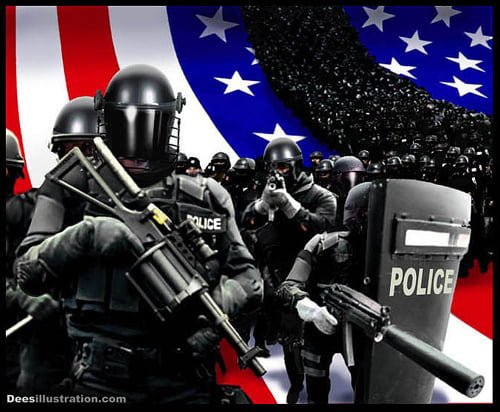
Wealth from economic “recovery” has gone to the richest Americans

0


By
Nick Barrickman

3 June 2013

A new study from the St. Louis Federal Reserve documents the vast disparity in the fortunes of American families since the financial crisis of 2007-08, with the bulk of the “recovery” in aggregate wealth going to the richest layers of the population.

The report, “After the Fall: Rebuilding Family Balance Sheets, Rebuilding the Economy,” found that “only about 45 percent of the average inflation-adjusted household wealth that was lost since the onset of the downturn in 2007 has been recovered.”

To support claims of economic recovery, the Obama administration and the political establishment as a whole have cited the fact that aggregate net worth at the end of last year had almost reached the level it was prior to the crash of 2009. While total net worth was estimated at $67.4 trillion in 2007, it reached $66.1 trillion at the end of 2012, recovering 91 percent of its losses.

However, this masks the enormous growth of inequality. Of the $14.7 trillion accrued since 2009, the majority, $9.1. trillion, “was due to higher stock-market wealth,” the majority of which is owned by the wealthiest families. With more than a touch of understatement, the report states: “Considering the uneven recovery of wealth across households, a conclusion that the financial damage of the crisis and recession largely has been repaired is not justified.”

The wealth of the rich has surpassed pre-recession highs, while that of the vast majority has stagnated. In other words, the net impact of the crisis has been an aggregate transfer of wealth from the poor to the rich.

This outcome is a direct product of the response of the American ruling class, led by the Obama administration, to the crisis. Trillions of dollars have been allocated to bail out the banks, and the US Federal Reserve pumps $85 billion into the financial markets every month to maintain the new asset bubble. At the same, wages have been driven down and social services slashed, while nothing has been done to help those most severely impacted by the crisis.

The St. Louis Fed noted that prior to the economic crash, US households had accumulated an average debt-to-income ratio of 133 percent, due in large part to soaring housing prices and predatory lending by the banks. In the wake of the crash, average household wealth fell 15 percent.

The impact of the crisis disproportionately affected low-income Americans, though the primary categories examined by the report are those of race, age and education level. The class impact–both of the crisis and of the subsequent “recovery”–finds distorted reflection in these alternate categories.

“Although many subgroups experienced large declines, the Fed’s survey suggests that families that were young, that had less than a college education and/or were members of a historically disadvantaged minority group… suffered particularly large wealth losses.”

These families are among “the most economically vulnerable groups because of the particular occupation and sectors in which they were overrepresented, such as low-wage service-sector jobs and construction.”

Youth were particularly hard hit. The report found that from 2007 to 2010, homeowners under 40 saw a staggering 44 percent wealth loss in their homes, with a disproportionate impact on minority youth, including Hispanic and African American youth.

For lower-income families, homes tend to be the primary asset. For African American or Hispanic homeowners under the age of 40 who had not received a high school diploma, 85 percent of all wealth in 2007 was tied to real estate. For both college graduates and high school graduates in this category, 70 percent of wealth was tied to homes.

The report states that chances for post-secondary success increase seven-fold for a youth who had personal savings, regardless of family income. Inversely, lifetime earning potential is also hindered by excessive amounts of debt. The Federal Reserve found that those with a four-year college education and overhanging student loans had a net worth of $186,000 less than their non-indebted peers.

A recent New York Federal Reserve study found that, for those who had student debt, the average level of debt for youth aged 25 had risen to $25,000. Nearly one in five young people were at least three months delinquent on payments.

A number of recent reports corroborate the St. Louis Fed’s findings. Last year, a US Federal Reserve study found that the global economic recession had set families back by nearly 20 years, erasing 39 percent of all household wealth between 2007 and 2010.

Another recent study, released by the University of California, found that since 2009 average real income for families had grown by only 1.7 percent. However, behind this 1.7 percent growth, the top one percent saw their incomes jump by over 11 percent, while the income of the bottom 99 percent declined by half a percentage point during the same period.

Nearly five years after the onset of the greatest financial crisis in a century, bankers and wealthy hedge fund managers have been supplied with access to virtually endless funds by the Obama administratio, while simultaneously declaring there is “no money” for basic social programs benefiting the working class.

The results, reflected in the St. Louis Fed report, are the outcome of this process.

The author also recommends:

Inequality and American democracy

[16 February 2013]


‘
];
var html = htmlArray.join(”);
var pCount = $(‘#content’).children(‘p’).length;
var position = Math.floor(pCount*0.1);
$(‘#content’).children(‘p’).eq(position).before(html);
$(‘#inline-appeal’).children(‘form’).children(‘.more-options’).children(‘a’).click(function() {
$(‘#inline-appeal’).children(‘.initially-hidden’).show();
$(this).parent().hide();
return false;
});
}
}

function appendBottomAppeal() {
if (!$(‘#content’).is(‘.width72,.category’)) {
var htmlArray = [
‘

‘
];
var html = htmlArray.join(”);
if ($(‘#article-tools’).length > 0) {
$(‘#article-tools’).before(html);
} else {
$(‘#content’).append(html);
}
$(‘#inline-appeal’).children(‘form’).children(‘.more-options’).children(‘a’).click(function() {
$(‘#inline-appeal’).children(‘.initially-hidden’).show();
$(this).parent().hide();
return false;
});
}
}
$(document).ready(function(){
appendInlineAppeal();
appendBottomAppeal();
});

This article originally appeared on: World Socialist Web Site

US defence secretary outlines military build-up in Asia

0


By
Peter Symonds

3 June 2013

A speech on Saturday by US Defence Secretary Chuck Hagel to the Shangri-la Dialogue in Singapore–the region’s top annual security conference–underscored the speed and extent of the US military build-up in Asia directed against China. Defence ministers, officials and top military officers from across the Asia Pacific, including China, attended.

The Obama administration’s so-called “pivot to Asia” involves strengthening US military alliances and strategic partnerships, as well as restructuring and repositioning American military forces, throughout the Indo-Pacific region.

At last year’s Shangri-la Dialogue, the previous defence secretary, Leon Panetta, announced that the Pentagon would shift 60 percent of US naval assets to the Indo-Pacific region by 2020. On Saturday, Hagel declared that the US Air Force would also “allocate 60 percent of its overseas-based forces to the Asia Pacific–including tactical aircraft and bombers from the continental United States.”

Hagel reassured US allies at the gathering that financial cutbacks would not affect the expanding American military presence in Asia. He noted that “even under the most extreme budget scenarios, the United States military will continue to represent nearly 40 percent of global defence expenditures.” In other words, US military spending dwarfs that of any other country, including China.

Hagel said this year’s five-year budget plan “put a premium on rapidly deployable, self-sustaining forces–such as submarines, long-range bombers and carrier strike groups–that can project power over great distance.” He added: [T]his region will see more of these capabilities as we prioritise developments of our most advanced platforms to the Pacific.”

The US military build-up was on display when the first of four Littoral Combat Ships to be stationed in Singapore arrived in April and docked at Changi Naval Base. Hagel yesterday visited the USS Freedom–a shallow draft warship designed to operate close to shore and carry out a range of functions, from mine-sweeping to surface and anti-submarine warfare.

In his speech, Hagel directly accused China of being involved in cyber espionage against the United States, claiming that some cyber intrusions “appear to be tied to the Chinese government and military.” His remarks are part of a mounting campaign by Washington on the issue, aimed at putting pressure on the newly-installed Chinese leadership to make economic and foreign policy concessions. Beijing has repeatedly denied the US accusations, saying it was the victim of cyber-attacks, not the perpetrator.

Chinese President Xi Jinping is due to meet Obama later this week in California for two days of talks. US officials have already signalled that the US president will press Xi on cyber security as well as for tougher measures against North Korea. After meeting with US National Security Adviser Tom Donilon last Monday in Beijing, Xi declared that relations between the US and China were at a “critical juncture”–a reference to rising tensions.

At the Singapore meeting on Saturday, Chinese Major General Yao Yunzhu challenged Washington’s claims that Obama’s “pivot” or “rebalance” to Asia was not aimed against China. “China is not convinced,” she said. “How can you assure China? How can you balance the two different objectives–to assure allies, and to build a positive relationship with China?”

Hagel brushed aside the question, insisting that the US welcomed “a strong and emerging and responsible China”–a response belied by the content of his speech. His comments were not pitched at easing tensions with China, but rather at encouraging allies and strategic partners to take a stronger stance against Beijing. Already this has led to dangerous frictions, with Japan and the Philippines pressing territorial claims against China in the East China Sea and South China Sea.

In his speech, Hagel indicated the scale of US efforts to strengthen military ties with virtually every country in the region at China’s expense.

The US defence secretary highlighted “substantial progress” with Japan “in realigning our force posture and enhancing alliance missile defence capabilities,” as well as greater cooperation with India, South Korea and Australia. He noted in particular that an Australian warship was now part of a US carrier strike group based in Japan, “giving our naval forces new practical experience in operating together.”

US officials pointed out that the number of US Marines based in the northern Australian city of Darwin was due to rise from 250 to 1,100 by mid-2014. The Pentagon is also seeking basing arrangements with the Philippines. According to the Wall Street Journal, these should be finalised by the end of the year.

Hagel outlined enhanced military relations throughout South East Asia: a joint vision statement with Thailand for the first time in over 50 years; a new memorandum of understanding with Vietnam; the first-ever visit of an aircraft carrier to Malaysia; military-military engagement with Burma; and closer collaboration with the Indonesian military.

Hagel announced that the US would host its first meeting with Association of South East Asian Nations (ASEAN) defence ministers next year in Hawaii. He revealed that the Pentagon would allocate an additional $100 million to fund joint military exercises in Asia, and extra finances for students from the region to engage in security studies in Hawaii.

Hagel’s tone toward China was markedly different to that he adopted for each other country. Tacitly recognising the sharpening tensions between the two countries and the danger of conflict, he called for dialogue to reduce “the risk of miscalculation, particularly between our militaries.”

While the American media and political establishment seeks to portray China as a threat to peace, the US military build-up and forging of alliances in Asia is destabilising the entire region. While China is in no position to challenge the US militarily, its huge and growing requirements for energy and raw materials are bringing it into conflict with the domination of the major powers over Asia, Africa and Latin America.

That rivalry was evident in the Americas as Chinese President Xi visited Trinidad and Tobago on Friday to discuss access to Caribbean gas, before heading to Costa Rica and Mexico for economic talks, ahead of his meeting with Obama on Friday and Saturday. US Vice President Joe Biden was also in the region–which the US regards as its “backyard”–last week for talks in Brazil, Colombia and Trinidad and Tobago.

The Obama-Xi talks, far from being a friendly get-to-know-you meeting as has been billed, will be the occasion for the US to further intensify its pressure on China to make major economic and strategic concessions.


‘
];
var html = htmlArray.join(”);
var pCount = $(‘#content’).children(‘p’).length;
var position = Math.floor(pCount*0.1);
$(‘#content’).children(‘p’).eq(position).before(html);
$(‘#inline-appeal’).children(‘form’).children(‘.more-options’).children(‘a’).click(function() {
$(‘#inline-appeal’).children(‘.initially-hidden’).show();
$(this).parent().hide();
return false;
});
}
}

function appendBottomAppeal() {
if (!$(‘#content’).is(‘.width72,.category’)) {
var htmlArray = [
‘

‘
];
var html = htmlArray.join(”);
if ($(‘#article-tools’).length > 0) {
$(‘#article-tools’).before(html);
} else {
$(‘#content’).append(html);
}
$(‘#inline-appeal’).children(‘form’).children(‘.more-options’).children(‘a’).click(function() {
$(‘#inline-appeal’).children(‘.initially-hidden’).show();
$(this).parent().hide();
return false;
});
}
}
$(document).ready(function(){
appendInlineAppeal();
appendBottomAppeal();
});

This article originally appeared on: World Socialist Web Site

UK: Unite union imposes Salford NHS Trust’s attacks on workers

0


By
Ellis Wynne

3 June 2013

Unite trade union, in collaboration with health managers, has forced through pay cuts of up to £6,000 a year against 60 pathology staff at Salford Royal Hospital National Health Trust Laboratory.

The workers at the hospital trust in the North West of England were originally balloted in September 2012 for strike action over plans to slash their pay, which union leaders said was the “last straw for most staff.”

Opposed to calling an all-out strike, Unite stalled any industrial action in order to continue negotiations. In March, the union announced that the dispute was over, despite the workers having once again voted to reject the hospital management’s final offer.

Gary Owen, Unite north-western regional officer, said that after “months of fraught negotiations” with hospital management, “we are at a position of reluctant acceptance of the latest offer from the Trust. Our members narrowly rejected their final offer, but industrial action has not been approved and there is no indication that this will change. We are in a better place than when we first started negotiations but not where our members want us to be.”

As a result of Unite’s acceptance, staff at Wigan Infirmary, also in the North West, will be transferred to Salford Royal Hospital and be forced to take pay cuts. Following the sell-out, a spokesman for Pathology at Wigan and Salford said, “We are really pleased that we have been able to reach an agreement with staff and avoid industrial action on both sites.”

In April 2012, the Pathology service at Salford Royal took over the service at Wigan Infirmary, only a year after Wigan had absorbed the service provided at Wrightington and Leigh hospitals. The service is now known as PAWS (Pathology at Wigan and Salford).

In late 2012, tenders were sought for the provision of pathology services, raising the possibility of a privatised service. By that time, biomedical staff who typically earn between £21,000 and £35,000, and are qualified to degree level with post-graduate training, had already suffered a three-year pay freeze, a huge reduction in payments for working unsocial hours and an imposed increase in their pension contributions by the Conservative/Liberal Democrat government.

Some staff had lost up to 30 percent of their earnings, and some had been forced to remortgage their homes. Yet others had to rent out their properties and move in with family. The situation was worsened by the fact that the journey for blood and other samples from Wigan to Salford is 15 miles and the IT system at Salford is regarded as outdated.

Using the union’s refusal to call strike action, Trust management approached staff between August 2012 and February 2013 on an individual basis, asking them to sign an agreement to settle the dispute.

Attacks on pay and conditions of pathology staff are not confined to the North West. In a related dispute, 30 biochemists at Milton Keynes Hospital Foundation Trust in the East Midlands have been working to rule since February 19 in opposition to a new contract. Under this contract, a previously voluntary agreement for “secondary cover” at nights and weekends would be compulsory. Staff would receive £25 as a 12-hour standby payment on top of their 37.5-hour week. Under the old agreement, work during unsocial hours was paid at £25 per hour.

Despite an overwhelming vote for strike action, the union again refused to organise anything beyond the limited work-to-rule. Debbie Watson, regional officer for Unite, said, “We call on the Trust to reverse the compulsory element of the contract so that our already hard working members can enjoy a decent work/life balance”.

This humble appeal echoes that of Gary Owen, who commented at the start of the dispute, “We urge the trust to work with us to examine other ways of making the efficiency savings it alleges are required.”

Attacks on the wages and conditions of pathology staff are being conducted under the Agenda for Change introduced by the Labour government of Tony Blair in 2004 to “rationalise” pay structures in the National Health Service (NHS).

In 2010 former Labour chancellor Alastair Darling announced that £20 billion in efficiency savings needed to be cut from the NHS. These cuts are now being carried through by the coalition government. In the North West region alone, some £950 million in savings would have to be made over a three- to four-year period.

Salford Royal Hospital Trust announced the shedding of 750 jobs over three years, meaning that many of the around-500 staff–out of a total of 6,000 workers–who leave each year would not be replaced. In the region as a whole, huge cuts would have to be made over three years in the primary, community, acute and mental health sectors.

So deep were the cuts that by February 2011, more than 50,000 jobs had gone from the NHS. Some 24,000 posts had been lost in hospitals, 10,000 in primary care Trusts and 6,000 in mental health trusts.

A report in the Guardian found that Salford Royal Hospital Trust shed the whole-time equivalent of 196.82 jobs in 2010/2011, among them 73.21 in nursing and 13.87 in scientific staff, with the same level of losses in 2011/2012. The Wrightington, Wigan and Leigh NHS Foundation Trust was, the report continued, planning to shed the whole-time equivalent of 533 jobs (13 percent) in the period from 2010 to 2014.

The trade unions have accepted all these cuts and every attack on wages and conditions.

A critical part of the cuts drive is the further reduction of wages and conditions. NHS employers have made it clear in their submissions that they are looking to further “pay restraint”, pointing out that normal incremental pay that staff have expected lessens the effect of “wage freezes”.

Having accepted the original pay freeze, Unison, the largest union in the public sector, in the autumn of 2012 asked the Review Body of the Agenda for Change “to record the important role that the workforce has played in meeting the expanding demands on the NHS in the context of restricted resources.” It asked the body “to consider the impact of a near total pay freeze during a period of high inflation on the declining standard of living faced by NHS staff.”

Unison further requested an “increase in the minimum wage within the NHS to bring it in line with the Rowntree Foundation Minimum Income Standard of £7.67 an hour.”

On February 7, however, the Nursing Times reported that Unison, together with the Royal College of Nursing, had accepted “proposals to dilute the Agenda for Change,” thus “marking a significant step towards their introduction.”

These proposals include an end to automatic incremental pay rises and the scrapping of enhanced out-of-hours sick pay. Senior staff on higher pay could also be removed from the Agenda for Change entirely and paid an individual spot salary.

While working with management to ensure pay cuts are made and jobs lost, Unite has launched a fraudulent “Save our NHS” campaign. This consists of the sending of a “prescription flyer” to Prime Minister David Cameron and MPs, which states, “David Cameron has broken every one of his promises on the NHS” and pathetically adds, “Help us hold David Cameron to his promises to protect our NHS.


‘
];
var html = htmlArray.join(”);
var pCount = $(‘#content’).children(‘p’).length;
var position = Math.floor(pCount*0.1);
$(‘#content’).children(‘p’).eq(position).before(html);
$(‘#inline-appeal’).children(‘form’).children(‘.more-options’).children(‘a’).click(function() {
$(‘#inline-appeal’).children(‘.initially-hidden’).show();
$(this).parent().hide();
return false;
});
}
}

function appendBottomAppeal() {
if (!$(‘#content’).is(‘.width72,.category’)) {
var htmlArray = [
‘

‘
];
var html = htmlArray.join(”);
if ($(‘#article-tools’).length > 0) {
$(‘#article-tools’).before(html);
} else {
$(‘#content’).append(html);
}
$(‘#inline-appeal’).children(‘form’).children(‘.more-options’).children(‘a’).click(function() {
$(‘#inline-appeal’).children(‘.initially-hidden’).show();
$(this).parent().hide();
return false;
});
}
}
$(document).ready(function(){
appendInlineAppeal();
appendBottomAppeal();
});

This article originally appeared on: World Socialist Web Site

The death of Ibragim Todashev

0


3 June 2013

On May 22, Ibragim Todashev, a key witness in events related to the Boston Marathon bombings, was killed by an FBI agent in his residence in Florida. Todashev, an alleged acquaintance of bombing suspects Dzhokhar and Tamerlan Tsarnaev, was unarmed and in custody when he was shot as many as seven times, including once in the head.

This extraordinary event, which has been largely buried in the US media, stinks of a cover-up, deceit and criminality. Four or five completely different accounts of the killing have been presented by the government in the space of little more than a week. None of these accounts can be believed.

The killing of Todashev occurred just over a month after two bombs detonated near the finish line of the Boston Marathon, killing 3 people and injuring 264. Within a short period of time, the public was told that the perpetrators had been identified. Soon after, Tamerlan, 26, was shot and killed by the police. His brother Dzhokhar, 19, was severely wounded while hiding unarmed in a boat.

In the days following the bombings, the city of Boston was placed under effective martial law. In a massive and unprecedented police-military operation, the population was ordered to “shelter in place,” armored vehicles were deployed in the streets and heavily armed SWAT teams conducted house-to-house searches without regard for basic rights.

In the aftermath of the Boston events, it emerged that the elder Tsarnaev–like almost every individual who has perpetrated or attempted to perpetrate a similar act–was long known to intelligence agencies and was possibly connected with them. Detailed warnings had been provided by Russia, and these warnings had been ignored. It also emerged that a close associate of Tamerlan, along with two others, had been murdered on the tenth anniversary of the September 11, 2001 attacks, a year and a half before the bombings.

It was under these conditions that a person who knew the Tsarnaev brothers and had potentially vital information was located in Florida. Yet before this key witness could be publicly questioned, and before he was accused of any crime, he was shot and killed by an FBI agent under extremely dubious circumstances.

On the day of Todashev’s death, without a lawyer present, and presumably without regard for his Miranda rights, at least four federal and local agents spent eight hours with him in his home, supposedly seeking to extract a signed confession to the murders committed before the Boston Marathon.

Before this interrogation, Todashev told his roommate, who was also questioned, that he feared for his life.

Todashev’s father, at a recent press conference in Moscow, claimed that morgue photos prove that at least some of the shots must have occurred while his son was on the ground, with the shooter standing over him. Speaking in Russian, the father described the shot to the head as a “control shot,” i.e., a mafia-style point-blank shot designed to ensure that the victim is dead.

In the aftermath of the incident, a series of mutually and internally contradictory official stories regarding Todashev’s final moments were released and dutifully repeated by the American media.

First, the line was, as the Associated Press reported it, that “law enforcement officials say [Todashev] was shot…after he lunged at an FBI agent with a knife.” The FBI agent was reported to have sustained “non-life-threatening injuries.” However, it was later acknowledged that there was no knife.

No account has been given as to why officials reported the existence of a knife when there was none. Instead, a series of new accounts were provided, each more incredible than the last. One version, reported by an Orlando television station, had Todashev lunging for the agent’s gun. In another, reported by ABC News, Todashev lunged for a “samurai sword” that was somehow left within his reach.

In a Fox News affiliate’s account, Todashev actually retrieved the samurai sword (not a real sword but a wall ornament) and lunged at the agent with it.

According to the latest account, published in the New York Times, Todashev attacked the FBI agent with a “metal pole” that “might have been [?] a broomstick.”

The “reaching for a weapon” story is a favored and familiar trope in police department “investigations” seeking to justify shootings of unarmed people.

There are other unexplained and contradictory statements. The Washington Post on May 29 reported that for some unexplained reason, right before the murder, all of the other interrogators withdrew and left the FBI agent alone in the room with Todashev.

The New York Times account the next day places another unnamed agent in the room. This agent, according to a high-level official cited uncritically by the Times, never fired his weapon, supposedly because he was worried about injuring his fellow agent in crossfire. This apparently was not of concern to the person who killed Todashev.

Neither the FBI agent who shot Todashev nor anyone else involved has been named publicly or detained for questioning.

There is a far more likely explanation for Todashev’s killing than the ad hoc and preposterous stories in the media: Todashev possessed information about alleged Boston bomber Tamerlan Tsarnaev–perhaps, we strongly suspect, about his relations with US intelligence agencies–that would undermine the official story. At some point in the lengthy interrogation, the agents in Orlando received orders, probably from someone in Washington, to terminate Todashev “with extreme prejudice.”

The killing of Todashev casts even more doubt on the entire official line regarding the Boston events.

Last week, the Russian Federal Security Service claimed that it had provided the American authorities with enough detailed information to prevent the Boston bombings. This fact was acknowledged by US Representative William R. Keating after a trip to Moscow.

Keating, in his statements in Moscow, further acknowledged that the Russian intelligence agencies had asked to be tipped off if the elder Tsarnaev visited Russia. The American agencies have not explained why they did not do so, or why they allowed Tsarnaev to travel in and out of the US to Chechnya without questioning.

As in the case of the September 11, 2001 attacks nearly 12 years ago, the conduct of the American intelligence agencies cannot be explained as a failure to “connect the dots.” That such agencies–funded to the hilt pursuant to the “war on terror”–were entirely oblivious to what was going on under their noses strains credulity. Further, if someone had simply “dropped the ball” within the American intelligence agencies, then resignations, firings or even prosecutions would be expected. Instead, nobody has been named and nobody has stepped down.

Facts are stubborn things. What we know for certain is that a key witness in relation to the Boston bombings has been terminated by the state. This witness, who expressed concerns for his life, was likely in possession of information that someone wanted kept secret.

The killing of Todashev has not provoked any protest from within the political establishment. The media has played its usual filthy and subservient role in the cover-up. With the exception of a single editorial in the Washington Post that expressed concern that Todashev’s death would “fuel wild conspiracy theories,” there have been no calls in the press nor in any federal, state or local institution for an explanation or investigation as to what happened.

After the killing of Anwar Al-Awlaki, a US citizen and Muslim cleric in Yemen in September 2011, questions were raised about the possibility of assassinations taking place within the US. It appears that this has now happened. Yet another line has been crossed in the march towards a police state.

Tom Carter


‘
];
var html = htmlArray.join(”);
var pCount = $(‘#content’).children(‘p’).length;
var position = Math.floor(pCount*0.1);
$(‘#content’).children(‘p’).eq(position).before(html);
$(‘#inline-appeal’).children(‘form’).children(‘.more-options’).children(‘a’).click(function() {
$(‘#inline-appeal’).children(‘.initially-hidden’).show();
$(this).parent().hide();
return false;
});
}
}

function appendBottomAppeal() {
if (!$(‘#content’).is(‘.width72,.category’)) {
var htmlArray = [
‘

‘
];
var html = htmlArray.join(”);
if ($(‘#article-tools’).length > 0) {
$(‘#article-tools’).before(html);
} else {
$(‘#content’).append(html);
}
$(‘#inline-appeal’).children(‘form’).children(‘.more-options’).children(‘a’).click(function() {
$(‘#inline-appeal’).children(‘.initially-hidden’).show();
$(this).parent().hide();
return false;
});
}
}
$(document).ready(function(){
appendInlineAppeal();
appendBottomAppeal();
});

This article originally appeared on: World Socialist Web Site

Mass protests shake Turkish government

0


By
Alex Lantier

3 June 2013

Protests in cities across Turkey shook the Islamist government of Prime Minister Recep Tayyip Erdogan on Friday and over the weekend, amid rising discontent with his domestic policies and his support for the US-led proxy war in neighboring Syria.

The protests grew rapidly after police crackdowns on Friday morning at Istanbul’s Gezi Park and then on Taksim Square. The sit-in had begun Tuesday, as lawmakers and officials of the Kurdish Peace and Democracy Party (BDP), subsequently joined by the bourgeois opposition Republican People’s Party (CHP), protested Erdogan’s plan to remodel Gezi Park, which is adjacent to Taksim Square. The sit-in initially gathered dozens and then hundreds of people.

Erdogan plans to build a mosque in the area and to rebuild an Ottoman Empire-era barracks, destroyed in 1940, to be used as a shopping center, while destroying a nearby cultural center named after Turkish bourgeois nationalist leader Kemal Atatürk.

The remodeling plans were provocative, given Taksim Square’s historic association with working class or popular protest. The 1969 Bloody Sunday massacre of demonstrators protesting the deployment of the US Sixth Fleet to Turkey took place nearby, and dozens were killed on the square in the repression of an International Labor Day march on May 1, 1977.

On Friday, police initially cracked down on protesters, pushing them into Taksim Square, and then brutally attacked them again. As the demonstration swelled, helicopters and police squads fired intense volleys of tear gas into residential areas and into the public transit system; one video shows a police armored vehicle hitting a protester as it charged a barricade.

“Police are everywhere, and helicopters are monitoring our movements. Whenever police see us march, they come and gas us… We were gassed, we dispersed, and then gathered again,” one protester said.

Solidarity protests spread across the country, with thousands gathering in Kugulu Park in Ankara and over 10,000 reported on the marina in Izmir.

Protesters chanted “Everywhere is Taksim” or “Chemical Erdogan”–a reference to the widespread teargasing, but also implicitly criticizing Erdogan’s promotion of false claims that the Syrian regime has used chemical weapons, in order to provide Washington with a pretext to directly attack Syria.

According to a report by Interior Minister Muammer Guler on Saturday, 939 people had been arrested in over 90 separate demonstrations across the country. Medics reported treating over 1,000 injured protesters in Istanbul, and several hundred in the capital, Ankara. Amnesty International reported that two protesters had been killed.

On Saturday, tens of thousands of protesters again clashed with police in Istanbul and Ankara, with protesters chanting “shoulder to shoulder against fascism” and “government resign.”

In a nationally televised speech Saturday, Erdogan endorsed the police crackdown. He said, “Taksim Square can’t be a place where extremist groups hang around,” while cynically admitting to “errors in the actions of the security forces, especially with regard to the use of pepper gas.”

He vowed that plans to remodel the park would continue without consulting opposition parties, adding: “Where they will gather 100,000, I will bring together one million from my party.”

Police withdrew from Taksim Square late Saturday, however, as state officials tried to bring down popular anger at Erdogan’s violent repression of the protests. The Turkish Interior Ministry announced plans to “investigate” excessive use of tear gas, while Turkish President Abdullah Gül called for calm.

Yesterday tens of thousands of people protested in Turkey’s four largest cities–Istanbul, Ankara, Izmir and Adana. The Interior Minister announced that 1,700 people had been arrested, and that 235 protests took place in 67 Turkish cities.

The development of mass protests against Erdogan and the ruling Justice and Development Party (AKP) has rapidly exposed the weakness and unpopularity of his government, as well as the hypocrisy of the pretexts advanced to justify the ongoing US-led war in Syria.

Washington and its allies seized upon the repression of protests in Syria in the summer of 2011 to launch a proxy war for regime change in Syria, but they are now merely issuing mild, pro forma criticisms of Erdogan’s bloody crackdown in Istanbul. The US State Department expressed concern in its statement over the number of injuries, while the European Union (EU) said it would “condemn all excessive and disproportionate use of force.”

Behind the flagrant contrast in the US and EU reaction stand the imperialist interests driving the policy of the major powers in Syria and Turkey. While the Syrian regime has emerged as an obstacle to the imperialist drive to restructure the Middle East, centered on US-led regime change in oil-rich Iran, Erdogan has functioned as a key US ally.

Syrian officials pointed to this contradiction, demanding Erdogan’s resignation after his brutal suppression of the protests. On Saturday, Syrian television quoted Syrian Information Minister Omran Zoabi: “The demands of the Turkish people don’t deserve all this violence. If Erdogan is unable to pursue nonviolent means, he should resign.” Zoabi said Erdogan’s brutal repression of protests showed that he is “detached from reality.”

Just over two weeks ago, on May 16, Erdogan met with US President Barack Obama in Washington and held a joint press conference at the White House. The main topics at their meeting were reportedly the war in Syria and US-Turkish economic ties.

US officials declined to address the hypocrisy of their alliance with the bloody Erdogan regime, while pursuing a foreign policy based around a supposedly “humanitarian” war in Syria.

US Ambassador to Turkey Francis Ricciardone told CNN Türk, “Of course, no one could be happy to see those saddening images. I am not happy either. I wish a speedy recovery to all those injured. But if you are asking me about US foreign policy, as you know, freedom of expression, freedom of expression, freedom of assembly, and the right to have peaceful protests are fundamentals of a democracy. I am not going to say anything further.”

Erdogan has enthusiastically backed the Syrian war, in defiance of mass opposition in Turkey. Only one-quarter of the Turkish population supports Erdogan’s policy of arming the far-right Islamist opposition fighting the Syrian regime, according to recent polls.

There is deep disquiet in Turkey–particularly among the Alevi minority, many of whose members attended the protests–over the consequences in Turkey of Erdogan’s collaboration with the far-right Sunni Islamist opposition in Syria. CHP officials have already charged that the recent car bombing in Reyhanli, Turkey was carried out by Al Nusra, an Al Qaeda-affiliated element of the US-backed Syrian opposition (See: “Reports suggest Syrian opposition involvement in Turkish bombings”).

The Erdogan government blamed the attacks on the Syrian government, further raising the danger of war. These charges have since been exposed as lies, as Turkish hacker group RedHack published Turkish intelligence documents showing that cars involved in the Reyhanli car bombing were being prepared for operations by Al Nusra.

The Erdogan regime has responded by cracking down on the leak. Turkey’s Interior Ministry has confirmed that a member of a gendarmerie unit who allegedly provided the document to RedHack has been detained.

Erdogan’s increasingly right-wing Islamist legislation in Turkey also is affecting daily life in the country and provoking opposition. Last week, the parliament approved legislation banning the sale and consumption of alcoholic beverages between 10 p.m. and 6 a.m.


‘
];
var html = htmlArray.join(”);
var pCount = $(‘#content’).children(‘p’).length;
var position = Math.floor(pCount*0.1);
$(‘#content’).children(‘p’).eq(position).before(html);
$(‘#inline-appeal’).children(‘form’).children(‘.more-options’).children(‘a’).click(function() {
$(‘#inline-appeal’).children(‘.initially-hidden’).show();
$(this).parent().hide();
return false;
});
}
}

function appendBottomAppeal() {
if (!$(‘#content’).is(‘.width72,.category’)) {
var htmlArray = [
‘

‘
];
var html = htmlArray.join(”);
if ($(‘#article-tools’).length > 0) {
$(‘#article-tools’).before(html);
} else {
$(‘#content’).append(html);
}
$(‘#inline-appeal’).children(‘form’).children(‘.more-options’).children(‘a’).click(function() {
$(‘#inline-appeal’).children(‘.initially-hidden’).show();
$(this).parent().hide();
return false;
});
}
}
$(document).ready(function(){
appendInlineAppeal();
appendBottomAppeal();
});

This article originally appeared on: World Socialist Web Site

Chicago Sun-Times fires all staff photographers

0


By
Alexander Fangmann

3 June 2013

On Thursday, June 2 the Chicago Sun-Times newspaper announced that it was laying off its entire 28-person staff of photographers.

The Sun-Times photographers were informed of their layoffs in a profoundly hostile manner despite years, in some cases decades, of work for the newspaper. On Wednesday night, they were all told to come to the office the next day at 9:30 a.m. for what would be just the second meeting with the new owners since the paper was purchased by Wrapports LLC.

Rob Hart, one of the laid-off photographers, reported that his boss also called and asked for the serial numbers of all his equipment. While the photographers were being informed of their layoffs and receiving information about their layoff packages, their magnetic building access badges were deactivated.

While the Sun-Times attempted to portray the firings as part of a reorientation to video and multimedia content driven by consumer demand, the reality is that the newspaper is attempting to shed the more costly aspects of newsgathering and return the newspaper to profitability for the benefit of its owners.

The layoffs are the latest in a series of cost-cutting measures since the newspaper filed for Chapter 11 bankruptcy in 2009. At the time, the threat of outright closure of the paper was utilized by its prospective buyer, financier James C. Tyree–previously chairman and CEO of Mesirow Financial–to extract concessions from the workforce. These included 15 percent pay cuts, conversion of the pension fund to a 401(k), and the elimination of seniority rights in regard to layoffs.

More recently, in March, the Sun-Times fired several editors and staff members at suburban newspapers in the Sun-Times Media Group and consolidated their newsrooms to the downtown Chicago headquarters. Around the same time, the newspaper fell behind on its monthly payments to the Chicago Tribune for printing and distribution. The Sun-Times Media Group shut down its own printing presses in 2011 to save money and now pays the Tribune around $70 million per year on a 10-year contract.

Wrapports was formed in late 2011 by local investors to take over the Sun-Times after the death of Tyree, which created problems for his planned restricting of the newspaper. The chairman of Wrapports, Michael W. Ferro, Jr., is the chairman and CEO of Merrick Ventures, a private equity firm, and Merge Healthcare, a health records and imaging company.

Wrapports’ CEO is Timothy Knight, who is the former president and CEO of Newsday, and before that the mergers and acquisitions counsel for the Tribune Company. Other board members include John A. Canning, Jr., of Madison Dearborn Partners, a private equity firm; Michael J. Sacks, CEO of Grosvenor Capital Management, a leading hedge fund; and Rodney O’ Neal, CEO and president of Delphi.

The Wrapports ownership group is joined by other wealthy investors, such as Warren Buffett and Douglas Manchester, who have made recent purchases of struggling newspapers, often to the detriment of employees and to the readership. Billionaire Sam Zell’s purchase of the Tribune Company led to a deterioration in the quality of news reporting and an emphasis on entertainment holdings.

The strategy of the Wrapports’ ownership is to abandon the intensive work of reporting with more entertaining multimedia and video content. The aim is, in part, to capture the higher advertising rates available for online video in comparison to the “banner” ads that appear next to text and photos on newspaper websites. Knight also oversaw the firing of the entire photography staff at Newsday in 2008, allowing those laid-off to reapply for “multimedia” positions.

Aside from the use of freelancers, who receive no benefits or regular salary, the Sun-Times also plans to train all editorial staff, including reporters, in the use of iPhones to make up for the lost content. This underscores that the firings have little to do with the need for video and multimedia as against traditional photography, but are rather about the de-professionalization of workers in order to lower costs.

Among the photographers laid off by the newspaper was John H. White, a long-time Sun-Times photojournalist who won the Pulitzer Prize for Feature Photography in 1982 while working for the newspaper. Speaking about what the newspapers’ readers would lose without the insights and skills of professional photojournalists, White said that “humanity is being robbed by people with money on their minds.”

The elimination of the photography department by the Sun-Times occurs in the context of an overall degradation of American society, including its democratic culture, led by the financial aristocracy, for whom an effective and free press it not only a drain on profits but a barrier to their political agenda.


‘
];
var html = htmlArray.join(”);
var pCount = $(‘#content’).children(‘p’).length;
var position = Math.floor(pCount*0.1);
$(‘#content’).children(‘p’).eq(position).before(html);
$(‘#inline-appeal’).children(‘form’).children(‘.more-options’).children(‘a’).click(function() {
$(‘#inline-appeal’).children(‘.initially-hidden’).show();
$(this).parent().hide();
return false;
});
}
}

function appendBottomAppeal() {
if (!$(‘#content’).is(‘.width72,.category’)) {
var htmlArray = [
‘

‘
];
var html = htmlArray.join(”);
if ($(‘#article-tools’).length > 0) {
$(‘#article-tools’).before(html);
} else {
$(‘#content’).append(html);
}
$(‘#inline-appeal’).children(‘form’).children(‘.more-options’).children(‘a’).click(function() {
$(‘#inline-appeal’).children(‘.initially-hidden’).show();
$(this).parent().hide();
return false;
});
}
}
$(document).ready(function(){
appendInlineAppeal();
appendBottomAppeal();
});

This article originally appeared on: World Socialist Web Site

California first US state to implement health care exchange

0


By
Danielle DeSaxe and Marc Wells

3 June 2013

In compliance with the Patient Protection and Affordable Care Act (ACA), signed into law in 2010 by President Barack Obama, the state of California is the first to implement its own health insurance market under the name Covered California. The 13 carriers available will include both for-profit and so-called non-profit insurers, as well as local entities.

Covered California includes four main coverage plans–bronze, silver, gold and platinum–the lowest of which (bronze) only covers 60 percent of average annual costs, resulting in an annual out-of-pocket maximum cost of $6,350/individual or $12,700/family. The most expensive plan (platinum) will cover 90 percent of average annual costs with an annual out-of-pocket maximum cost of $4,000/individual and $8,000/family.

A fifth, so-called catastrophic plan will be available to people under 30 and will trigger only after $6,000 in medical costs has been paid by the insured.

For working people, the plans are not inexpensive to begin with. Insurance companies will charge 25-year-olds up to $190 per month for a bare-bones plan in Los Angeles, while a 40-year-old in San Francisco will pay up to $525 per month for decent coverage. Uninsured Californians must pick from between one and six companies, varying by location.

One of the most reactionary provisions of the law is the “individual mandate,” which will legally coerce people who are not covered by Medicare or Medicaid, and who do not receive coverage from their employer, to purchase private insurance or pay a penalty. This is the feature that insurers have enthusiastically welcomed, as it creates a new market worth hundreds of millions of dollars for the insurance industry.

Penalties are steep. As the Congressional Budget Office (CBO) spells out, “That penalty will be the greater of a flat dollar amount per person that rises to $695 in 2016 and is indexed by inflation thereafter (the penalty for children will be half that amount and an overall cap will apply to family payments) or a percentage of the household’s income that rises to 2.5 percent for 2016 and subsequent years (also subject to a cap).”

The CBO also notes, “In total, about 4 million people [in the US] are projected to pay a penalty because they will be uninsured in 2016 (a figure that includes uninsured dependents who have the penalty paid on their behalf).” This is a rather conservative estimate: last March, the CBO had already revised that number to 6 million, to include those who will opt for a penalty instead of buying coverage.

The health care bill has been designed for the benefit of the insurance companies at the expense of the working class by creating a captive customer base. For the working class, the choice would be between getting substandard insurance or paying a penalty, deeply affecting households already crushed by unemployment and the rising costs of living.

The fact that an estimated 2.6 million Californians (more than 7 percent of the total population) are expected to qualify for some level of subsidy under the ACA underlines the level of social inequality in the richest state of the richest country in the world.

Paul Markovich, president and CEO of insurer Blue Shield of California, stated that “[his] firm’s policies are expected to rise by an average of 13 percent next year, partly because of the mandatory increase in benefits,” as reported by the Sacramento Bee. Because coverage is mandatory and subsidies will be given to those who qualify, insurance companies now have even more incentive to raise prices, effectively canceling out any subsidies that are given.

The Affordable Care Act guarantees insurance companies even greater profits on two counts: those who would otherwise not buy insurance will be forced to do so or pay a fine, and those with pre-existing conditions will now qualify for coverage, prompting companies to raise premiums as people utilize their insurance to seek ongoing treatment for their conditions. These two factors, coupled with a guaranteed monopoly of the market in some regions, will undoubtedly prompt additional price increases.

Moreover, undocumented immigrants who are ineligible for Medicaid benefits are excluded altogether from the program, further underlining the deeply reactionary character of the health care legislation as a whole. This is part of the Obama administration’s ongoing redistribution of wealth to the top and intensification of social inequality. Not only will coverage not be “universal,” the ACA guarantees corporations more profits as the living standards of the working class continue to decline.

In California, the trade unions have attempted to portray the health care overhaul in glowing terms. The Service Employees International Union (SEIU) has promoted it as “better, more affordable, quality health care. SEIU wants everyone to know how the law benefits them.”

Similarly, the California Teachers Association (CTA) has blatantly misrepresented the law, stating that ACA “puts in place health insurance reform to: hold insurance companies more accountable, lower health care costs, guarantee more choices, enhance quality of health care.”

The American Federation of State, County and Municipal Employees (AFSCME) has called the ACA “an historic achievement.” The purpose of such support is to subordinate workers to the repressive policies of the Democratic Party, as the unions seek to head off an independent mobilization against the ongoing attacks on the living standards of millions of working people.


‘
];
var html = htmlArray.join(”);
var pCount = $(‘#content’).children(‘p’).length;
var position = Math.floor(pCount*0.1);
$(‘#content’).children(‘p’).eq(position).before(html);
$(‘#inline-appeal’).children(‘form’).children(‘.more-options’).children(‘a’).click(function() {
$(‘#inline-appeal’).children(‘.initially-hidden’).show();
$(this).parent().hide();
return false;
});
}
}

function appendBottomAppeal() {
if (!$(‘#content’).is(‘.width72,.category’)) {
var htmlArray = [
‘

‘
];
var html = htmlArray.join(”);
if ($(‘#article-tools’).length > 0) {
$(‘#article-tools’).before(html);
} else {
$(‘#content’).append(html);
}
$(‘#inline-appeal’).children(‘form’).children(‘.more-options’).children(‘a’).click(function() {
$(‘#inline-appeal’).children(‘.initially-hidden’).show();
$(this).parent().hide();
return false;
});
}
}
$(document).ready(function(){
appendInlineAppeal();
appendBottomAppeal();
});

This article originally appeared on: World Socialist Web Site

Britain seeks European Union action against Lebanon’s Hezbollah

0


By
Jean Shaoul

3 June 2013

After forcing the lifting of a weapons embargo against Syria and thus enabling the arming of Islamist militants, Britain is now calling for the European Union to designate the Lebanese party Hezbollah’s military wing a terrorist organization.

A special EU working group will meet June 4 to discuss the issue. If agreed, the decision would then have to be ratified by foreign ministers at a June 24 meeting.

Designating Hezbollah–Lebanon’s most powerful political bloc, backed by both Iran and Syria–a terrorist organization demonstrates the extent to which the conflict in Syria has become a regional war and a de facto war against Iran. It will inevitably lead to a new round of clashes between it and Western backed-Sunni forces in Lebanon. It could embroil the country in another civil war.

Lebanon was the arena in which the regional powers fought in shifting alliances for power and influence in a long and bitter civil war between 1975 and 1990.

Britain’s request came as Hezbollah announced May 25 that its forces were fighting alongside the Syrian army, which was advancing against opposition strongholds in Syria, notably the strategic town of Qusair, 15 kilometres from Lebanon. Hezbollah leader Hassan Nasrallah promised that his fighters would deliver “victory” in Qusair, the first time that Hezbollah had made such a commitment of support for Syrian President Bashar al-Assad’s regime.

It follows Hezbollah’s involvement in several cross-border clashes with opposition forces during the two-year-long civil war, and Nasrallah’s first public admission, on April 30 during a visit to Tehran, about Hezbollah fighting in Syria.

Facing a military defeat in Qusair and without any significant support amongst the Syrian population, opposition forces have appealed to their imperialist backers to escalate their intervention. In a statement last Wednesday, the Syrian National Coalition called on the EU to “solidify” its words by action and supply the Free Syrian Army (FSA) with “specialized weaponry to repel fierce attacks” by the regime.

FSA leader and former Syrian general Salem Idris made an appeal on the BBC’s World Service to the imperialist powers to intervene. He accused Hezbollah fighters of invading Syria, claiming that it had sent 7,000 fighters to attack Qusair, although the French foreign ministry estimated the number at 3,000-4,000.

Idris warned of a possible “massacre” if the US and its allies did not intervene to assist him, saying, “We will take all measures to hunt [them], even in hell.” He added, “I will no longer be bound by any commitments I made if a decision to stop the attacks … is not taken and implemented.”

The pretext for Britain’s appeal to the EU was the announcement by the Bulgarian government in February that two of the people responsible for the July 2012 bombing at the Burgas Airport that killed five Israeli tourists and a Bulgarian bus driver “belonged to the military formation of Hezbollah.”

Britain also pointed to the prosecution in Cyprus of a Lebanese-Swedish citizen, who had confessed to being a Hezbollah operative carrying out surveillance of Israeli tourists for potential targets.

Initially, Britain’s call received a cool response. That has now changed. Reuters cited a diplomatic source in Berlin on May 22 as saying that “in the light of discussions we have had with our partners following the terrorist attack in Burgas, Foreign Minister Guido Westerwelle supports listing at least the military wing of Hezbollah as a terrorist organization in the EU.”

French Foreign Minister Laurent Fabius confirmed at the “Friends of Syria” meeting in Amman last week that Paris would also support Britain.

Should the EU agree to Britain’s demand, all European companies and governments would cease financial interactions with Hezbollah. It has thus far been able to raise money in Europe. Germany is believed to be its main centre, with some 950 members, according to German intelligence.

It is openly acknowledged that the EU shift is driven by the role played by Hezbollah in the Syrian war, and not by accusations of terrorism. Fabius declared, “Given the decisions that Hezbollah has taken and the fact that it has fought extremely hard against the Syrian population, I confirm that France will propose to place Hezbollah’s military wing on the list of terrorist organizations.”

The decision could call into question the presence of United Nations peacekeeping forces in Lebanon, in which a dozen EU countries are represented. Austria has said it may withdraw its 300-strong force from a UN peacekeeping force on Syria’s Golan Heights, which Israel has occupied illegally since the 1967 war, if Britain sent arms to the rebels fuelling the conflict.

The UN Human Rights Council (UNHCR) in Geneva passed a one-sided resolution last week, clearly aimed at Hezbollah, with 36 in favour, one against, and eight abstentions. Its non-binding text condemned “the intervention of foreign combatants fighting on behalf of the Syrian regime” in Qusair, but said nothing about the foreign combatants fighting against the government. It called for an urgent investigation into alleged abuses in Qusair. While Russia, Syria’s key backer, called the resolution “odious”, it is not a voting member this year.

Following the resolution, the US State Department demanded that Hezbollah withdraw its fighters from Syria immediately, with spokeswoman Jen Psaki calling their presence “extremely dangerous.”

Tensions are already running high in Lebanon, which has long suffered sectarian strife stoked by France, the former colonial power, and the regional powers to further their own interests. Last week saw gun battles between forces allied with the Syrian regime and its opponents on the streets of the port city of Tripoli, a Sunni stronghold that acts as a conduit for arms, supplies and fighters to the rebel forces, killing at least 31 people and wounding 212. It follows more than a dozen rounds of fighting in Tripoli since the start of the Syrian conflict.

Last weekend, there were attacks on the southern suburbs of Beirut, which are Hezbollah strongholds, leaving at least three wounded. On Monday, rockets fired from Syria killed at least one woman near the eastern Lebanese town of Hermel, another Hezbollah stronghold. More rockets fell the next day, wounding seven people.

Since the start of the Syrian conflict, there have been several rocket and mortar attacks on Lebanon, with the FSA claiming responsibility for attacks on at least two occasions.

In an interview on Monday, Jamal Maarouf, commander of the Saraqeb Martyrs Brigade, a rebel group based in northern Syria, threatened to attack the Lebanese army if it did not stop Hezbollah fighters from crossing into Syria. The Lebanese army is no match for the various militias backed by the Gulf petro-monarchies that have sprouted up in Lebanon supporting the Syrian opposition.

The next day there was an armed attack on a Lebanese army checkpoint near Arsal in the eastern Beka’a Valley, killing three soldiers. The attackers fled towards the Syrian border. Lebanese President Michel Sleiman said the killings were part of a “series of terrorist and criminal acts that seek to provoke strife in the country and [target] soldiers who are working to prevent such strife.”

He urged that “an iron fist be used against anyone targeting the army, security services, civil peace or [anyone] seeking to sow strife.”


‘
];
var html = htmlArray.join(”);
var pCount = $(‘#content’).children(‘p’).length;
var position = Math.floor(pCount*0.1);
$(‘#content’).children(‘p’).eq(position).before(html);
$(‘#inline-appeal’).children(‘form’).children(‘.more-options’).children(‘a’).click(function() {
$(‘#inline-appeal’).children(‘.initially-hidden’).show();
$(this).parent().hide();
return false;
});
}
}

function appendBottomAppeal() {
if (!$(‘#content’).is(‘.width72,.category’)) {
var htmlArray = [
‘

‘
];
var html = htmlArray.join(”);
if ($(‘#article-tools’).length > 0) {
$(‘#article-tools’).before(html);
} else {
$(‘#content’).append(html);
}
$(‘#inline-appeal’).children(‘form’).children(‘.more-options’).children(‘a’).click(function() {
$(‘#inline-appeal’).children(‘.initially-hidden’).show();
$(this).parent().hide();
return false;
});
}
}
$(document).ready(function(){
appendInlineAppeal();
appendBottomAppeal();
});

This article originally appeared on: World Socialist Web Site

Australian meat workers fight 20 percent pay cut

0


By
Mike Head

3 June 2013

In what could become a test case for major wage cutting throughout Australian industry, 800 workers at the Teys Australia meat processing plant at Beenleigh, in southern Brisbane, struck for 24 hours last Friday against the company’s demand for a pay cut of more than 20 percent.

Striking workers held a mass picket outside the gates, winning support from passing motorists. It was the second strike in a week, following a four-hour stoppage the previous week.

Teys Australia, the second largest meat processor and exporter in Australia–with six meat plants on the east coast–has threatened to shut down the facility unless workers accept drastic cuts to their wages and conditions, as well as heavier workloads.

CEO Brad Teys declared that if labour costs were not lowered, the meat industry would close in Australia, just like the car making factories. His ultimatum came within two weeks of Ford announcing the closure of its two auto plants in the country.

Teys told the media that the company could no longer afford the existing penalties rates and conditions. “Manufacturing in Australia has to really reinvent itself to become viable in the future,” he said.

The company’s offensive is part of a global cost-cutting and restructuring drive by its 50 percent joint venture partner, the giant US-based Cargill. The transnational food, agricultural and financial services corporation, which is the largest privately held company in the United States in terms of revenue, employs 131,000 people in 66 countries.

Speaking from Kansas where he was meeting Cargill executives, Brad Teys said: “What we can no longer sustain are outdated and unrealistic employment terms that make us uncompetitive.” The “uncompetitive” practices included 50 percent leave loading, penalty rates within ordinary hours, payment for idle time and higher workers compensation benefits than prescribed by legislation.

In discussions with a Socialist Equality Party election campaign team in Beenleigh yesterday, Teys workers said they had been told that boners, highly-skilled meat workers, were paid just $7 an hour in the US.

One boner from the Beenleigh plant explained the severity of the company’s demands. “What the company wants is to pay us just $25 an hour, down from $32,” he said. “That would be more than a 20 percent pay cut. Beforehand, maybe we might get $1,100 a week, now it would be $700.

“Everybody wants to live,” he commented. “Would $700 pay my bills? For rent and everything? Every house in Beenleigh costs $300 to $350 a week to rent. Then we have to pay for food, car and everything. Would you work for free?”

After working at the plant since 2008, the boner was shocked by the company’s ultimatum. “This is very hard,” he said. “They are talking about shutting down. They told us: ‘You want $25 an hour? If not, we will shut down’.”

He gave some idea of the impact that a closure would have. “No one wants to lose their job,” he said. “My wife works at the plant too, on the night shift, while I work on the day shift, because we have two children to look after.”

Cargill illustrates the grip that massive conglomerates hold over the world’s food and agricultural supplies. If it were a public company, it would rank number 13 on the Fortune 500 list of the biggest US companies, ahead of JP Morgan Chase. Its businesses include grain and other agricultural commodities, such as palm oil; livestock feed; food ingredients like starch and glucose syrup; vegetable oils and fats; and trading in energy, steel and transport. It also operates a large financial services arm.

In Australia alone, according to the company’s website, Cargill has investments valued at $US250 million, generating an annual turnover of about $1 billion. It co-owns five other Teys Australia meat plants at Naracoorte, Wagga Wagga and Tamworth in New South Wales, and Rockhampton and Biloela in Queensland. It operates crush plants for canola, soybeans, sunflower and cottonseed in Newcastle, Narrabri and Footscray, as well as the grain marketing operations formerly operated by the Australian Wheat Board and GrainFlow.

Far from fighting to unite workers throughout this corporate empire against the wage-cutting drive, the Australian Meat Industries Employees Union (AMIEU) is keeping the Beenleigh workers isolated and tightly straitjacketed within the framework of negotiating a new three-year enterprise bargaining agreement for the Beenleigh plant.

In its public comments, the union is sending out signals to Teys that it is prepared to make a deal. AMIEU representative Matt Journeaux told the Brisbane Courier Mail: “Negotiations have been going on for seven months now and that’s plenty long enough to be coming to a much closer position than where we currently are.”

AMIEU Queensland branch secretary Brian Crawford indicated that the union had been enforcing the company’s productivity drive. He told reporters: “Far from being stuck in the 1970s, the union has demonstrated to Teys Australia that a large slab of its workforce have lifted their productivity by 18 percent since 1998, yet the real value of their wages has declined by 11 percent in the same period.”

These statistics themselves are an indictment of the role of the AMIEU, like the rest of the trade union movement, in Australia and internationally, in suppressing resistance by workers to the ongoing attacks on workers’ living standards and working conditions over the past three decades.

Just since 2010, the AMIEU has allowed a restructuring offensive by Brazilian multinational company, JBS Swift, to eliminate hundreds of jobs from the nearby Dinmore meat works and other plants at Townsville in northern Queensland, Longford in Tasmania and Cobram in Victoria.

During a six-week lockout by Swift of cold storage workers in the Melbourne suburb of Brooklyn in 2010—11, the AMIEU instructed its members not to support the locked-out workers, who were members of the National Union of Workers (NUW). Enforcing the Labor government’s anti-strike Fair Work laws, the AMIEU insisted that any action would be classified as a “secondary boycott,” leading to fines. The NUW ultimately rammed through an agreement that delivered on the company’s key demands, including a real wage cut, elimination of the eight-hour day and erosion of weekend penalty rates. (See: “National Union of Workers sells out six-week Swift meat workers’ struggle”)

If the Beenleigh workers are not to suffer a similar defeat, they need to organise independently of the trade unions, and form a rank-and-file committee that fights to win active support throughout the food industry in Australia and internationally.

Above all, that requires a political struggle against the state and federal governments and the fight for a workers’ government to carry out socialist measures, including placing companies like Teys and Cargill under social ownership and the democratic control of working people.

The Socialist Equality Party is intervening in the 2013 Australian elections to advance the struggle for this socialist and internationalist program.


‘
];
var html = htmlArray.join(”);
var pCount = $(‘#content’).children(‘p’).length;
var position = Math.floor(pCount*0.1);
$(‘#content’).children(‘p’).eq(position).before(html);
$(‘#inline-appeal’).children(‘form’).children(‘.more-options’).children(‘a’).click(function() {
$(‘#inline-appeal’).children(‘.initially-hidden’).show();
$(this).parent().hide();
return false;
});
}
}

function appendBottomAppeal() {
if (!$(‘#content’).is(‘.width72,.category’)) {
var htmlArray = [
‘

‘
];
var html = htmlArray.join(”);
if ($(‘#article-tools’).length > 0) {
$(‘#article-tools’).before(html);
} else {
$(‘#content’).append(html);
}
$(‘#inline-appeal’).children(‘form’).children(‘.more-options’).children(‘a’).click(function() {
$(‘#inline-appeal’).children(‘.initially-hidden’).show();
$(this).parent().hide();
return false;
});
}
}
$(document).ready(function(){
appendInlineAppeal();
appendBottomAppeal();
});

This article originally appeared on: World Socialist Web Site

US drone attacks controlled from military bases in Germany

0


By
Ulrich Rippert

3 June 2013

US military sites in Germany are playing a key role in the use of American combat drones to target the killing of people in Africa. According to reports from the Süddeutsche Zeitung newspaper and the ARD television programme “Panorama”, the Stuttgart-based supreme command of the United States Africa Command (US Africom) and the Air Operations Center (AOC) at the US air force base in Ramstein, in the state of Rhineland Palatinate, are directly involved in the drone attacks.

Media reports claim that fighter pilots in the US are operating through a relay station on the Ramstein air base to maintain contact with combat drones employed in Africa. Quoting from an internal policy brief of the US air force, the Süddeutsche Zeitung and “Panorama” revealed that “the drone attacks in Africa could not be carried out” without the support of this satellite station.

Up to 650 employees at the US flight control centre in Ramstein use 1,500 computers to monitor European and African airspace. They analyse drone and satellite images and plan new operations.

The US Air Force focuses on countries such as Yemen, Iraq, Afghanistan and Pakistan, and lately Somalia in particular. It is alleged that the US military has carried out at least 10 deadly drone attacks in this East African country, killing up to 29 people. Most of them were said to be members of the Somali Shabaab militias, who want to establish an Islamic state in the Horn of Africa.

Under the headline “Execution by Radio Signals”, the Süddeutsche Zeitung wrote of “death at the press of a joystick button”, which is occurring more and more. “No matter where around the world the US military or the CIA target people for execution, the attacks are carried out by drone pilots, usually sitting in the United States”. The US Air Force is said to have stationed its experts at the Creech air force base near Las Vegas; and the US Central Intelligence Agency (CIA) operates from the basement of its headquarters in Langley, or from Camp Chapman in Afghanistan.

“The pilot uses a joystick; he steers the drone and, when deemed appropriate, fires the missiles”, the newspaper reports. This kind of manhunt involves executions without arrests, without trials, without hearings and without verdicts.

Professor Thilo Marauhn, an expert in international law, said on the “Panorama” broadcast that the killing of a terrorist suspect was “in case of doubt, manslaughter or murder”. He suggested consideration be given to “whether criminal proceedings should be undertaken in these cases”.

Responding to an enquiry from the broadcaster, the German government announced that the launching of “military attacks contravening international law” from German soil was forbidden. That was the law. Probed further, it added that “the federal government (had) no evidence” such attacks were taking place.

The claim that the German government was not informed about the involvement of US military bases in Germany in the targeted killings is completely implausible.

The air force base at Ramstein has been continually upgraded for more than six decades and is now the largest outside the United States. More than 50,000 US citizens and military officials are employed there. Most of America’s European troop and cargo transports start and land at Ramstein. Nowhere outside the United States does the US Air Force have a larger airport. Nowhere outside the US is there a larger hospital than the nearby Landstuhl Regional Medical Center. Wounded US soldiers from all over the world receive treatment there, according to the Süddeutsche Zeitung .

When Africom was stationed in Stuttgart five years ago, the German foreign office advised the US government not to draw attention to US military bases in Germany. Otherwise, it would lead to “headlines” and “unnecessary public debates”.

The mendacity and duplicity of the German government has a long tradition. In earlier times, the chancellery and Ministry of Defence were informed about America’s waging of war from German soil, but kept the facts secret and feigned incomprehension when questioned on the matter. In 2003, the Social Democratic Party-Green Party government under Chancellor Gerhard Schröder and Foreign Minister Joschka Fischer spoke against the Iraq war. At the same time, however, they guaranteed Washington the unrestricted use of US bases in Germany, which was of utmost importance for America’s conduct of the war.

The recent reports expose the extent to which the German government is involved in the US government’s criminal acts of war. It is flouting German law just as much as it ignores the widespread anti-war sentiment in the population. In 1949, the German constitution abolished the death penalty and outlawed the planning and waging of wars of aggression.

But the reality is that the German government is exploiting Washington’s illegal actions to pursue the same objectives. A day before the reports were broadcast, political scientist Peter Strutynski published an article on the AG-Peace Research web site under the headline, “Federal government approves procurement of 16 combat drones–and acts as if nothing was decided”. Only after persistent questioning at a press conference was a government spokesman prepared to admit that the acquisition of combat drones had already been discussed at a cabinet meeting.


‘
];
var html = htmlArray.join(”);
var pCount = $(‘#content’).children(‘p’).length;
var position = Math.floor(pCount*0.1);
$(‘#content’).children(‘p’).eq(position).before(html);
$(‘#inline-appeal’).children(‘form’).children(‘.more-options’).children(‘a’).click(function() {
$(‘#inline-appeal’).children(‘.initially-hidden’).show();
$(this).parent().hide();
return false;
});
}
}

function appendBottomAppeal() {
if (!$(‘#content’).is(‘.width72,.category’)) {
var htmlArray = [
‘

‘
];
var html = htmlArray.join(”);
if ($(‘#article-tools’).length > 0) {
$(‘#article-tools’).before(html);
} else {
$(‘#content’).append(html);
}
$(‘#inline-appeal’).children(‘form’).children(‘.more-options’).children(‘a’).click(function() {
$(‘#inline-appeal’).children(‘.initially-hidden’).show();
$(this).parent().hide();
return false;
});
}
}
$(document).ready(function(){
appendInlineAppeal();
appendBottomAppeal();
});

This article originally appeared on: World Socialist Web Site

Court martial trial for Bradley Manning over WikiLeaks starts Monday

0

The United States Army private responsible for the biggest intelligence leak in US history will finally be tried in a military court starting Monday after more than three years of pretrial detainment.

The court-martial of Private first class Bradley Manning will
begin in Ft. Meade, Maryland this week and is slated to run
through the summer. Manning, 25, could be sentenced to spend the
rest of his life behind bars if convicted of aiding the enemy,
the most serious of the more than 20 counts he’s been charged
with by Army prosecutors.

US authorities arrested Manning in May 2010 and accused him of
sending hundreds of thousands of sensitive government files to
the anti-secrecy website WikiLeaks. Earlier this year Manning
admitted to sharing the documents, including State Department
diplomatic cables and military war logs, and pleaded guilty to a
number of lesser counts carrying a maximum sentence of only 20
years. Prosecutors say those files benefited the operations of Al
Qaeda in the Arabian Peninsula, however, and are asking for life
in prison.

Dozens of witnesses are expected to be called during the trial,
including a handful of military personnel whose testimonies will
be conducted behind closed doors to protect the sensitive nature
pertaining to Manning’s alleged crimes. Pretrial hearings in the
case have been conducted off and on at Ft. Meade since late 2011,
but Manning himself has only had the opportunity to address the
court at length on a few occasions, including in February when he
testified to leaking the documents.

Army Private First Class Bradley Manning (Reuters)

Speaking of the Iraq and Afghan war logs that were leaked by
Manning, he said at that hearing, “I believe and still believe
that these tables are two of the most significant documents of
our time
.”

During Saturday’s rally in Maryland, former Defense Department
staffer Daniel Ellsberg said, “There would be tens of
thousands of American troops in Iraq right now and many others
would have died if Bradley Manning had not revealed
atrocities
.”

Ellsberg, like Manning, was charged with violating the Espionage
Act after he gave military documents to the New York Times in
1971 that became known as the Pentagon Papers and has been
credited with many for helping end the Vietnam War. Manning
“saved American lives” by going to WikiLeaks, Ellsberg
said.

A vigil for Manning is planned for early Monday outside the gates
of Ft. Meade, and supporters that have traveled from around the
world to attend the proceedings hope to secure a seat in the
courtroom during the first day of hearings. The Army has already
set aside 12 weeks for the hearing and acknowledged last week
that hundreds of media organizations requested credentials to
cover the trial.

RT plans to provide updates on the case Monday and throughout the
trial.

This article originally appeared on: RT

RT becomes first TV news channel to hit 1 billion views on YouTube

0

It’s official: RT is the first TV news channel to reach 1 billion views on the video-sharing website YouTube, beating its long-established rivals to the mark.

RT is the first dedicated news network to join YouTube’s elite “1 billion club”,
more typically dominated by comedy clips, music videos and
entertainment shows produced by such networks as BBC or CBS.

“We proved that the mass YouTube audience isn’t just about
kittens and Justin Bieber. There’s real demand for serious news
online delivered in the right way,
” RT chief online content
editor Kirill Karnovich-Valua comments on RT’s breakthrough.

“It’s a massive landmark,” Google VP and Head of Content
for YouTube Robert Kyncl commends RT’s achievement,attributing
the network’s success to “learning and earning” an online
viewer base.

To celebrate the success, RT will broadcast a special “Billion
Bulletin”, featuring our biggest viral stories and their heroes,
on Monday at 18:00 GMT – on air, online and of course on YouTube.

RT began broadcasting in 2005 — the same year YouTube came online
— challenging consensus positions in the news media mainstream
and reaching out to a savvy viewer base.

“Our viewers are people who think deeply about what is
happening in the world today. The things that really matter.
Those who get tired of, say, round-the-clock coverage of the
Royals, or a celebrity death. They are people with a broad range
of opinions
,” says Karnovich-Valua.

After low returns from early ventures on YouTube, the channel
came to a policy decision. “YouTube must be a showcase of your
brand. Every posted clip must provoke a response, spark a
debate. That’s why we have a very selective editorial policy. Our
YouTube channel is a kind of a deep digest – where you can find a
dynamic mix of RT’s best news reports, raw videos, in-depth
documentaries and shows.”

“RT was one of the first TV channels to come to YouTube, and
one of the first to really ‘get’ the YouTube generation — those
who seek out videos themselves, and then share them with their
friends,”
said Danielle Tiedt, YouTube’s VP of
marketing.

What at first seemed an underground phenomenon, relying entirely
on digital word-of-mouth, soon exploded to become one of the key
hubs of the internet. In turn, RT surfed the wave – 19,000 videos
have attracted over 6 million comments. 

As millions tuned in, the broadcast channel and RT on YouTube
found their voice (or rather, many articulate, persuasive, and
sometimes angry voices).

Keiser Report, the hard-hitting financial
show presented by Max Keiser with his wife Stacy Herbert has been
a hit since its launch in 2009. And while not everyone agrees
with his views, the endlessly watchable Nigel Farage has been known far longer to the
RT audience than most of the British electorate.

On of RT’s biggest coups was The
Julian Assange Show.
Hundreds of thousands watched lengthy
and dense conversations between the WikiLeaks founder and some of
the world’s iconoclasts like Slavoj Zizek, Noam Chomsky, and
Hezbollah head Hassan Nasrallah.

Amid widespread media cheerleading during 2011’s Arab Spring,
RT’s experts and correspondents were
some of the first to anticipate the fallout
 of
the seismic political shift in the Middle East.

RT was the only large TV channel to send its cameras to what
seemed to be a marginal New York protest on September 17, 2011,
under the strange name of Occupy Wall Street. As that demonstration
grew into a worldwide phenomenon, encompassing millions in dozens
of countries, RT remained the portal of choice for Occupiers
everywhere.

Yet it’s not just big stories. Internet privacy and piracy, US
drones
, GM-food safety — RT has produced arguably more
in-depth coverage of these 21st-century issues than any of its
rivals. 

“We know drone warfare always provokes heated debate among our
audience. There are so many issues there — freedom, security,
accountability — touch-paper issues to web users and this is the
conversation we want people to have
,” says
Karnovich-Valua. 

Yet despite creating thousands of hours of specially-tailored
content, the most viewed videos are inevitably the awe-inspiring,
and often terrifying moments in which news media is merely the
witness. The cameramen are often not professionals, and sometimes
not even human, but the impact is undeniable.

RT’s most watched video, with nearly 38 million views, is of the
various recordings of the meteorite that hit Siberia earlier this year, while
the horror of witnessing the Japanese tsunami in March 2011 put a stop to the
endless verbal battles in the comments section as people from
around the world registered their shock.

“Videos like this are universal to audiences in the US, Europe
or Mexico. This is real life. And often people respond to just
being shown videos, where they can judge what is happening by
themselves
,” says Karnovich-Valua.

Together with RT Spanish, Arabic and other programming, content
produced by RT has already been seen over 1.4 billion times.

So, what next?

“Our audience makes our news relevant itself — with their
ratings, shares and comments. It is the most rewarding thing,
working with an online audience — we will innovate and try new
projects, and we will see what our audience wants to
watch,”
 says Karnovich-Valua.

The next milestone is just around the corner. RT aims to become
the first news channel to attract 1 million loyal subscribers on
YouTube. So stay tuned, search on and Question More!

Igor Ogorodnev, RT

This article originally appeared on: RT

Iran film to compete at Brazil festival

0

Iranian director Vahid Vakilifarâ„¢s second feature-length Taboor has been selected to contend for award at Olhar de Cinema International Film Festival in Brazil.

Taboor which means the naval of the earth in old mythology is about human beings trapped in the surrounding environment.

Distributed by the French company DreamLab Films, the movie was awarded at several international festivals such as the Criticâ„¢s Prize at the 15th Deauville Asian Film Festival in France in March, 2013.

Taboor also received the First Special Mention of the 2012 Thessaloniki International Film Festival in Greece and Special Jury Prize of the 2012 International Film Festival of Marrakech in Morocco.

Born in 1981, Vahid Vakilifar graduated in film directing from Iran’s Soureh University and worked as an assistant director on several features before starting his filmmaking career.

The 2013 Olhar de Cinema International Film Festival is programmed to take place in the Brazilian city of Curitiba from June 6 to 14.

FGP/FGP

This article originally appeared on: Press TV

UK parliament hit by lobbying scandal

0

The Indian Express
June 2, 2013

Britain’s cash-for-questions row on Sunday got murkier as it claimed the scalp of three peers who have been accused of agreeing to carry out parliamentary work for money offered by undercover reporters.

Labour party suspended Lord Jack Cunningham, the former Cabinet minister, and Lord Brian Mackenzie of Framwellgate, the former police chief. Lord John Laird resigned the Ulster Unionist whip and has also referred himself to the House of Lords sleaze watchdog.

Undercover ‘Sunday Times’ reporters, posing as a South Korean solar energy company, secretly filmed Lord Cunningham, Lord Mackenzie and Lord Laird as they revealed their readiness to wield their influence in the halls of power to paying clients, escalating what is being referred to as ‘cash-for-questions’ row.

Read full article

<!–

–>

This article was posted: Sunday, June 2, 2013 at 10:29 pm

Tags: ,


<!– this is where we need to show the related articles

–>

This article originally appeared on: Infowars

1,700 protesters arrested after riots rock Turkey for a third day

0

Suzannah Hills
Daily Mail
June 2, 2013

The Foreign Office has warned against travel to various parts of Turkey except in cases of emergency following another day of rioting.

Tens of thousands took to the streets in the country’s four biggest cities yesterday — the third day of anti-government protests — with demonstrators clashing with riot police, who repelled them with tear gas.

The unrest initially erupted on Friday when trees were torn down at a park in Istanbul’s main Taksim Square under government plans to redevelop the area. But they have widened into a broad show of defiance against the Islamist-rooted Justice and Development Party (AKP).

Read full article

<!–

–>

This article was posted: Sunday, June 2, 2013 at 10:35 pm

Tags: ,


<!– this is where we need to show the related articles

–>

This article originally appeared on: Infowars

‘No proof’ that Manning leaks ‘were dangerous to US security’

0


Published time: June 03, 2013 03:26

Pfc. Bradley E. Manning (AFP Photo / Mark Wilson)

Download video (23.06 MB)
Embed

Code

There is no doubt the former soldier broke the law, but he didn’t sign up to ‘abandon his moral conscience’ and the leaks need to be put in context, Kevin Gosztola, author of Truth and Consequences the US against Bradley Manning, told RT.

RT: Kevin, it looks like Manning has got supporters all
over the world, do you think it has the potential of growing,
this support for him, if he does get a heavy sentence?

Kevin Gosztola: Well, we don’t know what he’s going to be
sentenced yet, so I wouldn’t put it in that way. I would suggest
that as people follow the trial over the course of this entire
summer as its going to last, that there will be more exposure of
his story that more around the world will be introduced to what
he did, his act, and it will resonate with people.

RT: The prosecution is playing on the dangers of leaked
information getting into Al Qaeda’s hands, what he did was leak
sensitive information, highly classified information. How
dangerous was that leak to US security?

KG: I haven’t seen any proof that it was dangerous to US
security yet, nor do I expect to see it. For two reasons, one if
they do present any proof, it will be behind closed doors during
the trail as it will be classified information, but also from
listening to Bradley Manning’s lawyer David Coombs speak, he has
said that what he been given shows that for the most part there
wasn’t any sort of damage. He’s gotten evidence back that said
there was something but they are not sure, their looking into it
and there’s nothing conclusive that Bradley Manning did harm
national security.

Pfc. Bradley E. Manning (AFP Photo / Alex Wong)

RT: But never the less he did leak information and he
signed up as a soldier not to do that, so he should be punished
shouldn’t he?

KG: Well, he signed up to be a soldier who followed the
rule of law, who abided by the constitution, I don’t think he
signed up to abandon his moral conscience and within the military
what he saw in the collateral murder video deeply disturbed him,
this Apache helicopter attack in 2007 in Baghdad in Iraq. He also
was aware that opponents of Prime Minister Nouri al Maliki were
being turned over to Iraqi federal police and tortured and that
deeply bothered him, his role in that. So I think nobody expected
that this soldier would abandon that, so I think the question
becomes how much punishment should he endure? There’s no question
that he violated the law, but the larger question here with this
trial is what sort of punishment does he deserve for violating
the law, given that there has been such a great benefit because
of the release of information.

RT: As you say it’s going to be a lengthy trial so
we’re going to find out about that punishment much later on.
Briefly you’re the co-author of the book Truth and Consequences
the US against Bradley Manning, did you face any hindrance from
US authorities when doing your research? 

KG: I haven’t had any sort of persecution but what I would
say is there is really little access to court records so that’s a
limit on my ability to do reporting and then also I would share
that because his audio statement was leaked, the statement he
made on February 28th, there was a higher ranking military
officer who did scold the press and said that if it happened
again everyone in the media center would feel the heat.

This article originally appeared on: RT

Father Greeley: Loving Pugilist

0

http://www.truthdig.com/report/item/father_greeley_loving_pugilist_20130602/

Posted on Jun 2, 2013

This article originally appeared on: TruthDig

Two die in Taiwan earthquake

0

A powerful earthquake has jolted Taiwan, killing two people and injuring 21 others, officials say.

The quake occurred at 1:43 p.m. local time (0543 GMT) on Sunday. It was centered 32 kilometers east of the central county of Nantou at a depth of ten kilometers, Taiwanâ„¢s Seismology Center said.

The center measured the tremorâ„¢s magnitude, which rattled buildings in the capital Taipei, at 6.3 on the Richter scale, but the US Geological Survey (USGS) put it at 6.2.

According to Taiwanâ„¢s National Fire Agency, a mountain climber lost his life when falling rocks hit him in Mount Ali in central Taiwan. The second victim was also killed after being knocked down by falling rocks.

Rescue operation is underway in Chushan town of Nantou to save a male angler.

Å“The rescuers have been working hard to search and rescue the missing person, even though, Iâ„¢m afraid, the odds of finding him alive are slim,” a National Fire Agency official stated.

Meanwhile, Lu Pei-ling, deputy chief of the seismology center told reporters that the earthquake has been the biggest to happen in 2013.

Å“As the origin of the quake was shallow and it happened in the center of the island, its velocity could be felt islandwide,” the official said.

On March 27, another strong earthquake hit the Taiwanese capital and injured at least 20 people.

MR/HSN

This article originally appeared on: Press TV

Obama's FBI Pick No Friend of the Constitution

0

James B. Comey (shown), the man reported to be President Obama’s choice to succeed Robert Mueller as director of the FBI, vigorously supported the decision to imprison Jose Padilla indefinitely as an “enemy combatant.” Padilla, a U.S. citizen, was arrested at O’Hare International Airport in May 2002 for what then-Attorney General John Ashcroft said was his participation in a plot to detonate a radioactive “dirty bomb” in a major city somewhere in the United States. He was held without charge and without trial in a solitary confinement at a U.S. Navy bring in Charleston, South Carolina, for three and one-half years before being tried in a civilian court in Miami on charges unrelated to the alleged “dirty bomb.”

Padilla and two co-defendants were found guilty by a federal jury of conspiracy to murder, kidnap, and maim overseas, and of conspiring to provide and of providing material support for terrorists. Padilla is currently serving a sentence of 17 years and four months in a federal prison in Florence, Colorado. His lawyers claimed he was unable to participate in his own defense at trial after years of solitary confinement in a nine-foot-by-seven-foot cell, where, they said, he was frequently chained in painful “stress positions” and injected with mind-altering drugs.

Comey, a Republican, was a U.S. attorney for the Southern District of New York at the time of Padilla’s arrest. He “aggressively defended” the designation of Padilla as an enemy combatant designation, according to the New York Times.

Comey also prosecuted attorney Lynne Stewart on charges arising from her representation of Omar Abdel-Rahman, who was convicted of seditious conspiracy and is now serving a life sentence. Stewart ran afoul of the special administrative measures governing public statements about a terror suspect, as well as communications between the suspect and his attorney. Stewart read at a press conference a statement of Rahman’s that authorities interpreted as an encouragement to violent insurrection in Egypt. She was convicted in 2003 of obstruction of justice and conspiracy to provide, and providing, material support to terrorism. She was sentenced to 10 years in prison.

Aside from the free speech issues involved in prosecuting an attorney for a public statement made on behalf of her client, some of the evidence used against Stewart was obtained through the use of wiretaps and secret cameras to record her conversations with Rahman. The electronic eavesdropping, authorized under the Foreign Intelligence Surveillance Act, makes a mockery of the longstanding legal principle of privileged conversations between attorney and client.

Comey nailed another Stewart, publisher and TV celebrity Martha Stewart, on charges stemming from an investigation into her sale of ImClone stock shortly before the Food and Drug administration announced its decision not to approve ImClone’s anti-cancer drug, Erbitux. If her sale were, as alleged, evidence of “insider trading,” the insiders were a remarkably large group. ImClone’s stock had been steadily falling for at least two weeks before Stewart unloaded her stock, as thousands of others had already done and were doing. No fewer than 7.7 million shares of ImClone stock were sold the same day Stewart sold her 3,298. That was on December 27, 2001, amid widespread and growing anticipation of an imminent negative FDA decision on ImClone’s application.

“After all,” wrote economist and syndicated columnist Alan Reynolds, “the FDA had only until the end of the year to decide one way or the other. It didn’t take a financial genius to figure out that every passing day of delay looked more ominous.”

Stewart was eventually convicted of making misleading statements to federal investigators and obstruction of justice, and was sentenced to a five-month jail term, followed by two years of supervised release. The quality of the justice she was convicted of obstructing is itself suspect. The House Energy and Commerce Committee had been investigating Stewart when it sent a letter to Attorney General Ashcroft on September 10, 2002, urging her prosecution because she “repeatedly has refused to be interviewed by committee staff – and her attorneys have stated that she will invoked her Fifth Amendment right.” Invoking one’s constitutionally guaranteed right is apparently grounds for prosecution in the minds of members of Congress and an ambitious U.S. attorney.

On the plus side, Comey, while serving as deputy attorney general under Ashcroft in 2004, is said to have argued strenuously against renewal of a secret, warrantless eavesdropping operation called the “President’s Surveillance Program.” Several Justice Department officials, including Comey and Mueller, reportedly threatened to resign if the program were continued. They stayed on when it was modified to meet their objections.

On the whole, Comey’s record does not inspire confidence that he would be a respecter of the Constitution and rights of the accused if, as expected, he is nominated and confirmed as the next director of the FBI.

When he was named deputy attorney general in late 2003, Christopher Dunn, associate legal director of the New York Civil Liberties Union, said, “Nothing about Mr. Comey’s tenure in New York suggests he will be a friend of the Constitution when he joins John Ashcroft in Washington.” Dunn sounded a bit more optimistic on May 31, telling the New York Times that Comey’s confirmation hearing “will provide an important opportunity to assure that the F.B.I. fully understands its role in protecting civil liberties.”

Photo of James Comey: AP Images

This article originally appeared on: The New American

America’s Greatest Affliction: The Presstitute Media – Paul Craig Roberts

When Gerald Celente branded the American media “presstitutes,” he got it right. The US print and TV media (and NPR) whore for Washington and the corporations. Reporting the real news is their last concern. The presstitutes are a Ministry of Propaganda and Coverup. This is true of the entire Western media, a collection of bought-and-paid-for whores.

It seems that every day I witness a dozen or more examples. Take May 31 for example.
The presstitutes report that US Secretary of State John Kerry and his German counterpart are working on Russia to convince that country to be a “party to peace” in Syria by not supplying the Syrian government, whose country has been invaded, with arms. Kerry and the Israelis especially do not want Russia to deliver the S-300 anti-aircraft missile system to Syria.

This was the extent of the presstitutes’ report. The presstitutes made no mention of the fact that the invasion of Syria by al-Qaeda affiliated radical Muslims was organized and equipped by Washington via its proxies in the region, such as Saudia Arabia and the oil emirates. Americans sufficiently stupid to rely on the presstitute media do not know that it is not Syrians who want to overthrow their government, but Washington, Israel, and radical Islamists who object to Syria’s secular non-confrontational government.

One might think that the US media would wonder why Washington prefers to have al-Qaeda governing Syria than a non-confrontational secular government. But such a question is off-limits for the US media.

Israel, unlike Washington which so far hides behind proxies, has actually openly committed war crimes as defined by the Nuremberg trials of Nazis by initiating unprovoked aggression against Syria by militarily attacking the country.

In reporting Kerry’s pressure on Putin, presstitutes made no mention that the Washington-backed attempted overthrow of the Syrian government has run into difficulty, causing president obama to ask the Pentagon to come up with a no-fly plan, which means according to the Libya precedent NATO or US air attacks on Syrian government forces. As the S-300 missiles are a defensive weapon, obama’s plan to send in Western or Israeli air forces to attack the Syrian army is why Kerry is pressuring Russia not to honor its contract to deliver to Syria the S-300 missiles, which can knock US, NATO, and Israeli aircraft out of the sky.

Those who believed that Kerry could have made a difference as president must be disillusioned to see what a warmongering whore he is. In america marketing is everything; truth is nothing.

The real news story is that Washington is trying to convince Putin to acquiesce to
Washington’s overthrow of the Syrian government so that Russia can be evicted from its only naval base in the Mediterranean Sea, thus making it Washington’s sea, Washington’s Mare Nostrum. The american pressitutes put all the onus on the Russian government for not helping Washington to overthrow the Syrian government in order that Washington has another victory over Russia and can start next on Iran.

William Hague, who serves, with Washington’s approval, as British foreign secretary to the shame of a once proud nation, made this clear when he declared: “We want a solution without Assad. We do not accept the stay of Assad.” This is amazing hypocrisy, because the Syrian government is more respectful of human rights than Washington and London.

While Kerry was trying to con Putin, White House spokesman Josh Earnest said that the obama administration’s immediate priority was removing Assad from power. http://thehill.com/blogs/global-affairs/middle-east-north-africa/302773-white-house-no-role-for-assad-in-transitional-government So for the US and UK, “peace” means the overthrow of the Syrian government by force.

Why isn’t the United Nations protesting? The answer is that the countries and their UN representatives have been purchased by Washington. Money talks. Integrity and justice don’t. Integrity and justice are poverty-inflicted. The UN belongs to the evil empire. Washington owns it. The american Empire has the money. It pays for the headlines and for the budget that lets the UN delegates enjoy New York City,

In the world today, integrity is worthless, but money is valuable, and Washington has the money because, as the dollar is the world reserve currency, it can be printed in sufficient quantities to purchase every country’s government, including our own. One year out of office and Tony Blair was worth $35 million. Look at the amazing Clinton riches. According to news report, $3.2 million was spent on Chelsea’s wedding. http://www.goingwedding.com/news_detail.asp?newsid=67

Hague said that the UK and France “seek to end the ban on arming Syrian rebels.” Hague did not explain how the invasion force was armed if there is a ban against arming it. But Hague did tell us who the invading force is: “the Syrian National Coalition,” which consists of Saudi Arabia, the United Arab Emirates, Qatar, Egypt (still the American puppet), the United States, Britain, France, Turkey, Germany and Italy. Obviously, the talk about a “Syrian rebellion” is pure BS. Syria is confronted with an attempted overthrow of its government by the US and its puppet states. Kerry is trying to convince Putin to let Washington overthrow Syria.

As if this wasn’t enough, also on May 31, I listened to e.j. dionne and david brooks on National Public Radio discuss the state of the obama presidency. Both were protective of “our president.” Neither would dare say: “the military-security complex’s president,” “Wall Street’s president,” “the Israel Lobby’s president,” “Monsanto’s president,” “the mining and fracking president.” obama is “our president.”

Both brooks and dionne agreed that the media had got rid of the Benghazi issue and that the IRS persecution of Tea Party members was under the media’s control and was not a threat to obama. david brooks did acknowledge that there were economic problems ignored and no new ideas. However, the blatant fact that under obama the US is in a constitutional crisis, well described by Dr. Francis Boyle, professor of international law at the University of Illinois, http://www.informationclearinghouse.info/article35134.htm was not mentioned by NPR’s pundits, who define correct thoughts for the NPR audience, people too busy to pay attention.

In america today, the executive branch in explicit violation of the US Constitution detains indefinitely or murders any US citizen alleged without proof by an unaccountable member of the executive branch to be in any way associated with the broad but undefined term, “terrorism,” even innocently as a donor to hungry or ill Palestinian children. The executive branch clearly violates the US Constitution and US statutory laws against torture and spying on citizens without warrants. Congress does not impeach the president for his obvious crimes, and the Federal Judiciary enables them.

President Nixon was driven from office because he lied about when he learned of a burglary for which he was not responsible. President Clinton was impeached by the House of Representatives for lying about a sexual affair with a White House intern, Monica Lewinsky.

President george w. bush took america to wars based on obvious lies, and so did president obama. Both administrations are guilty of war crimes and almost every possible infraction of constitutional and international law. Yet, no presstitute member of the media would dare mention impeachment, and the House would never bring the charge.

There is no doubt whatsoever that in the 21st century presidents, their lawyers, Justice (sic) Department officials, and CIA and black-op operatives have broken law after law, and there is no accountability. For the presstitutes, this is a non-issue. “Rule of law, Constitution? We don’t need no stinking rule of law or Constitution.”

For the presstitutes, the bought-and-paid for-whores for evil, the issues are obama’s stable poll numbers; teenage girls arrested for fighting at a kindergarten graduation ceremony; ”Microsoft’s Bill Gates extended his lead over Mexico’s Carlos Slim as the world’s richest person,” “the $14 million-dollar girl: Beyonce rakes it in.”

Constitutional crisis? What is that? I mean, really, look at Beyonce’s legs. Didn’t you hear, the dollar rose today?

The presstitutes have not investigated any important issue. Not 9/11. Not the accumulation of unaccountable power in the executive branch. Not the demise of the Bill of Rights. Not the Boston Marathon bombing. Not the endless and unexplained wars against Muslims who have not attacked the US.

The Boston Marathon saga reached new levels of absurdity with the FBI’s murder of Ibragim Todashev, who was being pressured to admit to various associated crimes. The presstitutes first reported that Todashev was armed. It was a gun, then a knife, then after the presstitutes duly reported the false information planted on them, which for the insouciance american public was sufficient to explain Toashev’s murder, the FBI admitted that the victim was unarmed.

Nevertheless, he was shot seven times, one to the back of the head. His father wants to know why the FBI assassinated his son, but the presstitutes could not care less. Don’t expect any answer from the american press and TV media or from NPR, an organization that pretends to be a “listener station” but is financed by corporate contributions.

How’s Todashev’s murder for Gestapo justice? Where is the difference? A bullet in the back of the head. And america is the shining light on the hill, the font of freedom and democracy brought to the world courtesy of the military/security complex out of the barrel of guns and hellfire missiles from drones. And relentless propaganda in the schools, universities, and media.

Washington certainly learned from Mao and Pol Pot. You kill them into submission.

But you will never hear about it from the presstitutes.

About Dr. Paul Craig Roberts

Paul Craig Roberts was Assistant Secretary of the Treasury for Economic Policy and associate editor of the Wall Street Journal. He was columnist for Business Week, Scripps Howard News Service, and Creators Syndicate. He has had many university appointments. His internet columns have attracted a worldwide following. His latest book, The Failure of Laissez Faire Capitalism and Economic Dissolution of the West is now available.

The post America’s Greatest Affliction: The Presstitute Media — Paul Craig Roberts appeared first on PaulCraigRoberts.org.

‘Sanctions can’t affect Iran’s petchem’

0

An Iranian lawmaker says the Islamic Republicâ„¢s petrochemical industry will not be influenced by the United Statesâ„¢ illegal sanctions imposed against a number of Iranian companies.

On Sunday, Mousa Ahmadi, member of Iranâ„¢s Majlis (parliament) Energy Committee, made the remarks regarding recent US sanctions on the Iranian companies.

Å“The US and its allies know that the sanctions cannot prevent the petrochemical industry from development,” Ahmadi said.

The MP added that the Iranian nation have experienced sanctions already, and know how to turn them into opportunities.

On Friday, the US Treasury Department issued a statement, announcing sanctions against eight Iranian petrochemical companies.

The Treasury Department blacklisted Bou Ali Sina, Mobin, Nouri, Pars, Shahid Tondgouyan, Shazand, Tabriz, and Imam petrochemical companies.

At the beginning of 2012, the US and the European Union imposed new sanctions on Iranâ„¢s oil and financial sectors with the goal of preventing other countries from purchasing Iranian oil and conducting transactions with the Central Bank of Iran.

The illegal US-engineered sanctions were imposed based on the unfounded accusation that Iran is pursuing non-civilian objectives in its nuclear energy program.

Iran rejects the allegations, arguing that as a committed signatory to the nuclear Non-Proliferation Treaty (NPT) and a member of the International Atomic Energy Agency (IAEA), it has the right to use nuclear technology for peaceful purposes.

In addition, the IAEA has conducted numerous inspections of Iran’s nuclear facilities but has never found any evidence showing that Iran’s civilian nuclear program has been diverted to nuclear weapons production.

NT/AS

This article originally appeared on: Press TV

‘Next admin. should control price hikes’

0

Iranian presidential candidate Mohammad Gharazi says the next administration should first control price hikes before resolving any other issues.

Å“Any problem in the country you (try to) take care of without solving the issue of inflation will remain unsolved,” the reformist candidate said during a televised message broadcast on Sunday.

Gharazi said he would decentralize the administration and privatize state-run entities under the Iranian constitution if elected president in the June election.

He reiterated that the people of each province in the Islamic Republic should choose their own governors.

He also promised to avoid favoritism and seek help from former officials in his future administration.

In Iranâ„¢s upcoming presidential election, Gharazi will be competing against lawmaker Gholam-Ali Haddad-Adel, Supreme National Security Council Secretary Saeed Jalili, Hassan Rohani, the director of the Strategic Research Center of the Expediency Council, Expediency Council Secretary Mohsen Rezaei, former First Vice President Mohammad-Reza Aref, Tehran Mayor Mohammad-Baqer Qalibaf, and former Foreign Minister Ali-Akbar Velayati.

The president of Iran is elected for a four-year term in a national election, and the Guardian Council vets the candidates.

Iranians go to the polls in the nationâ„¢s 11th presidential election on June 14. Over 66,000 polling stations will be set up across the country. Expatriates will also be able to cast ballots at 285 polling stations that will be set up in foreign countries.

NT/AS

This article originally appeared on: Press TV

Four die in central Europe floods

0

The river Rhine floods buildings near Rheinfelden, southern Germany, on June 2, 2013.

Four people have lost their lives and at least eight others are missing as torrential rains struck central Europe, causing floods and landslides.

Local authorities said on Sunday that one person was killed and two others were reported missing in Austria following landslides that had been triggered by heavy rains.

In the Czech Republic, a man and a woman lost their lives in Trebenice, south of the capital, Prague. At least four other people were missing.

Police said that the body of a man was found in the swollen waters of the Upa River, at the Czech city of Trutnov, northeast of the capital.

Reports also indicated that two people went missing in Germany after a 48-hour downpour. In one area in the country the banks of the Danube river burst.

Austria, Germany, and the Czech Republic dispatched their army units to help with rescue efforts after water reached record levels in some areas.

The government in Prague announced a state of emergency and released 300 million korunas ($15 million) in disaster funds. Barriers are also set up along the banks of the Vltava river in Prague in an effort to stop it from flooding.

Å“We will do everything to protect people’s lives and health,” said Czech Prime Minister Petr Necas, adding, Å“Tonight and tomorrow will be critical.”

German Chancellor Angela Merkel has also promised that the government would support the affected areas.

Flood alert has been issued for the Austrian western provinces of Vorarlberg, Tyrol, and Salzburg, as well as northern Upper Austria.

Landslides suspended rail links in many parts of Salzburg and Tyrol, Austrian Rail said.

Meanwhile, hundreds of firefighters and emergency workers, along with the Austrian army, have been mobilized to help clear roads, assist with evacuations and put up anti-flood barriers.

MR/AS

This article originally appeared on: Press TV

‘Swartz wasn’t depressed before death’

0

Taren Stinebrickner-Kauffman speaks during the memorial service for Aaron Swartz held at Cooper Union’s Great Hall in Manhattan, New York City, on January 19, 2013.

The fiancée of Aaron Swartz, the US political activist and computer prodigy who was found hanged in his New York apartment earlier this year, says he was far from being depressed in the days leading to his suspicious death.

In an interview with the British weekly The Observer, Taren Stinebrickner-Kauffman said that Swartz had proposed to her only a month before his death.

Kauffman said Swartz had always been ambiguous about marriage during their 18-month friendship.

“He said, sort of out of the blue, in the context of some conversation: ‘Maybe we should get married?'” she said.

“I was just so shocked. I asked: ‘Where did that come from?’ because he had never expressed anything positive about the idea of marriage before,” Stinebrickner-Kauffman noted.

In the immediate aftermath of his death, Stinebrickner-Kauffman decried what she called an unfair prosecution that had brought intolerable pressure on the man she loved.

“I’ve read a lot about depression and it just doesn’t sound like Aaron,” she said.

“He didn’t have an absence of joy. He didn’t have an absence of human emotion… I think he was in a lot of pain. A lot of it was to do with the case. I don’t think he would have killed himself if it weren’t for the case, put it that wayâ„¢” she stated.

The 26-year-old activist was found dead in his apartment in Brooklyn, New York City, on January 11.

Swartz died weeks before he was scheduled to face a trial on accusations of hacking a website and downloading millions of academic papers.

Brooklynâ„¢s chief medical examiner ruled the death a Ëœsuicide by hanging,â„¢ but no further details were available about the mysterious death.

Last year, Swartz openly criticized Washington and the Tel Aviv regime for launching joint cyber attacks against Iran.

He was also critical of President Barack Obamaâ„¢s Å“kill list,” a list of individuals who are suspected of terrorism by the US and are listed for targeted killing after final approval by the US president himself.

Swartz was also widely credited for co-authoring the specifications for the Web feed format RSS 1.0 (Rich Site Summary) at the age of 14. RSS is designed to deliver content from sites that change constantly, such as news pages, to users.

He was critical of the monopoly of information by corporate cartels and believed that information should be shared and available for the benefit of the society.

Å“Information is power. But like all power, there are those who want to keep it for themselves,” Swartz wrote in an online Å“manifesto” in 2008.

Based on that belief, the computer prodigy founded the nonprofit group DemandProgress.

The group launched a successful campaign to block a 2011 bill in the US House of Representatives called the Stop Online Piracy Act (SOPA). Had it been approved, the bill would have allowed court orders to restrain access to some websites considered to be involved in the illegal sharing of intellectual property.

DemandProgress argued that the thwarted SOPA would have broadly authorized the US government to censor and restrict legitimate Web communication.

MN/AS

This article originally appeared on: Press TV

Only 'Unevolved Apes Want Nukes!': Japanese Demand End to Nuclear Era

0

Protesters hold banners during a protest rally against nuclear power plants, following the March 2011 Fukushima meltdown-disasters, in Tokyo on June 2, 2013. (AFP Photo / Rie Ishii) Thousands of people, including victims from the Fukushima disaster in 2011, took to a central park in Tokyo on Sunday to protest the Japanese government’s intent to restart the nation’s nuclear reactors.

Agence France-Presse reports:

Protesters later marched through the capital, holding anti-nuclear banners including one which read: “No Nukes! Unevolved Apes Want Nukes!”

They also demonstrated outside the headquarters of Tokyo Electric Power Co, operator of the Fukushima Daiichi nuclear power plant which was crippled by meltdowns after the March 2011 tsunami.

[Japan’s Prime Minister Shinzo Abe], whose Liberal Democratic Party has close ties with the nation’s powerful business circles, has repeatedly said he would allow reactor restarts if their safety could be ensured.

Japan turned off its 50 reactors for safety checks in the wake of the disaster but has restarted two of them, citing possible summertime power shortages.

And RT adds:

Shortly after the Fukushima disaster in March 2011, the Japanese government pledged to fully abandon atomic energy by the 2030s. However, in about a year authorities realized their promise was a hasty one, as the archipelago nation had hardly any other means to ensure sufficient electric energy supply but to return to nuclear power generation.

Earlier this year two nuclear reactors were put back into operation in Japan and plans were announced to restart six more by the end of 2013.

Prime Minister Shinzo Abe has repeatedly promised the reactors would only be restarted if their safety is ensured by a special supervising body – Nuclear Regulation Authority. But his words could never quell the anti-nuclear moods in the country, where the tsunami disaster took 19,000 lives and lead to some 150,000 residents of the Fukushima area being displaced.

It’s estimated the post-disaster clean-up would take about 30 to 40 years and cost around US$15 billion.

Protesters hold banners during a protest rally against nuclear power plants, following the March 2011 Fukushima meltdown-disasters, in Tokyo on June 2, 2013. (AFP Photo / Rie Ishii)Japanese authors, Kenzaburo Oe (front row L) and Keiko Ochiai (front row C) lead a march holding dove-shape balloons to protest against nuclear power plants, following the March 2011 Fukushima meltdown-disasters, in Tokyo on June 2, 2013. (AFP Photo / Toshifumi Kitamura)

__________________________________

This work is licensed under a Creative Commons Attribution-Share Alike 3.0 License

This article originally appeared on: Common Dreams

In Turkey: 'Resisting for Our Future'

0

(Image via twitpic)Following nearly a week of growing protest and a weekend that saw violent clashes between demonstrators and police, the supporters of the Occupy Gezi movement in Istanbul have not only grown in number but won a tactical victory by reclaiming the park in central Istanbul that first spawned the national outcry and has now garnered international attention.

Meanwhile, what started in Istanbul has spread to Turkey’s capital Ankara where youthful opposition forces condemned the prime minister, marched by the thousands on his government offices, and continued to call for his resignation.

Explaining the explosion of activism and protest, as one popular tweet phrased it, the growing popular movement in Turkey is “resisting for its future”:

And the #occupygezi hashtag was trending all over the world throughout the weekend:

The Guardian reports from Istanbul:

What started last Monday as a relatively small, peaceful protest to save an inner city park from having to make way for a kitschy Ottoman-style shopping centre, rapidly snowballed into the largest and most violent anti-government protests that Turkey has seen in years.

Hundreds were injured, some seriously, by the heavy-handed police response and excessive use of teargas. Riot police withdrew from the capital on Saturday evening, handing a victory to the demonstrators.

The protests spread across Turkey to half of its 81 provinces, the interior ministry said. It added that 939 people had been arrested in 90 demonstrations all over the country, while damage costs have not yet been announced.

On Sunday, Al Jazeera’s Gonca Senay reported from capital city of Ankara, where protests had also erupted over the weekend and police have fired tear gas and water cannons to keep protesters away from the office of Prime Minister Recep Tayyip Erdogan:

And CCTV America reports:

Reporting from Al-Jazeera added:

The Turkish Doctors Association said the three days of demonstrations have left 1,000 people injured in Istanbul and 700 in Ankara.

Interior Minister Muammer Guler said more than 1,700 people had been detained in protests that have spread to 67 cities, though most have since been released.

“A large majority of the detainees were released after being questioned and identified,” he said in remarks carried by the state-run Anatolia news agency.

Protesters also clashed with police in Izmir and Adana, Turkey’s third and fourth biggest cities, on Sunday.

The ferocity of the police response in Istanbul on Saturday shocked Turks, as well as tourists caught up in the unrest in one of the world’s most visited destinations.

It has drawn rebukes from the US, European Union and international rights groups.

Helicopters fired tear gas canisters into residential neighbourhoods and police used tear gas to try to smoke people out of buildings. Footage on YouTube showed one protester being hit by an armoured police truck as it charged a barricade.

In this photo taken late Saturday, June 1, 2013, Turkish protesters clash with riot police near the former Ottoman palace, Dolmabahce, where Turkey’s Prime Minister Recep Tayyip Erdogan maintains an office in Istanbul, Turkey. Protests in Istanbul, Ankara and several other Turkish cities appear to have subsided Sunday, after days of fierce clashes following a police crackdown on a peaceful gathering as protesters denounced what they see as Prime Minister Recep Tayyip Erdogan’s increasingly authoritarian style. (AP Photo)A demonstrator wears a gas mask made out of a plastic water bottle during a protest against Turkey’s Prime Minister Tayyip Erdogan and his ruling AK Party in central Ankara June 2, 2013. Erdogan accused Turkey’s main secular opposition party on Sunday of stirring a wave of anti-government protests, as tens of thousands regrouped in Istanbul and Ankara after a lull and trouble flared again in the capital. Police used tear gas on protesters in Ankara but the clashes were relatively minor compared with major violence in Turkey’s biggest cities on the previous two days. (Photo: REUTERS/Umit Bektas) Protesters shout slogans from the windows of a building during a protest against Turkey’s Prime Minister Tayyip Erdogan in central Istanbul June 2, 2013. Erdogan accused Turkey’s main secular opposition party on Sunday of stirring a wave of anti-government protests, as tens of thousands regrouped in Istanbul and Ankara after a lull and trouble flared again in the capital. Police used tear gas on protesters in Ankara but the clashes were relatively minor compared with major violence in Turkey’s biggest cities on the previous two days. The banner at centre reads ”Long live our Taksim resistance”. (Photo: REUTERS/Murad Sezer)___________________________________

This work is licensed under a Creative Commons Attribution-Share Alike 3.0 License

This article originally appeared on: Common Dreams

Syria issues travel warning for Turkey

0

Syria issues travel warning for Turkey over anti-govt. protests

Demonstrators carry an injured man during a protest against Turkish Prime Minister Recep Tayyip Erdogan in central Ankara on June 2, 2013.

Syria has asked its citizens to avoid travelling to neighboring Turkey following violent anti-government protests in the country.

In a statement broadcast on Sunday on the Syrian state television, the Foreign Ministry said it advised Syrians “against travel to Turkey for the time being for their own safety, because of the deteriorating security situation in several Turkish cities… and the violence of Erdogan’s government against peaceful protesters.”

Since Friday, tens of thousands of Turkish protesters have held demonstrations against the government of Prime Minister Recep Tayyip Erdogan in Istanbul, Ankara, Izmir, Mugla, Antalya, and many other cities and towns.

On Sunday, about 10,000 demonstrators, many waving flags and chanting “victory, victory, victory,” gathered in Istanbulâ„¢s Taksim Square, demanded that Erdogan resign.

On the same day, some 7,000 people held a demonstration in the capital Ankara that turned violent, with protesters throwing fire bombs and police firing teargas. Several protesters have denounced Erdogan as a dictator and fascist.

On Saturday night, about 5,000 protesters surrounded Erdogan’s office in Istanbulâ„¢s Besiktas municipality, located on the European shore of the strait of Bosphorus, and threw stones, injuring at least seven policemen.

Special police forces used teargas and water cannons to disperse the demonstrators.

On Saturday, Syria called on Erdogan to halt repressing protesters or step aside.

“The demands of the Turkish people don’t deserve all this violence,” Syrian Information Minister Omran Zoabi said. “If Erdogan is unable to pursue non-violent means, he should resign.”

The Syria crisis began in March 2011, and many people, including large numbers of soldiers and security personnel, have been killed in the violence.

The Syrian government says that the chaos is being orchestrated from outside the country, and there are reports that a very large number of the militants are foreign nationals.

Damascus says the West and its regional allies, such as Qatar, Saudi Arabia, and Turkey, are supporting the militants.

GJH/AS

This article originally appeared on: Press TV

Turkey police fire tear gas at protesters

0

Turkish protesters clash with riot police near the former Ottoman palace, Dolmabahce, where Turkey’s Prime Minister Recep Tayyip Erdogan maintains an office in Istanbul, Turkey, on June 1, 2013.

Turkish police have fired tear gas and water cannons to disperse thousands of demonstrators who took to the streets in major cities to demand the resignation of Prime Minister Recep Tayyip Erdogan.

On the third day of anti-government demonstrations, thousands of people gathered near Erdogan’s office in the district of Besiktas in Istanbul on Sunday and clashed with riot police who responded with tear gas.

Thousands more marched on Erdogan’s office in Ankara. Shouting “Dictator, resign!” and “We will resist until we win,” the demonstrators expressed their discontent with the government and how it treats its citizens.

Special police forces used tear gas and water cannons to disperse the demonstrators.

There were similar clashes in Izmir and Adana, Turkey’s third and fourth biggest cities.

On Saturday, around 100,000 demonstrators gathered in Taksim Square in Istanbul, demanded that Erdogan step down and called the government “fascist.”

Istanbul has been the scene of anti-government protests since Friday after security forces attacked a peaceful four-day sit-in by environmental activists against the demolition of Gezi Park at Taksim Square.

The tough police response to park protesters sparked mass anti-government demonstrations in nearly 50 other cities. The protesters condemned the Turkish government as a “fascist government” and called Erdogan a new “Sultan.”

Turkey Interior Minister Muammer Guler said on Sunday that more than 1,700 people had been arrested in the unrest nationwide, adding that 58 civilians and 115 security officers had also been injured in the protests. Rights groups, however, have put the number of injured in the hundreds.

Amnesty International has criticized Turkey’s police use of excessive force against the demonstrators, describing it “disgraceful.”

According to the group, at least two people have been killed and more than a thousand others injured in Istanbul alone. It also said that some protesters have been left blinded by the massive quantities of tear gas used by the police.

MN/AS

This article originally appeared on: Press TV

‘Libya to recover Gaddafi-linked assets’

0

Libya seeks to recover Gaddafi-linked assets in S. Africa: Report

Libya is seeking to recover more than $1 billion in assets allegedly stashed in South Africa by former Libyan dictator Muammar Gaddafi, a local newspaper reports.

The paper said on Sunday that the South African government has been called upon to assist Tripoli in repatriating diamonds, gold and cash.

Repots said that Libyan investigators had provided the South African treasury with evidence that four local banks and two security companies have held the assets.

Å“The process of verifying the group’s claim is under way,” said Jabulani Sikhakhane, the spokesman for South African Finance Minister Pravin Gordhan.

The daily published extracts of letters from Libya’s justice and finance ministers to their South African counterparts which said Libyan investigators had Å“uncovered large funds and assets in South Africa and neighboring states.”

The investigators found out about the state funds hidden in South Africa from Gaddafiâ„¢s former intelligence chief Abdullah al-Senussi, reports said. He was imprisoned in Libya after being extradited from Mauritania.

Gaddafiâ„¢s former chief of staff Bashir Saleh is alleged to be in control of part of the missing cash. He is wanted in Libya on charges of fraud and is also the target of an Interpol arrest warrant.

According to South Africa’s main opposition party the Democratic Alliance (DA), Saleh was seen in South Africa several times.

The opposition party said it would hold an urgent meeting of a parliamentary committee to find out why he had not been arrested.

Libyans rose up against Gaddafiâ„¢s four-decade rule in February 2011 and deposed him in August 2011. He was slain on October 20 of the same year.

MR/AS

This article originally appeared on: Press TV

In Turkey: 'Resisting for Our Future'

0

(Image via twitpic)Following nearly a week of growing protest and a weekend that saw violent clashes between demonstrators and police, the supporters of the Occupy Gezi movement in Istanbul have not only grown in number but won a tactical victory by reclaiming the park in central Istanbul that first spawned the national outcry and has now garnered international attention.

Meanwhile, what started in Istanbul has spread to Turkey’s capital Ankara where youthful opposition forces condemned the prime minister, marched by the thousands on his government offices, and continued to call for his resignation.

Explaining the explosion of activism and protest, as one popular tweet phrased it, the growing popular movement in Turkey is “resisting for its future”:

And the #occupygezi hashtag was trending all over the world throughout the weekend:

The Guardian reports from Istanbul:

What started last Monday as a relatively small, peaceful protest to save an inner city park from having to make way for a kitschy Ottoman-style shopping centre, rapidly snowballed into the largest and most violent anti-government protests that Turkey has seen in years.

Hundreds were injured, some seriously, by the heavy-handed police response and excessive use of teargas. Riot police withdrew from the capital on Saturday evening, handing a victory to the demonstrators.

The protests spread across Turkey to half of its 81 provinces, the interior ministry said. It added that 939 people had been arrested in 90 demonstrations all over the country, while damage costs have not yet been announced.

On Sunday, Al Jazeera’s Gonca Senay reported from capital city of Ankara, where protests had also erupted over the weekend and police have fired tear gas and water cannons to keep protesters away from the office of Prime Minister Recep Tayyip Erdogan:

And CCTV America reports:

Reporting from Al-Jazeera added:

The Turkish Doctors Association said the three days of demonstrations have left 1,000 people injured in Istanbul and 700 in Ankara.

Interior Minister Muammer Guler said more than 1,700 people had been detained in protests that have spread to 67 cities, though most have since been released.

“A large majority of the detainees were released after being questioned and identified,” he said in remarks carried by the state-run Anatolia news agency.

Protesters also clashed with police in Izmir and Adana, Turkey’s third and fourth biggest cities, on Sunday.

The ferocity of the police response in Istanbul on Saturday shocked Turks, as well as tourists caught up in the unrest in one of the world’s most visited destinations.

It has drawn rebukes from the US, European Union and international rights groups.

Helicopters fired tear gas canisters into residential neighbourhoods and police used tear gas to try to smoke people out of buildings. Footage on YouTube showed one protester being hit by an armoured police truck as it charged a barricade.

In this photo taken late Saturday, June 1, 2013, Turkish protesters clash with riot police near the former Ottoman palace, Dolmabahce, where Turkey’s Prime Minister Recep Tayyip Erdogan maintains an office in Istanbul, Turkey. Protests in Istanbul, Ankara and several other Turkish cities appear to have subsided Sunday, after days of fierce clashes following a police crackdown on a peaceful gathering as protesters denounced what they see as Prime Minister Recep Tayyip Erdogan’s increasingly authoritarian style. (AP Photo)A demonstrator wears a gas mask made out of a plastic water bottle during a protest against Turkey’s Prime Minister Tayyip Erdogan and his ruling AK Party in central Ankara June 2, 2013. Erdogan accused Turkey’s main secular opposition party on Sunday of stirring a wave of anti-government protests, as tens of thousands regrouped in Istanbul and Ankara after a lull and trouble flared again in the capital. Police used tear gas on protesters in Ankara but the clashes were relatively minor compared with major violence in Turkey’s biggest cities on the previous two days. (Photo: REUTERS/Umit Bektas) Protesters shout slogans from the windows of a building during a protest against Turkey’s Prime Minister Tayyip Erdogan in central Istanbul June 2, 2013. Erdogan accused Turkey’s main secular opposition party on Sunday of stirring a wave of anti-government protests, as tens of thousands regrouped in Istanbul and Ankara after a lull and trouble flared again in the capital. Police used tear gas on protesters in Ankara but the clashes were relatively minor compared with major violence in Turkey’s biggest cities on the previous two days. The banner at centre reads ”Long live our Taksim resistance”. (Photo: REUTERS/Murad Sezer)___________________________________

This work is licensed under a Creative Commons Attribution-Share Alike 3.0 License

This article originally appeared on: Common Dreams

Erdogan calls protesters extremists

0

Turkish Prime Minister Recep Tayyip Erdogan has termed the protesters demonstrating against his government extremists, adding that he is not a dictator as they have called him.

Since Friday, tens of thousands of anti-government protesters have held demonstrations in Istanbul, Ankara, Izmir, Mugla, Antalya, and many other cities and towns.

On Sunday, about 10,000 demonstrators, many waving flags, chanting “victory, victory, victory,” again gathered in Istanbulâ„¢s Taksim Square, demanded that Erdogan resign.

On the same day, some 7,000 people held a demonstration in the capital Ankara that turned violent, with protesters throwing fire bombs and police firing teargas. Several protesters have denounced Erdogan as a dictator and fascist.

“If they call someone who has served the people a ‘dictator,’ I have nothing to say,” Erdogan said in an address on Sunday evening to a group representing migrants from the Balkans. “My only concern has been to serve my country.”

“I am not the master of the people. Dictatorship does not run in my blood or in my character. I am the servant of the people,” Erdogan said in another speech made an hour later.

The Turkish prime minister called the protests “ideological” and organized by an opposition “unable to beat (the government) at the ballot box.”

He added that 89 police vehicles, 42 private cars, four buses and 94 businesses were destroyed by the “vandalism” of the protesters.

On Saturday night, about 5,000 protesters surrounded Erdogan’s office in Istanbulâ„¢s Besiktas municipality, located on the European shore of the strait of Bosphorus, and threw stones, injuring at least seven policemen.

Special police forces used tear gas and water cannons to disperse the demonstrators.

Earlier on Saturday, 100,000 demonstrators gathered in Taksim Square, demanding that Erdogan step down and calling the government “fascist.”

Thousands of people also took to the streets of other Turkish cities, such as Ankara, Izmir, Mugla, and Antalya, in support of the protesters in Istanbul.

The anti-government unrest began after police broke up a sit-in staged in Taksim Square on Friday to protest against the demolition of Gezi Park.

The protesters say Gezi Park, which is a traditional gathering point for rallies and demonstrations as well as a popular tourist destination, is the city’s last green public space.

Amnesty International censured the Turkish police for the tactics they used to control the protests.

Å“The use of violence by police on this scale appears designed to deny the right to peaceful protest altogether and to discourage others from taking part,” John Dalhuisen, the director of the Europe and Central Asia Programme of Amnesty International, said on Saturday.

Å“The Turkish authorities must order police to halt any excessive use of force and urgently investigate all reports of abuse. They have a duty to ensure that people can exercise their right to free expression and assembly,” Dalhuisen added.

GJH/HN

This article originally appeared on: Press TV

Assad has gained upper hand: McCain

0

US Republican Senator John McCain acknowledges that Syrian President Bashar al-Assad has gained the upper hand in fight against foreign-backed militants.

In an interview with CBS’s Face the Nation on Sunday, McCain said, Å“We are seeing unfortunately a battlefield situation where Bashar Assad now has the upper hand.”

McCain, who last week surreptitiously visited Syria, urged the administration of President Barack Obama to intervene immediately in the Syrian crisis, claiming that the longer the US waited the more the situation was unraveling.

He added that Assad is unlikely to step down, which is what the US and its allies want him to do.

Commenting on the expected participation of the Syrian government delegation in the upcoming Geneva peace talks, McCain said, “Anyone that believes that Bashar Assad is going to go to a conference in Geneva when he is prevailing on the battlefield, it’s just ludicrous to assume that.”

At a meeting in Moscow on May 7, Russia and the United States reached an agreement to convene an international conference on Syria, which would serve as a follow-up to an earlier Geneva meeting held in June 2012.

On Friday, McCain said the Syrian militants are in dire need of Å“ammunition and heavy weapons” as the government troops are gaining ground in the crisis-hit country.

Å“Thereâ„¢s no doubt that they (the militants) need some kind of capability to reverse the battlefield situation, which right now is in favor of Assad,” he said.

McCain, who is a member of the Armed Services and Foreign Relations committees, has been an outspoken supporter of arming the militants in Syria, a stance the Obama administration has shied away from adopting officially though there have been reports of the US role in coordinating the shipment of arms to the militants through Turkey and Jordan.

The Syria crisis began in March 2011, and many people, including large numbers of soldiers and security personnel, have been killed in the violence.

The Syrian government says that the chaos is being orchestrated from outside the country, and there are reports that a very large number of the militants are foreign nationals.

Assad said on May 23, Å“Syria is determined to tackle terrorism and those who support it regionally and globally, and to find a political solution to the crisis.”

GJH/HN

This article originally appeared on: Press TV

Afghans furious at Bales plea bargain

0

Robert Bales (L) at the National Training Center in Fort Irwin, California (file photo)

Relatives of the 16 Afghan villagers who were killed by an American trooper last March in southern Afghanistan are furious at a plea bargain that could save him from execution in return for confessing to the murders.

Staff Sergeant Robert Bales, 39, reportedly plans to enter a guilty plea for gunning down or stabbing to death mostly children in two Afghan villages while they were asleep in a bid to avert a death sentence at a hearing on June 5, US-based media outlets reported on May 30, citing his attorney.

The victimsâ„¢ relatives have called on US military prosecutors to imagine losing their own loved ones to a gunman bent on murder and deaf to pleas of mercy, The Guardian reported on Sunday.

Å“My last request from the world, all the countries, is that as a family of the victims we want our killer to be hanged,” said Haji Baran, who lost his brother in the massacre.

Å“If someone entered your house and killed the children and old men and women of the family, what would your response be?” he added.

According to the reports, Balesâ„¢ lawyer John Henry Browne asserted on May 29 that he had reached a deal with military prosecutors not to seek a death penalty for his client in exchange for his guilty plea.

Bales is expected to receive life imprisonment. However, a court is set to decide in September whether he will have the possibility of parole.

Å“A prison sentence doesn’t mean anything,” said Jan, whose wife and three other relatives died in the massacre.

The plea deal needs the approval of the judge and the commanding general at the US base where Bales is held in custody.

The culprit must recount the details of the massacre in the plea hearing. His lawyer said he had not been in a normal state of mind on the night of the incident and now remembers very little about what exactly happened.

Bales has been charged with walking off a US outpost in the Panjwai district of Kandahar Province in early morning to March 11, 2012, and shooting or stabbing to death the Afghan civilians.

While the US Army insists that Bales acted alone, an Afghan fact-finding mission has found that the American trooper was not the only perpetrator of the crime and that up to 20 US soldiers collaborated in the carnage.

MR/HN

This article originally appeared on: Press TV

Serbia will never lose Kosovo, but in Pristina I’m not President — Serbia’s leader to RT

0


Published time: June 02, 2013 22:03

Serbian President Tomislav Nikolic (AFP Photo)

Download video (86.35 MB)
Embed

Code

Serbia has seen a wave of new protests after the parliament approved a pact to ‘normalize relations’ with Kosovo. Serbian President Tomislav Nikolić explains to RT why this deal does not mean Belgrade recognizes Pristina’s independence.

RT: Mr. President, it’s been a year since you took
office. Looking back, what have you managed to achieve during
those first 12 months? And how do you assess your work in
general?

Tomislav Nikolić: It was a productive year for me and the
Serbian government. For example, we have successfully reduced
crime. We have also been trying to find a solution to the issue
of Serbs in Kosovo, a solution that would rest on two principles
– first, Serbs should be able to live there in peace and, second,
Serbia will never recognize the independence of Kosovo.

Furthermore, we want Albanians to stop expropriating land and for
Serbs to stay where they are. I think we have made great
progress. Unfortunately, our economy is extremely weak, and it
will be a long time before we’ll see any real improvement. Our
budget relies on consumption, not production. And this is one
area where the government hasn’t been able to make any
significant headway. I hope that the date to start membership
negotiations with the European Union will be announced soon. That
would be a sign of our stability and send a positive signal to
foreign investors. That would help us repair Serbia’s economy.

RT: The visits of delegations from Serbia to Russia
have become more frequent lately, but the talks have been held
behind closed doors. What is Russia’s response to Serbia’s closer
ties the EU and those complicated compromises that Serbia has to
make? 

TN: Serbia will never have as close and as strong
relations with the West as Russia does. Co-operation with Russia
doesn’t mean we have turned away from the EU. Co-operation with
the EU doesn’t mean we have turned away from Russia. Moscow has
never told Serbia, directly or indirectly, that it should not
cooperate with the EU.

Russia wants the Serbian government to do whatever it takes to
improve the living standards of our people. We are leaning
towards Europe simply because of our geographic location: we are
in the heart of Europe, surrounded by EU countries. That’s why
European standards are the benchmark for us. But becoming an EU
member is not important in itself. Our primary goal is to catch
up with the developed European countries, and if we succeed, the
lives of our people will definitely improve.

Earlier, our relations with the West boiled down to Serbia doing
what the West says, but I refused to go along with such an
approach. I then drafted a platform which served as the basis for
a major resolution on the status of Kosovo Serbs. Serbia had to
face new conditions regularly being placed on it. Now we have set
our own conditions. You must have seen how the talks in Brussels
went – it is no longer easy to twist Serbia around their fingers.
We are ready for discussion, provided that everything is in
compliance with international law.

RT: With the EU now in a deep crisis, what does Serbia
expect from joining? Doesn’t the situation in Spain, Greece and
Portugal scare you?

TN: Well, there is an obvious difference. Serbia is not in
the same situation as the EU. I would say that some EU countries
haven’t been honest enough. They would overspend and send fake
budget reports to their partners. Many Europeans were spoilt by
their governments. The EU exploited the whole world to provide a
better life and huge welfare benefits for its citizens. But now
the reckoning is overdue. There is a time to cast stones and a
time to gather them. You may enjoy a free ride for a while, but
one day you’ll have to pay. And now unemployed EU citizens are at
a loss. How come they no longer have an extra 700-800 euro at
hand? How come there are no more social benefits, free-of-charge
accommodation, electricity or natural gas? The situation in
Serbia is different. It would take a long time before the EU
degenerated into the poverty that we are in at the moment.

We don’t really care about relations inside the EU. What we are
looking for is new joint projects, partners that could help us
enter new markets and those who are eager to invest in our
economy.

There are 7 million people in Serbia and it’s pretty easy for us
to overcome the crisis because we have always been a hard-working
nation.

There’s been little growth over the last 14 years, but it’s not
the EU that is to blame. It is us; we chose a government that
couldn’t care less about Serbians and their future. All it did
was please the strongest in the land. A small nation can be just
as strong as a big one as long as it’s united.

People wave flags as they a protest against an EU-sponsored deal to normalise ties between Serbia and breakaway Kosovo on April 22, 2013 in Belgrade. (AFP Photo / Alexa Stankovic)

Serbians are great people, and I am sure that Serbia will benefit
from its cooperation with the EU. For years, I was a Eurosceptic.
There are even more reasons to be one now and say: why do we
would need Europe now that it’s in crisis? But in fact, they are
our neighbors, they have the best science and technology, and
that’s where we obviously belong.

RT: The Serbian government always puts a strong focus
on Serbia’s accession to the EU. What if it doesn’t happen; is
there a plan B?

TN: Right now we are not part of the EU. Over the last
year I’ve been able to restore a lot of friendships with those
who view Serbia as a successor to Yugoslavia: I mean, the Arab
world, Asia, Africa, Latin America, and others. They were very
keen to revive our relations. We do have a plan B. We enjoy
excellent cooperation with Russia, which heavily invests into
Serbia. We are also partners with China, Latin America, the
United Arab Emirates, other countries of the Arab world and
Israel. Joining the EU isn’t a question of life and death;
rather, it’s a question of a better life.

RT: Are you basically saying that Moscow is an
alternative plan for Serbia because it provides investment and
loans?

TN: I do not see this as an alternative. These two
blessings are not mutually exclusive.

RT: Do you mean that Serbia has no need to choose
between East and West?

TN: Serbia will never choose between East and West. It
wants to be part of both. This idea is nothing new: it was first
suggested by the Serbian socialists two centuries ago. Yes, we
are a Slavic Orthodox country, but we are bordered by Western
Europe. And while that might not feel like our natural
environment, we have to deal with it. 

Of course we have long-standing friends, with whom we share a
common past, a common language and religion. But it won’t do any
good for Serbia to look in one direction only. Sadly enough,
Serbia-Russian relations have never been truly sincere because
there were always people who thought they might be harmful to
Serbia. I think that those who want us to look in only one
direction don’t have the interests of Serbia at heart.

RT: Let’s go back to the Kosovo talks in Brussels.
Vladimir Putin is said to have talked to you during these talks.
What did he tell you? Did he back the agreement?

TN: We spent a lot of time discussing the current
situation, possible scenarios and steps that Serbia might take.
President Putin has never interfered in our internal affairs.
Both he and the Russian government are ready to help Serbia, but
Serbia is alone in this battle. Unfortunately, when the talks
started, Serbia decided to talk with Pristina within the EU
framework and never asked for someone to stand up for its
interests. That’s why quite often these days Serbia has to face
several opponents alone. The representatives from the EU and
Pristina often share the same stance. Sometimes they will bring
documents to the table which they clearly drafted together. So we
are left in the minority.

Russia's President Vladimir Putin (R) shakes hands with his Serbian counterpart Tomislav Nikolic.(AFP Photo / Misha Japaridze)

But if anyone thought that, to join the EU, we would be willing
to make concessions – or that it was just a question of time
before we change our minds – are sorely mistaken. We will not do
as the previous government did.

As for Russia, it will support any stance that Serbia takes.
Russia has made it very clear that it will never recognize an
independent Kosovo, and that means a lot to us. It’s one thing to
be the only country that refuses to recognize Kosovo and
Metohija. It’s a totally different thing when you are supported
by other powerful countries that haven’t recognized it either.
Those involved include, first and foremost, Russia. And of
course, we also sought to resolve the issue of Kosovo at the UN
Security Council.

When the last Russian troops were pulling out of Kosovo, I was in
the opposition and I realized that we’d have only NATO troops to
rely on in terms of security. I still regret that a lot because I
believe that things would have been totally different if Russian
forces had stayed. Unfortunately, this is only wishful thinking,
so Serbia has to work with NATO – the only military power that
can ensure the security of Serbs and other non-Albanian
ethnicities in Kosovo.

A armored personnel carrier from Russia arrives to the town of Kamenica, south east of Pristina 29 June 1999. This advance team from Russia is looking for a place to set up their head-quarters before deploying up to 1 500 troops into the US-controlled sector.(AFP Photo / Hector Mata)

We introduced a provision into our agreement under which NATO is
to prevent any military intervention from Pristina in the area
populated by Serbs, at least over the next 10 years.

RT: Serbs in Kosovo are unhappy with the Brussels deal.
But the Serbian delegation insists that was the most Belgrade
could get at this time. Why is it so important to solve this
matter now? Do you think Serbia could wait and get a better
deal?

TN: Time is not on the side of Serbs in Kosovo, it’s on
the side of the Albanians. They enjoy overwhelming support. The
Serbian population in Kosovo is declining. They’ve been living in
these terrible conditions for 13 years. We have to convince them
that this is the only possible solution at the moment. My idea is
to form a Serbian autonomy that would be totally independent from
Pristina. They would have an independent budget, take care of
their own security, they would have Serbian law enforcement,
Serbian courts, education and health care.

If we recognize Kosovo’s unique status, and find a way to include
it in our constitution, then we would ask Pristina to recognize a
unique status of the Serbian community, to recognize its right to
function independently. It’s a de-facto situation in Northern
Kosovo right now, but it’s not legalized. Everyone attacks us,
and we fear that at any moment Albanians supported by NATO and
other forces may gain control over Northern Kosovo. The countries
that have recognized Kosovo say that Pristina has the right to
control the northern territories. The agreements signed in
Brussels will help us to legalize Serbian autonomy, and then
Kosovo will no longer be able to exercise its control over
Northern Kosovo and over four Serbian communities in the south. I
believe we can achieve this and that Serbs in Kosovo realize
that.

RT: Does it mean that Serbia has lost the Kosovo that
existed before the bombings in 1999 for good?

TN: This is a very complicated question. Serbia will never
lose Kosovo, but on the other hand, I’m not the President in
Pristina. This is painful, but unfortunately, there’s nothing I
can do about it.

RT: Would Serbia be willing to recognize Kosovo’s
independence if you get autonomy in the north?

TN: No, no, no, no, no. We can’t be that selfish.
Actually, only a third of Serbs who live in Kosovo are in the
north. The other two thirds live in the south, and nobody has
ever cared about them. The international community, even Russia,
is unaware of the Serbs who live in the south of Kosovo. I always
think of all the Kosovo Serbs, and I try to ensure they get equal
rights. The issue of Serbs in the north of the republic is just
brazenly cut off from that of the Serbs living in the south – and
the question remains open. We can either leave them to the mercy
of the authorities in Pristina, or make them move to the north.
This is a very complicated issue. You cannot simply swap the
north for recognition of Kosovo’s independence.

In my view, Serbia should never recognize Kosovo. We should
discuss this situation with our friends all over the world. I had
to write letters to the presidents of all countries which had not
recognized Kosovo’s independence. When the agreement was signed
in Brussels I had to explain to them that this did not mean that
we recognized Kosovo’s independence. At that time Albanians,
along with their Western allies, began pressuring those states
and saying, ‘Look, Serbia has recognized Kosovo, and so should
you.’

We have numerous difficulties and a lot of work to do in regard
to this matter. Several days ago, I visited Turkey and spoke
openly to our Turkish friends. I said, “You recognized Kosovo’s
independence, you even hurried to be the first to do that; but
now you should stop insisting that other Muslim countries do the
same. This isn’t a nice thing to do. This would impact our
relations.” Serbia cooperates with both those who have and who
haven’t recognized Kosovo’s independence. But we don’t want our
friends who have taken this step to try and expand the list. We
don’t want Kosovo to use it in their statehood bid with the UN
General Assembly.

RT: When we spoke a year ago in Moscow, you told me you
would respect the will of the people when deciding on Kosovo’s
status. Are you considering holding a referendum on the
issue?

TN: I am, but we first have to pick the right time for a
referendum, and decide what exactly we should ask the people.

This article originally appeared on: RT

Almost 100 Afghan schoolgirls poisoned in suspected gas attack

1

Some 97 girls from two schools in northern Afghanistan have reportedly been hospitalized after falling sick as a result of suspected gas poisoning.

In Maimana, the capital of Faryab province, a total of 77 girls
from the same school were taken to hospital on Saturday afternoon
after they fell ill, Afghan Pajhwok news agency reported on
Sunday.

“When the girls started falling unconscious, our teacher saw a
man fleeing to the school’s orchard,
” the agency quoted one
of the students from the Jamshidi School. The girls also asked
the government to step up security around schools and punish
those behind “poisoning children.”

Another similar incident occurred the same day in the town of
Behsud, where 20 girls in a local secondary school fell ill for
unknown reason. All of them were also taken to hospital for
treatment – their condition is non-threatening.  

Police, who searched the building, said they found no suspicious
objects that could cause health problems among the girls. They do
not rule out heat and the unhygienic conditions that the children
endure, as a reason.  

However, one of the girls who fell sick said that there was “bad
smell” in the classroom when they got there in the morning and
just an hour later several girls fainted. She pointed out that
serious attention is given to cleanliness in her school. 
 

Education Director Abdul Ghafoor linked the illness to fears
among schoolchildren about gas attacks.

These two incidents are the latest in a string of suspicious
cases when dozens of girls were simultaneously falling sick.
Similar cases were reported in May in Faryab and Balkh provinces
where 80 and 150 girls respectively fell ill after alleged gas
attacks on their schools.

In April, 74 girls were hospitalized when they became ill after
noting a gas smell in the air in their school in the Taluqan, the
capital of the Takhar Province. Four poisoning attacks in girls’
schools hit the province last year, prompting local officials to
order the head teachers to stay at school until late, to test the
water for contaminates and for staff to search the grounds for
suspicious looking objects.

Militants who oppose giving girls the right to education have
been blamed for the alleged poisonings. However, the Taliban
denied their involvement in the attacks, saying they “strongly
condemn
” such actions, vowing to punish those behind them,
the movement’s spokesman Zabihullah Mujahid told the BBC earlier
in the week.  

Women in Afghanistan got back basic rights after the Taliban were
ousted in 2001. Females, especially in the capital Kabul,
returned to schools — which they were banned from during the
Taliban regime in 1996-2001. Now, as the Western coalition forces
prepare to withdraw their forces, it is feared that the situation
may get worse again.

This article originally appeared on: RT

‘Iran independence must be respected’

0

Iranian presidential candidate Gholam Ali Haddad-Adel says all countries need to respect the Islamic RepublicËœs independence if they want to negotiate with the country.

On Sunday, Haddad-Adel said Iran does not oppress any other country, and would not allow to be oppressed either.

The principlist candidate noted that the power of Iranâ„¢s diplomacy would be based on honesty, logic, and justice.

He added that the United States will engage in fair negotiations with Iran when it sees that the Iranian nation will not give in to Washingtonâ„¢s pressure and sanctions.

In Iranâ„¢s June 14 presidential election, Haddad-Adel will be competing against Supreme National Security Council Secretary Saeed Jalili, Hassan Rohani, the director of the Strategic Research Center of the Expediency Council, Expediency Council Secretary Mohsen Rezaei, former First Vice President Mohammad-Reza Aref, Tehran Mayor Mohammad-Baqer Qalibaf, former Foreign Minister Ali-Akbar Velayati, and former Telecommunications Minister Mohammad Gharazi.

The president of Iran is elected for a four-year term in a national election, and the Guardian Council vets the candidates.

NT/HN

This article originally appeared on: Press TV

Thousands evacuated as huge wildfires roar uncontained in California, New Mexico

0

Some 2,000 homes have been evacuated in Southern California as firefighters struggle to contain tens of thousands of acres of wildfire amid extremely hot, dry and windy weather. Two major blazes in New Mexico have also spiraled out of control.

The Powerhouse Fire, which broke out near a Santa Clarita
hydroelectric plant in the Los Angeles County on Thursday, has
more than tripled in size overnight. A total of 2,100 personnel
are now fighting the fire, with air tankers and helicopters
deployed to the scene.

Fire engulfs a house as firefighters battle the Powerhouse wildfire at the Angeles National Forest, with the fire now having destroyed several homes near the Lake Hughes area in California June 1, 2013 (Reuters / Gene Blevins)

At least 19,500 acres are ablaze in Angeles National Forest, and
only 20 per cent has been contained so far, a report by USFS
Fire-California published on InciWeb says. The report notes
“rapid rates of spread with a high resistance to control
efforts”
and “critically dry fuels.”

“The weather played a huge role in this fire,” the US
Forest Service spokesman Ron Ashdale said, as quoted by USA
Today. “Normally a fire will lay down a bit overnight and you
can get some containment. This one kept roaring.”

The fire has already destroyed six homes and damaged nine other
buildings, the USFS spokesman Lee Bentley said, according to NBC.
Residents of Lake Hughes and Lake Elizabeth communities were
forced to pack their belongings and flee the fire late Saturday.

“It’s got its own mind,” Bentley said, speaking of the
Powerhouse Fire. “Unstable air … no set pattern. We want to
get a handle on this thing as quickly as we can,”
he added,
with officials hoping to have the blaze fully contained by
Wednesday.

At least three firefighters have reportedly been injured while
trying to extinguish the powerful blaze.

Fire engulfs a house as firefighters battle the Powerhouse wildfire at the Angeles National Forest, with the fire now having destroyed several homes near the Lake Hughes area in California June 1, 2013 (Reuters / Gene Blevins)

Meanwhile in New Mexico, there are two large wildfires burning in
similarly unpromising weather conditions.

The Tres Lagunas Fire has scorched some 6,200 acres of the Santa
Fe National forest near Santa Fe, while another 1,200 acres are
ablaze in the Thompson Ridge fire at the Valles Caldera National
Preserve.

Officials asked residents of about 150 homes to evacuate, and
those staying in several summer campgrounds had to flee the area
as well.

Thick smoke has covered nearby areas, including Santa Fe and Las
Vegas, New Mexico. The state Department of Health asked the
residents to avoid prolonged or physical activity outdoors.

The New Mexico fires have only partly been contained so far,
although the high winds have calmed down, allowing firefighters
to use helicopters and tanker airplanes.

The causes of the fires are yet to be investigated, although the
Tres Lobos blaze is said to have been sparked by a downed power
line, the Santa Fe New Mexican reports.

Fire engulfs a house as firefighters battle the Powerhouse wildfire at the Angeles National Forest, with the fire now having destroyed several homes near the Lake Hughes area in California June 1, 2013

The landscape glows immediately after the main fire front swept over in a fast run toward Lake Hughes on June 1, 2013 south of Lake Hughes, California (AFP Photo / David McNew)

Wind-blown embers fly around fallen gates immediately after the main fire front sweeps over in a fast run toward Lake Hughes on June 1, 2013 south of Lake Hughes, California (AFP Photo / David McNew)

This article originally appeared on: RT

Abbas appoints new PA prime minister

0

Acting Palestinian Authority (PA) Chief Mahmoud Abbas has appointed Rami Hamdallah, a senior academic, as the authorityâ„¢s next prime minister.

The official Palestinian news agency, WAFA, announced the appointment on Sunday.

Hamdallah replaces Salam Fayyad who resigned in April after a weeks-long row with Abbas’s Fatah party over his economic policies. Fayyad formally leaves office later this month.

Hamdallah is a British-educated professor of linguistics who has been president of al-Najah University in the occupied West Bank since 1998.

The Gaza-based Hamas movement, which won the 2006 general elections but was later pushed aside by rival Fatah, said the appointment of a new prime minister without their consultation was not a legal move.

“This Cabinet does not represent the Palestinian people,” said Hamas spokesman Taher al-Nunu.

“The status of the new Cabinet is illegal,” he added.

MN/HN

This article originally appeared on: Press TV

Infowarrior breaks down why 2013 is The Year of Alex Jones

0

Infowars.com
June 2, 2013

This last May, the mainstream corporate collaborator media has been foaming at the mouth while attacking Alex Jones. Are we witnessing the end of the corporate television media?

Youtube user Infowarrior2020 breaks down why he thinks Matt Drudge’s prediction has already come true.

<!–

–>

This article was posted: Sunday, June 2, 2013 at 3:45 pm

Tags:


<!– this is where we need to show the related articles

–>

This article originally appeared on: Infowars

‘7 more killed in Iraq violence’

0

An Iraqi woman passes by the scene of a car bomb attack in the Kamaliyah neighborhood, a predominantly Shia area of eastern Baghdad, on May 20, 2013.

At least seven people have been killed and five others kidnapped in separate incidents in Iraqâ„¢s western province of Anbar, according to Iraqi security officials.

On Sunday, gunmen killed three Syrian truck drivers and torched their vehicles near the town of Al-Rutba, close to the Syrian border, the officials said.

And near that place, a civilian and a policeman were also kidnapped. In north of Al-Rutba, gunmen abducted two more policemen and a civilian.

It is not clear if all the kidnappings were carried out by one group.

Meanwhile, in other attacks on Sunday in and around Fallujah, located about 69 kilometers west of Baghdad, three members of security forces and a civilian were killed.

The incidents are the latest in a string of attacks that left more than 600 people dead last month in Iraq.

GJH/HN

This article originally appeared on: Press TV

Iran raps US double-standard policies

0

The Islamic Republic of Iran has condemned the United States for its double-standard policies on terrorism.

On Sunday, Iranian Foreign Ministry Spokesman Abbas Araqchi condemned the US Department of Stateâ„¢s action to include Iran in its yearly report on terrorism, ISNA reported.

Å“Releasing fictitious claims in the framework of yearly terrorism reports by the US government will not make the international community forget Americaâ„¢s all-out support for the state terrorism of the Zionist regime [of Israel] or ignore [its] committing numerous inhumane crimes under the guise of fighting terrorism,” Araqchi said.

The spokesman added that the international community is well aware of the US authoritiesâ„¢ double-standard policies.

He also stated the arming of terrorist groups such as al-Qaeda-affiliated group Jabhat al-Nusra in Syria is proof of Washingtonâ„¢s duplicity in its foreign policy.

The United States, Britain, and their allies Saudi Arabia, Qatar, and Turkey are providing weapons and funds to terrorist groups in Syria, such as the al-Nusra, which are fighting to depose Syrian President Bashar al- Assad.

In its annual “Country Reports on Terrorism” for 2012, published on May 30, the US State Department accused Iran, Cuba, Sudan, and Syria of supporting terrorist activities.

On Friday, spokesman for Iran’s UN mission in New York, Ali-Reza Miryousefi said the US is in no position to accuse other countries of supporting terrorism.

The United States and Israel have devised numerous anti-Iran plots over the years, including targeted assassinations of Iranian scientists.

NT/HN

This article originally appeared on: Press TV

Obama's FBI Pick No Friend of the Constitution

0

James B. Comey, the man reported to be President Obama’s choice to succeed Robert Mueller as director of the FBI, vigorously supported the decision to imprison Jose Padilla indefinitely as an “enemy combatant.” Padilla, a U.S. citizen, was arrested at O’Hare International Airport in May 2002 for what then-Attorney General John Ashcroft said was his participation in a plot to detonate a radioactive “dirty bomb” in a major city somewhere in the United States. He was held without charge and without trial in a solitary confinement at a U.S. Navy bring in Charleston, South Carolina, for three and one-half years before being tried in a civilian court in Miami on charges unrelated to the alleged “dirty bomb.”

Padilla and two co-defendants were found guilty by a federal jury of conspiracy to murder, kidnap, and maim overseas, and of conspiring to provide and of providing material support for terrorists. Padilla is currently serving a sentence of 17 years and four months in a federal prison in Florence, Colorado. His lawyers claimed he was unable to participate in his own defense at trial after years of solitary confinement in a nine-foot-by-seven-foot cell, where, they said, he was frequently chained in painful “stress positions” and injected with mind-altering drugs.

Comey, a Republican, was a U.S. attorney for the Southern District of New York at the time of Padilla’s arrest. He “aggressively defended” the designation of Padilla as an enemy combatant designation, according to the New York Times.

Comey also prosecuted attorney Lynne Stewart on charges arising from her representation of Omar Abdel-Rahman, who was convicted of seditious conspiracy and is now serving a life sentence. Stewart ran afoul of the special administrative measures governing public statements about a terror suspect, as well as communications between the suspect and his attorney. Stewart read at a press conference a statement of Rahman’s that authorities interpreted as an encouragement to violent insurrection in Egypt. She was convicted in 2003 of obstruction of justice and conspiracy to provide, and providing, material support to terrorism. She was sentenced to 10 years in prison.

Aside from the free speech issues involved in prosecuting an attorney for a public statement made on behalf of her client, some of the evidence used against Stewart was obtained through the use of wiretaps and secret cameras to record her conversations with Rahman. The electronic eavesdropping, authorized under the Foreign Intelligence Surveillance Act, makes a mockery of the longstanding legal principle of privileged conversations between attorney and client.

Comey nailed another Stewart, publisher and TV celebrity Martha Stewart, on charges stemming from an investigation into her sale of ImClone stock shortly before the Food and Drug administration announced its decision not to approve ImClone’s anti-cancer drug, Erbitux. If her sale were, as alleged, evidence of “insider trading,” the insiders were a remarkably large group. ImClone’s stock had been steadily falling for at least two weeks before Stewart unloaded her stock, as thousands of others had already done and were doing. No fewer than 7.7 million shares of ImClone stock were sold the same day Stewart sold her 3,298. That was on December 27, 2001, amid widespread and growing anticipation of an imminent negative FDA decision on ImClone’s application.

“After all,” wrote economist and syndicated columnist Alan Reynolds, “the FDA had only until the end of the year to decide one way or the other. It didn’t take a financial genius to figure out that every passing day of delay looked more ominous.”

Stewart was eventually convicted of making misleading statements to federal investigators and obstruction of justice, and was sentenced to a five-month jail term, followed by two years of supervised release. The quality of the justice she was convicted of obstructing is itself suspect. The House Energy and Commerce Committee had been investigating Stewart when it sent a letter to Attorney General Ashcroft on September 10, 2002, urging her prosecution because she “repeatedly has refused to be interviewed by committee staff – and her attorneys have stated that she will invoked her Fifth Amendment right.” Invoking one’s constitutionally guaranteed right is apparently grounds for prosecution in the minds of members of Congress and an ambitious U.S. attorney.

On the plus side, Comey, while serving as deputy attorney general under Ashcroft in 2004, is said to have argued strenuously against renewal of a secret, warrantless eavesdropping operation called the “President’s Surveillance Program.” Several Justice Department officials, including Comey and Mueller, reportedly threatened to resign if the program were continued. They stayed on when it was modified to meet their objections.

On the whole, Comey’s record does not inspire confidence that he would be a respecter of the Constitution and rights of the accused if, as expected, he is nominated and confirmed as the next director of the FBI.

When he was named deputy attorney general in late 2003, Christopher Dunn, associate legal director of the New York Civil Liberties Union, said, “Nothing about Mr. Comey’s tenure in New York suggests he will be a friend of the Constitution when he joins John Ashcroft in Washington.” Dunn sounded a bit more optimistic on May 31, telling the New York Times that Comey’s confirmation hearing “will provide an important opportunity to assure that the F.B.I. fully understands its role in protecting civil liberties.”

Photo of James Comey: AP Images

This article originally appeared on: The New American

Anarchists Vs. Liberals: What's That About?

0

Photo Credit: Shutterstock.com/Daryl Lang

May 31, 2013
 |

Like this article?

Join our email list:

Stay up to date with the latest headlines via email.

In The Democracy Project: A History, A Crisis, A Movement (Spiegel & Grau, 2013), David Graeber’s engaging new book on Occupy Wall Street, the author writes of the dismal culture in Washington during the summer of 2011, a few months before the occupation of Zucotti Park:

Republicans were threatening to cause the US government to default in order to force massive cuts in social services intended to head off a largely imaginary debt crisis…President Obama, in turn, had decided the way to appear reasonable in comparison and thus seem as his advisors liked to put it ‘the only adult in the room’ was not to point out that the entire debate was founded on false economic premises, but to prepare a milder, ‘compromise’ version of the exact same program–as if the best way to expose a lunatic is to pretend that 50 percent of his delusions are actually true…This is how a ragtag group of anarchists, hippies, unemployed college students, pagan tree sitters, and peace activists suddenly managed to establish themselves, by default, as America’s adults in the first place.

Although OWS publicly had “no leaders,” it was obvious in those heady days that a few individuals held enormous sway on the anarchist presence in the movement. One name that invariably came up was David Graeber, an anthropology professor at the University of London (and formerly at Yale). He is one of several people who are credited with originating the phrase We Are the 99%, and he describes himself as an “anarchist with a small ‘a.’”

Graeber has a long affiliation with the Global Justice Movement and fondly recalls time he spent in Exarchia, a neighborhood in Athens “full of squatted social centers, occupied parks, and anarchist cafés where we’d spent a long night downing glasses of ouzo at street corner cafés while arguing about the radical implications of Plato’s theory of agape, or universal love.” But he has no trouble articulating the rationale for much of OWS: “Our government has become little more than a system of institutionalized bribery where you can be hauled off to jail just for saying so.”

Notwithstanding Graeber’s eloquence and moral clarity in describing the “mafia capitalism” of bankers and other oligarchs and the political system that further empowers them, he spends a lot of the book differentiating his brand of anarchism from other political tendencies on the left who share many of the same enemies. He rejects old-school communist and socialist radical groups, which he refers to as “verticles” to contrast their authoritarian hierarchies with the “horizontal” culture of anarchism. Above all, he wants to distinguish Occupy Wall Street from liberals. Graeber writes snarkily, “Liberals tend to be touchy and unpredictable because they claim to share the ideals of radical movements–democracy, egalitarianism, freedom–but they’ve also managed to convince themselves that these ideals are ultimately unattainable. For that reason, they see anyone determined to bring about a world based on those principles as a kind of moral threat.”

It is not at all clear whom Graeber is stigmatizing since he uses the word “liberal” (or interchangeably, to Graeber, “progressive”) to describe both the Obama administration and some of its critics on the left. Over the course of The Democracy Project he singles out leaders of the groups Moveon.org and Rebuild The Dream and readers of DailyKos, but it seems as if he views any person or group not committed to anarchist “horizontal” process as inherently suspect, or to use the ultimate anarchist insult, “reformist.”

Graeber writes “For ‘small a’ anarchists such as myself—that is, the sort willing to work in broad coalitions as long as they work on horizontal principals–this is what we’d always dreamed of.” Of course, to limit coalitions to partners who work on “horizontal principals” guarantees that they will not be very “broad” at all.

This article originally appeared on: AlterNet

Anonymous declares #OpTurkey, attacks govt websites in support of protests

0


Anonymous claim to have taken down several websites across Turkey targeting municipal governments in Mersin and Izmir. The hacktivists have announced #OpTurkey to support anti-government protests that have been gripping the country for three days.

The operation was kicked off in response to the police crackdown
of protests which have taken the country by storm. The Gebze
Institute of Technology has also come under digital fire.

Decrying the reaction of Turkish authorities to the ongoing
protests as those of a “petty dictator,” Anonymous vows to
kick off a worldwide action which will “bring the Turkish
government to its knees.”

With #opTurkey, the hacktivist collective plans to “attack
every Internet and communications asset of the Turkish
government.”

DETAILS TO FOLLOW

This article originally appeared on: RT

Turkey police fire tear gas at protesters

0

[unable to retrieve full-text content]Turkish police have fired tear gas to disperse demonstrators who were protesting near Prime Minister Recep Tayyip Erdogan’s office in Istanbul.

This article originally appeared on: Press TV

World order much change: Iran pres.

0

Iranian President Mahmoud Ahmadinejad (C) met with a group of African ambassadors in Tehran on June 1, 2013.

Iranian President Mahmoud Ahmadinejad has slammed the prevailing unjust world order and called for concerted efforts to exercise structural transformations within the key global management bodies.

At a Saturday meeting with the ambassadors of African countries in Tehran, Ahmadinejad noted that the hegemonic powers seek to put other nations under pressure under the pretext of countering terrorism, drug trafficking and environmental pollution.

Å“The system ruling over the world is basically unjust and the UN, the [UN] Security Council and the worldâ„¢s monetary structure should be altered and reformed based on justice and the interests of the nations,” he added.

Ahmadinejad pointed to Iran and Africaâ„¢s strategic wealth and their geopolitical importance, adding, Å“I believe, if we all stay together, we can change the oppressive system prevailing the world with unity, concord and coordination and that requires collective and inclusive participation.”

Å“The culture of African people is peace-seeking, piety, honesty, and humanity, but the colonizers and the enemies of nations impose civil and regional wars on the African people in an attempt to plunder their resources and wealth,” The Iranian chief executive said.

He expressed optimism that the African Union and other international organizations would adopt measures and plans aimed at reforming the world order.

Ahmadinejad said that Iranâ„¢s friendship with African nations is based on cultural, historical, and humane grounds and stated that the bond will never lose momentum.

Before Ahmadinejadâ„¢s remarks, the Malian ambassador, as the representative of the African envoys, underlined the importance of promotion of ties between Iran and Africa, saying, Å“Africa seeks to enhance and promote cooperation with Iran and we hope that the ties will expand in the near future.”

ASH/AS

This article originally appeared on: Press TV

Ladies and Gentlemen, The President Of the United States *Video*

0

Nixon and Obama

He’s a hero to tens of millions of Americans who have an almost cult-like belief in his demagogic super natural abilities to spread peace to the world, heal the sick and bring equality to the masses.

The mere mention of his faults elicits anger and outrage among his followers.

Suggest that he may have been involved in the targeting of Americans for tax audits on the basis of their political ideologies and you’re dismissed as a partisan. Provide evidence for the fact that he, and only he, was solely responsible for the lack of action in Benghazi, Libya that led to the deaths of four Americans, and you’ll be lambasted as a conspiracy theorist. Attempt to link him to his Justice Department’s wire tapping of independent journalists, and you’ll be called a hack.

Fast and Furious gun running, collusion with pharmaceutical companies, back-room deals with financial conglomerates — none of it matters when the savior is at the helm.

The President of the United States, for all intents and purposes, is considered above the law by his supporters.

More blatant, however, is that it’s highly likely that the President himself, just as Richard Nixon before him, believes that he lives by his own set of rules and isn’t subject to the same investigative and judicial proceedings as the rest of Americans.

And like President Nixon, who left office in disgrace for his crimes, President Obama is, as depicted in the video below, literally repeating the same excuses and deflections in a focused effort to avoid a similar fate.

The comparison is striking.

On August 9, 1974, president Richard Nixon resigned from office following damning revelations regarding a cover up relating to a break-in at the Democratic National Committee headquarters at the Watergate office complex. Eventually the scandal also resulted in the indictment, trial, conviction, and incarceration of dozens of Nixon’s top administration officials.

Prior to his resignation, Nixon’s responses to the scandal were to feign ignorance, point to inaccurate talking points provided by aides, cite national security, and encourage the media to let him do his job. Fascinatingly, Obama has made almost exactly the same comments.

Is history repeating itself? Are the two presidents singing from the same scandal-ridden hymn sheet? Judge for yourself:

Nixon: “I first learned from news reports…”

Obama: “I first learned about it from the same news reports that I think most people learned about this.”

Commentary and excerpts via Steve Watson at Infowars.com

Watch as the Revealing Politics Blog provides a striking resemblance between Nixon and Obama:

Equality already exists in America — at least it’s supposed to. That what the rule of law means. It is to be equally applied to every citizen of this country, including the President of the United States and his subordinates.

And for the Office of the President, we have a legal procedure to ensure he is acting lawfully as he presides over the highest elected office of our land as a representative of the people. It’s called impeachment, and it is a process by which the Executive in Chief is held accountable to the people he represents.

Somewhere along the way, it seems, the President, his millions of supporters and our Congressional membership lost their way and started living under the assumption that this elected representative can act with impunity and without being held to account for his actions.

Obviously, the President and his administration are hiding something — most likely their involvement in the aforementioned scandals and crimes. Like any American, regardless of his religion, political belief or perceived status, he must be investigated for these crimes by an independent prosecutor. And he must be judged by his peers, in an open and transparent court.

Otherwise, it’s time we openly admit that this country is no longer the Republic it was founded as.

This article originally appeared on: SHTF Plan

The Preparedness Review: 17 Must-Read Preparedness Strategies (Spring 2013 Edition — Free Download)

0


In the Spring 2013 edition of the (free) Preparedness Review from Todd Sepulveda, founder of the Prepper Website and Education After the Collapse, leading preparedness authors and strategist share their insights, ideas and tips to help you make the most realistic plan possible.

The Preparedness Review, a semi-annual archiving project, is available in PDF format.

It can be downloaded, saved, printed and shared.

From the Editor:

Sometimes I feel like Galadriel from The Lord of the Rings Trilogy, “The world is changed. I feel it in the water. I feel it in the earth. I smell it in the air.”

A lot has happened since November, 2012 when TPR1 was released. People are waking up to the idea that preparedness makes sense. And although people are starting to see the cracks gaping holes in our society, economy, etc…, one thing that will be more and more important to everyone who moves towards a preparedness, self-reliant lifestyle is the skill to put the best plans in place. We know that it doesn’t come down to the best gear, it comes down to knowing how to do “the stuff.”

This edition focuses on skills. Not every article is a skill article, but you will find that the majority of articles are focused on skills that you can utilize in your preparedness lifestyle.

Topics in this edition include:

  • The Ins and Outs of Food Storage — Chris Ray
  • Four Ways to Understand the Value of Silver — James Wesley Rawles
  • Becoming the Gray Man — Ray Gano
  • How to Make a Primitive Small Game Hunting Gig — Creek Stewart
  • Wound Care in the Wilderness — Dr. Joe Alton aka Dr. Bones
  • The Bug Out Bag Meal Plan — Tess Pennington
  • Are You Knot Ready — David Safewater
  • The Perfect Prepper Optic — Joe Nobody
  • 11 Important Skills for Preppers — Gaye Levy
  • Pressure Canning: How to — Daisy Luther
  • How to Make Acorn Flour — Erichs
  • Supplement: Top 10 Things — Gary Griffin
  • Survival from Zero — John Beck
  • Don’t Waste Your Time…There’s Prepping to Do — Jeff “The Berkey Guy” Gleason
  • Concealed Carry — Training & Practice — Brandon
  • Making Bacon Off-Grid — Michael Bunker
  • Prepper Propane 101 — Chris Newman

The Preparedness Review

Download The Preparedness Review (Spring 2013)

Visit The Preparedness Review Web Site

Follow the Prepper Website for the best in preparedness and survival every day.

Please Spread The Word And Share This Post


Author:
Mac Slavo
Views:
Read by 10,766 people
Date: May 29th, 2013
Website: www.SHTFplan.com


Copyright Information: Copyright SHTFplan and Mac Slavo. This content may be freely reproduced in full or in part in digital form with full attribution to the author and a link to www.shtfplan.com. Please contact us for permission to reproduce this content in other media formats.

This article originally appeared on: SHTF Plan

They’re Going To Attempt This One Way or Another: Will You Send Your Sons and Daughters to Fight? *Video*

0


War Deployment(Photo: Eric Fefferberg/AFP/Getty)

Most people think that World War I started as a result of the assassination of Archduke Franz Ferdinand of Austria. It’s an easily digestible narrative, and one that can be summed up in a thirty second talking point. But students of history understand that neither the assassination of Ferdinand or Pearl Harbor were the underlying reasons behind the wars that subsequently ravaged our planet. These were mere flash points — catalysts for a broader expansion of wars that were already in progress. The conflicts had been building for years, even decades, before these events took place.

Both World War I and II were the result not of singular events, but rather, of economic policies and regional expansion that pitted one group against another — often with various groups of like minded conglomerates all over the world involved.

The point is, that these great wars, which were ultimately responsible for the deaths of tens of millions of people, weren’t one-off events that came out of nowhere.

The chess pieces were being moved long before the official start of the conflicts archived in our history books.

Right now, today, the grand chess game is in full swing yet again (in fact, the game never stopped). And though we are led to believe that we live in a world of relative peace here in the West, there are regional wars actively being fought all over the world. Hundreds of thousands of soldiers, if not millions, are actively engaged in the fight.

Here in America, we watch conflict play out from the comfort of our couches. Somewhere in the middle east, however, is an 8-year old with an AK-47 fighting a real life war that kids in America experience only as entertainment on their Xbox or Playstation.

We’re comfortable today. But despite our seemingly peaceful lifestyle, there is a great conflict brewing on the periphary.

One day soon, we’ll have a catalyzing event, much like Ferdinand’s assassination, Hitler’s invasion of Poland, or Pearl Harbor. And then the reality of the situation will come clearly into view.

It won’t be on television anymore, but rather, right outside of our front doors.

Can’t happen in America, right? What’s going on across our oceans is nothing to worry about… it’s way over there.

Or is it?

The Storm Clouds Are Gathering and the following evidence suggests that we’re just a single event away from wide-scale global war, just as humanity has experienced so many times throughout history.

Clearly, the most powerful nations in the world are involved.

If tomorrow a direct war between the United States and Russia were to break out, this would mark the official beginning of World War III. Obviously this wouldn’t really be accurate.

A proxy war between the US and Russia is already underway in Syria and Iran. And a currency war is already underway between the United States and China.

The question here is really only one of scale. How far will this go?

…

It’s a classic problem, reaction, solution set up, where those that create the problem manipulate the public into accepting a solution that puts more power into their hands.

They’re going to attempt this one way or another. If they don’t, they will lose everything.

The question is, how will we respond?

Will you fall for this? Will you send your sons and daughters to fight in these corrupt wars with your eyes closed and your hand on your heart?

(video sourced via The Daily Sheeple)

Please Spread The Word And Share This Post


Author:
Mac Slavo
Views:
Read by 13,596 people
Date: May 30th, 2013
Website: www.SHTFplan.com


Copyright Information: Copyright SHTFplan and Mac Slavo. This content may be freely reproduced in full or in part in digital form with full attribution to the author and a link to www.shtfplan.com. Please contact us for permission to reproduce this content in other media formats.

This article originally appeared on: SHTF Plan

When Collapse Happens: “Everyone Took Everything. It Was Like A Storm…”

0

Editor’s Note: The following article has been generously contributed by Selco. He has experienced the ‘S’ hitting the fan for real, and lived through one year of hell during the Balkan war, where the only concern you had on a daily basis was surviving through to tomorrow. He has documented his experiences at his web site and in must-read articles like A Survival Q & A: Living Through SHTF In the Middle of A War Zone and Advice from a Collapse Survivor. 

He currently offers his online course One Year In Hell to subscribers and provides a detailed account of his life in the middle of a war zone, what he did to survive when his city was cut off from the rest of the world by an occupying military force, and what you can do to prepare yourself physically and mentally for similar events should they come to pass. 

Selco lives in the Balkan region and regularly shares his perspective on preparedness via his blog at SHTF School.


What Will People Need: Some Thoughts on Preparing for Bartering
by Selco

Bartering AmmunitionBuying stuff for your SHTF storage is good of course, and buying it the smart way so you can save some money is always welcome since most of us are not multimillionaires.

But have you ever thought about buying things for SHTF scenarios in some not so “regular” ways? It will save you money, but maybe even more important is that it will prepare you and show you how finding and buying stuff will probably look when the SHTF for real.

I am not advising you to do anything that might be against the law, I am simply gonna give you examples how I find some things. It is up to you how you or if you use any of it.

Have it when you do not need it (have it before you need it)

One of the most basic rules in preparing and acquiring things for SHTF is that you need to have it before you need it. You may think “oh, but it is so obvious.” Yes and no. Sometimes it is not. When SHTF you may find out that it is very important to have, for example, tetanus shots updated, but then it may be too late. You need to fix that before SHTF.

Simply, if you are going to look for the tetanus shots when SHTF, the price can be high. In every SHTF scenario anywhere in the world there is gonna be people who are gonna make a fortune and increase power by having the stuff that most of the other folks do not have, because it was not so obvious that it was going to be needed.

Ways to obtain things

Things can be bought in many ways. Some of them are illegal so no advice, just examples.

I buy my fuel from guys who sell it not from the gas station, I buy it always from the same guys so in that way they do not find it useful to cross me with adding strange stuff inside in order to make more money. Repeat customer is good customer.

Where do they get it? I do not know, and I do not want to know. But some examples would be that they are just dealers for the big guy who wants to “go across” some tax expenses, or they buying it as “agricultural” fuel etc. I do not ask. Is it illegal? Yes. Have I seen and did worse things than that? Yea, sure. Survival.

Ways to buy things do not necessarily need to be illegal, but it can be just strange and something other than you are used to. In that way you are just preparing yourself for finding things when SHTF.

It’s like practice for getting things directly from people. Why not start now and tell neighbors what you can get for them cheaply and ask them if they have connection to some stuff too?

I know people in different areas of life. So I know guys from local politics and guys from local small gangs. I like to keep my ear on ground as part of preparation for coming SHTF. Money is short here and during the [Balkan] war people got used to getting stuff through other people, so the same system still works.

I also often trade for something when it makes sense. I use my preps and trade two pairs of police boots for new jacket, for example.

What things do I need?

Do not think only about “what things do I need?” Feel free to think about “what things do other people need,” because you are going to be trading.

Look around you and keep in mind when the SHTF, the term “useful thing” takes on a whole new meaning. You’ll see ( I did) that for some people it is a priority to loot malls and take a TV set, stereo or something similar.

I saw few guys in the first days of chaos rolling 4 new car tires from a looted mall. They were laughing, very happy because they thought they made good “deal” with that. I guess pretty soon they realized that those 4 tires were worth one pocket knife or something similar.

Smarter folks, or you can say people with “vision,” look for the weapons, food or similar useful stuff.

The important thing to understand is that everyone took everything. It was like a storm. As time passed by and when everything “more useful” was gone, people took everything else, like pieces of shelves where stuff was kept. People find uses for that too.

For example, when SHTF I expect people to smash parking machines for the money inside. I am not gonna care for the worthless coins inside, but those machines work thanks to a small solar panels installed on the pole above it. I would go for the panels that most of the folks won’t notice at all.

Small things were always useful to trade. Also some bigger “invented” things had a good price, like small wood stoves made from cans or pressure cookers. Pretty soon people who were skilled made good trade with handmade portable wood stoves.

Maybe you can find something to build with empty cans or other waste products?

People tried to trade everything so you could see some funny stuff too. I wrote in another post about the old FM radio taped to some huge batteries handmade from other sized batteries and taped together. Or homemade teas guaranteed to cure something mixed from different kind of plants.

Of course scams were everywhere and you needed to be very cautious.

It was always better to have more small things to trade then bigger bulkier stuff. Easier to carry and easier to sell. Candles, batteries, lighters, canned food, spices, small tools, pocket knives…

What more you can do today

Of course preppers look for discounts and wholesale, yard sales and similar chances to save money. But you also need to think about practicing bargaining.

I am buying lot of things at the local flea market or through people I know. You can find lot of things on flea markets, and if you look hard enough you can find stuff that doesn’t  usually belong there.

Few rules :

  • Never act like you really need the thing you want to buy (let it be your second choice for example)
  • Split money in more pockets when you bargaining (do not bargain with a hand full of money)
  • Many times seller will set the price based on how he sees you in that moment. So of course do not show off any symbol of wealth.

Also remember that buying things at the flea market (in your case maybe a yardsale or similar) is very good practice for trade in SHTF conditions simply because the act of negotiating is similar.

Prices are not fixed (they are more a thing of opportunity and skills). The way you look, act and talk can sometimes be more important than how much money (value) you have in your pocket.

Remember that when SHTF a lot of things can be valuable; things that you usually would not even notice in normal life.

For example when SHTF, batteries and candles had big value. The reasons are, of course, because people are still used to commodity of light at night, using it in every room etc.

But very soon folks realized that candles are something like luxury. So for example, if you wanted to read book you would read it by daylight, or people in the house simply gathered in one room under the light of one candle in order to spare the others.

So, the value of candles went high in beginning and then went down [as behavior changed].

So if you planned to make some big success with something for trade it can be said that you need to choose the correct time. Some things have the same high value almost all the time, like coffee or cigarettes.

Other things gain value over the time, multiple times [their original] value. Stuff like some seeds, plants and knowledge about plants like teas, and herbs for healing etc.

The point is, if you offered at the beginning stage of SHTF homemade teas as a remedies for something you would not have big success, because people did not believe that SHTF gonna last too long, or in other cases people still had some stash of antibiotics, painkillers etc.

After a few months passed and people realized the SHTF is gonna last for a longer period, and there were no doctors, no hospitals, and diseases were spreading, then of course those home made remedies suddenly became popular and at the same time much more expensive.

I have more examples about trading in my survival course.

So small things that are kinda ridiculously cheap in normal times and normal life become important, which equals expensive.

One more example would be flints for lighters.

Things like these are very important if you stash many things in order to do much trading to make life easier when SHTF.

Point is to carefully observe which things have what kind of value, and more importantly, what things have a chance to multiple their value in a few weeks or months.

I even knew guy who make small necklaces for luck, you know kinda of small metal on rope and if you carry that all the time you can be sure that bullet gonna miss you. He was something like a monk. He traded that for food and it worked.

When times are desperate people do and trust in lot of things.

This article has been made available by Selco of SHTF School. 

Check out his One Year In Hell Online Course in which he provides a detailed account of his life in the middle of a war zone, what he did to survive when his city was cut off from the rest of the world by an occupying military force, and what you can do to prepare yourself physically and mentally for similar events should they come to pass. 

This article originally appeared on: SHTF Plan

Watch: Former Teacher Speaks Out, “Everything I Loved About Teaching Is Extinct”

0


Parents aren’t the only ones fed up with the education system in America.

Teachers often get a bad rap for the failure of America’s education system and its inferiority to the pedagogic successes of countries like China. But like many Americans who are nothing more than slaves to the mandates of the state, there are tens of thousands of teachers out there who are frustrated with the restrictions being placed on them through regulations and asinine policies.

Ellie Rubenstein is one such teacher. She’s dedicated the last 15 years to teaching her students how to be lifelong learners with an ability to think for themselves. The problem, says Rubenstein, is that her district, state and federal education boards care only about developing robotic myrmidons who follow official state-sponsored doctrines.

After years of struggle, Rubenstein called it quits. She created the I Quit You Can Fire Me channel on Youtube and publicly posted her resignation for her school board and community.

It’s a resignation that every parent in America needs to see:

The emphasis in education has shifted from fostering academic and personal growth in both students and teachers, to demanding uniformity and conformity.

Raising students’ test scores on standardized tests is now the only goal, and in order to achieve it the creativity, the flexibility, and spontaneity that create authentic learning environments have been eliminated.

Everything I love about teaching is extinct. 

Curriculum is mandated. Minutes spent teaching subjects are audited. Schedules are dictated by administrators. The classroom teacher is no longer trusted or in control of what, when, or how she teaches.

…

Even everybody’s favorite — the chickens hatching in kindergarten — has been prohibited. Why? so that the district can spend that money instead on computerized testing programs and training teachers to raise those teachers’ test scores.

But I care more about the people my students become than about the scores on the tests they take.

…

I thought I’d be a teacher the rest of my life. But I no longer feel I’m doing anything meaningful.

I have to get out before my sense of self and self-worth is completely obliterated.

Unless you are a ‘yes’ man, you will soon find out your only choice is to become one or leave.

Indeed. And who can argue that this is the same choice many of us are faced with across whatever industry or career we choose as adults?

Watch Ellie Rubenstein expose the inner workings of America’s indoctrination centers (via The Daily Sheeple):

Kimberley Paxton of The Daily Sheeple writes:

Real teachers, the ones who care about their students, the ones who teach kids to think critically and not just recite things by rote, are being targeted. Why?

Because our public indoctrination centers, also known as schools, don’t want children to think.

They want children to learn specified “facts” in order to pass standardized tests, thus creating perfect little worker bees. They want to produce adults who will not question authority or the status quo, but merely assimilate what they are told as truth, and act accordingly.

Because of this, the school system is losing those teachers who could make a real difference in the future of our country.

President Ronald Reagan once weighed in on this conversation and succinctly explained the risks to America’s future:

“Freedom is never more than one generation away from extinction.”

Every aspect of Americans’ self worth and fundamental belief systems are being targeted — from cradle to grave.

Please Spread The Word And Share This Post


Author:
Mac Slavo
Views:
Read by 10,496 people
Date: May 31st, 2013
Website: www.SHTFplan.com


Copyright Information: Copyright SHTFplan and Mac Slavo. This content may be freely reproduced in full or in part in digital form with full attribution to the author and a link to www.shtfplan.com. Please contact us for permission to reproduce this content in other media formats.

This article originally appeared on: SHTF Plan

Peak Gold: Demand Will Soar As Global Supplies Dwindle

0

peakgoldIt’s been said that all of the gold mined throughout the history of mankind could fit into just three Olympic-sized swimming pools.

With rising fuel and labor costs, successful mining operations have been few and far between, simply because there’s very little, if any, easily accessible gold, as well as its close cousin silver, left in the ground. According to Peak Resources, the supply of gold is now so limited that just 1 in 1600 new gold projects ever get off the ground. One of the key reasons for this is because mine operators have to dig deeper and spend much more money than ever before — often times just to break even.

When you consider the supply fundamentals, and couple them with the high levels of demand experienced in recent months, you can see that regardless of what is listed as the official ‘paper market’ price, gold is likely going much higher. And that’s before we even get into the monetary expansion aspect of the discussion.

While economists like Federal Reserve Chairman Ben Bernanke vehemently deny gold’s value as a mechanism of exchange, and leading market analysts take to writing obituaries for gold’s demise amid recent price swings, the fact is that all signs point to a continuation of the long-term trend.

Gold is going higher.

Michael Wittmeyer, the President of leading online gold and silver dealer JM Bullion, shares the sentiment of many precious metals investors regarding recent price movements:

There seems to be a segregation between paper and physical metals at the moment, as physical demand has never been so strong, yet metals continue to slide in the paper markets and fail to find support at any of the historical key levels thus far.

My personal recommendation is to stay the course, try to lock in the lower prices to average in a lower overall cost-basis on your metals portfolio, and stay focused on the big picture, where the fundamental reasons to own physical metals are as strong as ever.

If you’ve been paying attention, then you’ve no doubt realized that the fundamentals Mr. Wittmeyer speaks of are pretty clear cut.

The big picture is that the fundamentals for gold, despite a massive hit to its price in recent months, have not changed.

The following micro-documentary explains why we may well be on the cusp of Peak Gold, a turning point in the precious metals market that will continue to strain supply while demand across the world explodes to unprecedented levels:

Gold has no flag or allegiance… as the fiat currencies get devalued to deal with the sovereign debt crisis, gold demand will soar.

The problem and opportunity we see is that the supply is already maxed out. So, if a wave of demand comes, we can see the gold price move rapidly on supply and demand fundamentals.

The inflation will simply be icing on the cake.

Via Peak Resources:

So, the question is, do we follow the direction of Federal Reserve Chairman Ben Bernanke, who suggests gold is simply a relic, and focus our investments on his preferred asset class — the US dollar denominated Treasury Bond?

Or, do we side with over 5,000 years of history, which has shown precious metals to be the go-to store of wealth during times of uncertainty and upheaval?

This article originally appeared on: SHTF Plan

A Shocking Wake Up Call: This Is How Far The Police State Has Come *Video*

0


The American Police State
(Image courtesy Dees Illustrations)

We often talk about the destruction of American values and the rule of Constitutional law as if it were some future event.

What if it’s already too late? What if the police state we fear is coming… is already here?

The evidence is crystal clear, is it not?

This is a shocking wake up call, and one that every American who is denial about the direction in which our Republic is headed needs to see.

It’s been a long time coming.

But tonight, because of what we did on this day, in this election, at this defining moment, change has come to America.

President Barack Obama
November 5, 2008

(Watch on Youtube at ThinkOutsideTheTV or JasonA)

Hattip NinaO

Please Spread The Word And Share This Post


Author:
Mac Slavo
Views:
Read by 18,017 people
Date: May 31st, 2013
Website: www.SHTFplan.com


Copyright Information: Copyright SHTFplan and Mac Slavo. This content may be freely reproduced in full or in part in digital form with full attribution to the author and a link to www.shtfplan.com. Please contact us for permission to reproduce this content in other media formats.

This article originally appeared on: SHTF Plan

Random Acts of Revolution

0

oprevolution-300x225

The 13th Amendment to the Constitution abolished slavery.  This means that if you are a slave today, it’s either illegal, or you have voluntarily accepted your servitude.

Neither slavery nor involuntary servitude, except as a punishment for crime whereof the party shall have been duly convicted, shall exist within the United States, or any place subject to their jurisdiction.

You have a Constitutionally protected right to be free. If you aren’t free, then revolution is your duty.

Many people believe that revolution requires that they lead a march, stand in front of a crowd with a bullhorn, or form a militia. They feel like it’s a job for the Alex Joneses, the Adam Kokeshes,  the James Wesley Rawleses, and the Bradley Mannings of the world.

They’re wrong.  You don’t have to be a person with thousands of followers on Twitter and Facebook .  You don’t have to be a person with a military leadership position on  your resume. You need not get yourself arrested on the steps of the White House, got to prison forever for telling the truth about your unit in the army, or stare down a bunch of scary-looking thugs in jack boots.

But you do have to do something.

You can’t just sit there and complain unless you are really just another armchair Rambo.

The way you lead your life every single day can be an act of revolution.  By refusing to concede your natural rights, quietly and resolutely, you are performing an act of revolution. Walking the walk doesn’t always require civil disobedience or militia membership (although those actions definitely have their places).  It requires your consistent determination not to be infringed upon.

It doesn’t matter if you are a soccer mom from the suburbs, a college student in a dormitory, a church-going dad and husband, or a person who has found themselves homeless through the ongoing economic crisis — by living resolutely, you are performing an act of revolution.

Don’t get me wrong — we need the Alexes, the Adams, the militias, the Bradleys, and the JWRs.  We need the people who stand in protest.  We need those who expose wrongdoing.  We need the organizers, the shouters, the big personalities, the quiet strong types, and the leaders. But these are not the only ways to revolt.  If every single person was off organizing their own rally, there’d be no one left to march in it.

What it is imperative upon us to do is to find our compass and follow it.  We must make ourselves immune to control by not needing what “they” hand out.  We have to be armored against the way everyone else lives and choose our own paths.  We must stubbornly refuse to participate in the hoop-jumping that is everyday life in North America.  By all of us who believe in liberty doing this, we form an army of stubborn non-participants in the status quo.

Here’s an example. It’s a small thing, a battle that today only affected my daughter and me.  My daughter is not vaccinated.  She attends a public school where the kids must be vaccinated, or hoops must be jumped through. I filled out the initial forms stating that I had an objection of conscience to vaccines.  I was contacted by a representative of the school system who suggested that I sign instead the form that stated a religious objection, because that was “easier”.  I refused, because my objection is NOT one of religion, and I felt like that was a cop-out. I knew that I was within my rights to have an objection of conscience, and I felt that it was important to make a point that might make it easier for the next parent.  I was then told that I’d have to pay $25 and get a statement notarized to allow her exemption on my basis.  I said I’d be happy to get a statement notarized, but not at my expense. I pointed out that nowhere does our local law state that I should have to pay any money for my child to NOT do something.  Lo and behold, after 5 months of politely going back and forth,  being escalated through numerous different superiors of superiors in the school board and public health system, my daughter is still unvaccinated, I have not spent $25, and she was not suspended from school.  The point I’m making is not about vaccines, but about not stepping back from your rights, for your convenience or for the convenience of others. This requires that you read the relevant laws and understand them.  It requires a certain degree of persistence and a willingness to be a pain in the butt.

There are valid reasons for revolution.

One of the benchmarks of tyranny is the dizzying arrays of laws on the books, with more and more added every single day.  It is humanly impossible not to break multiple laws every single day.  Regulations are revenue builders and/or control mechanisms. If the “authorities” can ALWAYS find a law that you’ve broken, then they can ALWAYS give a “reason” for punishing you.  Punishment might include incarceration, hefty fines, or the removal of some privilege (like taking away your driver’s license or not allowing your child to go to school).

If the laws be so voluminous that they cannot be read, or so incoherent that they cannot be understood; if they be repealed or revised before they are promulgated, or undergo such incessant changes that no man, who knows what the law is to-day, can guess what it will be to-morrow. Law is defined to be a rule of action; but how can that be a rule, which is little known, and less fixed?

~ James Madison, Federalist Papers 62

The police state is growing at a dizzying rate, and often the news makes it look like we live in Nazi Germany. It is now or never.  Like cockroaches, “they” — the thugs in jackboots and their masters — multiply in the dark, and will soon overtake us if we don’t put a stop to it right now.  They want to take our guns because that would make our resistance more difficult.  They keep buying up ammo and now have more than enough to kill every man, woman, and child in America multiple times. The NDAA means that any person can be indefinitely detained. There has been a sustained attack on the Bill of Rights and one by one our rights are being submerged beneath the desires of those who would demand our submission.

How can you be an everyday revolutionary?

The most revolutionary act is to be self-sufficient and in need of nothing that the government can provide for you in exchange for some small liberty.  When there is nothing that you require enough to submit, then bullying you becomes much more difficult.

This list of suggestions is by no means comprehensive.  Please, add your own random acts of resistance in the comments below.

  • Question absolutely everything you hear on the news.  Always be a sceptic. All major media goes back to just a few conglomerates.  The “news” is now all a propaganda ploy to help the rich get richer and the powerful remain in power. The media can make or break a candidate with unholy zeal in less than a week. These people and others like them are the ones that decide what “we the people” get to see. If they feel like a candidate or a news item might upset the status quo, they black it out by refusing to cover it.
  • Call out the media.  Let everyone know that the mainstream media is the enemy of the people.  When you see coverage that is clearly biased, take a moment to call out the media about it. Take the time to comment on mainstream media websites and point out the unbalanced coverage.  If you use social media, share this information and post on the media outlet’s social media pages as well.
  • Get out of the banking system. By opting to “unbank” or “underbank” there is a limit to what can be easily stolen from you.  When you have physical control of your financial assets, you are not at as high a risk of losing those assets, and therefore, less likely to be dependent on “the system.”
  • Turn your savings into precious metals or tangible assets.  On the same note as unbanking, you definitely don’t want to rely on a 401K or savings account to provide for you in your old age. Ask the people of Cyprus how well that worked out for them.  Diversify with assets you can touch.  Purchase tangible goods like land, food, ammo, and seeds. Once you are well supplied, move on to precious metals to preserve your wealth.
  • Educate others.  At the (very high) risk of people thinking you’re crazy, it’s important to let people know WHY you do what you do. If you are an anti-Monsanto activist, teach others about the dangers of GMOs.  If you object to a municipal policy, speak at a town meeting or send a letter to the editor of your local paper.  By ranting incoherently or by keeping your mouth shut, you influence no one. By providing provable facts, you can open minds and awaken others to tyranny.
  • Get others involved in the fight.  For example, if you are fighting with the city council that wants to rip out the vegetables growing in your front yard, let  your friends and neighbors know, post a notice at the grocery store, and write a letter to the editor.  When injustice occurs, use the power of social media to spread awareness. Often a public outcry is what is necessary to get the “authorities” to back down.  Look at the case of Brandon Raub, the veteran who was kidnapped and taken to a mental hospital for things he posted on Facebook. Raub was not charged, but he was detained in the psych ward involuntarily. His friends and family immediately mobilized and spread the videos of his arrest all over the internet.  It snowballed and alternative media picked it up — soon Raub was released, and all because of a grass roots and social media campaign to bring the injustice to light.
  • Grow your own food.  Every single seed that you plant is a revolutionary act.  Every bit of food that you don’t have to purchase from the grocery store is a battle cry for your personal independence.  When you educate yourself (and others) about  Big Food, Big Agri, and the food safety sell-outs at the FDA, you will clearly see that we are alone in our fight for healthy, nutritious foods.  Refuse to tolerate these attacks on our health and our lifestyles. Refuse to be held subject to Agenda 21′s version of “sustainability”.
  • Take control of your health.  It is imperative that you not blindly trust in the medical establishment.  Many members of this establishment are merely prostitutes for their pimp, Big Pharma.  Millions of children are given powerful psychotropic drugs to help them fit into the neat little classroom boxes, and the numbers are growing every day.  Americans spent 34.2 BILLION dollars on psychiatric drugs in 2010. (Source) Big Pharma is an enormously profitable industry that only pays off if they can convince you that you’re sick.  Learn about the toxic injections and medications, weight the risks and benefits, and always look for second and third opinions before making a medical decision.  Maintain your health by avoiding toxins, exercising, and ditching your bad habits to reduce the number of doctor’s visits that are necessary.
  • Refuse to comply.  If you know your natural rights, which are guaranteed under the Constitution and its Amendments, then it makes it much harder for “authorities” to bully you.  You don’t have to let them search your home without a warrant, you don’t have to answer questions, and you don’t have to comply with laws that are in conflict with the Constitution.
  • Learn.  Every day, spend time learning. This shouldn’t stop once our formal education ends. Fill your mind with history, with current events, with constitutional law, and information about the natural world.  Learn about health, study economics, research things that interest you, and unravel the complicated conspiracies that are afoot.  To pursue unbiased knowledge is to free your mind from the prison of propaganda and indoctrination.
  • Don’t consume chemicals that cause you to be dumbed down.  Avoid chemical-laden food with brain-killing neurotoxins like MSG and aspartame.  Don’t drink fluoridated water.
  • Embrace your right to bear arms.  Be responsible for your own safety and security.
  • Don’t be in debt.  No one can be free if they are in debt. If you are in debt, you are forced to work in whatever conditions are present, for whatever amount is offered, complying with whatever criteria is necessary to keep your job.  in order to either pay your debt or face penalties. As well, the high interest rates that you pay only serve to make the bankers more wealthy.  Instead of borrowing, save until you can afford something or realize that if you could actually afford it, you wouldn’t need to borrow money to have it.
  • Be prepared for disaster.  Have enough food, water, and supplies to take care of your family in the event of a natural disaster. Don’t expect FEMA to take care of you.
  • Be involved in your children’s education.  For some, this means homeschooling or unschooling, and for others this means being on top of what they are learning in a formal school setting. Join the PTA and actively volunteer if your child goes to school.  Be an advocate for your child and insist that the teachers teach. If your child goes to school, supplement this at home with discourse about current events and outings that help them learn about the world around them.
  • Be the squeaky wheel. If you see something wrong, don’t just ignore it. Say something about it, and keep saying something until it changes.  Whether this is some process that infringes on your privacy, a job requirement that impedes your health, or another injustice, pursue it relentlessly. Ask questions publically, write letters, and use social media to bring pressure to encourage a change.
  • Reduce your consumer spending.  Spending less helps to starve the beast by reducing the sales taxes you pay and withdrawing your financial support to big conglomerates. If we vote with our dollars, eventually there will, of a necessity, be a paradigm shift that returns us to simpler days, when families that were willing to work hard could make a living without selling their souls to the corporate monoliths. A low-consumption lifestyle reduces your financial dependency, which allows for more freedom.
  • Ditch popular culture.  If reality TV isn’t a tool for dumbing people down, I don’t know what it is.  My daughter recently begged to watch an episode of a popular reality TV show that “everyone” was watching.  She managed about 15 minutes of it and then said, “This is the stupidest thing I’ve ever seen.”  She decided to read a book instead.  Popular entertainment is a media tool used to change our perspectives about our personal values, and to tell us how to think and feel about issues.
  • Buy locally.  Support local small businesses to help others who are fighting for independence from the system.  You might pay a little bit more than you would at your big box store, but the only people benefiting from your purchases made at the corporate stores are those with the 7 figure annual bonuses.
  • Develop multiple streams of income.  Don’t put all of your eggs in one basket.  Figure out several ways to bring in income.  Not only does this free you from being a wage slave, but it allows you to hire friends or family members.  You are less entangled in the system and not subject to corporate whims.  If one business fails, or becomes subject to regulations that make it no longer worthwhile, you are not forced to comply just to keep a roof over your head.
  • Say thanks, but no thanks.  There is no such thing as a benevolent hand out.  Nearly anything offered for free (particularly by a government entity) has strings attached.  Maybe there is a handy-dandy registration form that you need to fill out. You might be influenced to vote a certain way just to keep the freebies coming. You might have to pee in a cup every two weeks. Perhaps one day you’ll need to have a microchip embedded in your hand.  Either way, by accepting handouts from those in “authority”, you become beholden to them or you need them, and someone who is free is neither beholden nor needy.
  • Don’t take the easy road.  The PTB like to seduce people with simplicity.  ”If you just sign this paper, it will be much easier,” they say.  ”This chip is for your convenience,” they tell you.  ”By giving up this, it lets us take care of you and you will be much safer.”  The easy road only gets you to Slave Street a whole lot faster.  Take the difficult road and be responsible for yourself.  Don’t take shortcuts that compromise your beliefs. Go to court to fight a ticket, read the laws and defend yourself, and know that anything you give up, you willnever get back.

According to the Declaration of Independence,  ”Governments are instituted among Men, deriving their just powers from the consent of the governed.”

That means that you don’t have to accept the unjust laws. That means you don’t have to quietly take it, muttering under your breath that it isn’t right, but not daring to raise your voice.  That means that “they” are only in control of you if you allow it.

There are nearly 316 million people in the United States. (source)

Only 3% of the population fought in the Revolutionary War, and 10% actively supported them.

If 9,480,000 people quietly and peacefully revolted by withdrawing their consent to be governed by tyrants we could not be silenced.

If 31,600,000 people supported those revolting, we could not be stopped.

The government might  be watching us, but we can watch them right back.  Make the way you live your life a revolutionary act.

What random act of revolution did you commit today?  Please share it in the comments section below.


Please feel free to share any information from this site in part or in full, giving credit to the author and including a link to this website and the following bio.

Daisy Luther is a freelance writer and editor.  Her website, The Organic Prepper, offers information on healthy prepping, including premium nutritional choices, general wellness and non-tech solutions. You can follow Daisy on Facebook and Twitter, and you can email her at daisy@theorganicprepper.ca

This article originally appeared on: SHTF Plan

Blood In the Streets: Turkey Explodes In Violence (**Graphic Content**)

0

Editor’s Note: Coming soon to a neighborhood near you. These protests reportedly erupted a few days ago when activists staged a sit-in at a local park. Now there are thousands of Turks in the streets, hundreds arrested, and scores brutally beaten. So much so, that there are literally pools of blood flowing through the streets. It only takes a seemingly innocuous catalyst for all hell to break loose. These people aren’t being motivated because a park is being razed for commercial purposes. The resentment and anger goes much, much deeper than that.

Report Contributed by The Daily Sheeple:

IMG_01062013_210422

Turkey is entering its third day of violent protests as police have withdrawn from Taksim Square and allowed the mass protests to continue.

Over 900 people have been arrested across Turkey for what the authorities called a security measure.

The first photo below was taken from a CNN IReport that CNN themselves have not vetted.

Blood in streets near Taksim Turkey

imagejpg-2494472_p9

A shocking video report from RT shows violent clashes between police and protesters:

An RT article covered various aspects of the protests including how they started and what they stand for:

Police in Istanbul have withdrawn from Taksim Square, allowing the mass protest to continue unabated, Turkish media report. Istanbul and Ankara are entering the third day of violent protests, with tear gas and water cannon deployed and over 900 arrested.

Follow RT’s live updates on Taksim Square protest

Minor scuffles broke out after protesters lobbed fireworks at officers as they were drawing back, the state-run Anadolu Agency reports. Police removed barricades around the square, located in the heart of the city, which had previously been erected to prevent the anti-government protests, Private Dogan news agency said.

Despite the authorities decision to allow tens of thousands to flood onto the square, the main subway gateway to Taksim, the central station in the city’s metro network, has reportedly been shut down in an effort to keep more people from reaching the ongoing protests.

In the capital, Ankara, security forces battled with demonstrators who had amassed at a park near Prime Minister Recep Tayyip Erdogan’s office. Rallies have also been staged in the cities of Bodrum, Konya and Izmir.

Protestors take care of an injured demonstrator during a demonstration in support of protests in Istanbul and against the Turkish Prime Minister and his ruling Justice and Development Party (AKP), in Ankara, on June 1, 2013 (AFP Photo / Adem Altan)

Confronted with the growing street opposition, Erdogan remained defiant, demanding that protesters “stop their demonstrations immediately.”

“Police were there yesterday, they’ll be on duty today and also tomorrow because Taksim Square cannot be an area where extremists are running wild,” the PM warned.

In two days about 939 people have been detained across the Turkey as part of “necessary security measures,” Turkish Interior Minister Muammer Güler said.

Police use a water cannon to disperse protestors near the Taksim Gezi park in Istanbul after clashes with riot police, on June 1, 2013, during a demonstration against the demolition of the park (AFP Photo / Gurcan Ozturk)

Many have wondered how the protests originally erupted and the answer to that question is that it apparently started after dozens of activists decided to attempt a sit in at a park that was set to be destroyed for commercial use.

After the police became overzealous and clearly attacked peaceful protesters, many other people within Turkish society joined their ranks.

On Monday, several dozen activists tried to stage a sit-in in Gezi Park, the last area of green space left on Taksim Square, after several trees were torn up to make way for a commercial redevelopment.

Erdogan dismissed the small protest on Wednesday, saying authorities would go ahead with the plan, which entails the construction of a replica Ottoman-era barracks that could house a shopping mall or apartments.

Following three days of police pressure, which saw officers douse peaceful protesters with pepper spray and tear gas, the sit-in attracted support from broad sections of Turkish society.

Protestors run away from tear gas at the Taksim Gezi park in Istanbul after clashes with riot police, on June 1, 2013, during a demonstration against the demolition of the park (AFP Photo / Gurcan Ozturk)

The heavy-handed tactics deployed by police have been viewed by demonstrators as a sign of the government’s increasingly authoritarian bent, with the park demonstration turning into a broader, nationwide protest against Erdogan’s government.

Similar demonstrations have flared up around the country despite a court decision to temporarily halt demolition of the park.

Erdogan said that the Turkish Interior Ministry had launched an investigation into the use of excessive force by security forces. In a televised speech, the Turkish PM said police may have used tear gas excessively during their confrontation with protesters, although he insisted they did not represent the majority and were responsible for raising tensions.

However, protesters have countered the claim, saying the violent police crackdown is to blame for the recent unrest.

“This started simply as a peaceful sit-in to save a park, but it’s become one of the worst state attacks on protesters in recent memory – and a frightening example of the Turkish government’s growing eagerness to crack down on its own citizens,” an online petition demanding that Erdogan “End the crackdown now!” reads.

“The security forces have been individually targeting protesters to terrify, wound and kill us. 12 people have already suffered trauma injuries from gas canisters – one man died of heart attack, and hundreds are suffering from excessive gas inhalation,” it continues.

Riot police use tear gas to disperse the crowd during an anti-government protest in Istanbul June 1, 2013.(Reuters / Murad Sezer)
 
Turkish protestors arrive in Taksim square after a clashing with riot policemen on June 1, 2013.(AFP Photo / Bulent Kilic)
 
A woman opens her arms as police use a water cannon to disperse protestors on June 1, 2013 during a protest against the demolition of Taksim Gezi Park in Istanbul (AFP Photo)
 
Tear gas surrounds a protestor holding a Turkish flag with a portrait of the founder of modern Turkey Mustafa Kemal Ataturk as he takes part in a demonstration in support of protests in Istanbul and against the Turkish Prime Minister and his ruling Justice and Development Party (AKP), in Ankara, on June 1, 2013 (AFP Photo / Adem Altan)
 
A protestor flashes a victory sign as he takes part in a demonstration in support of protests in Istanbul and against the Turkish Prime Minister and his ruling Justice and Development Party (AKP), in Ankara, on June 1, 2013 (AFP Photo / Adem Altan)

Stay tuned as we will continue to monitor the increasingly violent situation in Turkey and bring any updates as they become available.

Related: The Day the People of Turkey Rose Up

Delivered by The Daily Sheeple

This article originally appeared on: SHTF Plan

The Best Opportunity This Decade: Maximum Gold Profits

0


It should be clear that our economic and monetary systems are wholly unsustainable and will lead to continued impoverishment of the populace through job losses, wage reductions and monetary price inflation. With that in mind consider your specific financial needs, what means you have available to you, and what your financial assets will look like when the next collapse wreaks havoc in the markets.

When it all comes down you must be positioned in assets that will not only store wealth, but build it as well. Once you have the basics covered — food, shelter, personal safety — consider gold as one such option. History shows that, as a mechanism of exchange, gold has survived every major global calamity. As our government managed socio-economic safety nets continue to unravel, with our money losing purchasing power and our creditors losing confidence in our ability to ever repay our debts, gold may well be the only financial asset left standing after the dust has settled.

In The Best Opportunity This Decade: Maximum Gold Profits, Daniel Ameduri of Future Money Trends explains the problems facing the world’s financial and monetary systems, the risks investors face as they relate to paper denominated gold exchanges, and considerations to make while exploring your precious metals investment options.

Please Spread The Word And Share This Post


Author:
Mac Slavo
Views:
Read by 2,082 people
Date: June 2nd, 2013
Website: www.SHTFplan.com


Copyright Information: Copyright SHTFplan and Mac Slavo. This content may be freely reproduced in full or in part in digital form with full attribution to the author and a link to www.shtfplan.com. Please contact us for permission to reproduce this content in other media formats.

This article originally appeared on: SHTF Plan

Egypt’s court rules Islamist-dominated Senate and constitution panel illegal

0

Egypt’s top court has invalidated the upper house and the panel that drafted the country’s new constitution. The Senate though will only be dissolved after elections, the court said in a ruling that is likely to deepen Egypt’s political instability.

The Supreme Constitutional Court (SCC) ruled on Sunday that the
laws governing the election of the Islamist-dominated Senate, or
Shura Council, and the constitution panel were illegal.

The court said that the Shura should remain in place until a new
parliament is elected, but it would reportedly have no
legislative authority. So far, no date has been set for the vote.
However, earlier Egyptian President Mohamed Morsi said that
elections could begin in October.

Later in the day, the presidential office stated that the Shura
Council “will continue in its full legislative role until
power is transferred to the new assembly
,” reported
Naharnet.com.

Under the constitution, the Council, or the upper house, cannot
be dissolved until a lower house is elected, Egyptian Ahram news
agency pointed out. But members of the lower house, the People’s
Assembly (also called the House of Representatives), had been
elected under the same law as the Shura members. The
Assembly was dissolved in June 2012 after the SCC deemed that law
invalid.

For several months after the dissolution of the Assembly, Egypt
lived without the parliament until November last year when
president Morsi issued a constitutional declaration giving Shura
Council — historically a powerless body — authority to make laws.
The declaration also stated that no authority could dissolve the
council as well as the constitution-drafting assembly.

Back then, the move yet again threw the post-revolution country
into a fresh wave of violent opposition protests and met strong
criticism from Egypt’s top judges who demanded that the president
reversed the decision.

Egyptian riot policemen stand guard outside the constitutional court in Cairo on June 2, 2013. (AFP Photo / Khaled Desouki)

Both the Shura Council and the constitutional panel were touted
by Islamist President Morsi as examples of Egypt’s new democracy.
It is not quite clear yet what impact Sunday’s court ruling will
have and whether it will affect the constitution ratified in
December by a referendum and whether the Council’s earlier
decisions will be overturned.

Some members of the Egyptian opposition believe the verdict is
unlikely to have a serious effect on the political situation.

Essam El-Erian, a senior member of the Muslim Brotherhood’s
Freedom and Justice Party and a Shura Council member, suggested
that the ruling could lead to a reduction of the Council’s
four-year term, cites Ahram. 

Former lawmaker, Ziad El-Elemy from the Egyptian Social
Democratic Party criticized the court’s ruling as being several
months late.

“Slow justice is great injustice. The delay of the verdict
makes it hard to implement. The Shura Council will remain in
place until after elections for the House of the Representatives.
And the Constituent Assembly is invalid, but the constitution
will remain because it was ratified by a national
referendum
,” he twitted, as cited by the Egyptian news
agency.

The confrontation between Morsi and the country’s judiciary has
been ongoing since his election last June. His supporters staged
protests demanding to clear the courts of loyalists of ousted
President Hosni Mubarak. Morsi’s opponents accused the president
of trying to fill the posts with his own loyalists. The court
overturned several of Morsi’s decisions and suspended the
parliamentary elections that the president had planned to hold in
April.

This article originally appeared on: RT

Prague evacuated, state of emergency as floods grip Czech Republic (PHOTOS)

0

At least two people have been killed in devastating floods gripping the western Czech Republic. The disaster caused by torrential rains has prompted the evacuation of metro stations, several hospitals and the zoo in the capital.

Heavy rain over the weekend has resulted in flood warnings in
west, north, central and south Bohemia.

At least one woman is dead, after her home collapsed in Trebenice
u Prahy, southwest of Prague and two people are missing after
their raft overturned on the River Berounka in Hlasna Treban in
central Bohemia.

In Prague, rescue workers, aided by the army, have set up flood
barriers for the first time since the devastating floods of 2002.
Hospitals, retirement homes and cultural institutions as well as
the zoo are being evacuated across the city.

A state of emergency has been declared in the Czech Republic due
to the threat of flooding, Prime Minister Petr Nečas announced in
a televised address.

He added that the government has allocated 300 million Czech
Koruna ($15 million ) to battle the flooding.

“The situation is very serious,” acting mayor Tomas
Hudecek stated, as water levels in the Vltava, the river that
flows through Prague, reached 1,513 cubic meters per second.
During the 2002 floods 5,000 cubic meters was flowing through the
city every second, according to the Prague Post.

The rising water levels have interrupted rail services between
Bohemia and Moravia, with trains being stopped near Kolin.

The flooding also partially damaged half of the 51 metro stations
in Prague, with 17 of them submerged, local media Ceskenoviny
reports adding that the total damage was put at 73 billion Czech
Koruna (about $4 billion) , 27 billion (about $1,5 billion) of
which in Prague only.

Ducks stand in water on the left bank of the flooded Vltava river on June 2, 2013 in Prague (AFP Photo / Michael Cizek)

Elsewhere in central Europe, at least four people have died or
are missing because of floods in Germany and Switzerland
according to the Associated Press.

Heavy rain is affecting the rivers Danube and Inn in Bavaria,
while rivers in Saxony and Baden-Wuerttemberg have also burst
their banks.

In Austria, a man was found dead in Salzburg as he was swept away
while working on flood defenses and another two people are
missing in the Salzburg area, according to the Salzberger
Nachrichten.

A man stands on a footbridge in the flooded Vltava river on June 2, 2013 in Prague (AFP Photo / Michael Cizek)

A metal anti-flood barriers and sand bags are seen as Vltava river is flooded on June 02, 2013 in Prague (AFP Photo / Michael Cizek)

Members of the emercengy services build anti-flood barriers on the left bank of Vlatva river near the Charles Bridge on June 02, 2013 in Prague (AFP Photo / Michael Cizek)

Reuters / David W Cerny

This article originally appeared on: RT

‘Punitive’ trial awaits Manning: ‘US government now wants to put him away for life’

0


Published time: June 02, 2013 18:07

Army Private First Class Bradley Manning (Reuters)

Download video (17.3 MB)
Embed

Code

As the US government pushes for a heavy sentence to be handed to Bradley Manning “for revealing US hypocrisy”, it doesn’t stand accountable for the crimes it committed, Michael Ratner, President of the Center for Constitutional Rights told RT.

On Monday the whistleblower will stand trial for the largest
intelligence leak in United States history in Fort Meade,
Maryland. The trial is expected to continue for up to three
months.

Manning was arrested in Iraq in May 2010, accused of transmitting
digital materials connected with US military operations
abroad. Once detained he pleaded guilty to the charge
of handing over information to WikiLeaks. He has been held
in custody since.

The investigation into his case has been ongoing for three years
as he may be facing life in prison if the prosecutors prove his
links with Al Qaeda on which they insist and get Manning convicted of “aiding the
enemy.”

The Private’s detention conditions have sparked international
concern. December last year judge Army Col. Denise Lind accepted
terms that would allow Manning to plead guilty to lesser than the
presented 22 charges. Following Manning’s guilt plea to 10
charges, the judge ruled that any sentence should be reduced by
112 days because of the detention conditions, which were named by
the UN Special Rapporteur on torture “cruel, inhuman and
degrading.”

Demonstrations have been taking place across
the US and all over the world in support of Bradley Manning, the
US army private who revealed sensitive information to the whistle
blowing website WikiLeaks.

RT: Manning finally faces trial on Monday – three years
after he was arrested in 2010. Why has it taken so long?

Michael Ratner: There was a huge number of documents
involved in this case, half a million that they had to go
through. Two of the big reasons are that some of the pretrial was
devoted to how he was kept in custody , the torture, the cruel
treatment and actually he got some reduction in the ultimate
sentence because of that. Another part of the pretrial was when
he pleaded guilty to charges that could get him 20 years. It was
one of the most moving days I spent in court. He gave his
political reasons, why he wanted the American people to know
about the crimes of their own government in Iraq and Iran and all
around the world. What’s going on now I think sadly is the
punitive phase of the trial. He has pleaded guilty for 20 years,
the US government now wants to put him away for life.

RT: Some praise Manning as a courageous whistleblower –
others condemn him as a traitor who risked lives. How would you
describe him?

MR: One of the questions you get all the time is while he
was a soldier, he broke his duty, all of this stuff. The problem
for me is that no one is looking at the accountability of my own
government for the crimes it committed. They are only focusing on
‘yes Bradley’ — ‘no, Bradley’.

I support Bradley Manning, I support what he did, I support the
revelation of criminality of my own government and accountability
for my own government.

Why don’t they look at the torture centers they’ve set up in
Iraq? Why don’t they look at the illegal drones they are using
all over the world? That’s the accountability we’ve got to have.
We shouldn’t be taking one soldier and trying to put him in jail
forever, but revealing the secrets, criminality and hypocrisy of
the US.

RT: During one of the hearings Manning described some
harsh details about his confinement conditions – being stripped
naked at night for example. How can the US account for such
treatment?

MR: They can’t account for that kind of treatment. I was
there that day, I cried during that trial. Bradley Manning was
very dignified, smart, dealt with it. They can’t. It was torture
by all means you want to say. They did this to him in the face of
the public. It was only the protest of the public really that
eventually brought that to an end. It’s outrageous. 

This article originally appeared on: RT

Iran holds Imam Khomeini art festival

0

Iran has held the third festival of photos and posters on the late founder of the Islamic Republic Imam Khomeini in the capital city of Tehran.

The festival dubbed The Eye of the Heart hosted many artists and ordinary visitors at the Iranian Artists Forum (IAF) on June 1, 2013.

Some 36 posters and 45 photos, displaying personality and life of Imam Khomeini, were exhibited at the event.

Those artists who participated in the festival were required to centre on the themes of Å“The Image of Imam Khomeini” and Å“Imam Khomeini and the People.”

The competitionâ„¢s themes were offered by the Institute for Compilation and Publication of Imam Khomeiniâ„¢s Works.

The one-day festival wrapped up during an award ceremony for both sections of poster and photo.

Vahid Bahrami, Masoud Shakibaie and Mehdi Mousavi won the awards of poster section while Eshaq Aqaie, Mona Ghaffari and Marzieh Heydarzadeh were named as the winners of photo section.

FGP/FGP

This article originally appeared on: Press TV

Workers Struggles: Asia, Australia and the Pacific

0


1 June 2013
Asia

Chinese police force strikers back to work

On May 23, hundreds of riot police in full military gear used dogs, teargas and beatings to force 1,000 striking employees of Ruide Electronics back into their factory in Xile village, Shenzhen municipality. The company’s entire workforce went on strike to protest the company’s plan to relocate without giving employees proper compensation.

Ruide Electronics is a subsidiary of ZTE Corporation and primarily manufactures cell-phone chargers and batteries.

Cambodian garment workers attacked by riot police

At least 23 workers were seriously injured and one pregnant worker miscarried when military police using electric batons attempted to break up a protest by 3,000 striking Sabrina (Cambodia) garment workers in Kampong Speu province, west of the capital, Phnom Penh on May 27. Sabrina (Cambodia), which employs 5,000 people, manufactures for US sportswear company Nike. Employees walked out on May 21 to demand an increase in their meager $75 monthly salary and $US14 per month to help pay for transport, rent and healthcare costs.

India: Finance workers on strike in Kerala

Employees at 23 branches of the small-loans firm Manappuram Finance have been on strike since April 10 against arbitrary transfers and other “repressive” management measures. Kasaragod branch’s employees demonstrated outside their office on May 25 while strikers at the Kahangad office initiated a fast-unto-death protest on May 13.

Manappuram Finance has 3,200 branches across 26 states of India. It provides loans accepting gold jewellery as collateral. Workers told media that dozens of employees were transferred to other branches after they formed a union.

Rural Development contract workers on hunger strike

Rural Development contract workers of Ongole in Andhra Pradesh began a relay hunger strike on May 22 to demand job permanency for over 6,600 contract workers. Other claims include a pay rise in line with the increasing cost of living and social benefits on par with regular workers.

Haryana auto workers protest

Auto workers from seven unions demonstrated on Monday outside the Mini Secretariat in Gurgaon, Haryana to protest a May 19 riot-police attack on 200 protesting sacked employees of Maruti Suzuki in Kaithal. At least 96 Maruti Suzuki workers were arrested.

Unions involved in the May 27 protest were from Maruti Suzuki, Honda, Suzuki Powertrain, RICO, Suzuki Motorcycle, Hero MotoCorp, Sona Koyo Steering and Satyam Auto. Demonstrators shouted anti-government slogans and accused the government of supporting the company. The protesters submitted a memorandum to the Haryana chief minister demanding action against officials responsible for atrocities against the sacked Maruti workers. The memorandum called for reinstatement of the sacked auto workers and immediate release of those arrested.

Jammu and Kashmir police attack protesting health workers

Police used water canon and batons in an attempt to end a demonstration by hundreds of Public Health Engineering workers near the Civil Secretariat in Strinigar in the northern Indian state of Jammu and Kashmir on May 27. Demands included regulation of wages of daily and casual workers, salaries due and regularised salary payments. Their action followed several months of strikes and demonstrations. Protesters threatened to begin an indefinite hunger strike on June 5 if the authorities failed to address their demands.

Bangladesh: Ashulia garment workers continue protests

Some 20,000 garment workers rallied in the Ashulia industrial area on the outskirts of Dhaka and blocked the main highway to Dhaka on May 27 to demand better pay. Over 50 workers were injured when police used rubber bullets and baton-charged their protest. Workers retaliated by throwing stones at police and their vehicles.

Tensions between garment workers and employers have been high since the death of 1,000 garment workers at the Rana Plaza building in Dhaka on April 24. Ongoing protests since the Rana Plaza catastrophe have reduced garment production in Ashulia to 80 percent capacity. These plants account for 30 percent of Bangladesh’s total garment exports.

Australia and the Pacific

Western Australia: Airport security screeners walk out

On May 28, 80 MSS airport security screening workers at Qantas and Jetstar terminals at the Perth Domestic Airport in Western Australia walked out for 24 hours in a dispute over a new work agreement. Their action was sparked after five employees were locked out after attending a one-hour stop-work meeting to discuss the progress of six months of ongoing negotiations between the United Voice (UV) union and MSS.

MSS security workers want pay and penalty rate parity with their eastern states colleagues. MSS workers in Perth earn 8.7 percent less annually than their counterparts in Adelaide and Melbourne where living costs are significantly lower. A UV official said five employees were handed notices stating that they would not be allowed to resume work until June 12. UV has not announced if further action is planned.

Sydney ferry workers strike

Maritime Union of Australia (MUA) members at state-owned Harbour City Ferries in Sydney walked out for nearly four hours on May 27 to protest proposed new rosters. The MUA complained that the Liberal state government had ignored the union’s requests for consultations before a recent media announcement on “modernising” Sydney Ferries. According to the union, the promise to deliver new vessels, more wharves and a better timetable would adversely affect rosters.

Fair Work Australia, the Gillard government’s industrial relations tribunal, ruled in favour of a government injunction application on Monday and banned ferry workers from taking any further action until July 27.

Tasmanian building workers protest

Former employees of JHC Constructions rallied outside the collapsed building company’s office in Hobart, Tasmania’s capital, on May 28 to demand entitlements and unpaid wages. According to the Construction Forestry Mining and Energy Union (CFMEU), the company director had gone into hiding and a partner had opened a new building company.

New Caledonia general strike ends

Tens of thousands of workers throughout New Caledonia ended a 12-day strike over the high cost of living on May 26 after the government agreed to meet some of their demands, including a price freeze. The strike grounded most domestic and international flights and closed the port in Noumea. Road blocks also prevented cargo transport across the territory.

A protocol was reached after two days of negotiations between most unions, the territorial government, the French High Commissioner and business groups. On top of the price freeze, the protocol will see a 10 percent price reduction by the end of this week on 300 food and hygiene products and 200 other items that make up 80 percent of the needs of the average consumer. The deal lowers phone and internet costs as well as bank fees. Transport costs for those living in remote areas will also be subsidised.

The high cost of living in New Caledonia is a long-standing issue and triggered a three-day general strike of 25,000 workers in May 2011. Prices for general goods are 30—60 percent higher than in France.


‘
];
var html = htmlArray.join(”);
var pCount = $(‘#content’).children(‘p’).length;
var position = Math.floor(pCount*0.1);
$(‘#content’).children(‘p’).eq(position).before(html);
$(‘#inline-appeal’).children(‘form’).children(‘.more-options’).children(‘a’).click(function() {
$(‘#inline-appeal’).children(‘.initially-hidden’).show();
$(this).parent().hide();
return false;
});
}
}

function appendBottomAppeal() {
if (!$(‘#content’).is(‘.width72,.category’)) {
var htmlArray = [
‘

‘
];
var html = htmlArray.join(”);
if ($(‘#article-tools’).length > 0) {
$(‘#article-tools’).before(html);
} else {
$(‘#content’).append(html);
}
$(‘#inline-appeal’).children(‘form’).children(‘.more-options’).children(‘a’).click(function() {
$(‘#inline-appeal’).children(‘.initially-hidden’).show();
$(this).parent().hide();
return false;
});
}
}
$(document).ready(function(){
appendInlineAppeal();
appendBottomAppeal();
});

This article originally appeared on: World Socialist Web Site

War Criminal Tony Blair Continues to Push the Neo-Con Agenda.

2

Tony Blair, one of the Chief architects of the wholly illegal, and barbaric act of aggression put upon the state of Iraq and its population in 2003 — resulting in the deaths of hundreds of thousands of innocent civilians — has once again been given a platform to further the West’s Imperial agenda and designs for the Middle East.

A recent article in the Mail on Sunday penned by Mr. Blair, reveals how very little this man truly thinks of the public’s collective and individual ability to see straight through his ‘liberal’ veneer and blatant war propaganda.

The man British citizens once voted into the office of Prime Minister, is now, a de-facto figurehead for the vast apparatus’ of the Western Corporate Military Industrial Complex (MIC), and a fully fledged leader of the MIC’s quasi-’humanitarian’ facade. Can one honestly believe this man — thought by many of his own former constituents to be a proven war criminal — holds the title of Middle East Peace Envoy? One looks on at this scenario and see’s nothing more than a sickening insult to the Palestinian’s and their brethren. You want peace? The right of return? Your indigenous land?

And compensation for the brutality the UK and the rest of the Western world has encouraged and abetted Israel to commit unhindered? Here, have ‘our’ Tony; a proven war criminal responsible for the death and suffering of millions of Arab’s, a man so despised in the region he is supposed to be helping; he dare not step foot in it outside of Zionist control and a small army in tow.

The simplistic narrative Mr. Blair is trying to force onto readers is that, contrary to all available evidence and the vast majority of informed scholarly opinion, even indeed, contrary to his first paragraph in which he uses his charm and ‘liberal’ facade to portray an understanding of peaceful Islam; that there is an “ideology” behind the brutal murder of Lee Rigby by extremists on the streets of London, and that this ideology is “profound and dangerous”. Tony then veers straight into the Neo-Con/AIPAC dominated western narrative on the Middle East, casually inferring that the “ideology” he speaks of is “out there”: (my emphasis.)

However, we are deluding ourselves if we believe that we can protect this country simply by what we do here, the ideology is out there, it isn’t diminishing.

This one sentence alone, is complete Neo-Con fantasy. In 2012 — and this is a recurring statistic — more American’s died as a result of being crushed by their TV or furniture (16) than by ‘terrorism’ (10). When is Tony going to warn the Western world of the imminent danger and “profound ideology” which is inherent in every Panasonic superstore or large furniture outlet? I for one agree, we should do all we can to combat such a “profound” threat. Three-piece-suite ‘terror cells’ are currently gathering at Ikea superstore’s across the whole of Britain. The country must be prepared for this imminent, pernicious “ideological” attack from sofa’s, TV’s and extremist chaise lounge alike.

Tony takes us on a tour of the current conflagrations erupting throughout the Middle East, yes, of course, this man has the right to opine and the status to gain platform, who is to stop him? The millions across the globe that strongly feel he should be prosecuted for his murderous actions don’t have a say, the Corporate Elite that run the editorial boards of western media outlets willingly parade this man’s opinion as credible. Tony asks us, subservient citizens of the west to “consider the Middle East”. Has this man ever considered the Middle East in any other context than an oil-well, for him and his corporate cronies and warmonger’s alike to rape and pillage? Yet we, as hapless subordinates should “consider the Middle East”?

Of course Tony’s considerations fall alongside such prominent peace activists as US Senator John McCain, currently to be found posing with Islamic extremists guilty of war crimes. On Syria, Tony tells us:

Many in the region believe that the Assad intention is to ethnically cleanse the Sunni from the areas dominated by his regime and then form a separate state around Lebanon. There would then be a de facto Sunni state in the rest of Syria, cut off from the wealth of the country or the sea.

Again, this could not be further from reality, or even come close to the Syrian Governments intention’s. The intention of his great friend George Bush and his administration on the other hand, dutifully carried out by Obama and their GCC partners, is exactly what has transpired inside Syria and is now engulfing Lebanon. This intention through covert policy was de-facto: the sectarian division and destruction of the Syrian state; Hezbollah, and Lebanon along with it; to ultimately lay the ground for the “Path to Persia”. Western and Gulf nations sponsorship of supposed ‘rebels’ fighting for democracy has done nothing but bolster Al Qaeda affiliated ideologues and groups that openly espouse sectarian hatred against Shia Muslim’s, Christians, and any other minority sect residing in Syria or on this planet.

Yet Assad, whose domestic popularity has apparently never been higher according to NATO sources, and the President of a secular and multi-ethnic state is now willingly dividing his own country to escape a sectarian extremist takeover that has the support of around a meagre 10% of Syria’s population? It beggars belief, and Tony is turning the conflict on its head. Since the very start of the Syrian conflict it has been the groups that espouse this sectarian agenda that have directly received the most support, arms and funding from Western and Gulf donors alike, and has undoubtedly resulted in the vast amount of extremist dominated militia currently waging war on the Syrian state, its whole social fabric, and its once tolerant and peaceful population.

“The Syrian opposition is made up of many groups. The fighters are increasingly the Al Qaeda- affiliated group Jabhat al-Nusra. They are winning support, and arms and money from outside the country.“

Surely the question Tony should be asking himself is: who is sending “support, arms and money from outside the country“? He doesn’t seem to be able to determine that it is his allies in the region and across the Atlantic that have poured billions of dollars into the insurgency. Qatar alone, have thrown $3 billion dollars at the Salafi/Jihaddi dominated ‘opposition’, along with thousands of tonnes of arms. Yet the spread of extremism is the fault of the Syrian Government?

In Tony’s eye’s, the billions of dollars provided by the West, along with thousands of tonnes of western coordinated arms sent to ‘rebels’ in Syria has absolutely no relevance to the proliferation of extremists. Western intelligence agencies training the very same militia for the last two years simply doesn’t correlate. Does he think the CIA, MI6 and their Turkish, Qatari, Saudi and Jordanian counterparts are training Greenpeace activists in Mafraq and Incerlik to go and wage war against the Syrian Army? Or do these ‘freedom fighters’ only become radicalized once set-loose from their Western/GCC mentors and trainers the minute they cross the Syrian border?

Of all those least qualified to make an assumption about chemical weapons, Tony provides his readers with another Golden Nugget of complete falsehood:

“Assad is using chemical weapons on a limited but deadly scale.”

The man has absolutely nothing to back this claim, he probably has less ‘evidence’ than the first time he used the “chemical weapons” Cassus Belli to wage war on Iraq. UN investigator Carla Del Ponte, may well like to correct him, as it was her — along with many other analysts and informed individuals — that pointed the finger directly at the “freedom fighting” rebels Tony and his ilk have been supporting for over two years. Not to mention the fact that just this week, Syrian ‘rebel’ cells tied to Jabhat al Nusra (Al Qaeda) — the prominent ‘opposition’ fighting force in Syria — were arrested in possession of Sarin Gas canisters in neighboring Iraq and Turkey. False flag anyone?

Tellingly, Tony tells us: “we are at the beginning of this tragedy”. Revealing his true desire in such a way as to say: look, i told you so, we should have ‘intervened’ and bombed them back to the stone age two years ago. Again, his cognitive dissonance and ability to whitewash any western culpability for the increase in sectarianism, destruction and conflict spread throughout the Middle East goes far beyond ignorance or hypocrisy.

Blair uses “we” to pull in readers as if he is a spokesperson for the world, when in reality he is a willing public relations shill for western-led aggression. He says “we are at the beginning” just at the point of him addressing Iran, at which he offers another complete ‘fear-factor’ falsehood to his readers:

Then there is the Iranian regime, still intent on getting a nuclear weapon, still exporting terror and instability to the West and the east of it.

Without even bothering to address the Neo-Con-led lie that Iran is “intent on getting a nuclear weapon”, we should simply sit back and take a look at the current reality of the situation. Israel has had for years, an illegal and rather huge nuclear warhead stockpile. Has Tony ever thought about challenging that illegality in his efforts as ‘Middle East Peace Envoy”? Of course not.It goes without saying that Iran have every right to engage in their nuclear energy program; they are a party to the IAEA and comply regularly with US-led invasive measures, not to mention Iran is also party to the Non-Proliferation Treaty, Israel on the other hand, are a not a member of either, yet it is often Israel found at the forefront of allegations against Iran.

All the while Israel sit on a huge illegal nuclear stockpile; engage in decades long occupation and land theft; apartheid; and multiple acts of violent aggression including invasion of several neighbouring states; all of which is only possible with the enablement and approval of hegemonic Western states. But of course, Iran is the threat in the Middle East. And Israel’s security is of utmost importance.

Tony must be so fearful of his security within the occupied territories, or anywhere else in the Arab world for that matter, that he is failing to speak to the people he claims to know so much about. It would only take a quick review of the plethora of polls held in the region for him to realise, it is not Iran or Syria that Arabs fear. In the vast majority, Arab’s think of the United States and Israel as the two main threats to peace in the region. It is not in Tony’s or his paymasters interest’s to point this out.

But as Blair warns himself “lets not get carried away”. This isn’t all down to Iraq and Israel after all. No, the policy of fomenting and using radical Islam for geopolitical gain runs far deeper and wider, decades at least. Blair touches on an enlightening subject when he states:

The Taliban grew out of the Russian occupation of Afghanistan and made the country into a training ground for terror.

To some extent, this is true; but what Tony is wilfully omitting is the fact the Russian invasion of Afghanistan was a result of the US-led proxy war against it. Tony knows full well that the US was arming the very same ideologues he pretends to rally against in Afghanistan, often with the tacit coordination of British military and intelligence agencies. It was the West that enabled, funded and armed Osama Bin Laden, Gulbuddin Hekmatyar, the Haqqani network and many other extremists during the eighties, all for the value of “giving Russia its Vietnam”.

It was US and UK military trainers, alongside their Pakistani and Saudi counterparts, that armed and trained these men in the finer arts of warfare and terrorism; according to ‘official’ documentation, much of these western-led efforts commenced long before the Russian’s decided to invade. Thousands of Islamic extremist’s were given billions of dollars and armed to the teeth during the Yugoslavia break-up, this had far more relevance to economic designs for the region than the West enabling “freedom and democracy”.

A policy which the US, along with its NATO ally Turkey has continued along Russia’s North Caucasus; the blowback of which can be seen on the streets of Boston today. Much the same happened in Libya when that ‘Dictator’ got above his station and actually dared to provide his people independence from the Western economic stranglehold. And has also been happening on Syria’s borders since at least the original protest movement kicked off in March 2011.

This provides just a few example’s of the plethora of evidence that proves outright Western leaders are in no rush to defeat ‘Radical Islam’. It is for them, the modern communism, a multifaceted oppression tool. While western domestic populations are whipped into Islamophobic fever and their civil liberties encroached upon through false “National Security” measures; whole populations of “others”, over “there” are dehumanized and demonized to enable Western-led military aggression. Coddling extremist and brutal leadership’s and their ideologues has for decades provided the West the ultimate subversion tool abroad, from Nasser to the Soviet Union, using radical Islamist’s as foot soldiers in proxy wars in the Middle East is but one of the West’s weapon’s of choice.

To further the point of Tony’s glaring moral expediency, it just so happens the West’s biggest ally in the region since its UK-designed inception: The Kingdom of Saudi Arabia, gets no mention in Blair’s article, of course, this is the nation we have supplied and armed throughout its existence to wage war on our behalf. Saudi Arabia is the state that oppresses its population through archaic and barbaric interpretations of Islam. But Tony’s wallet will not allow a harsh word to be said.

While the Saudi Arabian leaders arm and fund Islamic extremists all over the Middle East, and pour’s billion’s into Madrassa’s all over the world to spread the brutal Saud monarchy’s Wahhabi abomination of Islam; western Governments such as Blair’s are more than happy to sell them billions of dollars worth of war materiel at knock-off prices, and indeed, have used Saudi Arabia as a key conduit and enforcer of all things ‘terror’ in the region, on the West’s behalf, for decades on end.

Lets not pretend we don’t know why these counter-intuitive dynamics continue to occur. One has to take a serious look at the disparities that are inherent within Western Governments to understand the very nature of the real “threats” and establishment “ideologies” that are forced upon us. It is not Islam, nor any other religion that is the threat, it is not even the extremist marginal ideologies that our leaders use to entrap and enslave us at home, or promote and foment war and subversion abroad. Neither can compare to the destruction and death Western leaders have willingly caused. It is Tony and his ilk that have proven to be the biggest detriment to mankind and peace.

This article originally appeared on: Global Research

‘Punitive’ trial awaits Manning: ‘US government now wants to put him away for life’

0

As the US government pushes for a heavy sentence to be handed to Bradley Manning “for revealing US hypocrisy”, it doesn’t stand accountable for the crimes it committed, Michael Ratner, President of the Center for Constitutional Rights told RT.

On Monday the whistleblower will stand trial for the largest
intelligence leak in United States history in Fort Meade,
Maryland. The trial is expected to continue for up to three
months.

Manning was arrested in Iraq in May 2010, accused of transmitting
digital materials connected with US military operations
abroad. Once detained he pleaded guilty to the charge
of handing over information to WikiLeaks. He has been held
in custody since.

The investigation into his case has been ongoing for three years
as he may be facing life in prison if the prosecutors prove his
links with Al Qaeda on which they insist and get Manning convicted of “aiding the
enemy.”

The Private’s detention conditions have sparked international
concern. December last year judge Army Col. Denise Lind accepted
terms that would allow Manning to plead guilty to lesser than the
presented 22 charges. Following Manning’s guilt plea to 10
charges, the judge ruled that any sentence should be reduced by
112 days because of the detention conditions, which were named by
the UN Special Rapporteur on torture “cruel, inhuman and
degrading.”

Demonstrations have been taking place across
the US and all over the world in support of Bradley Manning, the
US army private who revealed sensitive information to the whistle
blowing website WikiLeaks.

RT: Manning finally faces trial on Monday – three years
after he was arrested in 2010. Why has it taken so long?

Michael Ratner: There was a huge number of documents
involved in this case, half a million that they had to go
through. Two of the big reasons are that some of the pretrial was
devoted to how he was kept in custody , the torture, the cruel
treatment and actually he got some reduction in the ultimate
sentence because of that. Another part of the pretrial was when
he pleaded guilty to charges that could get him 20 years. It was
one of the most moving days I spent in court. He gave his
political reasons, why he wanted the American people to know
about the crimes of their own government in Iraq and Iran and all
around the world. What’s going on now I think sadly is the
punitive phase of the trial. He has pleaded guilty for 20 years,
the US government now wants to put him away for life.

RT: Some praise Manning as a courageous whistleblower –
others condemn him as a traitor who risked lives. How would you
describe him?

MR: One of the questions you get all the time is while he
was a soldier, he broke his duty, all of this stuff. The problem
for me is that no one is looking at the accountability of my own
government for the crimes it committed. They are only focusing on
‘yes Bradley’ — ‘no, Bradley’.

I support Bradley Manning, I support what he did, I support the
revelation of criminality of my own government and accountability
for my own government.

Why don’t they look at the torture centers they’ve set up in
Iraq? Why don’t they look at the illegal drones they are using
all over the world? That’s the accountability we’ve got to have.
We shouldn’t be taking one soldier and trying to put him in jail
forever, but revealing the secrets, criminality and hypocrisy of
the US.

RT: During one of the hearings Manning described some
harsh details about his confinement conditions – being stripped
naked at night for example. How can the US account for such
treatment?

MR: They can’t account for that kind of treatment. I was
there that day, I cried during that trial. Bradley Manning was
very dignified, smart, dealt with it. They can’t. It was torture
by all means you want to say. They did this to him in the face of
the public. It was only the protest of the public really that
eventually brought that to an end. It’s outrageous.

This article originally appeared on: RT

Curbing inflation to top Aref agenda

0

Iranian presidential candidate Mohammad Reza Aref says curbing inflation will be his top priority if he wins the June 14 vote.

On Sunday, the Reformist candidate pledged to end the countryâ„¢s financial and monetary irregularities, curb liquidity, and decrease the inflation rate to below 10 percent.

Aref, who is also a former first vice president, stated that unemployment and inflation are the most pressing issues in Iran, adding that joblessness among the youth, especially the university graduates, is alarming.

The Reformist candidate further said he would try to forge closer relations with Iranâ„¢s neighboring countries.

Other presidential candidates include Tehran Mayor Mohammad Baqer Qalibaf, President of the Center for Strategic Research of the Expediency Council Hassan Rohani, lawmaker Gholam-Ali Haddad-Adel, Secretary of the Supreme National Security Council Saeed Jalili, Secretary of Expediency Council Mohsen Rezaei, former Foreign Minister Ali Akbar Velayati, and former Telecommunications Minister Mohammad Gharazi.

Iranians will go to the polls in the countryâ„¢s 11th presidential election on June 14. The fourth city and rural council elections are also scheduled to be held on the same day.

Nearly 50.5 million Iranians are eligible to vote in the upcoming presidential election with more than 1.6 million first-time voters.

MKA/HGH/SS

This article originally appeared on: Press TV

Handicapped Woman Calls 911 During Brutal Beating by Cops

0

Kimberly Paxton
The Daily Sheeple
June 2, 2013

Meghan Graham

Megan Graham, a Federal Way, Washington woman, called 911 to attempt to save herself from the cops who were beating her. Straight from the Bully’s Playbook, the partially deaf and cognitively disabled woman has been charged with felony assault on an officer.

Graham said that she had stopped at a friend’s apartment building when a police officer pulled up behind her. She says that she responded politely but never heard the officer order her from his running vehicle, to get back into her car. That’s the point at which things got ugly, as the officer reportedly grabbed her roughly. She called 911 in hopes of getting other officers there to de-escalate the situation.

Two police officers brutally beat the woman as she pleaded with the 911 dispatcher for help.

Luckily for Graham, the attack on her was caught on the 911 recording.

I told the officer I had mental and hearing disabilities, and didn’t understand why he was trying to hurt me.”

“I was hoping other officers would show up to listen and deescalate the situation,” Graham said.

In the 911 recording, Graham shouts at the officer: “You attacked me before you said anything! There is no point whatsoever for you to touch me like that, especially with my condition, so how dare you even touch me?”

The officer is clearly heard repeating “You are under arrest.”

During the 911 call, another responding officer punched Graham several times in the face, and is heard loudly ordering her repeatedly to stop resisting.

“I am not resisting,” replied Graham. Graham says when an officer put his weight on her hip, which she says was previously injured, she reacted by trying to flip over. Federal Way police said she assaulted an officer during that struggle. (source)

Deborah Fenwick was an eyewitness to the assault-by-cop. “That woman was not resisting, I saw it. That woman doesn’t have a violent bone in her body. She’s got a heart of gold. If she would have understood the officer’s commands in the first place, she would have absolutely complied with him.”

The officer’s report places the blame firmly on Graham. ”As the officer approached, Graham squared off against him in a fighter’s stance and attempted to strike him with closed fists. (The officer) responded with closed fist strikes to Graham’s face which brought her to the ground where she was handcuffed.”

Most would expect the police to protect a defenseless woman from being beaten black and blue by two men, but after this shocking display of police brutality, perhaps the Federal Way Police Department needs to change their slogan from “To Protect and Serve” to “To Punch and Subjugate.”

California wildfire prompts evacuations

0

A firefighting helicopter attempts to extinguish a fire in California on May 31, 2013.

A wildfire burning in the US state of California has led to the evacuation of some 1,000 homes after dramatically increasing in size overnight.

The fire, fanned by high winds early Sunday, triggered the evacuation of hundreds of northern Los Angeles homes in Lake Hughes and Lake Elizabeth.

The Angeles National Forest fire spread overnight to cover nearly 41 square miles.

The fire has also reportedly destroyed at least five structures and damaged 10 others.

Forest Service officials say the structures could have been homes.

Authorities say 20 percent of the fire has been contained. Cooler weather is expected later on in the day.

The blaze erupted late Thursday near the Powerhouse No. 1, a hydroelectric plant near the Los Angeles Aqueduct. Following the fire, some 200 evacuations were ordered in the Green Valley community.

The cause of the fire is under investigation.

Firefighters in New Mexico also battled wildfires that have threatened thousands of acres and structures.

Meanwhile, a fire was also reported near Coloradoâ„¢s small town of Creede. No reports of damage have yet been made.

Last week, thousands of residents were also advised to escape a wildfire in Californiaâ„¢s Santa Barbara County.

SZH/PR

This article originally appeared on: Press TV

UK residency tests risk exploitation

0

Experts warn that the UKâ„¢s new residency tests will leave vulnerable children at risk of exploitation.

Child protection experts have warned that the British governmentâ„¢s proposed changes to residency tests could leave many vulnerable children destitute and at risk of exploitation.

Children’s charities expressed concerns that trafficked or abandoned children would be denied basic legal protection under new residency measures for legal aid, The Guardian reported.

“Many children who have been abandoned, trafficked into sexual exploitation or forced labour … will be left without a voice and right of redress. They will be prevented from challenging decisions and denied their basic rights to help and protection,” said Matthew Reed, the Children’s Society chief executive.

Applicants will need to be lawfully resident in the UK and to have lived in the country continuously for at least 12 months in order to qualify for legal aid under the new proposals.

Recently, the European commission argued that Britain imposes an extra residency test on European Union (EU) nationals that does not apply to British citizens, saying the UK is breaching EU law.

The EU commission also stated that the discriminatory test could deny thousands of immigrants their right to claim unemployment and family welfare benefits to which they are entitled under European law.

BGH/SSM/HE

This article originally appeared on: Press TV

Prague evacuated: Massive floods grip Czech Republic (PHOTOS)

0

At least two people have been killed in devastating floods gripping the western Czech Republic. The disaster caused by torrential rains has prompted the evacuation of 8 metro stations, several hospitals and the zoo in the capital.

Heavy rain over the weekend has resulted in flood warnings in
west, north, central and south Bohemia.

At least one woman is dead, after her home collapsed in Trebenice
u Prahy, southwest of Prague and two people are missing after
their raft overturned on the River Berounka in Hlasna Treban in
central Bohemia.

In Prague, rescue workers, aided by the army, have set up flood
barriers for the first time since the devastating floods of 2002.
Hospitals, retirement homes and cultural institutions as well as
the zoo are being evacuated across the city.

“The situation is very serious,” acting mayor Tomas
Hudecek stated, as water levels in the Vltava, the river that
flows through Prague, reached 1,513 cubic meters per second.
During the 2002 floods 5,000 cubic meters was flowing through the
city every second, according to the Prague Post.

Ducks stand in water on the left bank of the flooded Vltava river on June 2, 2013 in Prague (AFP Photo / Michael Cizek)

Elsewhere in central Europe, at least four people have died or
are missing because of floods in Germany and Switzerland
according to the Associated Press.

Heavy rain is affecting the rivers Danube and Inn in Bavaria,
while rivers in Saxony and Baden-Wuerttemberg have also burst
their banks.

In Austria, a man was found dead in Salzburg as he was swept away
while working on flood defenses and another two people are
missing in the Salzburg area, according to the Salzberger
Nachrichten.

A man stands on a footbridge in the flooded Vltava river on June 2, 2013 in Prague (AFP Photo / Michael Cizek)

A metal anti-flood barriers and sand bags are seen as Vltava river is flooded on June 02, 2013 in Prague (AFP Photo / Michael Cizek)

Members of the emercengy services build anti-flood barriers on the left bank of Vlatva river near the Charles Bridge on June 02, 2013 in Prague (AFP Photo / Michael Cizek)

The statue of world harmony leader Sri Chinmoy is partially submerged in water from the rising Vltava river in Prague June 2, 2013 (Reuters / David W Cerny)

Reuters / David W Cerny

This article originally appeared on: RT

Iran nabs Arab-linked terrorist group

0

Iranian Intelligence Ministry says it has uncovered a Mossad-trained network of terrorists with links to the spy agency of an Arab state, plotting to sabotage Iranâ„¢s upcoming election.

Å“The ringleader of this group was recruited by the spy agency of one of the most dependent and reactionary Arab countries in the region,” the ministry said in a statement on Sunday.

The dependence of this Arab country on the Israeli regime has become more obvious in recent years, it added.

Å“The prime suspect in the case … was assigned the mission to set up an operational group to carry out acts of terror in the country… on Election Day (June 14). A 12-member group was formed upon this order with the purpose of sabotage,” the statement read.

The ministry said the spy terrorist network had also been tasked with creating sectarian strife and religious rift across Iran and was also ordered to assassinate the prominent figures of religious and ethnic groups in the country.

The statement further stated that the ministry also confiscated large amounts of light weapons, including colt pistols and Tommy guns from the group.

The ministry warned the enemies of Iran and Islam, including the arrogant powers and certain reactionary countries in the region, that they would face harsh retaliation if they cross the Å“red lines” of the Islamic establishment.

This is not the first time Iran has arrested foreign spies.

On March 21, Iranian Intelligence Ministry disbanded two terrorist groups that smuggled weapons into the country and were making arrangements for different types of seditious acts ahead of the June presidential election.

SF/HGH/SS

This article originally appeared on: Press TV

Morsi reinstates Egypt Senate

0

Egyptian President Mohamed Morsi has reinstated the country’s Senate, known as Shura Council, after the countryâ„¢s Supreme Constitutional Court voted to nullify the upper house of the parliament.

Egyptâ„¢s presidential office said in a statement on Sunday that the upper house of the parliament will maintain its legislative powers until a new parliament is elected.

Morsi overturned the court decision hours after the top court ruled earlier on Sunday that the countryâ„¢s Senate and the panel that drafted the constitution were illegally elected and must be dissolved.

Egyptâ„¢s highest court announced its decision to examine the legitimacy of the Senate days after the countryâ„¢s new constitution was signed into law.

The lower house of the parliament, dominated by Muslim Brotherhood lawmakers, was dissolved by a military decision in line with a ruling by the same court prior to the presidential elections in June 2012.

No date has been set for the parliamentary elections yet, but President Mohamed Morsi had previously hinted that the vote could be held in October 2013.

The latest developments spell a fresh political turmoil and the clash of institutions in Egypt.

JR/PR/SS

This article originally appeared on: Press TV

Egypt’s court rules Islamist-dominated Senate and constitution panel illegal

0

Egypt’s top court has invalidated the upper house and the panel that drafted the country’s new constitution. The Senate though will only be dissolved after elections, the court said in a ruling that is likely to deepen Egypt’s political instability.

The Supreme Constitutional Court (SCC) ruled on Sunday that the
laws governing the election of the Islamist-dominated Senate, or
Shura Council, and the constitution panel were illegal.

Under the court decision, the Shura should remain in place until
a new parliament is elected, but it would reportedly have no
legislative authority. So far, no date has been set for the vote.
However, earlier Egyptian President Mohamed Morsi said that
elections could begin in October.

Under the constitution, the Council, or the upper house, cannot
be dissolved until a lower house is elected, Egyptian Ahram news
agency pointed out. But members of the lower house, the People’s
Assembly (also called the House of Representatives), had been
elected under the same law as the Shura members. The
Assembly was dissolved in June 2012 after the SCC deemed that law
invalid.

For several months after the dissolution of the Assembly, Egypt
lived without the parliament until November last year when
president Morsi issued a constitutional declaration giving Shura
Council — historically a powerless body — authority to make laws.
The declaration also stated that no authority could dissolve the
council as well as the constitution-drafting assembly.

Back then, the move yet again threw the post-revolution country
into a fresh wave of violent opposition protests and met strong
criticism from Egypt’s top judges who demanded that the president
reversed the decision.

Egyptian riot policemen stand guard outside the constitutional court in Cairo on June 2, 2013. (AFP Photo / Khaled Desouki)

Both the Shura Council and the constitutional panel were touted
by Islamist President Morsi as examples of Egypt’s new democracy.
It is not quite clear yet what impact Sunday’s court ruling will
have and whether it will affect the constitution ratified in
December by a referendum and whether the Council’s earlier
decisions will be overturned.

Some members of the Egyptian opposition believe the verdict is
unlikely to have a serious effect on the political situation.

Essam El-Erian, a senior member of the Muslim Brotherhood’s
Freedom and Justice Party and a Shura Council member, suggested
that the ruling could lead to a reduction of the Council’s
four-year term, cites Ahram. 

Former lawmaker, Ziad El-Elemy from the Egyptian Social
Democratic Party criticized the court’s ruling as being several
months late.

“Slow justice is great injustice. The delay of the verdict
makes it hard to implement. The Shura Council will remain in
place until after elections for the House of the Representatives.
And the Constituent Assembly is invalid, but the constitution
will remain because it was ratified by a national
referendum
,” he twitted, as cited by the Egyptian news
agency.

This article originally appeared on: RT

UK Labour leader faces party rebellion

0

British Labour leader Ed Miliband has come under pressure form his own party MPs to offer a referendum on Britainâ„¢s membership with the European Union (EU).

Milibandâ„¢s leadership of the party is becoming fragile as a group of some 20 Labour backbenchers have signed up to a campaign called Å“Labour for a Referendum”, which is planned to be launched this week.

The Labour MPs are calling on Miliband to do a U-turn on his refusal to offer the British people an in/out vote on the UKâ„¢s relationship with the 27-nation bloc.

The Labour for a Referendum campaign is being bankrolled by Labour’s largest donor John Mills, who recently criticized Miliband for not having a “clear idea” of how to stimulate the countryâ„¢s economic growth and reduce the UK’s budget deficit.

“People can change their minds, circumstances can change. I think there is going to be quite a compelling argument for Labour strategists as we get into the next election,” Mills said.

BGH/SSM/HE

This article originally appeared on: Press TV

Toronto to host Jebeli’s retrospective

0

The 2013 Eastern Breeze International Film Festival in Canada is set to hold a retrospective of works by the renowned Iranian actor and director Hamid Jebeli.

Jebeliâ„¢s program is scheduled to be held on the sidelines of the event that will be held in Toronto in October, 2013.

Son of Mary, White Dream and Autumn are among the Jebeliâ„¢s works that will be screened and reviewed.

Jebeli who has been named as the special guest of the festival will also present a four-day workshop for young filmmakers.

Hamid Jebeli has acting and photography experiences in the film, and theater industry over four decades.

He has dedicated his life to build outstanding Feature films and TV series, as well as to take remarkable photographs of theatrical shows.

Eastern Breeze is an annual public film festival that previews short films, mid length films of all genres including documentaries, animations, fiction and experimental which contains an eastern taste or philosophy.

This yearâ„¢s Eastern Breeze International Film Festival is programmed to be held from October 18 to 30, 2013.

FGP/FGP

This article originally appeared on: Press TV

Rezaei pledges win-win nuclear diplomacy

0

Independent presidential candidate Mohsen Rezaei says enemies use Iranâ„¢s nuclear energy program as a pretext to disrupt the countryâ„¢s foreign relations, vowing to use a win-win plan to resolve the nuclear issue.

Å“By using strong diplomacy and a win-win position, we can pass through this phase and preserve our national dignity,” Rezaei told reporters on Saturday.

He emphasized that Iran would not allow enemies to exploit the nuclear energy program.

Rezaei also vowed to counter the negative effects of sanctions against Iran and make those who think about imposing bans on the country Å“reconsider their behavior.”

The United States, the Israeli regime and some of their allies have repeatedly accused Iran of pursuing non-civilian objectives in its nuclear energy program with Washington and the European Union using the false allegation to impose a series of illegal unilateral sanctions against the Islamic Republic.

Tehran rejects the allegation, arguing that as a committed signatory to the Non-Proliferation Treaty and a member of the International Atomic Energy Agency, it has the right to use nuclear technology for peaceful purposes.

Rezaei is competing against Tehran Mayor Mohammad Baqer Qalibaf, President of the Center for Strategic Research of the Expediency Council Hassan Rohani, lawmaker Gholam-Ali Haddad-Adel, Secretary of the Supreme National Security Council Saeed Jalili, former Foreign Minister Ali Akbar Velayati, former First Vice President Mohammad Reza Aref, and former Telecommunications Minister Mohammad Gharazi.

On June 14, Iranians will cast their ballots at over 66,000 polling stations across the country to choose their 11th president. Expatriates will be also able to vote at 285 polling stations that will be set up in their respective countries.

The president of Iran is elected for a four-year term in a national election.

SF/HGH/SS

This article originally appeared on: Press TV

Velayati promises free healthcare

0

Iranian presidential candidate Ali Akbar Velayati has pledged to provide free healthcare services if he wins the upcoming presidential election.

Addressing a group of university students and scholars in Tehran on Sunday, the principlist candidate said people would initially have to pay for around 30 percent of their healthcare expenses if it is ratified by the Majlis.

Velayati, who is a former foreign minister and a medical doctor, added that healthcare services would be later provided completely free of charge.

He further stated that free healthcare coverage should start form Iranâ„¢s rural areas, highlighting the important contribution of those areas to domestic production.

Velayati is currently a senior advisor to the leader of the Islamic Revolution Ayatollah Seyyed Ali Khamenei. He is also a member of the principlist Coalition of Three along with lawmaker Gholam-Ali Haddad-Adel and Tehran Mayor Mohammad Baqer Qalibaf.

Other candidates include Secretary of Supreme National Security Council Saeed Jalili, Expediency Council Secretary Mohsen Rezaei, President of the Strategic Research Center of the Expediency Council Hassan Rohani, former First Vice President Mohammad Reza Aref, former Telecommunications Minister Mohammad Gharazi, Haddad-Adel and Qalibaf.

Iranians will go to the polls in the countryâ„¢s 11th presidential election on June 14. The fourth city and rural council elections are also scheduled to be held on the same day.

Nearly 50.5 million Iranians are eligible to vote in the upcoming presidential election, with more than 1.6 million first-time voters.

MKA/HGH/SS

This article originally appeared on: Press TV

Iran will create economic epic: Qalibaf

0

Presidential candidate Mohammad Baqer Qalibaf addresses people in Golestan Province on June 1, 2013.

Presidential candidate Mohammad Baqer Qalibaf says the Iranian nation will soon unite and create an economic epic as advised by Leader of the Islamic Revolution Ayatollah Seyyed Ali Khamenei.

Addressing religious leaders and supporters in northern provinces of Mazandaran and Golestan on Saturday, the principlist candidate said there is no room for the Iranian peopleâ„¢s Å“concern and disappointment” about the economy as the country has great potentials to fix all economic issues.

The Tehran mayor once again argued that mismanagement is the biggest challenge and threat to the country, adding that the next administration is duty-bound to make optimum use of existing capacities to resolve problems at the earliest.

He noted that the country is grappling with challenges such as economic problems, high prices, and unemployment.

Qalibaf emphasized that he would never violate the nationâ„¢s rights and pledged to form an administration consisting of people representing all walks of life.

Qalibaf will be competing against Secretary of the Expediency Council Mohsen Rezaei, President of the Center for Strategic Research of the Expediency Council Hassan Rohani, lawmaker Gholam-Ali Haddad-Adel, Secretary of the Supreme National Security Council Saeed Jalili, former Foreign Minister Ali Akbar Velayati, former First Vice President Mohammad Reza Aref, and former Telecommunications Minister Mohammad Gharazi.

Iranians will go to the polls in the countryâ„¢s 11th presidential election on June 14.

SF/HGH/SS

This article originally appeared on: Press TV

The Administration’s domestic Surveillance and Torture programs: Obama appoints former Bush deputy Attorney General to lead FBI

0

Last week, sources within the Obama administration announced the president’s plans to appoint James Comey as director of the Federal Bureau of Investigation. He would replace Robert Mueller, who is scheduled to step down later this year.

Comey served as deputy and acting attorney general for the George W. Bush administration, where he participated in the attack on democratic rights by approving, among other measures, the administration’s domestic surveillance and torture programs.

After playing a leading role in covering for the unprecedented unconstitutional actions of the Bush administration, Comey moved on to take a leading position with Lockheed Martin, the world’s largest weapons manufacturer.

Comey worked as general counsel for Lockheed from 2005 to 2010, a period during which the company reaped immense profits off of contracts with Comey’s former employer, the US government, to build deadly weapons for use in Iraq and Afghanistan.

In 2010, Comey left Lockheed to accept the position of general counsel with Bridgewater Associates, the $122 billion hedge fund that became the world’s largest investment management firm in 2011.

Comey, who is also a member of the board of directors at London-based HSBC Holdings, became senior research scholar and Hertog Fellow of Security Law at Columbia Law School in early 2013.

Despite this record, the Democratic Party is lauding the selection of Comey as a progressive step in the defense of democratic rights.

Comey, a Republican, is “near and dear to the hearts of many liberals in Washington,” writes ABC News in an article titled “Obama’s GOP FBI Pick a Folk Hero for Democrats”.

Along with president Obama’s speech at National Defense University last week, the Washington Post called the nomination of Comey “an equally important statement about his intentions in the fight against terrorism.”

The Post concluded, “It’s that strong moral compass that the president apparently wants to lead the nation’s chief domestic law enforcement agency. That Obama would seek out someone who has so jealously guarded civil liberties, even at great personal and career risk, speaks more loudly than his speech about the legacy he wants to leave in the fight against terrorism.”

Overblown tales of Comey’s role as a defender of democratic rights are based on the only notable instance in which Comey has not actively pursued the most anti-democratic agenda possible.

In March 2004, Comey, alongside Attorney General John Ashcroft and FBI Director Mueller, opposed a maneuver by White House Counsel Alberto Gonzales. Comey had opposed Gonzales’ surreptitious nighttime visit to Ashcroft’s hospital bed in an attempt to prevent Gonzales from procuring a signature for the extension of an expanded warrantless wiretapping program. The program had been in effect under the National Security Agency from 2002 to 2004.

Comey’s actions were likely motivated by an awareness of the illegal character of the operations that the Bush administration was carrying out. He fully supported the NSA surveillance program once minor changes had been made to the wording of program guidelines.

Comey was satisfied once the Bush administration lawyers had brought the spying program under the guidelines of the Authorization for the Use of Military Force Act, which gave the president the unprecedented executive powers, ostensibly in response to the September 11th terrorist attacks.

Comey and the Department of Justice worked tirelessly to erect a scaffolding of pseudo-legal justifications for the unconstitutional spying campaign throughout 2004 and after Comey departed in 2005. It is likely that Comey and the rest of the Bush legal team were partly motivated by a desire to prepare their own legal defenses in case criminal charges were ever brought against them.

Furthermore, Comey played a leading role in the trial of US citizen Jose Padilla as an enemy combatant in a military tribunal without due process rights. Beginning in 2002, Padilla was held for over three years and was repeatedly tortured without having been charged with any crime. In 2004, Comey claimed that Padilla was “more than a criminal defendant with a broad menu of rights…”

In 2005, Comey also signed-off on the program of torture implemented by the Bush administration. A series of emails between Comey and CIA officials detail Coney’s approval of all 13 proposed “extraordinary rendition” tactics, including waterboarding and sleep deprivation. Coney wrote at the time that the torture program “was ready to go out and I concurred.”

The fact that the liberal Democratic establishment can rain such high praise on a war profiteer, financial parasite, and legal champion of the Bush administration speaks volumes to the political and moral decay of liberalism, as well as to the intensifying reaction of all sections of the American ruling class.

This article originally appeared on: Global Research

Turkey police attack Ankara protest

0

Riot police use a water cannon to disperse demonstrators during a protest against Turkeyâ„¢s prime minister and his ruling Justice and Development Party in Ankara on May 31, 2013.

Turkey police have used tear gas and water cannons to disperse hundreds of protesters in the capital city, Ankara, as they tried to march toward the high-security office of Prime Minister Recep Tayyip Erdogan.

Around 1,000 protesters gathered at downtown Kizilay Square on Sunday, the third day of demonstrations against Erdogan’s government, demanding his resignation.

On Saturday, about 5,000 protesters surrounded Erdogan’s office in Istanbul and hurled stones at the building.

A similar anti-government demonstration was held in Istanbul’s Taksim Square despite violent government crackdown in the past two days.

Istanbul has been the scene of anti-government protests since Friday after security forces attacked a peaceful four-day sit-in by environmental activists against the demolition of Gezi Park at Taksim Square.

The tough police response to park protesters sparked mass anti-government demonstrations in nearly 50 other cities, including the capital Ankara, Izmir, Mugla and Antalya. The protesters condemned the Turkish government as a “fascist government” and called Erdogan a new “Sultan.”

Turkey Interior Minister Muammer Guler said on Sunday that 939 people were arrested in more than 90 separate demonstrations around the country.

Amnesty International has criticized Turkey’s police use of excessive force against the demonstrators, describing it “disgraceful.”

According to the group, at least two people have been killed and more than a thousand others injured in Istanbul alone. It also said that some protesters have been left blinded by the massive quantities of tear gas used by the police.

HM/PR/SS

This article originally appeared on: Press TV

152 New Sex Abuse Allegations in BBC Jimmy Savile Scandal

0

Warner Todd Huston
Breitbart
June 2, 2013

One hundred and fifty two new sex abuse allegations have been made against dozens of BBC employees as well as its most famous TV presenter. The new allegations have been brought in the Jimmy Savile sex scandal that erupted last year. About 40 of the accused BBC employees still work for the broadcasting giant.

Early in 2013, four years after he died at age 84, hundreds of allegations of sexual abuse of teens and young people were lodged against one of the BBC’s most famous and long-standing TV and radio presenters, Jimmy Savile. The scandal rocked the British Isles, as Savile was a popular entertainer, radio disc jockey, charity representative, and TV personality from the 1960s up until his death in 2009.

The scandal roiled for months as steady stream of new people came forward claiming that Savile and his cohorts at the British Broadcasting Corporation had abused them when they were young.

Read full article

<!–

–>

This article was posted: Sunday, June 2, 2013 at 10:04 am

Tags:


<!– this is where we need to show the related articles

–>

This article originally appeared on: Infowars

Syria claims sarin seizure at rebel hideout as Russia ‘blocks’ UN's Qusair resolution

0

The Syrian Army has seized two containers with poisonous sarin agent in a rebel hideout, SANA said citing sources. Meanwhile, Russia reportedly blocked the UNSC resolution set to slam Damascus’ offensive on the town of Qusair held by opposition forces.

Syrian Arab News Agency reports that sarin, together with
automatic rifles, pistols and homemade bombs (IEDs) was seized in
the Faraieh neighborhood of the city of Hama.

Sarin (or GB) is an extremely toxic, though colorless and
odorless, substance that disrupts the nervous system,
over-stimulating muscles and vital organs, if it comes into
contact with skin. This potentially extremely harmful nerve agent
was originally invented and manufactured to be used as a chemical
weapon. According to UN Resolution 687, Sarin is classified as a
weapon of mass destruction.

The threat of chemical weapons deployment in Syria has become a
major international concern, with American President Barack Obama
even saying previously that the use of chemical arsenal by the
Syrian government would be a “red line” and might precipitate a
foreign military intervention.

However, in early May an independent UN commission came to the
conclusion that Syrian rebels had used sarin nerve gas, while
allegations of its use by the government have not yet received
any official confirmation.

On Saturday a UN Security Council (UNSC) assembly failed to adopt
a British-drafted resolution on the situation in Qusair, which
the Syrian Army has blockaded and is said to be eliminating a
large group of opposition forces that occupied the town several
weeks ago.

A handout picture released by the Syrian Arab News Agency (SANA) on May 30, 2013, shows Syrian army soldiers walking nearby facilities of Dabaa military airfield during an operation that led to the control of the airport, north of the Syrian city of Qusayr. (AFP Photo / SANA)

Rebels besieged in Qusair are pleading for military help. They
claim that many civilians have been wounded in the assault of the
government forces and that these people are in desperate need of
medical attention.

The Syrian foreign minister says the country will allow the Red
Cross into Qusair “as soon as military operations are
over,”
he is cited by Syrian State Television.

The UK-drafted UN statement obtained by Reuters claims that
Assad’s government must “allow immediate, full and unimpeded
access to impartial humanitarian actors, including UN agencies,
to reach civilians trapped in Qusair.”

According to Reuters’ sources in the Security Council, Russia
blocked the resolution during private discussions on Saturday,
explaining that the UNSC had made no statement when the rebels
came to Qusair in force and seized the town.

It is “not advisable to speak out as the UN Security Council
didn’t when Qusair was taken by the opposition,”
a Russia
diplomat reportedly said in the UNSC.

So far Russia has officially vetoed three resolutions on Syria in
the UNSC saying they were “unbalanced” targeting Assad’s
government while sending weak to no message to the opposition
fighters.

An empty ammunition casing and a fire are seen in a field after heavy fighting between Free Syrian Army fighters, and the forces of Syrian President Bashar al-Assad and Lebanon's Hezbollah at the al Barak area near Qusair town May 31, 2013. (Reuters)

Earlier this week the UN Human Rights Council passed a resolution
on the worsening human rights situation in Syria and in
particular in connection with battle for Qusair.

The document puts the blame for Qusair violence solely on
Damascus troops and condemns the involvement of “foreign
combatants” fighting on the side of the Syrian government.

The Russian Foreign Ministry pointed out that the resolution
deliberately ignore numerous human rights violations and abuses
of Qusair civilians committed by armed foreign jihadists, some of
whom have links to Al-Qaeda.

The “foreign combatants” mentioned in the resolution are fighters
of the previously neutral Hezbollah group which have joined
Syrian military in the offensive on Qusair, overturning the
balance in the stand-off to the opposition’s disadvantage.

The Syrian opposition has even threatened not to attend the peace
conference in Geneva that is being prepared by Russia and the US
for July because of Hezbollah’s involvement.

The ongoing siege of Qusair has raged for two weeks now. On
Saturday, UN Secretary-General Ban Ki-moon stated that he is
“following with the gravest concern” the situation in
Qusair. He reminded the government of Bashar Assad of its
responsibility to protect civilians on the Syrian territory,
including those threatened by militants, and urged to allow
thousands of Qusair residents to flee the town.

A partial view of the city of Qusayr, in Syria's central Homs province, as the Syrian army forces battle opposition fighters, on May 25, 2013. (AFP Photo)

In another statement issued on Saturday the UN Humanitarian Chief
Valerie Amos and the UN Human Rights Head Navi Pillay maintained
that there are as many as 1,500 injured people in Qusair who need
immediate evacuation for emergency medical treatment.

UN officials said that if the information they are receiving is
correct, “the general situation in Qusair is desperate.”

“We urge the parties to agree to an immediate ceasefire to
allow humanitarian agencies to evacuate the wounded and provide
life-saving treatment and supplies,”
Amos and Pillay said in
their statement.

Qusair, with an original population of 30,000, is less than 10 km
from the Lebanese border and some 25 km from the city of Homs.

In the meantime there have been reports of intensifying clashes
between the rebel Free Syrian Army (FSA) and Assad’s forces near
Aleppo. Allegedly, the troops have captured Mount Shuwaihinah, a
dominating point in the area.

FSA brigades are reportedly calling for reinforcements to be sent
in from other areas.

This article originally appeared on: RT

Over 1,000 killed: Iraq sees deadliest month in 5 years, UN says

0

More than a thousand Iraqis died and over two thousand were injured in outbreaks of violence across Iraq in May, according to a UN body. It’s the highest monthly death toll in the country since 2008.

One thousand and forty-five Iraqis were killed in May, according
to estimates released by the United Nations Assistance Mission
for Iraq (UNAMI). Eighty-two of those were members of the Iraqi
Security Forces, with the bulk of the casualties registered among
civilians.

The capital Baghdad was most affected by acts of violence, with
homemade explosives, car blasts and suicide bombings responsible
for the vast majority of deaths. The terror attacks were carried
out in both Shiite and Sunni neighborhoods.

The UNAMI death toll figure for May is far higher than the April
700 casualties, which previously were described as the
record-breaking figure since the country’s sectarian violence
spike of 2006-2007. The escalating death toll sparks fears that
sectarian unrest in the country might be turning into a civil
war.

Iraqis inspect the damage following a car bomb attack in Baghdad's commercial Sadoun Street on May 27, 2013. (AFP Photo / Ali Al-Saadi)

“That is a sad record. Iraqi political leaders must act
immediately to stop this intolerable bloodshed,
” said Martin
Kobler, the Special Representative of the United Nations
Secretary-General (SRSG) for Iraq.

The day before the UN figures were released, the Baghdad
authorities banned temporary license plates on cars in an attempt
to avert car bombings, the cause for much of the casualties in
the recent outbreaks of violence. The cars with temporary black
plates have quite often been used for attacks, as they are more
difficult to trace.

The recent escalation in violence is seen as instigated by the
late April crackdown on the Sunni protesters by security
forces, controlled by the Shiite-dominated government.


Political analyst Chris Bambery, who warned in April the number
of casualties in Iraq would only rise in the near future, lays
the blame for growing sectarian unrest in the region on the US
decision to separate Iraq into Kurdish, Shiite and Sunni areas.

“It is based on the decision by the Americans when they
occupied Iraq to separate Iraq off into these three areas. Iraq
has been a unified country for a long time. And yet doing so
based on the sectarian headcount by dividing the country up,
particularly be excluding the Sunni from having any control of
the oil fields was a recipe of the sectarian conflict. And that’s
what we’ve seen
,” Bambery told RT.

An Iraqi clears the blood from the pavement after a suicide bomb attack outside Al-Zahraa husseiniyah, a Shiite place of worship, in the northern Iraq city of Kirkuk on May 16, 2013. (AFP Photo / Ali Al-Saadi)

Ten years after the US announced its victory
in the war with Iraq, the country is immersed in violence. The
withdrawal of US troops in 2011 saw sectarian tension between
Sunnis and Shiites escalate. What now contributes to the
instability in the region is the Syrian conflict, as “Iraq is
becoming very intertwined with what is going on in Syria with
almost an open border between the two countries there,” according
to the analyst.


Not long after the casualty figures were released, Iraq’s Defense
Ministry announced that it captured an alleged Al-Qaeda cell,
which attempted to produce chemical weapons such as mustard gas.

“There are some confessions about organized cells to smuggle
them [weapons] outside Iraq through a neighboring country in
order to target Europe, America and different capitals
,” said
Mohammed Askari, a Defense Ministry spokesman, as cited by
Reuters.  

Journalists were shown bottles containing chemicals, some
laboratory equipment and also toy remote-controlled helicopters,
which according to officials could be used to distribute gas.
Three men dressed in yellow jumpsuits, their faces masked, were
presented to reporters as suspects.

The announcement comes amid an ongoing investigation into alleged
use of chemical weapons in neighboring Syria.

This article originally appeared on: RT

‘No nukes’: Thousands in Tokyo rally against nuclear power (PHOTOS)

0

Thousands of demonstrators have gathered in Tokyo to protest restarting of nuclear reactors the government is considering.

Around 7,500 people participated in the anti-nuclear protests in
the Japanese capital, according to organizers cited by AFP. The
demonstrators gathered in a park in central Tokyo, marched
through the city and rallied outside the offices of Tokyo
Electric Power Co (TEPCO), operator of the Fukushima nuclear
power plant which suffered meltdowns of three reactor cores
following an earthquake and tsunami two years ago.

Protesters hold banners during a protest rally against nuclear power plants, following the March 2011 Fukushima meltdown-disasters, in Tokyo on June 2, 2013. (AFP Photo / Rie Ishii)

“No Nukes! Un-evolved Apes Want Nukes!” read one of the
banners held by Tokyo protesters. Disaster victims and
celebrities, including Nobel literature laureate Kenzaburo Oe,
participated in the event.

Shortly after the Fukushima disaster in March 2011, the Japanese
government pledged to fully abandon atomic energy by the 2030s.
However, in about a year authorities realized their promise was a
hasty one, as the archipelago nation had hardly any other means
to ensure sufficient electric energy supply but to return to
nuclear power generation.

Japanese authors, Kenzaburo Oe (front row L) and Keiko Ochiai (front row C) lead a march holding dove-shape balloons to protest against nuclear power plants, following the March 2011 Fukushima meltdown-disasters, in Tokyo on June 2, 2013. (AFP Photo / Toshifumi Kitamura)

Earlier this year two nuclear reactors were put back into
operation in Japan and plans were announced to restart six more by the end
of 2013.

Prime Minister Shinzo Abe has repeatedly promised the reactors
would only be restarted if their safety is ensured by a special
supervising body – Nuclear Regulation Authority. But his words
could never quell the anti-nuclear moods in the country, where
the tsunami disaster took 19,000 lives and lead to some 150,000
residents of the Fukushima area being displaced.

It’s estimated the post-disaster clean-up would take about 30 to
40 years and cost around US$15 billion.

A protestor holds a banner during a protest march against nuclear power plants, following the March 2011 Fukushima meltdown-disasters, in Tokyo on June 2, 2013. (AFP Photo / Toshifumi Kitamura)

This article originally appeared on: RT

'Why were police so angry?': Turkish protesters slam police brutality, return to Taksim Square

0


Published time: June 02, 2013 12:42
Edited time: June 02, 2013 14:53

Download video (12.92 MB)
Embed

Code

Across Turkey, witnesses are reporting a disproportionate response by police to the protests, which in most instances begun peacefully. At least 2 people have reportedly been killed, up to 940 detained across the country and hundreds have been injured.

Follow RT’s LIVE UPDATES on the protests

Most of the injuries were sustained near Taksim Square in
Istanbul, the focal point of the recent protest. 

Massive demonstrations from last night are currently continuing
in the streets, with the metropolis of Istanbul witnessing cases
of vandalism. Rallies kicked off on Friday: authorities decided
to cut the trees in Geza Park, and people took to the streets to
protest. 

“The latest expression of public anger is unprecedented in
character. Unlike previous anti-government rallies and
demonstrations, people are protesting wherever they are,
including banging pots in their homes regardless of the
time
,” journalist Mahir Zeynalov writes in the Turkish daily
Today’s Zaman.

Erdogan commented on the current events stressing that protestors
should go home. “If you bring 100,000, I’ll bring out a
million,”
he threatened. The leader also vowed to rebuild the
Ottoman barracks. However, he warned police against using
excessive force. 

Demonstrators clash with police during a protest against Turkey's Prime Minister Tayyip Erdogan and his ruling Justice and Development Party on June 1, 2013. (AFP Photo / Adem Altan)


The protest spread to 50 provinces in the last three days. Up to
940 people have been detained across the country as part of
“necessary security measures,” Turkish Interior Minister
Muammer Güler said. 

The capital, Ankara, has been engulfed by the anti-government
protests, too, the activists say. And they don’t really
understand why the police crackdown is so violent.

“People in Geza Park were just sitting there, and police
started firing at their tents, which were in the park, so we
don’t really understand why they used such force and why they are
so angry,”
activist Seda Guner indicated to RT.

Similar demonstrations have flared up around the country,
including in Izmir and the capital, Ankara, despite a court
decision temporarily to halt demolition of the park.

Izmir, on Turkey’s western coast, is usually a peaceful city and
is not used to violence, Ayberg Yagiz, a product designer, says.

“We were standing there just protesting, singing some songs,
like ‘Tayyip Resign’, when the police started firing at us with
teargas and pepper gas. They were using their pepper gas rifles
as a weapon. They aimed at us protesters, they aimed at me but
they missed,”
he told RT.

Yagiz explained that exactly the same thing happened in Ankara
during protests when he was there two days ago. The protester
wanted to make clear that many of his friends took part in the
protests and that they were not what he would consider to be
typical ‘protesters’ but are businessmen, actors and
musicians.

A demonstrator sits on the ground after he was detained by riot police during an anti-government protest in Izmir, western Turkey, June 2, 2013. (Reuters)

In Izmir and Istanbul there was a lack of ambulances, despite a
large number of people being wounded, the protestor complained.
Yagiz explained how protesters forced one passing ambulance to
stop and found policemen concealed inside.

The protests in Izmir and Ankara have been woefully under-covered
by the Turkish media. In Ankara he said he saw one journalist
from Reuters, but at the Izmir protests he didn’t see any
journalists at all either from TV or the press.

Another Ankara resident, who preferred to remain anonymous, told
RT that police have started gathering in the street as more
protests are expected on Sunday afternoon. Recalling the Saturday
clashes, she described police actions as “horrible,”
saying that officers were shooting at people, without caring if
they were women, children or the elderly. Cafes and some other
public places were used as makeshift hospitals and medical
students volunteered to treat the injured. She also said that one
person was killed Saturday after being targeted by water
cannon.  

An injured demonstrator is helped during clashes between riot police and demonstrators in Ankara on June 1, 2013. (AFP Photo / Adem Altan)

In the meantime, protests spilled into the Turkish-controlled
part of Cyprus.

As Melis Tutan, a Cyprus-based journalist reports, pointed out to
RT, Turkish students started gathering on Saturday to protest the
events in Istanbul and express their concern over the policies of
the Erdogan government and what they describe as police terror.

Thousands of people took to the streets of Nicosia, Kyrenia,
Famagusta and Morphou, Tutan told RT.

“Many civil organizations and students walked together towards
the Turkish Embassy in Nicosia. At the beginning police tried to
stop them, but then they were allowed to chant slogans.”
  

A protest in front of the Turkish Embassy in Nicosia, Cyprus on Saturday. (Photos by Seyhan Özmenek)

Solidarity protests were also staged or planned across Europe and
the US, with people in cities including Boston, London, Berlin,
Athens, Nicosia and Helsinki rallying against the violence in
Turkey. For instance, in New York City’s Zuccotti Park, hundreds
of Occupy movement supporters gathered for a solidarity
demonstration, and marched to the Turkish Consulate.

Turks also staged in front of the EU Parliament in Brussels to
protest the violence in Turkey, chanting anti-government slogans
and holding banners.

“This is not about a park. It’s about the abuse of state
power. It’s about media being censored. This is about
democracy,”
one of the banners held by demonstrators, read.

This article originally appeared on: RT

Snow in June: Russia’s Siberian town in absolute anomaly (PHOTOS, VIDEO)

0

A layer of snow on the second day of summer has put the citizens of the Russian city of Kemerovo completely out of humor.

Meteorologists say the anomaly occurred because a cyclone brought
cold Arctic air from Kara Sea region into Siberia dropping,
temperature to lows typical for summer north of the Arctic
Circle.

Bloggers were at a loss when commenting the issue.

“Snow in Kemerovo TODAY? That’s hardcore. The weather must’ve
forgot it’s June.”

“With a sense of terror has just learnt it’s been snowing in
Kemerovo. What’s next?”

“Tornado in the US. Floods in Czech Republic. SNOW in
Kemerovo!”

The city in South Siberia is situated on 55°22’17.58″ north
latitude but even for that region -2 Celsius on June 2 morning is
over the top. The region has seasonal inland climate, which means
really cold winters and very hot summers.

This spring has been sort of cold in the Kemerovo Region, which
witnessed snow in early May and an emergency extension of the
heating season. No wonder that people have been waiting for warm
summer days just like for manna from heaven, but instead got
snowflakes.

But the locals are full of determination to recalculate sowing
season schedule and plant kitchen gardens as usual and against
all odds, probably because over 70 percent of Russia’s territory
is the area of risk farming and people are used to encounter
hardships of the kind. 

Image from vk.com/typical_kmr

Image from vk.com/typical_kmr

Image from vk.com/typical_kmr

This article originally appeared on: RT

Thousands return to Taksim Square as Turkish PM dubs protesters ‘marauders’ (PHOTOS)

0

Thousands of protesters have flocked back to Istanbul’s Taksim Square after voluntarily cleaning up the aftermath of clashes and vandalism. Turkish PM Erdogan meanwhile stressed he will not give in to pressure, calling the protesters “marauders.”

Follow
RT’s LIVE UPDATES on the protests
 

Thousands of people are heading to Taksim Square from all
directions, joining the already tens-of-thousands-strong crowd
with flags and banners. Chanting and singing in unison can be
heard, with slogans like “This is our Taksim, this is our
Istanbul!”
ringing in the air.

The demonstration marks the third day of the protests in Turkey,
which started as a peaceful sit-in against the re-development
plans in Gezi Park, but turned into nationwide riots after the
police brutally cracked down on protesters.

While the mass protests were marred by violent clashes with the
police, in which two people were reportedly killed and over 1,000
injured, as well as scenes of vandalism with cars turned over and
buildings and vehicles covered in graffiti, there was some marked
display of public support for the protesters and that of
collective responsibility too.

Protestors hold banners on Taksim square on June 2, 2013. (AFP Photo / Bulent Kilic)

Those demonstrators who remained in the streets overnight, after
the police had backed down and allowed the protests to continue,
had cleaned Gezi Park and the surrounding areas piled with empty
teargas canisters and rubble.

A free food stall has been set up in the park for exhausted
demonstrators, while Twitter users posted reports of shops,
pharmacies, hotels, and ordinary citizens aiding protesters with
supplies, masks, medicine and refuge.

Meanwhile, Turkish Prime Minister Recep Tayyip Erdogan on Sunday
stressed he “will not seek permission from marauders” to
implement the building plans for Taksim, which sparked the
initial sit-in protest in the park.

Erdogan seemed to remain defiant of the protests, calling them
“ideological” and manipulated by the opposition “unable
to beat [the government] at the ballot box.”

“Everyone in this country has the right to hold a rally within
boundaries of democracy and laws. However, no one has the right
to act against laws, conduct acts out of democracy and give
damage to shop keepers, residents or pedestrians. No one has the
right to increase tension in Turkey by using uprooted trees as an
excuse,”
Erdogan said, as quoted by the Turkish Weekly.

“Is this democracy?” Erdogan rhetorically asked, citing
the damage to property caused by the protests. He also apparently
disagreed, without elaborating, with the protesters calling him a
‘dictator’, saying he is in fact the “one who serves the
people.”

An investigation into the use of excessive pepper spray by
security forces at the Taksim Gezi Park has been launched by the
Turkish Interior Ministry, he added.

Teargas was again fired on Sunday in Ankara to stop around 1,000
protesters attempting to march to the prime minister’s office,
AFP reported.

But in Istanbul the atmosphere has remained peaceful, with
jubilant demonstrators dancing in chains and chanting. While many
waved communist party flags and banners, the crowd has remained
“very detached” and with “no leader,” Mahir
Zeynalov, a reporter from the Turkish daily newspaper, ‘Today’s
Zaman’ tweeted. 

Protestors gather on Taksim square on June 2, 2013. (AFP Photo / Bulent Kilic)

Protestors gather on Taksim square on June 2, 2013. (AFP Photo / Bulent Kilic)

This article originally appeared on: RT

Opposition Terrorists Target Hospital: Largest Cancer Treating Hospital in Syria Closed ‘Temporarily’

0

Al-Biruni University Hospital near Harasta, Damascus countryside, was closed ‘temporarily’ last Wednesday 29 May 2013 due to the security situation near the location, the patients were discharged, 2 only were transferred to Public Muwassat Hospital for monitoring.

Aliqtisadi news site expects the hospital to resume working today Sunday, but previous experiences do not encourage any optimism in such matters, one of the main targets of the FSA terrorists on the infrastructure list they had were hospitals, National Hospitals in Homs, Qussayr, Daraa, Hama were just examples of hospitals stolen, booby trapped and destroyed by the ‘peaceful protesters’ seeking to establish ‘democracy’ and ‘free speech’ in the country, or that’s what NATO officials and their propaganda mainstream media promote them as.

The hospital staff were kept for late hours before being able to get back home end of the day on numerous occasions, the situation just got too intense and hospital guards were directly targeted by ‘freedom fighters’.

Al-Biruni University Hospital established in 2006 by a presidential decree is the largest specialized hospital to treat cancer in Syria, diagnosing, medical treatment and follow ups are presented FREE of Cost to Syrians and residents in Syria, in addition to serve as an educational and research venue for doctors and nurses.

Al Biruni Hospital first lady 1024×753 Largest Cancer Treating Hospital in Syria Closed Temporarily

Syria’s first lady Asmaa Al-Assad in a visit to a child cancer patient

Syria offers free healthcare to all its citizens and residents in a large network of hospitals, clinics, mobile clinics and health centers treating from headaches to complicated surgeries and cancer chemical treatment with the cheapest subsidized medicine in the entire region.

Government owned Tameco Pharmaceutical Factory was directly targeted on Friday 31 May, 2013 by NATO backed Wahhabi Sex Jihadists aka Nusra Front aka FSA with ‘non-lethal’ rocket launchers, paid for by western countries citizens suffering austerity measures, in their own countries to ‘free’ and ‘democratize’ it. The factory produces most of the medicine and medical consumables used in the country.

This article originally appeared on: Global Research

Flood evacuation orders issued in C Europe

0

A flooded statue in the swollen Vltava River in the center of Prague, Czech Republic, on June 2, 2013.

Officials in parts of central Europe including southern Germany, the Czech Republic and Austria have issued evacuation orders as rivers rise to dangerously high levels in the region.

On Sunday, a state of emergency was declared in the German cities of Passau also known as the Dreiflussestadt in Lower Bavaria and Rosenheim.

The German Army was called in to help local officials in Passau as authorities expect the Danube River, the continentâ„¢s second longest after the Volga, to reach 10.5 m in the following hours.

On the same day, local officials in the Czech capital Prague issued disaster warnings.

Å“The situation is very serious … The flow in the Vltava and Berunka rivers is rising relatively quickly. We will reach the third degree of flood activity at noon,” said Interim Mayor Tomas Hudecek.

Reports say that a woman lost her life in the nearby city of Trebenice after her summer cottage destroyed because of raging waters.

In Austria, a man was found dead in the town of St Johann near the city of Salzburg after torrential downpours caused flooding and landslides in the area.

Evacuations are also happening in Switzerland after officials in Basel said the Rhine River rose to a dangerously high level.

MAM/PR

This article originally appeared on: Press TV

Wisconsin state looking to revoke bail for raw milk farmer

0

Rob Schultz
Wisconsin State Journal
June 2, 2013

Rob Schultz — Wisconsin State Journal

State officials on Friday asked a Sauk County judge to send farmer Vernon Hershberger to jail for breaking conditions of his bail.

The state’s motion to revoke Hershberger’s bail cites a Capital Times report Wednesday in which the Loganville dairy farmer is quoted as saying he continued to sell raw milk and other farm products after the state ordered him to stop. The terms of his bail specify that he not sell or process dairy products without a license.

“It is a concern that any defendant would engage in and openly admit to actions which clearly disregard the court-ordered conditions of release (on bail),” wrote assistant attorneys general Eric Defort and Phillip Ferris.

Read full article

<!–

–>

This article was posted: Sunday, June 2, 2013 at 10:40 am

Tags:


<!– this is where we need to show the related articles

–>

This article originally appeared on: Infowars

Thousands return to Taksim Square as Turkish PM dubs protesters ‘marauders’ (PHOTOS)

0

Thousands of protesters have flocked back to Istanbul’s Taksim Square after voluntarily cleaning up the aftermath of clashes and vandalism. Turkish PM Erdogan meanwhile stressed he will not give in to pressure, calling the protesters “marauders.”

Follow
RT’s LIVE UPDATES on the protests
 

Thousands of people are heading to Taksim Square from all
directions, joining the already tens-of-thousands-strong crowd
with flags and banners. Chanting and singing in unison can be
heard, with slogans like “This is our Taksim, this is our
Istanbul!”
ringing in the air.

The demonstration marks the third day of the protests in Turkey,
which started as a peaceful sit-in against the re-development
plans in Gezi Park, but turned into nationwide riots after the
police brutally cracked down on protesters.

While the mass protests were marred by violent clashes with the
police, in which two people were reportedly killed and over 1,000
injured, as well as scenes of vandalism with cars turned over and
buildings and vehicles covered in graffiti, there was some marked
display of public support for the protesters and that of
collective responsibility too.

Protestors hold banners on Taksim square on June 2, 2013. (AFP Photo / Bulent Kilic)

Those demonstrators who remained in the streets overnight, after
the police had backed down and allowed the protests to continue,
had cleaned Gezi Park and the surrounding areas piled with empty
teargas canisters and rubble.

A free food stall has been set up in the park for exhausted
demonstrators, while Twitter users posted reports of shops,
pharmacies, hotels, and ordinary citizens aiding protesters with
supplies, masks, medicine and refuge.

Meanwhile, Turkish Prime Minister Recep Tayyip Erdogan on Sunday
stressed he “will not seek permission from marauders” to
implement the building plans for Taksim, which sparked the
initial sit-in protest in the park.

Erdogan seemed to remain defiant of the protests, calling them
“ideological” and manipulated by the opposition “unable
to beat [the government] at the ballot box.”

“Everyone in this country has the right to hold a rally within
boundaries of democracy and laws. However, no one has the right
to act against laws, conduct acts out of democracy and give
damage to shop keepers, residents or pedestrians. No one has the
right to increase tension in Turkey by using uprooted trees as an
excuse,”
Erdogan said, as quoted by the Turkish Weekly.

“Is this democracy?” Erdogan rhetorically asked, citing
the damage to property caused by the protests. He also apparently
disagreed, without elaborating, with the protesters calling him a
‘dictator’, saying he is in fact the “one who serves the
people.”

An investigation into the use of excessive pepper spray by
security forces at the Taksim Gezi Park has been launched by the
Turkish Interior Ministry, he added.

Teargas was again fired on Sunday in Ankara to stop around 1,000
protesters attempting to march to the prime minister’s office,
AFP reported.

But in Istanbul the atmosphere has remained peaceful, with
jubilant demonstrators dancing in chains and chanting. While many
waved communist party flags and banners, the crowd has remained
“very detached” and with “no leader,” Mahir
Zeynalov, a reporter from the Turkish daily newspaper, ‘Today’s
Zaman’ tweeted. 

Protestors gather on Taksim square on June 2, 2013. (AFP Photo / Bulent Kilic)

Protestors gather on Taksim square on June 2, 2013. (AFP Photo / Bulent Kilic)

This article originally appeared on: RT

Iran Larak warship completes mission

0

Larak warship completes mission with success: Iran cmdr.

Staff of Iran Navyâ„¢s 25th Fleet of warships during a welcoming ceremony on June 2, 2013.

Iranian Navy Commander Rear Admiral Habibollah Sayyari says Iran’s Larak warship has successfully accomplished its first mission in international waters.

Å“For the first time, we used logistic warships in the naval voyage and saw that as part of the [25th] fleet [of Iranian warships], Larak successfully completed its mission,” the senior commander told the staff of the Navyâ„¢s 25th Fleet of warships during a Sunday ceremony.

Sayyari said Larakâ„¢s successful performance proved that Iran can navigate international waters using similar warships.

Combating maritime terrorism has been one of the most important measures taken by Iranian naval fleet, Sayyari added.

The 25th fleet of Iranian warships consists of Larak logistical warship and the Alborz destroyer.

During the Sunday event, Commander of the Iranian Navyâ„¢s 25th Fleet of warships Captain Reza Barzegar said Larak returned home after 60 days at sea and traveling 9,900 nautical miles to counter maritime terrorism and monitor transregional military units.

In recent years, Iran Navy has been increasing its presence in international waters to protect naval routes and provide security for merchant vessels and tankers.

In line with international efforts to combat piracy, the Iranian Navy has been also conducting anti-piracy patrols in the Gulf of Aden since November 2008 to safeguard the vessels involved in maritime trade, especially the ships and oil tankers owned or leased by Iran.

The Gulf of Aden, which links the Indian Ocean with the Suez Canal and the Mediterranean Sea, is the quickest route for thousands of vessels traveling annually between Asia, Europe and the Americas.

MKA/HGH/SS

This article originally appeared on: Press TV

Militants torch NATO trucks in Pakistan

0

Heavily armed militants in the troubled southwestern Pakistan have set fire to at least two NATO tankers carrying supplies to US-led forces in neighboring Afghanistan.

Local security officials said gunmen in the Mastung region of the southwestern province of Balochistan have torched the tankers on Sunday.

Militants fired at the trucks and set them ablaze before fleeing the scene.

Å“Both containers were completely burnt,” a local security official said.

Some reports say the two containers were attacked on their way back to Pakistan’s southern port city of Karachi after supplying fuel to US-led troops in Afghanistan.

Meanwhile, the Pakistani security forces sealed the area off and begun a search operation in the volatile region.

Hundreds of NATO tankers and containers have been destroyed in different parts of Pakistan during the past three years.

Pro-Taliban militants often claim responsibility for such attacks, saying that the assaults are in retaliation for non-UN-sanctioned US drone strikes on Pakistan’s tribal regions.

Despite frequent attacks on NATO supply convoys, the US military has not stopped its unauthorized drone bombings on the Pakistani territory.

Washington claims the air strikes target militants. However, figures show the attacks have led to the deaths of hundreds of civilians in Pakistan since 2008.

JR/PR

This article originally appeared on: Press TV

US defense chief tours vessel in Asia

0

US Secretary of Defense Chuck Hagel has visited the US Navy’s Littoral Combat Ship (LCS) deployed in the Southeast Asian island country of Singapore.

On Sunday, the Pentagon chief visited the USS Freedom, the first of a new class of small combat warships, docked at the Changi Naval Base.

Despite significant development problems, the LCS has been designed to be the navyâ„¢s ultimate multitasking warship. They have been crafted to be able to operate in shallow waters.

The deployment comes after Washington’s strategic shift into the Asia-Pacific.

The first of its kind to be deployed overseas, the USS Freedom and its 90 sailors arrived in Singapore on April 18.

The visit comes amid discussions over whether the Pentagon should go ahead with plans to purchase as many as 52 of the small vessels, or if the number should be reduced by half, over budget concerns.

Hagel is the first US secretary of defense to tour a littoral combat ship deployed abroad.

The Pentagon chief has visited Singapore to attend the Shangri-La Dialogue security conference. Hagel will leave for Brussels for a meeting of NATO defense ministers.

Reports say the Freedom will leave Singapore in December and the second LCS deployment will arrive in August 2014.

SZH/PR

This article originally appeared on: Press TV

Only 'Unevolved Apes Want Nukes!': Japanese Demand End to Nuclear Era

0

Protesters hold banners during a protest rally against nuclear power plants, following the March 2011 Fukushima meltdown-disasters, in Tokyo on June 2, 2013. (AFP Photo / Rie Ishii) Thousands of people, including victims from the Fukushima disaster in 2011, took to a central park in Tokyo on Sunday to protest the Japanese government’s intent to restart the nation’s nuclear reactors.

Agence France-Presse reports:

Protesters later marched through the capital, holding anti-nuclear banners including one which read: “No Nukes! Unevolved Apes Want Nukes!”

They also demonstrated outside the headquarters of Tokyo Electric Power Co, operator of the Fukushima Daiichi nuclear power plant which was crippled by meltdowns after the March 2011 tsunami.

[Japan’s Prime Minister Shinzo Abe], whose Liberal Democratic Party has close ties with the nation’s powerful business circles, has repeatedly said he would allow reactor restarts if their safety could be ensured.

Japan turned off its 50 reactors for safety checks in the wake of the disaster but has restarted two of them, citing possible summertime power shortages.

And RT adds:

Shortly after the Fukushima disaster in March 2011, the Japanese government pledged to fully abandon atomic energy by the 2030s. However, in about a year authorities realized their promise was a hasty one, as the archipelago nation had hardly any other means to ensure sufficient electric energy supply but to return to nuclear power generation.

Earlier this year two nuclear reactors were put back into operation in Japan and plans were announced to restart six more by the end of 2013.

Prime Minister Shinzo Abe has repeatedly promised the reactors would only be restarted if their safety is ensured by a special supervising body – Nuclear Regulation Authority. But his words could never quell the anti-nuclear moods in the country, where the tsunami disaster took 19,000 lives and lead to some 150,000 residents of the Fukushima area being displaced.

It’s estimated the post-disaster clean-up would take about 30 to 40 years and cost around US$15 billion.

Protesters hold banners during a protest rally against nuclear power plants, following the March 2011 Fukushima meltdown-disasters, in Tokyo on June 2, 2013. (AFP Photo / Rie Ishii)Japanese authors, Kenzaburo Oe (front row L) and Keiko Ochiai (front row C) lead a march holding dove-shape balloons to protest against nuclear power plants, following the March 2011 Fukushima meltdown-disasters, in Tokyo on June 2, 2013. (AFP Photo / Toshifumi Kitamura)

__________________________________

This work is licensed under a Creative Commons Attribution-Share Alike 3.0 License

This article originally appeared on: Common Dreams

Press TV back on Nilesat

0

Egyptâ„¢s satellite provider Nilesat has resumed its transmission of Press TV three days after it jammed Iranâ„¢s 24-hour English-language news channel under pressure from the French Eutelsat.

Press TV was back on Nilesat on Sunday at 12:30 GMT after the Islamic Republic of Iran Broadcasting (IRIB) informed the Egyptian company of the switching off of the Iranian channel.

In recent months, Eutelsatâ„¢s Israeli-French CEO Michel de Rosen has stepped up his restrictive campaign against the Iranian media by appealing to major satellite providers in Europe and Asia to silence them.

As a result, Eutelsat and Intelsat often jam or remove Iranian satellite channels, citing a wider interpretation of European Union (EU) regulations as the reason behind their move.

The bloc, however, has denied the claims by satellite companies.

In a controversial move, Eutelsat had previously ordered Hispasat in Spain to stop broadcasting the Spanish-language Hispan TV as well as Press TV in Spain and Latin America.

The campaign against Iranian media outlets has revealed the true face of the West, which preaches respect for human rights and free speech but practices the opposite.

KA/HGH/SS

This article originally appeared on: Press TV

International Children’s Day: Welcome to our Wonderful World

0

On International Children’s Day, we spell out a clear message: welcome to our wonderful world, the world created by us, adults, a world in which despite the teachings of the holy books, we continue to use religion as a banner for armies to gather, in which despite scientific discoveries, we continue to destroy our planet.

The International Day for the Protection of Children was established in Moscow, on November 22, 1949 at the meeting of the Women’s International Democratic Federation, after the World Conference for the Well-being of Children proclaimed the day on June 1, 1925 in Geneva. It became universally established in 1954, the aim being to protect children’s rights, end child labor and guarantee access to education.

Let us examine the world we leave the children, our future. For a start, they are born into a world in which the peaceful message of the holy scriptures has been warped my humankind, which uses religions as a means to wage war and pits factions against one another (for example the ongoing and looming black cloud gathering over Shi’a and Sunni Moslems).

They are born into a world in which the only viable economic model, which guaranteed full employment, which distributed natural resources as a birthright to be shared by all, not sold for a fortune by a greedy clique of opportunists; they are born into a world which has transformed universal education, increasingly, into a business.

They are born into a world in which major powers sing siren’s songs about freedom and democracy and protecting human rights, then launch savage attacks upon sovereign nations, using terrorists to terrorize the civilian population, enslave detainees in concentration camps, sodomize them, torture them, retain their right to food and urinate in their soup, after ridiculing them, sexually molesting them, depriving them of sleep and waterboarding them. And forcing Moslems to eat pork. And these are the ones who claim they are the good guys. Naming and shaming, they are basically the FUKUS Axis (France — UK — US).

Our children are born into a world in which access to higher education depends upon paying tens of thousands of dollars, in which the “haves” have more and the “have nots”, less and less, they are born into a world in which up to forty per cent of our youth are endemically unemployed after coming out of an education system which fails them wholly.

In many cases after twelve years at school they do not know their arithmetical tables, they cannot perform a simple mental arithmetic problem, they do not know how to read properly and analyze a text, being functionally illiterate, they cannot write or spell and an increasing number of English speakers make basic errors (its and it’s; there and their).

So with a start like that, how are they supposed to compete in the work market unless the parents have invested thousands of dollars in their education?

They are born into a world in which a job is more and more a luxury, or considered as such, which means workers’ rights have been trimmed, which means that the idea is you work all hours of the day otherwise you lose your job. Gone is leisure time, gone are hobbies and gone are simple things like walks in the forest, picking mushrooms or just hanging out in a city garden listening to the birds or admiring the flowers. As if it weren’t teeming with drug addicts, pedophiles and rapists, rendering it a no-go area right from the start.

They are born into a world in which getting a house has become a drama, keeping it, another, in which healthcare treatment has become another business, in which dental treatment has become daylight robbery, in which neither jobs, having a home or even a pension are guaranteed.

Fair enough if this was some kind of experiment. But this is the system they told us was better than the one which provided full employment, free and excellent universal education from primary to post-doc level, a guaranteed home, free, dental care, free, leisure time and activities, free, public transportation, free, public utilities, free, a free home, basic consumables free or heavily subsidized, safety on the streets and security of the State. And an indexed pension.

Children of today, our keepers tomorrow: Please research the above. It was not a utopia or a chimera, or a daydream. The system existed, it worked and I saw it. Obviously those who removed it and implanted their nonsensical system will justify themselves by lies, but what to expect of those who spent trillions of dollars sabotaging the progressive model, committing subversion and even murder to make sure their system survived?

Know why? Study the influence of lobbies and analyze whether their “democracies” are in fact open political fields with level playing grounds, or whether their systems are in fact economic fiefdoms, controlled by the owners of capital?

Welcome to our wonderful new world. It is as Medieval, or more so, than the Middle Ages…

This article originally appeared on: Global Research

Perpetual War — and Obama’s Perpetual Con Game

0

President Obama’s perpetual scam machine is in high gear — which signals another expansion of war and war-powers accumulation. The president played the reluctant warrior who doesn’t really want the limitless powers he has arrogated to himself. But, what he’s seeking is formal authorization to escalate the U.S. offensive against world order and civil liberties.

“He admits to having done no wrong.”

Barack Obama is a master trickster, a shape-shifter, and a methodical liar. The man who has arrogated to himself the right to kill at will, anywhere on the globe, accountable only to himself, based on secret information and classified legal rationales, now says he is determined that Washington’s “perpetual war” must one day end — sometime in the misty future after he is long gone from office. He informed his global audience of potential victims that he had signed a secret agreement (with himself?) that would limit drone strikes to targets that pose “a continuing, imminent threat to Americans” and cannot be captured — a policy that his White House has always claimed (falsely) to be operative. He promises to be more merciful than before, “haunted” as he is by all the nameless deaths, although he admits to having done no wrong.

He is a man of boundless introspection, inviting us to ride with him on his wildly spinning moral compass. But, most of all, he is not George Bush — of that we can be certain, if only because he is younger and oratorically gifted and Black. “Beyond Afghanistan,” he said, “we must define our effort not as a boundless ‘global war on terror,’ but rather as a series of persistent, targeted efforts to dismantle specific networks of violent extremists that threaten America.” Thus, magically, he redefined the U.S. war on terror out of existence (in perpetuity) by breaking the conflict down to its daily, constituent parts, while simultaneously affirming that America will soon travel “beyond Afghanistan” despite the fact that many thousands of Special Operations troops will continue their round the clock raids in the countryside while drones rain death from the skies for the foreseeable future.

Such conflicts, we must understand, are necessitated by the “imminence” of threats posed to U.S. security, as weighed and measured by secret means. His Eminence is the sole judge of imminence. He is also the arbiter of who is to be detained in perpetuity, without trial or (public) charge, for “association” with “terrorists” as defined by himself. He has no apologies for that.

“His Eminence is the sole judge of imminence.”

America must turn the page on the previous era, because “the threat has shifted and evolved from the one that came to our shores on 9/11.” A reevaluation is in order, since “we have to recognize that the scale of this threat closely resembles the types of attacks we faced before 9/11.” In that case, why not call for repeal of the layers of war on terror legislation that have accumulated over the last 12 years, including Obama’s own NDAA preventive detention bill? Or, he could simply renounce these measures and refuse to employ them as a matter of policy. Instead, the president defended his own maximalist interpretation of the law, and claimed that the legal basis for his kill-at-will authority is firmly rooted in the Congress’s 2001 Authorization of Military Force (AMUF). Although he made vague reference to changes that Congress might make in the AMUF, there was no substantive indication that he sought to impose restrictions on his own or any other president’s authority to wage war precisely as he has for the last four years.

Obama’s blanket interpretation of AMUF — the legal logic — had previously been considered a state secret. It was news to much of the U.S. Senate, too, until assistant secretary of defense Michael Sheehan, in charge of special operations (death squads) at the Pentagon, told lawmakers earlier this month that the AMUF allows Obama to put “boots on the ground” anywhere he chooses, including “Yemen or the Congo,” if his classified logic compelled him to do so.

The senators were stunned — although it is no secret that Obama has already put U.S. Special Forces boots on the ground in the Democratic Republic of Congo, Uganda, the Central African Republic, and South Sudan, and has sent a combat brigade on permanent posting on the continent. Central Africa is one part of the world in which al Qaida has found little traction. The purported “bad guy” hiding in the bush, Joseph Kony, is the Christian leader of the remnants of the Lord’s Resistance Army. Obama authorized the deployment under the doctrine of Humanitarian Military Intervention, or Responsibility to Protect (R2P), a war-making notion that is, at best, ill-defined under international law and non-existent in U.S. statutes. However, if Obama is sincere (!) in wanting to phase out AMUF, as he averred last week, he’s always got R2P as a backup.

“Why not call for repeal of the layers of war on terror legislation that have accumulated over the last 12 years?”

Death squad honcho Sheehan is a believer in the perpetual lifespan of AMUF, which he considers operative until al Qaida has been consigned to the “ash heap of history” — an eventuality that is “at least 10 to 20 years” away. Since this is the guy who carries out Obama’s kill orders (the identity of his counterpart in the CIA is, of course, a secret), one would think that Sheehan and Obama would be on the same page when it comes to al Qaida and AMUF. But then, we are told that page has turned.

Obama is very good at flipping pages, changing subjects, hiding the pea in his hand while we try to figure out which bowl it’s under. His call for Congress to come up with a substitute for AMUF — without yet offering his own version — is a ploy to more explicitly codify those powers assumed by Bush and expanded upon by the Obama administration. Or, the Congress can do nothing — a very likely outcome — and Obama can pretend to be the reluctant, self-restrained global assassin, preventive detainer and regime changer for the rest of his term.

Not a damn thing has changed.

BAR executive editor Glen Ford can be contacted at Glen.Ford@BlackAgendaReport.com.

This article originally appeared on: Global Research

‘Iran must develop ties with neighbors’

0

Presidential candidate Ali Akbar Velayati says Iran needs to develop ties with neighboring states in order to live in security.

Å“Our security depends on our peaceful relations with neighboring countries,” Velayati told a group of university professors and students at Shahid Beheshti University of Medical Sciences on Sunday.

Velayati, who is also a medical doctor, further noted that having peaceful relations with neighbors Å“is like prevention in medicine,” where spending a small sum on a vaccine will prevent a deadly disease which cannot be cured even at a hefty cost.

He went on to emphasize that Iran needs to Å“create regional cooperation” with its neighbors.

Å“Friendly relations with neighboring states will be the best, most effective, least expensive, and most fruitful way to live in lasting peace,” Velayati stated.

The presidential candidate had served as foreign minister for 16 years up to 1997. He is currently foreign affairs advisor to Leader of the Islamic Revolution Ayatollah Seyyed Ali Khamenei.

Other candidates include lawmaker Gholam-Ali Haddad-Adel, President of the Expediency Councilâ„¢s Center for Strategic Research Hassan Rohani, Expediency Council Secretary Mohsen Rezaei, former First Vice President Mohammad Reza Aref, Tehran Mayor Mohammad Baqer Qalibaf, former Telecommunications Minister Mohammad Gharazi, and Secretary of the Supreme National Security Council Saeed Jalili.

Iranians will go to the polls in the countryâ„¢s 11th presidential election on June 14. The fourth city and rural council elections are also scheduled to be held on the same day.

Nearly 50.5 million Iranians are eligible to vote, with more than 1.6 million first-time voters.

KA/HGH/SS

This article originally appeared on: Press TV

UK bribes Taliban ahead of withdrawal

0

The British government has earmarked millions of pounds for bribing the Taliban militant group in the run-up to the withdrawal of UK troops from Afghanistan.

Under the £6.6 million International Security Assistance Force (IASF) project, senior British officers are planning to offer the Taliban bribes in order to lay down their weapons for a period of 12 months, The Express reported on Sunday.

The project is expected to offer the militants immunity from prosecution and £100 per month to Å“leave the battlefield”.

There are currently about 8,000 British troops in the war-torn Asian country, with a planned reduction to 5,200 by the end of 2013.

Foreign forces are scheduled to withdraw from Afghanistan by the end of 2014 and hand over responsibility for the countryâ„¢s security to the Afghan government.

Earlier in April, it was reported that American CIA spy agency has been bribing Afghan officials and warlords in the past decade with tens of millions of dollars in secret cash money in continuing efforts to maintain influence over internal affairs of the war-stricken country.

The United States invaded Afghanistan in 2001 under the pretext of combating terrorism. The offensive removed the Taliban from power, but insecurity continues to rise across the country despite the presence of thousands of US-led soldiers.

In late April, the Taliban announced the start of their annual “spring offensive” against US-led and Afghan forces, vowing a new wave of attacks across Afghanistan.

SSM/HE

This article originally appeared on: Press TV

Critics angered by new Canada law making it illegal to wear a mask at unlawful protests

0

National Post
June 2, 2013

A new change to the Criminal Code that makes it illegal to wear a mask at a protest or riot is likely to be challenged in the courts as limiting freedom of expression, experts say.

The clause makes it a crime for a person to attend an unlawful protest “while wearing a mask or other disguise to conceal their identity without lawful excuse.” Supporters say it is one more tool to help the police maintain order, while civil liberties advocates say it tramples constitutional freedoms.

“It’s outrageous, there’s all kinds of legitimate reasons to mask your face in terms of a protest,” said Micheal Vonn, policy director with the British Columbia Civil Liberties Association.

Read full article

<!–

–>

This article was posted: Sunday, June 2, 2013 at 10:25 am

Tags: , ,


<!– this is where we need to show the related articles

–>

This article originally appeared on: Infowars

Majidi’s shooting project ends in Africa

0

World-renowned Iranian filmmaker Majid Majidiâ„¢s shooting project for his religious blockbuster Prophet Muhammad (PBUH) in South Africa has been finished.

After five days shooting in the city of Bela-Bela in the Limpopo Province of South Africa, Majidi announced end of the project and came back to Iran this morning.

While the main parts of the film had been shot in Iran, Majidi along with his team traveled to Africa few weeks ago to seek appropriate locations for few sections of the project.

American filmmaker and Hollywood visual effects supervisor Scott E. Anderson also accompanied the Iranian team in Africa, Mehr News Agency reported.

Majidi’s recent cinematic rendition focuses on Prophet Muhammad’s (PBUH) life from childhood until prophethood. The first draft of the screenplay was co-authored by Majidi and Iranian filmmaker and screenwriter Kambuzia Partovi.

Historical documents and facts have been compiled with the help of scholars, historians and clerics from different countries including Iran, Morocco, Tunisia, Lebanon, Iraq and Algeria over a year.

The cast members were selected under the supervision of Majidi and Italian makeup artist Giannetto De Rossi who collaborated in the grand project.

Three-time Academy Award winning Italian cameraman Vittorio Storaro also contributed to the project.

Storaro who has great projects such as Apocalypse Now, Reds and The Last Emperor, visited Iran last year to meet with the Iranian cast and crew.

Produced by Mohammad Mehdi Heidarian, the film has been set to be released in Persian, Arabic and English.

Majid Majidi is an internationally and critically acclaimed Iranian film director, film producer, and screen writer whose films have touched on many themes and genres and has won many international awards.

FGP/FGP

This article originally appeared on: Press TV

Motorola’s password in a pill and electronic tattoo

0

Vittorio Hernandez
IB Times
June 2, 2013

via allthingsd.com

Besides releasing in October 2013 the Moto X smartphone, Motorola Mobility’s first handset since it was acquired by Google, the company is working on new methods that would make remembering passwords unnecessary.

Motorola Advanced Technology and Projects Group Chief Regina Dugan disclosed over the weekend at the D11 conference that the tech firm is working on electronic tattoo or implantable chips that would make the human body the tool for identification.

“Authentication is irritating. So irritating that only about half the people do it even though there’s a lot of information about you on your smart phone,” said Ms Dugan, who was a former Defense Advanced Research Projects Agency head.

Read full article

<!–

–>

This article was posted: Sunday, June 2, 2013 at 10:11 am

Tags: , ,


<!– this is where we need to show the related articles

–>

This article originally appeared on: Infowars

Issa dismisses Carney as a ‘paid liar’

0

Byron Tau
Politico
June 2, 2013

Note: Issa’s ‘paid liar’ comment doesn’t appear in this short video.

The chairman of the House Oversight and Government Reform Committee blasted White House press secretary Jay Carney on Sunday, calling him a “paid liar” who is not being truthful about the scandal at the Internal Revenue Service.

“Their paid liar, their spokesperson, the picture behind, he’s still making up things about what happened and calling this a local rogue,” Rep. Darrell Issa (R-Calif.), said on CNN’s “State of the Union,” gesturing to a graphic of Carney on the set.

Issa’s committee provided CNN a transcript of an IRS employee interviewed under oath who said that it seemed as if the idea to single out conservative groups for additional scrutiny came from Washington. The Obama administration has maintained that local IRS agents in a single agency division have been responsible for the scandal.

Read full article

<!–

–>

This article was posted: Sunday, June 2, 2013 at 9:49 am

Tags:


<!– this is where we need to show the related articles

–>

This article originally appeared on: Infowars

UN lashes out at Britain’s human rights record

0

The UN’s torture watchdog has hit out at the British government for human rights abuses. In its harshest criticism yet of the British government, the panel warned that urgent action is needed for the country to meet international standards.

The UN Committee against Torture focused on human rights abuses
during the so-called war on terror and the mistreatment of
prisoners in British custody in Iraq. It also flagged up some 40
separate incidents on which the UK government must act.

The findings highlighted the British governments actions
following 9/11 and the commission urged the British government to
quickly establish an inquiry into whether detainees held overseas
were ill-treated or tortured by British officials.

The report reads that the committee is “deeply concerned at
the growing number of serious allegations of torture and
ill-treatment, as a result of the state party’s military
interventions in Afghanistan and Iraq.”

The UN team also slammed what they called “an escape
clause
” in the Criminal Justice Act (1988), which allows
British officials to escape prosecution for inflicting severe
pain or suffering if they can show that they had “lawful
authority, justification or excuse
” for doing so.

Another legal loophole the committee voiced concern about is the
Intelligence Services Act (1994), which effectively insures that
intelligence officers cannot be prosecuted within the UK once a
warrant giving them lawful authority has been signed by a
government minister.

The panel was disappointed at the failure to date to prosecute
anyone for the torture of Iraqi prisoners and in particular the
failure to convict anyone for the murder of Baha Mousa who died
in British custody in 2003. Only one soldier received a one-year
sentence for admitting inhumane treatment.

There was also concern with the government’s planned introduction
of secret court procedures in July for issues that may affect
national security under the Justice and Security Act. Closed
Material Procedures as they are known make it easier to use
hearsay evidence or evidence obtained through torture, the
committee maintains. The system of Special Advocates — lawyers
who are vetted and chosen by the government — “have a very
limited ability to conduct a cross-examination and cannot discuss
full content of confidential materials with their client thus
undermining the right to a fair trial,
” the report reads.

Failed Sri Lankan asylum seekers deported from Britain exit the airport following their arrival in Colombo (AFP Photo / STR)The watchdog also urged the UK
government to halt the deportation of failed asylum seekers to
Sri Lanka. The deportation of failed Tamil asylum seekers has led
to their torture or ill-treatment on return and the UK government
hasn’t changed its policy on the issue despite a ruling by the
High Court in February ordering them to suspend deportations.

The government was criticized in its handling of the case of
Shaker Aamer, the last remaining UK resident in Guantanamo. The
committee regretted that despite the “best endeavors” of
the UK to try and get him released “there are no encouraging
signs of this happening soon”
.

There were also accusations against the UK government on several
issues connected with Northern Ireland. The Northern Irish
justice system must abolish all non-jury trials the report
concludes, adding that historical investigations into past
misconduct, particularly of military officials, must not be
delayed or suspended.

The committee asked that police officers only use tasers when
they face “a real and immediate threat to life or risk or
serious injury”.

There was also unease that the age of criminal responsibility in
England, Wales and Northern Ireland has not been raised from
10-years, despite calls by more than 50 organizations for this to
be done.

Further concerns were raised about the steady increase of the
prison population over the past decade and the problem of
overcrowding. To help rectify the issue the committee urged
the government make wider use of non-custodial sentences.

In a further blow, committee members accused the UK delegation of
being evasive when questioned about Britain’s human rights record
during a two-day hearing in Geneva last month.

The British government was given a year to explain how it could
improve its human rights record in 4 key areas: overseas torture,
getting Shaker Aamer out of Guantanamo, stopping the forced
deportation of Sri Lanka asylum seekers and setting up inquiries
into past abuses in Northern Ireland.

This article originally appeared on: RT

Worldwide protests ahead of Bradley Manning's Monday trial

0


Published time: June 02, 2013 03:07
Edited time: June 02, 2013 14:01

Download video (30.15 MB)
Embed

Code

Demonstrations are taking place all over the world in support of Bradley Manning, the US army private Whistleblower who leaked intelligence to WikiLeaks.

Manning’s trail will start Monday at the Fort Meade military base
in Baltimore, some three years after having been accused of the
largest leak of classified materials in the history of the United
States. Among other things, he has been charged with ‘aiding the
enemy’ — which could potentially land him in jail with a life
sentence without parole.

Already the stenographers who were meant to create daily
transcripts of the trial have been denied press passes and will
not now be at the trial. 

The number of protesters at Fort Meade was over 3000 by Saturday
with many of them shouting ‘We are all Bradley Manning!’ And
globally, people are holding events in over 24 cities on four
continents over the course of the weekend. Aside from American
cities, people as far as Toronto, Berlin, Paris and even South
Korea’s Seoul have joined in a chorus of support for Manning.

A number of high profile people have come out in support of
Manning including Daniel Ellsberg, a former Department of Defense
employee who leaked Pentagon papers during the Vietnam War.
Ellsberg has said that Manning’s trail is one of the “defining
issues of the 21st century”
and believes that the
“transparency and accountability of government are at
stake”.

A protester leads chants as marchers call for the release of jailed U.S. Army Private Bradley Manning, a central figure in the Wikileaks case, outside the gates at Fort Meade, Maryland, June 1, 2013 (Reuters / Jonathan Ernst)

Manning, 25, was arrested in Iraq in May 2010, which followed an
inquiry into the hundreds of thousands of State Department cables
he had by then leaked. He had already entered a plea of ‘guilty’
for the charge of transmitting digital information, but that is a
small fraction of the 21 counts the prosecutors are seeking to
convict him on.

To put Manning away for life, the court would have to find
evidence that he was associating with Al Qaeda and its partners
in the region by transferring information to them directly.

RT spoke to human rights activist and writer Craig Murray, who
drew attention to the way the politicians and media in the US
were handling Manning’s case, which, in Murray’s opinion proves
that the private’s actions had not had nearly the consequences he
is being accused of.

“Nobody has been able to point to a single instance of anybody
being harmed as a result of his disclosures. Nothing he has done
in any away approaches the level of criminality of American
soldiers who were deliberately shooting and killing soldiers in
Iraq,”
says Murray in disbelief, asking why they are not the
ones on trial. And that is aside the point from what Manning has
had to go through while in custody, before the trial even
commenced.

The world will wait for up to three months before the final
verdict is announced and we find out whether Bradley Manning will
be put away for life. 

Protesters march past a 'Restricted Area' sign as they rally to call for the release of jailed U.S. Army Private Bradley Manning, a central figure in the Wikileaks case, outside the fence at Fort Meade, Maryland, June 1, 2013 (Reuters / Jonathan Ernst)

A protester carries a sign reading 'Hero' with a picture of jailed U.S. Army Private Bradley Manning, a central figure in the Wikileaks case, as marchers rally to call for his release, outside the gates at Fort Meade, Maryland, June 1, 2013 (Reuters / Jonathan Ernst)

This article originally appeared on: RT

Erdogan ‘hasn’t thought through what his main priorities are’

0


Published time: June 02, 2013 04:56

Protestors arrive in Taksim Square on June 1, 2013 after clashing with riot police during a protest against the demolition of Taksim Gezi Park in Istanbul (AFP Photo / Bulent Kilic)

Download video (25.19 MB)
Embed

Code

As people in Istanbul’s Taksim Square rejoice at having pushed back riot police who only hours before tried brutally to contain them, everyone is wondering where the real split is between Turkey’s government and its citizens.

Mark Almond, a visiting professor in International Relations at
Bilkent University in Ankara, reveals to RT an unceremonious
government that underestimated the diversity of its people, as
well as its own politicians, and how the country’s economics and
issues of foreign policy have set up the atmosphere for one the
biggest short-lasting revolutionary events in Turkish history.

RT: Who do you blame for the violence – the protesters
or the police?

Mark Almond: Well, I think there has been massive police
action, and of course it has backfired. And this is a very
dramatic moment for Prime Minister Erdogan, who’s had for the
first time to step back. He was extremely aggressive in his
initial statements that he wouldn’t tolerate protest. And now the
man who was the first world leader to call for [Egyptian]
President Mubarak to resign is talking rather eerily like Mubarak
did shortly before his own fall. He is now saying he’s going to
investigate the police, he’s concerned for the people. He wants
to carry on the project, so he’s managing to, in a sense, muddy
the water.

But I don’t think it will calm the situation, because if he
insists on carrying on with the project, which is very unpopular
– and symbolic of what many people see as kind of a high-handed
approach where property developers and government together simply
push aside local opinion — he still is going to keep the protest
going. But at the same time he’s shown weakness, and this is the
first time he’s shown weakness.

RT: Has the political opposition got any hand in
this?

MA: They’re now beginning to take part in it. One of the
problems, I think, from the point of view of the government’s
failure to really anticipate this problem, was that they thought
that was the main opposition party and the other small parties
were rendered irrelevant. That they’d lost the elections, the
present government had a clear majority. And they were taken by
surprise by a rather complex movement of different groups of
people we see — classic, if you like, student protesters,
anarchists, the Twitter generation. But we’ve also seen, which is
worrying for the prime minister, people from his own side of
politics. We’ve seen Muslims praying in the square opposing this
policy, we’ve seen a Kurdish MP actually injured, trying to stand
in the way of one of the bulldozers. So we now have a situation
that a very broad coalition has sprung up not just in Istanbul,
but in other cities. And some of it is actually from the side of
politics that in the past, and recently has been supporting the
government…

Protestors clash with riot police between Taksim and Besiktas in Istanbul, on June 1, 2013, during a demonstration against the demolition of the park (AFP Photo)

And he’s also got the problem inside his own party. The
president’s public statements are much more emollient. And
there’s believed to be a tension between the president, Gül, who
doesn’t want to stop being a president, and Erdogan, who hopes to
change the constitution so he will become president.

RT: What should the government do to protect other
members of the public as the protest continues?

MA: Part of the problem is that the excessive,
massive use of teargas has disrupted ordinary life for many
people in this very densely-populated part of the city. It has
also disrupted tourism: this is a city that has huge numbers of
foreign tourists — many of them have been affected, many of them
sought medical help. It’s a public relations disaster with huge
economic implications.

And the Turkish economy, which had been doing very well for the
first 10 years of Erdogan, is beginning to stall. The property
boom is turning into a bubble that’s bursting. The war in Syria
is worrying people with violence on the border. But also, if you
then begin to have measures that are fighting off tourists,
including, of course, his measures about alcohol, his moral
reform measures, you begin to have a whole dangerous mélange of
issues all bubbling up together.

And I’m not sure that the government really has thought through
what is its main priority, who are the people that it really
needs to keep on board, does it really need to offend all these
different groups, does, actually, the center of Istanbul, not
need at least one bit of green space. It’s a huge city with a
very little space, and, of course, people say ‘How can we have
democracy, if there’s nowhere where you can demonstrate, if
everywhere is filled in only narrow streets?’ I’m afraid, like it
or not, you need Trafalgar Square, you need Taksim Square.

The statements, views and opinions expressed in this column are solely those of the author and do not necessarily represent those of RT.

This article originally appeared on: RT

At least 8 dead in Damascus car bomb blast — reports

0

Eight security personnel have died in a car bomb blast at a police station in Damascus, Syria’s capital, the Syrian Observatory for Human Rights said.

“At least eight regime forces were killed, and a number of
civilians injured, after a large explosion caused by a car bomb
hit the Jobar neighborhood near a police station,”
said SOHR
director, Rami Abdel Rahman.

The precise number of casualties remains ambiguous, but a ‘number
of civilians’ were also injured, according to AFP. A Sky News
Arabic correspondent placed the immediate death toll closer to
10, whereas an anonymous Syrian government official told
Associated Press that three were killed, and ‘several’ others
wounded.

The explosion took place at around 5:30am local time (02:30 GMT),
on Sunday morning, and was speculated in social media to have
been instigated by the Al-Qaeda allied al-Nusra Front insurgents.
However, there has not yet been any confirmation of the
perpetrators’ identities. 

Brief gunfire accompanying the blast was reported in the city’s
Abbasids Square and around Parliament Square, with some local
agencies also reporting later clashes in both Aleppo and Homs.

Clashes between rebels and regime forces have been ongoing in the
central northeastern area of Damascus’ Jobar, according to SOHR.

Hundreds of thousands of Syrian students are expected to be
sitting high school diploma tests on Sunday.

Multiple explosions struck the outskirts of Damascus last month
when airstrikes — attributed to Israel, but not confirmed —
blasted military posts at the beginning of May, with the
explosions reportedly killing scores of soldiers.

The conflict in Syria has entered its third year, with Damascus
frequently being the site of bomb attacks. At least 80,000 people
have been killed since the uprising against President Bashar
Assad began in March 2011, according to UN estimates. 

This article originally appeared on: RT

6.2 quake causes gas explosion in Taiwan, shakes houses in capital

0


One person was killed and 18 others injured as a 6.2-magnitude earthquake hit the island of Taiwan, violently shaking buildings in the capital Taipei and triggering a gas blast.

Following the powerful tremors, frightened people took to the
streets.

A male mountain climber was killed during the quake after being
hit by falling rocks on Mount Ali in central Taiwan, AFP
reported.

Authorities are now expecting more information on the extent of
damage or casualties.

It struck at 05.43 GMT, with the epicenter situated 32 km east of
central Nantou country.

The quake was also felt in Hong Kong, which is over 700 km away.
In the capital Taipei, buildings were also shook by the tremor.

Taiwan is located near the so-called ring of fire region of
seismic activity around the Pacific Ocean. 

Deputy director of Taiwan's Seismology Center Peih-Lin Leu points at a seismic chart following an earthquake, in Taipei on June 2, 2013. (AFP Photo / Mandy Cheng)

This article originally appeared on: RT

Syria claims sarin seizure at rebel hideout as Russia ‘blocks’ UN's Qusair resolution

0

The Syrian Army has seized two containers with poisonous sarin agent in a rebel hideout, SANA said citing sources. Meanwhile, Russia reportedly blocked the UNSC resolution set to slam Damascus’ offensive on the town of Qusair held by opposition forces.

Syrian Arab News Agency reports that sarin, together with
automatic rifles, pistols and homemade bombs (IEDs) was seized in
the Faraieh neighborhood of the city of Hama.

Sarin (or GB) is an extremely toxic, though colorless and
odorless, substance that disrupts the nervous system,
over-stimulating muscles and vital organs, if it comes into
contact with skin. This potentially extremely harmful nerve agent
was originally invented and manufactured to be used as a chemical
weapon. According to UN Resolution 687, Sarin is classified as a
weapon of mass destruction.

The threat of chemical weapons deployment in Syria has become a
major international concern, with American President Barack Obama
even saying previously that the use of chemical arsenal by the
Syrian government would be a “red line” and might precipitate a
foreign military intervention.

However, in early May an independent UN commission came to the
conclusion that Syrian rebels had used sarin nerve gas, while
allegations of its use by the government have not yet received
any official confirmation.

On Saturday a UN Security Council (UNSC) assembly failed to adopt
a British-drafted resolution on the situation in Qusair, which
the Syrian Army has blockaded and is said to be eliminating a
large group of opposition forces that occupied the town several
weeks ago.

A handout picture released by the Syrian Arab News Agency (SANA) on May 30, 2013, shows Syrian army soldiers walking nearby facilities of Dabaa military airfield during an operation that led to the control of the airport, north of the Syrian city of Qusayr. (AFP Photo / SANA)

Rebels besieged in Qusair are pleading for military help. They
claim that many civilians have been wounded in the assault of the
government forces and that these people are in desperate need of
medical attention.

The Syrian foreign minister says the country will allow the Red
Cross into Qusair “as soon as military operations are
over,”
he is cited by Syrian State Television.

The UK-drafted UN statement obtained by Reuters claims that
Assad’s government must “allow immediate, full and unimpeded
access to impartial humanitarian actors, including UN agencies,
to reach civilians trapped in Qusair.”

According to Reuters’ sources in the Security Council, Russia
blocked the resolution during private discussions on Saturday,
explaining that the UNSC had made no statement when the rebels
came to Qusair in force and seized the town.

It is “not advisable to speak out as the UN Security Council
didn’t when Qusair was taken by the opposition,”
a Russia
diplomat reportedly said in the UNSC.

So far Russia has officially vetoed three resolutions on Syria in
the UNSC saying they were “unbalanced” targeting Assad’s
government while sending weak to no message to the opposition
fighters.

An empty ammunition casing and a fire are seen in a field after heavy fighting between Free Syrian Army fighters, and the forces of Syrian President Bashar al-Assad and Lebanon's Hezbollah at the al Barak area near Qusair town May 31, 2013. (Reuters)

Earlier this week the UN Human Rights Council passed a resolution
on the worsening human rights situation in Syria and in
particular in connection with battle for Qusair.

The document puts the blame for Qusair violence solely on
Damascus troops and condemns the involvement of “foreign
combatants” fighting on the side of the Syrian government.

The Russian Foreign Ministry pointed out that the resolution
deliberately ignore numerous human rights violations and abuses
of Qusair civilians committed by armed foreign jihadists, some of
whom have links to Al-Qaeda.

The “foreign combatants” mentioned in the resolution are fighters
of the previously neutral Hezbollah group which have joined
Syrian military in the offensive on Qusair, overturning the
balance in the stand-off to the opposition’s disadvantage.

The Syrian opposition has even threatened not to attend the peace
conference in Geneva that is being prepared by Russia and the US
for July because of Hezbollah’s involvement.

The ongoing siege of Qusair has raged for two weeks now. On
Saturday, UN Secretary-General Ban Ki-moon stated that he is
“following with the gravest concern” the situation in
Qusair. He reminded the government of Bashar Assad of its
responsibility to protect civilians on the Syrian territory,
including those threatened by militants, and urged to allow
thousands of Qusair residents to flee the town.

A partial view of the city of Qusayr, in Syria's central Homs province, as the Syrian army forces battle opposition fighters, on May 25, 2013. (AFP Photo)

In another statement issued on Saturday the UN Humanitarian Chief
Valerie Amos and the UN Human Rights Head Navi Pillay maintained
that there are as many as 1,500 injured people in Qusair who need
immediate evacuation for emergency medical treatment.

UN officials said that if the information they are receiving is
correct, “the general situation in Qusair is desperate.”

“We urge the parties to agree to an immediate ceasefire to
allow humanitarian agencies to evacuate the wounded and provide
life-saving treatment and supplies,”
Amos and Pillay said in
their statement.

Qusair, with an original population of 30,000, is less than 10 km
from the Lebanese border and some 25 km from the city of Homs.

In the meantime there have been reports of intensifying clashes
between the rebel Free Syrian Army (FSA) and Assad’s forces near
Aleppo. Allegedly, the troops have captured Mount Shuwaihinah, a
dominating point in the area.

FSA brigades are reportedly calling for reinforcements to be sent
in from other areas.

This article originally appeared on: RT

Over 1,000 killed: Iraq sees deadliest month in 5 years, UN says

0

More than a thousand Iraqis died and over two thousand were injured in outbreaks of violence across Iraq in May, according to a UN body. It’s the highest monthly death toll in the country since 2008.

One thousand and forty-five Iraqis were killed in May, according
to estimates released by the United Nations Assistance Mission
for Iraq (UNAMI). Eighty-two of those were members of the Iraqi
Security Forces, with the bulk of the casualties registered among
civilians.

The capital Baghdad was most affected by acts of violence, with
homemade explosives, car blasts and suicide bombings responsible
for the vast majority of deaths. The terror attacks were carried
out in both Shiite and Sunni neighborhoods.

The UNAMI death toll figure for May is far higher than the April
700 casualties, which previously were described as the
record-breaking figure since the country’s sectarian violence
spike of 2006-2007. The escalating death toll sparks fears that
sectarian unrest in the country might be turning into a civil
war.

Iraqis inspect the damage following a car bomb attack in Baghdad's commercial Sadoun Street on May 27, 2013. (AFP Photo / Ali Al-Saadi)

“That is a sad record. Iraqi political leaders must act
immediately to stop this intolerable bloodshed,
” said Martin
Kobler, the Special Representative of the United Nations
Secretary-General (SRSG) for Iraq.

The day before the UN figures were released, the Baghdad
authorities banned temporary license plates on cars in an attempt
to avert car bombings, the cause for much of the casualties in
the recent outbreaks of violence. The cars with temporary black
plates have quite often been used for attacks, as they are more
difficult to trace.

The recent escalation in violence is seen as instigated by the
late April crackdown on the Sunni protesters by security
forces, controlled by the Shiite-dominated government.


Political analyst Chris Bambery, who warned in April the number
of casualties in Iraq would only rise in the near future, lays
the blame for growing sectarian unrest in the region on the US
decision to separate Iraq into Kurdish, Shiite and Sunni areas.

“It is based on the decision by the Americans when they
occupied Iraq to separate Iraq off into these three areas. Iraq
has been a unified country for a long time. And yet doing so
based on the sectarian headcount by dividing the country up,
particularly be excluding the Sunni from having any control of
the oil fields was a recipe of the sectarian conflict. And that’s
what we’ve seen
,” Bambery told RT.

An Iraqi clears the blood from the pavement after a suicide bomb attack outside Al-Zahraa husseiniyah, a Shiite place of worship, in the northern Iraq city of Kirkuk on May 16, 2013. (AFP Photo / Ali Al-Saadi)

Ten years after the US announced its victory
in the war with Iraq, the country is immersed in violence. The
withdrawal of US troops in 2011 saw sectarian tension between
Sunnis and Shiites escalate. What now contributes to the
instability in the region is the Syrian conflict, as “Iraq is
becoming very intertwined with what is going on in Syria with
almost an open border between the two countries there,” according
to the analyst.


Not long after the casualty figures were released, Iraq’s Defense
Ministry announced that it captured an alleged Al-Qaeda cell,
which attempted to produce chemical weapons such as mustard gas.

“There are some confessions about organized cells to smuggle
them [weapons] outside Iraq through a neighboring country in
order to target Europe, America and different capitals
,” said
Mohammed Askari, a Defense Ministry spokesman, as cited by
Reuters.  

Journalists were shown bottles containing chemicals, some
laboratory equipment and also toy remote-controlled helicopters,
which according to officials could be used to distribute gas.
Three men dressed in yellow jumpsuits, their faces masked, were
presented to reporters as suspects.

The announcement comes amid an ongoing investigation into alleged
use of chemical weapons in neighboring Syria.

This article originally appeared on: RT

‘No nukes’: Thousands in Tokyo rally against nuclear power (PHOTOS)

0

Thousands of demonstrators have gathered in Tokyo to protest restarting of nuclear reactors the government is considering.

Around 7,500 people participated in the anti-nuclear protests in
the Japanese capital, according to organizers cited by AFP. The
demonstrators gathered in a park in central Tokyo, marched
through the city and rallied outside the offices of Tokyo
Electric Power Co (TEPCO), operator of the Fukushima nuclear
power plant which suffered meltdowns of three reactor cores
following an earthquake and tsunami two years ago.

Protesters hold banners during a protest rally against nuclear power plants, following the March 2011 Fukushima meltdown-disasters, in Tokyo on June 2, 2013. (AFP Photo / Rie Ishii)

“No Nukes! Un-evolved Apes Want Nukes!” read one of the
banners held by Tokyo protesters. Disaster victims and
celebrities, including Nobel literature laureate Kenzaburo Oe,
participated in the event.

Shortly after the Fukushima disaster in March 2011, the Japanese
government pledged to fully abandon atomic energy by the 2030s.
However, in about a year authorities realized their promise was a
hasty one, as the archipelago nation had hardly any other means
to ensure sufficient electric energy supply but to return to
nuclear power generation.

Japanese authors, Kenzaburo Oe (front row L) and Keiko Ochiai (front row C) lead a march holding dove-shape balloons to protest against nuclear power plants, following the March 2011 Fukushima meltdown-disasters, in Tokyo on June 2, 2013. (AFP Photo / Toshifumi Kitamura)

Earlier this year two nuclear reactors were put back into
operation in Japan and plans were announced to restart six more by the end
of 2013.

Prime Minister Shinzo Abe has repeatedly promised the reactors
would only be restarted if their safety is ensured by a special
supervising body – Nuclear Regulation Authority. But his words
could never quell the anti-nuclear moods in the country, where
the tsunami disaster took 19,000 lives and lead to some 150,000
residents of the Fukushima area being displaced.

It’s estimated the post-disaster clean-up would take about 30 to
40 years and cost around US$15 billion.

A protestor holds a banner during a protest march against nuclear power plants, following the March 2011 Fukushima meltdown-disasters, in Tokyo on June 2, 2013. (AFP Photo / Toshifumi Kitamura)

This article originally appeared on: RT

'Why were police so angry?': Turkish protesters slam police brutality, return to Taksim Square

0


Published time: June 02, 2013 12:42
Edited time: June 02, 2013 14:53

Download video (12.92 MB)
Embed

Code

Across Turkey, witnesses are reporting a disproportionate response by police to the protests, which in most instances begun peacefully. At least 2 people have reportedly been killed, up to 940 detained across the country and hundreds have been injured.

Follow RT’s LIVE UPDATES on the protests

Most of the injuries were sustained near Taksim Square in
Istanbul, the focal point of the recent protest. 

Massive demonstrations from last night are currently continuing
in the streets, with the metropolis of Istanbul witnessing cases
of vandalism. Rallies kicked off on Friday: authorities decided
to cut the trees in Geza Park, and people took to the streets to
protest. 

“The latest expression of public anger is unprecedented in
character. Unlike previous anti-government rallies and
demonstrations, people are protesting wherever they are,
including banging pots in their homes regardless of the
time
,” journalist Mahir Zeynalov writes in the Turkish daily
Today’s Zaman.

Erdogan commented on the current events stressing that protestors
should go home. “If you bring 100,000, I’ll bring out a
million,”
he threatened. The leader also vowed to rebuild the
Ottoman barracks. However, he warned police against using
excessive force. 

Demonstrators clash with police during a protest against Turkey's Prime Minister Tayyip Erdogan and his ruling Justice and Development Party on June 1, 2013. (AFP Photo / Adem Altan)


The protest spread to 50 provinces in the last three days. Up to
940 people have been detained across the country as part of
“necessary security measures,” Turkish Interior Minister
Muammer Güler said. 

The capital, Ankara, has been engulfed by the anti-government
protests, too, the activists say. And they don’t really
understand why the police crackdown is so violent.

“People in Geza Park were just sitting there, and police
started firing at their tents, which were in the park, so we
don’t really understand why they used such force and why they are
so angry,”
activist Seda Guner indicated to RT.

Similar demonstrations have flared up around the country,
including in Izmir and the capital, Ankara, despite a court
decision temporarily to halt demolition of the park.

Izmir, on Turkey’s western coast, is usually a peaceful city and
is not used to violence, Ayberg Yagiz, a product designer, says.

“We were standing there just protesting, singing some songs,
like ‘Tayyip Resign’, when the police started firing at us with
teargas and pepper gas. They were using their pepper gas rifles
as a weapon. They aimed at us protesters, they aimed at me but
they missed,”
he told RT.

Yagiz explained that exactly the same thing happened in Ankara
during protests when he was there two days ago. The protester
wanted to make clear that many of his friends took part in the
protests and that they were not what he would consider to be
typical ‘protesters’ but are businessmen, actors and
musicians.

A demonstrator sits on the ground after he was detained by riot police during an anti-government protest in Izmir, western Turkey, June 2, 2013. (Reuters)

In Izmir and Istanbul there was a lack of ambulances, despite a
large number of people being wounded, the protestor complained.
Yagiz explained how protesters forced one passing ambulance to
stop and found policemen concealed inside.

The protests in Izmir and Ankara have been woefully under-covered
by the Turkish media. In Ankara he said he saw one journalist
from Reuters, but at the Izmir protests he didn’t see any
journalists at all either from TV or the press.

Another Ankara resident, who preferred to remain anonymous, told
RT that police have started gathering in the street as more
protests are expected on Sunday afternoon. Recalling the Saturday
clashes, she described police actions as “horrible,”
saying that officers were shooting at people, without caring if
they were women, children or the elderly. Cafes and some other
public places were used as makeshift hospitals and medical
students volunteered to treat the injured. She also said that one
person was killed Saturday after being targeted by water
cannon.  

An injured demonstrator is helped during clashes between riot police and demonstrators in Ankara on June 1, 2013. (AFP Photo / Adem Altan)

In the meantime, protests spilled into the Turkish-controlled
part of Cyprus.

As Melis Tutan, a Cyprus-based journalist reports, pointed out to
RT, Turkish students started gathering on Saturday to protest the
events in Istanbul and express their concern over the policies of
the Erdogan government and what they describe as police terror.

Thousands of people took to the streets of Nicosia, Kyrenia,
Famagusta and Morphou, Tutan told RT.

“Many civil organizations and students walked together towards
the Turkish Embassy in Nicosia. At the beginning police tried to
stop them, but then they were allowed to chant slogans.”
  

A protest in front of the Turkish Embassy in Nicosia, Cyprus on Saturday. (Photos by Seyhan Özmenek)

Solidarity protests were also staged or planned across Europe and
the US, with people in cities including Boston, London, Berlin,
Athens, Nicosia and Helsinki rallying against the violence in
Turkey. For instance, in New York City’s Zuccotti Park, hundreds
of Occupy movement supporters gathered for a solidarity
demonstration, and marched to the Turkish Consulate.

Turks also staged in front of the EU Parliament in Brussels to
protest the violence in Turkey, chanting anti-government slogans
and holding banners.

“This is not about a park. It’s about the abuse of state
power. It’s about media being censored. This is about
democracy,”
one of the banners held by demonstrators, read.

This article originally appeared on: RT

Snow in June: Russia’s Siberian town in absolute anomaly (PHOTOS, VIDEO)

0

A layer of snow on the second day of summer has put the citizens of the Russian city of Kemerovo completely out of humor.

Meteorologists say the anomaly occurred because a cyclone brought
cold Arctic air from Kara Sea region into Siberia dropping,
temperature to lows typical for summer north of the Arctic
Circle.

Bloggers were at a loss when commenting the issue.

“Snow in Kemerovo TODAY? That’s hardcore. The weather must’ve
forgot it’s June.”

“With a sense of terror has just learnt it’s been snowing in
Kemerovo. What’s next?”

“Tornado in the US. Floods in Czech Republic. SNOW in
Kemerovo!”

The city in South Siberia is situated on 55°22’17.58″ north
latitude but even for that region -2 Celsius on June 2 morning is
over the top. The region has seasonal inland climate, which means
really cold winters and very hot summers.

This spring has been sort of cold in the Kemerovo Region, which
witnessed snow in early May and an emergency extension of the
heating season. No wonder that people have been waiting for warm
summer days just like for manna from heaven, but instead got
snowflakes.

But the locals are full of determination to recalculate sowing
season schedule and plant kitchen gardens as usual and against
all odds, probably because over 70 percent of Russia’s territory
is the area of risk farming and people are used to encounter
hardships of the kind. 

Image from vk.com/typical_kmr

Image from vk.com/typical_kmr

Image from vk.com/typical_kmr

This article originally appeared on: RT

Iranian film to vie at Czech Filmfest

0

The Iranian film Bardou directed by Hadi Mohaqqeq is slated to compete at the 2013 Zlin International Film Festival for Children and Youths in the Czech Republic.

The movie is scheduled to be screened at the Panorama section of this yearâ„¢s festival.

The movie chronicles the story of a 16-year-old teenager, Bardou, who lost his father and has to deal with difficulties while living with his ill mother and his younger brother.

Hadi Mohaqqeq had earlier been honored at the 2013 Jaipur International Film Festival (JIFF) in India for his movie A Look Towards The Sky.

Zlin International Film Festival is one of the largest and oldest festivals of its kind in the world.

The 53rd Zlin International Film Festival is programmed to take place in the city of Zlin from May 27 to June 1, 2013.

FGP/FGP

This article originally appeared on: Press TV

Iran rejects Taliban team’s visit

0

Iranian Foreign Ministry Spokesman Abbas Araqchi has dismissed reports about a Taliban political delegation visiting Iran from their office in Qatar.

Å“I do not confirm the Taliban delegationâ„¢s trip,” Araqchi said on Sunday.

An Iranian news agency had reported on Saturday that members of the Talibanâ„¢s political mission in Qatar, headed by Syed Tayyab Agha, have held talks with Iranian security officials in Tehran.

Taliban militants have recently opened a mission in the Persian Gulf state to provide a venue for peace negotiations with Afghan President Hamid Karzai and find a peaceful end to the 12-year war in Afghanistan.

The United States invaded Afghanistan in 2001 under the pretext of fighting terrorism.

The invasion removed the Taliban from power, but the country remains insecure despite the presence of tens of thousands of US-led forces there.

SF/HGH/SS

This article originally appeared on: Press TV

Lebanon to take Israeli violations to UN

0

Lebanese President Michel Sleiman has tasked the country’s foreign minister with filing a complaint with the United Nations over repeated Israeli violations of Lebanese airspace.

The order was issued on Sunday hours after Israeli warplanes conducted overflights over several parts of Lebanon, including the capital, Beirut.

“President Michel Sleiman tasked Foreign Minister Adnan Mansur with filing an urgent complaint to the United Nations about Israel’s persistent airspace violations, including over all of Lebanon this morning, including the capital Beirut,” said a statement by president’s office.

Israel violates Lebanonâ„¢s airspace on an almost daily basis, claiming the flights serve surveillance purposes.

Lebanonâ„¢s government, the Hezbollah resistance movement, and the UN Interim Force in Lebanon, known as UNIFIL, have repeatedly condemned the overflights, saying they are in clear violation of the Lebanese sovereignty and UN Resolution 1701, which ended the Israeli war on Lebanon in 2006.

In May, the UN called on Israel to halt increased military air patrols over Lebanon after UNIFIL protested against a surge in Israeli flights over the country.

According to evidence-backed statistics submitted to the UN by the Lebanese government in 2009, Israel had violated the resolution over 7000 times “by crossing Lebanese airspace,” waters, and border on an almost daily basis since the implementation of the resolution.

HM/PR

This article originally appeared on: Press TV

Drone Surveillance Contract Called Off by U.S. State Department

0

The U.S. State Department canceled its $1 billion surveillance drone competition, saying none of the proposals met its requirements, according to the U.S. government’s Federal Business Opportunities website.

The competition had called for companies to operate small-scale unmanned aircraft that would supply real-time video of convoy routes and buildings. It was an opportunity for companies such as Aerovironment Inc. (AVAV) and Vanguard Defense Industries LLC to boost sales outside the Department of Defense, the biggest U.S. buyer of unmanned aircraft.

The State Department “plans to examine closely the requirements stipulated in the solicitation with the intent of developing and releasing a new” request for drone proposals, according to the notice.

This article first appeared at Bloomberg.com.

<!–

–>

This article was posted: Sunday, June 2, 2013 at 9:26 am

Tags: , ,


<!– this is where we need to show the related articles

–>

This article originally appeared on: Infowars

Italy PM apologizes to unemployed people

0

Italyâ„¢s Prime Minister Enrico Letta has apologized to unemployed Italian young people who must leave the debt-stricken country to find jobs, after the nationâ„¢s unemployment rate reached its highest level in at least 36 years.

The 46-year-old Letta made the apology in a letter published in La Stampa newspaper on Sunday.

The Italian official also wrote in the letter that Å“The biggest debt that we are accumulating, by repeating the mistakes of the previous generations, is towards the young people, which is an unforgivable mistake.”

This comes after the Rome-based national statistics office, Istat, said on Friday that the jobless rate for people between the age of 15 and 24 rose to 40.5 percent in April, the highest since the institute started collecting data on Italy in 1977.

Joblessness soared to 12 percent in April after the March reading was revised to 11.9 percent from an initial 11.5 percent, Istat said.

Tough austerity measures, spending cuts, and pension changes introduced by Italian Prime Minister Mario Montiâ„¢s government have stirred serious concerns for many people already grappling with the countryâ„¢s ailing economy.

Italians have been staging protests against high unemployment, economic adversity, and hardship over a series of government-imposed austerity packages in the recent years.

The government says the reforms are needed to create jobs, increase competition, and cut costs in the economy.

Italy started to experience recession after its economy contracted by 0.2 percent in the third quarter of 2011 and by 0.7 percent in the fourth quarter of the same year.

Over the past decade, Italy has had the slowest growing economy in the eurozone.

The worsening debt crisis has forced EU governments to adopt harsh austerity measures and tough economic reforms, which have triggered incidents of social unrest and massive protests in many European countries.

MAM/PR

This article originally appeared on: Press TV

Jalili sticks to revolution ideals

0

Iran chief nuclear negotiator, Saeed Jalili, says he is running for president to prove his commitment to the 1979 Islamic Revolution discourse.

He told a crowd of his supporters in the northern city of Loshan, Gilan Province, that those who have distanced themselves from Leader of the Islamic Revolution Ayatollah Seyyed Ali Khamenei have no place in his campaign.

Jalili, who is secretary of the Supreme National Security Council, called for a strong voter turnout in the presidential and city council elections, noting that a high turnout would guarantee national security and help the country defend its rights in the international arena.

Other candidates include lawmaker Gholam-Ali Haddad-Adel, President of the Expediency Councilâ„¢s Center for Strategic Research Hassan Rohani, Expediency Council Secretary Mohsen Rezaei, former First Vice President Mohammad Reza Aref, Tehran Mayor Mohammad Baqer Qalibaf, former Telecommunications Minister Mohammad Gharazi, and former Foreign Minister Ali Akbar Velayati.

Iranians will go to the polls in the countryâ„¢s 11th presidential election on June 14. The fourth city and rural council elections are also scheduled to be held on the same day.

Nearly 50.5 million Iranians are eligible to vote, with more than 1.6 million first-time voters.

KA/HGH/SS

This article originally appeared on: Press TV

Protests held ahead of Manning trial

0

Thousands of supporters of US Army whistleblower Private Bradley Manning have continued to protest a day before his trial in the State of Maryland.

On Saturday, more than 3,000 protesters gathered outside the Fort Meade military camp where Manningâ„¢s court-martial trial is expected to start on Monday.

The members of the Bradley Manning Support Network and other supporters were among the demonstrators

Many of the protesters held banners reading, Å“We are all Bradley Manning” and Å“Bradley Manning: Jailed for exposing war crimes.”

Similar demonstrations are also taking place in more than one dozen other cities across the world.

The 25-year-old former US Army intelligence analyst was arrested in May 2010 in Iraq for allegedly giving more than 700,000 military field reports from Iraq and Afghanistan and US diplomatic cables to whistleblower website WikiLeaks.

The material included videos showing the killing of Iraqi and Afghan civilians by US forces.

Manning faces 22 charges, including Å“aiding the enemy.” He could face life in prison, if found guilty on all counts.

Human rights activist Craig Murray has criticized Manning’s imprisonment by asking why the American soldiers, who were “deliberately” killing innocent people overseas, are not the ones currently on trial.

The case of the former Army intelligence analyst is the most high-profile in a series of prosecutions against whistleblowers under the administration of US President Barack Obama.

SZH/PR/SS

This article originally appeared on: Press TV

Turkey police attack Ankara protest

0

[unable to retrieve full-text content]Turkish police have used tear gas and water cannons to disperse hundreds of protesters in Turkey’s capital, Ankara, as they tried to march to the high-security office of Prime Minister Recep Tayyip Erdogan.

This article originally appeared on: Press TV

SARS-like virus spreads to Italy

0

Italyâ„¢s Health Ministry says three people have been infected with a new deadly respiratory virus related to the Severe Acute Respiratory Syndrome (SARS).

According to a statement released by the ministry on Saturday, a man, living in Tuscany region in central Italy, was infected with the deadly coronavirus after returning from a 40-day visit to Jordan.

The statement added that a young kid who is related to the 45-year-old man and one of his work colleagues were also infected with the virus.

According to the reports, all the patients were hospitalized and being monitored in isolation.

The novel coronavirus, also known as nCoV-EMC, is a cousin of SARS. However, it does not appear to be as contagious as SARS, which killed some 800 people in a 2003 epidemic.

The virus first emerged in the Middle East, and was discovered on September 2012 in a Qatari man who had recently traveled to Saudi Arabia.

Cases have been reported in Saudi Arabia, Jordan, the UAE, Qatar, Britain and Germany, and health officials believe the virus is likely to spread between humans in certain circumstances.

Scientists are considering whether bats or other animals like goats or camels are a possible source of infection.

Health authorities are trying to find out how humans contract the virus in a bid to find the best remedy for it.

The World Health Organization has advised countries to test any individual admitted with unexplained pneumonia.

MAM/PR

This article originally appeared on: Press TV

‘Colombia could hurt FARC talks’

0

Cuba has expressed support for Venezuela saying the dispute between Caracas and Colombia could hurt the ongoing peace talks with Farc rebels.

The statement released on Saturday by Cuban Foreign Minister Bruno Rodriguez came as a response to Venezuelan opposition leader Henrique Caprilesâ„¢ visit to Bogota on May 28, which angered President Nicolas Maduro.

Rodriguez declared in a statement Cubaâ„¢s “unvarying position of solidarity with Venezuela and of recognition of the legitimate government of President Nicolas Maduro.”

The Cuban foreign minister accused Capriles of working with the United States to destabilize Venezuela.

“These actions and any direct or indirect help hurt the unity of Latin America and the Caribbean, diminish independence and hurt the efforts of Venezuela and other states in favor of peace.”

On May 30, Maduro accused Colombian President Juan Manuel Santos of Å“betrayal” over his meeting with Capriles.

Capriles, who has refused to concede defeat in Aprilâ„¢s presidential election, met with Colombian President Juan Manuel Santos on Tuesday.

The Venezuelan opposition leader is on a scheduled tour in Latin America to voice his case regarding the presidential election, which he considers as fraudulent.

In a response to the visit, Maduro withdrew his countryâ„¢s envoy to the ongoing peace talks in Havana between the Colombian government and the FARC or Revolutionary Armed Forces of Colombia.

Colombiaâ„¢s lead negotiator in the peace talks, Humberto de la Calle said on Friday that he hoped the two countries could resolve its differences since “the role played by Venezuela has been very important to the talks, very important.”

Venezuela and Chile are assisting in the peace process, which began in November 2012 and guaranteed by Cuba and Norway.

On May 26, the Colombia and FARC published a joint statement in the Havana, saying they had reached a deal on the economic and social development of rural areas.

CAH/PR

This article originally appeared on: Press TV

Snow in June: Russia’s Siberian town in absolute anomaly (PHOTOS, VIDEO)

0

A layer of snow on the second day of summer has put the citizens of the Russian city of Kemerovo completely out of humor.

Meteorologists say the anomaly occurred because a cyclone brought
cold Arctic air from Kara Sea region into Siberia dropping,
temperature to lows typical for summer north of the Arctic
Circle.

Bloggers were at a loss when commenting the issue.

“Snow in Kemerovo TODAY? That’s hardcore. The weather must’ve
forgot it’s June.”

“With a sense of terror has just learnt it’s been snowing in
Kemerovo. What’s next?”

“Tornado in the US. Floods in Czech Republic. SNOW in
Kemerovo!”

The city in South Siberia is situated on 55°22’17.58″ north
latitude but even for that region -2 Celsius on June 2 morning is
over the top. The region has seasonal inland climate, which means
really cold winters and very hot summers.

This spring has been sort of cold in the Kemerovo Region, which
witnessed snow in early May and an emergency extension of the
heating season. No wonder that people have been waiting for warm
summer days just like for manna from heaven, but instead got
snowflakes.

But the locals are full of determination to recalculate sowing
season schedule and plant kitchen gardens as usual and against
all odds, probably because over 70 percent of Russia’s territory
is the area of risk farming and people are used to encounter
hardships of the kind. 

Image from vk.com/typical_kmr

Image from vk.com/typical_kmr

Image from vk.com/typical_kmr

This article originally appeared on: RT

Activists to hold pro-Palestine vigil

0

British campaigners are to hold a vigil in London on Sunday June 2 in solidarity with the Palestinians.

Human rights campaigners from across Britain are to hold a vigil in London in solidarity with the Palestinians.

The protest will be held opposite Trafalgar Square in central London on Sunday June 2 in response to a pro-Israel demonstration planned for the same day.

British activists are expected to join the vigil, which is organized by the London-based Islamic Human Rights Council (IHRC) and Innovative Minds (inminds), in order to show solidarity with Palestine and outrage over Israeli regimeâ„¢s war crimes.

The UK pro-Israel community will mark the 65th anniversary of the creation of the regime by an outdoor community event, entitled Å“Closer to Israel”.

However, British pro-Palestine will hold a peaceful vigil, commemorating 65 years of witnessing occupation, genocidal acts, and violations of international law and human rights.

Palestinians refer to the May 15, 1948, occupation of Palestine as the Å“Nakba Day,” which means the Day of Catastrophe in Arabic, to mark the expulsion of more than 700,000 Palestinians from their homeland almost 65 years ago.

Israeli forces have wiped nearly 500 Palestinian villages and towns off the map, leaving an estimated total of 4.7 million Palestinian refugees hoping for an eventual return to their homeland more than six decades later.

SSM/HE

This article originally appeared on: Press TV

Obama Urged to Sign Arms Trade Treaty Immediately

0

The Control Arms Coalition demonstrated in front of the United Nations in July 2012 to remind delegates of the price paid every day by armed violence. (Credit: Coralie Tripier/IPS)WASHINGTON – Advocacy groups here are stepping up a campaign to pressure President Barack Obama to quickly sign on to a new United Nations treaty aimed at regulating, for the first time, the international small-arms trade.

The Arms Trade Treaty (ATT), adopted by the U.N. in April following on years of preparation, opens for country ratification on Monday. It passed with just three “no” votes, coming from Iran, North Korea and Syria, and will require the ratification of 50 countries to come into effect.

“The issue here is simply the symbolism of saying that [the U.S.] is committed to this on an international level.” — Rachel Stohl of the Stimson Center

“The U.S. has said that it feels its export control system is one of the best in the world, and that it would like to see those standards replicated in the ATT,” Clare Da Silva, legal advisor on the ATT with Amnesty International, told IPS.

She says she is confident that the United States will sign on, though it most likely will not be on Monday.

“There is nothing in this treaty that requires the U.S. to do anything differently,” Rachel Stohl, a senior associate at the Stimson Center, a think tank here, said at a panel discussion Friday. “Rather, the issue here is simply the symbolism of saying that [the U.S.] is committed to this on an international level — that’s really important.”

For the first time, the ATT states that if a country knows its weapons will be used to commit genocide or violate a U.N. arms embargo, they cannot be transferred. Stohl believes the ATT has the potential to address some U.S. national security and foreign policy concerns, including terrorism.

A significant majority of U.S. allies, human rights and religious groups have supported the treaty, the passage of which was seen as a key victory for the United States. And while many groups are now calling on President Obama to sign on to the ATT immediately, others are saying he will need to do so no later than the U.N. General Assembly meeting in September.

“If he doesn’t do that, the momentum behind the force will be undermined,” Daryll Kimball, executive director of the Arms Control Association, a bipartisan advocacy group here, said Friday.

“U.S. credibility will be questioned, we are going to be pulling the rug out from under our allies, and the president is going to have a lot of explaining to do.”

According to both Kimball and Stohl, other countries will be looking to the U.S. to sign on before they make their final decisions. Neither Russia nor China, for instance, has announced whether they will ratify the ATT, and analysts suggest that these decisions will hinge on the U.S.’s own moves.

“The U.S. is the largest weapons exporter in the world,” Stohl says. “So people will look and say, well if its okay with the United States, then [signing the ATT] must not be too damaging to legitimate trade.”

Political momentum

The Obama administration has formally supported the ATT, a turnaround from previous U.S. policy under George W. Bush.

Nonetheless, it appears unlikely that the United States will sign the treaty on Jun. 3. Observers say this is due simply to typographical errors in translations from the original English text, however, which are currently being corrected following which countries will have three months to lodge comments.

Even once the Obama administration does sign on, the U.S. Congress will still need to approve the ratification before it can be signed into law. According to Amnesty International’s Da Silva, many international treaties never get ratified, and she does not expect to see the ATT made into law anytime soon.

Indeed, Republican politicians have already moved to pass legislation specifically barring the United States’ ratification of the ATT, while gun-rights advocates here continue to see opposition of the treaty as a primary rallying point. The majority of this opposition has come from the National Rifle Association (NRA), a lobby group.

“The text of the approved treaty is deeply problematic and threatens the rights of privacy of American gun owners,” the NRA says on its website.

In fact, the ATT deals solely with the international arms trade between governments. Nonetheless, this opposition has been so strong that U.S. delegation specifically wrote into the ATT text language that no infringement will occur for recreational, cultural, historical and lawful ownership.

Still, the Stimson Center’s Stohl notes that there remains an important opportunity for the United States to set an example.

“The symbolism is not that there has to be any change to U.S. law,” she told IPS. “Rather, it would be sending a signal to the rest of the world that the United States, which is responsible for 75 percent of the arms trade, is taking on this obligation as the world’s largest [arms] exporter.”

Following a recent legislative defeat of President Obama’s attempts to strengthen domestic gun laws — unrelated to the ATT — Stohl notes that the treaty could be an opportunity for the administration, as well.

“Here’s an opportunity to say, the NRA didn’t like this and we did it anyway,” she says.

Paul O’Brien, an advocate with Oxfam America, a humanitarian group, agrees.

“Do they sign it in a moment when the world is paying attention? We hope so,” he said at Friday’s panel discussion.

“Do they wait until Congress isn’t paying attention and the NRA has probably gone to bed for a couple of weeks? We hope not. We hope they use the moment to continue to build political momentum”.

© 2013 IPS North America

This article originally appeared on: Common Dreams

Afghanistan slams UK prison in Helmand

0

British military vehicles are parked in a compound in Camp Bastion, Afghanistan. (file photo)

The Afghan government has denounced the British-run prison in Helmand Province, saying the detention of Afghans by British forces is unacceptable, Press TV reports.

Afghanistan’s Foreign Ministry said in a statement on Sunday that holding Afghans at the UK-run prison in Camp Bastion in southern province of Helmand was unacceptable.

The statement comes as UK troops are holding up to 90 Afghan detainees suspected of killing British soldiers at the military prison.

However, the detaineesâ„¢ lawyers said they have been held in custody without charge for up to 14 months, which amounts to unlawful detention and internment.

Lawyers say the case is against international law and the British constitution.

British forces in Afghanistan are normally allowed to detain suspects for four days.

General Zahir Azimi, a spokesman for the Afghan Defense Ministry, also criticized the detentions as Å“illegal” and “inhuman.”

“The prisoners must be handed over to the Afghan authorities,” he said. “After their handover to us, they will be dealt with according to our judicial laws, and the agreements reached with the international community.”

British forces have been based in Helmand province since the US-led war in Afghanistan began in 2001. Some 9,000 British troops are currently stationed in the war-ravaged country.

JR/PR

This article originally appeared on: Press TV

Monsanto is a Ticking Time Bomb for U.S. Agriculture: Japan halts Imports of U.S. Wheat after USDA’s Finding of Genetic Pollution from GMOs

0

It has already begun: Japan has just cancelled a large contract to purchase U.S. wheat. “We will refrain from buying western white and feed wheat effective today,” Toru Hisadome, a Japanese farm ministry official in charge of wheat trading, told Reuters.

As many readers well know, I predicted precisely this scenario just yesterday in a Natural News article warning about the consequences of genetic pollution. There, I wrote, “All wheat produced in the United States will now be heavily scrutinized – and possibly even rejected – by other nations that traditionally import U.S. wheat. This obviously has enormous economic implications for U.S. farmers and agriculture.”

Now we’re already seeing the result: the ditching of U.S. wheat by world nations that want nothing to do with GMOs.

Monsanto is a ticking time bomb for U.S. agriculture

This proves, without any question, that Monsanto’s genetic experiments which “escaped” into commercial wheat fields are now going to devastate U.S. wheat farmers. Expect the floor to drop out on wheat prices, and watch for a huge backlash against the USDA by U.S. farmers who stand to lose hundreds of millions of dollars on this.

As the USDA has now admitted, Monsanto’s GMO experiments from 1998 — 2005 were held in open wheat fields. The genetically engineered wheat escaped and found its way into commercial wheat fields in Oregon (and possibly 15 other states), causing self-replicating genetic pollution that now taints the entire U.S. wheat industry.

“Asian consumers are keenly sensitive to gene-altered food, with few countries allowing imports of such cereals for human consumption,” writes Reuters. It continues:

Asia imports more than 40 million tonnes of wheat annually, almost a third of the global trade of 140-150 million tonnes. The bulk of the region’s supplies come from the United States, the world’s biggest exporter, and Australia, the No. 2 supplier. Another incredible Monsanto achievement: the genetic contamination of the U.S. wheat supply

Nice job, Monsanto. You’ve managed to spew your genetic pollution across the fields of innocent U.S. farmers who are now going to lose huge sums of money due to the reject of U.S. wheat by all the other world nations that refuse to feed their populations GMO.

And a big thumbs up to the USDA, too, for screwing U.S. farmers by green-lighting open-field GMO experiments that we all warned were going to result in runaway genetic pollution. The USDA, of course, is the official cheerleading squad for Monsanto’s criminal “science” that we all know is a total fraud. How do these scientists now suggest this self-replicating genetic pollution be put back into the black box from which it emerged?

It can’t be done, of course. So now the entire future of the U.S. wheat supply is at risk thanks to Monsanto and the USDA. Nice one, folks. Score another victory for the scumbag destroyers in Washington D.C. and the greed-driven executives at our favorite corporation, Monsanto.

And remember: Genetically modified wheat is only the beginning. Monsanto has no doubt unleashed genetic pollution across many other crops as well. We’re now living in an age where Monsanto is essentially ejaculating its patented seed across all the farms of America, then claiming to “own” the contaminated crops. What a wonderful image of corporate responsibility and service to humankind. I can’t wait to see what other U.S. crops will be rejected by world nations due to Monsanto’s genetic pollution.

Sources for this story include:

http://www.reuters.com/article/2013/05/30/us-wheat-asia-idUSL3N0EB1JC…

This article originally appeared on: Global Research

US-NATO Supplying Syria Opposition Terrorists with Chemical Weapons

0

Syrian Army seizes Sarin Cylinders from Militants in Hama

The Syrian army has seized two cylinders of the nerve agent sarin during an operation in the city of Hama.

Syrian media say the operation was carried out against a militant hideout in the city’s al-Faraieh neighborhood on Saturday.

Sarin is a colorless, odorless liquid gas which causes respiratory arrest and death. The poisonous agent has been classified as a weapon of mass destruction in UN Resolution 687.

The foreign-backed militants in Syria have repeatedly threatened to use such weapons.

A video released last December showed them testing chemical agents on lab rabbits and threatening to kill pro-government Syrians.

On May 5, the UN Independent Commission of Inquiry on Syria said it found testimony from victims and medical staff that showed foreign-backed militants had used the nerve agent in Syria.

On March 19, over two dozen people were killed and many others injured when militants fired missiles containing a chemical substance into a village near the northwestern city of Aleppo, according to a report by Syria’s official news agency SANA.

On May 30, Turkish media reported that the country’s security forces had confiscated two kilograms of sarin after raiding the homes of militants from the terrorist group al-Nusra Front.

The incident took place in Turkey’s southern city of Adana, located some 150 kilometers (93 miles) from the border with Syria.

The Syrian government says Ankara has been playing a key role in fueling the unrest in Syria by financing, training, and arming the militants since the turmoil erupted in March 2011.

Disclaimer: The contents of this article are of sole responsibility of the author(s). The Centre for Research on Globalization will not be responsible for any inaccurate or incorrect statement in this article. The Center of Research on Globalization grants permission to cross-post original Global Research articles on community internet sites as long as the text & title are not modified. The source and the author’s copyright must be displayed. For publication of Global Research articles in print or other forms including commercial internet sites, contact: publications@globalresearch.ca

www.globalresearch.ca contains copyrighted material the use of which has not always been specifically authorized by the copyright owner. We are making such material available to our readers under the provisions of “fair use” in an effort to advance a better understanding of political, economic and social issues. The material on this site is distributed without profit to those who have expressed a prior interest in receiving it for research and educational purposes. If you wish to use copyrighted material for purposes other than “fair use” you must request permission from the
copyright owner.

For media inquiries: publications@globalresearch.ca

This article originally appeared on: Global Research

America’s War and Syria’s Right to Defend itself against Foreign Aggression

0

Seventeenth century philosopher/political theorist/jurist Hugo Grotius perhaps helped inspire international law. In 1625, his “On The Law of War and Peace” said “Most Men assign three Just Causes of War, Defense, the Recovery of what’s our own, and Punishment.”

War must be waged rightly to be just, he said. It must either respond to “wrongs not yet committed, or to wrongs already done.” He called self-defense justifiable.

Under international law, it’s a fundamental right. It’s inviolable. The UN Charter affirms it. Chapter VII, Article 51 states:

“Nothing in the present Charter shall impair the inherent right of individual or collective self-defense if an armed attack occurs against a Member of the United Nations, until the Security Council has taken measures necessary to maintain international peace and security.”

“Measures taken by Members in the exercise of this right of self-defense shall be immediately reported to the Security Council and shall not in any way affect the authority and responsibility of the Security Council under the present Charter to take at any time such action as it deems necessary in order to maintain or restore international peace and security.”

America spurns international, constitutional and US statute laws. Do as we say, not as we do, is policy.

Syria’s Washington’s war. It was planned years ago. It’s lawless premeditated aggression. Proxy foot soldiers wage it. They’re enlisted death squads. They’re recruited from many regional and more distant countries. They invaded. There’s nothing “civil” about ongoing conflict.

Assad defends Syrian sovereignty best he can. He’s obligated to do so. If not him, who will? He’s vilified for doing his job. Washington wants him denied the right. It wants him defenseless.

The New York Times supports longstanding US imperial priorities. Doing so supports wrong over right. It ignores fundamental rule of law principles. It violates journalistic ethics. They require truth and full disclosure.

On May 31, The Times headlined “Kerry Castigates Russia Over Syria-Bound Missiles.”

He claimed supplying them “threaten(s) to disrupt efforts to negotiate a political settlement and could destabilize the region.” He hard imagining he said so with a straight face.

America abhors diplomacy. It prioritizes violence, conflict, subversion, destabilization, conquest and unchallenged dominance. Times editors, columnists and correspondents don’t explain.

Russia confirmed its S-300 anti-aircraft missile sale. Other weapons systems are supplied. Contracts were agreed on earlier. The Times said doing so “add(s) a dangerous new dimension to the ‘civil’ war in Syria.”

Kerry claims S-300s and other defensive systems threaten Israel. Saying so turns truth on its head. Israel and Washington partner in regional wars. They’re allied against Syria.

Both countries actively aid and abet extremist death squad fighters. They’re supplied weapons and other military-related help. Doing so is lawless. NATO partners and rogue Arab state allies operate the same way.

Kerry wants Syria unable to resist. “Whether it’s an old (Russian) contract or not, it has a profoundly negative impact on the balance of interests and the stability of the region, and it does put Israel at risk,” he claims.

“It is not, in our judgment, responsible because of the size of the weapon, the nature of the weapon and what it does to the region in terms of Israel’s security.”

He omitted saying they’re for defense, not offense. Weapons and munitions supplied Western-enlisted death squads further lawless aggression. The Times didn’t explain. Managed news misinformation excludes doing so.

Washington Post editors operate the same way. They prioritize war on Syria, not peaceful conflict resolution. Numerous editorials say so. Previous articles discussed them.

On May 29, WaPo headlined “Russia sends arms to Syria as it tries to reassert its role in region,” saying:

“The Syrian army’s March weapons request to its Russian supplier was the stuff of everyday battles in a long and grueling conflict.” ­

“Twenty-thousand Kalashnikov assault rifles and 20 million rounds of ammunition. Machine guns. Grenade launchers and grenades. Sniper rifles with night-vision sights.”

“The Syrian army general asked for a price quote ‘in the shortest possible time.’ He closed with kind regards to Rosoboronexport, Russia’s state arms exporter.”

Arms include defensive S-300 missiles. Russia confirmed the sale. Since conflict began in early 2011, Washington, key NATO partners, and rogue Arab state allies supplied anti-Assad elements with weapons and munitions.

They pour in regularly. They plan greater amounts ahead. Doing so escalates conflict. Resolving it is nowhere in sight.

According to WaPo, “no outside force has been as consistent in its involvement in Syria as Russia.”

Its support pales by comparison with Western and allied regime partners. WaPo didn’t explain. It claims Russia remains committed to providing “indefinite delivery, indefinite quantity” of arms shipments.

It said Moscow wants to reassert its regional presence. It has every right to do so. Vital interests are at stake. US forces infest the region. They prioritize violence, conflict and instability. They prevent peace.

Moscow has just cause for concern. Supporting Syrian sovereignty helps its own. Washington surrounds Russia with military bases. They’re provocative.

So-called US defensive missiles and related radar installations are positioned near its borders. They’re for offense, not defense. America operates this way.

Russia knows it’s targeted. So does China. Eliminating sovereign allies leaves them more vulnerable. Together they represent a vital stand against US imperial intentions.

WaPo editors are consistently critical. They call blocking Security Council war resolutions irresponsible.

They claim opposing foreign intervention is reckless. Hawkish editors think this way. So do supportive columnists, correspondents and contributors.

They blame President Vladimir Putin for waging Cold War politics. Failure to roll over for America is called hostile. So is waging peace, not war.

Wall Street Journal editors are consistently hawkish. On May 31, they headlined “Assad on the March.”

He “has a new swagger,” they said. He’s routing insurgent invaders “thanks to arms from Russia and troops and weapons from Iran and Hezbollah.”

“The West is slowly losing in Syria to this axis of Mideast extremism, and Americans need to understand the potential consequences.”

Journal editors and other media scoundrels support Washington rules. They back America’s imperium. They feature lawless wars.

They’re waged against independent countries. They want them left defenseless. They want them unable to resist. They’re supposed to lose, not win. How Syria’s survival struggle turns out remains to be seen.

“You almost have to admire the brazenness of Russian diplomacy,” said Journal editors. They call supplying defensive weapons against offensive ones given Western-enlisted death squads hypocrisy.

They want Syria unable to resist. Countering Western/Israeli aggression can’t be tolerated. Assad’s ability to do so marks “another triumph for President Obama’s diplomatic ‘reset’ with Russia.”

It exists in name only. In 2009, Obama promised a “fresh start.” Cold War politics never changed. CIA operatives infest Russia. They operate under diplomatic cover. At times, they’re caught red-handed.

US funding supports internal opposition elements. America does so globally. Russia and China are prime targets. So are Iran and other independent states.

Moscow prefers friendly relations with America. Good faith offers are made. Washington’s confrontational policies persist. So does covert war.

It’s much like the bad old days. Everything changed but stayed the same. It’s standard US practice. It wants things one-way. Sovereign independence isn’t tolerated.

Journal editors want tougher US policy. They abhor rule of law principles. They suppress truth and full disclosure. They support war.

They’re dismissive about further death, destruction and human misery. Imperial priorities alone matter. Scoundrel editors thinks this way. They betray their readers in the process. Why they put up with it they’ll have to explain.

Stephen Lendman lives in Chicago. He can be reached at lendmanstephen@sbcglobal.net.

His new book is titled “Banker Occupation: Waging Financial War on Humanity.”

http://www.claritypress.com/LendmanII.html

Visit his blog site at sjlendman.blogspot.com.

Listen to cutting-edge discussions with distinguished guests on the Progressive Radio News Hour on the Progressive Radio Network.

It airs Fridays at 10AM US Central time and Saturdays and Sundays at noon. All programs are archived for easy listening.

http://www.progressiveradionetwork.com/the-progressive-news-hour

http://www.dailycensored.com/washington-criticizes-syrian-self-defense/

This article originally appeared on: Global Research

Genetically Engineered Wheat is Destroying US Agriculture: Oregon Wheat Found Contaminated with GE Wheat

0

The U.S. Department of Agriculture (USDA) announced that unapproved genetically engineered (GE) wheat was found growing in an Oregon wheat field. The discovery has implications for U.S. trade as Japan has already indicated it would stop purchasing U.S. wheat exports.

According to USDA officials, a Oregon farmer sprayed his wheat field, intending it to lay fallow for the next year. Despite multiple sprays of RoundUp, the farmer found so-called “volunteer” crops unexpectedly persisted, just as GE crops are engineered to do. The discovery prompted him to send samples to Carol Mallery Smith, scientist at Oregon State University, who determined that the crops were infused with the RoundUp Ready gene. USDA confirmed the results but officials have declined to comment on how the seeds ended up in this farmer’s field to begin with considering Monsanto has not conducted field trials in Oregon since 2001 when it reportedly withdrew from the state.

Since 1994, Monsanto has conducted 279 field trials of RoundUp Ready wheat over more than 4,000 acres of land in 16 states. Tests have been conducted in Arizona, California, Colorado, Florida, Hawaii, Idaho, Illinois, Kansas, Minnesota, Montana, Nebraska, North Dakota, Oregon, South Dakota, Washington, and Wyoming. After facing intense opposition from farmers and activists, Monsanto reportedly stopped its efforts to introduce GE wheat, but restarted extensive field trials again in 2011.

Contamination of non-GE crops, particularly for USDA certified organic crops, is a serious concern. Worries about harm to human health and the environment have prompted several state legislatures to consider bills that would require labeling of products with GE ingredients so consumers know what they are eating. Additional legislation proposed by Senator Bill Bowman (R-ND) in 2002 would have allowed farmers in North Dakota the right to sue Monsanto if wheat was found to be contaminated with genetically modified crops. The discovery is likely to prompt similar legislation if not litigation.

USDA regulates GE herbicide-tolerant plants under the Plant Protection Act, however its scrutiny of the full range of potential human health and environmental effects has been challenged by environmental groups as inadequate. GE wheat is not approved to be grown in the U.S. or anywhere world-wide.

While the world’s biggest wheat importer, Egypt, has made no move to stop importing U.S. wheat, Japan has cancelled its offer to buy U.S. western white wheat. Meanwhile the European Union has prepared to begin testing shipments for the RoundUp Ready gene. These discoveries may have major implications for the U.S. economy, In 2012, exported wheat represented a gross sum of $18.1 billion, with 90% of Oregon’s wheat exported abroad.

“Nobody’s going to want to buy wheat from the PNW (Pacific Northwest) for a while,” said Roy Huckabay, analyst with the Linn Group in Chicago.

For more information on the environmental hazards associated with GE technology, visit Beyond Pesticides’ Genetic Engineering webpage. The best way to avoid genetically engineered foods in the marketplace is to purchase foods that have the U.S. Department of Agriculture (USDA) Certified Organic Seal. Under organic certification standards, genetically modified organisms and their byproducts are prohibited. For many other reasons, organic products are the right choice for consumers.

This article originally appeared on: Global Research

Turkish protesters occupy iconic square

0

A large group of demonstrators gather to protest the demolition of Gezi Park in Taksim Square on May 31, 2013.

Thousands of anti-government protesters have reoccupied Istanbulâ„¢s iconic Taksim Square despite heavy-handed police crackdown.

Thousands of people returned to Taksim Square on Sunday following two days of violent demonstrations that saw almost 1,000 people arrested.

They chanted anti-government slogans and called on Prime Minister Recep Tayyip Erdogan to resign.

“We will stay until the end. We are not leaving. The only answer now is for this government to fall. We are tired of this oppressive government constantly putting pressure on us,” one protester, Akin, told Reuters.

There have been no reports of clashes between protesters and security forces.

Istanbul has been the scene of anti-government protests since Friday after security forces attacked a peaceful four-day sit-in by environmental activists against the demolition of Gezi Park at Taksim Square.

The tough police response to park protesters has sparked mass anti-government demonstrations in Istanbul and nearly 50 other cities, including the capital Ankara, Izmir, Mugla and Antalya. The protesters condemned the Turkish government as a “fascist government” and called Erdogan a new “Sultan.”

Amnesty International has described the police use of excessive force against the demonstrators as disgraceful.

The group noted that at least two people have been killed and more than a thousand others injured in Istanbul alone. It also said some protesters have been left blinded by the massive quantities of tear gas used by the police.

Turkish prime minister on Saturday admitted that “there have been some mistakes, extremism in police response.”

Protesters had occupied Gezi Park since May 28 to prevent bulldozers from uprooting the trees and demolishing the park in order to replace it with a shopping mall.

The protesters say Gezi Park, which is a traditional gathering point for rallies and protests as well as a popular tourist destination, is the city’s last public green space.

HM/SS

This article originally appeared on: Press TV

Russian nuke subs to patrol southern seas for first time since Soviet era

0

Russia is planning to deploy nuclear ballistic missile submarines to the southern seas for the first time since a 20-year break that followed the collapse of the USSR, sources told Russian media.

Starting from 2014, Russia is going to expand its strategic
submarine patrol area of the World Ocean, a source in the Russian
General Staff told Itar-Tass agency. The statement comes as the
Russian Northern Fleet — the country’s most powerful — is
celebrating the 80th anniversary since its foundation in 1933.

Once the nuclear-powered Borei-class submarines are put into
service, the Russian Navy “will not only continue the patrolling
of the Arctic, Atlantic and Pacific Oceans,” but also return to
the regions in the southern hemisphere which were patrolled by
Soviet subs until the dissolution of the USSR in the
90s. 

“This would serve to solve the tasks of strategic nuclear
deterrence not only across the North Pole but also the South
Pole
,” the source pointed.

Former Chief of Naval Staff, Admiral Viktor Kravchenko, said that
if there is a necessity to launch missiles across the South Pole,
“it is technically possible” to do so.

Russia’s first and head Borei submarine, the Yury Dolgoruky, was
put into service in January this year. By the end of 2013, the
Russian Navy will receive two more vessels of the class, the
Aleksandr Nevsky and the Vladimir Monomakh, which are currently
undergoing sea trials. 

Russian naval officers attending the ceremony of St.Andrew's flag-hoisting at the Yury Dolgoruky nuclear-powered submarine in Severodvinsk.(RIA Novosti / Alexander Petrov)

A Borei-class undersea boat is a state-of-the-art 170-meter long
vessel which is capable of carrying 16 Bulava SLBMs, has a crew
of 107, including 55 officers, can dive to a depth of 450 meters
and has a submerged speed of about 29 knots (54 km/h). The sub
can spend up to three months in autonomous navigation and, thanks
to the latest achievements in the reduction of noise, it is
almost silent compared to previous generations of
submarines. 

Construction of the first missile carrier — the Yury Dolgoruky —
is approximately estimated at around US$770 million, while other
submarines of the class are believed to cost less.

It is planned that by 2018, the Russian Navy will have eight
Borei vessels, which will form the core of the country’s
strategic submarine fleet.

Apart from Boreis, the Navy will receive seven Yasen-class
nuclear powered multipurpose attack submarines. The design is
comparable to the US Seawolf class submarine in terms of purpose
and characteristics. The first ship of the series, Severodvinsk,
was launched in 2010 and will be put into service by the end of
2013, Russia’s Deputy Defense Minister Yuri Borisov said earlier.

This article originally appeared on: RT

UN lashes out at Britain’s human rights record

0

The UN’s torture watchdog has hit out at the British government for human rights abuses. In its harshest criticism yet of the British government, the panel warned that urgent action is needed for the country to meet international standards.

The UN Committee against Torture focused on human rights abuses
during the so-called war on terror and the mistreatment of
prisoners in British custody in Iraq. It also flagged up some 40
separate incidents on which the UK government must act.

The findings highlighted the British governments actions
following 9/11 and the commission urged the British government to
quickly establish an inquiry into whether detainees held overseas
were ill-treated or tortured by British officials.

The report reads that the committee is “deeply concerned at
the growing number of serious allegations of torture and
ill-treatment, as a result of the state party’s military
interventions in Afghanistan and Iraq.”

The UN team also slammed what they called “an escape
clause
” in the Criminal Justice Act (1988), which allows
British officials to escape prosecution for inflicting severe
pain or suffering if they can show that they had “lawful
authority, justification or excuse
” for doing so.

Another legal loophole the committee voiced concern about is the
Intelligence Services Act (1994), which effectively insures that
intelligence officers cannot be prosecuted within the UK once a
warrant giving them lawful authority has been signed by a
government minister.

The panel was disappointed at the failure to date to prosecute
anyone for the torture of Iraqi prisoners and in particular the
failure to convict anyone for the murder of Baha Mousa who died
in British custody in 2003. Only one soldier received a one-year
sentence for admitting inhumane treatment.

There was also concern with the government’s planned introduction
of secret court procedures in July for issues that may affect
national security under the Justice and Security Act. Closed
Material Procedures as they are known make it easier to use
hearsay evidence or evidence obtained through torture, the
committee maintains. The system of Special Advocates — lawyers
who are vetted and chosen by the government — “have a very
limited ability to conduct a cross-examination and cannot discuss
full content of confidential materials with their client thus
undermining the right to a fair trial,
” the report reads.

Failed Sri Lankan asylum seekers deported from Britain exit the airport following their arrival in Colombo (AFP Photo / STR)The watchdog also urged the UK
government to halt the deportation of failed asylum seekers to
Sri Lanka. The deportation of failed Tamil asylum seekers has led
to their torture or ill-treatment on return and the UK government
hasn’t changed its policy on the issue despite a ruling by the
High Court in February ordering them to suspend deportations.

The government was criticized in its handling of the case of
Shaker Aamer, the last remaining UK resident in Guantanamo. The
committee regretted that despite the “best endeavors” of
the UK to try and get him released “there are no encouraging
signs of this happening soon”
.

There were also accusations against the UK government on several
issues connected with Northern Ireland. The Northern Irish
justice system must abolish all non-jury trials the report
concludes, adding that historical investigations into past
misconduct, particularly of military officials, must not be
delayed or suspended.

The committee asked that police officers only use tasers when
they face “a real and immediate threat to life or risk or
serious injury”.

There was also unease that the age of criminal responsibility in
England, Wales and Northern Ireland has not been raised from
10-years, despite calls by more than 50 organizations for this to
be done.

Further concerns were raised about the steady increase of the
prison population over the past decade and the problem of
overcrowding. To help rectify the issue the committee urged
the government make wider use of non-custodial sentences.

In a further blow, committee members accused the UK delegation of
being evasive when questioned about Britain’s human rights record
during a two-day hearing in Geneva last month.

The British government was given a year to explain how it could
improve its human rights record in 4 key areas: overseas torture,
getting Shaker Aamer out of Guantanamo, stopping the forced
deportation of Sri Lanka asylum seekers and setting up inquiries
into past abuses in Northern Ireland.

This article originally appeared on: RT

Worldwide protests ahead of Bradley Manning's Monday trial

0

Demonstrations are taking place all over the world in support of Bradley Manning, the US army private Whistleblower who leaked intelligence to WikiLeaks.

Manning’s trail will start Monday at the Fort Meade military base
in Baltimore, some three years after having been accused of the
largest leak of classified materials in the history of the United
States. Among other things, he has been charged with ‘aiding the
enemy’ — which could potentially land him in jail with a life
sentence without parole.

Already the stenographers who were meant to create daily
transcripts of the trial have been denied press passes and will
not now be at the trial. 

The number of protesters at Fort Meade was over 3000 by Saturday
with many of them shouting ‘We are all Bradley Manning!’ And
globally, people are holding events in over 24 cities on four
continents over the course of the weekend. Aside from American
cities, people as far as Toronto, Berlin, Paris and even South
Korea’s Seoul have joined in a chorus of support for Manning.

A number of high profile people have come out in support of
Manning including Daniel Ellsberg, a former Department of Defense
employee who leaked Pentagon papers during the Vietnam War.
Ellsberg has said that Manning’s trail is one of the “defining
issues of the 21st century”
and believes that the
“transparency and accountability of government are at
stake”.

A protester leads chants as marchers call for the release of jailed U.S. Army Private Bradley Manning, a central figure in the Wikileaks case, outside the gates at Fort Meade, Maryland, June 1, 2013 (Reuters / Jonathan Ernst)

Manning, 25, was arrested in Iraq in May 2010, which followed an
inquiry into the hundreds of thousands of State Department cables
he had by then leaked. He had already entered a plea of ‘guilty’
for the charge of transmitting digital information, but that is a
small fraction of the 21 counts the prosecutors are seeking to
convict him on.

To put Manning away for life, the court would have to find
evidence that he was associating with Al Qaeda and its partners
in the region by transferring information to them directly.

RT spoke to human rights activist and writer Craig Murray, who
drew attention to the way the politicians and media in the US
were handling Manning’s case, which, in Murray’s opinion proves
that the private’s actions had not had nearly the consequences he
is being accused of.

“Nobody has been able to point to a single instance of anybody
being harmed as a result of his disclosures. Nothing he has done
in any away approaches the level of criminality of American
soldiers who were deliberately shooting and killing soldiers in
Iraq,”
says Murray in disbelief, asking why they are not the
ones on trial. And that is aside the point from what Manning has
had to go through while in custody, before the trial even
commenced.

The world will wait for up to three months before the final
verdict is announced and we find out whether Bradley Manning will
be put away for life. 

Protesters march past a 'Restricted Area' sign as they rally to call for the release of jailed U.S. Army Private Bradley Manning, a central figure in the Wikileaks case, outside the fence at Fort Meade, Maryland, June 1, 2013 (Reuters / Jonathan Ernst)

A protester carries a sign reading 'Hero' with a picture of jailed U.S. Army Private Bradley Manning, a central figure in the Wikileaks case, as marchers rally to call for his release, outside the gates at Fort Meade, Maryland, June 1, 2013 (Reuters / Jonathan Ernst)

This article originally appeared on: RT

Erdogan ‘hasn’t thought through what his main priorities are’

0


Published time: June 02, 2013 04:56

Protestors arrive in Taksim Square on June 1, 2013 after clashing with riot police during a protest against the demolition of Taksim Gezi Park in Istanbul (AFP Photo / Bulent Kilic)

Download video (25.19 MB)
Embed

Code

As people in Istanbul’s Taksim Square rejoice at having pushed back riot police who only hours before tried brutally to contain them, everyone is wondering where the real split is between Turkey’s government and its citizens.

Mark Almond, a visiting professor in International Relations at
Bilkent University in Ankara, reveals to RT an unceremonious
government that underestimated the diversity of its people, as
well as its own politicians, and how the country’s economics and
issues of foreign policy have set up the atmosphere for one the
biggest short-lasting revolutionary events in Turkish history.

RT: Who do you blame for the violence – the protesters
or the police?

Mark Almond: Well, I think there has been massive police
action, and of course it has backfired. And this is a very
dramatic moment for Prime Minister Erdogan, who’s had for the
first time to step back. He was extremely aggressive in his
initial statements that he wouldn’t tolerate protest. And now the
man who was the first world leader to call for [Egyptian]
President Mubarak to resign is talking rather eerily like Mubarak
did shortly before his own fall. He is now saying he’s going to
investigate the police, he’s concerned for the people. He wants
to carry on the project, so he’s managing to, in a sense, muddy
the water.

But I don’t think it will calm the situation, because if he
insists on carrying on with the project, which is very unpopular
– and symbolic of what many people see as kind of a high-handed
approach where property developers and government together simply
push aside local opinion — he still is going to keep the protest
going. But at the same time he’s shown weakness, and this is the
first time he’s shown weakness.

RT: Has the political opposition got any hand in
this?

MA: They’re now beginning to take part in it. One of the
problems, I think, from the point of view of the government’s
failure to really anticipate this problem, was that they thought
that was the main opposition party and the other small parties
were rendered irrelevant. That they’d lost the elections, the
present government had a clear majority. And they were taken by
surprise by a rather complex movement of different groups of
people we see — classic, if you like, student protesters,
anarchists, the Twitter generation. But we’ve also seen, which is
worrying for the prime minister, people from his own side of
politics. We’ve seen Muslims praying in the square opposing this
policy, we’ve seen a Kurdish MP actually injured, trying to stand
in the way of one of the bulldozers. So we now have a situation
that a very broad coalition has sprung up not just in Istanbul,
but in other cities. And some of it is actually from the side of
politics that in the past, and recently has been supporting the
government…

Protestors clash with riot police between Taksim and Besiktas in Istanbul, on June 1, 2013, during a demonstration against the demolition of the park (AFP Photo)

And he’s also got the problem inside his own party. The
president’s public statements are much more emollient. And
there’s believed to be a tension between the president, Gül, who
doesn’t want to stop being a president, and Erdogan, who hopes to
change the constitution so he will become president.

RT: What should the government do to protect other
members of the public as the protest continues?

MA: Part of the problem is that the excessive,
massive use of teargas has disrupted ordinary life for many
people in this very densely-populated part of the city. It has
also disrupted tourism: this is a city that has huge numbers of
foreign tourists — many of them have been affected, many of them
sought medical help. It’s a public relations disaster with huge
economic implications.

And the Turkish economy, which had been doing very well for the
first 10 years of Erdogan, is beginning to stall. The property
boom is turning into a bubble that’s bursting. The war in Syria
is worrying people with violence on the border. But also, if you
then begin to have measures that are fighting off tourists,
including, of course, his measures about alcohol, his moral
reform measures, you begin to have a whole dangerous mélange of
issues all bubbling up together.

And I’m not sure that the government really has thought through
what is its main priority, who are the people that it really
needs to keep on board, does it really need to offend all these
different groups, does, actually, the center of Istanbul, not
need at least one bit of green space. It’s a huge city with a
very little space, and, of course, people say ‘How can we have
democracy, if there’s nowhere where you can demonstrate, if
everywhere is filled in only narrow streets?’ I’m afraid, like it
or not, you need Trafalgar Square, you need Taksim Square.

The statements, views and opinions expressed in this column are solely those of the author and do not necessarily represent those of RT.

This article originally appeared on: RT

At least 8 dead in Damascus car bomb blast — reports

0

Eight security personnel have died in a car bomb blast at a police station in Damascus, Syria’s capital, the Syrian Observatory for Human Rights said.

“At least eight regime forces were killed, and a number of
civilians injured, after a large explosion caused by a car bomb
hit the Jobar neighborhood near a police station,”
said SOHR
director, Rami Abdel Rahman.

The precise number of casualties remains ambiguous, but a ‘number
of civilians’ were also injured, according to AFP. A Sky News
Arabic correspondent placed the immediate death toll closer to
10, whereas an anonymous Syrian government official told
Associated Press that three were killed, and ‘several’ others
wounded.

The explosion took place at around 5:30am local time (02:30 GMT),
on Sunday morning, and was speculated in social media to have
been instigated by the Al-Qaeda allied al-Nusra Front insurgents.
However, there has not yet been any confirmation of the
perpetrators’ identities. 

Brief gunfire accompanying the blast was reported in the city’s
Abbasids Square and around Parliament Square, with some local
agencies also reporting later clashes in both Aleppo and Homs.

Clashes between rebels and regime forces have been ongoing in the
central northeastern area of Damascus’ Jobar, according to SOHR.

Hundreds of thousands of Syrian students are expected to be
sitting high school diploma tests on Sunday.

Multiple explosions struck the outskirts of Damascus last month
when airstrikes — attributed to Israel, but not confirmed —
blasted military posts at the beginning of May, with the
explosions reportedly killing scores of soldiers.

The conflict in Syria has entered its third year, with Damascus
frequently being the site of bomb attacks. At least 80,000 people
have been killed since the uprising against President Bashar
Assad began in March 2011, according to UN estimates. 

This article originally appeared on: RT

6.2 quake causes gas explosion in Taiwan, shakes houses in capital

0


One person was killed and 18 others injured as a 6.2-magnitude earthquake hit the island of Taiwan, violently shaking buildings in the capital Taipei and triggering a gas blast.

Following the powerful tremors, frightened people took to the
streets.

A male mountain climber was killed during the quake after being
hit by falling rocks on Mount Ali in central Taiwan, AFP
reported.

Authorities are now expecting more information on the extent of
damage or casualties.

It struck at 05.43 GMT, with the epicenter situated 32 km east of
central Nantou country.

The quake was also felt in Hong Kong, which is over 700 km away.
In the capital Taipei, buildings were also shook by the tremor.

Taiwan is located near the so-called ring of fire region of
seismic activity around the Pacific Ocean. 

Deputy director of Taiwan's Seismology Center Peih-Lin Leu points at a seismic chart following an earthquake, in Taipei on June 2, 2013. (AFP Photo / Mandy Cheng)

This article originally appeared on: RT

Syria claims sarin seizure at rebel hideout as Russia ‘blocks’ UN's Qusair resolution

0

The Syrian Army has seized two containers with poisonous sarin agent in a rebel hideout, SANA said citing sources. Meanwhile, Russia reportedly blocked the UNSC resolution set to slam Damascus’ offensive on the town of Qusair held by opposition forces.

Syrian Arab News Agency reports that sarin, together with
automatic rifles, pistols and homemade bombs (IEDs) was seized in
the Faraieh neighborhood of the city of Hama.

Sarin (or GB) is an extremely toxic, though colorless and
odorless, substance that disrupts the nervous system,
over-stimulating muscles and vital organs, if it comes into
contact with skin. This potentially extremely harmful nerve agent
was originally invented and manufactured to be used as a chemical
weapon. According to UN Resolution 687, Sarin is classified as a
weapon of mass destruction.

The threat of chemical weapons deployment in Syria has become a
major international concern, with American President Barack Obama
even saying previously that the use of chemical arsenal by the
Syrian government would be a “red line” and might precipitate a
foreign military intervention.

However, in early May an independent UN commission came to the
conclusion that Syrian rebels had used sarin nerve gas, while
allegations of its use by the government have not yet received
any official confirmation.

On Saturday a UN Security Council (UNSC) assembly failed to adopt
a British-drafted resolution on the situation in Qusair, which
the Syrian Army has blockaded and is said to be eliminating a
large group of opposition forces that occupied the town several
weeks ago.

A handout picture released by the Syrian Arab News Agency (SANA) on May 30, 2013, shows Syrian army soldiers walking nearby facilities of Dabaa military airfield during an operation that led to the control of the airport, north of the Syrian city of Qusayr. (AFP Photo / SANA)

Rebels besieged in Qusair are pleading for military help. They
claim that many civilians have been wounded in the assault of the
government forces and that these people are in desperate need of
medical attention.

The Syrian foreign minister says the country will allow the Red
Cross into Qusair “as soon as military operations are
over,”
he is cited by Syrian State Television.

The UK-drafted UN statement obtained by Reuters claims that
Assad’s government must “allow immediate, full and unimpeded
access to impartial humanitarian actors, including UN agencies,
to reach civilians trapped in Qusair.”

According to Reuters’ sources in the Security Council, Russia
blocked the resolution during private discussions on Saturday,
explaining that the UNSC had made no statement when the rebels
came to Qusair in force and seized the town.

It is “not advisable to speak out as the UN Security Council
didn’t when Qusair was taken by the opposition,”
a Russia
diplomat reportedly said in the UNSC.

So far Russia has officially vetoed three resolutions on Syria in
the UNSC saying they were “unbalanced” targeting Assad’s
government while sending weak to no message to the opposition
fighters.

An empty ammunition casing and a fire are seen in a field after heavy fighting between Free Syrian Army fighters, and the forces of Syrian President Bashar al-Assad and Lebanon's Hezbollah at the al Barak area near Qusair town May 31, 2013. (Reuters)

Earlier this week the UN Human Rights Council passed a resolution
on the worsening human rights situation in Syria and in
particular in connection with battle for Qusair.

The document puts the blame for Qusair violence solely on
Damascus troops and condemns the involvement of “foreign
combatants” fighting on the side of the Syrian government.

The Russian Foreign Ministry pointed out that the resolution
deliberately ignore numerous human rights violations and abuses
of Qusair civilians committed by armed foreign jihadists, some of
whom have links to Al-Qaeda.

The “foreign combatants” mentioned in the resolution are fighters
of the previously neutral Hezbollah group which have joined
Syrian military in the offensive on Qusair, overturning the
balance in the stand-off to the opposition’s disadvantage.

The Syrian opposition has even threatened not to attend the peace
conference in Geneva that is being prepared by Russia and the US
for July because of Hezbollah’s involvement.

The ongoing siege of Qusair has raged for two weeks now. On
Saturday, UN Secretary-General Ban Ki-moon stated that he is
“following with the gravest concern” the situation in
Qusair. He reminded the government of Bashar Assad of its
responsibility to protect civilians on the Syrian territory,
including those threatened by militants, and urged to allow
thousands of Qusair residents to flee the town.

A partial view of the city of Qusayr, in Syria's central Homs province, as the Syrian army forces battle opposition fighters, on May 25, 2013. (AFP Photo)

In another statement issued on Saturday the UN Humanitarian Chief
Valerie Amos and the UN Human Rights Head Navi Pillay maintained
that there are as many as 1,500 injured people in Qusair who need
immediate evacuation for emergency medical treatment.

UN officials said that if the information they are receiving is
correct, “the general situation in Qusair is desperate.”

“We urge the parties to agree to an immediate ceasefire to
allow humanitarian agencies to evacuate the wounded and provide
life-saving treatment and supplies,”
Amos and Pillay said in
their statement.

Qusair, with an original population of 30,000, is less than 10 km
from the Lebanese border and some 25 km from the city of Homs.

In the meantime there have been reports of intensifying clashes
between the rebel Free Syrian Army (FSA) and Assad’s forces near
Aleppo. Allegedly, the troops have captured Mount Shuwaihinah, a
dominating point in the area.

FSA brigades are reportedly calling for reinforcements to be sent
in from other areas.

This article originally appeared on: RT

Over 1,000 killed: Iraq sees deadliest month in 5 years, UN says

0

More than a thousand Iraqis died and over two thousand were injured in outbreaks of violence across Iraq in May, according to a UN body. It’s the highest monthly death toll in the country since 2008.

One thousand and forty-five Iraqis were killed in May, according
to estimates released by the United Nations Assistance Mission
for Iraq (UNAMI). Eighty-two of those were members of the Iraqi
Security Forces, with the bulk of the casualties registered among
civilians.

The capital Baghdad was most affected by acts of violence, with
homemade explosives, car blasts and suicide bombings responsible
for the vast majority of deaths. The terror attacks were carried
out in both Shiite and Sunni neighborhoods.

The UNAMI death toll figure for May is far higher than the April
700 casualties, which previously were described as the
record-breaking figure since the country’s sectarian violence
spike of 2006-2007. The escalating death toll sparks fears that
sectarian unrest in the country might be turning into a civil
war.

Iraqis inspect the damage following a car bomb attack in Baghdad's commercial Sadoun Street on May 27, 2013. (AFP Photo / Ali Al-Saadi)

“That is a sad record. Iraqi political leaders must act
immediately to stop this intolerable bloodshed,
” said Martin
Kobler, the Special Representative of the United Nations
Secretary-General (SRSG) for Iraq.

The day before the UN figures were released, the Baghdad
authorities banned temporary license plates on cars in an attempt
to avert car bombings, the cause for much of the casualties in
the recent outbreaks of violence. The cars with temporary black
plates have quite often been used for attacks, as they are more
difficult to trace.

The recent escalation in violence is seen as instigated by the
late April crackdown on the Sunni protesters by security
forces, controlled by the Shiite-dominated government.


Political analyst Chris Bambery, who warned in April the number
of casualties in Iraq would only rise in the near future, lays
the blame for growing sectarian unrest in the region on the US
decision to separate Iraq into Kurdish, Shiite and Sunni areas.

“It is based on the decision by the Americans when they
occupied Iraq to separate Iraq off into these three areas. Iraq
has been a unified country for a long time. And yet doing so
based on the sectarian headcount by dividing the country up,
particularly be excluding the Sunni from having any control of
the oil fields was a recipe of the sectarian conflict. And that’s
what we’ve seen
,” Bambery told RT.

An Iraqi clears the blood from the pavement after a suicide bomb attack outside Al-Zahraa husseiniyah, a Shiite place of worship, in the northern Iraq city of Kirkuk on May 16, 2013. (AFP Photo / Ali Al-Saadi)

Ten years after the US announced its victory
in the war with Iraq, the country is immersed in violence. The
withdrawal of US troops in 2011 saw sectarian tension between
Sunnis and Shiites escalate. What now contributes to the
instability in the region is the Syrian conflict, as “Iraq is
becoming very intertwined with what is going on in Syria with
almost an open border between the two countries there,” according
to the analyst.


Not long after the casualty figures were released, Iraq’s Defense
Ministry announced that it captured an alleged Al-Qaeda cell,
which attempted to produce chemical weapons such as mustard gas.

“There are some confessions about organized cells to smuggle
them [weapons] outside Iraq through a neighboring country in
order to target Europe, America and different capitals
,” said
Mohammed Askari, a Defense Ministry spokesman, as cited by
Reuters.  

Journalists were shown bottles containing chemicals, some
laboratory equipment and also toy remote-controlled helicopters,
which according to officials could be used to distribute gas.
Three men dressed in yellow jumpsuits, their faces masked, were
presented to reporters as suspects.

The announcement comes amid an ongoing investigation into alleged
use of chemical weapons in neighboring Syria.

This article originally appeared on: RT

The Best Opportunity This Decade: Maximum Gold Profits

0


It should be clear that our economic and monetary systems are wholly unsustainable and will lead to continued impoverishment of the populace through job losses, wage reductions and monetary price inflation. With that in mind consider your specific financial needs, what means you have available to you, and what your financial assets will look like when the next collapse wreaks havoc in the markets.

When it all comes down you must be positioned in assets that will not only store wealth, but build it as well. Once you have the basics covered — food, shelter, personal safety — consider gold as one such option. History shows that, as a mechanism of exchange, gold has survived every major global calamity. As our government managed socio-economic safety nets continue to unravel, with our money losing purchasing power and our creditors losing confidence in our ability to ever repay our debts, gold may well be the only financial asset left standing after the dust has settled.

In The Best Opportunity This Decade: Maximum Gold Profits, Daniel Ameduri of Future Money Trends explains the problems facing the world’s financial and monetary systems, the risks investors face as they relate to paper denominated gold exchanges, and considerations to make while exploring your precious metals investment options.

Please Spread The Word And Share This Post


Author:
Mac Slavo
Views:
Read by 193 people
Date: June 2nd, 2013
Website: www.SHTFplan.com


Copyright Information: Copyright SHTFplan and Mac Slavo. This content may be freely reproduced in full or in part in digital form with full attribution to the author and a link to www.shtfplan.com. Please contact us for permission to reproduce this content in other media formats.

This article originally appeared on: SHTF Plan

‘No nukes’: Thousands in Tokyo rally against nuclear power (PHOTOS)

0

Thousands of demonstrators have gathered in Tokyo to protest restarting of nuclear reactors the government is considering.

Around 7,500 people participated in the anti-nuclear protests in
the Japanese capital, according to organizers cited by AFP. The
demonstrators gathered in a park in central Tokyo, marched
through the city and rallied outside the offices of Tokyo
Electric Power Co (TEPCO), operator of the Fukushima nuclear
power plant which suffered meltdowns of three reactor cores
following an earthquake and tsunami two years ago.

Protesters hold banners during a protest rally against nuclear power plants, following the March 2011 Fukushima meltdown-disasters, in Tokyo on June 2, 2013. (AFP Photo / Rie Ishii)

“No Nukes! Un-evolved Apes Want Nukes!” read one of the
banners held by Tokyo protesters. Disaster victims and
celebrities, including Nobel literature laureate Kenzaburo Oe,
participated in the event.

Shortly after the Fukushima disaster in March 2011, the Japanese
government pledged to fully abandon atomic energy by the 2030s.
However, in about a year authorities realized their promise was a
hasty one, as the archipelago nation had hardly any other means
to ensure sufficient electric energy supply but to return to
nuclear power generation.

Japanese authors, Kenzaburo Oe (front row L) and Keiko Ochiai (front row C) lead a march holding dove-shape balloons to protest against nuclear power plants, following the March 2011 Fukushima meltdown-disasters, in Tokyo on June 2, 2013. (AFP Photo / Toshifumi Kitamura)

Earlier this year two nuclear reactors were put back into
operation in Japan and plans were announced to restart six more by the end
of 2013.

Prime Minister Shinzo Abe has repeatedly promised the reactors
would only be restarted if their safety is ensured by a special
supervising body – Nuclear Regulation Authority. But his words
could never quell the anti-nuclear moods in the country, where
the tsunami disaster took 19,000 lives and lead to some 150,000
residents of the Fukushima area being displaced.

It’s estimated the post-disaster clean-up would take about 30 to
40 years and cost around US$15 billion.

A protestor holds a banner during a protest march against nuclear power plants, following the March 2011 Fukushima meltdown-disasters, in Tokyo on June 2, 2013. (AFP Photo / Toshifumi Kitamura)

This article originally appeared on: RT

'Why were police so angry?': Turkish protesters slam police brutality, return to Taksim Square

0

Over the weekend, the protest that started as a sit-in to protect a park spread all over the country, with crowds urging PM Erdogan to step down. At least 2 people have reportedly been killed, over 1,000 injured in the violence; hundreds got detained.

Follow RT’s LIVE UPDATES on the protests

Most of the injuries were sustained near Taksim Square in
Istanbul, the focal point of the recent protest. 

Massive demonstrations from last night are currently continuing
in the streets, with the metropolis of Istanbul witnessing cases
of vandalism. Rallies kicked off on Friday: authorities decided
to cut the trees in Geza Park, and people took to the streets to
protest. 

“The latest expression of public anger is unprecedented in
character. Unlike previous anti-government rallies and
demonstrations, people are protesting wherever they are,
including banging pots in their homes regardless of the
time
,” journalist Mahir Zeynalov writes in the Turkish daily
Today’s Zaman.

Erdogan commented on the current events stressing that protestors
should go home. “If you bring 100,000, I’ll bring out a
million,”
he threatened. The leader also vowed to rebuild the
Ottoman barracks. However, he warned police against using
excessive force. 

Demonstrators clash with police during a protest against Turkey's Prime Minister Tayyip Erdogan and his ruling Justice and Development Party on June 1, 2013. (AFP Photo / Adem Altan)


The protest spread to 50 provinces in the last three days. Up to
940 people have been detained across the country as part of
“necessary security measures,” Turkish Interior Minister
Muammer Güler said. 

The capital, Ankara, has been engulfed by the anti-government
protests, too, the activists say. And they don’t really
understand why the police crackdown is so violent.

“People in Geza Park were just sitting there, and police
started firing at their tents, which were in the park, so we
don’t really understand why they used such force and why they are
so angry,”
activist Seda Guner indicated to RT. 

An injured demonstrator is helped during clashes between riot police and demonstrators in Ankara on June 1, 2013. (AFP Photo / Adem Altan)

Another Ankara resident, who preferred to remain anonymous, told
RT that police have started gathering in the street as more
protests are expected on Sunday afternoon. Recalling the Saturday
clashes, she described police actions as “horrible,”
saying that officers were shooting at people, without caring if
they were women, children or the elderly. Cafes and some other
public places were used as makeshift hospitals and medical
students volunteered to treat the injured. She also said that one
person was killed Saturday after being targeted by water
cannon. 

In the meantime, protests spilled into the Turkish-controlled
part of Cyprus.

As Melis Tutan, a Cyprus-based journalist reports, pointed out to
RT, Turkish students started gathering on Saturday to protest the
events in Istanbul and express their concern over the policies of
the Erdogan government and what they describe as police terror.

Thousands of people took to the streets of Nicosia, Kyrenia,
Famagusta and Morphou, Tutan told RT.

“Many civil organizations and students walked together towards
the Turkish Embassy in Nicosia. At the beginning police tried to
stop them, but then they were allowed to chant slogans.”
  

A protest in front of the Turkish Embassy in Nicosia, Cyprus on Saturday. (Photos by Seyhan Özmenek)


Solidarity protests were also staged or planned across Europe and
the US, with people in cities including Boston, London, Berlin,
Athens, Nicosia and Helsinki rallying against the violence in
Turkey. For instance, in New York City’s Zuccotti Park, hundreds
of Occupy movement supporters gathered for a solidarity
demonstration, and marched to the Turkish Consulate.

Turks also staged in front of the EU Parliament in Brussels to
protest the violence in Turkey, chanting anti-government slogans
and holding banners.

“This is not about a park. It’s about the abuse of state
power. It’s about media being censored. This is about
democracy,”
one of the banners held by demonstrators, read.

This article originally appeared on: RT

Egypt top court rules Senate invalid

0

Egyptian President Mohamed Morsi addresses the upper house of the parliament in Cairo on December 29, 2012.

Egyptâ„¢s highest court has ruled as invalid the upper house of the parliament and the committee that drafted the country’s new constitution.

The countryâ„¢s Supreme Constitutional Court ruled on Sunday that the countryâ„¢s Senate and the panel that drafted the constitution were illegally elected and must be dissolved.

According to the ruling, the Senate should remain in place until a new parliament is elected, but it would have no legislative authority.

No date has been set for the parliamentary elections yet, but President Mohamed Morsi had previously hinted that the vote could be held in October 2013.

This comes while the lower house of the parliament, dominated by Muslim Brotherhood lawmakers, was dissolved in line with a ruling by the same court prior to the presidential elections in June 2012.

On December 26, 2012 the Egyptian Senate convened and saw the 90 new members, appointed by President Mohamed Morsi taking constitutional oath.

Egyptâ„¢s Supreme Constitutional Court announced its decision to examine the legitimacy of the Senate days after the countryâ„¢s new constitution was signed into law.

MYA/JR/PR/SS

This article originally appeared on: Press TV

UK govt. cuts damage medical research

0

Over 170 researchers warn that the UK governmentâ„¢s spending cuts damage medical research.

A coalition of leading scientists and medical research groups in Britain has warned that the coalition governmentâ„¢s cuts to funding threaten the future of medical research.

In a letter to The Telegraph, more than 170 researchers expressed “grave concerns” that a breakthrough in finding cures for diseases such as cancer could be hampered by the governmentâ„¢s cuts to funding.

They also warned that expected cuts to the science budget in this month’s spending review will have direct consequences for patients.

“All of us rely on the support of this fund, which helps cover the indirect costs of research such as heating and lighting laboratories in universities, allowing charities to pay for the scientists and materials needed to understand disease and find cures,” the letter said.

About £200 million a year from government funds, which is spent on a support fund for medical charities, has been protected until March 2015. However, scientists fear it will suffer drastic cuts from this point on.

BGH/SSM/HE

This article originally appeared on: Press TV

HKIFF hosts Iran’s Kiarostami workshop

0

The 2013 Hong Kong International Film Festivalâ„¢s Cinefan has hosted Iranian master filmmaker Abbas Kiarostamiâ„¢s film retrospective and workshop.

In its monthly programs, the festival has presented two of Kiarostamiâ„¢s masterpieces, Taste of Cherry and The Wind Will Carry Us on May 25, 2013.

The Iranian auteur held a master class seminar after the screening of his films and shared his cinematic experiences and insights with the audiences.

The internationally-lauded Iranian film director, screenwriter and photographer Abbas Kiarostami has mounted numerous artistic workshops and programs in different countries.

Kiarostamiâ„¢s diverse works of art such as painting, photography, Poetry and filmmaking have received very positive reviews and acclaim from international critics.

He has also garnered many prestigious awards, including the 1997 Cannes Golden Palm award and the 2008 Glory to the Filmmaker award of the Venice Film Festival.

Kiarostami staged Mozart’s opera buffa (comic opera), Cosi Fan Tutte at London’s Coliseum Theater and the 2008 Festival of Lyric Art in Aix-en-provence in France.

FGP/FGP

This article originally appeared on: Press TV

'Why were police so angry?': Turkish protesters slam police brutality, return to Taksim Square

0

Over the weekend, a protest that started as a sit-in to protect an Istanbul park spread all over Turkey, with crowds urging PM Erdogan to step down. At least two people were killed, and over 1,000 injured in the violence.

Follow RT’s LIVE UPDATES on the protests

Most of the injuries were sustained near Taksim Square in
Istanbul, the focal point of the recent protest. 

Massive demonstrations from last night are currently continuing
in the streets, with the metropolis of Istanbul witnessing cases
of vandalism. Rallies kicked off on Friday: authorities decided
to cut the trees in Geza Park, and people took to the streets to
protest. 

“The latest expression of public anger is unprecedented in
character. Unlike previous anti-government rallies and
demonstrations, people are protesting wherever they are,
including banging pots in their homes regardless of the
time
,” journalist Mahir Zeynalov writes in the Turkish daily
Today’s Zaman.

Erdogan commented on the current events stressing that protestors
should go home. “If you bring 100,000, I’ll bring out a
million,”
he threatened. The leader also vowed to rebuild the
Ottoman barracks. However, he warned police against using
excessive force.

The protest spread to 50 provinces in the last three days. The
capital, Ankara, has been engulfed by the anti-government
protests, too, the activists say. And they don’t really
understand why the police crackdown is so violent.

“People in Geza Park were just sitting there, and police
started firing at their tents, which were in the park, so we
don’t really understand why they used such force and why they are
so angry,”
activist Seda Guner indicated to RT. 

An injured demonstrator is helped during clashes between riot police and demonstrators in Ankara on June 1, 2013. (AFP Photo / Adem Altan)

Another Ankara resident, who preferred to remain anonymous, told
RT that police have started gathering in the street as more
protests are expected on Sunday afternoon. Recalling the Saturday
clashes, she described police actions as “horrible,”
saying that officers were shooting at people, without caring if
they were women, children or the elderly. Cafes and some other
public places were used as makeshift hospitals and medical
students volunteered to treat the injured. She also said that one
person was killed Saturday after being targeted by water cannon.

In the meantime, protests spilled into the Turkish-controlled
part of Cyprus.

As Melis Tutan, a Cyprus-based journalist reports, pointed out to
RT, Turkish students started gathering on Saturday to protest the
events in Istanbul and express their concern over the policies of
the Erdogan government and what they describe as police terror.

Thousands of people took to the streets of Nicosia, Kyrenia,
Famagusta and Morphou, Tutan told RT.

“Many civil organizations and students walked together towards
the Turkish Embassy in Nicosia. At the beginning police tried to
stop them, but then they were allowed to chant slogans.”  


Solidarity protests were also staged or planned across Europe and
the US, with people in cities including Boston, London, Berlin,
Athens, Nicosia and Helsinki rallying against the violence in
Turkey. For instance, in New York City’s Zuccotti Park, hundreds
of Occupy movement supporters gathered for a solidarity
demonstration, and marched to the Turkish Consulate.

Turks also staged in front of the EU Parliament in Brussels to
protest the violence in Turkey, chanting anti-government slogans
and holding banners.

“This is not about a park. It’s about the abuse of state
power. It’s about media being censored. This is about
democracy,”
one of the banners held by demonstrators, read.

This article originally appeared on: RT

‘No nukes’: Thousands in Tokyo rally against nuclear power (PHOTOS)

0

Thousands of demonstrators have gathered in Tokyo to protest restarting of nuclear reactors the government is considering.

Around 7,500 people participated in the anti-nuclear protests in
the Japanese capital, according to organizers cited by AFP. The
demonstrators gathered in a park in central Tokyo, marched
through the city and rallied outside the offices of Tokyo
Electric Power Co (TEPCO), operator of the Fukushima nuclear
power plant which suffered meltdowns of three reactor cores
following an earthquake and tsunami two years ago.

Protesters hold banners during a protest rally against nuclear power plants, following the March 2011 Fukushima meltdown-disasters, in Tokyo on June 2, 2013. (AFP Photo / Rie Ishii)

“No Nukes! Un-evolved Apes Want Nukes!” read one of the
banners held by Tokyo protesters. Disaster victims and
celebrities, including Nobel literature laureate Kenzaburo Oe,
participated in the event.

Shortly after the Fukushima disaster in March 2011, the Japanese
government pledged to fully abandon atomic energy by the 2030s.
However, in about a year authorities realized their promise was a
hasty one, as the archipelago nation had hardly any other means
to ensure sufficient electric energy supply but to return to
nuclear power generation.

Japanese authors, Kenzaburo Oe (front row L) and Keiko Ochiai (front row C) lead a march holding dove-shape balloons to protest against nuclear power plants, following the March 2011 Fukushima meltdown-disasters, in Tokyo on June 2, 2013. (AFP Photo / Toshifumi Kitamura)

Earlier this year two nuclear reactors were put back into
operation in Japan and plans were announced to restart six more by the end
of 2013.

Prime Minister Shinzo Abe has repeatedly promised the reactors
would only be restarted if their safety is ensured by a special
supervising body – Nuclear Regulation Authority. But his words
could never quell the anti-nuclear moods in the country, where
the tsunami disaster took 19,000 lives and lead to some 150,000
residents of the Fukushima area being displaced.

It’s estimated the post-disaster clean-up would take about 30 to
40 years and cost around US$15 billion.

A protestor holds a banner during a protest march against nuclear power plants, following the March 2011 Fukushima meltdown-disasters, in Tokyo on June 2, 2013. (AFP Photo / Toshifumi Kitamura)

This article originally appeared on: RT

Haddad-Adel not to quit presidential race

0

Principlist candidate Gholam-Ali Haddad-Adel says he sees no reason to step aside in favor of other candidates ahead of the June 14 vote.

He told a press conference on Sunday that the principlist Coalition of Three, to which Haddad-Adel is a member, can win the presidential race despite differences.

Haddad-Adel, a former Majlis speaker, noted that the differences among the Coalition’s members are not fundamental.

He said the two other members of the Coalition — Mohammad Baqer Qalibaf and Ali Akbar Velayati — will see their campaigns through, unless something extraordinary happens that convinces them to pick one member as the frontrunner.

Nearly 50.5 million Iranians are eligible to vote in the upcoming presidential election, with more than 1.6 million first-time voters.

Haddad-Adel, Supreme National Security Council Secretary Saeed Jalili, Expediency Council Secretary Mohsen Rezaei, President of the Strategic Research Center of the Expediency Council Hassan Rohani, former First Vice President Mohammad-Reza Aref, Tehran Mayor Mohammad Baqer Qalibaf, former Telecommunications Minister Mohammad Gharazi, and former Foreign Minister Ali Akbar Velayati are competing in the presidential race.

KA/HGH/SS

This article originally appeared on: Press TV

Rohani calls for privatization

0

Reformist presidential candidate Hassan Rohani says the next administration should give the private sector a greater share in the economy.

He told a group of his supporters in Tehran that the state-run companies should be kept from monopolizing economic projects.

Rohani said the private sector needs funding to develop and grow, adding that equal opportunities must be provided to everyone, including those living in rural and remote areas.

Rohani is currently President of the Strategic Research Center of the Expediency Council.

Other candidates include lawmaker Gholam-Ali Haddad-Adel, Supreme National Security Council Secretary Saeed Jalili, Expediency Council Secretary Mohsen Rezaei, former First Vice President Mohammad Reza Aref, Tehran Mayor Mohammad Baqer Qalibaf, former Telecommunications Minister Mohammad Gharazi, and former Foreign Minister Ali Akbar Velayati.

Iranians will go to the polls in the countryâ„¢s 11th presidential elections on June 14. The fourth city and rural council elections are also scheduled to be held on the same day.

Nearly 50.5 million Iranians are eligible to vote in the upcoming presidential election, with more than 1.6 million first-time voters.

KA/HGH/SS

This article originally appeared on: Press TV

Woolwich murder, the MI6 connection: Younger brother of Michael Adebolajo ‘was paid thousands to spy in Middle East’

0

ROBERT VERKAIK
UK Daily Mail
June 2, 2013

The younger brother of one of the men accused of murdering Drummer Lee Rigby was paid thousands of pounds by MI6 as part of spying operations in the Middle East, The Mail on Sunday has discovered.

Jeremiah Adebolajo, who uses the name Abul Jaleel, was also asked to help ‘turn’ his brother, Michael, to work for MI5, who were already aware of Michael’s close links to extremist groups.

The claims are made by the Adebolajo family and a well-placed source who contacted The Mail on Sunday.

Jeremiah Adebolajo, 26, who works as an English teacher at a university in Saudi Arabia and returned to Britain this week, is to be questioned about his brother by Scotland Yard counter-terrorism detectives today.

Government sources have already confirmed that Michael Adebolajo was known to MI5. Last week it was alleged that he rebuffed efforts by the security service to recruit him as a spy.

Full article here

<!–

–>

This article was posted: Sunday, June 2, 2013 at 6:52 am

Tags:


<!– this is where we need to show the related articles

–>

This article originally appeared on: Infowars

Stealing from the gods: Bilderberg and the new dawn of man

0

Alexander Benesch
Recentr.com
June 2, 2013

“21st century: Biotech, nanotech, fusion and fission and m-theory. And that was just the first decade. We can create cybernetic individuals who — in just a few short years — will be completely indistinguishable from us. Which leads to an obvious conclusion: We are the gods now. Those of you who know me, you will be aware by now that my ambition is unlimited. you know that I will settle for nothing short of greatness or I will die trying.”

Fictional super-rich mogul Peter Weyland in a TED Talk promo for the film Prometheus

Every year the same question is posed or answered in different ways: What is Bilderberg really? What is it at its core? Here is the key answer and definition: People incapable of empathy acquiring the literal powers of gods through science.
The purpose of Google and the NSA is to make the superclass all-knowing, all-seeing and to enable them to predict the future. The drone program is about becoming all-seeing and to become like the god Zeus, sending bolts of lightning at mortals you want to take out of existence.Weather modification, chemtrailing and ionospheric manipulation through systems like Haarp is not just another weapon in the military’s toolkit.

  • A d v e r t i s e m e n t

It is about making the weather like a god would do, sending floods and droughts and storms to kill mortals. Genetic engineering and the wider field of synthetic biology is not primarily about making money to buy more vintage sports cars from the 1960s, it is about becoming the creator of life.

Implantable neuro-microchips are about speaking directly into peoples minds, not increasing paper wealth. Transhumanism and gene therapy are about immortality. Research into computer simulations of the human brain are supposed to create controlled matrix-like environments to live out fantasies. Do you desire to squash entire cities like Godzilla from the movies? You can. Want to be Satan and fry people like in old artists renditions? You can. And in case the gene therapy does not yield the desired results you can live forever in the computer simulation.

Money is just a means to an end, not an end in itself. Even the biggest fortunes cannot truly satisfy an educated psychpath on a cult mission. He is seeking godhood, not just castles and limousines. The globalist power clans have classic narcissist personalities. There is the true self, and then there is the fantasy self image of the narcissist. Between these two there is a gap, the so-called grandiosity gap. This gap has to be constantly managed. It must not become too big, otherwise the fantasy can collapse and the person becomes unstable, even suicidal. Obviously they cannot fully perceive themselves as full gods just yet. They get older and weaker, they make mistakes, they have to put in tremendous effort and break a sweat.

The real “god delusion”

The superclass of people comes up with all sorts of bemusing and pathetic explanations about how they are substitute gods: They claim to be avatars, luciferian spirits in a mortal hull. Fallen divine bloodlines, contaminated over the ages with common human DNA, seeking to become full gods again in later generations through selective breeding, magic rituals and technology.

There are many elegant ways for the mentally ill to claim godhood without actually having godlike powers. Adolf Hitler was a clear example of this. Many dramatic quotes people might have seen attributed to him in books and articles, eyewitnesses describing movielike posessions, channelings of entities and annoucing the coming of the aryan Übermensch, the superhuman, are made up. There are not many reliable sources about his private life. Nevertheless he had the same mental illness and was drawn to belief systems which promised magic powers and godhood. His father used to senselessly beat the entire family plus the family dog, sometimes to the point of unconsciousness. After his father’s demise he became a drifter, wasting his time and inheritance trying to become a bigshot. Occultism, gnosticism and germanic mythology influenced him greatly, he believed to be part of the god race.

Psychopaths don’t advertise in the paper that they are looking for fellow psychopaths, they advertise by offering to “improve” you and by seeking out “special people”. The deeper you get in the bigger the promises get. From solving your profane problems over to becoming a magician with special powers to becoming a god.

When World War I was lost and Adolf Hitler was lying in hospital, temporarily blinded by enemy chemical weapons, he completely snapped. He believed more and more that the operas of Wagner were really about him, that he would become the germanic prophet to annouce the aryan messiah. Later in Hitlers career, when he was more successful and powerful, he adapted his fantasy image of himself accordingly. Now he thought of himself as the germanic messiah, not just the prophet.

In past centuries and millenia technology and science was limited. Of course, many sci-fi novellists have claimed otherwise and sold their works of historical fiction as a factual retelling. Yet another example of gnosticism and promising the audience access to magical powers.

Ancient rulers had to develop simple yet effective cult techniques. Today rulers combine this low tech approach with modern high tech. We have been raised in a way that makes us vulnerable to cult mechanisms. People might see through one or more destuctive cults but many of us are still just looking to join a new cult.

The New World Order is too big for a narrow frame

This becomes evident in the discussion of Bilderberg. We see attemps to frame and limit the discussion of it, eliminating all elements that don’t fit into this frame.

There is for example the ideological frame of the hardcore socialists. For them Bilderberg is only the center of capitalism and western dominance. If we only adopted totalitarian socialism and allied ourselves with todays incarnation of the Soviet empire, everything would turn out well and make our dreams come true. The hardcore left will not admit that Bilderberg made socialism and the Soviets and Red China possible. They literally worship Stalin and Mao and Lenin like gods.

The establishment can elegantly counter the leftist condemnations of Bilderberg by releasing books such as David Rothkopf’s “Superclass” or Dr. Ian Richardsons “Bilderberg People: Elite Power and Consensus in World Affairs” to a middle class audience that values productivity and order.

Putin is a virtual clone of the two Bush-Presidents in the US and there also has been massive divergence between the elites of the east and west. The true communists have declared their ideology to be god. The ideology is faultless, impeccable, not even tens of millions murdered under socialism can change that view for them. Ideological enemies are viewed as a disease. They are incapable of logically assessing the faults of their belief system.

Another crippling frame for the discussion of Bilderberg is the mythical one. Some people only value the unknown and the mysterious, because their hopes of becoming magicians and gods are at stake. The true unveiling of a classic, down to earth conspiracy is actually a disappointment to them because it does not leave anything to the mystical imagination. It is like spoiling a movie or a book. They use the discussion of Bilderberg facts as a mere door opener for all kinds of unproven and fantastical claims. At the core is gnosticism again. The argument is this: The elite is so powerful because of magical powers, that is why the decent people need to get into magic and gnosticism too in order to be able to fight them with “white” magic.

The deeper you go down that rabbit hole of mysteries and halucenogenic drugs and lust for magic powers, the more likely you are to become a cult member and change your moral values. No longer is it considered virtuous to fight evil on all fronts, you will actually be convinced that confronting evil, just thinking about the bad things in the world, will magically attract the evil things into existence. Your new moral impetus will be to banish all “negative” thought and strive to conduct magic rituals to send love to the bad guys. Needless to say the hyper aggressive bad guys are laughing their butts off when their opposition has no testosterone anymore, no sense of cause and effect and no natural reactions to the world. The passiveness, hailed as the way towards the light, makes it easier for the psychopaths to to their work. Or it creates new psychopaths who clad themselves in a nice “we are all one”-ideology but who think that evil is supposed to exist in a yin-yang-circle and who think that killing people is a moral act of liberating the souls from their pesky material prisons.

It is easy to discredit the whole Bilderberg topic just by pointing at those who mix facts with their gnostic belief system.

Then we have the racists who frame the Bilderberg discussion by saying it is either a council of jewish power or a distraction from the topic of jewish world dominance. Some people who explain history and current events and the nature of evil through the race googles are simply limited in their view. Others have become cult members. They have adopted an old and thoroughly debunked pseudoscience and they have adopted German gnosticism from the last century. You read certain blogs and websites and you will find literal worship of Hitler, the Nazi-Mysteries that promise the follower to aquire magic powers and ultimately become gods. Of course, the jews have to be killed as part of that crazy ideology. Here is an interesting but little known historical fact: Hitler wanted to kill off Christians as well who would not change their religion into the state envisioned nazified caricature version complete with an aryan Jesus. He just didn’t do that before or during the war because he didn’t have the capacity at the time for yet another huge societal cleansing project. He simply put that off for later.

To anybody who has delved into conspiracy literature and is convinced or unsure of whether or not the jews, and only the jews are the embodiment of evil: Can you or can you not pinpoint exactly where on the DNA of jewish human beings the evil is located, as opposed to non-jewish DNA? If you or the people you follow cannot pinpoint this in a scientific manner, your ideology is useless, dangerous and misleading.

Do not accept made-up substitute pseudo-proof á la “that’s just the way it is because der Führer said so and if you doubt it, you are aiding the enemy and might even be a jewish intellectual.”

Many try to use a flawed empirical line of reasoning: They will rattle off name after name of powerful criminal individuals who are — supposedly — jewish to make their point. The problem with this is that it is a) complex to define what makes a jew and b) all those crimes attributed to jews have existed in all civilizations, all skin colors and religions, even thousands of years back when there were no jews at all. In Israel bureaucrats decide who can legally be defined as jewish. Many religious immigrants to the homeland were shocked to find that they were not eligible for the legal status of a jew because their mothers were not jewish. Historians and doctors clash with each other over what the defining genetic traits are. In every culture we have a documented history of ethnic cleansing, tyranny and central banking schemes. Racial theories are a useless and misleading way to understand the nature of evil and improve the world.

Racists are mainly cult members who want to become like Bilderberg. When the US eugenicists visited the national socialists in Germany in the 1930s, they reported back how shocked they were over these “lower middle class” people that came to power and who claimed to be the master race.

The Bilderbergers are not in the position they’re in because they played fairly on the capitalist field, or because they get help from planet zonk. The russian and chinese oligarchies are not one bit more moral and they will not help you to achieve liberty. If you want to truly improve your life and the world, don’t join the next cult masquerading as an alternative. Combine the fields of psychology, sociology and history among others and learn how to defeat evil for good.

<!–

–>

This article was posted: Sunday, June 2, 2013 at 6:52 am

Tags:


<!– this is where we need to show the related articles

–>

This article originally appeared on: Infowars

Russia to send nuclear submarines to southern seas

0

Alexei Anishchuk
Reuters
June 2, 2013

Russia plans to resume nuclear submarine patrols in the southern seas after a hiatus of more than 20 years following the break-up of the Soviet Union, Itar-Tass news agency reported on Saturday, in another example of efforts to revive Moscow’s military.

The plan to send Borei-class submarines, designed to carry 16 long-range nuclear missiles, to the southern hemisphere follows President Vladimir Putin’s decision in March to deploy a naval unit in the Mediterranean Sea on a permanent basis starting this year.

“The revival of nuclear submarine patrols will allow us to fulfill the tasks of strategic deterrence not only across the North Pole but also the South Pole,” state-run Itar-Tass cited an unnamed official in the military General Staff as saying.

The official said the patrols would be phased in over several years. The Yuri Dolgoruky, the first of eight Borei-class submarines that Russia hopes to launch by 2020, entered service this year.

Full article here

<!–

–>

This article was posted: Sunday, June 2, 2013 at 6:50 am

Tags:


<!– this is where we need to show the related articles

–>

This article originally appeared on: Infowars

Google Is Ordered To Give Private Customer Data To The FBI

0

London Guardian
June 2, 2013

A U.S. judge has ordered Google to comply with FBI secret demands for customer data, despite earlier ruling the warrantless orders unconstitutional.

District court judge Susan Illston this week rejected the Internet search giant’s argument that so-called National Security Letters (NSLs) violated its constitutional rights.

As such it ordered Google to hand over private information relating to U.S. citizens to federal agents.

It comes despite Illston earlier ruling the letters unconstitutional in a separate case in March. In that case, brought by non-profit advocacy group the Electronic Frontier Foundation, the judge said that such demands violated the right to free speech.

Full article here

<!–

–>

This article was posted: Sunday, June 2, 2013 at 6:50 am

Tags: ,


<!– this is where we need to show the related articles

–>

This article originally appeared on: Infowars

Genetically Modified Food Giant Monsanto Gives Up In Europe

0

Wolf Richter
Testosterone Pit
June 2, 2013

The “March Against Monsanto” in 52 countries, an unapproved strain of its genetically modified wheat growing profusely in Oregon, cancelled wheat export orders … it’s been a rough week for Monsanto.

But now it threw in the towel in Europe, where its genetically modified seeds have faced stiff resistance at every twist and turn.

Even its deep corporate pockets and mastery of lobbying have failed: “It’s counterproductive to fight against windmills,” its spokesman told the Tageszeitung.

The propitious week started last Saturday with the “March Against Monsanto,” when people in over 400 cities in 52 countries protested against the company, its influence over governments, and its GMO seeds.

Full article here

<!–

–>

This article was posted: Sunday, June 2, 2013 at 6:51 am

Tags: ,


<!– this is where we need to show the related articles

–>

This article originally appeared on: Infowars

Bilderberg Fringe At The Grove Hotel

0

bilderbergfringefestival.co.uk
June 2, 2013

After negotiations by Hertfordshire police liaison officers, we are excited to announce that a site inside the fabulously scenic Grove Hotel grounds has been confirmed to house key Bilderberg Fringe events.

From Friday 7th through to Sunday 9th the ‘Bilderberg Speakers Corner’ will feature an exclusive programme of talks by researchers, journalists and academics as well as performances by comedians and poets set against the remarkable backdrop of the hotel next to the entrance used by Bilderberg delegates to access the conference.

Headline figures include internationally respected researchers David Icke, Alex Jones (Infowars), journalists Charlie Skelton and Tony Gosling, Dan Dicks (Press For Truth), Luke Rudkowski (We Are Change) and Jurriaan Maessen (Explosive News), who will come together for the first time on the Bilderberg conference site itself to expose the workings of this secretive geopolitical elite.

It has also been confirmed that national and international media will be attending in force. In a response to media requests, Bilderberg Conference organisers will be asked to deliver an official statement on the workings of their private meeting.

This is an unprecedented opportunity for this peaceful celebration of freedom and democracy to take place at the conference site and the first time that the Bilderberg Group have been so squarely confronted by transparency campaigners.

The venue for the Bilderberg after-party on Friday, Saturday and Sunday night will be confirmed shortly — watch this space!!!

We look forward to meeting and networking all attendees on June 6-9th, set to be the most memorable weekend in Bilderberg history.

  • A d v e r t i s e m e n t

THIS YEAR WE ARE ALL INVITED…. SPREAD THE WORD!

WHEN TO ARRIVE?

Delegates usually enter the site from lunchtime on Thursday (6th June) and depart on the morning of Sunday (9th June) — so if you want to take a souvenir photo of a royal, a banker, or a politician, these are the peak times.
Keynote speakers David Icke and Alex Jones will speak on Saturday afternoon whilst Friday and Sunday will also be jam-packed with speakers, comedians, healing ceremonies and spoken word. The website will be updated with timings, so check back soon.

Bilderberg delegates themselves are welcome to take advantage of free reiki sessions any time between 9am — 8pm.

WHAT TO BRING?

Bring costumes, musical instruments, cameras, picnics, placards, hula hoops and harmonicas… Get creative and express yourself freely! It all adds to the atmosphere.

Invite friends, family, colleagues, neighbours, activists and journalists. This is a unique opportunity to make a stand for transparency and accountability within an elitist political culture — so spread the word.

PRESS FACILITIES

Mainstream media, live internet streaming and a host of alternative news outlets will be stationed with us at the Grove gates. The Bilderberg Welcoming Committee is hosting a press tent where media representatives will be provided with up-to-date information on the conference.

Live streaming from the Grove will be available on various channels and will feature here on this website.
–
CAMPING AND PLACES TO STAY

This will be an action-packed weekend, so many of us are looking for places to stay. We have very limited space still available at a local campsite — email info@bilderbergfringefestival.co.uk for more details.

The Grove Hotel is surrounded by beautiful areas of park, woodland and fields that provide perfect potential camping areas. Be sure to contact relevant authorities, farmers and private owners first to obtain permission to pitch your tent.
Alternatively, if you choose not to camp but want to stay over for a night or two, Watford has many bed and breakfasts which are listed online.

Nearby Watford tube and Watford Junction station run till late so it is possible to join with the day’s activities and then return to London should you wish to do so.

<!–

–>

This article was posted: Sunday, June 2, 2013 at 6:53 am

Tags:


<!– this is where we need to show the related articles

–>

This article originally appeared on: Infowars

Brits oppose arming Syria militants

1

A new poll has found that most Britons oppose arming militants in Syria.

A new poll has found that a majority of the British public oppose arming foreign-backed militants fighting against the government of President Bashar al-Assad.

According to an Opinium/Observer poll published on Saturday, over three quarters (78 percent) of those surveyed believe the UK remains too stretched by the wars on Iraq and Afghanistan to engage in a new military intervention.

The survey also revealed that less than a quarter of Britons (24 percent) think Britain should arm militants fighting against the Syrian government.

It was also found that almost three quarters (72 percent) of the public believe the UK can no longer afford to act as a major military power.

On May 27, British Foreign Secretary William Hague said that European Union (EU) foreign ministers meeting in Brussels have reached an agreement to lift the arms embargo on militants in Syria, while maintaining other sanctions on the country.

Syria has been gripped by a deadly unrest since March 2011, and many people, including large numbers of government security personnel, have been killed in the foreign-sponsored militancy.

BGH/SSM/HE

This article originally appeared on: Press TV

Over 1,000 killed: Iraq sees deadliest month in 5 years, UN says

0

More than a thousand Iraqis died and over two thousand were injured in outbreaks of violence across Iraq in May, according to a UN body. It’s the highest monthly death toll in the country since 2008.

One thousand and forty-five Iraqis were killed in May, according
to estimates released by the United Nations Assistance Mission
for Iraq (UNAMI). Eighty-two of those were members of the Iraqi
Security Forces, with the bulk of the casualties registered among
civilians.

The capital Baghdad was most affected by acts of violence, with
homemade explosives, car blasts and suicide bombings responsible
for the vast majority of deaths. The terror attacks were carried
out in both Shiite and Sunni neighborhoods.

The UNAMI death toll figure for May is far higher than the April
700 casualties, which previously were described as the
record-breaking figure since the country’s sectarian violence
spike of 2006-2007. The escalating death toll sparks fears that
sectarian unrest in the country might be turning into a civil
war.

Iraqis inspect the damage following a car bomb attack in Baghdad's commercial Sadoun Street on May 27, 2013. (AFP Photo / Ali Al-Saadi)

“That is a sad record. Iraqi political leaders must act
immediately to stop this intolerable bloodshed,
” said Martin
Kobler, the Special Representative of the United Nations
Secretary-General (SRSG) for Iraq.

The day before the UN figures were released, the Baghdad
authorities banned temporary license plates on cars in an attempt
to avert car bombings, the cause for much of the casualties in
the recent outbreaks of violence. The cars with temporary black
plates have quite often been used for attacks, as they are more
difficult to trace.

The recent escalation in violence is seen as instigated by the
late April crackdown on the Sunni protesters by security
forces, controlled by the Shiite-dominated government.


Political analyst Chris Bambery, who warned in April the number
of casualties in Iraq would only rise in the near future, lays
the blame for growing sectarian unrest in the region on the US
decision to separate Iraq into Kurdish, Shiite and Sunni areas.

“It is based on the decision by the Americans when they
occupied Iraq to separate Iraq off into these three areas. Iraq
has been a unified country for a long time. And yet doing so
based on the sectarian headcount by dividing the country up,
particularly be excluding the Sunni from having any control of
the oil fields was a recipe of the sectarian conflict. And that’s
what we’ve seen
,” Bambery told RT.

An Iraqi clears the blood from the pavement after a suicide bomb attack outside Al-Zahraa husseiniyah, a Shiite place of worship, in the northern Iraq city of Kirkuk on May 16, 2013. (AFP Photo / Ali Al-Saadi)

Ten years after the US announced its victory
in the war with Iraq, the country is immersed in violence. The
withdrawal of US troops in 2011 saw sectarian tension between
Sunnis and Shiites escalate. What now contributes to the
instability in the region is the Syrian conflict, as “Iraq is
becoming very intertwined with what is going on in Syria with
almost an open border between the two countries there,” according
to the analyst.


Not long after the casualty figures were released, Iraq’s Defense
Ministry announced that it captured an alleged Al-Qaeda cell,
which attempted to produce chemical weapons such as mustard gas.

“There are some confessions about organized cells to smuggle
them [weapons] outside Iraq through a neighboring country in
order to target Europe, America and different capitals
,” said
Mohammed Askari, a Defense Ministry spokesman, as cited by
Reuters.  

Journalists were shown bottles containing chemicals, some
laboratory equipment and also toy remote-controlled helicopters,
which according to officials could be used to distribute gas.
Three men dressed in yellow jumpsuits, their faces masked, were
presented to reporters as suspects.

The announcement comes amid an ongoing investigation into alleged
use of chemical weapons in neighboring Syria.

This article originally appeared on: RT

Syria claims sarin seizure at rebel hideout as Russia ‘blocks’ UN's Qusair resolution

0

The Syrian Army has seized two containers with poisonous sarin agent in a rebel hideout, SANA said citing sources. Meanwhile, Russia reportedly blocked the UNSC resolution set to slam Damascus’ offensive on the town of Qusair held by opposition forces.

Syrian Arab News Agency reports that sarin, together with
automatic rifles, pistols and homemade bombs (IEDs) was seized in
the Faraieh neighborhood of the city of Hama.

Sarin (or GB) is an extremely toxic, though colorless and
odorless, substance that disrupts the nervous system,
over-stimulating muscles and vital organs, if it comes into
contact with skin. This potentially extremely harmful nerve agent
was originally invented and manufactured to be used as a chemical
weapon. According to UN Resolution 687, Sarin is classified as a
weapon of mass destruction.

The threat of chemical weapons deployment in Syria has become a
major international concern, with American President Barack Obama
even saying previously that the use of chemical arsenal by the
Syrian government would be a “red line” and might precipitate a
foreign military intervention.

However, in early May an independent UN commission came to the
conclusion that Syrian rebels had used sarin nerve gas, while
allegations of its use by the government have not yet received
any official confirmation.

On Saturday a UN Security Council (UNSC) assembly failed to adopt
a British-drafted resolution on the situation in Qusair, which
the Syrian Army has blockaded and is said to be eliminating a
large group of opposition forces that occupied the town several
weeks ago.

A handout picture released by the Syrian Arab News Agency (SANA) on May 30, 2013, shows Syrian army soldiers walking nearby facilities of Dabaa military airfield during an operation that led to the control of the airport, north of the Syrian city of Qusayr. (AFP Photo / SANA)

Rebels besieged in Qusair are pleading for military help. They
claim that many civilians have been wounded in the assault of the
government forces and that these people are in desperate need of
medical attention.

The UK-drafted UN statement obtained by Reuters claims that
Assad’s government must “allow immediate, full and unimpeded
access to impartial humanitarian actors, including UN agencies,
to reach civilians trapped in Qusair.”

According to Reuters’ sources in the Security Council, Russia
blocked the resolution during private discussions on Saturday,
explaining that the UNSC had made no statement when the rebels
came to Qusair in force and seized the town.

It is “not advisable to speak out as the UN Security Council
didn’t when Qusair was taken by the opposition,”
a Russia
diplomat reportedly said in the UNSC.

So far Russia has officially vetoed three resolutions on Syria in
the UNSC saying they were “unbalanced” targeting Assad’s
government while sending weak to no message to the opposition
fighters.

An empty ammunition casing and a fire are seen in a field after heavy fighting between Free Syrian Army fighters, and the forces of Syrian President Bashar al-Assad and Lebanon's Hezbollah at the al Barak area near Qusair town May 31, 2013. (Reuters)

Earlier this week the UN Human Rights Council passed a resolution
on the worsening human rights situation in Syria and in
particular in connection with battle for Qusair.

The document puts the blame for Qusair violence solely on
Damascus troops and condemns the involvement of “foreign
combatants” fighting on the side of the Syrian government.

The Russian Foreign Ministry pointed out that the resolution
deliberately ignore numerous human rights violations and abuses
of Qusair civilians committed by armed foreign jihadists, some of
whom have links to Al-Qaeda.

The “foreign combatants” mentioned in the resolution are fighters
of the previously neutral Hezbollah group which have joined
Syrian military in the offensive on Qusair, overturning the
balance in the stand-off to the opposition’s disadvantage.

The Syrian opposition has even threatened not to attend the peace
conference in Geneva that is being prepared by Russia and the US
for July because of Hezbollah’s involvement.

The ongoing siege of Qusair has raged for two weeks now. On
Saturday, UN Secretary-General Ban Ki-moon stated that he is
“following with the gravest concern” the situation in
Qusair. He reminded the government of Bashar Assad of its
responsibility to protect civilians on the Syrian territory,
including those threatened by militants, and urged to allow
thousands of Qusair residents to flee the town.

A partial view of the city of Qusayr, in Syria's central Homs province, as the Syrian army forces battle opposition fighters, on May 25, 2013. (AFP Photo)

In another statement issued on Saturday the UN Humanitarian Chief
Valerie Amos and the UN Human Rights Head Navi Pillay maintained
that there are as many as 1,500 injured people in Qusair who need
immediate evacuation for emergency medical treatment.

UN officials said that if the information they are receiving is
correct, “the general situation in Qusair is desperate.”

“We urge the parties to agree to an immediate ceasefire to
allow humanitarian agencies to evacuate the wounded and provide
life-saving treatment and supplies,”
Amos and Pillay said in
their statement.

Qusair, with an original population of 30,000, is less than 10 km
from the Lebanese border and some 25 km from the city of Homs.

In the meantime there have been reports of intensifying clashes
between the rebel Free Syrian Army (FSA) and Assad’s forces near
Aleppo. Allegedly, the troops have captured Mount Shuwaihinah, a
dominating point in the area.

FSA brigades are reportedly calling for reinforcements to be sent
in from other areas.

This article originally appeared on: RT

‘French far-right figure to lose immunity’

0

A European parliamentary committee has voted in favor of lifting immunity from prosecution for Franceâ„¢s far-right leader Marine Le Pen, paving the way for prosecutors to file criminal charges against her for inciting racism.

European officials said on Saturday the immunity was Å“unanimously” annulled in a secret ballot this week, and the European Parliament was expected to ratify it later this month.

The French Justice Ministry asked the parliament in 2012 to cancel the National Front leaderâ„¢s immunity in order for authorities to prosecute Le Pen.

French prosecutors opened a preliminary investigation in January 2011 for incitement to racial hatred after an anti-racism organization filed a complaint against Le Pen for her comments at a rally.

During the 2010 party rally while she was vice president, Le Pen compared Muslims praying on French streets to the Nazi occupation of the country during World War II.

Her comments caused anger among many sections of the public at the time.

It is estimated that nearly 10 percent of Franceâ„¢s population are Muslims.

The large population group has been hit with restrictions as France has enforced laws directed to Muslims, including ban on street prayers as well as being the first EU country to forbid face-covering veils in public.

Marine Le Pen took over as president of the National Front in 2011 from her father and party founder Jean-Marie Le Pen, who has been convicted several times for racism.

CAH/HSN

This article originally appeared on: Press TV

UN lashes out at Britain’s human rights record

0

The UN’s torture watchdog has hit out at the British government for human rights abuses. In its harshest criticism yet of the British government, the panel warned that urgent action is needed for the country to meet international standards.

The UN Committee against Torture focused on human rights abuses
during the so-called war on terror and the mistreatment of
prisoners in British custody in Iraq. It also flagged up some 40
separate incidents on which the UK government must act.

The findings highlighted the British governments actions
following 9/11 and the commission urged the British government to
quickly establish an inquiry into whether detainees held overseas
were ill-treated or tortured by British officials.

The report reads that the committee is “deeply concerned at
the growing number of serious allegations of torture and
ill-treatment, as a result of the state party’s military
interventions in Afghanistan and Iraq.”

The UN team also slammed what they called “an escape
clause
” in the Criminal Justice Act (1988), which allows
British officials to escape prosecution for inflicting severe
pain or suffering if they can show that they had “lawful
authority, justification or excuse
” for doing so.

Another legal loophole the committee voiced concern about is the
Intelligence Services Act (1994), which effectively insures that
intelligence officers cannot be prosecuted within the UK once a
warrant giving them lawful authority has been signed by a
government minister.

The panel was disappointed at the failure to date to prosecute
anyone for the torture of Iraqi prisoners and in particular the
failure to convict anyone for the murder of Baha Mousa who died
in British custody in 2003. Only one soldier received a one-year
sentence for admitting inhumane treatment.

There was also concern with the government’s planned introduction
of secret court procedures in July for issues that may affect
national security under the Justice and Security Act. Closed
Material Procedures as they are known make it easier to use
hearsay evidence or evidence obtained through torture, the
committee maintains. The system of Special Advocates — lawyers
who are vetted and chosen by the government — “have a very
limited ability to conduct a cross-examination and cannot discuss
full content of confidential materials with their client thus
undermining the right to a fair trial,
” the report reads.

Failed Sri Lankan asylum seekers deported from Britain exit the airport following their arrival in Colombo (AFP Photo / STR)The watchdog also urged the UK
government to halt the deportation of failed asylum seekers to
Sri Lanka. The deportation of failed Tamil asylum seekers has led
to their torture or ill-treatment on return and the UK government
hasn’t changed its policy on the issue despite a ruling by the
High Court in February ordering them to suspend deportations.

The government was criticized in its handling of the case of
Shaker Aamer, the last remaining UK resident in Guantanamo. The
committee regretted that despite the “best endeavors” of
the UK to try and get him released “there are no encouraging
signs of this happening soon”
.

There were also accusations against the UK government on several
issues connected with Northern Ireland. The Northern Irish
justice system must abolish all non-jury trials the report
concludes, adding that historical investigations into past
misconduct, particularly of military officials, must not be
delayed or suspended.

The committee asked that police officers only use tasers when
they face “a real and immediate threat to life or risk or
serious injury”.

There was also unease that the age of criminal responsibility in
England, Wales and Northern Ireland has not been raised from
10-years, despite calls by more than 50 organizations for this to
be done.

Further concerns were raised about the steady increase of the
prison population over the past decade and the problem of
overcrowding. To help rectify the issue the committee urged
the government make wider use of non-custodial sentences.

In a further blow, committee members accused the UK delegation of
being evasive when questioned about Britain’s human rights record
during a two-day hearing in Geneva last month.

The British government was given a year to explain how it could
improve its human rights record in 4 key areas: overseas torture,
getting Shaker Aamer out of Guantanamo, stopping the forced
deportation of Sri Lanka asylum seekers and setting up inquiries
into past abuses in Northern Ireland.

This article originally appeared on: RT

Worldwide protests ahead of Bradley Manning's Monday trial

0

Demonstrations are taking place all over the world in support of Bradley Manning, the US army private Whistleblower who leaked intelligence to WikiLeaks.

Manning’s trail will start Monday at the Fort Meade military base
in Baltimore, some three years after having been accused of the
largest leak of classified materials in the history of the United
States. Among other things, he has been charged with ‘aiding the
enemy’ — which could potentially land him in jail with a life
sentence without parole.

Already the stenographers who were meant to create daily
transcripts of the trial have been denied press passes and will
not now be at the trial. 

The number of protesters at Fort Meade was over 3000 by Saturday
with many of them shouting ‘We are all Bradley Manning!’ And
globally, people are holding events in over 24 cities on four
continents over the course of the weekend. Aside from American
cities, people as far as Toronto, Berlin, Paris and even South
Korea’s Seoul have joined in a chorus of support for Manning.

A number of high profile people have come out in support of
Manning including Daniel Ellsberg, a former Department of Defense
employee who leaked Pentagon papers during the Vietnam War.
Ellsberg has said that Manning’s trail is one of the “defining
issues of the 21st century”
and believes that the
“transparency and accountability of government are at
stake”.

A protester leads chants as marchers call for the release of jailed U.S. Army Private Bradley Manning, a central figure in the Wikileaks case, outside the gates at Fort Meade, Maryland, June 1, 2013 (Reuters / Jonathan Ernst)

Manning, 25, was arrested in Iraq in May 2010, which followed an
inquiry into the hundreds of thousands of State Department cables
he had by then leaked. He had already entered a plea of ‘guilty’
for the charge of transmitting digital information, but that is a
small fraction of the 21 counts the prosecutors are seeking to
convict him on.

To put Manning away for life, the court would have to find
evidence that he was associating with Al Qaeda and its partners
in the region by transferring information to them directly.

RT spoke to human rights activist and writer Craig Murray, who
drew attention to the way the politicians and media in the US
were handling Manning’s case, which, in Murray’s opinion proves
that the private’s actions had not had nearly the consequences he
is being accused of.

“Nobody has been able to point to a single instance of anybody
being harmed as a result of his disclosures. Nothing he has done
in any away approaches the level of criminality of American
soldiers who were deliberately shooting and killing soldiers in
Iraq,”
says Murray in disbelief, asking why they are not the
ones on trial. And that is aside the point from what Manning has
had to go through while in custody, before the trial even
commenced.

The world will wait for up to three months before the final
verdict is announced and we find out whether Bradley Manning will
be put away for life. 

Protesters march past a 'Restricted Area' sign as they rally to call for the release of jailed U.S. Army Private Bradley Manning, a central figure in the Wikileaks case, outside the fence at Fort Meade, Maryland, June 1, 2013 (Reuters / Jonathan Ernst)

A protester carries a sign reading 'Hero' with a picture of jailed U.S. Army Private Bradley Manning, a central figure in the Wikileaks case, as marchers rally to call for his release, outside the gates at Fort Meade, Maryland, June 1, 2013 (Reuters / Jonathan Ernst)

This article originally appeared on: RT

Erdogan ‘hasn’t thought through what his main priorities are’

0


Published time: June 02, 2013 04:56

Protestors arrive in Taksim Square on June 1, 2013 after clashing with riot police during a protest against the demolition of Taksim Gezi Park in Istanbul (AFP Photo / Bulent Kilic)

Download video (25.19 MB)
Embed

Code

As people in Istanbul’s Taksim Square rejoice at having pushed back riot police who only hours before tried brutally to contain them, everyone is wondering where the real split is between Turkey’s government and its citizens.

Mark Almond, a visiting professor in International Relations at
Bilkent University in Ankara, reveals to RT an unceremonious
government that underestimated the diversity of its people, as
well as its own politicians, and how the country’s economics and
issues of foreign policy have set up the atmosphere for one the
biggest short-lasting revolutionary events in Turkish history.

RT: Who do you blame for the violence – the protesters
or the police?

Mark Almond: Well, I think there has been massive police
action, and of course it has backfired. And this is a very
dramatic moment for Prime Minister Erdogan, who’s had for the
first time to step back. He was extremely aggressive in his
initial statements that he wouldn’t tolerate protest. And now the
man who was the first world leader to call for [Egyptian]
President Mubarak to resign is talking rather eerily like Mubarak
did shortly before his own fall. He is now saying he’s going to
investigate the police, he’s concerned for the people. He wants
to carry on the project, so he’s managing to, in a sense, muddy
the water.

But I don’t think it will calm the situation, because if he
insists on carrying on with the project, which is very unpopular
– and symbolic of what many people see as kind of a high-handed
approach where property developers and government together simply
push aside local opinion — he still is going to keep the protest
going. But at the same time he’s shown weakness, and this is the
first time he’s shown weakness.

RT: Has the political opposition got any hand in
this?

MA: They’re now beginning to take part in it. One of the
problems, I think, from the point of view of the government’s
failure to really anticipate this problem, was that they thought
that was the main opposition party and the other small parties
were rendered irrelevant. That they’d lost the elections, the
present government had a clear majority. And they were taken by
surprise by a rather complex movement of different groups of
people we see — classic, if you like, student protesters,
anarchists, the Twitter generation. But we’ve also seen, which is
worrying for the prime minister, people from his own side of
politics. We’ve seen Muslims praying in the square opposing this
policy, we’ve seen a Kurdish MP actually injured, trying to stand
in the way of one of the bulldozers. So we now have a situation
that a very broad coalition has sprung up not just in Istanbul,
but in other cities. And some of it is actually from the side of
politics that in the past, and recently has been supporting the
government…

Protestors clash with riot police between Taksim and Besiktas in Istanbul, on June 1, 2013, during a demonstration against the demolition of the park (AFP Photo)

And he’s also got the problem inside his own party. The
president’s public statements are much more emollient. And
there’s believed to be a tension between the president, Gül, who
doesn’t want to stop being a president, and Erdogan, who hopes to
change the constitution so he will become president.

RT: What should the government do to protect other
members of the public as the protest continues?

MA: Part of the problem is that the excessive,
massive use of teargas has disrupted ordinary life for many
people in this very densely-populated part of the city. It has
also disrupted tourism: this is a city that has huge numbers of
foreign tourists — many of them have been affected, many of them
sought medical help. It’s a public relations disaster with huge
economic implications.

And the Turkish economy, which had been doing very well for the
first 10 years of Erdogan, is beginning to stall. The property
boom is turning into a bubble that’s bursting. The war in Syria
is worrying people with violence on the border. But also, if you
then begin to have measures that are fighting off tourists,
including, of course, his measures about alcohol, his moral
reform measures, you begin to have a whole dangerous mélange of
issues all bubbling up together.

And I’m not sure that the government really has thought through
what is its main priority, who are the people that it really
needs to keep on board, does it really need to offend all these
different groups, does, actually, the center of Istanbul, not
need at least one bit of green space. It’s a huge city with a
very little space, and, of course, people say ‘How can we have
democracy, if there’s nowhere where you can demonstrate, if
everywhere is filled in only narrow streets?’ I’m afraid, like it
or not, you need Trafalgar Square, you need Taksim Square.

The statements, views and opinions expressed in this column are solely those of the author and do not necessarily represent those of RT.

This article originally appeared on: RT

At least 8 dead in Damascus car bomb blast — reports

0

Eight security personnel have died in a car bomb blast at a police station in Damascus, Syria’s capital, the Syrian Observatory for Human Rights said.

“At least eight regime forces were killed, and a number of
civilians injured, after a large explosion caused by a car bomb
hit the Jobar neighborhood near a police station,”
said SOHR
director, Rami Abdel Rahman.

The number of casualties was not immediately known, but a ‘number
of civilians’ were also injured, according to AFP. A Sky News
Arabic correspondent placed the immediate death toll closer to
10.

The explosion took place at around 5:30am local time (02:30 GMT),
on Sunday morning, and was speculated in social media to have
been instigated by the Al-Qaeda allied al-Nusra Front insurgents.
However, there has been no confirmation of the perpetrators’
identities yet, and state news agency SANA has not yet released a
statement.

Brief gunfire accompanying the blast was reported in the city’s
Abbasids Square and around Parliament Square, with some local
agencies also reporting later clashes in both Aleppo and Homs.

Clashes between rebels and regime forces have been ongoing in the
central northeastern area of Damascus’ Jobar, according to SOHR.

Hundreds of thousands of Syrian students are expected to be
sitting high school diploma tests on Sunday.

Multiple explosions struck the outskirts of Damascus last month
when airstrikes — attributed to Israel, but not confirmed —
blasted military posts at the beginning of May, with the
explosions reportedly killing scores of soldiers.

The conflict in Syria has entered its third year, with Damascus
frequently being the site of bomb attacks. At least 80,000 people
have been killed since the uprising against President Bashar
Assad began in March 2011, according to UN estimates. 

This article originally appeared on: RT

6.2 quake causes gas explosion in Taiwan, shakes houses in capital

0


One person was killed and 18 others injured as a 6.2-magnitude earthquake hit the island of Taiwan, violently shaking buildings in the capital Taipei and triggering a gas blast.

Following the powerful tremors, frightened people took to the
streets.

A male mountain climber was killed during the quake after being
hit by falling rocks on Mount Ali in central Taiwan, AFP
reported.

Authorities are now expecting more information on the extent of
damage or casualties.

It struck at 05.43 GMT, with the epicenter situated 32 km east of
central Nantou country.

The quake was also felt in Hong Kong, which is over 700 km away.
In the capital Taipei, buildings were also shook by the tremor.

Taiwan is located near the so-called ring of fire region of
seismic activity around the Pacific Ocean. 

Deputy director of Taiwan's Seismology Center Peih-Lin Leu points at a seismic chart following an earthquake, in Taipei on June 2, 2013. (AFP Photo / Mandy Cheng)

This article originally appeared on: RT

Israeli warplanes fly over Lebanon

0

Israeli warplanes fly over south Lebanon. (File photo)

Israeli warplanes have once again violated Lebanonâ„¢s airspace, conducting low-altitude flights over eastern parts of the country.

The Lebanese National News Agency reported that the aircraft flew over the Bekaa Valley and other parts of the country early on Sunday in blatant violation of a UN Security Council resolution.

Israel violates Lebanonâ„¢s airspace on an almost daily basis, claiming the flights serve surveillance purposes.

Lebanonâ„¢s government, the Hezbollah resistance movement, and the UN Interim Force in Lebanon, known as UNIFIL, have repeatedly condemned the overflights, saying they are in clear violation of UN Resolution 1701 and the Lebanese sovereignty.

UN Security Council Resolution 1701, which brokered a ceasefire in the war of aggression Israel launched on Lebanon in 2006, calls on the Tel Aviv regime to respect Lebanonâ„¢s sovereignty and territorial integrity.

In 2009, Lebanon filed a complaint with the United Nations, presenting over 7,000 documents pertaining to Israeli violations of Lebanese territory.

DB/HSN

This article originally appeared on: Press TV

‘Qaeda gunmen US private army in Syria’

0

A prominent political analyst says US neo-conservatives are pursuing their objectives in Syria through their Ëœprivate armyâ„¢, which basically constitutes of al-Qaeda-linked militants fighting against the Damascus government, Press TV reports.

Å“Groups like the Mujahideen who fought during the Soviet War in Afghanistan, and later emerged as the Taliban and al-Qaeda were tools of the Central Intelligence Agency (CIA),” Gordon Duff, a senior editor at Veterans Today, told Press TV by phone on Saturday.

Å“There never was an al-Qaeda; well there is today. A very real al-Qaeda has been assembled, and itâ„¢s in Syria now,” he stated.

Duff added that there were pictures of Å“aircraft leased to the Department of Defense” on which the CIA was flying al-Qaeda members into Syria to take control of Syrian villages.

Å“They are taking women and girls hostage and using them as tools of sexual battery,” Duff said.

He also condemned US Senator John McCainâ„¢s surprise visit to Syria earlier this week, during which the Arizona senator met with a group of foreign-sponsored militants.

Å“Photographs have him meeting with criminal elements and with al-Qaeda commanders.”

Syria has been gripped by a deadly unrest since March 2011, and many people, including large numbers of government forces, have been killed in the violence.

Damascus says the chaos in the country is being orchestrated from outside.

Syrian President Bashar al-Assad has said that if the militants take power in Syria, they could destabilize the entire Middle East region for decades.

MP/HSN

This article originally appeared on: Press TV

Hezbollah kills 17 Syria militants

0

[unable to retrieve full-text content]Lebanon’s resistance movement Hezbollah has killed at least 17 anti-Syria militants during clashes in the eastern Lebanese town of Baalbek.

This article originally appeared on: Press TV

‘Israel pushes US to destabilize Syria’

0

Israeli Prime Minister Benjamin Netanyahu (L) welcomes US Secretary of Defense Chuck Hagel in Israel, April 23, 2013.

An investigative journalist tells Press TV that an Israeli mindset dominates over American policy-making, further pushing the United States toward destabilizing Syria.

Å“Israel has long had it in its mind to destabilize Syria,” Maidhc O Cathail, editor of The Passionate Attachment, told Press TV by phone on Saturday.

He added, Å“If you look at any of the Israel lobby websites [in the US], think tanks such as the Foundation for Defense of Democracies, the Foreign Policy Initiative, the Saban Center for Middle East Policy, and the AIPAC-created think tank, the Washington Institute for Near East Policy, itâ„¢s very clear that Israel has a major stake in the conflict in Syria.”

Israel Å“is pushing White House policy to destabilize Syria and… as usual, when they follow Israeli policy, it doesnâ„¢t work out for US interest,” O Cathail noted.

Last month, Co-founder of Crescent and Cross Solidarity Movement Mark Glenn told Press TV that Israel and its supporters in the United States have basically cornered President Barak Obama and his administration in the hopes that they will be able to put American boots on Syrian soil.

Syria has been gripped by deadly unrest since March 2011, and many people, including large numbers of government forces, have been killed in the violence.

Damascus says the chaos is being orchestrated from outside the country, and there are reports that a very large number of the militants are foreign nationals.

The Syrian government says the West and its regional allies, including Qatar, Saudi Arabia, and Turkey, are supporting the militants.

Several international human rights organizations have accused the militants operating in Syria of committing war crimes.

MP/HJL

This article originally appeared on: Press TV

Iran hopes for end to Turkey unrest

0

Turkish riot police use tear gas to disperse demonstrators during an anti-government protest at Taksim Square, central Istanbul, June 1, 2013.

Iranâ„¢s Foreign Ministry Spokesman Abbas Araqchi has expressed hope that the recent unrest in Turkey would be resolved in a peaceful manner.

Describing the unrest in Turkey as an internal affair, Araqchi said on Sunday that, Å“We hope that the issue would be resolved in a peaceful manner with the prudence of Turkish leaders.”

On Saturday night, about 5,000 protesters surrounded Erdogan’s office in Istanbulâ„¢s Besiktas municipality and threw stones at the office building, injuring at least seven policemen.

Special police forces used tear gas and water cannons to disperse the demonstrators.

Earlier in the day, 100,000 demonstrators gathered in Taksim Square, demanding that Erdogan step down and calling the government Å“fascist.”

Thousands of people also took to the streets of other Turkish cities, such as Ankara, Izmir, Mugla, and Antalya, in support of the protesters in Istanbul.

The anti-government unrest began after police broke up a sit-in staged in Taksim Square on Friday to protest against the demolition of Gezi Park.

The protesters say Gezi Park, which is a traditional gathering point for rallies and demonstrations as well as a popular tourist destination, is the city’s last green public space.

MYA/HJL/HMV

This article originally appeared on: Press TV

Egypt's top court rules Senate invalid

0

[unable to retrieve full-text content]Egypt’s top court has ruled as invalid the country’s Senate and the panel that drafted the Constitution, state media report.

This article originally appeared on: Press TV

Iran must tap into all potentials: Jalili

0

Iranian presidential candidate Saeed Jalili has underscored the importance of drawing on all the potentials of the country for the achievement of prosperity.

Å“It should be one of the duties of the president to organize the countryâ„¢s entire executive-administrative structure in such a way that the potentials of the people, the potentials of every person, flourishes within that framework,” Jalili said at a campaign speech in the city of Qazvin on Saturday night.

Å“It should be our governmental bodies that reach out to our people. It should be them who plan to make the best use of every potential in agriculture, [and] industry and in scientific and cultural fields and help it make headway,” he added.

Å“The art of the administration and the executive branch should be to add up the potentials of our human resources and material potentials, including the capacities in our natural resources, agriculture and industry, and plan to achieve prosperity through that. And this is possible,” Jalili pointed out.

The presidential candidate, who is Iranâ„¢s top negotiator in the countryâ„¢s comprehensive talks with the P5+1 group of world powers in his capacity as the secretary of Supreme National Security Council, pointed to the Westâ„¢s pressures against Iran over its nuclear energy program.

Å“Ironically, over the past 34 years [since Iranâ„¢s 1979 Islamic Revolution], wherever our enemies exerted pressure, we made progress. The enemy does not roll out a red carpet for us. Nevertheless, whenever it focused on an issue, that very same issue turned into an opportunity for us,” the SNSC secretary said.

The United States, the Israeli regime and some of their allies have repeatedly accused Iran of pursuing non-civilian objectives in its nuclear energy program, with Tel Aviv repeatedly threatening to attack the Islamic Republicâ„¢s nuclear facilities.

Over the false allegation, Washington and the European Union have also imposed a series of illegal unilateral sanctions against the Islamic Republic.

Jalili highlighted the importance of the peopleâ„¢s participation in running the countryâ„¢s affairs, noting, Å“The discourse of pure Islam cannot be advanced without the presence of the people and the masses, as they have shown over the past 34 years.”

Å“Today, the world is waiting for a model, a model of both resistance and progress. Without such a model, we cannot achieve the Islamic civilization and the ideals that we have in mind,” the presidential candidate added.

Jalili is competing against seven other candidates in the upcoming presidential race. His rivals are former Foreign Minister Ali Akbar Velayati, lawmaker Gholam-Ali Haddad-Adel, Secretary of the Expediency Council Mohsen Rezaei, Tehran Mayor Mohammad-Baqer Qalibaf, President of the Center for Strategic Research of the Expediency Council Hassan Rohani, former First Vice-President Mohammad-Reza Aref, and former Telecommunications Minister Mohammad Gharazi.

Iranians will go to the polls in the countryâ„¢s 11th presidential election on June 14.

According to Iran’s Interior Minister Mostafa Mohammad-Najjar, 50.5 million Iranians are eligible to vote in the election.

ASH/HJL/HMV

This article originally appeared on: Press TV

Venezuela launches joint UAVs with Iran

0

This TV grab shows a Venezuelan drone, built in cooperation with Iran back in 2012.

Venezuela has launched drones produced with Iranâ„¢s technical assistance in an effort to step up the fight against drug trafficking in the Latin American country.

Venezuelan President Nicolas Maduro made the announcement during a ceremony, stating that the drones will be used to monitor Venezuela’s borders.

Late Venezuelan President Hugo Chavez said in January 2012 that his country had manufactured its first unmanned aerial vehicle (UAV), dubbed Arpia-001 (Harpy-001), in cooperation with Iranian experts.

The UAV has a 100-kilometer (60-mile) sweep and can fly solo for some 90 minutes and reach an altitude of 3,000 meters (9,000 feet).

Iran has made important breakthroughs in its defense sector in recent years and attained self-sufficiency in producing important military equipment and systems.

Iran unveiled its latest indigenous UAV, a reconnaissance and combat drone dubbed Hamaseh (Epic) in May 2013.

On December 17, 2012, Commander of the Islamic Revolution Guards Corps (IRGC)â„¢s Navy Rear Admiral Ali Fadavi said Iran had launched the production line of ScanEagle drones.

MYA/HJL/HMV

This article originally appeared on: Press TV

Afghanistan slams UK prison in Helmand

0

[unable to retrieve full-text content]The Afghan government has denounced the British-run prison in Helmand Province, saying the detention of Afghans by British forces is unacceptable, Press TV reports.

This article originally appeared on: Press TV

At least 8 dead in Damascus car bomb blast — reports

0

Eight security personnel have died in a car bomb blast at a police station in Damascus, Syria’s capital, the Syrian Observatory for Human Rights said.

“At least eight regime forces were killed, and a number of
civilians injured, after a large explosion caused by a car bomb
hit the Jobar neighborhood near a police station,”
said SOHR
director, Rami Abdel Rahman.

The number of casualties was not immediately known, but a ‘number
of civilians’ were also injured, according to AFP. A Sky News
Arabic correspondent placed the immediate death toll closer to
10.

The explosion took place at around 5:30am local time (02:30 GMT),
on Sunday morning, and was speculated in social media to have
been instigated by the Al-Qaeda allied al-Nusra Front insurgents.
However, there has been no confirmation of the perpetrators’
identities yet, and state news agency SANA has not yet released a
statement.

Brief gunfire accompanying the blast was reported in the city’s
Abbasids Square and around Parliament Square, with some local
agencies also reporting later clashes in both Aleppo and Homs.

Clashes between rebels and regime forces have been ongoing in the
central northeastern area of Damascus’ Jobar, according to SOHR.

Hundreds of thousands of Syrian students are expected to be
sitting high school diploma tests on Sunday.

Multiple explosions struck the outskirts of Damascus last month
when airstrikes — attributed to Israel, but not confirmed —
blasted military posts at the beginning of May, with the
explosions reportedly killing scores of soldiers.

The conflict in Syria has entered its third year, with Damascus
frequently being the site of bomb attacks. At least 80,000 people
have been killed since the uprising against President Bashar
Assad began in March 2011, according to UN estimates. 

This article originally appeared on: RT

Landmine blast kills 4 in Afghanistan

0

Afghan security forces examine the site of a bomb attack in Parwan Province. (File photo)

A landmine explosion has killed at least four civilians, including a woman and a child, in southern Afghanistan.

The incident occurred on Sunday when a landmine struck a van in Uruzgan Province, leaving 8 others wounded.

According to Uruzganâ„¢s provincial government spokesman, four children and two women were among the injured. The Afghan official blamed the Å“enemies of Afghanistan” – a term used by Afghan officials to refer to the Taliban militants – for the incident.

The Taliban have not commented on the issue, yet.

On Saturday, at least three people were killed in Afghanistan after a roadside bomb hit a police van in Khost Province.

Frequent bomb attacks have disrupted normal life and business activities in Afghanistan.

The United States and its allies invaded Afghanistan in 2001 as part of Washingtonâ„¢s so-called war on terror. The offensive removed the Taliban from power, but insecurity remains rampant across the country despite the presence of thousands of foreign troops.

In late April, the Taliban militant group announced the start of their annual Å“spring offensive” against the US-led foreign forces and Afghan troops.

The militant group said it would use Å“every possible tactic” to inflict casualties on Afghan and US-led forces.

MSH/HJL

This article originally appeared on: Press TV

Rockets fired from Syria land in Lebanon

0

Soldiers in Lebanonâ„¢s Bekaa Valley inspect a crater caused by a rocket fired by militants in Syria, June 1, 2013.

At least two rockets launched from Syria have hit the northeastern Lebanese town of Hermel in Bekaa Valley, Press TV reports.

The rockets landed in the Hara neighborhood of the town near the Syrian border on Sunday.

There were no reports of casualties.

According to the Lebanese newspaper Daily Star the terrorist ËœFree Syrian Armyâ„¢ has claimed responsibility for the rocket attack. Å“This was a response to Hezbollahâ„¢s increasing involvement in Syriaâ„¢s war,” the group said.

Foreign-backed militants in Syria have previously been involved in rocket attacks on Lebanese border areas.

The Sunday attack came a day after at least 20 rockets fired by the militants in Syria struck Bekaa. Most of the rockets hit the areas of Nabi Sheet and Sareen, leaving several people injured.

According to Lebanese sources, four Syrians have been arrested on suspicion of having links to the attacks.

Last week, a girl lost her life and a women sustained injuries after three mortar rounds fired by the militants struck near Hermel.

The attacks came after Hezbollah Secretary General Seyyed Hassan Nasrallah said the resistance movementâ„¢s combatants were fighting alongside the Syrian army against al-Qaeda-linked militants in the strategic town of Qusayr near the Lebanese border.

Syrian President Bashar al-Assad has said that if the militants take power in Syria, they could destabilize the entire Middle East region for decades.

Syria has been gripped by turmoil since March 2011 and the foreign-sponsored militancy has taken its toll on the lives of many people, including large numbers of Syrian soldiers and security personnel.

DB/HSN

This article originally appeared on: Press TV

6.5 quake causes gas explosion in Taiwan, shakes houses in capital

0


A 6.5-magnitude earthquake has hit the island of Taiwan, violently shaking buildings in the capital Taipei and triggering a gas blast. One person was killed during the quake.

Following the powerful tremors, frightened people took to the
streets.

A male mountain climber was killed during the quake after being
hit by falling rocks on Mount Ali in central Taiwan, AFP
reported.

Authorities are now expecting more information on the extent of
damage or casualties.

It struck at 05.43 GMT, with the epicenter situated 32 km east of
central Nantou country.

The quake was also felt in Hong Kong, which is over 700 km away.
In the capital Taipei, buildings were also shook by the tremor.

Taiwan is located near the so-called ring of fire region of
seismic activity around the Pacific Ocean.

This article originally appeared on: RT

‘Russia N-subs to sail southern waters’

0

Russia to deploy subs with nuclear ballistic missiles to southern waters: Official

This file photo shows a Russian nuclear-powered Borei-class submarine.

Russia is planning to deploy submarines equipped with nuclear ballistic missiles to southern international waters for the time since the collapse of the former Soviet Union, a source in the Russian military says.

An official at the Russian General Staff, who was not named in the reports, told Itar-Tass news agency on Saturday that an expansion of Russiaâ„¢s strategic submarine patrol area is going to start from 2014.

According to the source, once the nuclear submarines are in operation, the Russian Navy Å“will not only continue the patrolling of the Arctic, Atlantic and Pacific Oceans,” but also the southern hemisphere.

Å“This would serve to solve the tasks of strategic nuclear deterrence not only across the North Pole but also the South Pole,” said the Russian source.

The first nuclear-powered Russian Borei-class submarine was put into service in January; and by the end of this year, two more vessels will be delivered to the navy.

By 2018, Russia has planned to have eight Borei vessels, which will form the core of its strategic submarine fleet.

In addition, the Russian navy will receive seven Yasen-class nuclear powered multipurpose attack submarines with the first one to start patrolling at the end of the year.

CAH/HJL

This article originally appeared on: Press TV

Economic Storm Clouds Ahead

0

http://www.truthdig.com/report/item/economic_storm_clouds_ahead_20130602/

Posted on Jun 2, 2013

This article originally appeared on: TruthDig

Rocket fired from Syria lands in Lebanon

0

[unable to retrieve full-text content]A rocket launched from Syria has hit the eastern Lebanese town of Hermel in Bekaa region, Press TV reports.

This article originally appeared on: Press TV

Dead Afghans found near US base

0

The file photo shows US soldiers in a village in Afghanistanâ„¢s Kandahar.

Afghan authorities say the remains of six Afghan civilians missing for almost seven months have been found near a US base, Press TV reports.

The six villagers were among nine Afghans who disappeared in Wardak Province in November 2012.

They were last seen being taken into a US Special Forces base.

Afghan officials say the victims had been shot dead before being buried near the now-vacant US military base in Nerkh District. The US military has denied any involvement in the incident.

On May 21, footless corpse of an Afghan man missing since November was found near the former US Special Forces base to which he was last seen being taken, according to Afghan officials.

Protests erupted earlier this year following claims that US-backed Ëœdeath squadsâ„¢ were operating in Afghanistanâ„¢s troubled province of Wardak.

Since then demonstrators have protested against the continued presence of US soldiers in Wardak.

FKO/MSH/HSN

This article originally appeared on: Press TV

American Muslim sues FBI over torture

0

An American Muslim man has sued the US Federal Bureau of Investigation (FBI) and the State Department over the claim that he was subjected to torture at their behest while being held abroad.

On Thursday, Yonas Fikre, a Sudanese man of Eritrean descent, filed a lawsuit in US District Court in Oregon seeking USD 30 million in compensation as well as injunctions to prevent the US government from treating anyone else the way he was treated.

The plaintiff says that the FBI took an interest in him in 2009, when he decided to move from Portland, Oregon, to Sudan in order to open an electronics retail business in the North African country.

In April 2010, Fikre was summoned to the US embassy in Khartoum by a man claiming to be an official requiring advice on Å“how Americans might stay safe during a period of political turmoil in Sudan.”

Upon arrival, he was ushered into a small room and interrogated by FBI agents David Noordeloos and Jason Dundas for information on worshippers at Portlandâ„¢s largest mosque, Masjid al-Saber.

The agents sought to recruit Fikre as an informant at the mosque, and were angered when he refused.

Fikre left Sudan in June 2010 and arrived in the United Arab Emirates in September 2010, where he obtained a residency permit.

He was apprehended by Emirati police in June 2011, when they Å“invaded” his house in Abu Dhabi.

Fikre was then incarcerated for 106 days in solitary confinement in a windowless cell, and was beaten repeatedly during the period.

Named in Fikre’s suit are US Attorney General Eric Holder, Secretary of State John Kerry, FBI Director Robert Mueller, FBI Terrorism Screening Center Director Timothy Healy, and FBI agents Noordeloos and Dundas.

Fikre’s story echoes those of Naji Hamdan, Amir Meshal, Sharif Mobley, Gulet Mohamed, as well as Yusuf and Yahya Wehelie.

The six American Muslim men say that, while traveling abroad, they were arrested, questioned, and in some cases abused by local security forces at the behest of the US government.

MP/HJL

This article originally appeared on: Press TV

Ahmadinejad copter in emergency landing

0

A helicopter carrying Iranâ„¢s President Mahmoud Ahmadinejad and a group of executive officials has made an emergency landing in a mountainous area in northern Iran due to technical malfunction.

No one was harmed in the Sunday incident as the pilot adroitly managed to land the helicopter safely in the heights of the Alborz Mountain range, the official website of the Iranian administration reported.

President Ahmadinejad was heading to inaugurate three road projects, including Iranâ„¢s biggest road tunnel.

Following the incident, the president issued the inauguration orders and returned to the capital city, Tehran, via land.

ASH/HJL

This article originally appeared on: Press TV

How America Failed Its Immigrants

0

Photo Credit: www.versobooks.com

May 28, 2013
 |

Like this article?

Join our email list:

Stay up to date with the latest headlines via email.

The following is an excerpt from Alfredo Gutierrez’s new book, “To Sin Against Hope, How America Failed its Immigrants: A Personal Story .” (Verso Books, 2013)

My father’s deportation story was not particularly unusual in Arizona’s mining towns at that time. It was just part of the landscape, one of the sacrifices Mexicans risked in order to work in the mines, join the union, get steady pay and a company doctor, raise the kids, maybe send them to college and get them out from underground. My father was deported in 1932. It was at the height of anti-immigrant hysteria that had been growing for two decades. Madison Grant’s highly influential book, The Passing of the Great Race, had been published in 1916. Grant described the United States as the highest accomplishment of the Nordic race of northern and western Europe, a place where Democracy flourished because it had been founded by this Nordic white race. The greatest danger America faced was the immigration of non-Nordic people. They would pollute the purity of America and debase the values, morals, and intelligence of the American people. Mexicans fit Grant’s definition of a “population of race bastards” as an example of a people whose inferior Indian blood would dominate whatever good white blood there may have been in a mestizo.

The mestizo, in his view, was a moral cripple incapable of democratic government.

Grant was perhaps the best known and most often cited scientific racist of the era, a leader of the eugenics movement in America. A powerful voice advocating for the passage of the restrictive anti-immigration Quota Law of 1924, he argued successfully in a majority of the states for coercive sterilization laws and worked with Marcus Garvey to facilitate the return of former slaves to Africa. Grant’s public persona was not defined by simple racism. He was a friend of Teddy Roosevelt, is often credited as a founder of the American conservation movement, helped create Denali and Glacier National Parks, and counted among his friends President William Taft, John D. Rockefeller, and Andrew Carnegie. Even Adolf Hitler recognized his genius, calling The Passing of the Great Race “my bible.”

But Grant’s was not the only voice calling for extreme measures against dark-skinned immigrants. C. M. Goethe, later the august founder of Sacramento State College, estimated that “the average American Family had three children while the Mexican family had nine or ten offspring. At this rate the former couple had 27 great-grandchildren while the latter had 729. Within a few generations Mexicans would control the United States through sheer weight of numbers.” The danger of being inundated by Mexican bad blood was imminent and profoundly alarming. Roy Garis, an expert in eugenics and a professor of economics at Vanderbilt University, wrote of Mexicans:

Their minds run to nothing higher than animal functions– eat, sleep, and sexual debauchery. In every huddle of Mexican shacks one meets the same idleness, hordes of hungry dogs, and filthy children with faces plastered with flies, disease, lice, human filth, stench, promiscuous fornication, bastardy… These people sleep by day and prowl by night like coyotes, stealing anything they can get their hands on, no matter how useless to them it may be… Yet there are Americans clamoring for more of this human swine to be brought over from Mexico.

The Chinese Exclusion Act of 1882 and later legislation had closed the door to Asians, and the Literacy Act of 1917 had been passed to try to exclude illiterate peasants, but waves of Jews, Poles, Italians, Irish, and Greeks continued landing on America’s shores. In 1921 and again in 1924 Congress passed Quota Laws that established a maximum number of immigrants by national origin. The quotas were based upon the demographic makeup of the United States in 1890–prior to the great waves from southern Europe. The intent was obvious: America had been founded as a white Nordic country, and Congress intended to keep it that way.

This article originally appeared on: AlterNet

Tax Credits for Strip Clubs? How Enterprise Zones Are Undermining California's Economy

0

May 29, 2013
 |

Like this article?

Join our email list:

Stay up to date with the latest headlines via email.

John Thomas and Hans Burkhardt have a lot in common. For more than 17 years each man had a good paying union job, with health and pension benefits, near San Francisco Bay. Thomas worked as a warehouseman for VWR International, a medical supply company with a warehouse in Brisbane, south of Candlestick Park. Burkhardt also worked as a warehouseman, for BlueLinx, a building products company with a facility across the bay in Newark.

The similarities don’t end there. Both Thomas and Burkhardt are now collecting unemployment, having lost their $22-an-hour jobs after their employers moved to take advantage of California’s enterprise zone plan, a controversial state program that is supposed to create jobs.

The enterprise program, established in 1984, provides $700 million in tax breaks for companies that set up business or move to one of 40 zones within the state. It is operated by the state but administered by local governments. The program gives companies tax credits of up to $37,440 per person hired in one of the zones, which are intended to create jobs and spark investment in economically distressed areas. Yet interviews and public documents reviewed by Frying Pan News reveal that some of these zones are located in relatively well-off areas, including San Francisco’s Financial District and the city’s hipster-packed SoMa neighborhood, which is home to many software and technology firms. In Southern California, enterprise zone areas encompass parts of Hollywood and the corporate center of downtown Los Angeles.

The program has been under fire for years from critics who say that it simply rewards employers for moving jobs from one location to another – and who echo the charge that several of the so-called enterprise zones aren’t really in economically distressed regions. According to sources with knowledge of the program, other businesses that have applied for enterprise zone credits include two strip clubs, Gold Club Centerfolds and Déjà Vu Showgirls.

The two gentlemen’s clubs are located in Rancho Cordova, a largely middle-class suburb just east of the state’s capitol, Sacramento. Gold Club Centerfolds advertises itself as “Sacramento’s All Nude Adult Entertainment,” while Déjà Vu Showgirls, which is part of a national chain of clubs, offers “1000’s of Beautiful Girls and 3 Ugly Ones.” It isn’t known whether the applications were approved because, like so much of the program, the names of recipients aren’t public information. (The two clubs have not responded to requests for comment; neither have VWR or BlueLinx.)

[Update, Documents received by Frying Pan News show that Gold Club Centerfolds did receive approval of its application.]

In fact, because the program falls under the purview of tax codes, much of its day to day workings, including the names of businesses that receive the enterprise zone tax credits, aren’t publicly available. Overall, 61 percent of enterprise zone tax credits were claimed by corporations with more than $1 billion in assets. People familiar with the program say that recipients include huge retailers such as Walmart. The total amount of enterprise tax credits received by Walmart is one of those facts cloaked in the program’s tax secrecy.

Numerous studies have raised questions about the value of the enterprise zone program. The nonpartisan Public Policy Institute of California concluded in 2009 that enterprise zones had no effect on job creation.

“On average, enterprise zones have no statistically significant effect on either business creation or employment growth rates,” the study said. “The absence of evidence of a beneficial effect of California’s enterprise zones on job and business creation clearly calls into question whether the state should continue to grant enterprise zone tax incentives.”

This article originally appeared on: AlterNet

Ending Bikelash: Bicycling Surges Nationwide As Urbanites Support Bike Lanes and Bike-Sharing Programs

0

Photo Credit: Claudio Divizia/ Shutterstock.com

May 30, 2013
 |

Like this article?

Join our email list:

Stay up to date with the latest headlines via email.

Former New York mayor Ed Koch envisioned bicycles as vehicles for the future. In 1980, he created experimental bike lanes on 6th and 7th avenues in Manhattan where riders were protected from speeding traffic by asphalt barriers. It was unlike anything most Americans had ever seen, and some people roared their disapproval. Within weeks, the bike lanes were gone.

Twenty-seven years later, New York mayor Michael Bloomberg and his transportation commissioner Janette Sadik-Khan saw the growing ranks of bicyclists on the streets as a key component of 21st-century transportation, and began building protected bike lanes in Manhattan and Brooklyn. They had studied the success of similar projects in Copenhagen and the Netherlands, noting how to make projects more efficient and aesthetically pleasing.

These “green lanes” and pedestrian plazas were an immediate hit, but they ignited a noisy reaction from a small group of well-connected people unhappy about projects in their neighborhoods, including Bloomberg’s former transportation commissioner Iris Weinshall (who happens to be married to Senator Chuck Schumer). Lawsuits were filed while New York Post and Daily News columnists thundered about the inconvenience to motorists and supposed dangers to pedestrians. New York magazine declared the situation a “Bikelash” on its cover.

Pressure mounted on Bloomberg to sack Sadik-Khan and rip out the green lanes. Anthony Weiner, then a Queens congressman and mayoral hopeful, told Bloomberg he would spend his first year as mayor attending “a bunch of ribbon cuttings tearing out your [expletive] bike lanes.” Bicyclists everywhere braced themselves for a setback, which would once again slow progress toward safer streets in New York and around the continent.

Now two years later, Sadik-Khan is still very much the commissioner, despite the fact that the lawsuit is still in the works. Bike lanes continue appearing across the city, including 11.3 new miles of green lanes last year alone, and New York City has launched the most ambitious bike-share program in U.S. history.

Two-thirds of New Yorkers call bike lanes a good idea in the most recent New York Times poll, compared to only 27 percent who oppose them. All of the major candidates to replace Bloomberg as mayor expressed support for bicycling at a recent forum, notes Paul Steely White, executive director of the local group Transportation Alternatives.

“Bike lanes are the new normal in New York,” White says. “People in East Harlem are saying we want bike lanes like those in other parts of town.”

Bloomberg’s and Sadik-Khan’s biggest idea to improve New York has now hit the streets: the CitiBike bike-sharing system, the largest in North America with 6,000 bikes available at 330 stations in Manhattan and Brooklyn.

What rallied the public around bicycling? “It was a combination of things,” reports Ben Fried, who chronicled the debate as editor of Streetsblog, a web magazine covering transportation in New York. First, independent polls debunked the myth that New Yorkers disliked bike lanes. “Actually a strong majority from throughout the city supported them.”

Fried also credits neighborhood leaders and bicyclists with mobilizing grassroots support for bike lanes, both online and at public meetings. “In the end, politicians need to see that bike lanes are a win for them.”

Janette Sadik-Khan underscores that the bike-share program is already a success, as 25,000 people have already paid for annual memberships and 31,000 trips have been taken by New Yorkers for a combined 87,000 miles–a third of the way to the moon! Sadik-khan told AlterNet that one of her happiest moments was riding up First Avenue on launch day (Memorial Day): “Three cabbies stopped and asked me about the program and then gave me a thumbs up…that certainly hasn’t happened with the previous projects….It’s really a phenomenon to see the community aspect gel so nicely. So many people interacting with big smiles on their faces and showing how the system can thrive. It’s really social transportation.”

This article originally appeared on: AlterNet

Reading the News Is Fun and Patriotic, But It Sure Can Make You Anxious

0

Photo Credit: Shutterstock.com/ostill

May 30, 2013
 |

Like this article?

Join our email list:

Stay up to date with the latest headlines via email.

I guess I shouldn’t be surprised that one of the great pleasures of my life–reading the New York Times–is also bad for my health.

After all, lamb chops are luscious, but it turns out that red meat, not to mention a perfect side of salty fries, can kill you. Just because you enjoy something doesn’t mean that it’s good for you.

But being informed about what’s going on in the world is supposed to be a virtue, the civic equivalent of exercise. You have to find the time for it, and it’s not exactly fun to work your muscles to failure and your heart to 80 percent of 220 minus your age. Still, you’re glad you did it, and it actually makes you feel better.

Keeping up with the news should be like that. An informed citizen ought to get a nice buzz from following what’s happening. It’s part of patriotism. Loving your country requires knowing your country, and knowing about the world it’s part of.

But boy can it be depressing. Infuriating, too. Here are some of my Times spit-takes from just the last couple of weeks:

  • Nearly six million Americans below the poverty line in 25 states won’t get the health insurance the Affordable Care Act gives them because their Republican governors or state legislators are refusing to accept federal money to expand Medicaid.
  • Bank lobbyists–big contributors to both Republicans and Democrats on the House Financial Services Committee–basically wrote the bill the committee passed exempting Wall Street from what’s left of the Dodd-Frank financial overhaul.
  • Apple avoided paying taxes on $74 billion between 2009 and 2012 by creating a subsidiary in Ireland with no physical presence and no employees that hasn’t filed a tax return in Ireland, the United States or anywhere else. “It is not a shell company,” Apple claimed.
  • More active-duty American troops committed suicide over the past 12 years than were killed in Afghanistan.

In Sunday’s Times, Nathaniel Rich said that the X-rays emitted by full body scanners used in airports by the Transportation Security Administration were so hazardous he took to calling them cancer machines. His piece is part a series called “Anxiety,” which the Times has been running since the start of last year. I don’t know why they confine that label there; they might as well put the whole paper under that masthead.

I got hooked on the Times habit when Mr. Drew, my English and social studies teacher at Burnet Junior High School, told us we could subscribe for something like a nickel a day, and yes, its content would be on our current events quizzes. We were required to know stuff like what cabinet positions Anthony Celebrezze and Willard Wirtz held, and the Times was a good way to keep track of that.

Today, of course, the best journalism in the world, from plenty of sources, is available online, often for no cents a day, and we can access it in video and audio as well, and from anywhere at any time. I realize how much dangerous propaganda and addictive infojunk is also out there; I recognize the risks of confirmation bias, living in the bubble, inhabiting an echo chamber; I know that prestige outlets can sometimes be inaccurate, elitist, partisan, obtuse and hamstrung by archaic professional practices. But informed citizens aren’t puppets; they’re critical thinkers. Civic literacy is not inherently impossible.

But it can cause such outrage, panic, helplessness, bewilderment–there really should be a consumer warning on the news.

What a downer for democracy. You do your best to keep up, and what you get in return for your effort is something the American Psychiatric Association ought to have put in the fifth edition of the Diagnostic and Statistical Manual. Informed Citizen Disorder: the damage you do to your mood and your blood pressure by watching Bill Moyers or Jon Stewart, listening to Kevin Phillips or Bruce Bartlett and reading the Guardian or the New York Times.

This article originally appeared on: AlterNet

Why the Right Hates Government

0

Photo Credit: Shutterstock.com/John T Takai

May 30, 2013
 |

Like this article?

Join our email list:

Stay up to date with the latest headlines via email.

One reasonable way of looking at democratic governance is that it carries out the collective will of a society, especially in areas where the private sector can’t do the job or needs regulation to prevent it from doing harm. Of course, there are always many variables and points of disagreement, from the need to protect individual rights to the wisdom of each decision.

But something extreme has surfaced in modern American politics: an ideological hatred of government. From the Tea Party to libertarianism, there is a “principled” rejection — at least rhetorically — of almost everything that government does (outside of national security), and those views are no longer simply fringe. By and large, they have been embraced by the national Republican Party.

There has also been an effort to anchor these angry anti-government positions in the traditions of U.S. history. The Tea Party consciously adopted imagery and symbols from the Revolutionary War era to create an illusion that this contempt of government fits with the First Principles. However, this right-wing revision of U.S. history is wildly askew if not upside-down. The framers of the U.S. Constitution, and even many of their “anti-federalist” critics, were not hostile to an American government. They understood the difference between an English monarchy that denied them representation in Parliament and their own Republic.

Indeed, the key framers — James Madison, George Washington and Alexander Hamilton — might be called pragmatic nationalists, eager to use the new Constitution, which centralized power at the national level, to build the young country and protect its fragile independence. While these framers later split over precise applications of the Constitution — Madison opposed Hamilton’s national bank, for instance — they accepted the need for a strong and effective federal government, unlike the weak, states’ rights-oriented Articles of Confederation.

More generally, the founders recognized the need for order if their experiment in self-governance was to work. Even some of the more radical founders, like Sam Adams, supported the suppression of domestic disorders, such as Shays’ Rebellion in Massachusetts and the Whiskey Rebellion in Pennsylvania. Adams’ and his cohorts’ logic was that an uprising against a distant monarch was one thing, but taking up arms against your own republican government was something else.

But the Tea Partiers are not entirely wrong when they insist that their hatred of “gubmint” has its roots in the founding era. There was an American tradition that involved resisting a strong and effective national government. It was not, however, anchored in the principles of “liberty,” but rather in the practice of slavery.

Southern Fears

The battle against the Constitution and later against an energetic federal government – the sort of nation-building especially envisioned by Washington and Hamilton — emanated from the fears of many Southern plantation owners that eventually the national political system would move to outlaw slavery and thus negate their massive investment in human bondage. Their thinking was that the stronger the federal government became the more likely it would act to impose a national judgment against the South’s brutal institution of slavery. So, while the Southern argument was often couched in the rhetoric of liberty, i.e. the rights of states to set their own rules, the underlying point was the maintenance of slavery.

This dollars-and-cents reality was reflected in the debate at Virginia’s 1788 convention to ratify the Constitution. Two of Virginia’s most noted advocates for “liberty” and “rights” — Patrick Henry and George Mason — tried to rally opposition to the proposed Constitution by stoking the fears of white plantation owners. Historians Andrew Burstein and Nancy Isenberg recount the debate in their 2010 book, Madison and Jefferson, noting that the chief argument advanced by Henry and Mason was that “slavery, the source of Virginia’s tremendous wealth, lay politically unprotected” and that this danger was exacerbated by the Constitution’s granting the president, as commander in chief, the power to “federalize” state militias.

This article originally appeared on: AlterNet

The Anarchy Project

0

Photo Credit: Shutterstock.com/Daryl Lang

May 31, 2013
 |

Like this article?

Join our email list:

Stay up to date with the latest headlines via email.

In The Democracy Project: A History, A Crisis, A Movement (Spiegel & Grau, 2013), David Graeber’s engaging new book on Occupy Wall Street, the author writes of the dismal culture in Washington during the summer of 2011, a few months before the occupation of Zucotti Park:

Republicans were threatening to cause the US government to default in order to force massive cuts in social services intended to head off a largely imaginary debt crisis…President Obama, in turn, had decided the way to appear reasonable in comparison and thus seem as his advisors liked to put it ‘the only adult in the room’ was not to point out that the entire debate was founded on false economic premises, but to prepare a milder, ‘compromise’ version of the exact same program–as if the best way to expose a lunatic is to pretend that 50 percent of his delusions are actually true…This is how a ragtag group of anarchists, hippies, unemployed college students, pagan tree sitters, and peace activists suddenly managed to establish themselves, by default, as America’s adults in the first place.

Although OWS publicly had “no leaders,” it was obvious in those heady days that a few individuals held enormous sway on the anarchist presence in the movement. One name that invariably came up was David Graeber, an anthropology professor at the University of London (and formerly at Yale). He is one of several people who are credited with originating the phrase We Are the 99%, and he describes himself as an “anarchist with a small ‘a.’”

Graeber has a long affiliation with the Global Justice Movement and fondly recalls time he spent in Exarchia, a neighborhood in Athens “full of squatted social centers, occupied parks, and anarchist cafés where we’d spent a long night downing glasses of ouzo at street corner cafés while arguing about the radical implications of Plato’s theory of agape, or universal love.” But he has no trouble articulating the rationale for much of OWS: “Our government has become little more than a system of institutionalized bribery where you can be hauled off to jail just for saying so.”

Notwithstanding Graeber’s eloquence and moral clarity in describing the “mafia capitalism” of bankers and other oligarchs and the political system that further empowers them, he spends a lot of the book differentiating his brand of anarchism from other political tendencies on the left who share many of the same enemies. He rejects old-school communist and socialist radical groups, which he refers to as “verticles” to contrast their authoritarian hierarchies with the “horizontal” culture of anarchism. Above all, he wants to distinguish Occupy Wall Street from liberals. Graeber writes snarkily, “Liberals tend to be touchy and unpredictable because they claim to share the ideals of radical movements–democracy, egalitarianism, freedom–but they’ve also managed to convince themselves that these ideals are ultimately unattainable. For that reason, they see anyone determined to bring about a world based on those principles as a kind of moral threat.”

It is not at all clear whom Graeber is stigmatizing since he uses the word “liberal” (or interchangeably, to Graeber, “progressive”) to describe both the Obama administration and some of its critics on the left. Over the course of The Democracy Project he singles out leaders of the groups Moveon.org and Rebuild The Dream and readers of DailyKos, but it seems as if he views any person or group not committed to anarchist “horizontal” process as inherently suspect, or to use the ultimate anarchist insult, “reformist.”

Graeber writes “For ‘small a’ anarchists such as myself—that is, the sort willing to work in broad coalitions as long as they work on horizontal principals–this is what we’d always dreamed of.” Of course, to limit coalitions to partners who work on “horizontal principals” guarantees that they will not be very “broad” at all.

This article originally appeared on: AlterNet

Millennials: The Worst, Most Entitled, Most Spoiled Generation in the History of Humankind?

0

June 1, 2013
 |

Like this article?

Join our email list:

Stay up to date with the latest headlines via email.

To be a millennial is to hear constantly about how awful your generation is.

And to agree, kind of politely.

I was out at party a while ago, listening to some people in their 40s talk about hiring millennials, and how they are all entitled. This is the word that comes up over and over. After a certain number of minutes into the conversation (10? 15? I’m a pushover) I found myself agreeing that, yes, 25-year-olds are just doing drugs in their parents’ basement because they hate the mere idea of working. Meth, probably. At least Adderall. Probably something stolen out of their parents’ medicine cabinets because those unemployed losers can’t get money to buy their own drugs to fuel their Lena Dunham-esque sex romps. “I’m like you,” I wanted to say, “by which I mean I am an employed non-meth addict.”

And that’s just what people at a party think. Journalists think we’re much worse. Wall Streeters bemoan that only 32 percent of millennials consider themselves entrepreneurial (compared  to 41 percent of Gen-Xers, and 45 percent of baby boomers). Time thinks we’re narcissists. The Christian Science Monitor is nervous that “ The Millennial Generation Could Kill the NFL”  — because, sissies that we are, we really don’t like seeing people suffer long-term brain damage. Meanwhile, the New York Times says – more or less every week – that we probably don’t have much of a shot in the real world.

So, at a party with respectable older people in tweed jackets I will immediately agree that we are terrible. I will do that as though I can somehow trick them into thinking I am 45 by agreeing, and then maybe they will hire me.

Then, later, at home, I remember that I am 26 and pretty much everyone I know in my age bracket is … really very nice.

OK, admittedly, people do live at home. But that’s only because we really like our parents. And why shouldn’t we?

Millennials were born in a time of “baby on board” stickers, Amber alerts, and helicopter parenting. “Baby Boom” and “Three Men and a Baby” had replaced “The Exorcist” and “Rosemary’s Baby.” At school and sport events, everyone got a prize, and everyone was told they were a very special winner.

To this day I believe my mother has a list of ways to compliment your child on the bulletin board. I still tease her about the time she attempted to use “You’re really flying now!”

Which is to say — I am 26 and I laugh with my mother. I also chat with her nearly every day — just like 80 percent of millennials.  As for rampant drug abuse — honestly, it’s is very hard to go on a week-long bender if your mother expects you to check in every day.

And despite the reports on the decadence of the young, we’re really pretty tame. The CDC (Centers for Disease Control and Prevention) conducts a youth risk surveillance survey that tracks various risk-taking behaviors among youths. Those include unintentional injuries and violence; tobacco use; alcohol and other drug use; sexual behaviors that contribute to unintended pregnancy and sexually transmitted diseases, including human immunodeficiency virus (HIV) infection; unhealthy dietary behaviors; and physical inactivity. Neil Howe, the author of “Millennials Rising,” notes that millennials are shown to be more risk averse than their predecessors in almost every category.  The only risk factor that has increased with this generation is “obesity.”

So, it’s actually much more likely that the guy in the tweed jacket at the party was a decadent layabout in his youth than it is likely to be true of a millennial.

This article originally appeared on: AlterNet

Every Native American Child Left Behind: Sequester Guts Indian Education

0

June 1, 2013
 |

Like this article?

Join our email list:

Stay up to date with the latest headlines via email.

Educators in Indian country are working feverishly and creatively to deal with the cuts to federally funded preschool-to-grade 12 programs mandated by the so-called “sequester.”

The sequester, a series of automatic federal spending cuts totaling $85 billion in 2013 and $109 billion for each year from 2014 to 2021 for a total over $1.2 trillion in debt reduction [when savings on interest payments are included], was authorized by the Budget Control Act of 2011. It went into effect in March because Congress could not agree on a budget that would reduce deficit spending by $2.4 trillion over the next decade as part of the effort to deal with the country’s nearly $17-trillion debt.

Head Start, intended to promote school readiness in children from birth to five years old from low-income families by supporting their cognitive, social and emotional development, serves 1 million children a year nationwide. The program was developed in the mid-1960s as part of President Lyndon B. Johnson’s War on Poverty. Sequestration is expected to knock out five percent of Head Start funding across the board, even though most Head Start programs cannot currently accommodate all families who apply, according to the Health & Human Services Department’s Administration for Children & Families, under which Head Start operates.

Approximately 70,000 children are expected to lose access to the program because of these cuts.

In 2013, Head Start programs nationwide will take a $406-million hit as a result of the sequester. Of that amount, nearly $12 million will come from Indian Head Start, according to the National Indian Education Association. Melissa Harris, director of the Catawba Indian Nation Head Start in South Carolina, is proud of her program, which serves 80 children, most of them from the tribe, at one center on the reservation, for the full year. She says the sequester is devastating her program. “Right now, we’re downsizing from five days of service to four days for the summer.”

Not only will this reduction affect the children’s preparation for school but, Harris adds, “we’re concerned about meals. We serve two meals a day. On Fridays, will the children have a meal? Will they be watched by siblings or adults? Every weekend this summer will be a three-day weekend and we’re not sure the children’s basic health and safety needs will be met.

“We recognize the responsibility to get the U.S. budget in order, but this is not where you start, at the foundation of our children’s lives.”

Of the $12 million in cuts Indian Head Start must deal with, more than one-tenth, or $1.4 million, will come from the Navajo Nation’s program, which serves 2,115 children in Early Head Start and Head Start and through home-based education activities. Director Sharon Singer notes that it costs more to serve rural areas, which often do not have accessible services and where transportation is always a challenge. “We’re looking for ways to cut costs and still serve our children and families,” she says.

The Navajo Nation began restructuring its Head Start program in November 2012 to build a high-quality program. That initiative will help cope with the funding cuts. “As part of the restructuring program,” says Singer, “we expect to reduce employees by 30 percent. We’ll combine positions and hire highly qualified teachers who can each be responsible for more children. And we’ll streamline our program, cutting out middle management and offering direct services to children and families.”

For now, says Singer, the Head Start program will be able to continue serving the same number of children, but further funding cuts will affect services. “Head Start provides a continuous program from Early Head Start to Head Start to kindergarten, which is so critical now that Common Core standards require that children be able to read by third grade or not be promoted. Our job is so important. It provides the foundation in learning and literacy for our children.”

The Confederated Tribes of Siletz Indians of Oregon’s Head Start program will take a much smaller cut–$48,000, but its program is smaller and the impact will be serious. DeAnn Brown, director of the program, says they will close one week early this year and start two days later next, and they will need to cut supplies to classrooms and teacher training dollars.

Brown says her program serves 112 children and about the same number of families. It is a center-based Head Start program with seven classrooms. The program operates 3.5 hours a day, 4 days a week during the school years and serves both breakfast and lunch. “The cuts will be felt by everyone,” she says. “It’s only a week, but families are still dependent on Head Start for childcare. They’ll have to make other arrangements for that week. A week’s worth of childcare is a lot for our families.” Another concern, again, is nutrition. “Children rely on Head Start for two-thirds of their nutritional needs four days a week. Some kids might not get the nutrition they count on when Head Start is not operating for those days.

“We hope there are no further cuts. As it is, we still don’t serve all the kids we could. Further cuts would impact our enrollment. We hope there aren’t any.”

The $12 million in cuts to American Indian Head Start programs is not just a matter of consequence for the nation’s tribes. National Indian Education Association President Heather Shotton says, “When the federal government does well by our Native children, it does well by everyone’s children…. When budget cuts hurt the education of Native children, they harm education for everyone’s children.”

This article originally appeared on: AlterNet

Blood In the Streets: Turkey Explodes In Violence (**Extremely Graphic Content**)

0

Editor’s Note: Coming soon to a neighborhood near you. These protests reportedly erupted a few days ago when activists staged a sit-in at a local park. Now there are thousands of Greeks in the streets, hundreds arrested, and scores brutally beaten. So much so, that there are literally pools of blood flowing through the streets. It only takes a seemingly innocuous catalyst for all hell to break loose. These people aren’t being motivated because a park is being razed for commercial purposes. The resentment and anger goes much, much deeper than that.

Report Contributed by The Daily Sheeple:

IMG_01062013_210422

Turkey is entering its third day of violent protests as police have withdrawn from Taksim Square and allowed the mass protests to continue.

Over 900 people have been arrested across Turkey for what the authorities called a security measure.

The first photo below was taken from a CNN IReport that CNN themselves have not vetted.

Blood in streets near Taksim Turkey

imagejpg-2494472_p9

A shocking video report from RT shows violent clashes between police and protesters:

An RT article covered various aspects of the protests including how they started and what they stand for:

Police in Istanbul have withdrawn from Taksim Square, allowing the mass protest to continue unabated, Turkish media report. Istanbul and Ankara are entering the third day of violent protests, with tear gas and water cannon deployed and over 900 arrested.

Follow RT’s live updates on Taksim Square protest

Minor scuffles broke out after protesters lobbed fireworks at officers as they were drawing back, the state-run Anadolu Agency reports. Police removed barricades around the square, located in the heart of the city, which had previously been erected to prevent the anti-government protests, Private Dogan news agency said.

Despite the authorities decision to allow tens of thousands to flood onto the square, the main subway gateway to Taksim, the central station in the city’s metro network, has reportedly been shut down in an effort to keep more people from reaching the ongoing protests.

In the capital, Ankara, security forces battled with demonstrators who had amassed at a park near Prime Minister Recep Tayyip Erdogan’s office. Rallies have also been staged in the cities of Bodrum, Konya and Izmir.

Protestors take care of an injured demonstrator during a demonstration in support of protests in Istanbul and against the Turkish Prime Minister and his ruling Justice and Development Party (AKP), in Ankara, on June 1, 2013 (AFP Photo / Adem Altan)

Confronted with the growing street opposition, Erdogan remained defiant, demanding that protesters “stop their demonstrations immediately.”

“Police were there yesterday, they’ll be on duty today and also tomorrow because Taksim Square cannot be an area where extremists are running wild,” the PM warned.

In two days about 939 people have been detained across the Turkey as part of “necessary security measures,” Turkish Interior Minister Muammer Güler said.

Police use a water cannon to disperse protestors near the Taksim Gezi park in Istanbul after clashes with riot police, on June 1, 2013, during a demonstration against the demolition of the park (AFP Photo / Gurcan Ozturk)

Many have wondered how the protests originally erupted and the answer to that question is that it apparently started after dozens of activists decided to attempt a sit in at a park that was set to be destroyed for commercial use.

After the police became overzealous and clearly attacked peaceful protesters, many other people within Turkish society joined their ranks.

On Monday, several dozen activists tried to stage a sit-in in Gezi Park, the last area of green space left on Taksim Square, after several trees were torn up to make way for a commercial redevelopment.

Erdogan dismissed the small protest on Wednesday, saying authorities would go ahead with the plan, which entails the construction of a replica Ottoman-era barracks that could house a shopping mall or apartments.

Following three days of police pressure, which saw officers douse peaceful protesters with pepper spray and tear gas, the sit-in attracted support from broad sections of Turkish society.

Protestors run away from tear gas at the Taksim Gezi park in Istanbul after clashes with riot police, on June 1, 2013, during a demonstration against the demolition of the park (AFP Photo / Gurcan Ozturk)

The heavy-handed tactics deployed by police have been viewed by demonstrators as a sign of the government’s increasingly authoritarian bent, with the park demonstration turning into a broader, nationwide protest against Erdogan’s government.

Similar demonstrations have flared up around the country despite a court decision to temporarily halt demolition of the park.

Erdogan said that the Turkish Interior Ministry had launched an investigation into the use of excessive force by security forces. In a televised speech, the Turkish PM said police may have used tear gas excessively during their confrontation with protesters, although he insisted they did not represent the majority and were responsible for raising tensions.

However, protesters have countered the claim, saying the violent police crackdown is to blame for the recent unrest.

“This started simply as a peaceful sit-in to save a park, but it’s become one of the worst state attacks on protesters in recent memory – and a frightening example of the Turkish government’s growing eagerness to crack down on its own citizens,” an online petition demanding that Erdogan “End the crackdown now!” reads.

“The security forces have been individually targeting protesters to terrify, wound and kill us. 12 people have already suffered trauma injuries from gas canisters – one man died of heart attack, and hundreds are suffering from excessive gas inhalation,” it continues.

Riot police use tear gas to disperse the crowd during an anti-government protest in Istanbul June 1, 2013.(Reuters / Murad Sezer)
 
Turkish protestors arrive in Taksim square after a clashing with riot policemen on June 1, 2013.(AFP Photo / Bulent Kilic)
 
A woman opens her arms as police use a water cannon to disperse protestors on June 1, 2013 during a protest against the demolition of Taksim Gezi Park in Istanbul (AFP Photo)
 
Tear gas surrounds a protestor holding a Turkish flag with a portrait of the founder of modern Turkey Mustafa Kemal Ataturk as he takes part in a demonstration in support of protests in Istanbul and against the Turkish Prime Minister and his ruling Justice and Development Party (AKP), in Ankara, on June 1, 2013 (AFP Photo / Adem Altan)
 
A protestor flashes a victory sign as he takes part in a demonstration in support of protests in Istanbul and against the Turkish Prime Minister and his ruling Justice and Development Party (AKP), in Ankara, on June 1, 2013 (AFP Photo / Adem Altan)

Stay tuned as we will continue to monitor the increasingly violent situation in Turkey and bring any updates as they become available.

Related: The Day the People of Turkey Rose Up

Delivered by The Daily Sheeple

This article originally appeared on: SHTF Plan

5.6-magnitude quake shakes Philippines

0

A Philippine official says a 5.6-magnitude earthquake in the southern province of North Cotabato has injured nearly ten people.

North Cotabato Governor Emmylou Talino-Mendoza said the quake jolted the area late Saturday and set off a landslide damaging more than 30 houses.

It also cracked roads and damaged water supply pipes in two farming villages in the town of Carmen.

The quake also damaged a school in the village of Kimadzil.

The quake in the Philippines took place several days after an earthquake measuring 6.4 on the Richter scale jolted Indonesiaâ„¢s Maluku on April 20, but caused no casualties or material damage.

Indonesia is vulnerable to earthquakes since it is located on the Pacific Ring of Fire, a region known for its seismic and volcanic activity caused by friction between shifting tectonic plates.

In 2004, a strong quake off the shores of Indonesia triggered a tsunami that killed 230,000 people in 13 countries around the Indian Ocean.

MSH/HSN

This article originally appeared on: Press TV

‘Russia blocks UN declaration on Qusayr’

0

File photo shows a Security Council meeting at the UN headquarters in New York.

Russia has reportedly blocked a Ëœdeclaration of alarmâ„¢ by the United Nations Security Council over the situation in Syriaâ„¢s strategic town of Qusayr.

The draft, which was presented by the UK, voiced Å“grave concern about the situation in Qusayr.”

Western diplomats say Russia rejected the resolution because the UN had failed to release a statement when Qusayr was seized by foreign-backed militants in Syria.

Such UN statements need votes of all the members of the Security Council.

According to the diplomats, Moscow once again insisted that the best way to resolve the Syrian crisis was Å“through intensive diplomacy.”

Qusayr is located near Syriaâ„¢s border with Lebanon and is now mostly under the control of the Syrian army.

The United Nations has called for a ceasefire in Qusayr.

UN humanitarian chief Valerie Amos and UN human rights commissioner Navi Pillay said in a joint appeal on Saturday, Å“We understand there may also be as many as 1,500 wounded people in urgent need of immediate evacuation for emergency medical treatment, and that the general situation in al-Qusayr is desperate.”

Hundreds of militants have reportedly arrived in Qusayr to counter the Syrian government forces, who backed by the Lebanese resistance movement Hezbollah, have made major gains in the fighting.

Syria has been gripped by unrest for more than two years. The foreign-sponsored militancy has taken its toll on the lives of many people, including large numbers of Syrian soldiers and security personnel.

DB/HSN

This article originally appeared on: Press TV

Iran seizes intruding Saudi fishing boats

0

Fishing boats are seen in front of oil tankers in the Persian Gulf waters. (File photo)

An Iranian naval commander says the countryâ„¢s Coast Guard has seized two Saudi fishing boats that had intruded into Iranâ„¢s territorial waters near the southwestern province of Khuzestan.

Karam Reza Piriyayi, the commander of Mahshahr Coast Guard, said on Saturday that the two Saudi Arabian vessels had been seized on Friday.

Å“These two vessels with 10 Indian crewmembers on board were illegally fishing in the fishing areas of Khuzestan,” Piriyayi added.

The Iranian commander said that all crewmembers have been arrested and handed over to the countryâ„¢s Judiciary.

In January, the Iranian Coast Guard also seized two Saudi fishing boats within the countryâ„¢s territorial waters in the Persian Gulf.

The forces of the Islamic Revolution Guards Corps (IRGC)â„¢s Second Naval Zone captured another intruding Saudi vessel in December 2012.

MYA/HJL/HMV

This article originally appeared on: Press TV

Truthdigger of the Week: Jeremy Hammond

0

http://www.truthdig.com/report/item/truthdigger_of_the_week_jeremy_hammond_20130601/

Posted on Jun 1, 2013

This article originally appeared on: TruthDig

Rally held in US to back Turkish protests

0

Hundreds of people protest in New Yorkâ„¢s Zuccotti Park on June 1, 2013 in solidarity with anti-government demonstrators in Istanbul, Turkey.

Hundreds of people, including activists from the Occupy Wall Street movement, have staged a demonstration in New York City to voice their support for anti-government rallies in the Turkish city of Istanbul.

The protesters gathered in Zuccotti Park – the birthplace of the Occupy Wall Street movement in Lower Manhattan – on Saturday, and marched nearly 5 kilometers (3 miles) to the Turkish consulate.

Some of the demonstrators carried signs reading Å“Istanbul is not alone,” while others waved the Turkish national flag.

The Occupy Wall Street movement announced in a statement that the event was held with the goal to direct public attention to Istanbulâ„¢s Gezi Park protests, and the subsequent violent crackdown on the protests by Turkey’s ruling AK Party, led by Prime Minister Recep Tayyip Erdogan.

Similar demonstrations are scheduled to be held in several major US cities, including Austin, Boston and Chicago.

Rallies showing solidarity with Turkish protesters have taken a worldwide scope, and scores of people in Belgium, Britain, Cyprus and Norway have protested against Turkish police brutality and heavy-handed measures against the demonstrators in Istanbul.

Egyptian protesters also plan to stage a rally outside the Turkish embassy in Cairo on Sunday evening in support of the protesters in Istanbul.

On Saturday night, about 5,000 protesters surrounded Erdogan’s office in Istanbulâ„¢s Besiktas municipality, located on the European shore of the strait of Bosphorus, and threw stones at the office, injuring at least seven policemen.

Special police forces used tear gas and water cannons to disperse the demonstrators.

Earlier in the day, 100,000 demonstrators gathered in Taksim Square, demanding that Erdogan step down and calling the government Å“fascist.”

The anti-government unrest began after police broke up a sit-in staged in Taksim Square on May 31 to protest against the demolition of Gezi Park.

The protesters say the park, which is a traditional gathering point for rallies and demonstrations as well as a popular tourist destination, is the city’s last green public space.

Amnesty International has censured the Turkish police for the tactics they have used to control the protests.

MP/HJL

This article originally appeared on: Press TV

Canadians urge Toronto mayor resignation

0

Canadian protesters in Toronto demand the resignation of Mayor Rob Ford amid scandal, June 1, 2013.

Hundreds of Canadians have held a protest in Toronto demanding the resignation of Mayor Rob Ford as he faces a scandal over allegations of using drugs.

The rally, called Å“Step Up For Toronto – Letâ„¢s Demand Rob Fordâ„¢s Resignation,” gathered a large and loud crowd outside the city hall on Saturday.

Å“Heâ„¢s a man who appears willing to say anything – except the truth – to stay in office,” said one of the demonstrators, Jim Hedger, adding, Å“Heâ„¢s not been good economically or culturally for this town.”

This was the first mass protest since a video surfaced in mid-May allegedly showing Ford smoking crack cocaine.

Ford has said he will not step down and has denied the allegations as well as the existence of the video, but unverified footage of the video has been published.

Since the scandal broke out, five senior members of the mayorâ„¢s staff have quit.

In addition, chief of staff Mark Towhey was fired last week for reportedly telling Ford he needed to seek help for his addiction.

This is not the first scandal involving Ford. Prior to being elected mayor in 2010, he was once asked to leave a gala fundraiser for wounded Canadian soldiers because he was drunk, according to the Toronto Star.

Ford was also arrested in the US state of Florida in 1999 for marijuana possession and charged with driving under the influence of the drug. He confirmed the arrest during his election campaign.

The scandal may not stop here. On May 30, Toronto police said they had charged a second man with first-degree murder in the killing of Anthony Smith, who appears next to Ford in a photo that is at the center of the video controversy.

CAH/HSN

This article originally appeared on: Press TV

Israelis hold anti-occupation protest

0

Israelis in Tel Aviv demonstrate against the regimeâ„¢s occupation of Palestinian land, June 1, 2013.

Protesters in Tel Aviv call for the Israeli regimeâ„¢s withdrawal from the Palestinian territories it has occupied since 1967.

The protesters marched from the ministry of military affairs to the headquarters of the ruling Likud Party on Saturday night.

Dov Khanin, one of the organizers of the protest, said the regimeâ„¢s occupation of the Palestinian land is Å“dangerous, malign and expensive.”

Å“The immense sum of money invested in building and securing the settlements and constructing apartheid walls, means less to welfare and education,” Khanin said.

Israel continues with its expansion of illegal settlements in Palestine.

On Thursday, the Tel Aviv regime announced the approval of 300 new illegal settler units in East al-Quds (Jerusalem).

More than half a million Israelis live in over 120 illegal settlements built since Israelâ„¢s occupation of the Palestinian territories of the West Bank and East al-Quds in 1967.

The United Nations says the settlements are illegal because the Palestinian territories were captured by Israel in the war of 1967 and are hence subject to the Geneva Conventions, which forbid construction on occupied land.

DB/HSN

This article originally appeared on: Press TV

Erdogan ‘hasn’t thought through what his main priorities are’

0


Published time: June 02, 2013 04:56

Protestors arrive in Taksim Square on June 1, 2013 after clashing with riot police during a protest against the demolition of Taksim Gezi Park in Istanbul (AFP Photo / Bulent Kilic)

Download video (25.19 MB)
Embed

Code

As people in Istanbul’s Taksim Square rejoice at having pushed back riot police who only hours before tried brutally to contain them, everyone is wondering where the real split is between Turkey’s government and its citizens.

Mark Almond, a visiting professor in International Relations at
Bilkent University in Ankara, reveals to RT an unceremonious
government that underestimated the diversity of its people, as
well as its own politicians, and how the country’s economics and
issues of foreign policy have set up the atmosphere for one the
biggest short-lasting revolutionary events in Turkish history.

RT: Who do you blame for the violence – the protesters
or the police?

Mark Almond: Well, I think there has been massive police
action, and of course it has backfired. And this is a very
dramatic moment for Prime Minister Erdogan, who’s had for the
first time to step back. He was extremely aggressive in his
initial statements that he wouldn’t tolerate protest. And now the
man who was the first world leader to call for [Egyptian]
President Mubarak to resign is talking rather eerily like Mubarak
did shortly before his own fall. He is now saying he’s going to
investigate the police, he’s concerned for the people. He wants
to carry on the project, so he’s managing to, in a sense, muddy
the water.

But I don’t think it will calm the situation, because if he
insists on carrying on with the project, which is very unpopular
– and symbolic of what many people see as kind of a high-handed
approach where property developers and government together simply
push aside local opinion — he still is going to keep the protest
going. But at the same time he’s shown weakness, and this is the
first time he’s shown weakness.

RT: Has the political opposition got any hand in
this?

MA: They’re now beginning to take part in it. One of the
problems, I think, from the point of view of the government’s
failure to really anticipate this problem, was that they thought
that was the main opposition party and the other small parties
were rendered irrelevant. That they’d lost the elections, the
present government had a clear majority. And they were taken by
surprise by a rather complex movement of different groups of
people we see — classic, if you like, student protesters,
anarchists, the Twitter generation. But we’ve also seen, which is
worrying for the prime minister, people from his own side of
politics. We’ve seen Muslims praying in the square opposing this
policy, we’ve seen a Kurdish MP actually injured, trying to stand
in the way of one of the bulldozers. So we now have a situation
that a very broad coalition has sprung up not just in Istanbul,
but in other cities. And some of it is actually from the side of
politics that in the past, and recently has been supporting the
government…

Protestors clash with riot police between Taksim and Besiktas in Istanbul, on June 1, 2013, during a demonstration against the demolition of the park (AFP Photo)

And he’s also got the problem inside his own party. The
president’s public statements are much more emollient. And
there’s believed to be a tension between the president, Gül, who
doesn’t want to stop being a president, and Erdogan, who hopes to
change the constitution so he will become president.

RT: What should the government do to protect other
members of the public as the protest continues?

MA: Part of the problem is that the excessive,
massive use of teargas has disrupted ordinary life for many
people in this very densely-populated part of the city. It has
also disrupted tourism: this is a city that has huge numbers of
foreign tourists — many of them have been affected, many of them
sought medical help. It’s a public relations disaster with huge
economic implications.

And the Turkish economy, which had been doing very well for the
first 10 years of Erdogan, is beginning to stall. The property
boom is turning into a bubble that’s bursting. The war in Syria
is worrying people with violence on the border. But also, if you
then begin to have measures that are fighting off tourists,
including, of course, his measures about alcohol, his moral
reform measures, you begin to have a whole dangerous mélange of
issues all bubbling up together.

And I’m not sure that the government really has thought through
what is its main priority, who are the people that it really
needs to keep on board, does it really need to offend all these
different groups, does, actually, the center of Istanbul, not
need at least one bit of green space. It’s a huge city with a
very little space, and, of course, people say ‘How can we have
democracy, if there’s nowhere where you can demonstrate, if
everywhere is filled in only narrow streets?’ I’m afraid, like it
or not, you need Trafalgar Square, you need Taksim Square.

The statements, views and opinions expressed in this column are solely those of the author and do not necessarily represent those of RT.

This article originally appeared on: RT

The Chemical Weapon Accusations against Syria are Overshadowing the Insurgent’s Retreat

0

The timing of Tel Aviv’s repeated attacks on Syria in May 2013 and the kindling of yet another round of accusations and tensions between the Turkish government and Syria that have resulted from the car bombings in the Turkish town of Reyhanli say a lot. Firstly, Tel Aviv’s aerial strikes, via illegal use of Lebanese airspace, on the Syrian military research facility in the town of Jamraya, which is an urban galaxy of Damascus, clarifies Israel’s role in destabilizing Syria. Israel is essentially acting as the insurgency air force. Secondly, Turkey’s accusations against Syria are part of the Turkish government’s demonization campaign against Damascus that has been used to justify Turkey’s aggressive stance against the Syrians.

Israel’s May strikes follow a similar attack at the start of 2013, in the month of January. The attack was justified as a pre-emptive strike on an Iranian missile convoy heading to Lebanon for delivery to the military wing of Hezbollah. These Israeli offensives in Syria involved boots on the ground to gather intelligence and, according the Syrian government, involved Israeli collaboration with the anti-government forces fighting in Syria. Israel has also been increasing its military presence in the Golan Heights. Aside from its jets, Israel is now openly known to have sent troops, spies, vehicles, and drones into Syria. It has been caught aiding the insurgency. Tel Aviv has also been caught spying on the Russian military in the Mediterranean port of Tartous, where three large devices embedded with electronic transmission gear were found off an island monitoring Russian ships.

The Israeli offensives additionally illuminate Washington’s central role in organizing what is a siege and covert war against the Syrians by means of proxies and patsies. Tel Aviv’s involvement in Syria was coordinated with the Obama Administration. Barak Obama’s comment on the Israeli attacks where immediately supportive. The US President told the Telemundo network that the Israelis were justified in striking Syria and that the United States was coordinating against the Syrian government with Tel Aviv. Besides, the Israeli aerial strikes came after meetings were held between cabinet members from both the Obama and Netanyahu governments. Even earlier, President Obama visited Israel himself to mend fences between Israel and Turkey as a means to get both US allies to coordinate their efforts against the Syrians jointly.

Israeli and Turkish Military Coordination against Syria 

The Israeli aerial attacks on Jamraya look like a calculated provocation aimed at instigating hostilities by using a Syrian response as a pretext for war. It should come as no surprise that after Israel’s attack on Jamraya, Turkey and Israel launched military exercises on their respective borders with Syria–in the case of Israel this included the Golan Heights, which is occupied Syrian territory. While the military movements of both Israel and Turkey were presented as separate exercise, they were in fact coordinated precautionary military postures by the two allies. Moreover, the US and a group of its allies began military drills off the Iranian coast in the Persian Gulf at the same time. The military posturing was either intended to intimidate Syria and its regional allies not to militarily retaliate against the Israeli strikes or was anticipating a Syrian military response that could open the door for a joint Israeli and Turkish assault on Syria or a regional conflict that would include Syria’s allies in Iran and Lebanon. Despite the fact that the Iron Dome proved ineffective during Israel’s fighting with Gaza in 2012 and has hence been called the “Paper Dome” in mockery, the Israelis additionally declared a state of alert and sent two of their Iron Dome anti-missile batteries towards the Lebanese and Syrian borders.

Twisted Narratives

Turkey has been playing a similar game in its border areas with the Syrians, including Turkish artillery exchanges with Syria. The Turkish government has been unsuccessfully been trying to galvanize the Turkish public to support its unpopular hostile policies against Syria. In both cases the real victim, Syria, has been turned into the aggressor, while the perpetrators are presented as the victims.

Israel’s attack on Syria is presented as a purely defensive act by its proponents. Such a narrative misses the point that Israel has openly said that it has been involved in the conflict in Syria for the strategic reason of bleeding Syria and undermine the Iranians and their regional allies. There is an inverse error of logic here, because the Israeli narrative ignores the fact that any hypothetical Iranian weapons shipments to Hezbollah are a direct result of Israel’s own repeated aggression on Lebanon. Hezbollah, which means “Party of God” in Arabic, was not created to destroy Israel; the Lebanese organization was created with the support of Iran with the aim of defending Lebanon from Israeli aggression only after several years of Israeli occupation passed by in Lebanon. It is worth noting that the Israeli invasion and occupation of Lebanon was justified by Tel Aviv on the basis of driving out the Palestinian Liberation Organization (PLO), but continued even when the PLO left Lebanon.

In the case of Turkey, the Syrians have not been trying to instigate a conflict with Turkey. Turkey’s AKP government has itself been actively supporting terrorism against Syria and allowing foreign forces to use Turkish soil as an infiltration point and logistics base. This, however, has not stopped the Turkish government from blaming the car bombings in Reyhanli on Syria from the moment they happened and without even conducting a proper investigation. Prime Minister Erdogan and his cabinet did not even acknowledge the more likely probability that the bombs were set by their own allies fighting against the Syrian government. Some would call the bombings in Reyhanli a “blowback” of some sorts while others have not ruled out the possibility of a “false flag” perpetrated to frame Syria. In fact, it turns out that Turkish officials were aware that the terrorist bombings were going to take place. Redhack, a Turkish activist group of internet hackers, released a series of cables revealing that Ankara’s Gendarmerie Intelligence, which is responsible to Turkey’s Ministry of the Interior, was aware that the attacks in Reyhanli were going to take place.

The Underlying Motives for the New Pressure: The Insurgency is being Defeated

A new equation is coming into effect. Because of the retreat of the insurgents, external pressure is now being applied to replace the declining internal pressure against Syria. In this context, the Israeli and Turkish moves are part of a coordinated strategy orchestrated by Washington against Syria.

The Israeli attacks and the terrorist car bombings in Turkey serve to renew foreign pressure on Syria and escalate the interventionist war rhetoric against Damascus. This is a direct result of the serious defeats that the anti-government forces have faced internally in Syria. All the noise about the Syrian regime using chemical weapons that has been coming from American, Canadian, Israeli, Western European, Turkish, Saudi, and Qatari officials and mainstream media channels is part of the mix too. The noise about the use of chemical weapons in Syria and Ankara’s ironically two-faced accusations about Syrian support for terrorism on the Turkish border hide the retreat of the anti-government militias.

The accusations of chemical weapons use and the events involving Israel and Turkey additionally are new variables that serve Washington’s failing Syria strategy. These new variables give Washington increased leverage in talks with Syria’s allies, specifically Russia and China, and more flexibility of action in the covert war on Syria. In some form or another, they also open the door for new possibilities for the objective of regime change in Syria and give Washington more room to bargain for political gains in Syria.

Who is using Chemical Weapons in Syria?

The Syrian government has approached the United Nations about the use of chemical weapons by the insurgent forces. It has requested a formal United Nations investigation. In turn, like an unoriginal re-run of the UN weapons inspections farce against Saddam Hussein’s Iraq, the Obama Administration and its allies have worked to politicize the UN investigation as a means of blaming the Syrian government. This is one of the reasons that the US and its allies opted to prevent Russia from sending inspectors into Syria.

Despite the fact that chemical weapons have been used against government supporters in government-controlled areas, the insurgents and Syria’s enemies are trying to blame Damascus for the chemical attacks. The Syrians have accused the insurgents and their foreign backers of deliberately using chemical weapons inside Syria as a means of creating a pretext for a direct NATO war in their country. Fingers have also been pointed at Turkey and Israel as suspects. Lawrence Wilkerson, who served as Secretary of State Colin Powell’s chief of staff, has even said during an interview on Current TV that the use of chemical weapons in Syria could be the result of a false flag operation, which could have possibly been perpetrated by Israel.

Although the United Nations has mostly been acquiescent to US demands against Syria, it has dismissed the chemical weapons accusations against Damascus. The Independent International Commission of Inquiry on the Syrian Arab Republic, a UN investigative body that was set up by the Office of the United Nation High Commissioner for Human Rights, has revealed that according to its findings it appears that the sarin gas in Syria was used by the anti-government forces and not the Syrian government. This was too inconvenient for Washington. The US immediately rejected the UN assessment whereas NATO went out of its way to undermine the report by saying it was skeptical of the UN findings. Instead the US and its allies pushed a resolution on May 15, 2013 against Syria in the United Nations General Assembly, which essentially saw the US and its allies and proxies vote against Syria and all the countries with independent foreign policies vote against the anti-Syrian resolution or abstain.

It is under this framework that the Obama Administration has said that the use of chemical weapons is a “redline” for US intervention. The US government even publicly urged NATO to reconsider a role for itself in Syria on the basis of the allegations by Israel, Britain, Turkey, France, and the Obama Administration about the use of chemical weapons by the Syrian government. The deadlock between Syria’s major allies and the US, however, makes direct military intervention by the Pentagon and NATO a difficult, dangerous, and unlikely proposal. The creation of a new Mediterranean task force by Russia, through the permanent deployment of a contingent of Russian warships from the Russian Pacific Fleet to the Mediterranean Sea, is tied to preventing US and NATO military intervention in Syria.

The chemical weapons fiasco is being used to justify further US aid to the insurgents instead of the direct war that the likes of the Syrian National Coalition, the Arab petro-sheikhdoms, the neo-cons, and the Washington Institute for Near East Policy have been promoting as cheerleaders. The insurgent defeat has put a new set of plans into motion against Syria and its allies. Even while Secretary of State John Kerry talks to his Russian counterpart, Sergei Lavrov, to organize a second peace conference on Syria in Geneva, the US has declared that it is preparing to arm the insurgents with weapons. Akin to the accusations floored against Libya and the Anglo-French moves used to launch Washington’s imperialist war on Libya, the accusations of chemical weapons use that the US and its allies are making against the Syrian government has acted as a smokescreen for ending the European Union weapons embargo on Syria. European Union member states will effectively be sending arms to the insurgents in Syria on the basis of these accusations.

This article originally appeared on: Global Research

Frankfurt riot police charge into marching Blockupy activists, scuffle with protesters

0

[unable to retrieve full-text content]Activists of the anti-globalist Blockupy movement scuffled with dozens of riot police who charged into a marching crowd to disperse protesters, reports RT’s Peter Oliver. The march has been reportedly stopped.

This article originally appeared on: RT

Thousands of protesters pack Istanbul’s Taksim Square, over 900 arrested across Turkey (VIDEO, PHOTOS)

0

[unable to retrieve full-text content]Police in Istanbul have withdrawn from Taksim Square, allowing the mass protest to continue unabated, Turkish media report. Istanbul and Ankara are entering the third day of violent protests, with tear gas and water cannon deployed and over 900 arrested.

This article originally appeared on: RT

Prisoners held in British Afghan base no different to Gitmo inmates — MP

0

[unable to retrieve full-text content]Preaching to other countries by Britain and the US is ‘hypocritical and hollow’ when Camp Bastion and Guantanamo are in direct breach of international law, Jeremy Corbyn, a Labour, MP told RT.

This article originally appeared on: RT

Gitmo staff treat detainees 'worse than animals' – prisoner's lawyer

0

[unable to retrieve full-text content]The hunger strikers at the Guantanamo Bay camp are being subjected to freezing temperatures in their cells and made to choose between shower and sleep, “punished and treated like animals,” a lawyer for a Gitmo detainee told RT.

This article originally appeared on: RT

Worldwide protests get under way on eve of Bradley Manning trial: LIVE UPDATES

0

[unable to retrieve full-text content]Rallies are planned at dozens of cities all over the world in support of Bradley Manning – the US army intelligence analyst who leaked intelligence to Wikileaks – whose trial begins on Monday.

This article originally appeared on: RT

Fair share: Russian torrent users may be punished for uploading pirated content

0

[unable to retrieve full-text content]In a move to fight online piracy flourishing in Russia, the Culture Ministry has threatened to fine not only internet providers and owners of websites, but also users of torrent web sites who upload content in violation of copyright.

This article originally appeared on: RT

OccupyGezi! OWS activists stage pro-Turkish rally in New York

0

[unable to retrieve full-text content]Occupy activists are holding a rally in New York’s Zuccotti Park to show their support for anti-government protests raging in the heart of Istanbul. Similar demonstrations are being held throughout the world.

This article originally appeared on: RT

Reviving military might: Russian nuke subs to patrol southern seas

0

[unable to retrieve full-text content]Russia is planning to deploy nuclear ballistic missile submarines to the southern seas for the first time since a 20-year break that followed the collapse of the USSR, sources told Russian media.

This article originally appeared on: RT

UN lashes out at Britain’s human rights record

0

[unable to retrieve full-text content]The UN’s torture watchdog has hit out at the British government for human rights abuses. In its harshest criticism yet of the British government, the panel warned that urgent action is needed for the country to meet international standards.

This article originally appeared on: RT

Worldwide protests ahead of Bradley Manning's Monday trial

0

[unable to retrieve full-text content]Demonstrations are taking place all over the world in support of Bradley Manning, the US army private Whistleblower who leaked intelligence to Wikileaks.

This article originally appeared on: RT

Syrian army seizes sarin in Hama

0

Syrian soldiers in the Karm al-Jabal neighborhood of the city of Aleppo (file photo)

The Syrian army has seized two cylinders of the nerve agent sarin during an operation in the city of Hama.

Syrian media say the operation was carried out against a militant hideout in the cityâ„¢s al-Faraieh neighborhood on Saturday.

Sarin is a colorless, odorless liquid gas which causes respiratory arrest and death. The poisonous agent has been classified as a weapon of mass destruction in UN Resolution 687.

The foreign-backed militants in Syria have repeatedly threatened to use such weapons.

A video released last December showed them testing chemical agents on lab rabbits and threatening to kill pro-government Syrians.

On May 5, the UN Independent Commission of Inquiry on Syria said it found testimony from victims and medical staff that showed foreign-backed militants had used the nerve agent in Syria.

On March 19, over two dozen people were killed and many others injured when militants fired missiles containing a chemical substance into a village near the northwestern city of Aleppo, according to a report by Syriaâ„¢s official news agency SANA.

On May 30, Turkish media reported that the countryâ„¢s security forces had confiscated two kilograms of sarin after raiding the homes of militants from the terrorist group al-Nusra Front.

The incident took place in Turkeyâ„¢s southern city of Adana, located some 150 kilometers (93 miles) from the border with Syria.

The Syrian government says Ankara has been playing a key role in fueling the unrest in Syria by financing, training, and arming the militants since the turmoil erupted in March 2011.

DB/HSN

This article originally appeared on: Press TV

Worldwide protests ahead of Bradley Manning's Monday trial

0

Demonstrations are taking place all over the world in support of Bradley Manning, the US army private Whistleblower who leaked intelligence to Wikileaks.

Manning’s trail will start Monday at the Fort Meade military base
in Baltimore, some three years after having been accused of the
largest leak of classified materials in the history of the United
States. Among other things, he has been charged with ‘aiding the
enemy’ — which could potentially land him in jail with a life
sentence without parole.

Already the stenographers who were meant to create daily
transcripts of the trial have been denied press passes and will
not now be at the trial. 

The number of protesters at Fort Meade was over 3000 by Saturday
with many of them shouting ‘We are all Bradley Manning!’ And
globally, people are holding events in over 24 cities on four
continents over the course of the weekend. Aside from American
cities, people as far as Toronto, Berlin, Paris and even South
Korea’s Seoul have joined in a chorus of support for Manning.

A number of high profile people have come out in support of
Manning including Daniel Ellsberg, a former Department of Defense
employee who leaked Pentagon papers during the Vietnam War.
Ellsberg has said that Manning’s trail is one of the “defining
issues of the 21st century”
and believes that the
“transparency and accountability of government are at
stake”.

A protester leads chants as marchers call for the release of jailed U.S. Army Private Bradley Manning, a central figure in the Wikileaks case, outside the gates at Fort Meade, Maryland, June 1, 2013 (Reuters / Jonathan Ernst)

Manning, 25, was arrested in Iraq in May 2010, which followed an
inquiry into the hundreds of thousands of State Department cables
he had by then leaked. He had already entered a plea of ‘guilty’
for the charge of transmitting digital information, but that is a
small fraction of the 21 counts the prosecutors are seeking to
convict him on.

To put Manning away for life, the court would have to find
evidence that he was associating with Al Qaeda and its partners
in the region by transferring information to them directly.

RT spoke to human rights activist and writer Craig Murray, who
drew attention to the way the politicians and media in the US
were handling Manning’s case, which, in Murray’s opinion proves
that the private’s actions had not had nearly the consequences he
is being accused of.

“Nobody has been able to point to a single instance of anybody
being harmed as a result of his disclosures. Nothing he has done
in any away approaches the level of criminality of American
soldiers who were deliberately shooting and killing soldiers in
Iraq,”
says Murray in disbelief, asking why they are not the
ones on trial. And that is aside the point from what Manning has
had to go through while in custody, before the trial even
commenced.

The world will wait for up to three months before the final
verdict is announced and we find out whether Bradley Manning will
be put away for life. 

Protesters march past a 'Restricted Area' sign as they rally to call for the release of jailed U.S. Army Private Bradley Manning, a central figure in the Wikileaks case, outside the fence at Fort Meade, Maryland, June 1, 2013 (Reuters / Jonathan Ernst)

A protester carries a sign reading 'Hero' with a picture of jailed U.S. Army Private Bradley Manning, a central figure in the Wikileaks case, as marchers rally to call for his release, outside the gates at Fort Meade, Maryland, June 1, 2013 (Reuters / Jonathan Ernst)

This article originally appeared on: RT

Yemen releases Houthi leader’s body

0

The Houthi youth movement in Yemen confirms the death of its founder Hussein Badreddin al-Houthi (shown). (File photo)

The Yemeni regime has finally released the body of Hussein Badreddin al-Houthi, who founded and led the Houthi Shia movement in the countryâ„¢s north.

The body was released to his relatives who then flew the remains of the body outside of the country for DNA test to confirm that the body belongs to the late Houthi leader.

The founder of the Houthi youth movement was killed by regime forces in the first Saâ„¢ada war in 2004. The Yemeni authorities had refused to release to his family.

The DNA test has confirmed that, and his body is expected to be officially buried on June 6, the Houthi movement said in a statement on Al Masirah TV channel.

Over the past eight years, the Houthi movement has been led by Husseinâ„¢s brother, Abdul-Malek Badreddin al-Houthi.

The Houthis took up arms against the rule of former dictator Ali Abdullah Saleh in 2004 to end years of widespread human rights violations and political and religious discrimination against their Shia community in the north.

In August 2009, the Saleh regime – backed by Saudi Arabia – launched Operation Scorched Earth to uproot the Houthis. Clashes and skirmishes continued until February 12, 2010, when the Shia fighters accepted the regimeâ„¢s ceasefire proposal.

MRS/HSN

This article originally appeared on: Press TV

UN calls for ceasefire in Syria’s Qusayr

0

Syrian forces clash with foreign-backed militants in the western town of Qusayr, Homs Province. (File photo)

The United Nations has called for a ceasefire in Syriaâ„¢s strategic town of Qusayr as the Syrian army is trying to flush out foreign-backed militants from the border town.

UN humanitarian chief Valerie Amos and UN human rights commissioner Navi Pillay said in a joint appeal on Saturday, Å“We understand there may also be as many as 1,500 wounded people in urgent need of immediate evacuation for emergency medical treatment, and that the general situation in al-Qusayr is desperate.”

They also said there were reports that civilian neighborhoods continued to be indiscriminately attacked and that other major violations of human rights and international humanitarian law were being committed.

The two called for an Å“immediate ceasefire” to allow an evacuation of the wounded by humanitarian agencies.

Meanwhile, UN Secretary General Ban Ki-moon demanded that Syrian government forces and the militants let the trapped civilians escape the town, which has been at the center of a raging battle for more than two weeks now.

Å“He urges all sides to do their utmost to avoid civilian casualties,” UN spokesman Martin Nesirky said in a statement, warning that they would be Å“held accountable for any acts of atrocity carried out against the civilian population of Qusayr.”

Hundreds of militants have reportedly arrived in Qusayr to counter the Syrian government forces, who backed by the Lebanese resistance movement Hezbollah, have made major gains in the fighting.

For both sides, winning control of Qusayr will be a turning point in the war as the town sits on the route between Damascus and the coast, providing a key supply route for the militants.

The Syria crisis began in mid-March 2011. Many people, including large numbers of security personnel, have been killed in the violence, and several international human rights organizations say the foreign-sponsored militants have committed war crimes.

The Syrian government says the chaos the country is being orchestrated from outside.

MRS/HSN

This article originally appeared on: Press TV

Ahead of Trial, Supporters Rally for Pfc. Bradley Manning

0

“Free Bradley Manning! Free Bradley Manning!”

People gather for a demonstration in support of Bradley Manning in Maryland, where Manning’s court martial begins on Monday. (Photograph: Nicholas Kamm/AFP/Getty Images) Those were the repeated words chants being heard outside Fort Meade in Maryland on Saturday as supporters of the confessed Army whistleblower gathered ahead of his trial that’s set to begin on Monday.

As the Guardian reports:

More than three years after he was arrested in relation to the largest leak of classified documents in US history, Manning will stand trial Monday over counts including “aiding the enemy” — a charge that could see him jailed for life with no chance of parole.

As a final show of support ahead of the court martial, pro-Manning activists staged a demonstration at the gates of Fort Meade near Baltimore over the weekend. Jeff Paterson, of the Bradley Manning Support Network, estimated Saturday that around 1,000 people had turned out for the rally.

As a succession of speakers address the crowd, sporadic chants of “Free Bradley Manning” broke out.

The 25-year-old soldier has been in custody since his arrest at a US military base in Iraq in May 2010. The arrest followed an investigation into the leak of hundreds of thousands of State Department cables and US army reports to whistleblowing site WikiLeaks.

On Twitter:

_______________________________________

This work is licensed under a Creative Commons Attribution-Share Alike 3.0 License

This article originally appeared on: Common Dreams

Tiananmen is our own business: China

0

Donâ„¢t interfere in Tiananmen Sq. issue, China tells US

China has asked the United States to stop meddling in its internal affairs in response to Washingtonâ„¢s call for Beijing to provide a full account of the crackdown on demonstrators that ended the Tiananmen Square protests in 1989.

Foreign Ministry spokesman Hong Lei said in a statement issued on Saturday that the US should Å“stop interfering in China’s internal affairs,” the official Xinhua news agency reported.

Hong added that China had already reached a “clear conclusion” about the Tiananmen Square protests.

After tolerating the student-led protests for weeks in the spring of 1989 at Beijing’s Tiananmen Square, the Chinese authorities sent troops to end what Beijing calls a “counter-revolutionary” revolt on the night of June 3-4.

According to human rights groups, hundreds of protesters were killed. However, China has not provided an official death toll.

On Friday, the US State Department published a statement on its website, saying the 24th anniversary of the “violent suppression of demonstrations in Tiananmen Square” prompted it to remember this “tragic loss of innocent lives”.

“We renew our call for the Chinese government to end harassment of those who participated in the protests and fully account for those killed, detained or missing,” the statement added.

On Saturday, the Chinese Foreign Ministry spokesman warned the US not to issue “groundless accusations”.

“We urge the US side to discard political prejudice, correctly treat China’s development, immediately rectify its wrongdoings and stop interfering in China’s internal affairs so as not to sabotage China-US relations,” Hong added.

GJH/HGL

This article originally appeared on: Press TV

Special Report: World Must Unite Against Bilderberg Bullies

0

Infowars.com
June 1, 2013

Earlier today, Infowars received word from the Grove Hotel in Watford, England — the site of Bilderberg’s 2013 meeting — that reservations Alex Jones had made for himself and his team of journalists would no longer be honored.

It’s clear the Bilderberg group is trying to stifle and block the press. That’s why it’s time for the media to resist worldwide and to expose this organization.

It’s time for people in the United States, the UK and Europe, or who ever else in the world can get to Watford, England, to go there and cover the police state and the giant iron curtain they’re erecting around it at taxpayer expense.

In response to Infowars being ousted from the hotel and having their reservations canceled at the last minute at the behest of a criminal globalist mafia syndicate, Alex Jones is asking that anyone concerned with preserving liberty, free speech, the freedom of the press and the right to assemble stand together under the banner of freedom, and march into Watford against this unprecedented and arrogant abuse of power.

The Grove’s action in discriminating against individuals for their political beliefs is a violation of the 2010 Equality Act. Previous cases under the same law brought by those discriminated against by guest houses due to their sexuality have been successful. A 2012 European Court of Human Rights judgement affirms the fact that discrimination against an individual due to their political beliefs is unlawful under the Equality Act.

If past meetings are any indicator, thousands of activists and protestors are already set to descend upon the British compound this upcoming week, from Thursday, June 6 to Sunday, June 9.

As Alex highlights in the above video, prior to last year’s Bilderberg meeting in Chantilly, Virginia, he and his crew had traveled to the Westfields Marriott Hotel to examine the rooms Bilderberg would be meeting in as press.

They were greeted by police who denied them entrance into the facility, and were officially kicked out of the hotel by a manager on the premise that “renovation” was underway.

Infowars has also covered the fact that the Bilderberg group’s meeting violates US law, in particular, the Logan Act, which states:

Any citizen of the United States, wherever he may be, who, without authority of the United States, directly or indirectly commences or carries on any correspondence or intercourse with any foreign government or any officer or agent thereof, with intent to influence the measures or conduct of any foreign government or of any officer or agent thereof, in relation to any disputes or controversies with the United States, or to defeat the measures of the United States, shall be fined under this title or imprisoned not more than three years, or both.

If you were to look at past official Bilderberg participant lists, you would see a large number of U.S. citizens, including Massachusetts senator John Kerry, the governor of Indiana, a National Security adviser, and a large number of bankers, business CEOs, and assorted others among the attendees.

All of them are in violation of the law and should be arrested immediately.

The fact that they have moved to squelch the freedom the press shows they’re desperate and indicates they’ve over-played their hands.

This is the peaceful revolution of exposure against Bilderberg 2013. The people will no longer be pushed around.

Infowars is now calling on concerned citizens from all over the United Kingdom and Europe to rally to the cause and communicate the message to Bilderberg that they cannot crush the right to free speech, freedom of the press, and the right to demonstrate.

<!–

–>

This article was posted: Saturday, June 1, 2013 at 9:02 pm

Tags:


<!– this is where we need to show the related articles

–>

This article originally appeared on: Infowars

Stones pelt Erdogan’s office in Istanbul

0

Demonstrators throw stones at riot police in front of Turkish Prime Minister Tayyip Erdogan’s office in Istanbul on June 1, 2013.

Protesters have hurled stones at Turkish Prime Minister Recep Tayyip Erdogan’s office in Istanbul.

On Saturday night, about 5,000 protesters surrounded Erdogan’s office in Istanbulâ„¢s Besiktas municipality, located on the European shore of the strait of Bosphorus, and threw stones, injuring at least seven policemen, Xinhua reported.

Special police forces used tear gas and water cannons to disperse the demonstrators.

Earlier in the day, 100,000 demonstrators gathered in Taksim Square, demanding that Erdogan step down and calling the government “fascist.”

Thousands of people also took to the streets of other Turkish cities, such as Ankara, Izmir, Mugla, and Antalya, in support of the protesters in Istanbul.

The anti-government unrest began after police broke up a sit-in staged in Taksim Square on Friday to protest against the demolition of Gezi Park.

The protesters say Gezi Park, which is a traditional gathering point for rallies and demonstrations as well as a popular tourist destination, is the city’s last green public space.

Amnesty International censured the Turkish police for the tactics they used to control the protests.

Å“The use of violence by police on this scale appears designed to deny the right to peaceful protest altogether and to discourage others from taking part,” John Dalhuisen, the director of the Europe and Central Asia Programme of Amnesty International, said on Saturday.

Å“The Turkish authorities must order police to halt any excessive use of force and urgently investigate all reports of abuse. They have a duty to ensure that people can exercise their right to free expression and assembly,” Dalhuisen added.

NT/HGL

This article originally appeared on: Press TV

Britons march to slam far-right racism

0

Britons from various faiths have turned their back on racism foiling a far right bid to exploit the murder of an off-duty soldier last week in Woolwich, southeast London, the Sunday People reports.

Demos by the British National Party (BNP) and English Defence League (EDL) flopped – and a march in London was even outnumbered by a nearby protest against badger culling, according to newspaperâ„¢s report.

The scenes took place as suspect Michael Adebolajo, 28, was charged with Drummer Lee Rigbyâ„¢s murder as was the other assailant Michael Adebowale, 22.

Bigots using the atrocity to push a right-wing agenda faced a united front from people shouting slogans like Å“Fascist scum off our streets” and Å“weâ„¢re black and white and Asian and weâ„¢re Jews.” At one rally not a single EDL supporter turned up, the report said.

Apart from a few skirmishes, a BNP demo by just 150 people in Whitehall, Central London, passed without serious incident. BNP leader Nick Griffin moaned: œPeople who wanted to come have been turned away by the police.

Å“People have been attacked by the Far Left gang on their way in, so perhaps thatâ„¢s cut numbers.”

Drummer Rigby™s family had opposed BNP plans to march in the name of the 25-year-old soldier, who was hacked to death near his barracks in Woolwich, South-east London on May 22. Relatives including his mother Lyn, stepfather Ian, wife Rebecca and son Jack, said: œLee would not want people to use his name as an excuse to attack others.

Å“We would not wish other families to go through this harrowing experience and appeal to everyone to keep calm.” Police held 58 anti-fascist protesters for breach of the peace.

Meanwhile eight miles away across the capital, worshipers at the Lewisham Islamic Centre – where Lee Rigby murder suspect Adejobajo is said to have prayed – were joined by campaigners and locals in a show of unity.

People from various faiths showed their support. Cafe worker Ismail said: Å“We want to show we are together and are not scared.”

MOL/

This article originally appeared on: Press TV

Reformist Aref outlines economic plan

0

Reformist candidate Mohammad Reza Aref has vowed to put forth a comprehensive plan for the economy if he is elected Iranâ„¢s next president.

Aref, who was giving a televised speech on Saturday night, also pledged to create one million new jobs each year, eliminate unemployment and boost Iraniansâ„¢ purchasing power.

On foreign policy, the former first vice president said he would expand relations with Muslim nations as well as members of the Non-Aligned Movement.

The presidential candidate said his foreign policy will be based on protecting national interests, with an eye on respecting the interests of other states.

Aref will be vying against Tehran Mayor Mohammad Baqer Qalibaf, President of the Center for Strategic Research of the Expediency Council Hassan Rohani, lawmaker Gholam-Ali Haddad-Adel, Secretary of the Supreme National Security Council Saeed Jalili, Secretary of Expediency Council Mohsen Rezaei, former Foreign Minister Ali Akbar Velayati, and former Telecommunications Minister Mohammad Gharazi in Iran’s upcoming presidential election.

On June 14, Iranians will go to over 66,000 polling stations across the country to choose the nationâ„¢s 11th president, who will stay in office for the next four-years.

MRS/AS

This article originally appeared on: Press TV

Kyrgyz protesters lift siege on gold mine

0

A motorcade of protesters riding toward a power substation in the Kyrgyz village of Tamga, some 300 km southeast of the capital Bishkek, May 31, 2013.

Hundreds of protesters have lifted their several days-long blockade of a Canadian gold mine in eastern Kyrgyzstan, officials say.

Last week, about 1,000 demonstrators besieged the Kumtor mine, operated by Toronto-based Centerra Gold, and demanded the mineâ„¢s nationalization and better social benefits.

Kyrgyz Prime Minister Zhantoro Satybaldiyev toured the area and told the angry protesters that his government was in talks about ownership of the Canadian mine.

On Saturday, the protesters lifted the blockade on the mine.

A day earlier, Kyrgyz President Almazbek Atambayev declared a state of emergency in some parts of the country after violent clashes broke out between riot police and stone-throwing protesters.

The police fired rubber bullets and stun grenades at the protesters.

The Dzheti-Ogyzsky district of the northern Issyk Kul region has been under curfew since Friday when the president signed a state of emergency declaration.

The state of emergency declaration, which includes a 9:00 p.m. to 6:00 a.m. curfew, will last until June 10.

“All the organizers of the meeting at Kumtor will be punished in full accordance with the law. I guarantee that as president of the country,” said Atambayev.

The leader of the protestors, Ermek Dzhunushbayev, has said that the Kumtor mine either “works for the good of the Kyrgyz people or does not work at all.”

Centerra Gold company has said, “…until calm returns and safe and secure access can be restored, the Company will continue with an orderly shutdown of the mine facilities.”

“We have a contract in place which clearly states the economic conditions set out regarding the mine, as to the taxes that we pay,” John Pearson, Vice President of Investor Relations at Centerra Gold stated.

GJH/AS

This article originally appeared on: Press TV

UN lashes out at Britain’s human rights record

0

The UN’s torture watchdog has hit out at the British government for human rights abuses. In its harshest criticism yet of the British government, the panel warned that urgent action is needed for the country to meet international standards.

The UN Committee against Torture focused on human rights abuses
during the so-called war on terror and the mistreatment of
prisoners in British custody in Iraq. It also flagged up some 40
separate incidents on which the UK government must act.

The findings highlighted the British governments actions
following 9/11 and the commission urged the British government to
quickly establish an inquiry into whether detainees held overseas
were ill-treated or tortured by British officials.

The report reads that the committee is “deeply concerned at
the growing number of serious allegations of torture and
ill-treatment, as a result of the state party’s military
interventions in Afghanistan and Iraq.”

The UN team also slammed what they called “an escape
clause
” in the Criminal Justice Act (1988), which allows
British officials to escape prosecution for inflicting severe
pain or suffering if they can show that they had “lawful
authority, justification or excuse
” for doing so.

Another legal loophole the committee voiced concern about is the
Intelligence Services Act (1994), which effectively insures that
intelligence officers cannot be prosecuted within the UK once a
warrant giving them lawful authority has been signed by a
government minister.

The panel was disappointed at the failure to date to prosecute
anyone for the torture of Iraqi prisoners and in particular the
failure to convict anyone for the murder of Baha Mousa who died
in British custody in 2003. Only one soldier received a one-year
sentence for admitting inhumane treatment.

There was also concern with the government’s planned introduction
of secret court procedures in July for issues that may affect
national security under the Justice and Security Act. Closed
Material Procedures as they are known make it easier to use
hearsay evidence or evidence obtained through torture, the
committee maintains. The system of Special Advocates — lawyers
who are vetted and chosen by the government — “have a very
limited ability to conduct a cross-examination and cannot discuss
full content of confidential materials with their client thus
undermining the right to a fair trial,
” the report reads.

Failed Sri Lankan asylum seekers deported from Britain exit the airport following their arrival in Colombo (AFP Photo / STR)The watchdog also urged the UK
government to halt the deportation of failed asylum seekers to
Sri Lanka. The deportation of failed Tamil asylum seekers has led
to their torture or ill-treatment on return and the UK government
hasn’t changed its policy on the issue despite a ruling by the
High Court in February ordering them to suspend deportations.

The government was criticized in its handling of the case of
Shaker Aamer, the last remaining UK resident in Guantanamo. The
committee regretted that despite the “best endeavors” of
the UK to try and get him released “there are no encouraging
signs of this happening soon”
.

There were also accusations against the UK government on several
issues connected with Northern Ireland. The Northern Irish
justice system must abolish all non-jury trials the report
concludes, adding that historical investigations into past
misconduct, particularly of military officials, must not be
delayed or suspended.

The committee asked that police officers only use tasers when
they face “a real and immediate threat to life or risk or
serious injury”.

There was also unease that the age of criminal responsibility in
England, Wales and Northern Ireland has not been raised from
10-years, despite calls by more than 50 organizations for this to
be done.

Further concerns were raised about the steady increase of the
prison population over the past decade and the problem of
overcrowding. To help rectify the issue the committee urged
the government make wider use of non-custodial sentences.

In a further blow, committee members accused the UK delegation of
being evasive when questioned about Britain’s human rights record
during a two-day hearing in Geneva last month.

The British government was given a year to explain how it could
improve its human rights record in 4 key areas: overseas torture,
getting Shaker Aamer out of Guantanamo, stopping the forced
deportation of Sri Lanka asylum seekers and setting up inquiries
into past abuses in Northern Ireland.

This article originally appeared on: RT

UK Lord embroiled in lobbying scandal

0

Lord Laird (L), an Ulster Unionist peer and former MP in seen here in a news programme with the BBC.

A member of the UKâ„¢s House of Lords has become the latest senior politician to be embroiled in the growing Parliamentary lobbying scandal, local media reported.

In return for arranging Parliamentary questions to be asked, Lord Laird, an Ulster Unionist peer and former MP, demanded a fee of £2,000 a month, British media reported.

Lord Laird said he was prepared to help undercover reporters posing as lobbyists set up a Parliamentary group, Å“bribe” colleagues to ask questions and influence debates on behalf of a client paying him a retainer.

The peer was exposed during a joint investigation by the Telegraph and BBC Panorama programme.

This comes as revelations were made earlier that Patrick Mercer, a Conservative MP, abused his position by tabling questions and Parliamentary motions after accepting thousands of pounds from a bogus lobbying company.

The undercover journalists were posing as lobbyists claiming to represent anonymous business interests who wished to see the Fijian regime re-admitted to the Commonwealth.

Mercer has now resigned from the Parliamentary Conservative Party and the Labour Party has demanded that Prime Minister David Cameron introduce new laws to regulate lobbyists.

Lord Laird was secretly recorded suggesting to undercover reporters posing as lobbyists that he could recruit other Parliamentarians to act for them by offering them free trips to Fiji: Å“Iâ„¢ll deny having said this, but itâ„¢s a bribe…the sort of thing I can say to these guys…you put that question down now, I thought you were interested in Fiji, would you like to come down to it, you know, I believe itâ„¢s quite nice…I can whisper that”.

MOL/HE

This article originally appeared on: Press TV

‘Iranian nation has weathered sanctions’

0

Iranian presidential candidate Mohsen Rezaee says the Iranian nation has weathered the hardships of economic sanctions imposed by the West.

The independent candidate said if he is elected president in the upcoming election, he will lay a new foundation for the economy.

Rezaee, who is on a campaign trail across the country, said the participation of people from all walks of life will make his economic plan a success.

Resource-rich Iran can tackle Western sanctions and create an economic epic as advised by Leader of the Islamic Revolution Ayatollah Seyyed Ali Khamenei, said Rezaee.

The presidential candidate has already pledged to concentrate more on domestic production and non-oil exports instead of focusing on oil revenues if he is elected president.

He has also reaffirmed his determination to provide all the required means for the development of provincial economies, including allocation of state and green subsidies to local producers, farmers and fisheries.

Rezaei is competing against Tehran Mayor Mohammad Baqer Qalibaf, President of the Center for Strategic Research of the Expediency Council Hassan Rohani, lawmaker Gholam-Ali Haddad-Adel, Secretary of the Supreme National Security Council Saeed Jalili, former Foreign Minister Ali Akbar Velayati, former First Vice President Mohammad Reza Aref, and former Telecommunications Minister Mohammad Gharazi.

On June 14, Iranians will cast their ballots at over 66,000 polling stations across the country to choose their 11th president. Expatriates will also be able to vote at 285 polling stations that will be set up in their respective countries.

The president of Iran is elected for a four-year term in a national election after the Guardian Council vets the candidates.

NN/NN

This article originally appeared on: Press TV

‘Oklahoma tornados death toll hits 9’

0

A woman surveys her damaged house in El Reno in the US state of Oklahoma on June 1, 2013.

Nine people have been killed in tornados that recently struck central Oklahoma state in the United Stated, a medical source says.

Amy Elliott, the spokeswoman for the statesâ„¢ chief medical examiner office, said on Saturday that there were two children among the victims.

“At this time, our office can confirm nine fatalities from last night’s tornados,” Elliot said, adding, “These victims include two children and seven adults.”

Up to eight inches (20 centimeters) of rain were dumped by the storms on the Oklahoma City area.

The National Weather Service said nearly two dozen people were rescued from areas cut off by flash flooding.

According to hospital officials, 75 people were injured in the Friday night storms.

Earlier reports put the death toll at five.

On May 20, a killer tornado struck the Oklahoma City suburb of Moore, flattening homes, two schools and a hospital.

The storm has been described by the National Weather Service as the deadliest US tornado since the one that killed 161 people in Joplin, Missouri, just two years ago.

Also on May 15, an EF-4 tornado struck the US state of Texas, killing several people and injuring more than 100 residents.

NT/AS

This article originally appeared on: Press TV

Anti-austerity demos in Spain, Portugal

0

People attend an anti-austerity demonstration in Madrid on June 1, 2013.

Thousands of people have taken to the streets of Spain and Portugal to protest against the austerity measures imposed by the governments of the two countries.

On Saturday, thousands of anti-austerity protesters marched toward Madrid’s Neptune Fountain, near the parliament, shouting “Government, resign.”

The demonstrators also blamed the troika of international lenders — the European Union, the European Central Bank (ECB), and the International Monetary Fund (IMF) — for the economic crisis in their country.

“We are here fighting against the rulings of the troika, because we think they are governing only for the good of big capitalists, against the will of the majority of the people,” one of the protesters said, adding, “Governments in Europe do what the troika tells them at the cost of impoverishing the working classes.”

In Lisbon, around 15,000 people gathered outside the IMF Resident Representative Office in Portugal, chanting, “IMF, out of here.”

Anti-austerity demonstrations were also held in other cities in Spain, Portugal, and across Europe.

The European financial crisis began in early 2008. Insolvency now threatens heavily debt-ridden countries such as Greece, Portugal, Italy, Ireland, and Spain.

The worsening debt crisis has forced EU governments to adopt harsh austerity measures and tough economic reforms, which have triggered massive demonstrations in many European countries.

NT/HGL

This article originally appeared on: Press TV

‘All-out ties with nations on agenda’

0

Iranian Reformist candidate Mohammad Gharazi says if he wins the upcoming presidential race, he will establish all-out relations with countries that do not seek to undermine the nationâ„¢s national interests.

Gharazi told a press conference in Tehran that the next administration should not change Iranâ„¢s policy towards the US because of Washingtonâ„¢s bullying policies against the nation.

The former telecommunications minister further said that the country should get rid of inflation, adding the next administration needs to spend within the limits of its annual budget if it wants to avoid price hikes.

Also in comments made Friday, Gharazi said the underdevelopment of provincial cities and towns is the main reason for the population explosion and the social maladies in the capital.

The only way out of the current deadlock is to decentralize the government and allow provinces to be in charge of their own affairs, said Gharazi in his Fridayâ„¢s comments, adding he will create new jobs in provinces by boosting production and non-oil exports if he is elected president.

In the upcoming presidential poll, Gharazi will be competing against Tehran Mayor Mohammad Baqer Qalibaf, President of the Center for Strategic Research of the Expediency Council Hassan Rohani, lawmaker Gholam-Ali Haddad-Adel, Secretary of the Expediency Council Mohsen Rezaei, former Foreign Minister Ali Akbar Velayati, Secretary of the Supreme National Security Council Saeed Jalili, and former First Vice-President Mohammad Reza Aref.

On June 14, Iranians will cast their ballots at over 66,000 polling stations across the country to choose their 11th president. Expatriates will also be able to vote at 285 polling stations that will be set up in their respective countries.

The president of Iran is elected for a four-year term in a national election after the Guardian Council vets the candidates.

NN/NN

This article originally appeared on: Press TV

3 ISAF soldiers killed in Afghanistan

0

Three foreign soldiers and a security contractor working with the US-led International Security Assistance Force (ISAF) in Afghanistan have died in three separate attacks in the country’s east and south, the coalition has announced.

ISAF issued a statement saying that all four service members were killed on Saturday.

In the east, the Taliban shot dead one soldier and a security contractor, while a roadside bomb killed another soldier, an ISAF spokeswoman said.

In the southern Afghan city of Kandahar, an improvised explosive device killed a third soldier, according to ISAF officials.

Most foreign troops in eastern and southern Afghanistan are from the United States, but ISAF did not announce the nationalities of the dead.

According to the website icasualties.org, a total of 68 US-led troops have lost their lives in Afghanistan so far this year.

As many as 3,317 foreign soldiers have been killed in Afghanistan since the US-led war began in October 2001.

However, in recent months, deaths of international troops have gone down as foreign forces occupying Afghanistan have announced to gradually withdraw from the country.

The US-led war in Afghanistan removed the Taliban from power, but insecurity continues to rise across Afghanistan, despite the presence of about over 100,000 US-led troops.

GJH/AS

This article originally appeared on: Press TV

British PM faces vote of no confidence

0

British Prime Minister David Cameron is facing a vote of no confidence at the parliament after at least 30 Conservative MPs singed letters calling for the vote, local media reported.

A prominent backbench rebel MP, who desired not to be named, unveiled to the Huffington Post UK that the number of MPs calling for the vote of no confidence in the Prime Minister is Å“into the 30s now”.

The vote of no confidence needs some 46 letters signed by MPs to be implemented at the House of Commons.

“Under Conservative Party rules a leadership election is triggered if 15% of Conservative MPs call for a no confidence vote in the leader.

They do this by sending letters to the chairman of the party’s backbench 1922 committee – currently Graham Brady”, according to the report.

“There are currently 304 Tory MPs in the Commons, so 46 of them would need to want to get rid of Cameron for a no confidence vote to be triggered”, the report added.

The stunning claim that the number of signed letters in Brady’s possession has now crossed 30 will put renewed pressure on the prime minister, who has been battling with cabinet colleagues, rebellious backbenchers and disgruntled activists over the twin issues of Europe and same-sex marriage.

This comes as a recent YouGov poll for The Sun newspaper put the Tories on 29%, 13 points behind Labour.

The senior Conservative backbencher told HuffPost UK that the number could reach 46 and force a no confidence vote if “post the party conference [in October], we are still [polling] in the 20s.”

Under the Conservative Party’s leadership rules, devised by former leader (and current foreign secretary) William Hague, if Cameron were to win the support of a simple majority of MPs in a no confidence vote, he would remain party leader and no further vote could be called for another 12 months. But if the PM were to lose, he would have to resign as Tory leader and would be barred from standing in a future leadership election.

MOL/HE

This article originally appeared on: Press TV

OccupyGezi! OWS activists stage pro-Turkish rally in New York

0

Occupy activists are holding a rally in New York’s Zuccotti Park to show their support for anti-government protests raging in the heart of Istanbul. Similar demonstrations are being held throughout the world.

Hundreds of protesters have gathered in Zuccotti Park, the
epicenter of the Occupy Wall Street movement, and plan to march 3
miles to the Turkish consulate.

The “peaceful international solidarity event” is being
held “with the goal to direct public attention to Istanbul
Gezi Parki protests and consequent police brutality of
AKP/Erdogan government!”
Occupy Wall Street announced.

Hundreds of people, including many Turkish Americans and members of the Occupy Wall Street movement, protest in Zuccotti Park in solidarity with demonstrators in Istanbul who are trying to stop a popular park from being demolished to make way for a shopping center on June 1, 2013 in New York City (AFP Photo / Spencer Platt)

Demonstrators, many dressed in red, could be seen waving signs
proclaiming ‘Istanbul is not alone’ while others waved the
Turkish national flag.  

Saturday marks what activists have dubbed as a “homecoming
celebration” to occupy the space where the movement first began
in September 2011, as well as to “take a militant stand
against the NYPD to assert our right to [nonviolently] exist in
public spaces.”

Hundreds of people, including many Turkish Americans and members of the Occupy Wall Street movement, protest in Zuccotti Park in solidarity with demonstrators in Istanbul who are trying to stop a popular park from being demolished to make way for a shopping center on June 1, 2013 in New York City (AFP Photo / Spencer Platt)


While other ‘OccupyGezi’ protests have been or will be held in
several major US cities, including Austin, Boston and Chicago,
the protests are quickly taking on a worldwide scope.

In Brussels, Turkish nationals gathered in front of the EU
Parliament in Brussels to protest against police violence in
Turkey, RT’s Tesa Arcilla reports. Many in attendance were
chanting anti-government protests and holding up banners.

Similar rallies showing solidarity with Turkish protesters were
held in London, Helsinki and outside the Turkish Embassy in
Nicosia, Cyprus.

Protesters in Egypt also plan to gather for a Taksim solidarity
protest in front of the Turkish Embassy in Cairo on Sunday
evening, RT’s Bel Trew reports.

Thousands of people remain on Taksim Square in the heart of
Istanbul after the city was gripped by a second day of violent
protest.

Hundreds of people, including many Turkish Americans and members of the Occupy Wall Street movement, protest in Zuccotti Park in solidarity with demonstrators in Istanbul who are trying to stop a popular park from being demolished to make way for a shopping center on June 1, 2013 in New York City (AFP Photo / Spencer Platt)

Clashes were sparked on Friday after police moved in to violently
break up a small sit-in demonstration against redevelopment plans
for the nearby Gezi Park.

The harsh police crackdown, which included the deployment of tear
gas and water cannons, galvanized widespread public support for
the protests and sparked similar rallies throughout the country.

The protests have evolved into public outcry against what
demonstrators say is the increasingly authoritarian drive of
Prime Minister Recep Tayyip Erdogan. 

Hundreds of people, including many Turkish Americans and members of the Occupy Wall Street movement, protest in Zuccotti Park in solidarity with demonstrators in Istanbul who are trying to stop a popular park from being demolished to make way for a shopping center on June 1, 2013 in New York City (AFP Photo / Spencer Platt)

This article originally appeared on: RT

Reviving military might: Russian nuke subs to patrol southern seas

0

Russia is planning to deploy nuclear ballistic missile submarines to the southern seas for the first time since a 20-year break that followed the collapse of the USSR, sources told Russian media.

Starting from 2014, Russia is going to expand its strategic
submarine patrol area of the World Ocean, a source in the Russian
General Staff told Itar-Tass agency. The statement comes as the
Russian Northern Fleet — the country’s most powerful — is
celebrating the 80th anniversary since its foundation in 1933.

Once the nuclear-powered Borei-class submarines are put into
service, the Russian Navy “will not only continue the patrolling
of the Arctic, Atlantic and Pacific Oceans,” but also return to
the regions in the southern hemisphere which were patrolled by
Soviet subs until the dissolution of the USSR in the
90s. 

“This would serve to solve the tasks of strategic nuclear
deterrence not only across the North Pole but also the South
Pole
,” the source pointed.

Former Chief of Naval Staff, Admiral Viktor Kravchenko, said that
if there is a necessity to launch missiles across the South Pole,
“it is technically possible” to do so.

Russia’s first and head Borei submarine, the Yury Dolgoruky, was
put into service in January this year. By the end of 2013, the
Russian Navy will receive two more vessels of the class, the
Aleksandr Nevsky and the Vladimir Monomakh, which are currently
undergoing sea trials. 

Russian naval officers attending the ceremony of St.Andrew's flag-hoisting at the Yury Dolgoruky nuclear-powered submarine in Severodvinsk.(RIA Novosti / Alexander Petrov)

A Borei-class undersea boat is a state-of-the-art 170-meter long
vessel which is capable of carrying 16 Bulava SLBMs, has a crew
of 107, including 55 officers, can dive to a depth of 450 meters
and has a submerged speed of about 29 knots (54 km/h). The sub
can spend up to three months in autonomous navigation and, thanks
to the latest achievements in the reduction of noise, it is
almost silent compared to previous generations of
submarines. 

Construction of the first missile carrier — the Yury Dolgoruky —
is approximately estimated at around US$770 million, while other
submarines of the class are believed to cost less.

It is planned that by 2018, the Russian Navy will have eight
Borei vessels, which will form the core of the country’s
strategic submarine fleet.

Apart from Boreis, the Navy will receive seven Yasen-class
nuclear powered multipurpose attack submarines. The design is
comparable to the US Seawolf class submarine in terms of purpose
and characteristics. The first ship of the series, Severodvinsk,
was launched in 2010 and will be put into service by the end of
2013, Russia’s Deputy Defense Minister Yuri Borisov said earlier.

This article originally appeared on: RT

Spy drone crashes in north Somalia

0

A surveillance drone has crashed in the semi-autonomous Puntland region of Somalia, according to Puntland Ports and Anti-piracy Minister Saeed Mohamed Rage.

The drone crashed on Saturday in Qaw, a village located 20 kilometers (12 miles) west of the port city of Bossasso, the minister of the Puntland State of Somalia said.

The US military flies surveillance drones from the Seychelles to monitor piracy off the coast of East Africa.

But Rage said it is not clear whose drone crashed.

Washington has increasingly turned to unmanned aircraft to carry out covert strikes in several countries, such as Pakistan, Afghanistan, and Yemen.

In Somalia, the US is using a new kind of drone, called a kamikaze drone. It functions both as a missile and an intelligence-gathering reconnaissance aircraft.

The US military also uses drones to target al-Shabab fighters in south and central Somalia.

On Tuesday, al-Shabab fighters posted pictures on Twitter of what they said was a surveillance drone that had crashed in Somalia.

GJH/HGL

This article originally appeared on: Press TV

Supreme Court Sidesteps Indiana Case Defunding Planned Parenthood

0

The Supreme Court has refused to consider an appeal of a lower court’s ruling that overturned Indiana’s de-funding of abortion giant Planned Parenthood. In 2011 Indiana became the first state to target funding for Planned Parenthood and other abortion providers when its legislature passed a bill, signed into law by then Governor Mitch Daniels, to cut $3 million in federal Medicaid funding for the abortion business.

Planned Parenthood promptly sued to block the law, and in October 2012 a three-judge panel of the Seventh U.S. Circuit Court of Appeals came to Planned Parenthood’s defense, upholding a lower court’s ruling that the funding ban violates a federal statute allowing patients in state Medicaid programs to choose their healthcare providers. In its decision the panel returned the case to the lower court, ruling that the Indiana law “excludes a class of providers from Medicaid for reasons unrelated to provider qualifications.”

The funding ban has been on hold since 2011, and with the High Court’s May 28 refusal to hear the case, Planned Parenthood’s lawsuit will go back to the lower court for what appears to be a final victory for the abortion giant. Several other states have followed Indiana’s lead in de-funding Planned Parenthood, including Arizona, Florida, Kansas, New Hampshire, New Jersey, North Carolina, Tennessee, Texas, and Wisconsin. Pro-life leaders speculate that the Supreme Court’s refusal to hear the case may impact laws in those states as well.

Betty Cockrum, president of Planned Parenthood of Indiana, applauded the High Court’s decision. “This has been a long fight,” she said, “but one that has been worthwhile because we’ve been fighting on behalf of our patients and their access to lifesaving, preventive care such as Pap tests, breast and testicular exams, birth control, and STD testing and treatment.” Planned Parenthood’s national manager, Cecile Richards, added that the Supreme Court’s refusal “is not only a victory for Planned Parenthood’s patients in Indiana, it is a victory for the nearly three million people who turn to Planned Parenthood health centers each year across the country.”

But pro-life leaders challenged the notion that Planned Parenthood’s Medicaid funding is dedicated to non-abortion “preventive” care, noting that the money can easily be funneled to Planned Parenthood’s abortion business, and in any case it frees up other revenues to bankroll the company’s lucrative baby-killing business. During 2010-2011 (the most recent year for which statistics are available), affiliates of Planned Parenthood performed 333,964 abortions, an all-time Planned Parenthood record. The “family planning” organization also set a record for funds received from federal, state, and local governments, raking in a whopping $542.4 million in grants, reimbursements, and other kickbacks during the latest fiscal year.

Dr. Charmaine Yoest of Americans United for Life, one of the pro-life groups battling to stop Planned Parenthood, responded to the High Court’s refusal to take the case, saying that it “missed an opportunity to clarify, once and for all, that states may cut the abortion industry off from all sources of taxpayer funding. Big Abortion has no constitutional right to force Americans to support its deadly industry with tax dollars.”

Yoest noted that, as other states have done since, “Indiana made a well-reasoned determination that bankrolling the abortion industry violates the state’s public policy, and abortion providers are, therefore, not qualified to receive taxpayer funds, including Medicaid funds.”

Yoest added, however, that the Supreme Court’s refusal included a positive element. “While we are disappointed that the Supreme Court did not take this case,” she said, “the Court’s decision allows one aspect of the Seventh Circuit’s ruling to stand: it is constitutional for states to prohibit non-Medicaid public funds from being awarded to abortion providers.”

This article originally appeared on: The New American

Anti-fascists fight BNP thugs in UK

0

Britainâ„¢s Far-right groups and anti-fascist campaigners have engaged in scuffles in London during rival demonstrations marking the murder of a soldier in Woolwich more than a week ago.

The Metropolitan Police arrested 58 people on Saturday after members of Unite against Fascism refused to move to let the British National Party (BNP) march to the Cenotaph in Whitehall, British media reported.

Police had to keep BNP supporters carrying anti-Islam placards apart from a larger group of anti-racist demonstrators outside Parliament in central London.

The protests were triggered by the killing of Drummer Lee Rigby in Woolwich last week by two meat cleaver-wielding assailants.

Police, politicians and activists are reporting a rise in anti-Muslim incidents since the incident on May 22.

Small groups of English Defence League (EDL) supporters met in cities and towns including Sheffield, Cambridge and Colchester, and 150 members of the BNP met at Westminster. In London and elsewhere, the protesters were outnumbered by police and anti-fascist demonstrators.

The two prime suspects in the killing were recently discharged from hospitals after being shot by police on the day of the killing. Michael Adebowale, 22, has been charged with murder, while 28-year-old Michael Adebolajo is being questioned.

In Edinburgh, the Scottish Defence League protested outside the Scottish parliament, while Unite Against Fascism organised a counter-protest. Police kept the two groups apart but the protesters dispersed without incident.

On Friday, Rigby’s family released a plea for peace, saying their son would not want people to use his name as an excuse to carry out attacks against others.

MOL/HE

This article originally appeared on: Press TV

Random Acts of Revolution

0

oprevolution-300x225

The 13th Amendment to the Constitution abolished slavery.  This means that if you are a slave today, it’s either illegal, or you have voluntarily accepted your servitude.

Neither slavery nor involuntary servitude, except as a punishment for crime whereof the party shall have been duly convicted, shall exist within the United States, or any place subject to their jurisdiction.

You have a Constitutionally protected right to be free. If you aren’t free, then revolution is your duty.

Many people believe that revolution requires that they lead a march, stand in front of a crowd with a bullhorn, or form a militia. They feel like it’s a job for the Alex Joneses, the Adam Kokeshes,  the James Wesley Rawleses, and the Bradley Mannings of the world.

They’re wrong.  You don’t have to be a person with thousands of followers on Twitter and Facebook .  You don’t have to be a person with a military leadership position on  your resume. You need not get yourself arrested on the steps of the White House, got to prison forever for telling the truth about your unit in the army, or stare down a bunch of scary-looking thugs in jack boots.

But you do have to do something.

You can’t just sit there and complain unless you are really just another armchair Rambo.

The way you lead your life every single day can be an act of revolution.  By refusing to concede your natural rights, quietly and resolutely, you are performing an act of revolution. Walking the walk doesn’t always require civil disobedience or militia membership (although those actions definitely have their places).  It requires your consistent determination not to be infringed upon.

It doesn’t matter if you are a soccer mom from the suburbs, a college student in a dormitory, a church-going dad and husband, or a person who has found themselves homeless through the ongoing economic crisis — by living resolutely, you are performing an act of revolution.

Don’t get me wrong — we need the Alexes, the Adams, the militias, the Bradleys, and the JWRs.  We need the people who stand in protest.  We need those who expose wrongdoing.  We need the organizers, the shouters, the big personalities, the quiet strong types, and the leaders. But these are not the only ways to revolt.  If every single person was off organizing their own rally, there’d be no one left to march in it.

What it is imperative upon us to do is to find our compass and follow it.  We must make ourselves immune to control by not needing what “they” hand out.  We have to be armored against the way everyone else lives and choose our own paths.  We must stubbornly refuse to participate in the hoop-jumping that is everyday life in North America.  By all of us who believe in liberty doing this, we form an army of stubborn non-participants in the status quo.

Here’s an example. It’s a small thing, a battle that today only affected my daughter and me.  My daughter is not vaccinated.  She attends a public school where the kids must be vaccinated, or hoops must be jumped through. I filled out the initial forms stating that I had an objection of conscience to vaccines.  I was contacted by a representative of the school system who suggested that I sign instead the form that stated a religious objection, because that was “easier”.  I refused, because my objection is NOT one of religion, and I felt like that was a cop-out. I knew that I was within my rights to have an objection of conscience, and I felt that it was important to make a point that might make it easier for the next parent.  I was then told that I’d have to pay $25 and get a statement notarized to allow her exemption on my basis.  I said I’d be happy to get a statement notarized, but not at my expense. I pointed out that nowhere does our local law state that I should have to pay any money for my child to NOT do something.  Lo and behold, after 5 months of politely going back and forth,  being escalated through numerous different superiors of superiors in the school board and public health system, my daughter is still unvaccinated, I have not spent $25, and she was not suspended from school.  The point I’m making is not about vaccines, but about not stepping back from your rights, for your convenience or for the convenience of others. This requires that you read the relevant laws and understand them.  It requires a certain degree of persistence and a willingness to be a pain in the butt.

There are valid reasons for revolution.

One of the benchmarks of tyranny is the dizzying arrays of laws on the books, with more and more added every single day.  It is humanly impossible not to break multiple laws every single day.  Regulations are revenue builders and/or control mechanisms. If the “authorities” can ALWAYS find a law that you’ve broken, then they can ALWAYS give a “reason” for punishing you.  Punishment might include incarceration, hefty fines, or the removal of some privilege (like taking away your driver’s license or not allowing your child to go to school).

If the laws be so voluminous that they cannot be read, or so incoherent that they cannot be understood; if they be repealed or revised before they are promulgated, or undergo such incessant changes that no man, who knows what the law is to-day, can guess what it will be to-morrow. Law is defined to be a rule of action; but how can that be a rule, which is little known, and less fixed?

~ James Madison, Federalist Papers 62

The police state is growing at a dizzying rate, and often the news makes it look like we live in Nazi Germany. It is now or never.  Like cockroaches, “they” — the thugs in jackboots and their masters — multiply in the dark, and will soon overtake us if we don’t put a stop to it right now.  They want to take our guns because that would make our resistance more difficult.  They keep buying up ammo and now have more than enough to kill every man, woman, and child in America multiple times. The NDAA means that any person can be indefinitely detained. There has been a sustained attack on the Bill of Rights and one by one our rights are being submerged beneath the desires of those who would demand our submission.

How can you be an everyday revolutionary?

The most revolutionary act is to be self-sufficient and in need of nothing that the government can provide for you in exchange for some small liberty.  When there is nothing that you require enough to submit, then bullying you becomes much more difficult.

This list of suggestions is by no means comprehensive.  Please, add your own random acts of resistance in the comments below.

  • Question absolutely everything you hear on the news.  Always be a sceptic. All major media goes back to just a few conglomerates.  The “news” is now all a propaganda ploy to help the rich get richer and the powerful remain in power. The media can make or break a candidate with unholy zeal in less than a week. These people and others like them are the ones that decide what “we the people” get to see. If they feel like a candidate or a news item might upset the status quo, they black it out by refusing to cover it.
  • Call out the media.  Let everyone know that the mainstream media is the enemy of the people.  When you see coverage that is clearly biased, take a moment to call out the media about it. Take the time to comment on mainstream media websites and point out the unbalanced coverage.  If you use social media, share this information and post on the media outlet’s social media pages as well.
  • Get out of the banking system. By opting to “unbank” or “underbank” there is a limit to what can be easily stolen from you.  When you have physical control of your financial assets, you are not at as high a risk of losing those assets, and therefore, less likely to be dependent on “the system.”
  • Turn your savings into precious metals or tangible assets.  On the same note as unbanking, you definitely don’t want to rely on a 401K or savings account to provide for you in your old age. Ask the people of Cyprus how well that worked out for them.  Diversify with assets you can touch.  Purchase tangible goods like land, food, ammo, and seeds. Once you are well supplied, move on to precious metals to preserve your wealth.
  • Educate others.  At the (very high) risk of people thinking you’re crazy, it’s important to let people know WHY you do what you do. If you are an anti-Monsanto activist, teach others about the dangers of GMOs.  If you object to a municipal policy, speak at a town meeting or send a letter to the editor of your local paper.  By ranting incoherently or by keeping your mouth shut, you influence no one. By providing provable facts, you can open minds and awaken others to tyranny.
  • Get others involved in the fight.  For example, if you are fighting with the city council that wants to rip out the vegetables growing in your front yard, let  your friends and neighbors know, post a notice at the grocery store, and write a letter to the editor.  When injustice occurs, use the power of social media to spread awareness. Often a public outcry is what is necessary to get the “authorities” to back down.  Look at the case of Brandon Raub, the veteran who was kidnapped and taken to a mental hospital for things he posted on Facebook. Raub was not charged, but he was detained in the psych ward involuntarily. His friends and family immediately mobilized and spread the videos of his arrest all over the internet.  It snowballed and alternative media picked it up — soon Raub was released, and all because of a grass roots and social media campaign to bring the injustice to light.
  • Grow your own food.  Every single seed that you plant is a revolutionary act.  Every bit of food that you don’t have to purchase from the grocery store is a battle cry for your personal independence.  When you educate yourself (and others) about  Big Food, Big Agri, and the food safety sell-outs at the FDA, you will clearly see that we are alone in our fight for healthy, nutritious foods.  Refuse to tolerate these attacks on our health and our lifestyles. Refuse to be held subject to Agenda 21′s version of “sustainability”.
  • Take control of your health.  It is imperative that you not blindly trust in the medical establishment.  Many members of this establishment are merely prostitutes for their pimp, Big Pharma.  Millions of children are given powerful psychotropic drugs to help them fit into the neat little classroom boxes, and the numbers are growing every day.  Americans spent 34.2 BILLION dollars on psychiatric drugs in 2010. (Source) Big Pharma is an enormously profitable industry that only pays off if they can convince you that you’re sick.  Learn about the toxic injections and medications, weight the risks and benefits, and always look for second and third opinions before making a medical decision.  Maintain your health by avoiding toxins, exercising, and ditching your bad habits to reduce the number of doctor’s visits that are necessary.
  • Refuse to comply.  If you know your natural rights, which are guaranteed under the Constitution and its Amendments, then it makes it much harder for “authorities” to bully you.  You don’t have to let them search your home without a warrant, you don’t have to answer questions, and you don’t have to comply with laws that are in conflict with the Constitution.
  • Learn.  Every day, spend time learning. This shouldn’t stop once our formal education ends. Fill your mind with history, with current events, with constitutional law, and information about the natural world.  Learn about health, study economics, research things that interest you, and unravel the complicated conspiracies that are afoot.  To pursue unbiased knowledge is to free your mind from the prison of propaganda and indoctrination.
  • Don’t consume chemicals that cause you to be dumbed down.  Avoid chemical-laden food with brain-killing neurotoxins like MSG and aspartame.  Don’t drink fluoridated water.
  • Embrace your right to bear arms.  Be responsible for your own safety and security.
  • Don’t be in debt.  No one can be free if they are in debt. If you are in debt, you are forced to work in whatever conditions are present, for whatever amount is offered, complying with whatever criteria is necessary to keep your job.  in order to either pay your debt or face penalties. As well, the high interest rates that you pay only serve to make the bankers more wealthy.  Instead of borrowing, save until you can afford something or realize that if you could actually afford it, you wouldn’t need to borrow money to have it.
  • Be prepared for disaster.  Have enough food, water, and supplies to take care of your family in the event of a natural disaster. Don’t expect FEMA to take care of you.
  • Be involved in your children’s education.  For some, this means homeschooling or unschooling, and for others this means being on top of what they are learning in a formal school setting. Join the PTA and actively volunteer if your child goes to school.  Be an advocate for your child and insist that the teachers teach. If your child goes to school, supplement this at home with discourse about current events and outings that help them learn about the world around them.
  • Be the squeaky wheel. If you see something wrong, don’t just ignore it. Say something about it, and keep saying something until it changes.  Whether this is some process that infringes on your privacy, a job requirement that impedes your health, or another injustice, pursue it relentlessly. Ask questions publically, write letters, and use social media to bring pressure to encourage a change.
  • Reduce your consumer spending.  Spending less helps to starve the beast by reducing the sales taxes you pay and withdrawing your financial support to big conglomerates. If we vote with our dollars, eventually there will, of a necessity, be a paradigm shift that returns us to simpler days, when families that were willing to work hard could make a living without selling their souls to the corporate monoliths. A low-consumption lifestyle reduces your financial dependency, which allows for more freedom.
  • Ditch popular culture.  If reality TV isn’t a tool for dumbing people down, I don’t know what it is.  My daughter recently begged to watch an episode of a popular reality TV show that “everyone” was watching.  She managed about 15 minutes of it and then said, “This is the stupidest thing I’ve ever seen.”  She decided to read a book instead.  Popular entertainment is a media tool used to change our perspectives about our personal values, and to tell us how to think and feel about issues.
  • Buy locally.  Support local small businesses to help others who are fighting for independence from the system.  You might pay a little bit more than you would at your big box store, but the only people benefiting from your purchases made at the corporate stores are those with the 7 figure annual bonuses.
  • Develop multiple streams of income.  Don’t put all of your eggs in one basket.  Figure out several ways to bring in income.  Not only does this free you from being a wage slave, but it allows you to hire friends or family members.  You are less entangled in the system and not subject to corporate whims.  If one business fails, or becomes subject to regulations that make it no longer worthwhile, you are not forced to comply just to keep a roof over your head.
  • Say thanks, but no thanks.  There is no such thing as a benevolent hand out.  Nearly anything offered for free (particularly by a government entity) has strings attached.  Maybe there is a handy-dandy registration form that you need to fill out. You might be influenced to vote a certain way just to keep the freebies coming. You might have to pee in a cup every two weeks. Perhaps one day you’ll need to have a microchip embedded in your hand.  Either way, by accepting handouts from those in “authority”, you become beholden to them or you need them, and someone who is free is neither beholden nor needy.
  • Don’t take the easy road.  The PTB like to seduce people with simplicity.  ”If you just sign this paper, it will be much easier,” they say.  ”This chip is for your convenience,” they tell you.  ”By giving up this, it lets us take care of you and you will be much safer.”  The easy road only gets you to Slave Street a whole lot faster.  Take the difficult road and be responsible for yourself.  Don’t take shortcuts that compromise your beliefs. Go to court to fight a ticket, read the laws and defend yourself, and know that anything you give up, you willnever get back.

According to the Declaration of Independence,  ”Governments are instituted among Men, deriving their just powers from the consent of the governed.”

That means that you don’t have to accept the unjust laws. That means you don’t have to quietly take it, muttering under your breath that it isn’t right, but not daring to raise your voice.  That means that “they” are only in control of you if you allow it.

There are nearly 316 million people in the United States. (source)

Only 3% of the population fought in the Revolutionary War, and 10% actively supported them.

If 9,480,000 people quietly and peacefully revolted by withdrawing their consent to be governed by tyrants we could not be silenced.

If 31,600,000 people supported those revolting, we could not be stopped.

The government might  be watching us, but we can watch them right back.  Make the way you live your life a revolutionary act.

What random act of revolution did you commit today?  Please share it in the comments section below.


Please feel free to share any information from this site in part or in full, giving credit to the author and including a link to this website and the following bio.

Daisy Luther is a freelance writer and editor.  Her website, The Organic Prepper, offers information on healthy prepping, including premium nutritional choices, general wellness and non-tech solutions. You can follow Daisy on Facebook and Twitter, and you can email her at daisy@theorganicprepper.ca

This article originally appeared on: SHTF Plan

‘Mismanagement biggest problem in Iran’

0

Iranâ„¢s principlist presidential candidate and Tehran Mayor Mohammad-Baqer Qalibaf

Iranian presidential candidate Mohammad Baqer Qalibaf says the biggest danger threatening resource-rich Iran is mismanagement.

Iran is rich in natural and human resources, and the biggest challenge and threat is the mismanagement of current affairs, said the Principlist candidate in a stump speech in the northern Mazandaran Province.

He once again promised to fix the countryâ„¢s economic and social problems within two years of his presidency if he wins the upcoming election.

Qalibaf, who is also the mayor of Tehran, pointed out that he will do so with the help of a cabinet that will comprise workers, farmers, industrialists, teachers, and university lecturers.

He also told a crowd of supporters in the western city of Ardebil on Thursday that the Iranian people deserve a better economic situation given the existing economic potentialities in the country.

The presidential candidate said in his Ardebil speech that inflation and unemployment are major concerns affecting the whole country.

In the forthcoming election, Qalibaf will be competing against Secretary of the Expediency Council Mohsen Rezaei, President of the Center for Strategic Research of the Expediency Council Hassan Rohani, lawmaker Gholam-Ali Haddad-Adel, Secretary of the Supreme National Security Council Saeed Jalili, former Foreign Minister Ali Akbar Velayati, former First Vice President Mohammad Reza Aref, and former Telecommunications Minister Mohammad Gharazi.

Iranians will go to the polls in the countryâ„¢s 11th presidential election on June 14.

According to Iran’s Interior Minister Mostafa Mohammad-Najjar, 50.5 million Iranians are eligible to vote in the election.

NN/NN

This article originally appeared on: Press TV

‘US axis of evil, supporter of terrorism’

0

File photo shows members of the terrorist Mujahedin-e Khalq Organization (MKO).

An Iranian lawmaker has criticized the US policy of using terrorism as a tool, labeling Washington as the axis of evil and a supporter of terrorism across the globe.

In its annual “Country Reports on Terrorism” released on Thursday, the US State Department accused Iran of supporting terrorism.

Å“The US is the axis of evil and the supporter of terrorism in the world. Certainly, the US allegation is aimed at covering up its recent measures in supporting the terrorist Mujahedin-e Khalq Organization (MKO),” said Baqer Hosseini, a member of Majlis National Security and Foreign Policy Committee.

He added that the USâ„¢ violation of human rights indicates Washingtonâ„¢s disregard for the principle, emphasizing that such claims are only used as a tool to put pressure on the world countries as the issue of human rights is not consistent with the performance of Western countries.

The Westâ„¢s open support for terrorists is known to everyone; therefore the US cannot alter the situation in the region by publishing Å“false reports”, he stressed, adding that any country that stands up to the US is labeled as terrorist.

In early April, the MKO opened an office near the White House in Washington for the first time in 11 years. The MKOâ„¢s office, located a block from the White House, officially opened on April 11 only months after the United States formally removed the anti-Iranian group from the US list of terrorist organizations.

The US formally removed the MKO from its list of terror organizations in September 2012. The MKO is listed as a terrorist organization by much of the international community and has committed numerous terrorist acts against Iranians and Iraqis.

Out of the nearly 17,000 Iranians killed in terrorist attacks since the victory of the Islamic Revolution in 1979, some 12,000 have fallen victim to the acts of terror carried out by the MKO.

AR/AS

This article originally appeared on: Press TV

Stones pelt Erdogan’s office in Istanbul

0

[unable to retrieve full-text content]Protesters have hurled stones at Turkish Prime Minister Recep Tayyip Erdogan’s office in Istanbul.

This article originally appeared on: Press TV

Ahead of Trial, Supporters Rally for Pfc. Bradley Manning

0

“Free Bradley Manning! Free Bradley Manning!”

People gather for a demonstration in support of Bradley Manning in Maryland, where Manning’s court martial begins on Monday. (Photograph: Nicholas Kamm/AFP/Getty Images) Those were the repeated words chants being heard outside Fort Meade in Maryland on Saturday as supporters of the confessed Army whistleblower gathered ahead of his trial that’s set to begin on Monday.

As the Guardian reports:

More than three years after he was arrested in relation to the largest leak of classified documents in US history, Manning will stand trial Monday over counts including “aiding the enemy” — a charge that could see him jailed for life with no chance of parole.

As a final show of support ahead of the court martial, pro-Manning activists staged a demonstration at the gates of Fort Meade near Baltimore over the weekend. Jeff Paterson, of the Bradley Manning Support Network, estimated Saturday that around 1,000 people had turned out for the rally.

As a succession of speakers address the crowd, sporadic chants of “Free Bradley Manning” broke out.

The 25-year-old soldier has been in custody since his arrest at a US military base in Iraq in May 2010. The arrest followed an investigation into the leak of hundreds of thousands of State Department cables and US army reports to whistleblowing site WikiLeaks.

On Twitter:

_______________________________________

This work is licensed under a Creative Commons Attribution-Share Alike 3.0 License

This article originally appeared on: Common Dreams

Iraq busts cell making chemical weapons

0

A handout picture released by the Iraqi Defence Ministry shows devices allegedly confiscated from an Al-Qaeda terror cell on June 1, 2013.

Iraqi officials say they have busted a five-man al-Qaeda-linked terrorist cell that planned to launch chemical weapons attacks in Iraq, North America, and Europe.

The group built two facilities in Baghdad to produce sarin and mustard gas, Iraqi Defense Ministry spokesman Mohammed al-Askari told reporters at a press conference in the Iraqi capital on Saturday.

The terrorist cell built the facilities using instructions from another al-Qaeda group, Askari added.

Al-Qaeda in Iraq is a shadowy group that was once allegedly led by Jordanian militant Abu Musab al-Zarqawi, who was reportedly killed in June 2006.

According to the US government and military officials, after Zarqawiâ„¢s death, the groupâ„¢s leadership fell to Ayyub al-Masri, who was killed, along with Abu Omar al-Baghdadi — another leader of the group — in a joint operation by Iraqi and US troops in Salahuddin province in April 2010.

Al-Qaeda in Iraq has been blamed for some of the deadliest attacks in the country over the past ten years.

MAM/HGL

This article originally appeared on: Press TV

‘West admits Iran role in settling issues’

0

Iranian presidential candidate Saeed Jalili says the West has frequently acknowledged that regional issues, especially the Syria unrest, cannot be settled without Iranâ„¢s help.

Jalili who was addressing a crowd of supporters in the northern city of Rasht also stated that the West is aware that its problem with Iran is not the countryâ„¢s nuclear energy program,

The Western governments have issues with Iran only because it is an Islamic nation, added Jalili, who is also secretary of the Supreme National Security Council.

The Principlist candidate further noted that some Western officials have acknowledged to him that Iran has made achievements despite Western pressures.

He also told state radio on Saturday that Iran ranks among the top 10 countries in the field of peaceful nuclear energy despite all pressures exerted on Tehran over its civilian nuclear program.

Å“The Islamic Republic of Iran, despite all pressures [against it] in the field of peaceful nuclear technology, is today among the top 10 countries in the world and we have made considerable progress in this field,” Jalili underlined.

Iran decided to enrich uranium to the 20-percent level to provide fuel for the Tehran Research Reactor, which produces medical isotopes for cancer patients, after potential suppliers failed to provide the Islamic Republic with the required uranium.

The US, Israel, and some of their allies have repeatedly accused Iran of pursuing non-civilian objectives in its nuclear energy program.

Tehran has categorically rejected the allegation, arguing that as a signatory to the Non-Proliferation Treaty and a member of the International Atomic Energy Agency, it is entitled to develop nuclear technology for peaceful purposes.

Jalili is competing against seven other candidates in the upcoming presidential race. His rivals are former Foreign Minister Ali Akbar Velayati, lawmaker Gholam-Ali Haddad-Adel, Secretary of the Expediency Council Mohsen Rezaei, Tehran Mayor Mohammad-Baqer Qalibaf, President of the Center for Strategic Research of the Expediency Council Hassan Rohani, former First Vice-President Mohammad-Reza Aref, and former Telecommunications Minister Mohammad Gharazi.

Iranians will go to the polls in the countryâ„¢s 11th presidential election on June 14.

According to Iran’s Interior Minister Mostafa Mohammad-Najjar, 50.5 million Iranians are eligible to vote in the election.

NN/NN

This article originally appeared on: Press TV

Reviving military might: Russian nuke subs to patrol southern seas

0

Russia is planning to deploy nuclear ballistic missile submarines to the southern seas for the first time since a 20-year break that followed the collapse of the USSR, sources told Russian media.

Starting from 2014, Russia is going to expand its strategic
submarine patrol area of the World Ocean, a source in the Russian
General Staff told Itar-Tass agency. The statement comes as the
Russian Northern Fleet — the country’s most powerful — is
celebrating the 80th anniversary since its foundation in 1933.

Once the nuclear-powered Borei-class submarines are put into
service, the Russian Navy “will not only continue the patrolling
of the Arctic, Atlantic and Pacific Oceans,” but also return to
the regions in the southern hemisphere which were patrolled by
Soviet subs until the dissolution of the USSR in the
90s. 

“This would serve to solve the tasks of strategic nuclear
deterrence not only across the North Pole but also the South
Pole
,” the source pointed.

Former Chief of Naval Staff, Admiral Viktor Kravchenko, said that
if there is a necessity to launch missiles across the South Pole,
“it is technically possible” to do so.

Russia’s first and head Borei submarine, the Yury Dolgoruky, was
put into service in January this year. By the end of 2013, the
Russian Navy will receive two more vessels of the class, the
Aleksandr Nevsky and the Vladimir Monomakh, which are currently
undergoing sea trials. 

Russian naval officers attending the ceremony of St.Andrew's flag-hoisting at the Yury Dolgoruky nuclear-powered submarine in Severodvinsk.(RIA Novosti / Alexander Petrov)

A Borei-class undersea boat is a state-of-the-art 170-meter long
vessel which is capable of carrying 16 Bulava SLBMs, has a crew
of 107, including 55 officers, can dive to a depth of 450 meters
and has a submerged speed of about 29 knots (54 km/h). The sub
can spend up to three months in autonomous navigation and, thanks
to the latest achievements in the reduction of noise, it is
almost silent compared to previous generations of
submarines. 

Construction of the first missile carrier — the Yury Dolgoruky —
is approximately estimated at around US$770 million, while other
submarines of the class are believed to cost less.

It is planned that by 2018, the Russian Navy will have eight
Borei vessels, which will form the core of the country’s
strategic submarine fleet.

Apart from Boreis, the Navy will receive seven Yasen-class
nuclear powered multipurpose attack submarines. The design is
comparable to the US Seawolf class submarine in terms of purpose
and characteristics. The first ship of the series, Severodvinsk,
was launched in 2010 and will be put into service by the end of
2013, Russia’s Deputy Defense Minister Yuri Borisov said earlier.

This article originally appeared on: RT

Across Europe, People 'Rising Up' Againt Austerity and the 'Profiteers of Crisis'

0

Blockupy activists in Frankfurt meet the police barricade near the headquarters of the ECB in Frankfurt on Saturday. (Photo: AP) Europe’s anti-austerity movement was flexing its muscles again on Saturday as tens of thousands joined street protests in Germany, Spain, Portugal, Greece, and elsewhere to voice their opposition and anger at the ongoing and worsening economic crisis on the continent.

Released this week, official statistics showed the EU has broken unemployment records, with the continent’s unemployment rate at over 12 prercent and nearly 1 out of every 4 youth jobless. Such statistics, say demonstrators, shows the ineffectiveness of the dominant economy policies over the last several years.

In Frankfurt, Germany a second straight day of protest was targeted at the European Central Bank, one of the three institutions in Europe known collectively as “the Troika” which also includes the European Commission and the International Monetary Fund. Under their authority, the struggling national economies of Europe have been forced to slash public budgets, cut services, reduce pensions and benefit plans, and privatize public entities like hospitals, energy companies, and transportation

On Friday, protesters under the banner of “Blockupy Frankfurt‘ shut down the ECB from “business as usual” by surrounding the institution’s headquarters and blockading the entrances. Following that, the group said many more thousands had joined for Saturday’s march, with more than 20,000 reportedly attending.

The Blockupy activists say that even though Germany is portrayed as Europe’s strongest economy, the reality is that many Germans object to the mistaken and heavy-handed role its country has played in the ongoing crisis in Europe.

Calling its government a “profiteer of crisis,” the group said in a statement, it was the labor market reforms pushed through in Germany in 2004, including “slashing long fought-for workers’ rights and securities” that is now serving “as the model for the neoliberal reforms that the German government and European financial elites try to push in all of Europe.”

“Real wages have declined in Germany for the past ten years,” the statement continued, “while the financialization of ever more spheres of life and the privatization of ever more common goods and spaces lead to a drastic increase in the cost of living. We are struggling against increasing precarity and its constant stress and social destruction.”

Agence France-Presse reports from scenes in Greece, Spain and Portugal:

Protesters say the belt-tightening measures applied by many governments to try to meet these conditions unfairly penalise the poor as some governments have been forced to slash jobs and raise taxes.

Sixty-two-year-old Marica Frangakis from Greece said: “It’s good to see that people (in Germany) also feel concerned about the crisis.”

In Greece, she said, people “are desperate after a five-year crisis”.

According to police, around 5,000 people took part in the Frankfurt rally which will end in front of the ECB building.

In Lisbon, demonstrators are symbolically set to march to the International Monetary Fund’s (IMF) representational office.

“This time, there won’t only be Portugal pounding the pavement, but all the people in Europe will demonstrate against the austerity recipe,” Portugal’s “Que se lixe la troika” (Screw the Troika) movement said in a statement.

Rallies are also expected in 17 other Portuguese cities.

In Madrid, protestors plan to march past the stock market, central bank and the Madrid delegation of the European Commission, carrying slogans saying “We don’t owe, we won’t pay” and “Troika Go Home”.

________________________________________

This work is licensed under a Creative Commons Attribution-Share Alike 3.0 License

This article originally appeared on: Common Dreams

1,000 Iraqis Killed in May Shows Nation in Political Tatters

0

Iraq violence broke another sad record in May, with at least 1,000 people killed in ongoing political and sectarian violence during the month.

in this file photo taken on Monday, May 20, 2013, an Iraqi woman passes by the scene of a car bomb attack in the Kamaliyah neighborhood, a predominantly Shiite area of eastern Baghdad, Iraq. (Photo: AP) With the previous month of April nearly as bad, the warnings that Iraq is already fighting an undeclared civil war are given new credence with each passing day that carries news of a bombing or masss killing.

As Reuters reports:

Nearly 2,000 people have been killed in the last two months as al Qaeda and Sunni Islamist insurgents, invigorated by the Sunni-led revolt in Syria and by Sunni discontent at home, seek to revive the kind of all-out inter-communal conflict that killed tens of thousands five years ago.

“That is a sad record,” Martin Kobler, the U.N. envoy in Baghdad, said in a statement. “Iraqi political leaders must act immediately to stop this intolerable bloodshed.”

Shi’ite Prime Minister Nuri al-Maliki later met leaders from across Iraq’s sectarian divide in Baghdad to try to broker talks on the crisis, which previous negotiations have failed to solve.

The renewed bloodletting reflects worsening tensions between Iraq’s Shi’ite-led government and the Sunni minority, seething with resentment at their treatment since Saddam Hussein was overthrown by the U.S.-led invasion of 2003 and later hanged.

As journalist John Pilger recently wrote, the US and UK have walked away from the crimes of its invasion and war in Iraq, but Iraqis “don’t have that choice.”

The “mess” left by George Bush and Tony Blair in Iraq is a sectarian war… [but] Bush has retreated back into his Mickey Mouse “presidential library and museum” and Tony Blair into his jackdaw travels and his money.

Their “mess” is a crime of epic proportions, wrote [Hans von Sponeck, former assistant secretary general of the United Nations and senior UN humanitarian official in Iraq], referring to the Iraqi ministry of social affairs’ estimate of 4.5 million children who have lost one or both parents. “This means a horrific 14% of Iraq’s population are orphans,” he wrote. “An estimated one million families are headed by women, most of them widows”. […] In Iraq the catastrophe ignited by Britain has brought violence and abuse into millions of homes.

__________________________________

This work is licensed under a Creative Commons Attribution-Share Alike 3.0 License

This article originally appeared on: Common Dreams

Spy drone crashes in north Somalia

0

[unable to retrieve full-text content]A surveillance drone has crashed in the semiautonomous Puntland region of Somalia, local security officials and witnesses say.

This article originally appeared on: Press TV

Livestock to be fed larvae reared on cow, pig excrement in EU trial to meet rising meat demands

0

Daily Mail
June 1, 2013

It is hardly the most appetising of prospects, but it could just be the only viable way to satisfy the ever-increasing global demand for meat.

A plan to feed animals with protein-rich maggots which have been reared on cow and pig excrement is currently being trialled by the EU.

Soya beans which are normally used in feed for animals such as chickens, pigs and fish, are in great demand so scientists and farmers have been searching for a cheap and viable alternatives.

Read full article

<!–

–>

This article was posted: Saturday, June 1, 2013 at 11:01 am

Tags: ,


<!– this is where we need to show the related articles

–>

This article originally appeared on: Infowars

What Angelina Jolie Didn't Tell You About Breast Cancer and that Gene

0

May 30, 2013
 |

Like this article?

Join our email list:

Stay up to date with the latest headlines via email.

Last month, I lost my too-young-to-die sister to a BRCA#1 breast cancer. When I was a toddler not yet in kindergarten, breast cancer robbed me of my mother. I am a BRCA#1 gene carrier, and recently wrote about it in my memoir, Raising Expectations and Raising Hell. Neither my sister nor my mother’s premature deaths, nor my own writing could possibly have turned BRCA#1 (and #2) into a household conversation the way a beautiful movie star could. Like millions of women, I have been reading the praise, the misogynist “jokes,” and the criticism being lobbed at Angelina Jolie.

The most urgent fact she left out of her op-ed, and that has received scant attention in the days since, is absolutely crucial: 70% of the BRCA#1 gene mutation breast cancers result in the most aggressive, least treatable form of breast cancer called the “triple negative,” a variation that more resembles ovarian than breast cancer genetically and which does not respond to any of the three main forms of treatment common among other breast cancers. The population next most likely to get triple negative breast cancer, after BRCA carriers, are African-American women.

According to Peggy Orenstein’s recent NYT Magazine cover story on the limits of the pink-fuzzy-teddy-bear breast cancer awareness movement, “Mammograms, it turns out, are not so great at detecting the most lethal forms of disease – like triple negative – at a treatable phase. Aggressive tumors progress too quickly, often cropping up between mammograms. Even catching them ‘early,’ while they are still small, can be too late: they have already metastasized.”

It’s safe to say that I am alive today, because after my sister was diagnosed with breast cancer, she had the gene test done. The fact that she’s now dead and I am alive leads to a very particular kind of grieving, one that mixes guilt into an already heavy stew of sadness and sorrow. Had she gotten the same directives I did, would she still be alive? I am sharing my story and celebrating Jolie’s brave if incomplete op-ed because my sister got different directives. As many have pointed out, Jolie, with more money than a small nation at her disposal, had access to the finest healthcare. I also had access to the finest healthcare, and mine came from my union.

Yes, that’s right: you get world-class healthcare in America if you are a movie star or if you belong to a union. Unfortunately, the odds in the US that a woman can overcome the anti-union, anti-collective bargaining crusade and actually succeed at forming a union in order to get good healthcare are about the same as the odds of becoming a top movie star. Restoring the right to collective bargaining would go a long way toward many more women getting access to the care I got.

Because it was 2009 and pre-Obamacare, I was forced to pay for the gene test out-of-pocket, because if I attempted to use insurance and the test was positive, the insurance company could legally have dropped my coverage. And even though it’s criminal that Myriad has patented my gene (I’d happily give a dose of it to any open-source company that wants it and dare Myriad to put me in jail), another fact omitted from the recent news is that once a single person in the family has the test at the too-expensive price, if she’s positive, the cost of the gene test for other family member drops to about $200. When they called me in to tell me I had the BRCA#1 gene, I didn’t quite understand I had entered what Barbara Ehrenreich so brilliantly described in Harpers in 2001 and in her book Bright-Sided as “Cancerland.”

This article originally appeared on: AlterNet

OccupyGezi! OWS activists stage pro-Turkish rally in New York

0

Occupy activists are holding a rally in New York’s Zuccotti Park to show their support for anti-government protests raging in the heart of Istanbul. Similar demonstrations are being held throughout the world.

Hundreds of protesters have gathered in Zuccotti Park, the
epicenter of the Occupy Wall Street movement, and plan to march 3
miles to the Turkish consulate.

The “peaceful international solidarity event” is being
held “with the goal to direct public attention to Istanbul
Gezi Parki protests and consequent police brutality of
AKP/Erdogan government!”
Occupy Wall Street announced.

Demonstrators, many dressed in red, could be seen waving signs
proclaiming ‘Istanbul is not alone’ while others waved the
Turkish national flag.  

Saturday marks what activists have dubbed as a “homecoming
celebration” to occupy the space where the movement first began
in September 2011, as well as to “take a militant stand
against the NYPD to assert our right to [nonviolently] exist in
public spaces.”

Hundreds of people, including many Turkish Americans and members of the Occupy Wall Street movement, protest in Zuccotti Park in solidarity with demonstrators in Istanbul who are trying to stop a popular park from being demolished to make way for a shopping center on June 1, 2013 in New York City (AFP Photo / Spencer Platt)


While other ‘OccupyGezi’ protests have been or will be held in
several major US cities, including Boston and Austin, the
protests are quickly taking on a worldwide scope.

In Brussels, Turkish nationals gathered in front of the EU
Parliament in Brussels to protest against police violence in
Turkey, RT’s Tesa Arcilla reports. Many in attendance were
chanting anti-government protests and holding up banners.

Similar rallies showing solidarity with Turkish protesters were
held in London, Helsinki and outside the Turkish Embassy in
Nicosia, Cyprus.

Protesters in Egypt also plan to gather for a Taksim solidarity
protest in front of the Turkish Embassy in Cairo on Sunday
evening, RT’s Bel Trew reports.

Thousands of people remain on Taksim Square in the heart of
Istanbul after the city was gripped by a second day of violent
protest.

Clashes were sparked on Friday after police moved in to violently
break up a small sit-in demonstration against redevelopment plans
for the nearby Gezi Park.

The harsh police crackdown, which included the deployment of tear
gas and water cannons, galvanized widespread public support for
the protests and sparked similar rallies throughout the country.

The protests have evolved into public outcry against what
demonstrators say is the increasingly authoritarian drive of
Prime Minister Recep Tayyip Erdogan.

This article originally appeared on: RT

Stand-Your-Ground law acquits Florida man who killed wife's lover

0

It took a Florida jury just two hours to acquit a retired US Army lieutenant colonel who invoked a controversial self-defense law to explain his decision to kill his wife’s lover.

Jurors decided, after two days of testimony, that Ralph Wald, 70,
was justified in killing Walter Conley when Wald arrived home one
night to find Conley, 32, having sex with Wald’s wife, Johnna
Lynn Flores. Wald testified he shot Conley in the head and chest
because he thought the younger man was an intruder who was raping
the 41-year-old Flores. 

Wald’s attorneys successfully argued that their client’s case
fell under the jurisdiction of the Stand-Your-Ground law, a
self-defense plea used by defendants who witness a situation
where someone appears to be in harm’s way and the only option is
to intervene with deadly force. Nearly half of the fifty United
States have some form of the law. 

Wald claimed he did not recognize Conley, one of Flores’ former
boyfriends, when he found the two having sex on the living room
floor at roughly 3:00 am on March 10, 2013. The couple had been
married for under five months at the time.

Prosecutors argued that Wald, who suffers from erectile
dysfunction, murdered Conley in the midst of a jealous
rage. 

“It’s a personal insult to conduct that kind of activity in
a man’s home, his castle. It cuts to the quick. It’s
brazen
,” Assistant State Attorney Chris Moody said in his
closing argument. “That kind of deep and personal insult,
when you find another man having sex in your living room and
you can’t, would make you want to lash out. And he
did
.” 

On the witness stand, Flores claimed she was “black-out”
drunk and unable to remember much about the night in question.
Flores and Wald were married only weeks after Conley was
arrested for shooting at Flores, whose home he had been staying
at for several weeks in October of 2012. 

“I am absolutely elated,” Wald told the Tampa Bay Times
on the way out of the courtroom. Flores was also ready to
celebrate, telling reporters “Because my husband puts me
first, he’s taking me to Waffle House
.” 

In the courtroom Wald’s attorney, Joe Episcopo, said Wald is “the
kind of American who has made this country great.” 

Detectives said that when Wald phoned 911 he said he shot a man
who had been “fornicating” with his wife, failing to
ever mention the word “rape.” 

“If the same thing happened again, I would do the same
thing
,” Wald said on the stand. “I didn’t think I did
anything wrong. I had a problem, I found someone raping my
wife. I took care of it. I got a gun and I shot him
.” 

The case has, perhaps inevitably, been sensationalized in the
Florida tabloids. The trial has also been called a warm-up for
the media firestorm that will descend on Orlando, Florida when
the George Zimmerman trial begins later this year. 

Zimmerman, a Hispanic neighborhood watch coordinator, is charged
with second-degree murder for killing Trayvon Martin, an
African-American teen. Zimmerman is expected to plead not guilty
by way of Stand-Your-Ground, maintaining the disputed defense
that the 17-year-old attacked him and the only way to save his
own life was to use deadly force.

This article originally appeared on: RT

Kick the habit: Smoking ban comes into effect in Russia

0

A law banning smoking in certain public places, including airports, railway stations and bus stops, comes into force on June 1 in Russia — the country where up to 40 % of the adult population regularly light up.

From now on, smoking is officially outlawed in public transport,
schools, unis, healthcare and sports facilities, state
administration premises as well as in lifts and in stairways of
apartment blocks. Getting a dose of nicotine while at an office
is only permitted if it has a special ‘smoking room’ equipped
with a ventilation system.

To the dismay of nonsmokers, puffing cigarettes is still allowed
in many pubs, cafes, clubs and restaurants. But that is only
until July 1 2014, when the second — harshest – part of the new
law comes into force, making lighting up illegal almost
everywhere, including passenger trains, ships, transport
platforms, hotels, and market places.

In addition, from next year buying a pack of cigarettes in a
kiosk will be banned — only large shops and supermarkets will be
allowed to sell tobacco. A significant price-hike for cigarettes
is expected; up from the current average 30-60 roubles ($US1 to
2) for a pack.

Authorities hope the tough stance will help to fight Russia’s
ubiquitous habit, which kills up to 400,000 people annually. Over
60 % of men and more than 20 % of women smoke in Russia, with
many developing the unhealthy habit from childhood.

“It’s important to prevent children and teenagers from
starting to smoke. They shouldn’t be able to buy cigarettes on
their way from school
,” Russian Health Minister Veronika
Skvortsova said earlier. She added that the new legislation will
save up to 200,000 lives every year and noted that Russia’s
tobacco ban is no harsher than similar laws in other countries.

In yet another step in the war against Russians’ dangerous love
affair with cigarettes, doctors will be testing all school-kids
over 10 years of age for smoking. Additionally, all nicotine
addicts will be able to get medical help free of charge.

RIA Novosti / German Sheyn

Russians divided on efficacy of the law

Skeptics, however, state that the law – which sparked heated
debate long before it was adopted — will not really significantly
reduce the number of smokers.

As a Russian classic said, “The severity of Russian laws is
alleviated by the lack of obligation to obey them.” The question
now is how exactly these new rules will be implemented, as it is
practically impossible to have police monitoring every bus stop
or playground in such a vast country to catch smokers in action
and make them pay fines for violations (between $US 33 to 50).

Opponents of the law particularly criticize the ban on smoking in
all bars and restaurants saying that in Russia — where freezing
winters last for about six months — kicking people outside to
have their cigarette is not exactly the best solution to the
problem.

However, 76 % of the population — both smokers and nonsmokers –
welcomed the idea of banning smoking in all public places,
according to a poll by Russian Public Opinion Research Center,
VCIOM. The outlawing of all forms of tobacco
advertising imposed by the law has got even more supporters — 79
% gave a thumbs up to the initiative.

Still, the law in general has split society, with 49 percent of
the population (and a third of nonsmokers) being against the
legal initiative since it is too strict. They believe that the
ban will only spark corruption and require additional budget
spending.

RIA Novosti / Alexey Kudenko

Forbidden fruit is sweetest?

Even smokers themselves are divided on the matter, discussing it
over a cigarette. Some tobacco lovers believe the ban will help
them to finally quit smoking.

Musician Sergey Mazayev, the front man of band Moral Code and a
long-time smoker, says that the law will make taking a drag on a
cigarette more complicated. “It will be easier to quit rather
than to get humbled, go somewhere [for a smoke],
” he told
BFM. ”There is a law and it must work. Otherwise there will be
a mess as it is now. It’s very uncomfortable to live in such a
society
.”

Others though are set to fight for their right to take a drag on
a cigarette.

Well-known Russian actor, Mikhail Boyarsky, who leads the movement For Rights of Smokers is one of
the fierce opponents of the lawmakers’ solution to the smoking
problem. Having puffed for a good 50 years, he is not going to
give up and insists that special areas should be organized for
smoking so that both smokers and nonsmokers feel comfortable.

“We shouldn’t look at other countries’ [experience]. We’ve got
our own mentality: forbidden fruit is sweet,
” he said earlier
in an interview with St Pete’s MK daily. “I think a democratic
solution to the problem would be better in this case than orders
that bring no result,
” he added. The actor is confident it is
not for MPs to rule on smoking issues since it is something that
a person should decide for oneself.

A true battle between supporters and opponents of the
anti-smoking law erupted among Russian web users.

“Idiocy!” was the verdict from user nicknamed “eeg” from
Chelyabinsk region, one of the most polluted in Russia because of
massive metallurgical industrial facilities located there.
“It’s difficult to breathe, heavy traffic and here a guy comes
and has a cigarette at the doorway. Are you taking us for fools?
Bring order to the area
,” eeg demanded in a comment posted on
Echko Moskvy radio station website. 

User “vartanov” — who says he stopped lighting up – argues that
the ban on smoking is a good idea. “And those whose rights
were sort of limited, should think of the health of future
generations. A person with a cigarette should become an alien,
then a teenager would think ‘why should I start smoking? It’s not
cool when a guy smokes quietly hiding around the corner.
”

This article originally appeared on: RT

Qatar joins other Gulf States in clamping down on online media

0

The Gulf nation of Qatar is set to approve a range of new measures that aim to monitor online activity by its citizens, and could well lead to punishment for websites and users that breach the ‘general order’.

The draft of the country’s new media laws has moved on to an
advisory council for final approval, and has been expected at
least for the past year.

In March, Hamad bin Abdulaziz Al Kuwari, Qatar’s Minister of
Arts, Culture and Heritage, publicly stated that social media
would be covered by the new media laws as “it is the most
important form of free expression in the present world.”

Now, as AP reports, Qatar will seek wide leeway that could see
consequences for online items considered a threat to ‘state
security’, and it further outlaws news, video or online posts
that violate the ‘sanctity’ of a person’s private life,
regardless of whether it is slanderous.

The new measures seem to resemble those enacted in other
Western-backed Gulf states such as Kuwait and Bahrain, which have
sharply increased arrests linked to social media posts that
insult or otherwise undermine rulers.

In Bahrain, the government has gone through great lengths to
project a positive public perception, and has been intolerant of
activism over media such as Twitter since it first began to
experience a swell in demonstrations brought on by the Arab
Spring.

Bloggers in Bahrain, as well as in Kuwait, have been subject to
prosecution for comments deemed seditious or ‘blasphemous’
against the monarchies. In September of last year, for example, a
high court in Bahrain sentenced prominent independent blogger and
human rights activist Abduljalil Alsingace to life imprisonment
on charges of ‘plotting to topple’ the country’s leadership.

According to the Committee to Protect Journalists, in 2012
Bahrain saw some of the worst conditions for journalists in the
country since King Hamad bin Issa al-Khalifa assumed power in
1999. CPJ documented three journalists’ deaths, dozens of
detentions, deportations, and smear campaigns.

In the case of Qatar, Jamie Ingram, a Middle East analyst at IHS
Global Insight, sees similarities between the country’s new
online media regulations and those of other Gulf nations.

“The law in Qatar and the UAE are strikingly similar … the UAE
enacted this legislation in November of last year and Qatar’s now
following suit. They’re very concerned by the potential for
unrest and there have been restrictions on freedom of speech and
this law is simply acknowledging modern technology and catching
up to technological developments,”
Ingram told RT.  

While very quick to react to breaches s of democracy in other
nations, the West has been reluctant to openly criticize its
allies in the Gulf region as the need to maintain the status quo.

“Western countries still want to see stability in the region
and the continuance of the status quo, so this overrides any
concerns that they may have. Yes, they have attempted to put some
pressure on Bahrain, for instance, but overall they want to see
the status quo maintained,”
says Ingram.

This article originally appeared on: RT

Second strike: Several tornados sweep Oklahoma, 1 repeating fatal EF5 Moore twister route (VIDEO, PHOTOS)

0

Multiple twisters have ripped through Oklahoma City and metropolitan area during rush hour on Friday evening, killing nine people, including 2 children. One tornado repeated the route of the Moore twister which killed 23 just 12 days ago.

Follow RT’s LIVE UPDATES on tornadoes in Oklahoma.

The Oklahoma office of the Chief Medical Examiner said that 7
adults and 2 children are confirmed dead, including a mother and
her child. 

Five of the deceased met the fate in their cars. Among the
victims were a mother and a baby, found near a car on Interstate
40 west of Oklahoma City. Reportedly, the tornado threw them out
of their vehicle.

The number of hospitalized exceeds 50, with five of them in a
critical condition, hospital officials report, while the number
of injured is growing.

Tornado debris and downed power lines are seen at Interstate-40 Westbound as traffic slowly passes in the opposite direction of Interstate-40, just east of El Reno, Oklahoma May 31, 2013.(Reuters / Bill Waugh)

“The damage is very, very widespread,” said Lara O’Leary,
a spokeswoman for the local ambulance agency.

Overall up to five tornadoes formed in Oklahoma on Friday, some
of them reaching speed of 130 km/h.

One tornado went along highway I-35, where stopped rush hour
traffic resembled a “parking lot,” according to a KWTV reporter.
At least six semi-trailer trucks were overturned.

A semi tractor-trailer is seen damaged along Interstate-40 Westbound after a tornado hit the area just east of El Reno, Oklahoma May 31, 2013.(Reuters / Bill Waugh)

Another one traveled the same route as the devastating funnel
that ravaged Moore on May 20, killing 24. But this tornado
luckily became only a pale shade of the one that devastated the
area with the 320 km/h peak gusts last week.

One more smaller tornado, according to KFOR, has been reported in
Del City, where local authorities turned town’s city hall into a
public shelter.

In the neighboring St. Louis area, a tornado ripped off the roof
of a suburban casino.

CCTV cameras in the city recorded debris falling from the sky.
Residents told KFOR that “baseball-sized hail” was raining down
on Oklahoma City and the surrounding area.

A home, damaged by a tornado, is seen south along Interstate-40 eastbound just east of El Reno, Oklahoma May 31, 2013.(Reuters / Bill Waugh)

Highway Patrol Troopers continue to scour the country for
victims.

Oklahoma Highway Patrol Troopers look at a flipped SUV, which was blown off of Interstate-40 eastbound by a tornado, just east of El Reno, Oklahoma May 31, 2013.(Reuters / Bill Waugh)

All inbound and outbound flights at Oklahoma City’s Will Rogers
World Airport were canceled; over 1,000 passengers were directed
into underground tunnels for shelter.

Heavy rain caused low visibility and made floodwaters going up
over one meter, hampering the rescue operation in Oklahoma City
and the state suffered widespread flooding.

According to ABC News 100,000 people were left without
electricity, at least 65,000 of them in the Oklahoma City area.

Cloud to ground lightning strikes near storm chasers during a tornadic thunderstorm in Cushing May 31, 2013. (Reuters / Gene Blevins)


Every year an average of 1,200 tornadoes go through the Midwest
US region known as Tornado Alley, most of them are relatively
small.

A pickup passes by tornado debris in the Westbound lane of Interstate-40, just east of El Reno, Oklahoma May 31, 2013.(Reuters / Bill Waugh)

This article originally appeared on: RT

Frankfurt riot police charge into marching Blockupy activists, scuffle with protesters

0


Published time: June 01, 2013 11:08
Edited time: June 01, 2013 18:13

Download video (4.75 MB)
Embed

Code

Activists of the anti-globalist Blockupy movement scuffled with dozens of riot police who charged into a marching crowd to disperse protesters, reports RT’s Peter Oliver. The march has been reportedly stopped.

What was supposed to be a march through the middle of German’s
financial capital by anti-austerity demonstrators really lasted
only about 500 meters, when several hundred riot police in full
kit came among the crowd.

The protesters started throwing paint-filled objects at the
police so puddles of paint are here and there, RT’s Peter Oliver
reported. Later the paint filled bags were confiscated by police.

The organizers maintain there are tens of thousands of protesters
and Peter Oliver witnesses a whole column of protesters going
around the ECB headquarters.

The police force has split into two groups now. They do not let
anybody through so the demonstration is not moving anywhere, as
police and protesters are locked in a stand-off. 

Water cannons arrived at the scene of a peaceful protest, Oliver
reports.

Watch video of RT correspondent Peter Oliver live from the
scene. 


Video:
/files/news/1f/47/00/00/original_english_international_2013-06-01_20_11_48.asf

Riot police officers have already used pepper spray several times
and some people have been taken away, but it is not clear if they
have been arrested.

RT’s crew working at the scene has been separated by the riot
police dividing demonstrators. The crew reports the use of fences
and barbed wire by police.

Photo from twitter.com user @PeterGOliver_RT

Protests in Frankfurt-am-Main started on Friday when some 3,000
‘Blockupy’ protesters, clutching signs demanding “humanity
before profit”
, blocked the main entrance of the ECB, the
organizers announced that the coalition has “reached its first
goal”
of the day.

The anti-globalism march was called to celebrate the anniversary
of the ‘Occupy’ rallies by blocking the European Central
Bank. 

Photo from twitter.com user @PeterGOliver_RT

The protesters moved to city’s downtown from activists’ camp in
the Frankfurt suburbs, set up earlier.

Police reported that though some protesters thrown stones and
there were some clashes at the barricades, about 400 people were
detained on Friday.

The ECB, which has headquarters at Kaiserstrasse 29, in
Frankfurt-am-Main, has promised to remain operational during the
planned demonstrations.

Photo from twitter.com user @PeterGOliver_RT

Blockupy activists lay blame for the debt crisis in Europe with
the banks and in particular the ECB for its role in imposing
austerity measures on EU citizens.

The austerity measures proposed by the so-called troika,
consisting of the ECB, International Monetary Fund (IMF) and the
European Commission have not reduced the national debts of the
European countries. An increase of taxes and cuts of governmental
social programs they promote have actually worsened the
situation, deepening recession and increasing unemployment in the
EU dramatically.

Hanno Bruchmann, an anti-austerity activist, believes that
“There have been many capitalist crises before, but now it is
happening in the US and Europe, the financial crisis has
transformed into a debt crisis, and now is the moment in which
this has become a permanent capitalist crisis on a big
scale.”

A demonstration in German’s Frankfurt-am-Main is expected to
gather up to 20,000 protesters. Several European capitals 
are set to see large rallies later in the day.

Photo from twitter.com user @PeterGOliver_RT

In a separate rally in Berlin people are protesting in
solidarity with the Taksim square demonstration in Turkey now into
its second day of violence with tear gas and water cannon
being used.

Image from twitter.com @tubaunsal

This article originally appeared on: RT

Thousands of protesters on Taksim square after riot police withdrawal

0

Riot police in Istanbul are withdrawing from Taksim Square and allowing the mass protest to continue unabated, Turkish state media reports. Istanbul and Ankara are seeing a second day of violent protests, with tear gas and water cannons being deployed.

Follow RT’s live updates on Taksim Square
protest

Minor scuffles broke out after protesters lobbed fireworks at
officers as they were drawing back, the state-run Anadolu Agency
reports. Police removed barricades around the square, located in
the heart of the city, which had previously been erected to
prevent the anti-government protests, Private Dogan news agency
said.

Despite the authorities decision to allow tens of thousands to
flood onto the square, the main subway gateway to Taksim, the
central station in the city’s metro network, has reportedly been
shut down in an effort to keep more people from reaching the
ongoing protests.

In the capital, Ankara, security forces battled with
demonstrators who had amassed at a park near Prime Minister Recep
Tayyip Erdogan’s office. Rallies have also been staged in the
cities of Bodrum, Konya and Izmir.

Confronted with the growing street opposition, Erdogan remained
defiant, demanding that protesters “stop their demonstrations
immediately.”

“Police were there yesterday, they’ll be on duty today and
also tomorrow because Taksim Square cannot be an area where
extremists are running wild,”
the PM warned.

Screenshot from AP video

On Monday, several dozen activists tried to stage a sit-in in
Gezi Park, the last area of green space left on Taksim Square,
after several trees were torn up to make way for a commercial
redevelopment.

Erdogan dismissed the small protest on Wednesday, saying
authorities would go ahead with the plan, which entails the
construction of a replica Ottoman-era barracks that could house a
shopping mall or apartments.  

Following three days of police pressure, which saw officers douse
peaceful protesters with pepper spray and tear gas, the sit-in
attracted support from broad sections of Turkish society.

Screenshot from AP video

On Friday morning, riot police stormed the camp, deploying water
cannons and tear gas, sparking the ongoing unrest. Human rights
activists said hundreds were wounded as clashes raged on
throughout the night.

The heavy-handed tactics deployed by police have been viewed by
demonstrators as a sign of the government’s increasingly
authoritarian bent, with the park demonstration turning into a
broader, nationwide protest against Erdogan’s government.

Similar demonstrations have flared up around the country despite
a court decision to temporarily halt demolition of the park.

Erdogan said that the Turkish Interior Ministry had launched an
investigation into the use of excessive force by security forces.
In a televised speech, the Turkish PM said police may have used
tear gas excessively during their confrontation with protesters,
although he insisted they did not represent the majority and were
responsible for raising tensions. 

However, protesters have countered the claim, saying the violent
police crackdown is to blame for the recent unrest.

“This started simply as a peaceful sit-in to save a park, but
it’s become one of the worst state attacks on protesters in
recent memory — and a frightening example of the Turkish
government’s growing eagerness to crack down on its own
citizens,”
an online petition demanding that Erdogan “End
the crackdown now!” reads.

“The security forces have been individually targeting
protesters to terrify, wound and kill us. 12 people have already
suffered trauma injuries from gas canisters — one man died of
heart attack, and hundreds are suffering from excessive gas
inhalation,”
it continues.

Riot police use tear gas to disperse the crowd during an anti-government protest in Istanbul June 1, 2013.(Reuters / Murad Sezer)

Turkish protestors arrive in Taksim square after a clashing with riot policemen on June 1, 2013.(AFP Photo / Bulent Kilic)

This article originally appeared on: RT

Prisoners held in British Afghan base no different to Gitmo inmates — MP

0

Preaching to other countries by Britain and the US is ‘hypocritical and hollow’ when Camp Bastion and Guantanamo are in direct breach of international law, Jeremy Corbyn, a Labour, MP told RT.

RT: Mr. Corbyn, is it right to compare Camp Bastion to
Guantanamo Bay?

Jeremy Corbyn: The principles are very much the same, that
is that people are collected or arrested as enemy combatants and
for very long periods not allowed normal judicial process. With
Guantanamo Bay, and I think the legacy of 2001, camp
Bastion and the extraordinary rendition process is something that
is going to live for a very long time, international law has been
seriously undermined by Britain and the USA in their behavior
over Afghanistan for the past 12 years.

RT: I guess not only breaking international law but
human rights violations in these facilities have occurred, in
Guantanamo we know that the detainees are starving themselves to
be heard, do we know what is happening to those at camp
Bastion?

JC: Well, it’s very difficult to find out exactly what is
happening there and also what the nationality of some of the
prisoners actually is. There is no longer any rendition going on
from either of the bases in Afghanistan to Guantanamo Bay, but
there seems to be considerable numbers held at both prisons and
its very unclear whether the handing over of the bases to the
Afghan authorities when the main forces of Britain and the USA
withdraw next year, is actually going to be complete or whether
there will be a security facility retained by the USA and
Britain, which will include the prison facilities. What we do
know is that the preaching of international law by Britain and
the USA and others seems to me very hypocritical and hollow when,
on the question of the past rendition of soldiers, not soldiers
but prisoners rather, to Guantanamo Bay but also the indefinite
detention of people in both these bases who may well be Afghan
people or may well be people from neighboring countries.

RT: We know that President Obama has said that he wants
to shut down the Guantanamo Bay prison, but those words have just
been met with skepticism now, what do we know of the British
authorities, are they planning to return these prisoners to the
Afghan authorities when they leave Afghanistan?

JC: Well, I’ve had a number of meetings with the British
government and I’ve raised the issue in parliament about British
nationals who were held in Guantanamo Bay, all of whom have now
been released and are now British residents, these are foreign
nationals with the right of residence in Britain, the most
prominent of which Shaker Aamer who is still held in
Guantanamo Bay and is on hunger strike at the present time. The
official position of the British government is that Guantanamo
should be closed down and that all the prisoners should either be
put on trial or released, that is its official position.
President Obama claimed in his first election campaign he was
going to close down Guantanamo Bay, he said as much in his second
election campaign and here we are 5 years later, it’s still up
and running, he claims or his administration claim that they
can’t get it passed in the house and the senate in the USA and
that’s the problem. I find it quite extraordinary that a major
power like the USA should flout international law in this way,
and I think we have to redouble our efforts to get Guantanamo Bay
closed down and the rule of international law asserted.

RT: Just briefly, what do these kinds of prisons tell
us about this US-led war that Britain was also involved in, in
Afghanistan?

JC: Well it shows an utter contempt for the alleged
independence of the Afghan government. The Afghan government is
supposed to be in charge of the country and there are British and
American and many other soldiers allegedly fighting to protect
this government, they claim they can’t hand prisoners over to
this government because they’ll be tortured but instead they’re
held illegally in these two bases, What we need is transparency,
the right of visiting, the right of representation, and to either
release the prisoners or put them on trial. It is simply not
right that prisoners should be held indefinitely without charge
or trial.

This article originally appeared on: RT

Gitmo staff treat detainees 'worse than animals' – prisoner's lawyer

0

The hunger strikers at the Guantanamo Bay camp are being subjected to freezing temperatures in their cells and made to choose between shower and sleep, “punished and treated like animals,” a lawyer for a Gitmo detainee told RT.

Anne Richardson’s client was among the first inmates to go on
hunger strike, she told RT, adding he is now “skin and
bones.”

RT: When did you last see your client? What can you say
about his health?

Anne Richardson: I met with my client in early May and it
was shocking to see how thin he was and how impossible it was for
him to focus. He’s been hunger striking since February 6 and it’s
just getting increasingly desperate. He has lost so much weight,
he is just skin and bones. It was just terrifying to see him in
this condition and not to know what was going to happen to him.

RT: How is he describing his daily routine at
Guantanamo? Is he complaining about what’s going on at the
prison?

AR: My client has been kept in solitary confinement; many
of his items are taken away from him, including attorney-client
mail. He was not allowed to have a toothbrush, toothpaste or soap
in his cell for many weeks. I don’t know even if he’s gotten them
to this day. They have made conditions at times freezing cold for
them in the cells. They are requiring that they submit to very
humiliating searches of their genital area in order to meet with
their attorneys or talk with them on the telephone. It is just
humiliating. It’s been difficult for them to sleep at night. They
are sometimes taken to their showers in the middle of the night,
so they have to decide between sleep and getting a little bit of
cleanliness. It’s just been very punitive.

RT: What are the detainees’ sentiments as their hunger
strike has been going on for four months?

AR: The detainees are really attempting to have treatment
be restored to them as human beings, rather than being punished
and treated like animals. I have had my client tell me many
times: “They treat animals better than they treat detainees.”
They want to be heard, they want to be treated with respect
again, and those of them who have been force-fed do not want to
have that treatment continue. The detainees are very united in
their concern that Obama not forget his promise to close
Guantanamo and to treat them fairly. It has been more than five
years now that Obama first said that he was going to close the
prison and it is still not going anywhere since that time. I
don’t think until detainees start being transferred will we see
the hunger strike end.

RT: Do you think the hunger strike might turn deadly in
the end?

AR: Most of the men there really are not suicidal. But
they have been driven to this sign of desperation by the fact
that there is nobody listening to them, nobody is forcing the
administration to follow up on its promise.

RT: What effort do you undertake to help the inmates at
Guantanamo? When do you think the hunger strike might end?

AR: The government has refused to speak with those of us
who represent the prisoners, they have refused to loosen any of
their tight restrictions on the prisoners and, as you know from
Obama’s speech, he has made very pretty promises, but he has yet
to follow up with any action. We know that if the government
would simply speak with the men, treat them fairly, would turn
their policies to the way they had been operating before this
recent crackdown, and if they started to transfer those men who
have been cleared, they could end this hunger strike right now.
At this point we are trying to get the word to the rest of the
world, so that they understand that all of the people who are
still in Guantanamo are human beings. Many of them have been
cleared by the United States government of any misconduct and the
rest deserve a trial or to be released.

This article originally appeared on: RT

Worldwide protests get under way on eve of Bradley Manning trial: LIVE UPDATES

0

Rallies are planned at dozens of cities all over the world in support of Bradley Manning – the US army intelligence analyst who leaked intelligence to Wikileaks – whose trial begins on Monday.

17:50 GMT: Anonymous, the group of hacktivists, has
announced a twitter storm for Manning. A twitter storm is where a
hash tag for a certain subject is sent by multiple users
and therefore trends higher than it would do normally. They are
proposing #Freebrad for the twitterstorm.

17:30 GMT: Crowd funded stenographers denied access to
Bradley Manning Court Martial. Stenographers are court clerks who
take down all the information of a court case in shorthand.

17:25 GMT: The number of protesters grows at Fort Meade
where the trial is beginning Monday.

17:22 GMT: Protests get underway in Paris.

17:00 GMT: Protesters gather in Maryland, USA.

16:40 GMT: Twitter users brand Manning’s trial a ‘show
trial’
. 

16:35 GMT: British activists Peter Tatchell and Vivienne
Westwood were out at a demonstration in London today in support
of Bradley Manning. While UK comedian Russell Brand has urged
people to learn about and support Bradley Manning.

16:30 GMT: The Fort Meade military base in Baltimore where
the trial will take place is preparing for hundreds of people as
part of the Bradley Manning demonstration. Many roads in the area
will be closed or restricted.

This article originally appeared on: RT

Fair share: Russian torrent users may be punished for uploading pirated content

0


Published time: June 01, 2013 17:34

AFP Photo / Thomas Samson

Download video (19.2 MB)
Embed

Code

In a move to fight online piracy flourishing in Russia, the Culture Ministry has threatened to fine not only internet providers and owners of websites, but also users of torrent web sites who upload content in violation of copyright.

Russia has one of the highest rates of piracy in the world, with
thousands of users preferring not to pay for the online content.
Perhaps it’s unsurprising with so many different online file
swappers and torrent websites offering people their favorite
tunes for free?

“For Russian people it’s kind of obvious to download music for
free on the Internet and they don’t have such a thing in their
mentality – to support artists they like, by buying records, CDs,
vinyl
,” Yury Makarychev, lead-singer from On-The-Go band,
told RT.

Set to bring order to the area, the culture ministry has come up
with a strong bill to fight online piracy.

Under the draft, copyright owners would inform communications
operators of torrent users who upload music or videos illegally,
reported Kommersant daily. The operator would have 24 hours to
notify the copyright violator on the necessity to remove or block
illegal content. If the user ignores the demand, the operator
would be obliged to block access to the content within 12
hours. 

Violators of the law would face fines: ordinary people would have
to shell out up to 5,000 roubles ($156) for pirated content, and
legal entities — up to a million roubles ($US
31,000). 

Owners of websites, under the draft law, are also responsible for
the content posted on their source. The ministry plans to create
a special register with the information on intellectual property
protected by copyright. It is suggested that internet site owners
should use the register to make sure that content posted on their
source is legal. 

This project has already sparked a wave of criticism from
IT-companies who accuse the authors of the law for a lack of
knowledge about technological processes on the
internet. 

Pre-moderation of all user content is technically impossible
today “without a system collapse,” coordinator for legal
issues of the Russian Association of Electronic Communications,
Irina Levova told Itar-Tass. The requirement for an operator to
notify users of the file-sharing networks on the IP address is
actually not feasible, she said. Additionally, tracing of users
of the torrent trackers will require from the providers “not
only introducing the systems of deep package analysis, but also
develop sophisticated algorithms
” that will take both time
and money.

Meanwhile, representatives of music and film-making businesses —
who suffer serious financial losses because of online pirates –
have welcomed the initiative.

“The financial losses are just as big as the black market
itself. And not only for cinema, but music, literature –
everything connected with intellectual property. It’s simply
impossible to calculate how much we all lose, until it’s made
illegal,
” Karen Shakhnazarov film-maker, head of Mosfilm
Studios says.

The illegal media market doesn’t just sap the entertainment
industries’ profits, it also affects the way future projects are
financed, RT’s Egor Piskunov says. A big blockbuster movie needs
a big budget: the effects alone need major investment of both
craft and cash all aimed to completely transport the audience to
a whole other reality. But, right now, that movie magic is mainly
possible because of state funding since many private investors
are being scared off by the pirates.

In 2012, the Russian government invested 200 million dollars in
the film industry. But even that level of investment struggles to
tempt audiences back into theatres and away from the pirates.

“We believe that, without piracy, films would be able to
return twice the investment – state and private. While say one
month after a movie premieres in cinemas, it could be released
onto the web for free, but with adverts and legally
,” says
Konstantin Ernst, head of Russian state TV Channel One.

Earlier this week, Russia’s Culture Minister Vladimir Medinsky
asked President Vladimir Putin to support the anti-piracy bill.

This article originally appeared on: RT

Trip to Mars may mean cancer for astronauts

0

Miriam Kramer
Space.com
June 1, 2013

Astronauts who travel to Mars one day could be exposed to dangerous levels of radiation during their trip, even if shielding techniques are used, a new study shows.

When the Mars Science Laboratory launched on Nov. 26, 2011, it began a 350-million-mile trip to the surface of the Red Planet. During its voyage, a group of researchers, including Southwest Research Institute scientist Cary Zeitlin, monitored exactly how much radiation a piece of science hardware on the Mars rover Curiosity was exposed to over the 253-day journey from Earth to Mars.

“In space, it’s between a 100 and 1,000 times higher dose rate [of radiation] than on Earth,” Zeitlin told SPACE.com. “It’s highly uncertain what the health risk is from these exposures.”

Read full article

<!–

–>

This article was posted: Saturday, June 1, 2013 at 12:39 pm

Tags: ,


<!– this is where we need to show the related articles

–>

This article originally appeared on: Infowars

UK PM urged to halt gay marriage plan

0

Religious leaders have urged British PM David Cameron to reconsider gay marriage plan.

Leaders of Britain’s major faiths have called on British Prime Minister David Cameron to halt a plan to allow gay marriage in the UK, suggesting it would “devalue the meaning” of the institution.

In a letter to the Daily Telegraph on Friday, some 53 Christian, Jewish, Muslim, Hindu and Buddhist leaders, issued a fresh appeal to Cameron to abandon the coalition governmentâ„¢s proposed bill to legalize same-sex marriage.

The signatories to the letter also accused the British Prime Minister of rushing the draft legislation through parliament without proper debate.

Å“The haste with which this legislation is being driven through Parliament and the failure to talk to all religions will mean that the problems which we have repeatedly highlighted will be written into law with serious and harmful consequences for the health of society, family life, and human rights such as freedom of religion and of speech,” the letter said.

On May 21, the House of Commons voted to allow gay marriage in England and Wales despite fierce opposition from the majority of Conservative MPs.

The bill is also expected to face resistance from members of Britainâ„¢s House of Lords on Monday and could even be rejected there.

SSM/HE

This article originally appeared on: Press TV

David Icke To Launch Revolutionary TV and Radio Station

21

Author and researcher David Icke is planning to take another bold step forward and launch a revolutionary new 24/7 Internet TV and radio station that will broadcast topics that the mainstream media are too cowardly, or controlled, to touch.

But this venture isn’t about David Icke.

It’s about you.

The platform, which needs a kick-start of £100,000 , promises to become a first class outlet for citizen journalism, opening the floodgates for independent journalists, researchers and anyone with a voice that needs to be heard.

Speaking to RINF Alternative News, David Icke explained how the idea was born just over a month ago:

“You are right, it is not about me. I am sure I will have a big input over the months, but there will be no ‘David Icke Show’ because that is not me and I will be working in the background all the time with ideas and projects.
 
“We are going to need a lot of volunteer help when people have spare time they want to contribute as well as paid people to run the whole thing. I am doing everything that I am going to do to get this on air and up and running for free, so I guess I am the station’s first volunteer. The first of many I trust.
 
“The whole thing has come together so fast thanks to the work of Webmaster Sean once the idea was agreed. I did an interview with the Sunday Times with the usual concrete-minded journalist and it was a reminder that we are never going to get out to people what they need to hear through the corporate media.
 
“At the same time a friend of mine saw a ‘radio station’ for sale on the Internet and although the technology and set-up didn’t suit us the idea was triggered. Let’s start our own global radio and TV station that can give people 24 hours a day of uncensored airtime. That was only a little over a month ago and here we are going for it.
 
“I have so many ideas for what I want in terms of content and much will be generated by the public, anyway. One thing I want to do is to have a programme showing relevant videos that people have made themselves that otherwise would only sit on YouTube. We can have a presenter put them in context and sometimes have the makers in to talk about them and the subject.
 
“So much we can do – limitless in fact.”

On the campaign website, he writes:

“This is how we go beyond protest and bypass the mainstream media to give people direct access to the microphone and camera while broadcasting and breaking the stories that will give the global population the background to world events that the corporate media censors refuse to investigate.”

Think about the implications of that for a second.

It’s been attempted before, but never on this scale. ‘The People’s Voice’ takes advantage of the immediate and global reach of the Internet to deliver breaking news from the perspectives that matter most.

The rapid decline in public trust in the mainstream media, the governments and corporations that control that media, has now created a unique opportunity to build an alternative that can rival – and even surpass – the corporate media.

Since I first began reading his books in the 90’s, at a time when he was ridiculed by both the mainstream and alternative media, over the last 15 years I’ve seen David Icke grow from strength to strength. However, he’s been researching and sharing his findings for over 25 years.

I’ve also seen a slow but steady increase of friends turn from mocking anyone, myself included, who dared question the motives of the establishment, to now expressing vocal outrage at the crimes and misdeeds of the ruling elite that have become so apparent, in no small part thanks to the prolonged and dedicated efforts of Icke and other researchers.

And it while some will call this ‘a trend’ and attempt to gloss over the fact that we are on the verge of a tectonic shift in our history, the sheer number of disenchanted speaks for itself. Yet, almost ironically, the more the corporate media attempts to silence the voice of the people, the louder they become.

And now they are roaring.

Support The People’s Voice here and become part of the solution.

Worldwide protests get under way on eve of Bradley Manning trial: LIVE UPDATES

0


Rallies are planned at dozens of cities all over the world in support of Bradley Manning – the US army intelligence analyst who leaked intelligence to Wikileaks – whose trial begins on Saturday.

18:25 GMT: The number of protesters grows at Fort Meade
where the trial is beginning Saturday.

18:22 GMT: Protests get underway in Paris.

18:00 GMT: Protesters gather in Maryland, USA.

17:40 GMT: Twitter users brand Manning’s trial a ‘show
trial’
. 

17:35 GMT: British activists Peter Tatchell and Vivienne
Westwood were out at a demonstration in London today in support
of Bradley Manning. While UK comedian Russell Brand has urged
people to learn about and support Bradley Manning.

17:30 GMT: The Fort Meade military base in Baltimore where
the trial will take place is preparing for hundreds of people as
part of the Bradley Manning demonstration. Many roads in the area
will be closed or restricted.

This article originally appeared on: RT

Gunmen attack prison in Niger capital

0

Heavily armed gunmen have attacked a prison in the center of Niger’s capital, Niamey, killing at least two security guards and injuring several others.

The casualties come after a group of masked gunmen opened fire at the entrance to the central prison in Niamey and fought their way inside the complex.

“Armed men came and attacked the central prison. They shot at the guards and were able to penetrate the prison, probably to liberate their colleagues. They are likely elements of MUJAO and Boko Haram,” Souleymane Magagi, a state security agent told reporters.

The assault comes less than two weeks after two car bombings struck a military camp and a French-run uranium mine in Nigerien towns of Agadez and Arlit, killing at least 26 people including 20 soldiers.

The Malian group known as Movement for Oneness and Jihad in West Africa (MUJAO) has claimed responsibility for the attacks.

These are the first such attacks in Niger since the country helped France as part of a West African force to battle fighters in neighboring Mali.

France launched the war on Mali on January 11, under the pretext of halting the advance of rebel fighters in the country. The war has caused a serious humanitarian crisis in northern areas of Mali and has displaced thousands of people who now live in deplorable conditions.

JR/SS

This article originally appeared on: Press TV

Turkish PM terrorizing his people: Syria

0

Turkish riot police use tear gas against protestors in Istiklal Street during a protest against the demolition of Gezi Park in Istanbul on June 1, 2013.

Syrian Information Minister Omran al-Zohbi says Turkeyâ„¢s Prime Minister Recep Tayyip Erdogan is Å“terrorizing” his own people, calling on the premier to resign his post.

“Erdogan is leading his country in a terrorist way, destroying the civilization and achievements of the Turkish people,” the Syrian information minister said on Saturday.

The remarks came after police forces clashed with crowds of anti-government protesters in the Turkish city of Istanbulâ„¢s iconic Taksim Square, using tear gas and water cannons to disperse the protesters.

Thousands of people also took to the streets in other cities, including the capital Ankara, Izmir, Mugla, and Antalya in support of the protesters in Istanbul.

The demonstrators also called on Erdogan to step down as prime minister.

“The fact that he suppresses peaceful demonstrations proves that Erdogan is disconnected from reality,” Zohbi added, calling on the Turkish premier to step down.

The anti-government protests started out as demonstrations against Ankara’s plans to demolish a popular park and build a shopping center.

The protesters say Gezi Park, which is a traditional gathering point for rallies and protests as well as a popular tourist destination, is the city’s last public green space.

“We wish the Turkish people only stability and calm, and urge that Erdogan act wisely and not treat the Turks the way he has treated the Syrians,” the Syrian minister concluded.

Turkey has been among the harshest critics of Syrian President Bashar al-Assad and has supported the foreign-backed militants fighting to topple his government.

SZH/SS

This article originally appeared on: Press TV

Drone strikes in Yemen leave 7 dead

0

Sami Zaatari
Digital Journal
June 1, 2013

At least 7 suspected militants belonging to Al-Qaeda in the Arabian Peninsula (AQAP) were killed in two drone strikes carried out in southern Yemen.

The men were traveling in two cars when the drones attacked them according to a local official in the country.

The drone strikes in Yemen come just over a week after President Obama made a major public speech on the issue of drone strikes. In his speech, Obama said that he would seek to transfer the operations of drone strikes from the CIA to the Department of Defence to allow for more oversight over the operations.

Read full article

<!–

–>

This article was posted: Saturday, June 1, 2013 at 12:16 pm

Tags: , ,


<!– this is where we need to show the related articles

–>

This article originally appeared on: Infowars

Supreme Court Sidesteps Indiana Case Defunding Planned Parenthood

0

The Supreme Court has refused to consider an appeal of a lower court’s ruling that overturned Indiana’s de-funding of abortion giant Planned Parenthood. In 2011 Indiana became the first state to target funding for Planned Parenthood and other abortion providers when its legislature passed a bill, signed into law by then Governor Mitch Daniels, to cut $3 million in federal Medicaid funding for the abortion business.

Planned Parenthood promptly sued to block the law, and in October 2012 a three-judge panel of the Seventh U.S. Circuit Court of Appeals came to Planned Parenthood’s defense, upholding a lower court’s ruling that the funding ban violates a federal statute allowing patients in state Medicaid programs to choose their healthcare providers. In its decision the panel returned the case to the lower court, ruling that the Indiana law “excludes a class of providers from Medicaid for reasons unrelated to provider qualifications.”

The funding ban has been on hold since 2011, and with the High Court’s May 28 refusal to hear the case, Planned Parenthood’s lawsuit will go back to the lower court for what appears to be a final victory for the abortion giant. Several other states have followed Indiana’s lead in de-funding Planned Parenthood, including Arizona, Florida, Kansas, New Hampshire, New Jersey, North Carolina, Tennessee, Texas, and Wisconsin. Pro-life leaders speculate that the Supreme Court’s refusal to hear the case may impact laws in those states as well.

Betty Cockrum, president of Planned Parenthood of Indiana, applauded the High Court’s decision. “This has been a long fight,” she said, “but one that has been worthwhile because we’ve been fighting on behalf of our patients and their access to lifesaving, preventive care such as Pap tests, breast and testicular exams, birth control, and STD testing and treatment.” Planned Parenthood’s national manager, Cecile Richards, added that the Supreme Court’s refusal “is not only a victory for Planned Parenthood’s patients in Indiana, it is a victory for the nearly three million people who turn to Planned Parenthood health centers each year across the country.”

But pro-life leaders challenged the notion that Planned Parenthood’s Medicaid funding is dedicated to non-abortion “preventive” care, noting that the money can easily be funneled to Planned Parenthood’s abortion business, and in any case it frees up other revenues to bankroll the company’s lucrative baby-killing business. During 2010-2011 (the most recent year for which statistics are available), affiliates of Planned Parenthood performed 333,964 abortions, an all-time Planned Parenthood record. The “family planning” organization also set a record for funds received from federal, state, and local governments, raking in a whopping $542.4 million in grants, reimbursements, and other kickbacks during the latest fiscal year.

Dr. Charmaine Yoest of Americans United for Life, one of the pro-life groups battling to stop Planned Parenthood, responded to the High Court’s refusal to take the case, saying that it “missed an opportunity to clarify, once and for all, that states may cut the abortion industry off from all sources of taxpayer funding. Big Abortion has no constitutional right to force Americans to support its deadly industry with tax dollars.”

Yoest noted that, as other states have done since, “Indiana made a well-reasoned determination that bankrolling the abortion industry violates the state’s public policy, and abortion providers are, therefore, not qualified to receive taxpayer funds, including Medicaid funds.”

Yoest added, however, that the Supreme Court’s refusal included a positive element. “While we are disappointed that the Supreme Court did not take this case,” she said, “the Court’s decision allows one aspect of the Seventh Circuit’s ruling to stand: it is constitutional for states to prohibit non-Medicaid public funds from being awarded to abortion providers.”

This article originally appeared on: The New American

‘Iran to lodge complaint against US’

0

Iranian lawmaker Moayyed Hosseini Sadr says Iran will lodge a complaint with international bodies against the US over Washington’s latest sanctions imposed on the countryâ„¢s petrochemical companies.

Hosseini Sadr said Saturday that Washingtonâ„¢s decision has been aimed at reducing the countryâ„¢s foreign currency revenue.

The US Treasury Department issued a statement on Friday, announcing sanctions against eight Iranian petrochemical companies including Bou Ali Sina, Mobin, Nouri, Pars, Shahid Tondgouyan, Shazand, Tabriz and Imam.

The Iranian lawmaker said these companies are not governmental and have been given to the countryâ„¢s private sector.

At the beginning of 2012, the US and the European Union imposed new sanctions on Iranâ„¢s oil and financial sectors with the goal of preventing other countries from purchasing Iranian oil and conducting transactions with the Central Bank of Iran.

The illegal US-engineered sanctions were imposed based on the unfounded accusation that Iran is pursuing non-civilian objectives in its nuclear energy program.

Iran rejects the allegations, arguing that as a committed signatory to the Non-Proliferation Treaty and a member of the International Atomic Energy Agency, it has the right to use nuclear technology for peaceful purposes.

MYA/HGH

This article originally appeared on: Press TV

Iran slams US annual terrorism report

0

In September 2012, the MKO was taken off the US State Departmentâ„¢s blacklist, and opened an office near the White House in Washington for the first time in 11 years in April 2013.

Spokesman for Iran’s UN mission in New York Ali-Reza Miryousefi says the US is in no position to accuse other countries of supporting terrorism.

Å“The Islamic Republic of Iran is a victim of state terrorism which has claimed the lives of thousands of innocent Iranians,” Miryousefi was quoted as saying on Friday.

In its annual “Country Reports on Terrorism” for 2012, the US State Department accused Iran, Cuba, Sudan and Syria of supporting terrorist activities.

Referring to Washingtonâ„¢s long term support for terrorist groups in the region, including Israeli-sponsored terrorism, Miryousefi said the US is in no position to accuse other countries of supporting terrorist activities.

The Iranian official cited the removal of the terrorist Mujahedin Khalq Organization (MKO) from the US list of terrorist organizations as an indication of the countryâ„¢s double standard policy with regards to terrorism.

In September 2012, the MKO was taken off the US State Departmentâ„¢s blacklist, and opened an office near the White House in Washington for the first time in 11 years in April 2013.

The MKO has carried out numerous acts of violence against Iranian civilians and government officials.

Out of the 17,000 Iranians killed in terrorist attacks since the victory of the Islamic Revolution in 1979, some 12,000 of them have fallen victim to the acts of terror carried out by the MKO.

The MKO fled to Iraq in 1986, where it received the support of Iraq’s former dictator Saddam Hussein, and set up camp near the Iranian border.

MYA/HGH

This article originally appeared on: Press TV

Afghan MPs slam anti-Iran protest rally

0

A group of Afghan lawmakers has denounced a recent rally outside the Iranian Embassy in Kabul in which participants chanted insulting slogans against Tehran and Iranian officials, Press TV reports.

On Saturday, the legislators dismissed allegations of Iran attempting to sow discord in Afghanistan and turn Afghan ethnic communities against each other.

They also denied Iran’s alleged cultural invasion on Afghanistan, and claims that Tehran is interfering in the domestic affairs of its eastern war-battered neighbor.

Afghan MPs also vowed to take the organizers of the protest rally to court.

On May 30, around 500 protesters staged a demonstration outside the Iranian Embassy in Kabul, chanting slogans against Iran.

The protesters carried pictures of Afghan Vice President Karim Khalili, the founder and chairman of the People’s Islamic Unity Party of Afghanistan Mohammad Mohaqiq, Second Deputy Speaker of the Afghan Parliament Ahmad Behzad, member of the parliament Abdul Latif Pedram, and governor of the northern Balkh Province Atta Muhammad Noor, accusing them of being Iran’s puppets.

FKO/MP/SS

This article originally appeared on: Press TV

Gallup Poll Shows Americans Oppose U.S. Military Involvement in Syria

0

Jeffrey M. Jones
Gallup
June 1, 2013

Sixty-eight percent of Americans say the United States should not use military action in Syria to attempt to end the civil war there if diplomatic and economic efforts fail, while 24% would favor U.S. military involvement.

Americans are not optimistic that the conflict between government and rebel forces in Syria will be solved through diplomatic and economic means. The May 28-29 Gallup poll finds that Americans do not believe such efforts will resolve the conflict, by 58% to 27%.

Thus, Americans seem to have a clear preference for keeping the U.S. military out of the Syrian conflict, given their opposition to such involvement even though they expect that diplomatic efforts will fail to bring peace.

Read full article

<!–

–>

This article was posted: Saturday, June 1, 2013 at 12:01 pm

Tags: ,


<!– this is where we need to show the related articles

–>

This article originally appeared on: Infowars

'West blocks diplomatic solution in Syria’

0

The Syrian Ambassador to Tehran Adnan Mahmoud has criticized efforts by Western countries to block a political solution to the ongoing crisis in the Arab country.

Syria has been in crisis since March 2011, and many people, including large numbers of Syrian security forces, have been killed in the unrest.

Å“Western states are trying to prevent the peaceful efforts of countries to resolve the Syria crisis. This is against the interests of Syrians and regional countries because certain countries, including Iran, Russia and China, seek the peaceful resolution of the Syria crisis,” the envoy said Saturday.

He praised Iranâ„¢s constructive efforts to end the Syria unrest, saying since the onset of the crisis the Islamic Republic has been playing a positive role in this regard.

The ambassador pointed to the international conference of the Friends of Syria held in the Iranian capital and said, Å“The meeting plays a significant role in continuing efforts to achieve a political solution to the Syrian issue through ending violence and holding national dialog without any preconditions under the leadership of the Syrian government.”

On May 29, Iran hosted an international conference on Syria to help find a political solution to the crisis in the Arab country. The event brought together delegates from around 40 countries.

Mahmoud highlighted the results of the conference, saying the international event emphasized opposition to foreign interference and called for an end to financial support for terrorists dispatched to Syria.

Å“The conference sent a clear message to regional and Western countries that support terrorists, which is that they must reconsider their wrong approaches to Syria and abandon policies that harm the stability of the region and the world,” the Syrian diplomat said.

Iran has repeatedly expressed its opposition to any foreign intervention in Syria’s internal affairs, stressing that inclusive dialogue and national reconciliation as well as free elections are the keys to resolving the unrest in the Arab country.

AR/HGH

This article originally appeared on: Press TV

HHS Website For Girls, 10 to 16, Informs Youth About Birth Control, Gay Sex, ‘Mutual Masturbation’

0

Penny Starr
CNS News
June 1, 2013

A government website designed for girls ages 10 to 16 offers health advice and information on a wide range of topics, including homosexuality, anal sex and “mutual masturbation.”

The Health and Human Services’ girlshealth.gov includes tips on fitness and nutrition and an “environmental health” section where girls can read about leading a “green” lifestyle.

But the site also includes a glossary that explains anal sex and “mutual masturbation” and includes information about birth control and how to access everything from condoms to “emergency contraceptives.”

Read full article

<!–

–>

This article was posted: Saturday, June 1, 2013 at 11:00 am

Tags:


<!– this is where we need to show the related articles

–>

This article originally appeared on: Infowars

Hand 'Em Over: Judge Rules Google Must Comply with FBI Demands for Customer Data

0

In a defeat for privacy advocates and a warning to those worried about the encroaching ability of federal law enforcement agencies to spy on electronic communications without search warrants or judicial oversight, a judge has ruled against Google Inc. saying the internet giant must hand over customer data when requested by the FBI.

In defense of privacy, Google had argued that the government’s issuance of so-called “national security letters” was both “unconstitutional and unnecessary.”

The letters require internet service providers (ISPs) or other telecommunications companies to hand over customer information, but go further by stipulating, under threat of prosecution, that the companies cannot inform their customers that the information is being sought or may be under surveillance.

As the Associated Press reports:

The letters are used to collect unlimited kinds of sensitive, private information, such as financial and phone records and have prompted complaints of government privacy violations in the name of national security. Many of Google’s services, including its dominant search engine and the popular Gmail application, have become daily habits for millions of people.

In a ruling written May 20 and obtained Friday, U.S. District Court Judge Susan Illston ordered Google to comply with the FBI’s demands.

The issue is not nearly resolved, however, as the judge did put a stay on her final decision by acknowledging that the 9th Circuit Court of Appeals will be tackling the issue of the letters in an upcoming case.

Kurt Opsah, an attorney with the Electronic Frontier Foundation, which has filed a separate suit against the government’s use of such letters, was disappointed that Illston seems to be sending mixed messages on the authority or legality of the government’s tactics. It was Illston who ruled on the suit brought by EFF in which she found, as the AP reports, “that the FBI’s demand that recipients refrain from telling anyone — including customers — that they had received the letters was a violation of free speech rights.”

“We are disappointed that the same judge who declared these letters unconstitutional is now requiring compliance with them,” Opsah said on Friday.

CNET adds:

The litigation taking place behind closed doors in Illston’s courtroom — a closed-to-the-public hearing was held on May 10 — could set new ground rules curbing the FBI’s warrantless access to information that Internet and other companies hold on behalf of their users. The FBI issued 192,499 of the demands from 2003 to 2006, and 97 percent of NSLs include a mandatory gag order.

It wasn’t a complete win for the Justice Department, however: Illston all but invited Google to try again, stressing that the company has only raised broad arguments, not ones “specific to the 19 NSLs at issue.” She also reserved judgment on two of the 19 NSLs, saying she wanted the government to “provide further information” prior to making a decision.

NSLs are controversial because they allow FBI officials to send secret requests to Web and telecommunications companies requesting “name, address, length of service,” and other account information about users as long as it’s relevant to a national security investigation. No court approval is required, and disclosing the existence of the FBI’s secret requests is not permitted.

_______________________________________________

This work is licensed under a Creative Commons Attribution-Share Alike 3.0 License

This article originally appeared on: Common Dreams

Across Europe, People 'Rising Up' Againt Austerity and the 'Profiteers of Crisis'

0

Blockupy activists in Frankfurt meet the police barricade near the headquarters of the ECB in Frankfurt on Saturday. (Photo: AP) Europe’s anti-austerity movement was flexing its muscles again on Saturday as tens of thousands joined street protests in Germany, Spain, Portugal, Greece, and elsewhere to voice their opposition and anger at the ongoing and worsening economic crisis on the continent.

Released this week, official statistics showed the EU has broken unemployment records, with the continent’s unemployment rate at over 12 prercent and nearly 1 out of every 4 youth jobless. Such statistics, say demonstrators, shows the ineffectiveness of the dominant economy policies over the last several years.

In Frankfurt, Germany a second straight day of protest was targeted at the European Central Bank, one of the three institutions in Europe known collectively as “the Troika” which also includes the European Commission and the International Monetary Fund. Under their authority, the struggling national economies of Europe have been forced to slash public budgets, cut services, reduce pensions and benefit plans, and privatize public entities like hospitals, energy companies, and transportation

On Friday, protesters under the banner of “Blockupy Frankfurt‘ shut down the ECB from “business as usual” by surrounding the institution’s headquarters and blockading the entrances. Following that, the group said many more thousands had joined for Saturday’s march, with more than 20,000 reportedly attending.

The Blockupy activists say that even though Germany is portrayed as Europe’s strongest economy, the reality is that many Germans object to the mistaken and heavy-handed role its country has played in the ongoing crisis in Europe.

Calling its government a “profiteer of crisis,” the group said in a statement, it was the labor market reforms pushed through in Germany in 2004, including “slashing long fought-for workers’ rights and securities” that is now serving “as the model for the neoliberal reforms that the German government and European financial elites try to push in all of Europe.”

“Real wages have declined in Germany for the past ten years,” the statement continued, “while the financialization of ever more spheres of life and the privatization of ever more common goods and spaces lead to a drastic increase in the cost of living. We are struggling against increasing precarity and its constant stress and social destruction.”

Agence France-Presse reports from scenes in Greece, Spain and Portugal:

Protesters say the belt-tightening measures applied by many governments to try to meet these conditions unfairly penalise the poor as some governments have been forced to slash jobs and raise taxes.

Sixty-two-year-old Marica Frangakis from Greece said: “It’s good to see that people (in Germany) also feel concerned about the crisis.”

In Greece, she said, people “are desperate after a five-year crisis”.

According to police, around 5,000 people took part in the Frankfurt rally which will end in front of the ECB building.

In Lisbon, demonstrators are symbolically set to march to the International Monetary Fund’s (IMF) representational office.

“This time, there won’t only be Portugal pounding the pavement, but all the people in Europe will demonstrate against the austerity recipe,” Portugal’s “Que se lixe la troika” (Screw the Troika) movement said in a statement.

Rallies are also expected in 17 other Portuguese cities.

In Madrid, protestors plan to march past the stock market, central bank and the Madrid delegation of the European Commission, carrying slogans saying “We don’t owe, we won’t pay” and “Troika Go Home”.

________________________________________

This work is licensed under a Creative Commons Attribution-Share Alike 3.0 License

This article originally appeared on: Common Dreams

Old Data Reveals Warming Oceans

0

http://www.truthdig.com/report/item/old_data_reveals_warming_oceans_20130601/

Posted on Jun 1, 2013

This article originally appeared on: TruthDig

1,000 Iraqis Killed in May Shows Nation in Political Tatters

0

Iraq violence broke another sad record in May, with at least 1,000 people killed in ongoing political and sectarian violence during the month.

In this file photo taken on Monday, May 20, 2013, an Iraqi woman passes by the scene of a car bomb attack in the Kamaliyah neighborhood, a predominantly Shiite area of eastern Baghdad, Iraq. (Photo: AP) With the previous month of April nearly as bad, the warnings that Iraq is already fighting an undeclared civil war are given new credence with each passing day that carries news of a bombing or masss killing.

As Reuters reports:

Nearly 2,000 people have been killed in the last two months as al Qaeda and Sunni Islamist insurgents, invigorated by the Sunni-led revolt in Syria and by Sunni discontent at home, seek to revive the kind of all-out inter-communal conflict that killed tens of thousands five years ago.

“That is a sad record,” Martin Kobler, the U.N. envoy in Baghdad, said in a statement. “Iraqi political leaders must act immediately to stop this intolerable bloodshed.”

Shi’ite Prime Minister Nuri al-Maliki later met leaders from across Iraq’s sectarian divide in Baghdad to try to broker talks on the crisis, which previous negotiations have failed to solve.

The renewed bloodletting reflects worsening tensions between Iraq’s Shi’ite-led government and the Sunni minority, seething with resentment at their treatment since Saddam Hussein was overthrown by the U.S.-led invasion of 2003 and later hanged.

As journalist John Pilger recently wrote, the US and UK have walked away from the crimes of its invasion and war in Iraq, but Iraqis “don’t have that choice.”

The “mess” left by George Bush and Tony Blair in Iraq is a sectarian war… [but] Bush has retreated back into his Mickey Mouse “presidential library and museum” and Tony Blair into his jackdaw travels and his money.

Their “mess” is a crime of epic proportions, wrote [Hans von Sponeck, former assistant secretary general of the United Nations and senior UN humanitarian official in Iraq], referring to the Iraqi ministry of social affairs’ estimate of 4.5 million children who have lost one or both parents. “This means a horrific 14% of Iraq’s population are orphans,” he wrote. “An estimated one million families are headed by women, most of them widows”. […] In Iraq the catastrophe ignited by Britain has brought violence and abuse into millions of homes.

__________________________________

This work is licensed under a Creative Commons Attribution-Share Alike 3.0 License

This article originally appeared on: Common Dreams

Yahoo to Users: Let Us Read Your Emails or – Goodbye!

3

Startpage.com
June 1, 2013

As of June 1, all Yahoo email users are required to upgrade to the company’s newest platform, which allows Yahoo to scan and analyze every email they write or receive. According to Yahoo’s help page, all users who make the transition agree to let the company perform “content scanning and analyzing of your communications content” to target ads, offer products, and perform “abuse protection.”

This means any message that Yahoo’s algorithms find disturbing could flag a user as a bully, a threat, or worse. At the same time, Yahoo can now openly troll through email for personal information that it can share or hold onto indefinitely. See: http://help.yahoo.com/kb/index?page=content&y=PROD_MAIL_ML&locale=en_US&id=SLN3254
Archived at: Yahoo mail upgrade.

Gay and haven’t come out yet? Yahoo knows. Having an affair? Your spouse may not know – but Yahoo does. Any interests, ailments or projects you’d rather not share? You’re sharing them with Yahoo, perhaps forever.

The new tracking policy affects more than just Yahoo account holders. Everyone who corresponds with a Yahoo email account holder will also have their own message content scanned, analyzed, and stored by Yahoo, even if they themselves have not agreed to Yahoo’s new terms of service.

“Emailing through Yahoo means surrendering your privacy, whether it’s your own account or your friend’s,” says Harvard-trained privacy expert Katherine Albrecht, who is helping to develop StartMail, an upcoming email service that will not scan its users’ correspondence. “It’s time we start paying attention to these policies, because they’re growing more shockingly abusive every day,” she added.

Where prior versions of Yahoo had tracking policies buried in the fine print, the company’s tracking agenda is now openly stated in paragraph 2: “When you upgrade you will be accepting our …Privacy Policy.” That is, its anti-privacy policy.

Concerned Yahoo users are invited to check out StartMail, a completely private email program slated for release this Fall. Anyone who would like to be a beta tester can visit StartMail (www.StartMail.com) and sign up for the upcoming release.

Rest assured: That information will not be shared with anyone at all.

Especially not Yahoo.

For further details, please contact:

Katherine Albrecht, Ed.D.
U.S. Media Relations
StartMail Private Email // StartPage & Ixquick Private Search
www.StartMail.com // www.StartPage.com // www.Ixquick.com
+1 877-434-3100 ext. 5 [toll free]
+1 973-273-2125 [International]

E.U. Contact Person:
Alex van Eesteren
Sales & Business Development
StartMail Private Email // StartPage & Ixquick Private Search
www.StartMail.com // www.StartPage.com // www.Ixquick.com
+31-30-6971778

Turkish Police Begin Withdrawal Following Clashes With Protesters

0

VOA News
June 1, 2013

Turkish police have begun to retreat from Istanbul’s famed Taksim Square, where protesters and police clashed Saturday for a second day over the commercial development of a city park.

Witnesses say thousands of demonstrators flooded the site as police lifted barricades around the park.

The withdrawal came as Turkish Prime Minister Recep Tayyip Erdogan vowed to press ahead with the Taksim redevelopment project and called for demonstrators to end their protests. He also said allegations of excessive police use of tear gas will be investigated.

On Saturday, police battled thousands of protesters in Istanbul, where a sit-in against development of the park erupted into anti-government protests across the country. Dozens of people in Istanbul have been injured.

Police used tear gas and water cannons to break up a peaceful rally Friday at Taksim Square, which has long been at the heart of political and other protests. In solidarity with the Istanbul demonstrators, protests also broke out in the capital, Ankara, and many other Turkish cities, where protesters have battled with police and chanted slogans against Erdogan’s government.

Analysts say the unrest signifies growing discontent over the policies of the Islamist-dominated government, which some accuse of becoming increasingly authoritarian.

But Mine Eder, a political science professor at Istanbul’s Bogazici University, says she would not necessarily characterize the protesters as secular. She tells VOA the movement is drawing from a broad range of the Turkish population.

  • A d v e r t i s e m e n t

“I think is sort of a spontaneous civil movement that started with the ownership of the trees and sort of turned into this ‘We’ve had enough with this government and with this style of governance and with the unwillingness of the government to listen to us,’” she said.

Eder says many were frustrated at a perceived decline in freedom of expression following a series of harsh police crackdowns on protests, including at this year’s May Day rally. Others, she says, were frustrated at high unemployment rates.

She says the government’s firm response shows it is concerned that the protests could spiral out of control, potentially challenging its rule.

Rights groups have already expressed concern at the authorities’ use of force in dealing with the protests. Amnesty International said Friday that the Turkish authorities should “stop using excessive force against peaceful protesters” and called for an investigation. A U.S. State Department spokesman said Washington believes Turkey’s long-term stability, security and prosperity is best guaranteed by upholding the fundamental freedoms of expression, assembly and association.

Interior Minister Muammer Guler on Friday said the government will look into the claims that police used disproportionate force.

Protesters were initially upset at the proposed development at Istanbul’s Gezi Park, next to the square, which they say is one of the few remaining green spots in that part of the city. The park faces demolition to make way for the construction of a shopping center.

<!–

–>

This article was posted: Saturday, June 1, 2013 at 11:35 am

Tags:


<!– this is where we need to show the related articles

–>

This article originally appeared on: Infowars

HHS Website For Girls, 10 to 16, Informs Youth About Birth Control, Gay Sex, ‘Mutual Masturbation’

0

Penny Starr
CNS News
June 1, 2013

A government website designed for girls ages 10 to 16 offers health advice and information on a wide range of topics, including homosexuality, anal sex and “mutual masturbation.”

The Health and Human Services’ girlshealth.gov includes tips on fitness and nutrition and an “environmental health” section where girls can read about leading a “green” lifestyle.

But the site also includes a glossary that explains anal sex and “mutual masturbation” and includes information about birth control and how to access everything from condoms to “emergency contraceptives.”

Read full article

<!–

–>

This article was posted: Saturday, June 1, 2013 at 11:00 am

Tags:


<!– this is where we need to show the related articles

–>

This article originally appeared on: Infowars

Hand 'Em Over: Judge Rules Google Must Comply with FBI Demands for Customer Data

0

In a defeat for privacy advocates and a warning to those worried about the encroaching ability of federal law enforcement agencies to spy on electronic communications without search warrants or judicial oversight, a judge has ruled against Google Inc. saying the internet giant must hand over customer data when requested by the FBI.

In defense of privacy, Google had argued that the government’s issuance of so-called “national security letters” was both “unconstitutional and unnecessary.”

The letters require internet service providers (ISPs) or other telecommunications companies to hand over customer information, but go further by stipulating, under threat of prosecution, that the companies cannot inform their customers that the information is being sought or may be under surveillance.

As the Associated Press reports:

The letters are used to collect unlimited kinds of sensitive, private information, such as financial and phone records and have prompted complaints of government privacy violations in the name of national security. Many of Google’s services, including its dominant search engine and the popular Gmail application, have become daily habits for millions of people.

In a ruling written May 20 and obtained Friday, U.S. District Court Judge Susan Illston ordered Google to comply with the FBI’s demands.

The issue is not nearly resolved, however, as the judge did put a stay on her final decision by acknowledging that the 9th Circuit Court of Appeals will be tackling the issue of the letters in an upcoming case.

Kurt Opsah, an attorney with the Electronic Frontier Foundation, which has filed a separate suit against the government’s use of such letters, was disappointed that Illston seems to be sending mixed messages on the authority or legality of the government’s tactics. It was Illston who ruled on the suit brought by EFF in which she found, as the AP reports, “that the FBI’s demand that recipients refrain from telling anyone — including customers — that they had received the letters was a violation of free speech rights.”

“We are disappointed that the same judge who declared these letters unconstitutional is now requiring compliance with them,” Opsah said on Friday.

CNET adds:

The litigation taking place behind closed doors in Illston’s courtroom — a closed-to-the-public hearing was held on May 10 — could set new ground rules curbing the FBI’s warrantless access to information that Internet and other companies hold on behalf of their users. The FBI issued 192,499 of the demands from 2003 to 2006, and 97 percent of NSLs include a mandatory gag order.

It wasn’t a complete win for the Justice Department, however: Illston all but invited Google to try again, stressing that the company has only raised broad arguments, not ones “specific to the 19 NSLs at issue.” She also reserved judgment on two of the 19 NSLs, saying she wanted the government to “provide further information” prior to making a decision.

NSLs are controversial because they allow FBI officials to send secret requests to Web and telecommunications companies requesting “name, address, length of service,” and other account information about users as long as it’s relevant to a national security investigation. No court approval is required, and disclosing the existence of the FBI’s secret requests is not permitted.

_______________________________________________

This work is licensed under a Creative Commons Attribution-Share Alike 3.0 License

This article originally appeared on: Common Dreams

Across Europe, People 'Rising Up' Againt Austerity and the 'Profiteers of Crisis'

0

Blockupy activists in Frankfurt meet the police barricade near the headquarters of the ECB in Frankfurt on Saturday. (Photo: AP) Europe’s anti-austerity movement was flexing its muscles again on Saturday as tens of thousands joined street protests in Germany, Spain, Portugal, Greece, and elsewhere to voice their opposition and anger at the ongoing and worsening economic crisis on the continent.

Released this week, official statistics showed the EU has broken unemployment records, with the continent’s unemployment rate at over 12 prercent and nearly 1 out of every 4 youth jobless. Such statistics, say demonstrators, shows the ineffectiveness of the dominant economy policies over the last several years.

In Frankfurt, Germany a second straight day of protest was targeted at the European Central Bank, one of the three institutions in Europe known collectively as “the Troika” which also includes the European Commission and the International Monetary Fund. Under their authority, the struggling national economies of Europe have been forced to slash public budgets, cut services, reduce pensions and benefit plans, and privatize public entities like hospitals, energy companies, and transportation

On Friday, protesters under the banner of “Blockupy Frankfurt‘ shut down the ECB from “business as usual” by surrounding the institution’s headquarters and blockading the entrances. Following that, the group said many more thousands had joined for Saturday’s march, with more than 20,000 reportedly attending.

The Blockupy activists say that even though Germany is portrayed as Europe’s strongest economy, the reality is that many Germans object to the mistaken and heavy-handed role its country has played in the ongoing crisis in Europe.

Calling its government a “profiteer of crisis,” the group said in a statement, it was the labor market reforms pushed through in Germany in 2004, including “slashing long fought-for workers’ rights and securities” that is now serving “as the model for the neoliberal reforms that the German government and European financial elites try to push in all of Europe.”

“Real wages have declined in Germany for the past ten years,” the statement continued, “while the financialization of ever more spheres of life and the privatization of ever more common goods and spaces lead to a drastic increase in the cost of living. We are struggling against increasing precarity and its constant stress and social destruction.”

Agence France-Presse reports from scenes in Greece, Spain and Portugal:

Protesters say the belt-tightening measures applied by many governments to try to meet these conditions unfairly penalise the poor as some governments have been forced to slash jobs and raise taxes.

Sixty-two-year-old Marica Frangakis from Greece said: “It’s good to see that people (in Germany) also feel concerned about the crisis.”

In Greece, she said, people “are desperate after a five-year crisis”.

According to police, around 5,000 people took part in the Frankfurt rally which will end in front of the ECB building.

In Lisbon, demonstrators are symbolically set to march to the International Monetary Fund’s (IMF) representational office.

“This time, there won’t only be Portugal pounding the pavement, but all the people in Europe will demonstrate against the austerity recipe,” Portugal’s “Que se lixe la troika” (Screw the Troika) movement said in a statement.

Rallies are also expected in 17 other Portuguese cities.

In Madrid, protestors plan to march past the stock market, central bank and the Madrid delegation of the European Commission, carrying slogans saying “We don’t owe, we won’t pay” and “Troika Go Home”.

________________________________________

This work is licensed under a Creative Commons Attribution-Share Alike 3.0 License

This article originally appeared on: Common Dreams

Old Data Reveals Warming Oceans

0

http://www.truthdig.com/report/item/old_data_reveals_warming_oceans_20130601/

Posted on Jun 1, 2013

This article originally appeared on: TruthDig

Turkish PM terrorizing his people: Syria

0

[unable to retrieve full-text content]Syrian Information Minister Omran al-Zohbi says Turkey’s Prime Minister Recep Tayyip Erdogan is “terrorizing” his own people, calling Erdogan to resign his post.

This article originally appeared on: Press TV

‘Economy main concern for Iranians’

0

Iranian presidential candidate Gholam-Ali Haddad-Adel says economic problems are the nationâ„¢s main concern, stressing the next administration must promptly deal with the issue.

Å“I emphasize that currently the most important issue for the people is the economy, high prices, inflation, high living costs and problems caused from unemployment,” lawmaker Haddad-Adel said during a televised speech.

The Principlist candidate said the Iranian nation expects the future administration to solve current economic issues such as inflation.

Å“My solution for stopping inflation or reducing inflation is to stabilize fluctuations in the currency market and stabilize the price of goods, [this is the way] we will be able to rein in inflation,” Haddad-Adel added.

The lawmaker named high liquidity as another issue that must be dealt with, saying money should be directed toward production to reduce unemployment.

Å“Another one of our countryâ„¢s economic problems is high liquidity … this liquidity is being used for non-beneficial purposes…we must direct the liquidity that people have towards production so that jobs are created and we must emphasize on [the need for] domestic production. We must support domestic production, employment and investment…so that economic growth can take place.”

Haddad-Adel further emphasized the importance of social welfare and economic justice, saying that his administration would do its outmost to fight corruption and overspending.

Å“The administration must… observe financial discipline to the maximum and prevent any form of overspending in government organizations…. We must emphasize the distribution of wealth in society, and strengthening and providing social welfare, fighting poverty and asserting social justice must be our economic objectives.”

Haddad-Adel is running against former Foreign Minister Ali-Akbar Velayati, Secretary of Supreme National Security Council Saeed Jalili, Expediency Council Secretary Mohsen Rezaei, President of the Strategic Research Center of the Expediency Council Hassan Rohani, former First Vice President Mohammad-Reza Aref, Tehran Mayor Mohammad-Baqer Qalibaf, and former Telecommunications Minister Mohammad Gharazi.

Iranians will go to the polls in the countryâ„¢s 11th presidential election on June 14. The fourth city and rural council elections are also scheduled to be held on the same day.

PG/HGH

This article originally appeared on: Press TV

‘UK to supply arms to Syria militants’

0

A senior British diplomat has said that the UK could be in a position to supply weapons to militants fighting against the Syrian government in a few months if planned peace talks fail to make progress.

The official said that the British government is ready to ship arms to foreign-backed militants this summer if the second international conference in Geneva set for June fails to bring about an end to the crisis in Syria, The Financial Times reported on Friday.

Å“The precise timing has not yet been finalized and no decision has yet been taken. But we are likely to be … shipping arms to the rebels by August,” the official said.

On May 27, British Foreign Secretary William Hague said that European Union (EU) foreign ministers meeting in Brussels have reached an agreement to lift the arms embargo on militants in Syria, while maintaining other sanctions on the country.

However, Britainâ„¢s Foreign Office later claimed that the UK had “no immediate” plans to provide weapons to the militants fighting inside Syria against President Bashar al-Assad.

The first Geneva talks, which were presided over by former UN-Arab League envoy Kofi Annan in June 2012, called for a political process to end the crisis in Syria.

Syria has been gripped by a deadly unrest since March 2011, and many people, including large numbers of government security personnel, have been killed in the foreign-sponsored militancy.

Damascus says the chaos is being orchestrated from outside the country, and there are reports that a very large number of the militants are foreign nationals.

SSM/HE

This article originally appeared on: Press TV

Police, protesters clash in Germany

0

German police surround protesters at a Blockupy demonstration at Frankfurt’s Fraport airport on May 31, 2013.

Security forces have used pepper spray against thousands of anti-austerity and anti-capitalist protesters who had gathered for a second day of demonstrations in Germanyâ„¢s fifth largest city of Frankfurt.

The approximately 5,000 demonstrators belonging to the Blockupy movement marched in Frankfurt on Saturday in protest against the worsening financial conditions of Europe.

Protesters are holding the so-called Troika of the European Commission, the International Monetary Fund, and the European Central Bank responsible for the current crisis by dictating policies to EU governments.

“We would clearly like to say that the policies of the European Central Bank and the troika … are not the solution,” Roland Suss, a Blockupy spokesman said.

Protesters are accusing their government of punishing the poor by imposing austerity measures.

On Friday, the protesters took to the streets and cut off access to financial institutions such as the European Central Bank (ECB) and the Deutsche Bank headquarters to Å“prevent normal operations.”

The demonstrations coincide with the ECBâ„¢s 15th anniversary.

Similar protests are scheduled to take place later on Saturday in Portugal and Spain.

Blockupy began after the Occupy Wall Street movement in 2011.

Europe plunged into financial crisis in early 2008 and most European governments have taken tough austerity measures to contain their debt crises.

The harsh measures and tough economic reforms have triggered incidents of social unrest and massive protests in many European countries.

SZH/SS

This article originally appeared on: Press TV

20 rockets fired by militants hit Lebanon

0

[unable to retrieve full-text content]A barrage of rockets fired by foreign-backed militants in Syria has hit Lebanon’s eastern Bekaa region, amid rising fears of the Syrian unrest spillover.

This article originally appeared on: Press TV

Bilderberg Cancels Hotel Reservations of Journalists Covering Secret Meeting

0

Unprecedented attempt to block freedom of the press

Paul Joseph Watson
Infowars.com
June 1, 2013

The Bilderberg Group ordered a hotel at which journalists from Infowars were set to stay to cover the organization’s secretive confab next week to cancel the reservations in an unprecedented attempt to block freedom of the press.

Image: Infowars.com

Alex Jones and his reporters all received phone calls from the Grove Hotel in Watford, England today informing them that their reservations — which ran until the day before Bilderberg are set to meet in the same location — had been cancelled.

The manager of the hotel informed us that due to “consultations with the security services” in preparation for a big conference taking place next week, all the rooms had been cancelled.

When asked if Jones and his crew were considered a “security risk,” the hotel manager responded “I’m not implying that,” suggesting that the rooms were cancelled simply because Bilderberg ordered the Grove to do so.

To be clear, Infowars reporters had not attempted to book rooms during the Bilderberg conference, this was days before the Bilderberg conference, and yet the rooms were still cancelled.

The security operation surrounding Bilderberg — a huge chunk of which is being paid for by taxpayers to the tune of millions of pounds — is so paranoid that it doesn’t want reporters anywhere near the sprawling luxury Grove estate days before a single BIlderberg member even arrives.

This is yet another damning indictment of how Bilderberg is comprised of authoritarian control freaks who despise transparency and freedom of the press, to the extent that they now exert power over private businesses like the Grove in order to cause problems for members of the media.

All this coincided with a hack attack on Infowars.com, which has been under sustained attack over the last 12 hours.

Infowars had already arranged back-up hotels in the event of the rooms being cancelled and will still cover the event, undeterred by the intimidation tactics being deployed against us.

The Bilderberg Group has once again wielded its power in a way that will only backfire in that it will draw more attention to their authoritarian agenda. Thousands of people will descend on the site of the meeting in the spirit of freedom and there’s nothing Bilderberg can do about it.

Infowars is now calling on concerned citizens from all over the United Kingdom and Europe to rally to the cause and communicate the message to Bilderberg that they cannot crush the right to free speech, freedom of the press, and the right to demonstrate.

Alex Jones has a recording of the phone call he received from the hotel and this will be added to the article shortly.

*********************

Paul Joseph Watson is the editor and writer for Infowars.com and Prison Planet.com. He is the author of Order Out Of Chaos. Watson is also a host for Infowars Nightly News.

<!–

–>

This article was posted: Saturday, June 1, 2013 at 11:02 am

Tags: ,


<!– this is where we need to show the related articles

–>

This article originally appeared on: Infowars

Fierce battles kill 25 in NW Pakistan

0

Pakistani soldiers pound militants’ position in an area of northwestern Pakistan (file photo)

Violent battles between Pakistan army troops and pro-Taliban militants have claimed the lives of at least 25 people in the troubled northwestern Kurram tribal region.

The causalities come after heavy fighting in the wake of a fresh military push in central Kurram Agency on early Saturday.

Pakistani military officials said two military personnel and at least 23 militants were killed in the fierce fighting in the remote region.

The Pakistan Army has formally launched a full-fledged operation in central Kurram during past three weeks.

Pakistani security forces have launched several operations in the troubled northwest in a bid to flush out militants from its tribal zone.

Despite the Pakistani government’s operations against Tehrik-e Taliban Pakistan (TTP) militants and associated groups, they have been able to spread their influence in various regions of the country and kill thousands of people.

Thousands of Pakistanis have lost their lives in bombings and other militant attacks since 2001 when Pakistan entered an alliance with the US in its so-called war against terrorism.

JR/SS

This article originally appeared on: Press TV